Minnesota Prairie Roots

Writing and photography by Audrey Kletscher Helbling

An unlikely solution to the Minnesota government shutdown July 5, 2011

MY EXTENDED FAMILY likes to have fun, so we plotted this weekend to overthrow the Minnesota state government. Not to worry. We are all talk and no action.

But we definitely have ideas about who could run the state given the current legislature and governor can’t seem to handle the task of agreeing on a budget. That would be us. (Yes, the general feeling was a definite frustration with the current state government shutdown.)

Therefore, in a discussion that spiraled into hilarity, we overthrew the governor and put all of our people in place, most of us choosing to head up a state department based on our interests and experiences.

We also agreed that one of our first subversive, defiant acts would be to clamber onto the golden horses atop the state Capitol.

The golden horses and chariot atop the Minnesota State Capitol.

I’m heading up communications, a job I’m uncertain I can handle because I’ve been instructed to deliver only a positive spin on every bit of state government news.

The educators in the family were appointed to the Department of Education, the daycare provider to the Department of Health and Human Services. My eldest brother, by age default, became the new governor.

The outdoor-loving summer parks worker now manages the Department of Natural Resources. He’s always wanted to hunt alligators, so he’s bringing alligators to Minnesota.

Then the newly-appointed finance director, a family member pursuing an accounting degree, suggested that rather than return the alligators to Florida in the winter, we move them into the sewer system. We readily embraced that idea.

We didn’t debate the cost of an alligator hunting license.

But there may have been an unspoken agreement to lock current Minnesota Governor Mark Dayton and the legislators in a room with a contingent of angry, jaw-snapping alligators Minnesotans.

DISCLAIMER: The above story represents my version of the family political discussion and may not be representative of all family members. However, I am the Director of Communications here at Minnesota Prairie Roots. Therefore I am free to spin this story however I wish.

© Copyright 2011 Audrey Kletscher Helbling


Storm rips through my hometown of Vesta July 2, 2011

WHENEVER ONE of my siblings calls saying, “I just want you to know Mom is OK, but…,” I prepare myself mentally for her latest health crises.

But Friday evening when my sister Lanae reached me via cell phone while my husband and I were en route to a party near Nerstrand Big Woods State Park, the news was totally unexpected.

My hometown of Vesta in Redwood County in southwestern Minnesota had been struck by straight-line winds.

While my mom’s house—once the retirement home of my paternal grandparents—had gone apparently unscathed, other structures in town were damaged. But at least my mother and aunts and uncles and a niece were safe.

In my sister’s early report, which came second-hand via relatives in the area, she shared that half the roof was ripped off our home church, St. John’s Lutheran. Hours later, after arriving home from the party, I found photos in my email in-box of the storm’s destruction. I nearly broke down and cried when I saw my home church with the partially missing roof.

St. John's Evangelical Lutheran Church in Vesta with the roof half ripped off during the Friday evening storm.

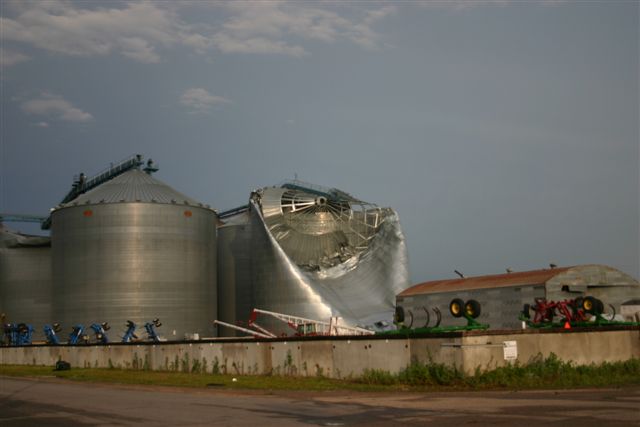
The images also showed damage to the grain elevator and bins in Vesta and trees down on the home place half a mile from town.

Damage to one of the grain bins at the local elevator.

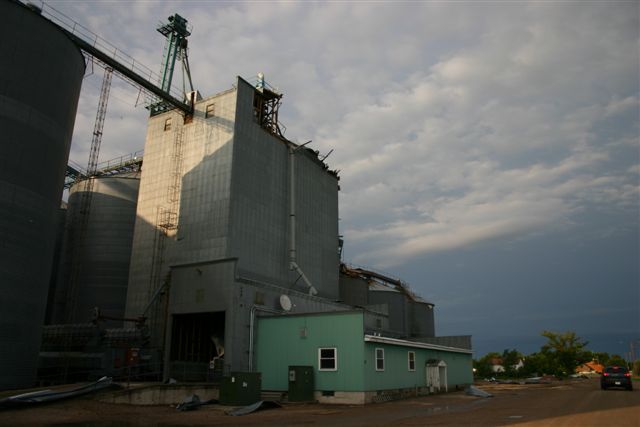
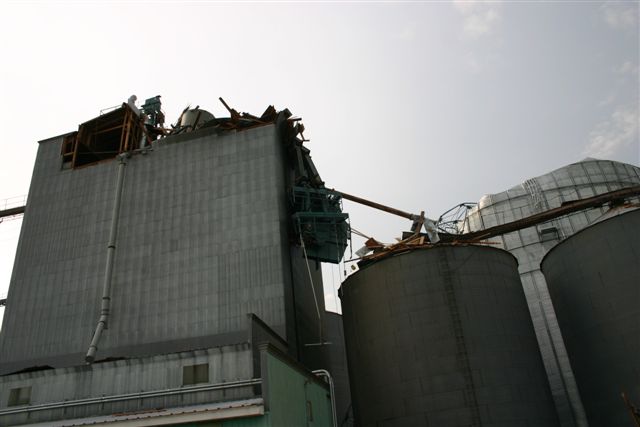
The grain elevator complex, the visual defining landmark in the farming community of Vesta, was ravaged by winds. You'll see the damage near the top of the old grain elevator.

A close-up of the damage wrought upon the old elevator.

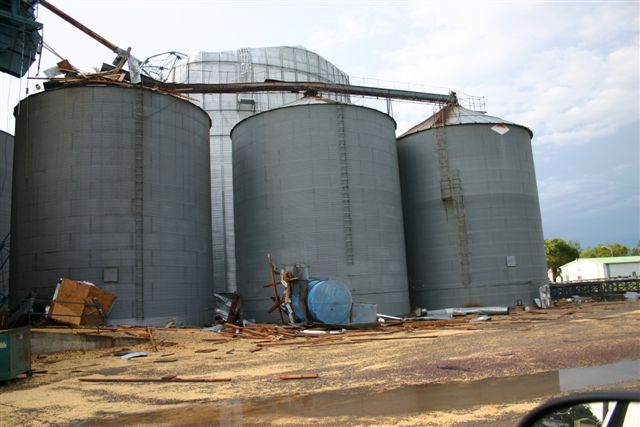
Another shot showing some of the debris and damage at the elevator complex.

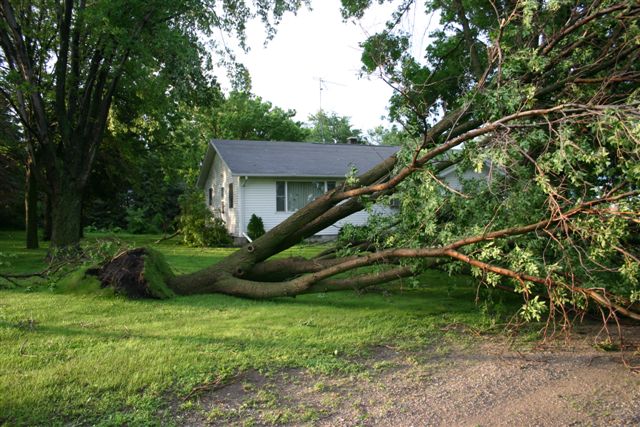
The wind toppled trees on the farm where I grew up a half mile south of Vesta.

During that phone conversation with my sister, as my husband and I drove along the gravel road toward the gathering with friends, I wanted nothing more than to turn around, pack our suitcase and drive to Vesta 2 ½ hours away.

That’s exactly how I felt more than three decades ago when I lived in Gaylord and the farm where I grew up was hit by a tornado, taking down a silo and tossing grain wagons around the field.

But on this Friday evening, with storms rolling in from the west, I knew this was not practical. I would need to rely on my siblings to keep me informed. My middle brother, who lives in Lamberton some 25 miles away, was on his way to Vesta. I called my two daughters to tell them about the storm.

I wanted so much, though, to also speak with my mom. I needed the comfort of hearing her voice. I wanted to learn about her storm experience. But the phone lines were down in Vesta. Even though Mom owns a cell phone, I doubt she remembers how to use it. She’s never quite adjusted to technology.

And so now it’s Saturday morning and I am exhausted after a night of tossing and turning. Storms do that to me.

Thoughts of my home church—where I was married and attended the funerals of my father, Grandma Kletscher, Grandpa Bode and Uncle Mike—churned through my mind. I worried about where congregants will worship, whether the interior of the church was damaged, if the church, my home church, can be repaired.

I hope today to get some answers and, if I do, I’ll pass that information along to you.

I’ll also share images I shot last night of the storm clouds hanging dark and ominous over the farm site where we gathered with friends for an early Fourth of July celebration.

Nature provided the fireworks—lightning bolt after lightning bolt zig-zagging horizontally across the forbidding sky for hours. Except for some wind and rain, our area escaped the storm that ravaged Vesta and Marshall and other communities to the west.

IF YOU HAVE STORM stories to share from last evening, please submit a comment. KLGR Radio in Redwood Falls is this morning reporting winds of up to 100 mph in Redwood County and the sightings of possible funnel clouds. Click here to read that news report.

FOR THOSE OF YOU UNFAMILIAR with southwestern Minnesota, Vesta sits along State Highway 19 half way between Redwood Falls and Marshall.

Photos courtesy of Brian and Vicki.

©  Copyright 2011 Audrey Kletscher Helbling


A native Minnesotan reports from flooded Minot June 23, 2011

MY BROTHER-IN-LAW, Neil, lives in Minot.

But he ranks as one of the lucky residents of this North Dakota city. His house lies outside—albeit less than a mile away—and several hundred feet above the flood zone.

Yet, this Air Force man and Minnesota native isn’t sitting idly by because his home has not been threatened. He’s pitching in to help those who face the reality of losing their houses in the worst flooding since 1969.

In an e-mail I received from Neil early this morning, he shares information, insights and, yes, even advice about the current situation—which he terms “exhausting and discouraging”—in his adopted hometown. The overwhelmed Souris River in Minot is expected to crest on Sunday, some five feet higher than any previous flood stage in recorded history for the area, Neil says. The old record was set in 1881, before Minot was founded.

So that’s the situation facing this city, where some 12,000 residents, more than a quarter of the population, have been evacuated and where, says Neil, dikes in several neighborhoods were breached on Wednesday.

Neil has assisted two families in exiting the city.

He writes: “I helped a lady from our church on Monday night as she moved everything either to the second floor or attic. What didn’t go upstairs went into a horse trailer that her brother brought in from out of town late that night. She seemed to take things in stride. Her house was also flooded in ’69 (before it was her house), but came through it okay. It’s extremely well built, nearly 100 years old. This lady trusts that God will provide for her needs, even if her house washes down the river.”

Neil next joined efforts to help his boss’s family. His boss is deployed to Afghanistan.

“I lost track of how many people were there to help them,” Neil writes. “We also helped them three weeks ago, when we moved everything out of their sopping wet basement to the upper floor and garage. Because of the shortage of time allowed to evacuate, we left almost everything there that time. Because of the expected height of the floodwaters and the advance preparation time, we decided to clear everything out of their house this time.”

Yet, Neil continues, “There were easily several pickup loads of stuff that we left behind simply because there wasn’t enough time/energy/resources to move it all.”

At this point my brother-in-law pauses and suggests that we all re-evaluate our possessions, deciding what we really need and what we don’t. “Go through your house and garage and get rid of anything that you haven’t laid eyes on or used in the past three years.” He intends to do exactly that at his Minot home, which is currently on the market; he’s been reassigned to an Air Force base in Missouri.

When Neil and his wife, who is already in Missouri, purchased their house several years ago, they purposely stayed away from the flood zone. “A contractor that we spoke to before buying a house told us the down sides of several locations in this town. One specific neighborhood that he told us to steer clear of is the exact one that we helped my boss’s family move out of; he told us that he wouldn’t even consider building a house down there because the whole area was under water in the flood of ’69,” Neil says.

And then my brother-in-law adds this final statement: “Dikes give people a false sense of security.  No one presently living in this town will ever doubt that again!”

© Copyright 2011 Audrey Kletscher Helbling


A chocolate cake tradition of love June 22, 2011

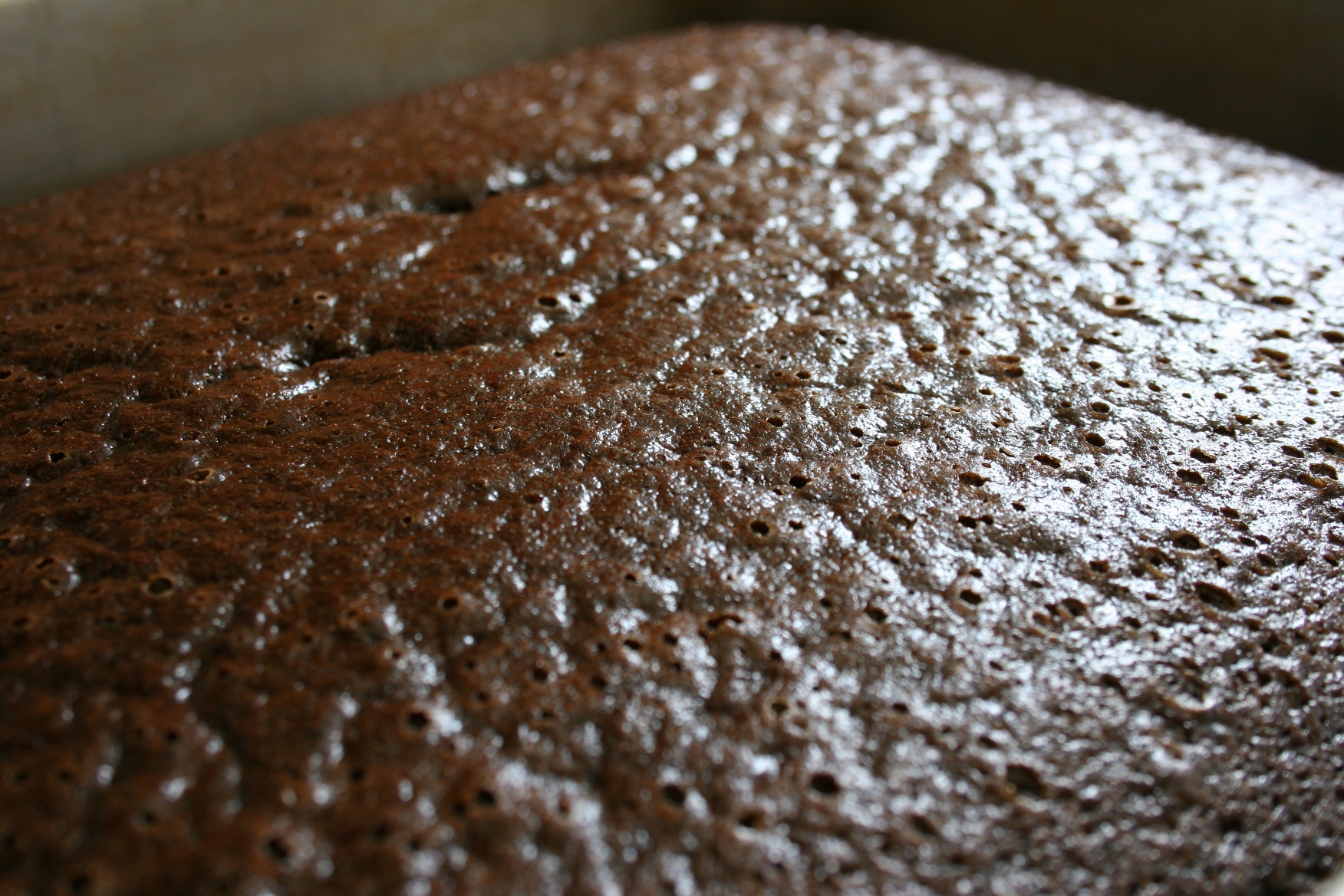
Homemade chocolate Crazy Cake frosted with Chocolate Buttercream Frosting.

THEY RAVED ABOUT the moistness of the cake. And three of them—all guys—forked up a second slice of the chocolate cake I’d made from scratch.

I almost said, “Ummm, guys, it’s the women who should have a second piece.” But I let them be, passing the cake pan around the table, plating more cake.

This is one moist, delicious chocolate cake.

Then, because I couldn’t help myself, I shared the story about this cake. They needed to hear it, to understand that they weren’t eating just any old cake but cake made from a special recipe.

This Crazy Cake, aka Wacky Cake, is the chocolate cake of my youth, the one my mom made every time she baked a birthday cake, I told my friends.

“We didn’t have much money, didn’t get birthday presents,” I explained as my friends savored each bite of chocolate cake. “So our birthday present was the cake, an animal cake my mom made.

She would pull out her cake book and let us pick the animal shape we wanted for our birthday cake—a lion, a horse, a duck, an elephant…”

“My mom had a book like that too,” my friend Jackie chimed in.

Mari, on the other end of the table, nodded her head. Likewise, her mother had a booklet that provided instructions for transforming round cakes and square cakes and oblong cakes into animal shapes.

By cutting the cake and decorating it with various candies and frosting, my mom transformed a plain chocolate cake in to a special animal-shaped birthday cake.

Those birthday cakes were magical. I never missed the birthday presents, never even knew I should receive gifts, because I had that cake, that special, special chocolate animal-shaped cake.

When I became a mother, I continued the tradition with my children. While I didn’t have an animal cake book, I had my imagination. I made a snowman, Garfield, Piglet, a Teenage Mutant Ninja Turtle, a horse (that looked more like a cow than an equine)…

Unlike me, my children got birthday presents, plenty of them. But I would like to think that the one they will remember is the annual gift of an animal-shaped birthday cake, a gift, really, passed down from their grandmother.

For in the passing down of that tradition, I’m honoring their grandma, my mom, who taught me that birthdays are not about prettily wrapped presents, but about love. And that love, for me, will always be symbolized by homemade chocolate Crazy Cake.

Chocolate Crazy Cake

3 cups flour

2 cups white sugar

½ cup cocoa

1 teaspoon salt

2 teaspoons baking soda

Mix the dry ingredients together and then stir in:

¾ cup salad (vegetable) oil

2 cups cold water

2 Tablespoons vinegar

1 teaspoon vanilla

Pour into a 9 x 13-inch cake pan and bake at 350 degrees for 35 – 40 minutes.

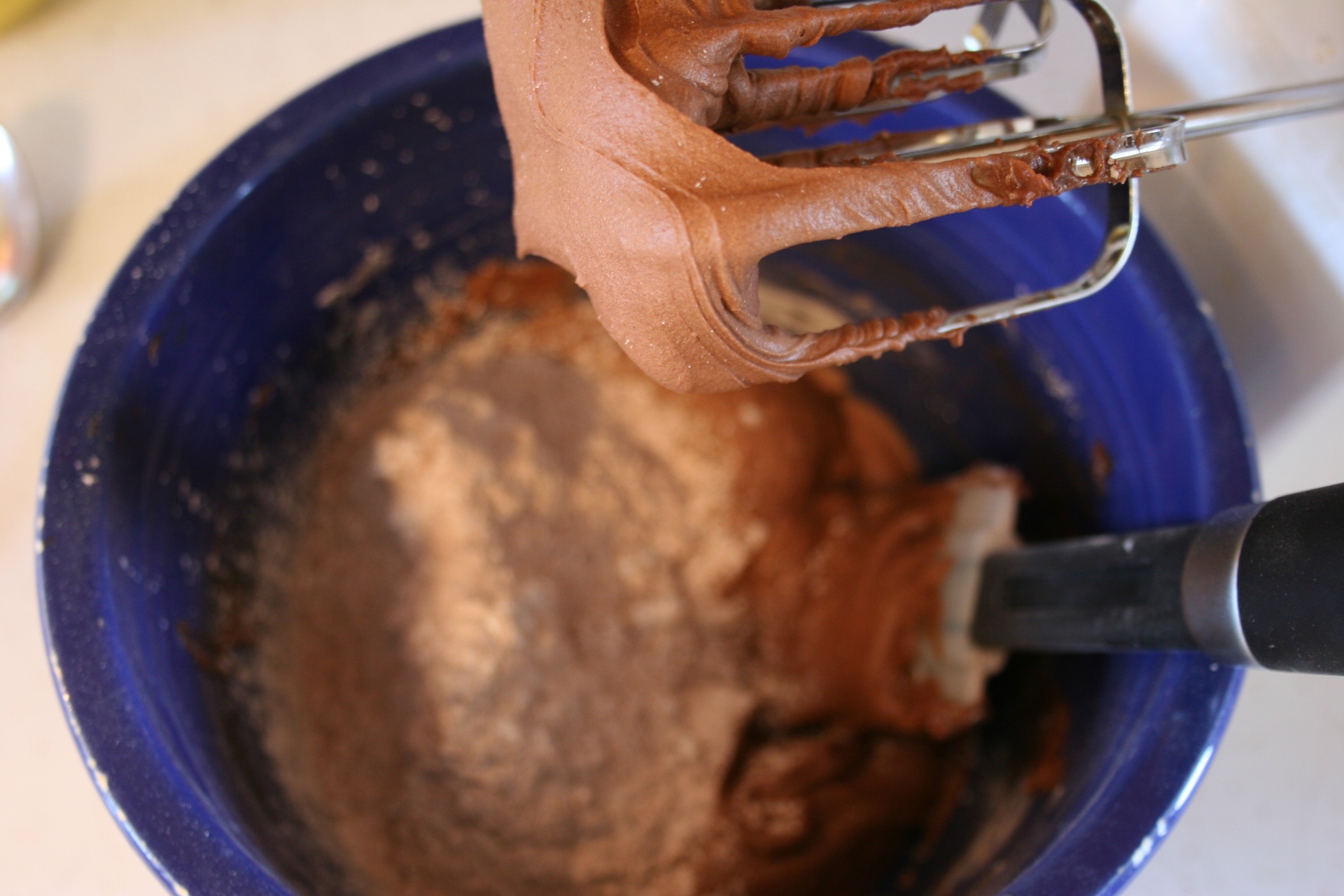
When the cake is cool, whip up a bowl of this creamy Chocolate Buttercream Frosting.

When cool, frost with:

Chocolate Buttercream Frosting

6 Tablespoons butter, softened

½ cup cocoa

2 2/3 cups powdered sugar

1/3 cup milk

1 teaspoon vanilla

Cream butter in a small mixing bowl. Then add the cocoa and powdered sugar alternately with the milk, beating to a spreading consistency. You may need to add an additional tablespoon of milk. Blend in vanilla. Spread on cake. Makes about two cups of frosting.

The recipe yields two cups of heavenly, finger-licking-good frosting.

© Copyright 2011 Audrey Kletscher Helbling

Recipes from The Cook’s Special, 1973, St. John’s Evangelical Lutheran Church, Vesta, Minnesota, and Hershey’s Easy-Does-It Recipe #10


Fencing June 10, 2011

Filed under: Uncategorized — Audrey Kletscher Helbling @ 7:57 AM
Tags: , , , , , , ,

This is the first section of fencing, nearest the house, that I stained.

IT’S DONE, PEOPLE. Done. Done. Done.

Last Saturday, with the assistance of my I-finally-have-time-to-help-you husband, I finished staining the 10 lattice-topped fence panels that enclose our backyard. Please note that I use the singular “I” here rather than the plural “we.” This project belonged primarily to “me.”

It didn’t start out that way. Originally, I was supposed to stain the panels nearest the house using foam and bristle brushes. Then Randy was supposed to spray the remaining panels with a handy dandy cheap air-pumped sprayer we picked up at a big box store.

From the get-go, I did not think the sprayer system was a good idea. I was concerned about overspray (stain drifting onto flowers, plants, the lawn, the house, the neighbor’s fence, skin, eyeglasses, clothing…). I also doubted a sprayer would provide even coverage. Would the stain truly adhere to wood when misted, rather than brushed, on?

However, Randy remained determined that he could spray the panels, thereby saving me hours and hours and hours of labor. Nice thought from a man who claims, “I’m always thinking of you, dear. It’s my job to keep you happy.” Oh, so sweet…

Sometimes simply going along with a plan works better than arguing with one’s spouse. OK, I admit, I protested several times, telling Randy that since he really didn’t have the time to stain when the weather was cooperating, I would continue brushing. I might also have mentioned a few times that I didn’t think spraying the stain would work.

Finally, I was down to the last four panels, the ones nowhere near the house and thus safe to spray.

The last of the 10 panels that were stained.

But as sometimes happens in marriages, Randy and I experienced a communication break-down. He wanted me to stain the last panel, the one embedded in wild raspberry bushes. Having already battled wayward ferns, a floppy bleeding heart bush, heat and a sliver in my finger, I was in no mood for his chastising words: “You should have painted that panel by the raspberries.”

I burst into tears and suggested that he should be grateful for all I had done and that I had no intention of dealing with thorny raspberry bushes. So I didn’t.

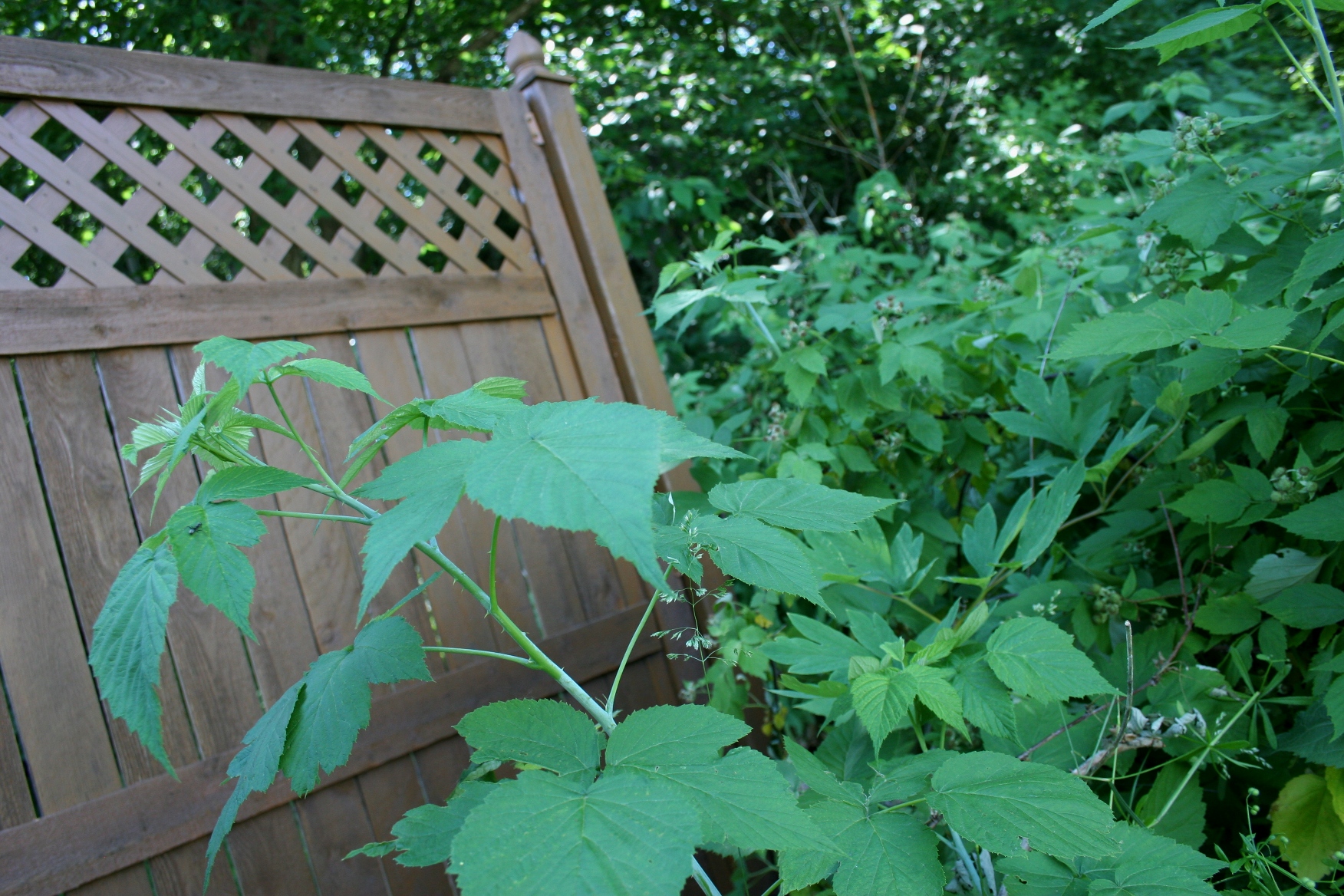
Wild raspberry bushes grow along one side of the last panel next to the woods.

Several days later he cut away the prickly branches closest to the fence before laying down plastic, filling the plastic spray tank with stain and spraying.

As predicted by me, the spray process failed. Picture a Holstein cow (that’s a black-and-white spotted cow for you non-agricultural people). Not how I want my fence to look. The nozzle clogged. This was not working.

I wanted to say, “I told you so.” But, instead, I mentioned that an apology would be accepted regarding his earlier criticism of my staining with a brush when I should have/could have waited for him to spray all of the panels (his words, not mine) in an hour with the sprayer.

“I wake up every morning apologizing,” Randy responded.

Did I tell you that my husband is also a funny guy? He makes me laugh.

In the end, he worked on one side of the fence while I stained on the other. We finished the three panels as a team.

As for that sprayer, Randy poured out the stain, cleaned the tank with paint thinner, then placed the unit in the original box. “We’ll sell it at a garage sale,” he said.

As you can see in this image, the fence panels are beginning to come apart. This is the third time we have stained the fence. It was last stained in 2005. I was extremely ill with whooping cough during that summer of staining, meaning I didn't have to stain the fence. I expect we'll put up a new fence before we stain this once again.

© Copyright 2011 Audrey Kletscher Helbling


When the power goes out June 7, 2011

Filed under: Uncategorized — Audrey Kletscher Helbling @ 8:50 AM
Tags: , , , , , ,

WHEN THE POWER goes out on a Monday evening, say at exactly 6:50 p.m., on one of the first oppressively hot days of a Minnesota summer, what do you do?

Here’s a recap of my 4 ½ hours without electricity.

Finish a late grilled chicken supper with the husband and teenage son, followed by the routine clearing of the table, washing dishes (there’s a reason I don’t own a dishwasher) and then taking out the garbage, which is typically the husband’s job, but he is mowing the lawn.

Notice that the under-sink garbage container reeks and is growing black something-or-other. Scrub off the unknown black growth and blast the garbage can with disinfectant.

Sweep the kitchen floor.

Pretty routine so far, right?

Water the plants on the patio.

Now what? Can’t get on the computer to check email or work on chapter one of the book you are editing.

Grab the stack of invoices and statements from the local lumber yard and try to figure out whether you’ve been billed and/or credited properly for materials purchased for the house project that has been a stressful, six-month undertaking. Mutter a few words that cannot be printed here.

Ask the son where his father has disappeared to and then spot him across the street talking to the neighbors, whom we’ve never met. Observe other neighbors outdoors, including those next door, who have stepped outside for a smoke. Apparently when the power goes out, smoking in a closed-up, without air conditioning, house becomes intolerable, or perhaps suffocating.

Grab a book and a notebook to read and take notes on a book you are reviewing for a magazine. In the fading light of day, that plan lasts through two pages.

Text the daughter in Wisconsin, who doesn’t text back.

Join the husband who decides, around 9 p.m., that a tour of the town is necessary to determine the source and extent of the power outage. A few blocks away, several Xcel Energy trucks ring an electrical substation.

This electrical substation near the viaduct in Faribault was the apparent location of Monday evening's power outage. I took this photo in March, as the city prepared for spring flooding.

Through-out downtown, street lights are dark,  store fronts lit. Figure that one out. Temporary stop signs replace non-functioning stoplights along Minnesota Highway 60, the main drag through Faribault. A grocery store, gas station and fast food restaurant stand dark and shuttered.

Realize that driving along unlit city streets ranks as unsafe given pedestrians and bikers think you can see them, but you can’t. No encounters. Just a realization that a city without street lights and with darkened homes and businesses appears eerie and dangerous. Wonder what strangers to Faribault think of driving into a darkened city.

Return home. Finally accept that power likely will not be restored for awhile. Light candles. Dig out the camping lantern, which hasn’t seen a tent in decades and serves as the primary light source during electrical outages.

Ask the teen, who has been reading a book all evening and who is lounging on the living room floor, to find some news on his cell phone. Still don’t understand how he can listen to the radio on his cell. No news found. However, he tunes into classical music and tries to convince his father to listen to Beethoven and Bach at work rather than classical rock. Son is working in his dad’s automotive machine shop for the summer. Dad isn’t convinced. Suggest a compromise—morning with the Moody Blues, afternoon with Beethoven.

Question the boy more about first day back at work, whether he’s been welcomed. Yeah. Encourage more conversation because usually the teen has head buried in the computer and such opportunities are rare. Learn that he lunched at the picnic table behind the automotive store. Ask whether conditions have improved in the outdoor dining area. Nope. Still a dumpster and trailer and scrap metal pile next to the picnic table. Suggest the boss give me a decorating budget to spruce up the place. Ain’t gonna happen. Son says he and Dad should bring lawn chairs.

Phone Xcel Energy for the second time. Hear that power should be back on by 11 p.m. It is 10:30 p.m. Earlier recording stated lights on at 8:50 p.m. Don’t believe smooth-talking woman. Decide to head to bed.

But, first, join son for star gazing in backyard. Listen to him complain about light pollution. Find the Big Dipper when he asks. Thinks parents cannot find it, are dumb. Suggest he take star gazing chart to southwestern Minnesota. He requests one night worldwide when all lights are turned off. Tell him that won’t happen. Looting. Other crimes.

Advise him to lock door and turn off lantern when done sky watching. Candles extinguished earlier. Off to bed. Just drifting off. Door rattles. Teen clomps. Wide awake. Power back on: 11:15 p.m.

ACCORDING TO AN ONLINE Faribault Daily News article, 2,700 homes were without power in northern Faribault, stretching to Cannon City Township. The apparent cause of the outage was a failure at a regional substation.

© Copyright 2011 Audrey Kletscher Helbling


A look back at a 1951 graduation speech about communism June 5, 2011

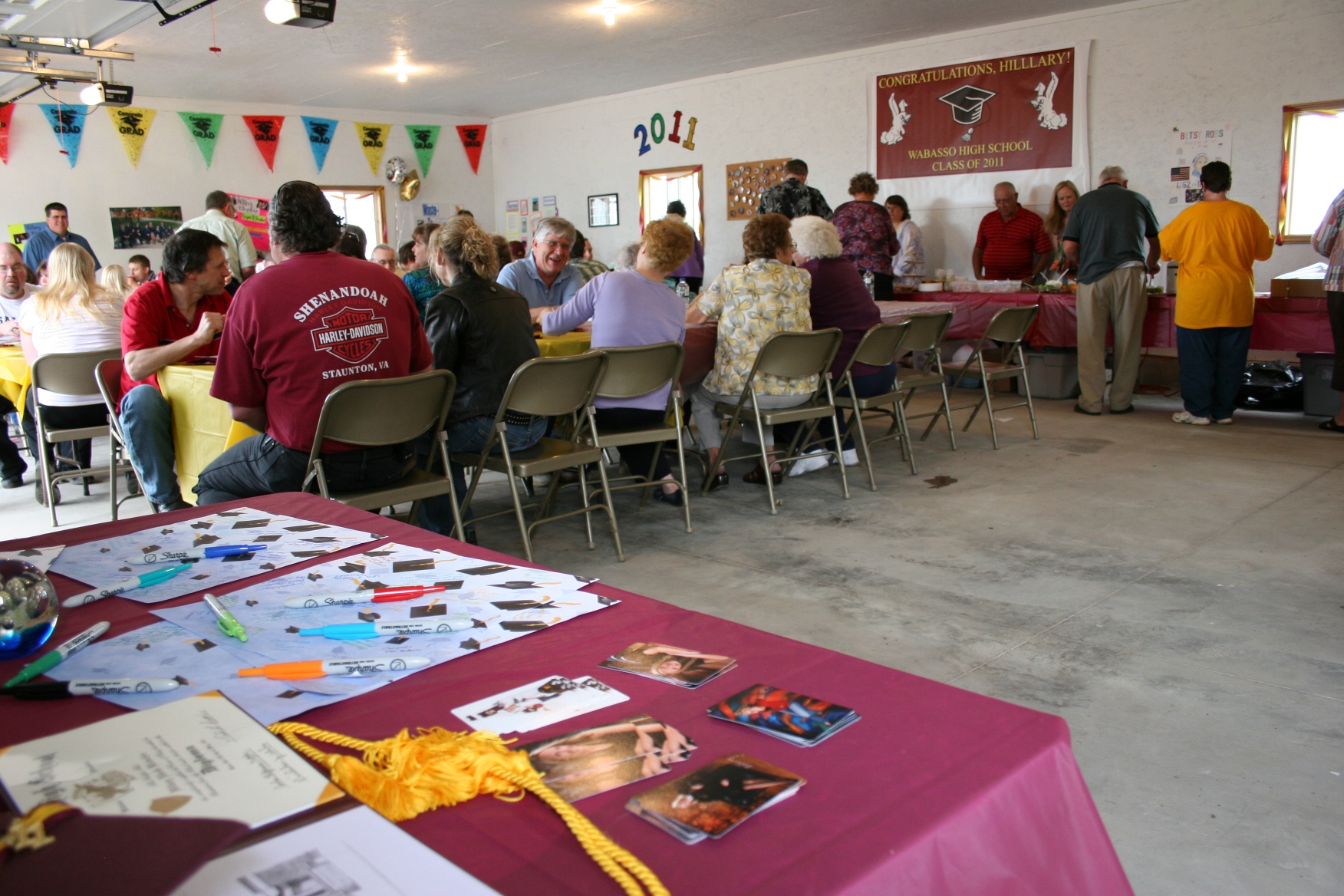
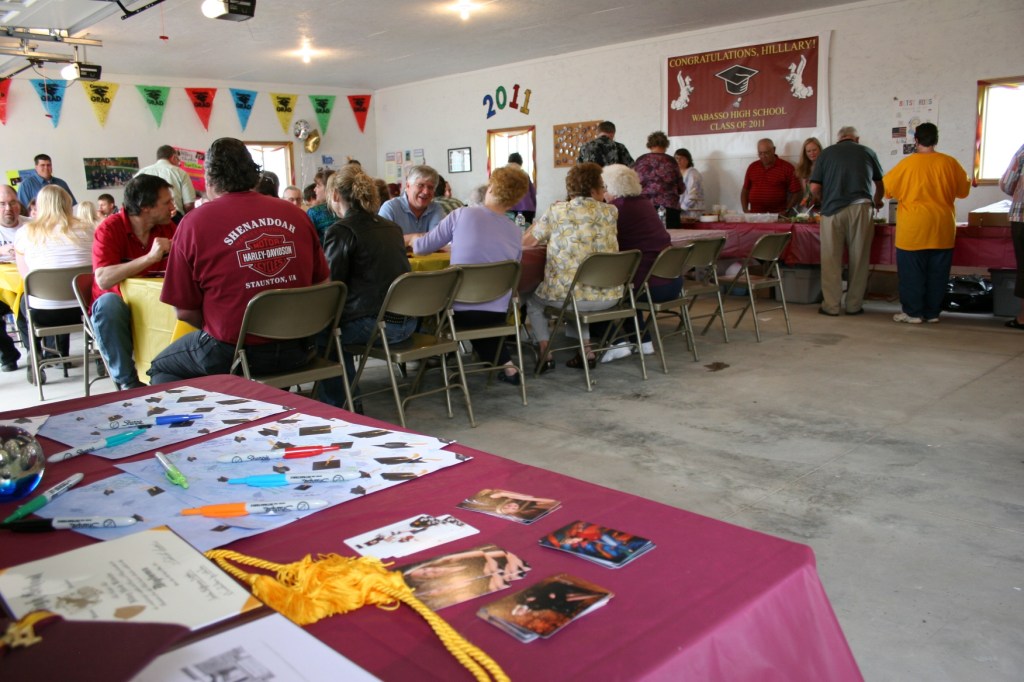
I recently attended this graduation reception for my niece Hillary, who graduated from Wabasso High School.

A soon-to-be 2010 graduate of Westbrook-Walnut Grove High.

IF YOU’RE LIKE ME, you’ve received invitations to numerous high school graduation receptions. You’ll make the rounds, shaking hands with the new graduates, inquiring about their future plans, congratulating their parents and then grabbing something to eat (pacing your food intake) before moving on to the next reception.

If you’re like me, you also have not attended a single graduation ceremony, unless your child is graduating or you are invited to a small-town high school where seating is not limited to four spaces per graduating senior’s family.

Therefore, you probably have not heard a student commencement speech in some time.

About a week ago my niece graduated as valedictorian of  Wabasso High School, my alma mater, and gave a graduation speech, of which I’ve received a copy. Hillary spoke about the past and how it weaves into the future. “As we become the people we are meant to be, we can hold onto the memories of yesteryear and the hopes of tomorrow,” she said in part. “The one thing that will always remain constant is the change in our lives.”

Now compare that to the speech (see below) given by Hillary’s grandmother, my mother, at Wabasso High School 60 years ago. Class of 1951 valedictorian Arlene Bode spoke about “Our Part in the Fight Against Communism.”

When my mom first told me the title of her speech, I laughed. “Who gives a graduation speech about communism?” I asked, and laughed again.

An old fallout shelter sign on a building in downtown Pemberton in southern Minnesota.

Then my 79-year-old mother reminded me of the time period—the Cold War, the fear of the Soviet Union, the Korean War, fallout shelters—and I understood. She doesn’t recall whether she chose the topic or whether the subject was assigned. But the content gives some youthful, historical insight into the world six decades ago:
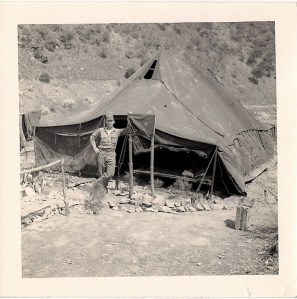
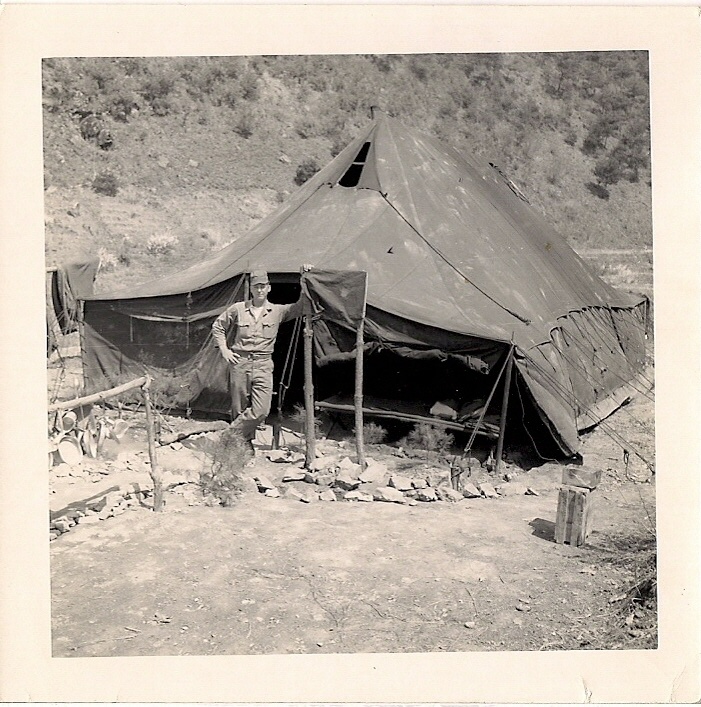
My father, a Korean War veteran, in Korea in 1953.

“WE, THE GRADUATING SENIORS, wish to take this opportunity to express our sincere gratitude to our parents, teachers, and all others who have helped us obtain our education.

OUR PART IN THE FIGHT AGAINST COMMUNISM

Communism is threatening the peace and security of our country. This is being brought more and more to our attention each day by the governmental leaders of the United States. We are sending our boys to Korea. We are conducting investigations to reveal any communist workers who may be in our government. We are sending Voice of America broadcasts behind the Iron Curtain to inform the people of how democracy works. But this is not enough. The tide of communism is moving ever forward. Most of Europe is communistic and it is spreading rapidly in Asia. This has happened just in the last few years. We must stop this tide before it is too late. It behooves us as graduating seniors to help in the fight against communism while there is still time.

Of course we must know what we are fighting against. The mere word communism is not enough. We must know what it means. The word communism is derived from the Latin word communis meaning common. It is said that communism is the distribution of income to each according to his need. They believe that all natural resources and most businesses should be owned by the government. They also believe in community ownership of property. This is the true meaning of communism, but it has an even greater meaning here in the United States. Senate hearings have shown that it is a politically controlled conspiracy, promoted by a foreign nation, for the overthrow of our government. If they should accomplish this overthrow it would be a decisive step toward placing the entire world under communistic government. According to Kenneth Goff, author of “Confessions of Stalin’s Agent,” the communist party has six main points in its program: Abolition of all governments, inheritance, private property, patriotism, family, and religion.

The communists strike first at the poorer class of people and at those who are not satisfied with present day conditions. They promise these people that under communism they will have all they want, such as rest, leisure, and social security paid by the State. But this is far from what really happens. What really happens is that these people lose their personal freedom and whatever they do is for the benefit of the communist party.

If we have an understanding of what communism means and how it works we can fight against it. Here are some of the things we can do.
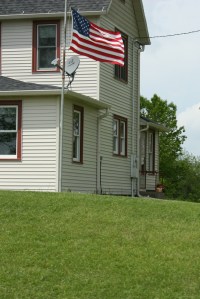
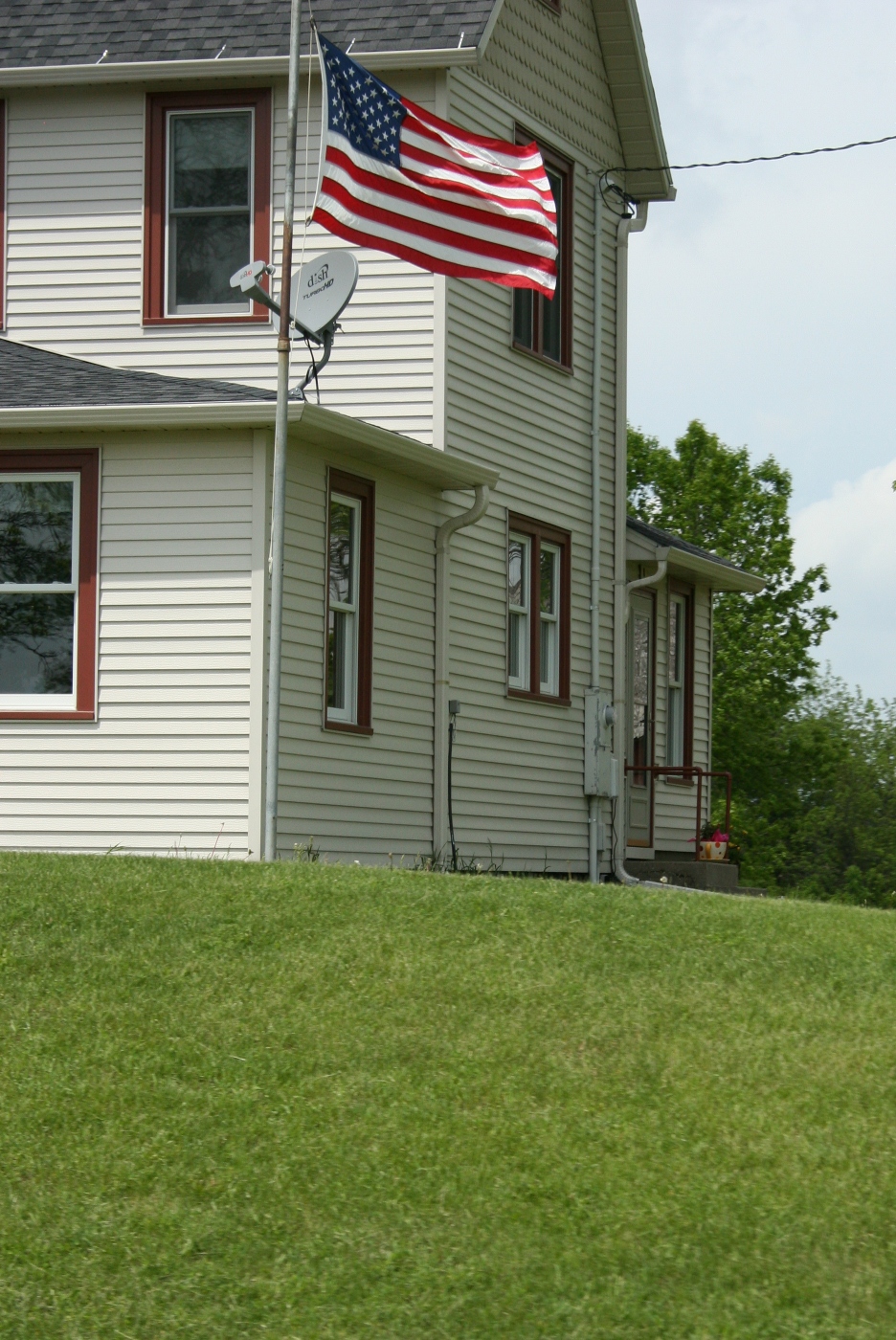
Patriotism displayed on a rural Minnesota home.

We must at all times practice democracy. Democracy means a sharing of respect, a sharing of power, and respect for the dignity of man. Democracy is promoted by a balanced economic distribution and an enlightenment of the people. We should see that parliamentary procedure is used in all organizations to which we belong such as, church organizations, community organizations, and women’s clubs. It is important to secure the wishes of the majority of the people without wasting time.

We must set a good example by being democratic in our every day life and in our dealings with others by working toward a definite goal in life, setting up ideals to follow, being a neighbor to all people regardless of their race, color, or religion, showing good judgment in all we do.

In a few years we will have a voice in our government and we must do our best to keep communists out of it. We can do this by voting at each election, which is one of the privileges of living in a democracy and one which we must never lose. But just casting a vote is not enough. We should know who we are voting for by studying the policies of each candidate to see what he stands for.

If each and every one of us practices democracy wherever we are we have done our part in the constant fight against communism. The part we play may seem small, but every little bit counts if we are to win over communism.”

AFTER READING MY MOM’S SPEECH several times, I wondered how often we as Americans pause to consider the freedoms we likely take too much for granted.

“We must at all times practice democracy. Democracy means a sharing of respect, a sharing of power, and respect for the dignity of man.”

WHAT’S YOUR TAKE on this 1951 graduation speech? Are any of her comments relevant today? What particularly struck you about this speech? I’d like to hear your specific reactions.

© Copyright 2011 Audrey Kletscher Helbling

Graduation speech © Copyright 1951 Arlene Bode Kletscher (Except for corrected errors in spelling, this speech is published here as originally written.)

2011 graduation speech excerpts © Copyright 2011 Hillary Kletscher


Chauncey, a Civil War soldier June 4, 2011

The grave of Chauncey Swartwoudt at the Cannon City Cemetery.

THE NAME ON HIS TOMBSTONE is barely readable as my husband, Randy, struggles to decipher the letters that form “Chauncey Swartwoudt.”

I like how the name rolls off my tongue—the Chauncey part at least. I’m unsure how to pronounce his surname.

He means nothing to me. His is just another tombstone marked by an American flag, among many in a Minnesota country cemetery.

A close-up of Chauncey's tombstone, decorated for Memorial Day.

Yet, because of the size of this grave marker and the rectangular border surrounding it, I am drawn to this spot in the Cannon City Cemetery on Memorial Day.

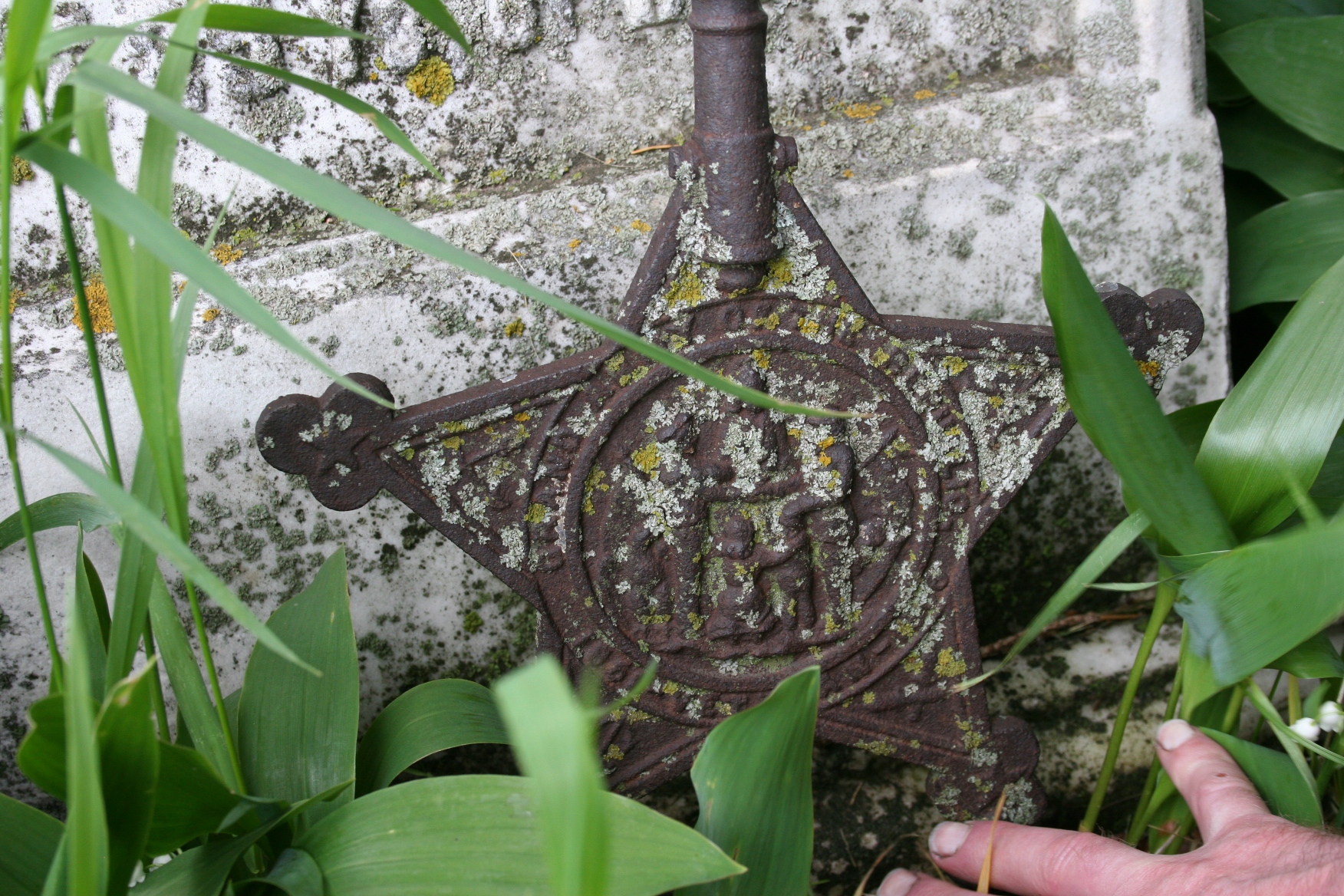
When I lean in close, I discover more. Or, more accurately, Randy uncovers a veteran’s star with difficult-to-read words. He decodes “The Grand Army of the Republic.” GAR equals veterans of the Union Army who served in the Civil War.

Randy pulls back foliage to reveal a GAR star with words that are barely readable and a design that we can't clearly see. Does anyone know what design graces the center of these old GAR stars?

Chauncey was mustered into the military on August 8, 1862, at the age of 22. He served as a Union Army private with Company C, Sixth Minnesota Volunteer Regiment. Two years, one month and three days later, on September 11, 1864, at the age of 24, he died at Jefferson Barracks in St. Louis, Missouri.

He was a soldier, the son of Henry and Catherine and brother of Charles. (He may have  had other siblings, but my quick research reveals only Charles.)

Nine years after Chauncey’s death, on March 15, 1873, Charles and Elizabeth Swartwoudt named their new-born son after his uncle. Little Chauncey lived only three years.

This is all I know about the elder Chauncey who fought in the Civil War, who died far from his Minnesota home. A young man of only 24, his entire life ahead of him.

Why did he die?

Detailed artwork, in the form of a cannon and cannonballs are engraved on Chauncey's tombstone.

Why is a cannon, with stacked cannonballs, etched into the cold stone of his grave marker? I’ve visited many Minnesota cemeteries and never seen such detailed art on the marker of a Civil War soldier.

It’s not like I should care. I have no connection to Chauncey. Yet I do care. He was a soldier, a son, a brother. I am a mother and a sister. He came home in a box. And a mother wept.

© Copyright 2011 Audrey Kletscher Helbling

 

Transitioning through parenthood and letting go June 3, 2011

Filed under: Uncategorized — Audrey Kletscher Helbling @ 7:14 AM

Tags: , , , , , , , , ,

In December we helped move my second daughter into an apartment as she started her first post-college job.

ONCE UPON A TIME, like 15 to 20, maybe even seven, years ago, I dreaded my kids graduating from high school, leaving for college and then eventually landing jobs. It would mean they no longer needed me and I could barely stand the thought of their absence.

But since then, since the two oldest followed the path of degrees, jobs and their own apartments, I’ve changed my attitude.

I rather like the lessening of parental responsibility that comes with their independence. It’s freeing. Not that I don’t worry about them; I still do. But it’s different now when they can basically fend for themselves.

My second oldest daughter graduated from the University of Wisconsin, La Crosse, last spring.

With that frame of mind, I recently visited my second oldest daughter in eastern Wisconsin, where she started work in December as a Spanish medical interpreter. Her first post-college job. Her first apartment of her own. She’d officially grown up.

I would have preferred that she settle closer to her hometown of Faribault instead of 300 miles away. But I’ve reminded myself many times that at least she’s in the U.S., within easy driving distance, and not in Argentina.

Nothing against Argentina. My daughter studied abroad in Buenos Aires and later returned for an internship. But I didn’t want her settling there, 6,000 miles away. I feared she might. Live there. Permanently.

That said, I have only myself to blame for the wanderlust spirits my 23-year-old and 25-year-old daughters possess. Because I grew up on a southwestern Minnesota dairy and crop farm, I seldom traveled as a child—once to Duluth and once to The Black Hills. I wanted my children to travel. I didn’t want them to be like me—someone who prefers, as my dad would have said, “to see the smoke from the chimney.”

And so I let them go, first as young children, to bible camp. Then, in high school, my eldest took her first out-of-state spring break mission trip to Texas. More mission and church and school trips followed as step by step by step they stretched their travel wings.

Then, during my eldest daughter’s freshman year of college, she signed up for a mission trip that took her to Paraguay. Heck, I had to dig out the globe to locate that country which borders Argentina, Brazil and Bolivia. I panicked, regretting for more than a few days my decision to raise children who enjoyed traveling.

Later, when my daughter journeyed to Costa Rica for a brief study sojourn, I barely gave her trip a second thought.

I could handle those short trips.

But then one summer the eldest worked in West Virginia and she was definitely gone for more than 10 days.

That, thankfully, prepared me for her sister’s decision to study abroad and do mission work in Argentina for six months and then return a second time for an internship.

Through the years, I’ve watched that desire to travel, to see the world, become an integral part of my daughters’ lives. The oldest one, who lives and works in the metro, is always plotting her next adventure.

The daughter who lives in Wisconsin will need to chisel away at her college loans and save some money before she can travel again. Right now she earns barely enough to pay the bills. But the time will come when she can resume traveling.

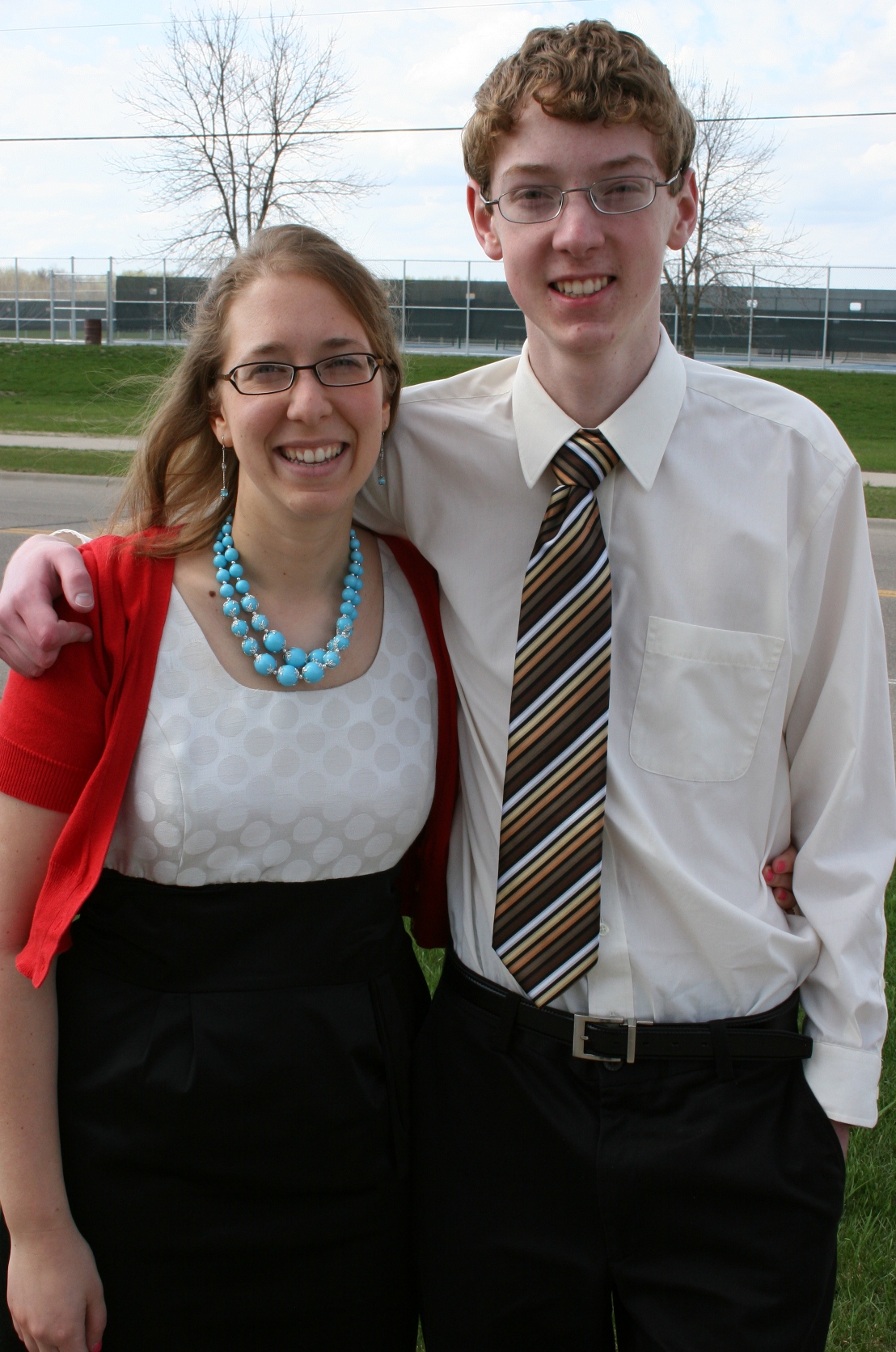
My oldest daughter and my son.

ALL OF THIS BRINGS ME back full circle to the first paragraph in this post, the one about lamenting my children growing up and leaving home. In a year my 17-year-old graduates from high school. He doesn’t know yet where he’ll attend college—whether close or far away. Life could take him anywhere.

Like his sisters, I won’t hold him back, won’t stop him from pursuing his dreams, from traveling to far away places. I’ve already let him go—to Spain on a Spanish class trip. That wasn’t easy, not easy at all, to allow my boy to journey so far at the age of 16.

But his sisters have blazed the way, have shown me that I can handle this part of parenting and handle it with grace. I’ve raised them all to be strong, independent and fearless individuals.

I’m beginning to enjoy this stage of life, with fewer parental responsibilities and new types of relationships forming with my adult children. I’m confident I’ve done my best as a parent, although best certainly isn’t perfect.

Now it’s time, almost, to move on, to continue supporting and encouraging my 17-year-old son as he transitions into adulthood and to always support my daughters, holding all three of them forever close, yet letting them go.

© Copyright 2011 Audrey Kletscher Helbling
 

An almost-summer evening on the farm June 1, 2011

Filed under: Uncategorized — Audrey Kletscher Helbling @ 6:47 AM
Tags: , , , , , , , , , , ,

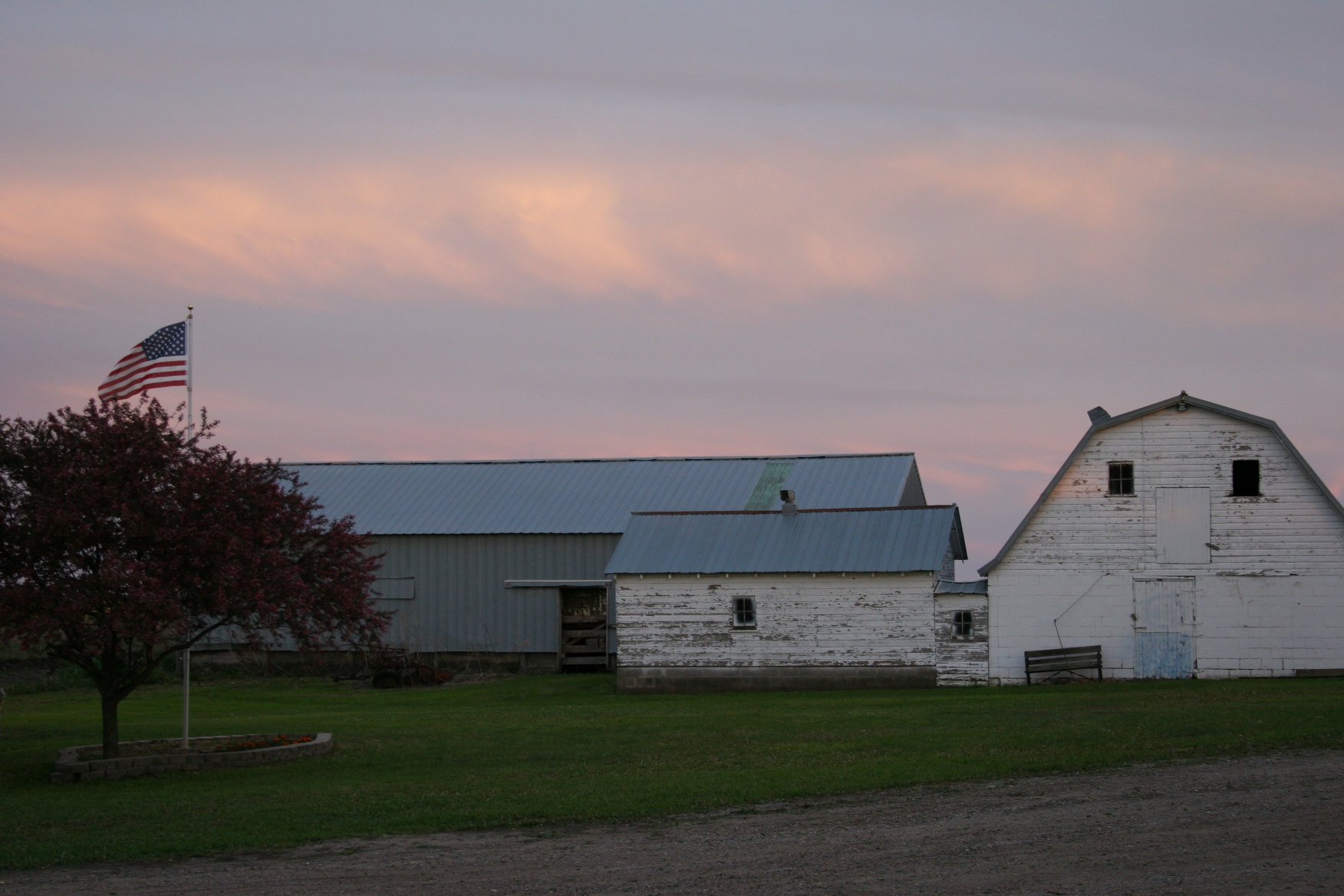
The sun sets on the farm site where I grew up in southwestern Minnesota.

OH, SWEET EVENING of almost-summer on my childhood farm. Daylight fades, washing the sky in the palest of prairie rose pink. Shadows sharpen before the last lingering rays of sunlight retire for the night.

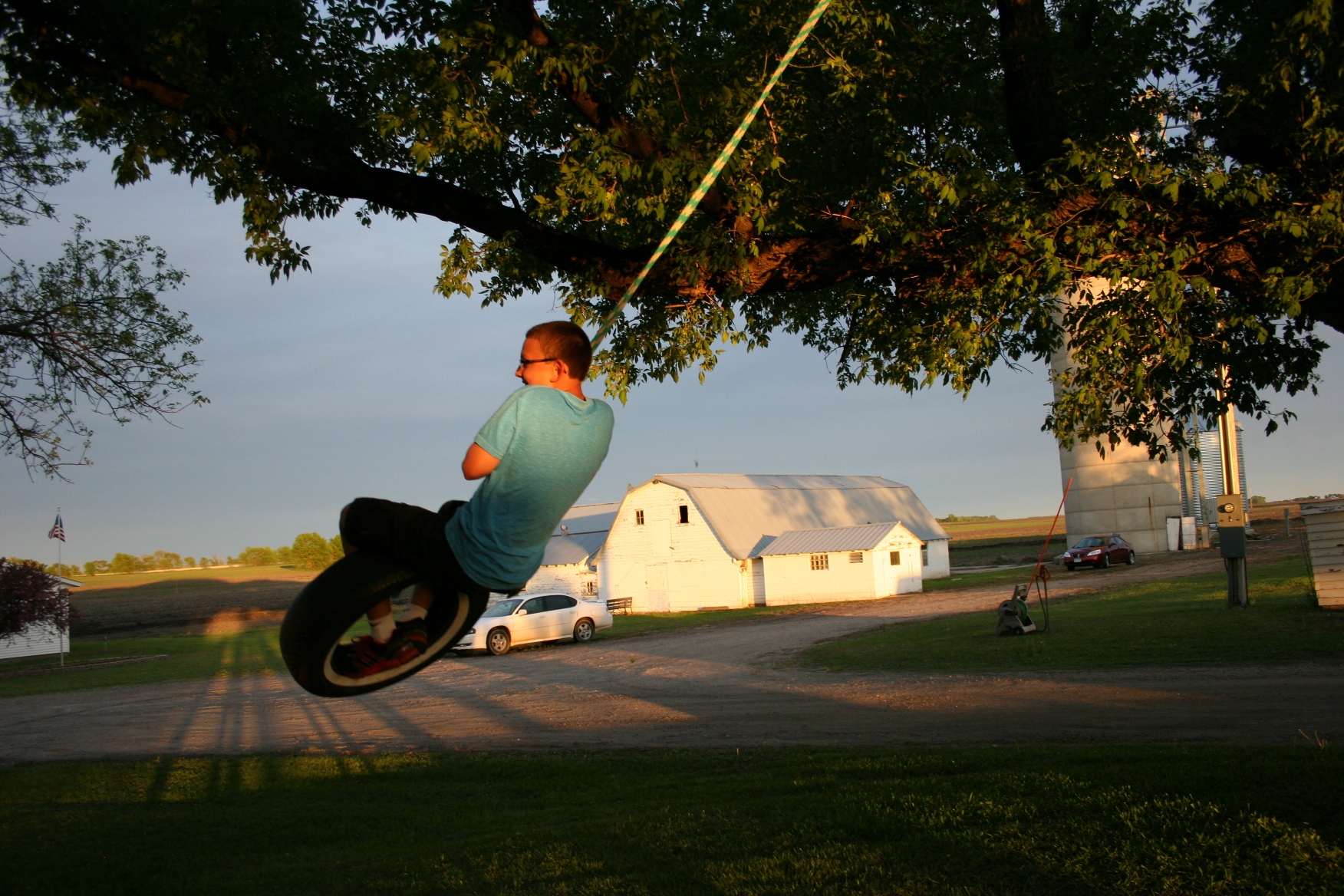
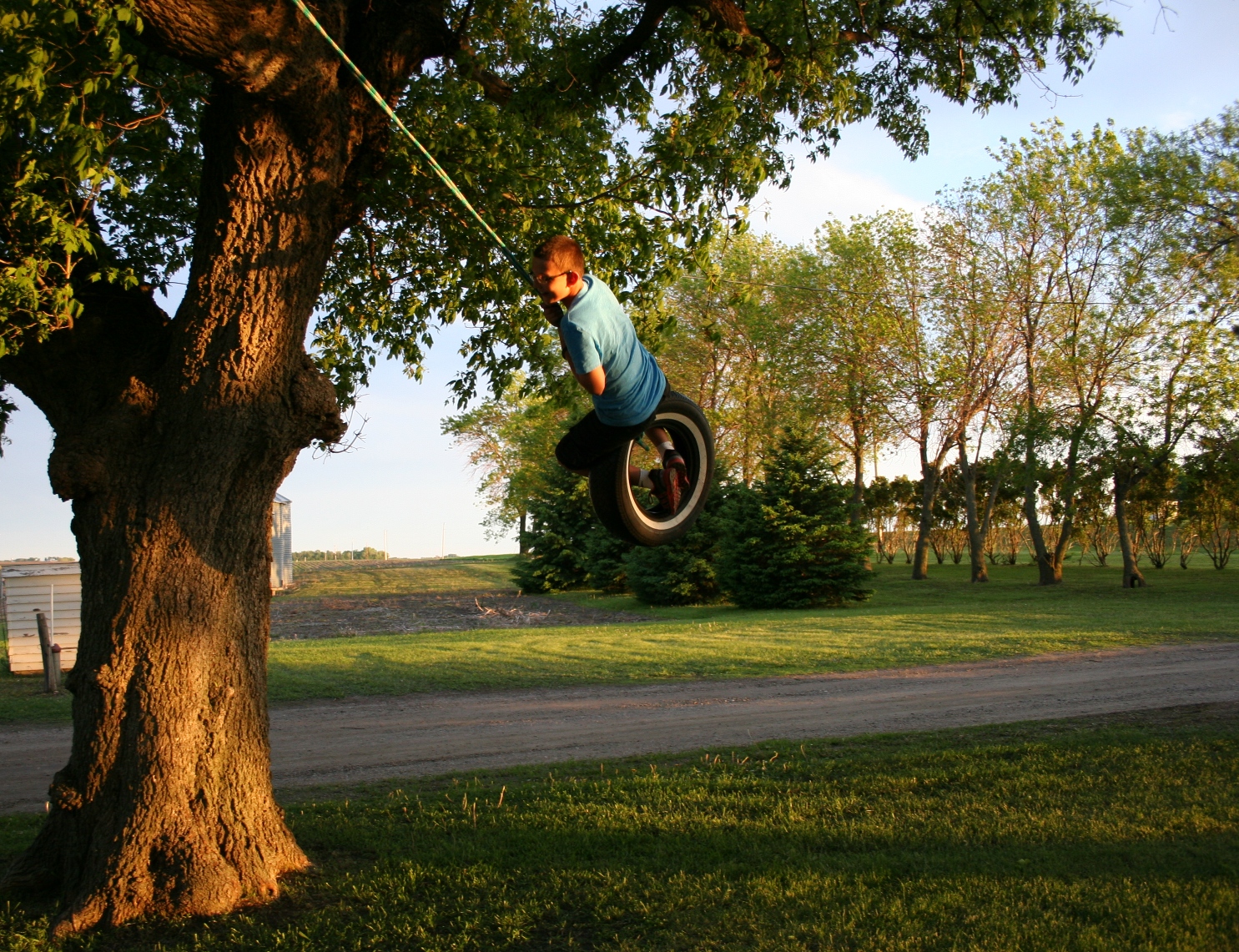
Underneath the branches of the sturdy old tree, which once sheltered a long-gone farmhouse and a tractor-tire sandbox, the cousins and siblings, ranging in age from 11 to 25, one-by-one grab double ropes, straddle a car tire and ask for a push.

My 11-year-old nephew and a tire swing...

And then they are swinging through the air, spinning nearly out of control, dodging danger in a tree trunk, wisps of hair flying, smiles as wide as the prairie sky, until, finally, they plead for someone, anyone, to stop the dizzy-inducing carnival ride.

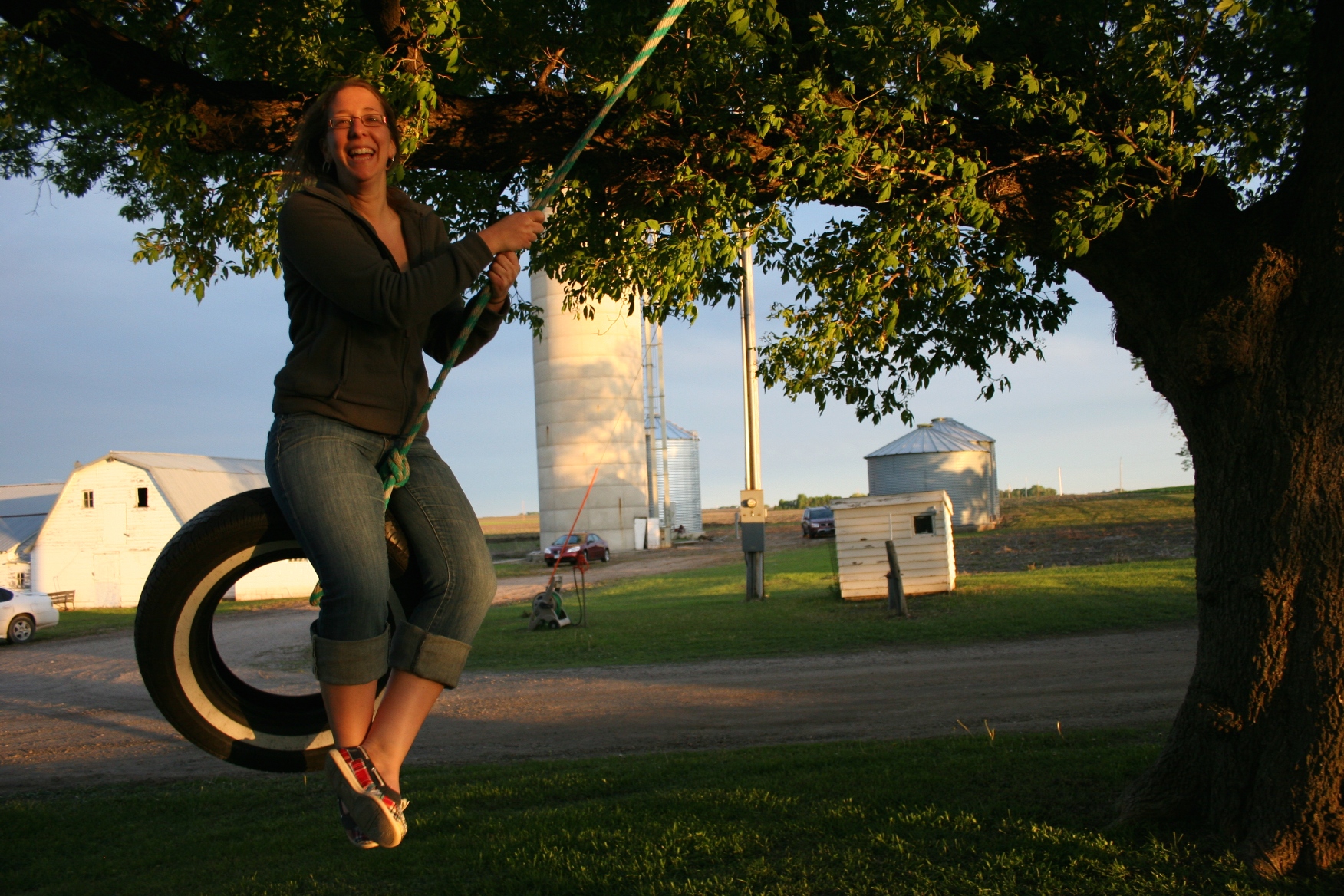
My oldest daughter...

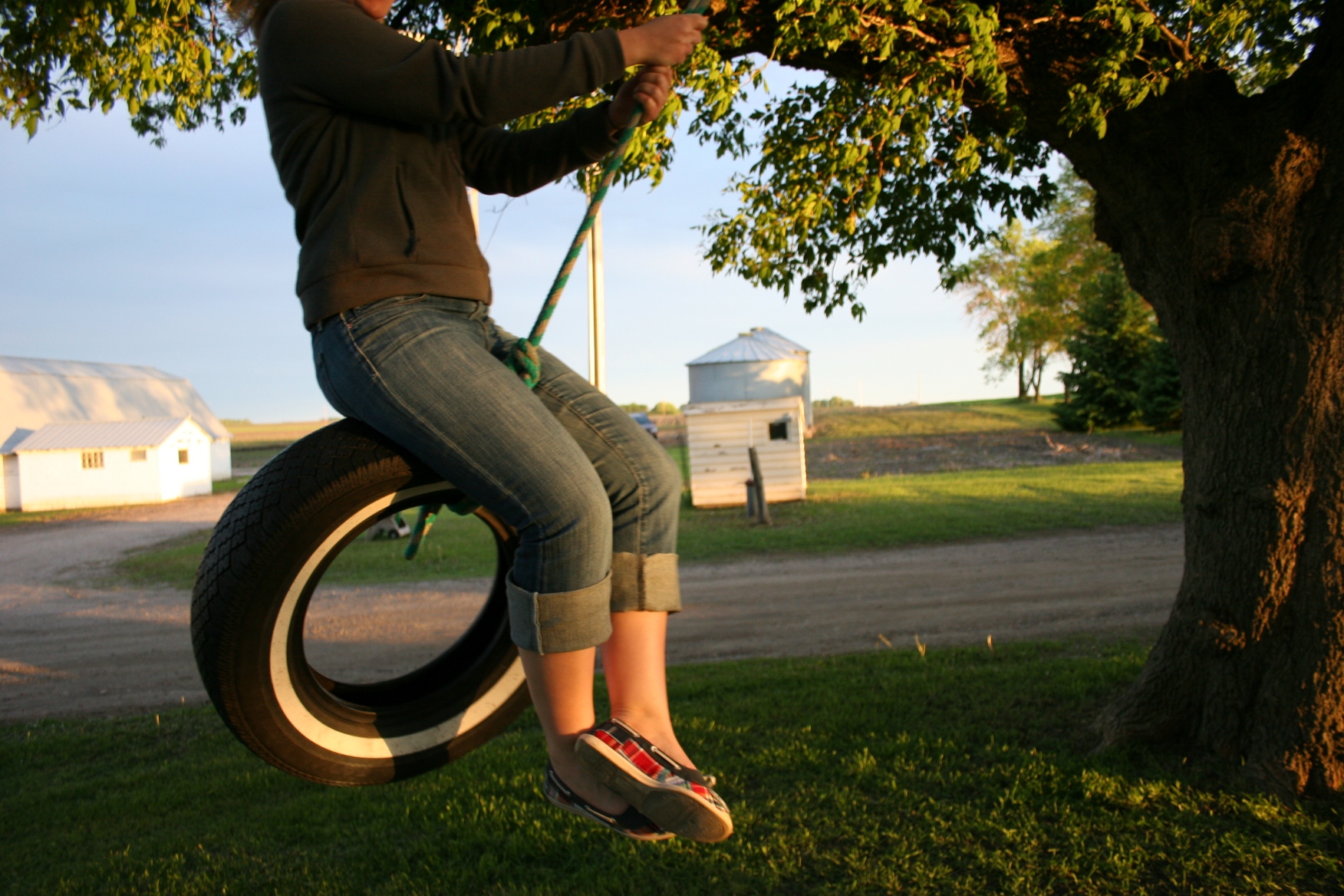
...discovers joy on a tire swing...

...far from her big city home, in the place she calls "the middle of nowhere..."

...and sometimes "nowhere" can be as much fun as Minneapolis on an almost-summer evening.

Oh, sweet evening of almost-summer on the farm, when I grip my camera, dodge the swaying tire to capture the moments, to vicariously relive the exuberance of tipping my head back, catching the wind as I ride the tire swing. I feel the twirling, dizzy oblivion through the lens of my camera, wishing I could grasp the ropes, straddle the tire, stretch my toes heavenward and tickle the belly of the sky.

© Copyright 2011 Audrey Kletscher Helbling