Minnesota Prairie Roots

Writing and photography by Audrey Kletscher Helbling

More photos from “A Day on the Farm,” Rice County, Minnesota June 24, 2013

BECAUSE I APPRECIATE  family dairy farms and because I am grateful to Ron and Diane Wegner and their daughters, Brianna and Kaylee, for opening their farm to area residents, here are more photos from “A Day on the Farm.” The Wegners hosted this event on Saturday in rural Rice County, Minnesota. Click here to see additional photos from my first post.

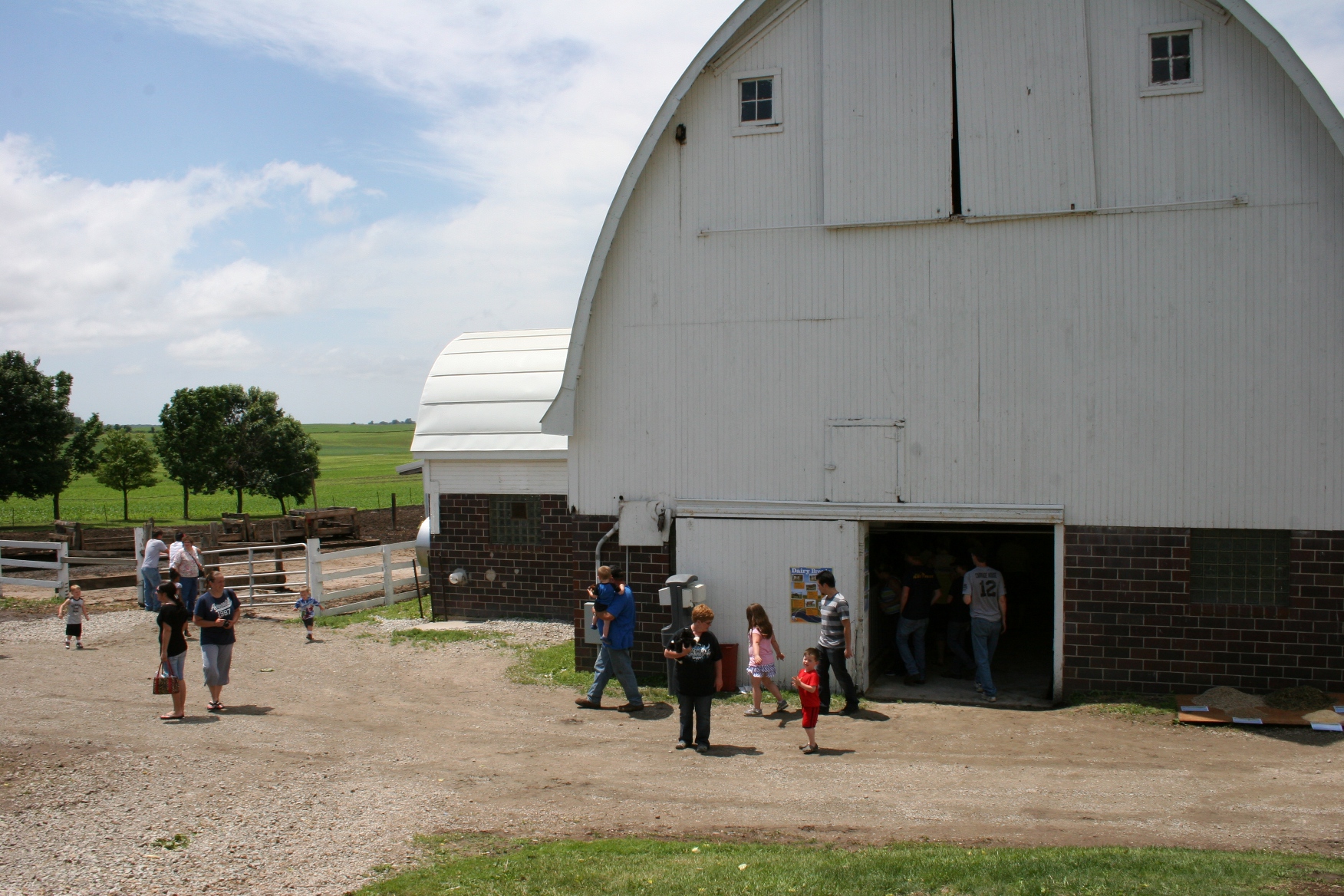
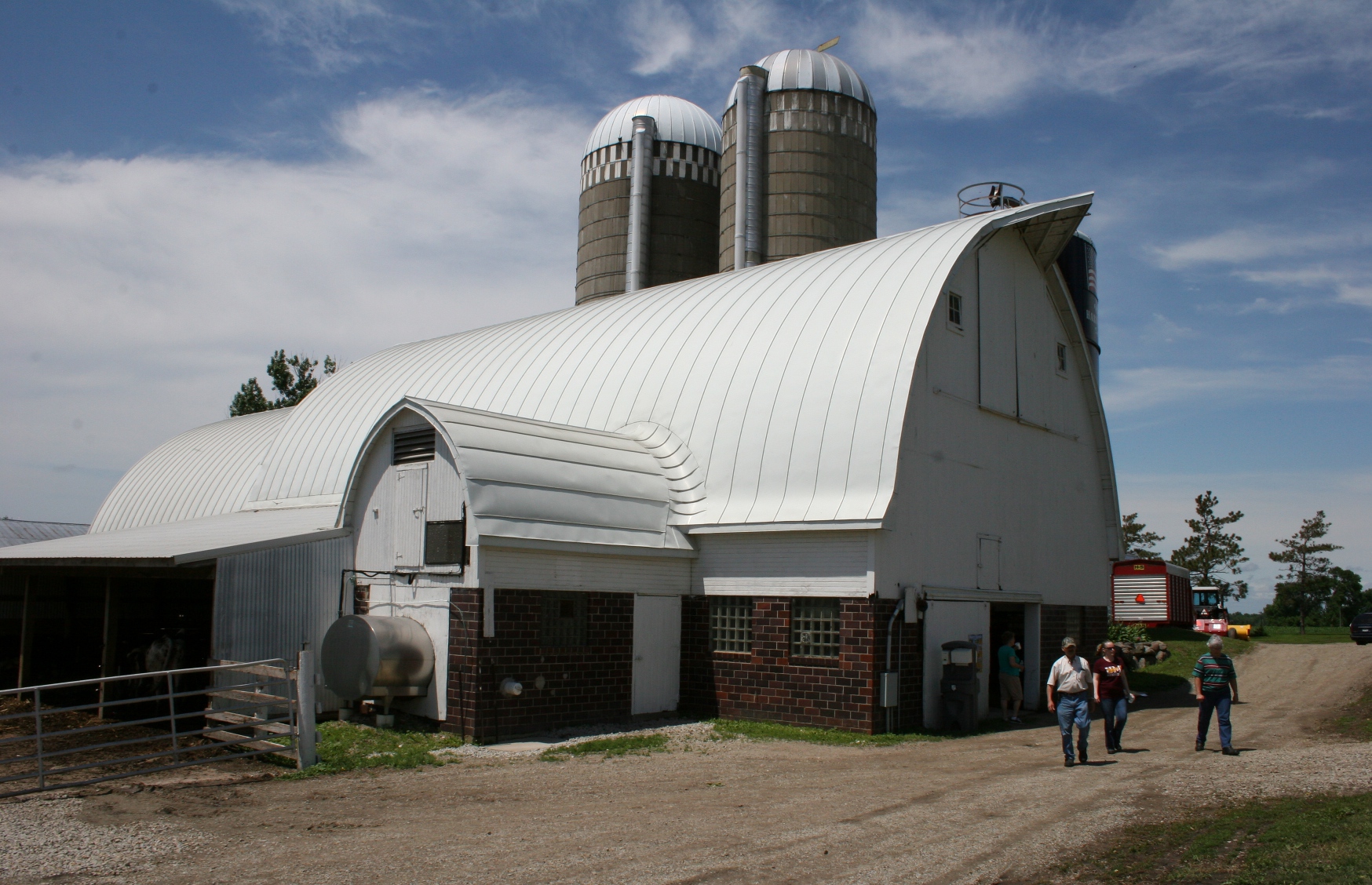
The beautiful old barn on the Wegners' property.

The beautiful old barn on the Wegners’ third-generation family farm.

The Wegners milk 50 registered Holsteins.

The Wegners milk 50 registered Holsteins.

A barn door...

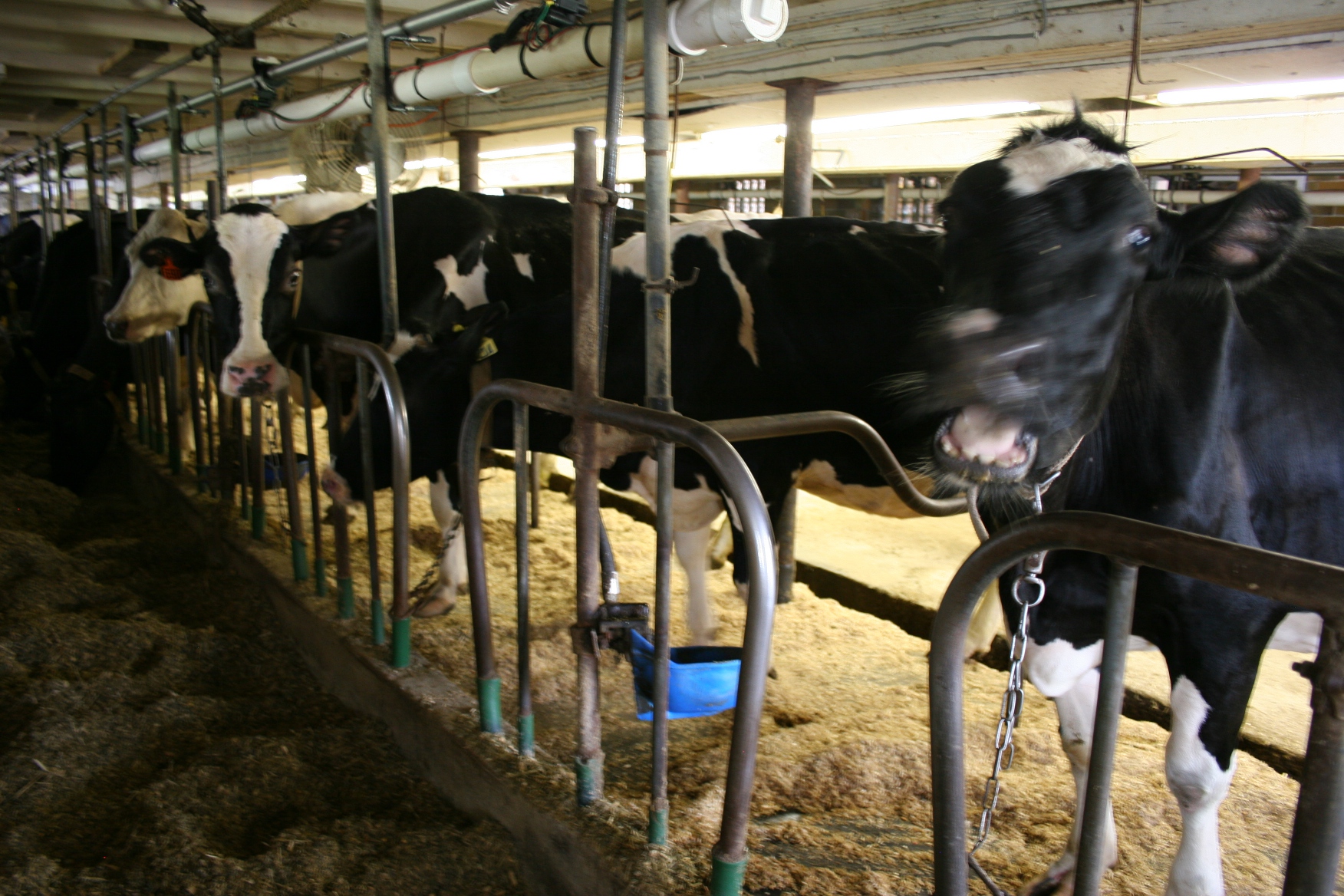
This scene inside the barn caught my farm girl eye.

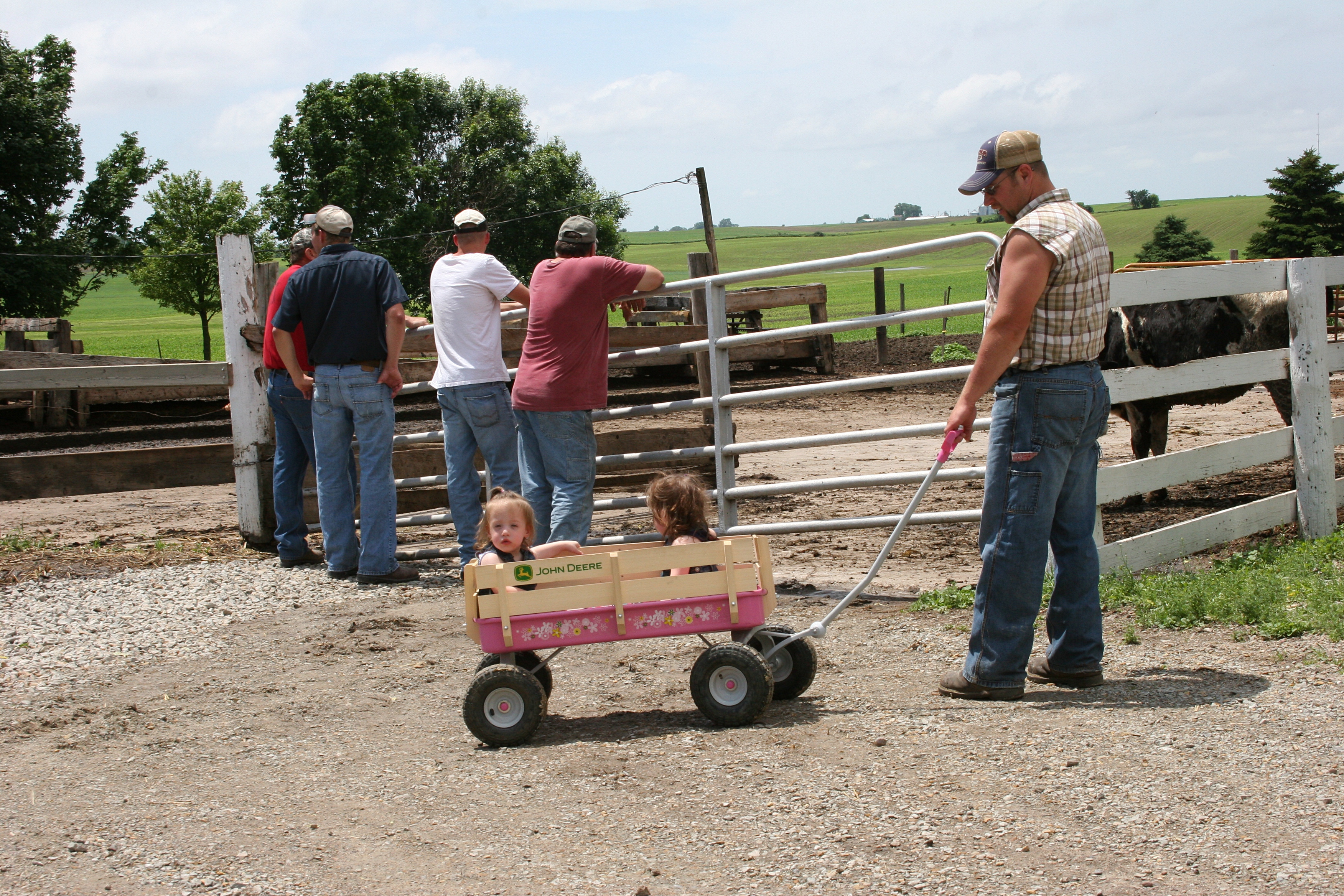
Fence leaning and wagon towing.

Fence leaning and wagon towing.

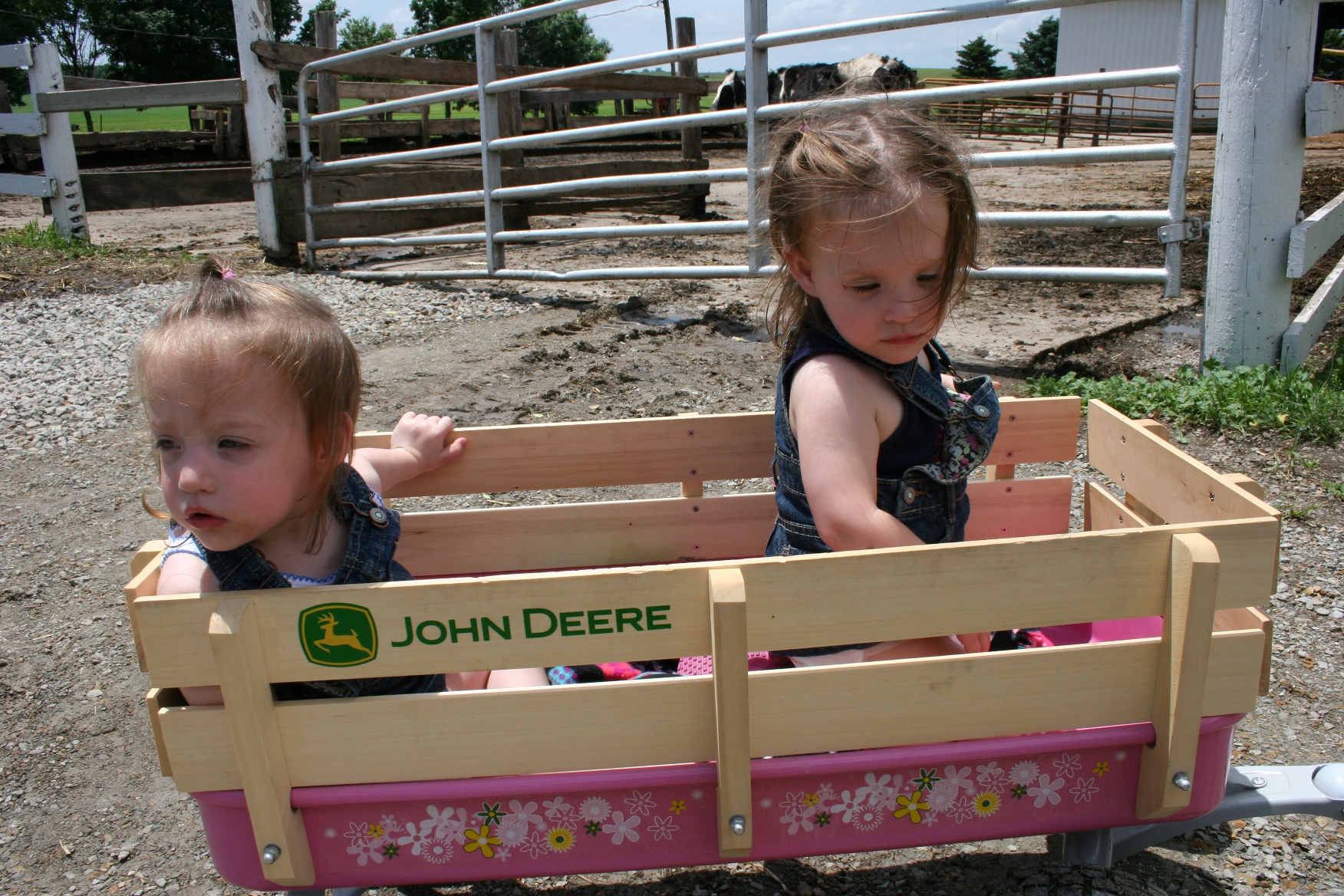
Twins Kelly and Emily, almost two, visit the farm with their dad.

Twins Kelly and Emily, almost two, visit the farm with their dad.

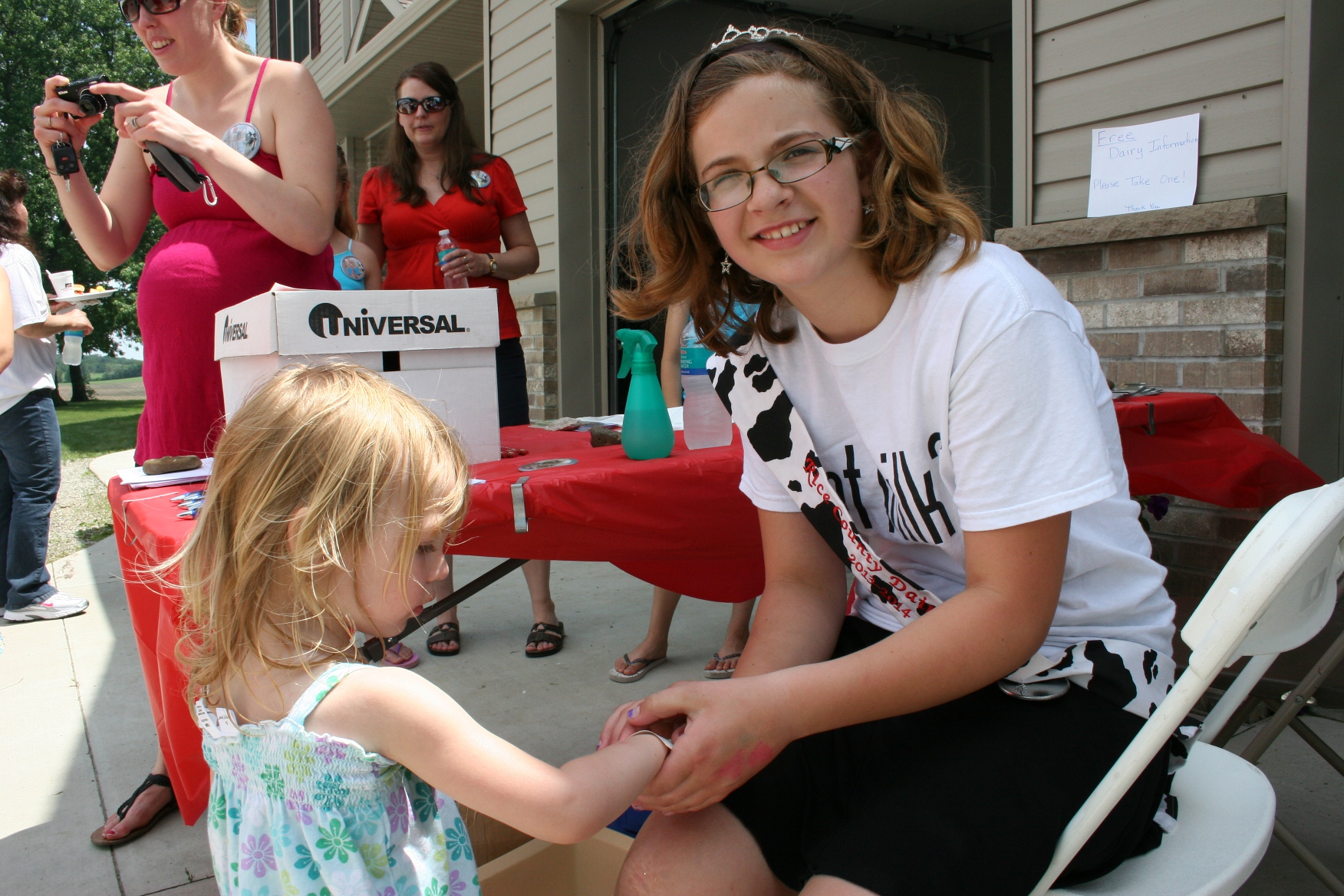
Rice County Dairy Maid Kelsey Kuball applied temporary tattoos.

Rice County Dairy Maid Kelsey Kuball applies a temporary tattoo to a young visitor’s arm.

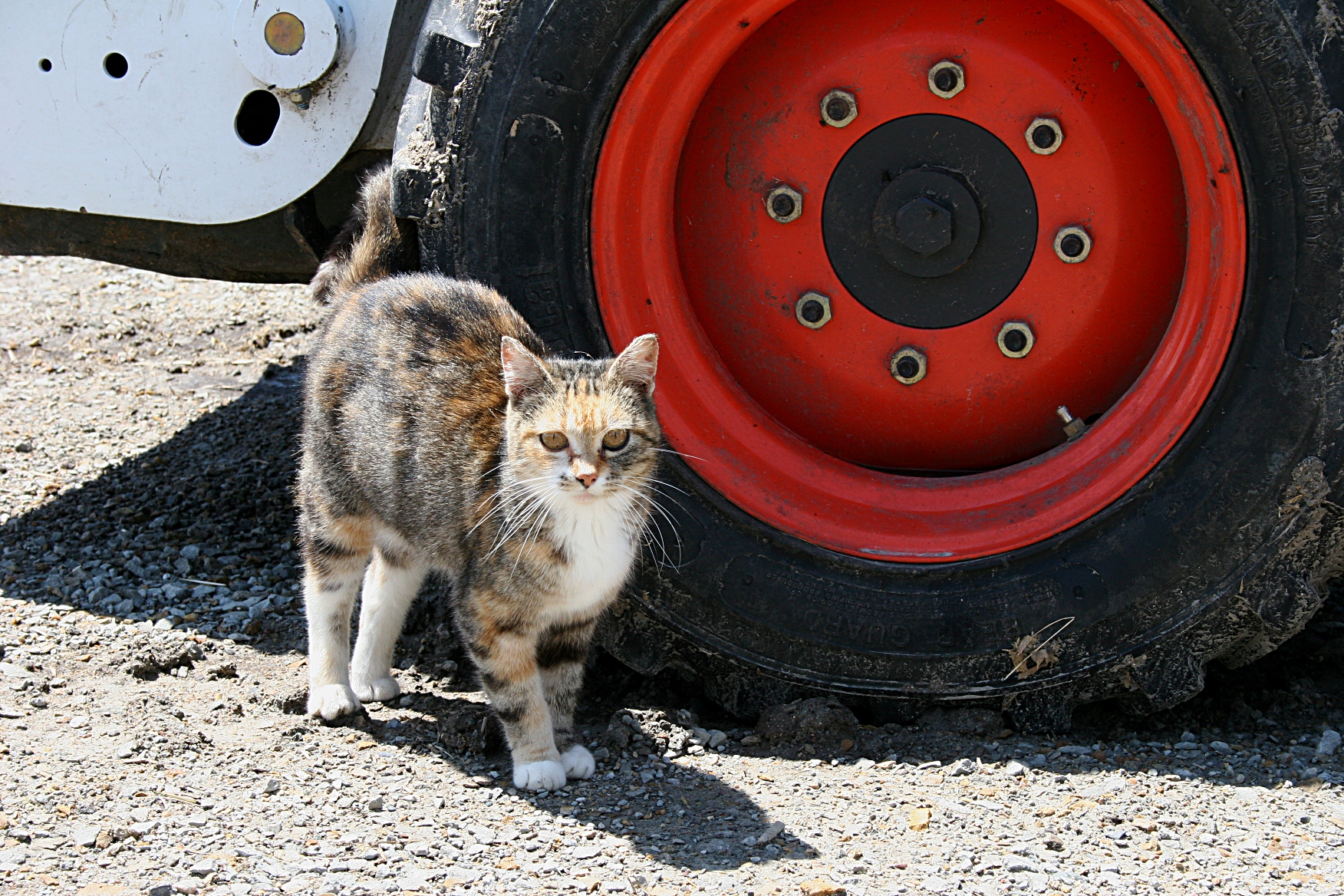
A farm cat that was just a wee skittish with about 600 strangers visiting the farm.

A farm cat that was just a wee skittish with about 600 strangers wandering around the farm.

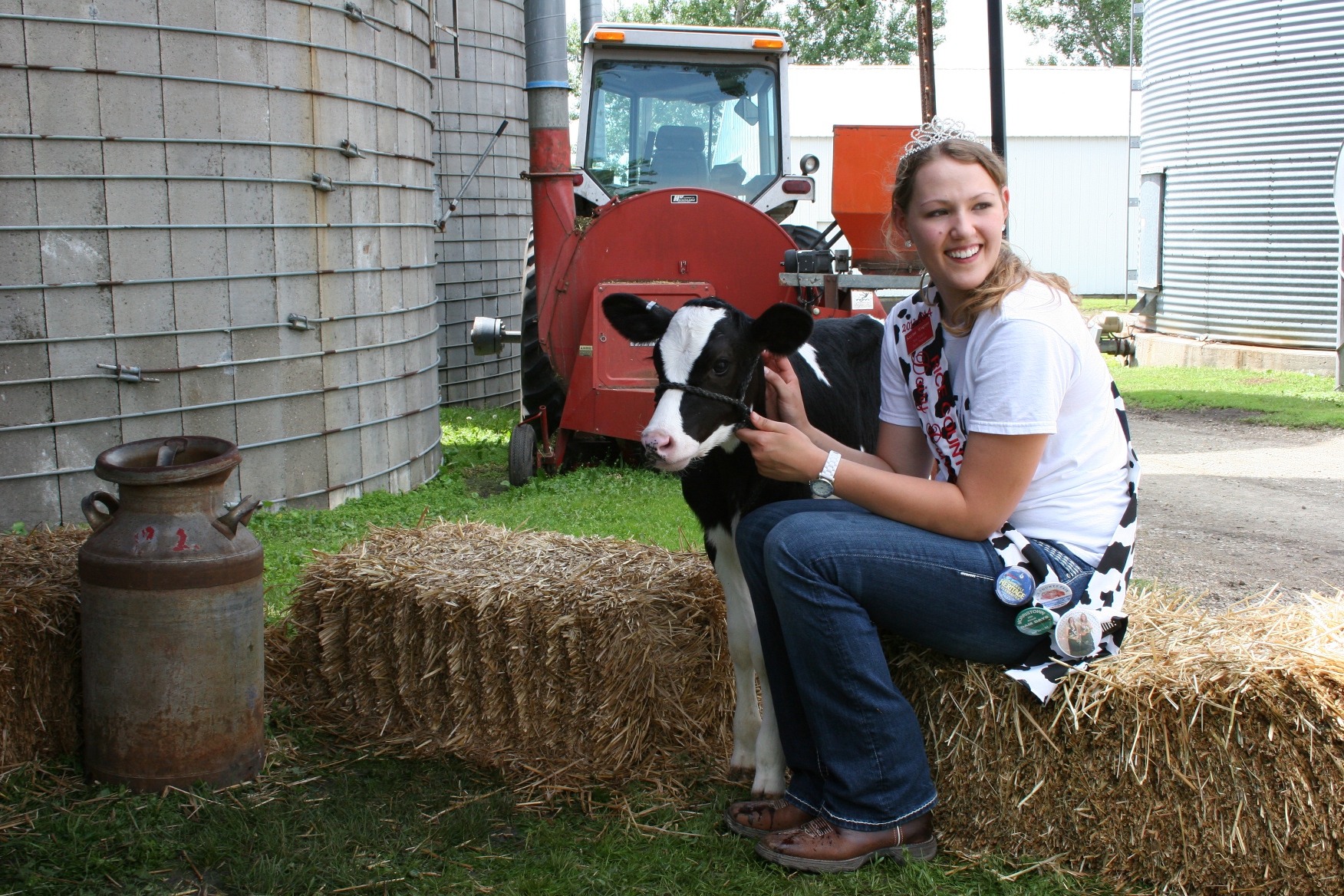
Rice County Dairy Princess Kaylee Wegner waits for kids to arrive for a photo with the calf.

Rice County Dairy Princess Kaylee Wegner waits for kids to arrive for a photo shoot with the calf.

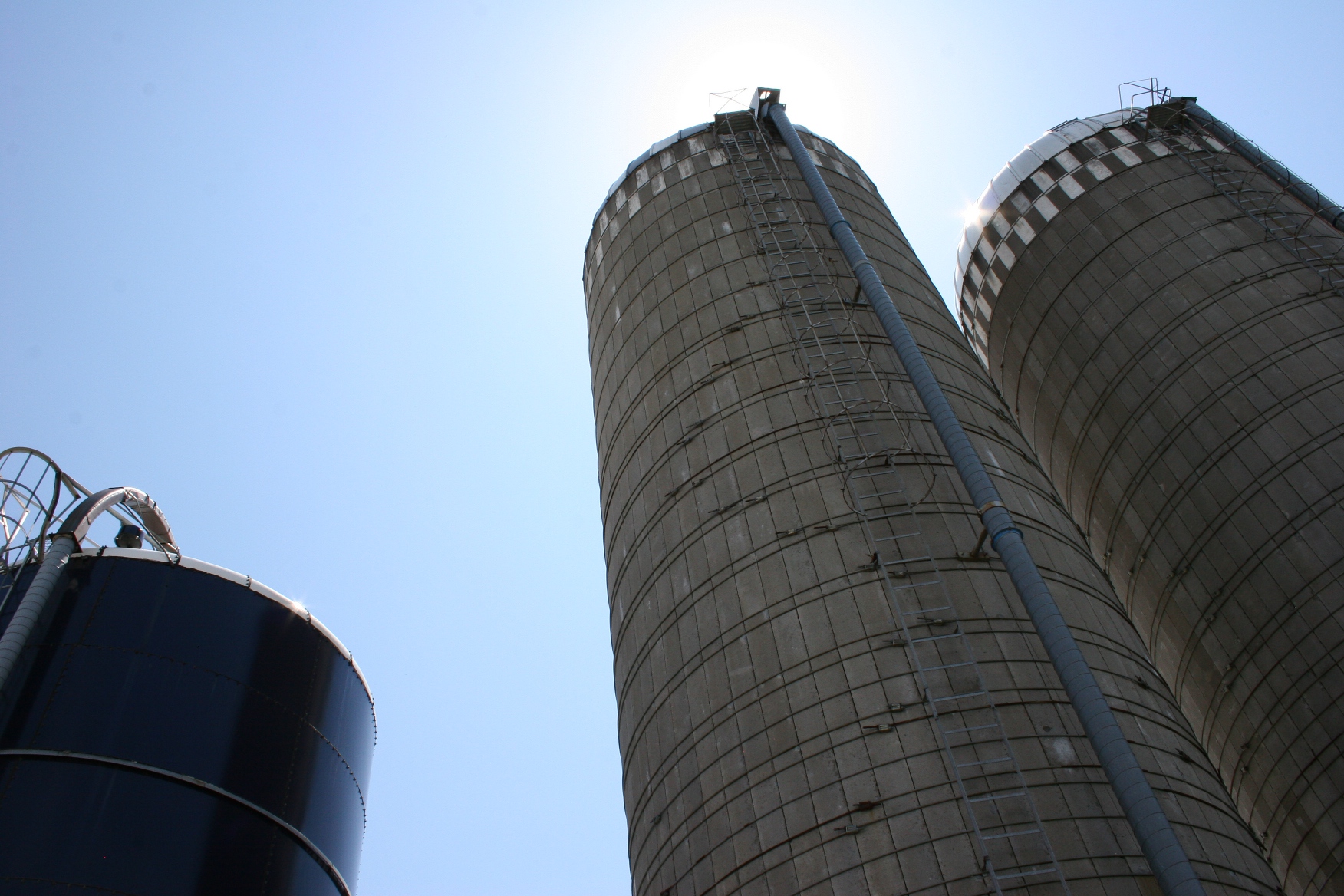
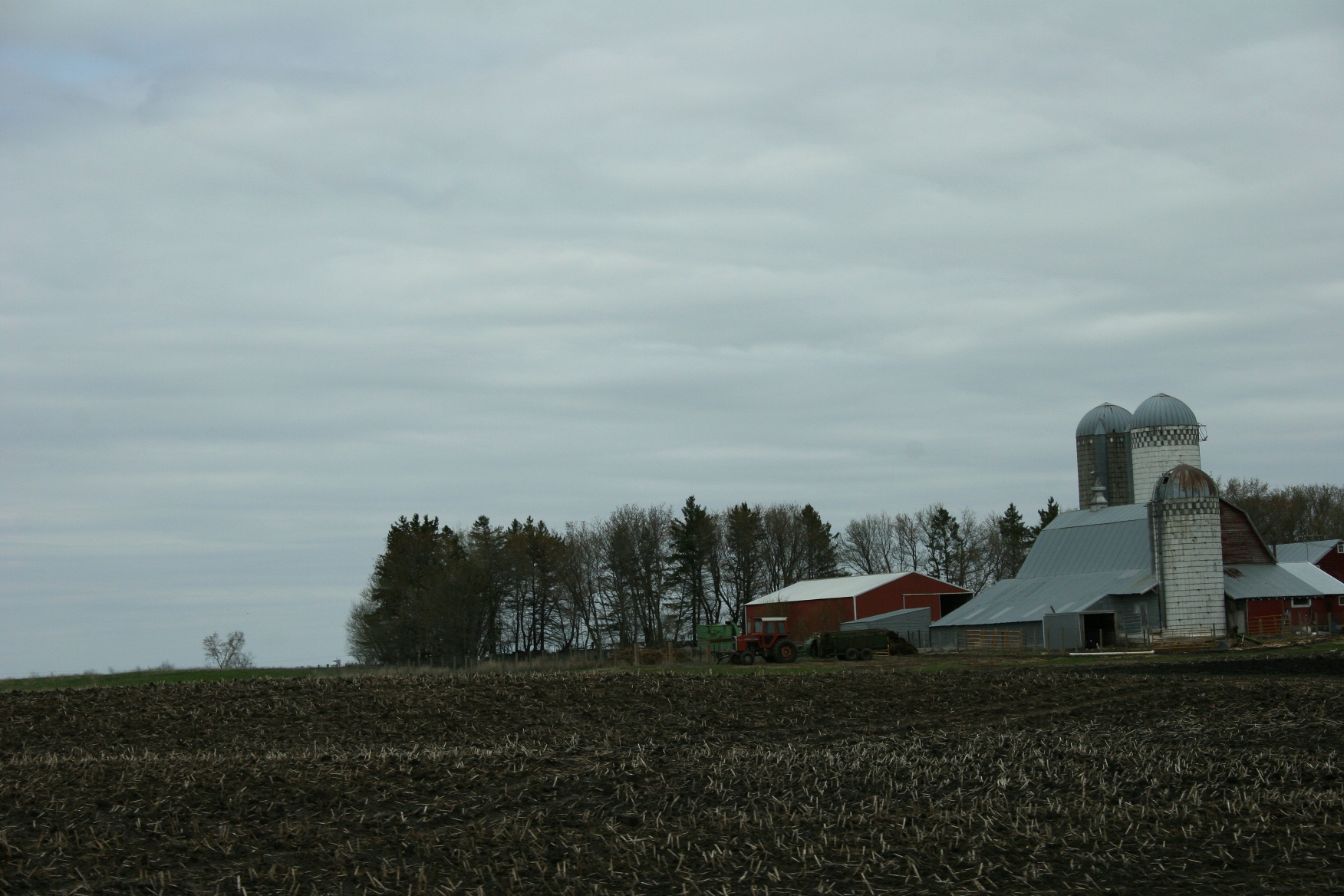
A trio of silos next to the Wegners' barn.

A trio of silos next to the Wegners’ barn.

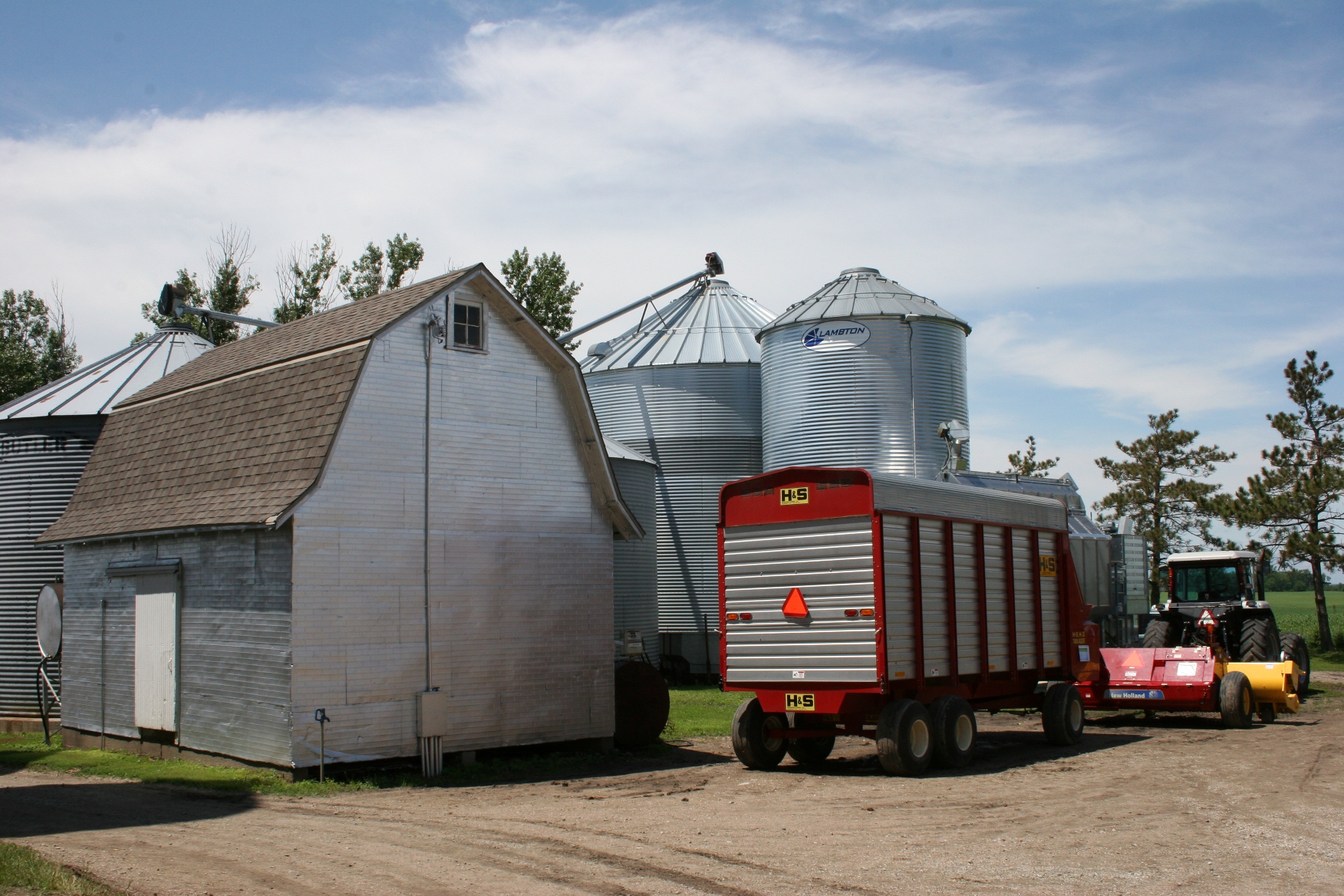
My favorite outbuilding, to the left.

My favorite outbuilding, to the left.

Copyright 2013 Audrey Kletscher Helbling


Reconnecting with my rural roots at “A Day on the Farm” June 23, 2013

NEARLY FORTY YEARS AGO I left the family farm in southwestern Minnesota bound for college in Mankato.

All these decades later I still miss the farm, yearn for those days of country quiet, the soothing pulse of the milking machine, the bellow of a cow, the nudge of a calf, the unmistakable scent of freshly-baled alfalfa.

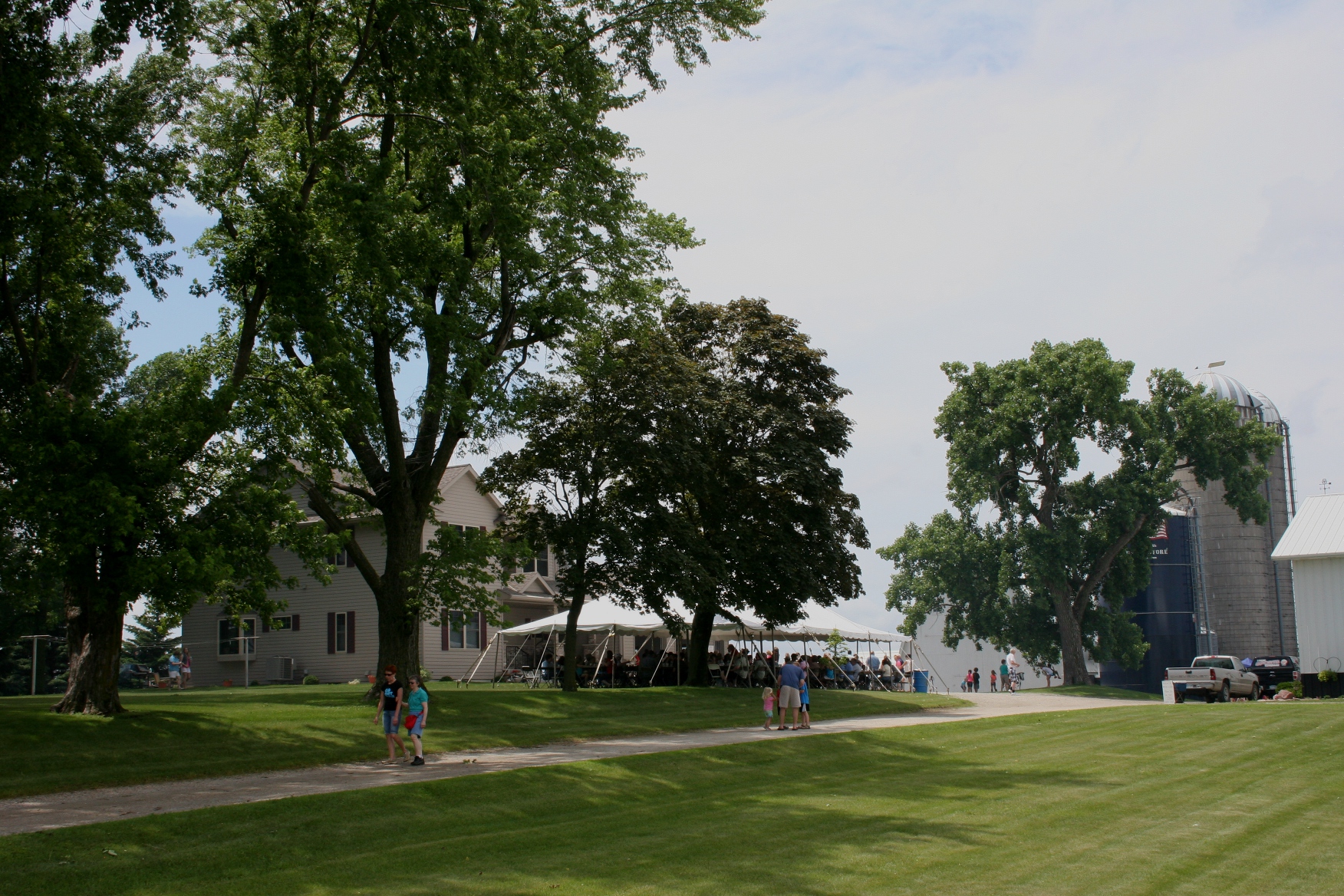
Walking toward the Wegners' farm south of Faribault.

My first glimpse of the Wegners’ farm south of Faribault.

Saturday afternoon I reconnected with my rural roots at “A Day on the Farm” hosted by Ron and Diane Wegner and their daughters, Brianna and Kaylee, and sponsored by the Rice County American Dairy Association and the Minnesota Beef Council.

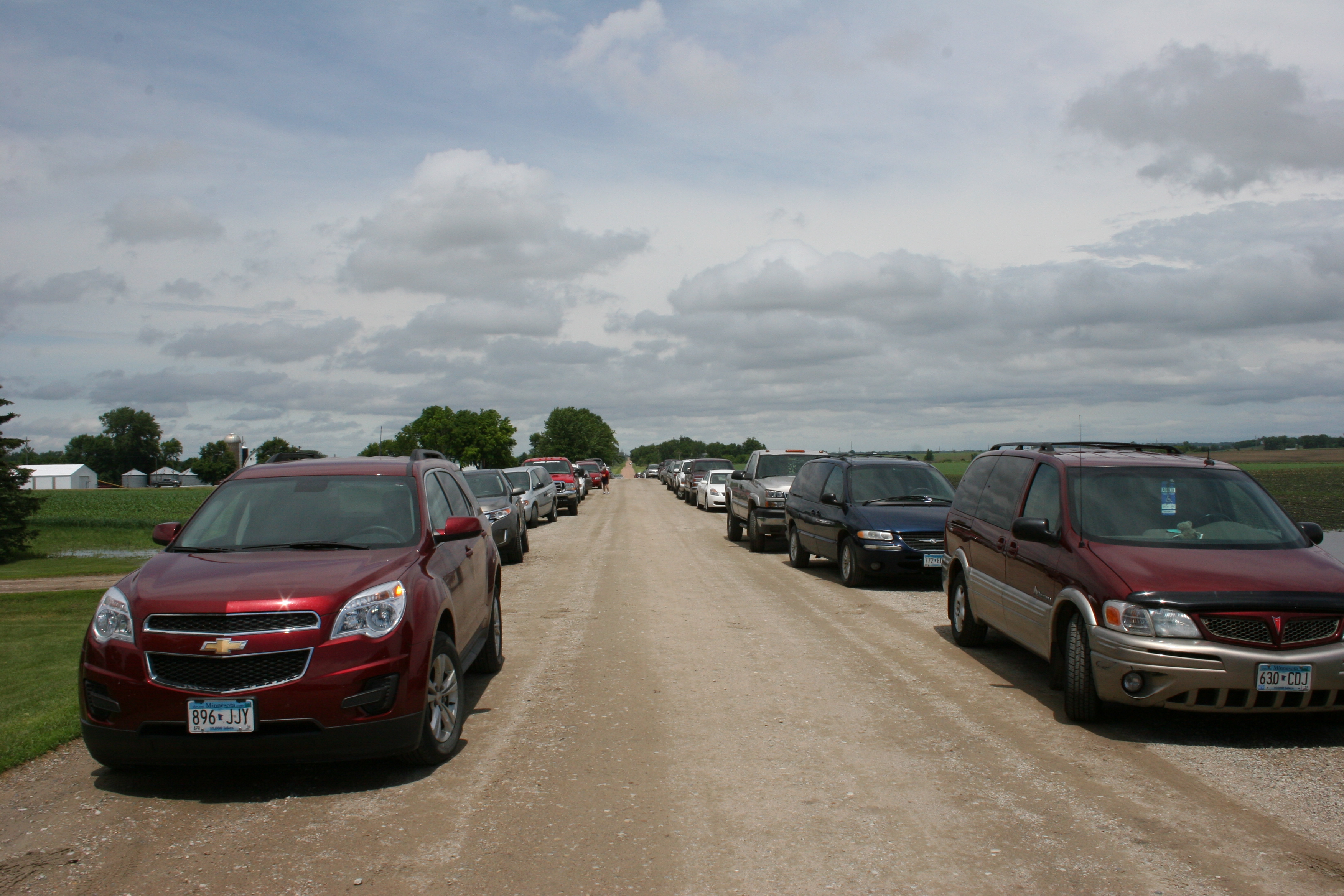
Vehicles lined both sides of Appleton Avenue near the Wegners' farm.

Vehicles lined both sides of Appleton Avenue near the Wegners’ farm.

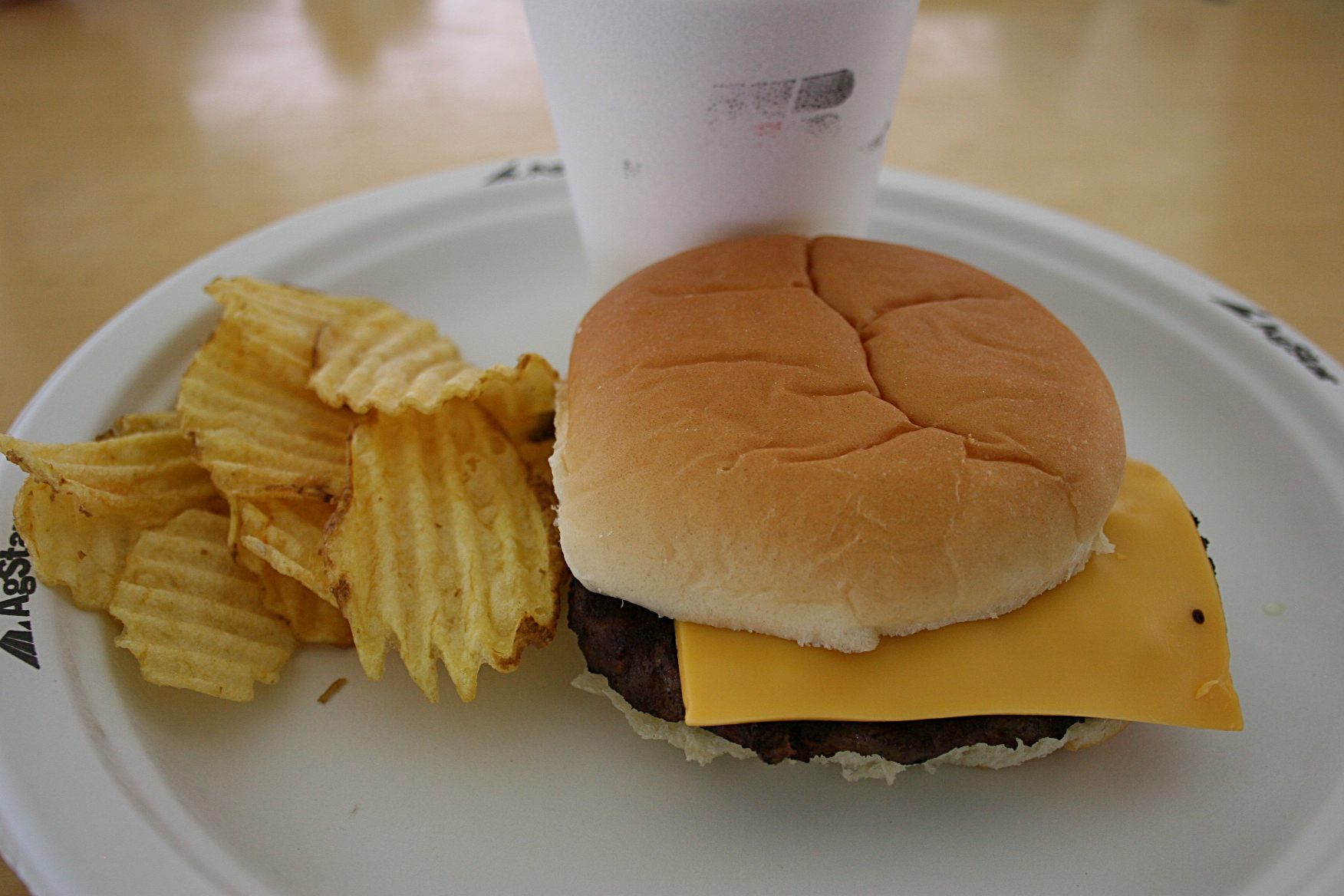
The free meal was provided by the Minnesota Beef Council, the Rice County American Dairy Association and Hastings Co-op Creamery (to which the Wegners sell their milk).

The free meal was provided by the Minnesota Beef Council, the Rice County American Dairy Association and Hastings Co-op Creamery (to which the Wegners sell their milk).

Vehicles lined the gravel road leading to the Wegners’ dairy and crop farm south of Faribault as skies cleared and almost 600 visitors lined up for free cheeseburgers, malts and milk and then wandered the farm site.

Visitors toured the barn to see the cows and calves.

Visitors toured the barn to see the cows and calves.

It was a near perfect day—albeit a bit sultry—to check out this dairy operation, which, with 50 registered Holstein milk cows, 50 head of young stock and 15 springing heifers, still fits the definition of a family farm.

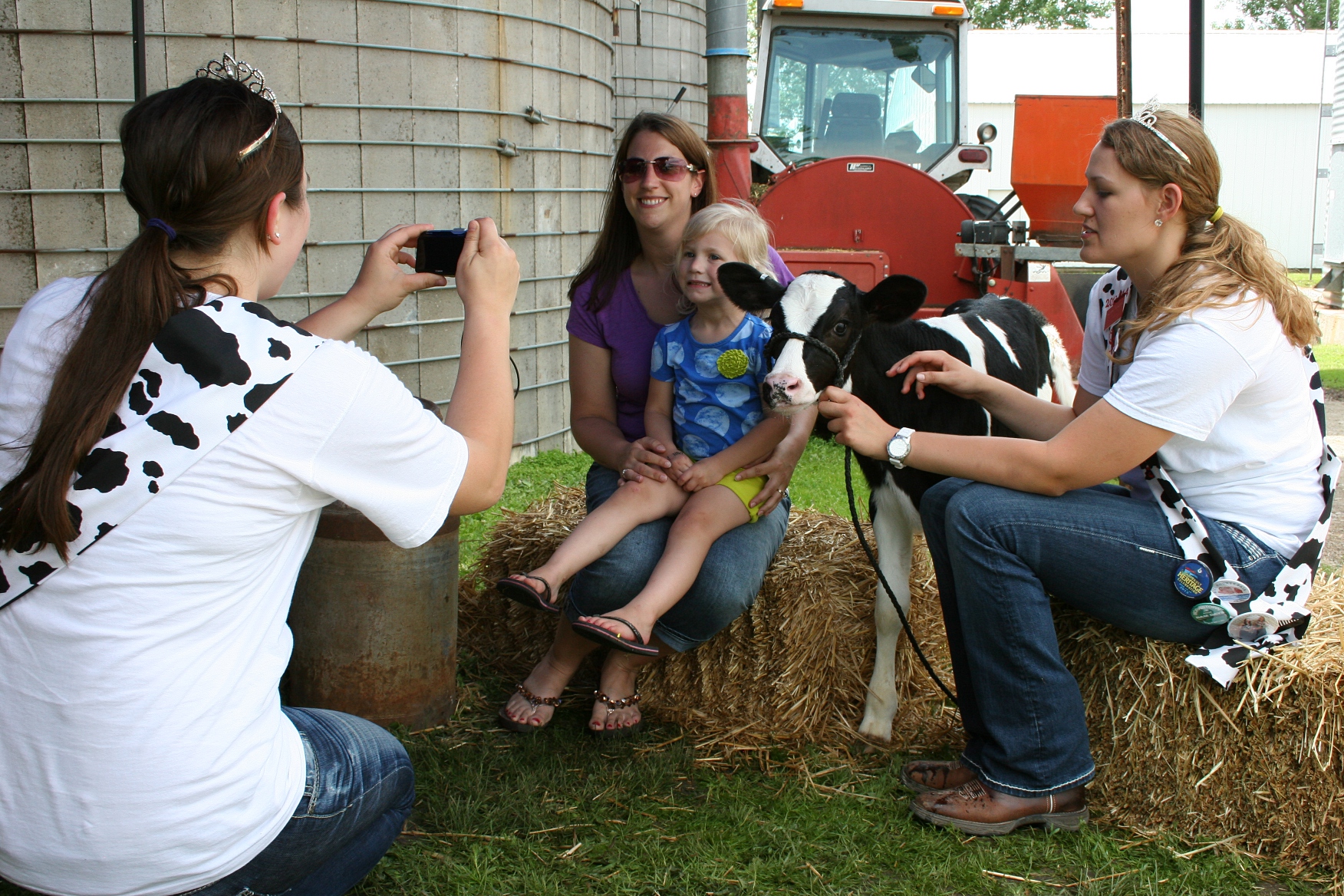
Rice County Dairy Princess Tracie Korbel takes photos while Dairy Princess Kaylee Wegner tends the calf.

Rice County Dairy Princess Tracie Korbel takes photos while Dairy Princess Kaylee Wegner tends the calf.

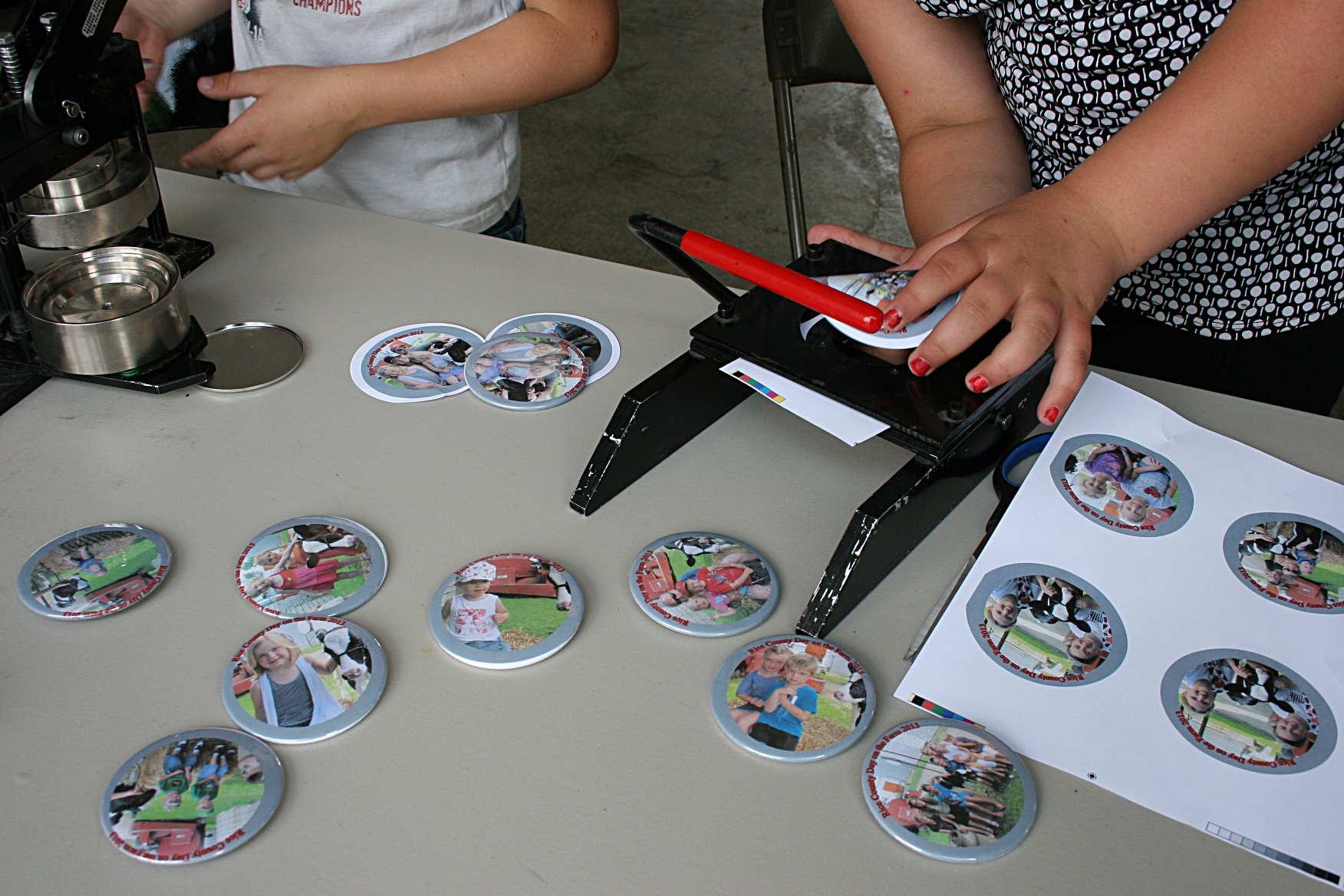
Turning the calf/kid photos into buttons.

Turning the calf/kid photos into buttons.

I felt comfortably at home here, remembering my years of feeding calves as I watched Rice County Dairy Princess Kaylee Wegner tend a calf while Princess Tracie Korbel photographed youngsters with the baby animal. The photos were then adhered to buttons.

Two-year-old Benjamin points out his "Got milk?" tattoo.

Two-year-old Benjamin points out his “Got milk?” tattoo.

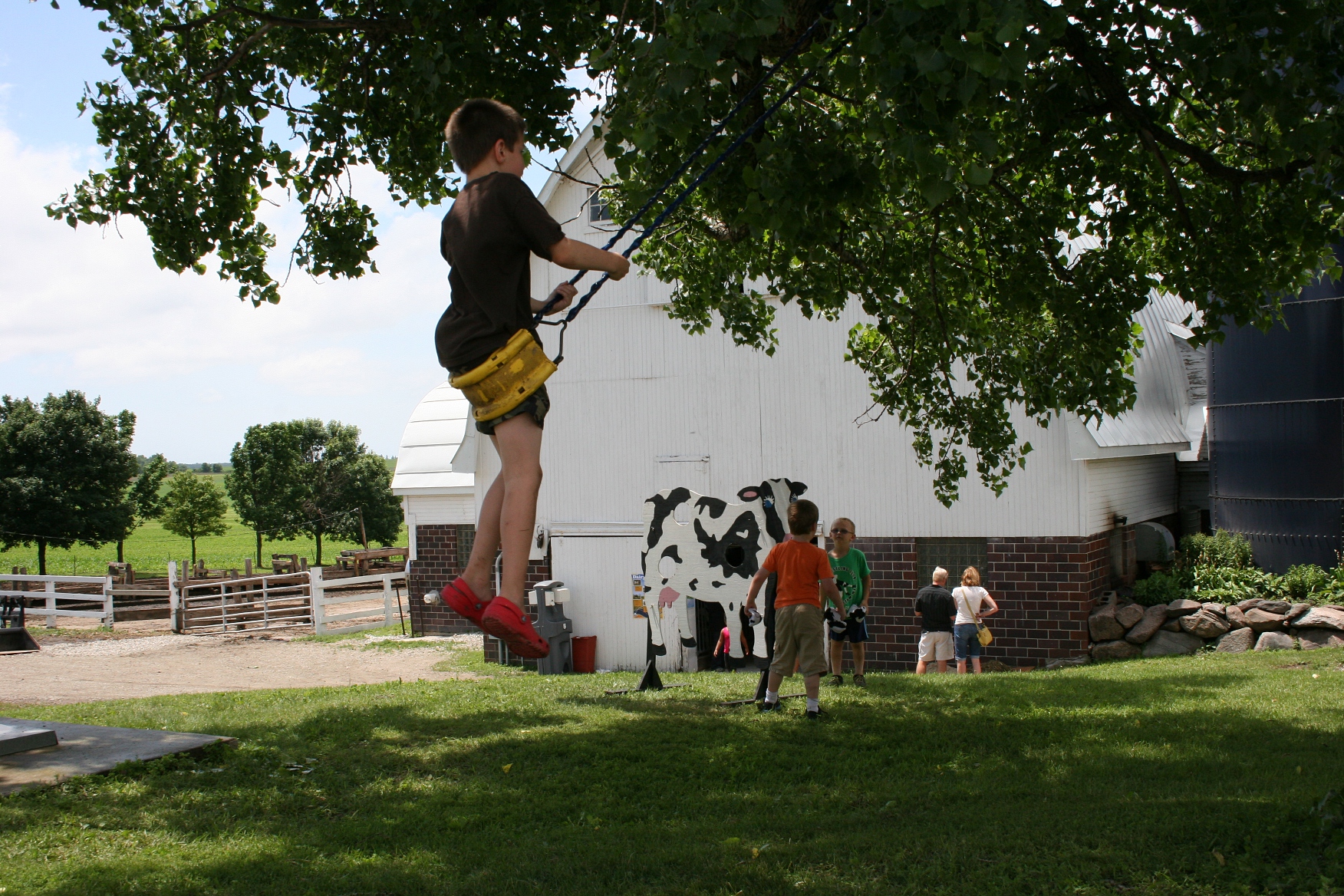
Simple country pleasures: swinging and playing cow bean bag toss.

Simple country pleasures: swinging and playing cow bean bag toss.

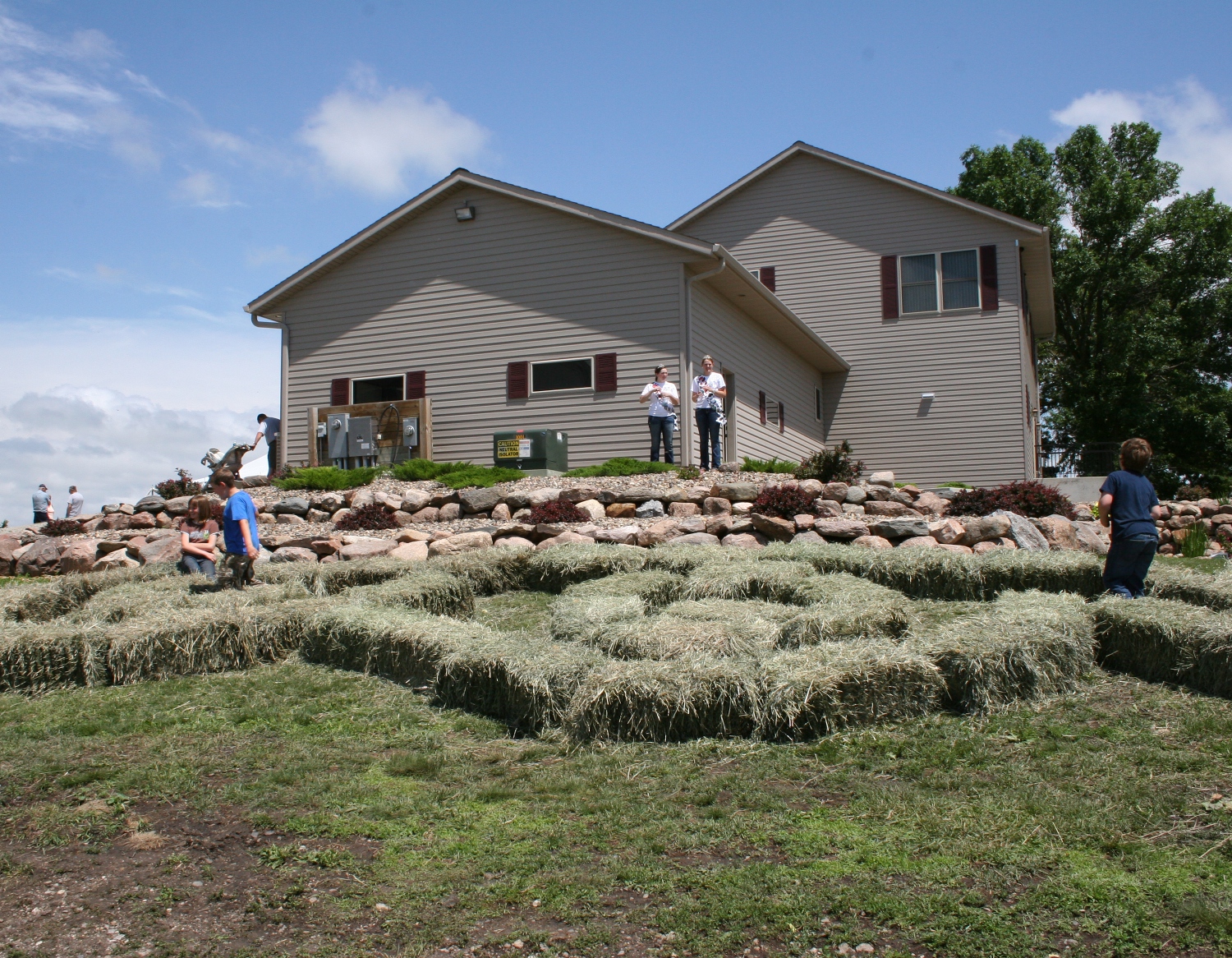
The hay bale maze between the barn and the house. The scent of freshly baled alfalfa caused me to linger here for awhile.

The hay bale maze between the barn and the house. The scent of freshly baled alfalfa caused me to linger here for awhile.

Other kids’ activities included a hay bale maze, cow bean bag toss, temporary tattoo applications and a ride on a swing tied to a tree. Fun stuff on a rare stunning summer afternoon.

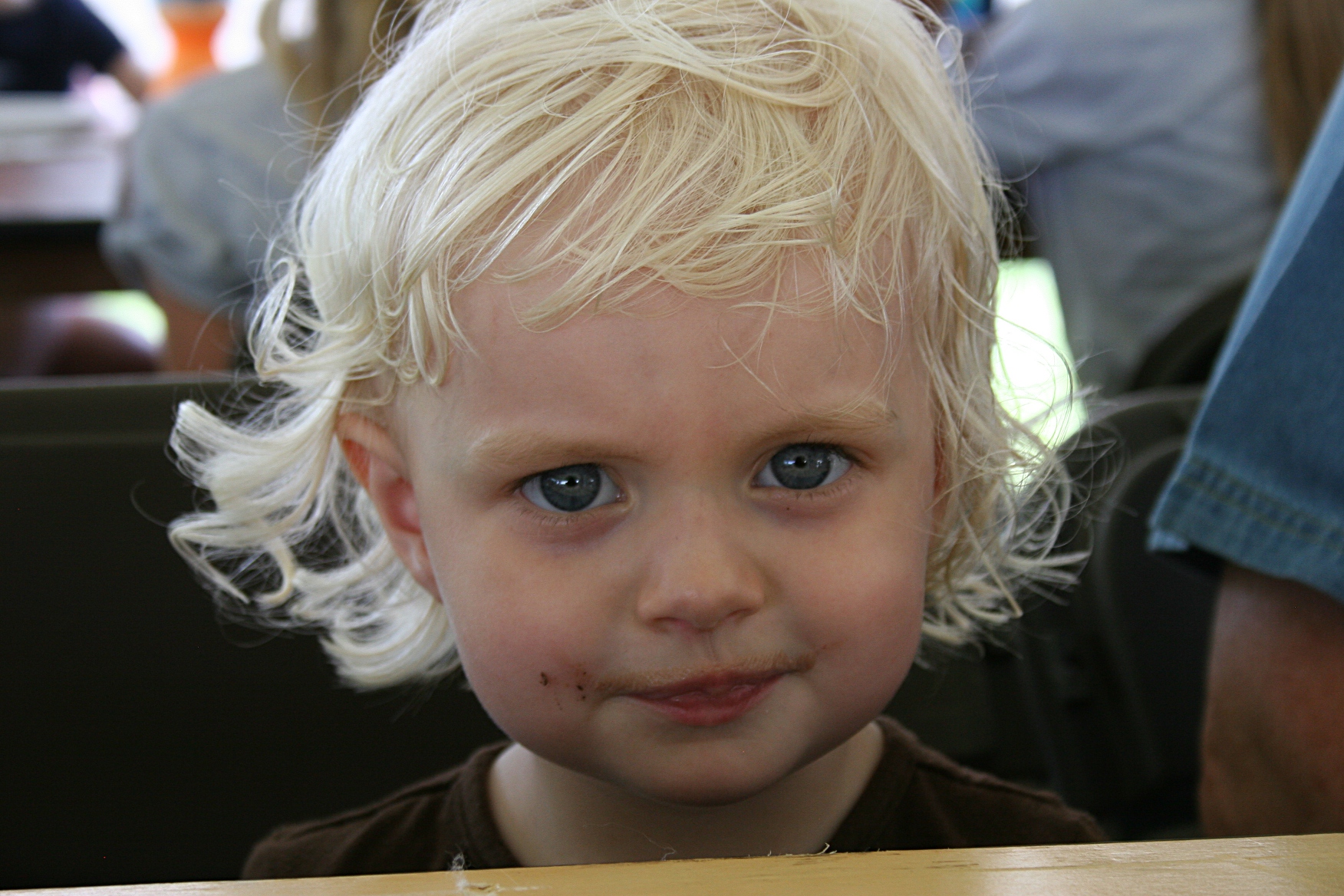
Ava, 2 1/2, lives in the Twin Cities. Her grandparents, who live near Dundas, brought her to the farm because she loves animals.

Ava, 2 1/2, lives in the Twin Cities. Her grandparents, who live near Dundas, brought her to the farm because she loves animals. My husband and I dined with Ava and her grandparents.

Familiarizing kids with a farm seemed a common thread among many for coming to the farm, according to host Ron Wegner. He heard on Saturday from many grandparents who grew up on farms and brought their grandkids because “they don’t know what a cow is.”

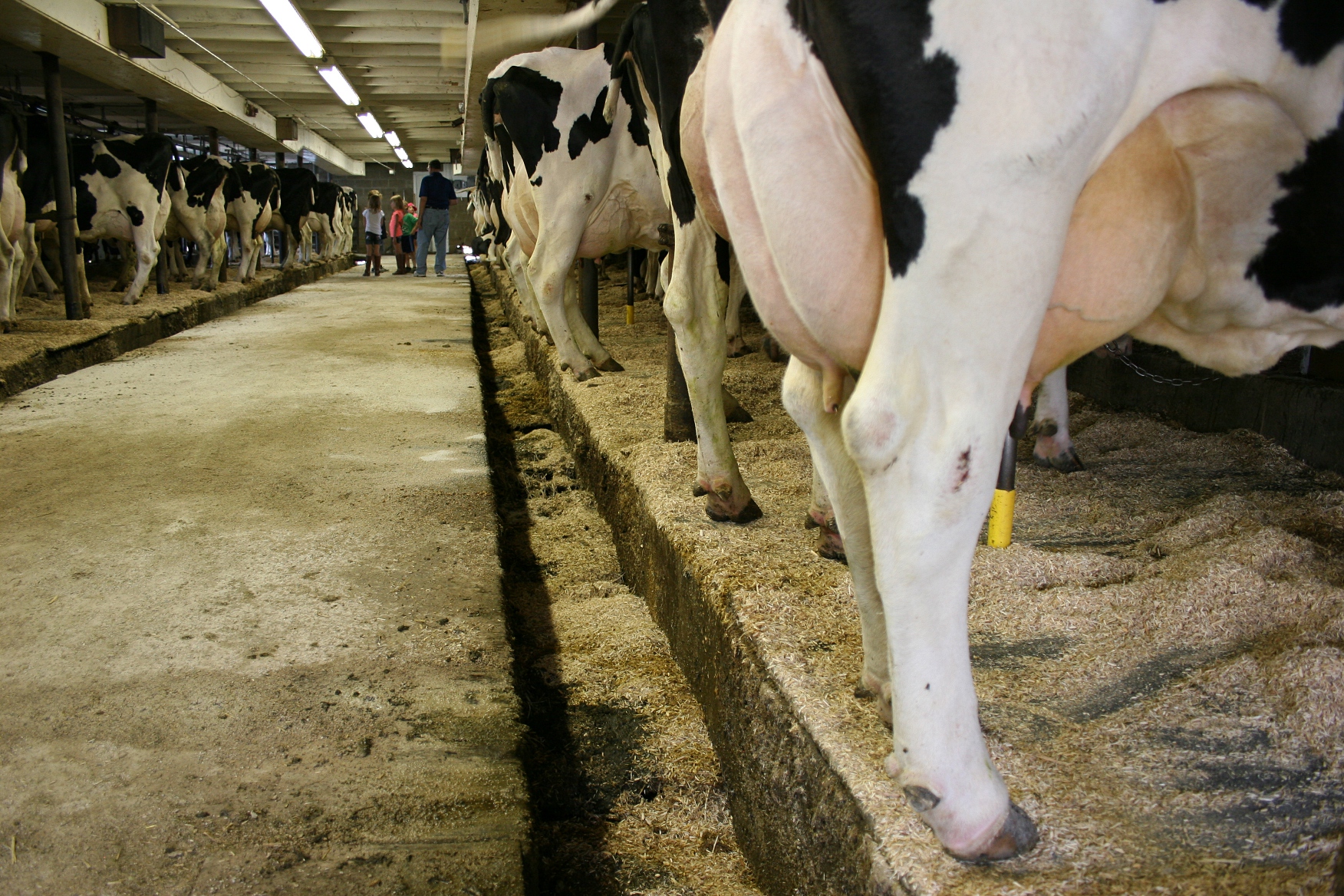
Inside the Wegners' barn, where dairy products come from.

Inside the Wegners’ dairy barn.

But Ron was hoping to educate more than the younger generation. When I asked why he agreed to open his farm to strangers for three hours, he explained that he wanted “the town people to come to a dairy farm and see where milk products come from.”

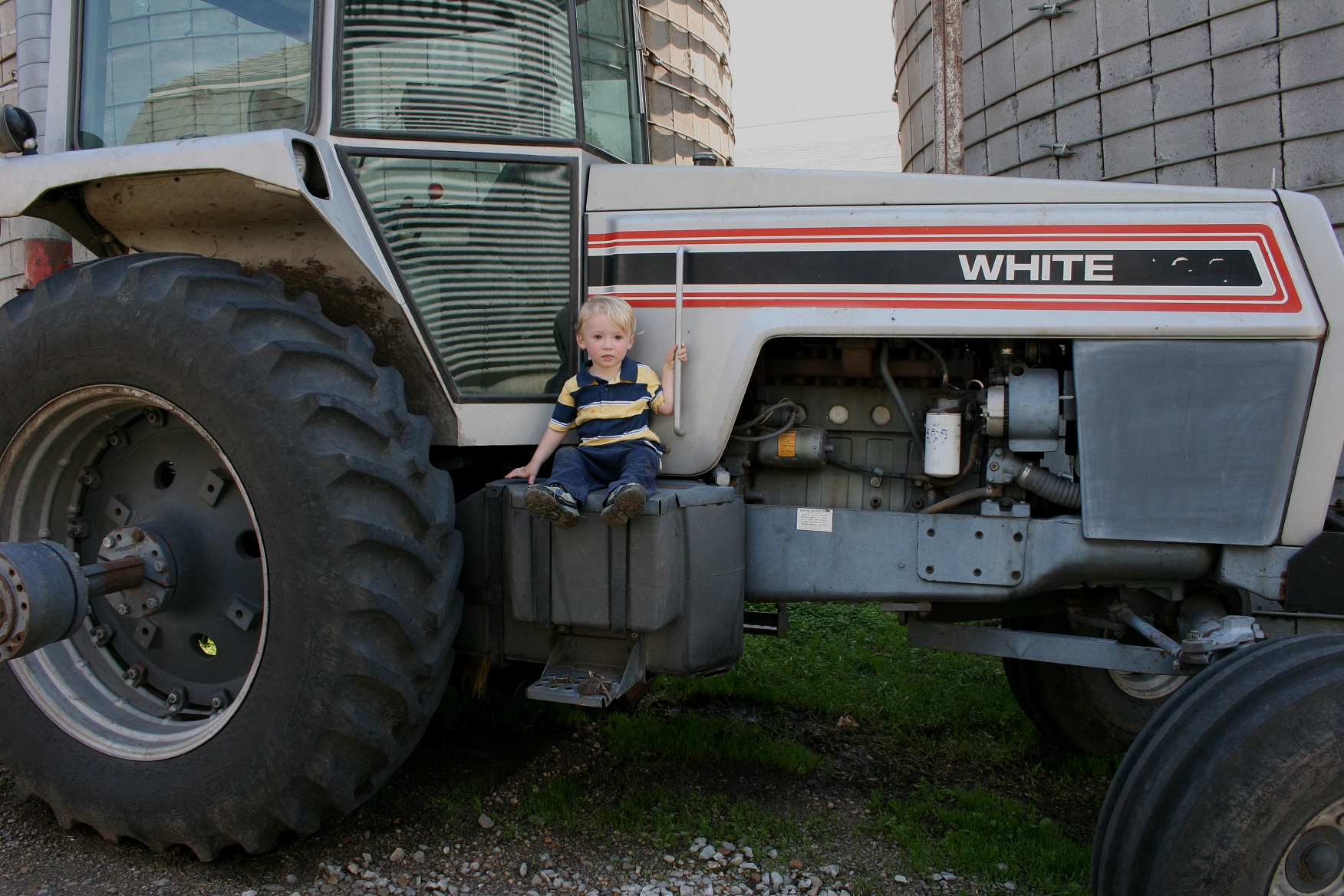
Benjamin, 2, lives on a buffalo farm near Lonsdale. His mom brought him to see a dairy farm. She was posing him for a photo on the tractor when I happened by.

Benjamin, 2, lives on a buffalo farm near Lonsdale. His mom brought him to see a dairy farm. She was posing him for a photo on the tractor when I happened by.

And that seemed as good a reason as any to someone like me, who grew up on a Minnesota dairy farm.

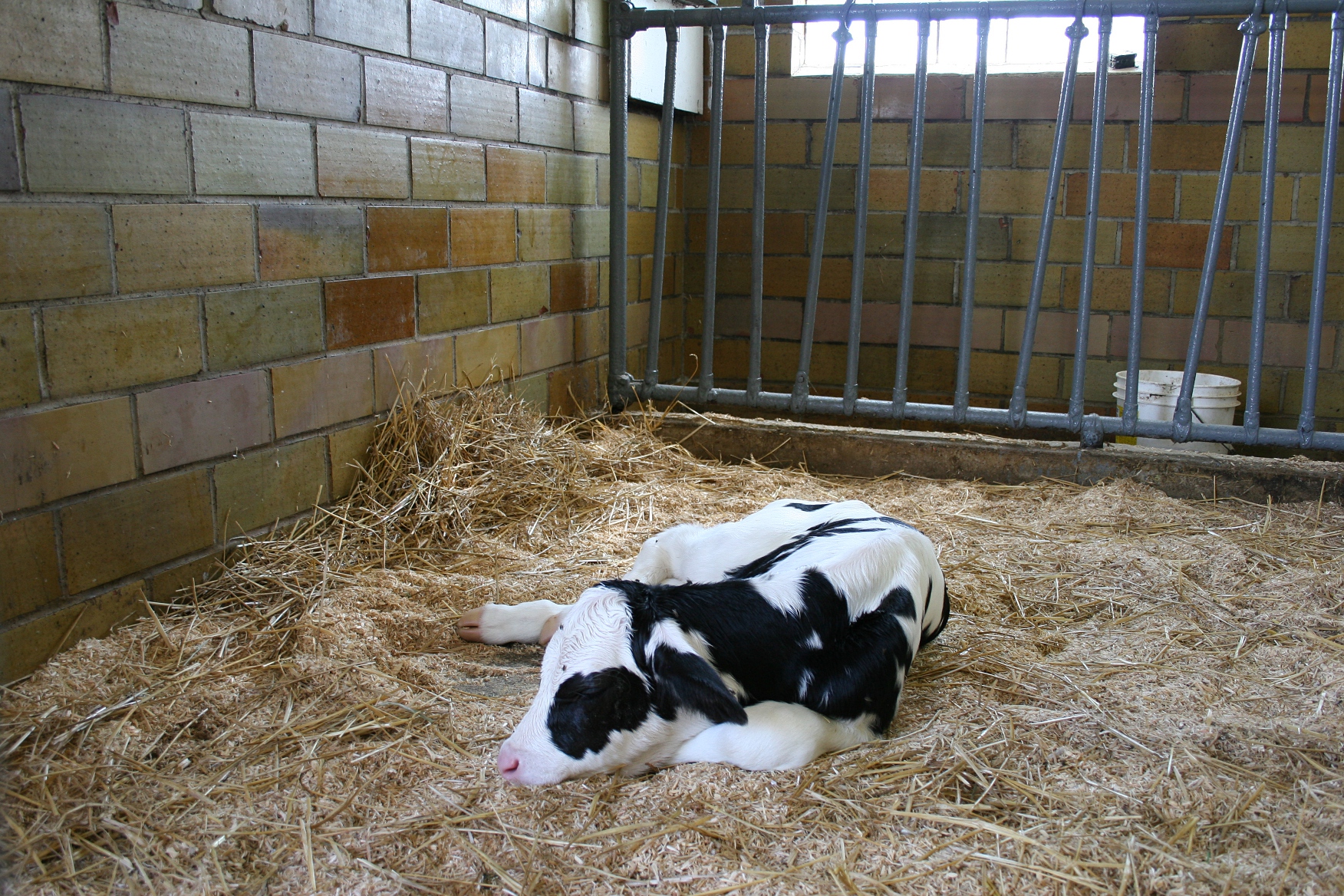
Several calves inside the barn were a hit among visitors.

Several calves inside the barn were a hit among visitors.

CHECK BACK for more photos from “A Day on the Farm” in rural Faribault.

© Copyright 2013 Audrey Kletscher Helbling


An on-the-road field report May 13, 2013

Filed under: Uncategorized — Audrey Kletscher Helbling @ 6:24 AM
Tags: , , , , , , ,
Near St. Cloud Thursday afternoon.

Near St. Cloud Thursday afternoon on a day that seemed more November-like than May.

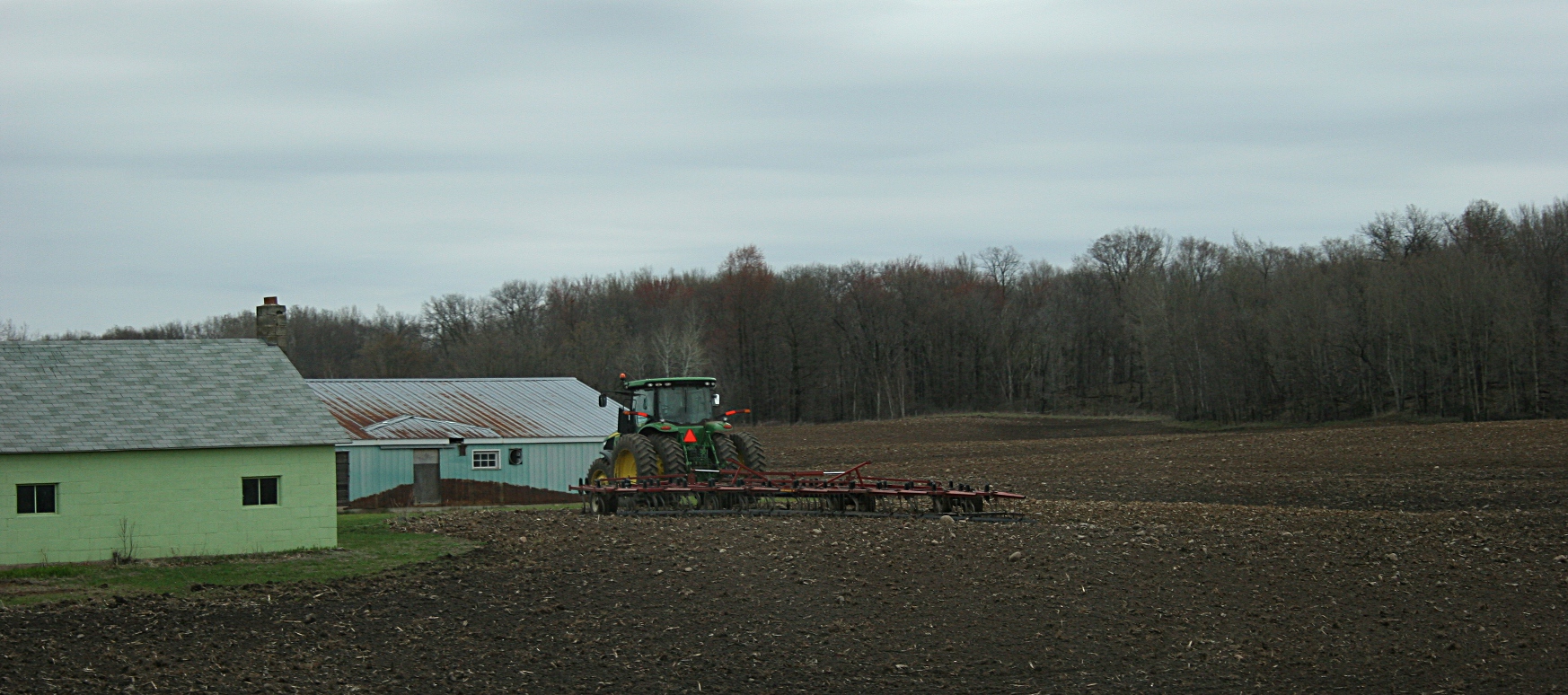
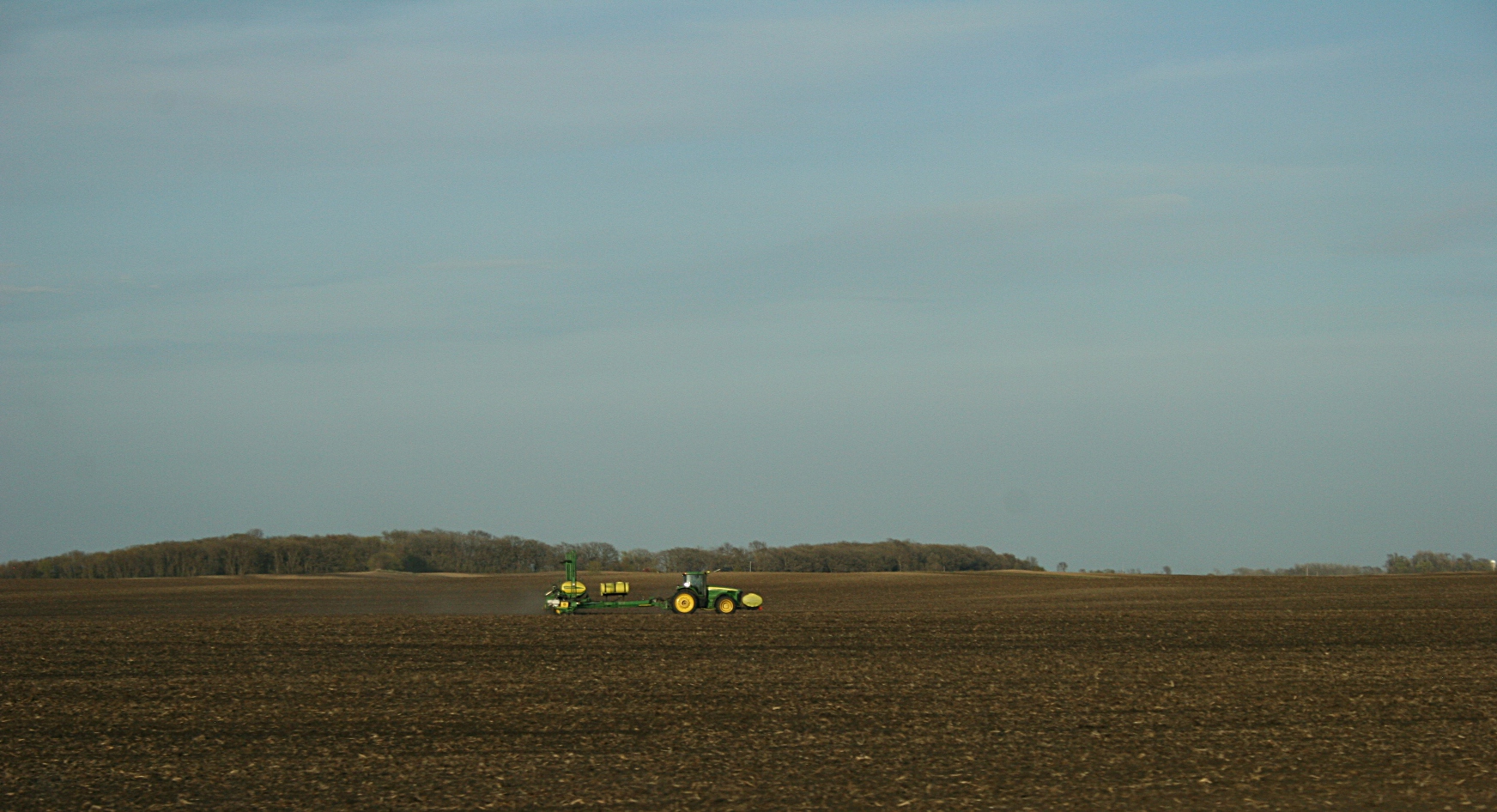
IN TYPICAL FORMER farm girl and farm boy fashion, my husband and I watched for farmers in the fields during our 600-mile round trip between Faribault and Fargo on Thursday and Friday to retrieve our youngest from North Dakota State University.

We traveled the interstate to Fargo, but took the back roads south and east (mostly Minnesota Highways 15 and 19) on the way home to avoid the road construction and traffic snarls near Clearwater and in the metro Friday evening.

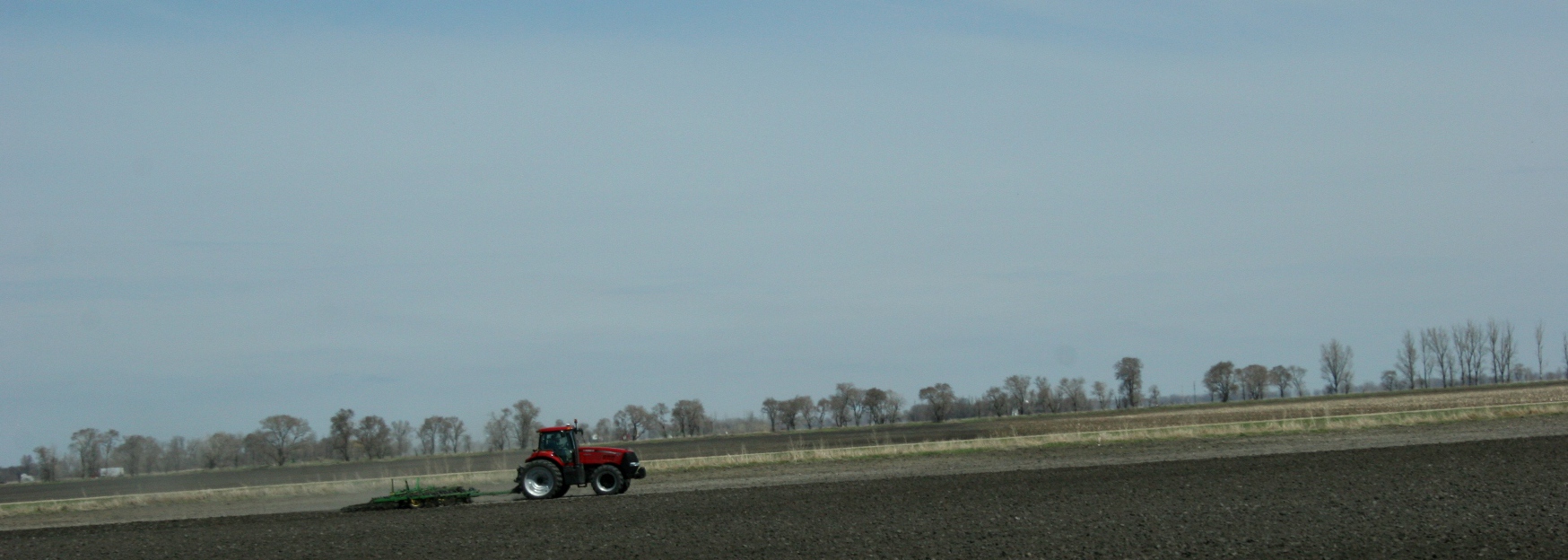
Working the field near the Sabin exit.

Working the field near the Sabin exit Friday.

Digging, also near Exit 15 to Sabin.

Digging, also near Exit 15 to Sabin.

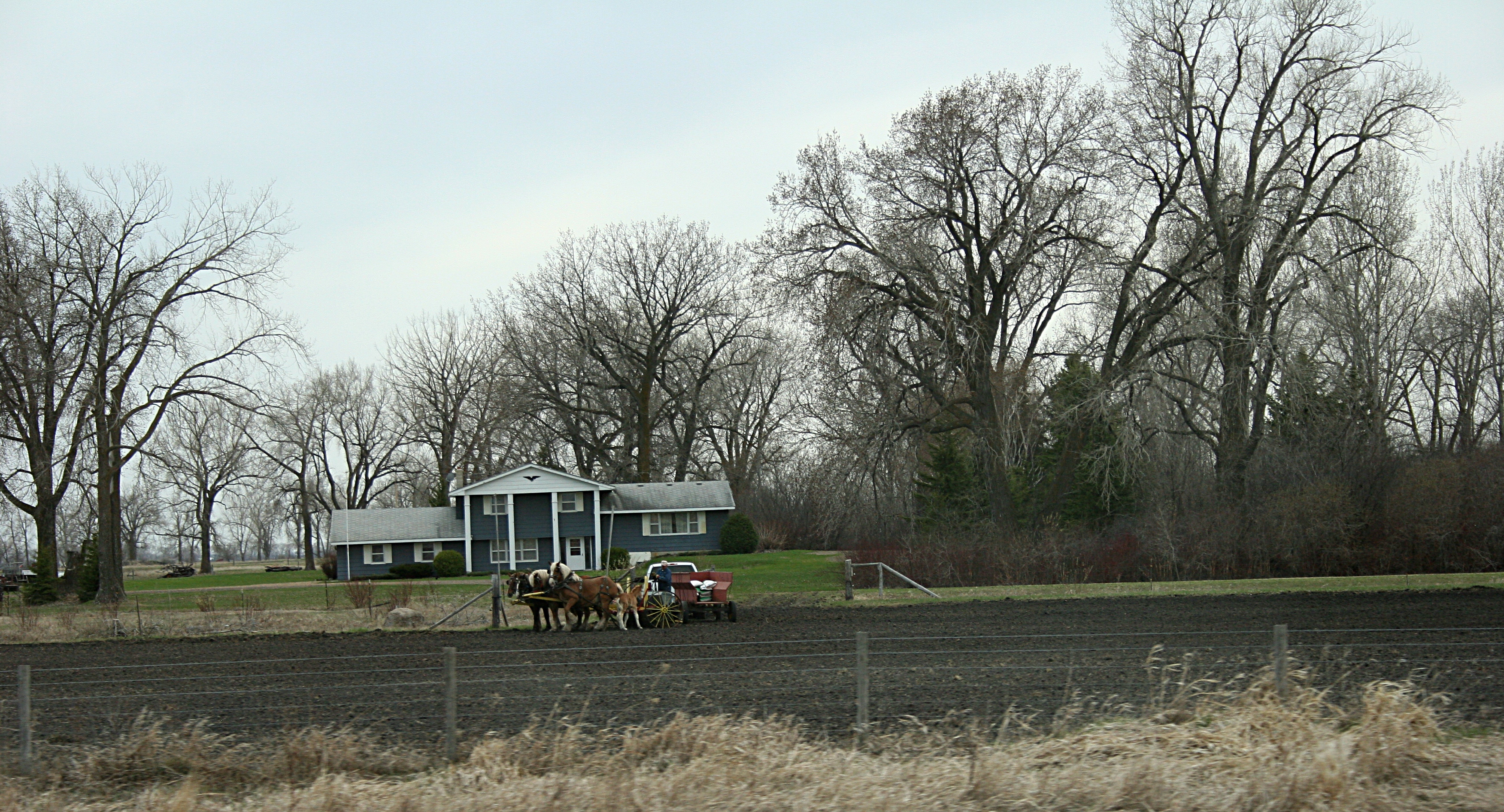
East of Moorhead, draft horses seed small grain.

East of Moorhead, draft horses seed small grain.

Based on our observations from Interstate 94, farmers between Fergus Falls and Moorhead, a distance of about 50 miles, are the most advanced in spring field work within the region we traveled.

Photographed near Collegeville.

Photographed near Collegeville on Thursday afternoon.

A Freeport area farm.

A Freeport area farm with an, as of Thursday afternoon, unworked field.

Field work before then rates as spotty and really only begins in the St. Cloud area.

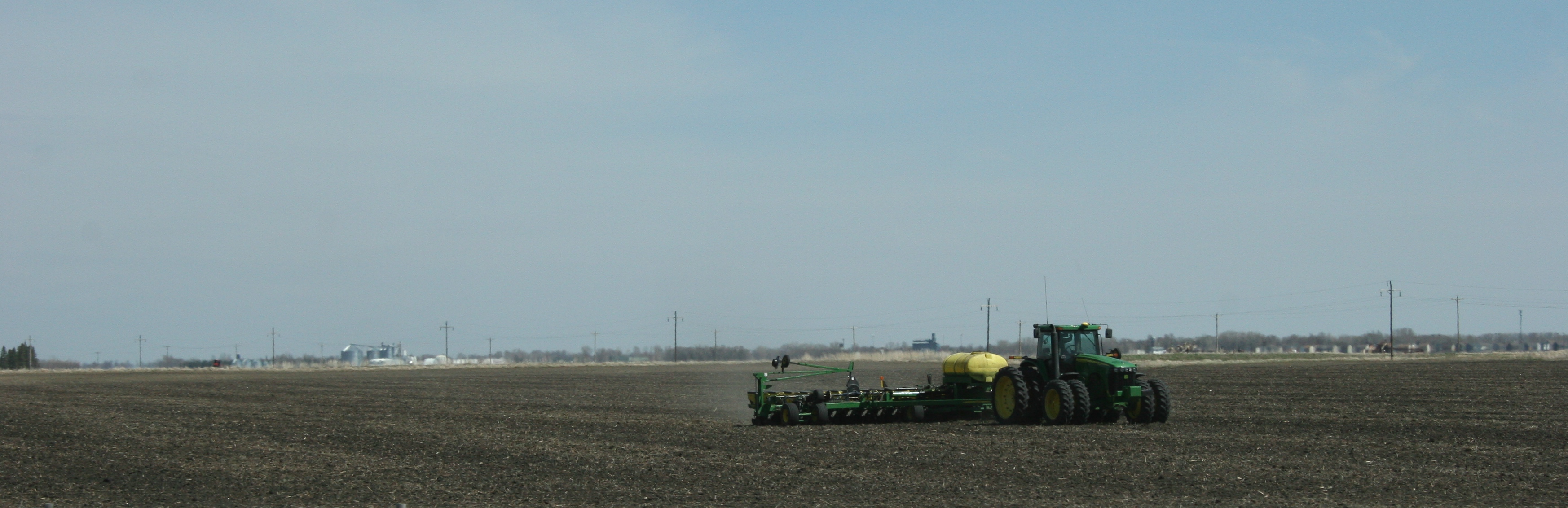
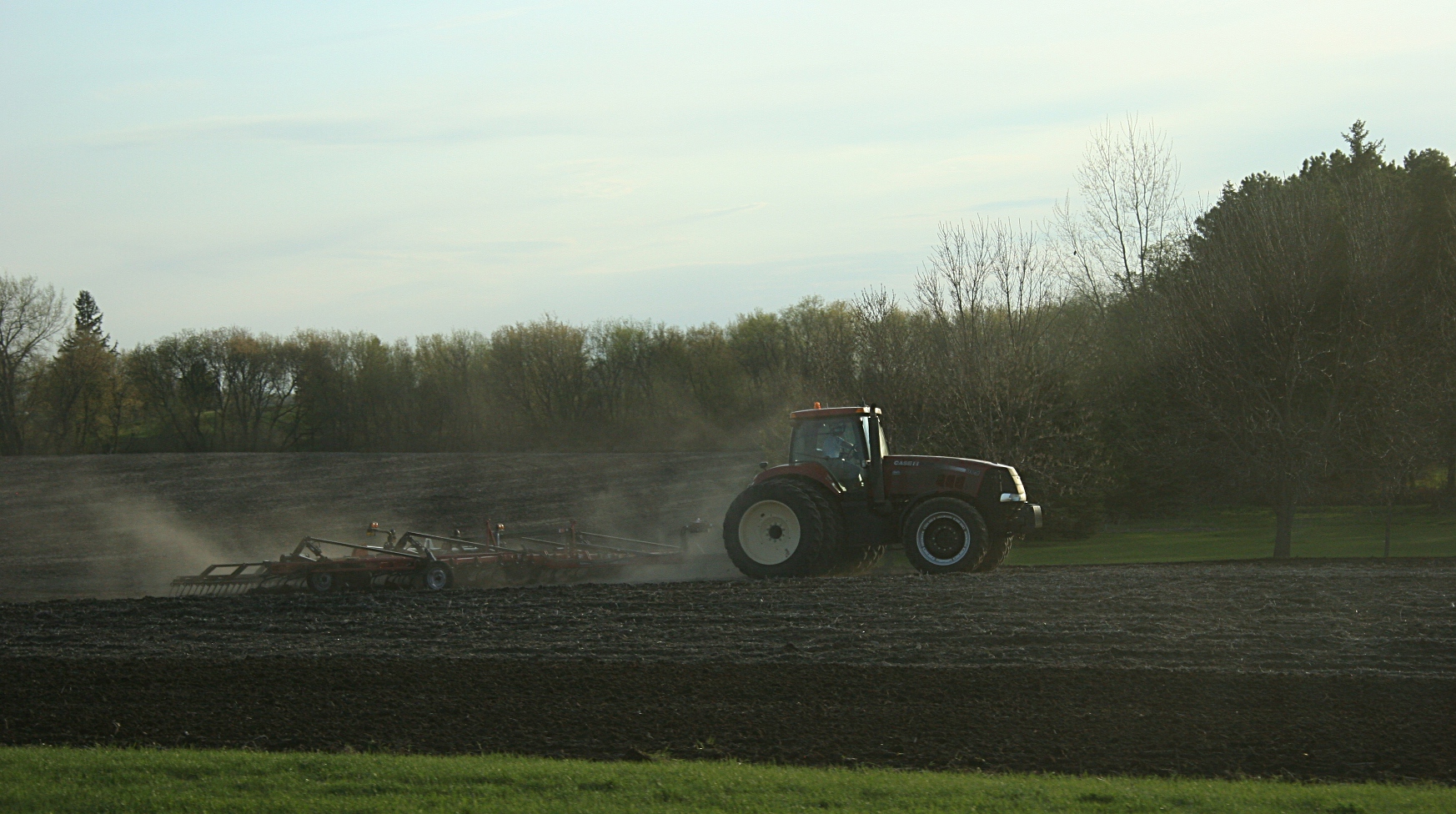
As the sun begins to set along Minnesota Highway 15, a John Deere works the land.

As the sun begins to set along Minnesota Highway 15, a John Deere works the land.

North of Winthrop Friday evening.

North of Winthrop Friday evening, dust flies in the field.

Driving south on Minnesota 15 between I-94 and Winthrop Friday evening, we noticed lots of farmers out and about.

But then, heading east on State Highway 19, we saw fields basically untouched since last fall.

I expect, at least in southern Minnesota where we had those monumental late spring snowfalls, farmers are getting a wee worried about getting corn in the ground.

The sun sets across the prairie north of Winthrop on Friday.

The sun sets across the prairie north of Winthrop on Friday.

© Copyright 2013 Audrey Kletscher Helbling


Where the men & boys shop: At a rural Minnesota farm toy show January 31, 2013

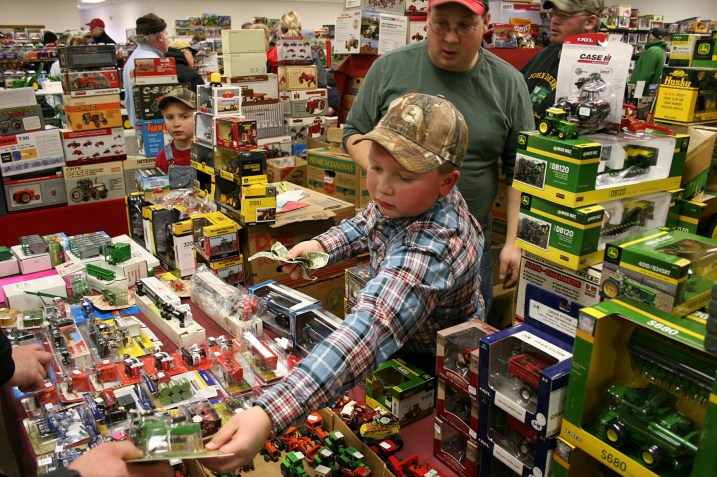
OH, TO BE A FARM KID again, steering toy tractors through imaginary fields, corralling cattle into a replica barn, pretending to be a farmer just like Dad.
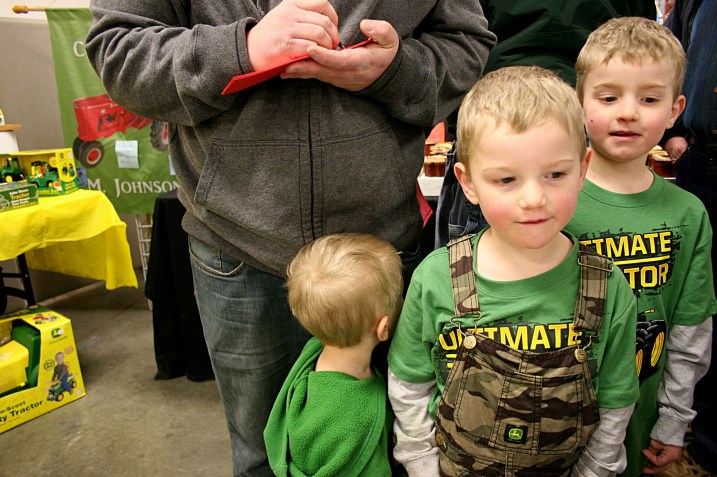
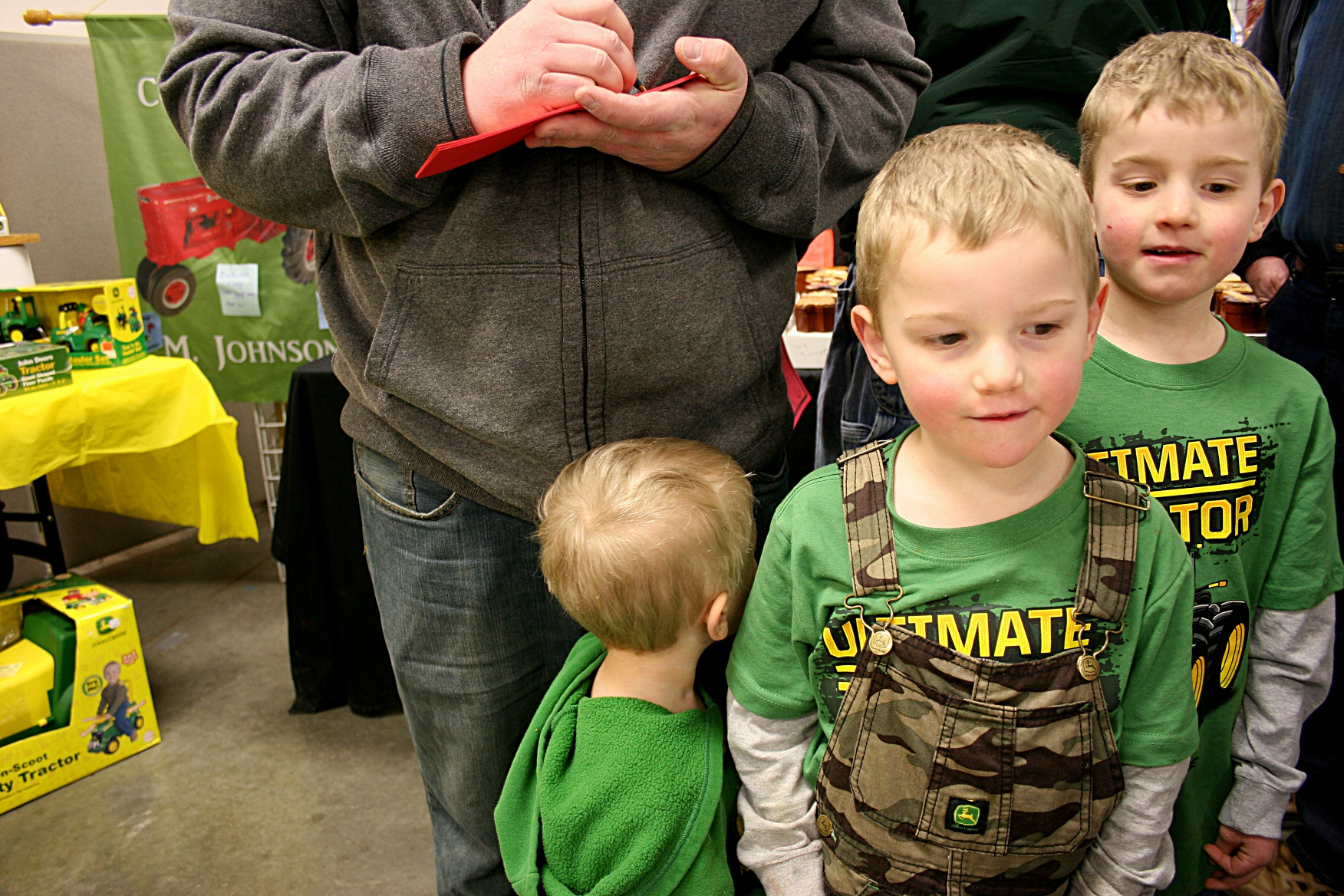
A trio of brothers dressed in John Deere attired waited while their dad signed up for a Massey Harris tractor raffle from Rice County Steam & Gas Engines, Inc.

A trio of brothers dressed in John Deere attire wait while their dad signs up for a Massey Harris tractor raffle from Rice County Steam & Gas Engines, Inc. The youngest was camera shy.

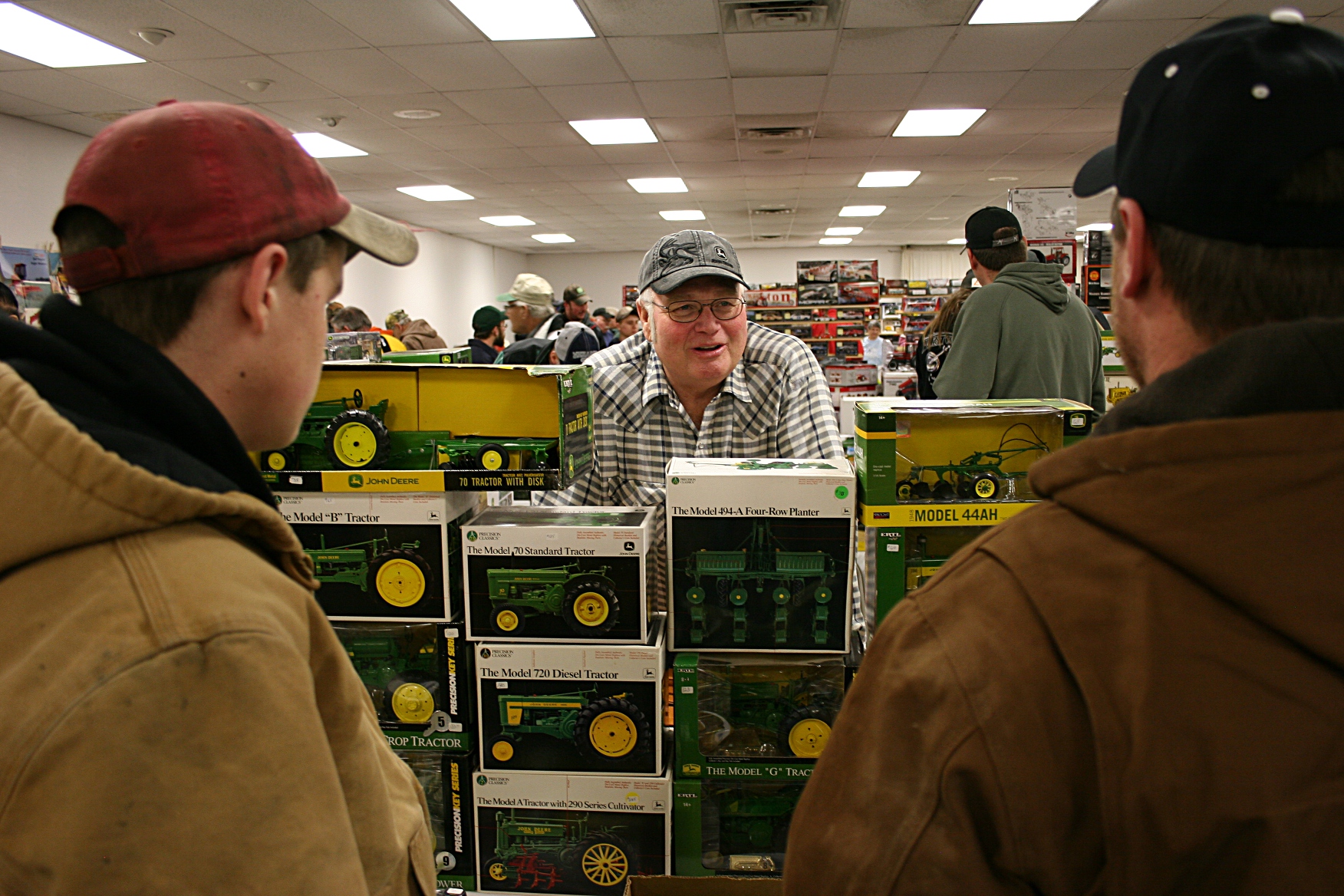
I imagine many of the kids tagging along with Grandpa or Dad to Louie’s Toy Box Farm Toy Show at the Nicollet County Fairgrounds in St. Peter last weekend were farm kids wishing for a new toy tractor or other piece of farm equipment to role-play their futures, or their ancestral pasts.
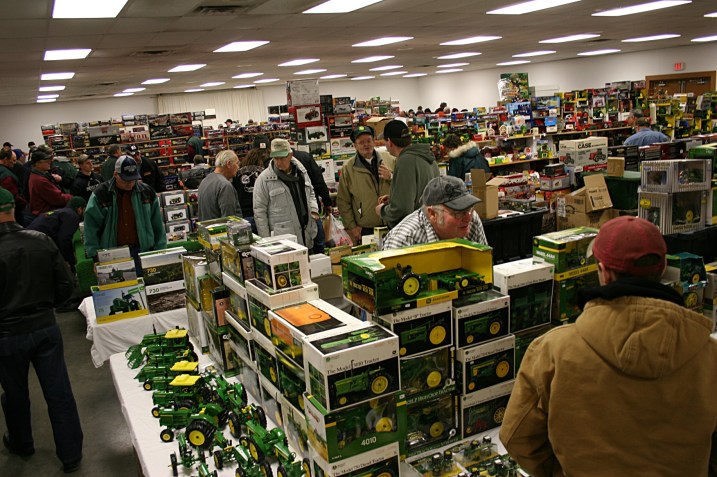
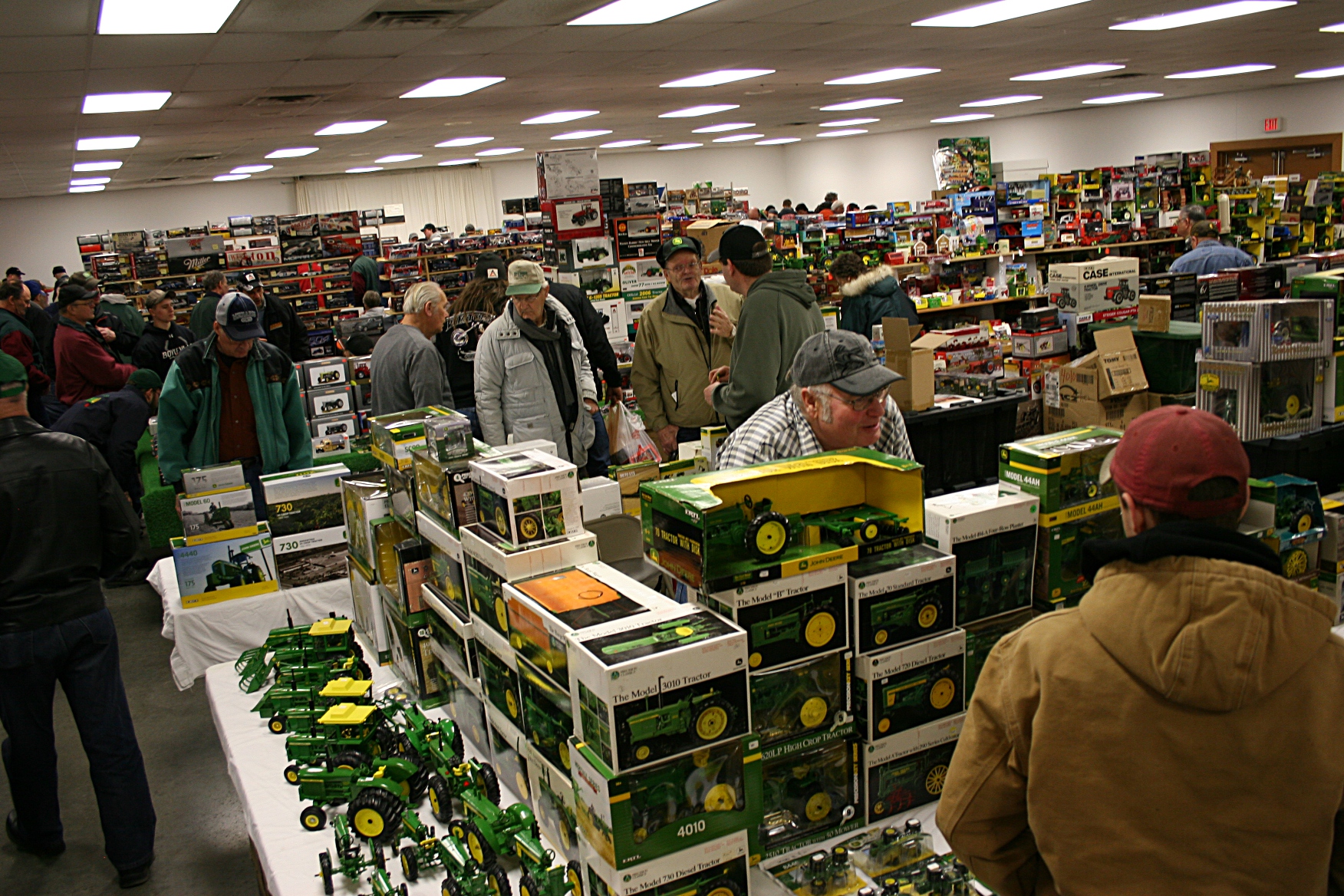
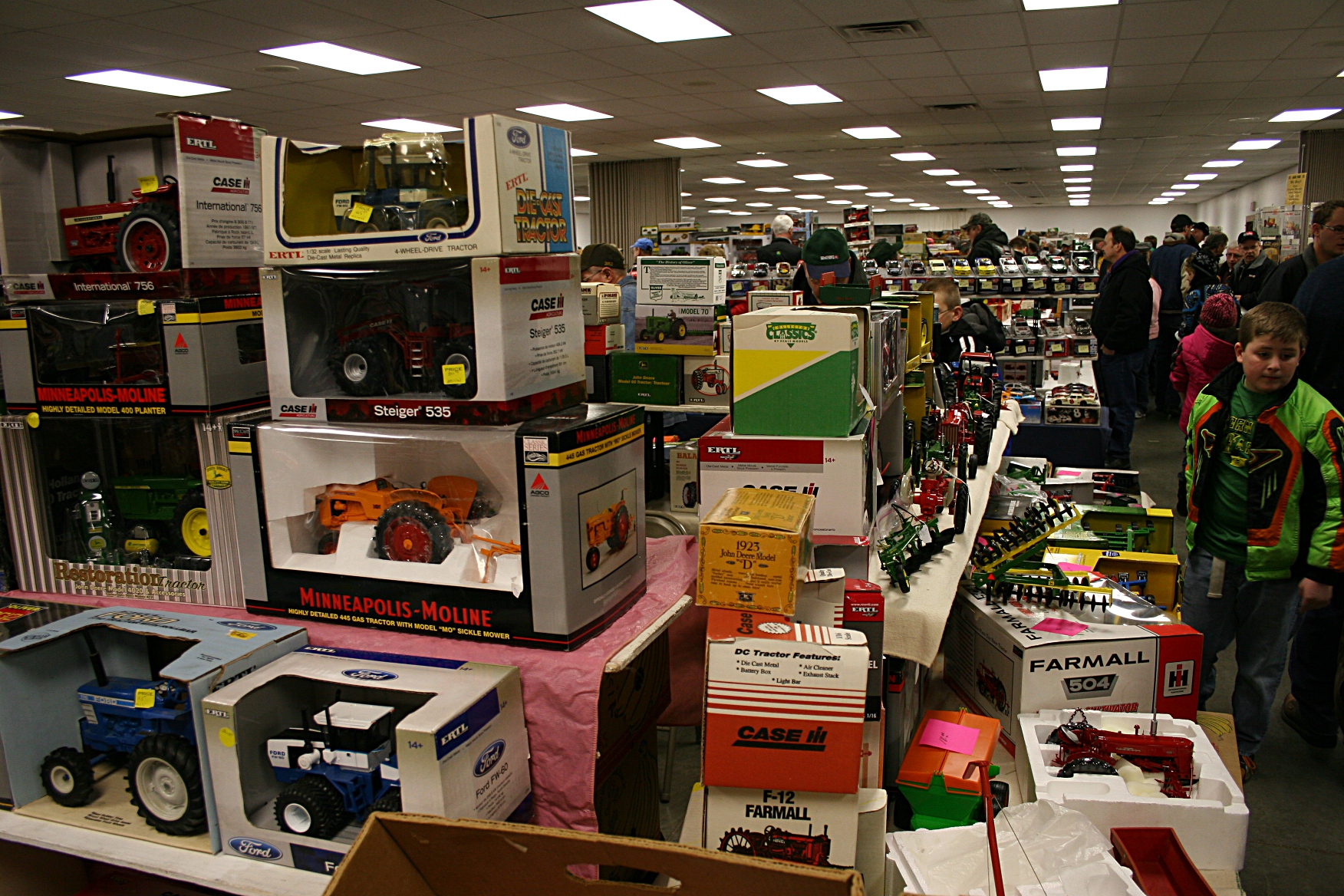
Masses of shoppers among a mass of merchandise.

Masses of shoppers among a mass of merchandise.

Shouldering my way through packed aisles Saturday morning, I couldn’t determine who seemed more excited—the men or the boys. And they had every reason to thrill in the mass of ag-related merchandise displayed by 43 vendors from Minnesota, South Dakota, Wisconsin, Iowa and Illinois.
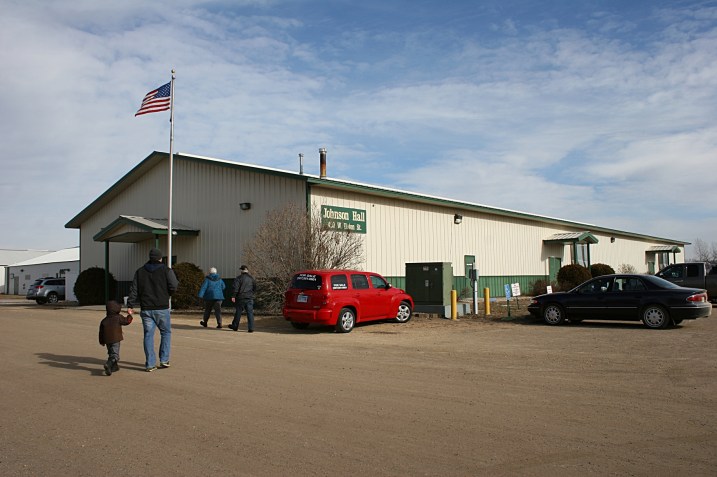
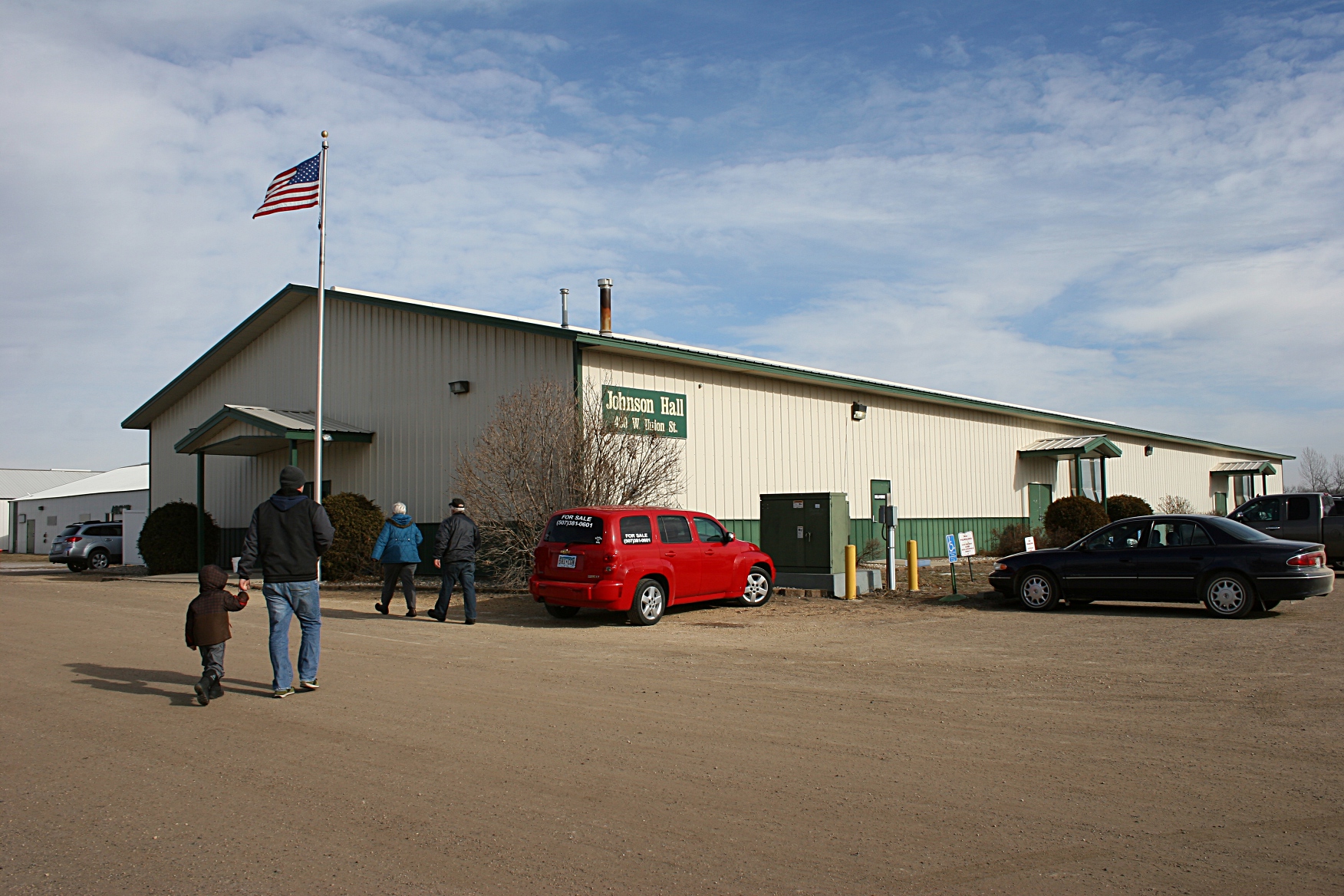
Johnson Hall, site of Louies' Toy Box Farm Toy Show.

Johnson Hall, site of Louie’s Toy Box Farm Toy Show.

I didn’t know quite what to expect when I entered the unassuming pole-shed style Johnson Hall at the fairgrounds. But I didn’t expect to find so many people (an estimated 2,000 weekend attendees), so many vendors and so much merchandise crammed into such a tight space. This venue is definitely too uncomfortably small for a toy show of this size.
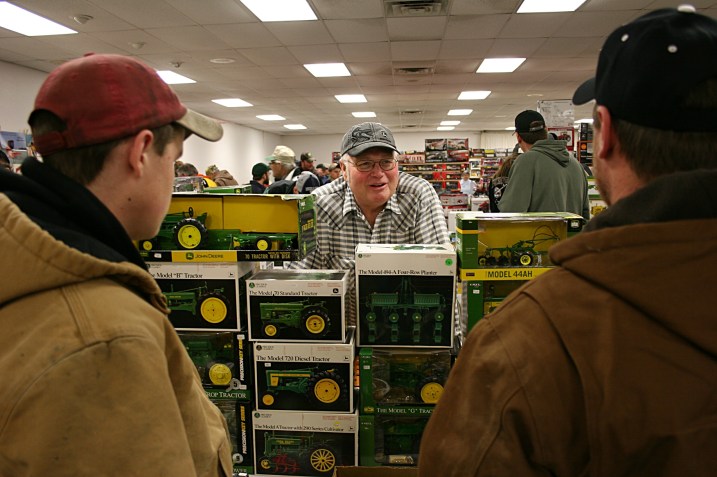
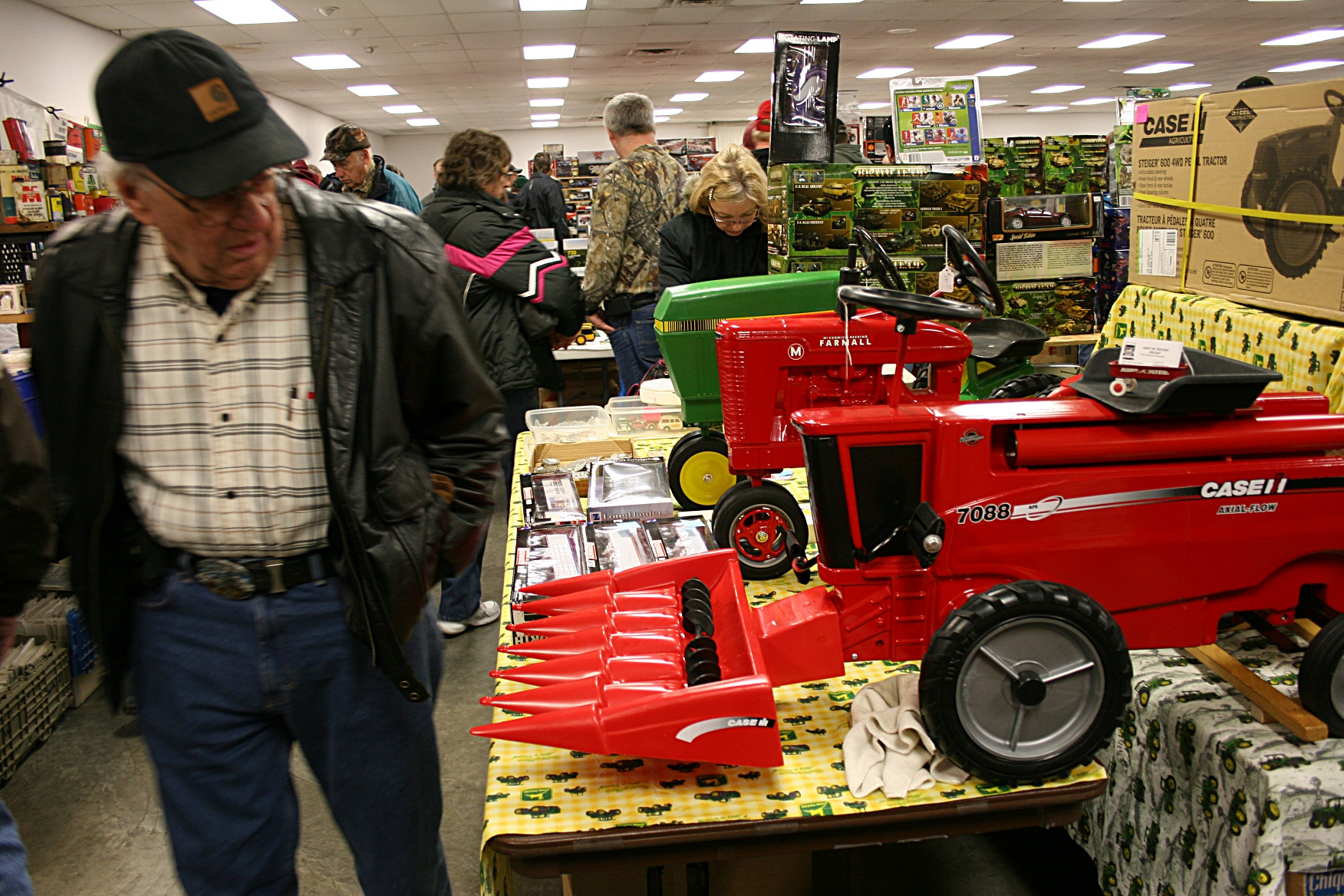
Vending John Deere toy tractors.

Vending toy John Deere tractors.

That aside, I managed to wiggle my way through mostly throngs of men sporting caps and sweatshirts advertising ag companies. John Deere, which marked its 175th anniversary in 2012, showed a dominating presence in apparel.

But when it came to merchandise, I expect every line was represented.
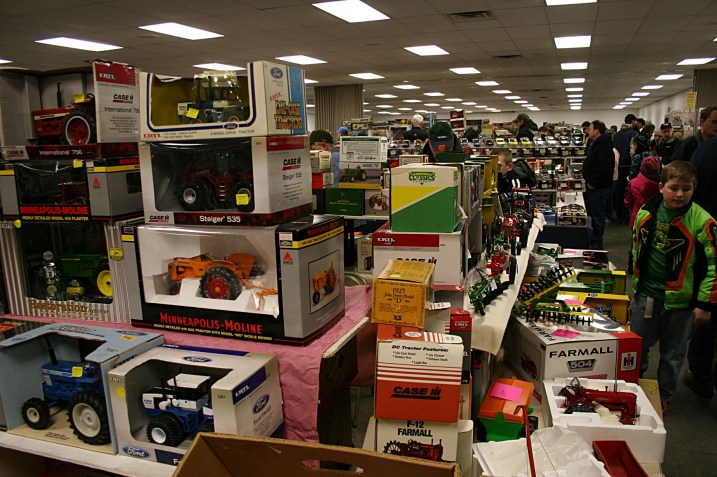
My first look at the farm toy show left me feeling overwhelmed.

My first look at the farm toy show left me feeling overwhelmed.

Upon first entering the toy show, I just stood there, overwhelmed by the stacks and stacks and stacks of boxed tractors and other toys stretching out before me. Honestly, I thought I’d made a mistake suggesting to my husband that we come here. I may have played with toy farm equipment as a kid, but it doesn’t especially interest me as an adult.
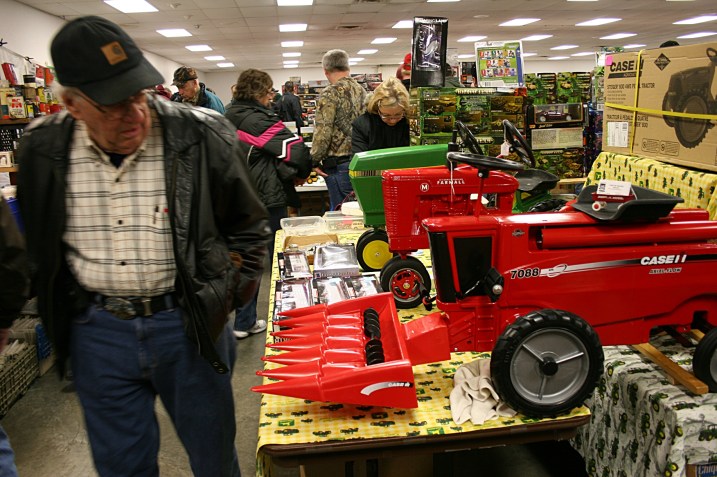
Maneuvering the aisles proved challenging.

Maneuvering the aisles proved challenging, especially with a camera bag on my hip and a camera in hand.

I wandered for awhile like a lost sheep, wondering where to focus, how to best work my way through the crowd. Arrows taped to the floor to direct traffic flow would have helped. But eventually I figured it out and backtracked the other direction, easing into the line of shoppers (which did include some women and girls).
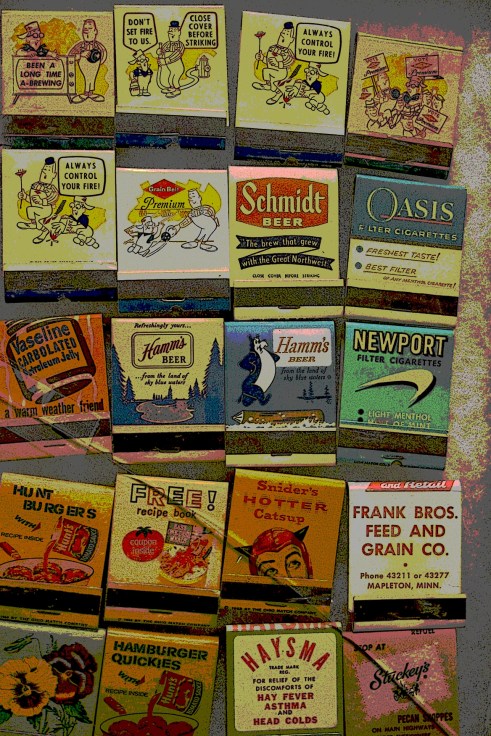
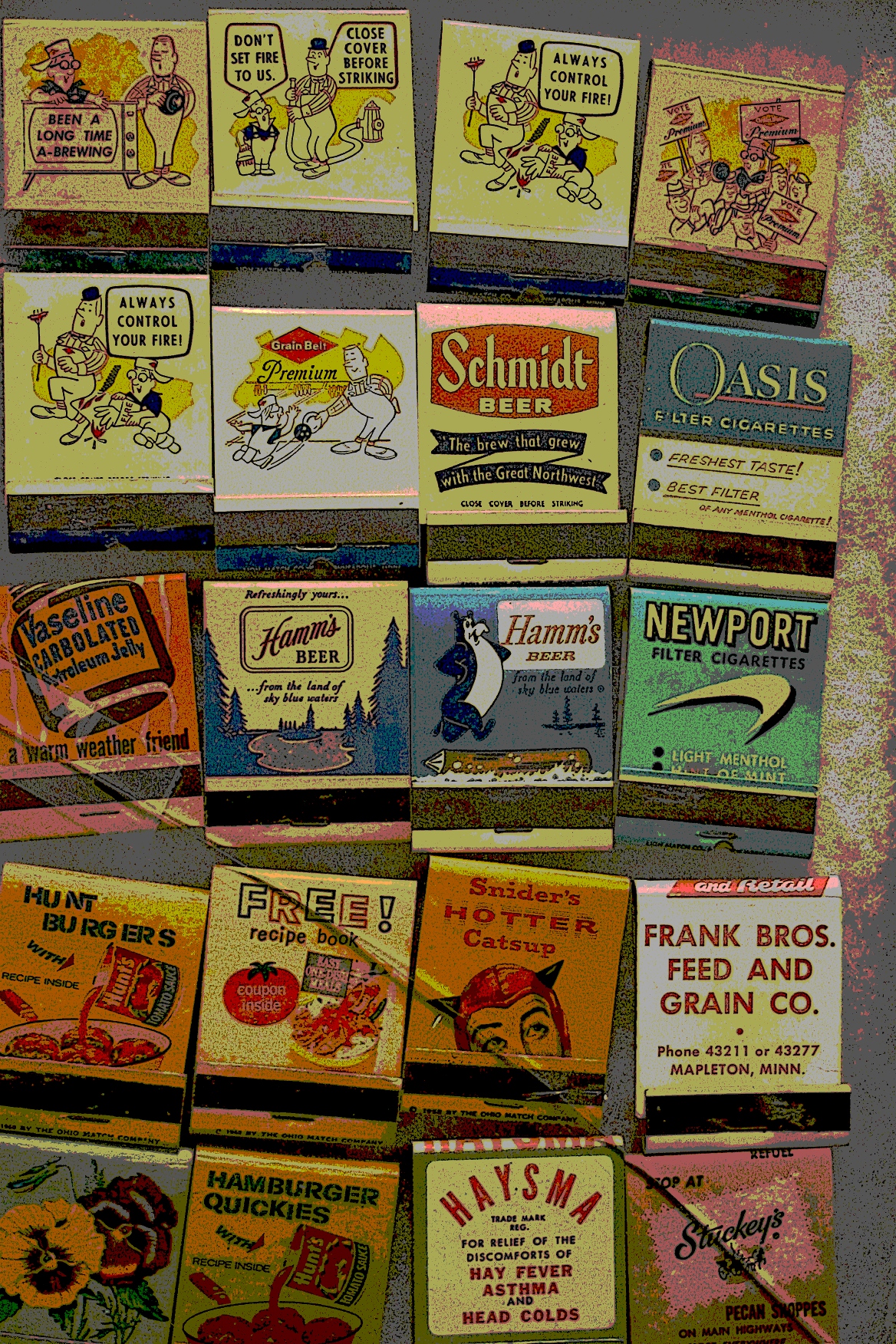
An edited photo of vintage matchbooks. Love those graphics.
An edited photo of vintage matchbooks. Love those graphics.

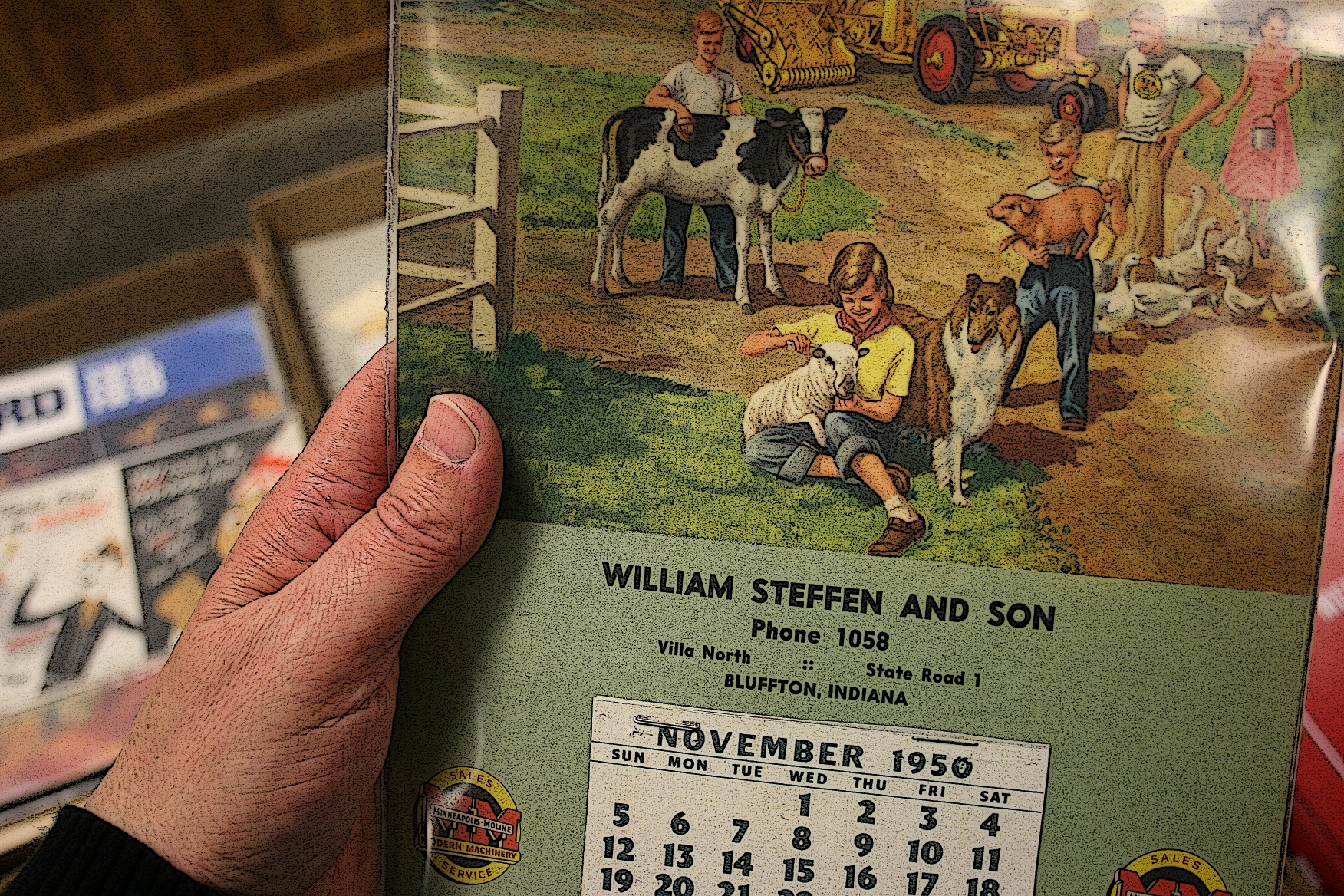
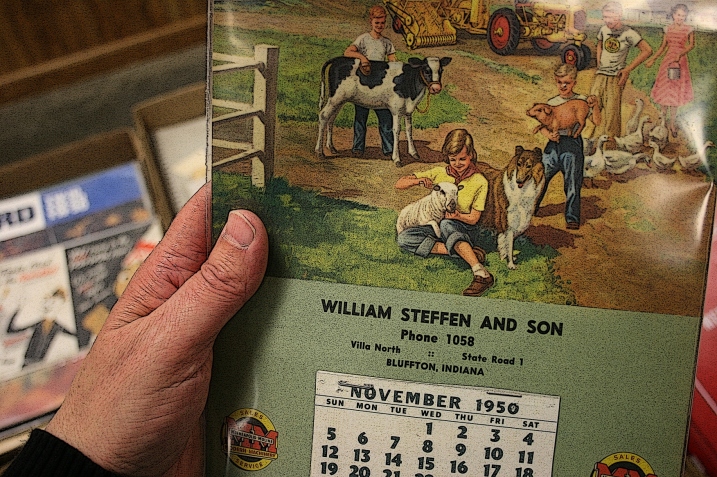
Another edited photo, of a 1950 calendar.

Another edited photo, of a 1950 calendar.

Eventually I found my niche, not in the toys, but in graphics gracing vintage matchbooks, calendars, literature and other advertising items. When I examined a 1950s vintage calendar and balked aloud at the $98 price tag, the vendor informed me that 10 years ago he would have asked even more. I couldn’t bring myself to shell out that kind of money or even $10 for a teeny tiny matchbook. I’d need to be a serious collector to justify such expenditures.

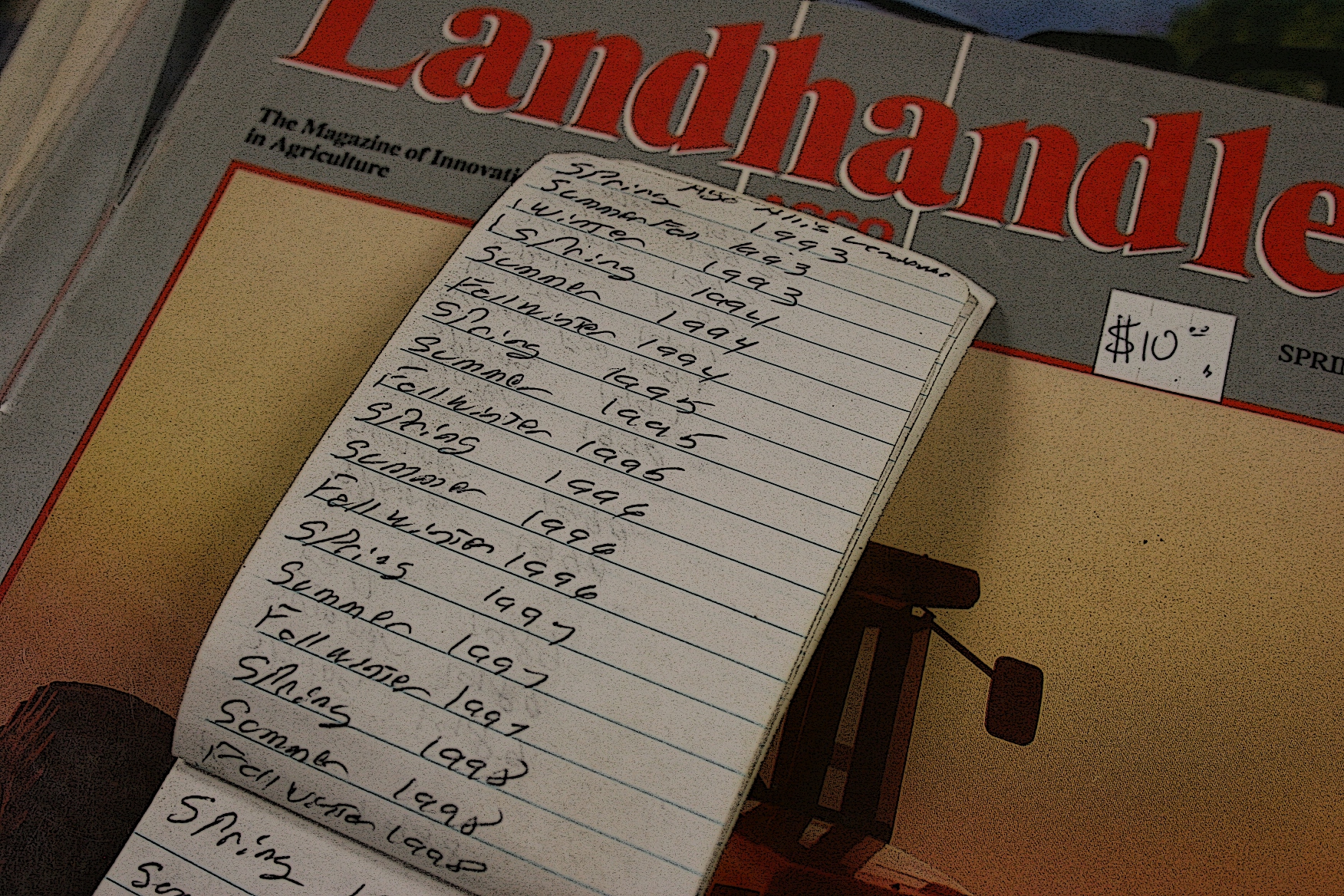
Shortly thereafter I met a serious collector, Wendell Bakker of Renville, whom I observed filing through stacks of magazines, about a half-dozen notebooks stuffed in a back pants pocket and another open notebook in his hand. Because I’m nosy, and I admitted that to Wendell, I initiated a conversation. This former crop, dairy and hog farmer and recently-retired field rep for the Minnesota Farmers Union has been collecting issues of the Allis Chalmers Landhandler and other farm magazines for 50 years.
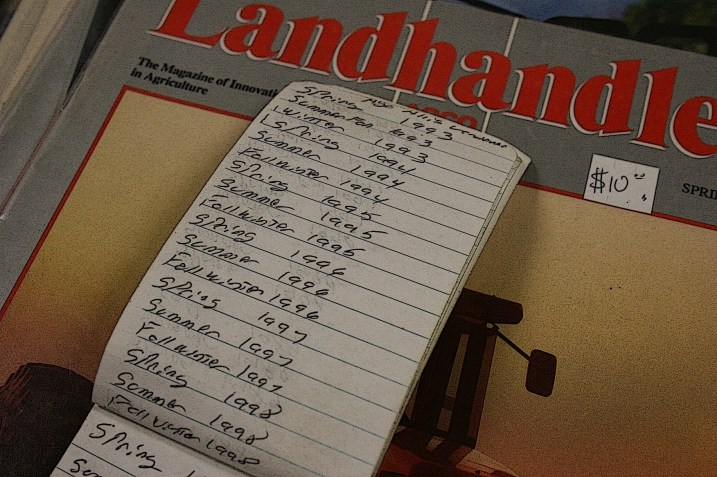
One of Wendell's notebooks, noting which magazines he already has in his collection.

One of Wendell’s notebooks, noting which magazines he already has in his collection.

“Everybody has a bad habit,” Wendell surmised, not that I would term collecting magazines a bad habit.

I didn’t question any of the other shoppers about their reasons for attending the farm toy show. But, based on the bulging bags most carried out of Johnson Hall, I’d guess many are collectors. As for me, I didn’t purchase anything, just added 94 images to my photo collection in 1 ½ hours. Total cost: the $3 admittance fee.

BONUS PHOTOS:
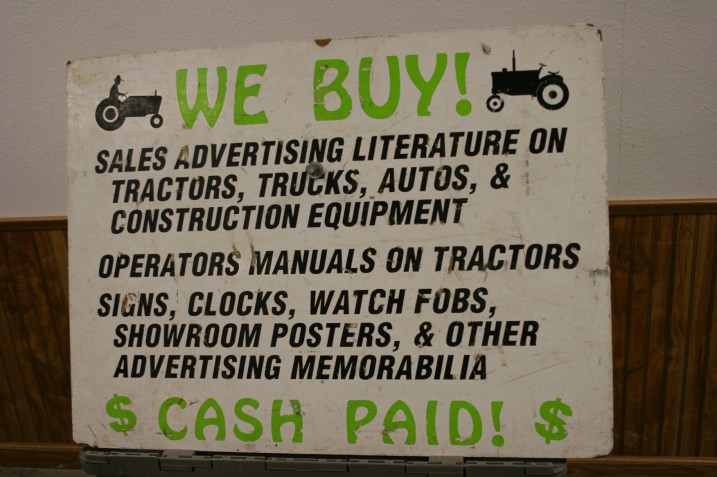
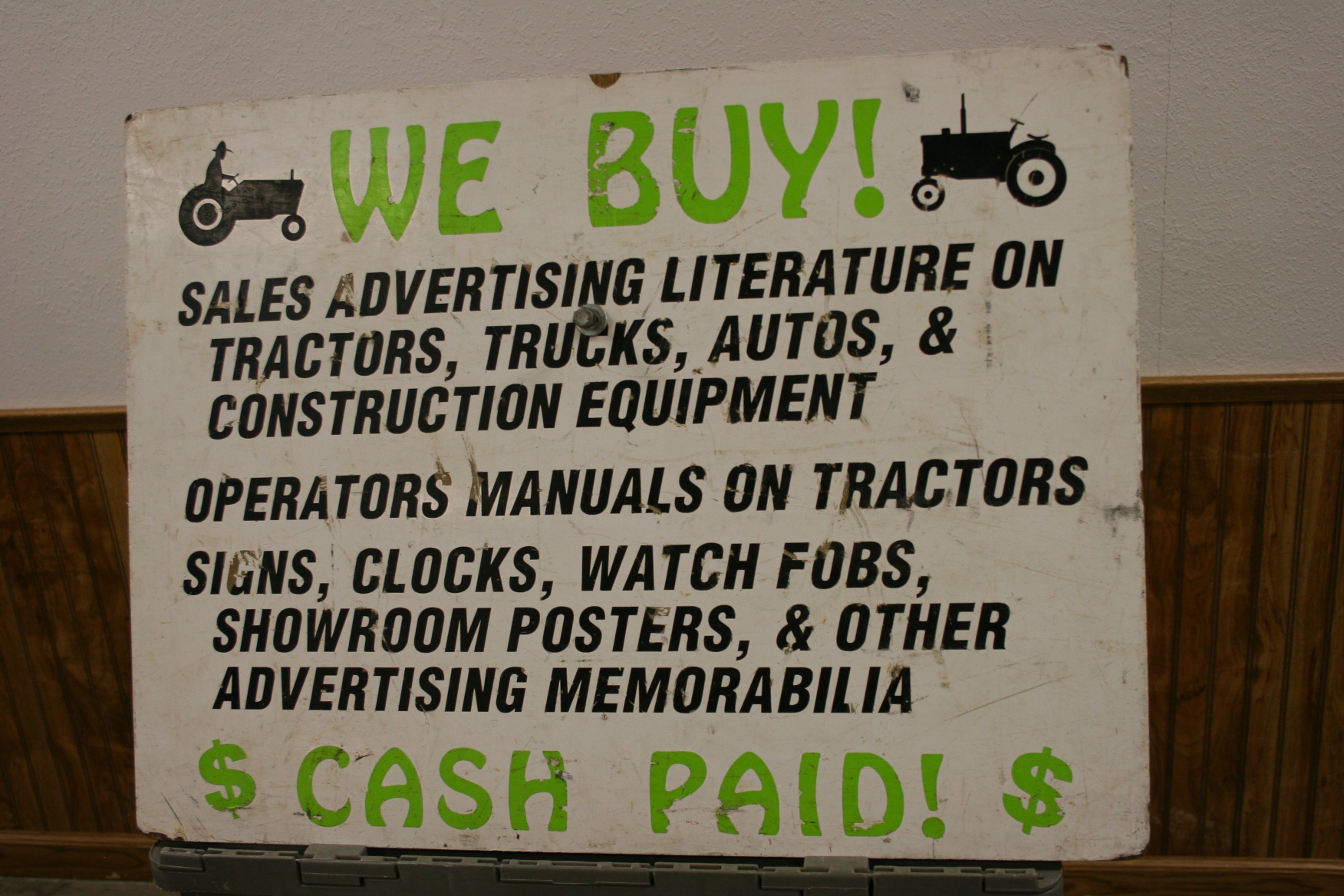
Toys, sign

A vendor’s sign.

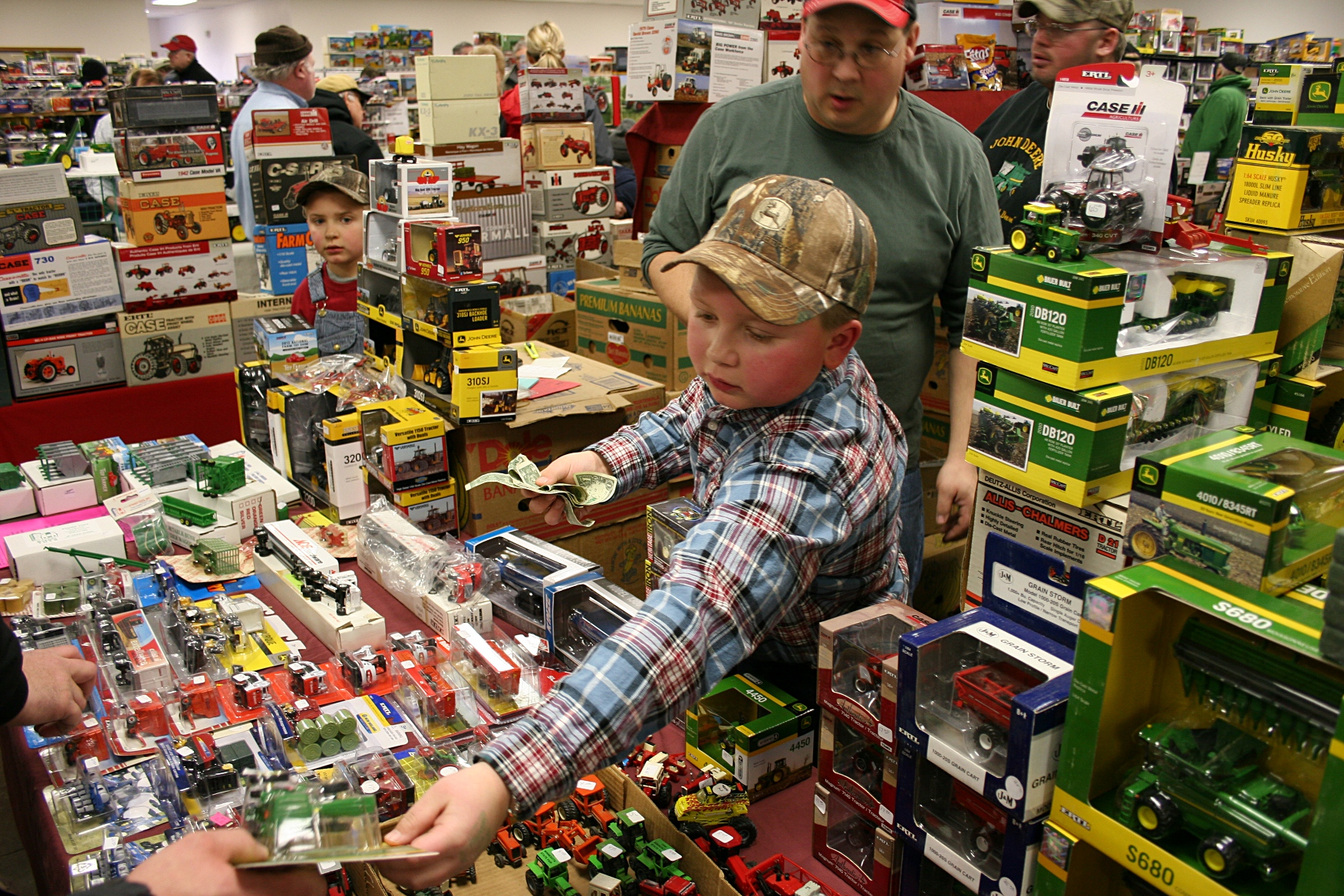
A vendor in training.
A vendor in training.

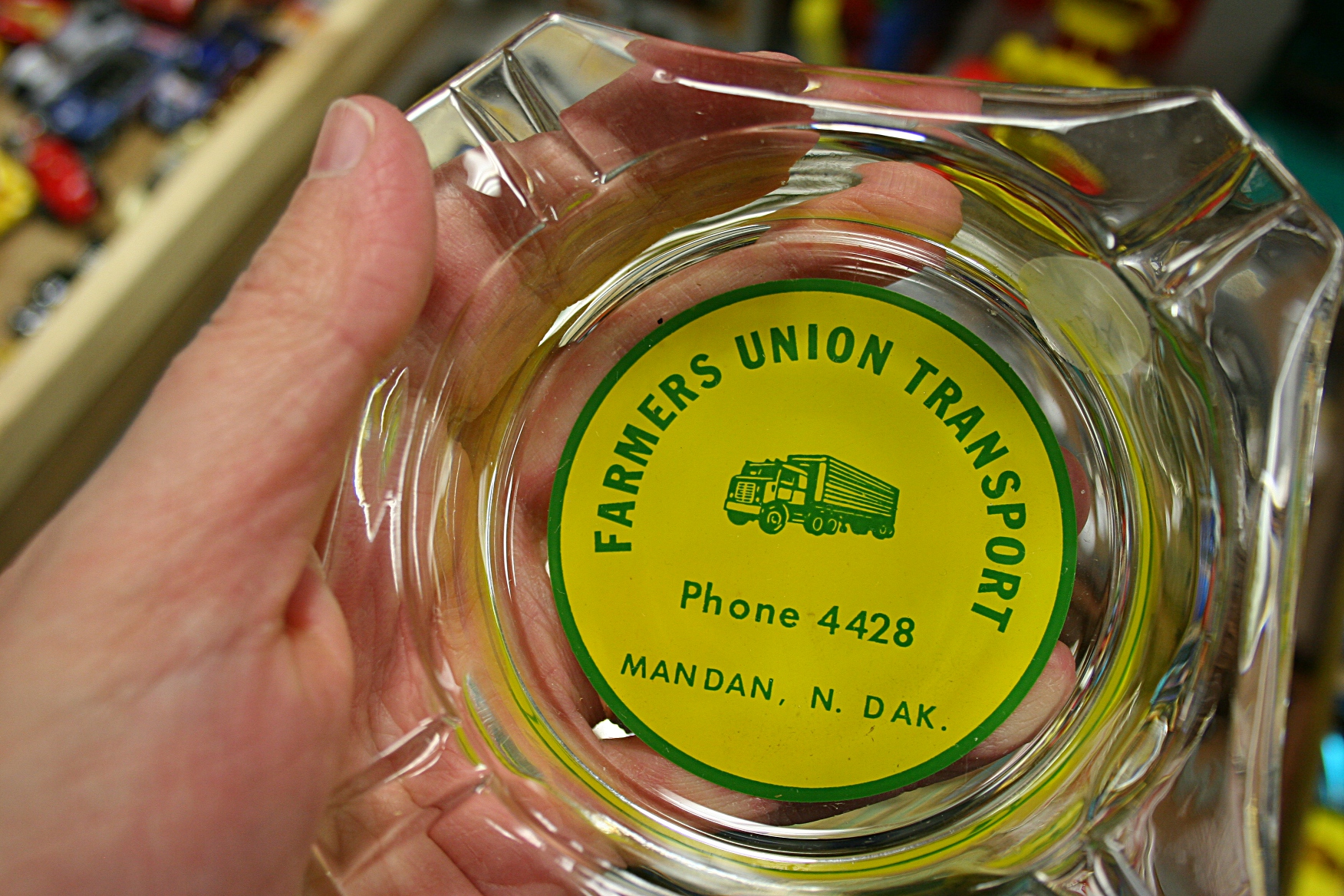
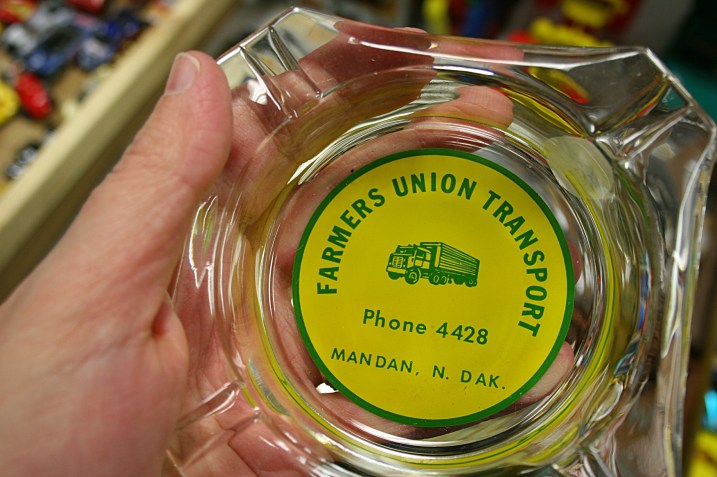
I don't smoke and don't like smoking. But I sure do I like vintage ash trays like this one from my husband's birthplace.

I don’t smoke and don’t like smoking. But I sure do I like vintage ash trays like this one from my husband’s town of birth.
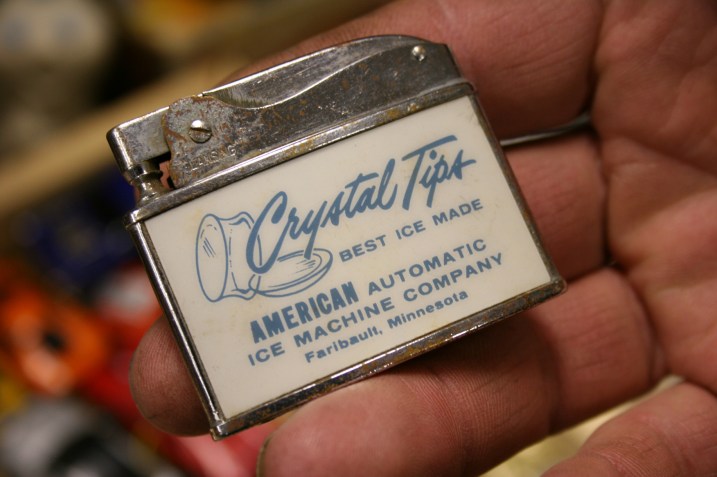
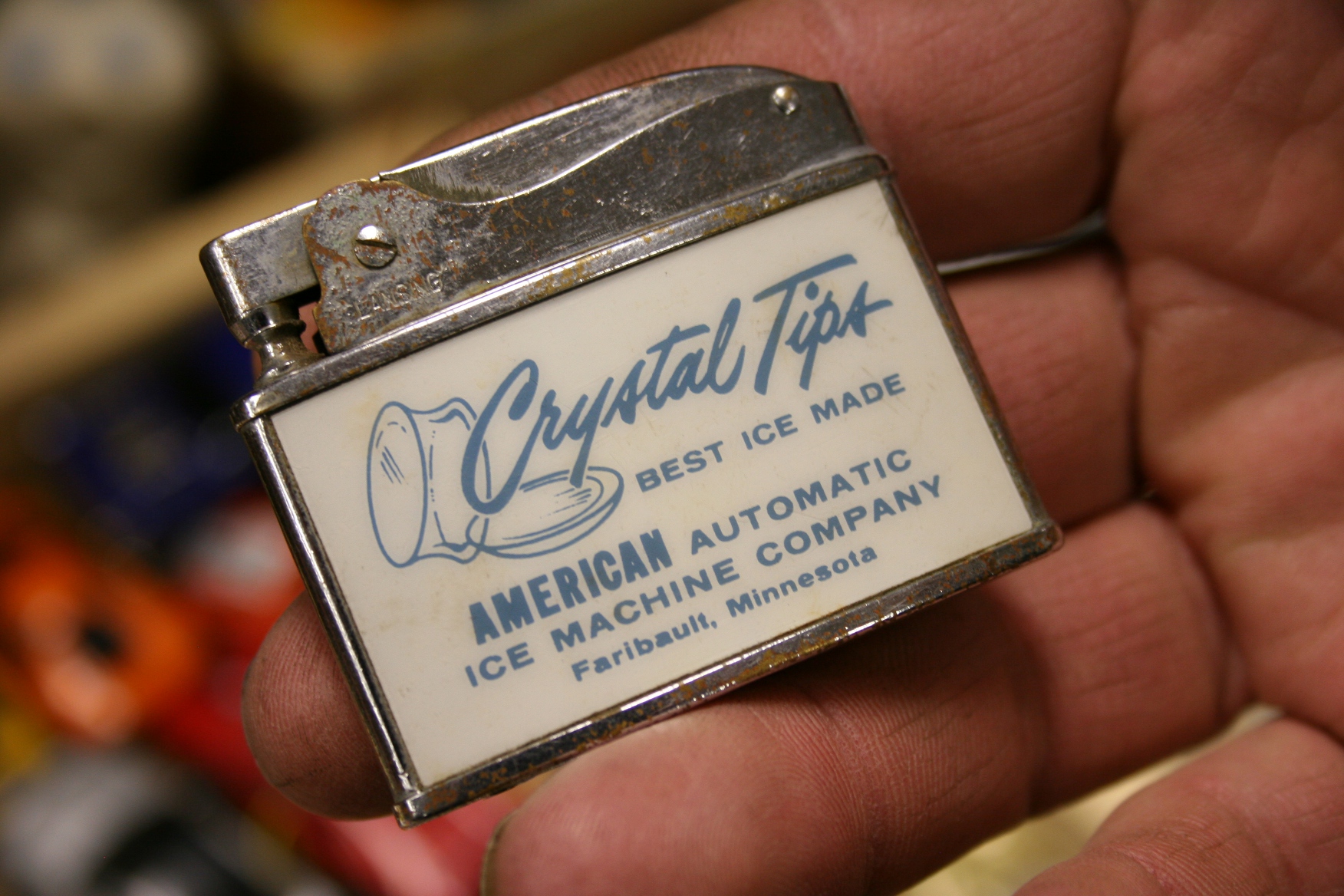
We were tempted to buy this lighter from Faribault, for a business we'd not heard of, but the $18 price was more than we wanted to pay.

We were tempted to buy this lighter from Faribault, for a business we’d not heard of, but the $18 price was more than we wanted to pay.

FOR MORE INFORMATION about show organizer, Louie’s Toy Box, click here.

Check back for more photos from the toy show.

© Copyright 2013 Audrey Kletscher Helbling


Missing the farm during a Minnesota harvest September 30, 2012

Filed under: Uncategorized — Audrey Kletscher Helbling @ 11:09 AM
Tags: , , , , , , , ,

An elevator just outside of Vermillion, MN., near Hastings on Saturday morning.

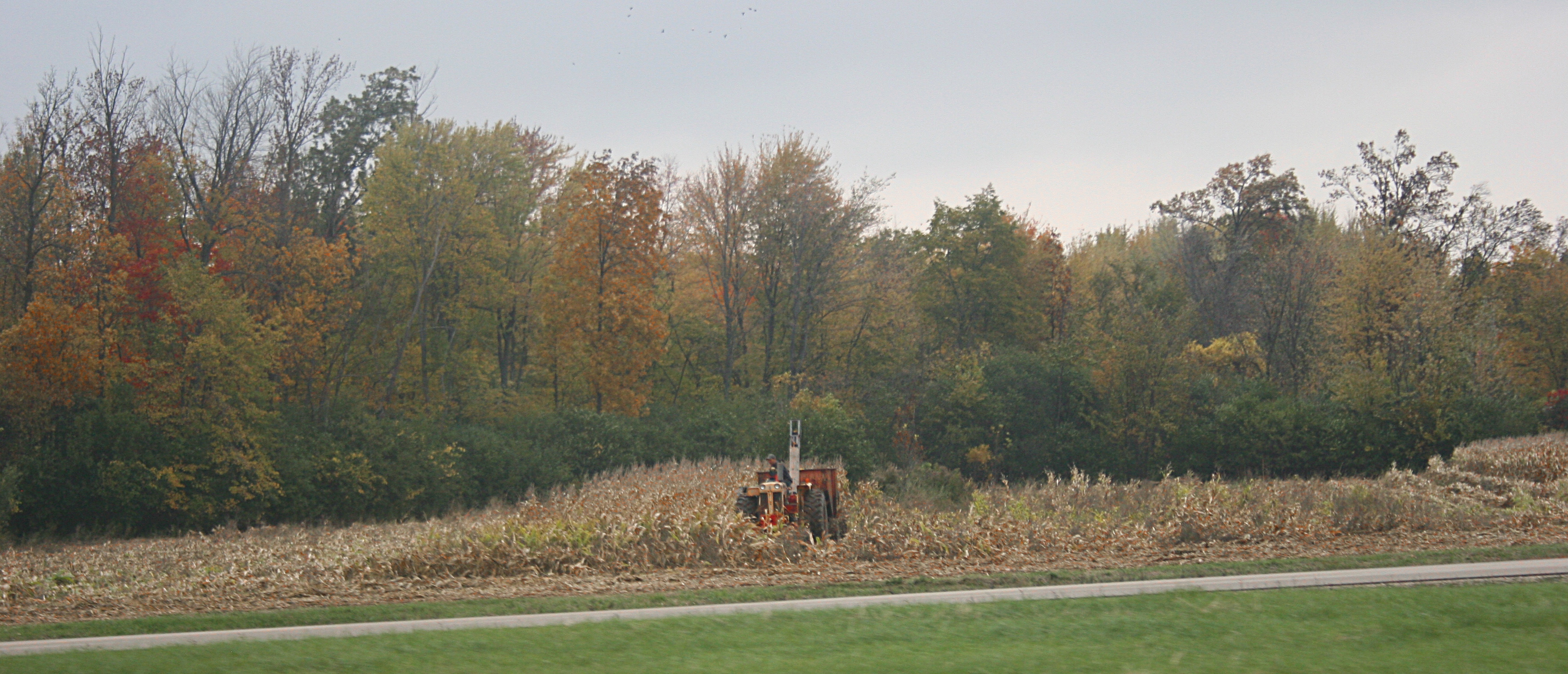
DECADES HAVE PASSED since I’ve been home on the farm for harvest. My middle brother quit farming years ago and the home place is now rented out.

A harvested cornfield between Hastings and Cannon Falls.

I miss being on the farm, anticipating the bringing in of the crop, then watching the combines chomp through rows of brittle cornstalks and brown fields of ripened soybeans.

Between Hastings and Cannon Falls.

I miss the undeniable scent of earth and plant residue.

Harvesting corn just south of Hastings on Saturday afternoon.

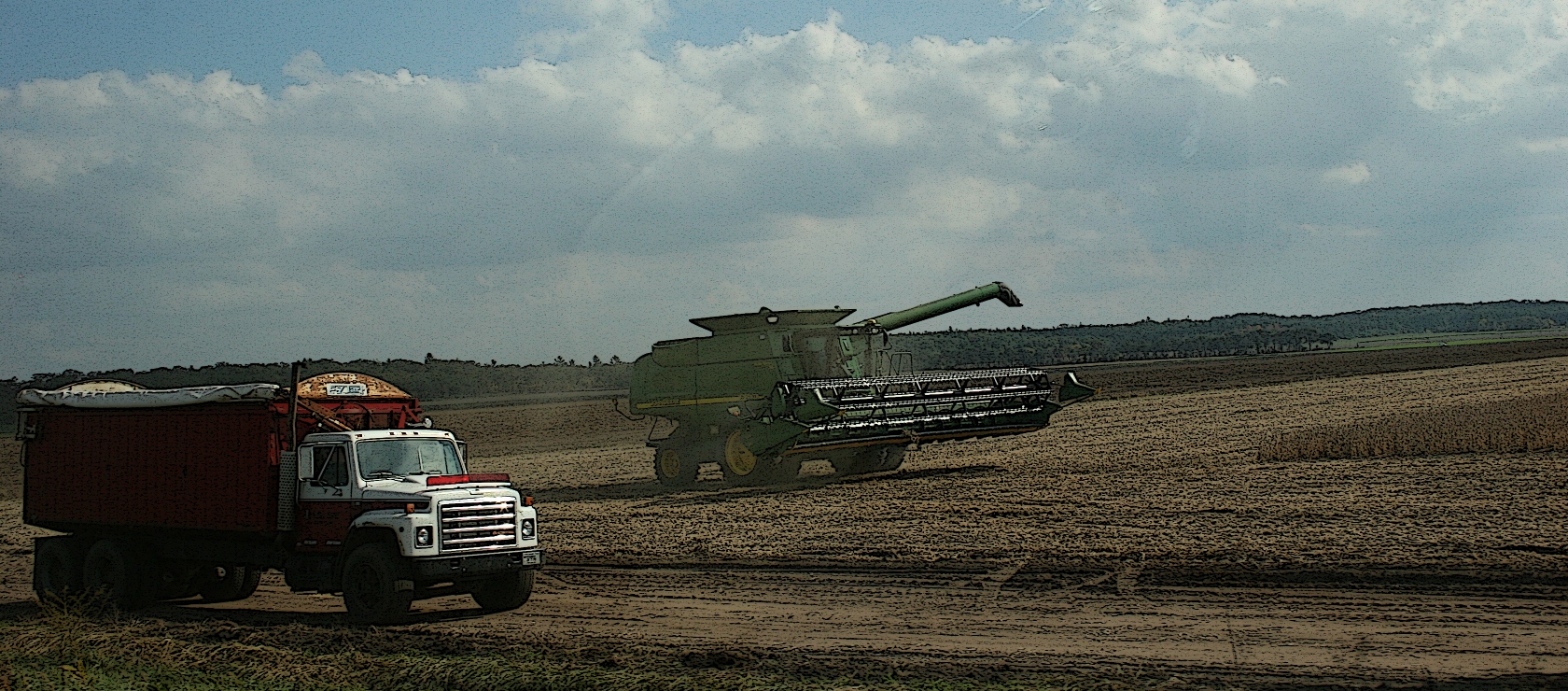
I miss the grain wagons brimming with golden kernels.

The Vermillion Elevator, in the small town of Vermillion.

I miss living in a rural community where tractors and aged grain trucks line up at the local co-op elevator.

I miss the hum of grain dryers drying corn.

A grain truck waits on a gravel road near Cannon City, east of Faribault.

Now I view the harvest from a distance, as an observer passing by.

© Copyright 2012 Audrey Kletscher Helbling
 

Meet Bob, the opinionated farmer from Madelia September 10, 2012

Filed under: Uncategorized — Audrey Kletscher Helbling @ 6:46 AM
Tags: , , , , , , ,

I met Bob Michniewicz  and his wife, Judy, selling their woodcrafts at the recent Rice County Steam and Gas Engine Show. He wouldn’t allow me to photograph his art, except for a single sign and a single cow, not wanting others to steal his ideas. However, a few other crafts got into the photo when Bob obliged my request for a portrait.

OCCASIONALLY YOU MEET a character, and you know it just looking at the person, before lips even part to utter a single syllable.

I knew, just knew, Bob Michniewicz was a character when I saw him and his set-up at the Rice County Steam and Gas Engine Show in rural Dundas. With kitschy wooden lawn ornaments—you know the kind—and wind chimes and eye-catching messages defining his space, Bob was bound to be interesting.

Just look at the poster Bob leaned front and center against a support post for the tent under which he and his wife of 50 years, Judy, were peddling their wares.

Bob was gauging interest in this sign with plans to print it on vinyl and sell it should interest run high.

Naturally, I asked Bob about that message. Seems he’s a bit worked up about all the non-farm folks moving onto farms in his area and then complaining about noise or smell or dust and such from working farms.

“Farmers were here first,” he emphasizes. And that, in this retired farmer’s opinion, should settle any matters of dispute.

All around him, Bob views the ever-changing rural Minnesota landscape. Within a three-mile radius of his farm (the home place) 3 ½ miles from Madelia, only four farmers remain. The rest are people living on the building sites.

Therein, according to Bob, lies the problem. “People don’t know where farm stuff comes from.” I’m not sure I understand what he means, but I think I do and Bob doesn’t allow me to interrupt this rather one-sided conversation.

Bob just steamrolls forward, asking if I know that potatoes in stores are sprayed to keep them from sprouting. (I don’t know this and check later to see if Bob, who is a gardener, is right, and apparently he is, although I’m not saying all potato growers, all stores, follow this practice.)

He looks me directly in the eye and says: “Next time you eat mashed potatoes, you may as well take a shot glass of Round-up with a beer chaser.”

Like I said, Bob’s a character, and an outspoken one at that.

Bob certainly possesses a sense of humor, as seen in this bovine lawn art.

© Copyright 2012 Audrey Kletscher Helbling
 

Threshing oats at the Rice County Steam & Gas Engine Show September 4, 2012

Filed under: Uncategorized — Audrey Kletscher Helbling @ 6:42 AM
Tags: , , , , , , , ,

Grayden Moorhouse of Randolph holds freshly-threshed oats.

GRAYDEN MOORHOUSE unfurls his palm, revealing some two dozen oat kernels before dropping several into my hand.

He wants me to try them, to separate the meat from the hull with my teeth and spit the shell onto the ground.

I try, without success, and then he hands me a single kernel already hulled.

All the while I am thinking this:

I shoveled plenty of oats in my day growing up on a dairy and crop farm. And why would I want to eat raw oats, which I associate with cattle feed?

But Grayden is one of those guys who seems convincing and I like the strong sound of his name and, heck, what’s life without trying something new occasionally?

So I eat the single oat kernel and that is enough for me. I’d rather eat my oats in oatmeal.

Now that I’ve ended that introductory narrative, let’s follow the path of how those oat kernels ended up in Grayden’s hand via this photo essay from the Rice County Steam and Gas Engine Show this past weekend in rural Dundas.

Shoveling the raw oats into the conveyor system.

An overview of the threshing equipment and process of separating the oats kernels from the stem.

Bill Becker of rural Northfield mans the Minneapolis Moline which powers the threshing operation.

More shoveling of oat bundles, a dusty, dirty job.

The dust flies as men and machine work.

Plenty of farmers and retired farmers watch, remembering…

While horses plow a nearby field (left), the threshing crew continues working.

And the straw pile grows.

Finally, meet Grayden Moorhouse, whose strong name, it seems to me, belongs in a western.

FYI: Please check back for more posts from the steam and gas engine show. You’ll meet one interesting character and an incredible teen, plus ride along with me on the back of a truck.

© Copyright 2012 Audrey Kletscher Helbling
 

A sweet surprise: An old sorghum mill on a southern Minnesota elk farm & more August 10, 2012

HOW MANY TIMES HAS MY FAMILY driven Minnesota Highway 60 east of Elysian, unaware of Okaman Elk Farm to the south not far from the highway? Too many.

My husband Randy and I almost missed Okaman’s again last Sunday as we traveled along Waseca County Roads 3 and 5. If not for the colorful miniature train transporting kids and adults along the shoulder of the road, we likely would have passed right by.

Passing by the Okaman Elk Express in our car on a Sunday afternoon.

But that train stopped us in our tracks and caused us to turn around and drive back to the farm.

There we discovered much more than a plain old elk farm. We also found family-friendly activities, a farmers’ market, art, animals and history.

The historic Seha Sorghum Mill.

In 1991, Don and Joyce Kaplan bought this historic place to raise elk and then sell the meat. Their business sits on the site of Okaman, a town established in 1855 between Lake Elysian and Lily Lake. Here, according to a posted sign, several hotels, a theater, the Buckout Flour Mill, the Okaman School and the Seha Sorghum Mill were located.

Inside the sorghum mill.

It is that 1895 sorghum mill, which produced and sold sorghum syrup until 1953, that most interested me. Randy and I poked our way through and around the old mill trying to determine how the whole operation worked. I think he understood the process much better than me.

Apparently wagons of sorghum were unloaded atop the hill behind the mill where the canes were crushed and the juice then flowed into steam-heated cookers, or something like that.

The original steam boiler stands behind the sorghum mill.

According to the Waseca County Historical Society website, Cornelius L. Seha built the mill, today the only known historical sorghum mill remaining in Minnesota and added to the National Register of Historic Places in 1979.

Because the mill today is basically an old building and steam boiler with weeds and brush growing around the holding tanks, equipment and structures, everything is left open to self-interpretation. Perhaps someday this historic site can be restored and specific educational information posted.

Cats roam the farm.

Then, perhaps, the younger farm visitors will be more interested in the historic buildings. They are, for now, focused on  the donkeys and alpacas, the goats and elk and dog, and especially, the cats and kittens. Or perhaps the playground equipment.

Visitors are free to wander the pasture with the alpacas, donkeys and goats.

Loved this sign at the petting zoo telling visitors that the animals are fed daily.

The farm is open seven days a week to the 3,000 – 4,000 visitors who stop by annually, says Joyce Kaplan. The Kaplans may not always be around, but guests are invited to peruse the place on their own. Just follow a few rules like:

You can enter the petting zoo pens or pastures at your own risk. Please don’t allow children to chase the animals and no dogs allowed. Close gates behind you.

Veggies from R & C Produce of Otisco.

Canned mixed veggies from Val’s Yard ‘N Gardens (Joe & Val Zimprich of Le Center).

Reusable price stickers in the back of the Zimprichs’ truck.

While the farm is always open, on Sundays from 1 p.m. – 4 p.m. during the summertime harvest and into October, farmers’ market vendors set up in the farmyard peddling their garden fresh produce and other products.

An art gallery is housed in an old barn.

That beautiful old barn, with an art gallery and studio in the haymow.

Antler art, including chandeliers, inside the art gallery with Paul Ristau’s art studio behind the windows pictured here.

Inside the gift shop and adjacent art gallery, you’ll find gifts anytime and the creations of artist and craftsman Paul Ristau, who renovates homes and businesses and is a mason specializing in stone fireplaces. He was doing some tile work for the Kaplans and ended up as their in-house artist focusing on the creation of antler art. He has a workshop in the haymow-turned-art-gallery where his elk antler chandeliers are a focal point.

A Native American influence on art hung in Paul Ristau’s studio.

A Native American influence is visible in Ristau’s art given his interaction with those living on the White Earth Indian Reservation where he once drove bus.

Of course, the farm also sells elk meat, inside the original 1893 homestead. The farm is now down to 23 elk, according to Joyce Kaplan who says she grew up on a farm and has been cleaning barns all her life and maybe it’s time soon to stop cleaning barns.

The final activity of the day, feeding apples to the elk.

On the Sunday I visited, her husband was handing out apples so the kids could feed the elk.

And the Okaman Elk Express was chugging along the shoulder of the roadway, thrilling the kids and, bonus, drawing in visitors like my husband and me.

You’ll find binoculars in the barn to view the elk in the pasture.

FYI: To find Okaman Elk Farm, take Minnesota Highway 60 east of Elysian 1 ½ miles and then turn south to the intersections of Waseca County roads 3 and 5. The farm is open year-round. Click here to reach the farm’s website.

© Copyright 2012 Audrey Kletscher Helbling
 

Minnesota Museums Month: The Minnesota Machinery Museum, on the prairie May 1, 2012

THINK OF MUSEUMS in Minnesota, and what pops into your mind?

Probably the Science Museum of Minnesota or the Minnesota Children’s Museum or the SPAM Museum in Austin or any other such notable museum.

During May, “Minnesota Museums Month,” I challenge you to think beyond the obvious to those small town museums that are tucked away in nondescript buildings or along back roads or are mostly unknown except to those living within a region.

The Minnesota Machinery Museum in a 1939 WPA school building in Hanley Falls.

That leads me directly to Hanley Falls, home of the Minnesota Machinery Museum.

I expect already most of you are asking, “Where the heck is Hanley Falls?”

Hanley Falls, a small farming community, sits along State Highway 23 in southeastern Yellow Medicine County, nine miles south of Granite Falls on the southwestern Minnesota prairie.

It is one of those “blink and you miss it” type towns all too often dismissed by travelers simply flying by on the highway. Let me tell you, Hanley Falls is worth several hours of your time to tour this rural life museum which opened as the Yellow Medicine County Agricultural and Transportation Museum in 1980 and in 1994 became the Minnesota Machinery Museum.

For anyone who appreciates our state’s rich agricultural heritage, this museum rates as a must-see in the heart of our state’s richest farmland. I grew up in this strong agricultural region, in Redwood County next door to the east, and toured the museum for the first time in 2009. Yes, even I was unaware of its presence, having left the prairie in 1974 for college and subsequent employment.

You'll see plenty of old tractors and farm machinery, along with vintage cars and trucks.

The Minnesota Machinery Museum, which is somewhat of a misleading name because it’s not all about farm machinery, reconnected me to my rural roots and educated me on the area’s agricultural history. During my 2009 visit, I learned that visitors will discover “the things you would find on a typical farm before the 1950s” with thousands of artifacts primarily from surrounding communities in a several-county area.

An old-style farm kitchen on the second floor of the museum.

All of those artifacts are housed in five buildings, including a sprawling two-story 1939 Works Project Administration school, on six acres. The first floor of that former school, during my visit, was packed with mostly farm-related equipment while the second floor housed the domestic side of rural life.

A vintage embroidered dish towel and old wash tubs, both familiar to me. My mother used a wringer washer with wash tubs during the early years of my life on a southwestern Minnesota dairy and crop farm.

It is the mission of the museum, according to its website, “to recapture a century of stories about farm life. Implements, tools, tractors and gas engines in mint condition along with rural art help you look back to an era when neighbors worked together to harvest their crops, raise barns and build a better life for their families.”

Read those words again. They are the essence of this place—the feeling of community, the sense of neighborliness, the embodiment of that which defined rural life at one time. Yes, that life has changed. Neighbors don’t always know neighbors. Oversized farm machinery has, for the most part, replaced the need for neighbors to work together. Barns are falling into heaps of rotting wood. This museum preserves a way of life that exists mostly in stories now.

This bushel basket in the museum brought back memories of feeding cows.

The Minnesota Machinery Museum is as impressive as any you’ll visit in Minnesota. Take time to seek it out, to turn off the highway into Hanley Falls rather than driving by without even a thought of the historical treasure that lies within this small southwestern Minnesota prairie community.

FYI: The Minnesota Machinery Museum is open May – September from 10 a.m. – 4 p.m. Monday – Saturday and from 1 p.m. – 4:30 p.m. on Sunday and is closed on holidays. Click here for more information about the museum.

© Copyright 2012 Audrey Kletscher Helbling
 

Tom at the organ March 7, 2012

Filed under: Uncategorized — Audrey Kletscher Helbling @ 7:41 AM
Tags: , , , , , , ,

My father-in-law, Tom, at the used Lowrey organ he purchased a few years ago.

THE CONSOLE LIGHTS UP like a Christmas tree or the Vegas strip or a carnival midway as my father-in-law settles onto the bench of his Lowrey organ and flips switches.

I’ve asked Tom to play a tune or two during a brief visit at his St. Cloud apartment.

He’s taking organ lessons. I find that particularly admirable given he’s 81. Not that he’s a musical novice. Tom isn’t. He once played an accordion and piano and even an organ and tuned and repaired pianos. He typically plays music by ear, including on this occasion.

Playing the organ, with his artificial hand, left, and his real hand.

Hank Williams’ “Your Cheatin’ Heart” and “Somewhere My Love,” from the movie “Doctor Zhivago” flow from the keys like music at a supper club all sugary and sweet and smooth. We should be dining in the dark corner of a long ago Saturday night destination, backs pressed against walls pasted with flocked red wallpaper, slicing our serrated knives through pink steaks and sipping our whiskey sours.

But instead, we are cramped into a tiny apartment among a hodgepodge of doll and angel collectibles, beer steins and toy tractors, and a clutter of miscellaneous knickknacks. We’re sipping water in a room flooded with light.

The organ takes up considerable space in the tiny apartment.

In the corner, my step mother-in-law pauses from circling words in a word search book to listen to the organ music, until, finally, she requests that the music stop.

We leave her there, with her words, as we descend several floors to my father-in-law’s art studio, a corner in the basement community room. Just over from a cluster of outdated exercise bicycles, Tom has stashed frames he’s recycling for his own art. Finished and in-progress works lean against each other and we file through them—elk in the mountains, loons, raccoons…

Threshing on the home place, a painting by my father-in-law. While growing up here, Tom already played organ.

He unrolls a scroll onto a table, revealing a sketch of the home place near St. Anthony, North Dakota. His second oldest daughter wants a painting of the farm where Tom grew up with his parents, Alfred and Rosa, and siblings, then later lived with his bride.
My husband studies the drawing, points out the summer kitchen and the creek, the details he remembers of Sunnybrook Farm, the place he called home until moving with his parents to central Minnesota in the early 1960s.

In moments like this, I begin to glimpse the history and the roots of this family I married into 30 years ago.

And in moments like photographing my father-in-law at the organ and in sifting through his paintings, I see the artistic side of this man. The man who once attended Catholic boarding school and worked the land and lost his left hand to a corn chopper in 1967, but never lost his desire, or ability, to pursue his passion to create music and art.

© Copyright 2012 Audrey Kletscher Helbling