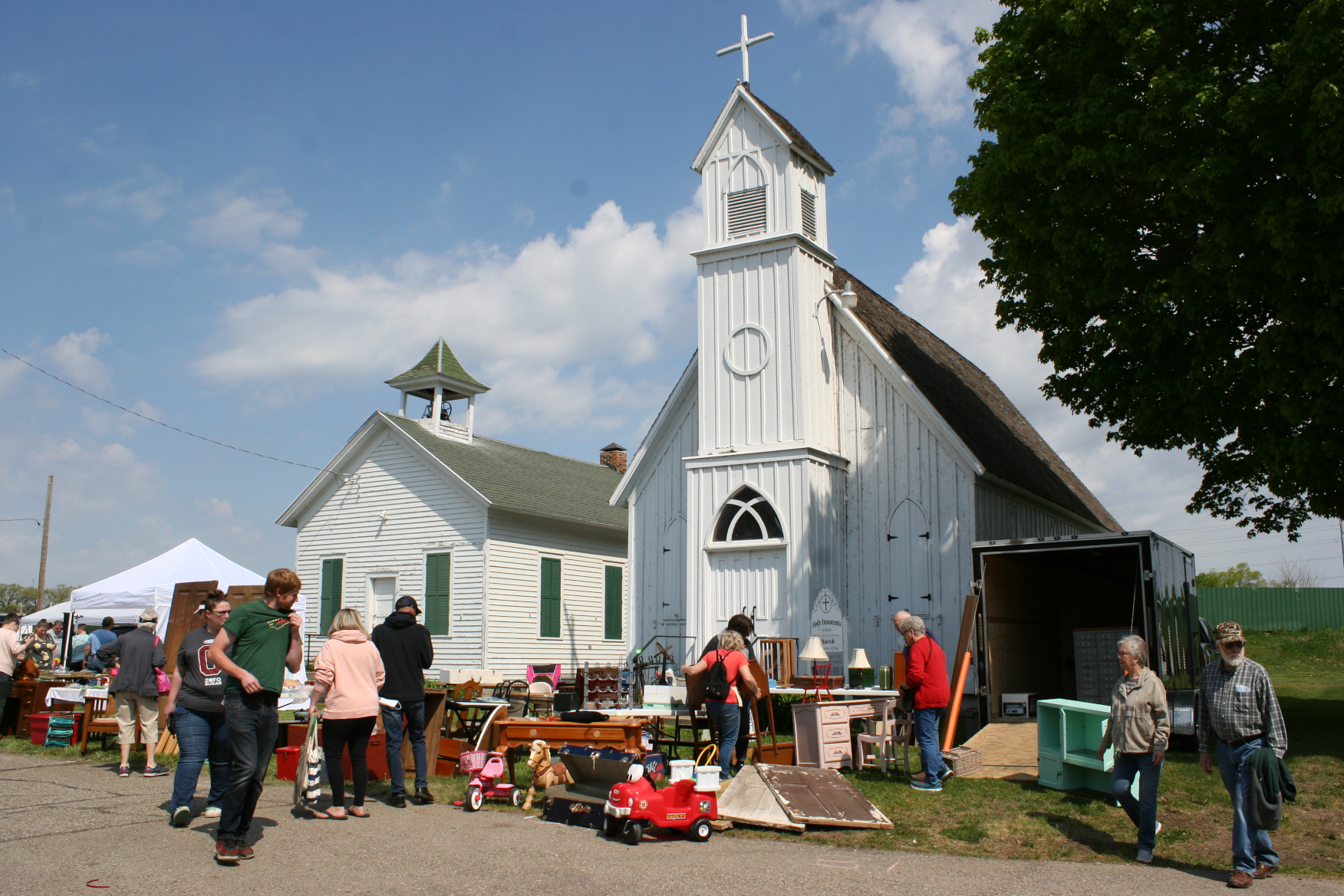
At last spring’s RCHS Spring Flea Market. (Minnesota Prairie Roots copyrighted photo May 2021)
AFTER AN INCREDIBLY long winter followed by an exceptionally cold, cloudy and wet spring, we Minnesotans are ready to get outdoors. We are ready to celebrate. We are ready to let the sun shine into our lives. And this weekend, opportunities abound locally to get out and enjoy spring in southern Minnesota.
Spotted at the spring 2021 flea market. (Minnesota Prairie Roots copyrighted file photo May 2022)
Rise and shine early on Saturday, May 14, to hit the Rice County Historical Society Spring Flea Market from 8 am – 2 pm in the parking lot and behind the RCHS museum in Faribault. I’ve attended many times and enjoy meandering among the vendors of antiques, collectibles, crafts and junk. I mean “junk” in a positive light.
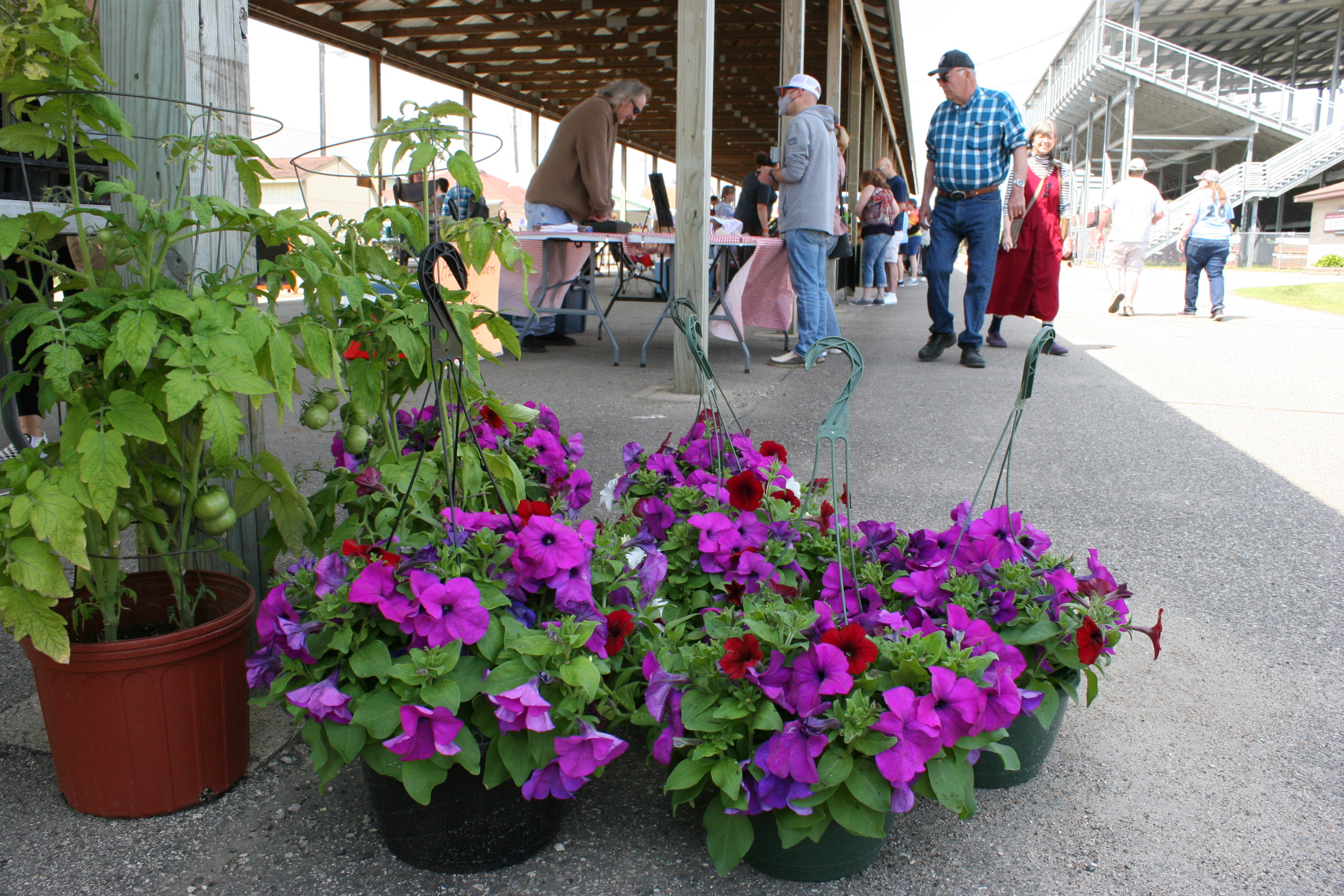
Plants available for purchase a year ago, looking toward the vendor site under the fairgrounds car port. (Minnesota Prairie Roots copyrighted file photo May 2021)
While there, also check out the Cannon Valley Farmers’ Market under the carport at the Rice County Fairgrounds from 10 am – 2 pm. Some 20 area/regional vendors will market spring produce, locally-grown starter plants, cheese, honey, pastries, woolen products, homemade soaps and much more.
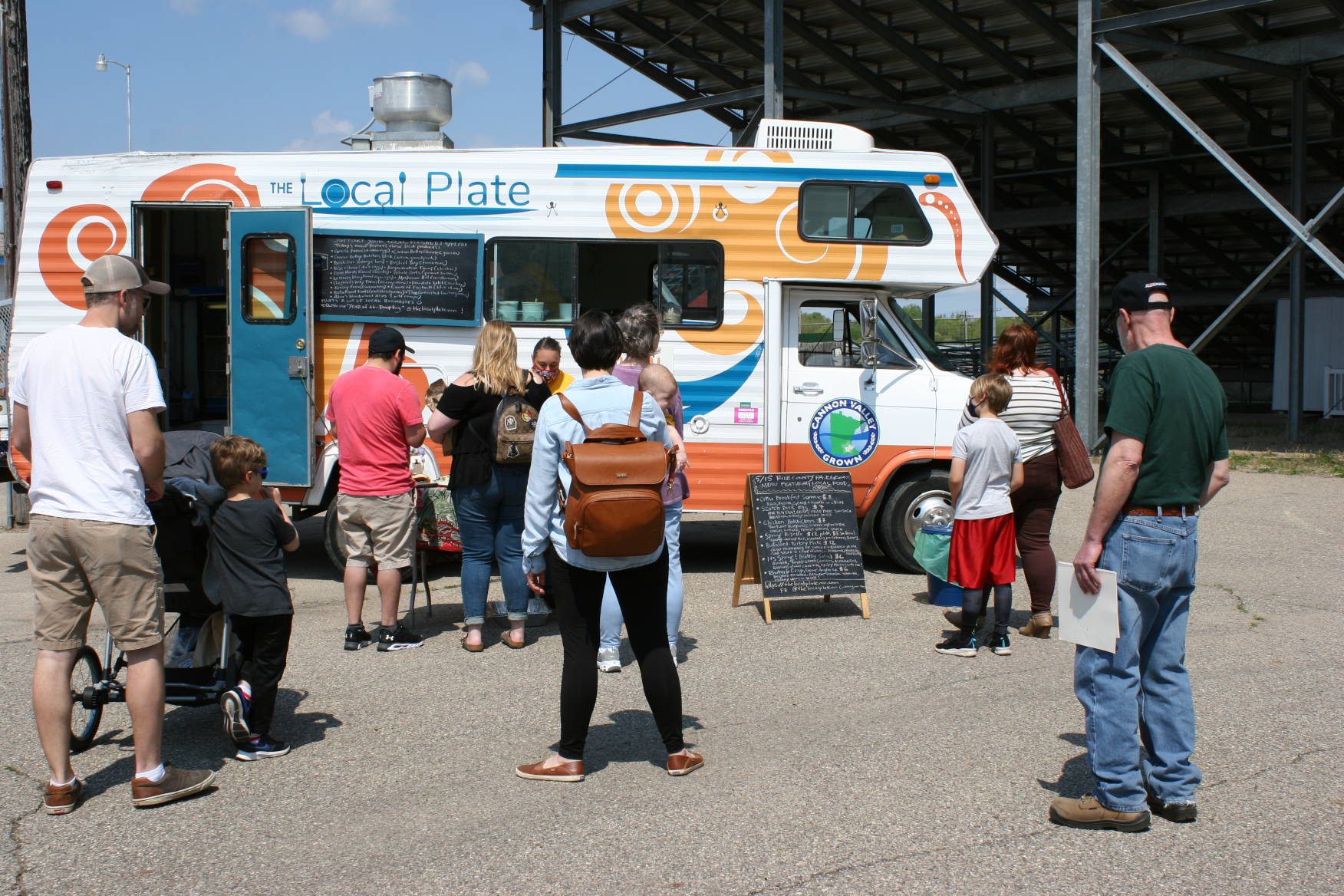
Customers place orders at the Local Plate food truck at the May 2021 Cannon Valley Farmers’ Market. (Minnesota Prairie Roots copyrighted file photo.)
Adding to the farmers’ market draw are local food trucks on site.
A group of mostly Northfield area musicians performed as Hutenanny at a past Valley Grove Country Social. Minnesota Prairie Roots copyrighted file photo September 2010)
On Sunday, May 15, two area historic Norwegian churches celebrate Syttende Mai, Norway’s Constitution Day. Both events begin at 2 pm.
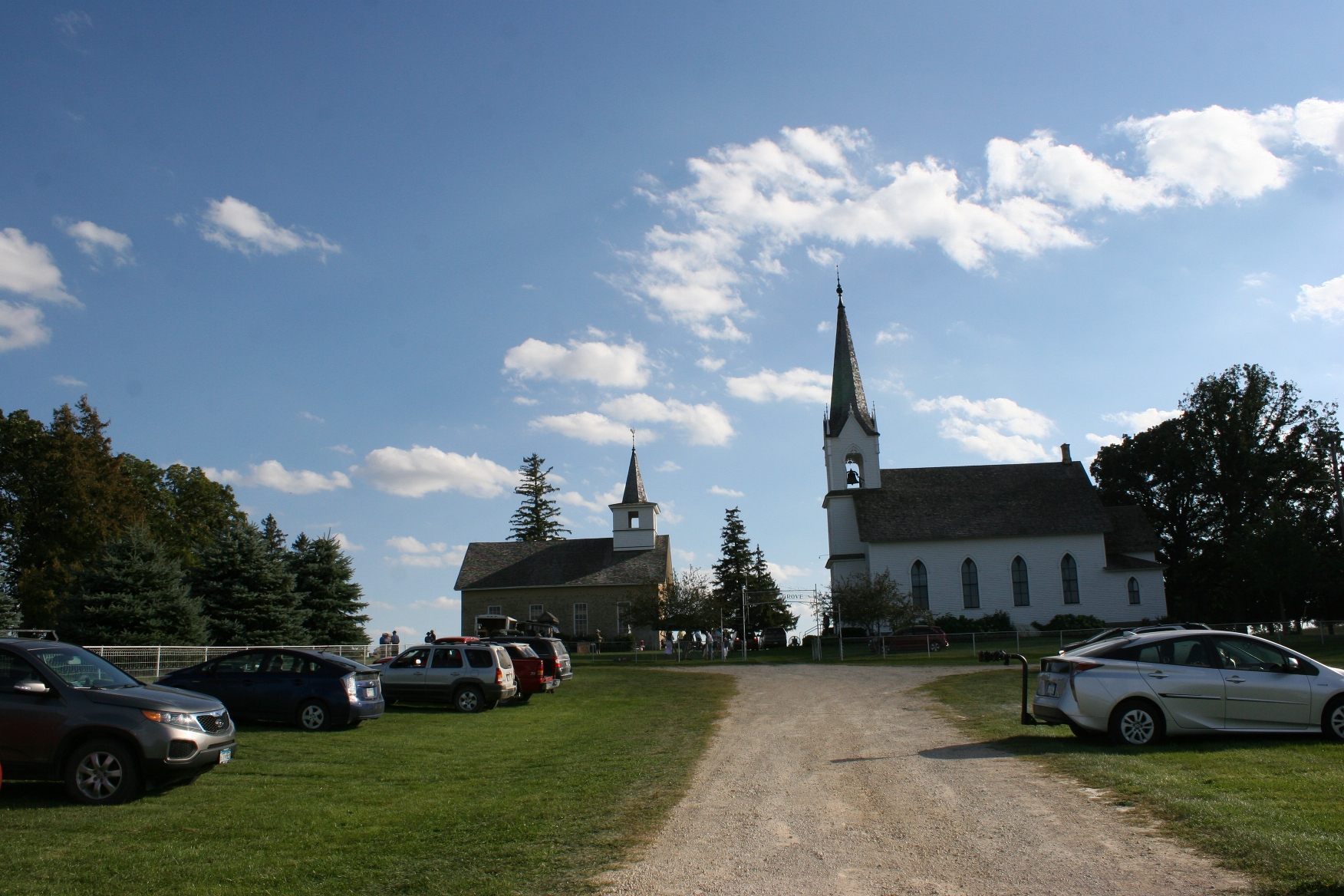
Duo churches grace the hilltop at Valley Grove. (Minnesota Prairie Roots copyrighted file photo 2018)
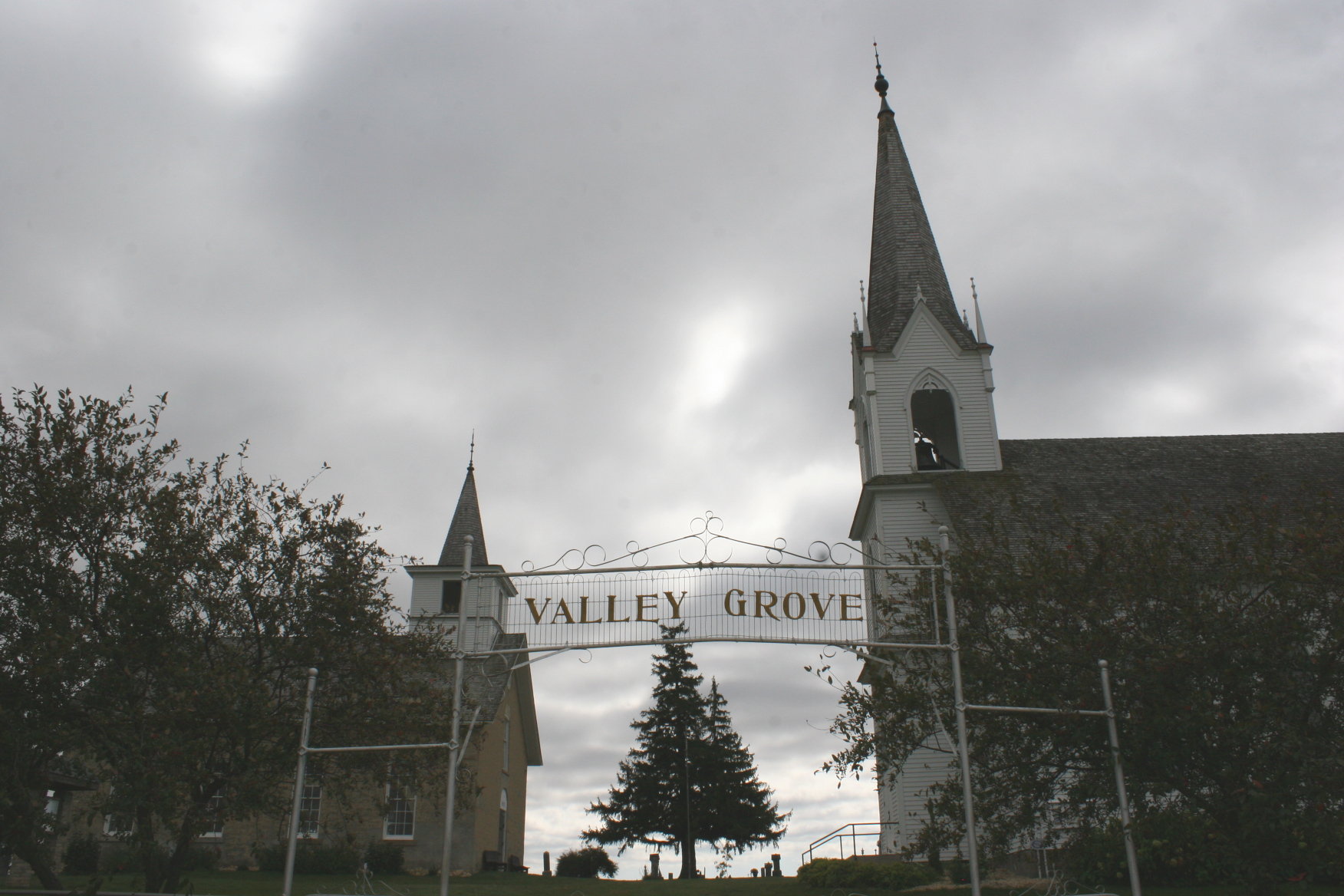
At Valley Grove churches, rural Nerstrand, the gathering focuses on the dedication of tapestries woven by Robbie LeFlueur. The Minneapolis weaver was commissioned to create four tapestries—three will be complete by May 15—that illustrate church history, the congregation and the surrounding flora and fauna. She will also give a weaving demo. Hardanger fiddlers from St. Olaf College will provide entertainment. Valley Grove, atop a hillside near Nerstrand Big Woods State Park, is a favorite destination of mine given its beautiful and peaceful country setting. I’ve attended numerous celebrations, or simply walked, there and always enjoyed myself. The Syttende Mai event goes until 4 pm.
Completed in the fall of 1899, the second Trondhjem Church sits atop a 100-foot high hill. Listed on the National Register of Historic Sites in Minnesota, this Norwegian church has walls constructed with 24 corners to brace it against the wind. Minnesota Prairie Roots file photo)
In northern Rice County, the Norwegians of Old Trondhjem Church, rural Lonsdale, are hosting Tjarnblom, a Scandinavian folk group as their Syettende Mai celebration begins at 2 pm. There’s a brief meeting of the preservation society followed by coffee (of course), treats (of course) and fellowship (of course). I’ve also attended events at Trondhjem and recommend you join in this Norwegian celebration.
There you go. Four places to go in Rice County that will bring sunshine into your May weekend.
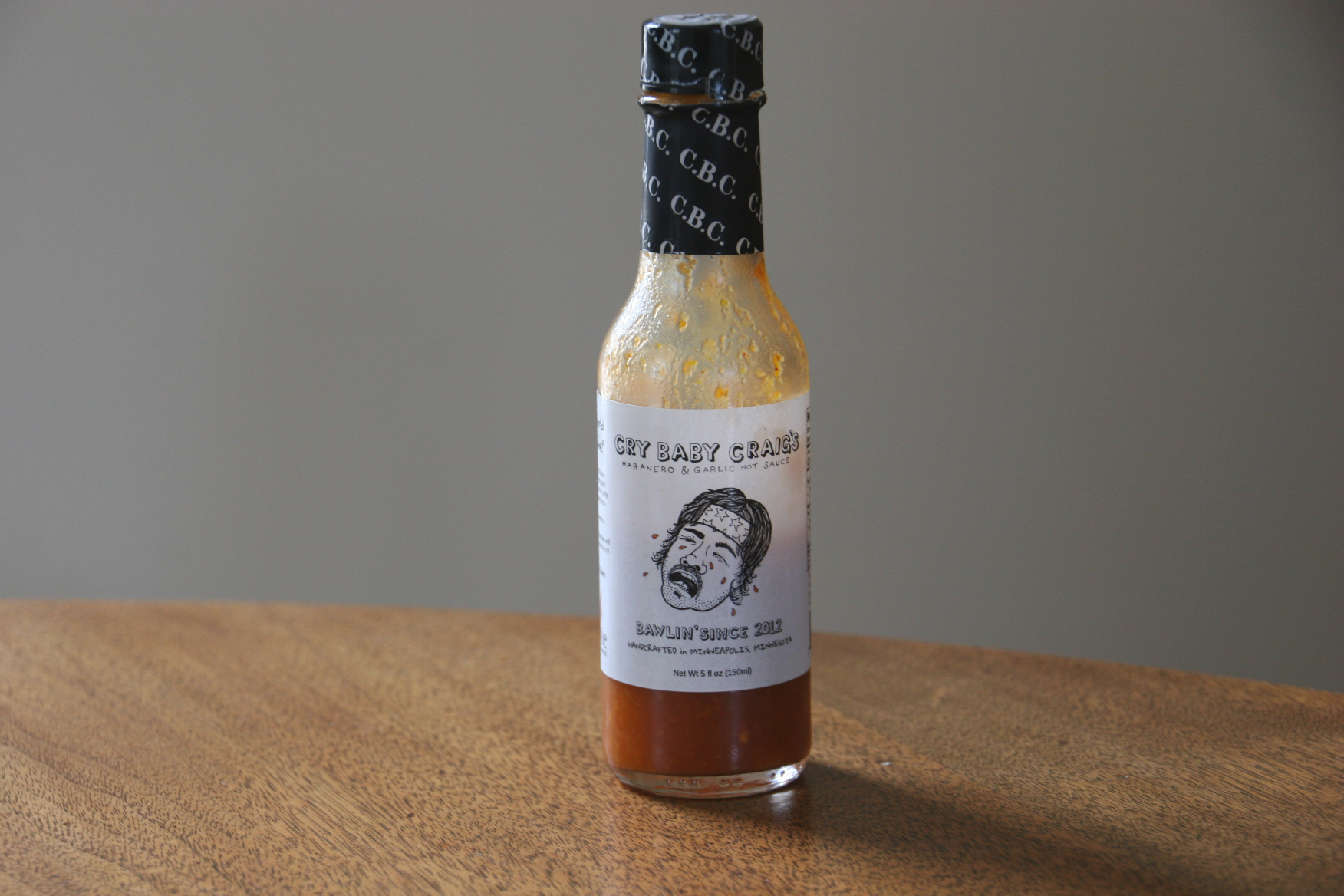
Cry Baby Craig’s, Faribault made hot sauce, which I love. (Minnesota Prairie Roots copyrighted photo May 2022)
STEREOTYPICAL RURAL MINNESOTANS, especially those of Scandinavian descent—of which there are many—avoid spicy foods. Just a hint of heat in chili is plenty, thank you. And to flavor hotdish, pass the salt and pepper, please. Oh, and that hot sauce, no thank you.
But at least one Minnesota woman, arrested recently in Faribault, loves to spice things up.
Faribault police responded to a disturbance call on April 16 only to find the woman speeding away in her car, evading them. When she eventually stopped, the officer noticed signs of intoxication. But the 32-year-old refused to take field sobriety tests. This is all according to police reports.
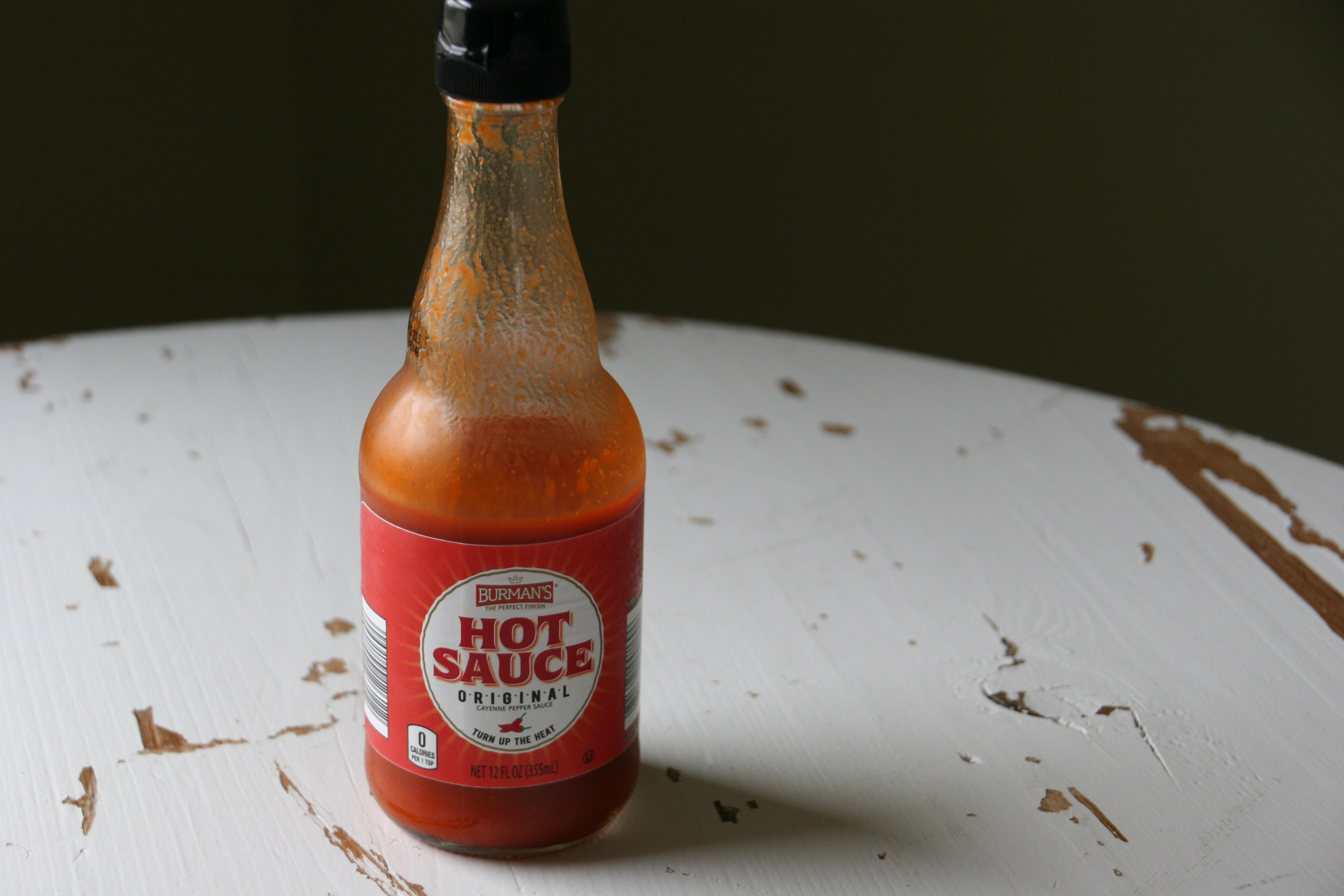
A popular mass-produced hot sauce. (Minnesota Prairie Roots copyrighted photo May 2022)
As the officer was preparing a preliminary breath test, the woman “grabbed a bottle of hot sauce and began drinking it.” Yes, you read that correctly. She hit the hot sauce in an apparent effort to avoid alcohol detection. Once arrested and taken to jail, the driver refused to take a breathalyzer test.
Made in Faribault, Minnesota, Cry Baby Craig’s hot sauce. (Minnesota Prairie Roots copyrighted photo May 2022)
While the hot sauce consumption rates as not the brightest idea ever, I give the woman credit for creativity and for making me laugh. But the rest of this incident is not at all humorous, entertaining or smart. There is nothing funny or wise about allegedly driving while under the influence. She now faces charges of fleeing a peace officer in a motor vehicle, 2nd degree DWI, DWI test refusal and child endangerment. There were two children in the car with her. No amount of hot sauce will hide that fact.
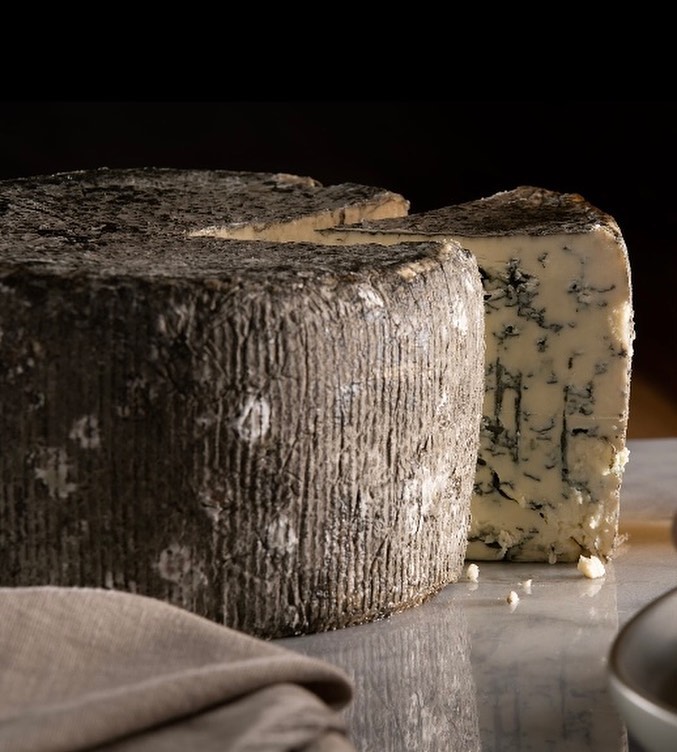
Felix, Caves of Faribault’s latest award-winning blue cheese. (Photo source: Caves of Faribault Facebook page)
THERE SEEMS TO BE no middle of the road here, no riding the fence. Either you like it or you don’t. And I, for one, love blue cheese. I cannot think of a cheese I don’t love, although processed cheeses rate lower than others on my taste buds.
Surprisingly, I have not yet tasted Felix blue cheese. Described as having a “dense, fudgy texture,” it’s aged for 60 days minimum in caves carved in the 1850s into sandstone bluffs along the Straight River. Originally, those caves were used by local beer-makers. The process for crafting Felix allows the sandstone caves to “create a natural rind that picks up on the different microflora that inhabit the caves,” according to the Caves website. That’s the basic scientific explanation. I mostly just care that the blue cheese tastes good.
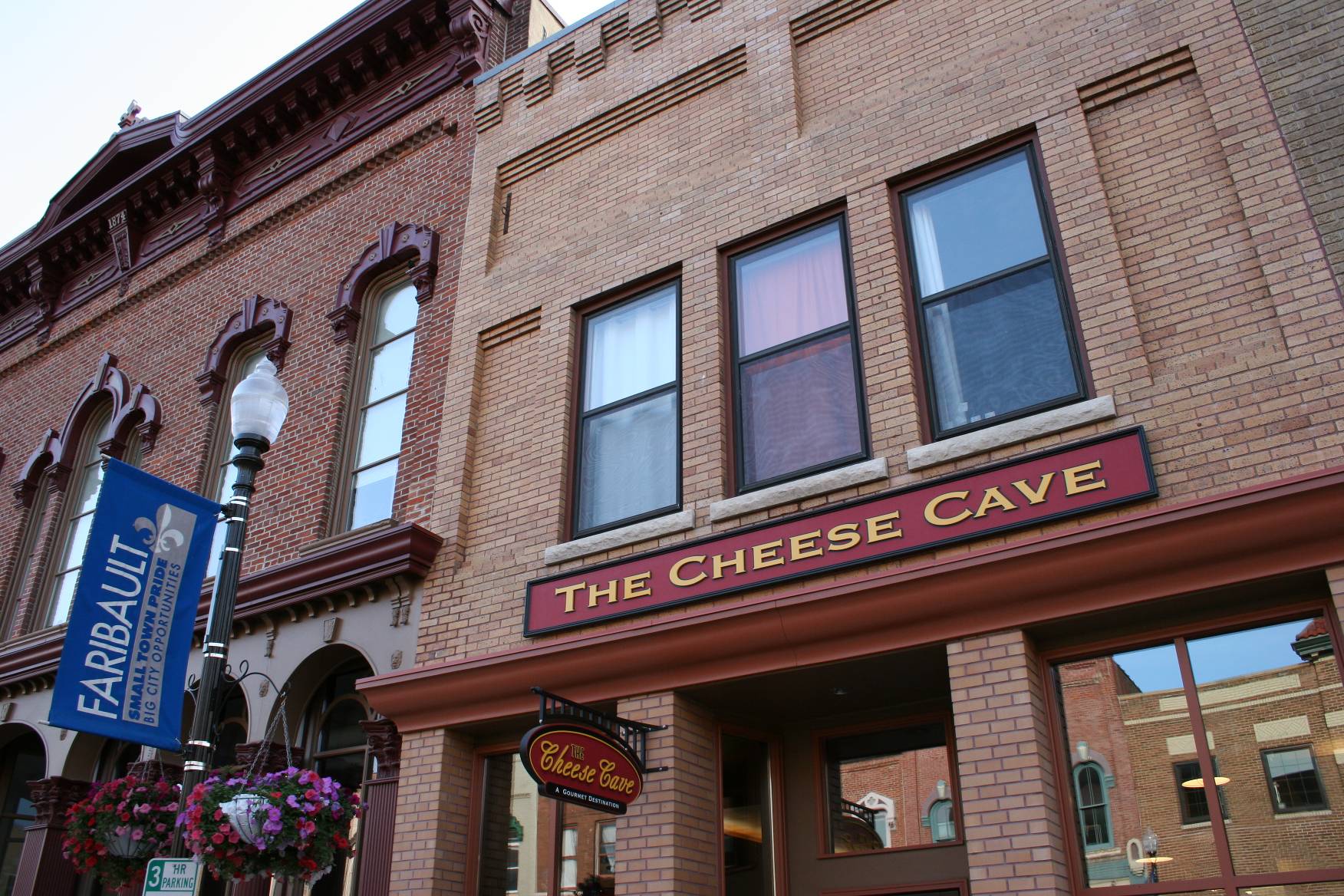
Once my primary source of local cheese, The Cheese Caveclosed several years ago. (Minnesota Prairie Roots copyrighted file photo)
My go-to Caves cheeses have been their long-standing Amablu®, Amagorg® (Gorgonzola) and St. Pete’s Select® (blue cheese). With the closing of the Caves downtown Faribault retail store and restaurant a number of years ago, finding our Caves cheese locally has dropped to one source, HyVee grocery store. Note that it’s available in many other places throughout Minnesota and in all other 49 states and internationally. Illinois-based Prairie Farms Dairy Inc now owns Caves of Faribault. Ownership changes often result in changes away from local focus.
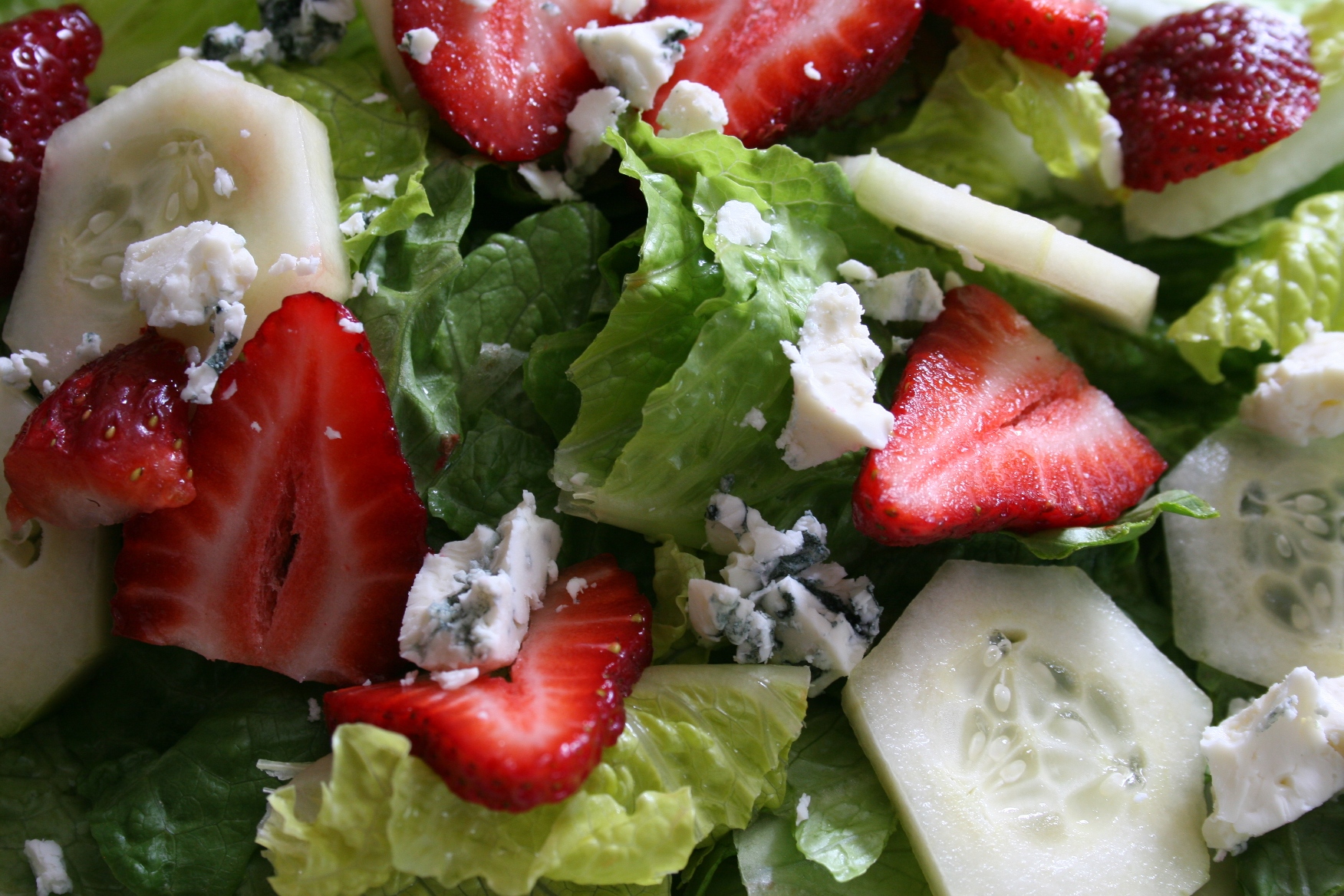
Sliced strawberries, cucumbers and Amablu Gorgonzola cheese added to Romaine lettuce make a perfect salad, topped with lemon poppyseed dressing. (Minnesota Prairie Roots copyrighted file photo 2011)
Cheesemaking has a history in Faribault tracing back to 1936 and that first cheesemaker, Felix Frederiksen. Faribault, according to the Caves website, is the home of America’s first blue cheese. And now, 86 years later, local cheesemakers continue to craft award-winning blue cheese in sandstone caves along the river. Cheese that I, for one, love.
FYI: There are other award-winning cheesemakers in this region of southern Minnesota, including Shepherd’s Way Farms, rural Nerstrand, and CannonBelles Cheese, Cannon Falls. Both are part of the Cannon Valley Farmers’ Market producers group. That locally-sourced/grown/raised/crafted market held its last inside winter market recently, but restarts in the warm season at its outdoor location under the carport at the Rice County Fairgrounds in Faribault. The first outdoor market is from noon – 3 pm Saturday, April 16. The next follows from 10 am – 2 pm on Saturday, May 14.
FOR RANDY AND ME, and likely others in the Faribault area, the opening of “the Little DQ” signals the shift to spring in Minnesota.
Late Sunday afternoon we joined the line of vehicles snaking around the small Dairy Queen along Lyndale Avenue. Our mission: To order the five-day opening special, a Peanut Buster Parfait for $1.99. Make that two, please. That totaled $4.28, with tax.
The drive-up (walk-up was closed) DQ opened on February 18 after a seasonal closure on October 29, 2021. The closing special was the same as the opening special—those bargain parfaits loaded with peanuts and oozing layers of rich chocolate fudge over soft serve ice cream. Yum.
But the treat is also loaded with calories. As we waited, I noted the calorie count of 710 on a sign. Yikes. It’s a good thing we treat ourselves to DQ only twice a year. In October and then again in March.
I also struggle with the regular price of $4.99 (I wouldn’t pay that price) for a single parfait. I realize DQ is in the business of making money, but that price point exceeds my cost comfort level. I can purchase a 1.5 quart container of ice cream from my local grocery store for around $3. That yields nine servings with a lot fewer calories. Around 200 for two-thirds of a cup versus 710 for that Peanut Buster Parfait.
I know, it’s not the same. Different type of ice cream. Different experience. DQ, for us, is a treat. It also signals the shift in seasons. In October, the move from fall to winter. And in March, the move from winter toward spring. Even as remnants of snow still bank the ground.
TELL ME: What’s your favorite Dairy Queen treat? How often do you go to DQ? Or do you have another favorite ice cream source?
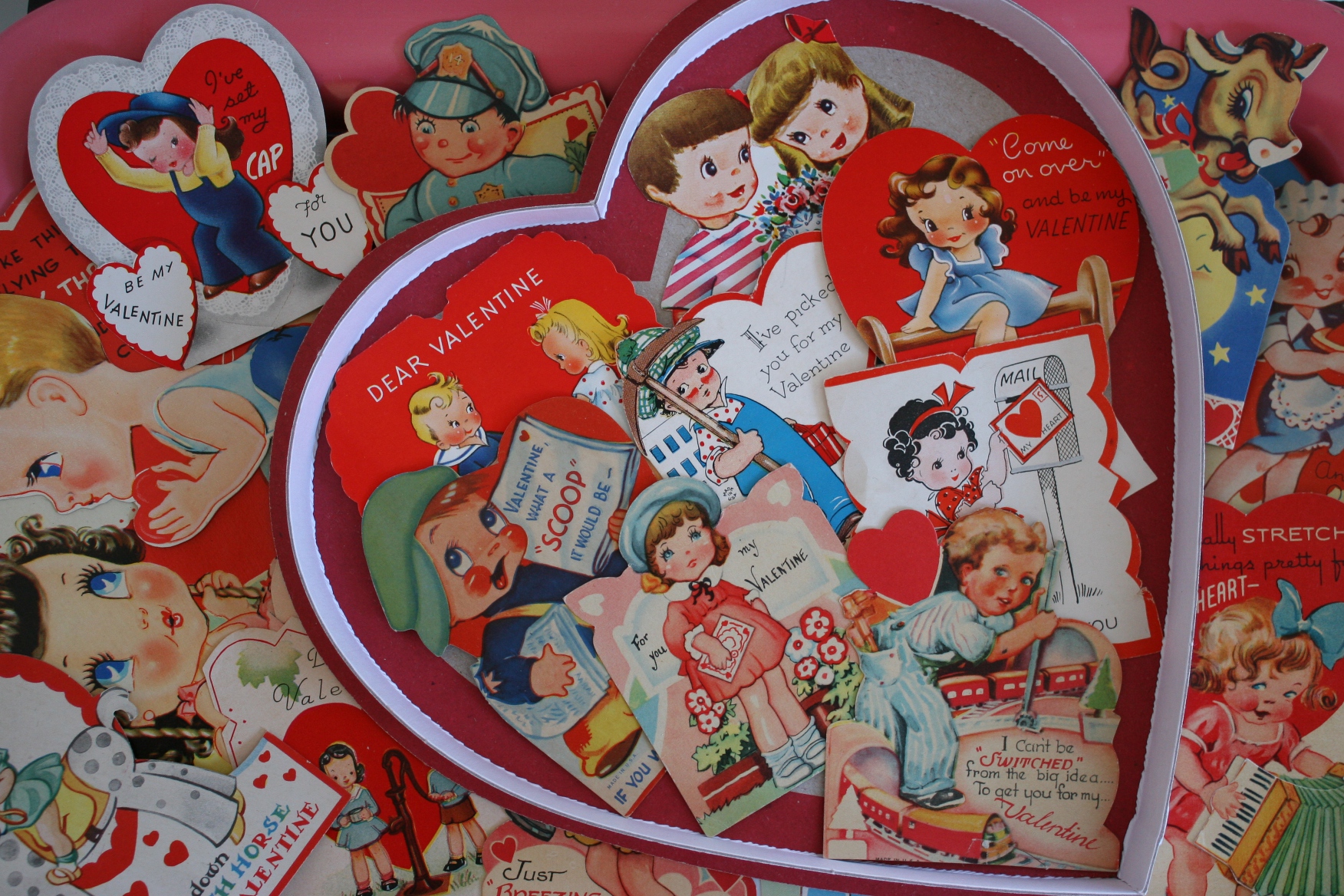
Vintage valentines from my mom’s collection. (Minnesota Prairie Roots copyrighted file photo 2019)
AT THE RISK of sounding old, which, by the way, I sort of am, I remember Valentine’s Day back-in-the-day, meaning the 1960s.
I remember bringing a shoebox to Vesta Elementary School, covering the box with white paper, cutting a slit in the lid (the teacher helped) and then pasting red construction paper hearts onto the wrapped box. Whew, that was one long sentence. If I didn’t have a shoebox, I crafted a mega envelope from white paper, decorated it with paper hearts and then taped the valentine holder onto the edge of my desk. Either way, I had a vessel to hold valentines.
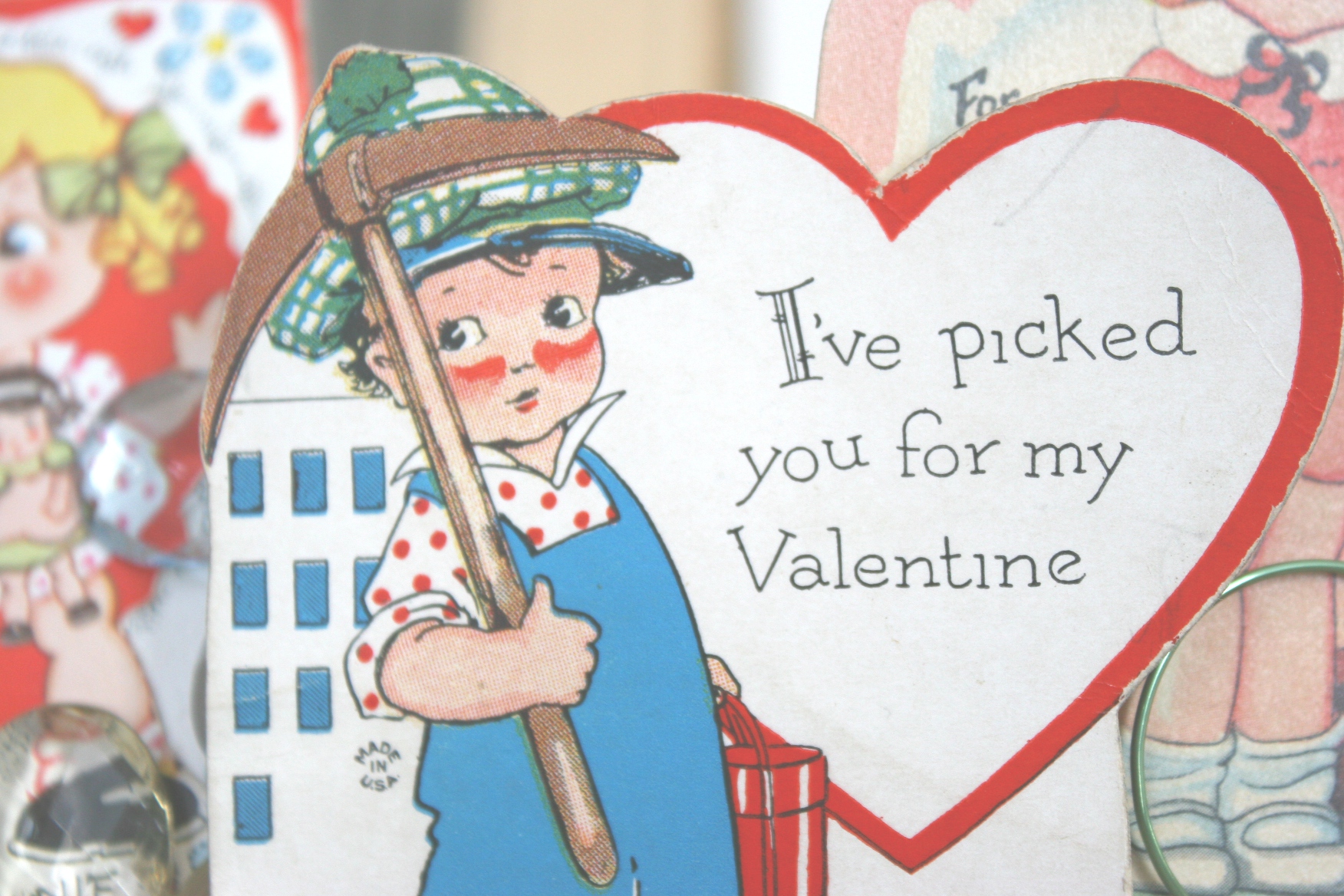
I carefully picked the valentines I gave to each classmate. This is from my mom’s collection. (Minnesota Prairie Roots copyrighted file photo 2019)
On the day of our Valentine’s party, I arrived at school with cards carefully chosen for each classmate. These were not Disney-themed valentines pulled from a box, but rather generic, often flowery, cards punched from an over-sized book. It took effort to remove those cards. But it took even more effort to choose just the right one for each classmate.
An “I love you” valentine heart crafted for me by one of my children (I think my son) in elementary school. (Minnesota Prairie Roots copyrighted file photo)
Words mattered to me even back then. I didn’t want anyone, especially the boys, to misinterpret messages printed on a valentine. That applied to those chalky candy conversation hearts also. There would be no “Be mine” or “True love” for boys I found disgusting. And, no, I did not gift an entire box of those hearts to anyone. I came from a poor farm family. Several candy hearts tucked inside an envelope or a single stick of Juicy Fruit gum taped to a card was the treat limit.
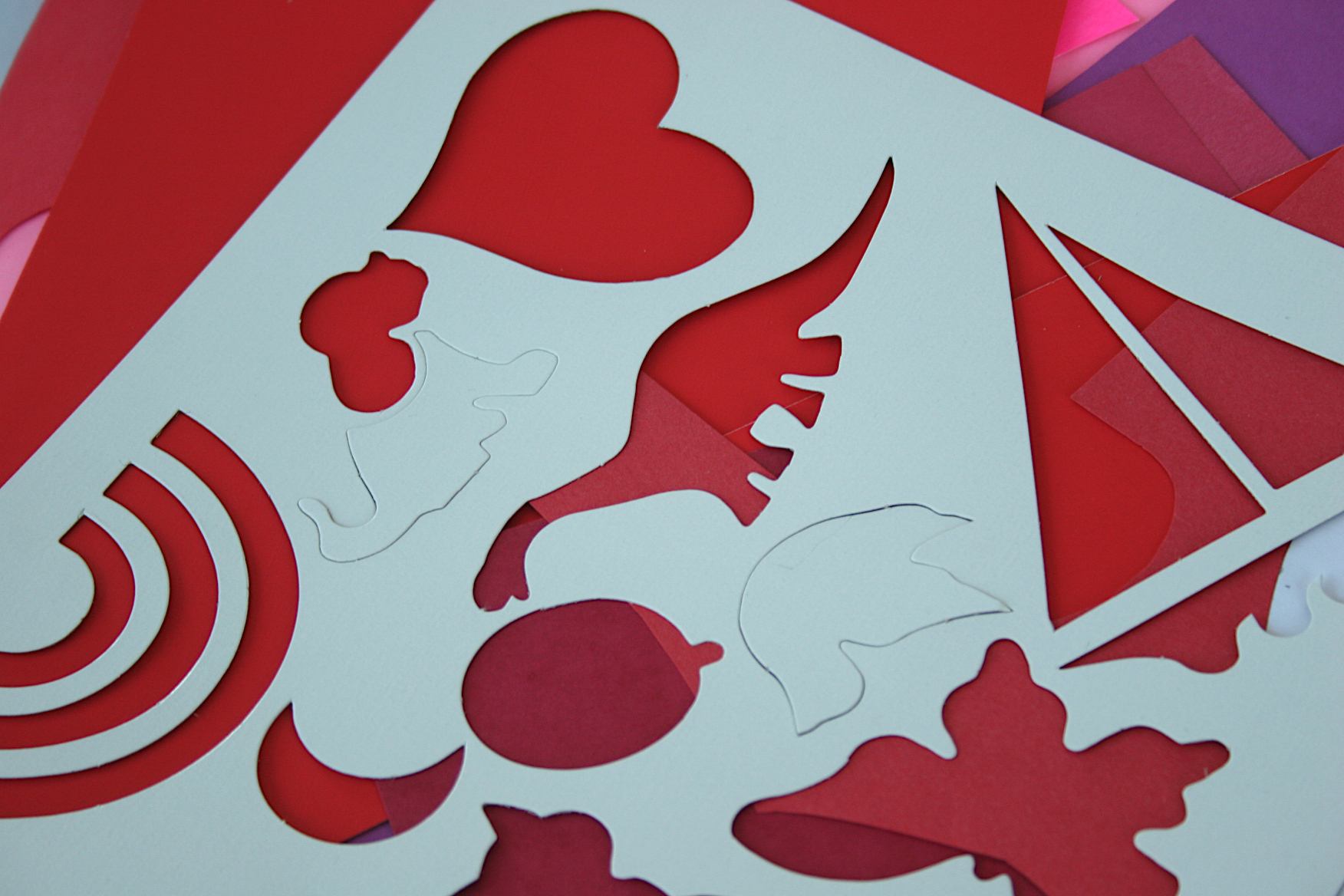
Stencils and colored paper for crafting cards. (Minnesota Prairie Roots copyrighted photo February 2022)
Those sweet memories of Valentine’s days past remain. But now I’m making new memories. With my grandchildren. On a recent Saturday morning I baked carrot cupcakes, mixed up a batch of cream cheese frosting, gathered construction paper, stencils and foam hearts, and checked valentine-themed books out from the library. Randy and I were headed to see the grandkids and I had projects planned.
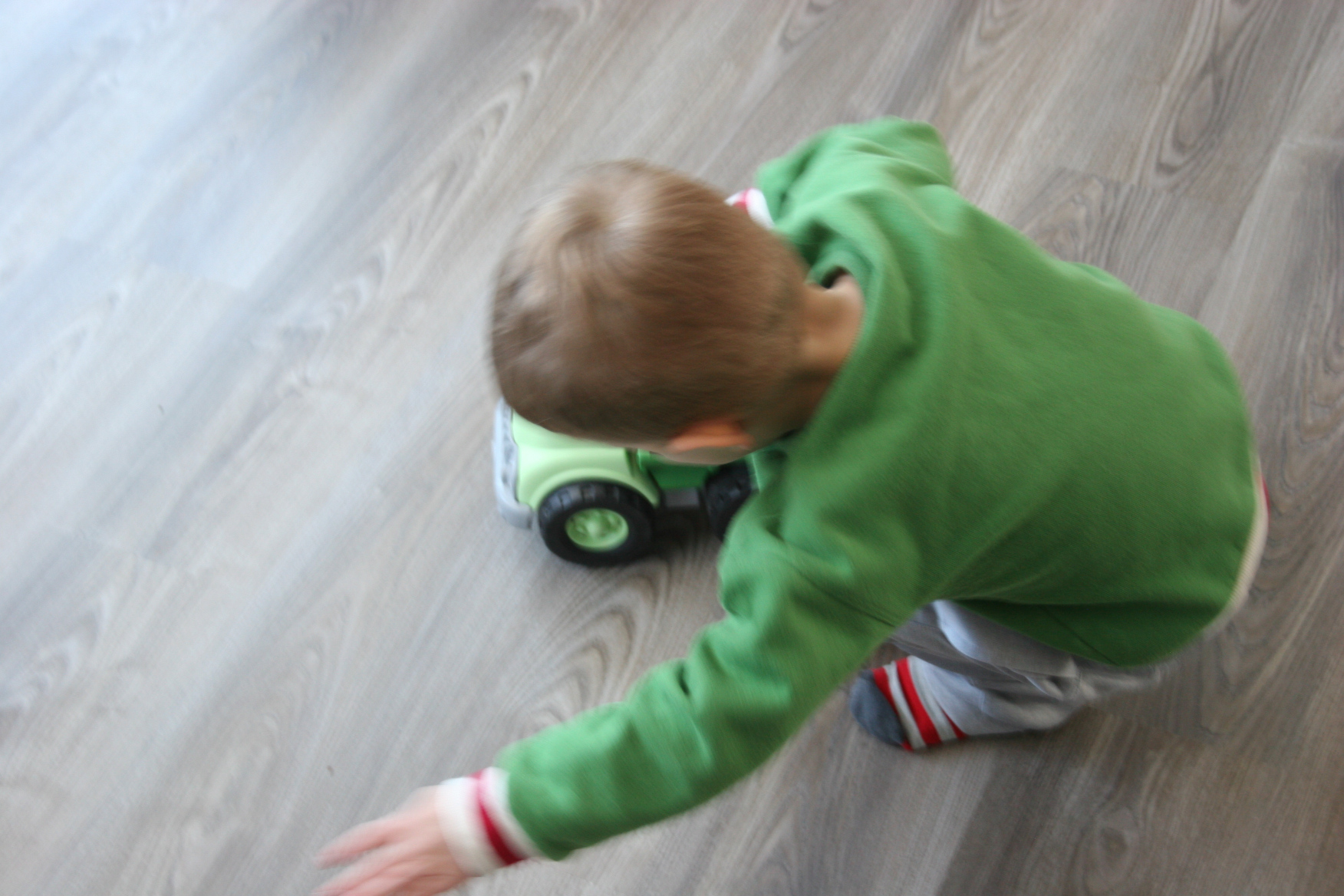
Isaac in non-stop motion racing his truck. (Minnesota Prairie Roots copyrighted photo February 2022)
But first we played, the kids racing over-sized vehicles across the floor, round and round the table and through the house with the expectation that Grandma would do the same and I did for awhile with a toy airplane, which conveniently took flight. But then I needed a break. A break meant decorating those healthy cupcakes I baked, the healthy being the 1 ½ cups of shredded carrots (never mind the cup of sugar in the batter and then an additional cup in the homemade frosting).
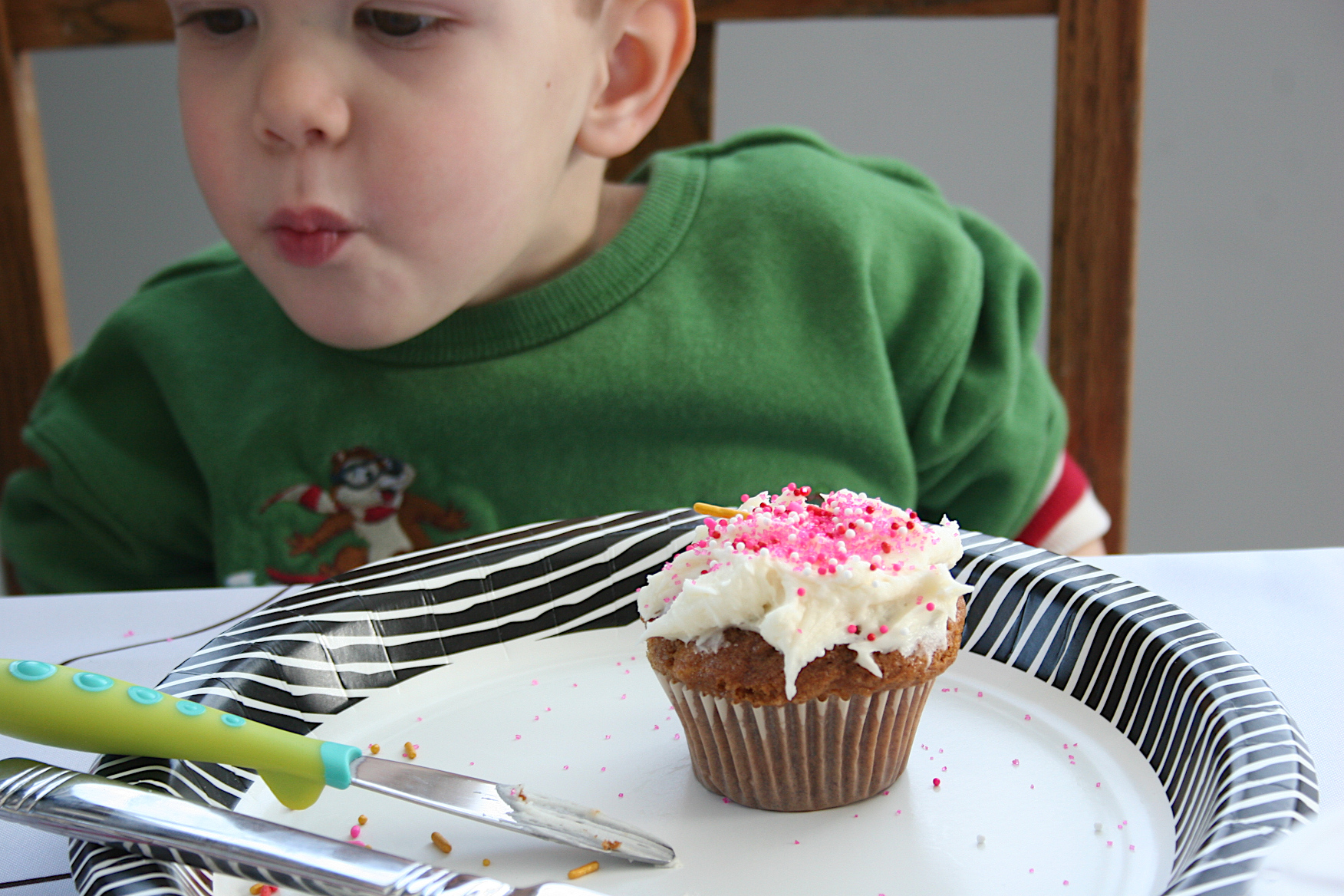
Isaac with one of the cupcakes he frosted and sprinkled.(Minnesota Prairie Roots copyrighted photo February 2022)
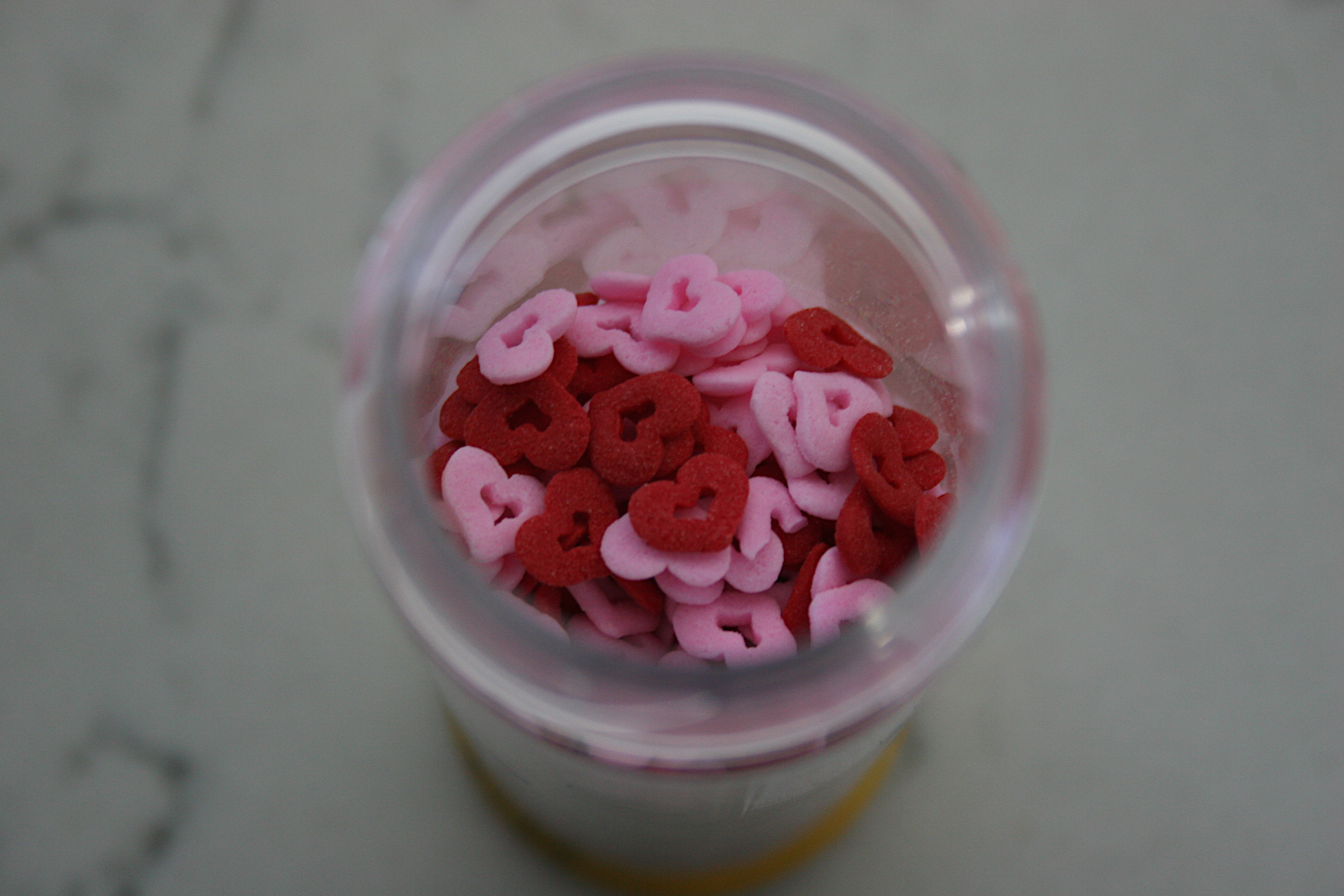
Heart-shaped toppings for the cupcakes from my daughter’s stash. (Minnesota Prairie Roots copyrighted photo February 2022)
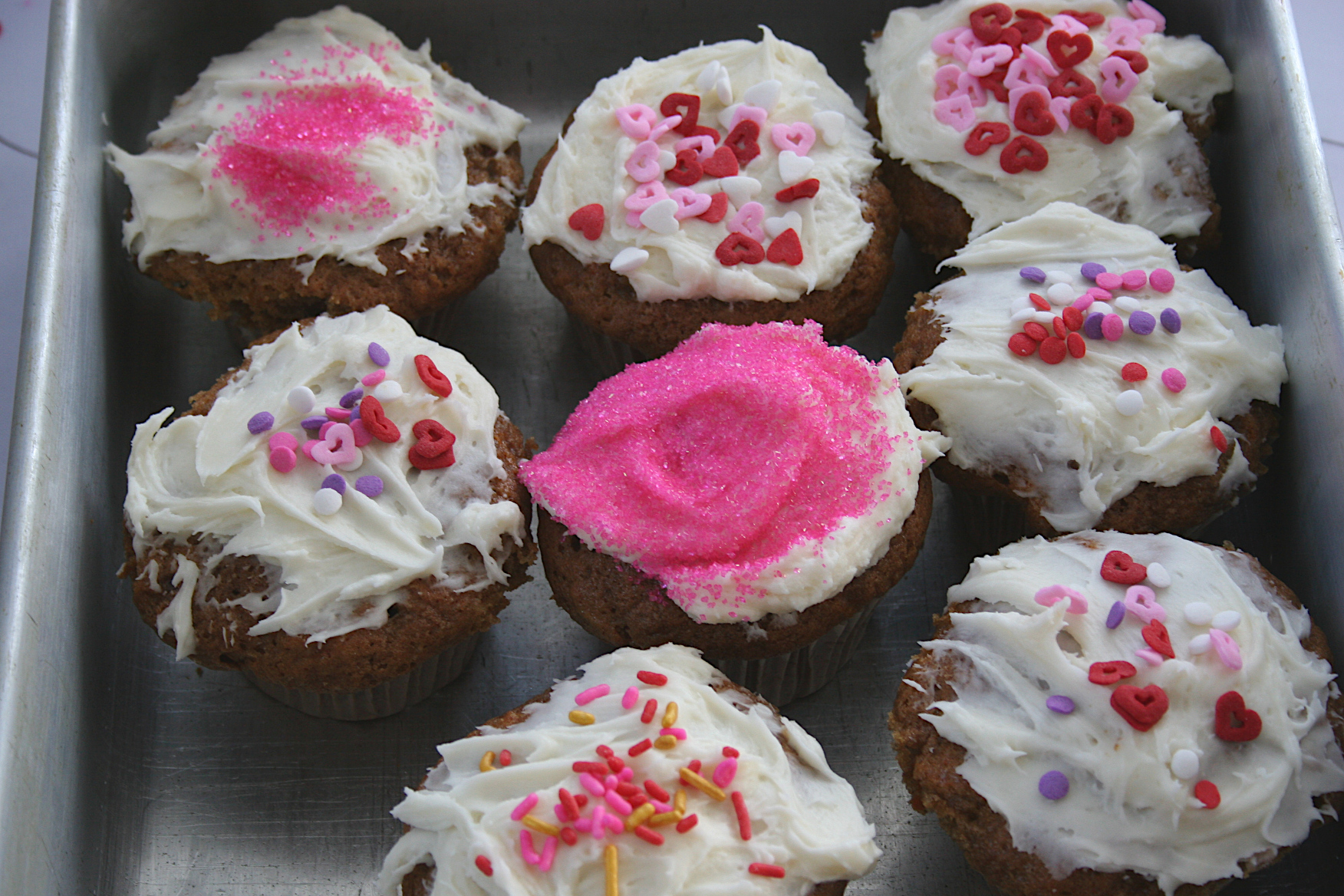
The cupcake in the center is minus about half the sugar Isaac dumped onto it. (Minnesota Prairie Roots copyrighted photo February 2022)
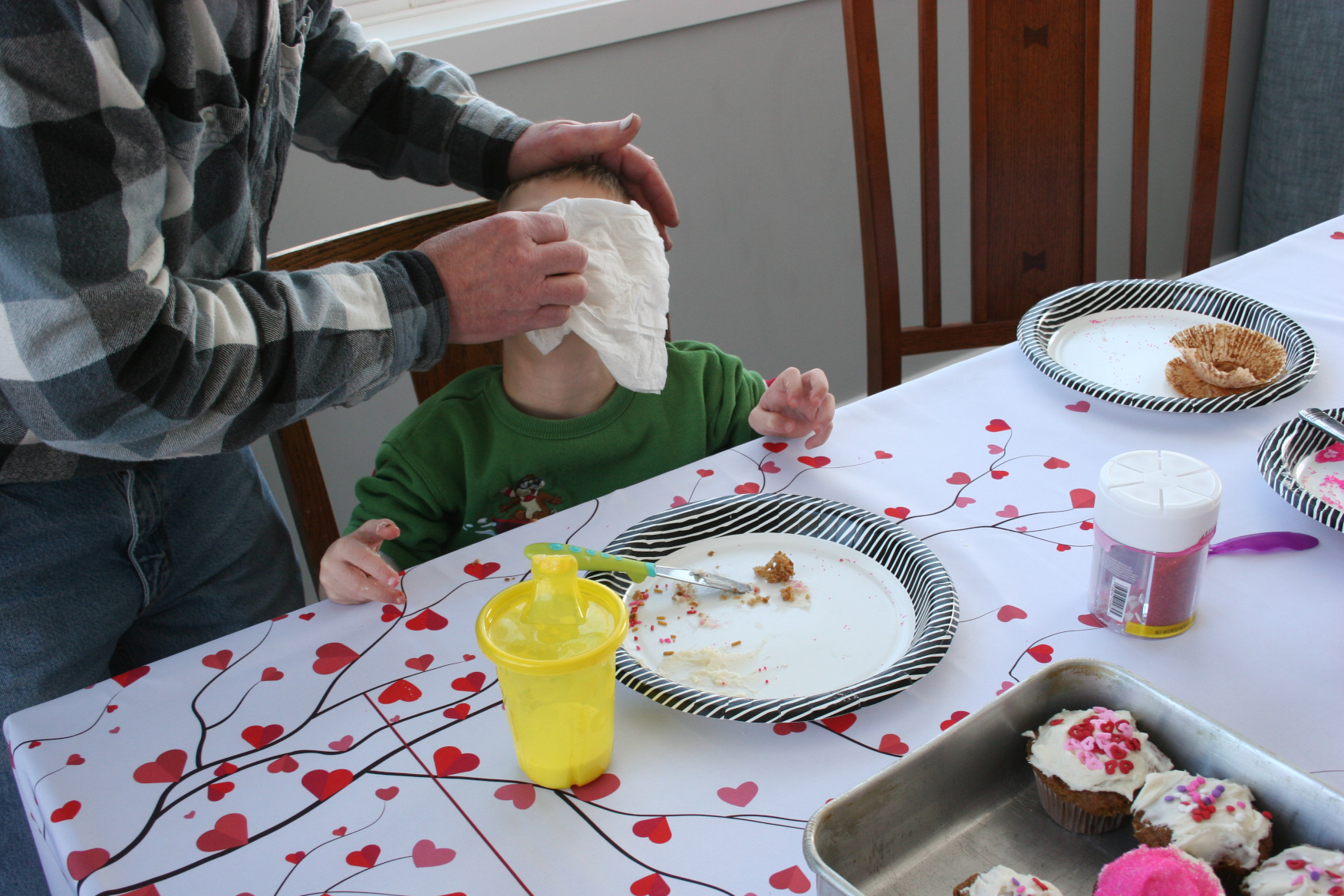
Wiping crumbs and frosting from Isaac’s face. (Minnesota Prairie Roots copyrighted photo February 2022)
Frosting and decorating cupcakes hold universal appeal for kids. Grandpa and I tag teamed with him assigned to 3-year-old Isaac and me to 5-year-old Isabelle. All went seemingly well with the usual admonition not to lick the knife, then wash the knife and repeat. But then I handed a slim bottle of sparkly pink sugar to Isaac, who tipped the bottle, and, well, you can guess what happened. He dumped enough sugar atop that single cupcake to decorate a dozen. What could we do except laugh, dump most of the sugar off and continue on. Eventually the cupcakes were all decorated and one each eaten.
We played with Owlette and Catboy from the Disney Junior show “PJ Masks.” I had no clue who these characters were prior to playtime. (Minnesota Prairie Roots copyrighted photo February 2022)
We took a break for more play, this time climbing up Mystery Mountain (stairs) to the Splat Volcano (Isaac’s room), where I got my feet stuck in splat, not to be confused with lava. The kids pulled me free. Good thing because there were valentines to craft. Except we never got to the valentines. I thought it more important for the siblings to create birthday cards for their mom, whose birthday is shortly before Valentine’s Day.
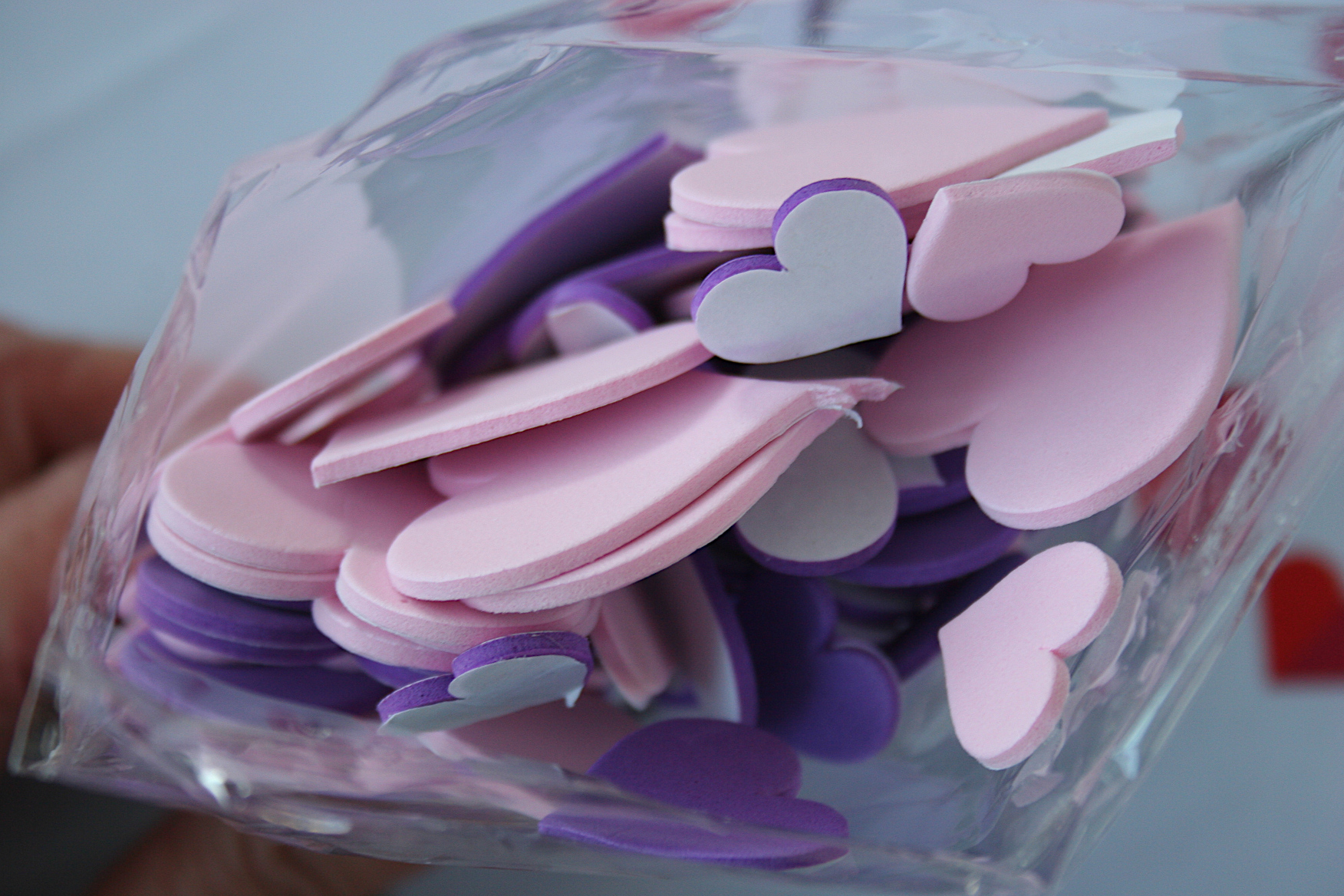
I brought a bag plumped with foam heart stickers for the grandkids to use in creating cards. (Minnesota Prairie Roots copyrighted photo February 2022)
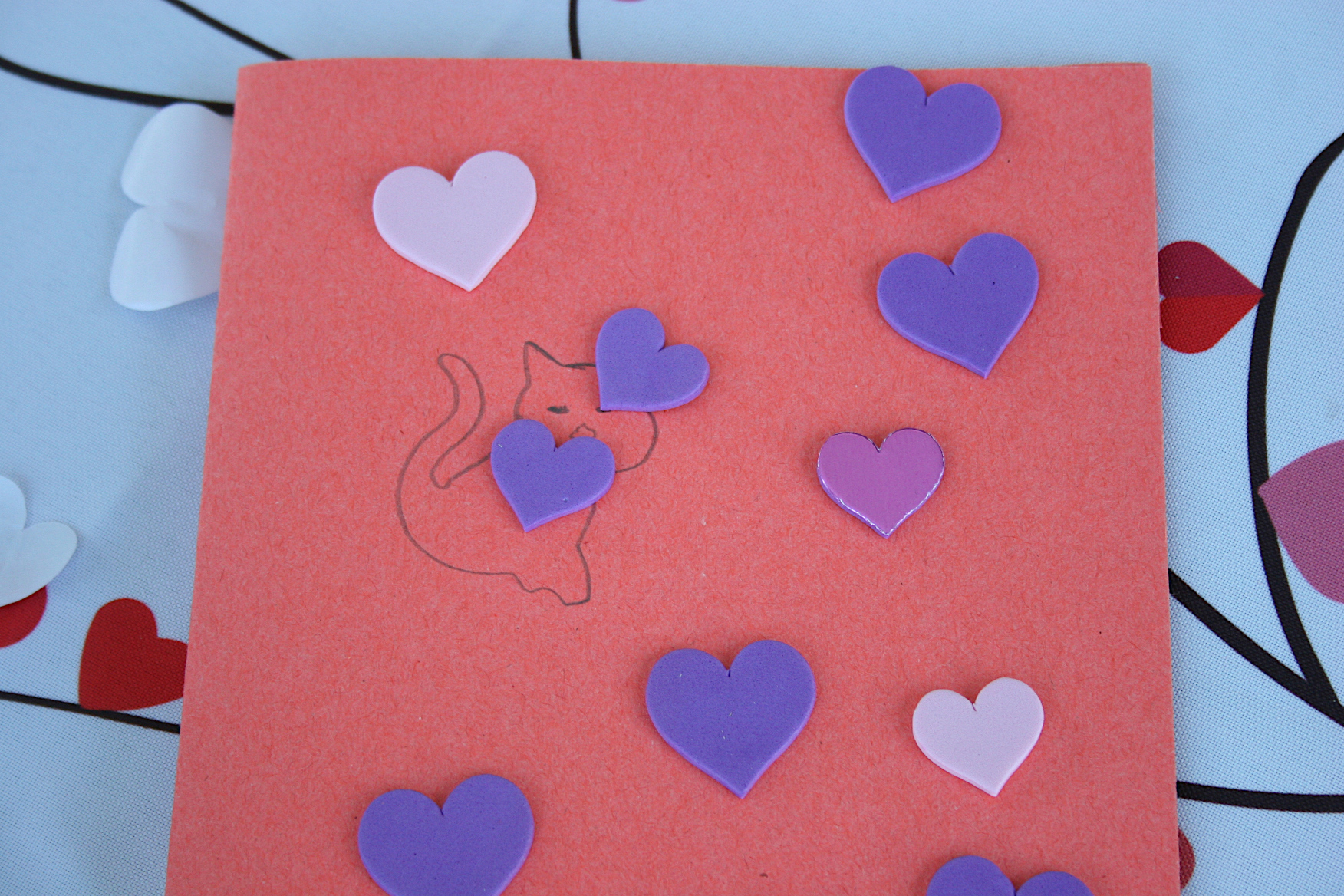
Again, I supervised Izzy while Randy helped Isaac. I got the easy job as Isabelle is a kindergartner, meaning she can sit quietly and create, managing a pencil and markers and stencils just fine, thank you. She finished her mom’s birthday card long before her brother. Isaac was quite taken with the foam heart stickers I brought. Hearts in hues of pink and purple. He’d stick one on the orange construction paper folded into a card and then stick on another. And another. And another. No valentines were ever made. But if foam hearts can convey love, then my daughter Amber ought to know her son loves her lots.
Stickers galore decorate the birthday card Isaac made for his mom. (Minnesota Prairie Roots copyrighted photo February 2022)
So these are my latest Valentine’s Day memories. Not of candy conversation hearts or heart-covered shoeboxes or fixating on valentine choices, but rather memories of time with my beloved grandchildren. Such sweetness in those love-filled moments…
#
TELL ME: I’d like to hear your Valentine’s Day stories, past and/or present.
The gated entry to Valley Grove, rural Nerstrand. (Minnesota Prairie Roots copyrighted file photo)
HERE WE GO AGAIN. Due to extreme cold temps, the first-ever Bonfire & Donut Hole Roast at an historic Minnesota country church grounds has been rescheduled for the second time.
The event at Valley Grove churches is, as of today (Thursday), slated for 2 – 4 pm Saturday, January 8. Weather forecasters predict a temp of around 30 degrees, much warmer than our recent weather. Saturday will also be warmer than the predicted three degrees on Sunday, the first rescheduled date.
If you attend the Saturday gathering in the parking lot of this rural Nerstrand hilltop setting, dress warm. Even 30 degrees can feel cold if the slightest wind blows and you’re not dressed properly. That includes wearing warm winter boots. Organizers also encourage guests to bring blankets, chairs and hot beverages. If you have snowshoes and want to walk the prairie, bring that footwear.
On bitterly cold January days like today I respect the hardiness of those early Norwegian settlers who endured much to make a new home in America, in rural Rice County. This morning when I shoveled snow from my driveway and sidewalk, I three times returned to the house to warm myself. Even wearing long johns under jeans, a heavy parka over my clothes, boots, a hat, mittens and a scarf wrapped around my neck and face, my fingers and toes began to numb. That’s a warning sign that, if ignored, could lead to frostbite.
So here I am, inside my cozy office, fleece throw tossed across my lap, thankful for the warmth of the overworked furnace. Thankful to have finished that shoveling in, according to the local radio station, a wind chill temp of -31 degrees. No wonder I felt cold.
When the Bonfire & Donut Hole Roast happens on Saturday, the temp will feel some 60 degrees warmer.
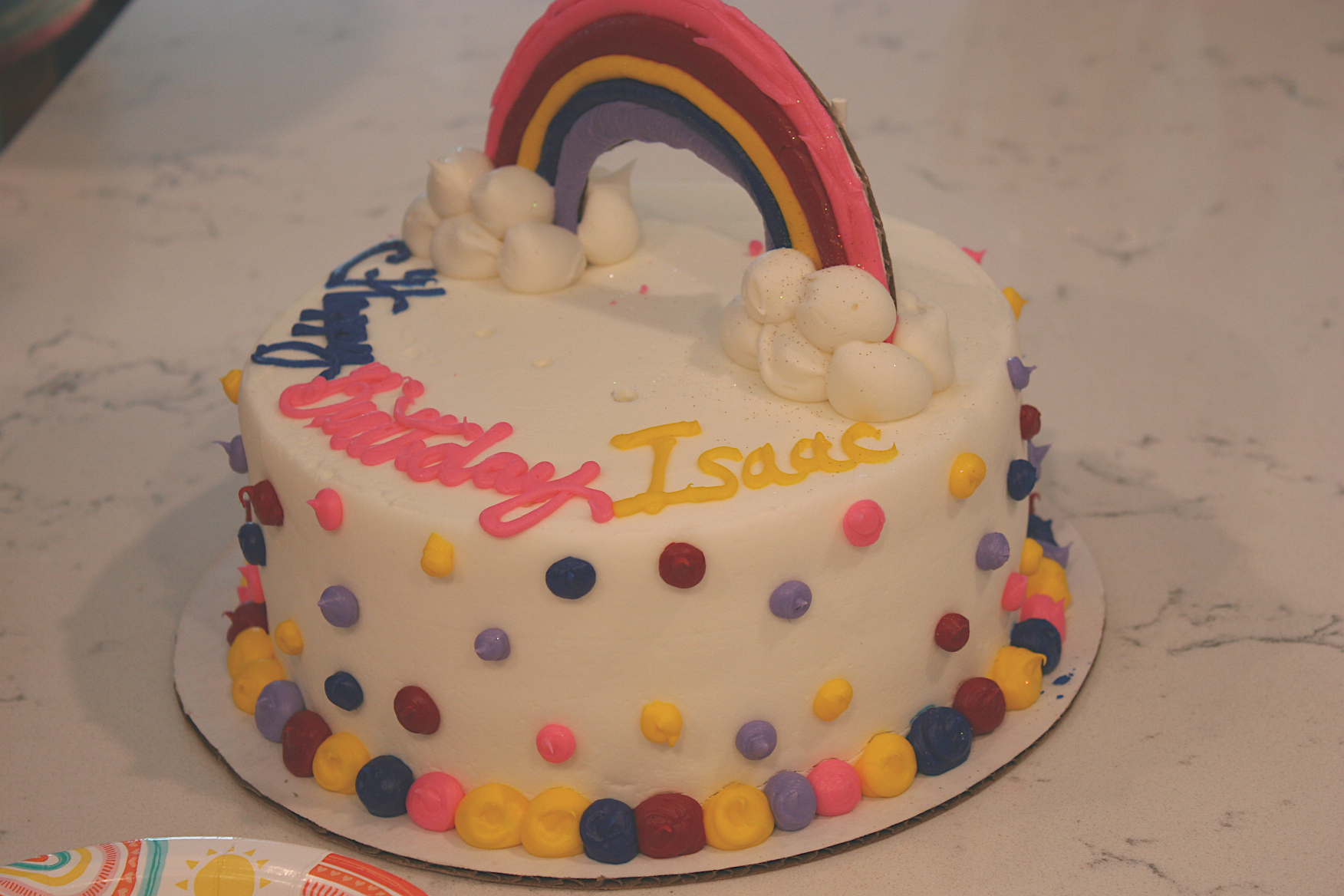
A special order rainbow birthday cake from Sweet Kneads by Farmington Bakery. (Minnesota Prairie Roots copyrighted photo January 2022)
OH, TO BE THREE AGAIN. To see the world through a preschooler’s eyes. To view the world with unbridled excitement. To find wonder and excitement…in a rainbow birthday cake.
This past Saturday, I watched as my grandson Isaac focused on his beautiful rainbow-themed birthday cake crafted by Sweet Kneads by Farmington Bakery in Farmington. After posing for countless photos, he rested his arms, elbows bent, on the kitchen island and admired the work of culinary art at eye level. Isaac, encouraged by his mom (my eldest), chose a rainbow theme because he attends early childhood class in the “Rainbow Room.”
Shortly thereafter Isaac leaned over the counter, watching as his dad sliced into the cake, cutting the first thin piece for the birthday boy. Nearby, his older sister hovered. Soon we all savored the layered chocolate cake with strawberry filling.
There would be no blowing out candles in this pandemic year.
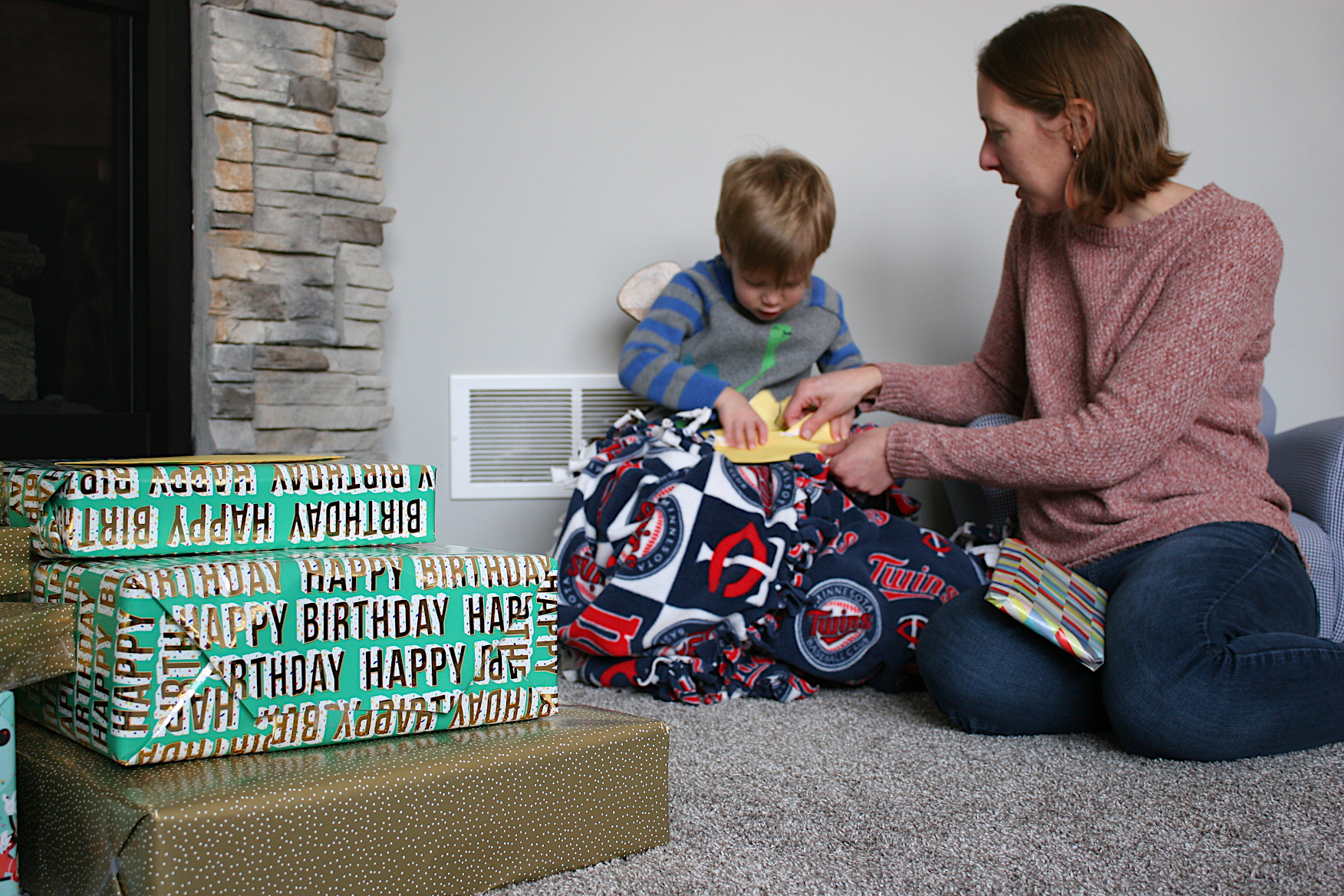
The stack of birthday gifts. Isaac noticed that I failed to put bows on the ones I gave him, far right. I won’t forget again. (Minnesota Prairie Roots copyrighted photo January 2022)
Afterwards, we gathered in the living room to watch Isaac open his stack of gifts. I love how he first opened each card, not simply as a precursory gesture, but because he genuinely wanted to see the special wishes for him. He delighted in Mickey Mouse, three monkeys… But, by far, the greatest hit proved to be the musical “3” card with its happy birthday song. All gift unwrapping paused as he opened the card. Closed. Reopened. Celebratory music filled the room.
Isaac’s mom helps him open a card. (Minnesota Prairie Roots copyrighted photo January 2022)
Finally, gift opening resumed. With lots of help from Isabelle. This year Isaac didn’t mind; next year he may. Among the gifts—a mini lantern to take to the “brown house” (Isaac’s label for an extended family lake cabin; his party location was listed as “the blue house”), a sensory exploration kit, puzzles, a sprawling farm play set, a suitcase and more. The “more” includes clothes from his other grandparents. I especially like the gold plaid flannel shirt. When you live in Minnesota, you can never have enough flannel. Even when you’re three.
What joy-filled hours we spent with the birthday boy. Randy and me. His uncle from Indiana, back in Minnesota for the holidays. His California grandparents and uncle and aunt now permanently relocated to Minnesota. His parents and sister. Only Isaac’s aunt and uncle from Wisconsin could not attend. Family embraced the birthday boy in a circle of love. To have those who love this little boy the most together to celebrate him swelled this grandma’s heart with endless happiness. What a joyful way to begin 2022.
The back of buildings in the 400 block of Central Avenue, Faribault. (Minnesota Prairie Roots copyrighted photo 2021)
EVERY DAY WE PASS BY sights which often become so woven into our environment that we no longer see them. Until one day we pause. And notice.
Recently, I stopped to look around me, standing in a parking lot along Minnesota State Highway 60/Fourth Street, a half-block off Central Avenue next to Corks & Pints.
I rotated, taking in seemingly ordinary scenes. Part of the fabric of Faribault. Past and present.
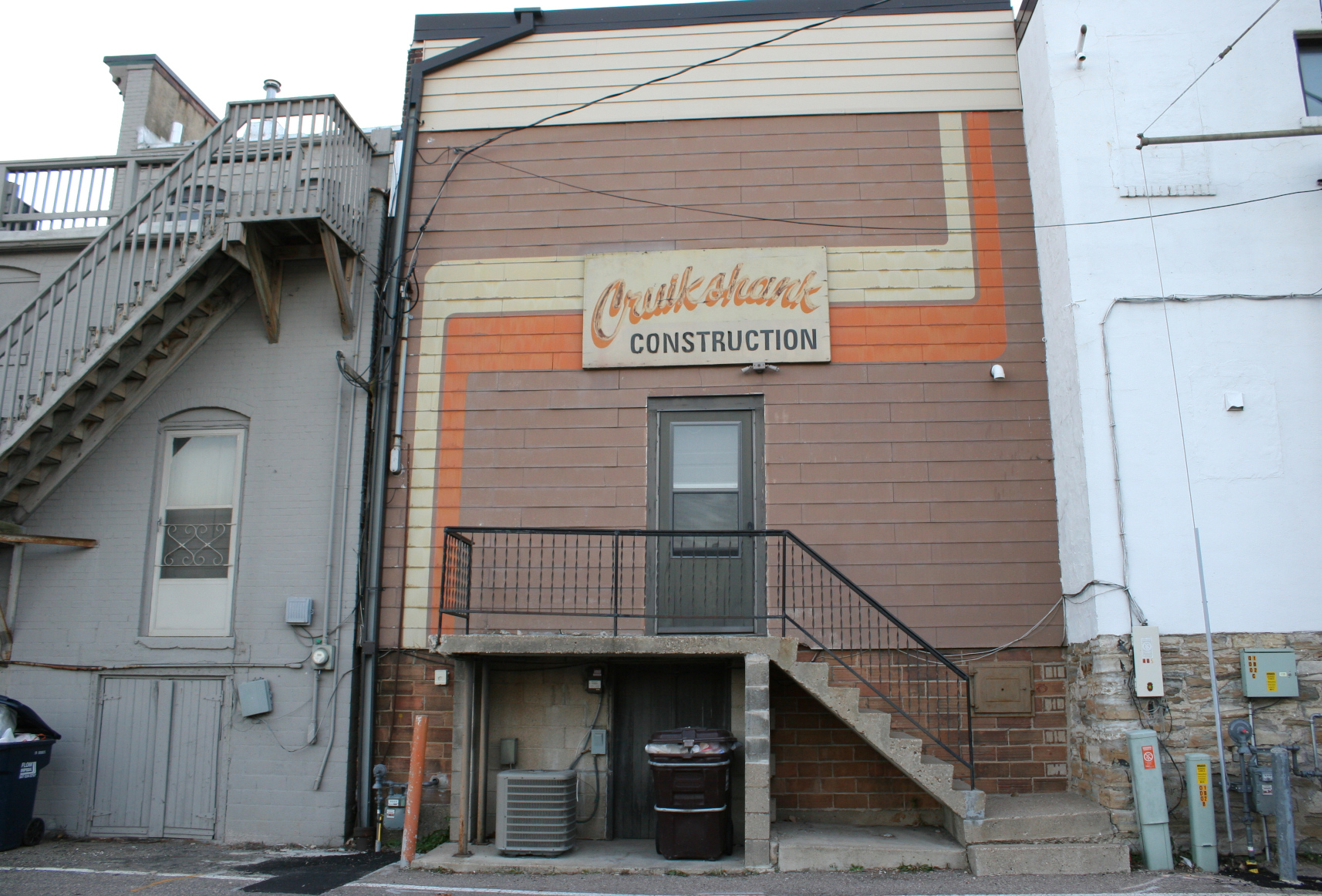
A sign marks Jack Cruikshank’s business.(Minnesota Prairie Roots copyrighted photo 2021)
Cruikshank Construction. I don’t know whether Jack Cruikshank still has his construction business. But, many decades ago, he installed replacement windows in our home. And he operated a paint store that was our go-to place for paint. Jack knew paint and was willing to share his expertise. For a while, he also had a bookstore in his shop. Jack was/is an exceptional individual and businessman—trustworthy, friendly, kind, knowledgeable, genuine and caring…
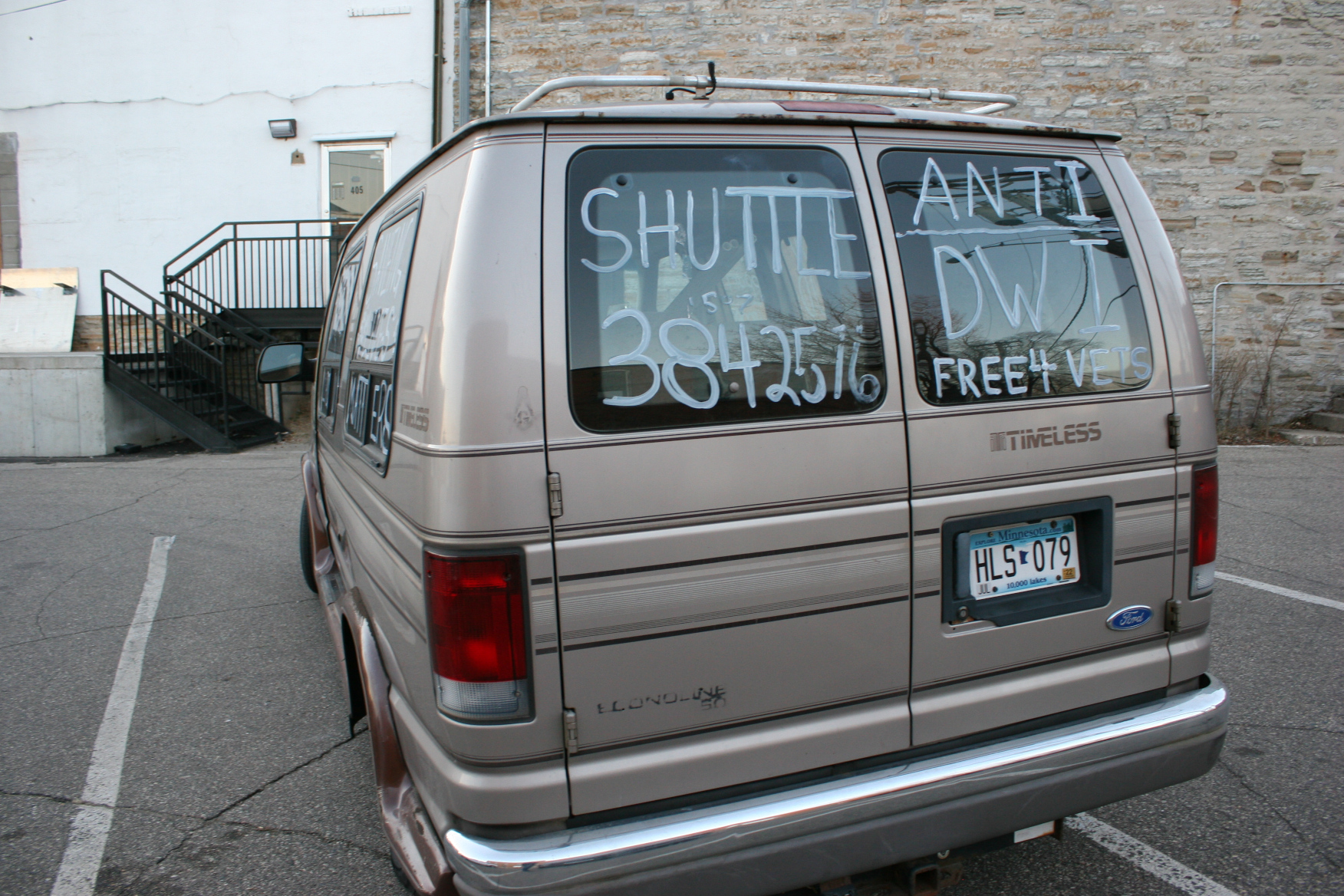
A cab company with a focus and message. (Minnesota Prairie Roots copyrighted photo 2021)
More messages on this cab. (Minnesota Prairie Roots copyrighted photo 2021)
I saw the same care written upon windows of a van, from which a couple disembarked while the driver of Cross Road Cab waited inside. I didn’t talk to him, but rather noted the messages of support for veterans, troops and freedom. Plus his stand against driving while intoxicated.
The grey building in the foreground houses Corks & Pints with 10,000 Drops in the brick building. The historic brick structure originally housed Peterson Art Furniture. (Minnesota Prairie Roots copyrighted photo)
The pair walked toward Corks & Pints and 10,000 Drops Craft Distillers. A mural, “Ice Skating on the Straight River,” graces the side of 10,000 Drops. It’s based on a vintage photo. The transformation of this downtown anchor corner has been a real asset to our community. Pre-distillery, the building housed an antique shop and architectural salvage business. It was dark, cluttered and not all that appealing. But now, wow. With the inside gutted and opened up, the distillery interior features wood floors, exposed beams, brick walls and much more, including cozy spaces to visit. It’s unlike any other place in Faribault. An inviting setting to enjoy a locally handcrafted cocktail with friends. Inside, or outside on the patio. Corks & Pints is part of the complex, housed next door in the former F-Town Brewing located in a former garage. It’s a tap house and wine bar, another welcoming spot to connect and converse.
A while ago, Cry Baby Craig’s focused conversation in our downtown. Craig Kaiser moved his hot sauce business to Faribault, into a former sporting goods store at 405 Central Avenue North. CBC’s highly-acclaimed habanero and garlic hot sauce is a staple in our refrigerator. And it’s become a favorite among restaurants in the metro and beyond.
If you’re mostly unfamiliar with Faribault, I hope you’ve learned a thing or ten about our town via my pivoting parking lot perspective. And, if you’re local, I invite you to pause and appreciate all that our community offers.
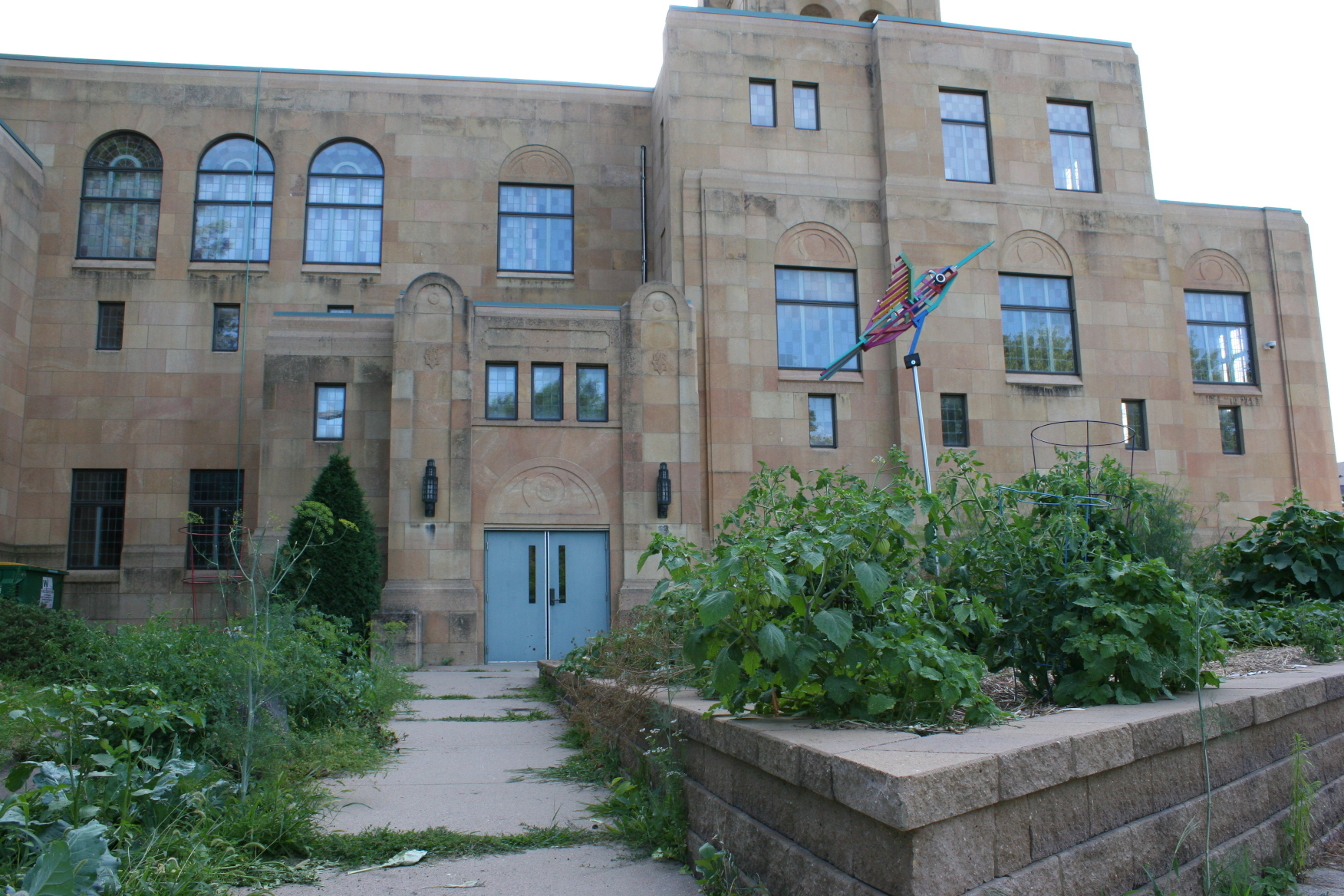
The vegetable garden outside Buckham Memorial Library, Faribault, Minnesota.(Minnesota Prairie Roots copyrighted file photo August 2020)
AT THE END of the growing season a few weeks back, I walked into Buckham Memorial Library and spotted a stash of green tomatoes free for the taking. To say that I reacted with joy might be an understatement.
I felt practically giddy at the thought of preparing green fries, a coveted food I haven’t eaten in years because…I don’t have a garden.
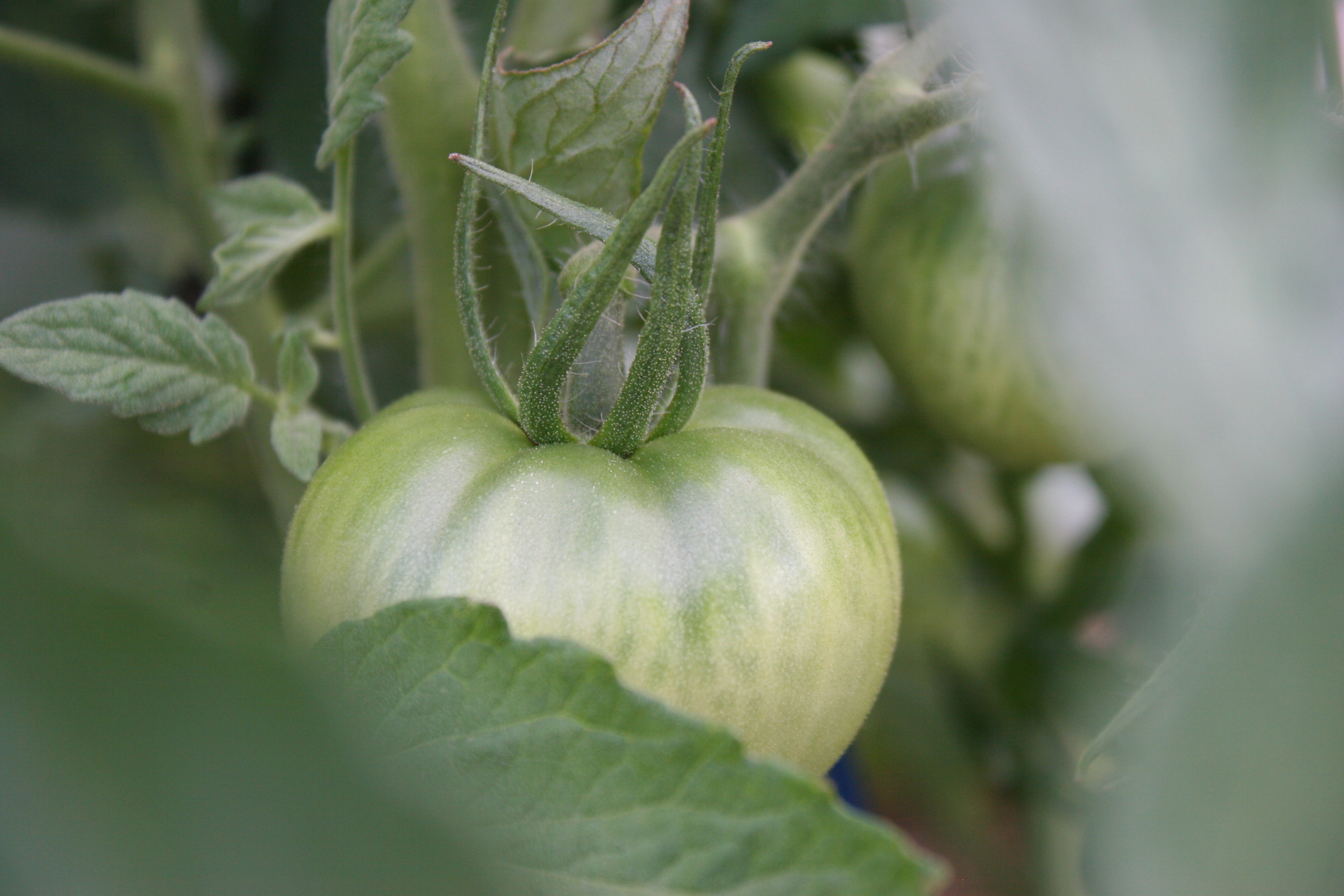
A green tomato in the library garden. (Minnesota Prairie Roots copyrighted photo August 2020)
But, back in the day, my mom planted a sprawling garden, growing vegetables to feed our farm family of eight. Green fries were a summer-time to harvest staple as were the tomatoes left to ripen on the vine.
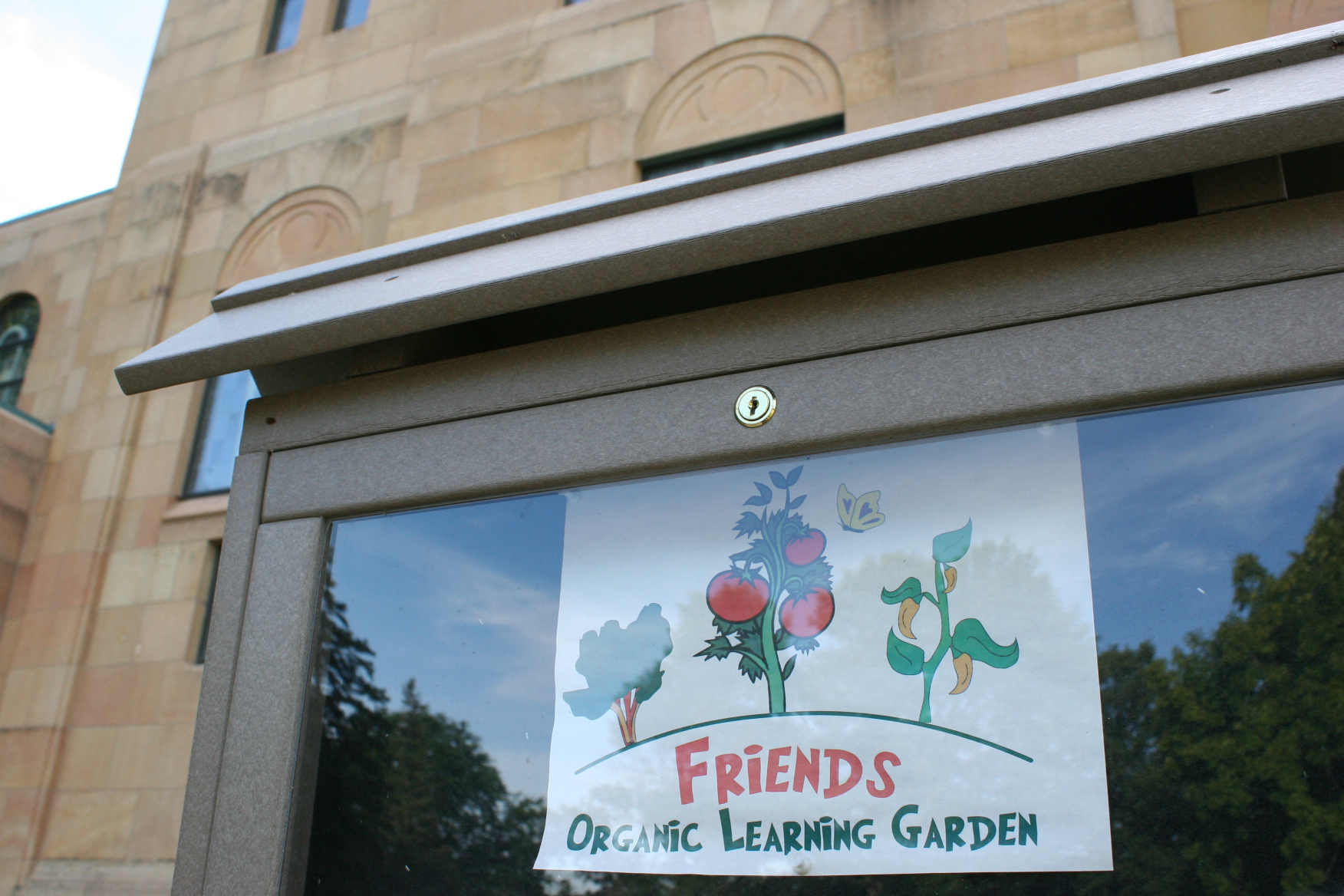
Items grown in the library garden are free for the taking to the community. (Minnesota Prairie Roots copyrighted file photo August 2020)
Earlier this summer and fall, when I stopped at The Friends Organic Learning Garden on the library’s east side to look for produce, I noticed choice green tomatoes. I was tempted to pick a few. Who would miss the green orbs? But my conscience prevailed and I walked away empty-handed.
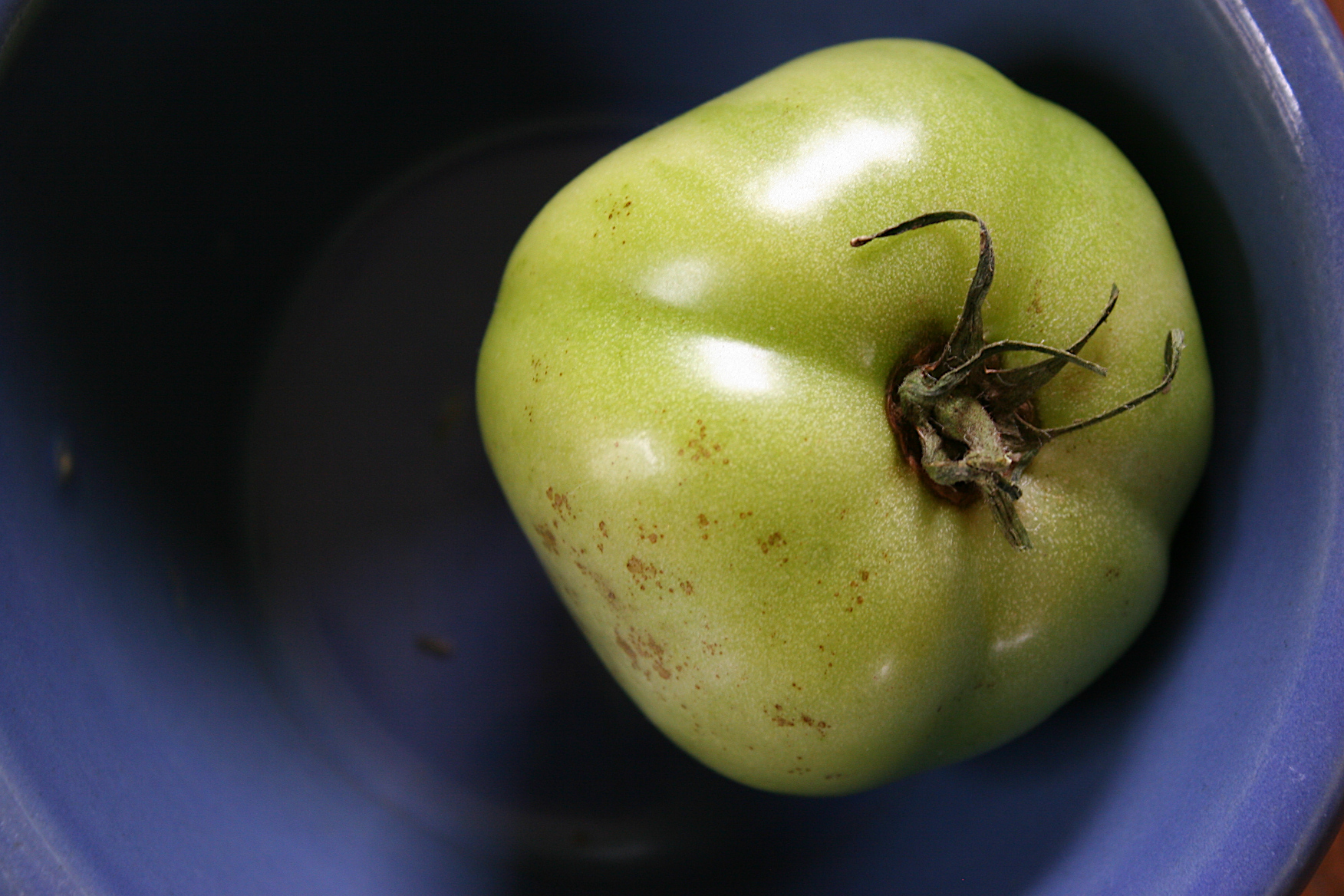
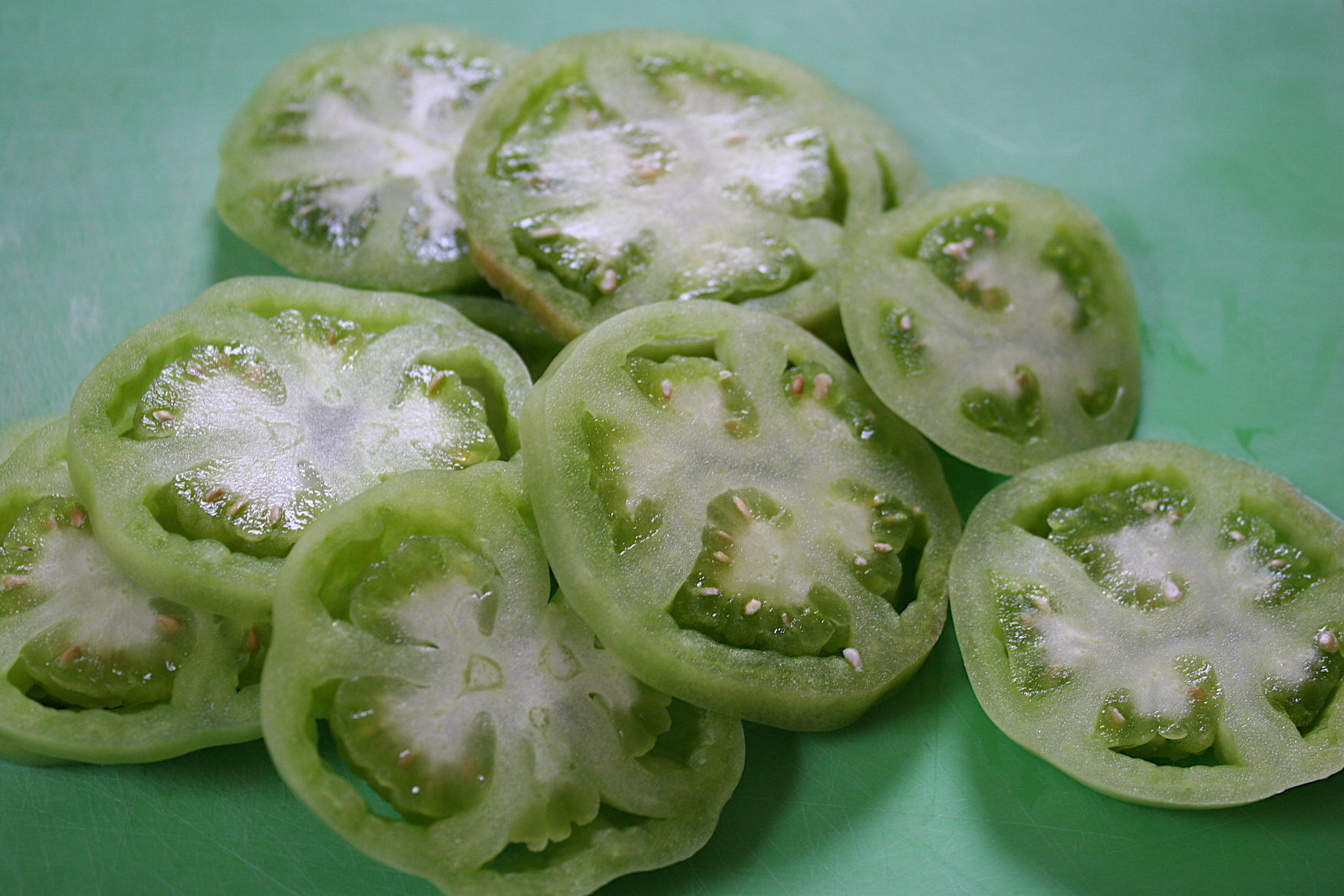
Perfect for making green fries. (Minnesota Prairie Roots copyrighted photo October 2021)
So when those green tomatoes appeared inside the library, I quickly took four, reining in my greedy impulse to grab more.
Step one: Slice the tomatoes. (Minnesota Prairie Roots copyrighted photo October 2021)
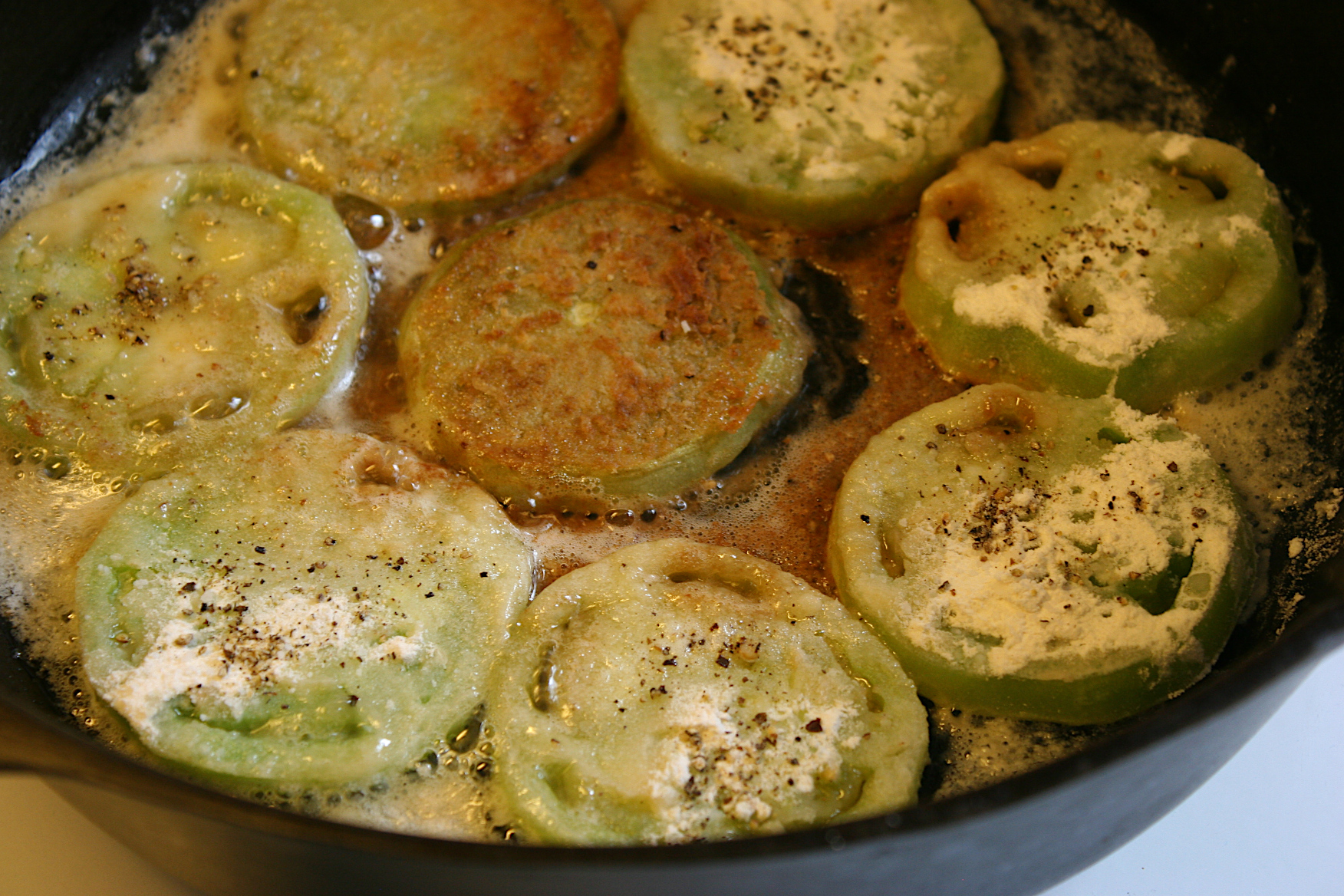
The next day, I sliced two of those beautiful green tomatoes, dipped both sides in all-purpose white flour and laid the slices into a hefty cast iron skillet sizzling with butter. Lots of butter. I ground on fresh black pepper, sprinkled on salt and then waited for the slices to brown, flipping and seasoning and adding butter as needed.
Frying the tomatoes to golden brown. (Minnesota Prairie Roots copyrighted photo October 2021)
The result: golden circles of green-fried tomatoes that tasted of sun and sky and earth. And of yesterday’s garden.
As I forked into the savory rounds, I thought of Mom and how she spaced tomato plants evenly in the tilled soil and ringed each with a rusty tin can opened on both ends. The cans protected the tender plants from the prairie wind and cold. I remember pouring water into those cylinder reservoirs, overflow sometimes flooding the surrounding ground. When the plants edged over the cans, Mom removed the weather shields.
To me, green fries rate as much more than a food I enjoy. They are part of my culinary family history. A connection to my now 89-year-old mom who, though no master chef, did her best to feed her family with food sourced from our farm.
TELL ME: Do you have a favorite food tracing to your childhood and that you crave today? I’d like to hear. And, have you ever eaten, or made, green fried tomatoes?
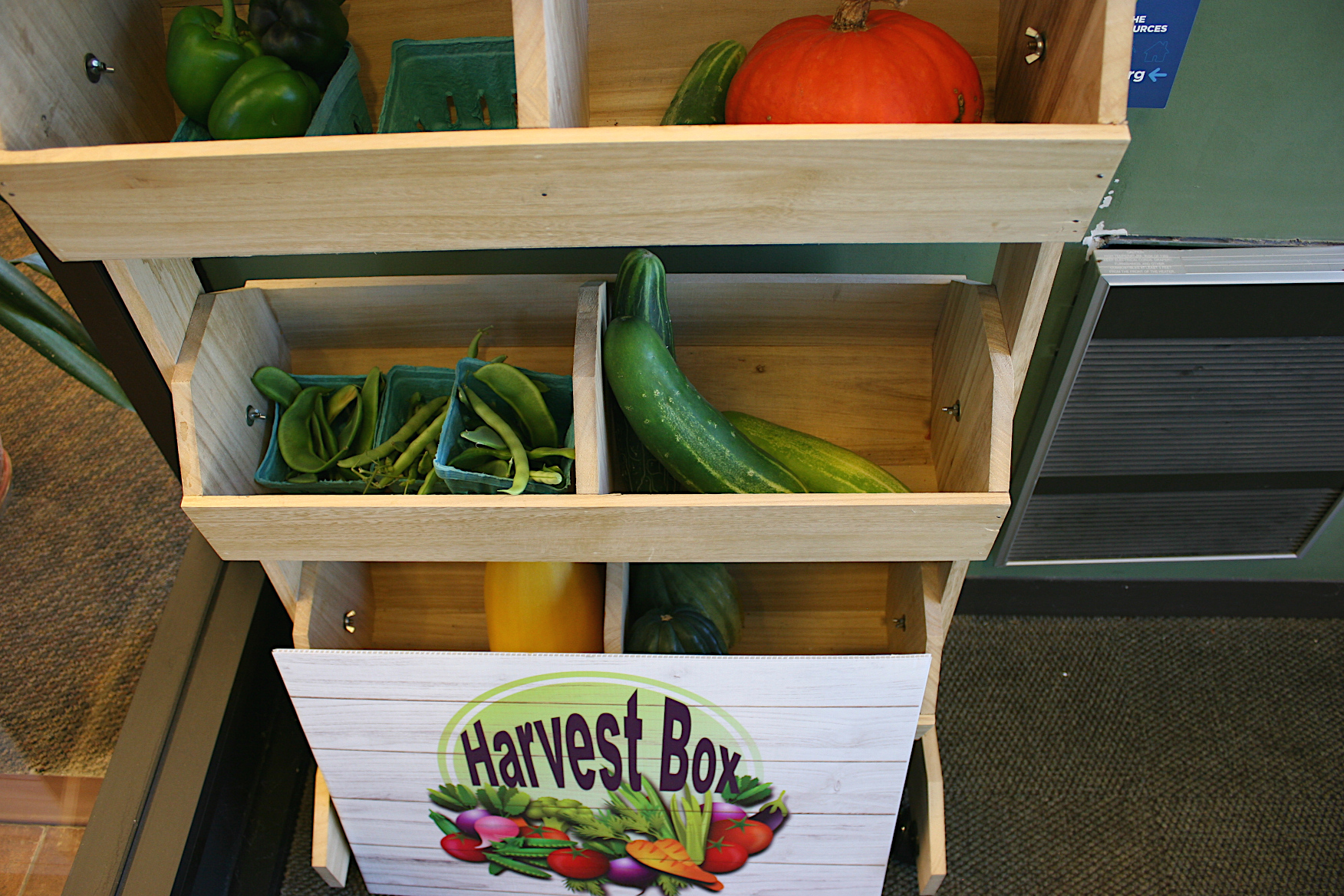
The beautiful Harvest Box inside the Cannon Falls Library. (Minnesota Prairie Roots copyrighted photo October 2021)
INSIDE THE ENTRYWAY of the Cannon Falls Library, a multi-tiered mini vegetable stand holds an array of fresh vegetables on a mid-October morning. Green peppers. Green beans. Cucumbers. Squash.
The produce is artfully displayed in a beautifully-crafted wooden shelving unit labeled with an appealing graphic of colorful vegetables and the words, Harvest Box. I figured this was the yield of an on-site garden, similar to the one at Buckham Memorial Library in Faribault.
But assumptions are not always correct as I discovered. Rather local gardeners provide the produce. That includes Quiet Waters Ranch, a 22-acre Sogn Valley farm owned by Ben and Amanda Luther. Their non-profit received a Healthy Eating in Community mini-grant in 2018 from Live Well Goodhue County for a Community Giving Garden. Now they supply free fresh, organic produce to the library’s Harvest Box which launched in June. The library also received Live Well funding in late 2020 for the display unit and a mini fridge.
Cannon Falls Library Director Nicole Miller initiated the Harvest Box project after learning of one in North Carolina. She sought county funding for the display unit and fridge and also connected with Quiet Waters Ranch. All of this was prompted by her concerns about local food insecurity. “It’s a low cost way to help people out and to supplement the Food Shelf on days they aren’t open,” Miller said.
She delights in watching local gardeners drop off their extra produce.
I love this concept, this spin on the Little Free Library movement which saw mini libraries popping up all over. I love when communities work together, contribute, support, share. There’s so much good that comes from unity, from understanding that we have the power as individuals and communities to care for one another in real, tangible ways.
TELL ME: Do you have a similar Harvest Box or fresh food program at your local library or elsewhere in your community? I’d like to hear.


















 Minnesota Prairie Roots
Recent Comments