Minnesota Prairie Roots

Writing and photography by Audrey Kletscher Helbling

More from Decorah, Iowa, my “new” favorite historic town July 26, 2013

Filed under: Uncategorized — Audrey Kletscher Helbling @ 6:00 AM
Tags: , , , , , , ,
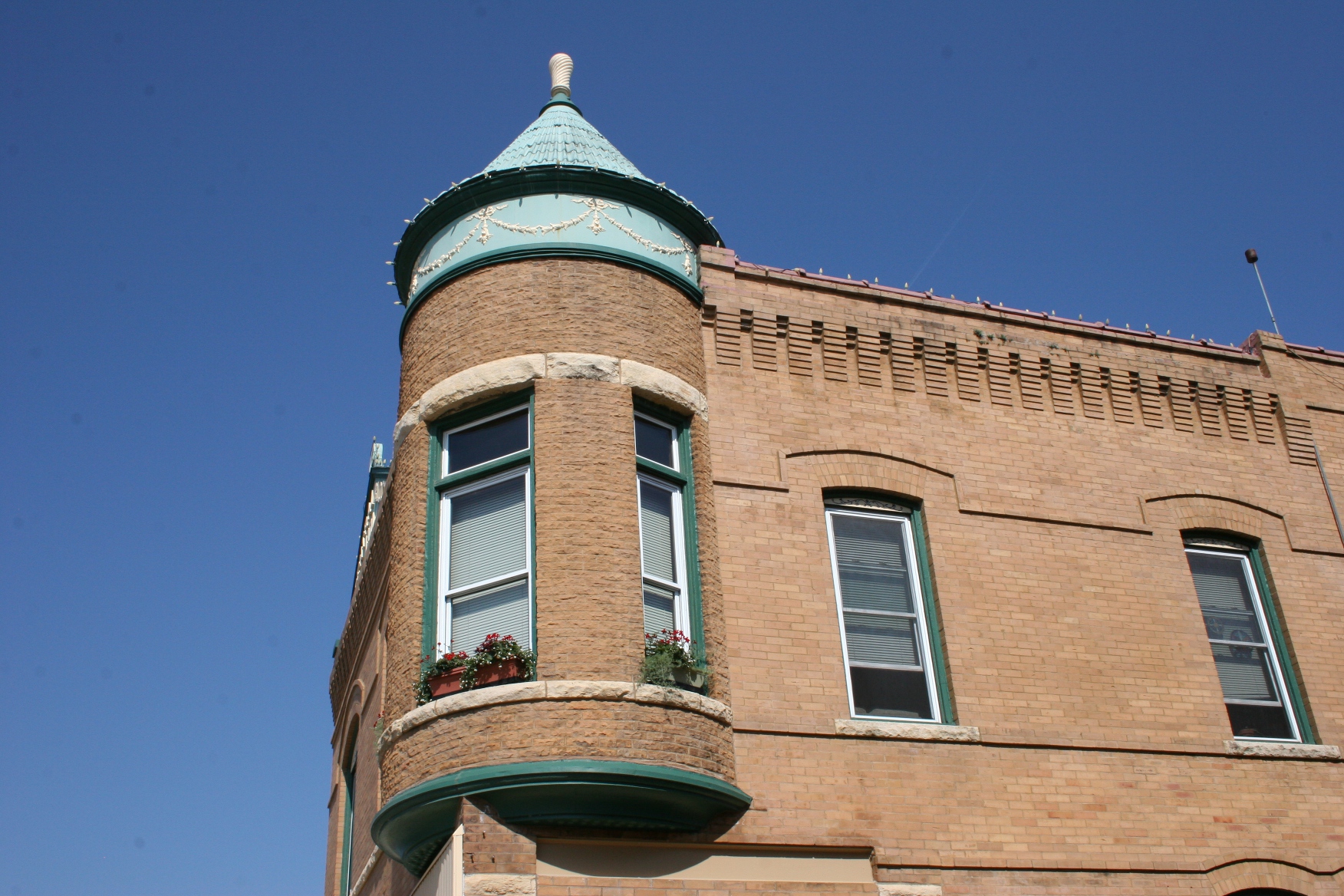
The Blue Heron Knittery is housed in this historic building.

The Blue Heron Knittery is housed in this historic building.

FOR SOMEONE LIKE ME who delights in historic buildings, the northeastern Iowa river town of Decorah offers an ideal destination for viewing an abundance of aged architecture.

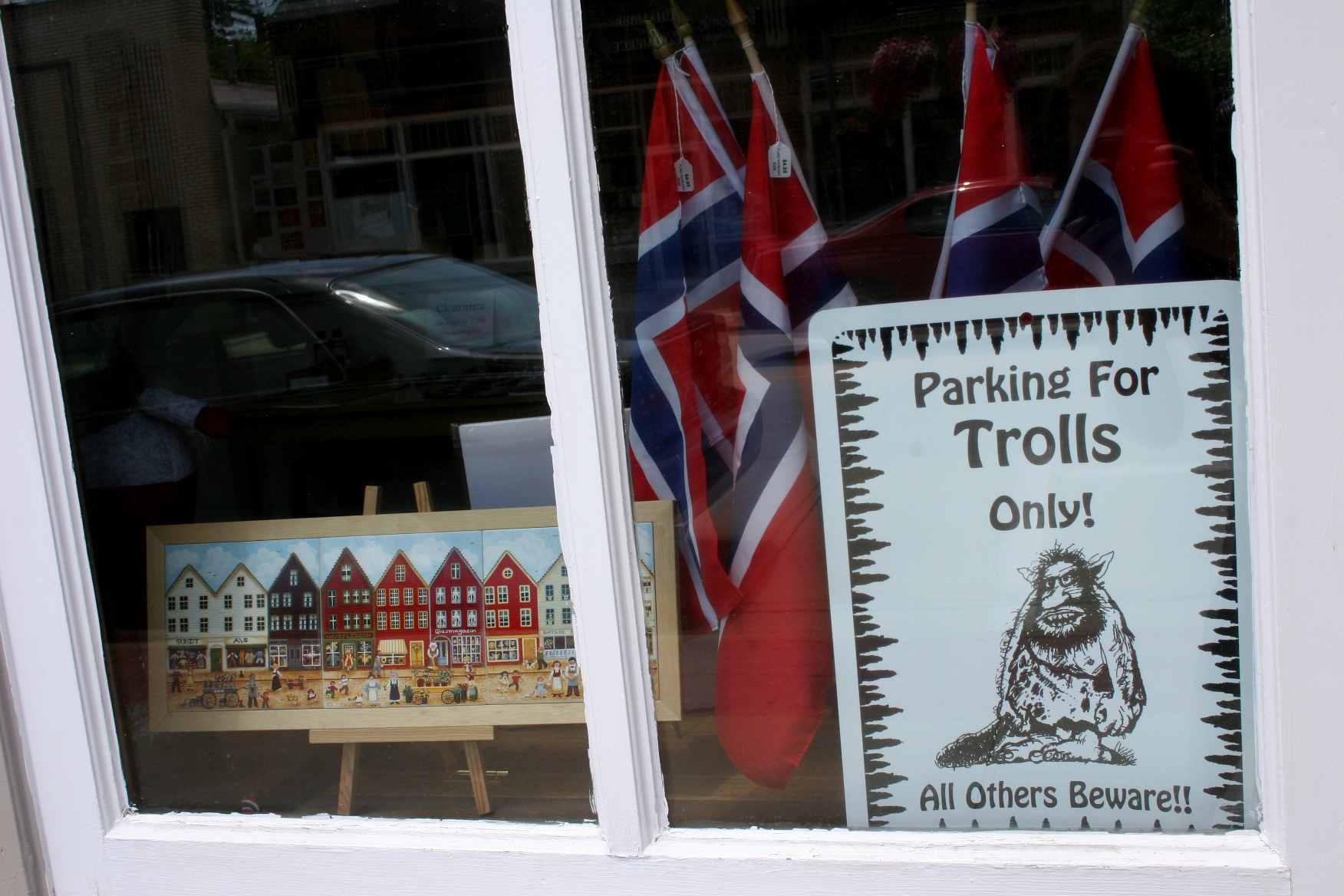
If you're of Norwegian ancestry, which I'm not, you'll especially enjoy Decorah. Be ware the trolls and gnomes.

If you’re of Norwegian ancestry, which I’m not, you’ll especially enjoy Decorah. Be ware the trolls and gnomes.

But downtown Decorah is about so much more. It’s about Norwegians and shopping and a river town with a distinct personality. This weekend, July 25 – 27, Decorah celebrates its annual Nordic Fest. Click here to learn more.

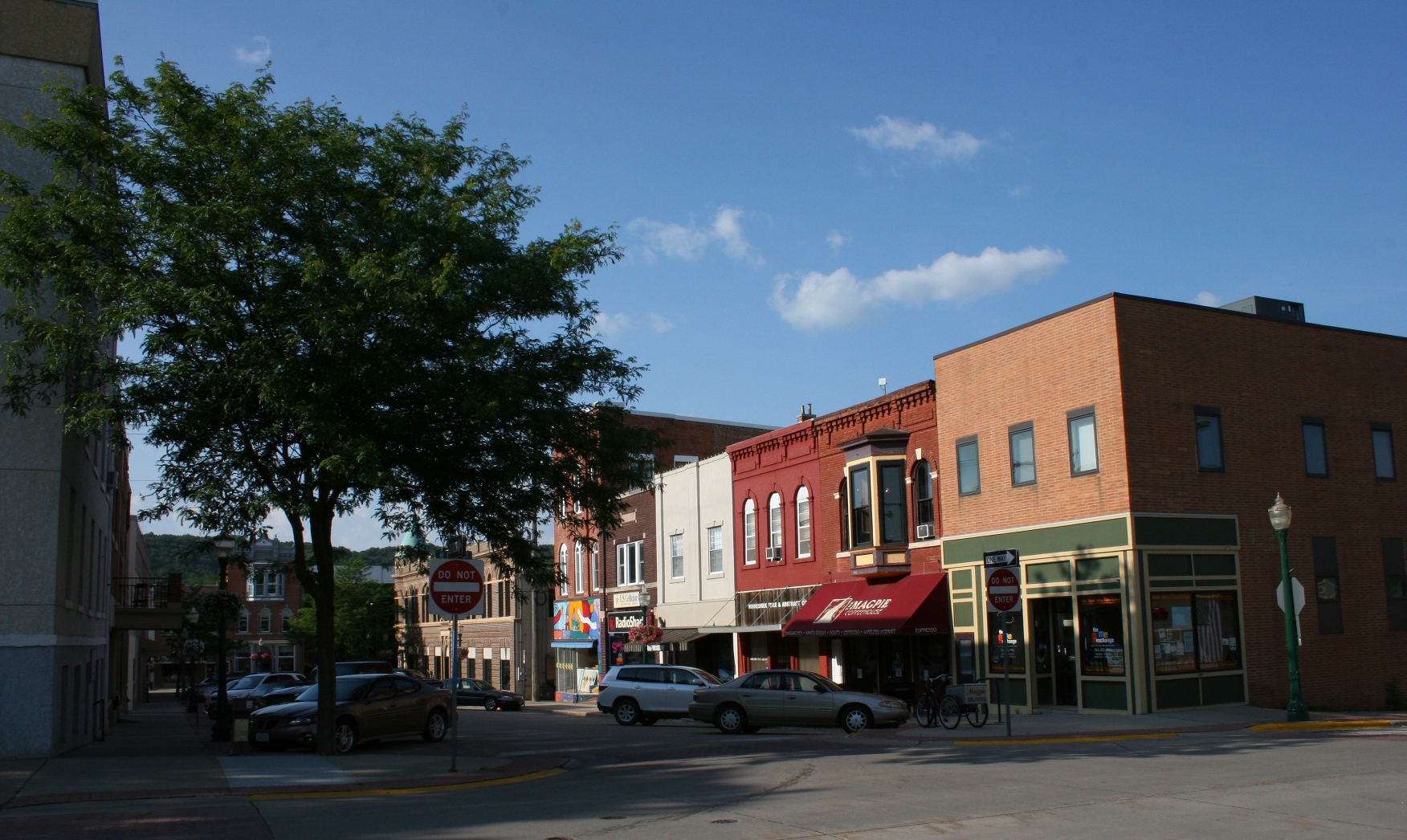
That said, here’s Part III in my photo tour of downtown Decorah:

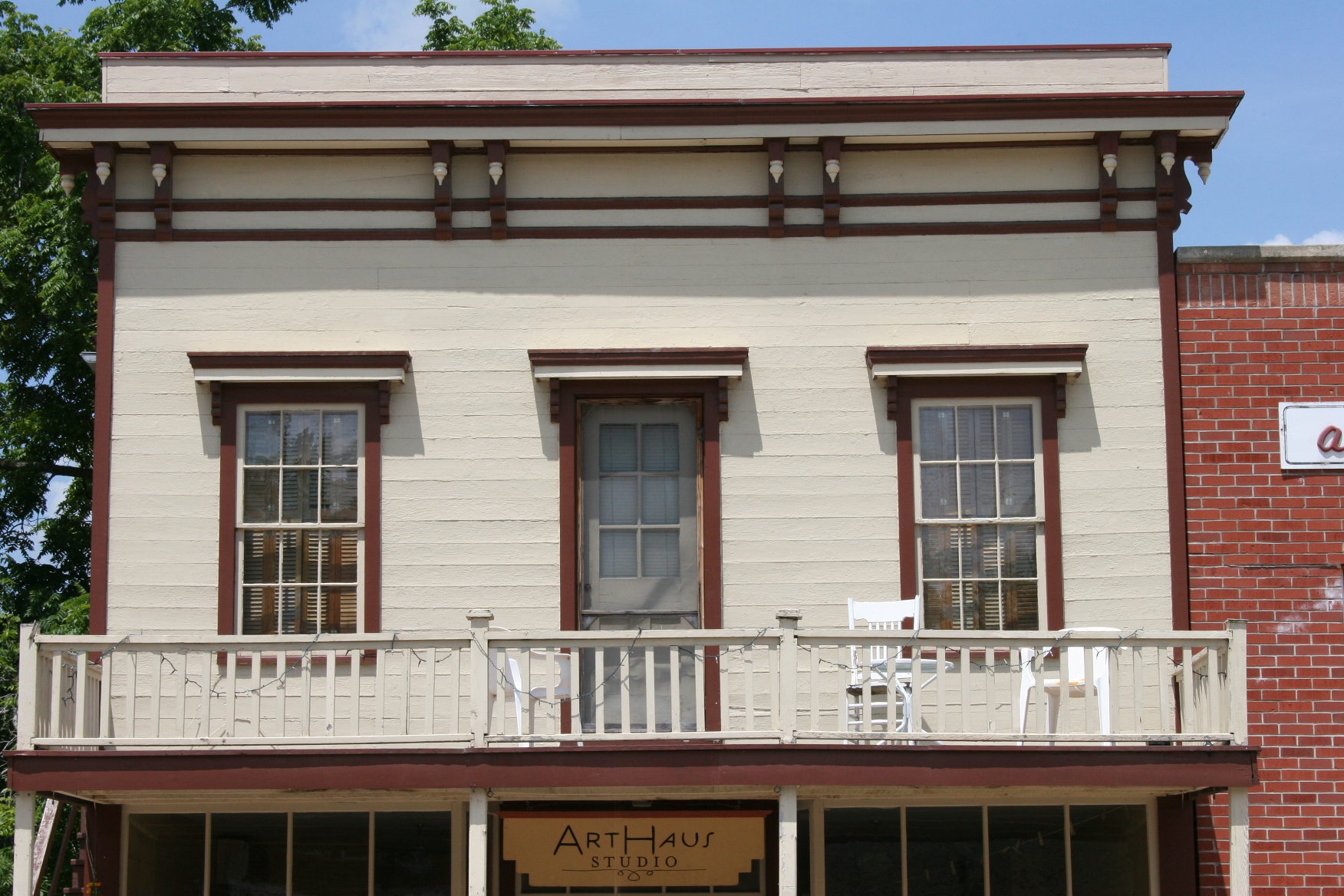
Numerous buildings feature sweet little balconies.

Numerous buildings feature sweet little balconies.

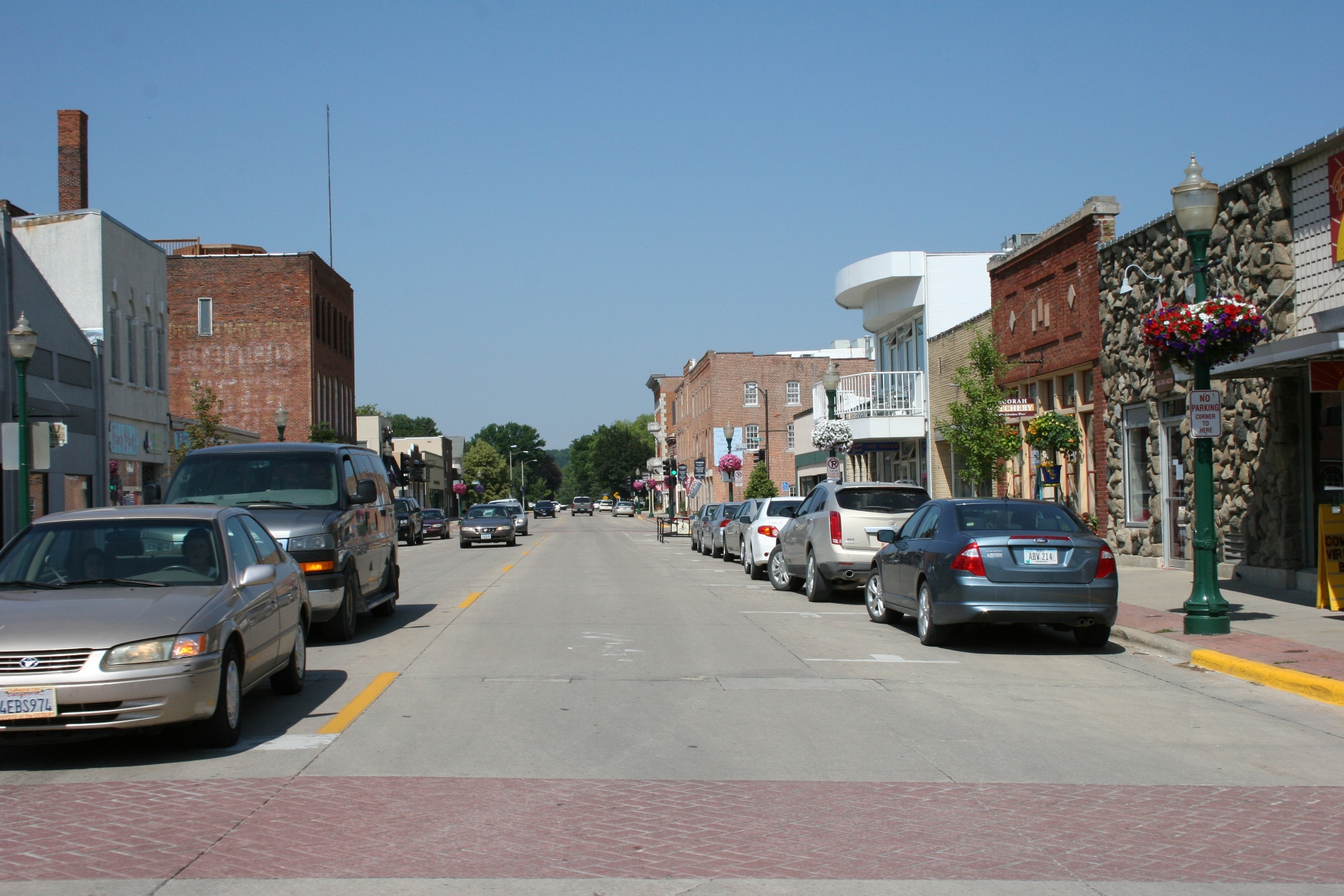
A side street off the main route through downtown.

A side street off the main route through downtown.

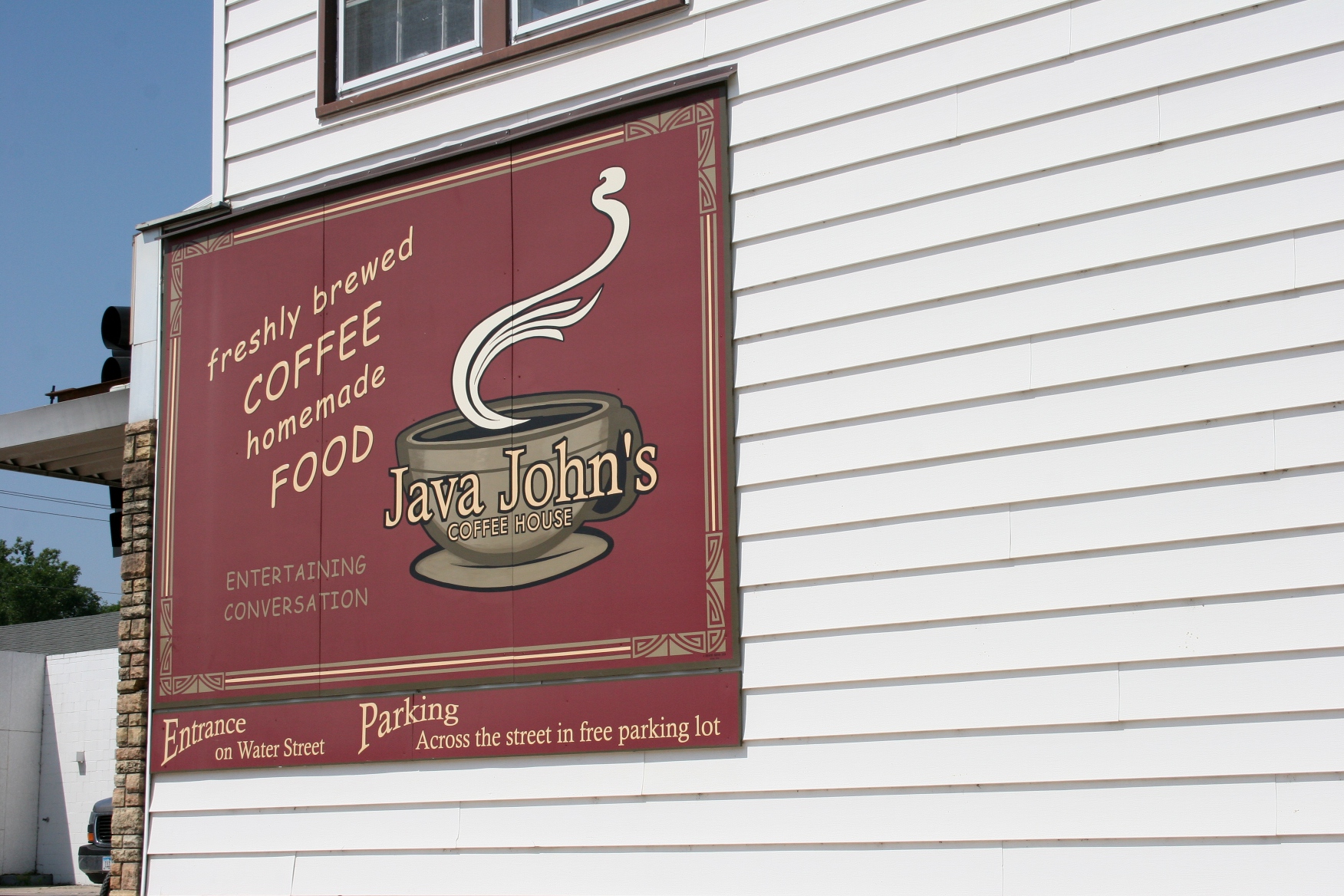
Lovely signage...

Lovely signage…

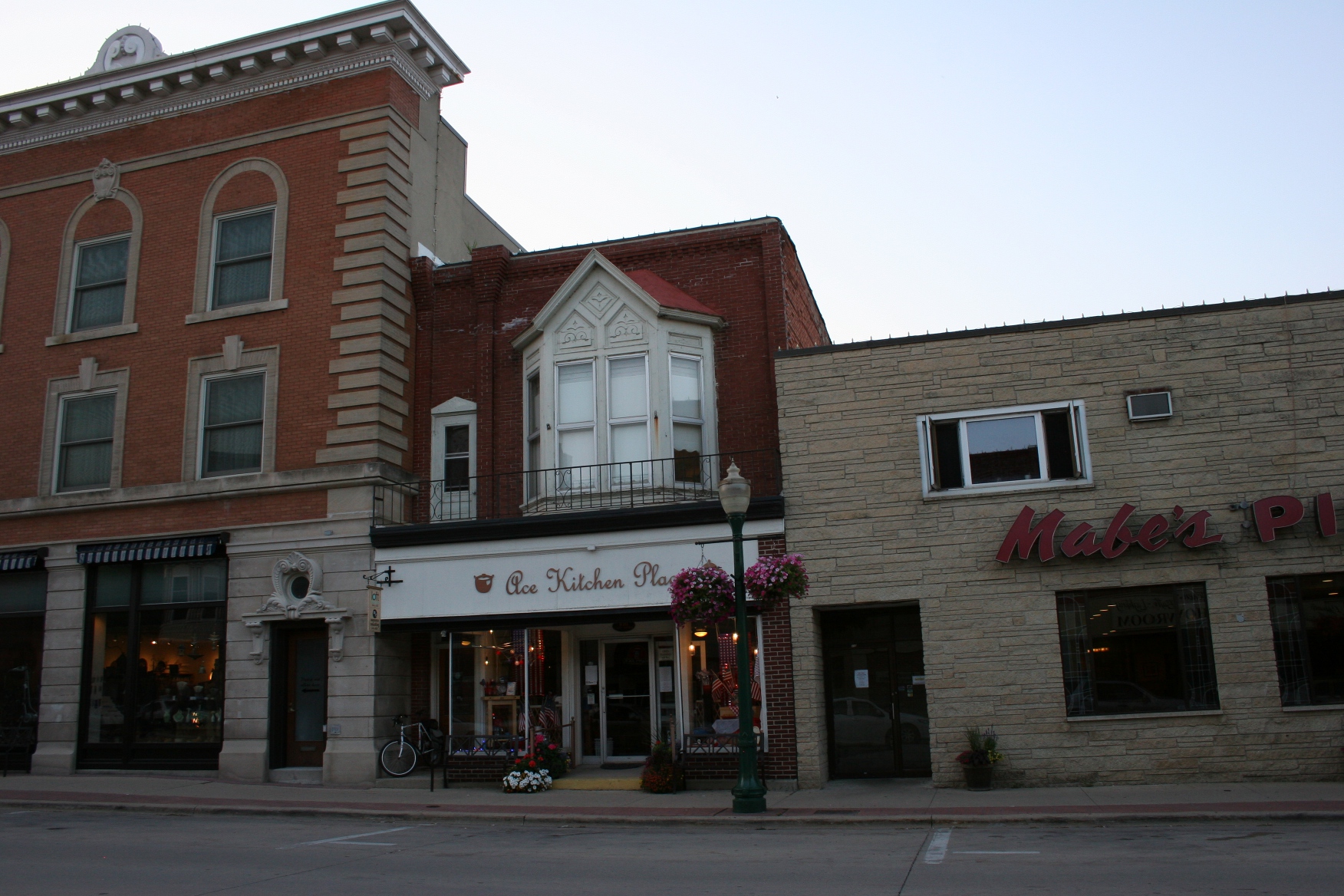
So much variation in building design and height.

So much variation in building design and height.

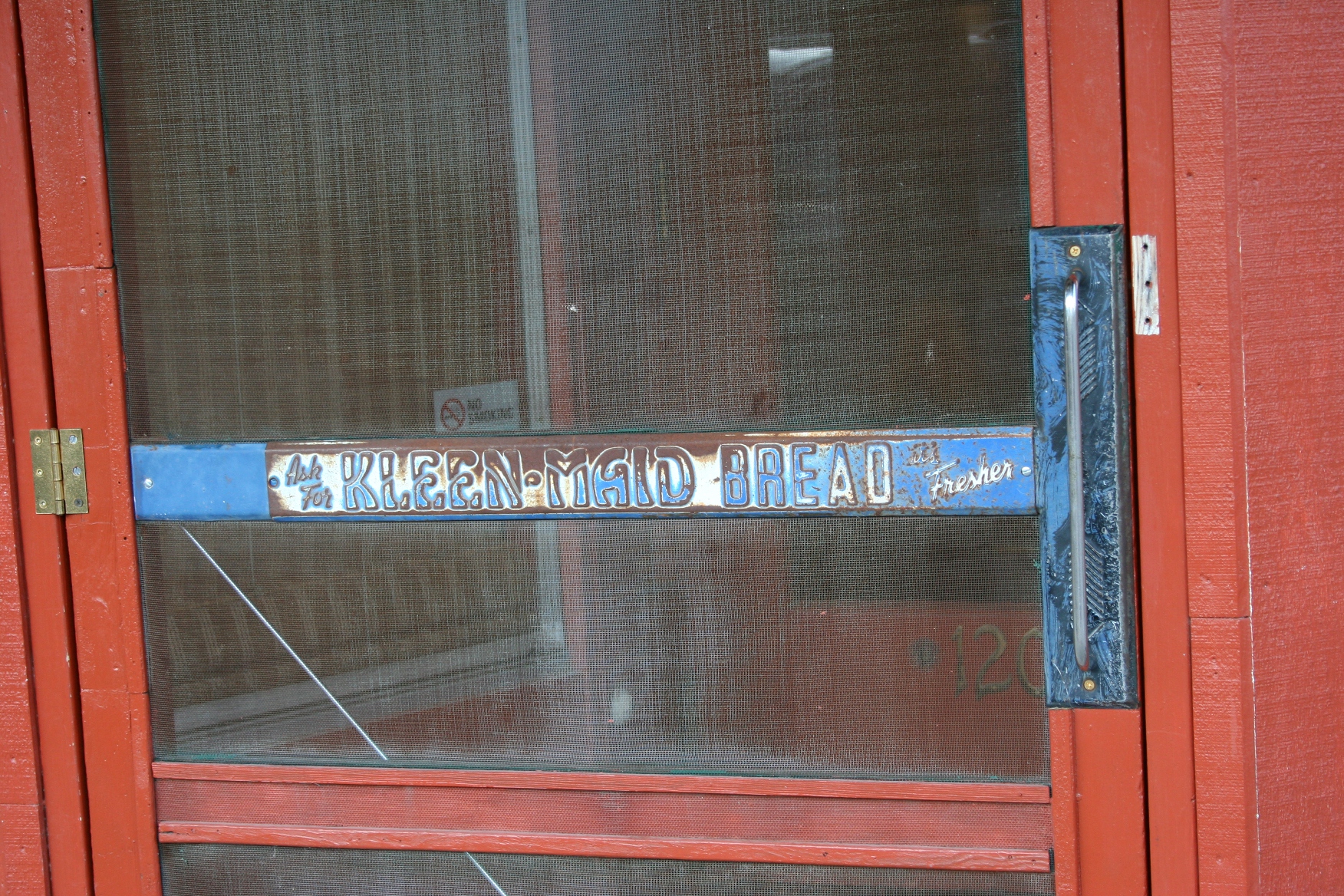
Love this original signage on the old screen door that bangs behind you at

Love this original signage on the old screen door that bangs behind you at La Rana, a charming restaurant.

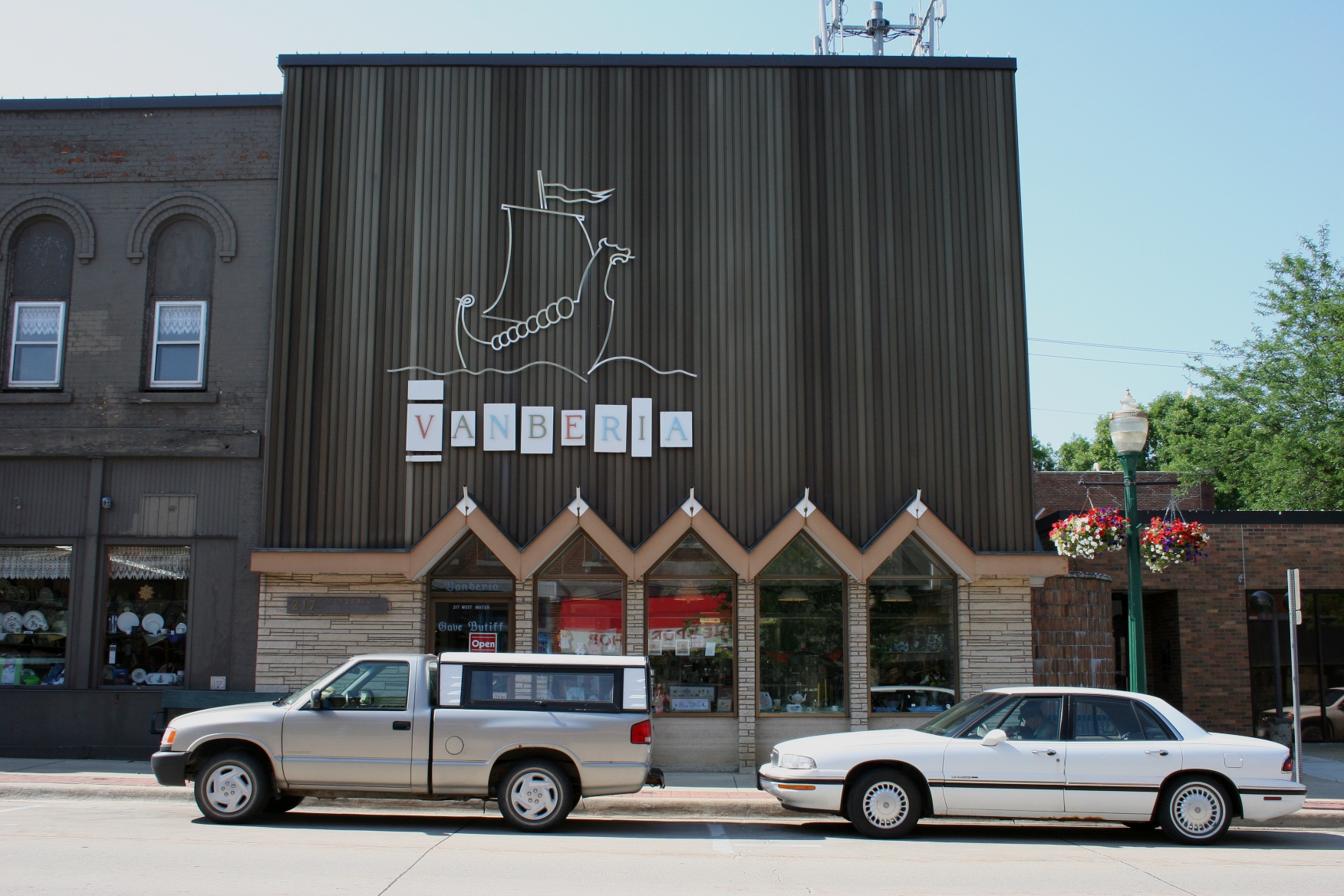
Vanberia, where you can shop for all things Norwegian.

Vanberia, where you can shop for all things Norwegian.

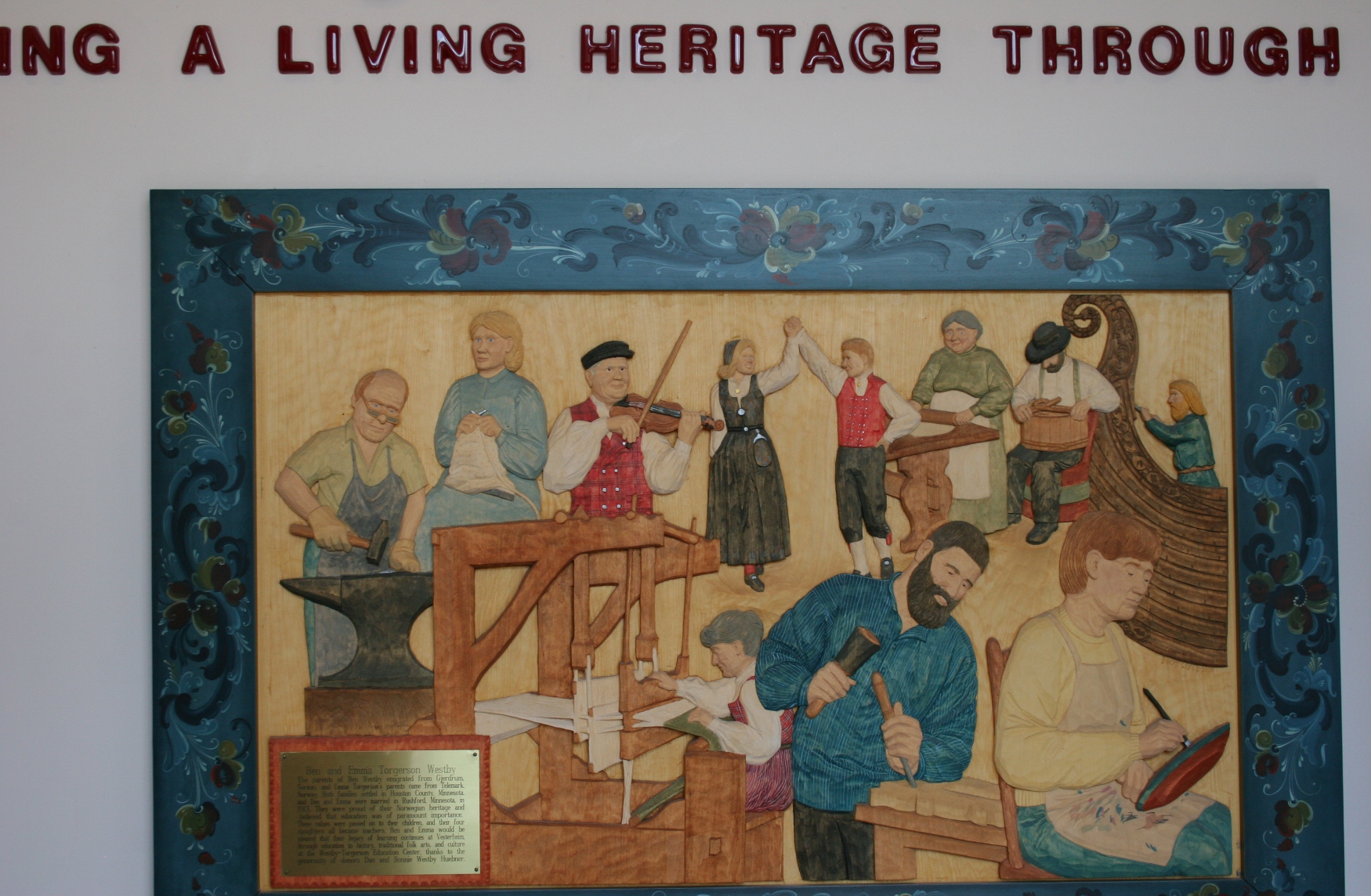
Norwegian art in the entry to

This art, in the entry of the Westby-Torgerson Education Center, celebrates the Norwegian heritage.

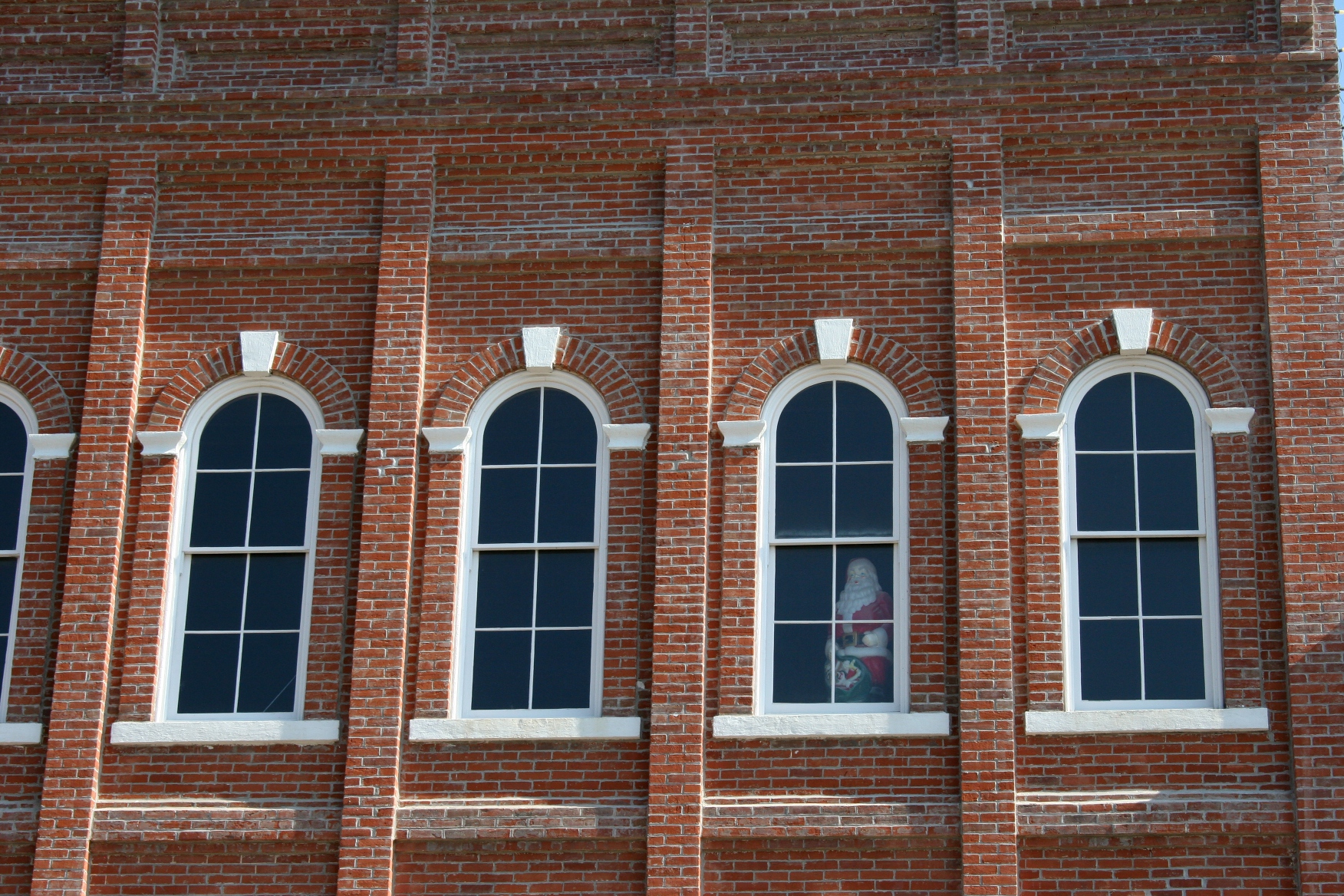
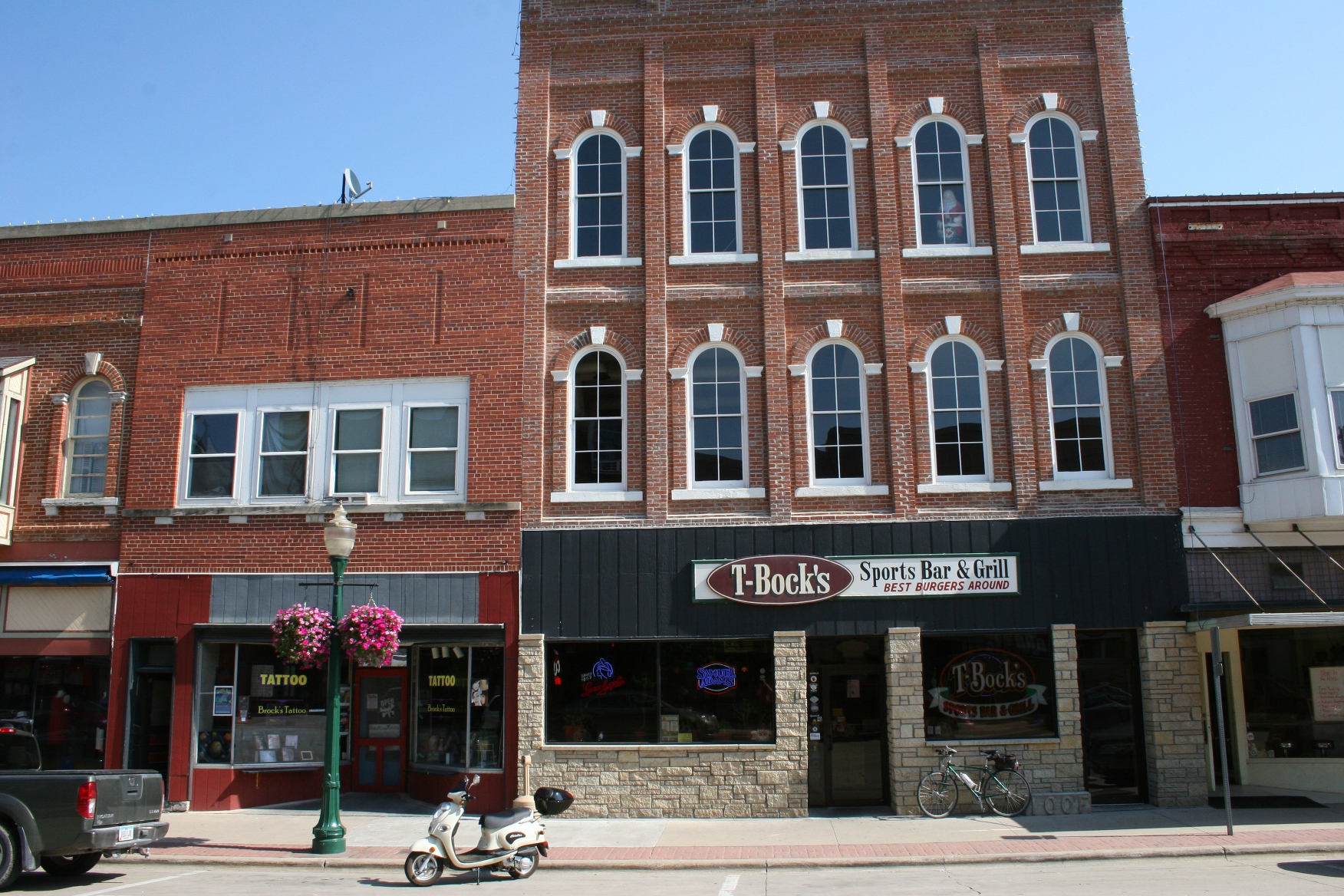
I noticed Santa in this second story window.

I noticed Santa in this second story window.

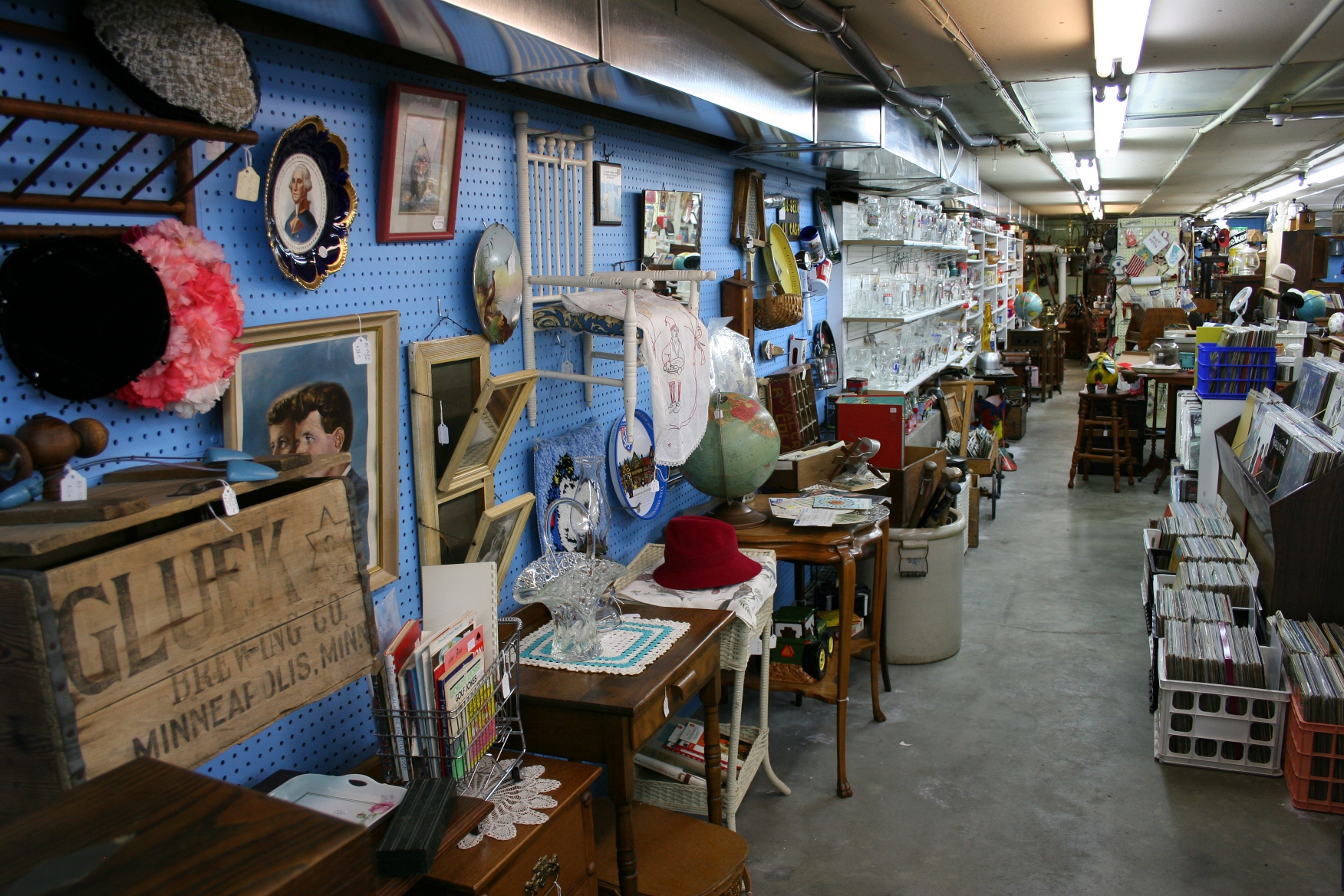
Shopping for antiques in the basement of Eckheart Gallery.

Shopping for antiques and collectibles in the basement of Eckheart Gallery.

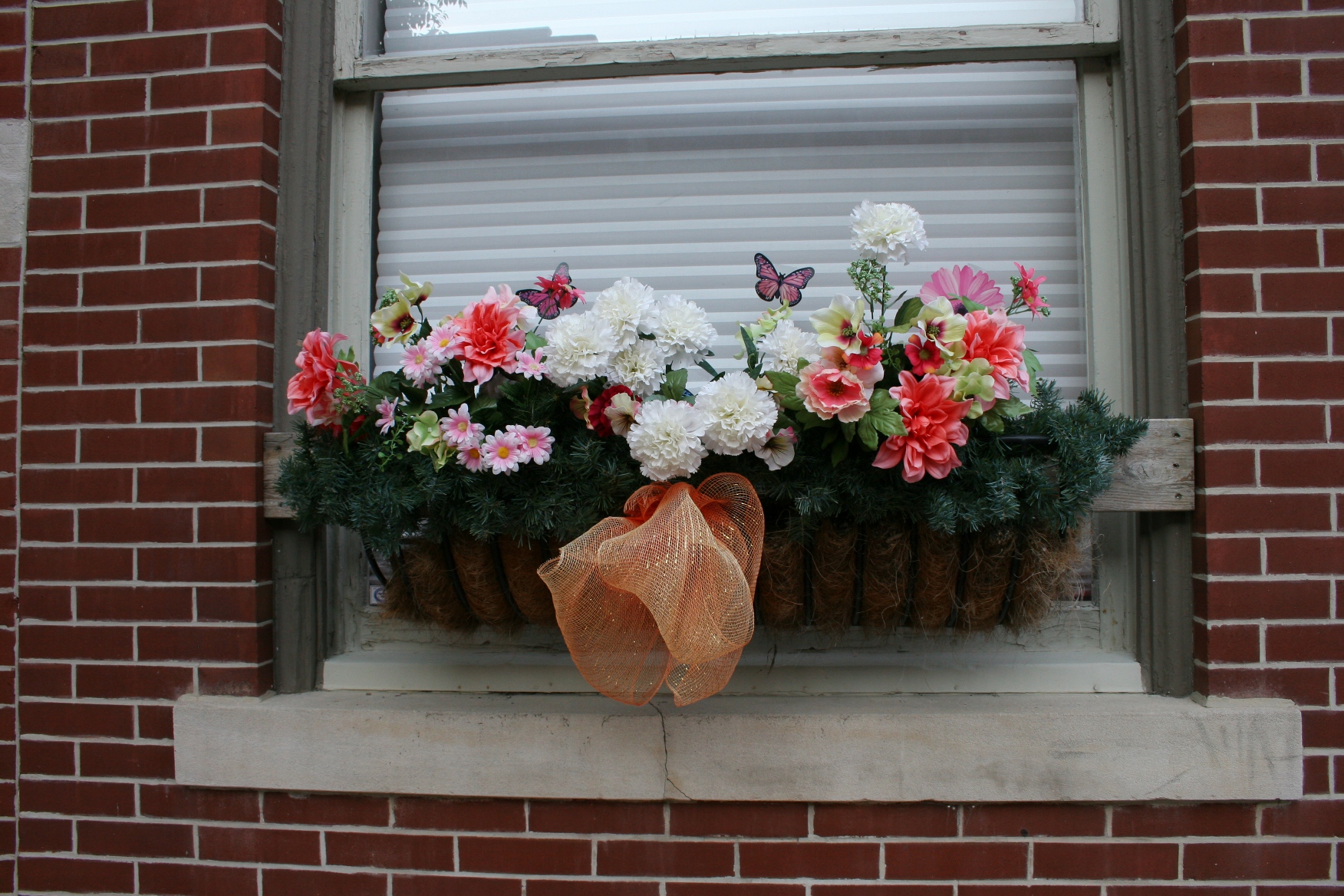
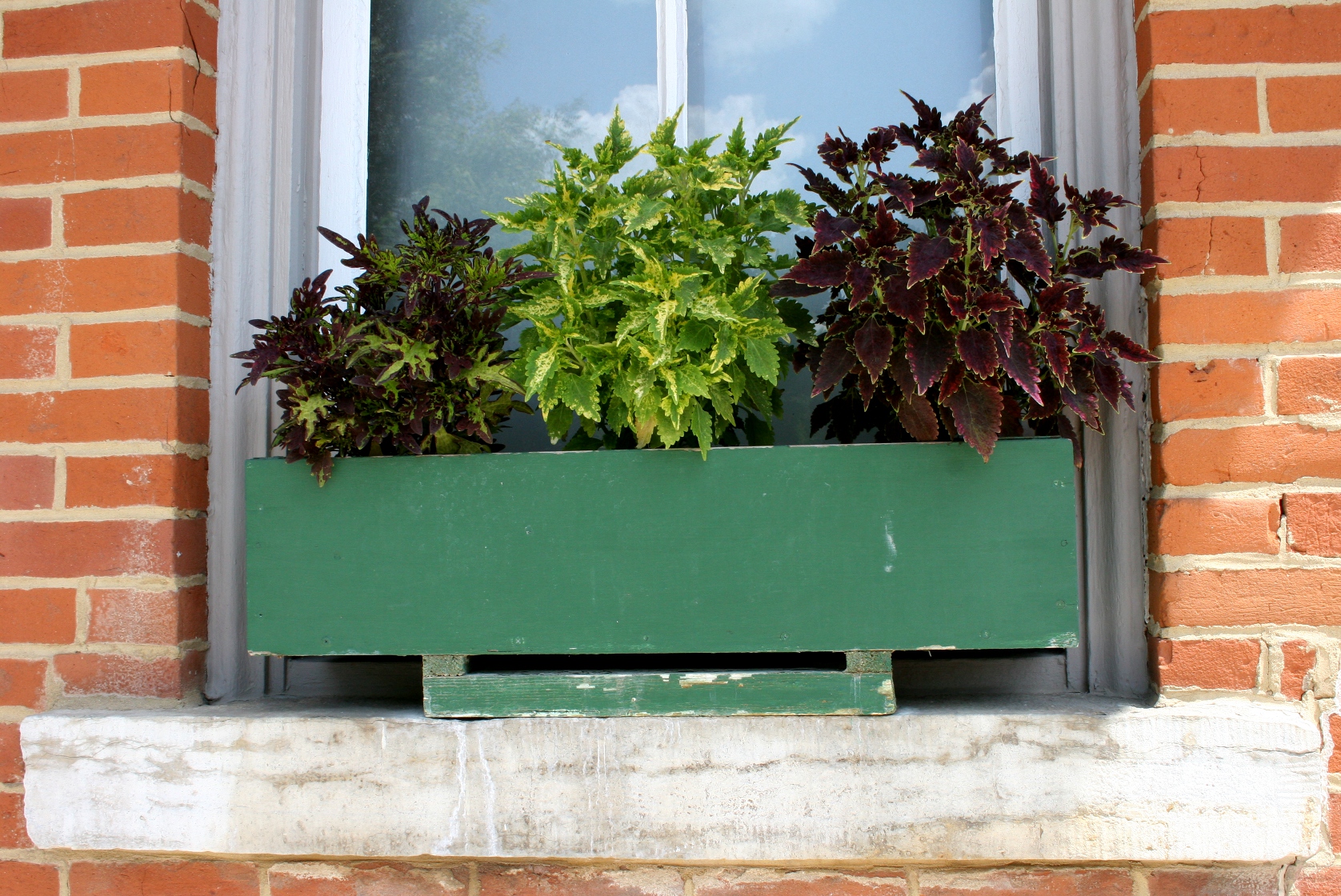
Windowboxes abound.

Windowboxes abound.

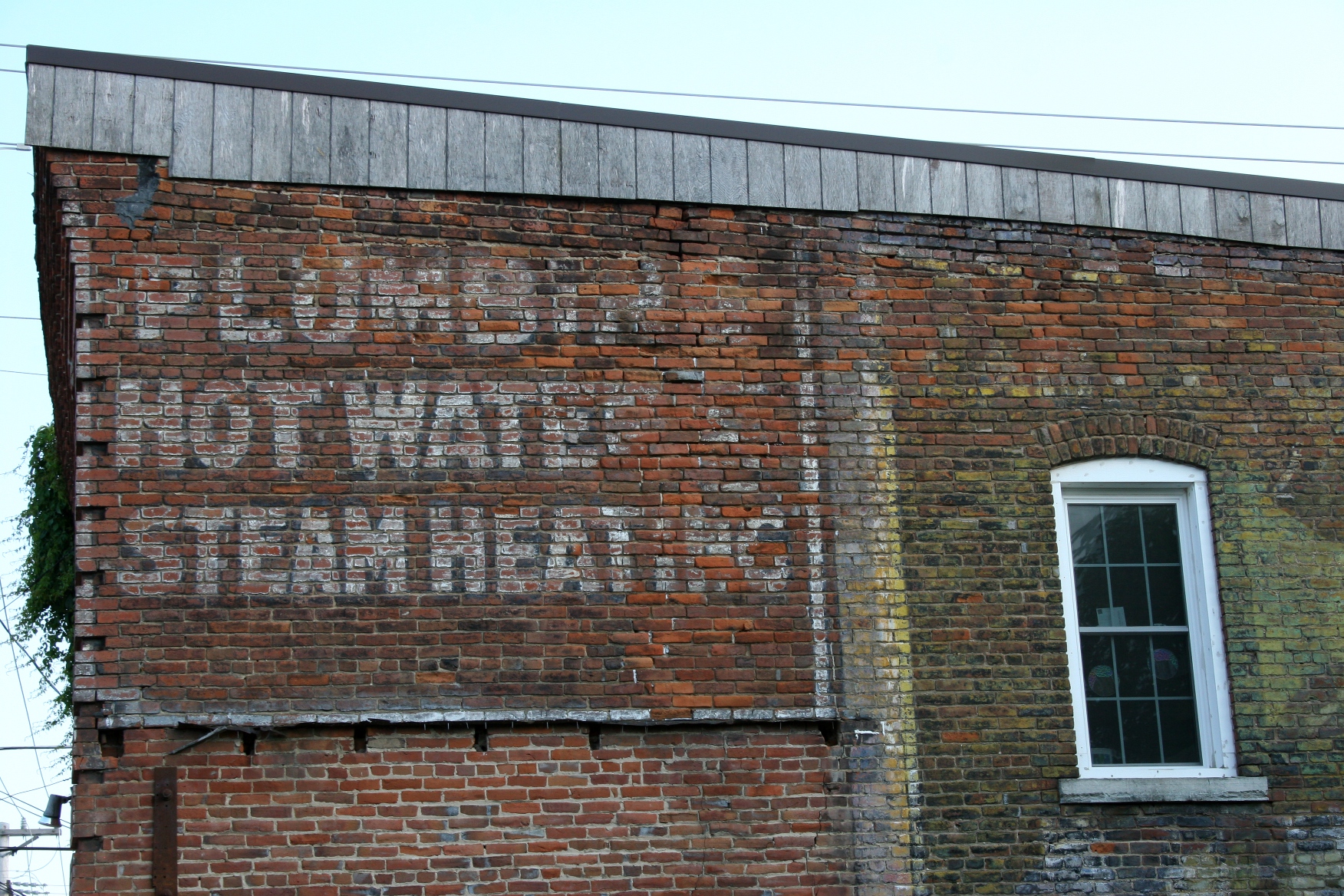
Look close for remnants of the past.

Look close for remnants of the past.

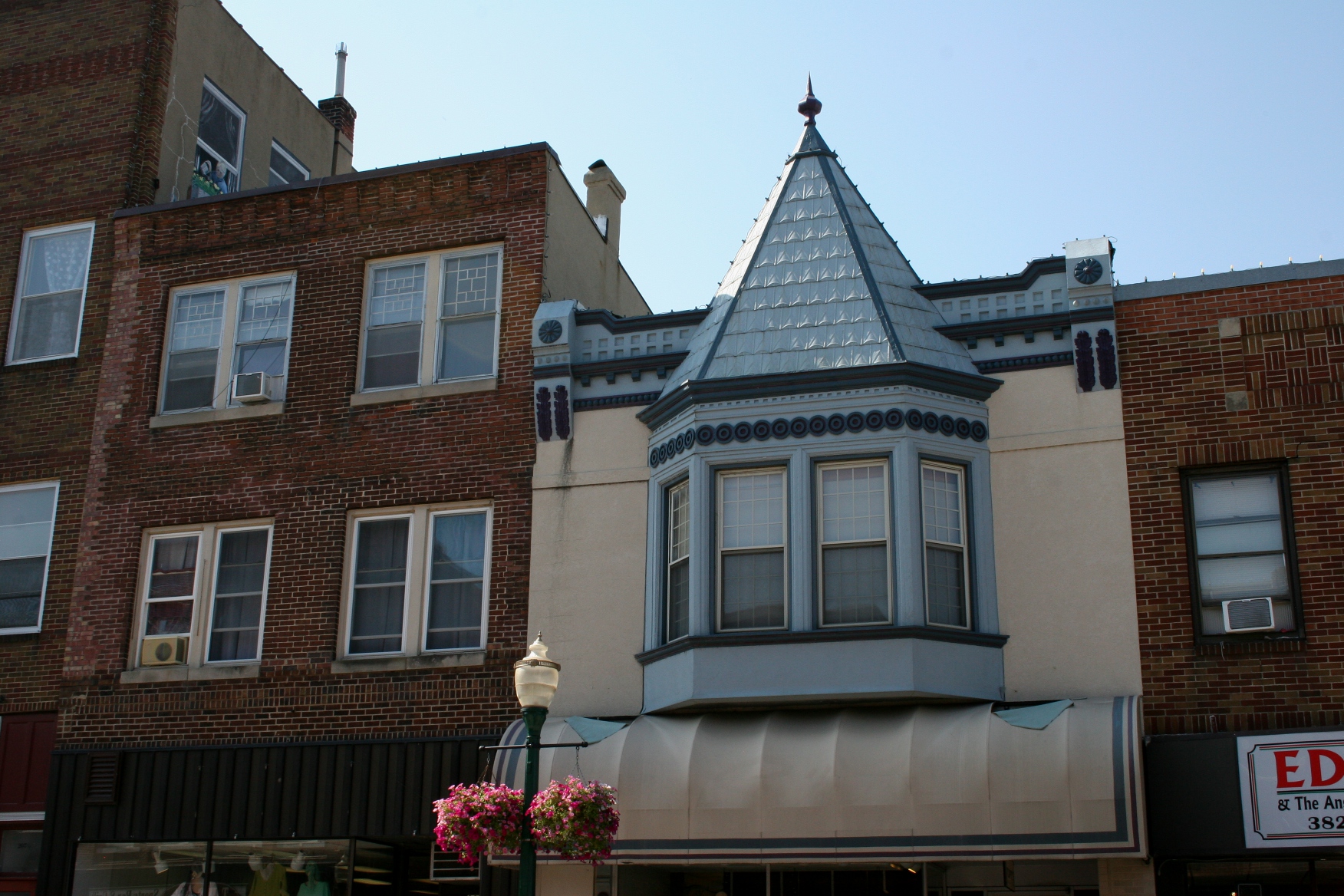
Sweet architecture.

Sweet architecture.

FYI: Click here to view a previous downtown post. Click here to view a post on Storypeople. And click here to see a local favorite ice cream spot, The Whippy Dip, which is near downtown.

Watch for more posts from Decorah.

© Copyright 2013 Audrey Kletscher Helbling


Update: Without financing, couple’s dream of opening a rural Minnesota coffee shop ends July 19, 2013

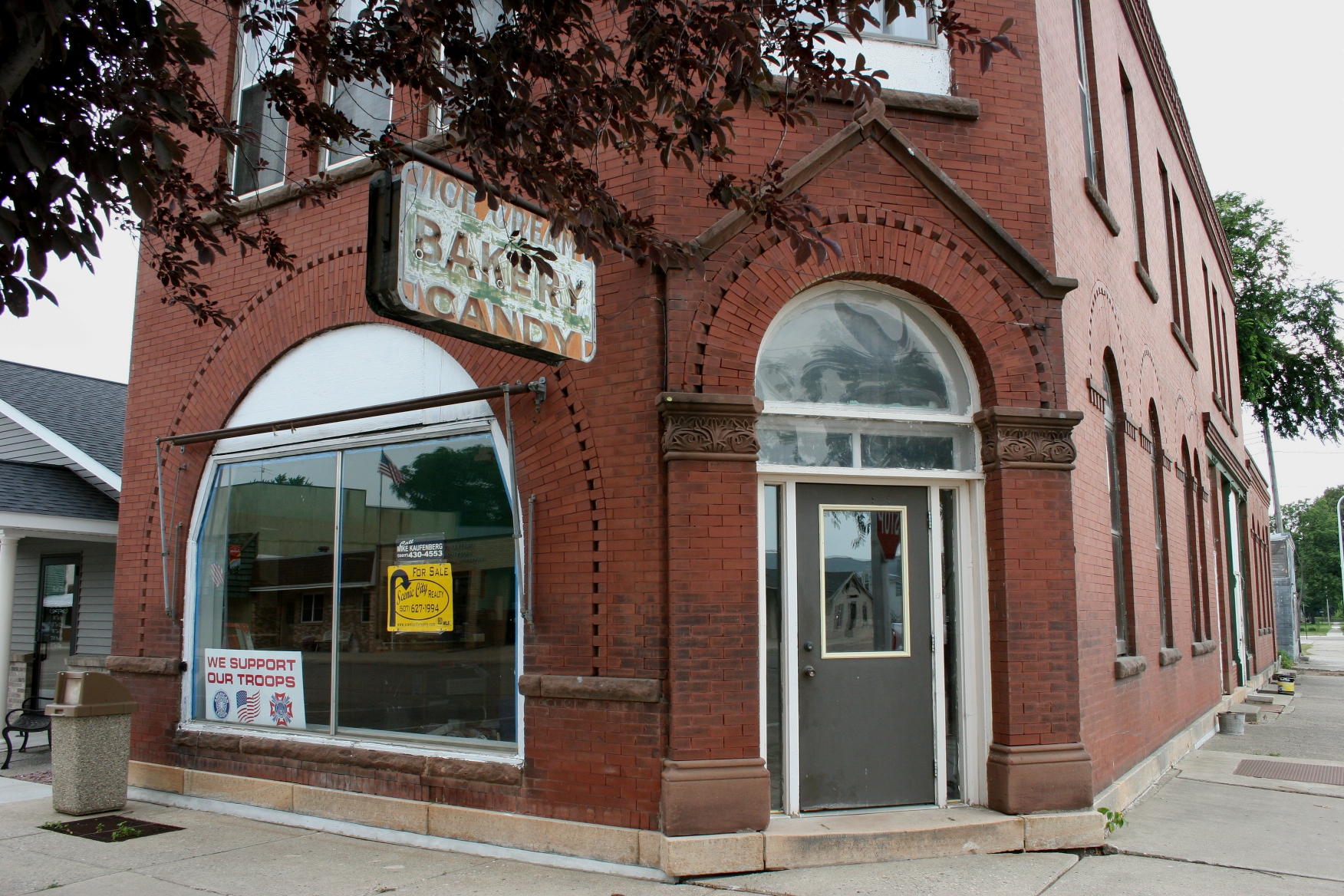
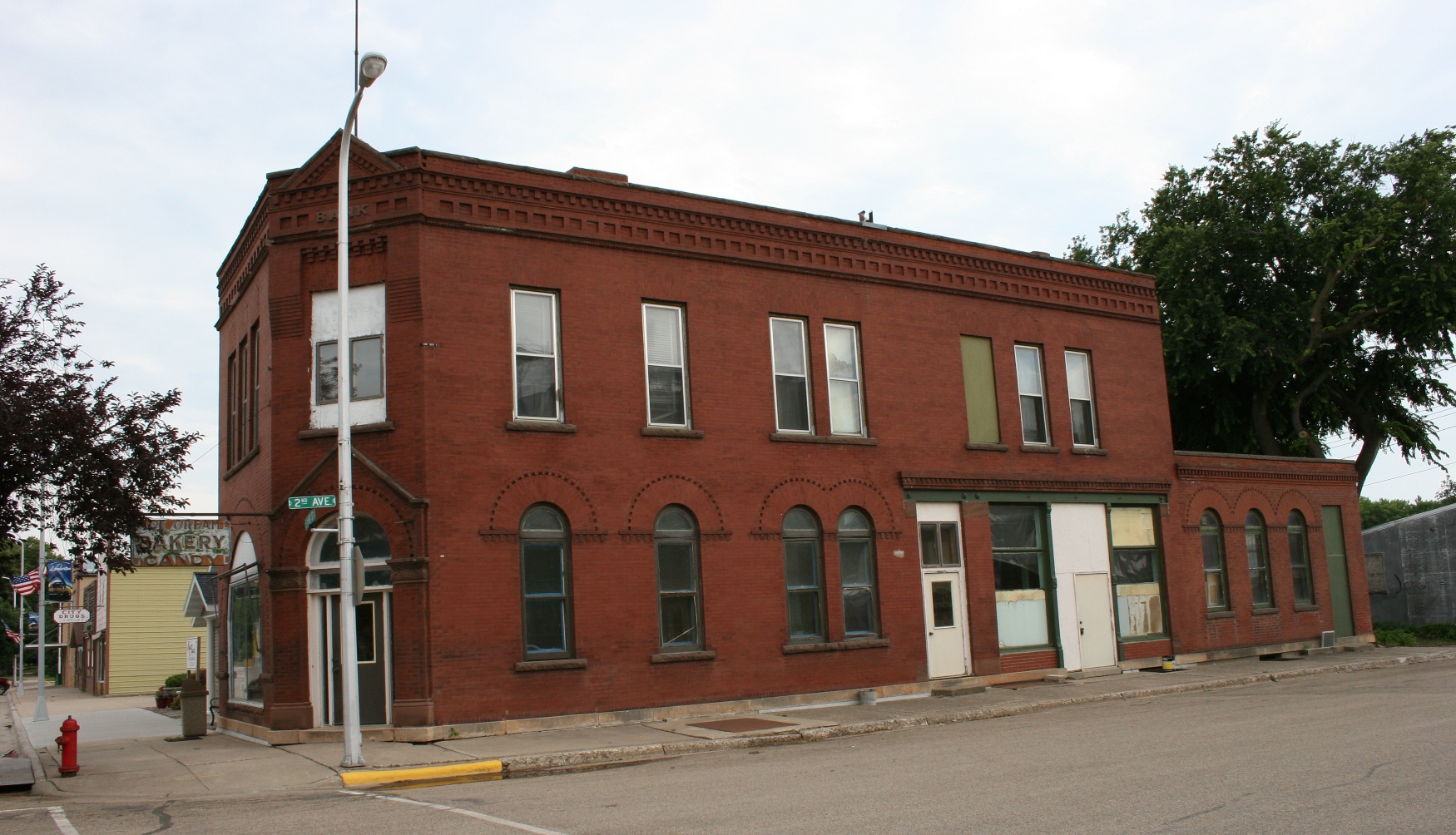
The former Sanger's Bakery, back on the market and photographed last week.

The former Sanger’s Bakery building, back on the market and photographed last week.

FOR DAVID AND MICHELLE, the dream of opening a coffee shop in an historic 1892 building in Michelle’s hometown of Lamberton in southwestern Minnesota has become just that, a dream.

About three weeks ago the old bank and long-time Sanger’s Bakery property, purchased last year by the couple, went back on the market. It was a move necessitated by an inability to secure financing for restoration of the massive brick building.

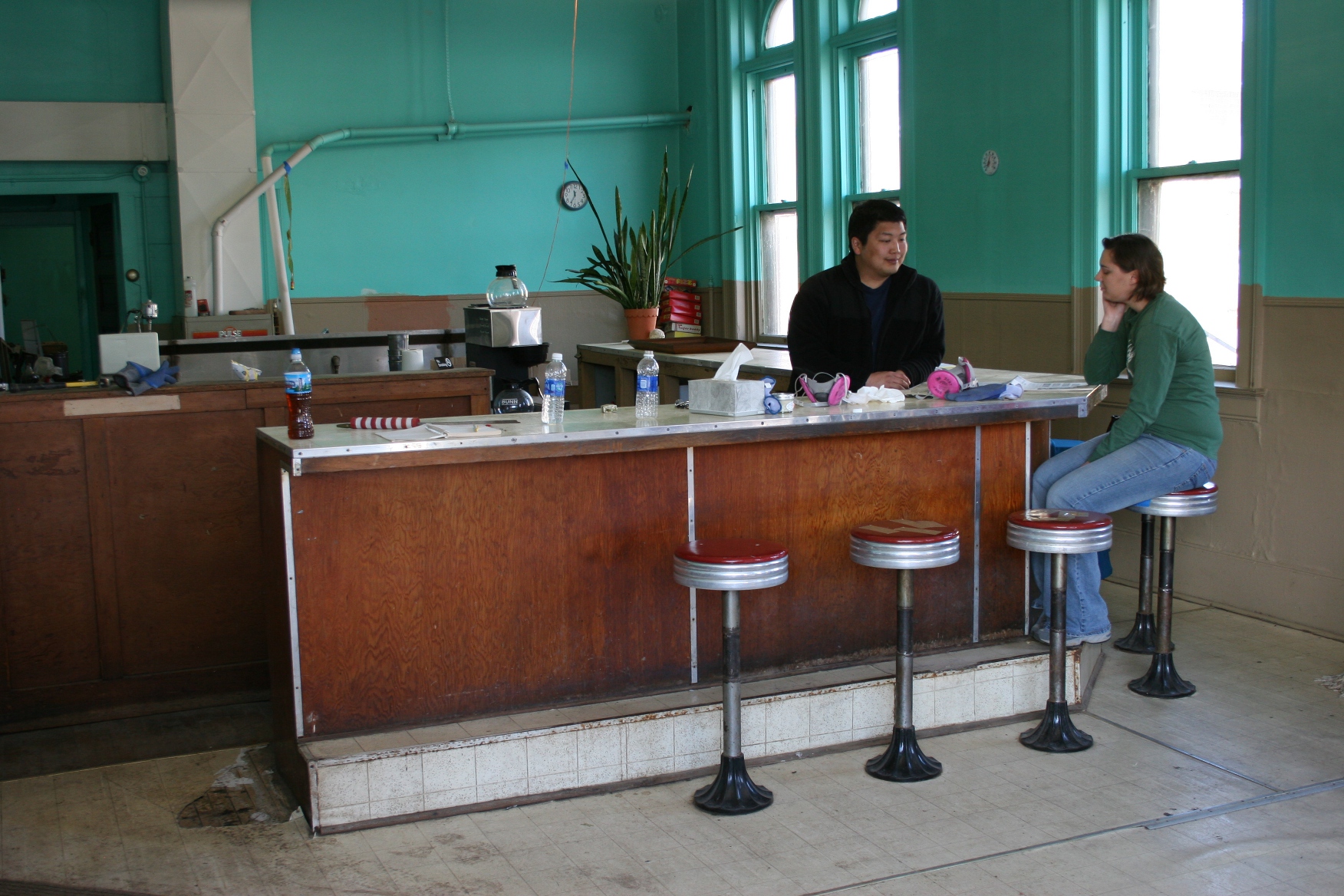
The Van Engens had planned to use the original lunch counter in their coffee shop. Minnesota Prairie Roots file photo from October 2012.

The original plan called for using the original lunch counter in the coffee shop. Minnesota Prairie Roots file photo from October 2012.

They had planned to open Seven Sisters Coffee as a local eatery, community gathering spot, entertainment center and artists’ haven this summer in this community of 820 residents along the Laura Ingalls Wilder Historic Highway in southern Redwood County.

The Van Engens began working on this back space last fall in an area intended for entertainment and an artists' haven.

The couple began work last year on this back room intended for entertainment and an artists’ haven.

The pair made numerous attempts, David says, to secure funding through several banks, all of which eventually classified the planned coffee shop as a restaurant and thus would not approve financing. Likewise, agencies such as the Redwood Area Development Corporation and local business coalitions could not provide the level of funding needed for the restoration, he says.

An Iraq War veteran, David is disappointed by what he perceives as a lack of support from the Veterans Administration and the Small Business Administration, through which he was working:

“We had completed exhaustive research on equipment, renovation, overhead, etc. All of the banks and organizations said our business plan and loan proposal were better researched and prepared than anything they had seen before.

The restoration and research was a joy. There is an enormous amount of history in that building. The end came as a dark and bitter disappointment. My wife and I are both hard-working, industrious people. Between her professional marketing acumen and my passion and skill sets; I thought we had a sure thing. The numbers were good…”

David and Michelle posed behind the original candy counter last fall. Michelle has sweet memories of coming here for candy as a child. Minnesota Prairie Roots file photo.

David and Michelle pose behind the original candy counter last fall. Michelle has sweet memories of coming here for candy as a child. Minnesota Prairie Roots file photo.

Having met the pair last October during a tour of the historic building, I, too, thought if anyone could succeed, this enthusiastic and ambitious couple could. They were, at the time of my visit, sorting through 80 years of accumulated possessions inside the old bakery and have since removed hazardous materials, repaired the roof of the 3,250 square foot two-story structure and more.

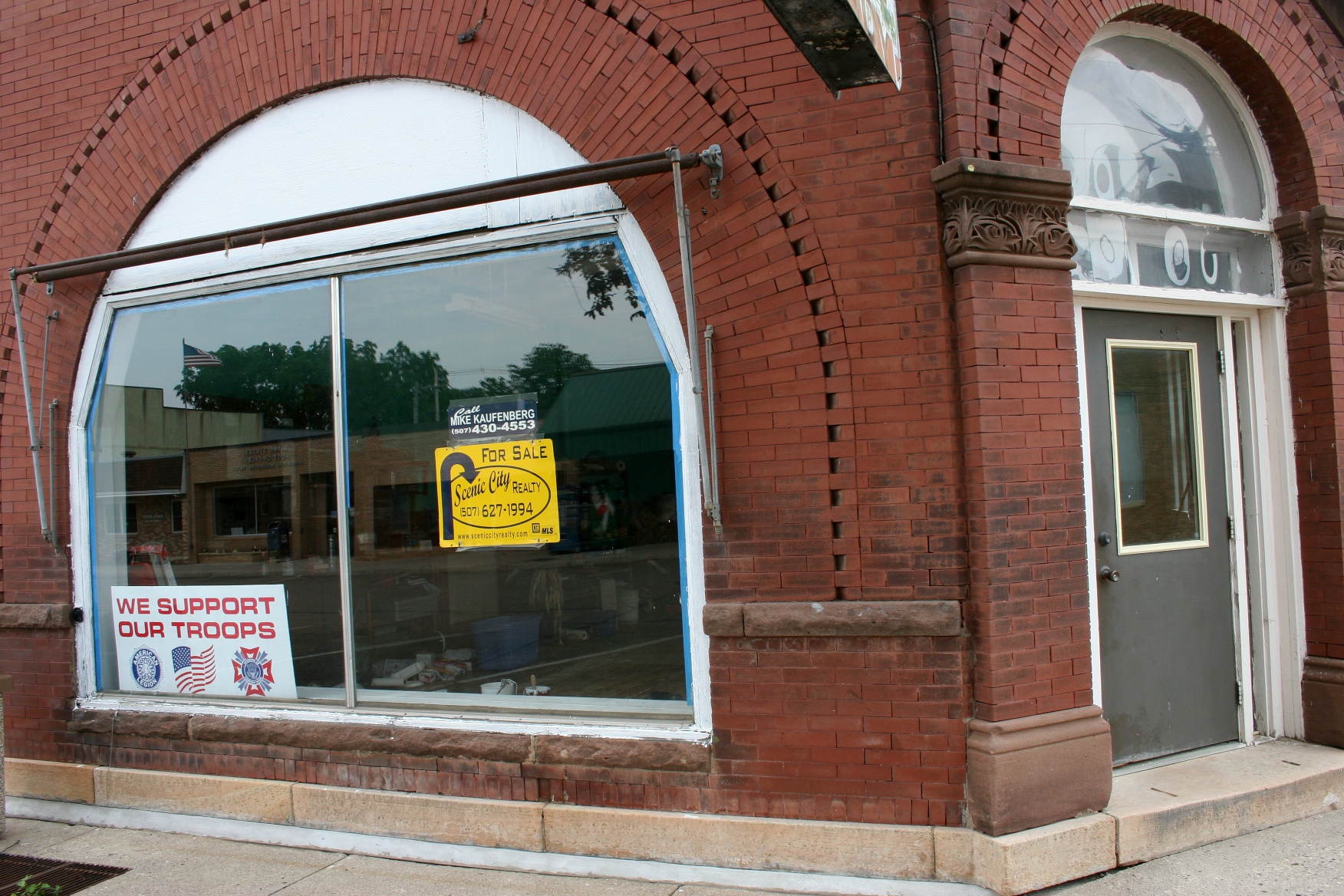
The yellow sign in the front window advertises the property for sale through Scenic City Realty.

The yellow sign in the front window advertises the property for sale through Scenic City Realty.

A peek inside the old bakery last Saturday revealed half-painted walls and further restoration halted and that “for sale” sign posted on the front window.

“The coffee shop was a nice dream,” David says, “but it will have to wait for now. Despite the outcome, it was a good learning experience.”

To possess that positive attitude after months of hard work and time and money invested in the couple’s dream impresses me.

A side view of the massive building.

A side view of the massive historic building.

FYI: I spoke with Mike Kaufenberg, the broker/realtor who has the old bank/bakery listed at $37,000 with Redwood Falls based Scenic City Realty.

The building, he says, would provide a great place for a retail and online antiques business with room for additional retail and/or office space. Some antiques remain in the building and are part of the property offering. Two apartments are located on the second floor and could provide rental income.

To see the complete listing, click here.

I think this historic building has many possibilities for reuse, if you have the vision, drive, passion, time, energy and money. How would you reuse this building?

© Copyright 2013 Audrey Kletscher Helbling


Delighting in the historic Hotel Winneshiek in Decorah, Iowa July 12, 2013

Filed under: Uncategorized — Audrey Kletscher Helbling @ 6:00 AM
Tags: , , , , , , ,
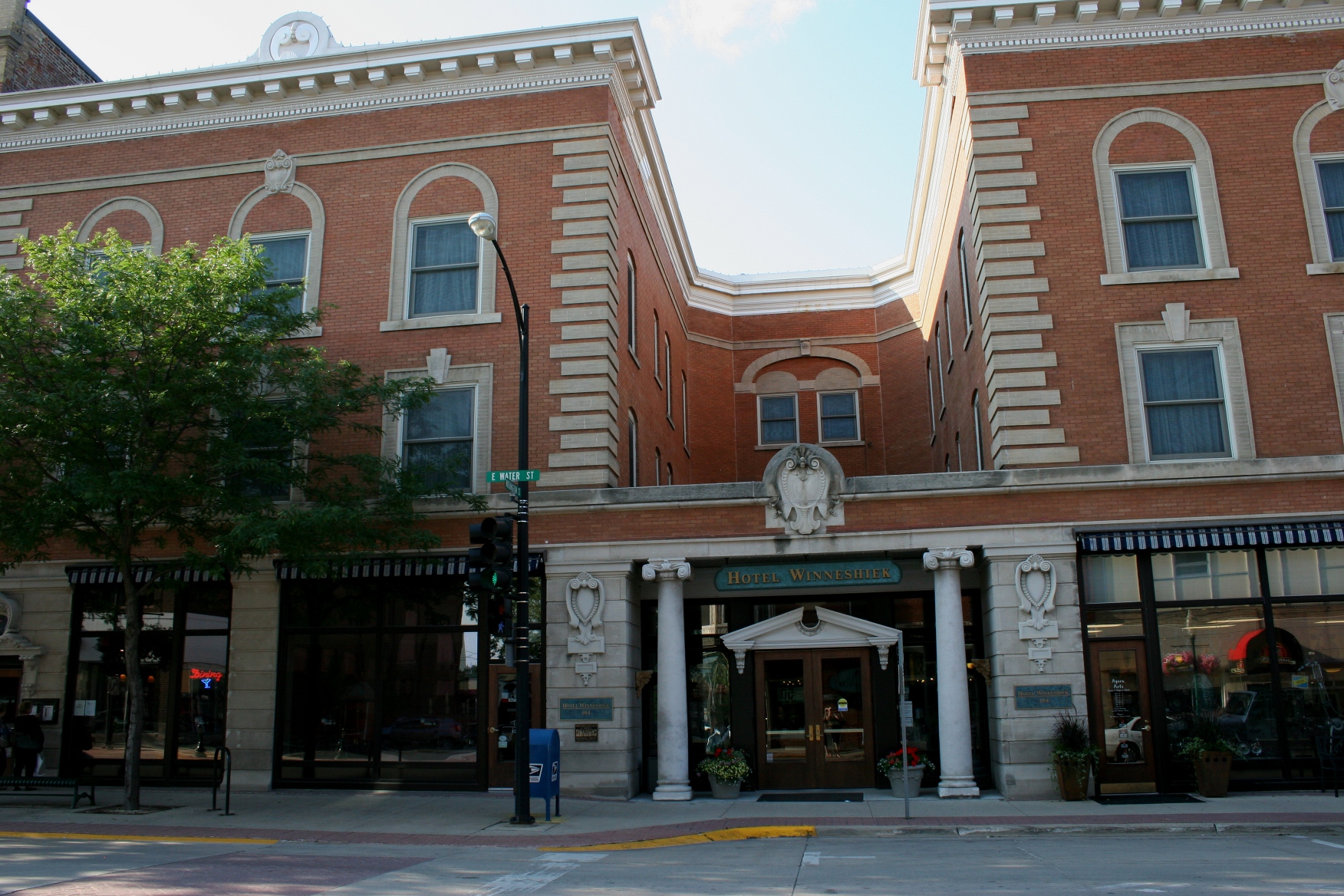
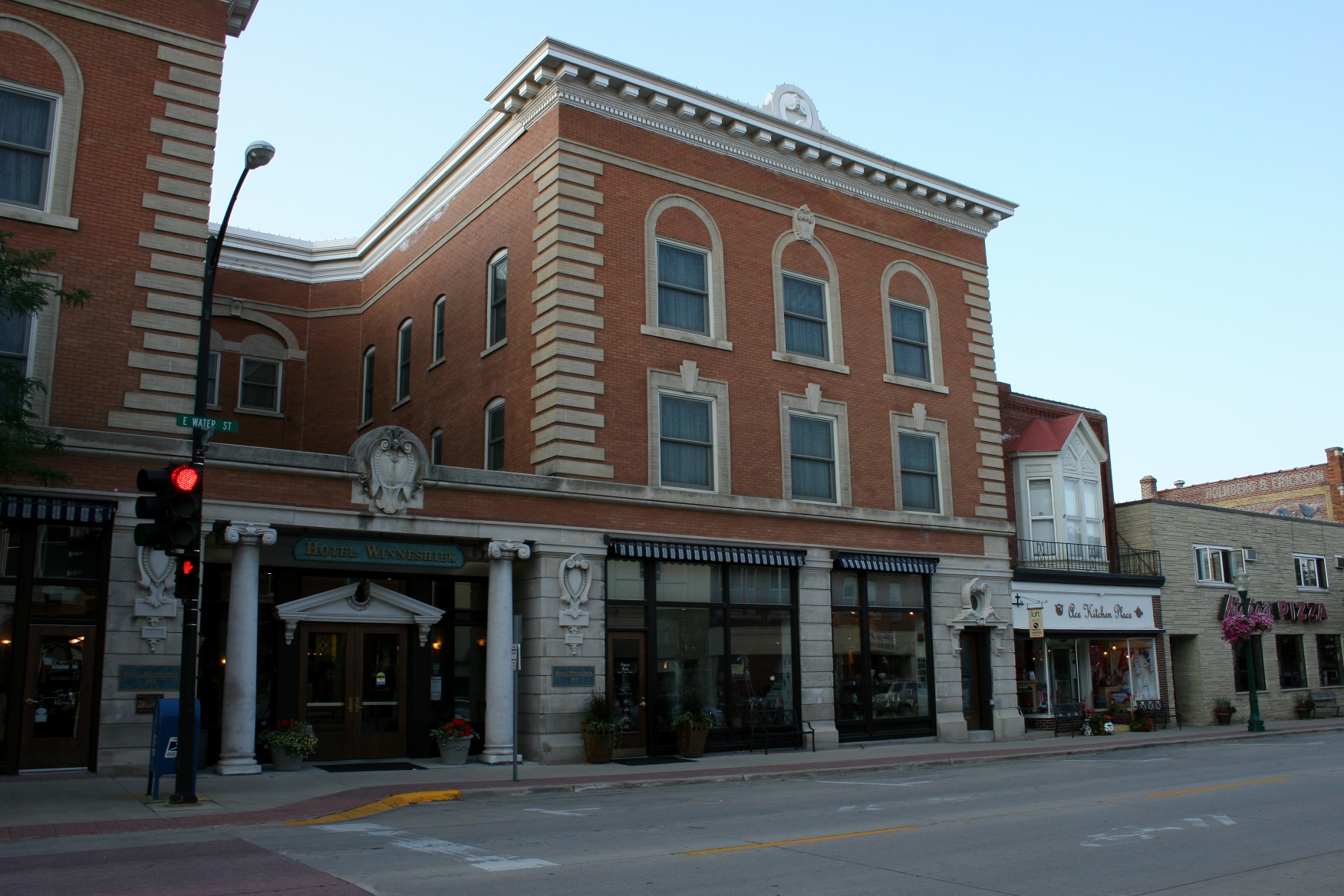
The historic Hotel Winneshiek, 104 East Water Street, has transitioned through the years from hotel to apartments and back to its original historic hotel grandeur.

The historic Hotel Winneshiek, 104 East Water Street, has transitioned through the years from hotel to apartments and back to its near original historic grandeur.

WE ALMOST DID NOT ASK, almost passed by Hotel Winneshiek in downtown Decorah, Iowa.

But what the heck, why not ask about the cost of staying overnight in this historic hotel, my husband and I decided on a recent visit to this river town.

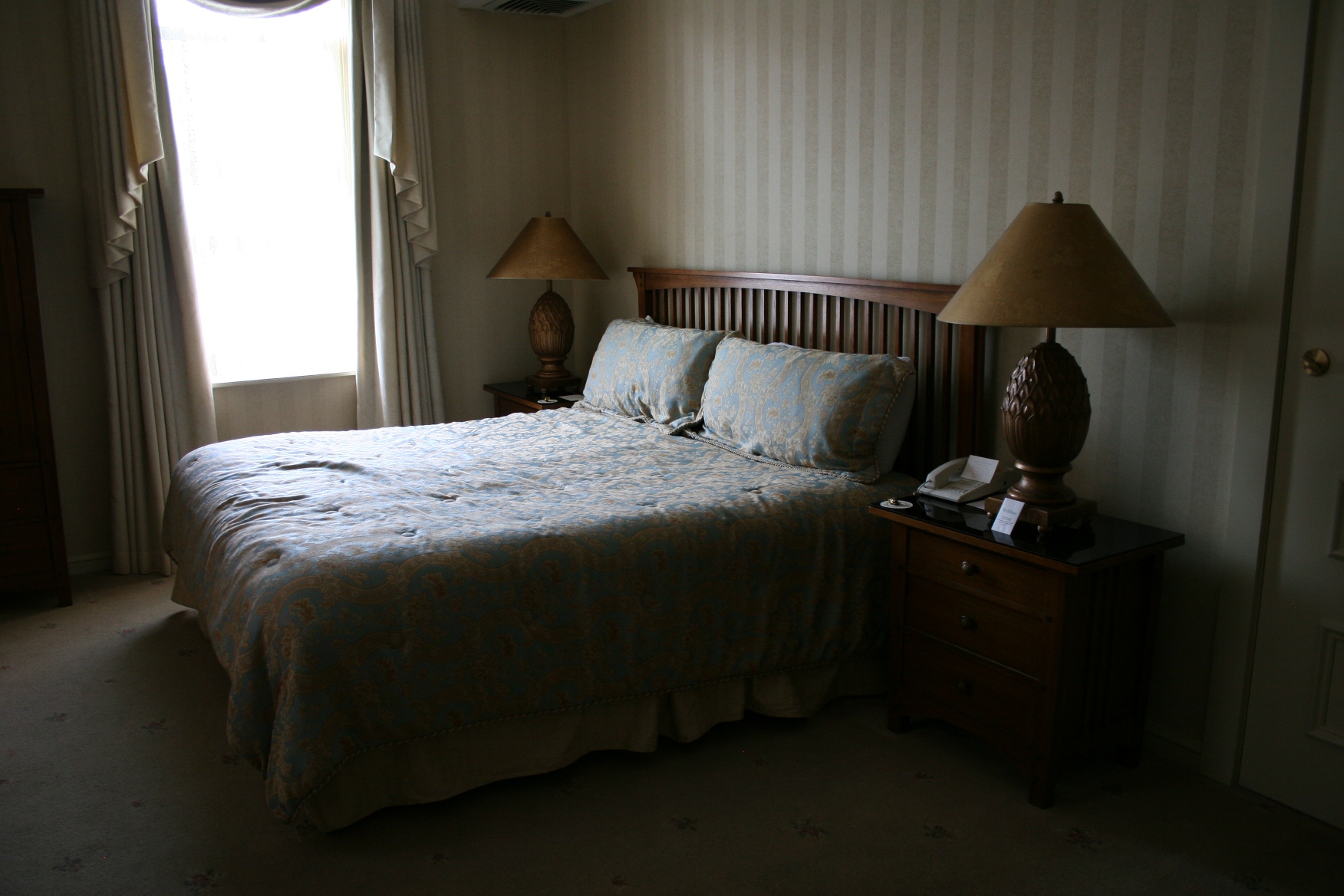
Our room, number 305.

Our room, number 305.

Much to our absolute delight and surprise, we booked a third-floor room for $105 (that includes local and state taxes and an AARP discount). That’s less than we’ve paid for a room at a chain hotel in Fargo, North Dakota, and less than we paid the following night for a stay at another chain hotel in Marquette, Iowa, both minus in-room whirlpools.

Inside the mood-setting Atrium.

Inside the mood-setting Atrium.

Looking down into the Atrium.

Looking down into the Atrium.

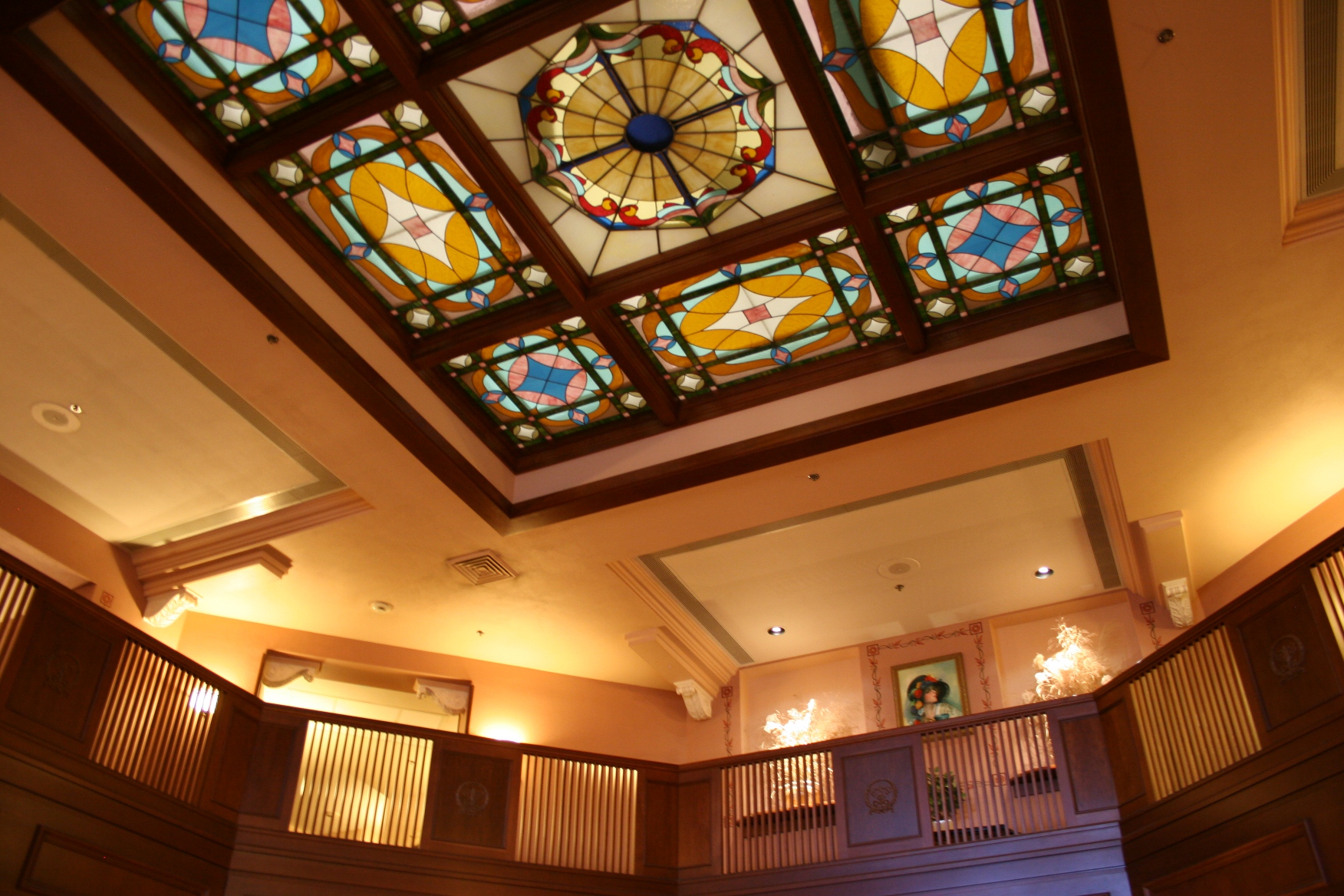
And then looking up to the beautiful stained glass above.

And then looking up to the beautiful stained glass above.

The Beaux-Arts style Hotel Winneshiek, built between 1904-1905 and restored in 2000 to near original construction, impresses with its terrazzo floors, marble walls, cherry woodwork, octagon rotunda/three-story atrium, stained glass and a general feel of luxurious elegance.

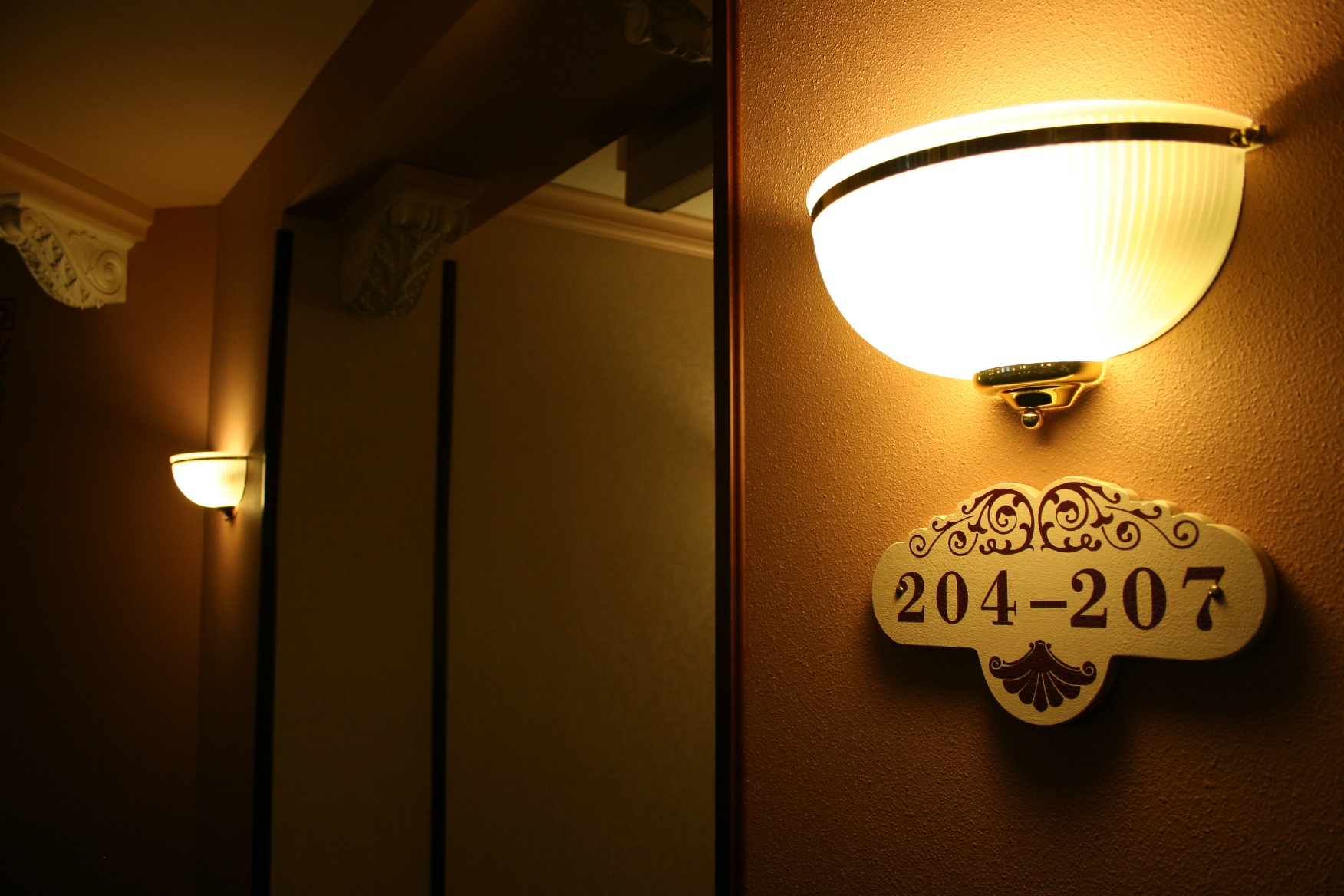
Even the sconces and room signage fit the historic mood.

Even the sconces and room signage fit the historic mood. Details impress.

Often I struggle to sleep well in a hotel. But in our corner room (with a king bed and a whirlpool bath) overlooking the back parking lot, I slept deep and long. That, in itself, earns a star rating.

Norway’s Crown Prince Olav and Crown Princess Martha even stayed here in 1939 in a three-room suite.

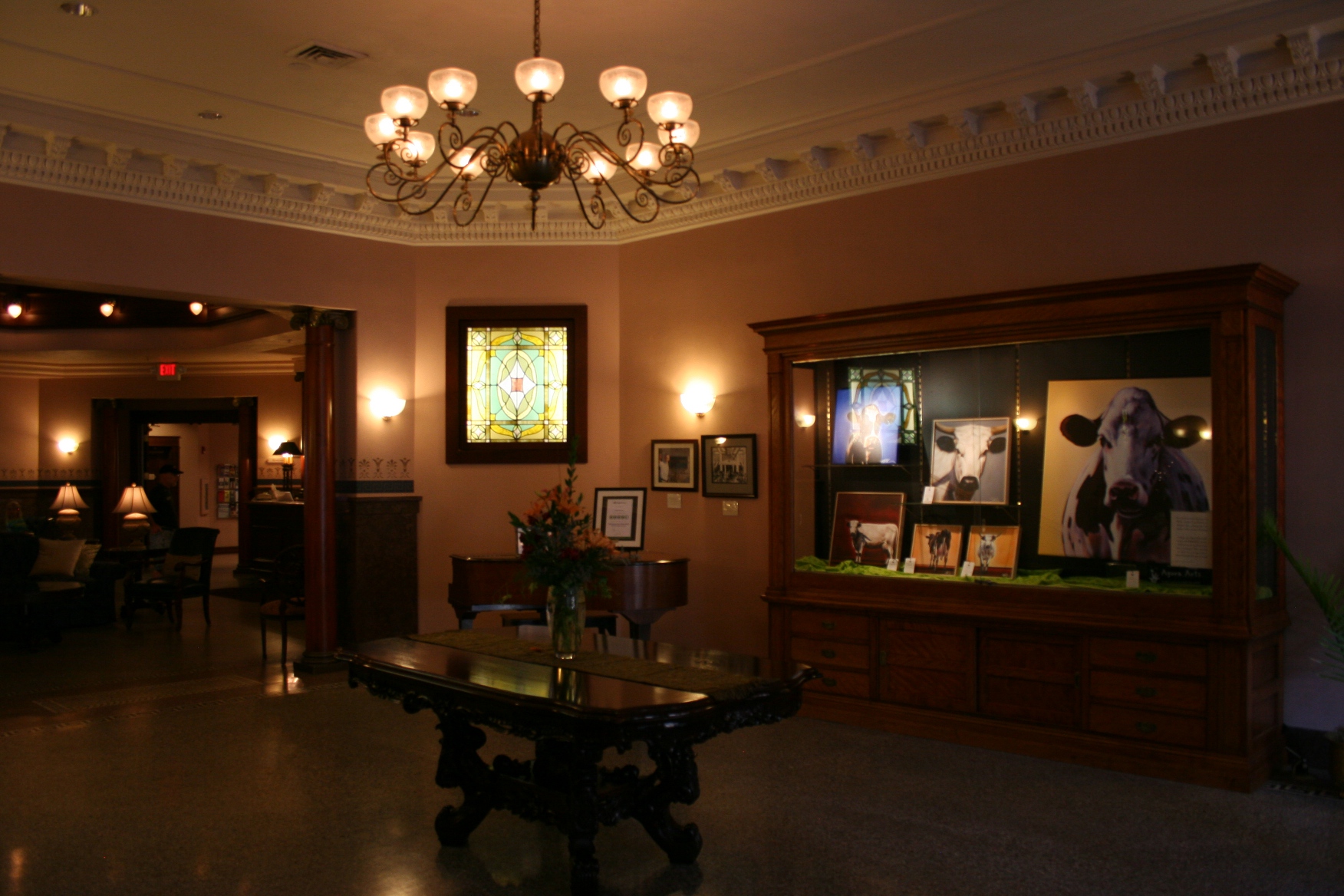
The entry features this luxurious lobby and current cow art.

The entry features this luxurious lobby and current cow art.

Moving toward the atrium, note the stained glass and pillars and original flooring.

Moving toward the atrium, note the stained glass and pillars and original flooring.

Check in at the stout front desk with a friendly staff. You'll receive a packet of valuable info on Decorah.

Check in at the stout front desk with a friendly staff. You’ll receive a welcome packet of information on Decorah.

Hotel Winneshiek is suited for royalty. From the minute we entered the hotel, paused in the impressive corridor and then walked up to the front desk in the stunning Atrium, I felt sheltered, cocooned and transported in time. You get that kind of Old World comfortable feel here.

Hotel Winneshiek is conveniently located in the heart of historic downtown Decorah.

Hotel Winneshiek is conveniently located in the heart of historic downtown Decorah.

For someone like me who appreciates historic architecture and details, this marked the perfect place to spend a night in the heart of Decorah’s historic downtown. We could walk to shops and eateries. The hotel complex includes Albert’s Restaurant and Pub, where we didn’t dine, but perhaps should have. We heard good recommendations later.

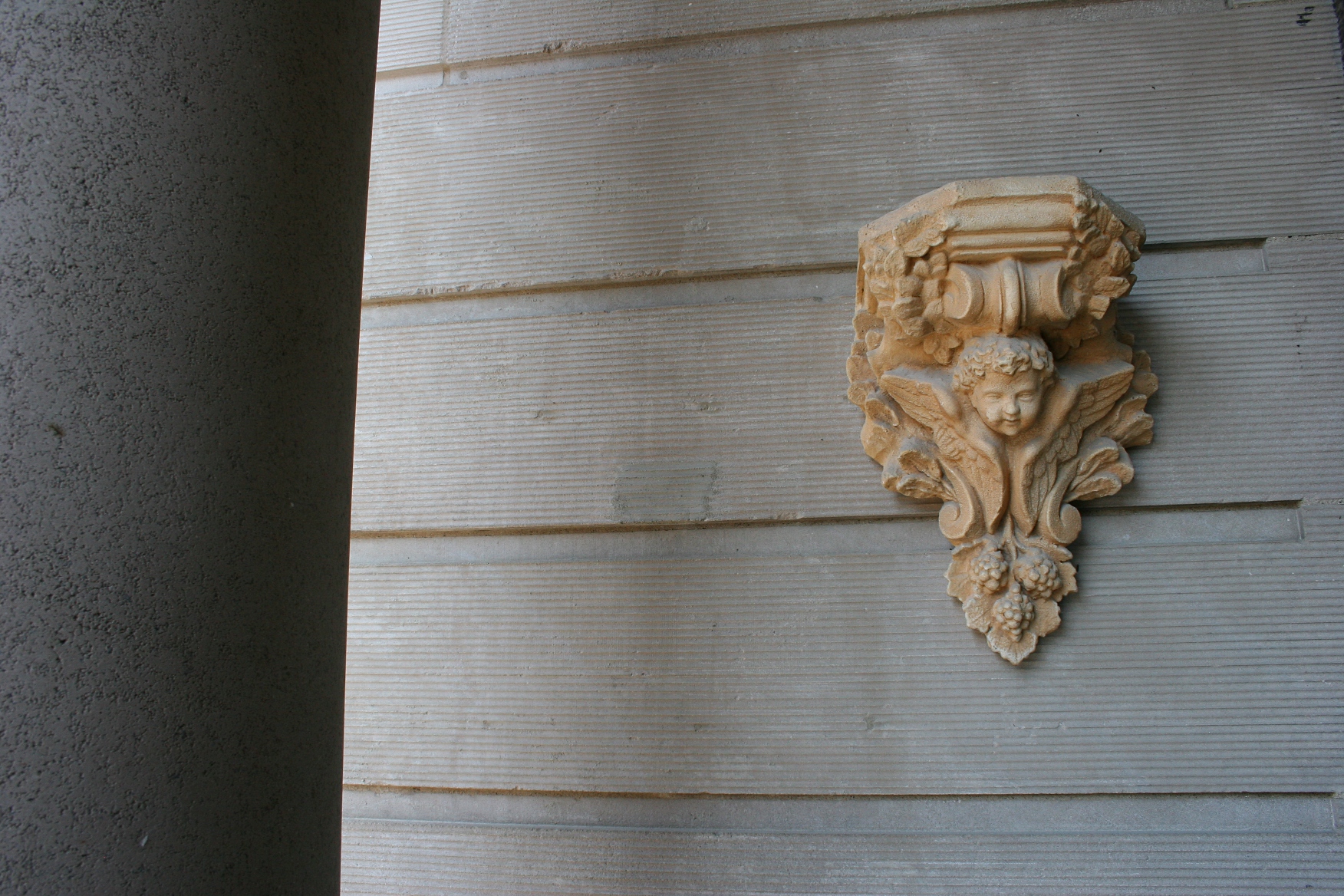
On the hotel exterior, I noted this sculpture.

On the hotel exterior, I noted this sculpture.

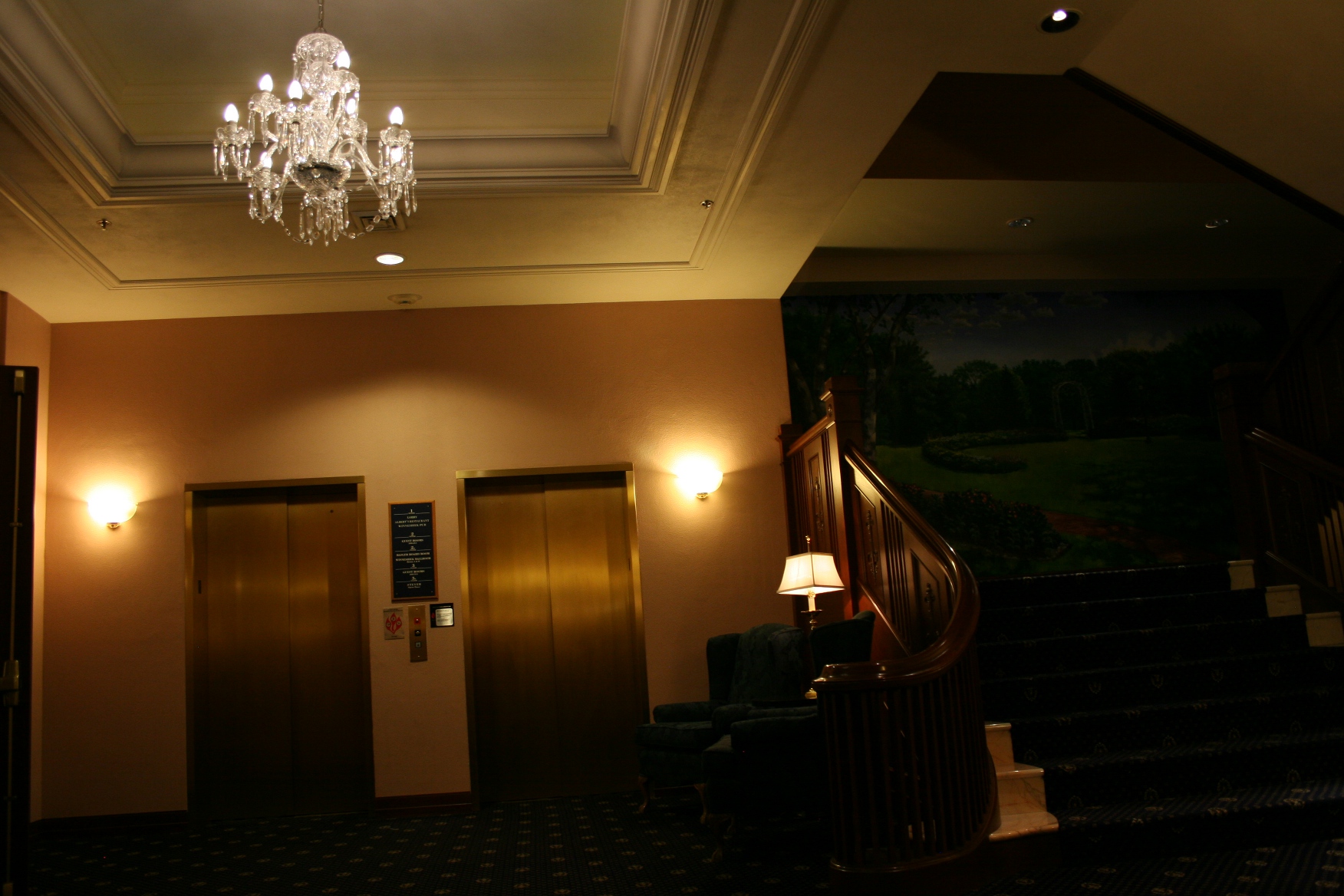
The relocated grand stairway and a mural featuring the gardens on former hotel owner, Chicago philanthropist Helen Basler. Today the hotel is owned by Northfield, Minnesota-based Rebound Hospitality.

The relocated grand stairway and a mural, right, featuring the gardens of former hotel owner, Chicago philanthropist Helen Basler. Today the hotel is owned by Northfield, Minnesota-based Rebound Hospitality. Basler had the hotel restored to its near original state in 2000.

Now, I would not recommend arriving in Decorah without a reservation at the 31-room Hotel Winneshiek, if that’s where you really want to stay. I expect we were fortunate to find a room available on a Monday night as walk-in guests.

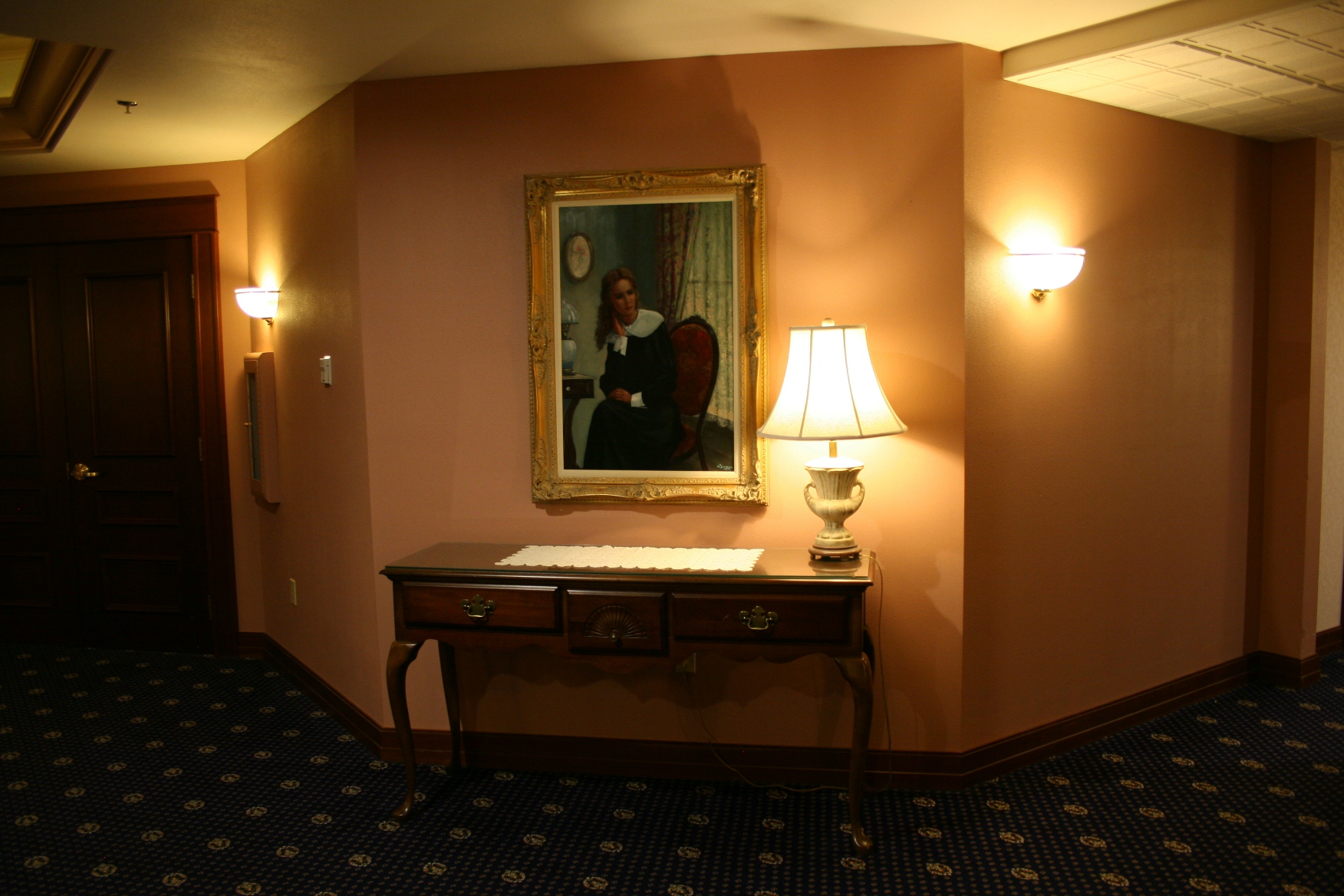
An inviting scene in a hallway of the hotel.

An inviting scene in a hallway of the hotel.

Just so you are not surprised, room rates start at $109 (plus applicable taxes) and reach up to $249 (plus taxes) for the Presidential Suite.

And, because you may wonder like me about that name, Winneshiek was the chief of the Winnebago Indians. Decorah is located in Winneshiek County and the historic Hotel Winneshiek therein. To learn more about the hotel’s history, click here.

BONUS PHOTOS:

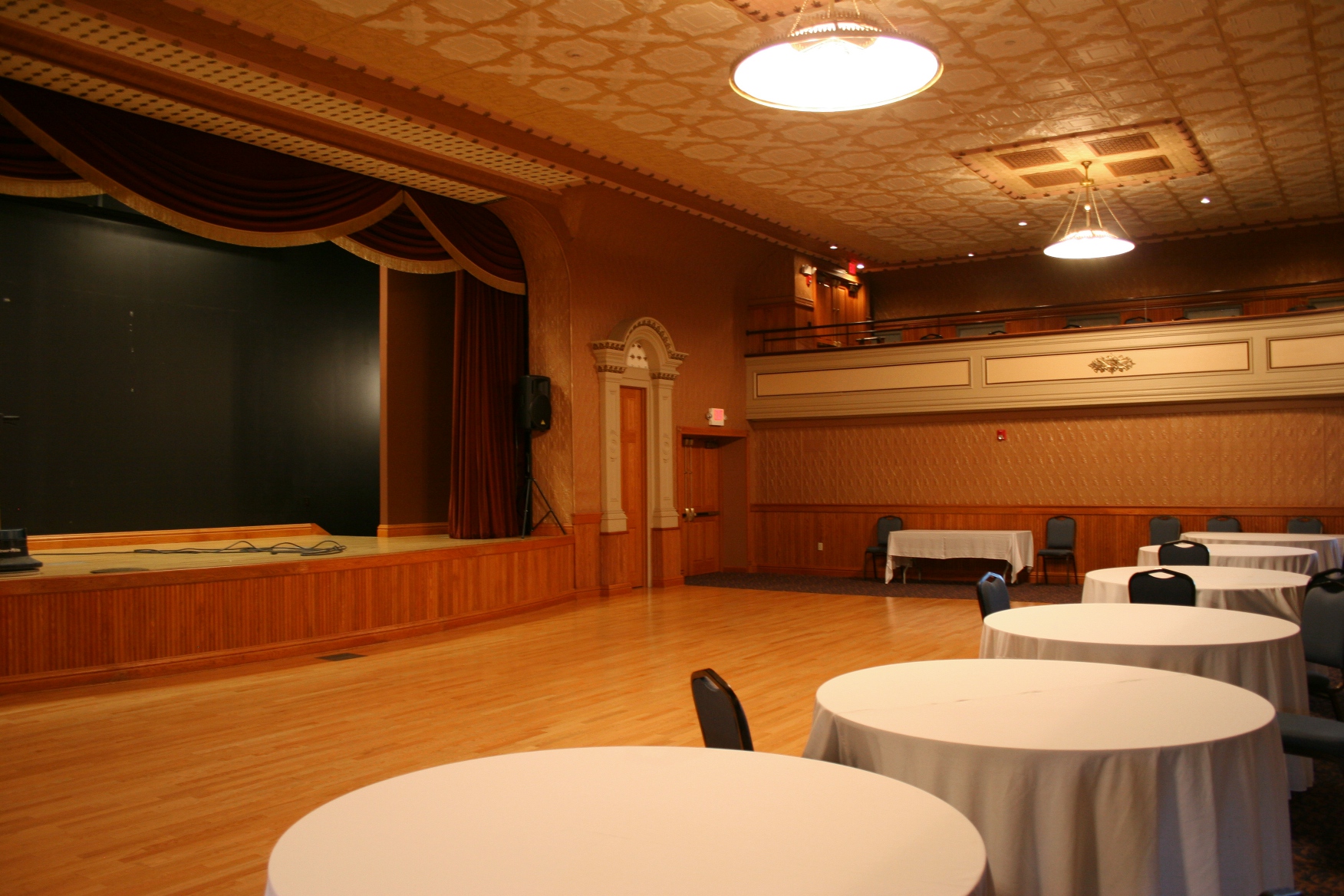
Ask about touring the former opera house in the Steyer Building next to, and connected to, the hotel. Here's a view of the refurbished area, which is considerably different in lay-out from the original.

Ask about touring the former opera house in the Steyer Building next to, and connected to, the hotel. Here’s a view of the refurbished area, which is considerably different in lay-out from the original.

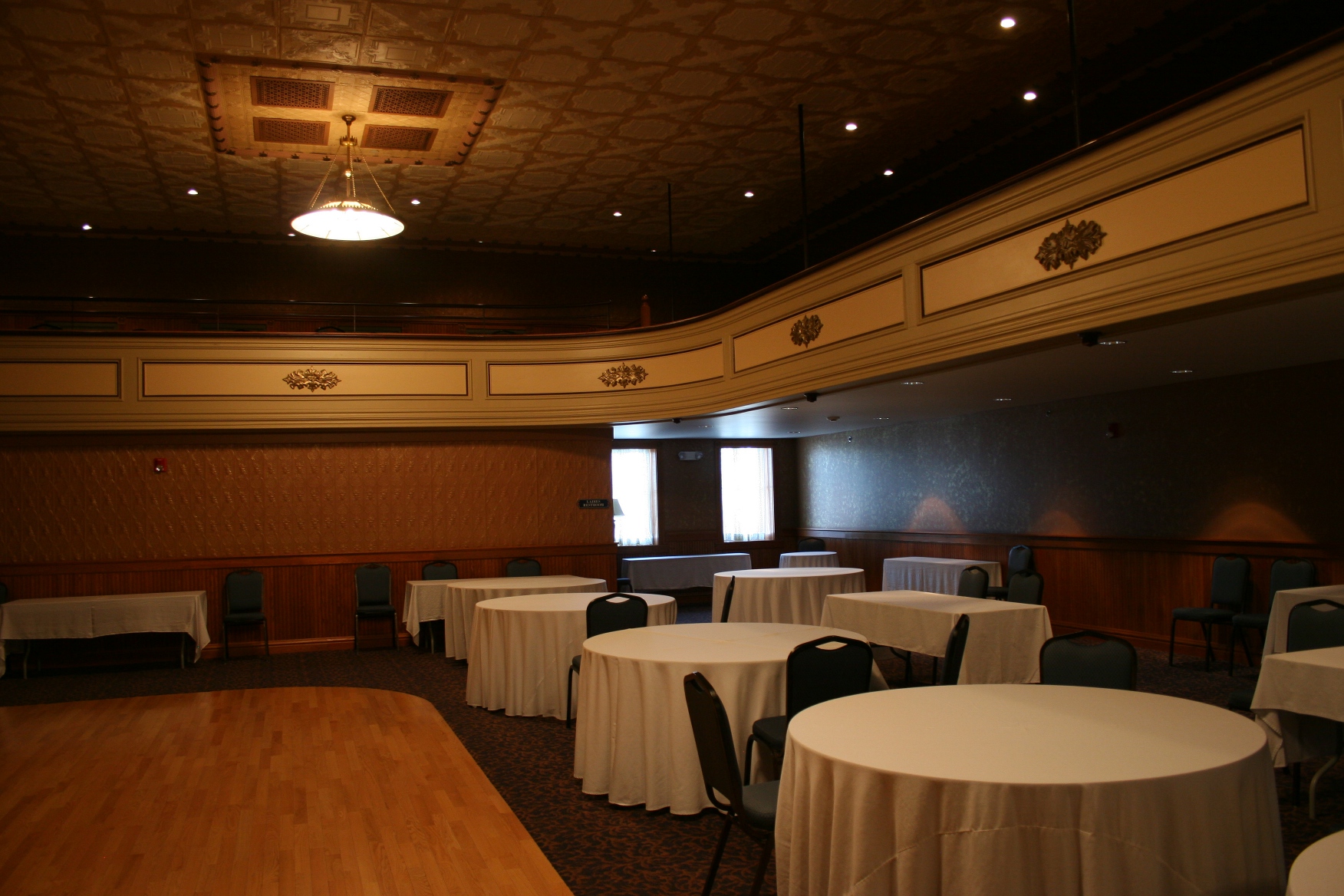
Another view of the same room shows the balcony and the seating area below.

Another view of the same room shows the balcony and the seating area below. This space is used for receptions, reunions, etc.

© Copyright 2013 Audrey Kletscher Helbling


Reason number one to visit Decorah, Iowa: The historic architecture July 10, 2013

The architecture on the historic buildings is incredible.

The architecture on the historic buildings is incredible.

“MOM, YOU’LL LOVE DECORAH.”

Except for getting sprayed with soda while dining at an Italian eatery (and no amends made save a perfunctory “sorry”), my husband and I loved this northeastern Iowa river town.

Our daughter Miranda, who visited a college friend here last summer, was right. We delighted in Decorah’s historic architecture, natural beauty and small town ambiance.

That Norwegian museum we need to tour next time we're in Decorah.

That Norwegian museum we need to tour next time we’re in Decorah.

Home to Luther College and the world’s largest collection of Norwegian artifacts at the Vesterheim—The National Norwegian-American Museum and Heritage Center, Decorah definitely presents a college town feel and an ethnic bend toward Norwegians. Interestingly enough, we didn’t tour either Luther or the Vesterheim. Next trip, because we will return.

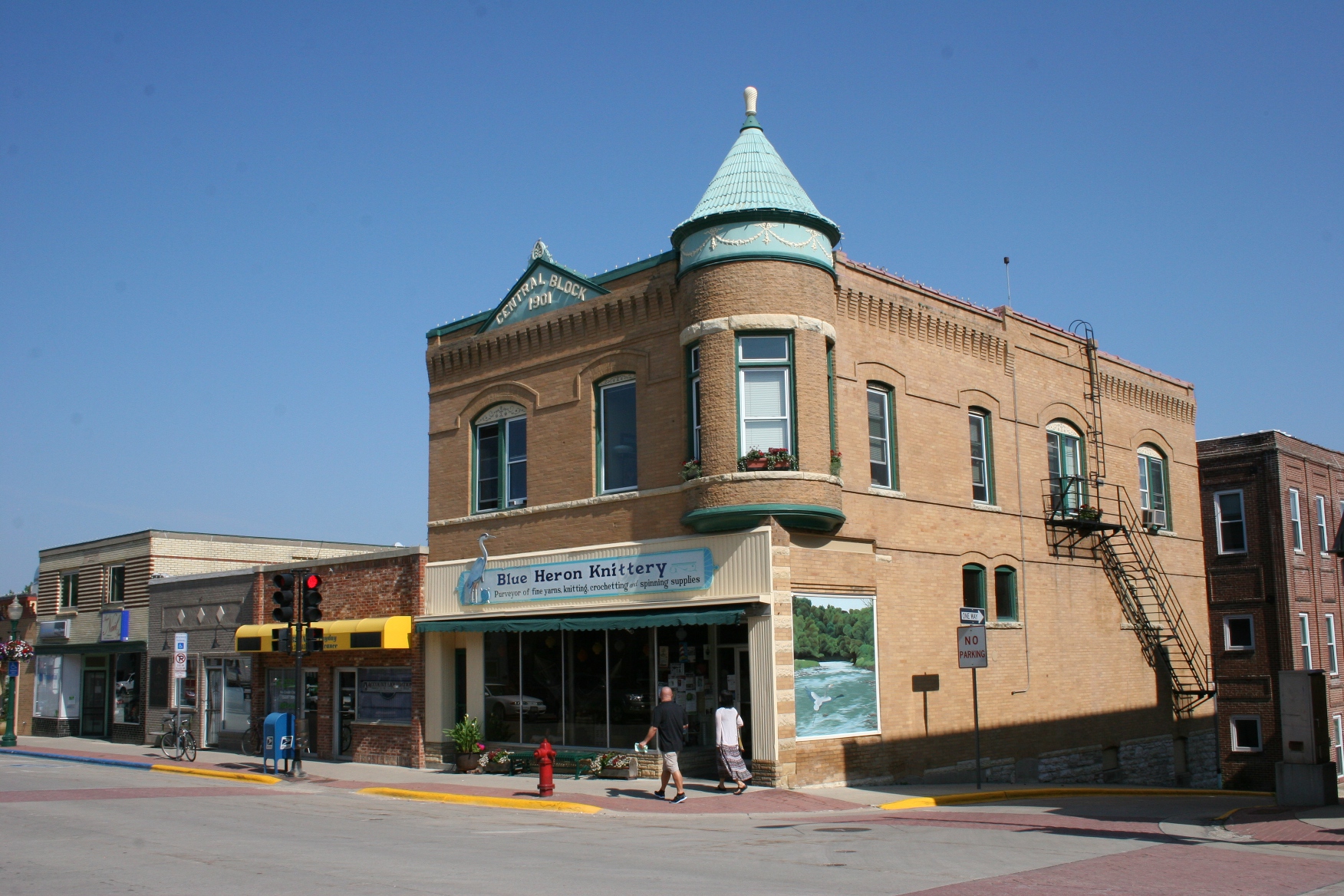
Blue Heron Knittery is housed in the lower level of this architecturally stunning corner building in downtown Decorah.

Blue Heron Knittery is housed in the lower level of this architecturally stunning corner building in downtown Decorah.

So what exactly did we see? Mostly, we simply strolled through downtown admiring the historic buildings and occasionally popping into charming shops in this city of some 8,000.

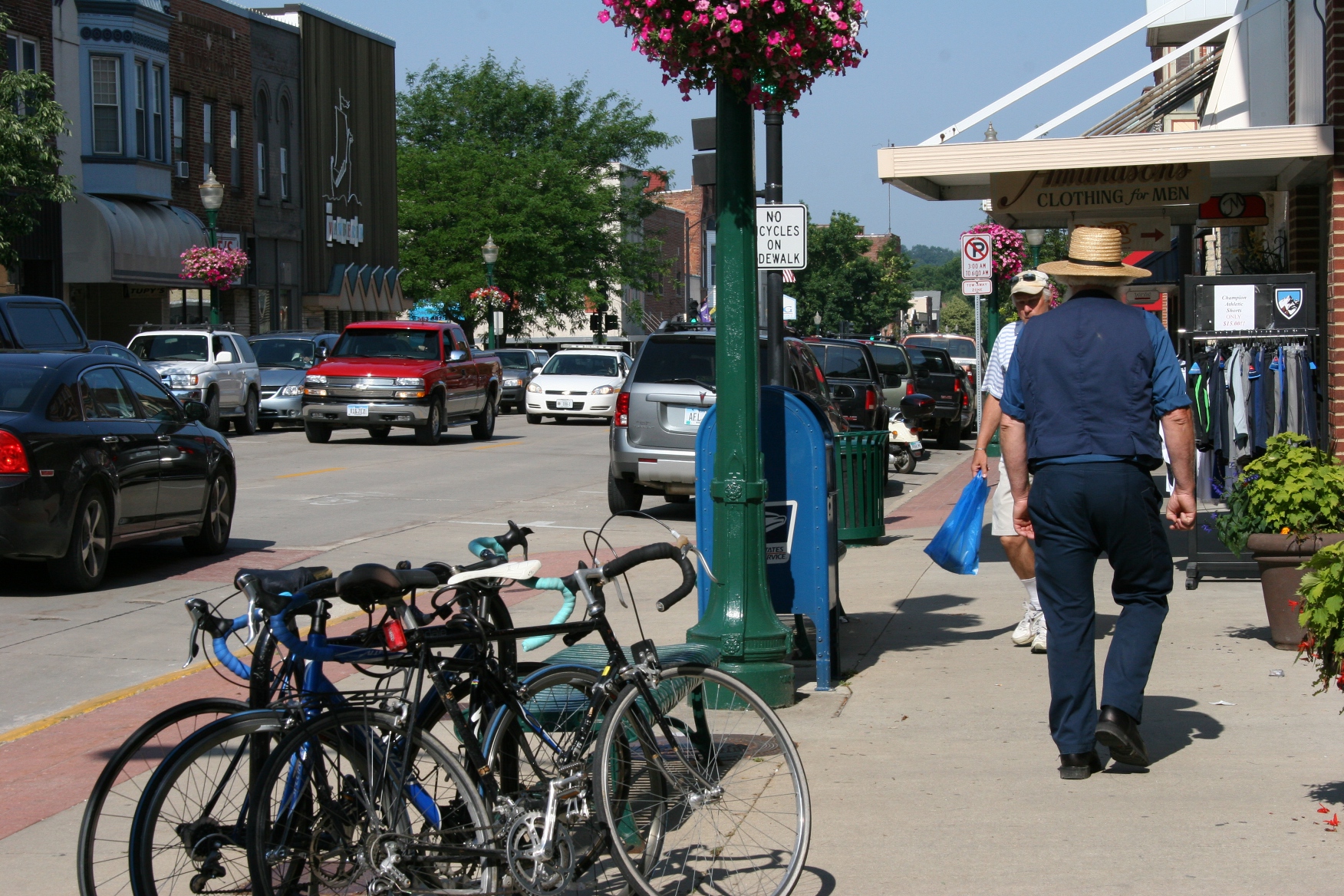
On a Tuesday morning, the streets were teeming with pedestrians, including this Amish man from southeastern Minnesota.

On a Tuesday morning, the streets were teeming with pedestrians, including this Amish man from southeastern Minnesota.

Decorah, with numerous one-way streets, plenty of stoplights, an abundance of benches, information kiosks, bike racks, and planters overflowing with vibrant flowers and vining plants, rates as an especially pedestrian friendly community. First impressions count and this Iowa town does a splendid job of making visitors feel welcome via the relaxed setting created in the downtown business district.

It's the details that count, that show a community truly cares like vibrant plants in windowboxes.

It’s the details that count in creating an inviting downtown shopping experience.

Join me as we begin our journey through Decorah, today with a peek at that historic architecture and other photo-worthy snippets in the downtown.

So much to see along Decorah's downtown city streets.

So much to see along Decorah’s downtown city streets.

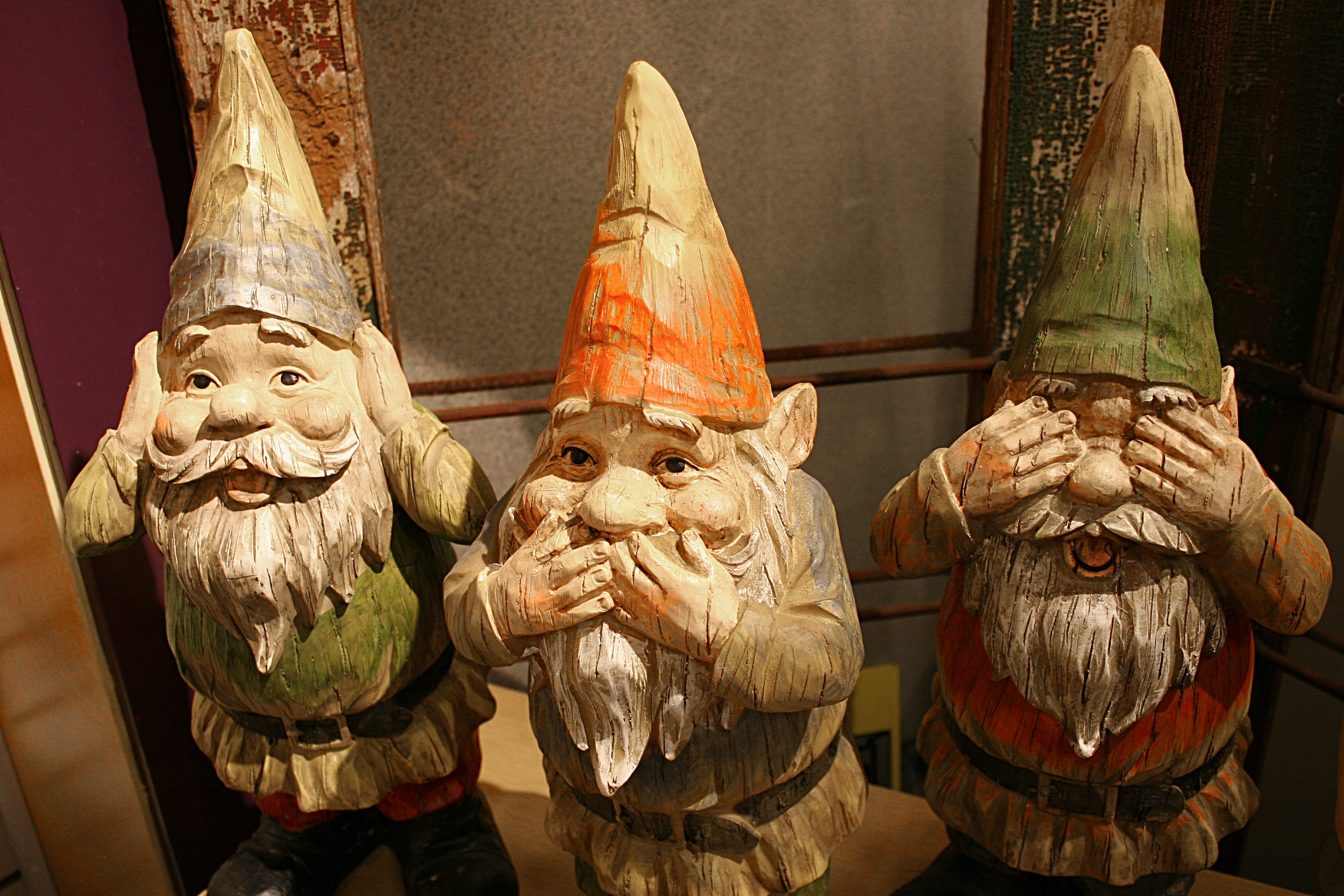
You'll find an abundance of trolls/gnomes.

You’ll find an abundance of trolls/gnomes.

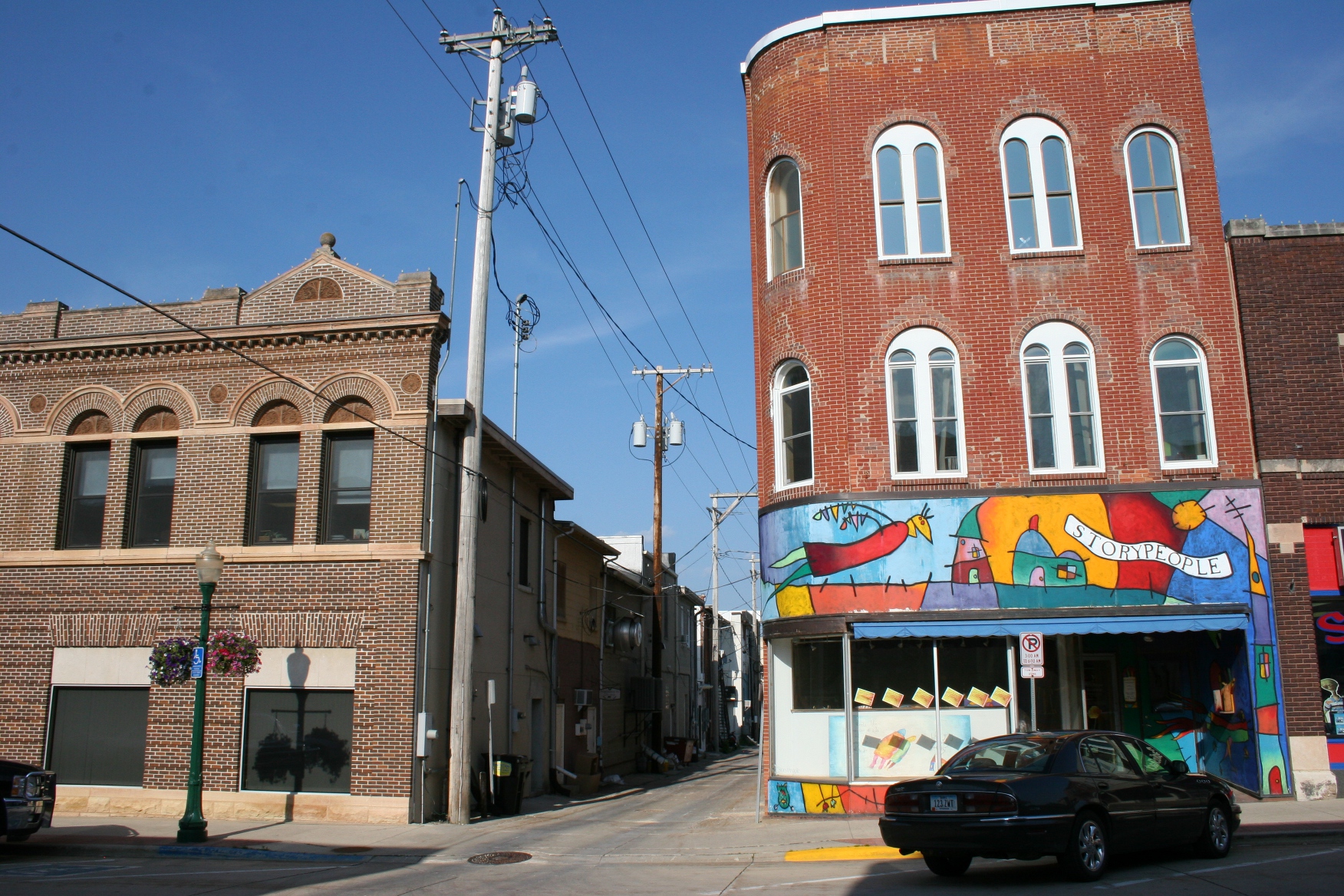
The Storypeople workshop exterior pops with vibrant colors and images. I'll tell you more about Storypeople in a future post.

The Storypeople workshop exterior pops with vibrant colors and images. I’ll tell you more about Storypeople in a future post.

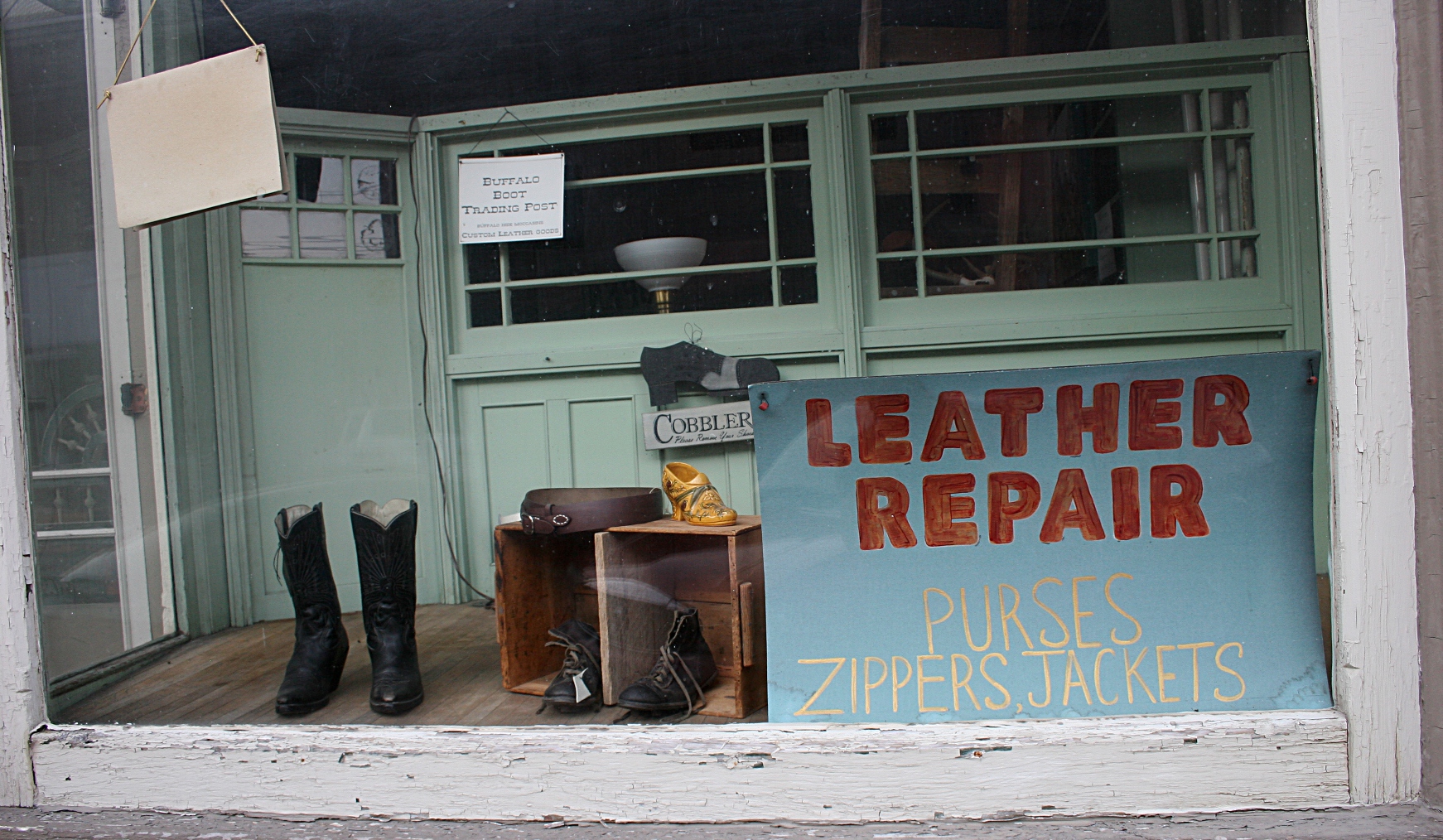
Window displays and signs are equally as interesting as the architecture.

Window displays and signs are equally as interesting as the architecture.

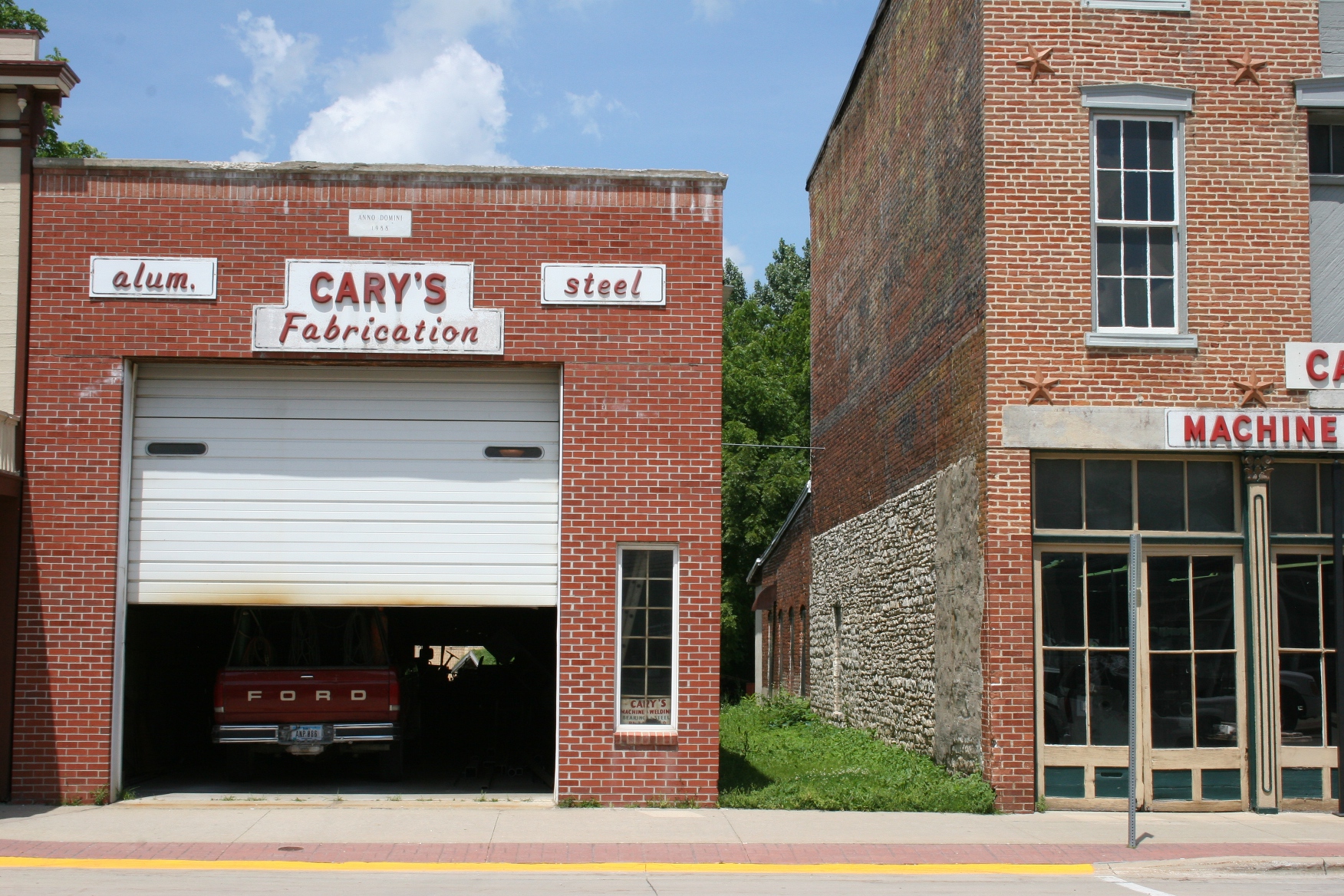
A building needn't be ornate to impress. I love the strong simple lines of Cary's Fabrication.

A building needn’t be ornate to impress. I love the strong simple lines of Cary’s Fabrication.

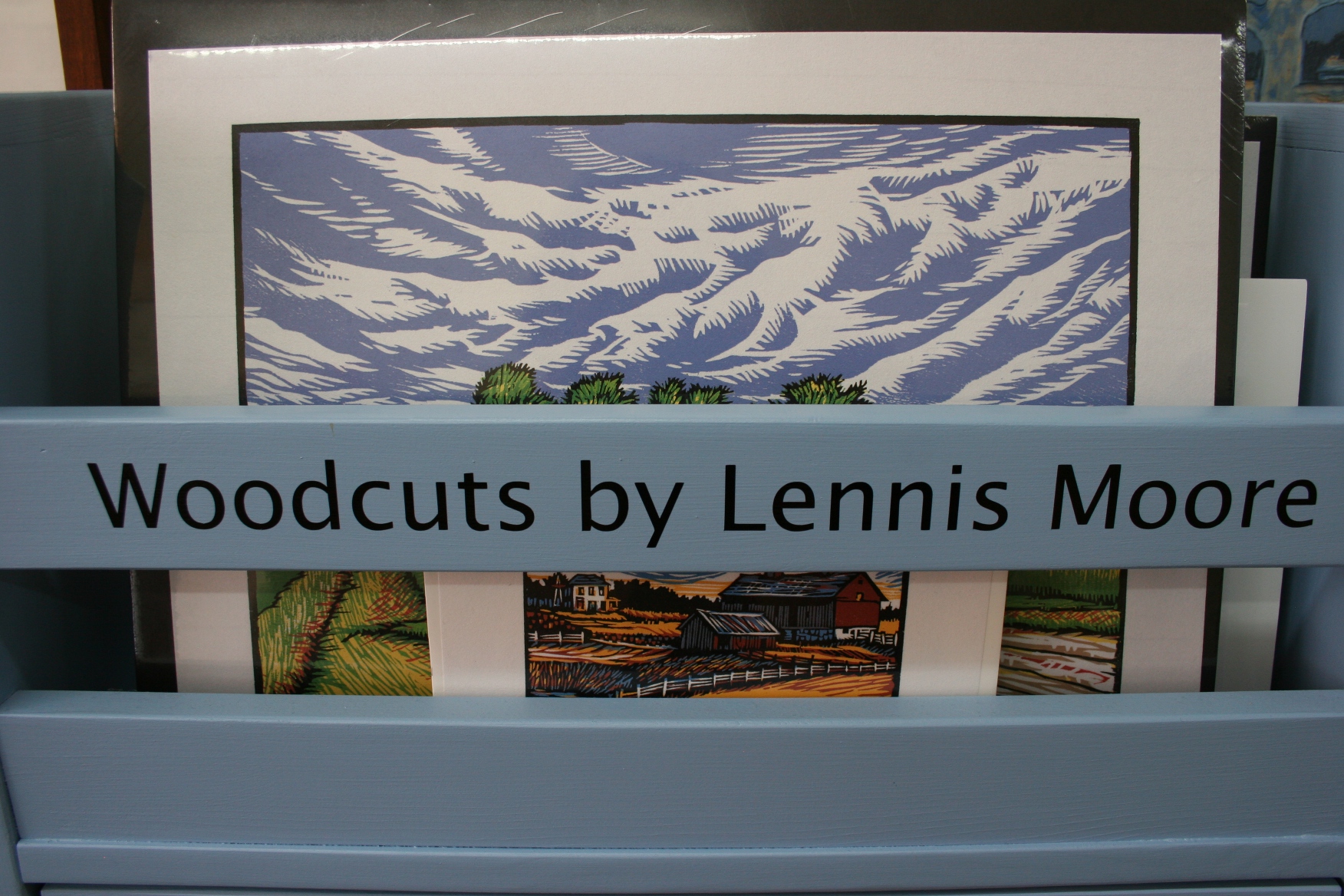
If I had excess discretionary funds, I would have purchased the woodcut art of Lennis Moore sold at Eckheart Gallery.

If I had excess discretionary funds, I would purchase the woodcut art of Lennis Moore sold at Eckheart Gallery.

More great buildings...

More great buildings…

FYI: Check back for more posts from downtown and elsewhere in Decorah, Iowa, including images of the historic hotel where we stayed, a beautiful waterfall, Storypeople, an historic home and a fish hatchery. I promise that by the end of this photographic tour, you will add this community to your list of “must visit” towns.

© Copyright 2013 Audrey Kletscher Helbling


Quilt art celebrates rural Faribault woman’s passion for quilting July 3, 2013

Filed under: Uncategorized — Audrey Kletscher Helbling @ 6:30 AM
Tags: , , , , , , , , , , , ,
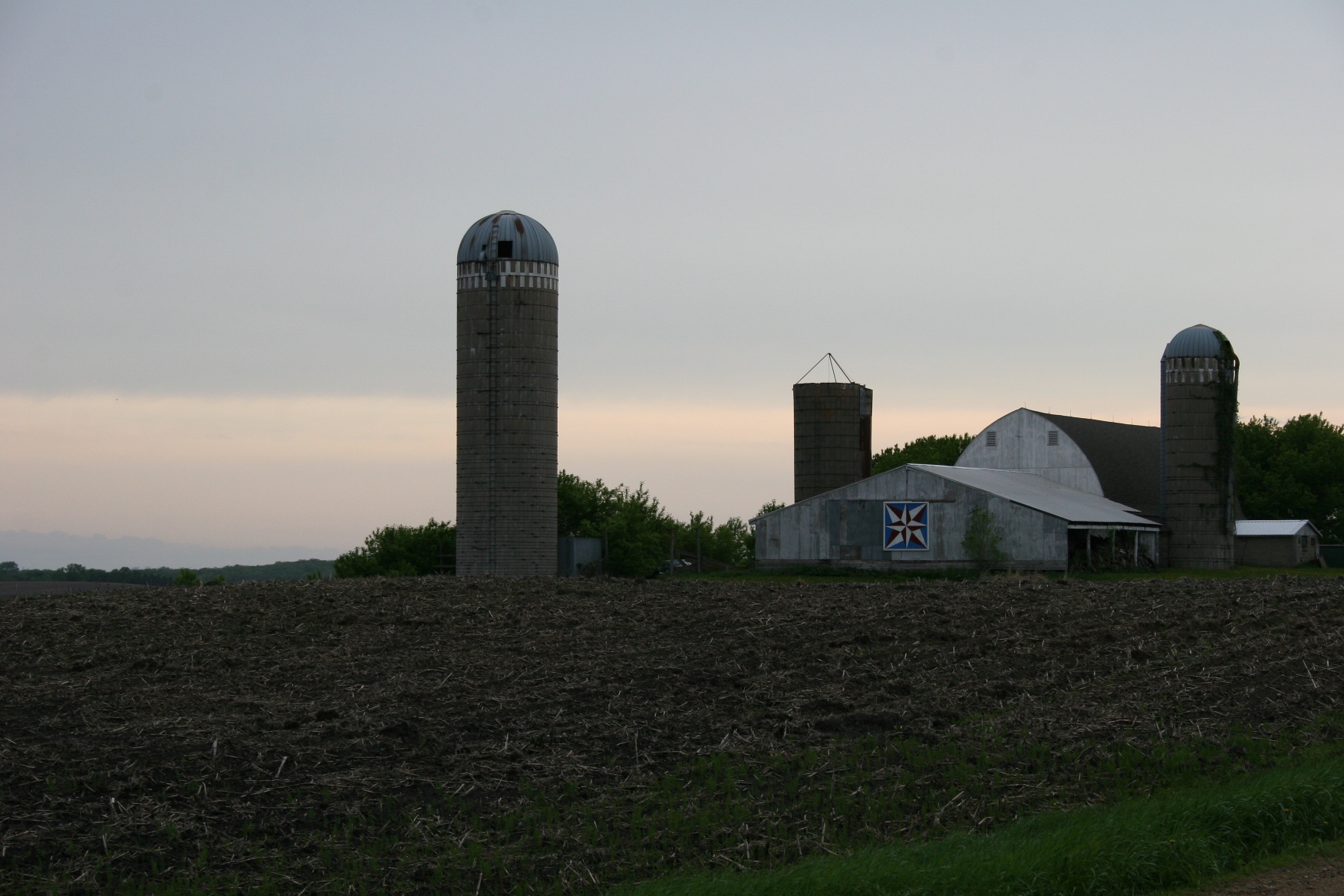
The sun sets as I approach Barb and Bob's farm east of Faribault.

The sun sets as I approach Barb and Bob’s farm east of Faribault.

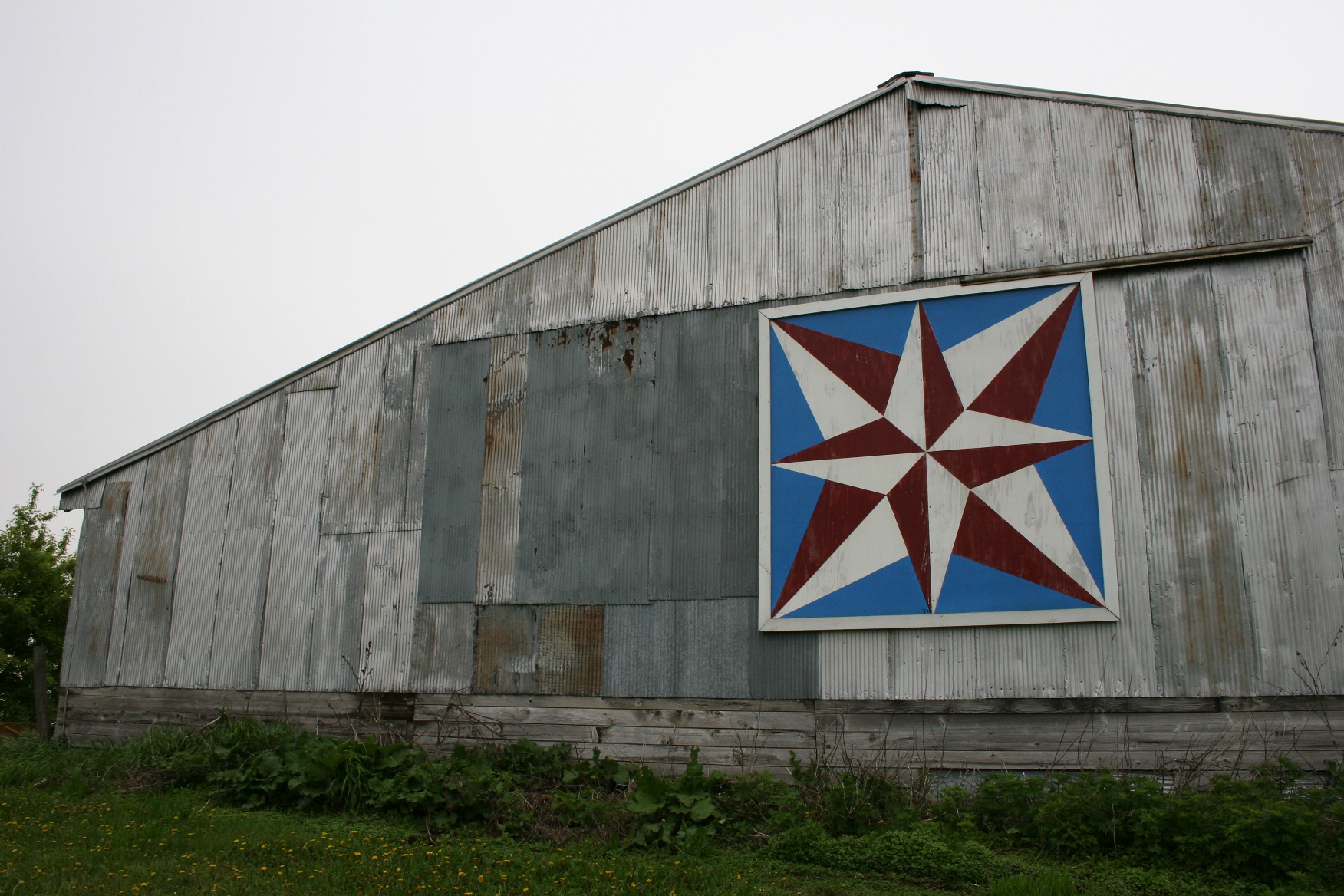
ON A RECENT RURAL OUTING to forage rhubarb from my friend Barb’s abundant patch, I noticed a work of art I hadn’t previously seen displayed on her farm east of Faribault.

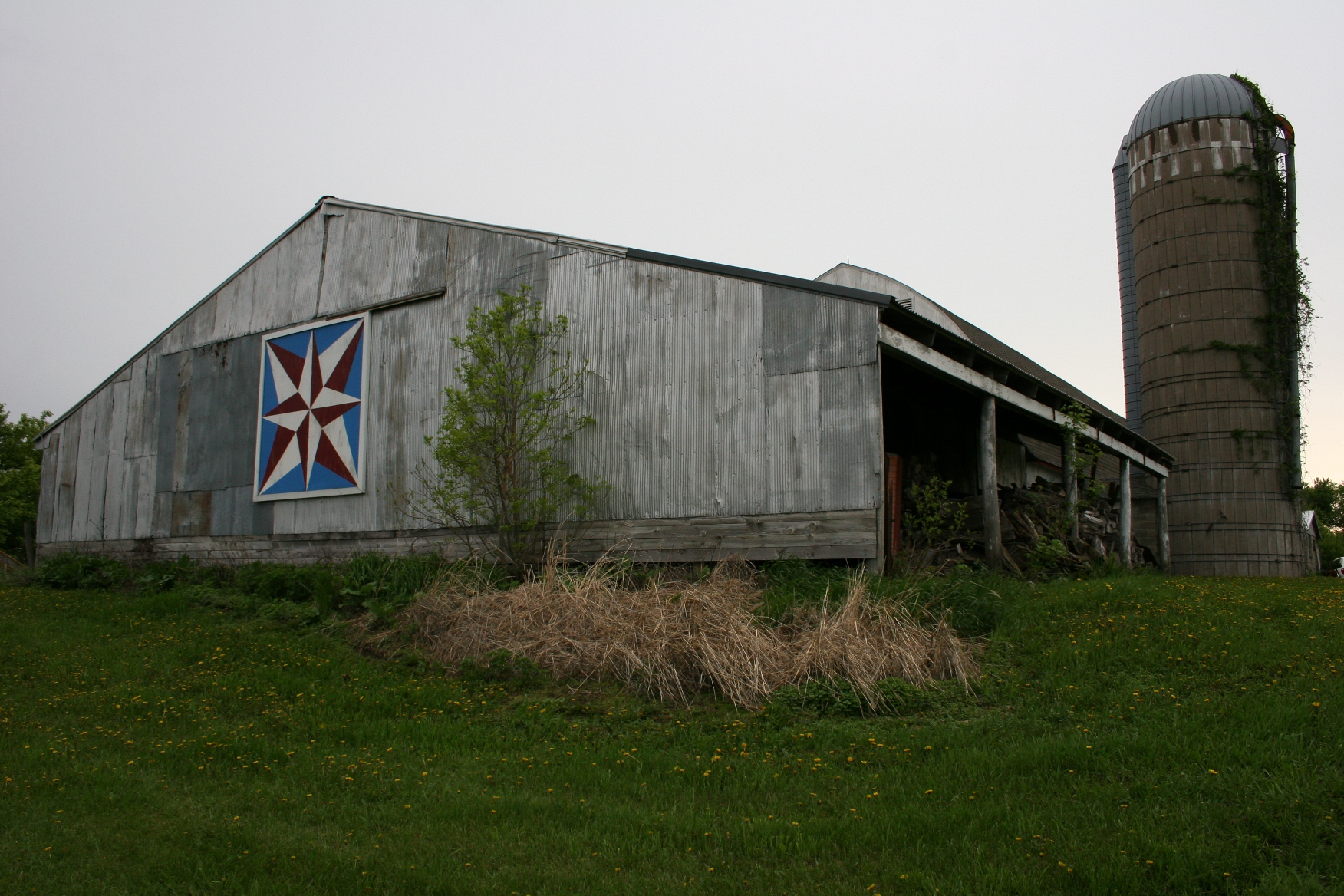
A a display of Americana art.

A display of Americana art.

Attached to weathered tin on the end of a pole shed hangs a red, white and blue “Star Shadow” quilt block painted on an eight-foot square of plywood.

The barn quilt is tied to Barb’s passion for quilting, something she’d do all day if only she didn’t have to cook or clean or…

"Star Shadow."

“Star Shadow.”

She’d seen similar painted quilts on barns, always wanted one and a few years ago, along with husband Bob, chose the Star Shadow design for their quilt art. No particular reason for the design—just one they both liked, although they knew the paint hues would be in the trio of patriotic colors.

Barb’s a long-time seamstress who once sewed her own clothes, embroidered and then began making simple block quilts before attempting a tulip quilt. She struggled with the tulip quilt, finishing it in the early 1990s, some 40 years after beginning the project.

Since that quilting success, Barb’s emerged as an avid quilter, stitching countless bed-sized quilts, wall hangings, placemats, table runners and more. She keeps her work or gives it away, including to charities. As a member of the Blue Chicks, a local quilting group that meets monthly, Barb has sewn quilts for the Ronald McDonald House. She also quilts with her sisters once a month and recently joined the quilting circle at her church, Trinity Lutheran in Faribault. That church group donates most of its quilts to charity.

“I’m infected with the pox,” Barb says of her quilting passion. She collects fabric, goes on fabric-shopping road trips with fellow quilters…

Although my friend doesn’t design her own quilt patterns, she enjoys the creative aspect that comes in selecting designs and colors, pulling it all together in a work of art—whether stitched or painted.

BONUS FARM PHOTOS:

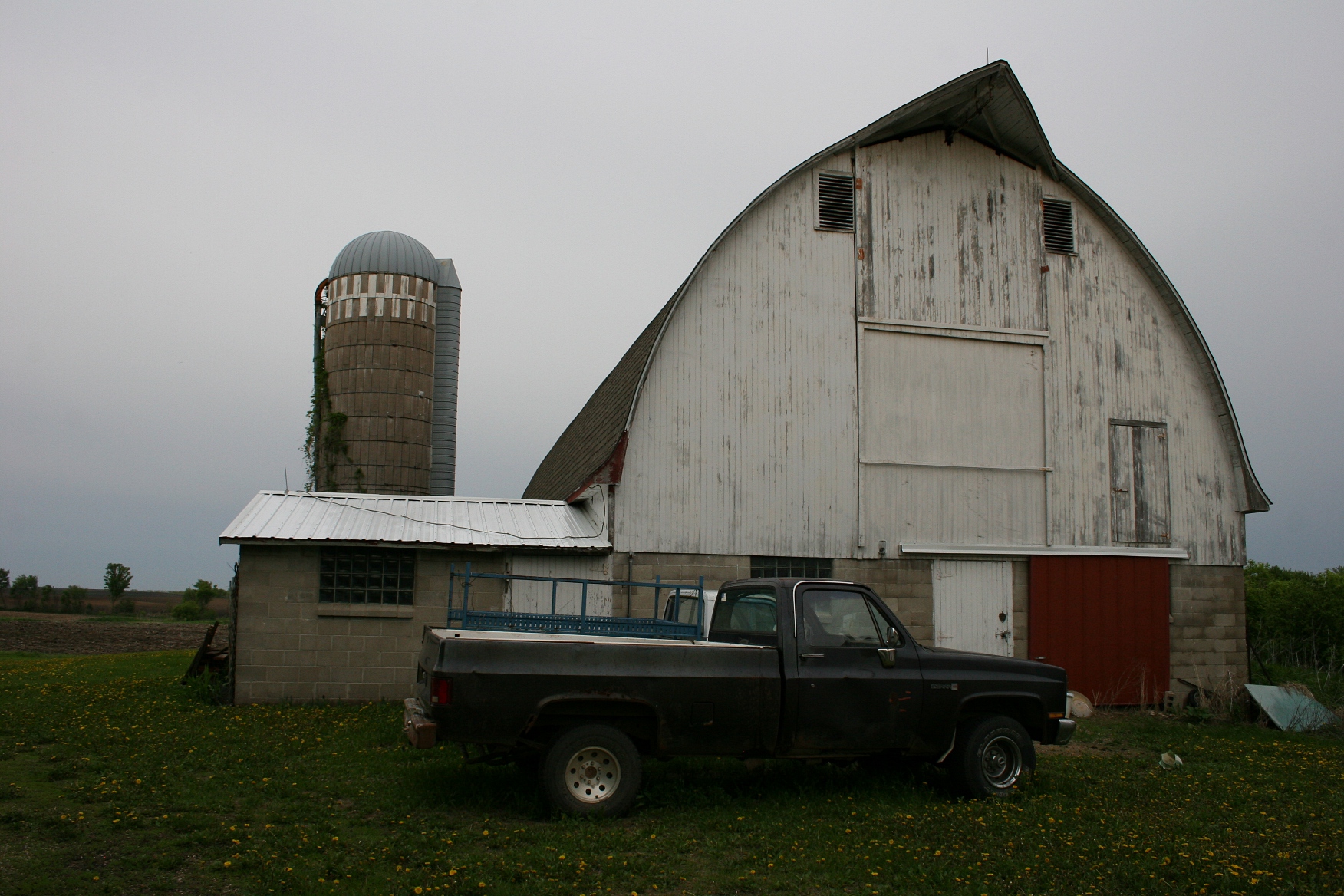
The beautiful barn on Barb and Bob's 100-year-old plus family farm.

The beautiful barn on Barb and Bob’s 100-year-old plus family farm.

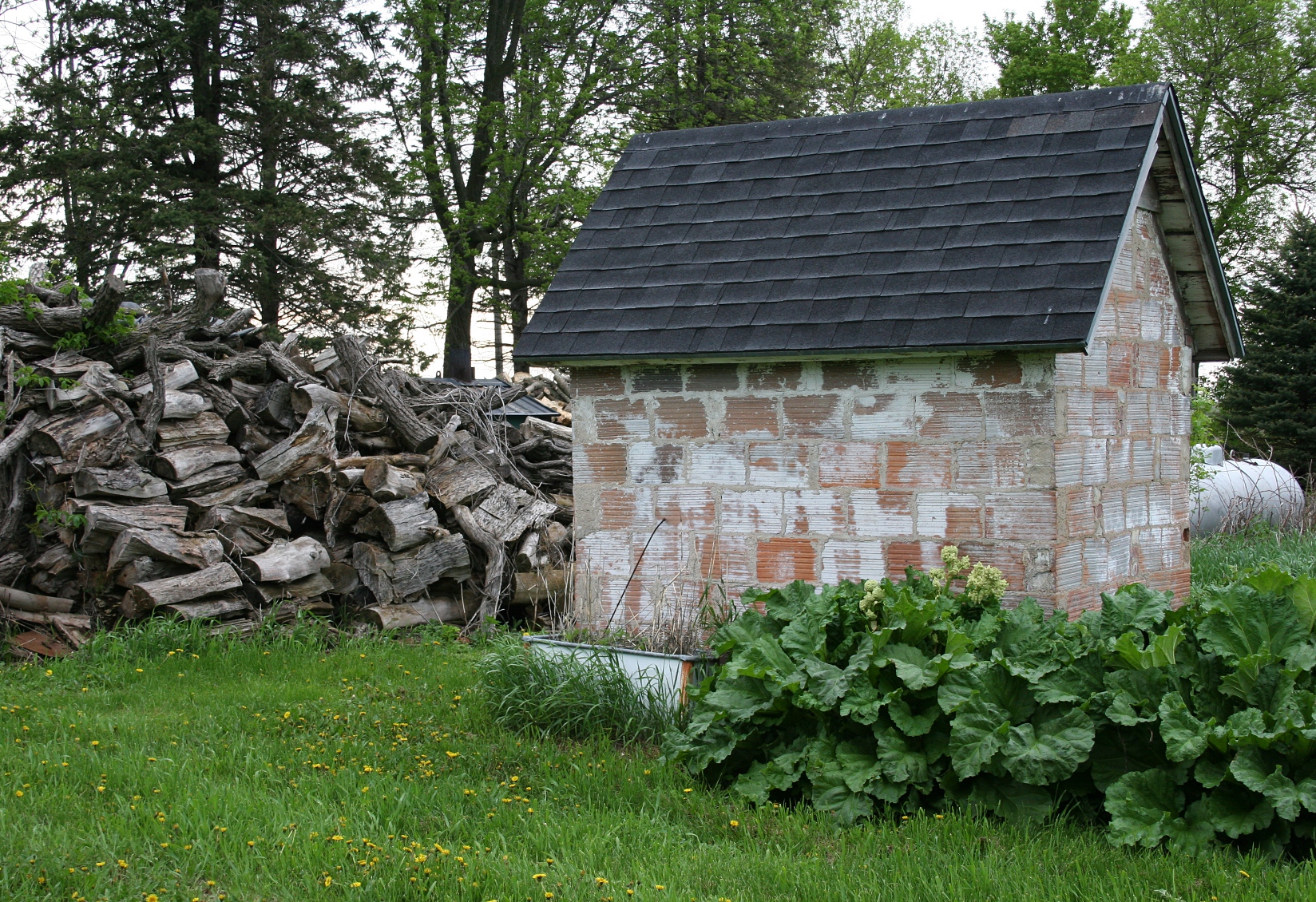
Rhubarb grows by the old smokehouse, which now houses garden tools.

Rhubarb nudges the old smokehouse, which now houses garden tools.

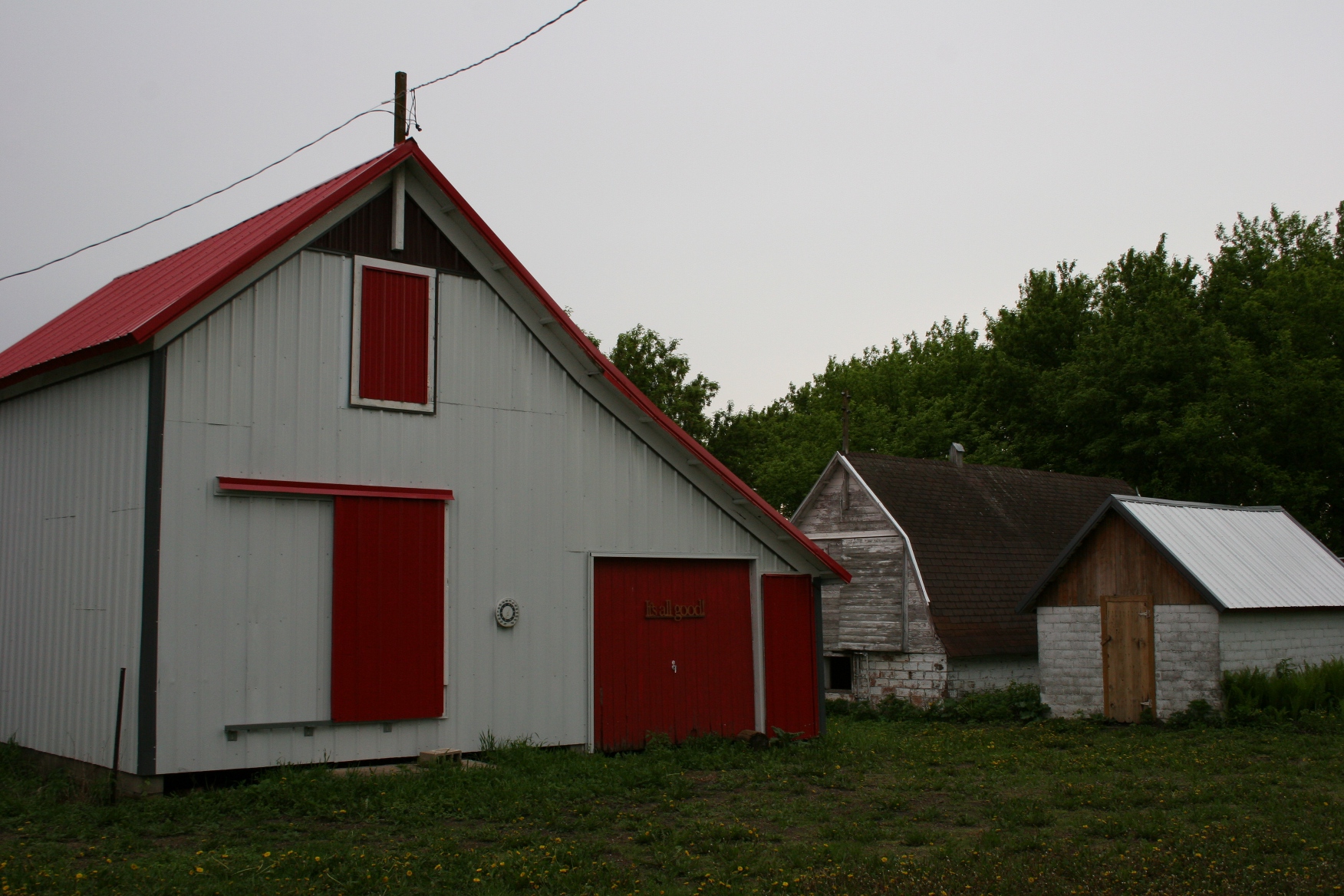
This farm is typical old style farmplace with lots of outbuildings, including the granery on the left, one of the oldest buildings on the farm.

This farm is typical old style farm place with lots of outbuildings, including the updated granery on the left, one of the oldest structures on the farm.

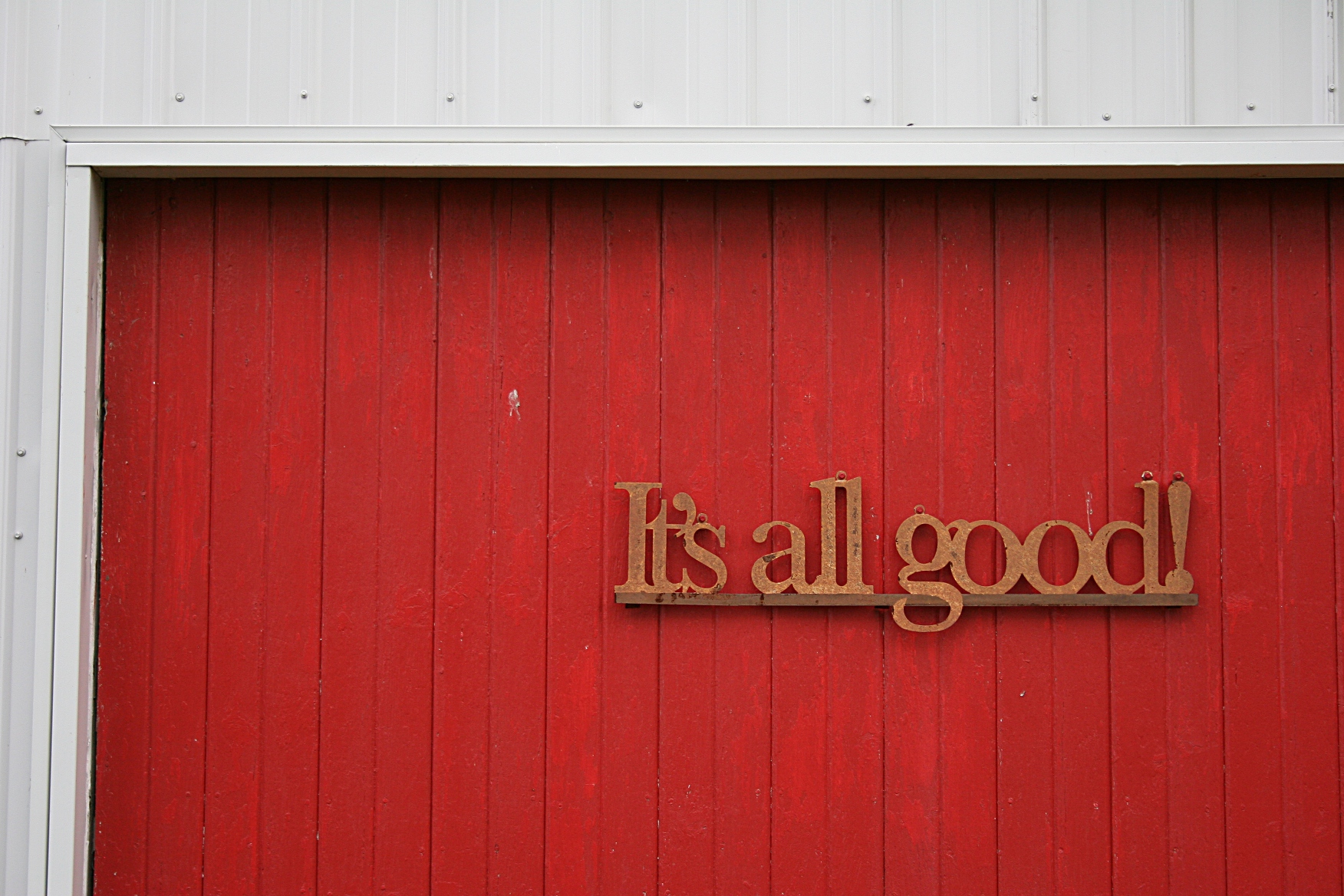
The message on the granery door reflects Barb's attitude: "The sheds are full of stuff and it's all good."

The message on the granery door reflects Barb’s attitude: “The sheds are full of stuff and it’s all good.”

© Copyright 2013 Audrey Kletscher Helbling


Plans underway to repurpose an historic treatment center in Fergus Falls June 19, 2013

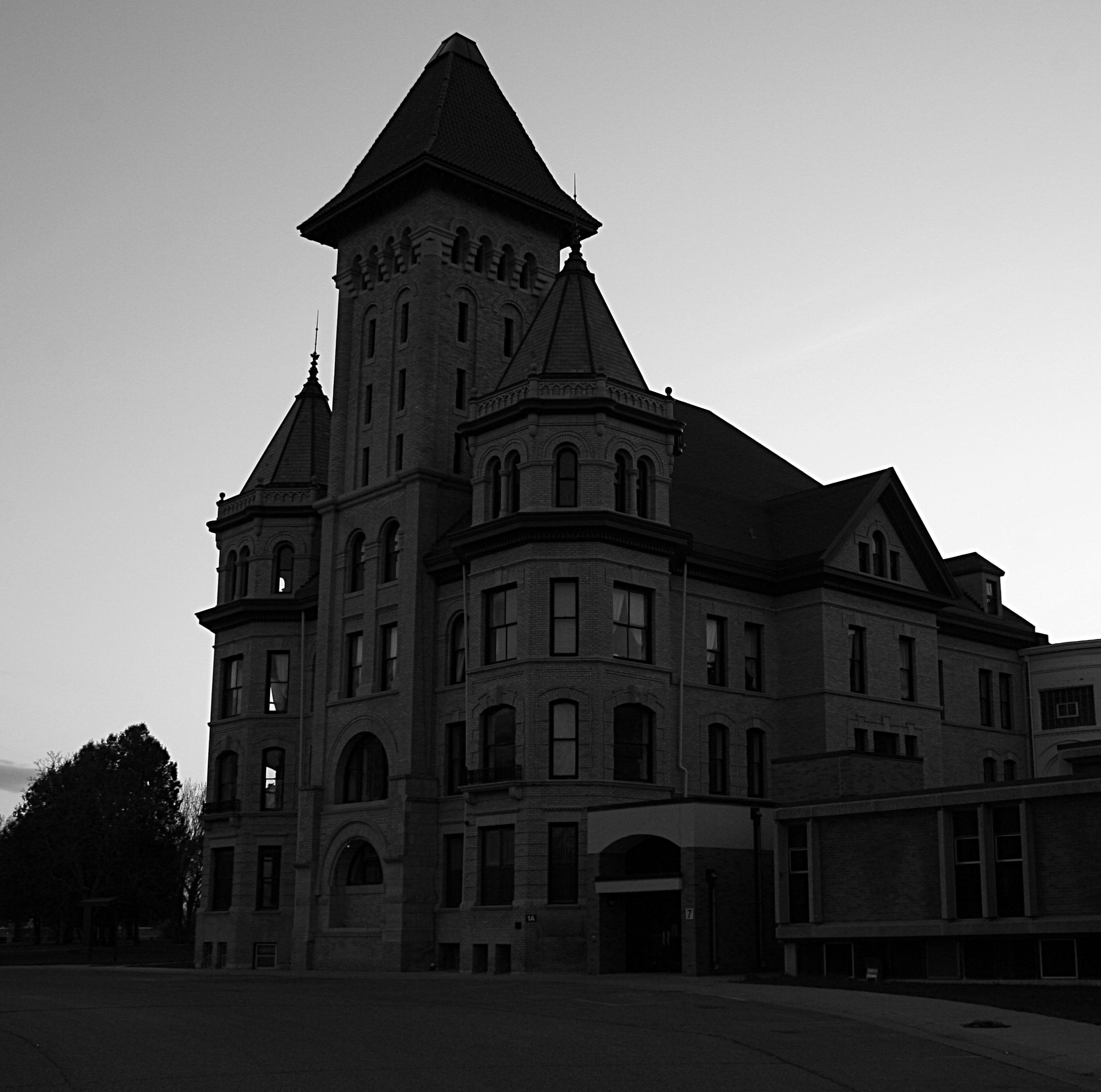
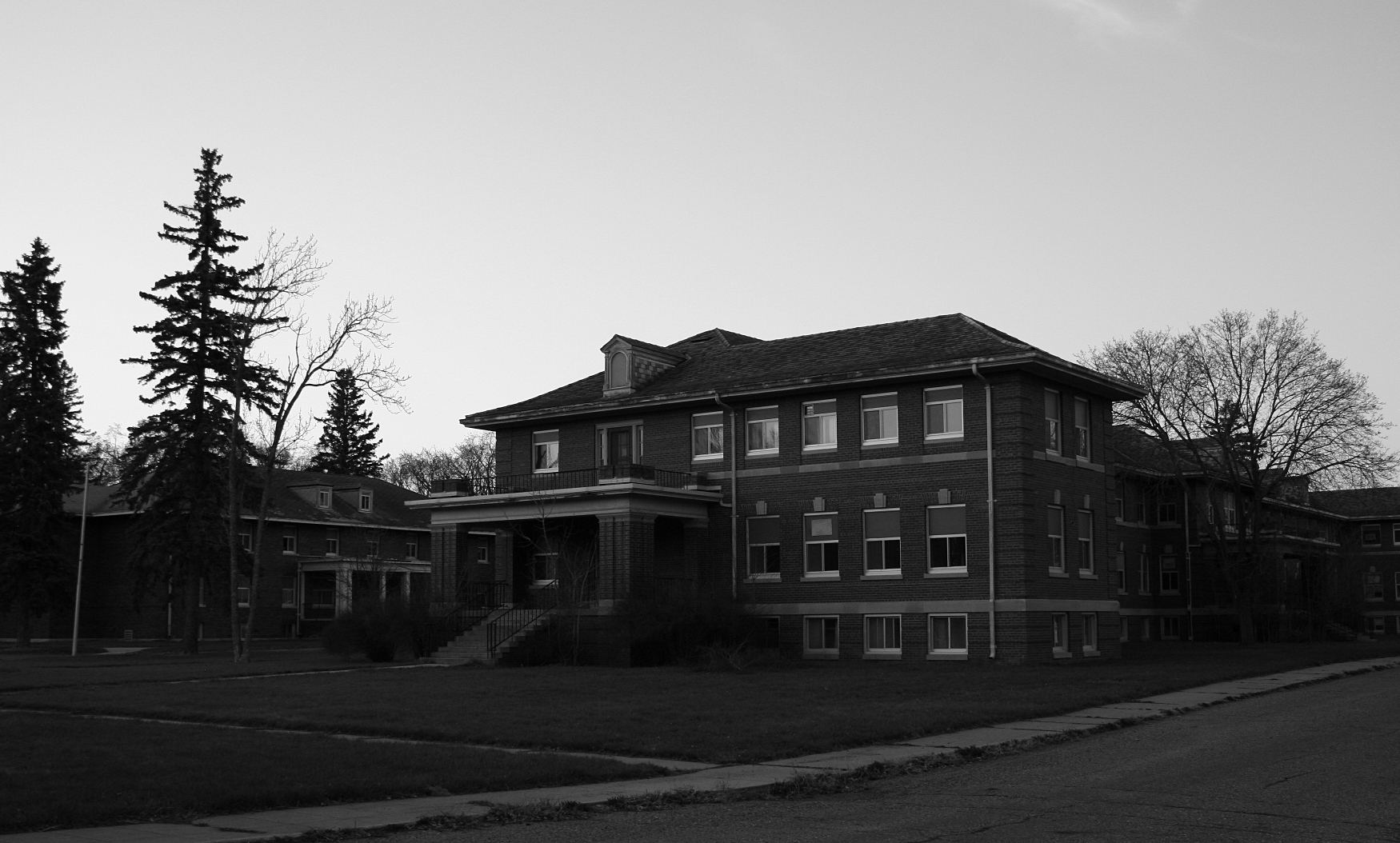
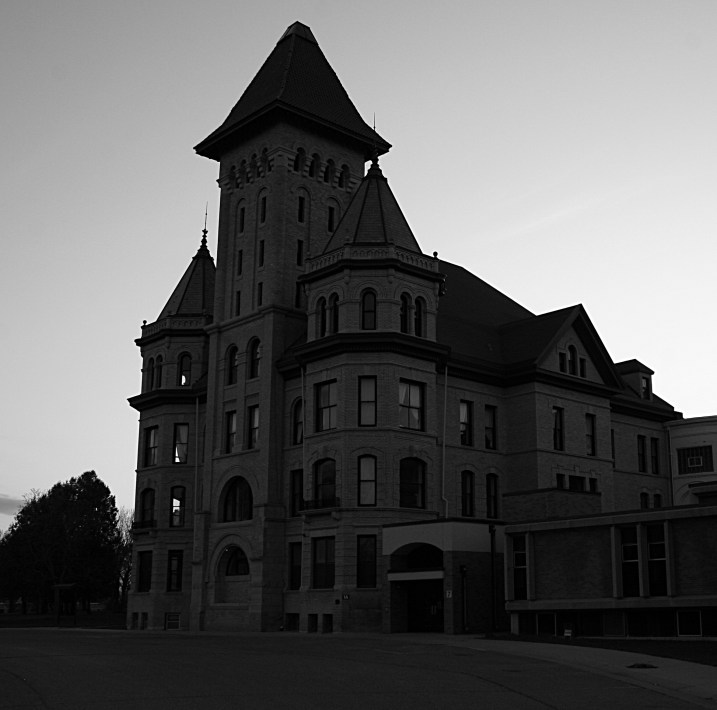
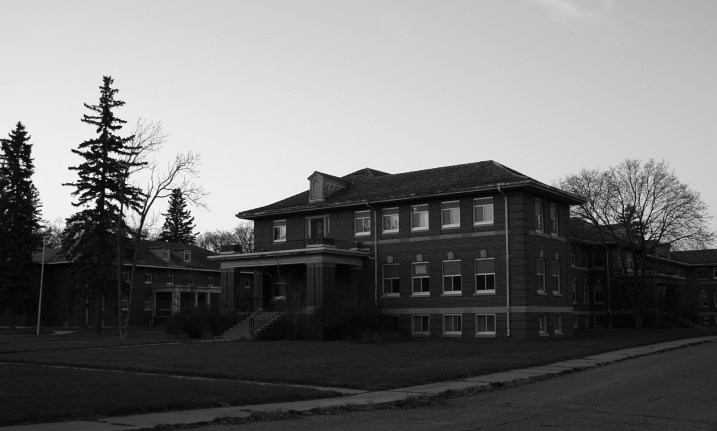
Daylight was fading as I snapped this photo of the anchor building on the former Fergus Falls State Hospital campus.

Daylight was fading as I snapped this photo of the anchor building on the former Fergus Falls State Hospital/Regional Treatment Center campus in mid May.

FROM THE EXTERIOR, the sprawling former Fergus Falls State Hospital/Regional Treatment Center presents an impressive and serene presence.
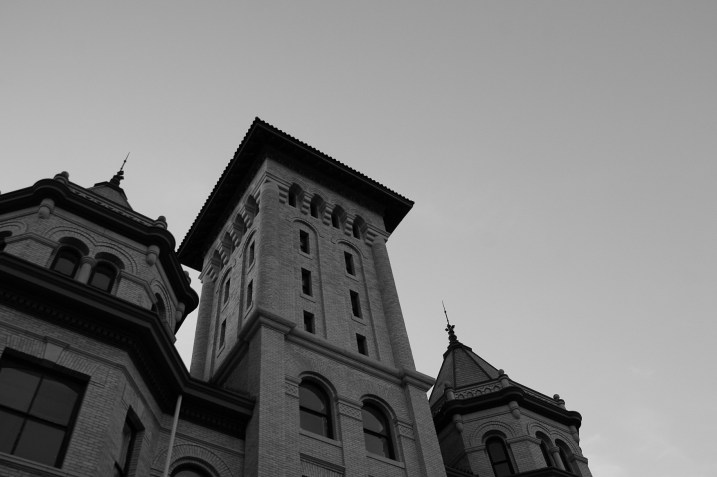
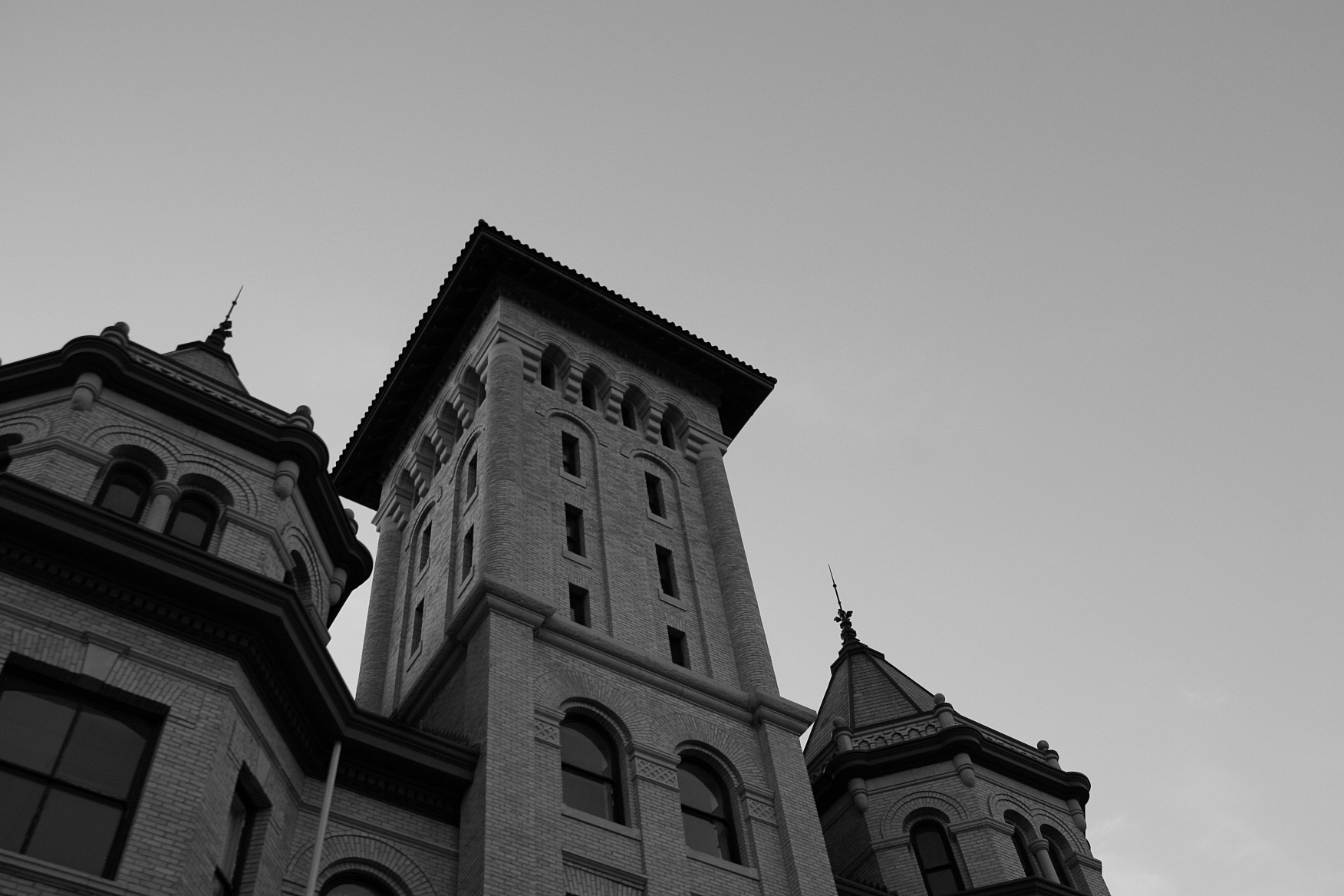
The historic buildings feature some incredible architecture.

The historic buildings feature some incredible architecture.

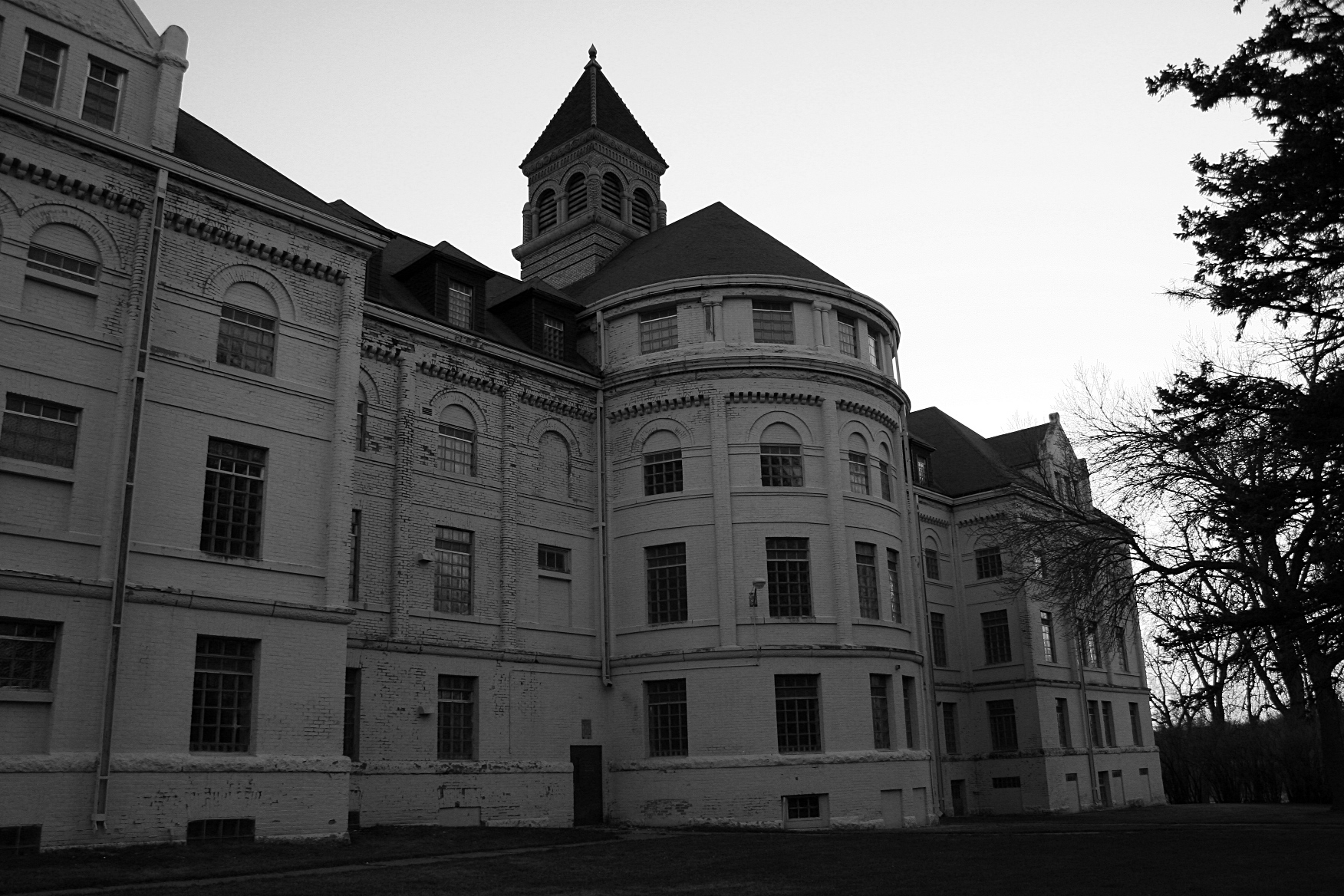
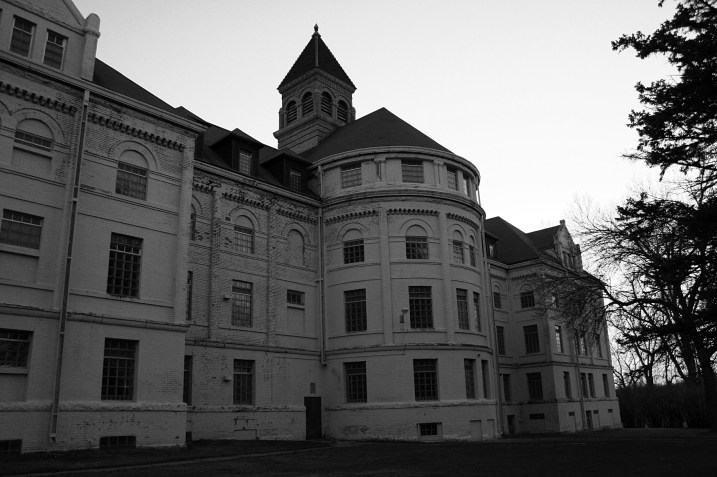
That marked my initial reaction upon viewing the towering, turreted and massive buildings on this west central Minnesota campus in mid May.

But I expect that the historical use of this place would tell a different story. In 1885, the State of Minnesota commissioned this as the Third State Asylum for the Mentally Ill. The word “asylum,” for me, evokes negativity. Eventually, the complex would also be home to those with developmental disabilities, chemical dependency issues and psychiatric illnesses.

One can only imagine the personal struggles and challenges faced within these walls. In those early days, I imagine treatment was not always the best or the most informed. I do not know this specific to the Fergus Falls center, only from my general knowledge of such large-scale public facilities of decades past.

Eventually, those who lived here were moved into smaller community-based facilities.
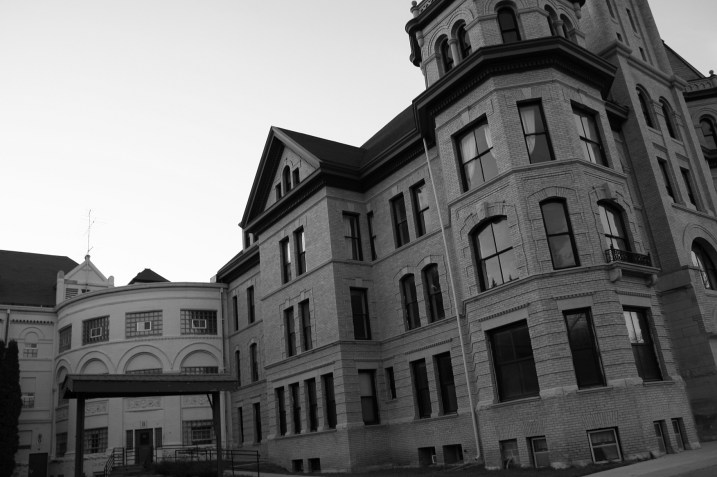
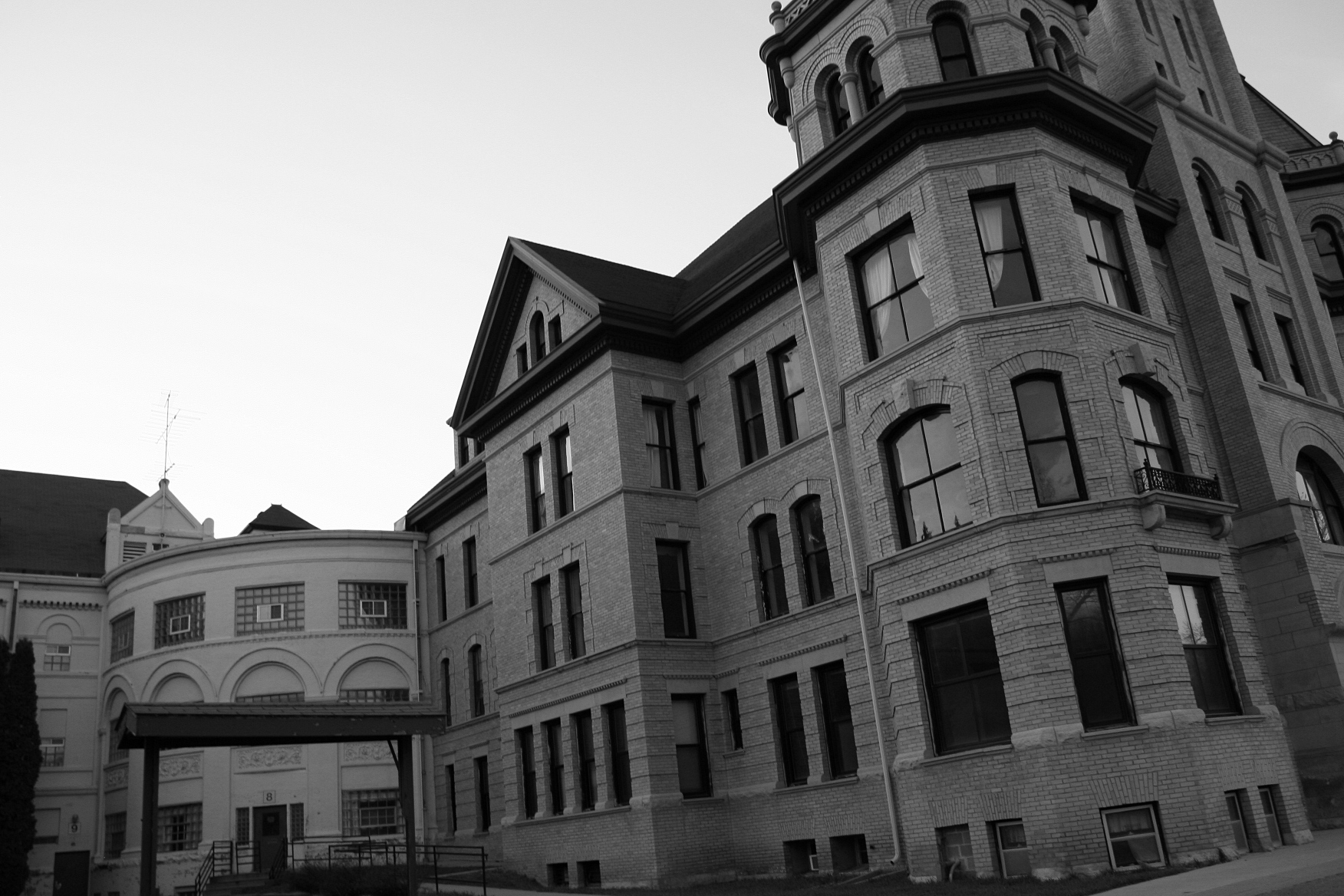
Wings connect to the main building.

Wings connect to the main building. These buildings are labeled as Kirkbride buildings after Pennsylvania psychiatrist Dr. Thomas Story Kirkbride who believed in the role of environment in promoting healing among mentally ill individuals.

Today the City of Fergus Falls still owns most of this campus, purchased in 2007. And just last week, according to draft city council minutes published on the city’s website, the Fergus Falls City Council passed a resolution “authorizing the city to enter into a Letter of Intent with Historic Kirkbride LLC as a developer for the Regional Treatment Center, subject to financial disclosure…”  Historic Kirkbride’s estimated $41 million proposal calls for a 120-room first class hotel, several restaurants and 60 market rate apartments.

The planned development is expected to bring temporary construction jobs and an estimated 190 full and part-time positions to Fergus Falls.
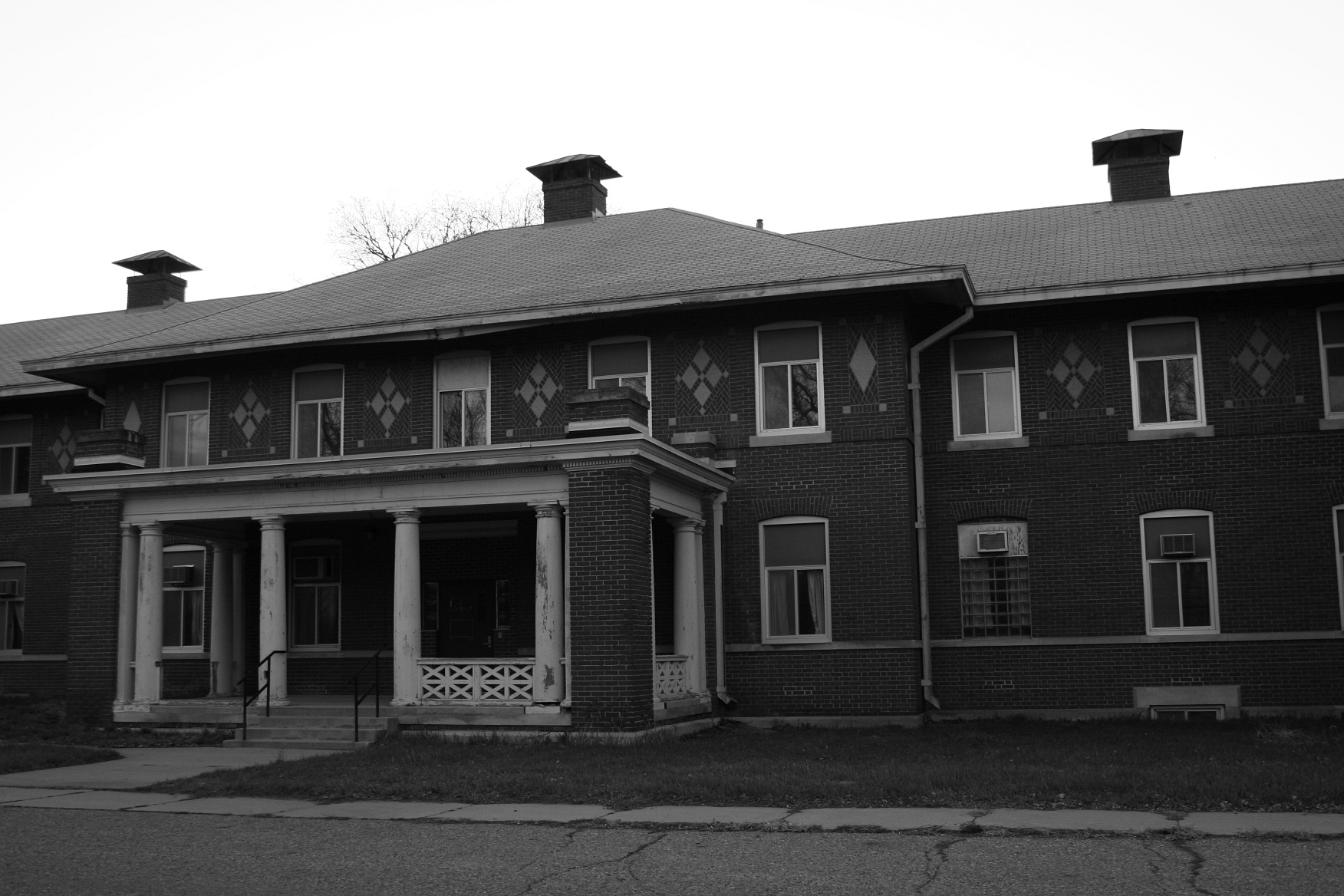
Even the individual brick buildings impress.

Even the individual brick buildings impress.

The Kirkbride proposal seems an ambitious undertaking, but one worthy of this beautiful complex of architecturally pleasing buildings and an equally pleasing natural environment. Principals of the Kirkbride team bring experience to the Fergus Falls project with more than two dozen historic renovation projects completed over 33 years, according to presenter Ray Wiley of Georgia-based Historic Properties Inc.

Of course, as in all such projects involving historic buildings and lots of money and government entities and private investors, this isn’t a done deal. If all progresses as planned, though, the 120-room hotel, restaurants, apartments and more are projected to open in December 2015.
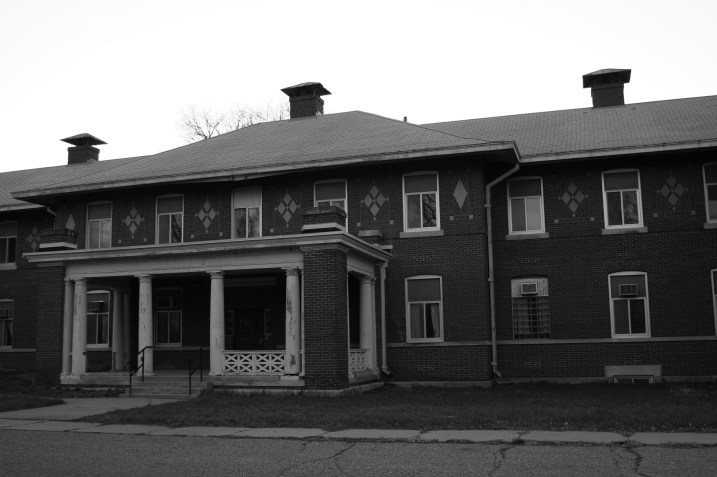
From the exterior, I can envision these detailed brick buildings as dorm rooms or housing for a retreat center or even as apartment units.

The complex includes a cluster of two-story brick buildings.

I expect plenty of skepticism exists over whether the planned project presents the best use of the property, will succeed, or will even get off the ground.

The Kirkbride proposal was one of two presented to the council last week. The other, from Twin Cities-based Colonade Design Group, proposed a wellness center serving those dealing with diabetes and obesity (and included a food and nutrition program); a hotel for participants; artisan flats and studios; services for returning veterans; condos; event space; greenhouses; and more.

Click here to read details of the two proposals, public input and more from the June 12 special city council meeting.

Based on my two visits to Fergus Falls in recent years, the Historic Kirkbride project certainly has the potential to succeed. For one, this Otter Tail County seat city sits along Interstate 94, an ideal location to catch travelers in need of a respite. It’s the last sizable town westbound motorists pass before reaching Fargo an hour away. That, though, is not enough.

The community possesses an artsy vibe with galleries and a theatre and historic buildings and arts events in a charming downtown that hugs the Otter Tail River. It’s a college town with Minnesota State Community and Technical College and is also a regional center of commerce and of healthcare.

Developers will need to market those strengths, the historical aspect of the former treatment center, and the natural scenic beauty of this lake region. That’s a given.

Future guests will need to envision Kirkbride’s hotel as a get-away because, otherwise, this will be just one more hotel (albeit an historic one classified as “first class”) in one more town along the interstate.

WHAT ARE YOUR THOUGHTS on Historic Kirkbride’s plans for the former Fergus Falls State Hospital/Regional Treatment Center? Can something like this succeed in Fergus Falls?
The sun sets on this beautiful campus of trees and open space.

The sun sets on this beautiful campus.

FYI: The Fergus Falls complex is open for free public tours on Friday afternoons during the summer. Reservations are required. Phone Maxine and Gene Schmidt at (218) 736-5328. I was, unfortunately, not in Fergus Falls on a Friday afternoon and unaware then of the tours offered.

Click here to read Colliers International listing of the property.

Then click here to read information on the Minnesota Historical Society website.

And click here to find even more info.

© Copyright 2013 Audrey Kletscher Helbling


Preserving a small town’s history in a Minnesota country schoolhouse June 7, 2013

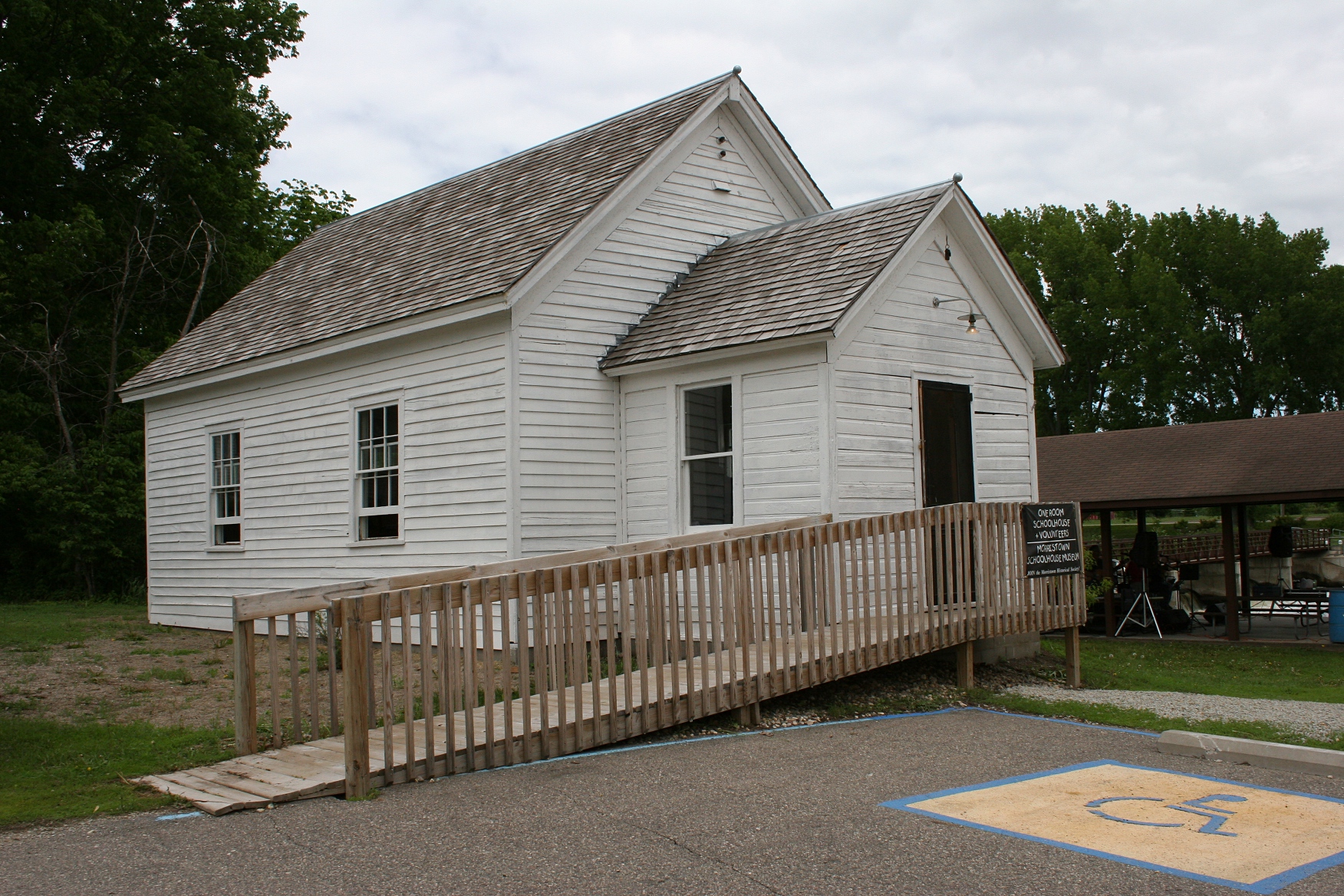
The District #54 country school, built in 1870, was moved into Morristown several years ago to a site next to the old mill along the banks of the Cannon River.

The District #54 country school, built in 1870, was moved into Morristown several years ago to a site next to the old mill along the banks of the Cannon River.

OH, THE THINGS YOU LEARN upon visiting a grassroots historical society run by volunteers in a small town.

One of my favorite images is this one of volunteer Helen Newman's hand. She was cutting and taping info into the 2005 sesquicentennial book lying on the desk.

One of my favorite images is this one of 87-year-old volunteer Helen Newman’s hand. the life-long Morristown resident was cutting and taping info into the 2005 sesquicentennial album shown here.

Nothing against sprawling museums with paid staff—those places are fabulous, too. But there’s something especially touching about folks from a small town collecting photos and artifacts, memories and information, to display in a building(s) with a deep connection to the community.

You’ll find exactly that in Morristown, population around 1,000, in Rice County in southeastern Minnesota. Set next to the Cannon River are the Morristown Feed Mill, once home to a sawmill and flour mill, and the District 54 Epard School moved in from a few miles north of Morristown and today the District #54 Schoolhouse Museum. The Morristown Historical Society maintains both buildings, which I toured during the recent Dam Days community celebration.

I didn’t study the content of the two buildings like a local with an intimate connection to this place. Rather, I picked topics of particular interest to me to read and photograph.

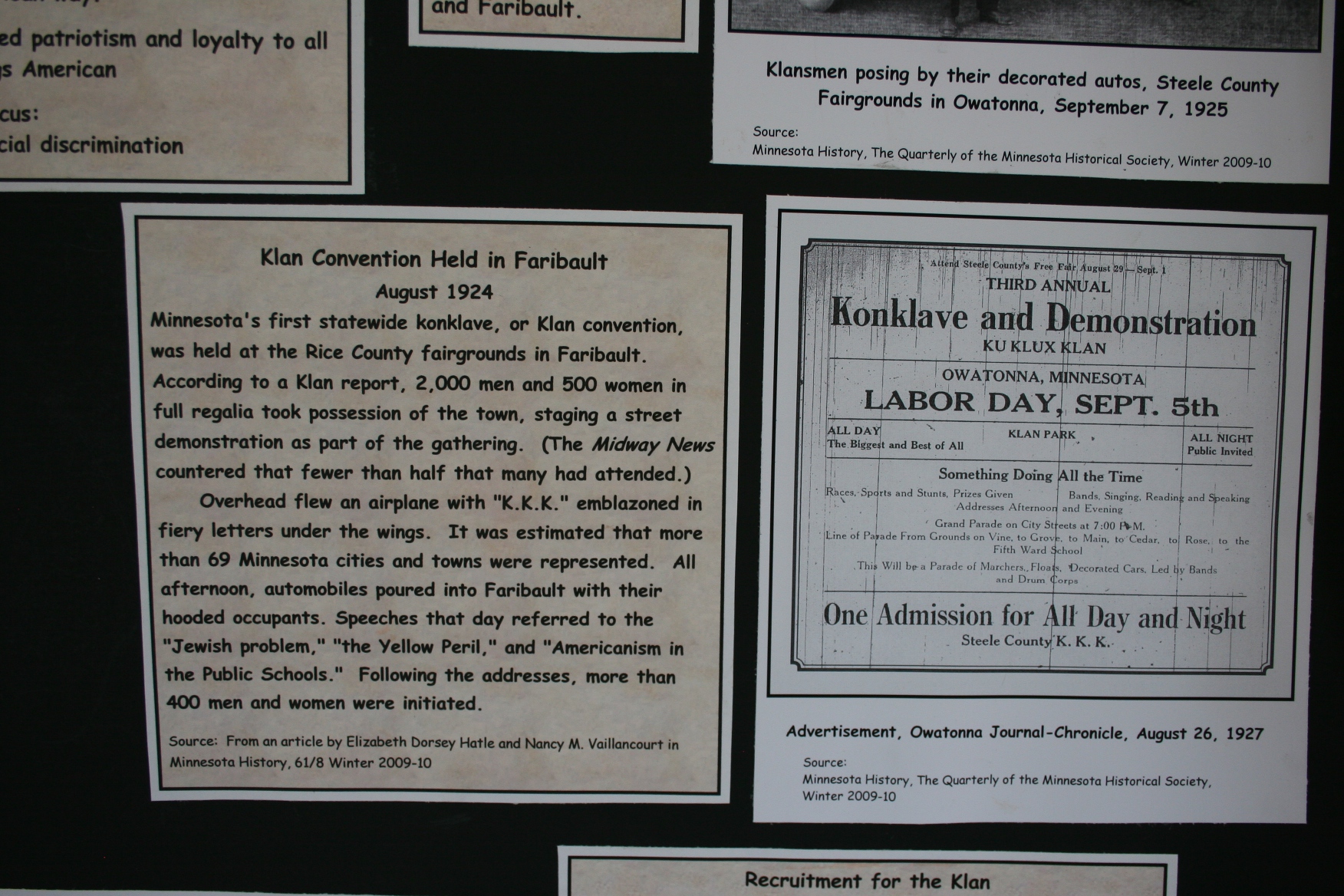
Information about the Ku Klux Klan's presence in Morristown and the region.

Information about the Ku Klux Klan’s presence in Morristown and the region.

For example, I was unaware that my county of Rice was home to Ku Klux Klan chapters and hosted the first statewide Klan convention at the fairgrounds in August of 1924. Chapter #26 was headquartered in Morristown with other chapters in nearby communities like Faribault and Owatonna and Austin and Albert Lea further to the south. Certainly, such membership doesn’t please me. But I’m thankful the Morristown Historical Society didn’t ignore this negative part of the town’s history. We need to learn from our mistakes.

A “Morristown Crime Wave of 1914” display also caught my eye with crimes such as profane and abusive language, drunken and disorderly conduct, and stealing fish noted.

News stories about the devastating 1900 fire.

News stories about the devastating 1900 fire in downtown Morristown.

In another display, a front page article published in the February 1, 1900, issue of the Morristown Press detailed a devastating fire which destroyed 20 buildings, nearly the entire business district, in downtown Morristown. “Loss will reach $35,000,” a sub-head reads.

Mrs. Lydia Meehl, who helped so many Morristown area women birth their babies.

Mrs. Lydia Meehl, who helped so many Morristown area women birth their babies.

My friend Dale, who joined a historical walking tour on the day I visited the schoolhouse museum and mill, learned about his place of birth in the Meehl Maternity Home. Hundreds of local babies were birthed there with the assistance of licensed practical nurse Mrs. Lydia Meehl. A newspaper story quotes the 82-year-old Meehl as saying she “loves them all (the 500-plus babies born in her maternity home).”

A snippet of the artifacts and info displayed inside the schoolhouse turned museum.

A snippet of the artifacts and info displayed inside the schoolhouse turned museum. Those are Civil War cannonballs on the shelf near the center of the photo

In the museum collection, you’ll also find the usual military (including Civil War cannonballs), school, telephone and other small town artifacts.

Helen Newman and Cindy Packard work on a sesquicentennial album.

Helen Newman and Cindy Packard work on a sesquicentennial album.

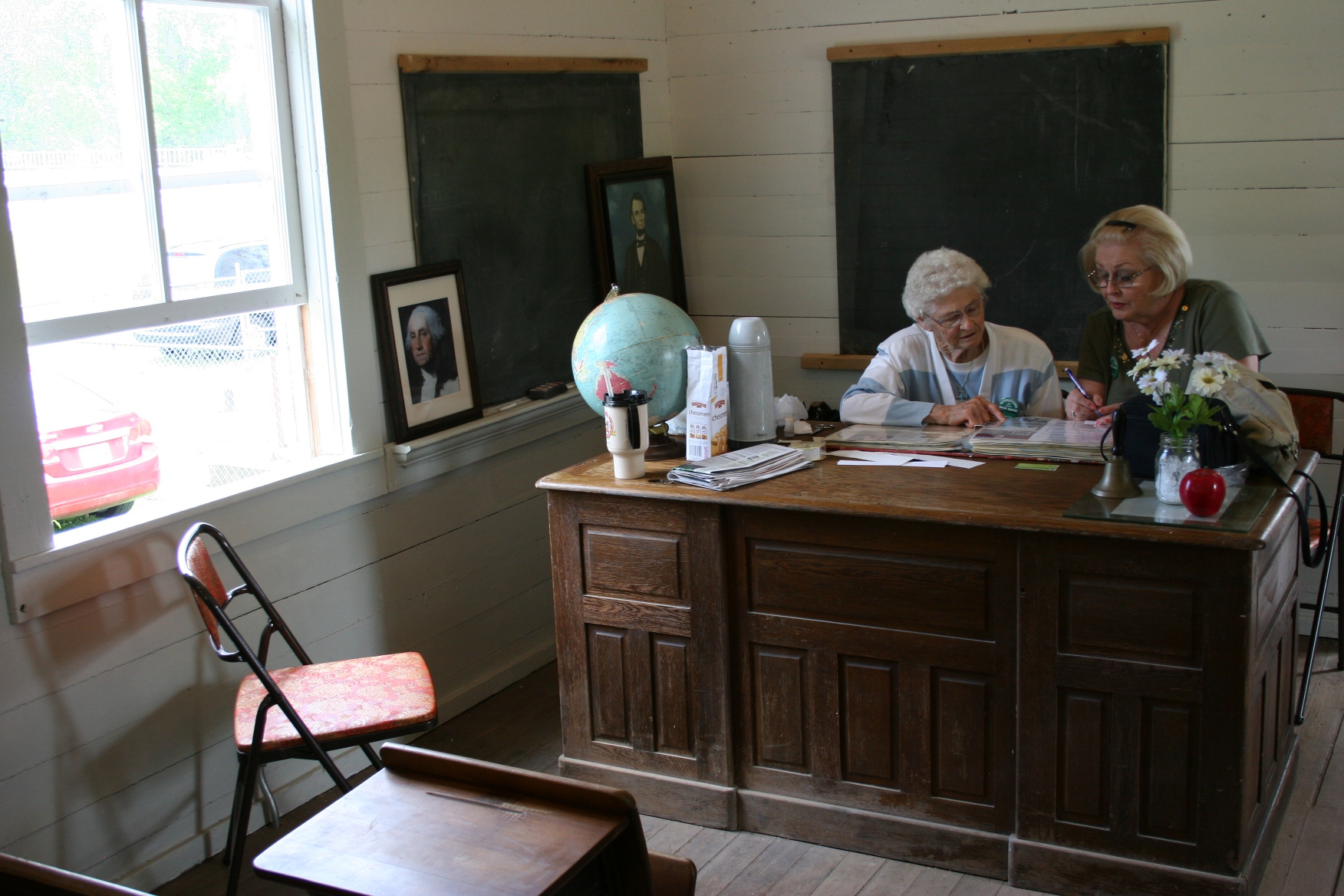
As a bonus, I met 87-year-old Helen Newman, who’s lived in Morristown her entire life, and Morristown native Cindy Packard, visiting her hometown from Colorado Springs. The two were seated behind a hulk of a desk inserting info into an unfinished album about the town’s 2005 sesquicentennial.

Packard brought with her a few items for the schoolhouse museum, including a spatula imprinted with “Our Twentieth Year LLOYD’S FOOD MARKET, Morristown, Minn.” She kind of hated to give it up, but…

Switchboard wires and switches reportedly from Adolph Hitler's bunker.

Switchboard wires and switches reportedly from Adolph Hitler’s bunker.

Upon my request, the pair pulled the spatula and a snippet of wires and two switches from a plastic bag resting on the corner of the desk. The switches came from the switchboard in Adolph Hitler’s bunker and were brought back by Oscar Ahlman to Hewitt Thomspon in Morristown, according to a note accompanying Packard’s donation.

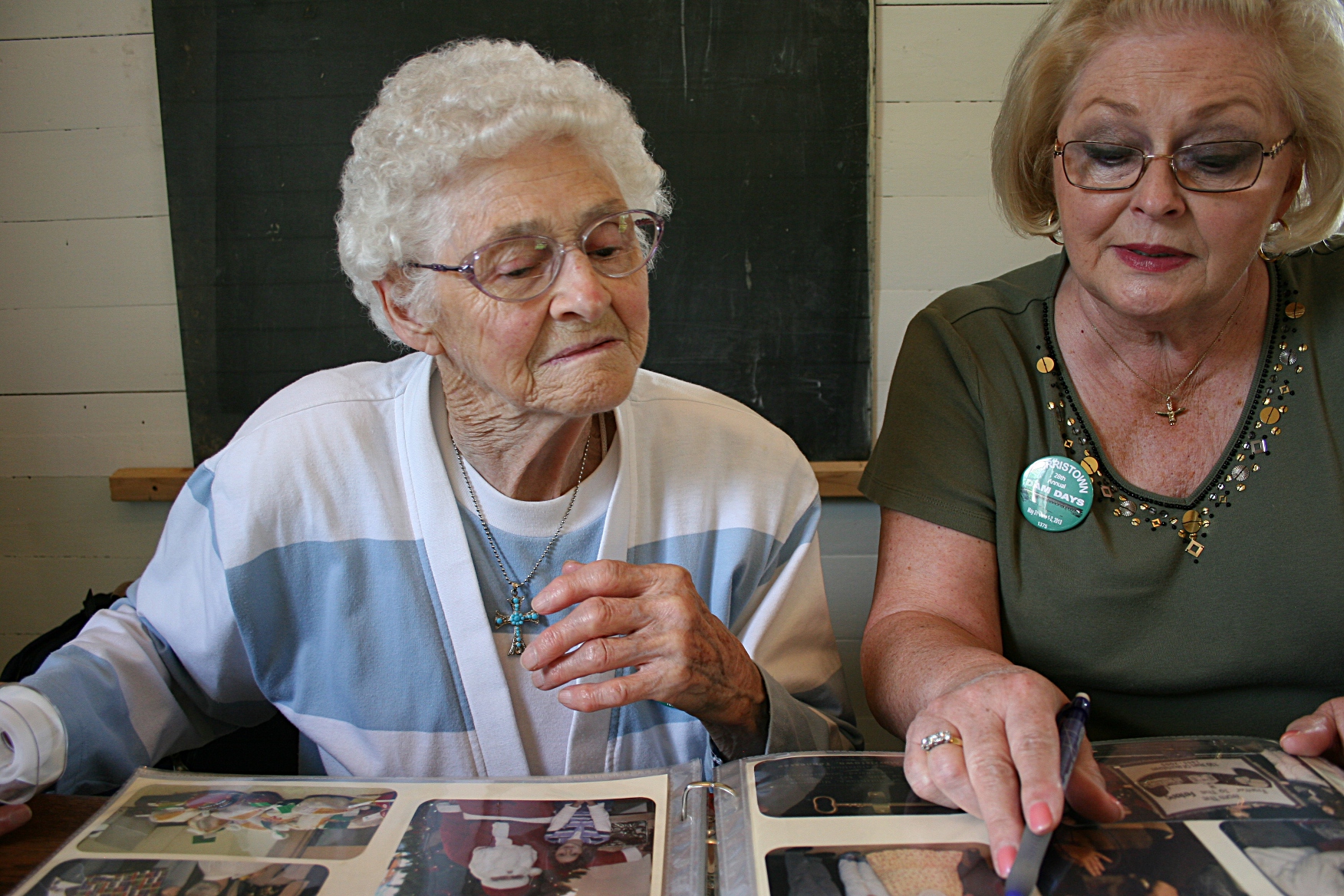
Helen and Cindy visit while they cut and tape information into the album.

Helen Newman and Cindy Packard visit while they write, cut and tape information into the album. I told them just to ignore me and my camera and they obliged. I simply love this photo of the pair.

And that’s how these small town museum collections grow—with donations from the likes of a hometown girl come home every year and the dedication of volunteers like the 87-year-old Newman.

BONUS PHOTOS:

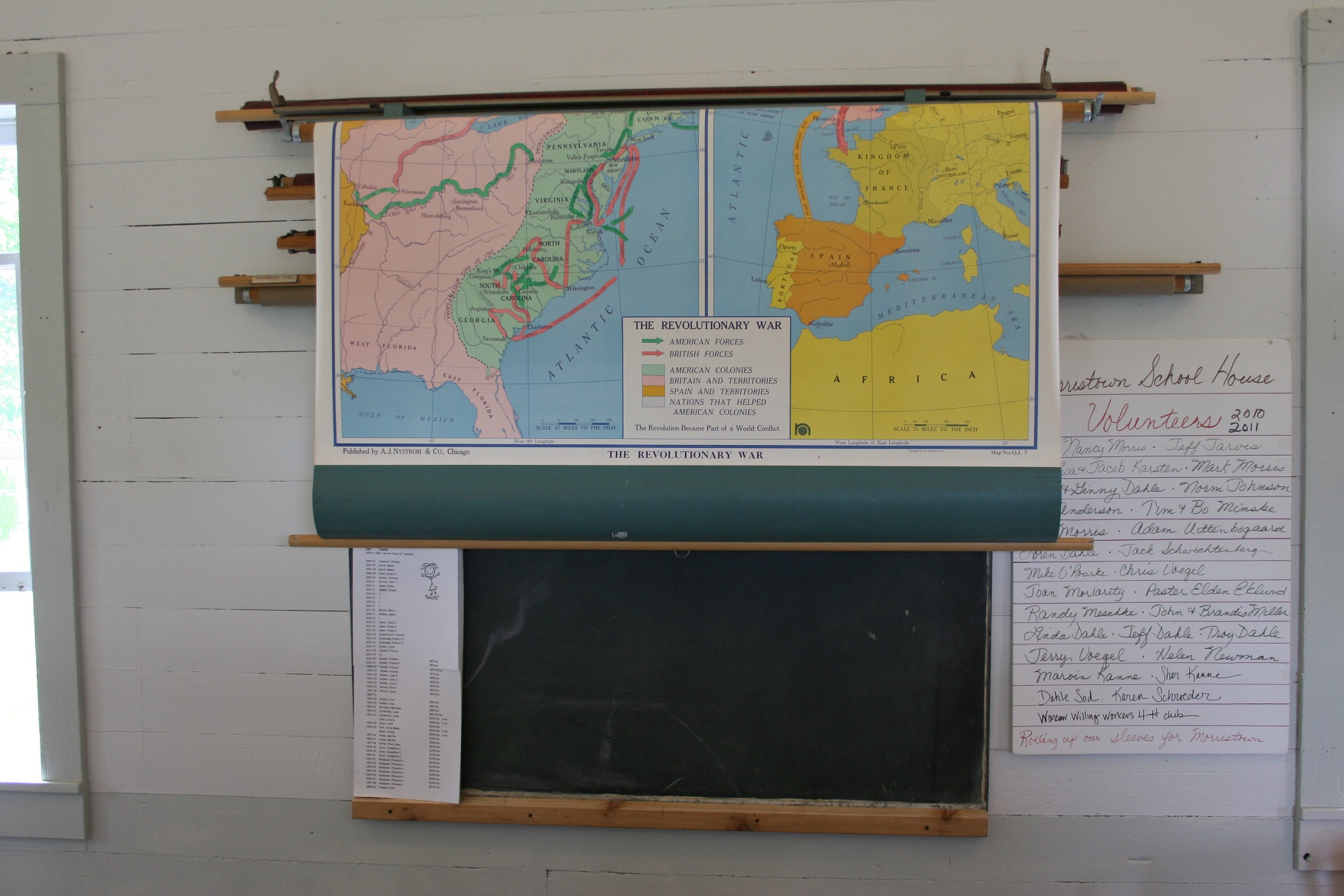
There's something about an old school map that takes me back to Vesta Elementary School, my childhood school.

There’s something about an old school map that takes me back to Vesta Elementary School, my childhood school.

A display of school-related items includes a lunch pail.

A display of school-related items includes a lunch pail, books and photos.

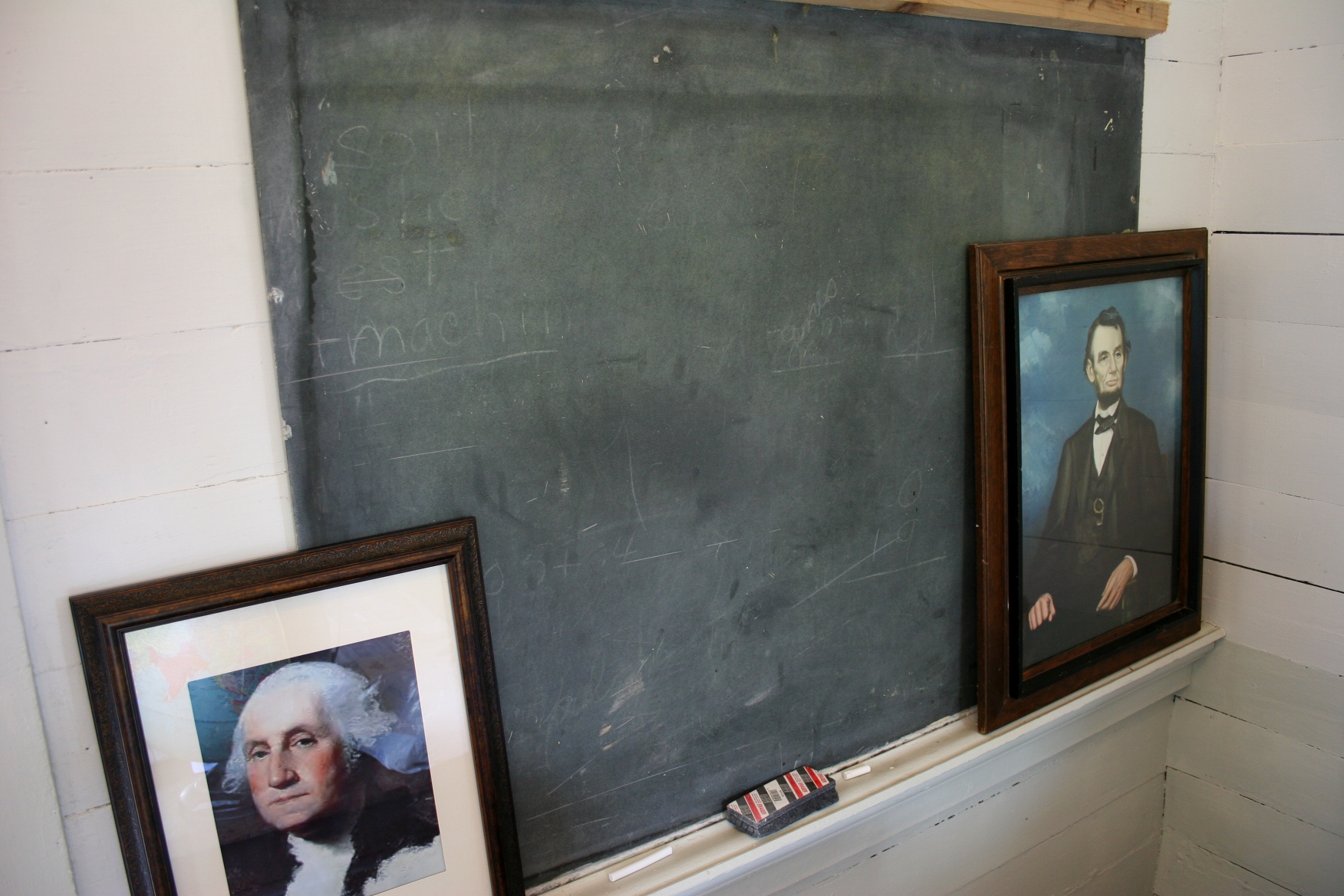
Presidential portraits grace the blackboard by the teacher's desk.

Presidential portraits grace a corner blackboard by the teacher’s desk.

FYI: To read a previous post on the historic Morristown Feed Mill, click here. A second mill post will be forthcoming. Also check my recent archives for stories from Morristown Dam Days.

© Copyright 2013 Audrey Kletscher Helbling
 

Touring an historic mill in Morristown June 4, 2013

I WISH MY MEMORIES of the old feed mill were imprinted upon the pages of a book. Indelible ink. Words recorded so that I would always remember. The smell. The sound. The sights. The everything encompassing this agricultural business in my southwestern Minnesota prairie town.

I recall so little—the wooden steps leading to the feed mill; the ground feed residue lingering in the air and on surfaces; the ever-deafening grinding noise of machinery chomping grain; handsome operator Wally Anderson with his shock of white hair who lived in a well-kept corner house several blocks north; and the summer a ventriloquist sat in front of Vesta’s feed mill with a dummy perched on his knee.

The Morristown Feed Mill in Morristown, Minnesota.

The Morristown Feed Mill in Morristown, Minnesota.

Those faint wisps of recollection filtered through my thoughts on Saturday as I meandered through an historic 1860 grist mill along the banks of the Cannon River in Morristown. Once a year this rural southeastern Minnesota community opens the mill for tours and grinds wheat and corn.

A replica waterwheel built in 1997 by Theodore E. Sawle.

A replica waterwheel built in 1997 by Theodore E. Sawle.

I won’t even pretend to understand all I viewed and photographed at this mill once powered by a waterwheel, later by electricity.

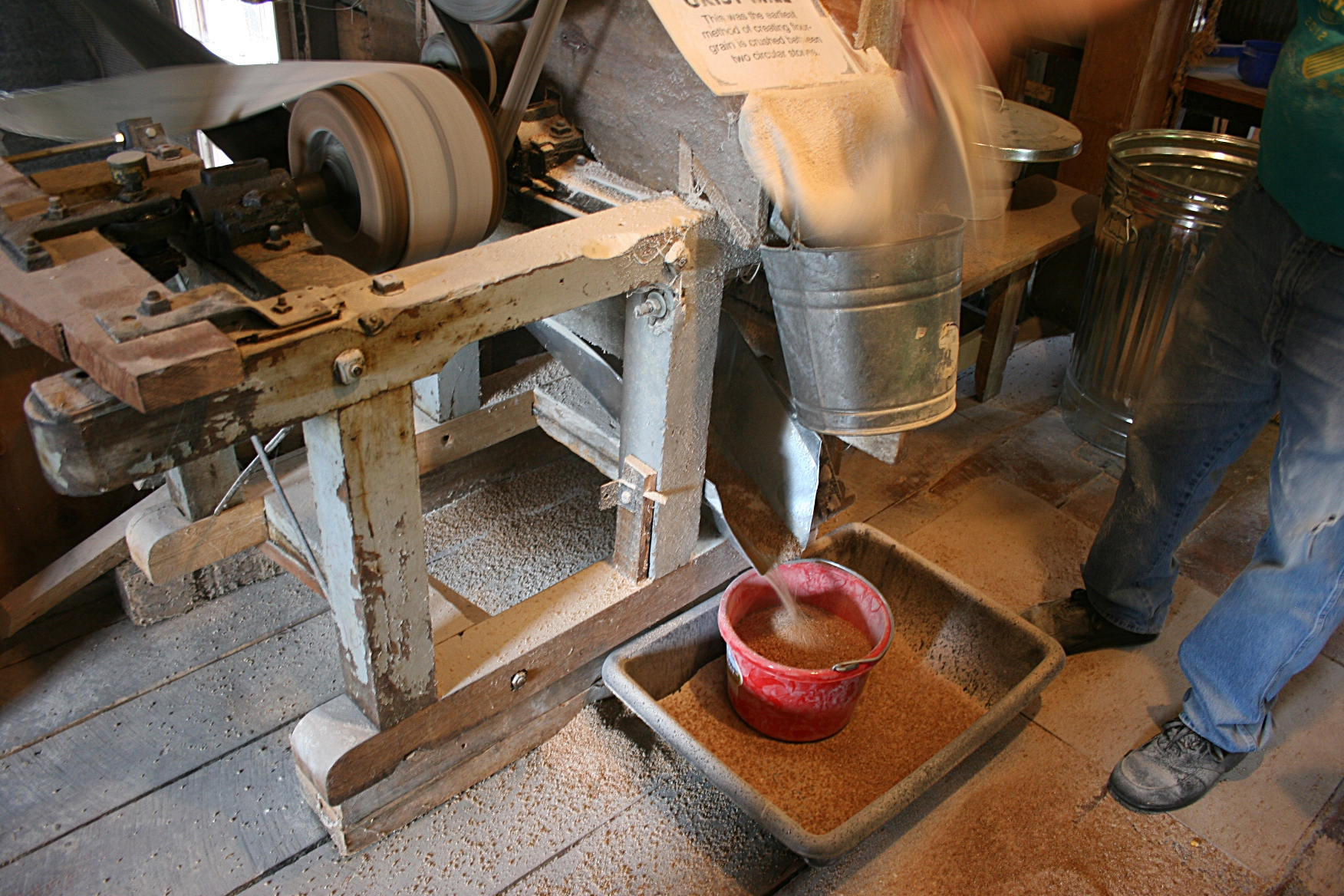
A volunteer grinds wheat into flour in the old grist mill. Each time the waterwheel turns, it spins the millstone 17 times in the process of crushing grain between stones. The volunteer's wife bakes Communion bread for the local Methodist church.

A volunteer grinds wheat into flour in the old grist mill. Each time the waterwheel turns, it spins the millstone 17.5 times in the process of crushing grain between stones. The volunteer’s wife bakes Communion bread for the local Methodist church.

Initially, the mill opened in 1855 as a sawmill. But, within years, the business was replaced by Hershey Grist Mill, a mill for grinding grain into flour and livestock feed. On the afternoon I toured, a volunteer was grinding wheat into flour with the waterwheel powering the grinder. I had intended to buy a bag of the $2 wheat flour, but forgot in the midst of my photographic focus.

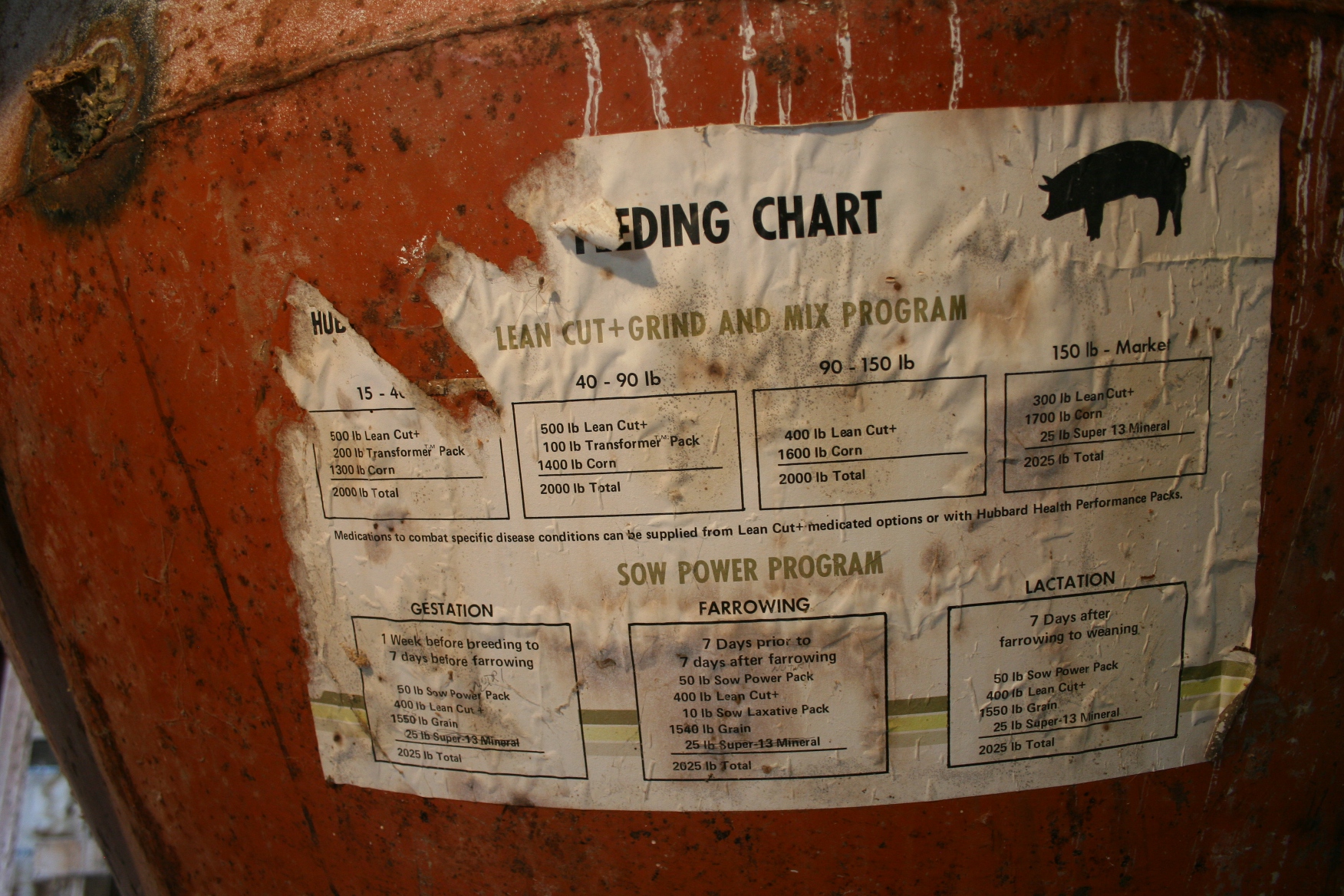
Guidelines for pig feed.

Guidelines for pig feed posted on a mixer.

The Morristown Historical Society today cares for the facility which closed in the 1970s as the Morristown Feed Mill, purveyor of livestock feed. For those like me, who grew up on a farm but have long ago left the land, such endeavors to preserve the rural past are deeply appreciated.

The conveyor belt powered by the waterwheel. This operates the grinder.

The waterwheel turns these pulleys and belts which operate the grinder.

While I walked the old wooden floor of the feed mill, descended stairs into the cluttered utility room where a dangerous conveyor belt cycled and afterward climbed stairs to the second floor, I reconnected with my rural roots.

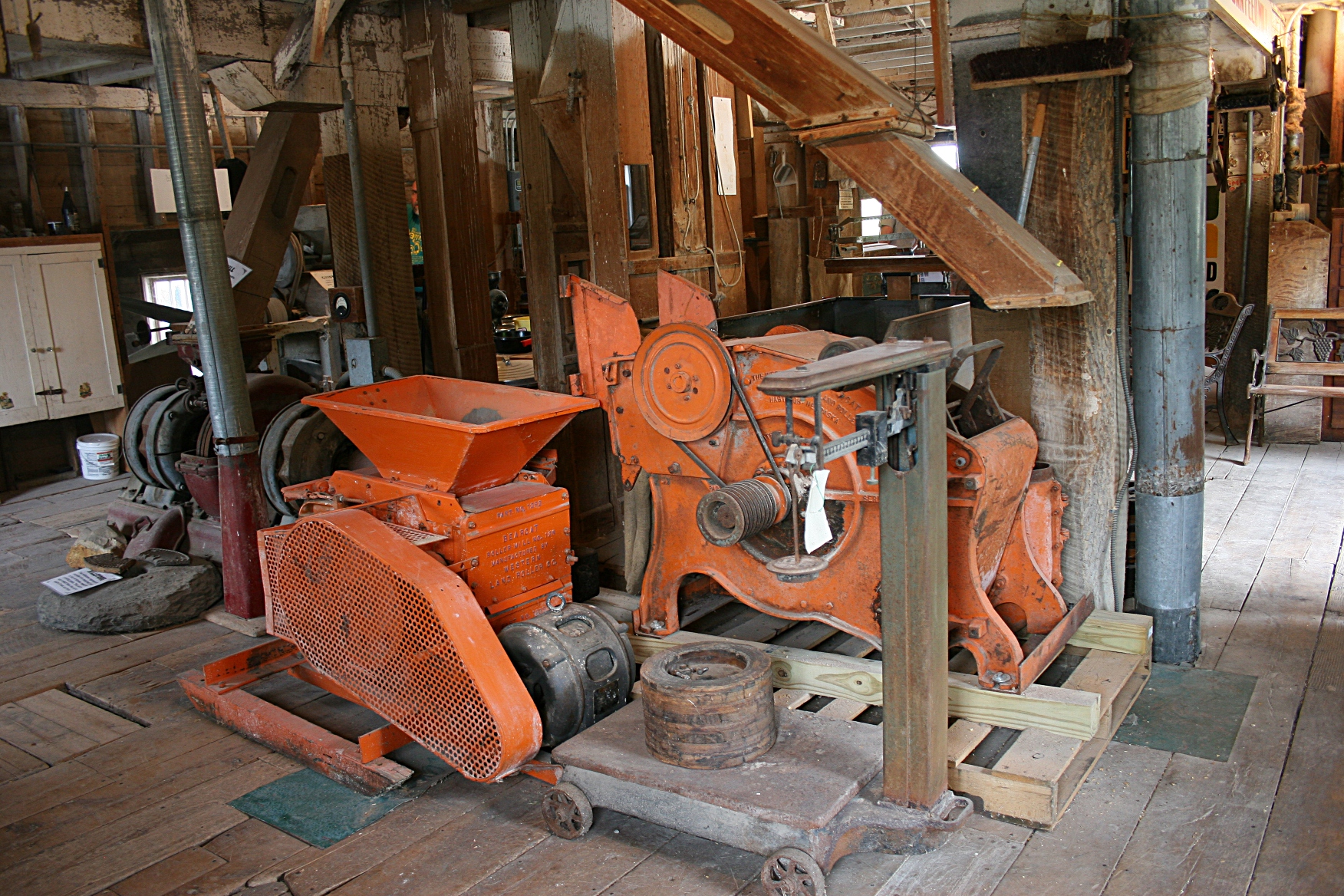
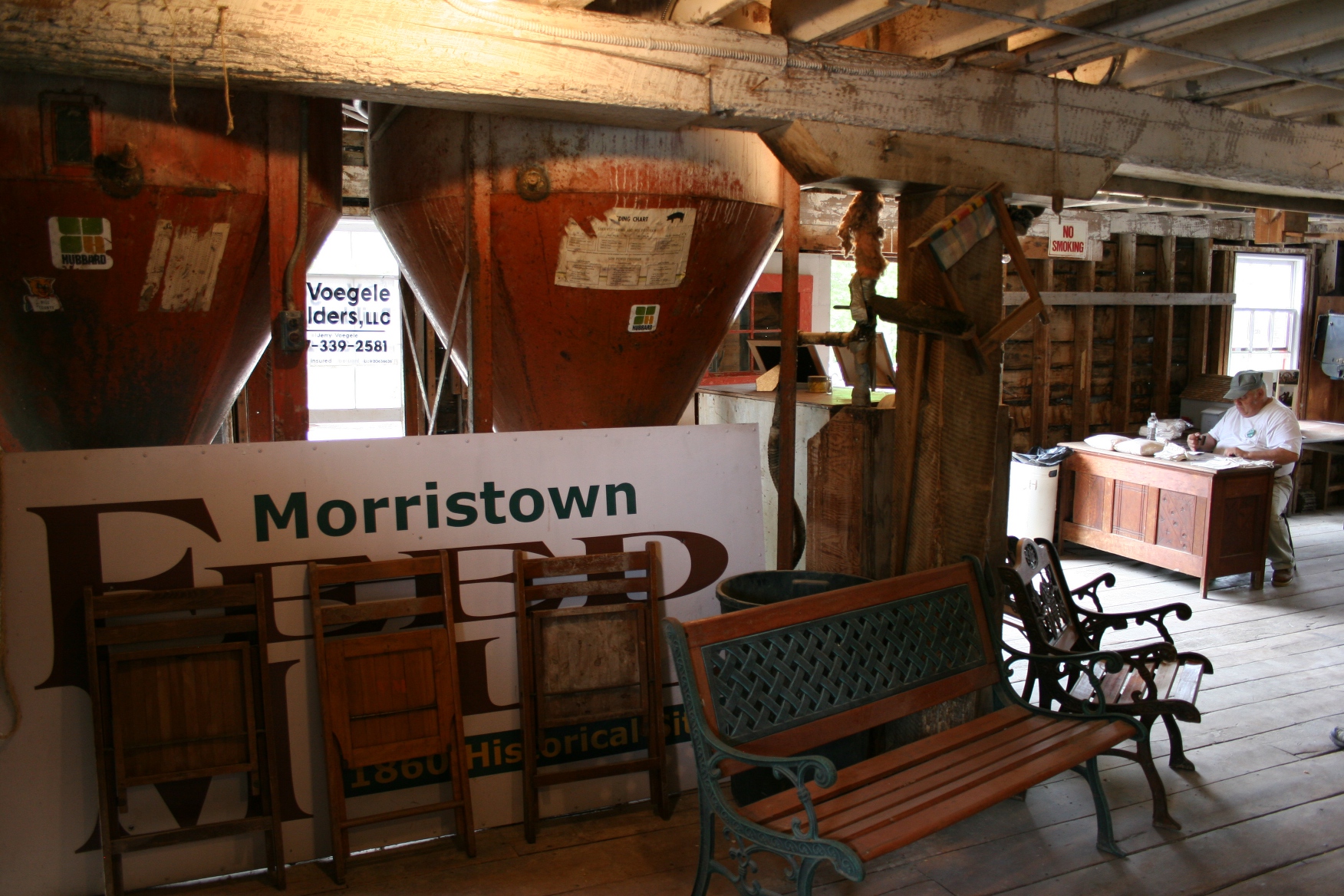
The old feed mill is stocked with lots of vintage grinding equipment.

The old feed mill is stocked with lots of vintage mill equipment.

And it may not have been in the way you most likely would expect. For me, the experience was mostly about the dust—knowing I needed to protect my camera from the fine grain dust which permeates a place like this, layers on the skin, hovers in the air, filters into memories.

Inside the feed mill, where a volunteer stamps cloth bags with Morristown Feed Mill.

Inside the feed mill, a volunteer stamps cloth bags with Morristown Feed Mill. Behind the sign are two mixers.

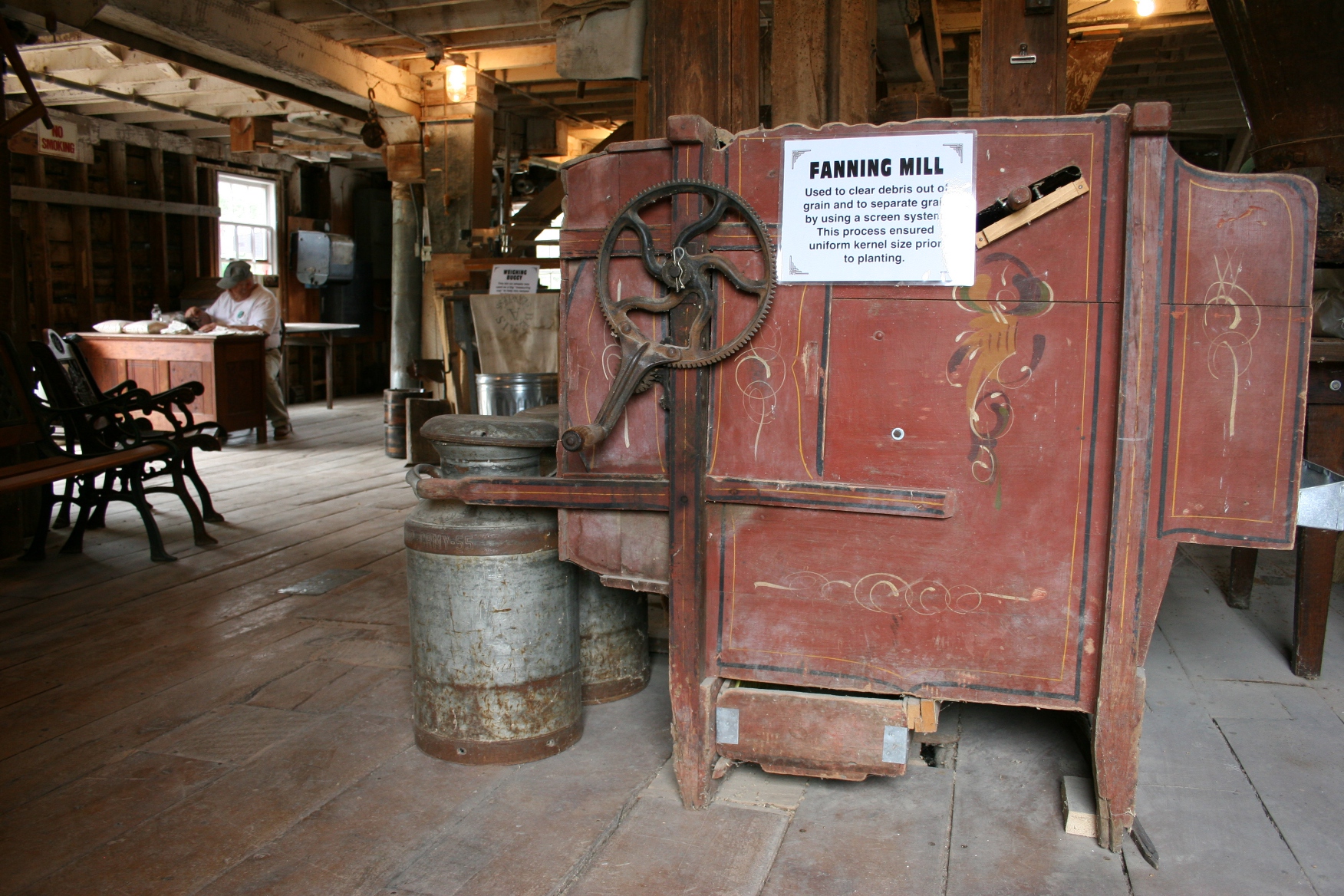
An old fanning mill cleans the grain for planting.

An old fanning mill cleans the grain for planting.

When I heard mention of mice, I was a little nervous about going into the utility room.

When I heard mention of mice, I was a little nervous about going into the utility room.

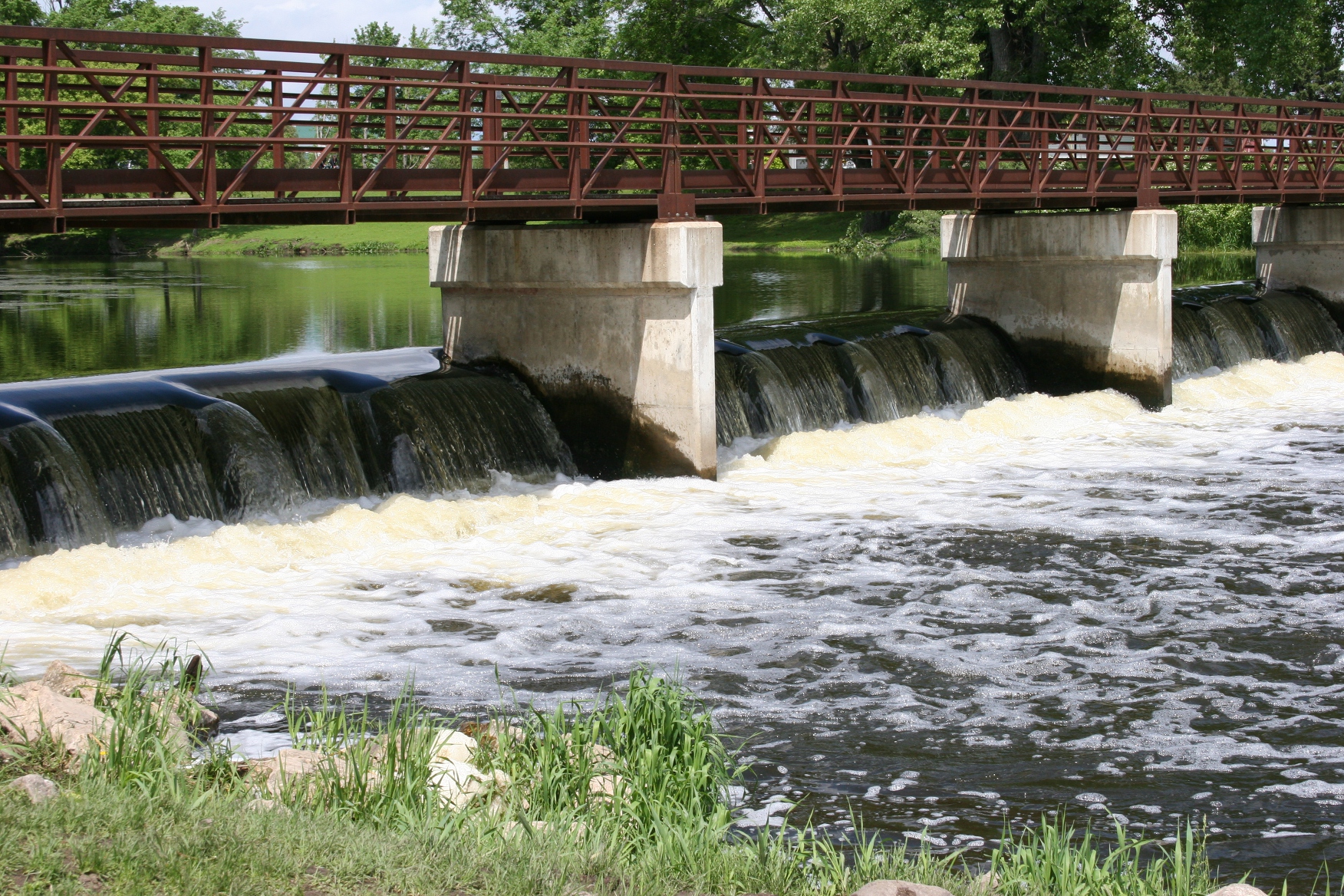
The Cannon River dam right next to the mill.

The Cannon River dam right next to the mill.

FYI: As a side note, the mill sheltered several refugees from the U.S. – Dakota Conflict of 1862.  Check back for more mill photos.

© Copyright 2013 Audrey Kletscher Helbling
 

A photographic tour of downtown Fergus Falls May 30, 2013

A snippet of Fergus Falls' downtown.

A snippet of Fergus Falls’ historic and pedestrian friendly downtown.

I SINCERELY HOPE the fine people of Fergus Falls in west central Minnesota appreciate their historic downtown. It’s a gem.

A stroll through the downtown business district on a recent Thursday evening left me gaping at the detailed architecture, words imprinted in granite, sculpted eagles and sculpted otters, stately brick buildings, a lovely old theatre, quaint signage and art, yes, art.

This Otter Tail riverside community of nearly 14,000 along Interstate 94 an hour southeast of Fargo impresses me. Join me on a photographic tour and I expect you will feel likewise.

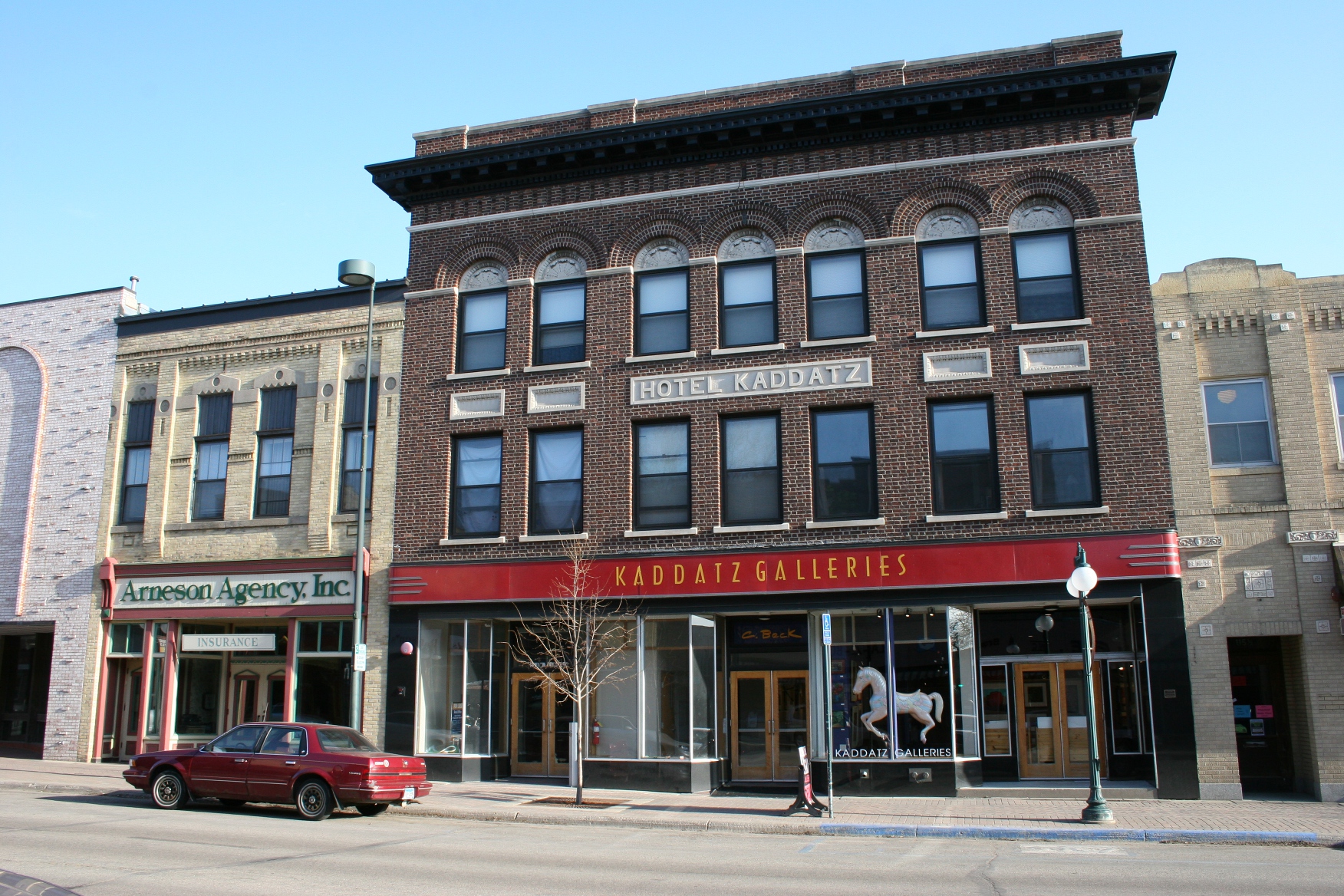
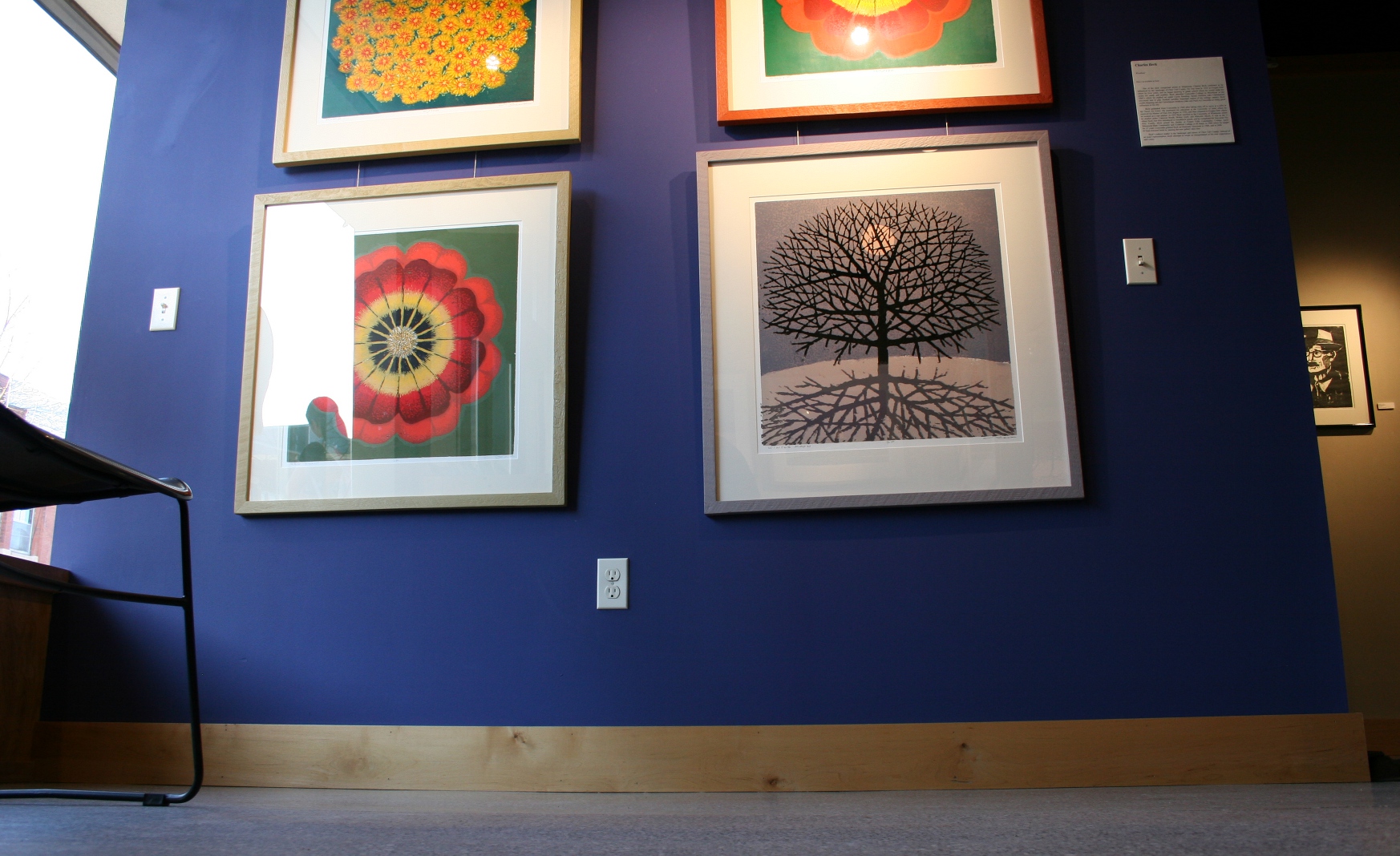
The Kaddatz Galleries features the work of noted Fergus Falls artist Charles Beck, known for his woodcut prints.

Kaddatz Galleries features, among other art, the work of noted Fergus Falls artist Charles Beck, known for his woodcut prints.

Examples of Charles Beck's woodcut prints in the Kaddatz Galleries.

Examples of Charles Beck’s woodcut prints in the Kaddatz Galleries.

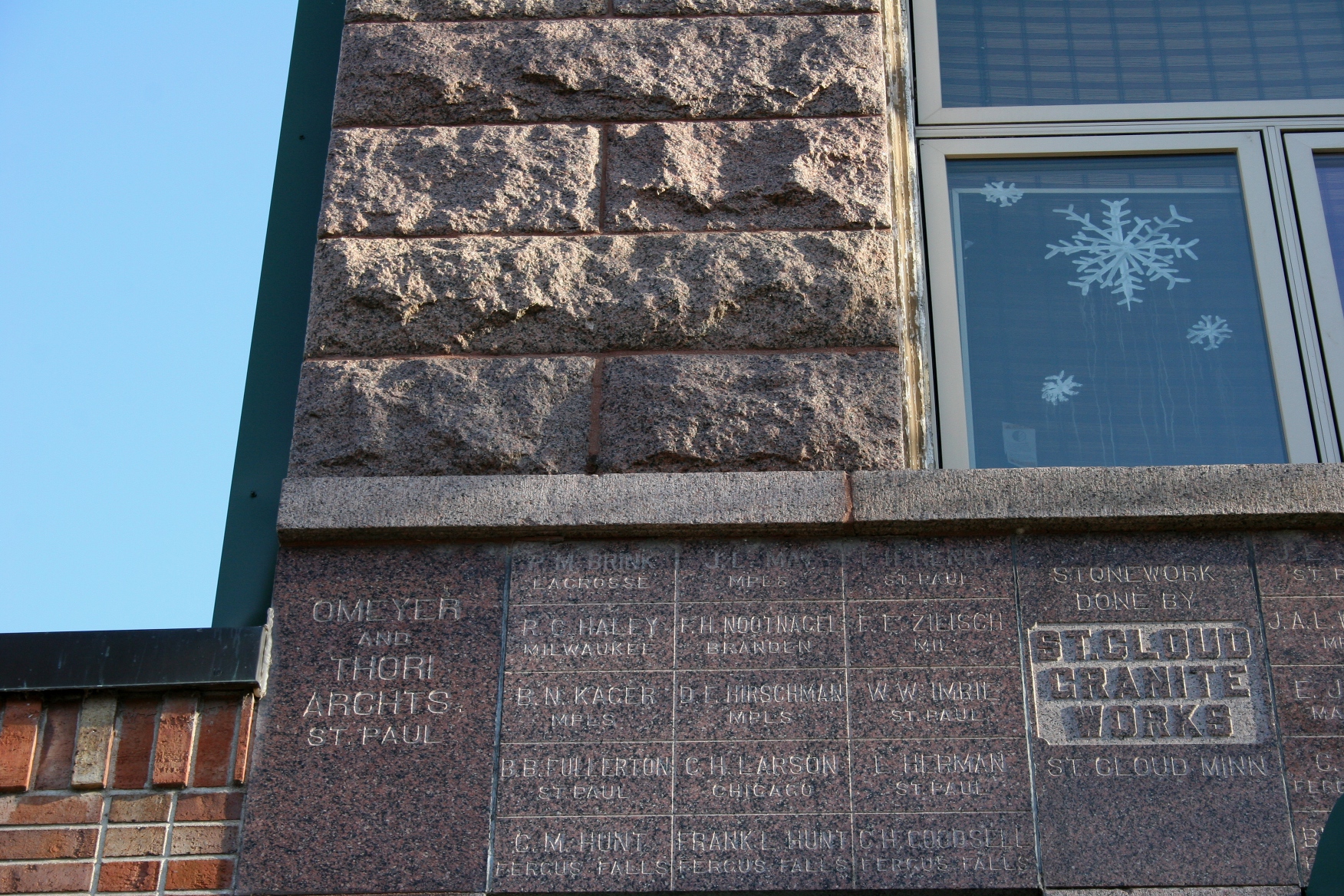
Words chiseled in granite on the front of a building. I would love to know the story behind this.

Words chiseled in granite…I would love to know the story behind this. The inscriptions cover the bottom front of the building.

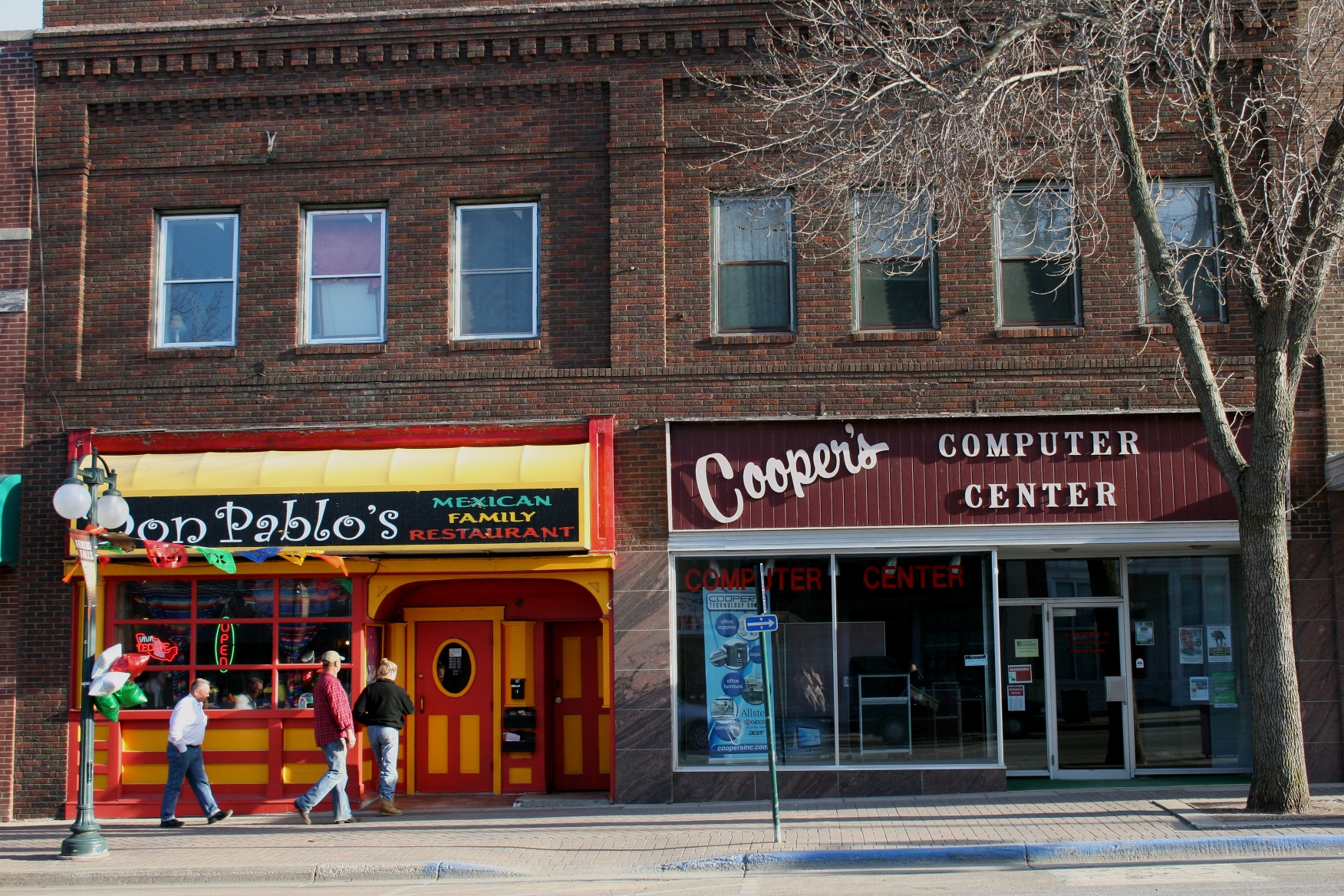
A Mexican restaurant adds a jolt of color to the downtown.

A Mexican restaurant adds a jolt of color to the downtown.

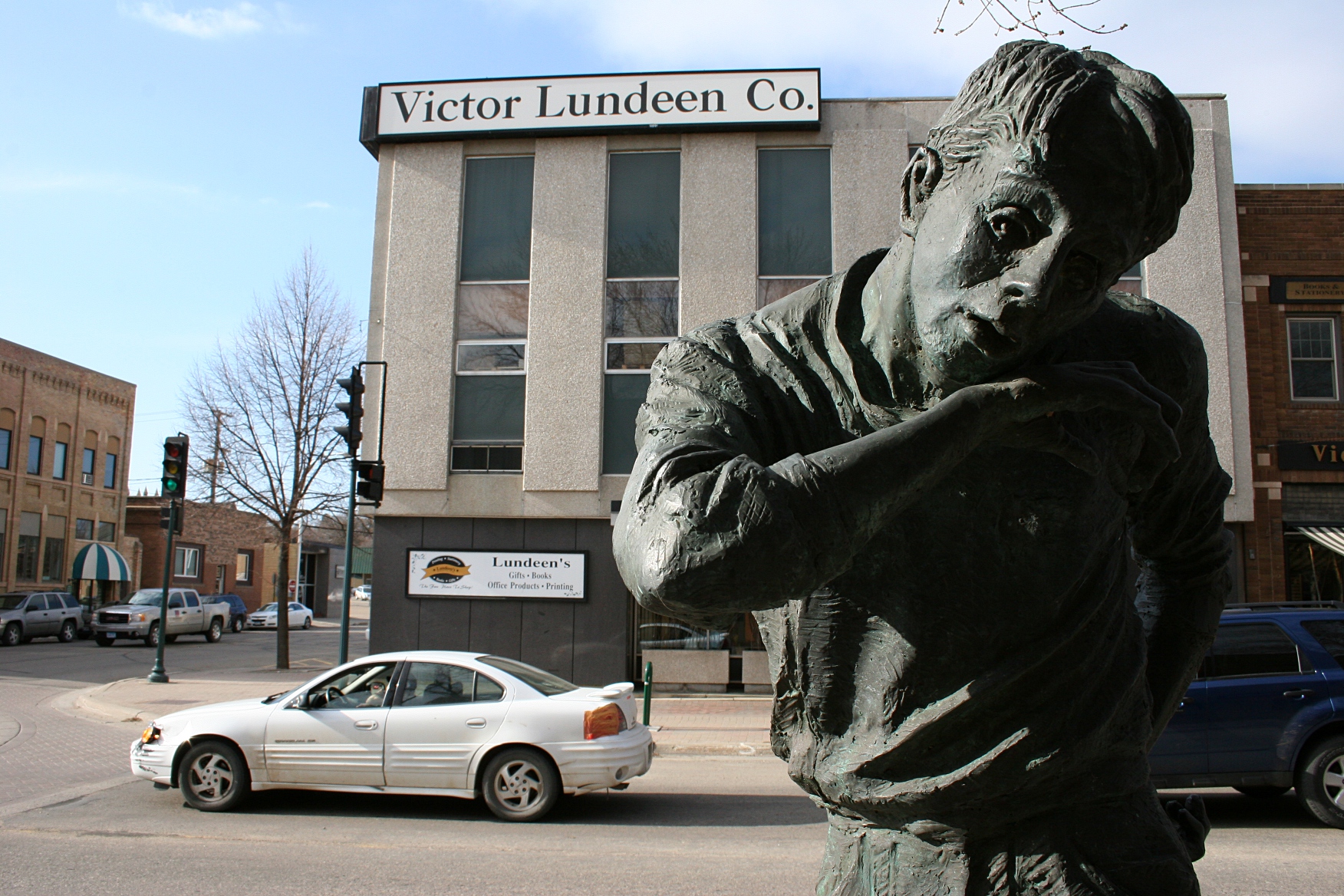
When I inquired at Kaddatz Galleries about the identity of this street corner statue, I didn't get an answer.

When I inquired at Kaddatz Galleries about the identity of this street corner statue, I didn’t get an answer. The gracious gallery tender says plans are in place to identify public art. Good idea.

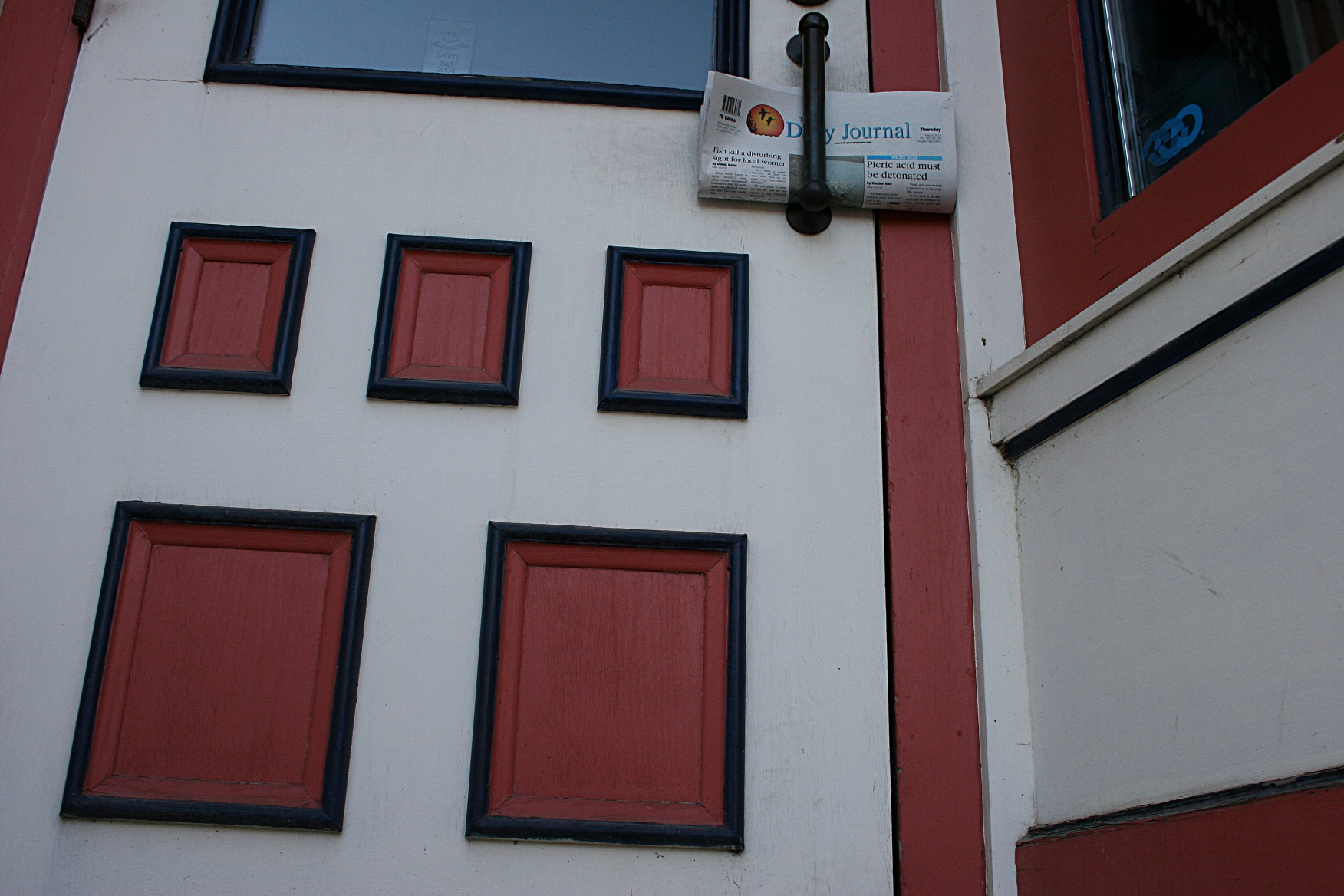
I spotted The Fergus Falls Daily Journal tucked into a door handle downtown.

I spotted The Fergus Falls Daily Journal tucked into a door handle downtown.

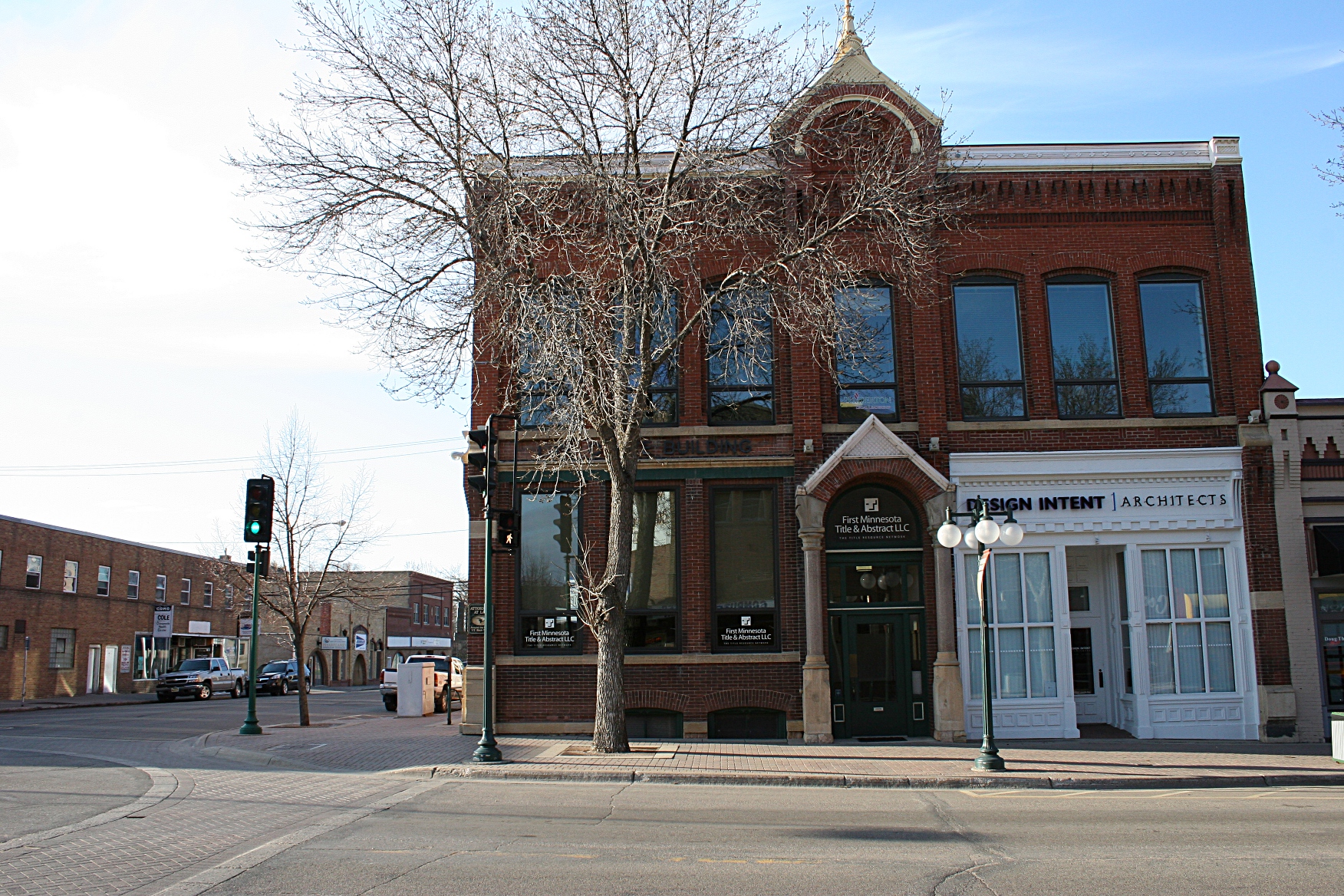
Another stately corner building.

Another stately corner building.

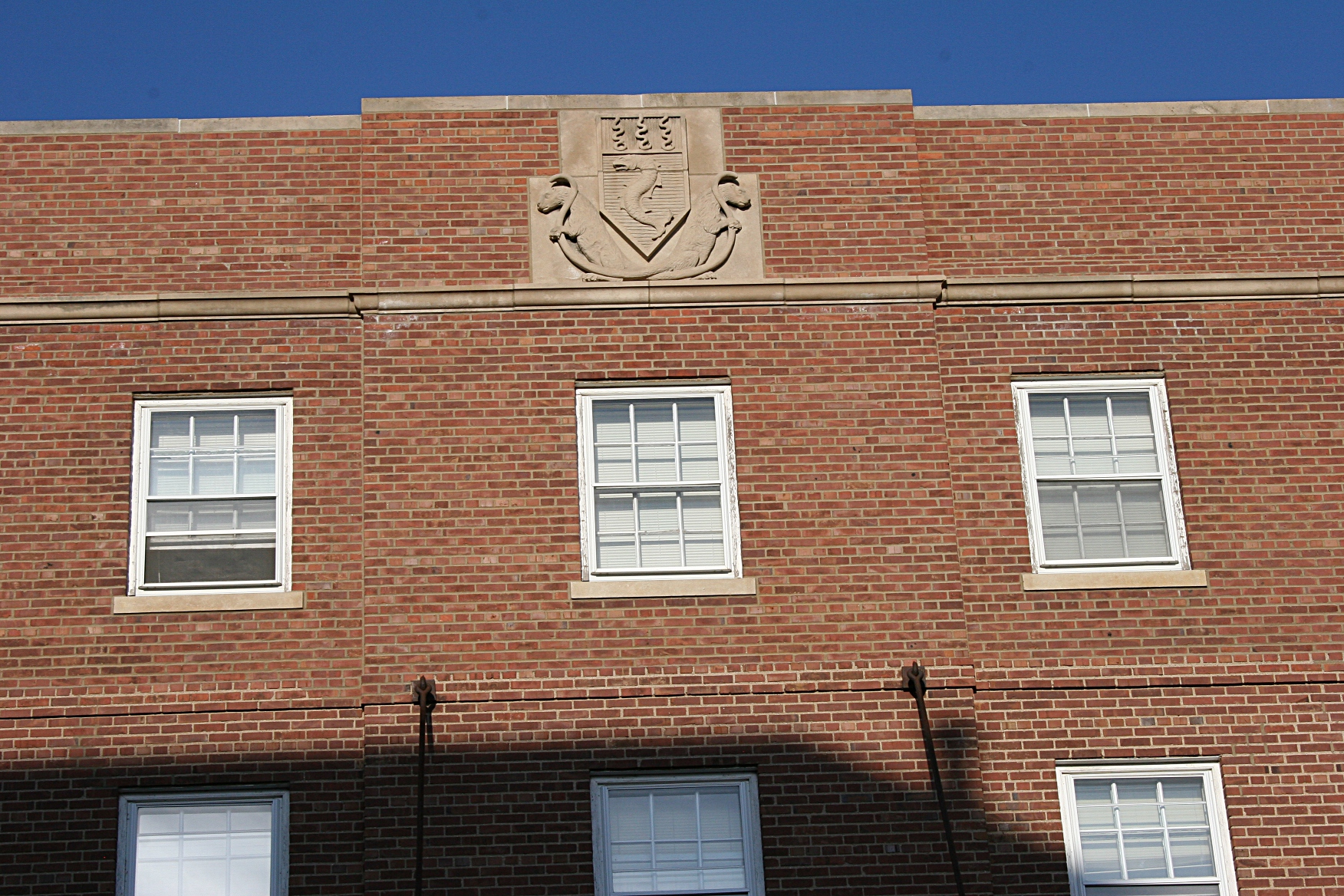
I stared for awhile at this sculpture atop the historic River Inn before realizing these are otters. The inn sits along the banks of the Otter Tail River.

I stared for a while at this sculpture atop the historic River Inn before realizing these are otters. The inn sits along the Otter Tail River. I believe this building today houses only apartments and does not operate as an inn.

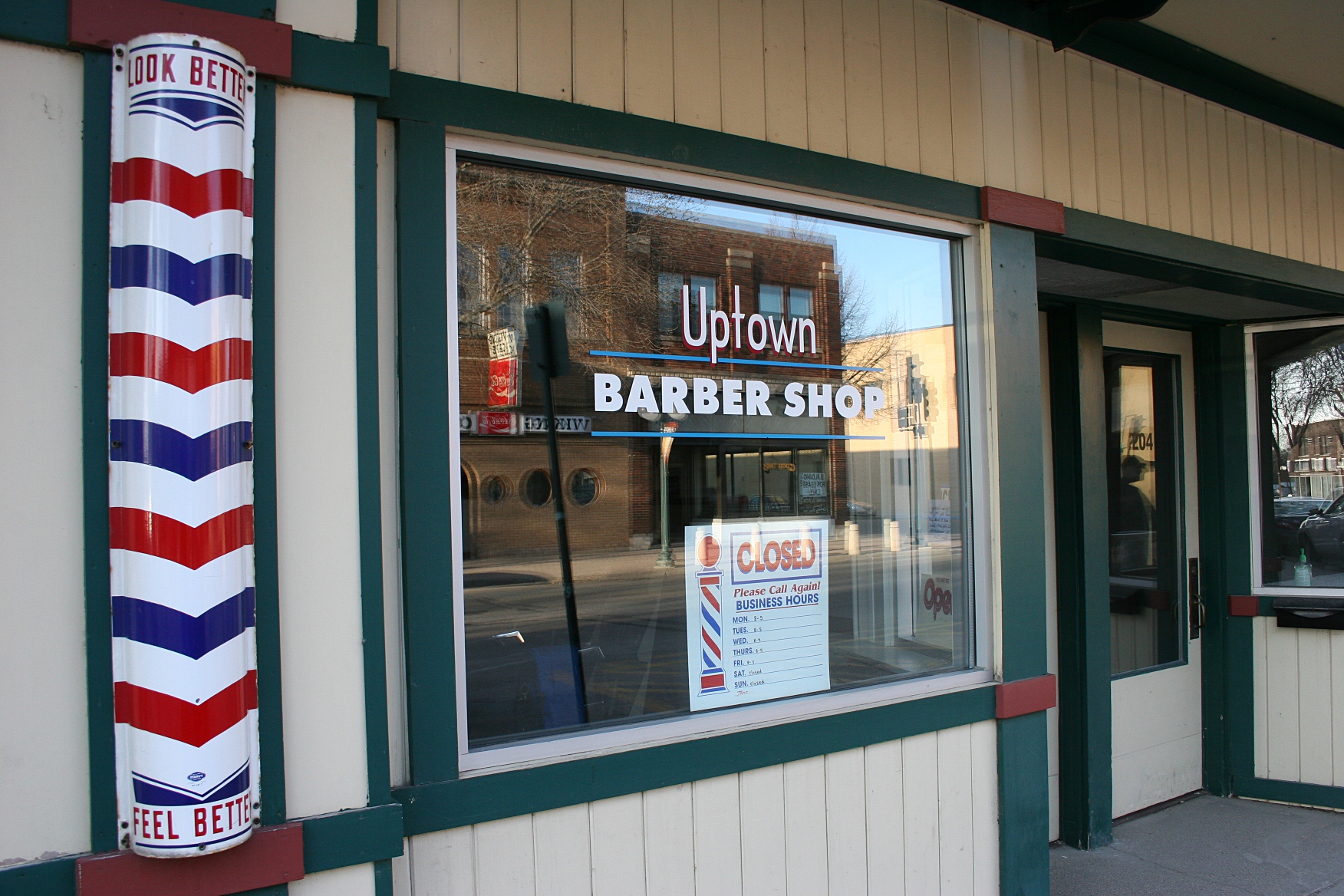
A downtown barbershop complete with a barber's pole charms visitors like me.

The Uptown Barber Shop, complete with a barber’s pole, charms visitors like me.

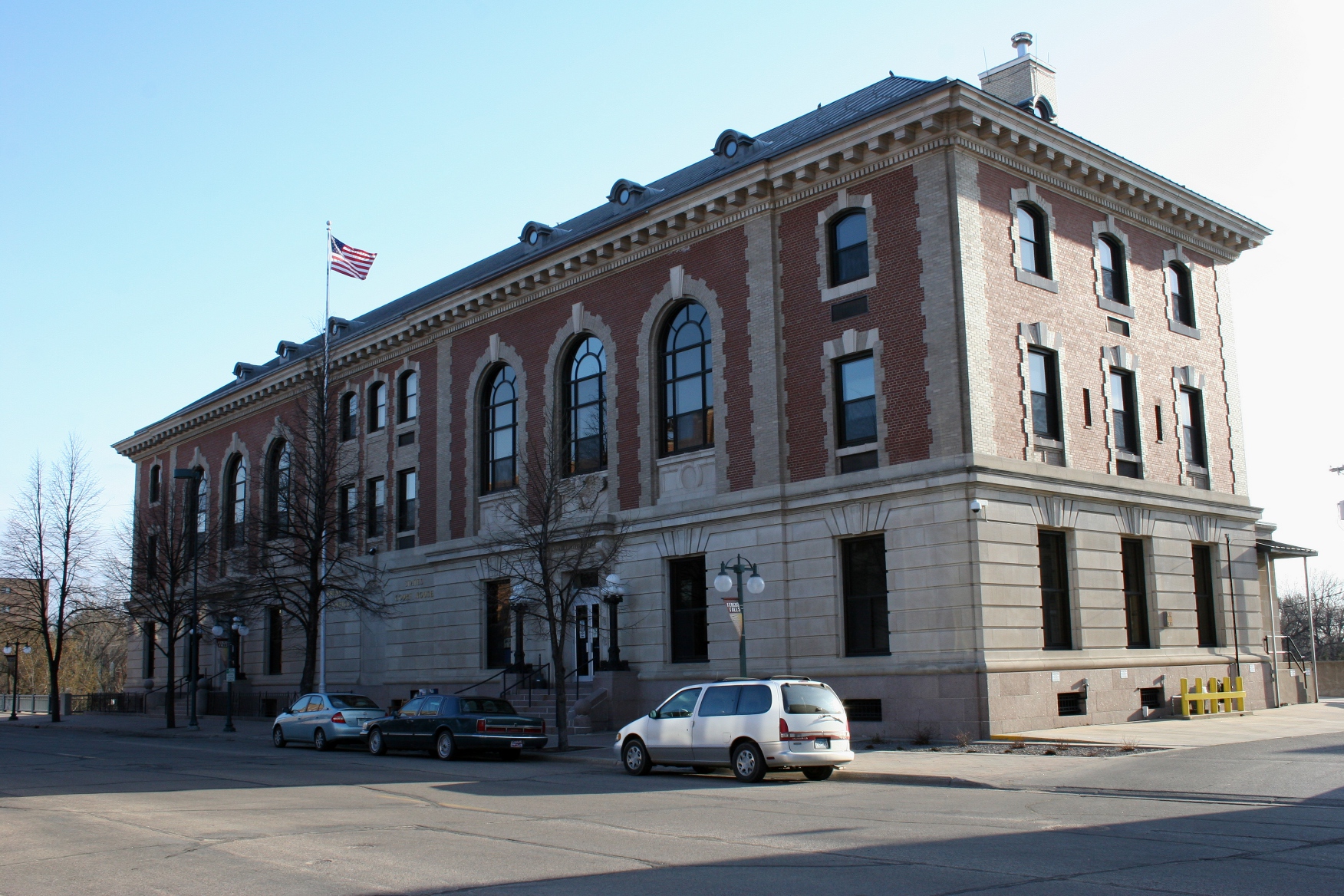
This hulking federal building houses courtrooms and the post office.

This hulking federal building houses courtrooms and the post office.

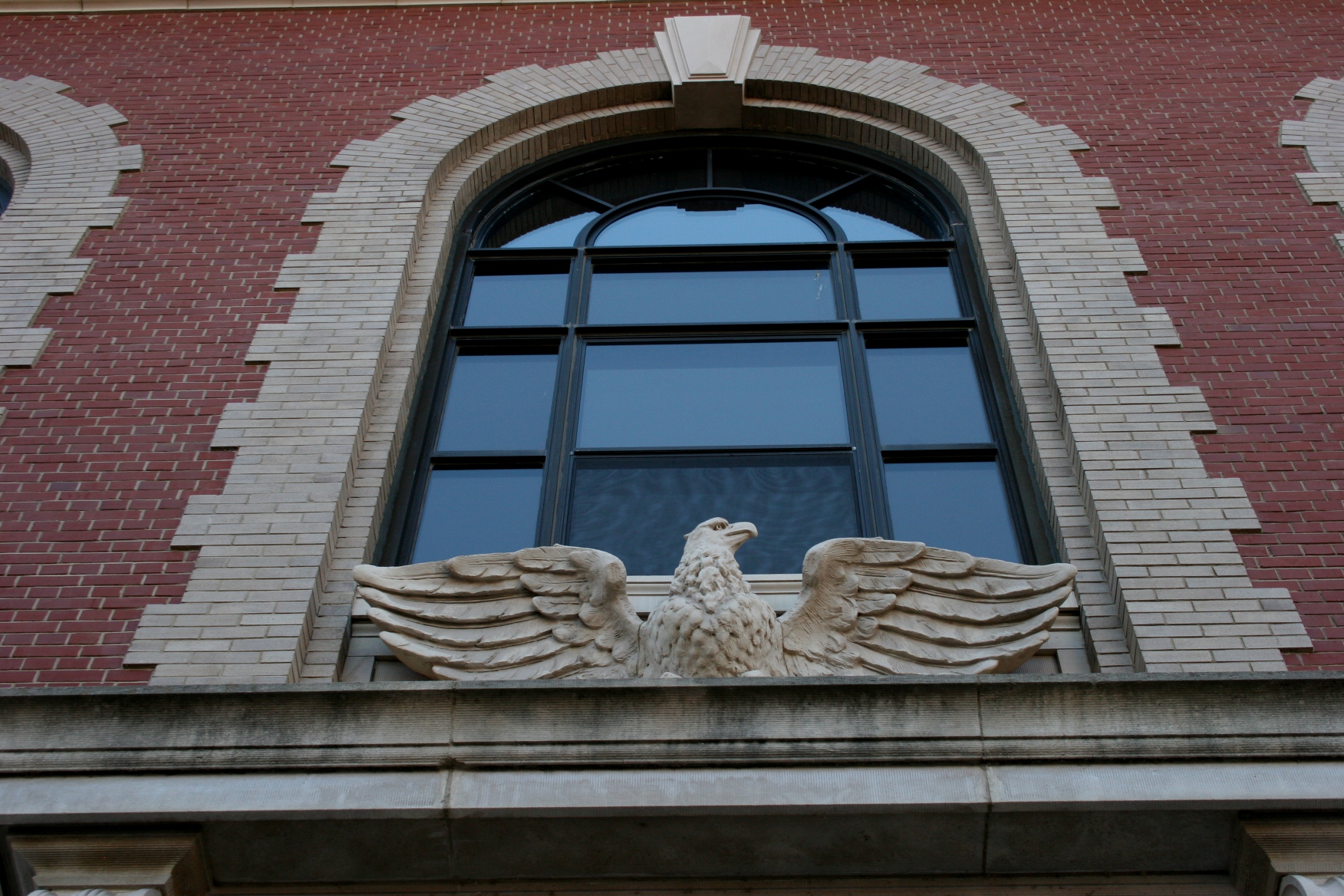
Stunning eagle sculptures span the entries into the federal building.

Stunning eagle sculptures span the front entries into the federal building.

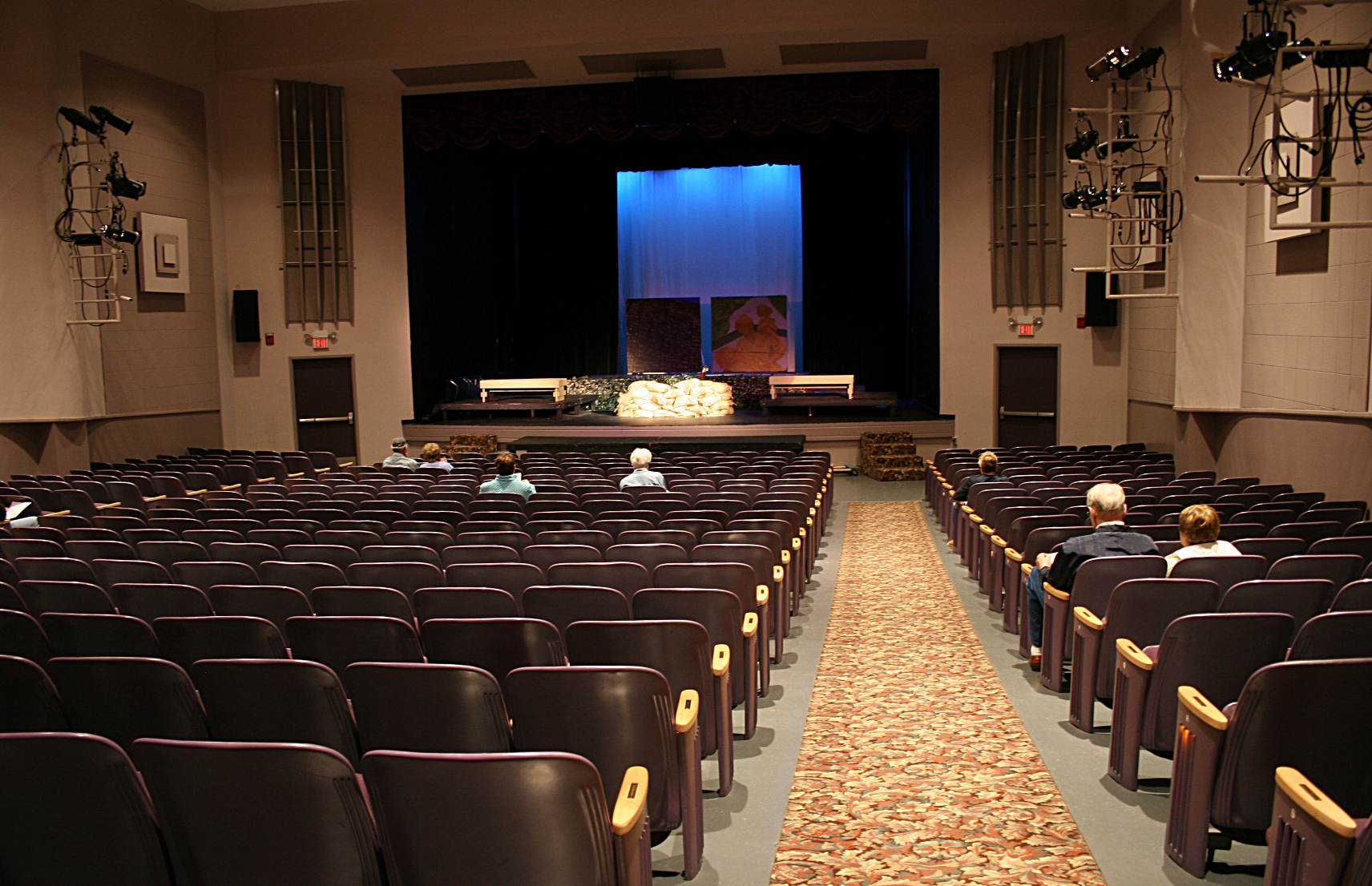
Audience members filter into an historic theatre for a play presented at a Center for the Arts.

Audience members filter into an historic theatre for a play presented at A Center for the Arts.

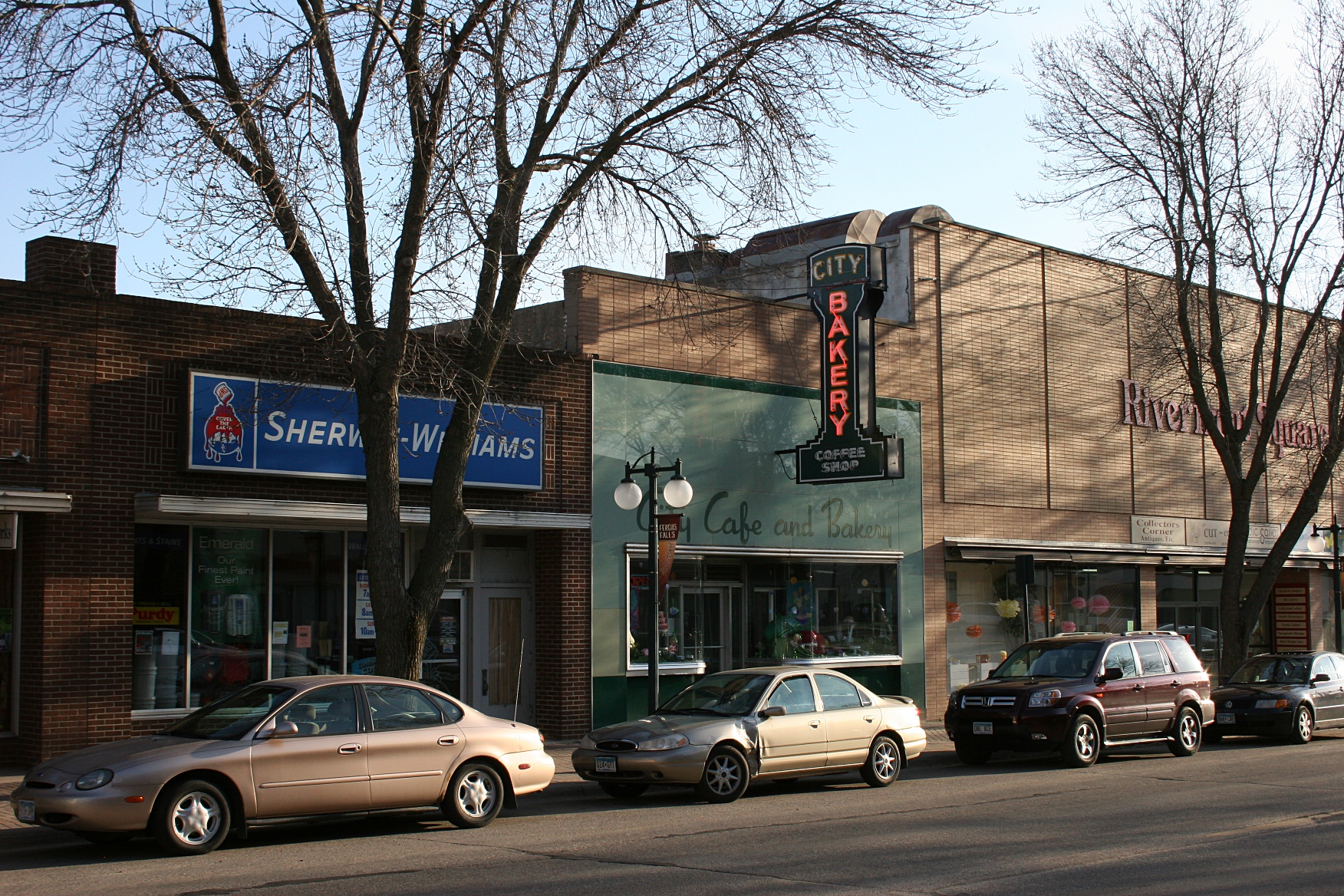
Just another shot of businesses in downtown Fergus Falls.

Just another shot of businesses in downtown Fergus Falls.

FYI: To view previous posts from Fergus Falls, use my blog search engine to check my archives. I posted last week and during the week of June 12-18, 2011, on my first visit to Fergus Falls.  Also, watch for more posts from this community.

© Copyright 2013 Audrey Kletscher Helbling
 

Up on the rooftop…in Fergus Falls May 22, 2013

I AM CONTINUALLY AMAZED by the access I am granted to interesting places because of my DSLR Canon camera, innate curiosity and friendliness.

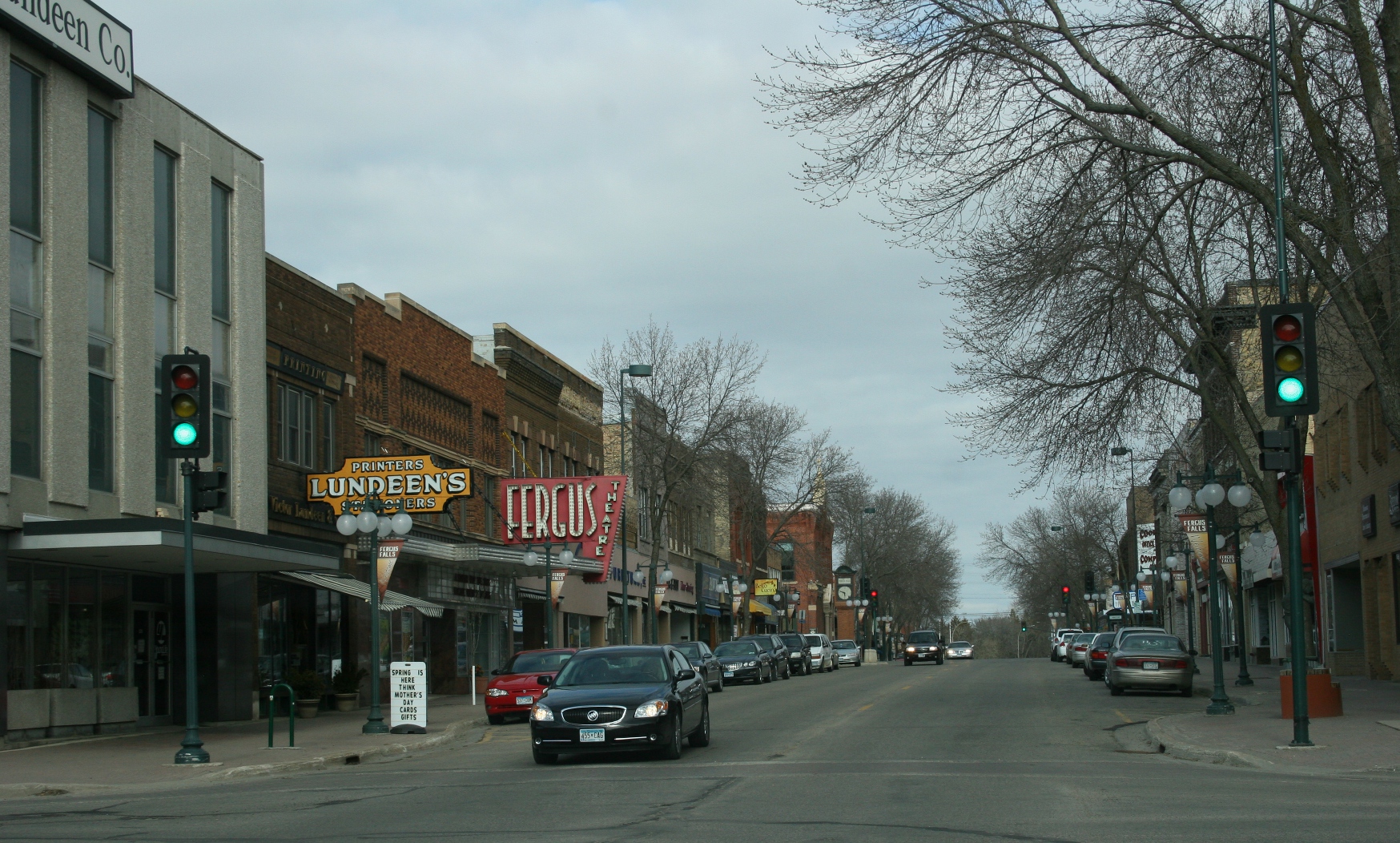
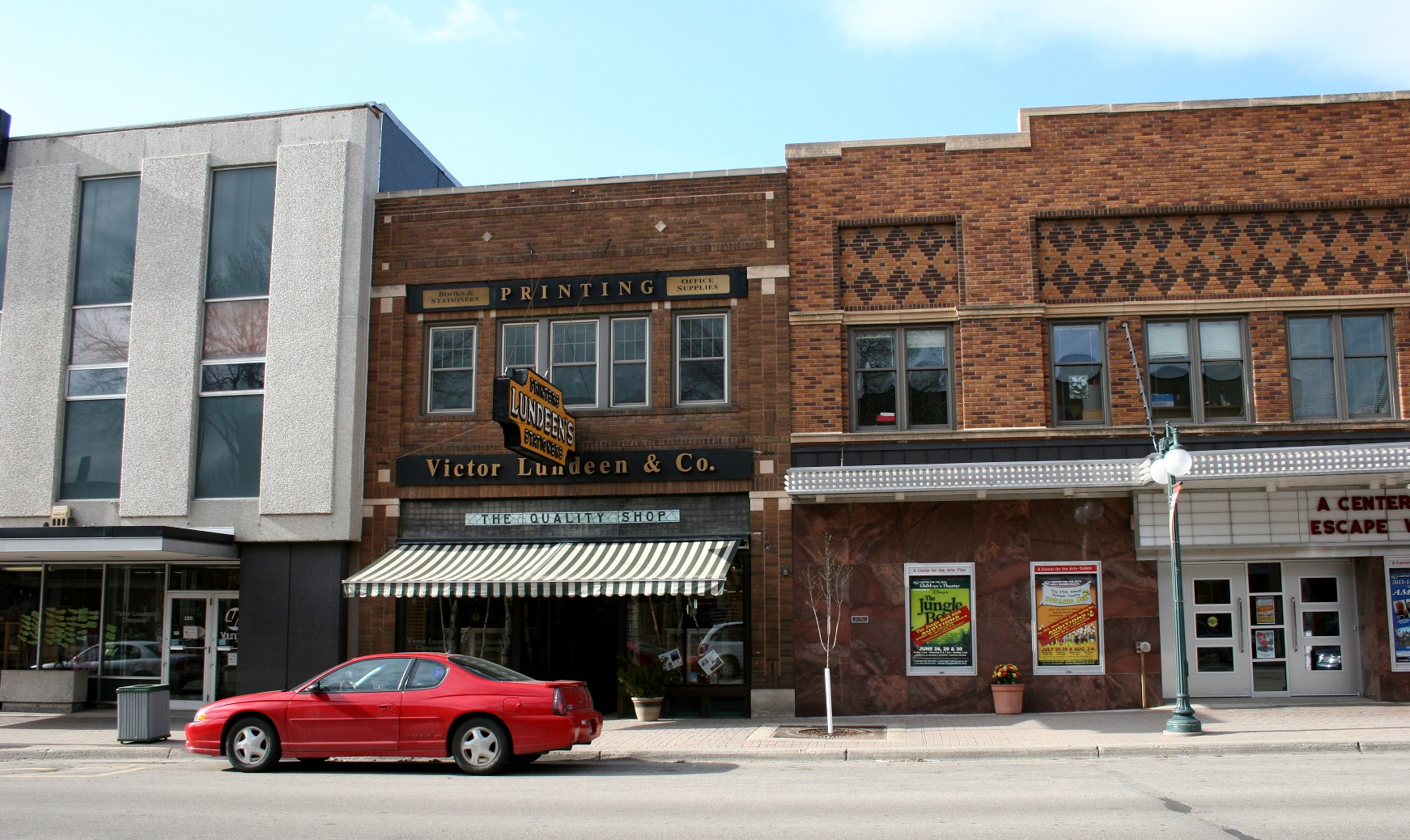
A street level view of Victor Lundeen Company, left, and the Fergus Theatre on the right.

A street level view of Victor Lundeen Company, left, and A Center for the Arts in Fergus Falls on the right.

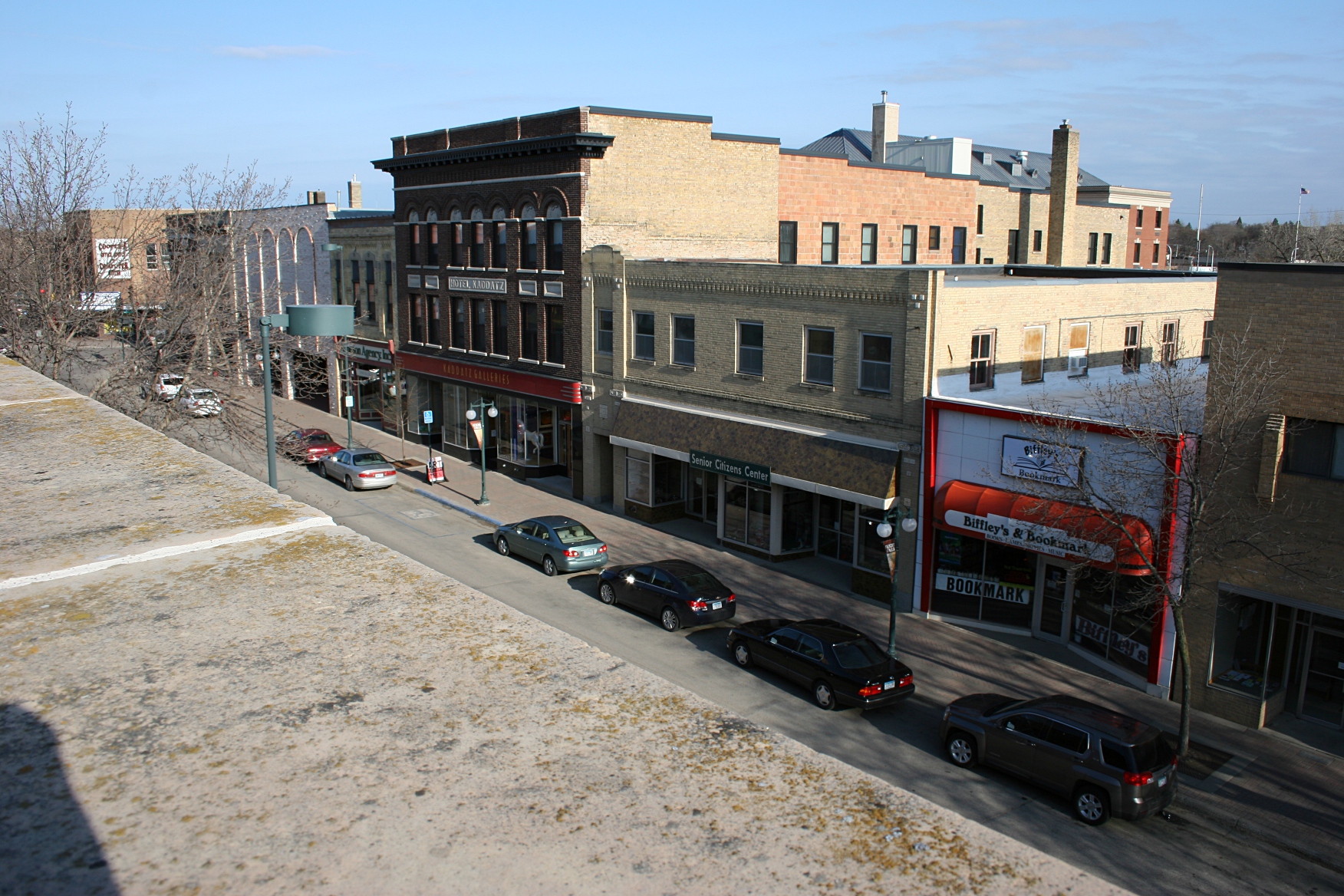
Most recently I was invited onto the rooftop of Victor Lundeen Company and A Center for the Arts in Fergus Falls for a bird’s eye view of historic downtown Fergus Falls in west central Minnesota.

Can you believe I hesitated? I am afraid of heights and wasn’t sure I could handle being several stories above street level, separated from the roof’s edge by a facade or nothing at all.

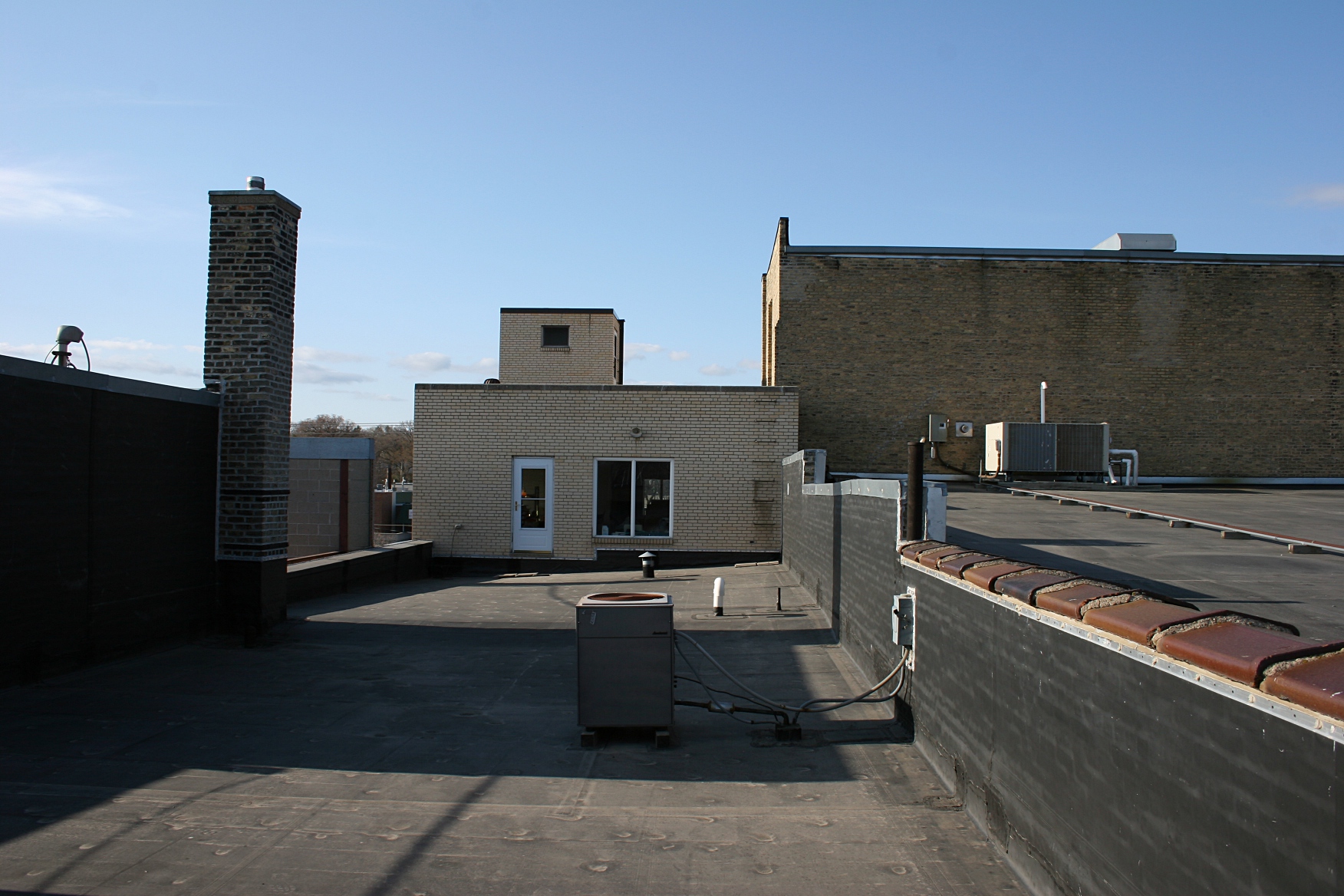
Atop the roof and looking toward the door into the Lundeen Company.

Atop the roof and looking toward the door into the Lundeen Company.

So I leveled with Paul Lundeen before exiting a door onto the roof of his business. If I couldn’t tolerate the height, I’d turn around.

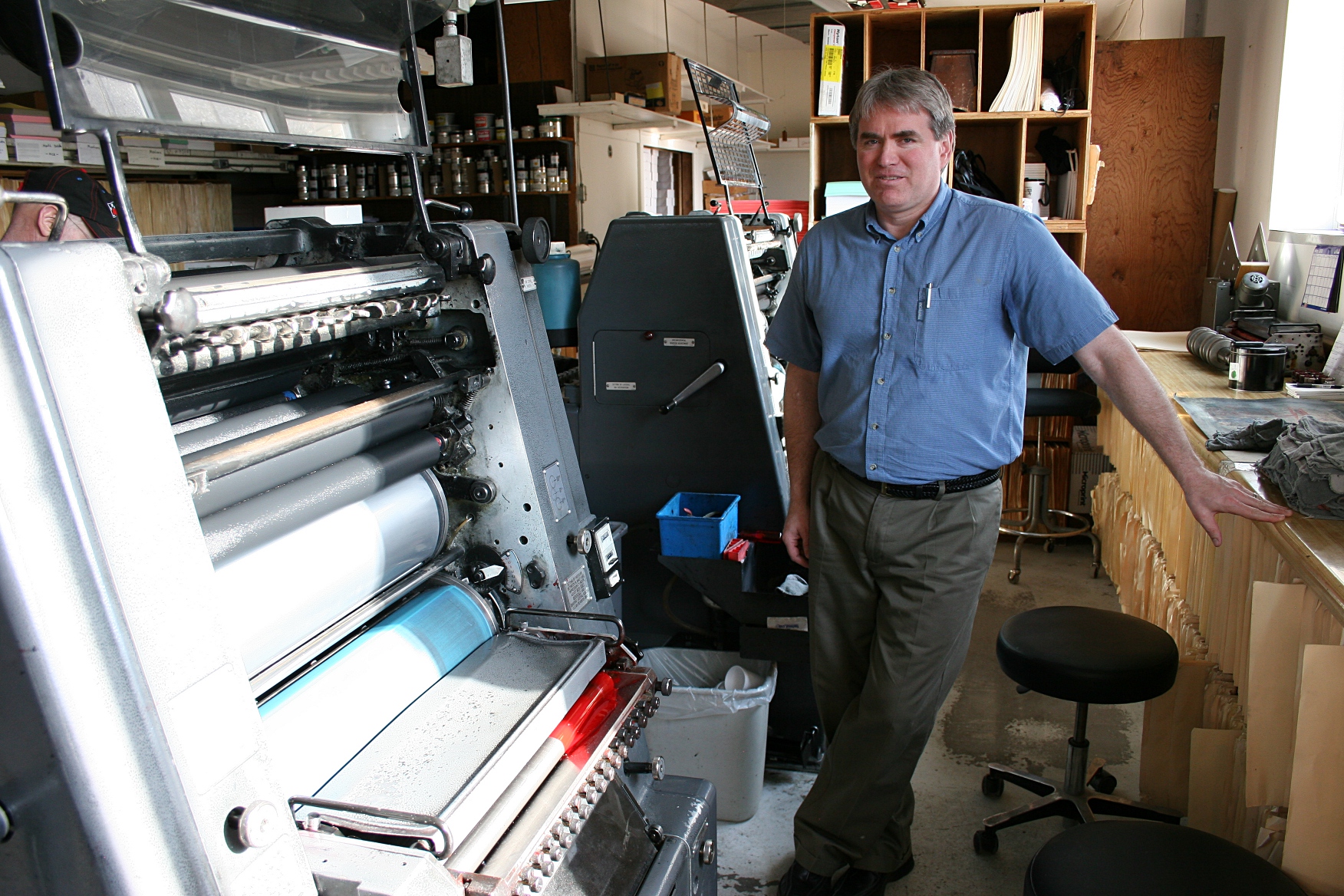
Tour guide Paul Lundeen inside his print shop.

Tour guide Paul Lundeen inside his print shop.

As we moved toward the front of the building, Paul advised me to watch the guide wires, not wanting me to trip and plummet over the edge onto the brick sidewalk below.

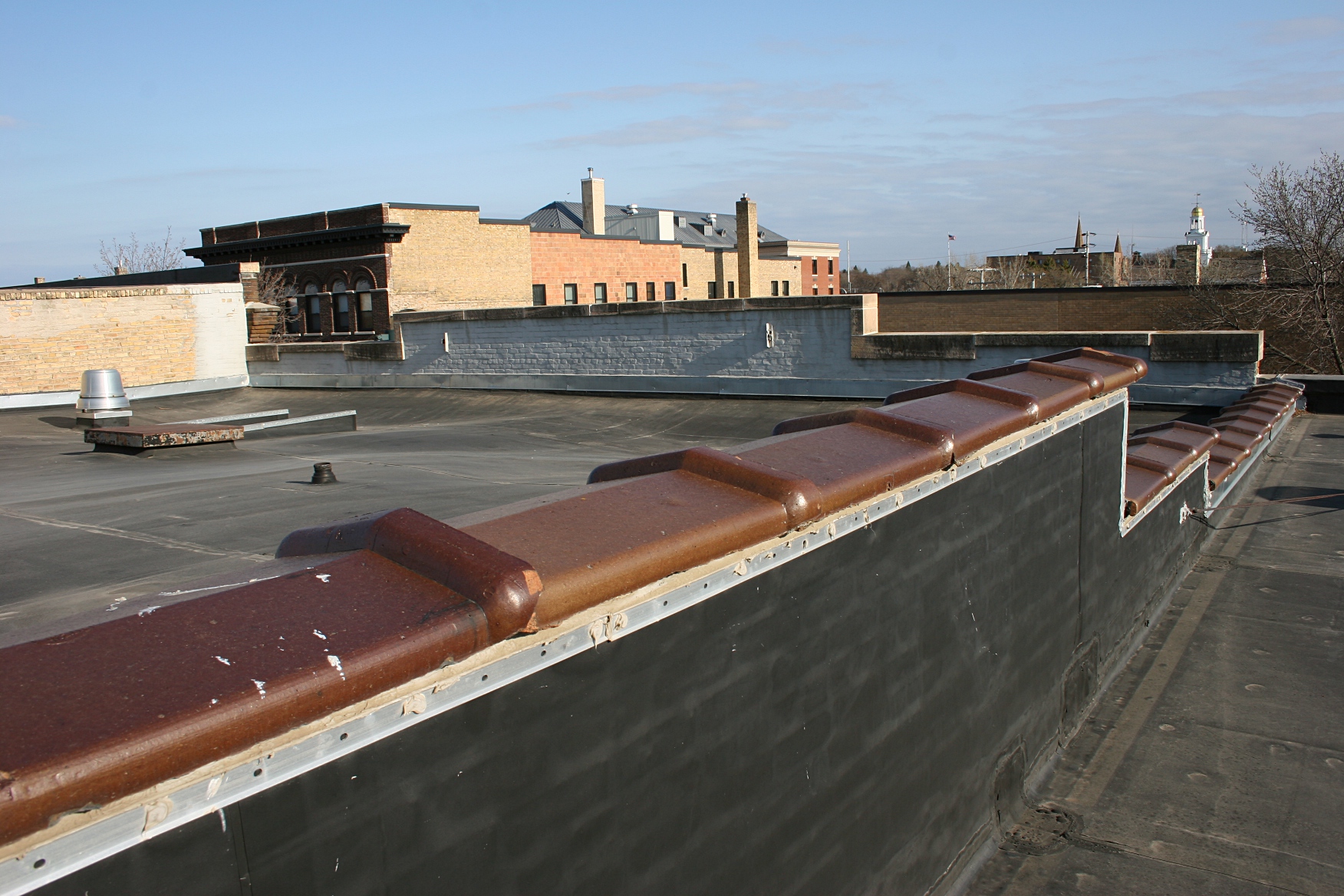
On the left, a low wall separates the printing business rooftop from the theatre roof.

On the left, a low wall separates the printing business rooftop, right, from the arts center roof.

Stepping over the rooftop boundary between his printing company and the next-door arts center, my worries eased. A portion of the old theatre facade rose high enough for me to feel comfortable leaning against it and angling my camera down toward the buildings and street below.
Positioned safely behind a high part in the theatre facade, forefront, I shot sections of the business district.

Positioned safely behind the theatre facade, forefront, I shot sections of the business district.

The rooftop is a perfect place to watch parades, Lundeen said.

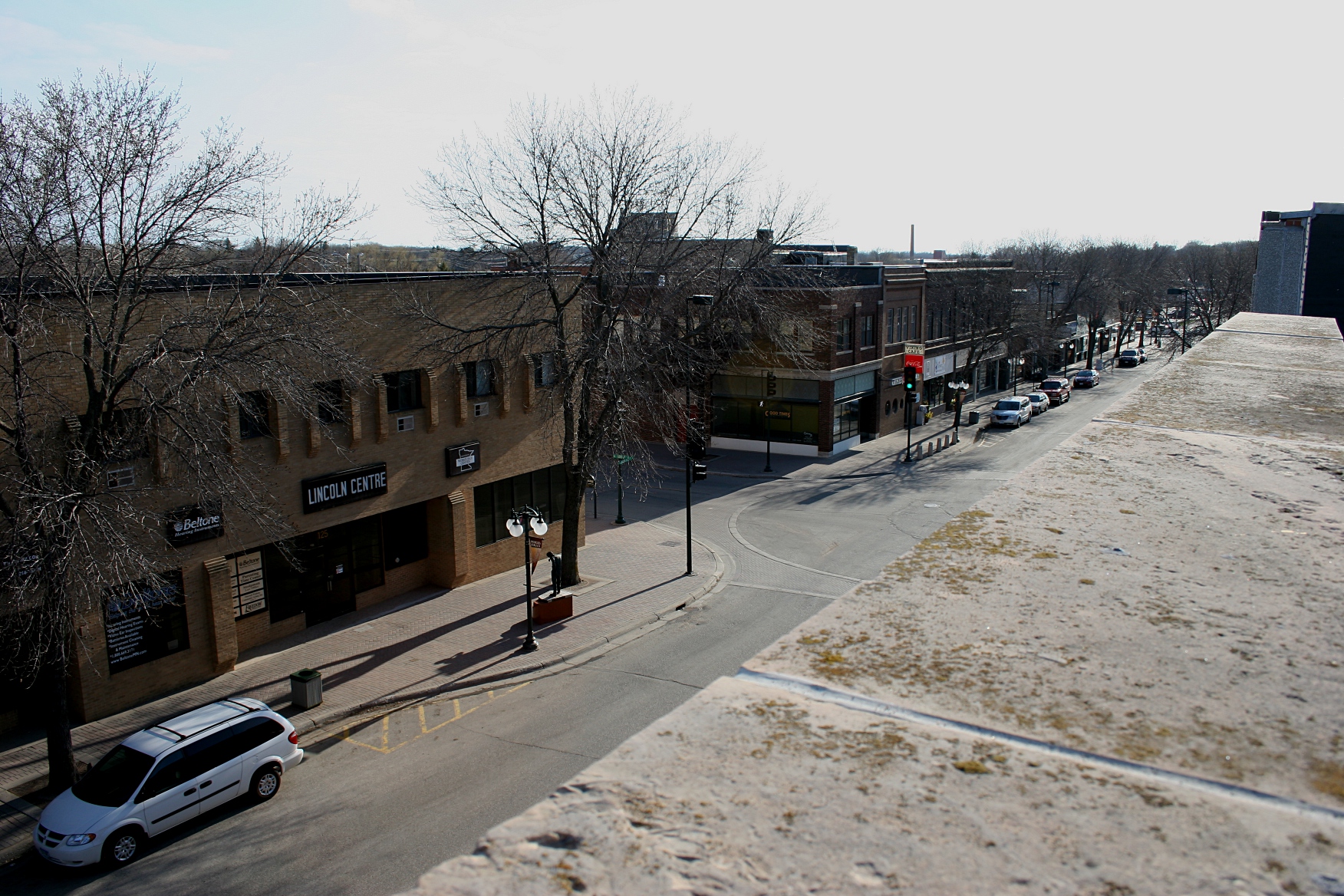
Looking the other direction into Fergus Falls' historic downtown.
Looking the other direction into Fergus Falls’ historic downtown.
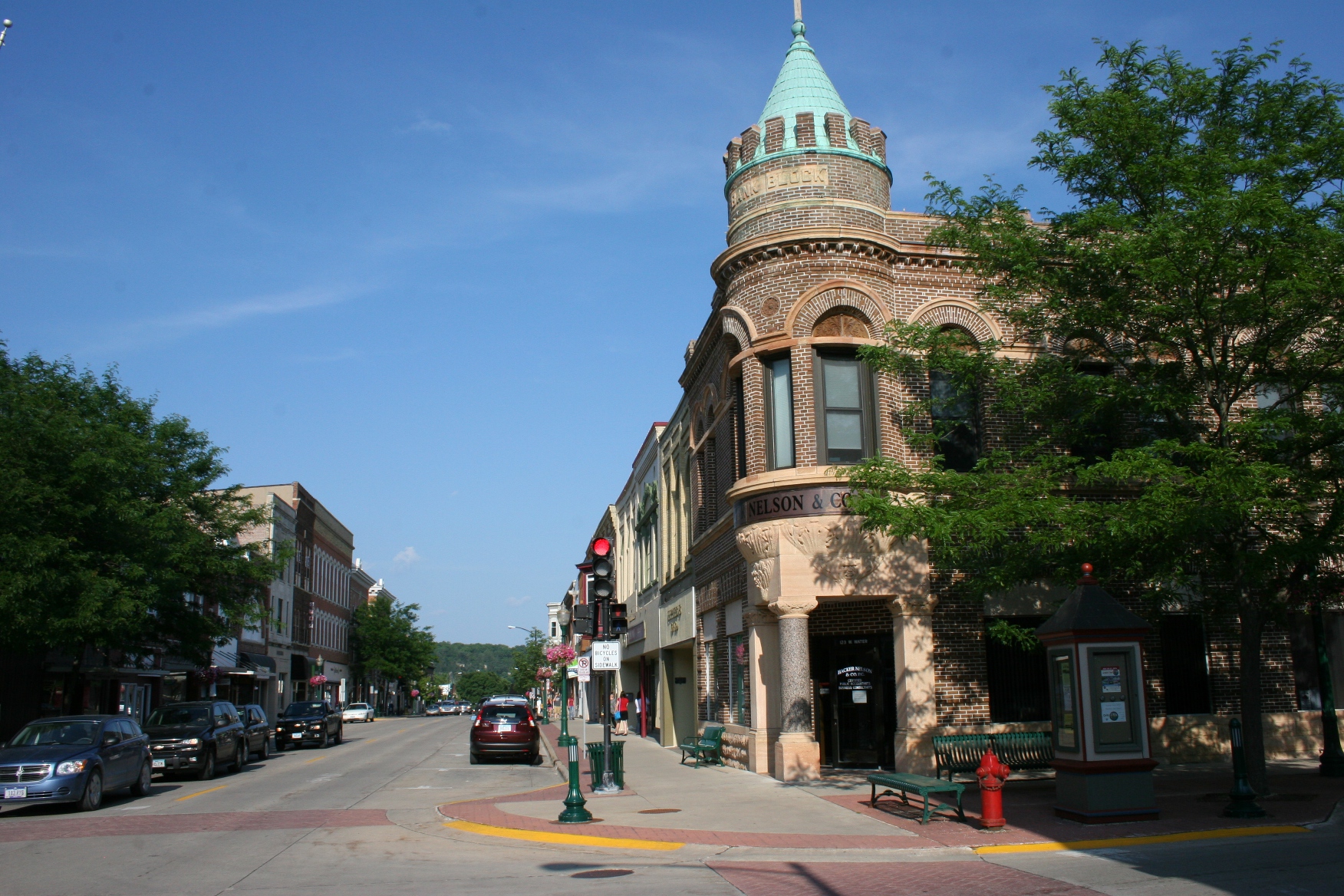
A slightly different view from the roof.

A slightly different view from the roof.

And it would have been better for photos had I been willing to move away from the theatre facade. But I just could not push myself that far. I managed several shots before retreating.
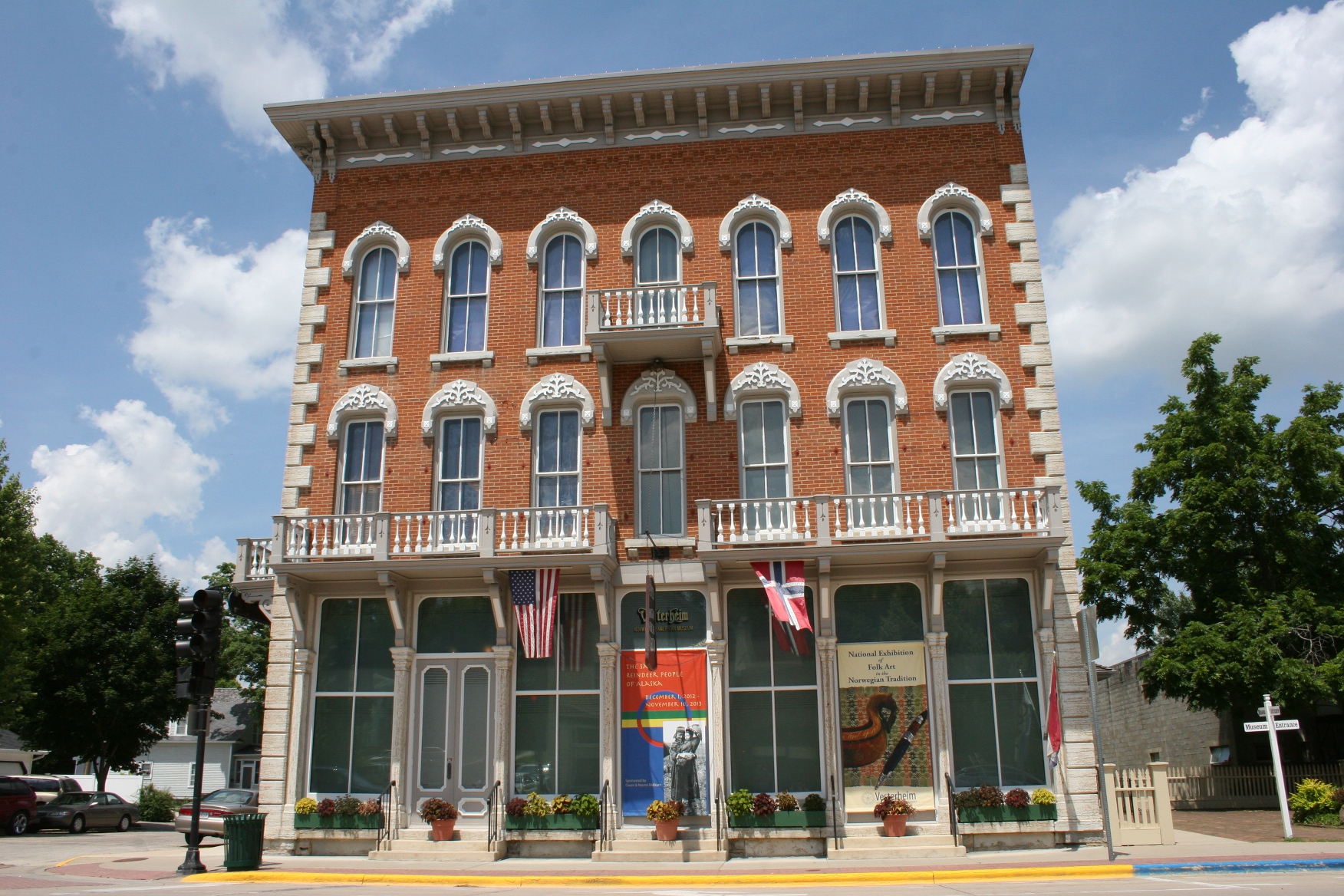
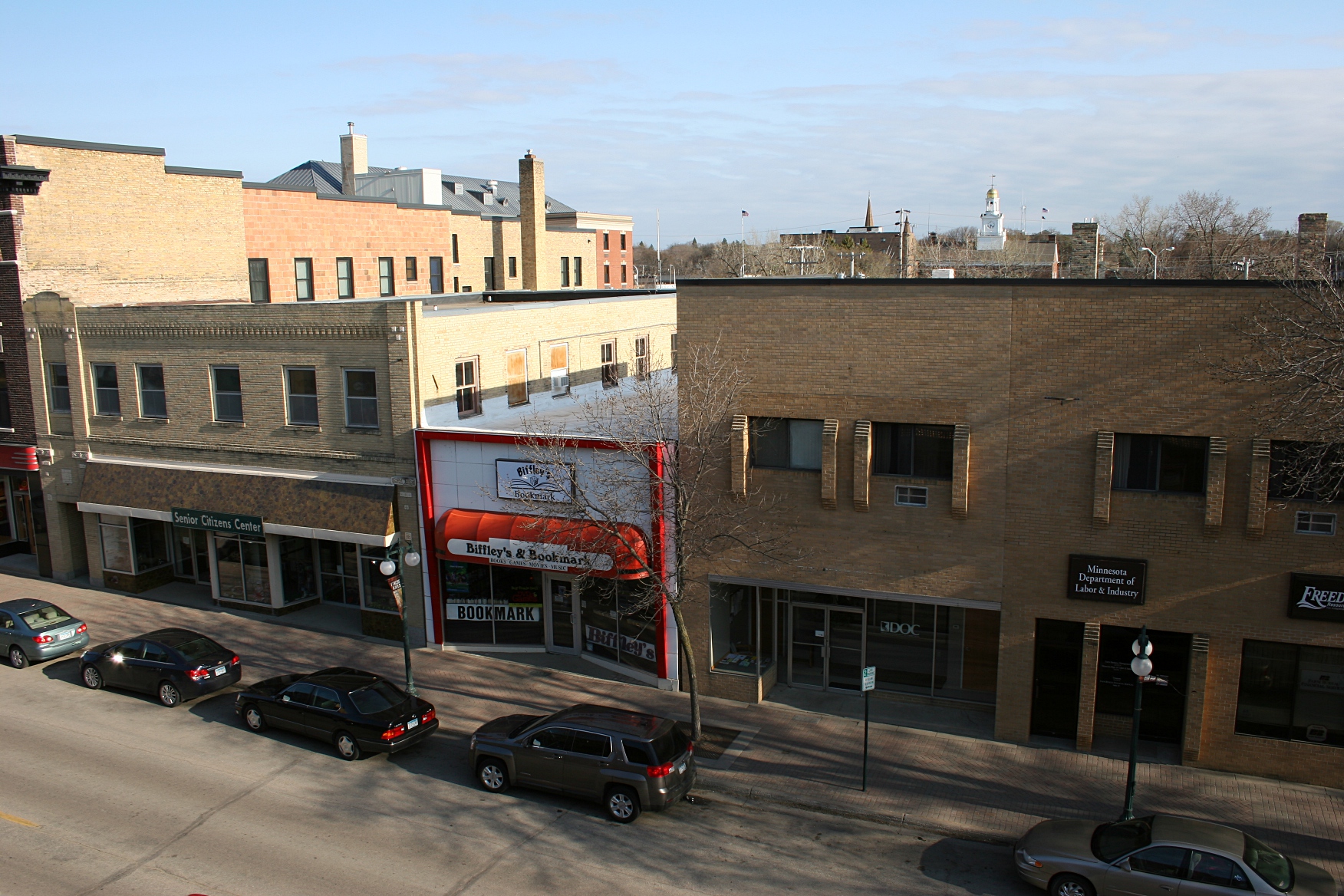
The block of downtown Fergus Falls in which Victor Lundeen Company and Fergus Theatre are located.

The block of downtown Fergus Falls in which Victor Lundeen Company and the arts center are located.

Lundeen offered the rooftop access after a tour of his print shop, an invitation extended when my husband and I walked into his bookstore/gift/office supply/commercial printing business on a recent Thursday evening. We were staying overnight in Fergus Falls en route to Fargo.
As is usual with me, my camera was slung around my neck, my notebook tucked inside my purse. Paul greeted us and we started chatting and one thing led to another, all the way up to the rooftop.
CHECK BACK FOR MORE posts from Fergus Falls, including a tour of Paul’s three-generation family print shop, images of downtown buildings and lots more. This community should own the motto: “Friendly Fergus Falls.”

© Copyright 2013 Audrey Kletscher Helbling