Minnesota Prairie Roots

Writing and photography by Audrey Kletscher Helbling

“Standing at the Grave,” an immigration story November 21, 2025

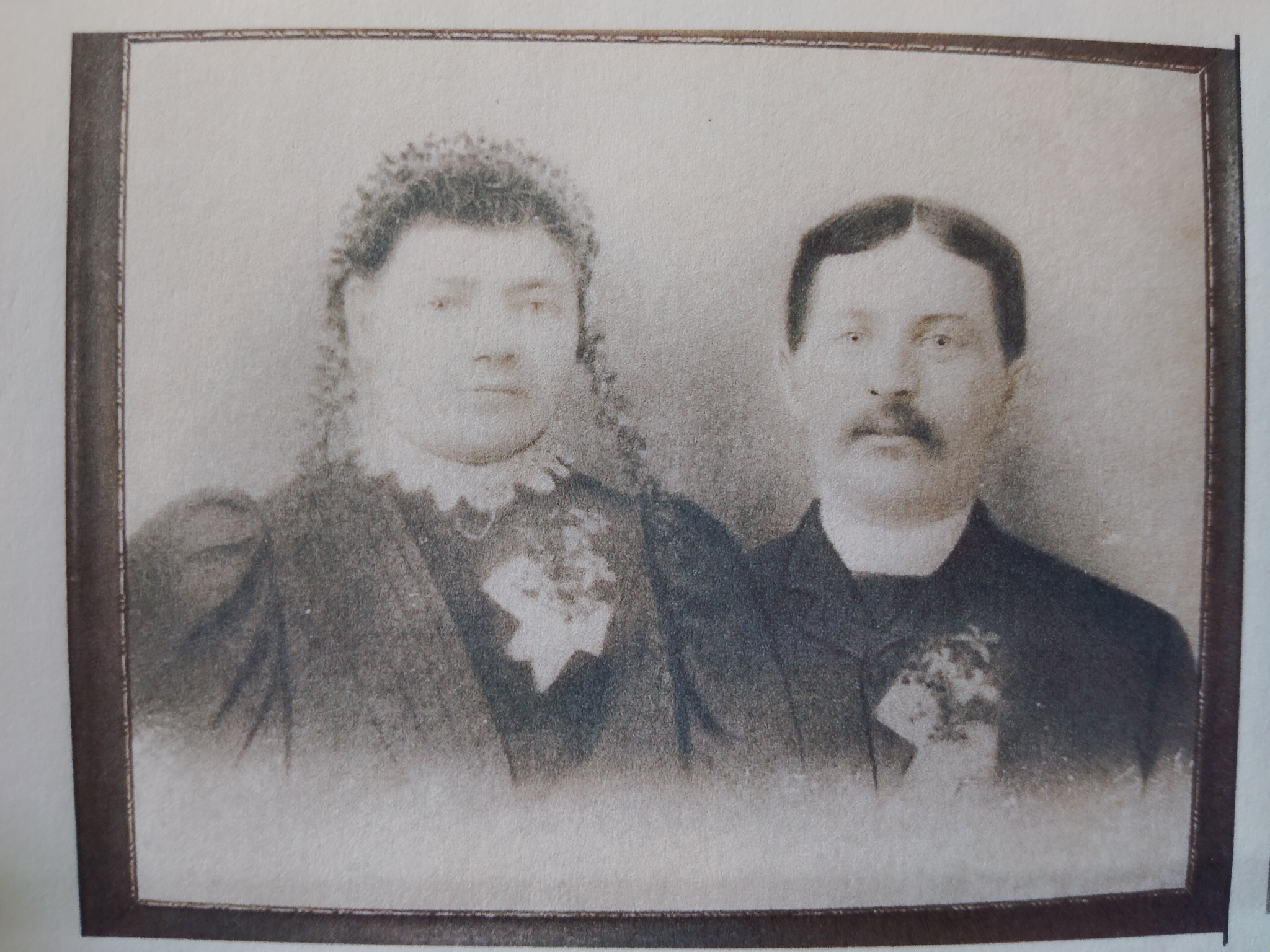
My great grandparents, Rudolph and Mathilda Kletscher, married in 1891. (Photo source: Kletscher Family Tree 2008 produced by Merlin and Iylene Kletscher)

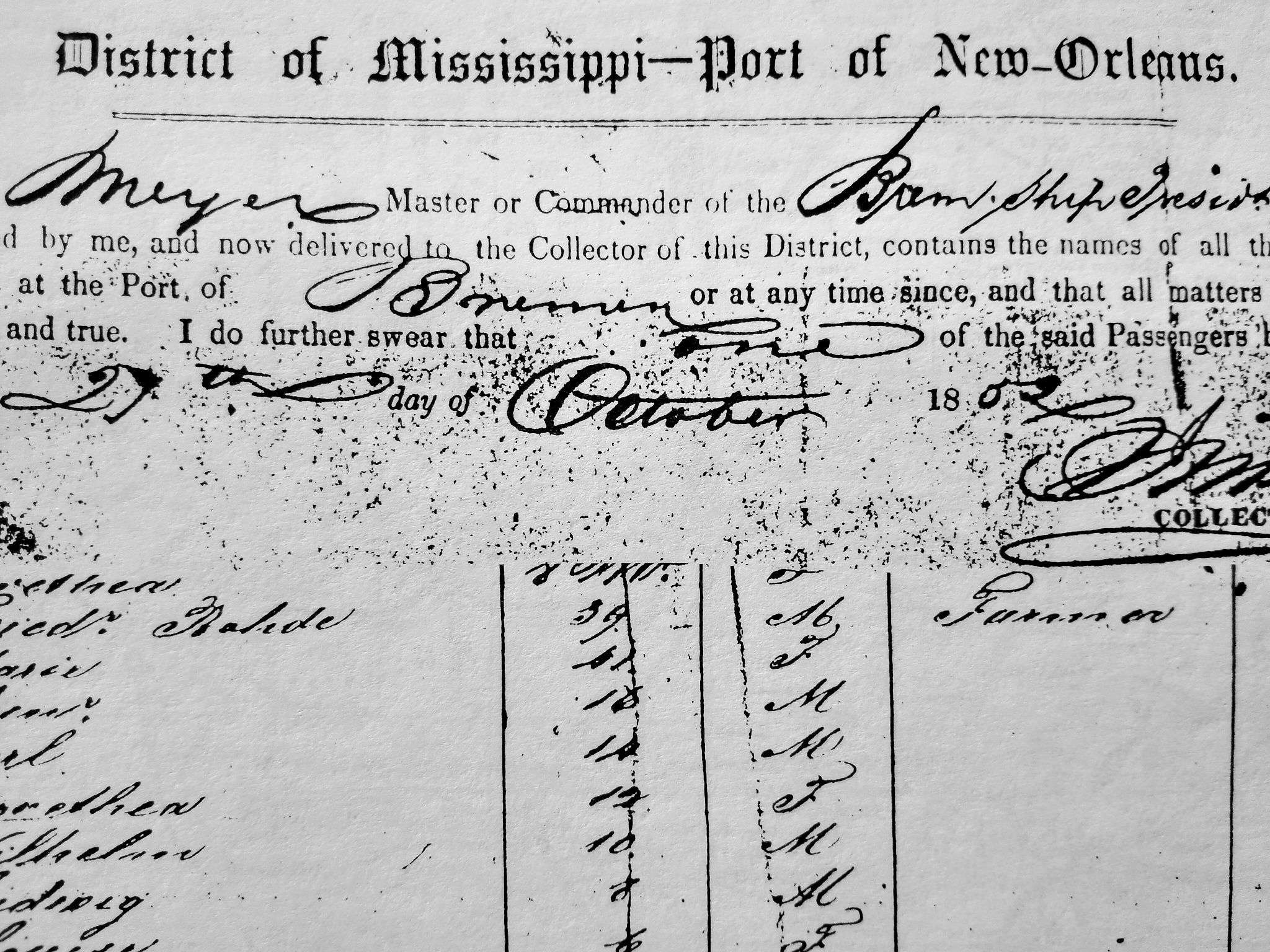
UNLESS WE ARE NATIVE AMERICANS, immigration is part of our family history. On my maternal side, Friedrich and Maria Bode arrived from Germany at the port of New Orleans in October 1852. They would settle in Illinois. Most of the family eventually moved to Minnesota. On my paternal side, my great grandfather, Rudolph Kletscher, landed in Baltimore from Germany in 1886, several years later journeying west to put down roots in southern Minnesota.

I pulled this information from pages of family history uncovered and compiled by family members who have researched our roots in Germany. I am grateful for their work, for the names, dates and places recorded for reference. Sometimes there are stories, or tidbits of stories. But mostly the research reveals documented facts only, not stories.

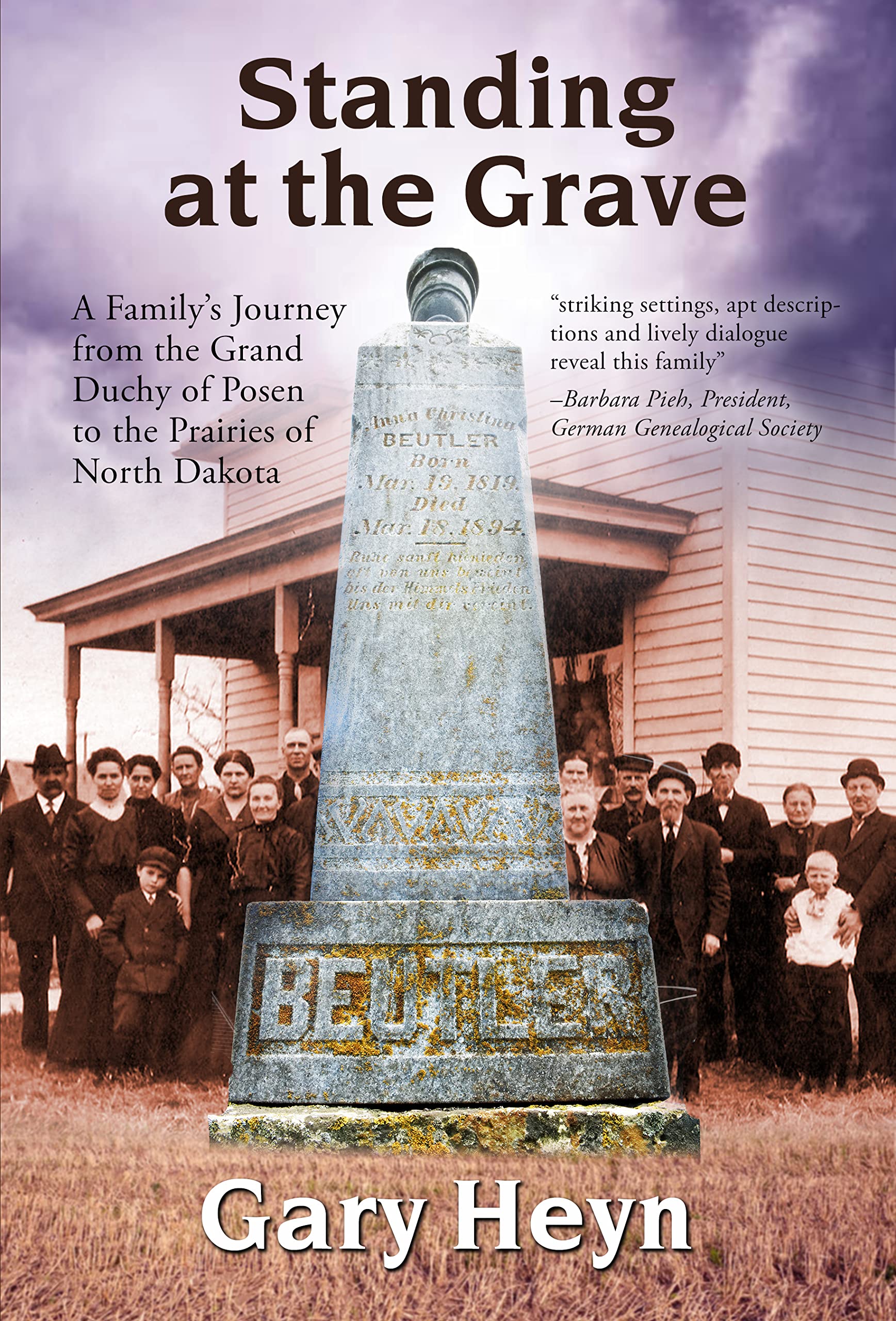
(Book cover sourced online)

It is the stories that interest me most, which explains my interest in reading Standing at the Grave—A Family’s Journey from the Grand Duchy of Posen to the Prairies of North Dakota by Minnesotan Gary Heyn. Books on Central in Faribault hosted Heyn on Thursday evening during a monthly literary event. I was among those in attendance, listening to Heyn read and then answer audience questions. I’d just finished reading his book about his ancestors who immigrated to America from Prussia (now Poland) beginning in 1867 shortly after the Civil War ended.

His ancestors could have been mine. Any of ours. Heyn took basic facts confirmed thorough research at the Minnesota History Center, church records, a Polish history website, old newspapers, even the National Weather Service and gleaned during several trips to Poland to form the foundation for his stories. The dialog and interactions are fictional slices of personal life in Prussia and then in America. Heyn’s characters really come alive when he reveals their fears, their worries, their hardships, griefs, challenges and more in intimate storytelling.

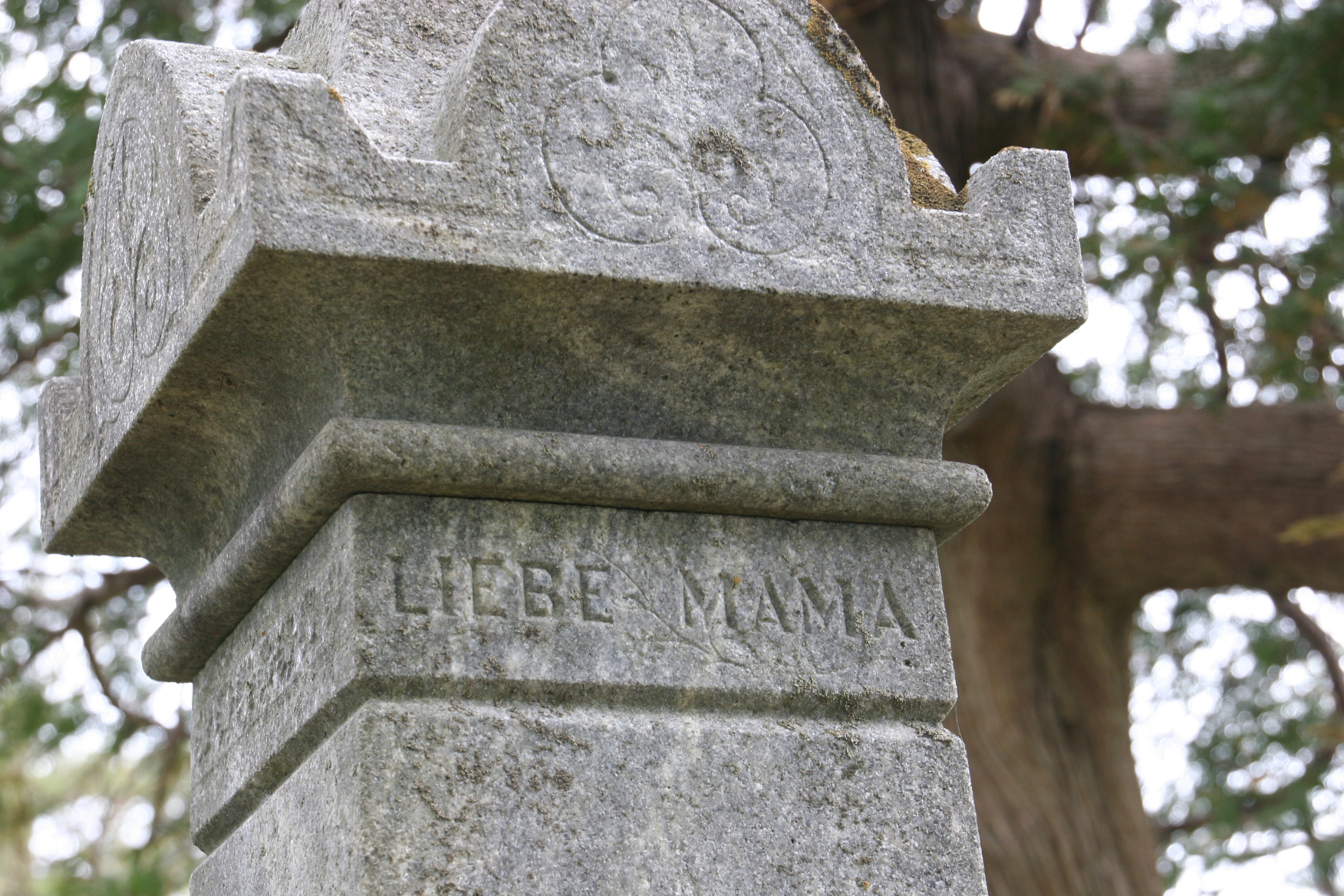
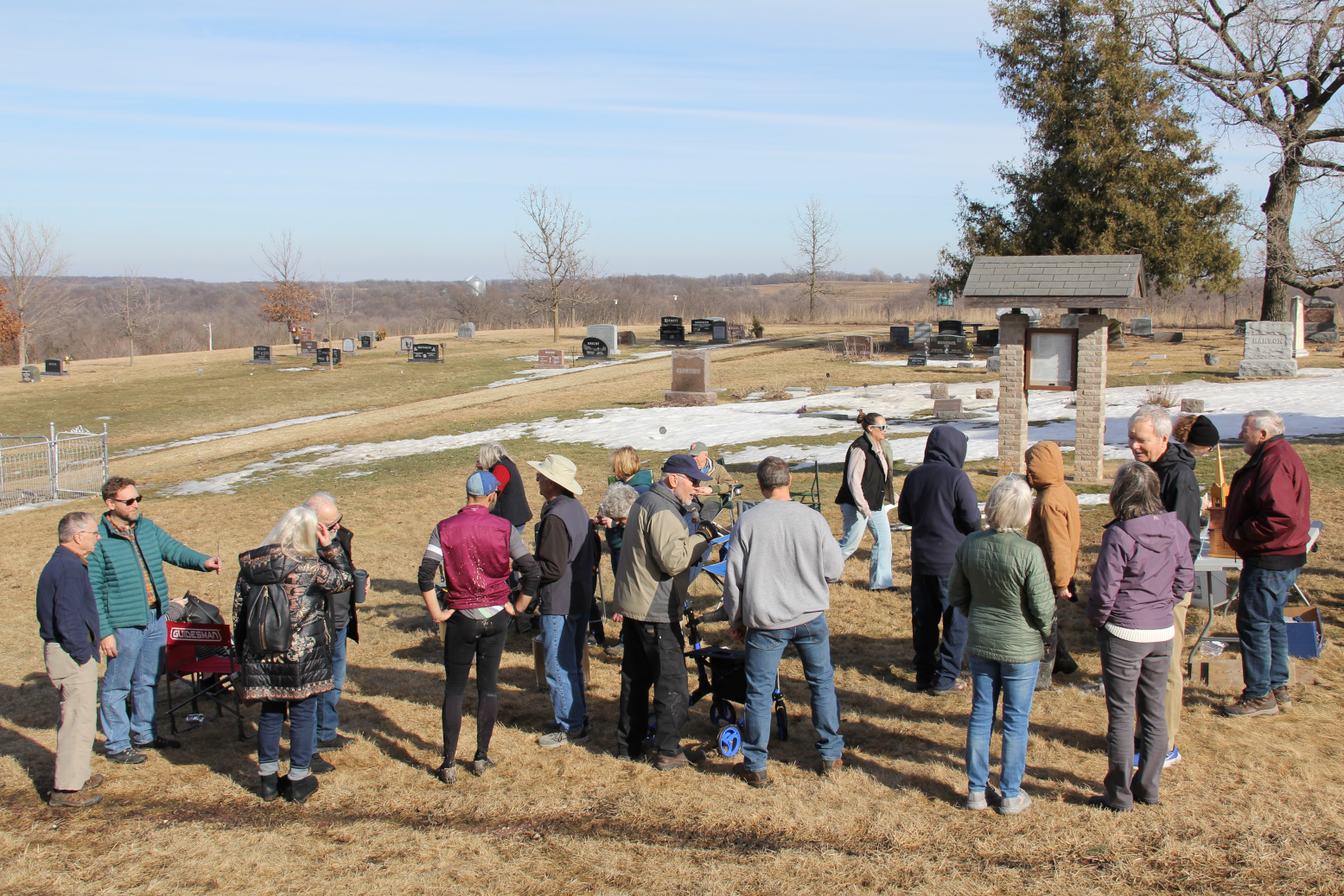
A tombstone in the Immanuel Lutheran Church Cemetery, Potsdam. The German word “LIEBE” means love in English. A Heyn family member is buried in this cemetery. (Minnesota Prairie Roots copyrighted file photo May 2022)

These are, at times, really hard stories. Of death by disease. Of death by accidents. Of death by suicide. Of death by botulism. I appreciate that the author doesn’t avoid tough topics. I understand the worries about weather and crop failure, vicariously stand at the graves of loved ones, recognize the depression a young mother experiences as she looks across the expansive North Dakota prairie, feeling isolated and alone.

But those difficult stories are balanced by the joys of births, of weddings, of the opportunity to claim land through the Homestead Act, to live and love and grow family in a new land rich in opportunity.

Main character, family matriarch Anna, follows her family to America many years after the first, eventually fulfilling her life-long dream of once again owning land, this time 160 acres in North Dakota. Most of the family found land in southern Minnesota, in the Rochester area where the author grew up and first heard the stories of his great grandmother. She lived with his childhood family. That sparked his interest in family history and genealogy, which, after his retirement as an accountant, led to writing Standing at the Grave.

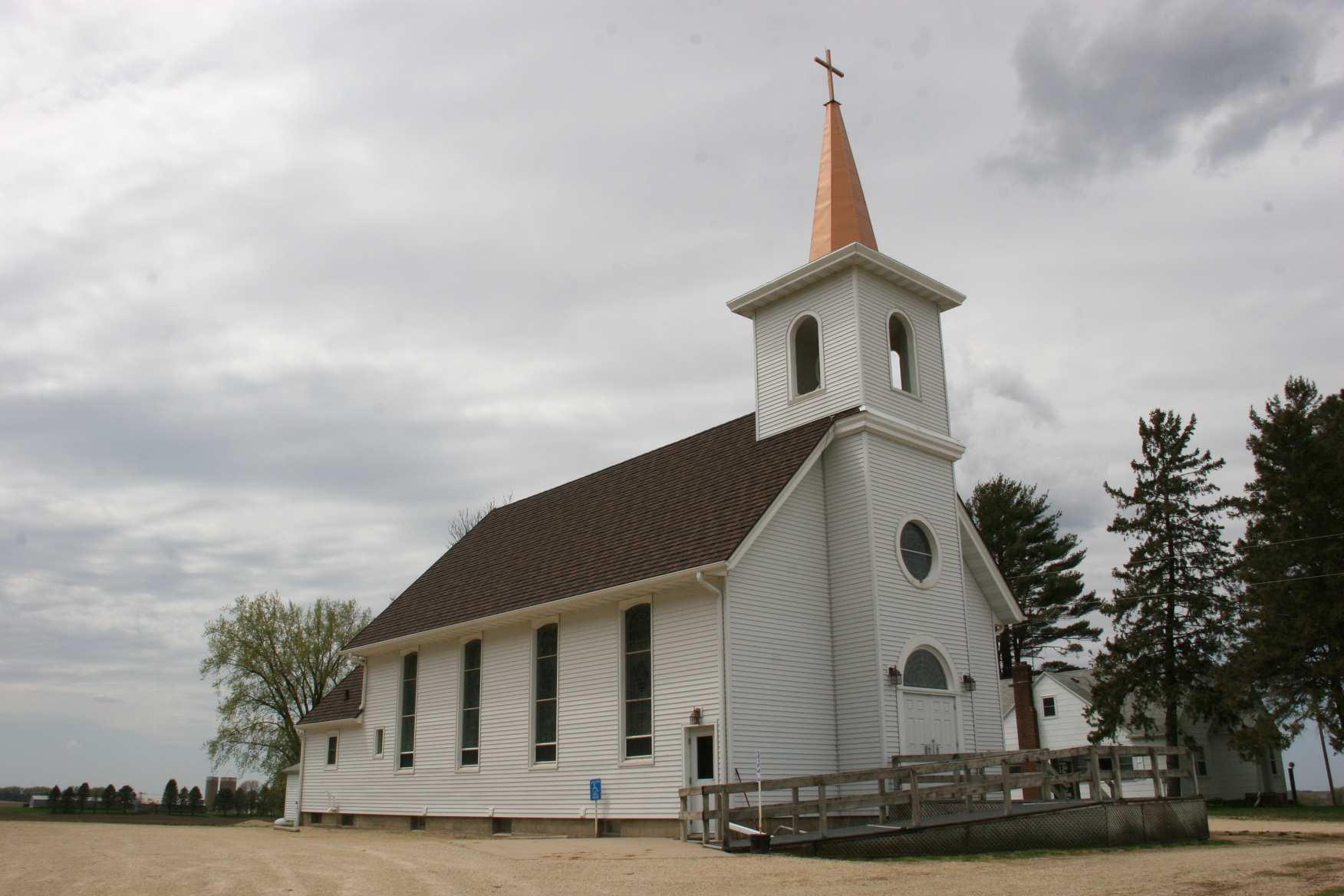
Immanuel Lutheran Church, Potsdam. (Minnesota Prairie Roots copyrighted file photo May 2022)

Southern Minnesotans, especially, will feel at home in places like Elgin, Grand Meadow, Pleasant Valley, Owatonna and more. I’ve even visited and photographed Immanuel Lutheran Church in Potsdam, where Anna stood on the front steps and scanned the countryside below the hilltop church. I’ve walked the cemetery, where Heyn’s ancestor, Willie, lies buried in an unmarked grave.

As much as I appreciate the storytelling in this book, I also appreciate its relevancy to today. Heyn family members new to America in the late 1800s are told to speak English, not German. Sound familiar? (My own mother, who died at age 89 in 2023, spoke German as her first language.) These newcomers to America felt like foreigners, often choosing to live among others from their homeland. Among those who shared their language, culture and customs, who liked bier, sauerkraut, Weihnachtsstollen and Glühwein.

But in times of challenges, Heyn reveals in one story, “…the citizens of this neighborhood, born all across the globe, banded together to help another working man.” That coming together of many nationalities repeats in his book, even as conflicts arise.

A passenger ship list from the port of New Orleans. (Source: The Bode Family book by Melvin & Lois Bode, 1993)

Heyn, in his writing, reveals the challenges, the dreams, the hopes, the resilience and resolve of his immigrant ancestors. These were strong individuals who relied on each other, their faith and their inner strength to cross a vast ocean for a new life in America. This is their story, but also a universal story of immigration, as relatable today as then.

This book helped me better understand those who came before me from Germany to America from a personal perspective. This book also reminds me of the struggles immigrants still face today in America, especially today.

© Copyright 2025 Audrey Kletscher Helbling


Visiting a Red Wing bluff sacred to the Dakota November 19, 2025

Barn Bluff in Red Wing as photographed from Sorin’s Bluff in Memorial Park. Zoom in and you will see people on a path atop the bluff. (Minnesota Prairie Roots copyrighted photo October 2025)

AT THE BASE of He Mni Caɳ, also known as “Barn Bluff,” I contemplated whether to climb the 340-foot cliff rising high above the Mississippi River in southern Minnesota. It seemed like a good idea when Randy and I were considering just that on our drive from Faribault to Red Wing recently. But reality set in once we found the bluff, started up a steep pathway and determined that this might be a little much for two people pushing seventy. My vision issues and fear of heights also factored into discontinuing our hike.

An historic photo in an informational plaza shows teepees at the bluff’s base, circa 1840s. (Minnesota Prairie Roots copyrighted photo October 2025)

While disappointed, I was still thankful we were here because He Mni Caɳ holds historical, cultural and sacred significance for the Bdewakantunwan Dakota Oyate, the Indigenous Peoples who originally inhabited this land. They lived on land below and around the bluff on the site of current-day Red Wing. They held ceremonies and rituals atop the bluff, also used for burial, shelter from enemies and more. This was, and always has been, a sacred place to the Dakota.

This sign welcomes visitors to Barn Bluff. (Minnesota Prairie Roots copyrighted photo October 2025)

That message is shared in an Entrance Plaza to He Mni Caɳ. There storytelling markers and seven towering pillars reveal details about this place and its importance to Native Americans. Via images, words and art, I began to learn, to understand. By learning, I am also honoring National Native American Heritage Month celebrated in November.

An overview of the seven columns rimming a center plaza at the base of Barn Bluff. That’s an aged power plant in the background. (Minnesota Prairie Roots copyrighted photo October 2025)

I admittedly did not read every single word and somehow missed noticing the buttons to push on the storytelling markers that would allow me to hear the spoken Dakota language. But I still gathered enough information, enough story, to recognize the value of this land to the Dakota and the respect we should all hold for them, their history and the sacred He Mni Caɳ, which is on the National Register of Historic Places.
The Mississippi River Valley is a place of remarkable natural beauty, here photographed from atop Sorin’s Bluff in Memorial Park. (Minnesota Prairie Roots copyrighted photo October 2025)

The city of Red Wing and the nearby Prairie Island Indian Community have partnered to preserve and honor this place along the Mississippi following the guiding principles of heal, sustain, educate and honor. I saw that and read that in the plaza.

A message highlighted on a plaza column. (Minnesota Prairie Roots copyrighted photo October 2025)
The pillars feature traditional Dakota patterns. (Minnesota Prairie Roots copyrighted photo October 2025)
Strong words on a storytelling marker. (Minnesota Prairie Roots copyrighted photo October 2025)

As I viewed the historic Dakota patterns on the seven plaza columns and walked around this history circle reading and photographing, words and phrases popped out at me: We are all related. Interconnectedness. Kinship and a shared landscape. If only, I thought, we would all hold those words close, remember them in our differences, remember them in our relationships with each other and with the earth, remember them in our struggles and disconnect.

A sculptured head tops a storytelling marker. (Minnesota Prairie Roots copyrighted photo October 2025)

The city of Red Wing is named after Tatanka Mani (“Walking Buffalo”), long ago leader of the Mdewakanton Dakota in the upper Mississippi River Valley. Early immigrants who settled in the area gave him that name. Tatanka Mani helped shape the history of this region through his decisions and leadership. He was clearly connected to his people, to the non-Natives who arrived here, and to the land.

A current-day view of Barn’s Bluff from high atop Sorin’s Bluff. (Minnesota Prairie Roots copyrighted photo October 2025)

Today He Mni Caɳ/Barn Bluff remains a major attraction in Red Wing, just as it was years ago for those traveling the river, exploring the region. Henry David Thoreau, Henry Schoolcraft and Zebulon Pike are among the countless who viewed the river and river valley below from atop the bluff.

Two of the storytelling markers at the entrance plaza and steps leading to paths that take hikers onto and up the bluff. (Minnesota Prairie Roots copyrighted photo October 2025)

But not me. I was content to stand at its base, to take in the history shared there. And then later to view the bluff from Sorin’s Bluff in Memorial Park, a park with a road leading to the top. Even then I settled for a partial ascent, because I’d had enough of heights on this day when He Mni Caɳ challenged me and I learned the history of this sacred place.

© Copyright 2025 Audrey Kletscher Helbling


Two authors: One talks pandemics, the other immigration November 15, 2025

(Book cover sourced online)

WHENEVER AN AUTHOR appears locally to read from and discuss his/her book, I try to attend. I love reading and learning. I enjoy listening to other writers talk about the craft of writing as I read and write nearly every day.

Among authors who will be in my area soon are Dr. Michael Osterholm and Gary Heyn. Let’s start with Osterholm, who will appear at The Grand Event Center in Northfield at 7 pm Monday, November 17, to read from his book, The Big One—How We Must Prepare for Future Deadly Pandemics, co-authored by Mark Olshaker. He will also engage in conversation with Debby Walser-Kuntz, professor of biology at Carleton College in Northfield.

Osterholm, an internationally-renowned epidemiologist and director of the University of Minnesota Center for Infectious Disease Research and Policy, is a familiar name, especially to Minnesotans. During the COVID-19 pandemic, he was tapped as an expert. I, for one, found him to be an invaluable and trusted source of information during the pandemic. His knowledge and research into infectious diseases stretches well beyond COVID, though.

My history with Osterholm goes back decades to the late 1970s when I was just out of college working at a small town Minnesota weekly newspaper, The Gaylord Hub. Osterholm came to Gaylord during a hepatitis outbreak at the local school. While details of that health issue have long faded, I recall that this highly-contagious disease was connected to a band teacher and musical instruments. I remember photographing Osterholm, also starting his career, and writing a news story about what was unfolding at the school.

The original coronavirus as depicted by the CDC in 2021. (Sourced online)

On November 17, Osterholm will focus on pandemics, sure to be an enlightening talk at this 7-8:30 pm first come first serve seating (doors open at 6 pm.) event at The Grand, 316 Washington Street in Northfield and hosted by local independent bookshop, Content Bookstore.

(Book cover sourced online)

While Osterholm will present in a large venue, author Gary Heyn will appear in a much smaller, intimate setting, the Rice County Area United Way’s Books on Central. The used bookshop is housed in a former jewelry store at 227 Central Avenue North, Faribault. Heyn, a retired corporate executive turned historian, genealogist and writer upon his retirement, will read from and talk about Standing at the Grave: A Family’s Journey from the Grand Duchy of Posen to the Prairies of North Dakota. This free literary event is set for 6 pm Thursday, November 20.

I’m about a third of the way through Heyn’s book and I can attest that it is a captivating read, the kind of book I don’t want to put down. It’s relatable when considering my German immigrant ancestors and also in the context of immigration issues today. Once I’m finished with the book, my husband will also be reading it. His ancestors, the Helblings, moved from Germany to then Russia (current day Ukraine) before journeying to America and a new life in North Dakota.

Insights into immigration, tracing family history and stories are always of interest. Heyn will read from the chapters of his book about three mothers from Gembitz Hauland, an historic German-Polish village, who were reunited in Steele County 18 years after sending their children to America. To type those words is enough to break my heart. I cannot imagine how difficult that must have been for those three mothers. But it happened. Over and over and over again.

I encourage you, if you live in my area, to attend these upcoming author talks. These are opportunities to learn via the expertise and creativity of those inspired to write.

FYI: To view other upcoming author events offered by Content Bookstore, click here.

© Copyright 2025 Audrey Kletscher Helbling


Farmer Seed mural installed as historic-themed projects underway November 12, 2025

A new mural on the side of Midwest Indoor Storage celebrates Farmer Seed & Nursery’s history in Faribault. (Minnesota Prairie Roots copyrighted photo October 2025)

THE FIRST PART of a three-pronged project honoring Farmer Seed & Nursery in Faribault has been completed. Recently a 20 by 24-foot mural, designed by local historian and creative Jeff Jarvis of West Cedar Studio and painted by Minneapolis artist Melodee Strong, was installed at Midwest Indoor Storage, site of the former nursery.

The new Farmer Seed mural hangs on an indoor storage building where Farmer Seed once stood. (Minnesota Prairie Roots copyrighted photo October 2025)

The artwork hangs on a corner of the building’s west side, visible to eastbound passersby along Minnesota State Highway 60/Fourth Street.

A 1920s image of Farmer Seed from the Jeff Jarvis Collection. (Photo courtesy of Jeff Jarvis)
Vegetable art in a vintage seed catalog for sale at Keepers Antiques in downtown Faribault. (Minnesota Prairie Roots copyrighted photo October 2025)
The beautiful, artsy cover of a 1921 Farmer Seed catalog found at Keepers Antiques. (Minnesota Prairie Roots copyrighted photo October 2025)

The iconic Farmer Seed and Nursery multi-level complex once rose here, an identifiable community landmark business rooted in agriculture. With nearly a 130-year history in Faribault and company roots in Chicago dating to 1888, Farmer Seed was once noted for its local seed farms, seeds, mail order seed catalog, retail store and Christmas trees. I remember paging through the company’s catalogs while growing up on a southwestern Minnesota dairy and crop farm. From vegetables to flowers to shrubs and trees, Farmer Seed offered endless options for the everyday gardener, farmer and other growers.

Simple, bright, bold and memorable graphics define the mural. (Minnesota Prairie Roots copyrighted photo October 2025)

Today the mural and a forthcoming kiosk and memory book will continue to celebrate this long-time Faribault business. In designing the mural, Jarvis kept it simple, focusing on the signature exterior signage that graced the historic building. He added a splash of color in a clutch of sunflowers, highly recognizable, he said, and a popular agricultural symbol.

The multi-paneled kiosk will stand on the corner of Fourth Street and Eighth Avenue. (Design rendering courtesy of Jeff Jarvis, WestCedarStudio.com)

Jarvis also created conceptual sketches for the planned corner kiosk and is developing an interior graphic panel display featuring company history, little-known products and personnel information.

The memory book cover designed by Jeff Jarvis of WestCedarStudio.com. (Courtesy of Jeff Jarvis)

Additionally, this keeper of local history is compiling a Farmer Seed memory book of stories, historical information and photos. Jarvis has included his own childhood story about a coveted Ant Farm purchased at the retail store by his mother and gifted to him at Christmas. He’s looking for more stories and encourages submission of those via a form on his website at https://westcedarstudio.com/farmer-seed-nursery-memory-book/. Once the stories are compiled they will be available to read for free on Jarvis’ studio website or as a printed copy for a fee.

On a recent rainy morning, I photographed the Farmer Seed & Nursery historic-themed bench along Faribault’s Central Avenue, among many history benches downtown. (Minnesota Prairie Roots copyrighted photo October 2025)

I expect this trio of projects will be well-received in Faribault, where the 2018 closure, then sale and eventual complete demolition of the iconic Farmer Seed complex in 2023 raised public concern. I was among those who hoped the building, on the National Register of Historic Places, could be saved, a new use found for this long-time landmark. It was not to be. But the city, including the Heritage Preservation Commission, recognized the importance of preserving memories by requiring historical remembrance projects as part of the property sale, according to Jarvis. I’m grateful for that and for parts of the building that were salvaged for historical purposes.

Flocked Christmas trees for sale at Farmer Seed in 2014. (Minnesota Prairie Roots copyrighted file photo 2014)

Today when I view the newly-installed mural, I think of my own Farmer Seed memories. Like so many others, those trace to Christmas. I loved to wander through the retail store to see all the trees decorated with ornaments. Sometimes my husband and I would buy our short needle short Christmas tree there. Not a flocked tree, which was a Farmer Seed specialty. One year we waited too long and, days before Christmas, got what I think may have been the last tree in town at a bargain price.

A page in a 1970 seed catalog at Keepers Antique Shop. In 1894 Farmer Seed moved to Faribault and started its seed growing operation here. (Minnesota Prairie Roots copyrighted photo October 2025)

For many area residents, Farmer Seed holds a life-time of memories. Of seed catalogs. Of seed potatoes. Of seed packets. Of lilac bushes and Christmas trees. Of wood plank floors and a building rising high along highway 60, where an indoor storage unit and an under-construction apartment building now stand on land once rooted in agriculture.

© Copyright 2025 Audrey Kletscher Helbling


Remembering the Edmund Fitzgerald 50 years after it sunk in Lake Superior November 10, 2025

PBS did a documentary on the Edmund Fitzgerald. (Minnesota Prairie Roots copyrighted file photo 2014)

SHORTLY BEFORE 8 THIS MORNING, I listened to “The Wreck of the Edmund Fitzgerald” by Gordon Lightfoot pulse from my radio. It was an auditory reminder that today marks the 50th anniversary of the sinking of that freightliner on November 10, 1975, in Lake Superior some 17 miles from Whitefish Point, Michigan.

Some 26,000 tons of taconite pellets, like these, filled the cargo holds of The Edmund Fitzgerald as it journeyed across Lake Superior on November 9 and 10, 1975. (Minnesota Prairie Roots copyrighted file photo 2014)

This shipwreck holds great interest in Minnesota as the Edmund typically left loaded with taconite from Silver Bay, on the Minnesota side of Lake Superior, headed for the steel mills of Detroit and Toledo. But on this last fateful trip, the Edmund departed from Superior, Wisconsin, aiming for Detroit.

My husband’s copy of Gordon Lightfoot’s greatest hits, which includes “The Wreck of the Edmund Fitzgerald.” (Minnesota Prairie Roots copyrighted file photo)

The ship sank in the gale force raging winds and waves of a November storm claiming the lives of all twenty-nine aboard. That tragedy has been forever immortalized in Lightfoot’s 1976 ballad.

Today, in ceremonies both in Minnesota and Michigan, those who perished in this disaster on an inland “sea” will be honored. At 2 pm, the Great Lakes Shipwreck Museum in Whitefish Point, Michigan, holds a public remembrance service. At 7 pm, a memorial service is set, but for Fitzgerald family members only with the museum closing at 5 pm in preparation for that event.

Here in Minnesota, the 50th anniversary focus today happens at the Split Rock Lighthouse Historic Site located along the shore of Lake Superior southwest of Silver Bay, which is north of Duluth and Superior. The Annual Memorial Beacon Lighting ceremony, beginning at 4 pm, is sold out.

For those able to secure tickets, the Minnesota ceremony is sure to be emotional as the names of the twenty-nine crew members are read aloud to the tolling of a ship’s bell. Lighting of the lighthouse beacon follows with the light shining for two hours.

Many years have passed since I’ve visited the lighthouse. Decades have passed since I first heard Gordon Lightfoot’s ode to the Edmund Fitzgerald as a young adult. Despite the passage of time, this tragic story remains imprinted on my mind, as it does the collective memories of Minnesotans old enough to remember this November 10, 1975, tragedy on Lake Superior.

FYI: I’ve previously written about the Edmund Fitzgerald. That includes a 2014 blog post about a presentation at the Rice County Historical Society by a diver who explored the wreck of the freightliner. Click here to read that story. The presentation coincided with the opening of the play, “Ten November,” at the Paradise Center for the Arts in Faribault. Click here to read an introspective piece I also wrote.

© Copyright 2025 Audrey Kletscher Helbling


Autumn beauty at Valley Grove October 23, 2025

Driving along Rice County Road 30 from Nerstrand toward Valley Grove. (Minnesota Prairie Roots copyrighted photo October 2025)

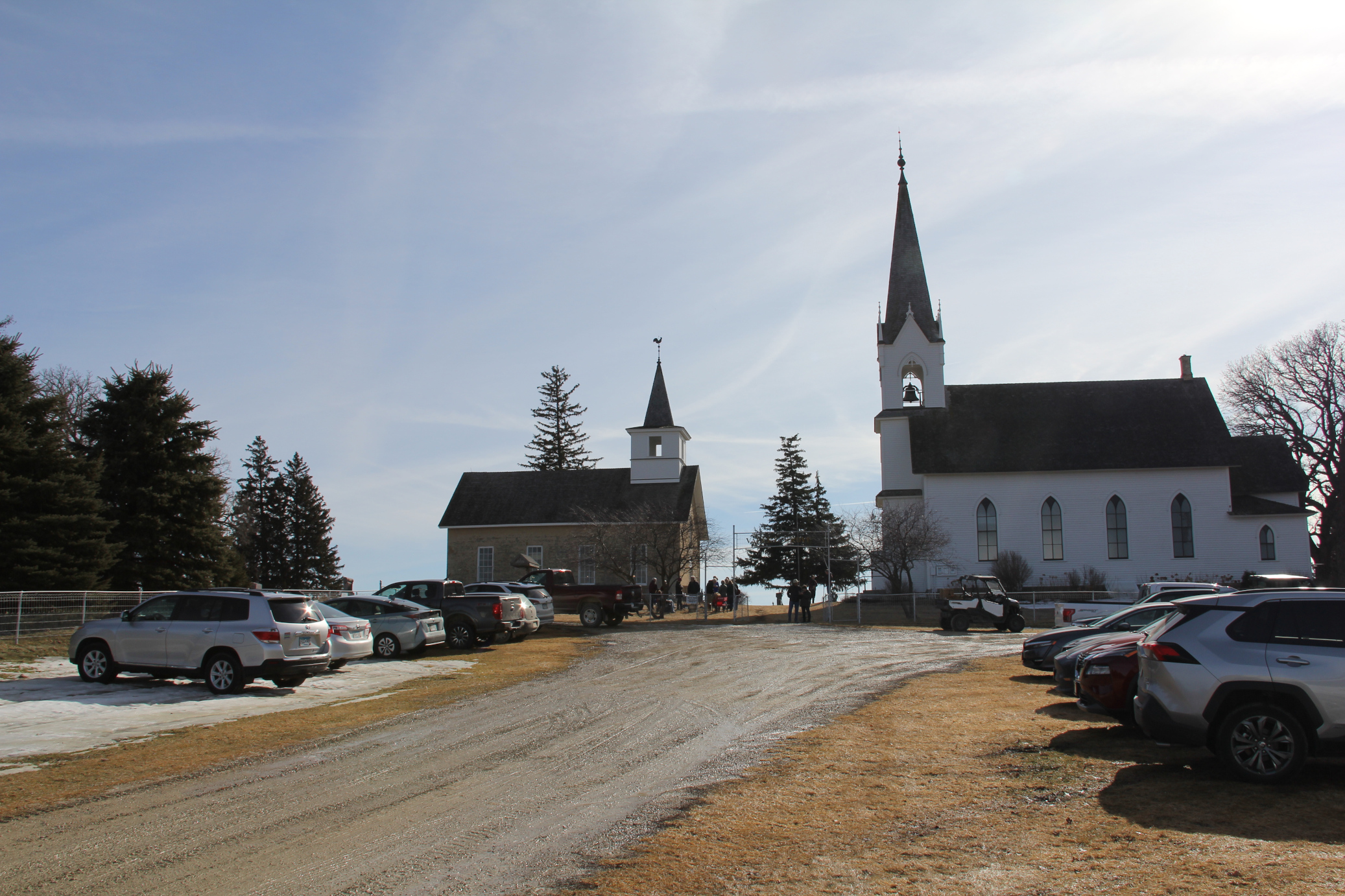
A HILLSIDE ABLAZE in color appears before us as our van descends Rice County Road 30 northwest of Nerstrand. The road curves, twists into the valley between farmland and farm sites until we reach our destination, Valley Grove churches.

The gated entry to the historic Valley Grove churches near Nerstrand and south of Northfield. (Minnesota Prairie Roots copyrighted photo October 2025)

Randy steers the van off the paved road onto the gravel driveway leading to these two historic Norwegian immigrant churches standing high atop a hill overlooking the rolling countryside. This secluded place rates as a favorite destination of ours any time of year, but especially in autumn.

From the churchyard, I focus my telephoto lens across the prairie to the distant woods. (Minnesota Prairie Roots copyrighted photo October 2025)

The hilltop location offers a sweeping view of the surrounding land, including the Big Woods, especially colorful now. I simply cannot get enough of the red, orange and yellow tree lines that provide a painterly backdrop to this bucolic setting.

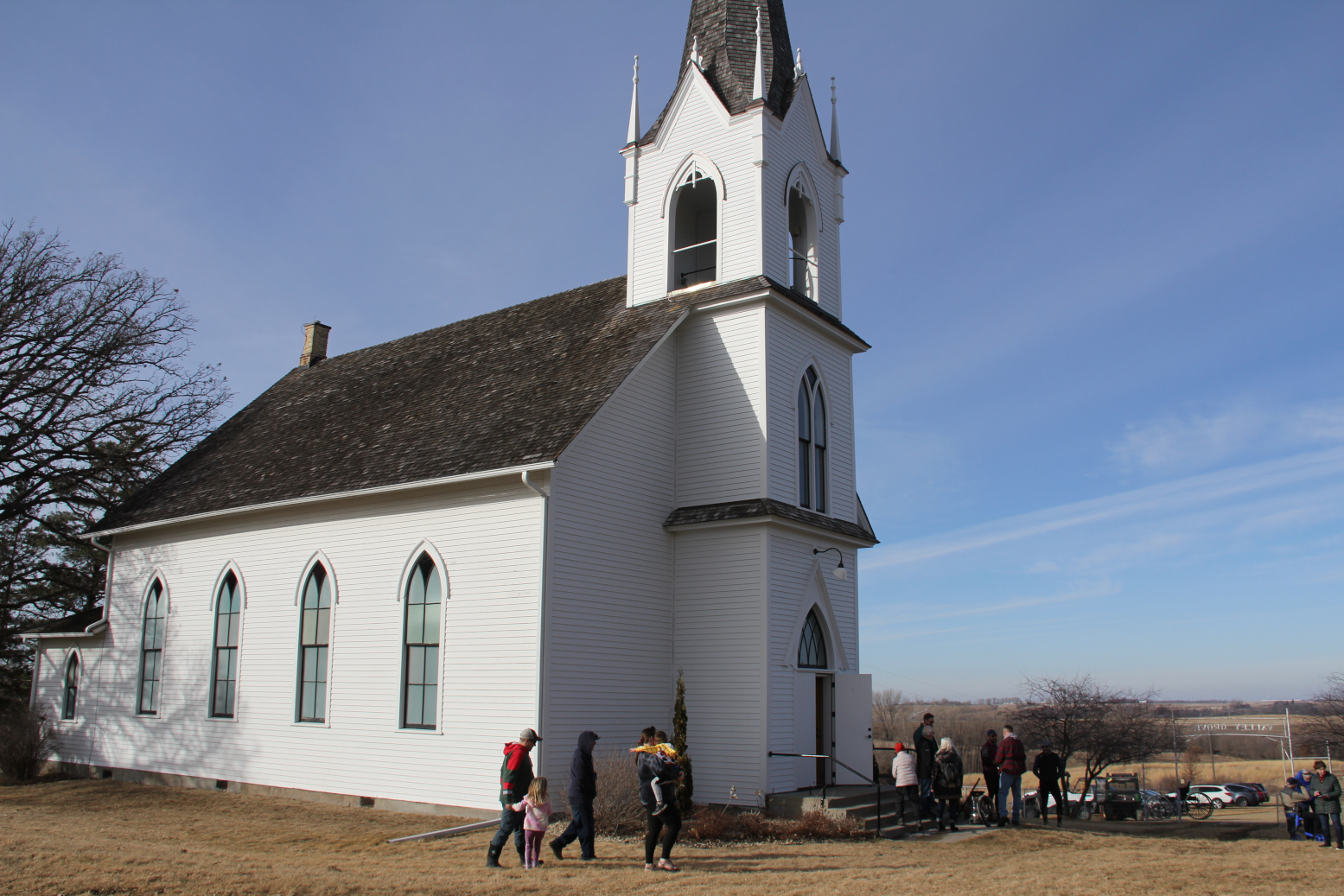
The 1894 wooden church opens today for weddings, a Country Social, a Christmas Eve service and other special events. The stone church serves as a fellowship hall/gathering spot. (Minnesota Prairie Roots copyrighted photo October 2025)

Here the 1862 and 1894 churches rise, a testament to the faith and endurance of the Norwegian immigrants who settled this area. The topography likely reminded them of the homeland they left for new opportunities in America.

The prairie fronts woods ablaze in color, as viewed from the churchyard. (Minnesota Prairie Roots copyrighted photo October 2025)

On this day, as the wind blows cold and strong across the churchyard—so much so that we eat our picnic lunch inside the van—I ponder how these foreigners felt once winter arrived in all her cold and snowy starkness. Perhaps they wondered why they ever left Norway.

A vibrant bush on prairie’s edge. (Minnesota Prairie Roots copyrighted photo October 2025)

But on this fall day, I recognize also how much they must have appreciated this beautiful hilltop location. The Valley Grove Preservation Society works hard to retain the natural beauty of these 50 acres of land. The trees. The tall prairie grasses. The wildflowers. They also maintain the two aged houses of worship—the old stone church built first and the adjacent wood-frame church constructed 32 years later.

Grassy paths lead into and through the prairie. (Minnesota Prairie Roots copyrighted photo October 2025)
Prairie wildflowers dying and going to seed. (Minnesota Prairie Roots copyrighted photo October 2025)
Randy steps up for a better view of the distant Big Woods from the prairie. (Minnesota Prairie Roots copyrighted photo October 2025)

Beyond the churches and surrounding cemetery, we follow an uneven path into the prairie, pausing occasionally to take in the colorful, distant trees. Randy steps atop a limestone slab for a better view. I spot a garter snake a step down from his feet, then edge away, not at all fond of snakes.

On the other side of the rolling prairie, the churches rise. (Minnesota Prairie Roots copyrighted photo October 2025)

Turning back toward the churchyard a bit later, I see the churches rise like ships upon an ocean of prairie grass. It’s not hard to visualize Norwegian immigrants boarding ships, sailing across the massive ocean bound for America.

Aged and new tombstones fill the Valley Grove cemetery. (Minnesota Prairie Roots copyrighted photo October 2025)

The hopes and dreams they carried to America and eventually to Minnesota imprint upon tombstones in names and dates and words. Their hopes imprint, too, upon this land.

Zooming in on the colorful trees surrounding Valley Grove. (Minnesota Prairie Roots copyrighted photo October 2025)

When I walk this ground, I feel the imprints of souls beneath my feet. This place seems sacred. Sacred in the voices I hear if I lean into the wind and listen. Sacred in the vistas I view.

Found at a gravesite, a serenity stone. (Minnesota Prairie Roots copyrighted photo October 2025)

Valley Grove is a place of serenity. Of quiet. Of natural beauty unequal in the autumn of the year.

A farm site nestles among the woods below Valley Grove. (Minnesota Prairie Roots copyrighted photo October 2025)

All of this I find, feel, experience, see on an autumn day at Valley Grove, among the rolling hills and valleys of northeastern Rice County.

© Copyright 2025 Audrey Kletscher Helbling


The stories of two Marthas September 19, 2025

A promo for Martha Brown’s presentation about Cambodia sits on the checkout counter at Buckham Memorial Library, Faribault.

HISTORY CONNECTS THE STORIES of the two Marthas. One, Martha Ballard, a midwife and the main character in a book of historical fiction, The Frozen River by Ariel Lawhon. The second Martha is Martha Brown, local author, educator, speaker, musician and political candidate for state representative in my district. She shared her personal reflections about a trip to Cambodia on Thursday evening at the Faribault library in a presentation titled “Cambodia—Healing a Broken County.”

I’d just finished reading Lawhon’s book earlier Thursday so the commonalities between a story set in the late 1700s in postrevolutionary America and Brown’s recent trip to Cambodia connected in my mind. In both stories exist violence, trauma, strength, power and resilience within an historical context.

THE CAMBODIAN GENOCIDE

I’ll start with Brown. She focused on the time before and after the 1975-1979 Cambodian Genocide in which some 2 million Cambodians were murdered under the rule of Khmer Rouge, the Communist political party then in power. She also touched on the illegal and secret bombings of Cambodia by the U.S. in 1969 against North Vietnamese forces in Cambodia. That, too, claimed untold civilian lives.

I don’t want to get into historical details here or a political discussion about the Vietnam War. Rather, I intend the focus to be on those who suffered in Cambodia and those who survived. Just as Brown focused her hour-long talk. She arrived in Cambodia expecting to see trauma from the genocide. But instead, she said, she found recovery, healing and joy. She saw survivors of the genocide as part of the healing.

A HORRIFIC HISTORY NOT HIDDEN

The history of the genocide has not been hidden nor erased in Cambodia. “They don’t bury their history,” Brown said. I jotted that quote in my notebook, mentally connecting that to current day America and ongoing efforts by the current administration to erase/hide/rewrite history. We all know the quote—”Those who cannot remember the past are condemned to repeat it”—by Spanish Philosopher George Santayana. We would do well to contemplate and hold those words close.

In her presentation, Brown did not avoid the hard topics of children recruited and indoctrinated to participate in the Cambodian Genocide killings of educators, doctors, ordinary people, even those who wore eyeglasses. Perpetrators were never punished, went back to their lives, now live among the population. This was hard stuff to hear, especially about the brainwashing of children to kill. “We need to teach our children well,” said Brown, ever the educator who cares deeply about children.

LESSONS LEARNED IN CAMBODIA

Her passion was evident as she spoke of hugging survivors, of apologizing for the U.S. bombings of Cambodia, of crying while in the southeast Asian country. She learned that how you live and treat people is more important than wealth. She learned that people can be poor and still be happy. She learned about the differences in a society that focuses on community rather than self.

When Brown’s talk ended, others shared and a few of us asked questions, including me. Mine was too political to answer in a non-political presentation. But I asked anyway about the internal and external factors contributing to the rise and fall of empires. Brown hesitated, saying only that we could draw our own conclusions from her talk.

Book cover sourced online.

A MUST-READ BOOK

Then I wrote “The Frozen River by Ariel Lawhon” on a slip of paper. Not to give to Brown, but rather to the local director of Hope Center serving survivors and victims of sexual assault and domestic violence and their families. I handed the paper to Erica Staab-Absher after hugging her. “You need to read this book,” I said.

In this book of historical fiction, the author bases her writing on real-life midwife Martha Ballard, who documented her life in a journal. Ballard was witness to violence, sexual assault, injustices, secrets, manipulation, power, trauma and much more. This book will resonate with anyone who has survived a sexual assault or cared about someone who has been so viciously attacked. I cannot say enough about the value of reading this book and how empowering it was to me as a woman. It is a love story, mystery and a documentation of strength and resilience.

Resilience. Strength. Healing. Those three words come to mind as I connect the work of a New York Times bestselling author and a talk about the Cambodian Genocide at my southern Minnesota library. By reading and listening, I learned. To read a book pulled from the shelves at my public library and then to listen to personal reflections about a trip to Cambodia on the second floor of that same library are freedoms I no longer take for granted. Not today. I choose to remember and learn from the past. And hope we do not repeat it.

© Copyright 2025 Audrey Kletscher Helbling


Lessons taught & learned at Valley Grove Country Social September 18, 2025

Playing marbles at the Valley Grove Country Social. (Minnesota Prairie Roots copyrighted photo September 2025)

AS I MEANDERED THE GROUNDS of the historic Valley Grove churches during a recent Country Social, I happened upon a grandfather teaching his grandsons the old-fashioned game of marbles. I stood, watched, and photographed while the trio positioned and flicked marbles across a tabletop. Years ago, this game would have been played on the ground, in the dirt.

A look of pure joy after releasing a marble. (Minnesota Prairie Roots copyrighted photo September 2025)

But this seemingly mattered not to the boys playing under the guidance of Rene Koester of the Valley Grove Preservation Society, who admitted he’d forgotten some of the rules. If his students cared, they didn’t express it. They were simply having fun playing a simple game.

Old-fashioned toys, including this wooden top, were available for play. (Minnesota Prairie Roots copyrighted photo September 2025)

I loved seeing the interaction, the connecting of today’s generation to the past, to a time when kids played mostly outside. A time before video games. A time when life was much different.

The two Valley Grove churches are on the National Register of Historic Places. (Minnesota Prairie Roots copyrighted photo September 2025)
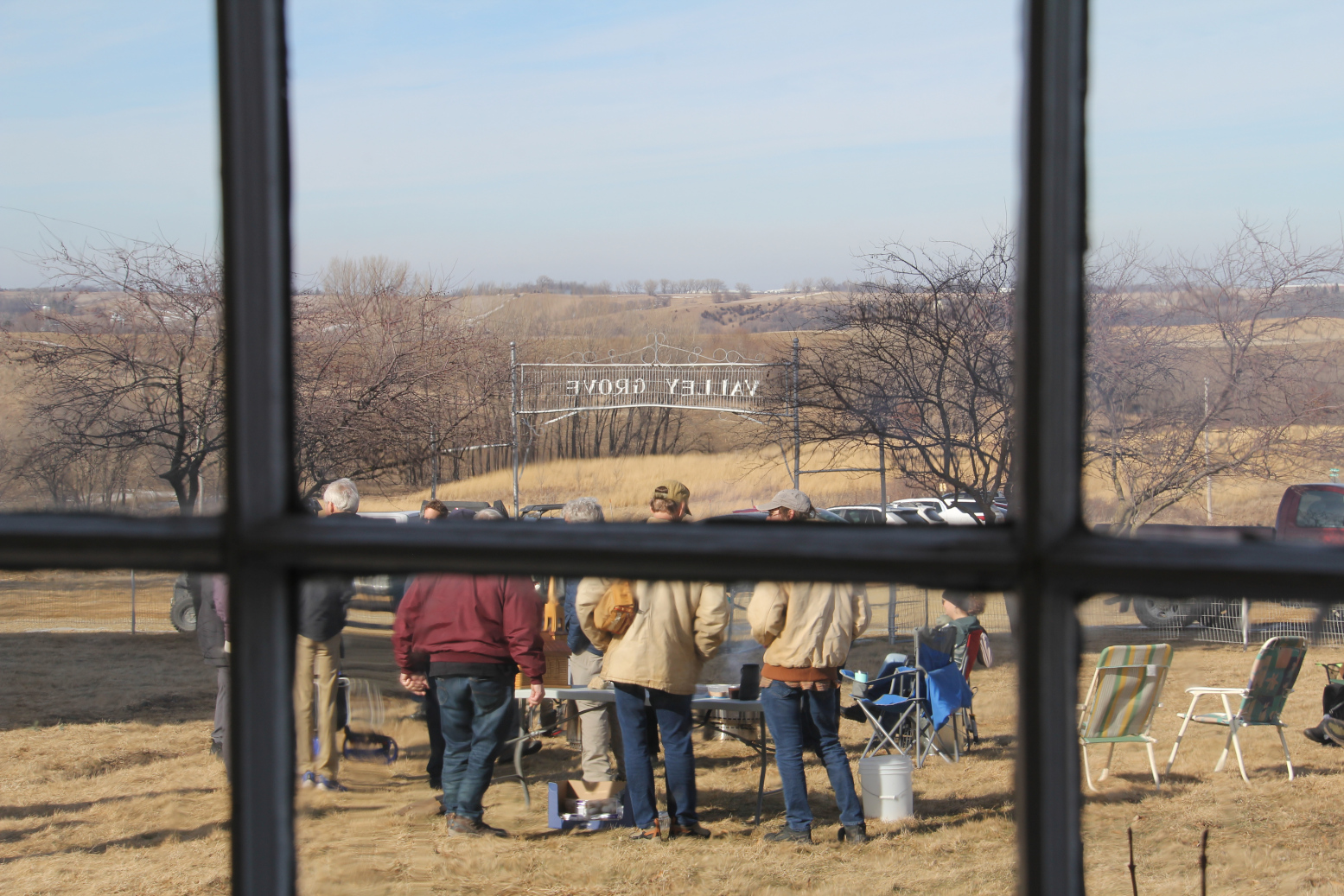
The Valley Grove Country Social proves a wonderful way to connect to the past and to place. On this 50-acre parcel of land in rural Nerstrand, people gather each September to celebrate the two aged Norwegian churches that sit atop a hill overlooking the countryside. They also come here to celebrate the Norwegian immigrants who built the 1862 stone and 1894 clapboard churches. They come, too, to celebrate and honor a rich Norwegian history and heritage.

Historian Jeff Sauve leads a cemetery tour, stopping at selected gravesites to share histories of the deceased. (Minnesota Prairie Roots copyrighted photo September 2025)
Krumkake made on-site and still warm off the griddle when I ate this Norwegian treat. (Minnesota Prairie Roots copyrighted photo September 2025)
Demonstrating the craft of blacksmithing. (Minnesota Prairie Roots copyrighted photo September 2025)

Many times I’ve attended this Country Social, which this year included a cemetery tour, book discussion, music, blacksmithing and rope-making demonstrations, music under the oaks, horse-drawn wagon rides, treats inside the old stone church and old-fashioned games for the kids. Plus lots of wandering and visiting among tombstones in the adjacent cemetery.

Prairie and woods define the landscape here at Valley Grove, which is next to Nerstrand Big Woods State Park. (Minnesota Prairie Roots copyrighted photo September 2025)

In all of Rice County, there is perhaps no place I’ve found more peaceful. I’ve come to Valley Grove in all seasons. Sat upon the wooden church steps and eaten a picnic lunch. Tromped through snow. Walked more times than I remember among the tombstones. I’ve listened to music and speakers and those rooted in this land.

This tapestry woven by Robbie LaFleur features the 1862 stone church. It is one of four tapestries LaFleur created for Valley Grove. (Minnesota Prairie Roots copyrighted photo September 2025)

I have no personal connection to Valley Grove. I’m not even Norwegian. I’m German. But this matters not to the lutefisk, lefse, krumkake-loving Norwegians. Or to me. I’ve found in this place welcoming individuals, who just happen to be of Norwegian heritage.

Hutenanny performs under the oaks with a prairie backdrop. (Minnesota Prairie Roots copyrighted photo September 2025)

If the Norwegians and the Germans here in southern Minnesota didn’t always get along—and I expect some didn’t—then no traces of those differences remain. At least not here, not on a Sunday afternoon in September at Valley Grove. This gives me hope. Perhaps the commonalities we share will some day overcome our differences and we will welcome and embrace one another no matter our countries of origin.

A discussion of the book, “Muus vs Muus, The Scandal That Shook Norwegian America,” inside the wooden church. (Minnesota Prairie Roots copyrighted photo September 2025)

Perhaps we ought to visit a place like Valley Grove. Learn a new-old game. Pick up a clutch of marbles. Feel the smooth or pitted orb of a marble in our hand. Bend low to the earth. And touch the dirt.

© Copyright 2025 Audrey Kletscher Helbling

 

Commemorating 9/11 in Faribault, a photo essay September 11, 2025

A firefighter rings a bell outside the Faribault Fire Hall during the 9/11 ceremony. (Minnesota Prairie Roots copyrighted photo September 2025)

WE GATHERED THURSDAY MORNING at the Faribault Fire Hall as the sun beamed bright upon the crowd, as those in uniform stood in reverent respect, as engines idled, as the bell rang, as the American flag was raised and lowered, as heads bowed in prayer.

People gather inside and outside the fire hall before the commemoration began at 7:46 a.m. (Minnesota Prairie Roots copyrighted photo September 2025)
A Faribault police officer clutches an American flag. (Minnesota Prairie Roots copyrighted photo September 2025)
Cleaning a Rice County Sheriff’s Department vehicle before the ceremony. (Minnesota Prairie Roots copyrighted photo September 2025)

A short ceremony here marked the 24th anniversary of the September 11, 2001, terrorist attacks on America, an act of violence that initially claimed 2,977 lives. And many others in the years thereafter.

Flag bearing police officers participating in the memorial event. (Minnesota Prairie Roots copyrighted photo September 2025)
Saluting. (Minnesota Prairie Roots copyrighted photo September 2025)
Members of the sheriff’s department and others salute. (Minnesota Prairie Roots copyrighted photo September 2025)

At 7:46 a.m., when the first plane, Flight 11, hit the first World Trade Center, the ceremony in Faribault began. I mostly wandered, watched, framed photos, struggled to hear speakers. But mostly, I heard the silence, felt the heaviness upon hearts, remembered.

The youngest in attendance stands inside the fire hall. (Minnesota Prairie Roots copyrighted photo September 2025)

On that morning in 2001, I was caring for my 7-year-old son, who wasn’t feeling well, and his friend. I knew nothing of the attack until my husband called from work to inform me. As I scanned the crowd 24 years later, I wondered where all of them were when the unthinkable happened. Some were not yet born. Others, like Faribault’s communications director, was sitting in his seventh grade science class when he got the news. Many of us were just going about our normal day.

The line-up of firefighters, police officers and others was impressive. (Minnesota Prairie Roots copyrighted photo September 2025)

When I reflect on that day, I recall how profoundly different the world felt afterwards. The absence of airplanes in the sky following the attacks in New York City and at the Pentagon and then the crash of the fourth plane over a field in Pennsylvania was noticeable. I remember worrying, wondering if the Mall of America in Minnesota would be attacked in a symbolic act of terrorism. Everything felt different. Surreal. Scary.

Many firefighters were in attendance, as I would expect given how many of their brothers and sisters on the East Coast perished on 9/11. (Minnesota Prairie Roots copyrighted photo September 2025)

I remember my son and his friend building two towers from blocks and then crashing toy airplanes into them, sending the blocks toppling into a pile. Child’s play as I watched endless media coverage, unable to turn off the TV.

A Faribault fire fighter with two Faribault police officers. (Minnesota Prairie Roots copyrighted photo September 2025)

Time passes. Days, months, years, decades. And here I was, 24 years later, standing outside my local fire hall. Standing with firefighters, law enforcement, EMTs, an insurance agent, the former mayor, city employees, local media, a child, a veteran, an older woman and her dog…ordinary people remembering those lost on that tragic day in American history, 9/11.

Patriotism threaded through the event. (Minnesota Prairie Roots copyrighted photo September 2025)

TELL ME: What are your memories from September 11, 2001? How did you feel and how do you feel now?

This Faribault fire truck was parked along the street by the fire hall. Other emergency vehicles were also parked either along the street or on the fire hall driveway. (Minnesota Prairie Roots copyrighted photo September 2025)

© Copyright 2025 Audrey Kletscher Helbling

 

Looking ahead to a local market, festivals & celebrations this weekend September 10, 2025

Shoppers and vendors at a previous Rice County Historical Society Flea Market. (Minnesota Prairie Roots copyrighted file photo May 2024)

THE UPCOMING WEEKEND brings a quartet of local events that not only entertain, but also honor, support and celebrate. Count me in.

First up is the Rice County Historical Society Fall Flea Market from 8 a.m.-2 p.m. Saturday, September 13, at the RCHS museum grounds along Second Avenue in Faribault. Here vendors set up shop and sell an assortments of goods with the variety of an old time mercantile.

I love browsing, and sometimes buying, at this outdoor market. But I also enjoy connecting with the sellers and other shoppers. Often I’ll see people I haven’t seen in a while, which leads to conversations. And to me, that’s what these events, at their core, are really about—connecting and reconnecting to build a strong sense of community.

Trees flooded with purple lights at a past Light of Hope Celebration and a special tent for survivors. (Minnesota Prairie Roots copyrighted file photo September 2023)

LIGHT OF HOPE

Saturday afternoon, beginning at 4 p.m. until 10 p.m., folks will gather in Faribault’s Central Park for the Light of Hope Celebration, which focuses on cancer. Or, more accurately, focuses on those who have died from, survived or are fighting cancer. I expect every single one of you have been touched by cancer. Many of my friends and family members have endured cancer, including my dad who died of cancer in 2003. And my dear friend Barb, who died in 2024. I also know plenty of survivors.

Light of Hope aims to raise monies for local cancer patients and their families through the sale of luminaries, bench markers and donations. Recipients receive gas cards and/or monies to assist with mortgage payments, groceries, utility bills and other everyday expenses. The Light of Hope organization emphasizes “local” in their mission. I appreciate that people within my community can get financial help in the midst of a cancer diagnosis.

Among the hundreds of luminaries at a past Light of Hope luminary walk. (Minnesota Prairie Roots copyrighted photo September 2023)

Saturday’s celebration includes a luminary walk, personal stories, family fun, music, food trucks, raffle baskets and more. While the mood is celebratory, it can also be difficult as memories of loved ones unleash strong emotions. I know. I’ve walked the luminary path and cried as I read names of those dear to me.

SPIRIT FEST

Also on Saturday, from 5-9 p.m., Divine Mercy Catholic Church in Faribault hosts its annual Spirit Fest, a jam-packed weekend event featuring, food, music, auctions, raffles, makers’ market, bake sale, kids’ crafts, games, inflatables, outdoor movie, mini golf, cornhole tournament and much more. The fest is open to the public. Sunday, September 14, brings a second day of fun starting at 9 a.m. and running until 5 p.m. (Click here for a full schedule of events.)

Valley Grove churches and cemetery, rural Nerstrand. (Minnesota Prairie Roots copyrighted file photo October 2024)

VALLEY GROVE COUNTRY SOCIAL

In rural Nerstrand, the focus turns to history, specifically two historic Norwegian immigrant churches set high atop a hill in rural Nerstrand. The Valley Grove Preservation Society celebrates its annual Country Social from 1- 4 p.m. Sunday, September 14, with Nordic music, a history stroll, wagon rides, children’s activities, blacksmithing and rope-making demonstrations, a book discussion and more, including coffee and treats.

Hutenanny performs under the oaks from 1-2:30 p.m. Jeff Sauve, writer and former archivist at St. Olaf College in Northfield, leads “Unbound Love at Valley Grove” history strolls from 1:30- 2 p.m. and from 3-3:30 p.m. A discussion of the book Muus vs. Muus—The Scandal That Shook Norwegian America by Bodil Stenseth happens in the wood church from 2-2:45 p.m with editor Kari Lie Dorer and translator Torild Homstad.

Attendees are also encouraged to view commissioned Norwegian tapestries inside the 1862 stone church and the renovated steeple on the 1894 clapboard church just across the lawn.

Inside the wooden church at Valley Grove. (Minnesota Prairie Roots copyrighted file photo 2022)

Valley Grove happens to be one of my favorite spots in rural Rice County because of its natural beauty, history and peacefulness. Fifty acres of rolling prairie grasses and woods surround the two churches, which are on the National Register of Historic Places. The church buildings are beautiful in their simplicity. It’s not hard to imagine long ago Norwegian immigrants gathering here to worship, mourn, marry and celebrate.

Truly, all four of these weekend events in my area are about community, connecting and celebrating. Thank you, organizers, for offering these activities that are fundraisers for your groups and fun for all of us.

© Copyright 2025 Audrey Kletscher Helbling