Minnesota Prairie Roots

Writing and photography by Audrey Kletscher Helbling

Plans underway to repurpose an historic treatment center in Fergus Falls June 19, 2013

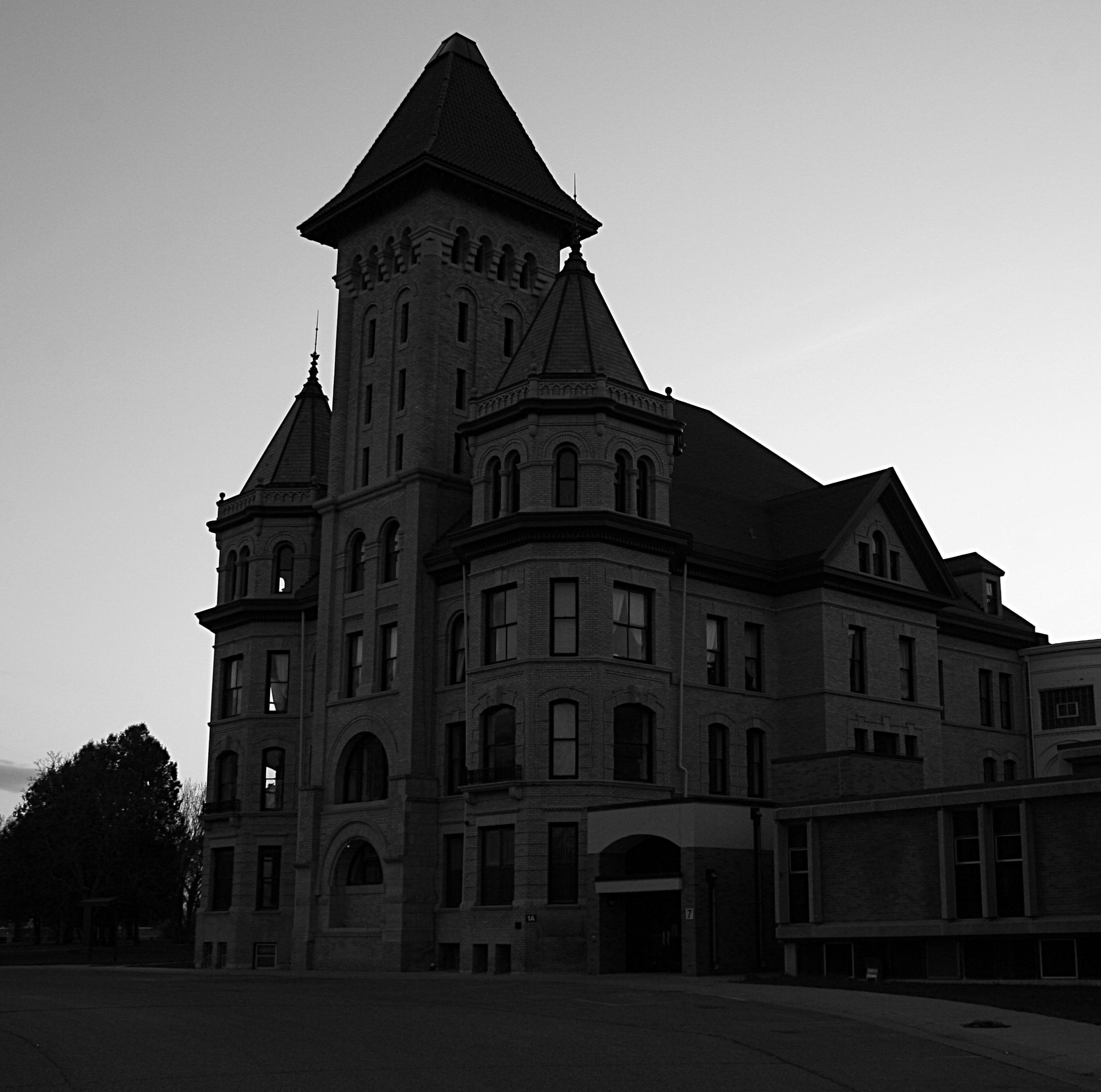
Daylight was fading as I snapped this photo of the anchor building on the former Fergus Falls State Hospital campus.

Daylight was fading as I snapped this photo of the anchor building on the former Fergus Falls State Hospital/Regional Treatment Center campus in mid May.

FROM THE EXTERIOR, the sprawling former Fergus Falls State Hospital/Regional Treatment Center presents an impressive and serene presence.
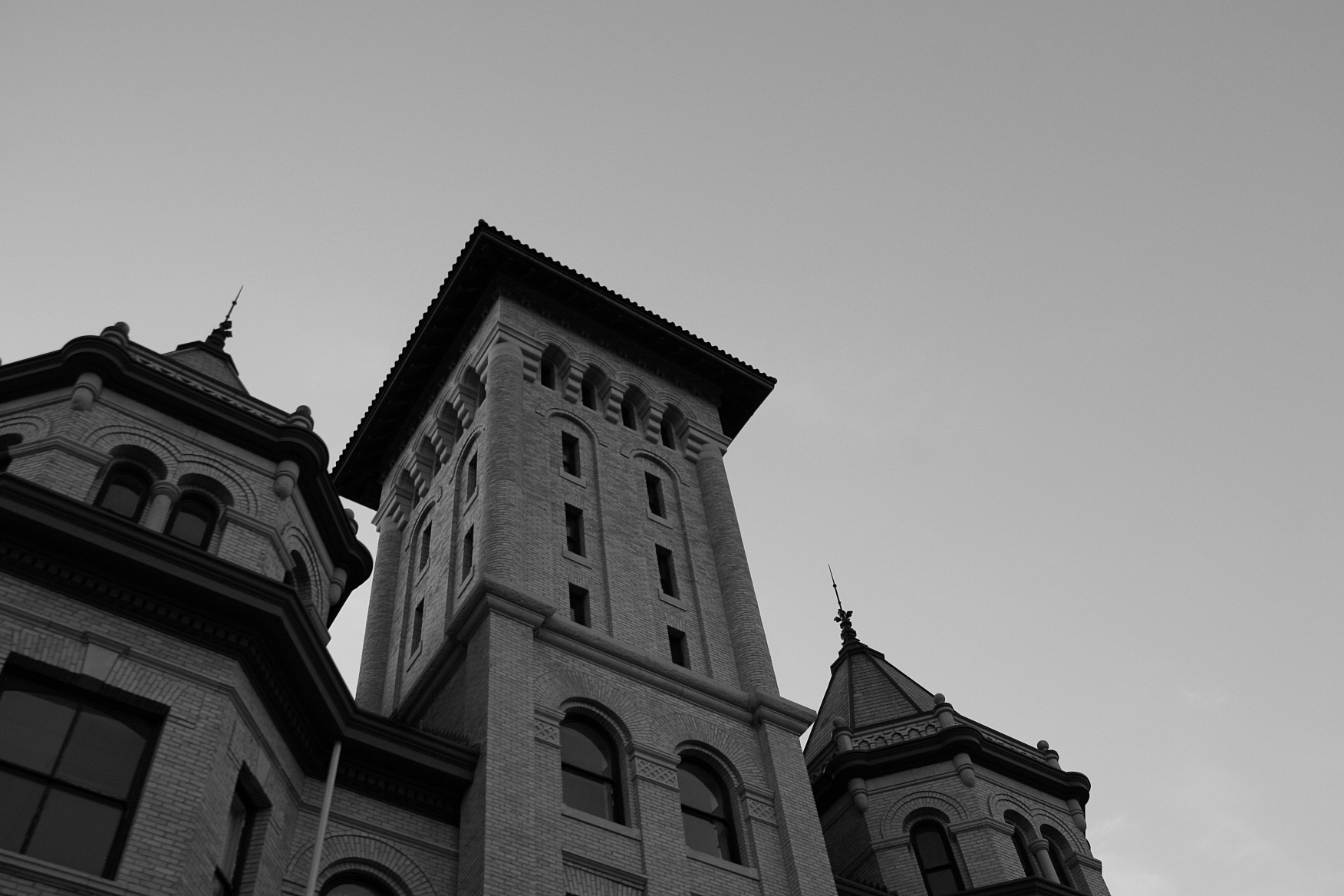
The historic buildings feature some incredible architecture.

The historic buildings feature some incredible architecture.

That marked my initial reaction upon viewing the towering, turreted and massive buildings on this west central Minnesota campus in mid May.

But I expect that the historical use of this place would tell a different story. In 1885, the State of Minnesota commissioned this as the Third State Asylum for the Mentally Ill. The word “asylum,” for me, evokes negativity. Eventually, the complex would also be home to those with developmental disabilities, chemical dependency issues and psychiatric illnesses.

One can only imagine the personal struggles and challenges faced within these walls. In those early days, I imagine treatment was not always the best or the most informed. I do not know this specific to the Fergus Falls center, only from my general knowledge of such large-scale public facilities of decades past.

Eventually, those who lived here were moved into smaller community-based facilities.
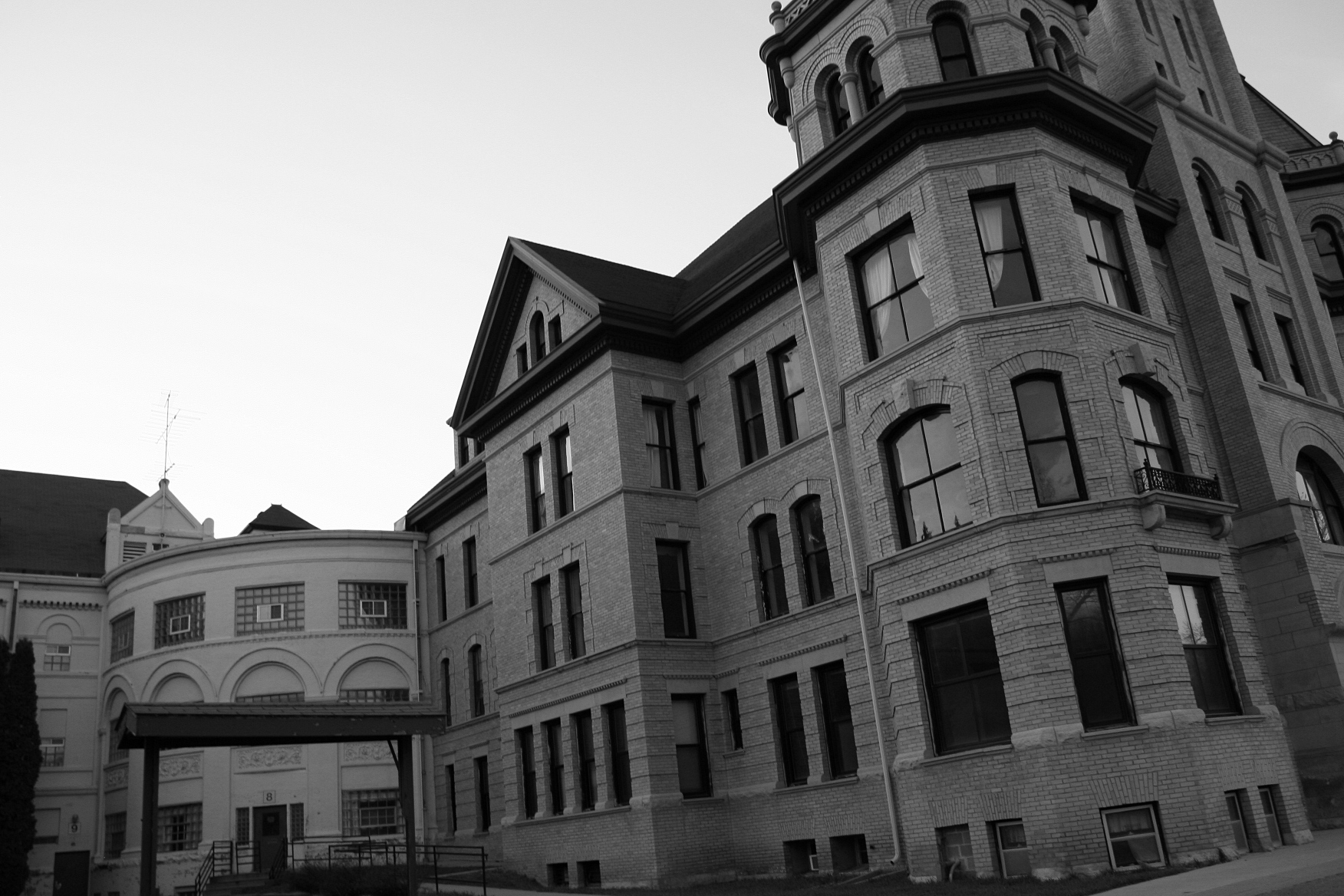
Wings connect to the main building.

Wings connect to the main building. These buildings are labeled as Kirkbride buildings after Pennsylvania psychiatrist Dr. Thomas Story Kirkbride who believed in the role of environment in promoting healing among mentally ill individuals.

Today the City of Fergus Falls still owns most of this campus, purchased in 2007. And just last week, according to draft city council minutes published on the city’s website, the Fergus Falls City Council passed a resolution “authorizing the city to enter into a Letter of Intent with Historic Kirkbride LLC as a developer for the Regional Treatment Center, subject to financial disclosure…”  Historic Kirkbride’s estimated $41 million proposal calls for a 120-room first class hotel, several restaurants and 60 market rate apartments.

The planned development is expected to bring temporary construction jobs and an estimated 190 full and part-time positions to Fergus Falls.
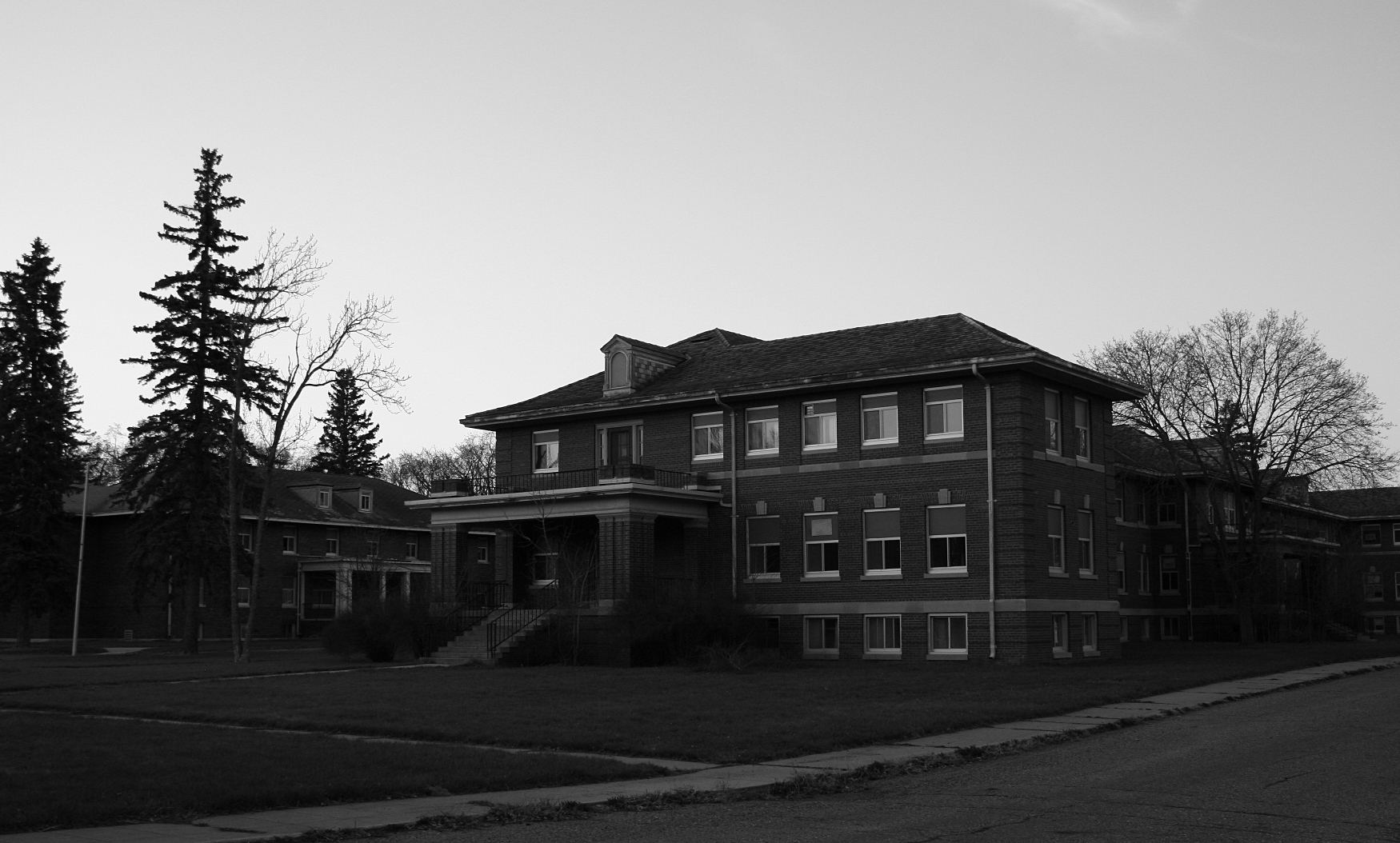
Even the individual brick buildings impress.

Even the individual brick buildings impress.

The Kirkbride proposal seems an ambitious undertaking, but one worthy of this beautiful complex of architecturally pleasing buildings and an equally pleasing natural environment. Principals of the Kirkbride team bring experience to the Fergus Falls project with more than two dozen historic renovation projects completed over 33 years, according to presenter Ray Wiley of Georgia-based Historic Properties Inc.

Of course, as in all such projects involving historic buildings and lots of money and government entities and private investors, this isn’t a done deal. If all progresses as planned, though, the 120-room hotel, restaurants, apartments and more are projected to open in December 2015.
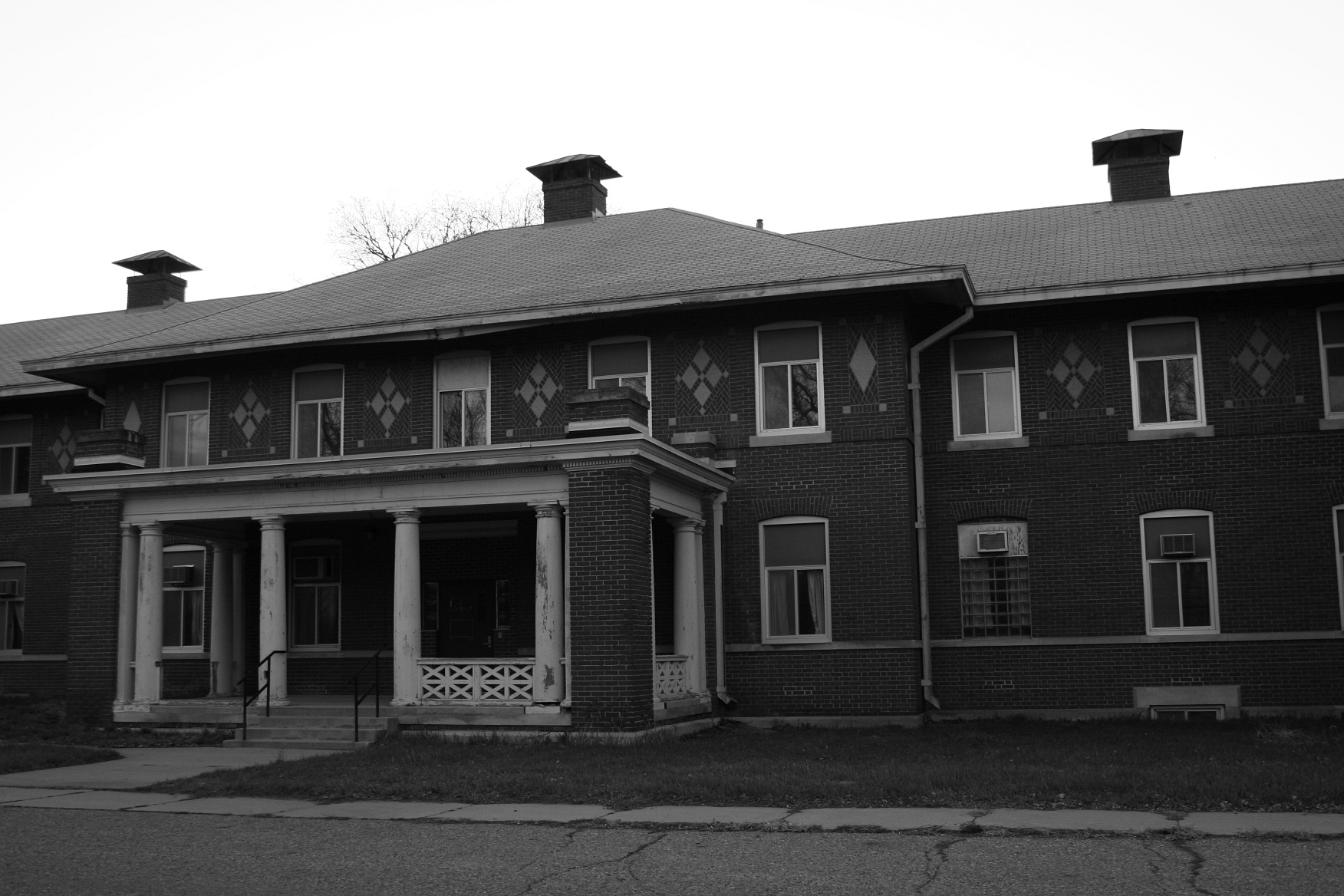
From the exterior, I can envision these detailed brick buildings as dorm rooms or housing for a retreat center or even as apartment units.

The complex includes a cluster of two-story brick buildings.

I expect plenty of skepticism exists over whether the planned project presents the best use of the property, will succeed, or will even get off the ground.

The Kirkbride proposal was one of two presented to the council last week. The other, from Twin Cities-based Colonade Design Group, proposed a wellness center serving those dealing with diabetes and obesity (and included a food and nutrition program); a hotel for participants; artisan flats and studios; services for returning veterans; condos; event space; greenhouses; and more.

Click here to read details of the two proposals, public input and more from the June 12 special city council meeting.

Based on my two visits to Fergus Falls in recent years, the Historic Kirkbride project certainly has the potential to succeed. For one, this Otter Tail County seat city sits along Interstate 94, an ideal location to catch travelers in need of a respite. It’s the last sizable town westbound motorists pass before reaching Fargo an hour away. That, though, is not enough.

The community possesses an artsy vibe with galleries and a theatre and historic buildings and arts events in a charming downtown that hugs the Otter Tail River. It’s a college town with Minnesota State Community and Technical College and is also a regional center of commerce and of healthcare.

Developers will need to market those strengths, the historical aspect of the former treatment center, and the natural scenic beauty of this lake region. That’s a given.

Future guests will need to envision Kirkbride’s hotel as a get-away because, otherwise, this will be just one more hotel (albeit an historic one classified as “first class”) in one more town along the interstate.

WHAT ARE YOUR THOUGHTS on Historic Kirkbride’s plans for the former Fergus Falls State Hospital/Regional Treatment Center? Can something like this succeed in Fergus Falls?
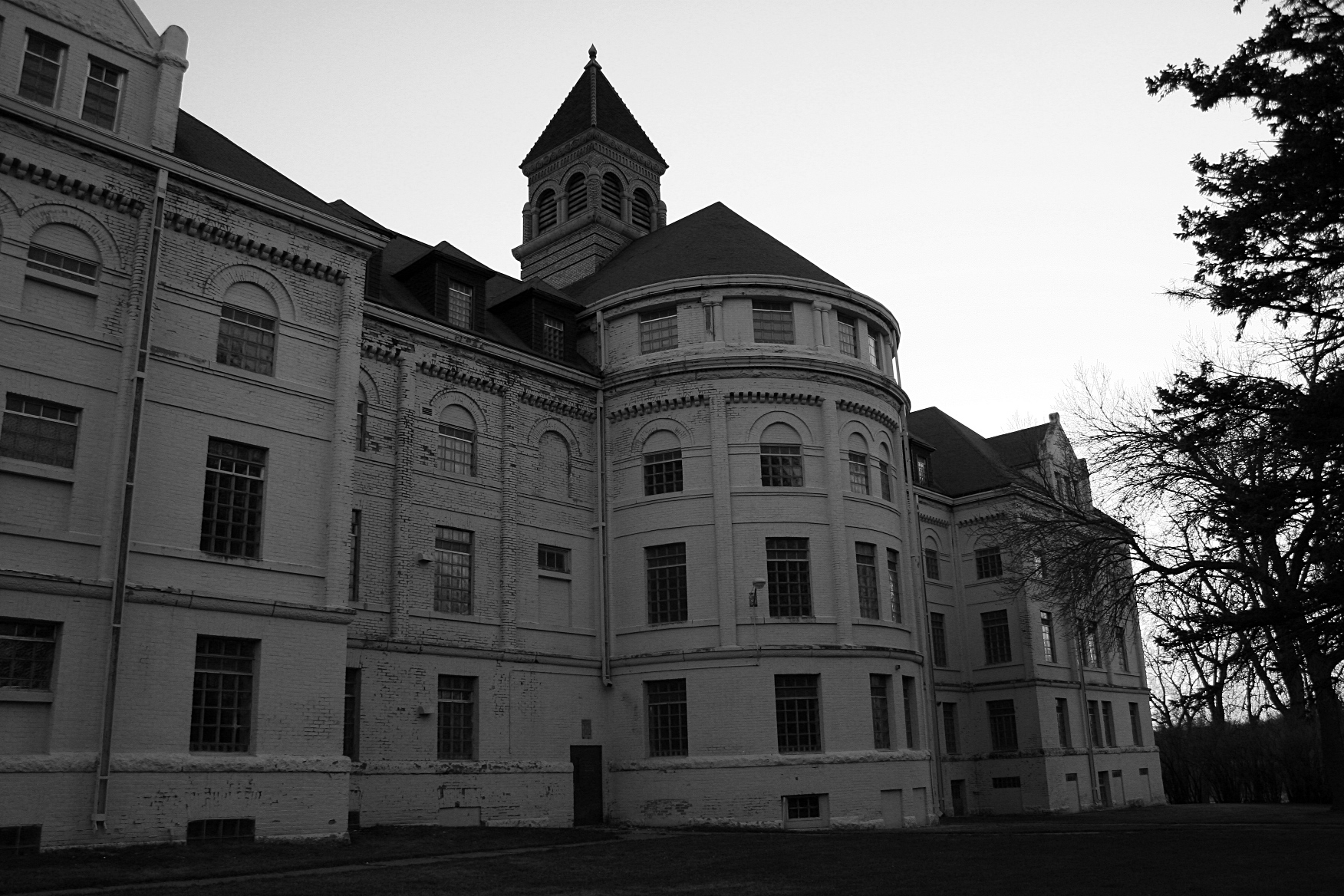
The sun sets on this beautiful campus of trees and open space.

The sun sets on this beautiful campus.

FYI: The Fergus Falls complex is open for free public tours on Friday afternoons during the summer. Reservations are required. Phone Maxine and Gene Schmidt at (218) 736-5328. I was, unfortunately, not in Fergus Falls on a Friday afternoon and unaware then of the tours offered.

Click here to read Colliers International listing of the property.

Then click here to read information on the Minnesota Historical Society website.

And click here to find even more info.

© Copyright 2013 Audrey Kletscher Helbling


Preserving a small town’s history in a Minnesota country schoolhouse June 7, 2013

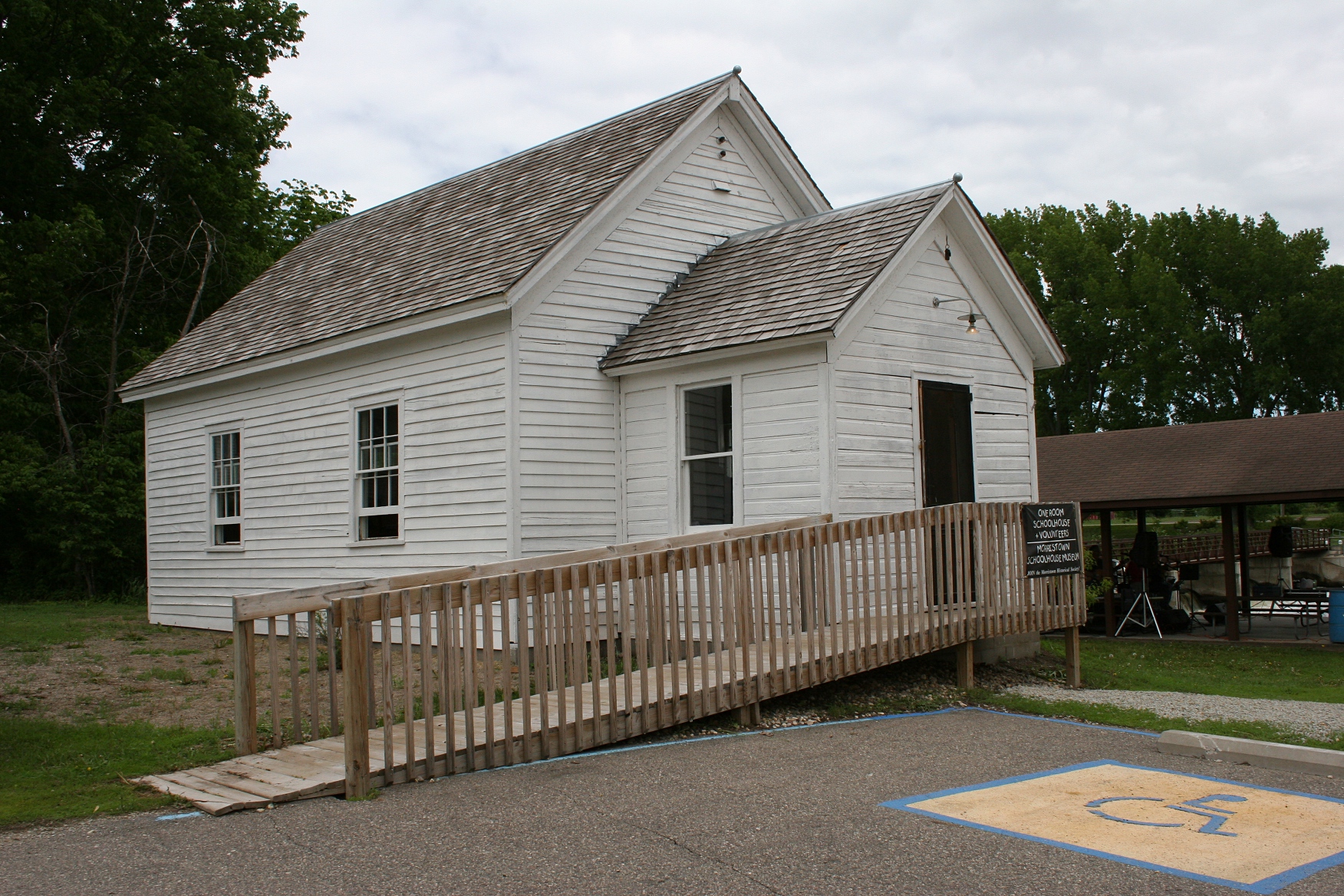
The District #54 country school, built in 1870, was moved into Morristown several years ago to a site next to the old mill along the banks of the Cannon River.

The District #54 country school, built in 1870, was moved into Morristown several years ago to a site next to the old mill along the banks of the Cannon River.

OH, THE THINGS YOU LEARN upon visiting a grassroots historical society run by volunteers in a small town.

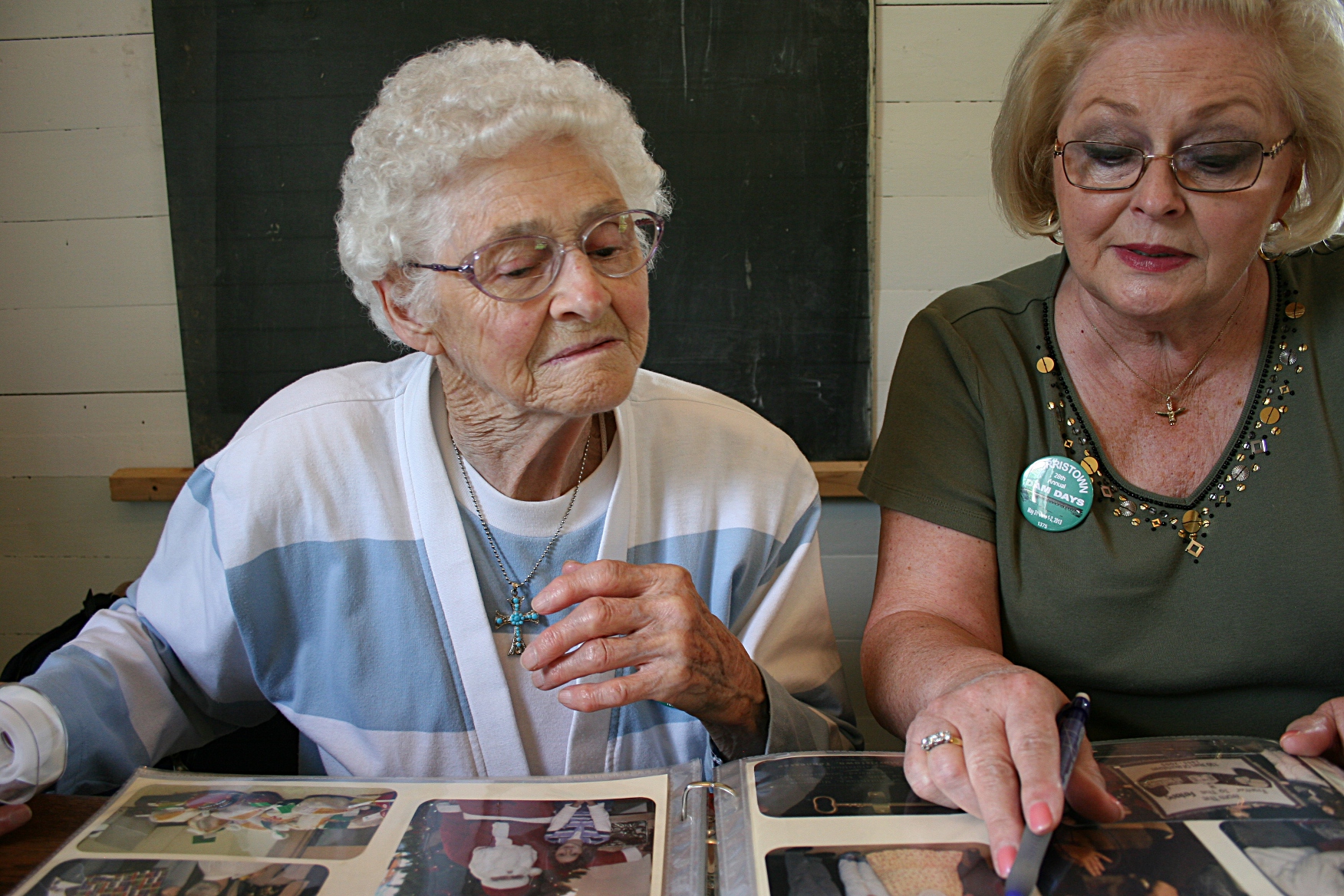
One of my favorite images is this one of volunteer Helen Newman's hand. She was cutting and taping info into the 2005 sesquicentennial book lying on the desk.

One of my favorite images is this one of 87-year-old volunteer Helen Newman’s hand. the life-long Morristown resident was cutting and taping info into the 2005 sesquicentennial album shown here.

Nothing against sprawling museums with paid staff—those places are fabulous, too. But there’s something especially touching about folks from a small town collecting photos and artifacts, memories and information, to display in a building(s) with a deep connection to the community.

You’ll find exactly that in Morristown, population around 1,000, in Rice County in southeastern Minnesota. Set next to the Cannon River are the Morristown Feed Mill, once home to a sawmill and flour mill, and the District 54 Epard School moved in from a few miles north of Morristown and today the District #54 Schoolhouse Museum. The Morristown Historical Society maintains both buildings, which I toured during the recent Dam Days community celebration.

I didn’t study the content of the two buildings like a local with an intimate connection to this place. Rather, I picked topics of particular interest to me to read and photograph.

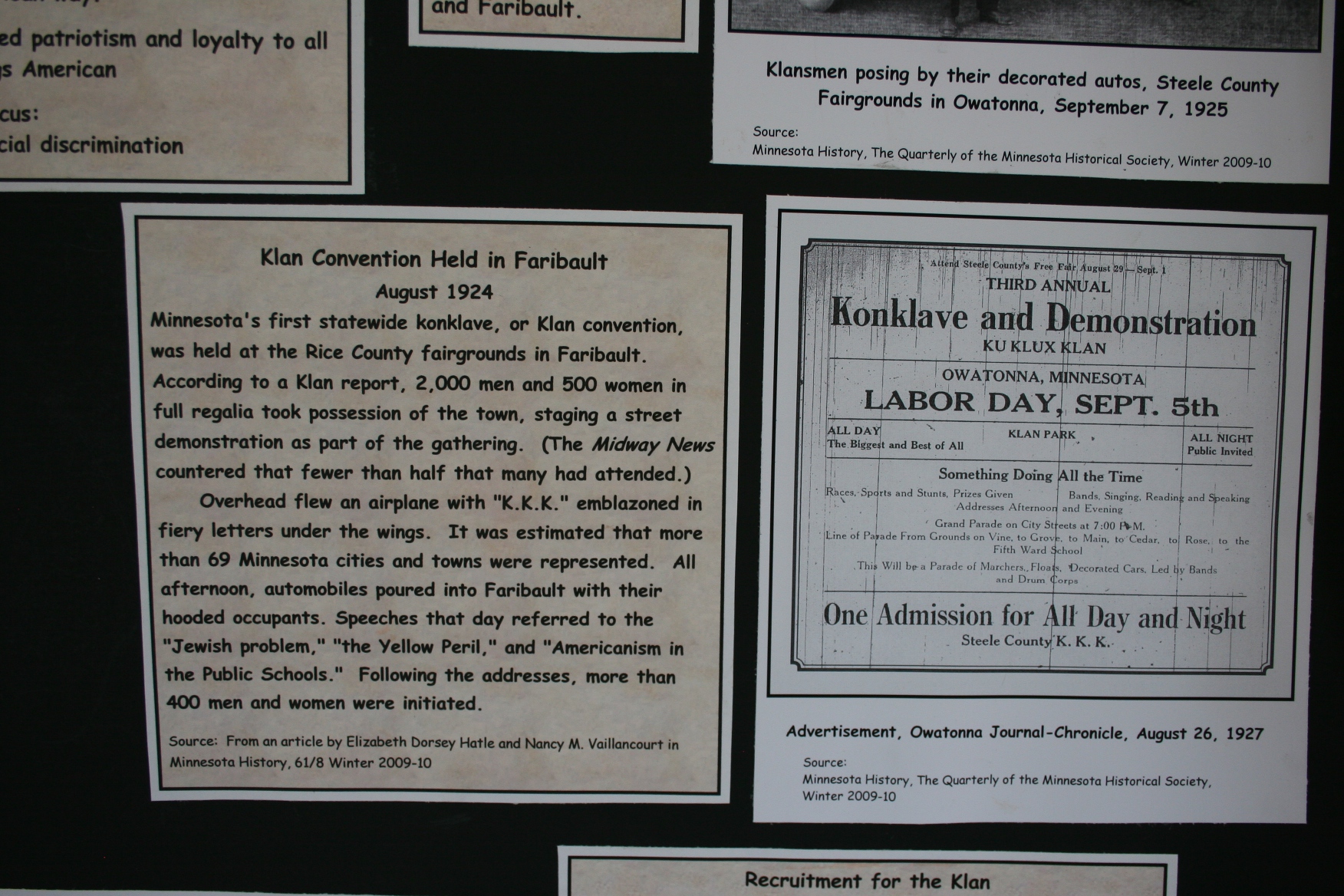
Information about the Ku Klux Klan's presence in Morristown and the region.

Information about the Ku Klux Klan’s presence in Morristown and the region.

For example, I was unaware that my county of Rice was home to Ku Klux Klan chapters and hosted the first statewide Klan convention at the fairgrounds in August of 1924. Chapter #26 was headquartered in Morristown with other chapters in nearby communities like Faribault and Owatonna and Austin and Albert Lea further to the south. Certainly, such membership doesn’t please me. But I’m thankful the Morristown Historical Society didn’t ignore this negative part of the town’s history. We need to learn from our mistakes.

A “Morristown Crime Wave of 1914” display also caught my eye with crimes such as profane and abusive language, drunken and disorderly conduct, and stealing fish noted.

News stories about the devastating 1900 fire.

News stories about the devastating 1900 fire in downtown Morristown.

In another display, a front page article published in the February 1, 1900, issue of the Morristown Press detailed a devastating fire which destroyed 20 buildings, nearly the entire business district, in downtown Morristown. “Loss will reach $35,000,” a sub-head reads.

Mrs. Lydia Meehl, who helped so many Morristown area women birth their babies.

Mrs. Lydia Meehl, who helped so many Morristown area women birth their babies.

My friend Dale, who joined a historical walking tour on the day I visited the schoolhouse museum and mill, learned about his place of birth in the Meehl Maternity Home. Hundreds of local babies were birthed there with the assistance of licensed practical nurse Mrs. Lydia Meehl. A newspaper story quotes the 82-year-old Meehl as saying she “loves them all (the 500-plus babies born in her maternity home).”

A snippet of the artifacts and info displayed inside the schoolhouse turned museum.

A snippet of the artifacts and info displayed inside the schoolhouse turned museum. Those are Civil War cannonballs on the shelf near the center of the photo

In the museum collection, you’ll also find the usual military (including Civil War cannonballs), school, telephone and other small town artifacts.

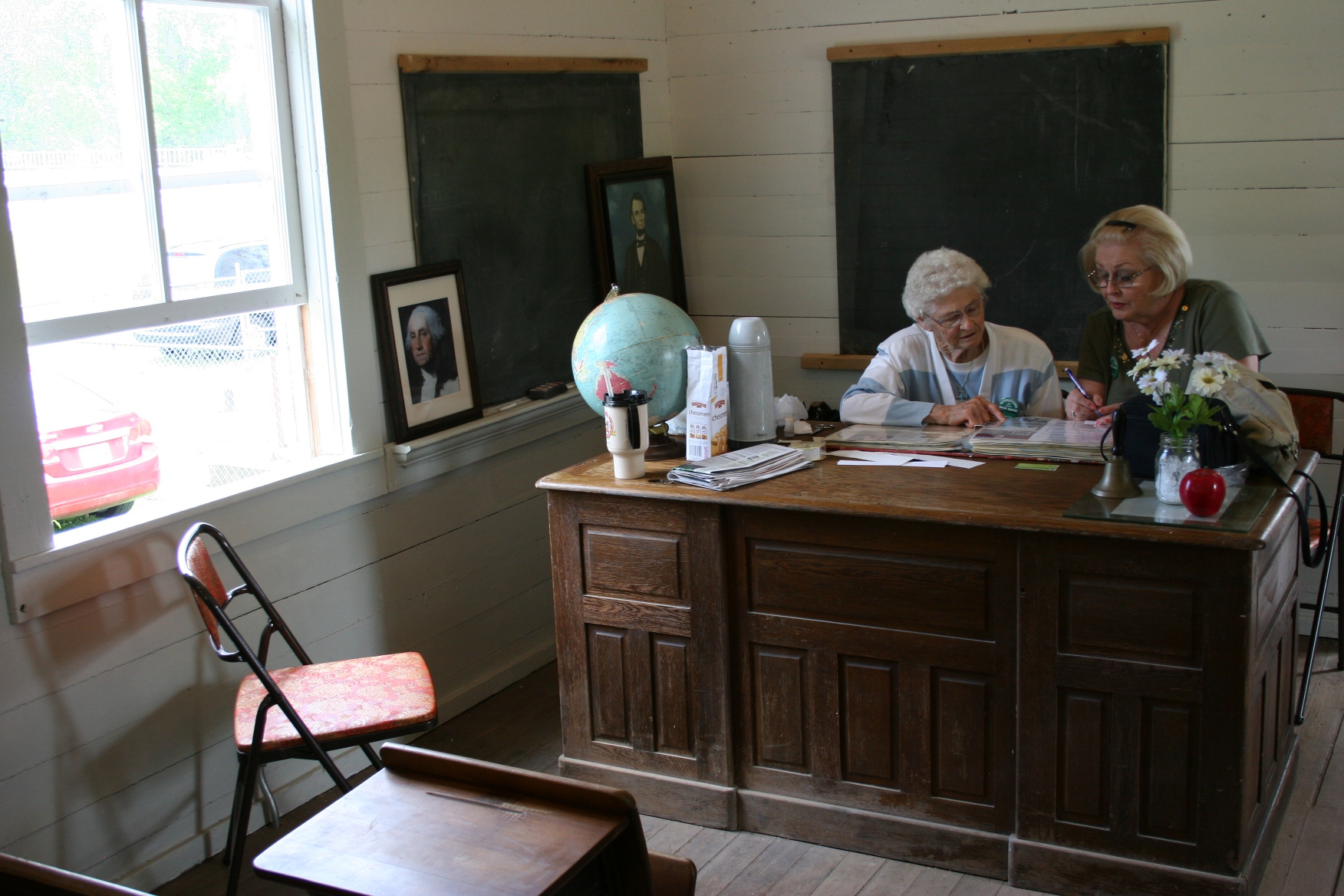
Helen Newman and Cindy Packard work on a sesquicentennial album.

Helen Newman and Cindy Packard work on a sesquicentennial album.

As a bonus, I met 87-year-old Helen Newman, who’s lived in Morristown her entire life, and Morristown native Cindy Packard, visiting her hometown from Colorado Springs. The two were seated behind a hulk of a desk inserting info into an unfinished album about the town’s 2005 sesquicentennial.

Packard brought with her a few items for the schoolhouse museum, including a spatula imprinted with “Our Twentieth Year LLOYD’S FOOD MARKET, Morristown, Minn.” She kind of hated to give it up, but…

Switchboard wires and switches reportedly from Adolph Hitler's bunker.

Switchboard wires and switches reportedly from Adolph Hitler’s bunker.

Upon my request, the pair pulled the spatula and a snippet of wires and two switches from a plastic bag resting on the corner of the desk. The switches came from the switchboard in Adolph Hitler’s bunker and were brought back by Oscar Ahlman to Hewitt Thomspon in Morristown, according to a note accompanying Packard’s donation.

Helen and Cindy visit while they cut and tape information into the album.

Helen Newman and Cindy Packard visit while they write, cut and tape information into the album. I told them just to ignore me and my camera and they obliged. I simply love this photo of the pair.

And that’s how these small town museum collections grow—with donations from the likes of a hometown girl come home every year and the dedication of volunteers like the 87-year-old Newman.

BONUS PHOTOS:

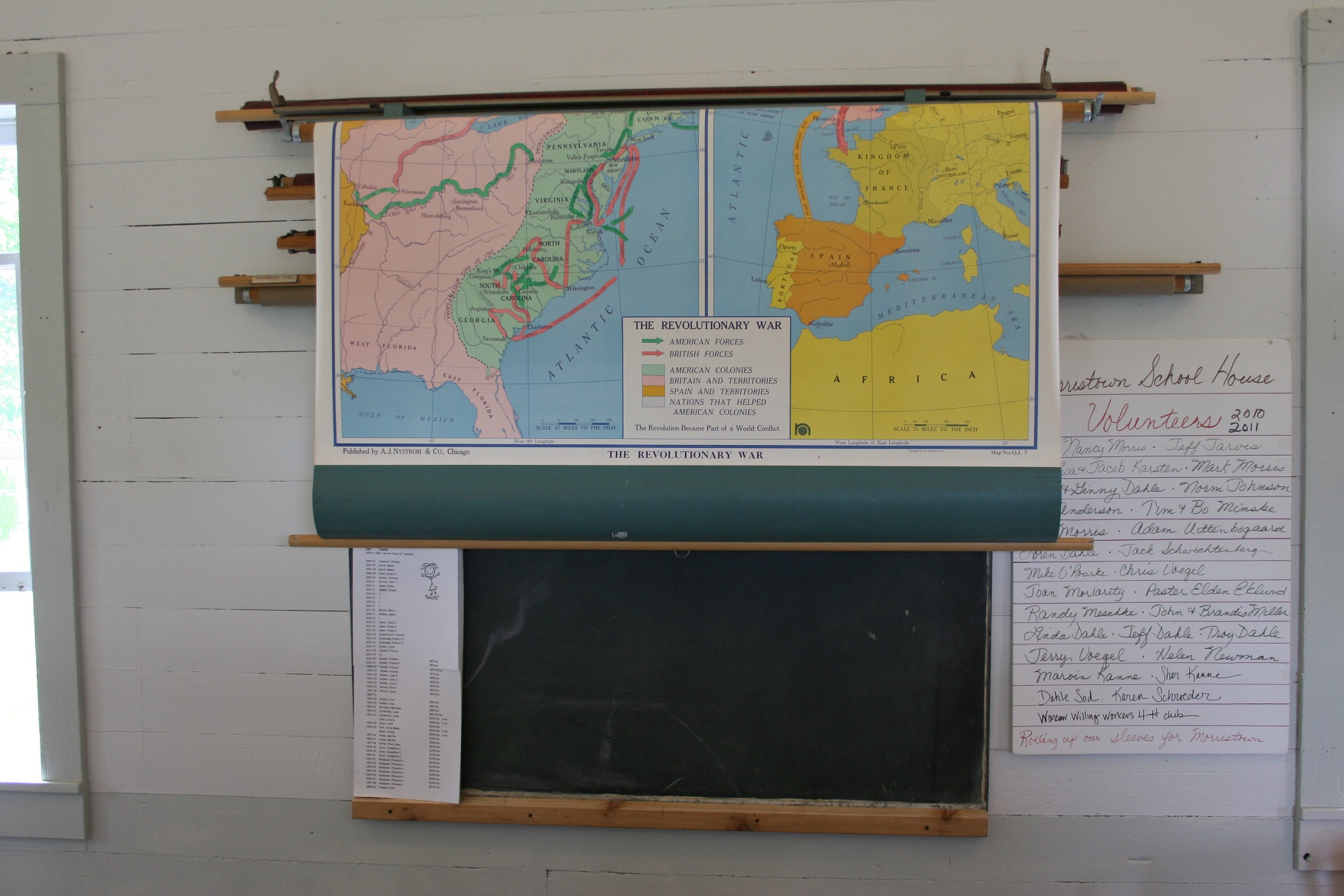
There's something about an old school map that takes me back to Vesta Elementary School, my childhood school.

There’s something about an old school map that takes me back to Vesta Elementary School, my childhood school.

A display of school-related items includes a lunch pail.

A display of school-related items includes a lunch pail, books and photos.

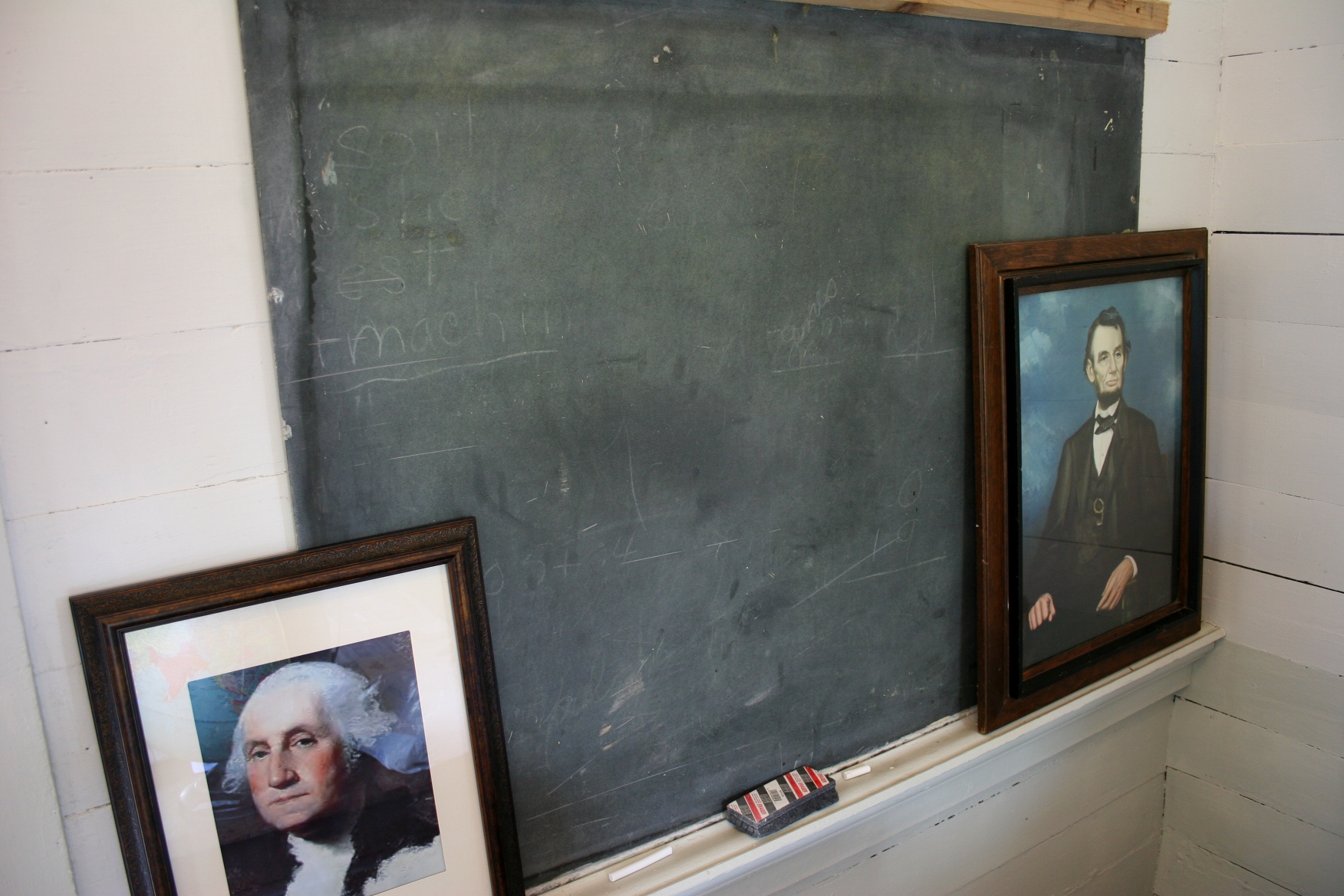
Presidential portraits grace the blackboard by the teacher's desk.

Presidential portraits grace a corner blackboard by the teacher’s desk.

FYI: To read a previous post on the historic Morristown Feed Mill, click here. A second mill post will be forthcoming. Also check my recent archives for stories from Morristown Dam Days.

© Copyright 2013 Audrey Kletscher Helbling
 

Discovering Vasa, an historic Swedish settlement in Minnesota March 25, 2013

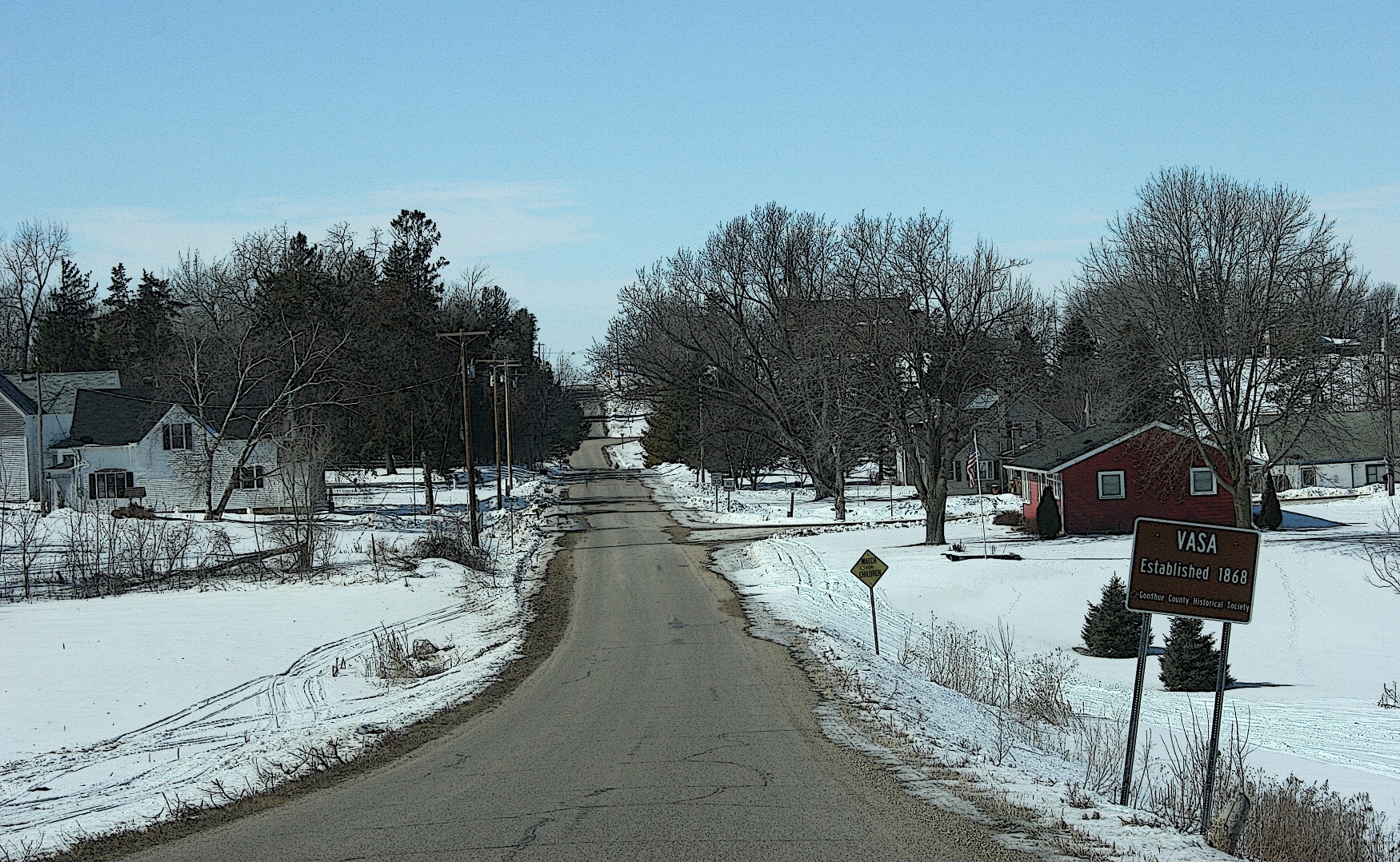
Driving into Vasa, established in 1868, according to a the historical marker, right.

Driving into Vasa, established in 1868, according to a the historical marker, right.

IT DOESN’T TAKE MUCH to draw me off the appointed route.

Recently, a sign for a church soup luncheon caused my husband and me to veer off Minnesota Highway 19 near Red Wing into historic Vasa, established in 1868.

We opted not to partake of the soup, although that was a tough call given my love of soup and church dinners. But we were under a time crunch with limited hours to get to Red Wing and back.

So Randy and I did a quick drive through Vasa, named in honor of King Gustav Vasa, Swedish ruler from 1523-1560. Hans Mattson encouraged Swedish immigrants to settle here in this place originally known as Mattson’s Settlement.

Several of Vasa's old buildings.

Several of Vasa’s old buildings.

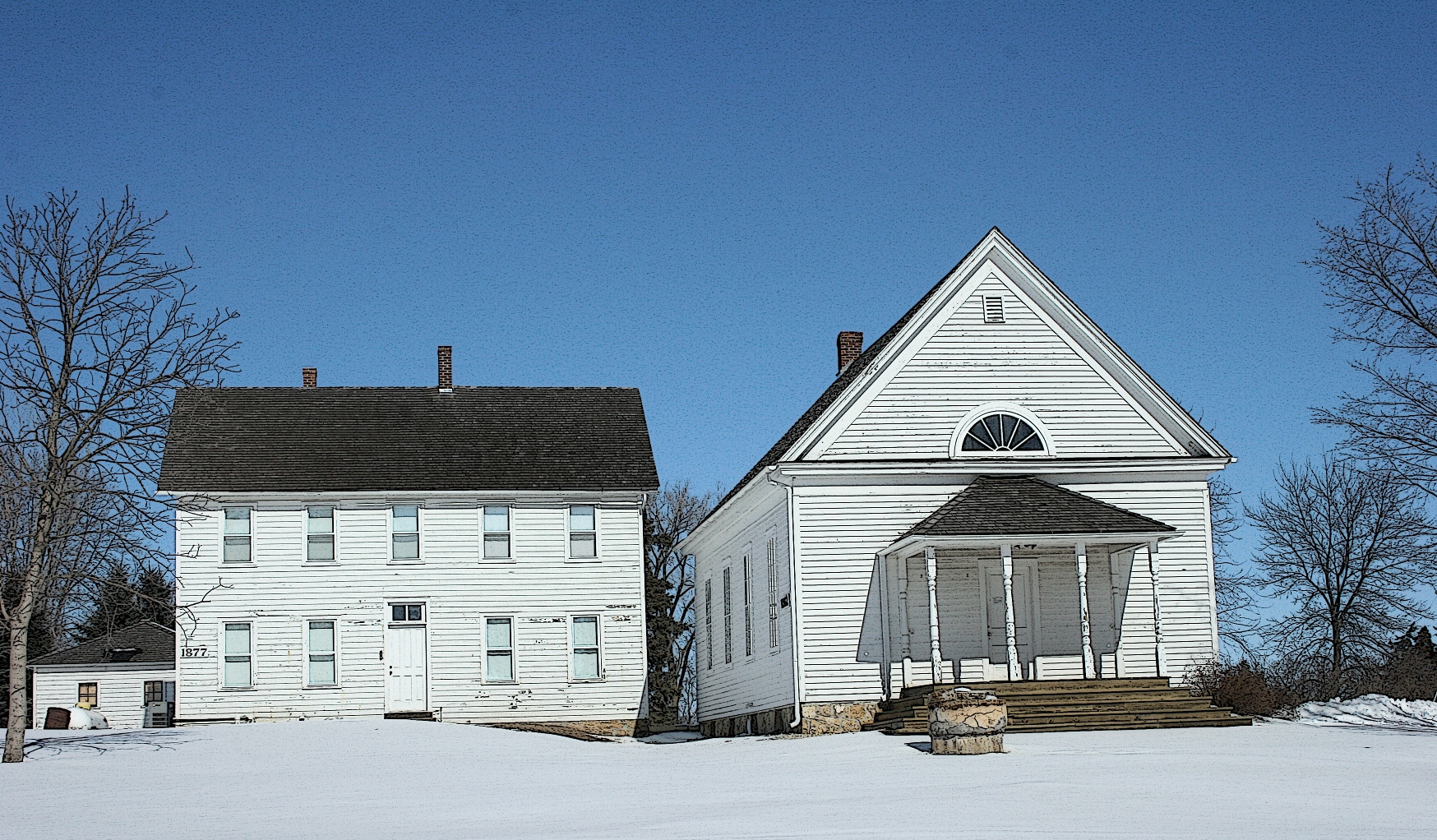
From an outsider’s perspective, there’s not much to the several blocks long Vasa—some houses, an abandoned creamery, by the looks of it a former schoolhouse or town hall, then Vasa Lutheran Church atop the hill with the Lutheran Center across the road.

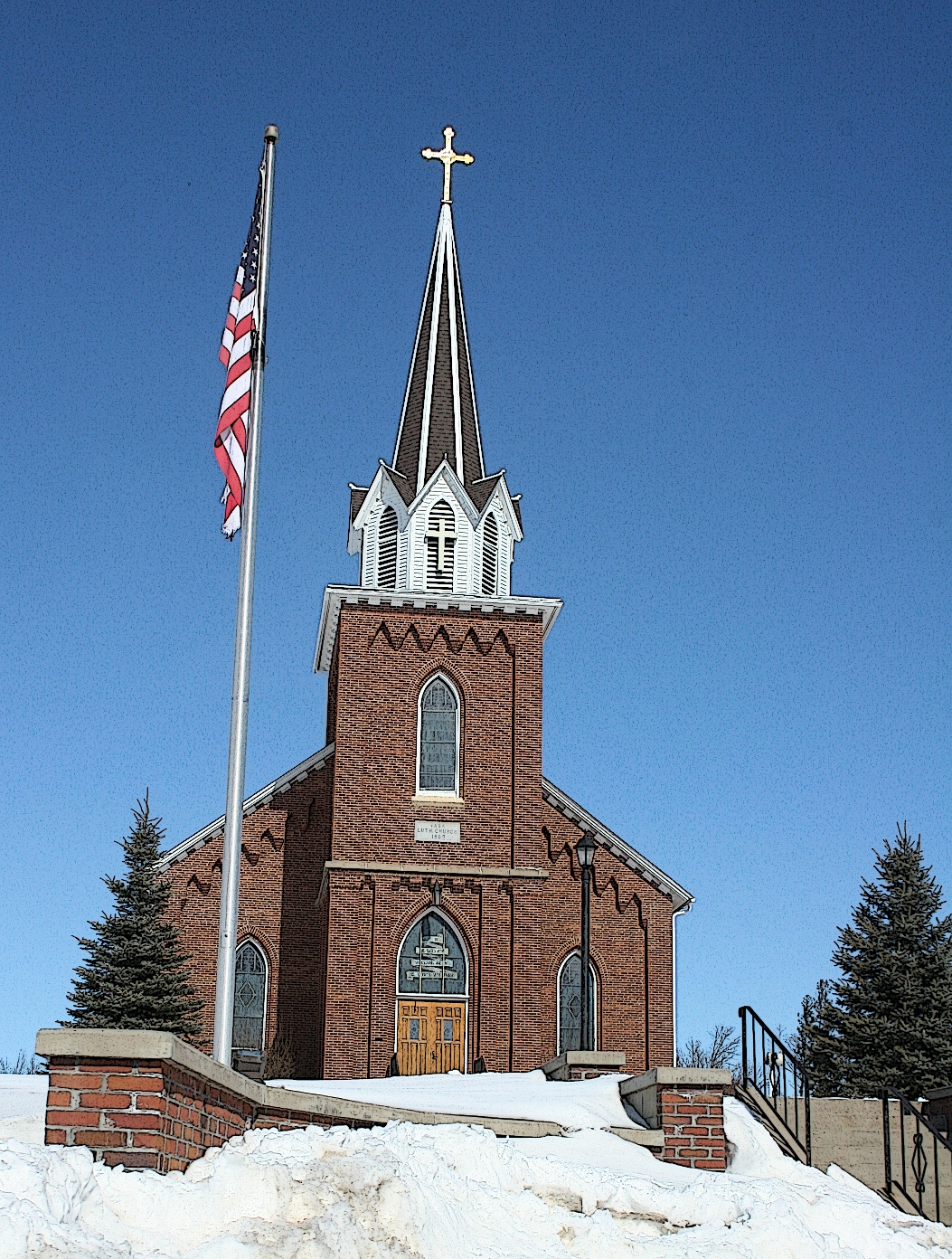
Vasa Lutheran Church, the congregation which started Lutheran Social Services, originally Vasa Children's Home.

Vasa Lutheran Church, the congregation which started Lutheran Social Services, originally Vasa Children’s Home. Construction on this church building began in 1867 with dedication in 1870.

Turns out, though, as I would later learn, that this seemingly obscure town along the highway is “the most intact and unchanged of the original Swedish colonies of Minnesota.” Vasa is designated on the National Historic Register as the Vasa Historic District with 19 structures of historical significance. I should have done my homework before we headed into Goodhue County.

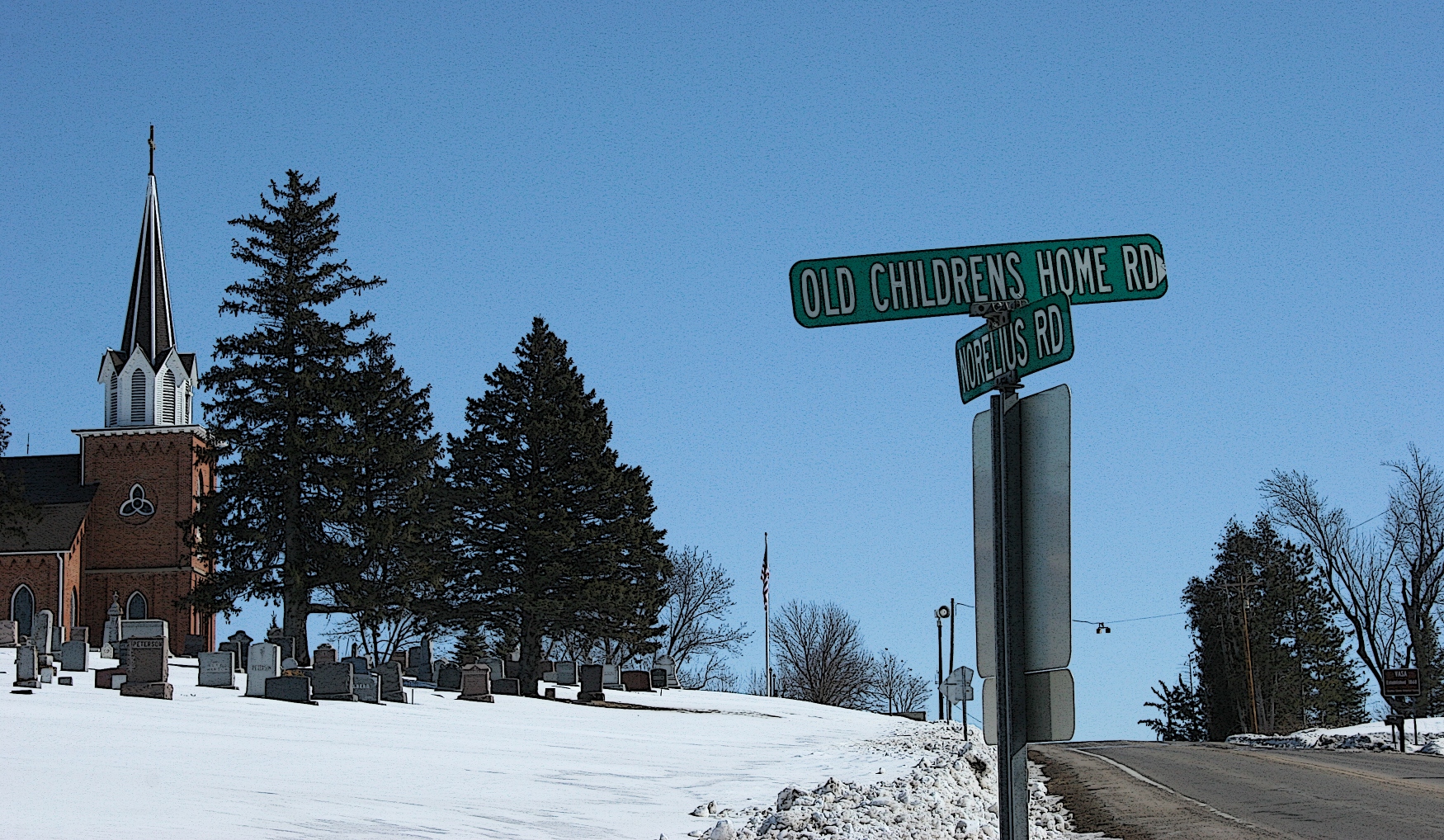
This street sign led me to investigate and learn about the Vasa Children's Home.

This street sign led me to investigate and learn about the Vasa Children’s Home.

While in Vasa, I spotted an OLD CHILDRENS HOME RD street sign by the church. When Randy turned the car onto that road, he should have kept going. My instincts told me a story awaited us. Instead, we turned into a drive leading around the church. Had we continued along Old Children’s Home Road, we would have discovered the former Vasa Children’s Home built in 1899 and today a private residence. The home opened in 1865 in the Vasa church basement when four orphans arrived in town. This is considered the birthplace of Lutheran Social Services.

See what you learn when you detour off the planned route.

FYI: To learn more about the history of the Vasa Children’s Home, click here.

To learn more about Vasa Lutheran Church, click here.

For historic info on Vasa, click here. Also click on the highlighted phrases within the post for additional information.

© Copyright 2013 Audrey Kletscher Helbling


“Mending generations of bad feelings” in Redwood County during “The Year of the Dakota” February 28, 2013

WILL THE DIVIDING LINES ever connect into a complete circle of healing?

A century and a half after the U.S.-Dakota War of 1862 ended, can the Dakota and descendants of white settlers, and others, ever fully reconcile and forgive?

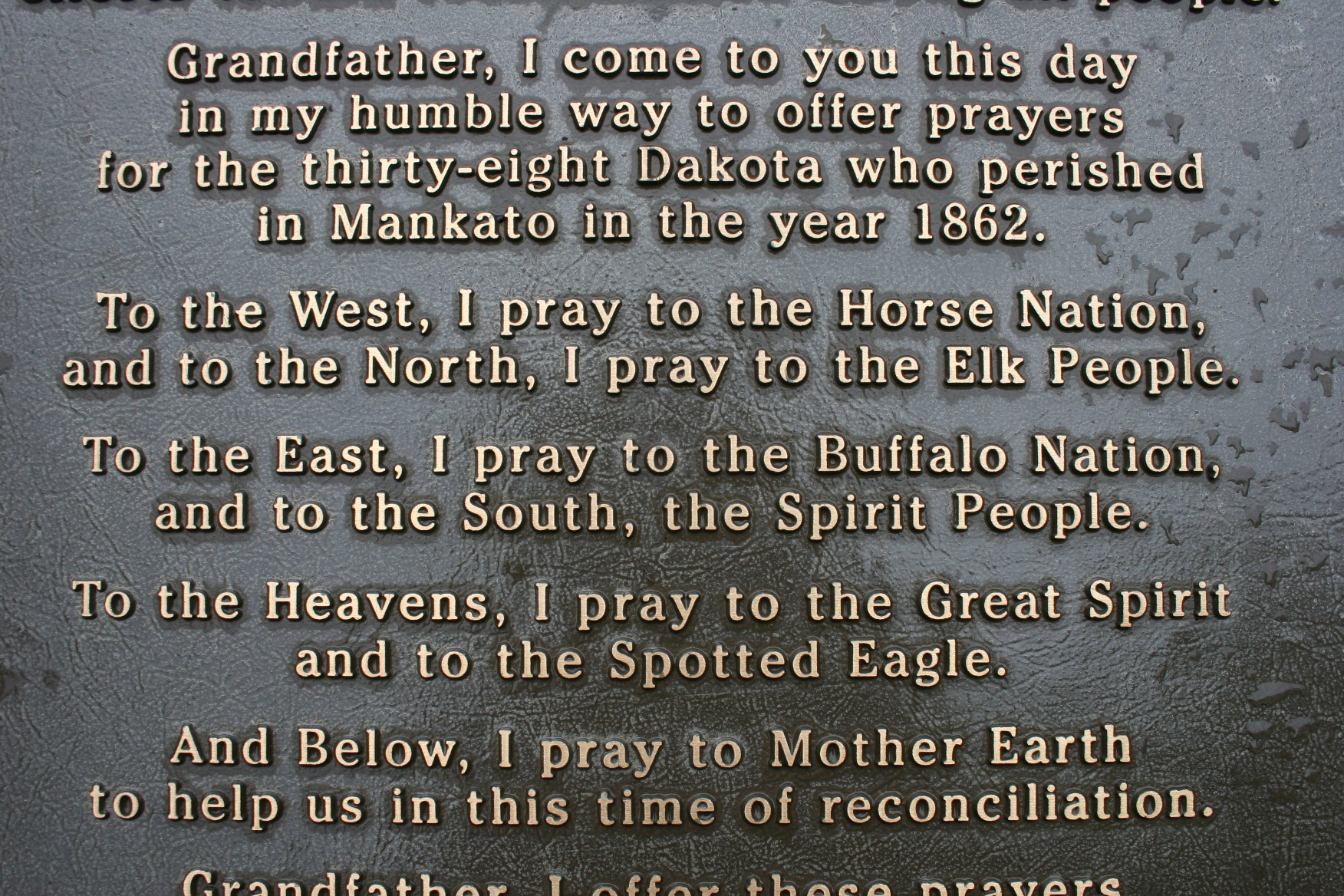
Words on a marker in Reconciliation Park in Mankato where 38 Dakota were hung on Dec. 26, 1862.

Words on a marker in Reconciliation Park in Mankato where 38 Dakota were hung on Dec. 26, 1862.

The issues that divide—of blame and of animosity, of death and of punishment, of land and of banishment, and more—remain, sometimes subtle and below the surface, sometimes exposed.

As a native of Redwood County in southwestern Minnesota and as a descendant of settlers who fled their New Ulm area homestead during the U.S.-Dakota War, I have always been especially interested in this conflict.

So when I learned that the City of Redwood Falls on January 15 joined the cities of Minneapolis and St. Paul in adopting resolutions “recognizing the 150th anniversary of the Dakota-U.S. War of 1862 and declaring 2012-2013 the Year of the Dakota,” I took note.

The resolution states, in part in paragraph two:

WHEREAS, much has yet to be learned about issues revolving around land, reparations and restitution, treaties, genocide, suppression of American Indian Spirituality and Ceremonies, suppression on Indigenous languages, bounties, concentration camps, force marches, mass executions and forcible removals; and…

For my home county, at the geographical center of the war and home to the Dakota, then and now, passage of this resolution reflects a desire to understand, to educate, to heal.

Now you wouldn’t think, after 150 years, that such a resolution would even be needed. Trust me. Hard feelings still exist. But because I have not lived in Redwood County for decades and am therefore only an outside observer, I contacted Redwood Falls Mayor and avid local historian Gary Revier with a few questions.

I posed this question, among others, to Revier: All these years after the Dakota War ended, what, if any, tensions still exist between the Dakota and Whites in Redwood County?

As I expected, the mayor, who could have danced around my question with political rhetoric, told it like he sees it:

To answer your question about tensions between the Dakota and White communities, I would have to say emphatically “yes.” I believe it is more of a trust issue for the Dakota. On the White side, I would have to say there is a lot of envy because of the success of the gaming industry among the various Indian communities.

When I hear from my fellow members of the White community, they almost always begin by saying, “I am not prejudiced, but…” They then go on to explain some good deed they did for a Native American or some distant cousin three times removed who they are related to.

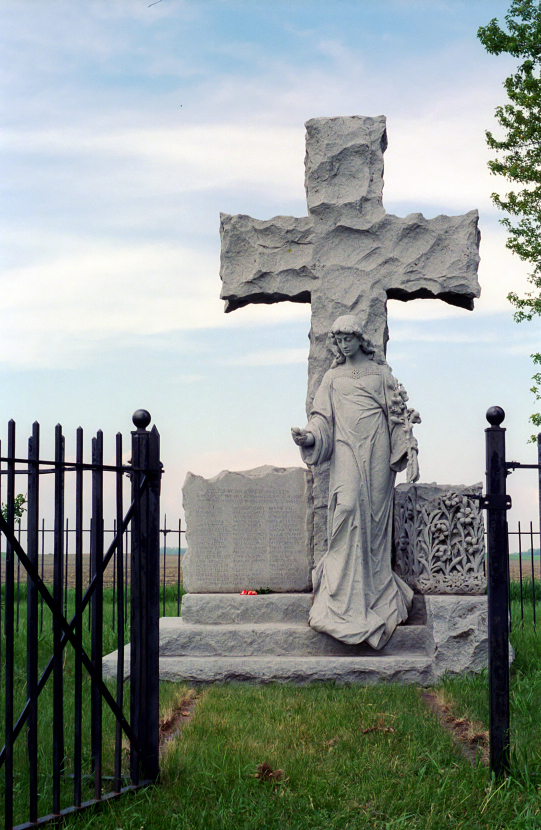
The Milford State Monument along Brown County Road 29 west of New Ulm commemorates the deaths of 52 settlers who were killed in the area. Located along the eastern edge of the Lower Sioux Reservation, Milford had the highest war death rate of any single township.

The Milford State Monument along Brown County Road 29 west of New Ulm commemorates the deaths of 52 settlers in Milford Township during the U.S.-Dakota War.

Revier, who also happens to be a descendant of white settlers impacted by the U.S.-Dakota War, endorses the resolution which calls for presenting the Dakota perspective through discussion; efforts by the City of Redwood Falls to promote the well-being and growth of the American Indian Community; and that such efforts “will mark the beginning of future dialogues and efforts to rectify the wrongs that were perpetrated during, and since, the year 1862, a tragic and traumatic event for the Dakota People of Minnesota.”

Says Revier:

I do support the resolution for many reasons, but the one that provides me with the most satisfaction really starts mending generations of bad feelings between the two nations. The first step towards reconciliation is admitting to the aggrieved party that there were atrocities committed. Once again this is more complex than can be explained in one or two sentences.

The mayor is right. Summarizing and defining issues spanning 150 years would be a difficult undertaking, especially in the context of a blog post.

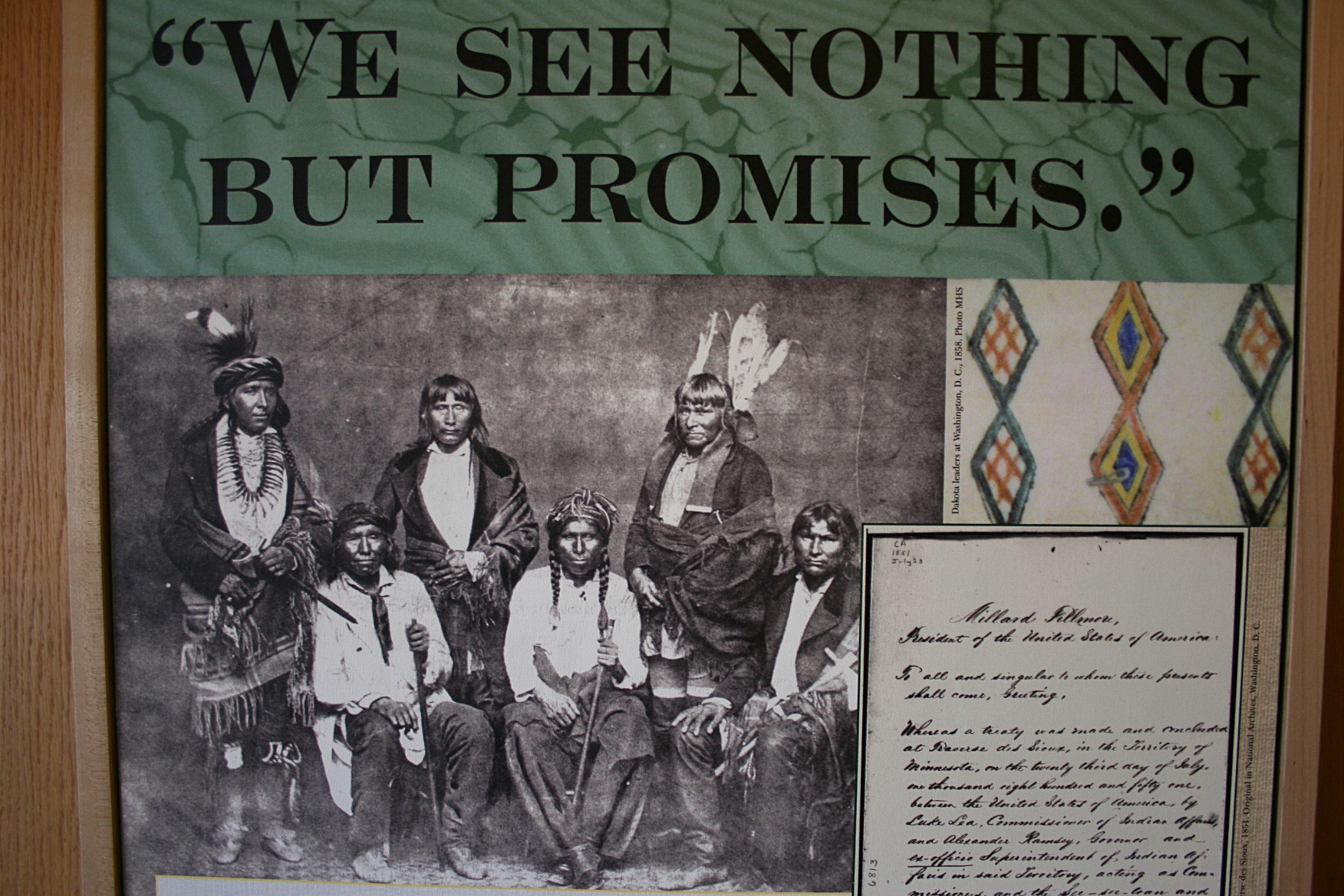
A photo panel at the Traverse des Sioux Treaty Center in St. Peter shows Dakota leaders photographed in Washington D.C. in 1858. The photo is from the Minnesota Historical Society.

A photo panel at the Traverse des Sioux Treaty Center in St. Peter shows Dakota leaders photographed in Washington D.C. in 1858. The photo is from the Minnesota Historical Society.

Now, though, through adoption of the “Year of the Dakota” resolution, the City of Redwood Falls, in discussion with the Dakota community and others, is aiming to “open additional dialogue and create better communication and feelings among the citizens of both communities,” Revier says.

While methods of accomplishing this have not yet been fully defined, the Redwood Falls community has already hosted roundtable discussions, author visits, video showings, presentations and historic site tours related to the U.S.-Dakota War during the war’s sesquicentennial in 2012.

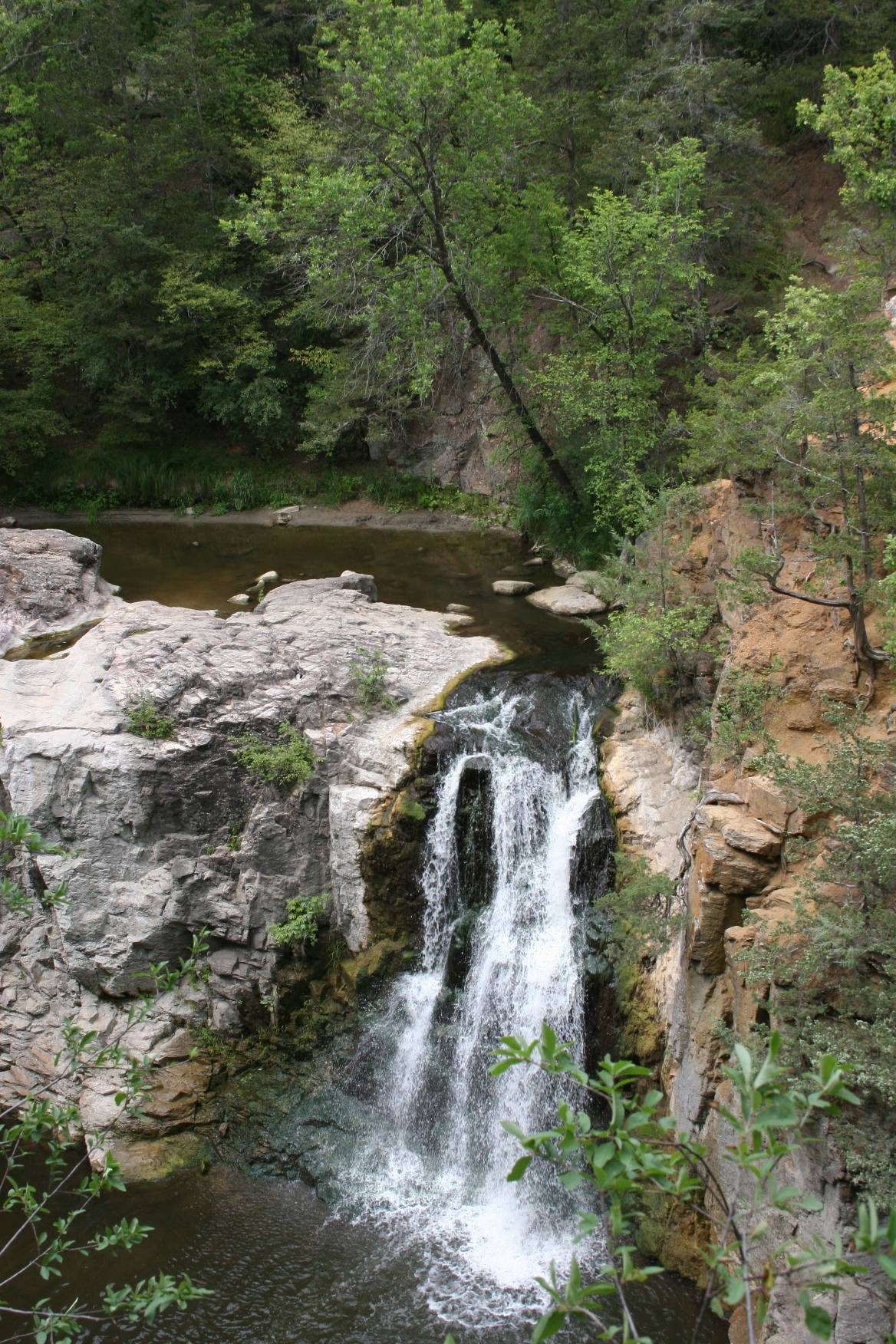
Ramsey Falls in Alexander Ramsey Park. Minnesota Prairie Roots file photo.

Ramsey Falls in Alexander Ramsey Park. Minnesota Prairie Roots file photo.

Additionally, Revier notes that when the city celebrates the dedication anniversary of its 219-acre Alexander Ramsey Park this year, the event will also be “a celebration of the Dakota who consider it a very special place.”  The Dakota once lived on the land (which eventually became the park) and the name Redwood comes from the Dakota word Can-say-api, meaning “where they paint the tree red,” the mayor says. A “101st Celebration and Ramsey Park Jamboree” is set for June 5 at the Redwood Area Community Center, according to the Alexander Ramsey Park Facebook page.

The park is named after first Minnesota Territorial and (second) Minnesota Governor Alexander Ramsey who negotiated treaties with the Dakota and was accused, but later cleared, of fraud in those negotiations. Revier is interested in possibly renaming the park, he says, “to something that would be more descriptive of the area which is home to so many indigenous people.”

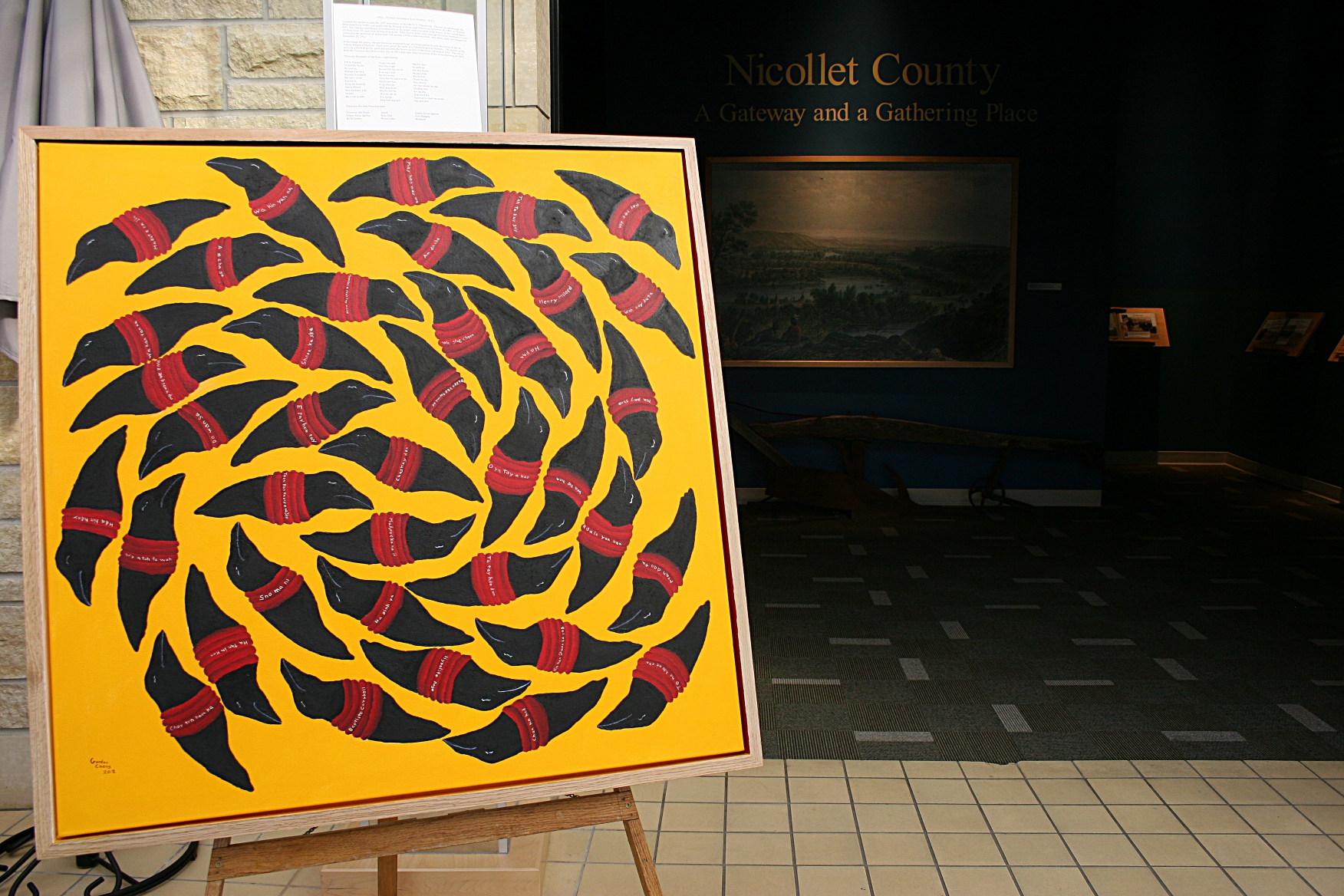
This artwork by Gordon M. Coons, which was on recent temporary display at the Traverse des Sioux Treaty Center, marks the 150th anniversary of the U.S.-Dakota War of 1862. According to information posted with the piece, "...the crows, known as messengers, are silent and unable to carry the stories of the 38 Dakota hanged in Mankato. Each crow carries the name of a Dakota hanged in Mankato. The texture on the crows is a blend of acrylic paint and soil from the historical sites of the Sioux Uprising of 1862. The soil is from the Traverse des Sioux treaty site of 1851 and eight other locations of the Sioux Uprising of 1862."

This artwork by Gordon M. Coons, which was on recent temporary display at the Treaty Site History Center in St. Peter, marks the 150th anniversary of the U.S.-Dakota War of 1862. According to information posted with the piece, “…the crows, known as messengers, are silent and unable to carry the stories of the 38 Dakota hanged in Mankato. Each crow carries the name of a Dakota hanged in Mankato. The texture on the crows is a blend of acrylic paint and soil from the …Traverse des Sioux treaty site of 1851 and eight other locations of the Sioux Uprising of 1862.” Coons is an enrolled member of the Lac Courte Oreilles Tribe of northern Wisconsin and now lives in Minneapolis.

WHILE COMMUNICATING with Revier and researching for this post, I noticed that the “Year of the Dakota” resolution passed by the city of Redwood Falls varies from those approved in Minneapolis and St. Paul. One difference comes in the number of Dakota who were executed, a figure referenced in the first paragraph of the resolution. The Twin Cities resolutions note the number of executed Dakota—those hung in a mass hanging in Mankato—at 38. The resolution from Redwood Falls defines the number as 38+2 Dakota.

I asked the mayor to clarify. Revier added the “2” to represent Medicine Bottle and Little Six (Shakopee), Dakota leaders who were hung at Fort Snelling for their roles in the U.S.-Dakota War.

When I consider all the mayor has shared with me and my own knowledge of the tensions that have existed in Redwood County for 150 years, I wonder how reconciliation will ever be achieved. But I have to hold onto hope—hope that this newly-adopted resolution will foster discussion and understanding, hope that each side can stop blaming the other, hope that forgiveness will come…

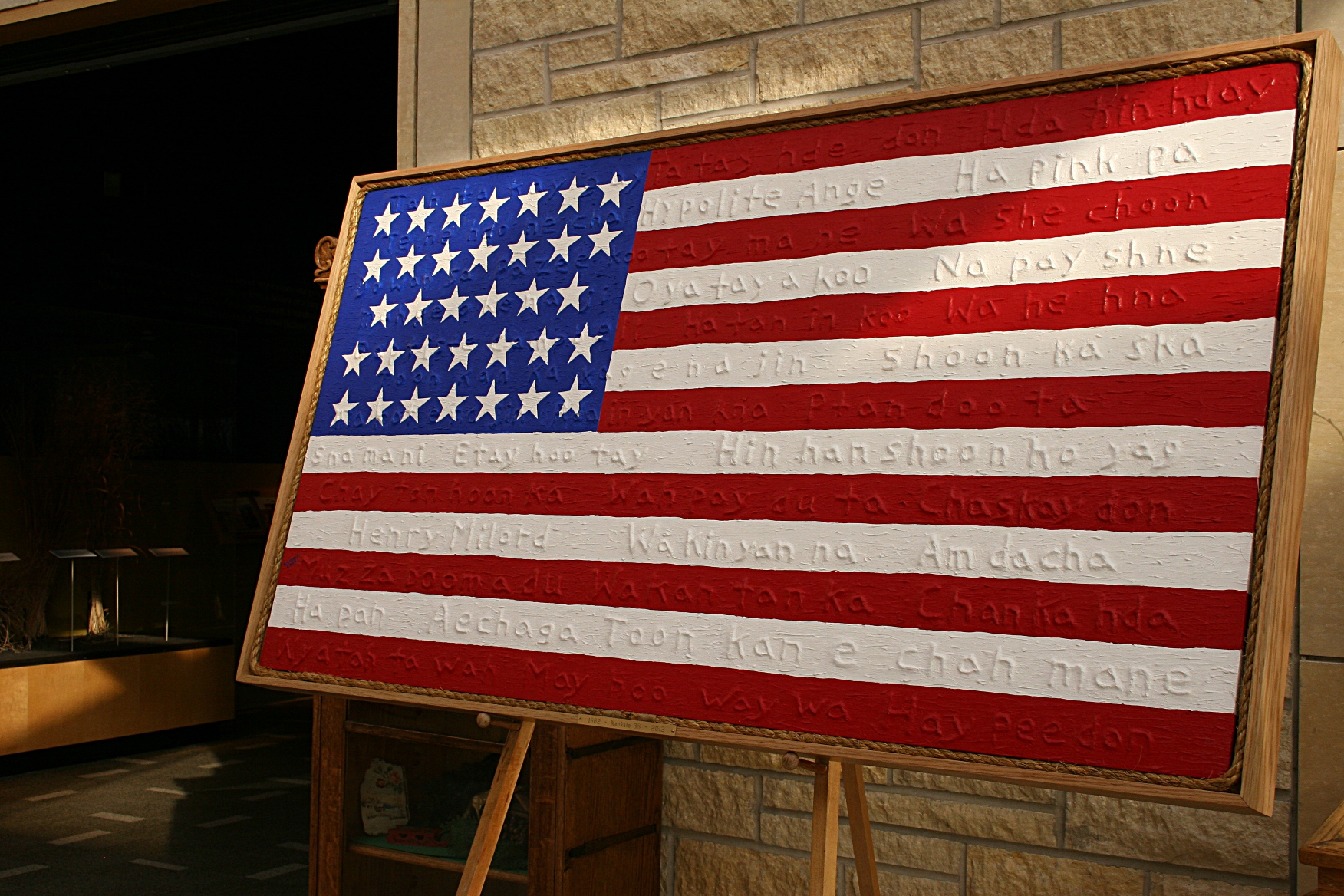
Gordon M. Coons also created this 1862 U.S. flag which features the names of the 38 Dakota who were executed during a mass hanging in Mankato. "...the 38 Dakota are woven into the history of the U.S. and appear to be woven into the flag," information posted with the display at the Traverse des Sioux Treaty Center states.

Gordon M. Coons also created this 1862 U.S. flag which features the names of the 38 Dakota who were executed during a mass hanging in Mankato. “…the 38 Dakota are woven into the history of the U.S. and appear to be woven into the flag,” information posted with the display at the Treaty Site History Center in St. Peter states.

NOTE: I contacted Dr. Chris Mato Nunpa,  retired former associate professor of Indigenous Nations and Dakota Studies who authored the resolution along with other Dakota people and supporters. He declined to comment.

To read the entire resolution adopted by the Minneapolis City Council, click here. The Redwood Falls version varies only in the number of Dakota specified (38+2) and, of course, in the council name stated in the resolution.

The Saint Paul City Council resolution differs from that of the other two cities as the city’s parks and recreation department  is directed to “work with the Dakota Bdote Restoration Consortium to identify, name and interpret sacred Native American sites at and nearby the sacred Bdote…” You can read the entire resolution by clicking here.

© Copyright 2013 Audrey Kletscher Helbling
 

Voting for Minnesota’s most unique high school mascot & insights into other team names in our state February 26, 2013

A gym at Wabasso High School, home of the Rabbits. Minnesota Prairie Roots file photo.

A gym at Wabasso High School, home of the Rabbits. Minnesota Prairie Roots file photo.

MY ALMA MATER, Wabasso High School, has a white rabbit as a mascot. As you would rightly expect, a rabbit does not conjure up an image of athletic prowess. But I do not care. Rabbits reflects the name of the community, Wabasso, a Dakota word, I’m told, meaning “White Rabbit.”

The rabbit mascot also stands out among all the Eagles and Tigers, the most common high school team names in Minnesota, and the country in general, according to Terry Borning, author of MascotDB.com, a free searchable database of team names and mascots. (More on that later.)

Rabbits, though, was not unusual enough to grab the attention of USA TODAY’s High School Sports staff which is sponsoring a competition to find the nation’s most unique high school mascots. Staff chose five mascots from each state and Washington D.C. in the first round of the contest.

Tom Ressler created Blooming Prairie's logo, a black-and-white Awesome Blossom , in 1979.

The Awesome Blossoms logo from the school website.

Now the public will choose their favorites, via online voting, to advance to the second round. One winner from each state and D.C. will move on to regionals and the opportunity to win prizes ranging from $100 to $2,000 for their high school athletic departments.

In the running from Minnesota are the Blooming Prairie Awesome Blossoms, Roosevelt Teddies, Jordan Hubmen, Sauk Centre Mainstreeters and Winona Winhawks.

I’ll admit to a fondness for Blooming Prairie’s Awesome Blossoms, for several reasons. Any school strong enough to sport the name Blossoms deserves to win. Second, Blooming Prairie, a farming community of around 2,000 located 15 miles south of Owatonna, is the smallest of the Minnesota communities vying for this honor. I will always pick the smallest, most rural town and root for the underdog. (Plus, I really like the “Prairie” part of the town’s name.) Third, my second daughter first introduced me to the Blooming Prairie mascot when she was in high school and attended an Awesome Blossoms basketball game with a good friend. It was also the first night she failed to get home at a reasonable hour. Enough said on that.

Apparently, the Blossoms got their name from an area newspaper more than a century ago, according to one source. “Awesome” was later added by locals.

A seen from Main Street in Sauk Centre, home to the Mainstreeters.

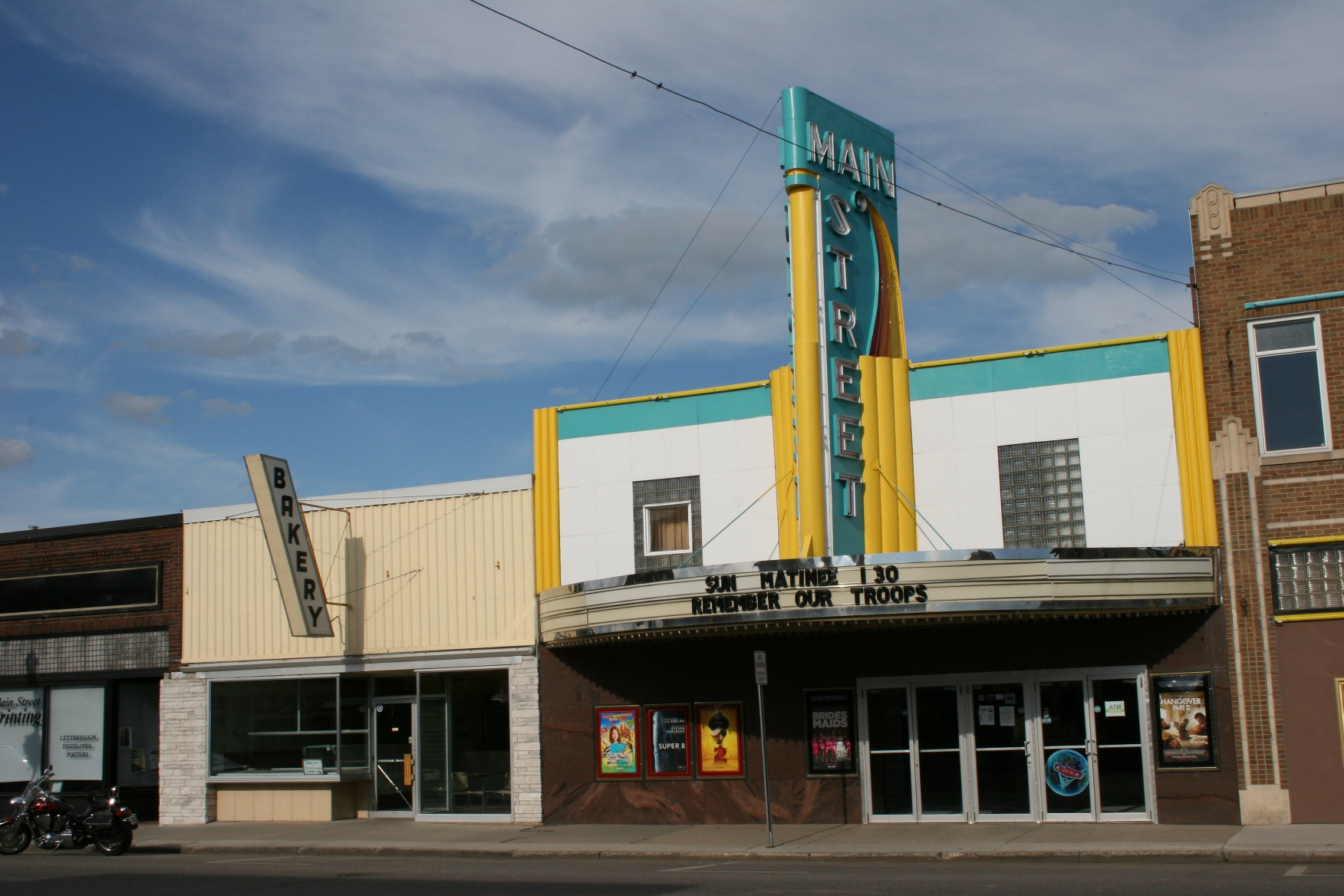
A scene from Main Street in Sauk Centre, home to the Mainstreeters. Minnesota Prairie Roots file photo.

Now, if I had to choose my second favorite from the Minnesota five, I’d select the Mainstreeters for the sole reason that I love Sauk Centre native Sinclair Lewis’ satirical book, Main Street.

So there, if this interests you, click here and go online to vote. Voting for the state winners continues through March 5. Those 51 winners then advance to second round regional voting from March 6 -14. Six regional winners then enter the finals March 15-25.

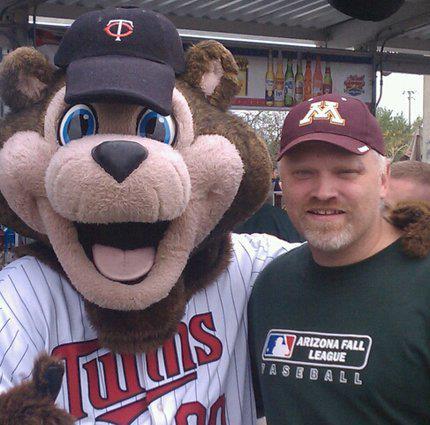
Terry Borning with TC Bear, the Twins mascot.

Terry Borning with TC Bear, the Twins mascot. Borning attended Concordia College in Moorhead, home of the Cobbers.

NOW, LET’S DELVE DEEPER into Minnesota high school mascot names via Terry Borning of the earlier mentioned MascotDB.com. Just a note, Borning, of Billings, Montana, and a computer science adjunct faculty member for an Arizona college, is my cousin. He has 43,799 sports team names and mascots in his database covering U.S. and Canadian high school, college and professional teams, past and present.

Borning’s interest in team names stretches back to high school, when he played nine-man football for the Hendricks Huskies. Hendricks is about as close as you can get to South Dakota in southwestern Minnesota without actually living in our neighboring state.

Hendricks and nearby rival Ivanhoe have since consolidated, becoming the Lincoln H I Rebels. Lincoln references Lincoln County where the schools are located while the “H” and “I,” obviously, stand for the separate communities. Adds Borning: “The UNLV Runnin’ Rebels were a dominant NCAA basketball team at the time the schools consolidated in the early 1990s. The teens of that time considered themselves rebellious, so the moniker fit.”

That led me to ask my cousin how schools choose mascots and to specifically cite examples in Minnesota. He notes the popularity of Vikings here (11 high schools with this mascot) and the once common Warriors and Indians (no longer used), plus names like the Flying Dutchmen, all traced to ethnic heritage.

Agriculture and local industries also factor into names like the Moorhead Spuds, Austin Packers, Bemidji Lumberjacks and Crosby-Ironton Rangers.

Team names can extend, too, from the school’s name such as Lindbergh (Hopkins) Flyers, Robbinsdale Robins, Red Wing Wingers and Burnsville Blaze.

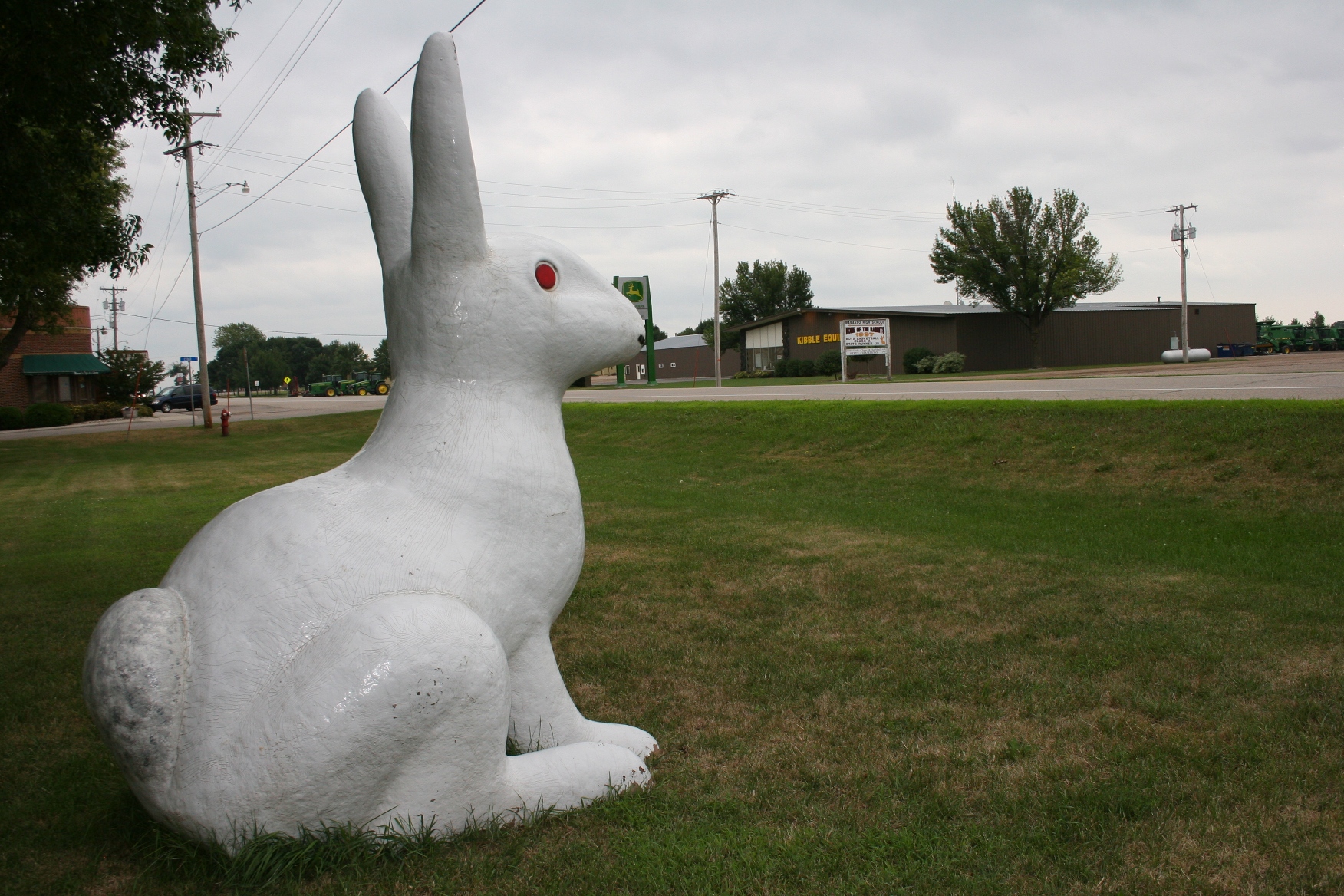
A white rabbit statue sits along Minnesota Highway 68 in Wabasso.

A white rabbit statue sits along Minnesota Highway 68 in Wabasso. Minnesota Prairie Roots file photo.

In the past, animals, such as my beloved Rabbits, were common as mascots.

Recent trends during school consolidations are to forge a new identity such as the Northern Freeze Nordics comprised of students from the small northwestern Minnesota communities of Newfolden, Viking and Holt. (Yes, I had to check a map.)

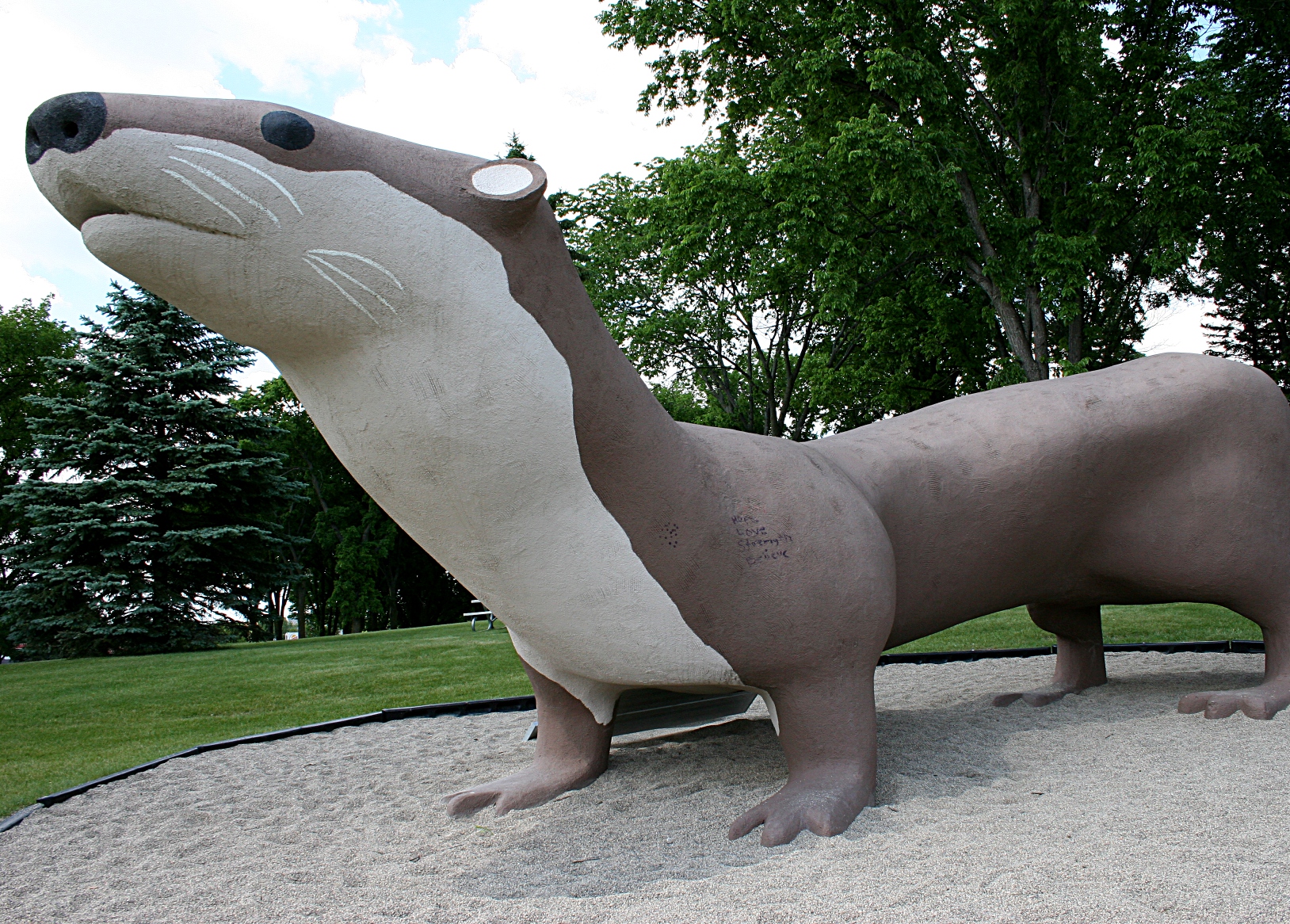
The Otto the otter statue in Adams Park in Fergus Falls. The Otter Tail River runs through this city where the Fergus Falls High School mascot is the otter.

The Otto the otter statue in Adams Park in Fergus Falls. The Otter Tail River runs through this city where the Fergus Falls High School mascot is the Otters. Minnesota Prairie Roots file photo.

Naturally, I wanted to know what mascots Borning might have selected for that USA TODAY contest had he been given the opportunity. He suggests these stand-out Minnesota names: Moorhead Spuds, Esko Eskomos, Thief River Falls Prowlers, Edgerton Flying Dutchmen, Two Harbors Agates, Grand Meadow Superlarks, McGregor Mercuries, Mahtomedi Zephyrs, Blackduck Drakes, Fergus Falls Otters and Barnum Bombers.

Just reviewing that list, I can see the connections between many of the mascots and their respective communities.

Borning also points out some unique Minnesota team names that have been lost to history such as the Jasper Quartziters, Tyler Danes, Walnut Grove Loggers, Granite Falls Kilowatts, Hendricks Midgets, Tracy Scrappers and Freeborn Yeomen.

I photographed this logo a year ago at Randolph Public Schools, home of the Rockets.

I photographed this logo a year ago at Randolph Public Schools, home of the Rockets.

Finding information on past high school sports team names has proven challenging for Borning, so he continues to research information for MascotDB, the only searchable online database of U.S. and Canadian high school, college and professional team names/mascots. “Reading up and discussing great and interesting team nicknames and mascots has always been a fun pastime for me,” he says. That led him to develop MascotDB.

Given the sheer amount of research he’s done, my cousin was able to tell me that only three U.S. high schools have Rabbits (not to be confused with Jackrabbits) as their mascots. Those are in Atlanta, Texas; Delta, Utah; and Wabasso, Minnesota.

Go, Rabbits.

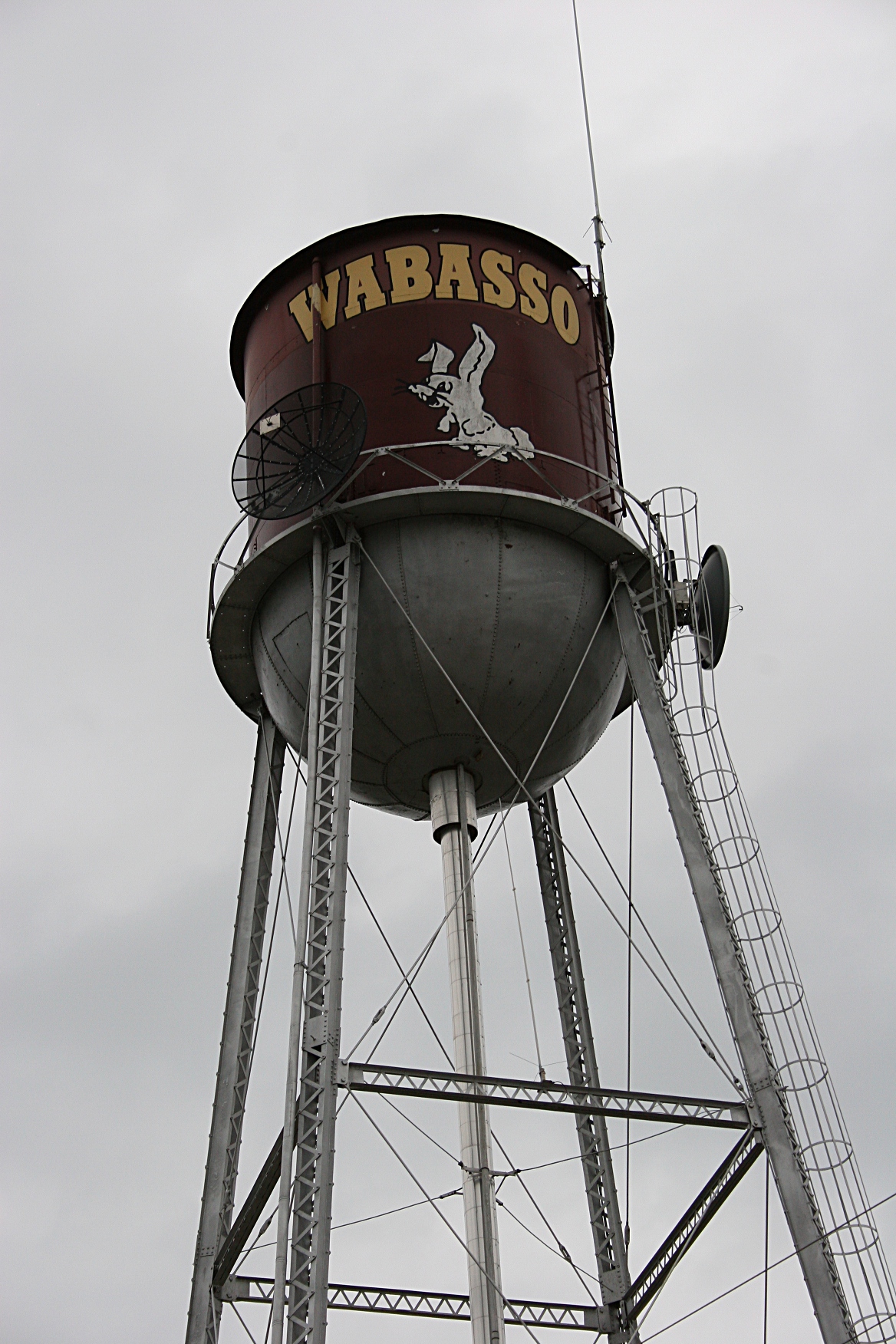
A water tower in Wabasso sports the school's mascot, a white rabbit. Minnesota Prairie Roots file photo.

A water tower in Wabasso sports the school’s mascot, a white rabbit. Minnesota Prairie Roots file photo.

FYI: Click here to visit MascotDB.

Borning also welcomes information and questions about sports’ names/mascots. Contact him at info at mascotdb.com

Also, click here to learn more about the origin of the Rabbits mascot at my alma mater.

© Copyright 2013 Audrey Kletscher Helbling


Faribault’s long-standing historic appreciation for Fleck’s beer February 19, 2013

YOU NEEDN’T LOOK FAR to see the notable imprint the Fleckenstein breweries made on Faribault.

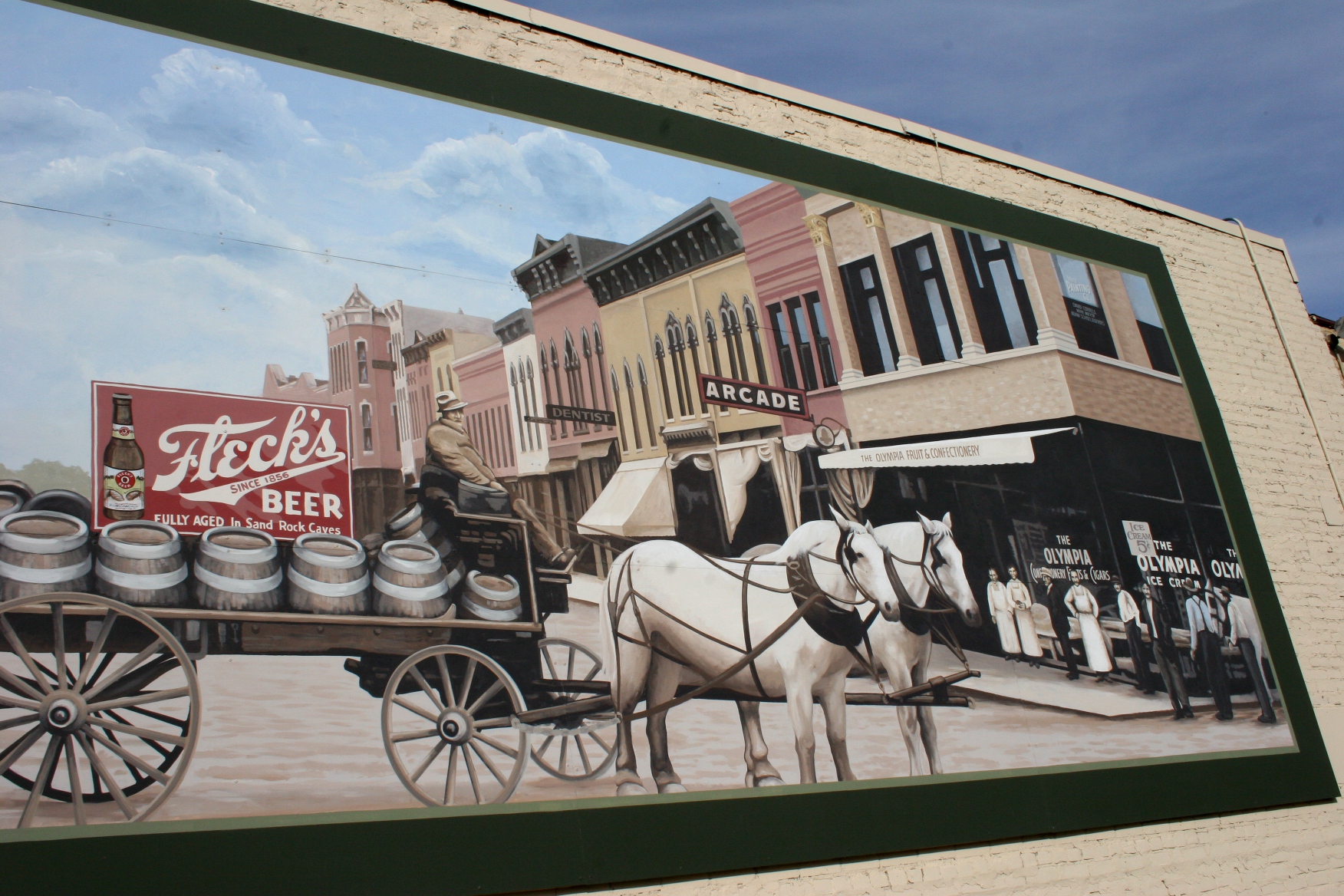
A downtown Faribault mural featuring Fleck's beer.

A downtown Faribault mural featuring Fleck’s beer.

In the heart of Faribault’s historic downtown, a mural at 513 Central Avenue features Fleck’s beer barrels stacked upon a horse-drawn wagon in one of seven historical-themed murals created by the Mural Society of Faribault.

Kitty-corner across the street at the State Bank of Faribault, 428 Central Avenue, bank President John R. Carlander’s personal collection of Fleckenstein/Fleck’s memorabilia is displayed.

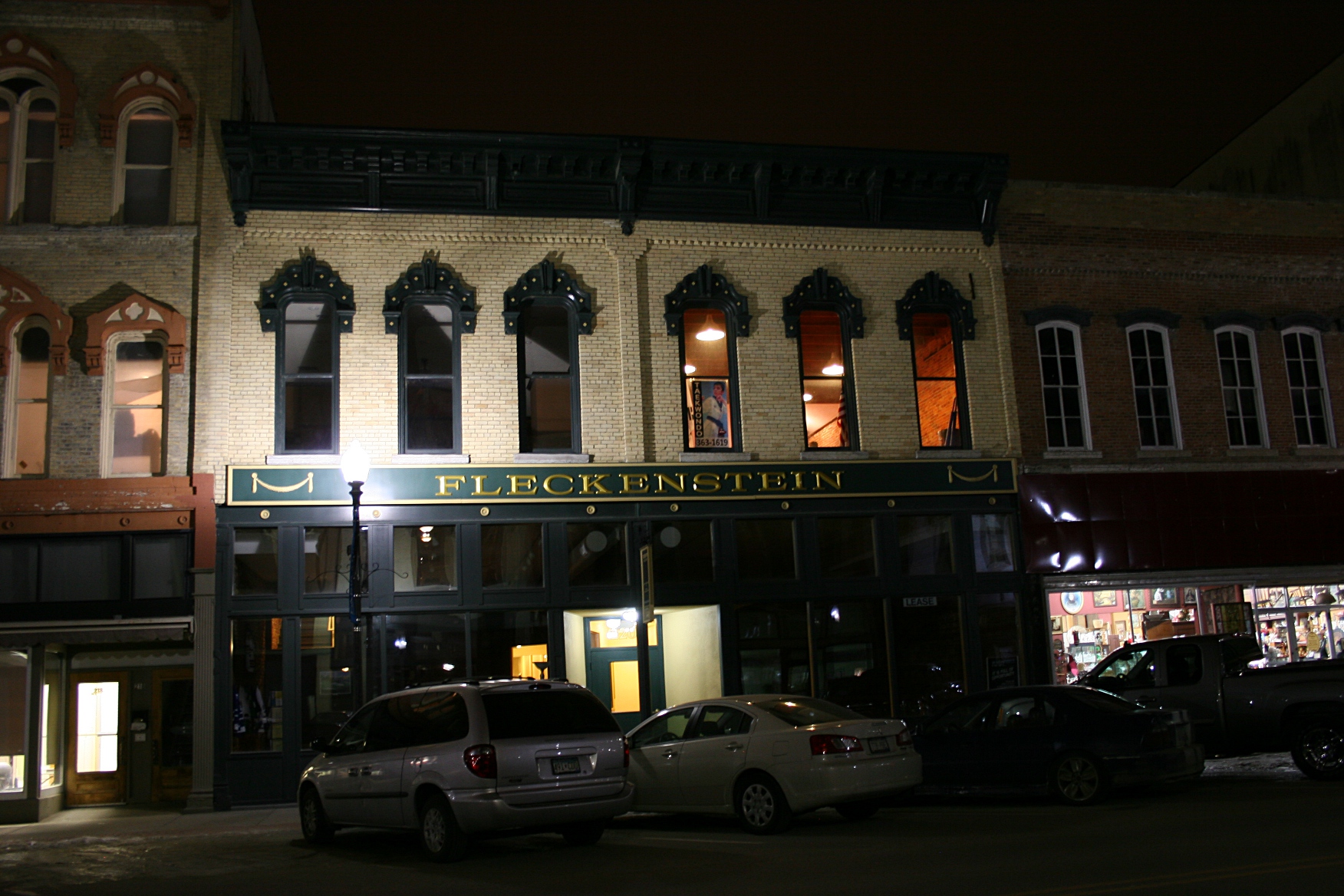
The Fleckenstein building houses Twin City Underwriters in the south front with empty space for lease in the other half.

The Fleckenstein building, home to several businesses including an  insurance company, photo studio and salon. If anyone knows the story behind the Fleckenstein family’s connection to the building, I’d like to hear.

Two blocks away in Faribault’s Historic Commercial District, the Fleckenstein building stands at 220 Central Avenue.

Across town at the Rice County Historical Society, 1814 N.W. Second Avenue, you’ll find a permanent Fleckenstein breweries exhibit.

And who knows how many locals own pieces of Fleckenstein history from the breweries of brothers Gottfried and Ernst Fleckenstein. The two began as partners, opening the Fleckenstein Brewery along the banks of the Straight River in 1856. There they aged and stored their beer in caves.

Eventually the two split, Gottfried’s brewery remaining at the original site at 222 Third Avenue N.E. Meanwhile, Ernst moved farther north along the Straight River and established Ernst Fleckenstein Brewing Company in 1872. That would continue in operation until 1964. Gottfried’s brewery, which had been passed along to his son, Louis, closed in 1907.

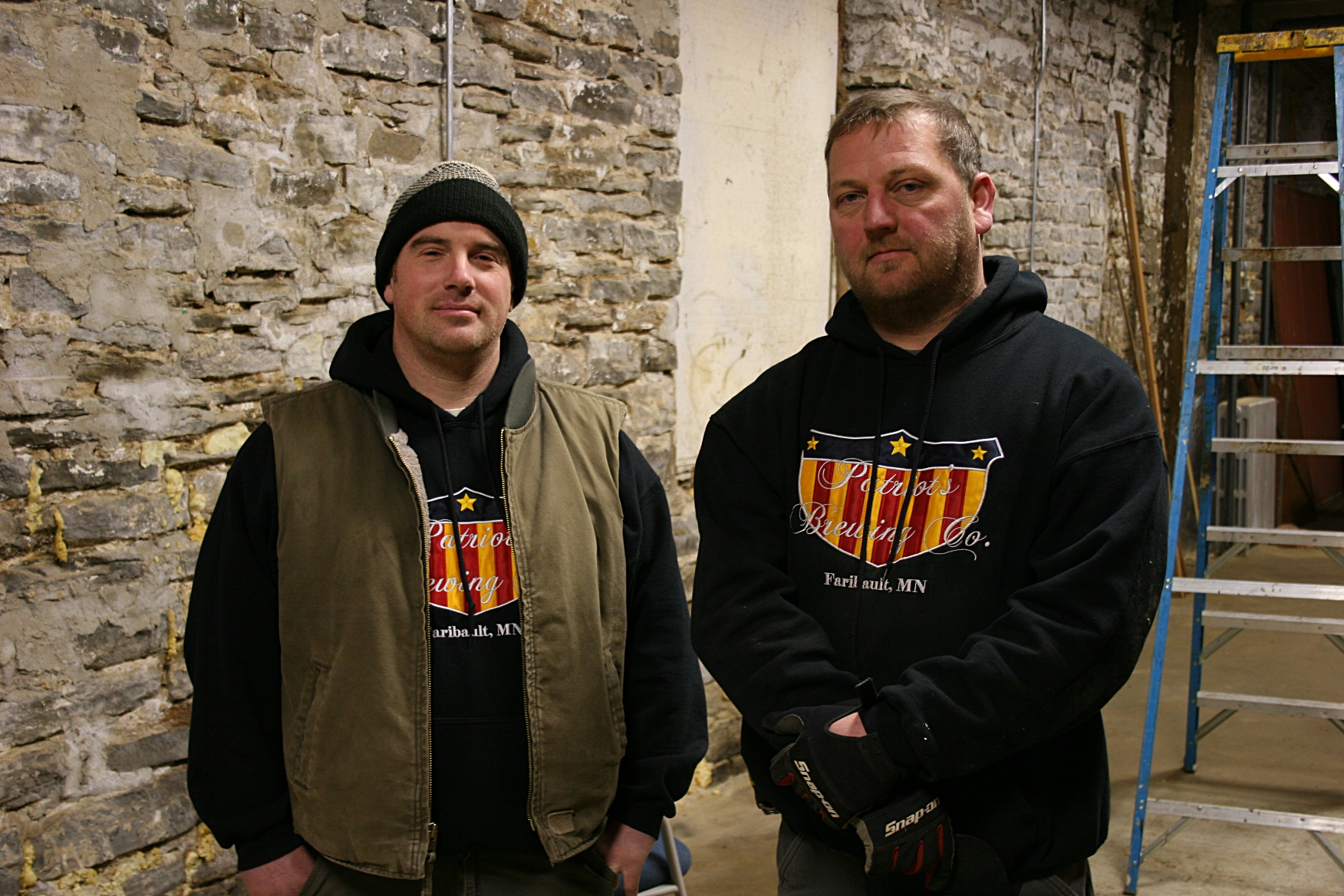
Chris Voegele, left, and Noah Strouth inside the space that will house Patriot's Brewing brewery.

Chris Voegele, left, and Noah Strouth inside the space that will house Patriot’s Brewing brewery.

With 108 years of business history in Faribault, it’s no wonder the Fleckenstein breweries made an impression upon locals like Noah Strouth and Chris Voegele who will bottle Fleck’s branded beers at Patriot’s Brewing Company, set to open this fall in downtown Faribault within blocks of the first Fleckenstein brewery. You can read about that new brewery by clicking here to a previous post.

The two plan to eventually open a tap room which will feature Fleck’s/Fleckenstein memorabilia culled from their personal inventory and from the collections of others who’ve already offered their historical pieces for display. I don’t expect Strouth will show his 1958 unopened bottle of Fleck’s beer. But it’s interesting to hear his claim that this 55-year-old bottle has always been kept cold. He knows that, he says, because of the beer’s clarity.

If anyone knows Fleck’s beer, it would be Faribault resident Brian Schmidt who owns more than 300 collectible pieces from the Fleckenstein breweries and has created a Fleck’s website. (Click here to reach that.) Schmidt grew up on Faribault’s north side and remembers digging for bottles in the Fleckenstein brewery “bottle pit.”

Faribault artist Rhody Yule created this oil painting of the Fleckenstein Brewery in 1976. The building, and the brewery, no longer exist. The 20-foot Fleck's beer bottle on the right side of the painting sat near the brewery entrance. Children often had their pictures taken here when their parents took a brewery tour.

Faribault artist Rhody Yule created this oil painting of the Fleckenstein Brewery in 1976. The building, and the brewery, no longer exist. The 20-foot Fleck’s beer bottle on the right side of the painting sat near the brewery entrance. Children often had their pictures taken here when their parents took a brewery tour. The brewery also made soda.

I’ve yet to see Schmidt’s collection, although I’ve viewed one piece, a 1976 brewery painting by my artist friend Rhody Yule of Faribault. Schmidt brought the artwork, which he purchased for $90 at a local auction, to “A Lifetime of Art: The Rhody Yule Collection” exhibit in January 2011 at the Paradise Center for the Arts in Faribault. Click here to read my post about that brewery painting and another piece Schmidt shared at Yule’s show.

Equally as interesting are the brewery related stories shared by locals, including that of a 92-year-old friend who wished to remain anonymous. The Faribault native remembers her sister picking tight-bud peonies from the family farm in June and storing the flowers inside a brewery cave until her early July wedding.

This I learned when I phoned to ask about the Fleckenstein-donated stained glass windows which grace my church, Trinity Lutheran, along Fourth Street in Faribault. My friend couldn’t offer any details on the windows, or even if the Fleckensteins were Trinity members. But I certainly appreciated hearing her sister’s wedding flower story.

Likewise I spoke with another longtime Faribault resident who knew members of the Fleckenstein family—Al, Ruge, John and Chauncey—from his days of bowling against the Fleck’s Brewery team. In his early 20s at the time, my friend recalls the Fleckensteins, 15-plus years his senior, as strong supporters/sponsors of bowling in Faribault. Several generations of Fleckensteins operated the breweries.

Hearing stories like this reinforces the results of a Faribault Main Street downtown market analysis report prepared in September 2011. According to that report by (IN)ALLIANCE, LLC, “downtown Faribault would be an ideal location for a craft brew pub.”

The report went on to state this:

Given the history of brewing in Faribault and its consumer who is attracted to culture and history, naming a brewpub solicitation as “Fleckenstein Brew Pub” would prove to be a good promotional tool.

Chris Voegele , left, and Noah Strouth, owners of Patriot's Brewing Company

Chris Voegele , left, and Noah Strouth, owners of Patriot’s Brewing Company

When I interviewed Patriot Brewing owners Strouth and Voegele, I mentioned the market analysis (of which they were unaware) and they concurred with that important historic connection and Faribault promotional aspect. “People in Faribault seem to like their history,” Voegele said.

With the opening of a brewery and a tap room (not a brewpub), Patriot’s Brewing will assuredly add to the beloved history of Fleck’s beer in Faribault.

© Copyright 2013 Audrey Kletscher Helbling


Patriot’s Brewing Company opening in Faribault with a nod to the past February 16, 2013

SEVERAL MONTHS AGO I overheard several antique dealers discussing a brewery in Faribault. I lingered nearby, feigning interest in merchandise so I could eavesdrop. With tidbits of information filed in my memory, I meandered farther into the Peterson Art Furniture Company complex.

There I spotted Northfield attorney, historic preservationist, and Peterson building and architectural salvage business owner David Hvistendahl eating lunch. Perfect timing. “What’s this about a brewery coming to Faribault?” I asked.

Chris Voegele , left, and Noah Strouth, owners of Patriot's Brewing Company

Chris Voegele , left, and Noah Strouth, owners of Patriot’s Brewing Company.

And thus I was introduced to Patriot’s Brewing Company, a Faribault-based regional brewery slated to open this fall, according to owners Noah Strouth, 40, and Chris Voegele, 41. Saturday morning I met with these longtime friends and 1990 Faribault High School graduates to learn more about their craft beer business. Up until then, I’d been asked not to publicly divulge news about the brewery.

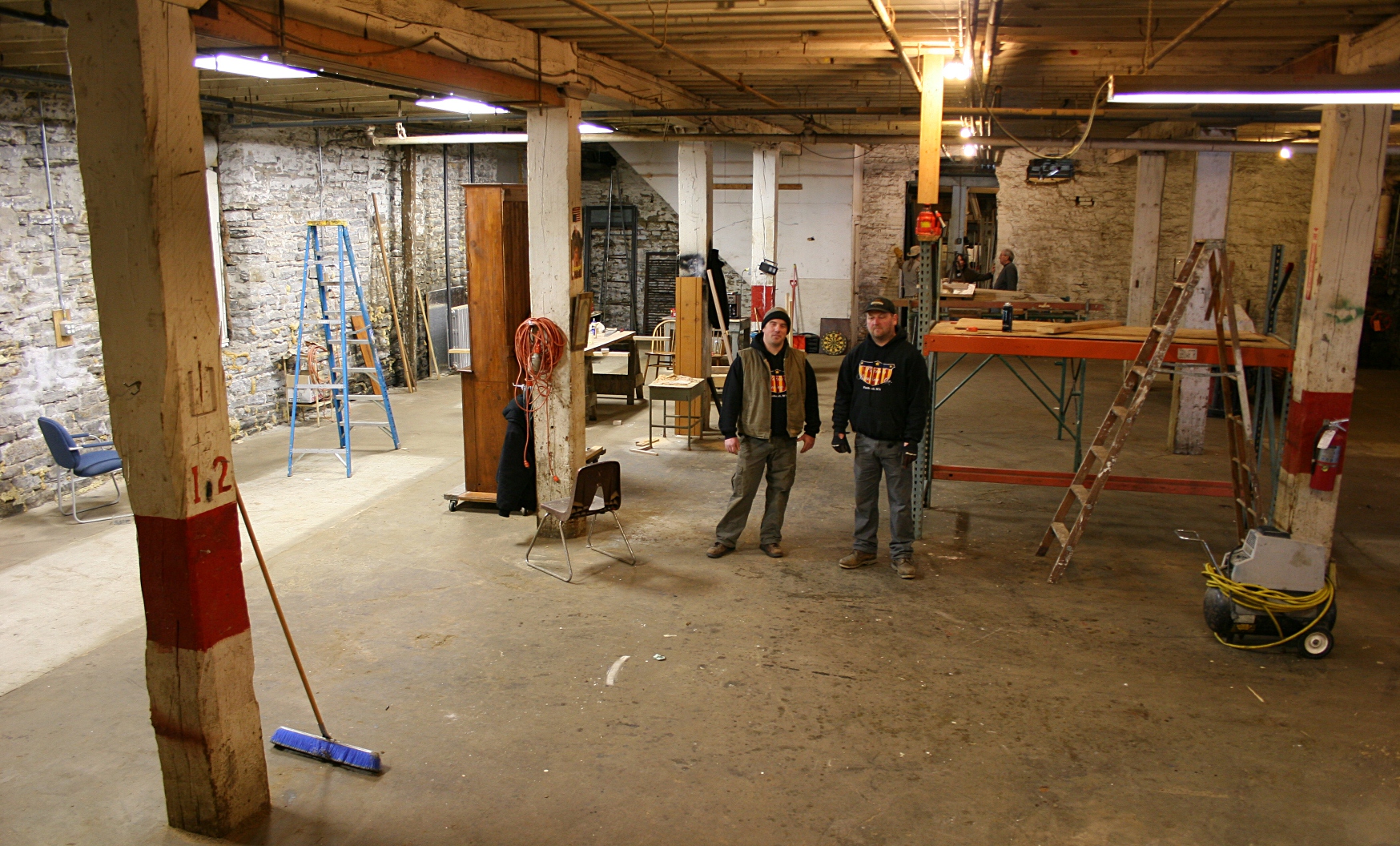
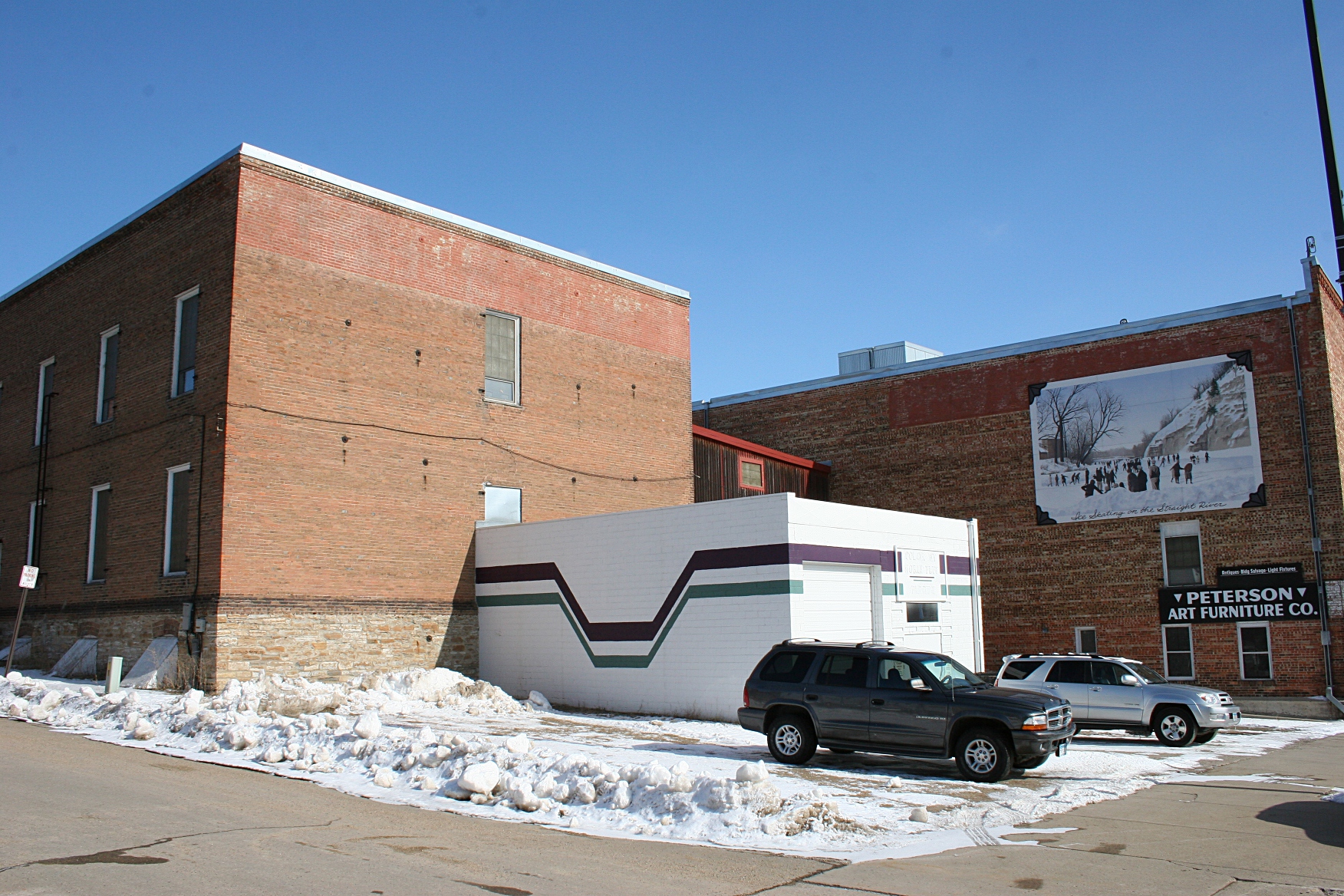
The brewery will be housed in the lower level of the brick building on the left with a tap room opening later in the small white building in the center of the Peterson Art Furniture complex.

The brewery will be housed in the lower level of the brick building on the left with a tap room opening later in the small white building in the front of the Peterson Art Furniture complex.

But word had gotten around town and the time seemed right to share their plans for the brewery which will be housed in a 3,250 square foot basement section in the southwest corner of the former Peterson Art Furniture Company (before that home to the Faribault Furniture Company) building along Fourth Street in the heart of historic downtown Faribault.

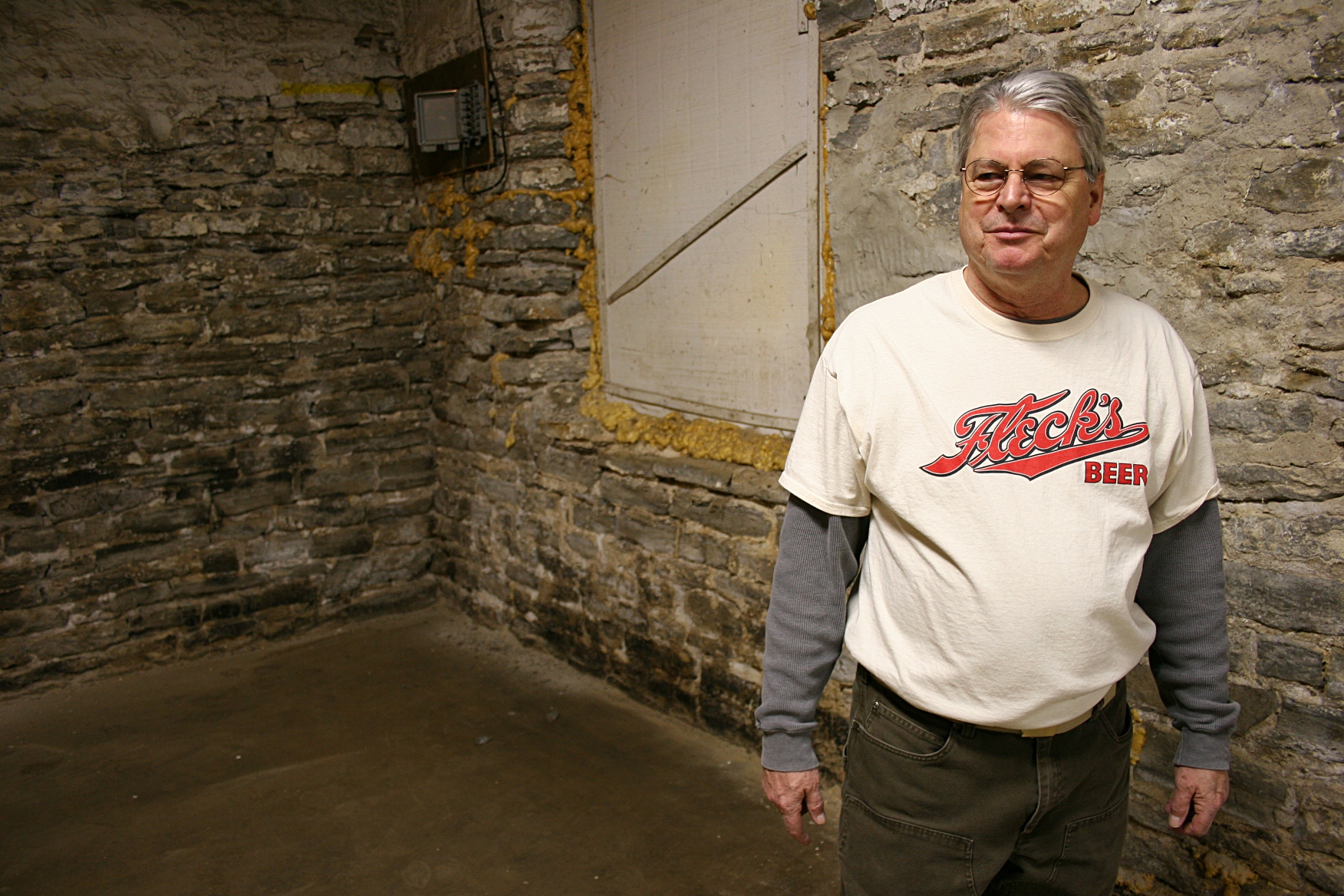
David Hvistendahl, from whom Patriot's is renting space for the brewery, sports a Fleck's beer t-shirt. A line of Fleck's Hvistendahl and a partner plan to eventually open an event center int he space above the brewery.

David Hvistendahl, from whom Patriot’s is renting space for the brewery, sports a Fleck’s beer t-shirt. Fleck’s branded clothing will soon be available for purchase through Patriot’s Brewing. Hvistendahl and a partner plan to eventually open an event center in the space above the brewery.

For the first time since 1964, when Fleckenstein Brewery closed, Faribault will have its own brewery, and one which will brew Fleck’s labeled bock and lagers. Patriot’s Brewing has trademarked the Fleck’s name, which had been left in the public domain, Voegele said.

“People in Faribault seem to like their history,” Voegele said, both he and Strouth emphasizing the name recognition and importance of Fleck’s beer in Faribault history.

They’ve even talked to locals who drank Fleck’s beer to learn more about the taste, something they hope to re-create in a Fleck’s lager. The recipes died with Ernst “Boots” Fleckenstein, the last brewmaster, Voegele said. The pair has also considered the historic grains and the water at the time (the brewery drew its water from an artesian well) the popular Faribault beer was produced. They’ll never exactly replicate Fleck’s, especially since they cannot re-create the yeast strain (of major importance in the brewing process), but they will try, the two say.

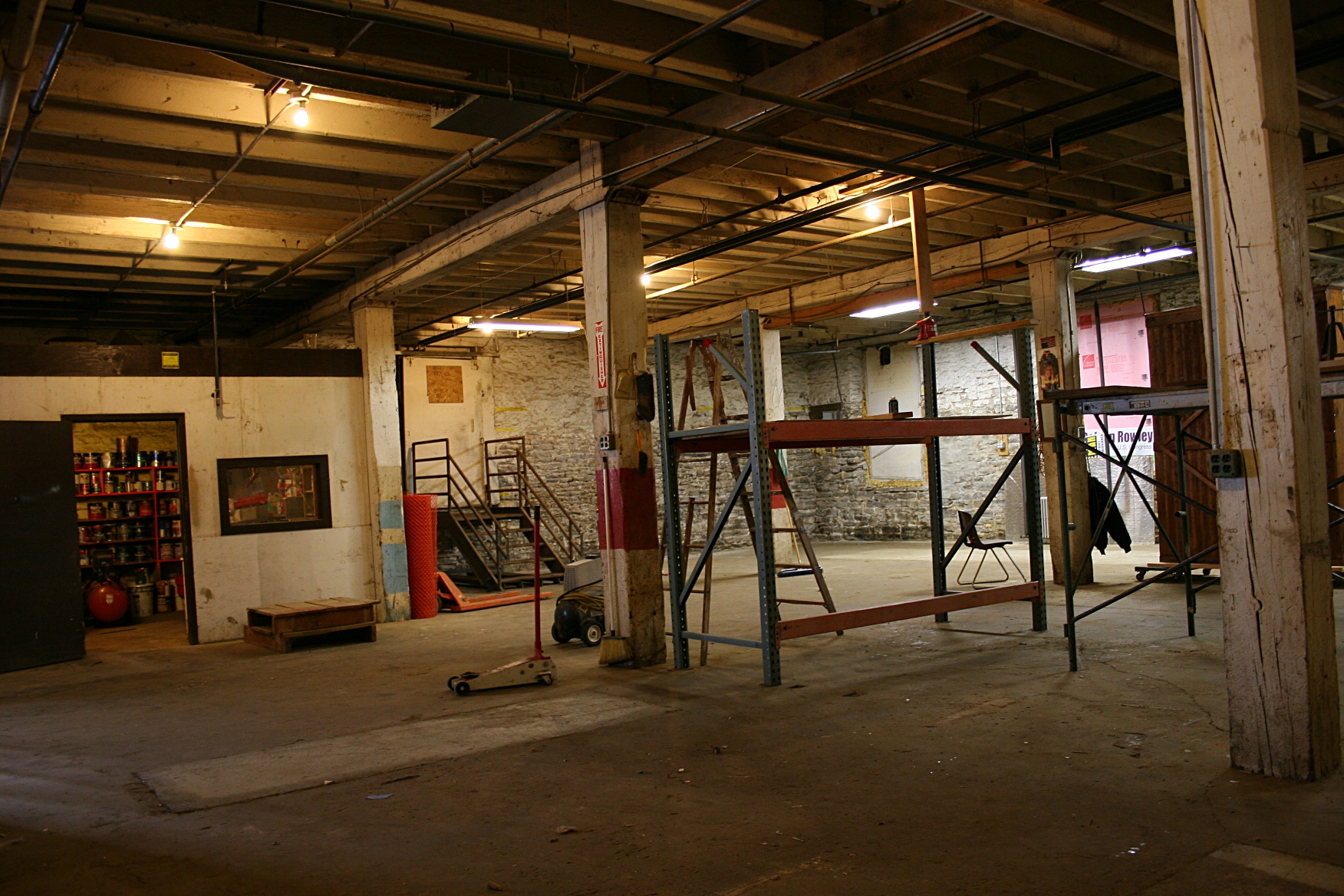
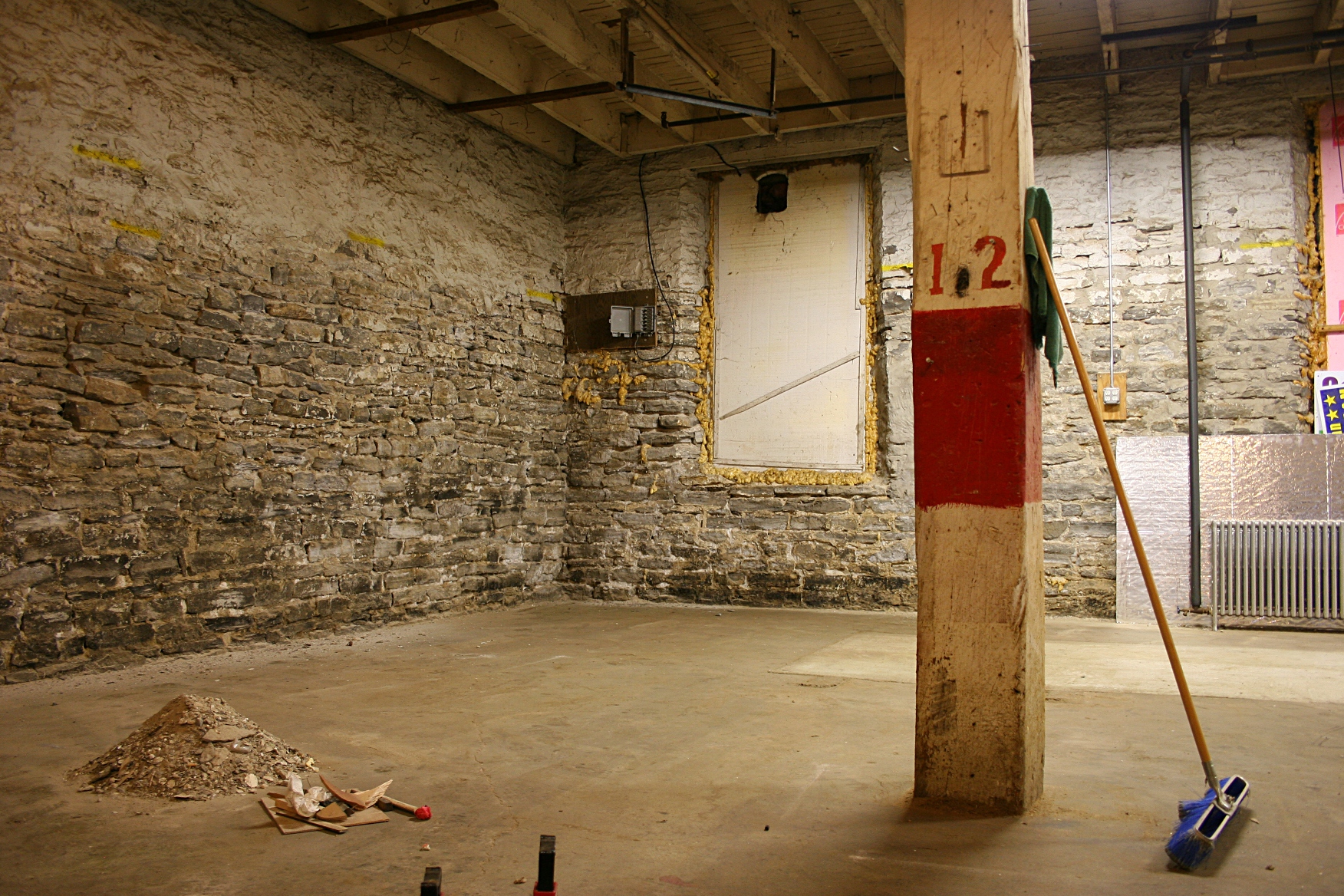
The brewery space.

The brewery space.

“Everything is in motion,” said Voegele as he and Strouth stood in the sprawling brewery space defined by rugged stone walls of local gray quarry stone and by thick support posts. The former storage area has been cleared and the two are working on the infrastructure with projects like tuckpointing and reinstalling the original windows in the 1886 building. Additional water and sewer lines are set for June installation during a street reconstruction project.

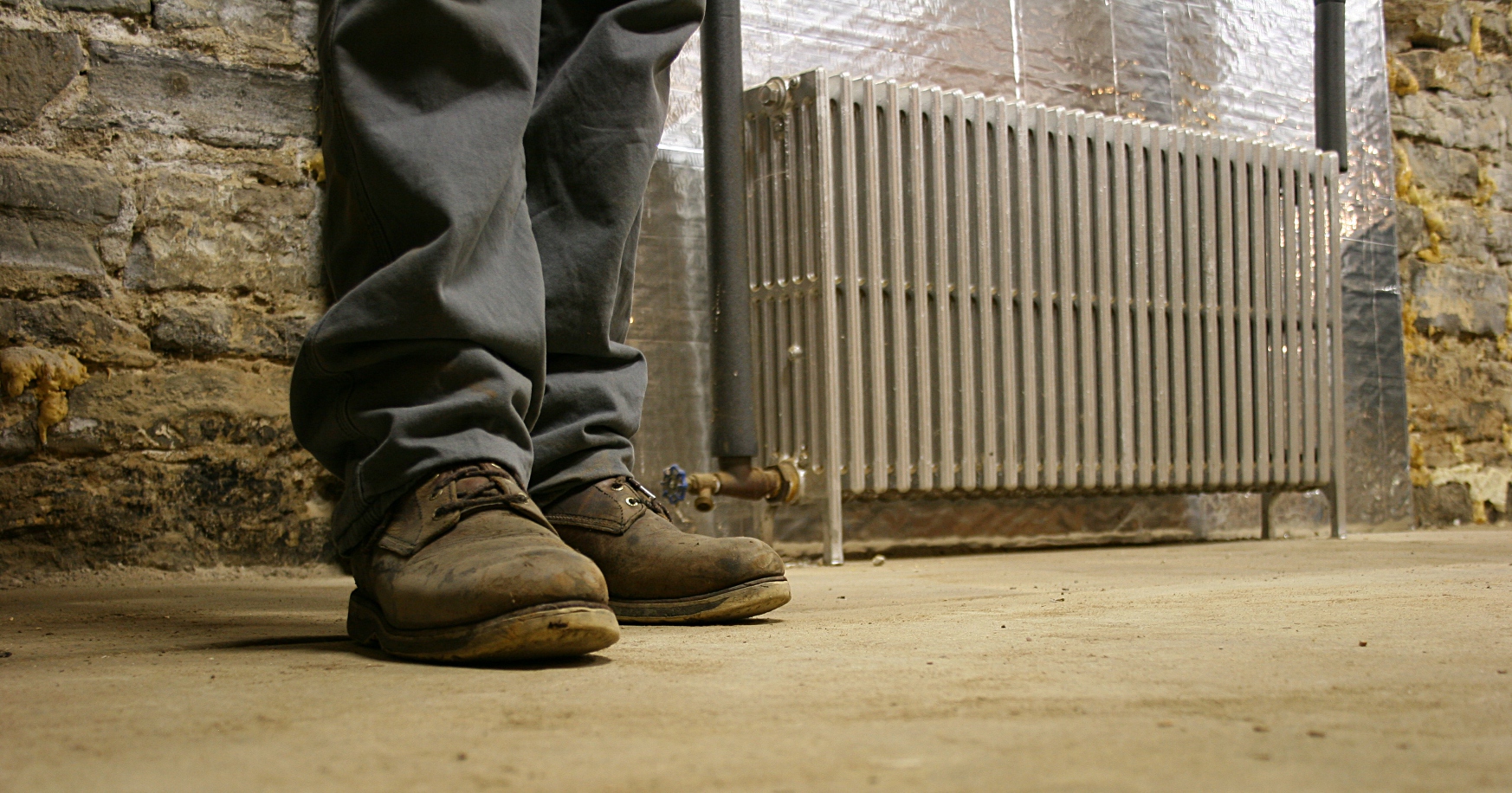
The walls are constructed from locally quarried stone.

The walls, constructed from locally quarried stone, will be tuckpointed.

They hope to begin brewing in the fall, starting with 80-100 barrels a month, producing one or two beers initially in their 25-barrel brewhouse. Each barrel holds 31 gallons. A Fleck’s branded lager will be among their first beers.

Strouth and Voegele are no novices at beer brewing, For five years already they’ve brewed beer in a small scale mini brewery in the basement of Strouth’s rural Faribault home. They can produce about 16 gallons and will use the same operating system in the brewery, only on a much larger scale.

They are, they agree, passionate about brewing beer, bringing their home-brewed beers to taste testers at local beer clubs and to area craft beer competitions. In 2012, their beer earned four first place ribbons at the Rice County Fair.

“We make beer that we like to drink,” Strouth said. “And people seem to like our beer.”

Patriot’s Brewing already has created recipes for five beers: #1 American Pale Ale, IPA Olicious (an India Pale Ale), Nutso (a nut brown ale), Stouty McStouterton (an oatmeal stout) and Fleck’s bock (a helles bock). The brewers are also working on lagers.

“We have a high appreciation for fine beer,” Voegele said, admitting it took awhile, though, for his beer palate to develop.

This view looks toward the  steps leading to the future tap room.

This view looks toward the steps leading to the future tap room. Only beer, and not food, will be served here.

While Patriot’s Brewing aims for regional distribution of its beer within a 60-mile radius of Faribault, the brewery is also relying on strong community support. As the business grows, plans call for opening of a tap room just up a set of steps from the brewery in a garage space occupied by Color My World. Voegele envisions a little bar with tables and chairs in an old style atmosphere in the cement-walled space. The pair plan to incorporate Fleckenstein Brewery/Fleck’s beer memorabilia into the tap room.

And then, as the business grows even more, the two hope to move the tap room elsewhere and use that vacated space for a grain room.

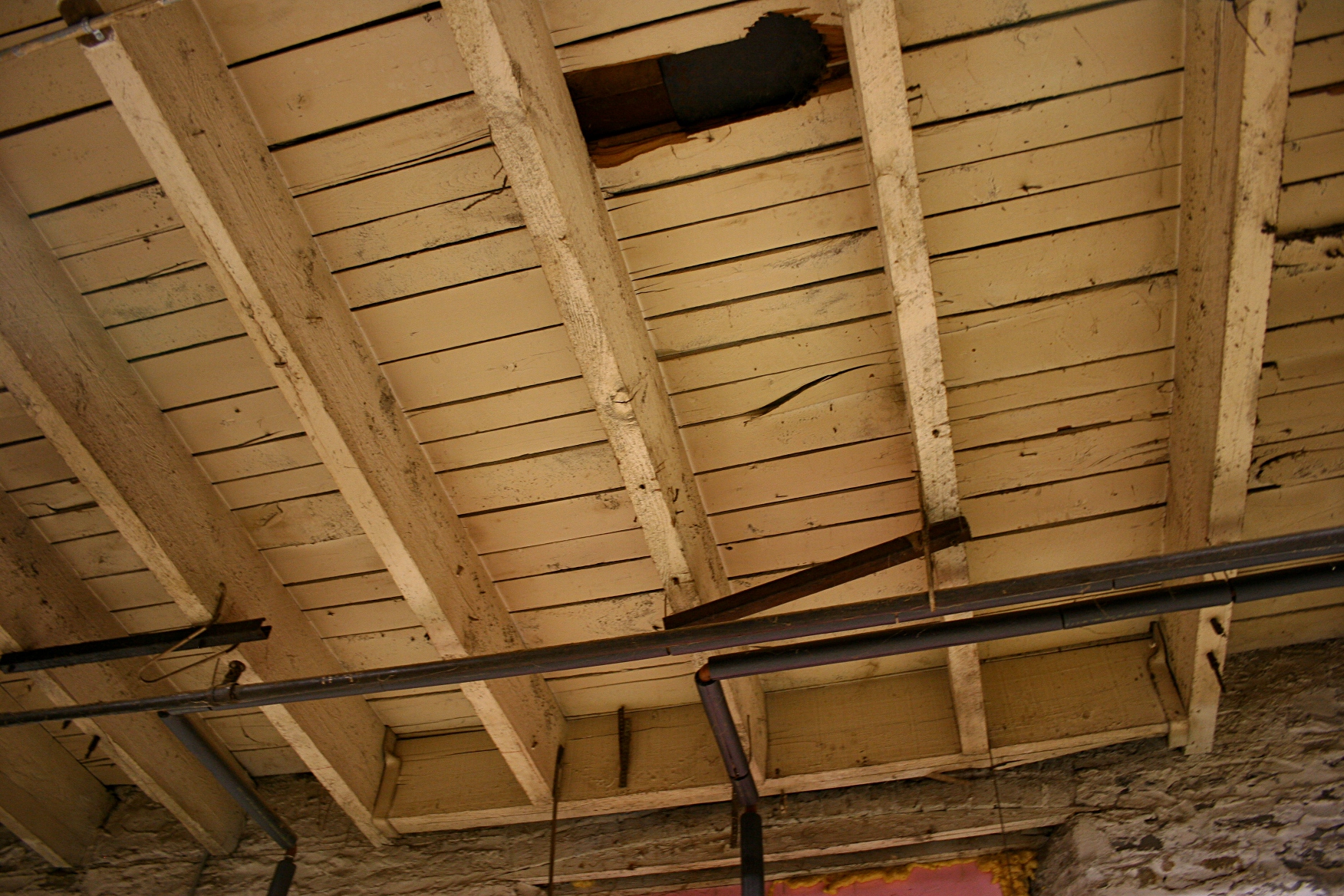
The ceiling of the historic building in the brewery area.

The ceiling of the historic building in the brewery area.

Eventually, they hope to offer brewery tours.

But that’s all in the future, after the brewery is established and sales are going strong. For now, Strouth and Voegele are concentrating on getting the brewery up and running while keeping their day jobs. Strouth works as a welder and fabricator at Lockerby Sheet Metal. Voegele teaches biology 105 at Minnesota State University, Mankato, works as an emergency medical technician in St. Peter and farms part-time in rural Morristown.

As they grow their regional brewery, they also plan to add employees.

Chris Voegele and Noah Strouth are grounded in Faribault, their hometown.

Chris Voegele and Noah Strouth are grounded in Faribault, their hometown.

They are committed to Faribault, to its rich history. “Our roots are in Faribault,” Voegele said.

They are also committed to using American made/grown products—from equipment to hops to bottles—whenever possible in their business.

Noah Strouth's nephew, Alex Strouth, a senior at Northfield High School, created the patriotic themed company logo.

Noah Strouth’s nephew, Alex Strouth, a senior at Northfield High School, created the patriotic themed company logo.

That sense of American pride explains the company name—Patriot’s Brewing Company. “We believe in America…promoting American businesses, the feeling of Americanism, pride in country,” Voegele said.

And although Voegele did not specifically state it, he and Strouth are now living the American dream in starting their own business, Patriot’s Brewing Company.

© Copyright 2013 Audrey Kletscher Helbling


Honoring Minnesota Civil War soldiers via history lessons & a puzzle January 25, 2013

Attendees, including Linda Karkhoff (whom you read about below) chat at a recent Cannon Valley Civil War Roundtable meeting in Faribault.

Attendees, including Linda Karkhoff (whom you will read about below) chat at a recent Cannon Valley Civil War Roundtable meeting in Faribault. And, yes, the guy on the right is wearing a Union cap. The display shows Karkhoff’s Civil War puzzle package.

MEMBERS OF THE CANNON VALLEY Civil War Roundtable, I’ve discovered, really know their history. They rattle off battlefields and battles, dates and names and other facts with convincing authority.

To be honest, I’m a bit intimidated by their knowledge. And I’ve told them so, even called them fanatics in a joking, but not unkind, way. That didn’t stop the club president from encouraging me to return to their monthly meetings. I’ve attended thrice during the past several years—when guest speakers’ topics especially interested me.

An 1840 Philadelphia Derringer, like the pistol used to assassinate President Abraham Lincoln.

An 1840 Philadelphia Derringer, like the pistol used to assassinate President Abraham Lincoln, belongs to an area collector of Lincoln memorabilia.

First-time around, I listened to an area collector talk about some of the pieces in his collection of Abraham Lincoln memorabilia. That was in 2009 and I posted about it here. He asked for anonymity given the value of his collection. I thought it wise to honor his request.

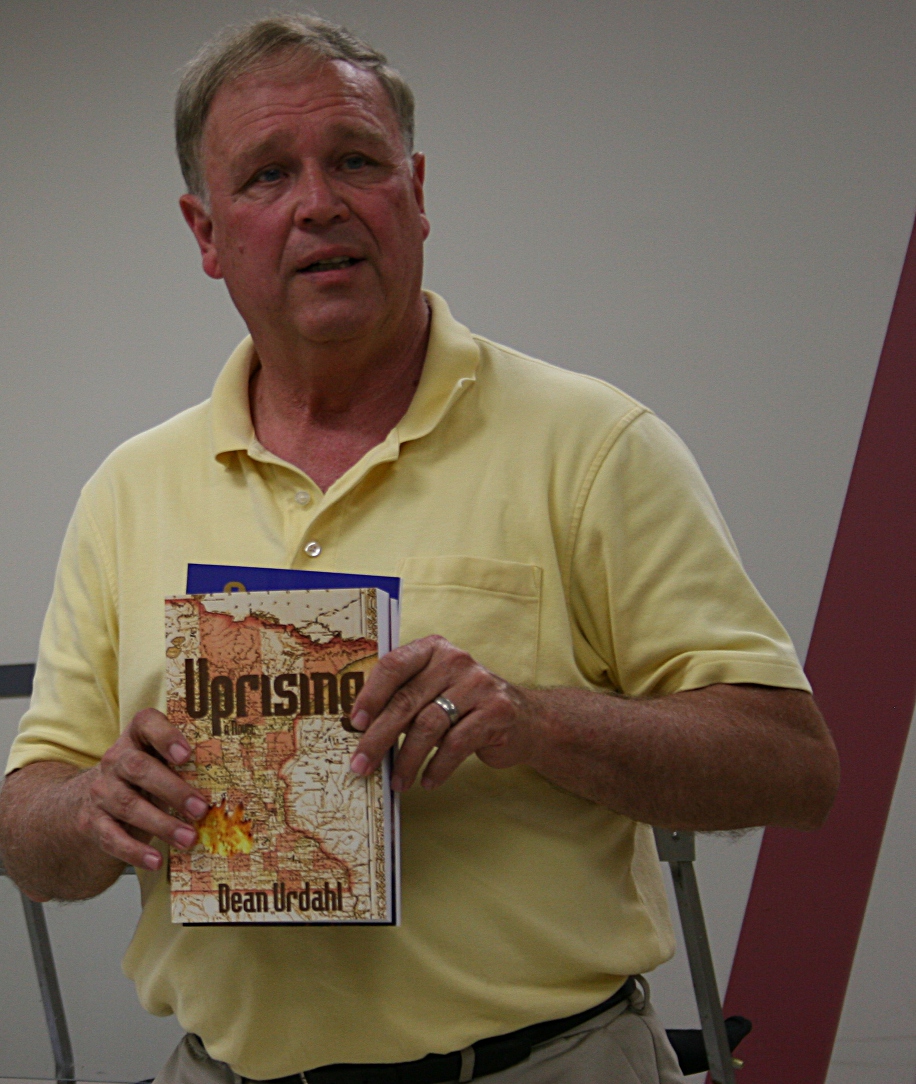
Dean Urdahl has written the trilogy of Uprising, Retribution and Pursuit.

Dean Urdahl has written the trilogy of Uprising, Retribution and Pursuit.

This past May, I heard Minnesota State Representative Dean Urdahl, a retired American history teacher, writer and co-chair of the Minnesota Civil War Commemoration Task Force, speak about the U.S. Dakota-War of 1862 and his trilogy of historical fiction novels. (Click here to read a post from that event.)

And just recently, educational consultant Quintin Pettigrew read excerpts from A Personal Narrative of Indian Massacres 1862, the diary of Lake Shetek Massacre survivor Lavina Eastlick. I’ve since acquired a copy of that survivor’s diary and will post about it at a later date.

Before Pettigrew took the floor at the recent Cannon Valley Civil War Roundtable meeting, Owatonna resident Linda Karkhoff spoke briefly about a Civil War related project she’s undertaken. She’s created a 550-piece limited edition (1,000) commemorative jigsaw puzzle honoring the 2nd Regiment, Minnesota Volunteer Infantry.

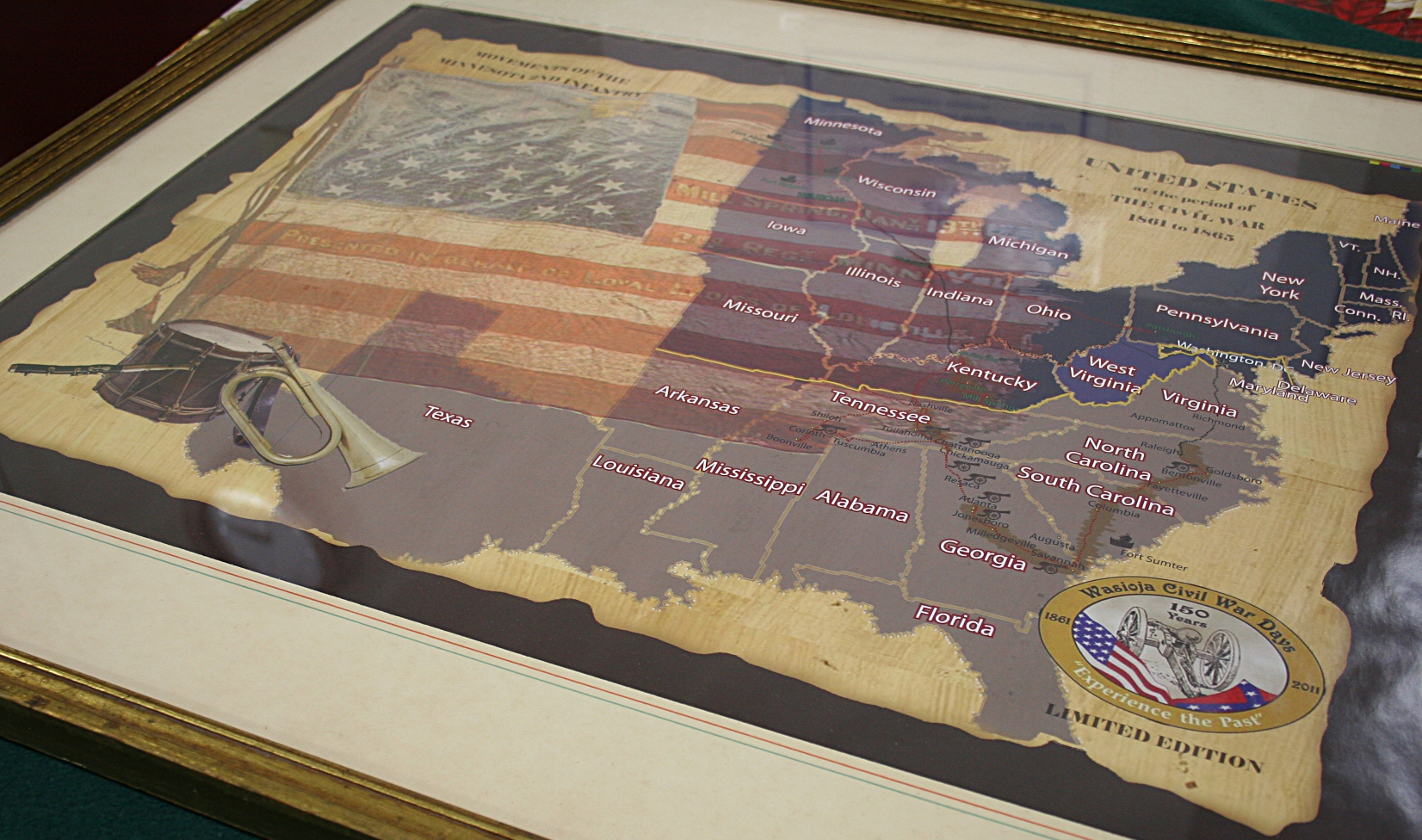
A close-up of the 2nd Minnesota Civil War puzzle, made to commemorate Wasioja Civil War Days.

The photo shows the design of the puzzle Linda Karkhoff created as a commemorative piece for Wasioja Civil War Days. The puzzle honors the 2nd Minnesota Regiment, comprised of soldiers from southeastern Minnsota. Just note that lighting conditions were not good and I could not avoid glare reflected on the framed piece.

The 18 x 24-inch puzzle features, along with a U.S. map tracking the movement of the 2nd Minnesota, an imprint of a flag given to the regiment by the Loyal Ladies of the Louisville Soldiers Association.

Intrigued, I found an online copy of a letter presented to the Minnesotans along with that flag. Nanette B. Smith, president of the Loyal Ladies wrote:

Louisville Ky Feb 17th 1862

To Col Van Cleve 2nd Minnesota Regt

Sir I transmit to you a Flag to be presented in the name of the Loyal Ladies of the Louisville Soldiers Association, to your Regiment, designed to commemorate the battle of Mill Spring 19th January, and as a testimonial of our appreciation of the participation of yourself and those under your command in the glorious victory of that day.

Each Regiment is equally entitled to like honor; but the gallant conduct of those who come from a distant State to unite in subduing our rebel invaders excite the warmest emotions of our hearts.

I offer to you our congratulations and my individual acknowledgements of the important service rendered to our State by your command.

Very Respectfully Nannette B. Smith Prest L.S.R.A.

Now puzzle designer Karkhoff, who is a carpenter by trade, did not read that letter to attendees at the Cannon Valley Civil War Roundtable meeting. But she did summarize that the Loyal Ladies’ flag was a thank you to the soldiers for pushing the Confederates out of Kentucky, thus saving Kentucky as a Union state.

She also shared that members of the 2nd Minnesota, comprised of soldiers from southeastern Minnesota, marched 6,000 miles—that’s walking—in four years. The unit’s drummer boy, she said, kept a diary, and survived the war. Such survival, she explained, was unheard of given drummer boys figurativley marched with targets on their backs.

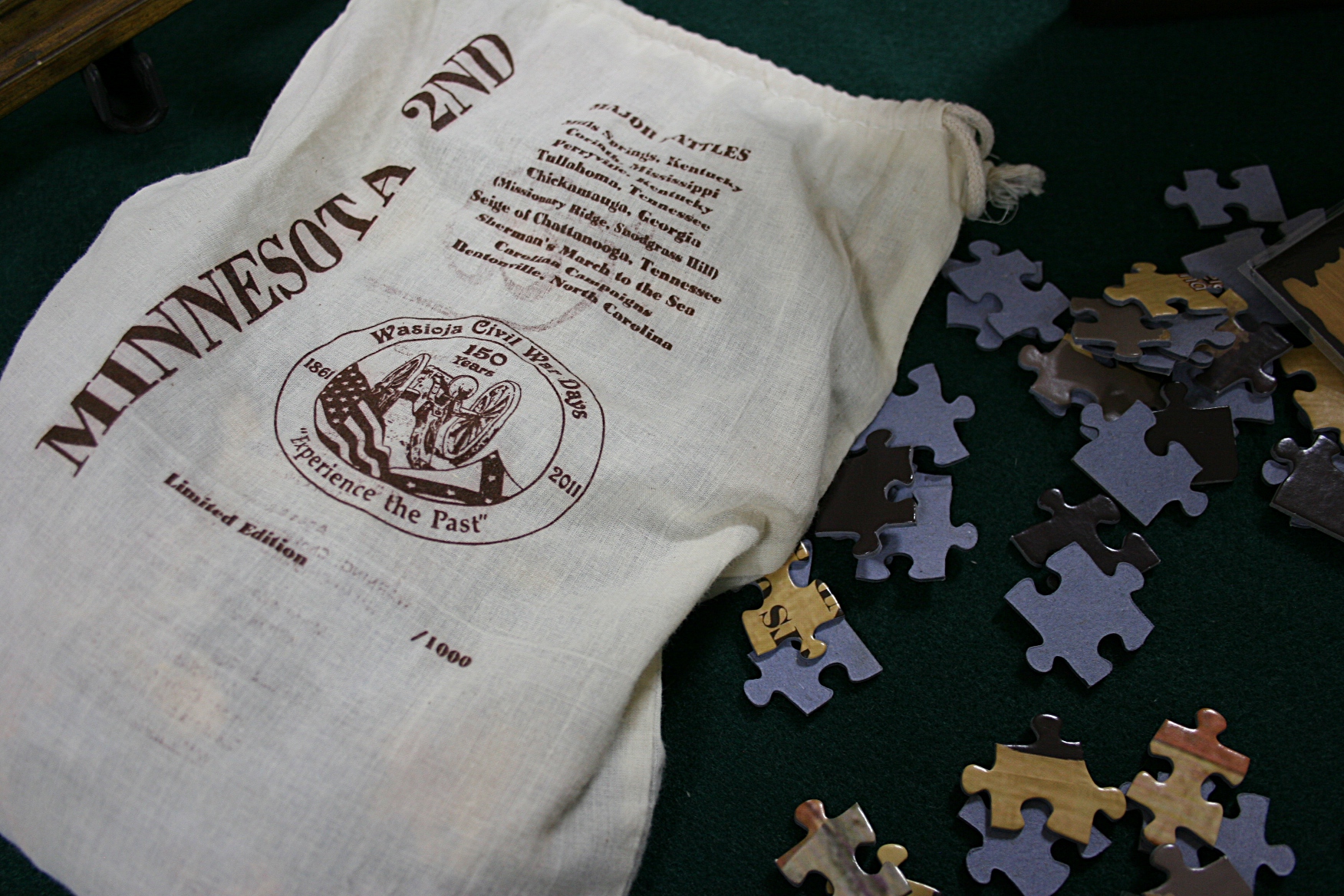
This cloth bag holds the puzzle pieces and informational sheets.

This cloth bag holds the puzzle pieces and informational sheets.

You’ll find more information about the 2nd Minnesota, life as a Civil War soldier and the puzzle itself on informational sheets tucked inside the cloth bag holding Karkhoff’s puzzle. Even the bag is significant, similar to what a Civil War soldier would have carried for his tobacco and writing utensils, Karkhoff said.

A history buff, Karkhoff came up with the puzzle idea after she and several traveling friends discovered a lack of commemorative puzzles specific to an area or site they visited. She eventually formed Puzzled@ LLC and designed the 2nd Regiment puzzle.

The puzzle, she said, teaches history and geography and encourages teamwork, making it both educational and fun.

Now I’m one of those people who doesn’t care for puzzles. I’m too easily frustrated, don’t have the patience and, well, would rather read or write than puzzle over a jigsaw.

But for those of you who enjoy puzzles and/or are Civil War fanatics, and I mean that in a kind way, check out Puzzled@ by clicking here.

Puzzles may be purchased directly from Karkhoff (contact info is on her website; tell her I sent you); at Little Professor Book Center or the Steele County History Center in Owatonna; or at the Rice County Historical Society or Paradise Center for the Arts in Faribault.

BONUS: An exhibit, “Minnesota and the Civil War,” opens March 2 at the Minnesota History Center in St. Paul. Click here to learn more about this.

© Copyright 2013 Audrey Kletscher Helbling
 

Houdini magic in Appleton, Wisconsin January 17, 2013

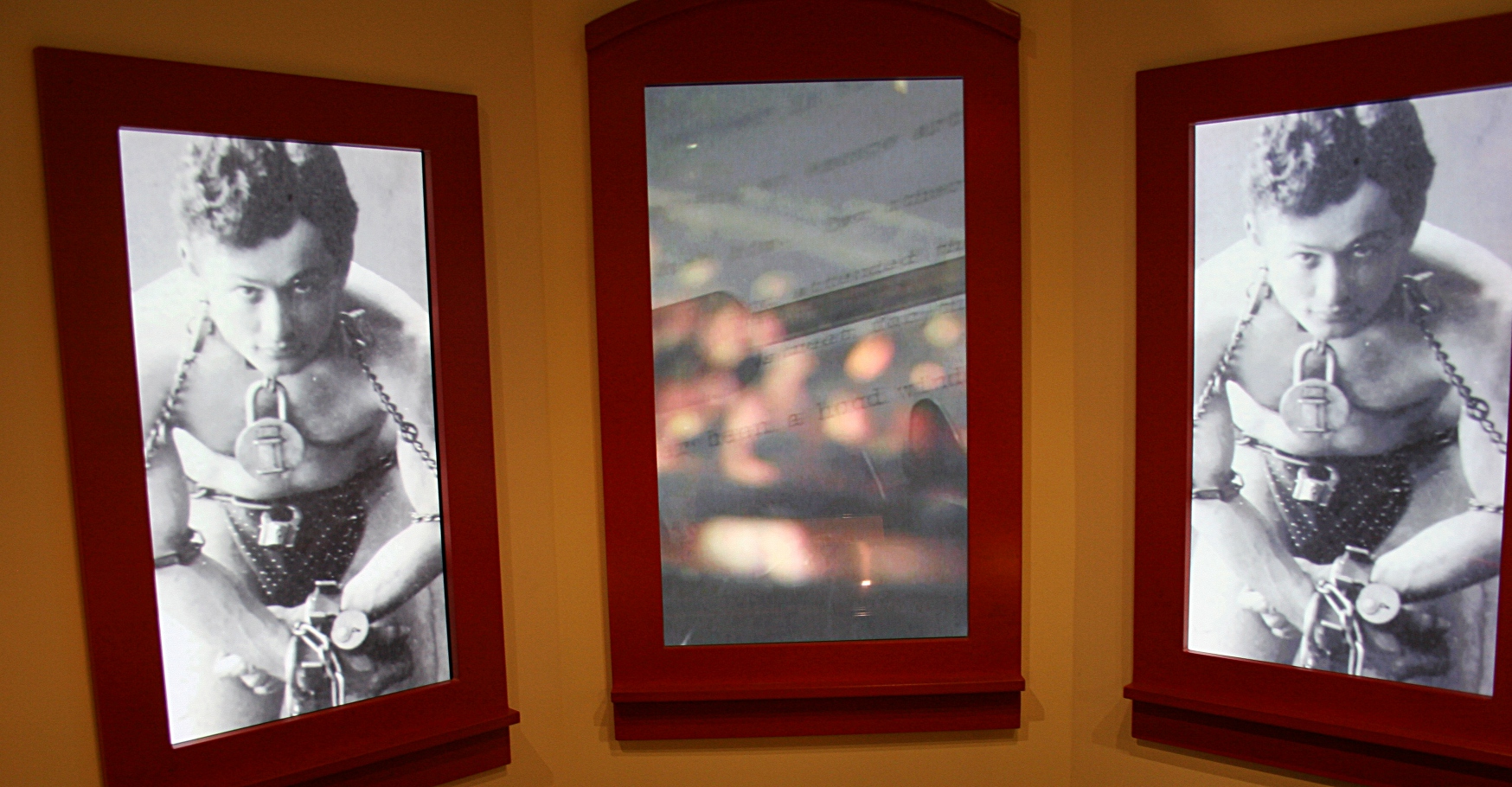
Illusionist and escape artist Harry Houdini.

Illusionist and escape artist Harry Houdini.

WHAT DRAWS US to the magic of a magician?

I expect the attraction begins subtly when we are babes playing peek-a-boo. We frown as the face we love disappears beneath our beloved blankie. But when Mom or Dad reappears, so does our smile. It’s magic.

And then, at some point, we discover card tricks and colorful scarves growing from sleeves and rabbits pulled from top hats. And the fascination with magic dances in our childish brains and never quite vanishes.

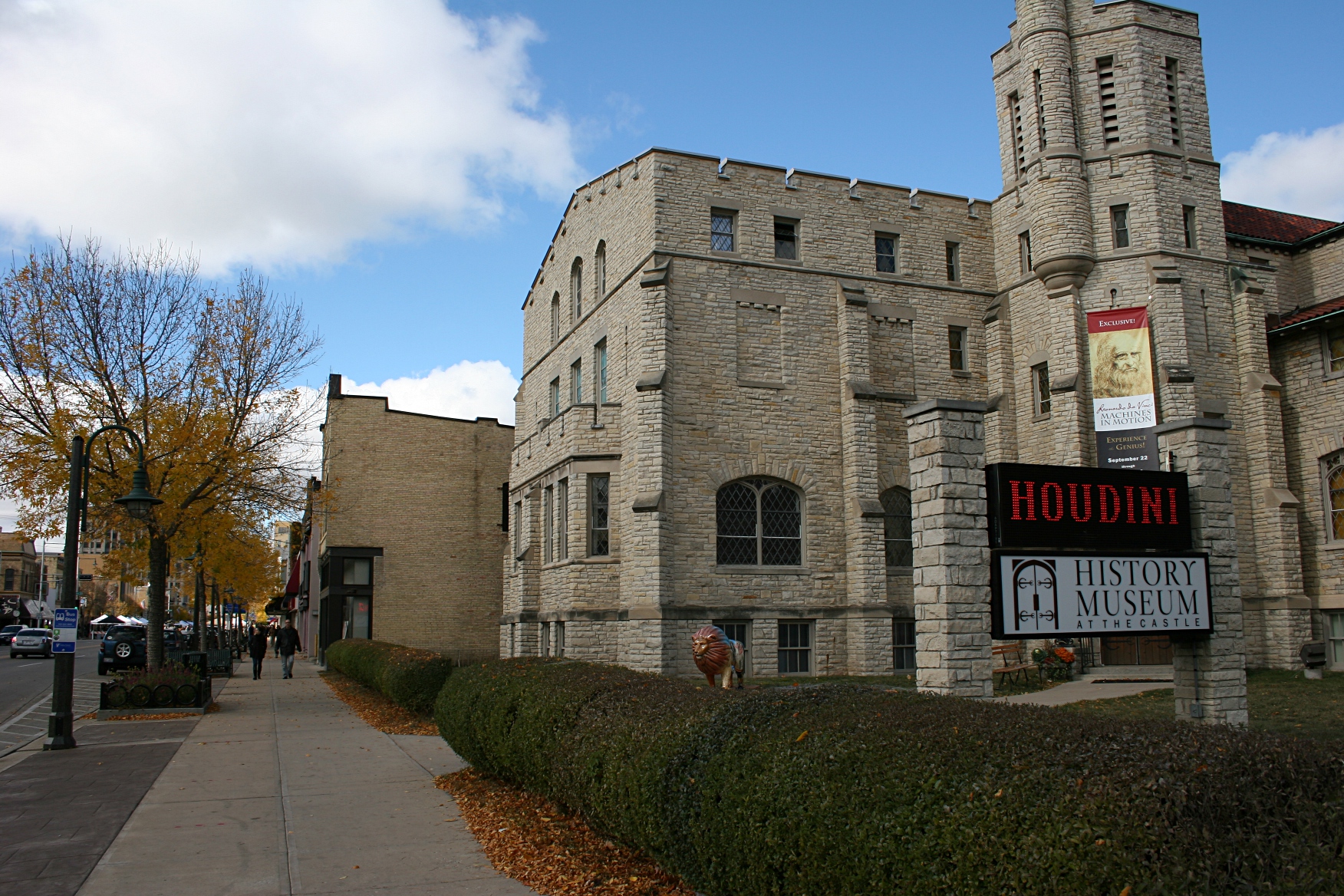
The History Museum at the Castle, home to the Houdini and other exhibits.

The History Museum at the Castle, home to the Houdini and other exhibits.

I suppose that is part of the attraction visitors find to the “A.K.A. Houdini Exhibit” at The History Museum at the Castle in downtown Appleton, Wisconsin, the city illusionist Harry Houdini falsely claimed as his birthplace. He was born in Budapest, Hungary, came with his family to America in 1878, settling briefly in Appleton where his father was the city’s first rabbi.

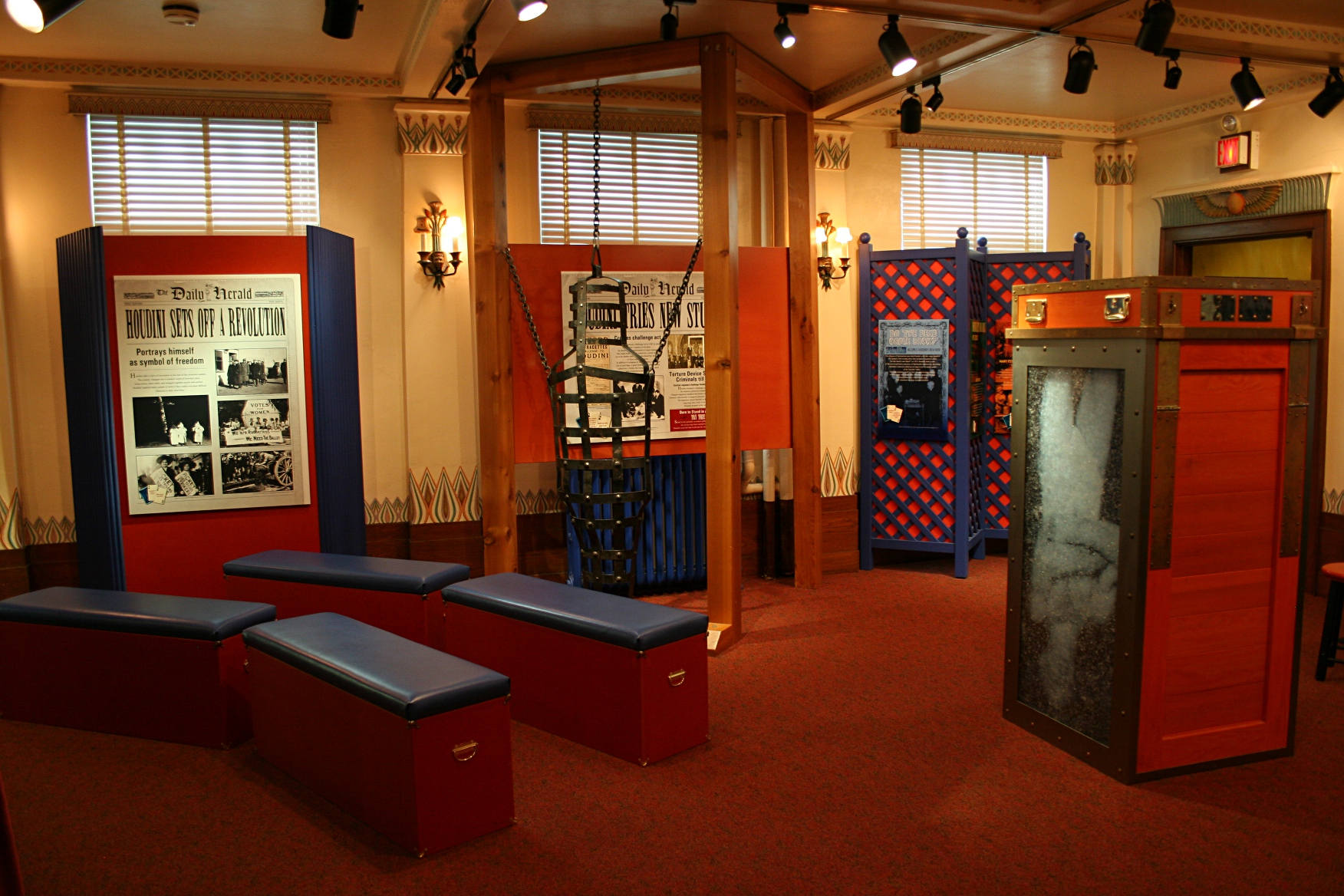
A snippet of the Houdini exhibit.

A snippet of the interactive Houdini exhibit.

As you would expect, you’ll learn detailed facts about Ehrich Weiss, the illusionist and escape artist known to all of us as Houdini. The name is a tribute to his illusionist idol, Jean Eugene Robert-Houdin.

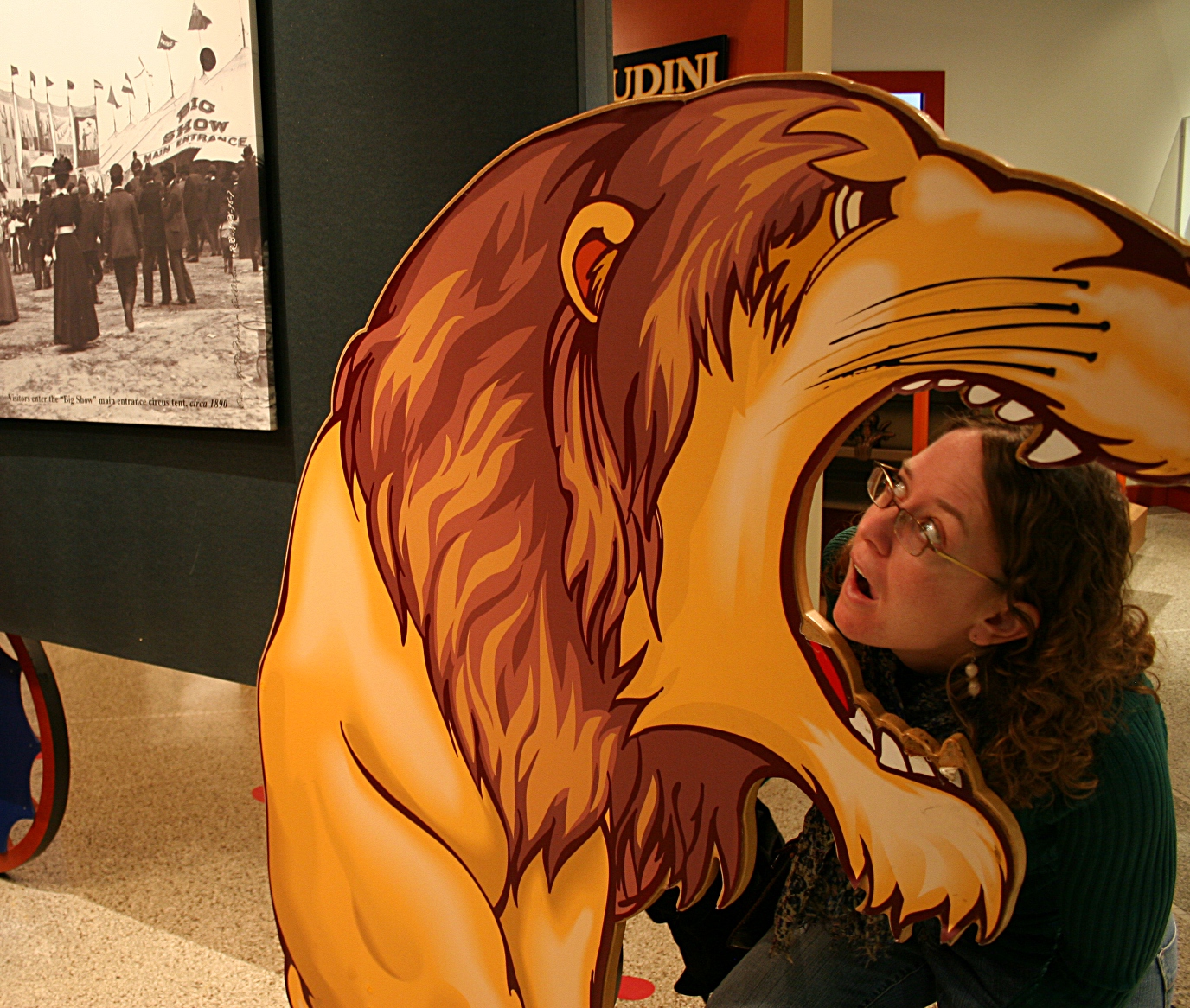
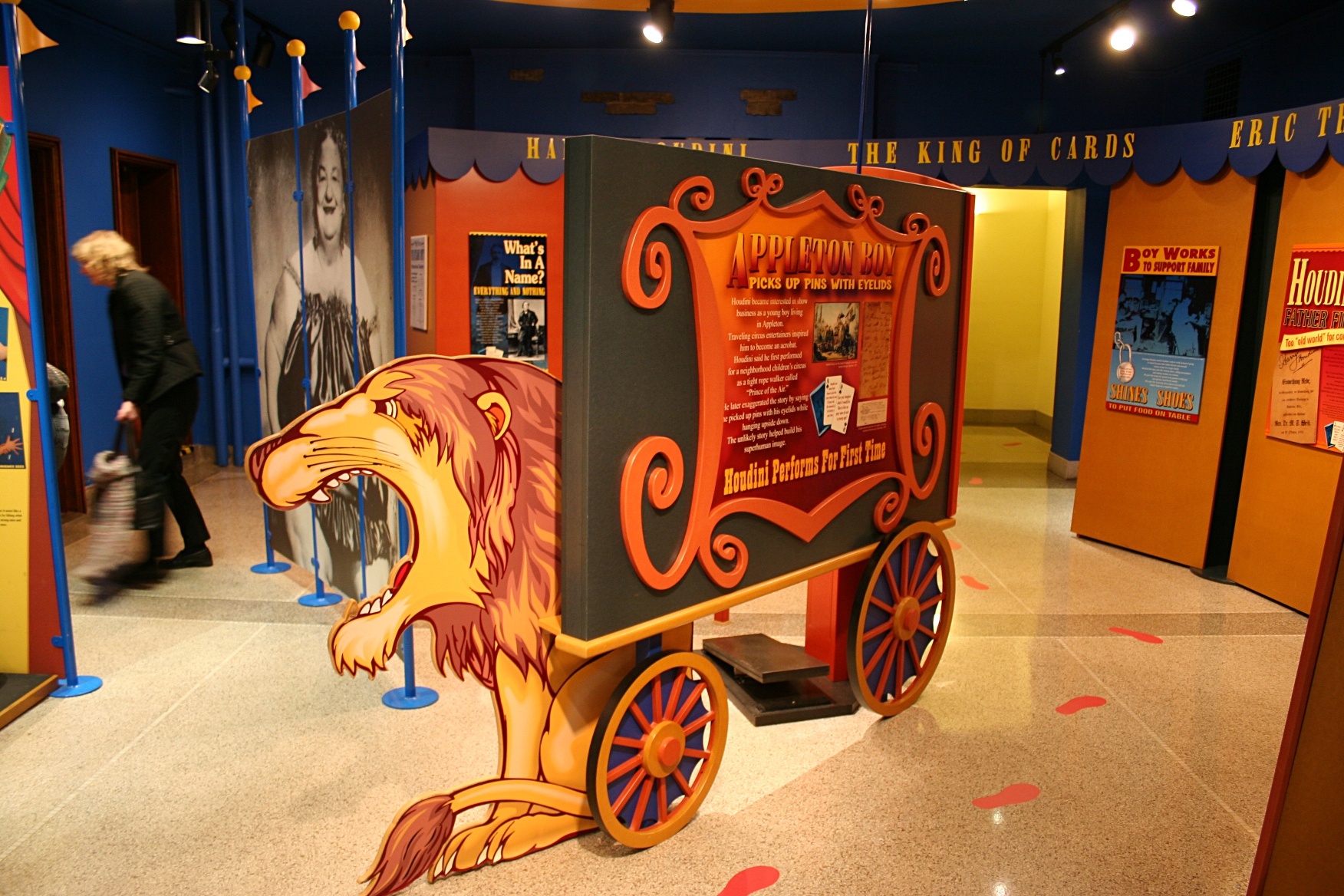
Be sure to pose with the lion head, a tribute to Houdini's early fascination with traveling circuses.

Be sure to pose with the lion head, a tribute to Houdini’s early fascination with traveling circuses. That’s my second daughter, who lives and works in the  Fox Valley (Appleton) area.

But you’ll also experience hands-on interactive activities that will uncover the magic which isn’t really magic at all. Not to worry; you won’t be sawed in half or stuck in a straightjacket.

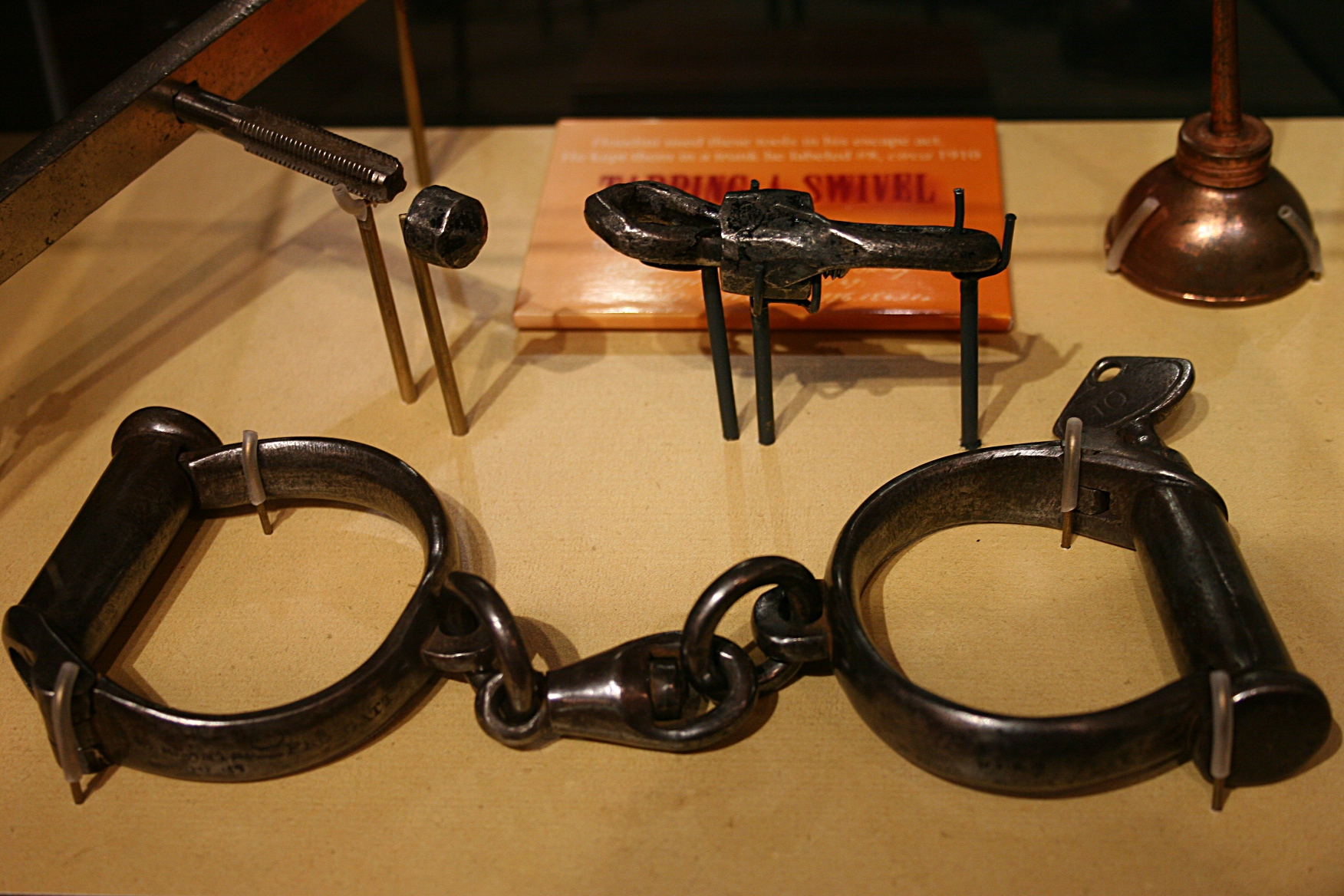
Tools of the escape artist profession.

Tools of the escape artist profession.

The museum collection includes artifacts gifted by an escape artist protege of Houdini’s escape artist brother, Theo. Sort of a tongue twister sentence there, I know. Some of Houdini’s tools of the trade seem rather archaic, almost barbaric, in a clanking metal and chains sort of way. But given the time period, you would not expect sleek and shiny.

A Houdini bust in the museum.

A Houdini bust in the museum.

Therein, perhaps, lies the genuine appeal of this exhibit. In learning about Houdini, you are honoring a man who entertained the masses in unprecedented, daring and fearless ways as he wrote magic into history and into our hearts.

Upon his death, Houdini was buried in a stage prop, his "buried alive" casket, introduced on his final tour in 1926. He escaped the staged burial in under two minutes.

Upon his death, Houdini was buried in a stage prop, his “buried alive” casket, introduced on his final tour in 1926. He escaped the staged burial in under two minutes.

The circus wagon in the exhibit is a nod to Houdini's circus association. He first performed for a neighborhood children's circus as tight roper walker "Prince of the Air."

The circus wagon in the exhibit is a nod to Houdini’s circus association. He first performed for a neighborhood children’s circus as tight roper walker “Prince of the Air.”

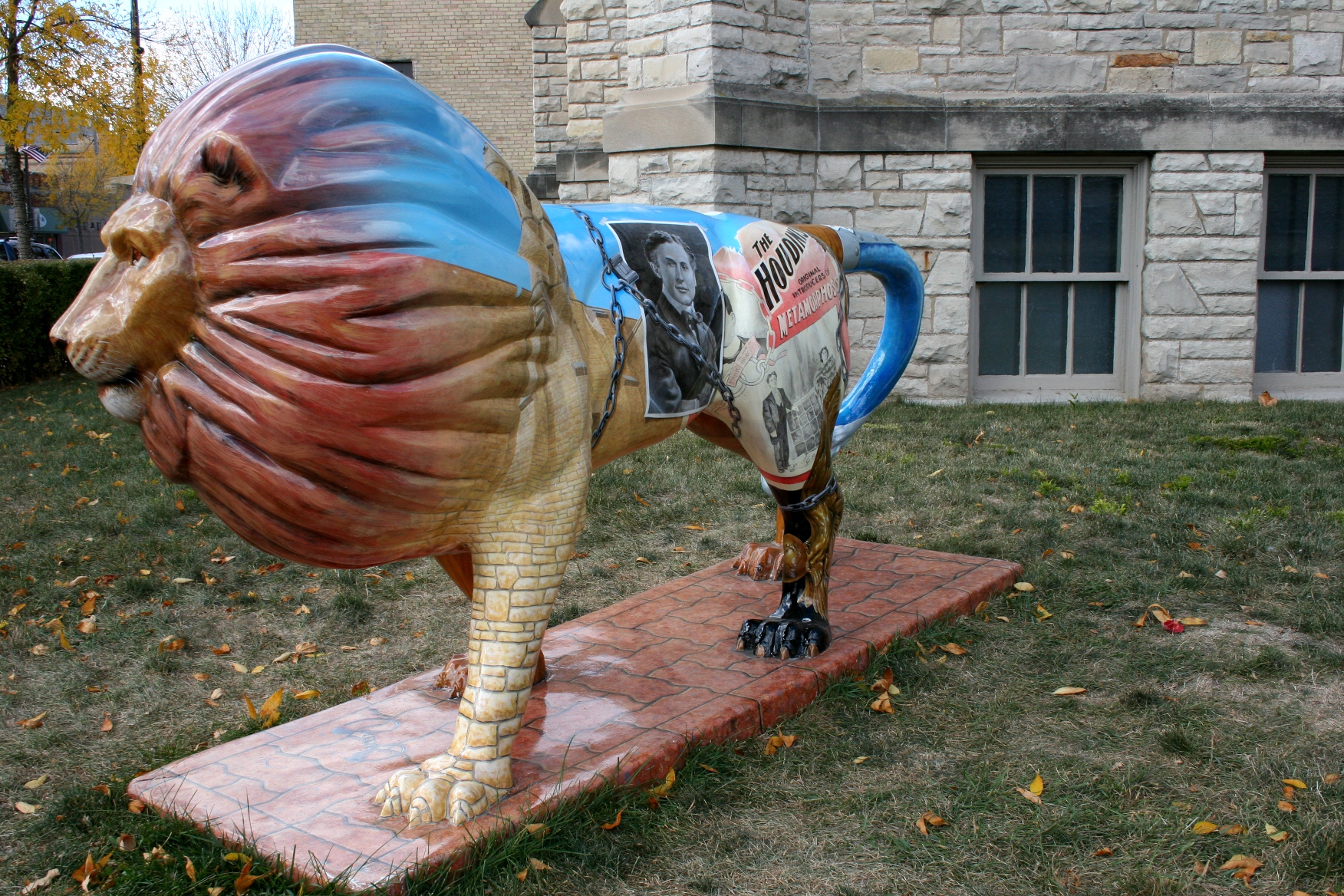
A sculpture outside The History Museum at the Castle.

A sculpture outside The History Museum at the Castle.

FYI: The History Museum at the Castle, 330 East College Avenue, is open from 10 a.m. – 5 p.m. Tuesday – Sunday, closed Mondays and holidays. Admission prices are free for 4 and under; $10 for ages 5 – 17; $15 for ages 18 – 64; and $13.50 for those 65 and older.

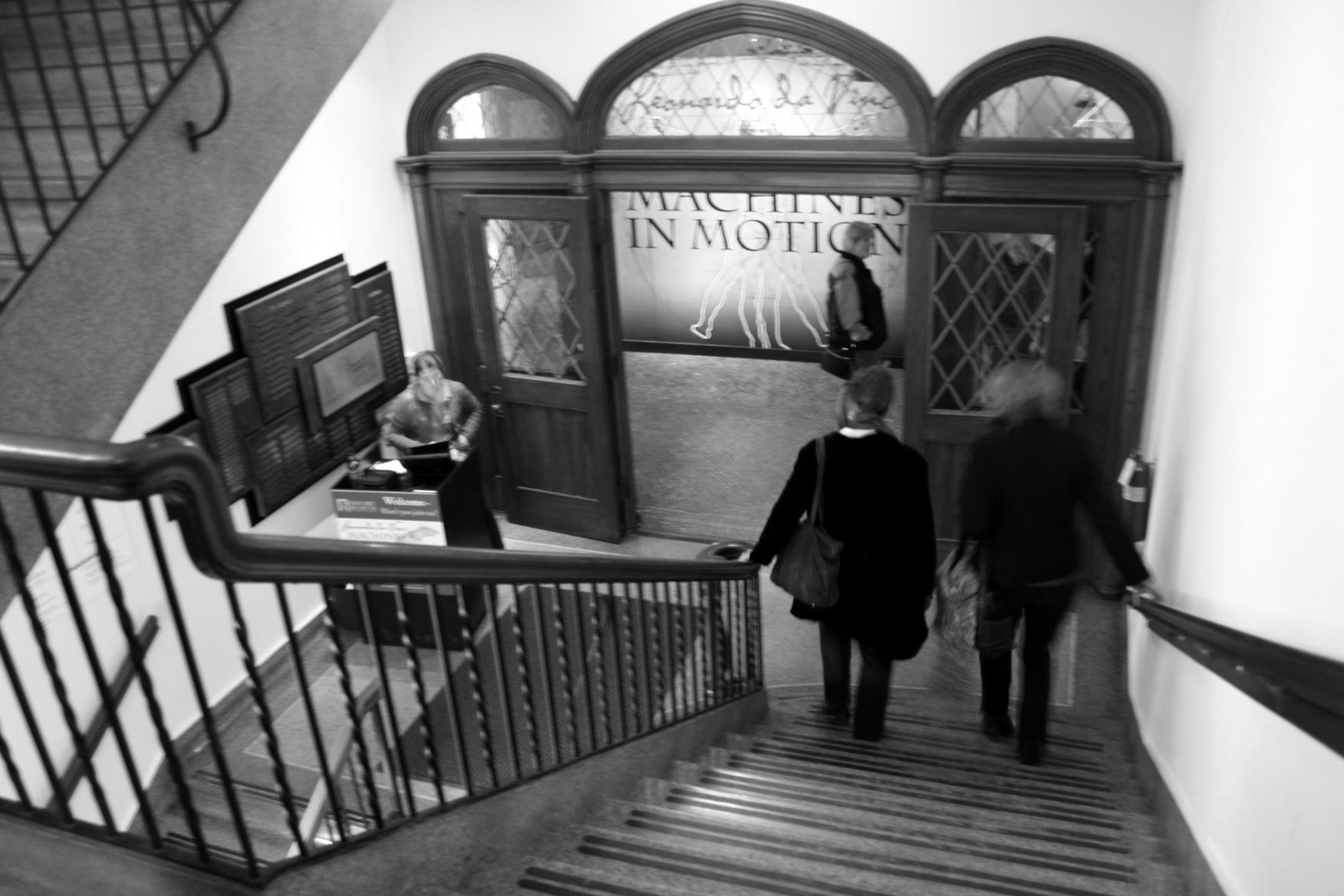
A blurry image to emphasize the "Leonardo da Vinci Machines in Motion" exhibit. It's a must-see.

A blurry image to emphasize the “Leonardo da Vinci: Machines in Motion” exhibit. It’s a must-see.

Admission to the museum also covers the “Leonardo da Vinci: Machines in Motion” temporary exhibit which has been extended through February 3, and other exhibits. You can click here to read my previous post about the da Vinci exhibit. From 6 p.m. – 8 p.m. on Thursday, January 31, the museum will host “Arrivederci, Leonardo!”, a gala event celebrating the success of the exclusive da Vinci showing in Wisconsin. Cost for the gala, which covers a da Vinci exhibit tour plus light refreshments and fine Italian wine, is $20 for non-members and $10 for museum members.

You can check out all the museum has to offer by clicking here.

ADDITIONALLY, APPLETON is currently raising monies to redo Houdini Plaza, a downtown gathering spot reminiscent of the town squares of yesteryear. To read about that project, “Recapturing the Magic,” click here.

READ MY PREVIOUS post about The History Museum at the Castle by clicking here.

CHECK BACK  for a post on a great place to eat in Appleton. Like the museum building, this restaurant exudes history.

© Copyright 2013 Audrey Kletscher Helbling


Appreciating the history of, and in, Appleton, Wisconsin’s “castle” January 16, 2013

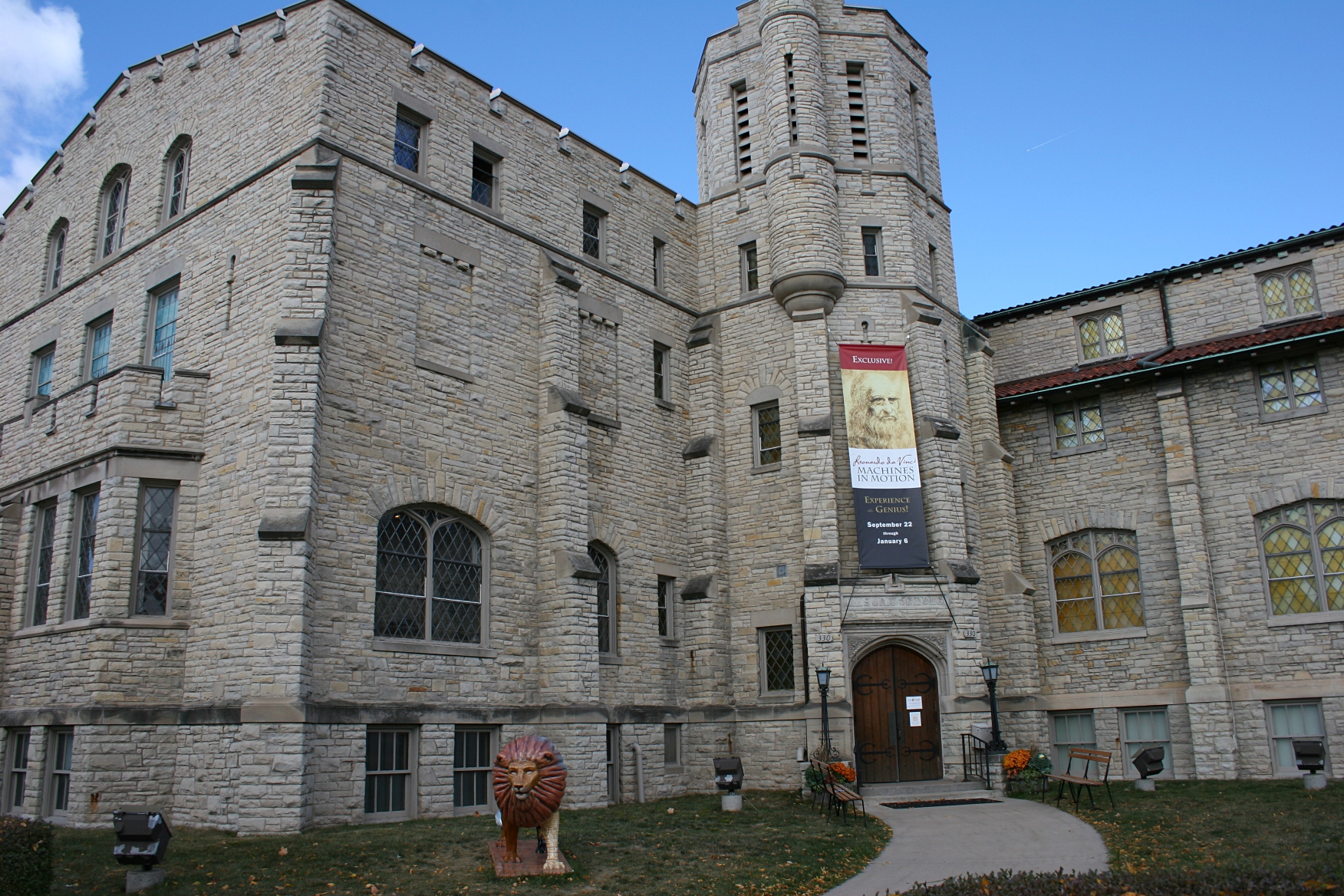
The History Museum at the Castle, 330 E. College Ave., Appleton, Wisconsin.

The History Museum at the Castle, 330 E. College Ave., Appleton, Wisconsin.

CONSTRUCTED OF STONE and anchored by a center tower, the impressive multi-story structure commanding the corner of College Avenue and Drew Street in downtown Appleton, Wisconsin, presents an almost formidable exterior presence.

Aptly named The History Museum at the Castle, this sprawling castle-like fortress embodies the essence of history from the outside in. History seems meant to be showcased here. And it is, in this, the home of The Outagamie Historical Society.
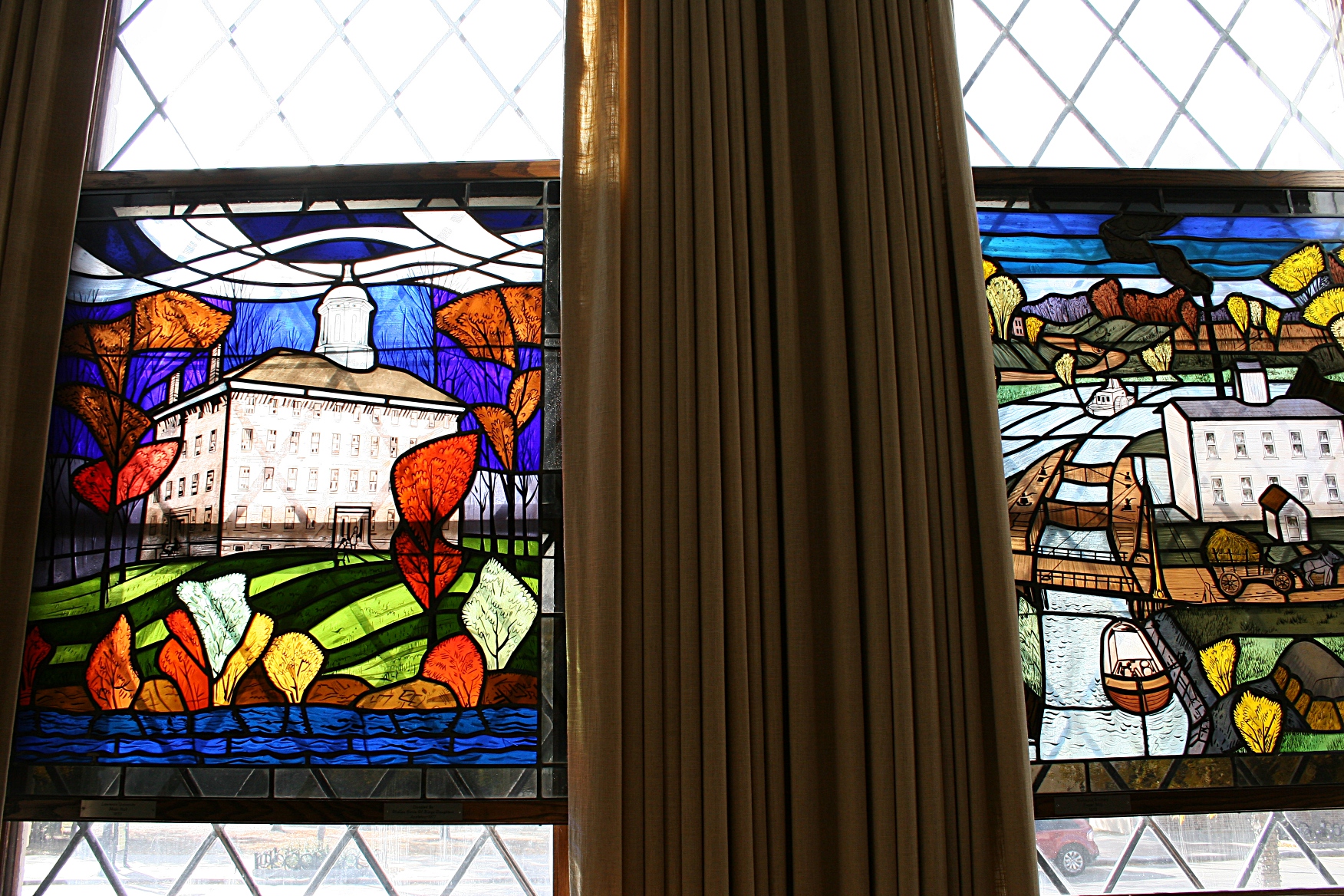
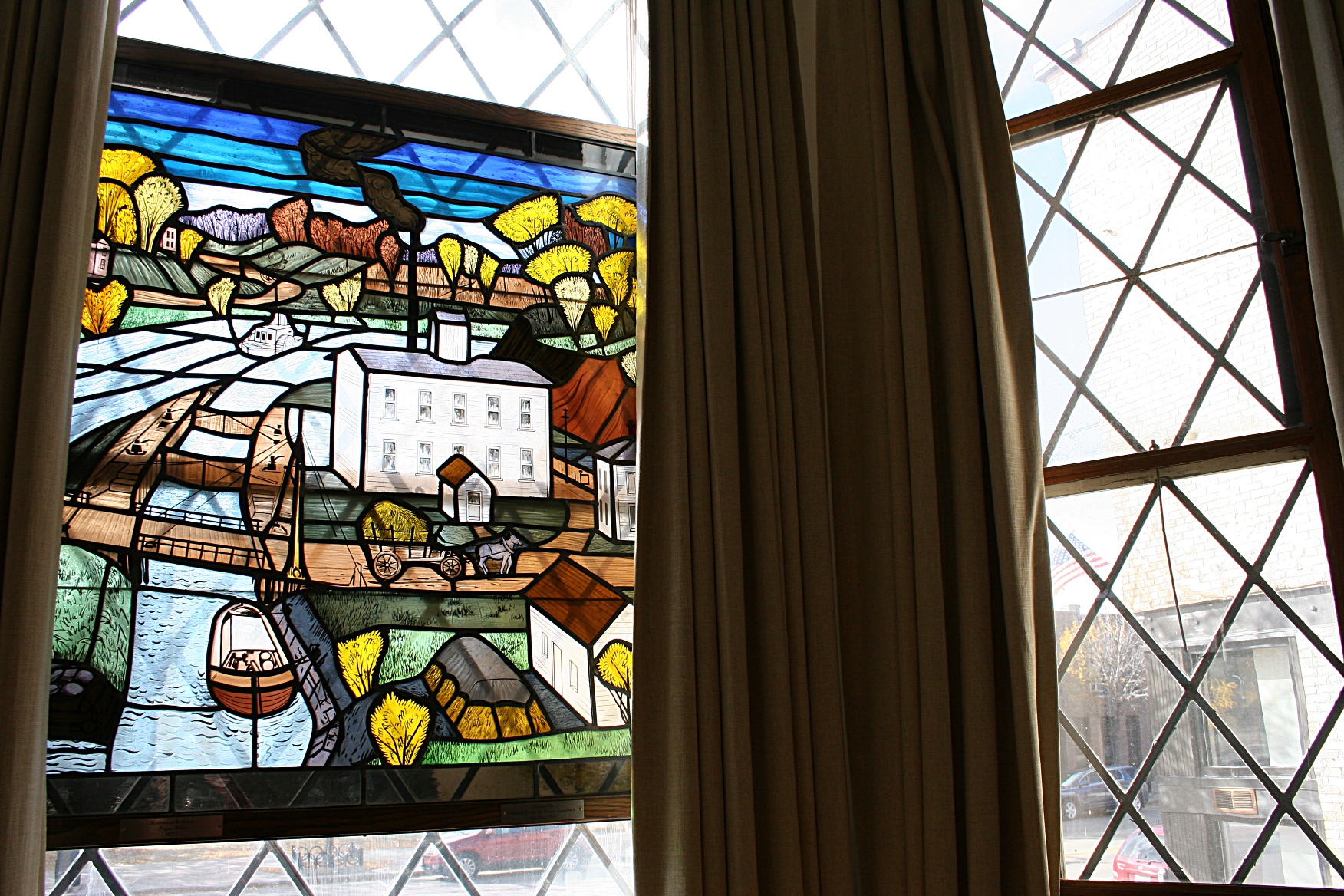
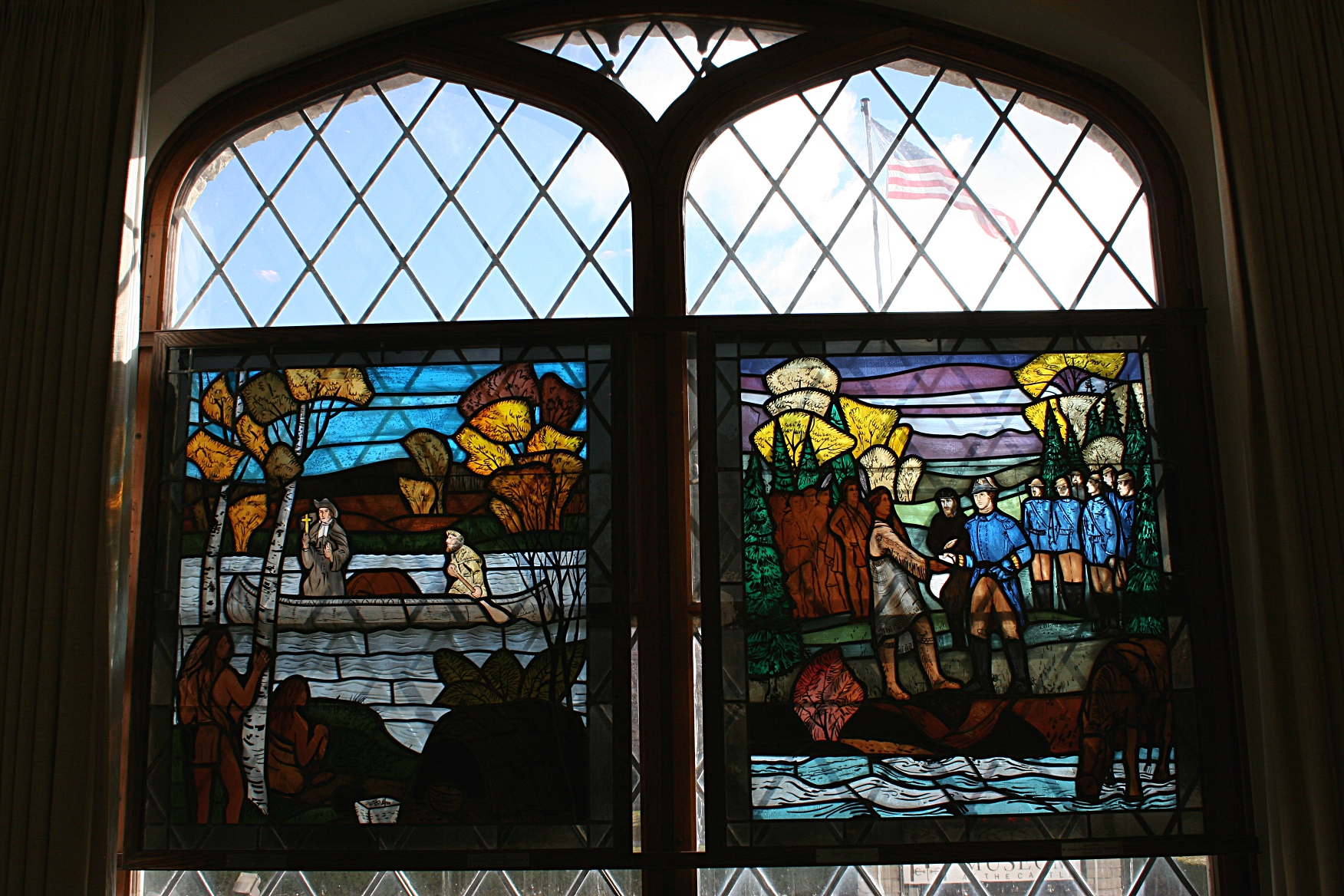
Windows in the Siekman Room depict the history of the Fox Cities from the days of the early explorers until modern times.

Windows in the Siekman Room depict the history of the Fox Cities from the days of the early explorers until modern times.

Perhaps it is a matter of personal taste. But I prefer to learn about history within the walls of a place aged by time rather than in a sterile, modern facility. From the heavy wooden double front entry doors strapped with metal to the woodwork woven throughout the interior to the detailed wall scones, fireplace, paintings and stained glass windows, this museum exudes yesteryear.

More Fox Valley history in art.

More Fox Valley history in stained glass art.

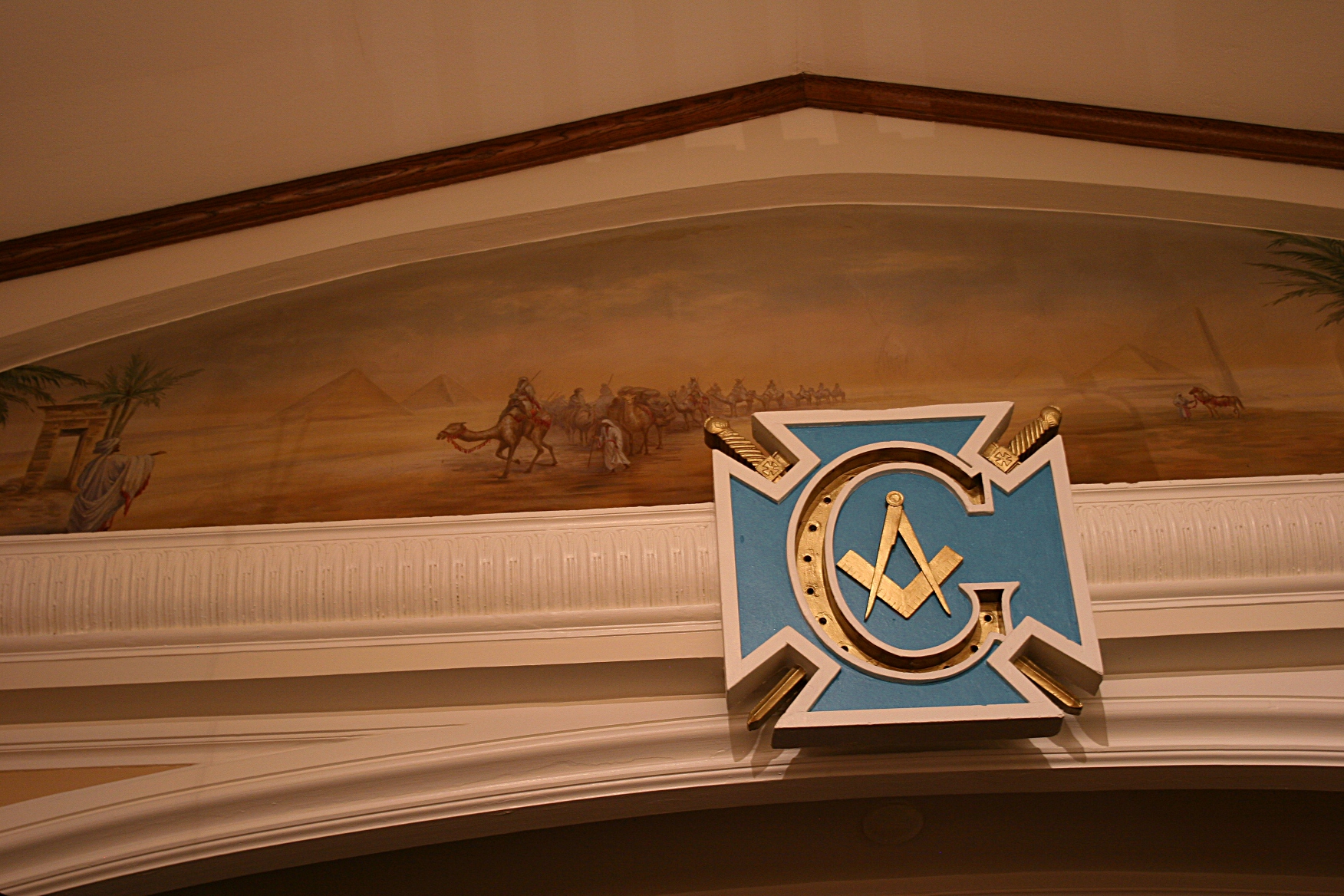
Its history dates back to 1923-1924 when Waverly Lodge No. 51 constructed the complex for use as a Masonic Temple, according to Kathy Voigt, community engagement manager for the museum. Says Voigt:
Now on the National Register of Historic Places, the building is constructed in the Norman Revival style, characterized by the use of rough-hewn stone and other features reminiscent of medieval castles and churches, such as vaulted ceilings, heavy beams and leaded windows.
Artwork above an auditorium stage hints at the building's past as a Masonic Temple.

Artwork above an auditorium stage hints at the building’s past as a Masonic Temple.

In the mid-1980s, after the Masons could no longer afford to maintain the temple, the building was sold to the local historical society.
Windows depicting the region's early fur trading history.

Windows depicting the region’s early fur trading history.

Today this building houses, among other exhibits, rotating and permanent, the history of the Fox River Valley, a region stretching from Green Bay on the north to Neenah on the south. The area was once home to the Fox River Valley Indians, AKA the Meskwaki/Mesquakie, who relocated to Wisconsin from the East around 1650.  “Tools of Change” highlights the Fox Valley’s tools, people, work and everyday life between 1840-1950.

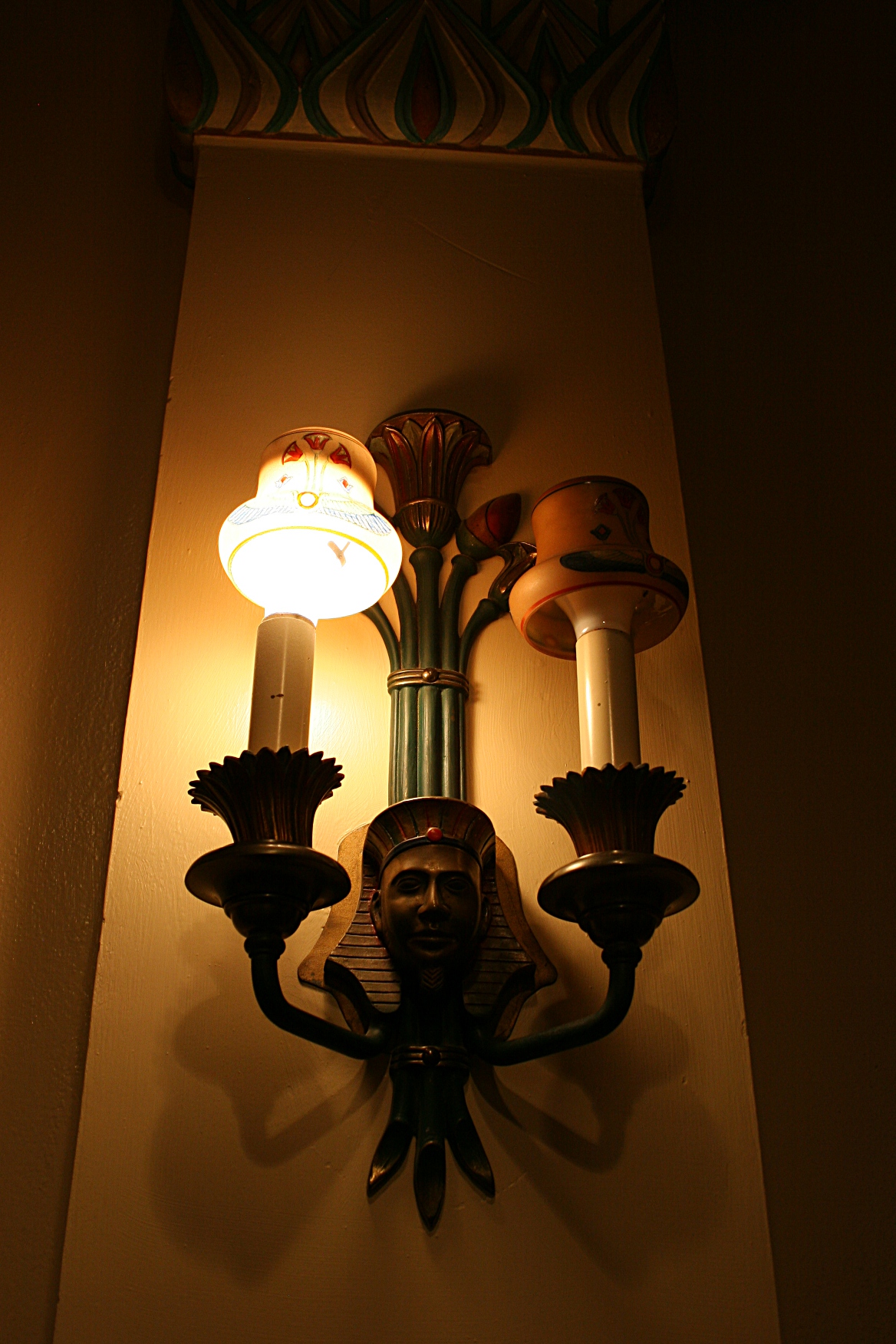
And because I notice details, be sure to look for these incredible light fixtures in the main Houdini exhibit room.

I noticed these incredible wall sconces in a Houdini exhibit room.

Other exhibits feature Senator Joseph McCarthy, born and raised in Appleton; Nobel Prize winning writer Edna Ferber; the work of local noted photographer Andrew J. Mueller; and, upstairs, a more extensive exhibit on illusionist and escape artist Harry Houdini, who lived in Appleton as a child. I’ll post about the “AKA Houdini” exhibit tomorrow.

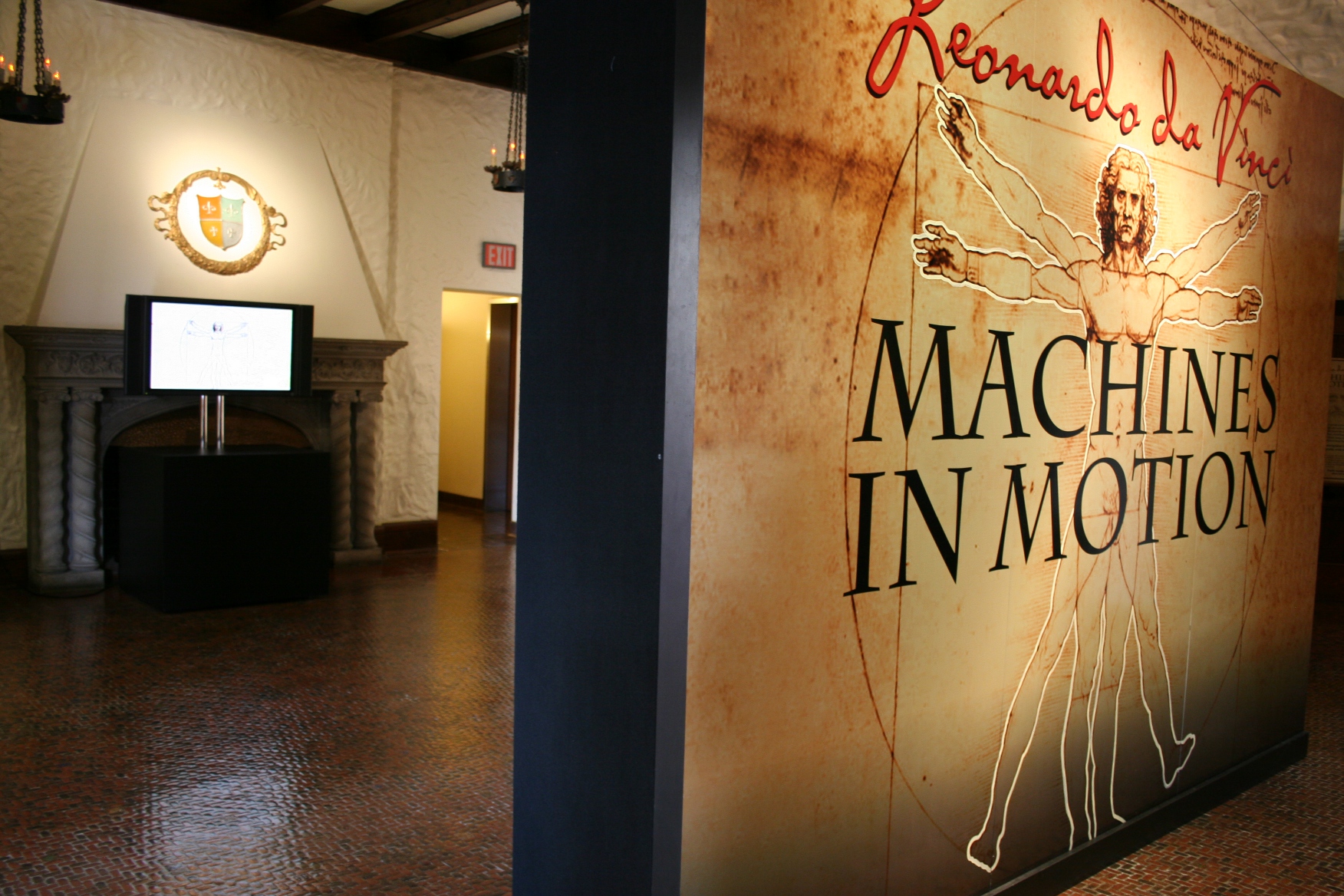
While the Leonardo da Vinci signage likely catches your eye first in this photo, look to the left and notice the fireplace.

While the Leonardo da Vinci signage likely catches your eye first, look to the left and notice the fireplace, the lights, the floor.

But currently drawing the most interest is the museum’s temporary “Leonardo da Vinci: Machines in Motion” exhibit which opened late last year and has now been extended through February 3. You can read about “Machines in Motion” in a previous post by clicking here. This show was my primary reason for touring the museum in early October when my husband and I were in Appleton visiting our second daughter.

Another view of the historic museum.

Another view of the museum, from early October.

The historic Masonic Temple housing the museum rates as a bonus to the history inside. I wonder how many visitors, when they tug at those heavy front entry doors and then enter the castle, pause to appreciate the building they are standing within.

BONUS IMAGES:

Given my love of photography, the "From My View: The Photographs of Andrew J. Mueller" exhibit especially interested me. Mueller worked for the local newspaper.

Given my love of photography, the “From My View: The Photographs of Andrew J. Mueller” exhibit especially interested me. Mueller worked for the local newspaper, beginning as an artist there and becoming the paper’s full-time photographer in 1950. He approached photography from both artistic and journalistic perspectives.

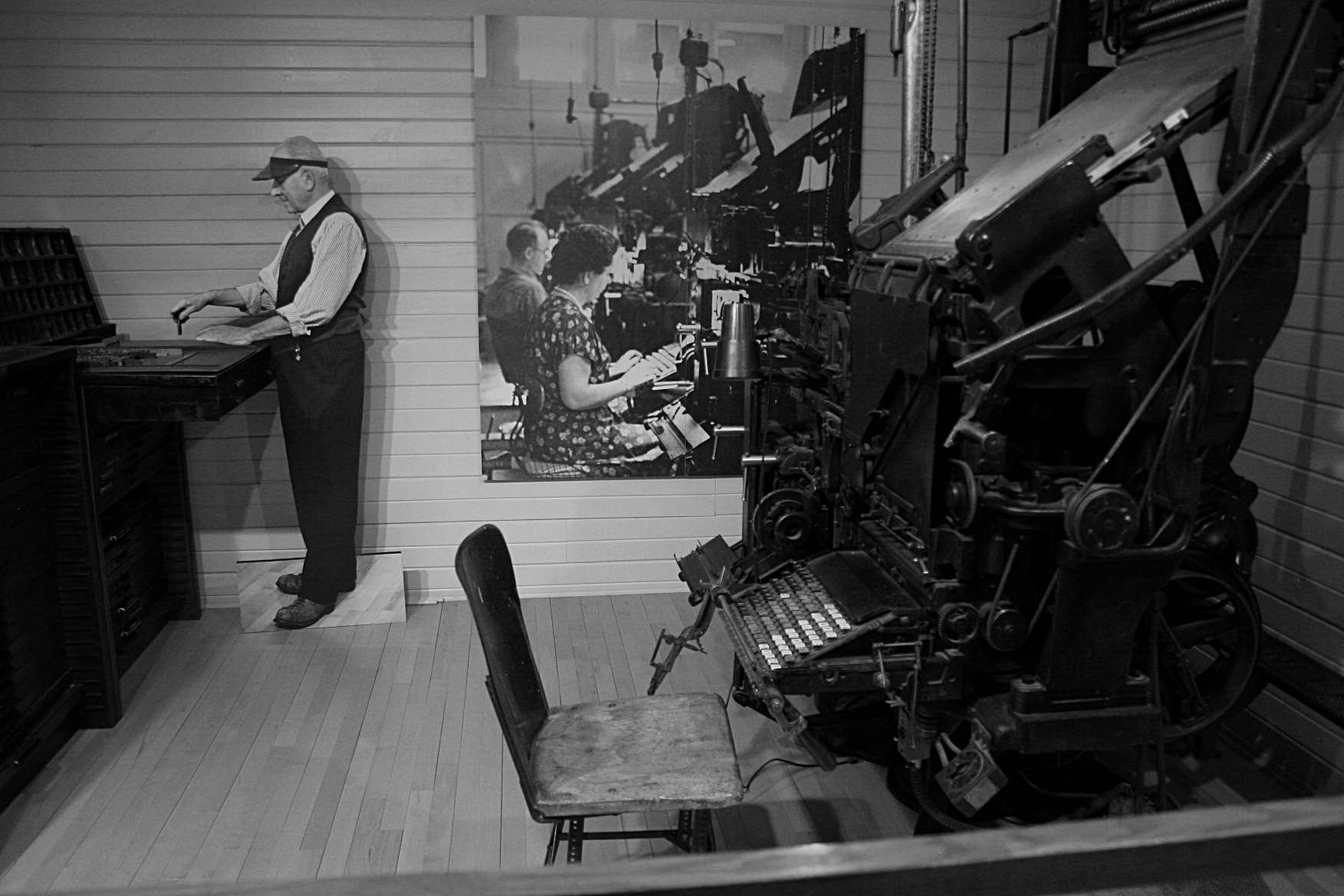
Given my journalism background, an old printing press also caught my eye.

Because of my journalism background, an old printing press also caught my eye.

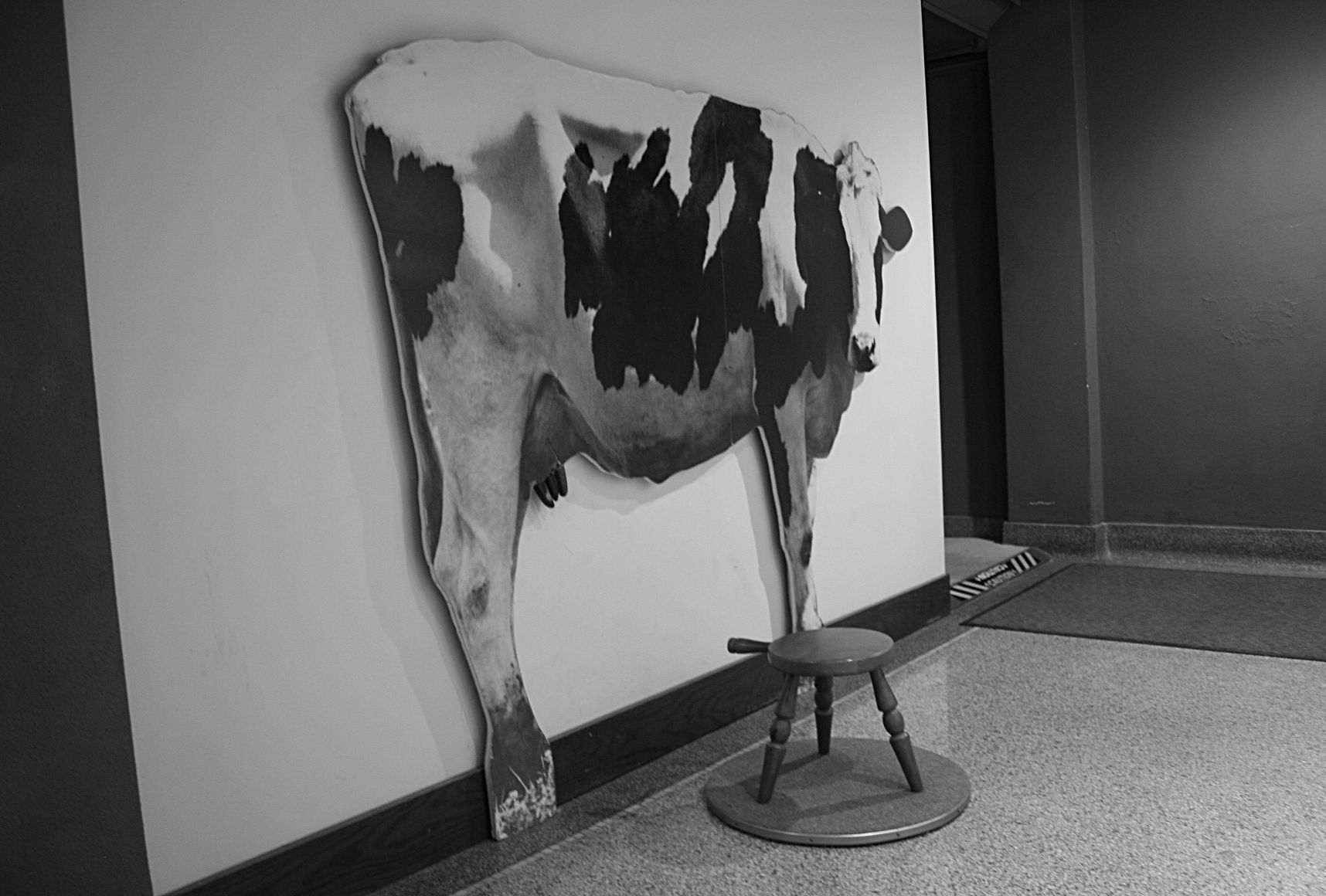
Would any Wisconsin museum exhibit be complete without a cow? Here you can perch on the stool and pretend to milk this Holstein.

Would any Wisconsin museum exhibit be complete without a cow? Here you can perch on the stool and pretend to milk this Holstein.

FYI: For more information about The History Museum at the Castle, click here.

© Copyright 2013 Audrey Kletscher Helbling