Minnesota Prairie Roots

Writing and photography by Audrey Kletscher Helbling

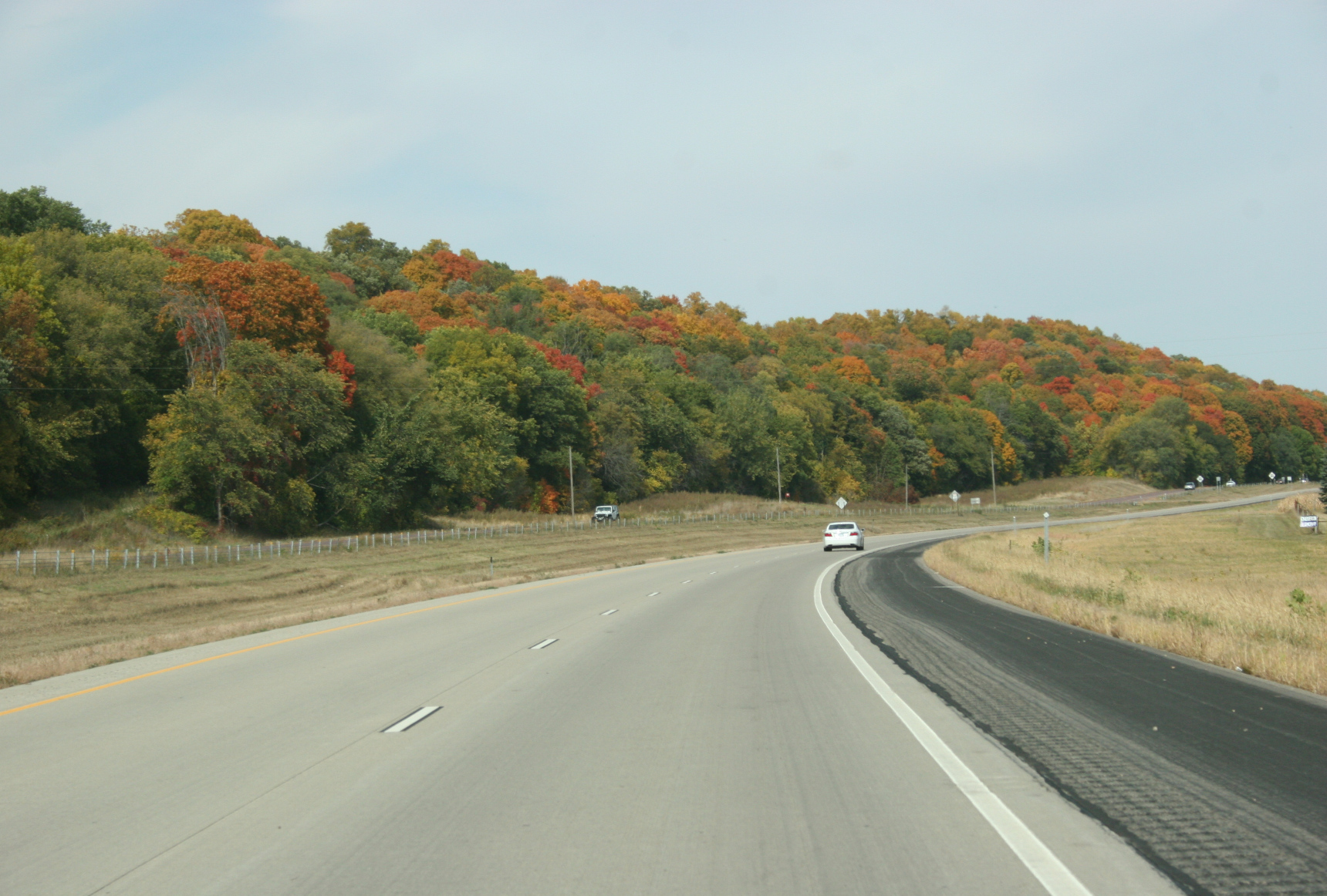
Driving through the southern Minnesota countryside on an autumn day October 16, 2024

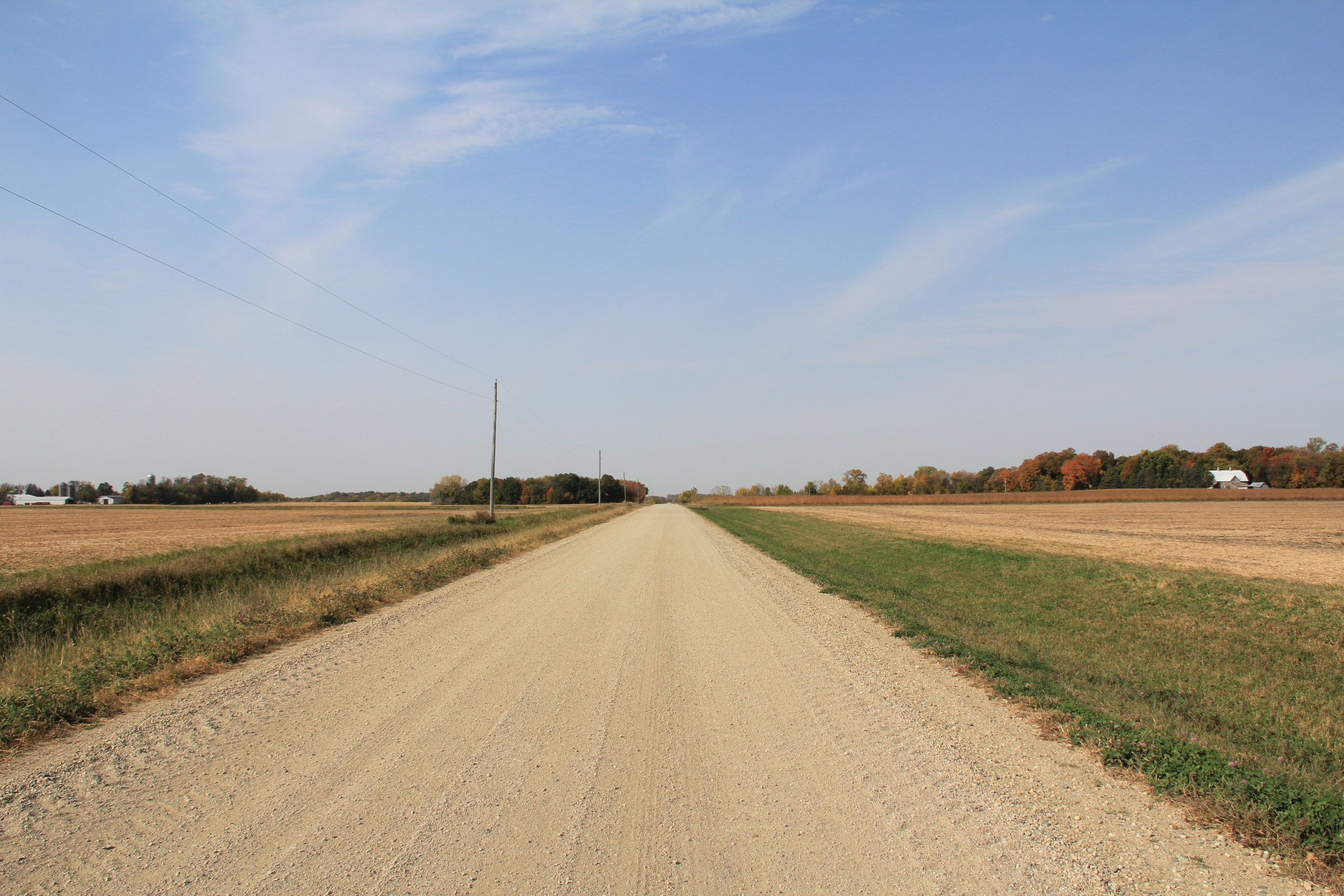
We followed roads west of Faribault toward the Kilkenny and Montgomery areas. I gave up trying to keep track of where we were. (Minnesota Prairie Roots copyrighted photo October 2024)

THE WHEELS KICKED UP DUST as our van moved along back gravel roads in Rice and Le Sueur counties on a recent weekday. Randy and I were on a fall color drive that took us past cornfields and farm sites, past woods and wetlands, past trees blazing orange and those still green.
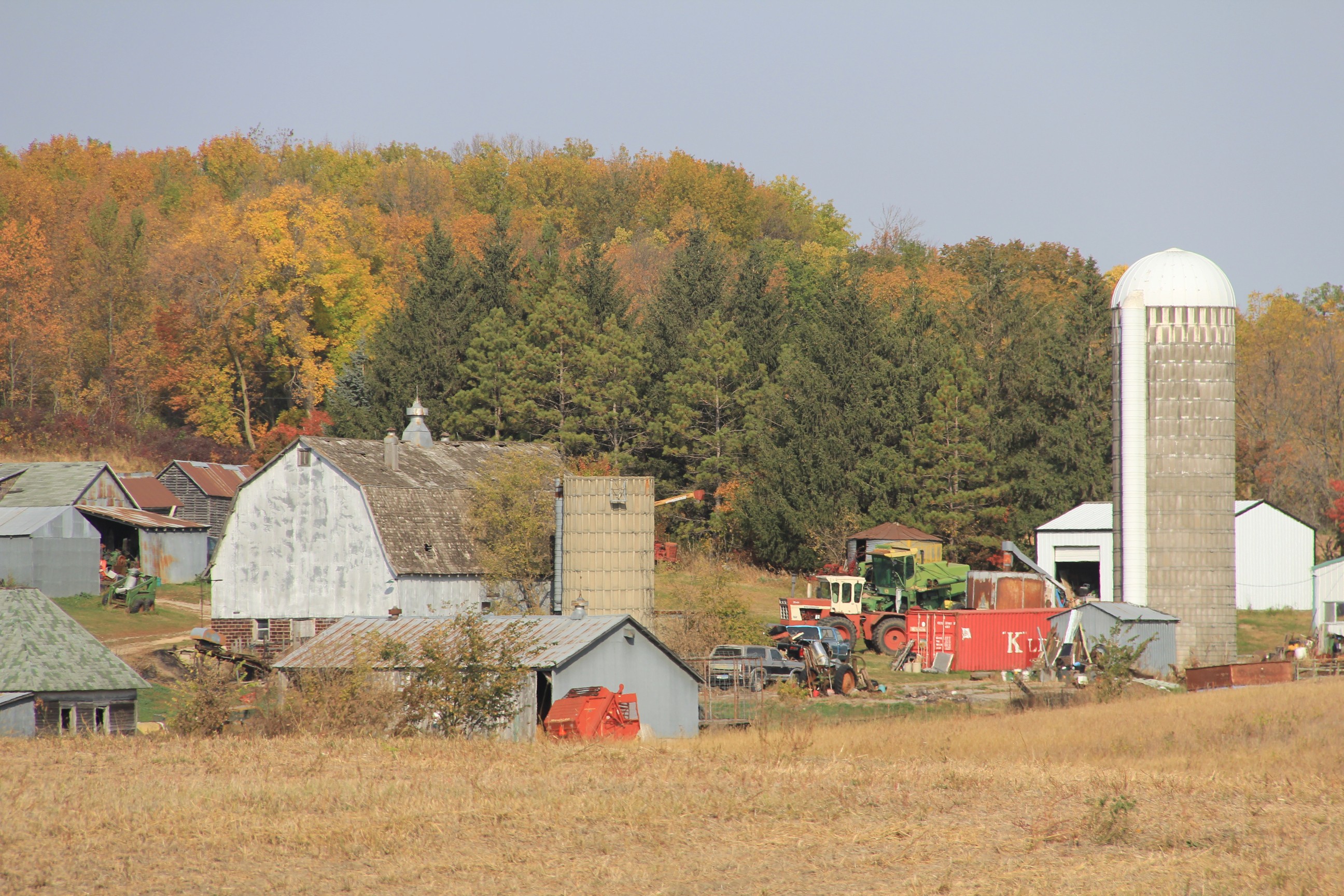
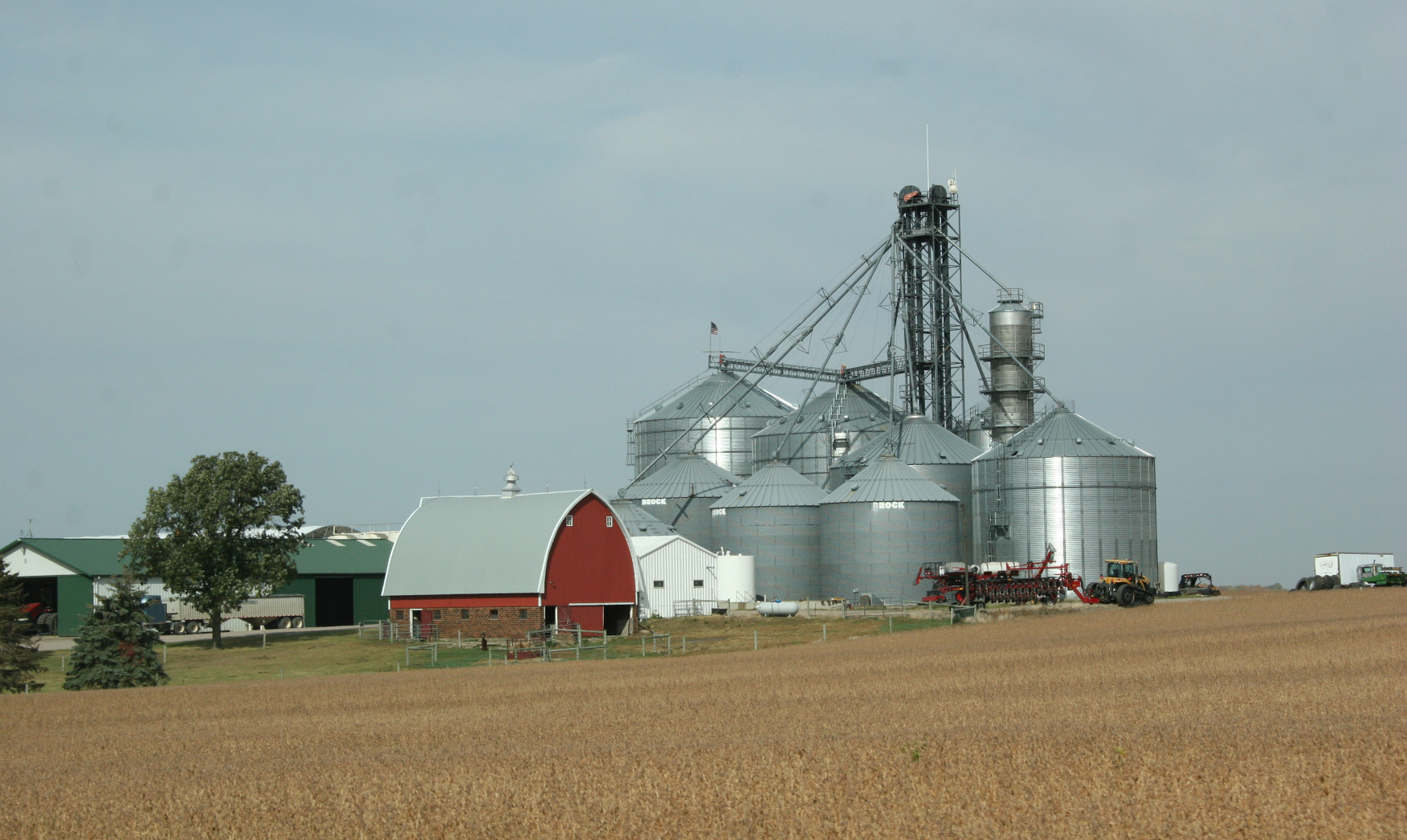
This farm site sits along Leroy Avenue, just off 160th St. W. between Shieldsville and Kilkenny. (Minnesota Prairie Roots copyrighted photo October 2024)

As we wound our way along winding roads and along straight grids west of Faribault, I felt what I always feel this time of year—a longing for the land. In this season of harvest, this season of leaves coloring the landscape, I yearn to connect with the soil, the earth, the agrarian heritage that roots me.
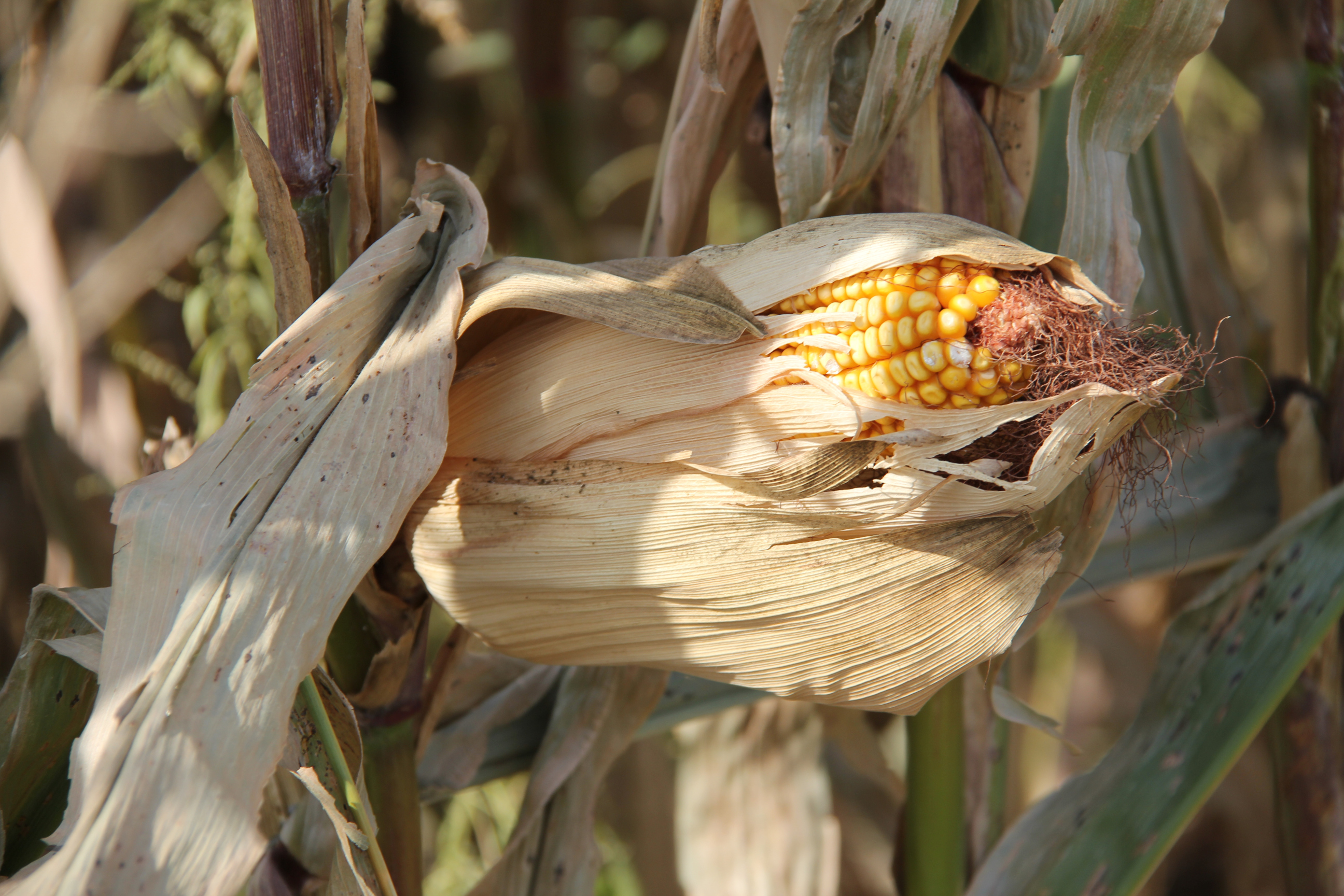
Corn awaits harvesting. (Minnesota Prairie Roots copyrighted photo October 2024)

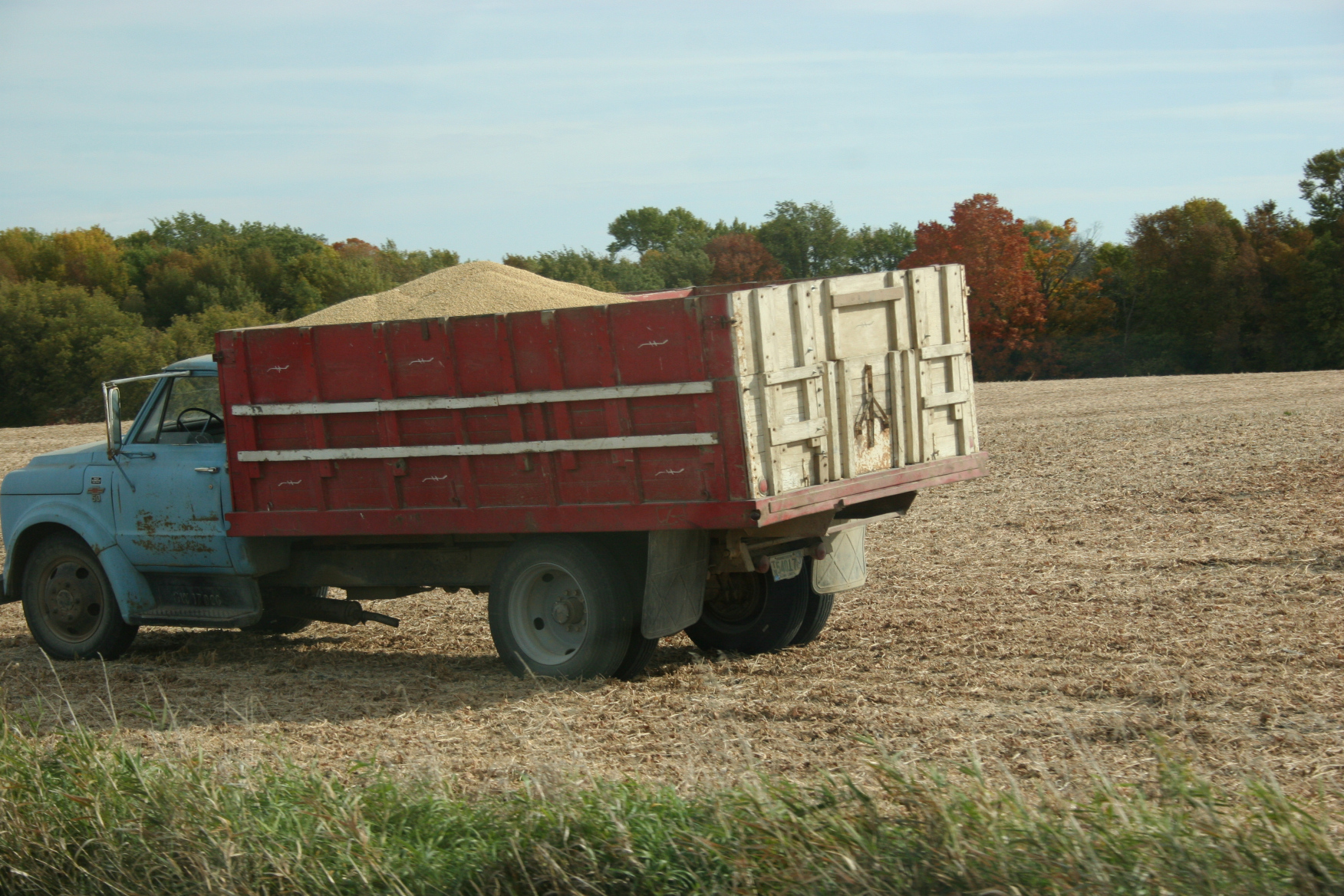
I miss the land. I miss the roar of combines harvesting corn and soybeans, golden grain spilling into wagons or trucks. I miss the distinct, indescribable scent of autumn rising from fields. I miss all of it. A country drive in October helps ease the heartache of one who grew up on a farm, but left it fifty years ago.
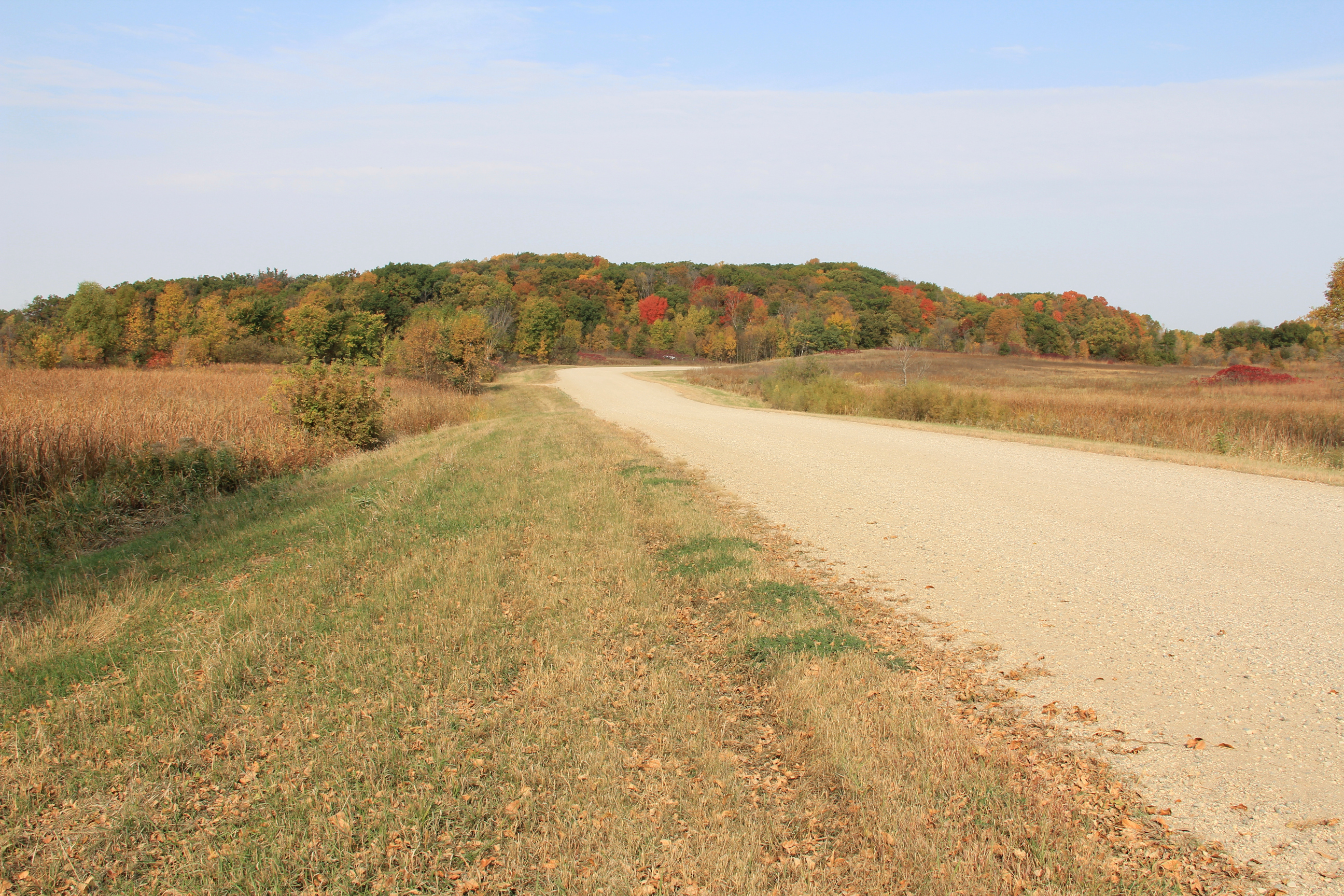
This curving gravel road took us past wooded hillsides and a wetlands restoration area. (Minnesota Prairie Roots copyrighted photo October 2024)

This is the time of year, whether you’re rural, small town or city-raised, to take a drive into the countryside. Off paved roads. Onto gravel routes.
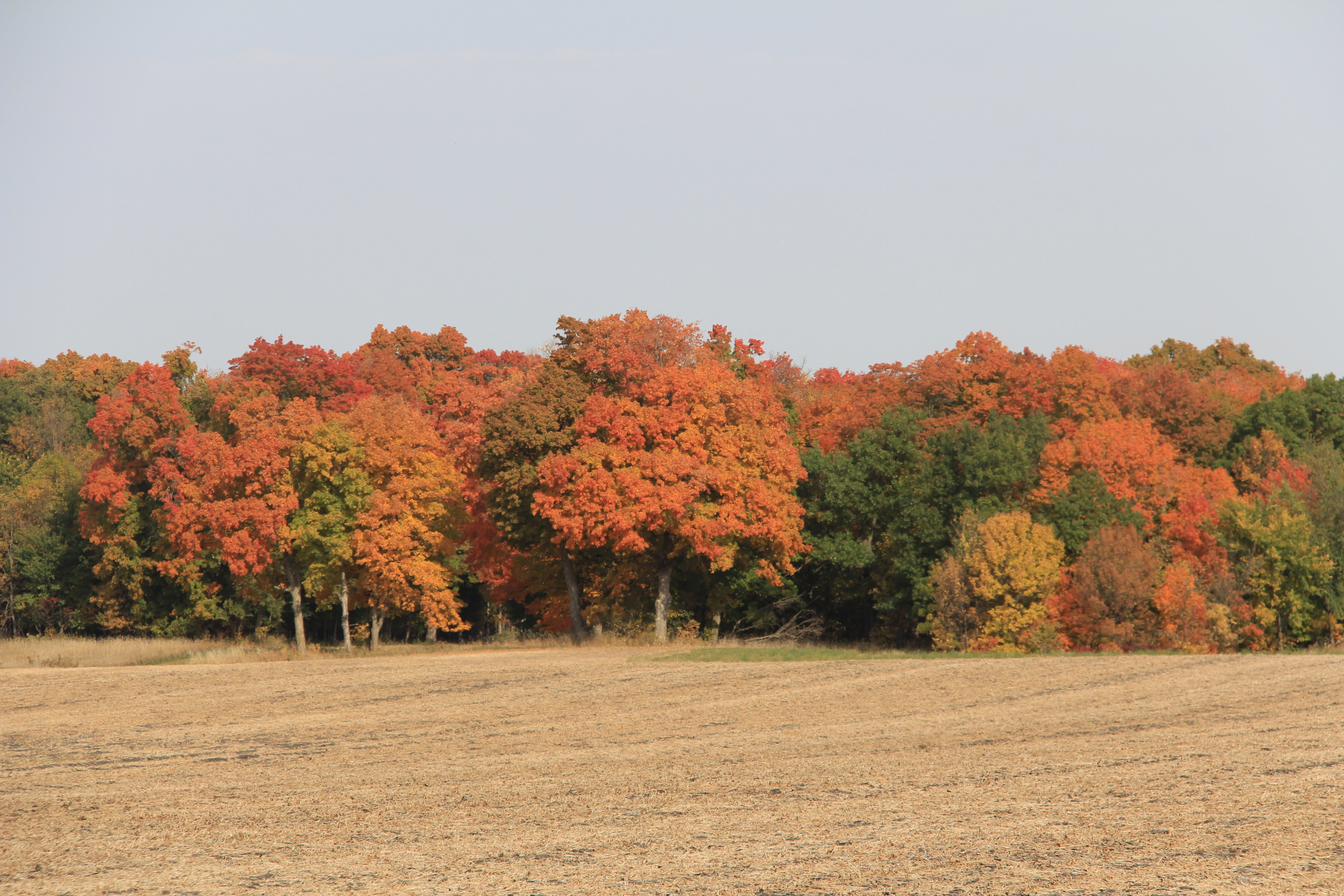
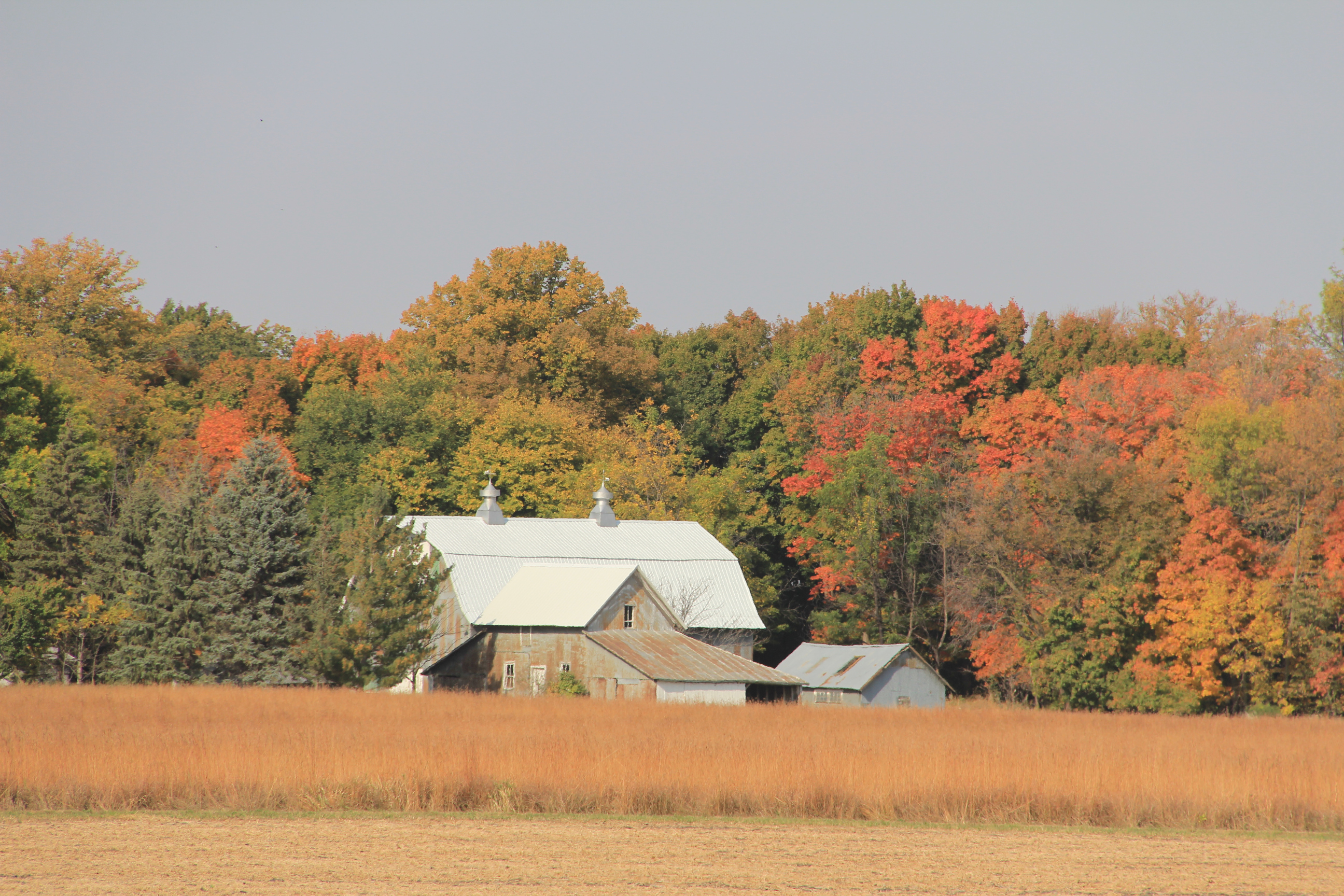
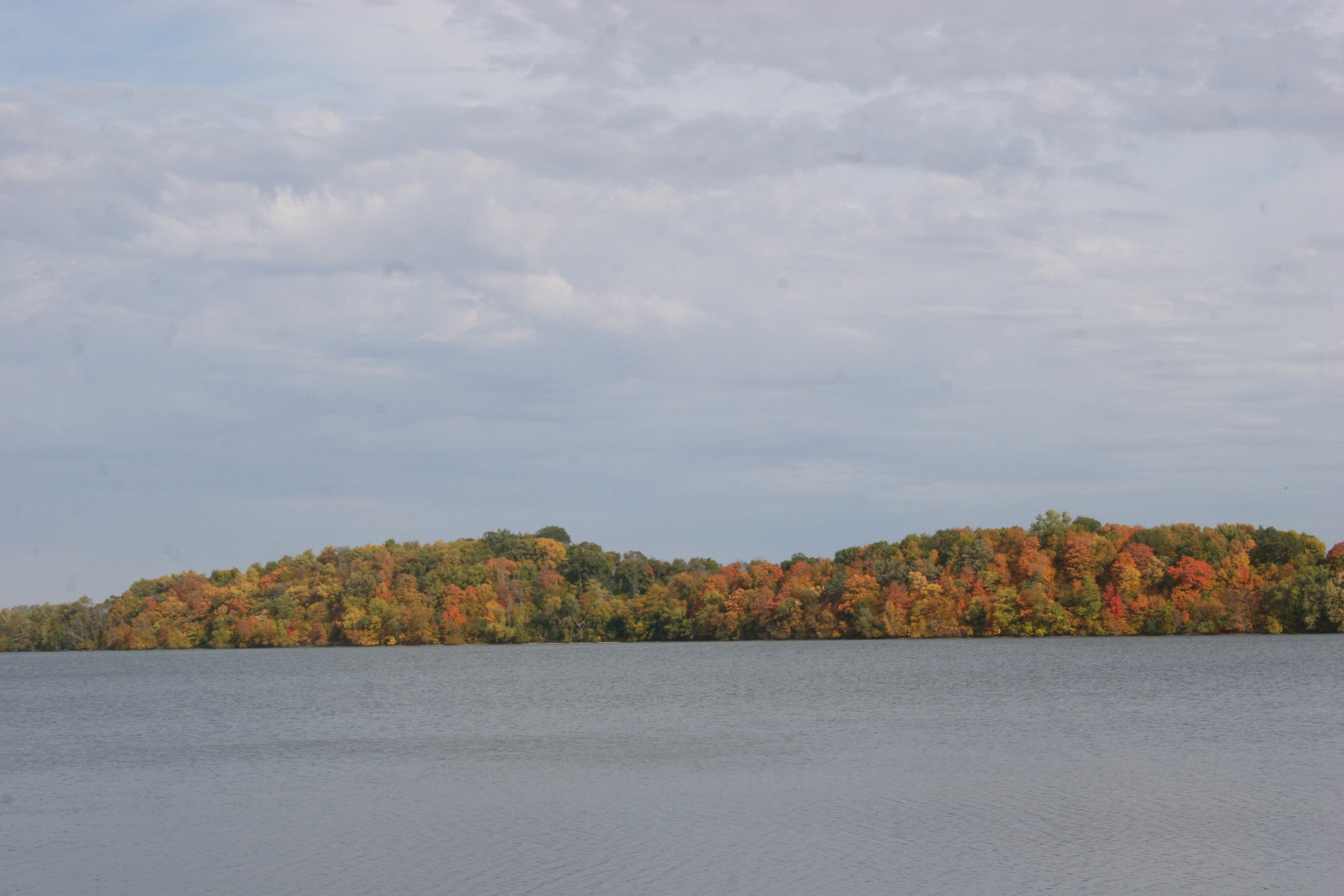
Some treelines were vivid with color, others not. (Minnesota Prairie Roots copyrighted photo October 2024)
I am always drawn to barns rising above the landscape. (Minnesota Prairie Roots copyrighted photo October 2024)
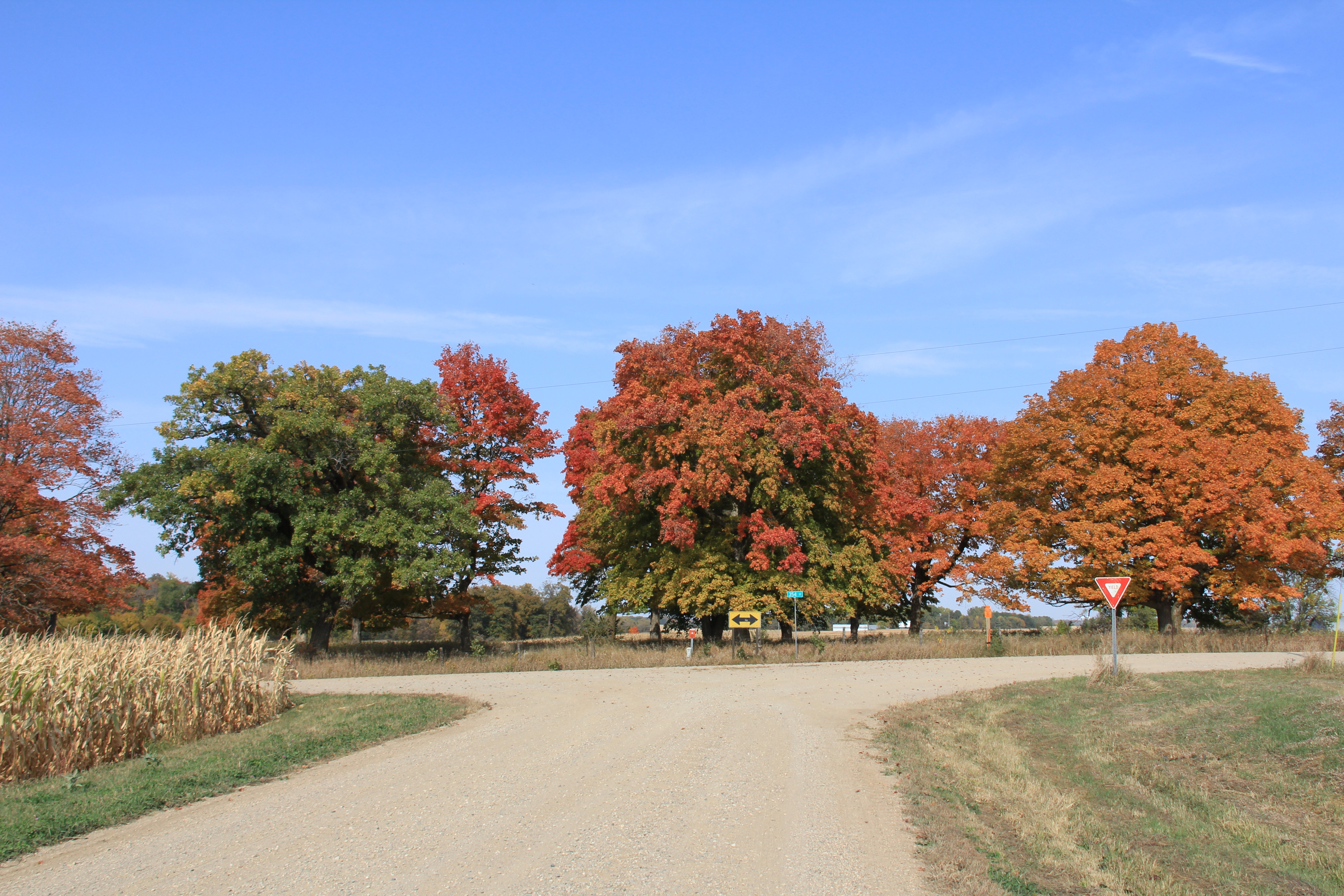
A rural intersection ablaze in color. (Minnesota Prairie Roots copyrighted photo October 2024)

Gravel forces a slower pace, offers opportunities to stop and appreciate that which unfolds before you. On this drive, it was the coloring of trees, just beginning, aged farm sites back-dropped by woods or surrounded by fields. Just being here in the rural-ness honored my past, filled my soul.
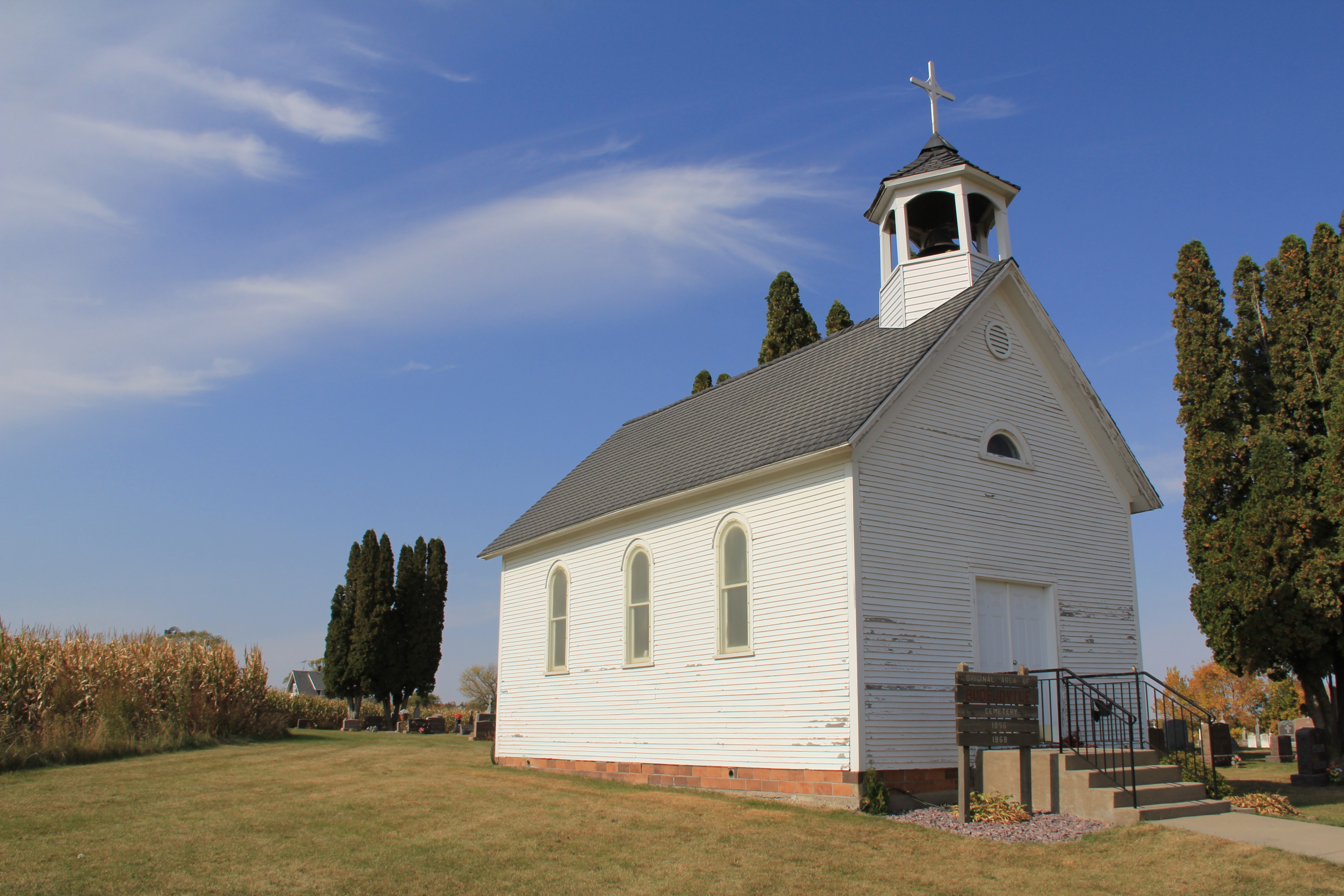
A Czech church and cemetery west of Montgomery. (Minnesota Prairie Roots copyrighted photo October 2024)

And then we paused at an historic country church nestled among cornfields near Montgomery. We walked the expansive cemetery. As I meandered and took photos, I heard the wind rustling the dried corn leaves, a comforting sound in the silence of the land.
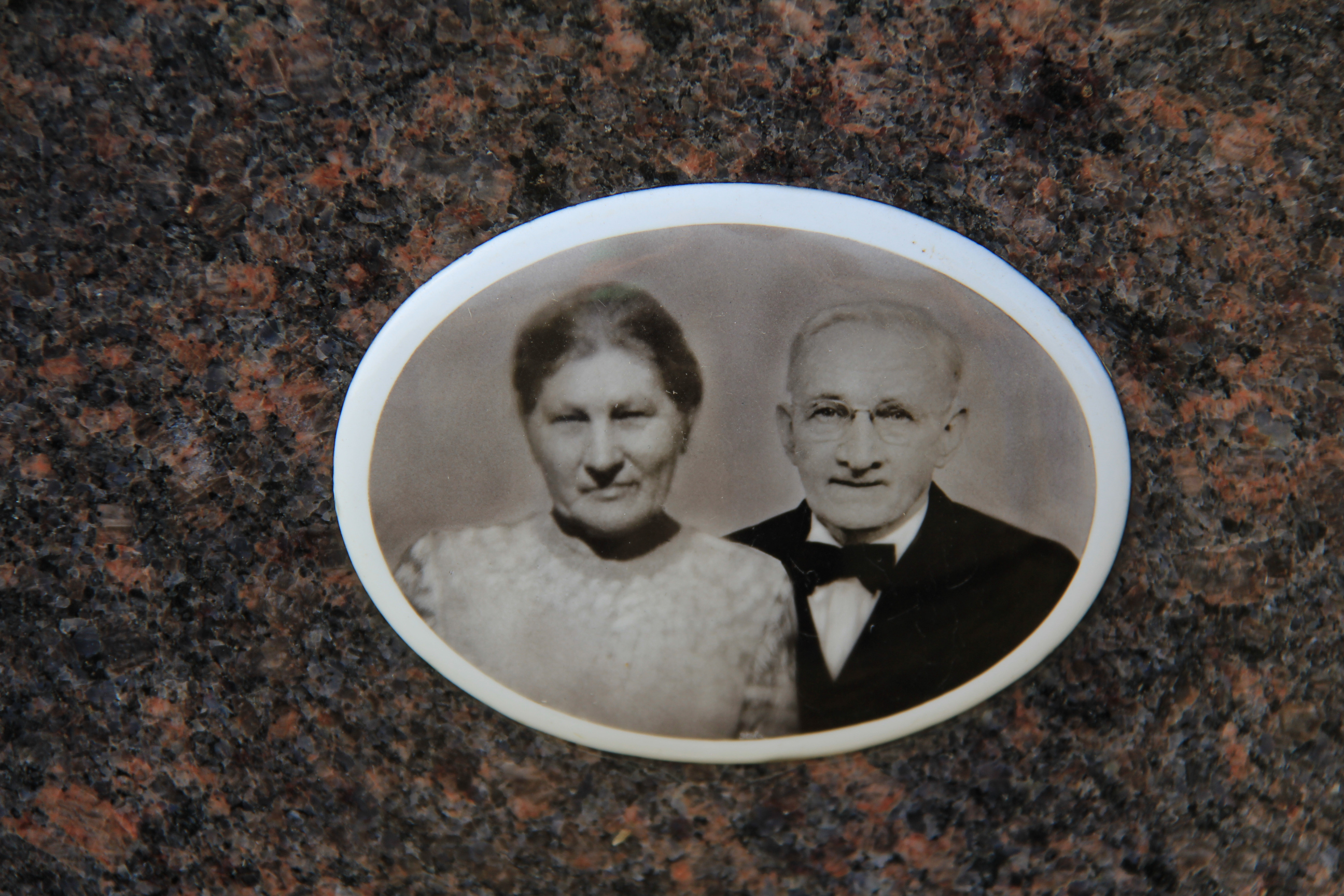
Anna and John Frolik are among the early settlers buried at Budejovice. They were born in 1886 and 1887. Their photos adorn their tombstone. (Minnesota Prairie Roots copyrighted photo October 2024)

I wondered about the Czech immigrants who settled in the area, built Budejovice Church in 1868. What were their heartaches, their stories, their hopes and dreams? I expect they longed for the Old Country, for the familiarity of home, for the loved ones an ocean away.
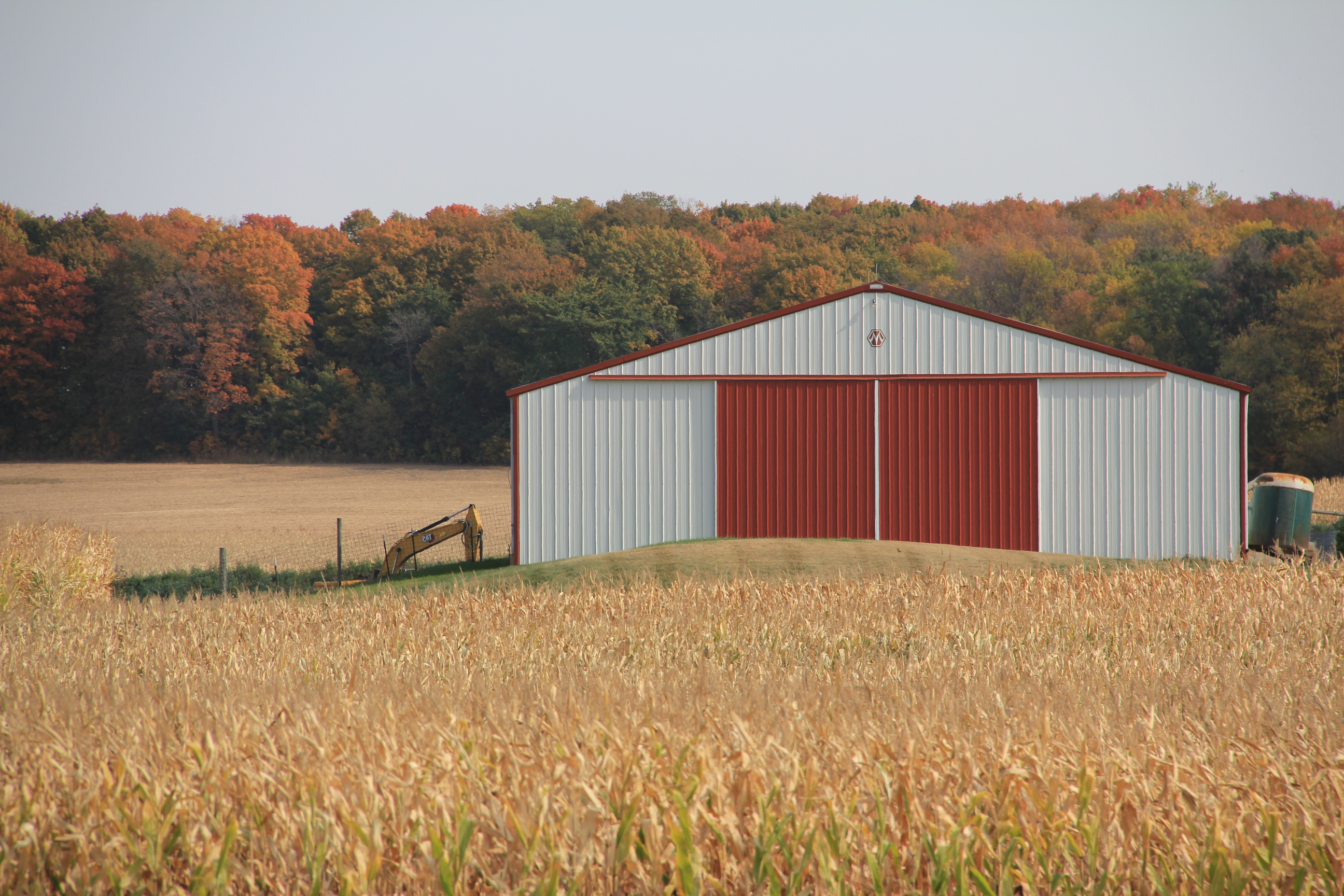
This machine shed, surrounded by cornfields, sits just across the gravel road from the church and cemetery. (Minnesota Prairie Roots copyrighted photo October 2024)

Such thoughts filter through my mind whenever I am among the souls of the departed, my soles touching the land under which they lie buried. I don’t feel sadness as much as a sense of respect for those who came before me, who forged a new life in Minnesota with grit, determination and a whole lot of fortitude.
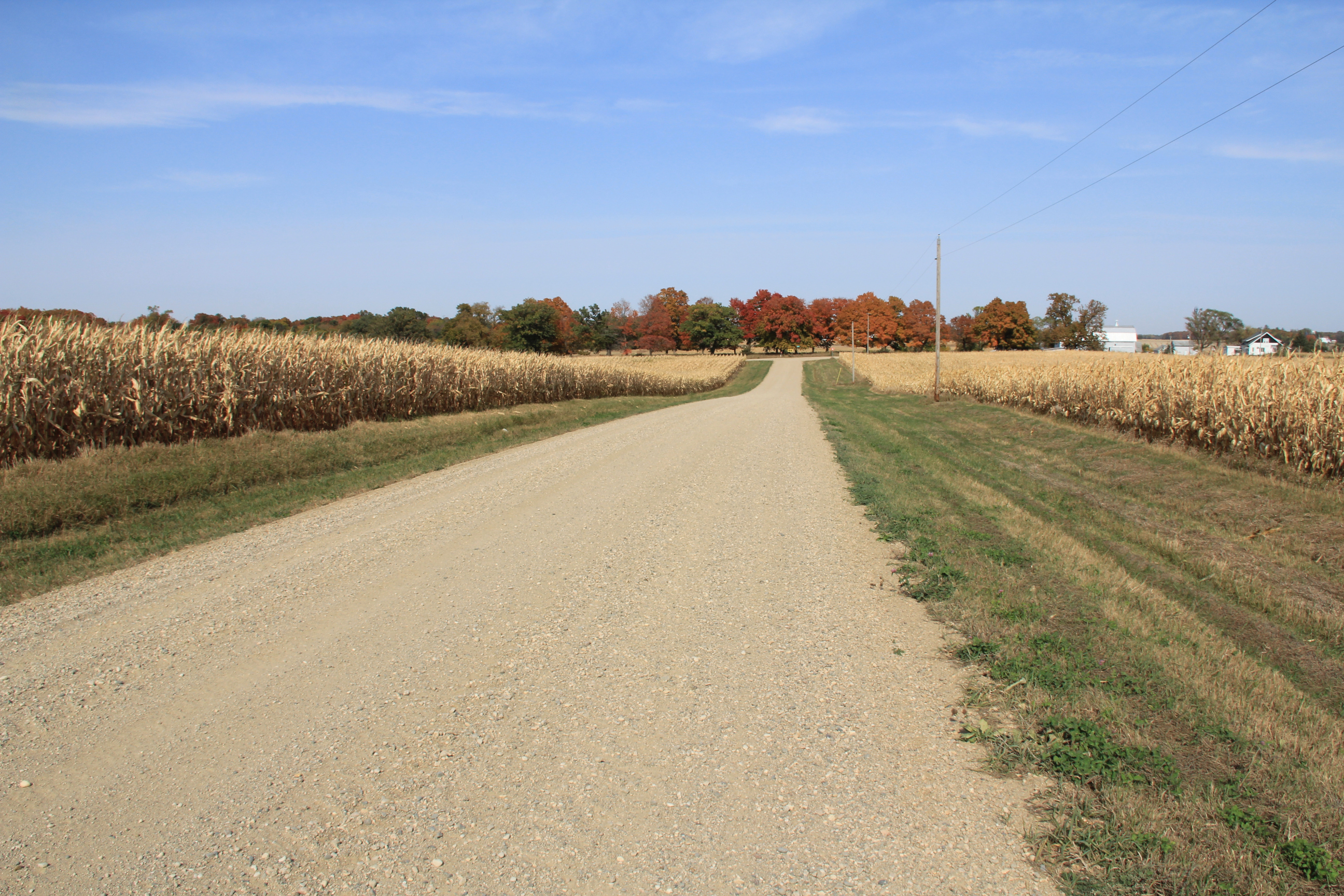
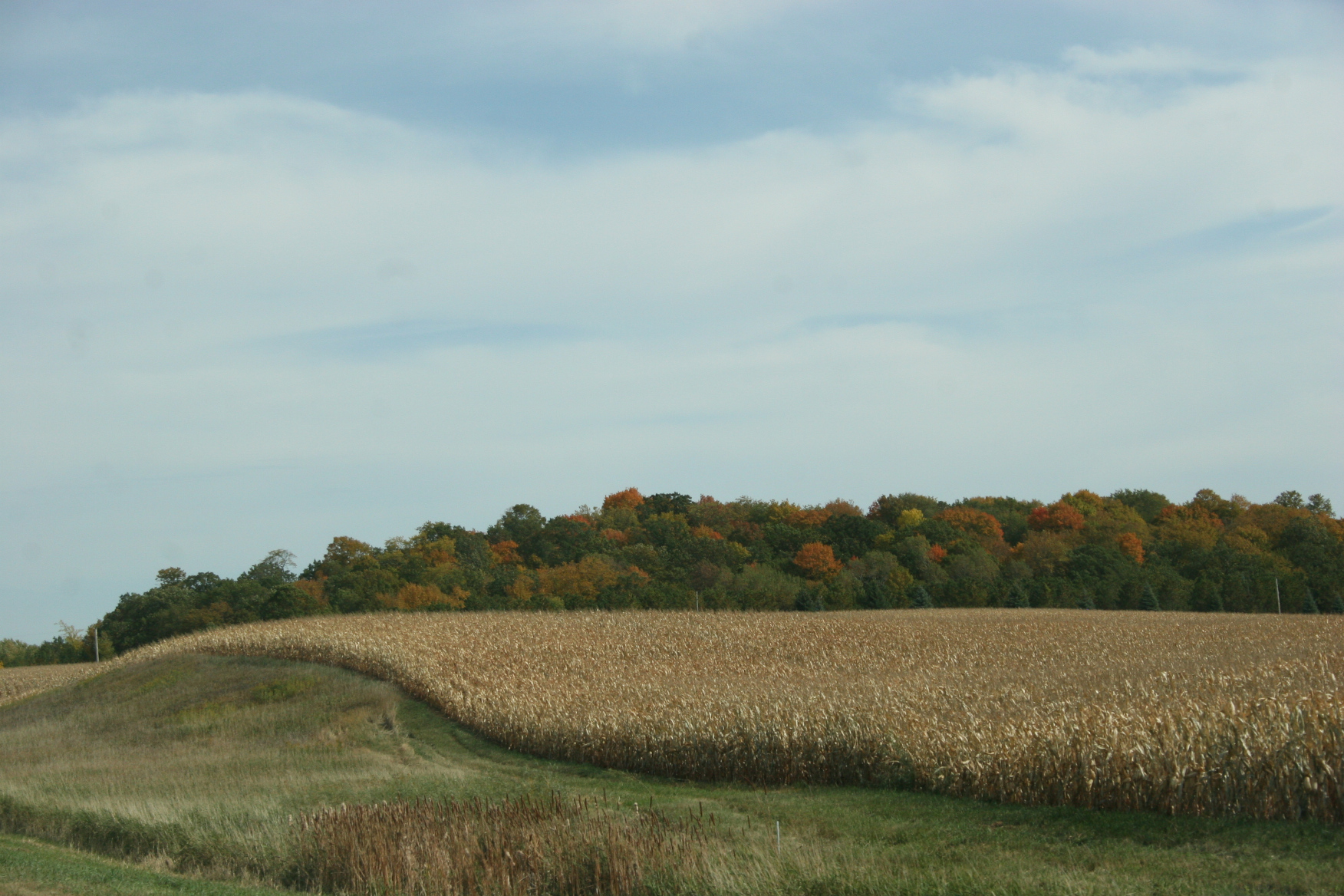
Cornfields flank a gravel road leading to a colorful treeline. (Minnesota Prairie Roots copyrighted photo October 2024)

Driving the countryside in autumn evokes not only nostalgia and reflection, but also a sense of time passing. Leaves turn color. Crops morph to golden hues, ready for harvest, or already harvested. And dust rises from the land, carried on the wind, coating our van. Miles and miles and miles of gravel roads behind us, we arrive home. I’m exhausted. My shoes are covered in dust. But I feel content. Replenished. I needed this, this country drive that was about much more than viewing fall colors. It was also about filling my soul.

© Copyright 2024 Audrey Kletscher Helbling


Waterville snapshots reveal small town character June 19, 2024

A vintage 1969 or 1970 Chevy pickup truck parked in a car port at Twin Lakes Auto Parts in Waterville. (Minnesota Prairie Roots copyrighted photo June 2024)

EVERY PLACE HAS CHARACTER, especially small towns. Or at least that’s how it seems to me, someone with an affinity for rural. I am not a big city girl, preferring quiet Main Streets to city traffic, low-slung buildings to soaring skyscrapers, small gatherings to crowds. I feel grounded, rooted, at home in rural locations.

One of Waterville’s most unusual homes, a small house sandwiched between businesses along Main Street. (Minnesota Prairie Roots copyrighted photo June 2024)

For me a day trip to explore small towns is as appealing as a day in the big city for someone who prefers cities. We are all different and that is a good thing.

A ghost sign on a downtown building. (Minnesota Prairie Roots copyrighted photo June 2024)

Recently I toured seven area communities in a single day while working on a photo essay column for SouthernMinn Scene, a regional arts and entertainment magazine. I found myself photographing scenes well beyond the scope of my themed essay focusing on small town bar exteriors and signage. With camera in hand, I always scan for interesting photo ops.

Vintage bullhead art signage hangs on the Waterville Event Center. (Minnesota Prairie Roots copyrighted photo June 2024)

Among my stops was Waterville, in the southern Minnesota lakes region of Le Sueur County. Summertime residents and visitors plus bikers pedaling the Sakatah Singing Hill State Trail swell this town’s population well beyond 1,868. Waterville folks definitely recognize the value these people bring to the local economy, to the community.

Unexpected art on the side of the Corner Bar. (Minnesota Prairie Roots copyrighted photo June 2024)

I realize not everyone sees what I see upon walking through a small town business district like that in Waterville. I tend to notice details, oddities, the small things that make a place interesting. I’ve photographed the heart of Waterville several times, so this trip I mostly zeroed in on different details.

I see this often in small towns, specific notes left for delivery drivers. (Minnesota Prairie Roots copyrighted photo June 2024)

I should note that I’m particularly drawn to signage—handwritten to business signs.

Classic’s Pub opens soon in this massive building. (Minnesota Prairie Roots copyrighted photo June 2024)

Waterville will soon be home to two new businesses, as noted on signage. Classic’s Pub, a bar and event center featuring displays of vintage cars and motorcycles, is opening in a spacious corner building along South 3rd Street. Waterville has several other bars. But I’m excited about this one (not that I’ve been in the others) because of its vintage theme.

Another business opening soon in Waterville. (Minnesota Prairie Roots copyrighted photo June 2024)

And just across the street, a sign notes that The Cleaver & Corn is opening soon, serving sandwiches, gourmet specialty popcorn from the local The Snack Shack, sweets and more. That, too, sounds like a great addition to the community. And the business name…I find it particularly creative.

A customer pulled up to the hardware store on his riding lawnmower. (Minnesota Prairie Roots copyrighted photo June 2024)

As I walked about the downtown, I saw a whole lot of character. In buildings. In signage. In storefronts. Even in a John Deere riding lawnmower driven to and parked outside Harry’s True Value Hardware.

Waterville Hardware Hank, just across from True Value. (Minnesota Prairie Roots copyrighted photo June 2024)

Just across the street sits Waterville Hardware Hank, offering a second option to locals, cabin owners and campers. I’ve been inside this store with its narrow aisles and original wood floors. Not this trip, though.

Lots happening at the Corner Bar in June. (Minnesota Prairie Roots copyrighted photo June 2024)

Rather, I kept my feet on the sidewalk and pavement, opting to photograph downtown Waterville while outdoors only. That focused perspective revealed plenty of character that makes this small town unique, welcoming, a place I always enjoy visiting.

© Copyright 2024 Audrey Kletscher Helbling


Celebrating Minnesota Irish via stops in Kilkenny, St. Patrick & St. Thomas March 17, 2023

Photographed in Kilkenny, Minnesota, in January 2020, this pub no longer exists. I loved the name, the sign, the graphic in this Irish community. (Minnesota Prairie Roots copyrighted file photo January 2020)

ENCLAVES OF IRISH scatter throughout Minnesota from unincorporated settlements to small towns to big cities.

In my wanderings through southern Minnesota, I’ve discovered Irish pockets, including in nearby Kilkenny. The Le Sueur County community of just over 100 residents traces its name to Kilkenny County, Ireland, birthplace of early immigrant settler Dennis Doyle.

Kilkenny, proud of its Irish heritage, maintains a twinship with Kilkenny County in the Old Country. And each September, the community celebrates St. Patrick’s Day with Half-Way to St. Paddy’s Day complete with parade and, in the past, toilet bowl races. I’ve never attended, but need to and document this event.

Irish pride on Kilkenny, Minnesota’s water tower. (Minnesota Prairie Roots copyrighted file photo January 2020)

Three years ago while out and about on one of those rural drives I so enjoy, Randy and I passed through Kilkenny, marked by a signature silo style light green water tower decorated with a shamrock. There was no doubt we were in an Irish proud small town.

Murphy’s Pub was once Kilkenny’s gathering spot. It closed, replaced by The Toy Box Saloon. (Minnesota Prairie Roots copyrighted file photo January 2020)

At the time, Murphy’s Pub centered the core of Kilkenny, which, as I recall, is about a handful of businesses. Today that Irish-tagged pub with the memorable ale drinking leprechaun signage is closed, replaced by The Toy Box Saloon. That doesn’t quite hold the same Irish appeal as the name Murphy’s Pub. But you will still find Irish brew, like Finnegan’s Irish Amber.

St. Patrick’s Bonin Field. (Minnesota Prairie Roots copyrighted file photo summer of 2015)

In Scott County to the north, in unincorporated St. Patrick, I discovered a strong Irish enclave centered around a church, cemetery, ballpark and tavern. St. Patrick of Cedar Lake Township Catholic Church and its surrounding cemetery sit high atop a hill across from St. Patrick’s Tavern and next to the ball field. The ballpark, St. Patrick’s Bonin Field, is named after Father Leon Bonin, a strong supporter of local baseball.

The appealing leprechaun signage on St. Patrick’s Tavern. (Minnesota Prairie Roots copyrighted file photo summer of 2015)

That this rural place is proud of its Irish heritage is clear. I need to return to St Patrick, perhaps pop into the bar for a brew. Make that an Irish stout.

St. Patrick of Cedar Lake Township Catholic Church and cemetery. (Minnesota Prairie Roots copyrighted file photo summer of 2015)

During my one and only visit in the summer of 2015, I mostly wandered the cemetery. I find cemeteries historically and artistically interesting.

Irish immigrants buried in the St. Thomas Church Cemetery. (Minnesota Prairie Roots copyrighted file photo March 2018)

Back in Le Sueur County, I meandered through the St. Thomas Church Cemetery in the unincorporated settlement of St. Thomas. During my March 2018 visit, I found plenty of Irish buried here.

A closed Irish-named bar in St. Thomas, Minnesota. (Minnesota Prairie Roots copyrighted file photo March 2018)

Down the road a bit, I spotted an apparently abandoned Callahan’s Bar.

An appropriately-named township hall in an Irish enclave. (Minnesota Prairie Roots copyrighted file photo March 2018)

And then I saw Derrynane Town Hall, Derrynane being a small village in County Kerry, Ireland. Ah, yes, Irish roots run deep in pockets of rural Minnesota.

This St. Patrick’s Day I celebrate Kilkenny, St. Thomas and St. Patrick. What a delight to have found these backroad places of Irish heritage in rural southern Minnesota.

© Copyright 2023 Audrey Kletscher Helbling


Parts of Rice, Le Sueur & Nicollet counties in all their autumn splendor October 3, 2022

The beginning of our day trip took us west out of Faribault along back county roads. (Minnesota Prairie Roots copyrighted photo October 2022)

AUTUMN POPPED COLOR—brilliant oranges, reds, yellows—into the landscape on an October day as beautiful as they come here in southern Minnesota.

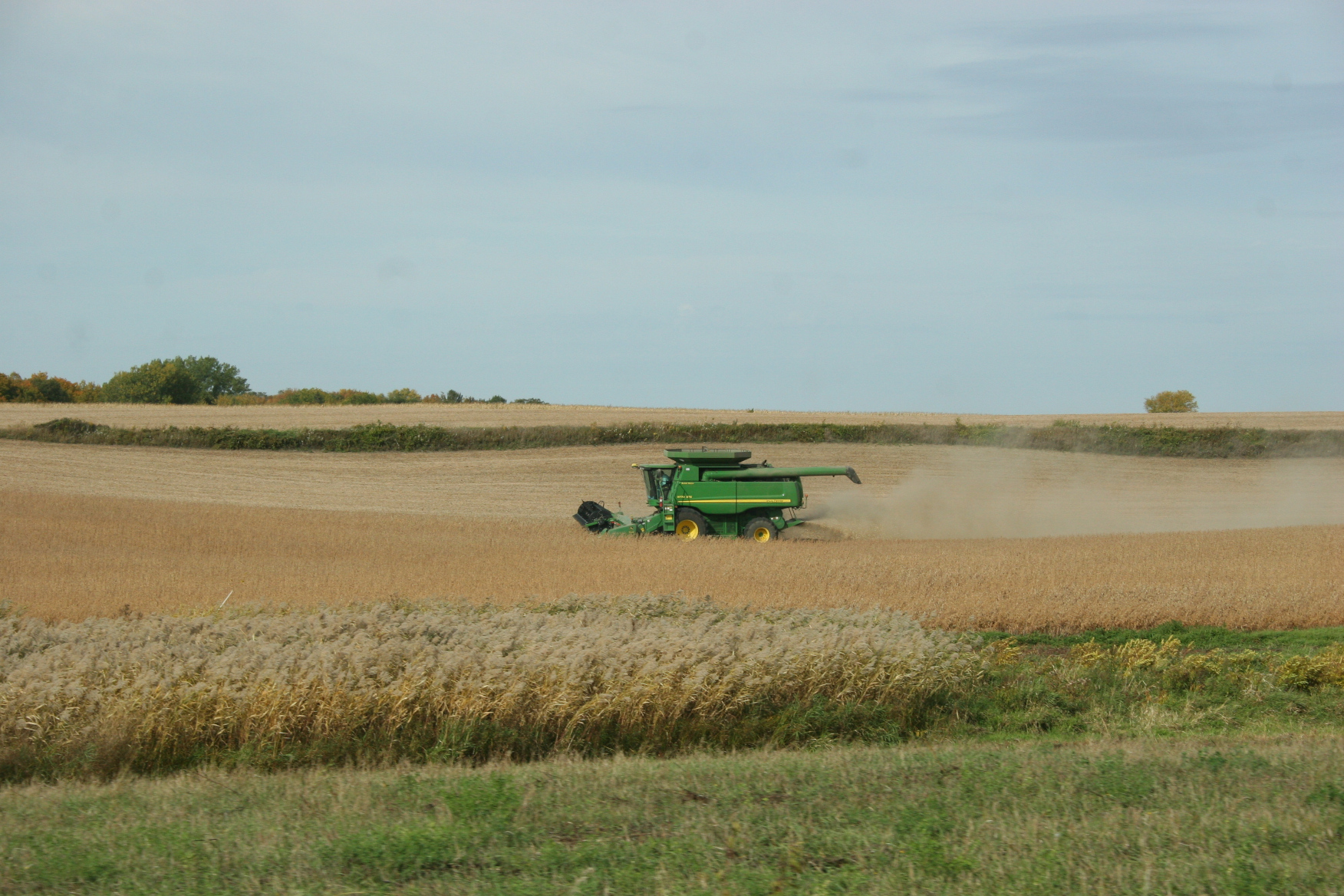
Harvesting beans along Le Sueur County Road 12. (Minnesota Prairie Roots copyrighted photo October 2022)

Throughout Rice, Le Sueur and Nicollet counties, leaves are rapidly changing, splashing hillsides, groves, shorelines and other stands of trees in spectacular seasonal hues.

Photographed at the public boat landing on Horseshoe Lake just off Rice County Road 14 by Camp Omega. (Minnesota Prairie Roots copyrighted photo October 2022)

Randy and I headed on a fall color drive Monday morning, referencing the DNR Fall Color Finder guide promising plenty of colorful leaves to the west. Hours of traveling mostly county roads (including gravel) through the southern Minnesota countryside on our day-long drive provided incredible leaf viewing.

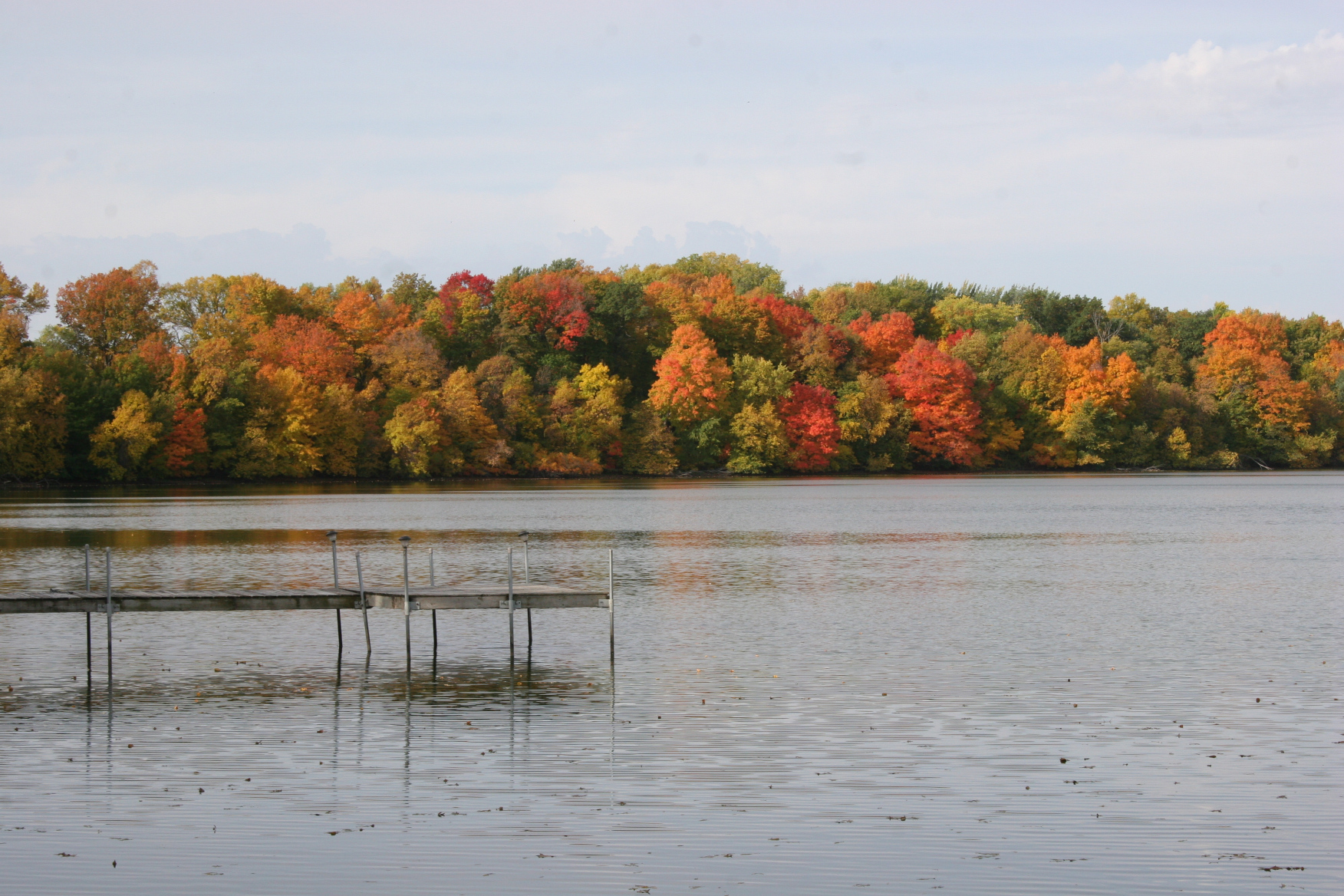
The distant shoreline of Horseshoe Lake blazes fiery colors. (Minnesota Prairie Roots copyrighted photo October 2022)

Retracing our exact route through Rice and Le Sueur counties and a small section of Nicollet County would be nearly impossible. But we started out by heading west on Rice County Road 12, eventually following CR 14 to Horseshoe Lake by Camp Omega. The public boat landing there was our first stop to view a lakeside treeline ablaze in fiery hues.

Crops ripen against a farm site backdrop in Le Sueur County. (Minnesota Prairie Roots copyrighted photo October 2022)

It wasn’t just the trees that drew my eye. I love, too, the acres of corn and soybeans drying under the autumn sun. The muted gold of corn leaves adds to the sense of seasons shifting.

A grain truck holds the harvest along Le Sueur County Road 12. (Minnesota Prairie Roots copyrighted photo October 2022)

Harvest is well underway with combines and grain trucks in fields. I appreciate the rural landscape any time of year, but especially now as farmers bring in the crops.

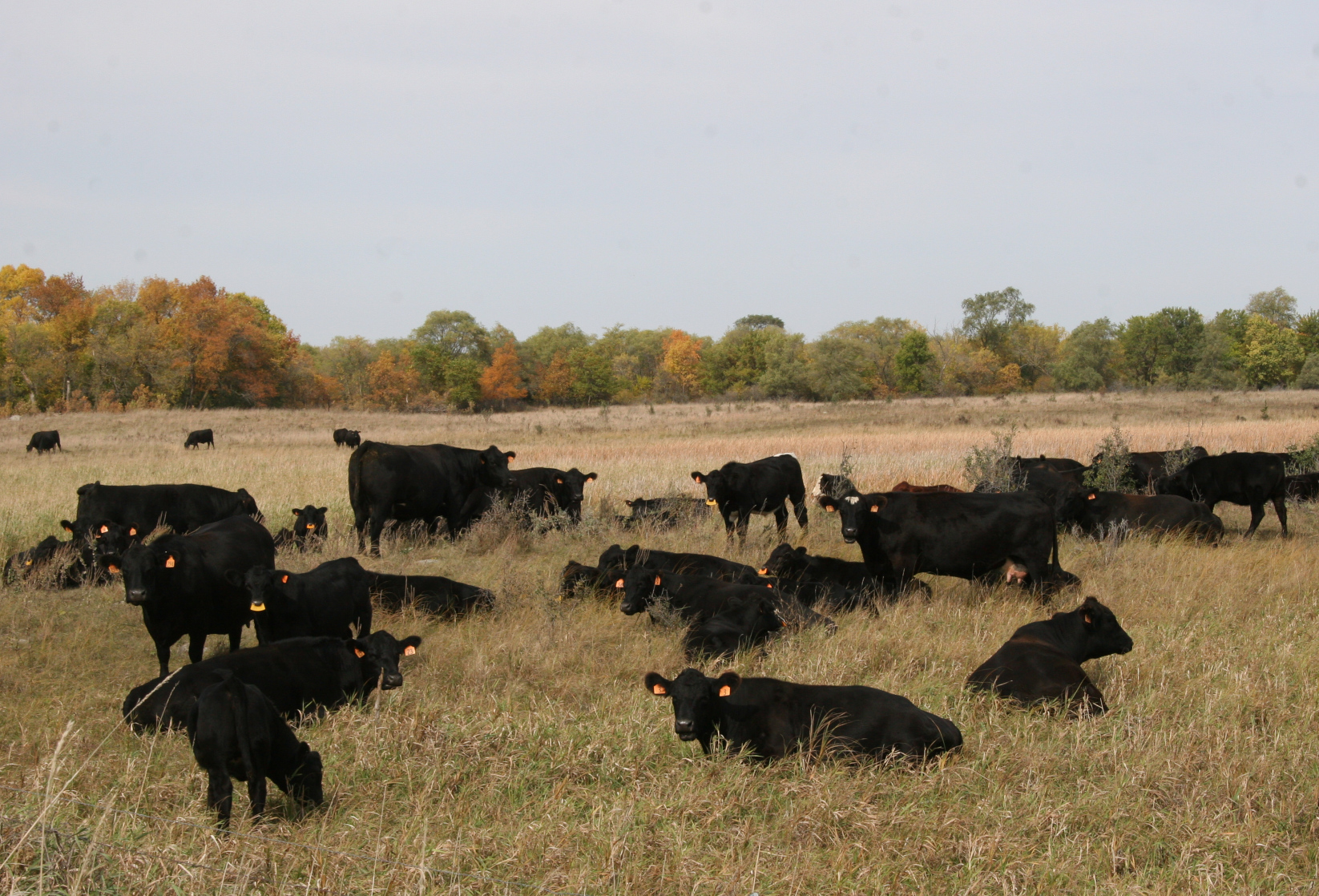
Cattle in a pasture along CR 101 on the way to the Kasota Prairie. (Minnesota Prairie Roots copyrighted photo October 2022)

From fields to farm sites (especially barns) to roadside vegetable stands to cattle in pastures, I found myself reconnecting with my agrarian roots, my prairie roots, while on this day trip.

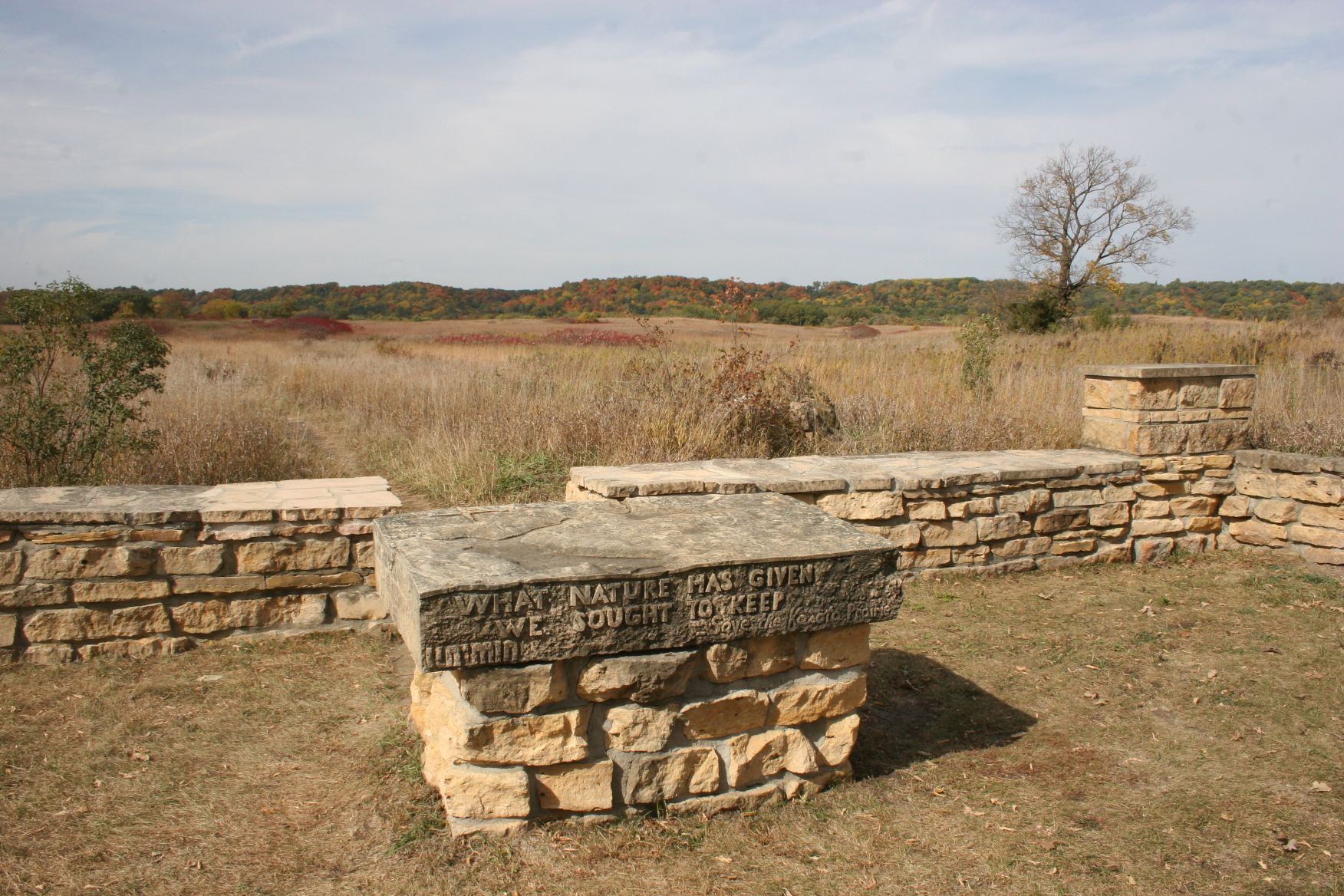
A memorable message marks the entrance to the Kasota Prairie. (Minnesota Prairie Roots copyrighted photo October 2022)

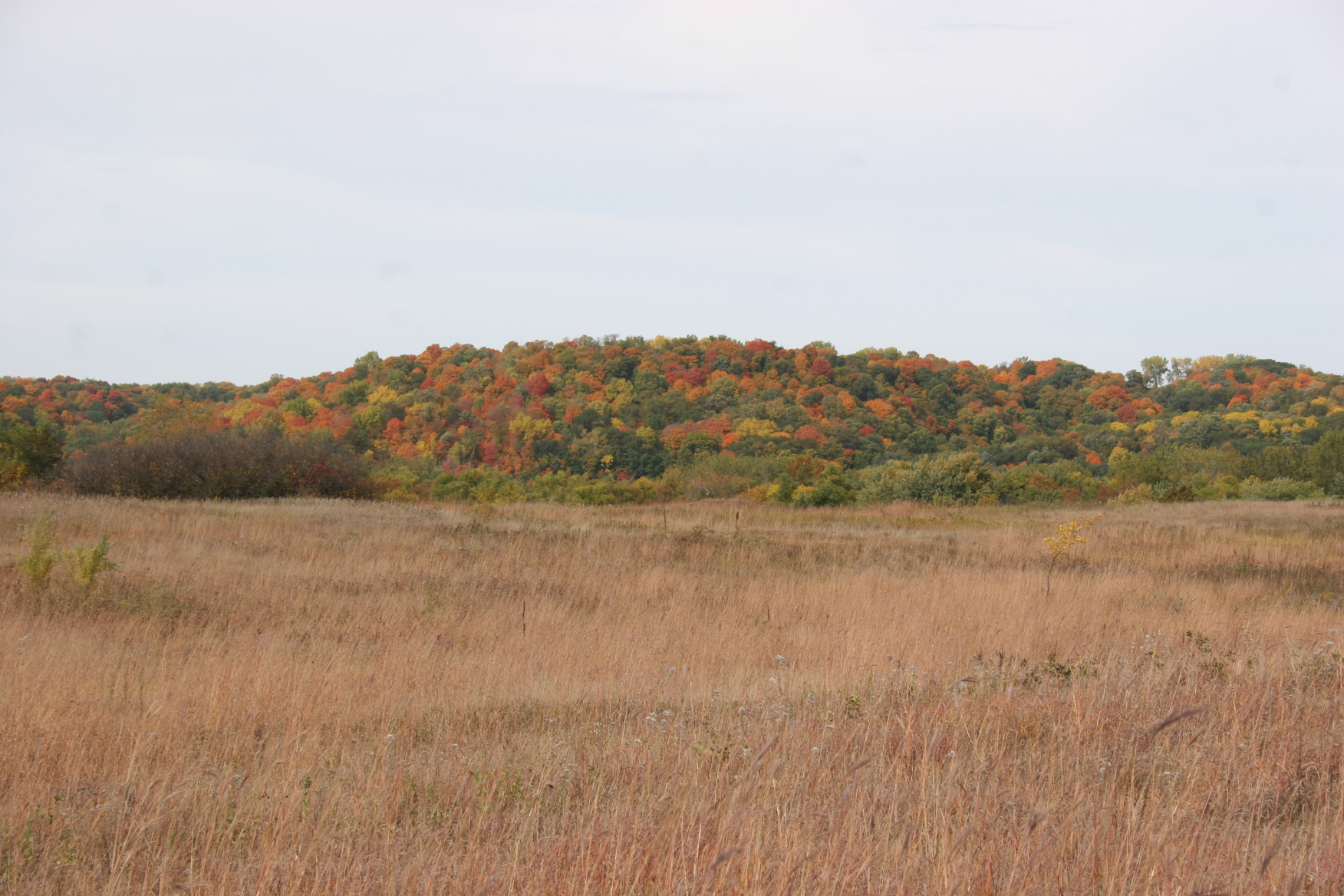
Fiery hillsides of trees edge the Kasota Prairie in the distance. (Minnesota Prairie Roots copyrighted photo October 2022)
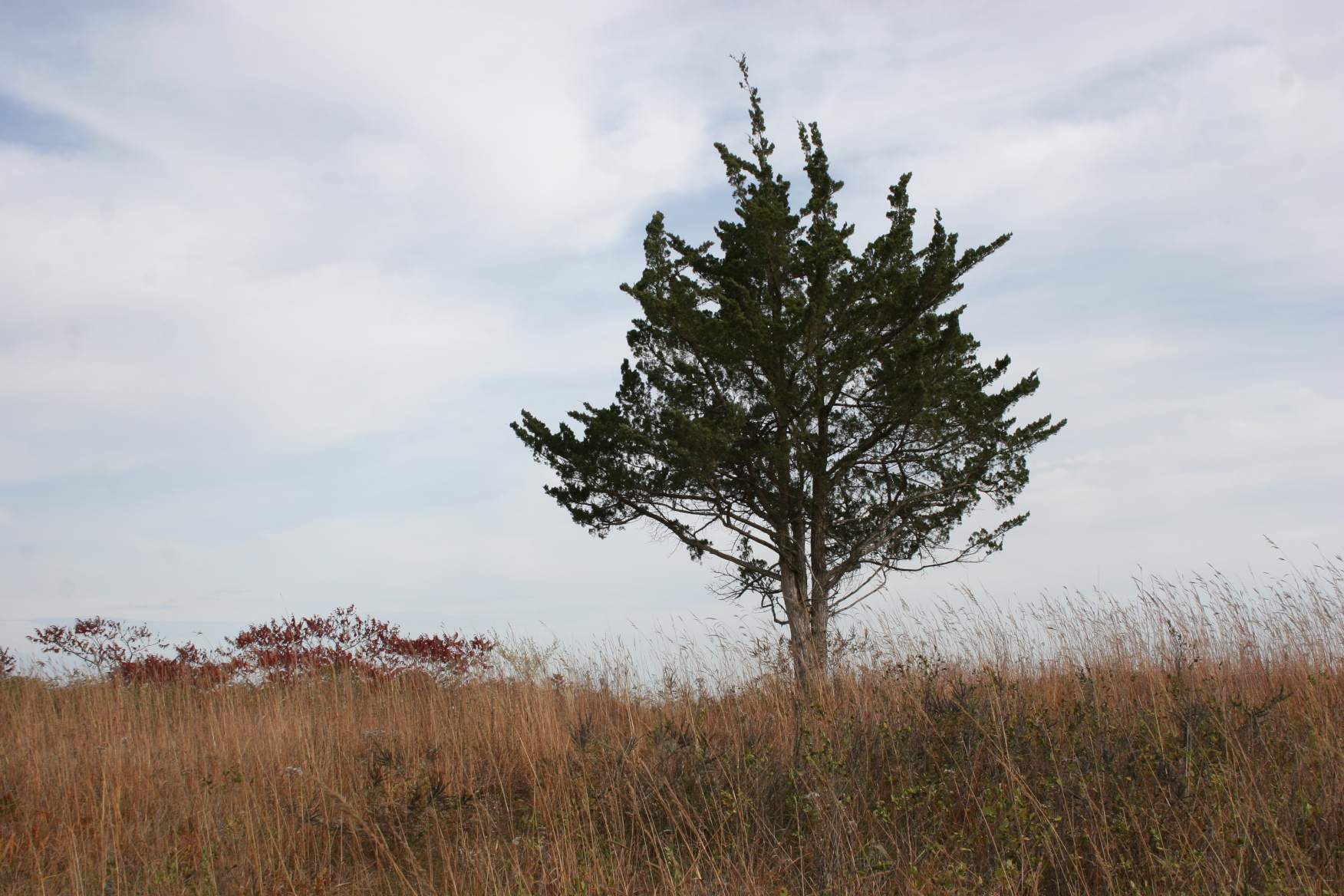
A lone cedar stands atop a hill on the Kasota Prairie. (Minnesota Prairie Roots copyrighted photo October 2022)

Near Kasota, we turned onto Le Sueur County Road 101 off CR 21 and took a winding gravel road about five miles to the Kasota Prairie. It was worth the dusty road, the meandering drive, to reach this grassland. As we pulled into the parking lot and hiked an uneven dirt trail into the prairie, I stopped multiple times to photograph the distant treeline painted in shades of mostly orange, red, brown… This prairie is a must-see, oh, so lovely, showcasing backdrop trees that hug the Minnesota River.

Colorful treelines can be seen along both sides of US Highway 169. Stunning. (Minnesota Prairie Roots copyrighted photo October 2022)

Color in the Minnesota River Valley is near-prime. Originally, we’d intended to tour Mankato, but shifted gears when I learned that my poem, “The Mighty Tatanka,” is not yet posted as part of The Mankato Poetry Walk & Ride. Instead, we drove to St. Peter and took US Highway 169 north out of town. And wow, oh, wow. The colors along the stretch of highway from St. Peter to Le Sueur, especially, are spectacular. This is a must-drive right now. Don’t wait. Not one day. Not two days. Go now.

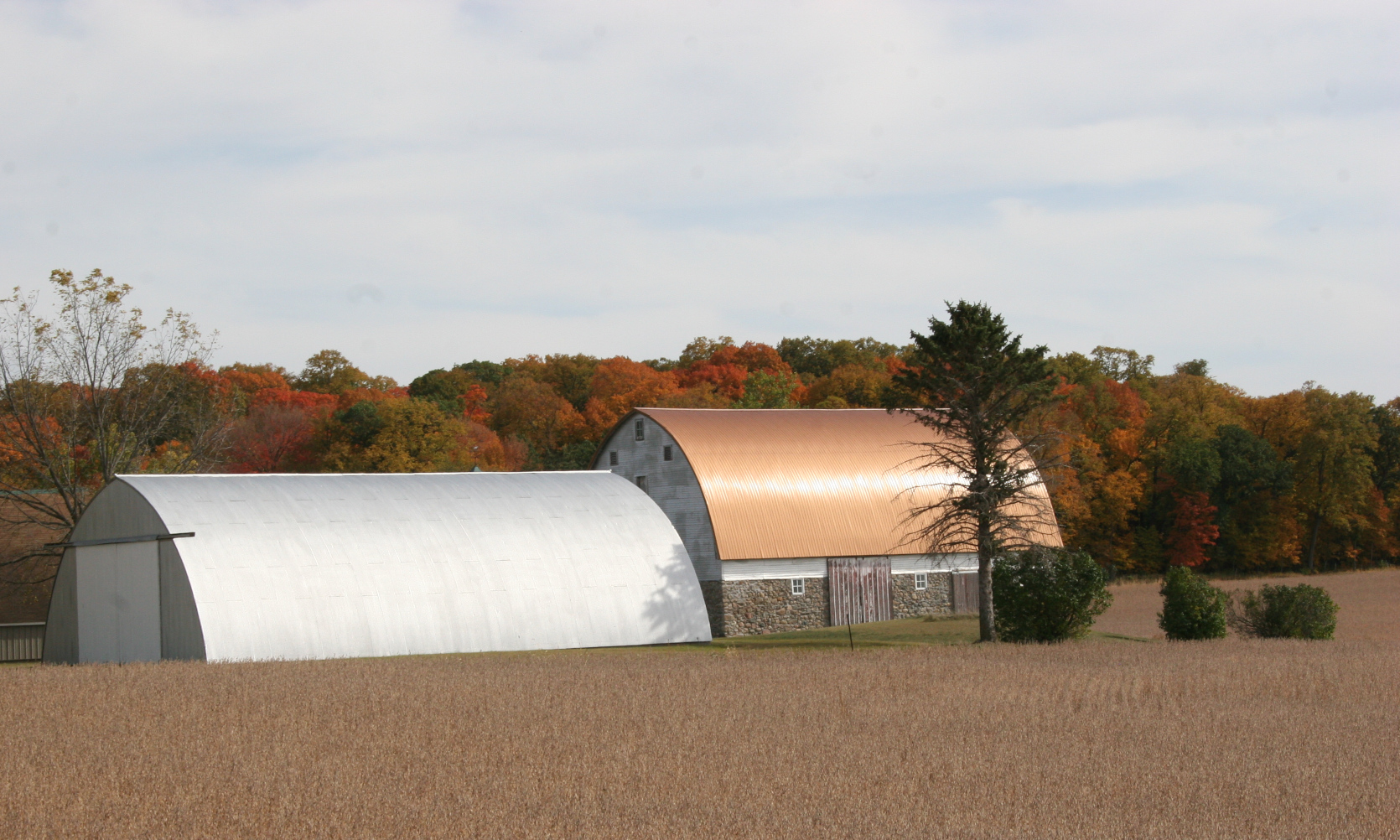
A memorable barn because of its copper-hued roof. (Minnesota Prairie Roots copyrighted photo October 2022)

Heading east on Minnesota State Highway 19 toward New Prague, we turned south at Union Hill and shortly thereafter took a gravel road to State Highway 13, then turned onto Le Sueur County Road 145, landmarked by a barn roof the color of copper set against an autumn backdrop of trees.

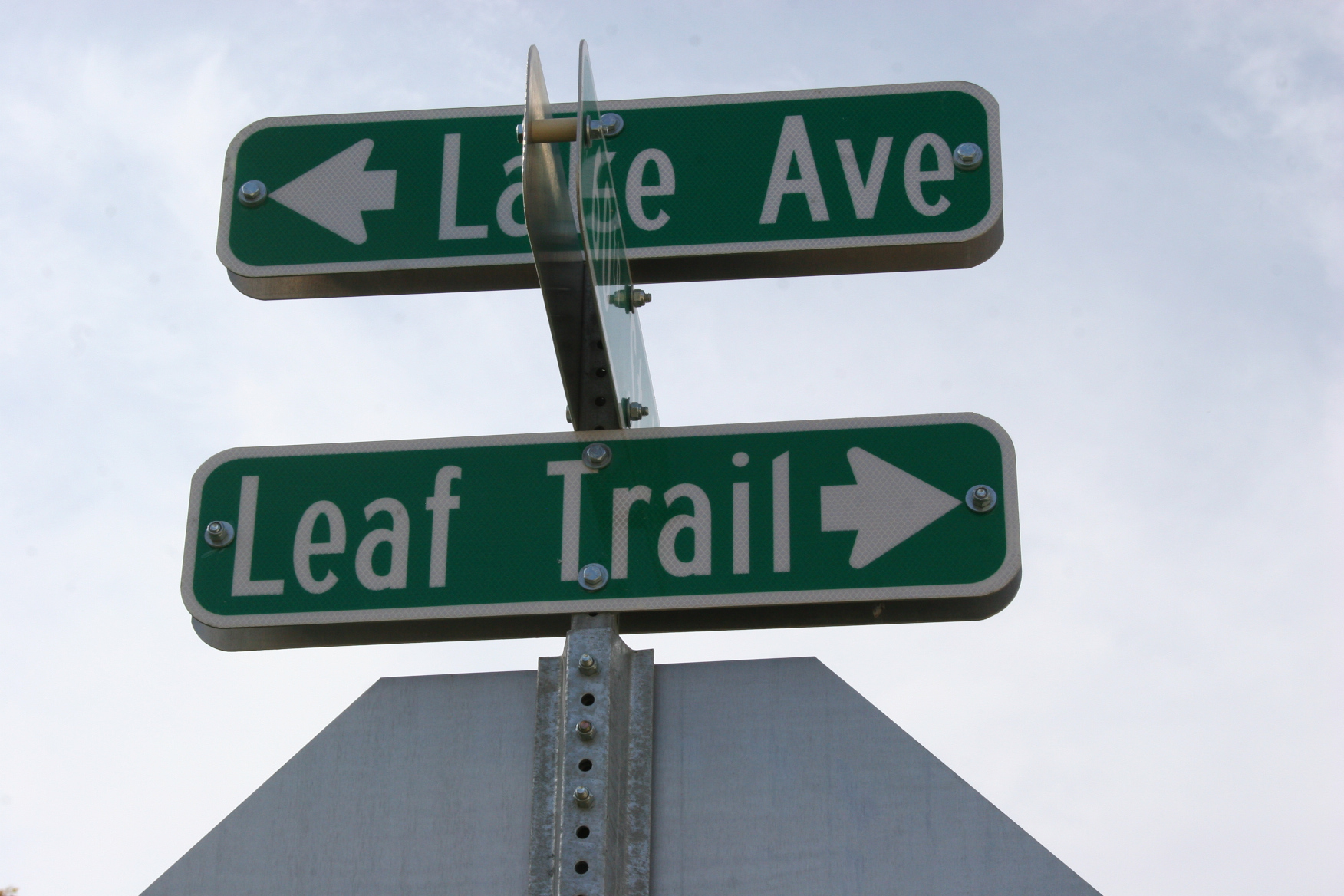
A road sign that fit the day’s purpose, to view leaves. (Minnesota Prairie Roots copyrighted photo October 2022)

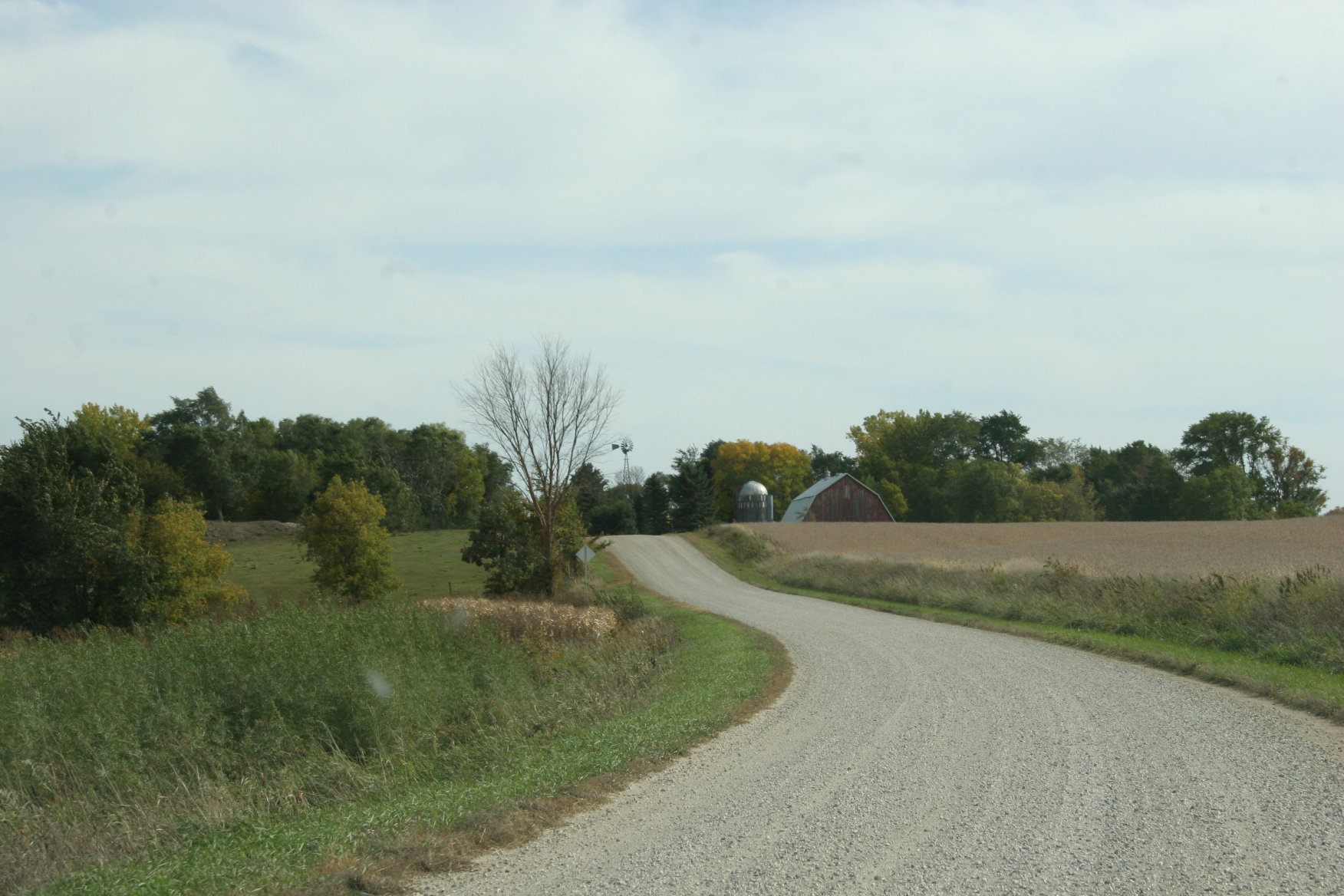
If I remember correctly, this farm site is along Leaf Trail. (Minnesota Prairie Roots copyrighted photo October 2022)

Heading back toward Faribault, another stunning treeline next to a cornfield. (Minnesota Prairie Roots copyrighted photo October 2022)

More gravel roads, including one appropriately named Leaf Trail, and blacktop eventually led us to Millersburg and aiming home to Faribault mostly along CR 46. Interstate 35 may have been a better choice for fall colors based on the colorful trees spotted there on Sunday between Faribault and the first Lakeville exit.

A view of Lake Washington from the public boat landing. (Minnesota Prairie Roots copyrighted photo October 2022)

But by then it was late afternoon, many road miles later with stops at lakes and the prairie and a park for a picnic lunch. We’d had a full day. A day full of autumn in Minnesota at its best. Warm. Mostly sunny. And ablaze in colors, the reason I so love this season.

© Copyright 2022 Audrey Kletscher Helbling


In Montgomery: Historic photos of Native Americans by Edward Curtis January 31, 2020

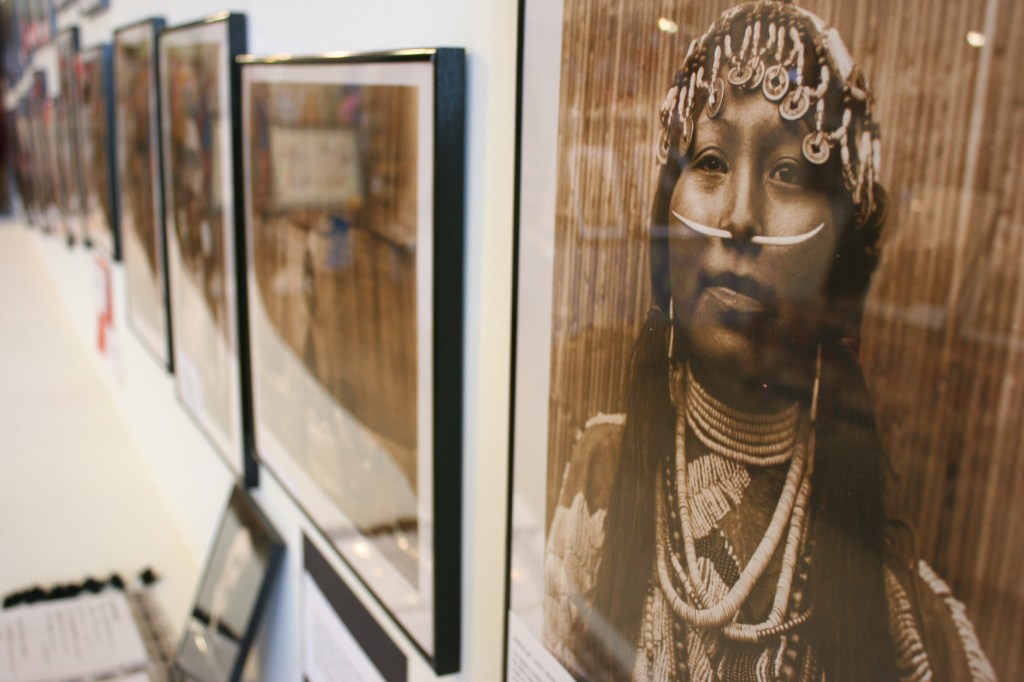
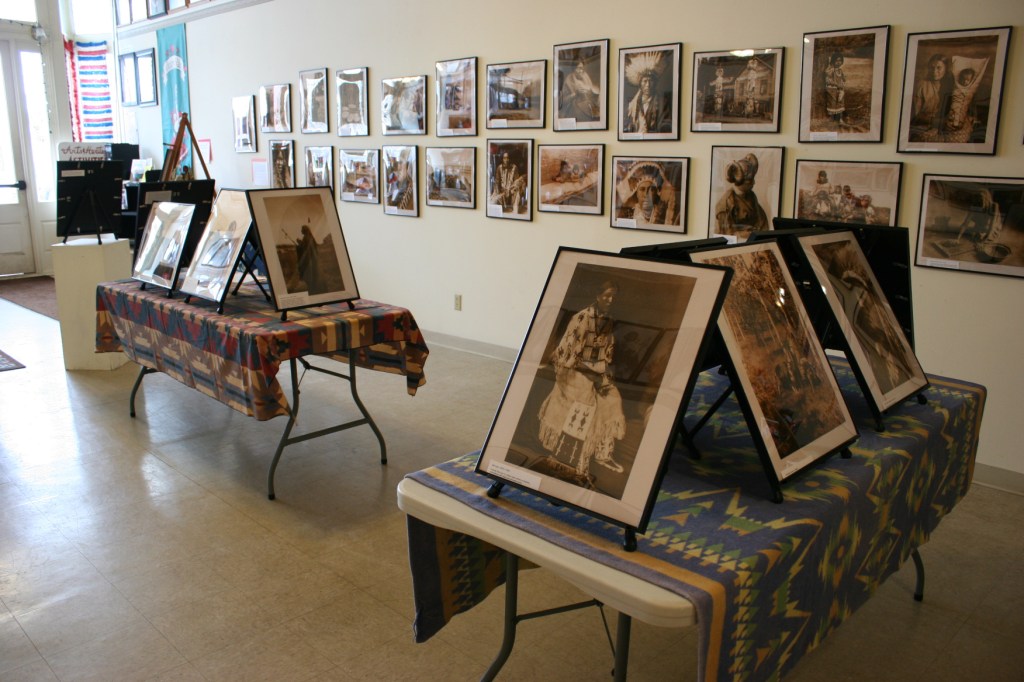
Prints of Edward Curtis photos now exhibited at the Montgomery Arts and Heritage Center.


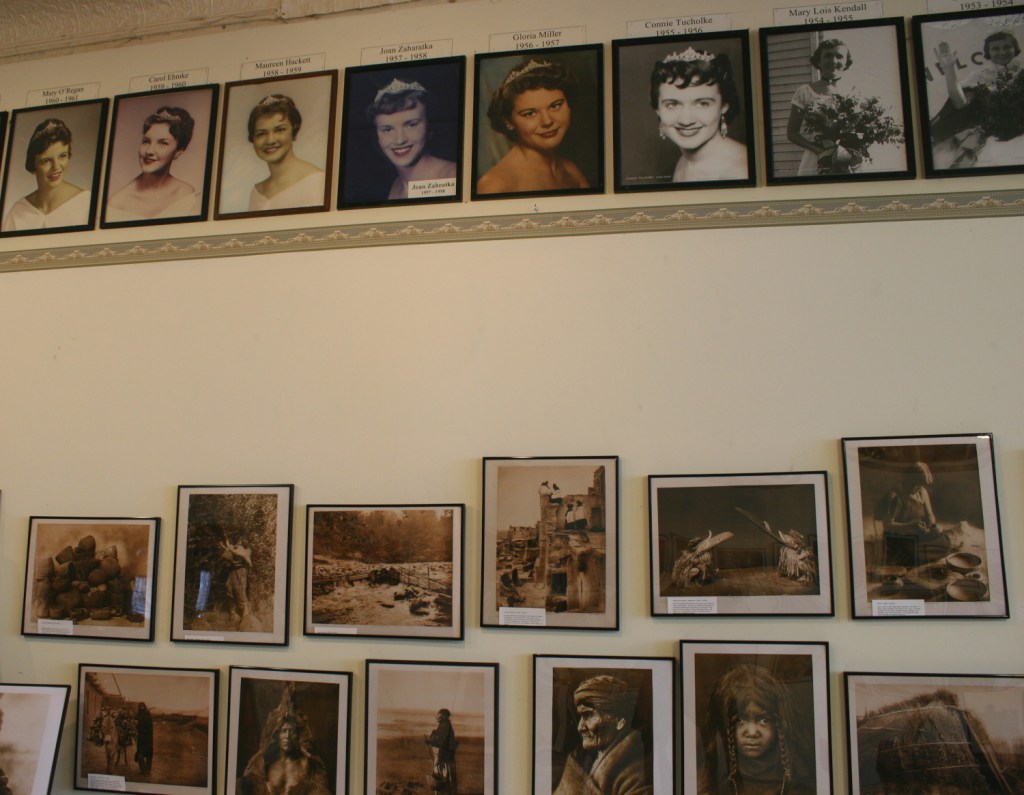
BENEATH PORTRAITS OF KOLACKY DAYS queens, early 1900s era sepia-tone photos stretch along walls and grace tables in the narrow room. Prints of images taken by a man considered one of America’s greatest photographers. Edward S. Curtis.


A permanent exhibit of Kolacky Days queen portraits hangs above the temporary exhibit of Edward Curtis photos of Native Americans.


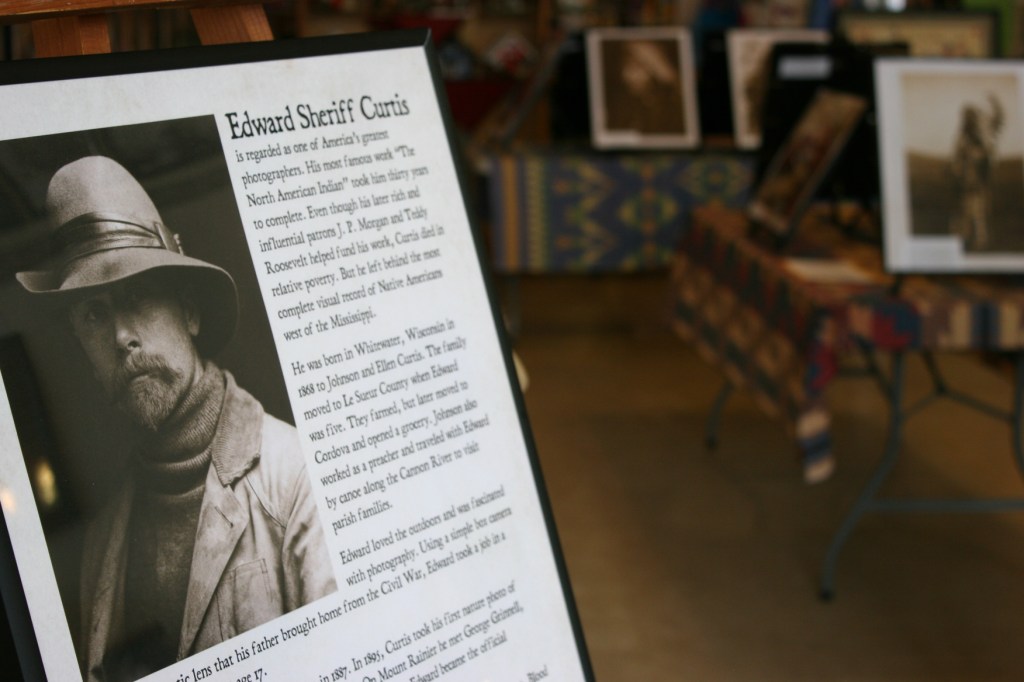
A photo of Edward Curtis with info about this noted American photographer.


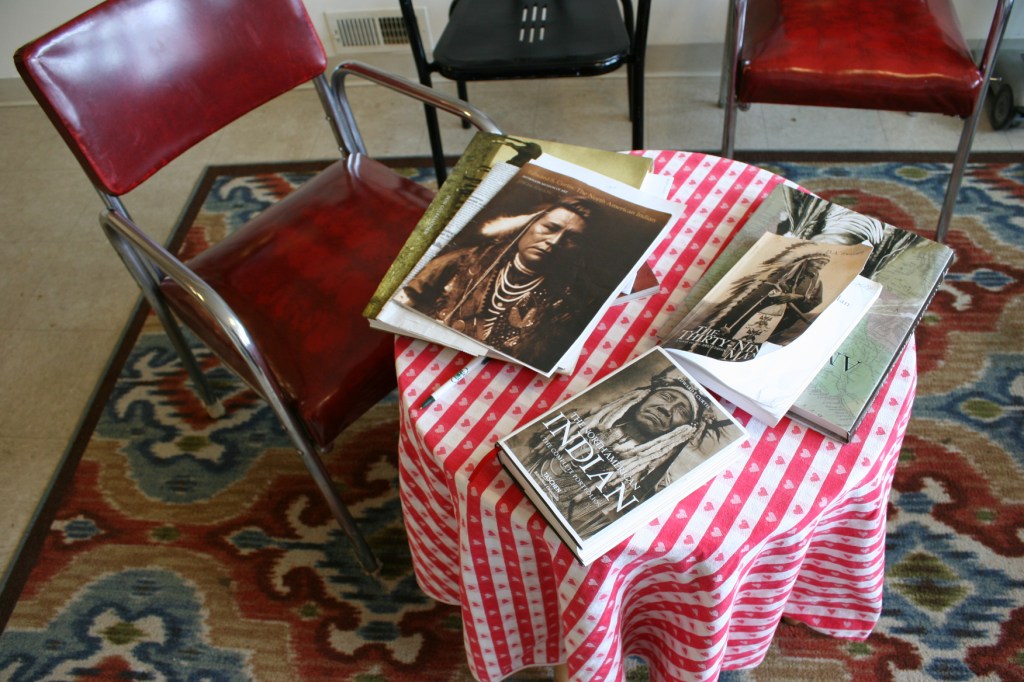
Visitors are welcome to sit and page through Edward Curtis books.


Despite his outstanding photographic reputation, Curtis was previously unknown to me. But no more. Recently I visited an exhibit of around 60 selected photos from his “The North American Indian” collection at the Arts and Heritage Center in Montgomery. His entire body of work encompasses 40,000 photos, many published in 20 volumes.


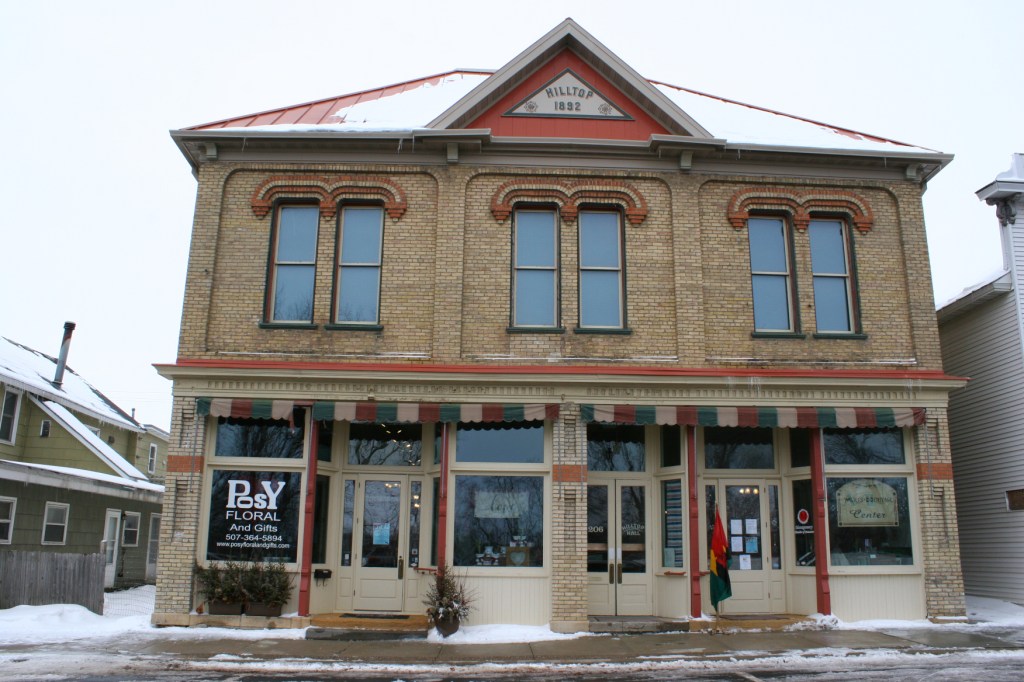
Historic Hilltop Hall houses the Montgomery Arts and Heritage Center on the right and a floral and gift shop on the left.


To see these photos, termed part of the “most complete visual record of Native Americans west of the Mississippi,” right here in rural Minnesota is such a gift. A $4,000 grant from the Carl and Verna Schmidt Foundation funded the exhibit in Montgomery, a community of some 3,000 just 20 miles northwest of Faribault.


Edward Curtis photographed Native Americans of the west over a 30-year period.


Displaying Curtis’ photos here brings the photographer full circle back to Le Sueur County. At the age of five, he moved here with his parents from his native Wisconsin, eventually settling in Cordova. Here he grew up to appreciate the outdoors as he canoed with his preacher father along the Cannon River. By age 17, Curtis was working at a photography studio in St. Paul. In 1887, he moved to Seattle.


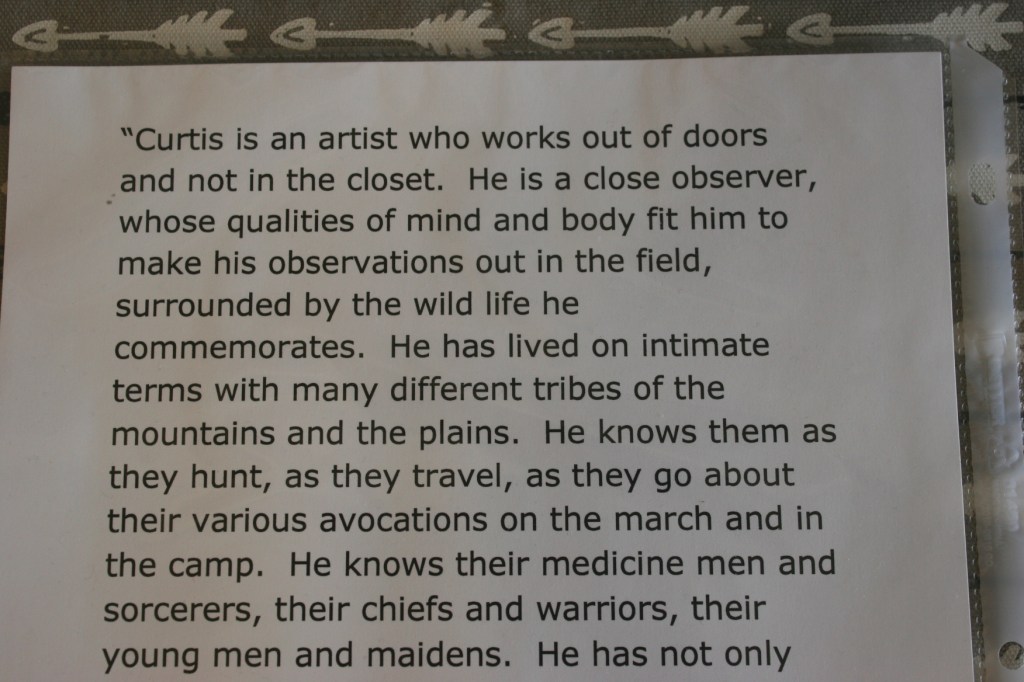
A snippet of a 1906 comment about Edward Curtis by President Theodore Roosevelt.


That’s the backstory of a photographer who earned the praise and financial support of President Theodore Roosevelt, who called Curtis a “close observer.” That is evident in the documentary photos of the Native Americans Curtis came to know well and to, clearly, value and love.


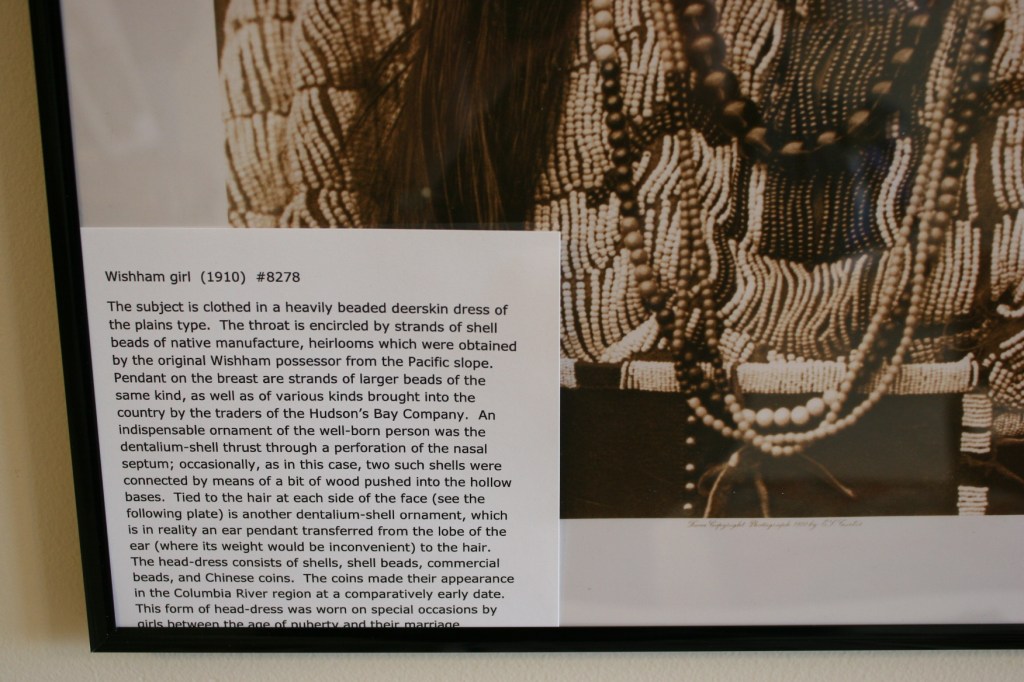
“Wishham girl,” 1910


Text accompanies the “Wishham girl” photo.


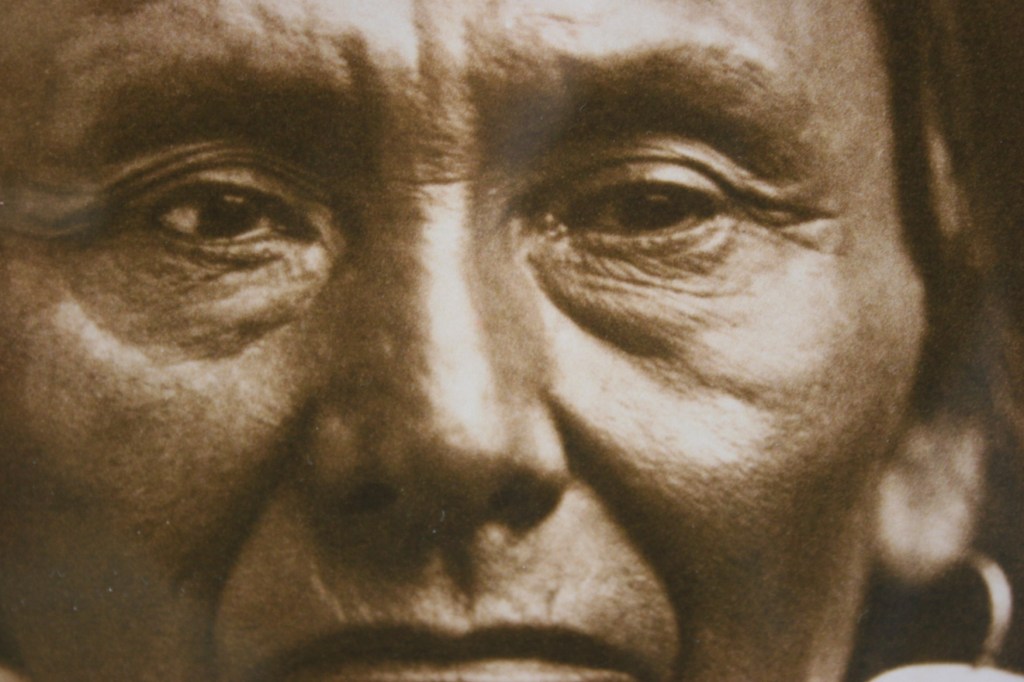
A portion of the portrait of “Chief Joseph– Nez Perce”, 1903


His portraits of western Native Americans document not only a culture, but also history and personalities. As I studied the photos, I admired faces weathered by wind and sun, steady strength in profiles, joy and sadness in eyes. I admired, too, the artistry of woven baskets, handcrafted pottery, curved canoes, feathered headdresses and detailed beadwork.


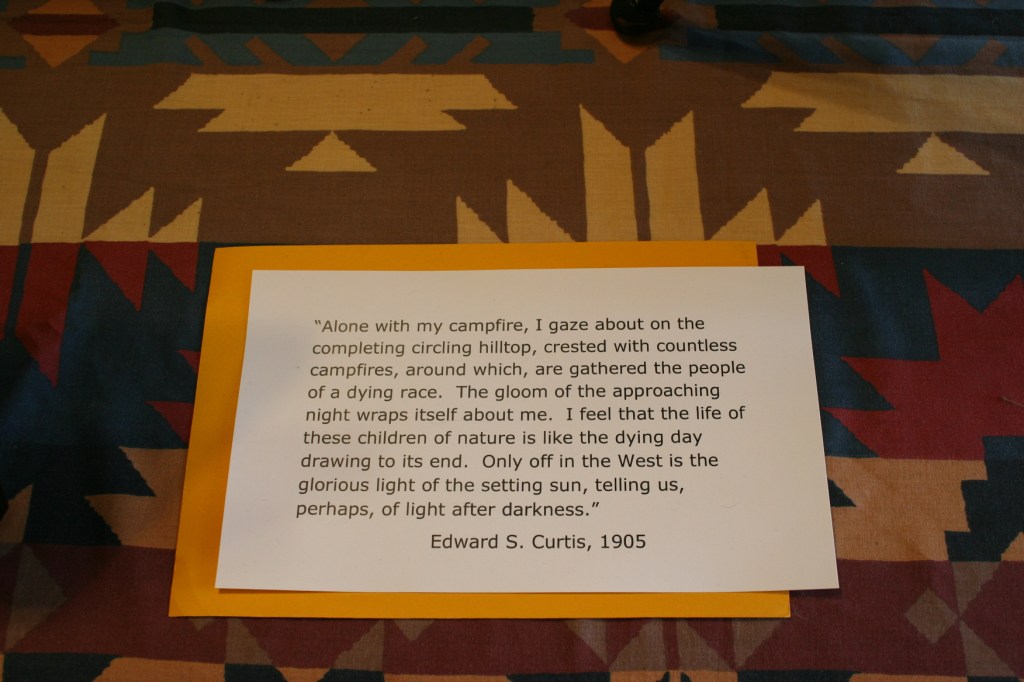
An insightful and beautiful quote by Edward Curtis.


I expect if I was to revisit this exhibit, I’d notice details I missed. There’s just so much to see, to take in, to appreciate, to contemplate. A culture. A people. A way of life. A history. A connection to nature.


More photos from the exhibit.


I am grateful to long-ago photographers like Edward Sheriff Curtis for his efforts in connecting personally with his subjects, for caring and for documenting with his camera. His work is truly remarkable.


Info about Edward Curtis included in the show.


FYI: “The North American Indian” exhibit at the Montgomery Arts and Heritage Center continues until Saturday, February 29. The arts center is open from 2 – 5 pm Thursdays and Fridays and from 9 am – noon Saturdays and is located at 206 First Street North in downtown Montgomery, Minnesota.

© Copyright 2020 Audrey Kletscher Helbling


Snapshots of Le Center April 5, 2018

Filed under: Uncategorized — Audrey Kletscher Helbling @ 5:00 AM
Tags: , , , , , , ,

Parked along an alley in downtown Le Center, Minnesota.


WHEN THE WEATHER WARMS (it will happen soon in Minnesota, right?), I’ll have my camera out more. Documenting. Photographing. Showing you the places I visit, the discoveries made.


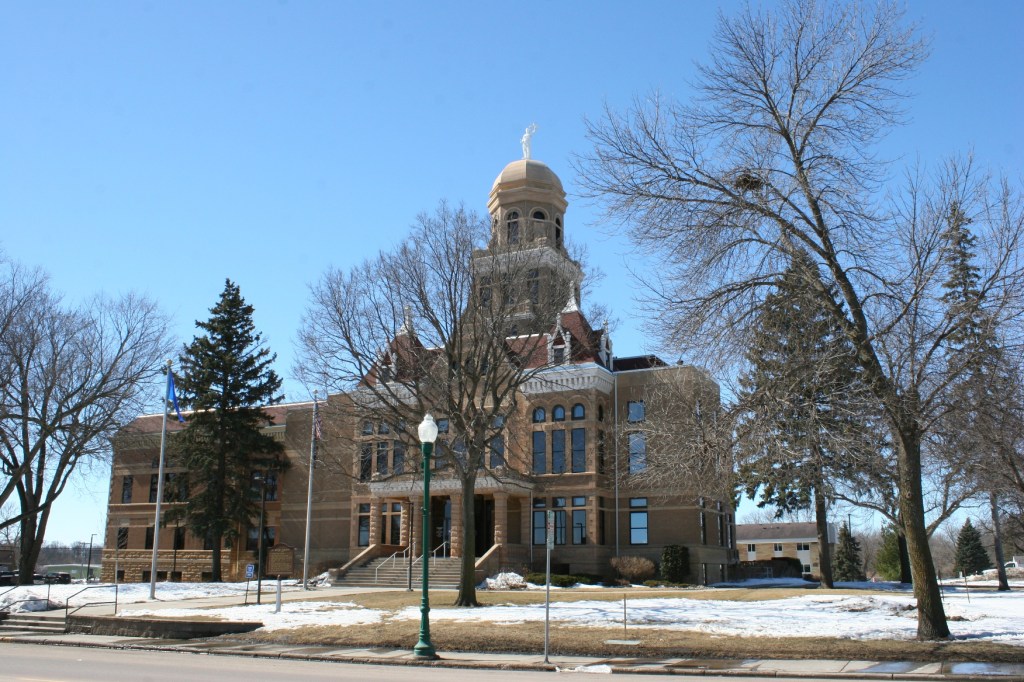
The original section of the Le Sueur County Courthouse was built in 1897 of brick and Kasota stone at a cost of $55,000. It was designed by Chicago architect Louis M. Curry of Mayo & Curry in the Richardsonian Romanesque Revival style. Additions have been made to the building and remodeling done.


Those include small towns like Le Center. It’s the county seat of Le Sueur County and about a 45-minute drive northwest of Faribault. It’s one of those communities you’d likely not drive to unless you had business or family there or were passing by en route to somewhere like St. Peter.


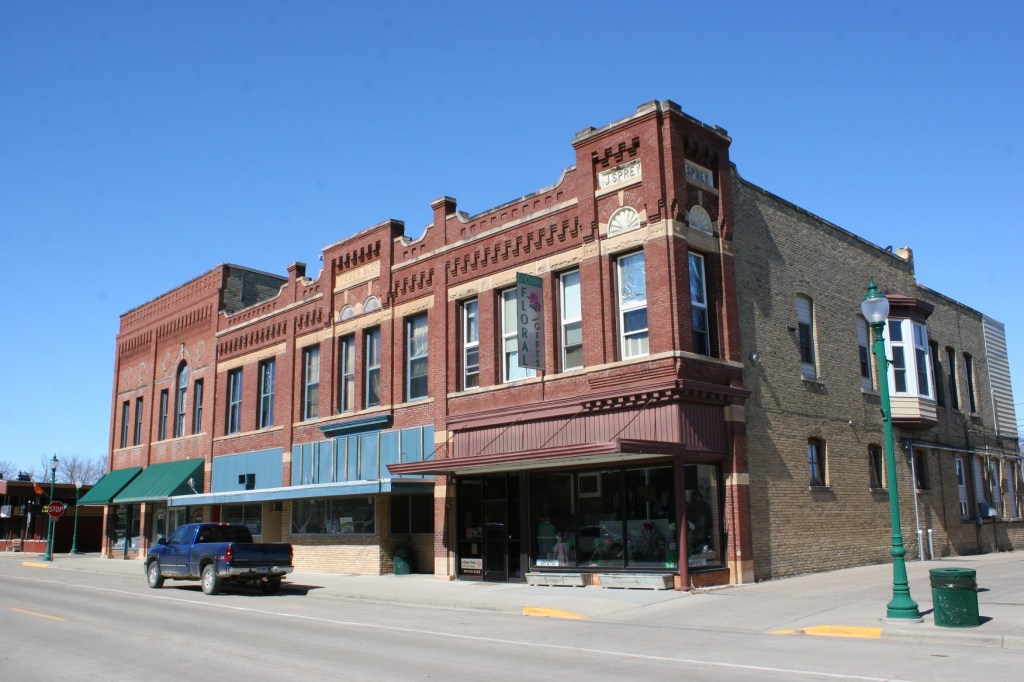
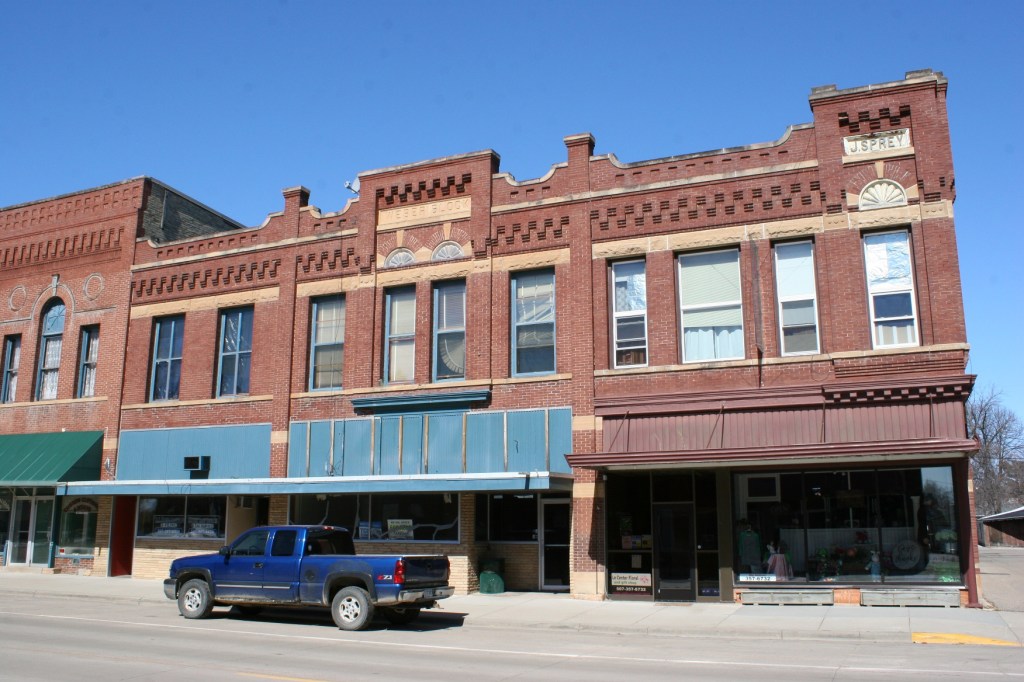
I love this row of well-kept old buildings in the heart of Le Center.


On a recent Saturday afternoon of road tripping, Randy and I stopped in Le Center. We parked downtown, popped into the thrift store minutes before closing, walked 1 ½ blocks along sidewalks and then looped back through an alley to the van.


I snapped a few photos. These images offer a glimpse of this community.


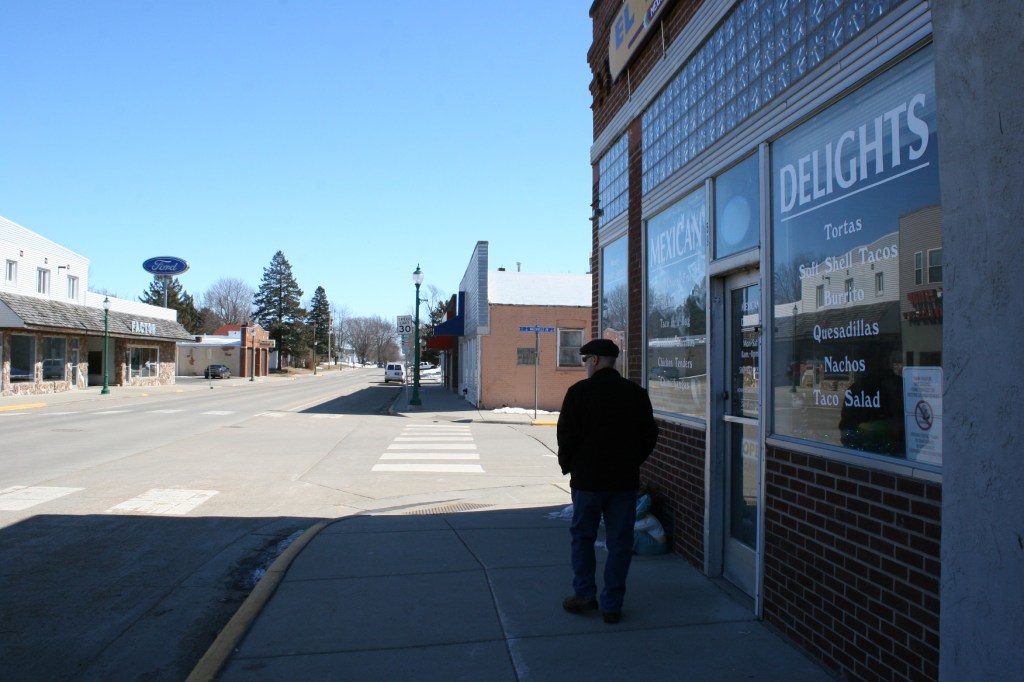
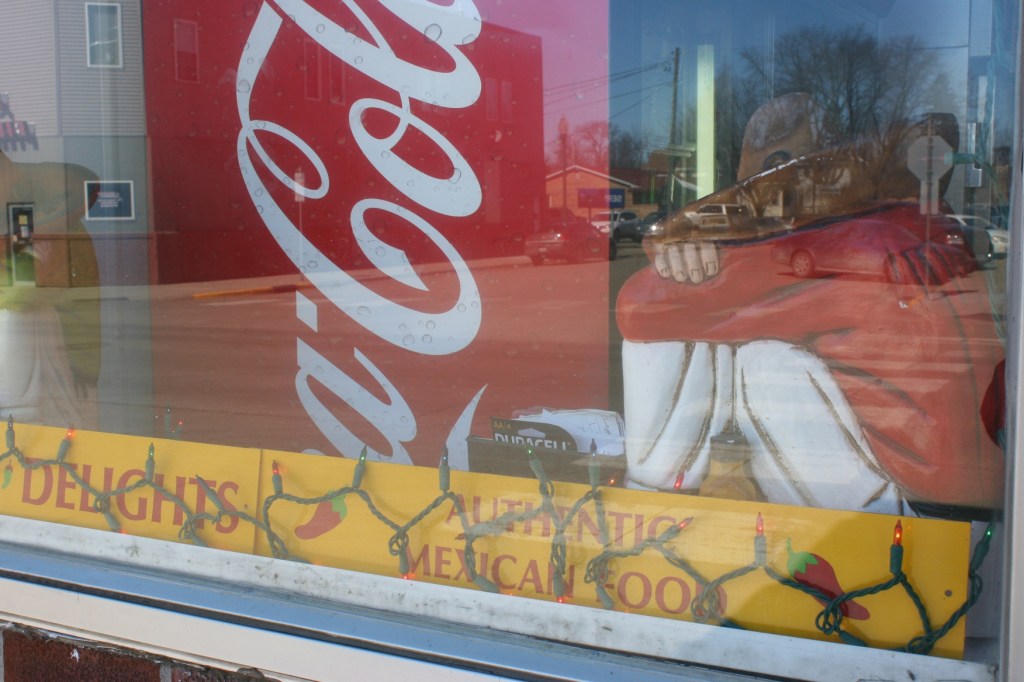
A front window in Mexican Delights, a downtown restaurant.


Diverse.


Patriotic.


Spotted inside a Le Center thrift store.


Trusting.


Lovely in aged buildings.


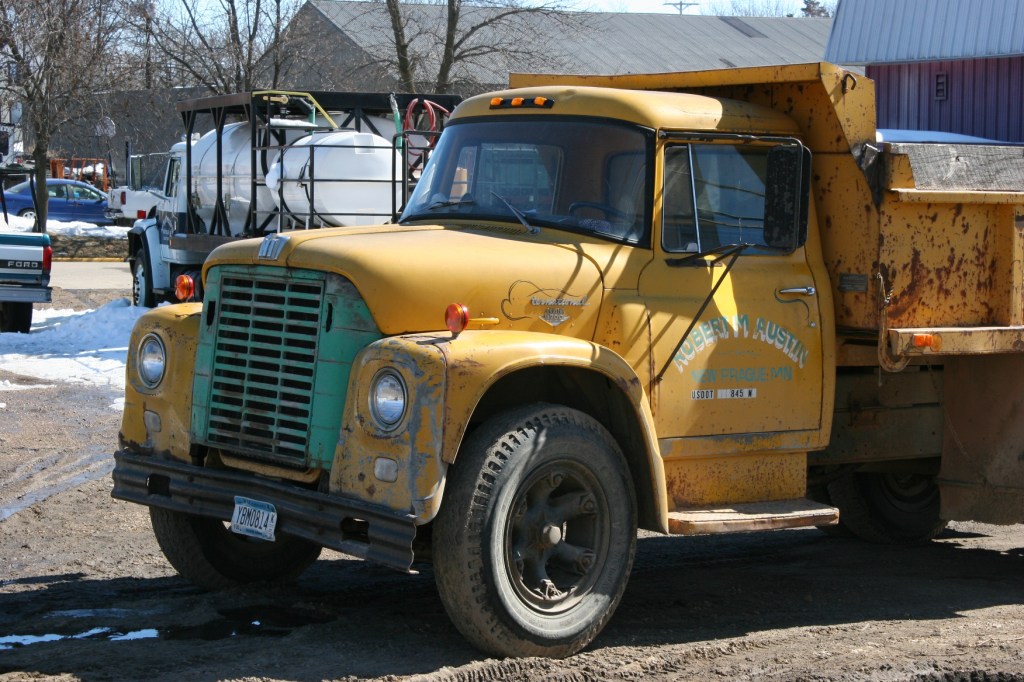
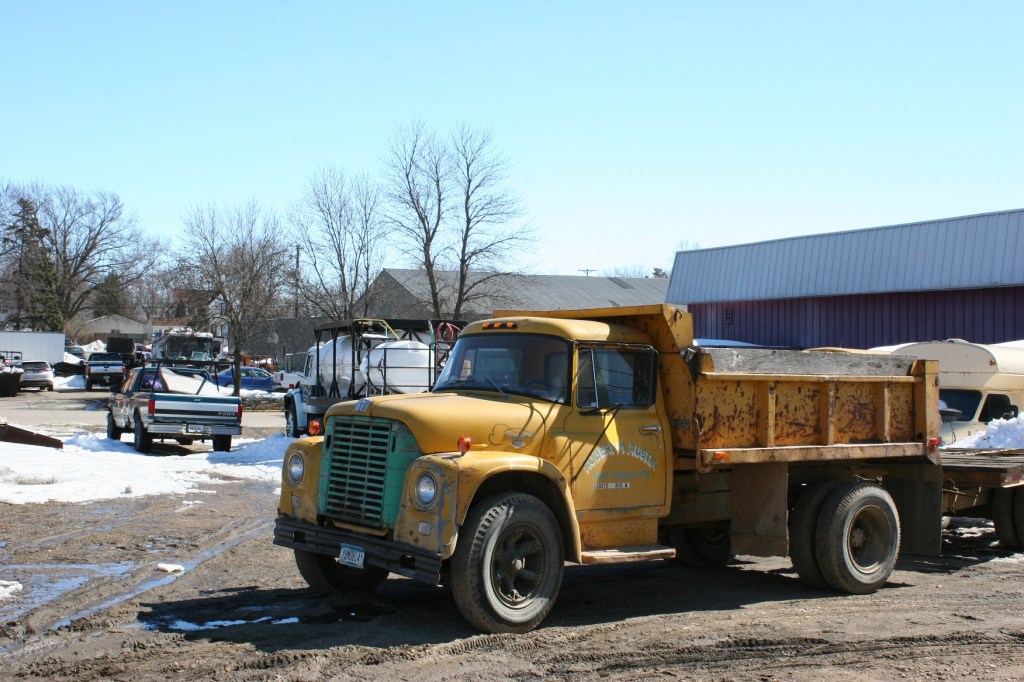
Assorted trucks and other vehicles were parked in a vacant lot and along an alley behind Main Street businesses.


You can tell a lot about a town in first impressions. I need to revisit Le Center, though, to uncover more of its personality. Small towns are each individual, as individual as the folks who call these communities home.

© Copyright 2018 Audrey Kletscher Helbling


Reconnecting to the land during a March drive in Minnesota March 27, 2018

Filed under: Uncategorized — Audrey Kletscher Helbling @ 5:00 AM
Tags: , , , , , , , ,


SOMETIMES I NEED JUST to get out into the countryside—to reconnect with the land, to see the sky, to feel the pulse of the earth.


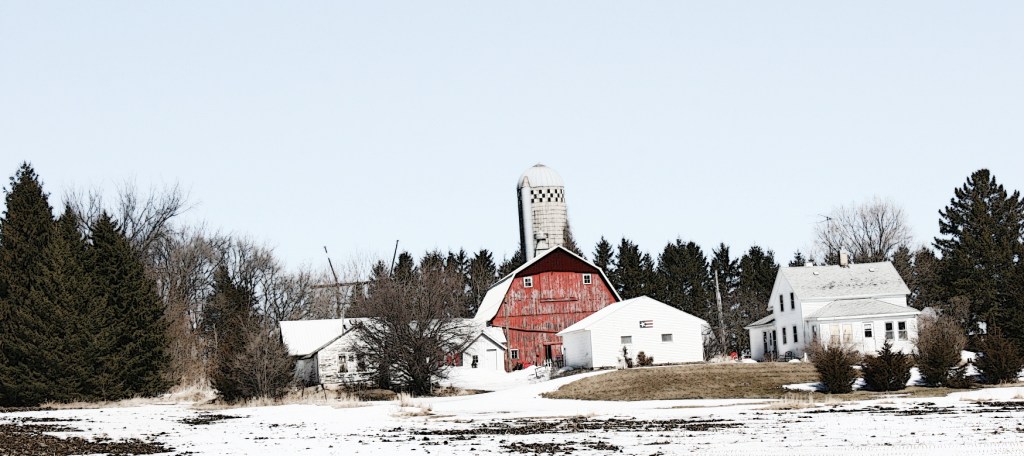
I need to see farms,


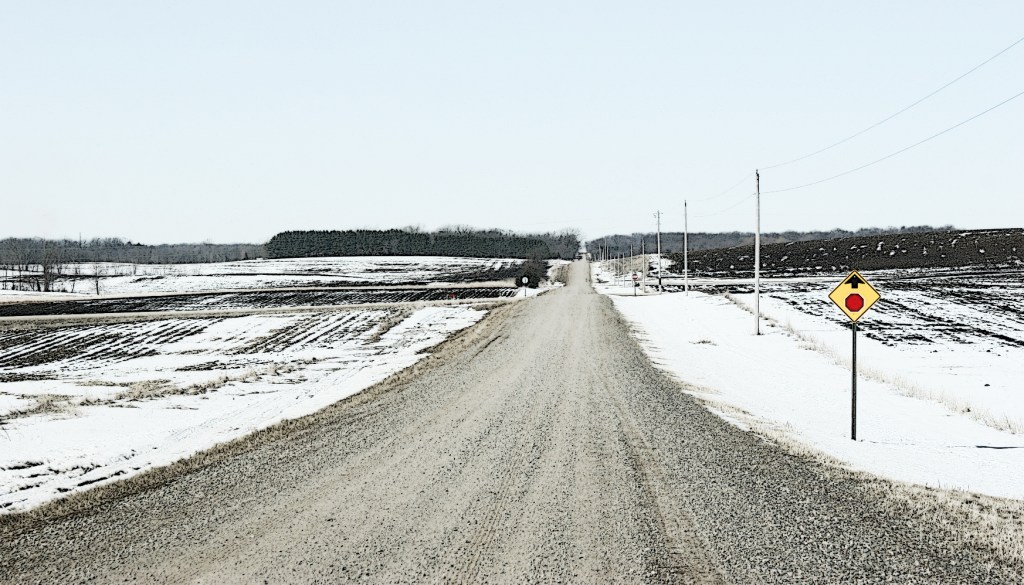
follow rural roads,


hear the crunch of tires upon gravel,


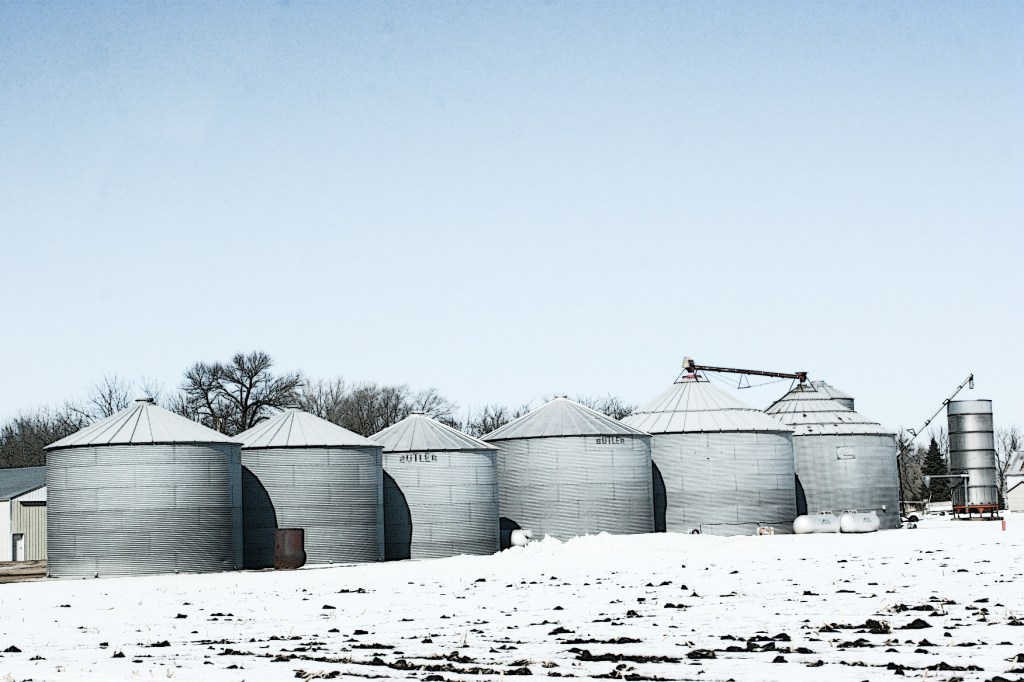
pass by rows of grain bins,


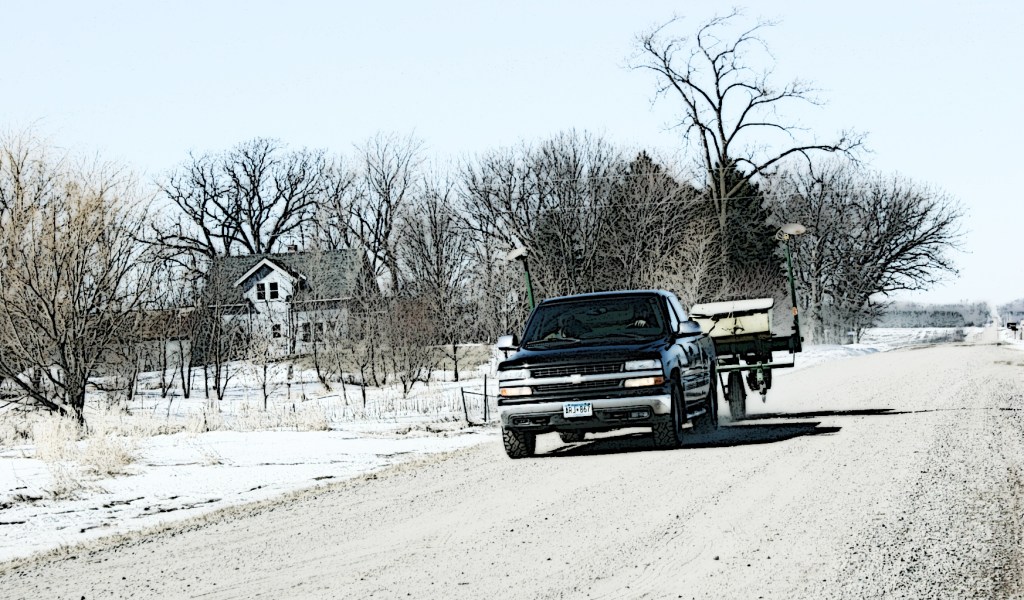
notice the oddities of signage,


the art of the land.


All of this I need to satisfy that part of me which misses rural life. I shall always retain my farm girl spirit, my connection to my rural roots despite my now decades-long absence.


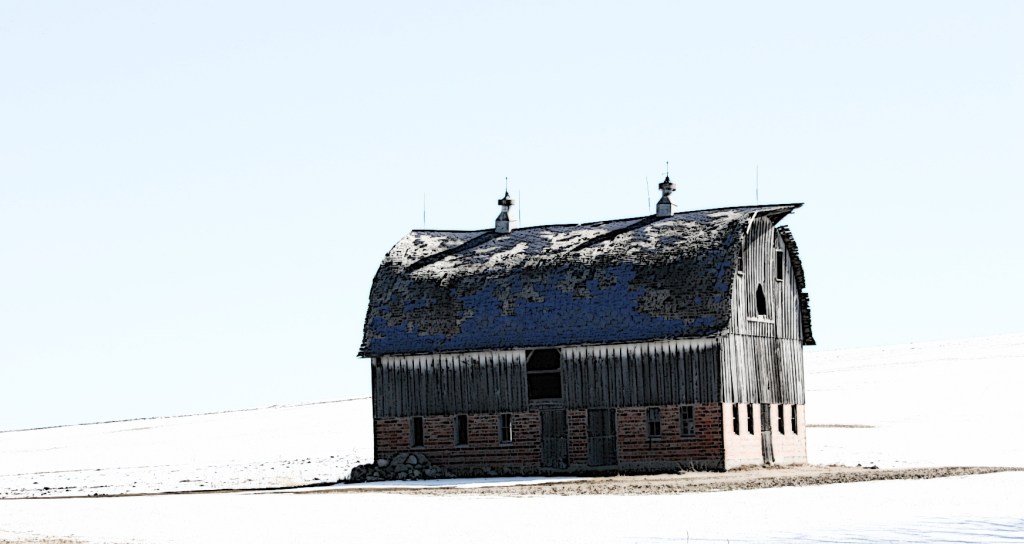
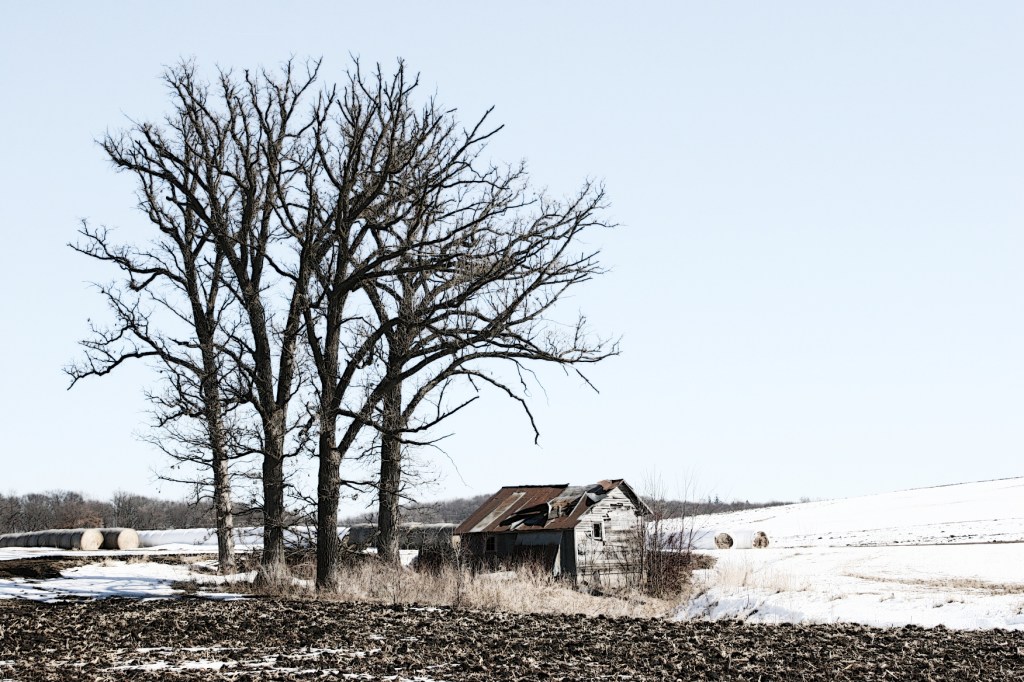
Note: All photos are edited to create a more artsy look. All scenes were photographed in Le Sueur County, Minnesota.

© Copyright 2018 Audrey Kletscher Helbling


A lot of Irish in Saint Thomas in Derrynane Township March 20, 2018


I APPROACHED THE BEAUTIFUL brick church with the full expectation that the doors would be locked. They were. There would be no getting inside St. Thomas Catholic Church on this St. Patrick’s Day. I felt disappointment, but not surprise.


A hot pink sign tacked onto the church sign notes an Easter vigil here on March 31.


Even though shut out, Randy and I still explored, circling this immense church with stained glass windows and with tower steepling to a cross.


We crunched across crusty snow to look at gravestones that bear the Irish history of this place in names like O’Malley, Shea, O’Connell and noted ancestral roots in Cork County, Ireland and elsewhere.


Driving into Saint Thomas, Minnesota.


This village lies in the middle of farmland with this farm site on the edge of Saint Thomas.


This ag business sits right next to the cemetery.


Then comes the town hall.


And, finally, Callahan’s, which appeared no longer in business.


Saint Thomas is through-and-through Irish, based on our observations of this unincorporated village along Le Sueur County Road 28 just north of Le Center in Derrynane Township. We found this settlement via an atlas that is our guidebook to mostly unknown places in Minnesota. With a name like St. Thomas, we expected a Catholic church and not much more.


The church, built in 1883, closed in January 2011, just another among many rural Catholic churches shuttered and merged. Mass is still held occasionally at St. Thomas.


I often wonder how long such mostly vacated churches will stand. St. Thomas appeared well-cared for still. At least on this St. Patrick’s Day in 2018. But when those who once worshiped weekly here are gone, will their descendants care? Will they still tend the cemetery, swing open the doors for an Easter vigil? I hope so.


© Copyright 2018 Audrey Kletscher Helbling


The mysterious (at least to me) Swede’s Bay November 6, 2017

Filed under: Uncategorized — Audrey Kletscher Helbling @ 5:00 AM
Tags: , , , , , , , ,

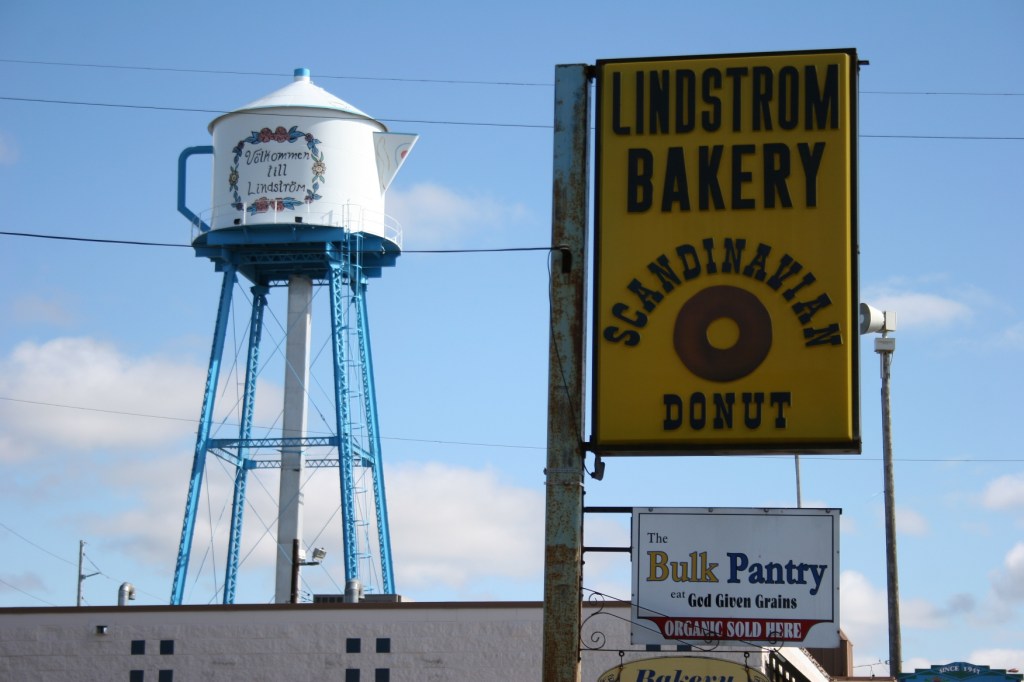
Lindstrom, Minnesota, “America’s Little Sweden.” Minnesota Prairie Roots file photo April 2015.


IN A STATE WITH A STRONG Scandinavian base, nuances of ethnicity show up in lutefisk dinners, lefse-making parties, Lutheran churches named Vasa and Vang, a Swedish coffee pot water tower, the Minneapolis-based American Swedish Institute and more.


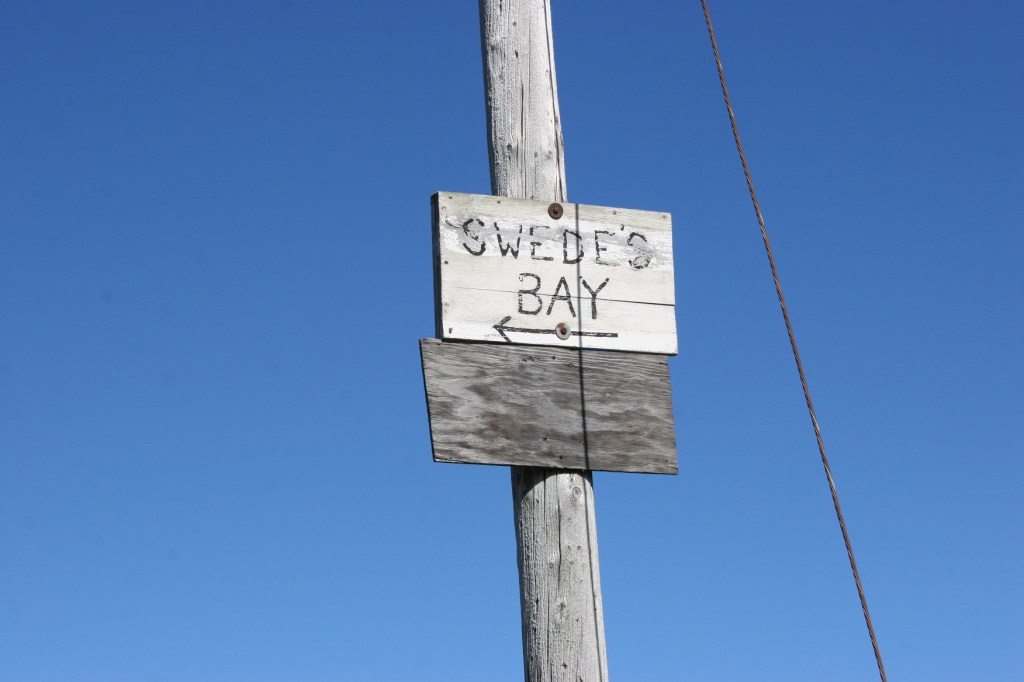
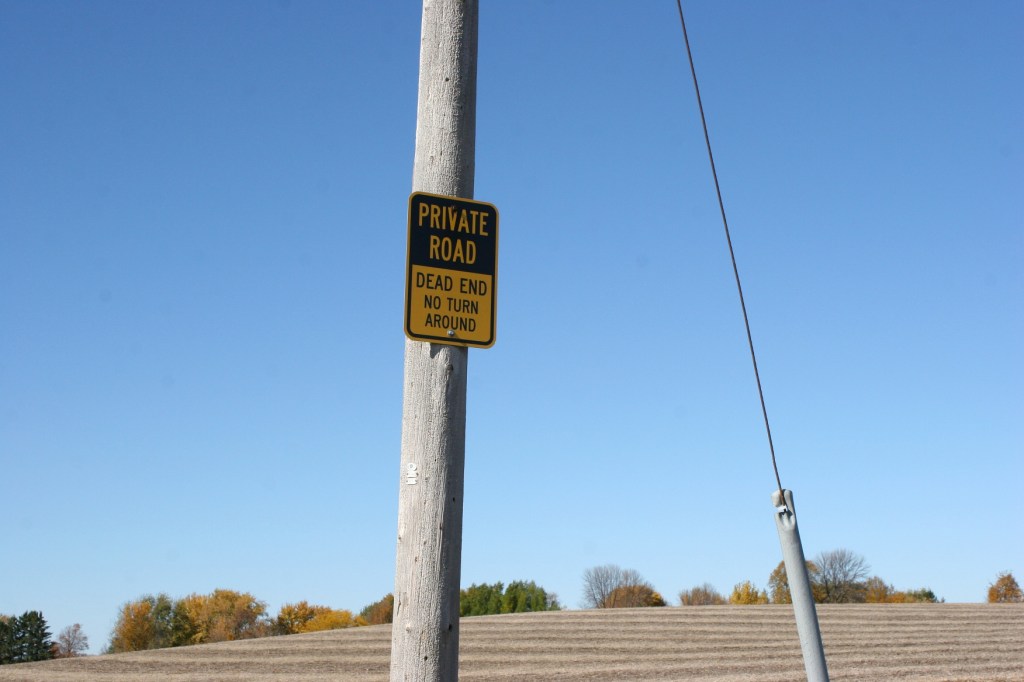
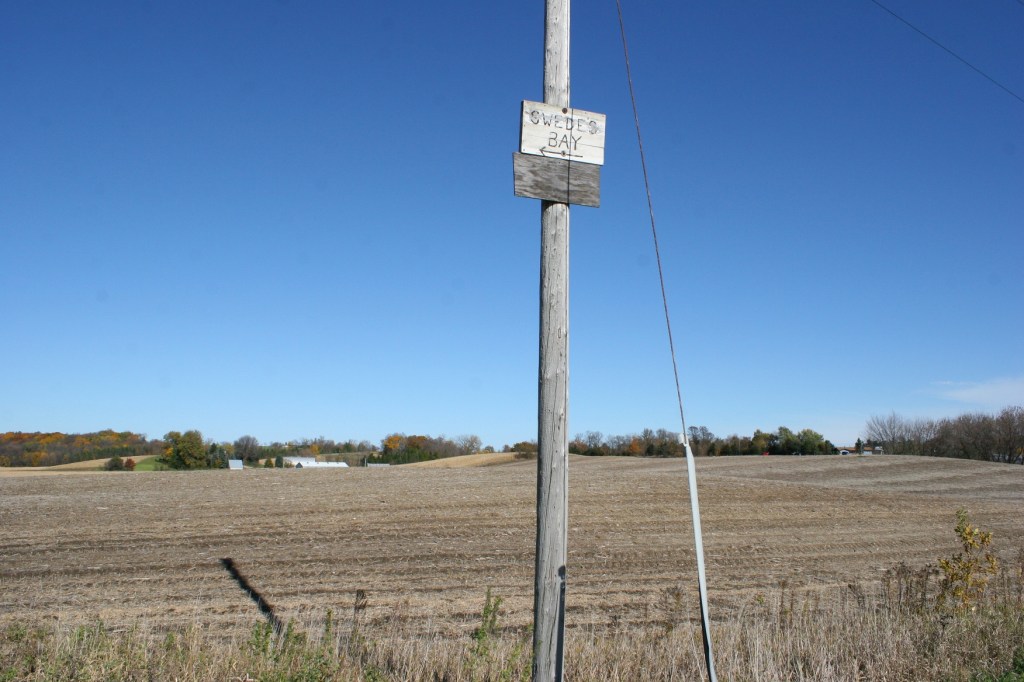
That more includes a fading sign attached to a utility pole in rural Le Sueur County. On a recent Sunday afternoon drive, I noted a posting for SWEDE’S BAY and wondered. But the arrow to the bay pointed in the same direction as a sign warning PRIVATE ROAD DEAD END NO TURN AROUND.


The message was clear. Stay away.


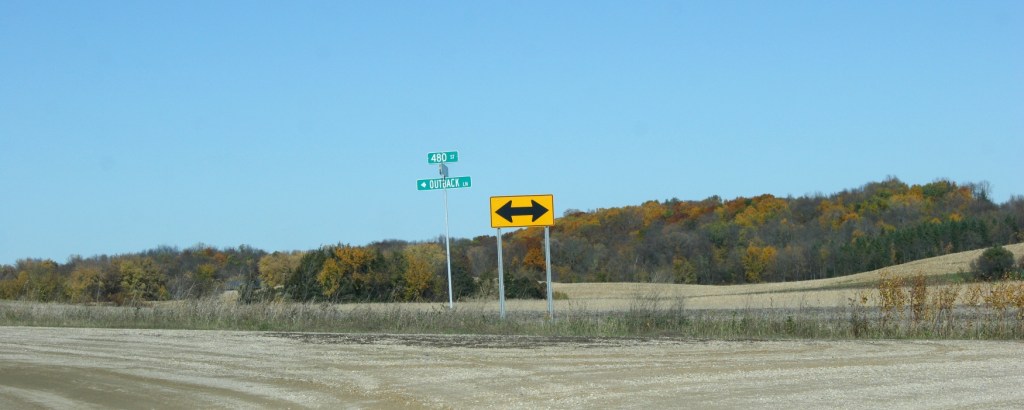
So Randy and I didn’t venture toward Swede’s Bay in the vicinity of 480th Street/Orchard Road/Outback Lane. Sometimes I wish we weren’t such rule followers. But the warning sign was enough to deter me from searching farther along this remote rural gravel road.


Back home I googled the mysterious bay to discover Swede’s Bay is a lake in a cluster that includes the better known Lake Jefferson and German Lake northeast of Madison Lake. That raises another question: In the naming of the lakes, did the Germans and Swedes convene and decide fair is fair. Name that lake German, this one Swede’s?

© Copyright 2017 Audrey Kletscher Helbling
 

A glimpse of Le Center November 10, 2015

Filed under: Uncategorized — Audrey Kletscher Helbling @ 5:00 AM
Tags: , , , , , , ,

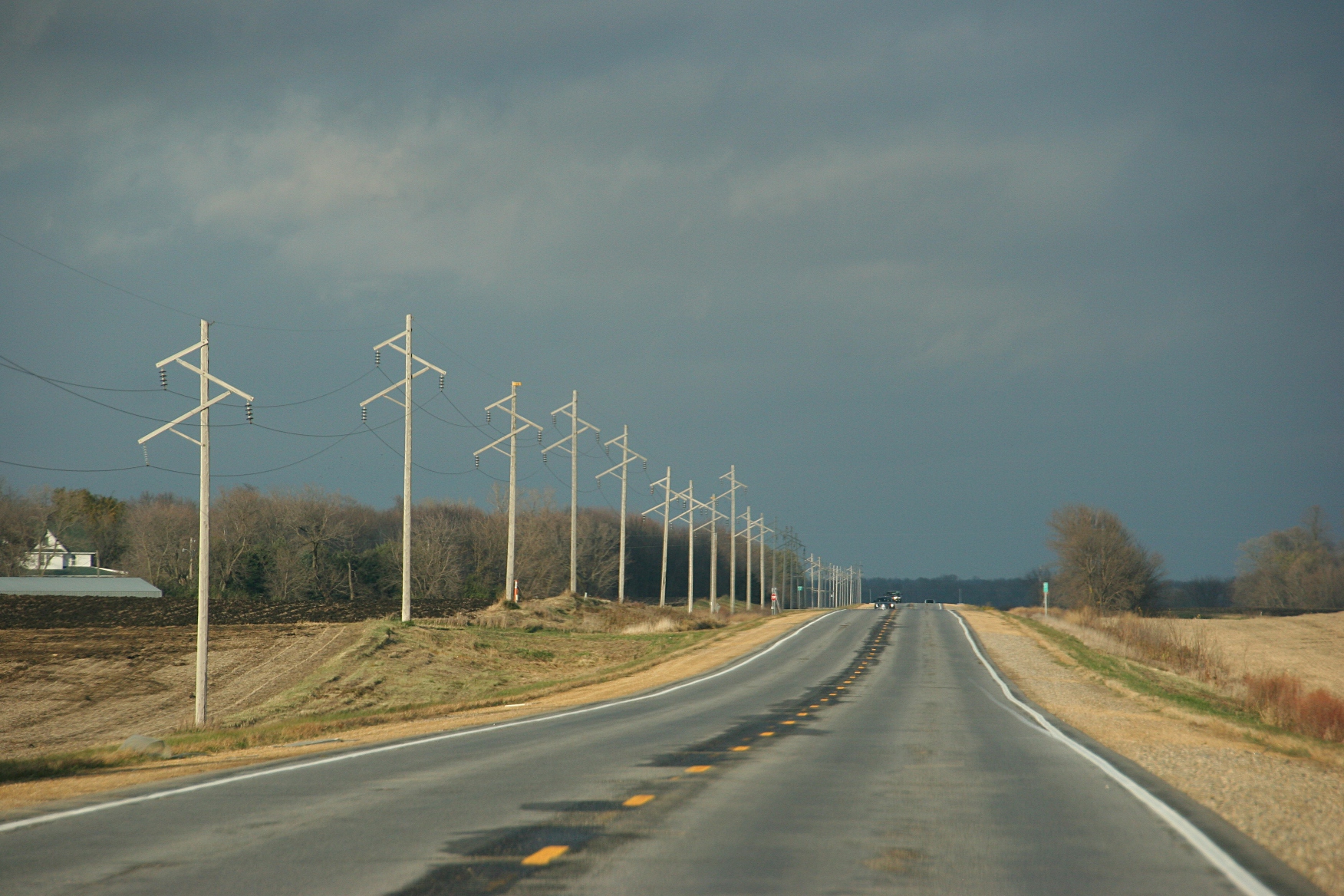
Driving northeast on Minnesota State Highway 99 toward Le Center.

Driving northeast on Minnesota State Highway 99 toward Le Center.

EVERY TIME I PASS through Le Center, I am in a hurry, on my way to somewhere else with no extra time.

Le Center, population 2,499 (not 2,500), is the county seat of Le Sueur County, a proper noun I find difficult to spell. The county is named after French Explorer Pierre Charles Le Sueur who visited the region in the 1700s while traveling the nearby St. Peter’s River, now known as the Minnesota River.
My view of this southern Minnesota community is usually peripheral, along State Highway 99. Winco on the north with “warehouse space available” bannered on the fence. The new Dollar General to the south. Then, a bit further, the municipal swimming pool, a diner advertising 99-cent burgers, service stations, the Le Sueur County Fairgrounds, the place that makes cheesecake… I always notice the NAPA store painted in the most hideous, yet distinguishable, blue. Off the highway, the grain elevator looms as a backdrop.
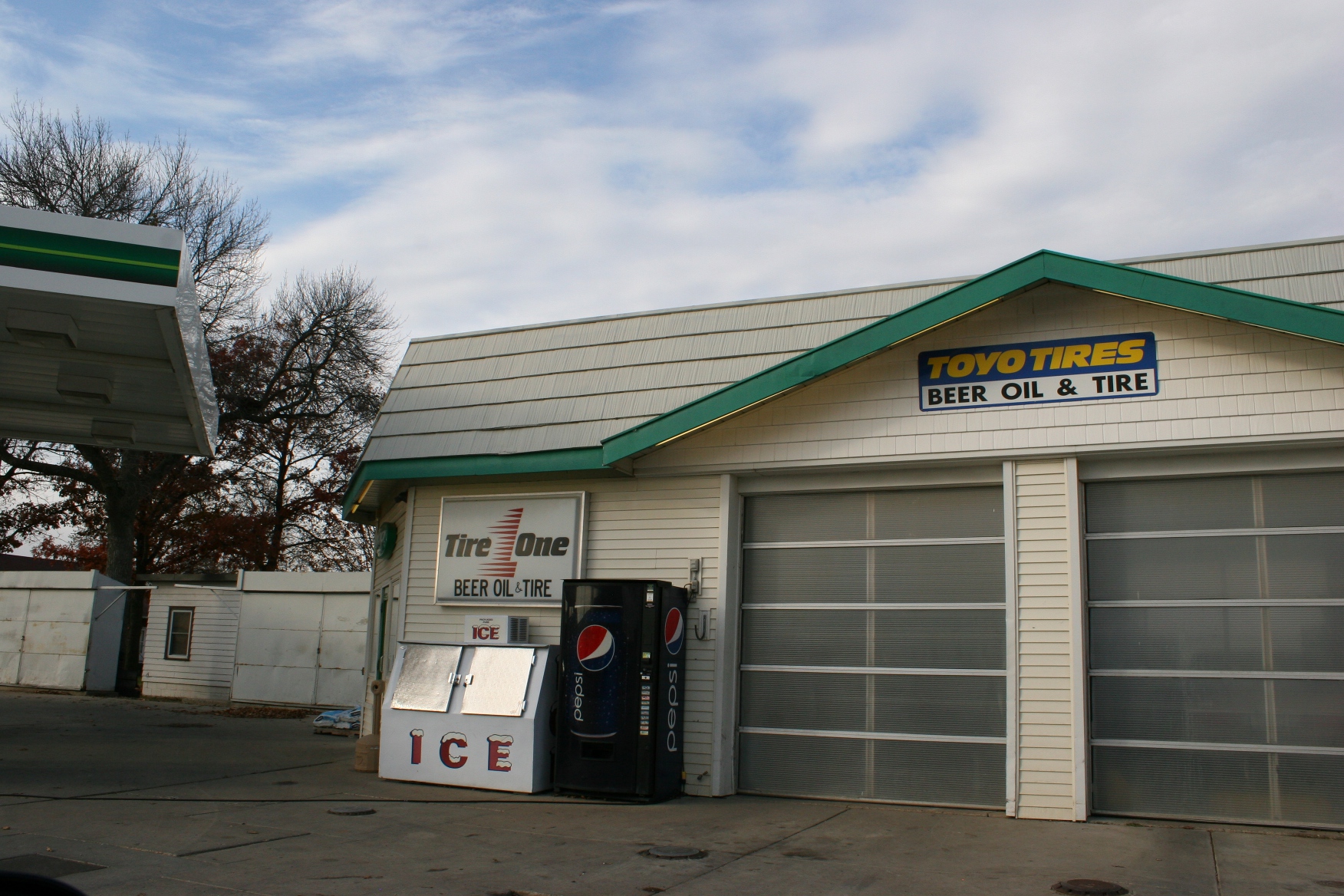
Beer Oil & Tire, not to be confuses with a business that sells beer in addition to oil and tires.

Beer Oil & Tire, not to be confused with a business that sells beer in addition to oil and tires.

The last two times I’ve been in Le Center, twice within a week, I convinced my husband to pull off the highway, also labeled as Derrynane. That name puzzles me for its oddity. But I was even more intrigued, entertained actually, by the signage on a local service station: Beer Oil & Tire. I read it as beer, oil and tire. You know how sometimes something strikes you as humorous but the person you are with doesn’t find the humor? I didn’t let that stop me from photographing this service station owned by a Beer.
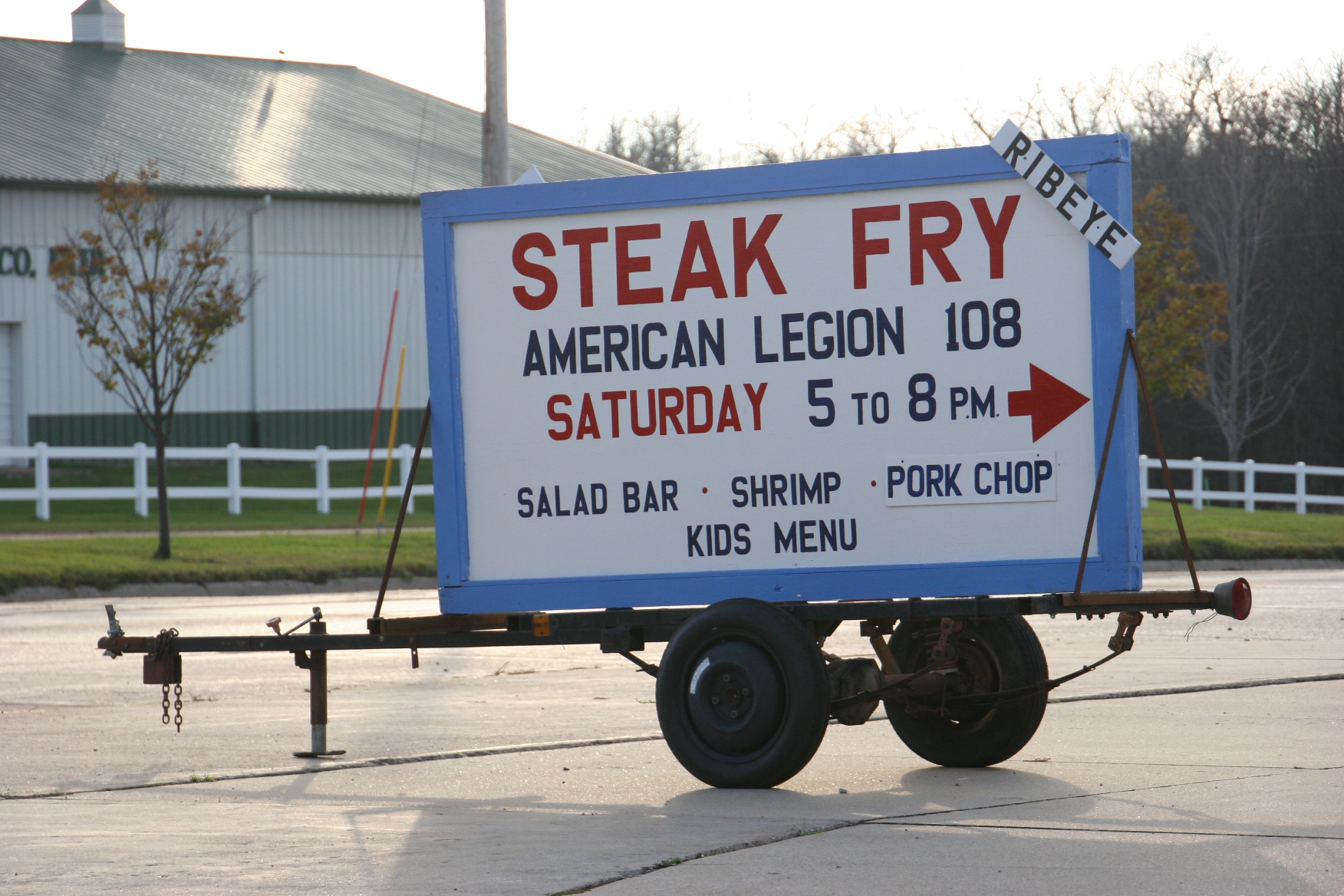
The Legion does not limit its Steak Fry menu to steak. It also includes walleye, pork chops, shrimp, a full salad bar and kids' menu. The next Steak Fry is from 5 - 8 p.m. on November 28.

The Legion does not limit its Steak Fry menu to steak. It also includes walleye, pork chops, shrimp, a full salad bar and kids’ menu. The next Steak Fry is from 5 – 8 p.m. on November 28.

American Legion Post 108 recognizes the power of promotion by advertising its monthly Steak Fry on a portable sign parked along Minnesota State 99. Driving toward downtown, a sandwich board with the same info was planted smack dab in the middle of the street by the Legion. I still don’t understand the definition of “steak fry.” Are the steaks fried?

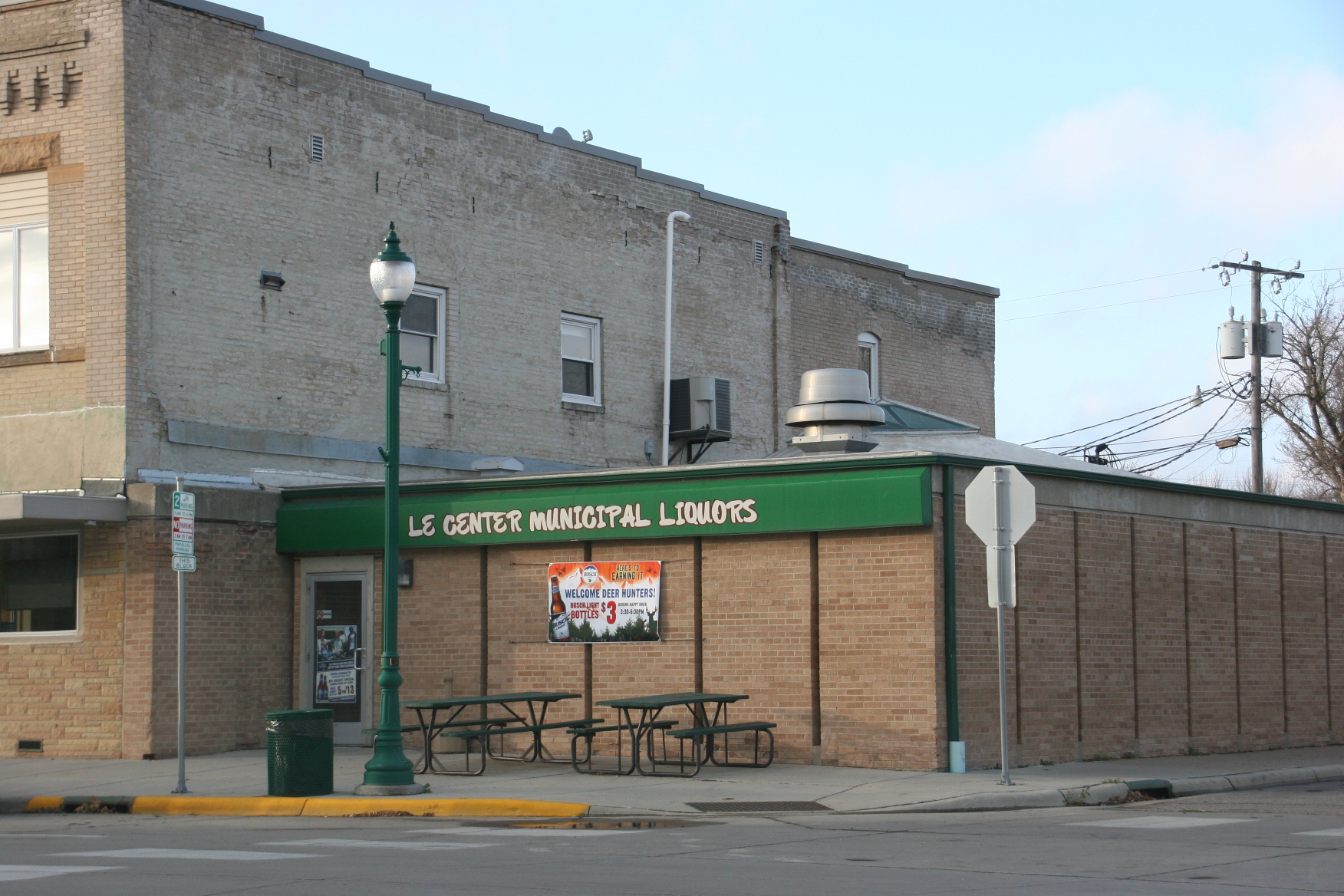
Le Center's muni welcomes deer hunters.

Le Center’s muni welcomes deer hunters.

Downtown, Le Center Municipal Liquors currently caters to deer hunters by offering Busch Light bottles for $3 during happy hour. I expect hunters will congregate at the muni with or without beer specials. But welcoming hunters with targeted signage seems a nice, and smart, thing to do.

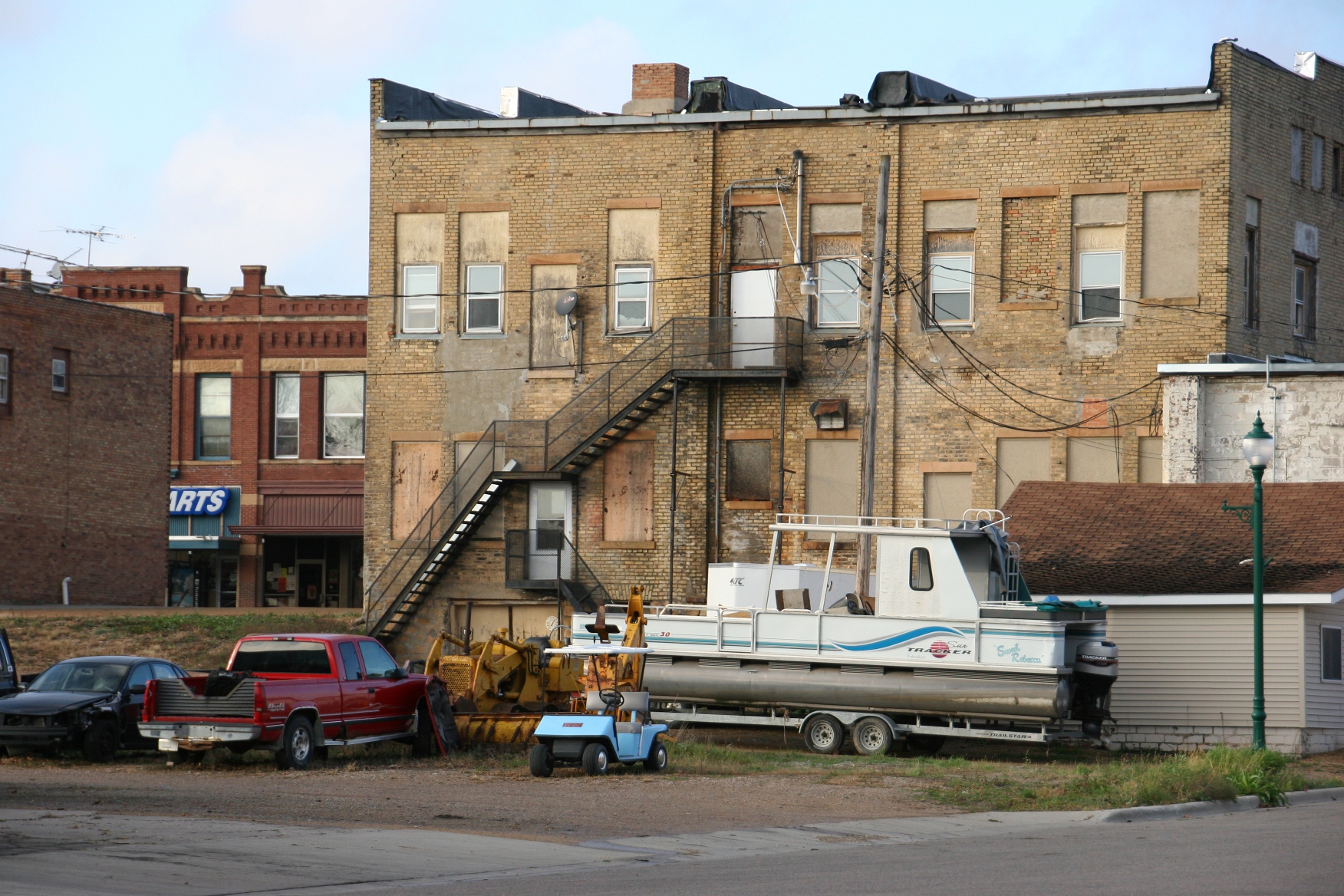
What's behind buildings can also reveal a lot about a town.

What’s behind buildings can also reveal a lot about a town. This is downtown.

I noted a sign in a storefront window announcing the upcoming opening of a thrift store. That rates a return visit. I love small town thrift shops. Besides, I haven’t explored Le Center enough yet to fully understand its personality. I need to walk and poke around and duck into businesses.

© Copyright 2015 Audrey Kletscher Helbling