Minnesota Prairie Roots

Writing and photography by Audrey Kletscher Helbling

Reminiscing about, & with, Rabbits at 50th class reunion September 11, 2024

First up upon arriving in Wabasso for my 50th class reunion, a photo with the roadside white rabbit sculpture. (Photo credit: Randy Helbling)

WE MAY NEVER PASS this way again. Ah, but we have. On a recent Saturday, I gathered with some 30 of my Wabasso High School classmates to celebrate our 50th class reunion. In Wabasso, a small farming community 45 miles west of New Ulm on the southwestern Minnesota prairie.

The front entrance to Wabasso Public Schools. The overhang with pillars was added after my days there. (Minnesota Prairie Roots copyrighted photo September 2024)
The cover of my WHS yearbook. (Minnesota Prairie Roots copyrighted photo September 2024)
Signage at the front of the school blends the old and the new. (Minnesota Prairie Roots copyrighted photo September 2024)

I’ve attended many reunions through the decades since 89 of us graduated in May of 1974. I’ve enjoyed every gathering, especially those in latter years when no one cared any more about who was a jock or an academic achiever or a wild one or any label we may have carried through our high school days. Today we are simply individuals who share a history of attending school together. Learning. Having fun. Making memories.

The 1973 – 1974 Wabasso High School FFA chapter consisted of mostly male students. I am among the few females featured in this photo. I’m seated in the second row, third girl on the right. (Photo credit: WHS yearbook)

Coming of age in the 1970s during the Vietnam War, we were a bit of a rebellious bunch testing our teachers’ patience. I was among those who wore a prisoner of war bracelet, embraced the peace symbol, wrote anti-war poetry. Mostly, though, I was quiet, studious, a rule follower. But I did blaze the way for young women at my high school by becoming the first girl to join the WHS Future Farmers of America Chapter. Decades later, a niece would become the state FFA president.

We were given a lengthy tour of the school. (Minnesota Prairie Roots copyrighted photo September 2024)

No one cared about any of that when we got together 50 years later, first touring the halls of our former school. Home of the Rabbits. Yes, Rabbits. Wabasso, meaning “white rabbit,” comes from the Dakota language. I’m proud of our school mascot, which is unique and connects to the history of the region. It honors the town name and the Dakota people who were the original inhabitants of this land and still live in the nearby Upper and Lower Sioux Indian communities.

This Rabbit mosaic once hung on the side of the front office counter. It now hangs in a school hallway. (Minnesota Prairie Roots copyrighted photo September 2024)
The original Rabbit mascot on a gym wall. (Minnesota Prairie Roots copyrighted photo September 2024)
Rabbit pride showcased in the gym. (Minnesota Prairie Roots copyrighted photo September 2024)

As the superintendent of schools led us through the school, I found myself drawn to the many artistic renditions of Thumper, our rabbit mascot. I don’t care for the updated, fierce version that now graces a wall in the new gymnasium. It’s not that I oppose change. I just don’t like the mean look on the rabbit’s face, his appearance of being on steroids. No thank you. I much prefer the old rabbit, the one that appears gentle and friendly. Thankfully, plenty of the original Thumpers remain in a school building I barely recognize.

Oversized photos, including this one of the 1973 homecoming court, are displayed in a hallway of images. (Minnesota Prairie Roots copyrighted photo September 2024)

Building additions, removal of the storied stack, shuffling and changing of classrooms altered the school significantly. The home economics room is now the art room. The shop a classroom. The cafeteria is new, spacious, bright and beautiful. And the new library, although much brighter and modern in appearance, holds far fewer books than the library of my high school years, something several of us noticed and mentioned to the superintendent.

The Roadhouse Bar & Grill sits on a corner along Wabasso’s main street. It’s an especially popular summertime spot with weekly roll-ins. (Minnesota Prairie Roots copyrighted photo September 2024)
The reunion committee set up this mannequin wearing a Class of 1974 graduation gown. (Minnesota Prairie Roots copyrighted photo September 2024)
This shows just a part of Meadowland Farmers Cooperative, which anchors the business community. (Minnesota Prairie Roots copyrighted photo September 2024)

What I did notice, too, was a closeness I felt among classmates as we walked hallways and classrooms and even the old locker rooms. That feeling remained after the tour, down at the Roadhouse Bar & Grill. There we perused photos and memorabilia. Hugged. Laughed. Mourned the loss of 15 classmates. Built burgers at the burger bar. Gathered outside for a group photo. Clustered around patio tables for conversation as the sun set, brushing the sky in a subtle pink hue. All the while the ventilation fans from the grain bins across the street roared in a steady din.

Wabasso’s school song, printed on a gym wall. (Minnesota Prairie Roots copyrighted photo September 2024)

“We May Never Pass This Way Again.” That titled the Seals & Croft tune we chose as our class song. It was our second choice. The administration nixed “Dead Skunk in the Middle of the Road.” There was no mention of skunks—at least that I heard—at our 50th reunion. But Rabbits, oh, yes, Rabbits. We are forever and always Rabbit proud.

© Copyright 2024 Audrey Kletscher Helbling
 

Rural living history & threshing memories September 3, 2024

A wagonload of oats awaits threshing at the Rice County Steam & Gas Engines Fall Show. (Minnesota Prairie Roots copyrighted photo August 2024)

MEMORIES. A HISTORY LESSON. A step back in time. The Rice County Steam & Gas Engines Fall Show is that and more. It’s also entertainment, a coming together of friends and families and neighbors. A reason to focus on farming of yesteryear.

Oats drape over the edge of the wagon. (Minnesota Prairie Roots copyrighted photo August 2024)

I was among the crowds gathered over the Labor Day weekend at the showgrounds south of Dundas. This show features demos, rows and rows and rows of vintage tractors and aged farm machinery, a tractor pull, flea market, music, petting zoo, mini train rides and a whole lot more.

The scene is set to resume threshing with thresher, tractor, baler and manpower. (Minnesota Prairie Roots copyrighted photo August 2024)

For me, a highlight was watching a crew of men threshing oats. The work is hard, labor intensive, even dangerous with exposed belts and pullies. It’s no wonder farmers lost digits and limbs back in the day.

This part of the threshing crew pitches oats bundles into the threshing machine. (Minnesota Prairie Roots copyrighted photo August 2024)

While my observations are not connected to memories, my husband’s are as he recalls threshing on his childhood farm in rural Buckman, Morrison County, Minnesota. After Randy moved with his family from rural St. Anthony, North Dakota (southwest of Mandan), his dad returned to threshing oats. In North Dakota, he used a combine. But his father before him, Randy’s grandfather Alfred, threshed small grains.

Hard at work forking bundles into the thresher. (Minnesota Prairie Roots copyrighted photo August 2024)
Lots of exposed pullies and belts line the threshing machine. (Minnesota Prairie Roots copyrighted photo August 2024)
The workhorse of the operation, the threshing machine. (Minnesota Prairie Roots copyrighted photo August 2024)

As I watched in Dundas, men forked bundles of oats into a McCormick-Deering thresher. The threshing machine separated the grain from the stalk, the oats shooting one direction into a wagon, the straw the other way into a growing pile. I stood mostly clear of the threshing operation with dust and chafe thick in the air.

Feeding the loose straw into the baler. (Minnesota Prairie Roots copyrighted photo August 2024)

From the straw pile, a volunteer stuffed the stalks into the shoot of an aged baler. An arm tamped the straw, feeding it into the baler. Another guy stood nearby, feeding wire into the baler to wrap the rectangular bales. A slow, tedious process that requires attentiveness and caution.

Watching and waiting for the straw to compact in the baler. (Minnesota Prairie Roots copyrighted photo August 2024)

The entire time I watched, I thought how easy it would be to lose focus, to look away for a moment, to get distracted and then, in an instant, to experience the unthinkable. Farming is, and always has been, a dangerous occupation.

Carefully guiding wire into the baler to wrap each bale. (Minnesota Prairie Roots copyrighted photo August 2024)

Randy understands that firsthand as he witnessed his father get his hand caught in a corn chopper. Tom lost his left hand and part of his forearm. But Randy saved his life, running across fields and pasture to summon help. It is a traumatic memory he still carries with him 57 years later.

Threshing at Sunnybrook Farm, St. Anthony, North Dakota, as painted by Tom Helbling. (Minnesota Prairie Roots copyrighted file photo)

But memories of threshing are good memories, preserved today in an oil painting from the farm in North Dakota, Sunnybrook Farm. My father-in-law took up painting later in life. Among the art he created was a circa 1920s threshing scene. We have that painting, currently displayed in our living room. I treasure it not only for the hands that painted it, but also for the history held in each brush stroke.

Threshing grain, living history in 2024. (Minnesota Prairie Roots copyrighted photo August 2024)

The painted scene differs some from the threshing scene I saw in Dundas. In North Dakota, horses were part of the work team, the tractor steam powered. In Dundas, there were no horses, no steam engine at the threshing site. Still, the threshing machine is the star, performing the same work. And men are still there, laboring under the sun on a late summer afternoon.

© Copyright 2024 Audrey Kletscher Helbling
 

A mouse in the house August 26, 2024

Filed under: Uncategorized — Audrey Kletscher Helbling @ 10:51 AM
Tags: , , , , , , , , ,
Mouse art displayed in a show at the Owatonna Arts Center many years ago. (Minnesota Prairie Roots copyrighted file photo)

I AWAKENED HOPEFUL this morning. Hoping the mouse that ran into the living room Sunday evening, scurrying into a corner behind a floor lamp when I screamed, was trapped. Dead. That did not happen.

We awakened Monday morning to two unsprung traps still baited with fresh peanut butter. One in the basement, the other between the stove and cupboard.

Have I mentioned that mice terrify me? Or maybe, more accurately, that I am terrified of mice. I detest, hate, abhor them. Always have. I recognize it’s rather ridiculous to be afraid of mice given my size compared to theirs. But they are quick and creepy and varmints I do not want inside my space.

(Book cover source: lindsaystarck.com)

So there I was Sunday evening, feet up in the recliner, semi-watching the 9 pm news between reading Minnesota author Lindsay Starck’s terrifying novel, Monsters We Have Made, when I saw movement out of the corner of my eye. A mouse. Eeeek! I screamed, grabbed my phone, shot to the bedroom, slammed the door and climbed onto the bed. Rats. I forgot my book.

But at least I could Google “why mice come into your house in the summer” while Randy tracked the mouse. Apparently when the temps are as hot as they are now, they, too, want to cool off. Just as in winter, they want to be warm. I can’t fault them for that thinking. Do mice even think?

Mouse and rat killer spotted in The Watkins Museum in Winona during a visit years ago. (Minnesota Prairie Roots copyrighted file photo)

As I hunkered atop the bed, I felt hopeful that Randy would find and kill the mouse. I didn’t think that through. How? With his bare hands? Randy observed the mouse hurry behind the fridge. So he moved the fridge. We haven’t seen it since. But he did catch a mouse in the garage overnight. Same mouse? Highly unlikely.

We live in an old house, next to a wooded hillside, with lots of entry points for mice. So I expect mice and we have caught many in our 40 years living here. Typically, though, they stay in the dark basement. I never invited them onto the main floor. The neighborhood mice apparently did not get the warning memo to stay out. They are risking their lives.

Now why do I detest mice? It started with the scritch-scratch of mice running inside the bedroom walls of my childhood farmhouse. Mice in the house. Mice in the barn. Mice in the hay and straw bales. Mice in the granary. Even with a passel of roaming cats.

In college, I opened a silverware drawer to see a mouse staring up at me.

When I was nearly third trimester pregnant with my youngest, I awakened to pee in the middle of the night at my in-law’s farmhouse. There, in that tiny closed bathroom, a mouse circled. Screaming drew no one to my rescue. Eventually, I climbed onto the edge of the bathtub, tossed a pile of wet towels on the mouse and fled upstairs to my sleeping husband. True story.

Years later, I reached into the sink one morning to empty water from a crockpot left soaking there overnight. Atop the water floated a dead mouse. Enough to scare anyone, especially me. At least it was dead, the sole consolation. I slammed the lid on the crockpot, carried it outside and Randy dealt with it after work. That crockpot never cooked another meal.

Yes, I have experienced mouse trauma. Too often. Traps are set. Should I see the mouse again this evening, I will be sure to grab Monsters We Have Made before sequestering myself in my bedroom to read before dreaming nightmares of monstrous, uncaught mice.

TELL ME: Are you afraid of mice? Any mouse stories to share? Or cats to share?


Spotlight shines on Minnesota, specifically Mankato (once my home) August 23, 2024

“The Thrill of Vertical,” posted on a sign in Spring Lake Park as part of the 2013 Mankato Poetry Walk & Ride, was inspired by my college years in Mankato. (Minnesota Prairie Roots copyrighted file photo 2013)

I ARRIVED IN MANKATO with a canary yellow 10-speed bike, a simple orange backpack, my Sears portable manual typewriter, a clock radio, a quilt stitched by Grandma Ida and a suitcase filled with clothes. The year was 1974, the beginning of my freshman year at Bethany Lutheran College, high atop a hill in this southern Minnesota city.

The Ardent Mills grain silos, a massive public art project, dominate the skyline along the Minnesota River in the heart of Mankato. The art depicts the diversity of the area. (Minnesota Prairie Roots copyrighted photo November 2023)

I was only 17, nervous, but ready to leave my childhood farm home some 85 miles to the west. I met my roommate, Rhonda, a beautiful high school cheerleader from western Wisconsin. She was well-traveled, outgoing, vastly different than me, quiet and shy. And she had a stereo for our cozy fourth floor corner dorm room. We were set. Despite our differences, we got along splendidly.

This shows the base of a place sculpture along the Minnesota River in Riverfront Park. The words for Mankato and Minnesota are written in the Dakota language and translated. (Minnesota Prairie Roots copyrighted photo November 2023)

As I settled into the big city (Mankato’s current population numbers around 45,000), big for me when you come from a town of 362, I began to feel at home. Not only on campus, but also in the community. Happy Chef became a go-to destination for conversation and for warm loaves of bread glazed with powdered sugar frosting. A Christian coffee house also drew me off campus. I wasn’t in to the bar scene.

My poem, “River Stories,” highlights the Minnesota River, which winds through Mankato. It was posted along the river as part of the 2019 Mankato Poetry Walk & Ride. (Minnesota Prairie Roots copyrighted file photo 2019)

For nearly four years, Mankato became my home away from home. The place that grew me educationally and as a person. I earned an associate of arts degree from Bethany, then only a two-year college, before moving on to Minnesota State University, Mankato, to study journalism. I worked at the college newspaper, “The Reporter.” In the winter of 1978, I earned a mass communications degree with an emphasis in news/editorial. Soon thereafter, I started my career as a newspaper reporter and photographer. Years later I returned to work for “The Mankato Free Press,” heading up the paper’s St. James-based news bureau (me living and working from my apartment long before working remotely became a thing).

I am rooted in Minnesota. This art hangs in my home office. (Minnesota Prairie Roots copyrighted file photo)

Why am I sharing this with you today? Because of Minnesota Governor Tim Walz, now the vice presidential candidate on the DFL ticket. He lived in Mankato, where he worked as a social studies teacher and football coach at Mankato West High School. Walz, likely unfamiliar to most Americans up until recently, has put our state, specifically Mankato, on the map. As a life-long Minnesotan, I am proud to see my state, considered by many to be fly-over land, in the spotlight. No matter your political leanings, such publicity is good for Minnesota.

I’ve only attended the Minnesota State Fair a few times in my life. This mug came from my father-in-law’s collection. The State Fair started yesterday. (Minnesota Prairie Roots copyrighted file photo)

Like Walz, flannel shirts hang in my closet. I am wearing one as I write on this cool August morning. Flannel truly is a Minnesota thing, no matter political affiliations. We like our hotdishes (not “casseroles”) and the Minnesota State Fair (although not me; too many people), our cabins Up North. We claim musicians Bob Dylan and Prince, the Coen Brothers (of “Fargo” movie fame) and other notables like vice presidents Hubert Humphrey and Walter Mondale.

The grain silos are a massive work of public art. (Minnesota Prairie Roots copyrighted photo November 2023)

I cannot imagine living elsewhere, even if I don’t especially like the frigid cold and snow of a Minnesota winter. I loved winter as a Redwood County farm girl. Minnesota is home. I live 40 miles northeast of Mankato, a city originally inhabited by the Dakota. Mankato is a river town, a college town, a regional shopping hub, a community with a rich (but not always “good”) history. It is home to many creatives. I’ve been part of that with poetry showcased on signs through the Mankato Poetry Walk and Ride.

My latest poem, “The Mighty Tatanka,” posted along the West Mankato Trail near West Mankato High School. (Minnesota Prairie Roots copyrighted photo November 2023)

My connection with, and appreciation of, Mankato all started in that fourth floor dorm room with a roommate who was nothing like me. Despite our differences, we connected, forged a strong friendship, together grew and matured. We were on the cusp of our lives. Young. Open to new ideas and learning. The future held endless possibilities. For me, the 17-year-old with the canary yellow bike. And for Rhonda with her stereo system.

© Copyright 2024 Audrey Kletscher Helbling
 

Give me a daisy a day, or maybe a zinnia August 22, 2024

Filed under: Uncategorized — Audrey Kletscher Helbling @ 5:00 AM
Tags: , , , , , , ,
A patch of daisies. (Minnesota Prairie Roots copyrighted file photo)

RECENTLY, MY SISTER-IN-LAW Rena asked me to name my favorite flower. I immediately responded, “Daisy.” But that’s not really true, I realized the more I considered the flowers I especially like.

A time existed when my response to Rena was accurate. For a long time, daisies assuredly were my personal pick for most beloved floral. Daisies, like me, are simple, uncomplicated, down-to-earth. There’s nothing pretentious about a daisy with its circle of white petals and yellow center.

Daisies, too, were the flower of my teen years. The age of flower children and peace symbols and rebellion. Daisies, prolific, strong, reseeding on their own, spreading and blanketing the landscape.

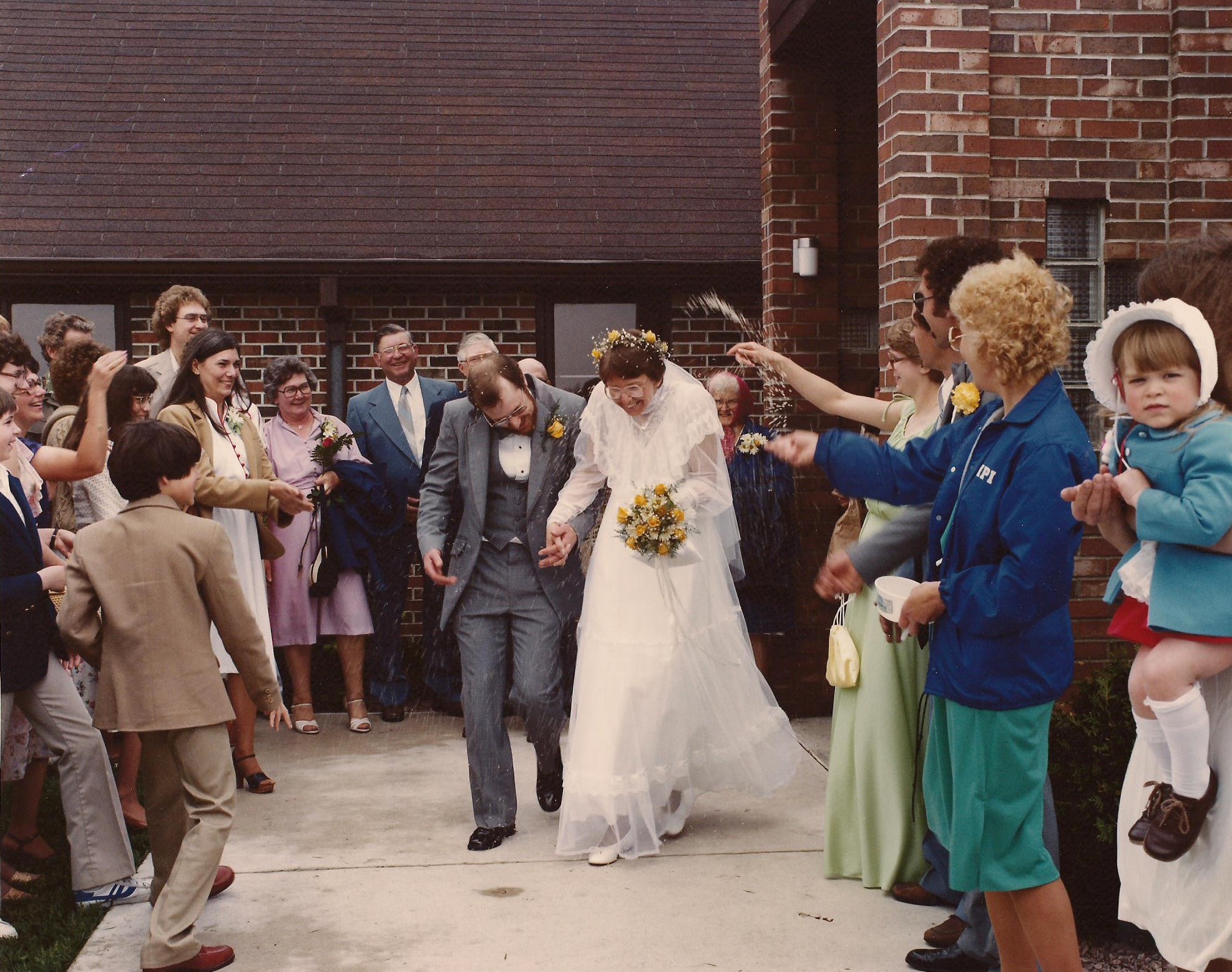
At my 1982 wedding, daisies graced bouquets and corsages. “I’ll give you a daisy a day,” wrote songwriter Jud Strunk in the 1973 hit, “Daisy a Day.” A love story in lyrics if I’ve ever heard one.

I still like daisies a lot. The way they bend in the wind. The way they remind me of my youth. And young love.

Zinnias sourced at the Faribault Farmers’ Market. (Minnesota Prairie Roots copyrighted photo August 2024)

But, after pondering Rena’s question, I would answer differently. Zinnias. Yes, vivid, bold zinnias are my favorite flower today. Like daisies, they trace to my youth. Mom seeded rows of zinnias in her vegetable garden. They jolted color into the greenery, later adding color to our farmhouse in bouquets gathered.

Zinnias and cosmos can be easily grown by direct seeding into the soil. (Minnesota Prairie Roots copyrighted file photo)

Zinnias grow easily from seed. They are hardy and prolific and colorful, coming in varying sizes from small to “giant.” They make excellent, long-lasting cut flowers.

My friend Al, left, sells flowers and produce at the farmers’ market. (Minnesota Prairie Roots copyrighted file photo)
I transferred the zinnia bouquet from Solo cup to vase at home. (Minnesota Prairie Roots copyrighted photo August 2024)
Al and Char’s zinnias up close. (Minnesota Prairie Roots copyrighted photo August 2024)

As I write, a bouquet of zinnias purchased at the Faribault Farmers’ Market graces a vintage chest of drawers in my living room. My friend Al grew them. His wife, Char, artistically arranged the stems of red, pink, orange and yellow with one green-tinted flower tossed in the colorful mix.

Daisies thrive. (Minnesota Prairie Roots copyrighted file photo)

Randy bought them for me. For no reason. I love when he does that—spur of the moment gives me flowers. Just because. I was chatting with our friend Duane while Randy paid for sweetcorn purchased from Al along with those unexpected zinnias arranged in a red Solo cup. It was a moment when I felt loved, so loved, as if Randy had given me my daisy a day.

TELL ME: What’s your favorite flower and why?

© Copyright 2024 Audrey Kletscher Helbling
 

Milkweeds, monarchs & memories in Minnesota August 20, 2024

Monarch on the common milkweed flower. (Minnesota Prairie Roots copyrighted file photo 2023)

I’VE ALWAYS HELD a fascination with milkweeds. Their clusters of vanilla-scented dusty pink flowers draw me to a plant that seems more flower than weed. Unless you were my dad, who wanted the common milkweed removed from his acres of soybeans. Yes, I hoed or pulled plenty of milkweeds from the fields on my southwestern Minnesota childhood farm.

Milkweeds grow next to the conservation building at the Rice County Fairgrounds against a backdrop of identifying milkweed photos. Those include six types: common, poke, purple, butterfly, whorled and swamp. (Minnesota Prairie Roots copyrighted photo August 2024)

My thinking has shifted since then. Today I plant, rather than eradicate, milkweeds. Dad, if he was still alive, might wonder how his farm-raised daughter strayed so far from hoeing to growing.

A monarch caterpillar. (Minnesota Prairie Roots copyrighted file photo)

The answer is easy. Long ago I learned the value of milkweeds to our monarch butterfly population. The butterfly lays its eggs on milkweed leaves. And milkweed is the sole source of food for monarch caterpillars. If we want the monarch population to grow, thrive and survive, we need milkweed plants. It’s that simple.

A sign at Hy-Vee grocery store explains the importance of milkweed to monarchs. (Minnesota Prairie Roots copyrighted photo August 2024)

More and more I’ve spotted milkweeds growing in public places in and around Faribault. River Bend Nature Center. Falls Creek County Park. The Rice County Master Gardeners’ Teaching Gardens. Beside the conservation building at the Rice County Fairgrounds. Even in flowerbeds at Hy-Vee grocery store.

Milkweeds grow among phlox. (Minnesota Prairie Roots copyrighted photo August 2024)

If you walk by my house, you’ll see stray milkweeds popping up here and there. Along a retaining wall. Among the prolific phlox in my messy flowerbeds. The husband has orders not to mow, pull or otherwise remove milkweed plants.

An unripened milkweed pod. (Minnesota Prairie Roots copyrighted file photo)

This time of year, seed pods are forming on milkweeds. Perhaps it’s the writer, the poet, in me that loves the shape of those fat green pods that will eventually dry, burst open and spread seeds on wisps of white fluff carried by the wind.

Milkweeds flourish among prairie flowers in the Rice County Master Gardeners Teaching Gardens, Faribault, (Minnesota Prairie Roots copyrighted photo August 2024)

Seeds wing across the landscape, just like monarchs. I remember a time when monarchs were prolific. Yes, even in rural Minnesota where I labored to get rid of milkweed plants.

I discovered milkweeds planted outside Hy-Vee. (Minnesota Prairie Roots copyrighted photo August 2024)

Naturalists, gardeners and others are working hard now to bring back the monarch population. It’s taken time, effort and education to convince people to plant milkweeds for monarchs. I don’t expect butterfly numbers will be what they once were—when monarchs flitted everywhere. But we have to start somewhere, do something. And that begins with each of us. Educating ourselves. Caring. And then deciding that milkweeds really aren’t weeds after all. They are vital to the survival of the monarch butterfly. It’s OK to plant milkweed seeds or allow nature to plant them.

Monarch on a thistle flower. (Minnesota Prairie Roots copyrighted file photo)

I, for one, delight in watching monarchs flit about my yard. They are magical as only a butterfly can be. Delicate, yet strong. Poetically beautiful. Carrying memories and grace on their wings.

An educational sign among the flowers at the Rice County Master Gardeners Teaching Gardens. (Minnesota Prairie Roots copyrighted photo August 2024)

FYI: Nerstrand Big Woods State Park is hosting a “Monarchs and Milkweeds” presentation at 10 a.m. Saturday, August 24, in the park’s amphitheater. Kathy Gillispie, who raises monarchs from eggs, caterpillars and chrysalises, will speak about her experiences with monarchs. The program is free, but a state park parking pass is needed to enter the rural Nerstrand park.

© Copyright 2024 Audrey Kletscher Helbling
 

Peaches, beyond simply a fruit to eat August 15, 2024

Peaches fill a box and now my fridge. (Minnesota Prairie Roots copyrighted photo August 2024)

PEACHES PACK my refrigerator. Several ripen in a brown paper bag on the kitchen counter. Big, beautiful Colorado peaches.

Signs directed people into the peach pick up spot in the basement. (Minnesota Prairie Roots copyrighted photo August 2024)

Earlier this week, Randy and I picked up a 20-pound case of peaches in the basement of First English Lutheran Church. That’s a lot of peaches—around 40—for two people to eat. But I love peaches. And we’ll share some with our eldest daughter and her family.

People wait in line for their peaches at First English Lutheran Church. (Minnesota Prairie Roots copyrighted photo August 2024)

A steady stream of people flowed into the cold church basement late Tuesday afternoon for their pre-ordered peaches, sold as a fundraiser by the youth group. We paid $37 for our full box. That’s $1.85/pound. I have no idea if that’s a “good” price. It doesn’t matter. I prefer peaches shipped directly from the grower. I also like supporting local church youth, because I was once that mom of kids raising monies for mission trips and youth gatherings.

Peaches no longer come in wooden crates, but in cardboard boxes. (Minnesota Prairie Roots copyrighted photo August 2024)

Peaches, though, mean more to me than simply supporting a good cause and eating one of my favorite fruits. Peaches take me back to summer on the farm, into the kitchen. There my mom pried open a wooden crate of peaches wrapped in pinkish tissue paper (saved for later use in the outhouse). Then she dropped the peaches into a large kettle of boiling water to remove the skins. Next, she halved or sliced the peaches into Mason and Ball quart jars. Topped with lids and ringed, the jars went into the pressure cooker. Once removed, the jars cooled and sealed. Then we carried the jars to the cellar.

Beautiful (and delicious) Colorado peaches sold at First English. (Minnesota Prairie Roots copyrighted photo August 2024)

I admire farm women like my mom who labored to preserve fruits and vegetables to feed their families during the winter months ahead. And winters on the prairie were long and harsh. Many a cold, snowy evening, Mom would pull open the kitchen floor trap door and send me down the open wooden steps into the depths of the dank, dark, dirt-floored cellar lit by a single light bulb. There I selected a quart jar from the wooden shelves. Whatever fruit Mom wanted. Pears, cherries, plums, apples, peaches. The preserved fruit would complete our meal of meat, boiled potatoes with gravy, a side vegetable (pulled from the freezer) and homemade bread.

We ate well. Good food without preservatives. Beef from our cattle. Vegetables from our garden. Apples from local trees. And then all those fruits, purchased in crates and preserved. No additives. Just simple, good food.

Fruit-themed banners add a festive flair to peach pick up. (Minnesota Prairie Roots copyrighted photo August 2024)

I always thought I would follow my mom’s example of planting a big garden and preserving food. But I never did. I live on a mostly shady lot in town. I raised only three children, not six like her. I have easy access to multiple grocery stores, unlike her. Fresh fruit is readily available. I prefer fresh. And, if I’m really honest with myself, I never wanted to labor in the kitchen for hours during the hot summer putting up fruits and vegetables.

Carts were ready for volunteers to wheel peach cases to vehicles. (Minnesota Prairie Roots copyrighted photo August 2024)

Still, I buy that case of peaches from First English. All those peaches, minus the tissue paper wrappings reused in the outhouse. In many ways, I am honoring my mom, hardworking farm woman of the Minnesota prairie. As I pull ripened peaches from a brown paper bag to slice into my morning oatmeal, to eat with a meal or to incorporate into a crisp, pie or galette, I think of Mom. She, who showed her love for family not in words or hugs, but rather in rows and rows of quart jars filled with fruit. Jars shelved on planks in the dank, dark depths of the dirt-floored cellar.

© Copyright 2024 Audrey Kletscher Helbling
 

Looking for farm work & remembering my work on the farm August 1, 2024

A farm site west of New Ulm. (Minnesota Prairie Roots copyrighted file photo)

WOULD YOU PICK rock, walk beans, clean up pig or cow muck? Joe and his crew will.

I can, too, as I’m experienced. But I have no desire to return to those farm tasks that are now only long ago youthful memories.

The sign I spotted in a Redwood Falls convenience store. (Minnesota Prairie Roots copyrighted photo July 2024)

Recently, I saw a sign, more like a note, posted by Joe on a convenience store bulletin board in Redwood Falls, deep in the heart of southwestern Minnesota farm country. I grew up in that area, on a crop and dairy farm.

Rocks picked and piled at field’s edge. (Minnesota Prairie Roots copyrighted file photo June 2014)

Like Joe, I worked the land and labored in the barn. I picked rock, which is exactly as it sounds—walking fields to pick rocks from the soil and toss them onto a wagon or loader. Rock removal is necessary so farm equipment isn’t damaged during crop prep, planting and harvesting. It’s hard, dirty work when done by hand.

Likewise, walking beans is hard, dirty, hot work. That job involves walking down rows of soybeans to remove weeds and stray corn plants, either by hand or by hoe. At least that’s how I walked beans back in the day. Today that may involve spot spraying herbicides.

A tasseling Rice County corn field. (Minnesota Prairie Roots copyrighted file photo)

And when I worked corn fields, it was to detassel corn for the Dekalb seed company. I arose early, boarded a school bus with a bunch of other teens, arrived at a corn field and proceeded to walk the corn rows pulling tassels from corn plants. Dew ran down my arms, corn leaves sliced my skin, sweat poured off my body as the day progressed under a hot July sun. Of all the jobs I’ve had, detasseling corn rates as the most miserable, awful, horrible, labor intense work I’ve ever done.

Inside a Rice County dairy barn. (Minnesota Prairie Roots copyrighted file photo)

I’d rather shovel cow manure. And I did plenty of that along with other animal-related farm chores.

If Joe and his team are willing to take on tasks that are labor intensive, hot and smelly, then I applaud them. We need hands-on folks who are not afraid to get their hands dirty, to break a sweat, to do those jobs that place them close to the land. Jobs many other people would not do.

An abandoned barn and silo along a backroad in the Sogn Valley of southeastern Minnesota. (Minnesota Prairie Roots copyrighted file photo 2021)

I don’t regret my farm work experiences. I learned the value of hard physical labor, of working together, of understanding that what I did was necessary. Certainly farming has changed, modernized in the 50 years since I left the land. Machines and computers make life easier.

But sometimes it still takes people like Joe and his crew to plant their soles on the earth, their feet in the barn, to make a farming operation work, even in 2024.

© Copyright 2024 Audrey Kletscher Helbling


Gathering with family & friends at summer reunions in Minnesota July 30, 2024

The Kletscher Family Coat of Arms of Posen-West Prussia. (Minnesota Prairie Roots copyrighted photo July 2024)

REUNITING. RECONNECTING. REMEMBERING. Those words define reunions, whether among family or friends. Summer marks prime reunion time in Minnesota, including for me, especially this year.

I’m flanked by cousins, Joyce, left, and LeAnn. We were born within months of each other and grew up spending lots of time together at family gatherings. (Photo credit: Kirt Kletscher)

From Pine River in northern Minnesota to Vesta on the southwestern Minnesota prairie to the Twin Cities and elsewhere, I’ve reconnected with people who are important to me, with whom I share roots and/or connections. And it’s been a joy because the older I grow, the more I realize that time is not a given and we need to gather and appreciate one another. With hugs, love and care.

My parents’ tombstone in the Vesta City Cemetery. (Minnesota Prairie Roots copyrighted file photo September 2022)

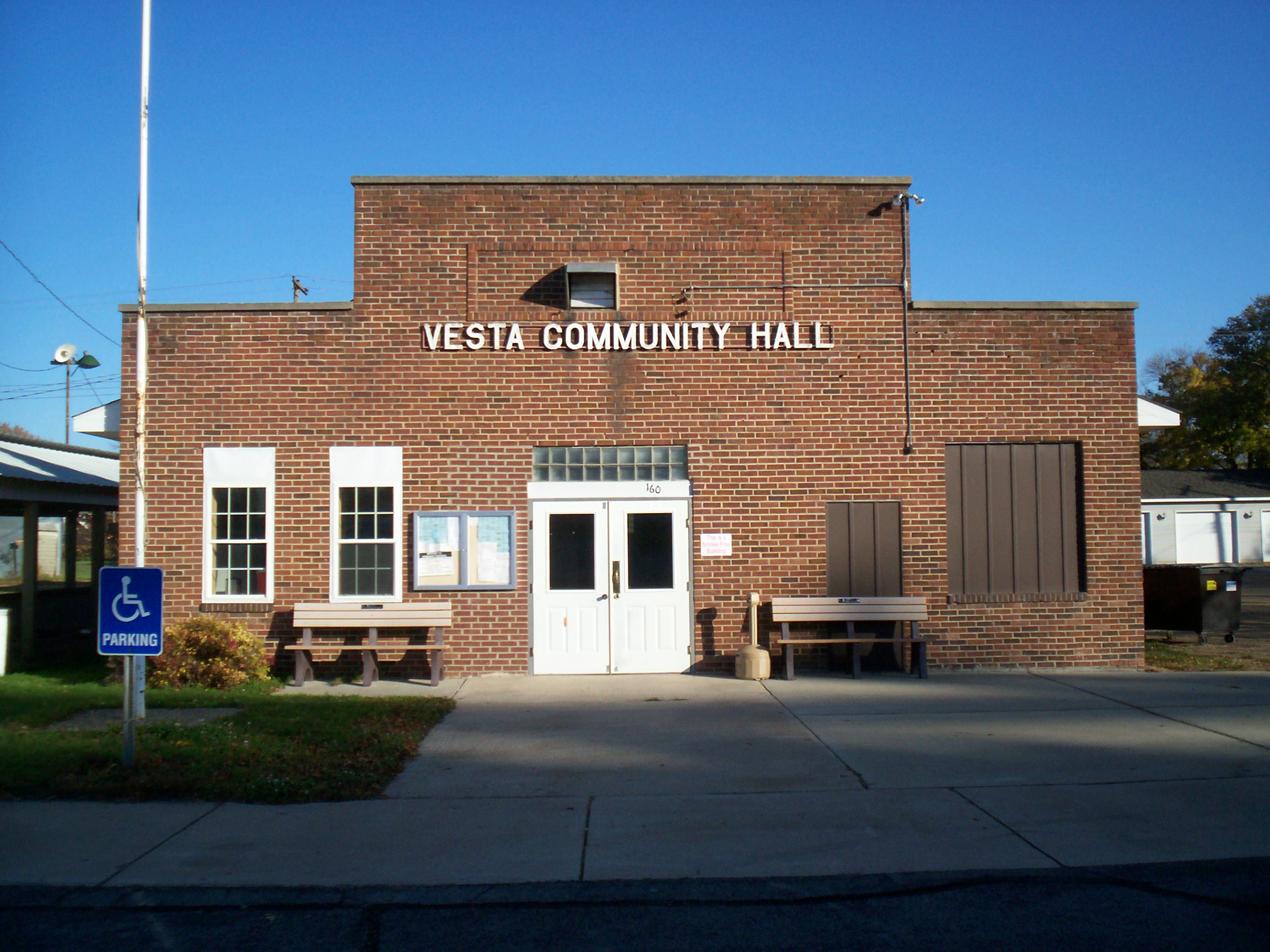
My most recent reunion happened July 28, when Randy and I traveled 2.5 hours west to my hometown of Vesta in Redwood County for the Kletscher Family Reunion, held annually on the last Sunday in July. First we stopped at the cemetery to visit the gravesites of my parents, grandparents and other family members. I wiped away tears before we followed the gravel road into town, to the reunion site, the former Vesta Elementary School, now turned city hall and community center.

Vesta Elementary School in the 1960s.
The old school gym, site of the family reunion. (Minnesota Prairie Roots copyrighted file photo September 2022)
The school today, as a city hall and community center. (Minnesota Prairie Roots copyrighted file photo September 2022)

To walk back into the building where I spent my first six grades learning to read, write, spell, do math and more felt comforting and disconcerting, like stepping back into a school that no longer looks the same, but still holds the same memories. Clapping erasers outside on the east brick wall. Listening to Mrs. Kotval read Laura Ingalls Wilder’s books after lunch. Scrawling letters in a penmanship book. Weaving a rug from rags. Building snowforts. Jumping rope on the front sidewalk. Performing on the stage. So many memories in this space.

A summary of a 30-page family tree/scroll. (Minnesota Prairie Roots copyrighted photo July 2024)

And on Sunday, that space also held some 60-70 descendants of Henry and Ida Kletscher, parents of twelve, two dead in infancy and only three surviving today. The family tree, printed on 30 pieces of paper, stretched across several tables. I am one of 39 grandchildren, my children among 114 great grandchildren of Henry and Ida in a line that today also includes 114 great great grandchildren and one great great great grandchild. We are a large and prolific bunch that continues to grow. That we still gather annually is a testament to the strength of family bonds. I grew up near my paternal grandparents, aunts, uncles and cousins, spending lots of time together.

Everyone brings food for the potluck. There’s always blueberry dessert. The spread covers several tables. (Minnesota Prairie Roots copyrighted file photo July 2013)

But my generation and those thereafter have scattered well outside Redwood County. Family arrived from Wisconsin, Iowa, North Dakota and all parts of Minnesota from Blaine to Delano to Alexandria to Owatonna, Faribault, Waseca, and many other communities near and far. Those from even more distant locations like the East Coast did not attend.

As at all reunions, I intentionally circulated, attempting to converse with everyone at some point. This gathering, conversations were not so much about the past as about the present. We talked kids, grandkids, retirement (or not), health challenges, home improvement projects… There was a lot of phone scrolling, too, to show photos of grandchildren.

Aunt Iylene tatted these flags celebrating our German heritage and the Kletscher family’s new home in America. (Minnesota Prairie Roots copyrighted photo July 2024)

I cooed over new baby Wren; met Aubrey from West Fargo, going into first grade and whose name was easy for me to remember (and mine for her); saw photos of a wedding dress under construction by bride-to-be Sarah; encouraged Andy, who is in a drug trial study at Mayo Clinic for his debilitating heart condition; listened to Lynn’s recitation of a humorous poem her teacher didn’t appreciate back in the day; admired Aunt Iylene’s tatting projects (which she gave away on Sunday and which honor Grandma Ida, who also tatted); listened to stories of heartaches and challenges and life.

A highlight of the reunion was watching and listening to Kirt play Ardyce’s accordion. (Minnesota Prairie Roots copyrighted photo July 2024)

And then there was the impromptu concert by my cousin Kirt, who plays accordion. He brought his and was also gifted, at the reunion, with Aunt Ardyce’s 73-year-old accordion, a gift to her from her parents when she was only thirteen. She took lessons briefly as did two of her children. But the instrument has mostly sat in its case for seven decades…until Kirt picked it up and commenced to play, but only to a select few of us in the entry hallway. To watch my 86-year-old aunt, seated next to her nephew, listening intently to “her” accordion brought me such joy. I couldn’t help but think how happy this moment would have made my grandparents.

A plaque honors my grandpa and others who were instrumental in construction of Vesta Elementary School. (Minnesota Prairie Roots copyrighted photo July 2024)

We were here, in this place, because of Henry and Ida. Henry served as clerk of Independent School District #639 when the Vesta School was built in 1958. To think that, 66 years later, Grandpa’s descendants would gather here to celebrate family felt incredibly right. Two hours after we ate a potluck lunch (which always includes blueberry dessert), we honored Henry and Ida with 1919 root beer floats. My grandparents were married in November 1919.

Here we were in 2024, a family still going strong—reuniting, reconnecting, remembering and honoring the legacy of Henry and Ida Kletscher. Henry, the 25-year-old farmer, who married Ida just days before her eighteenth birthday 105 years ago.

#

FYI: In addition to the Kletscher Family Reunion, I’ve reconnected in July with Sue, a blogging friend; aunts from New Jersey and Missouri and family from Minneapolis; my son from Boston; and met three of Randy’s cousins originally from North Dakota. There are more gatherings to come with a Helbling Family Reunion in two weeks and 50-year class reunions for Randy and me in September.

© Copyright 2024 Audrey Kletscher Helbling
 

The rhythm, reverence & remembrances of a rural Minnesota auction May 30, 2024

Watching the auction from behind the auctioneer’s truck at the Rice County Steam & Gas Engines Consignment Auction on May 25 south of Dundas. (Minnesota Prairie Roots copyrighted photo May 2024)

THERE’S SOMETHING ABOUT AN AUCTION that evokes nostalgic curiosity, drawing people together to peruse second-hand merchandise, perhaps to bid, perhaps only to watch silently from the side. Even to mourn.

The auctioneer and clerk sell and record items sold. (Minnesota Prairie Roots copyrighted photo May 2024)

Recently, I attended the spring auction at the Rice County Steam & Gas Engines showgrounds south of Dundas as an observer. I didn’t need any of the goods sold on consignment with all commissions donated to the nonprofit. But, still, I watched and wove among the items auctioned by Valek Auction Co. of Northfield.

Lining up for bidding numbers. (Minnesota Prairie Roots copyrighted photo May 2024)
A familiar milk bucket, just like the one my dad used when milking his Holsteins. (Minnesota Prairie Roots copyrighted photo May 2024)
Familiar grain wagons, too. (Minnesota Prairie Roots copyrighted photo May 2024)

I felt like I was back on the farm, filling a bushel basket with silage for the cows, scrubbing the milk bucket with a brush, mixing milk replacer in a galvanized pail, watching corn flow into an aged grain wagon…

A grain bin repurposed as a shelter/resting area at the Rice County Steam & Gas Engines showgrounds. (Minnesota Prairie Roots copyrighted photo May 2024)

Rural auctions like this, for those of us who grew up on working farms or still live on them, are like steps back in time. Decades removed from farm life, I would feel out of place on a modern-day farm with all the technological advancements, the oversized equipment. That bushel basket, that milk bucket, that pail, that grain wagon…all are the stuff of yesteryear. Farming today is much less labor intensive, more efficient.

Items are auctioned off a hay rack. (Minnesota Prairie Roots copyrighted photo May 2024)
A vintage hay loader. (Minnesota Prairie Roots copyrighted photo May 2024)
Merchandise lines the gravel road. (Minnesota Prairie Roots copyrighted photo May 2024)

Still, we often hold onto the past, the memories of back-in-the-day, the “way it used to be.” Nostalgia runs strong at auctions. I saw that, felt it, overheard it as folks gathered around the auctioneer’s pick-up truck, leaned on the hay rack piled with auction goods, meandered among the merchandise lining both sides of a gravel road.

A 1950s vintage stroller, exactly like the one used for me and my five siblings. (Minnesota Prairie Roots copyrighted photo May 2024)

Many of the auction items were vintage, likely pulled from the back corners of a dark machine shed or abandoned barn or from weeds along the edge of a grove. The rusted metal baby stroller could have been the one I rode in, the pitchfork the one I used to bed straw, the hand-reel lawnmower my grandma’s.

A vintage grain drill. (Minnesota Prairie Roots copyrighted photo May 2024)
Planting dates written inside the lid of the grain drill. (Minnesota Prairie Roots copyrighted photo May 2024)

This particular auction held so much relatable history. I doubt I was alone in feeling that way. While looking at a vintage grain drill, an implement used to plant small grains, I discovered historic documentation. There, on the underside of a metal lid, a farmer recorded the dates he planted oats, barley and wheat, beginning in 1951 until 1969 with a few years missing. Planting and finishing dates are important to farmers as they put seed in the ground, anticipate harvest. I thought of this farmer who 73 years ago wrote that first entry on his grain drill, holding the hope of harvest within him.

Inspecting before bidding starts. (Minnesota Prairie Roots copyrighted photo May 2024)

There’s a certain reverence and respect in rural auctions. An honoring of farmers and farm life and the responsibilities that come with tending the land. This isn’t just stuff being sold to the highest bidder, but rather something of value, of importance, that once belonged to another. I remember standing at my father-in-law’s farm auction decades ago and feeling a certain sadness in the sale of items gathered from shed, house, barn and elsewhere.

Lil Fox Wagon, one of several on-site food and beverage vendors. (Minnesota Prairie Roots copyrighted photo May 2024)

Farm auctions represent the final verse in a hymn, the congregation gathered, the auctioneer chanting the liturgy. Comfort and community and closure come. At the hay rack. Among the rows of numbered auction items. At the lunch wagon. All until the last item is sold.

Resting during the morning auction. (Minnesota Prairie Roots copyrighted photo May 2024)

Hallelujah. And amen.

#

NOTE: Check back tomorrow to read my prize-winning poem, “Sunday Afternoon at the Auction Barn,” published in 2014 in a Minnesota literary anthology.

© Copyright 2024 Audrey Kletscher Helbling