Minnesota Prairie Roots

Writing and photography by Audrey Kletscher Helbling

Mistaken identity April 14, 2014

Filed under: Uncategorized — Audrey Kletscher Helbling @ 6:00 AM
Tags: , , , , , , ,
dog

One of the dogs spotted in a truck at the alpaca expo. Photo edited to make the dog more visible through the side passenger window.

EXITING OUR VAN at the Four Seasons Centre in Owatonna recently to attend the Minnesota Alpaca Expo, my husband and I did a double take.

An alpaca appeared to be seated in a Ford Excursion hitched to a livestock trailer.

But, no, that couldn’t possibly be.

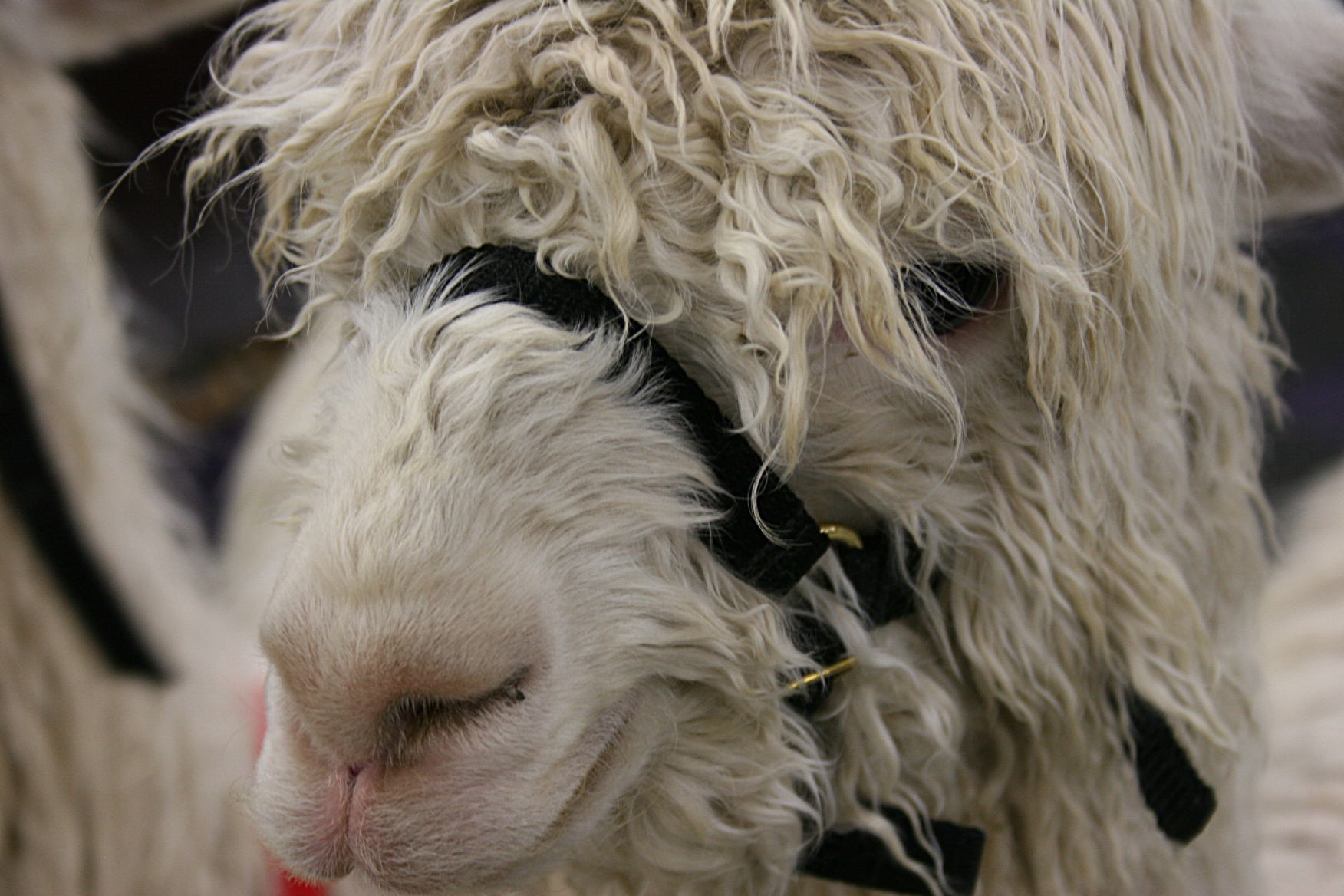
And it wasn’t. Upon closer inspection, we discovered two shaggy dogs (sorry, I don’t know breeds) inside the SUV.


Eyes buried in fleece.

An alpaca.

From a distance, though, they look remarkably similar to alpacas.

Now lest you are concerned that these canines were in danger and we should have phoned animal control, not to worry. Windows were open and temps were in the low sixties.

They did not appear to be in any distress. Just confusing folks like us with their shaggy locks…

Copyright 2014 Audrey Kletscher Helbling


For 52 years: A rural Minnesota church prepares for Holy Week with Last Supper Drama April 11, 2014

FOR CHRISTIANS LIKE MYSELF, Holy Week marks a period of reflection and repentance as we remember the final days in the life of Christ before his crucifixion and resurrection.

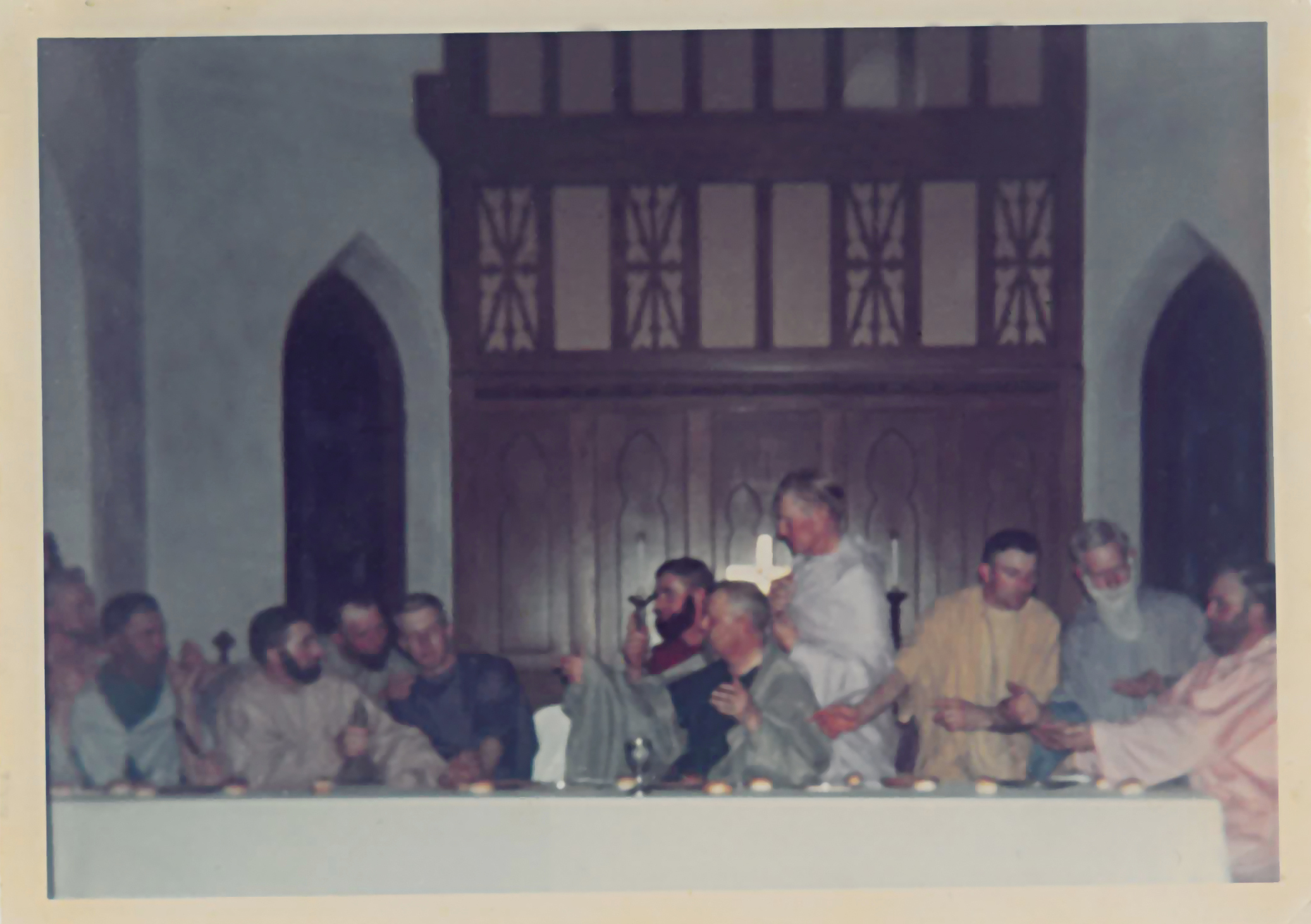
St. John's members portray the disciples in this undated vintage photo, the first record of a photograph from The Last Supper Drama. Actors, from left to right, are Luverne Hafemeyere, Earl Meese, Vicgtor Luedke, Howard Meese, Virgil Bosshart, Arnold Keller, P.L. Golden, Alvin bosshart, Paul Bauer, Elmer Covert Sr. and Arnold Bauer. Photo courtesy of St. John's.

St. John’s members portray the disciples in this undated vintage photo, the first record of a photograph from “The Last Supper Drama.” Actors, from left to right, are Luverne Hafemeyere, Earl Meese, Vicgtor Luedke, Howard Meese, Virgil Bosshart, Arnold Keller, P.L. Golden, Alvin bosshart, Paul Bauer, Elmer Covert Sr. and Arnold Bauer. Photo courtesy of St. John’s.

For St. John’s United Church of Christ, Wheeling Township, rural Faribault, a presentation of  “The Last Supper Drama” has been a long-standing Holy Week tradition. For 51 years, 52 this April 13, this congregation has presented the drama written by long ago pastor, the Rev. W. Rasche, and based on Leonardo da Vinci’s famous painting. It’s truly remarkable that a tradition like this would continue for more than five decades.

Twice, if not thrice, I’ve lost count, I’ve attended this Palm Sunday evening drama at this country church northeast of Faribault.

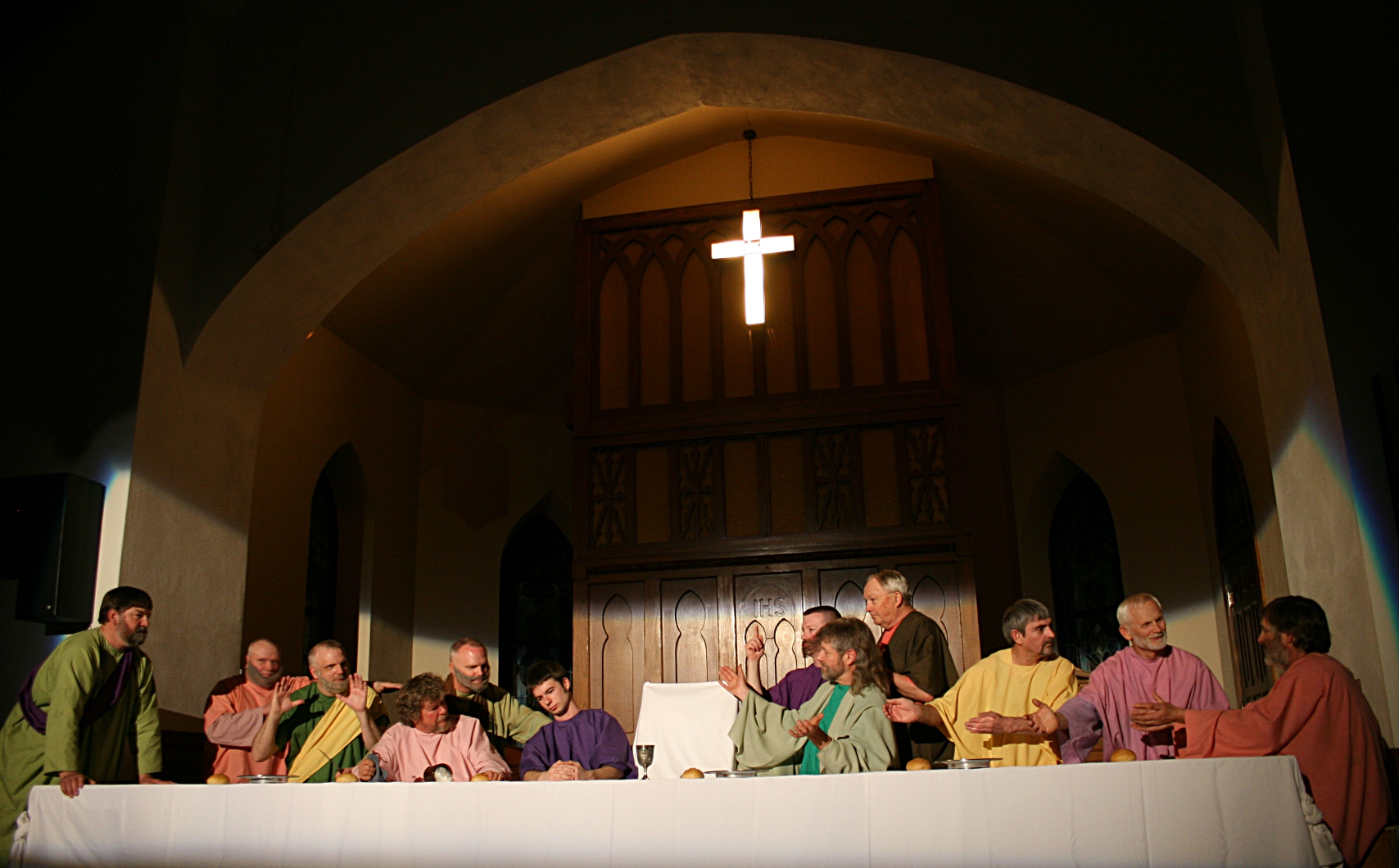
St. John's 50th presentation of The Last Supper Drama in the sanctuary.

St. John’s 50th presentation of “The Last Supper Drama” in the sanctuary. Minnesota Prairie Roots file photo 2012.

As darkness falls, voices hush, mood-setting music plays and a spotlight shines upon 12 performers role-playing the disciples.

It is a profound performance which presents a personal perspective on the relationships between Jesus and his followers.

I’d encourage you to attend. It’s worth the drive, worth your time.

There’s something about sitting straight-backed in a pew in the darkness of a Palm Sunday evening within the walls of an aged limestone church in the company of believers that comforts me and puts me in the proper meditative mindset for Holy Week. And that reaction is, I expect, exactly as St. John’s intends.

The parking lot at St. John's United Church of Christ, Wheeling Township, is nearly full 20 minutes before the congregation's annual performance of The Last Supper Drama.

The parking lot at St. John’s United Church of Christ, Wheeling Township, is nearly full 20 minutes before the congregation’s annual performance of “The Last Supper Drama”. Minnesota Prairie Roots file photo 2012.

FYI: St. John’s is located 10 miles northeast of Faribault. Take Minnesota State Highway 60 east for eight miles and then turn north onto Rice County 24. Drive two miles to 19086 Jacobs Avenue.

The drama begins at 8 p.m. on Sunday, April 13, and is followed by lunch afterward in the fellowship hall.

© Copyright 2014 Audrey Kletscher Helbling


How my poetry inspired a still life painting of lilacs April 10, 2014

POETRY INSPIRING ART. It’s a fabulous concept and even better when you are part of such a pairing.

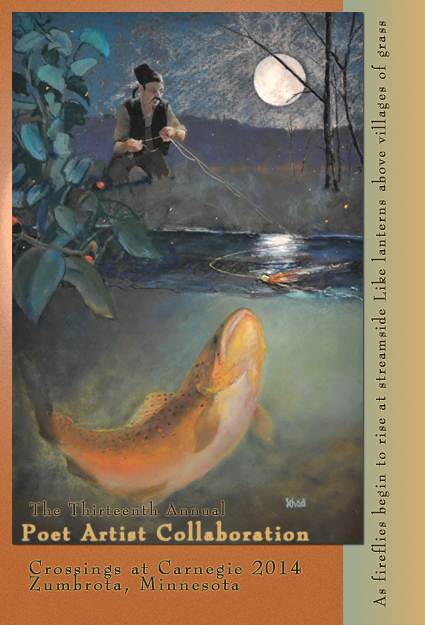
A poem I penned has inspired art for Poet-Artist Collaboration XIII, which opened March 31 and runs through May 15 at Crossings at Carnegie, 320 East Avenue, Zumbrota.

"Lilacs on the Table" by Jeanne Licari

“Lilacs on the Table” by Jeanne Licari. Photo courtesy of Crossings at Carnegie.

I recently connected with “my” artist, Jeanne Licari, to learn how my poem, “Lilacs,” inspired her to paint “Lilacs on the Table,” an 11 x 14-inch still life oil on linen.

Twenty-six poems were chosen from nearly 210 submissions with 26 artists then selected via a juried process. This is Jeanne’s ninth time participating in the collaboration and my second.

Artist Jeanne Licari

Artist Jeanne Licari in her studio. Photo courtesy of Jeanne Licari.

A mostly self-taught artist who drew and painted as a child, this Rochester resident also furthered her talent through painting classes and workshops. She terms herself a representational oil painter who prefers to paint from life, whether a landscape or a still life.

Jeanne is both plein air—painting outdoors on location—and studio painter.

“My art reflects the beauty I see in mankind and nature,” she says. “My paintings are a direct response to what I see.”

Or, in the case of “Lilacs,” to what she read.

Lilacs

Breathing in the heady scent of lilacs each May,
I remember my bachelor uncle and the gnarled bushes,
heavy with purple blooms, that embraced his front porch
and held the promises of sweet love never experienced.

He invited his sister-in-law, my mother, to clip lilacs,
to enfold great sweeps of flowers into her arms,
to set a still life painting upon the Formica kitchen table,
romance perfuming our cow-scented farmhouse.

Such memories linger as my own love, decades later,
pulls a jackknife from the pocket of his stained jeans,
balances on the tips of his soiled Red Wing work shoes,
clips and gathers great sweeps of lilacs into his arms.

Plenty of lilacs to gather in the spring.

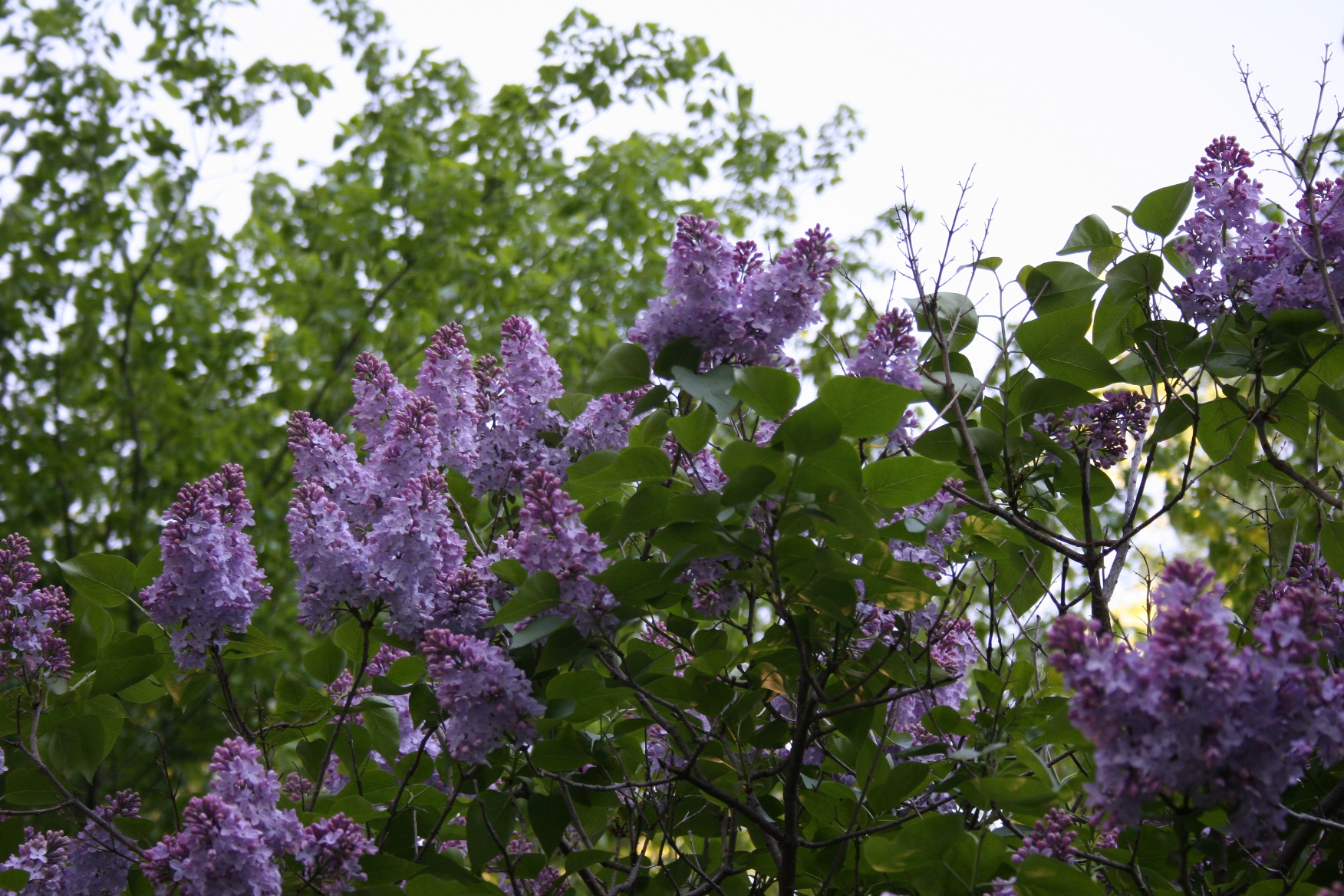
Minnesota Prairie Roots file photo of lilacs.

Jeanne explains how she created “Lilacs on the Table”:

“…I wanted to tell the viewer how I felt about lilacs. The poem triggered memories of many bouquets of lilacs in my lifetime. I love the dense bouquet of purple flowers, the beauty of the different pinks and purples against the green leaves, and the abundant fragrance of lilacs. Since there were no lilacs blooming in March, I painted them using memories of lilacs and how they grew, an oil study of lilacs painted from life, and photos.

I painted the lilacs on a table in response to the line, ‘to set a still life painting upon the Formica kitchen table.’ That line, plus the words about farming, made me remember many bouquets of lilacs on our Formica table in my childhood home on the farm.”

How fabulous to know that Jeanne comes, like me, from a rural background. Her words and oil painting show me that she understands and connects to my words in a deeply personal way.

And that is my hope as a poet—that those who read my poetry will connect to it.

A promotional for the collaboration features "Li Bai at the South Fork," art by Mike Schad inspired by a poem of the same name written by Justin Watkins for the 2013 Poet-Artist XII collaboration.

A promotional for the collaboration features “Li Bai at the South Fork,” art by Mike Schad inspired by a poem of the same name written by Justin Watkins for the 2013 Poet-Artist Collaboration XII.

FYI: A reception, poetry reading and slide show honoring the featured poets and artists is set for Saturday, May 10. Mingle and meet for an hour beginning at 6:30 p.m. in the Crossings gallery. Then, at 7:30 p.m., move next door to the historic State Theatre where poets will read their works and artists will also briefly discuss their art, shown on a screen.

Another poet from my community of Faribault, Larry Gavin, who has published several poetry collections and teaches English at Faribault High School, will read two of his selected poems, “Ashes” and “Two Cranes.”

Collaboration participants come from Minnesota, Iowa, North Dakota and Wisconsin.

The featured artwork is available for sale, including “Lilacs on the Table,” priced at $395. Jeanne Licari’s art is also sold at the SEMVA (South Eastern Minnesota Visual Arts) Gallery in downtown Rochester.

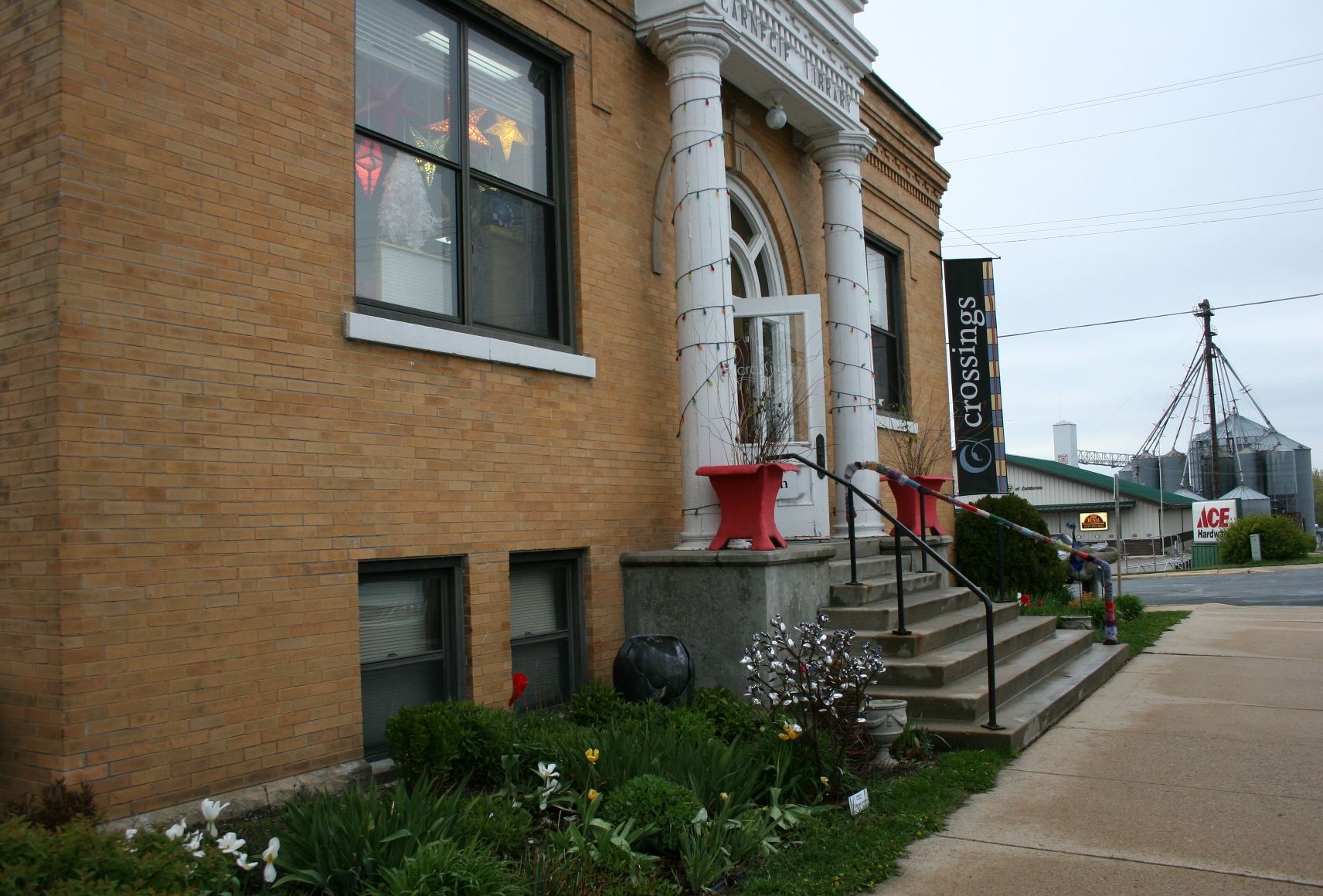
Crossings at Carnegie, housed in a former Carnegie library, is a privately-owned cultural visual and performing arts center in Zumbrota. I love the rural atmosphere with the hardware story and grain elevator just down the street.

Crossings at Carnegie, housed in a former Carnegie library, is a privately-owned cultural visual and performing arts center in Zumbrota. Minnesota Prairie Roots file photo 2012.

If you can’t attend the May 10 reception, you can view the exhibit during gallery hours from 10 a.m. – 5 p.m. Monday, Tuesday, Wednesday and Friday; from 10 a.m. – 8 p.m. Thursday; or from 10 a.m. – 4 p.m. Saturday.

Click here for more details about Poet-Artist Collaboration XIII.

Click here to see how my poem, “Her Treasure,” inspired Connie Ludwig to paint “Pantry Jewels” for the Poet-Artist Collaboration XI in 2012.

© Copyright 2014 Audrey Kletscher Helbling


How the Minnesota prairie ignites my poetry April 2, 2014

WHAT IS IT ABOUT POETRY?

Do you embrace or shun it? Write it or read it? Do you even care?

April marks National Poetry Month, a full thirty days initially established by the Academy of American Poets in 1996 to focus on poetry.

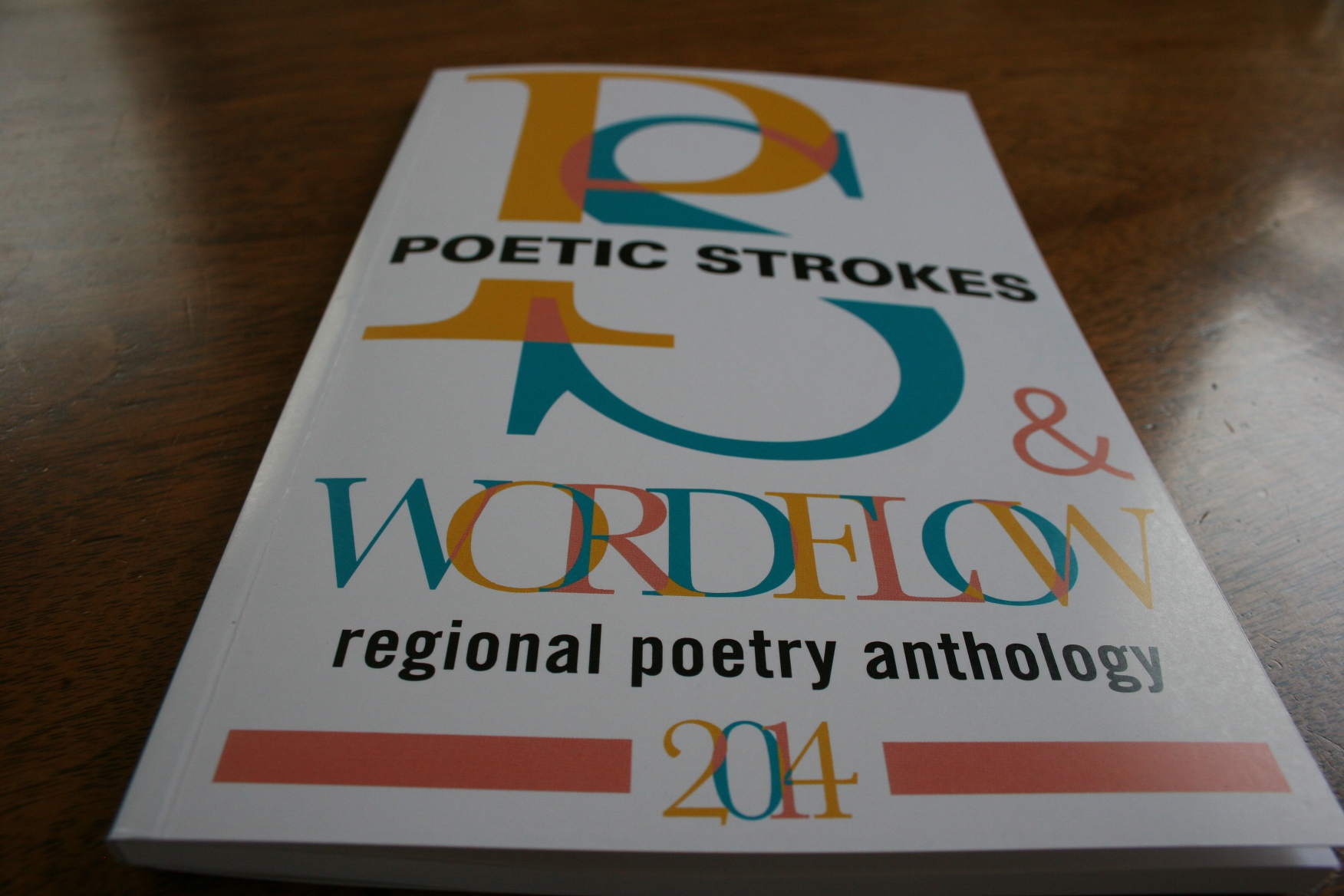
My most recent poem, "The Farmer's Wife, Circa 1960, has been published in Poetic Strokes, an anthology published by Southeastern Libraries Cooperating. My poem was one of 23 selected from 196 submissions. The anthology should soon be available for check-out by library patrons in the SELCO system.

My most recent poem, “The Farmer’s Wife, Circa 1960,” has been printed in Poetic Strokes, an anthology published by Southeastern Libraries Cooperating. My poem was one of 23 selected from 196 submissions. The anthology should soon be available for check-out by library patrons in the SELCO system.

If you haven’t read poetry in years, I’d suggest you revisit poetry. Long gone, mostly, are rhymed verses.

Instead, you will find poets penning free verse that correlates to an abbreviated form of storytelling or a spilling of emotions or a harmony of detailed observations and more.

Despite differences in subject matter and style, poets share a common love of language. Alliterations. Personification. Similes and metaphors. Strong verbs.

Poetry, though it may appear easy to write, is not.

Details matter. Each word matters. The sound of a poem read aloud matters.

A poem I wrote about my mother, published in Poetic Strokes 2014.

A poem I wrote about my mother, just published in Poetic Strokes 2014, A Regional Anthology of Poetry from Southeastern Minnesota.

Every poet possesses a style. I’d define mine as rooted in my native southwestern Minnesota prairie. That stark land shaped me as a writer. My poems convey a strong sense of place, words wheeling like a prairie fire across the landscape of a page.

With so few distractions, the prairie presents an ideal environment to notice details—the grate of the wind, the lean of an outbuilding, the weathered grey of an abandoned farmhouse, the isolation, the calloused hands of a farmer, green corn leaves unfurling against rich black soil, the horizontal grid of township gravel roads, power lines stretching into infinity…

Those who’ve never lived on the prairie often fail to understand its beauty, dismissing it as the middle of nowhere.

But this land holds my heart and memories and continues to inspire me. Not all of my verse. But much of it.

Some of my prairie-inspired poetry includes:

    • “This Barn Remembers,” Lake Region Review #1
    • “Taking Lunch to the Men in the Field,” Lake Region Review #2
    • “Abandoned Barn,” The Talking Stick, Volume 20
    • “Broken,” The Talking Stick, Volume 21
    • “The Farmer’s Song,” The Talking Stick, Volume 22
    • “Prairie Sisters,” Poetic Strokes, Volume 2
    • “Abandoned Farmhouse,” Poetic Strokes, Volume 3
    • “Walking Beans,” Poetic Strokes, Volume 3
    • “A school without a library,” Poetic Strokes, Volume 4
    • “Saturday night baths,” Poetic Strokes, Volume 4
    • “Her Treasure,” 11th annual Poet-Artist Collaboration, Crossings at Carnegie
    • “Lilacs”, 13th annual Poet-Artist Collaboration, Crossings at Carnegie and honorable mention at 18th annual Northwoods Art & Book Festival

And that poetry, my prairie poetry, has graced billboards, walls, recreational signage, galleries, and the pages of magazines, newspapers and anthologies. 

Perhaps it’s time to consider compiling those poems and others into a collection. Thoughts?

© Copyright 2014 Audrey Kletscher Helbling


No April Fool’s: Sixty degrees, then snow & tornadoes April 1, 2014

Filed under: Uncategorized — Audrey Kletscher Helbling @ 6:00 AM
Tags: , , , ,

THEY THRONGED TO RIVER BEND Nature Center Sunday afternoon.

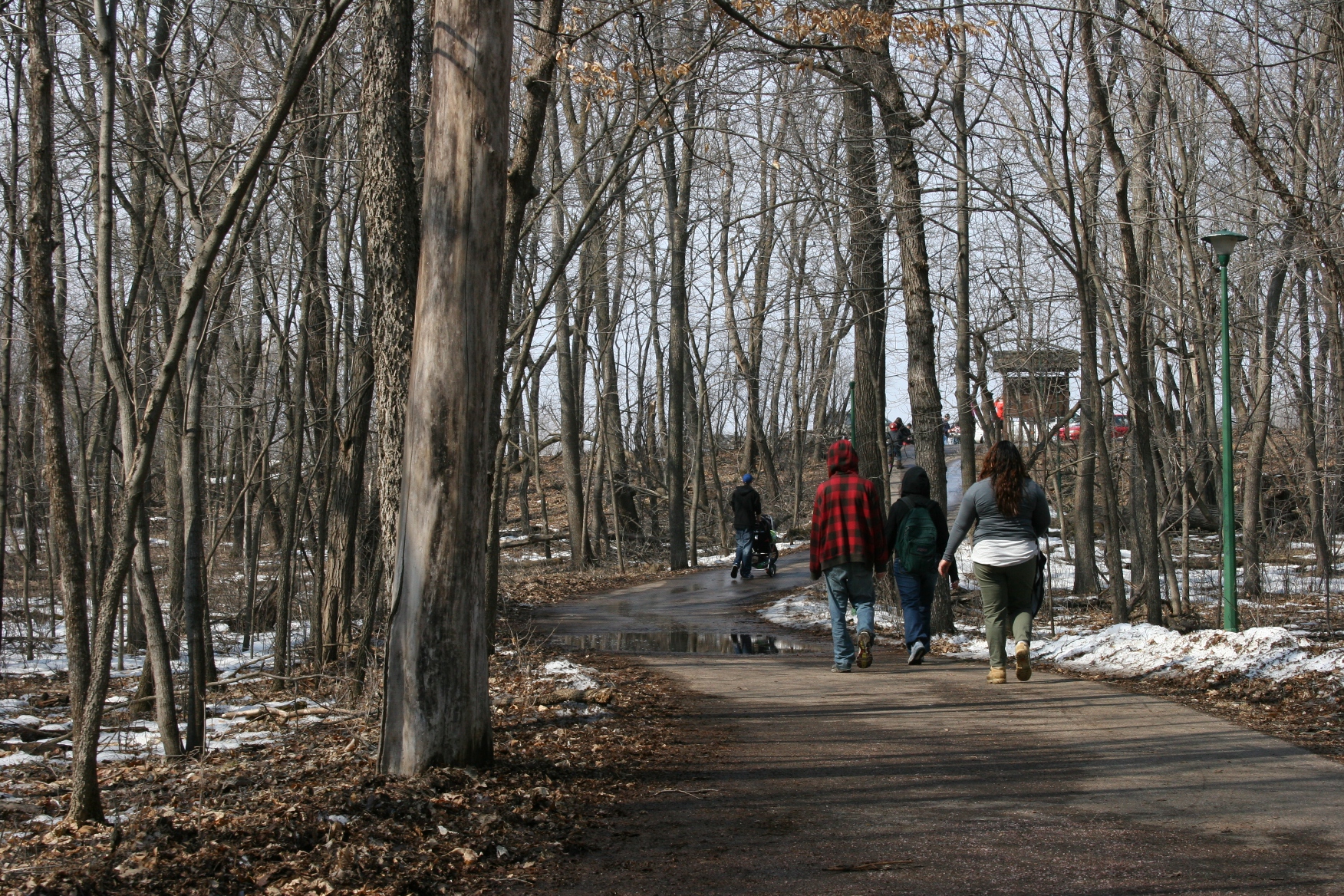
Walking the trails.

Walking the trails, this a rare one that wasn’t snow-covered and icy.

More warm weather outdoor enthusiasts than I’ve ever seen at this nearly 750-acres of woods, prairie and water on Faribault’s east side.

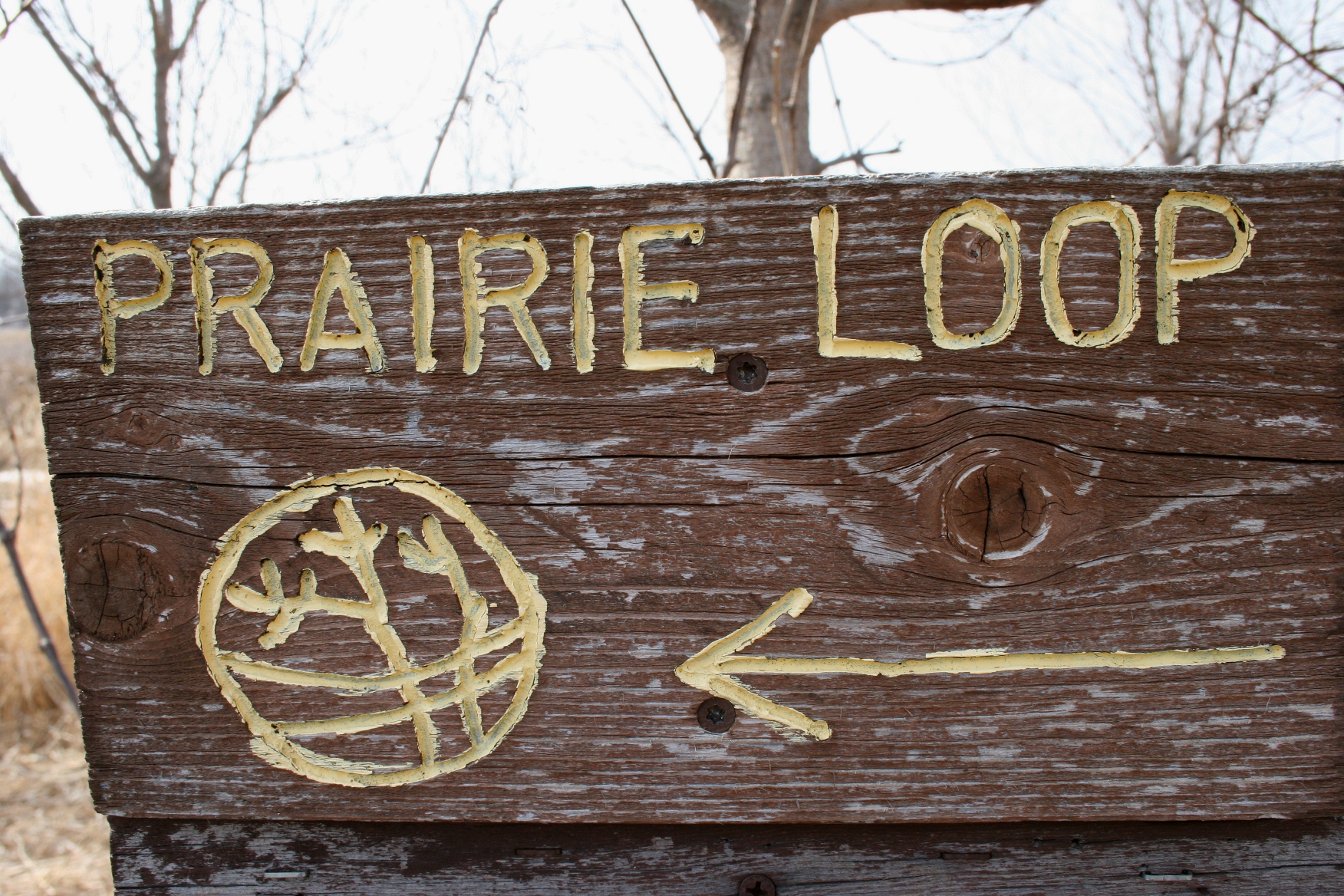
Handcrafted signs guide visitors along trails.

Handcrafted signs guide visitors along trails.

Bare-headed baby tucked in mother’s arms. Elementary-aged boy in helmet zipping his scooter down a tarred path. Elderly couple snugged on a bench.

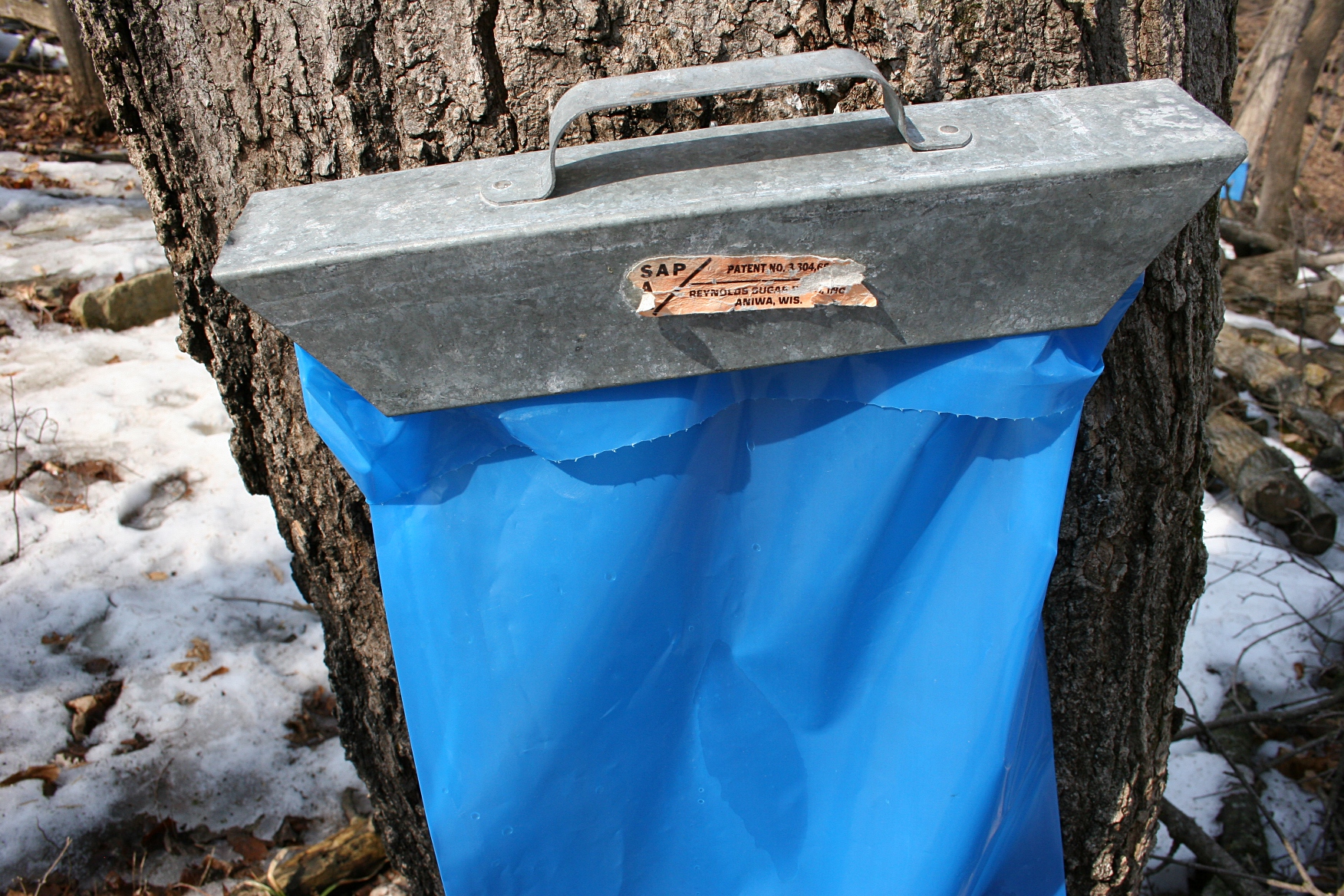
Trees tapped to collect sap in bags.

Trees tapped to collect sap in bags.

Folks clustered around an evaporator that cooked freshly tapped maple syrup.

Kids played in the water with sticks similar to this scene.

Kids played in water with sticks similar to this scene.

A trio of kids crossing a stick bridged across a rush of water.

A family picnicking.

Guy in shorts; boy in snowpants.

Abdi studies by the swamp.

Abdi studies by the swamp.

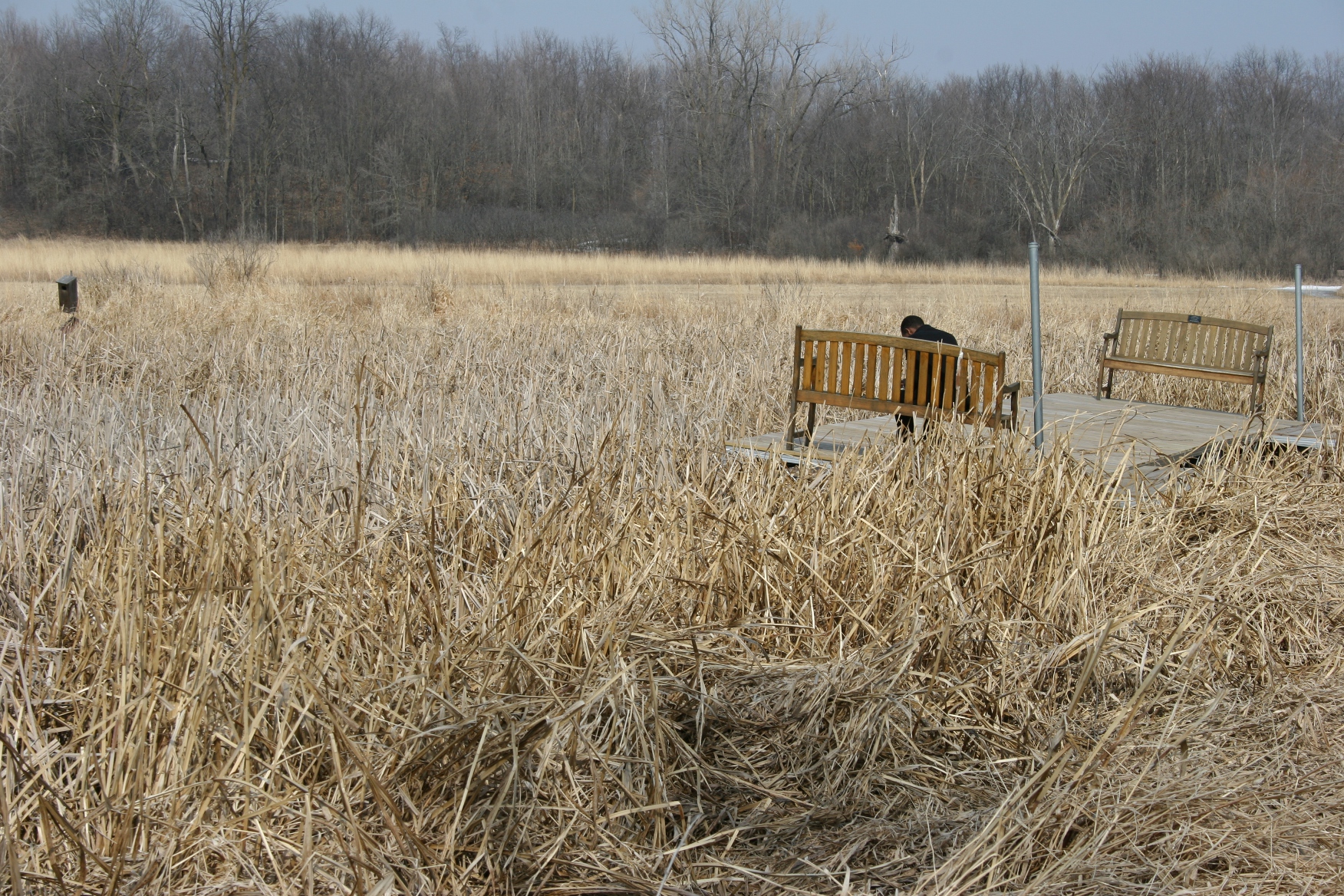
Abdi, a native of Ethiopia, benched by the swamp/pond studying for his medical lab class in the quiet of nature, away from his noisy apartment building.

A 20-something teaching archery to kids just outside the interpretive center.

And us, threading our way along still icy trails, slushing through melting snow. Me, grabbing my husband’s hand to keep from slipping, his snow boots gripping the ice, mine not.

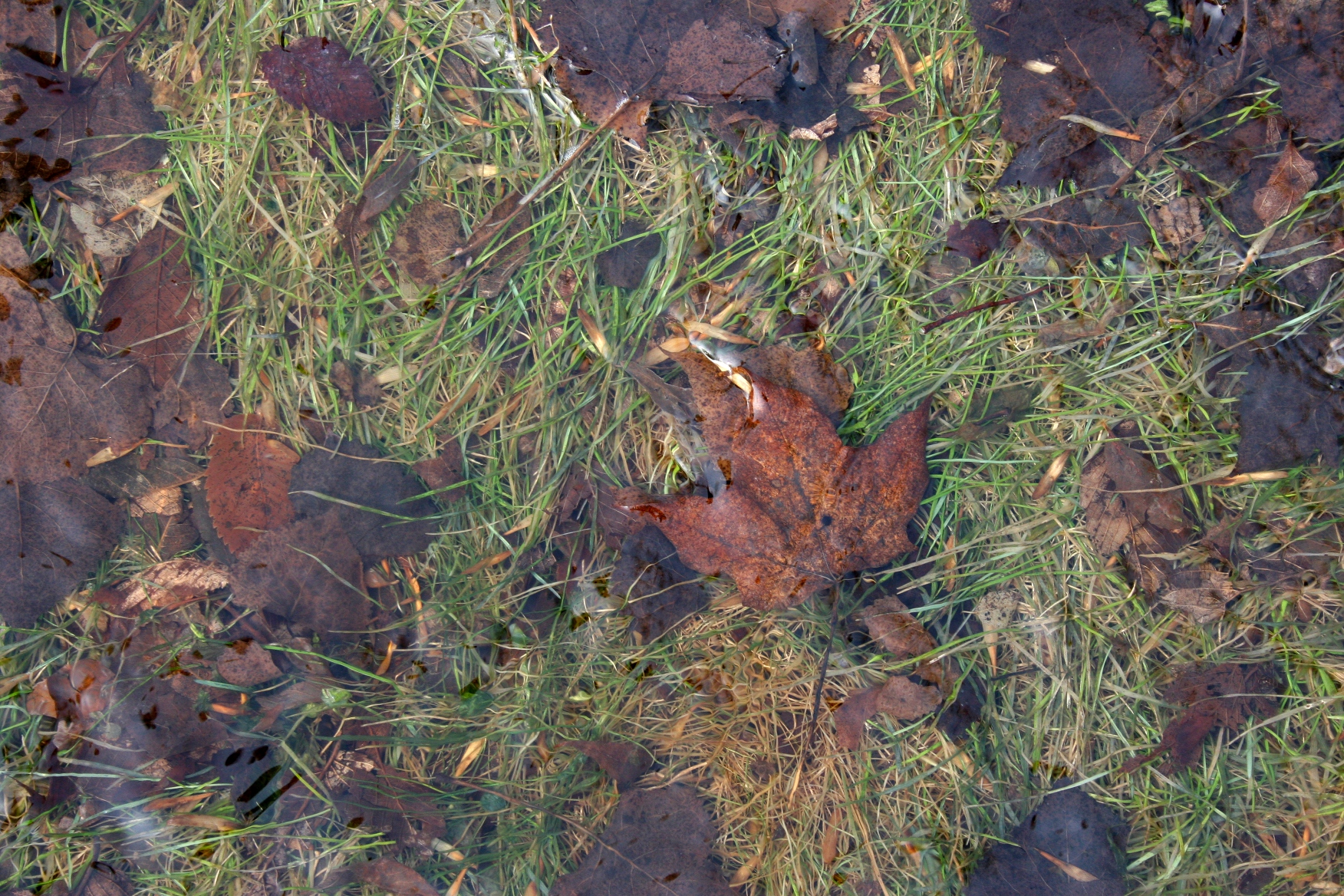
Patches of green grass mingle under water with dead leaves.

Patches of green grass mingle under water with dead leaves.

My eyes grasping for green and finding it in patches of emerging grass.

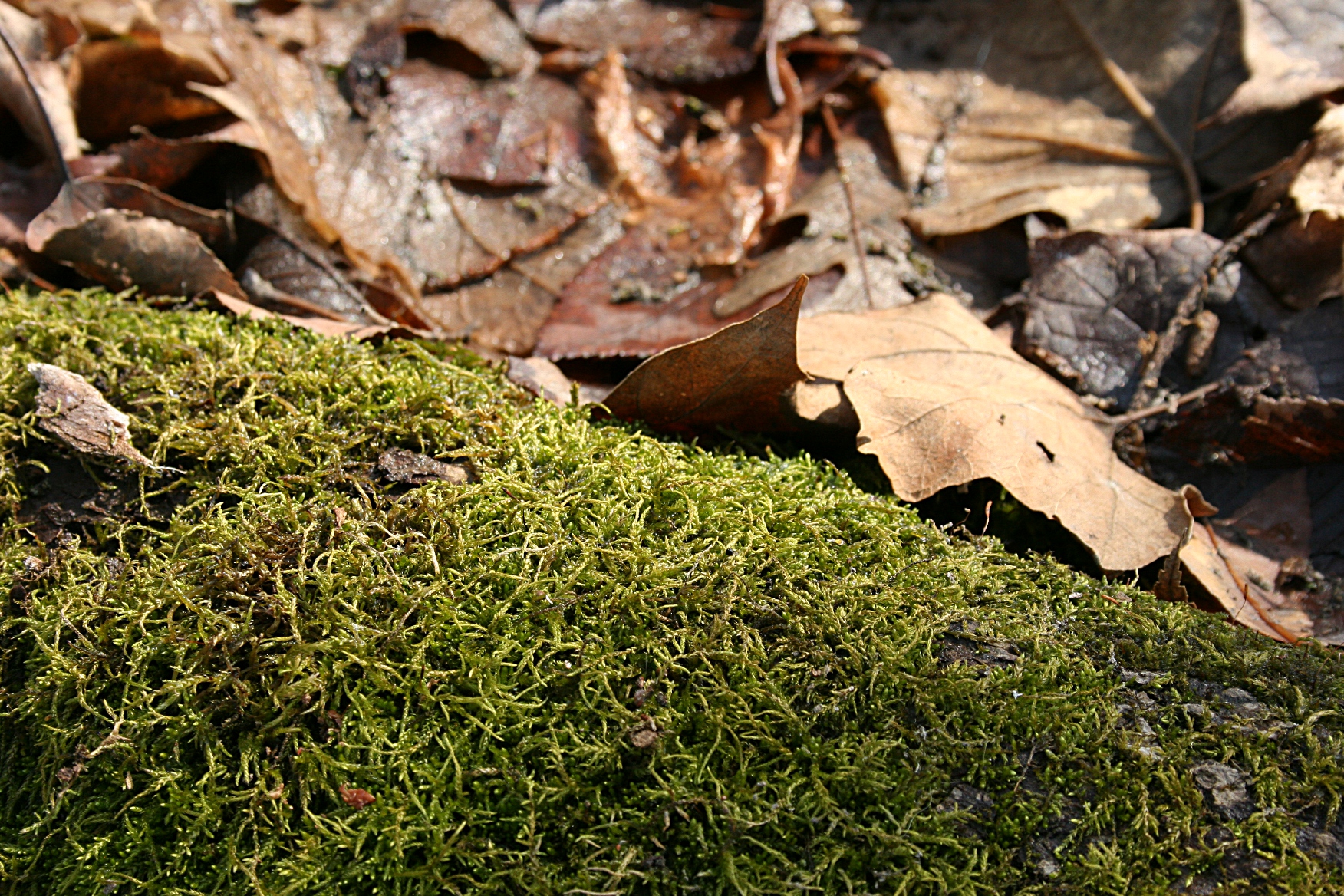
The brightest green discovered--moss on a log.

The brightest green discovered–moss on a log.

Green moss on dead logs.

The tiniest of green plants poking through the dormant prairie grass.

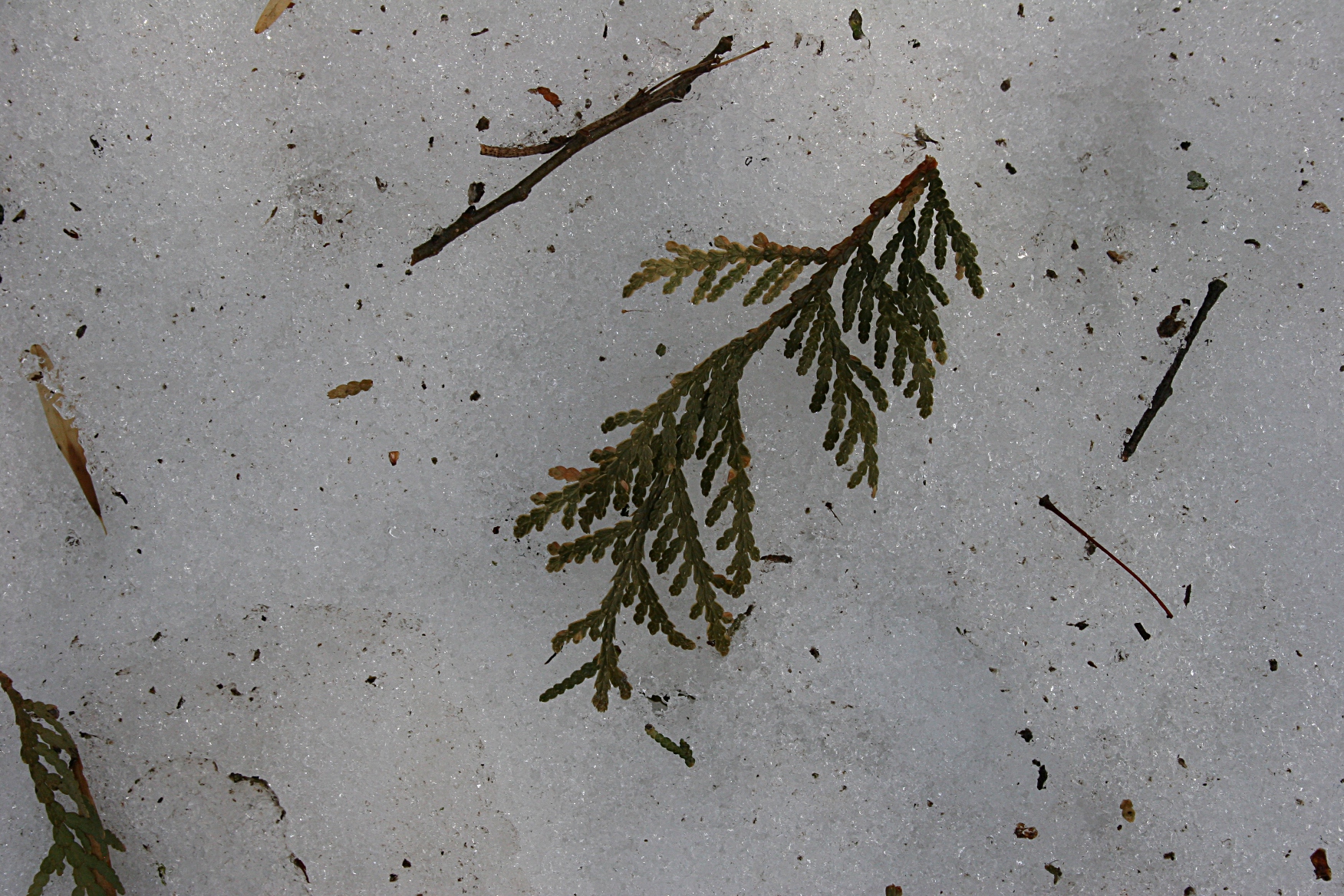
A snippet of green cedar upon snow.

A snippet of green cedar upon snow.

Searching for signs of spring.

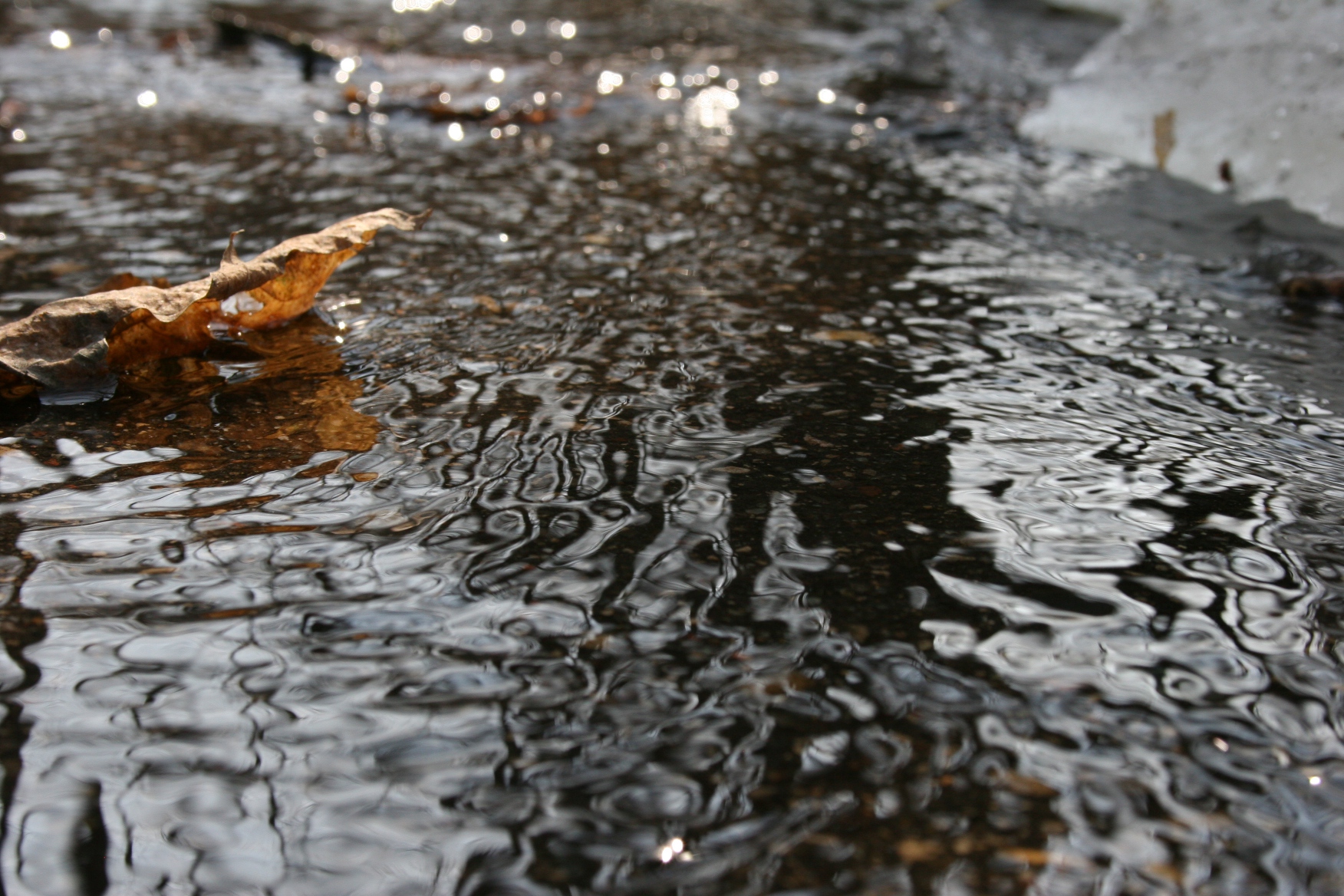
Trees reflected in a "lake" of water from the snow melt.

Trees reflected in a “lake” of water from the snow melt.

Finding it in watercolor paintings.

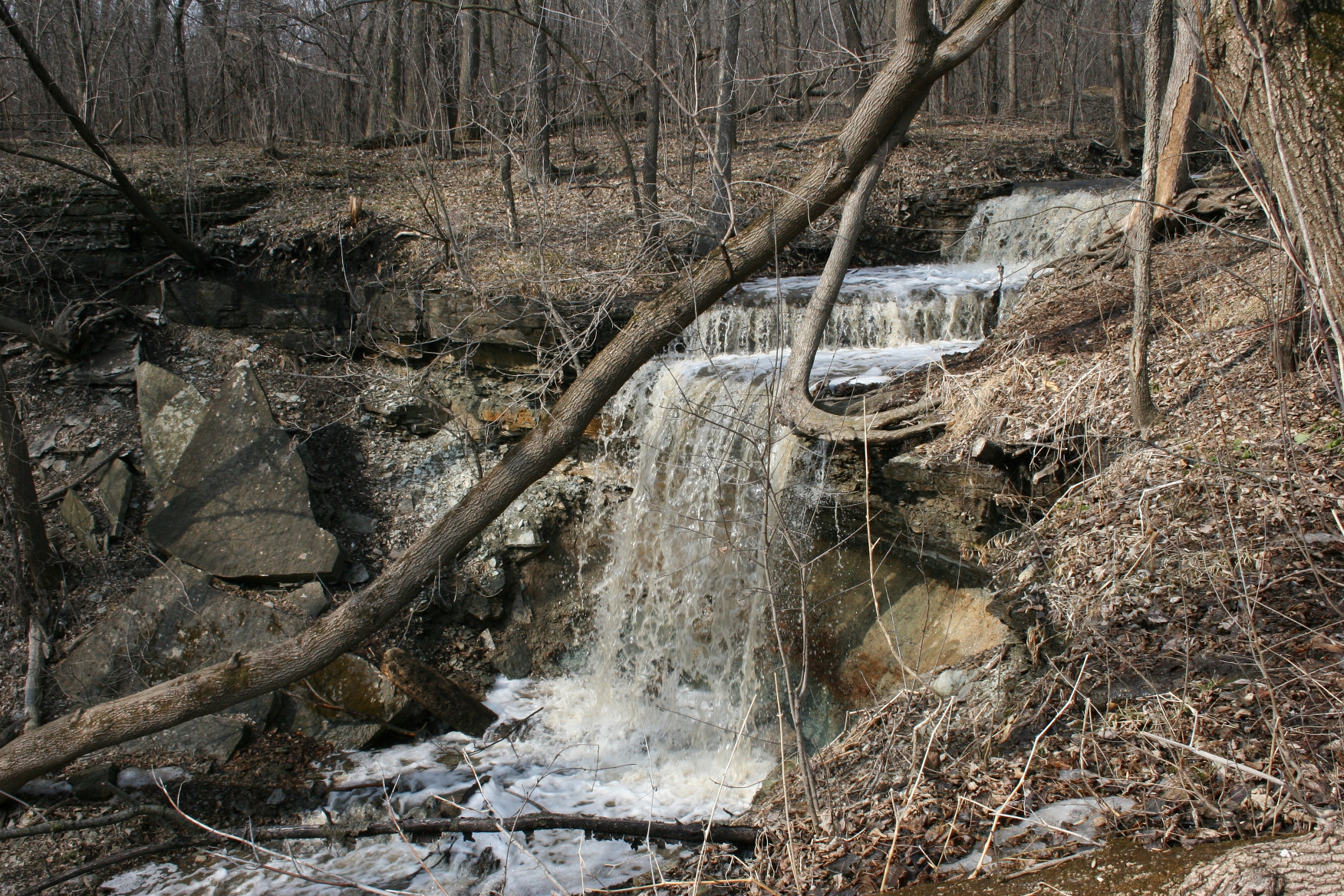
I've never seen this much water roaring over the nature center waterfall.

I’ve never seen this much water roaring over the nature center waterfall.

Water roaring over limestone in a three-tied waterfall.

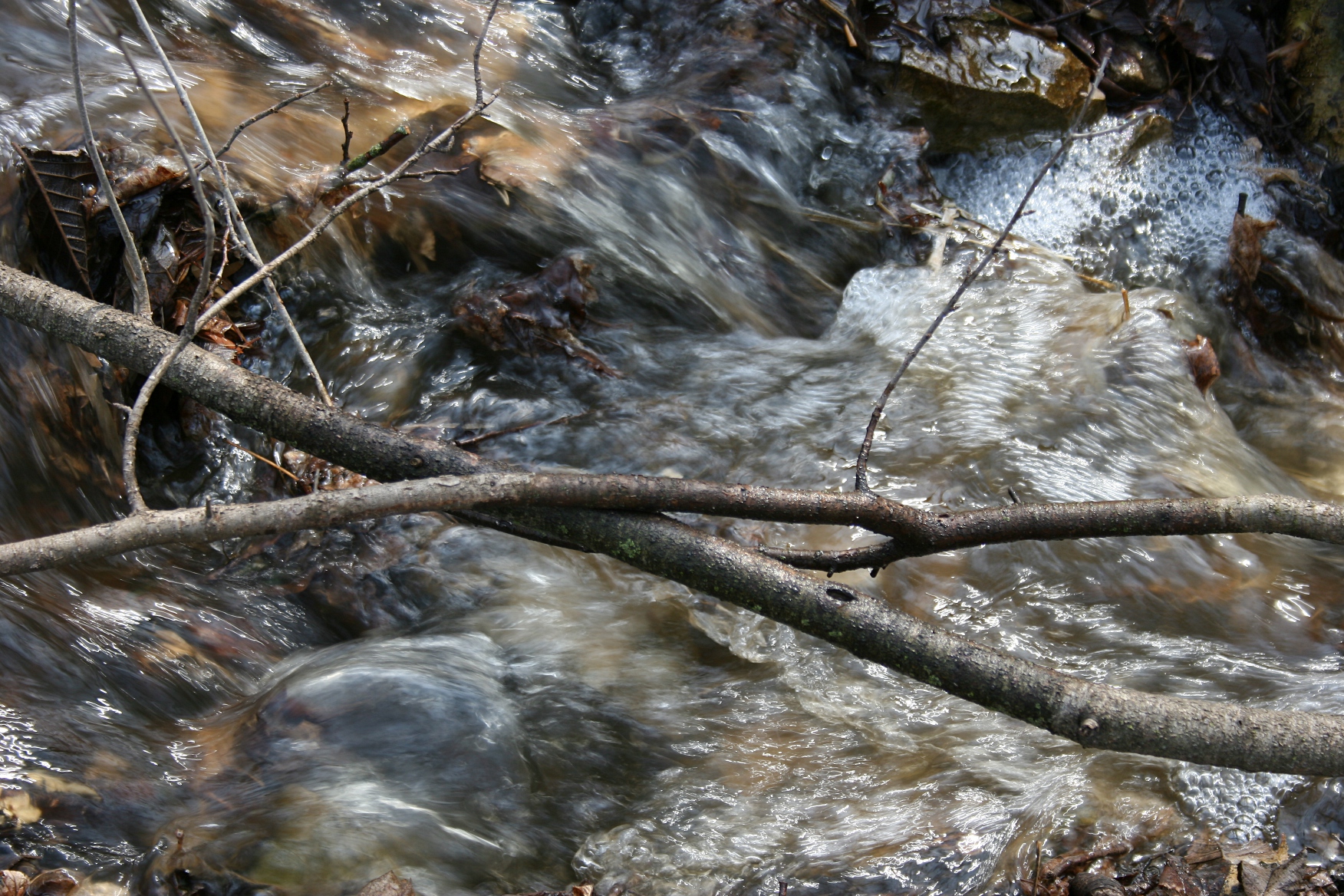
Water rushes down a trail.

Water rushes down a trail.

Slogging through water, with grass and dead leaves squishing beneath our boots.

Sunday and sixty degrees. Glorious. Spring.

And then came blizzards (northern Minnesota) and tornadoes (southwestern Minnesota) on Monday with temps plunging into the 20s and 30s overnight.  A wind advisory remains in effect until 10 a.m. today for a portion of Minnesota sweeping from southwest/central to southeast with sustained winds of 25 – 35 mph topping at 50 mph, according to the National Weather Service.

No April Fool’s.

FYI: According to an article in The Marshall Independent, a twister was sited near Taunton Monday afternoon with structural damage from the storm reported five miles north of Minneota. On Monday, a tornado warning and a blizzard warning were issued simultaneously for a portion of southwestern Minnesota.

In Yellow Medicine County, the West Central Tribune of Willmar reports structural damage from a tornado at three farm sites southeast of St. Leo.

© Copyright 2014 Audrey Kletscher Helbling


Bluff ice art March 31, 2014

Filed under: Uncategorized — Audrey Kletscher Helbling @ 6:00 AM
Tags: , , , , , , , ,

PERHAPS I AM too easily impressed.

But I have not visited the ice caves at Apostle Islands National Lakeshore in northern Bayfield County, Wisconsin.

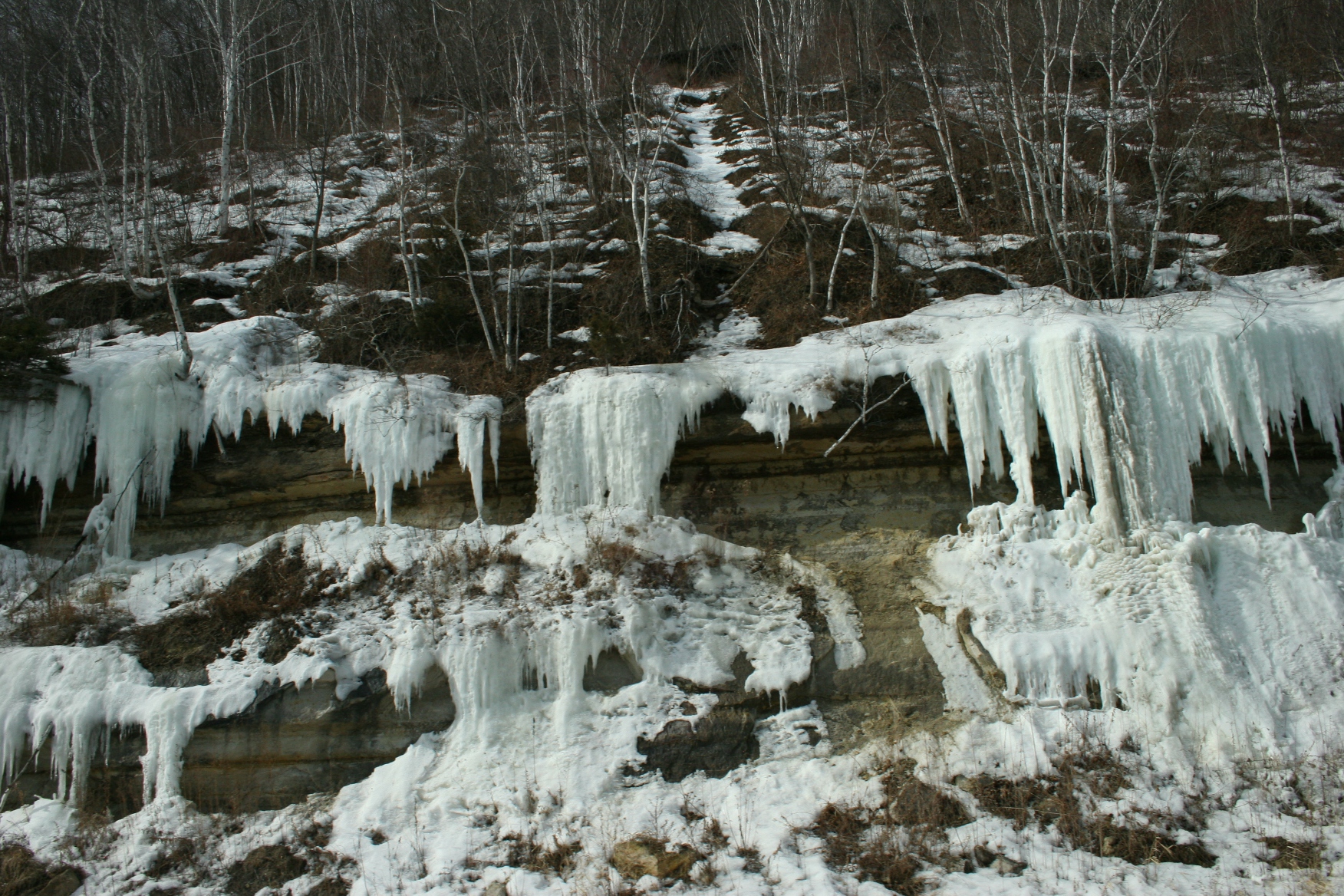
Ice formations by La Crosse 1

Thus the ice formations gracing the Mississippi River bluffs along Interstate 90 on the Minnesota side near La Crosse, Wisconsin, impress me.

Ice formations by La Crosse 2

There is no stopping along I-90 to view or photograph this natural ice art up close. Rather, I rely on the rapid fire of my camera to capture the scene for later study.

Ice formations by La Crosse 3

Every time I see this water frozen in the icebox of winter, I marvel at its beauty.

I remember, too, how once upon a time I snapped icicles from the milkhouse roofline to engage in sword fight battles with my siblings.

Ice formations by La Crosse 4

The flip side of my mind views the ice formations as powdered sugar icing dripping down the sides of a homemade chocolate birthday cake baked by my mother.

That’s the thing about art—man-made or natural. It’s always open to interpretation.

FYI: These photos were taken 10 days ago. Since then, the weather has warmed to around 60 degrees in southern Minnesota, meaning these formations are likely disappearing.

© Copyright 2014 Audrey Kletscher Helbling


Did you lock the door? March 27, 2014

Filed under: Uncategorized — Audrey Kletscher Helbling @ 6:00 AM
Tags: , , , , ,


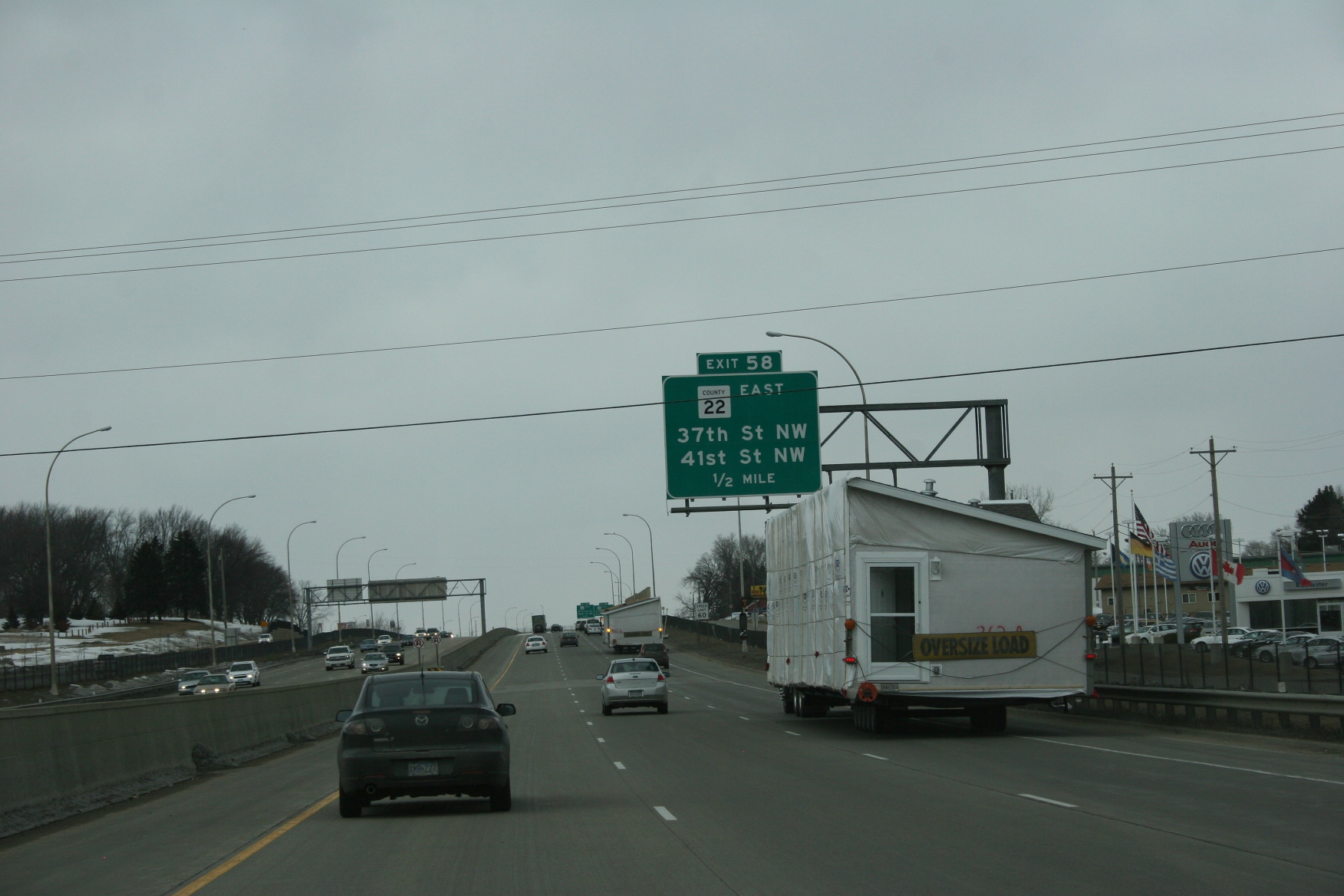
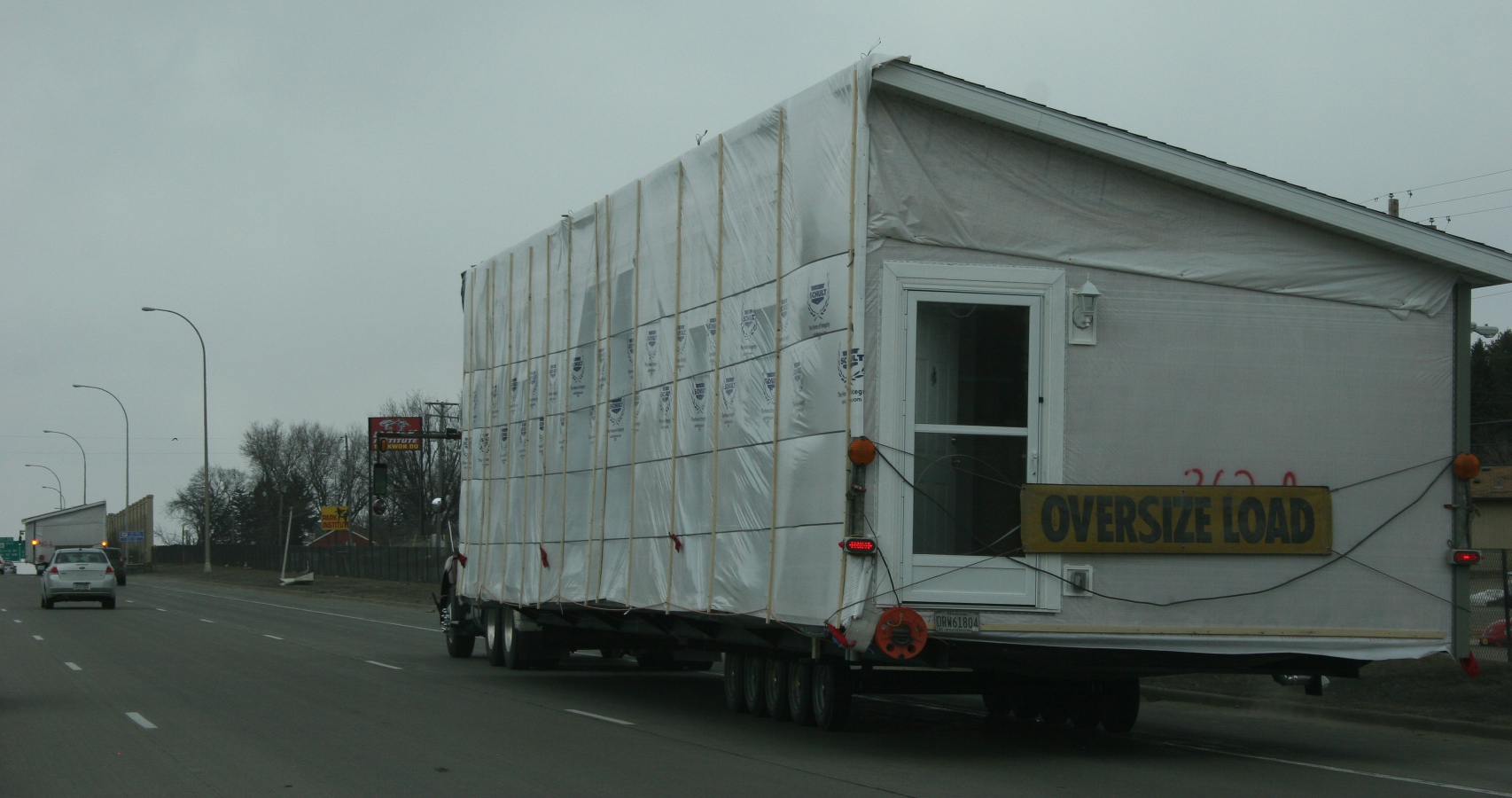
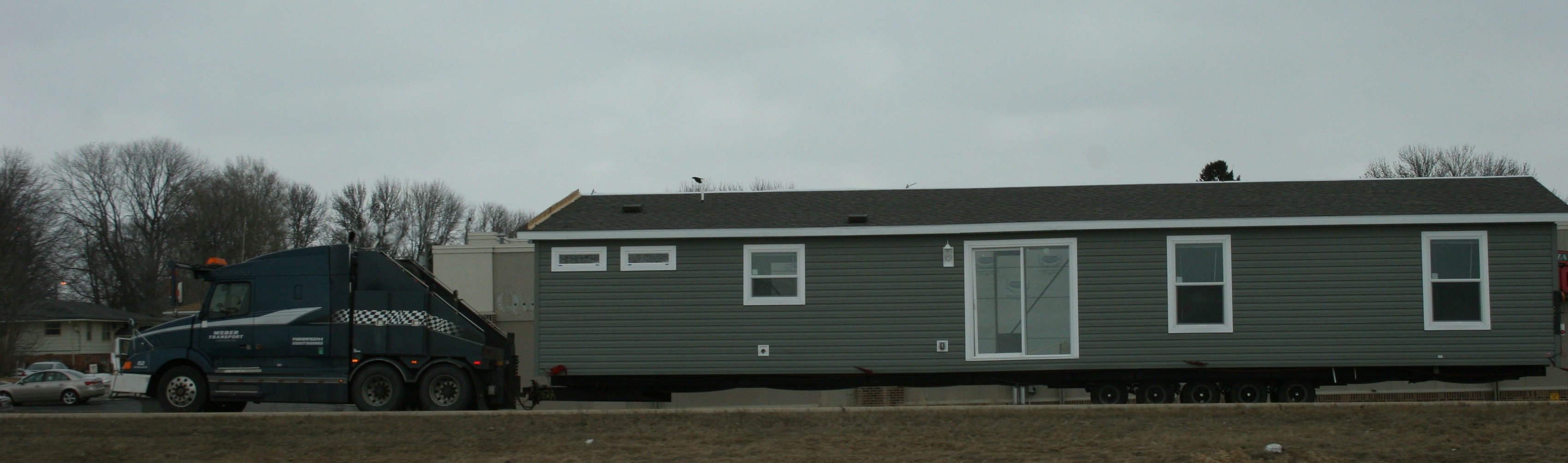
Photographed along U.S. Highway 52 in Rochester, Minnesota.

Photographed along U.S. Highway 52 in Rochester, Minnesota.

I thought I did.

House 2

But apparently not.

House 3

Copyright 2014 Audrey Kletscher Helbling


Discovering art in downtown Wabasha March 24, 2014

BRICK, A BENCH, A RIVER…

Each provides a canvas or backdrop for art in Wabasha, an historic Mississippi River town of 2,500 in southeastern Minnesota.

On a recent visit here to the National Eagle Center, where art abounds inside, I also noticed art integrated into the downtown.

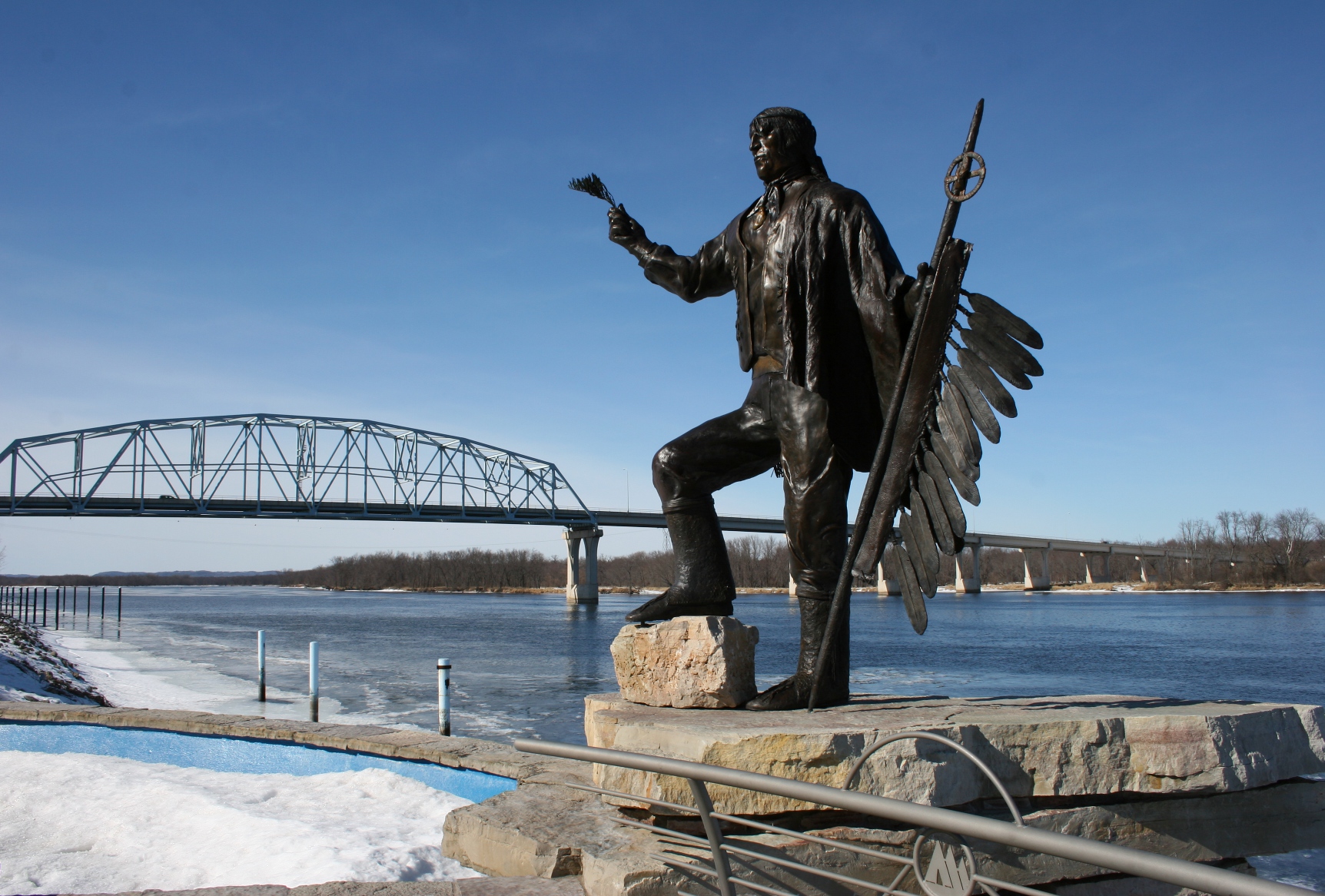
Wabasha, Wapahasha II

A 10-foot tall bronze sculpture of Wapahasha II, a Native American after whom the city of Wabasha is named, stands atop a fountain next to the riverside eagle center.

If you shift your eyes a bit, you’ll notice a bridge in the distance. I view that 26-year-old link between Minnesota and Wisconsin as art given the overhead span of trusses.

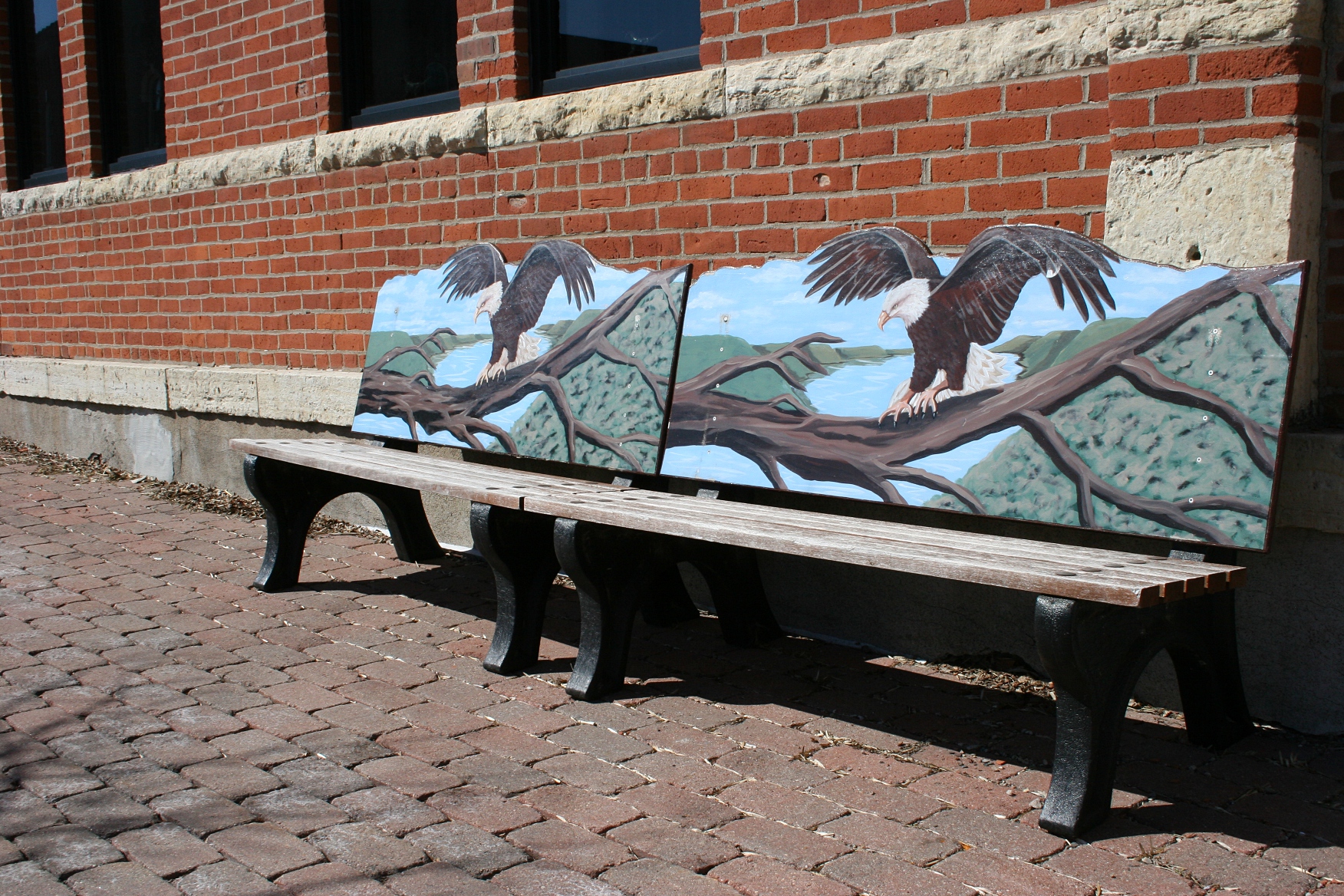
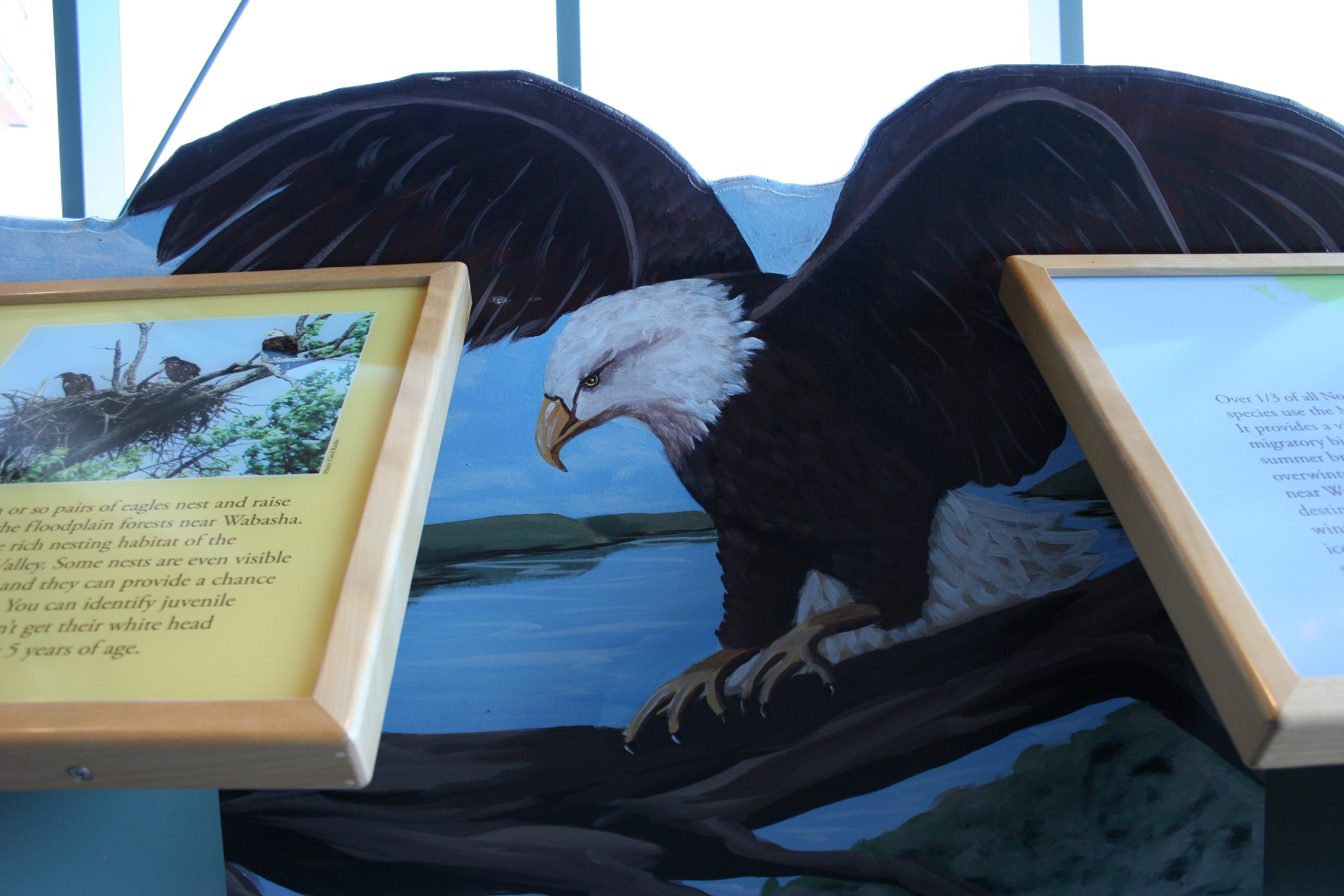
Wabasha, eagle bench

Just up the street, set atop brick pavers, co-joined park benches have become artwork, too, with eagle paintings backing the benches. It’s a nice touch, emphasizing Wabasha’s eagles and the reason many visitors come here.

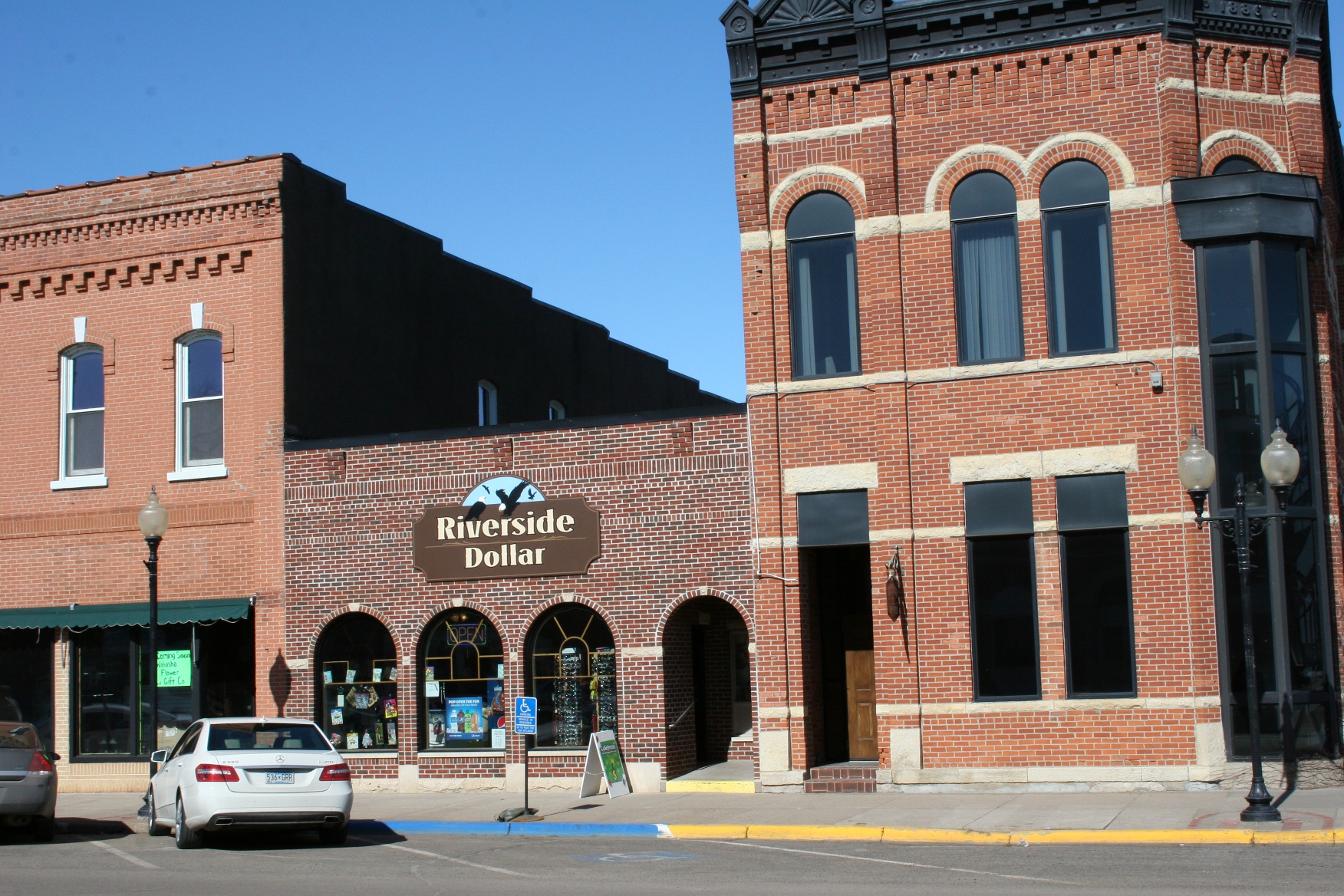
Wabasha, Riverside Dollar

Around the corner, Riverside Dollar also incorporates eagles into its signage on a cozy building tucked between taller historic buildings. Fifty properties in Wabasha are on the National Register of Historic Places, another reason I appreciate this community. The buildings, in and of themselves, are works of art with ornate details that showcase the craftsmanship of another era.

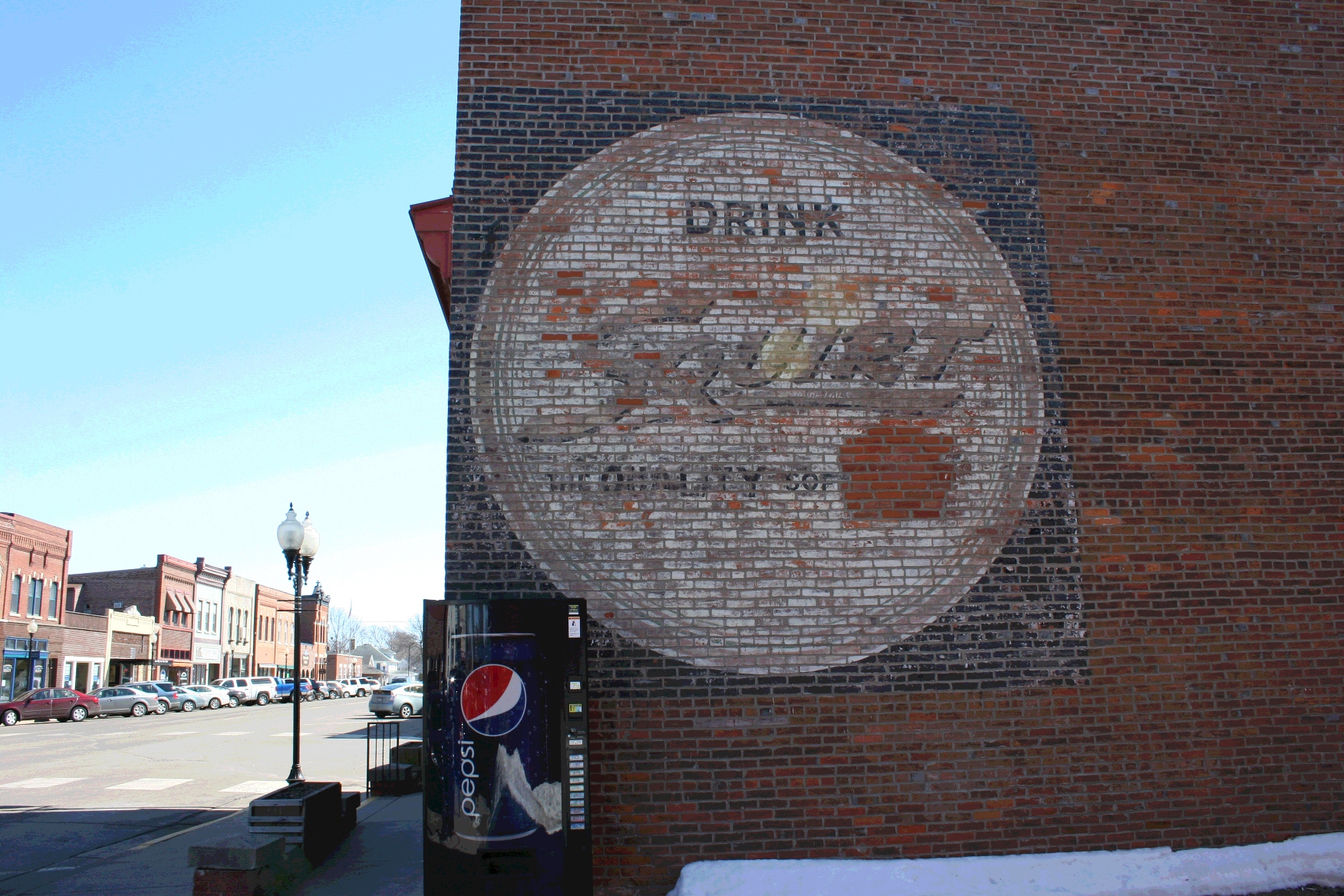
Wabasha, Squirt sign

A block away, a faded vintage Squirt sign painted onto the side of a brick building contrasts with a sleek and shiny Pepsi vending machine. That amuses me.

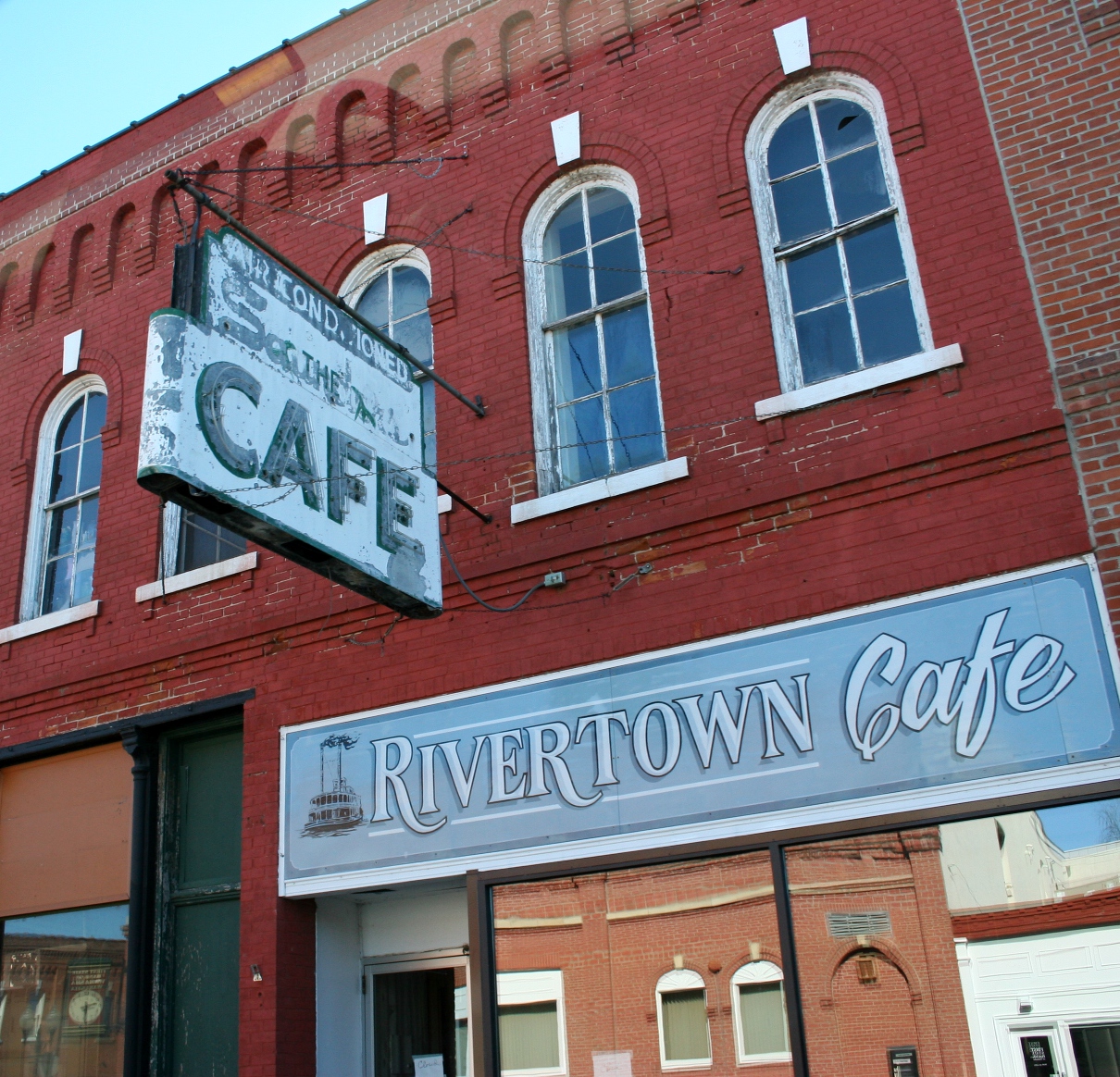
Wabasha, Rivertown Cafe front of

At the Rivertown Cafe, I appreciate the aging signage suspended from the second level. It adds a certain charm to the exterior and directs the eye toward the business.

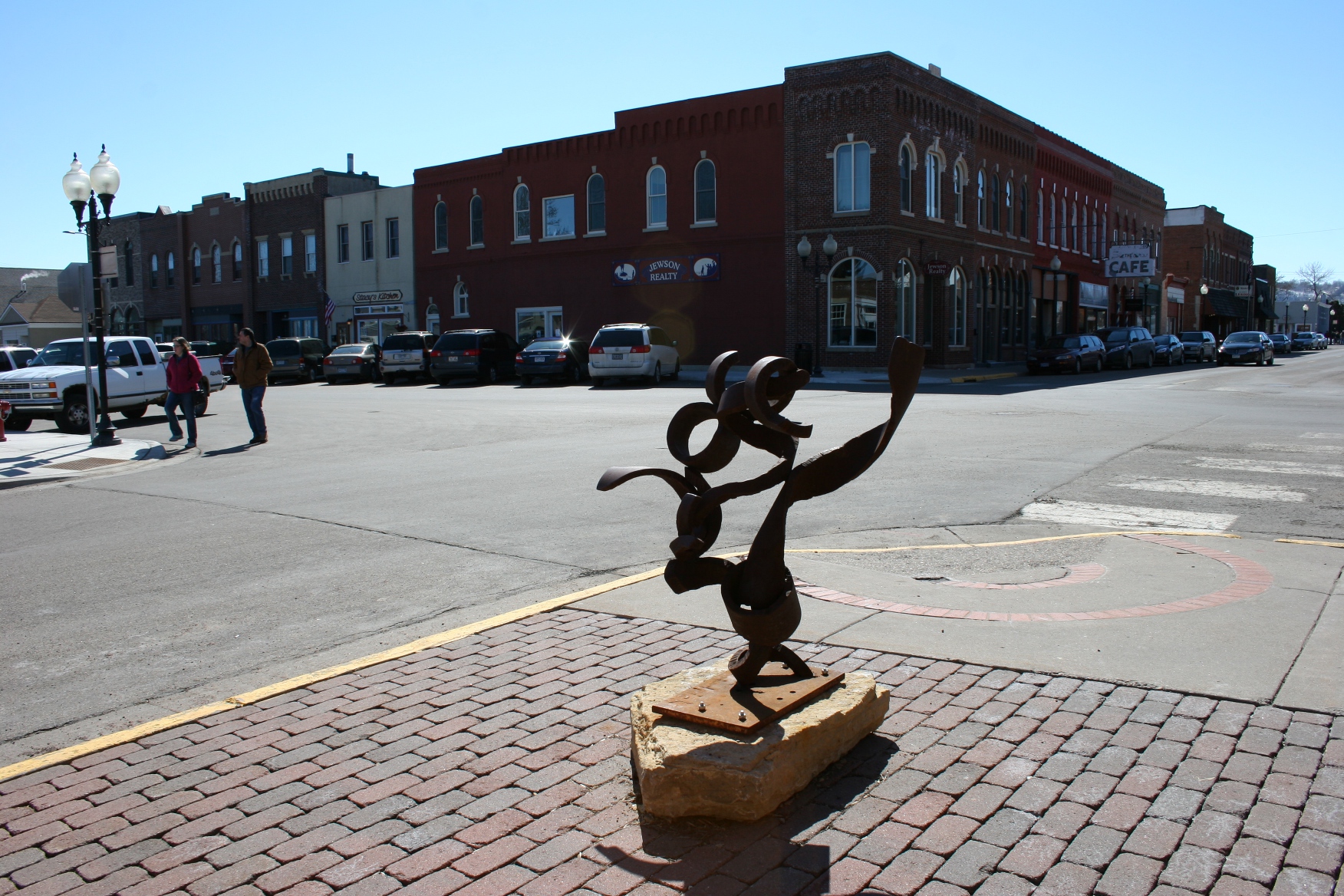
Wabasha, street corner sculpture

A stone’s throw away, a modern sculpture graces a street corner.

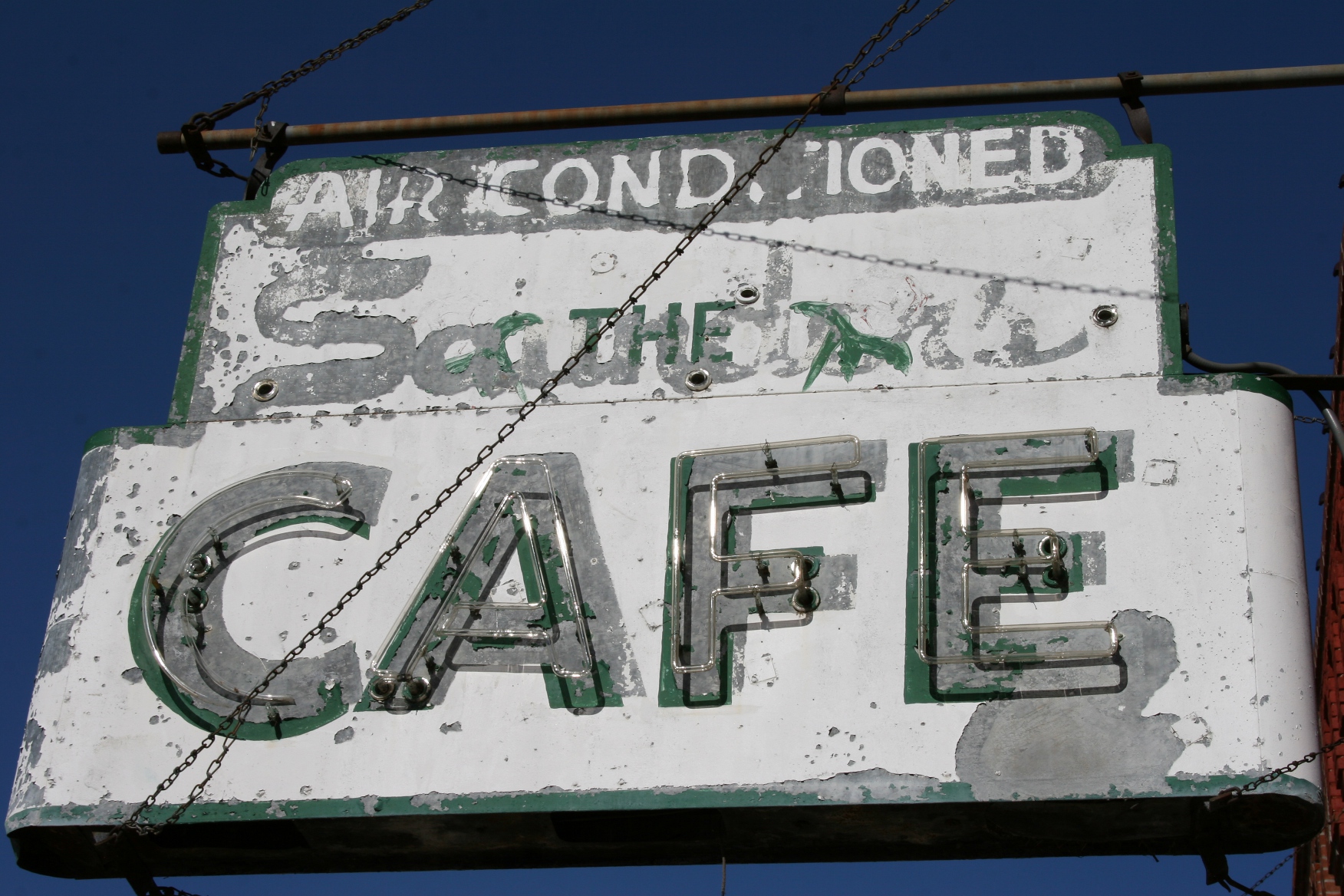
Wabasha, cafe sign up close

Certainly, Wabasha features more art; I had time to photograph only this sampling this trip.

#

CLICK HERE TO READ my previous post about art inside the National Eagle Center.

© Copyright 2014 Audrey Kletscher Helbling


Eagle art in Wabasha March 21, 2014

Filed under: Uncategorized — Audrey Kletscher Helbling @ 6:00 AM
Tags: , , , , ,
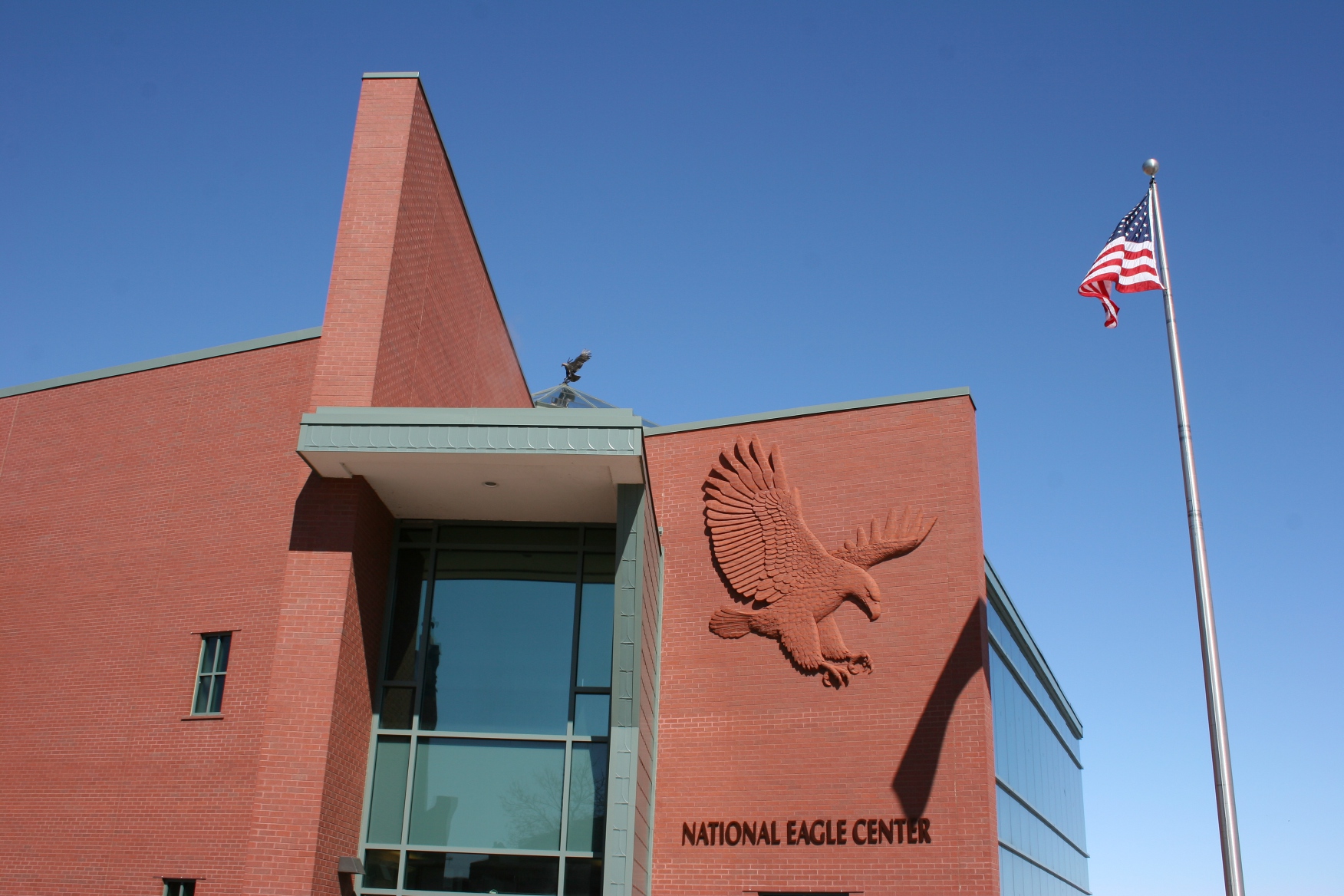
An eagle sculpture defines the exterior of the National Eagle Center in Wabasha.

Two eagle sculptures (one atop the dome) define the exterior of the National Eagle Center in Wabasha, Minnesota.

WITH ALL THAT THE NATIONAL Eagle Center in Wabasha offers, it is perhaps easy to overlook the art.

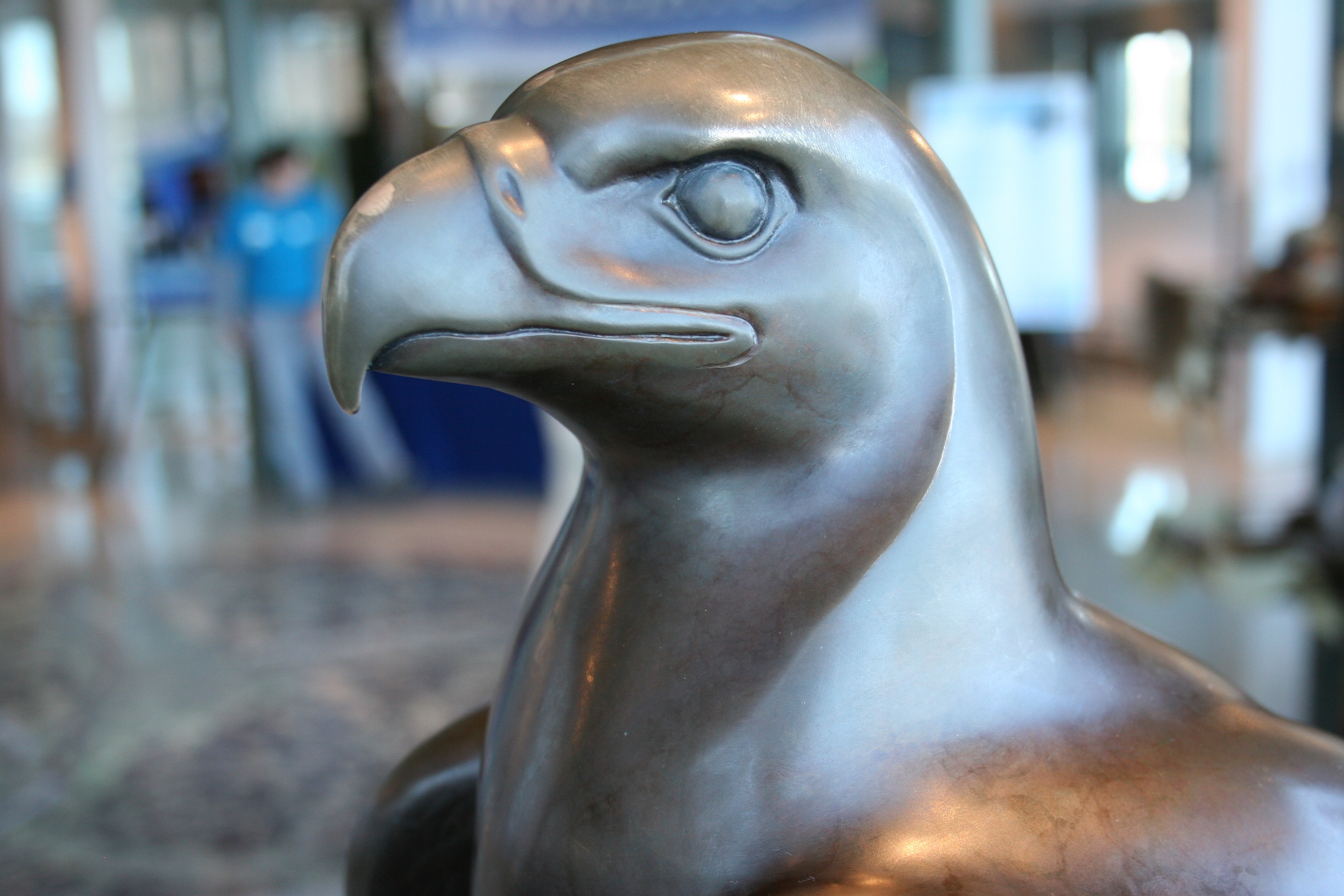
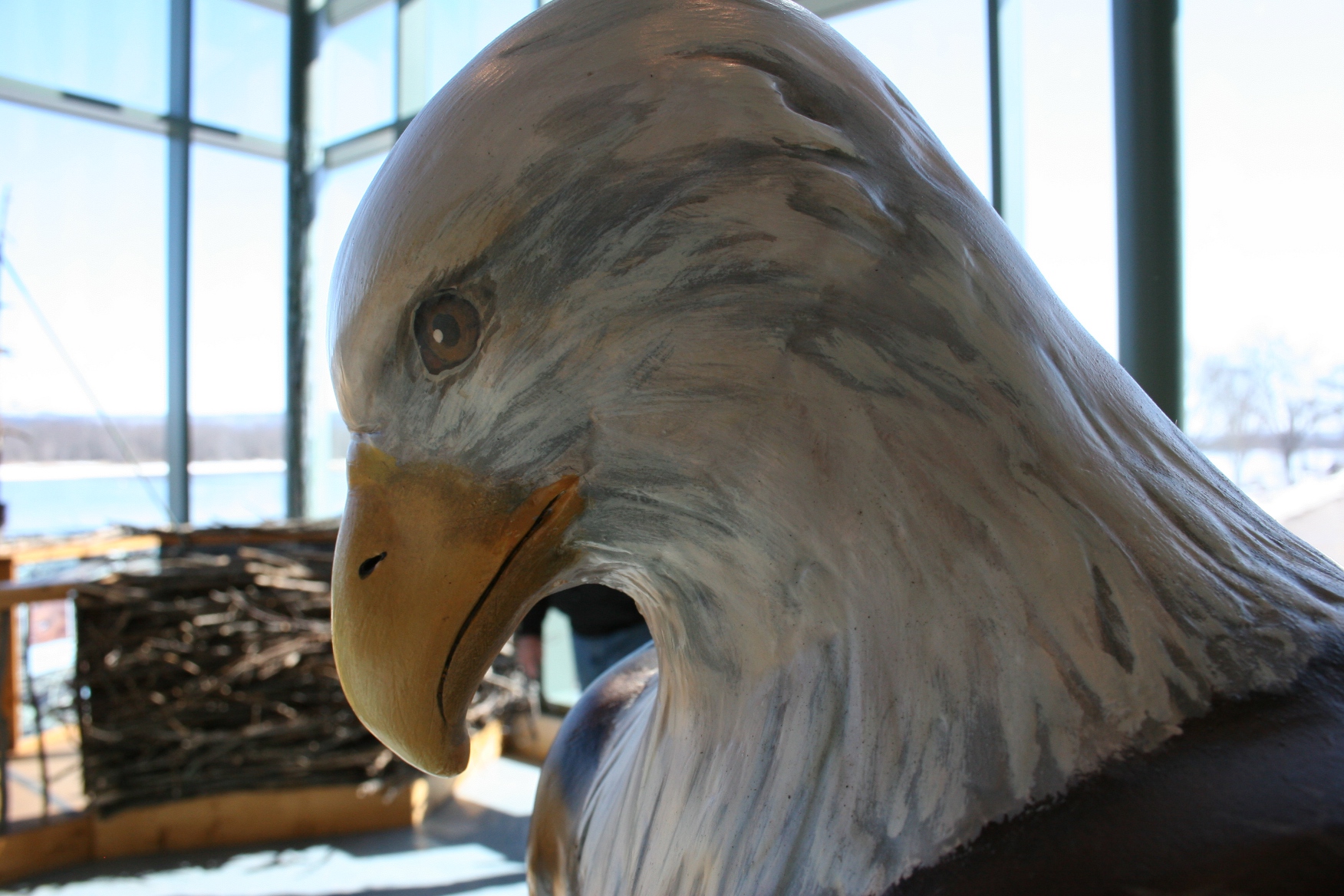
Art, eagle head 3

But the eagle sculptures and other artwork showcased in this Mississippi River side building deserve study and appreciation.

Art, eagle painting

The eagle possesses a certain strength and beauty worthy of symbolizing the United States of America. As such, many artists have recreated this symbol of freedom.

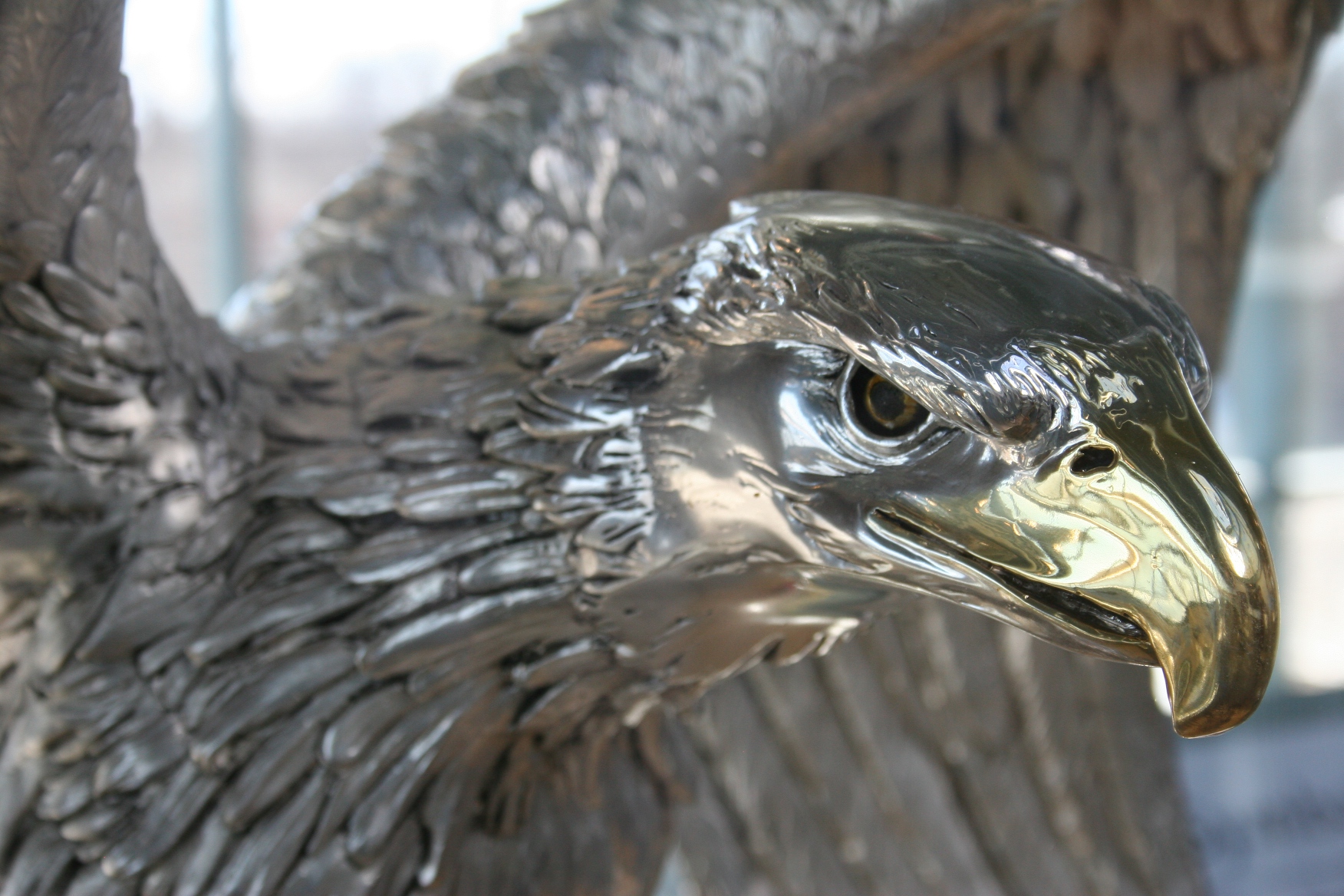
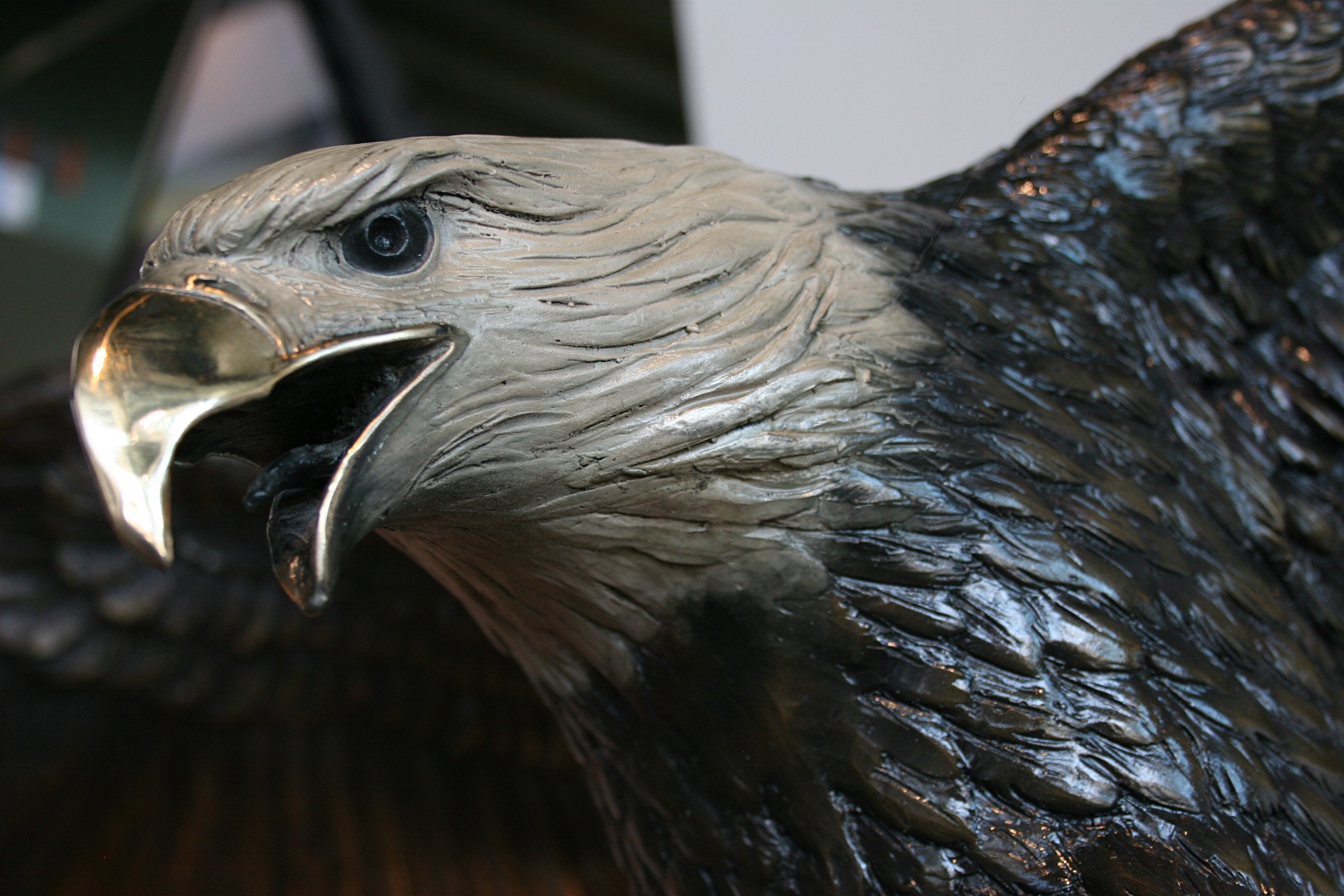
The Bicentennial Eagle by A. Giannelli.

The Bicentennial Eagle by A. Giannelli.

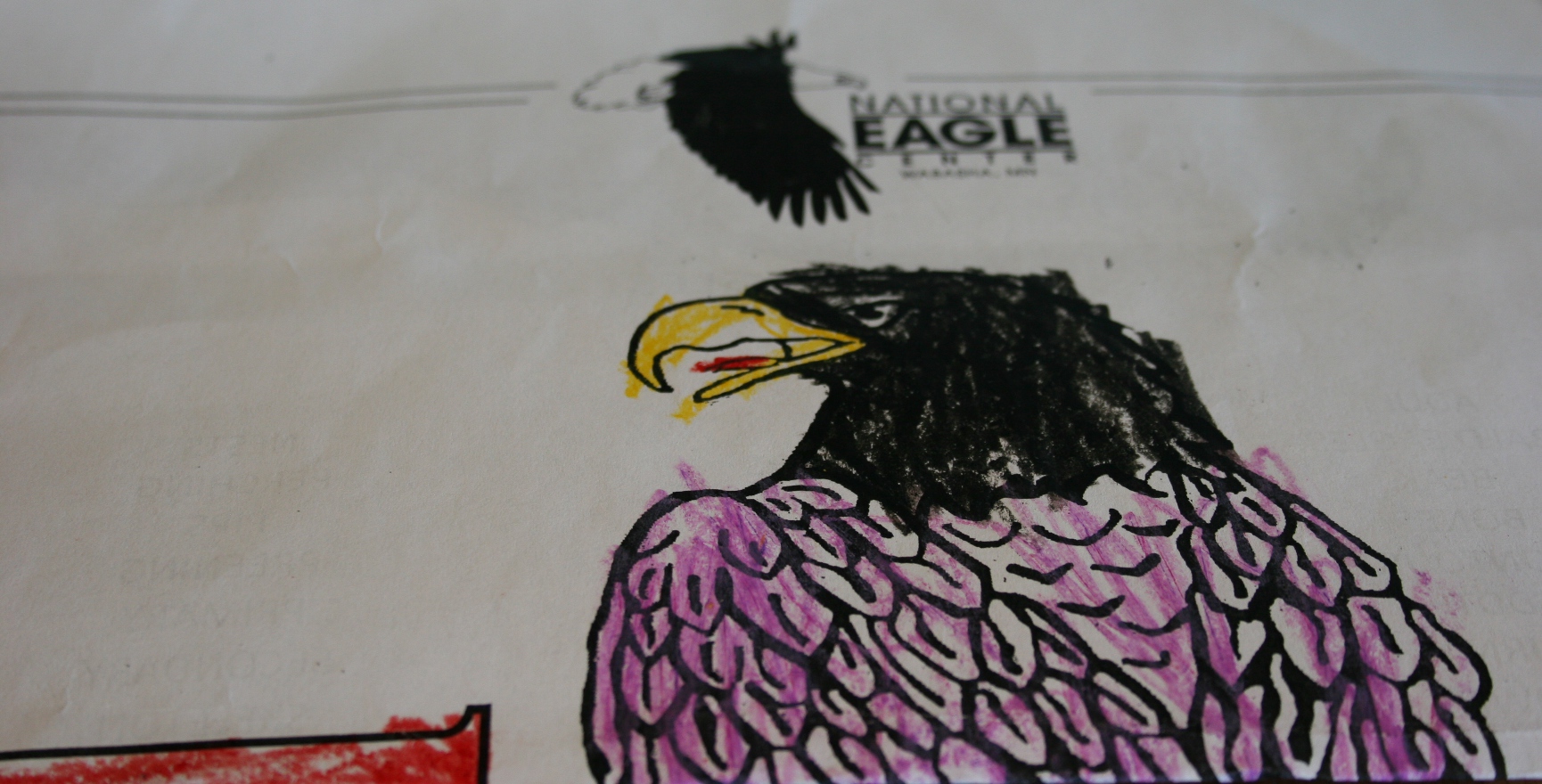
From a sterling silver and 24K gold sculpture by A. Giannelli to a child’s colored drawing of an eagle discovered on a shelf, art abounds in this Minnesota eagle center.

Art, colored eagle

Simply look and you will see.

Art, eagle head 2

Art.

Art, eagle mugs

In the gift shop.

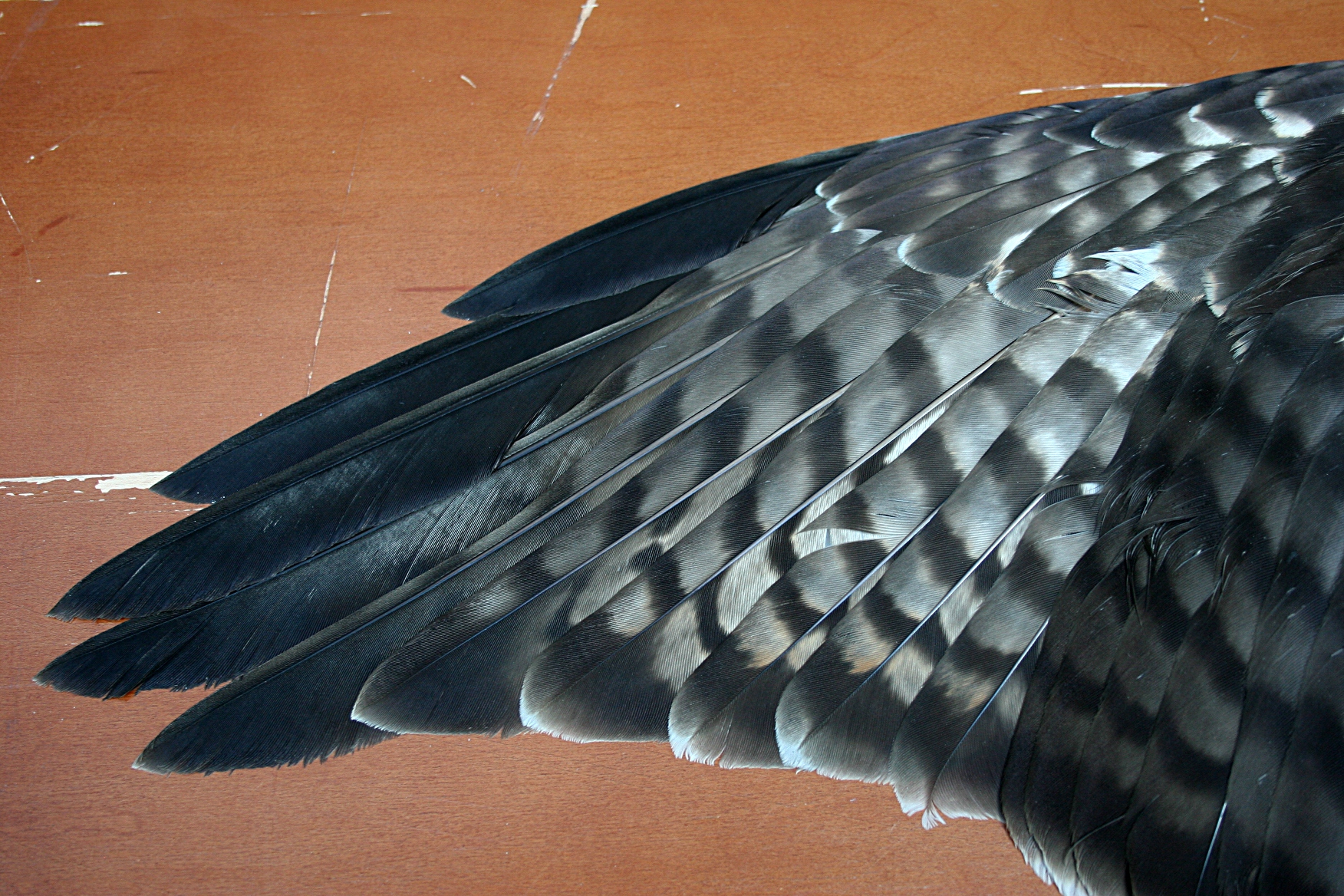
Art, feathers

In a wing on display (although not from an eagle).

Art, eagle head

Everywhere.

#

CHECK BACK for a post on more art, this time outside of the National Eagle Center in Wabasha.

Click here to read my first post on the eagle center.

© Copyright 2014 Audrey Kletscher Helbling


All about eagles in Wabasha March 20, 2014

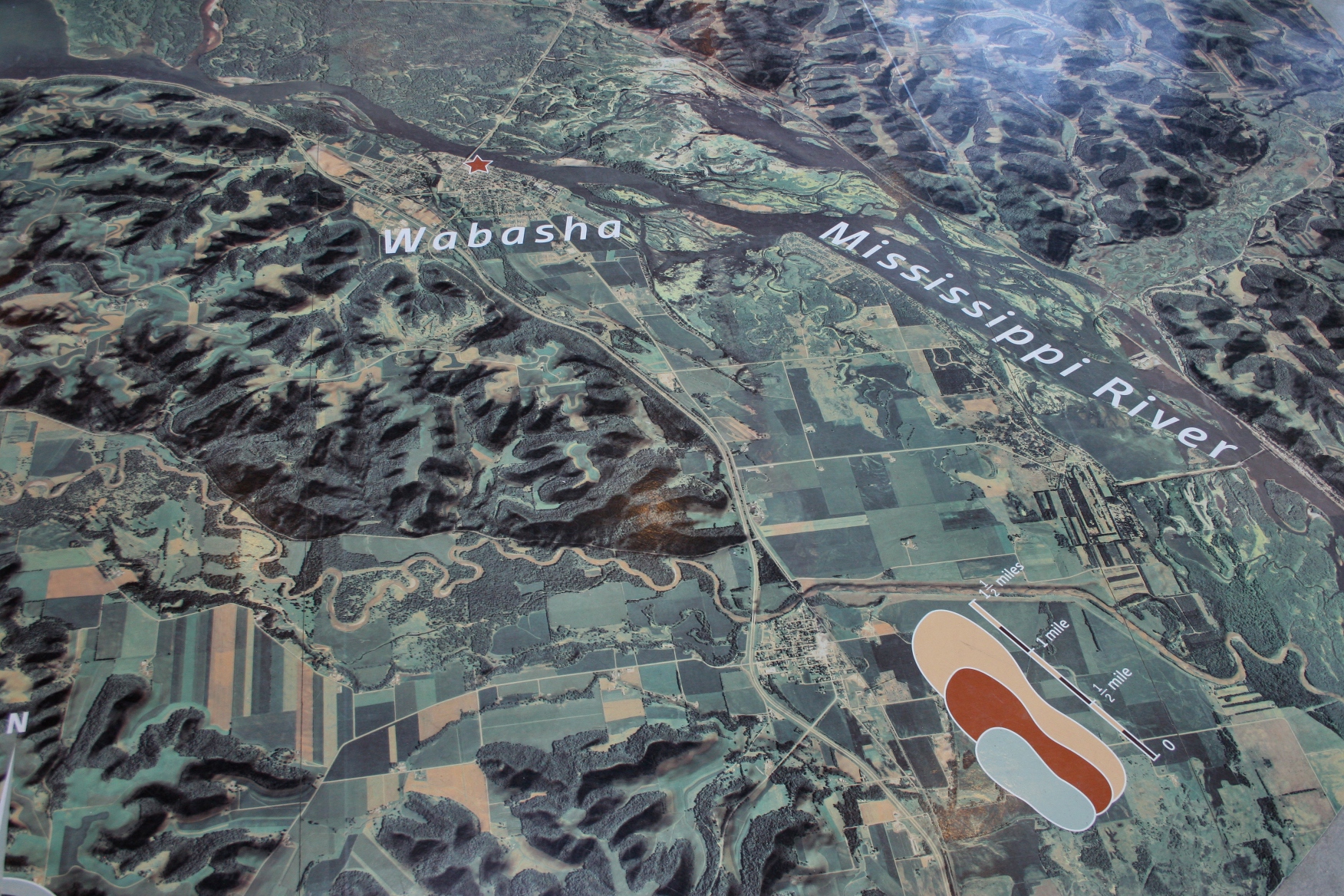
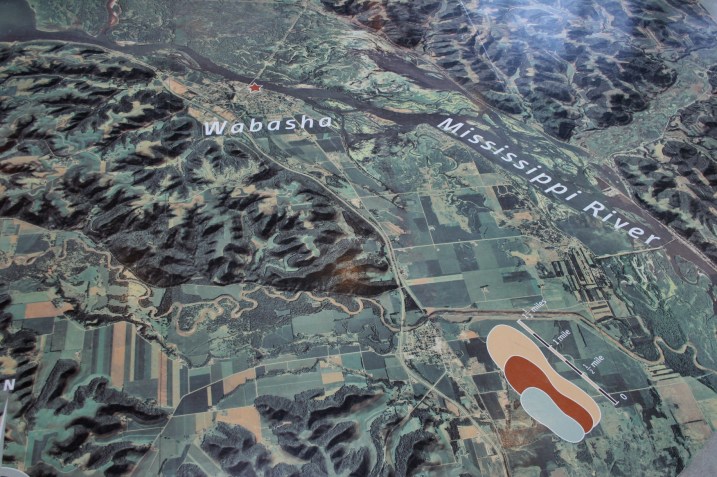
A section of a map on the floor of the National Eagle Center shows the location of Wabasha along the Mississippi River.

A section of a map on the floor of the National Eagle Center shows the location of Wabasha along the Mississippi River.

DRIVING INTO WABASHA, Minnesota, late on a Sunday morning in mid-March, we spot a bald eagle soaring high above this historic river town.
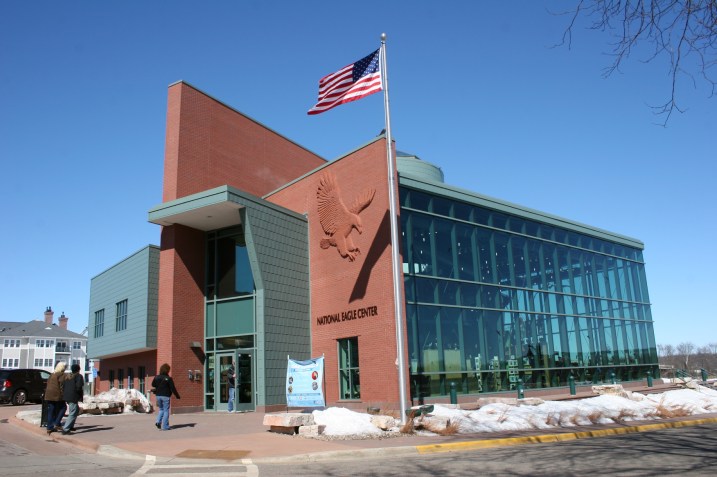
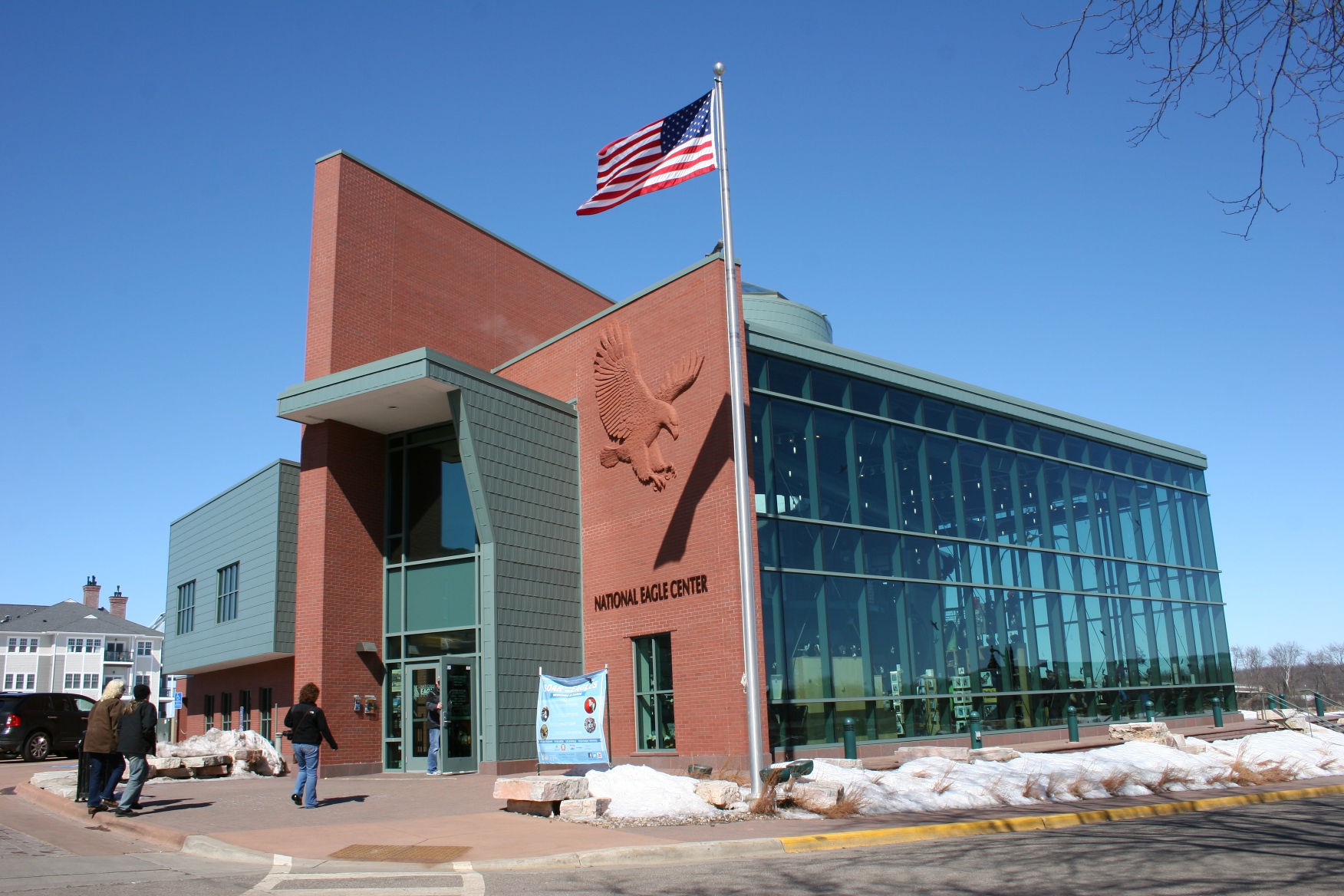
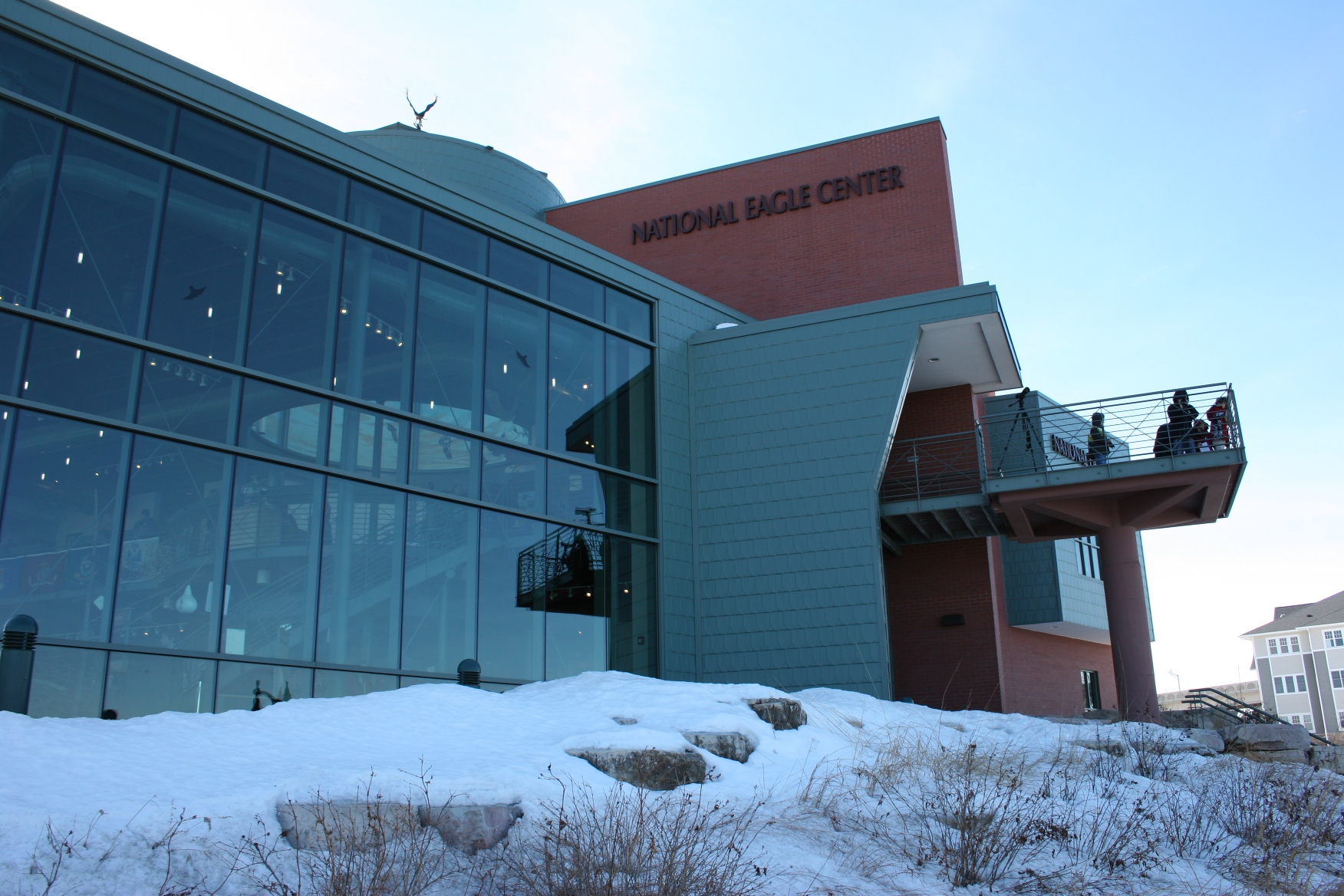
The stunning National Eagle Center, along the river and a block off the main downtown business district.

The stunning National Eagle Center, along the river in the heart of downtown Wabasha.

The bird’s welcoming appearance seems fitting given my husband and I have come here to tour the National Eagle Center, a modern two-story educational facility with banks of two-story windows and a second floor outdoor observation deck overlooking the Mississippi River.
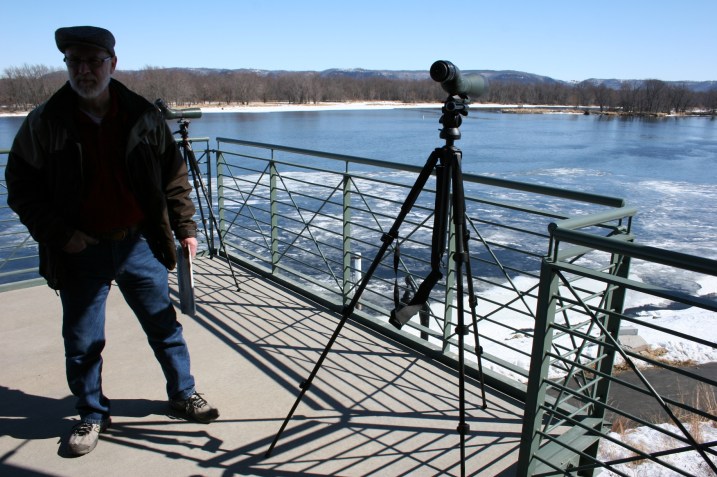
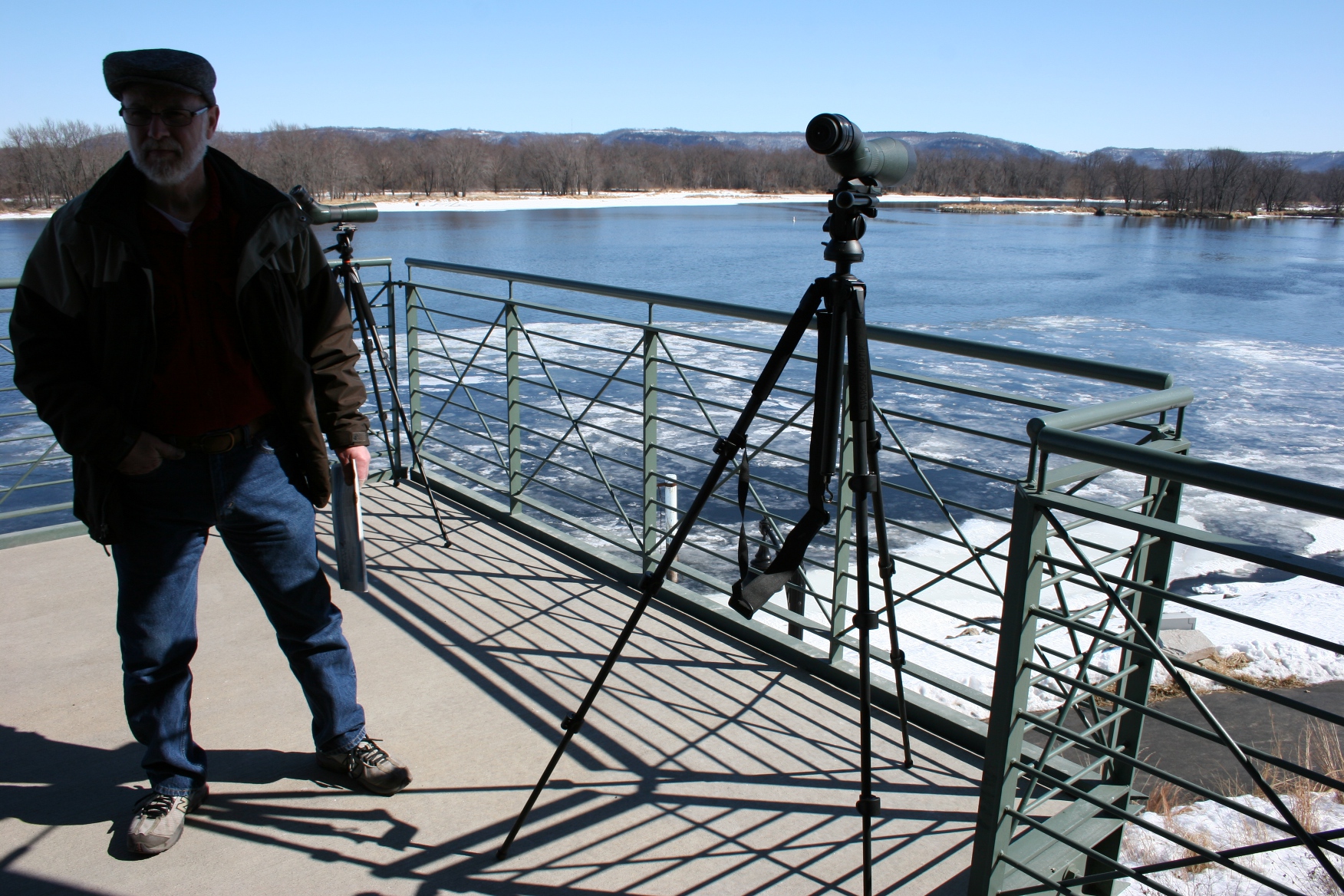
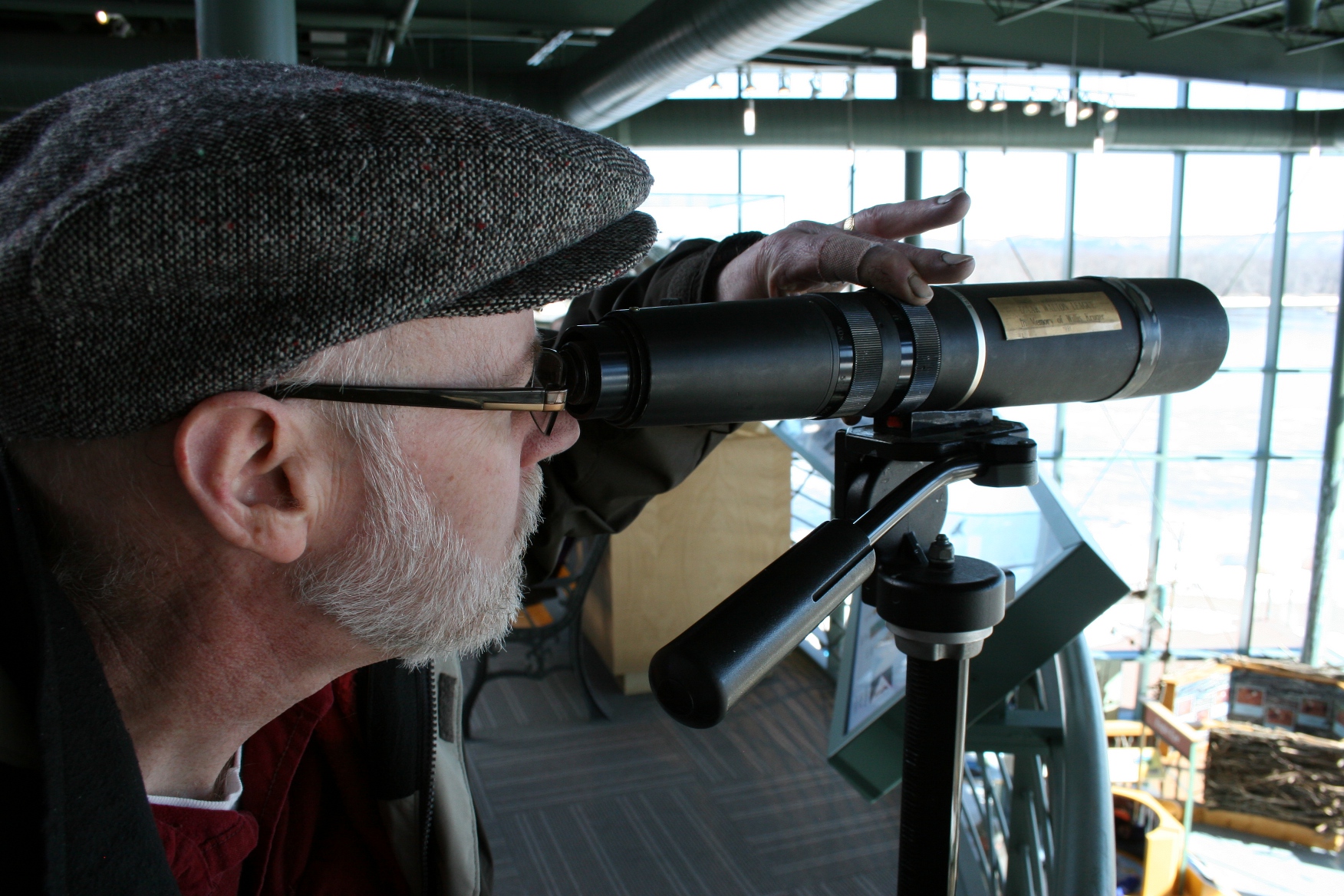
A second story observation deck outfitted with numerous binoculars, allows visitors to view the eagles along the Mississippi River.

The observation deck, outfitted with binoculars, gives visitors like my husband a view of eagles along the Mississippi River.

This ideal riverside setting allows visitors like us to observe eagles riding river bluff air currents, scooping fish from the water and perching in trees. Wabasha, with its year-round open water, proves an inviting locale for eagles.
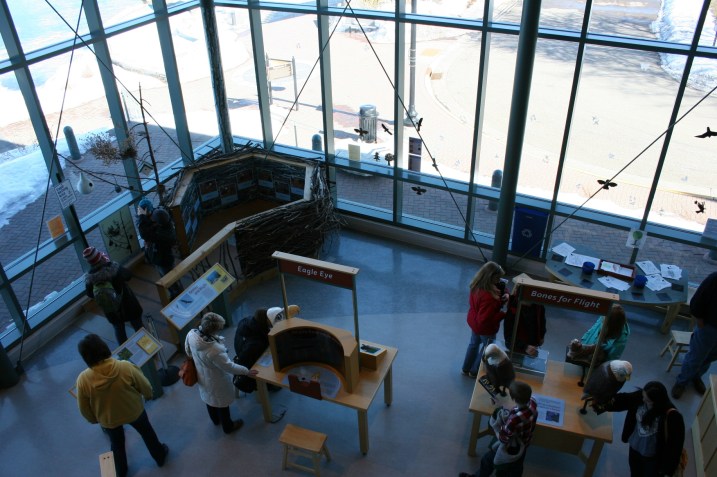
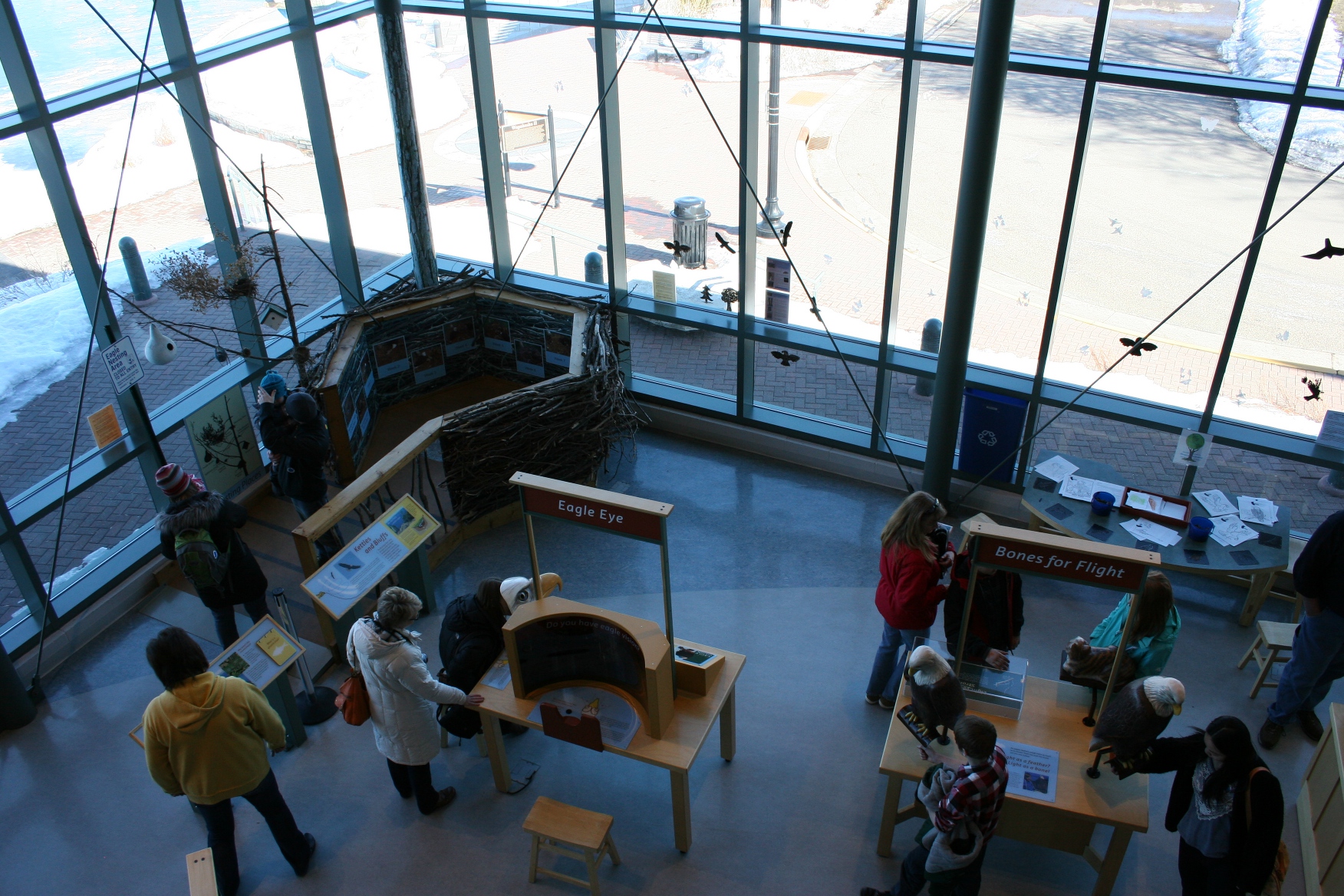
The activity area includes a replica eagle's nest, upper left.

The activity area includes a replica eagle’s nest, upper left.

Inside the center, hands-on interactive activities—from stepping inside a mock eagle’s nest to testing the weight of an eagle to experiencing the majestic bird’s vision to creating eagle art to scoping eagles through binoculars and more—occupy all ages.
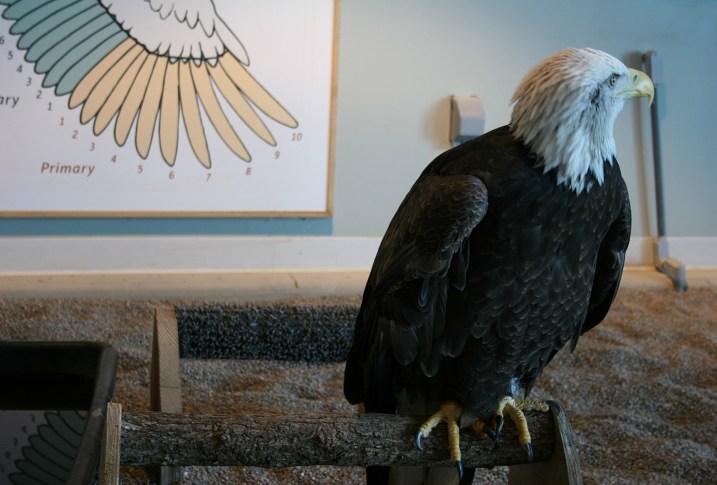
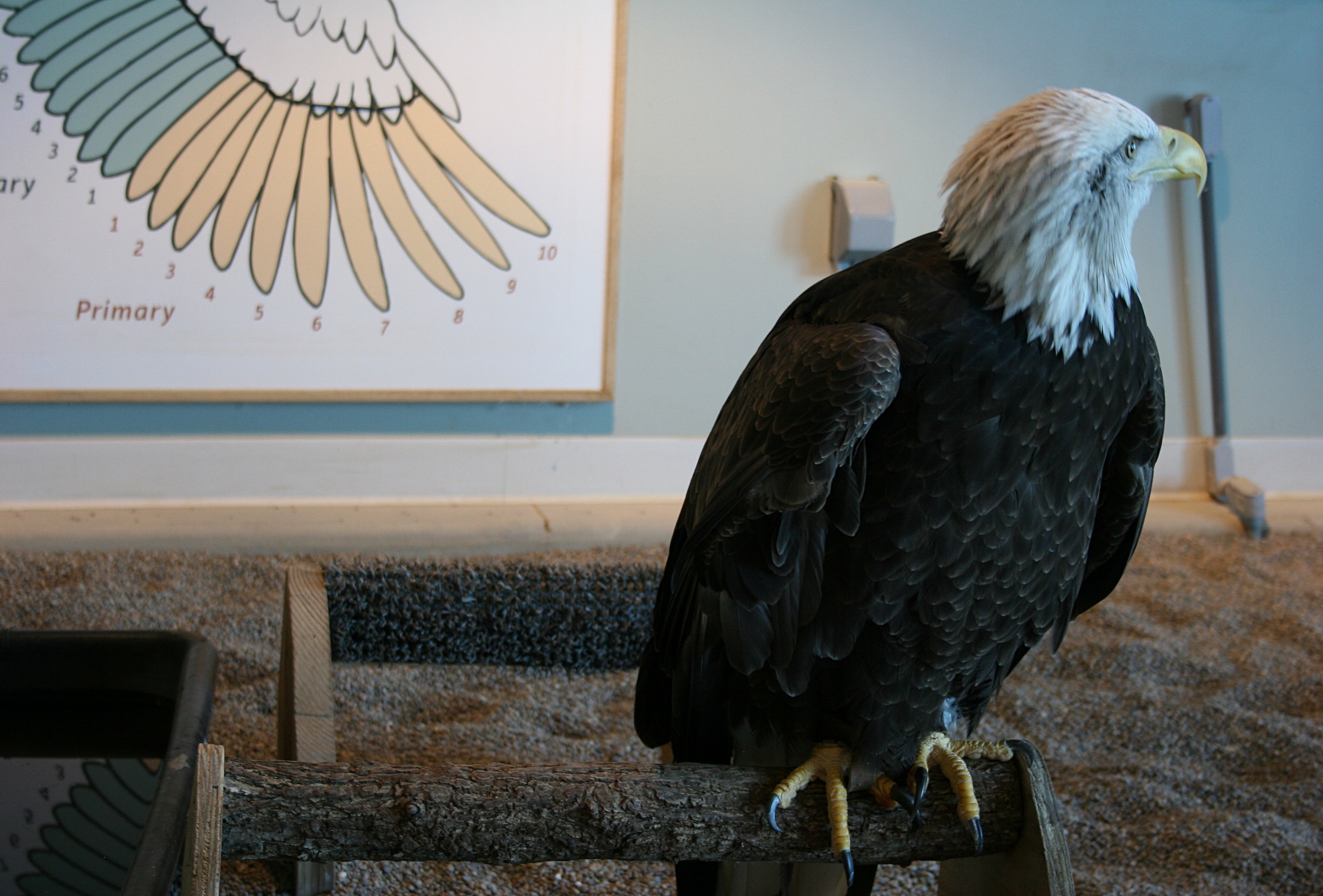
You can get up close to the resident eagles.

You can get up close to the resident eagles.

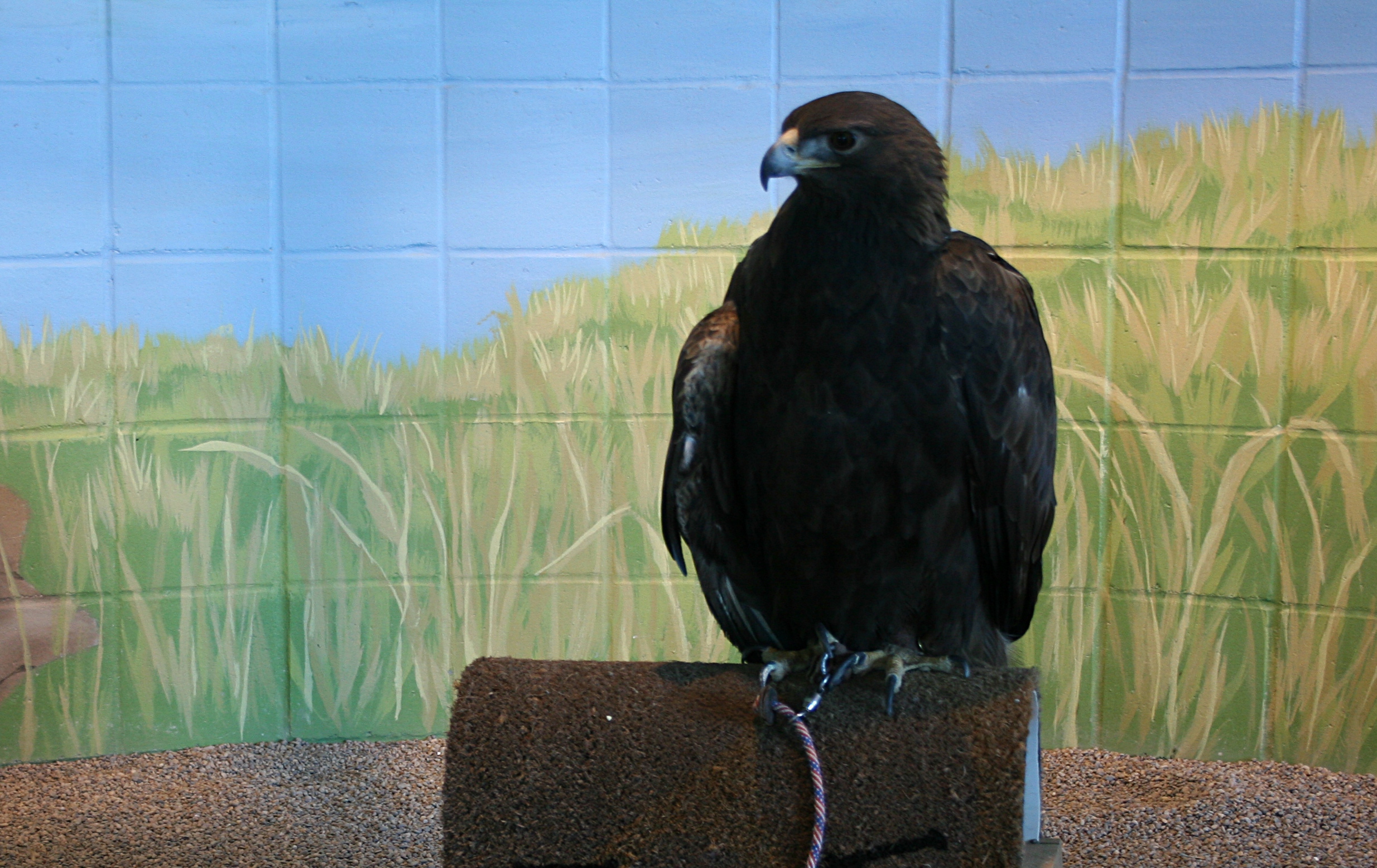
But, unequivocally, the major draws are the resident eagles, birds that were injured, treated and could not be released back into the wild. Bald eagles Angel, Columbia, Harriet and Was’aka call this place home while Donald is the sole golden eagle here. The 32-year-old Harriet is perhaps the best known, appearing numerous times on television and serving as the model for Minnesota’s Support Our Troops vehicle license plate.
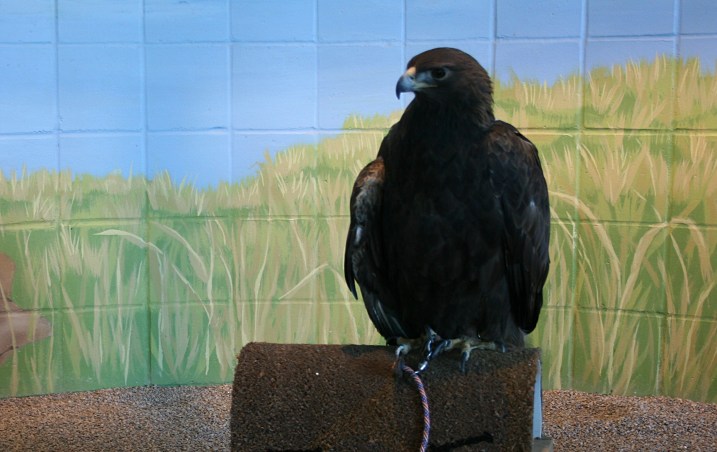
Donald, the single resident golden eagle.

Donald, the single resident golden eagle.

Handlers tend the tethered eagles in a viewing room while answering questions among a curious crowd snapping photos with cell phones and cameras.

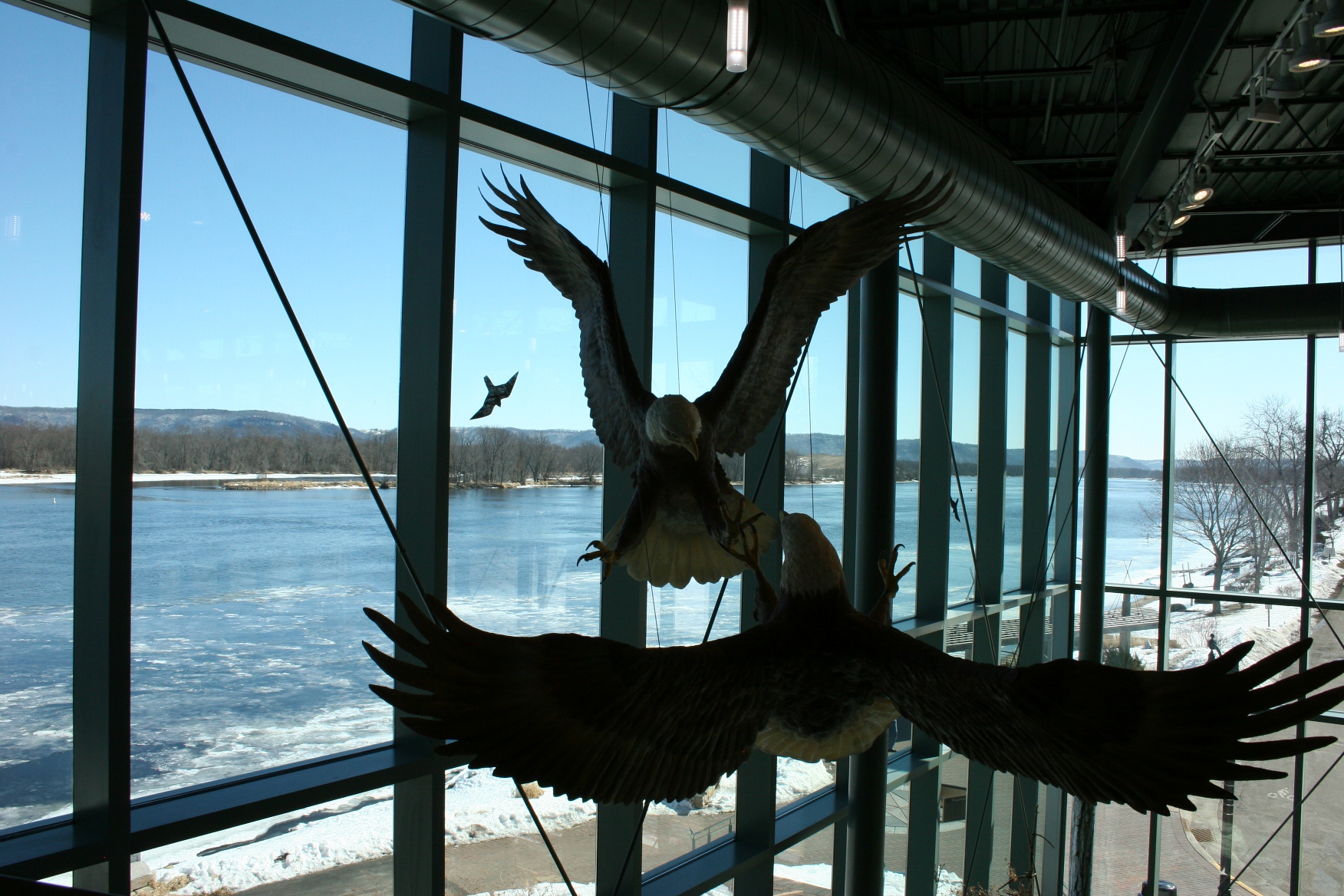
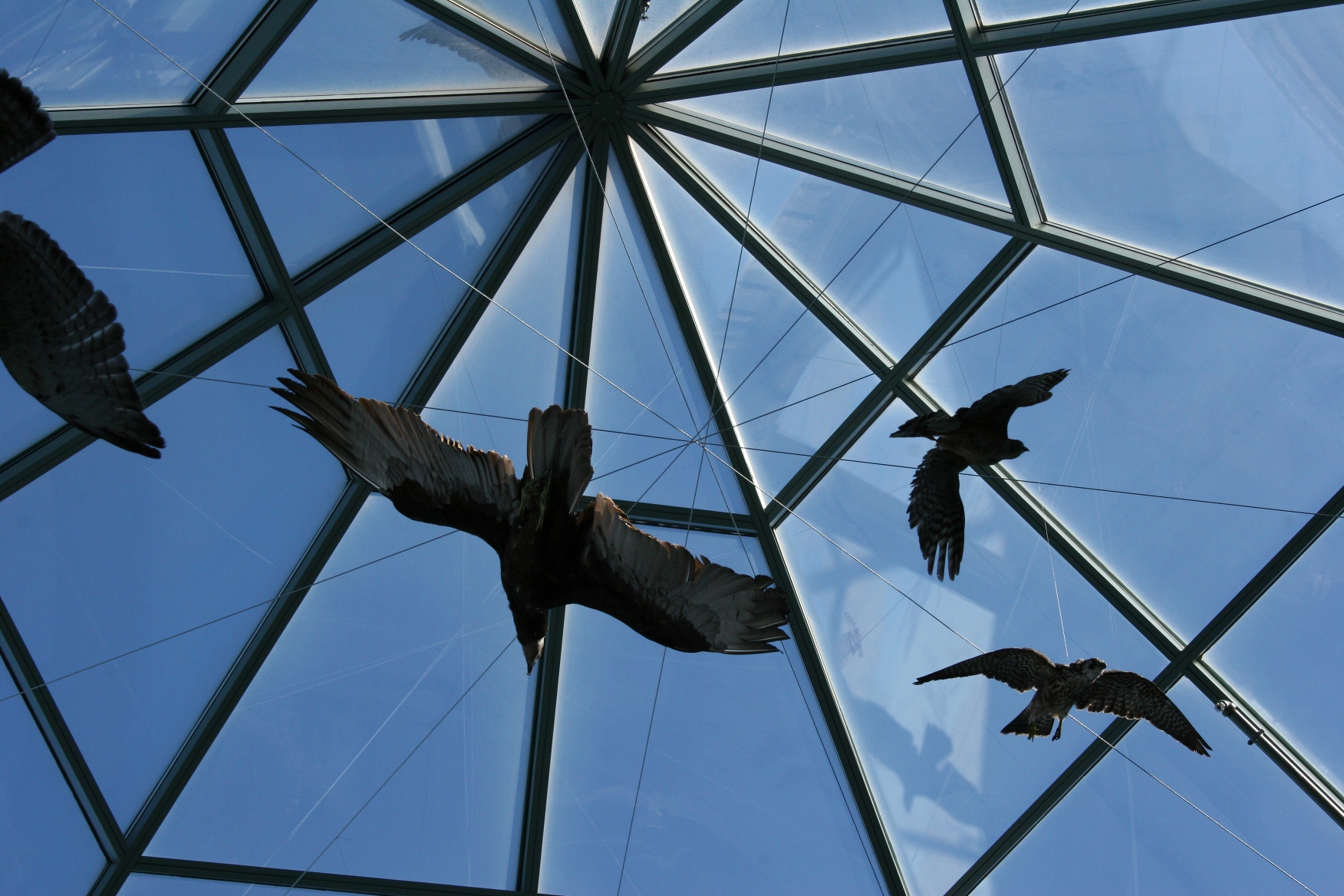
Eagles suspended from the ceiling and a view of the river from the second floor of the eagle center.

Eagles suspended from the ceiling and a view of the river from the second floor of the eagle center.

Thrice daily, the center presents an educational program on eagles. On this Sunday, staffer Bucky, with humor, skill, knowledge and audience engagement, entertains and educates young and old (that would be Randy and me).
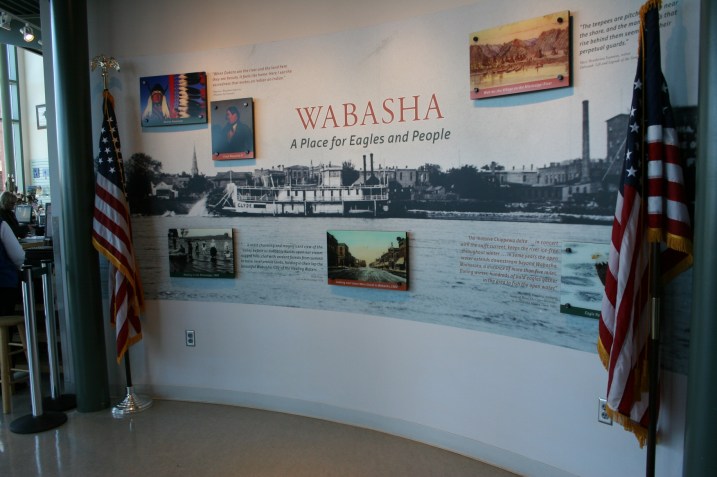
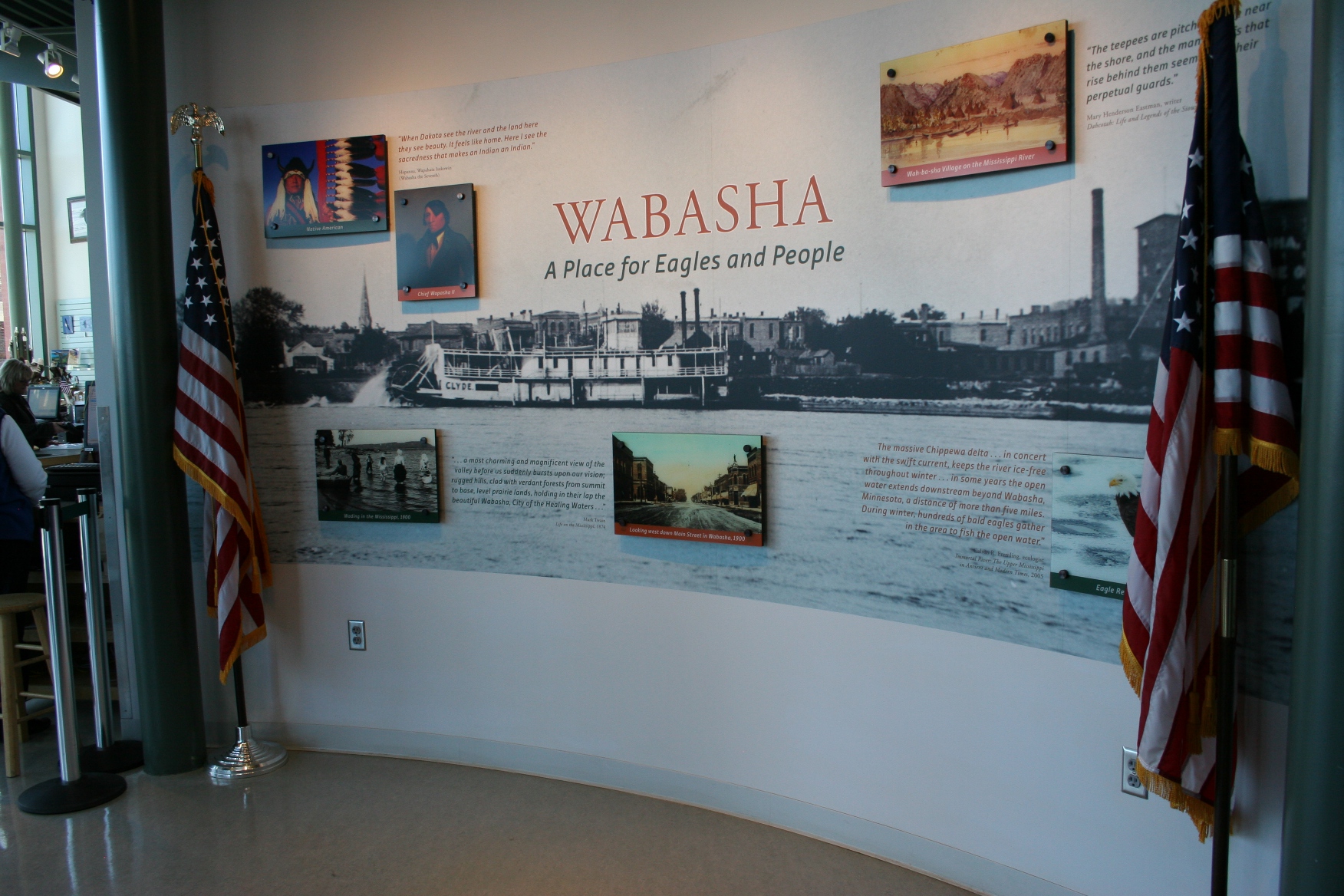
A mural provides information about Wabasha and its open water draw for eagles.

A mural provides information about Wabasha’s history and eagles.

We learn, for example, that Wabasha provides the perfect environment for bald eagles with the river, protected habitat and bluffs. Eagles nest across the river and at nearby Read’s Landing.
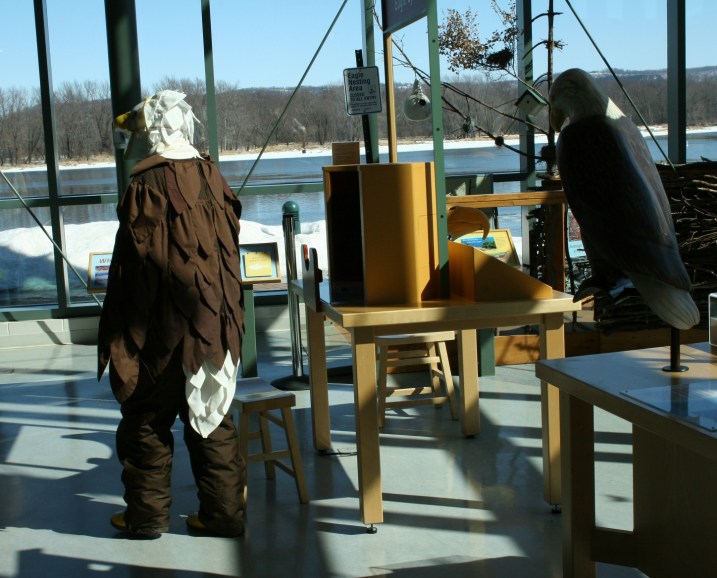
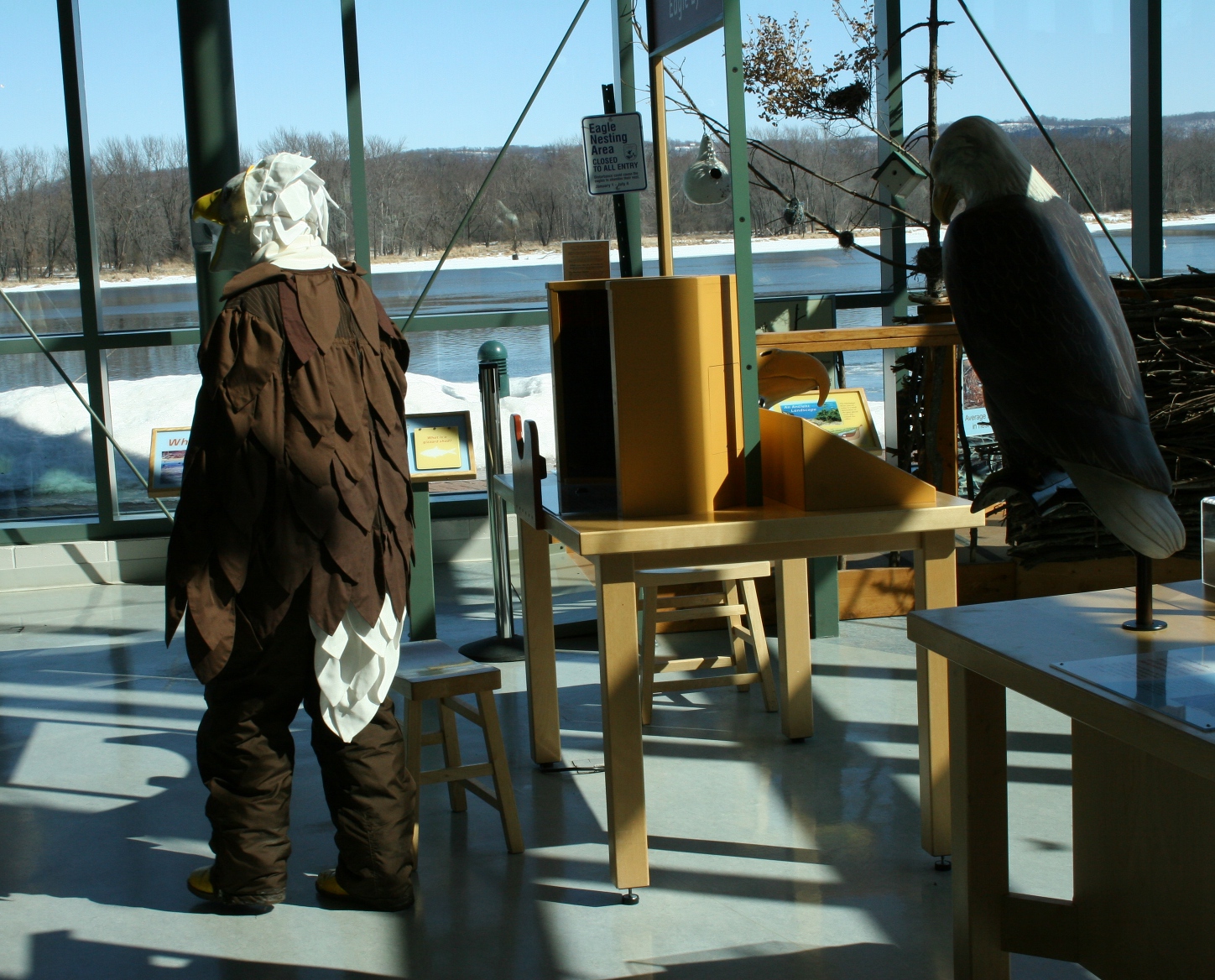
Dressed as an eagle, a staffer wanders through the eagle center.

Dressed as an eagle, a staffer wanders through the eagle center.

When Bucky shares that eagles are territorial, he mimics the bird’s high-pitched call then asks us to practice our eagle calls. Kids giggle. Adults laugh at the attempts.

During the presentation, Bucky occasionally checks on an elementary-aged boy who is keeping a replica eagle egg warm in the pouch of his sweatshirt. Eagle nests can measure up to nine feet wide and 20 feet deep and weigh as much as three tons.
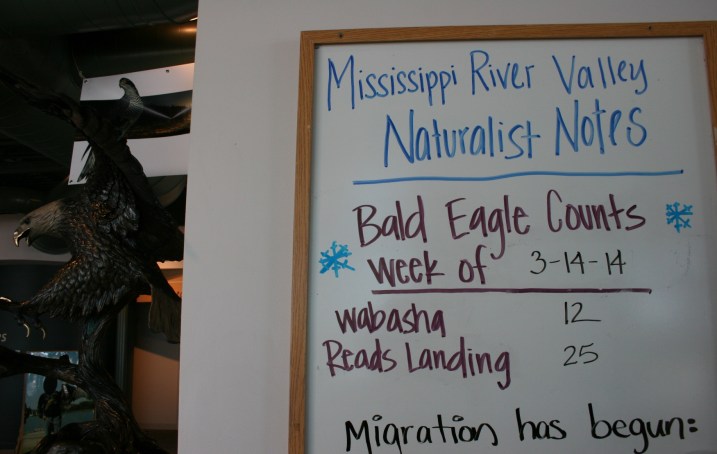
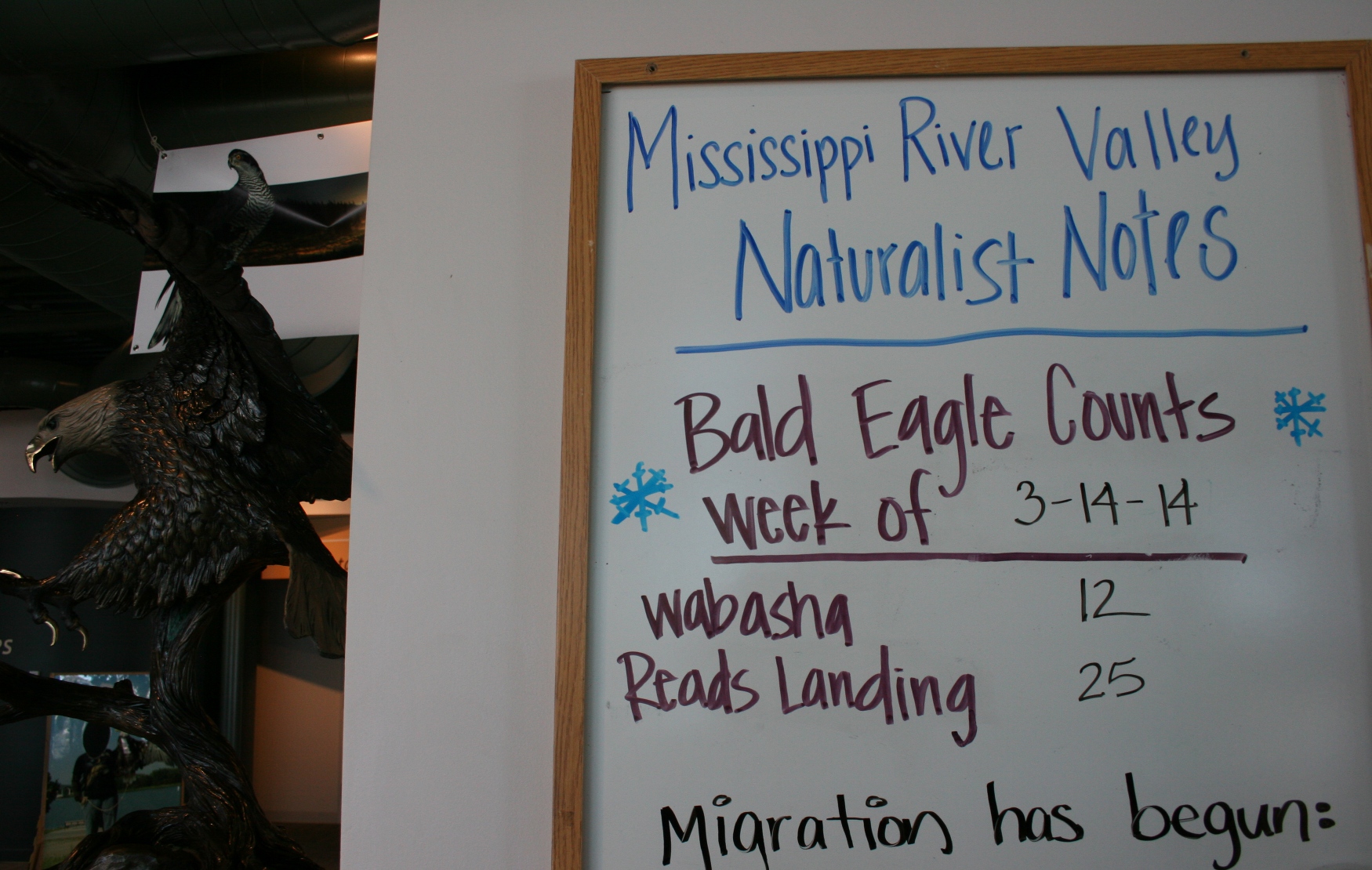
The current eagle count tallied.

The current eagle count tallied.

Today, Minnesota is home to 1,200 active eagle nests. When the eagle expert asks how many of us can see eagles in our home areas, nearly all 17 of us raise our hands.

But it wasn’t always that way. Randy and I are among the audience few who remember a time when these birds were endangered. Shortly after World War II, the pesticide DDT was introduced, washing into waterways where fish and aquatic life absorbed the toxin. When eagles ate the fish, they, too, were impacted. The DDT weakened their eggshells, resulting in eggs that broke during incubation or failed to hatch. The pesticide was banned in 1972.
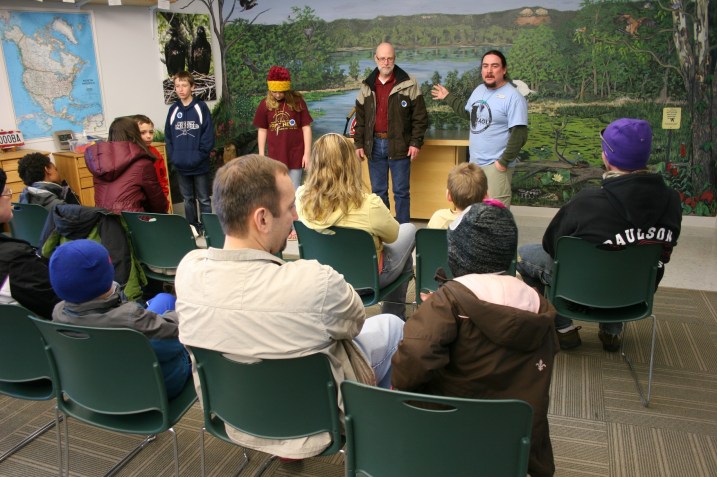
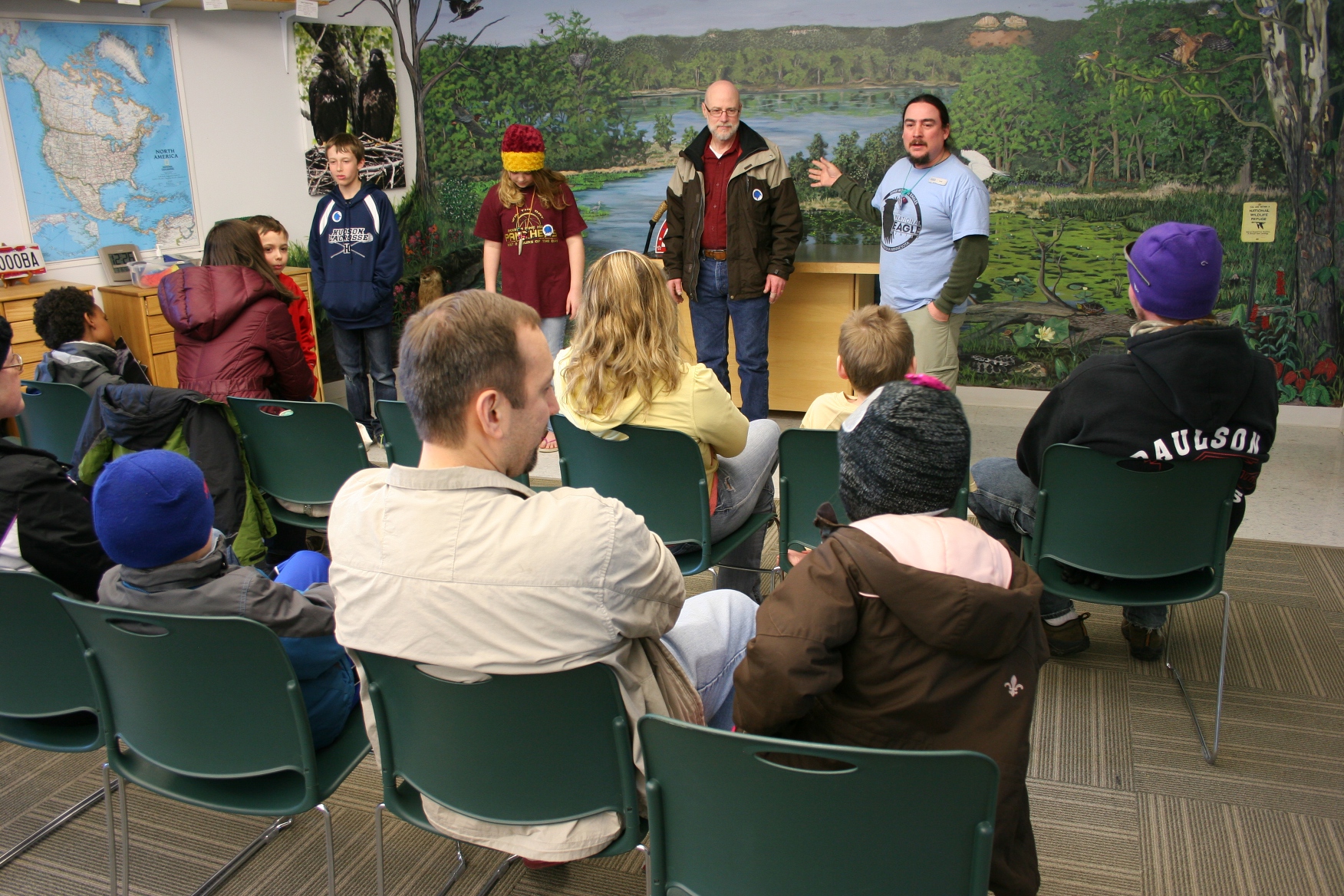
My husband, second from right, plays a bald eagle.

My husband, second from right, plays a bald eagle.

To visually explain the chain reaction, Bucky chooses three kids to role play a mosquito, a small fish and a large fish. I know precisely whom he will pick to play the bald eagle. The bald guy in the third role, my husband, makes his acting debut.

Bucky proves his point as, one by one, the performers “ingest” DDT.
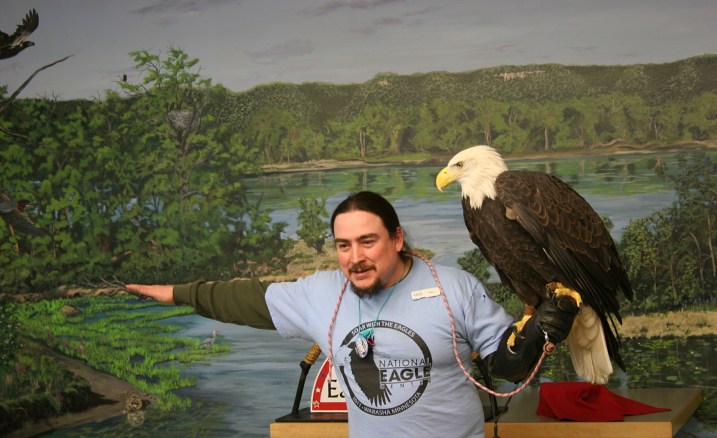
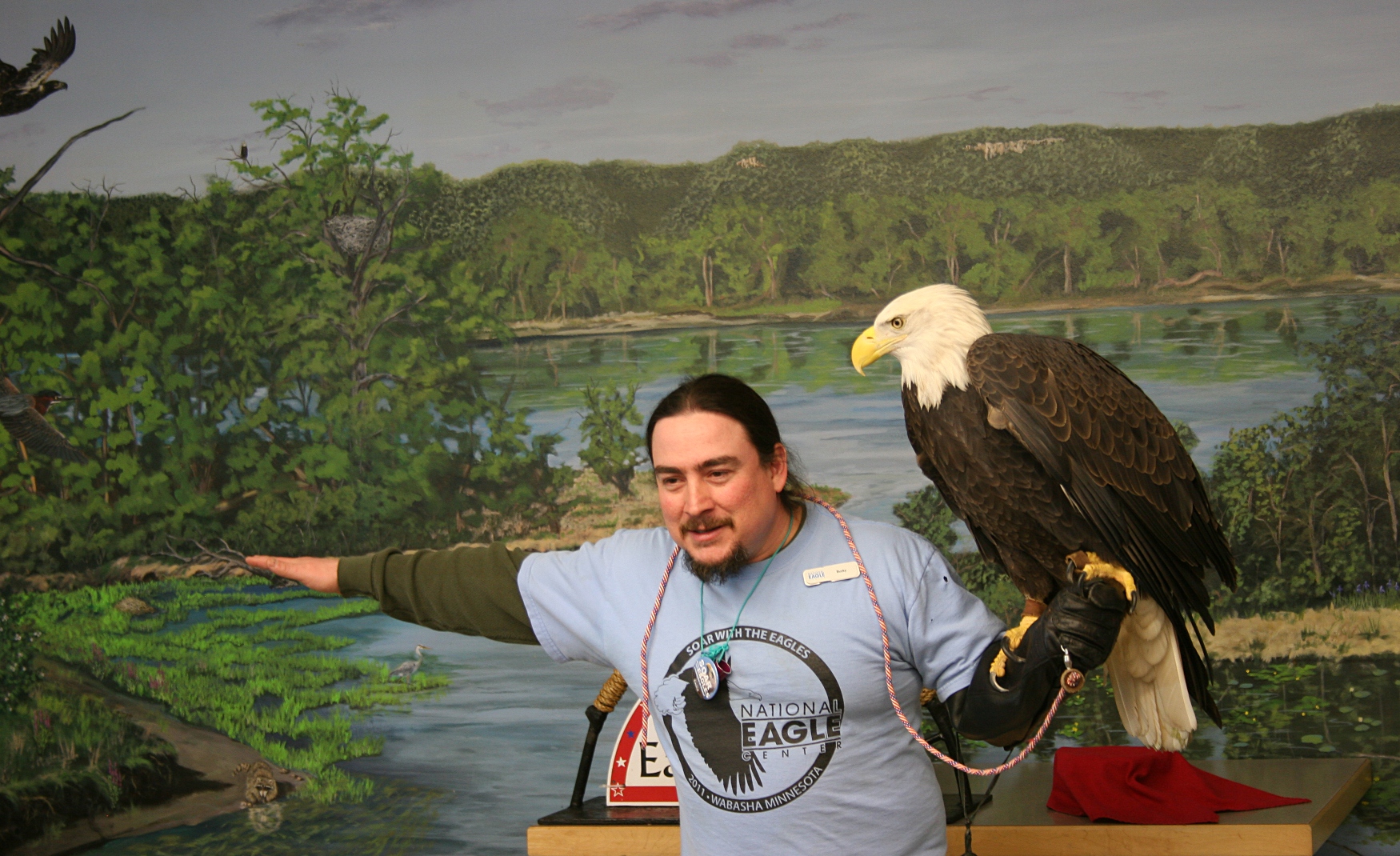
Bucky and Angel.

Bucky and Angel.

A few minutes later, after this educator pulls out a board the length of an eagle’s wing span (6 ½ to 7 feet), he exits the room and returns with resident bald eagle Angel. The 11-pound female came to the center in 2000 after suffering a broken wing.

Perched on Bucky’s gloved arm, Angel is the model of perfect human imprinted behavior. She is a guest at many Native American ceremonies and also makes educational appearances.
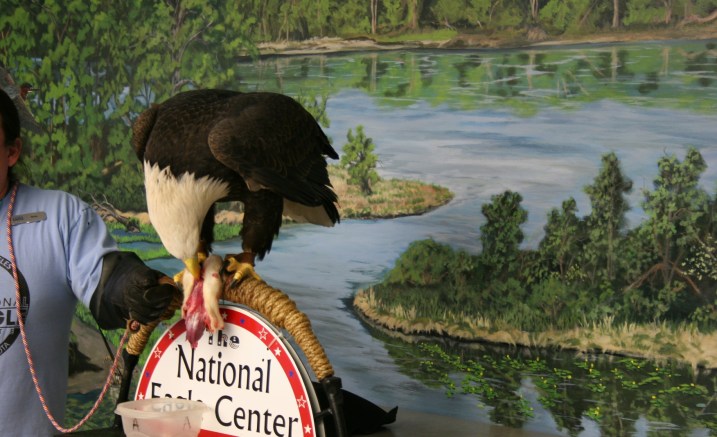
Shortly after Randy shot this photo of Angel eating a rat, I left the room.

Shortly after Randy shot this photo of Angel eating a rat, I left the room.

I enjoy Angel, until feeding time. Bucky pulls a white rat from a plastic container. For awhile, I watch as the eagle uses her beak and talons to rip apart the rodent. I stop photographing the scene and hand my camera to Randy. By then I’m looking down. He snaps a few photos, hands the camera back to me and shortly thereafter I exit the room to view the resident eagles who are not dining.

Rather they are simply perched, an activity which occupies 94 percent of their lives.
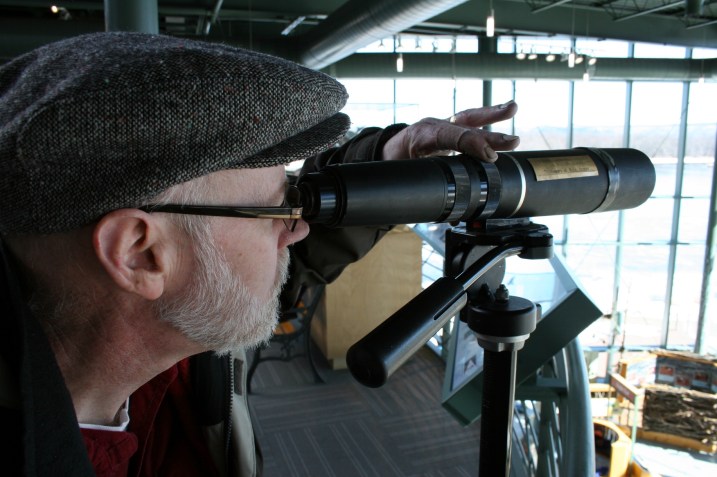
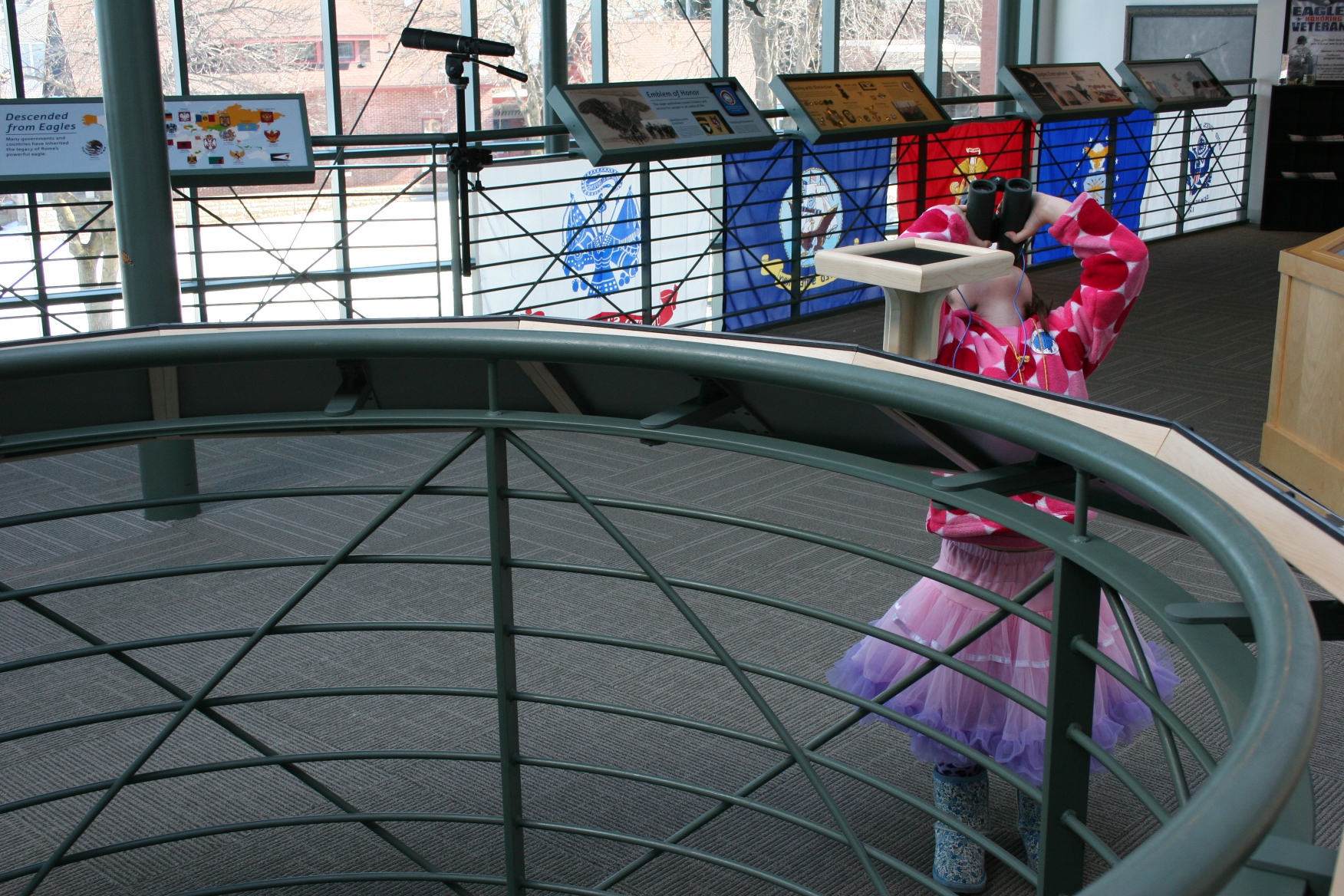
You'll find binoculars throughout the eagle center.

You’ll find binoculars throughout the center for viewing eagles.

Later, Randy will search me out, inform me that I left at just the right time—before rat pieces started flying toward the audience.

#

BONUS PHOTOS:
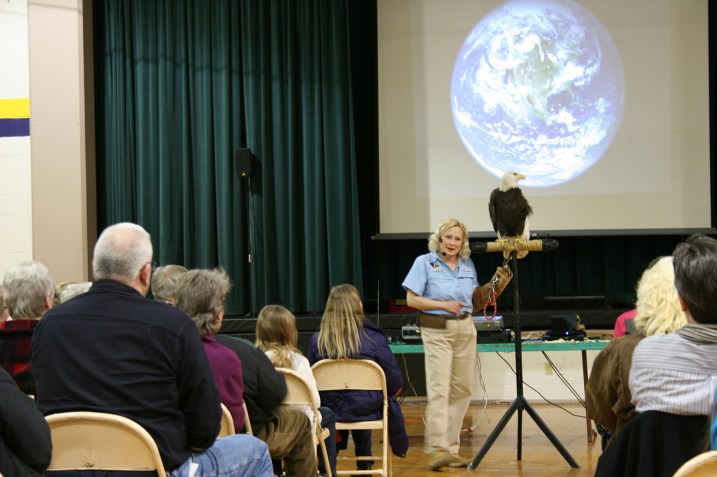
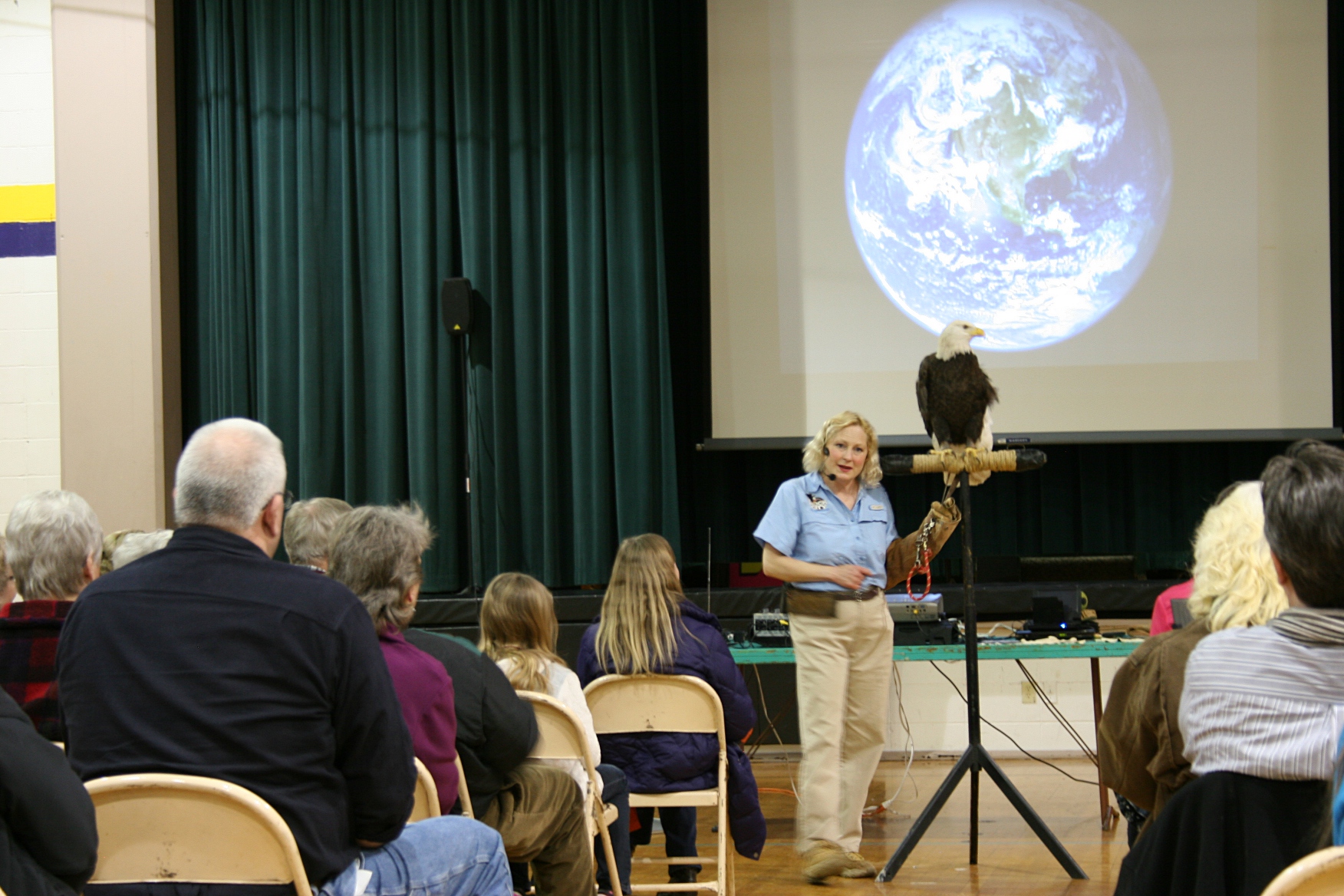
A bald eagle was part of the show in the gym. No, it did not fly.

A bald eagle was part of “Wings to Soar” in the nearby St. Felix gym. No, the eagle did not fly.

WHILE IN WABASHA, we also took in the National Eagle Center sponsored program, “Wings to Soar.”
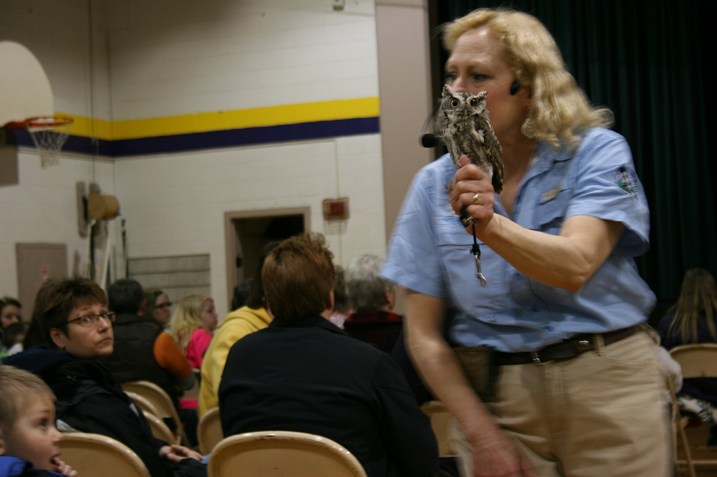
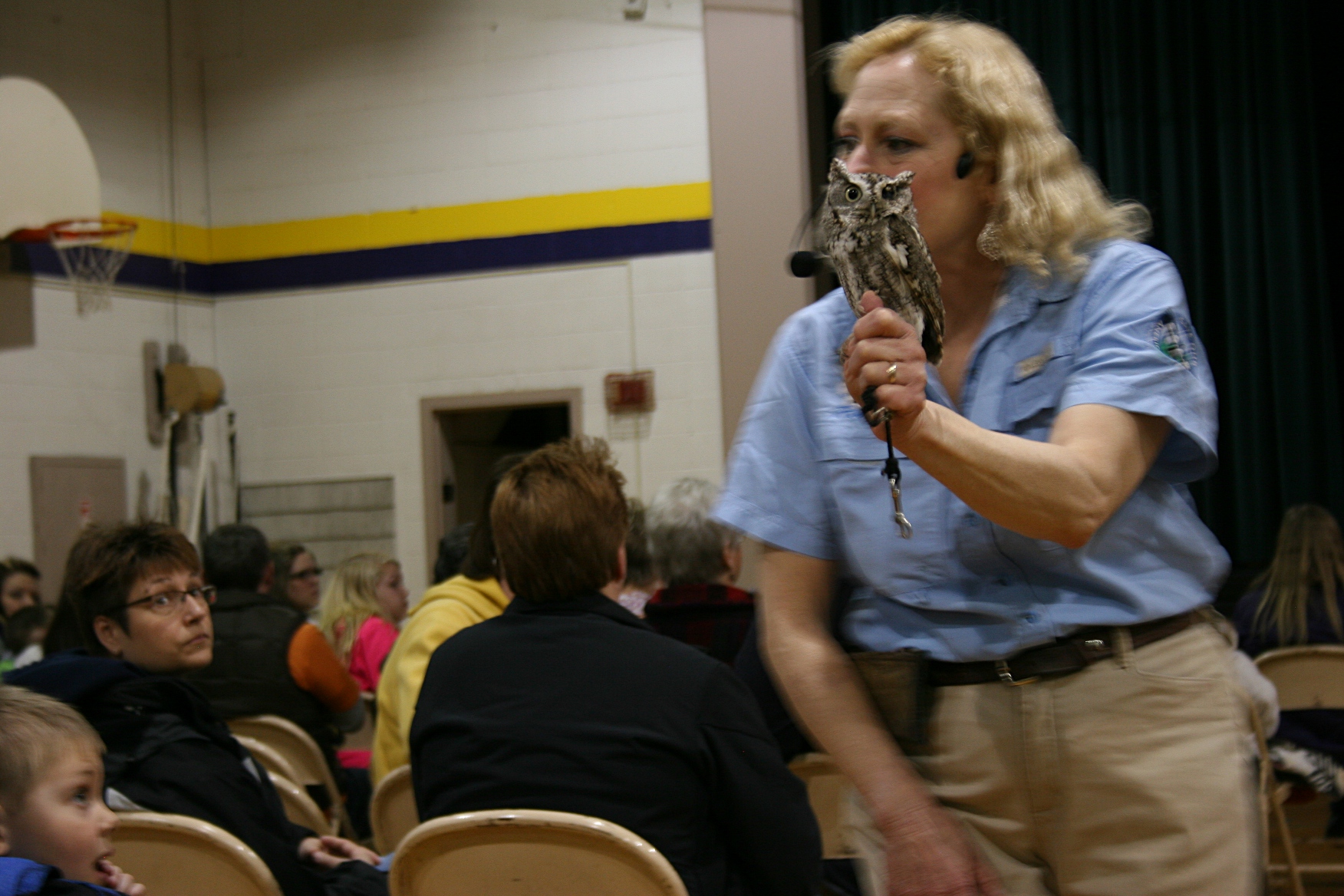
Dale wandered through the audience with the birds, like this owl.

Dale wanders through the audience with an owl.

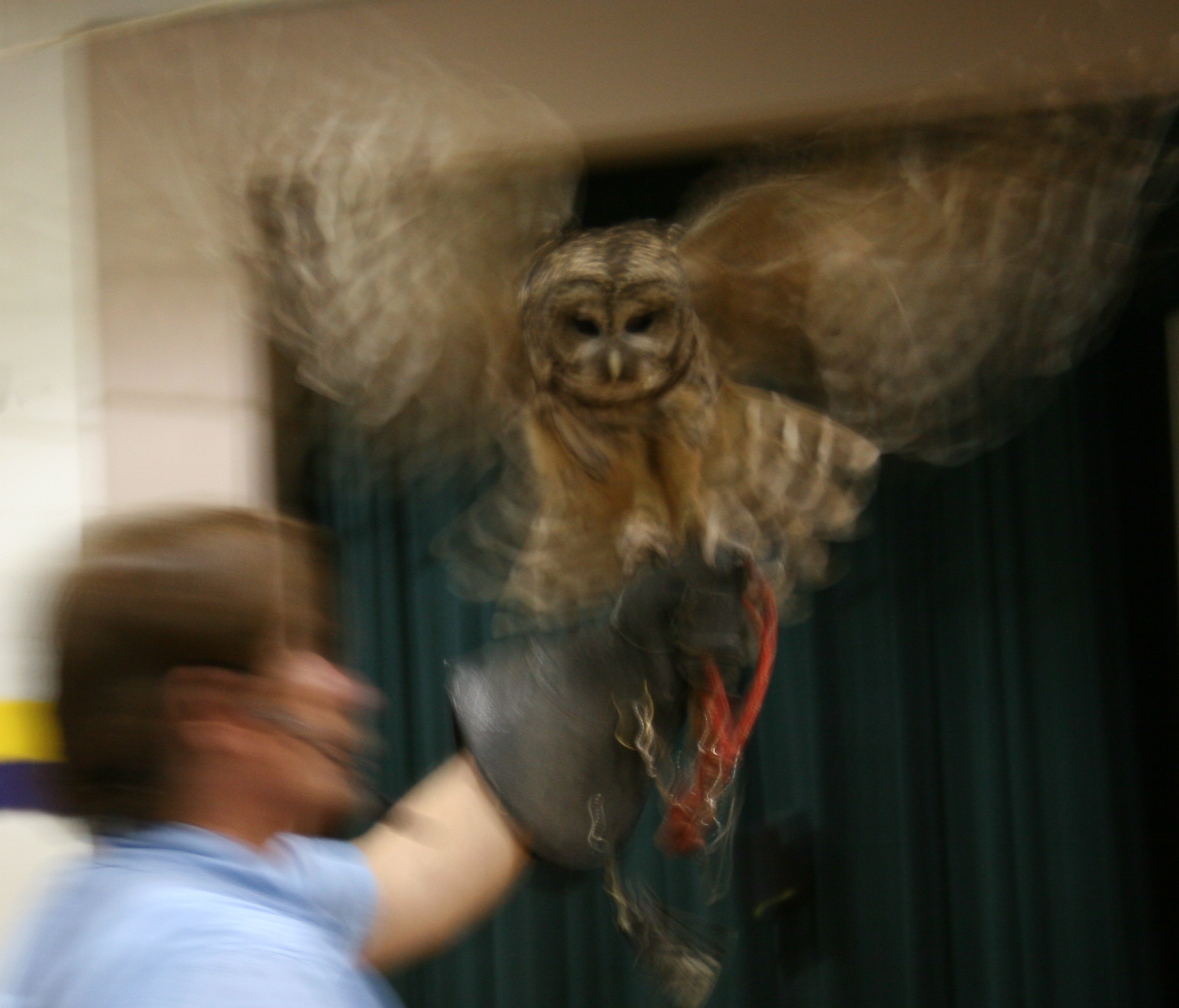
In St. Felix auditorium several blocks from the eagle center, Southerners John Stokes and Dale Kernahan presented an educational flying raptor program that, yes, involved birds of prey flying over our heads.
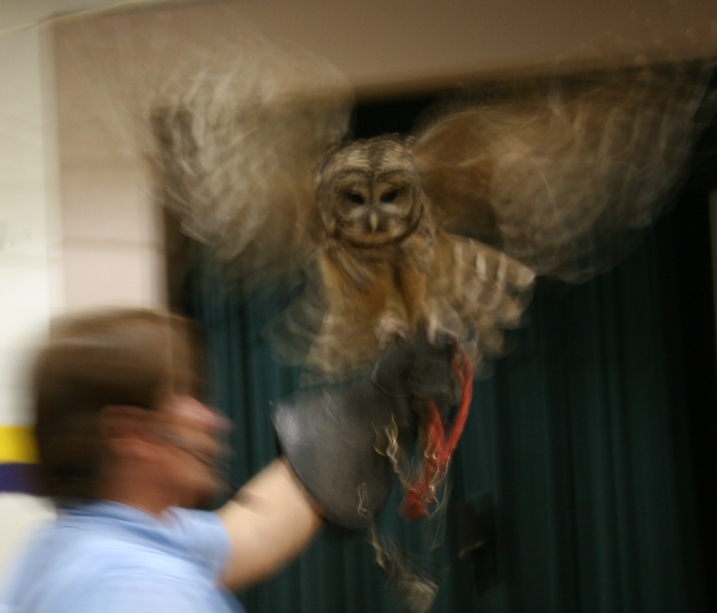
Here an owl flaps its wings. The birds skimmed over our heads during the show.

Here an owl flaps its wings. Some of the birds skimmed over our heads during the show.

Stokes advised anyone who was afraid of birds to leave. That would be me. But I stayed and did just fine with the owls and hawks. But when Kernahan walked out with a vulture and then allowed it to fly at low altitude, I slunk into my folding chair.
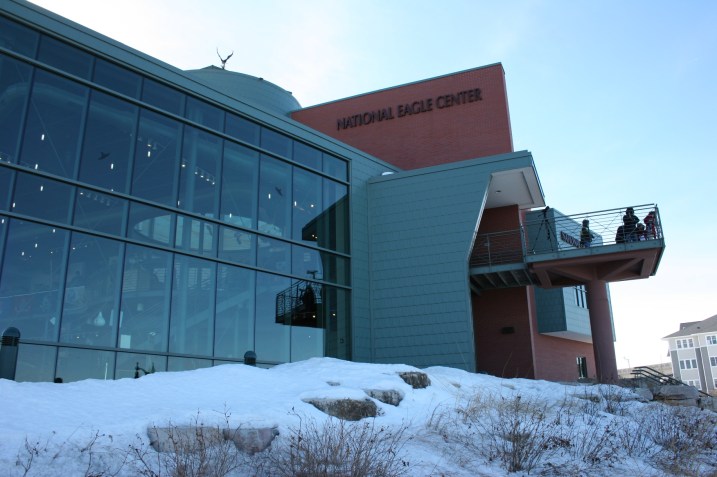
On the right, you'll see the second story riverside observation deck.

On the right is the second story riverside observation deck.

FYI: March marks special “Soar with the Eagles” weekends in Wabasha. March 22 – 23 you can attend Sky Hunters, a flying bird show.
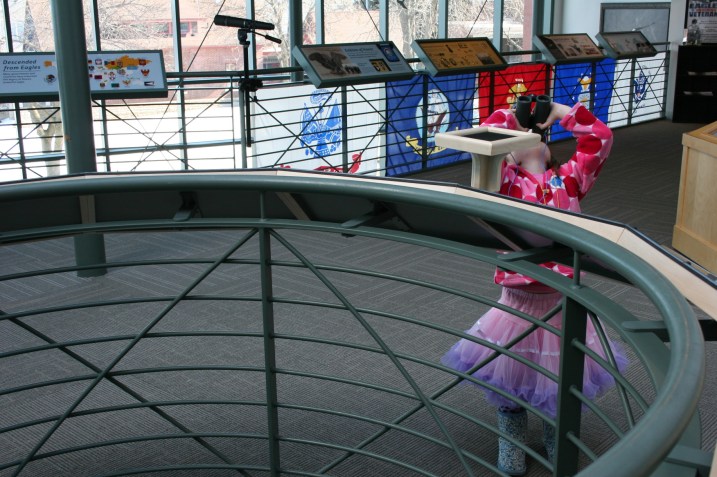
This girl is looking up at these...

Inside the National Eagle Center, this girl is looking up at these…
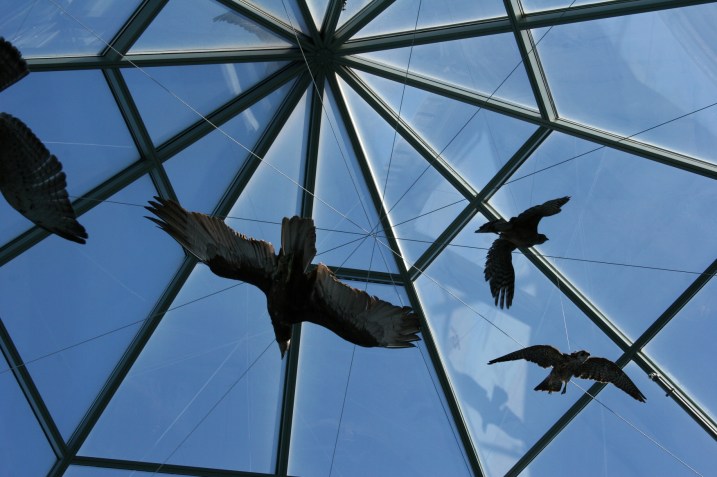
...birds suspended from the glass ceiling.
…birds suspended from the glass ceiling.

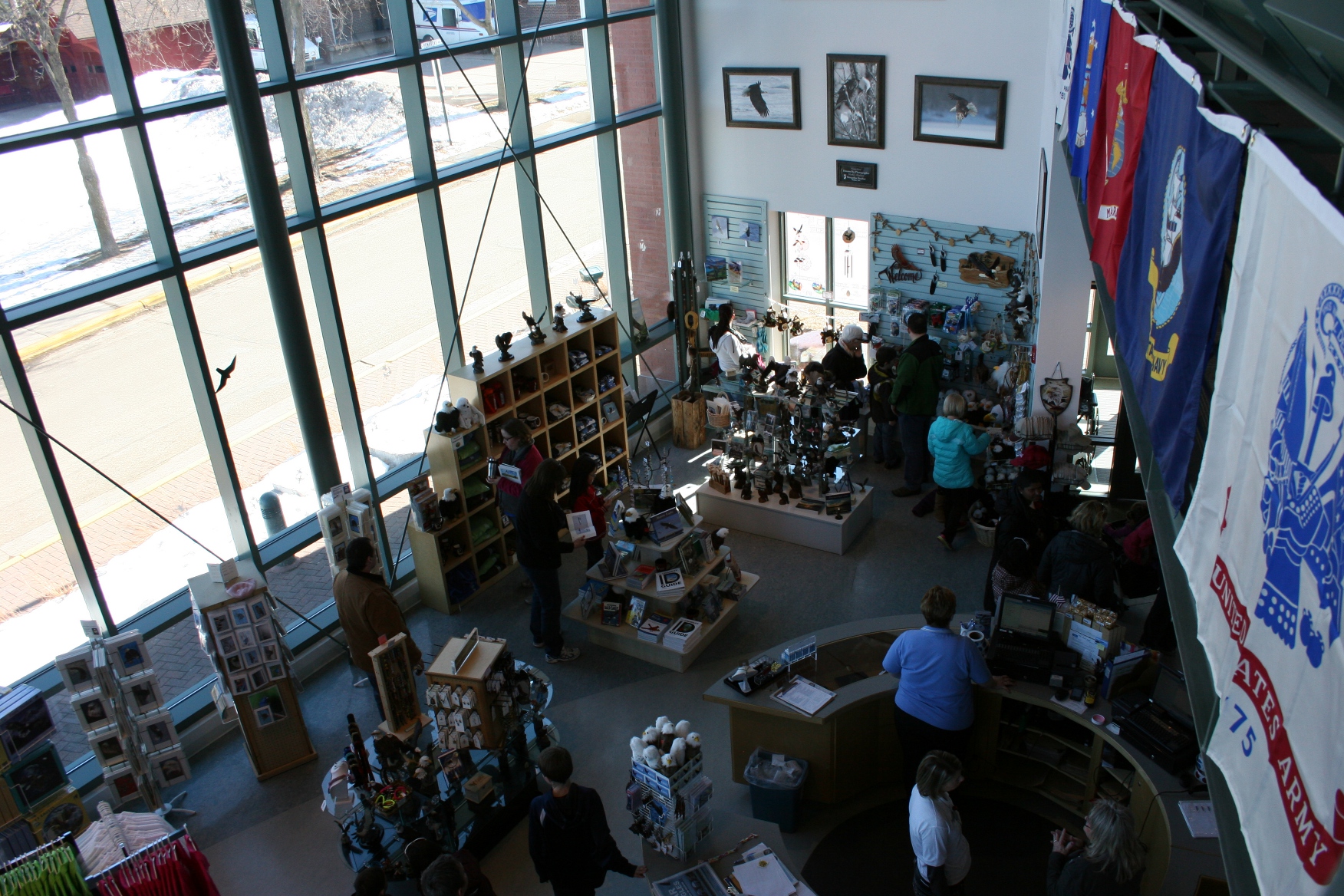
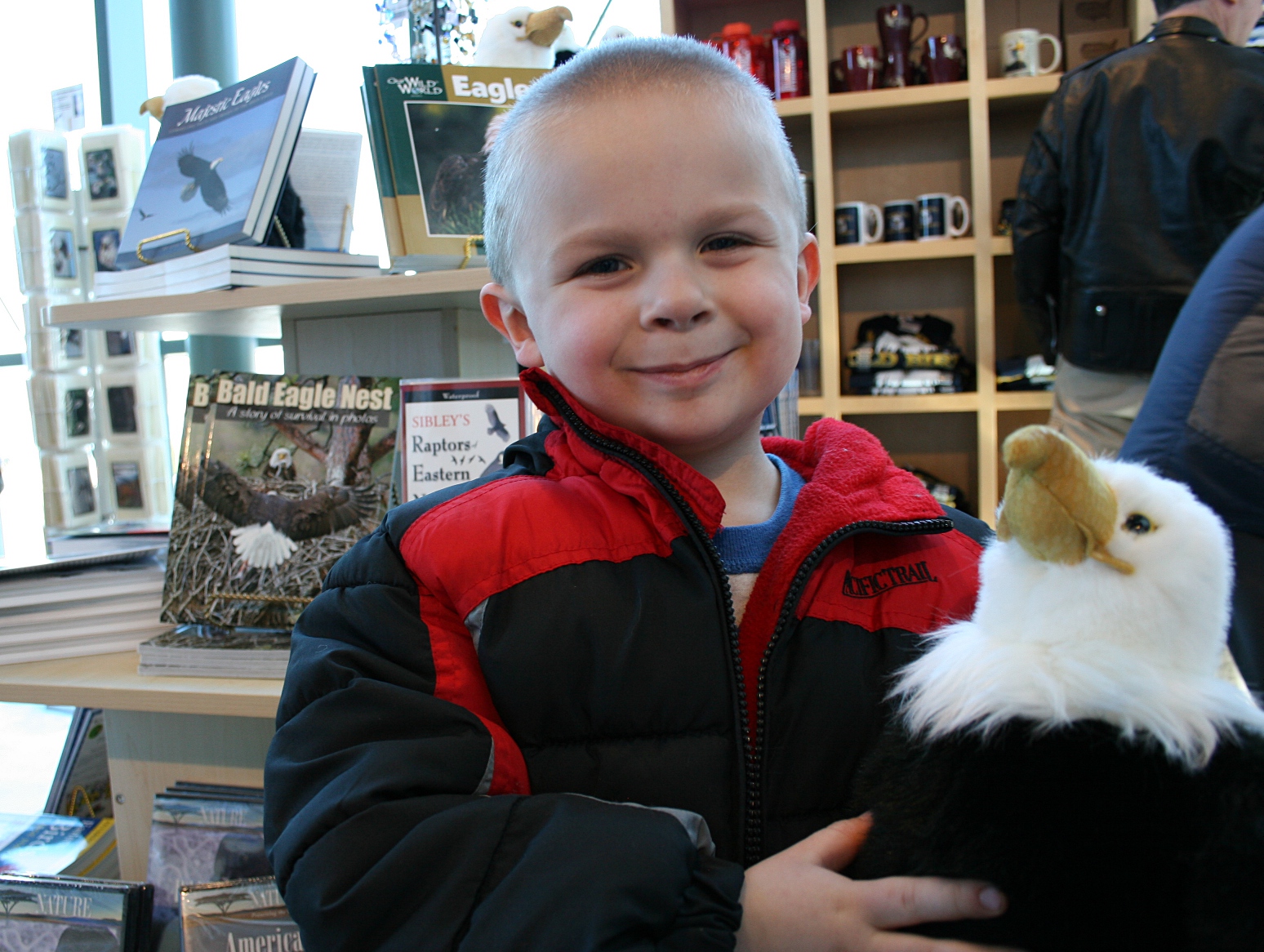
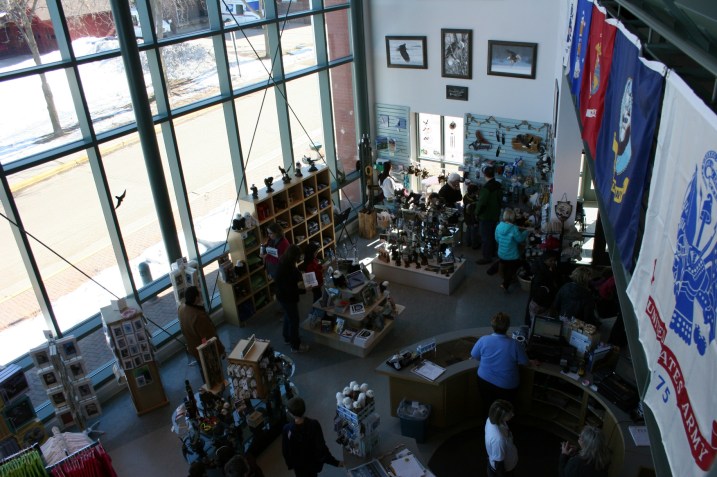
In the first floor gift shop, shown here...

In the first floor gift shop, shown here…
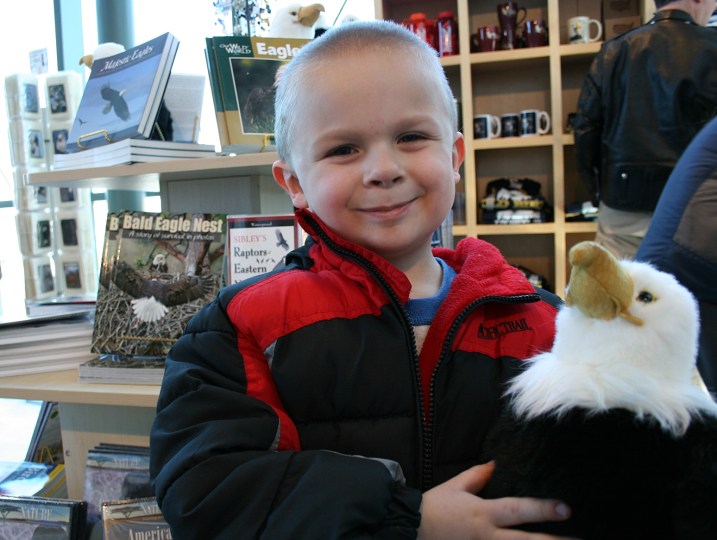
...Joseph found a plush toy eagle.

…Joseph finds a plush toy eagle.

The National Eagle Center truly appeals to all ages, to anyone who appreciates the beauty of this majestic bird.

Check back for another post from the National Eagle Center and for additional photos from Wabasha.

© Copyright 2014 Audrey Kletscher Helbling