Minnesota Prairie Roots

Writing and photography by Audrey Kletscher Helbling

A bit like Alfred Hitchcock’s “Vertigo” August 1, 2023

Filed under: Uncategorized — Audrey Kletscher Helbling @ 5:00 AM
Tags: , , , , , ,
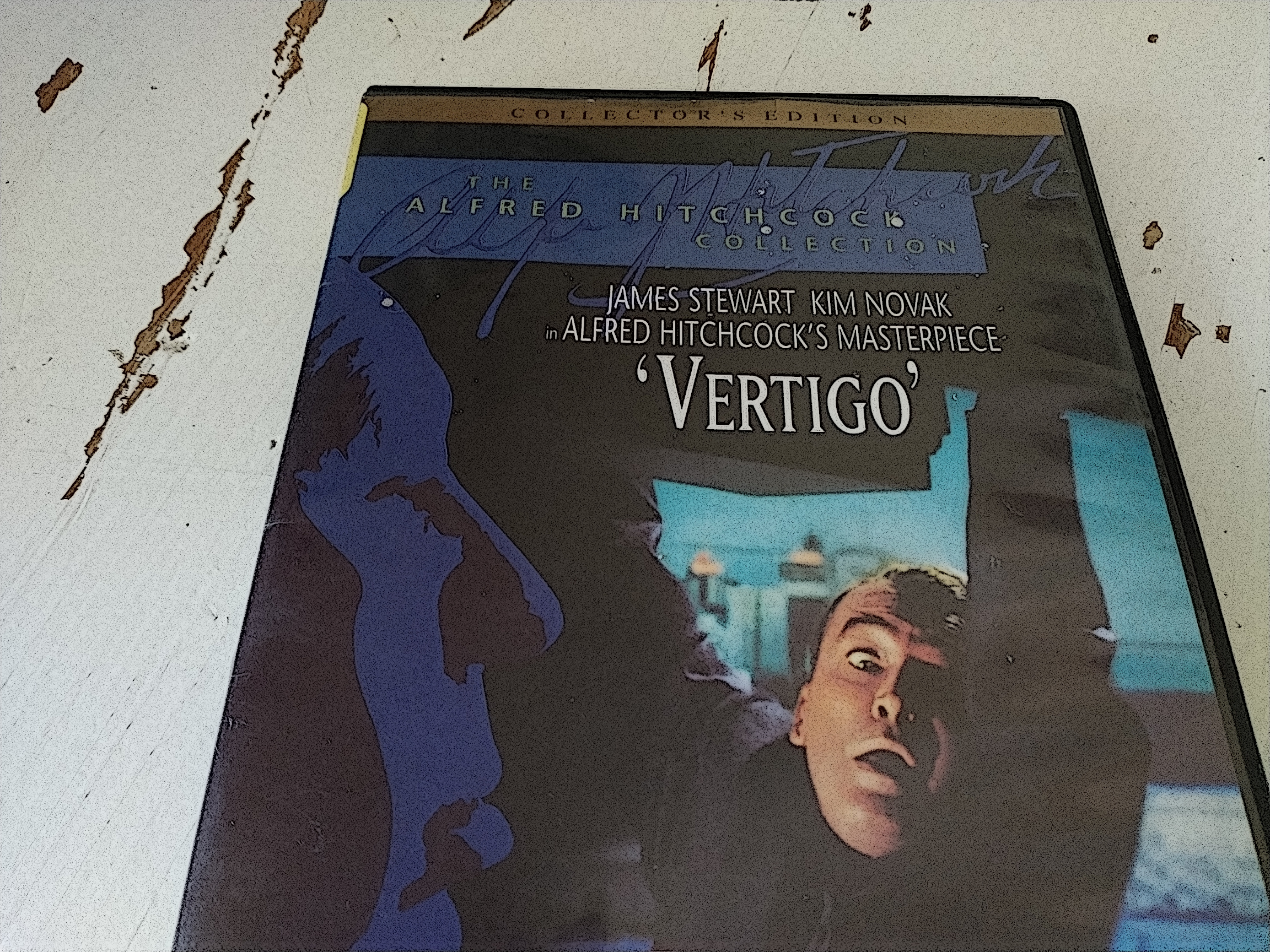
DVD cover of “Vertigo.” (Minnesota Prairie Roots copyrighted photo August 20230

VERTIGO.” I CAN BARELY TOLERATE reading the title of the movie, considered by many to be Alfred Hitchcock’s greatest achievement. That may be so. But when Randy pulled the “Vertigo” DVD from a shelf at the local library and asked if I wanted to watch it, my response was immediate. “NO!”

Vertigo is not something I want to see depicted in a masterpiece film by the simultaneous use of forward zoom and reverse tracking shot. No, thank you. I don’t need that visual. I recently experienced extreme vertigo in real life. And that was beyond awful.

But Randy was attempting to infuse humor into my thoughts, an effort I appreciate given all I’ve been through this summer. The vertigo I experienced back in early April returned a few weeks ago, leaving me dizzy and once again feeling unbalanced. To say I felt frustrated would be an understatement. I’d made notable progress in vestibular rehab therapy, which is retraining my brain in the areas of balance, handling sensory overload and more. All of this connects to my triple diagnoses of vestibular neuronitis, Meniere’s Disease and peripheral sensory neuropathy.

To feel two instances of vertigo and like I was living in a world once again a kilter seemed like a major setback. My physical therapist chose other words: “a bump in the road.” Ryan’s right. I didn’t lose the progress I’d made, just slowed down due to that speed bump. He’s so encouraging, one of the traits I most appreciate in a deeply compassionate and caring physical therapist.

Yet, on the Friday Ryan checked me for benign paroxysmal positional vertigo and then twice performed the Epley Maneuver to move misplaced crystals in my right inner ear back in place, I wasn’t all too happy about his action plan. It was, of course, a correct and necessary procedure. It involved Ryan turning my head to the right and holding it in place while I was sitting, then lying down on my back and going through an Alfred Hitchcock-worthy scene of extreme room spinning vertigo. I gripped Ryan’s forearm with such intensity that I later joked he should receive hazard pay. Without going into more nightmarish detail, he then repeated the procedure. The second time my vertigo had lessened. And when Ryan rechecked me for vertigo a week later, it was gone.

Now I’m trying to get back on track, rebuilding my confidence in doing the assorted exercises designed to retrain my brain. These are familiar exercises, ones I’d mostly mastered before the bump in the road. I left therapy Monday afternoon feeling absolutely wiped out, though, and symptomatic. It’s going to take time for my brain to adjust to exercising.

I’m determined to work hard, to do my exercise homework, to try and live my life as best I can while managing my symptoms. I understand my limits, when I need to take breaks (including limiting screen time) and how to help calm my system. Already my balance is improving. I’m slowly beginning to feel better, to eat better. (I’ve lost 15 pounds.) And I’m overcoming my fear of vertigo returning.

But I’ll never ever watch Alfred Hitchcock’s “Vertigo.” The title triggers too many nightmarish memories.

© Copyright 2023 Audrey Kletscher Helbling


About that man named Ove March 10, 2023

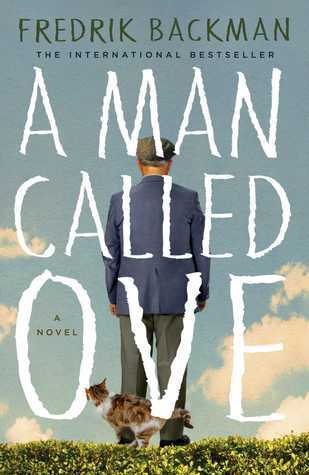
Book cover source: Goodreads

I NEARLY STOPPED READING the book several chapters in. The content weighed on me, so emotionally heavy that I wondered if I could continue. But then the story line began to unfold in a more hopeful way. And I read on.

By the time I reached the final chapter of A Man Called Ove, I was so invested in this book, the characters and relationships that formed, the way lives intertwined to save a life, that I wondered why I ever considered not finishing.

This 2014 international bestselling novel by Swedish blogger and columnist Fredrik Backman now ranks as a favorite book of mine. It made me cry. Correction. Sob. I struggled to read the final pages as tears blurred my vision. It’s been awhile since a work of fiction has spawned such a heart-wrenching emotional reaction.

I challenge you to pick up this book and read about aging Ove and his grief and grumpiness and outspokenness and how the edges of his hardness begin to soften. I laughed. I cried. I worried. I felt hopeful. I cheered. I wanted to give Ove a kick in the pants. I pondered. I related.

The mix of emotions elicited by A Man Called Ove tells me one thing. This is a remarkable book. The writing. The way mental health weaves into the story. There’s no avoidance of hard topics—of bullying and trauma and loss and grief and obsessive compulsive behavior and suicide and the way the mind wraps and detours and struggles and copes.

Into all of this, the author brings hope. In new neighbors. In a mangy cat. In a teen with sooty eyes and a determined journalist and a friend with dementia. I appreciate how, in the end, differences matter not. It’s that kind of book. Real. Honest. Heart-breaking.

I did not see the American movie, “A Man Called Otto,” based on the book. I’ve been told it’s good by some, advised by others to watch the Swedish version instead. Usually I’m disappointed in film adaptations. I haven’t seen a movie on the big screen in many years.

This Sunday evening, movies will be front and center in Los Angeles as “best of” awards are presented at The Oscars. I didn’t find “A Man Called Otto” (or any of the actors/actresses) on a quick scroll through The Academy Awards nominees list. Tom Hanks stars as Otto. I’m not into Hollywood events like this, although certainly they are important to honor those who do outstanding work in their craft. Rather, I prefer books, where I can read and then visualize people, scenes, interactions. My imagination unleashes, prompted by the writing of creatives passionate about the written word.

TELL ME: Have you read A Man Called Ove and/or seen the Swedish or American film based on the novel? I’d like to hear your reactions to either or both.

Thank you to readers Ken and Colleen who suggested I read this book.

© Copyright 2023 Audrey Kletscher Helbling
 

Celebrating the 30th anniversary release of “Grumpy Old Men” February 6, 2023

The “Grumpy Old Men” DVD I checked out from my library. (Minnesota Prairie Roots photo February 2023)

The film “Grumpy Old Men” is undeniably one of the best films ever made in Minnesota. Why? Because it’s so Minnesota. The movie starring Walter Matthau, Jack Lemmon and Ann-Margret celebrates our winter, our small towns and our culture. And those are reasons enough for me to sing its praises. If you didn’t understand Minnesota before watching this film, you will afterwards.

This year marks the 30th anniversary of the movie’s 1993 release by Warner Brothers.

I recently re-watched “Grumpy Old Men,” checking the DVD out from my local library. Surprisingly, or maybe not surprisingly because I was a busy young mom three decades ago, I didn’t remember much of the movie. Two long-feuding friends in small town Wabasha, Minnesota, focus the storyline. When an attractive woman, Ariel Truax (Ann-Margret), moves in across the street from John Gustafson (Lemmon) and Max Goldman (Matthau), the two compete for her affections. The result is conflict, humorous and tender moments, and a focus on the sport of ice fishing in Minnesota.

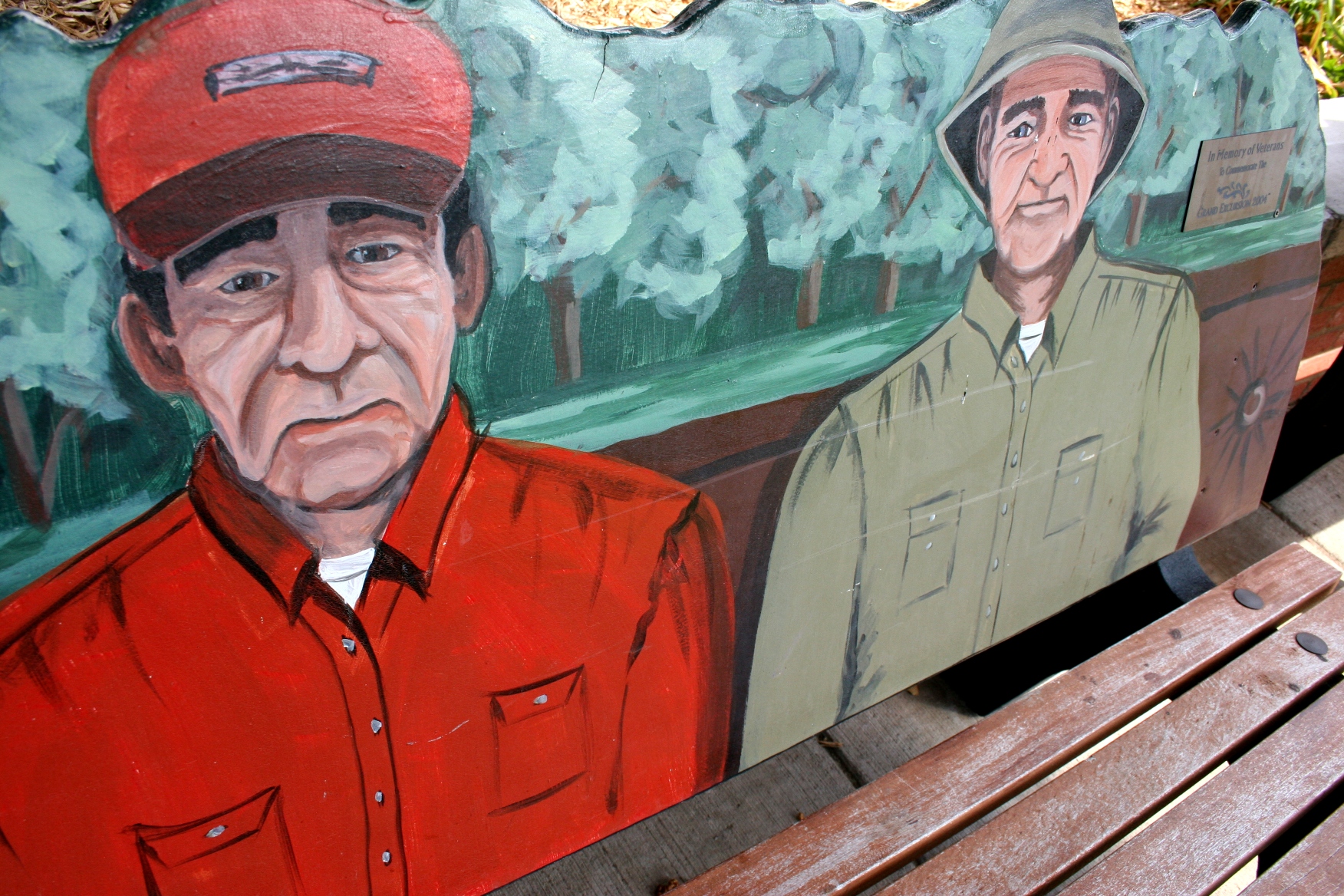
A bench in Wabasha, featuring actors from the film “Grumpy Old Men.” (Minnesota Prairie Roots copyrighted file photo October 2011)

This is truly a Minnesota film. Mark Steven Johnson, who was born in Hastings (just up the Mississippi River from Wabasha) and who attended Winona State University (just down the river from Wabasha and mentioned in the film) wrote the script and the sequel, “Grumpier Old Men.” Interestingly enough, although the movie is set in Wabasha, it was not filmed there, but at numerous other locations in Minnesota.

These tracks lead to the Rock Island Depot in Faribault. (Minnesota Prairie Roots copyrighted file photo August 2018)

FILMED IN “THE FROZEN NORTH,” INCLUDING FARIBAULT

Those sites include my community of Faribault. The opening scene features a train roaring past a depot bannered with a Wabasha sign. In reality, this is the Rock Island Depot in Faribault, long-time home to the popular Depot Bar & Grill. At the beginning of the movie, the Congregational Church and adjacent parish house are shown.

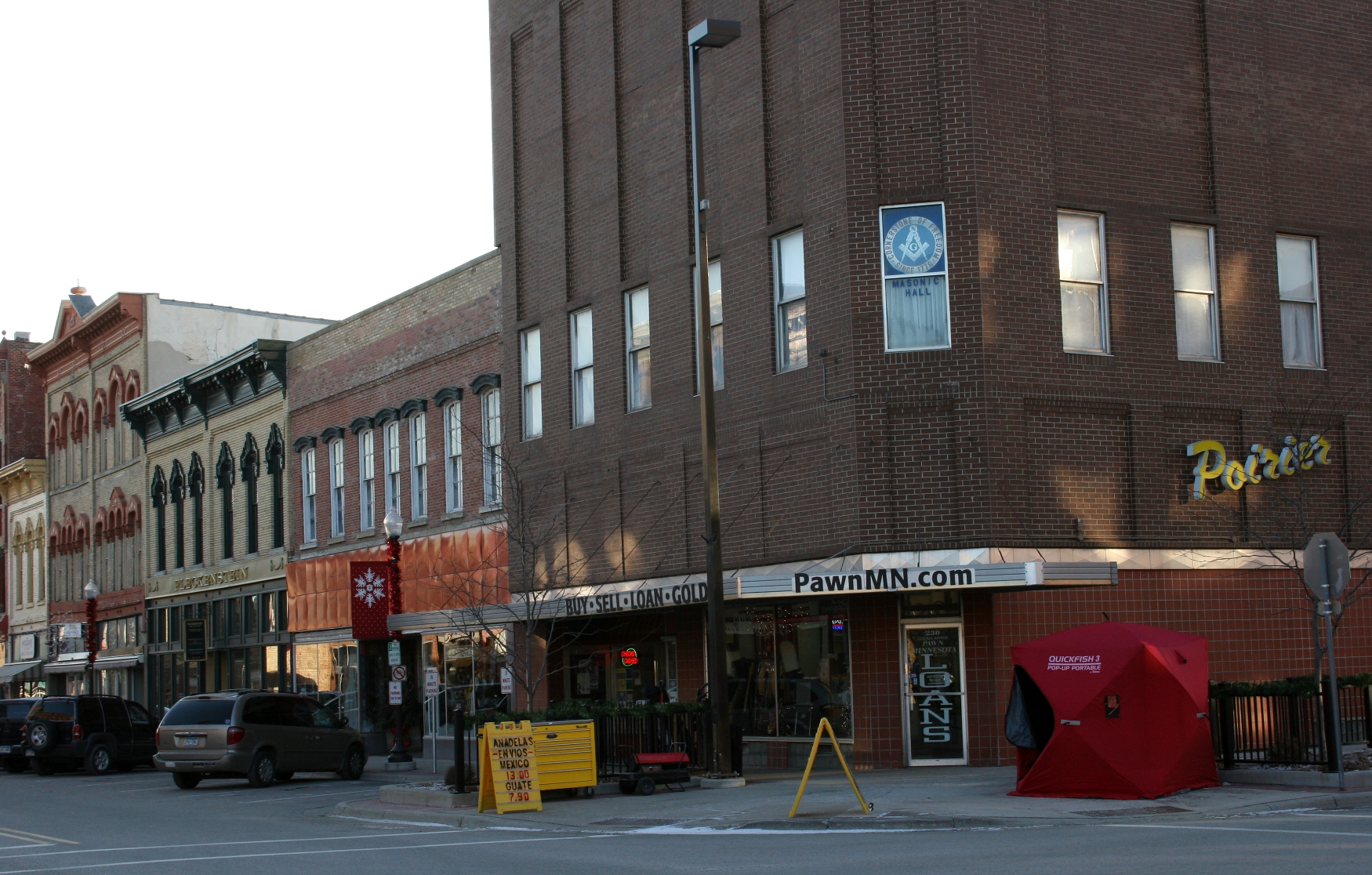
The Poirier name (far right) remained on this building when I photographed it in 2013. It housed a pawn shop then and still today. That’s a portable red fish house outside the business. (Minnesota Prairie Roots copyrighted file photo December 2013)

Other Faribault scenes show our historic downtown, including a Coca Cola ghost sign, businesses along Central Avenue, and the exterior and interior of Poirier Pharmacy (now a pawn shop). Lemmon, Matthau and Ann-Margret performed a scene inside the vintage drugstore with built-in shelves stretching high. Several locals played extras.

Other film locations around Minnesota include houses in the Lake Phalen neighborhood of St. Paul, Half Time Rec (a bar) in St. Paul, Lake Rebecca in Rockford, Chisago Lake Lutheran Church in Center City, a park and overlook in Red Wing, and sound stages at Paisley Park (of Prince fame).

John Davis wrote in his production notes that shooting on-location in “The Frozen North” brought out the best in the team and end product. I agree. The outdoor scenes are authentic with snow piled high; icicles hanging from roof edges; snow and ice layering sidewalks; snowplows barreling down streets; a snowmobile buzzing through a neighborhood; windshield ice scraping; snow shoveling; making snow angels… No need to truck in snow during the Minnesota winter of 1993.

Fish houses create a mini village on frozen Lake Mazaska in Shieldsville (west of Faribault) in January 2013. (Minnesota Prairie Roots copyrighted file photo)

ICE FISHING, FLANNEL-WEARING AUTHENTIC MINNESOTAN

And then there is the ice fishing. Many comedic scenes unfold on the frozen lake, inside and outside the fish houses of lead characters Gustafson and Goldman. Writer Johnson tapped into memories of ice fishing with his grandpa to pen the script. As I watched the movie, I delighted in the polka music (Liar’s Polka, Oira Oira Polka…) that played as the anglers headed to the frozen lake. The upbeat tempo infuses an energy into the film that takes me back to long ago wedding dances in small town Minnesota community halls.

There’s so much Minnesota in “Grumpy Old Men.” Flannel shirts and ear flapper caps. Walleye mounts and crappies strung on a line. Supper, not dinner. Splitting wood with an ax. An air conditioner lodged in a second story window in winter. Red Wing boots and a six-pack of Schmidt beer and Minnesota-made SPAM (the meat). I noticed all of these details in my second viewing of this film. I appreciate that I watched the movie with a more discerning eye, appreciating the, oh, so many authentic Minnesotan aspects of a movie that celebrates life and winter in Minnesota.

A promo for the Fireside Chat with “Grumpy Old Men” script writer Mark Steven Johnson. (Graphic credit: Grumpy Old Men Festival Facebook page)

LET THE ANNIVERSARY PARTY BEGIN

Wabasha celebrates its 30th annual Grumpy Old Men Festival on February 24 and 25. There’s a lengthy list of events, including a Grumpy Old Men Fishing Tournament, a Grumpy Best Dressed Contest, a Hot Dish (Minnesota lingo for casserole) Luncheon, Grumpy Old Men Ice Bar at Slippery’s Bar and Grill (referenced, but not seen, in the film), a fireside chat with script writer Mark Steven Johnson and much much more. Click here for a complete list of festival events.

Chisago Lake Lutheran Church in Center City will hold a “Grumpy Old Men” Worship Service at 9 am on Sunday, February 12. The service is open to anyone, not just men, and not just grumpy men. Attendees are invited to wear their favorite flannel shirts and jeans and to put a fishing lure in their hats. Click here for more information.

Copyright 2023 Audrey Kletscher Helbling


Nebraska the movie, not the place January 27, 2023

Filed under: Uncategorized — Audrey Kletscher Helbling @ 5:00 AM
Tags: , , , , , , , , ,

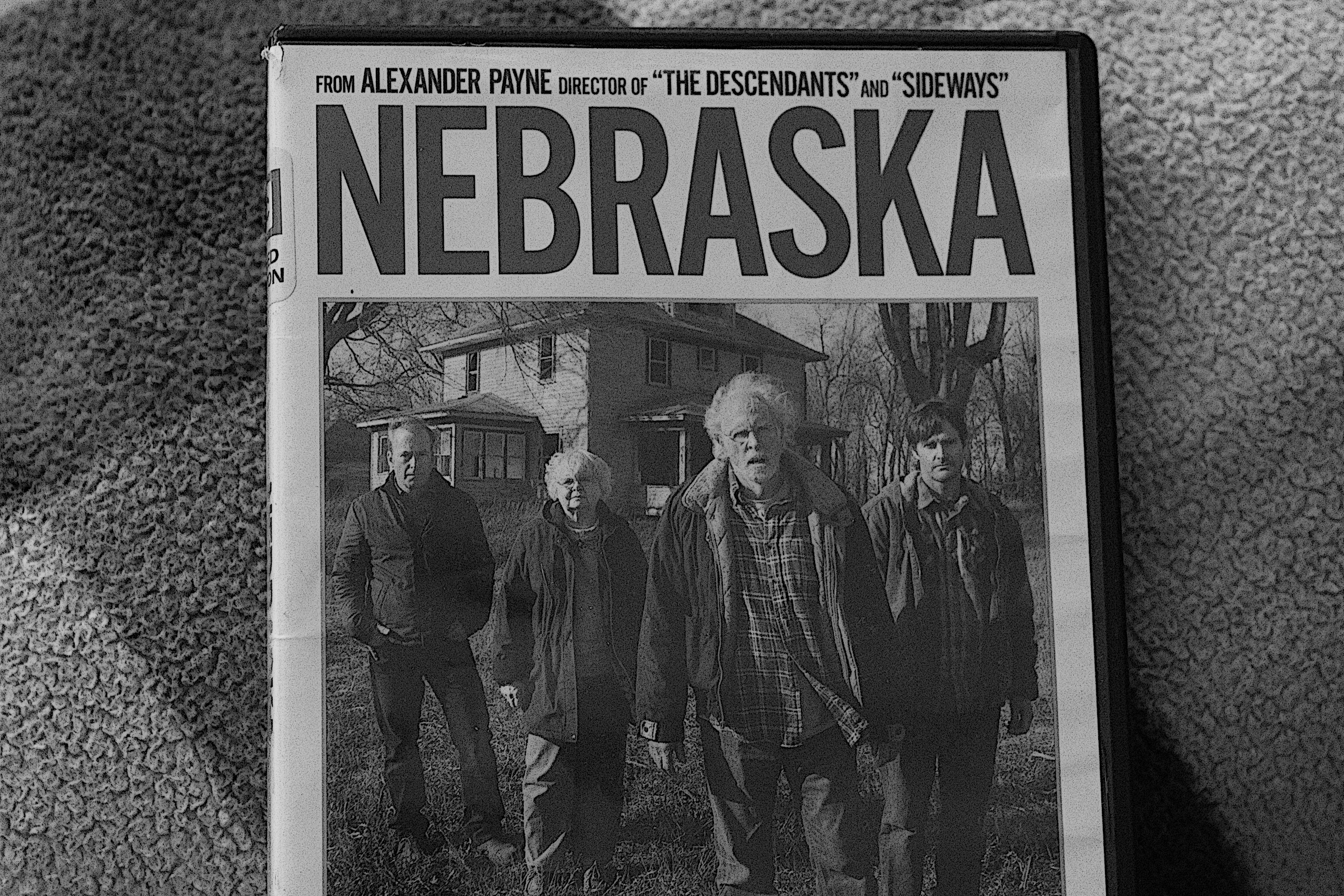
An edited photo of the DVD cover. (Minnesota Prairie Roots photo January 2023)

IT TAKES A LOT for a movie to hold my interest. I’d rather read a book. But the 2013 film “Nebraska” certainly grabbed, and held, my interest.

By self-admittance, I seldom watch movies. I can’t recall the last movie I saw inside a theater. Or rather, I should clarify, the last time I watched a movie in its entirety in a theater. I walked out on a “John Wick” film not even an hour in. That was on a rainy Memorial Day weekend in 2019 when, for lack of anything better to do, Randy, Caleb and I decided to go to the movies. I knew nothing of “John Wick” or the level of violence portrayed in this series. I watched for awhile, fidgeted, closed by eyes, then walked out, demanded a refund and got one. I haven’t been inside a movie theater since.

Yes, I acknowledge ignorance about movies, about the film industry, about actors and actresses and nearly anything Hollywood-related. I mostly dislike the obsessive hype and adoration. Certainly, talented creatives exist in the field. But often the attention and praise heaped on Hollywood seem excessive.

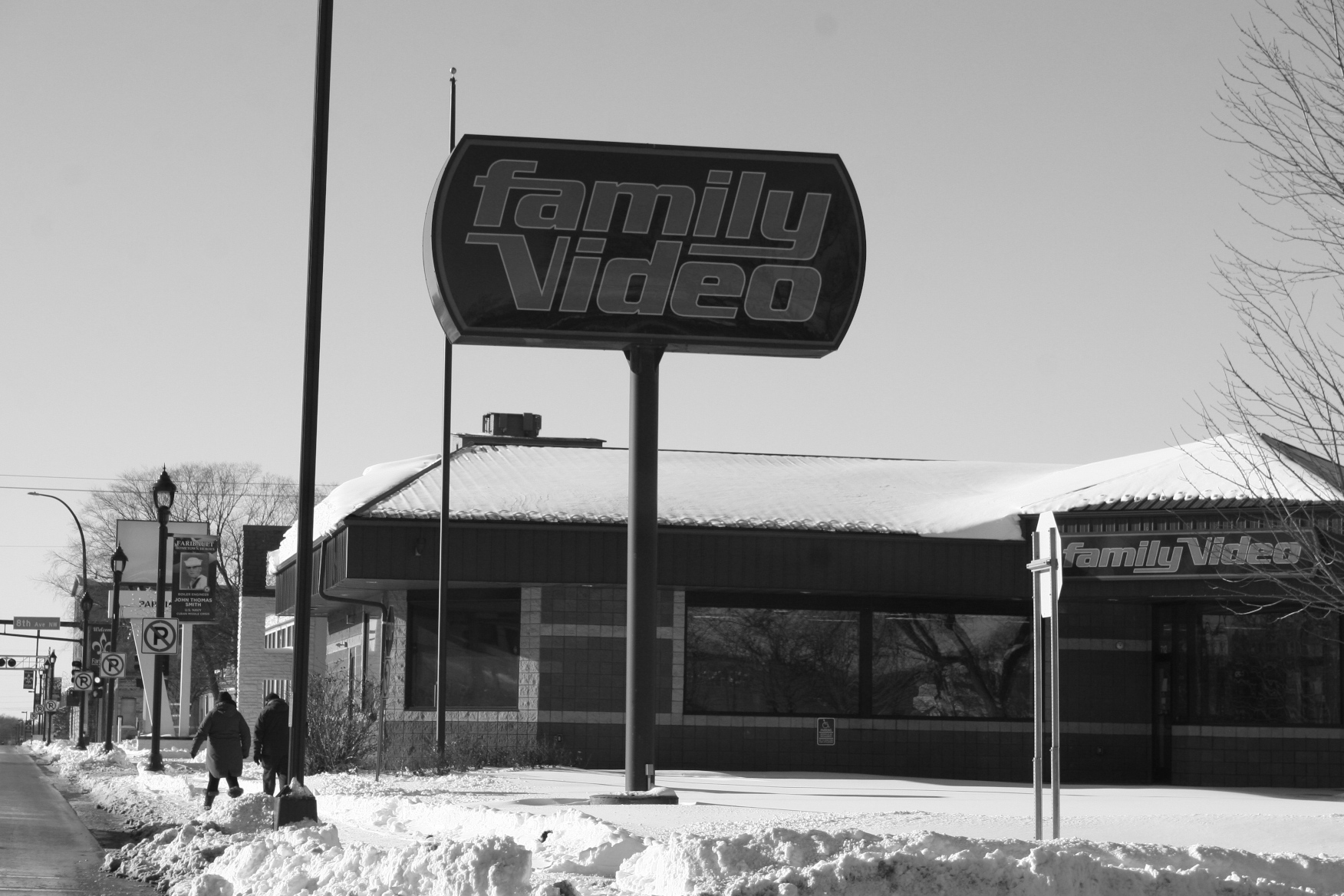
Faribault’s vacated Family Video, closed in February 2021. (Minnesota Prairie Roots copyrighted photo December 2021)

But then along comes a film like “Nebraska,” which Randy found at our local library while I was browsing for books. Buckham Memorial Library is our source for DVDs since the closing of Faribault’s Family Video about a year ago. Not that we frequented the video rental store much, but occasionally. Just like we occasionally check out movies from the library. Our kids laugh that we still watch DVDs. But, hey, we still get our television reception from a rooftop antenna and don’t stream anything. We are old school that way and I’m OK with that. Like I said, I prefer reading a book.

Back to the 10-year-old film “Nebraska.” Although it didn’t win any of the six Academy Awards for which it was nominated, it should have. I loved everything about the movie which tells the story of Woody Grant (Bruce Dern) on a road trip from Billings, Montana, to Lincoln, Nebraska, with his son David (Will Forte). The plot revolves around the aging Woody’s belief that he’s won a mega sweepstakes prize. You know, the kind of “prize” announced in a mailing to unsuspecting folks who, like Woody, fail to read the fine print.

The storyline premise is basic and believable, the characters realistic. As the plot progresses and word gets out about Woody’s presumed wealth, family and friends appear, wanting a share of the money. Greed emerges, just as in real life when families squabble over inheritances and possessions.

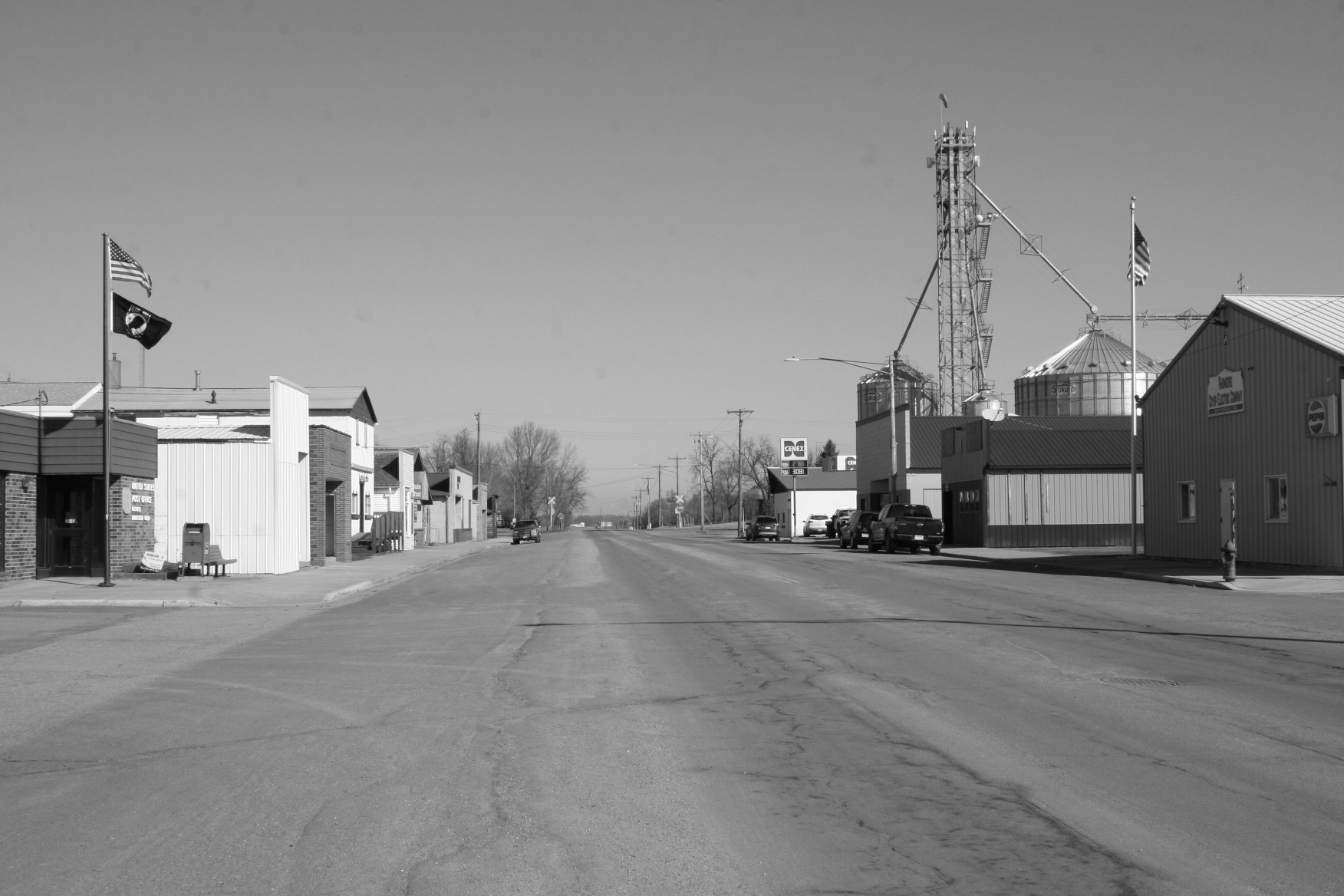
This shot of Main Street in Belview in my home county on the prairie looks similar to scenes in “Nebraska.” (Minnesota Prairie Roots copyrighted & edited file photo)

Set in rural America—from small town Main Street (Woody’s hometown) to corner bar to rural cemetery—the scenes in “Nebraska” look a lot like the southwestern Minnesota prairie where I grew up. No surprise given the Nebraska filming locations. I felt comfortably at home in the landscapes of this movie while settled in my Minnesota home.

That the film shows totally in black-and-white strips the scenes, allowing characters and dialogue and setting to shine without distractions. At first I thought this was a Coen brothers (of “A Serious Man” and “Fargo” fame) movie. It’s not. Alexander Payne directs “Nebraska.” The music reminds me of the music in “Sweet Land,” another all-time favorite film.

“Nebraska” mixes drama and comedy to create a movie that is simultaneously entertaining, sad, funny, insightful and every day ordinary. Kate Grant (June Squibb), the strong and opinionated woman married to Woody, delivers some of the film’s most powerfully honest and comedic moments.

I wish I’d viewed this movie in a theater rather than horizontally elongated on a TV screen. I know for certain that I would have sat there focused, fully-engaged, eyes wide open until the very end.

TELL ME: Have you seen “Nebraska”? If yes, what are your thoughts on the film? Any movies you recommend I check out from my local library or view in a movie theater?

© Copyright 2023 Audrey Kletscher Helbling
 

Buzz Lightyear reappears at my house June 3, 2022

Filed under: Uncategorized — Audrey Kletscher Helbling @ 5:01 AM
Tags: , , , , , , , ,
Buzz Lightyear. (Minnesota Prairie Roots copyrighted photo 2022)

SEVERAL MONTHS AGO, I determined to locate the oversized Buzz Lightyear my son, now 28, played with as a child. Buzz is the space ranger toy in the computer animated feature film “Toy Story.” The movie stars Andy and his collection of toys, which come to life.

The son’s childhood Buzz Lightyear collection. (Minnesota Prairie Roots copyrighted photo 2022)

I was searching for Caleb’s Buzz because the grandkids were coming. Last time they stayed overnight, Isabelle and Isaac enjoyed playing with the smaller Buzz Lightyear characters stashed in a tote in the basement. But, oh, I knew they would be impressed with the larger scale ranger who, with batteries inserted, can spew phrases like “To infinity and beyond.” But the challenge was finding that particular Buzz in an upstairs bedroom closet stuffed with totes.

I pulled plastic box after plastic box from the recesses of that dark space. Finally, back in the far corner, after I’d dragged nearly everything out, I found the missing toy. I decided then and there that, as long as I had emptied the closet, I may as well go through everything. What a job.

Just to clarify, most of the “stuff” stuffed into the closet belongs to my son and to my second daughter. The son, back in college 525 miles away pursuing an advanced degree, lives in an apartment with no room for childhood toys. But Miranda lives in a rental house and I decided it’s time she gets her “stuff.” Boxes are now stashed in a corner of a spare bedroom for the next time we see each other. She lives 4.5 hours away in Madison, Wisconsin.

I’m really feeling the need to purge. That’s part of aging and understanding that I don’t want to leave a houseful of material possessions for my kids to sort through some day. I’ve done that with my parents and my in-laws, now all deceased, and it’s not fun.

My son loved playing with this large scale Buzz Lightyear. (Minnesota Prairie Roots copyrighted photo 2022)

But then I face the dilemma of what to keep so the grandkids have something to play with when they visit and/or stay overnight. I was surprised when they were interested in playing with Buzz Lightyear. But their mom tipped me off that Buzz is the star in an upcoming movie, “Lightyear.” That film releases this month. Who knew? Not this grandma.

Owlette, a character in the currently popular PJ Masks. (Minnesota Prairie Roots copyrighted file photo February 2022)

I struggle to keep up with the ever-changing interests of the three and six-year-old grandchildren, especially my granddaughter. Her little brother likes numbers, the solar system and maps/globes. But Isabelle’s interests have ranged—Daniel Tiger, Trolls, Mickey and Minnie Mouse, Frozen, Thomas the Tank Engine, Disney princesses, Paw Patrol, PJ Masks… I give up trying to learn the characters’ names before she moves on to the next “in” thing.

But at least I know Buzz Lightyear and Woody and Andy. Yes, those I will keep, along with the Fisher Price bus and the castle and the potholder weaving set and…

TELL ME: If you’re a grandparent, are you up on the latest whatever? And do you keep old toys, games, etc. for the grandkids to play with when visiting?

© Copyright 2022 Audrey Kletscher Helbling
 

The poetry of “Where the Crawdads Sing” April 8, 2022

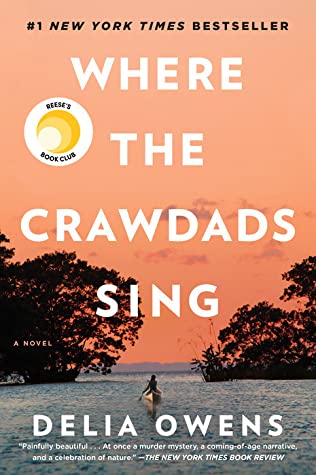
Image source: goodreads

IF I HADN’T CAUGHT the news flash in an entertainment segment on an early morning TV show recently, I doubt I would have read Where the Crawdads Sing by Delia Owens. But I did. And the book proved so riveting that I didn’t want to put it down. You know the type of book, when you stay up past your bedtime to read.

Published in 2018, this New York Times fiction bestseller, releases in July as a movie. So I suppose my timing in reading this is about right. Not that I will see the film. Big screen versions, after I’ve read a book, usually disappoint. Plus, I am not a movie-goer; the last time I went to a movie (three years ago), I walked out and asked for a refund (which I got).

All that aside, that I read Where the Crawdads Sing in April, National Poetry Month, is also fitting. More on that in a bit.

First a summary: Set along the coastal marshes of North Carolina, this book tells the story of young Kya, beginning in 1952. Her family abandons her and she grows up, isolated, alone, connecting with nature. Known to locals as “Marsh Girl,” she reads poetry to gulls, boats through the marshland, immerses herself in learning and studying and documenting the surrounding natural world.

In following her story, which is much more complicated than someone living alone in a remote location, I learned a lot about an area of the US I’ve never even come close to visiting. That includes the many birds which focus Kya’s attention. It’s good for me to stretch my reading wings to a region unfamiliar to me. To learn of landscape, sea life, culture, food, peoples and more in a focused time period, primarily 1960-1970.

The book broadens to include a mystery—the death of a well-known young man from the coastal town of Barkley Cove. Even the name of that community sounds foreign to my Minnesota ears. His life intertwines with Kya’s and that’s what left me wanting to stay up late reading.

Themes of abuse, abandonment, isolation, misconceptions, meanness, prejudice, privilege and small town narrow-mindedness thread through the pages of Where the Crawdads Sing. Love, too.

Author Delia Owens also weaves poetry into pages in poems quoted. Poems by Emily Dickinson. By Pulitzer Prize-winning poet James Wright, who taught in Minnesota at the University of Minnesota and Maclester College. By Amanda Hamilton (there’s a surprise). A fisherman named Scupper proclaims his love of poetry, declaring that poems “make ya feel something.” He’s right.

I encourage you to read this book for the story, the strong sense of place and, yes, for the poetry.

TELL ME: Have you read Where the Crawdads Sing? If yes, what are your thoughts and will you see the movie?

© Copyright 2022 Audrey Kletscher Helbling
 

Raising awareness of PTSD, moral injury & suicide & how we can help March 31, 2017

The veterans of Shieldsville and elsewhere are honored in this “Never Forgotten” memorial. Minnesota Prairie Roots file photo.


I WISH I’D KNOWN then what I know now.

How often have you thought that following an epiphany moment? That came for me Wednesday evening during a community meeting and film screening at the Faribault American Legion Post 43 on post traumatic stress disorder and the related topic of suicide.


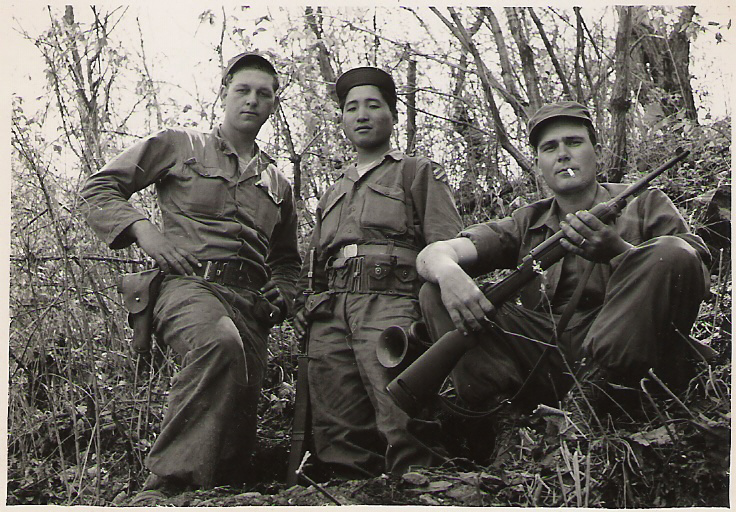
This photo from my dad’s collection is tagged as “Kim, Rowe, Allen & me, May 1953 Machine Gun Crew.” That’s my father on the right.


I walked away from the gathering with a new perspective and regrets that I hadn’t thoroughly understood the mental anguish suffered by my Korean War veteran father. He fought on the front line as an infantryman—kill or be killed. As a result, he dealt with life-long issues that greatly affected his life and thus his family, too. He died 14 years ago on April 3.


My father, Elvern Kletscher, on the left with two of his soldier buddies in Korea.


Now, just days before the anniversary of his death, I gained insight beyond his PTSD diagnosis. I learned of the term “moral injury.” In a separate clip shown before airing of the feature film “Almost Sunrise,” a soldier explained how the realities of war can inflict wounds upon the soul. As I listened, the concept made total sense to me. Here was my dad, armed with a rifle and other weapons, forced to shoot the enemy or die. To take the life of another human countered everything he held to be morally right. I can only imagine how that tore him apart. It would anyone.


My dad carried home a July 31, 1953, memorial service bulletin from Sucham-dong, Korea. In the right column is listed the name of his fallen buddy, Raymond W. Scheibe.


I recall his few stories of being so near the enemy that he could see the whites of their eyes. “Shoot or be shot,” he told me. I observed, too, the lingering pain he felt in watching his buddy Ray blown apart the day before the Nebraska solider was to leave Korea. I remember Dad’s stories also of Korean children begging for food across a barbed wire fence.


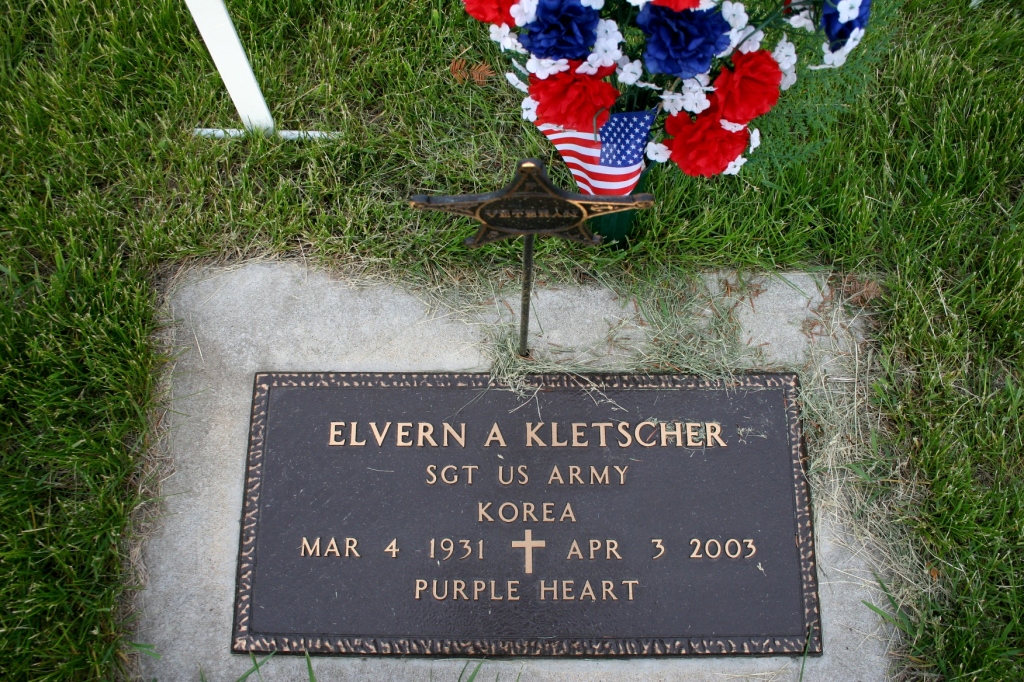
My dad’s military marker in the Vesta City Cemetery.


Dad was wounded in Korea, struck by shrapnel on Heartbreak Ridge. He earned a Purple Heart, awarded some 50 years after he left the battlefield. While his physical injuries healed, the wounds to his heart, to his soul, remained. He suffered from life-long moral injury, as I see it now.


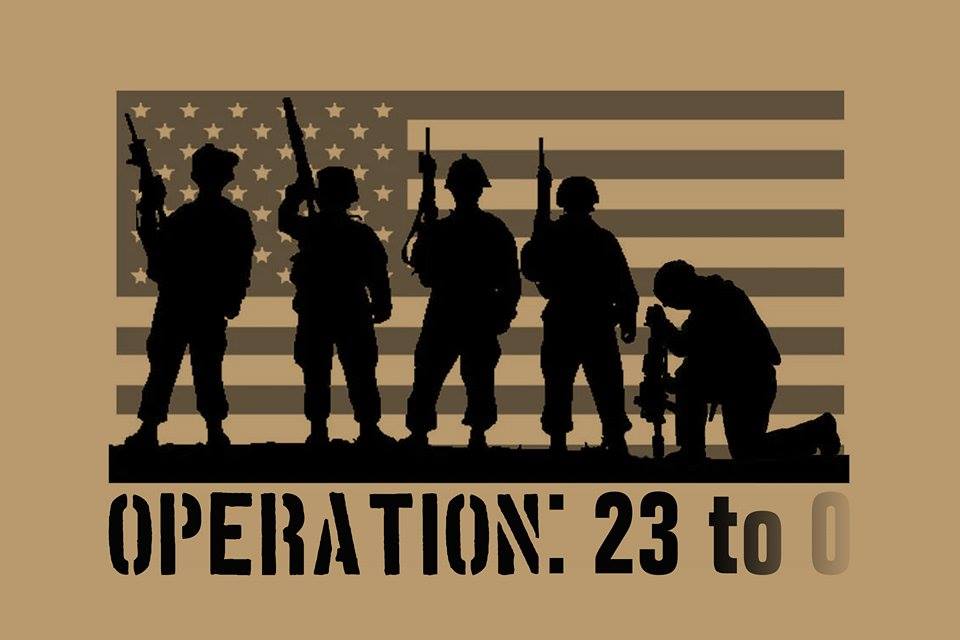
The number 23 represents the 22 veterans and one active duty military individual who commit suicide daily. The goal is to bring that number to zero. Graphics credit: Operation 23 to Zero.


I am grateful to the local Legion and Faribault Elks Lodge, specifically to Kirk Mansfield, a strong local advocate for veterans and head of Operation 23 to Zero in southern Minnesota, for organizing Wednesday’s community event. Operation 23 strives to help veterans and to create awareness of PTSD, suicide and more.


Promo graphics credit of “Almost Sunrise.”


Showing of “Almost Sunrise,” a film that followed two Iraqi War veterans on a 2,700 trek from Milwaukee to Los Angeles, also gave me insights into the personal demons soldiers face upon returning home from the battlefield. It is a touching film that left me crying. The Wisconsin soldiers, as they walked across the country and in follow-up therapy, found personal and relationship healing. They found the strength within to forgive themselves. Only they—not their families—could lead them to that point of healing.

While Wednesday’s event focused on veterans, the information shared can apply to anyone who has suffered from PTSD, whether from domestic abuse or other trauma, Mansfield noted.

In a separate clip from the film, a speaker offered these tips for helping individuals dealing with mental health challenges:

  • Show empathy by listening.
  • Remind the individual that he/she has a purpose in life.
  • Offer to be a mentor.
  • Reiterate how important they are to you. Tell them they matter.

That’s great advice.


I photographed this pillow last September when the Vietnam Traveling Memorial Wall came to Faribult. The veteran volunteering in the MIA-POW tent told me his wife sewed this pillow from an over-sized t-shirt. As the message conveys, we all need to be here for one another.


Mansfield challenged those in attendance to take what they’d just learned and help others. So I am, with this story. I have the ability to use the written word to create awareness. When we are educated and aware, then we can begin to help our family members, our friends, our co-workers, our acquaintances via listening, supporting, encouraging and reminding them just how much they mean to us. That is powerful.


FYI: To read a story I wrote about my dad, “Faith & Hope in a Land of Heartbreak,” published in the book, God Answers Prayers, Military Edition (page 12), click here.

© Copyright 2017 Audrey Kletscher Helbling


Take two: A second look at the film “Sweet Land” & immigration issues February 6, 2017

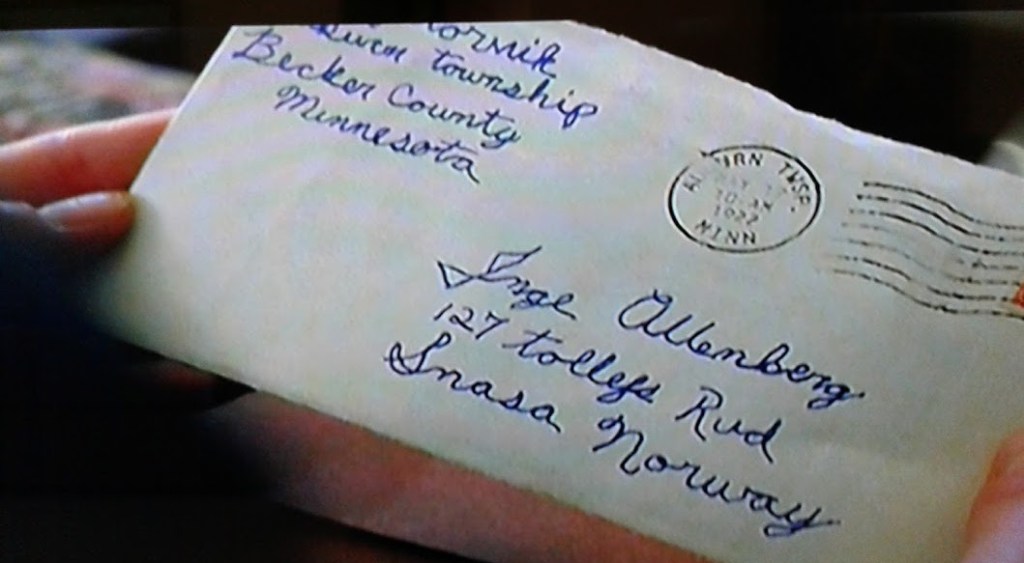
sweet-land-envelope-copy

The letter Inge received from Olaf, in the fictional film Sweet Land.

She is not one of us. We speak a common language. We have a common background, a common culture. She is not one of us.
#

We have to be careful about this sort of thing…German nationals. German nationals engage in prostitution. They harbor dangerous political convictions. Are you aware of the Espionage Act of 1916?
#

English only in the church. English.
#

You’re German. It’s a bad influence. You’re German. It’s a disruption to my community. You make coffee that’s too black.

She makes good coffee, not like the women in church.
#

I was fearful of her differences, but I was hopeful she could join us on our path….Do not allow your good lives to be poisoned by these two.
#

This is German food?

No, just food.
#

You don’t have the papers.

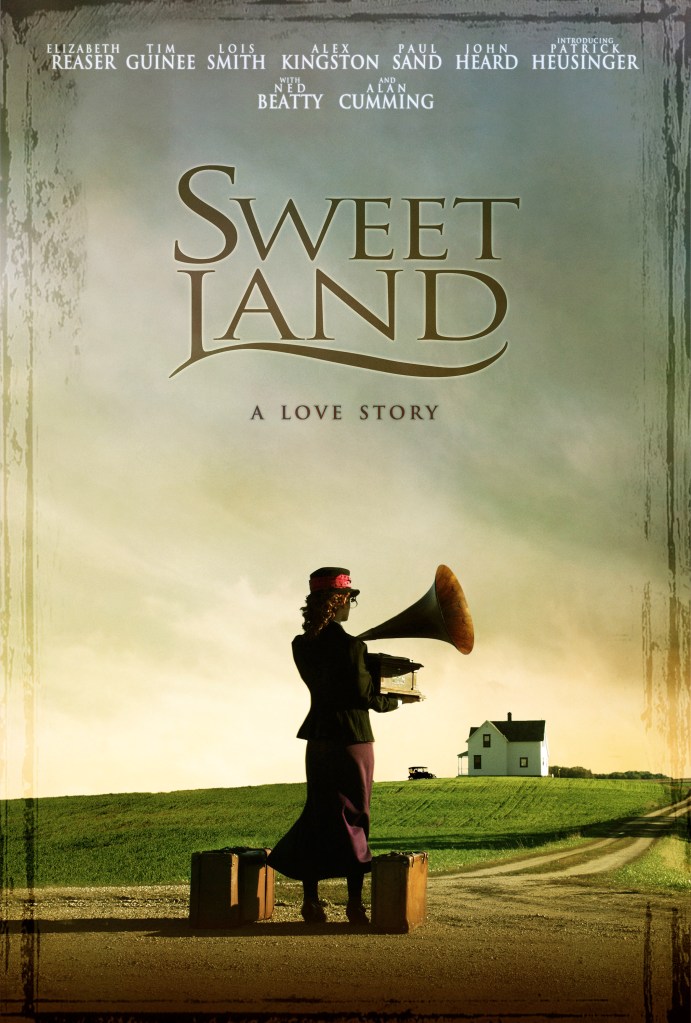
sweetlandposter_mini

Promotional from Sweet Land website.

LAST WEEK I REWATCHED Sweet Land, an award-winning independent film released in 2005. The movie, based on Minnesota writer Will Weaver’s short story, “A Gravestone Made of Wheat,” and filmed on my native southwestern Minnesota prairie, rates as a favorite of mine.

sweet-land-farmhouse-copy

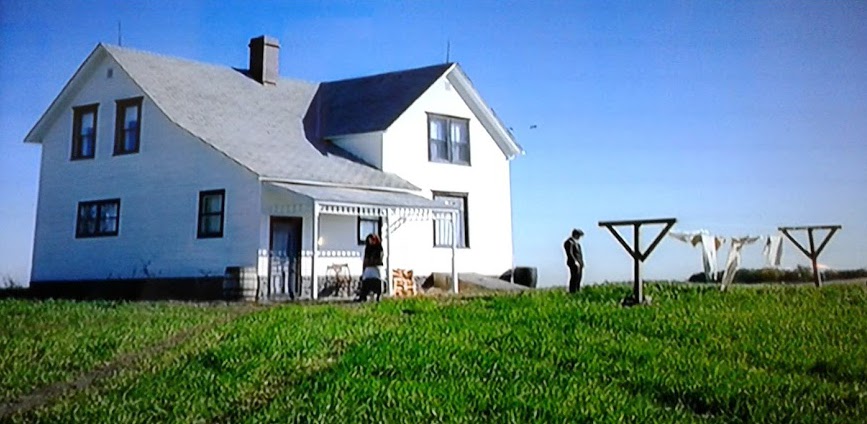
Olaf Torvik’s home on the prairie. The film was shot in and around Montevideo, Minnesota.

I appreciate the early 1920s setting, the music, the story and, now, its relevancy to today. The above dialogue comes from Sweet Land, which focuses on the challenges faced by Inge Altenberg, summoned to America by Norwegian farmer Olaf Torvik. He expects a Norwegian mail order bride as do others in the community. But Inge is not Norwegian; she is German.

Thereafter, the conflict begins with “She is not one of us.”

The land and love shape the story.

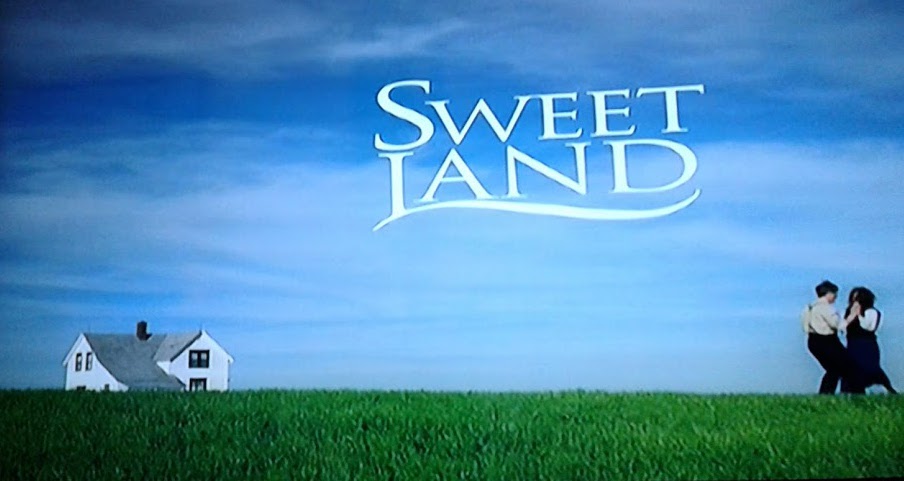
The land and love weave into this story. Here Inge and Olaf dance on the prairie.

I won’t give away the plot, which includes a love story. But I will tell you that I watched the movie this time from a much different perspective, in the context of current day immigration issues in our country. Sadness swept over me.

Please watch this thought-provoking, conversation-starting film. It’s a must-see whether you make coffee that’s good, judged as too black or you don’t brew coffee at all. It’s still coffee.

FYI: Sweet Land, the musical opens April 29 at History Theatre in St. Paul. It runs for five weeks, Thursday – Sunday, until May 28. Will I go? I’d love to…

RELATED: Saturday afternoon a sizable crowd gathered on the Rice County Courthouse grounds in my community for a peaceful protest. Please click here to watch the video, Faribault, Minnesota Immigration Ban Protest 2-4-17, posted by Terry Pounds. Faribault is home to many immigrants and refugees, including from Somalia.

A photographic exhibit of refugee children who fled Syria, leaving everything behind, is showing at the American Swedish Institute in Minneapolis. Photos for Where the Children Sleep were taken by award-winning Swedish photojournalist Magnus Wennman. In order to increase community access to the exhibit, the ASI is providing free admission on Wednesdays in February. The exhibit runs through March 5. Where the Children Sleep launches the Institute’s 2017 “Migration, Identity and Belonging Programming.”

Review © Copyright 2017 by Audrey Kletscher Helbling


In Appleton, Wisconsin: Focusing on homelessness via the Little Red Wagon January 21, 2015

Little Red Wagon movieWHEN CHURCHES PRACTICE what they preach, they make a noticeable impact in the world.

When individuals do good, they also make a difference.

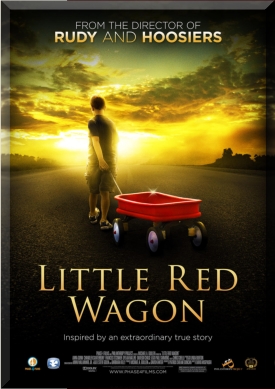
This Saturday The Mission Church will impact Appleton, Wisconsin, with a free screening of the movie, Little Red Wagon, based on the true story of Zach Bonner. In 2005, the then 7-year-old founded the Little Red Wagon Foundation, a nonprofit that helps underprivileged kids, focusing on those who are homeless. Just a year earlier, he’d canvassed his Arkansas neighborhood with his little red wagon gathering items for survivors of Hurricane Charley.

Zach, who now lives in Florida, will be in Appleton for the 10 a.m. Saturday, January 24, screening at Valley Value Cinemas, 2165 South Memorial Drive, and for a reception following at The Mission, 314 North Appleton Street. Movie attendees are invited to afterward walk the two miles from the movie theatre to the church, thus visually and publicly raising awareness of homelessness.

Now, you’re likely wondering how I know about this movie event 300 miles from my Minnesota home. Well, my second daughter, Miranda, lives in Appleton and attends The Mission Church. She phoned recently all excited about the Little Red Wagon. I’m not surprised. Twice after Hurricane Katrina, she traveled to New Orleans to assist with clean-up. She’s a young woman with a big heart and a passion for helping others.

So even though this project is not happening in my main readership area, I couldn’t turn down my daughter’s request to publicize this cause.

In addition to the movie showing and the Q & A with Zach, The Mission Church has been collecting small toys, activity books, socks, mittens, sample-size toiletries, food and more to fill 300 “Zach Packs,” bags measuring 14 by 17 inches. These will be gifted to area homeless children through Harbor House (which serves victims and survivors of domestic abuse) and Homeless Connections (an organization helping the homeless in the Fox Valley region), Miranda says.

If you live in eastern Wisconsin, I’d encourage you to attend this Little Red Wagon event in Appleton on Saturday. If you can’t be there, like me, I suggest you check out the Little Red Wagon website by clicking here. The nonprofit accepts monetary donations for its projects. Or take action in your own community.

Watch the movie trailer by clicking here. As the narrator says, “In every one of us there is the power to do great things.”

All we need to do is act.

© Copyright 2015 Audrey Kletscher Helbling
 

“Love Story” revisited April 30, 2014

Filed under: Uncategorized — Audrey Kletscher Helbling @ 6:00 AM
Tags: , , , , , , , , ,

I now own a VHS copy of Love Story, purchased from the discard shelf at my local library.

I now own a VHS copy of Love Story, purchased from the discard shelf at my local library.

“Love means never having to say you’re sorry.”

FORTY-FOUR YEARS AGO, with the release of the film Love Story, those words quickly became a part of pop culture. They rolled off the lips of adolescents like me, a then high school freshman, who could fall easily, blissfully in love with the latest movie star featured in Tiger Beat magazine.

Now, four-plus decades later, I don’t quite believe the “love means” phrase spoken twice in the award-winning Paramount Pictures flick starring Ryan O’Neal and Ali MacGraw. Love does mean asking for forgiveness when you’ve wronged a loved one.

Despite that change in perspective, I still rank Love Story by writer Erich Segal as one of my all-time favorite movies. The plot, on the surface, seems hopelessly simple: Wealthy Harvard student Oliver Barrett IV falls in love with Jennifer Cavelleri, a Radcliffe student from a working-class family. Oliver’s father disapproves of Jenny and a rift develops between father and son. Eventually, Jenny dies of leukemia.

As a dreamy-eyed teen, I failed to see beyond the surface plot. But there’s so much more depth to this film than a romantic story that ends tragically. It just took decades, and numerous times viewing this movie, to figure that out. I had to get past the relationship between Oliver and Jenny, past my sadness over Jenny’s death, to understand.

So the last time I watched Love Story, just weeks ago, I really listened to the dialogue.

“I never see his face,” Oliver says of his father.

“Does he wear a mask?” Jenny asks.

“In a way,” Oliver replies.

That brief exchange speaks volumes to the stiff and formal relationship between Oliver and his father. The elder Barrett expects much of his son. But he does not expect him to marry below his social class.

“I mean she’s not some crazy hippie,” Oliver says of Jenny. I laugh when I hear that now. “Hippie” sounds so dated. But in 1970, when Love Story hit the big screen, rebellious, anti-establishment, free-loving, independent-thinking young people were, indeed, pegged as hippies.

“If you marry her now, I’ll not give you the time of day,” Oliver Barrett III tells his son.

So the line is drawn in the sand. Oliver chooses love over money and marries Jenny, even says in his wedding vows, “I give you my love, more precious than money.”

At this point in the movie, I nearly stand up and cheer, if not for my sadness over the broken relationship between father and son. Life is too short to sever ties with loved ones over differing opinions and expectations. Life is too short to choose money over love.

Surprisingly, I have not wept this time while watching Love Story. I wonder why. Perhaps it is because my approach to the film has been more analytical than emotional. I am also seeing, for the first time, two love stories (or lack thereof)—one between a man and a woman and the other between a father and son.

And I have been caught up in noticing the details—the rotary dial phone, the over-sized dark eyeglasses, the mini-skirts—that denote this as a 1970 film. I am taking in the beautiful winter scenery; the instrumental theme music, the lyrics “How do I begin to tell the story of my love,” replaying in my mind; and the one word in the film, “preppie,” that still irritates me after four decades.

I am regretting, too, that I no longer have the black and white poster of Ryan O’Neal and Ali MacGraw that once hung above my bed, in the lime green room with the candy stripe carpeting.

CLICK HERE TO READ how Love Story connects to a shop in Neenah, Wisconsin.

© Copyright 2014 Audrey Kletscher Helbling