
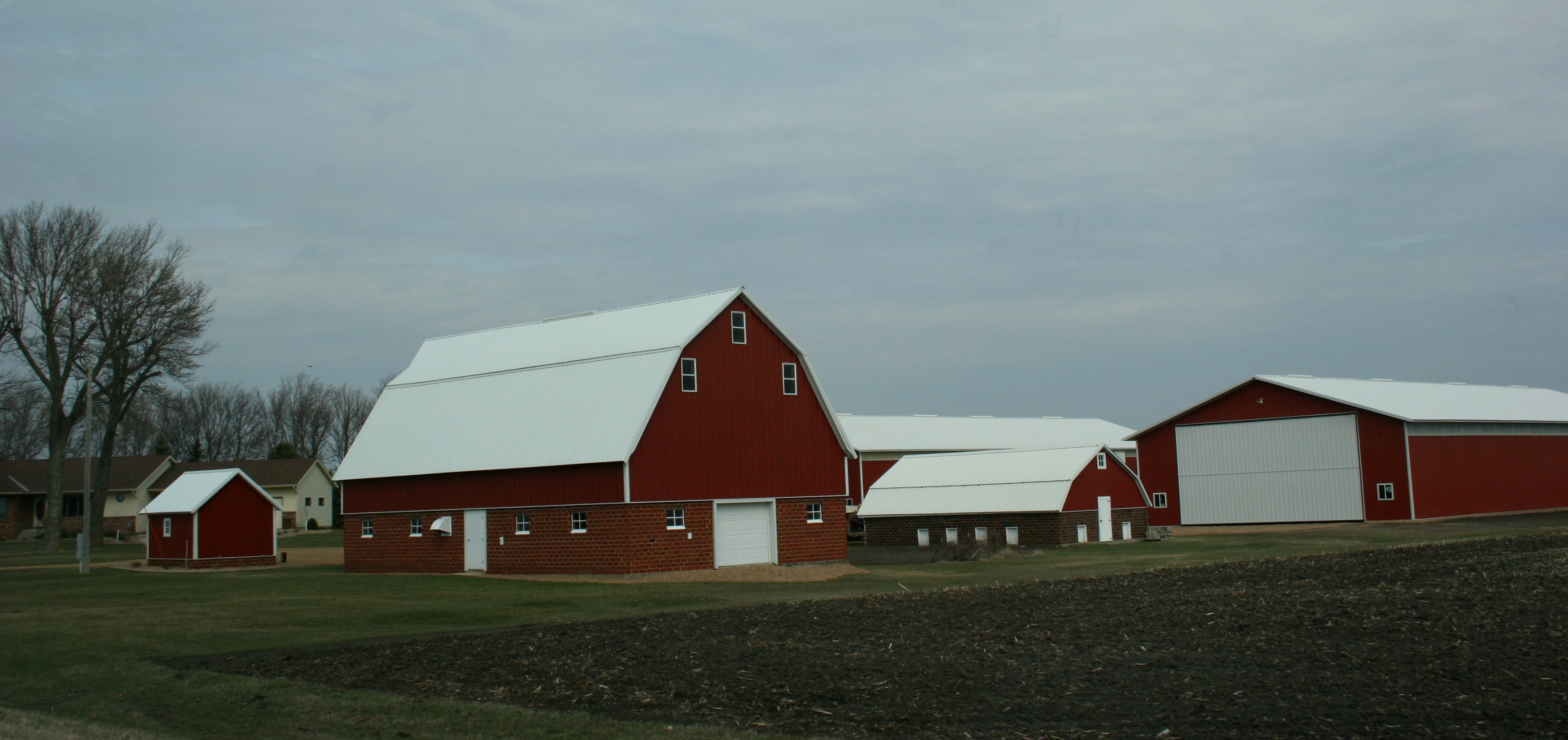
Along Brown County Road 29 between New Ulm and Morgan, MN.
RED
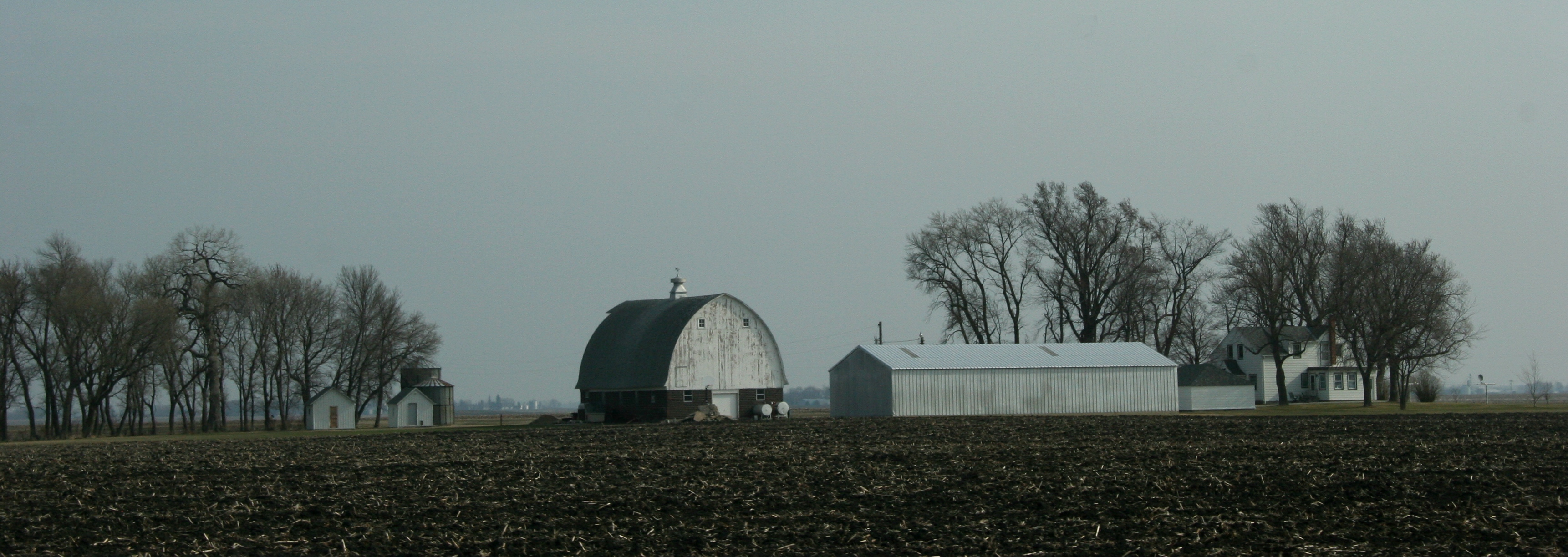
Along U.S. Highway 14 between Mankato and Nicollet, MN.
WHITE
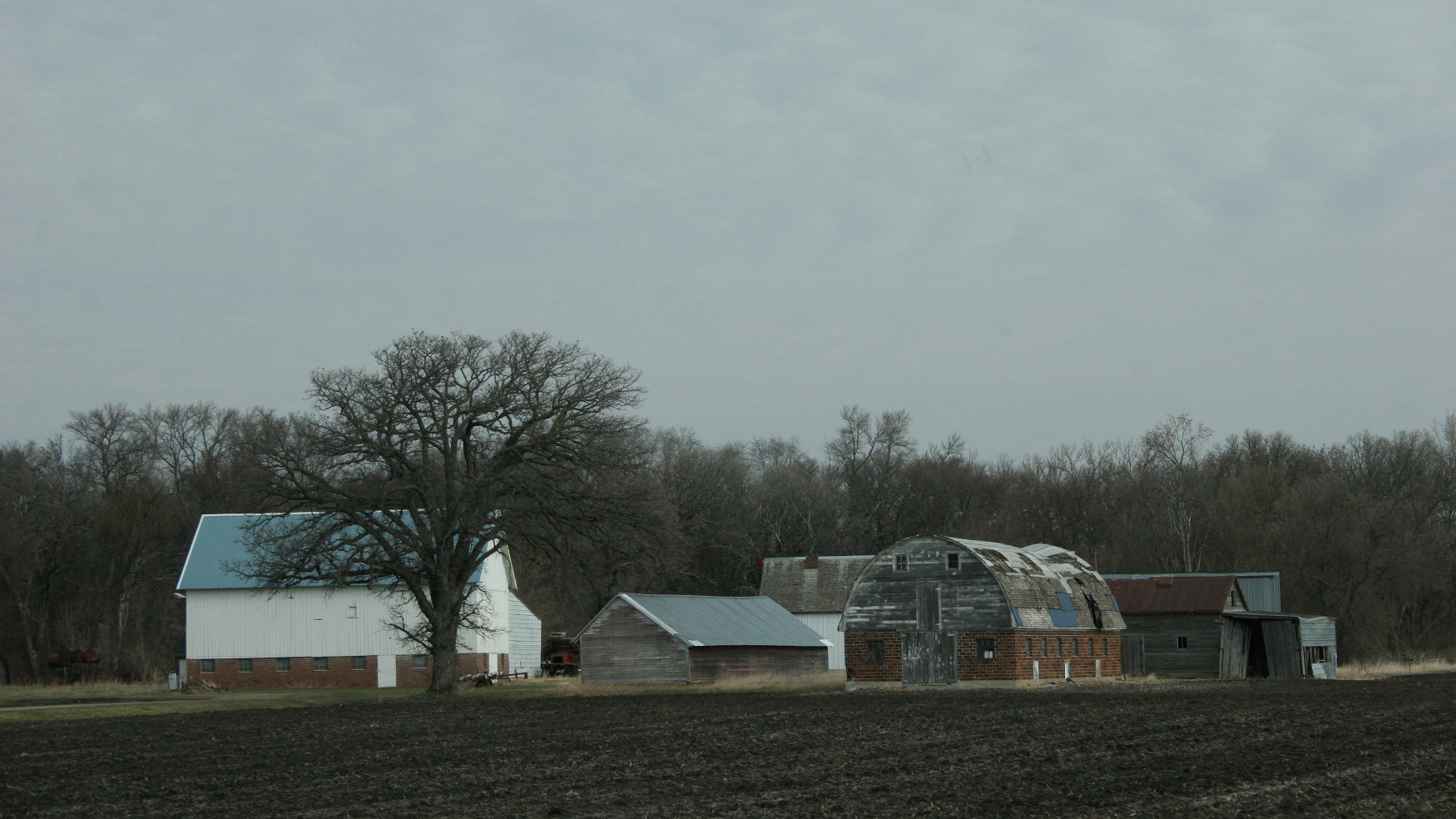
Along Brown County Road 29 west of New Ulm, MN.
AND (touches of) BLUE.
Copyright 2014 Audrey Kletscher Helbling
Along Brown County Road 29 between New Ulm and Morgan, MN.
RED
Along U.S. Highway 14 between Mankato and Nicollet, MN.
WHITE
Along Brown County Road 29 west of New Ulm, MN.
AND (touches of) BLUE.
Copyright 2014 Audrey Kletscher Helbling
RIGHT NOW YOU’RE likely wondering about that title, Beer, brats & bare feet. What’s the connection?
The commonalities, my friends, are the letter “b” and Minnesota.
Let me explain.
The other morning a customer stopped by the automotive machine shop which my husband runs in Northfield, Minnesota. Nothing extraordinary about that. Customers filter in and out all day.
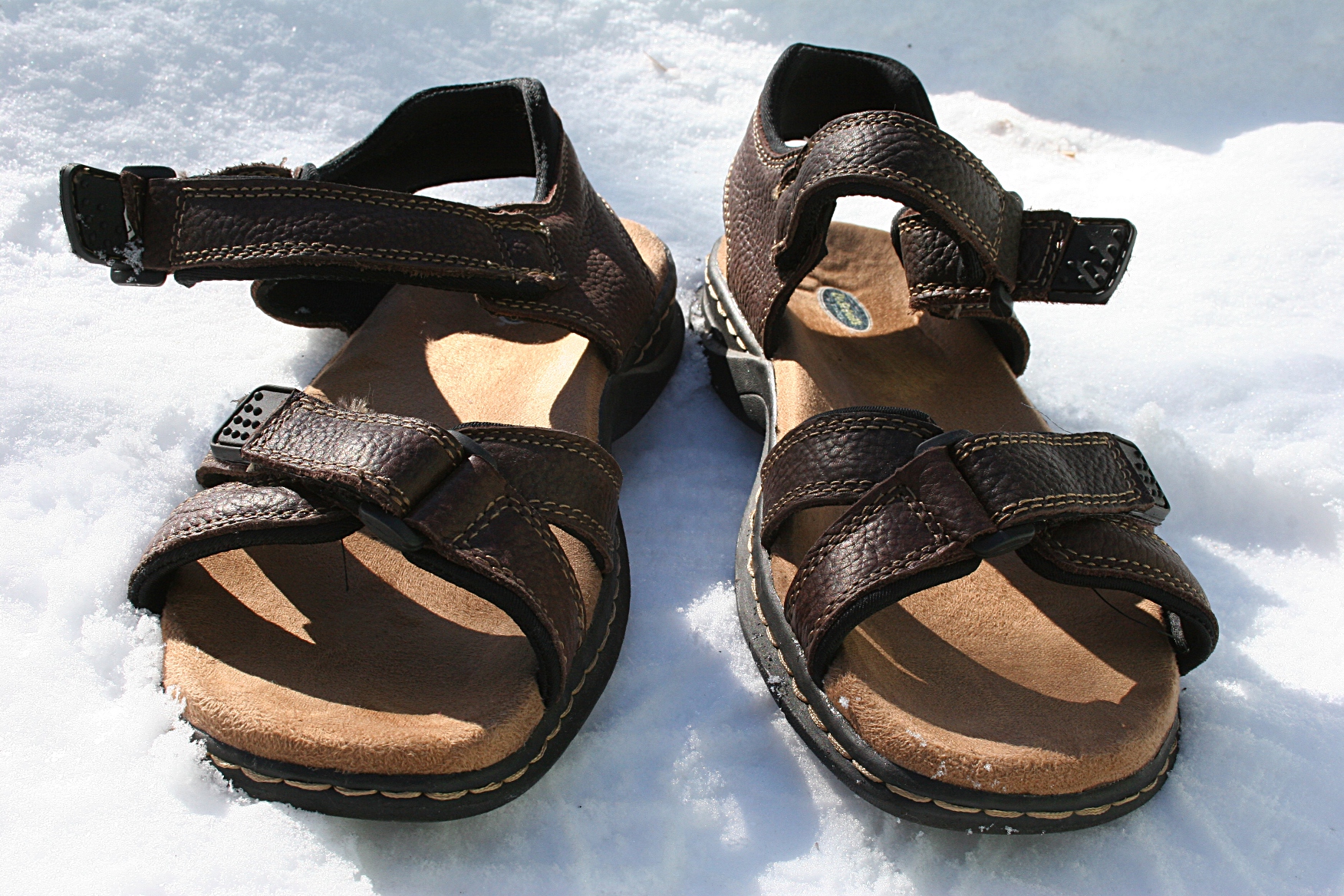
Imagine wearing sandals right now outdoors in Minnesota.
But this customer arrived in sandals. On a day when temperatures hovered around zero degrees Fahrenheit and the windchill plunged the “feels like” temp even lower. This guy wasn’t wearing socks with his sandals, as you might expect, although he was wrapped in a winter coat.
Naturally, my spouse inquired about the bare feet and sandals. The customer replied (and this is not an exact quote) that he was tapping into his inner hippie.
Alright then.
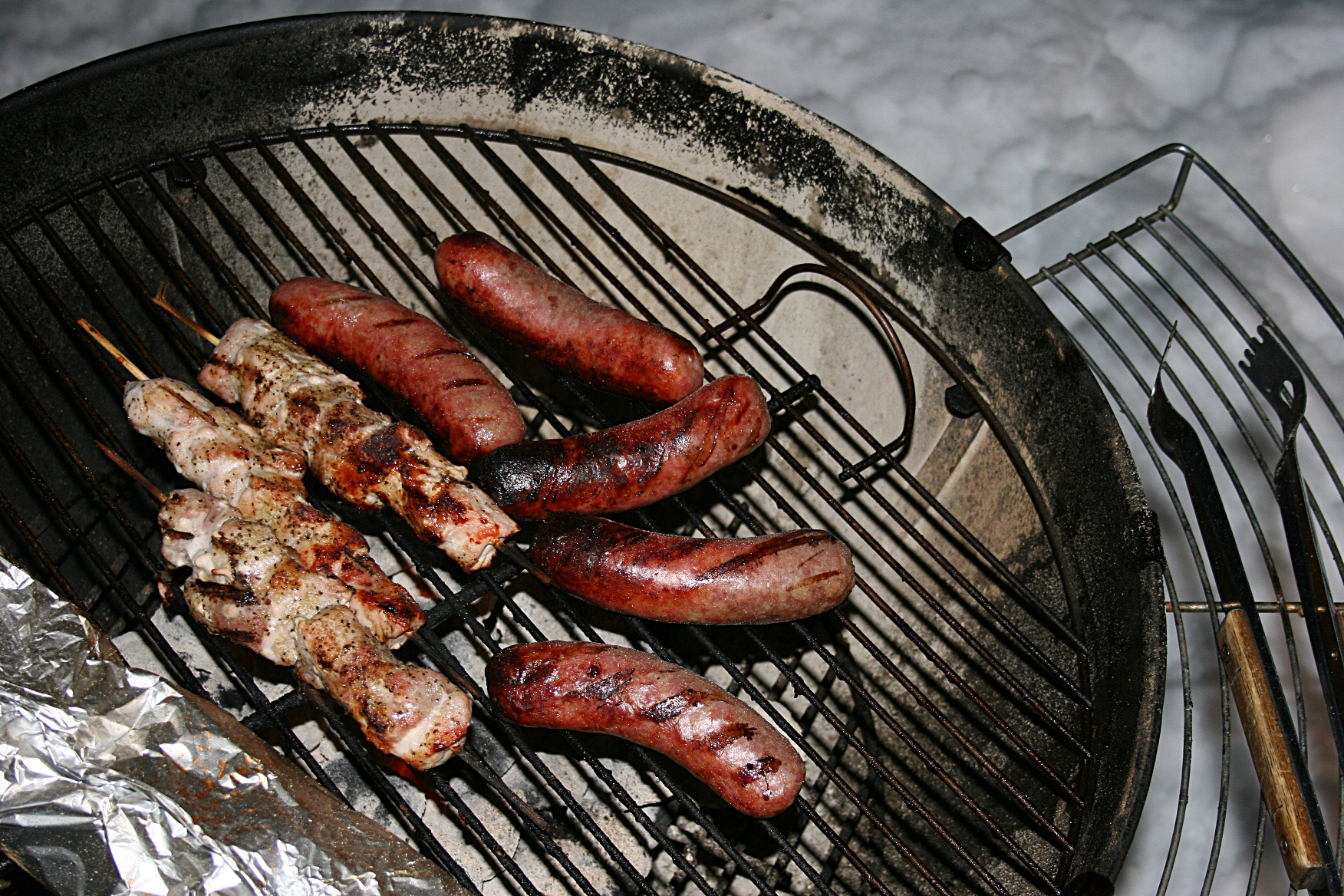
My husband loves brats and grills them year-round along with meats that I will eat. Minnesota Prairie Roots file photo.
Over at St. Peter’s Lutheran Church in rural Gibbon, Minnesota, parishioners are apparently tapping into our state’s Scandinavian and German heritages via a Sven & Ole Book Fair at an All You Can Eat Pancake & Bratwurst Dinner from 11 a.m. – 5 p.m. Sunday, January 26.

Bars made by Lutherans, but not from St. Peter’s Church. Minnesota Prairie Roots file photo.
Also on the menu are applesauce, cheese, cookies and bars. Yes, bars. How Minnesotan is that?
And how Minnesotan that the book fair comes via Sven & Ole’s Books in the nearby noted German city of New Ulm. And, yes, the proprietor’s name truly is Sven and his brother’s middle name is Olaf, Ole for short, according to the bookstore website.

Icy cold beer served up in a Minnesota Vikings mug. Minnesota Prairie Roots file photo.
Now about that beer, which I think would be a better accompaniment for brats than pancakes. I like neither brats nor pancakes, although I am 100 percent German. But I do like bars, the kind you eat. And I enjoy an occasional mug of beer.
I learned through a recent column in The Gaylord Hub, a small-town newspaper where I worked as a reporter and photographer right out of college, about the Minnesota Historical Society’s “Beer and Brewing in the Land of Sky Blue Waters” lecture/workshop offering. It is funded through grant monies from Minnesota’s Arts and Cultural Heritage Fund as part of the Minnesota Historical Society in the Libraries Adult Programming.
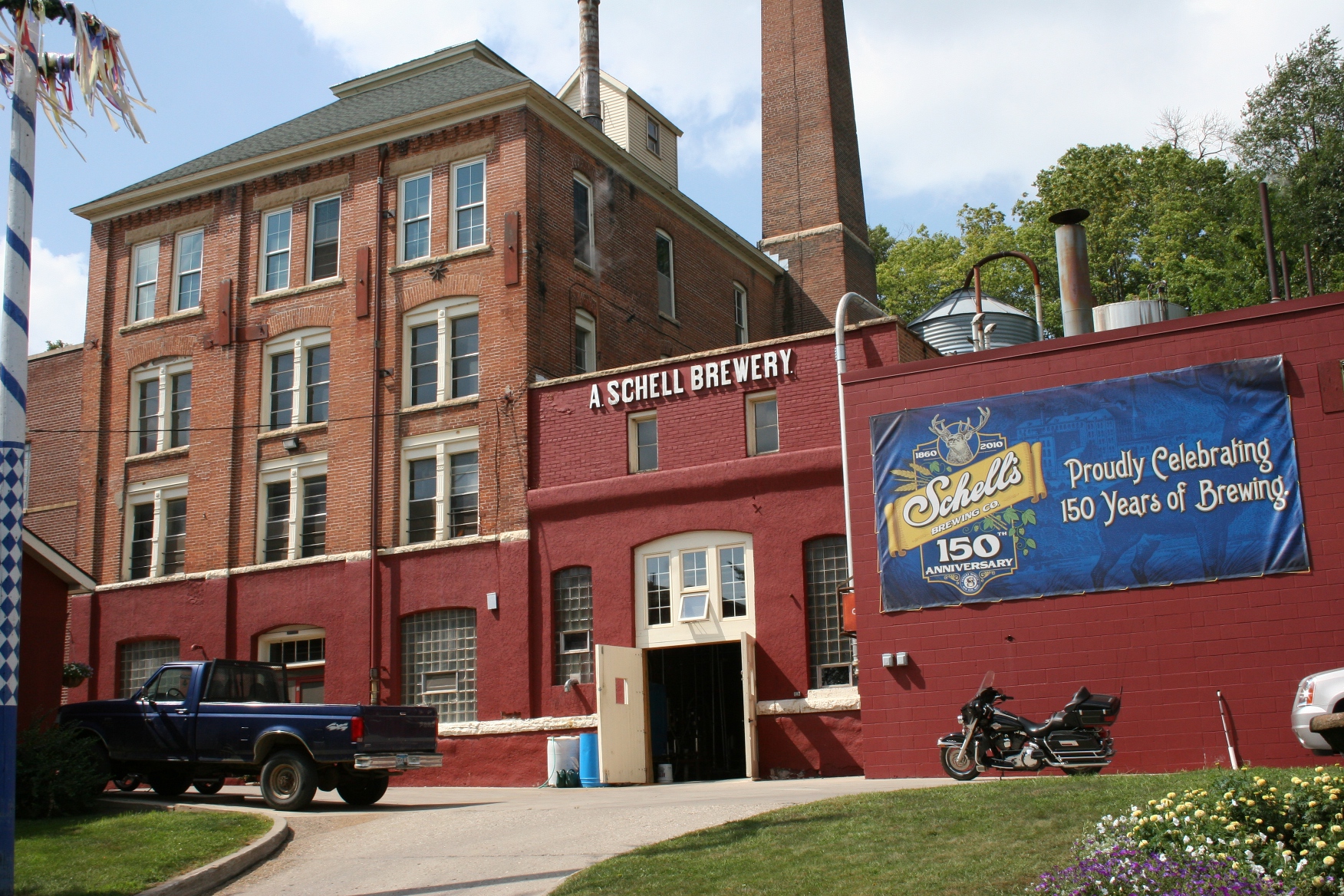
August Schell Brewing Company in New Ulm. Minnesota Prairie Roots file photo.
A “discussion of brewing history along with beer tasting by Schell’s,” a New Ulm brewery, was recently held at the Gaylord Public Library, for adults 21 and over with valid ID, according to info written by Gaylord’s librarian. Two days later, nearby St. Peter hosted the same beer event at its community center.
So there you have it. Beer, brats and bare feet in Minnesota. Cheers.
Thoughts?
© Copyright 2014 Audrey Kletscher Helbling
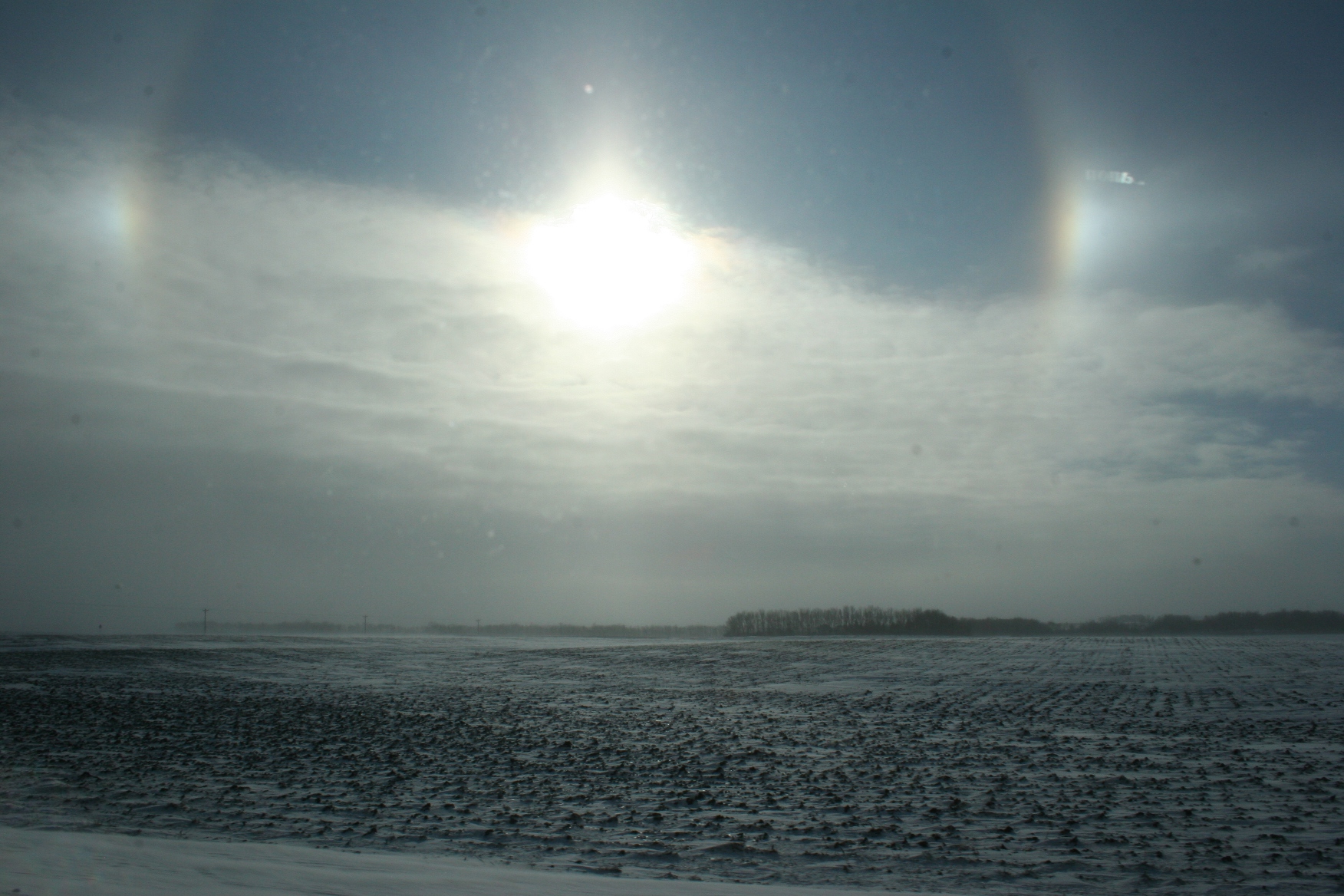
Sun dogs photographed this morning through the dirty passenger side van window east of Lamberton along U.S. Highway 14 in southwestern Minnesota.
YOU KNOW IT’S COLD when sun dogs emerge, the wind whips flags straight out and a bank sign temperature reads five degrees Fahrenheit.
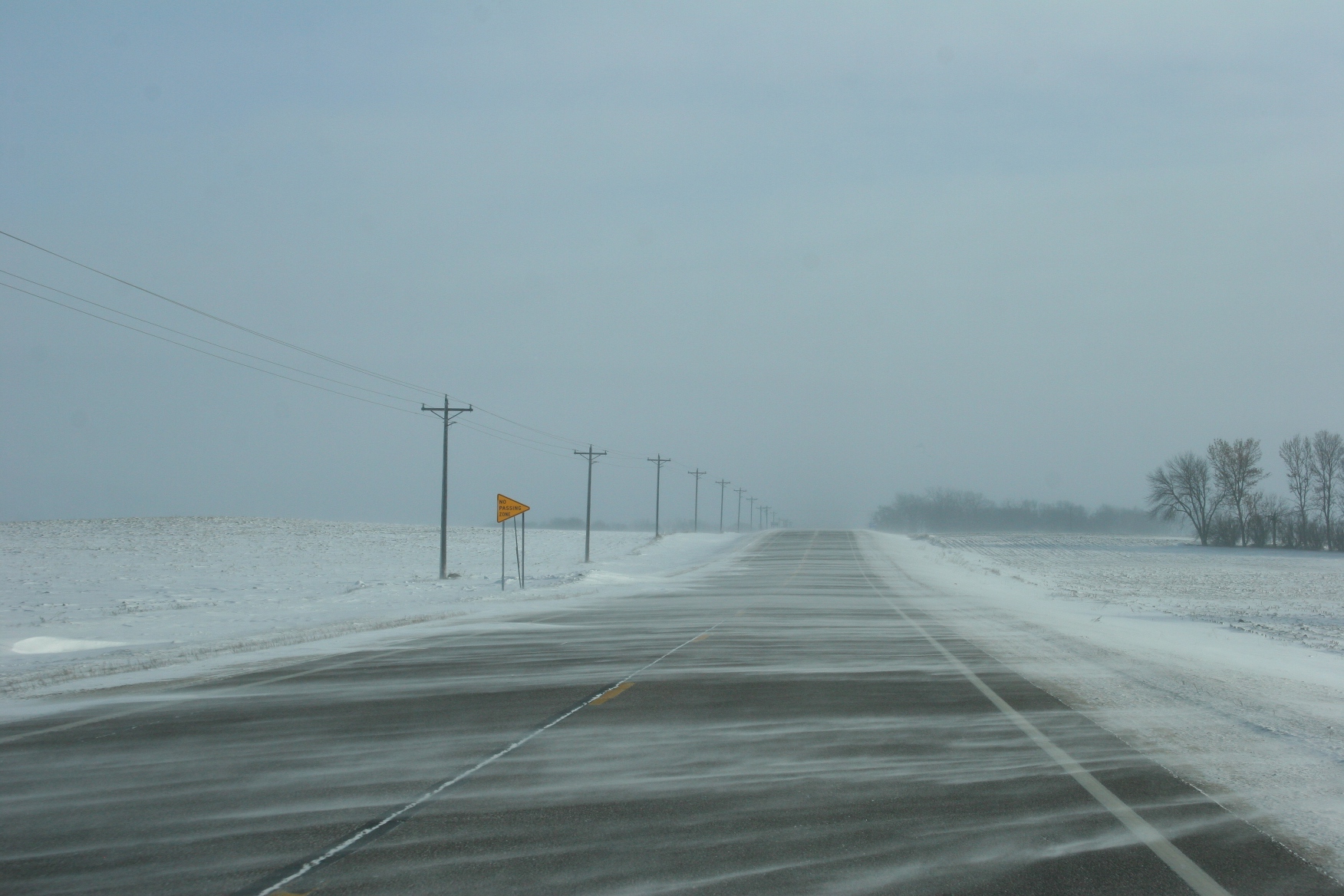
Strong winds drift snow across U.S. Highway 14 east of Lamberton this morning.
That would be southwestern Minnesota this morning as my family left my brother and sister-in-law’s rural Lamberton home after a family Christmas and began the 2 1/2-hour drive east back to Faribault.
After an hour on the road, we entered New Ulm where I photographed this scene at the intersection of Brown County Road 29 and U.S. Highway 14:
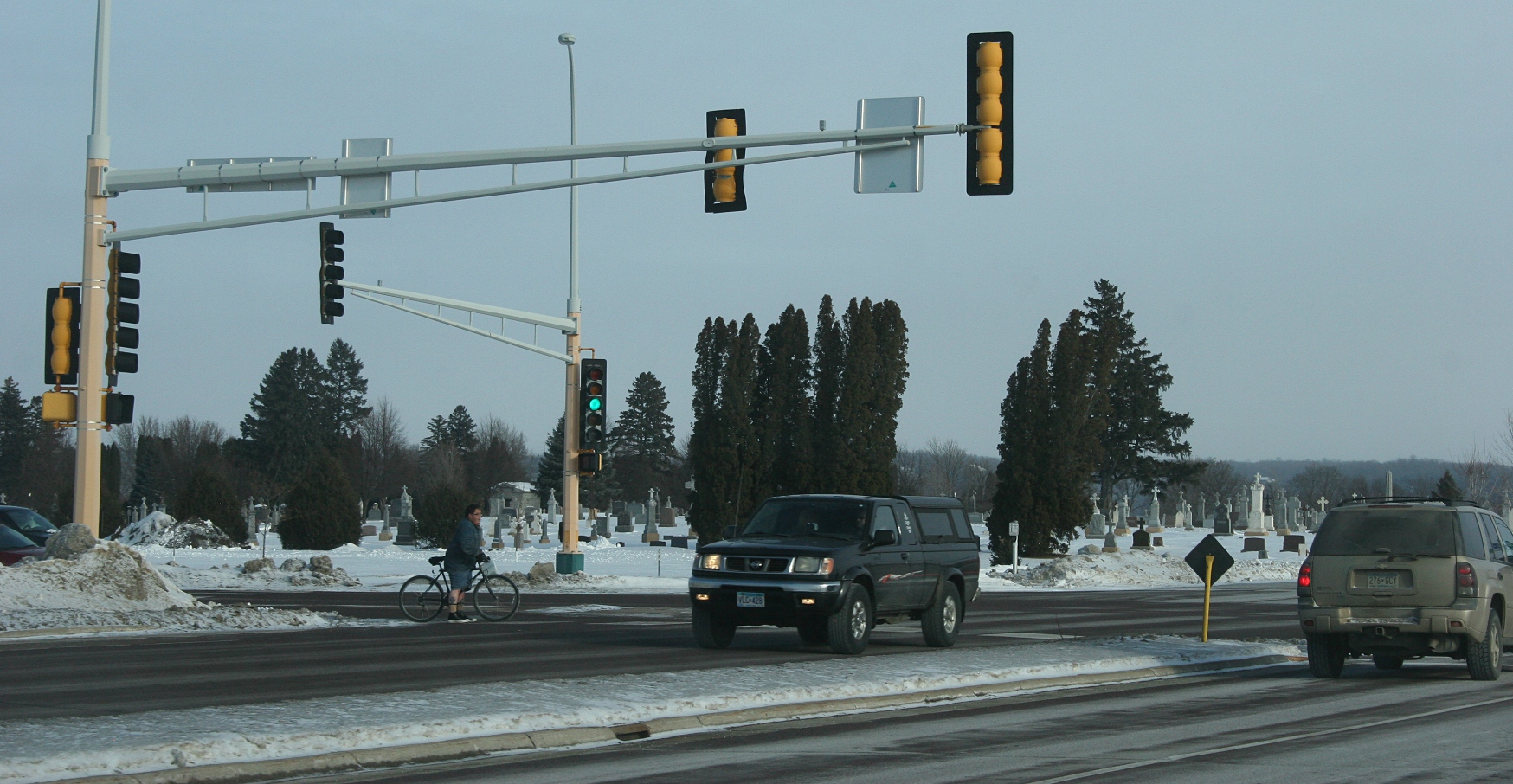
The biker, to the left, caught my eye in New Ulm because of his attire.
Tell me, how could this bicyclist tolerate biking in shorts or without a cap on his head? I sincerely hope he didn’t have far to pedal on this official second day of winter. Exposed skin can freeze quickly in such brutal temps.
He was, at least, wearing gloves.
© Copyright 2013 Audrey Kletscher Helbling
I LOVE A GOOD DEAL. Who doesn’t? Even more, I’m especially pleased when I can recycle an item which benefits charity.
Driven by the need to find the 19-year-old son an inexpensive piece of furniture for the living room in his first-ever apartment, we hit the thrift stores in Rochester Saturday afternoon, move-in day.
On the final stop, Caleb found a leather sofa tucked under a merchandise display shelf at the Goodwill store, 239 28th Street Southeast.

Total purchase price for these three items was just over $30, including tax. Additionally, I bought the coasters (about 10 of them) on the table for 25 cents at a garage sale.
His dad and I discouraged shelling out $110 for a sofa he needs for only the three-month duration of his summer internship at IBM. So I suggested he approach a floor clerk and barter. Better a poor college student seek a discount than parents. We temporarily disappeared so he could negotiate.
He and the clerk talked for awhile and then she cut the price to $75. I don’t know what transpired, but in between the time Caleb grabbed the tag and walked up front to pay, she slashed the price even more—to $25.
Hallelujah. A comfortable couch to fit a college student’s budget.
Goodwill had originally priced the sofa at $150.
Scrubbed later with a leather cleaning product, purchased for under $4 on our way back to the apartment, the sofa really shines. Plans to return the couch to Goodwill in August have been scrapped; the son wants to keep this piece of furniture now that it looks so good. That will be open to negotiation.
Prior to the Rochester move, we also secured several other apartment items at thrift stores, including a free end table from All Seasons Thrift Store, 310 Central Avenue, Faribault. The freebie was a $10 reward for spending $50 in the store. I’ll reveal those $50 purchases in a future post.
All Seasons proceeds benefit food shelves in the nearby Kenyon and Wanamingo areas.
Finally, the $3 lamp which now rests on the freebie end table next to the $25 leather couch comes from a New Ulm thrift store, The Treasure Haus, 1209 South Broadway. As a bonus, the lamp included a three-way light bulb. Sales from the Treasure shop go toward Christian schools, programs and missions.
There you go, readers. It is possible to partially furnish a living room for around $30.
Now, let’s hear about your thrift store bargains.
© Copyright 2013 Audrey Kletscher Helbling
ONCE UPON A TIME, in 1974 to be precise, I entered college with every intention of majoring in German. Eventually, though, I realized that following such a path, because I had no desire to teach, was rather foolish. And so I pursued my other love, writing, and earned a journalism degree.
I tell you this tidbit because it relates to the rest of this post, about an upcoming German Fest to be presented by Cannon Valley Lutheran High School.
We need to backtrack even further, first to Wabasso High School where I studied the German language for four years and was an active member of the German Club. I loved learning German. I expect either you love learning a foreign language or you don’t and German was the single foreign language offered at my alma mater.
I also enjoyed the social aspect of German Club, specifically our annual club trip to New Ulm, undeniably the most German city in Minnesota. Back in the 1970s, traveling to New Ulm in the next county to the east to shop downtown and at Domeier’s, a little German import store, and later dine on a German meal at Eibner’s Restaurant, rated as a major trip. I am serious. It is not all that often that I left Redwood County while growing up.
It was on one of those German Club trips to New Ulm that I first tried sauerbraten, beef marinated in vinegar and I don’t know what else. The main dish tasted so exotic and different from the corn-fed beef my mom roasted in her speckled enamel roaster back on the farm.
During that single meal in the upstairs of a New Ulm supper club, I felt as if I had traveled across the ocean to Germany to dine.
Serve me sauerbraten now and I am that giddy German-speaking high school girl dining at Eibner’s in New Ulm.
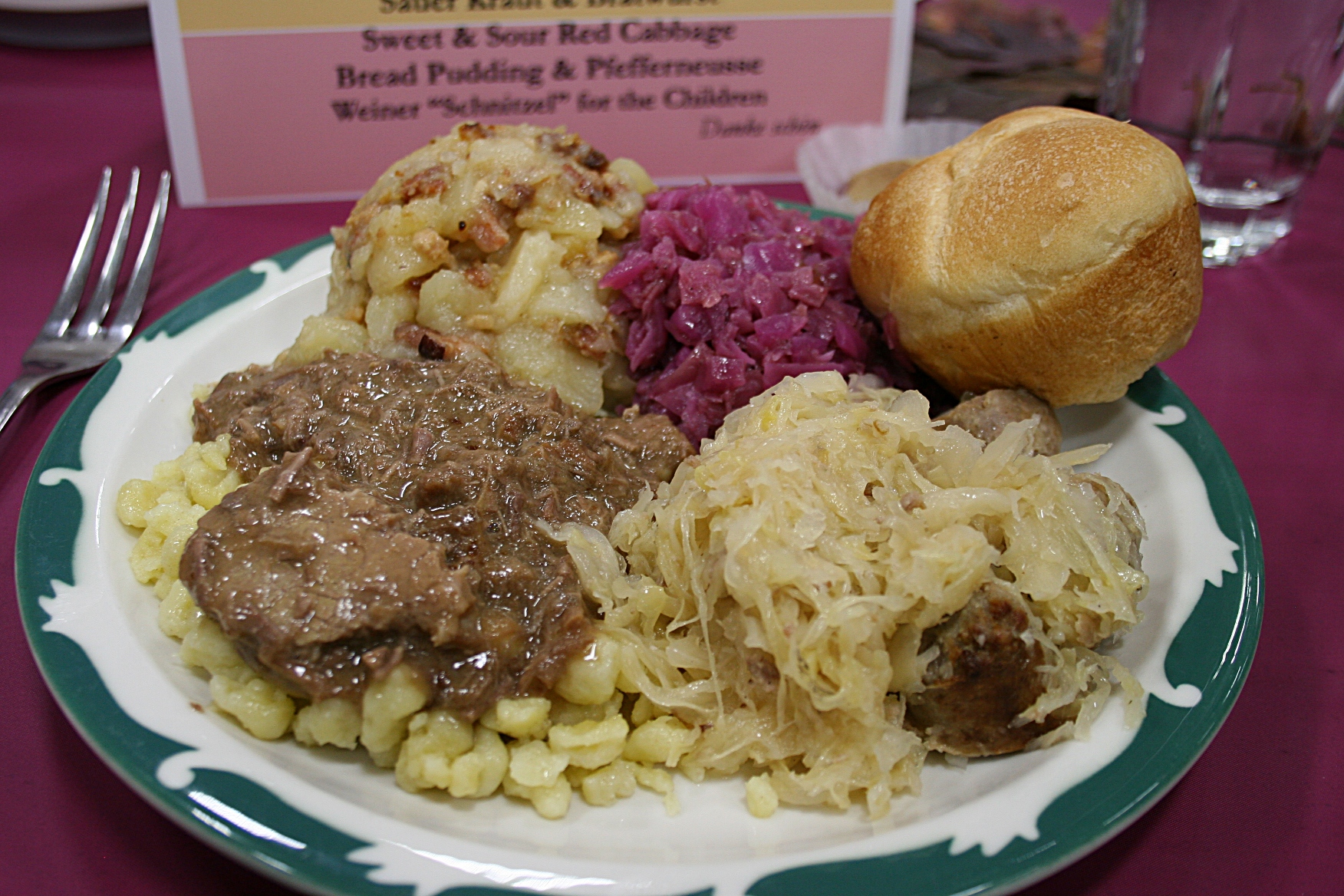
The 2011 CVLHS German meal: sauerbraten and spaetzle on the left, German potato salad, sweet and sour cabbage, dinner roll and sauerkraut and brats.
Today I needn’t even leave Faribault, my home of 30 years, to eat sauerbraten. Cannon Valley Lutheran High School will serve sauerbraten and a plateful of other German foods—spaetzle, German potato salad, sweet-and-sour red cabbage, bratwurst with sauerkraut and bread pudding—at a Sunday, November 11, German Fest. Serving is from 5 p.m. – 6:30 p.m. in the gymnasium at Trinity Lutheran Church, 530 Fourth Street Northwest, Faribault.
It’s a heavy, filling ethnic meal that is absolutely delicious. These Cannon Valley people know how to cook.
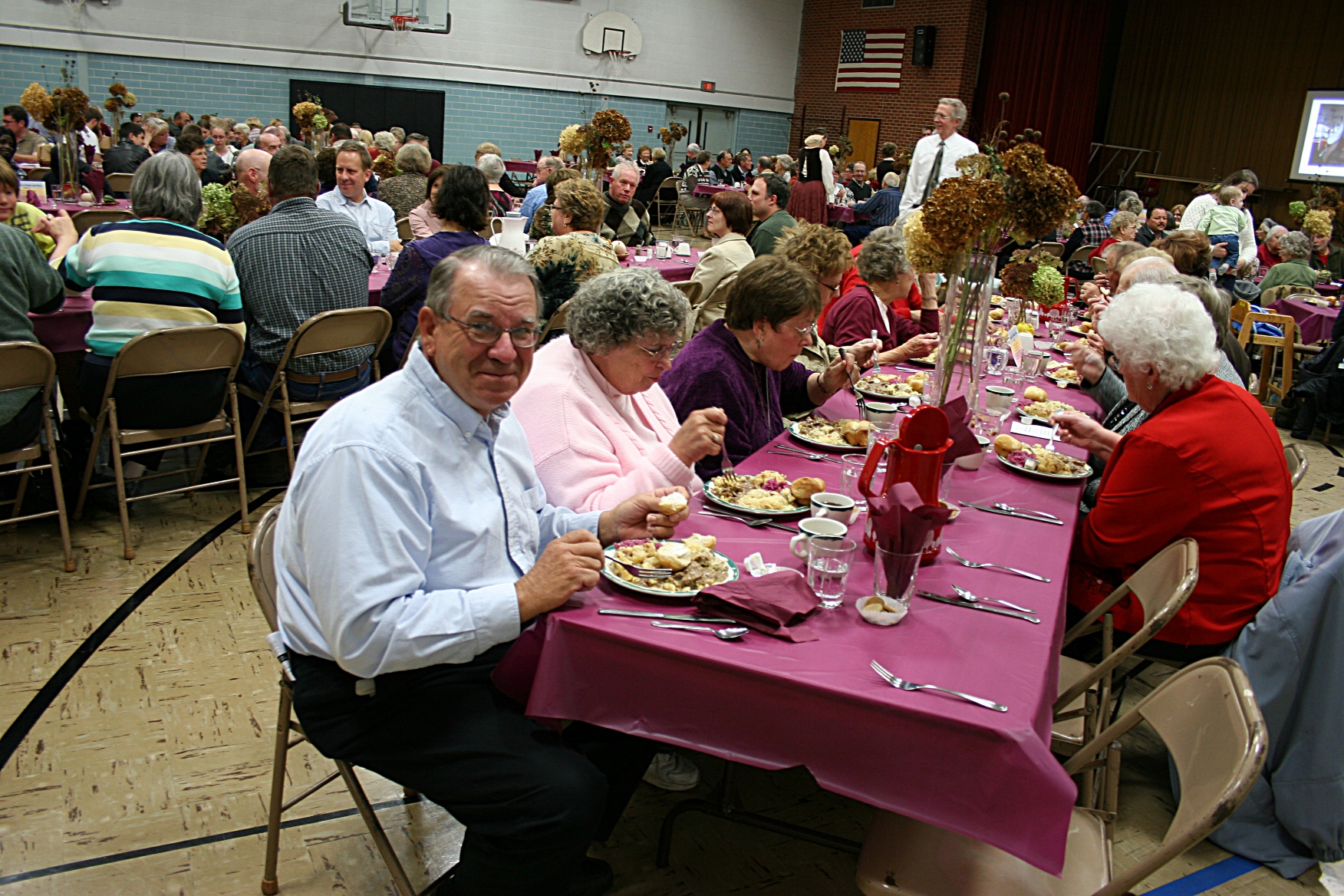
Diners pack the Trinity gym and enjoy the German meal at the second annual CVLHS German Fest in 2011.
Tickets go fast. So do not tarry if you wish to partake. To reserve your tickets, call CVLHS at 507-685-2636 between the hours of 8:30 a.m. – 3 p.m. Monday – Friday or email the school at cvlhs@cvlhs.org. (Tell them I sent you.) Advance ticket purchases are recommended by Wednesday, November 7. A limited number of tickets will be sold at the door.
Meal tickets are $13 for ages 11 – adult; $7 for ages 5-10; and free for preschoolers with paid adult.
In addition to the German meal, the Fest includes a free program of “Thanks and Praise”—songs and readings in German and English—beginning at 4 p.m. in the Trinity sanctuary.
During the supper, diners will be entertained with polka music. You will have to tap your feet as I do not expect there to be dancing.
However, I do expect great food and fellowship.
As a bonus, you will support CVLHS students by attending. The meal is a fundraiser for a German Club trip, not to New Ulm three counties to the west, but to Germany in February.
CLICK HERE TO READ a post I wrote about last year’s second annual CVLHS German Fest.
BONUS PHOTOS: Earlier this fall, CVLHS hosted its annual silent and live auctions at the Morristown Community Center in Morristown, where the high school is based. Below are three images from that event. Students, staff, parents and others volunteer countless hours to support Christian education at CVLHS. Their dedication continues to impress me.
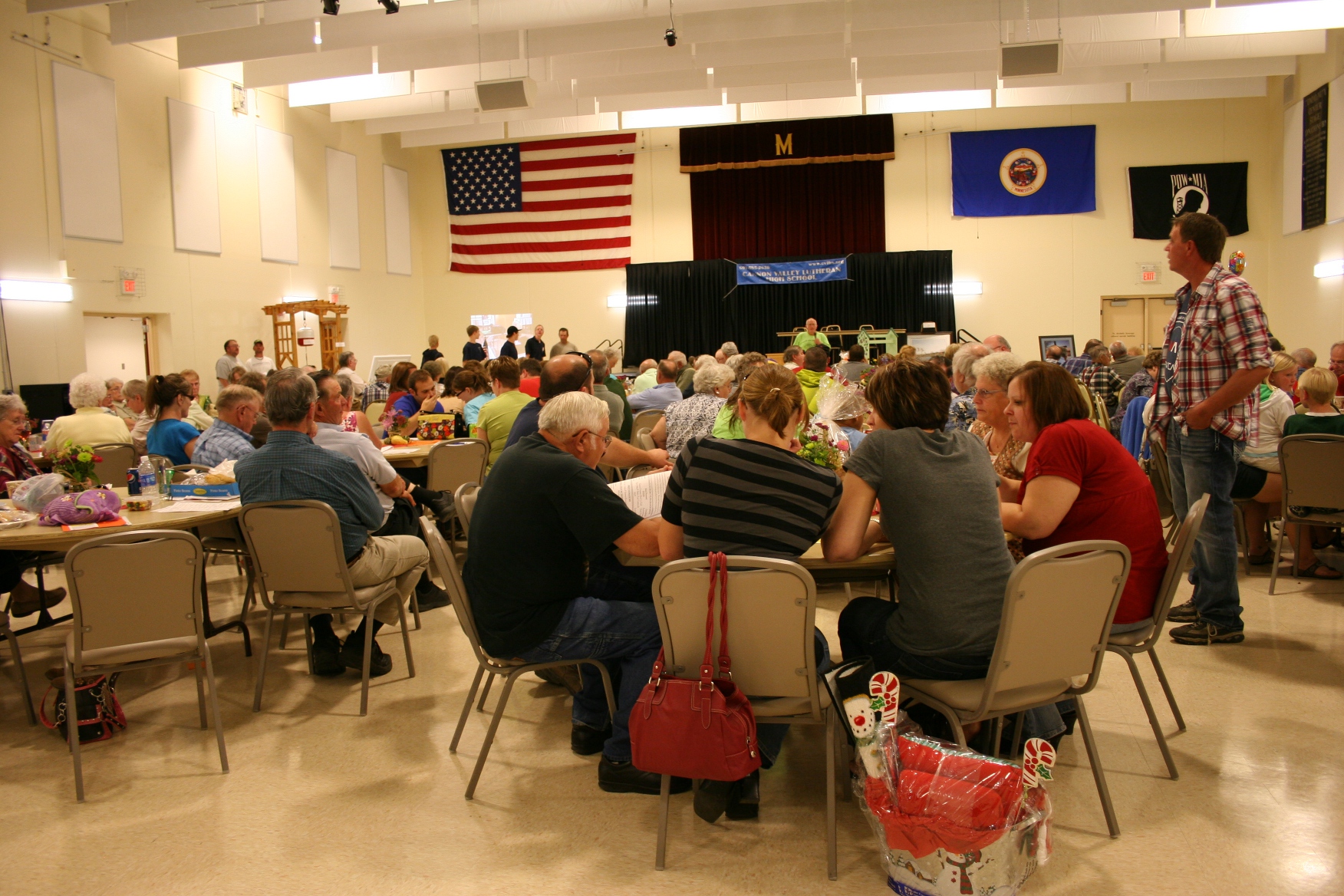
The crowd of bidders at the annual CVLHS auction. The school has strong community support.
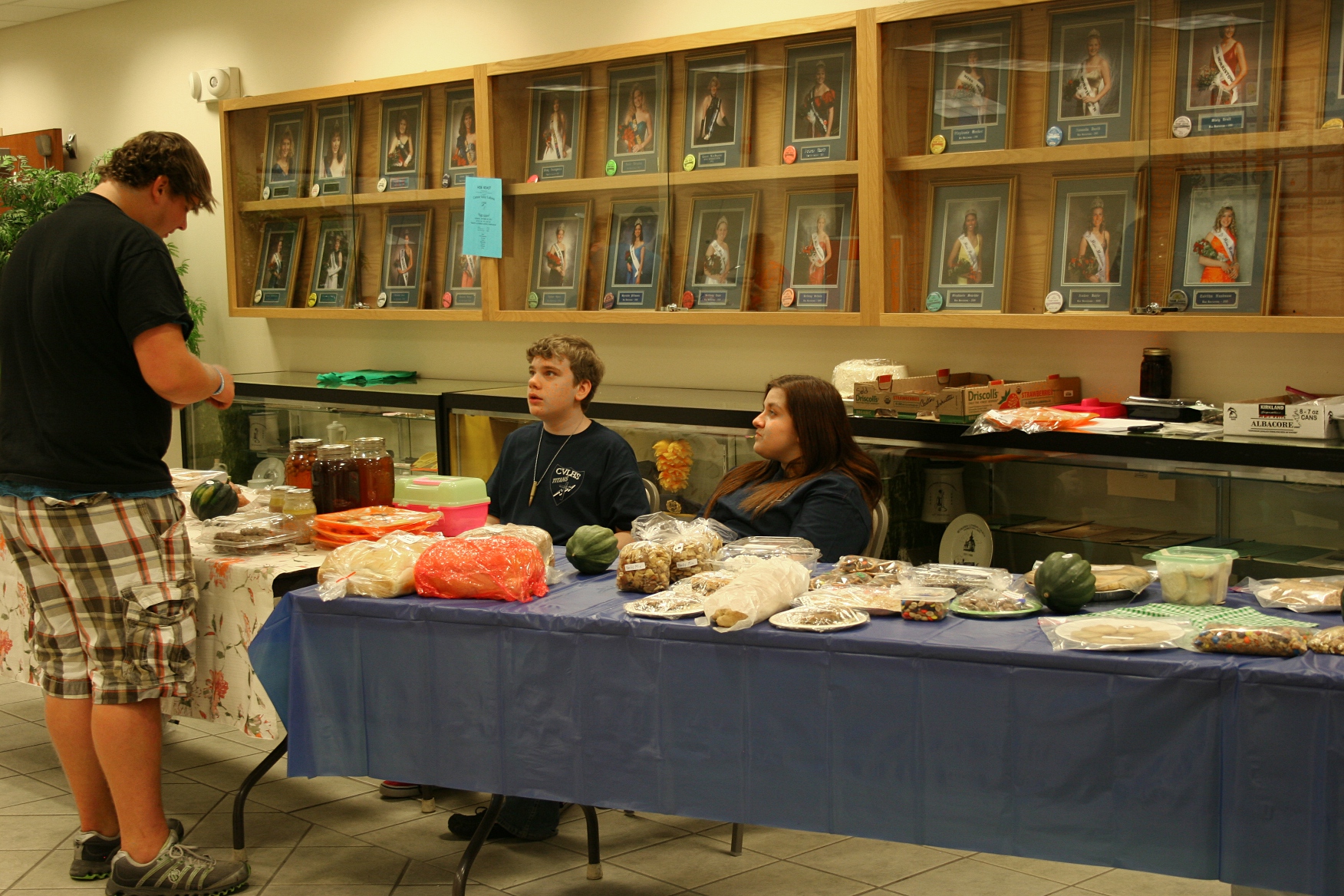
CVLHS students work the baked goods and produce sale during the recent auction.
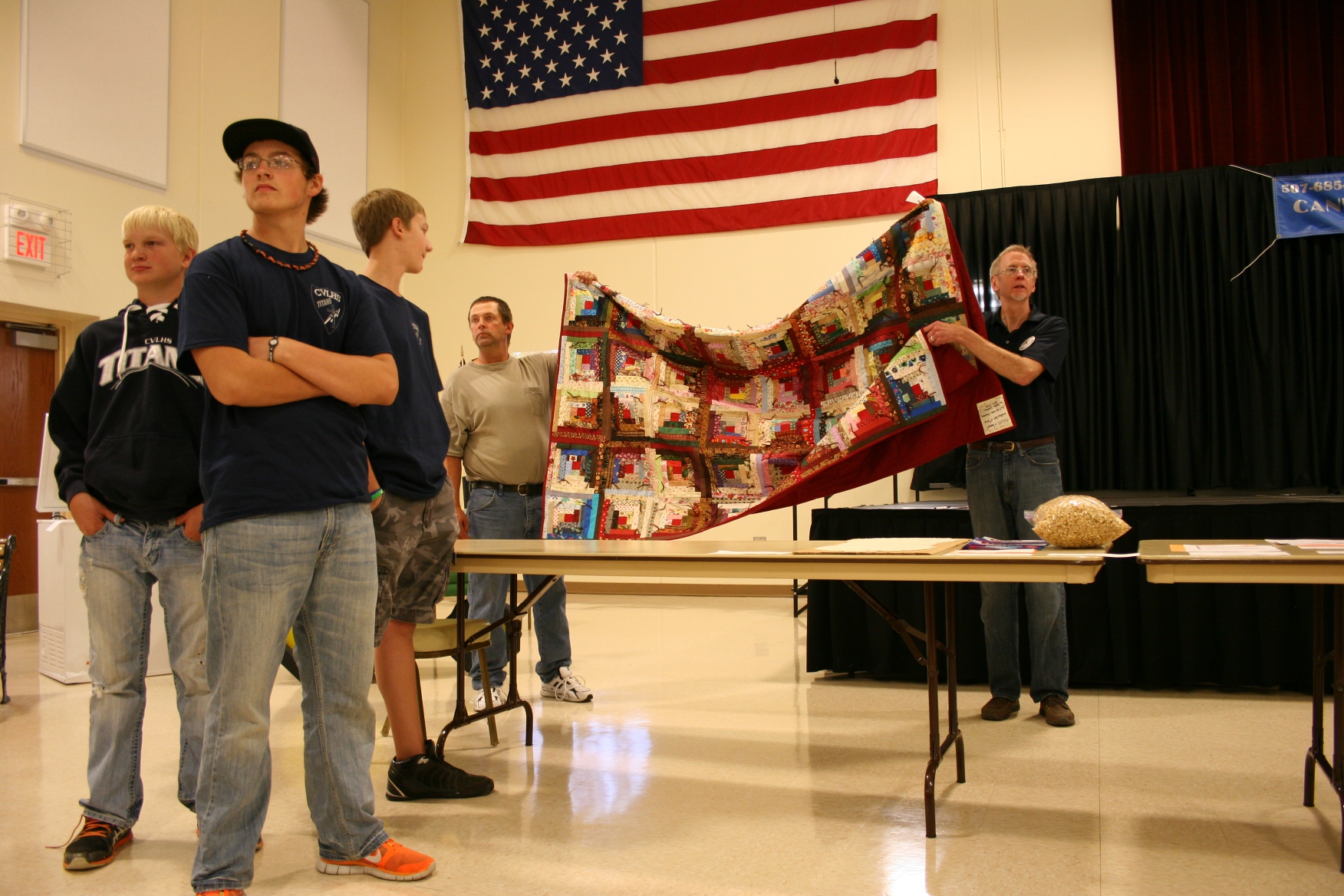
Auctioning of a beautiful pieced quilt at the CVLHS live auction.
© Copyright 2012 Audrey Kletscher Helbling
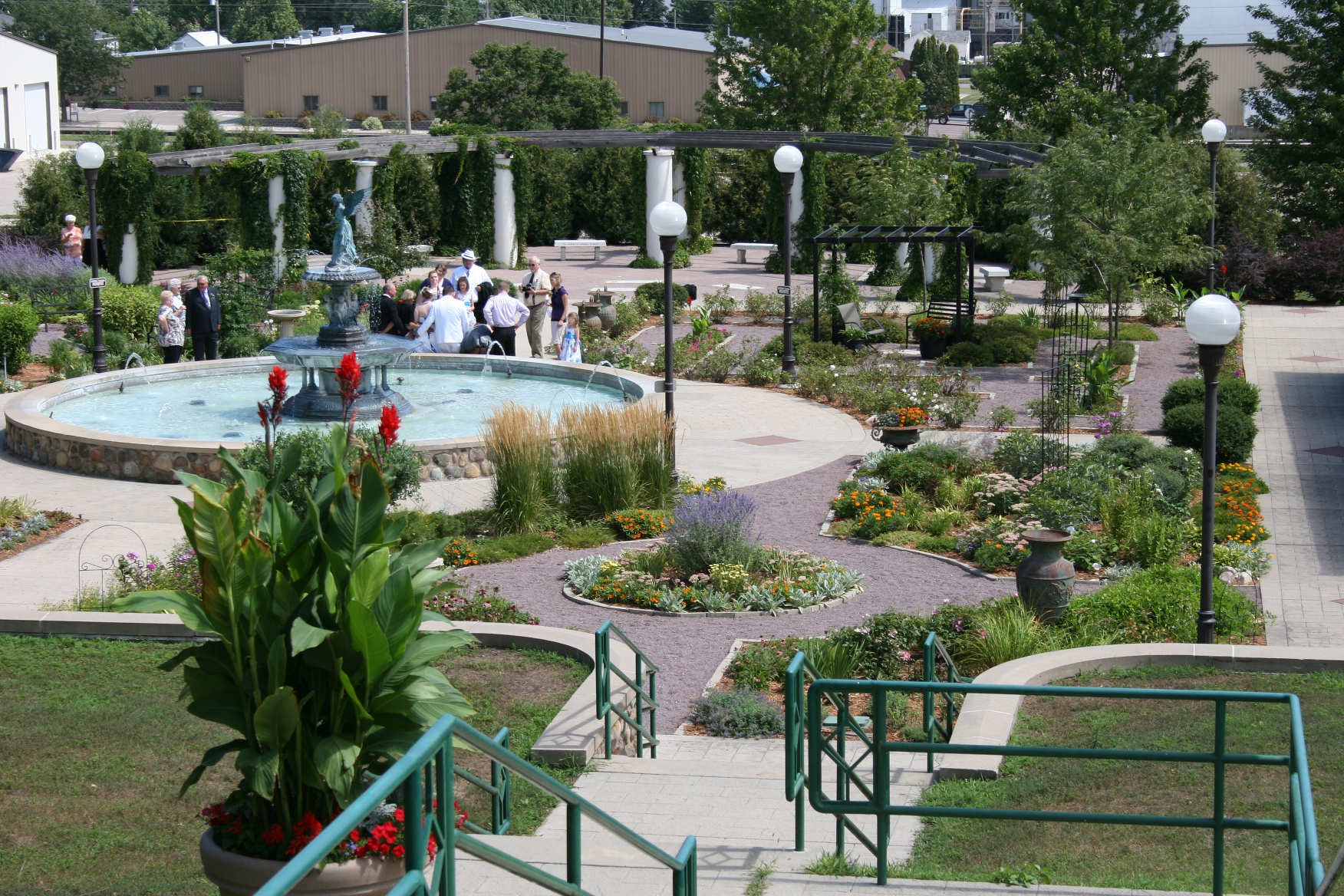
An overview of German Park in New Ulm, photographed last Saturday.
IF A PARK COULD BE WRITTEN into a fairy tale, then German Park in New Ulm certainly would serve as an ideal setting for a happily-ever-after story.
Descend the hillside steps into this picturesque park near New Ulm’s downtown business district, and you walk into an enchanting world of flowers and foliage, fountain and photographic opportunities.
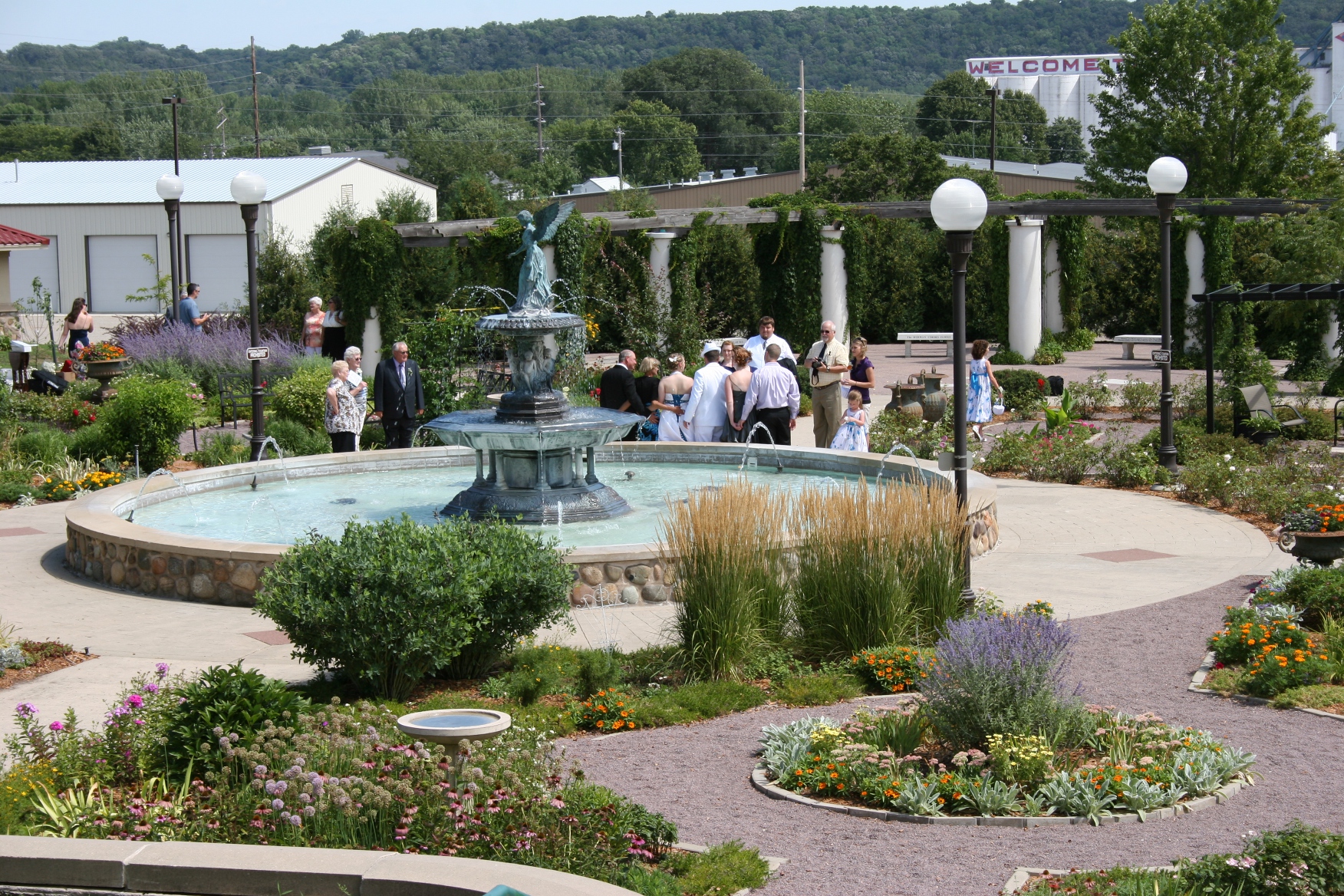
I kept my distance from the bridal couple and their families.
However, on the Saturday of my visit, the happily-ever-after part of this story limited my photo ops. Not that I wasn’t tempted to write my own twists into the plot unfolding before me. But I figured the main characters, the bride-to-be and her groom being photographed here, would not appreciate me wedging my way into their storybook wedding day.
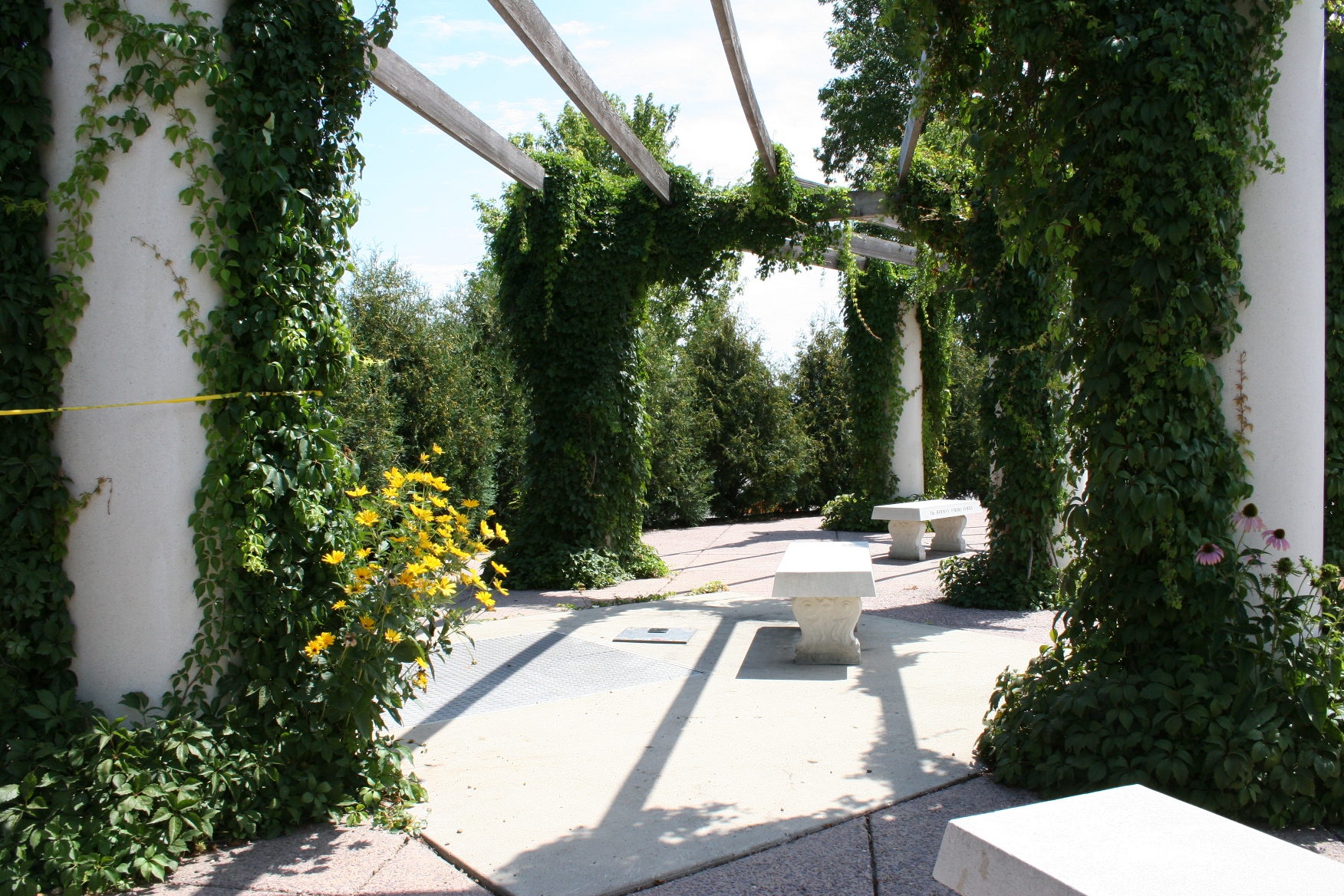
Columns add interest and a poetic quality to German Park.
So I skirted the edges of German Park, admiring the flowers and the fountain at a distance. I weaved among the columns, appreciating the beauty and charm of this place, all the while wishing I could photograph freely.
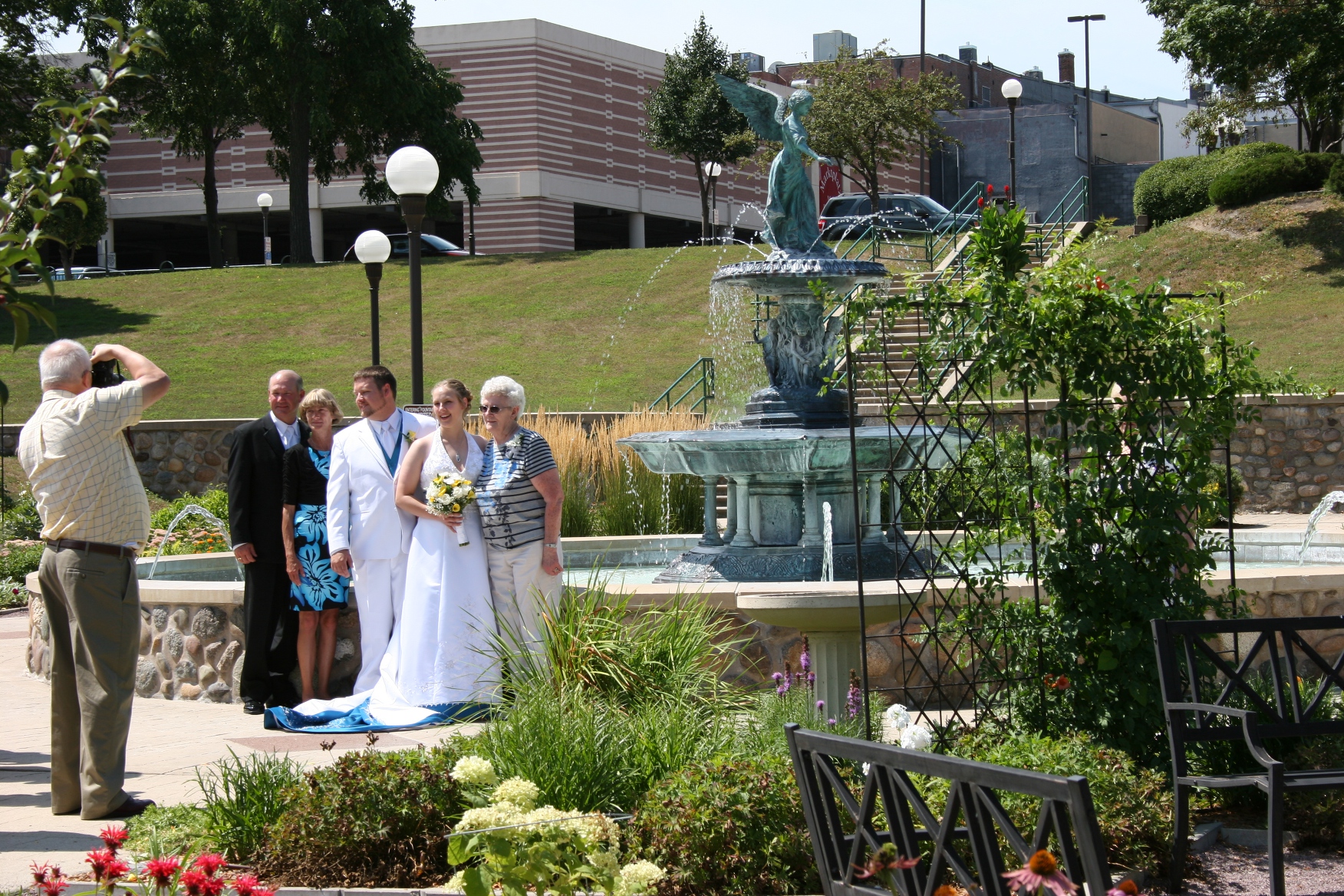
I kept a respectful distance in this, my closest shot of the bridal couple and their families.
At one point a nervous grandma hurried over to snatch up a camera bag as I approached with my camera bag hugging my hip, my Canon EOS 20D looped by a strap around my neck. I wanted to advise her that I wasn’t about to spoil the story, to wind my way up the path toward the happy wedding couple like a wily, wicked witch.
THE END
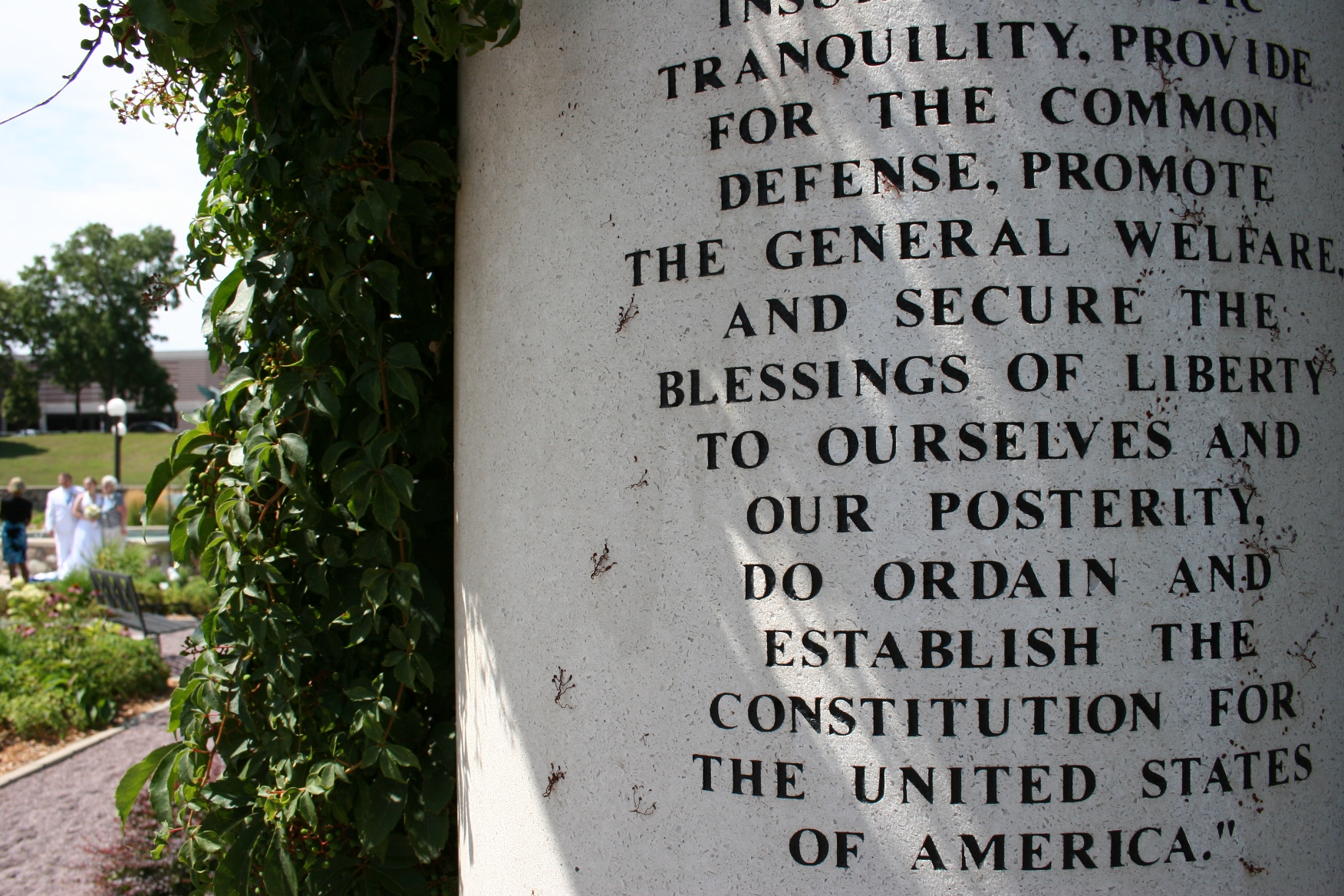
OK, I was a wee bit sneaky in including the bridal couple in this frame. But I liked how the words tranquility, blessings and ordain from the Preamble to the Constitution seemed to fit the occasion.
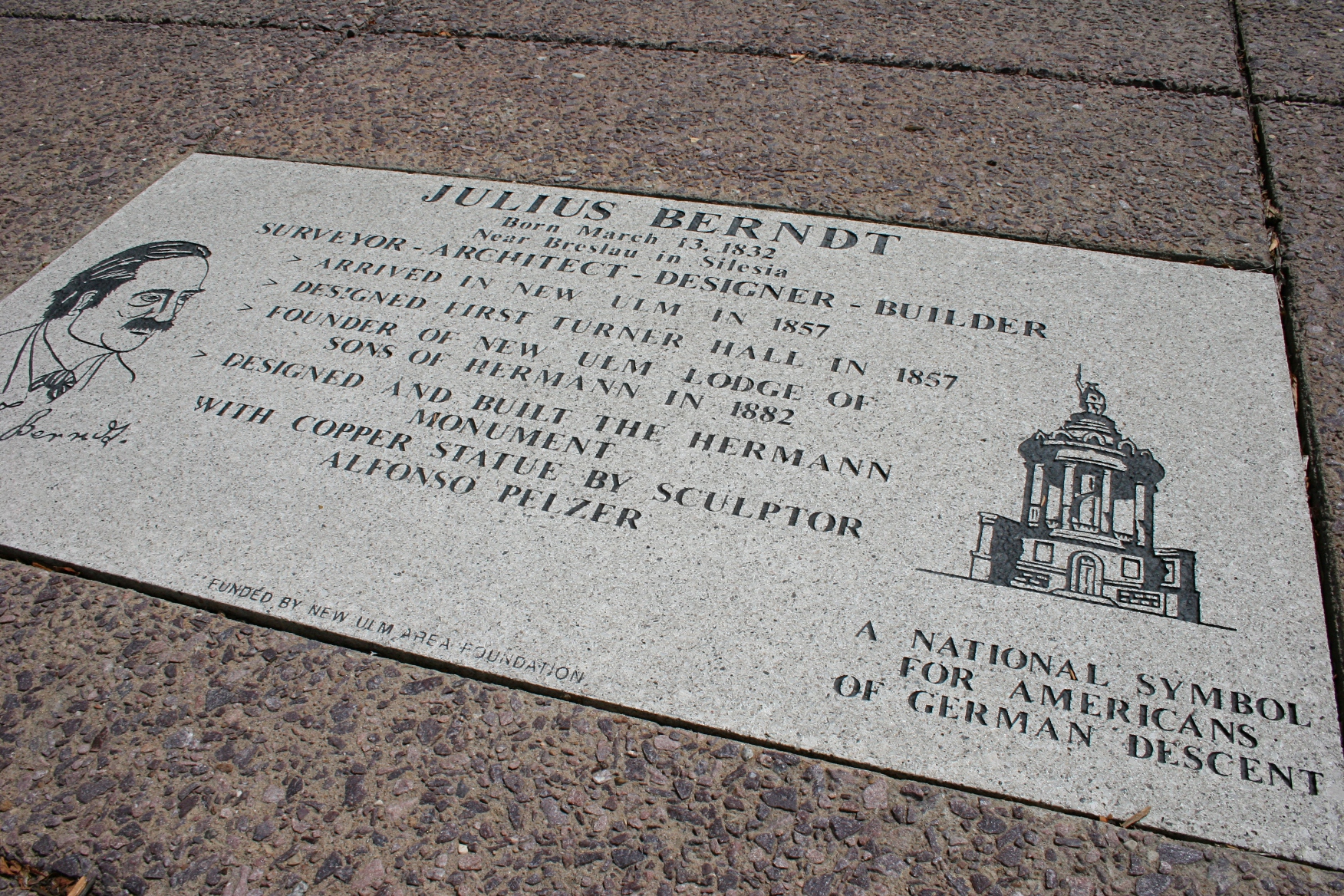
One of numerous pavers which enlighten visitors about New Ulm, here the Hermann Monument.
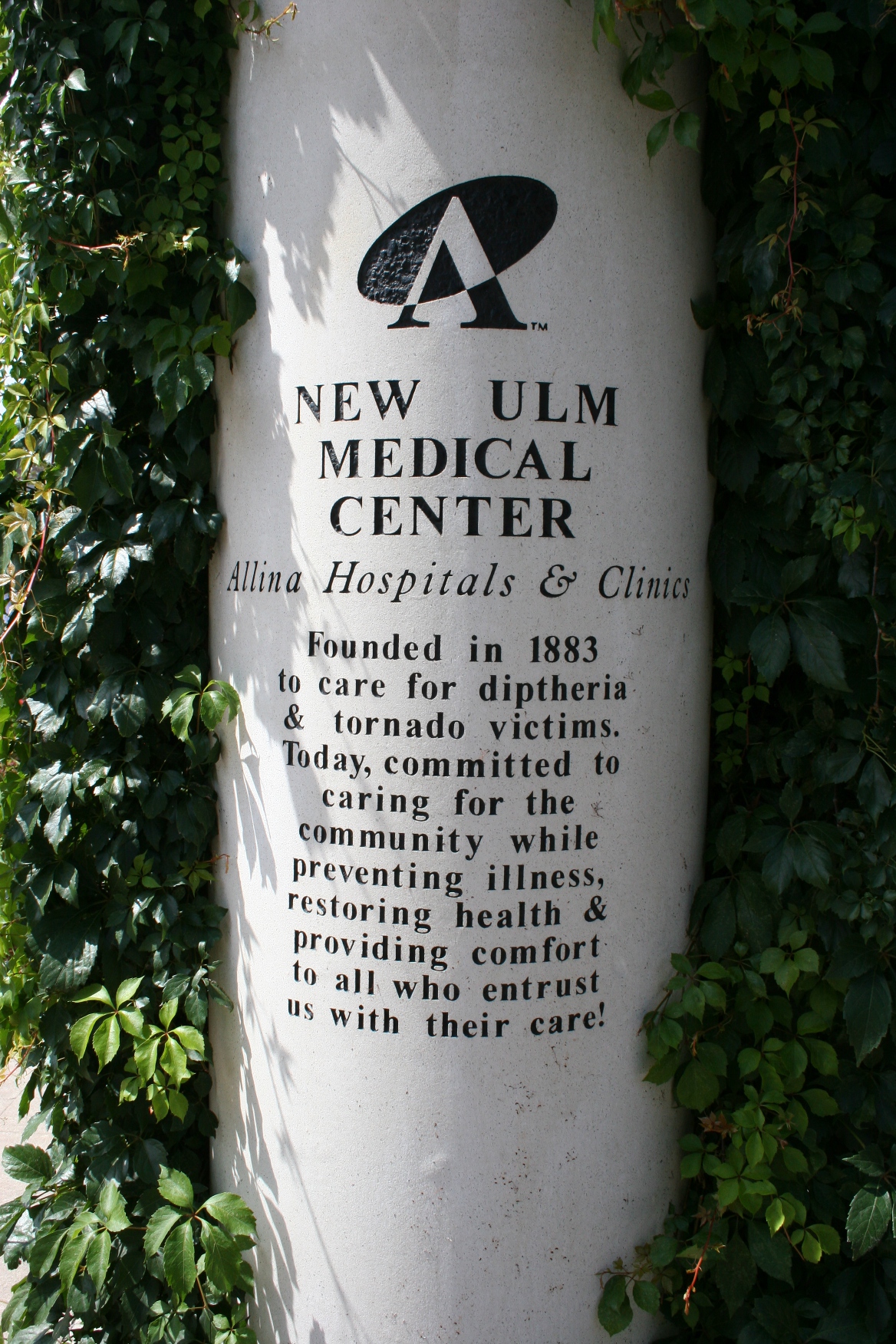
This column informed me of something I never knew, that a deadly tornado ravaged the city on July 15, 1881. That event raised an awareness of the need for a local hospital.
FYI: To learn about the New Ulm tornado of 1881, click here to read an account published in the Saint Paul Daily Globe.
Click here to learn more about the history of New Ulm Medical Center.
Finally, click here to read an earlier blog post about New Ulm’s Goosetown.
© Copyright 2012 Audrey Kletscher Helbling
DISCOVERING SOMETHING totally unexpected rates, for me, as the plum, the prize, the most interesting aspect of travel.
And you needn’t journey far to find these places. Last Saturday while driving to southwestern Minnesota, my husband and I stopped in New Ulm because I wanted to see the Defenders and German-Bohemian historical monuments. Well, we never did get to the Defenders marker.
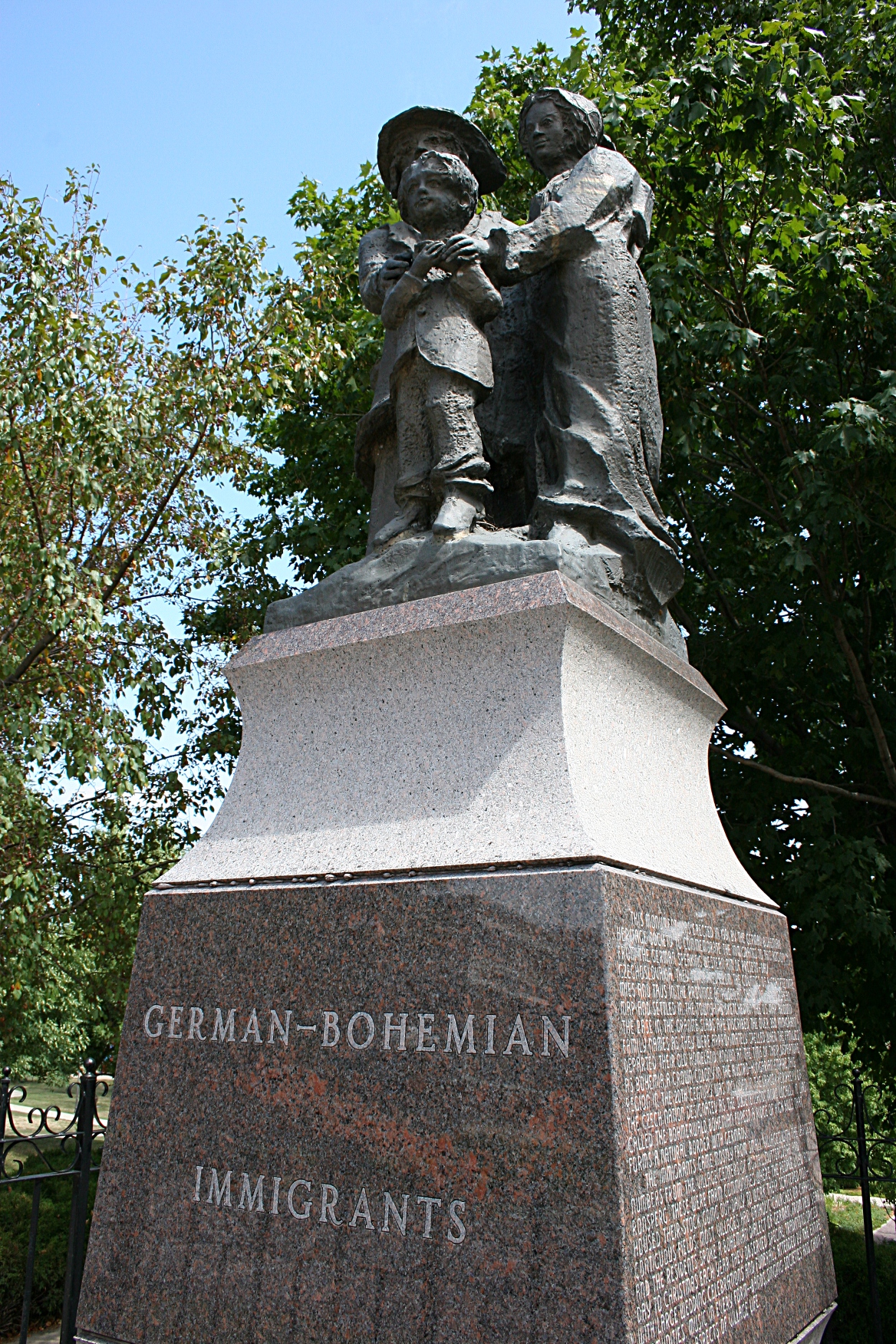
The German-Bohemian sculpture and marker in German Park.
But we eventually got directions for and located the immigrant sculpture overlooking scenic German Park. As lovely and manicured as that park is, and I’ll share photos in a future post, it was not the highlight of our visit.
Rather, it was Goosetown which captured my fancy.
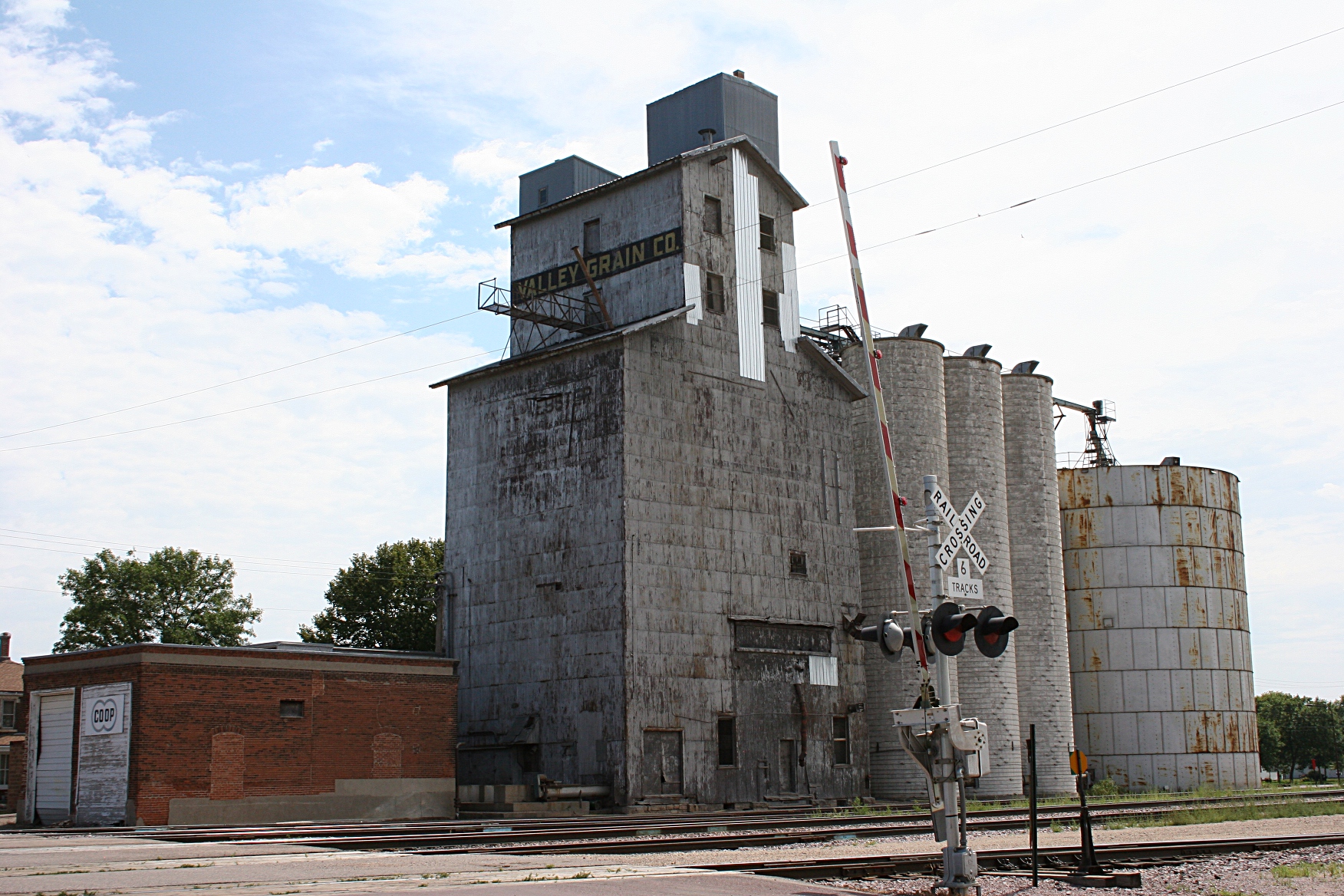
We drove across the railroad tracks and past the old Valley Grain Co. to reach Goosetown.
Goosetown is that side of New Ulm—across the tracks and down by the river—where mostly Catholic German-Bohemian immigrants began settling in the late 1800s. They were primarily farmers or retired farmers, of peasant stock. And they kept geese, which wandered and fed along the banks of the Minnesota River.
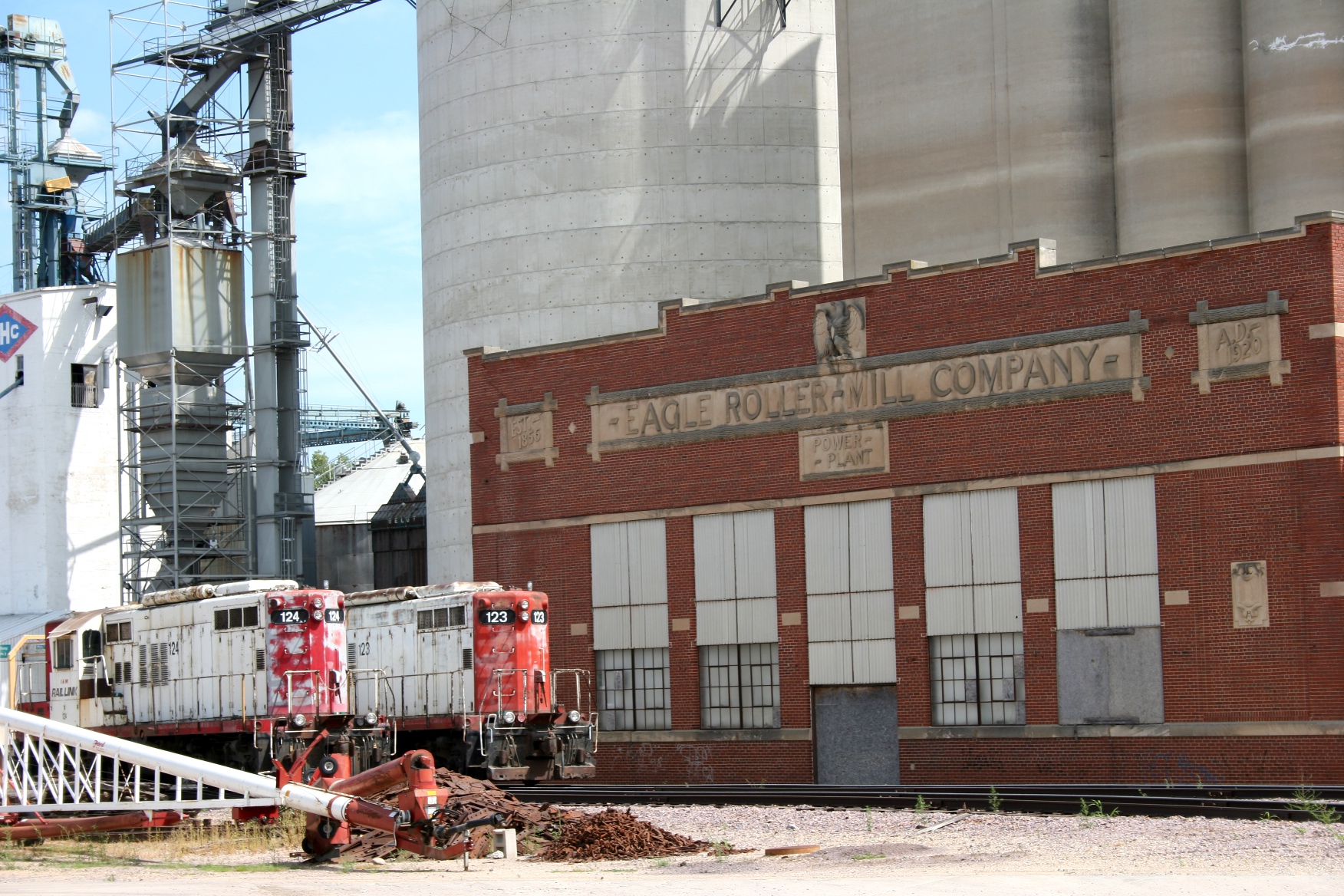
Goosetown residents worked at the local roller mills, including the Eagle Roller Mill. That mill and the New Ulm Roller Mill once made New Ulm the third largest milling center in Minnesota. The New Ulm flour millers had elevators in three states.
And so the name Goosetown became attached to southeastern New Ulm, specifically to South Front and South Valley streets. The immigrants who lived here labored in nearby roller mills and breweries and worked as carpenters, masons and cigar makers. Women supplemented the family income by making Klöppel lace and/or sewing feather-filled bedding. Families also gathered clam shells from the river for pearl buttons.
At first thought, it all seems rather romantic, this stretch of Gȁnseviertel next to the railroad tracks and river. But I expect life there was hard as families, many of them living in two-room houses, struggled to survive. I also expect, and New Ulmers can correct me if I’m wrong, that this area of town wasn’t always embraced by the community at large. You know that thing about “the other side of the tracks.” Every community seems to have that part of town perceived as less than positive whether due to poverty or people who are different from the majority. Riverside land (and Goosetown is no exception) was once the site of town dumps, which should tell you something, too.
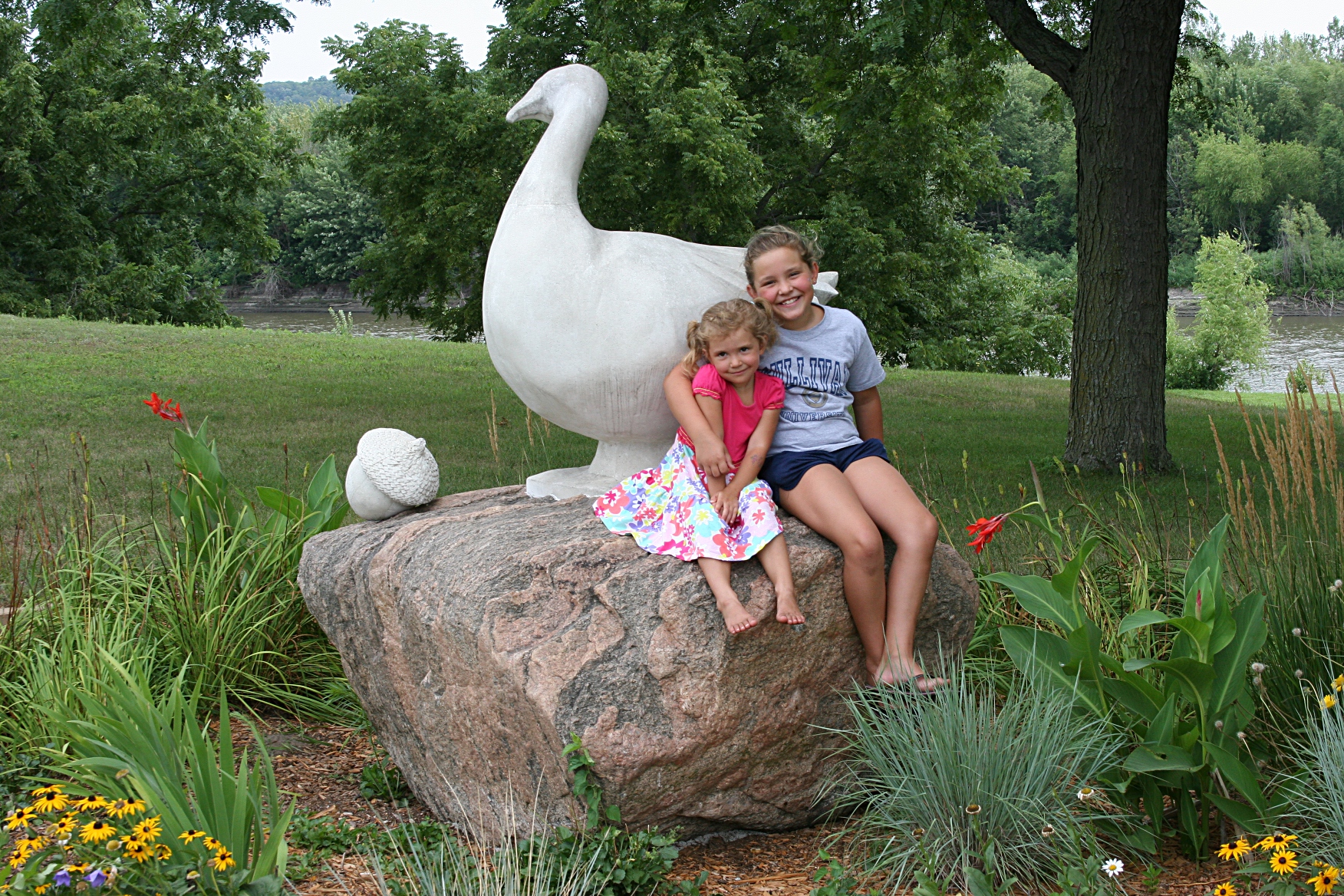
Sisters Amber, 8, and Kiera, 4, pose with Gertie the Goose, a statue donated by Dr. Ann Vogel of New Ulm and located in Riverside Park.
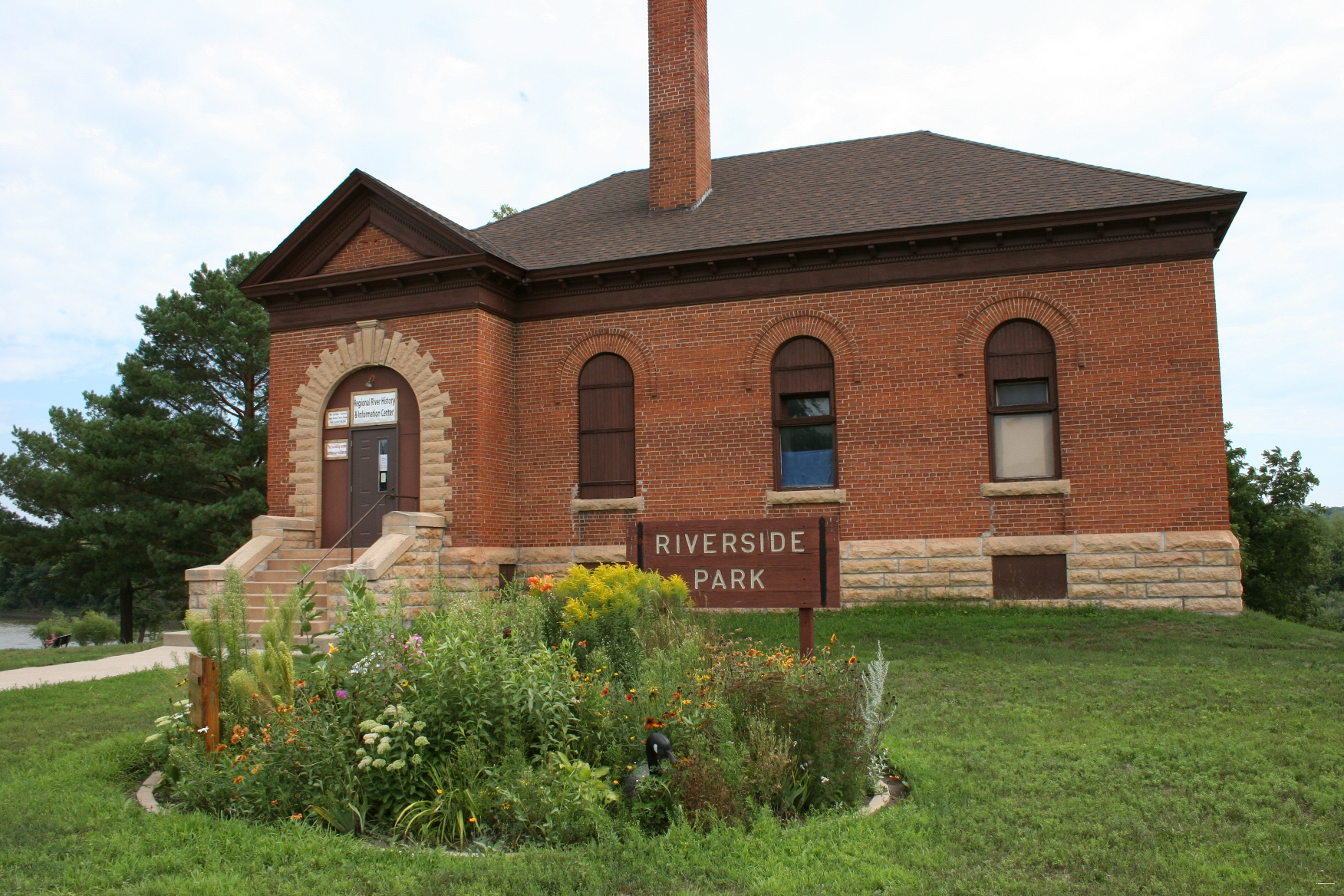
I likely could have learned even more about the history of Goosetown had the Regional River History & Information Center, 101 South Front Street, Riverside Park, been open. The center is housed in the former Franklin School.
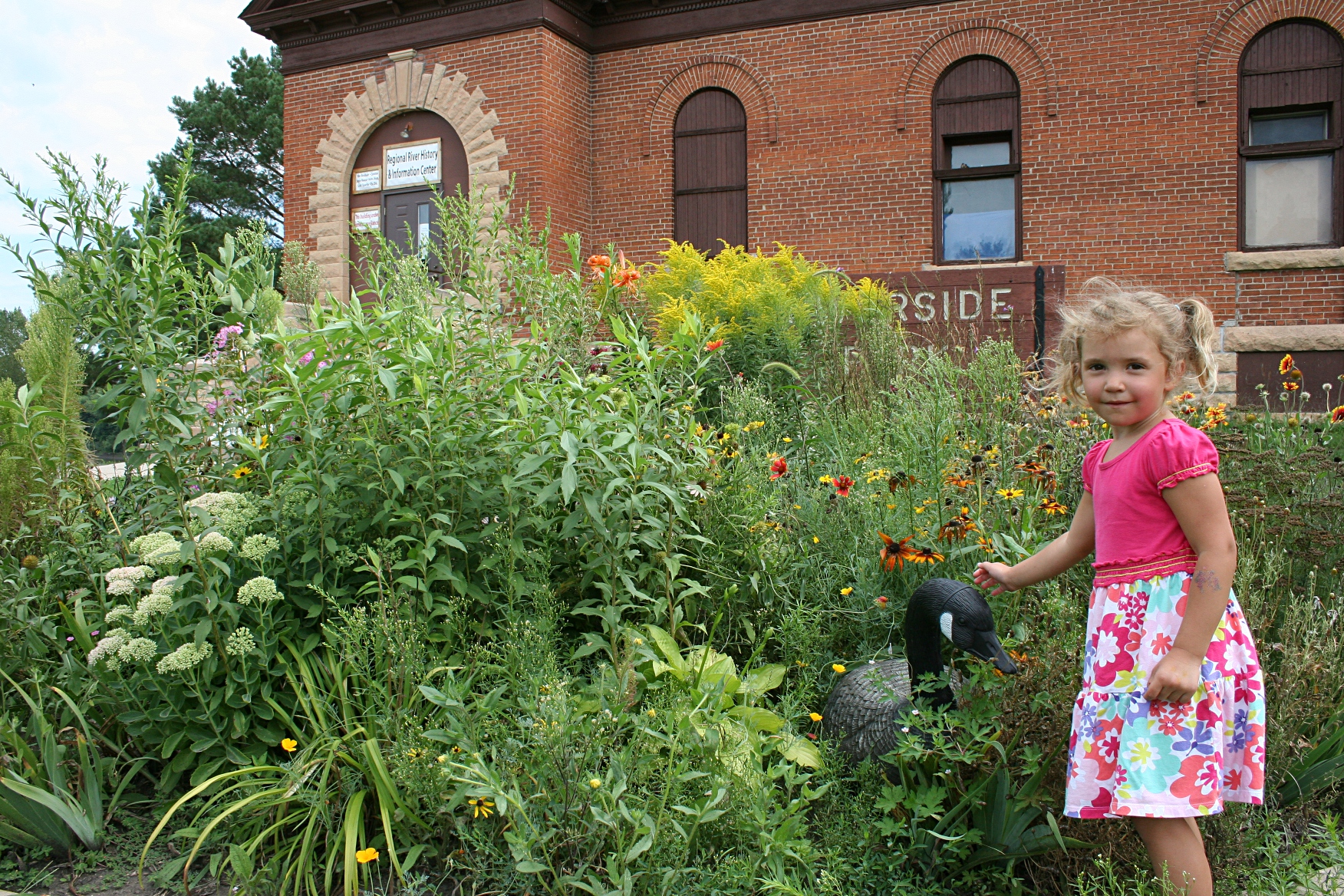
Kiera showed me another goose tucked into a flowerbed in front of the river center.
Today New Ulm embraces the heritage of Goosetown with a plaque and statue in Riverside Park. There’s also an occasional Goosetown reunion and Victor “Fezz” Fritsche, leader of the one-time Goosetown Band, was inducted into the Minnesota Music Hall of Fame in 1991.

The logo for the Goosetown Roller Derby Girls who have names like Deutschland Dolly and SoUr Kraut.
Most recently, in January, a flat track roller derby team, Goosetown Roller Girls, was founded.
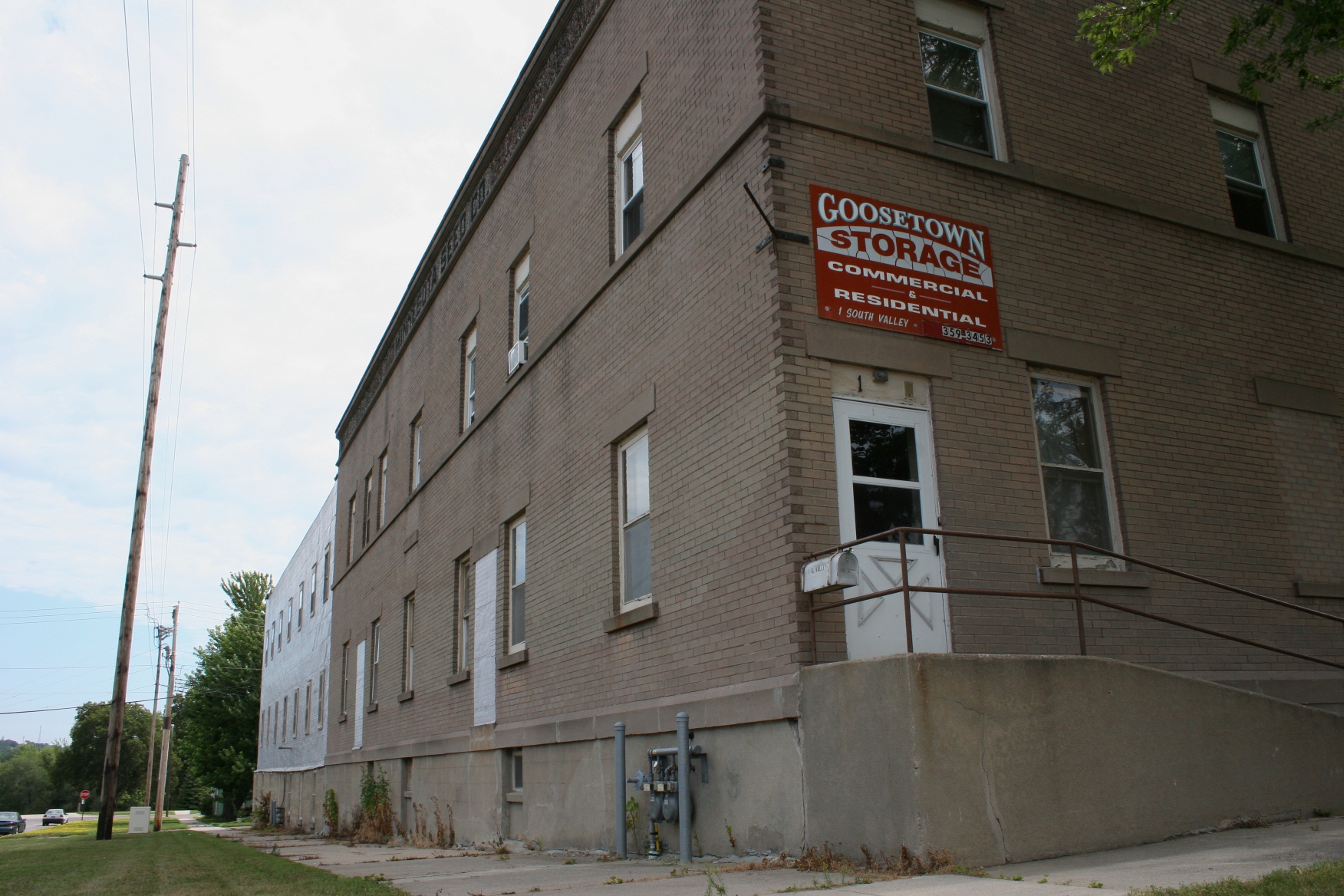
Goosetown Storage, once the home of Minnesota Seed Company.
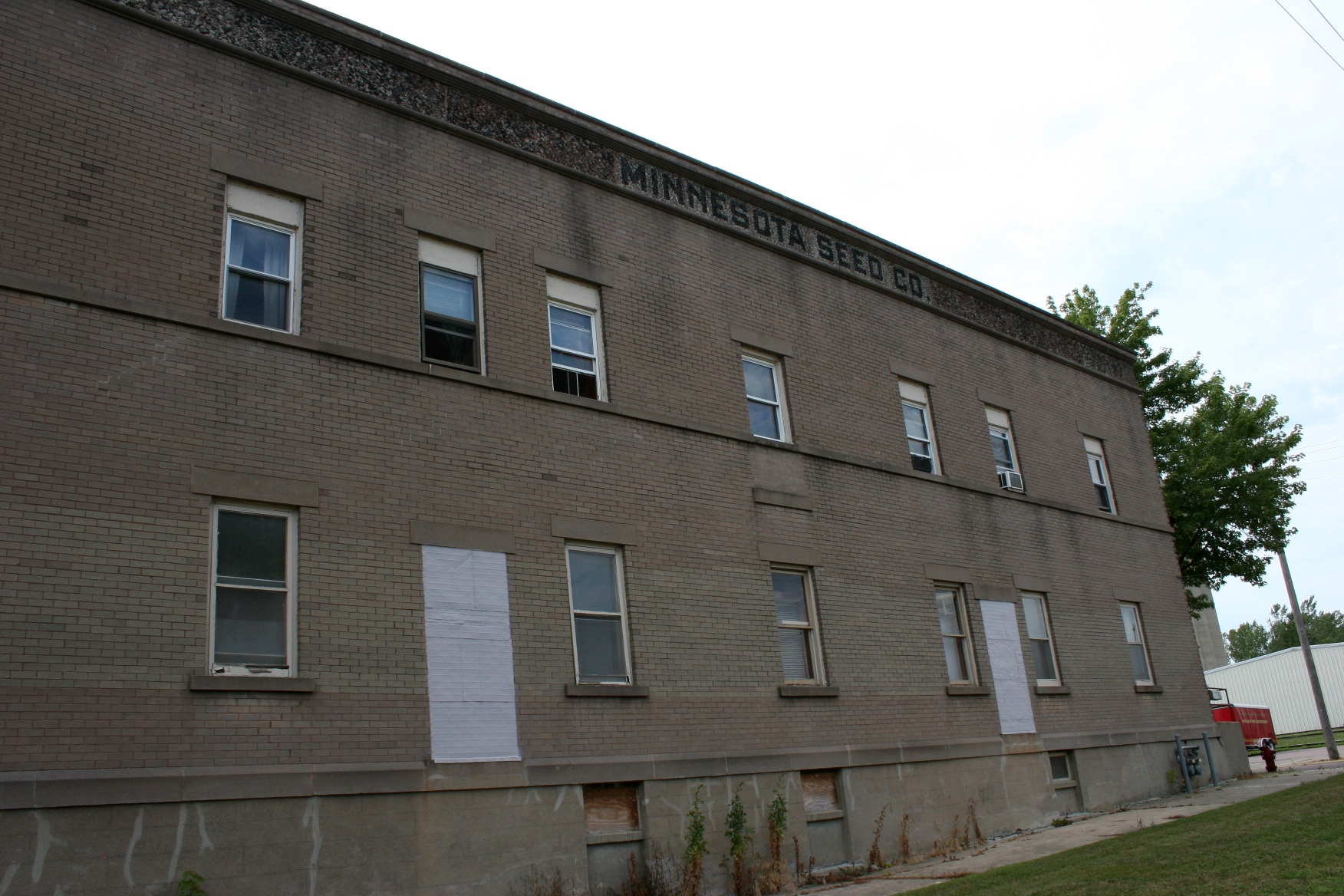
A side view of Goosetown Storage, with signage pointing to its original use as the location of Minnesota Seed Company. Anyone know the history of Minnesota Seed?
At least one building is labeled Goosetown Storage and the New Ulm Fire Department has a Goosetown Fire Station next to the train tracks.
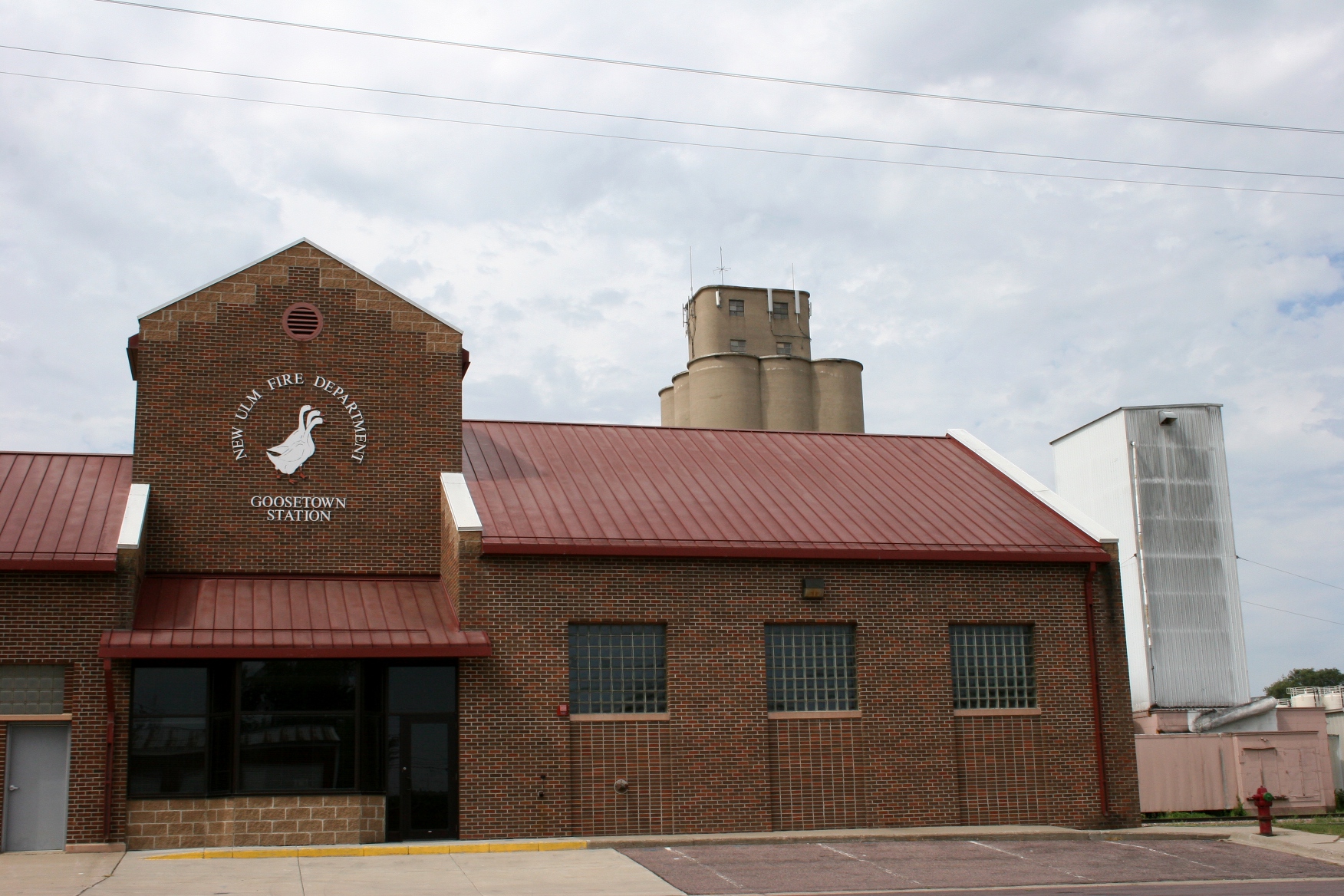
Engine House No. 3, commonly known as the Goosetown Fire Station, was established in 1890. The newer station pictured here houses two pumpers. A 47-foot drill tower (not shown here) stands nearby.
Even so, I was unaware of this ethnic treasure until we happened upon Goosetown on Saturday. New Ulm is best known to the touring public as the site of a major battle during the U.S.-Dakota War of 1862; for the August Schell Brewing Co.; the Hermann the German Monument; the childhood home of author and illustrator Wanda Gag; the Minnesota Music Hall of Fame; the Glockenspiel; the Cathedral of the Holy Trinity; Way of the Cross stations; the home of Minnesota’s 14th governor, John Lind; and most certainly as a city that features all things German. You can see how historic Goosetown could get lost in that long list of New Ulm attractions.
If you’re like me and appreciate the lesser-known, less touristy aspects of a community, drive across the tracks and down by the river in Anytown. Perhaps you’ll discover a place like Goosetown, rich in heritage and sturdy brick buildings and stories stitched into the land, if only you knew those stories.
FYI: Please check back for more posts from New Ulm.
© Copyright 2012 Audrey Kletscher Helbling
Goosetown Roller Girls image comes from the team’s website.
KNOWN AS A NOTORIOUSLY DANGEROUS roadway along some stretches, U.S. Highway 14 in southern Minnesota Thursday grabbed headlines again with two separate crashes about 50 miles and 12 hours apart. One involved a cattle truck, the other a small plane.
This time though, only cattle, not people, died.
I know this road, The Laura Ingalls Wilder Historic Highway, well as it’s the route my family travels back to my native southwestern Minnesota.
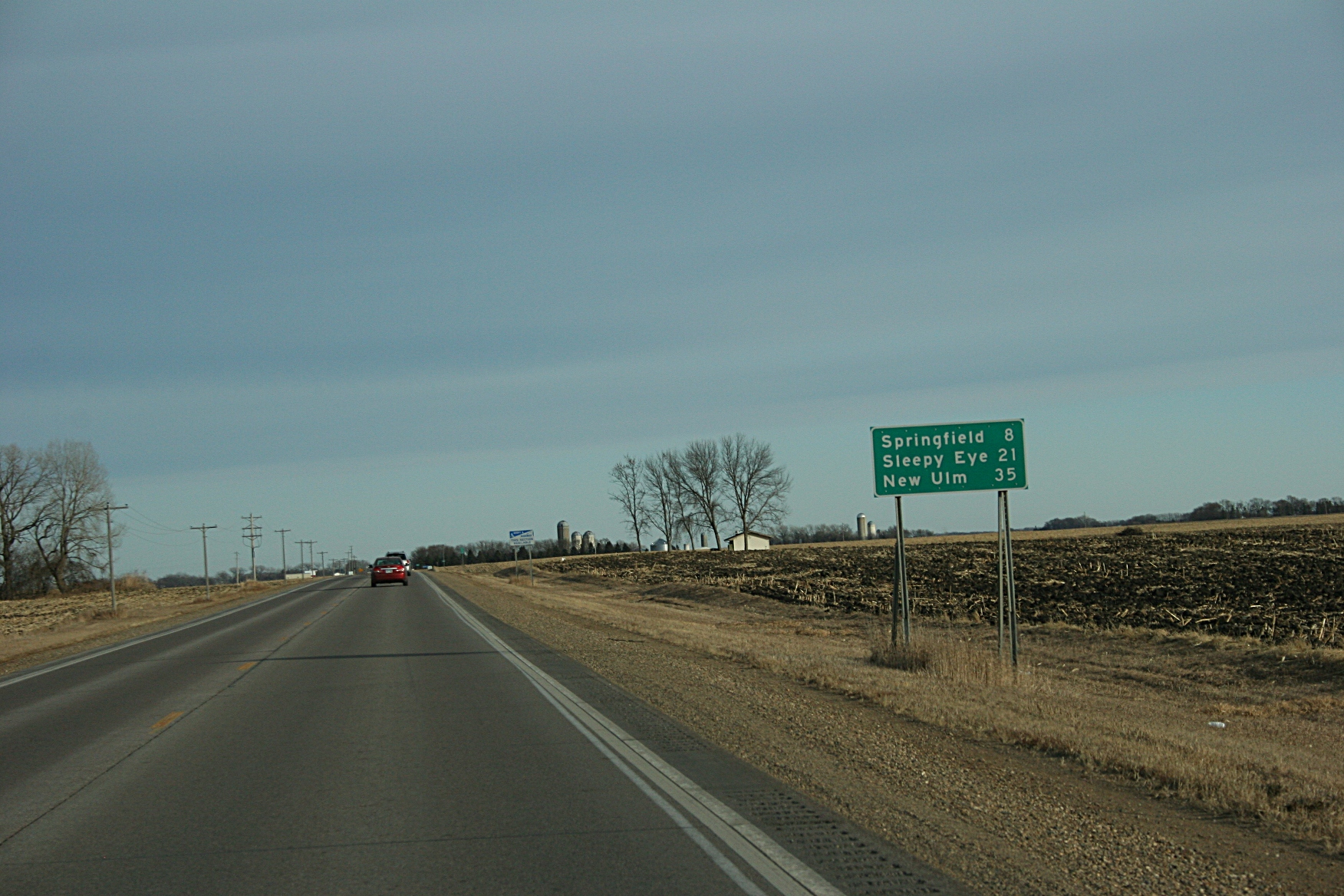
I shot this image along U.S. Highway 14 east of Lamberton several weeks ago.
Around midnight Thursday, January 5, a semi truck pulling a cattle trailer left Highway 14 just east of the Nicollet County Road 37 intersection near New Ulm and rolled onto its side in the ditch, according to news reports. The driver suffered only minor injuries, but some of the 35 cattle were killed in the crash or had to be euthanized.
About 50 miles west and some 12 hours earlier, Highway 14 east of Revere in Redwood County became a runway for a Lakeville pilot who was forced to make an emergency landing, according to news sources. He managed to land his plane on the road before it went into a ditch and flipped.
As in the cattle truck accident, the pilot escaped with only minor injuries.
When I first heard and read about these accidents, I was simply thankful that the truck driver and pilot survived. I was thankful, too, that others traveling along Highway 14 were not involved.
Then I started wondering exactly how many vehicles travel along these sections of Highway 14 each day and how those counts and the timing and locations of the incidents affected the outcomes.
According to the most recent statistics I could find from the Minnesota Department of Transportation’s Office of Transportation Data and Analysis, the 2009 annual average daily traffic count was 8,000 for the Highway 14 area where the cattle truck crashed.
See how the outcome could have been so much different had this occurred during peak daylight travel hours? Anyone who’s driven Highway 14 between New Ulm and Mankato realizes just how unsafe this narrow, arterial road is with its heavy traffic, county and other roads intersecting the highway and few opportunities to safely pass.
Fortunately, 50 miles west, the traffic count drops considerably as the population decreases and the land stretches flat and wide into acres of fields punctuated by farm sites and small towns.
Near Revere, where the pilot landed his plane on Highway 14 before noon on Thursday, MnDOT lists the 2007 annual average daily traffic count as 1,550. Odds of putting a plane down without hitting a vehicle were definitely in the pilot’s favor.
And given trees are sparse on the prairie, luck was in the aviator’s favor there, too.
Fortunately, the emergency landing also occurred outside of Revere, in the 3.5 miles between the town of 100 residents and Highwater Ethanol and not too dangerously close to either. The ethanol plant, of which my middle brother is the CEO/GM, is situated along Highway 14 between the crash site and Lamberton.
Viewing a 1994 plat of the area, I spotted a landing strip just to the north and east of Revere. I could not verify whether that still exists and it really doesn’t matter given the pilot claims he had to make a snap decision to put his failing aircraft down Thursday on Highway 14 at a speed of 90 mph.
I’m thankful that on January 5, 2012, U.S. Highway 14 in southern Minnesota didn’t rack up more fatal statistics. It’s already had too many.
© Copyright 2012 Audrey Kletscher Helbling
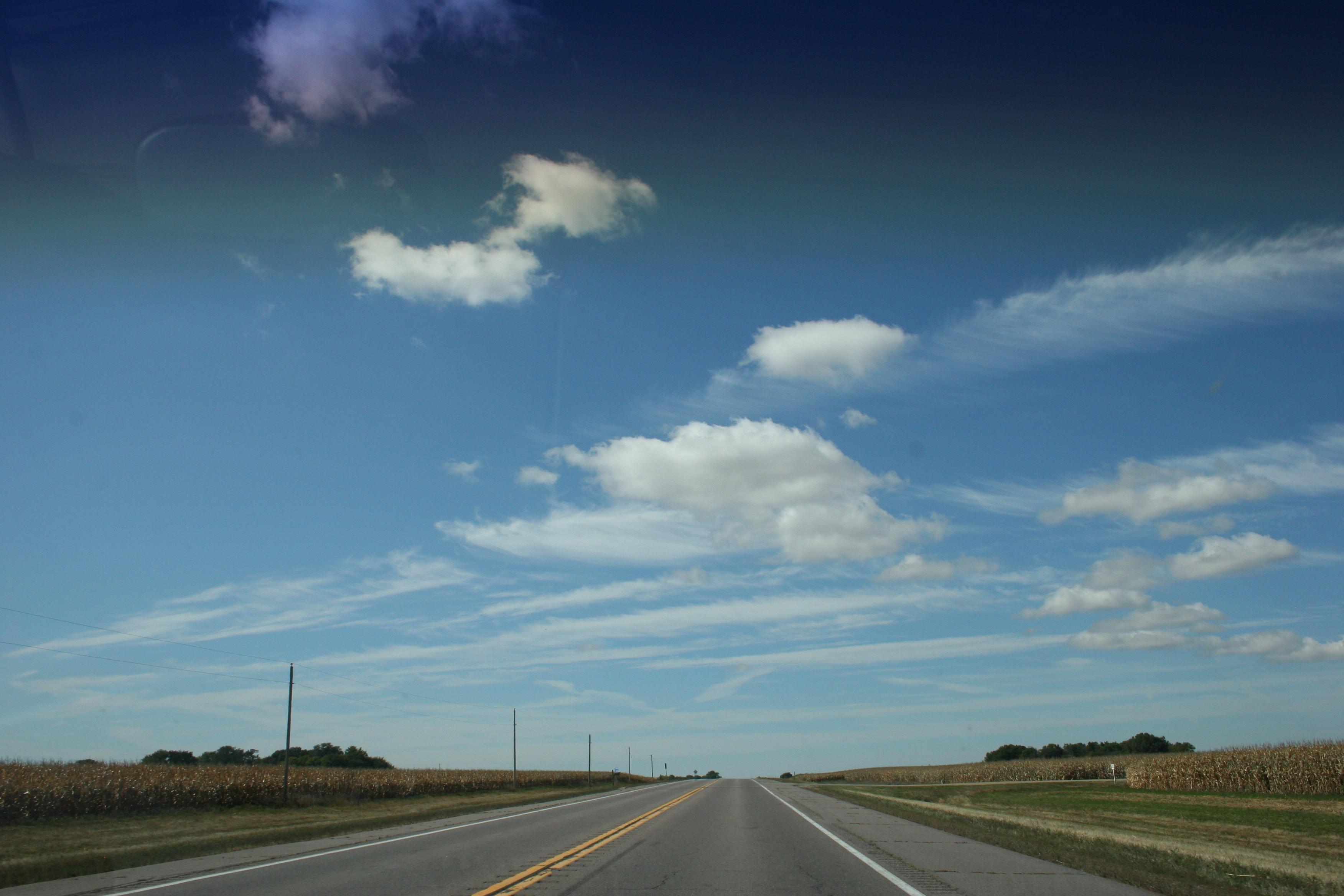
Westbound on U.S. Highway 14 between Nicollet and Courtland in southern Minnesota Friday afternoon.
I LOVE THIS LAND, this rural southern Minnesota.
You can take your woods and your lakes and your boats or your big city freeways and skyscrapers and traffic jams.
I will take sky and a land that stretches flat into forever.
I like my space open, not hemmed in by trees packed tight in a forest. I want to see into forever and beyond, the horizon broken only by the occasional grove hugging a building site.
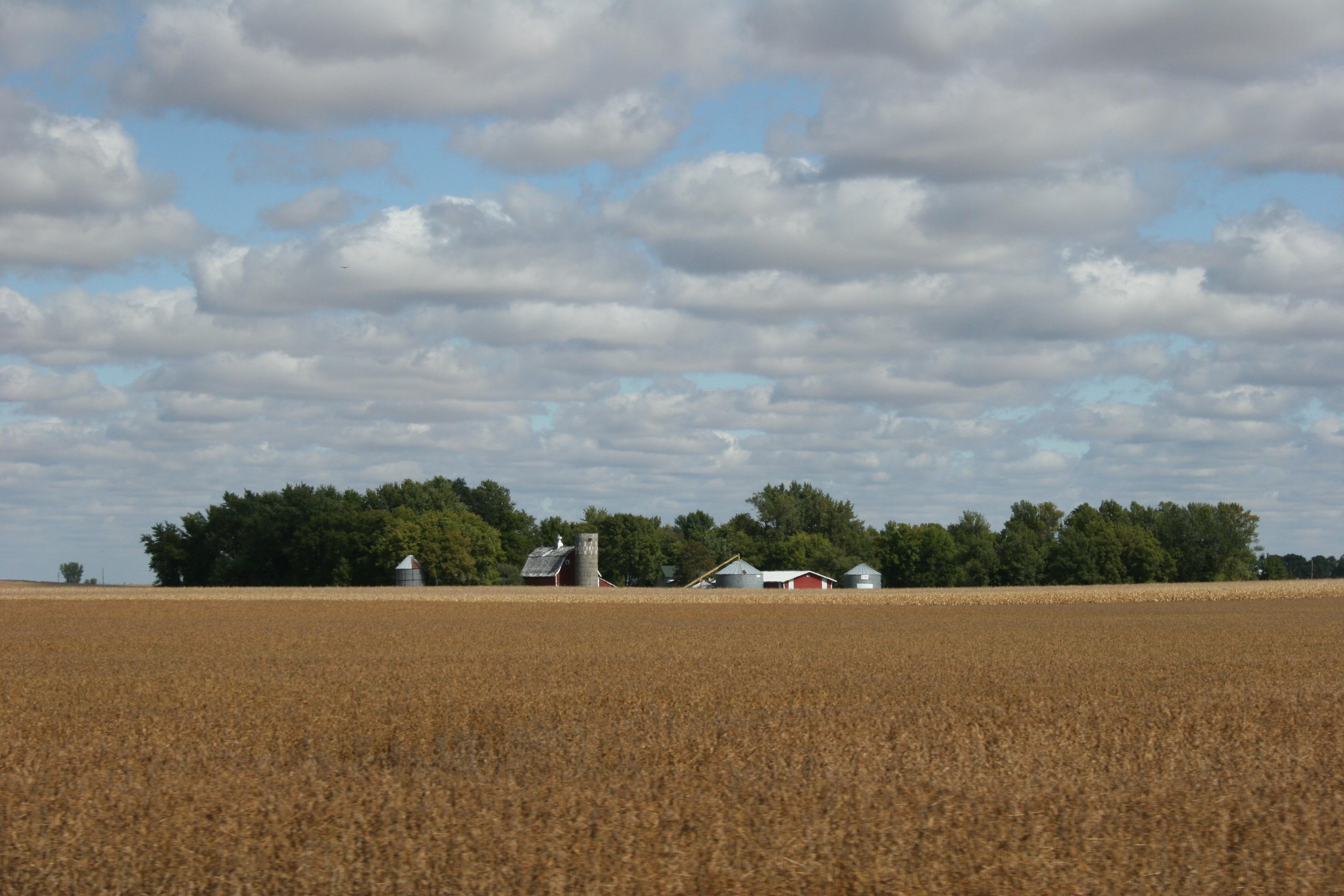
A farm site between Mankato and Nicollet, as seen from U.S. Highway 14.
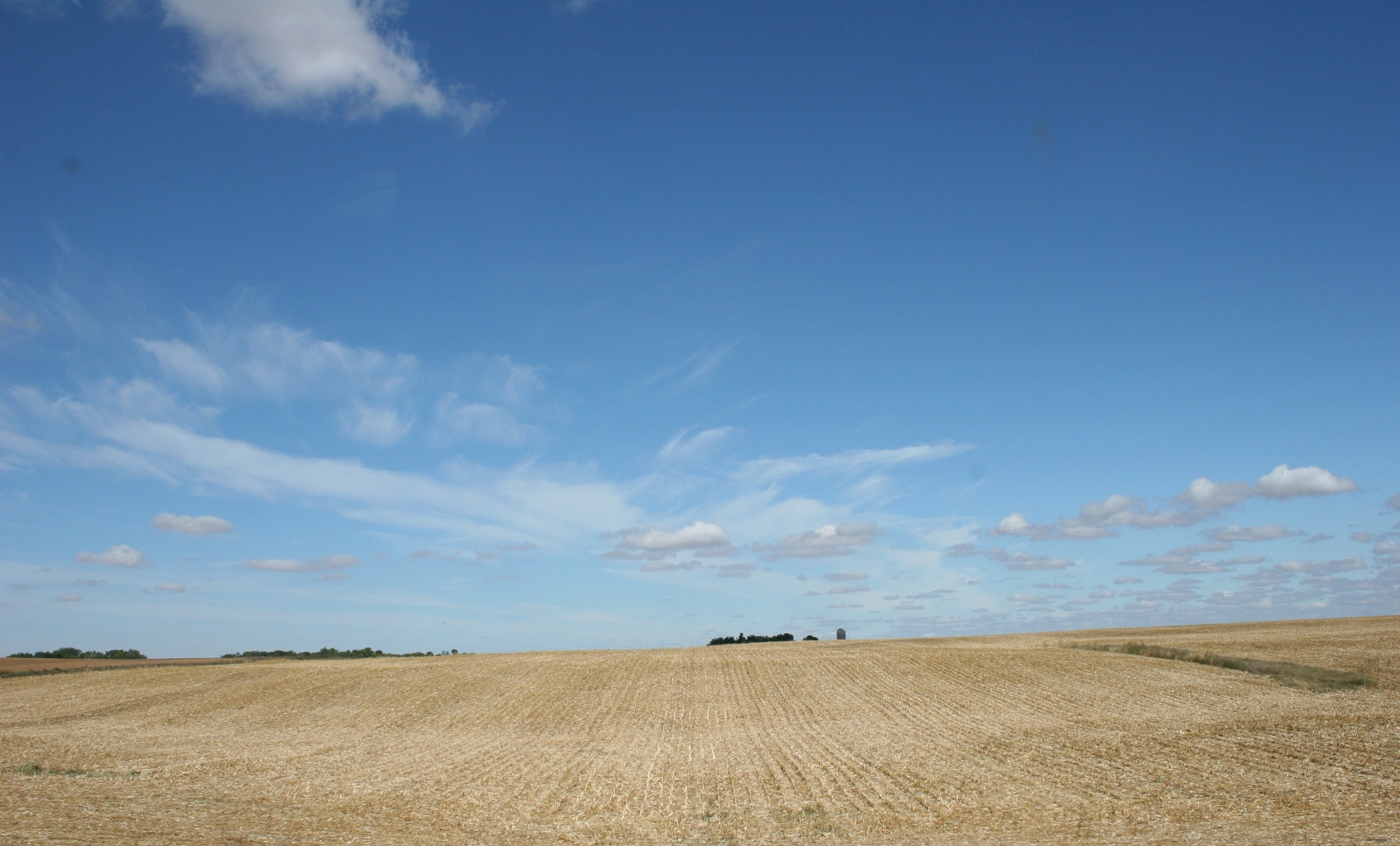
A harvested corn field between Nicollet and Courtland.
I want corn and soybean fields ripening to the earthy hues of harvest. Not gray cement or dark woods.
Give me small-town grain elevators and red barns and tractors, and combines sweeping across the earth.
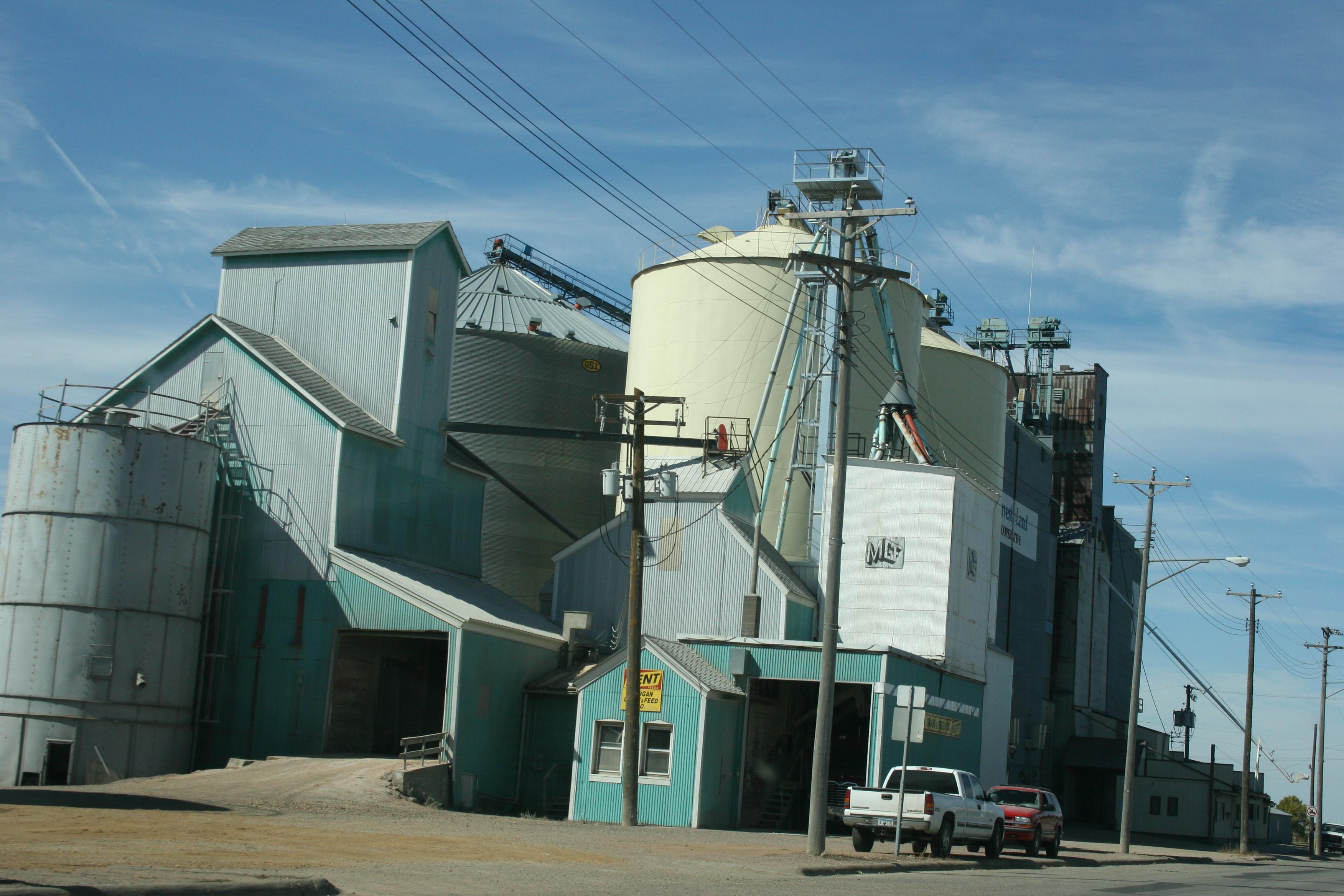
The elevator complex in Morgan in Redwood County.
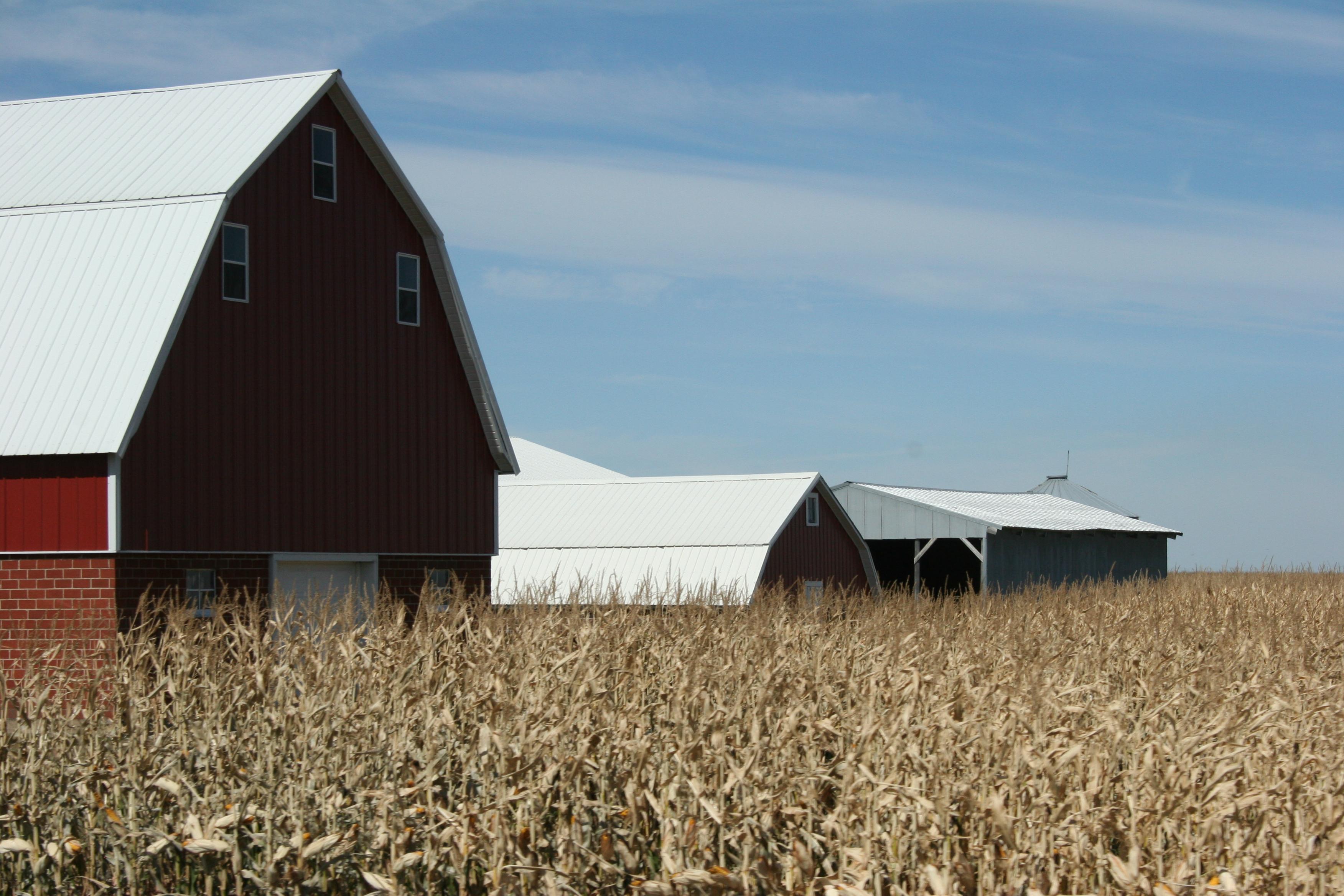
A farm site along the twisting back county road between New Ulm and Morgan.
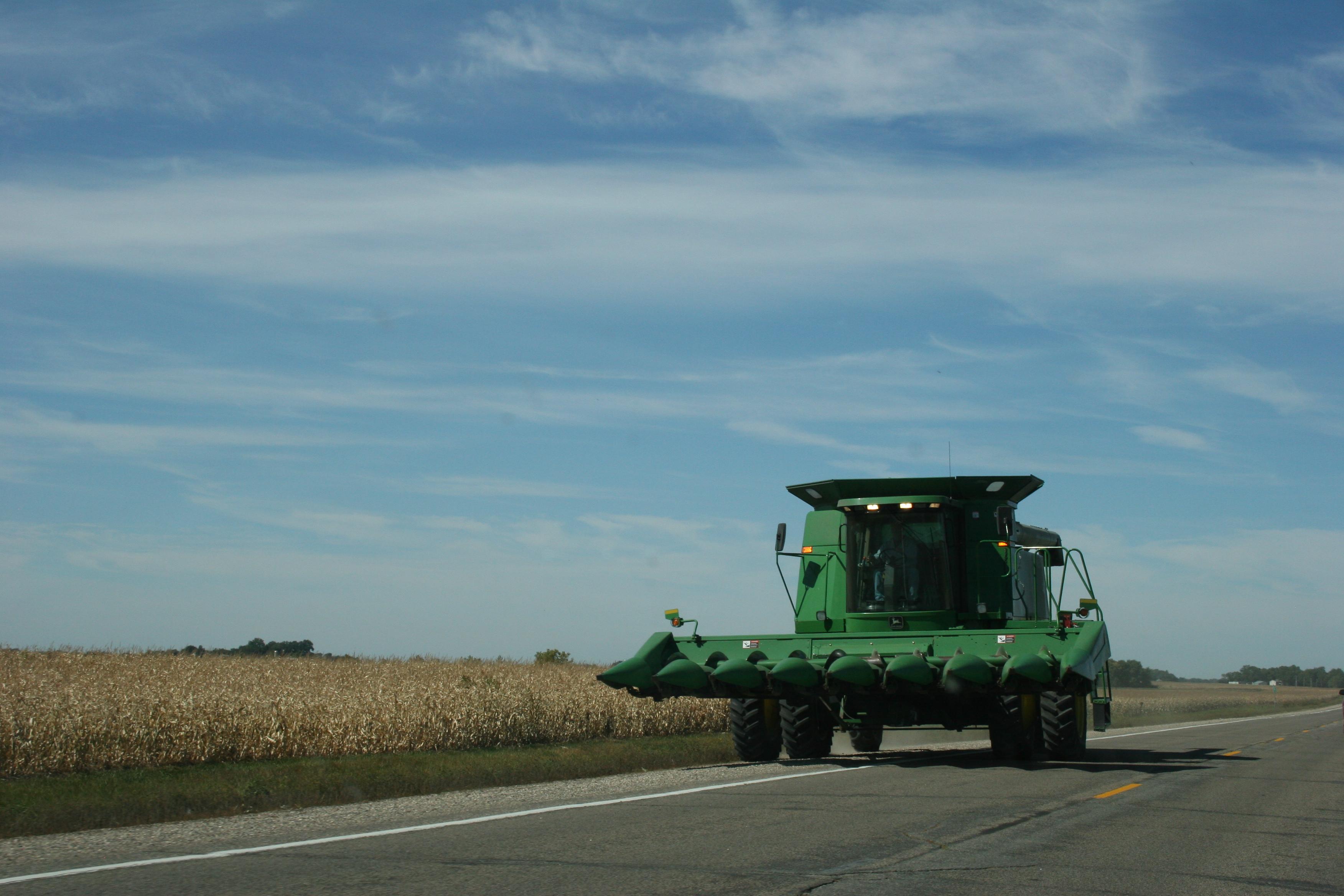
A John Deere combine spotted on the highway just outside of Morgan.
This is my land, the place of my heart.
Although I left the farm decades ago, I still yearn, during autumn, to return there—to immerse myself in the sights and smells and sounds of harvest. The scent of drying corn husks. The roar of combines and tractors. The walk across the farm yard on a crisp autumn night under a moon that casts ghost shadows. Wagons brimming with golden kernels of corn. Stubble and black earth, turned by the blades of a plow.
Today I only glimpse the harvest from afar, as a passerby. Remembering.
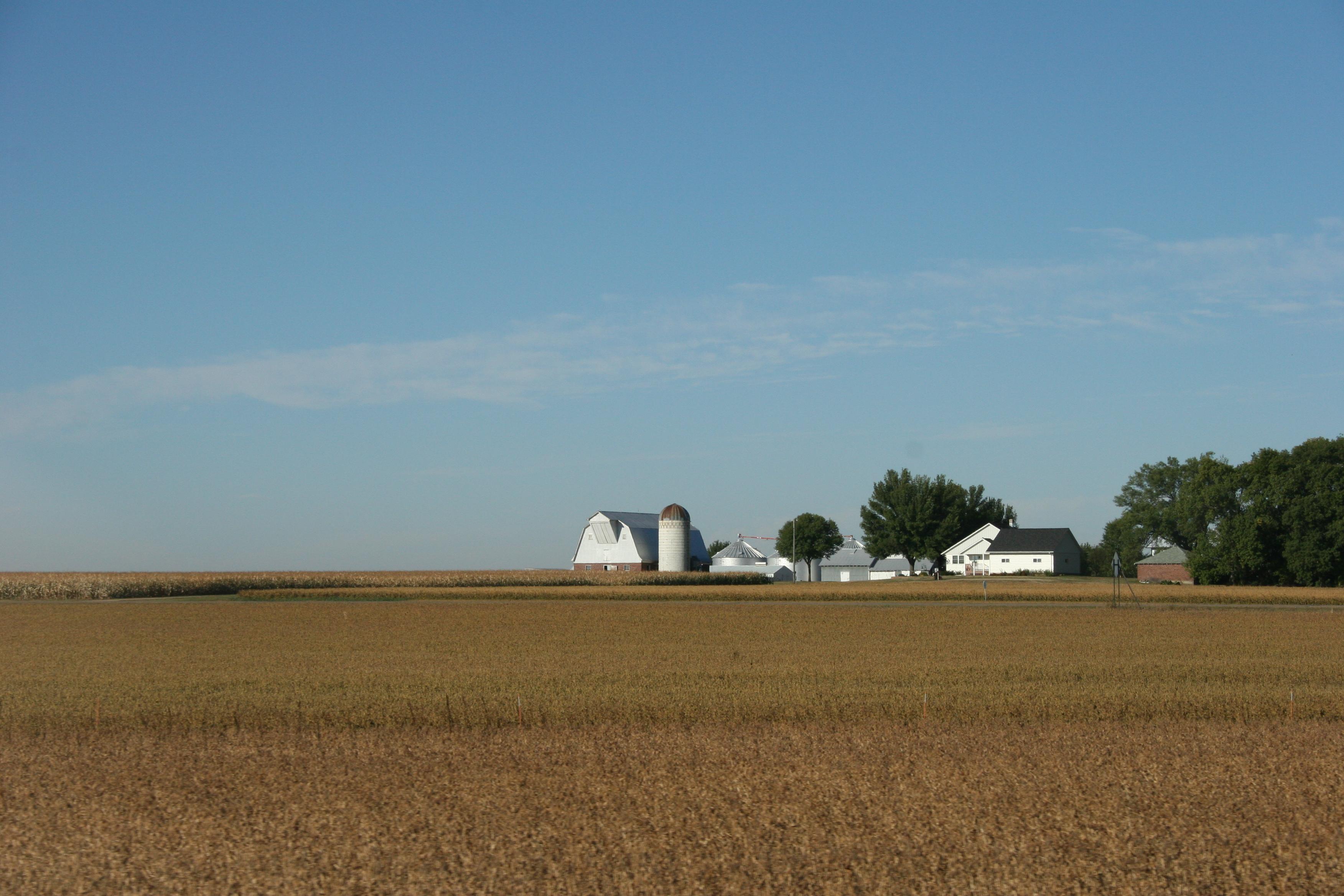
A farm site between Morgan and Redwood Falls in southwestern Minnesota.

Harvesting corn on Saturday just outside of Courtland.
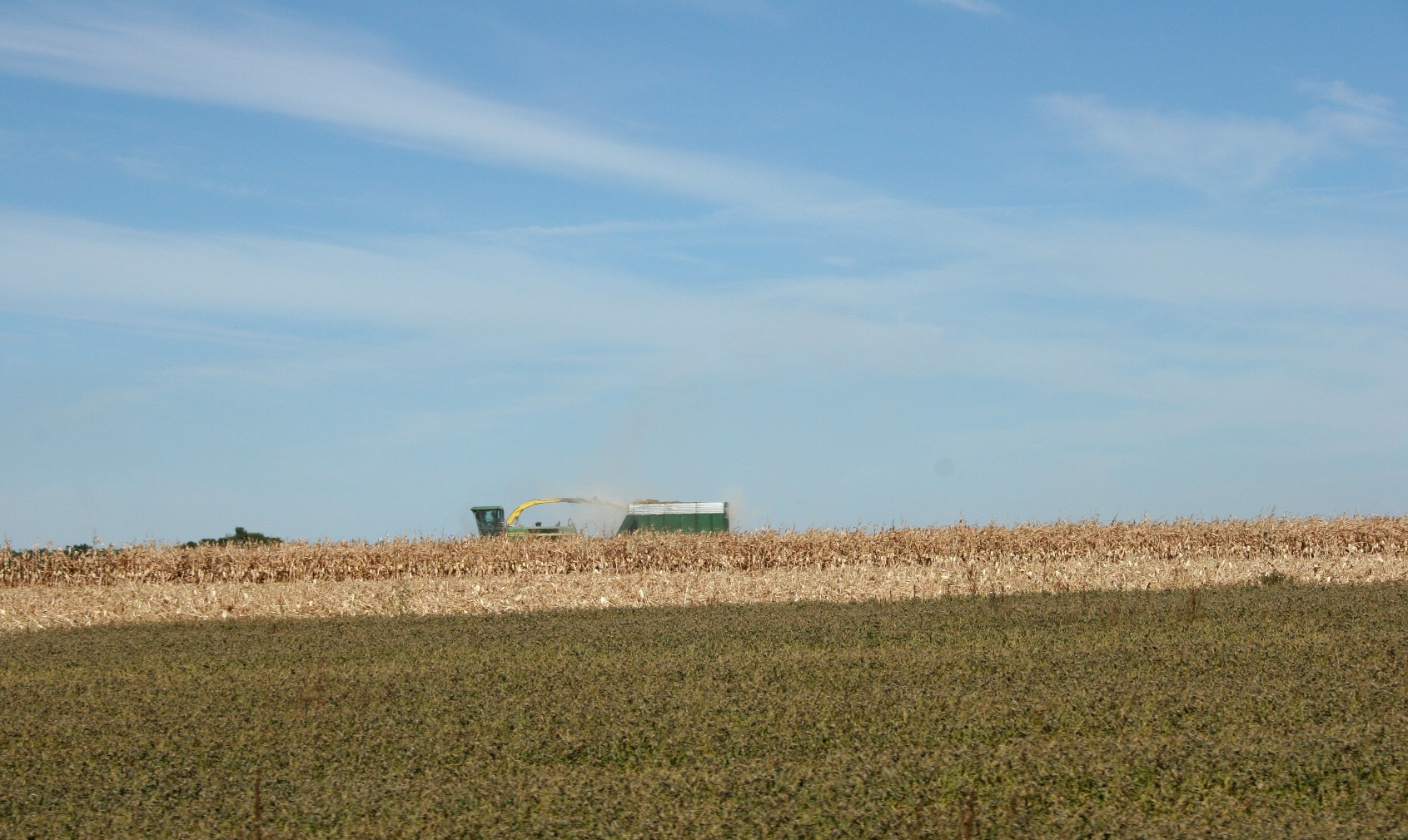
Chopping corn into silage between New Ulm and Morgan.
ALL OF THESE IMAGES (except the elevator) were taken at highway speed from the passenger side of our family car while traveling through southern Minnesota on Friday and Saturday.
© Copyright 2011 Audrey Kletscher Helbling
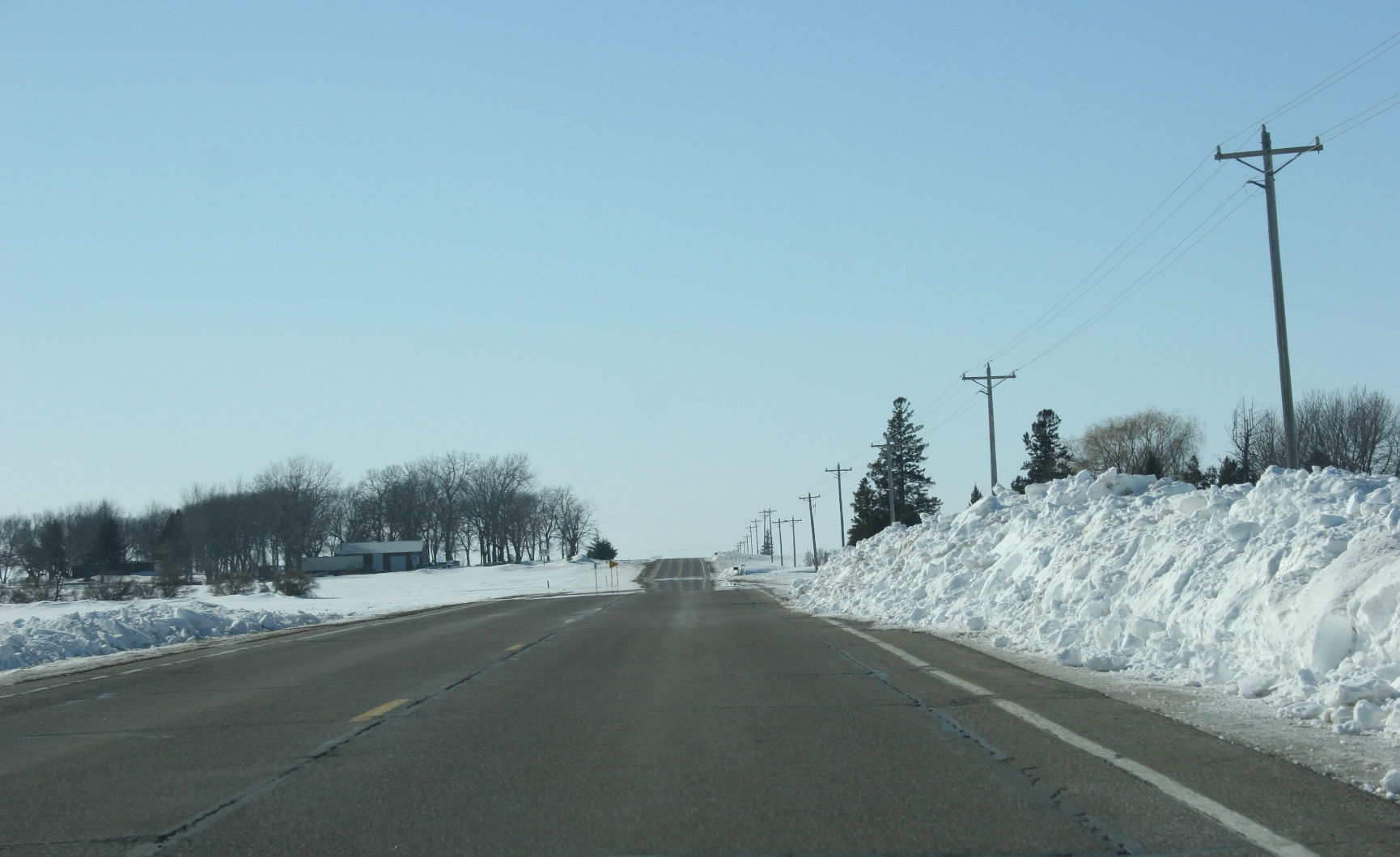
Traveling U.S. Highway 14 west of New Ulm to southwestern Minnesota.
I NEEDED A TRIP to southwestern Minnesota this past weekend, as much to be with extended family as to reconnect with the land where I grew up. I was not disappointed, on both counts.
I embraced the family I love as we talked and laughed and talked and laughed some more while celebrating my middle brother’s 50th birthday until just past midnight on Saturday.
Sometime in between, we joked about the possibility of being snowed in on his Redwood County acreage. Snow was in the forecast and we all know that snow on the prairie, combined with wind, could strand us.
By the time we finished breakfast mid-morning on Sunday, the flakes were flying and U.S. Highway 14 was dusted with snow, enough to cause cautionary travel as my husband, son and I headed east back to our Faribault home.
Fortunately, we drove out of the snow even before reaching New Ulm.
Every time I visit the prairie, I realize all over again how harsh winters are out there and how very different they are from the winters I experience in southeastern Minnesota. Honestly, if you saw the drifts and plowed ridges of snow along Highway 14 and the endless vista of wide open spaces that stretch like a sea of white, you would understand.
Join me on this visual journey along a section of the Laura Ingalls Wilder Historic Highway between New Ulm and Lamberton. These photos don’t even do justice to winters on the prairie because we weren’t traveling in a prairie blizzard. But, in these images, you can envision the possibilities…
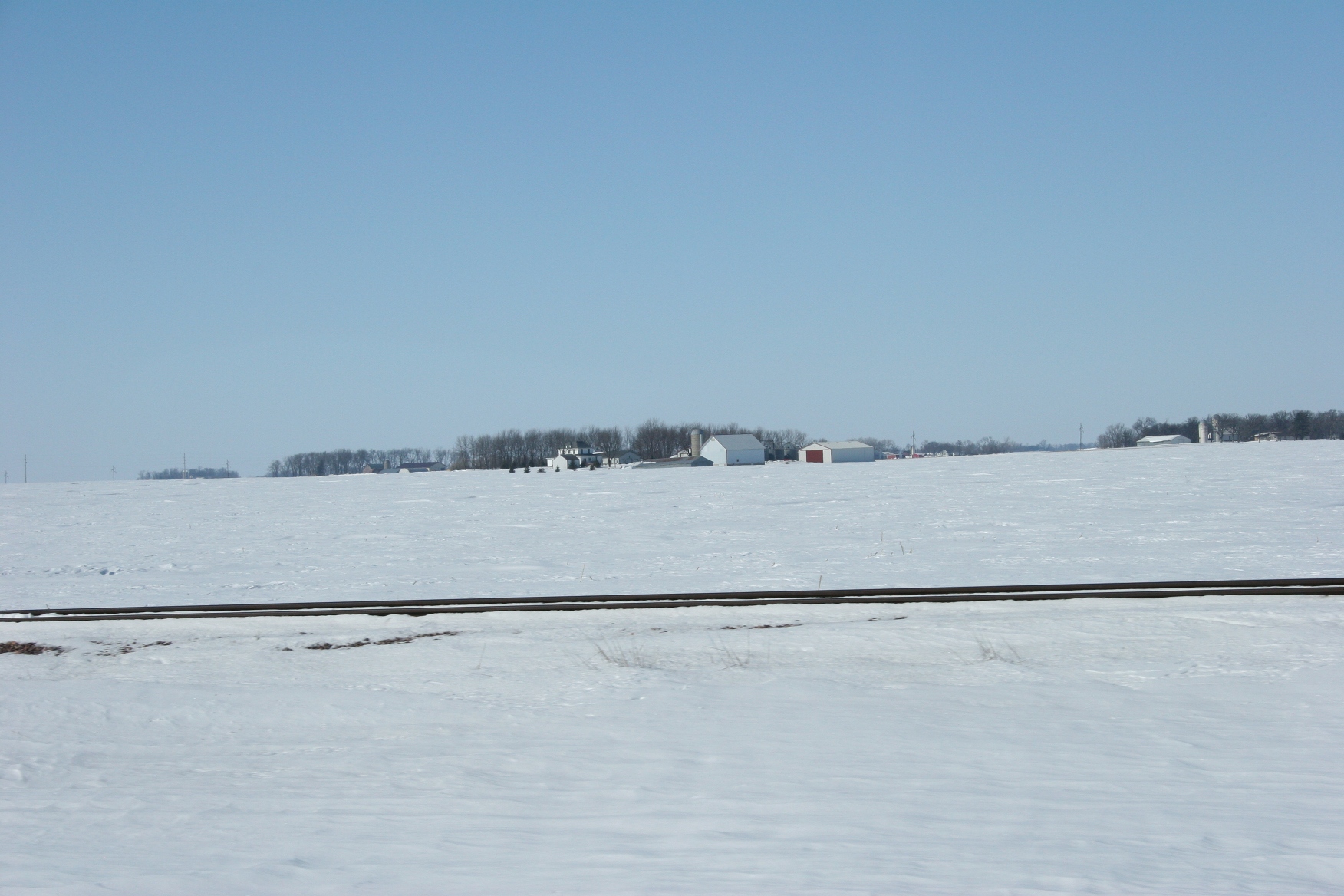
Railroad tracks run parallel to Highway 14 as the land stretches under spacious skies.
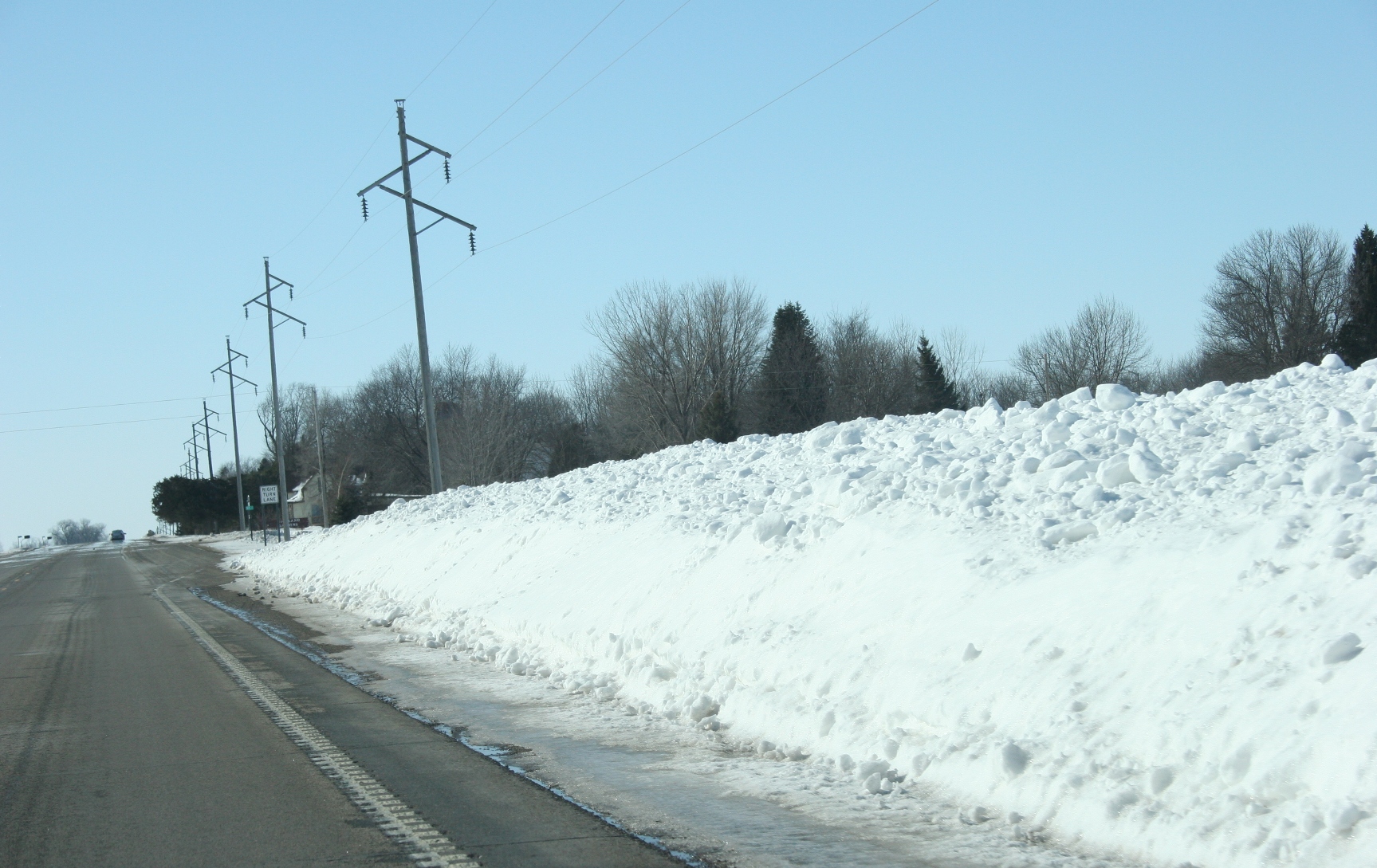
In some spots along U.S. Highway 14, the snow is piled higher than vehicles.
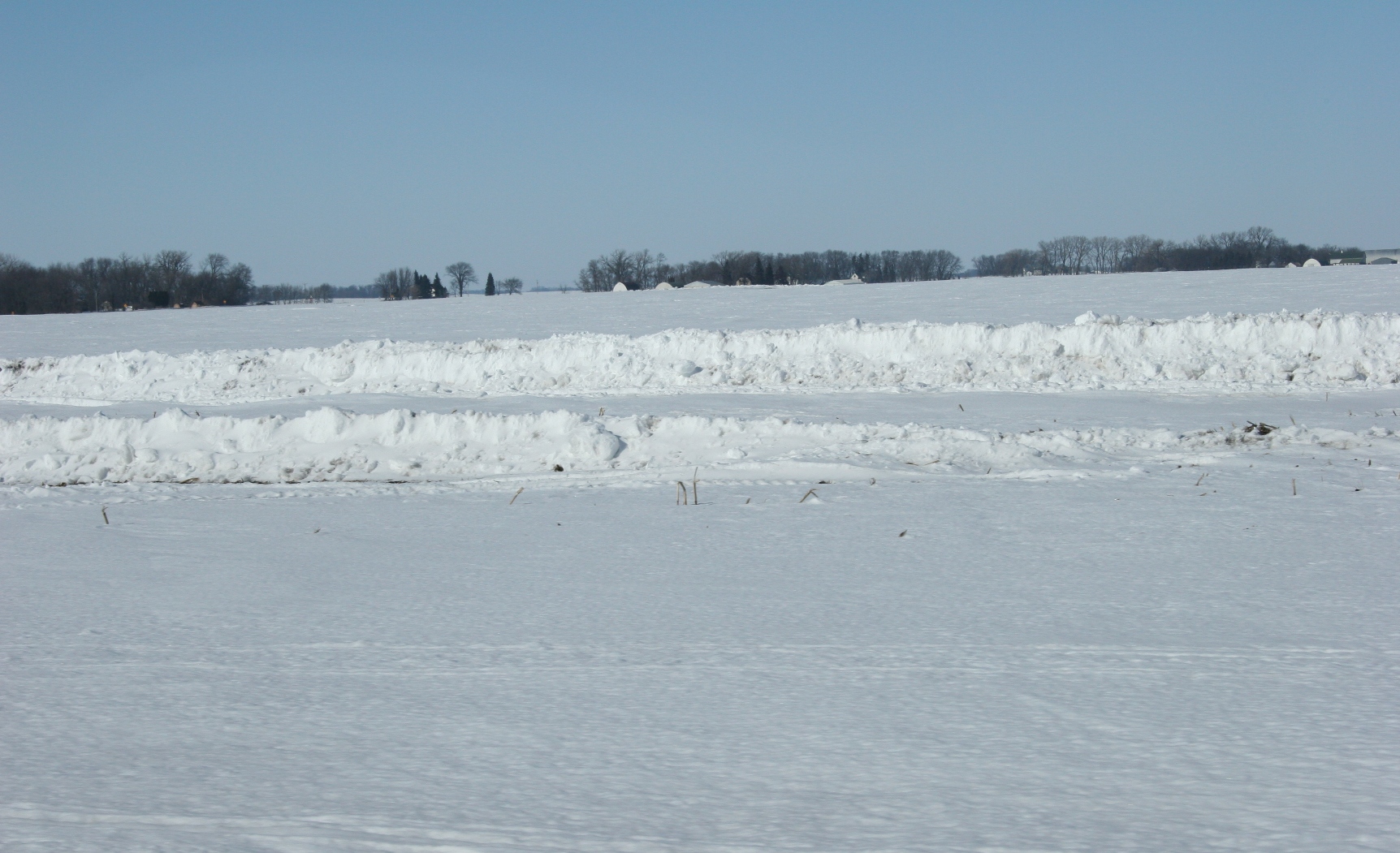
Snow had been pushed into rows in fields along Highway 14, acting as natural snow fences.
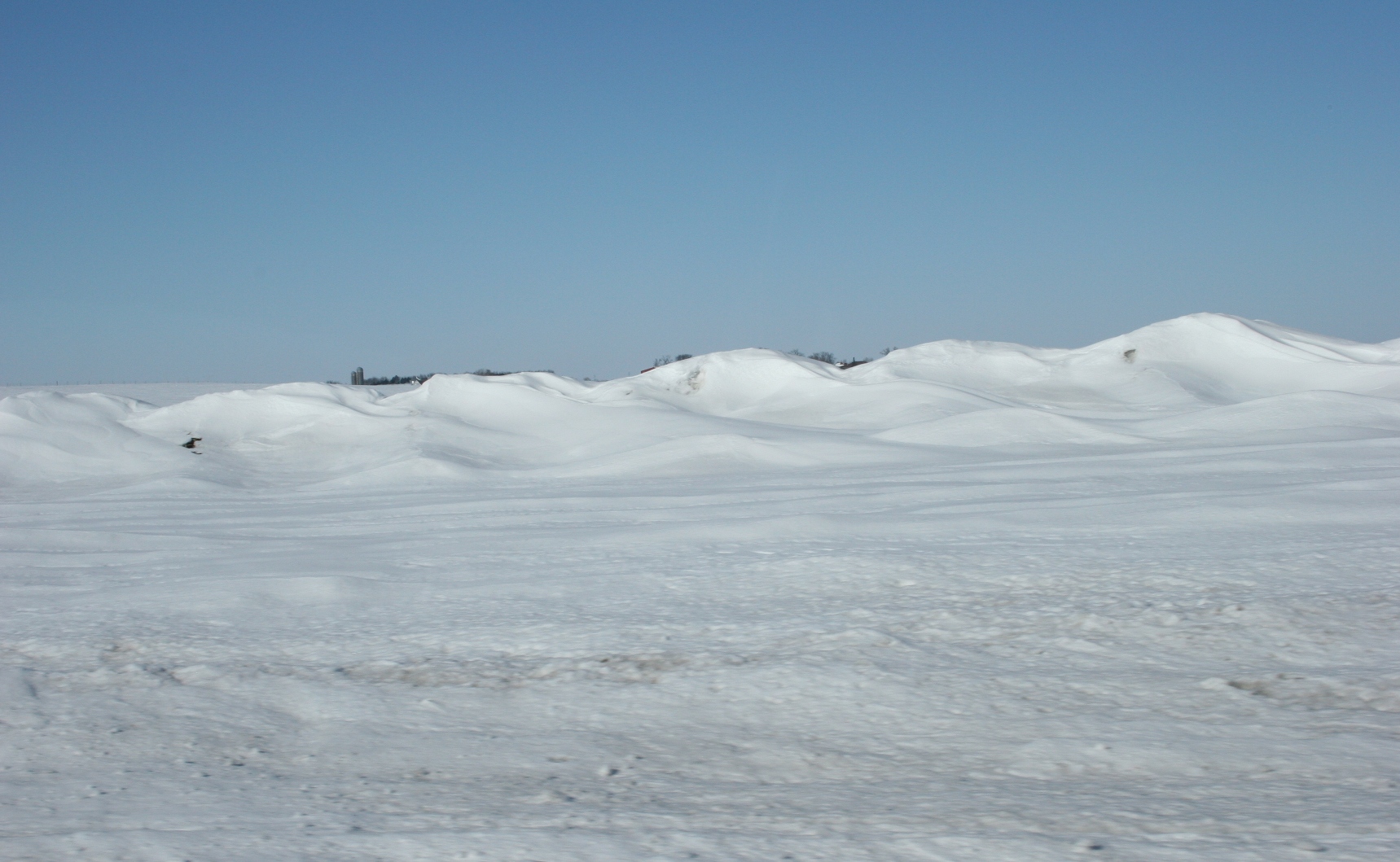
The wind sculpted drifts along the snow fences.
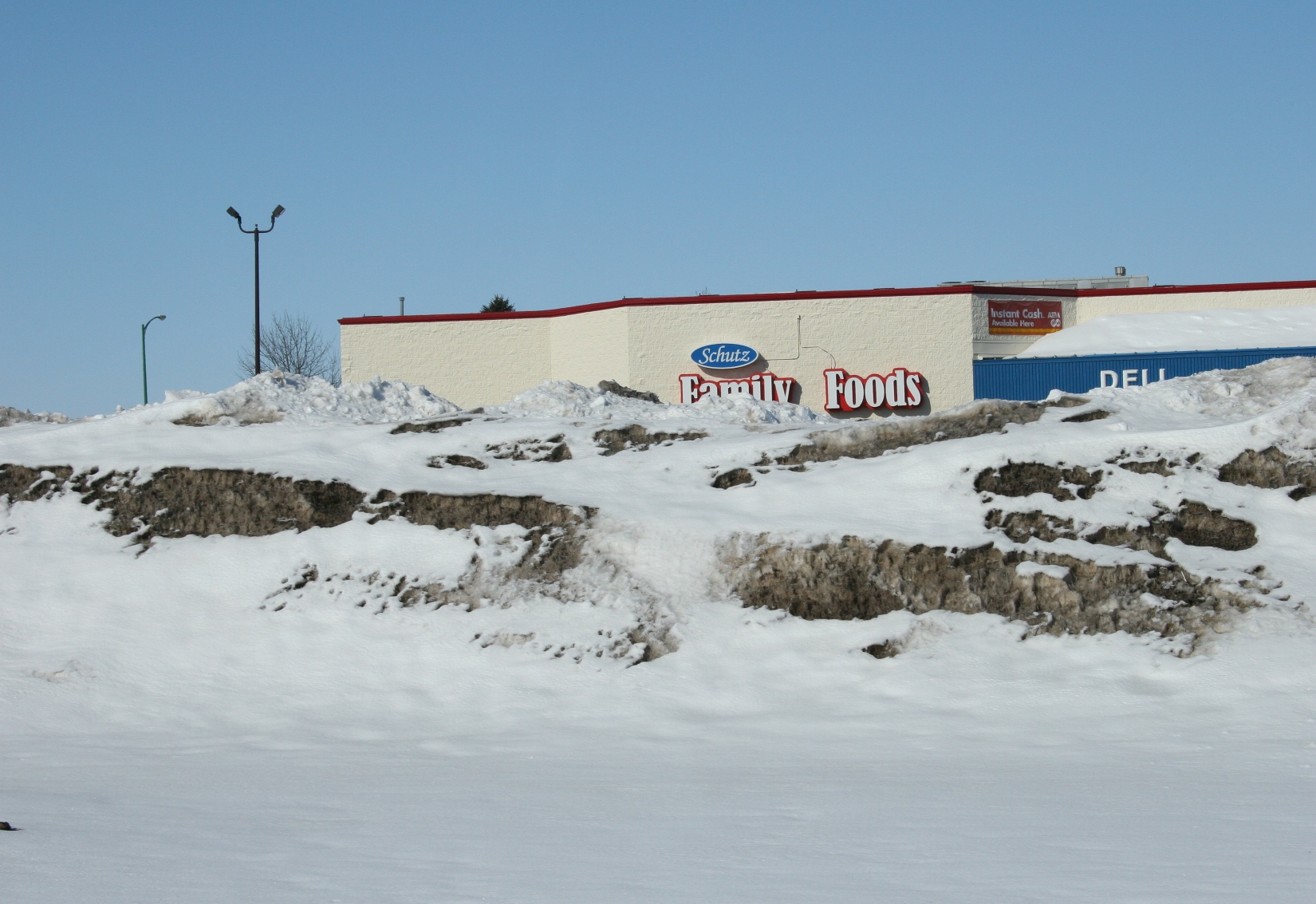
The snow had been pushed into mountains so high that only the top portion of Family Foods was visible from Highway 14 on the eastern side of Sleepy Eye.
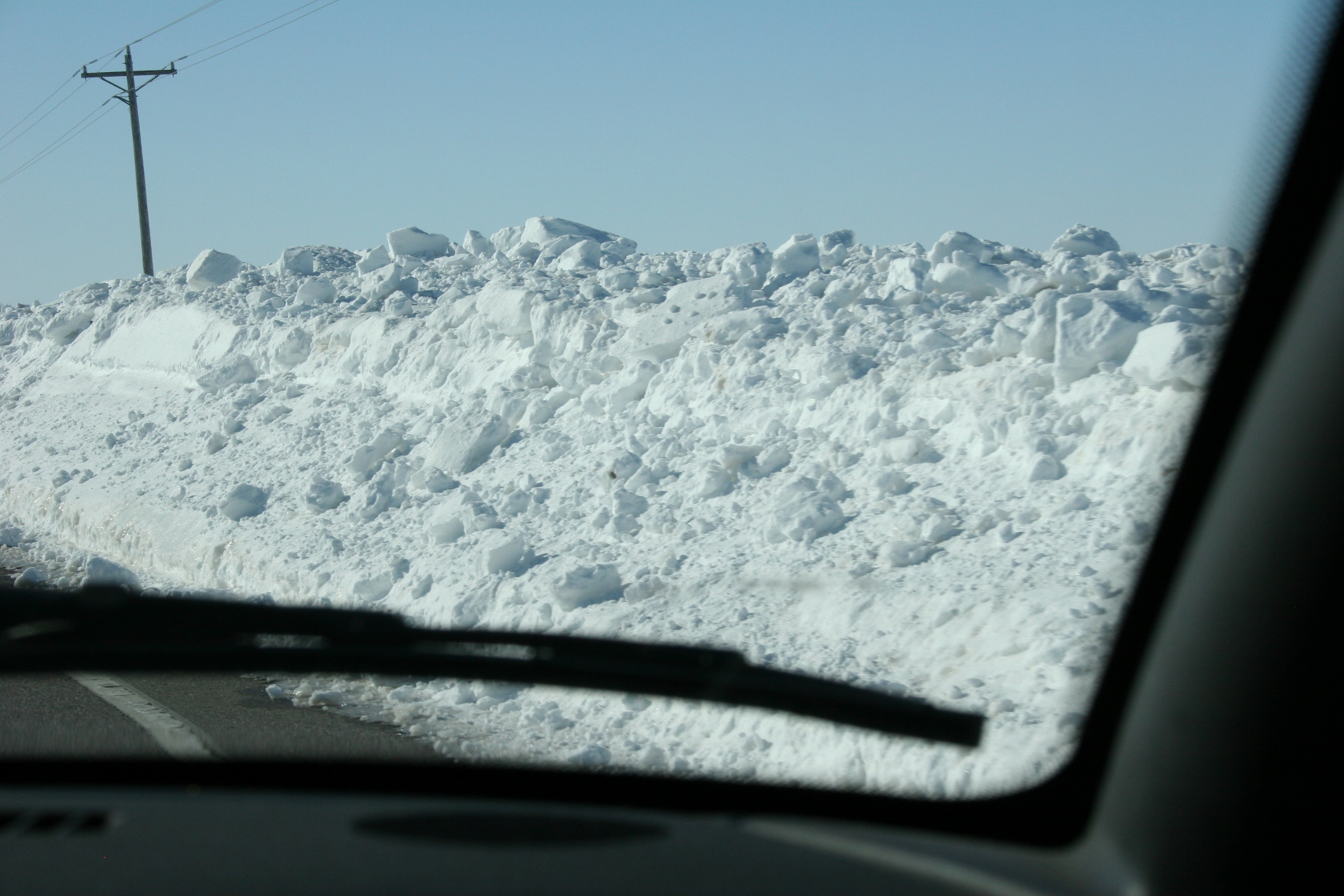
Snow pushed off Highway 14, as seen through the windshield of our car.
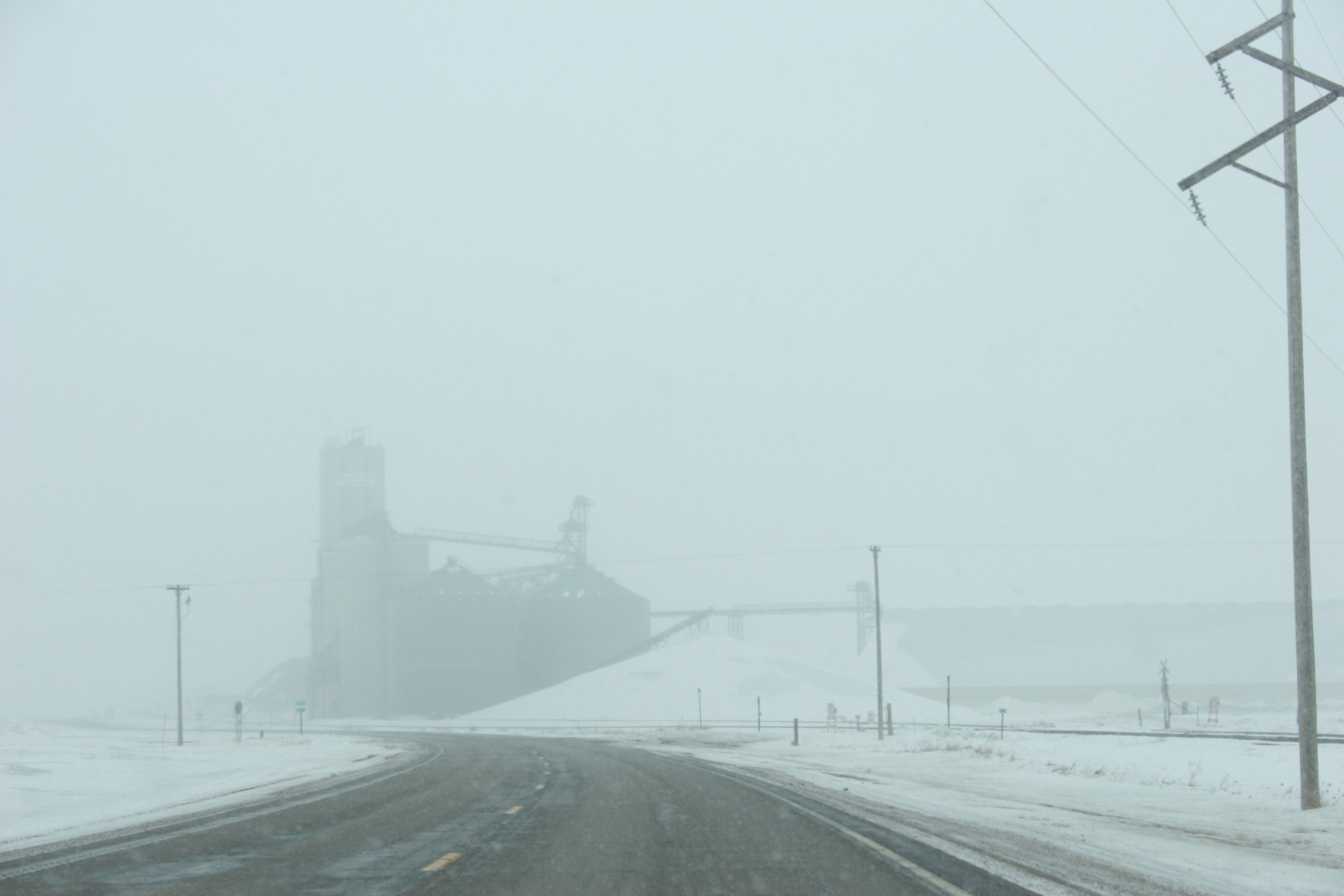
Visibility was reduced as we traveled along U.S. Highway 14 Sunday morning near Lamberton, creating this surreal image of the local grain elevators. The top seven images were taken on Saturday.
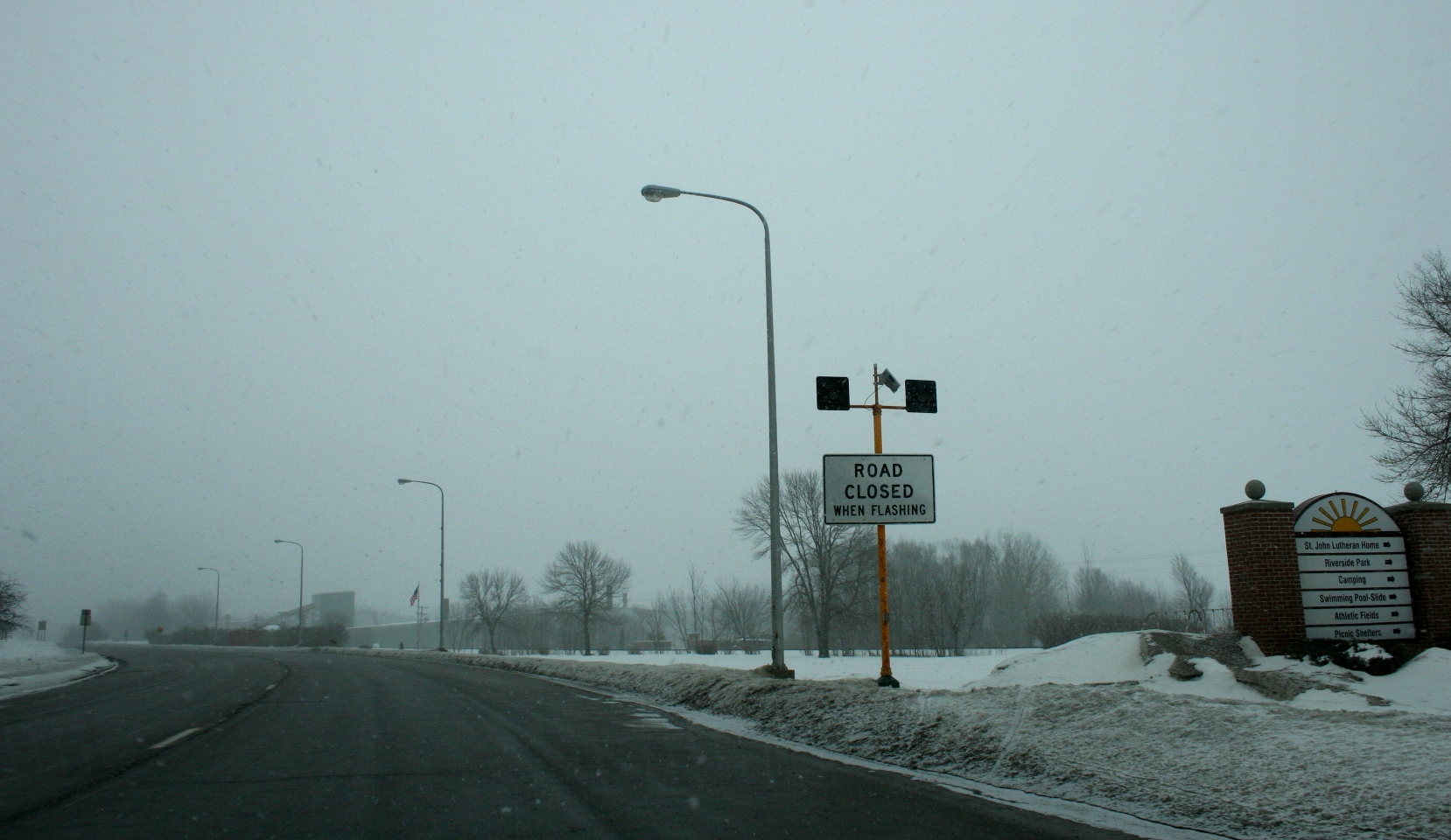
We were thankful the lights on this sign, on the east side of Springfield, were not flashing Sunday morning. During severe winter weather these lights are activated and roads are closed to keep motorists safe.
© Copyright 2011 Audrey Kletscher Helbling


 Minnesota Prairie Roots
Recent Comments