Minnesota Prairie Roots

Writing and photography by Audrey Kletscher Helbling

Town hall talk, a commentary March 20, 2025

An American flag flies in rural Minnesota. (Minnesota Prairie Roots copyrighted file photo)

I DEBATED FOR SEVERAL DAYS whether I should write this post, because it could be misconstrued as purely political. It is not. Rather this is a story about a grassroots gathering of people sharing information, ideas and opinions. Democracy at its core. This story is about us as Americans—listening, learning, agreeing or disagreeing, and letting our voices be heard.

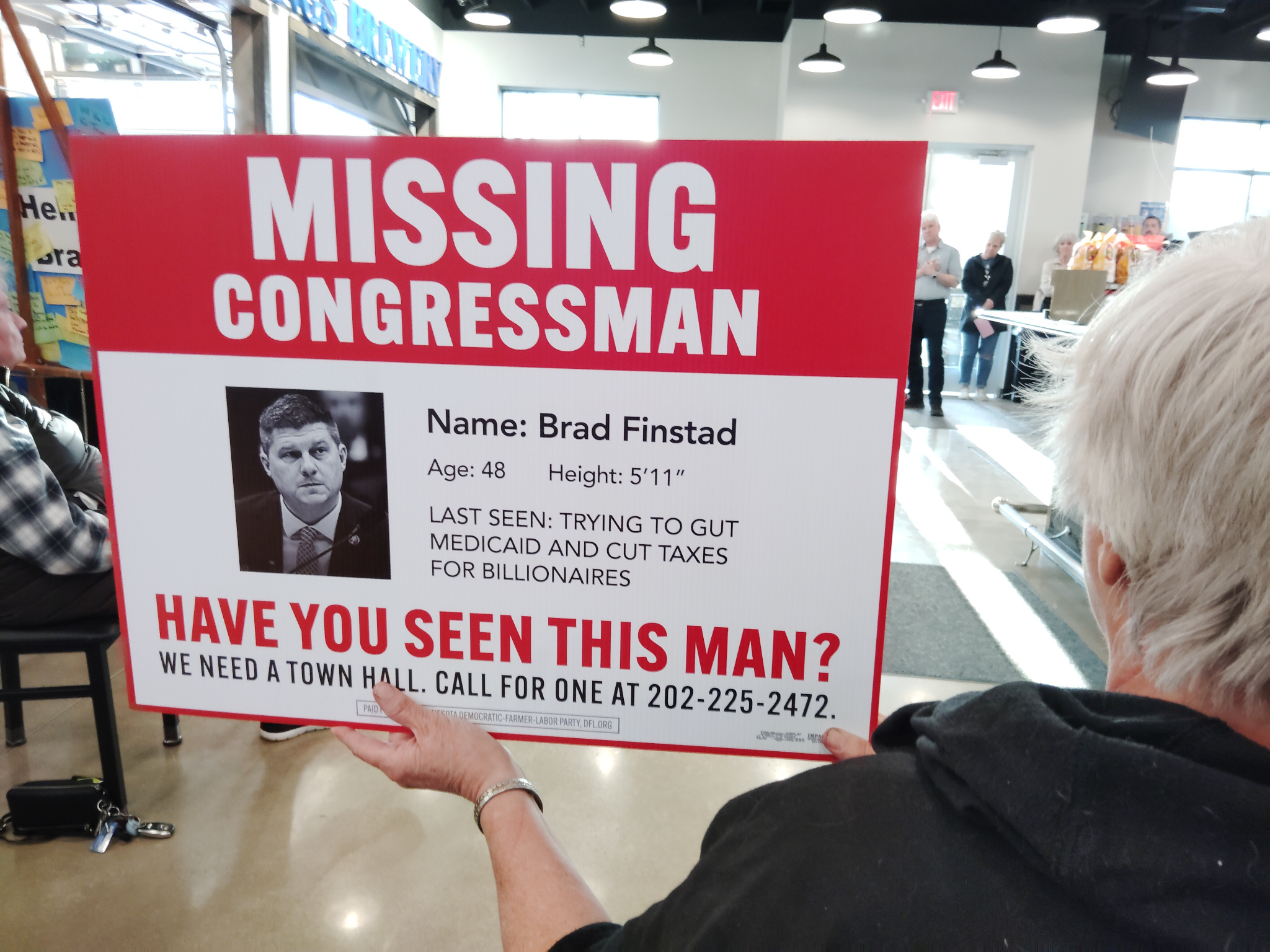
Tuesday evening I attended a town hall meeting in Faribault hosted by DFL Senate District 19. It was open to everyone, regardless of political affiliation. But the crowd was decidedly Democrat, as you would expect given the hosting group. Republican Brad Finstad, who represents the 1st Congressional District in Minnesota, was invited, but did not attend. His district includes parts of Goodhue, Rice (where I live), Steele and Waseca counties in rural southern Minnesota.

Some 300 constituents packed the space, overflowing into adjacent rooms. Yes. Even I was surprised by the turn out. That tells me a whole lot of people have concerns about what is currently happening at the federal level and how government action is, or will, impact them. I expect not a single American will be untouched, whether directly or indirectly, by slashes in government personnel and funding and/or by changes in domestic and foreign policies.

A sculpture at the Northfield Area Veterans Memorial. (Minnesota Prairie Roots copyrighted file photo)

Town hall organizers lined up speakers to address topics covering a broad range of subjects affecting a whole lot of people and programs—farmers, education, healthcare, seniors, veterans, those with disabilities, communication, nonprofits and much more. I was impressed by how well prepared these speakers were with facts and statistics. I learned a lot.

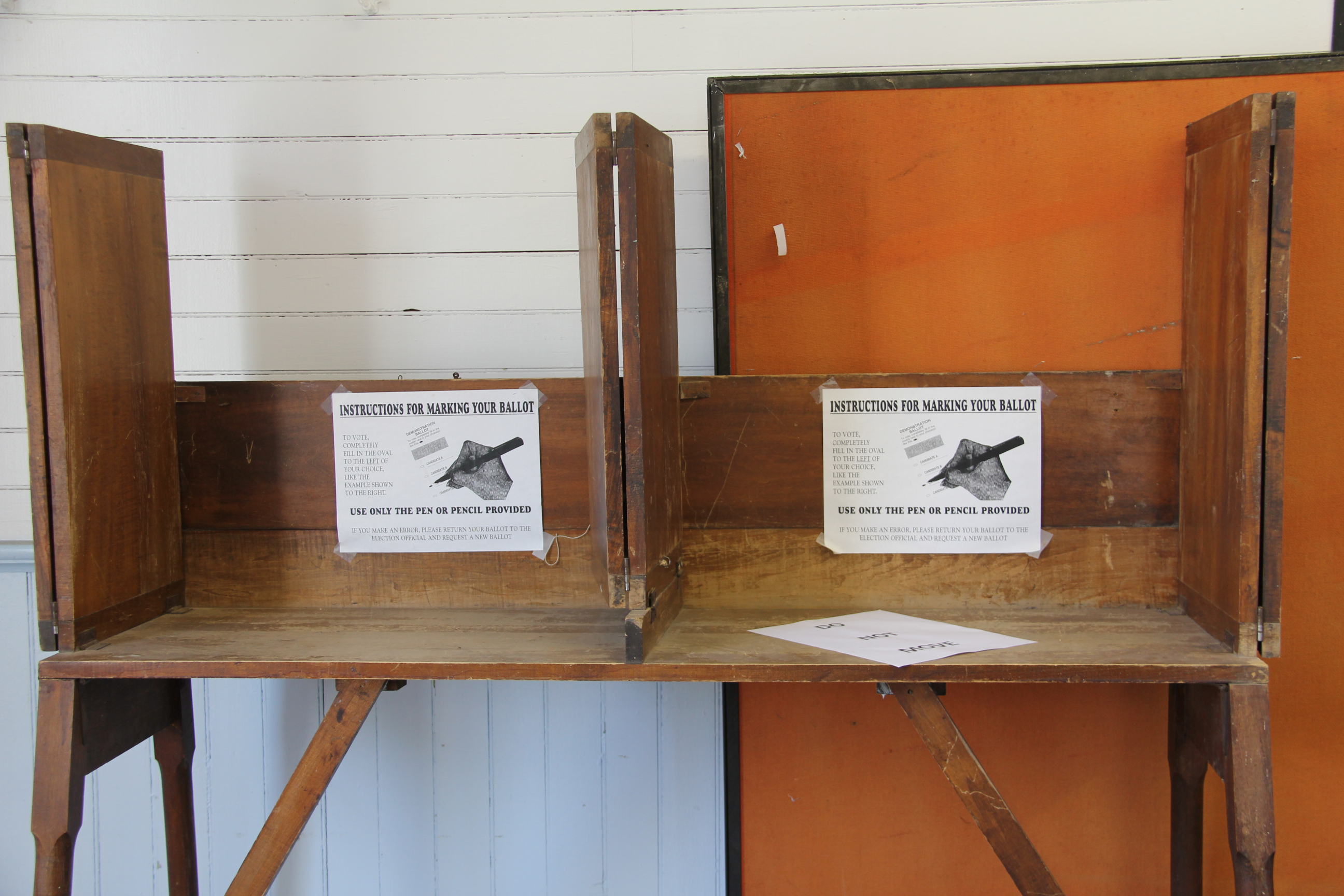
A vintage voting booth in the former Northfield, Minnesota, town hall. (Minnesota Prairie Roots copyrighted file photo)

I’m not going to give you a detailed report of what each speaker said. Rather, I want to share several messages or phrases which really resonated with me and which should resonate with every American, no matter who they voted for. The phrase “we the people” was repeated by one speaker and embraced by the crowd. “We the people” means us. Americans, not members of one political party or the other. And, yes, I’m well aware of how those words from the preamble to the Constitution are being used politically as a mantra of sorts. But in this context, “we the people” references our right to speak up, to be heard, to tell our elected officials what we think and what we would like them to do as our representatives in Washington DC. That can be done by attending town halls like this; the meeting was video taped and will be sent to Representative Finstad. We can be heard via phone calls, emails and letters. We the people have power in our voices, in our votes, whether Democrat, Republican or Independent.

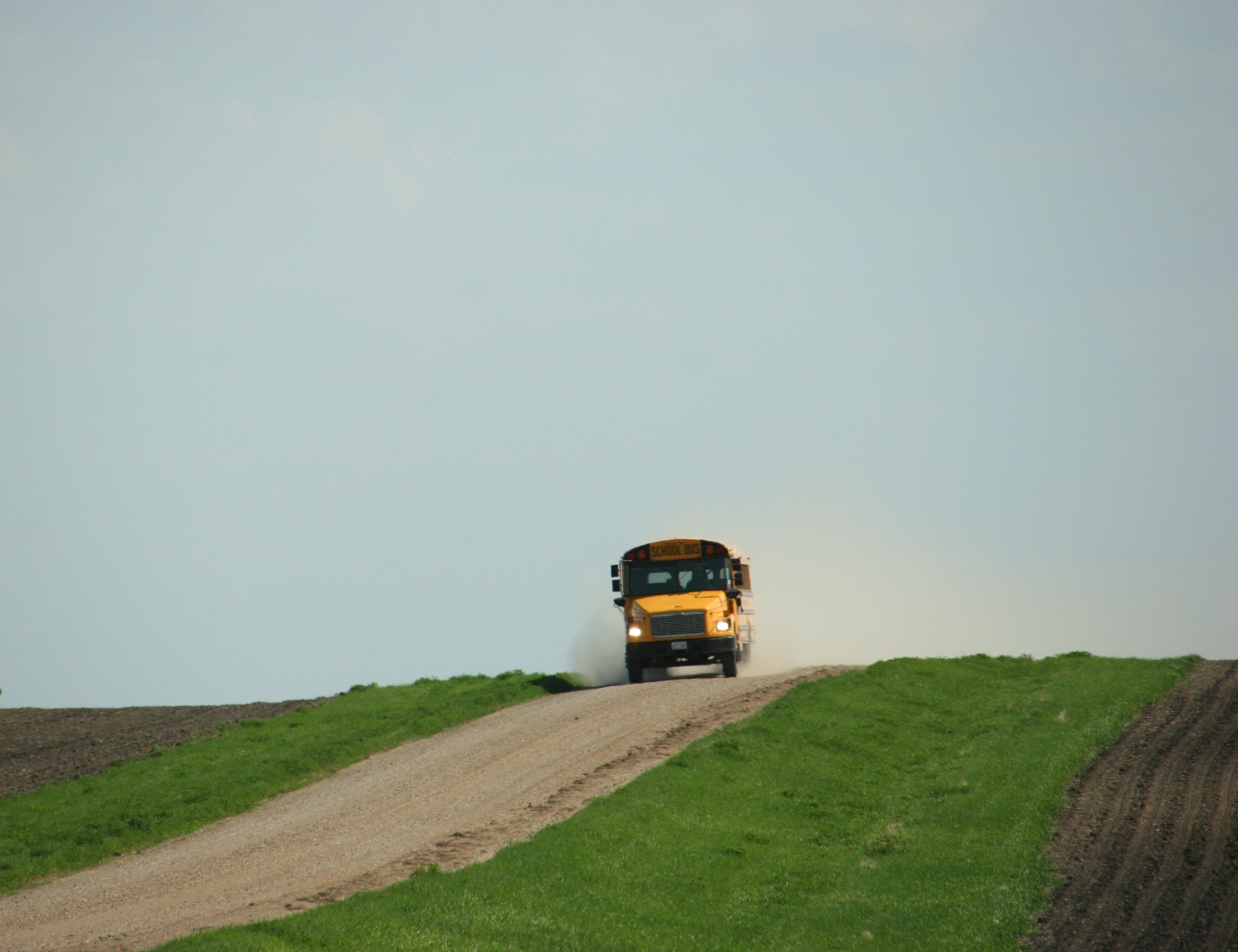
Photographed on a back country road near Morgan in southwestern Minnesota. (Minnesota Prairie Roots copyrighted file photo)

Secondly, a local educator asked the crowd and Finstad to ask themselves this question: “How are the children?” So, yes, how are the children, when many live in poverty, when federal funding for education is in imminent danger of being mostly cut, when…fill in the blank here? I think we can all agree that children are our future and we ought to care about their health, happiness, education and much more.

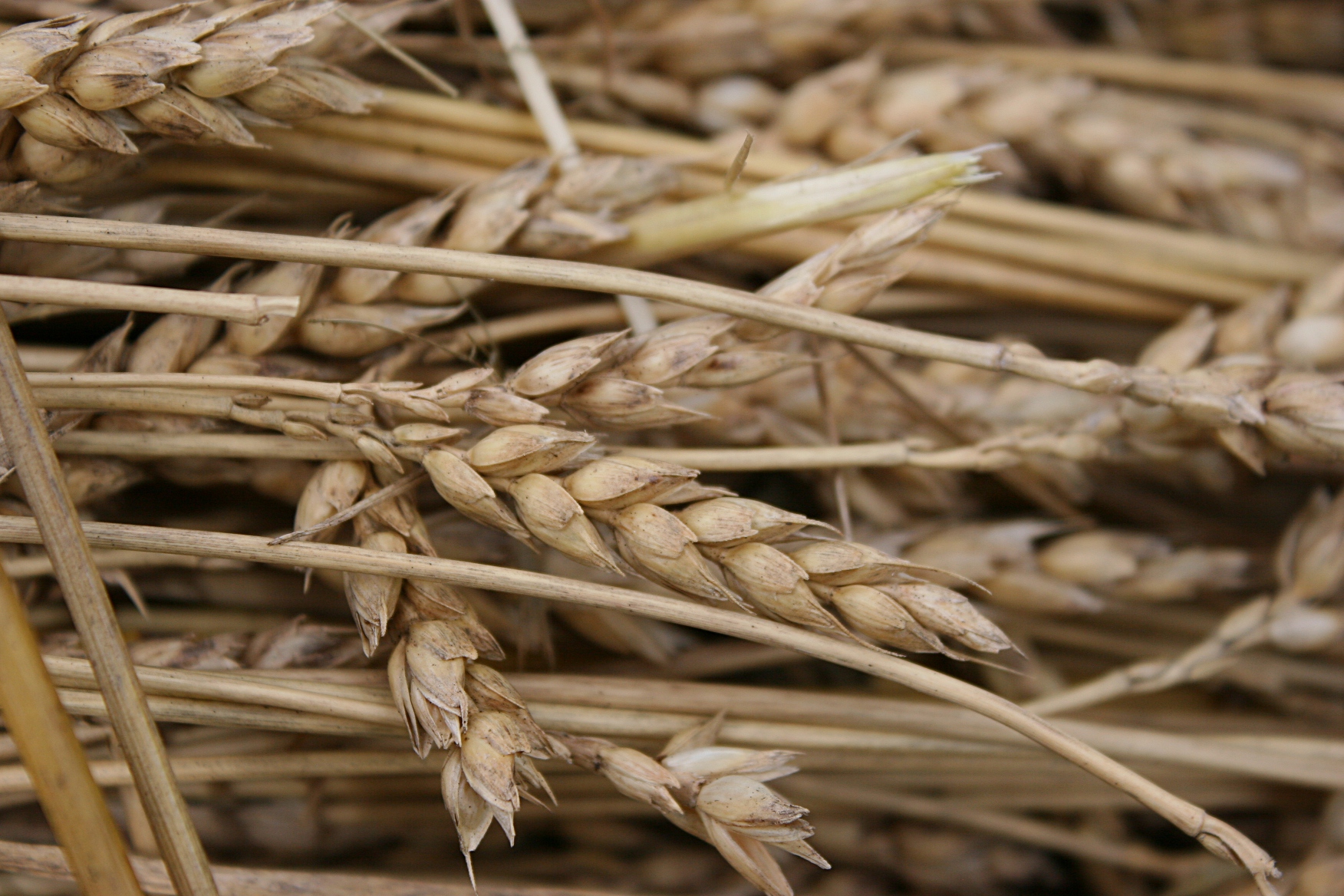
A pile of wheat. (Minnesota Prairie Roots copyrighted file photo)

Third, one of the speakers shared that, as someone of the Catholic faith, he is called upon to help others. He called upon Representative Finstad, who is also Catholic, to do the same. That means feeding the hungry (funding USAID, for example), protecting Medicaid and Social Security, etc. all of those ways and places we help one another as human beings in this country and abroad. Now I’m not Catholic; I’m Lutheran. Doesn’t matter. My faith compels me to show love, compassion and care for others, especially those in need. America once did that as a country. Generously. But that is changing. We have bounty and resources we can share to help starving children, to provide medical care, to help others in any way we can. It is the right thing to do as a nation blessed with great bounty.

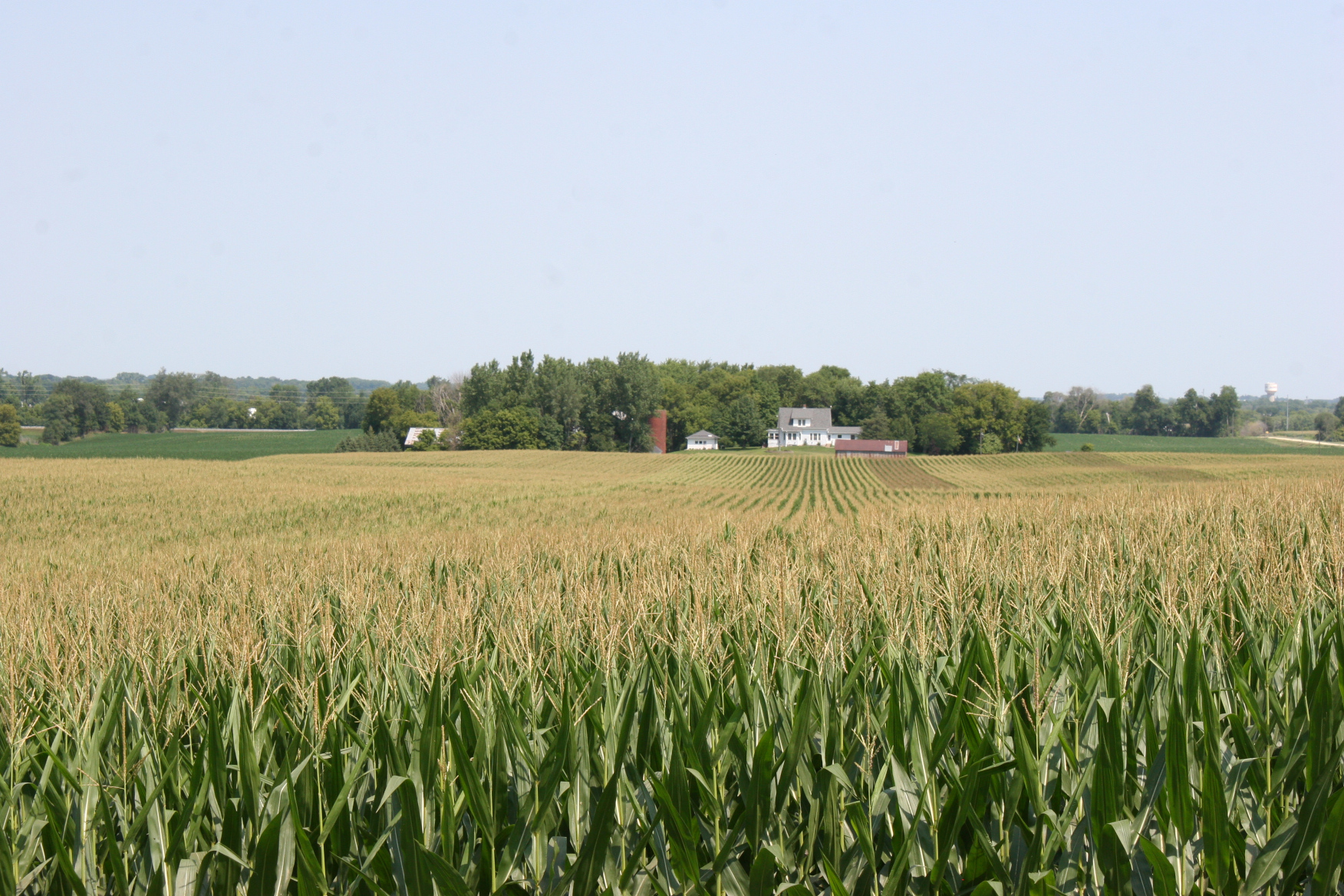
Rural Rice County, Minnesota. (Minnesota Prairie Roots copyrighted file photo)

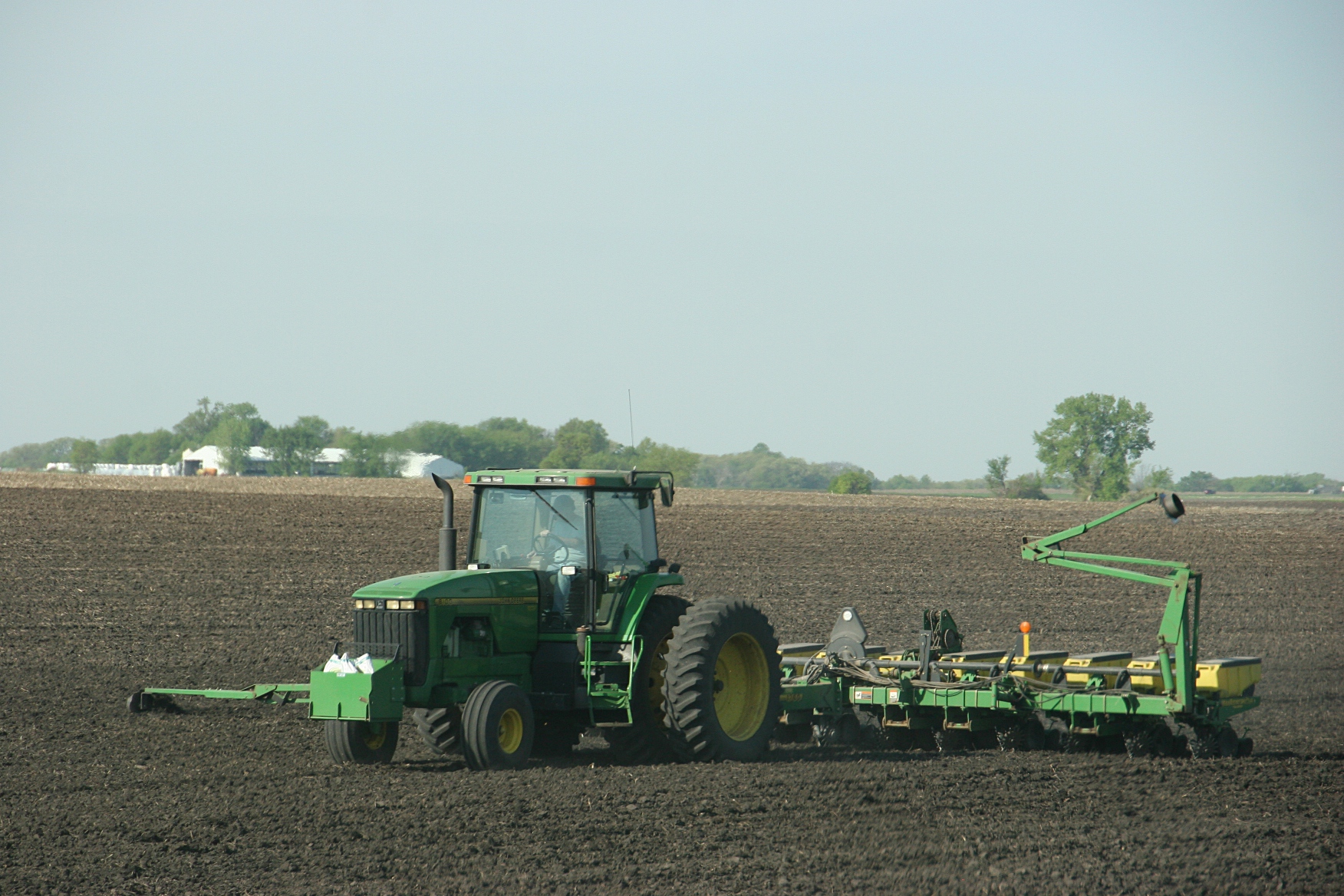
Fourth, a local farmer spoke about $3.2 million in contracts with farmers in our district which have now been broken by the U.S. government. The consequences will be devastating to those farmers who have already invested those federal monies in their operations. Trust has been broken, she said. I think we can all agree that when a legal contract is broken, it’s a breach of trust.

A symbol of freedom, an eagle sculpture at Veterans Memorial Park in Morristown, Minnesota. (Minnesota Prairie Roots copyrighted file photo)

There’s so much more I could share from that town hall session. But I want to conclude with this. I encourage you, if you have the opportunity to do so, attend a town hall meeting. Listen. Learn. Engage. Let your voice be heard. Remind your elected officials, too, that they need to listen, learn and engage.

FYI: A second Town Hall Meeting hosted by DFL Senate District 19 is set for 6 p.m. Sunday, April 6, at Mineral Springs Brewery, 210 N. Oak Ave., Suite 1, in Owatonna. It will follow the same format as the Faribault Town Hall with a moderator, speakers and an open mic. Representative Brad Finstad has been invited.

© Copyright 2025 Audrey Kletscher Helbling


Opinion: A concerning bill in Minnesota regarding mental health March 17, 2025

Filed under: Uncategorized — Audrey Kletscher Helbling @ 10:23 AM
Tags: , , , , , , , ,
(Minnesota Prairie Roots copyrighted file photo)

A BILL IS BEING INTRODUCED in the Minnesota Senate today that should alarm everyone, whether you live in Minnesota or not. That’s the addition of “Trump Derangement Syndrome” to the definition of mental illness under current state law.

Apparently this term has been floating around for awhile, although I just learned of it on Sunday. My jaw dropped. I could not believe what I was hearing on an evening newscast. Five Republican senators from central Minnesota have authored the bill, which will be introduced today in the state Senate and then referred to the Health and Human Services Committee. It reads in part as follows:

Subd. 40a. Trump Derangement Syndrome.

“Trump Derangement Syndrome” means the acute onset of paranoia in otherwise normal persons that is in reaction to the policies and presidencies of President Donald J. Trump. Symptoms may include Trump-induced general hysteria, which produces an inability to distinguish between legitimate policy differences and signs of psychic pathology in President Donald J. Trump’s behavior. This may be expressed by: (1) verbal expressions of intense hostility toward President Donald J. Trump; and (2) overt acts of aggression and violence against anyone supporting President Donald J. Trump or anything that symbolizes President Donald J. Trump.

My reaction was immediate and emotional. Why? First, this proposed legislation is an affront to anyone who has ever dealt with/deals with a mental illness or who has a family member or friend who has ever dealt with/deals with a mental illness. The National Alliance on Mental Illness lists 12 mental health conditions, including anxiety, ADHD, bipolar disorder, depression, OCD, postraumatic stress disorder, schizophrenia and more. One in five U.S. adults experience mental illness in a given year, according to NAMI. My guess is that each of the five senators proposing this change in state law has been touched in some way by mental illness, whether they admit it or not.

Now, just as we’ve been making strides in raising awareness about mental health and reducing the stigma, along comes a bill like this which stigmatizes, degrades and demoralizes. It’s insensitive, absolutely unnecessary and is politicizing mental health conditions.

The other component of this proposed change in state law which really concerns me is the wordage “verbal expressions.” Yes, that’s further defined as “intense hostility.” But who defines “intense hostility?” And what happens if you’re found to be “hostile” by whomever simply because you disagree? Perhaps you’re just “passionate.” There’s a lot to think about here.

I support free speech. We have the right to criticize, voice our opinions, speak our minds in a democracy. Or so I thought. Note that I don’t condone acts of aggression and violence against anyone, even if I don’t care for the individual or his/her policies.

But I do care about mental health.

© Copyright 2025 Audrey Kletscher Helbling

 

Raging blizzards March 5, 2025

Filed under: Uncategorized — Audrey Kletscher Helbling @ 6:01 AM
Tags: , , , , , , , ,
Blowing snow reduces visibility during a prior winter storm in Rice County. (Minnesota Prairie Roots copyrighted file photo)

AS I WRITE this Tuesday afternoon, a sense of foreboding looms. Grey, with a tinge of otherworldly light, defines the sky. Branches of bare trees lean. Unbalanced. Darkness encroaches, presses upon the earth with an anticipatory heaviness. By the time you read this, my area of southern Minnesota will be under siege with a full-blown blizzard. Unless the weather forecasters are wrong.

But this time the forecast of up to eight inches of snow with wind gusts topping 55 mph seems likely. I’ve already asked Randy to stay home from work because driving 24 miles in white-out conditions would not be smart. Or safe. The National Weather Service warns of treacherous travel, potentially life-threatening conditions. Power lines and trees laden with heavy wet snow could snap.

The weather rather matches my mood. I feel a sense of foreboding on so many levels. I struggle sometimes to see the light for the grey skies, for the oppressiveness that prevails. I wonder what will happen next. What storm is brewing?

(Minnesota Prairie Roots copyrighted file photo)

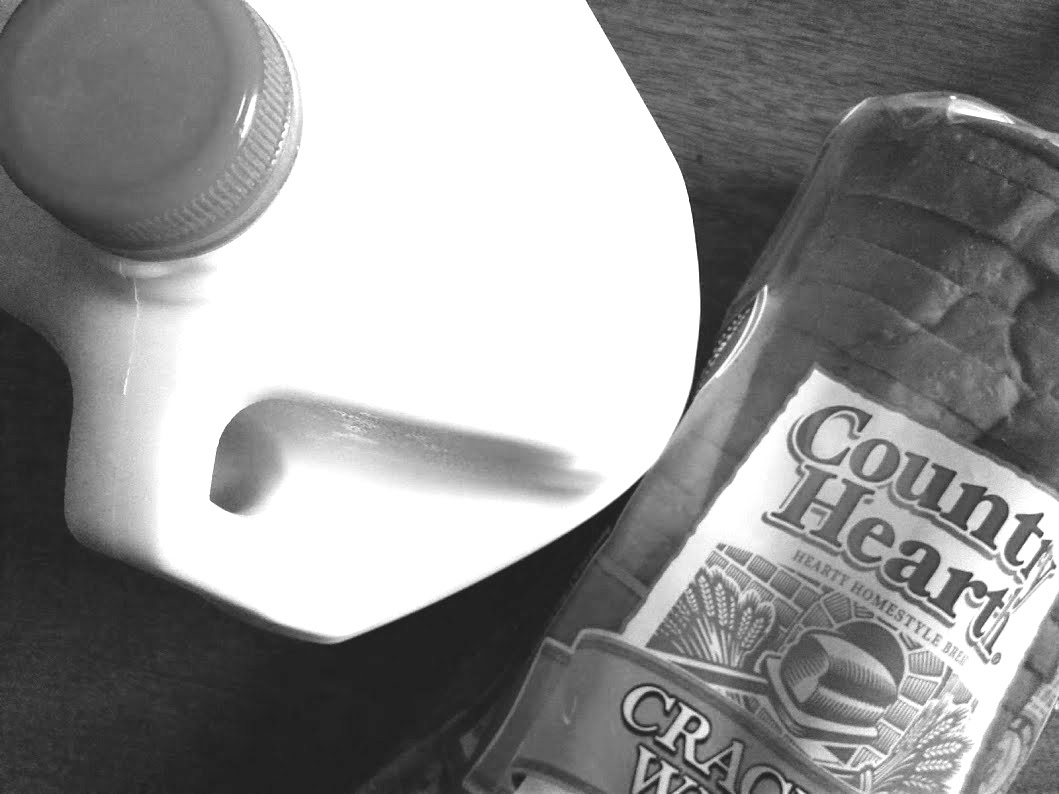
During a weather event, I can prepare. Take precautions. Buy bread and milk (note I didn’t write, “buy eggs”). Stay home. Shelter in place. Face whatever comes. I’ve lived through blizzards, wind storms and even a tornado. I am a hardy American who happens to live in Minnesota, next to our wonderful Canadian neighbors.

And so that is the approach I must take. Stand strong against the negative forces. Speak up. Continue to show compassion, care, kindness, love. Hold hope. Understand that blizzards don’t last forever, although this one seems never-ending.

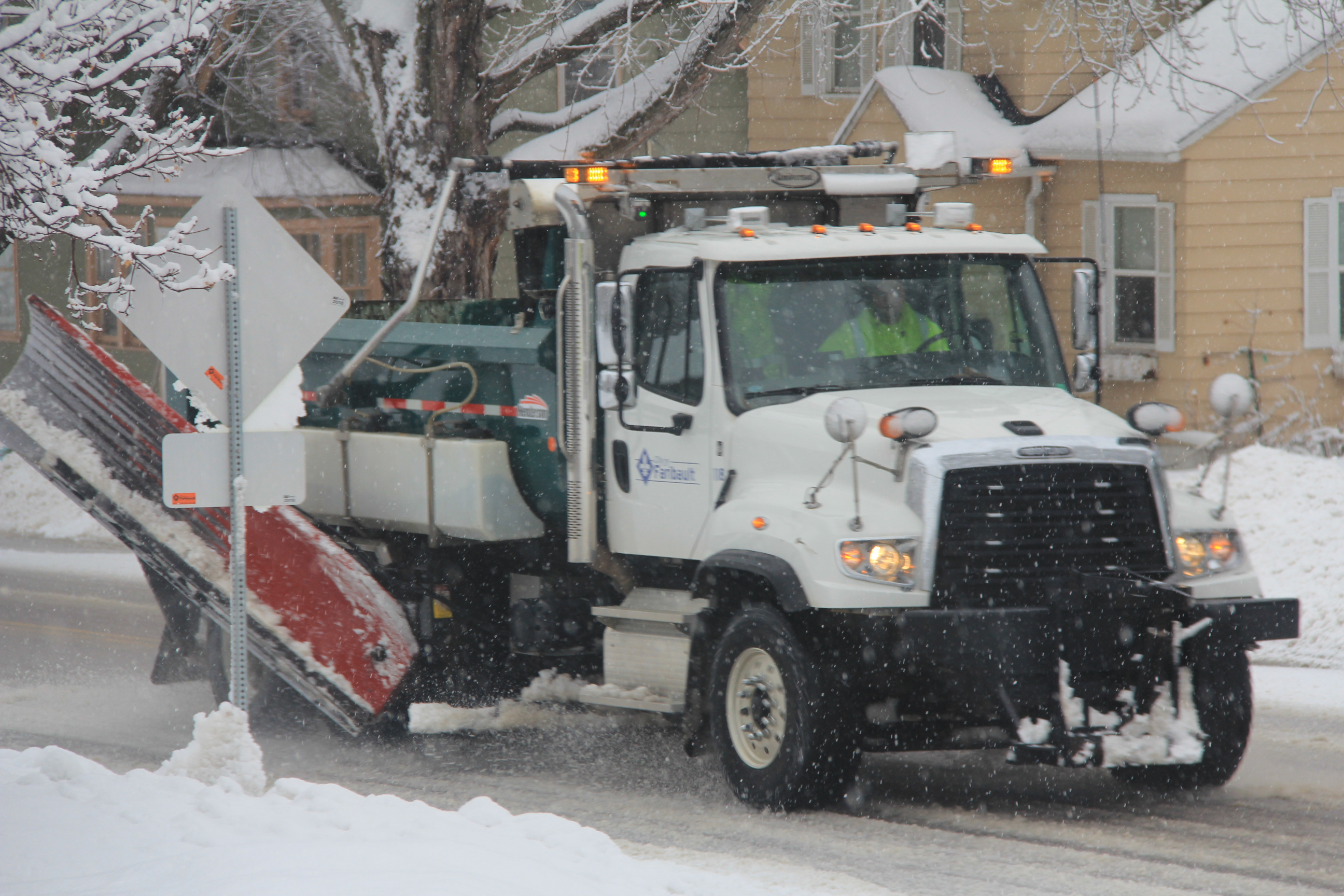
A city of Faribault snowplow hits the road during a past winter storm. (Minnesota Prairie Roots copyrighted file photo)

Every single snowplow matters in removing burdensome snow from roadways. Imagine what a fleet of snowplows can do against the deepest snow drifted by raging winds. I’ve seen the results. Roads are cleared. The snow melts. The sun shines. Winter ends. The trees bud green. That is my visual hope during these grey days tinged with an otherworldly light.

© Copyright 2025 Audrey Kletscher Helbling

 

Commentary: The importance of a free press in a democracy March 4, 2025

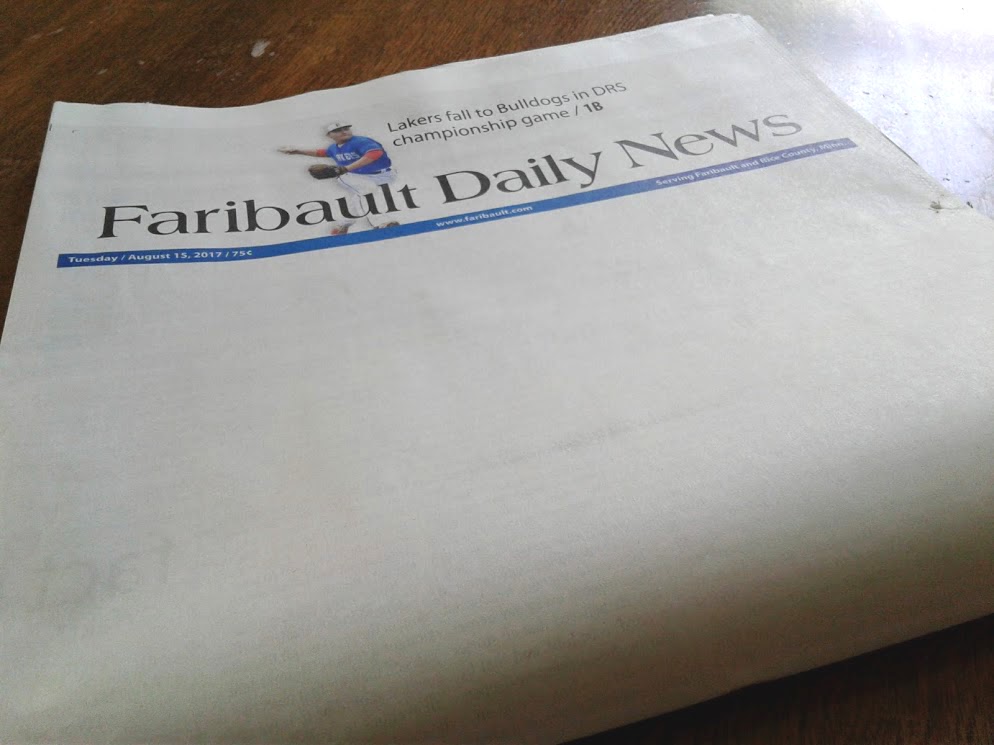
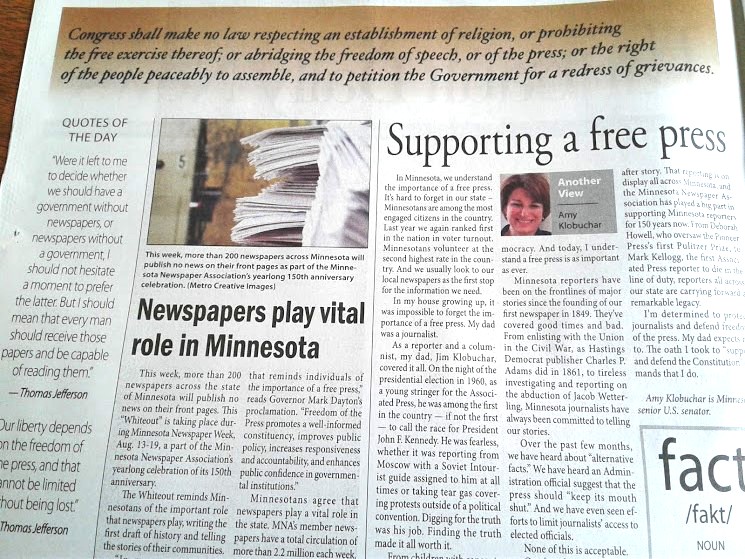
This is the front page of the August 15, 2017, Faribault Daily News. It was part of “Whiteout,” an effort during Minnesota Newspaper Week to remind readers of the importance of newspapers. Imagine if there was no free press. (Minnesota Prairie Roots copyrighted file photo 2017)

I AM WRITING THIS OPINIONATED POST with no apologies. As an American woman with a college degree in mass communications (news/editorial emphasis) and experience as a newspaper reporter, I’ve always felt strongly about a free press. Even more so today with threats to that freedom. If you are unaware of current actions against the press, research and read. A free press is a vital part of democracy.

The second page of the Daily News from the August 15, 2017, issue explains the importance of a free press and its role. (Minnesota Prairie Roots copyrighted file photo 2017)

Journalists serve, among other roles, as government watchdogs. That means they, ideally, provide accurate and balanced reporting on government, at all levels. The “fourth estate” holds the government accountable via the stories they write. Not agenda-driven stories shaped by a biased editorial perspective or by information spoon fed to them by a press secretary. But rather stories based on quotes, actions, interviews, facts. Good solid reporting. Not misinformation, disinformation and/or propaganda. I must, though, state the obvious here. Not all sources speak truth to the media. And not all media write truth.

Suppression and criticism of the press are nothing new. Some of the criticism is deserved. Much of it is not. You may like journalists or you may not. That’s not the point. The point is that we need a free press, one unsuppressed/uncensored by those who are in positions of power. If you think otherwise, then look to history and to countries under authoritarian leaders, dictators. Under those leaders, messaging is/has been carefully controlled. Manipulation, intimidation and absolute power rule.

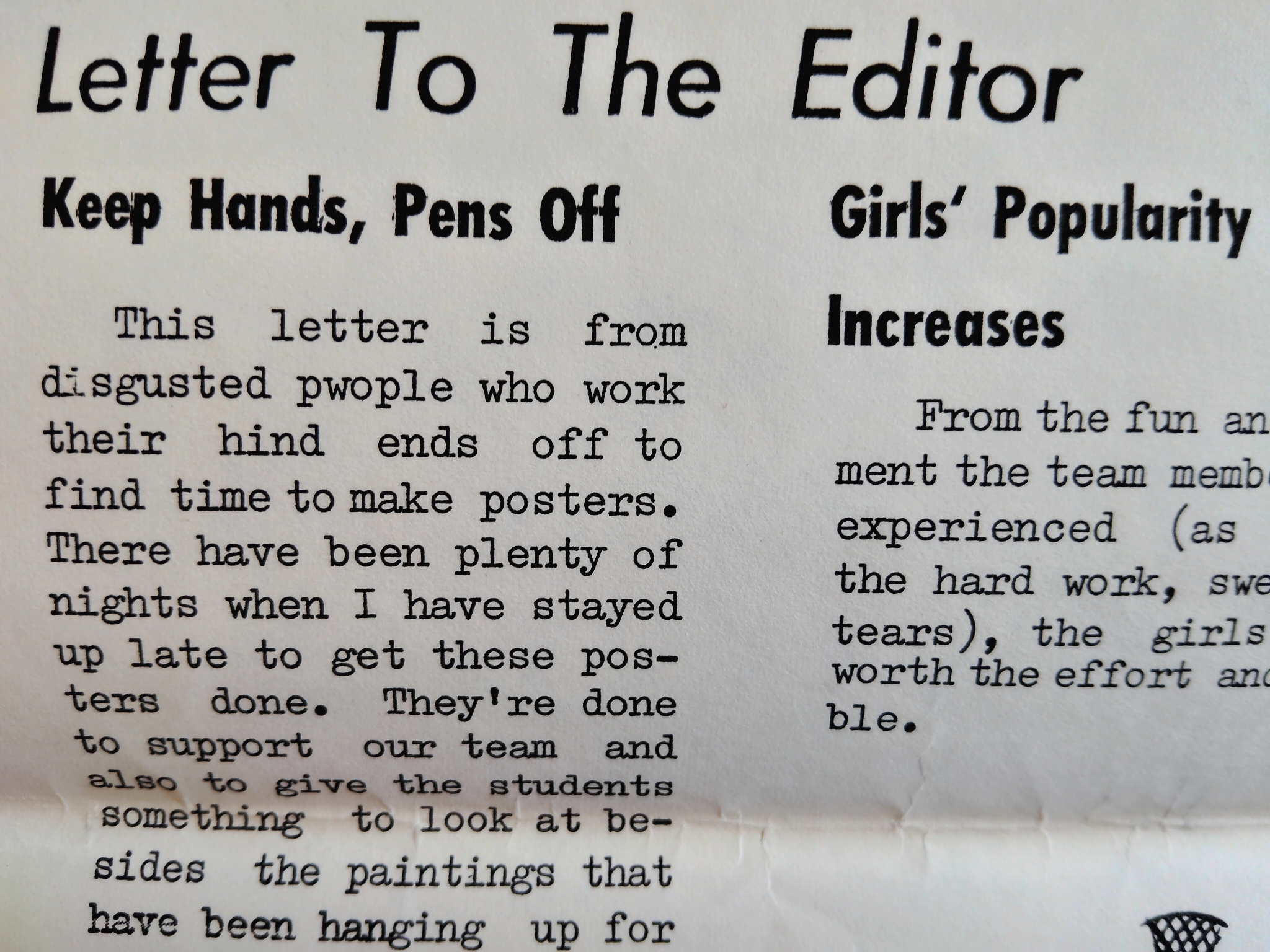
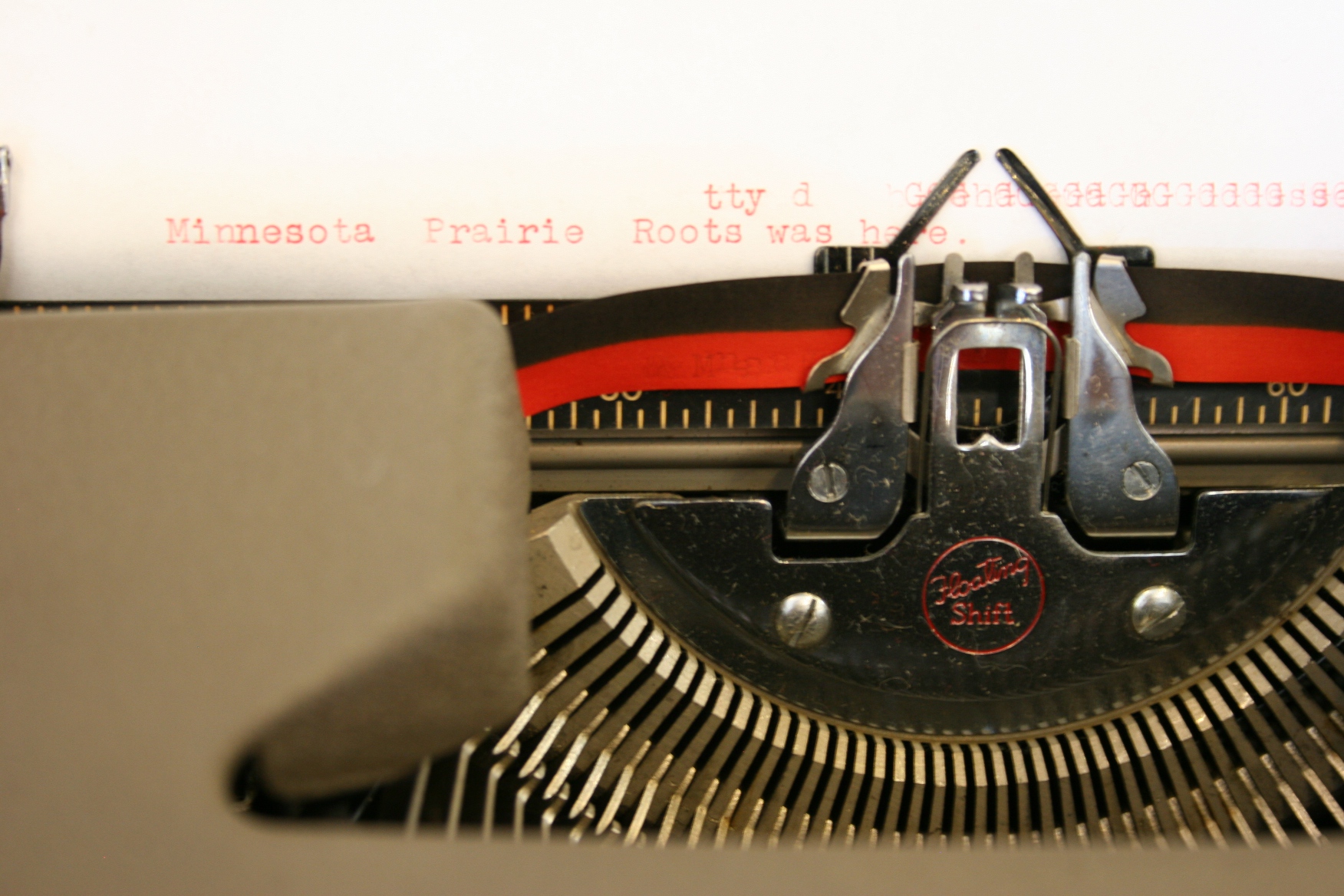
I started my newspaper career at a small town Minnesota weekly, typing my stories on a manual typewriter. This photo was taken in a Hastings antique shop, where I left a message. (Minnesota Prairie Roots copyrighted file photo)

During my journalism career, I have not been immune to those who wanted to control what I wrote. They did that sometimes in a back door way via criticizing me and my work and/or by shutting me out. Thankfully, my editors always had my back.

Let me give you some examples. While covering a school board meeting for a small town southern Minnesota weekly, a teacher said some things that were controversial. Decades out, I can’t recall details. But I do remember how this teacher fumed about my quoting him in a news story. The quote did not reflect favorably on him. But he made the statement at a public meeting. And it needed to be reported. Readers could decide what they thought of his comments.

In that same community, a local realtor called me out for quoting him in a story about a city council meeting. Again, I don’t remember details. But he was absolutely irate and verbally attacked and bullied me for what I’d written. (Sound familiar? Bullying. Fake news.) My reporting was accurate. I was not about to cave to his pressure. Once again, my editor stood up for me. He knew I demanded the best of myself in my work and that I would settle for nothing less than fair and accurate reporting.

Flash ahead to a different small town where I, once again, found myself despised. This time by a school superintendent. He didn’t like that I covered a student walk-out. It happened. I observed, interviewed him and students. And he retaliated. Every time I attended a school board meeting, he refused to give me an agenda or the packet of information distributed to board members and to the editor of the local weekly newspaper. (I worked for a regional daily.) He refused to talk to me. He made no effort to hide his disdain or to make information accessible to me. His was clearly an effort to stop me from reporting on anything school related, including school board meetings. His strategy did not work.

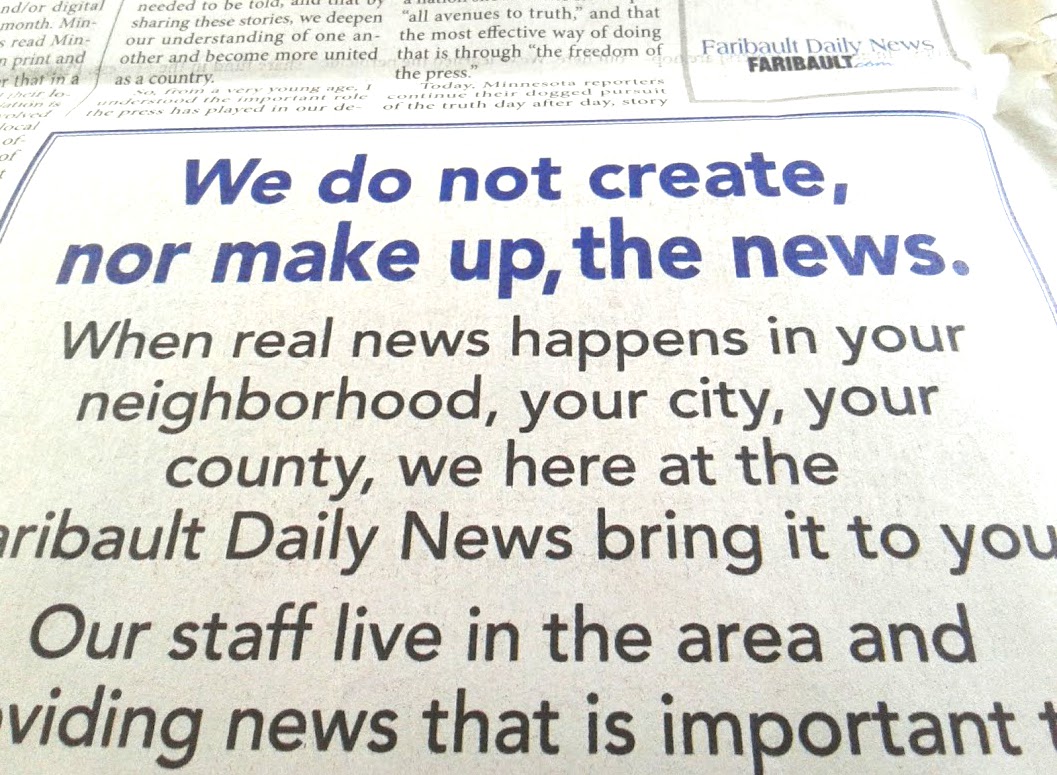
Published in the Faribault Daily News in August 2017 as part of the “Whiteout” campaign. (Minnesota Prairie Roots copyrighted file photo 2017)

Attacks on journalists have become more rabid in recent years. I think we can all agree on that. Don’t kill the messenger for the message he/she delivers. Respect those journalists who truly are doing their best to report fairly and accurately and who hold themselves and their work to high standards. Turn to those reliable sources for news.

Certainly, some media outlets and journalists are incredibly biased with specific agendas. They have become mouthpieces for government leaders, political parties and issues. I’m not praising those who are manipulating people to shape public opinion and to push ideas. Unfortunately, though, I see more and more government leaders, politicians and others targeting dedicated-to-the-craft journalists. These hardworking reporters are being shut out, degraded and abused because they accurately report what they see and hear in their watchdog role. Kinda like me with that small town school superintendent decades ago, just a lot more amplified and with much more serious consequences.

Thankfully, plenty of journalists committed to writing the truth still remain. They are strong men and women of integrity and morals who give a damn about democracy and a free press. Now, more than ever, we need to recognize the value of a free press, underscore FREE. Even though I no longer work as a newspaper journalist, I still strongly value freedom of the press. It is, always has been, a cornerstone of democracy.

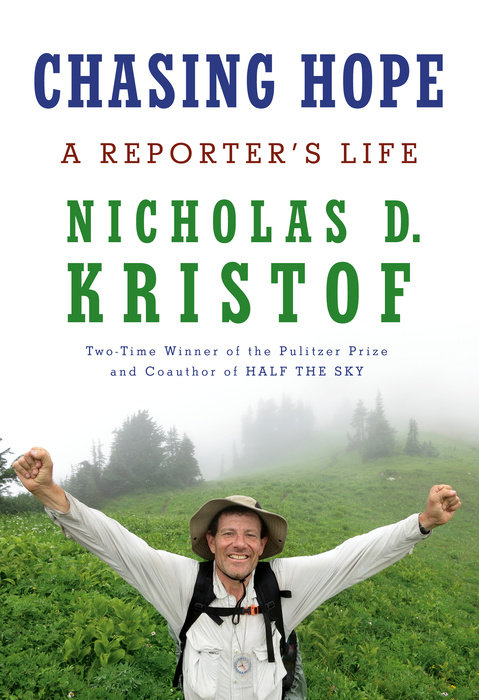
(Book cover sourced online)

FYI: I encourage you to read Chasing Hope—A Reporter’s Life by Nicholas D. Kristof, currently an op-ed columnist for The New York Times. The two-time Pulitzer Prize-winning journalist worked as a foreign correspondent in Hong Kong, Beijing and Tokyo. He witnessed some pretty horrible atrocities—including the massacre in Tiananmen Square, the genocide in Darfur and much more—and offers remarkable insights via his experiences, observations and exceptional storytelling.

Of special note in Kristof’s book is a reference to an August 2008 campaign rally in Lakeville, Minnesota, which the author calls “one of the finest moments in American politics in my lifetime.” Kristof shares a story about Senator John McCain, who was then vying for the Republican Presidential nomination. I refer you to pages 239 and 240 in Chasing Hope. This book is worth the read for that story alone. It will give you hope. And, no, I’m not telling you more. Read the book.

© Copyright 2025 Audrey Kletscher Helbling

 

An essay inspired by books in a sharing library February 19, 2025

Filed under: Uncategorized — Audrey Kletscher Helbling @ 5:00 AM
Tags: , , , , , , ,
A photo I took of a sharing library in Pine River, Minnesota, prompted me to write this essay. (Minnesota Prairie Roots copyrighted photo July 2024)

IF I WAS A REBEL, and I’m not (although a streak of defiance runs through my veins), I’d write a strongly opinionated piece on a controversial topic.

But I don’t like conflict. I prefer status quo to chaos, normalcy to the unexpected. Yet, that is not reality. Life can be easy and hard and good and awful and a whole mix of everything. Sort of like Sideways Arithmetic from Wayside School. I like school. Never liked math.

Nor do I particularly like William Shakespeare’s work with the exception of Romeo and Juliet. Who doesn’t love a love story, even if tragic? Shakespeare’s other writing seems archaic, boring and impossibly unrelatable. I offer no apologies for that view.

I am decidedly a fan of Laura Ingalls Wilder, who certainly has her critics, too. But her detail-rich writing in Little House in the Big Woods, On the Banks of Plum Creek, Little Town on the Prairie and more inspires me as a writer. Plus, I grew up some 25 miles from Walnut Grove, smack dab in the middle of the Minnesota prairie. When you live in a land of wide open spaces, big skies and sweeping winds, you approach writing from a detailed perspective that engages all the senses.

I can’t make much sense of sweeping Absolute Power, which has nothing to do with the senses. Not common sense anyway. Common sense tells me Spider Man is not real. Nor are heroes of the Justice League. Yet, I’d like to call in Superman, Wonder Woman and other superheroes to tackle the threats facing us today, and save the day.

Or perhaps strong-willed orphan Sally Lockhart of The Ruby in the Smoke could clear the smoke obscuring vision. Her experiences dealing with unseemly types qualifies her, in my opinion, to take on anything. Like uncovering lies, aggression, narcissism, manipulation and diversionary tactics. I appoint her to abolish the Department of Government E, or something like that, for starters.

Yes, there’s lots to contemplate. But today I’ve escaped to the sharing library, visually pulled a few books from the shelf to create this essay. And if nothing I’ve written resonates with you, then consider Lunkers Love Nightcrawlers. Head to the lake with a container of nightcrawlers, drop your baited line in the open water or drill a hole in the ice. Fish for answers. Good luck.

#

NOTE: I’ve underlined the titles of books from the sharing library which I’ve incorporated into this essay. This essay is not the piece I wrote for the contest I referenced here last week.

© Copyright 2025 Audrey Kletscher Helbling
 

Peace, just peace November 5, 2024

Filed under: Uncategorized — Audrey Kletscher Helbling @ 5:00 AM
Tags: , , , ,
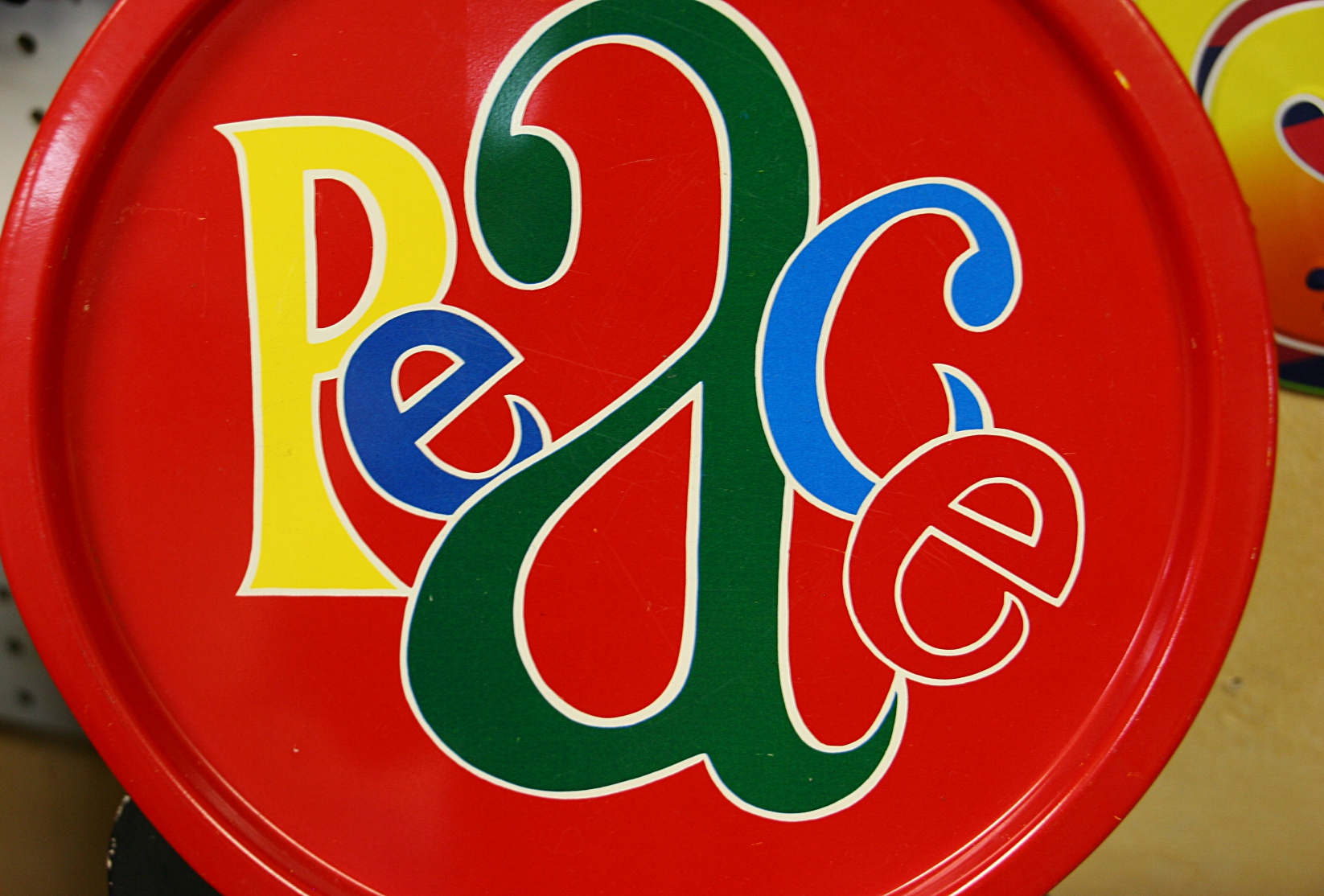
I purchased this retro peace tray at an antique shop in St. Charles, MN., in 2015. (Minnesota Prairie Roots copyrighted file photo 2015)

PEACE. Sometimes it feels especially elusive. And today, the day before the election (because I am writing this Monday afternoon), peace eludes me. I am so unsettled that I am binge-eating potato chips. I can’t recall the last time I had a bag of potato chips in the house or engaged in this type of eating behavior. This just is not me, someone who tries to eat healthy. But I am stressed.

I hope I feel differently in a few days. Feelings about my personal peace aside, I hope peace washes over the entire nation. We need it.

We need a calming, a break from all the negativity and barrage of craziness (a word I don’t often use and don’t particularly like, but it fits here). We need a return to normalcy and decency and respect.

We need to start caring about one another again, to stop the attacks and finger pointing and all the behavior that spirals us into discord. There’s been way too much bullying, too much name-calling, too many lies, too much degrading and hateful rhetoric. Too much. I want it to end. And I imagine I am not alone in feeling that way.

Peace. I’m talking inner peace. I’m talking peace within families and neighborhoods and schools and communities, where, even if we disagree, we can get along, set aside our differences, listen, compromise, work together.

When I was coming of age in the tumultuous early 1970s, peace was a buzzword. It was everywhere. On protest signs, in fingers flashed, in words spoken, on clothing, in pleas made… Looking back to that time period, I recognize that peace felt elusive then, too. But somehow we found our way back, until we didn’t.

NOTE: As the creator of this blog, I moderate all comments. This post is not meant to spark political sparring, but rather reflects my thoughts and feelings.

© Copyright 2024 Audrey Kletscher Helbling
 

Vote, just vote November 4, 2024

Filed under: Uncategorized — Audrey Kletscher Helbling @ 5:00 AM
Tags: , , , , , ,
This shows a portion of a photo by Steve Somerstein featured in a 2015 exhibit, “Selma to Montgomery, Marching Along the Voting Rights Trail,” at St. Olaf College in Northfield, MN. (Minnesota Prairie Roots file photo)

FOR THE FIRST TIME EVER, I voted early, in person. I waited in line for 30 minutes to cast my ballot. I didn’t mind. And I’m not a patient person. But this, this election, especially, I wanted to ensure that nothing would stop me from voting. Because we never know what life will throw at us at the last minute, I decided voting early was the right choice for me.

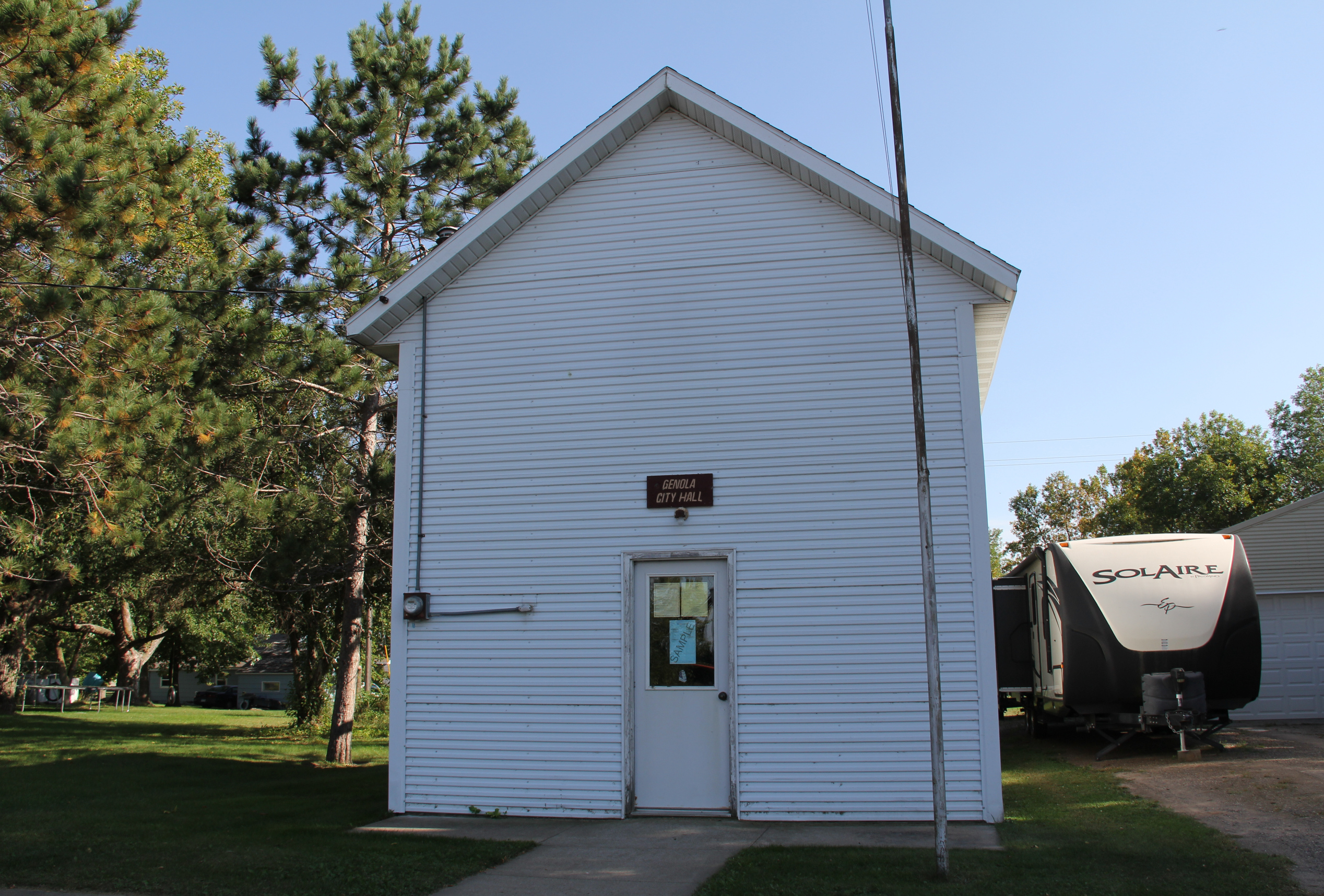
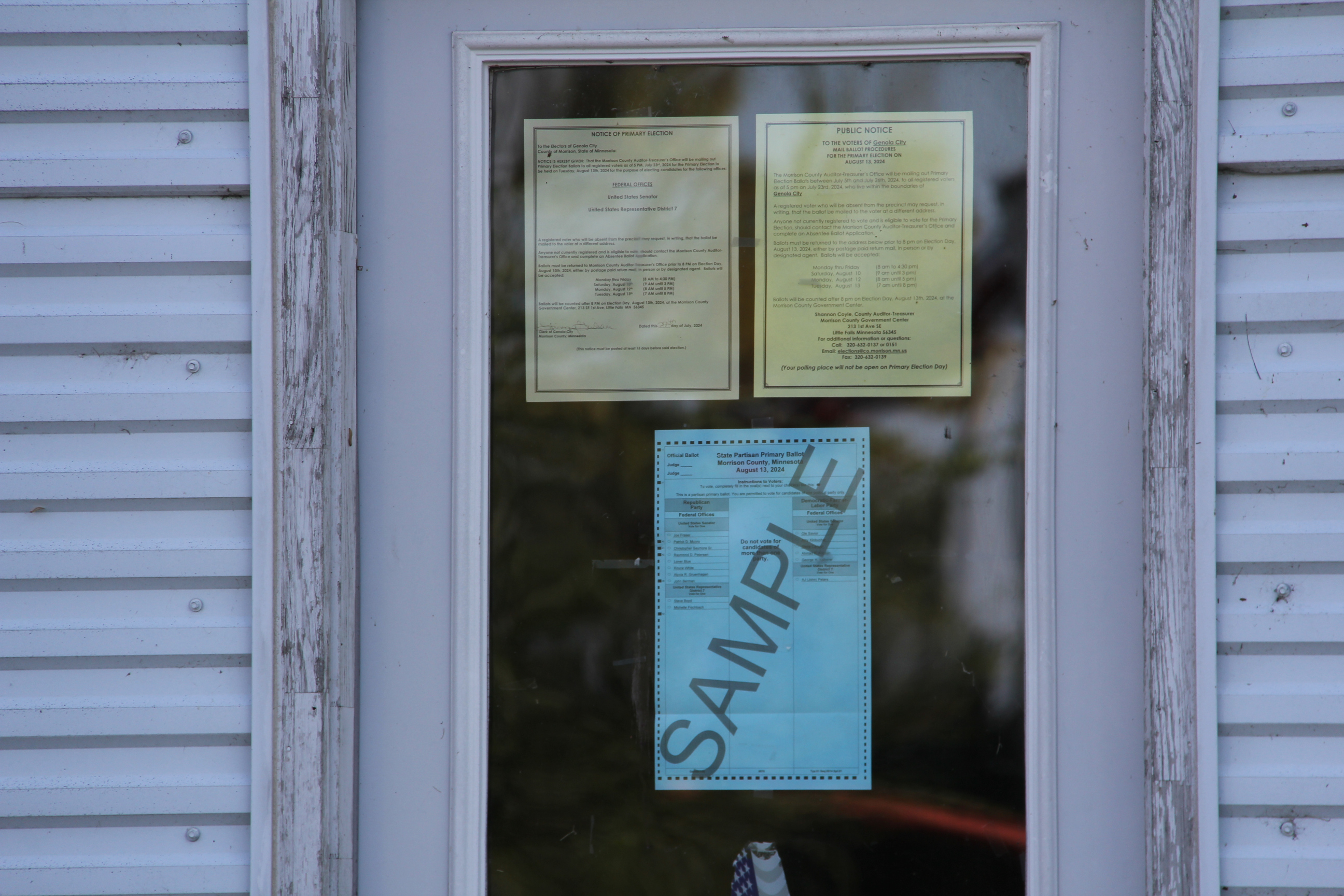
Genola City Hall, where I found a sample primary ballot posted on the door in September. (Minnesota Prairie Roots copyrighted photo September 2024)

A woman staffing my polling place shared that “busy” and “a steady stream” have been the norm at this location since absentee/early voting opened in Minnesota. It’s clear that people are invested in this election, more so than any I can ever recall. There’s a lot at stake. And we have a voice in the outcome.

A close-up of the sample primary ballot on the door of the Genola City Hall. Genola is a small town in Morrison County in central Minnesota. (Minnesota Prairie Roots copyrighted photo September 2024)

My ballot included not only the all important Presidential race, but also voting for those who will represent me in Washington DC, St. Paul and locally (school board, city council, mayor, etc.). There were additional questions on the ballot about a local sales tax and about continuing to fund environmental programs with state lottery monies.

I attended local candidate forums sponsored by the American Association of University Women, read newspaper Q & A’s and more to learn about people and issues on the ballot. The forums proved especially eye-opening. Audience members were able to anonymously submit written questions to the moderator and you can bet I did. People don’t always come across the same in person as they do in print or other media. The value of forums/debates/whatever you want to term them is in the unexpected. Being put on the spot. Hearing questions that may otherwise not have been asked. Listening not only to how a candidate responds, but also observing their body language and interaction with other candidates.

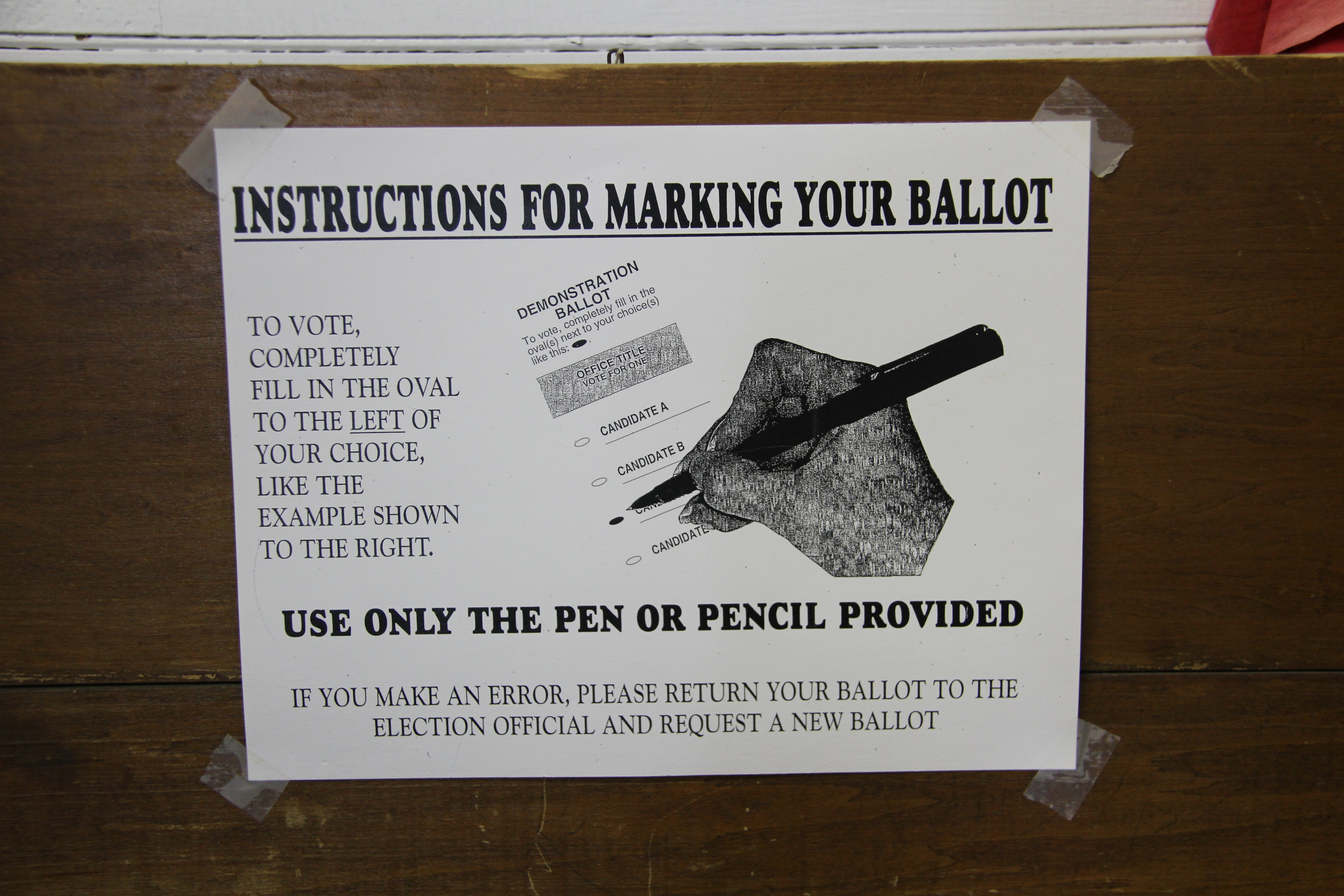
I photographed these ballot instructions inside an historic building at the fall 2024 Rice County Steam & Gas Engines Show, rural Dundas, MN. (Minnesota Prairie Roots copyrighted photo September 2024)

When I went to my polling place, I knew exactly who would get my vote. I felt fully-informed. There was never a question about what’s important to me. I value honesty, integrity, compassion, a candidate who cares and truly represents the people he/she serves. An individual who works for the common good, not for himself/herself and his/her personal agenda and power. An individual who listens, to everyone. An individual who does not degrade others. At the local level, I want someone who keeps politics out of places they don’t belong. I value that. I value truth.

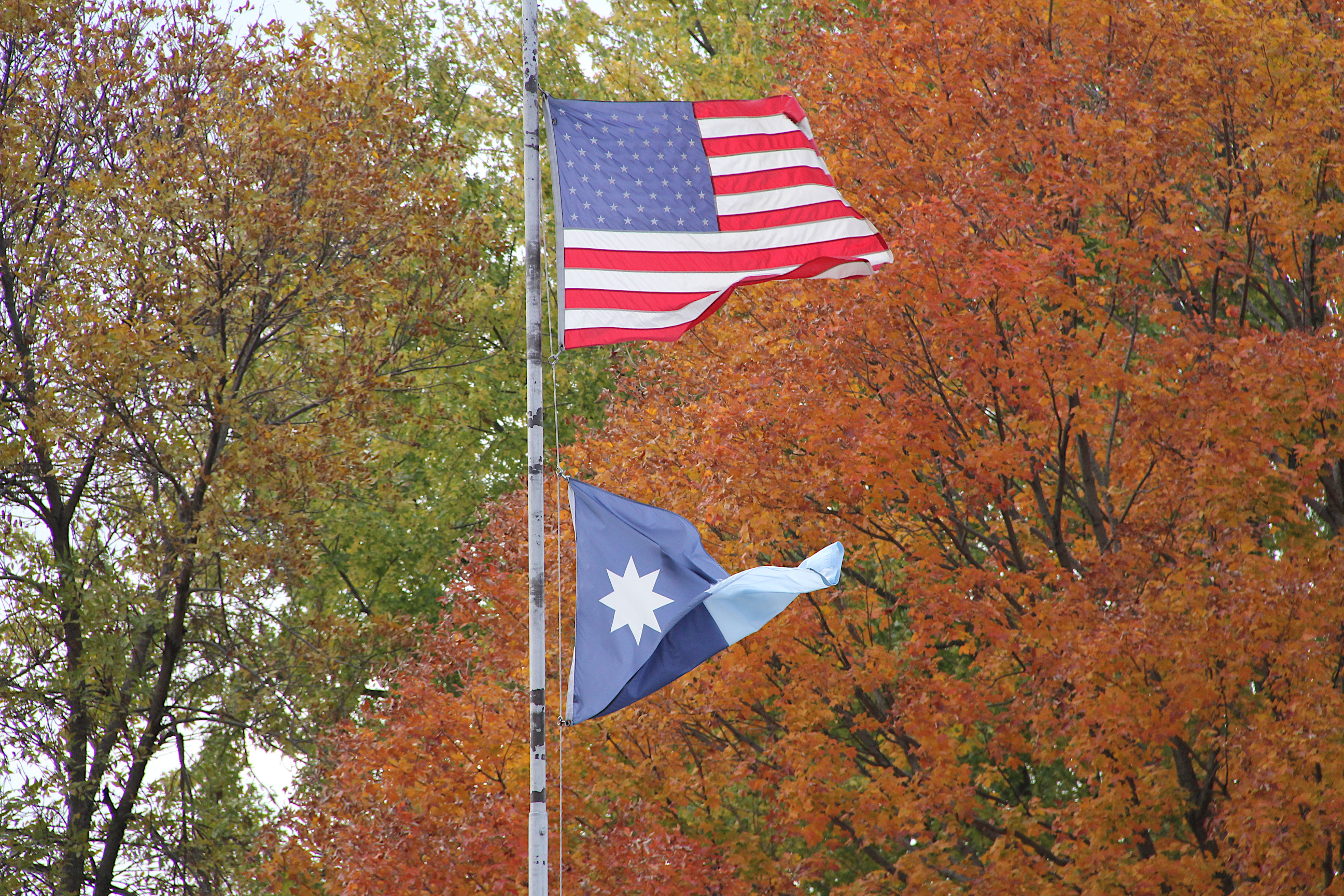
The American and Minnesota state flags fly on the campus of the Minnesota State Academy for the Deaf, Faribault. (Minnesota Prairie Roots copyrighted photo October 2024)

I value freedom, democracy, the right to vote my conscience.

Please exercise your right to vote if you haven’t already done so. It’s your responsibility as an American.

NOTE: This post is not meant to spark political debate or discord, but rather to share the importance of voting and what centers my vote. As the creator of this blog, I moderate all comments. The decision whether to publish a comment or not is my choice.

© Copyright 2024 Audrey Kletscher Helbling
 

Celebrating community journalism during National Newspaper Week & my backstory October 8, 2024

I am a down-to-earth writer who focuses on writing about people, places and events primarily in Minnesota. Here I’m pictured outside Jack Pines Resort, rural Osage. I was there attending a book launch party for an anthology in which my writing published. (Minnesota Prairie Roots copyrighted file photo by Randy Helbling, September 2024)

I’VE ALWAYS LOVED WRITING. From early on, my love of language, of words, of grammar, of, yes, even spelling, defined me. Give me a book to read. Give me a spelling test. Give me a pen and a notebook. And then a computer. Words, words and more words. I will find them, use them, create stories with them.

At one time, I wanted to pursue a degree in German. But, after a year in college, I changed direction because I didn’t want to teach. I decided to study journalism. It was absolutely the right decision for me, my interests and my skills.

With that intro, I join the many writers who are celebrating National Newspaper Week October 6-12. That includes journalists from my local paper, The Faribault Daily News, in which my writing publishes each weekend and sometimes more. I no longer consider myself a full-fledged journalist as much as a writer. These days I write from a personal perspective, more as a columnist, rather than as an objective reporter. I write fiction, creative nonfiction and poetry, too.

MY JOURNALISM EXPERIENCE

But I did work as a full-time newspaper reporter and photographer after graduating with a mass communications degree (news/editorial emphasis) in 1978 from Minnesota State University, Mankato. I worked for newspapers in Gaylord, Sleepy Eye, Mankato, Owatonna and Northfield. Eventually I gave up journalism when I started a family. The long and odd hours are not conducive to family life.

Today my three kids are long grown and gone, and I’ve found my way back to writing with an added focus on photography. What makes a good writer, a good newspaper reporter? Topping my list are the abilities to listen and focus on detail. I’ve always considered myself a good listener, a necessity for any newspaper reporter. I developed the skill of taking notes while actively listening. Organization also factors in. There’s always a bit of homework involved in prepping for an interview. Research the subject. Prepare questions, but be open to asking more as the interview progresses. Focus on details. Tell a story.

I worked in journalism before the days of cellphones, so I filled notebooks with pages of notes. I also studied and worked in the profession before computers and digital cameras. My first job out of college, I typed all of my stories on a manual typewriter, shot all my photos on film. I would never want to go back to either. Give me a computer and a digital camera. It’s much easier to create with those.

FOCUS ON LOCAL STORIES

I love sharing stories and photos of people, places and events that weave into my life, that I discover. I find joy in following a gravel road, in discovering interesting signage, in exploring small towns, in meeting ordinary people following their passions… People often tell me I find the most interesting things. I agree. And then I tell them it’s right here in their own backyard if only they pause to look, and see.

Therein lies the value of community journalism, which I want to highlight and honor during National Newspaper Week. Our local newspapers are all about local. Local reporters cover and write about the people, places and events that are happening locally. They write stories ranging from features to hard news. I covered all of those, too, while working as a full-time reporter. It’s not an easy job. People are quick to criticize, slow to praise. So I want to state right now that I appreciate our local news team. They work long, odd hours, just as I did, to gather and write the news. They care.

Everyone ought to care that freedom of the press thrives, that these journalists are covering our government meetings, writing about our neighbors, highlighting ordinary people who do extraordinary things and much more. We need newspapers as much today as ever before, perhaps even more.

Please, support your local newspaper by subscribing. And thank a newspaper reporter for their dedication to the profession. They deserve to be recognized, especially during National Newspaper Week.

© Copyright 2024 Audrey Kletscher Helbling
 

About those aches & pains February 22, 2023

Filed under: Uncategorized — Audrey Kletscher Helbling @ 5:00 AM
Tags: , , , , , ,

This is a photo of an x-ray of my broken right shoulder in 2017. (Minnesota Prairie Roots copyrighted file photo May 2017)

IF MY MOM WAS STILL LIVING, I’d apologize. I’d apologize for dismissing her connections between weather and an aching body. I laughed off that cause-and-effect as one of those ideas passed from generation to generation. More myth than truth. But I’m not laughing any more.

As I’ve aged, I’ve noticed an interplay between changes in weather and how I feel physically. Right now my body is hurting. A lot. I attribute that partially (mostly) to the winter storm. Anytime a storm is approaching, upon us and/or the weather turns bitterly cold, I experience more pain.

I’ve read that fluctuations in barometric pressure (lower in the winter) specifically affect joint pain, stiffness and swelling. Without completely going down the rabbit hole of self-diagnosis, that generality seems to apply to me.

I should provide some backstory here. I have an artificial right hip, implanted in 2008 after I developed osteoarthritis so severe I could barely walk or tolerate the pain. Because I was youngish, I was advised to hold off on surgery as long as possible. Much of the pain I experience now centers on the right implant side of my body and in my lower back. My back is plagued by osteoarthritis and scoliosis. As Randy has noted, my body is crooked and I can visually see and feel that.

Look on the right side of my wrist to see the plate, shaped like an ice scraper. (Minnesota Prairie Roots copyrighted file photo 2018)

Bear with me. I also have an implant in my left wrist, the result of a 2018 fall which shattered my wrist. Ten screws hold that wrist plate in place. When the weather changes, I notice discomfort in my wrist. Likewise in my right shoulder. I broke that in 2017 after missing the last step on a hospital stairway while on my way to donate blood.

This is a photo snapped with a cellphone of the implant in my wrist, held in place by 10 screws. (Minnesota Prairie Roots copyrighted file photo 2018)

What is my point in sharing all of this? Not to garner sympathy or give the impression of woe-is-Audrey. Rather, I’m interested in learning whether you notice, like me, a connection between weather and body. I recognize this question may be more applicable to those of you who are aging Baby Boomers.

So let’s hear. Share your personal stories and your insights and perhaps we can reach an unscientific conclusion. Was my mom right? Is there a connection between weather and an aching body?

© Copyright 2023 Audrey Kletscher Helbling
 

Old school journalism & lessons learned June 22, 2021

In journalism school and early in my journalism career, I typed stories on a manual typewriter similar to this. MN Prairie Roots file photo.

IN A WINDOWLESS ROOM of Armstrong Hall on the campus of Mankato State University, I pounded out a fictional obituary on a manual typewriter.

The year was 1976. And I was learning the basics of newspaper reporting. Lesson number one: Always spell a person’s name correctly. Never assume. Ask for the spelling. There is no reporting sin worse than misspelling a name. I remembered that during my first reporting job out of college when I interviewed Dayle. Not Dale.

I learned from two of the best—Robert O. Shipman and Gladys B. Olson. They were old school journalists, determined to teach Woodward and Bernstein-hyped students how to gather facts and report with truth, accuracy and integrity. They taught the basics—how to write a strong lede, how to infuse interest into feature stories, how to get the story right…

But beyond that, they cared. Deeply. They cared about the roles newspapers play in communities. To report hard news. To share human interest stories. To inform. To keep tabs on government and schools and other groups entrusted with public monies and policies. To share and express opinions on the editorial page, considered the heart of a community newspaper. To publish obituaries. And much more.

A section of a feature I wrote about Mike Max, now a sports anchor at WCCO TV. MN Prairie Roots file photo.

All these decades later, I remember those lessons learned from Shipman, Olson and others who taught mass communication classes at what is today known as Minnesota State University, Mankato. I graduated in March 1978 and shortly thereafter started working as a newspaper reporter at a small town weekly, The Gaylord Hub. My career would also take me to full-time reporting jobs in Sleepy Eye, Mankato and Owatonna, and to a short-term assignment in Northfield with freelance work also tossed in the mix.

Through the years, I’ve maintained my passion for writing and grown my passion for photography. Even while raising three children, with minimal time to write. Yet, I’ve had no desire to return to the long and odd hours of working for a newspaper at low pay with the stress and pressure of deadlines and a public that criticizes more than values the free press.

Much has changed since I typed a fictional obit in Armstrong Hall on a manual typewriter. For one, technology. Two: Newspapers charge to publish obits. I still struggle with that change. But I understand given the declines in ad revenue. Three: Attitudes. The easily flung accusation of “fake news” simply angers me as does constant criticism of responsible media. “Don’t kill the messenger,” I advise those who target the media for reporting “only bad news.”

A feature I wrote in 1979 republished in the June 4, 2020, issue of The Gaylord Hub. MN Prairie Roots file photo.

I wonder what Professors Shipman and Olson would teach students today. I expect they’d still focus on the basics. On accuracy and integrity and spelling names correctly.

While writing this post, I wanted to assure I spelled their names right, which led me to search online. It was then that I discovered some interesting facts about Olson, a petite spitfire of a woman. Shortly before she turned four, Gladys and her infant brother were orphaned as a result of the 1918-1919 flu pandemic. Their parents died within 24 hours of each other, among more than 8,000 North Dakotans who died of influenza in 1919. The siblings were raised by their paternal grandparents. I wish I’d known this when Olson taught me how to become a good, decent and fair newspaper reporter.

From the front page of the Faribault Daily News. MN Prairie Roots file photo 2020.

Today, as I read Olson’s 2016 obit, I understand her backstory, what shaped her strength and resilience and kindness. The list of her accomplishments beyond journalism professor emphasizes service to others. She lived to age 101. That she died only four years before the COVID-19 pandemic is not lost on me. I’m thankful she didn’t have to endure another pandemic. I’m also thankful that she, and Robert Shipman, taught me old school journalism style. To write with fairness, integrity and accuracy. And to value the role of newspapers in a democracy.

© Copyright 2021 Audrey Kletscher Helbling