Minnesota Prairie Roots

Writing and photography by Audrey Kletscher Helbling

Chris Norbury’s newest book, this one for young adults, proves another excellent read August 13, 2024

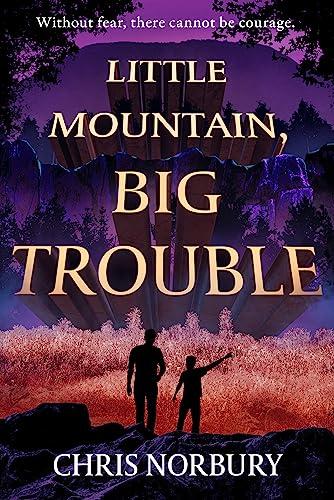
Cover image sourced online.

WE CAN ALL USE some encouragement, no matter our age. And that’s exactly what you’ll find in “Little Mountain, Big Trouble,” a debut young adult novel by Owatonna writer Chris Norbury.

I don’t typically read fiction written for youth. But when I met Norbury this summer at Faribault’s Heritage Days and learned about his latest book, I knew I had to read it. I’m a fan of Norbury’s writing. He’s the author of three books in the Matt Lanier mystery/suspense/thriller series. All are set in Minnesota, which makes them even more appealing to me.

Given the differences in writing mysteries for adults versus fiction for youth, I wondered if Norbury could pull it off. He did, and so well that I wanted to continue reading “Little Mountain, Big Trouble” one evening well past my bed-time. That, in my opinion, is the sign of a good book.

BULLIED

The story centers around 12-year-old Eduardo, or EJ, who’s unpopular, bullied, short and at that awkward middle school age with its uncertainties, peer pressure and insecurities. Toss in poverty, a broken family and other challenges and you have a relatable read. I imagine many middle or high schoolers can empathize with EJ’s pain, struggles and lack of confidence. Even I, decades removed from junior high school, felt difficult memories of bullying surge back. Some things you just never forget. I still carry the pain of name-calling with me. But, because of that, I lean into compassion, understanding, empathy and kindness.

BIG BROTHER, LITTLE BROTHER

Norbury’s book is filled with all of that, too, no surprise given his experiences as a Big Brother. In real life, he mentored boys through Big Brothers Big Sisters of Southern Minnesota and now donates a portion of his book sale proceeds to the organization. When we met, Norbury enthused about the program and how much his “little brothers” meant, still mean, to him.

In “Little Mountain, Big Trouble,” main character EJ is paired with Big Brother, Russ. That relationship focuses the story-line as the chapters unfold. Although a disclaimer at the front of the book assures the content is fictional, I understand that, as a writer, our writing is influenced by what we’ve lived or observed.

CLIMBING MOUNTAINS

It takes EJ a while to trust Russ, to realize that his Big Brother is not perfect and is there to support him. Russ doesn’t talk down to EJ, but rather listens to and encourages him, like they are equals in many ways. Eventually, EJ opens up about his goal to become a mountain climber. At this point, I wondered what Norbury was thinking by writing that into the plot. A Minnesota kid with no mountain climbing background wanting to climb Mount Everest?

Russ doesn’t dismiss EJ’s dream as insurmountable. Rather, he breaks the goal down into doable steps, starting first with training and then climbing Eagle Mountain. That mountain is real, the highest point in Minnesota, with much of the hiking trail to the summit running through the Boundary Waters Canoe Area Wilderness.

ANXIOUS AND WORRIED

And that is where EJ and Russ end up, heading up, then down, the mountain. And this is where the tension thickens to the point that I am feeling anxious and worried. To elicit that response in the reader shows Norbury’s skills as a writer. The duo face challenges that test their strength and endurance, even threaten Russ’ life.

WE ALL NEED SOMEONE

I won’t spoil the book by revealing the outcome of that mountain hike. But know that the book ends in a heart-warming way. EJ has developed confidence, gained the acceptance and respect of his peers, and grown to understand that he can overcome, and do, anything. Sometimes it just takes someone, like Russ, believing in you and cheering you on, just as I expect Chris Norbury did for his little brothers.

© Copyright 2024 Audrey Kletscher Helbling


About growing up poor, books, garage sales & more May 17, 2024

An abandoned farmhouse near my hometown of Vesta. The house no longer stands, but represents to me the financial hardships of growing up in southwestern Minnesota during the 1960s and 1970s. (Minnesota Prairie Roots copyrighted file photo)

THE RESIDUALS OF GROWING UP in poverty remain today in my life. I am careful with my money. I don’t spend much beyond paying bills and for necessities. I seldom buy anything new for myself. Dining out, which I rarely do, always leaves me feeling guilty, thinking about how many groceries I could have bought with that money (although not that many anymore).

This is a thinking pattern ingrained in me by a mother who was a child of the Great Depression. I suspect she picked up on thriftiness from her mother. My mom stretched and budgeted and managed to raise six children on a Minnesota farm with income generated from crops and dairy cows and with food from the land. We wore mostly hand-me-downs and clothing stitched from feed sacks. There were no birthday gifts from our parents, no family meals out, no a whole lot of everything. But we had love. Lots of it.

I share this because it explains why I am the way I am. Content with what I have. And appreciative of second-hand. I don’t need new. Currently, recycling, upcycling, repurposing, keeping stuff out of landfills is trendy. I’ve never been labeled as trendy. But apparently I am now.

That brings me to a number of events this weekend in my area which fit my budget and environmentally-friendly way of living: book sales, plant sales and flea market/garage sales.

You can still find Little Golden books in stores today, like these at JT Varieties & Toys in Plainview. (Minnesota Prairie Roots copyrighted file photo June 2022)

First up, books. I love to read, always have. Mom read Little Golden Book storybooks to me. And she let me select a book from school book orders. That’s how important reading was to her. Without a library in my hometown, this gave me access to books.

Some of the books I’ve purchased at past book sales. (Minnesota Prairie Roots copyrighted file photo)

Today I live blocks from a public library and bring home stacks of books. I’ve also carried bags of books home from used book sales. This weekend Faribault’s American Association of University Women hosts its annual used book sale, its final one after 54 years. Hours are 10 am-7 pm Friday and Saturday and from noon – 5 pm Sunday.

Puzzles borrowed and bought new and used. (Minnesota Prairie Roots copyrighted file photo)

In neighboring Waterville, Friends of the Library are hosting a used book sale from 8 am – 4 pm Saturday in Langerud’s Garage, 503 Marian Street. There’s no set charge for books, just a freewill offering. Oh, and they’re also selling puzzles, sure to be popular with puzzle enthusiasts.

And for those who love garage sales, like me, Waterville is also hosting city-wide garage sales on Saturday. There are garage sales, too, at Christ Lutheran Church in Faribault (Friday and Saturday) and at Nerstrand United Methodist Church (Saturday). Just check the classifieds in your local paper and you’re sure to find garage sales in your community.

A scene from a 2022 RCHS Flea Market. (Minnesota Prairie Roots copyrighted file photo September 2022)

One other fun event is the Spring Flea Market from 8 am – 2 pm Saturday at the Rice County Historical Society in Faribault. I always enjoy poking through the merchandise and talking with people I haven’t seen in awhile.

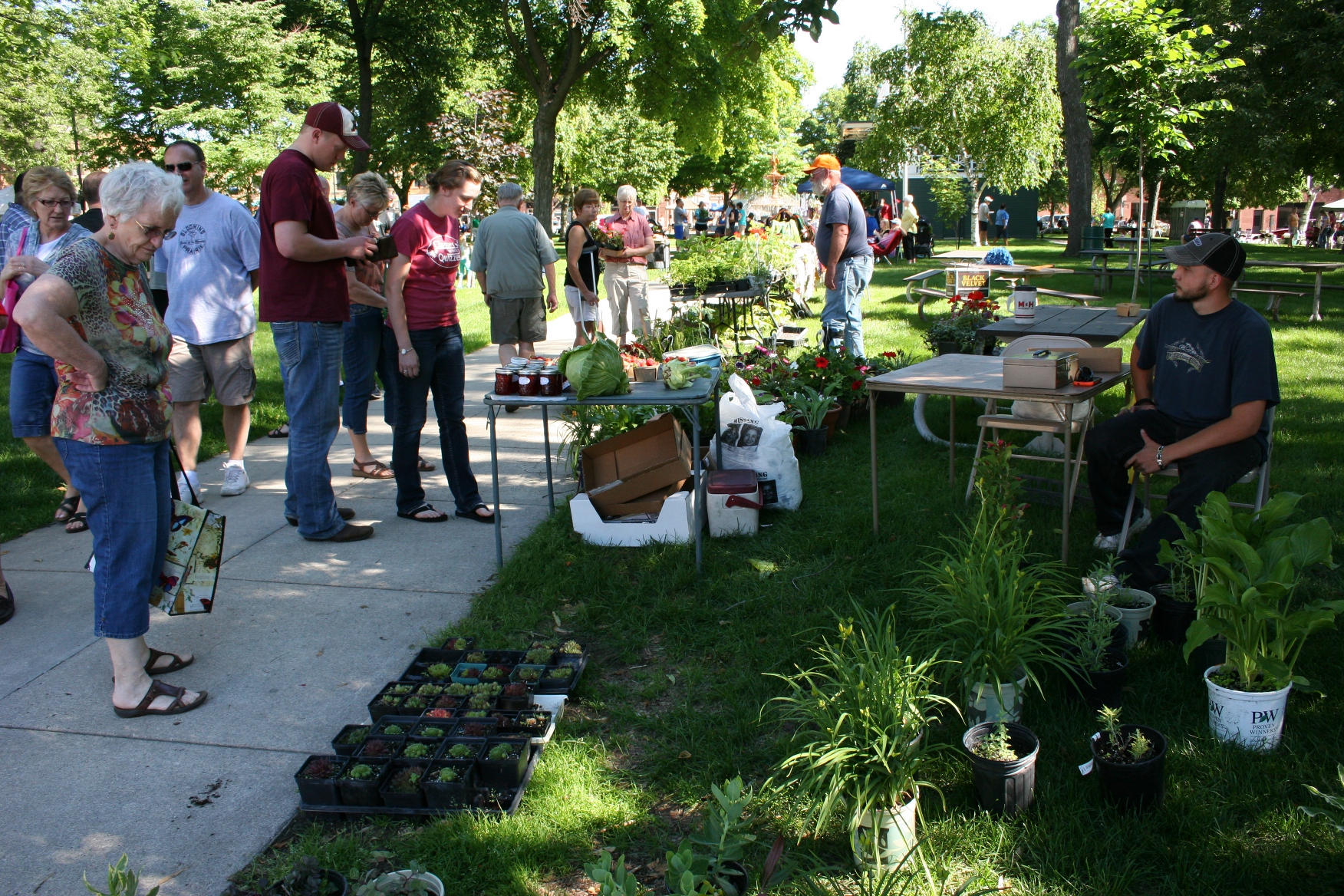
Plants for sale at the Owatonna Farmers’ Market in 2014. (Minnesota Prairie Roots copyrighted file photo)

Finally, gardeners looking for plants and free advice can get both at two separate plant sales on Saturday in Faribault. GROWS Garden Club is selling plants from 8 am – noon on the southeast corneer of Central Park. And from 9 am – 2 pm, Rice County Master Gardeners are selling plants in the 4-H building at the Rice County Fairgrounds.

A scene at a previous Car Cruise Night in Faribault. (Minnesota Prairie Roots copyrighted file photo 2022)

Two more things: Friday evening is Car Cruise Night from 6 pm – 9 pm along Central Avenue in historic downtown Faribault. It’s free as is entrance to the Straight River Art Festival from 9 am – 6 pm Saturday at Heritage Park in Faribault. The event features art, music and food.

Norwegian treats at a past Trondhjem celebration. (Minnesota Prairie Roots copyrighted file photo)

And then two more things: Historic Trondhjem Church, rural Lonsdale, is hosting a Syttende Mai Celebration beginning at 1 pm Sunday. The event features music and stories by Steven K. Anderson of the Brainerd Lakes area, Norwegian songs sing-a-long and a reception with Norwegian goodies afterwards. Over in Owatonna at the Village of Yesteryear and Steele County History Center, the Sons of Norway will also celebrate Syttende Mail from 1 pm – 4pm with music, crafts, a medallion hunt and more.

So much to do…at no or minimal cost. My mom and grandma would have appreciated all of these budget-conscious opportunities. Just as I do.

© Copyright 2024 Audrey Kletscher Helbling

 

Up close on the Straight River during a drought September 13, 2023

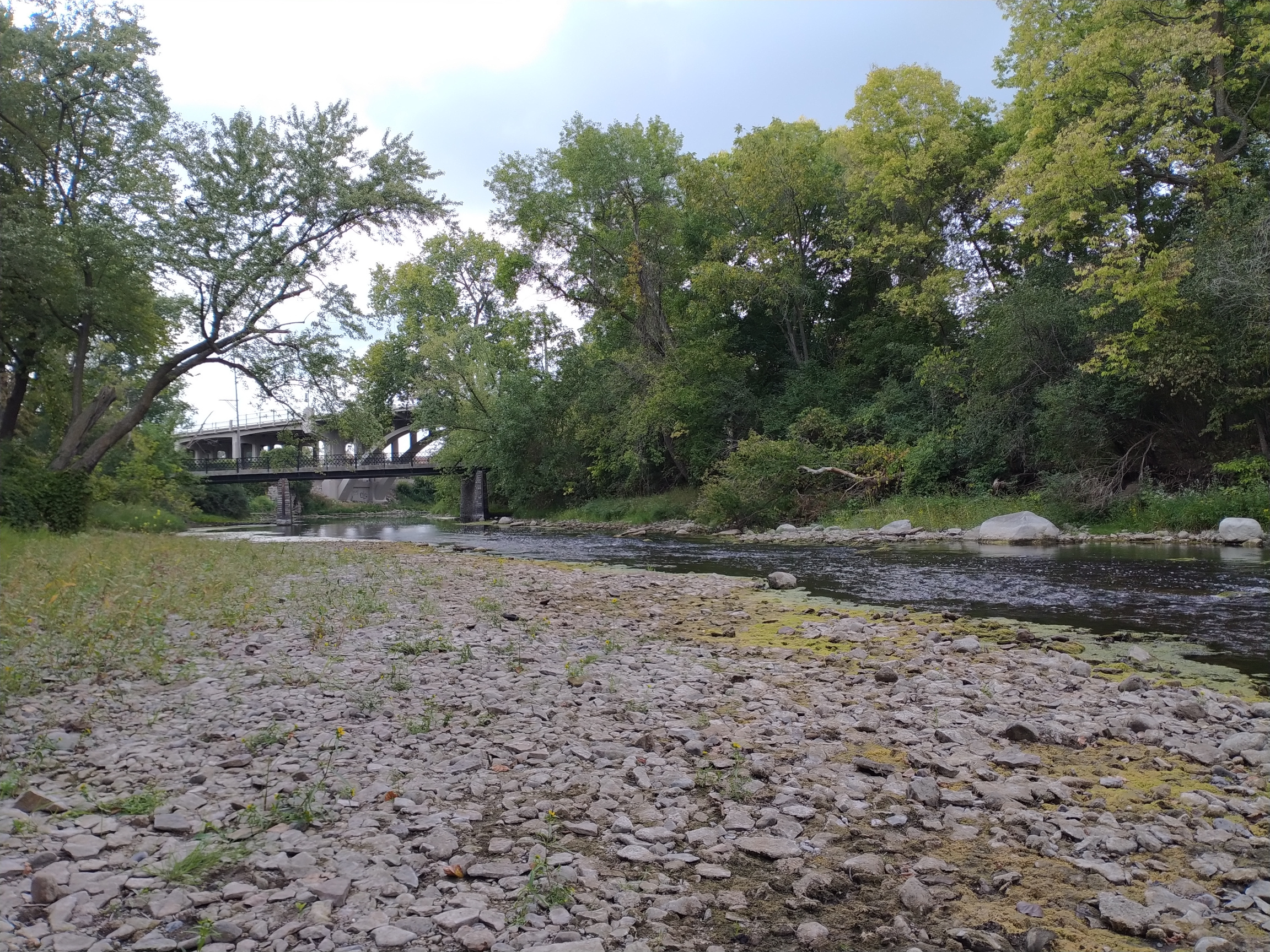
The river bottom revealed, weeds and flowers growing where once water flowed in the Straight River at Faribault’s Teepee Tonka Park. (Minnesota Prairie Roots copyrighted photo September 2023)

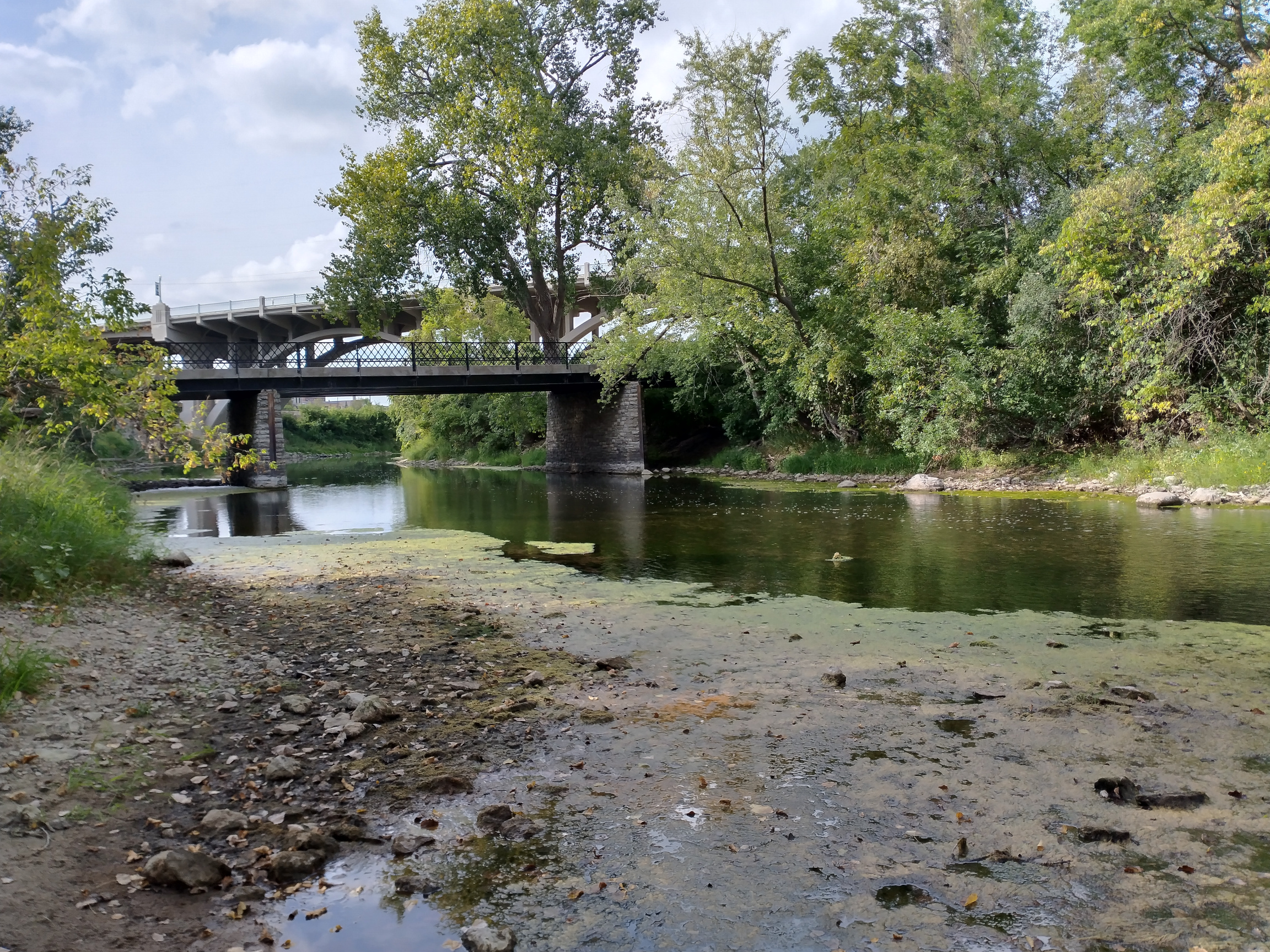
CAUTIOUSLY I SIDLED down the silty river bank, hand clasping Randy’s to steady myself. “This isn’t one of the smartest things we’ve done recently,” I said. I held no desire to slip on the unstable ground, to tumble and break a bone. I’ve twice done that. The doctor who recently diagnosed me with osteopenia likely would remind me of my bone density scan results and of my age, which is much closer to 70 than sixty.

But risk outweighed fear. I wanted to reach the dry river bottom, to stand upon the rocky bed, soles touching a place where water once flowed strong and steady.

In this summer of abnormally high temps and little rainfall, the water level in the Straight River, like so many other waterways in Minnesota, is low. The Minnesota Department of Natural Resources, which monitors river depths, terms the level of the Straight near Faribault as “scrapable.” Defined, that’s “so low that paddlers may have to get out of their watercraft to avoid rocks.” At the Straight River West Bridge Street location in Owatonna, the river level measures only slightly better at “low.” The Cannon River, into which the Straight flows, rates as “scrapable” in Morristown, near Faribault, in Northfield and in Welch.

The effects of the ongoing statewide drought are evident. My county of Rice, like 39 percent of Minnesota, is in a severe drought. And much of southeastern Minnesota, including more than half of Steele County to the south through which the Straight River twists and turns, is in an extreme drought.

Stagnant water ponds near the bridge leading into Teepee Tonka Park with the viaduct in the distance. (Minnesota Prairie Roots copyrighted photo September 2023)

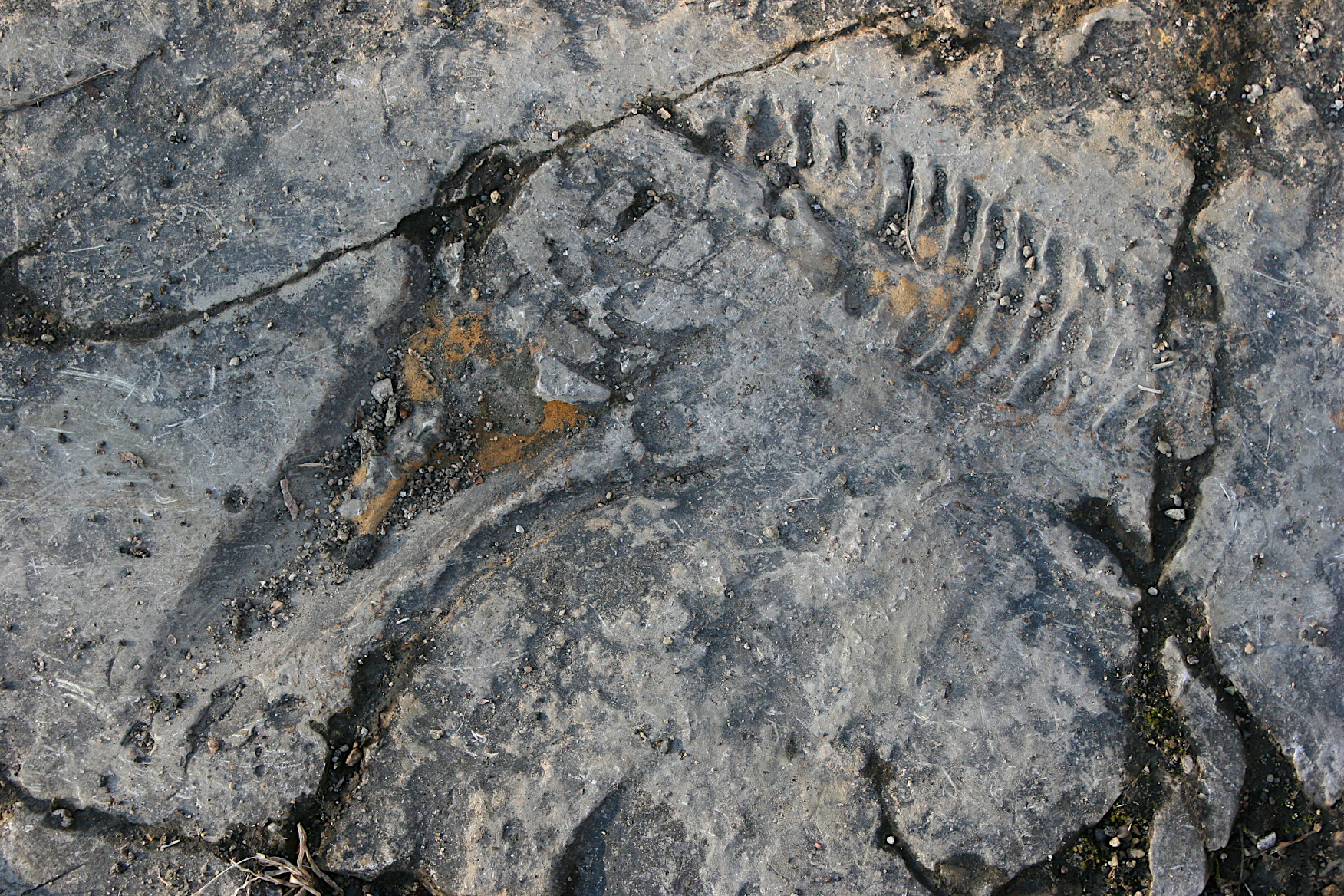
It’s no wonder that on this afternoon in mid-September, I can walk upon a rocky river bottom where water once flowed, even flooded this spring into Teepee Tonka Park near Faribault’s historic viaduct. Earlier this summer, a Faribault teen discovered a cephalopod fossil in an area of a local river typically under water. He refused to identify the specific waterway, but I guessed, perhaps incorrectly, that it was the Straight.

A fossil along a trail near the Straight River overlook in Faribault’s River Bend Nature Center, which connects to Teepee Tonka Park. (Minnesota Prairie Roots copyrighted file photo)

That fossil discovery was also part of my reason for descending the river bank near the east-side Faribault park entrance. I had great uncles who were rock hounds, inspiring in me a childhood fascination with agates and shells and interesting finds revealed only at ground level. That’s carried through into adulthood.

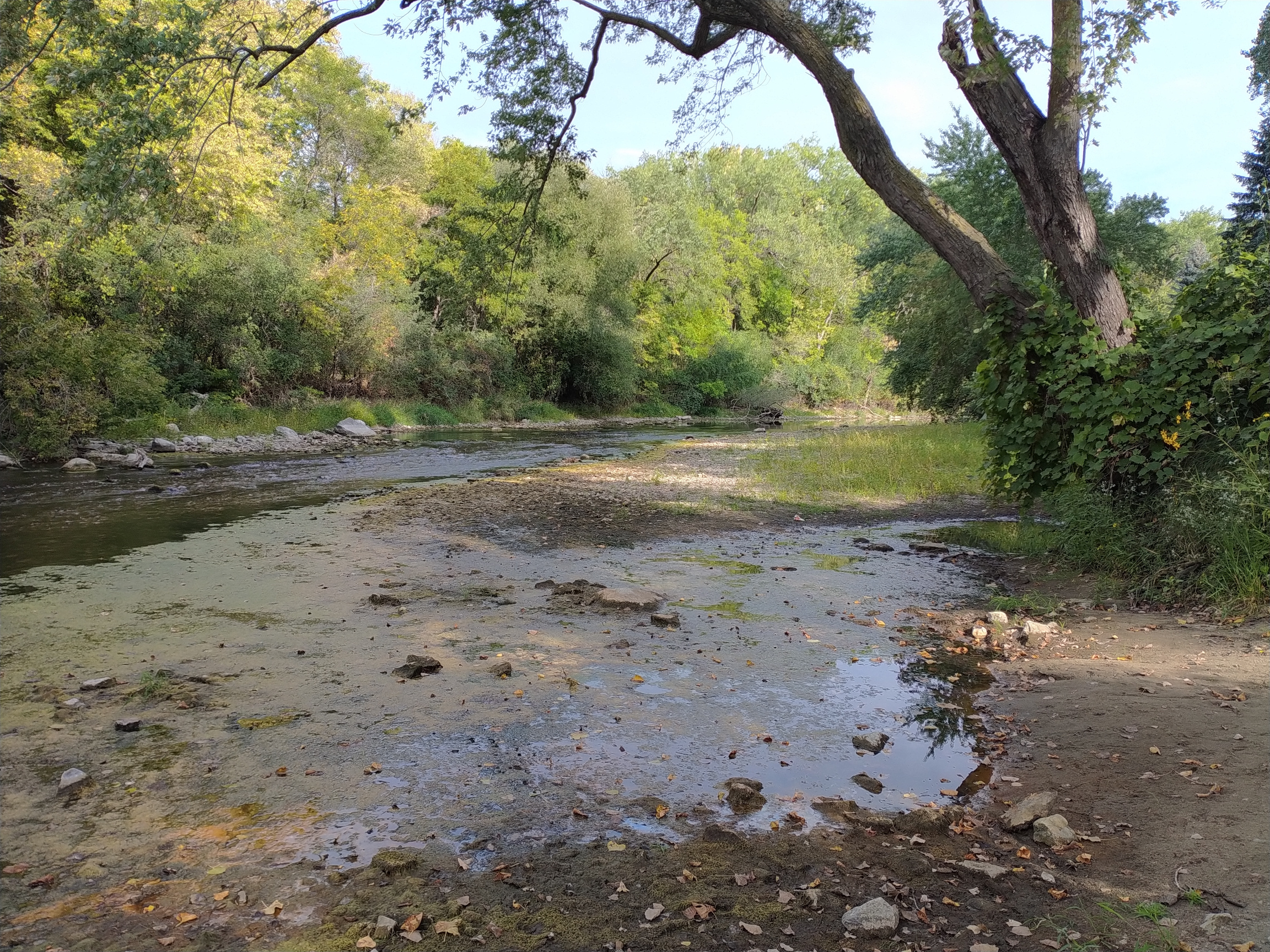
Wildflowers bend toward the narrowed river of exposed river bottom and rocks. (Minnesota Prairie Roots copyrighted photo September 2023)

But on this day I found nothing of interest, only weeds and wildflowers sprouting between stones aside the drought-narrowed river. Correction: I spotted a bra atop a rock, just out of reach in the river, and wondered about the story behind that.

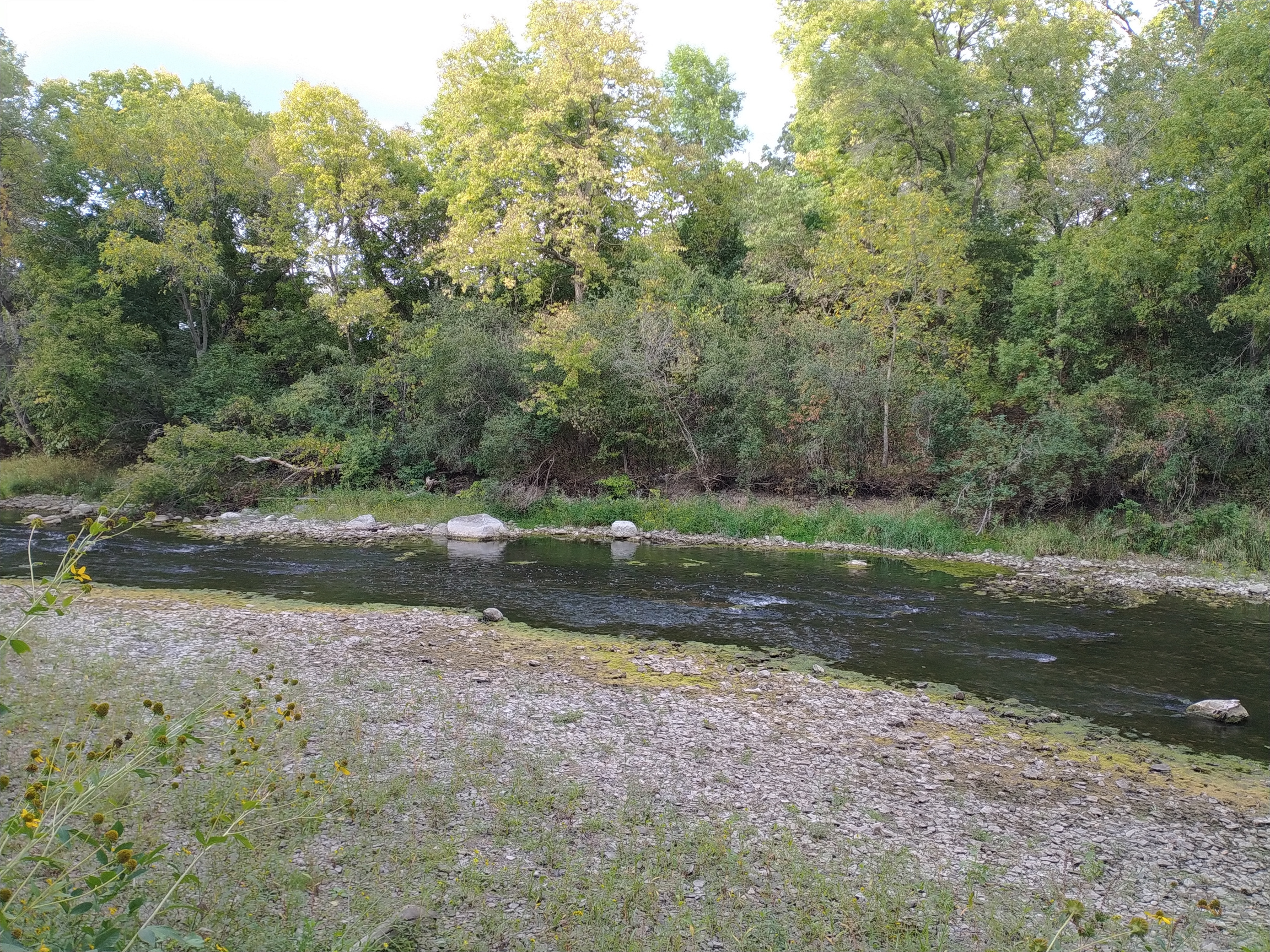
Outdoor enthusiasts intending to paddle the Straight or Cannon rivers now would assuredly have their own disappointing stories to tell about abandoned plans. I observed ankle deep water in parts of the Straight, making water recreation impossible, any recreational outings scrapable.

Around this bend in the river, to the right, the water deepens a bit and flows freely. (Minnesota Prairie Roots copyrighted photo September 2023)

Only a pair of hunting dogs let loose by their owner in Teepee Tonka Park enjoyed the low river level on the day I eased down the river bank. They scrambled down the bank, surefooted, racing along river’s edge, shallow water splashing. Then back up they dashed, sprinting along the grassy bank before returning to the river. I delighted in their antics while simultaneously concerned they might come near me. I never quite trust strange dogs not under the control of their owner. A large muddy-pawed dog once jumped on me while I walked at a city park.

Mud. We’ve seen little of that in most parts of Minnesota this summer. There are exceptions, of course, including flash floods in Duluth on Monday, not something any of us want. Light rain fell in Faribault early on this week, enough to dampen the pavement. But I yearn to hear the steady thrum of rain upon the earth. Rain that will ease this drought, replenish our rivers, revive our waterways, restore the land.

© Copyright 2023 Audrey Kletscher Helbling
NOTE: DNR info referenced in this story is from September 5 on drought conditions and September 12 on river levels.


Connecting via “human books” in Owatonna September 12, 2023

Photographed in the front window of a downtown Faribault business. (Minnesota Prairie Roots copyrighted file photo October 2022)

LISTENING TO AN AREA RADIO STATION Tuesday morning, I learned about a project which seems pure genius. It’s the Human Library®. Developed 23 years ago in Copenhagen and now spread internationally, the library “hosts personal conversations designed to challenge stigma and stereotypes.” And it’s coming to Owatonna this week.

From 4-7 pm Thursday, September 14, the Owatonna Human Rights Commission is hosting a Human Library® in the Gainey room at the public library. The goal is “to foster conversations that can challenge stereotypes and prejudices.”

Kids of varied ethnicities and skin tones gather as one to break a pinata at a past International Festival Faribault. (Minnesota Prairie Roots copyrighted, award-winning photo, 2012)

I love this concept of one-on-one conversations among community members who might not otherwise connect. If we’re honest, most of us tend to stick with others who are most like us. Those in our circles. But this, oh, this opens the doors to meeting new people, to understanding, to friendships and much more. And we can only be the better for it by talking with one another, learning, growing our knowledge and compassion.

The idea is simple. Check out a “human book” for 15 minutes by meeting with community members who’ve agreed to participate in the project. Ask questions. Share. Simply chat, get to know one another. Break down barriers. Find common ground. Embrace differences. “Read” as many “human books” as time and availability allow.

We are a diverse country, as represented at a past International Festival in Faribault. (Minnesota Prairie Roots copyrighted file photo 2015)

The list of 20 participating individuals in Owatonna is lengthy and diverse, exactly as intended: Somali Americans, African Americans, senior citizens, business owners, religious leaders, Hispanic, LGBTQ+, educators, veterans, handicapped individuals, law enforcement officers, nonprofit leaders, recovered addicts and healthcare workers.

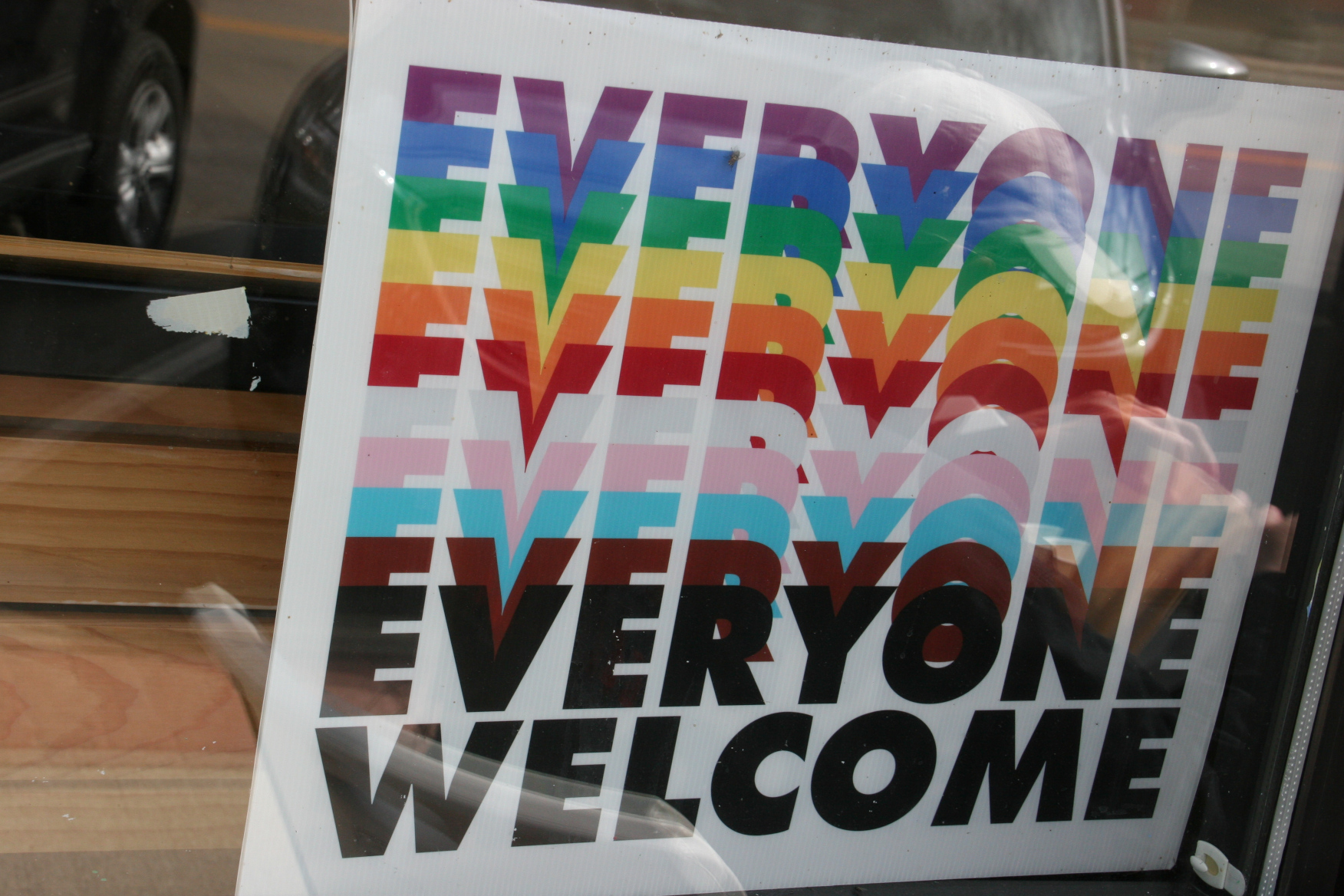
A welcoming sign hangs on the American Legion building in small town Mazeppa. (Minnesota Prairie Roots copyrighted photo March 2018)

Owatonna, like many communities in southern Minnesota and throughout the state, nation and world for that matter, has faced tough issues such as racism, prejudice, discrimination and hatred. Sometimes those issues are right there, publicly visible in ways that make me wonder how humans can treat each other with such disrespect and meanness. But just as dangerous are the insidious comments and behaviors that creep under the radar into communities. We all know they are there—the slights, the whispers, the off-the-cuff hurtful remarks, the intentional exclusion…

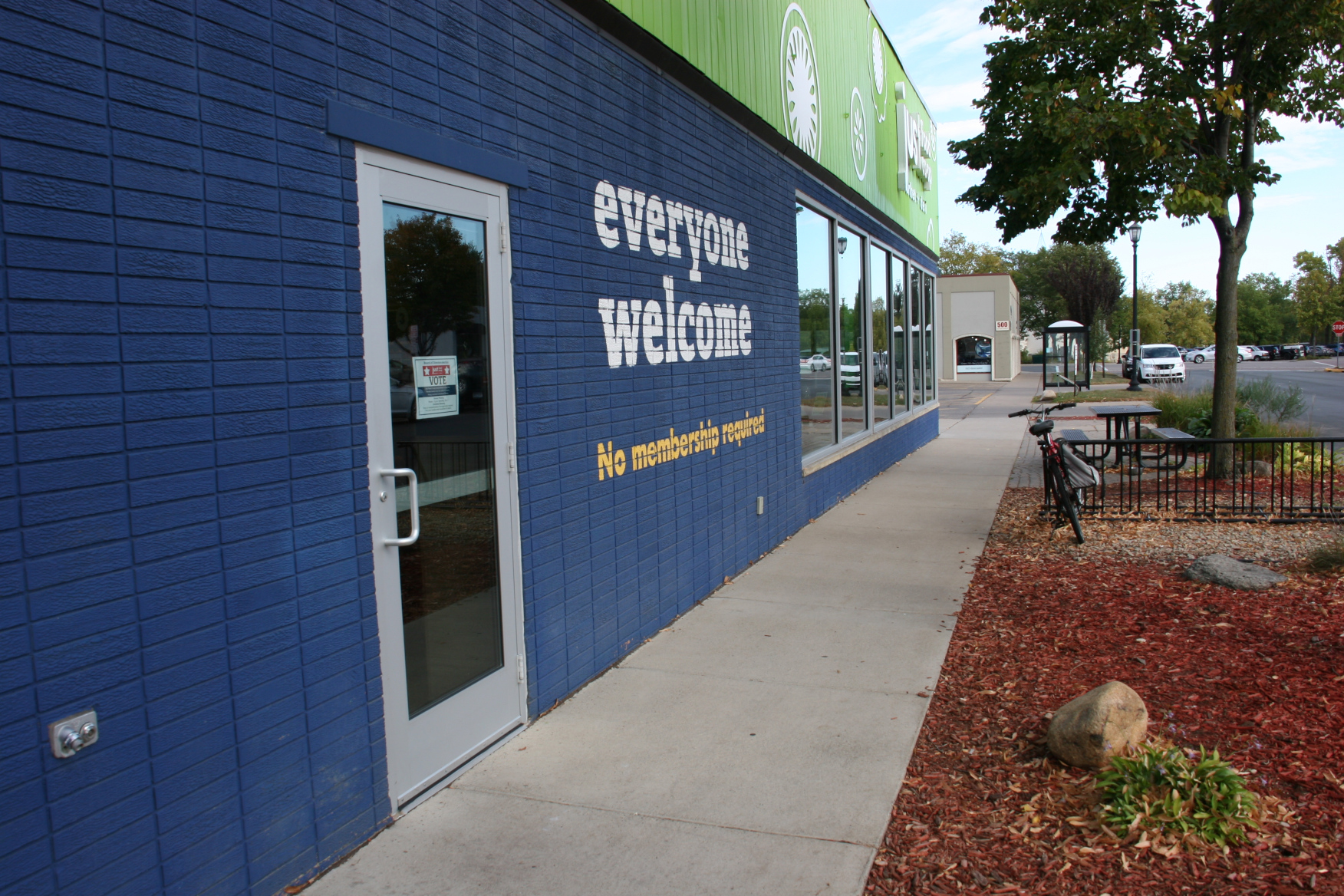
A welcoming message at Just Food Co-op in downtown Northfield. (Minnesota Prairie Roots copyrighted file photo September 2022)

I hold hope that projects like the Human Library® can effectively make a difference in enlightening, in changing attitudes, in helping each of realize that we are all human, more alike than we are different.

© Copyright 2023 Audrey Kletscher Helbling
 

An uplifting surprise in the mail July 3, 2023

(Minnesota Prairie Roots copyrighted photo June 2023)

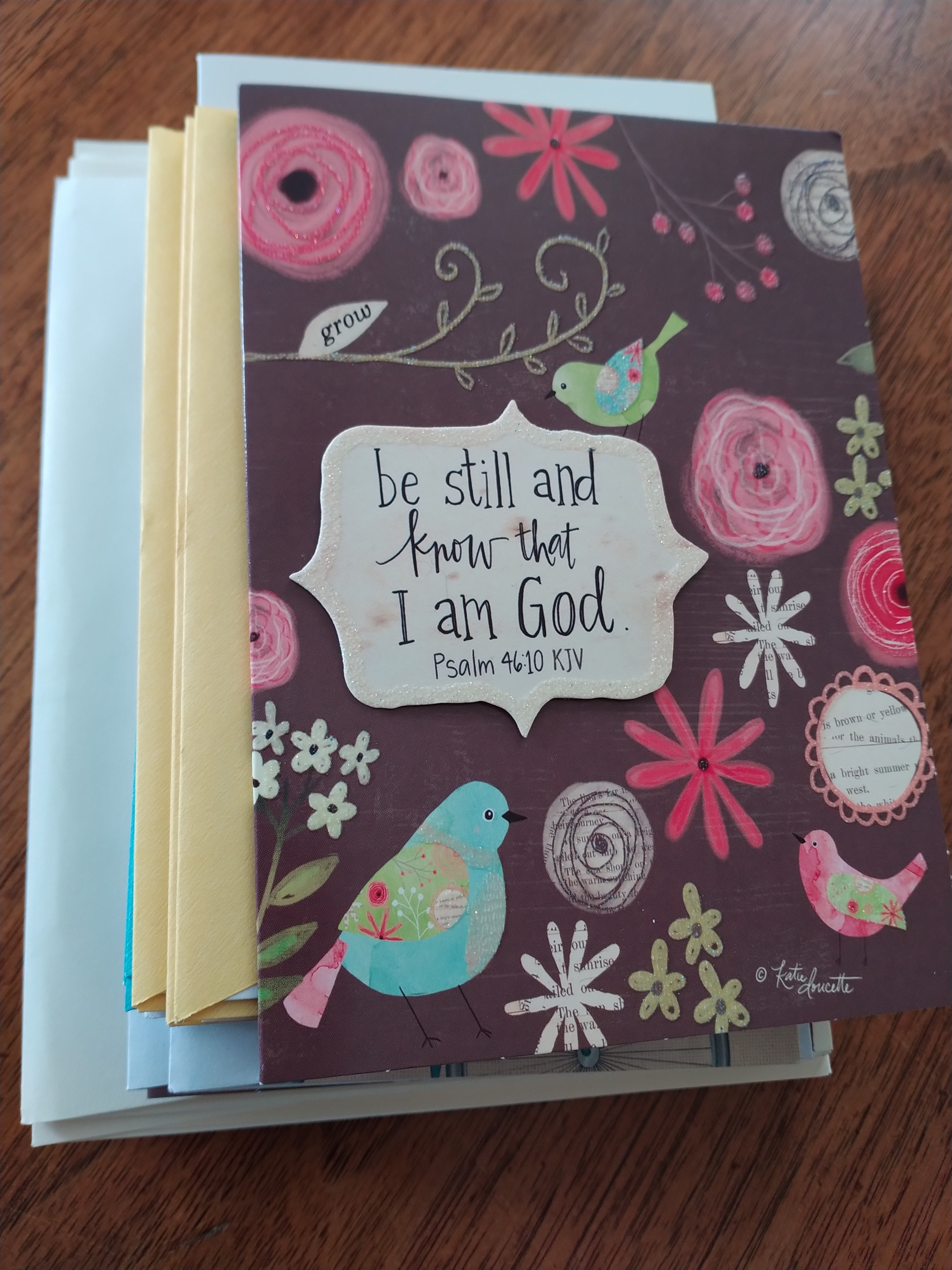
THE THICK FLORAL WRAPPED PACKAGE arrived unexpectedly in my mailbox today. A sweet surprise from the usual junk mail and bills. As soon as I saw the return address, I knew that whatever I found inside would bring me joy. And it did.

Once I managed to remove the stubborn packaging tape, I discovered a foam sleeve filled with greeting cards from blog reader Roxy of Owatonna. Her selected stash of 27 assorted cards that I can give to whomever I wish is much-appreciated. Roxy, simply by reading my blog posts, knows how much I value sending cards to celebrate, encourage, comfort, thank…

What a kind and thoughtful gift, that also includes stamps on some envelopes and some seals. To receive these cards from Roxy uplifted me in the midst of my ongoing challenging and complex health issues. Many times it’s simply a struggle to manage my symptoms, to get through my days and nights.

But in this moment my focus is one of gratitude for individuals like Roxy, whom I’ve never met. She took the time to put together this collection of greeting cards for me. Her act moved me to tears. And one particular card of birds and vines and florals brought even more tears. It was the scripture gracing the front of the blank card that prompted those emotions. Be still and know that I am God is a Psalm (46:10) I’ve relied on to calm me during challenges. The words remind me of God’s presence even in the chaos of life’s uncertainties, especially now.

Roxy also included seven cards designed by Glencoe artist Bonnie Mohr, who specializes in rural art. Like the Holstein cow wearing a laurel wreath and the fitting message, Wear the flowers. And the quart jar of pale pink roses. A lone tree and a single egg in a nest. Simple. And so me, me who grew up on a dairy farm. Me, rooted in southwestern Minnesota. Me, writer of Minnesota Prairie Roots.

That Roxy understands the essence of me reveals her awareness of who I am via reading my blog. She couldn’t have known, though, that I’ve enjoyed Mohr’s work since her art was featured on the November/December 2013 issue of Minnesota Moments. I freelanced for that magazine many years until it eventually folded. The cover Mohr created is a bucolic winter scene of snow falling on a farm site with Holsteins fenced next to an iconic red barn, aged white farmhouse in the background. That painting speaks to my past, to the family farm, to that which was once the heart and soul of rural America.

The soul of America also exists in good, kind and caring people like Roxy of Owatonna, who penned a personal note expressing her gratitude for the joy I bring into her life and for helping her see the world in a different way via my writing and photography. I am grateful for her generous words and for her well wishes as I work toward reclaiming my health.

I continue to feel grateful for my many readers who have so graciously encouraged me through supportive comments and cards. I feel the love from coast to coast and throughout the heartland. Thank you.

© Copyright 2023 Audrey Kletscher Helbling
 

In Owatonna: The abstracts of art in architecture September 23, 2022

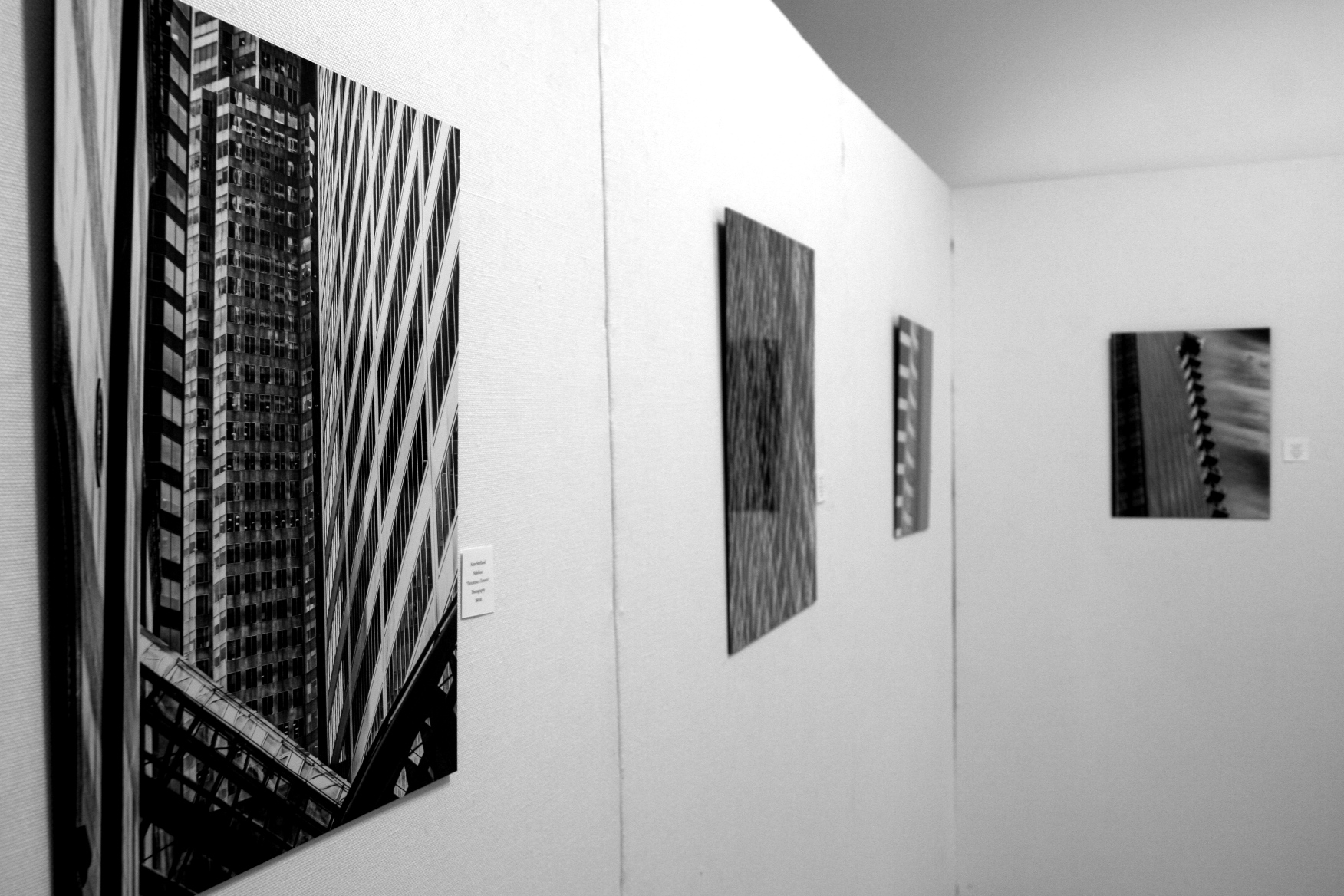
A sampling of Shefland’s photography at the OAC exhibit.

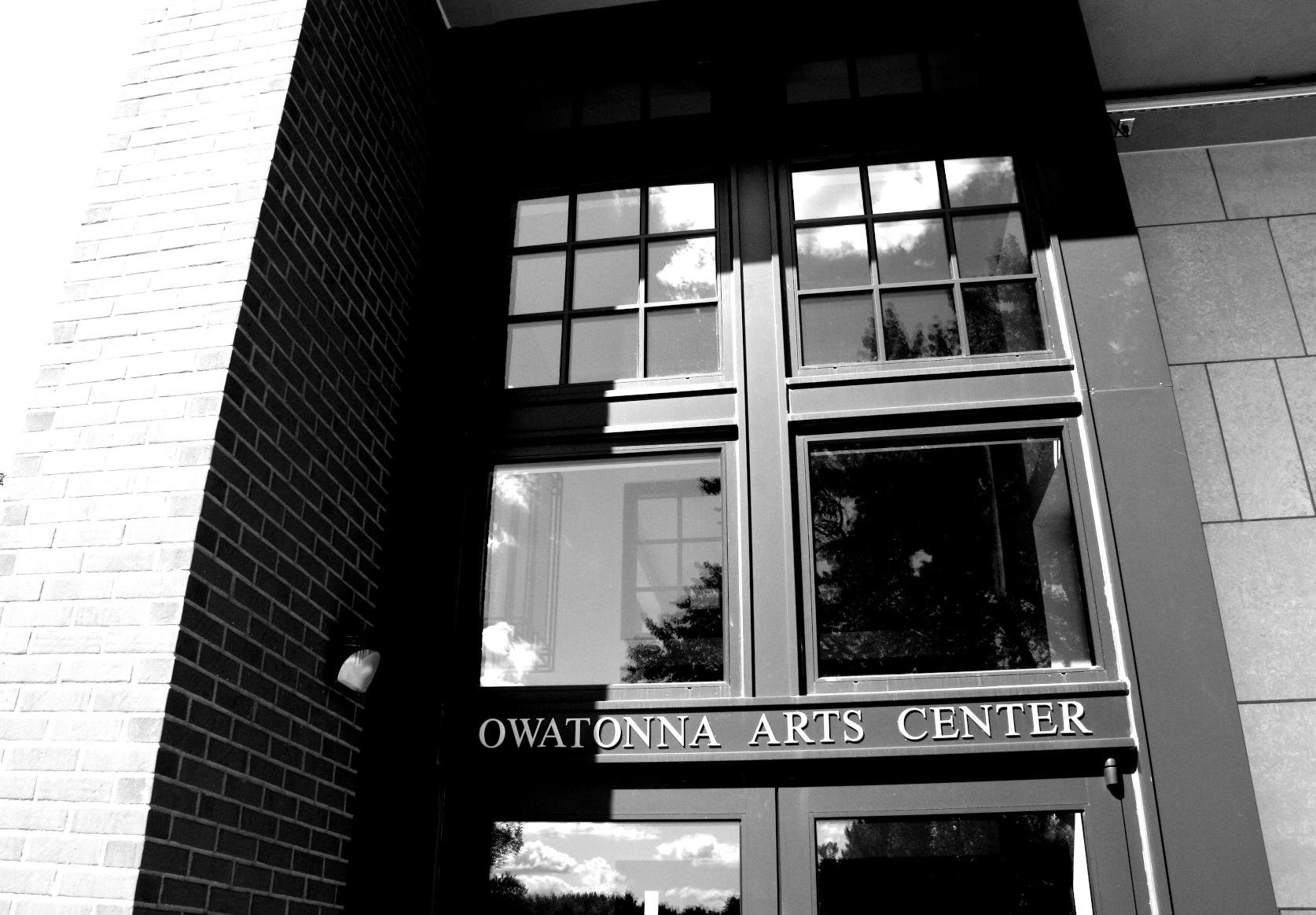
AFTER VIEWING ALAN SHEFLAND’S Architecture AbstrAcTED” photography exhibit at the Owatonna Arts Center, I felt inspired. Inspired to shoot a few architectural images of my own while roaming the West Hills Campus, home to not only the arts center, but also an orphanage museum, city offices and more.

I took this photo of the OAC entry. I converted the image to black-and-white and upped the contrast. (Minnesota Prairie Roots copyrighted photo September 2022)

Shefland’s appreciation of the lines, angles, curves, light of buildings resonates with me. I, too, am fascinated by the seemingly abstract art to be found in architecture. These are not just structures constructed for a purpose, but rather art forms.

Shefland’s artist statement posted with his OAC exhibit. (Minnesota Prairie Roots photo)

This New York City born photographer, who is widely-traveled, focuses on the skyscrapers, the city buildings that rise high in the landscape. His current black-and-white photo exhibit features images from New York, Toronto, Minneapolis and more. Today he calls Minnesota home.

This shows a snippet of a much larger photo by Shefland.

Patterns and lines and curves meld to create remarkable abstract images. Modern art. Devoid of color, their impact is stronger, bolder.

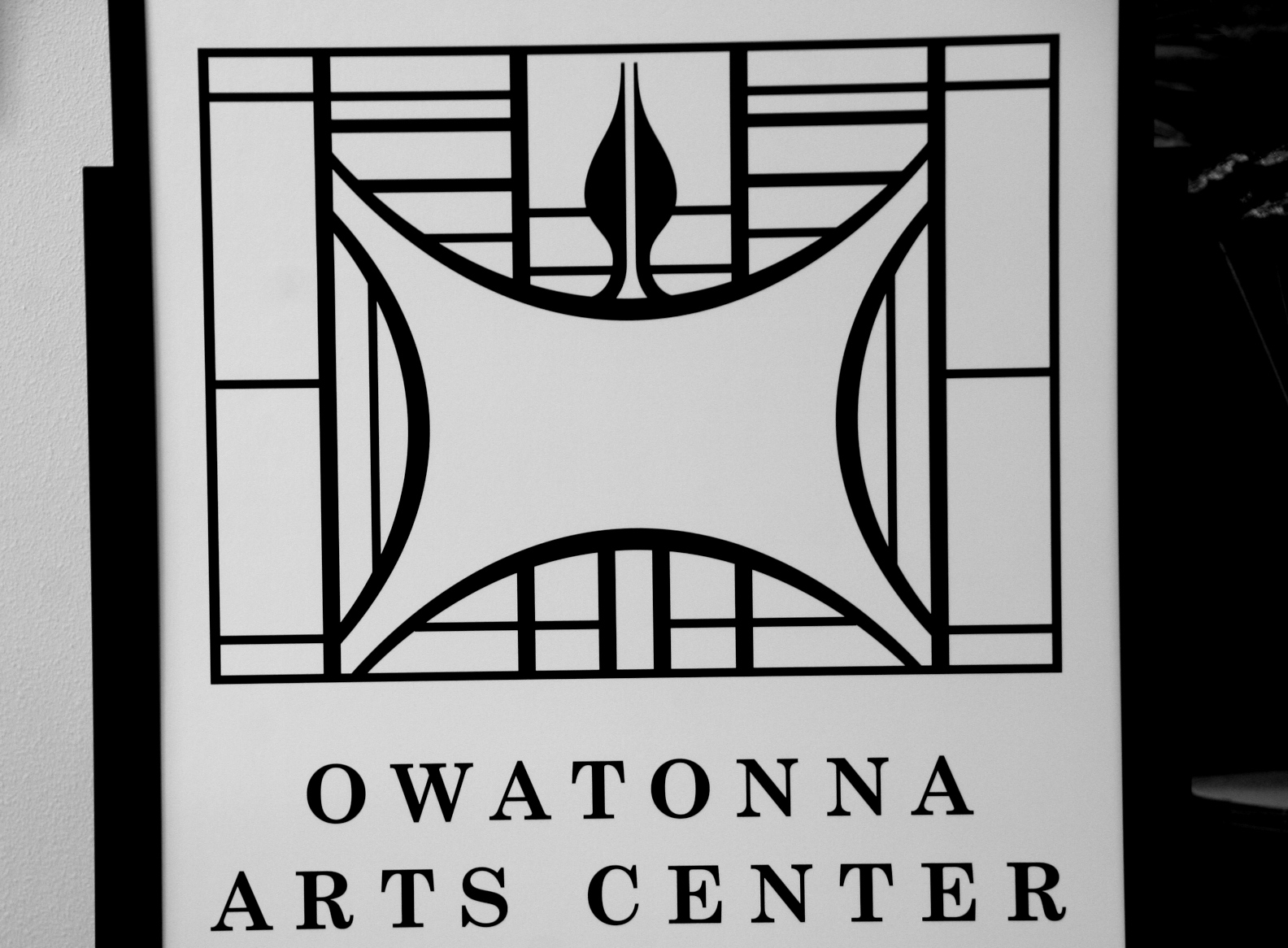
My edited photo of an OAC sign. (Minnesota Prairie Roots copyrighted photo September 2022)

As I paged through the gallery guestbook, I agreed with the comment “Awesome exhibit…worth the drive from Mpls!” I only had to travel 12 miles. I feel fortunate to have access to art exhibits like this locally, without going into the Twin Cities metro.

One more glimpse of images you will see in Shefland’s OAC exhibit.

I am not an urban person. I am not well-traveled. Major cities hold no appeal. Yet, I can appreciate that others value densely-populated areas and all they offer. We are each different and that’s a good thing.

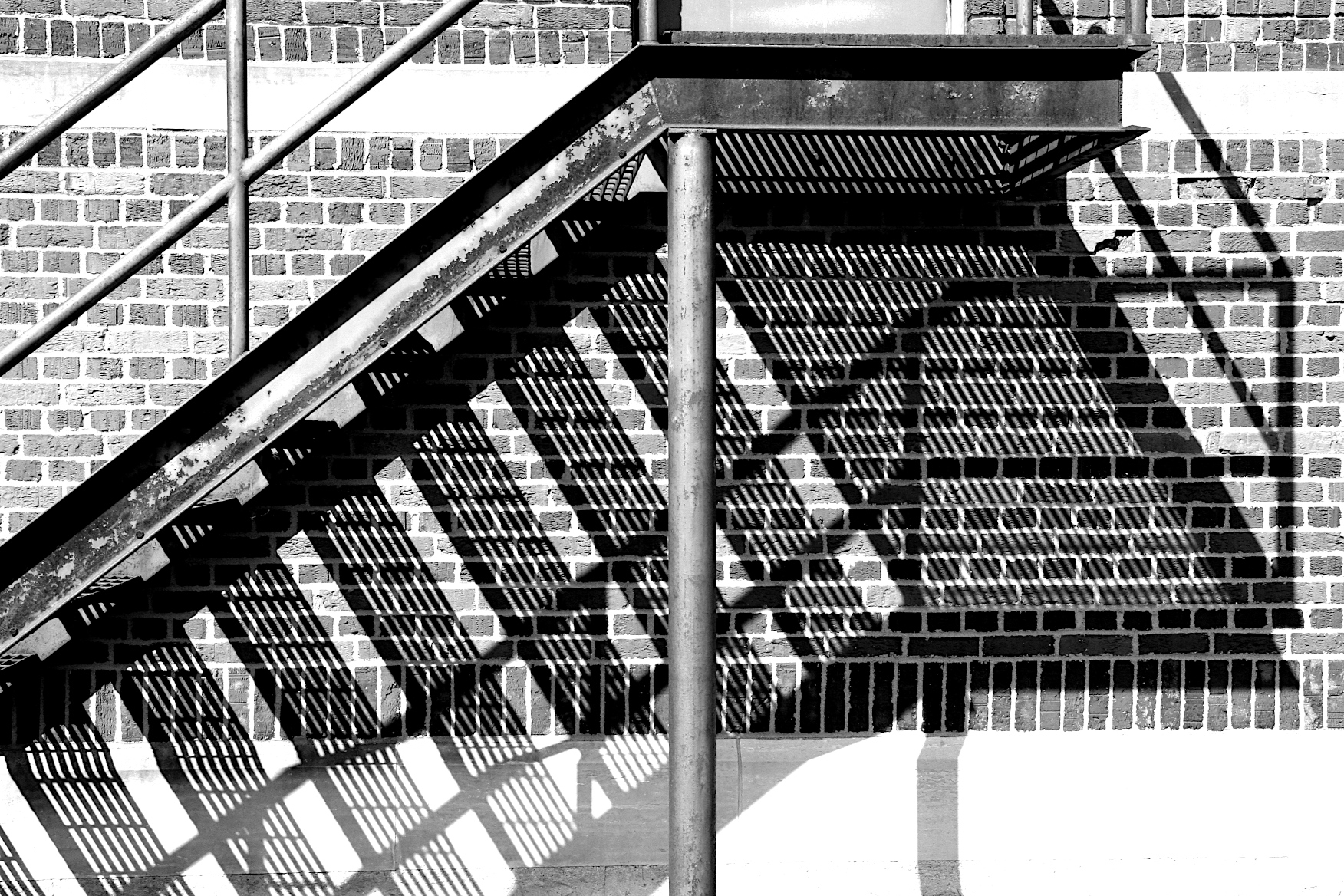
I photographed this exterior stairway on the West Hills campus after viewing Shefland’s exhibit. I love the patterns, the angles, the shadows, the light. (Minnesota Prairie Roots copyrighted photo September 2022)

Yet, as different as we are, we share interests, like photographing architecture. For Shefland, it’s the architecture in cities. For me, it’s the architecture of small towns. Historic buildings or other structures that catch my interest.

To view Shefland’s photos is to grow my knowledge, my appreciation, my respect for creatives like him. He expands my world, personally and professionally. I can say the same for Keith Goldstein, a talented photographer from New York City. I’ve followed Keith’s blog, “For Earth Below,” for many years. His work is currently exhibiting in Milan. The scope of his photography ranges from architectural to streetscapes to street portraits and more. In a recent photo, he featured colorful Fruit Loops cereal scattered across pavers. Simple. Artsy. Creative.

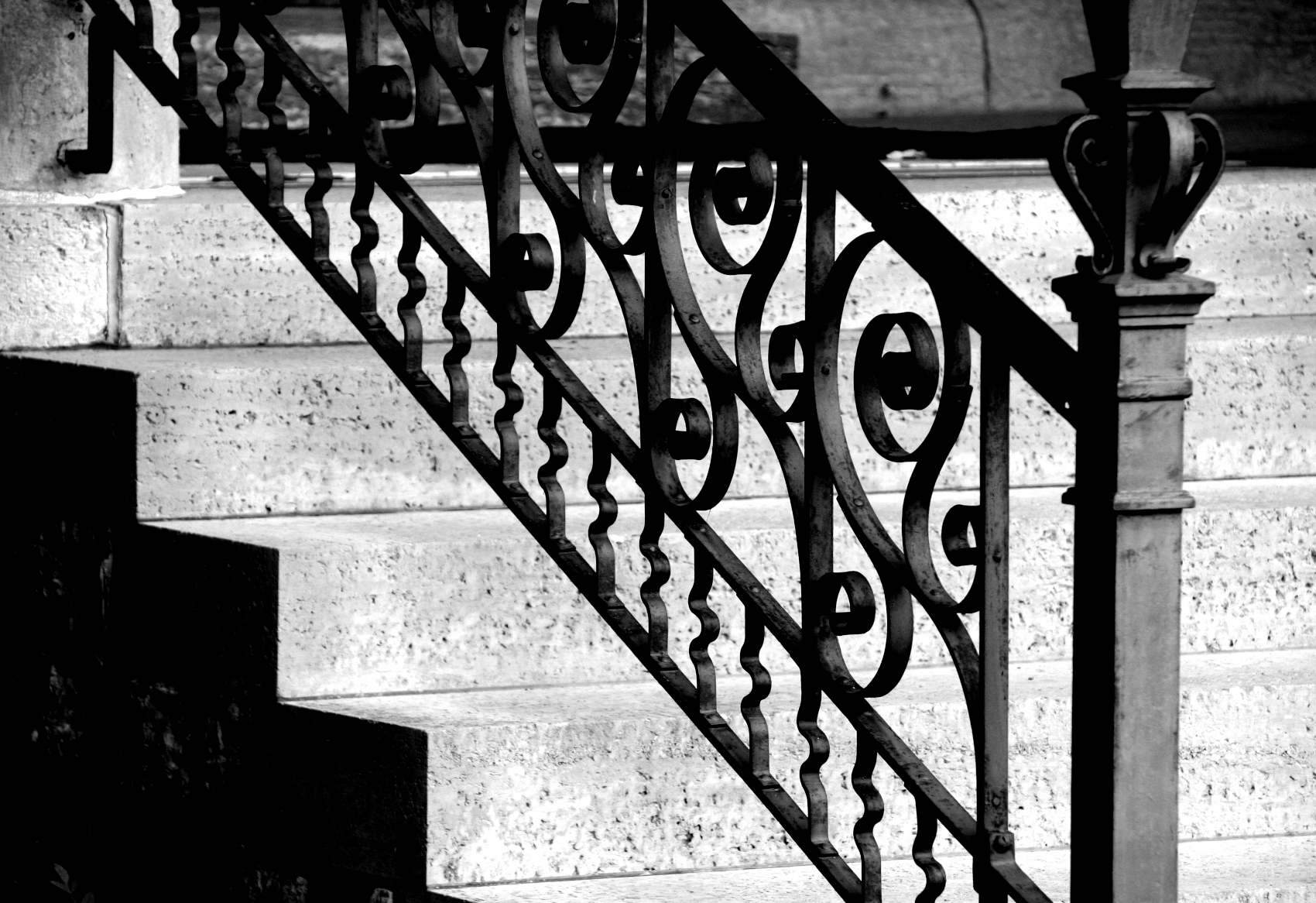
Shefland-inspired, my photo of a stairway and railing on the West Hills campus. (Minnesota Prairie Roots copyrighted photo September 2022)

I find joy in connecting with other photographers, whether online, via gallery exhibits or in-person. To see the world through their lenses enlightens, teaches, encourages me.

FYI: Alan Shefland’s exhibit at the Owatonna Arts Center continues until October 2. Gallery hours are 1 – 5 pm Tuesday through Sunday, closed Mondays and holidays.

Note: I de-saturated all of the images in this post and did minimal photo editing to up the contrast.

© Copyright 2022 Audrey Kletscher Helbling
 

Appreciating historic downtown Owatonna March 2, 2022

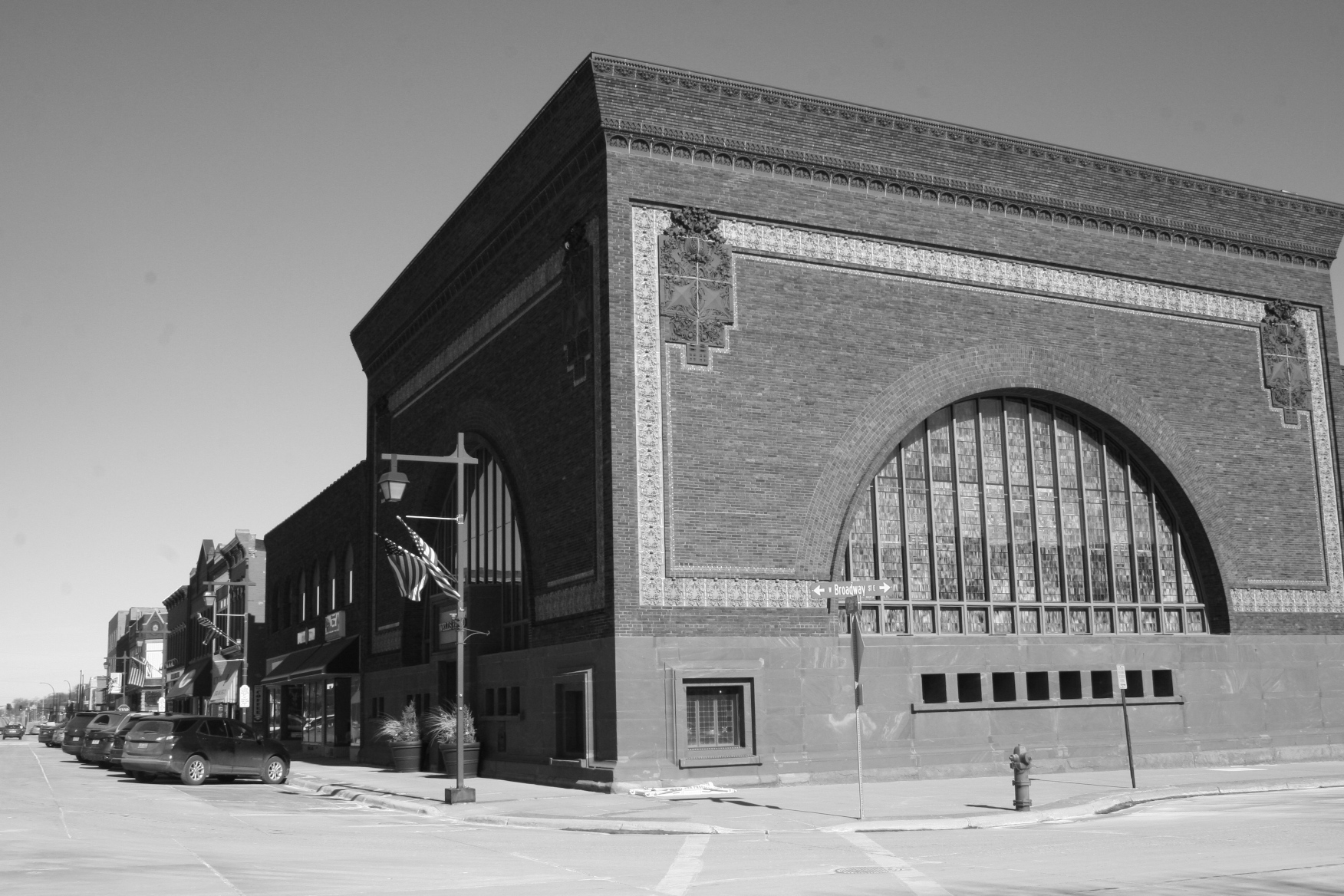
National Farmer’s Bank of Owatonna rates as particularly important architecturally. Designed by Louis Sullivan in the Prairie Architecture School style, it features stained glass windows, gold leaf arches, nouveau baroque art designs and more. This “jewel box of the prairie” was built between 1906-1908. (Minnesota Prairie Roots copyrighted photo February 2022)

STRIPPING IMAGES OF COLOR lends an historic context to several aged buildings I recently photographed near Central Park in downtown Owatonna. It’s easier for me to see the past, to appreciate these long-standing structures through the lens of time when I view them in black-and-white.

Love this corner historic building which houses A Taste of the Big Apple, serving pizza, soup, sandwiches and more, including a Tater Tot Hot Dish special on March 3. (Minnesota Prairie Roots copyrighted photo February 2022)

First, I feel such gratitude that these buildings still stand. A time existed when the thought was that new is better. Out with the old, in with the new. I’m not of that camp and I’m thankful for the shift in attitudes.

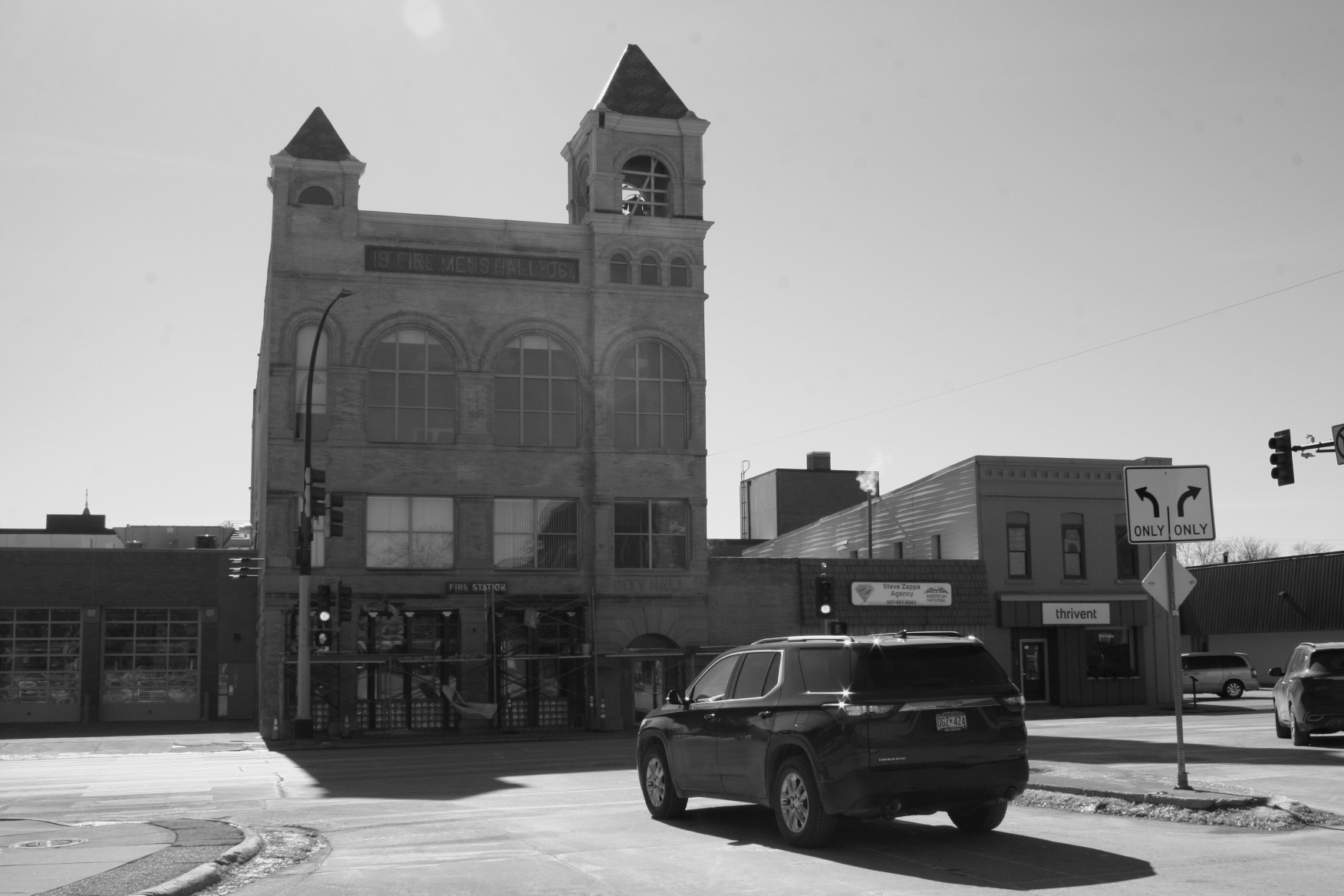
Firemen’s Hall, constructed 1906-1907 for $19,643, sits just across the street from Central Park. (Minnesota Prairie Roots copyrighted photo February 2022)

Twelve city blocks in Owatonna’s downtown define the community’s designation as a National Register Historic District. Three of the 75 “contributing buildings” within that district are on the National Register of Historic Places: the National Farmer’s Bank, the Steele County Courthouse and the Firemen’s Hall.

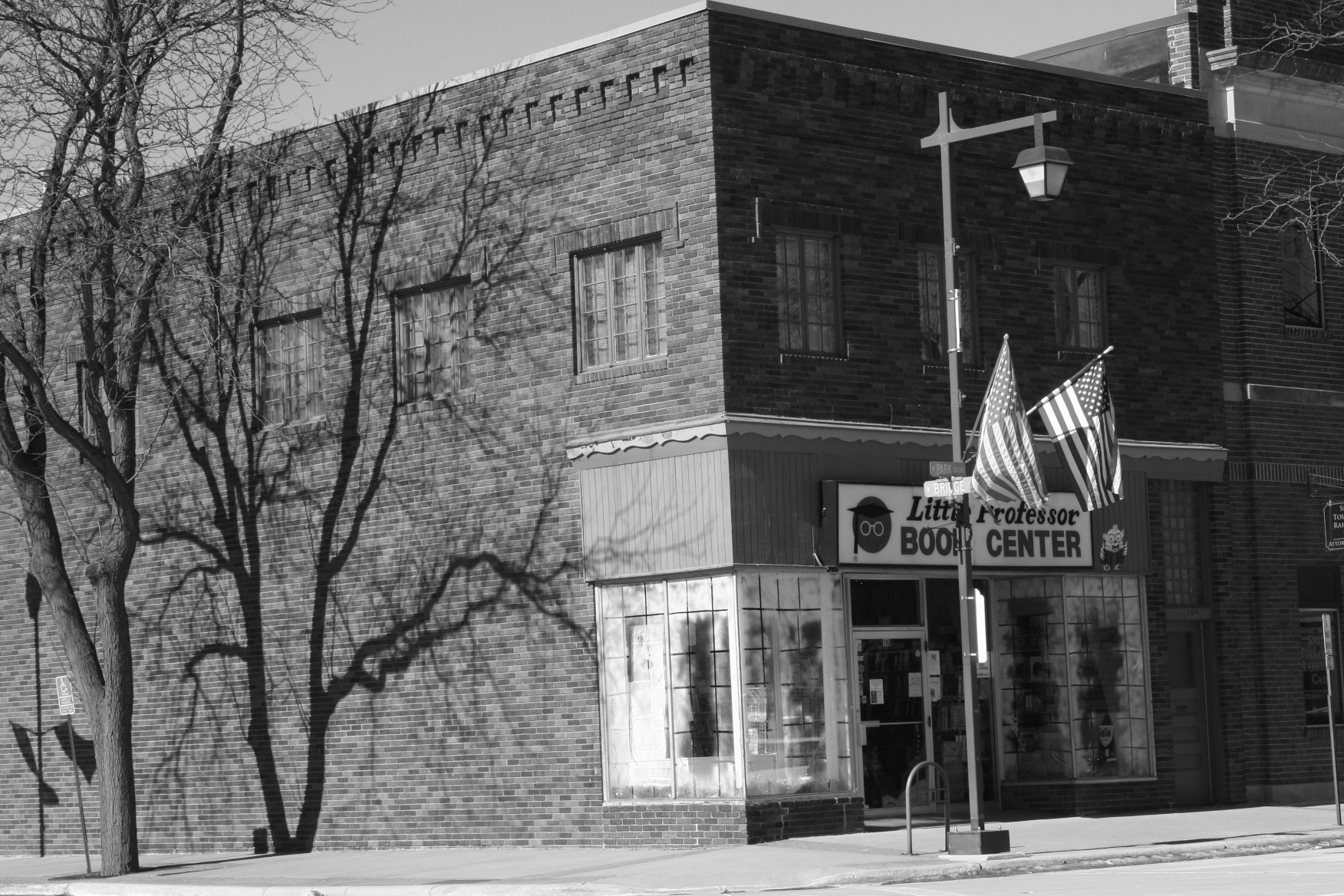
This home-grown bookstore anchors a downtown corner, directly across from Central Park. (Minnesota Prairie Roots copyrighted photo February 2022)

On a recent visit to Owatonna’s Central Park, I pivoted to observe those key historic buildings and others in a downtown of multiple core business streets.

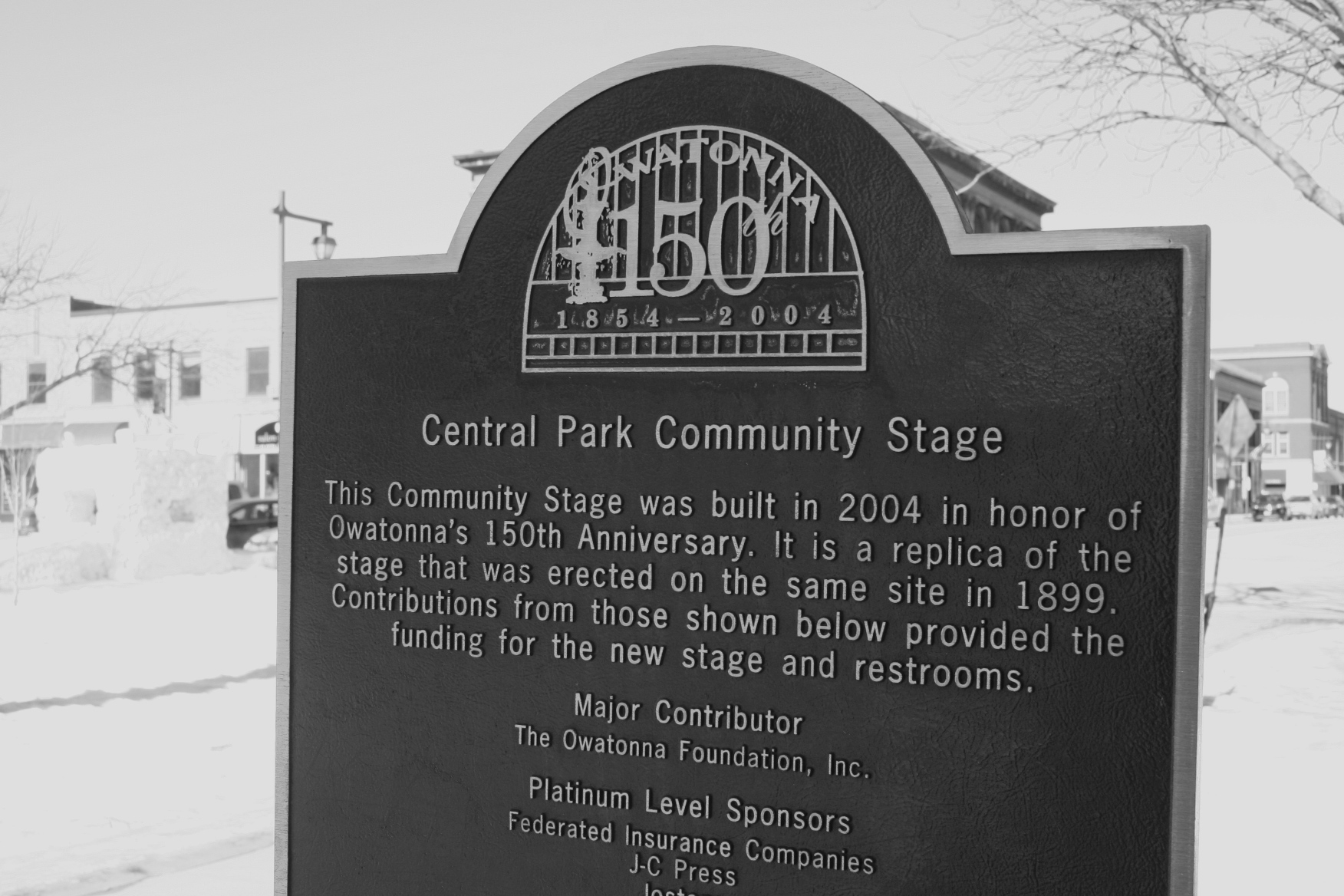
A sign in Central Park provides information about the community stage. (Minnesota Prairie Roots copyrighted photo February 2022)

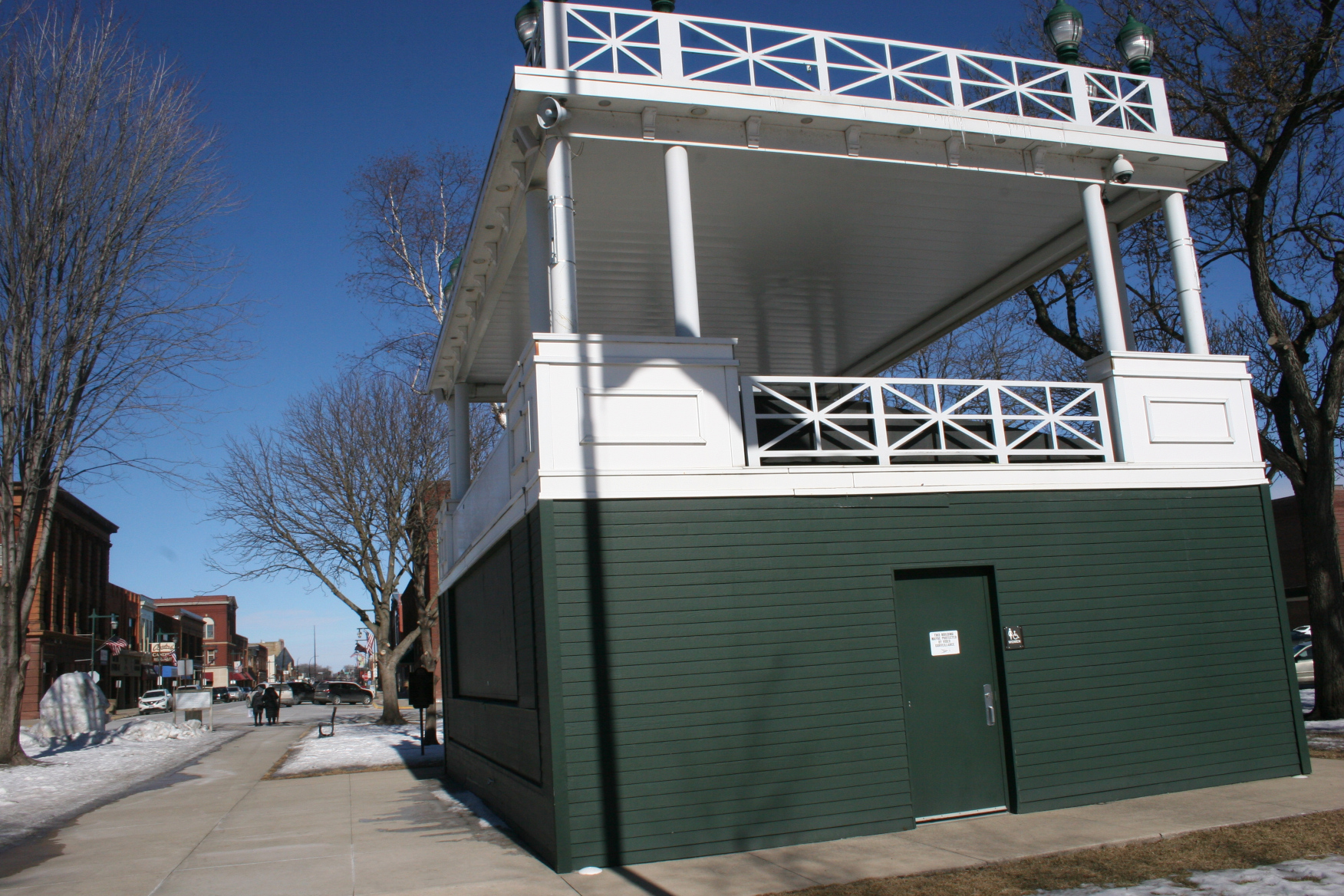
The park, with a replica of the 1899 community stage, serves as the “town square,” the physically identifiable point of focus and gatherings. Here folks gather for concerts, the farmers’ market and other events. Music and the undeniable human need to socialize connect the past to the present.

The replica community stage/bandshell. (Minnesota Prairie Roots copyrighted photo February 2022)

I feel inspired now, via my recent stop in Central Park, to return to downtown Owatonna and further explore its history and architecture. Sure I’ve been here before, but not in awhile and not with a focused purpose of intentional appreciation for and photographic documentation of this historic district.

Strip away the color and appreciate the stark beauty. (Minnesota Prairie Roots copyrighted photo February 2022)

I encourage each of you, wherever you live, to pause. Strip away the color to black-and-white. See the basics, uncolored by time or attitudes or that which detracts. Observe how the past and present connect. Value the “good” in your community. Appreciate the place you call home.

TELL ME: What do you appreciate about your community?

© Copyright 2022 Audrey Kletscher Helbling
 

Owatonna’s Central Park on a winter Saturday with summer flashbacks March 1, 2022

A scene from the Owatonna Farmers Market in June 2014. The historic building anchoring a corner across the street is the National Farmer’s Bank of Owatonna. Architect Louis Sullivan designed the 1906-1908 building in the Prairie School Architecture style. The bank is considered “a Jewel Box of the Prairie.” (Minnesota Prairie Roots copyrighted file photo June 2014)

THE LAST TIME I STOPPED at Owatonna’s Central Park, this southern Minnesota city’s community gathering spot pulsed with activity. The park hosts a busy Owatonna Farmers Market from May through October.

A scene from Owatonna’s Central Park on February 19. (Minnesota Prairie Roots photo February 2022)

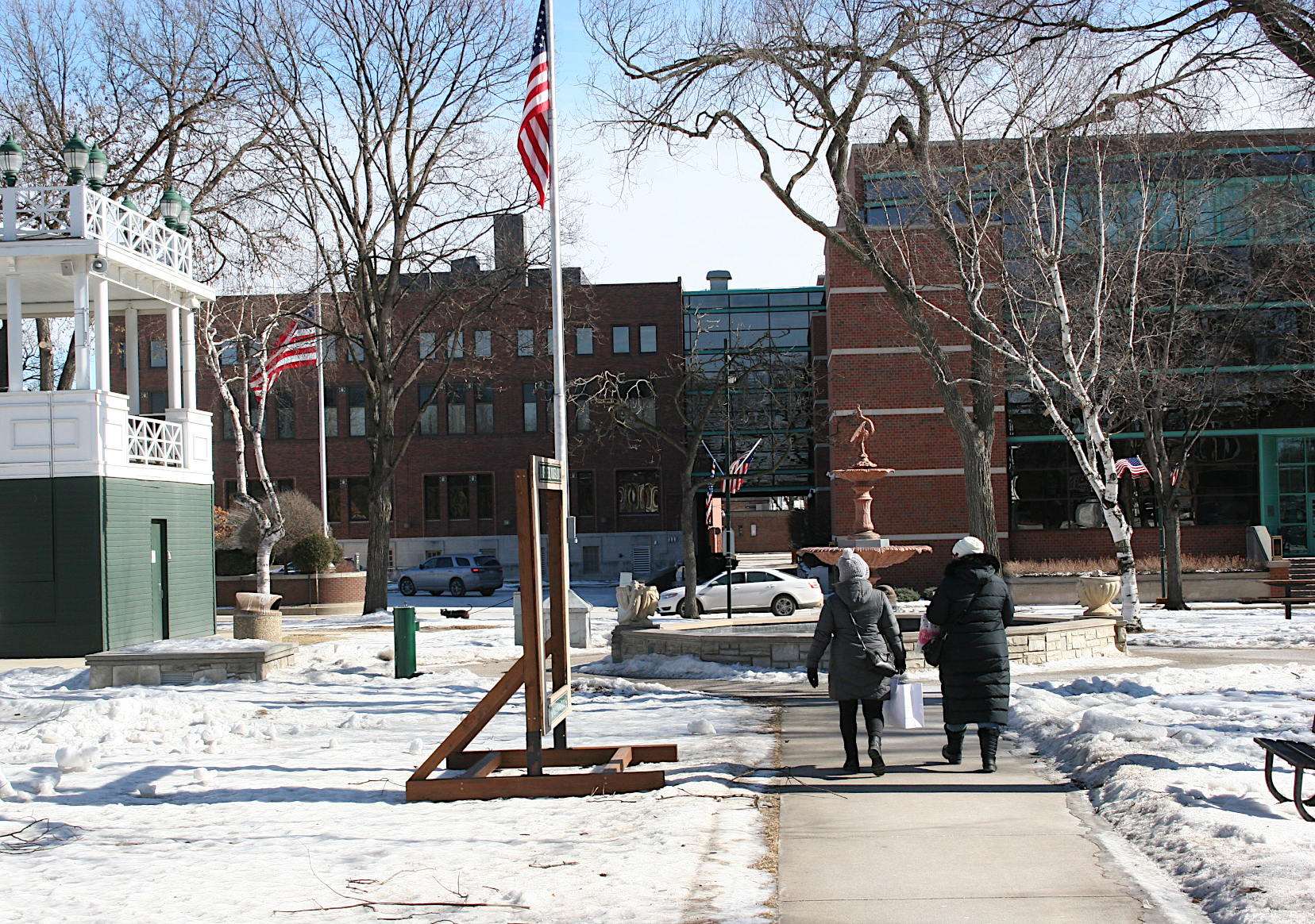
But on this cold Saturday in late February when I stopped by, only a few people used the park. A couple walked their dogs. And two women crossed to the center fountain, purses angled across downy winter coats, stocking caps clamped on and shopping bags looped over three gloved hands, take-out coffee clutched in the fourth.

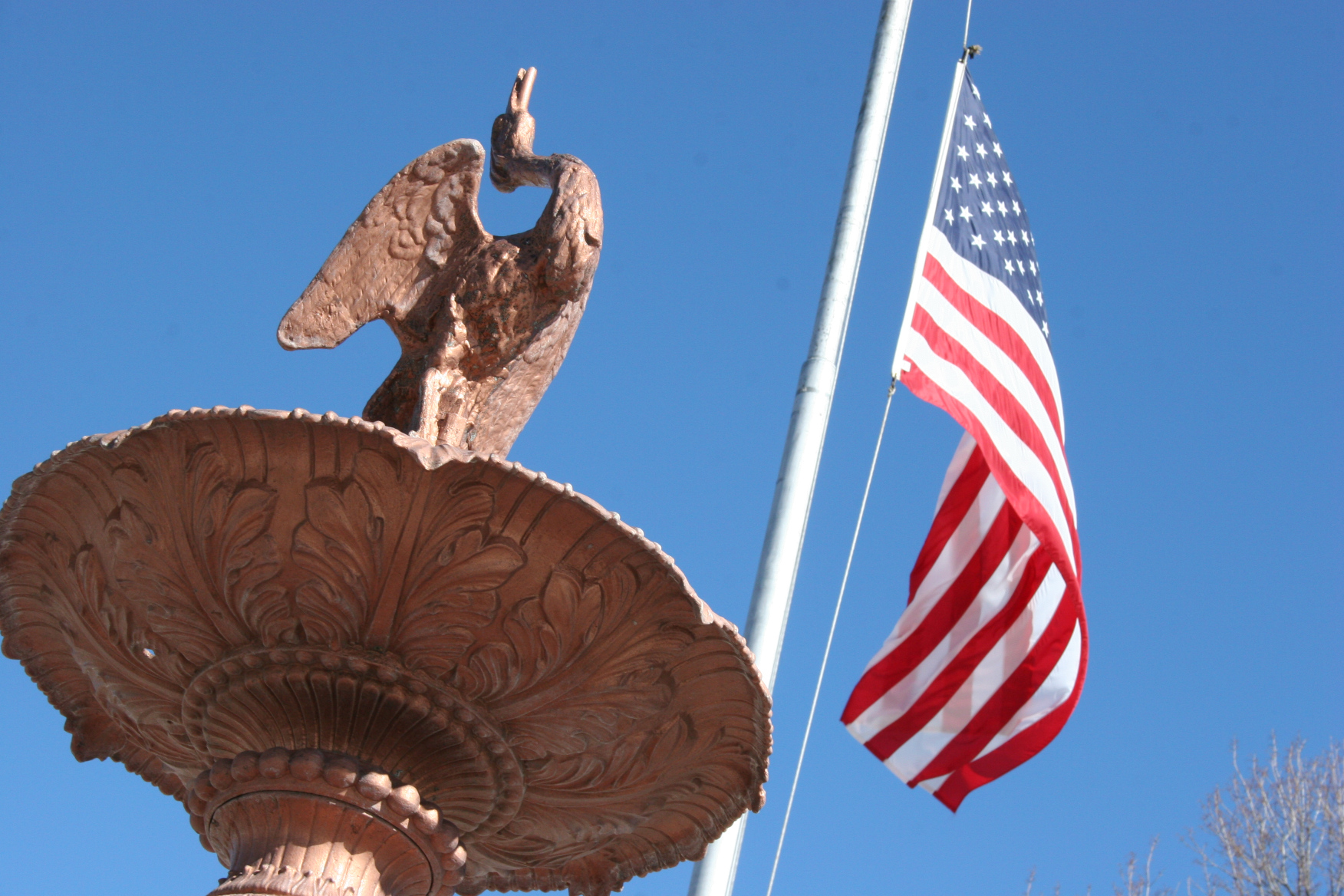
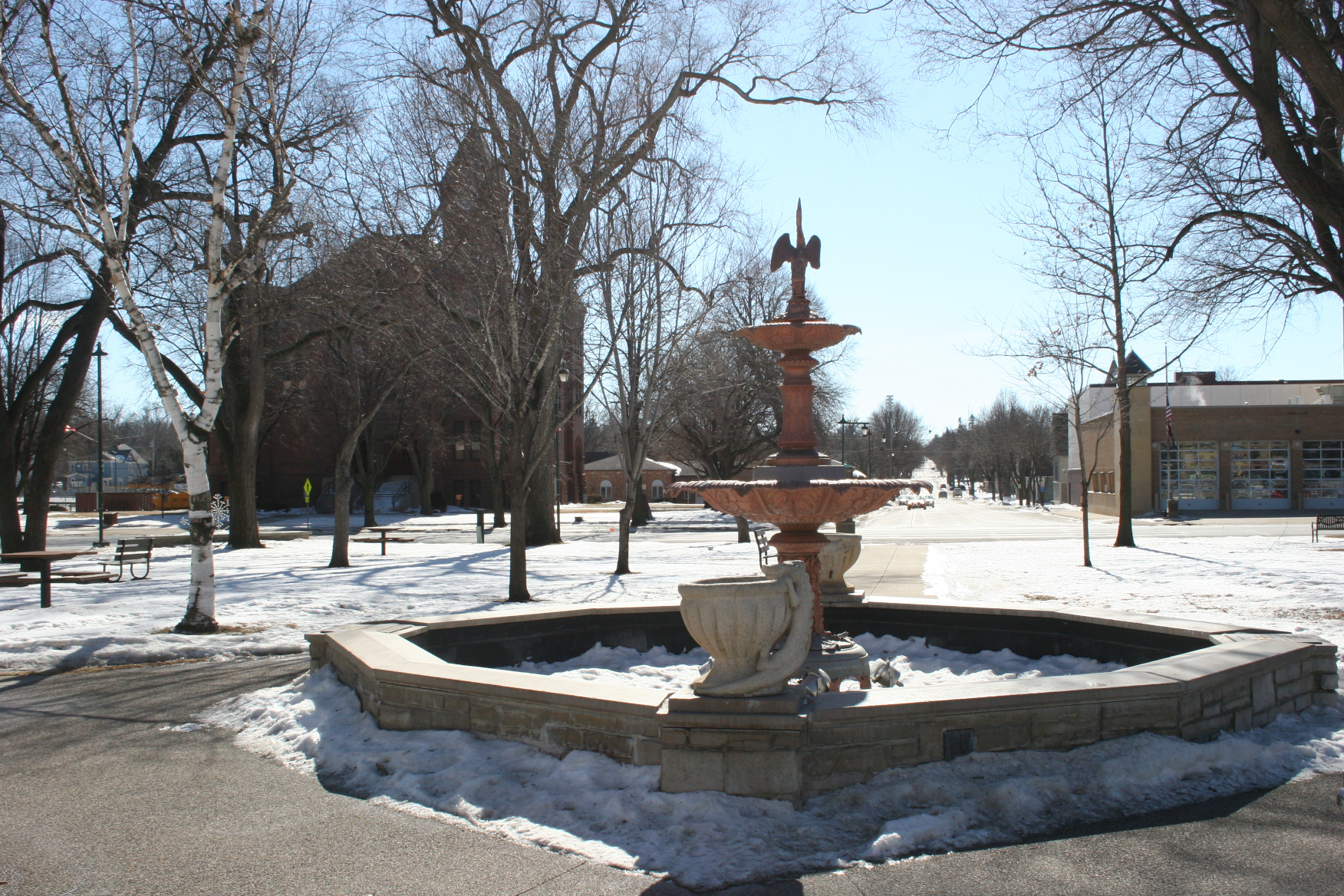
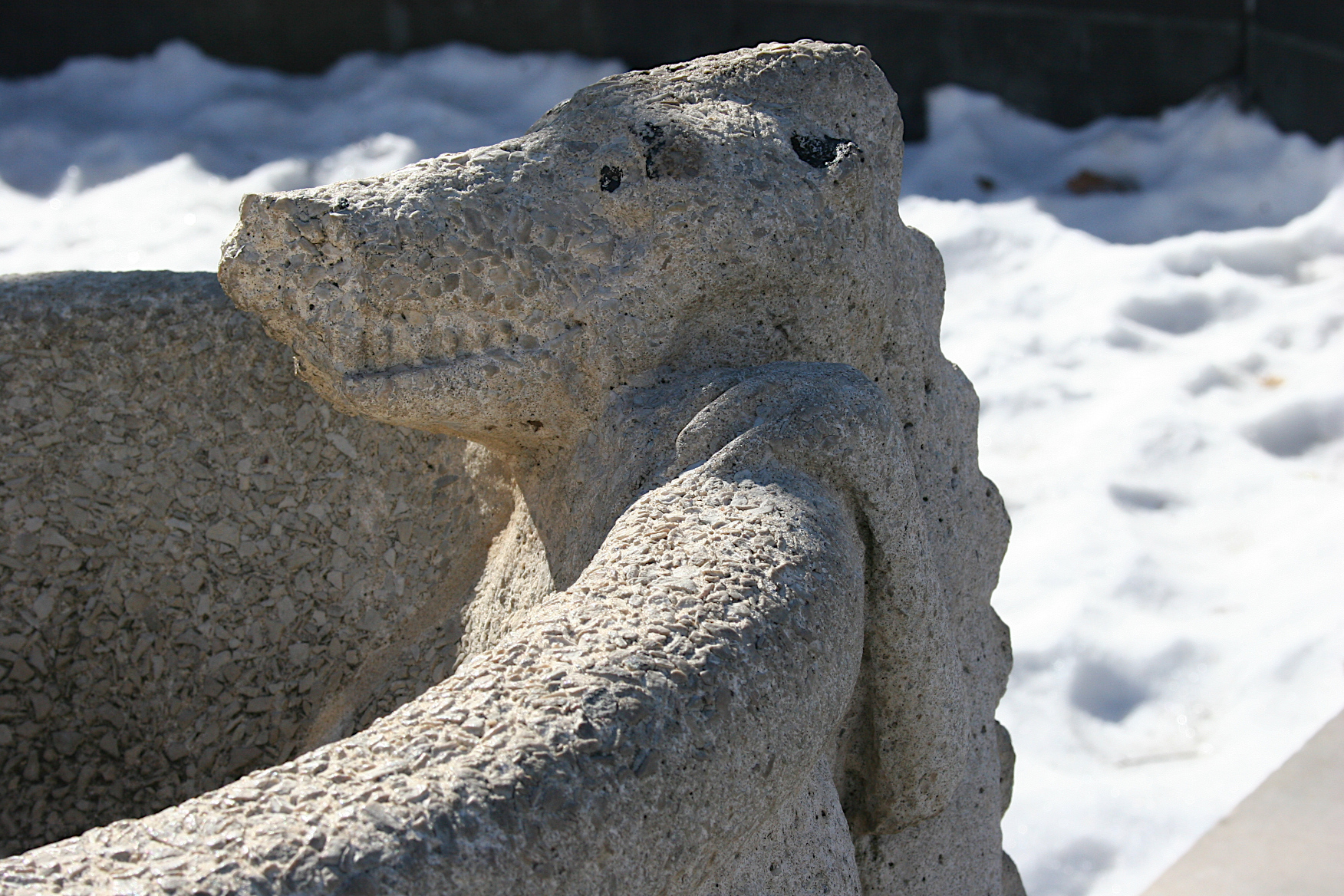
A crane tops the 1909 fountain, refurbished in 2021. (Minnesota Prairie Roots copyrighted photo February 2022)
Imagine this fountain in the warmer months. (Minnesota Prairie Roots copyrighted photo February 2022)
Love the graceful curve of the fountain top crane. (Minnesota Prairie Roots copyrighted file photo February 2022)

As the women paused near the centerpiece fountain placed here in 1909, I studied the scene before me, camera ready. Only moments earlier, I finished my packed lunch inside the cozy warmth of the van. Randy and I had planned to eat at nearby Rice Lake State Park. But that all changed when hiking trails proved too icy for safe walking. So here we were in Owatonna, shifting our plans.

This replica of the 1899 community stage centers the park. It was built in 2004, on Owatonna’s 150th anniversary. (Minnesota Prairie Roots copyrighted photo February 2022)

I was determined that the cold weather would not keep me from photographing the park. Dressed in a warm hand-me-down parka from my son layered over tee and flannel shirts, long johns under jeans, practical winter boots, hand-knit cap and mitten/gloves, I felt prepared. The combo mitten/gloves were a gift from Randy years ago. They work great for winter photography. I flip back the fleece ends to reveal open fingertips. That allows me to manipulate my camera without exposing my entire hand.

An artsy planter sits on fountain’s edge awaiting spring planting. (Minnesota Prairie Roots copyrighted photo February 2022)

Even with all of that, I soon found myself hurrying my creative pace. My fingertips were freezing.

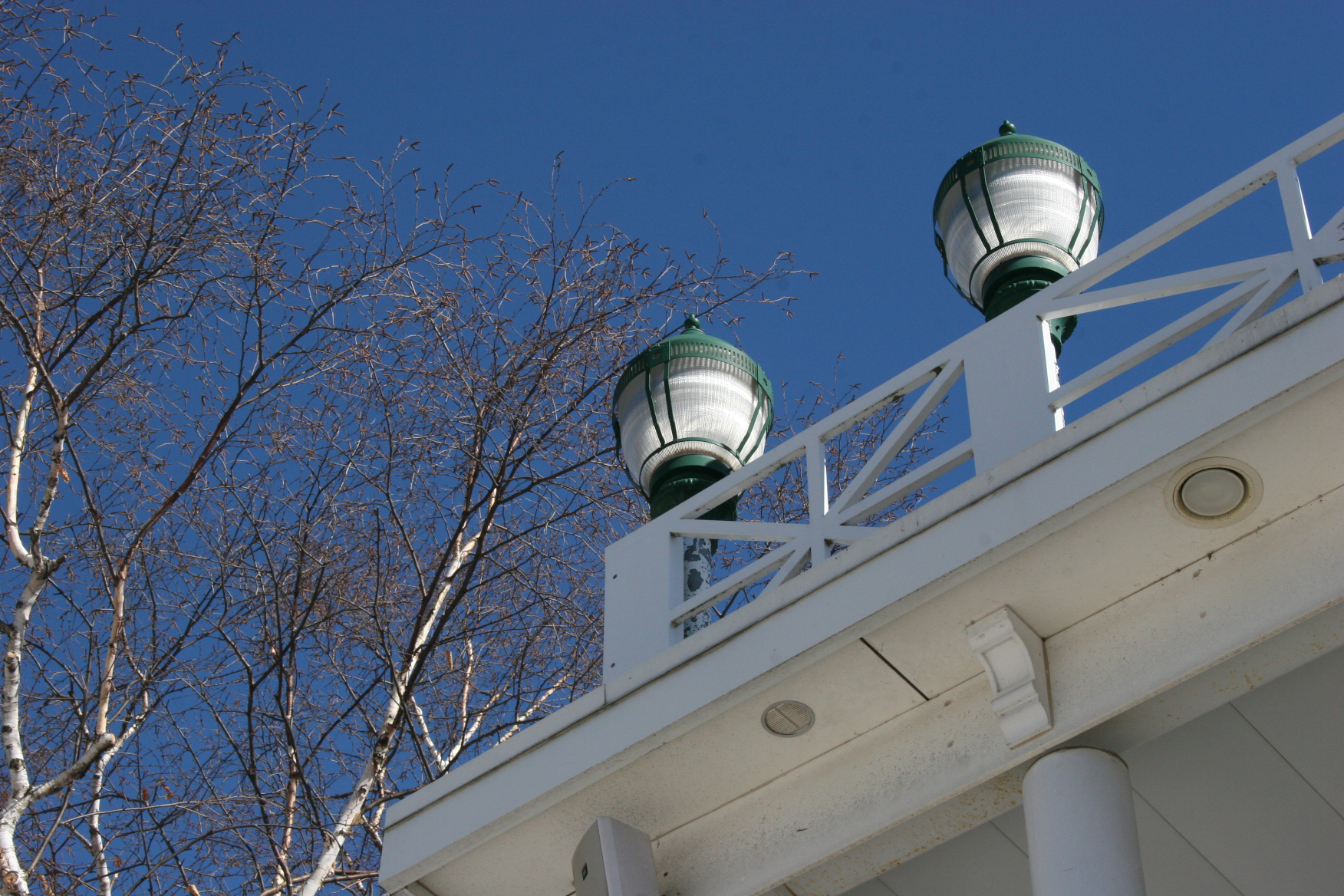
Trees and lights against a bold blue sky by the stage/bandshell. (Minnesota Prairie Roots copyrighted photo February 2022)

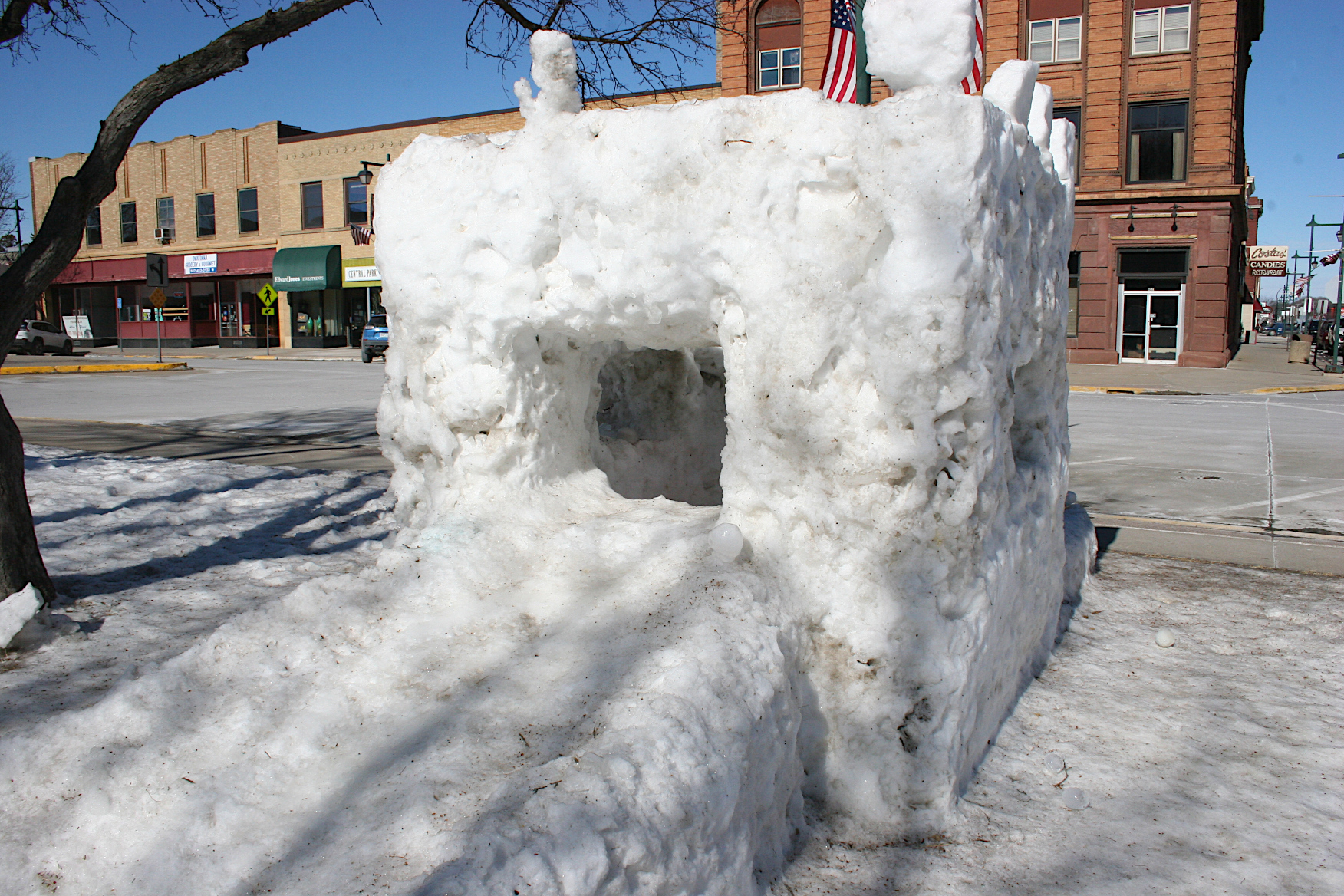
But I was determined to document the setting on an afternoon that looked deceptively warm. Bold blue skies. Sunshine. Artsy fountain. Stout community stage. Historic buildings bordering the park. Remnants of snow sculptures.

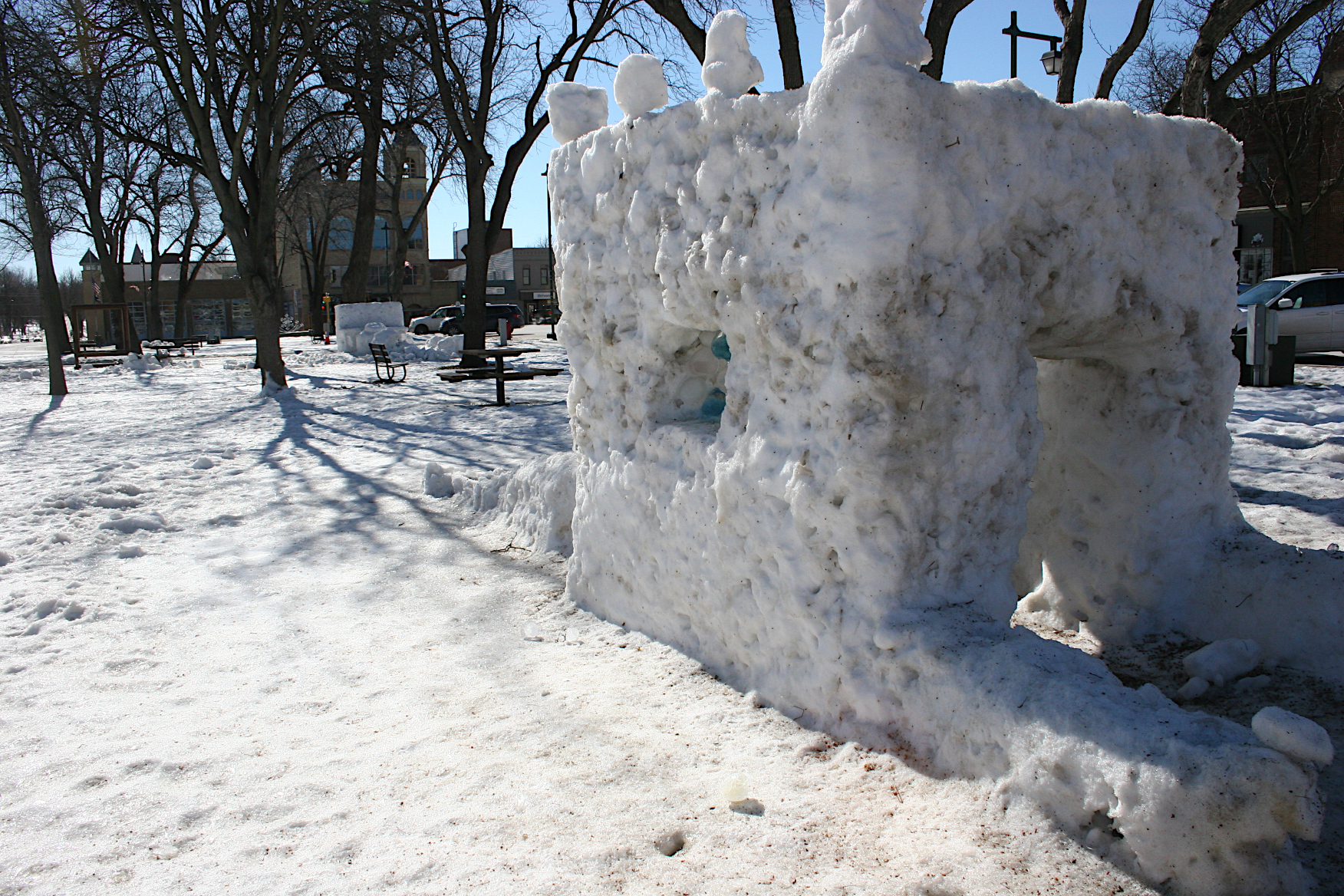
This snow castle still stands, albeit weathered after a month. (Minnesota Prairie Roots copyrighted photo February 2022)
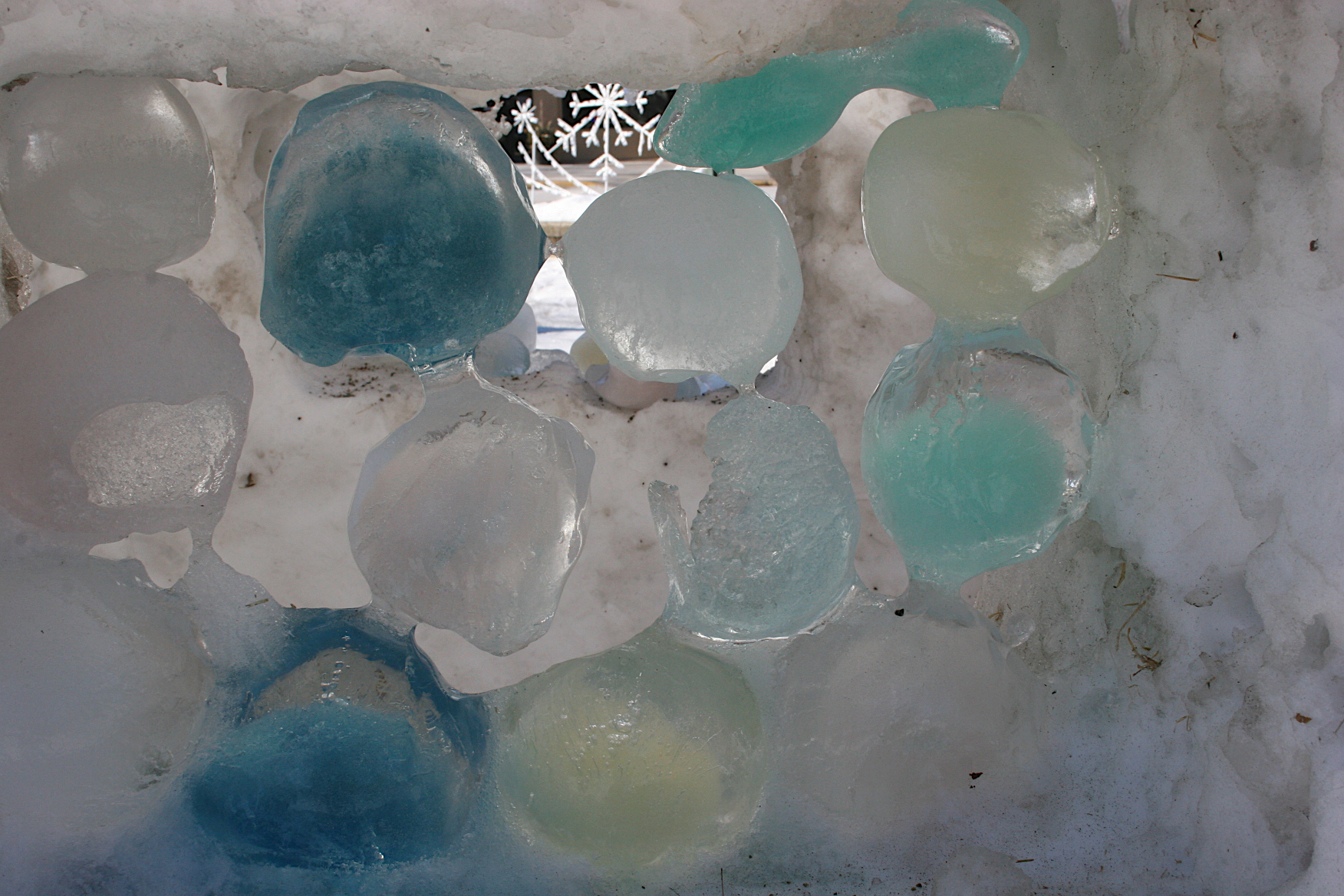
Beautiful colored ice fills a window of the snow castle. (Minnesota Prairie Roots copyrighted photo February 2022)
The back side of the castle features a slide. (Minnesota Prairie Roots copyrighted photo February 2022)

I regretted that we missed Owatonna’s Bold & Cold Winter Festival at the end of January. Then those sculptures would have been newly-built, pristine. But now I could only imagine kids slipping down the slide at the deteriorating snow castle.

Plants for sale at the 2014 Owatonna Farmers Market. (Minnesota Prairie Roots copyrighted photo February 2022)

I also imagined how, in a few months, this scene will change. How leaves will unfurl on the birch trees. How the fountain will spill water. How Farmers Market vendors will set up shop. How music will create a joyful rhythm that welcomes spring, then summer. And warmth.

A snapshot scene from the 2014 Owatonna Farmers Market, which covers one-block square Central Park. (Minnesota Prairie Roots copyrighted file photo June 2014)

This I contemplate as I snap frames, fingertips freezing, hurting now in the cold of winter. Back in the van, I hold my fingers close to the blower, seeking heat while the sun shines bright, bold over Central Park.

© Copyright 2022 Audrey Kletscher Helbling
 

No hiking for us on icy state park trails February 28, 2022

Filed under: Uncategorized — Audrey Kletscher Helbling @ 5:00 AM
Tags: , , , , , , , , , ,
A view of frozen Rice Lake at Rice Lake State Park on February 19. (Minnesota Prairie Roots copyrighted photo February 2022)

IN THEORY, THE PLAN seemed a good one. Randy and I would hike in a nearby state park on February 19, the first of four “free entry” days to Minnesota’s 75 state parks and recreation areas.

Mid Saturday morning, we packed sandwiches, fruit, granola bars and almonds for a picnic lunch, although we would eat in the comfort and warmth of our van. Temps in the 20s do not allow for outdoor dining.

Wildflowers abound in the woods at Rice Lake State Park in this spring-time photo. (Minnesota Prairie Roots copyrighted file photo May 2022)

Originally we intended to drive to Carley State Park south of Plainview. It’s a park we have not visited. But part way there, I suggested we wait. A description of Carley’s Whitewater River-hugging Wildflower Trail and Virginia bluebells carpeting the forest floor in May prompted the change in plans.

Randy reads signs about waterfowl posted by the lake during a May 2020 visit to Rice Lake State Park. (Minnesota Prairie Roots copyrighted file photo May 2020)

Instead, we aimed for Rice Lake State Park some eight miles east of Owatonna. We’ve previously been there, although not in winter. Following back paved county and gravel roads, I already envisioned hiking the park’s trails along frozen Rice Lake. I imagined the quiet of the woods, the beauty of the snow-covered landscape. Such were my expectations. I also felt excited to participate in the Rice Lake State Park Challenge, a special free entry day event that involved finding passwords to claim a possible prize.

Walking into the woods at Rice Lake State Park in the spring. (Minnesota Prairie Roots copyrighted file photo May 2020)

When we pulled into the park, I checked in at the park office for a map and the challenge entry form. As I was about to leave, the park staffer warned, “Be careful, the trails are icy.” I would soon discover for myself just how right she was in that assessment.

Rental canoes are stacked next to the parking lot and lake. The trail we took started at the edge of the woods near lake’s edge. (Minnesota Prairie Roots copyrighted photo February 2022)

The snow-packed, icy parking lot offered the first clue to conditions. I carefully stepped from the van, draped my camera strap around my neck and aimed toward the lakeside trail. Not even part way there, I was already grasping Randy’s arm. As someone who’s broken her right shoulder and left wrist in falls (the last requiring surgery), I have no desire to fall and break a third bone. Note that neither occurred in winter but rather in May and June and involved a missed step inside a hospital and a rain-slicked wooden step in a friend’s backyard.

On the way back to the van, I spotted these apples in the snow. Deer food? (Minnesota Prairie Roots copyrighted photo February 2022)

At the beginning of the trail at Rice Lake State Park, I paused, observed and assessed that, yes, the trail was, indeed, icy. But I was willing to try, hoping conditions would improve. They didn’t. Soon Randy and I found ourselves crunching through the snow aside the trail rather than traversing the ice-packed path. Not even 20 feet in, Randy advised that perhaps we best turn around. I agreed.

Lake and sky meet at Rice Lake State Park during a spring visit. (Minnesota Prairie Roots copyrighted file photo May 2020)

Disappointment filled my thoughts. I didn’t realize how much I had anticipated this time in nature, in the woods, by the lake. And now…plans would pivot. We realized conditions would likely be the same at other state parks. So we headed west to Owatonna for that picnic lunch and more.

#

TELL ME: If you live in southern Minnesota, where can I find clear trails for winter hiking? If you live elsewhere, where do you like to hike this time of year?

#

FYI: Minnesota has three more upcoming “free entry” to state parks and recreation areas in 2022. Those dates are April 23, June 11 and November 25. I highly-recommend a warm weather hike in Rice Lake State Park. It’s especially peaceful.

© Copyright 2022 Audrey Kletscher Helbling

 

Learning Mental Health First Aid September 22, 2021

Minnesota Prairie Roots file photo.

THE STRUGGLE IS REAL. Several years ago I saw that message printed on the back of a young woman’s shirt at a community celebration. I approached her and asked about the meaning behind those words. She explained that she lives with depression and that her family has loved and supported her through her struggles. I thanked her. Encouraged her. Then walked away feeling grateful for the young woman’s openness and for her caring and loving family.
That we should all be so honest. And compassionate. But the stigma surrounding mental illness, although lessening, continues. The failure to understand and support continues. And that’s where education and training are vital—to recognize, to de-stigmatize, to make a difference in how we perceive and approach mental health.
An upcoming opportunity in my area, Mental Health First Aid, helps those enrolled in the course to identify, understand and respond to signs of mental illness and substance abuse disorders. Attendees learn initial support skills and then how to connect individuals to appropriate care.

The class, taught by Mary Beth Trembley, a psychiatric nurse with 30-plus years of experience, will be held from 8 am – 4:30 pm on Tuesday, October 12, at Redeemer Lutheran Church, 1054 Truman Avenue, Owatonna. The course meets Continuing Education Credits. Among those encouraged to attend are employers, law enforcement officers, hospital staff, first responders, faith leaders, care providers, and anyone, really.

Photographed at the Northfield Public Library. Minnesota Prairie Roots file photo.

My friend, the Rev. Kirk Griebel, who completed Mental Health First Aid a year ago and is hosting the upcoming session at his church, agreed to answer several questions about the class. He has served as Redeemer’s pastor for 20 years and, during his time in the ministry, has cared for people in mental health facilities and provided support to the families of those who have committed suicide.

My questions and his answers follow:

Q: You took the Mental Health First Aid course. What prompted you to do that?

A: I first heard about Mental Health First Aid at the opening of an art show. The show was a benefit for a non-profit agency that promoted Mental Health First Aid. When I got home from the show I did some research on Mental Health First Aid and decided it would be a good thing for me to explore. The closest course I could find was in Mankato and then the pandemic hit but with a little perseverance I managed to take the course about a year ago.

Q: What was your biggest take-away from this class?

A: The first thing that comes to mind is one of the Agree/Disagree questions I was asked to respond to during the course: “It is not a good idea to ask someone if they are feeling suicidal in case you put the idea in their head.” If you are concerned about a person’s mental condition and their potential for self-harm it is better to ask a person if they are feeling suicidal than to avoid the topic.

I also learned a number of calming techniques to use for people in crisis. I learned about how to listen non-judgmentally and ways to get people to the appropriate help they need.

Q: How can we, as individuals and communities, best help family, friends and others who are dealing with mental health challenges?

A: Accessing the necessary professional mental health resources and dealing with the stigma of mental illness are two of the greatest difficulties that I see for people facing mental health challenges. So community leaders should make sure that their communities are just as prepared to respond to mental health emergencies as they are to respond to other health emergencies. Mental Health support groups such as those provided by the National Alliance on Mental Illness (NAMI) are a great way for family members of those who have mental illness to support each other.

Q: What should we avoid saying/doing? What doesn’t help?

A: “Just snap out of it”, “Pull yourself together,” or “Here we go again” should be avoided when offering support to those with mental illness. We should also avoid words like “crazy” and “retarded.” Phrases like, “I am concerned about you.” or “Is something bothering you?” are more open-ended and non-judgmental.

Q: If you were to give one reason for taking this class, what would that be?

A: I don’t look at taking the Mental Health First Aid course as a “one and done” scenario. That’s not the way it works with traditional first aid classes either. Mental Health First Aid is an important first step in getting educated about the many facets of mental health and should be followed up with ongoing efforts to become better equipped to offer support to those who struggle with mental illness. Mental health issues are so common these days that everyone, but especially those in care-giving professions, should have at least a basic understanding of this topic.

Photographed along a bike trail in the Atwood Neighborhood of Madison, Wisconsin. Minnesota Prairie Roots file photo.

I hope this post encourages you to consider taking Mental Health First Aid or a similar course and/or to connect with the National Alliance on Mental Illness for information and support. Or to seek professional help if needed. You are not alone, whether you are dealing with mental health issues or you love/care for someone who is facing challenges. The Struggle Is Real.

FYI: To sign up for the October 12 Mental Health First Aid class in Owatonna or for more information, email redeemerowatonna at outlook.com or call 507-451-2720. Registration deadline is Tuesday, October 5. Cost is $90.

Copyright 2021 Audrey Kletscher Helbling