Minnesota Prairie Roots

Writing and photography by Audrey Kletscher Helbling

A historical look at weddings in Steele County, Part I May 3, 2016

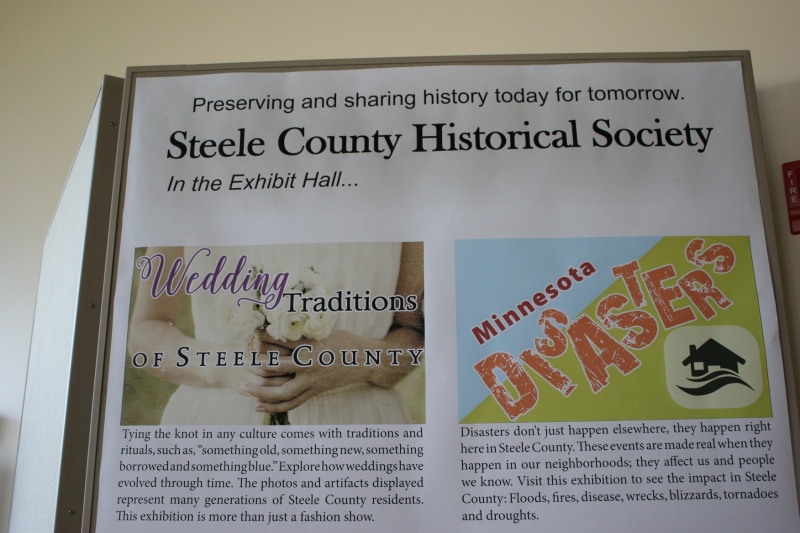
This sign marks the exhibits currently showing in the Steele County History Center through spring 2017.

This sign marks the exhibits currently showing in the Steele County History Center through spring 2017.

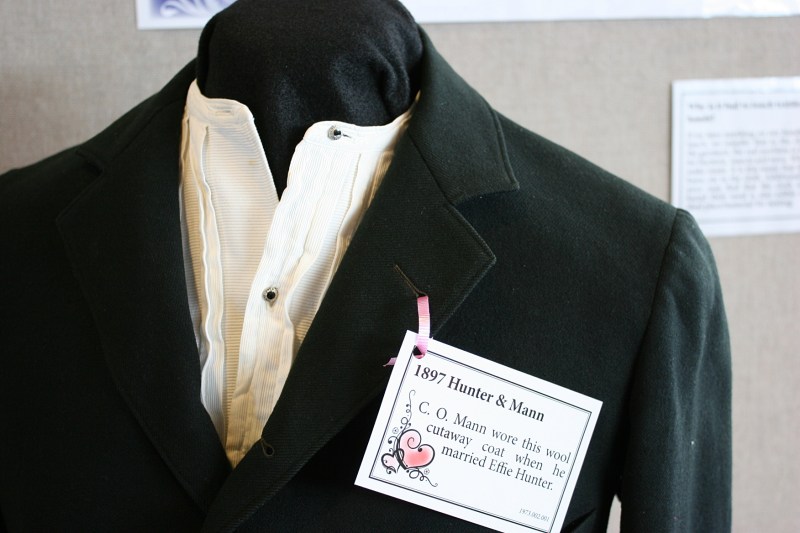
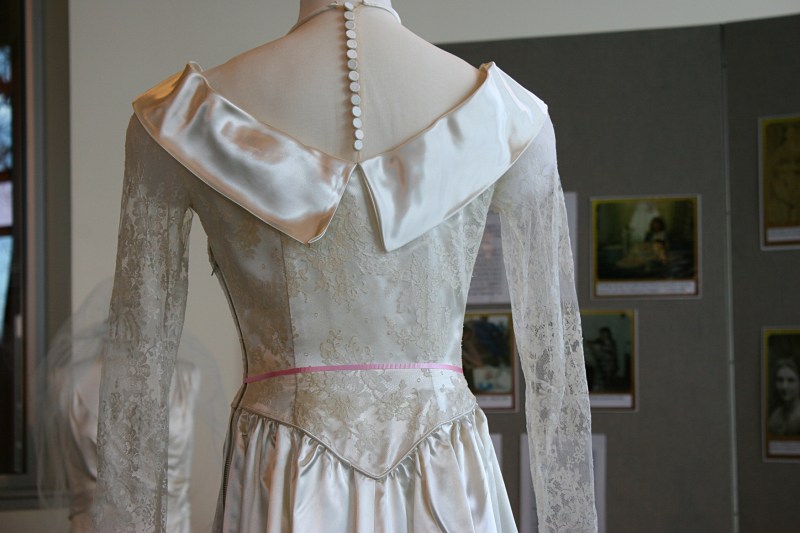
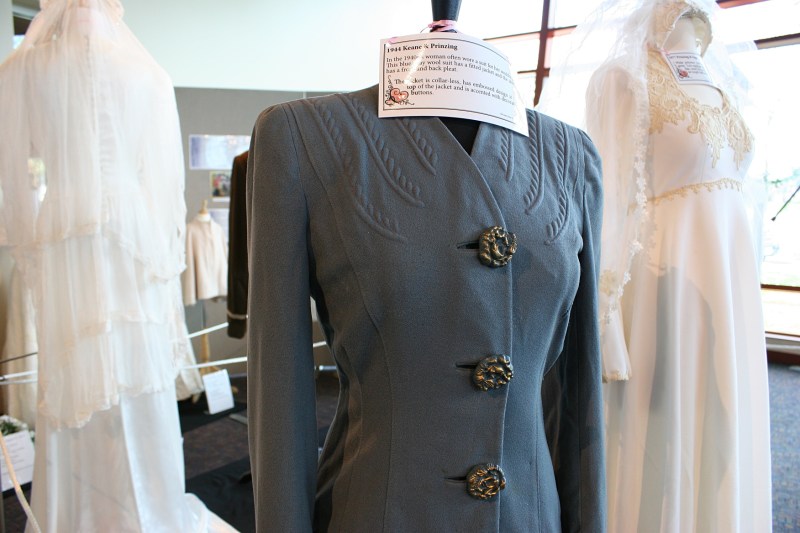
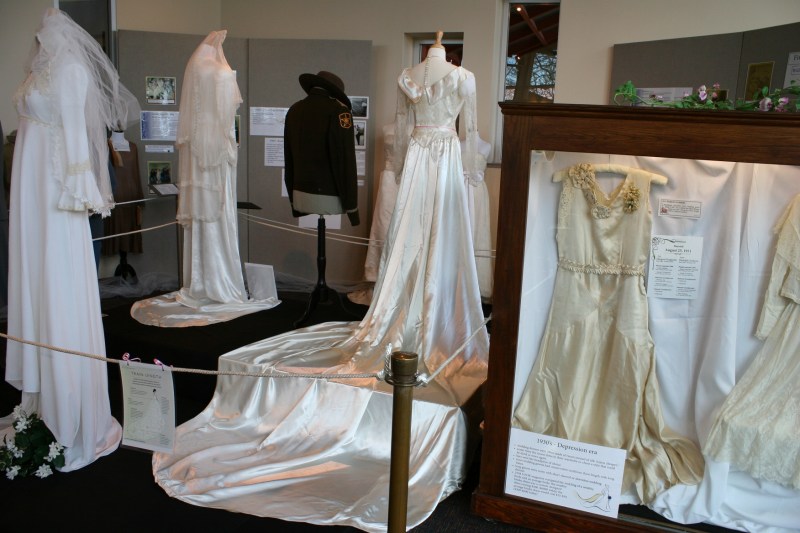
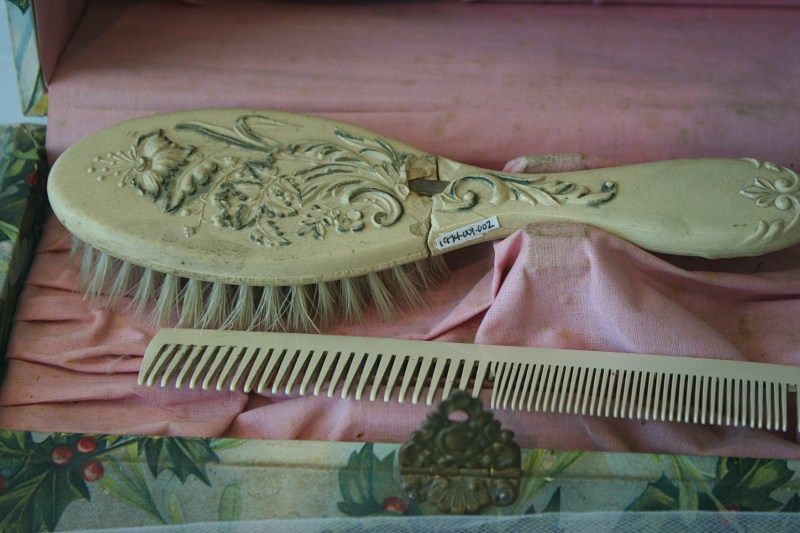
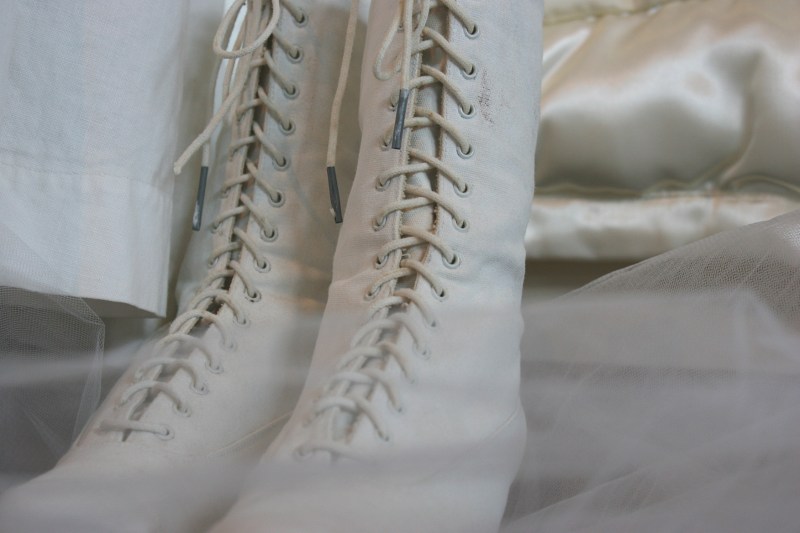
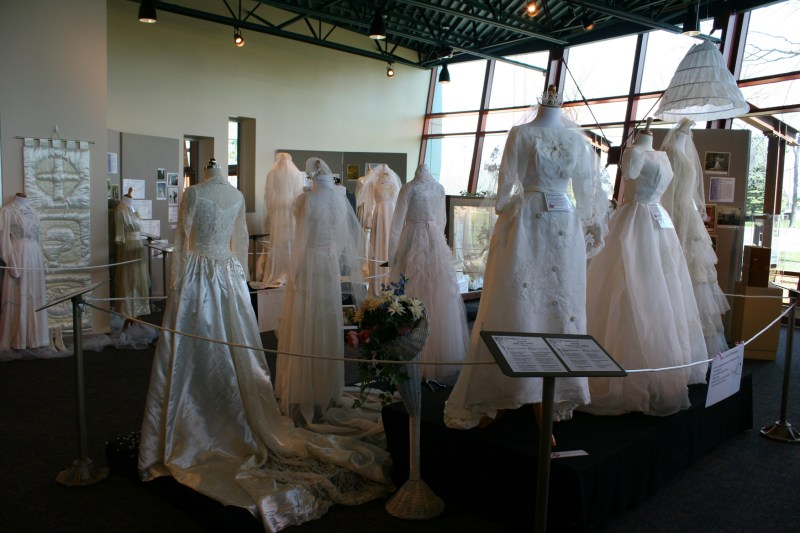
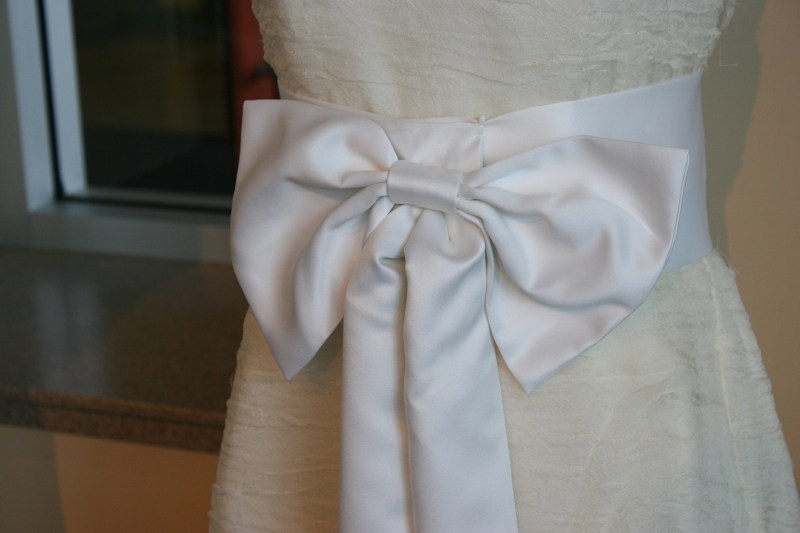
THE DETAILS ARE, OH, SO LOVELY. Dainty buttons. Lace. Shiny satin. You’ll see them all in Wedding Traditions of Steele County, a newly-opened exhibit at the Steele County History Center in Owatonna.
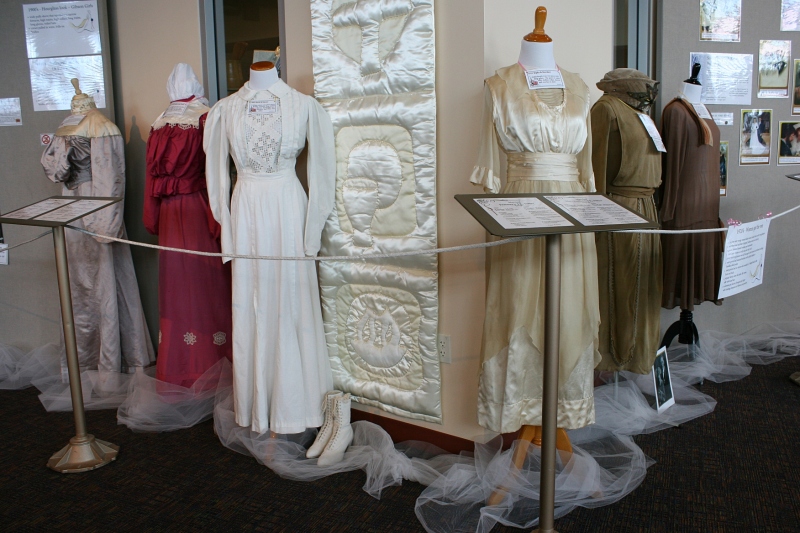
This section highlights dresses from the 1910s and 1920s.

This section highlights dresses from the early 1920s.

Nearly two dozen wedding dresses take center stage in this exhibit created by three volunteers and a museum staffer over some six months.
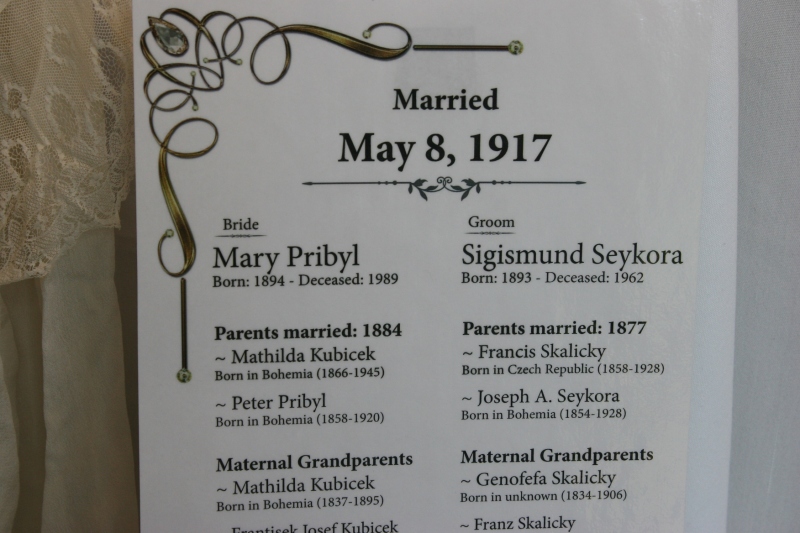
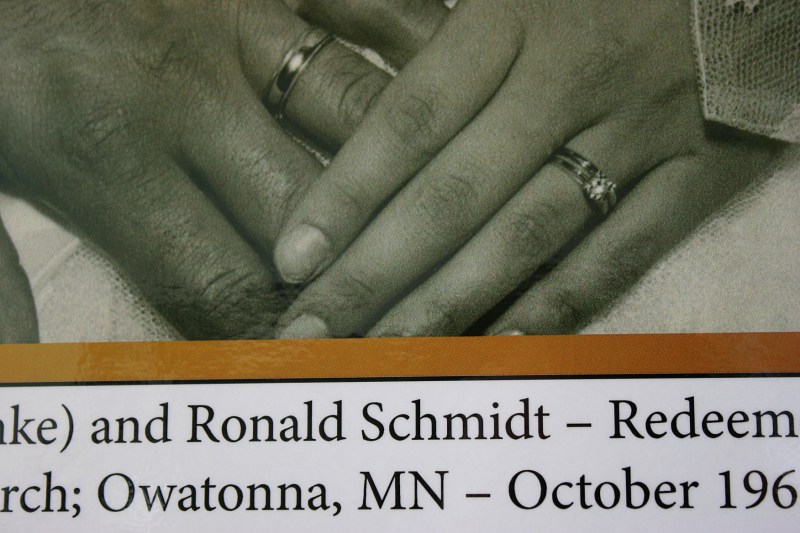
The exhibit team carefully researched the genealogies of the brides and grooms.

The exhibit team carefully researched the genealogies of the brides and grooms.

But this exhibit extends well beyond dresses to include wedding history, traditions and genealogy. It’s an impressive visual documentation, especially fitting as the wedding season begins.

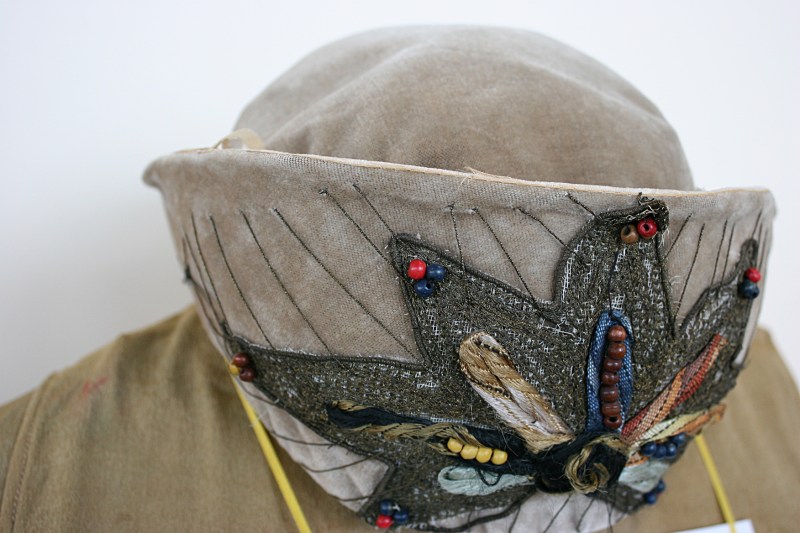
The dress and matching feathered hat worn at this 1923 wedding are in lovely brown tones.

The dress and matching feathered hat worn at this 1923 wedding are in lovely brown tones.

Did you know, for example, that a bride didn’t always wear white? Prior to 1840, when Queen Victoria married Prince Albert in an all-white gown, a bride simply wore her best dress, no matter the color. Blue, rather than white, once symbolized purity.
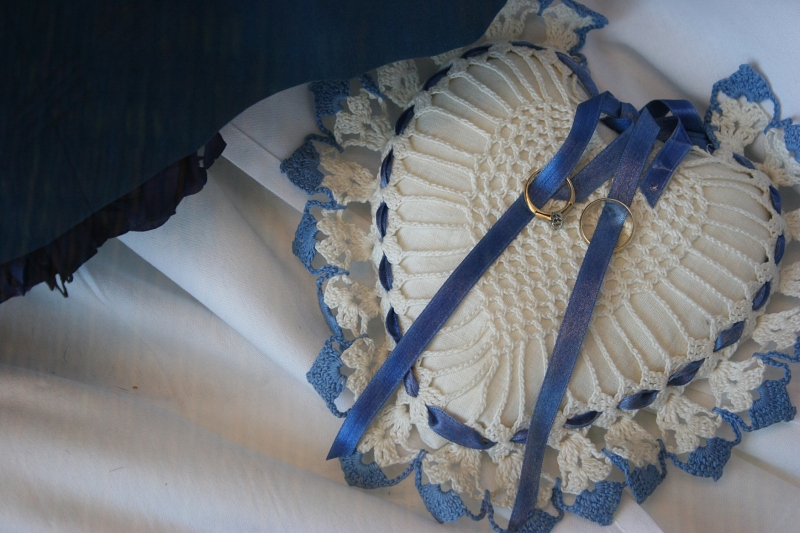
"Something blue" is woven into this crocheted ring bearer's pillow.

“Something blue” is woven into this crocheted ring bearer’s pillow.

And about that “something old, something new, something borrowed, something blue”…this started as a tradition to ward off evil spirits. You’ll learn that and a whole lot more as you peruse this multifaceted exhibit.
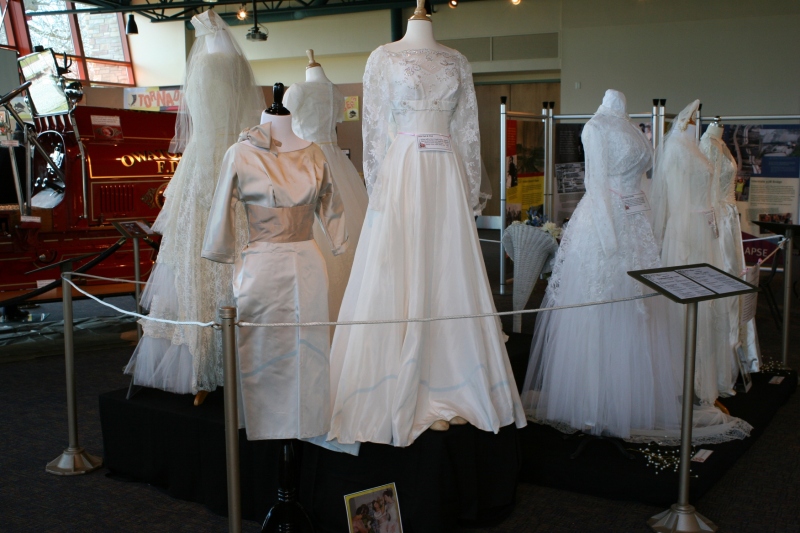
Fuller and lacier dresses defined the style of gowns in the 1950s.

Fuller and lacier dresses defined the style of gowns in the 1950s.

Volunteer Char Ost spent hours researching and planning with team members at meetings and at home as this exhibit came together. She’s a former museum staffer and board president who simply thought the project would be fun. The team reviewed photos of wedding dresses in the museum collection before choosing gowns that would display nicely and were in suitable condition to showcase, she said. Those selected gowns cover the time period from 1896 – 1997.
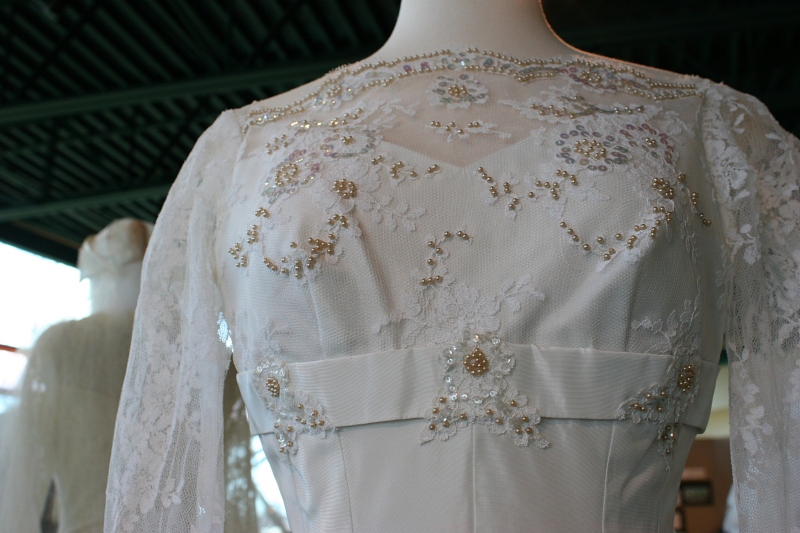
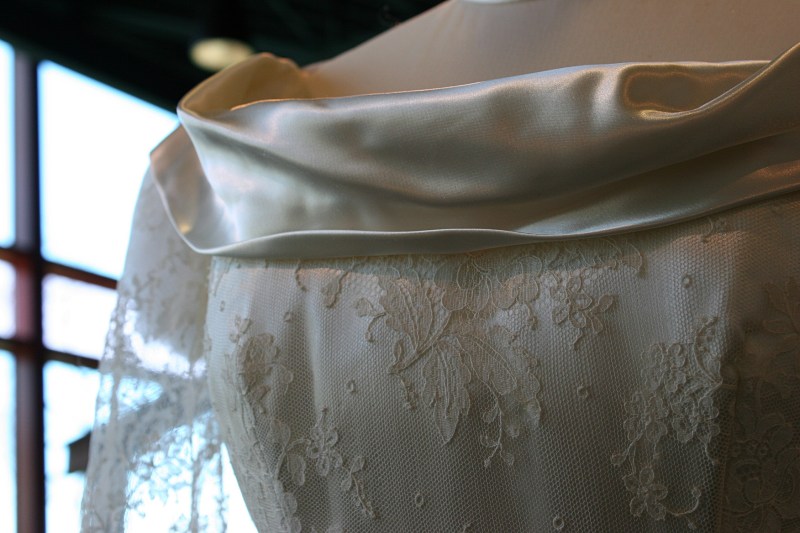
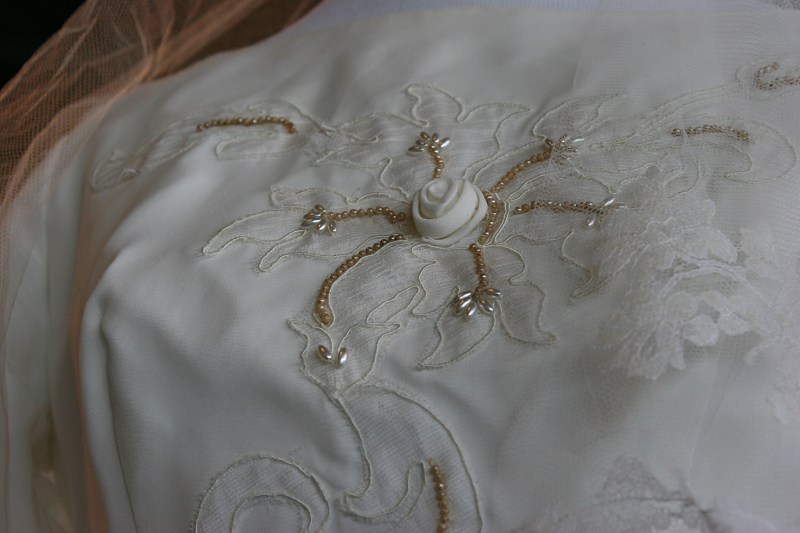
This photo shows the details on a 1950s dress.

This photo shows the bead and lace details on a 1950s wedding dress.

Missing, though, are wedding dresses from the 1980s and more from the 1990s. People are still familiar with those bridal gowns and those brides are not giving away their dresses, including to the museum, Ost noted. That explains why I didn’t see 1980s dresses reflecting the royal influence of Princess Diana’s wedding gown. I was married in 1982 and my $80 wedding dress definitely did not have beads, sequins, puffy sleeves or a long train like that of the princess.

Margaret Ringhofer wore this dress at her August 25, 1931, wedding. It reminds me of my Grandma Josie's bridal gown.

Margaret Ringhofer wore this dress at her August 25, 1931, wedding. It reminds me of my Grandma Josie’s bridal gown.

As I studied the gowns, grouped by time periods, it was easy to see the period influence. In the glass encased Depression era dresses, conservatism shows in neck lines, fabric choices and style. I spotted a 1931 gown that looks a lot like my maternal grandmother’s, a simple style I considered wearing on my wedding day until discovering I was considerably taller than Grandma Josephine.
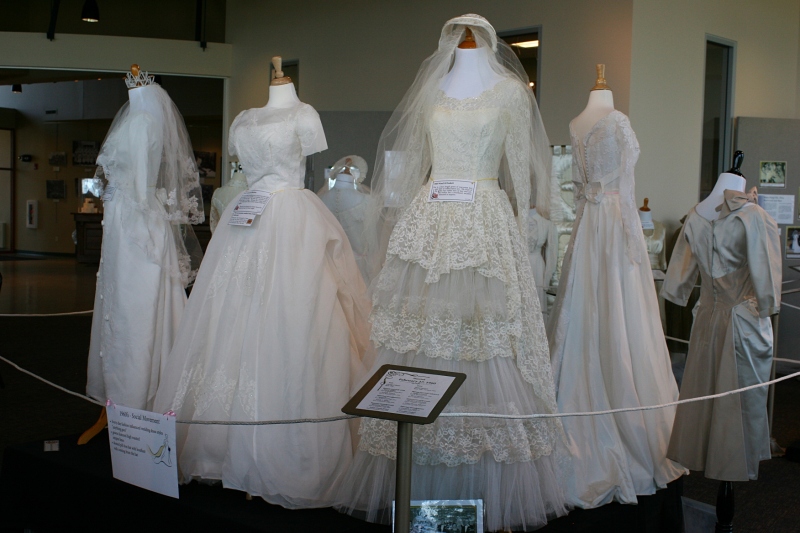
Wedding dresses from the 1960s.

Wedding dresses from the 1960s.

In the 1960s, bridal gowns reflected “anything goes,” according to a posted sign. How true of that decade.
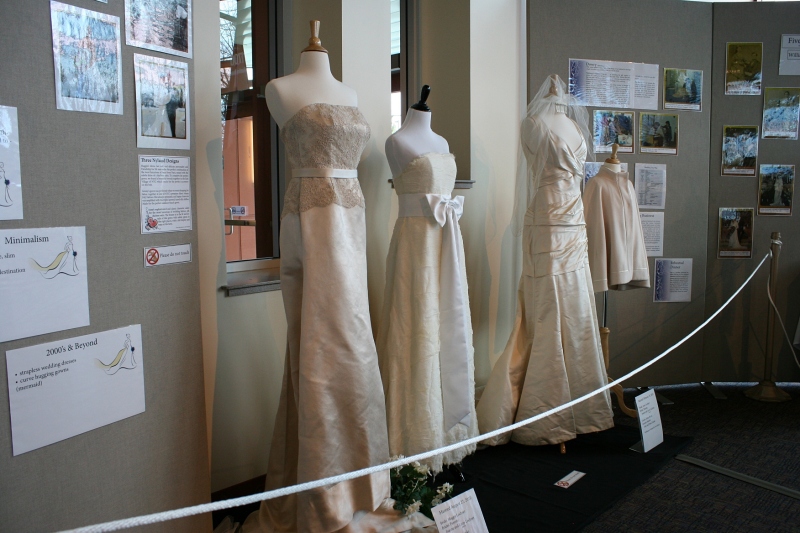
These three dresses were designed by Scott Nylund, a 1995 graduate of Owatonna High School. He once worked for music superstar Beyonce'.

These dresses worn by Maggie, Genny and Anne were designed by Scott Nylund, a 1995 graduate of Owatonna High School. He once worked for music superstar Beyonce’.

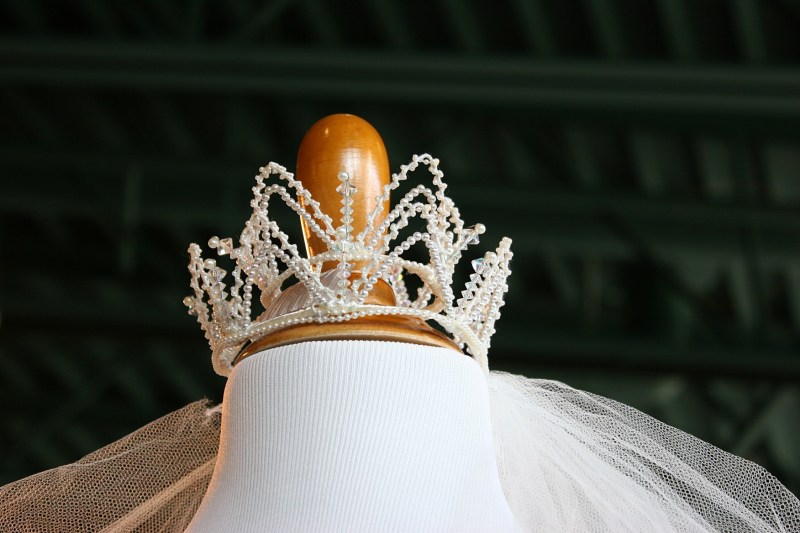
Three dresses from the 2000s are also included, specifically sought out for the exhibit. Owatonna native and fashion designer Scott Nylund created the gowns. They are luxuriously stunning with laces from Paris, a brooch from the East Village of NYC and fabrics of silk chiffon and silk duchess satin.
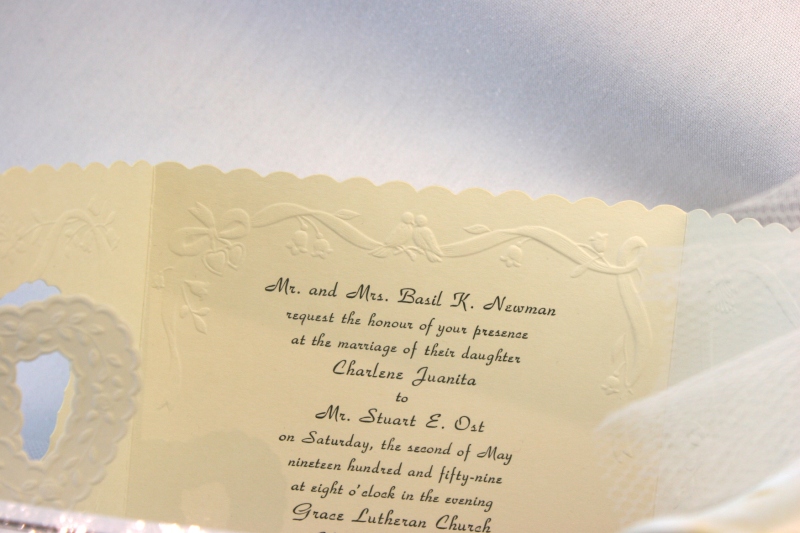
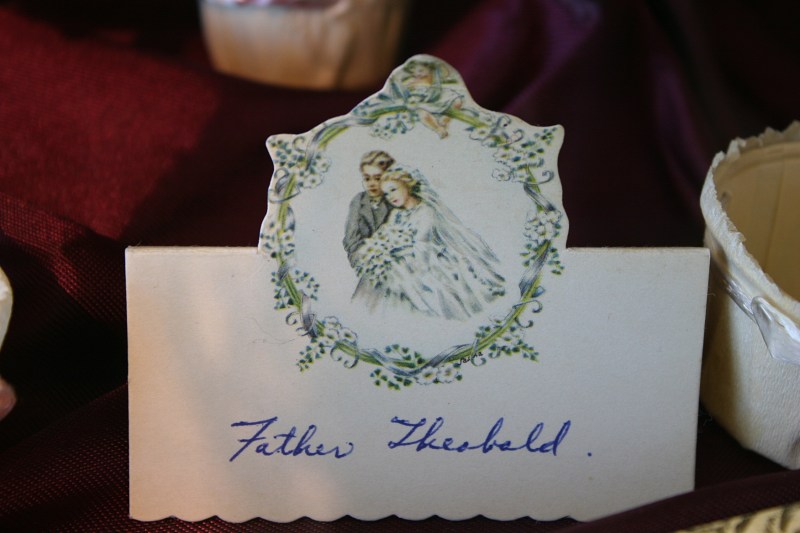
The invitation to the wedding of Charlene Newman and Stuart Ost is displayed in a case.
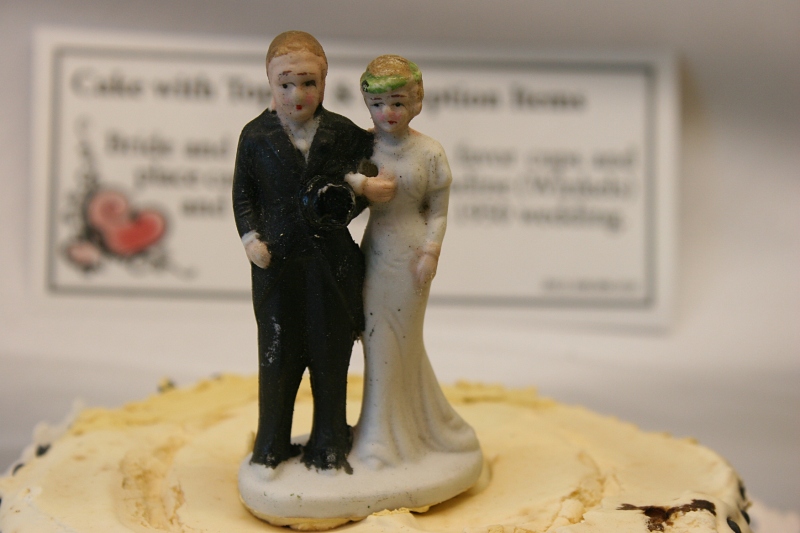
The invitation to the 1959 wedding of Charlene Newman and Stuart Ost is displayed in a case.

Char and Stuart Ost's 1959 wedding cake topper.

Char and Stuart Ost’s wedding cake topper.

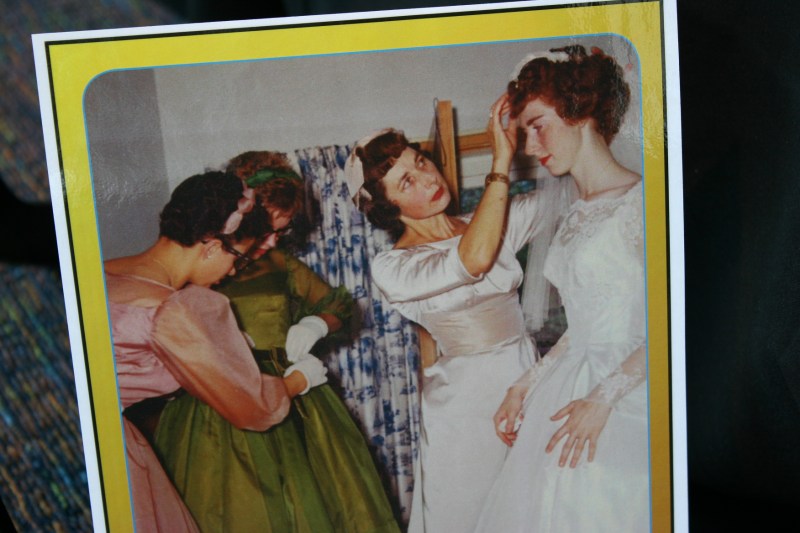
You’ll find other wedding related items displayed, including an invitation, napkin, cake topper, photo and hand-sewn apron from volunteer Char’s 1959 wedding.
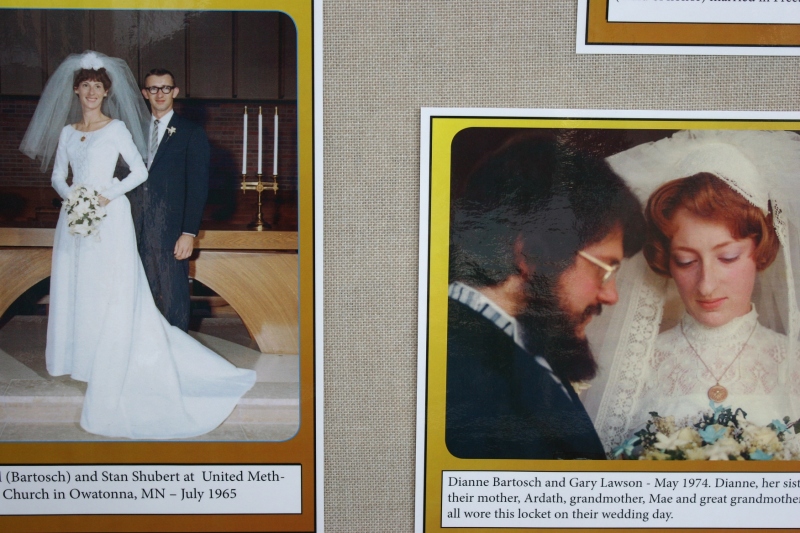
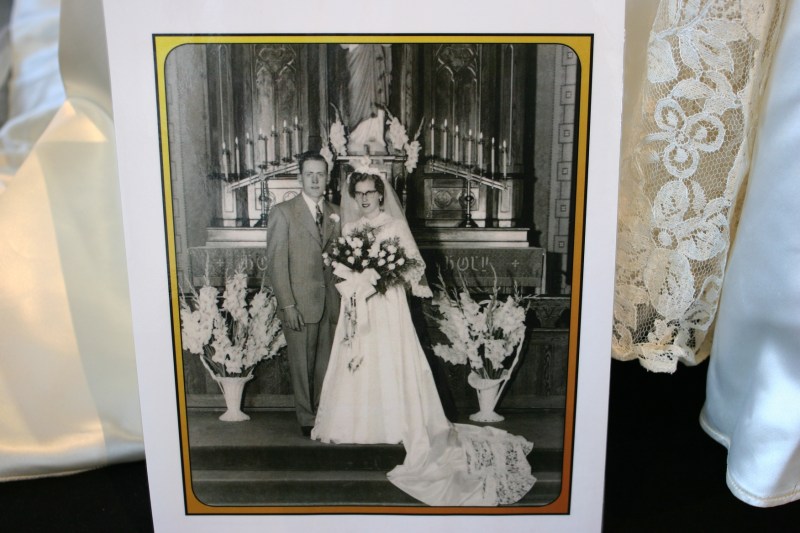
Portraits, too, tell a story about styles, traditions and even photography.

Portraits, too, tell a story about styles, traditions and even photography.

Many wedding portraits are interspersed with dresses as is information about traditions like dowries, engagement rings, feeding of the wedding cake and even the bunny hop.
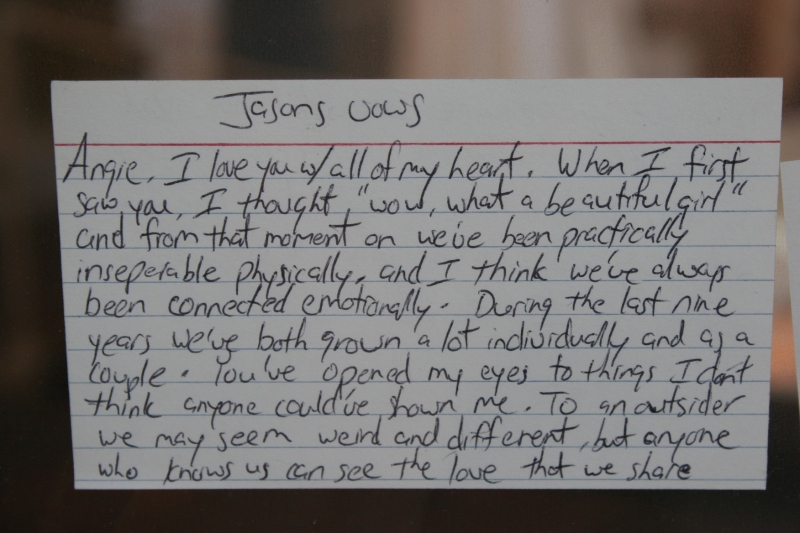
Even handwritten vows are part of the exhibit.

Even handwritten vows are part of the exhibit.

The display gets as personal as Jason and Angie’s wedding vows hand-printed on recipe cards.
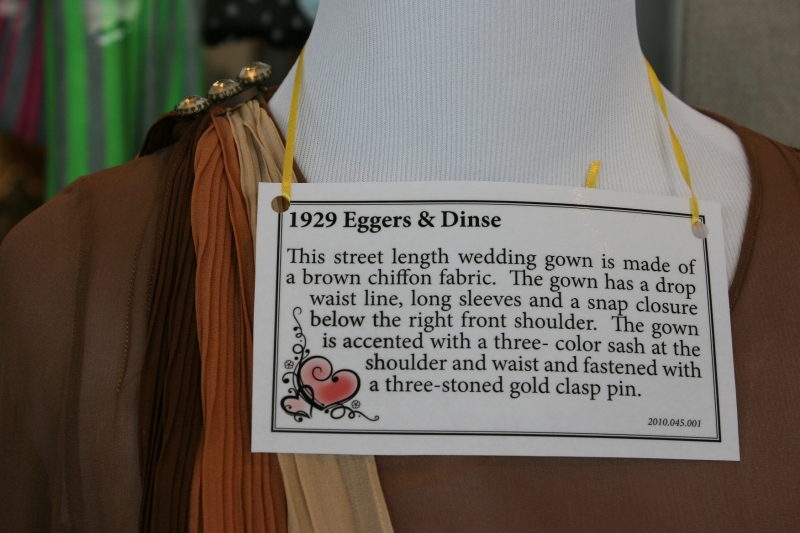
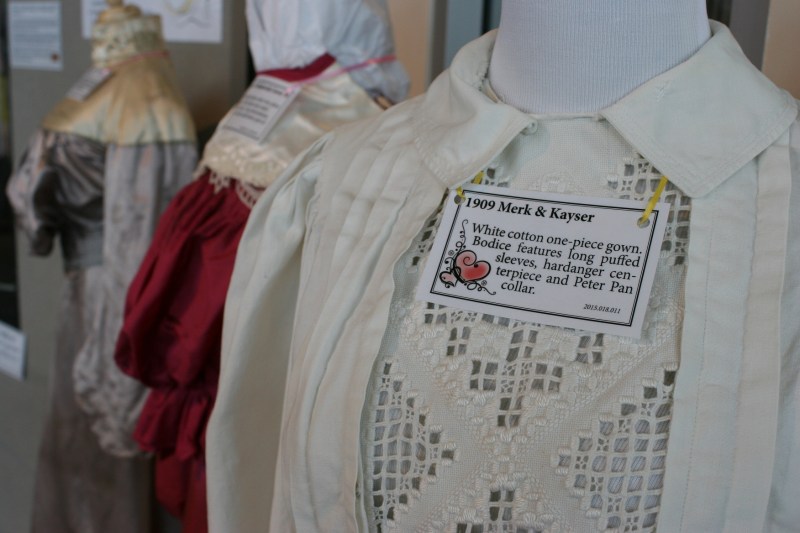
Volunteers worked hard to assure that descriptions of the dresses were accurate, team member Char Ost said.

Volunteers worked hard to assure that descriptions of the dresses were accurate, team member Char Ost said.

It’s clear the organizers of this exhibit invested a lot of time in gathering and sharing of information, from the genealogy associated with each dress to the descriptions of the dresses right down to the type of fabric, neckline, sleeves and more.
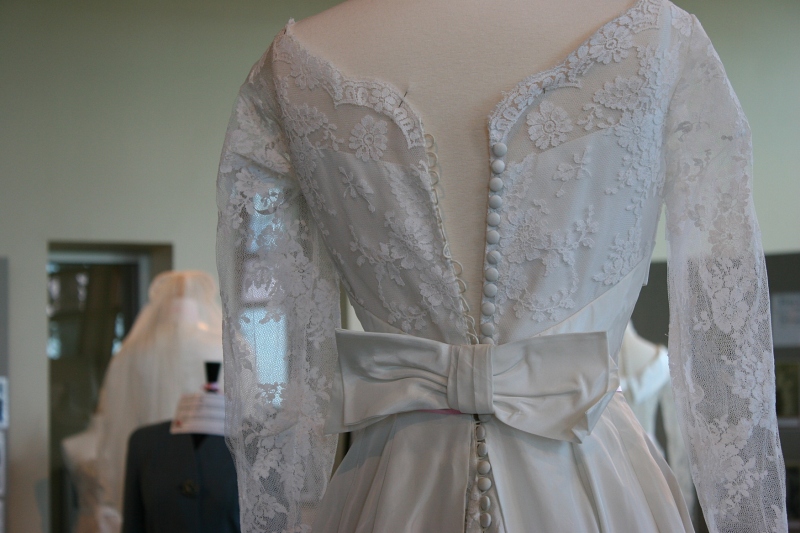
Some dresses could not be fully closed on the fuller forms.

Some dresses could not be fully closed on the forms.

Once all that research was completed, the crew faced one more challenge. “We did contortions to get some of those dresses on (the forms),” Char said, noting that perhaps corsets also should have been shown.

It was then that I suggested a follow-up exhibit, Wedding Traditions of Steele County II. I loved the exhibit that much.

FYI: Wedding Traditions of Steele County will be on display until the spring of 2017. Museum hours are 10 a.m. – 4 p.m. Tuesday, Wednesday and Friday; 10 a.m. – 8 p.m. Thursdays; and from 10 a.m. – 3 p.m. Saturdays. Closed on Sunday. The history center is located at 1700 Austin Road on the southeast side of Owatonna. Admission is charged. While there, you can also peruse an exhibit on disasters in Minnesota and in Steele County.

On Thursday, June 9, the history center will host Toss the Bouquet: The Wedding Professionals Spin from 7 p.m. – 8:30 p.m. Wedding industry leaders will share their thoughts on wedding trends and also talk about wedding planning details.

Check back tomorrow for Part II in this series on the Wedding Traditions of Steele County exhibit.

© Copyright 2016 Audrey Kletscher Helbling


Tell me, how can a burger be angry? April 29, 2016

Filed under: Uncategorized — Audrey Kletscher Helbling @ 5:00 AM
Tags: , , , , , , , ,

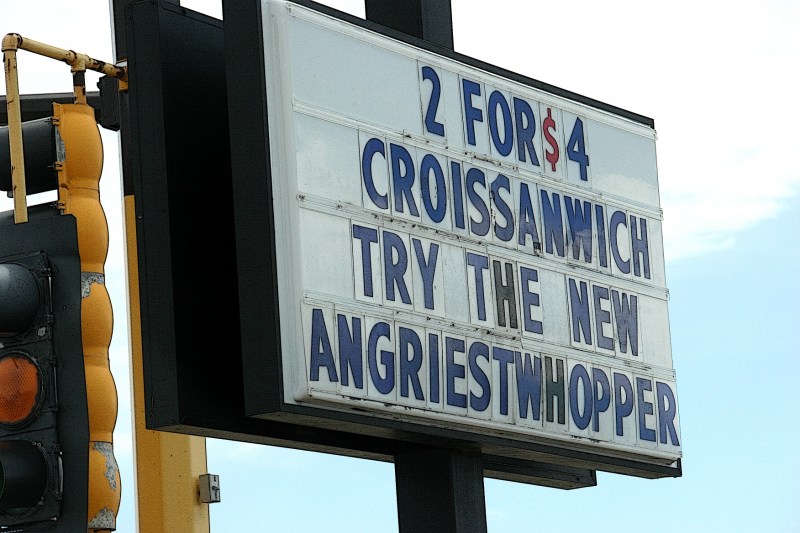
The Angriest Whopper sign in Owatonna


WHEN I SAW THIS SIGN advertising the new Angriest WHOPPER® near the Burger King in Owatonna, the journalist in me questioned how a burger can be angry. A burger is not a living breathing thing with feelings. Therefore it cannot be angry.

But whatever sells…right?

Knowing absolutely nothing about this burger given I rarely eat burgers and frequent fast food places maybe twice a year, I googled “angriest whopper.”

It is apparently the hot sauce, baked into the red bun and also layered on the burger along with jalapenos, that generates that word choice of “angriest.”

This follow-up to the Angry Whopper will be offered for a limited time only. Will I run out and try one? Not unless someone offers to buy this spicy burger for me.

Tell me, have you tried either of these Whoppers? And what do you think of the adjectives “angry” and “angriest” used to describe burgers?

#

ON A RELATED NOTE, Burger Kings across the country, including one in Coon Rapids, have been the victims of a hoax that had employees busting the fast food franchise’s windows. A caller claiming to be from the fire department advised employees to smash the windows to prevent an explosion due to a gas leak and build-up. Burger King employees did just that.

I bet there’s been plenty of anger at the affected Burger Kings.

© Copyright 2016 Audrey Kletscher Helbling


In Owatonna: I scream for ice cream April 21, 2016

Filed under: Uncategorized — Audrey Kletscher Helbling @ 5:00 AM
Tags: , , , , , , , ,
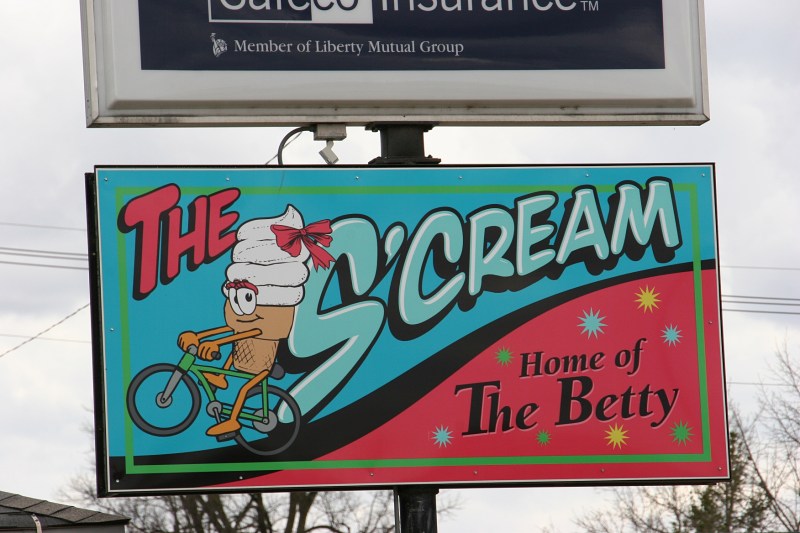
The S'Cream and an insurance agency office are connected.

The S’Cream and an insurance agency office are connected to one another.

I LOVE HOMEGROWN walk-up ice cream shops. They have character. And ice cream treats that are scrumptious and often uniquely named.

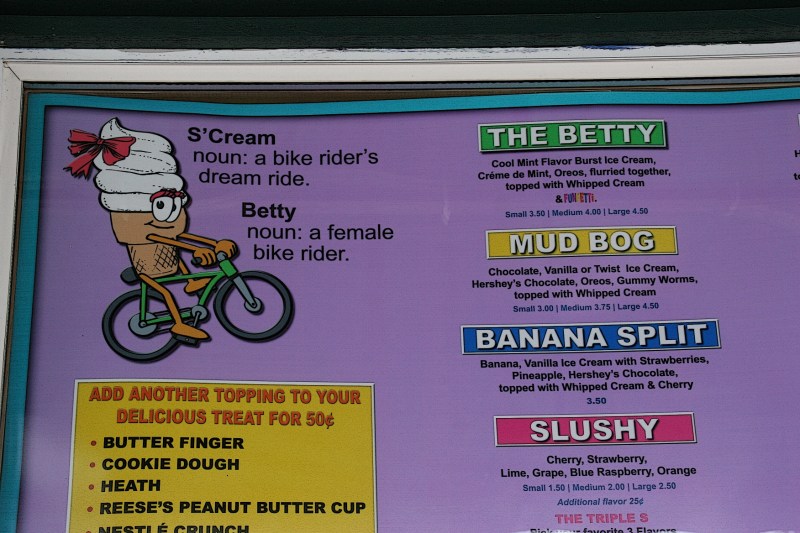
This sign explains The Betty and lists other available treats.

This sign explains The Betty and lists other available treats.

Take The S’Cream, a seasonal ice cream shop advertised as “Home of The Betty,” and located along Owatonna’s busy South Oak Avenue.

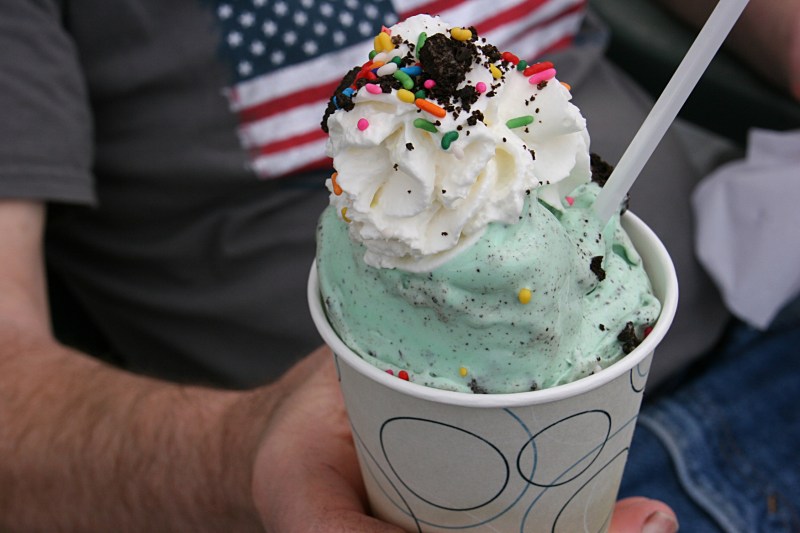
The Betty, presumably named after someone.

The Betty, presumably named after Betty.

What is The Betty? It is, I discovered, Cool Mint Flavor Burst ice cream, crème de mint and Oreos flurried together, then topped with whipped cream. And let’s not forget the sprinkles. I can attest to The Betty’s sweet deliciousness.

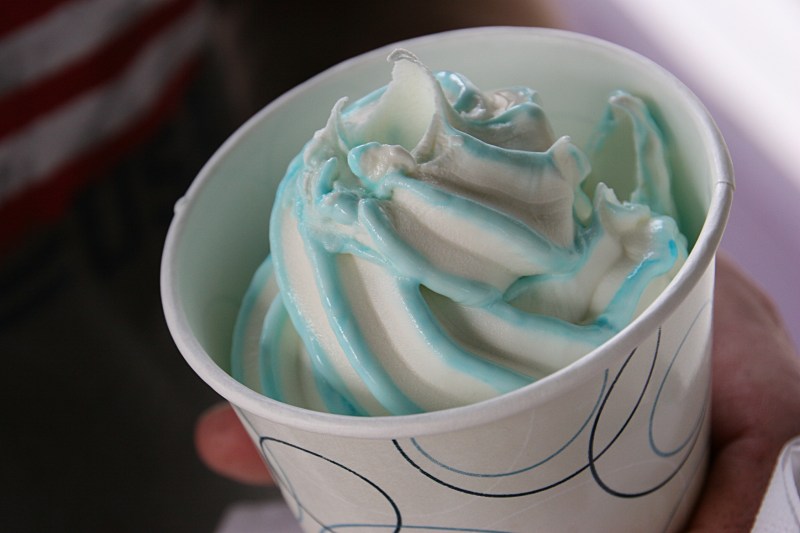
My husband ordered this blue raspberry ice cream treat.

My husband ordered this blue raspberry ice cream treat.

Equally as delectable is the blue raspberry Flavor Burst ice cream treat my husband enjoyed at The S’Cream. It’s actually the owner’s favorite. He tells me the staff is often dreaming up new ice cream offerings. How fun is that?

If you were to create a treat for an ice cream shop, what would you concoct?

© Copyright 2016 Audrey Kletscher Helbling
 

Delighting in Owatonna’s Mineral Springs Park on a Sunday afternoon April 19, 2016

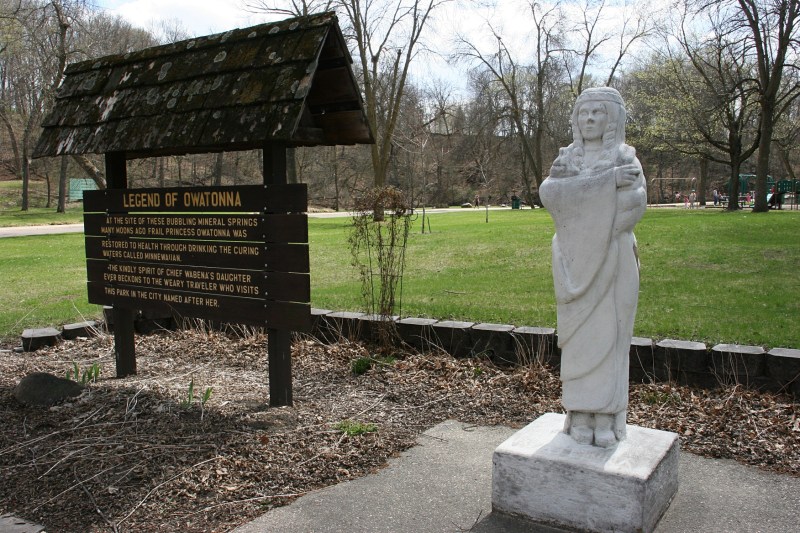
A sign explains the legend of Princess Owatonna, represented in an early 1930s statue in Mineral Springs Park.

A sign explains the legend of Princess Owatonna, represented in an early 1930s statue in Mineral Springs Park. The statue was restored in 1986, but appears in need of repair work again.

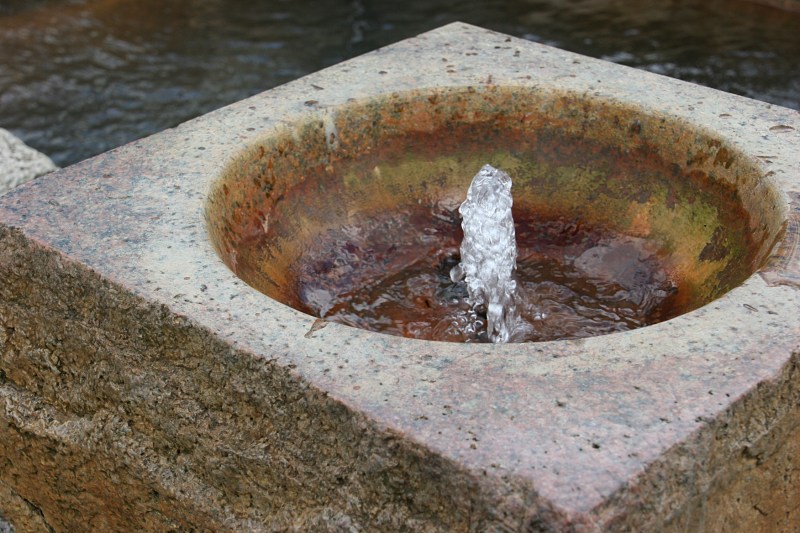
I DRANK A LONG, deep drink of glacier cold spring water bubbling from a fountain in Owatonna’s Mineral Springs Park. Water that tasted of iron, of the earth. Water that, as legend goes, holds healing power. Princess Owatonna, the daughter of Chief Wabena, supposedly drank daily of the springs along Maple Creek, regaining her health.

I drank from this fountain of spring water.

I drank from this fountain of spring water. Owatonna Mineral Springs Company spring water was served on railroad dining cars back in the day.

Whether legend or truth, it mattered not to me. I drank more, until my husband pointed out rust running across the park roadway from the spilling water fountains. (I should have noticed the rust in the fountain bowls.)

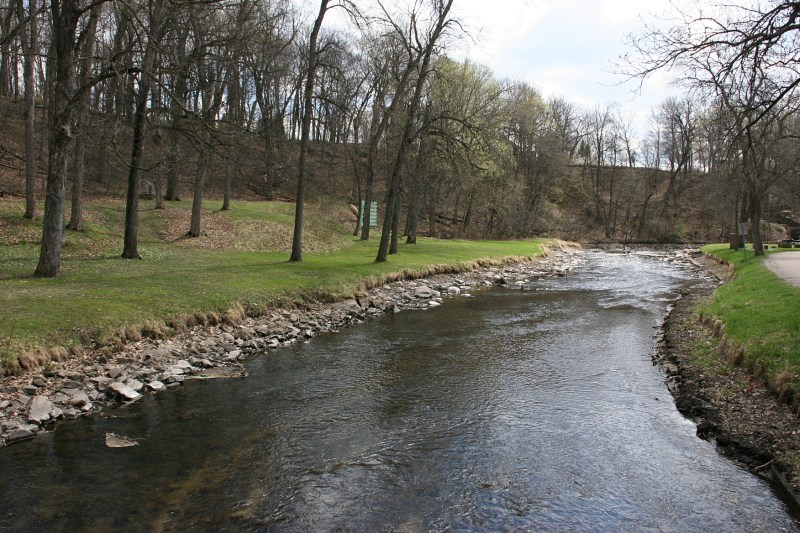
Maple Creek winds through the park. Several pedestrian bridges cross the waterway.

Maple Creek winds through the park. Several pedestrian bridges cross the waterway.

This 48-acre park is a lovely place, nestled at the base of wooded hills, the creek flowing through.

Maple Creek runs surprisingly clear.

Maple Creek runs surprisingly clear.

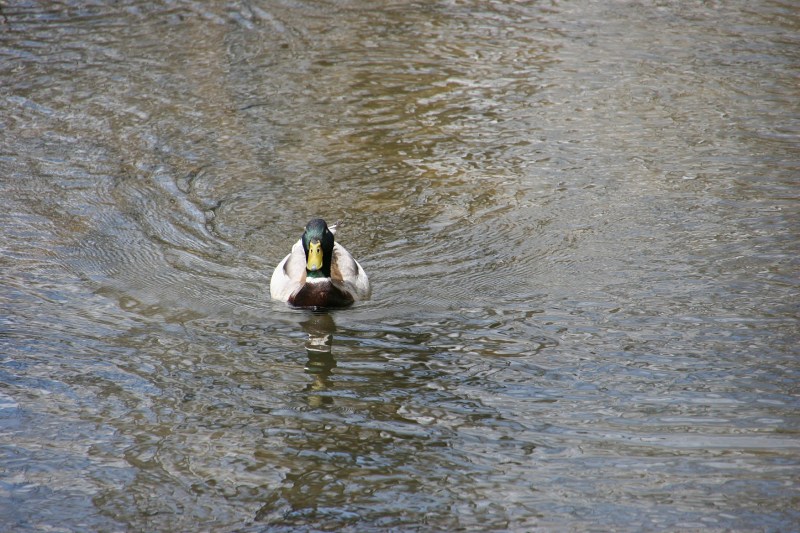
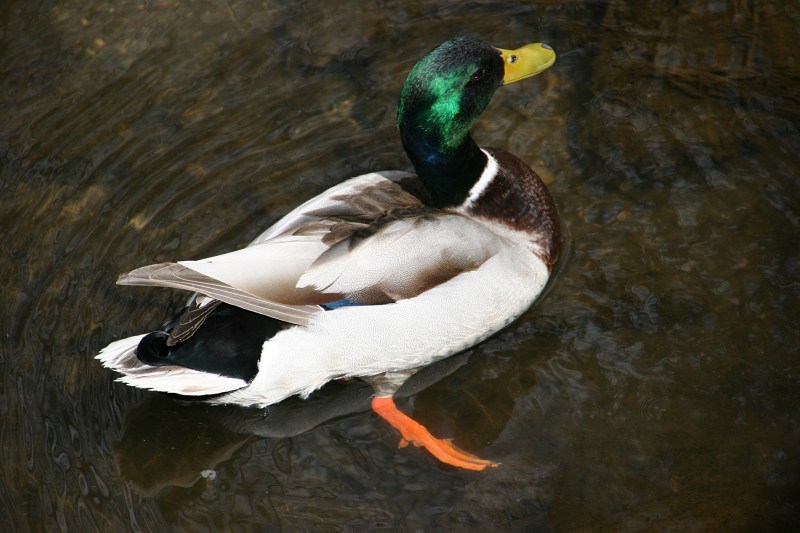
I watched this drake for a long time swimming in the creek.

I watched this drake for a long time swimming in the creek.

I was especially impressed by the clarity of the water, so clear I could see the webbed feet of a drake paddling. So clear I could see the creek bottom. So clear I could see a minnow swimming.

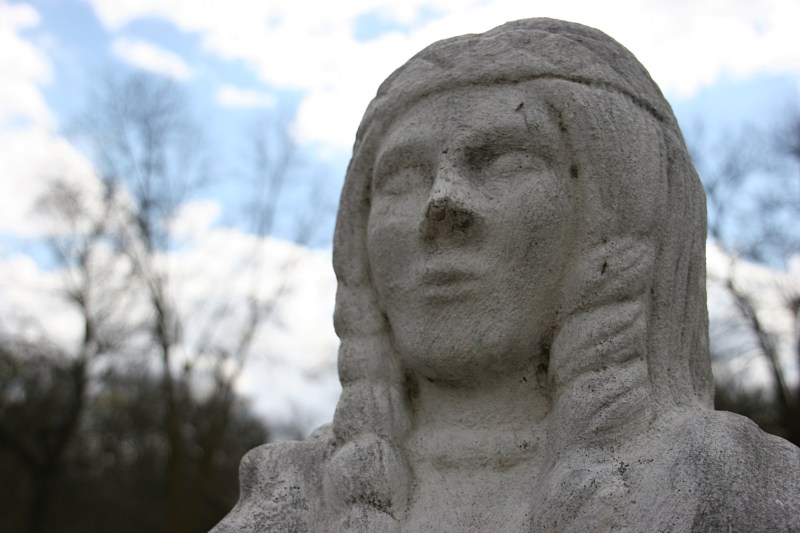
The Princess Owatonna statue up close.

The Princess Owatonna statue up close.

Sunday was the perfect day to visit this park with the 1930s statue of the Indian Princess after whom this southern Minnesota community is named. So legend claims.

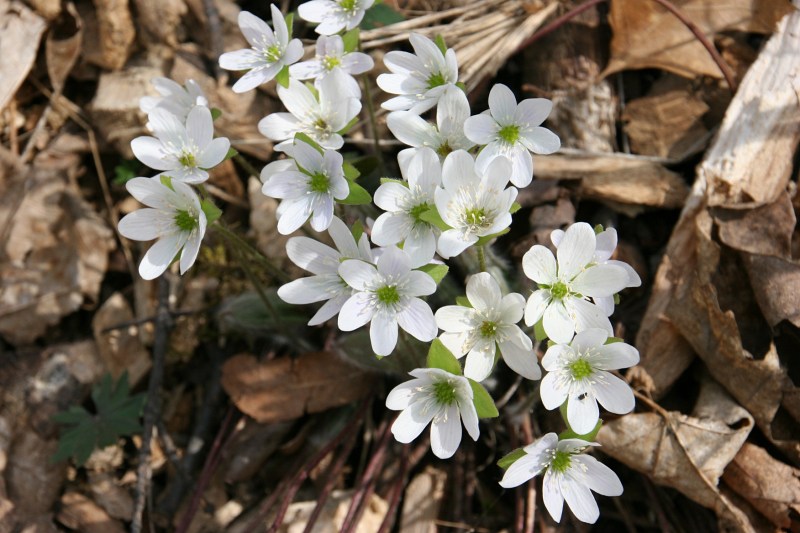
On the wooded hillside, these wildflowers bloomed.

On the wooded hillside, these wildflowers bloomed.

Sun baked heat into the afternoon at an unseasonably warm 70-plus degrees. Wildflowers bloomed. Hints of buds greened trees. A butterfly darted.

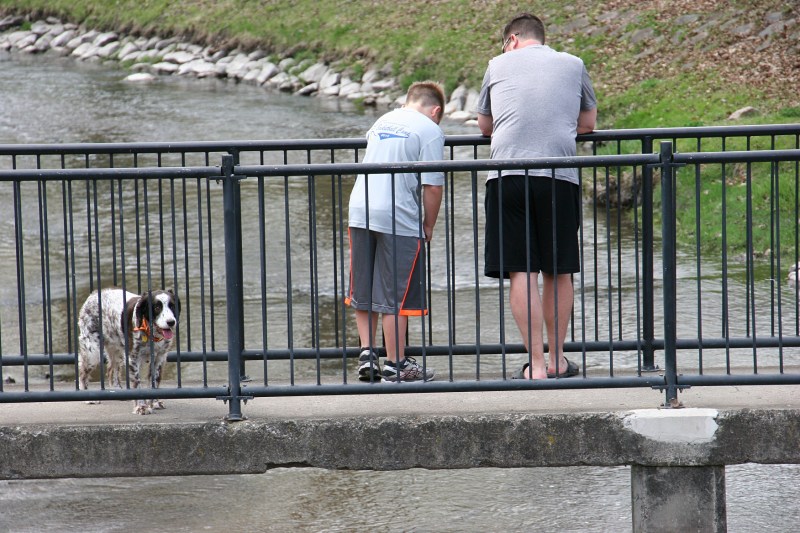
Fishing in Maple Creek, although there were not fish to be seen except minnows.

Fishing in Maple Creek, although there were not fish to be seen except minnows.

Kids raced around the playground, energized. Guys tossed horseshoes. A boy fished with his dad. Walkers walked dogs. The signature scent of roasting hot dogs drifted from the picnic shelter grill.

People smiled. How could you not? Sunday marked a glorious summer-like spring day in Minnesota. As beautiful as they come in April.

© Copyright 2016 Audrey Kletscher Helbling


Part I: Minnesota disasters up close April 14, 2016

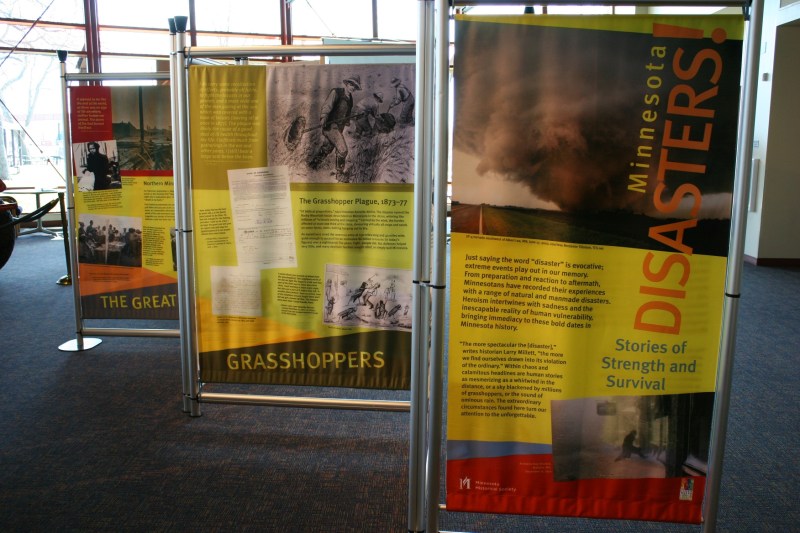
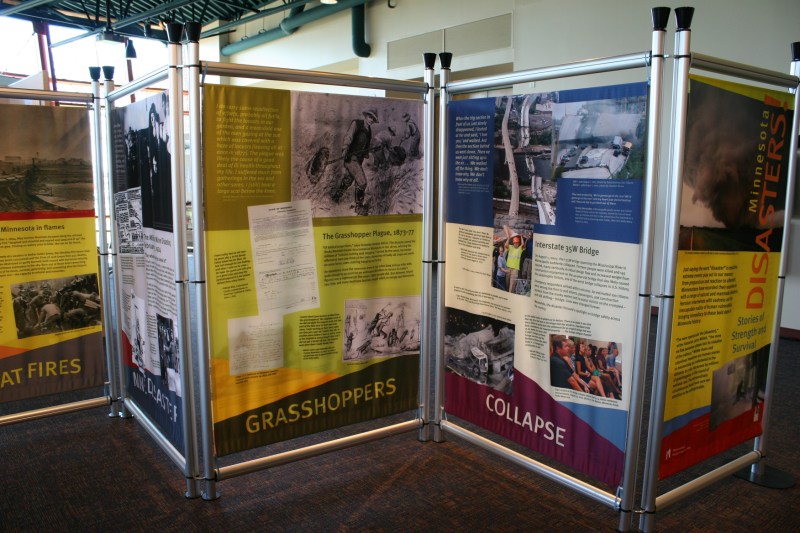
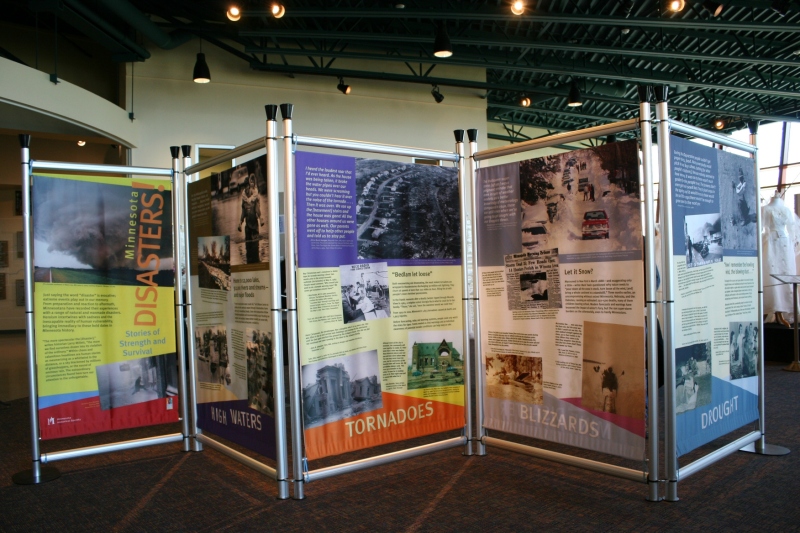
The panel to the right introduces the Minnesota Disasters exhibit with each panel featuring a different disaster in our state.

The panel to the right introduces the Minnesota Disasters exhibit with each panel featuring a different disaster in our state.

DISASTER. How do you define that word? In a Minnesota Historical Society Traveling Exhibit currently displayed at the Steele County History Center in Owatonna, disaster covers everything from tornadoes to the 35W bridge collapse to the grasshopper plague, drought, blizzards and more.

I personally remember many Minnesota disasters—such as the bridge collapse; the Halloween blizzard of 1991; the 1998 St. Peter-Comfrey tornadoes; the 1968 Tracy tornado which killed nine; the drought of 1976; and the devastating floods of September 2010.

During Severe Weather Awareness Week, we prepare for dangerous storms like tornadoes. One panel in the exhibit highlights some of Minnesota's deadliest and most devastating tornadoes. The Tracy tornado was not included.

During Severe Weather Awareness Week, we prepare for dangerous storms like tornadoes. One panel in the exhibit highlights some of Minnesota’s deadliest and most devastating tornadoes. The Tracy tornado was not included.

This week, Minnesota Severe Weather Awareness Week, seems an appropriate time to focus on the topic of disasters and to show you the MHS exhibit, Minnesota Disasters: Stories of Strength and Survival.

Eric Lantz, 16, of Walnut Grove, shot this award-winning photo of the Tracy tornado as it was leaving town. He often took photos for the Walnut Grove Tribune, owned by his uncle, Everett Lantz. This image by Eric was awarded third place in the 1968 National Newspaper Association contest for best news photo.

Eric Lantz, 16, of Walnut Grove, shot this award-winning photo of the Tracy tornado as it was leaving town. He often took photos for the Walnut Grove Tribune, owned by his uncle, Everett Lantz. This image by Eric was awarded third place in the 1968 National Newspaper Association contest for best news photo. This copyrighted photo is courtesy of Scott Thoma with the original copyright retainted by Lantz.

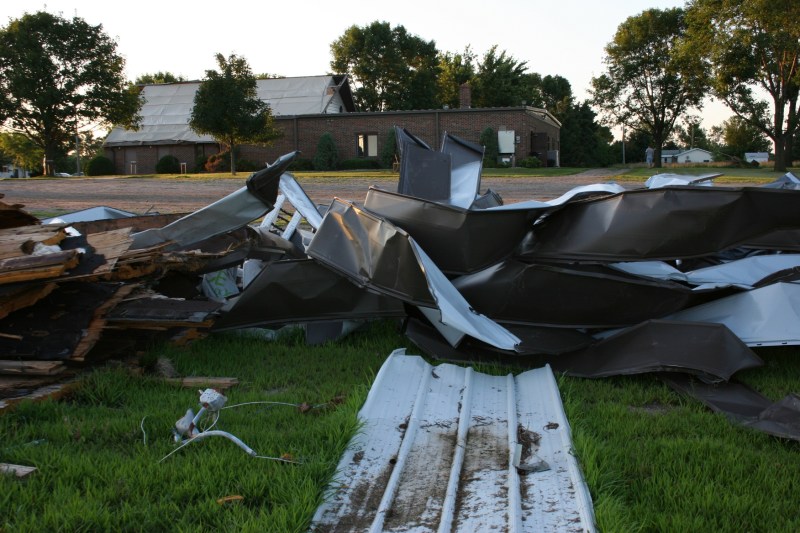
I expect many of you have been, at some point, personally impacted by a disaster. The deadly Tracy tornado forever put the fear of tornadoes in my heart. That southwestern Minnesota community lies only 25 miles from my hometown; I saw the devastation in Tracy. Decades later, a tornado damaged the farm where I grew up and high winds partially ripped the roof from my home church of St. John’s Lutheran in Vesta. I respect the powerful forces of nature, specifically of wind.

A debris pile on the edge of the church parking lot includes pieces of steel from the roof and brick from the bell tower. Photo taken in September 2011.

A debris pile on the edge of the St. John’s Lutheran Church parking lot includes pieces of steel from the roof (covered with a tarp here) and brick from the bell tower. Minnesota Prairie Roots file photo September 2011.

Elsewhere in Minnesota—in Belview, St. Peter and individual farm sites across Minnesota—I’ve seen the damage a tornado can cause.  I reported on and photographed tornado damage while working as a newspaper reporter. When a tornado warning siren blows, you won’t see me standing in the driveway looking for the twister. I’ll be sheltering in the basement.

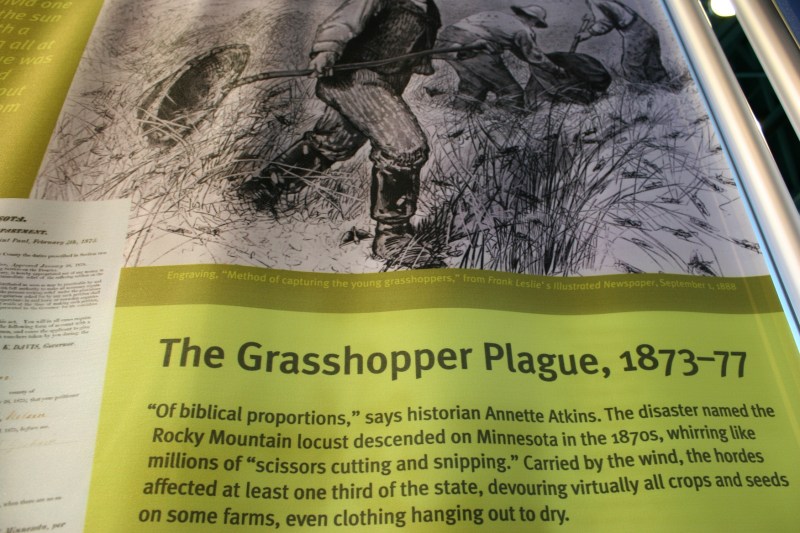
I cannot imagine so many grasshoppers that they obliterated everything.

I cannot imagine grasshoppers so thick that they obliterated everything.

As I perused the MHS disaster exhibit and the accompanying stories of disasters in Steele County, I realized the depth of loss Minnesotans have endured. The Grasshopper Plague of 1873-1877 recounts how locusts devoured even the laundry hanging on clotheslines.

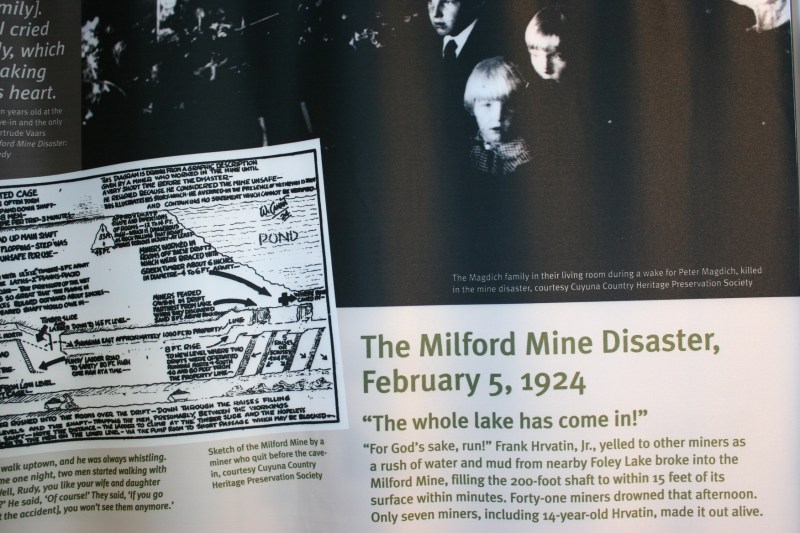
I knew nothing of the flooding at the Milford Mine until I read this panel.

I knew nothing of the flooding at the Milford Mine until I read this panel.

On February 5, 1924, forty-one miners drowned in the Milford Mine near Crosby in northern Minnesota. “For God’s sake, run!” one miner shouted to his co-workers. A warning like that floods the mind with fear. I’d never heard of the mine disaster until touring the MHS exhibit in Owatonna. Now I’ll never forget it.

Because I have extended family in the Hinckley area, I was fully aware of The Great Hinckley Fire of 1894 which claimed 418 lives. To read of feet baking inside shoes and stockings from the fire is horrifying.

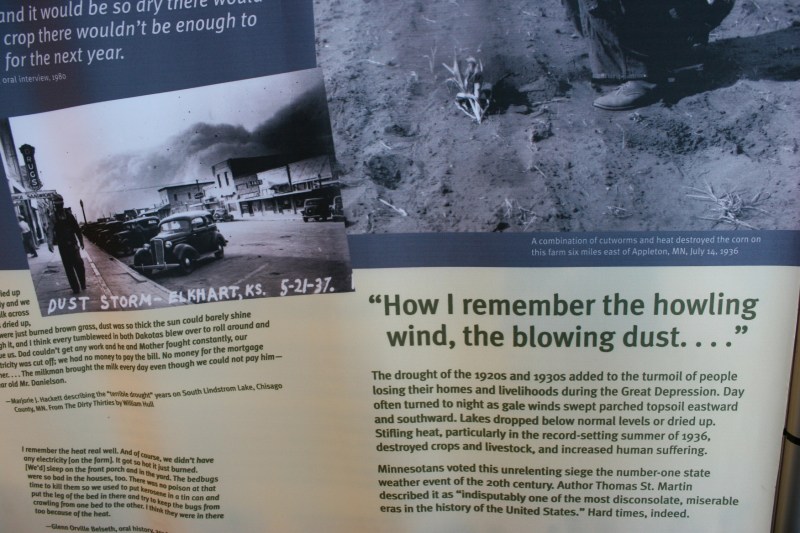
The devastation of dust and drought are covered in this panel.

The devastation of dust and drought are covered in this panel.

As bad as those and many other natural disasters, Minnesotans voted the drought of the 1920s and 30s (the Dust Bowl era) as the “number-one state weather event of the 20th century,” according to information posted in the exhibit. I was born decades after that disaster. But, as a teen, I recall a Good Friday dust storm that blew into Redwood County. We were shopping in nearby Marshall and arrived home to find the house layered in dirt; we’d left the windows open. For hours we worked to wash away the grime.

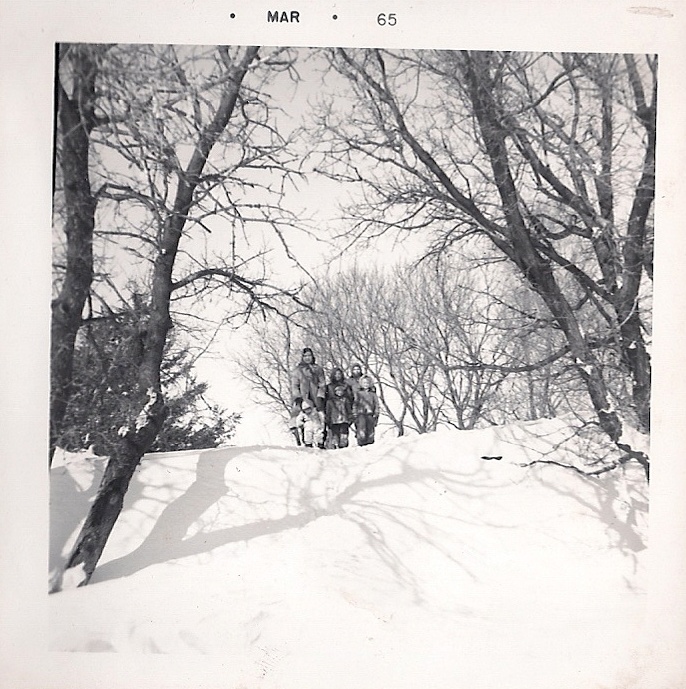
This huge, hard-as-rock snowdrift blocked our farm driveway in this March 1965 photo. I think my uncle drove over from a neighboring farm to help open the drive so the milk truck to reach the milkhouse.

This huge, hard-as-rock snowdrift blocked our rural Vesta driveway in this March 1965 photo. My uncle drove over from a neighboring farm to help open the drive so the milk truck could reach the milkhouse. I’m standing here with my mom, older brother and three younger siblings.

Blizzards, especially, imprinted upon my memory. There is nothing like a prairie blizzard that drives snow across open farm fields, sculpting the snow into rock-hard drifts around buildings and trees. Those winter storms of the 1960s and mid-1970s created all kinds of problems with roads closed, the power out and cows to be milked. Snowstorms of today don’t compare. And, no, I didn’t walk two miles to school uphill in a blizzard. Rather, in one particularly snowy winter, I rode to town on my dad’s cab-less John Deere tractor so I could catch the bus at Don’s Cafe to ride the 20 miles to junior high school in Redwood Falls. The bus drove sometimes on a single lane cut through snowbanks higher than the bus.

More panels in the Minnesota Disasters exhibit.

More panels in the Minnesota Disasters exhibit.

Tell me, what’s your story of dealing with a natural disaster? If you don’t have one, be thankful.

FYI: Check back tomorrow for a look at disasters in Steele County, Minnesota. The disasters exhibit will be on display through March 2017 at the history center in Owatonna. Click here for more information.

© Copyright 2016 Audrey Kletscher Helbling
 

Sure signs of spring in Owatonna April 12, 2016

Filed under: Uncategorized — Audrey Kletscher Helbling @ 5:00 AM
Tags: , , , , , , ,

AFTER A LONG MINNESOTA WINTER, and they all seem long to me, we look for sure signs of spring. A robin. Snowbirds returning from Arizona, Texas and Florida. Road construction beginning.

The recently unveiled motorhome in Owatonna.

The recently unveiled motorhome in Owatonna.

And in Owatonna, about a dozen miles to the south of my Faribault home, it’s the unveiling of a motorhome parked in a front yard along East Main Street, one of the town’s main drags. “This, like the return of the robins, is a sure sign of spring,” a friend and Owatonna resident shared in a recent email.

Motorhome in Owatonna in January

This is a photograph of the same motorhome taken in January.

I posted a photo of that camper in early February, when it was shrouded in a “blanket” and snow blanketed the yard.

Campers filled the spacious Four Seasons Centre and spilled into a parking lot.

Campers filled the spacious Four Seasons Centre and spilled into a parking lot.

On Saturday I was in Owatonna again, this time to tour exhibits at the Steele County History Center (posts forthcoming on that). And while we were there, my husband and I checked out the Noble RV Camper Show next door at the Steele County Four Seasons Centre. Like the uncovered camper on Main Street, the camper show signals spring, even if temps are still in the 30s and windchills in the teens.

We’re not campers. But we wanted to tour these homes on wheels.

If he could have, Randy would have kicked back with a beer, watched TV and fallen asleep inside this comfy motorhome.

If he could have, Randy would have kicked back with a beer, watched TV and fallen asleep inside this comfy motorhome.

These are some pretty fancy schmancy rigs with fireplaces, steel appliances and kitchens way nicer than the one in my woodframe house. If this is camping, I could learn to like camping. My few camping experiences have involved leaky tents, deflating air mattresses, partying neighbors and, once, even a flood. So when people ask if I camp, I respond with an emphatic no.

If you were in the market for a camper, this was the place to be. So many to tour...

If you were in the market for a camper, this was the place to be this past weekend. So many to tour…

I lost count of how many motorhomes we toured on Saturday. But after awhile, they all began too look alike. And I was tired of carefully stepping up and down trios of stairs, my hand gripping a side hold lest I plummet onto the cement.

For the sportsman, there was even a ice fishing house/camper. Remove the lids and drop your line into the water on a frozen lake.

For the sportsman, there was even a ice fishing house/camper. Remove the lids and drop your line into the water on a frozen lake.

For one thing I was especially grateful. Not a single salesman approached us. So we didn’t have to feign interest in something that didn’t interest us beyond abating our curiosity.

© Copyright 2016 Audrey Kletscher Helbling
 

In Owatonna: Sign sign everywhere a sign March 3, 2016

Filed under: Uncategorized — Audrey Kletscher Helbling @ 5:00 AM
Tags: , , , ,

Downtown Owatonna streetscape 1


THIS PHOTO, SHOT while driving through downtown Owatonna, calls for close study. There’s just so much here. It’s like a Where’s Waldo or an I Spy book. The longer I look at this image, the more I see.

Signs dominate. They are everywhere, although one is missing in the empty frame above the bar.

Notice also the art—murals, bicycle bike racks and an artsy boxed street lamp.

Notice the buildings with a hodgepodge of bricks and a history to which I am oblivious. I’m sure locals know the story behind The Emporium Dry Goods Groceries Shoes signage.

Owatonna apparently has a thing about signs, at least to my visitor’s eyes. Around the corner in the heart of downtown, “thirty minute parking signs” populate the retail area where I shopped. These made me feel unwelcome, like “Don’t linger and shop in our downtown.” I kept checking my watch while perusing the merchandise at a party supply store.

Upon leaving that shop, I noticed signs popping up everywhere like unsightly weeds. I can’t recall specific messages. But most had to do with parking or loitering or other city ordinances. I doubt I’ve ever seen so many signs in a single Minnesota downtown. Visually, the sign clutter detracts. From a visitor perspective, the signs send a message that is not exactly welcoming. The next time I’m in Owatonna, I intend to examine this issue more closely. Maybe count the signs…

© Copyright 2016 Audrey Kletscher Helbling
 

Sometimes I see humor in the oddest places February 5, 2016

Filed under: Uncategorized — Audrey Kletscher Helbling @ 5:00 AM
Tags: , , , , ,

Motorhome in Owatonna in January


WHEN I NOTICED THIS SCENE in a residential neighborhood along a busy street in Owatonna, I laughed. I can’t pinpoint the precise reason. Perhaps it was the juxtaposition of winter (the snow-covered yard) and summer (the motorhome and thoughts of camping).

Or perhaps I laughed because the camper covering reminds me of a Paul Bunyan-sized sleeping bag.

When laughter erupts unexpectedly, I accept it. Laughter is a gift.

© Copyright 2016 Audrey Kletscher Helbling
 

The impressive Owatonna Power Plant building February 4, 2016

The Owatonna Power Plant building, photographed while waiting at a stoplight on Sunday evening.

The Owatonna Power Plant building, photographed while waiting at a stoplight on Sunday evening.

NO MATTER HOW OFTEN I TRAVEL through downtown Owatonna, I remain impressed by the massive and historic Owatonna Power Plant building hunkered along the banks of the Straight River.

LED technology replaced the original neon lighting in this iconic lettering.

LED technology replaced the original neon lighting in this iconic lettering.

Constructed of brick and with three silver smokestacks rising behind OWATONNA POWER PLANT signature red lettering, this place stands as a local landmark.

It’s a landmark Owatonna chose to renovate following a devastating 2010 flood that filled the plant’s lower level with 12 feet of water.

Under the direction of architect LEO A DALY, the building has been renovated and repurposed as headquarters for Owatonna Public Utilities. Locals recognized the value of this iconic structure. That seems to be a trend more and more, and one I hope continues.

Please share any examples/stories you have about aged buildings that have been saved and renovated/repurposed rather than destroyed.

© Copyright 2016 Audrey Kletscher Helbling


In Minnesota: A welcome weekend weather break from winter February 1, 2016

Filed under: Uncategorized — Audrey Kletscher Helbling @ 5:00 AM
Tags: , , , , , , ,
Just outside of Faribault driving south on Interstate 35 toward Owatonna early Sunday afternoon.
Just outside of Faribault driving south on Interstate 35 toward Owatonna early Sunday afternoon.
WINTER EXITED MINNESOTA this weekend, ushering in a glimpse of spring. And it was glorious—this temporary respite from cold and snow.
 

Interstate 35, 6 driving south toward Owatonna


Temps rose above forty degrees. The sun shone. Cardinals shrilled. Snow melted into slushy puddles. And I walked across parking lots in a sweater rather than winter coat.


Interstate 35, 7 driving south toward Owatonna


I needed a weekend like this drenched mostly in sunshine, blue streaking through clouds, patches of blue sky pushing away clouds.


To the west of Interstate 35, clouds billow above snow-washed fields.

To the west of Interstate 35, clouds billow above snow-washed fields.

As my husband and I drove south toward Owatonna early Sunday afternoon, I couldn’t get enough of the sky.


Interstate 35, 11 driving south toward Owatonna


I’m holding onto those images now that the weather is about to change with a strong winter storm predicted for Tuesday. My county of Rice is under a Winter Storm Watch while counties to the south and west are under a Blizzard Watch.


Large swatches of blue sky prevailed to the west of the Interstate.

Large swatches of blue sky prevailed to the west of the Interstate.

I knew this weekend’s spring-like weather wouldn’t last.

Blue skies accentuate fighter jets at Owatonna Degner Regional Airport along the Interstate.

Blue skies accentuate fighter jets at Owatonna Degner Regional Airport along the Interstate.

It never does here in Minnesota in January.

© Copyright 2016 Audrey Kletscher Helbling