Minnesota Prairie Roots

Writing and photography by Audrey Kletscher Helbling

A photo essay: Aerial agricultural spraying up close August 9, 2016

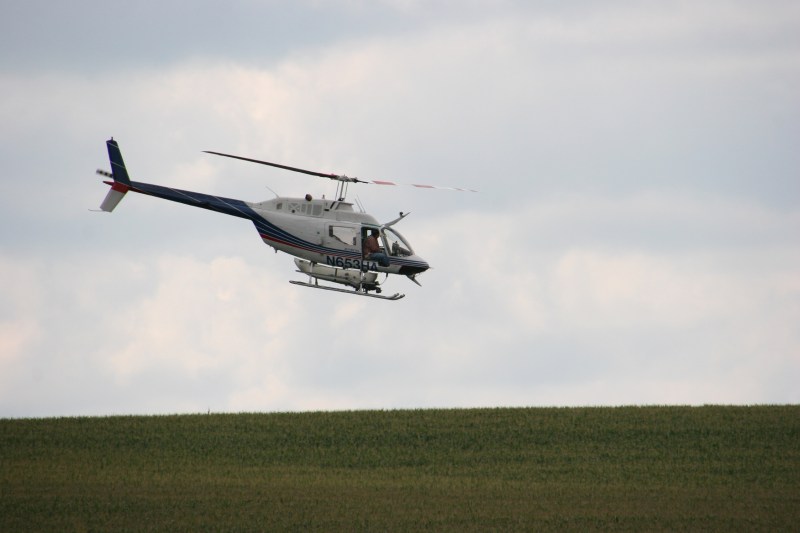
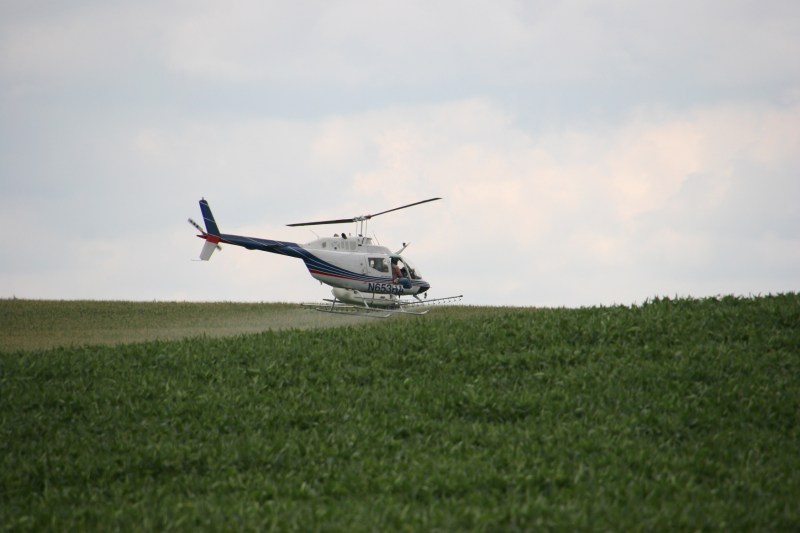
IN THE DISTANCE, down the gravel road, a helicopter swept across the fields and then disappeared.

“Did it crash?” I asked my husband, worry lacing my words.

“Do you see a fireball?” he responded, answering my question.

I didn’t. And it was obvious to me then that the rise of the land was blocking my view of the helicopter.


Helicopter spraying, 105 dairy farm


But I needed to visually confirm, to see this flying machine up close. So Randy turned off the asphalt county road onto 230th Street East, aiming toward a hilltop dairy farm marked by five looming silos.


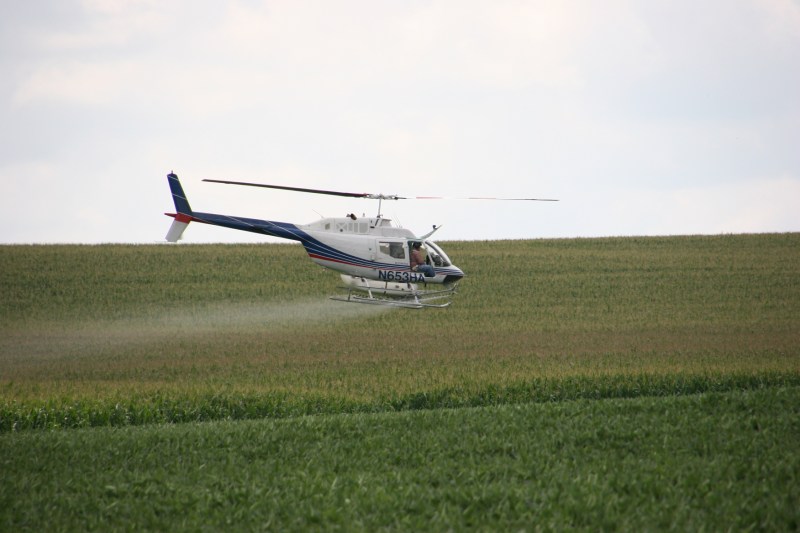
Helicopter spraying, 109 over corn field


Helicopter spraying, 112


Helicopter spraying, 113


Helicopter spraying, 115


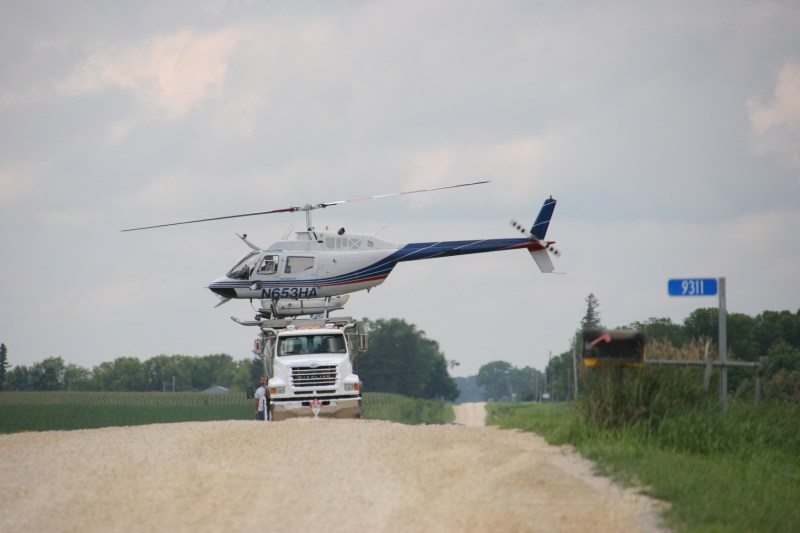
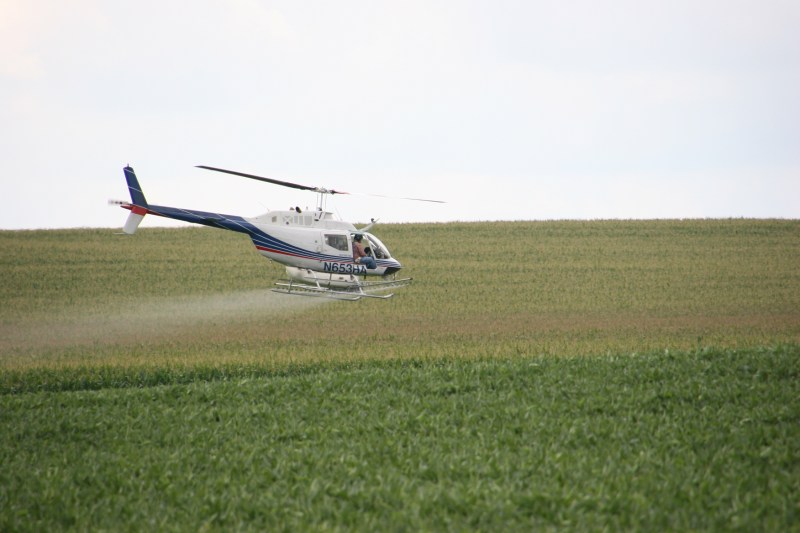
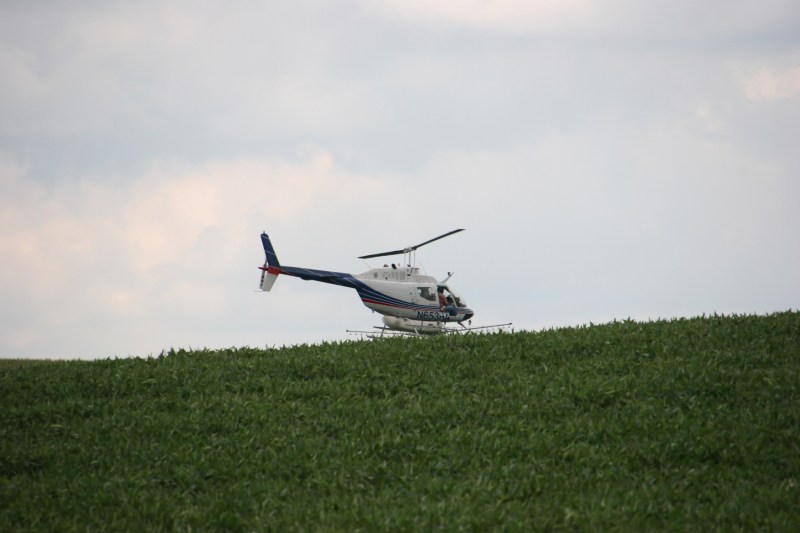
Before we made it to the farm, though, the chopper was back, skimming and spraying chemicals upon acres of corn at this location southeast of Faribault. Randy braked our van to a stop and I was out the passenger side door before the wheels stopped turning, eager to photograph an aerial application up close.

The helicopter files over a hill in the corn field.

The helicopter files over a hill in the corn field.

Whether you agree or not with the spraying of chemicals upon the land to control weeds, fungus and insects or to fertilize crops, you have to admire the skills of these pilots. This appears a dangerous undertaking as the copter zooms above the fields, the pilot simultaneously spraying, guiding his aircraft and watching the ground for obstacles—like silos, power lines and hills.

Helicopter spraying, 121 atop truck


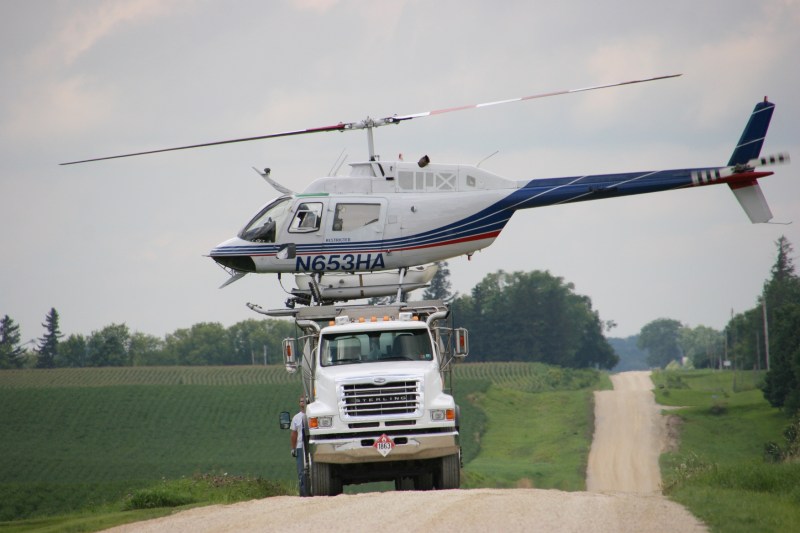
While the pilot’s skills impressed me, I was especially fascinated by what I saw as we crested the hill next to the Tatge dairy farm.


Helicopter spraying, 124 atop mixing truck


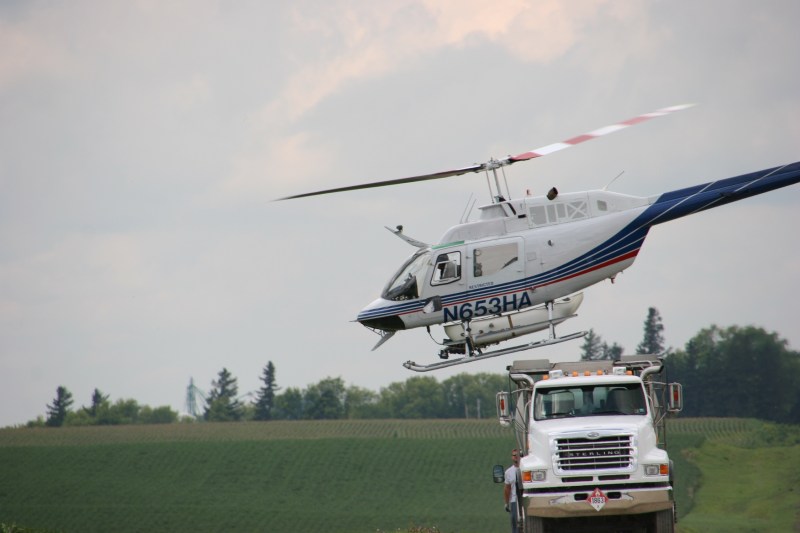
The helicopter had landed atop a truck in the middle of the country gravel road.


The helicopter lifts off from the mixing truck, ready for another round of spraying.

The helicopter lifts off from the mixing truck, ready for another round of spraying.

I’d never thought about this—how an aerial spraying helicopter refills with both chemicals and fuel. We didn’t stop to ask questions. I wasn’t about to distract the team of men focused on their work.

© Copyright 2016 Audrey Kletscher Helbling


The rural influence in my writing & photography, plus a farm tour July 12, 2016

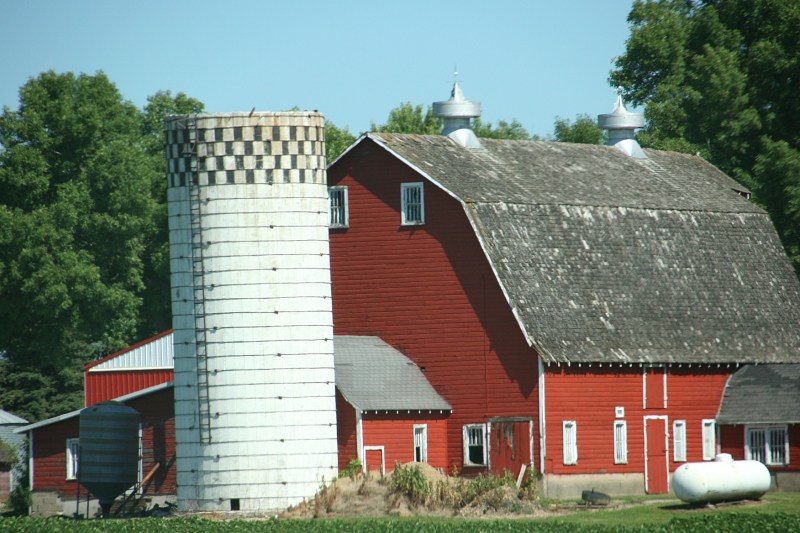
Barn, 117 red barn along US Hwy 71 south of Redwood Falls


BARNS DRAW MY CAMERA lens like moths to a porch light.


Barn, 144 farm site between Olivia and Wilmar


My response is reflexive, this focal allure of barns while traveling through rural Minnesota.


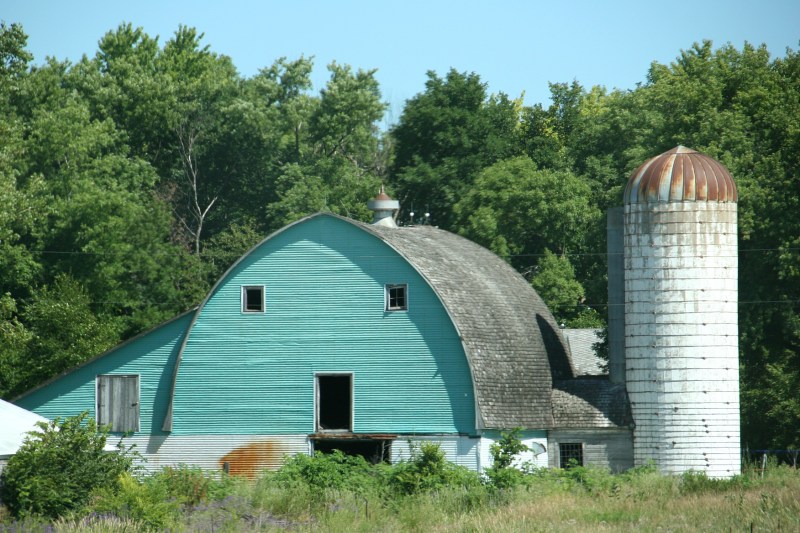
Barn, 112 bluegreen barn along US Hwy 71 south of Redwood Falls


Barns, to me, symbolize rural life. Growing up on a southwestern Minnesota dairy and crop farm, I labored in the barn—scooping silage and ground feed, scraping manure into gutters, carrying milk pails from barn to milkhouse, tossing hay and straw bales from the hayloft, bedding straw…

My hair, my skin, my clothing smelled always of cows and manure. I bathed but once a week. That seems unfathomable now. But it was the reality of then.


Barn, 145 white barn & cow


The barn on our family farm provided more than shelter for the cows. It provided an income, a way of life, a training ground for hard work. No matter what, the cows needed to be tended, fed and milked. Vacations were rare—only two my entire childhood, one to the Black Hills of South Dakota and the other to Duluth. On the occasion when my parents traveled farther, they left my older brother and me home to take care of the farm under our bachelor uncle Mike’s watchful eye.


Barn, 142 farm site between Olivia and Wilmar


I often told my dad I wanted to be a farmer. He discouraged me. He likely knew what I didn’t, that I wasn’t cut out to be a farmer. I am not a risk taker. And to be a farmer, you need to be a bit of a gambler. You gamble on the unpredictability of weather and of prices. Granted, technology has curbed some of the risk. But still, it’s there.


Barn, 132 sheep and barn between Morton & Olivia


Instead, I pursued a degree and career in journalism. And then, eventually, I became a full-time stay-at-home mom, setting aside my writing to raise my three kids. Until I found time again to write.


Barn, 109 east of Wabasso along US 71


In my writing today, unlike my past deliver-the-facts newspaper reporting, I have created a unique voice rooted in rural Minnesota. I may not smell of cow or manure, but those scents linger in my memory, infusing into my writing and photography. I bring a small town rural perspective to my work. I find my joy in writing about and photographing everyday life, everyday places, everyday people, mostly in Greater Minnesota.

The early 1950s barn on the Redwood County dairy farm where I grew up today stands empty of animals.

The early 1950s barn on the Redwood County dairy farm where I grew up today stands empty of animals. Minnesota Prairie Roots file photo.

And it all started in a Redwood County barn.

Fresh eggs and caged chickens attracted lots of interest.

Fresh eggs and caged chickens photographed at an event several years ago at Valley Grove Church, rural Nerstrand. Minnesota Prairie Roots file photo.

YOU, TOO, CAN EXPERIENCE farming this Saturday, July 16, by touring agricultural businesses throughout the region during the annual Eat Local Farm Tour. From Simple Harvest Farm Organics in rural Nerstrand to Mississippi Mushrooms in Minneapolis to Hope Creamery in Hope and 26 other sites, you’ll discover Minnesotans and Wisconsinites passionate about local foods. You’ll meet beekeepers, cheesemakers, berry growers, cattlemen/women, trout farmers and more.

Click here for a listing of sites on the Eat Local Farm Tour, which runs from 10 a.m. – 4 p.m.

© Copyright 2016 Audrey Kletscher Helbling

Note: With the exception of my home barn, all barns and farm sites featured in this post are located along U.S. Highway 71 in rural Minnesota, from south of Redwood Falls to south of Willmar.


What makes a winning photo December 8, 2015

IT’S ALWAYS A THRILL, as a photographer, to be recognized for one’s work. It validates what I create with my camera and fuels my passion to continue pursuing photography.
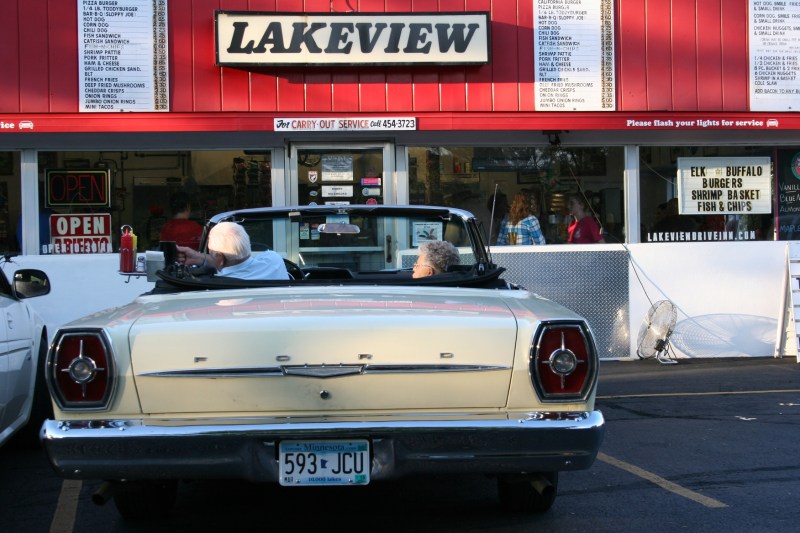
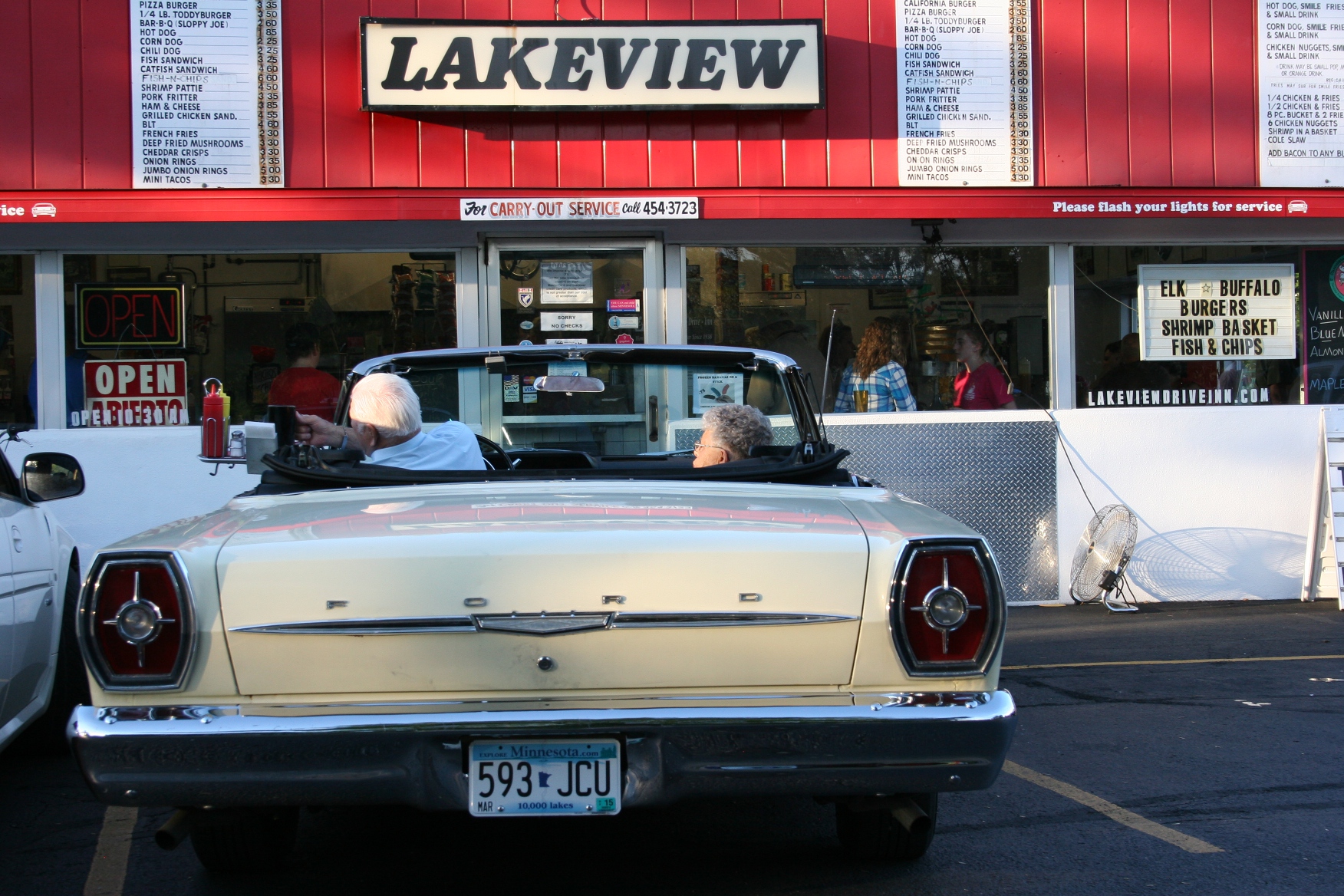
A few cars, some vintage, managed to sneak into the drive-in among all the tractors.

My winning photo: “A Dinner Date at the Lakeview Drive Inn”, Winona, Minnesota.

For the third time, a photo I entered in the National Mutual Benefit annual photo contest has placed. This year I earned honorable mention in the people category for my image, “A Dinner Date at the Lakeview Drive Inn.” I shot the scene in August 2014 at this iconic drive-in in the Mississippi River town of Winona, Minnesota. My husband and I were returning from a vacation to Iowa and Galena, Illinois, when we visited the Lakeview on a mid-week Farm Tractor Night.

Lighting—the golden hour of photography—was perfect. And the scene and setting were so iconic Americana that I was giddy about the photo possibilities. You just know as a photographer when photo ops abound.

I was familiar with the Lakeview, having dined there a few times while our eldest daughter attended nearby Winona State University. I’d also written and taken photos for a magazine feature story about this long-time eatery noted for its homemade root beer.

When I saw an elderly couple dining in their convertible, I framed the scene and clicked the shutter button. The result was a winning photo that captures a sweet moment in time and memories of yesteryear. Nostalgia.

Click here to see all of the winning photos in the 2015 National Mutual Benefit contest.
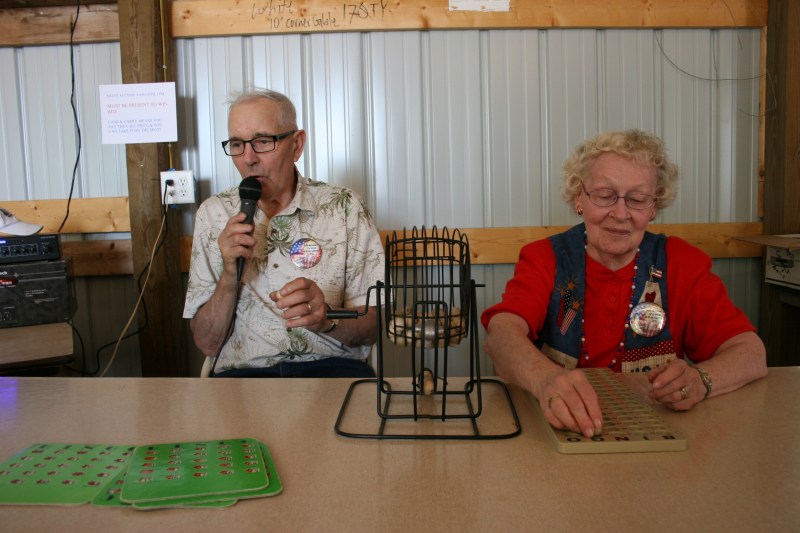
The bingo callers. My first place winning photo.

The bingo callers. My first place winning photo taken on July 4, 2013.

Last year I also entered a photo of an elderly couple to win first place in the people division of National Mutual’s photo contest for my “Fourth of July BINGO callers.” That scene was shot in 2013 at North Morristown. Again, I managed to recognize and snapshot a moment that is grassroots connective.

My first photo win, though, in a National Mutual contest came back in 2003 when I won first place in the scenery division for an image of a butterfly settled upon a daisy in my backyard. That was taken with my 35 mm film camera, before I owned my Canon DSLR. I’d show you that photo, too, except I have no idea where the print may be.
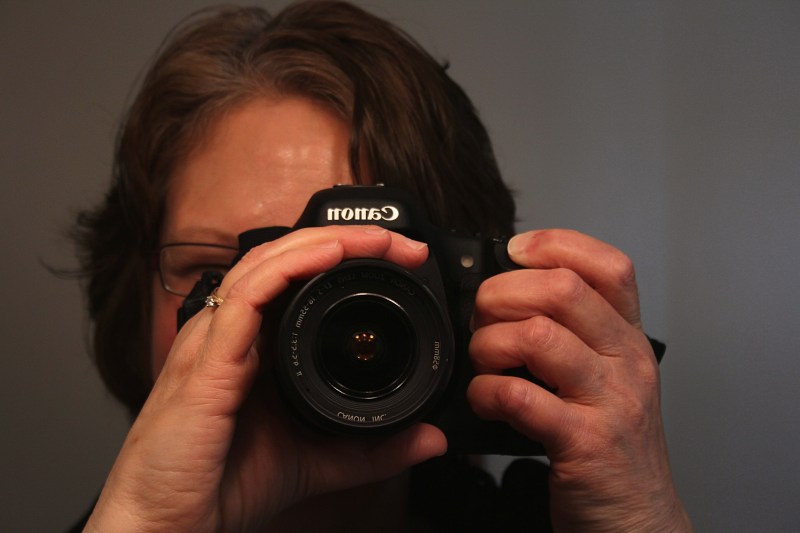
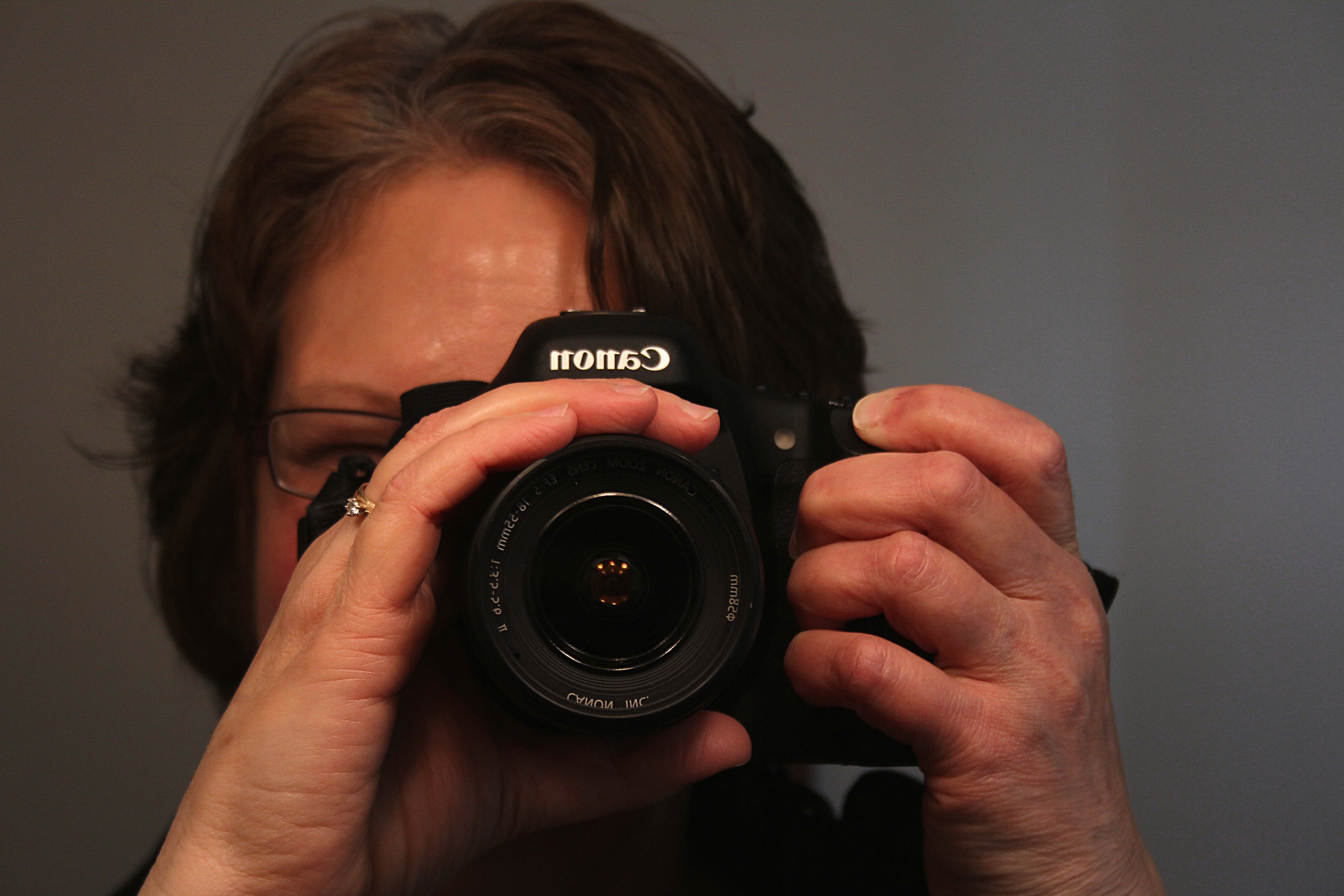
My new camera.

A mirrored self-portrait when I was trying out a different Canon earlier this year. I shoot with a Canon EOS 20D.

I love photography. Along with writing, it’s a creative outlet for me. But it’s also a source of income. Numerous people have found my work via this blog and purchased rights to use my images—on websites, in books, on annual reports, in magazines, as framed prints, in an educational app and more. I am pleased and thankful when others recognize and value my work. No, I do not give away my photos for credit and/or a link. Many people apparently think I do based on the numbers of inquiries offering that type of “payment.”

Email me at audrey at mnprairieroots.com if you are interested in purchasing digital rights to my images.

I use photography to tell a story in the most creative way I can. I am not a stand in the corner and shoot person. I squat and kneel and even lie on the ground if necessary to get the proper perspective. Sometimes I hold my camera above my head, aim the lens down and shoot. Other times I place the camera on the ground, tilt it up and click.
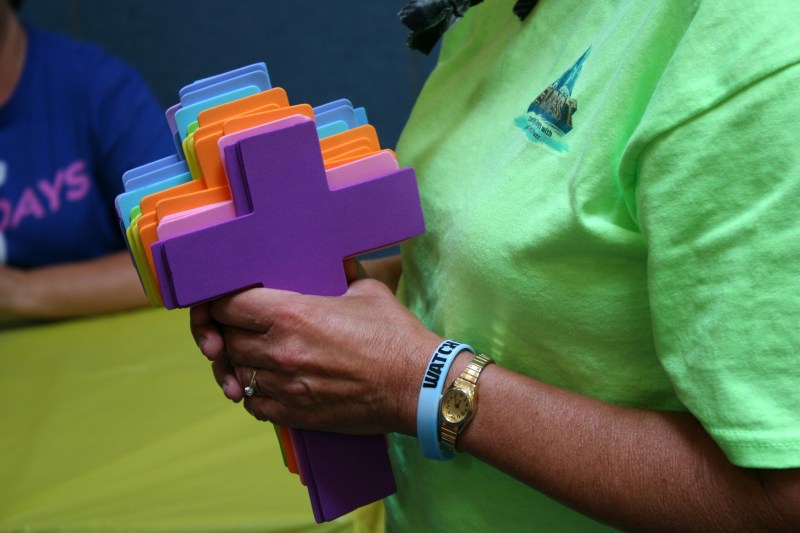
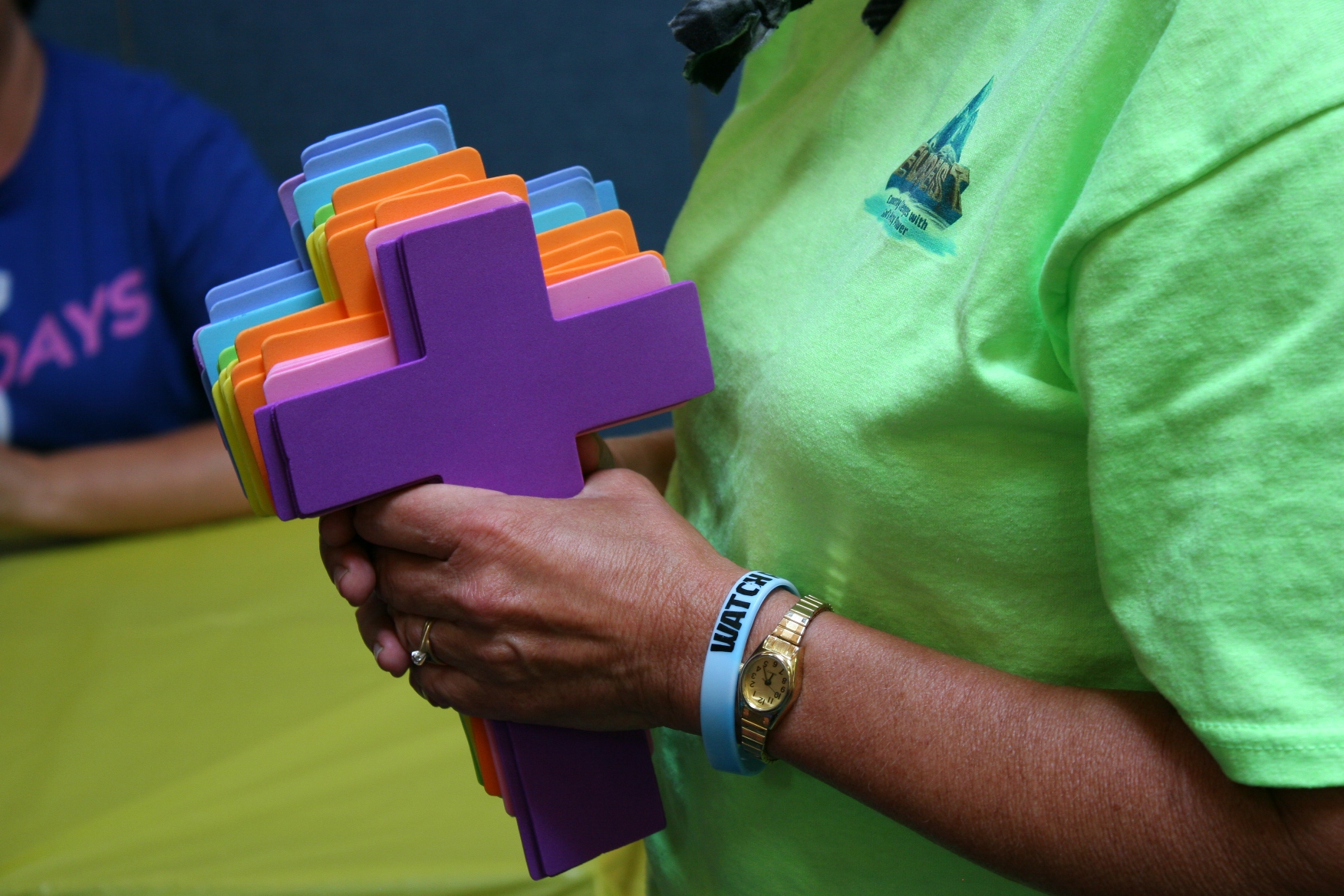
One of my favorite close-up VBS photos shows the VBS leader clutching crosses to be used in a craft project.

One of my favorite close-up VBS photos shows the VBS leader clutching crosses to be used in a craft project.

I shoot from afar and I shoot up close. During a stint of volunteering to photograph my church’s Vacation Bible School this summer, I took more than 1,000 photos in eight hours of work. And if anyone was expecting me to simply photograph obscure groups of kids, they were wrong. Sure, I snapped images of groups. But I also told the VBS story in detailed photos of hands and faces and other close-ups.

Many think taking good photos is all about the equipment. Yes, good equipment is nice. But it’s ultimately lighting, creativity, composition and observation skills (and sometimes luck) that lead to quality memorable images.

This quote by noted advertising and documentary photographer Elliott Erwitt summarizes well my thoughts on photography:

“Photography is an art of observation…I’ve found that it has little to do with the things you see and everything to do with the way you see them.”

I’ve been shooting long enough, first as a photojournalist (a necessity back in my days working as a small town newspaper reporter), to feel confident in my work, in my style. Thank you for appreciating me and my photography.

© Copyright 2015 Audrey Kletscher Helbling


Blessings in a box from North Dakota November 24, 2015

Filed under: Uncategorized — Audrey Kletscher Helbling @ 5:00 AM
Tags: , , , , , , , , , ,

WHEN THE MAIL CARRIER arrived at my door on Friday bearing a package, I was surprised. “I didn’t order anything. Who’s it from?” I asked.

“Looks like it’s from a relative,” he said.

And then I remembered my sister-in-law’s quick phone call several days earlier requesting my address. She was running errands and had no time to chat. This box with her return address solved the mystery of that call.

Inside, I found several sweet surprises—a pillow, a book and a clutch of notecards.

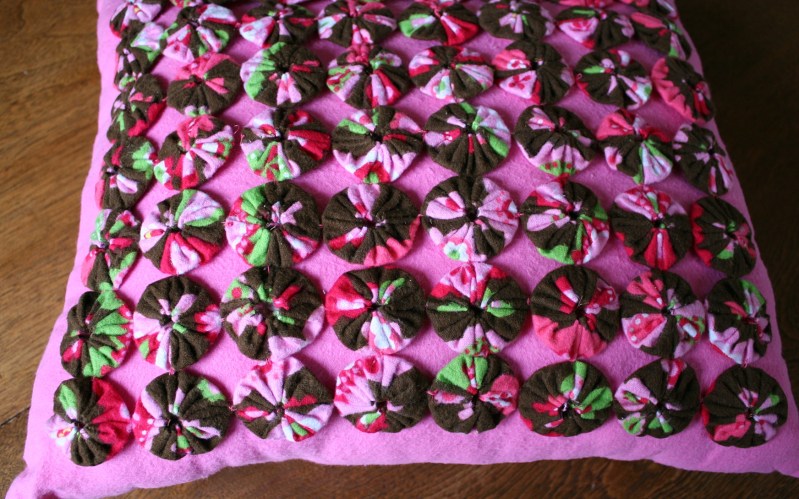
My niece worked all last winter stitching these yo-yos for this pillow.

My niece worked all last winter stitching these yo-yos for this pillow.

My 10-year-old niece crafted a yo-yo pillow for me. Fifty-six yo-yos, tiny circles of fabric gathered at the edges and sewn into circles stitched to a pink flannel pillow. Yo-yos were, Beth wrote in an attached note, popular during the Depression. Women made them from scrap fabric (oftentimes from old clothing) and then stitched them into quilts.

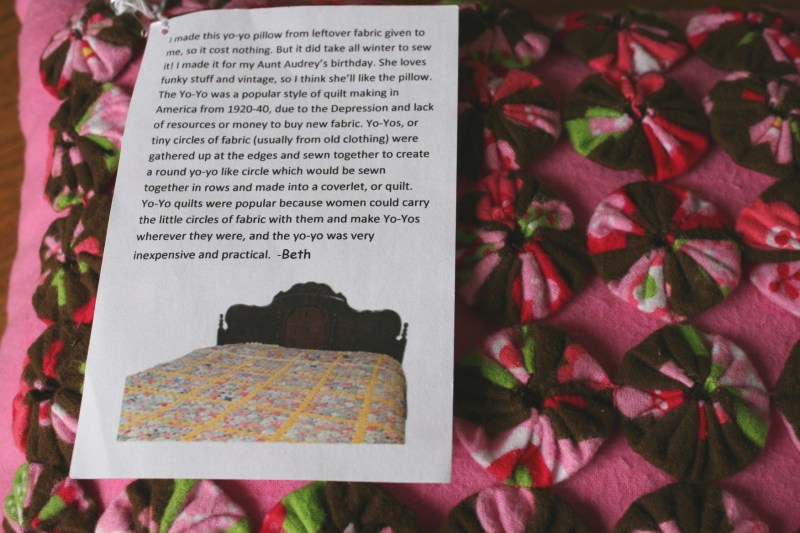
The story and history behind the yo-yo pillow.

The story and history behind the yo-yo pillow.

As much as I appreciate the pillow, I treasure even more the words Beth typed when she entered the pillow in her county fair and then the North Dakota State Fair. She earned two blue ribbons for this 4-H project. Here’s the part that especially touched me:

I made it for my Aunt Audrey’s birthday. She loves funky stuff and vintage, so I think she’ll like this pillow.

Beth’s wrong. I don’t just like this pillow; I love it.

And I like that my dear niece and her mom, Rena, know me so well. I do, indeed, value funky and vintage.

"When I discovered this historical gem from under junk and odds and ends (in a rummage store), I knew it was meant for you. Enjoy!" my sister-in-law wrote.

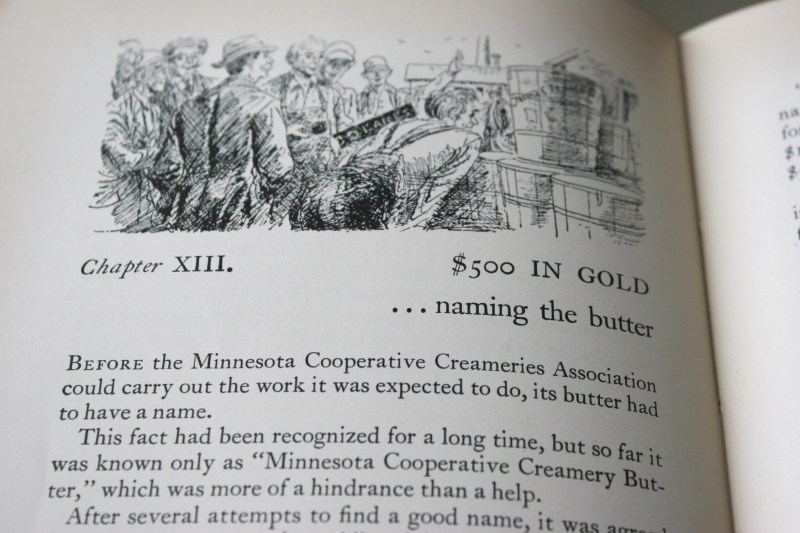
“When I discovered this historical gem from under junk and odds and ends (in a rummage store), I knew it was meant for you. Enjoy!” my sister-in-law wrote. This chapter explains how Land O’Lakes came to be the name of the Minnesota Cooperative Creameries Association’s butter. The Co-op launched a contest in 1924 to name its sweet cream butter, offering $500 in gold as prizes. Mrs. E.B. Foss of Hopkins and George I. Swift of Minneapolis submitted the same winning name. Contest entries of about 7,000 daily overwhelmed the company office. The contest topped news in the Midwest, second only to the Teapot Dome oil scandal, according to the author.

That leads to the second gift, the book Men to Remember: How 100,000 Neighbors Made History by Kenneth D. Ruble. Land O’ Lakes Creameries, Inc. commissioned the volume published in 1947. Perfect for someone who grew up on a dairy farm.

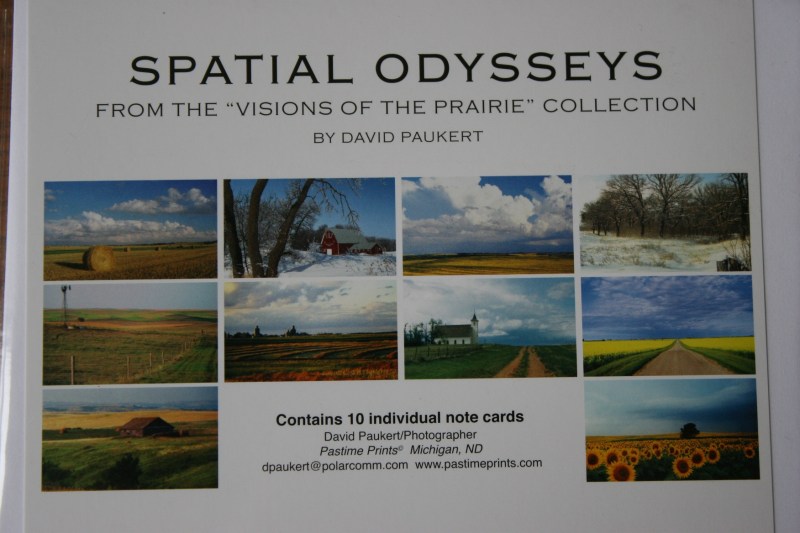
The "Spatial Odysseys" collection of notecards by David Paukert.

The “Spatial Odysseys” collection of notecards by David Paukert.

The last item in the package—a collection of rural-themed notecards—is a fitting gift also. The cards feature the work of Michigan, North Dakota, photographer David Paukert. Titled “Spatial Odysseys,” the photo cards showcase fields, a church, a barn and more from Paukert’s “Visions of the Prairie” Collection. Prairie. That reflects me, rooted in the prairie.

These gifts from Rena and Beth arrived at the end of a difficult week. They didn’t know this, of course, because the presents were originally intended for my birthday two months ago. But the timing of the delivery couldn’t have been better. Rena and Beth blessed me not only with the items they made and chose for me, but also with their thoughtfulness, love and care.

My sister-in-law also included a quote from Mother Teresa: “…do small things with great love.”

This week, please consider ways you can bless someone. Call a friend or family member who needs your support and encouragement. Listen. Avoid “hearing without listening.” Send a card with a heartfelt handwritten note. Or a gift. Volunteer. Be kind. Show your love. In whatever way you can.

Check back tomorrow for another “blessings” post.

© Copyright 2015 Audrey Kletscher Helbling


Photographing the Minneapolis skyline October 8, 2015

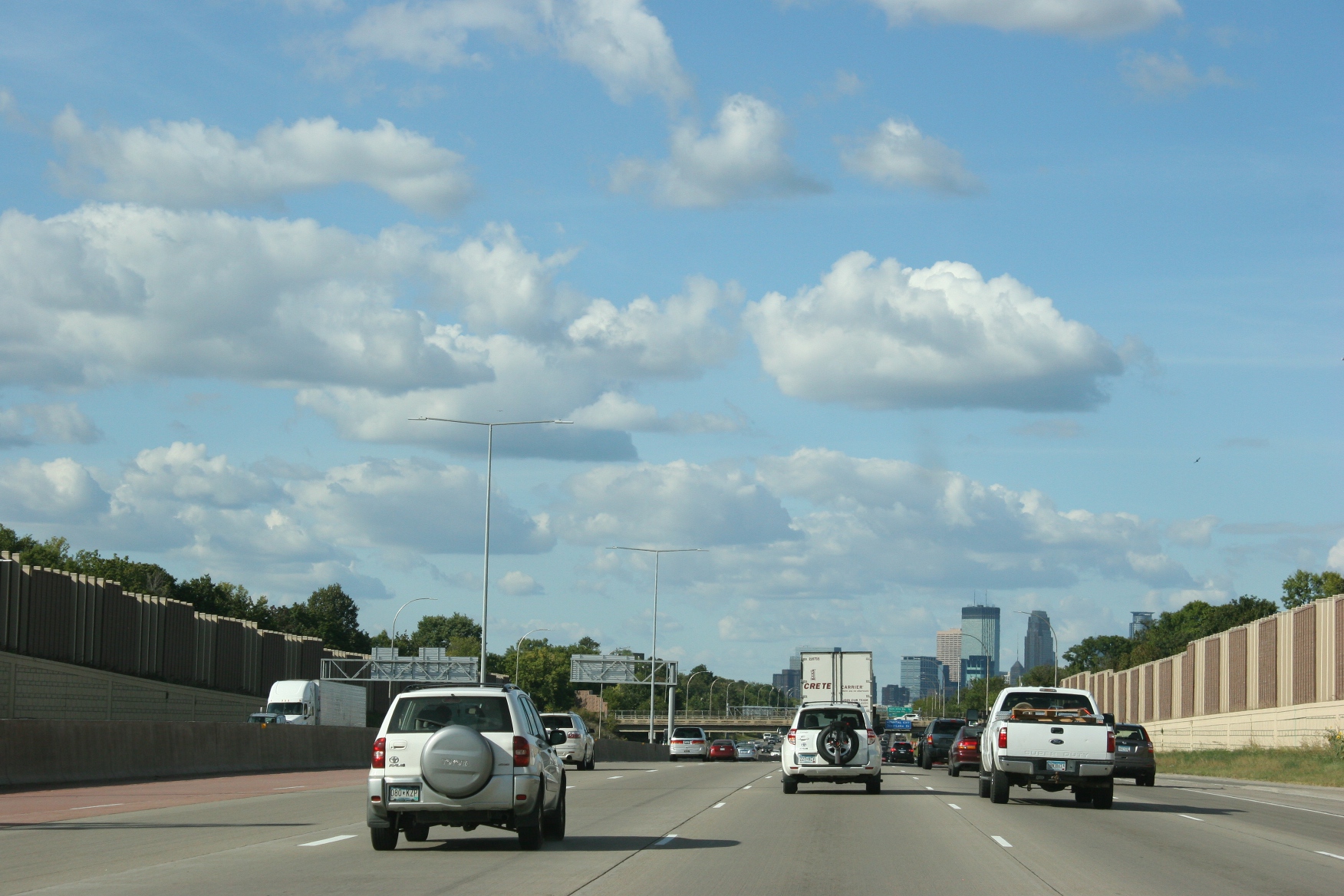
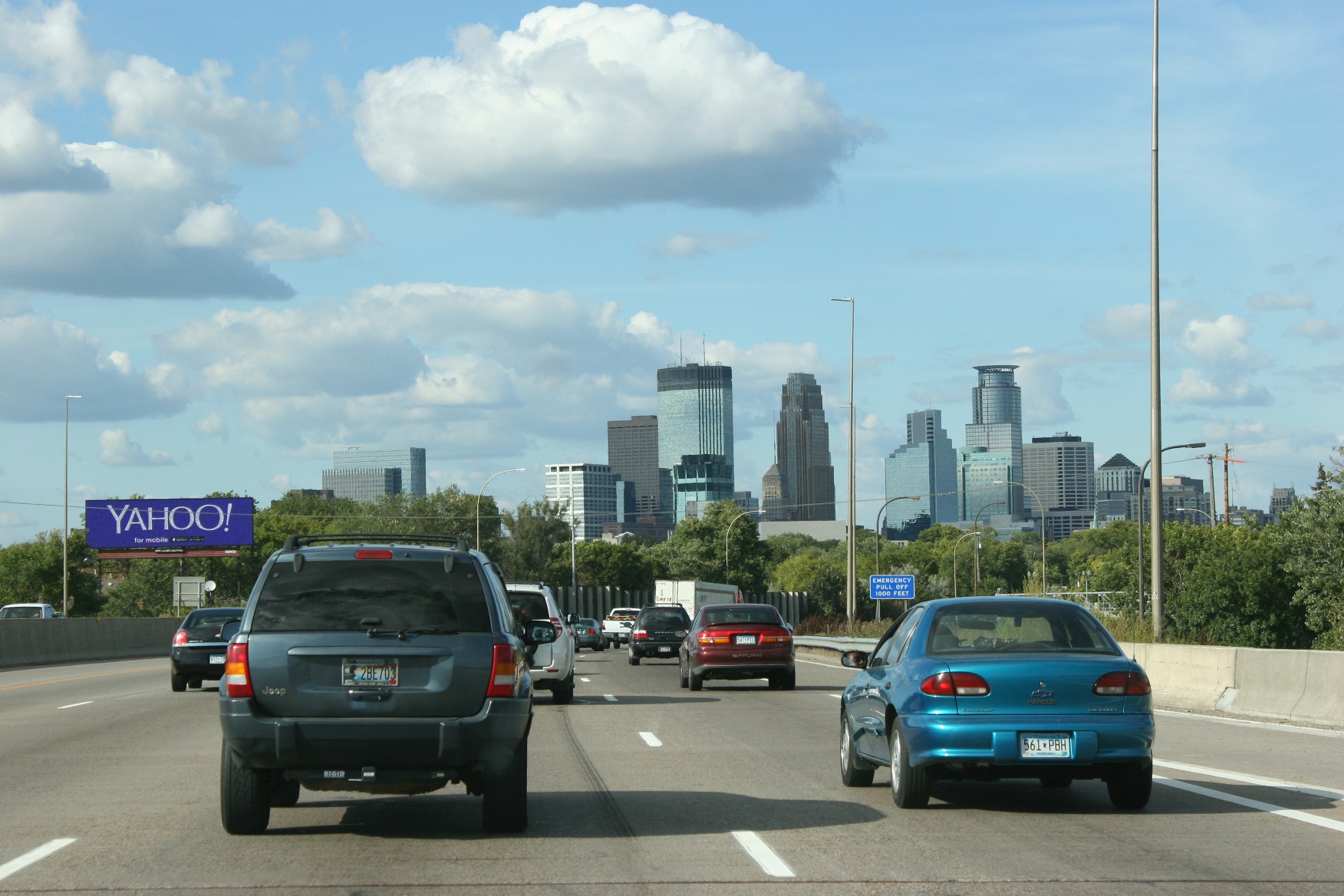
Frame 1: Northbound on Intestate 35W toward downtown Minneapolis.

Frame 1: Northbound on Intestate 35W toward downtown Minneapolis.

EVERY TIME MY HUSBAND and I journey toward and around downtown Minneapolis, I am taken by the skyline. Generally, I am not a fan of skyscrapers embedded in concrete, of vertical lines that block ground level views and cast long shadows. I am of the prairie, of horizontal lines and broad vistas.

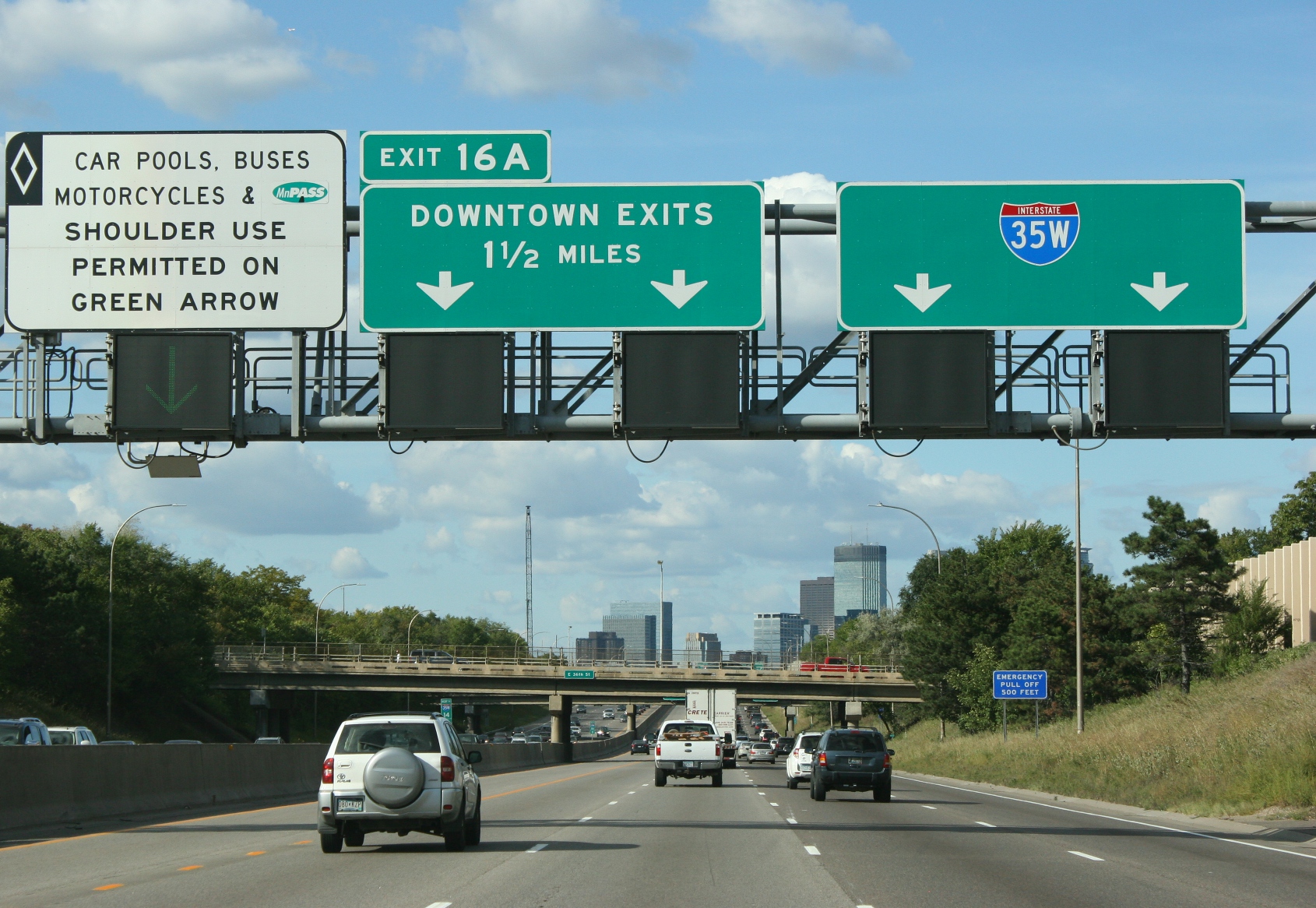
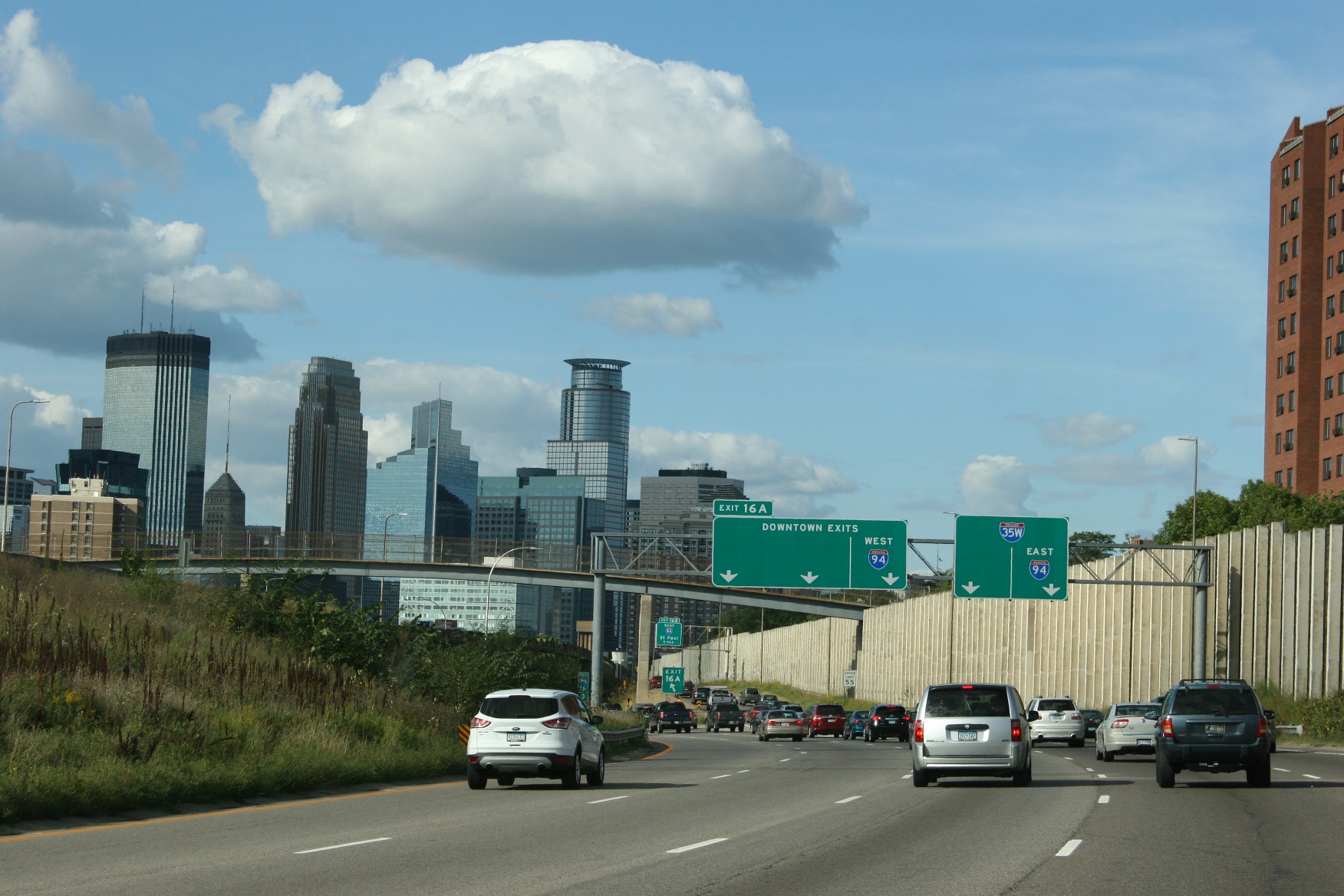
Frame 2:

Frame 2: You best know which lane you should be driving in.

Yet, I have grown to appreciate the Minneapolis skyline. From a distance. And through the viewfinder of my Canon DSLR. My camera distracts me from the often congested traffic, although my definition of congested certainly differs from that of a city dweller.

Frame 3: Traffic builds as you approach the downtown.

Frame 3: Traffic builds as we approach the downtown. Great sign placement choice by Yahoo.

Afterward, when I am back in my Faribault home office, photos uploaded into my computer, I study the frames. And I see in the downtown skyline images an almost other-worldly quality, as if the collection of buildings is background in an animated film. Unreal. Stacked Lego blocks. The work of an artist rather than that of engineers and builders.

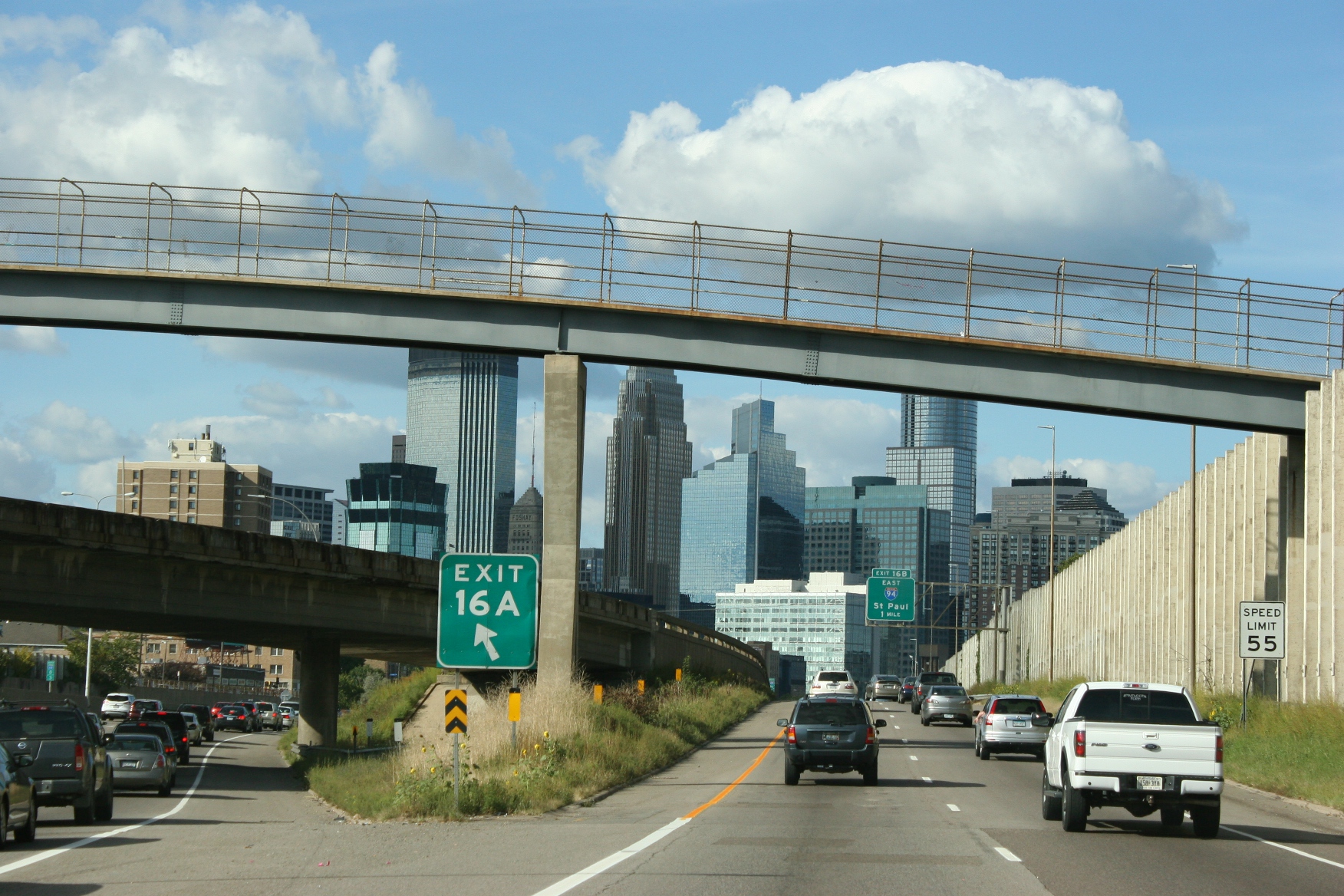
Frame 4: Enough traffic for me.

Frame 4: Enough traffic for me. About this time I’m asking my husband, “Do you know which lane you’re supposed to be in?”

Frame 5

Frame 5: Traffic slows in a tight spot.

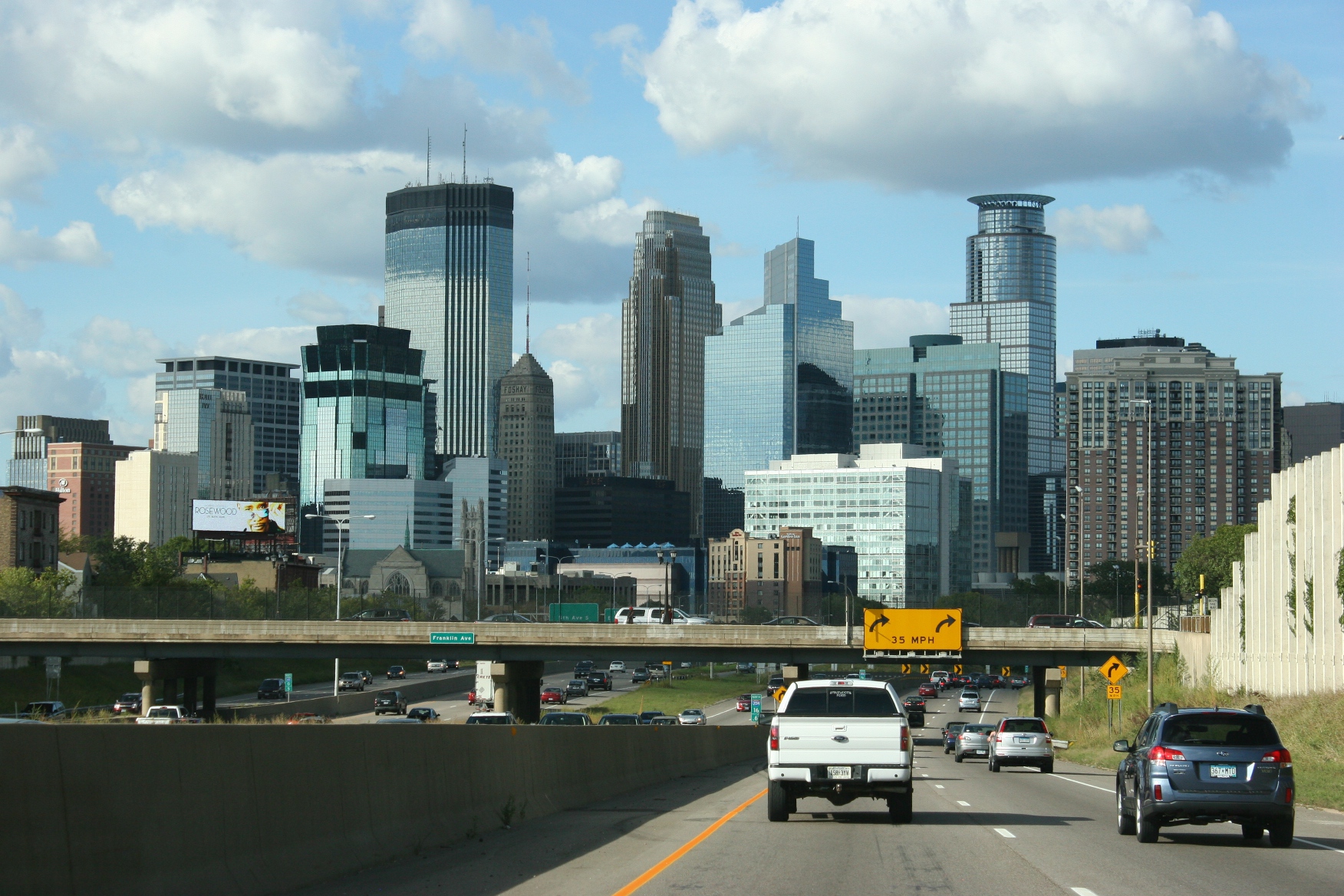
Frame 6: We're going right.

Frame 6: We’re going right. Better than taking the congested 16A exit.

Frame 7: I love this painterly view of the Minneapolis skyline.

Frame 7: I love this painterly view of the Minneapolis skyline.

Frame 8: One last look at the skyline.

Frame 8: One last look at the skyline.

Do you see what I’m seeing, that surreal artistic quality in the buildings?

© Copyright 2015 Audrey Kletscher Helbling
 

Mankato photographer focuses on hands and water in new exhibit October 7, 2015

IF I WERE TO STUDY your hands, what would I see? Would I see earth or art, youth or age, strength or weakness…

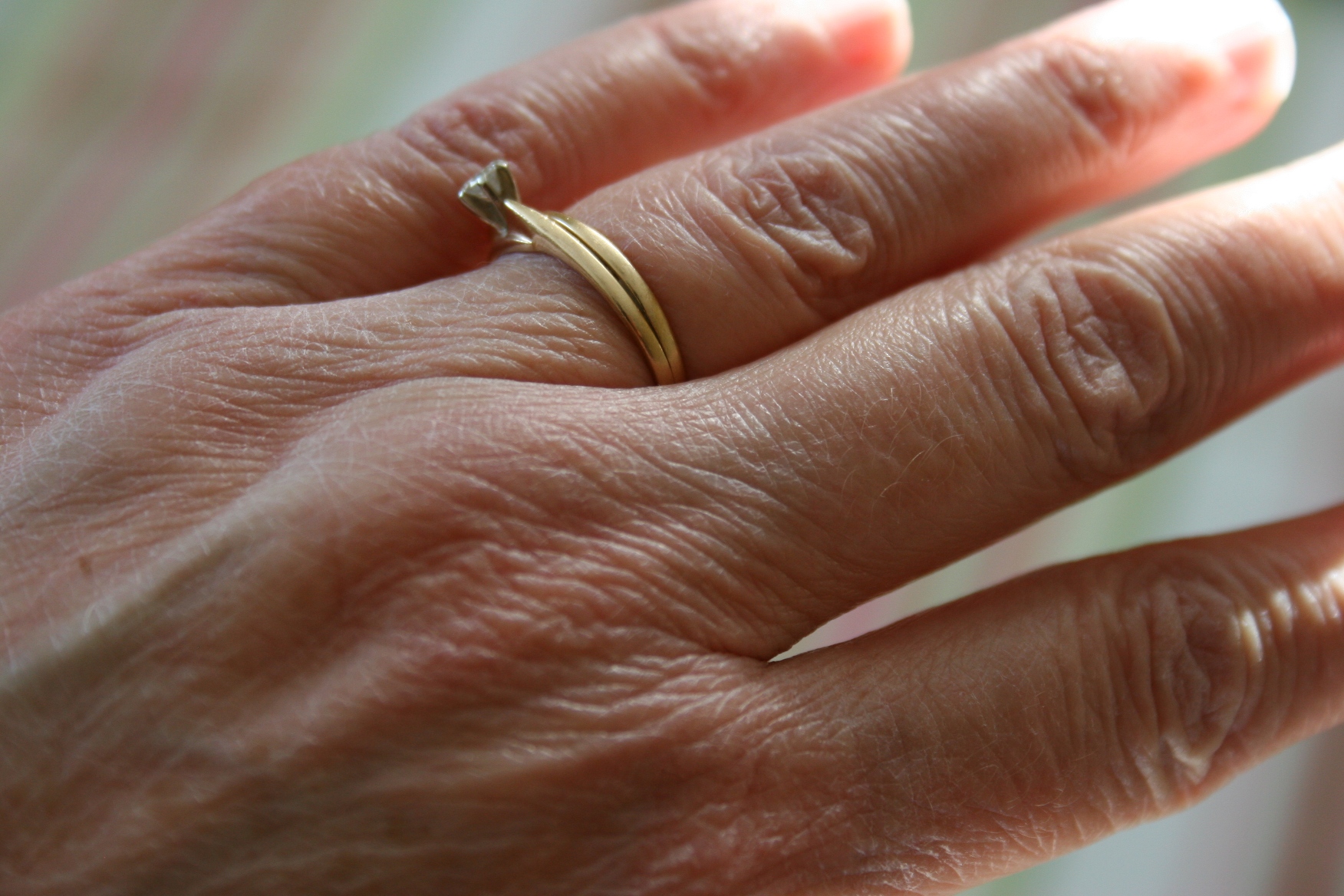
My left hand, which I photographed in 2011.

My left hand, which I photographed in 2011.

When I look at my hands, I see brown spots sprinkled across skin streaked blue with veins. I notice the slight bump on the knuckle of my right pinkie, a writer’s callous from finger rubbing against paper.

Would my hands show you that I am of the land and also a wife, mother, writer and photographer? Would you see the poetry that flows from my fingertips in both words and images?

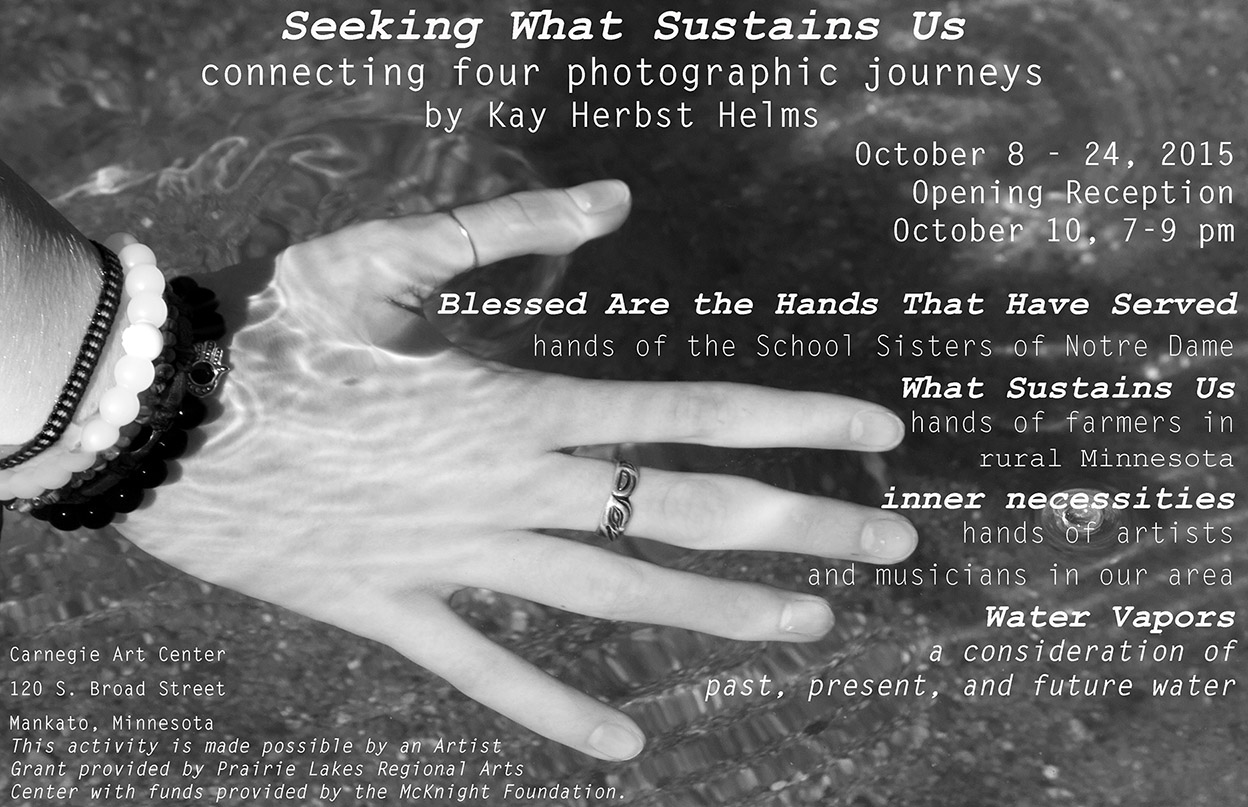
Four separate photo projects meld in Kay Herbst Helms' new exhibit.

Four separate photo projects meld in Kay Herbst Helms’ new exhibit. Image courtesy of Kay Herbst Helms.

A Mankato photographer has chosen for the past five years to study hands, to tell their stories through a series of photographic projects. Kay Herbst Helms’ photos come together in “Seeking What Sustains Us: a photographic journey of hands and water,” an exhibit of four photo projects showing at the Carnegie Art Center, 120 South Broad Street, Mankato.

The exhibit opens at 1 p.m. Thursday, October 8. I will join five other area poets—Yvonne Cariveau, Susan Chambers, John Hurd, Derek Liebertz and Gwen Westerman—at 5 p.m. in reading original poems about water. Dick Kimmel will also entertain with bluegrass music.

But it is Kay’s images which will be the focal point. As she tells it, the decision to photograph hands happened in a prophetic way—when she awakened one morning with the single word, hands, in her thoughts. That led to “Blessed Are the Hands That Have Served,” a photo exhibit focusing on the hands of the School Sisters of Notre Dame.

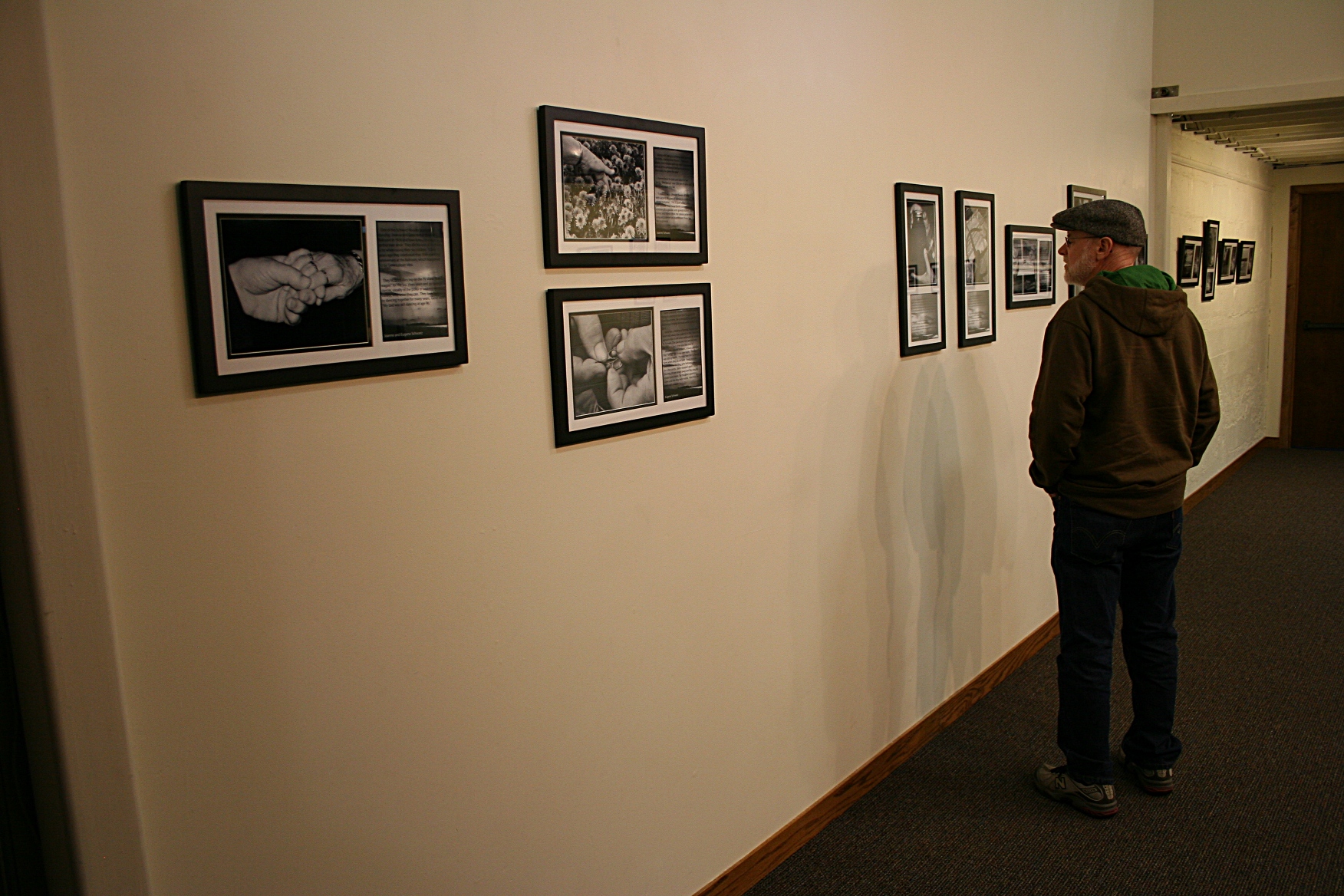
Viewing Kay Herbst Helms' photos in "What Sustains Us."

Viewing Kay Herbst Helms’ photos in “What Sustains Us.” Minnesota Prairie Roots file photo 2012.

Her second hands project, “What Sustains Us: considering the hands and the land of south central rural Minnesota,” features the hands of those who work the land and their rural surroundings. It’s an exhibit I viewed in 2012 at the Arts Center of Saint Peter. In that display of black-and-white photos, Kay also shared brief stories of those she photographed.

In her third project, “inner necessities,” Kay photographed the hands of area artists and musicians.

Her fourth hands-themed photo compilation, “Water Vapors,” debuts this week as a consideration of what our hands have done to, in and for water. “We all have connections to each other and to water,” Kay says. “How we manage those connections will determine the future of our great-great grandchildren.”

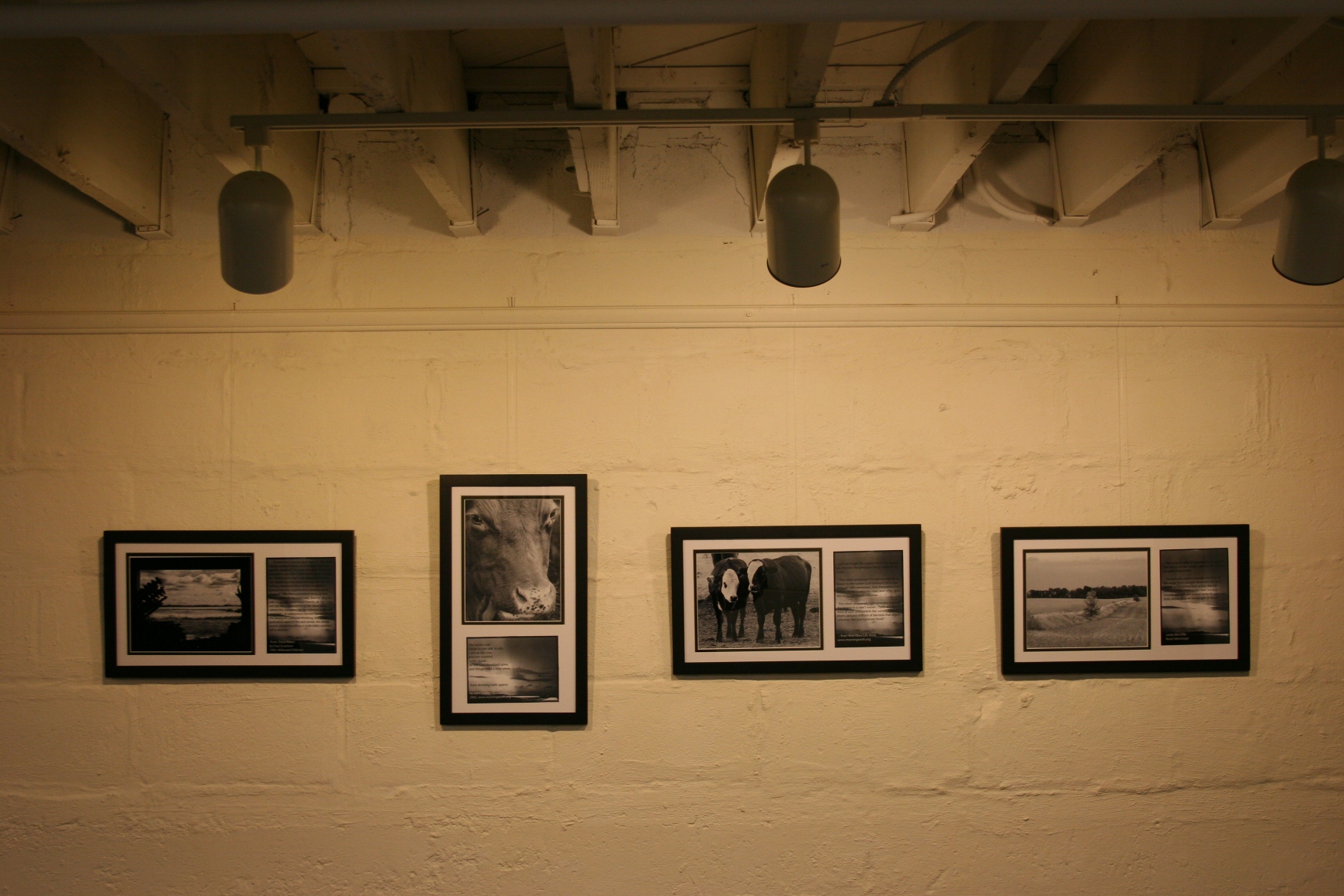
Several of Kay's images focus on cattle, enhancing the exhibit's rural theme.

Several of Kay’s images focus on cattle, enhancing the exhibit’s rural theme in her “What Sustains Us” photo project. Minnesota Prairie Roots file photo 2012.

I expect that I will connect with all four of these photo exhibits because I, like Kay, hold a deep appreciation for storytelling via photography.

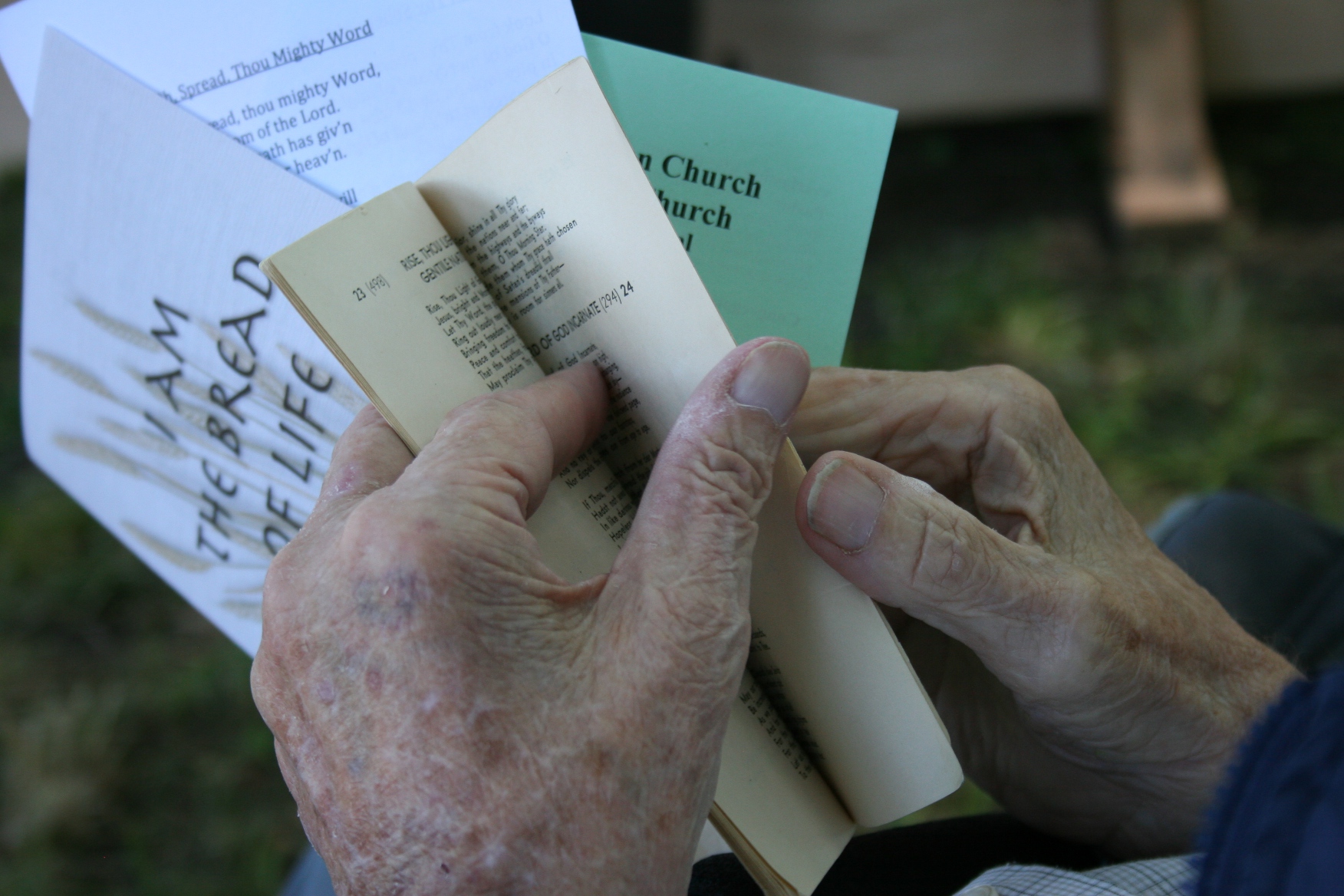
An elderly man turns to a hymn in the old pocket-size songbook that's been used for decades.

I shot this hands photo at an old-fashioned mission fest in Marquardt’s Grove south of Janesville in 2012. To this day, it remains one of my favorite photos of hands. It tells a story of enduring faith.

And for hands. (Click here to read one of my most beloved posts about hands, my mother’s hands.)

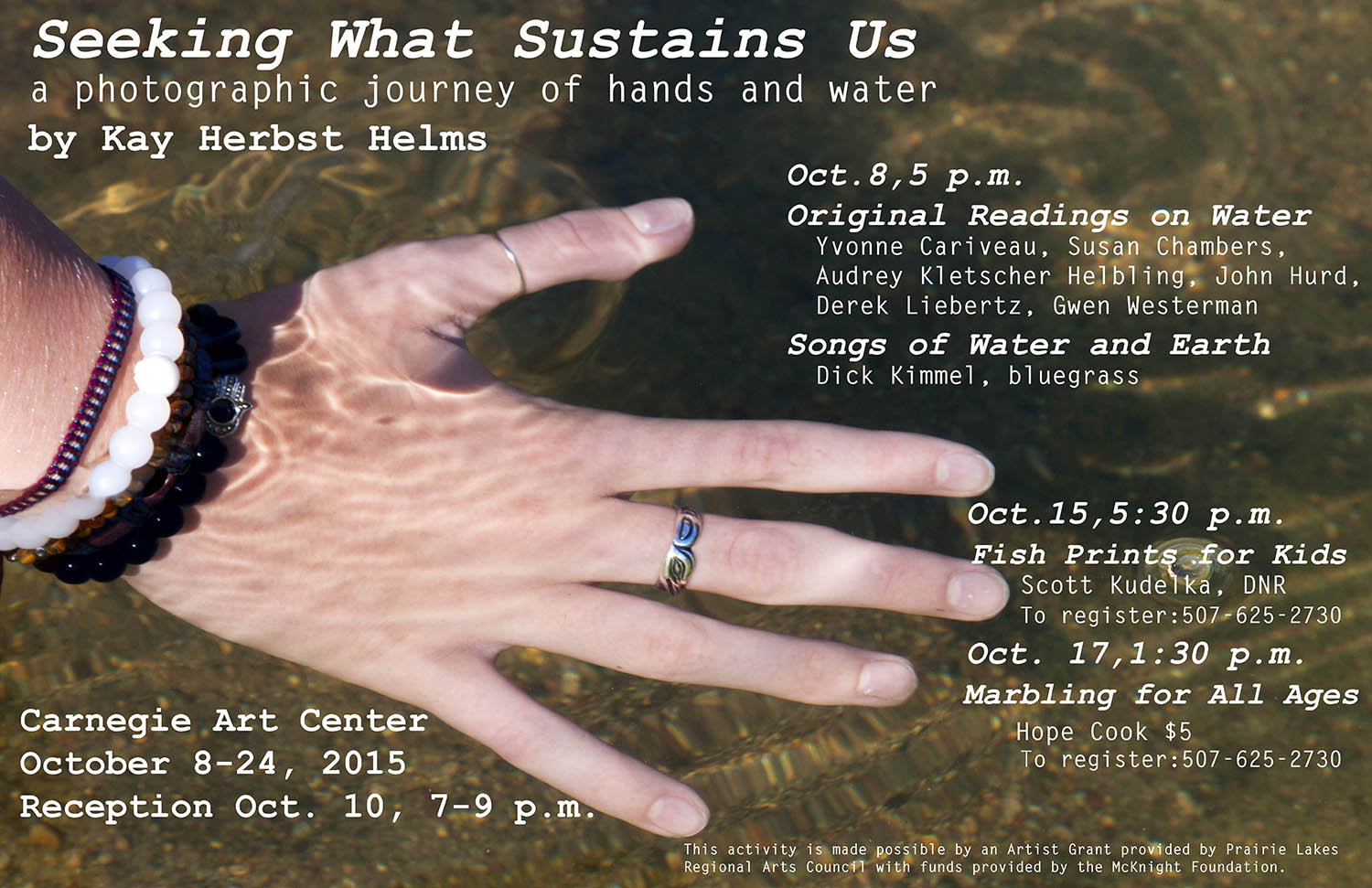
Activities related to the exhibit. Image courtesy of Kay Herbst Helms.

Activities related to the exhibit. Image courtesy of Kay Herbst Helms.

FYI: Kay Herbst Helms’ exhibit runs through October 24. An opening reception is set for 7 p.m.- 9 p.m. on Saturday, October 10. Additional arts activities include the free “Fish Prints for Kids” at 5:30 p.m. on Thursday, October 15, and “Marbling for All Ages” at 1:30 p.m. on Saturday, October 17 (fee is $5). Click here for more information.

© Copyright 2015 Audrey Kletscher Helbling
 

Minnesota Faces: Historical reenactors “Katie” and “Jim” plus more October 2, 2015

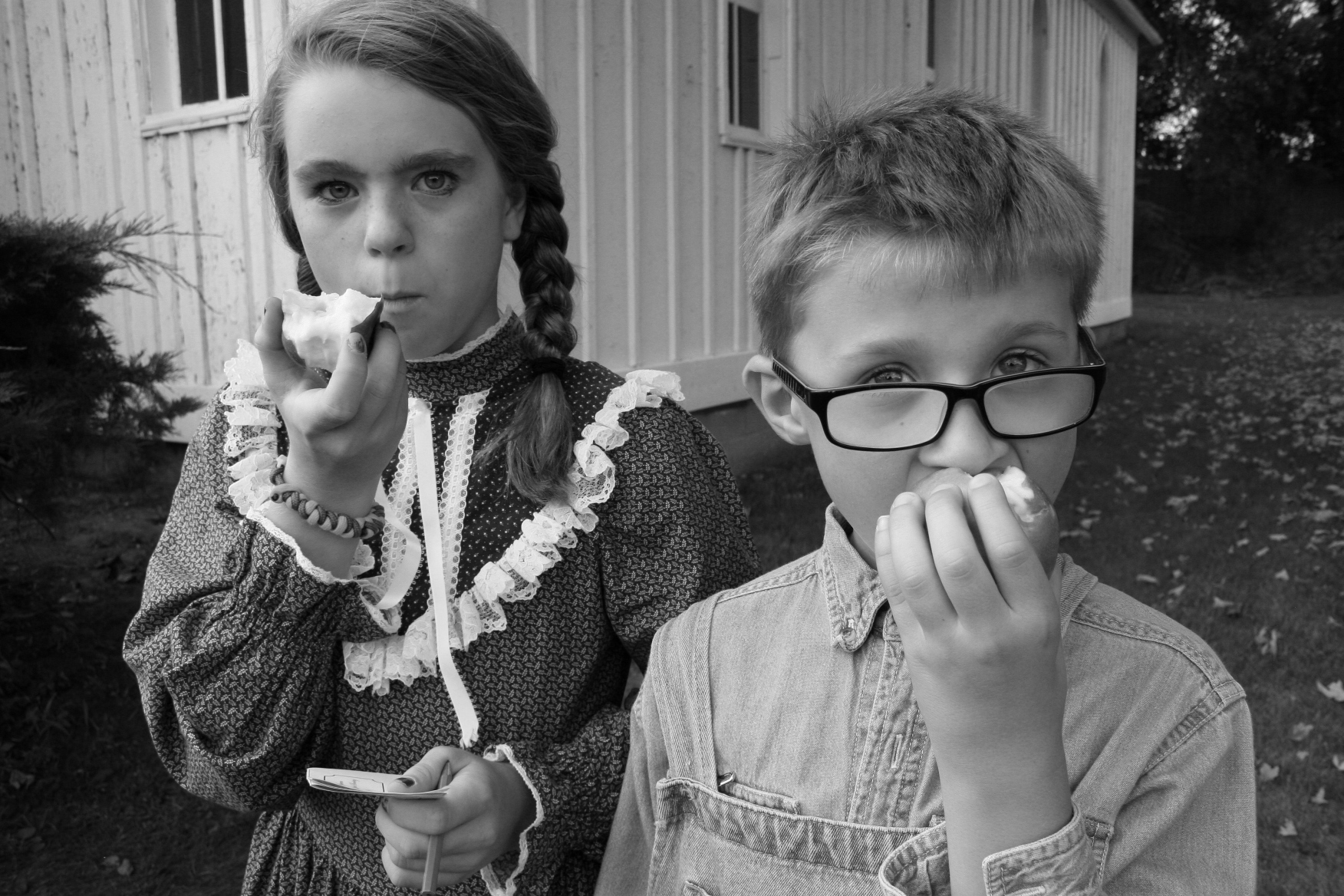
Portrait #42  : Siblings Kaylee and William


Portrait 42, Night at the Museum actors


Back in the day when I studied history, it was dull and boring and printed mostly as straight factual information in books. Dates and events and important people. Page after page after page with the occasional illustration or photo to break up the blocks of copy. Since I’m good at memorizing, I passed history classes with ease, but not with interest.

I haven’t cracked a history textbook in decades. But I presume they are a bit more interesting, perhaps in a storytelling, personalized way.

Today, thankfully, living history conveys the past in a personal and relatable way that a textbook never will. When I met siblings Kaylee and William last September, they were role-playing pioneer children during the Rice County Historical Society’s second annual “A Night at the Museum.

Lots of kids were running around the grounds in period attire or attending class inside the historic Pleasant Valley School. I was learning, too, as I wandered the museum grounds and observed reenactors portraying historical characters. I suspect I’m like most people who find this much more educational and entertaining than simply peering at historical items on display inside museum walls. Not that that doesn’t have value, too. It certainly does. I just prefer living history and am grateful our local historical society started this annual “A Night at the Museum.”

From 4 p.m. – 7 p.m. this Saturday, October 3, attendees can interact with costumed characters from Rice County’s past on the museum grounds at 1814 Northwest Second Avenue in Faribault, right next to the fairgrounds. New this year is a Flashlight Tour of Harvest and Heritage Halls at 6 p.m. There will also be horse-drawn wagon rides and food available around the fire pit. Click here for more information.

Maybe you’ll spot Kaylee and William there, pretending to be Katie and Jim.

#

Participants in last year's Chili Contest dish up chili at a business along Central Avenue during the Fall Festival.

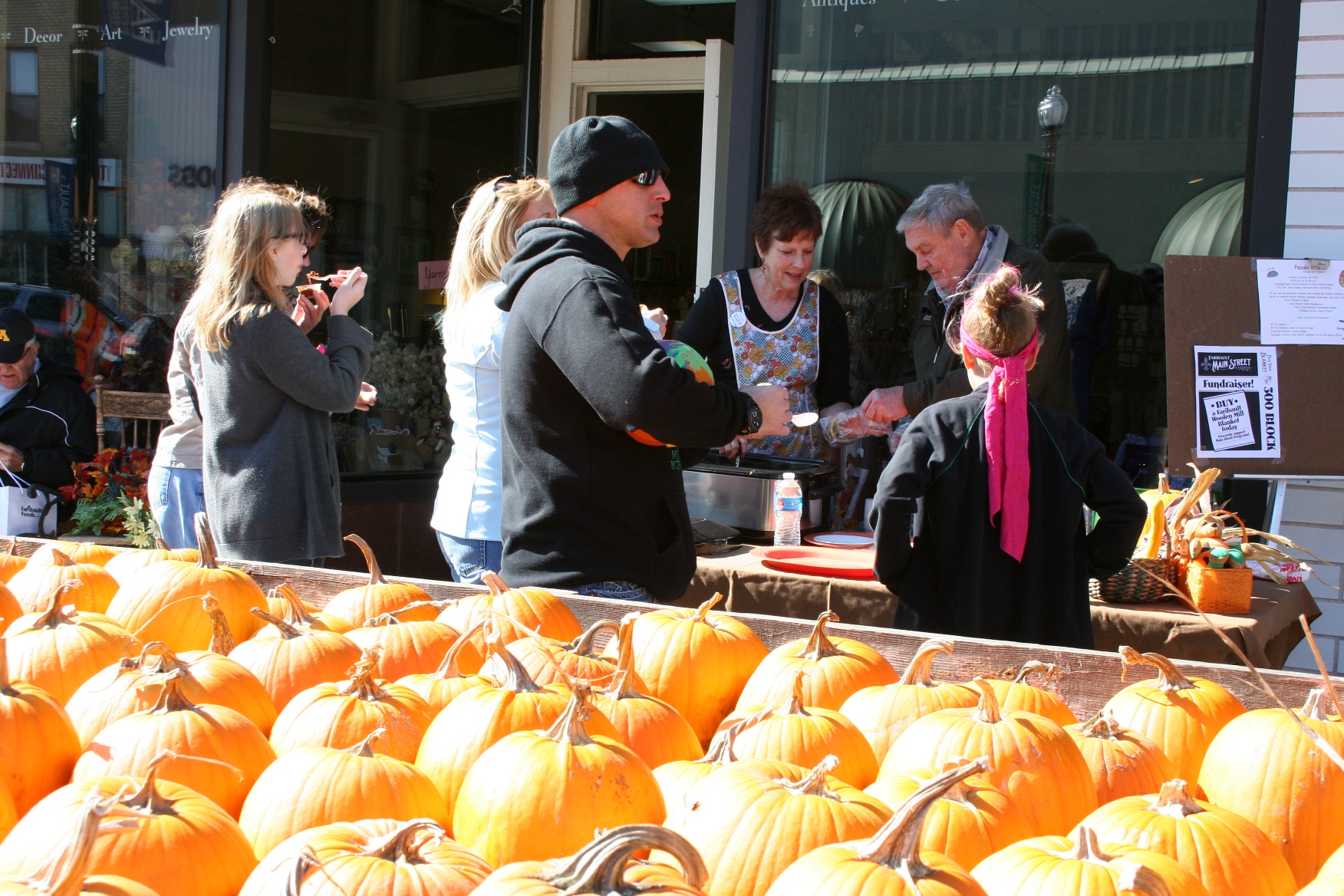
Attendees sample chili at a business along Central Avenue during the 2011 Fall Festival. Minnesota Prairie Roots file photo.

IF YOU WANT TO MAKE a full day of it in Faribault, arrive earlier for the annual downtown Fall Festival and Oktoberfest. Most events begin at noon. However, starting at 9:30, until noon, local artists will gather outside the Paradise Center for the Arts to create en plein air.

At noon there’s a kiddie parade and a Chili Contest with businesses and others offering chili samples (for a fee) until 2 p.m. From 12:30 p.m. – 4:30 p.m., those interested can take the Spooky Basement Tour, a free event at the Paradise Center for the Arts. The PCA is also holding a costume sale.  Kids can go trick-or-treating downtown from 1 – 3 p.m. Games for kids, pumpkin painting and a unicycle show are also among fest activities.

New to the downtown festival this year is Oktoberfest, celebrated from noon to 11 p.m. at Faribault’s new brewery, F-Town Brewing Company, just off Central Avenue. The event features food trucks, yard games, live music and, of course, beer.

© Copyright 2015 Audrey Kletscher Helbling
 

Minnesota Faces: Boys at a barn dance September 25, 2015

Filed under: Uncategorized — Audrey Kletscher Helbling @ 5:00 AM
Tags: , , , , ,

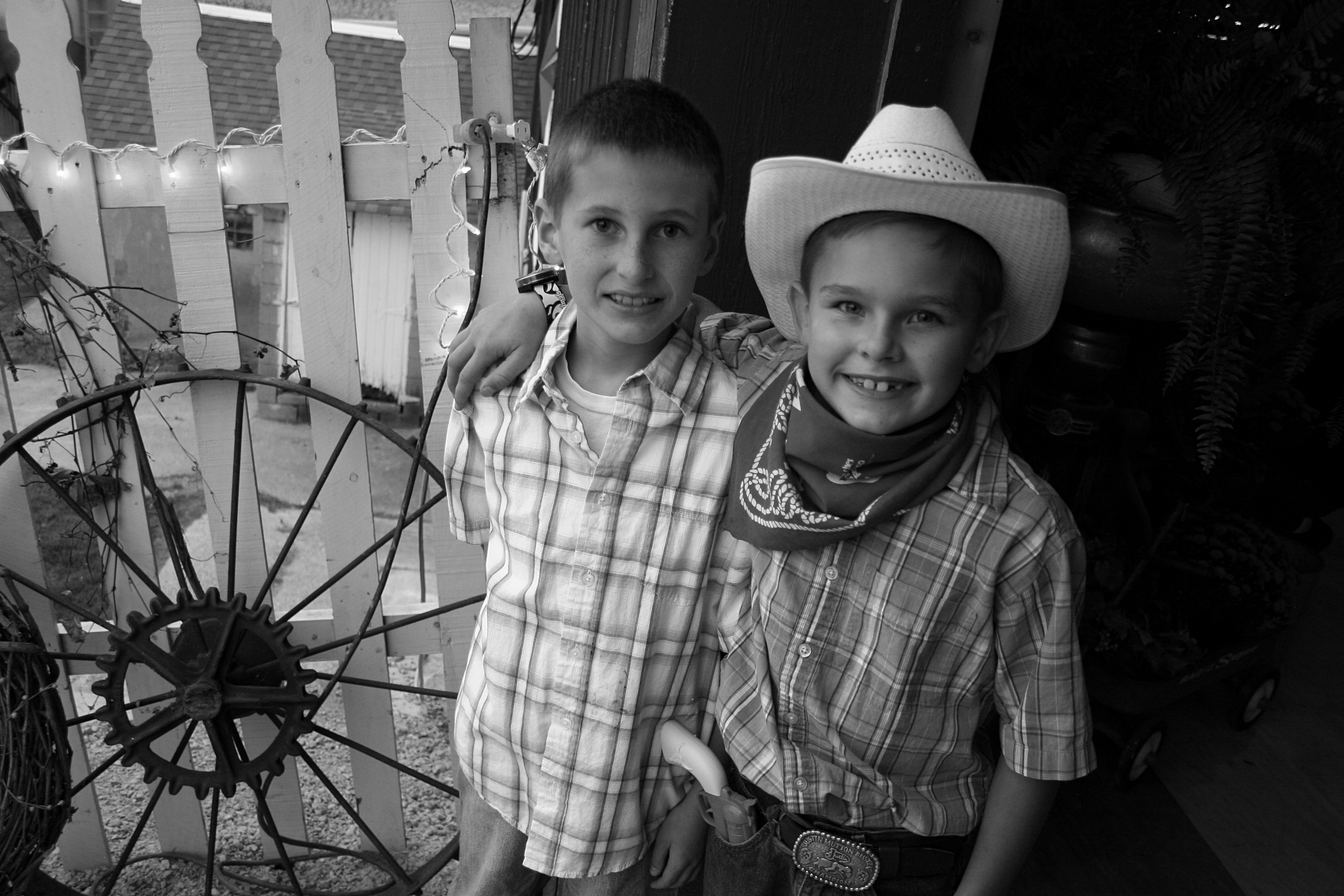
Portrait #41: Boys at a barn dance


Minnesota Prairie Roots file photo 2011

Minnesota Prairie Roots file photo 2011


Several years ago when my dear friends John and Debbie hosted a dance in their rural Dundas barn, I photographed these two boys. To this day, it remains one of my favorite portraits. Such sweetness in those faces.

I didn’t ask the boys to pose as they did. The cowboy just slung his arm around the other boy. They may be cousins or brothers or simply friends. I don’t recall. But it’s obvious they enjoy each other and were having a good time.

Maybe I’ll see the pair again this weekend, all grown up, perhaps sporting cowboy hats, maybe not. John and Debbie are celebrating the 100th birthday of their barn with an old-fashioned barn dance. I can’t wait to kick up my heels to live music, chow down on great food (including meat from Nerstrand meats and pie from the pie-baking contest), mingle with party-goers, and simply delight in the ambiance of dancing in the hayloft.

And, yes, I’ll have my camera in hand to document the event.

#

Minnesota Faces is featured every Friday on Minnesota Prairie Roots

© Copyright 2015 Audrey Kletscher Helbling
 

Minnesota Faces: September bridal couple September 18, 2015

Filed under: Uncategorized — Audrey Kletscher Helbling @ 5:00 AM
Tags: , , , , , ,

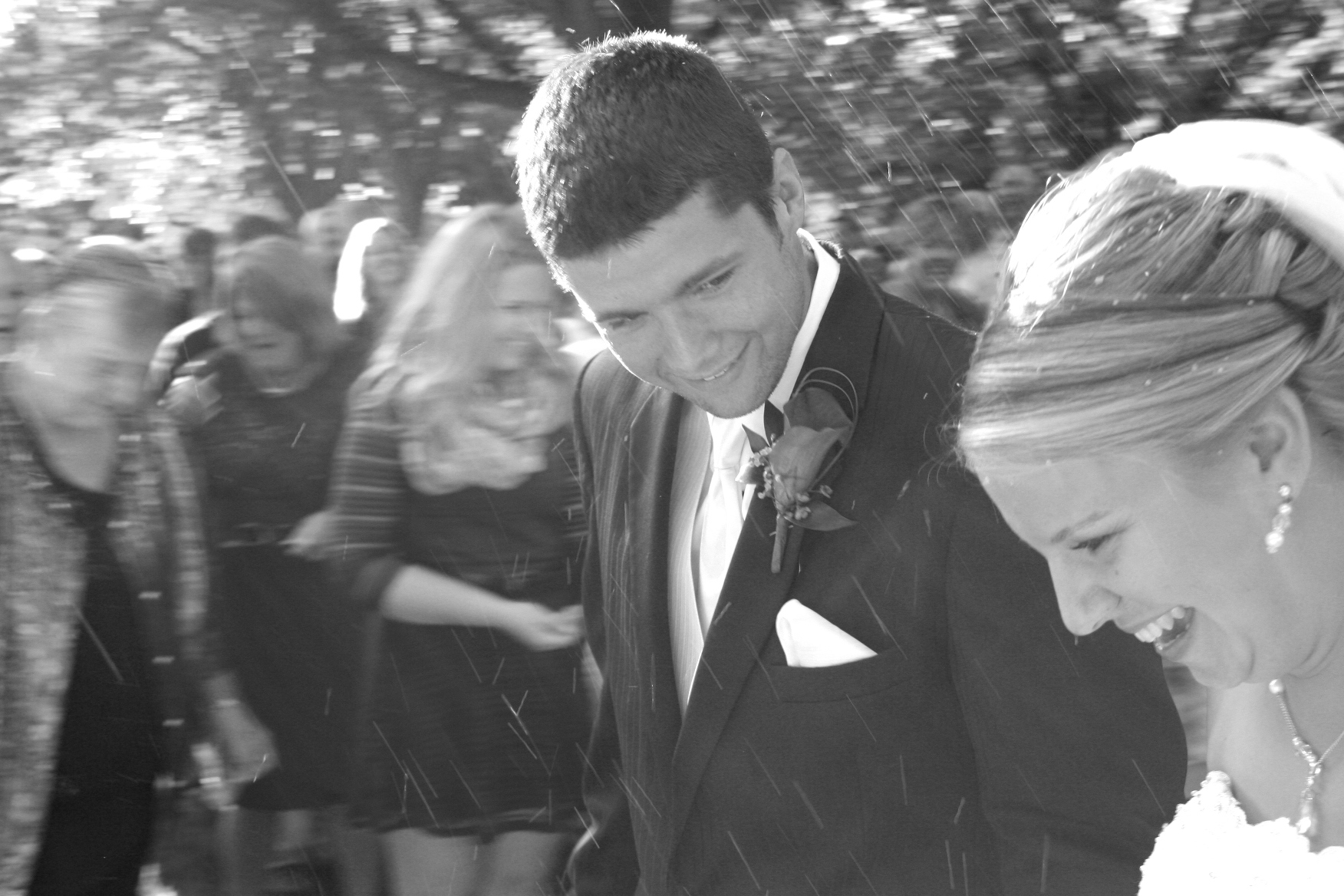
Portrait #40: Carlyn & Jared


Portrait 40, Jared and Carlyn


Aside June, September is the most popular month for weddings in Minnesota. That’s according to my unofficial, brief online research. I believe it.

My parents were married in September. So was my eldest daughter. And last September, my niece Carlyn married Jared.

They were wed in Walnut Grove, childhood home of Laura Ingalls Wilder. It was a stunning autumn day, a reason September proves popular for weddings. The church was packed, the flower girls and ring bearers restless and cute.

And I was there with my camera, in an unofficial capacity. I’ve photographed weddings for family in the past, but won’t any more. I can do without the drama, emotions and challenges. I much prefer to shoot journalistic style images without the pressures of portrait photography.

Which brings us to this photo, taken as Carlyn and Jared’s wedding guests tossed birdseed at them. I love everything about this frame—the light, the motion of the seed showering the couple, the blur of the crowd, Jared’s loving glance at his bride, Carlyn’s smile. It captures a moment of celebration and love. On a beautiful September afternoon in southwestern Minnesota.

#

Minnesota Faces is featured every Friday on Minnesota Prairie Roots.

© Copyright 2015 Audrey Kletscher Helbling
 

For the love of flowers September 8, 2015

Filed under: Uncategorized — Audrey Kletscher Helbling @ 5:00 AM
Tags: , , , , , , ,
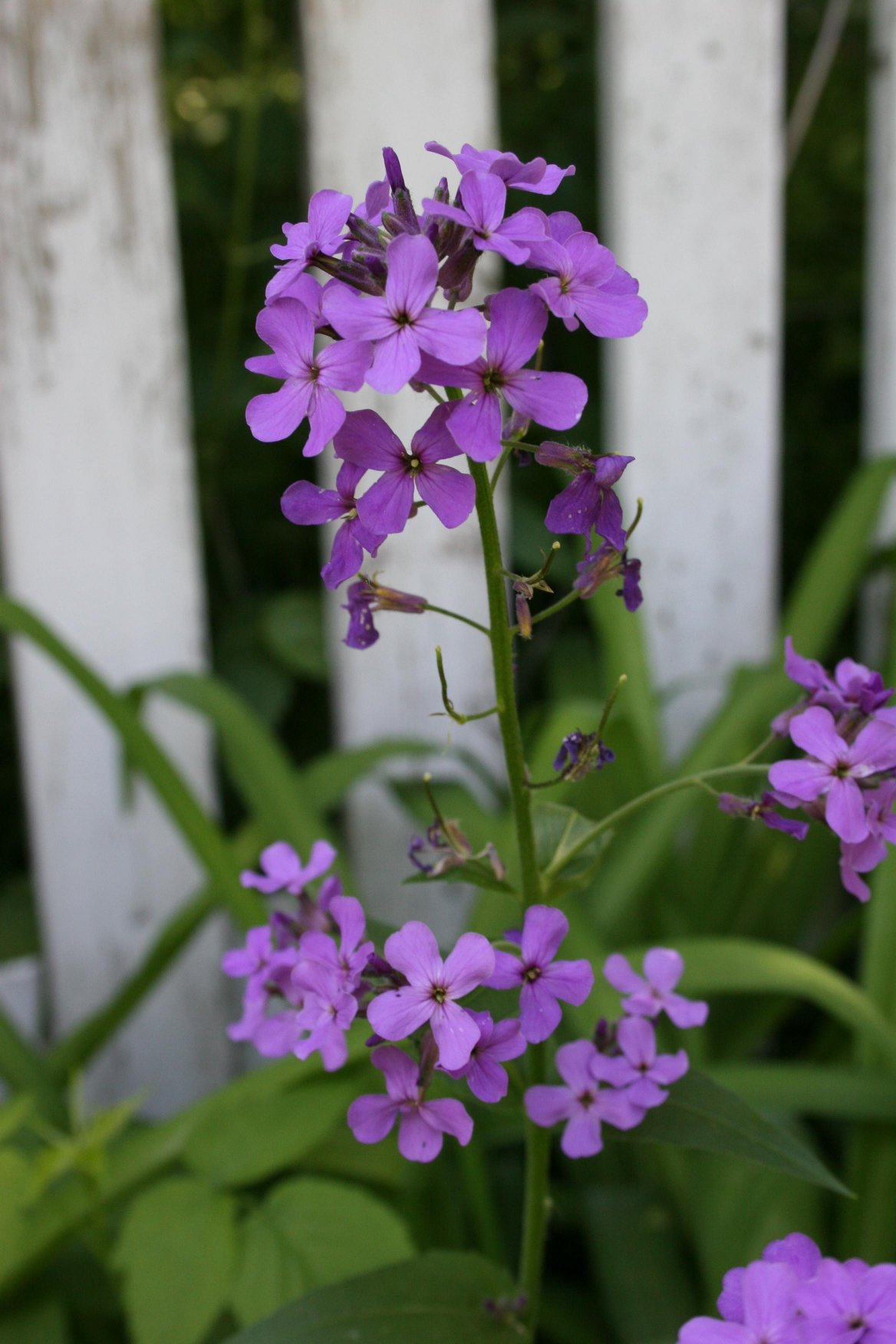
Phlox

Phlox grow along a fence in my backyard. Minnesota Prairie Roots file photo.


THE SWEET PERFUME of purple phlox drifts through the open window, scenting my office with summer. I glance outside, where the phlox sway in a wisp of an afternoon breeze above clusters of snowball hydrangea.
 

Flowers, field of yellow flowers


My flower gardens are a rangy mess of overgrown plants. Tangle of leaves and flowers and stems. Nothing neat about them. I like it that way.
 

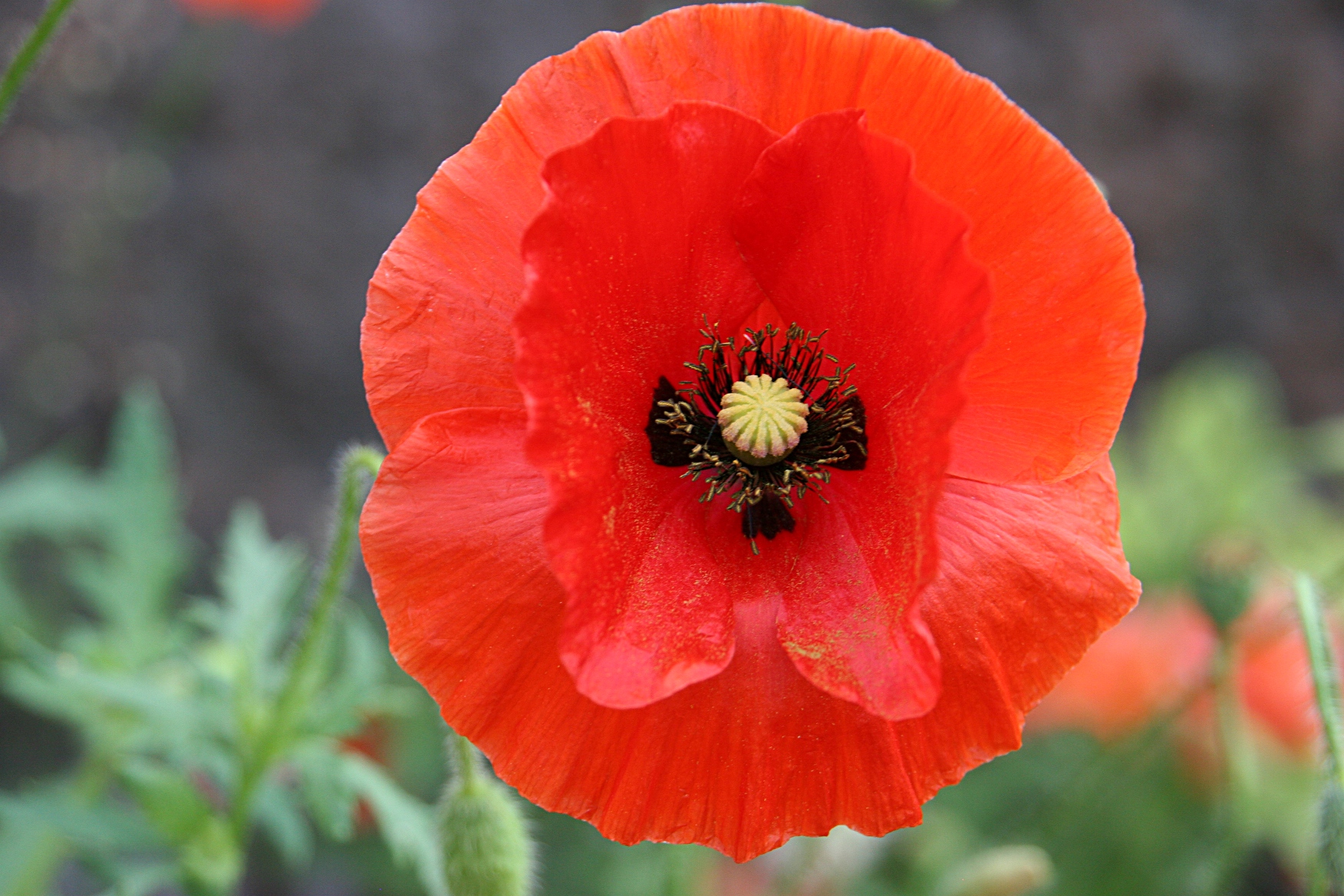
Flowers, poppy close-up


Flower gardens have always been a part of who I am. Not that I am a master gardener. But I have always been an appreciator and grower of flowers, a love learned early on when every visit to my maternal great grandmother’s or paternal grandma’s houses started, in the summer, with a tour of the gardens. Flower and vegetable.


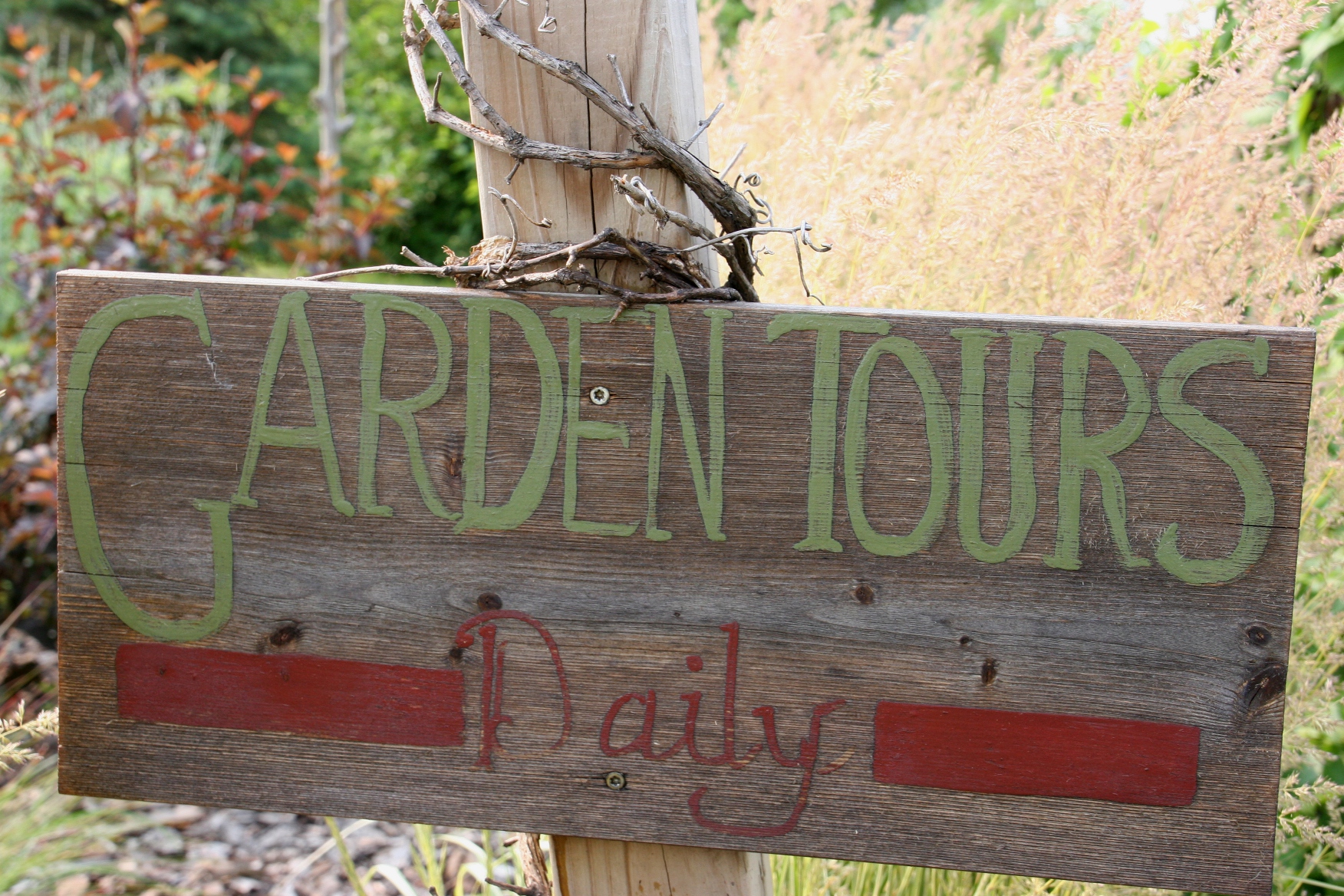
Flowers, garden tours sign


To this day, when I arrive at the home of a family member or a friend who gardens, I self-start a tour. I admire the blooms, dip my head toward scented petals, appreciate the sweeps of color, delight in the beauty that unfolds before me.


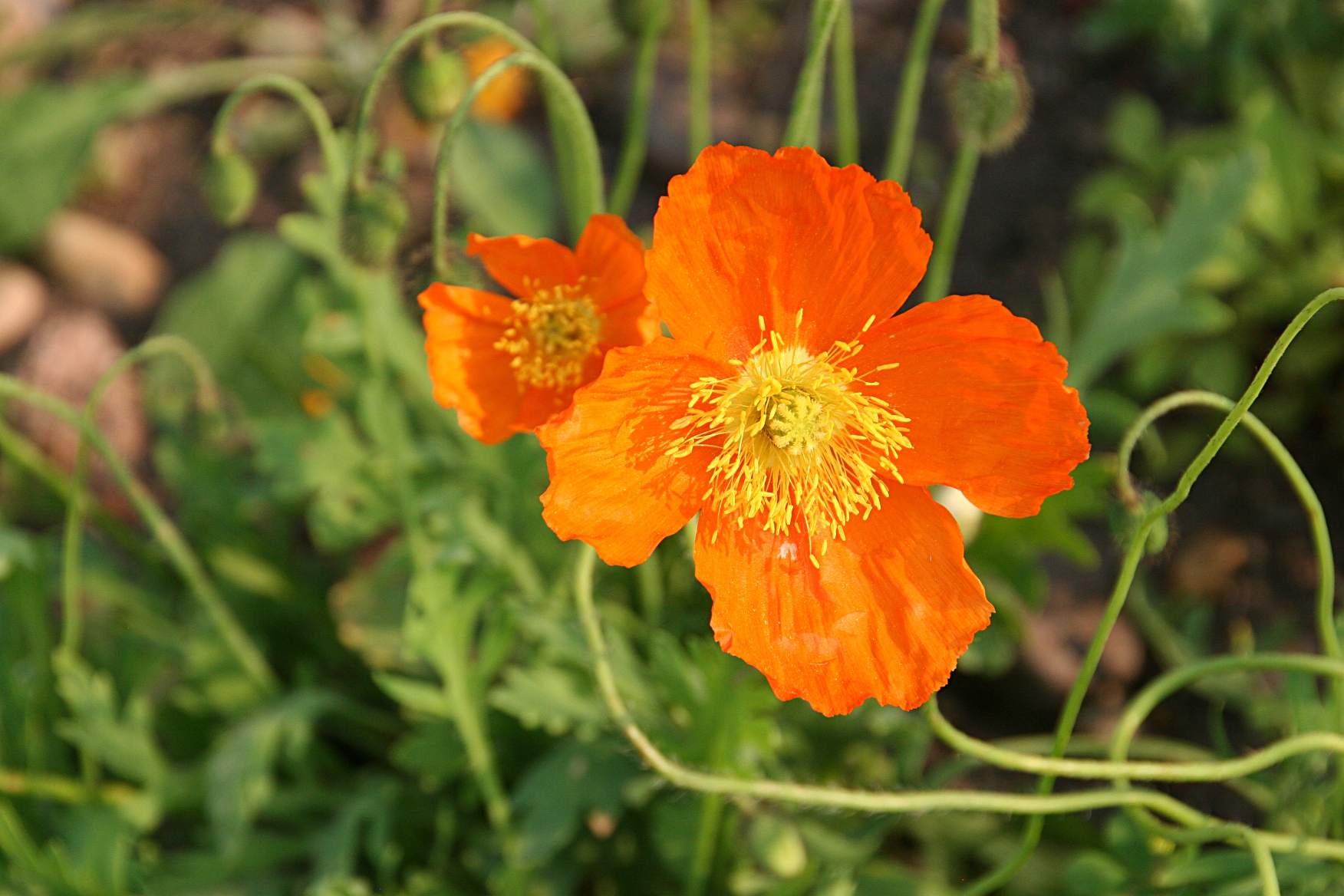
Flowers, orange flowers


I shall always love flowers. They are memories, art which springs from the earth, bold bursts of color in a subdued landscape and the gift I give myself.

BONUS PHOTOS:

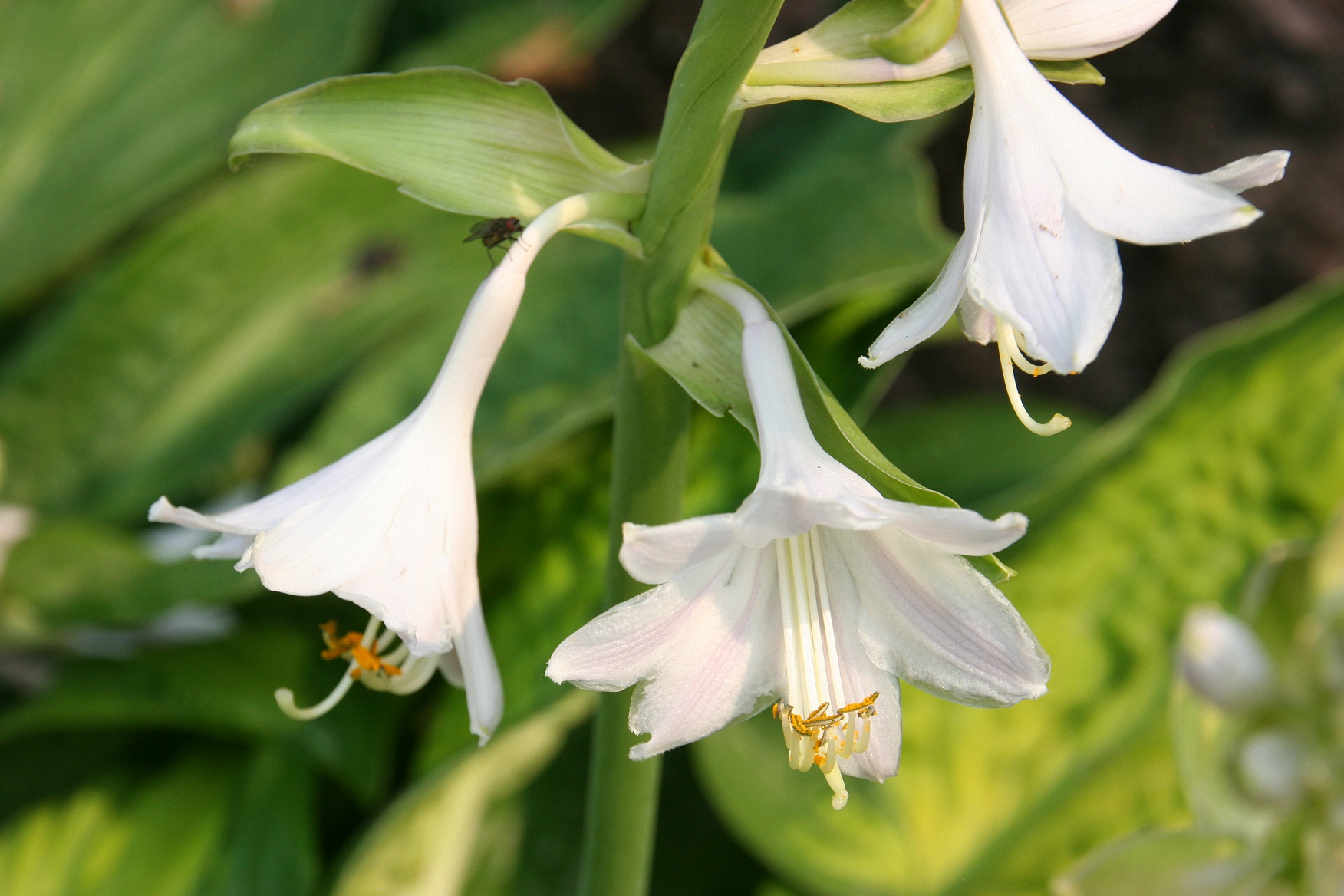
Flowers, hosta flowers


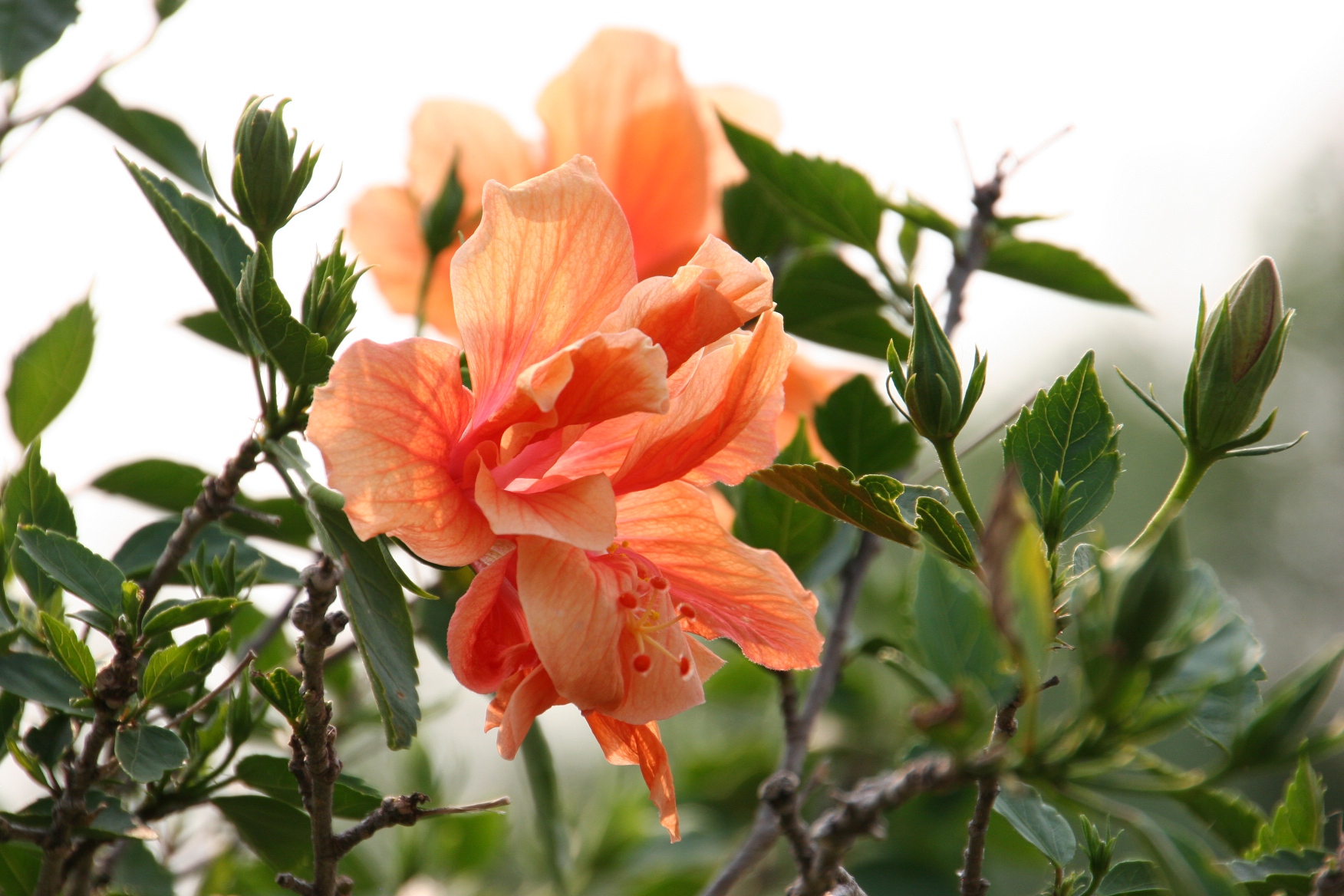
Flowers, hibiscus


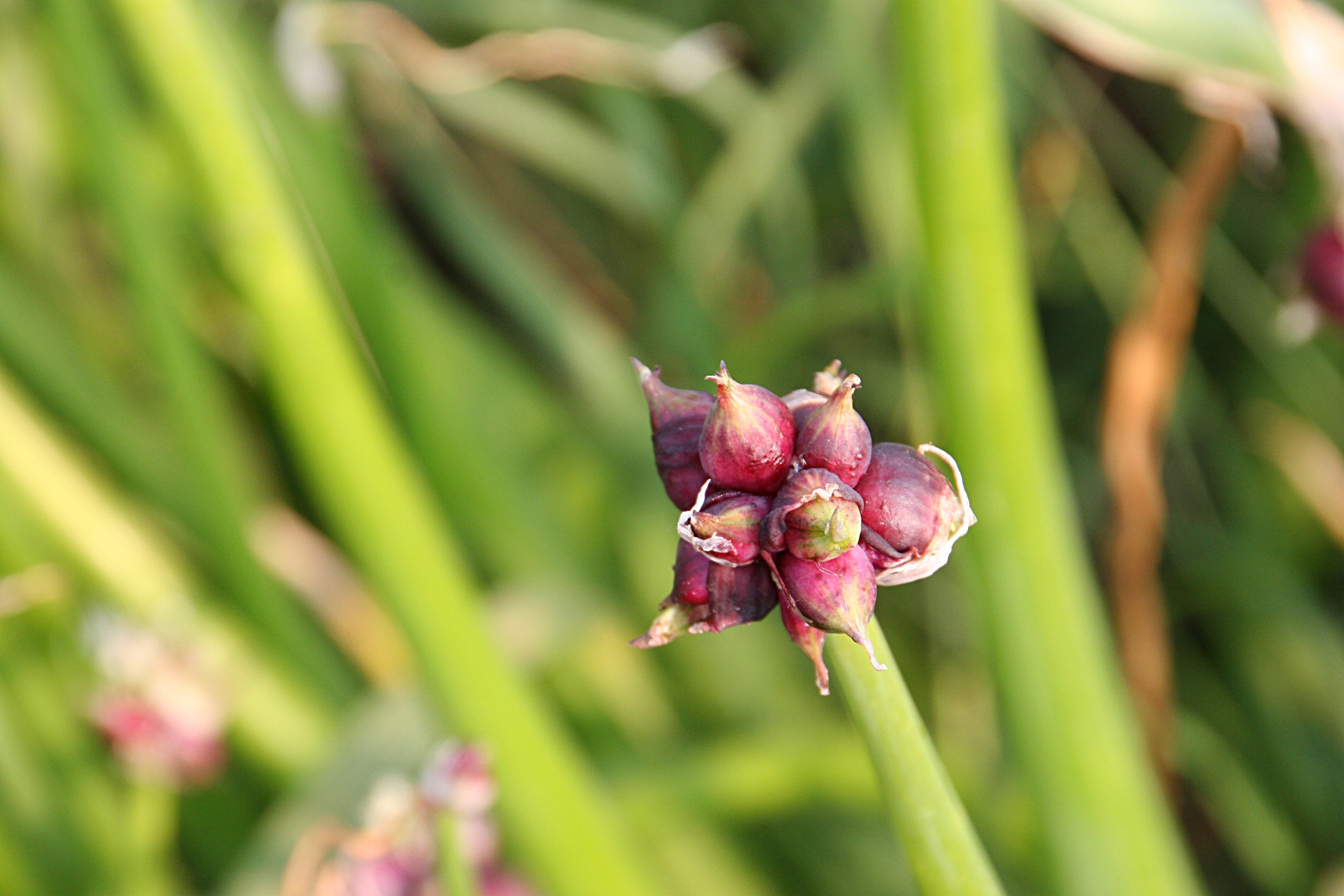
Flowers, buds


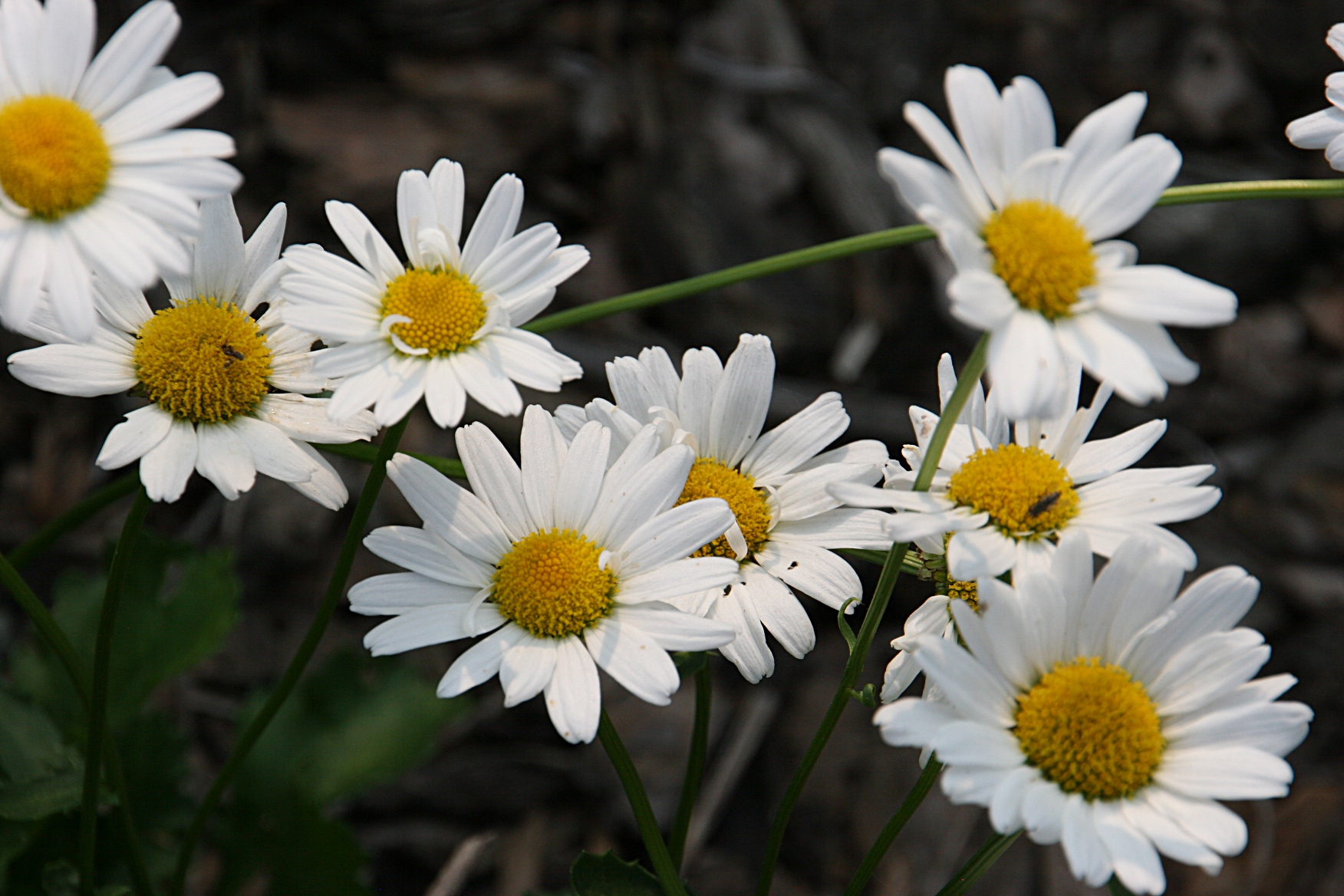
Flowers, daisies


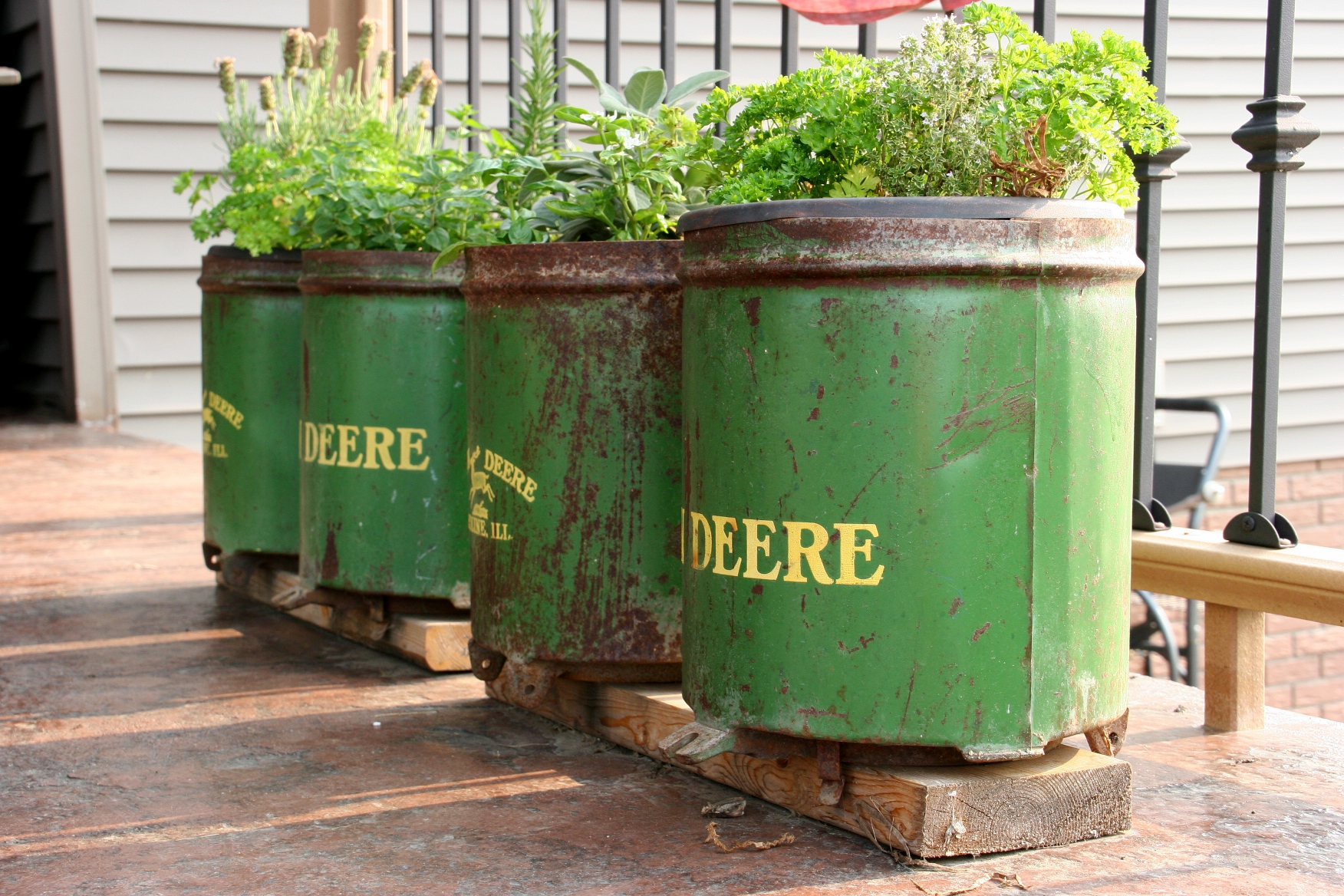
Flowers, John Deere planters


FYI: All of the flowers and plants, except the phlox, were photographed at my brother Brian and sister-in-law Vicki’s rural Lamberton, Minnesota, acreage in mid-summer.

© Copyright 2015 Audrey Kletscher Helbling