Minnesota Prairie Roots

Writing and photography by Audrey Kletscher Helbling

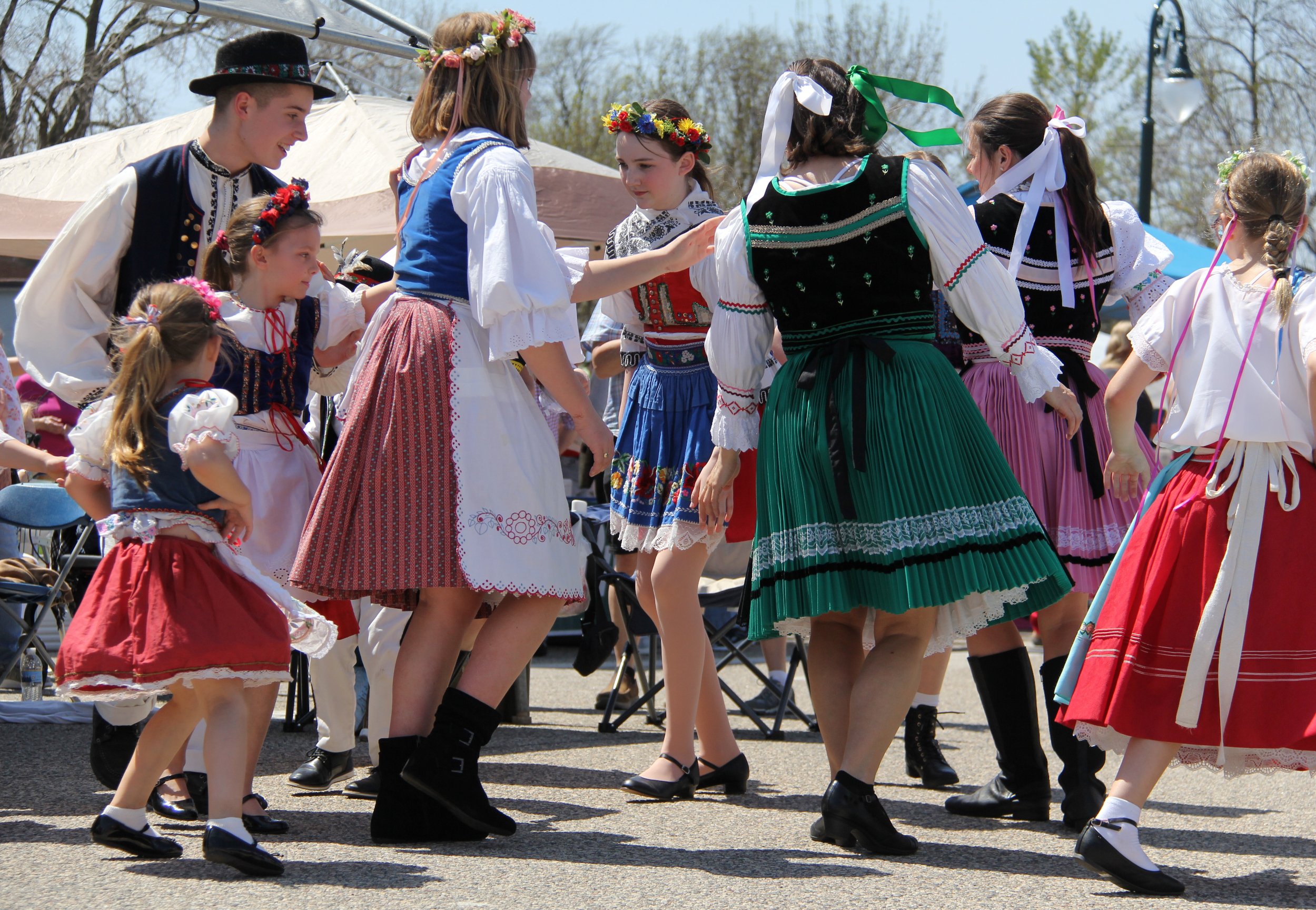
Focusing on folk dancers at Czech May Day in Montgomery May 7, 2025

Multiple ages perform traditional Czech and Slovak folk dances in traditional costumes. (Minnesota Prairie Roots copyrighted photo May 2025)

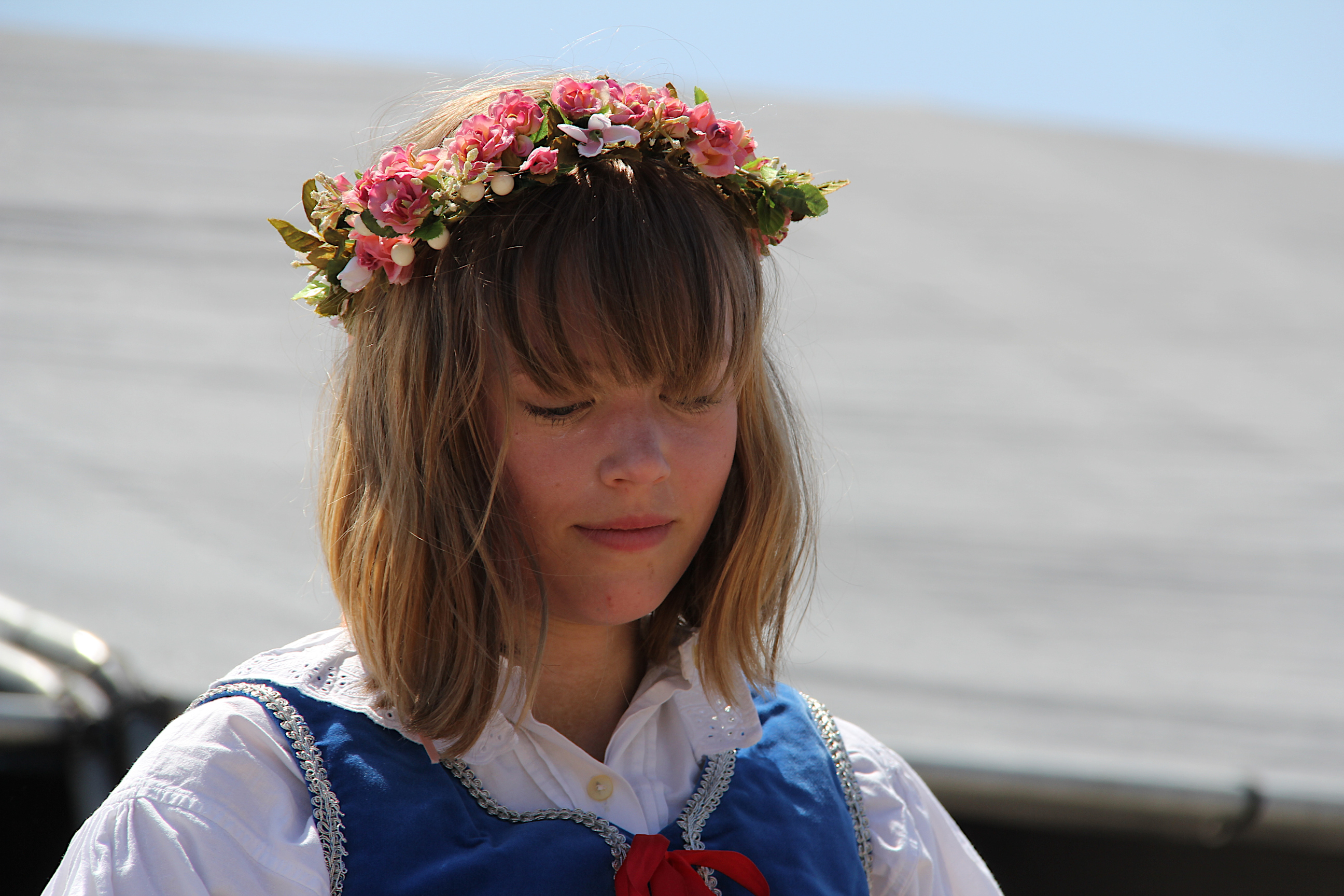
WHENEVER I PHOTOGRAPH an event, a place, a whatever, I use my camera to tell a story. And that means framing not only overall scenes, but also focusing close-ups. It means, too, that I am conscious of moments which convey emotions, feelings, all part of the story.

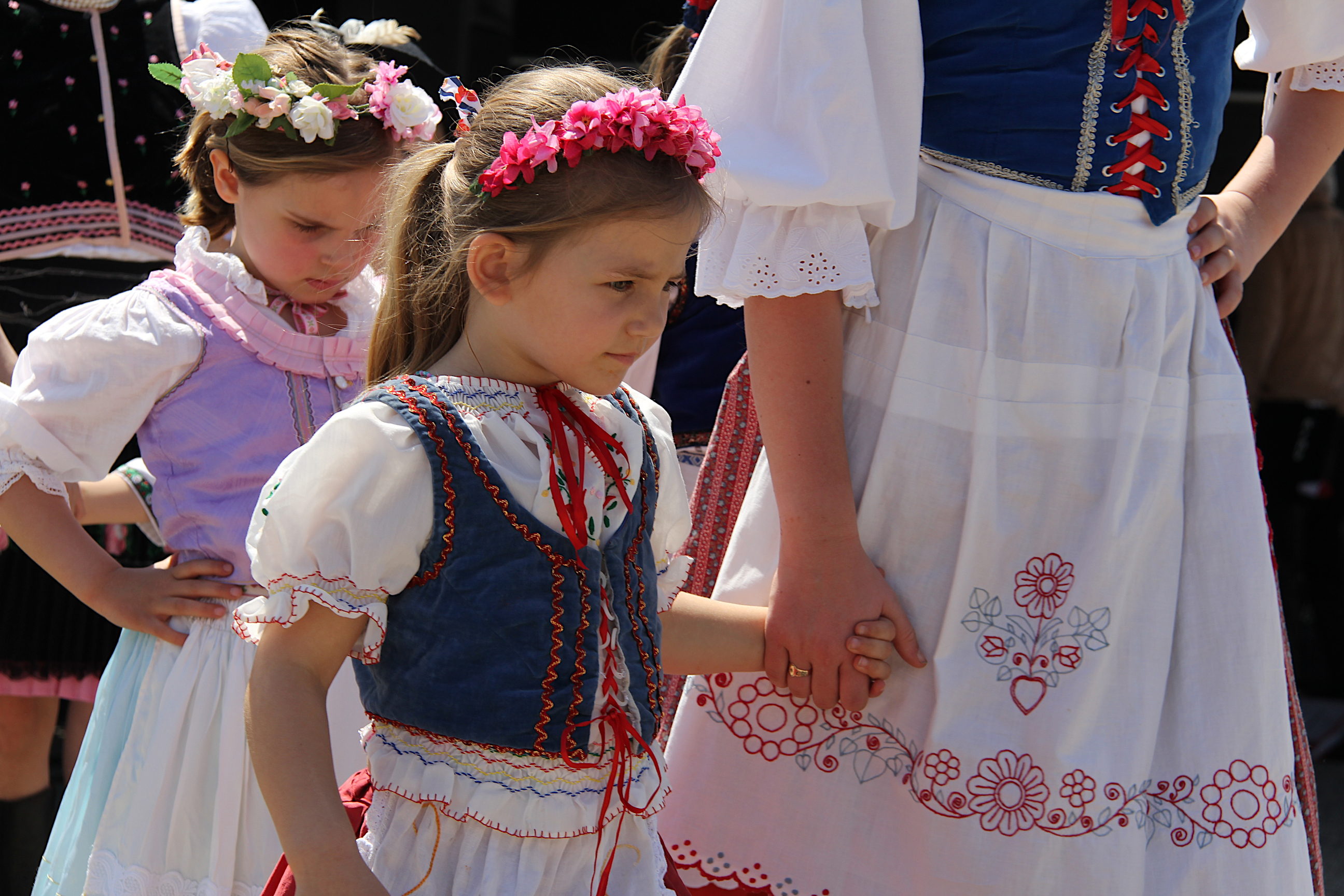
A sweet face conveys serenity during a folk dance. (Minnesota Prairie Roots copyrighted photo May 2025)

The Czech May Day celebration in Montgomery, a small southern Minnesota town, offered an ideal opportunity to create a visual story celebrating the community’s Czech heritage. That event centered on music, dance and traditional costumes.

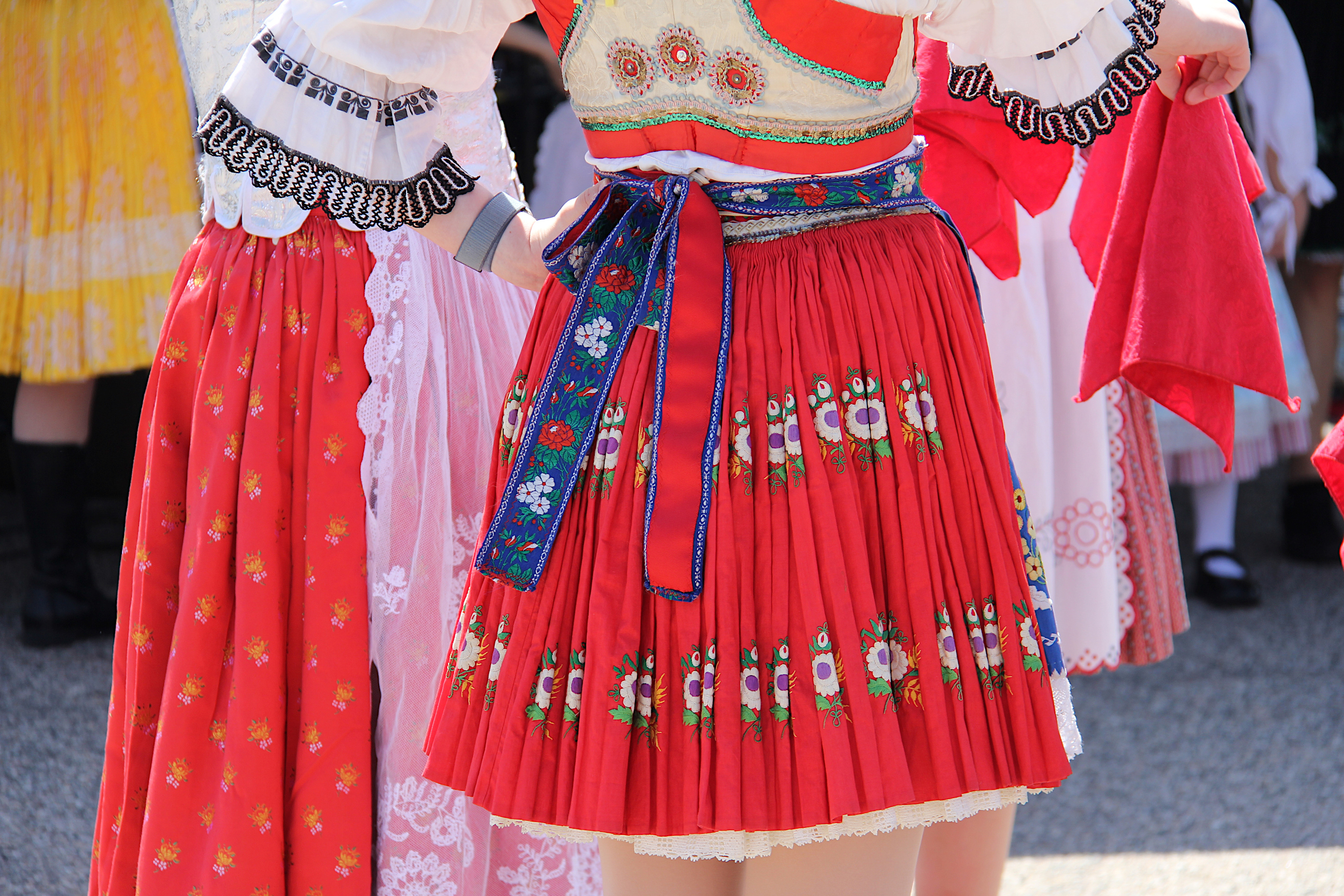
Colorful traditional Czech attire created a festive scene. (Minnesota Prairie Roots copyrighted photo May 2025)

This was, in many ways, a photographer’s playground. And, by that I mean simply a heckuva lot of fun to photograph with endless photo ops. Colorful, detailed attire and constant movement had me clicking the shutter button of my Canon camera as a story unfolded before my eyes.

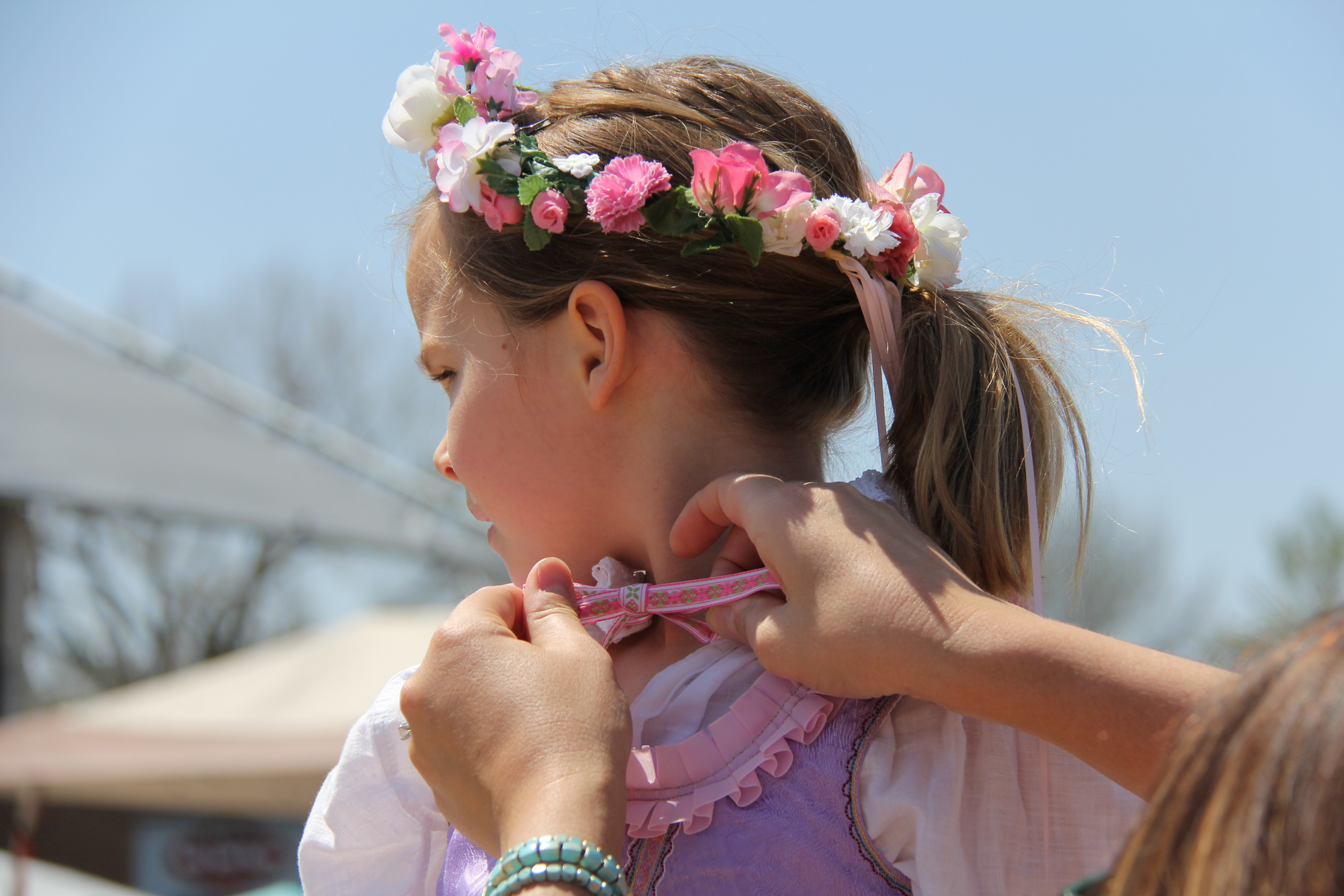
My favorite photo from Czech May Day. (Minnesota Prairie Roots copyrighted photo May 2025)

Yet, it was the quiet moments, too, which caught my eye. When a young dancer stepped away from the circle of dancers so her mom, seated next to me, could re-tie the ribbon around her neck, I aimed my camera lens upward and caught the tender moment. It was sweet and loving and profoundly endearing. To be witness to that felt like a gift. It is my favorite photo from Czech May Day.

I observed many women holding the hands of girls before, during and after dances. (Minnesota Prairie Roots copyrighted photo May 2025)

Likewise, as I zoomed in on the hands of dancers, I saw a woman’s hand clasping a child’s hand. That, too, speaks of tenderness, love, care and mentoring. We’ve all experienced the protection and guidance of a reassuring hand. This photo shows a truly relatable human moment.

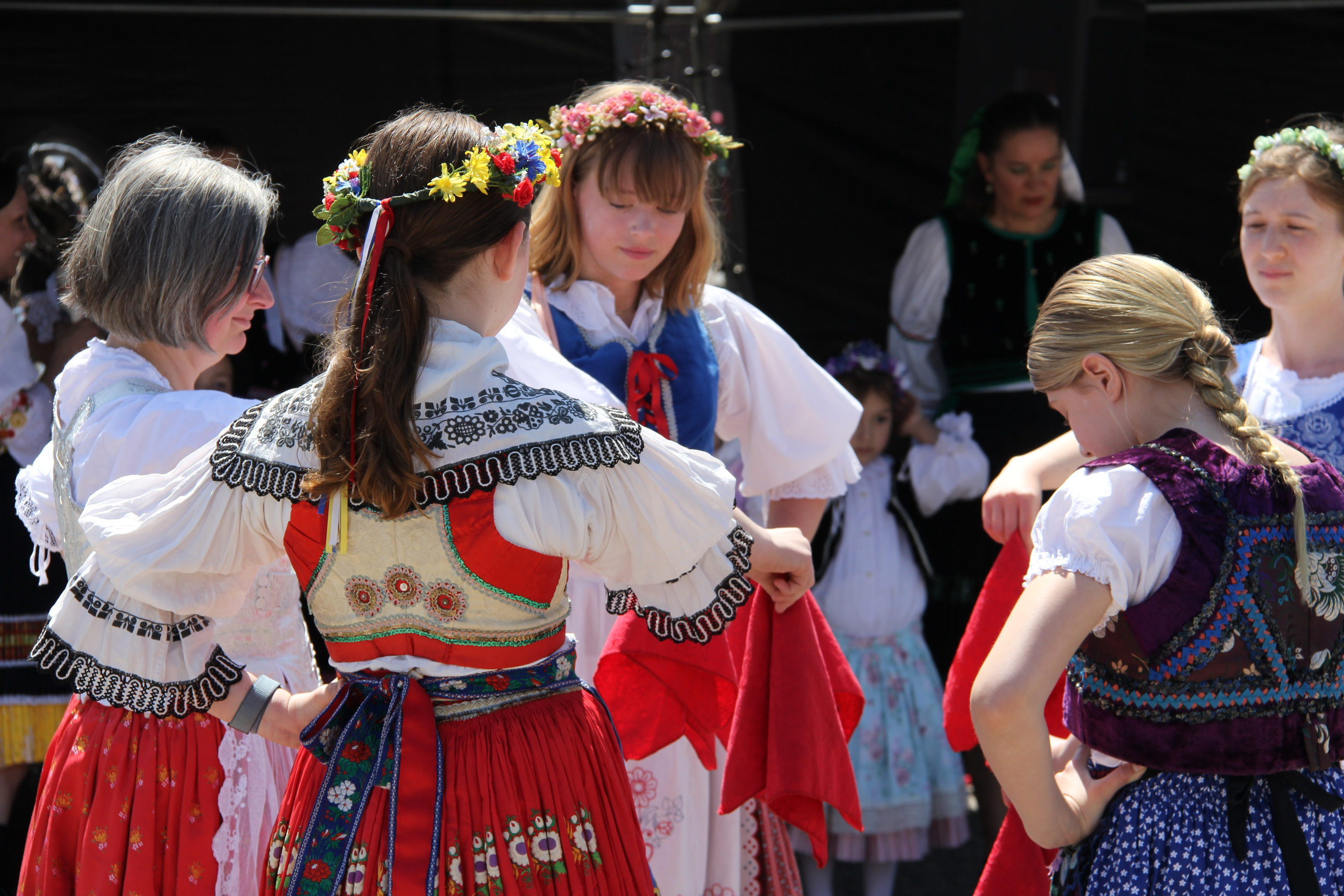
The colors of the Czech and Slovak flags are reflected in these traditional dresses. (Minnesota Prairie Roots copyrighted photo May 2025)
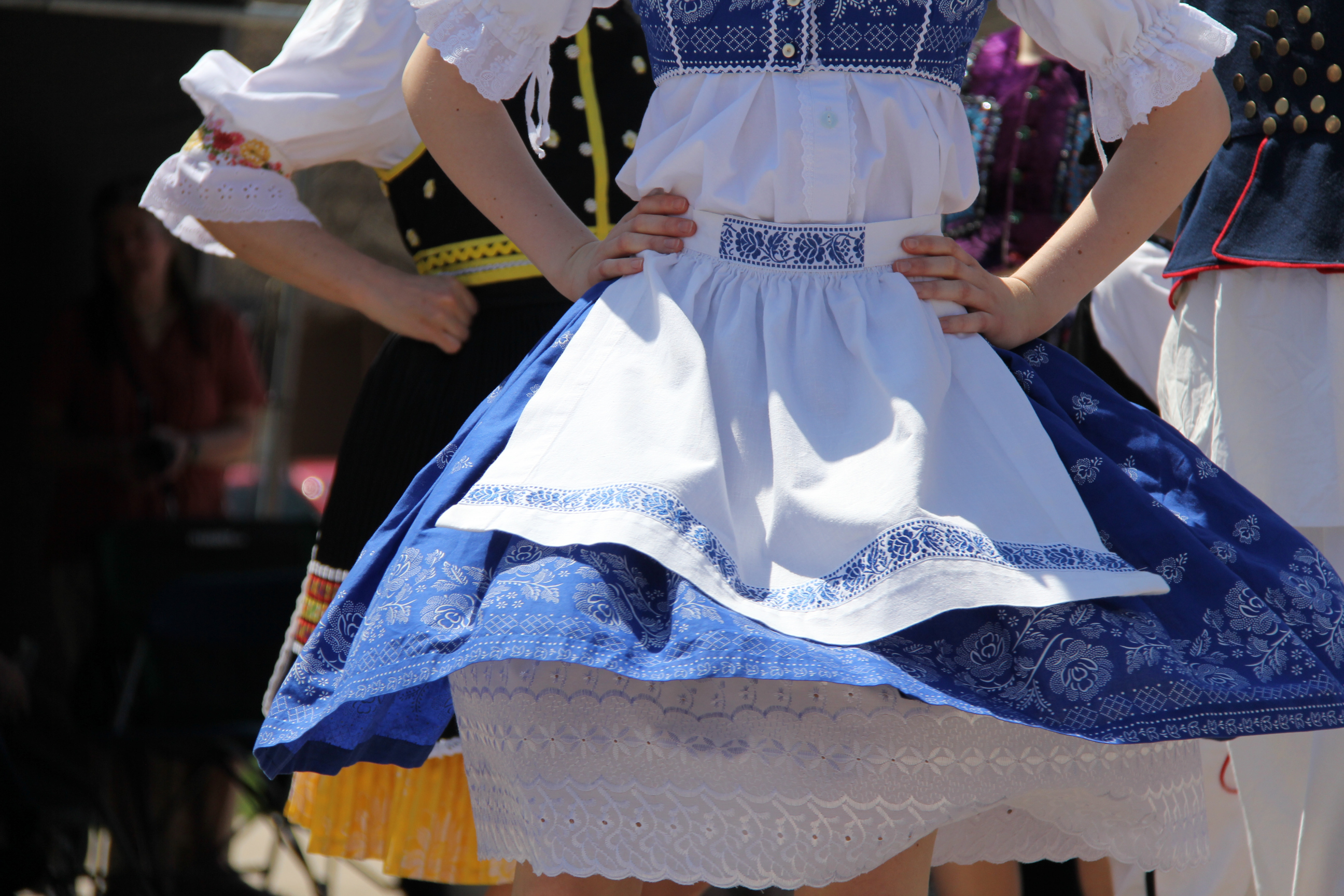
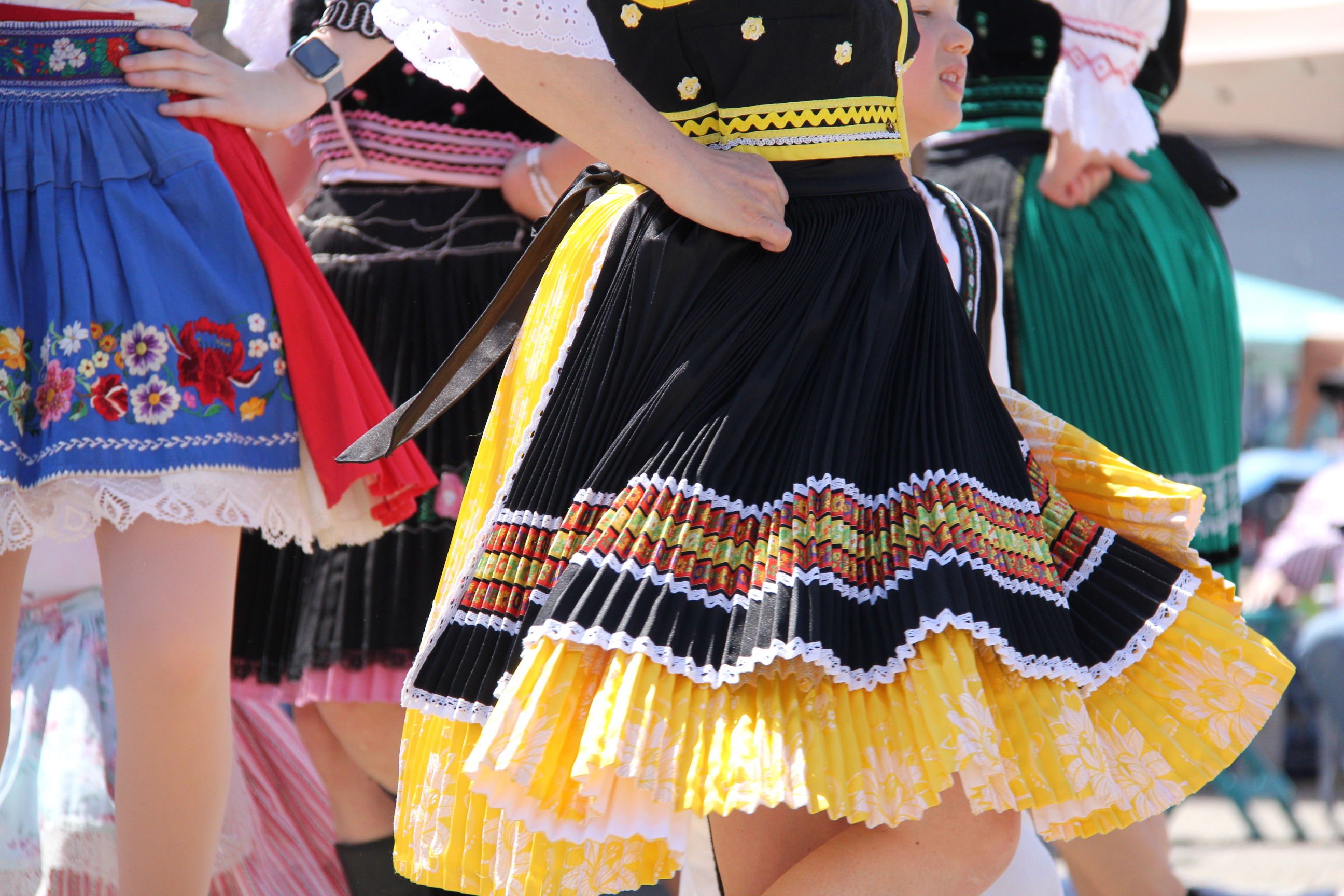
Full skirts flared during the dances. (Minnesota Prairie Roots copyrighted photo May 2025)
So many beautiful Czech dresses… (Minnesota Prairie Roots copyrighted photo May 2025)

As I watched the multi-aged dancers, I was taken by their colorful attire, by detailed embroidery, eyelet lace, aprons tied around waists, crisscrossed lacing, vests, flying ribbons and patterns and floral wreaths. It was like looking through an ever-changing kaleidoscope via my camera lens.

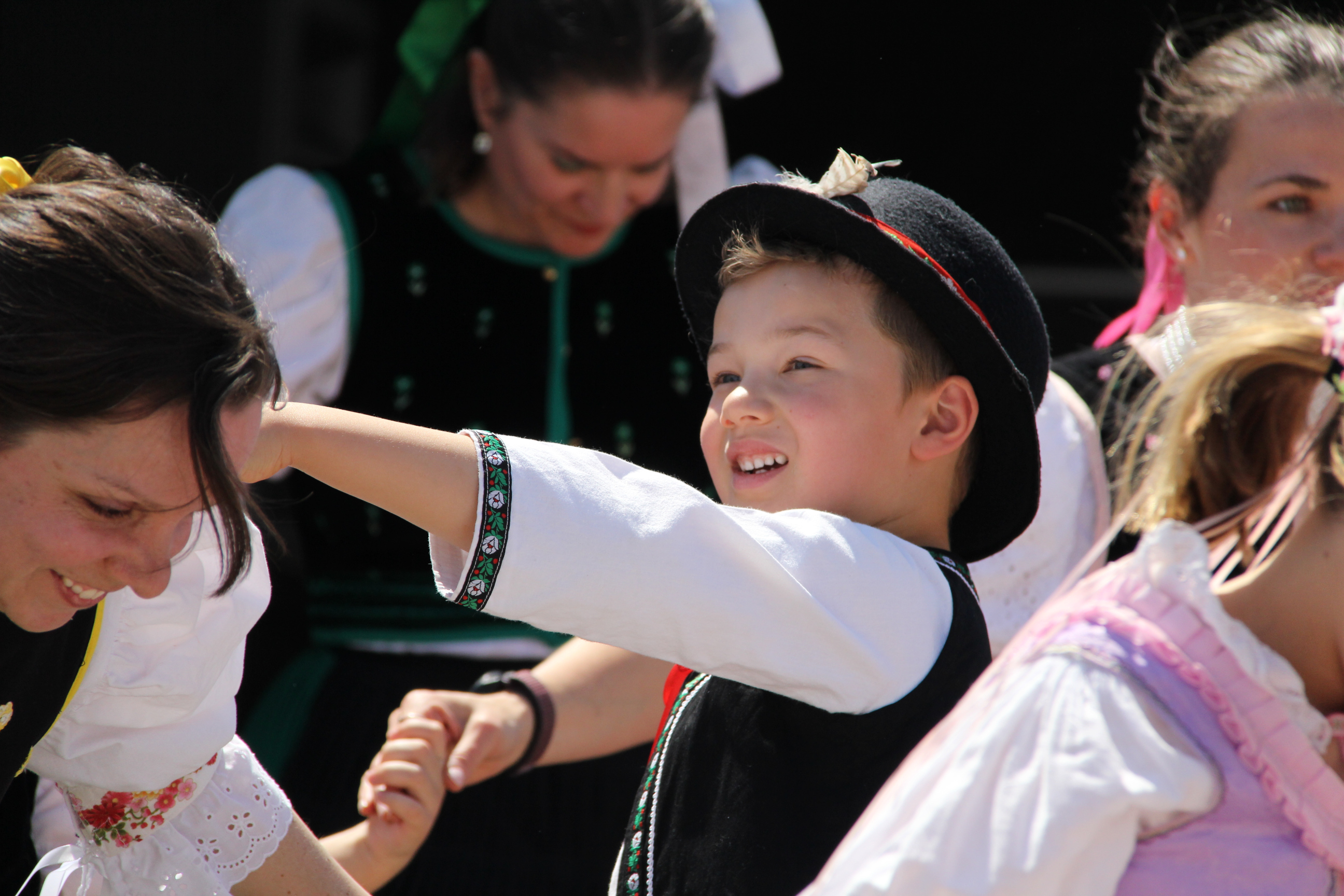
This young boy was among the few males who were part of the folk dancers. (Minnesota Prairie Roots copyrighted photo May 2025)

When I caught a young boy with outstretched arm in a circle of dancers, I caught more than that choreographed movement. I also captured his concentration, his sense of pride in being part of a celebration honoring his heritage.

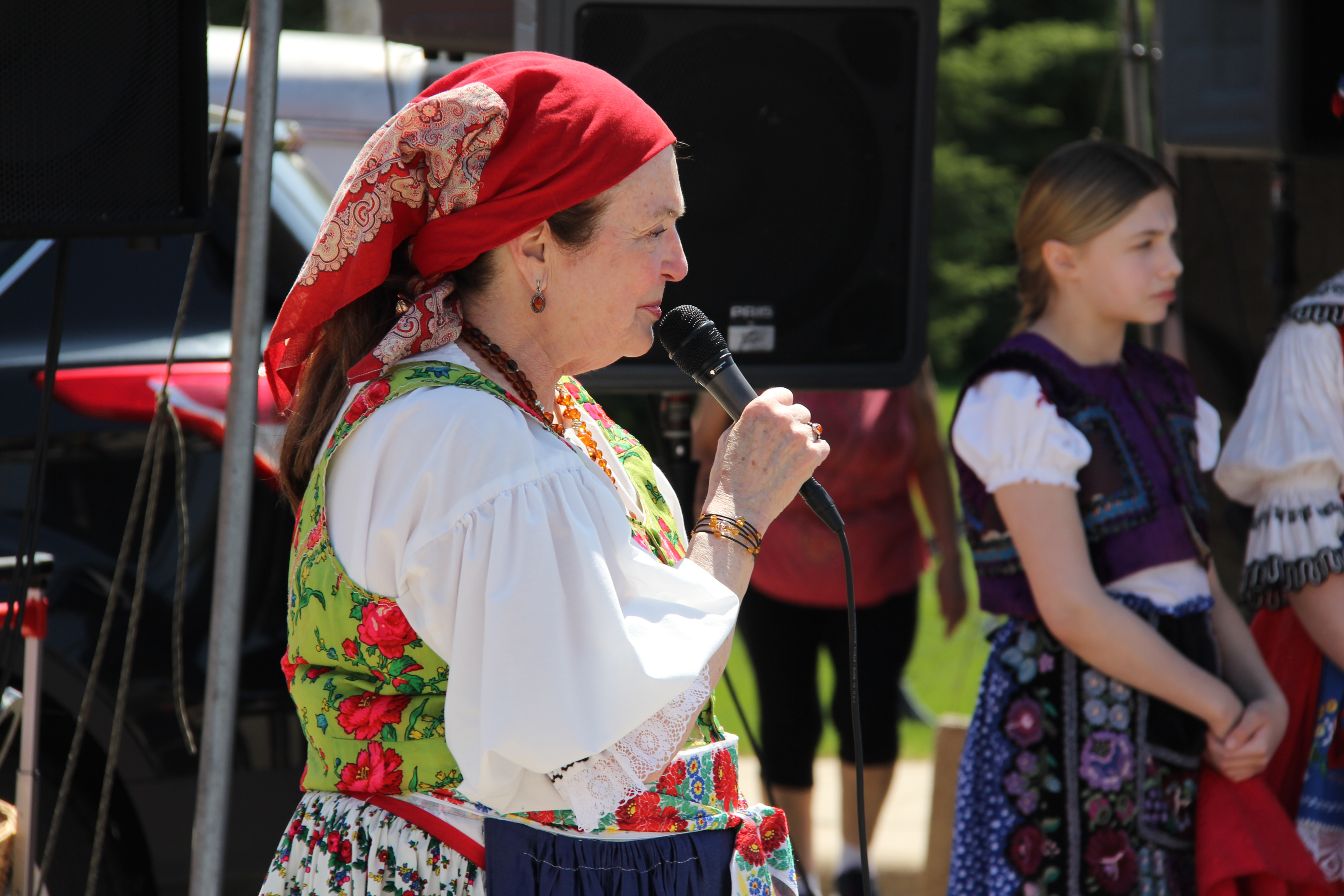
This woman portrays confidence and strength of character in my eyes. (Minnesota Prairie Roots copyrighted photo May 2025)

And when I photographed an emcee in her traditional dress, I saw grace and strength, not just a portrait.

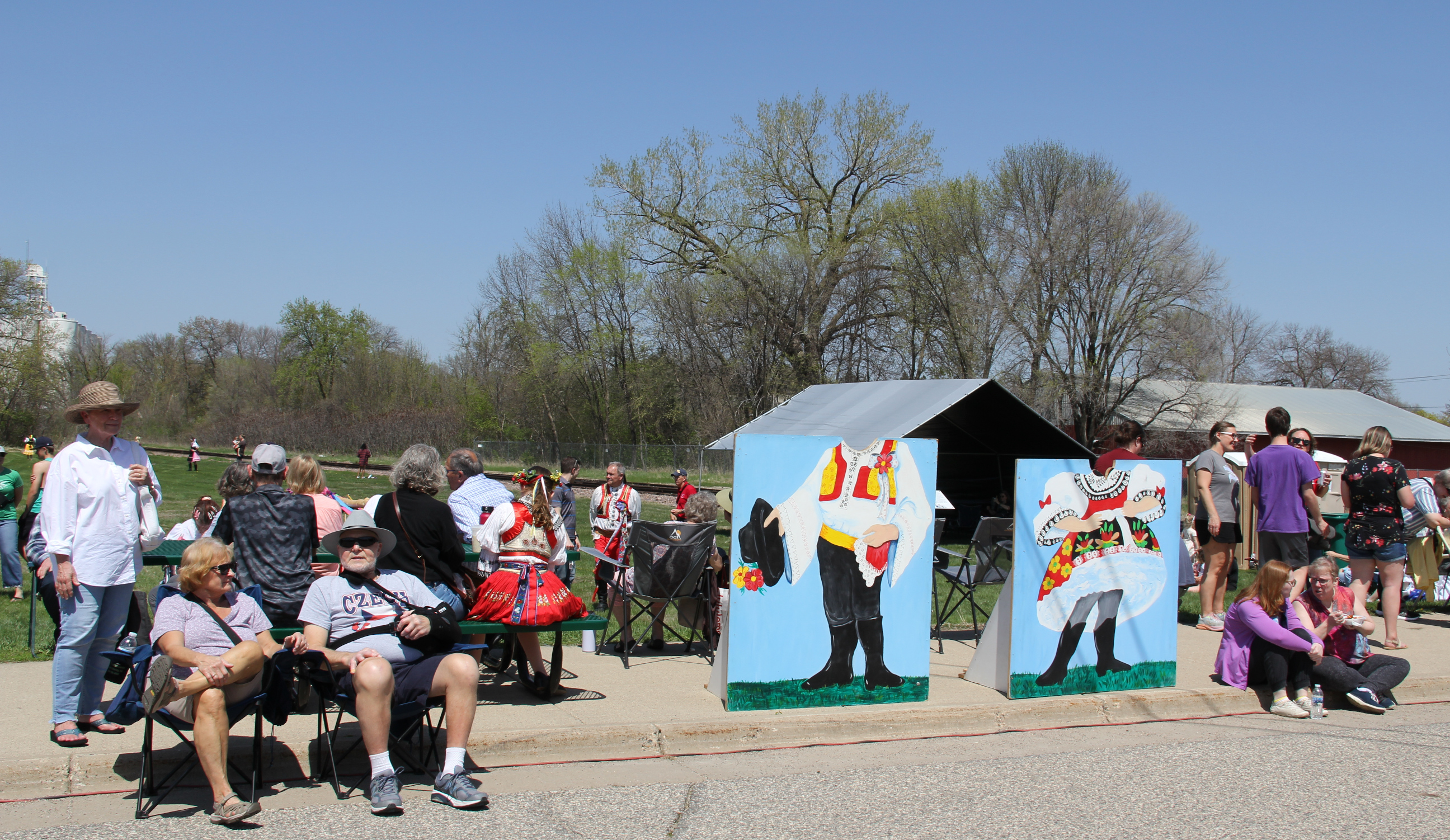
May Day attendees could try on traditional Czech attire at this photo cut-out and a second one. (Minnesota Prairie Roots copyrighted photo May 2025)

The St. Paul Czech and Slovak Folk Dancers and Sokol Children Dancers are only one part of my visual storytelling of Czech May Day in Montgomery. On Tuesday I shared the overall story in images and words. Today I focus on those traditional dancers, on their dress and movement and those stand-alone moments when they connected individually. And with me.

© Copyright 2025 Audrey Kletscher Helbling


Drawn to the Cannon River on an April afternoon in Northfield April 15, 2025

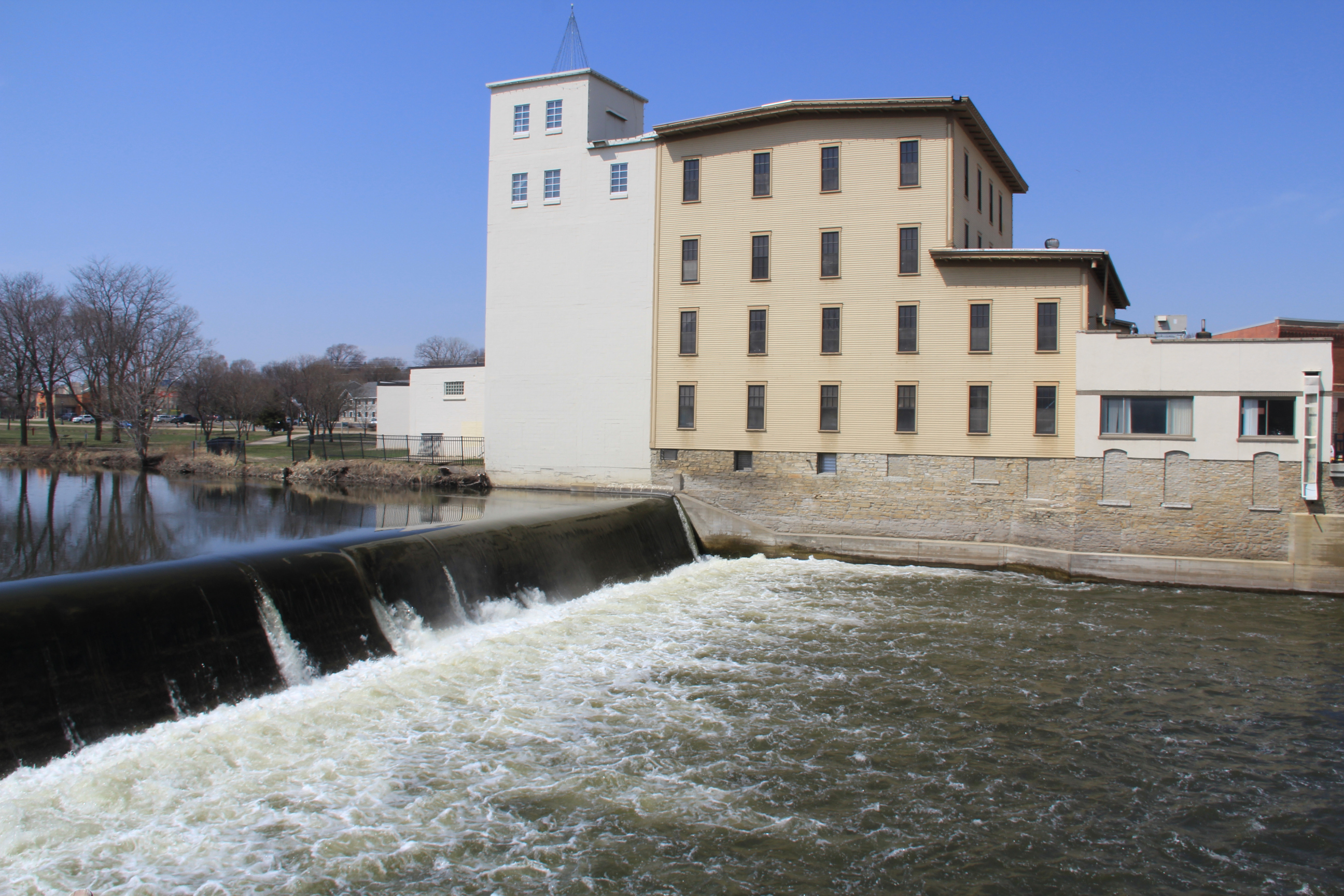
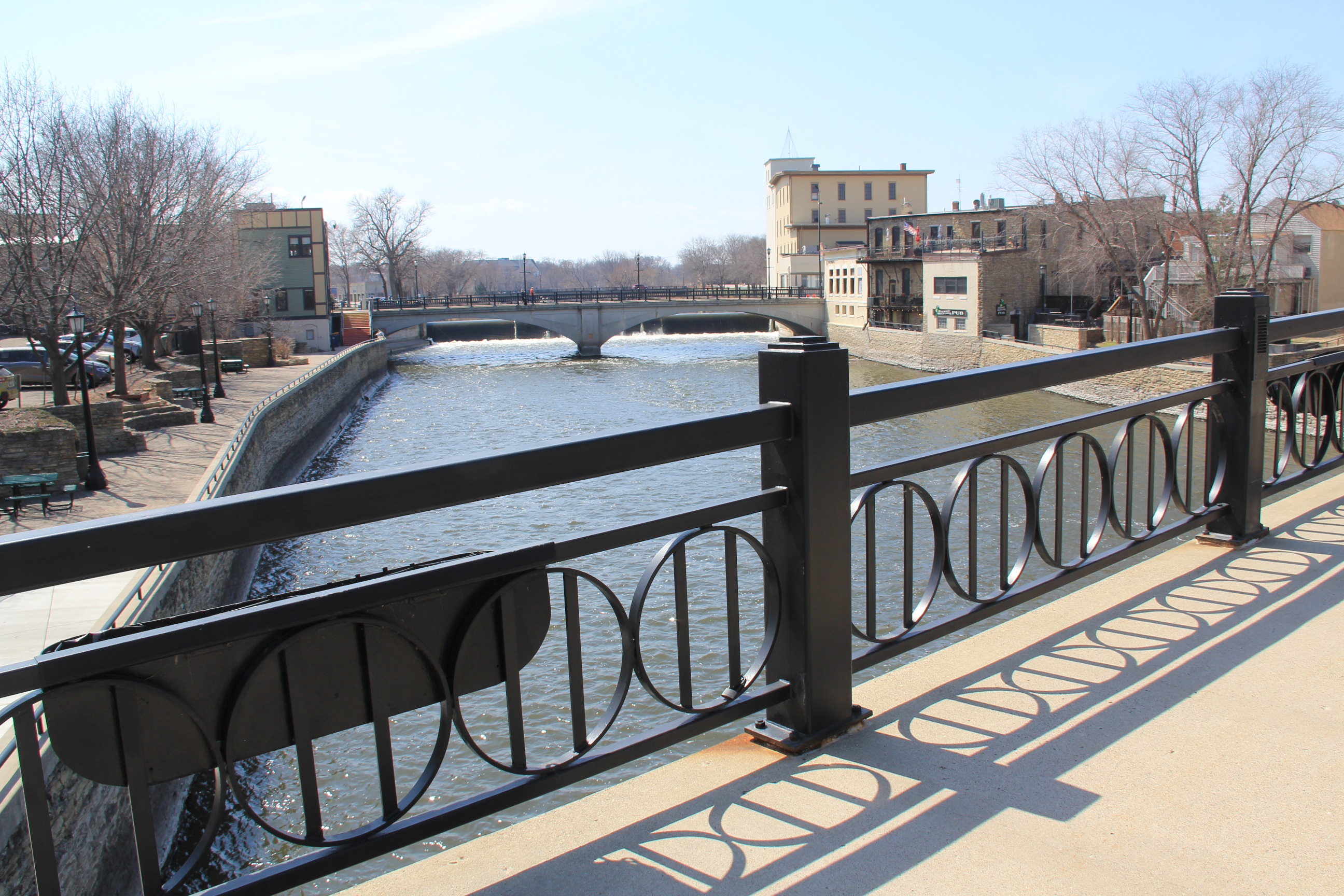
The Cannon River spills over the dam by the historic Ames Mill. (Minnesota Prairie Roots copyrighted photo April 2025)

WE COME TO THE RIVER. The Cannon River, spilling over the dam by the Ames Mill. Roaring. Churning. Then flowing under the bridge and between the walls of the Riverwalk in downtown Northfield.

Enjoying beverages and time together beside the Cannon River in Bridge Square. (Minnesota Prairie Roots copyrighted photo April 2025)

We come here on a Sunday afternoon, on an April day of temps pushing into the sixties, the sun beaming warmth upon us, upon the land, upon the river. To sit. To walk. To lean toward the river. To simply be outdoors on an exceptionally lovely spring day in southern Minnesota.

The mood feels anticipatory, joyful, as we walk ourselves, and some their dogs, along the riverside path.

Historic buildings hug the Cannon River (and Division Street) in Northfield’s quaint downtown. (Minnesota Prairie Roots copyrighted photo April 2025)

I come with my Canon camera in hand. An observer. An appreciator of the sun, the sky, the warmth, the river, the historic buildings, the people and activities happening around me. In some ways, the scene seems Norman Rockwell-ish, Busy, yet tranquil. A slice of small town Americana. Everyday people enjoying each other, nature, the outdoors. Life.

Fishing by the Ames Mill dam. (Minnesota Prairie Roots copyrighted photo April 2025)

Many carry fishing poles, tackle boxes, containers of bait. Anglers press against the riverside railing, dropping lines into the water far below.

Caught in the Cannon, a sucker fish. (Minnesota Prairie Roots copyrighted photo April 2025)

I watch as a young man pulls in an unidentifiable-to-me fish (later identified as a white sucker by my husband). His friend snaps a photo of the proud angler and his first catch of the day.

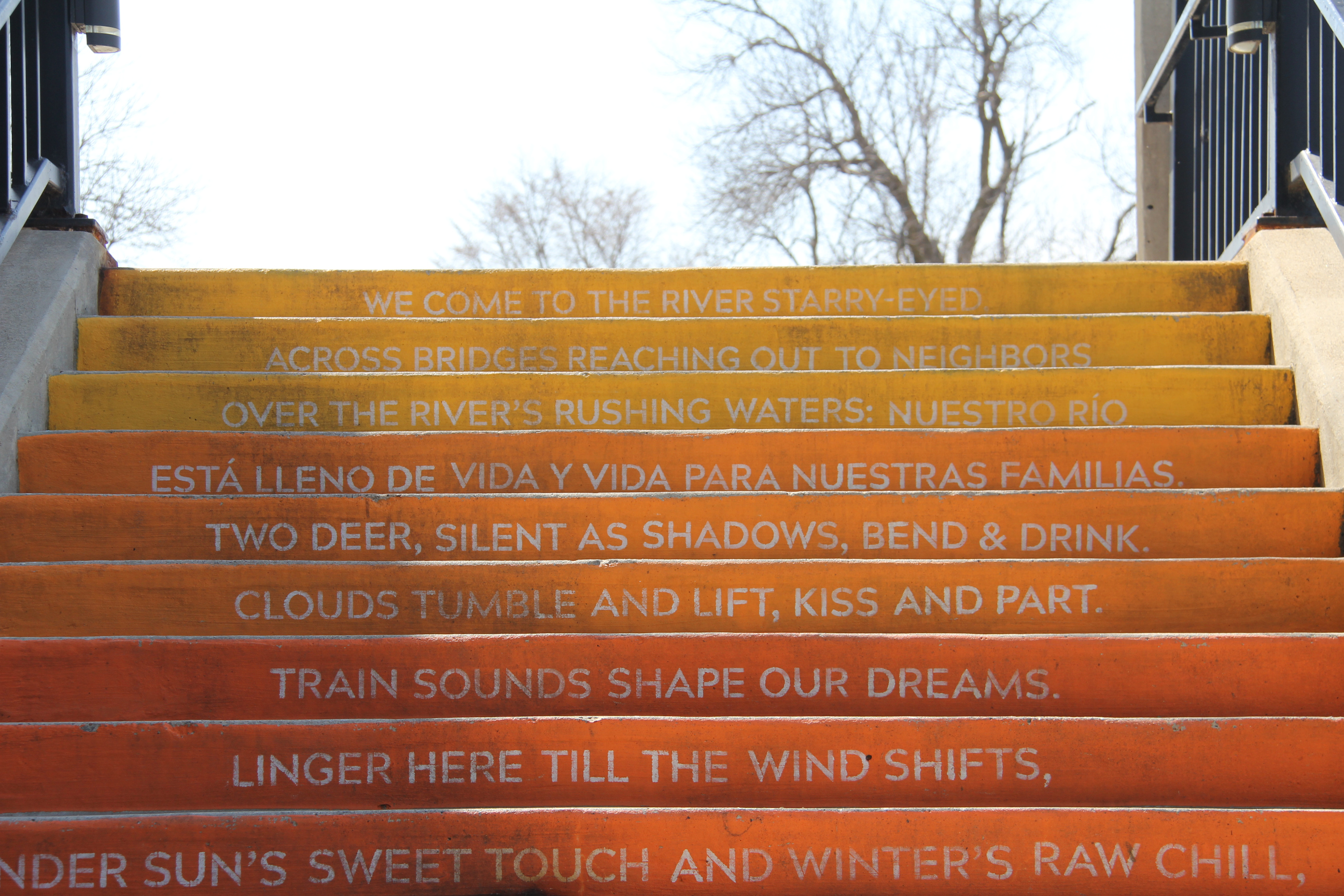
The top section of the Riverwalk Poetry Steps. (Minnesota Prairie Roots copyrighted photo April 2025)

After hanging around the river by Bridge Square for a bit, I descend the colorful Riverwalk Poetry Steps, a river poem crafted by a collaboration of 17 poets. We come to the river starry-eyed/across bridges reaching out to neighbors/over the river’s rushing waters…

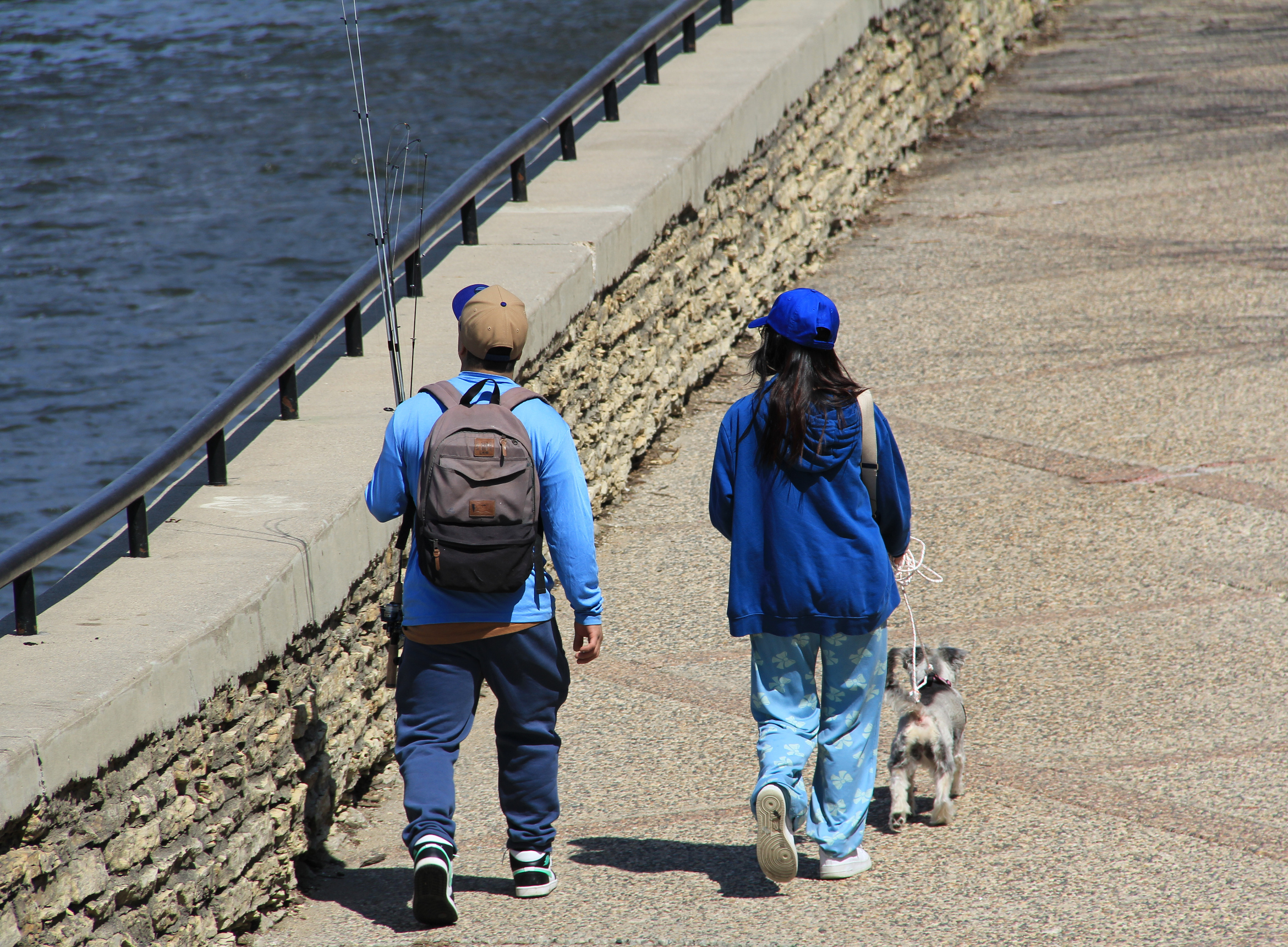
Following the Riverwalk to find a fishing spot along the Cannon River. (Minnesota Prairie Roots copyrighted photo April 2025)

I trail behind a couple, a family, a dog, another family, all of us connected by the water, by this place, on this spring day. I’m the only one to pause and read the poetry.

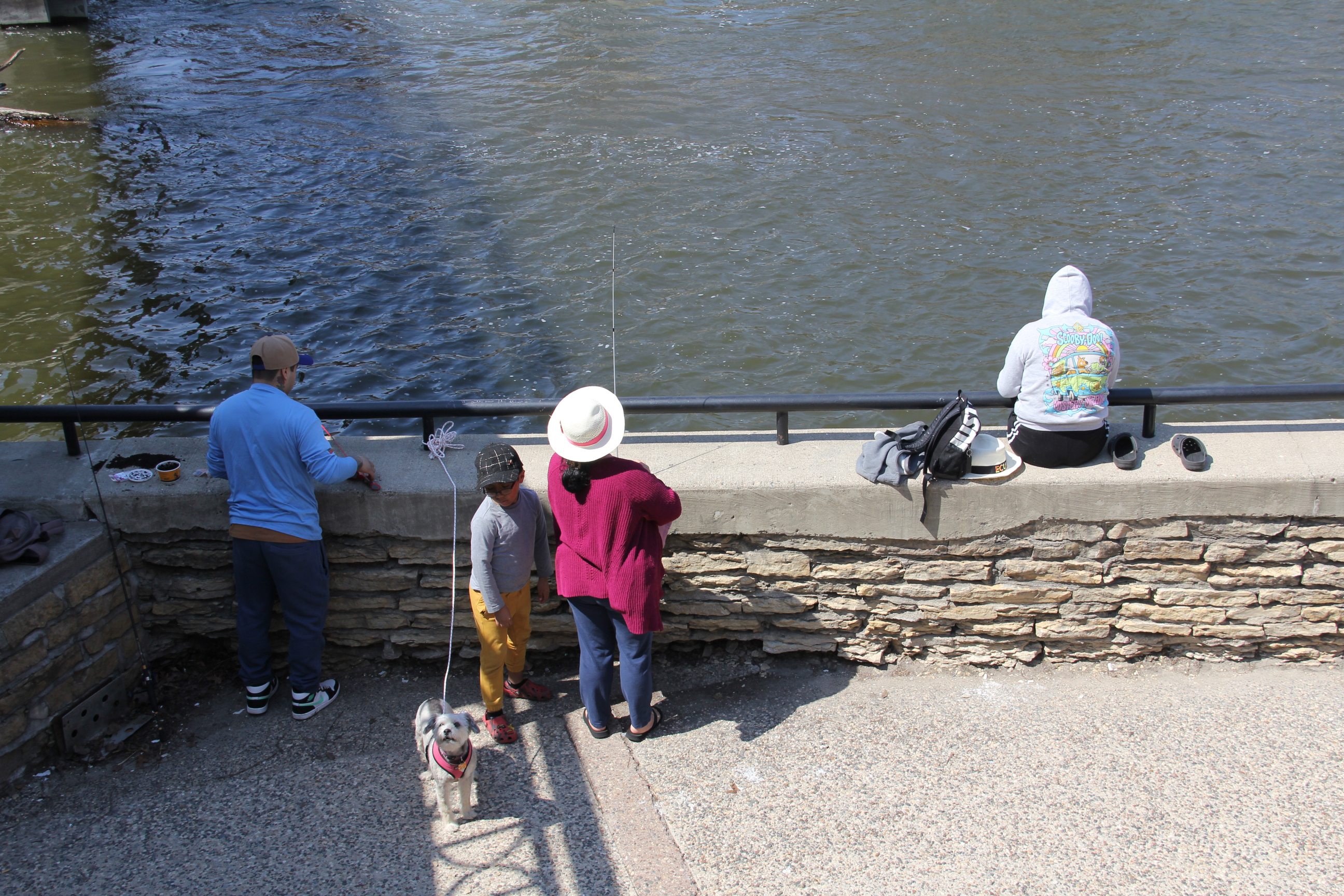
A family fishes the Cannon. (Minnesota Prairie Roots copyrighted photo April 2025)

Atop the river wall, young women sit, sans shoes, while they fish. We all watch the river flow. Bobbers bob. A pair of ducks—one pure white—flies low, skimming the water before landing upon the surface of the Cannon.

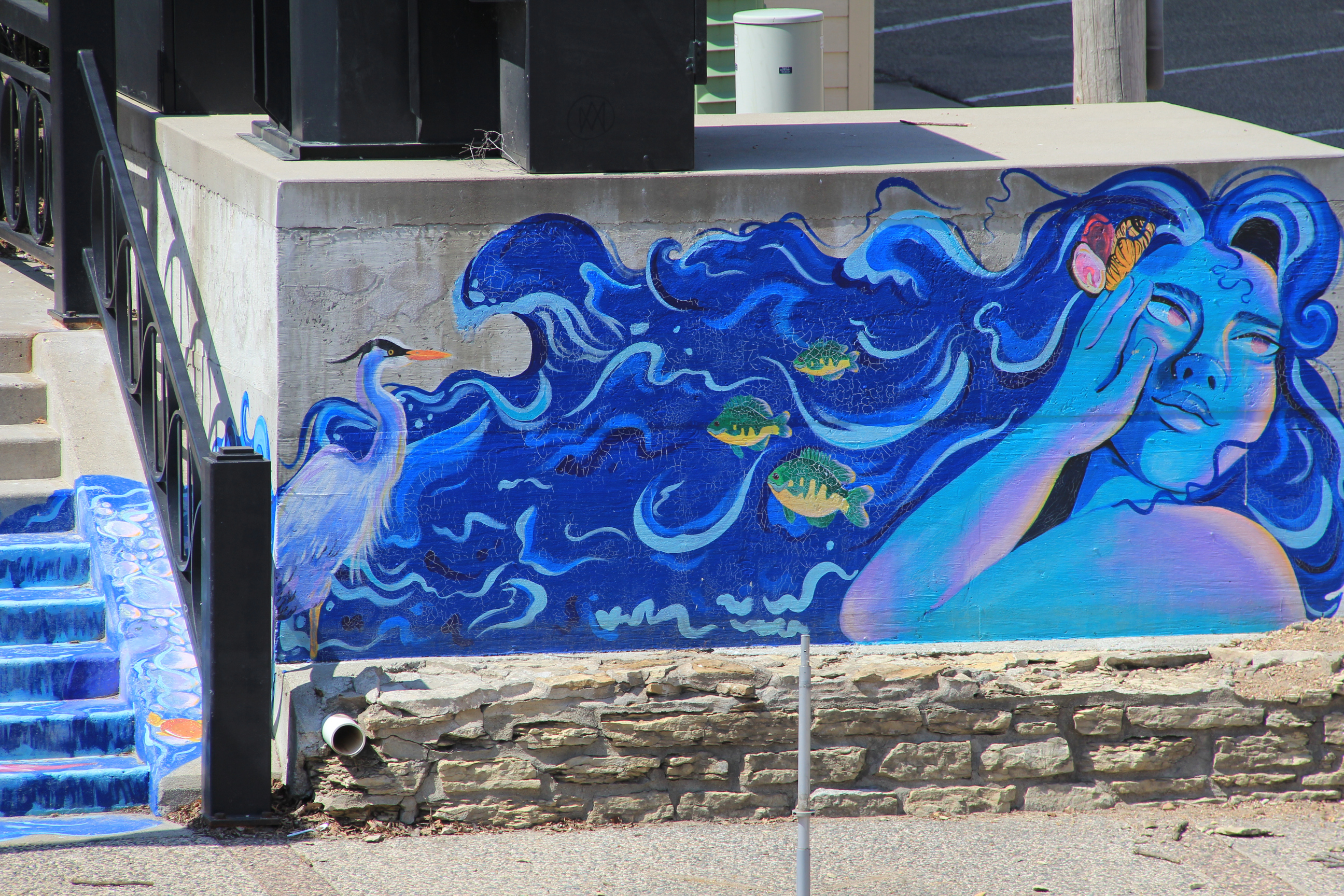
“Lady Cannon,” a riverside mural by Maya Kenney and Raquel Santamaria. (Minnesota Prairie Roots copyrighted photo April 2025)

Across the river, Lady Cannon watches. Fish swim in her tangled waves of locks, flowing like water down steps toward the river. She is the art of the Cannon.

On the pedestrian bridge looking toward the Cannon and the Ames Mill, right in the distance. (Minnesota Prairie Roots copyrighted photo April 2025)

I see art, too, in a railing shadowed upon the pedestrian bridge. I linger, mesmerized by the moving water, the riverside historic flour mill a block away.

There’s so much to take in here. So much that connects us. The sun, the sky, the land. And the river that flows beside and below us.

© Copyright 2025 Audrey Kletscher Helbling
 

A tribute to internationally-known Minnesota wildlife photographer Jim Brandenburg April 8, 2025

A bison photo by Jim Brandenburg hangs to the left and the photographer talks about his work in a video, right, inside the Brandenburg Gallery. (Minnesota Prairie Roots copyrighted file photo 2013)

IN MY EYES, he was Minnesota’s best-known photographer. Exceptionally talented. No one even comes close to matching the wildlife and nature photography of Jim Brandenburg. He died April 4 at the age of 79. Not only has Minnesota lost a creative icon, but so has the world. Brandenburg’s prolific work was featured in National Geographic Magazine, earning him the publication’s coveted Lifetime Achievement Award in 2023. His award-winning photos were widely-published internationally. He also published numerous books featuring collections of his photos.

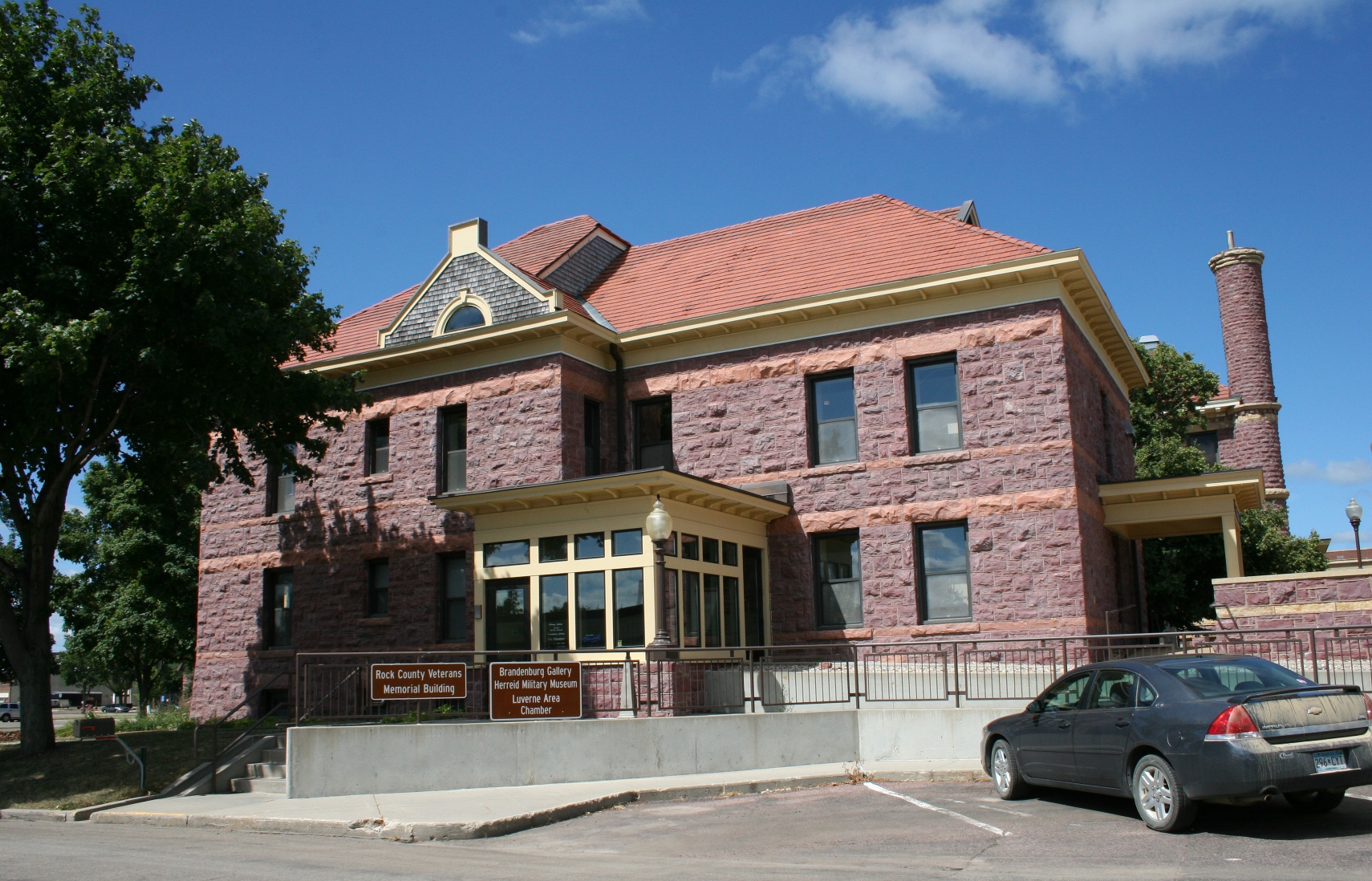
The entry to the Brandenburg Gallery, located in the Rock County Courthouse square. (Minnesota Prairie Roots copyrighted file photo 2013)

But there is perhaps one lesser-known place where Brandenburg’s images can be found. And that’s in the Brandenburg Gallery inside the historic Rock County Courthouse in his hometown of Luverne. That’s in the extreme southwestern corner of Minnesota. The prairie. My prairie.

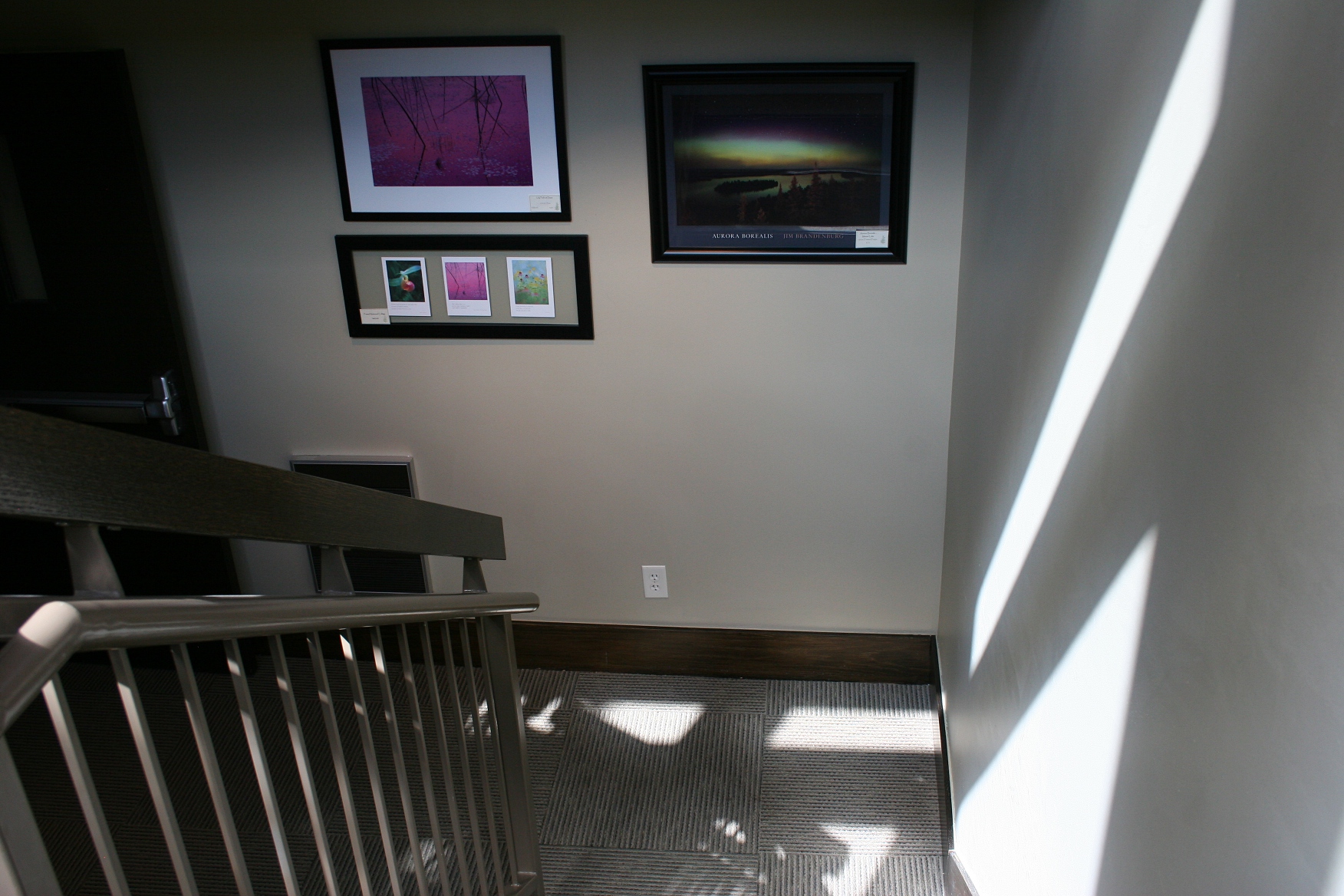
Light plays upon walls, floors and Brandenburg photos in a stairway display. (Minnesota Prairie Roots copyrighted file photo 2013)

Eleven years ago I toured that gallery, studying and enjoying a sampling of Brandenburg’s images. Many in this collection are prairie-themed. Because I’m a photographer, I viewed his photos with a more focused perspective, noticing angles, light, background and all the components which come together in creating an outstanding image.

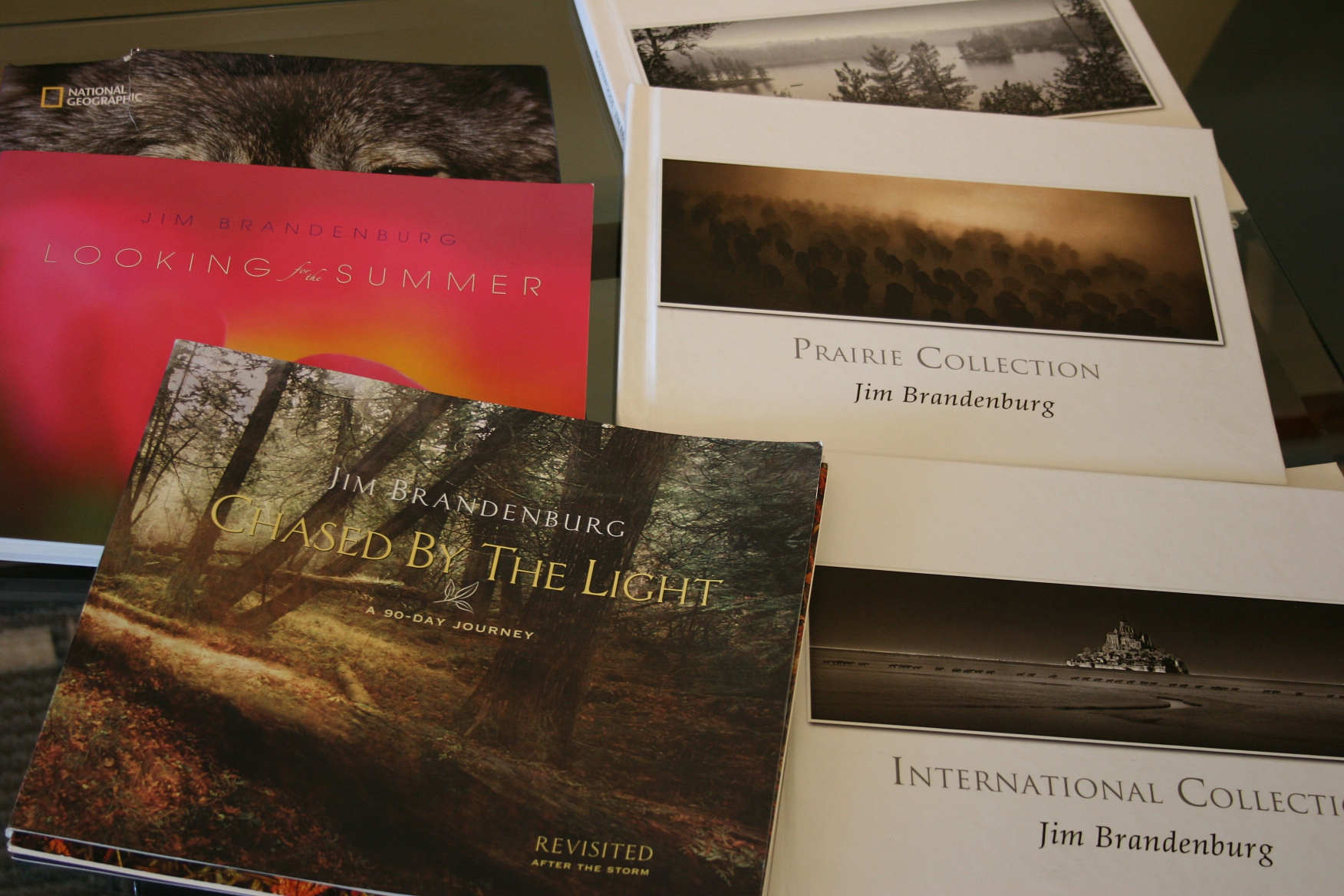
Some of Brandenburg’s photo books. (Minnesota Prairie Roots copyrighted file photo 2013)

Every photographer understands that light is the very basic element to consider in shooting photos. Brandenburg challenged himself to take a single picture per day between the autumnal equinox and the winter solstice. The result is his collection of photos, Chased by the Light: A 90-Day Journey, a favorite of mine among his books.

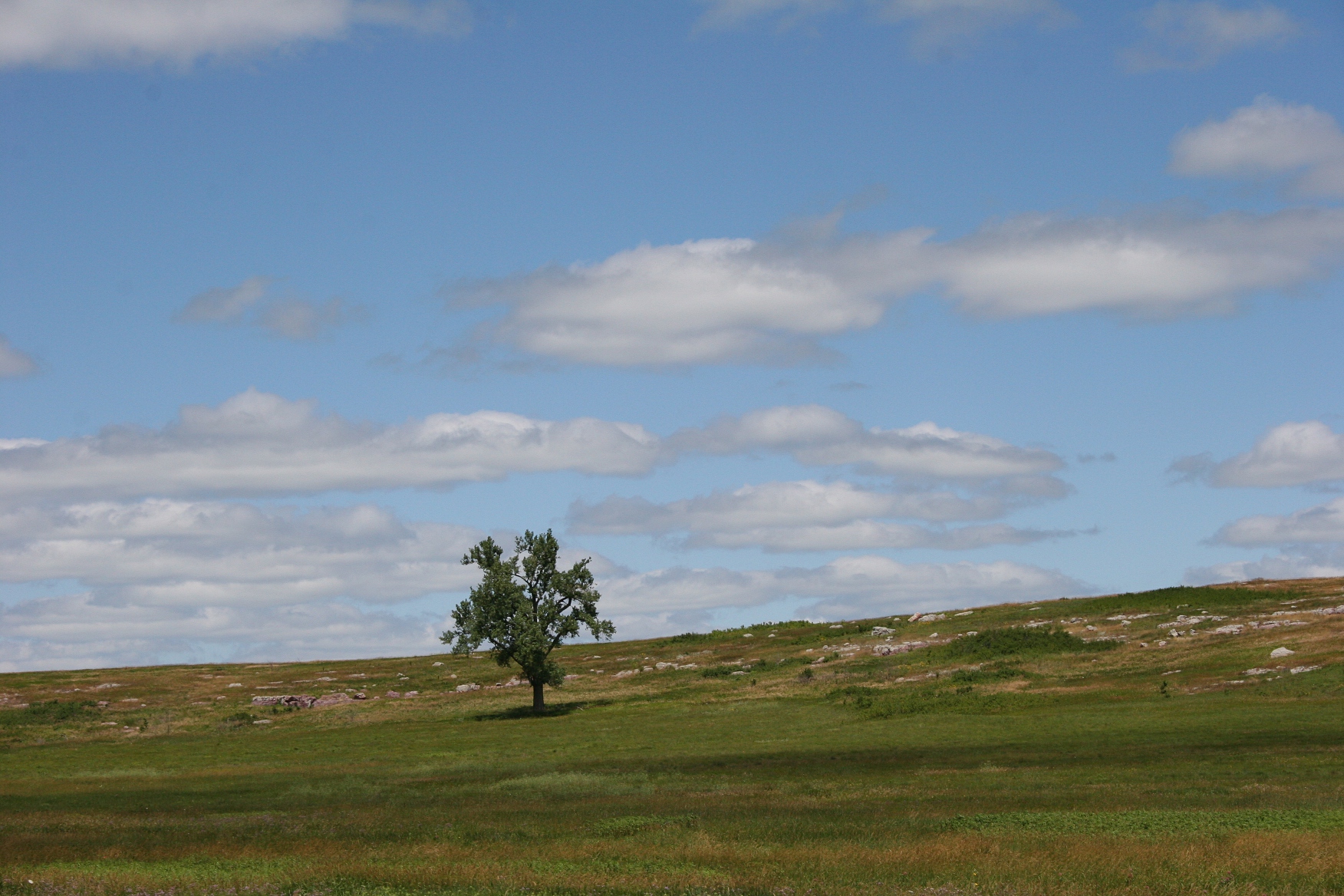
Beautiful natural scenery on the prairie near Blue Mounds State Park. The part of the prairie where I grew up is not rocky like this and is a bit further north. (Minnesota Prairie Roots copyrighted file photo 2013)

When I traveled to Luverne in 2013 to visit the Brandenburg Gallery and other attractions, including Blue Mounds State Park, I was returning to the wide open land and big skies of the prairie, the place that shaped me as a person, photographer and writer. The same can be said for Brandenburg. He loved the prairie and, in fact, established the Brandenburg Prairie Foundation aimed at southwest Minnesota native prairie education, preservation and expansion. His organization partnered with the U.S. Fish and Wildlife Service to purchase nearly 1,000 acres of untilled Rock County prairie, creating Touch the Sky Northern Tallgrass Prairie National Wildlife Refuge.

Those environmental efforts are revealing. Brandenburg cared deeply about the land, especially the prairie. After college, he returned to the prairie and worked as a picture editor at The Worthington Daily Globe. While there, he freelanced for National Geographic Magazine. And so his career developed until he became that homegrown photographer whose work so many worldwide grew to appreciate and love.

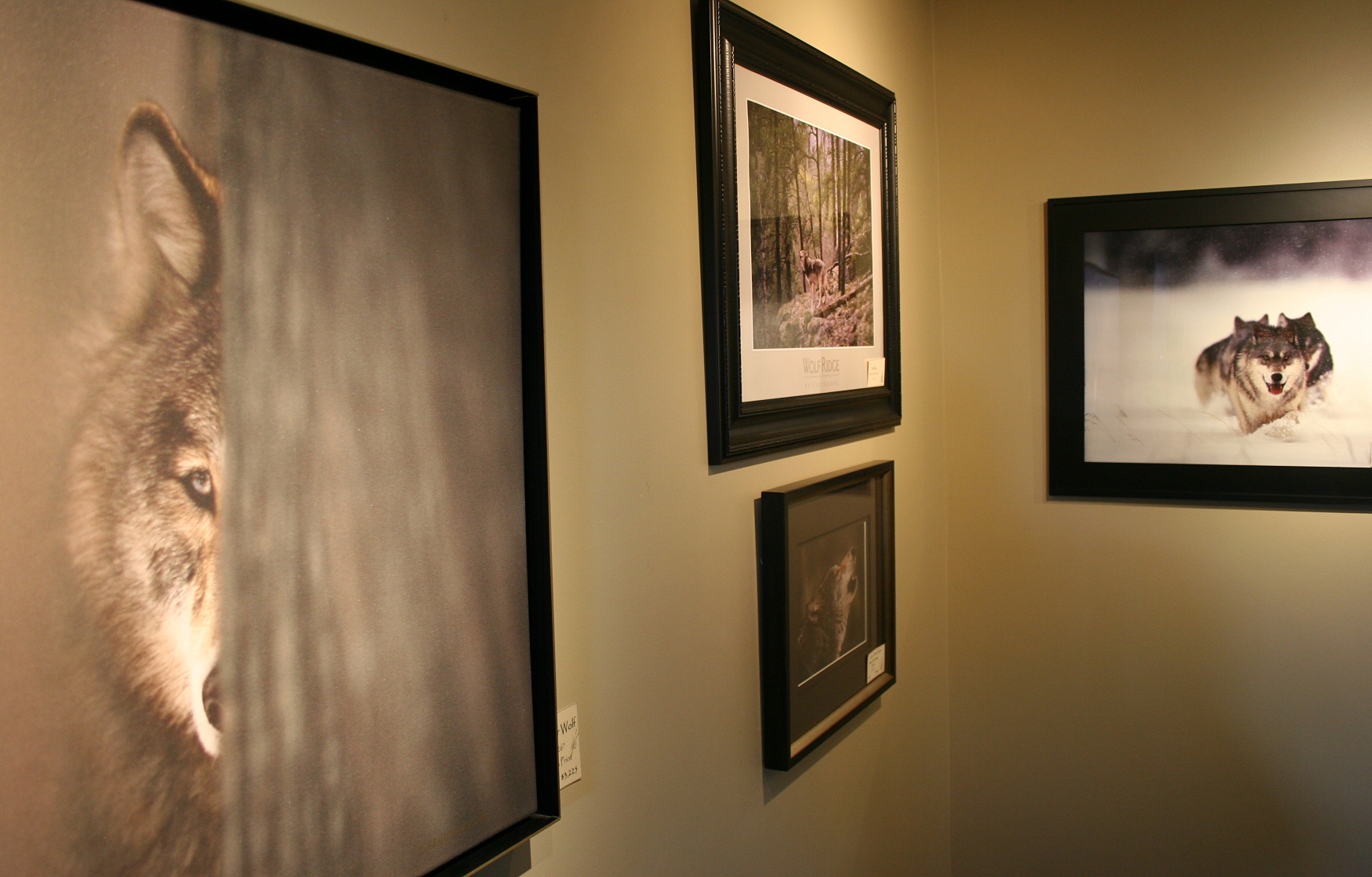
Wolf photos displayed in the Brandenberg Gallery. Brandenburg’s published books include Brother Wolf–A Forgotten Promise. (Minnesota Prairie Roots copyrighted file photo 2013)

I admire photographers who excel in the craft. And Brandenburg certainly excels in wildlife photography, a specialized field that requires much more than understanding photo basics. Photographing wildlife requires incredible patience and knowledge of animals. I have neither. But when you look at a Brandenburg photo, it’s like you are right there up close with the subject. Perhaps a wolf—one of his favorite subjects. Or bison. You can see the deep respect Brandenburg holds for these creatures of the wild.

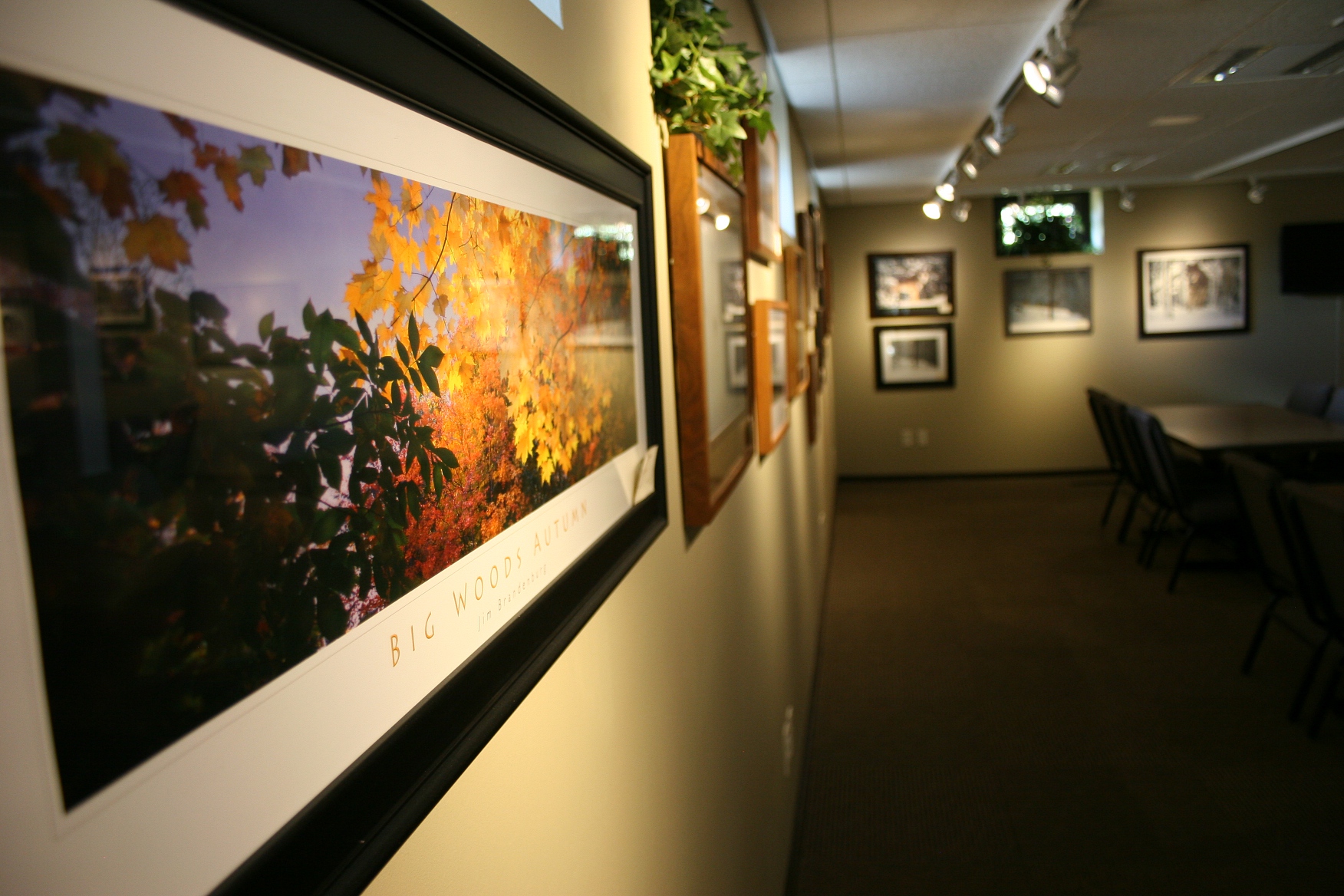
A familiar scene to me, autumn leaves photographed in the Big Woods of Minnesota, within 20 miles of my home and showcased in the Brandenburg Gallery. (Minnesota Prairie Roots copyrighted file photo 2013)

And then there’s landscape photography which, when done well, draws you into a scene and evokes an emotional response. Again, Brandenburg has this seemingly effortless ability to capture the essence of a place and connect it to his audience.

Minnesota has lost an incredibly gifted photographer. But Brandenburg’s legacy lives on in his work, a gift to all of us. And one place to find that is in the Brandenburg Gallery in Luverne. On my beloved prairie. On Brandenburg’s beloved prairie.

FYI: The Brandenburg Gallery, 213 E. Luverne St., is owned and operated by the Luverne Area Chamber of Commerce. It’s open from 8 a.m.-5 p.m. Monday-Friday and from 10 a.m.-5 p.m. Saturday. Admission is free. All photos featured in this post were taken with permission of the Brandenburg Gallery in 2013.

© Copyright 2025 Audrey Kletscher Helbling

 

From Minnesota & Harlem, photographing everyday life February 20, 2025

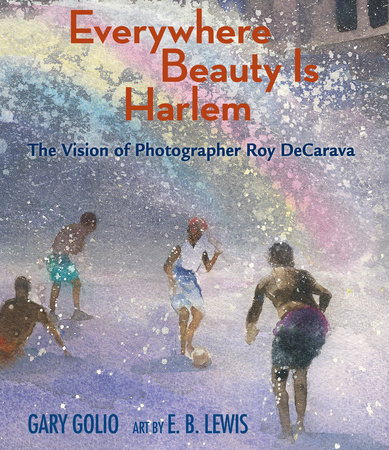
I recently finished this book about slavery, freedom and abolition. A must-read. (Book cover sourced online)

DURING THIS, BLACK HISTORY MONTH, I’ve intentionally read books about slavery, Black people and the Black experience. It’s important to me that I widen my knowledge and understanding. Many of the stories are heartbreaking, almost unbelievable in the mental and physical cruelty inflicted upon Blacks. This is hard stuff to read. But it is in the hard stuff that we begin to fully comprehend the importance of empathy, kindness, compassion and the need to stand strong against that which is hateful, hurtful and oppressive.

(Book cover sourced online)

This week, though, I read a Black-focused book which inspired and uplifted me. It’s a children’s picture book, Everywhere Beauty Is Harlem: The Vision of Photographer Roy Decarava. The book, written by Gary Golio and illustrated by E.B. Lewis, won the 2025 Coretta Scott King Illustrator Honor Award.

This book resonates with me personally and professionally in telling the story of 1940s world famous photographer Roy DeCarava, unknown to me until I read this book. Trained in the arts and in photography, he would go on to photograph everyday life in his native Harlem via work for the Works Progress Administration Project, fellowships and more. He worked as a photographer for major publications, has/had his photos featured in exhibits and art museums, became an art professor… And he was Black.

But what I love most about this story is that DeCarava aimed to photograph everyday life, everyday scenes, everyday people in the streets of Harlem. He shows life in raw reality. He worked back in the days of film, admittedly much more challenging than shooting with a digital camera. I started with film, too. You often get only one chance to take a photo. No firing off shots. No digital manipulation. Just a single, unedited print.

I took this portrait, one of my favorites, nearly 11 year ago at International Festival Faribault. (Minnesota Prairie Roots copyrighted file photo 2014)

I will never match the talent of DeCarava. But I do share his focus. I also aim to photograph the ordinary, the everyday, right where I live (or mostly in southern Minnesota). Like him, I notice details. The light. The moments. The expressions. The people, scenes, settings and events that define a place. The anything that might make for an interesting photo.

Unlike DeCarava, my roots are rural. I’ve only ever been to New York City once, while in college. I was awed by the skyscrapers, the street vendors, Chinatown and men hurrying along Wall Street in leisure suits. (This was in 1977.) But I have no desire to return to a place that feels too closed in, too busy, too chaotic.

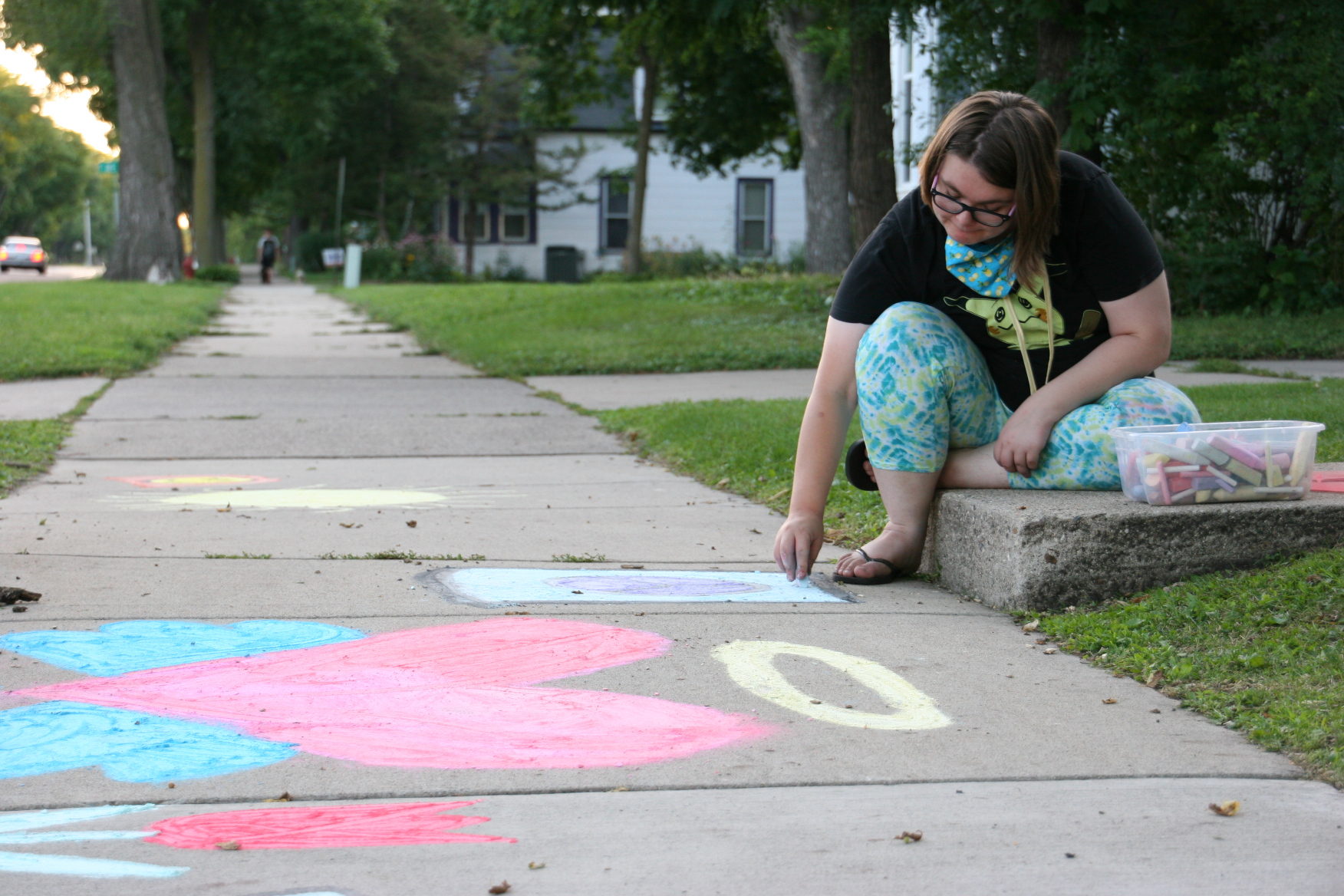
My photo of Jane chalking art on a Faribault sidewalk. (Minnesota Prairie Roots copyrighted file photo August 2020)

Yet, Harlem in Upper Manhattan was DeCarava’s home, where he found the subjects of his photos. Everywhere Beauty Is Harlem gives a snapshot of the images this photographer snapped. A man on the subway. A boy drawing on the sidewalk with chalk. Black and brown children dancing in water spraying from a fire hydrant.

Beyond the visuals, the story in this children’s picture book encompasses the essence of DeCarava’s photographic focus on the everyday and the ordinary. I really ought to buy a copy of this book for my personal library. If you want to understand my photographic work, then read this multi award-winning children’s picture book. But, more importantly, read this book to learn about a world famous Black photographer whose talent for visual storytelling is a gift to all of us. To see the world through his eyes presents life as it is. Real. Raw. Unedited.

#

FYI: I encourage you to also check out the photography of New York City photographer Keith Goldstein, whose work I follow on his blog, “For Earth Below.” His street photography has opened my eyes to humanity in a way that I never see here in southern Minnesota. His talent is remarkable. Goldstein, I think, works much like Roy DeCarava did, with his camera focused on the everyday, the ordinary. And therein both have found the extraordinary.

© Copyright 2025 Audrey Kletscher Helbling
 

When a cold snap grips Minnesota February 18, 2025

Filed under: Uncategorized — Audrey Kletscher Helbling @ 5:02 AM
Tags: , , , , , , , ,
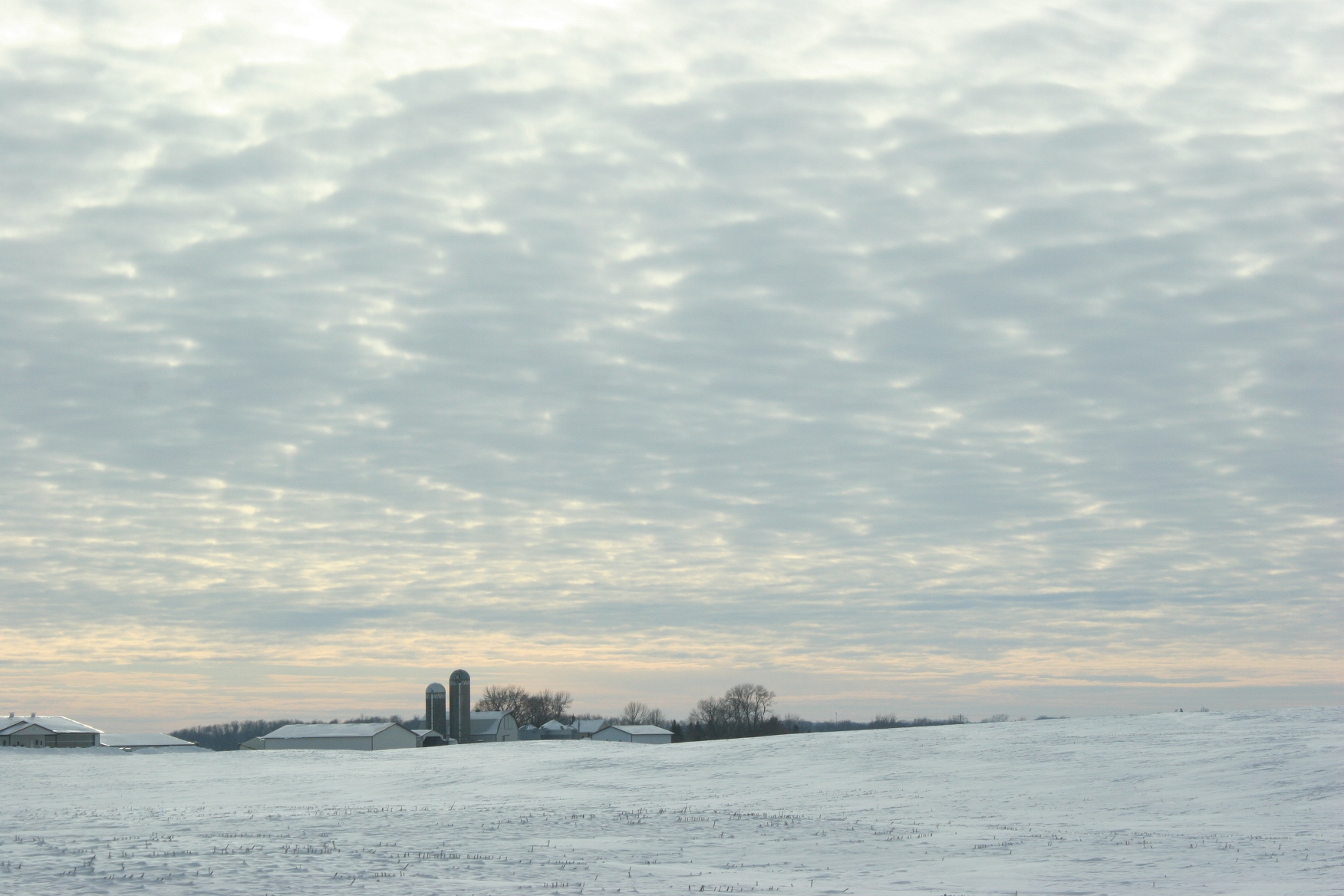
One of my favorite winter photos, of a farm site along Interstate 35 north of Faribault. (Minnesota Prairie Roots copyrighted file photo 2019)

WE MINNESOTANS PRIDE ourselves on our winter hardiness. But this week is testing even the hardiest among us as temps drop into the double digit subzero range. Add the wind and it feels like -30 to -40 degrees outdoors. No wonder extreme cold warnings have been issued for our state. Exposed skin can freeze in minutes. No wonder schools are closing and shifting to e-learning.

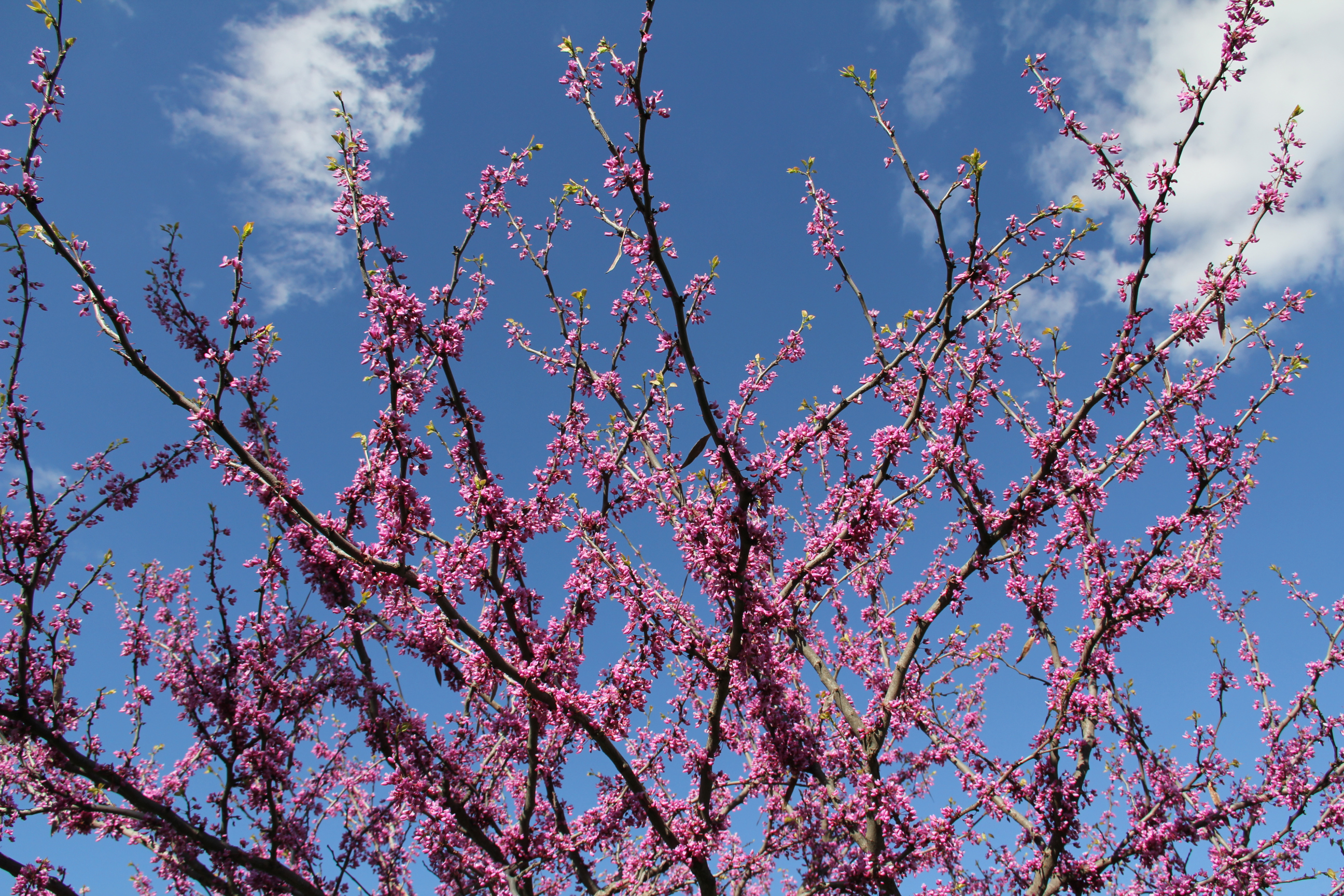
A flowering tree, photographed in Faribault in spring. (Minnesota Prairie Roots copyrighted file photo May 2024)

The bright sunshine fools no one. It’s an illusion of warmth. But the sunshine also reminds me that much warmer days are only months away, that winter isn’t forever, that we will get through this cold spell. We always do.

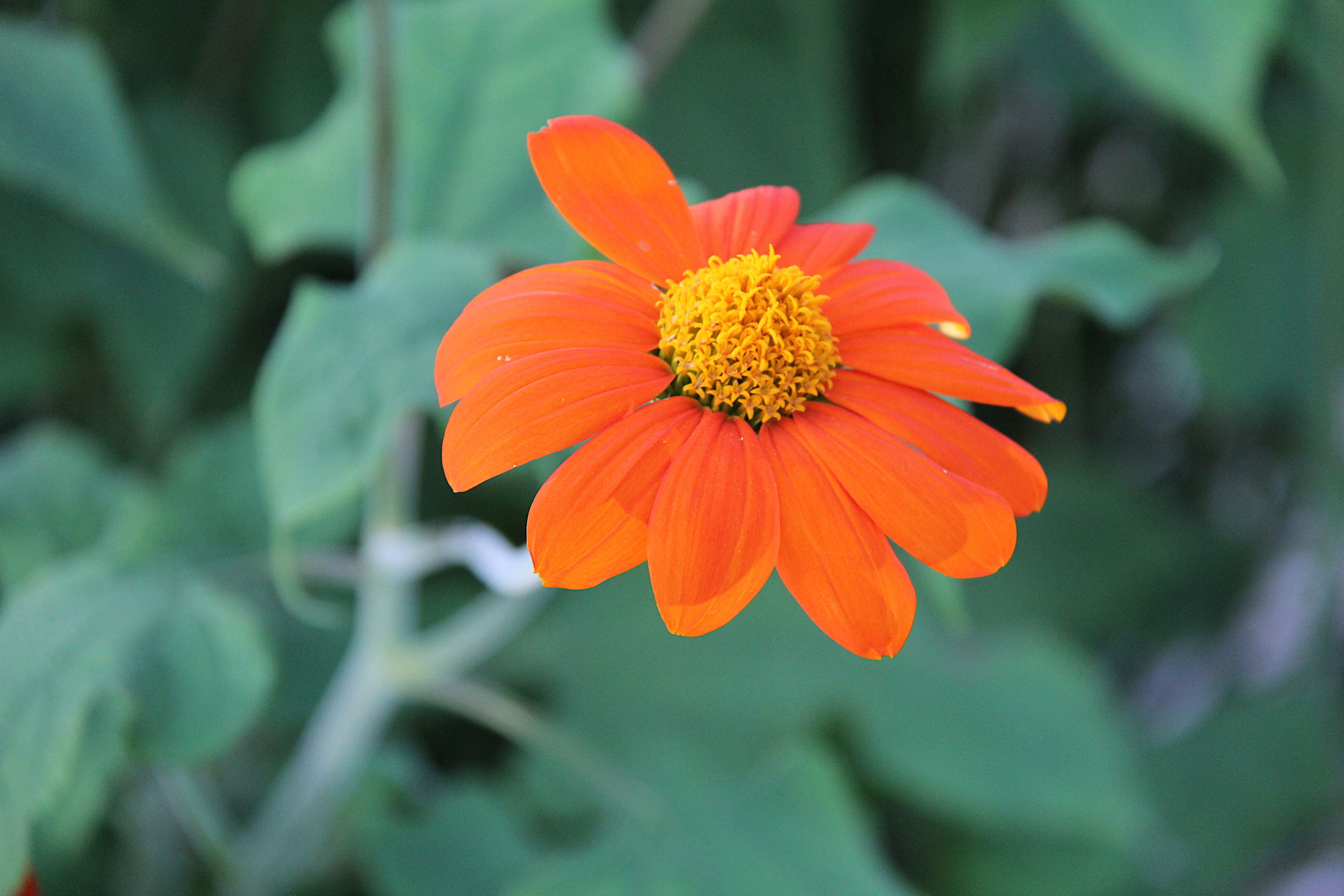
Photographed at the Cathedral of Our Merciful Saviour garden in Faribault. (Minnesota Prairie Roots copyrighted file photo August 2024)

But as I wait and (mostly) shelter indoors, I find myself drawn to floral photos I took during the spring and summer. Images which visually remind me that the snow will melt, the earth will thaw and warm, seeds will grow, flowers will flourish and these frigid days of winter will be only a memory.

Coneflowers, Rice County Master Gardeners’ Teaching Gardens, Faribault. (Minnesota Prairie Roots copyrighted file photo August 2024)

It’s a bit of a psychological endeavor, this convincing myself that spring will be here “before we know it.” Some days, especially during a cold snap, that seems almost laughable. I admit, my appreciation of winter has diminished as I’ve aged. I’m not alone in feeling that way among my Baby Boomer friends, which is likely the reason many flee to warmer climates for a week, or even months, during winter. I say good for them if that’s a feasible option. It’s not for me.

Dreaming of summer days at Horseshoe Lake in the central Minnesota lakes region. (Minnesota Prairie Roots copyrighted file photo July 2023)

So I find ways to cope. Read more. Write more. Walk indoors at the mall instead of outside. And when I do go out, bundle up, clamp a stocking cap on my head without care that it flattens my hair. Eat dark chocolate. Drink tea. Cook soups and chili. Pull out my warmest sweater to layer over a tee and flannel shirt. Connect with friends more. Remember hot summer days Up North at the cabin.

Tulips, one of the first flowers of spring in Minnesota. (Minnesota Prairie Roots copyrighted file photo May 2020)

And never forget that the flowers will unfurl in the sunshine and warmth. Bold, beautiful, vibrant blooms. Lovely. Filling my soul and spirit in a poetically beautiful way that winter can’t.

© Copyright 2025 Audrey Kletscher Helbling
 

Into the woods, onto the prairie of November November 19, 2024

The woods, sky and prairie of River Bend in early November. (Minnesota Prairie Roots copyrighted photo November 2024)

NOVEMBER MARKS A SEASON of transition, a time when the landscape slides ever closer to a colorless environment. Soon winter will envelope us in its drabness of gray and brown highlighted by white. There’s nothing visually compelling about that.

I found the veined back of this oversized fallen leaf especially lovely. (Minnesota Prairie Roots copyrighted photo November 2024)

As a life-long Minnesotan, I understand this about November. I know this. But I still don’t like the absence of color or light, the dark morning rising, the darkness that descends well before 5 p.m. And, yes, seasonal affective disorder, even if you don’t admit you’re experiencing it, likely touches all of us in Minnesota.

Beautiful: Wisps of clouds in the big sky and grass heads soaring. (Minnesota Prairie Roots copyrighted photo November 2024)

Times like this, it helps to get outside, into the natural world, and view the November landscape through an appreciative lens. It’s possible to reshape your thinking if you slow down, notice the details, determine that beauty is to be found in the outdoors, even in this eleventh month of the year.

My initial glimpse of the nearly invisible deer standing on a leaf-littered trail. (Minnesota Prairie Roots copyrighted photo November 2024)

So into the woods I went at River Bend Nature Center in Faribault, where first off I spotted a deer on a trail, the animal effectively camouflaged among the dried leaves, the trunks of trees and buckthorn (an invasive species still green). The doe stood and watched as I eased slowly toward her intent on getting within better focal range. Soon she wandered into the woods, among the trees. I shot a rapid series of images as the stare-down continued, until finally the deer tired of my presence and hurried away.

I moved closer, then zoomed in with my telephoto lens to get this close-up image. (Minnesota Prairie Roots copyrighted photo November 2024)

What a wonderful way to begin my walk. Even if I consider deer too populous and a danger on roadways, my interest in watching them never wanes. And there are plenty of deer to watch at River Bend.

This grass stretches way above my head and dances in the wind. (Minnesota Prairie Roots copyrighted photo November 2024)

Mostly, though, I don’t see many animals at the nature center. Plant life becomes my point of interest. In November, that means dormant plants like dried grasses stretching across the expansive prairie. Or grasses rising high above my head along the trail, stalks listing, pushed by the wind. Dancing.

Dried grasses, possible fuel for fire, edge a trail. (Minnesota Prairie Roots copyrighted photo November 2024)

These grasses have lost their luster green, but they are no less lovely in muted shades. The thought crosses my mind how rapidly a spark could ignite a raging grass fire here upon the parched land.

Dried goldenrod seemingly glow in the afternoon sunlight. (Minnesota Prairie Roots copyrighted photo November 2024)

Weeds and wildflowers (I’m no naturalist when it comes to identifying what I see) are likewise dead and dried, some glowing in the late afternoon sunshine. And that, too, is lovely.

Cattails burst open at season’s end. (Minnesota Prairie Roots copyrighted photo November 2024)
Fungus blends in with bark. (Minnesota Prairie Roots copyrighted photo November 2024)

Cattails appear ravaged by the seasons. Fungi ladder a tree branch. These are the details I notice in looking for photos, in convincing myself that beauty exists within the woods, upon the prairie, even in November.

Dried sumac edge the prairie. (Minnesota Prairie Roots copyrighted photo November 2024)

Dried sumac in a hue that isn’t orange, that isn’t red, flames.

Walking uphill to the prairie, the sky appears expansive. (Minnesota Prairie Roots copyrighted photo November 2024)

A blue sky, swept with wisps of clouds, accents the scenes I take in. I always feel small under the expansive sky, no matter the month.

A spot of color in stubborn leaves. (Minnesota Prairie Roots copyrighted photo November 2024)

A few stubborn, autumn leaves still cling, flashing color like the flick of a flame. That, too, I see on this November day.

If any image visually summarizes November, this would be it. (Minnesota Prairie Roots copyrighted photo November 2024)

A flutter of birds near the end of my walk draws my eyes to a bare tree. To watch. To hear their movement, like a whisper of winter coming. Quiet and colorless. Signs of December soon overtaking November.

© Copyright 2024 Audrey Kletscher Helbling
 

A brief stop in St. Peter, what I saw & learned November 6, 2024

A stunning historic building anchors a corner in the heart of downtown St. Peter along Minnesota Avenue. (Minnesota Prairie Roots copyrighted photo October 2024)

A COLLEGE TOWN. A river town. A town once destined to become Minnesota’s state capital, except for a stolen legislative bill and a judge’s ruling. A town where Jesse James and his gang rode through en route to robbing the First National Bank of Northfield. A town two-thirds destroyed by a March 29, 1998, tornado. The town is St. Peter, population around 12,000, nestled in the Minnesota River Valley.

I felt right at home inside this picnic shelter with the grain bin roof. (Minnesota Prairie Roots copyrighted photo October 2024)
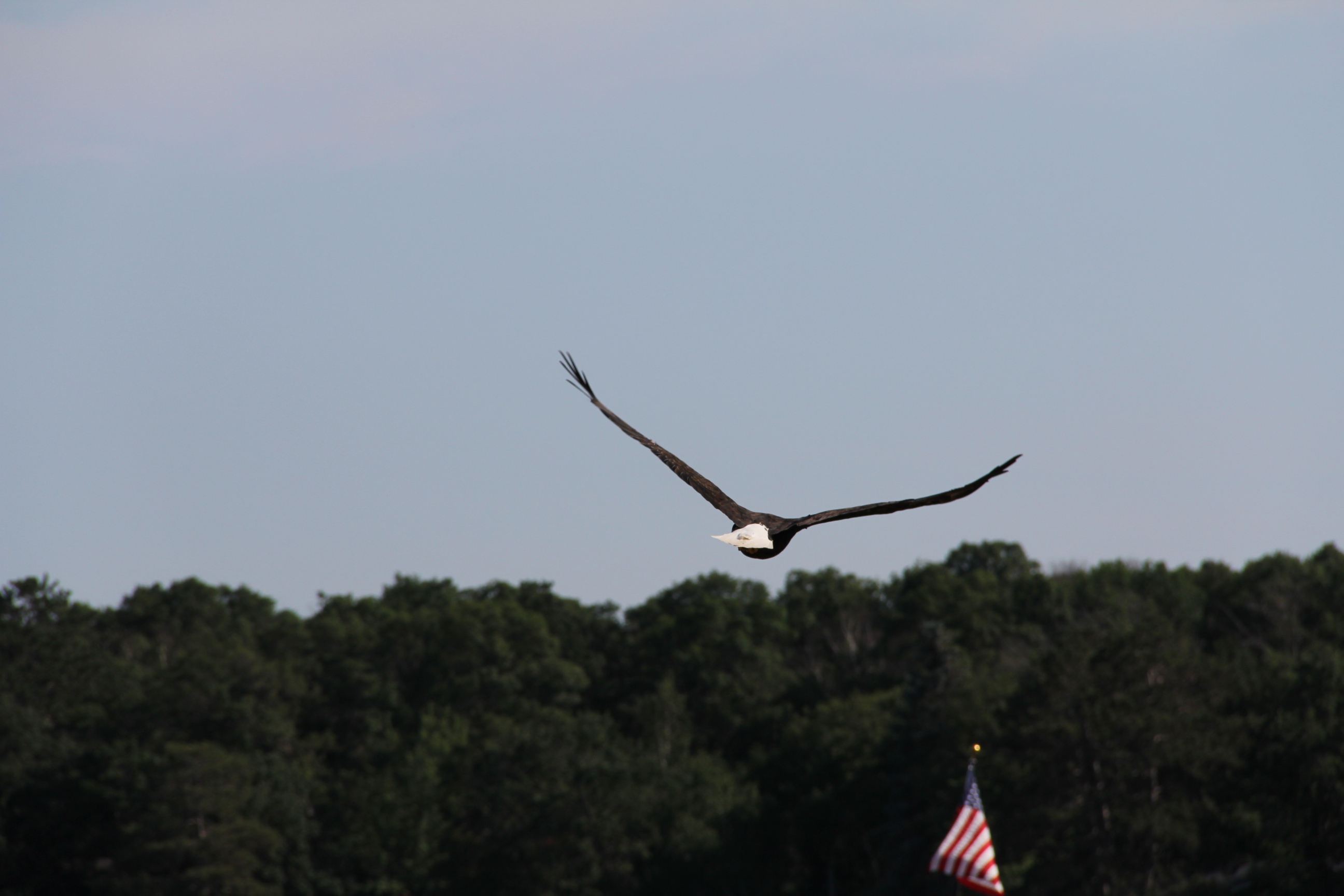
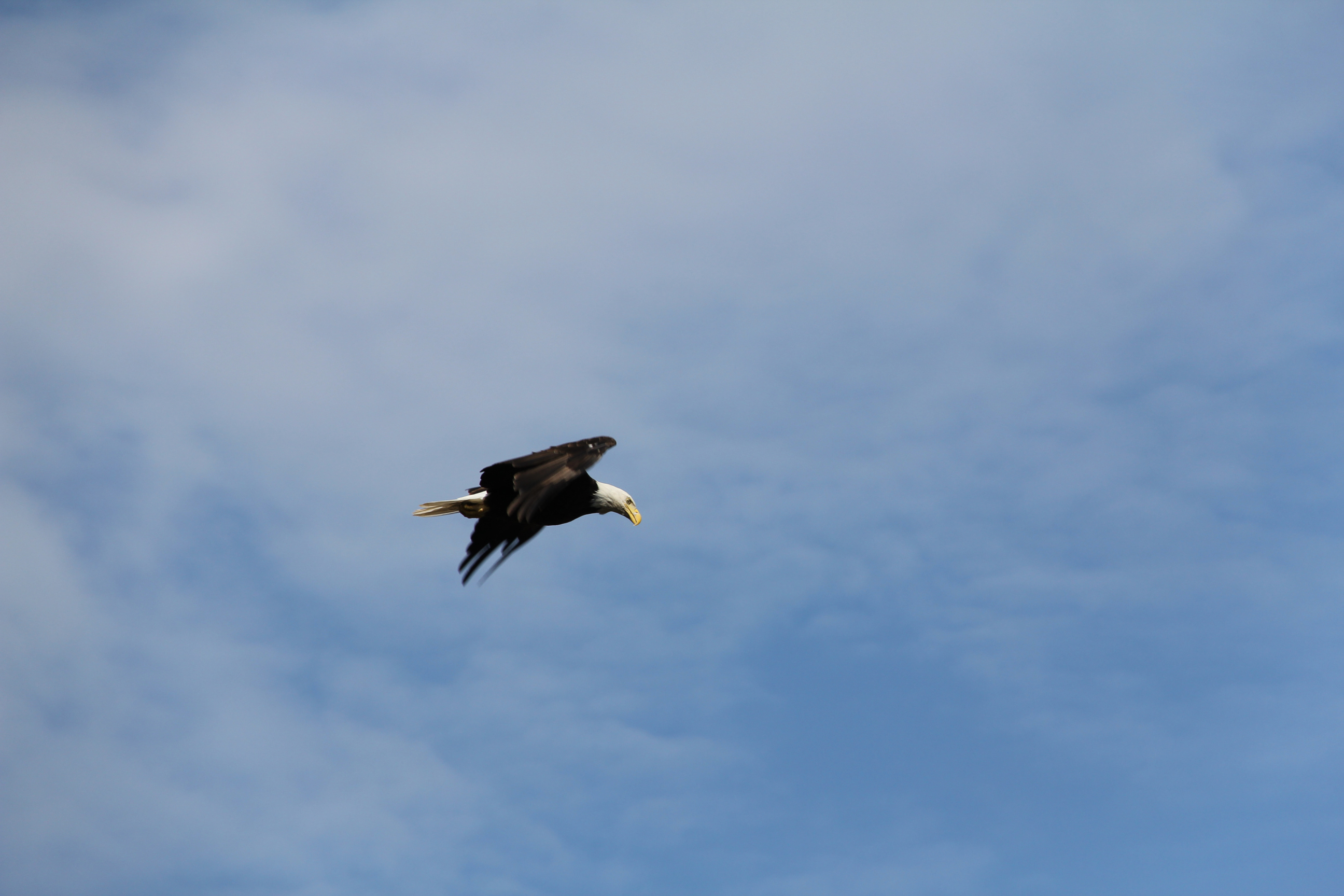
An eagle soars high above the Minnesota River at Riverside Park. (Minnesota Prairie Roots copyrighted photo October 2024)
The Minnesota River shoreline as photographed from Riverside Park. (Minnesota Prairie Roots copyrighted photo October 2024)

Recently I spent a bit of time in St. Peter while on a fall color drive. Randy and I picnicked at Riverside Park—Mill Pond & Campground. I watched volunteers prepare for a haunted hayride along the park’s trails, nearly twisted my ankle in an unfilled hole in the grass, noted how murky the Minnesota River appeared, observed an eagle soaring, and noticed the roof of the small picnic shelter. It looked like the top of an old grain bin, much to my rural roots delight.

I appreciated that books inside the St. Peter Thrift Store were mostly displayed horizontally, making it easier for me to read the titles. (Minnesota Prairie Roots copyrighted photo October 2024)

Following lunch, we stopped briefly downtown when I spotted a thrift store. I always enjoy poking around second-hand shops. Not that I’m looking for anything in particular. Often I leave empty-handed. But this time I picked up a clutch of greeting cards because I’m one of those people who still sends cards on birthdays and other occasions. Randy found a cassette tape of some radio talk show, nothing that interests me.

Outside the Arts Center of Saint Peter. (Minnesota Prairie Roots copyrighted file photo October 2024)
Inside the arts center, I viewed this and other collages by Mankato artist Holly Dodge. Her exhibit has closed. The gallery space now features the work of artists participating in the BUY-AND-TAKE INVITATIONAL and also Bianaca Wilson’s “SIEMPRE BUSCANDO.” (Minnesota Prairie Roots copyrighted file photo October 2024)

We’d parked along busy Minnesota Avenue/US Highway 169 directly in front of the Arts Center of Saint Peter. So, of course, I had to check out the gallery exhibit—collage art by Mankato artist Holly Dodge. The exhibit has since closed. I meandered, photographing some of her pieces. I’m always impressed by the diversity of art, how creative minds work.

Paul Granlund’s sculpture offers a unique perspective through which to view downtown St Peter. (Minnesota Prairie Roots copyrighted photo October 2024)

Once outside, I aimed my camera lens toward the distinctive bronze sculpture, “Mobius Strip,” crafted by Paul Granlund, a noted Minnesota sculptor, 1952 graduate of Gustavus Adolphus College (across town and up the hill), sculptor-in-residence there from 1971-1996, and much more in an illustrious career. Granlund’s sculpture is an eye-catching identifier of the arts center. Only after I returned home did I learn about the artist and about the many Granlund sculptures gracing the Gustavus campus. A return trip just to see those is now on my must-do list. I also found heron and eagle sculptures tucked into a pocket park in this block of downtown.

The heron sculpture is to the left, the eagle to the right (hidden by the shrub) in this pocket park. (Minnesota Prairie Roots copyrighted photo October 2024)

I discovered, too, Poshinate Kiddos, a beautiful baby and kids gift boutique where I looked, but didn’t buy (not this trip). I loved the merchandise and the friendly, helpful shopkeeper.

A row of historic buildings sits along US Highway 169, where a center island divides the roadway in downtown St. Peter. (Minnesota Prairie Roots copyrighted photo October 2024)

Historic buildings lining Minnesota Avenue drew my interest. About a dozen are on the National Register of Historic Places. Rather than cross the wide, wide street where traffic whizzes by at speeds that make me uncomfortable, I zoomed and photographed. I appreciate historic architecture and when a community cares enough to save it.

One of the Embassy signs… (Minnesota Prairie Roots copyrighted photo October 2024)
And then on the other side of the Embassy, this sign. (Minnesota Prairie Roots copyrighted photo October 2024)

Within the single block I walked, I also noticed signage on the Embassy Bar, or Blaschko’s Embassy Bar & Grill, depending on which sign you view. Signs always draws my interest, not only as identifiers but also as works of art.

This and other words tag the windows of the Arts Center of Saint Peter. (Minnesota Prairie Roots copyrighted photo October 2024)

Retracing my steps from River Rock Coffee & Tea, a busy place at the end of the block, I paused at the arts center again. On the second floor I spotted a singular word—writing—spanning a wide window. Now, when you’re a writer like me, you get excited about a word that celebrates your craft. That left a lasting impression on me as we pulled out of St. Peter intent on seeing what we’d come to see, the colorful trees along Highway 169 heading north toward Le Sueur. But the trees weren’t colorful. Not at all. Could have been the timing or the day, which was extremely windy with hazy skies.

I didn’t go into the River Rock. But I looked through the large windows to see the coffee and tea shop teeming with customers. (Minnesota Prairie Roots copyrighted photo October 2024)

Although disappointed, I was not disappointed in the river town, the college town, the historical town of St. Peter. I need to return, devote an entire day to exploring a place that once could have been Minnesota’s state capital…if not for the theft of a legislative bill in 1857 by politician Joseph Rolette and the judicial ruling that followed.

© Copyright 2024 Audrey Kletscher Helbling

 

At home comfy with Paul Bunyan in Faribault October 22, 2024

Minnesota artist Adam Turman designed this Abbey Road throw (inspired by the Beatles “Abbey Road” visual) for the Faribault Mill. It features the Hamm’s beer bear, Paul Bunyan, the Pillsbury Dough Boy and State Fairchild, all legendary Minnesota icons, against a metro skyline backdrop. (Minnesota Prairie Roots copyrighted photo October 2024)

AS A LIFE-LONG MINNESOTAN, certain things pop out at me as iconic Minnesota. Topping that list—Paul Bunyan and Babe the Blue Ox. I realize we’re not the only place claiming this over-sized legendary lumberjack and his ox as ours. But both are assuredly important in state lore, tourism and business identity, mostly in central and northern Minnesota where our lumber industry is rooted.

This Paul Bunyan sign is just blocks from my home. Granted, Paul is not wearing his usual buffalo plaid flannel shirt. (Minnesota Prairie Roots copyrighted photo September 2023)

Yet, I only need head south a few blocks from my house to see Paul marking Bauers Southside Liquor, once also home to the adjoining Paul Bunyan South gas station and convenience store. It closed years ago as did all the other Paul Bunyan stores in Faribault.

Paul Bunyan’s bed sits by the Faribault Mill along the Cannon River on Faribault’s northside. (Minnesota Prairie Roots copyrighted photo October 2024)
A roadside sign welcomes visitors to hop into Paul Bunyan’s bed. (Minnesota Prairie Roots copyrighted photo October 2024)
The bed showcases several of the Mill blanket patterns. (Minnesota Prairie Roots copyrighted photo October 2024)

Yet, the legendary lumberjack maintains his influence locally. Recently, I spotted an enormous buffalo plaid blanketed “bed” in the parking lot of Faribault Mill, an iconic business since 1865 known for its wool blankets. Signs invited folks to stop, climb onto the Paul Bunyan bed and take photos.

A friend photographs friends who climbed into Paul Bunyan’s bed. (Minnesota Prairie Roots copyrighted photo October 2024)

While I was there, one couple did just that. They were camping in nearby Nerstrand Big Woods State Park with others and headed into Faribault for stops at a local apple orchard and also at the Mill. I tipped them off to other places to visit, especially our historic downtown. I never pass on an opportunity to tell visitors about my community.

A comfy photo op in Paul Bunyan’s bed. (Minnesota Prairie Roots copyrighted photo October 2024)

On this Saturday, after photographing that creative marketing bed, I followed the two couples from Minneapolis into the Mill retail store. I haven’t been inside in a while. To my delight, I found more Minnesota icons on Mill products. I should note here that the Mill has a second mill (acquired in 2022) in Monmouth, Maine (Brahms Mount) which specializes in cotton textiles. Paul Bunyan is also big in Maine folklore.

Adam Turman designed this loon throw pillow displayed on an easy chair upholstered with Faribault Mill blankets. (Minnesota Prairie Roots copyrighted photo October 2024)

I love how Faribault Mill tapped into Minnesota talent. Artist Adam Turman created art for throws and pillows that is distinctly part of Minnesota culture and life. I’ve been a fan of Turman since viewing his art on seasonal-themed murals in neighboring Northfield. His work for Faribault Mill features Paul Bunyan and Babe, the Hamm’s beer bear, the Pillsbury Dough Boy, State Fairchild, loons, a snowy owl, cardinal, Split Rock lighthouse and the Boundary Waters Canoe Area Wilderness.

The Faribault Mill partnered with Hamm’s Beer on these pillows. Hamm’s was first brewed in Minnesota, “the land of sky blue waters,” in 1865. It is no longer made in Minnesota. (Minnesota Prairie Roots copyrighted photo October 2024)

While strolling through the Mill store, I focused on the art-themed merchandise among all the traditional primarily plaid and solid-hued woolen blankets people have come to associate with Faribault’s mill.

Visitors touring the Mill settle on these blanket remnant draped chairs to learn more about the Mill. (Minnesota Prairie Roots copyrighted photo October 2024)

In a room just off the main shop, I spotted folding chairs set up for folks who tour the mill. Tours are available at 11 am and 1 pm Fridays and Saturdays for a fee. Wool blanket remnants drape the chair backs, creating a memorable and colorful scene.

Peanuts themed throws are among Mill merch, shown here in the gathering space for those touring the factory. (Minnesota Prairie Roots copyrighted photo October 2024)

Also memorable are the Linus statue and the Peanuts-themed throws. We Minnesotans are proud of the Peanuts crew created by Charles Schulz, born in Minneapolis and raised in St. Paul. And I am proud of the Faribault Mill, a long-standing business in my community known for its quality made-in-America products. During the two World Wars, the then Faribault Woolen Mill made wool blankets for Army soldiers.

Another photo op, sheep cut-outs photographed inside the entrance to the retail store. (Minnesota Prairie Roots copyrighted photo October 2024)

Today Mill employees continue to create quality products, and not just blankets, at its two plants. The Mill also weaves into the fabric of America via a Paul Bunyan-sized spirit of generosity. For every bed blanket sold, the company donates a blanket to nonprofits serving youth experiencing homelessness in major cities across the U.S. That’s through its Spread the Warmth program. The Mill has also donated blankets to local youth.

The marketing and business teams at Faribault Mill clearly understand the value of connecting with community, of giving back and of drawing customers via creativity. The Paul Bunyan-sized buffalo plaid blanketed bed and the Minnesota art by Adam Turman both grabbed my attention. While the bed has been put to bed for the season—maybe because Paul Bunyan needs his wool blankets back for the forthcoming winter—you can still step inside the retail store and wrap yourself in the warmth of Minnesota from blankets to legendary icons.

© Copyright 2024 Audrey Kletscher Helbling
 

From Owatonna: For the love of signs October 3, 2024

Filed under: Uncategorized — Audrey Kletscher Helbling @ 4:35 PM
Tags: , , , , , , , , , ,
Among the many signs that drew my interest in Owatonna was this insurance agency sign. The bold colors and layered signage stood out. (Minnesota Prairie Roots copyrighted photo September 2024)

SIGNS, WHETHER HANDWRITTEN on a piece of paper or professionally made to mark a business, fascinate me. They reveal much about the heartbeat and history of a community.

Love this artsy sign. The curving arrow points me directly to Wagner’s. (Minnesota Prairie Roots copyrighted photo September 2024)

On a recent visit to Owatonna’s downtown, I photographed a collection of signs that caught my eye. I lean toward vintage, or those that appear vintage. I also lean toward unusual names and interesting fonts and art.

This candy shop and eatery has a lengthy history in Owatonna. (Minnesota Prairie Roots copyrighted photo September 2024)

Most people likely view a sign only as an identifier or source of information. Clearly not me. I see signage through the lens of a writer and a photographer.

Even if partially missing, I still appreciate the vintage charm of this sign. (Minnesota Prairie Roots copyrighted photo September 2024)
The Kitchen, a downtown Owatonna staple gathering spot. (Minnesota Prairie Roots copyrighted photo September 2024)
A catchy name for a bar. (Minnesota Prairie Roots copyrighted photo September 2024)

Every town, not just Owatonna, offers a potluck of signs, a feast for the eyes. All signs bring something to the table. Something that tastes of local flavor. And I’m not just talking food or drink, although certainly you will find plenty of that along North Cedar Avenue and other streets spoking off Owatonna’s main downtown artery.

This shows partial signage for Central Park Coffee and a mini owl mural, among several owls “hidden” in downtown Owatonna. (Minnesota Prairie Roots copyrighted photo September 2024)
It’s that time of year again, time for all things pumpkin as noted on this sandwich board. (Minnesota Prairie Roots copyrighted photo September 2024)
A long-standing pizza place along North Cedar Avenue. (Minnesota Prairie Roots copyrighted photo September 2024)

I’m also talking about the stories behind those signs. The people who own the businesses, run them, welcome customers inside for a cold one, a cup of coffee, a slice of pizza, a new pair of shoes, a pumpkin truffle, even an insurance policy. Signs are more, much more, than simply signs.

A mostly unreadable (at least to me) ghost sign. (Minnesota Prairie Roots copyrighted photo September 2024)
On the side of Owatonna Shoe is this painting of Princess Owatonna, after whom the city is named. A statue of the princess stands in Mineral Springs Park, the spring and princess being part of local lore. (Minnesota Prairie Roots copyrighted photo September 2024)
The long ago Roxy Theater is honored in the Main Street Mural in a downtown pocket park. (Minnesota Prairie Roots copyrighted photo September 2024)

Signs also hold history. Ghost signs, of which there are several in Owatonna, write of bygone days. Murals paint history, too, of the Roxy Theater and of Princess Owatonna and more.

And then I spotted this vintage gem on a building… (Minnesota Prairie Roots copyrighted photo September 2024)

Wherever you live, whatever community you visit, I encourage you to pause, look and really see the signage. Appreciate the history. Consider the stories. Study the fonts and art. Enjoy the potluck of signs that flavor a place.

© Copyright 2024 Audrey Kletscher Helbling
 

Oh, the places my photos go, including into a vets home in Bemidji August 19, 2024

This photo, taken at the Grant Wood Rest Area along I-380 south of Cedar Rapids, Iowa, was published in a book about architecture. It was converted to black-and-white in the book. (Minnesota Prairie Roots copyrighted file photo)

THROUGHOUT MY 15 YEARS of blogging, I’ve sold rights to dozens of images sourced from Minnesota Prairie Roots. My photos have published on websites, in tourism guides, on album covers, on packaging for a toy company, in magazines and newspapers, on business promotional materials, on signs and banners, on the cover of a nonprofit’s annual report, in books…

Three of my photos published in this book. (Book cover sourced online)

I’m especially proud of the three photos published in The World of Laura Ingalls Wilder—The Frontier Landscapes that Inspired the Little House Books by New York Times bestselling author Marta McDowell. I grew up only 25 miles from Walnut Grove, Wilder’s childhood home. Wilder inspired me as a writer and photographer with her detail-rich creative style. I’m also proud of my two Grant Wood-themed Iowa rest stop photos printed in the book Midwest Architecture Journeys. I have copies of both books.
My Laura Look-Alike Contest photo displayed in a Chicago museum. My friend Laurel happened upon the photo while touring the museum and snapped this image for me. (Minnesota Prairie Roots copyrighted photo by Laurel Engquist)
Likewise, I had the honor of selling rights to photos displayed in a temporary Laura Ingalls Wilder exhibit at the American Writer’s Museum in Chicago, at the Minnesota Children’s Museum in St. Paul and at the National WWII Museum in New Orleans. Atherton Pictures purchased rights to a southwestern Minnesota farm site photo for a WWII video created for the museum. I’ve never visited any of the three museums.
The Minnesota Veterans Home, Bemidji, which can house 72 veterans, recently opened. (Photo courtesy of Minnesota Veterans Home, Bemidji)

Seldom do I see how my photos are used once I email the original high resolution digital images to the buyer. But this summer I had the joy of seeing my framed photos displayed in hallways of the new Minnesota Veterans Home in Bemidji. I was in town to bring my son, who lives in Boston and was in Bemidji for the international unicycling convention, home to Faribault. I knew I had to make time for a stop at the veterans home.
Me with two of my photos, a scene from the Northfield Area Veterans Memorial on the left and the other at the Rice County Veterans Memorial. (Photo courtesy of Minnesota Veterans Home, Bemidji)

So in between Unicon 21 events, Randy and I headed to the vets home in hopes of seeing my six framed art prints. We found four, thanks to Maryhelen Chadwick, public affairs/volunteer coordinator at the Veterans Home. When we showed up unexpectedly, Chadwick graciously led us through the sprawling Town Center in search of my photos. There, in the hallways of this public space, which includes a multipurpose room, theater, club room, learning studio, family dining room, therapy gym and meditation room, we located four of my photos.

This photo, converted to black-and-white, hangs in the Bemidji veterans home. (Minnesota Prairie Roots copyrighted file photo)
My photo of the Traveling Vietnam Memorial Wall also hangs in the vets home. (Minnesota Prairie Roots copyrighted file photo)

Curated by a St. Paul art company, the selected images are all veteran-themed. Oversized photos of veterans’ memorials in Faribault and Northfield anchor a hallway wall. Elsewhere in the public space are two more images shot in Faribault—a veteran playing taps at a Memorial Day program and a photo of items placed at the Traveling Vietnam Memorial Wall. Chadwick later found my photos of sculptures at the county memorial in Faribault and the Rock County Veterans Memorial, Luverne, in the residential wing of the veterans home.

My father, Elvern Kletscher, on the left with two of his soldier buddies in Korea. (Minnesota Prairie Roots copyrighted photo)

To see four of my six photos showcased in a public space where veterans, their families and friends, staff, and others can view my work is humbling. I am the daughter of a Korean War veteran. My dad, Elvern Kletscher, fought on the front lines in Korea as a foot soldier. He experienced the worst of war. The injuries. The killing. Atrocities so awful, so horrific that he was forever changed by his time in combat. He suffered from Post Traumatic Stress Disorder (unrecognized at the time of his discharge). He endured much pain, heartache, trauma. Nightmares. Flashbacks.

My photo of a sculpture at the Rock County Veterans Memorial, lower right, is showcased in a group of images in the Beltrami Household. (Photo courtesy of Minnesota Veterans Home, Bemidji)

But, in his later years of life, Dad found solace among other veterans in a support group through the Redwood County Veterans Service office. I remember how hard officials worked to secure the Purple Heart that Dad finally got 47 years after he was wounded on Heartbreak Ridge. I was there for that emotional public ceremony.

My photo of a dove and eagle at the Rice County Veterans Memorial in Faribault graces a hallway of the Beltrami Household. (Photo courtesy of Minnesota Veterans Home, Bemidji)

Today emotions swell again as I think of my framed photos hanging in the Minnesota Veterans Home—Bemidji. To me these are not just veterans-related images procured as art. They are a photographic “thank you” to every person who has served our country. Because of individuals like my dad, I live in a free country, in a democracy. I never take that for granted. To be able to express my gratitude via my photos is truly an honor, a joy and deeply meaningful.

I hope my photo of a dove sculpture, symbolizing peace, and an eagle, symbolizing freedom, conveys my gratitude to the veterans living in the Minnesota Veterans Home, Bemidji. (Minnesota Prairie Roots copyrighted file photo)

NOTE: Maryhelen Chadwick kindly found and photographed my eagle/dove and soldier sculpture photos per my request after I visited the home. They hang in the Beltrami Household, one of four 18-room residential areas, a space I could not tour due to privacy.

© Copyright 2024 Audrey Kletscher Helbling