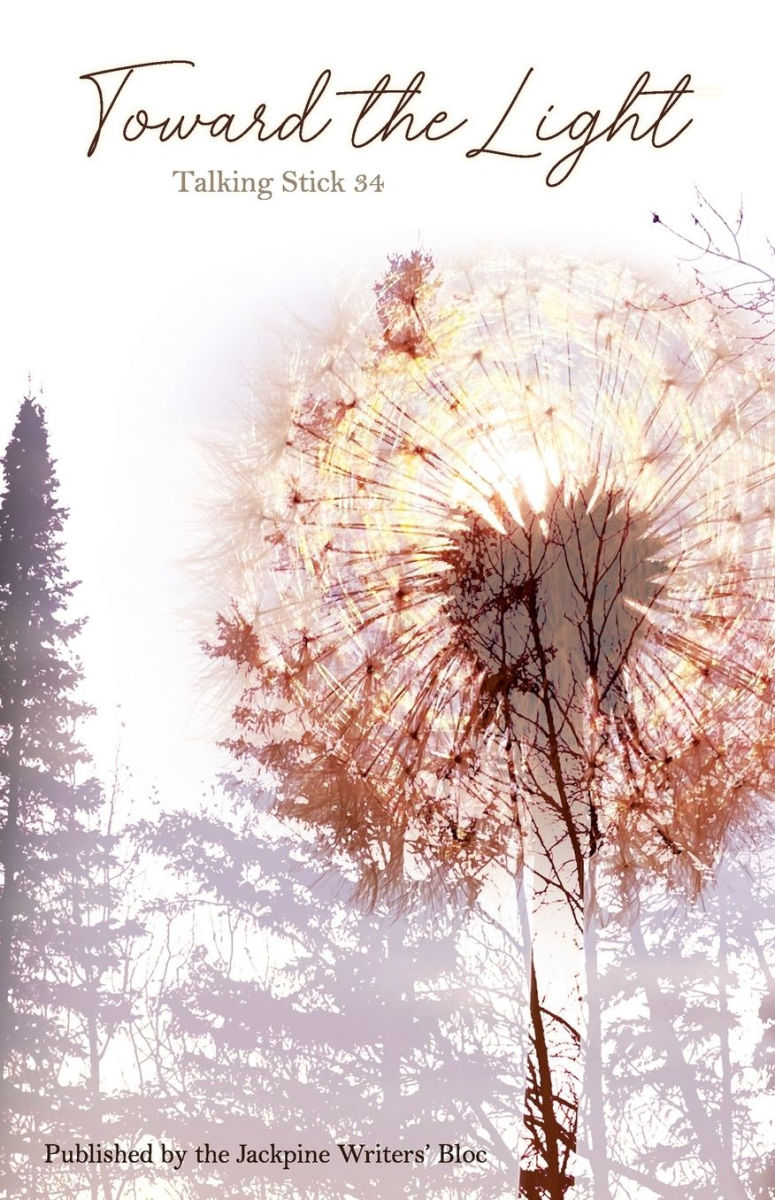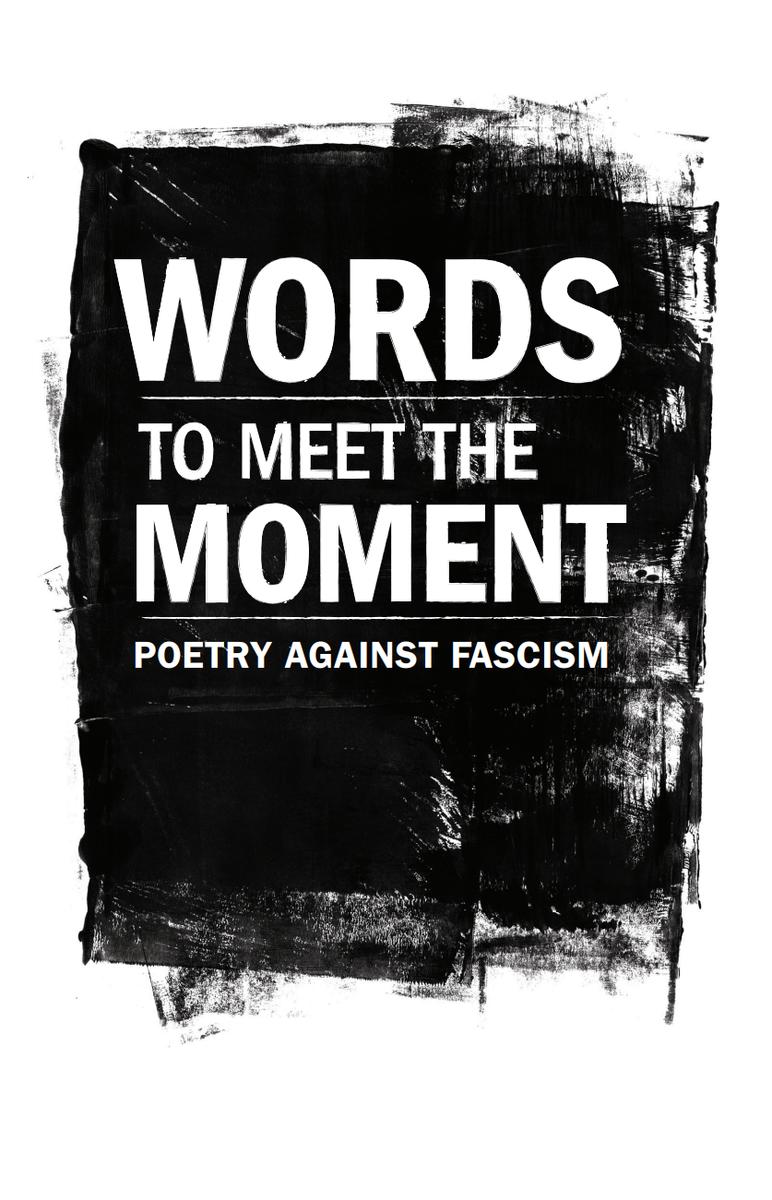
Two of my poems and a work of creative nonfiction are published in this literary anthology. (Book cover sourced online)
FOR THE 16thCONSECUTIVE YEAR, my writing has been selected for publication in the Talking Stick, a literary anthology published by the Jackpine Writers’ Bloc based in northern Minnesota.
The editorial board chose two of my poems, “Up North at the Cabin” and “Where There’s Smoke, There’s Fire,” and a work of creative nonfiction, “Birthing Everett,” for publication in volume 34, titled Toward the Light. The recently-released book features 128 pieces of writing by 76 writers either from Minnesota or with a strong connection to the state.
I consider it an honor to be published in the Talking Stick, which includes the work of talented writers ranging from novice to well-known. I especially appreciate that entries are blind-judged so each piece stands on its own merits. There were 275 submissions from 119 writers for this year’s competition.
Grandpa Randy and grandchildren Izzy and Isaac follow the pine-edged driveway at the northwoods lake cabin. This is my all-time favorite cabin photo. (Minnesota Prairie Roots copyrighted file photo 2020)
I’m particularly excited about two of my pieces published in Toward the Light. Anyone who’s ever spent time at a lake cabin will enjoy my “Up North” poem as it centers on nature and family togetherness. I was in my sixties before I first experienced cabin life. Now I’m building memories with my grandkids each summer at a family member’s lake cabin. That centers this poem.
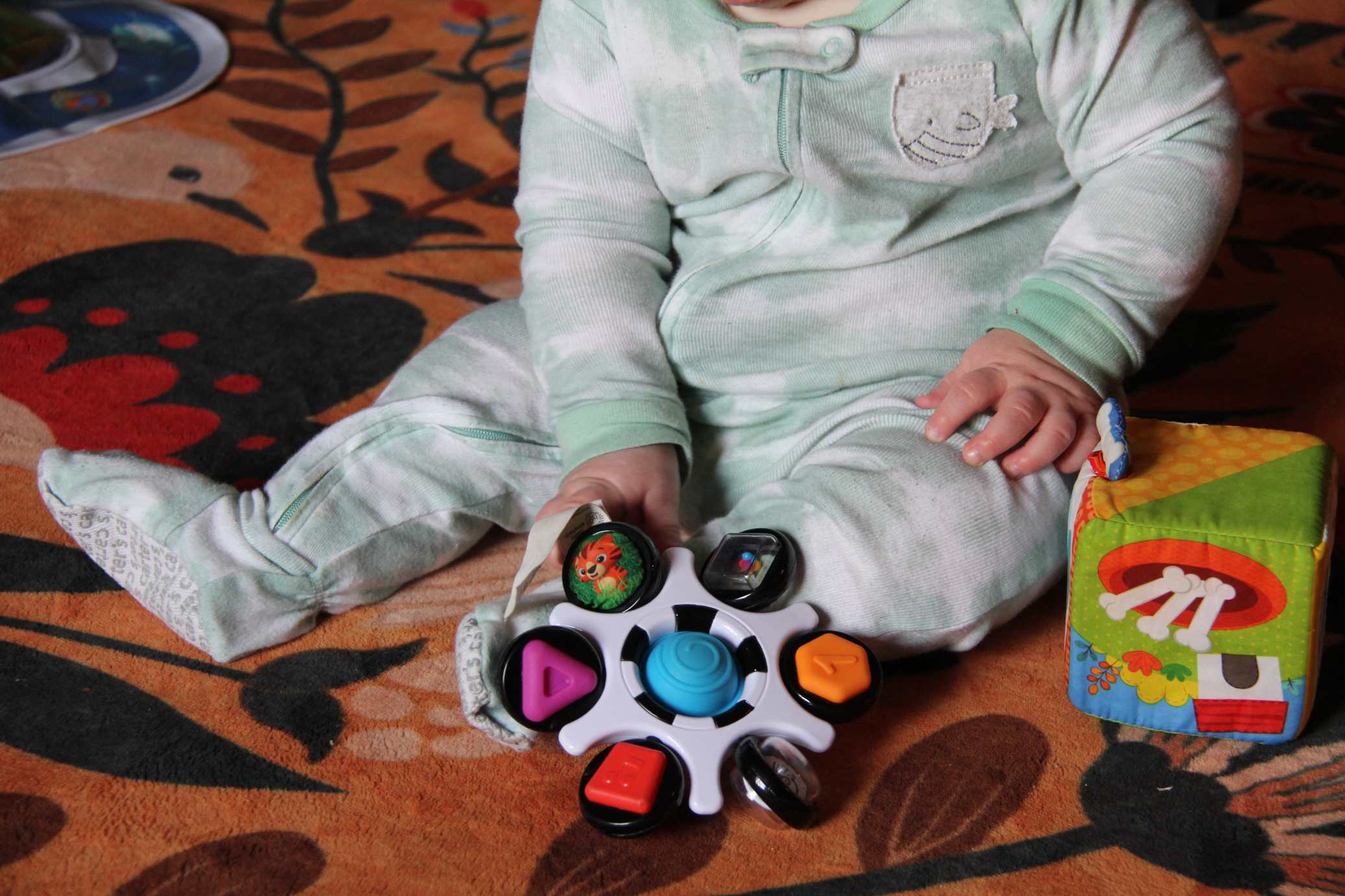
My grandson Everett, nine months old, plays with his toys in his Madison, Wisconsin, home. (Minnesota Prairie Roots copyrighted photo October 2025)
A grandchild also focuses “Birthing Everett,” a deeply personal story about the birth of my 10-pound grandson in January. My daughter Miranda nearly died during childbirth. I knew I needed to write about this to heal from my own trauma of nearly losing her. I will be forever grateful to the medical team at UnityPoint Health-Meriter Hospital in Madison, Wisconsin, for saving Miranda’s life. You just don’t think of women dying during childbirth any more, but it can, and does, happen.
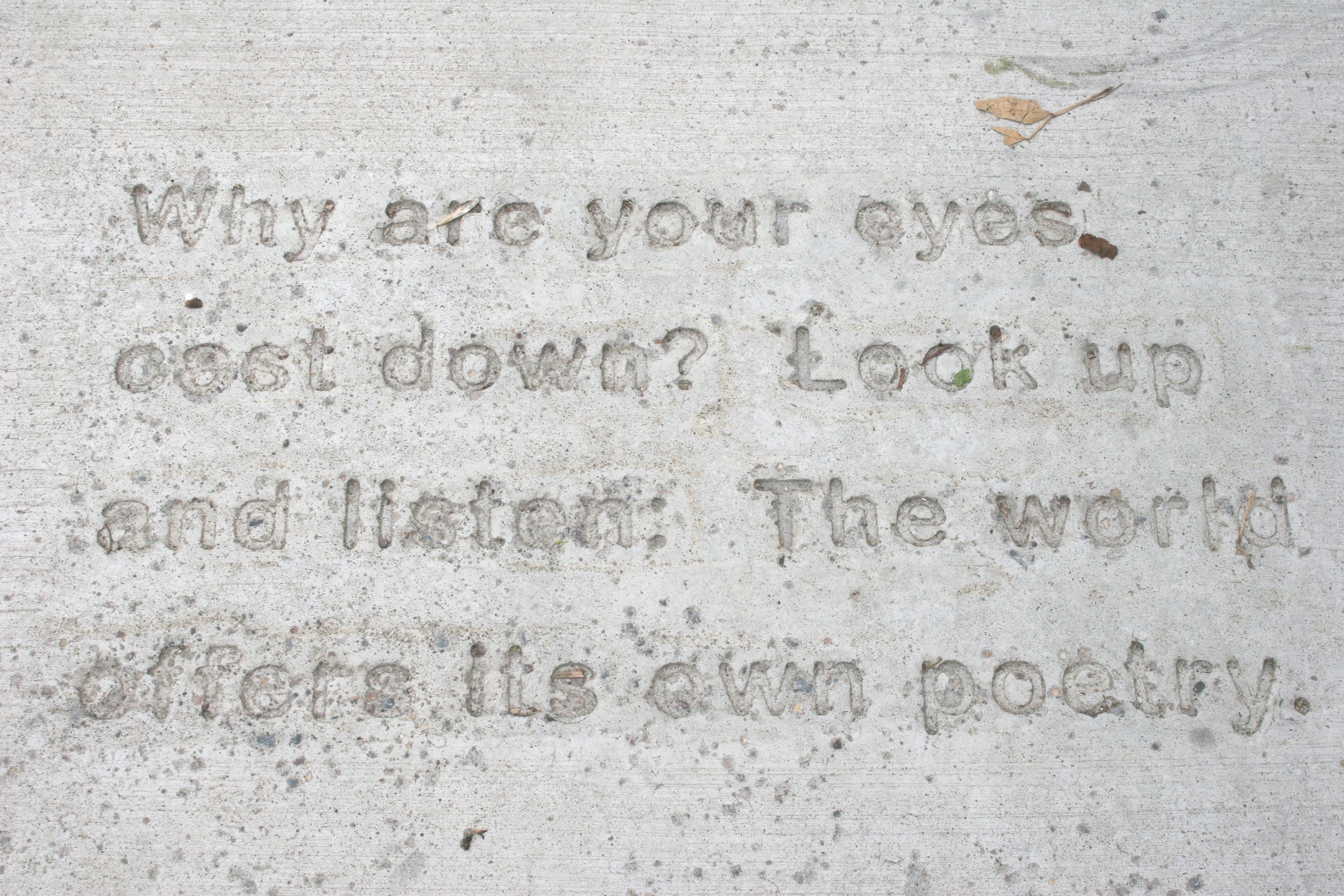
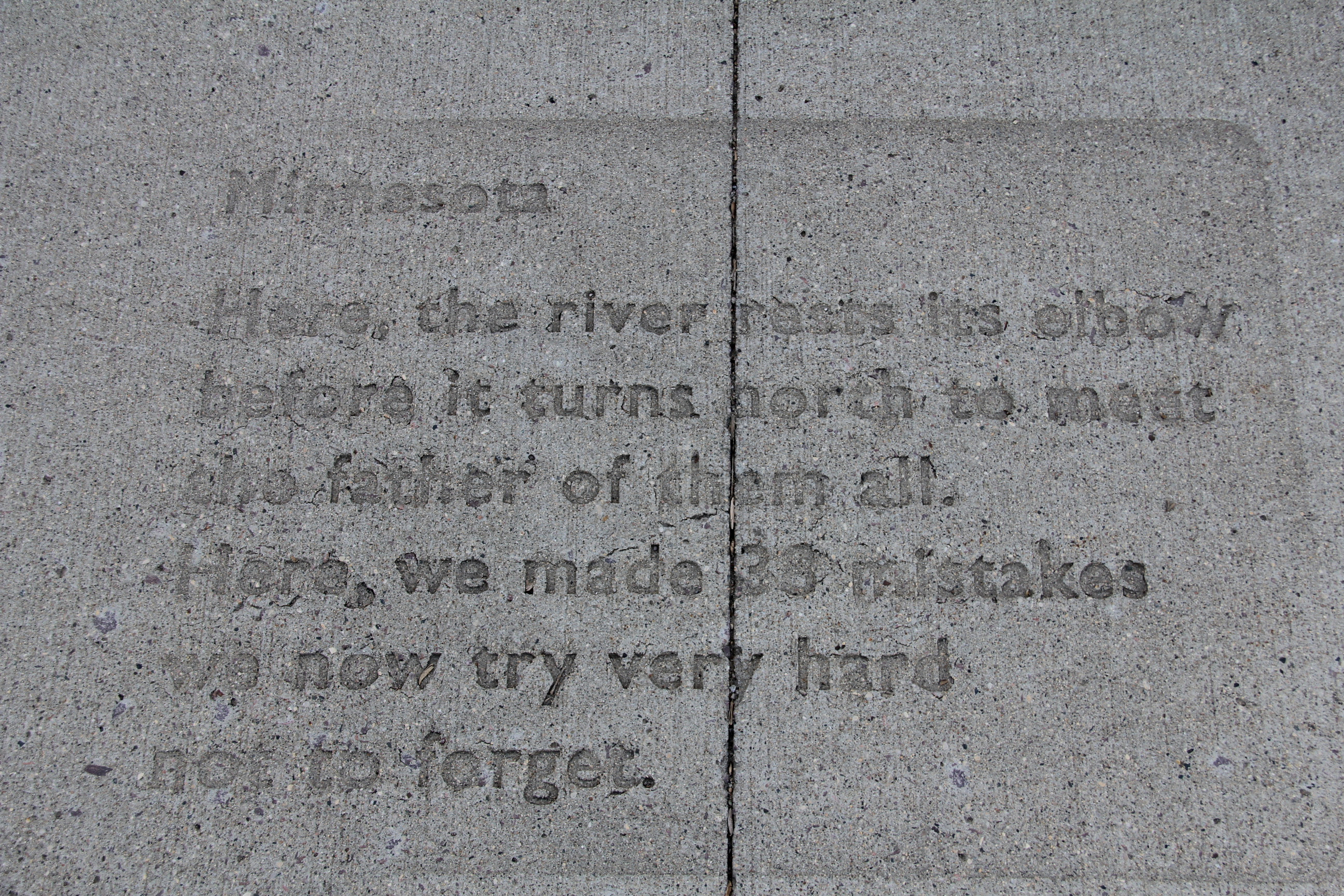
Sidewalk poetry in downtown Northfield, Minnesota, carries a powerful message. (Minnesota Prairie Roots copyrighted file photo)
I DON’T READ MUCH POETRY. I probably shouldn’t admit that given I’m a published poet. But I suspect most of you also are not big poetry readers. Yet, we all should be, especially me.
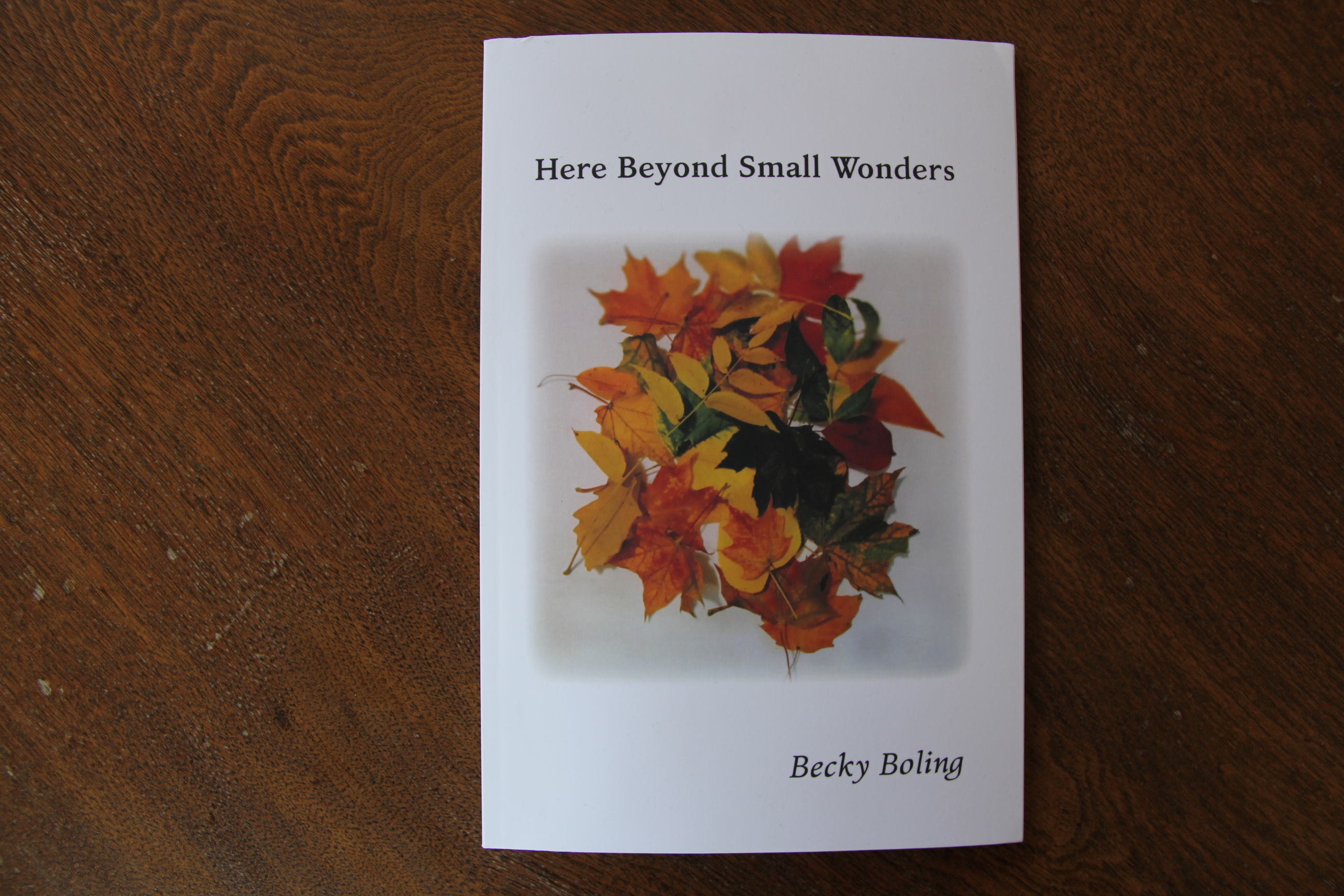
Becky Boling’s recently-released first collection of published poetry. The cover features the poet’s artwork. (Minnesota Prairie Roots copyrighted photo April 2025)
Poetry offers a creative way to view the world, to experience life, eliciting a whole range of emotional responses that connect us to each other, to the earth, to the past and present, and much more. I get excited when I discover a poet whose work truly resonates with me. And that would be the poetry of Northfielder Becky Boling.
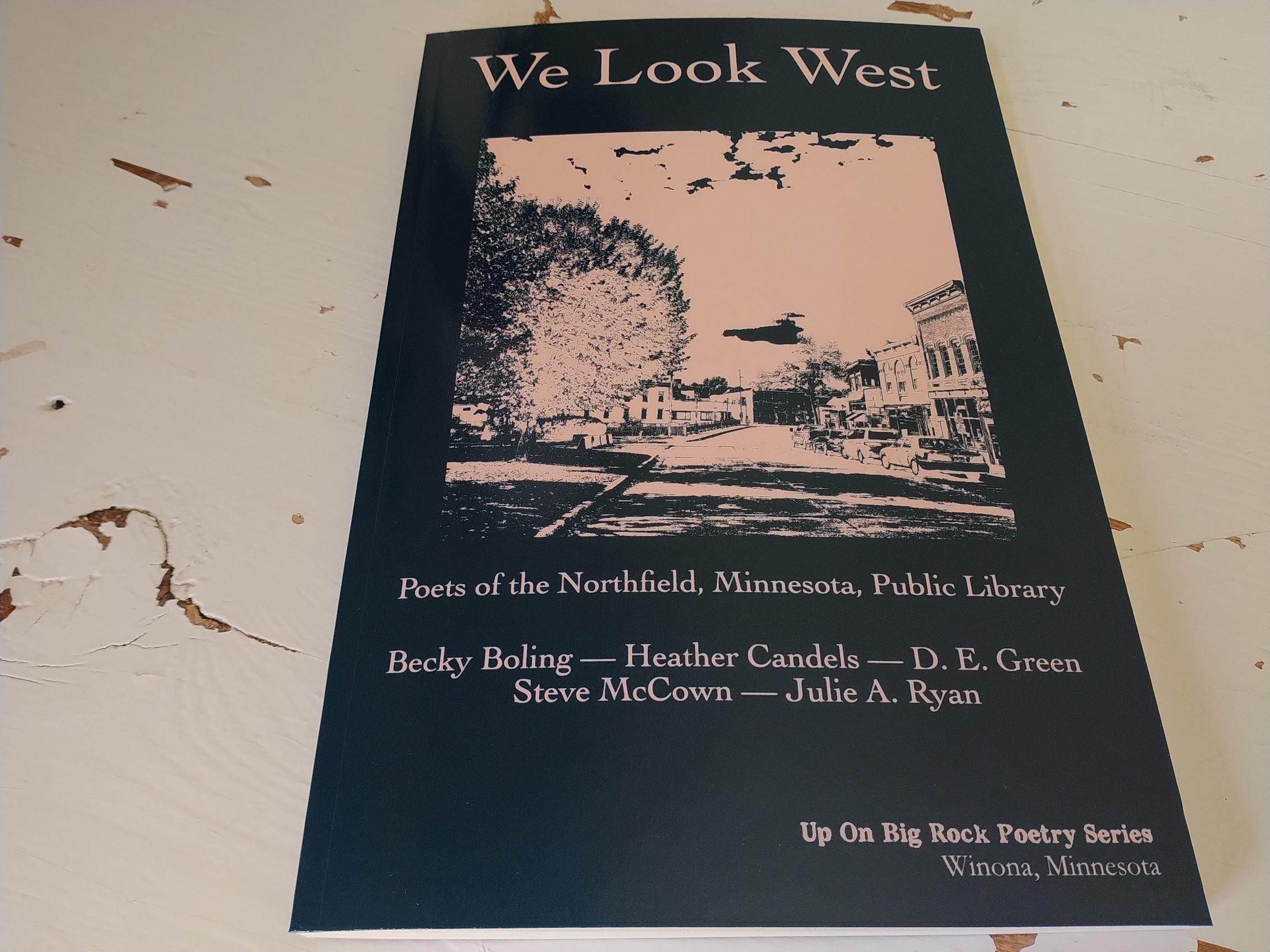
We Look West was published in early 2024 by Shipwreckt Book Publishing Company. (Minnesota Prairie Roots copyrighted file photo 2024)
A year ago, I met Boling when she dropped off a copy of the anthology, We Look West, a collaboration of the Poets of the Northfield Public Library. It includes her work and that of four other talented poets. I love the collection which takes the reader from the sunrise to the sunset of life. The poetry therein is so understandable and relatable.
A box holds bagged poems included in the “Poetry in a Bag” project. (Minnesota Prairie Roots copyrighted file photo 2024)
In May 2024, Boling, I and several other poets participated in a community poetry reading for the “Poetry in a Bag” project coordinated by Mercado Local, a Northfield marketplace for immigrants. Our poems were printed, rolled and bagged before distribution within our communities.
I would see Boling again in September 2024, when she and the other Northfield poets read from We Look West at Books on Central, a Rice County Area United Way used bookshop in Faribault.
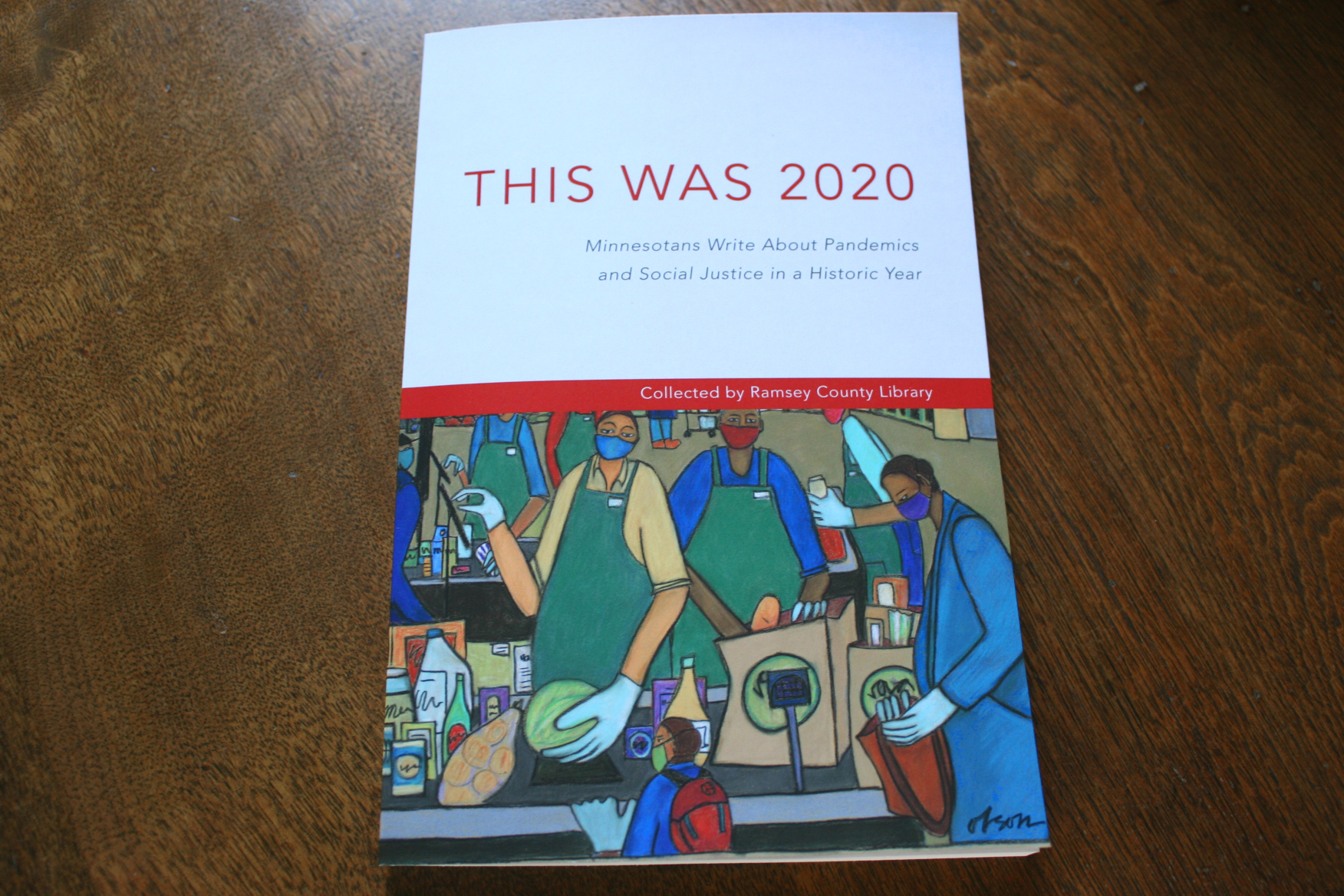
Selected prose and poetry about the pandemic and social justice issues were published by the Ramsey County Public Library in this anthology. (Minnesota Prairie Roots copyrighted file photo)
The poetry of Becky Boling in her first published collection featuring 37 of her poems. (Minnesota Prairie Roots copyrighted photo April 2025)
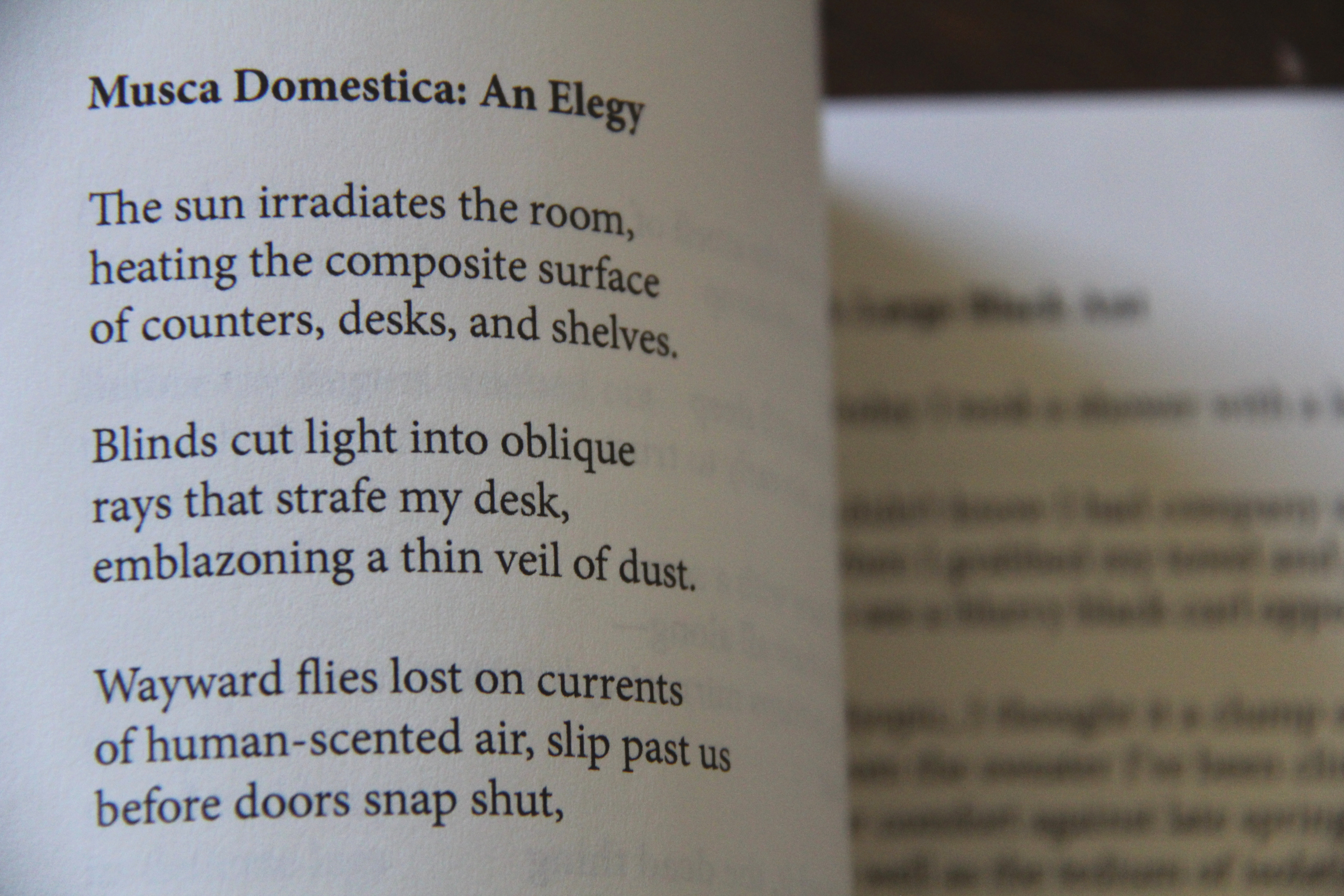
Because of those shared experiences, shared publications and shared love of words, I feel a sisterhood with Boling. So when she asked if I wanted a copy of her first solo poetry collection, I responded with an enthusiastic, “Yes!” Within the pages of Here Beyond Small Wonders, I found what I’ve come to expect from Boling—detailed writing, often about the most ordinary subjects—a dead mouse, a fly, walnuts… Topics you may not even consider poetry-worthy. But Boling has this ability to observe and engage all of her senses to craft words into connective, meaningful poetry.
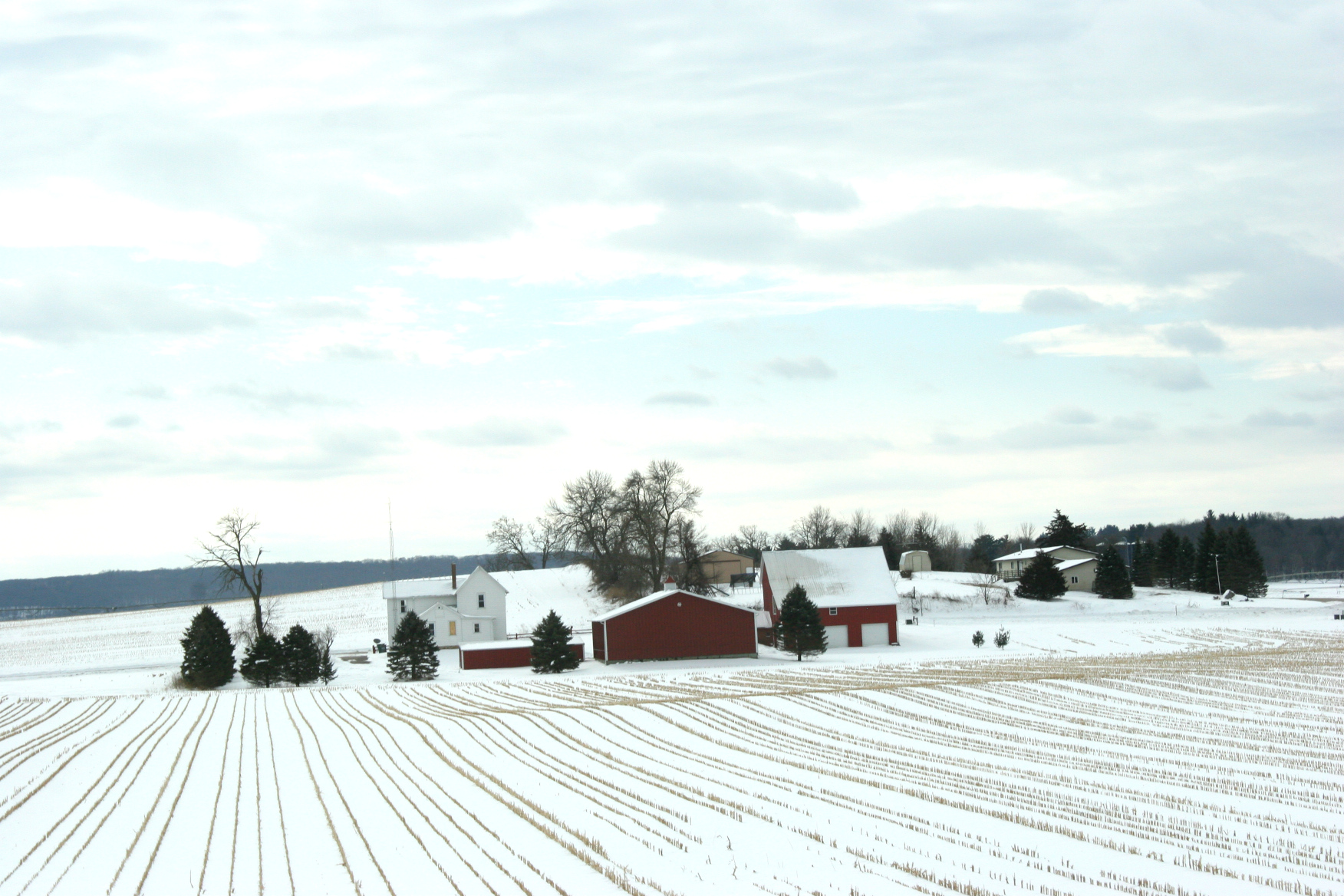
A Wisconsin farm site photographed from Interstate 90 could be a poetry prompt.(Minnesota Prairie Roots copyrighted file photo)
In her poem “Snow Pond,” she defines poetry: Poetry, like freezing temps, seizes the moment, recasts it—through the physics of sight, memory, language—resurrects it anew into patterns, sound and light, marks on a snowy page that glisten and melt on tongue, alight on the inner eye. That definition of poetry is among the best I’ve read, because it is poetry.
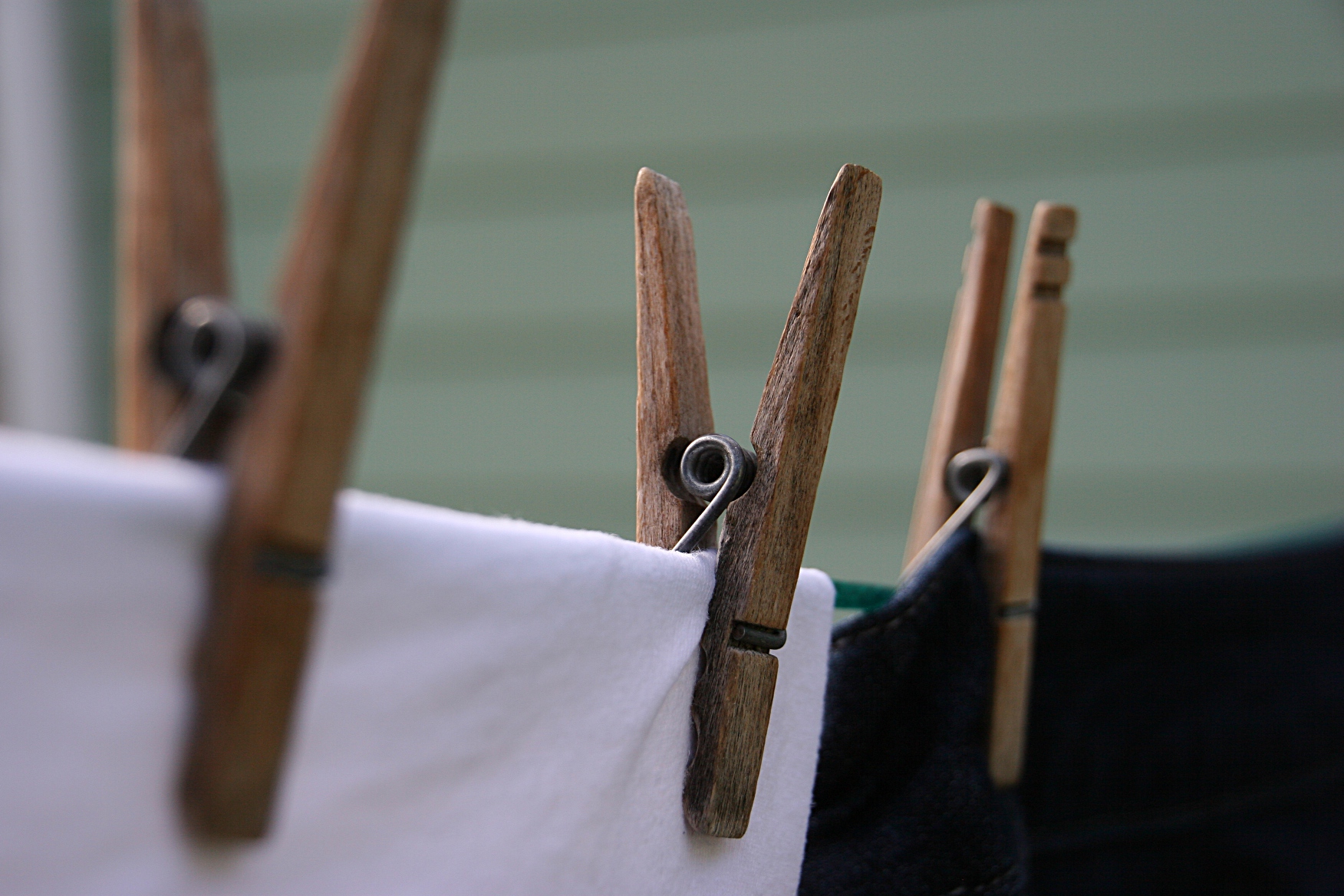
Clothespins on my clothesline clip clothing, not beach towels. (Minnesota Prairie Roots copyrighted file photo)
Anyone who writes poetry recognizes the challenges of finding just the right word, of stringing words together in a new, creative and succinct way, of connecting on an emotional level. But Boling makes the process look easy, taking the reader along with her, whether into her yard or onto the sandy shores of Lake Michigan. In her poem “Clothesline,” she writes of beach towels dancing in the wind. She takes the reader to the beach, to the sights, scents and sounds along the inland sea. I feel her fingertips unclipping the dried towels at end of day as she gathers them like weary babes into my open arms. I did not see that end coming. That element of surprise is, too, a mark of a gifted poet.
Kid-sized Adirondack chairs on a Minnesota beach. (Minnesota Prairie Roots copyrighted file photo)
Her “Adirondack Chair in Snow” is another favorite of mine in Boling’s collection of 37 poems published by Finishing Line Press. She writes of the typically-lakefront chair wedged into a snowbank outside her mother’s apartment building. But this poem is about so much more than an out-of-place chair buried in snow. Boling uses personification to write about her mother. In those six verses, I found myself missing my own mom, who died during the pandemic in January 2022. Boling’s emotions, my emotions, weave together in her writing and in my reaction.
My own artsy autumn leaf image, of leaves in the Cannon River. (Minnesota Prairie Roots copyrighted file photo)
In one of her longest poems, Boling writes about the transition to autumn in “Persephone’s Bouquet.” Unfamiliar with this Greek goddess, I learned that Persephone’s descent into the underworld is associated with the start of winter. Autumn themes Boling’s poem as the author gathers hot-pepper reds, creamy yellows…brazen scarlet…leaves, something I also enjoy doing in fall. But this is a poem about life, too, not just about a change in seasons. Plus, the poem connects to the cover of Here Beyond Small Wonders, Boling’s own autumn leaf art.
Her first collection of poems is about nature and place and seasons and life. Moments experienced. Details noticed right down to a tar-dark county road…horse flies, green heads glistening in the sun…reedy breath trembling into song. Boling, in her words, opens herself to a pool of words. And I, for one, embrace her poetic writing.
#
FYI: Becky Boling is a retired professor of Spanish and Latin American literature at Carleton College in Northfield. Her poetry and prose have been widely-published in literary journals and anthologies. She also served as a Co-Poet Laureate of Northfield. Click here to find Here Beyond Small Wonders on the Finishing Line Press website.
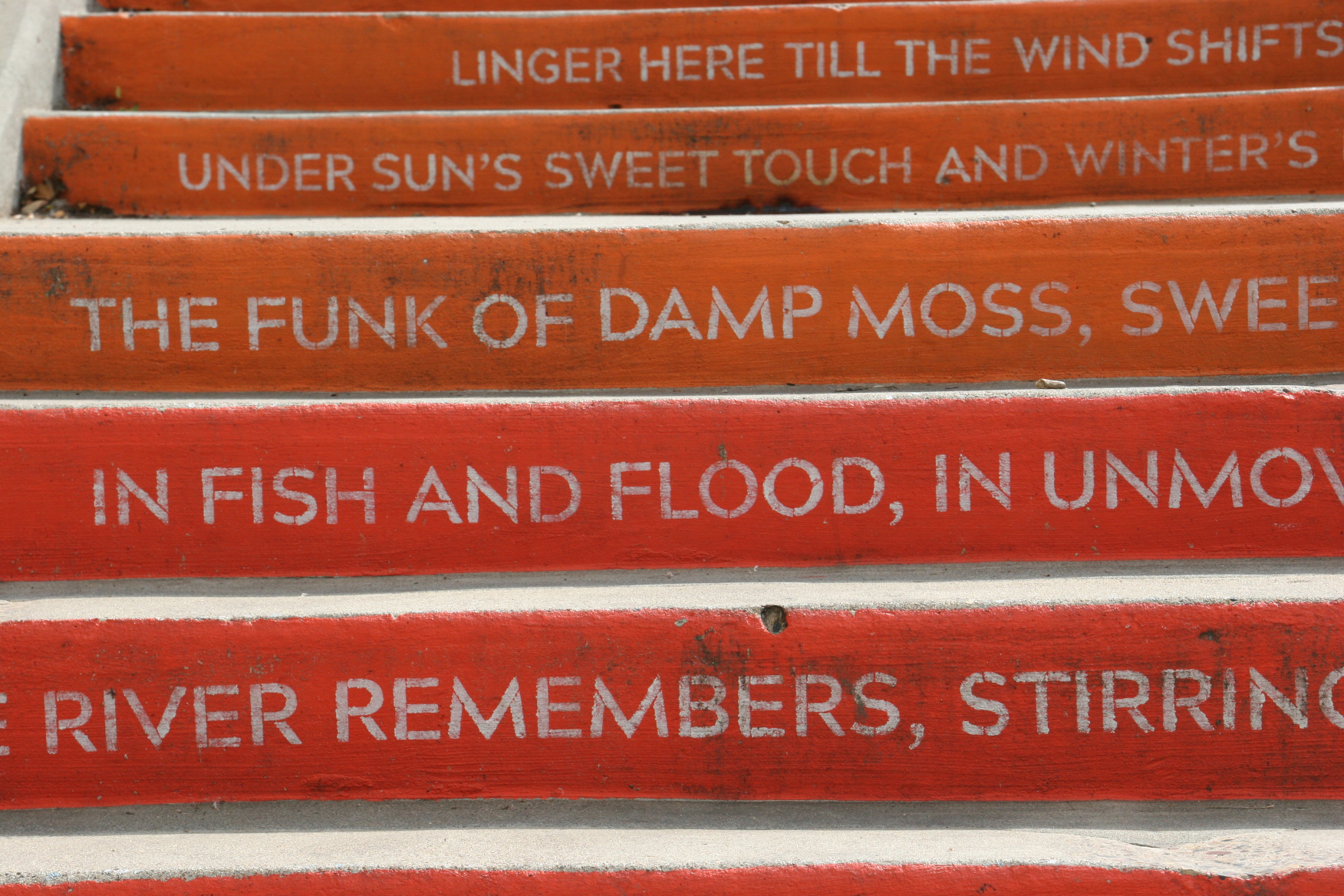
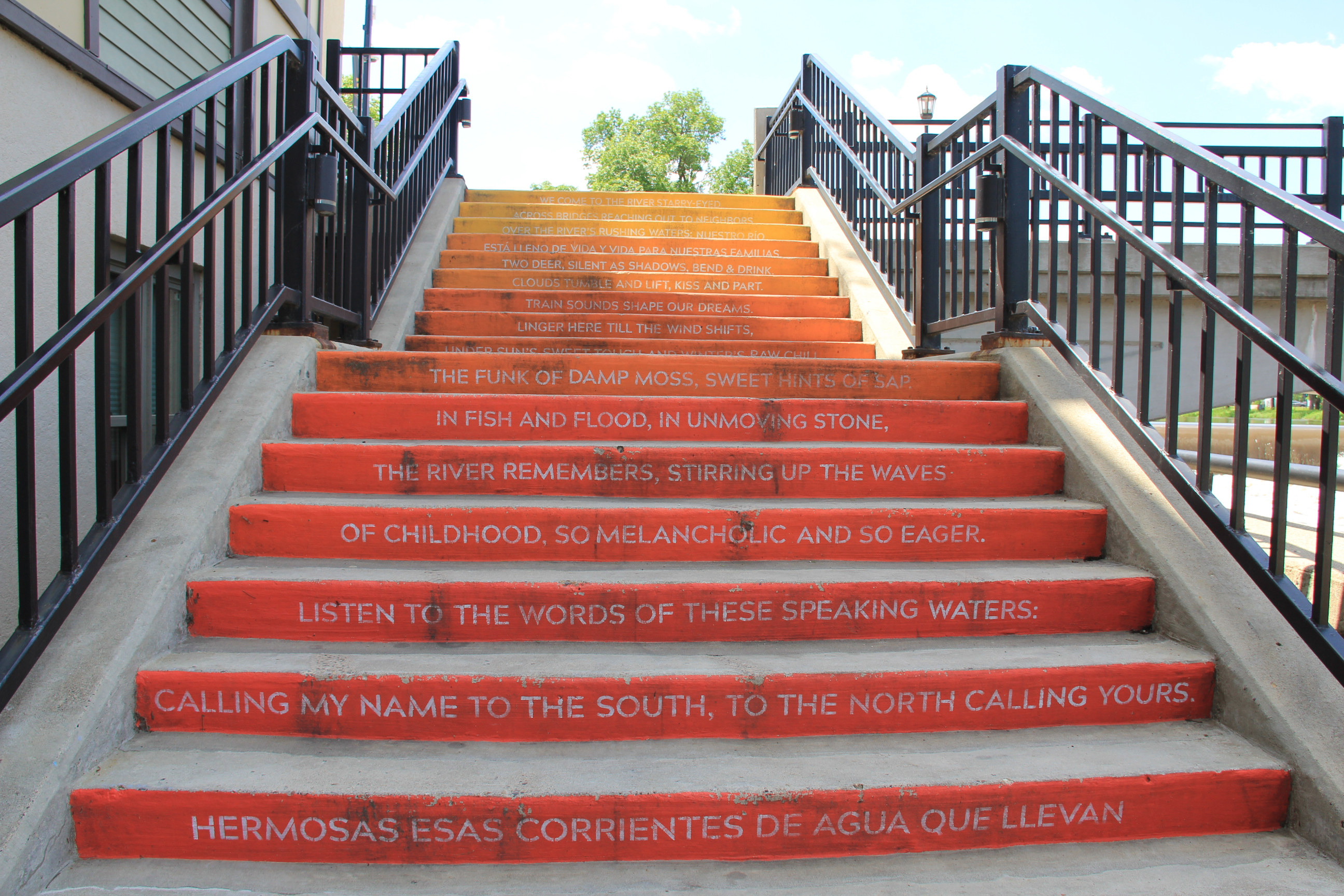
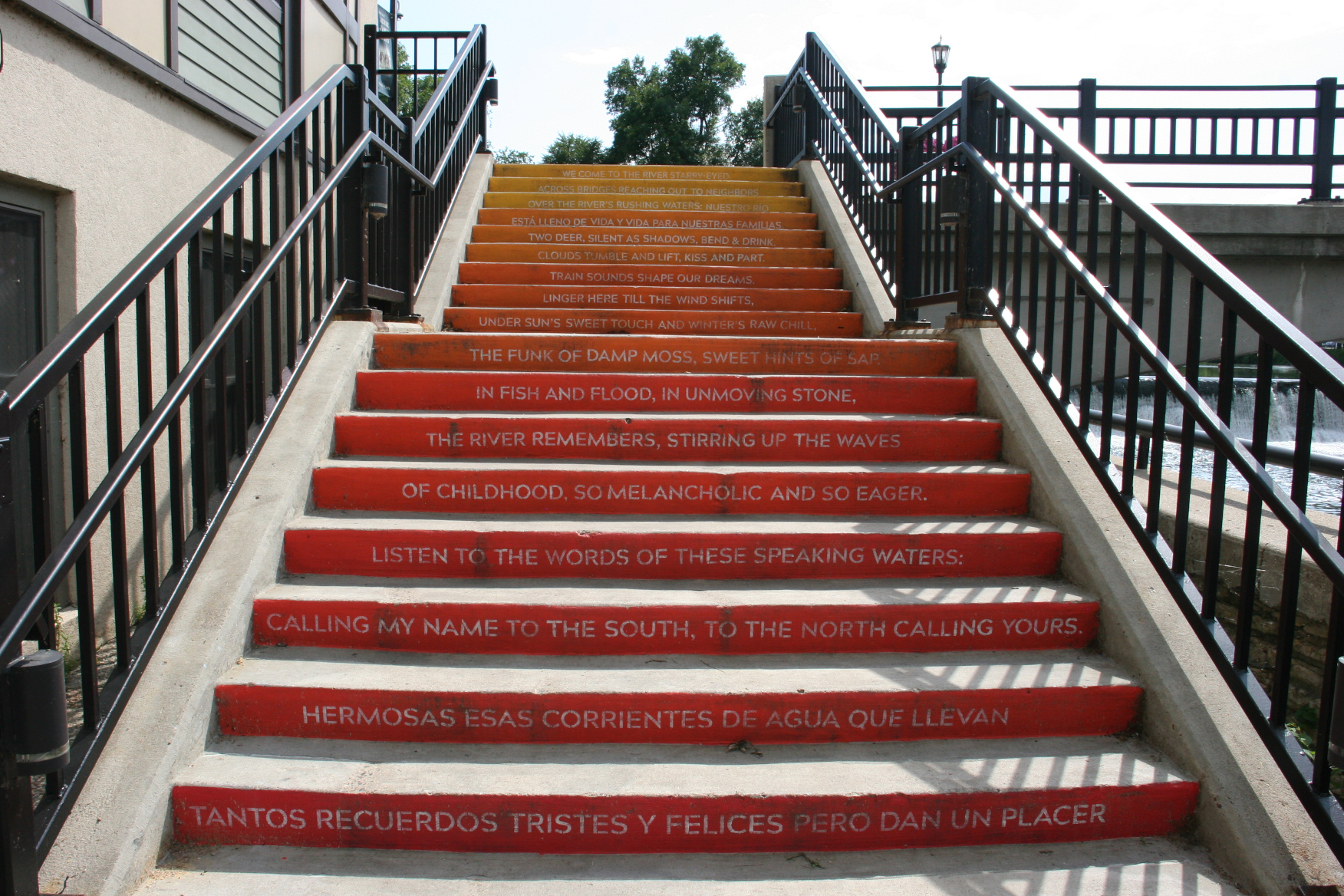
The Riverwalk Steps Poem alongside the Cannon River in the heart of downtown Northfield. (Minnesota Prairie Roots copyrighted file photo)
I FEEL FORTUNATE to live in an area of Minnesota which values poetry. Some 20 minutes away in Northfield, poems imprint upon concrete throughout the city as part of the long-time Sidewalk Poetry Project. Along the Riverwalk, a poem descends steps. In the public library, a poem graces the atrium.
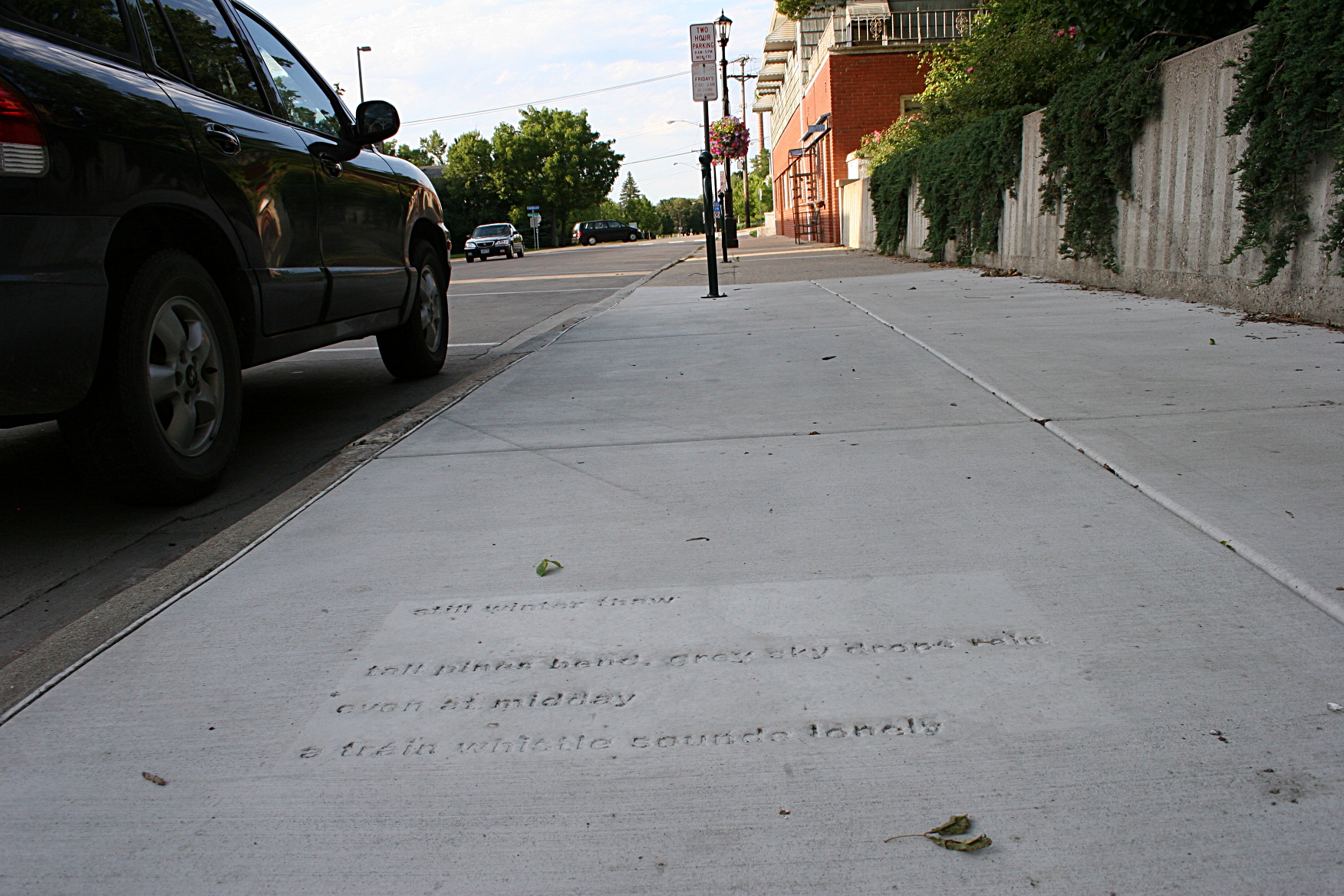
Sidewalk poetry in downtown Northfield carries a powerful message.(Minnesota Prairie Roots copyrighted file photo)
But that’s not all in Northfield. This city of some 21,000 has a poet laureate, currently Russ Boyington, who fosters poetry, organizes and publicizes poetry events, and leads an especially active community of wordsmiths. These are published poets, serious about the craft.
This anthology published in 2024.(Minnesota Prairie Roots copyrighted file photo)
Five seasoned Northfield poets recently collaborated to publish a collection of their work in We Look West. Even if you think you don’t like poetry, you will find something in this anthology which resonates. These poets take the reader through the seasons of life with humorous, sad, nostalgic, reflective and introspective poems. This anthology is especially fitting for anyone closer to the sunset, than the sunrise, of life.
A serene country scene just north of Lamberton in southern Redwood County on the southwestern Minnesota prairie. (Minnesota Prairie Roots copyrighted file photo)
April, National Poetry Month, marks a time to celebrate poets like those in Northfield and beyond. In my own community of Faribault, we have an especially gifted poet, Larry Gavin, a retired high school English teacher and writer. He’s published five collections of his work. Larry writes with a strong sense of place, his poems reflective of his love of nature, of the outdoors. A deep love of the prairie—he attended college, then lived and worked for a while in my native southwestern Minnesota—connects me to this remarkable poet. Plus, Larry has the rich voice of a poet, which makes listening to him read his poems aloud an immersive, joyful experience.
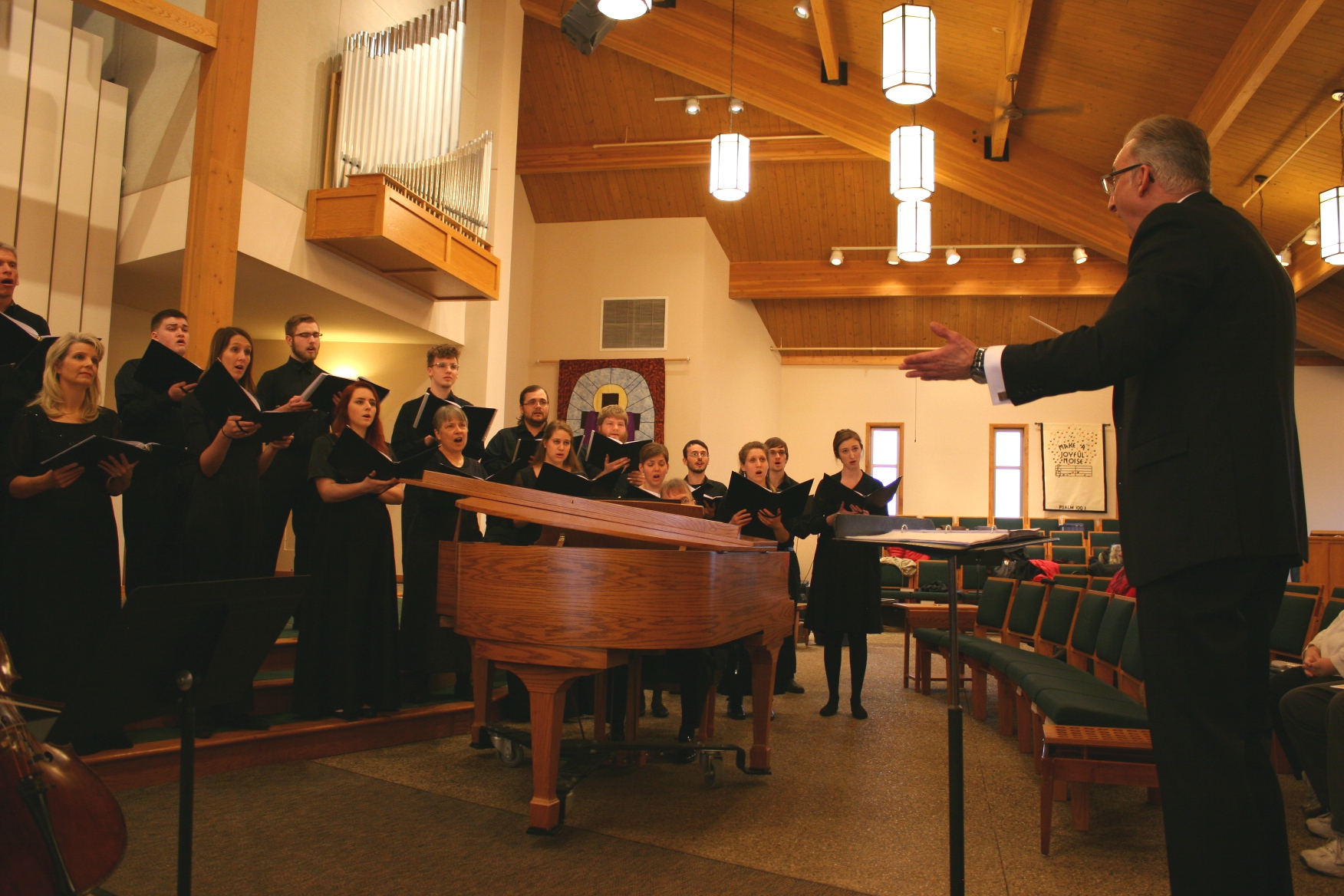
A chamber choir, directed by composer David Kassler, performs artsongs written from poems in 2017, mine included. (Minnesota Prairie Roots copyrighted file photo)
I, too, write poetry and am a widely-published poet, although certainly not as much as many other Minnesota poets. From anthologies to a museum, from the Mankato Poetry Walk & Ride to poet-artist collaborations, billboards and more, my poems have been out there in the public sector. Perhaps the most memorable moment came when a chamber choir performed my poem, “The Farmer’s Song,” during two concerts in Rochester in 2017. David Kassler composed the music for the artsongs.
Two of my rural-themed poems are included in an exhibit, “Making Lyon County Home,” at the Lyon County Historical Society Museum in Marshall. (Minnesota Prairie Roots copyrighted file photo)
Poetry has, I think, often gotten a bad rap for being stuffy, difficult, too intellectual and unrelatable. And perhaps it was all of those at one time. Butt that’s not my poetry. And that’s not the poetry of Larry Gavin or of the five We Look West Northfield poets or most poets today. The poetry I read, write and appreciate is absolutely understandable, rich in imagery and rhythm, down-to-earth connective.
My most recent poem selected for the Mankato Poetry Walk & Ride. Poets must follow character and line limits in writing these poems.This is a competitive process.(Minnesota Prairie Roots copyrighted file photo)
When I write poetry, I visualize an idea, a place, a scene, a memory, an emotion, then start typing. The words flow, or sometimes not. Penning poetry is perhaps one of the most difficult forms of writing. Every word must count. Every word must fit the rhythm, the nuances of the poem in a uniquely creative way.
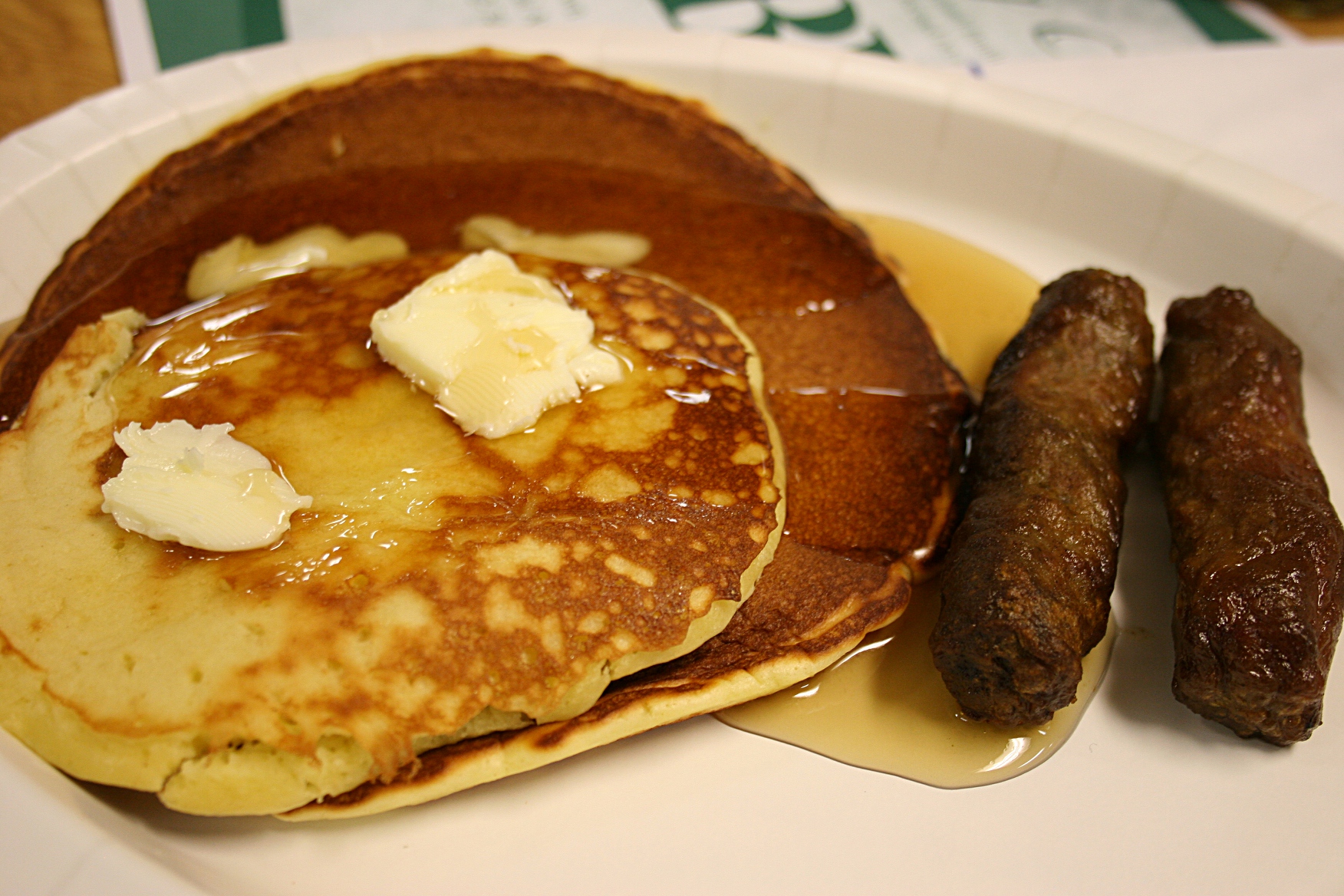
Not the pancakes Grandpa made, but the pancakes and sausages made at the annual Faribault Lions Club Pancake Breakfast. (Minnesota Prairie Roots copyrighted file photo)
One of my most recent poems, “Pancakes with Grandpa,” was inspired by an exchange between my husband, Randy, and our grandson Isaac, then four. It was printed in Talking Stick 32—Twist in the Road, an anthology published in 2023 by northern Minnesota based Jackpine Writers’ Bloc. It’s a competitive process to get writing—poetry, fiction and creative nonfiction—in this collection.
So, in celebration of National Poetry Month, here’s my pancake poem, penned by a poet who doesn’t particularly like pancakes.
THEY ARE SEASONED WRITERS, also well-seasoned in life. They are Becky Boling, Heather Candels, D.E. Green, Steve McCown and Julie A. Ryan, collectively The Poets of the Northfield Public Library. And at 6 p.m. Thursday, September 5, they will gather at Books on Central, 227 Central Avenue North, Faribault for a poetry reading followed by a Q & A.
If you happen to be one of those people who claim a dislike of poetry, I encourage you to reconsider and come to this literary event. The poetry this group will read comes from their recently-published anthology, We Look West. Their poems are down-to-earth relatable. Trust me. I’ve read this 116-page book, loved it and reviewed it. (Click here to read my review.)
The writing within the pages of this volume are stories of life, in poetry form. Poems that transition from east to west, from the sunrise to the sunset of our lives.
They’re written by poets with extensive publishing credentials. Four have taught at the high school or college level. The fifth comes from a strong literary and visual arts background. Two are Pushcart nominees.
I’ve met Boling and Green and read poetry with them at an event at Mercado Local in Northfield. They are a wonderful married couple, comfortable and friendly. No stuffy poets here. And no stuffy poems. Just plain good writing that moves the spirit, fills the soul, imprints upon the heart.
I look forward to hearing The Poets of the Northfield Public Library read selected poems and then share the stories behind their poetry. As a poet, I’m always interested in learning what inspired a particular poem.
And if you have questions, ask away. Writers welcome engagement as they share their passion for poetry, the craft of writing.
FYI: Books on Central is a second-hand book shop run by the Rice County Area United Way and staffed by volunteers. Proceeds from the bookstore benefit organizations and nonprofits throughout the county.
POETRY. Say that singular word and most people likely stop listening. But listening is precisely what you should do when you hear “poetry.”
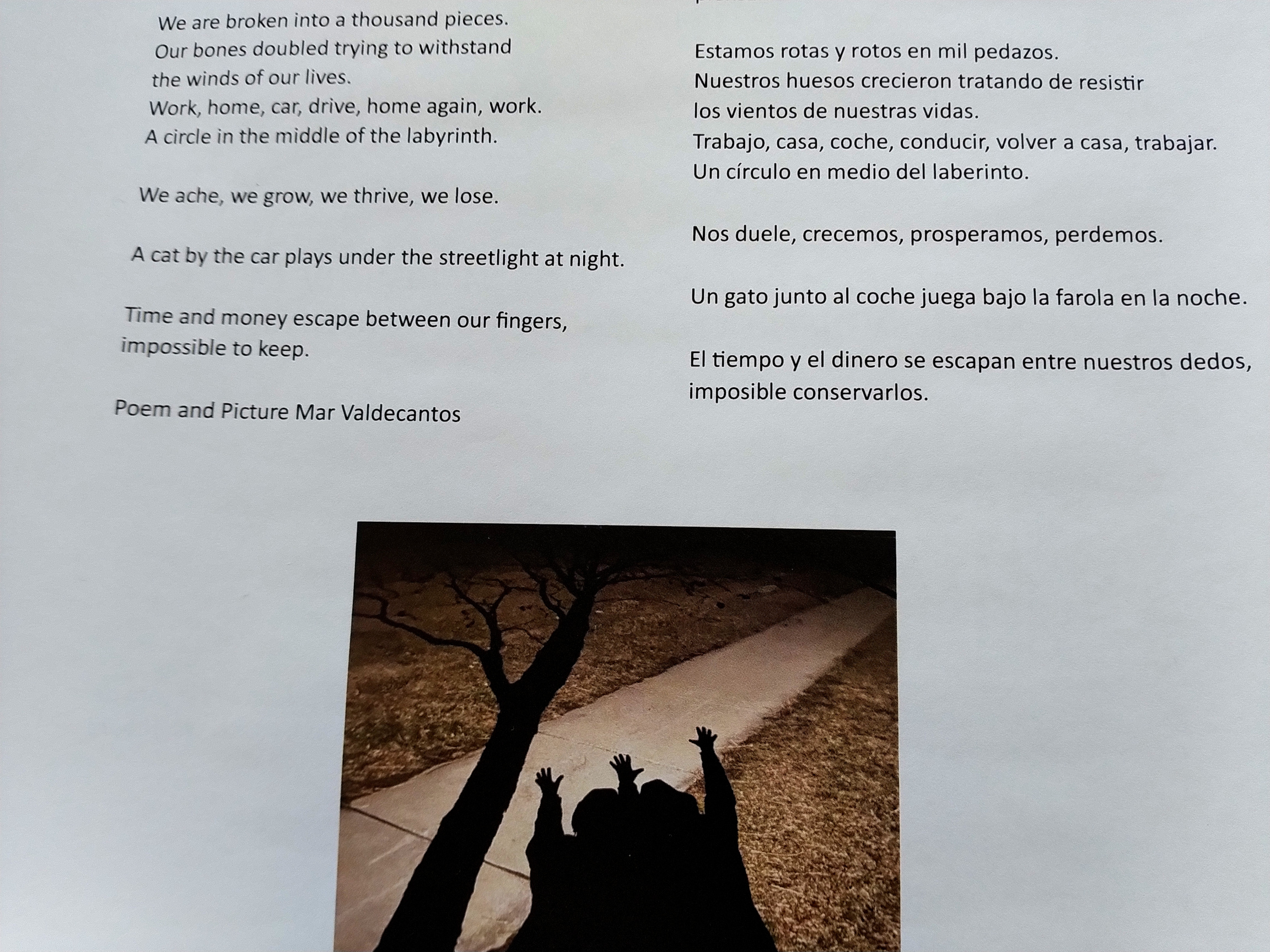
An original poem and photo by Mar Valdecantos, director of Rice County Neighbors United. (Minnesota Prairie Roots copyrighted file photo April 2024)
Poems are meant to be read aloud, to be heard. I didn’t always understand that. But when I started attending and participating in poetry readings many years ago, I realized that poems, like music, need to be vocalized to fully experience them.
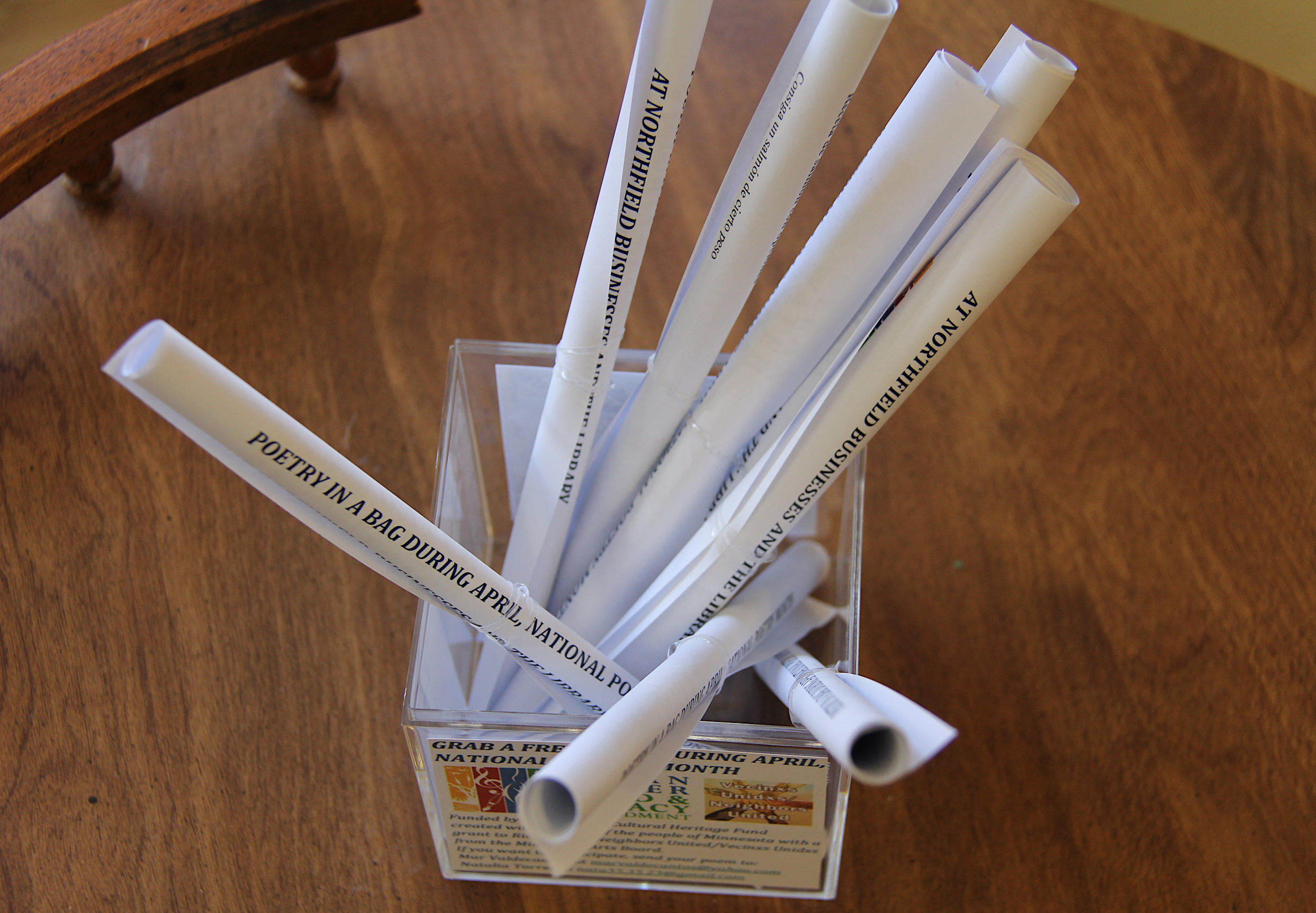
Rolled up poems were boxed (not bagged) and placed at local businesses. (Minnesota Prairie Roots copyrighted file photo April 2024)
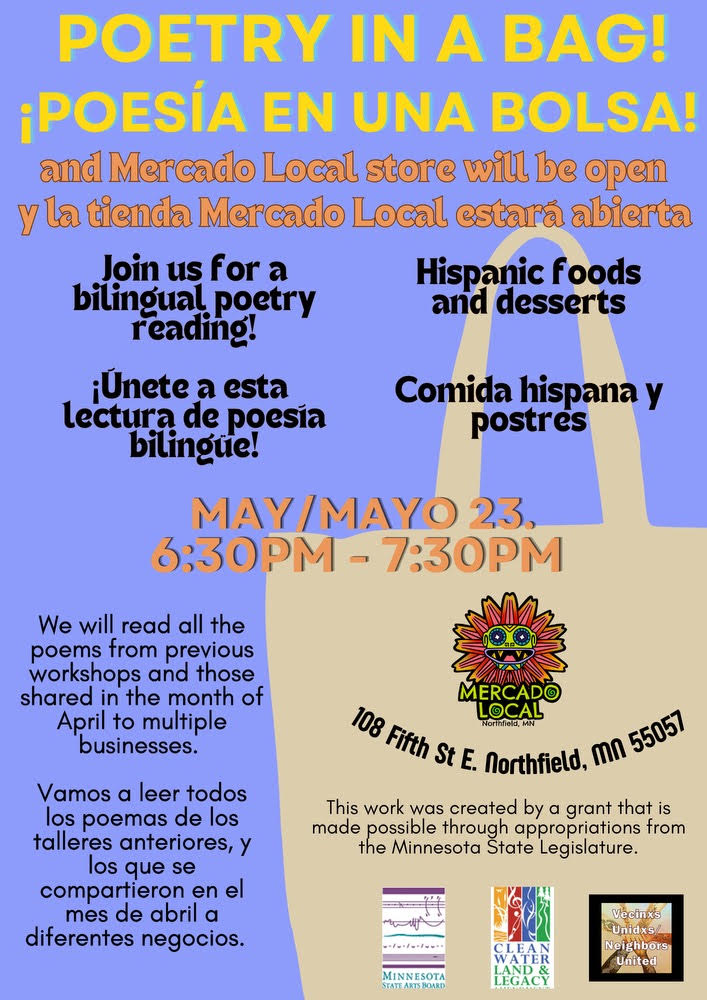
Thursday evening, May 23, I will be among poets and poetry lovers participating in a community poetry reading at Mercado Local, 108 Fifth St. E., Northfield, to celebrate “Poetry in a Bag!” Through this project of Rice County Neighbors United, original and favorite poems were collected, printed, then distributed to area businesses during National Poetry Month in April and into May. Customers were welcome to take a rolled up poem printed in both English and Spanish.
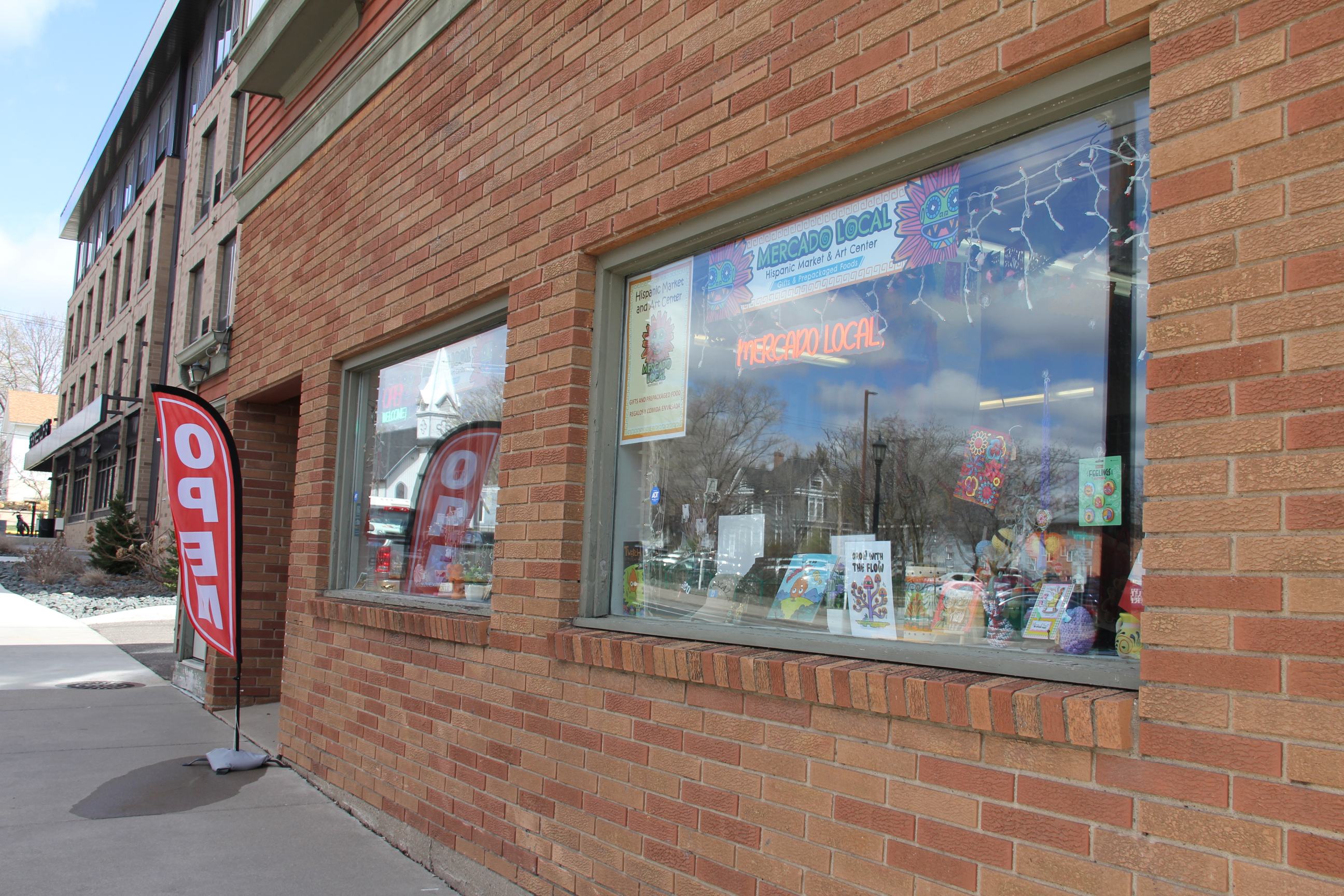
Mercado Local, located just off Division Street in Northfield. (Minnesota Prairie Roots copyrighted photo April 2024)
So this bilingual project is as much cultural as culture. That’s part of the mission of RCNU—to connect cultures, to increase visibility of immigrants and refugees in the community, to empower them. Mercado Local serves as a home base for the advocacy organization with its store, art center and community room.
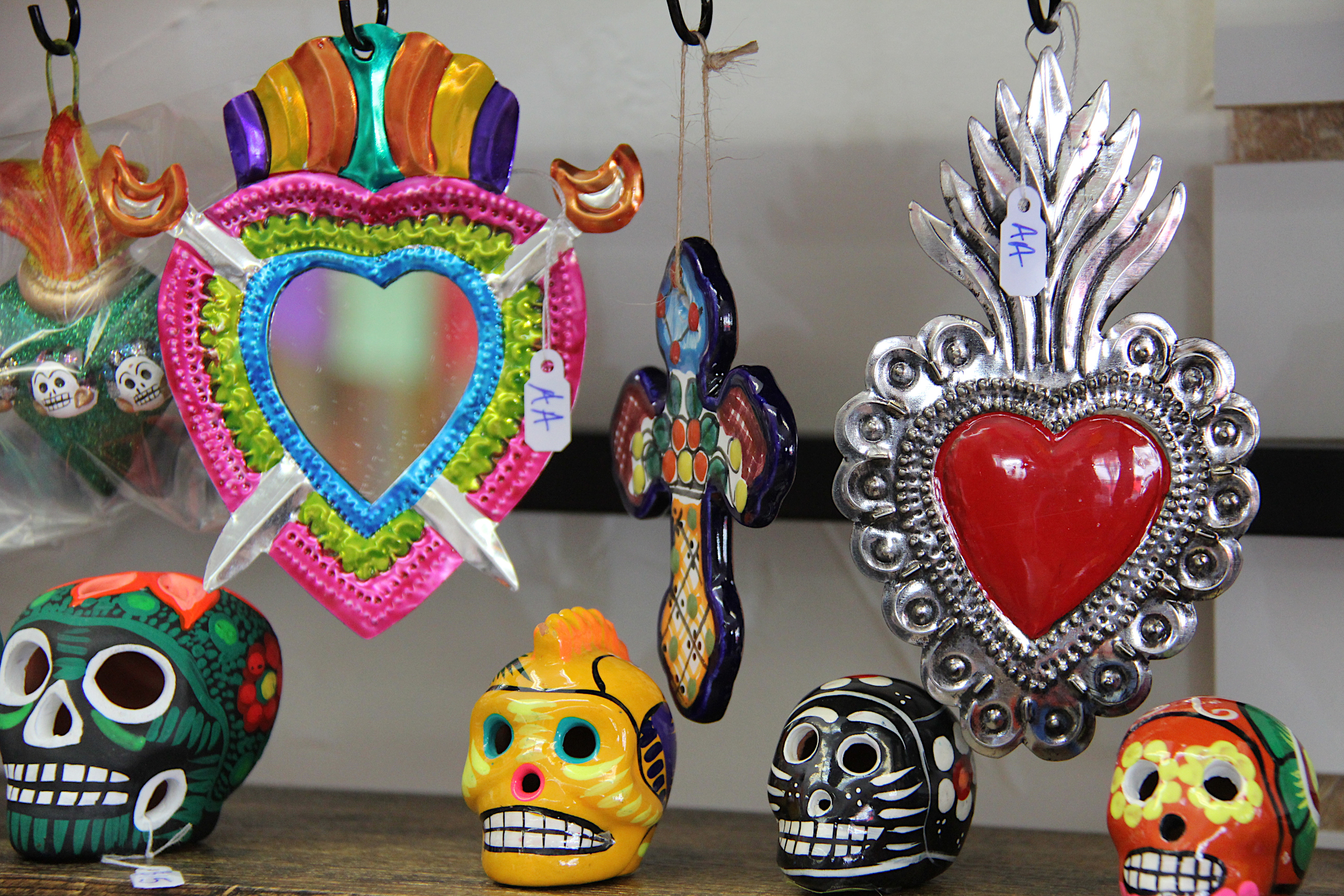
A sampling of the merchandise inside the Mercado Local store. (Minnesota Prairie Roots copyrighted file photo April 2024)
The store will be open during Thursday’s 6:30-7:30 pm gathering in the community space. I’ll be there reading the six original, previously-published poems I submitted for “Poetry in a Bag!” Likewise Northfield poets will read their poems. It’s certain to be a connective experience.
For sale in the store at Mercado Local. (Minnesota Prairie Roots copyrighted file photo April 2024)
The free public event also features Hispanic foods and desserts, a sure way to bring people together. Already “Poetry in a Bag!” has done that personally, connecting me with Northfield poets previously unknown to me. I expect to make more new friends on Thursday when I read poetry, listen to poetry, sample Hispanic foods and immerse myself in a culture different than mine.
Plenty of offerings inside the Mercado Local store. (Minnesota Prairie Roots copyrighted file photo April 2024)
Two cultures connecting via words and food. Now that’s poetry to my ears, food for my soul.
Pick a poem from a box at Mercado Local (and other locations) as part of a poetry initiative rooted in Northfield. (Minnesota Prairie Roots copyrighted photo April 2024)
PRINTED POETRY PLACED in public pleases me. Pleases me because putting poetry out there places this literary art into hands that might not otherwise pick poetry. I mean, if we’re honest, how often do we purchase a poetry book or pull a poetry volume from the 811. section of the library? Probably not all that often.
Among colorful merchandise sold by immigrant vendors at Mercado Local in Northfield. (Minnesota Prairie Roots copyrighted photo April 2024)
That is why I love the latest poetry project in my area—“Poem in a Bag.” Rice County Neighbors United, an advocacy group for low income and immigrant community members, recently launched this project in Northfield, a city rich in the arts, including poetry. Mar Valdecantos, RCNU advocate director and also a poet, writer, visual artist and art teacher, is leading this endeavor.
Grab a poetry scroll from the box. (Minnesota Prairie Roots copyrighted photo April 2024)
The concept is simple. Collect, translate, print and place poems inside a box (not a bag) in locations accessible to the public. The poetry, both original and favorites, is paired with local original art, including that of Valdecantos. Anyone can grab a poetry scroll and have instant access to literary and visual art.
Northfield is home to a sizeable Hispanic population. Immigrant vendors sell their art and more at Mercado Local. (Minnesota Prairie Roots copyrighted photo April 2024)
But there’s more. The poems are printed in Spanish and in English. I can’t read Spanish. (My second daughter can; she’s a former Spanish medical interpreter and translator.) That doesn’t matter. What matters is that each poem is printed in two languages, reflecting, respecting and celebrating cultural diversity in our region of southern Minnesota.
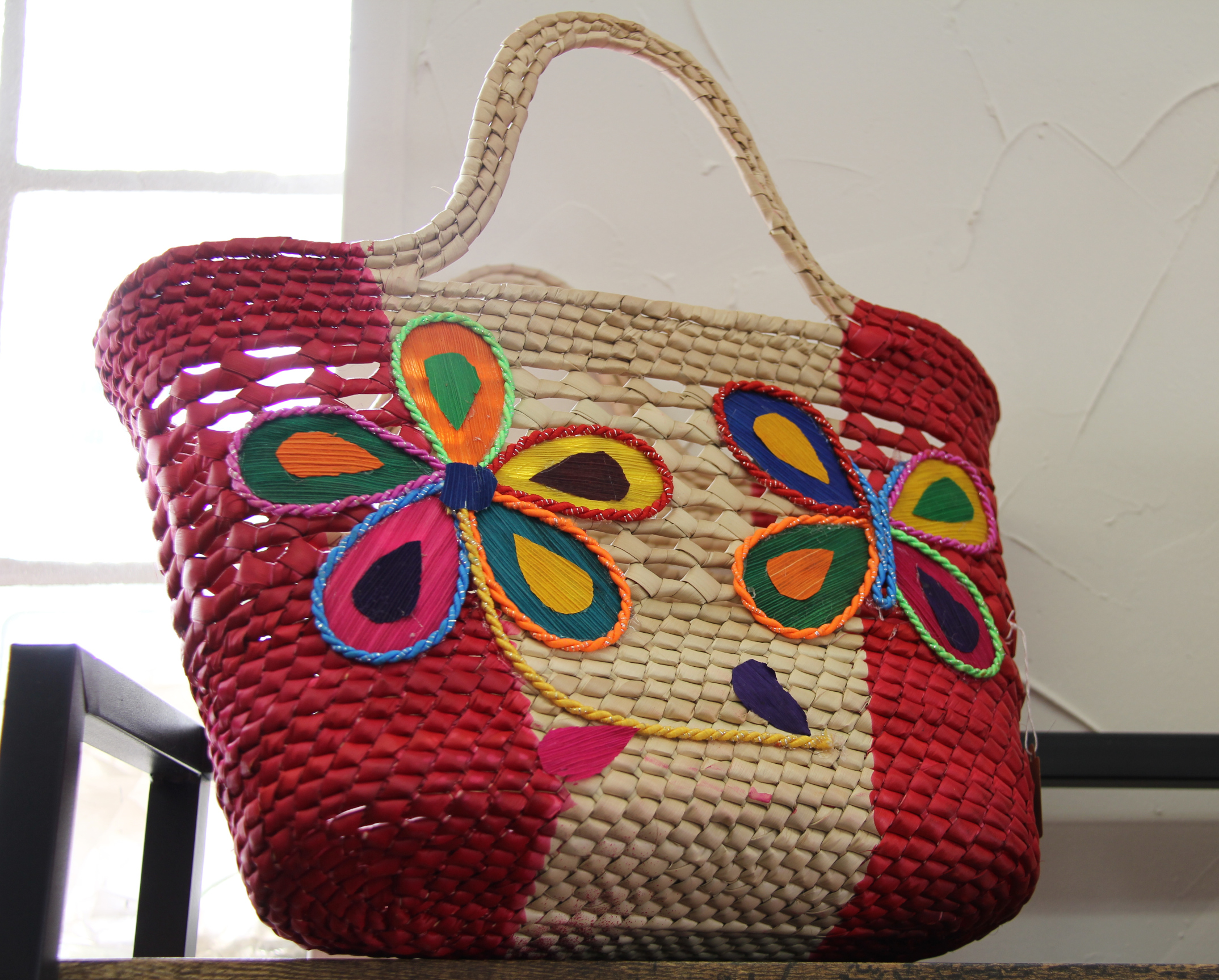
The merchandise inside Mercado Local, including this woven tote, is a colorful, visual delight. (Minnesota Prairie Roots copyrighted photo April 2024)
Rice County Neighbors United aims to raise cultural awareness via events and activities like “Poem in a Bag,” funded by a grant from the Minnesota Arts & Cultural Heritage Fund. The arts have always been a way to connect peoples, to communicate, to inspire and more. Whatever our differences, art is universal, linking us in our humanity.
A portion of the poem, “Streetlight at Night,” and art by Mar Valdecantos. All poems are printed in Spanish and in English. (Minnesota Prairie Roots copyrighted photo April 2024)
Poems submitted for this National Poetry Month project cover a range of topics, some specific, others broader. Sunrise, empanadas, children, cancer, loneliness, life, winter, salmon, even a dead mouse, are among the subjects of original poems. I’ve lent several poems for the project.
More cultural offerings at Mercado Local. (Minnesota Prairie Roots copyrighted photo April 2024)
And then there is the poetry of renowned poets—Latin American, Cuban, American—selected and submitted as favorite poems. Nature, the mother-child relationship, a white rose and service to others theme these. They, too, are accompanied by art.
Mercado Local is located in the heart of downtown Northfield, just off Division Street. (Minnesota Prairie Roots copyrighted photo April 2024)
Art in all its forms is powerful. Rice County Neighbors United recognizes that, celebrating creativity and entrepreneurship at Mercado Local, a marketplace for immigrant vendors and also an art center, community room and education space located at 108 5th Street East in Northfield.
Mercado Local explodes with color. The “Poem in a Bag” box is on the cashier’s counter. (Minnesota Prairie Roots copyrighted photo April 2024)
“Poem in a Bag” poems are available at Mercado Local and at other Northfield businesses (currently Content Bookstore, Imminent Brewery and radio station KYMN) and at the Northfield Public Library. Valdecantos aims to get poetry boxes into more Northfield businesses. In Faribault, “Poem in a Bag” can be found at Books on Central, a used bookshop run by the Rice County Area United Way.
This is an ambitious undertaking, one Valdecantos hopes to repeat next April during National Poetry Month. She intends to extend this year’s “Poem in a Bag” into May with a poetry reading set for 6:30-8 pm Thursday, May 23, in the community room/art space at Mercado Local. I appreciate all of this. To place poetry in public places, to use art to connect cultures, is truly a welcoming, neighborly gift to our culturally diverse communities.
Just-published, a 116-page anthology featuring the poetry of five Northfield, Minnesota, poets. (Minnesota Prairie Roots copyrighted photo April 2024)
ON AN APRIL AFTERNOON when gray skies reverberated thunder and unleashed sheets of rain upon parched southern Minnesota, I read their words, table-side lamp pooling light onto pages. It felt right, to cozy under a fleece throw, to immerse myself in the poetry of Becky Boling, Heather Candels, D.E. Green, Steve McCown and Julie A. Ryan on a day meant for sheltering indoors.
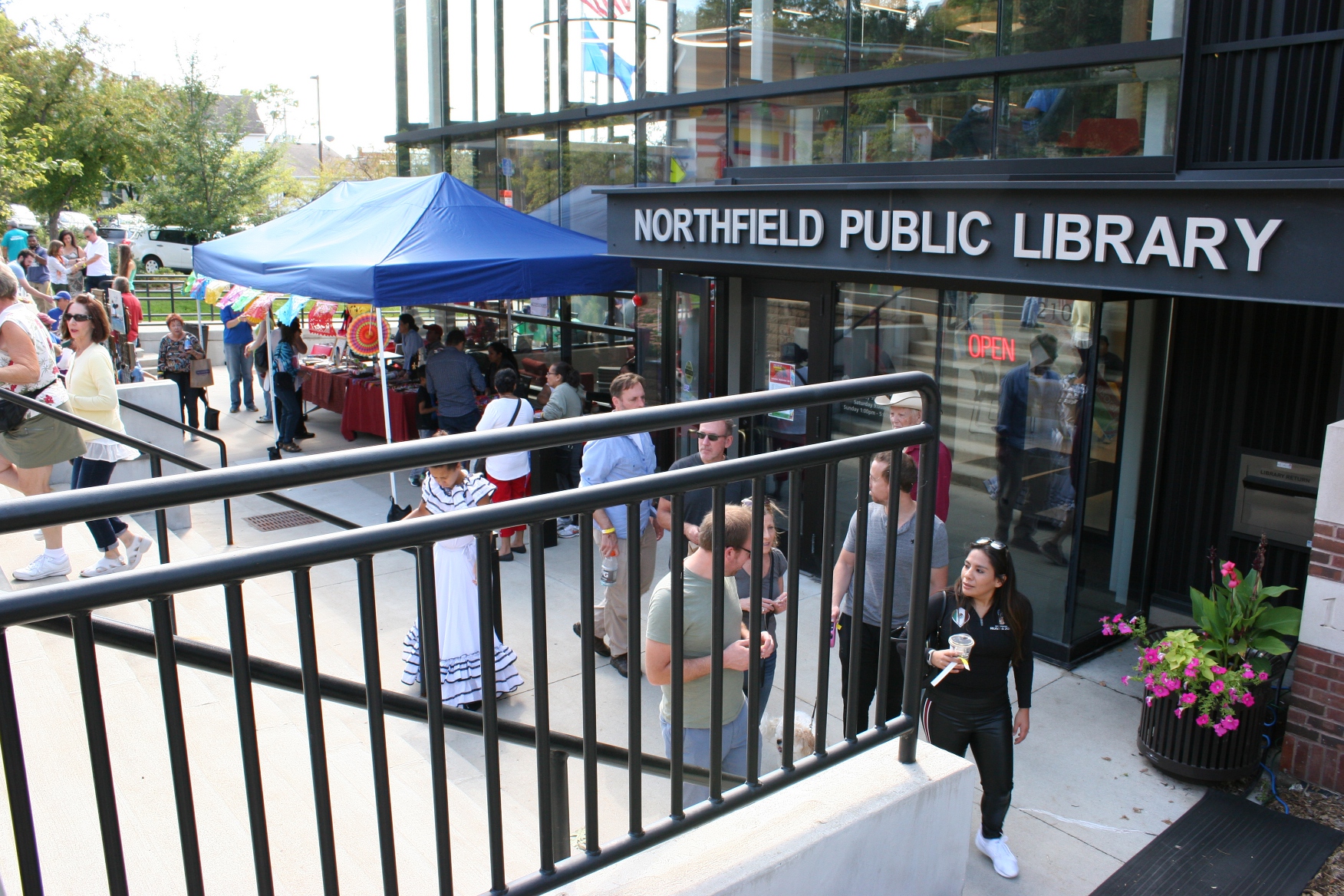
Outside the Northfield Public Library during a 2019 celebration of Hispanic Heritage Month. (Minnesota Prairie Roots copyrighted file photo September 2019)
Antiques on 4th in Cannon Falls. (Minnesota Prairie Roots copyrighted file photo October 2021)
Youthful memories of grandmothers, homemade ice cream, small towns as they once were and much more flow through the pages. At times I feel as if I’m reading about “the dusty excess of nostalgia” of my life, as Steve McCown writes “In an Antique Store.” His mention of a Tom Thumb toy cash register sends me back to a long ago Christmas. His poems are sparse, yet fully-descriptive in the way of language carefully-culled by a man who taught high school and college English.
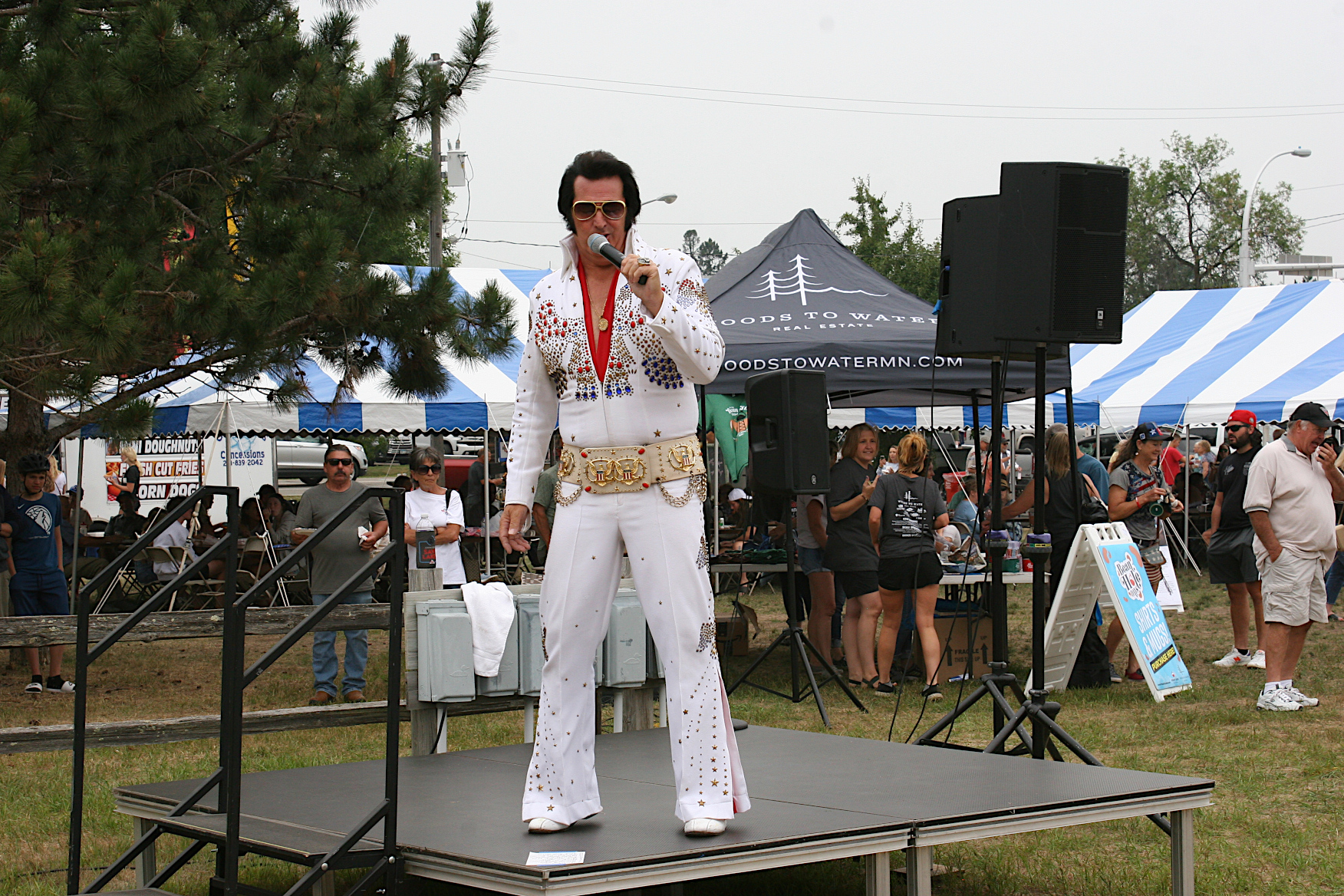
An Elvis impersonator performs during Bean Hole Days in Pequot Lakes. (Minnesota Prairie Roots copyrighted file photo July 2021)
Likewise, Julie A. Ryan, has me reminiscing with “Candy Cigarettes,” the chalky white sticks of fake cigarettes that I, too, “smoked” in the 1960s. Ryan paints with her words, revealing the visual artist side of her creativity. She mentions Van Gogh and painting and also leans into music within her poetry. Especially powerful is her poem, “’68 Comeback Special,” in which she shares about a near-death experience, of almost meeting Elvis. Her final poem, “We Look West,” titles the book, summarizing well the transition of life from sunrise/birth to sunset/death. That themes the anthology, the movement of life from east to west.
Performing at The Contented Cow in downtown Northfield. (Minnesota Prairie Roots copyrighted file photo August 2020)
In her poetry, Becky Boling moves readers through life from playground monkey bars to motherhood to contemplating old age. I am particularly drawn to “Violin Lesson,” in which Boling observes her young son learning to play the violin. From a deep cushioned armchair, she is caught up in the artistry, the beauty, the movement as am I through her observational writing. And then she closes with the emotional thought of not wanting the moment to end, of understanding that some day she will let her son go. As the mother of three, I feel her sadness at the lesson completed. I expect in her 36 years of teaching Spanish and Liberal Arts at Carleton College in Northfield, Boling has observed the movement of young people whose parents let them go to learn and grow their independence.
A southwestern Minnesota prairie sunset between Redwood Falls and Morgan. (Minnesota Prairie Roots copyrighted file photo)
D.E. Green, who taught English for 33 years at Augsburg University, has likely seen the same. His poems reflect life and love. Particularly endearing is his poem, “For Becky: Love Sonnet after Neruda,” written for Boling, to whom he’s married. (They also share the position of interim co-poet laureates in Northfield.) His appreciation for and study of Shakespeare show in this love poem, as touching as any love poem I’ve read. “I love you unthinkingly/like a deep breath, a careless yawn, a sigh,” he writes. Beautiful. Green also reflects on his life lived “good enough” and on life during retirement. His poetry should be required reading for anyone closer to west than to east.
My mom lived in a care center, confined to a wheelchair in the end years of her life. I took this photo of her hands about a year before her January 2022 death. (Minnesota Prairie Roots copyrighted file photo December 2020)
Heather Candels, too, reflects on her passing life in a poem aptly titled “Passing.” But it is “Situation Comedy,” a poem about a 104-year-old woman living in a care center, which elicits an especially emotional reaction from me. I can picture the centenarian shoving her walker (as my octogenarian mom did) to the dining room, then sitting with Grace and Lloyd, whom she secretly calls Grease and Lard. “Something has to be funny about all this,” Candels writes. The former English teacher is a gifted storyteller who brings unexpected emotional lines to her writing.
In “A Sign,” Heather Candels writes about racial injustice via white lilies of the valley and “their colonies spreading underground/roots nurtured by the rich dark soil…” This poem alone is reason enough to buy this anthology. Photo taken in Madison, Wisconsin. (Minnesota Prairie Roots copyrighted file photo September 2020)
And then there are the poems that touch on tough topics, on social issues, on disparities. Climate change. Evidence in the Nuremberg Trials. Racial injustice. Poetry doesn’t right life. But it opens our minds, causes us to think, reflect, perhaps take positive action as we move from east to west.
Mention poetry and many people likely stop listening. In a way, I understand. To their ears, they hear the stuffy, rhyming, difficult poems of yesteryear. The poems that made no sense to many of us. The poems that had to be read as part of a high school English class.
A close-up of lines in the poem steps along the River Walk in downtown Northfield. (Minnesota Prairie Roots copyrighted file photo 2022)
While I’m not privy to how poetry is taught today, I do recognize that it’s, overall, much more approachable, at least in Minnesota. We are home to a talented array of poets with their writing published not only in anthologies and literary journals, but also presented in widely-accessible, public ways.
A poem by Patrick Ganey is stamped into the sidewalk near the Northfield Public Library: still winter thaw/tall pines bend, grey sky drops rain/even at midday/a train whistle sounds lonely (Minnesota Prairie Roots copyrighted file photo)
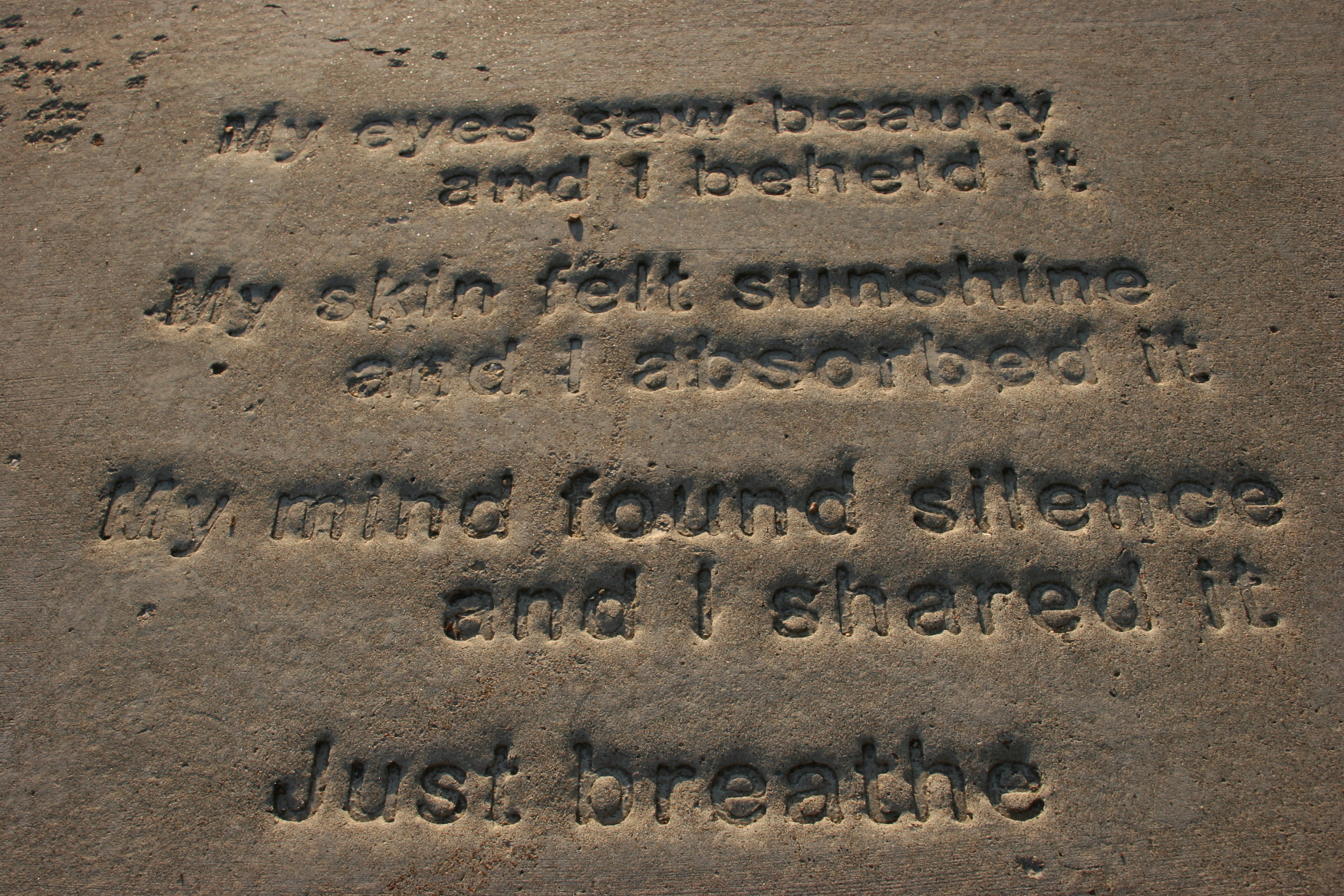
Nearby Northfield, for example, prints poetry into sidewalks. In 2011, the Arts and Culture Commission launched Sidewalk Poetry. Through that annual competition, selected poems are stamped into sidewalks in the historic downtown, along routes to schools and in residential neighborhoods. I always enjoy walking in downtown Northfield and pausing to read poetry. As a poet myself, I appreciate how much this community values this literary art.
This month, National Poetry Month, and into May, Northfield-based nonprofit Rice County Neighbors United is offering “Poem in a Bag.” Submitted original and favorite poems were printed, rolled and placed in poetry boxes (not bags) set out at select Northfield businesses and at the Northfield Public Library. Poems are printed in both English and Spanish and paired with original art by local artists. What a fun idea, to give away poems, perhaps reaching people who would not otherwise read poetry. I’ve submitted several poems for this project.
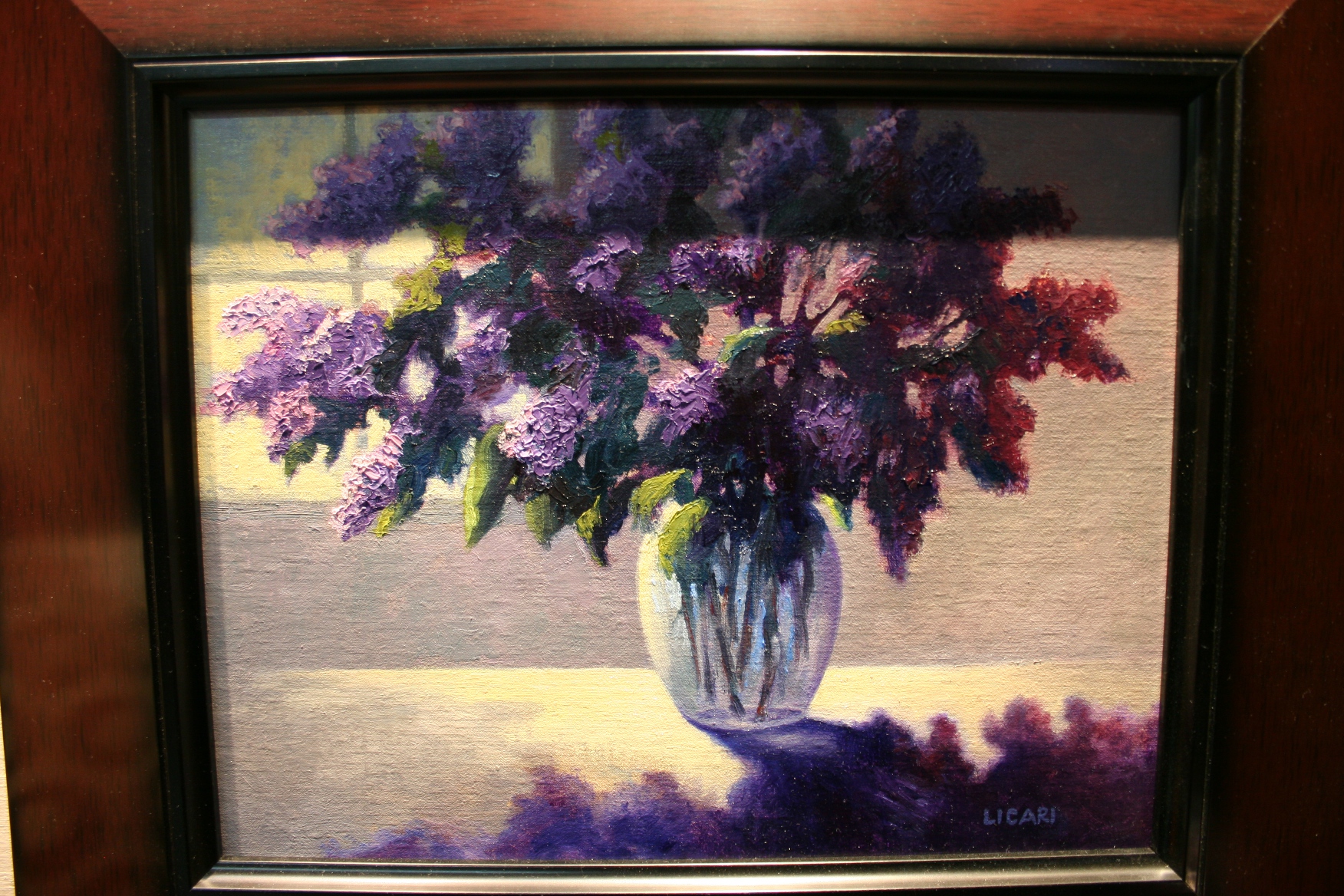
My poem, “Lilacs,” inspired “Lilacs on a Table,” an oil on linen painting by Jeanne Licari. This was part of an poet-artist collaborative exhibit at Crossings at Carnegie in Zumbrota ten years ago. Today my poem is part of Northfield’s “Poem in a Bag.” (Minnesota Prairie Roots copyrighted file photo April 2014)
A portion of a poem by Rob Hardy, former Northfield Poet laureate, in the Northfield Library atrium. (Minnesota Prairie Roots copyrighted file photo)
At the Northfield Public Library, Open Mic Poetry is held monthly in the atrium for poets to share their writing with an appreciative audience. The next event is at 6:30 pm Wednesday, May 8.
Poem steps in Northfield along the River Walk. (Minnesota Prairie Roots copyrighted file photo 2022)
Northfield also has a poet laureate actively promoting poetry and poetry events within the community. A new laureate will soon be named to replace past laureate Rob Hardy and current interim co-poet laureates Becky Boling and D.E. Green.
This new anthology features the poetry of five Northfield poets. (Minnesota Prairie Roots copyrighted photo April 2024)
This sidewalk poem in Mankato’s Riverfront Park references the mass hanging of 38 Dakota (plus two) in December 1862 in Mankato. (Minnesota Prairie Roots copyrighted file photo November 2023)
I also have two other recently-released poetry books to read: Broad Wings, Long Legs, A Rookery of Heron Poems in which Minnesota writers (including Larry Gavin of Faribault and many other recognizable poets) contemplate a regional icon, and Songs, Blood Deep by Poet Laureate of Minnesota, Gwen Nell Westerman of Mankato. Westerman is Minnesota’s first Native poet laureate and teaches English, humanities and creative writing at Minnesota State University, Mankato, my alma mater.
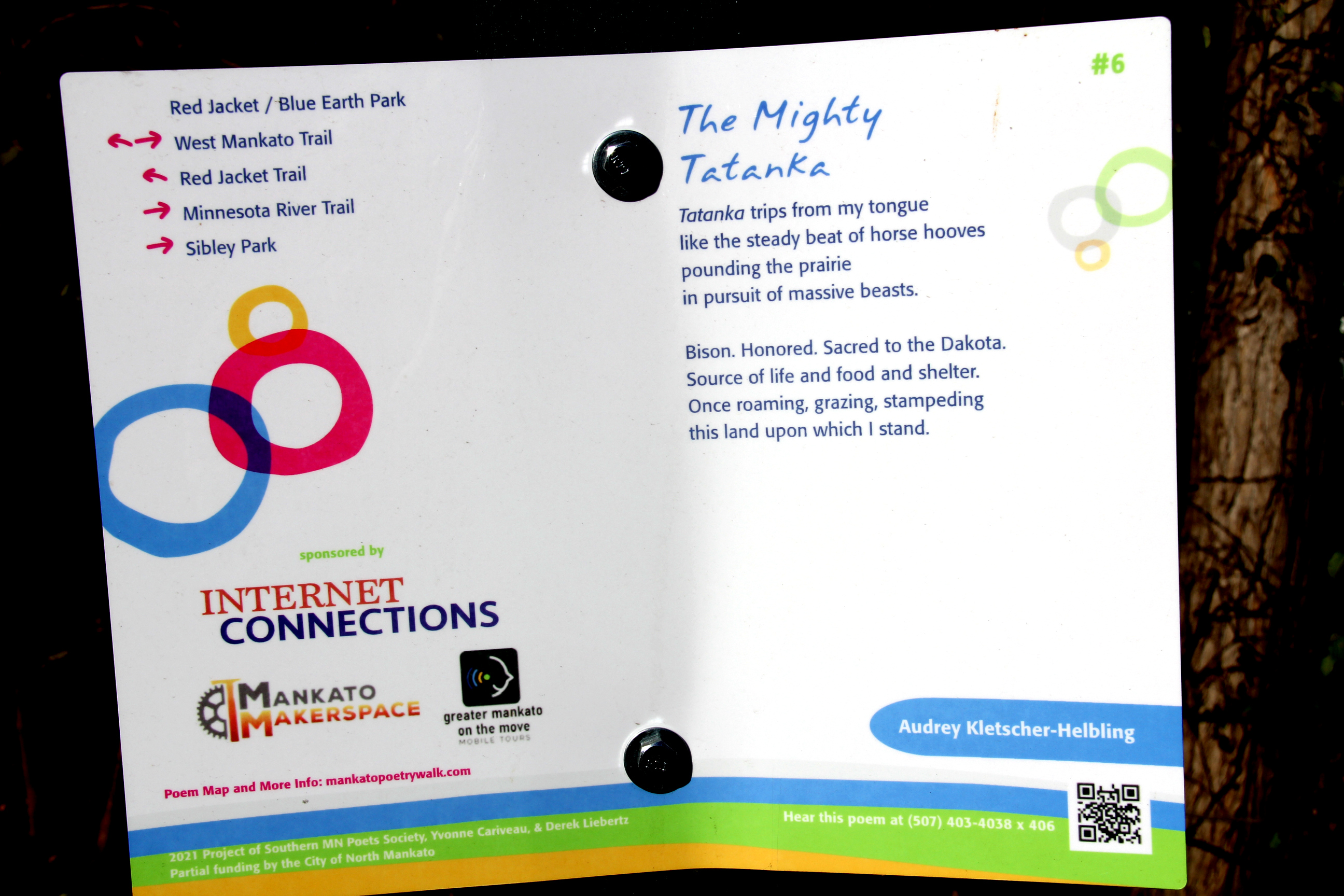
My poem, posted along the West Mankato Trail. (Minnesota Prairie Roots edited & copyrighted photo November 2023)
Mankato is a community rich in poetry. I’ve found poems stamped into concrete at Riverfront Park as part of WordWalk. But it’s a project of the Southern MN Poets Society which really puts poetry out in the community. Through the Mankato Poetry Walk & Ride, winning poems are printed on signs and posted along walking and biking trails in Mankato and North Mankato. My poems have been included perhaps half a dozen times—I’ve lost count—with one, “The Mighty Tatanka,” a poem about bison, currently displayed along a trail in West Mankato.
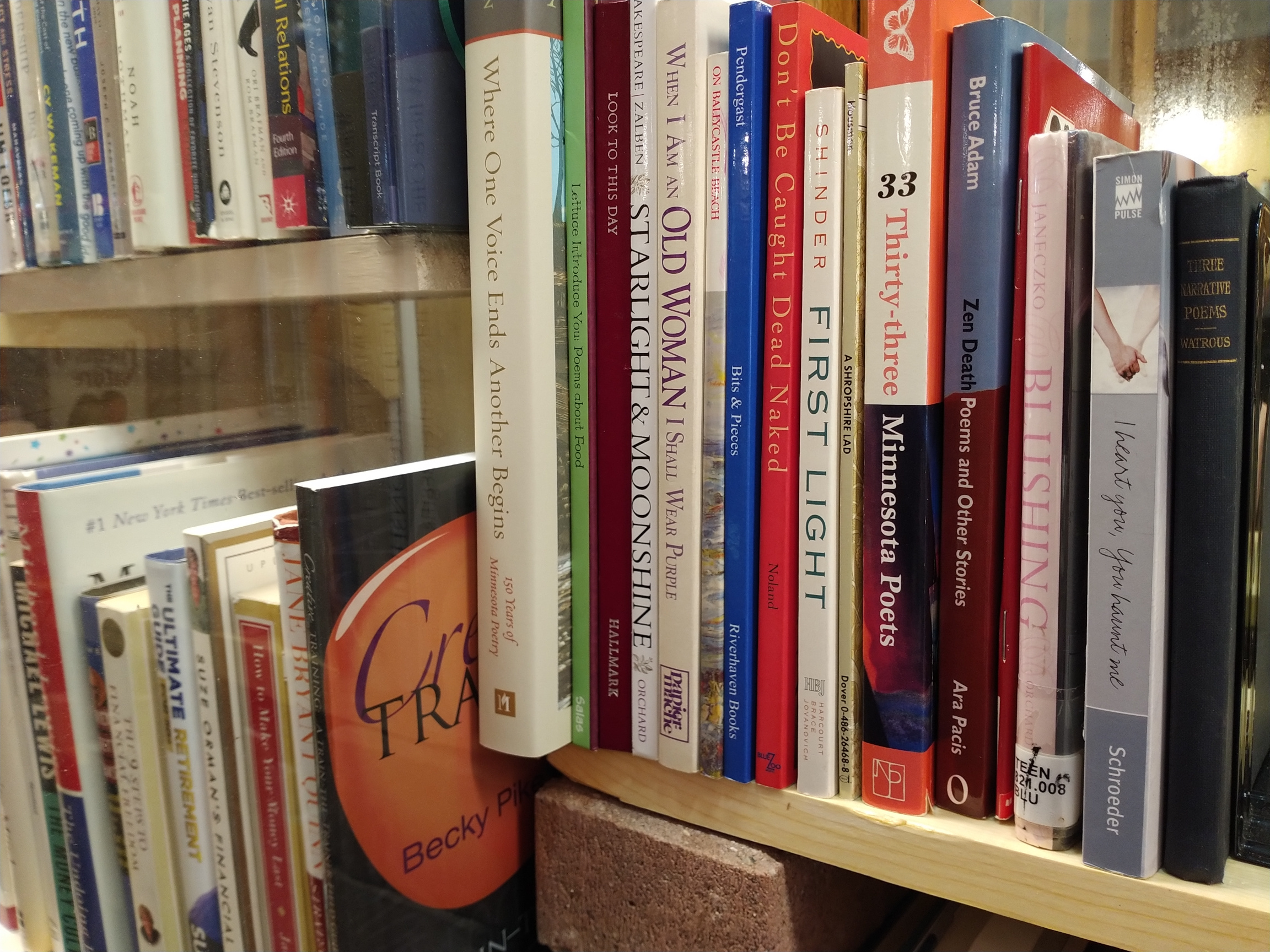
A sampling of poetry books, right, for sale at Books on Central in Faribault. (Minnesota Prairie Roots copyrighted photo April 2024)
Poetry is seemingly everywhere these days, unconfined to the space between book covers. Yet poems printed upon paper remain the primary place to find poetry. I recently picked up a stash of poetry books from my local library. I also perused poetry offerings at Books on Central, a Rice County Area United Way bookshop selling used books in downtown Faribault. In Northfield, independent bookseller Content Bookstore not only sells poetry books, but regularly hosts book signing events with writers, including poets.
An especially thought-provoking poem in Northfield’s Sidewalk Poetry project. (Minnesota Prairie Roots copyrighted file photo August 2020)
How we access poetry has certainly changed over the years. It is my hope that, even if you think you don’t like poetry, you open your mind to this creative art form. There’s much to be learned about nature, about ourselves, about life through the carefully-selected, sparse words of gifted poets, many of whom call Minnesota home.
FYI: Please check back for a more in-depth look at “Poem in a Bag” and reviews of poetry anthologies referenced in this post. Now, tell me, do you read poetry, have a favorite poem?
The sprawling Lyon County Historical Society Museum in the heart of downtown Marshall, across from the post office. (Minnesota Prairie Roots copyrighted photo September 2022)
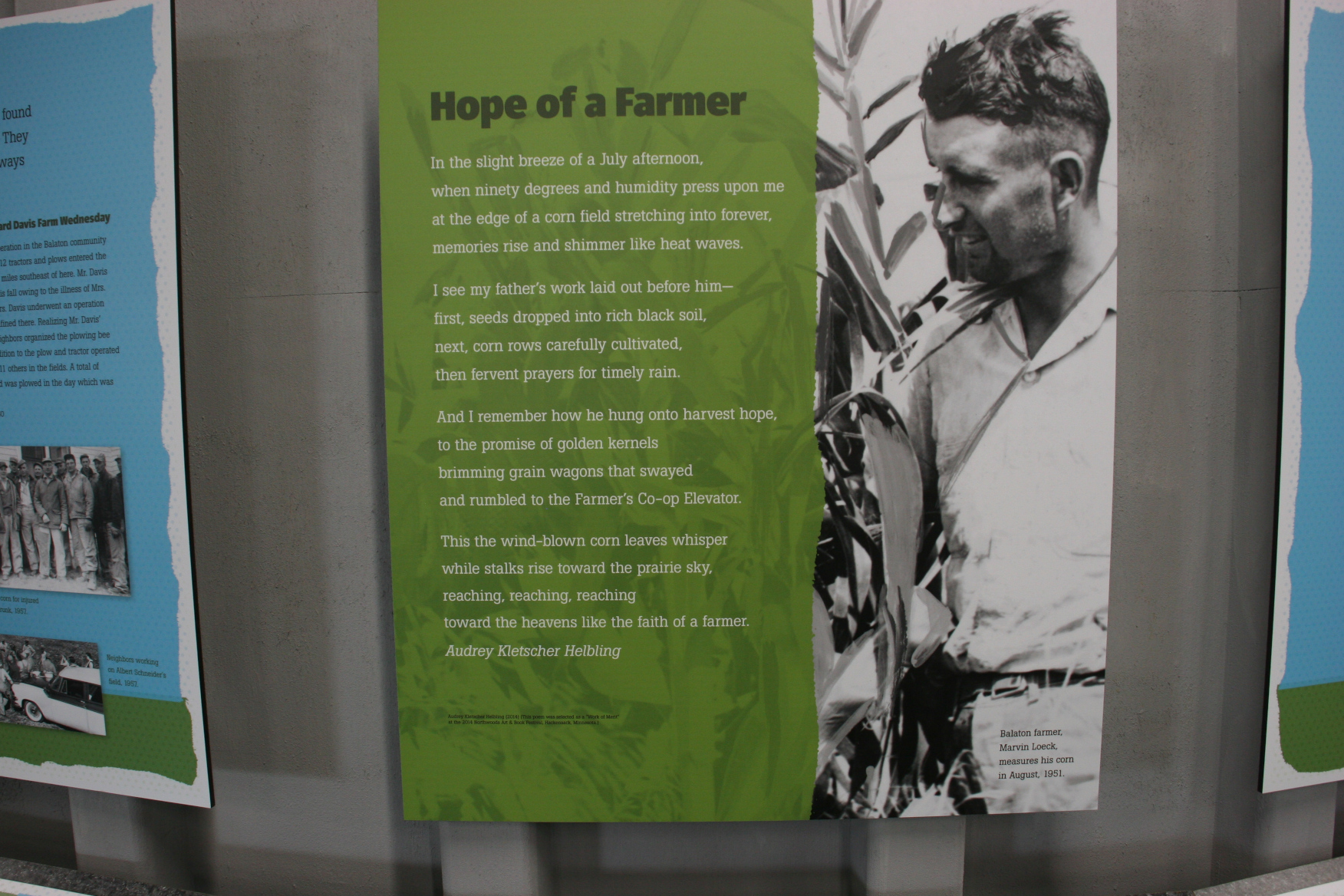
Me, photographed next to the panel featuring my poem, “Ode to My Farm Wife Mother.” My one regret is that my mom (pictured in two smaller photo insets) never saw this exhibit in person. She died in January. (Photo by Randy Helbling, September 2022)
To the far left is the panel featuring my poem, “Ode to My Farm Wife Mother.” In the center is my poem, “Hope of a Farmer.” (Minnesota Prairie Roots copyrighted photo September 2022)
My poem, “Hope of a Farmer.” That is not my dad in the photo. (Minnesota Prairie Roots copyrighted photo September 2022)
The exhibit, which won a 2021 Minnesota History Award from the Minnesota Alliance of Local History Museums, opened in January of the same year. Finally, I got to Marshall last week. Up until my visit, I was unaware that two, not just one, of my poems are included. When I read the title “Hope of a Farmer,” I thought to myself, I wrote a poem with that title. And then, as I read, I realized this was my poem.
The second floor exhibit celebrates Lyon County in the award-winning exhibit, “Making Lyon County Home.” (Minnesota Prairie Roots copyrighted photo September 2022)
Now I’m doubly honored that my rural-themed poetry inspired by my farmer father and farm wife mother were chosen to be part of this outstanding exhibit focusing on the people, places, businesses, communities, activities, events, history and arts of Lyon County.
A clothes pin bag hangs in an exhibit space near my “Ode” poem, quite fitting. Visitors can turn a dial to generate “wind” blowing dish towels on a clothesline. (Minnesota Prairie Roots copyrighted photo September 2022)
finances rocked by falling corn and soybean prices.
This panel honors literary and visual artists of the region. (Minnesota Prairie Roots copyrighted photo September 2022)
As I read the “Imagining the Prairie” informational panel, my gratitude to the LCHS staff, volunteers and Museology Museum Services of Minneapolis (lead contractor for the exhibit) grew. I appreciate that an entire panel focuses on the arts: The Lyon County landscape…has inspired painters and poets and artists of all kinds. I’ve long thought that as I see the prairie influence in my writing and photography. Farms, vast prairies, wide skies and tumbling rivers define the landscape of southwestern Minnesota.
Corn rows emerge in a field near Delhi in southwestern Minnesota. (Minnesota Prairie Roots copyrighted file photo)
A fitting quote from Bill Holm. (Minnesota Prairie Roots copyrighted photo September 2022)
A quote from poet, essayist and musician Bill Holm of nearby Minneota, summarizes well the lens through which we prairie natives view the world and the creative process. The prairie eye looks for distance, clarity, and light…
A grain complex and the Oasis Bar & Grill in Milroy, near Marshall. (Minnesota Prairie Roots copyrighted photo September 2022)
Holm, who died in 2009, was among southwestern Minnesota’s best-known writers, having penned poetry and multiple books such as his popular The Heart Can Be Filled Anywhere on Earth and Boxelder Bug Variations. His boxelder bug book inspired his hometown to host an annual Boxelder Bug Days, still going strong.
Poetry by Leo Dangel in the ag-focused part of the exhibit. (Minnesota Prairie Roots copyrighted photo September 2022)
To see my poems featured alongside the work of gifted writers like Holm and equally-talented poet Leo Dangel in the “Making Lyon County Home” exhibit was humbling. Dangel, who died in 2016, wrote six collections of poetry. The prairie and rural influence on his work show in the featured poems, “A Farmer Prays,” “A Clear Day,” and “Tornado.”
My poem honoring my mom… (Minnesota Prairie Roots copyrighted photo September 2022)
Both men taught English at Southwest Minnesota State University in Marshall, reaffirming their devotion to this rural region and to the craft of writing. The exhibit includes a section on the university, which opened in 1967 within 10 years of my leaving the area to attend college in Mankato. I sometimes wonder how my writing would have evolved had I stayed and studied on the prairie.
A serene country scene just north of Lamberton in southern Redwood County, which is right next to Lyon County. (Minnesota Prairie Roots copyrighted file photo)
When I returned to Marshall for the first time in 40 years, nothing about the town seemed familiar. Time has a way of changing a place. But when I reached the top floor of the county museum, saw my poems and began to peruse the “home” exhibit, I felt like I was back home. Back home on the prairie, among cornfields and farm sites and grain elevators and all those small towns that dot the landscape. Back home under a wide prairie sky with land stretching beyond my vision. Back home where I understand the people. Back home in the place that influenced my writing as only the prairie can for someone rooted here.
#
Please check back for more posts featuring the Lyon County Museum and the area.
IF I HADN’T CAUGHT the news flash in an entertainment segment on an early morning TV show recently, I doubt I would have readWhere the Crawdads Sing by Delia Owens. But I did. And the book proved so riveting that I didn’t want to put it down. You know the type of book, when you stay up past your bedtime to read.
Published in 2018, this New York Times fiction bestseller, releases in July as a movie. So I suppose my timing in reading this is about right. Not that I will see the film. Big screen versions, after I’ve read a book, usually disappoint. Plus, I am not a movie-goer; the last time I went to a movie (three years ago), I walked out and asked for a refund (which I got).
All that aside, that I read Where the Crawdads Sing in April, National Poetry Month, is also fitting. More on that in a bit.
First a summary: Set along the coastal marshes of North Carolina, this book tells the story of young Kya, beginning in 1952. Her family abandons her and she grows up, isolated, alone, connecting with nature. Known to locals as “Marsh Girl,” she reads poetry to gulls, boats through the marshland, immerses herself in learning and studying and documenting the surrounding natural world.
In following her story, which is much more complicated than someone living alone in a remote location, I learned a lot about an area of the US I’ve never even come close to visiting. That includes the many birds which focus Kya’s attention. It’s good for me to stretch my reading wings to a region unfamiliar to me. To learn of landscape, sea life, culture, food, peoples and more in a focused time period, primarily 1960-1970.
The book broadens to include a mystery—the death of a well-known young man from the coastal town of Barkley Cove. Even the name of that community sounds foreign to my Minnesota ears. His life intertwines with Kya’s and that’s what left me wanting to stay up late reading.
Themes of abuse, abandonment, isolation, misconceptions, meanness, prejudice, privilege and small town narrow-mindedness thread through the pages of Where the Crawdads Sing. Love, too.
Author Delia Owens also weaves poetry into pages in poems quoted. Poems by Emily Dickinson. By Pulitzer Prize-winning poet James Wright, who taught in Minnesota at the University of Minnesota and Maclester College. By Amanda Hamilton (there’s a surprise). A fisherman named Scupper proclaims his love of poetry, declaring that poems “make ya feel something.” He’s right.
I encourage you to read this book for the story, the strong sense of place and, yes, for the poetry.
TELL ME: Have you read Where the Crawdads Sing? If yes, what are your thoughts and will you see the movie?
Recent Comments