Minnesota Prairie Roots

Writing and photography by Audrey Kletscher Helbling

Celebrating my birthday with history & art September 27, 2024

(Minnesota Prairie Roots copyrighted file photo)

NOT EVERYONE WOULD CELEBRATE a birthday by exploring historic ruins and then capping the day by creating art within an historic context. But then I am not everyone.

This week, on my closing-in-on-seventy birthday, I took a day trip to Wasioja and neighboring Mantorville. Randy and I packed our picnic lunches and then hit the road east in late morning. No need to rush and get going too early at our ages.

After a brief stop at a Kenyon thrift shop, which smelled strongly of natural gas, we made a quick exit. But not before warning the shopkeeper that he needed to check on the odor immediately. And don’t turn on a light switch, although the lights were already on, we advised. (The shop was still standing on our return route home.)
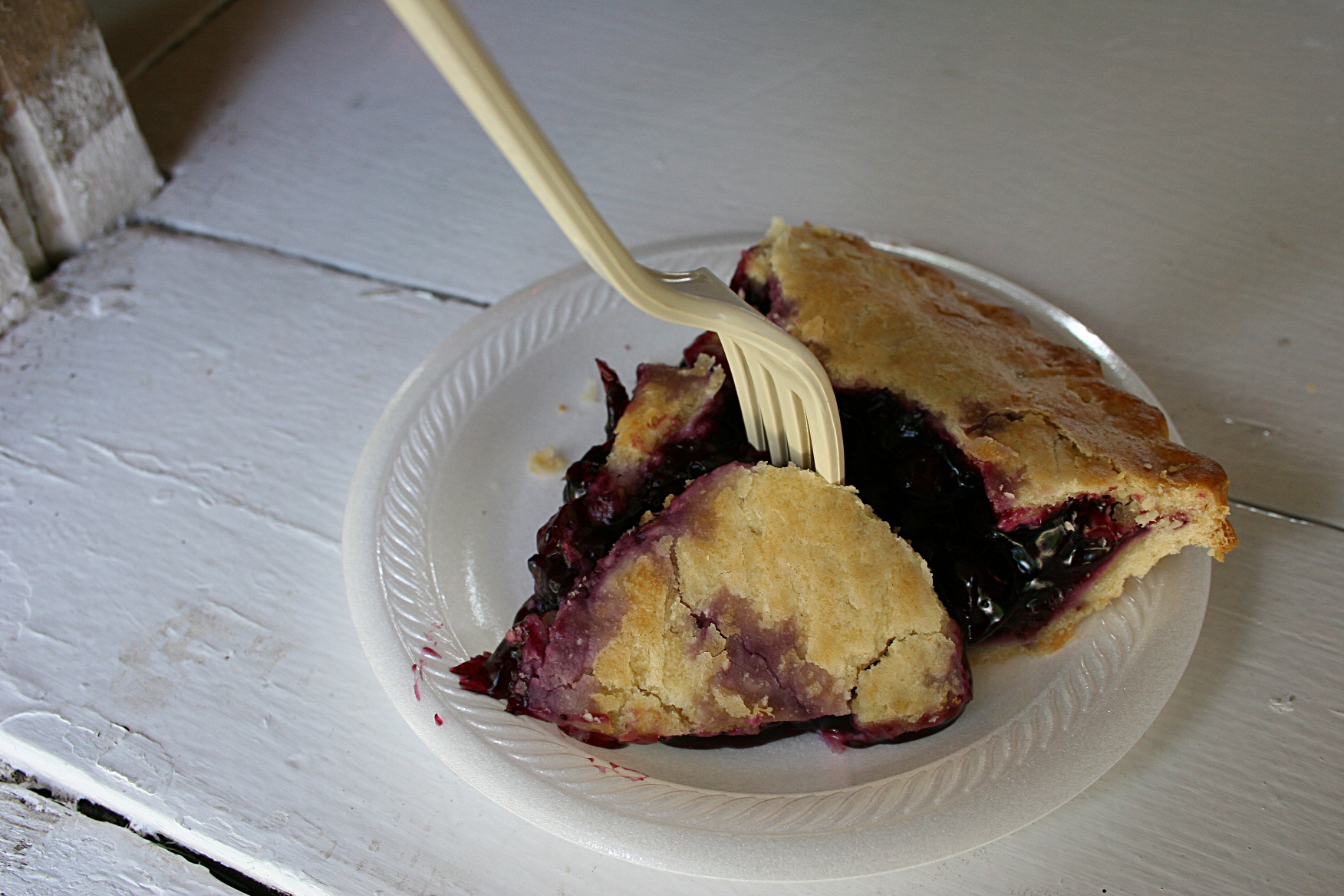
Blueberry pie. not from County Seat Coffee Shop. I didn’t photograph that pie piece. (Minnesota Prairie Roots copyrighted file photo)

GOING BACK IN TIME

I digress. In Wasioja, we discovered aged ruins and historic buildings, many connected to Minnesota’s involvement in the Civil War. I was aware of the Civil War recruiting station, but not some of the other sites. I’ll write more on our visits to Wasioja and Mantorville in future posts.

However, I should note now that Randy and I enjoyed slices of homemade blueberry and strawberry/rhubarb pie at County Seat Coffeehouse in Mantorville. It was, after all, my birthday. No sweet treat awaited me at home.

Back home by late afternoon with me feeling a bit tired after being on my feet all day (remember that broken right toe, which makes walking a tad more challenging), I put my feet up. Randy napped.

A promo for a 2022 talk by Mica Anders at the RCHS. (Promo credit of RCHS)

STEPPING BACK IN TIME WITH MICA ANDERS

And then, less than two hours later, we were off to the Rice County Historical Society for an interactive historical presentation by St. Paul genealogist and artist Mica Lee Anders. She was presenting on early (1850-1900) African American residents of Rice County. I’m always up to learning more about the history of this place I’ve called home for 42 years.

Anders made the entire event hands-on engaging by asking attendees to create flower mosaics that will honor the legacies of early African Americans. The flowers will be installed as public art at gravesites in Faribault and Northfield.

Not being especially artistic beyond creating with a camera and with words, I felt initially tentative about the whole idea. But Anders quickly put me at ease, explaining how to go about the process of creating mosaic flowers from glass tiles. We grabbed cupcake tins then scooped tiles in assorted shapes (mostly round) and colors (blues, greens, oranges and yellows) into individual holders. From there, we designed within a donut shape printed on paper. Later, we would transfer our designs onto sticky mesh.

As a perfectionist, I sorted my tiles by size and color before beginning to create. Part of me wanted to pause and take notes on everything Anders was sharing. But art won over being a journalist for the evening. I created. I listened. I asked questions. But I didn’t jot down a single word.

I heard about the success of those early African Americans who lived here. The barber. The young man who would become a doctor. The college grad. But I learned, too, of efforts to hide racial identity. Yet, races intermarried. And, said, Anders, Faribault was a welcoming place to those African Americans who settled here early on. To hear that pleased me greatly. Faribault has not always been a welcoming place for people of color.

The flower mosaic I created. Anders will finish the work. (Minnesota Prairie Roots copyrighted photo September 2024)

CONNECTING HISTORY & ART

Anders’ passion for history, genealogy and honoring the legacies of African Americans in southeastern Minnesota via her research and now her public art project coursed through the meeting room where a small group of us created colorful mosaics. It felt good to be part of something like this, a tangible way to honor those who came before us, who likely faced more struggles than I will ever know.

My mosaic was well thought out. I don’t usually randomly do anything. I used orange and yellow tiles in the outer two rings of my flower to represent the sun. The next ring featured blue round tiles representing the sky—dark blue for stormy days, lighter shiny blue for happier days. I finished my flower with an inner ring of green tiles representing the earth, growth, place.
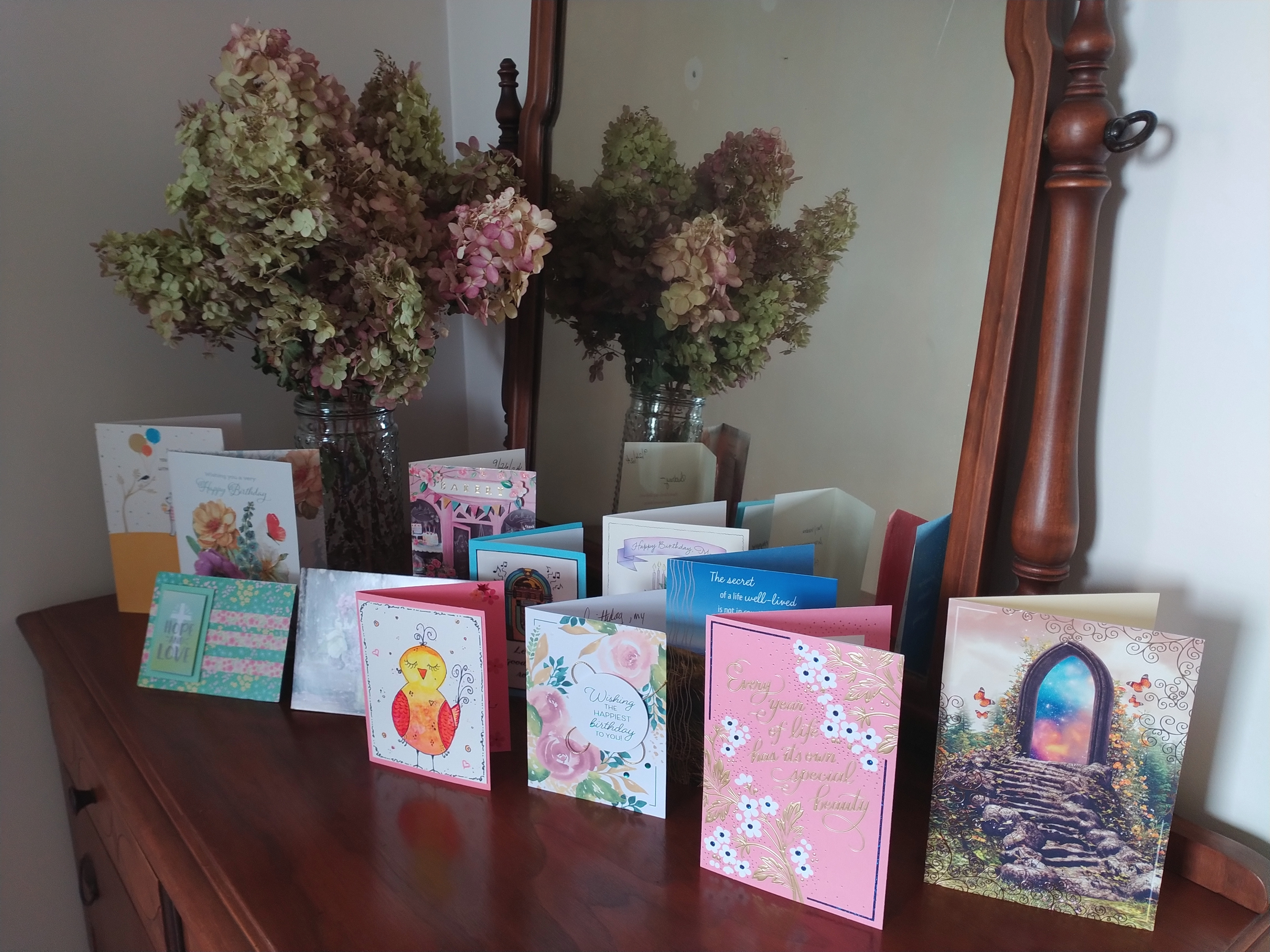
The birthday cards I received, displayed on a vintage family dresser in my dining room. (Minnesota Prairie Roots copyrighted photo September 2024)

THANKFUL

Thus I began another year of life. Learning. Creating art. Honoring. Celebrating. And feeling incredibly thankful for all the people who care about me. From greeting cards to an audio message, from texts to emails to calls (including a singing of “happy birthday”), I feel cherished and loved.

#

FYI: Mica Anders will host more workshops in Rice County (including in Northfield) to talk about early African Americans in southeastern Minnesota and to create flower mosaics. I encourage you to participate. Her project was made possible in part by Springboard for the Arts’ Rural-Urban Solidarity Initiative.

© Copyright 2024 Audrey Kletscher Helbling


From city to countryside, flooding continues to affect Faribault area & beyond June 24, 2024

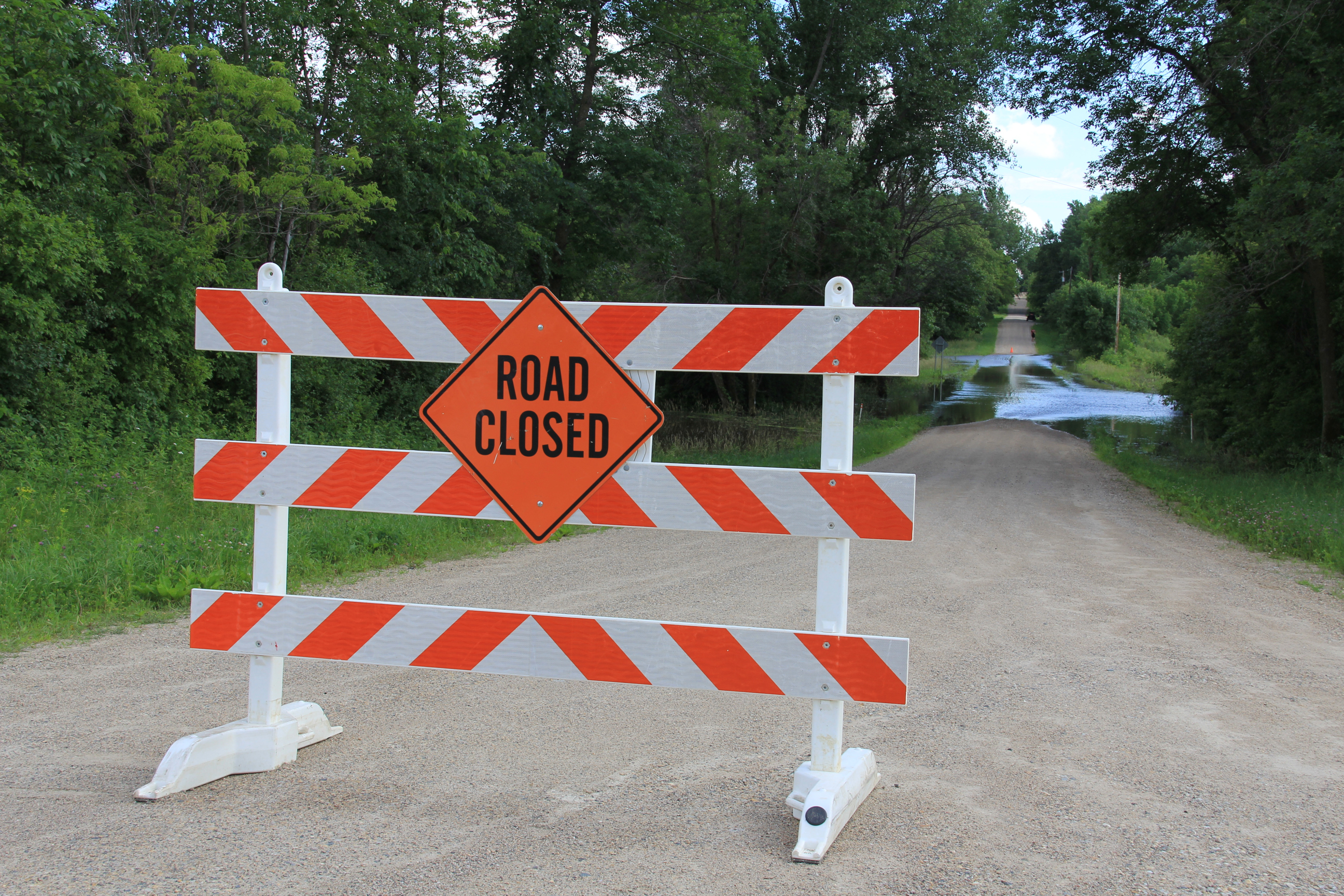
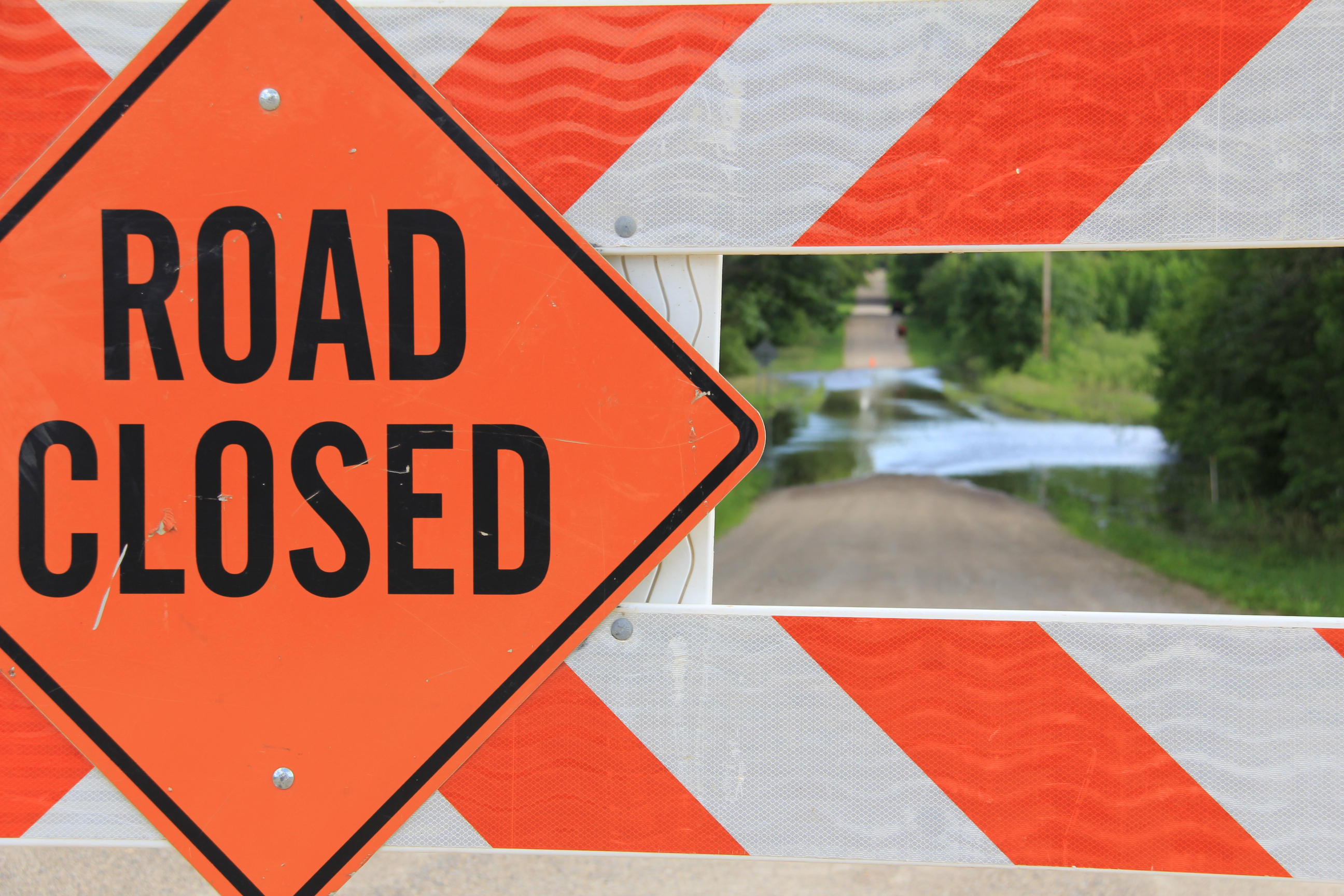
Roads are closed throughout the area due to flooding. Here a barricade blocks Dahle Avenue at its intersection with 220th Street East along the Straight River east of Faribault late Sunday afternoon. (Minnesota Prairie Roots copyrighted photo June 23, 2024)

NEARLY TWO DOZEN city streets, county highways and township roads remain closed throughout Rice County due to floodwaters. The number seems unprecedented. Closures include several streets in Faribault along the Cannon and Straight Rivers. More rain is possible later today. Exactly what we don’t need. However, Faribault city officials noted both rivers began to drop Monday morning.

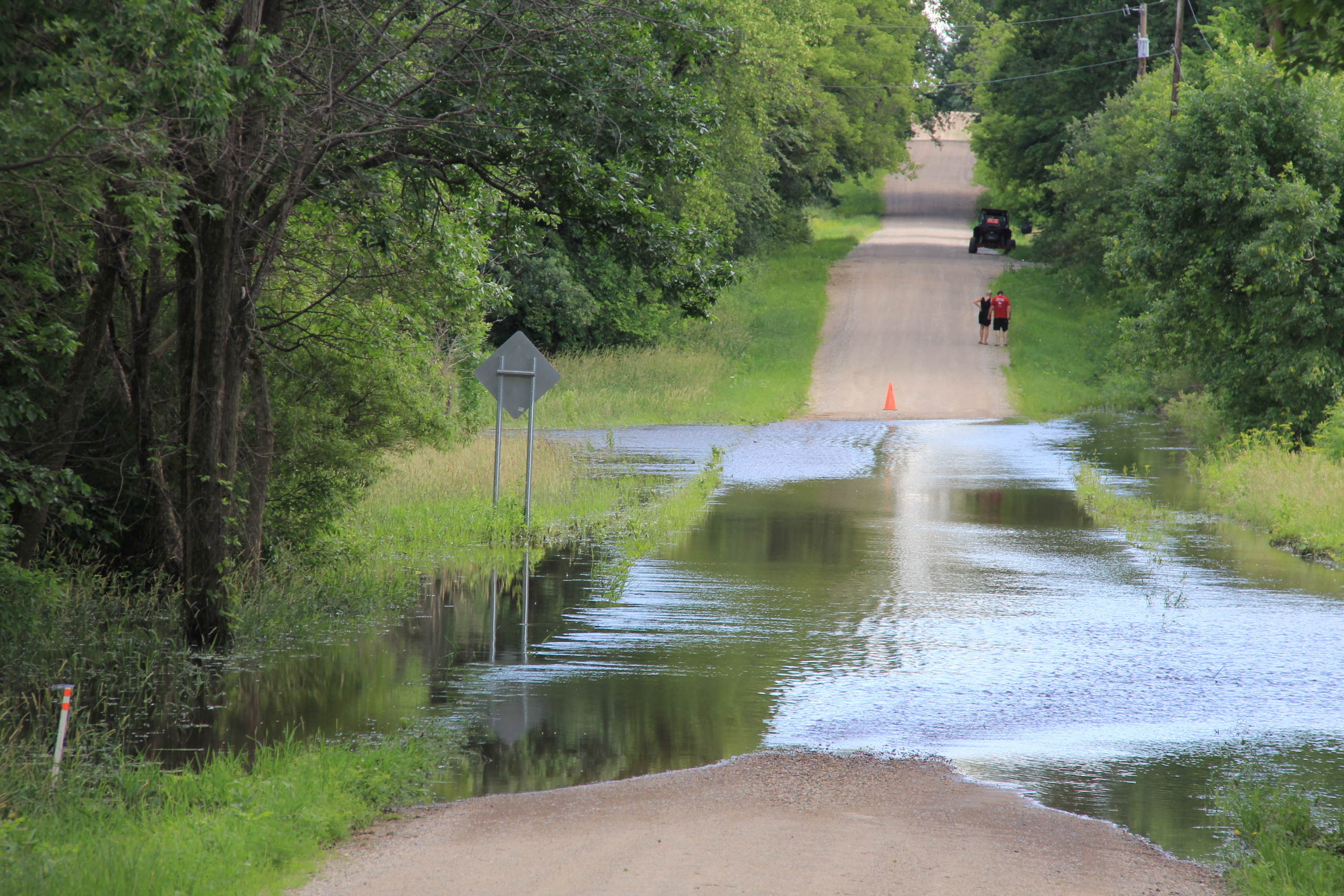
A couple checks out flooded Dahle Avenue. (Minnesota Prairie Roots copyrighted photo June 23, 2024)

As inconvenient as these road closures may be, especially to locals, it’s nothing compared to the flooding of businesses, homes, campgrounds and more, especially in neighboring Waterville. The small town draws lake-lovers to summer cabins and campgrounds with tourism an important part of the local economy.

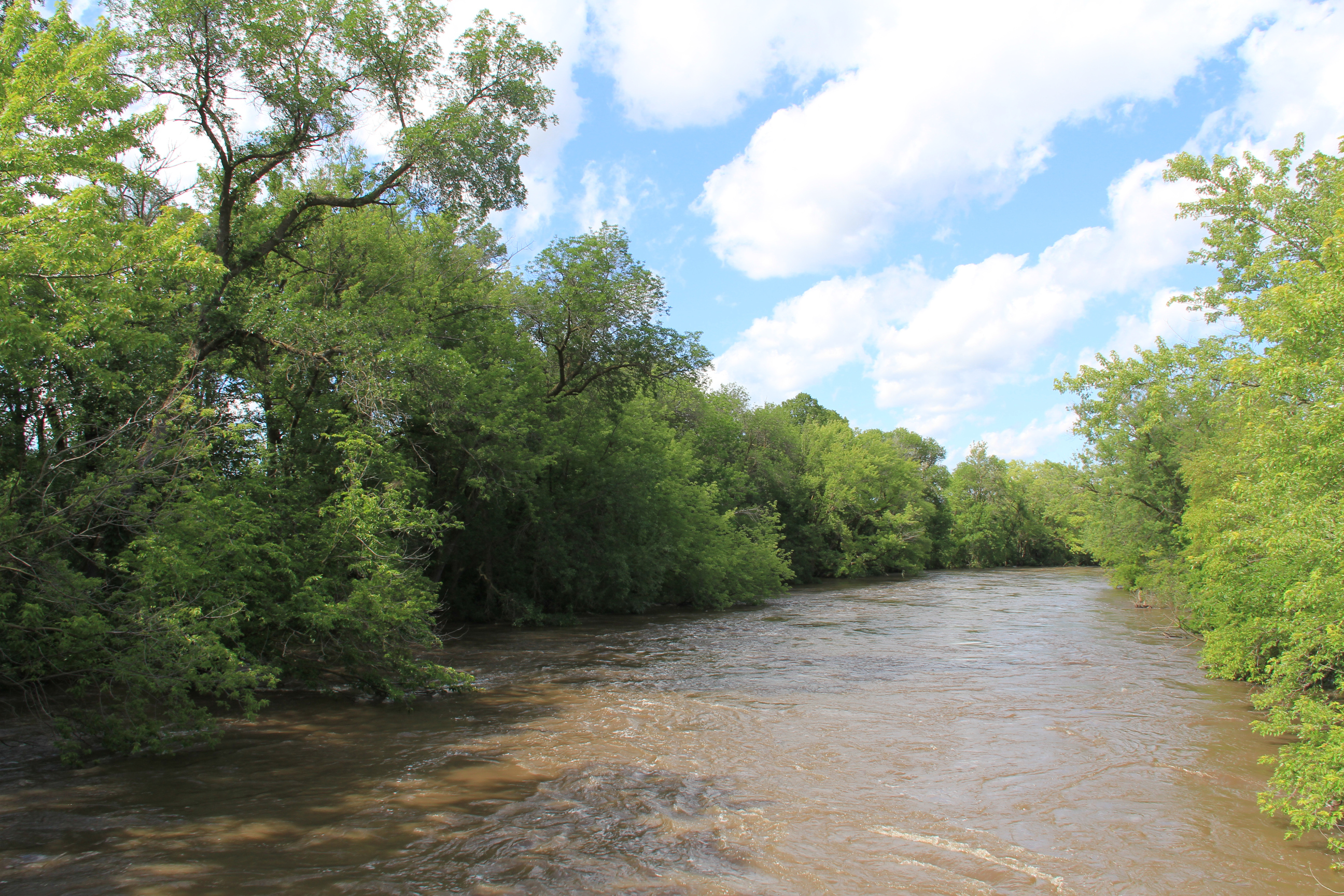
The muddy, fast-moving Straight River, photographed late Sunday afternoon from a bridge on 220th Street East, east of Faribault. (Minnesota Prairie Roots copyrighted photo June 23, 2024)

Other small towns, like Morristown and Warsaw, have also been impacted by the rising Cannon River. That water (and water from the Straight River) eventually ends up in Faribault and then Northfield and other places along the river and its watershed. In Faribault, public safety officials are keeping a close eye on the King Mill Dam, over which the Cannon flows. I’ve not seen that area, which is now barricaded to motor vehicle and foot traffic, and wisely so. The dam is a popular fishing spot. The road past the dam is also a busy traffic route, a connection to Minnesota State Highway 60.

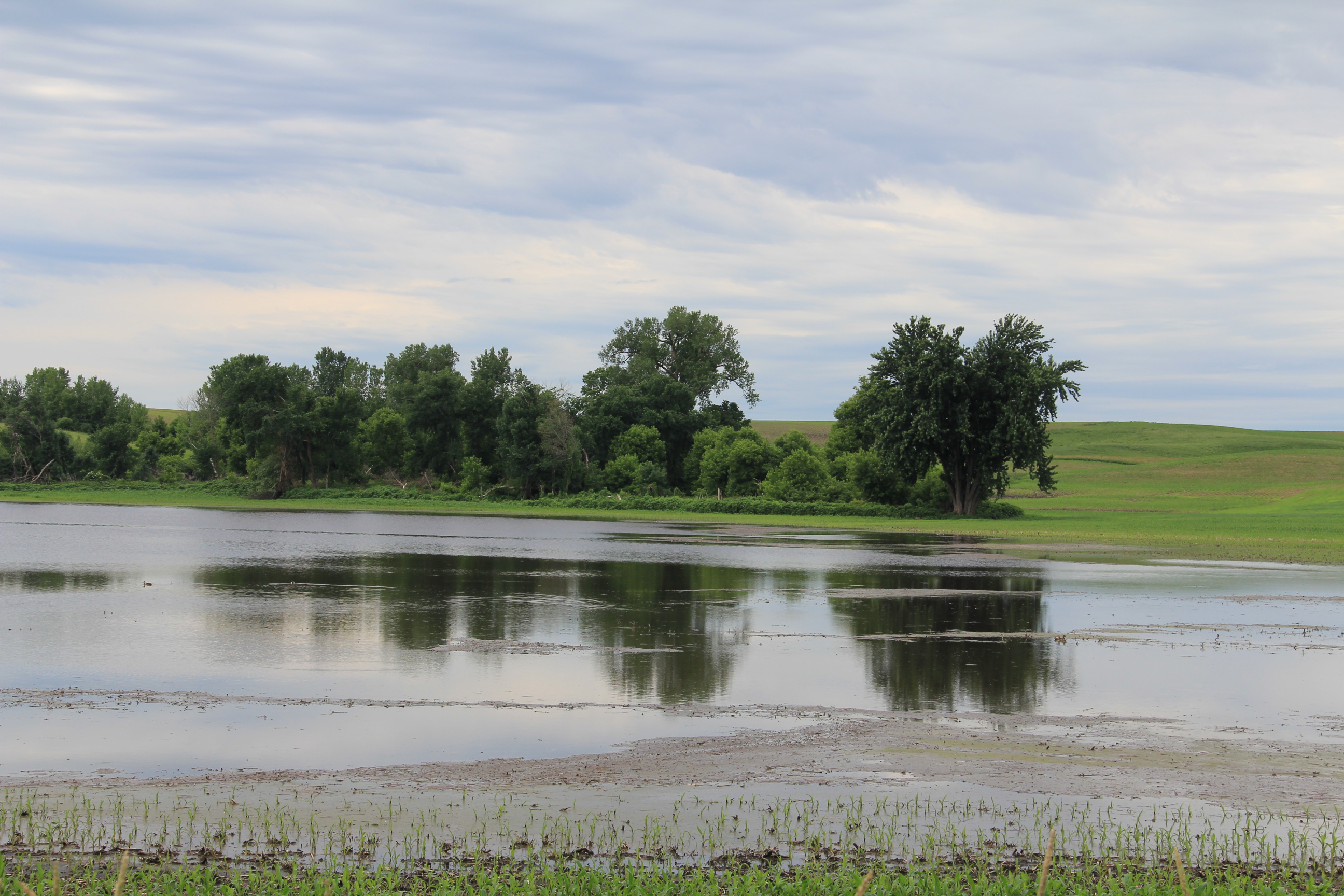
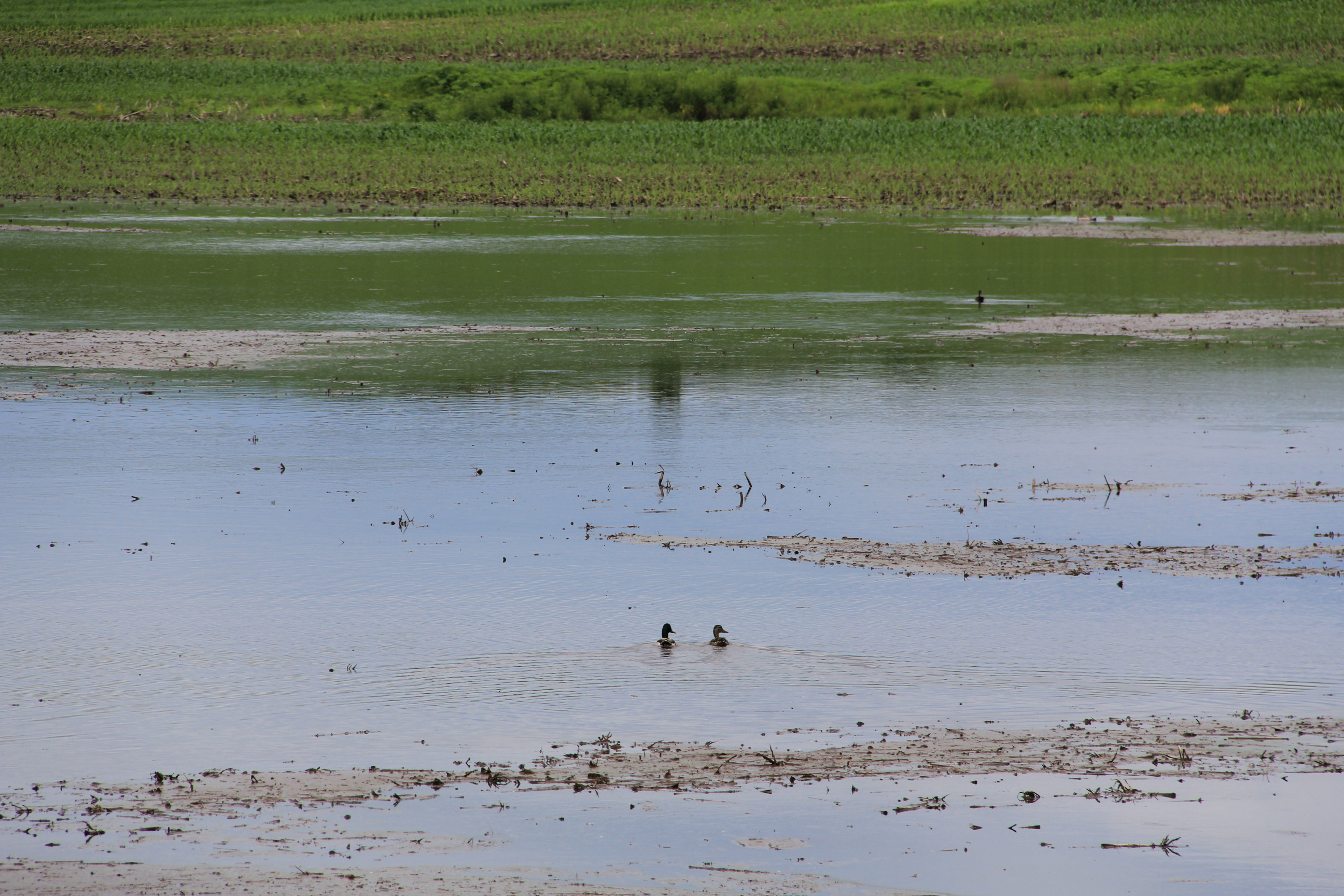
Rounding 195th Street West, a flooded cornfield, photographed northwest of Faribault late Friday morning. (Minnesota Prairie Roots copyrighted photo June 21, 2024)

Out in the countryside, too much rain has drowned corn and soybean crops, turning fields into lakes. I feel for the farmers, who depend on a good crop for their livelihood. It’s too late in Minnesota’s short growing season to replant. Crop insurance will cover some of their losses.

Excessive rain flooded this cornfield, transforming it from farmland to lake. Photographed late Friday morning along 195th Street West. (Minnesota Prairie Roots copyrighted photo June 21, 2024)

Rice County has a diverse topography of flat lands and rolling hills, plus differing soil types and drainage systems. Those, and rainfall amounts, affect whether a farm field floods. The entire county has experienced substantial rains. Just last Friday afternoon and into Saturday morning, we measured 3.1 inches of rain in our gauge. The day prior, 1.75 inches. Ten inches of rain fell here in eight days. Too much.

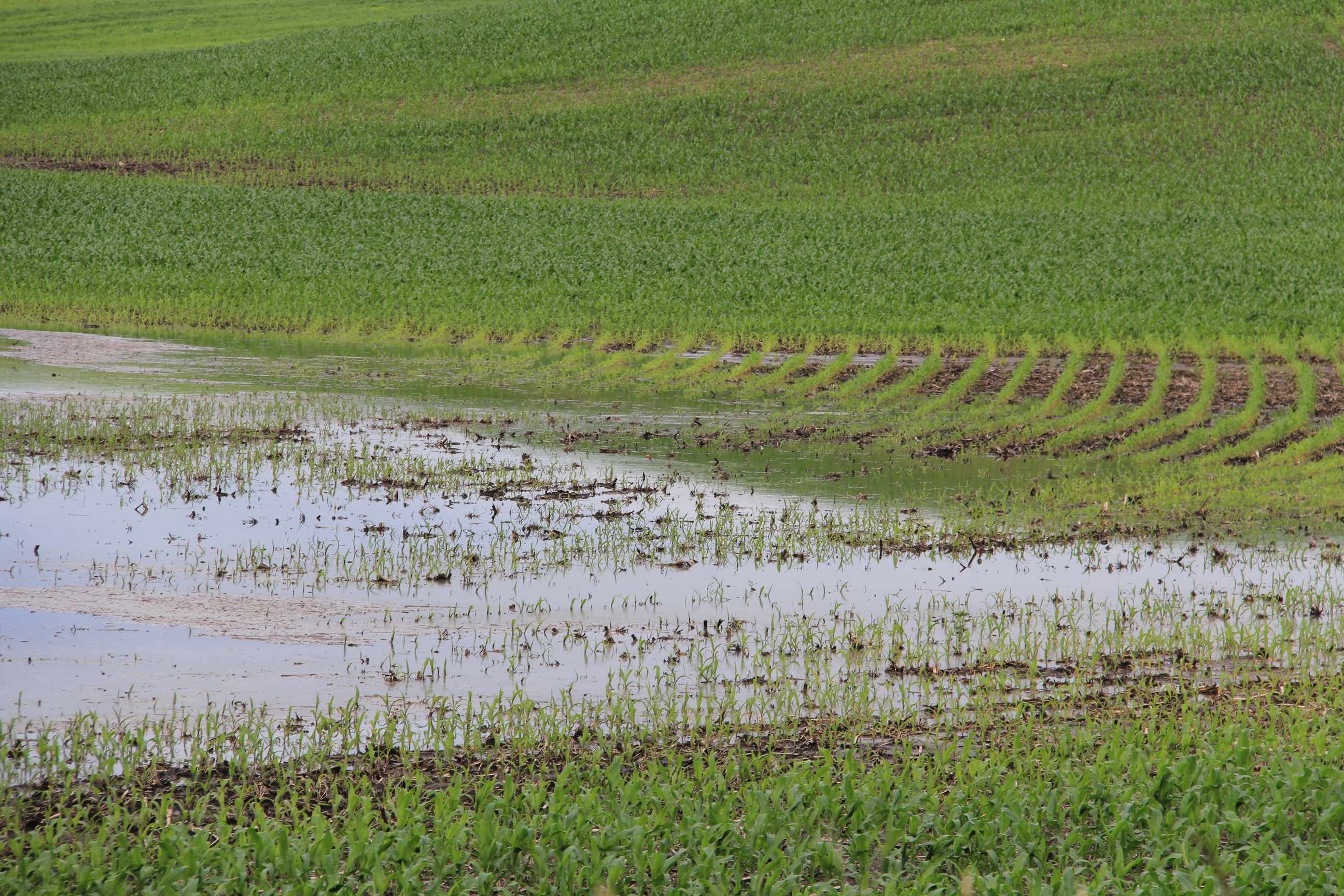
A flooded cornfield along 195th Street West, photographed Friday morning. (Minnesota Prairie Roots copyrighted photo June 21, 2024)
Ducks swim in the cornfield turned lake late Friday morning along 195th Street West. (Minnesota Prairie Roots copyrighted photo June 21, 2024)

Ask any farmer, and he/she can likely give you rainfall totals. I saw some of that rainwater on Friday morning while on a short drive along backroads northwest of Faribault. And that was before Friday’s three-inch rainfall.

A bit down the road, more flooding in the rolling terrain along Fairbanks Avenue northwest of Faribault, photographed late Friday morning. (Minnesota Prairie Roots copyrighted photo June 21, 2024)

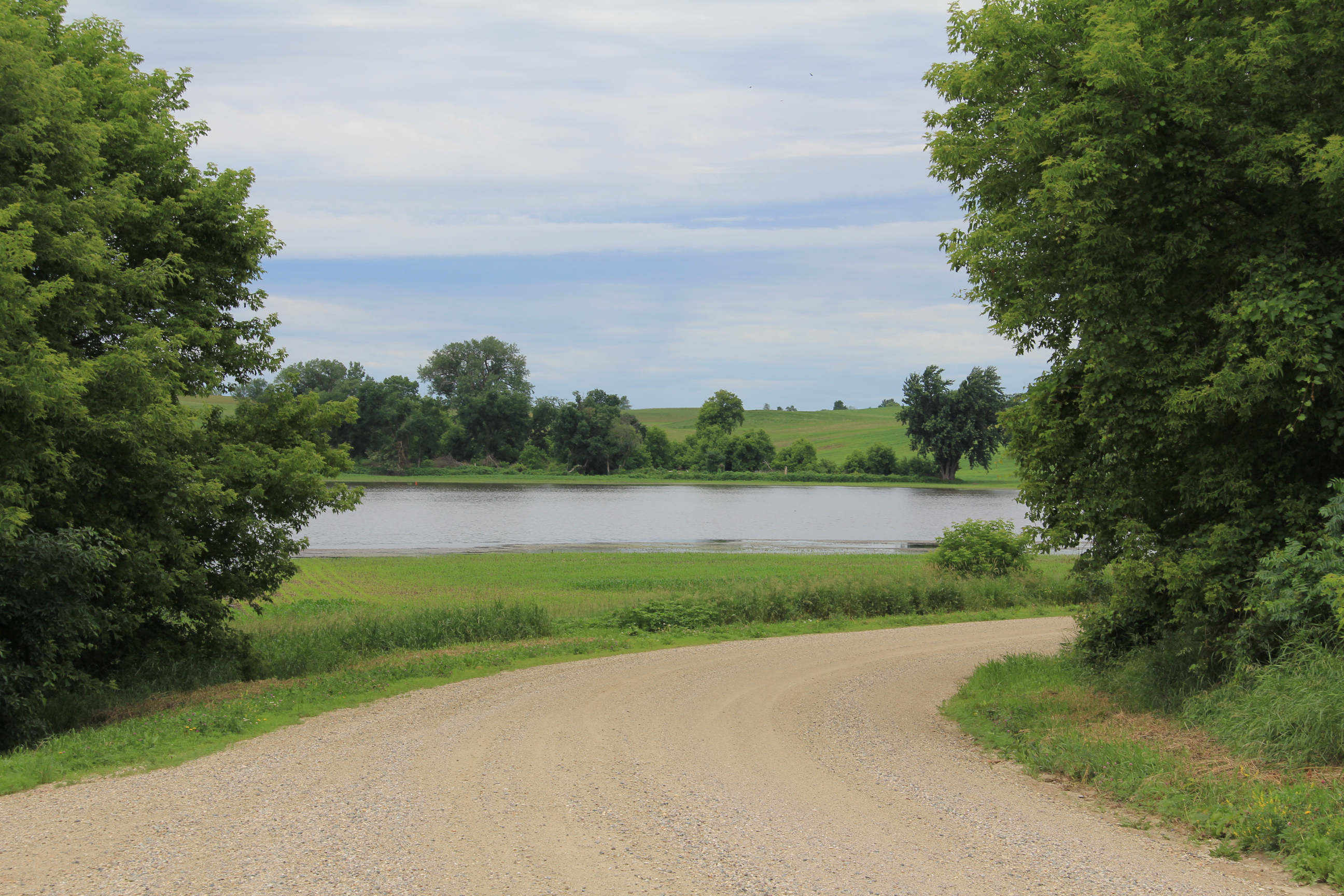
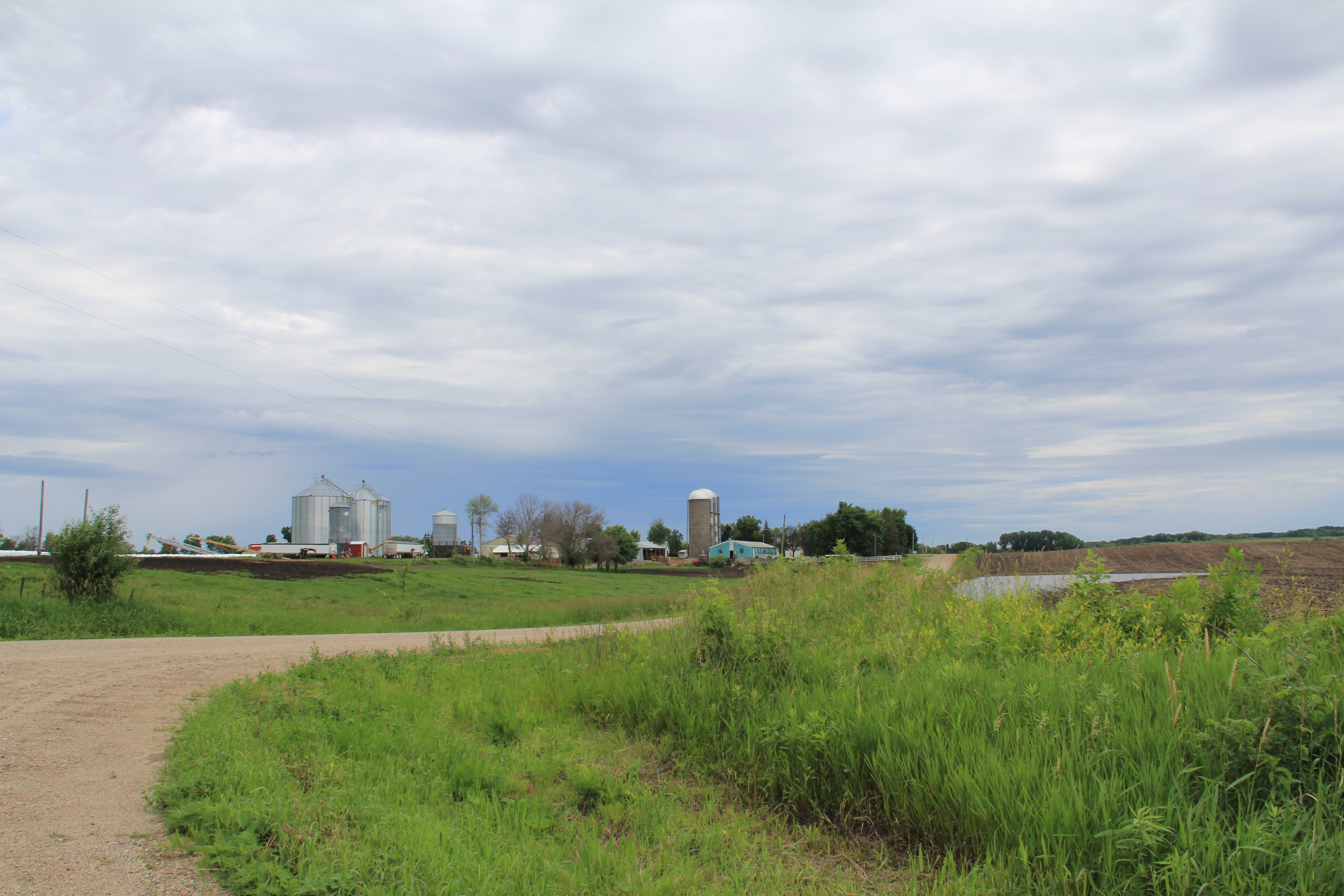
On Sunday afternoon, most fields in the area I traveled were not flooded, but at least one township gravel road along the Straight River was flooded and barricaded. I expect if I expanded my tour, I’d see a whole lot more road closures and flooded fields. (Click here for a list of roadways that are closed in Rice County.)

Public officials are warning people to heed warning signs (like this one on Dahle Avenue) and stay out of flooded areas due to the dangers of swift-moving, high water. (Minnesota Prairie Roots copyrighted photo June 23, 2024)

In the all of this, there’s nothing we can do to control the weather. We can only prepare and then deal with whatever comes. Those, of course, are just words, not really helpful to anyone dealing with flooded fields, flooded roads, flooded homes, flooded businesses, flooded campers, flooded parks, flooded…

© Copyright 2024 Audrey Kletscher Helbling
 

Learning more about The Faribault Dakota from a local historian April 12, 2024

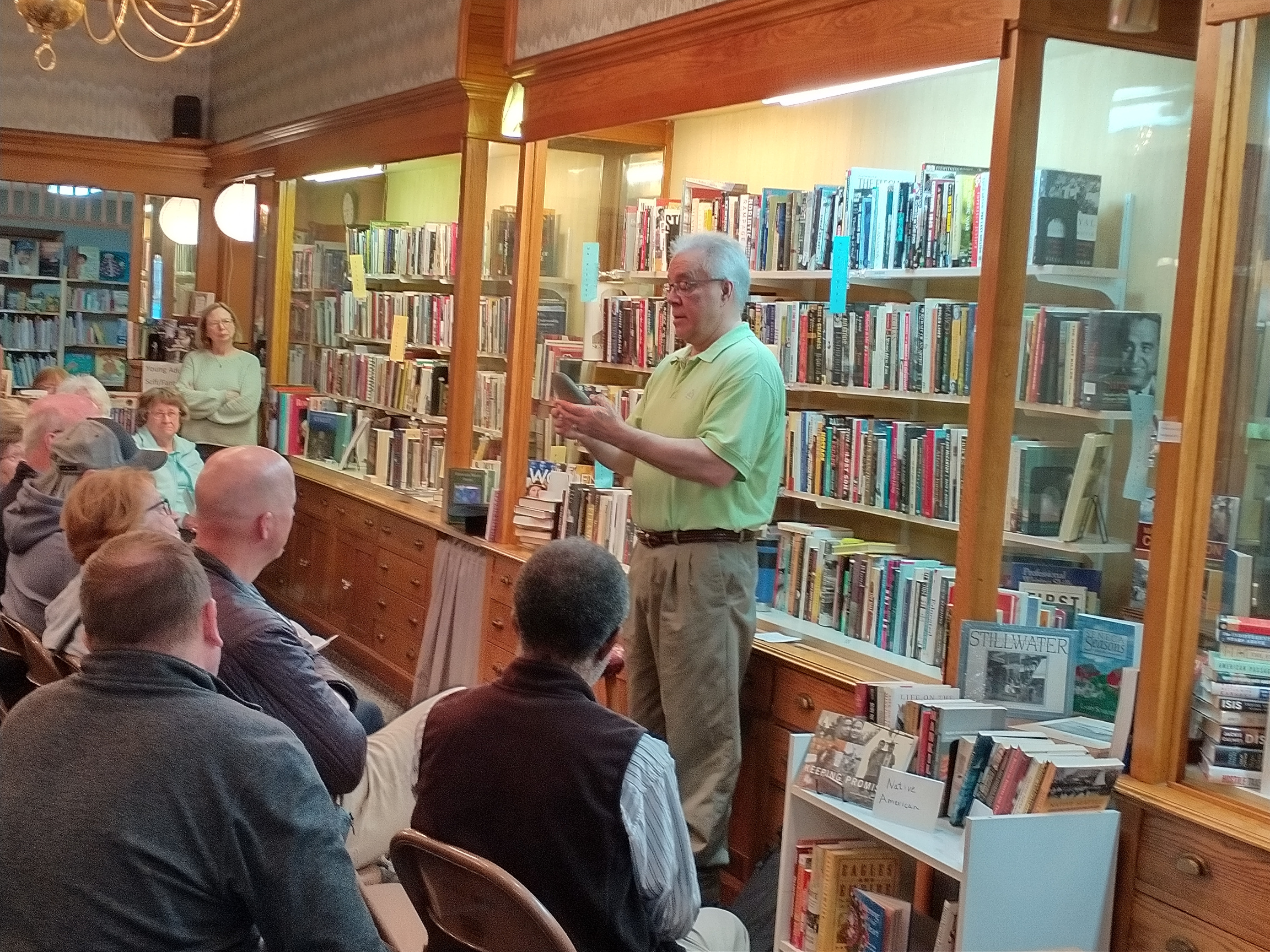
Jeff Jarvis shows an artifact while talking about the Dakota. (Minnesota Prairie Roots copyrighted photo April 2024)

WE’RE ALL CONNECTED. We’re all one.” Those closing words by local historian and artist Jeff Jarvis as he ended an hour-long presentation on “The Faribault Dakota” at Books on Central Thursday evening resonate. I’ve long been geographically-connected to Indigenous Peoples, first in my native Redwood County and now in Rice County. But Jarvis’ definition of connection stretches well beyond geography to the connection we all share simply via our humanity.

Jarvis, who is also an artist and graphic designer, handed out this mini guidebook at Thursday’s presentation. (Minnesota Prairie Roots copyrighted photo April 2024)

Jarvis spoke to a standing room only crowd packed into the Rice County Area United Way used bookstore on Faribault’s Central Avenue. The third speaker in the popular literary event series hosted by the bookshop since its fall opening, his talk was more history than literary. Interest ran high.

My interest in the Dakota traces back to the southwestern Minnesota prairie, where I grew up between the Upper and Lower Sioux Indian Reservations. Today the word “community,” references these homes of the Mdewakanton Dakota. When I moved to Rice County 42 years ago, I moved onto land once inhabited by the Wahpakute Dakota. But it wasn’t until I listened to Jarvis speak that I learned even more about the place I initially called home on the southeastern tip of Cannon Lake west of Faribault.

An Indigenous Peoples exhibit at the Rice County Historical Society. (Minnesota Prairie Roots copyrighted photo 2024)

Long before fur traders and settlers moved to this region of southern Minnesota, the Dakota called this land home, typically living along the area’s lakes and rivers, including the Cannon. I knew this; I’ve attended many presentations on the Dakota by local historians. But I wasn’t aware that the former Ackman Store, the rental home where Randy and I lived for 2 ½ years after our 1982 marriage, was near the site of a trading post opened by fur trader and town founder Alexander Faribault.

Native American artifacts found in Rice County and displayed at the Rice County Historical Society. These are not the artifacts shown by Jarvis. (Minnesota Prairie Roots copyrighted photo 2024)

Jarvis asked me after his presentation whether I saw ghosts while living there. I didn’t. And in a conversation with Lou Ackman, who grew up and lived along Cannon Lake and loaned Indian artifacts for Jarvis to show Thursday evening, I learned that people often searched the Ackmans’ farm fields for artifacts.

When Randy and I moved into Faribault, our geographic connection to Indigenous Peoples continued. We purchased a house below Wapacuta (sic) Park, where we still live today. It was upon this now park land that the Dakota placed their dead, (wrapped in buffalo robes or blankets) upon scaffolding until later burial. Jarvis also shared that the Dakota sometimes suspended wrapped bodies from trees to catch the spirits in the windy hilltop location prior to burial 1-2 years later. I’d never heard this prior to Thursday.

Peace Park, an unmarked Dakota cemetery near Buckham Memorial Library. (Minnesota Prairie Roots copyrighted file photo September 2022)

But I was aware that Peace Park, a triangle of land near Buckham Memorial Library, is an Indian burial grounds. Jarvis termed it an unfenced and unrecognized cemetery marked by a faith-based WW II monument and nothing indicating this is sacred ground of the Dakota. Several bodies were discovered buried there in 1874, he said, not wanting to delve deeper into that troubling topic at Thursday’s event.

Jarvis covered a lot more in his one-hour presentation. Most I knew. Some I didn’t. I always appreciate learning local history, especially about the 300-400 Dakota who relocated from Cannon Lake to live in elm bark huts and teepees in the area along the Straight River from Division Street to the wastewater treatment plant.

The community of Faribault, Jarvis said, had/has a lot of color and was/is “a beckoning place” to many peoples. He referenced the Indigenous Peoples of yesteryear and the immigrants of today. “We’re all connected. We’re all one,” Jarvis said. He’s right.

One of two rainbows arches over Faribault Thursday evening. (Copyrighted photo by Randy Helbling April 2024)

As I stepped outside the bookshop after Jarvis’ talk, cloudy skies opened to reveal stunning double rainbows—a symbol of promise and of hope. A symbol that we all live under the same sky, that we’re all connected.

FYI: To learn more about Jeff Jarvis’ work on the local Faribault Dakota Project, click here.

© Copyright 2024 Audrey Kletscher Helbling
 

Learning about Indigenous peoples from “The Forever Sky” November 27, 2023

(Minnesota Prairie Roots copyrighted file photo September 2022)

IN THE PAST YEAR, my desire to learn more about Native American culture has heightened. My new interest followed a talk in September 2022 by then Rice County Historical Society Director Susan Garwood about “The Indigenous history of the land that is now Rice County, Minnesota.” This county, this community, in which I live was home first to Indigenous peoples, long before the first settlers, the fur traders, the Easterners who moved west.

This sculpture of Alexander Faribault and a Dakota trading partner stands in Faribault’s Heritage Park near the Straight River and site of Faribault’s trading post. Ivan Whillock created this art which sits atop the Bea Duncan Memorial Fountain. (Minnesota Prairie Roots copyrighted file photo)

I knew that, of course. But what I didn’t know was that the Wahpekute, one of the seven “Council Fires” of the Dakota Nation, used the current-day Wapacuta Park just up the hill from my house for honoring their dead.

This Faribault city park, where my kids once zipped down a towering slide, clamored onto a massive boulder, slid on plastics sleds, was where the Wahpekute many years ago placed their dead upon scaffolding prior to burial. That ground now seems sacred to me.

That it took 40 years of living here to learn this information suggests to me that either I wasn’t paying attention to local history or that my community has not done enough to honor the First Peoples of this land.

(Book cover sourced online.)

Whatever the reason, I have, on my own, decided to become more informed about Indigenous peoples. And for me, that starts with reading. I recently headed to the children’s section of my local library and checked out the book, The Forever Sky, written by Thomas Peacock (a member of the Fond du Lac Band of Lake Superior Anishinaabe Ojibwe) and illustrated by Annette S. Lee (mixed-race Lakota-Sioux of the Ojibwe and Lakota-Sioux communities).

These two Minnesotans, in their collaborative children’s picture book, reveal that “the sky and stars all have stories.” Oh, how I value stories. And the stories shared in this book, these sky stories, are of spirits and animals and the Path of Souls, aka The Milky Way, and…

I especially appreciate the book’s focus on the northern lights, explained as “the spirits of all of our relatives who have passed on.” The descriptive words and vivid images make me view the northern lights, which I have yet to see in my life-time, through the eyes of Indigenous peoples. The changing blues and greens are their loved ones dancing in the night sky. Dancing, dancing, dancing. How lovely that imagery in replacing loss with hope and happiness.

The Forever Sky has created an awareness of Native culture previously unknown to me. Just like that talk a year ago by a local historian aiming to educate. I have much to learn. And I am learning via books found not only in the adult section of the library, but also among the children’s picture books. That writers and illustrators are covering topics of cultural importance in kids’ books gives me hope for the future. My grandchildren, even though they will never see the vast, dark, star-filled sky I saw nightly as a child of the prairie, are growing up much more informed. They will understand cultures well beyond their own heritage. And that encourages me.

© Copyright 2023 Audrey Kletscher Helbling


Foliage, fields & fun in this season of autumn October 23, 2023

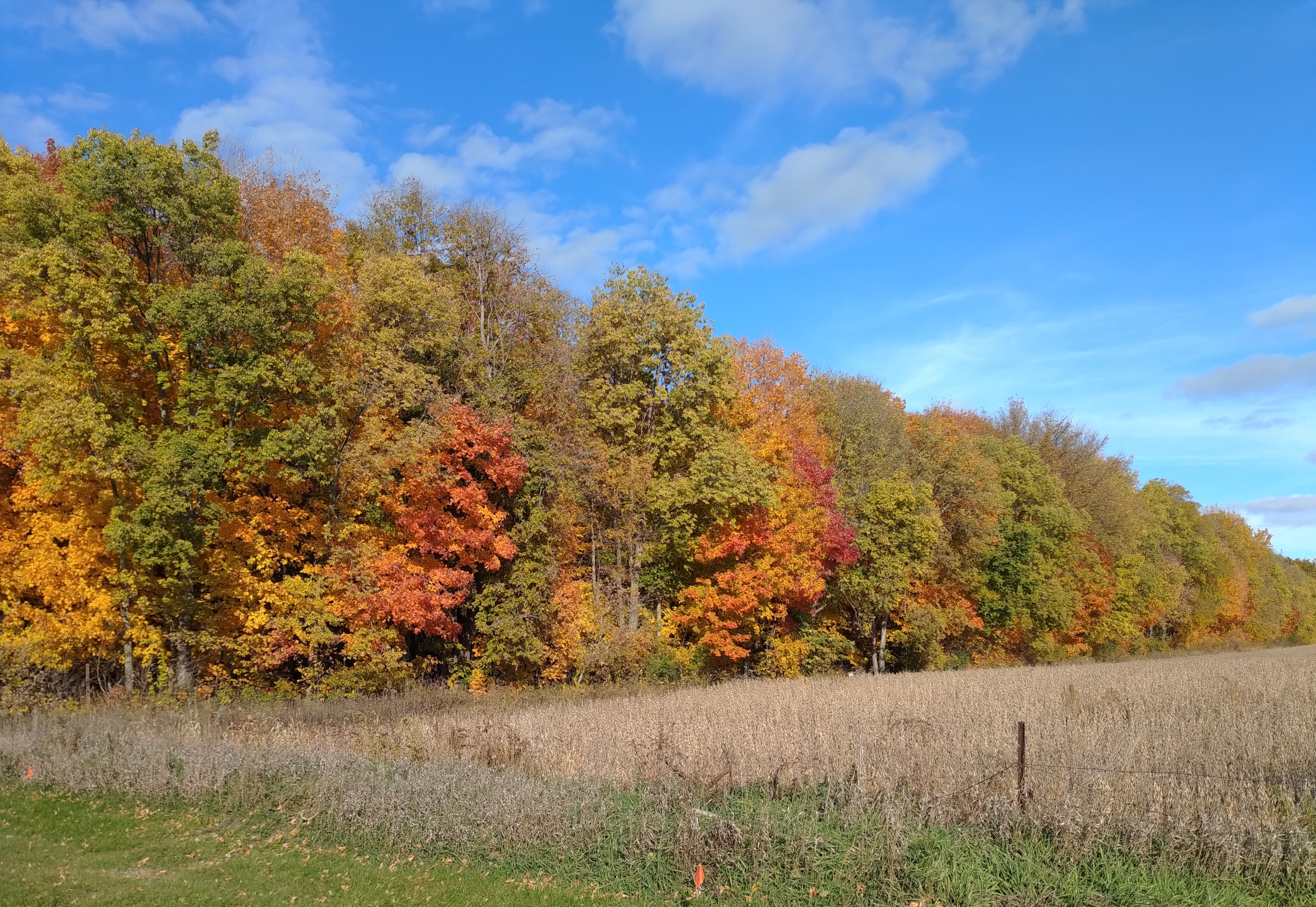
Stunning fall colors along Farwell Avenue north of Warsaw. (Minnesota Prairie Roots copyrighted photo October 2023)

AUTUMN BECKONED US RECENTLY to forgo the yard work, the half-finished interior paint job, the anything that would keep us at home. Rather, we hit the backroads, taking in the glorious fall colors which finally exploded. I can’t recall leaves ever turning this late in the season here.

One of my favorite old barns in Rice County, located along Farwell Avenue north of Warsaw. (Minnesota Prairie Roots copyrighted photo October 2023)

This region of Minnesota seems vastly undiscovered as an autumn leaf-peeping destination. But I learned years ago that the Faribault area offers stunning fall foliage, especially along our many area lakes and in stands of trees among rural rolling hills.

This gravel road, Farwell Avenue, took us past beautiful fall foliage. (Minnesota Prairie Roots copyrighted photo October 2023)

I like nothing better than to follow gravel roads that twist through the countryside. The slower pace connects me to the land, to the lovely scenes unfolding before me. Dust clouds trail vehicles rumbling along sometimes washboard surfaces. Combines kick up dust, too, as farmers harvest corn and soybeans, grain trucks parked nearby to hold the bounty.

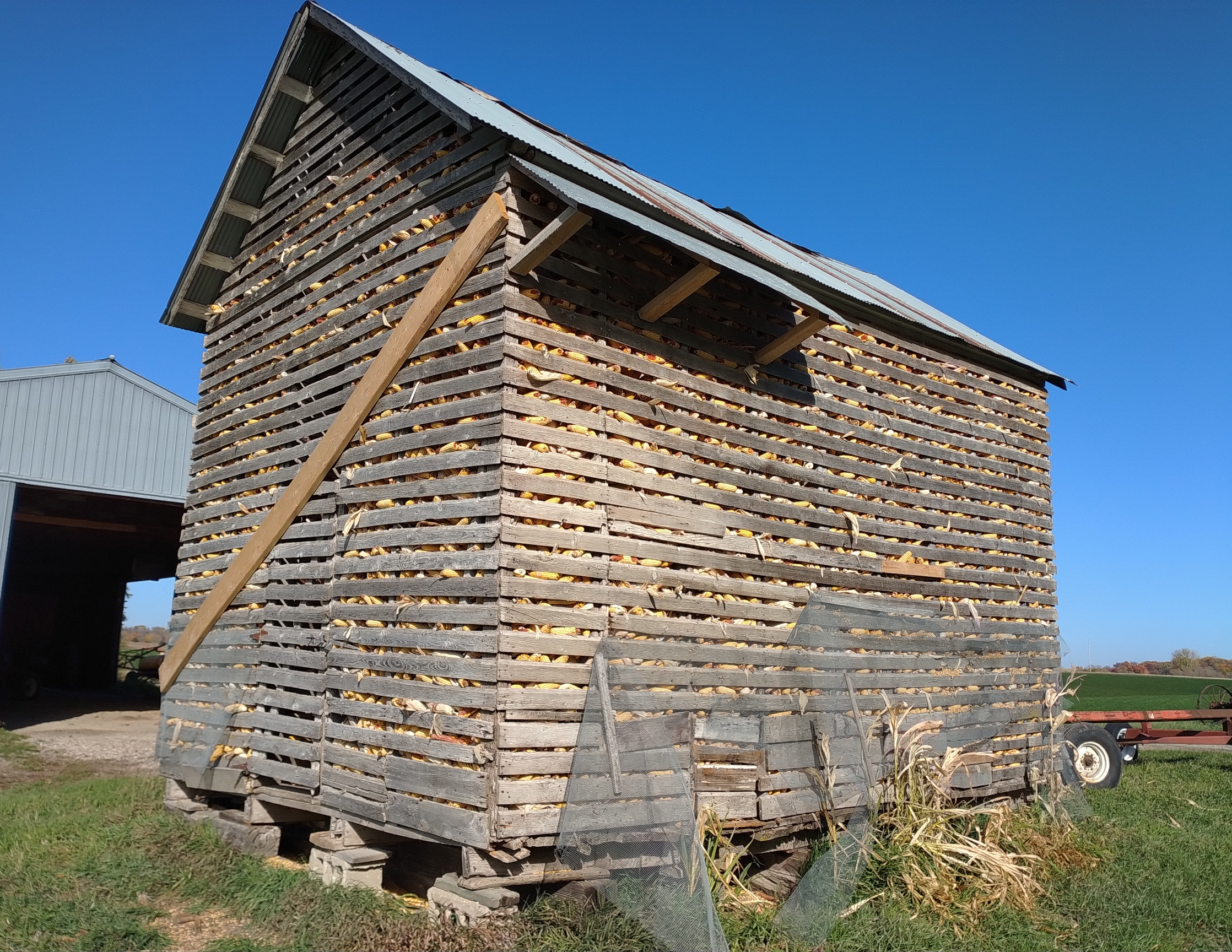
A rare find, a vintage corn crib packed with field corn in northwestern Rice County, in the Lonsdale area. (Minnesota Prairie Roots copyrighted photo October 2023)

Even inside our van, I can smell the scent of earth rising from freshly-tilled fields. Some acreage lies bare while others still hold endless rows of ripened crops awaiting harvest.

The Theis family has created a welcoming outdoor space for Apple Creek Orchard visitors to gather beside a fireplace against a wooded backdrop. (Minnesota Prairie Roots copyrighted photo October 2023)

At Apple Creek Orchard west of Faribault, families gathered on a sunny weekend afternoon to enjoy fun on-site activities like apple picking, bean bag toss, apple slinging, wagon rides, jump pad, corn maze and more. We wandered the grounds, admiring the improvements and expansions made by the Theis family to grow their orchard in to an agri-entertainment destination. They’ve also added an event center to host weddings and other gatherings.

Autumn-themed pillows are propped on the sitting area next to the outdoor fireplace at Apple Creek Orchard. (Minnesota Prairie Roots copyrighted photo October 2023)

As Randy paid for a half-peck of my favorite Minnesota-developed SweeTango pulled from a store cooler, I greeted Tami Theis, congratulated her on their upgrades. She inquired about my family. I got to know Tami and her daughter Amber sometime back while at the orchard. They are a delight— friendly, caring and, oh, so welcoming to everyone. Amber was running the concession stand on this busy afternoon and I gave her a hard time after learning the donut machine wasn’t working and I would get none of the mini donuts I craved.

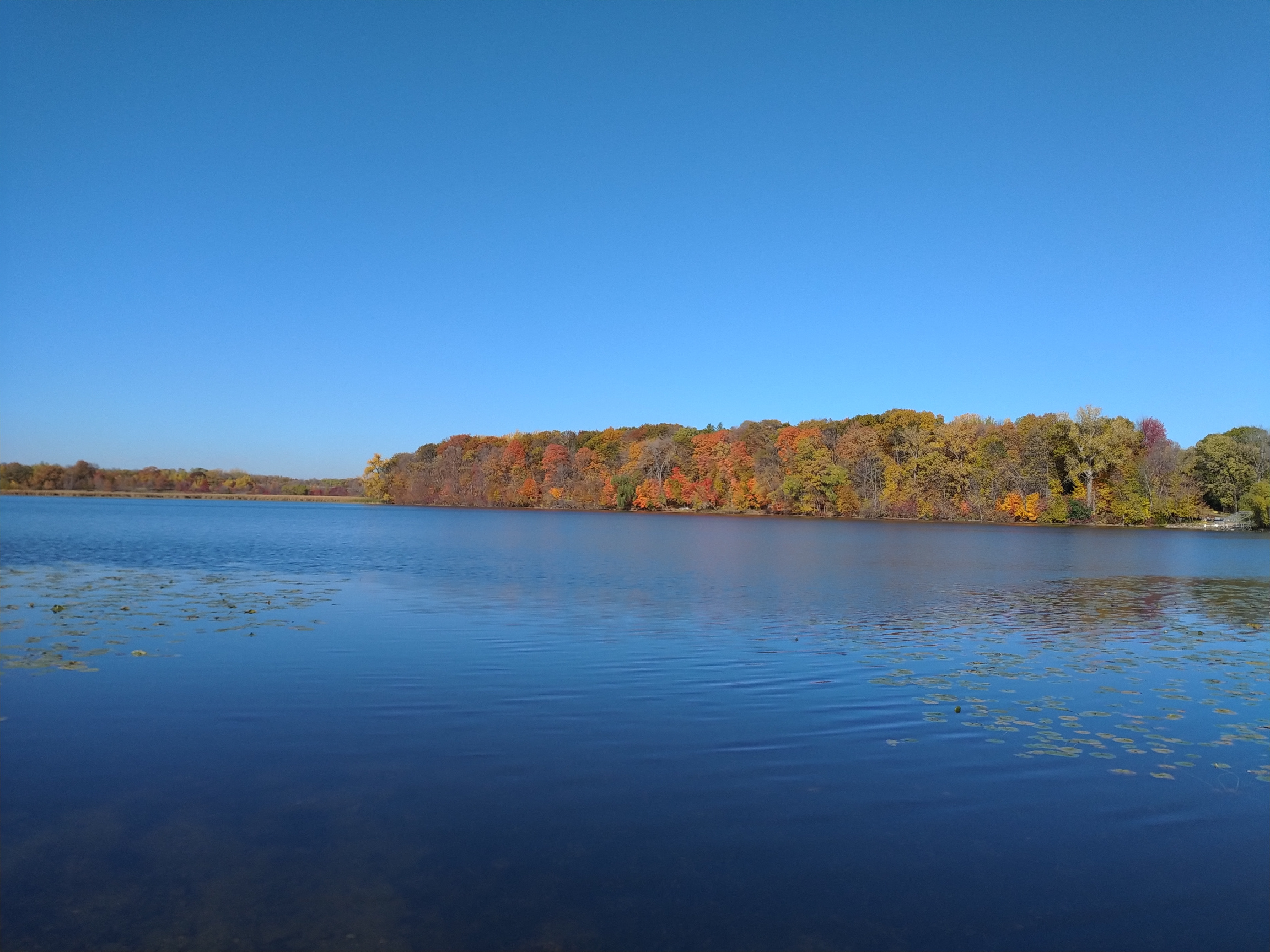
Dudley Lake, one of my favorite places to see colorful lakeside trees in Rice County. (Minnesota Prairie Roots copyrighted photo October 2023)

No matter my disappointment in the lack of a sweet treat, nothing else about our afternoon outing disappointed. Onward Randy and I went. He turned the van left out of Apple Creek Orchard onto the paved roadway. Eventually we took gravel roads again, meandering past lakes and fields and farm sites, stopping occasionally so I could snap photos.

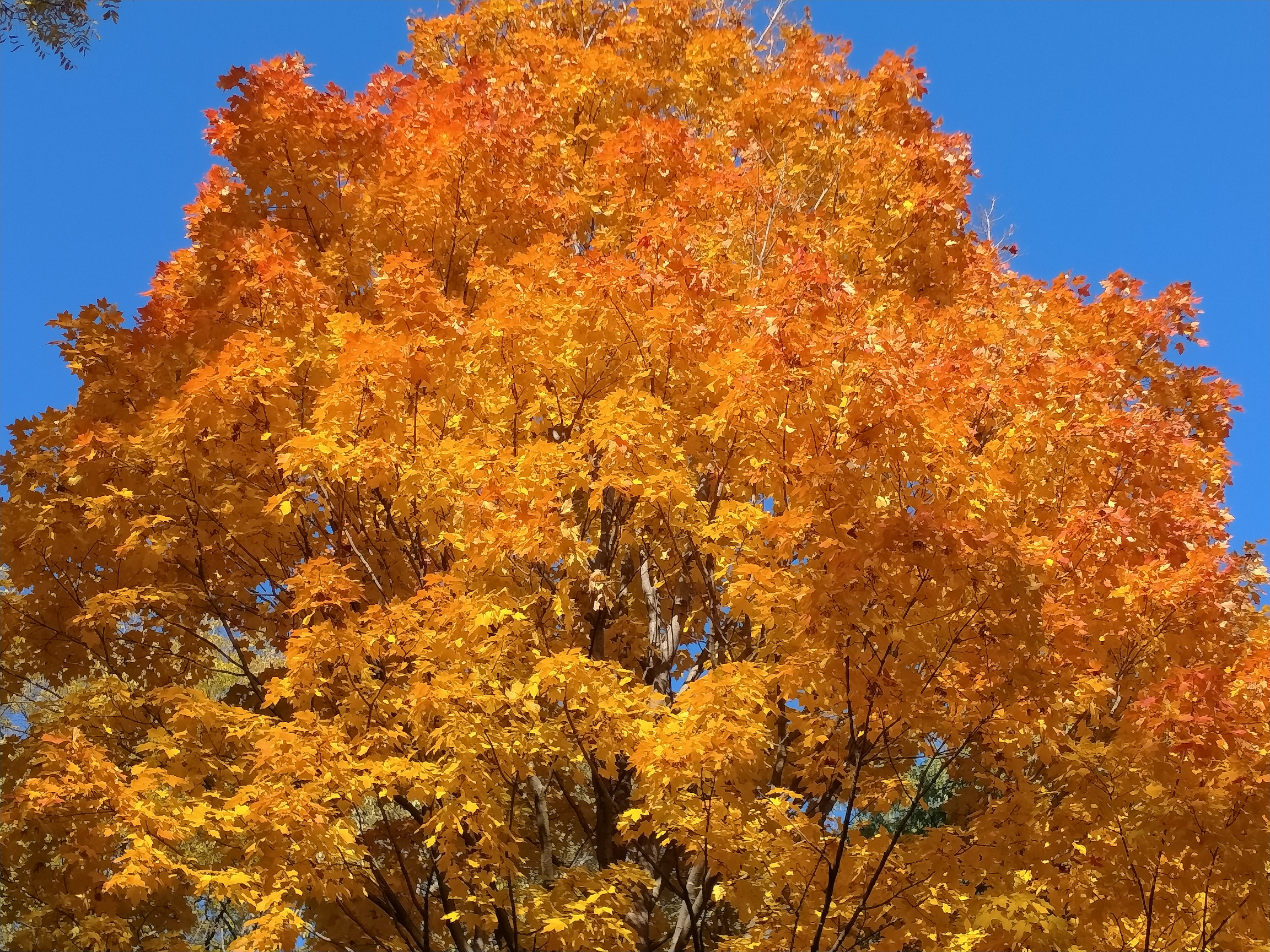
My next-door neighbor’s flaming maple. (Minnesota Prairie Roots copyrighted photo October 2023)

I love this time of year. The scent of decaying leaves. The sight of trees flaming red, yellow, orange. The muted fields that define the landscape. The apples and pumpkins and gourds. The bold blue sky. The bringing in of the harvest.

Looking up at our backyard maple, the wooded hillside and at our neighbor’s trees on a recent afternoon. (Minnesota Prairie Roots copyrighted photo October 2023)

Back home, the down side of autumn awaited us in outdoor chores—removing leaves from rain gutters, raking/mulching layers of maple leaves in the backyard, washing windows… To everything there is a season. And the season of autumn means taking time to view the colorful fall foliage when the trees are turning. The work can wait.

© Copyright 2023 Audrey Kletscher Helbling
 

Warning: Avoid Interstate 35 by Faribault August 29, 2023

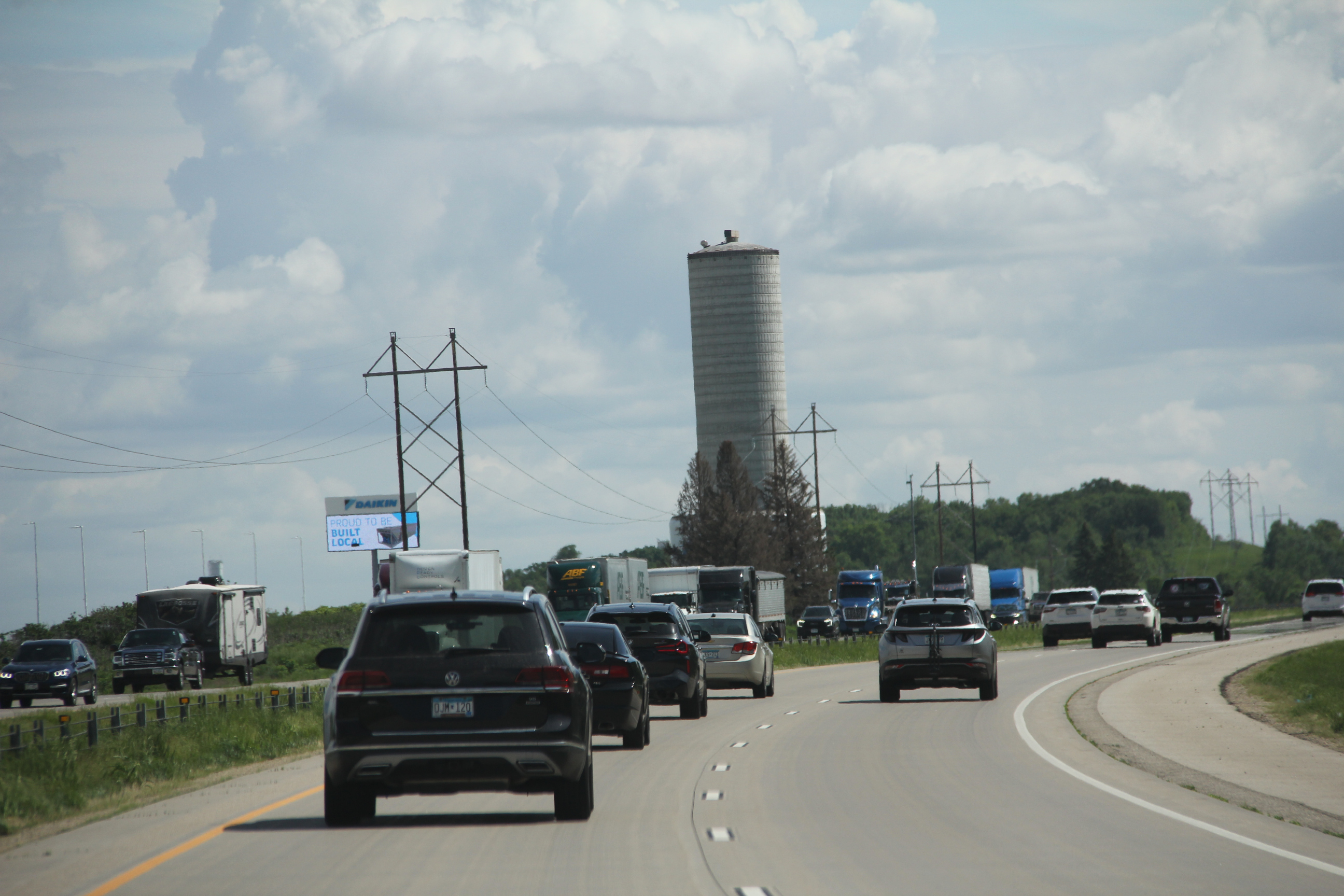
This image shows heavy traffic along Interstate 35 north of Faribault, BEFORE road construction started. (Minnesota Prairie Roots copyrighted file photo June 2023)

MATTHEW. CIMBERLY. MONA. DENNIS. They ranged in age from 63 to 79. And they all died this summer as a result of crashes in a construction zone on Interstate 35 just north and south of Faribault. Add to that multiple other crashes, including an August 20 six-vehicle chain reaction pile-up resulting in life-threatening injuries to two women, and this stretch of roadway has quickly become known as unsafe and deadly.

Faribault Fire Chief Dusty Dienst in mid-July publicly encouraged local residents to avoid this section of the I-35 corridor as construction continues into November and then resumes again next year. Dienst’s warning came shortly after two semis collided in a fiery crash on July 12. Dennis, a trucker from South Dakota, died of his injuries 16 days later. And Dienst’s warning came nearly a month before the latest three fatalities.

Mona from east central Minnesota died on August 11 and then Matthew and Cimberly, a couple from Iowa, two weeks later in crashes in the same area of the northbound lanes just south of Faribault.

Local residents are rightly concerned. I am, too. We are avoiding the interstate and have told our daughter and her husband, who live 35 minutes north in Lakeville, to “Stay off 35 by Faribault.”

People are quick, on social media, to speculate on the causes of these crashes. They point primarily to speed and distracted driving, without any insider knowledge. Since I don’t know the facts, I won’t assume anything. The Minnesota State Patrol, the investigating entity, can determine the causes. I will say, though, that I have witnessed my share of distracted and dangerous driving (tailgating, speeding, weaving…) on I-35 and other interstates/freeways both inside and outside the Twin Cities metro. That’s both in passenger vehicles and in semi trucks.

The fact is that four people died within a month in the construction zone on the interstate near Faribault. They leave loved ones and friends grieving their tragic, unexpected deaths.

Every time I hear sirens now and watch as the ambulance speeds by my house, I wonder if yet another crash has occurred along the interstate. Every time I hear and see an air ambulance flying near my home, heading toward the hospital, I wonder if yet another person has been airlifted off the interstate with critical, life-threatening injuries. Every time traffic builds on my street to a steady, higher volume than usual, I check local media for reports of yet another serious crash along I-35 by Faribault. The street past my house is a backroad route between Medford and Faribault, although not the official detour off 35.

And I wonder, what can be done to improve safety so no one else is injured or dies in the I-35 construction zone in Rice County? Something needs to change. And soon.

© Copyright 2023 Audrey Kletscher Helbling


Reminded of the importance of farmers June 16, 2023

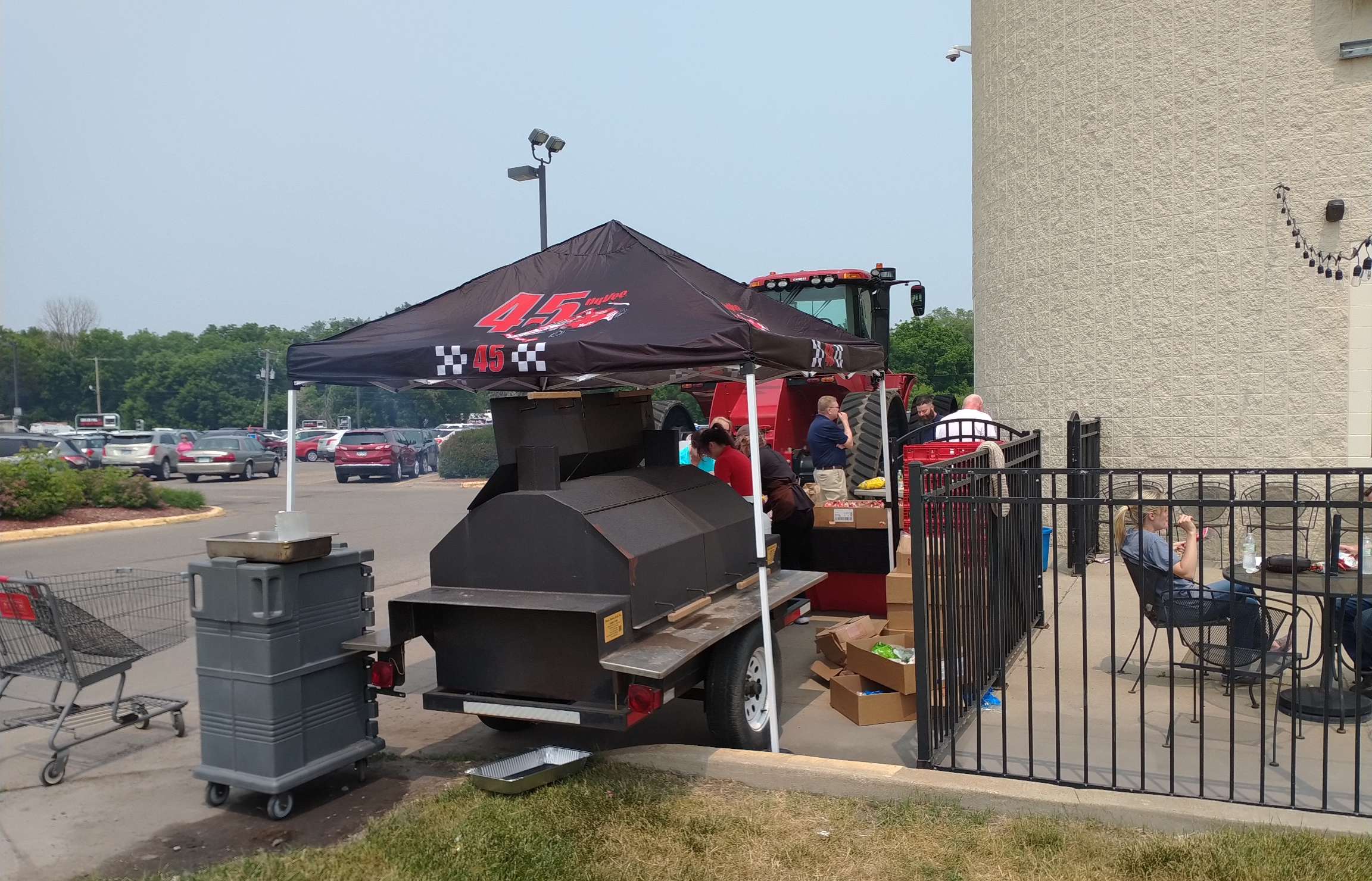
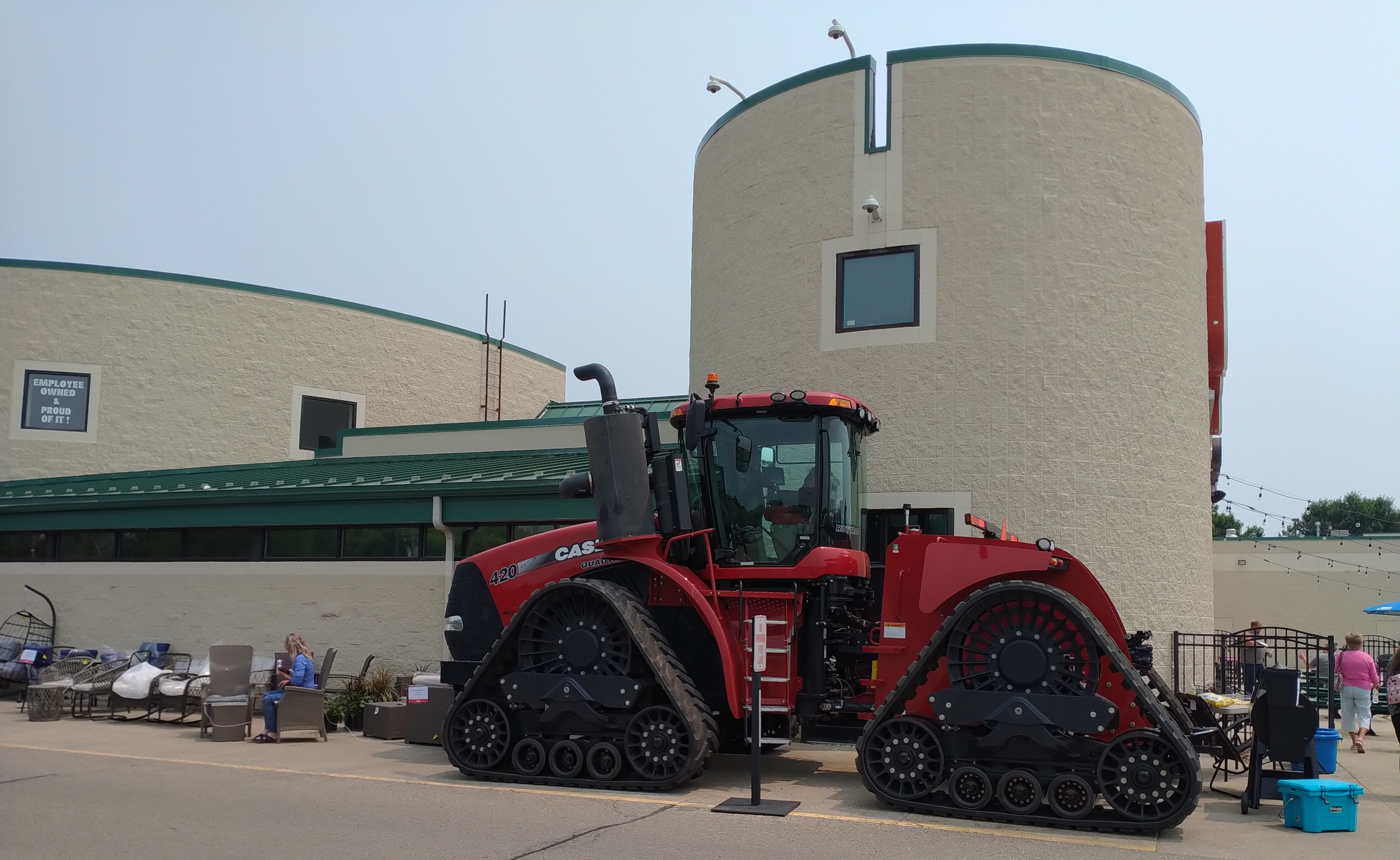
Hy-Vee in Faribault grilled pork burgers outside its patio area on Thursday with a tractor parked nearby. (Minnesota Prairie Roots copyrighted photo June 2023)

I LUNCHED YESTERDAY with a guy from northern Rice County who farms and runs an auto body repair shop. The shop is Andy’s primary business with crop farming secondary. He rents out some of his acreage, tending only his alfalfa field. He has plenty of customers for his hay. Mostly people with horses and dairy goats, he said.

This massive tractor provided photo ops outside Faribault’s Hy-Vee grocery store. (Minnesota Prairie Roots copyrighted photo June 2023)

Before Thursday, I’d never met Andy. But I asked if Randy and I could join him at a patio table outside Faribault’s Hy-Vee. The grocer was serving free pork burgers, chips and bottled water as part of its “Feed the Farmers that Feed America” event. The Iowa-based supermarket chain is working with Feeding America-affiliated food banks to help end hunger. A donation jar was filling with bills.

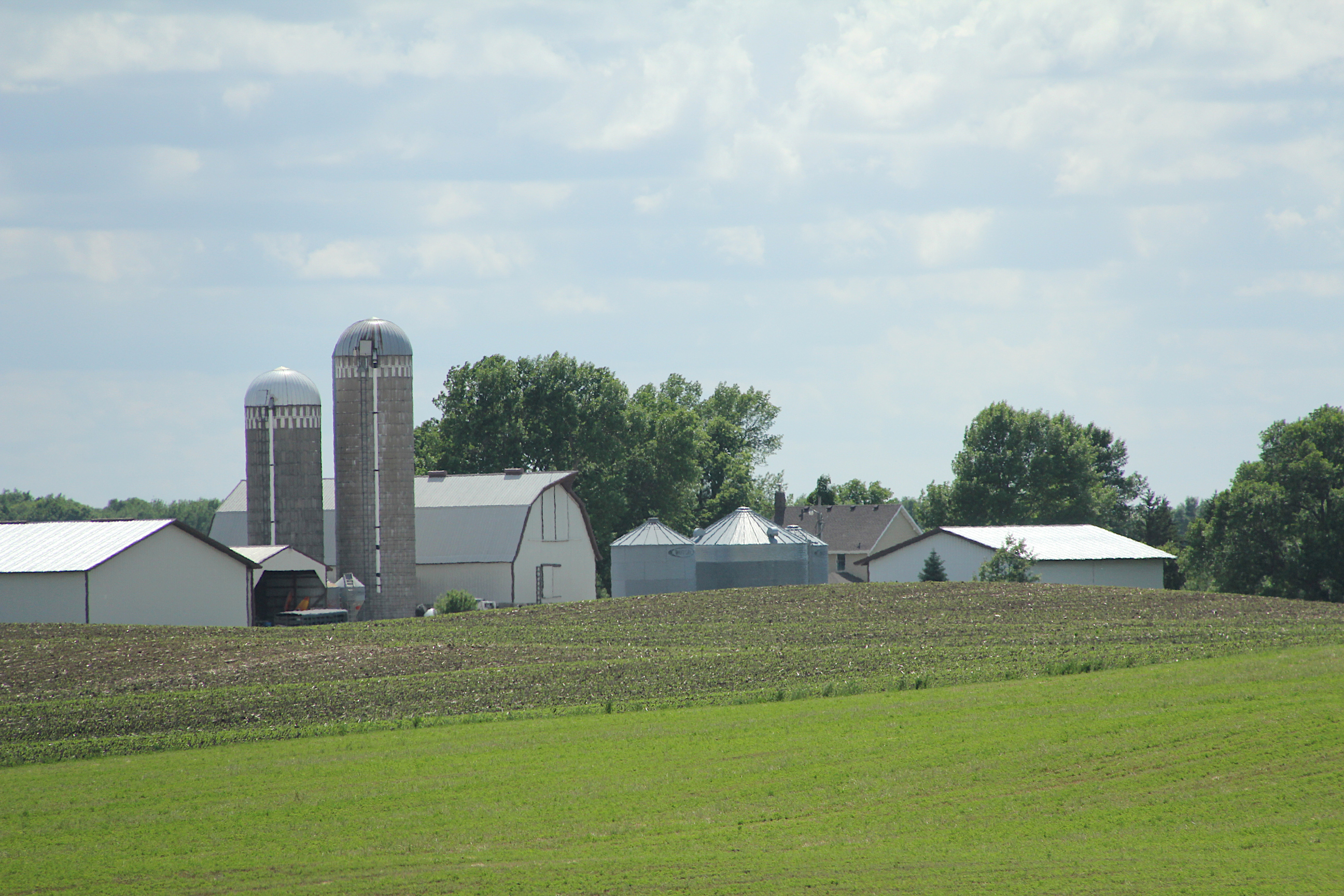
A farm site north of Faribault, photographed from Interstate 35. (Minnesota Prairie Roots copyrighted file photo June 2023)

Events like this remind me just how important agriculture is to all of us. Without farmers, we’d be hard-pressed to feed ourselves. Or at least I would since I don’t have a garden or animals or anything except two broccoli plants started from seed by my 4-year-old grandson.

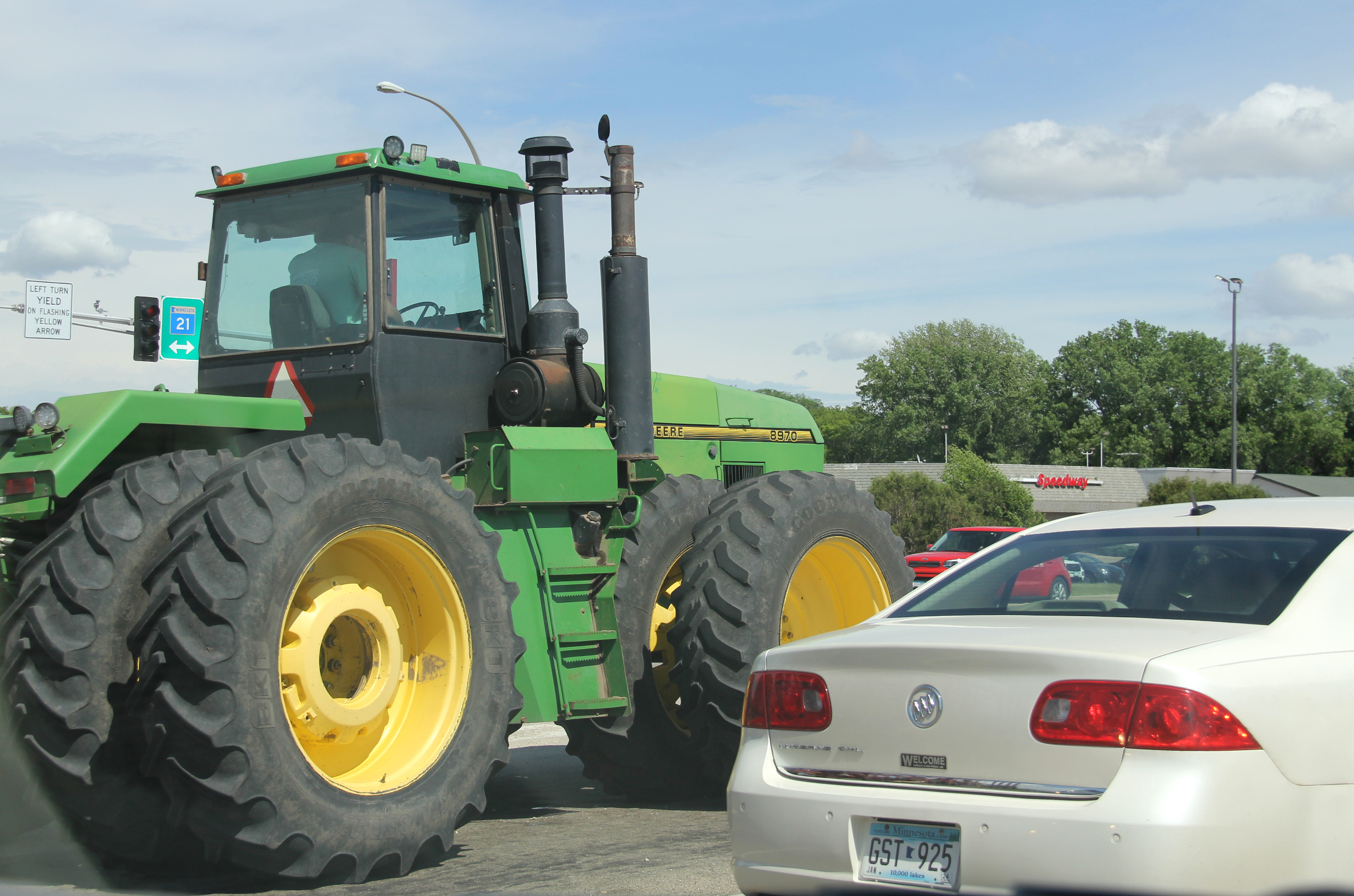
A tractor waits at a stoplight aside other traffic on busy Minnesota State Highway 21, just off Interstate 35 in Faribault. (Minnesota Prairie Roots copyrighted photo June 2023)

Events like this remind me also that agriculture is an important part of my community. Farm fields surround Faribault. Tractors rumble through town, sometimes past my house.

Parked at the Hy-Vee event, a corn (and beer) themed ATV. Guests enjoy free pork burgers on the patio. (Minnesota Prairie Roots copyrighted photo June 2023)

Although I was raised on a crop and dairy farm, I don’t always consider how agriculture impacts us in our daily lives. Without farmers working the land, tending crops, the shelves at HyVee and other grocery stores would be empty. Farmers’ markets wouldn’t exist. And I’d be really hungry because, as much as I like broccoli, that’s not enough to quell my hunger.

© Copyright 2023 Audrey Kletscher Helbling


Into the country to pick rhubarb, but so much more May 31, 2023

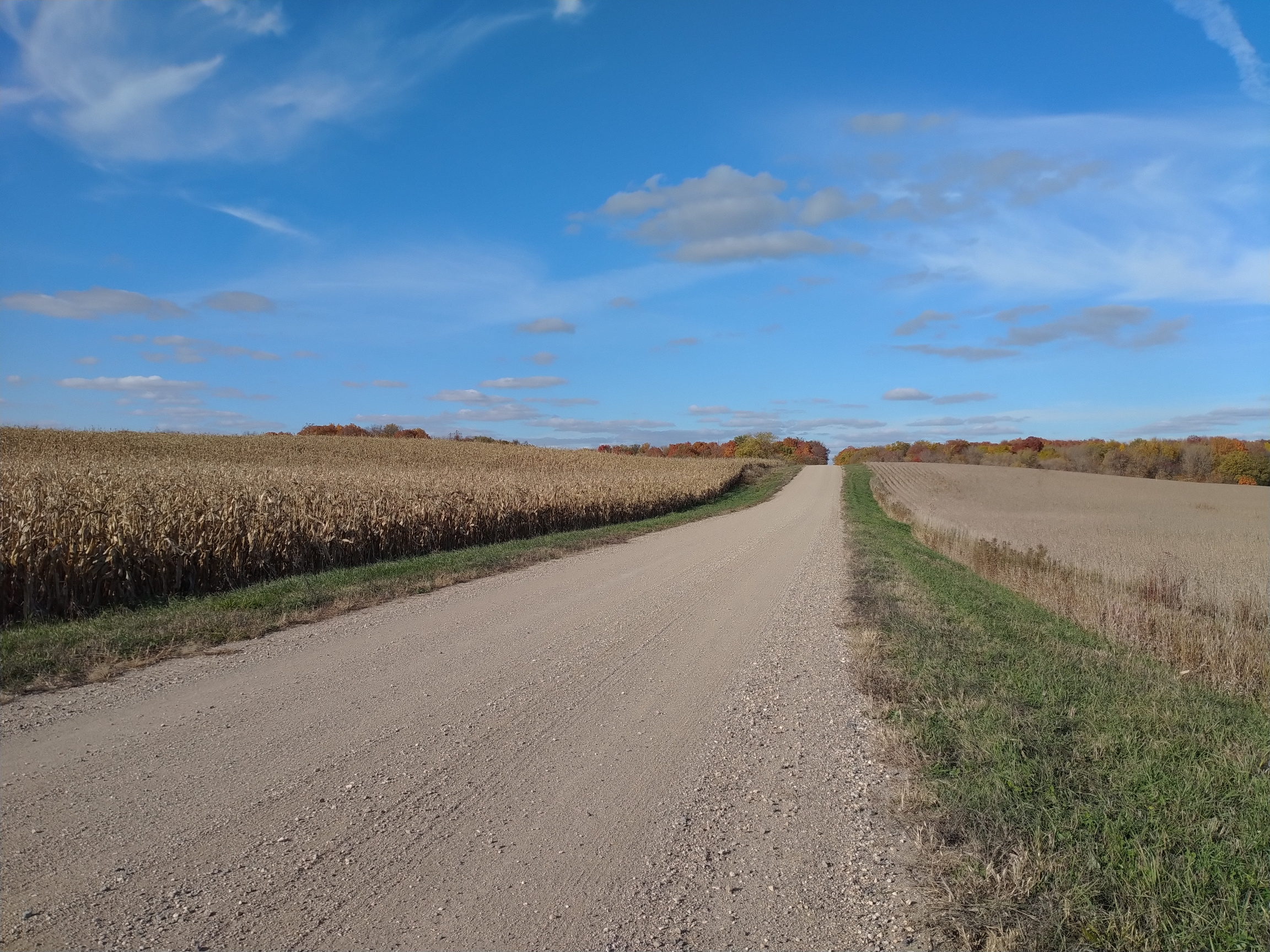
The gravel road past our friends’ Rice County farm. (Minnesota Prairie Roots copyrighted photo May 2023)

EVERYONE OUGHT TO OCCASIONALLY take a drive into the countryside along back county roads and gravel roads trailing dust. It’s good for the soul, spirit and mind to route into a quiet place defined by fields and farm sites. Away from town. Away from houses clumped together in blocks. Into a wide open place where land and sky meet and space seems infinite.

Randy and I found all of that recently as we drove east of Faribault, passing fields sprouting corn, farm sites nudging the highway. We aimed toward our friend Barb and Bob’s farm, invited there to harvest rhubarb. It’s an annual spring rite for us.

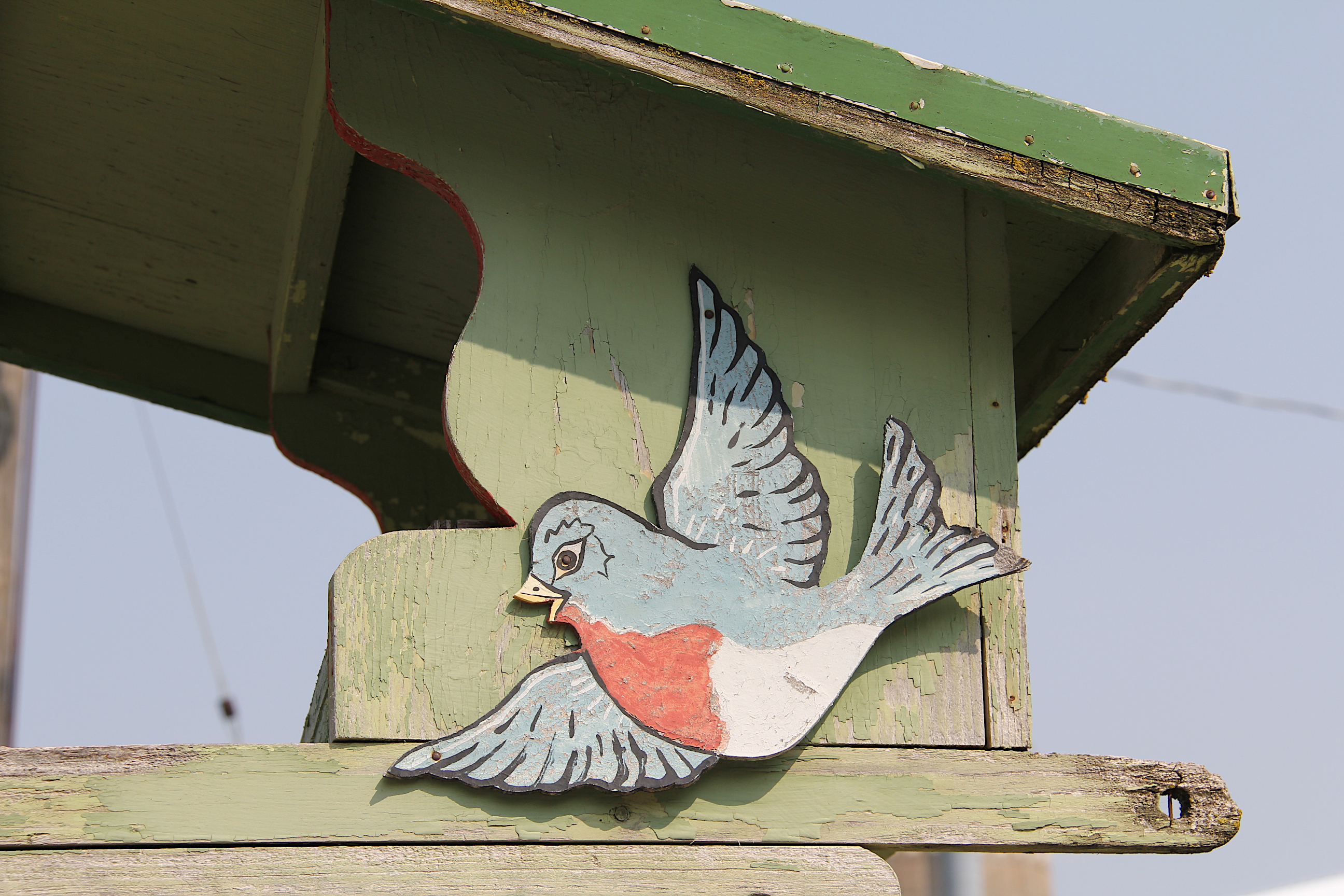
Bird folk art. (Minnesota Prairie Roots copyrighted photo May 2023)

But for me, this is about much more than gathering rhubarb. It’s about enveloping myself in the peacefulness of rural Minnesota. When only the trill of birds, the roar of a tractor and conversation with our friends break the silence, I feel utterly, contentedly at home. I feel grounded and rooted and connected and transported back to the farm of my youth, albeit 120 miles to the west.

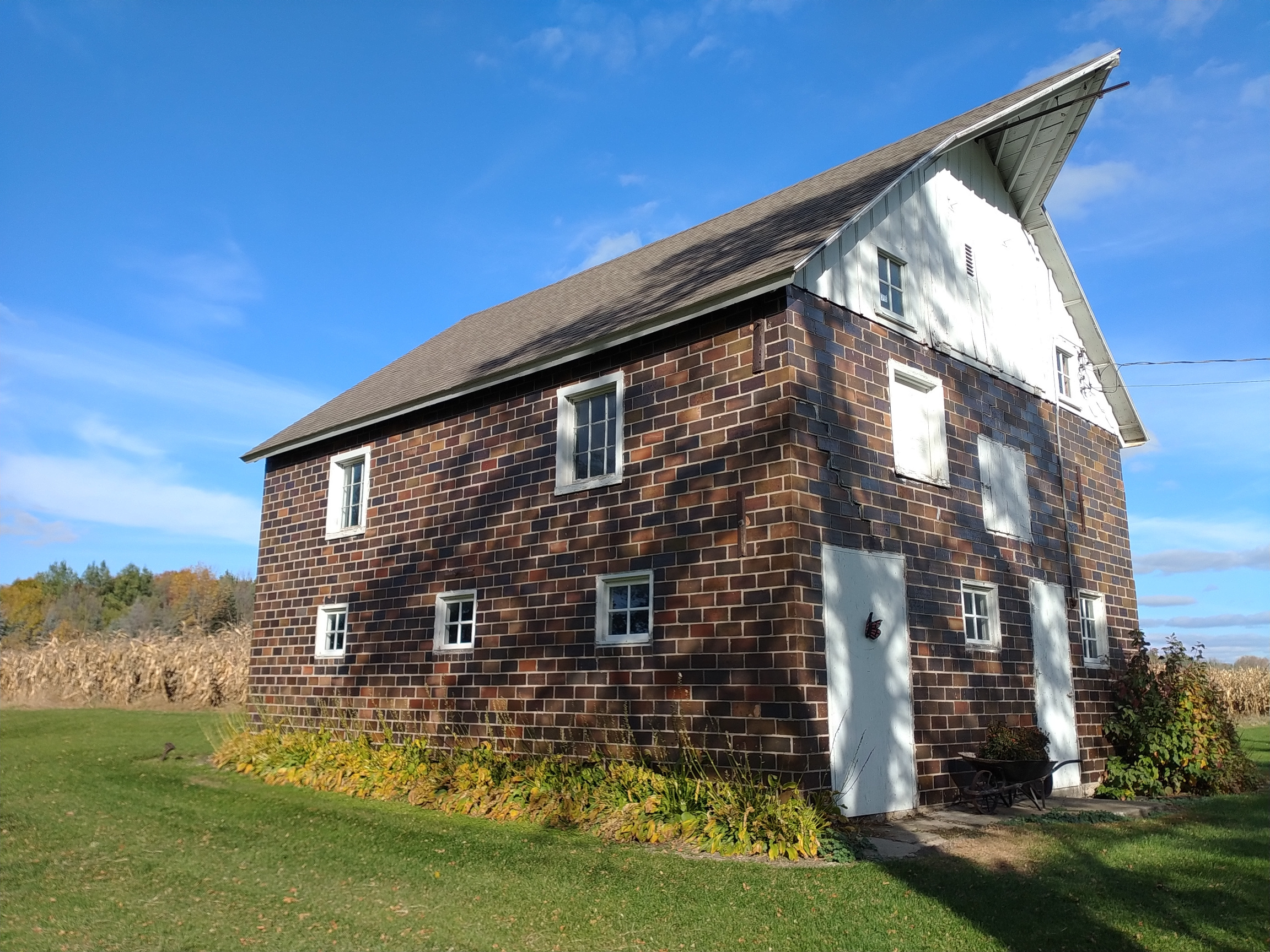
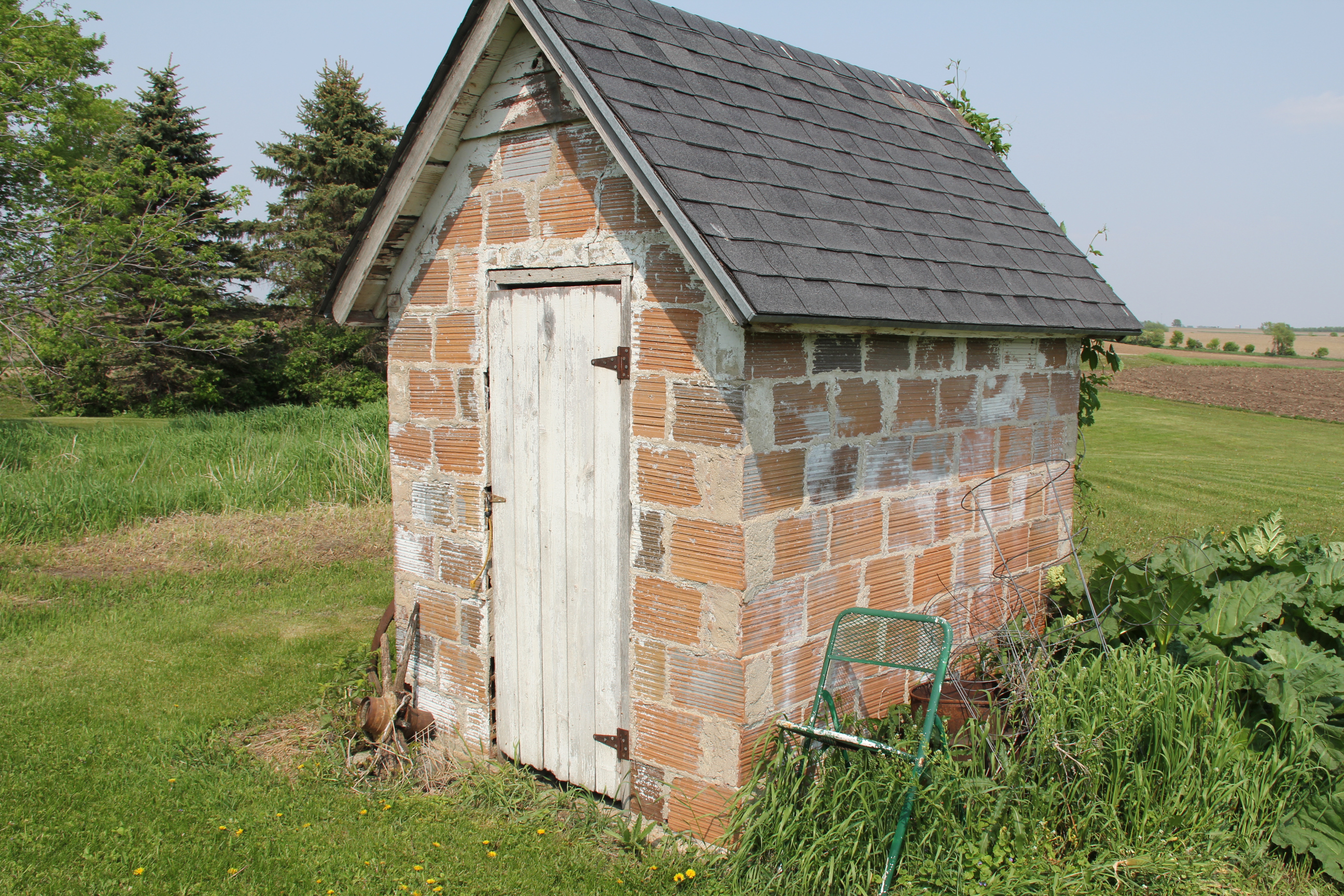
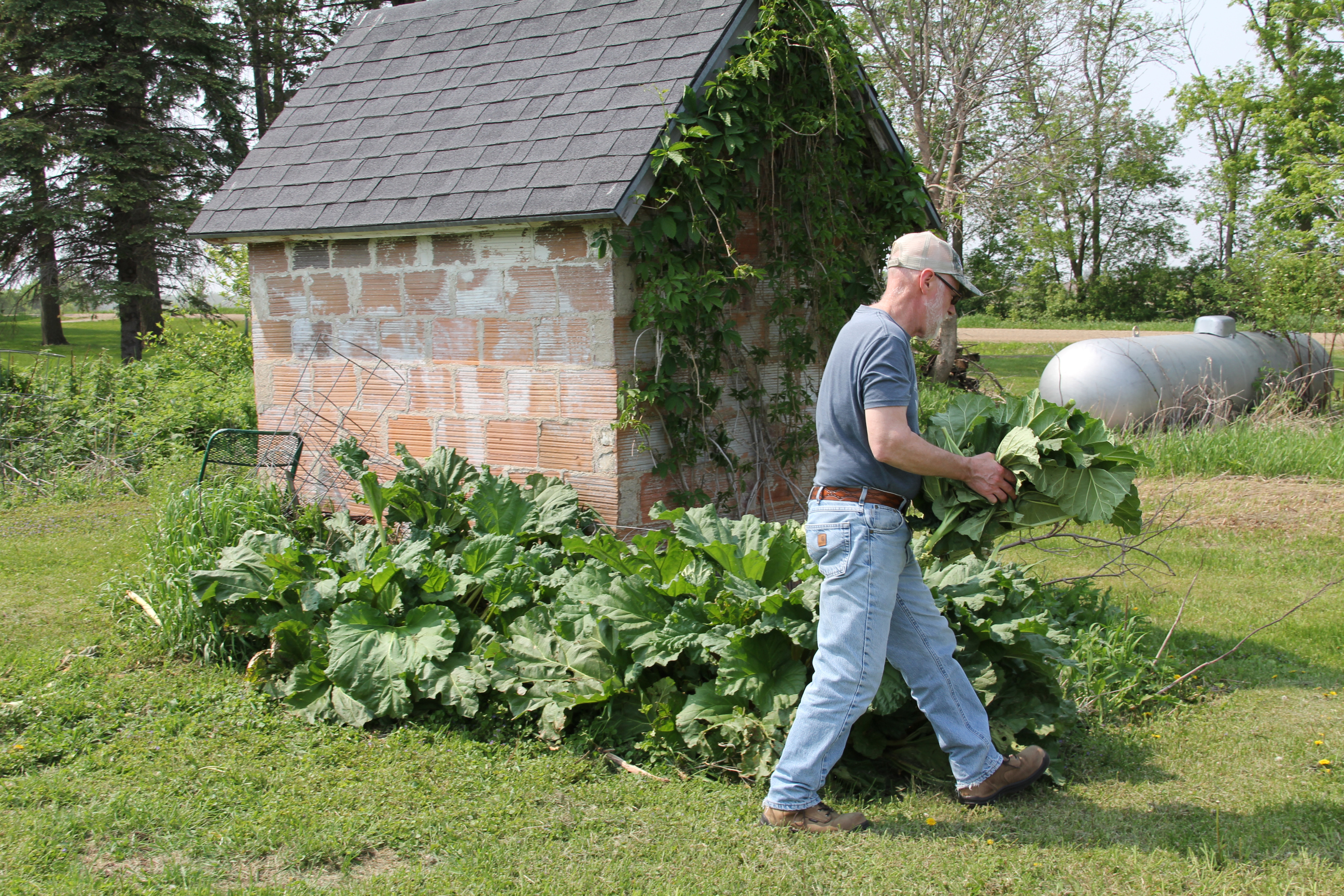
Formerly a smokehouse, this is now used for storing gardening tools. The rhubarb patch flourishes alongside the aged building. (Minnesota Prairie Roots copyrighted photo May 2023)

I never pull a single stalk of rhubarb from the patch next to the aged clay block smokehouse. While Randy harvests, I roam. With my camera.

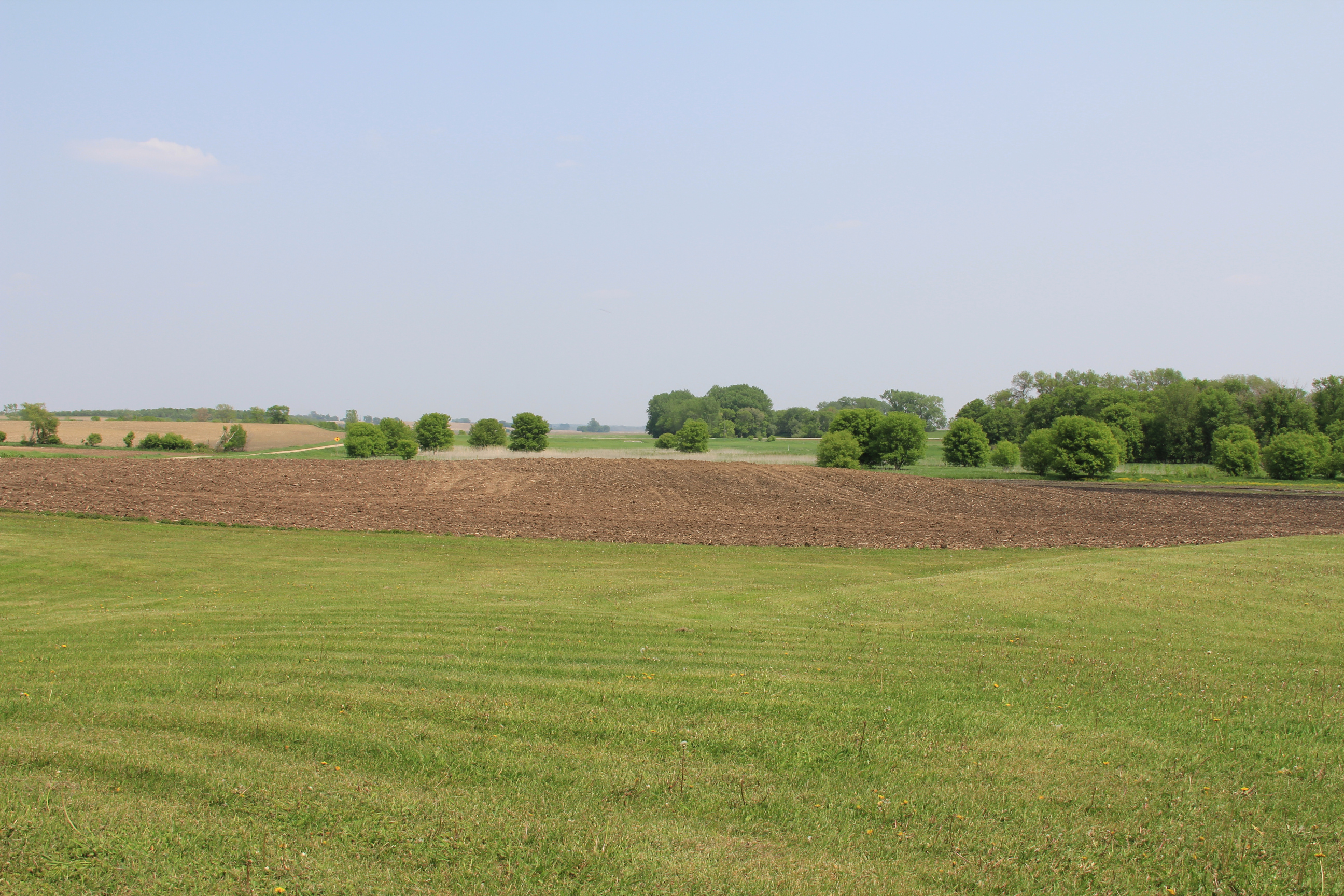
Beautiful rural Rice County, east of Faribault. (Minnesota Prairie Roots copyrighted photo May 2023)

First, I pause to take in the rural landscape—fields, trees, gravel road below a clear blue sky. Oh, place of my heart.

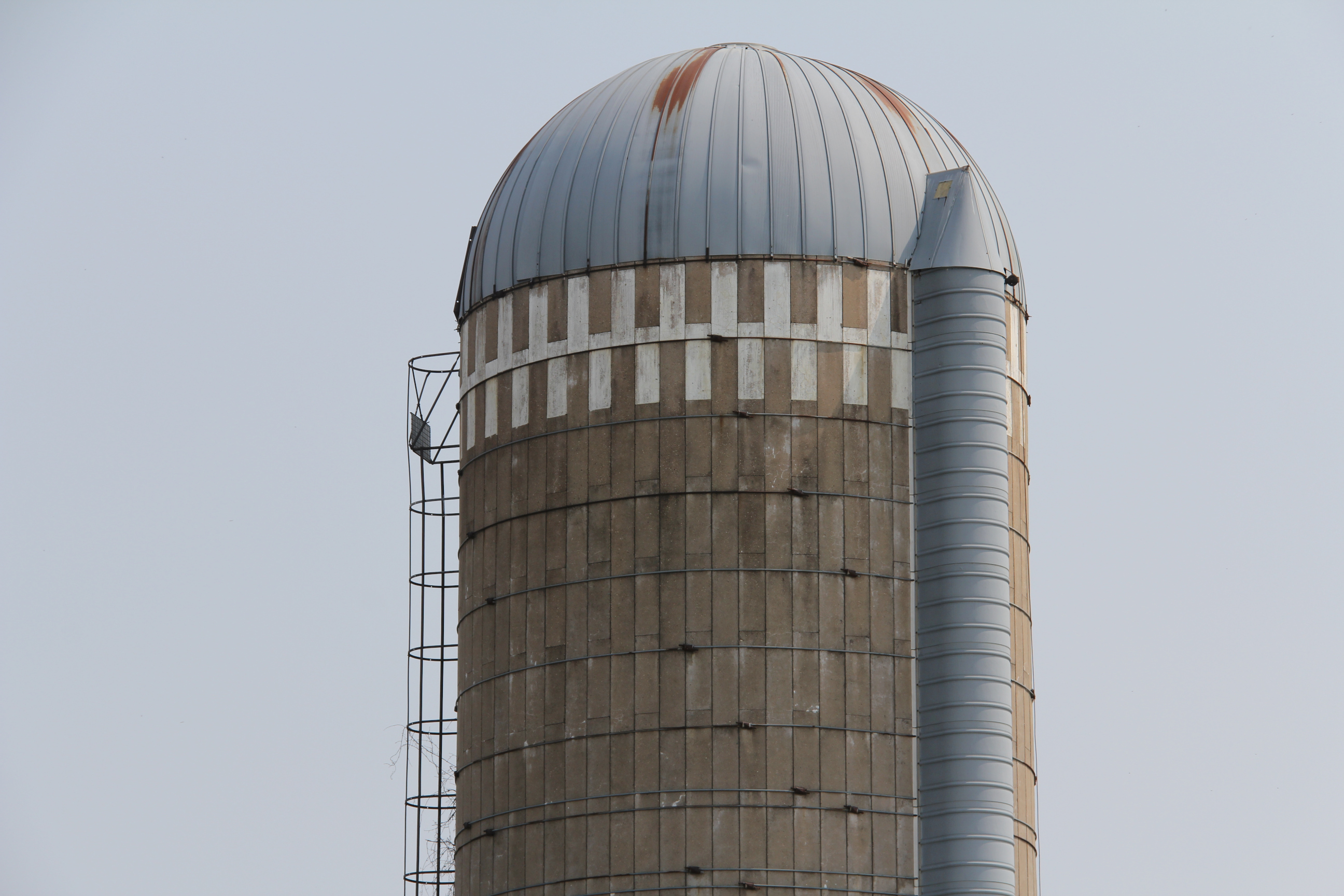
A familiar rural site, a silo. (Minnesota Prairie Roots copyrighted photo May 2023)

Then I head toward the silo towering over the farm site. Many times I climbed the ladder into the silo back on my childhood farm to fork silage and toss it down the chute to feed the cows. It was hard, smelly work. But when you worked on a dairy, livestock and crop farm 60-plus years ago, chores were labor intensive.

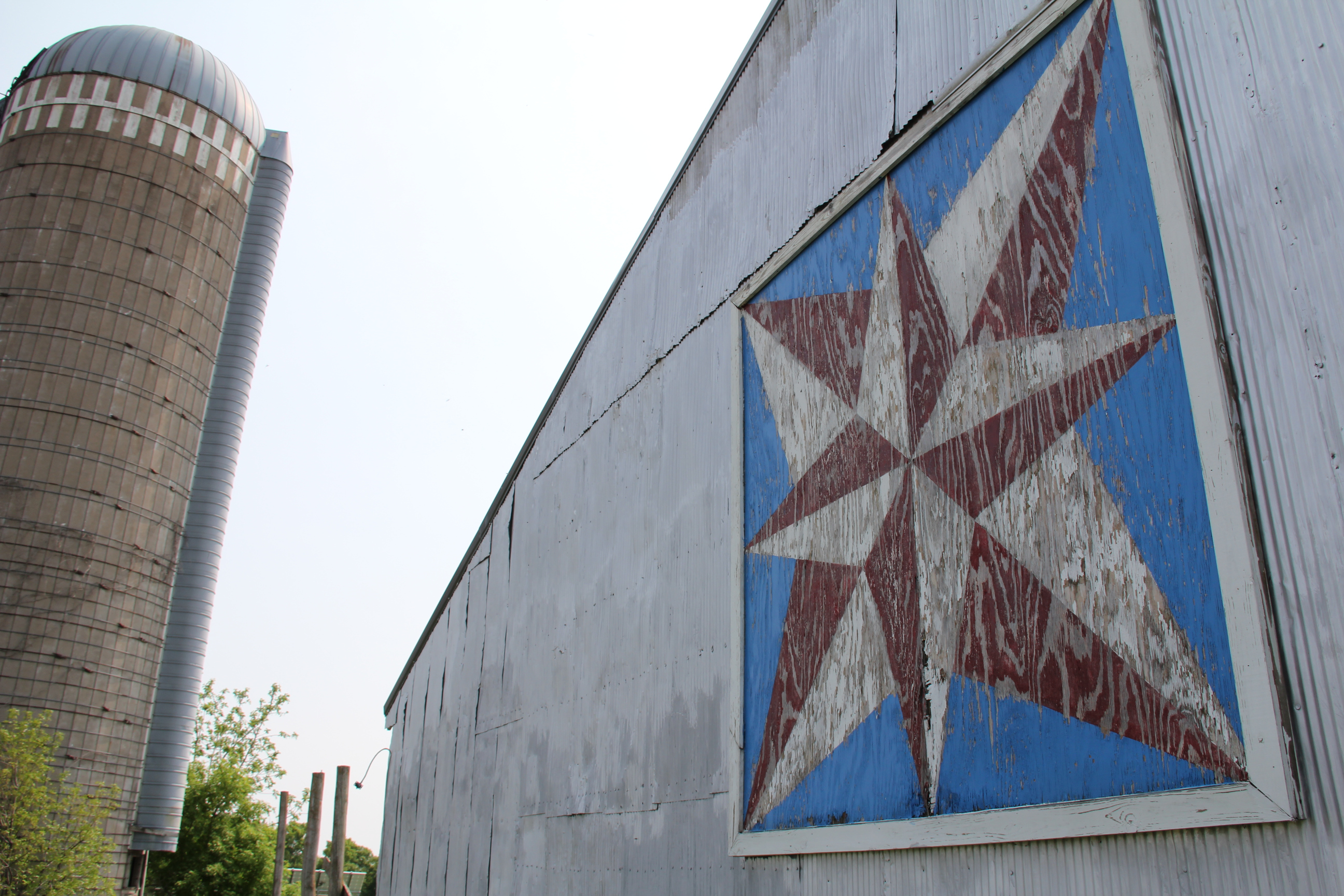
Barb’s “Star Shadow” barn quilt. (Minnesota Prairie Roots copyrighted photo May 2023)

From the silo, I turn my focus to the weathered plywood quilt block square displayed on the side of a tin-covered pole shed. The artwork, “Star Shadow,” honors Barb’s passion for quilting. It’s a nice addition to the building. I like barn quilt art, which surged in popularity perhaps a decade or more ago. There are places in Minnesota, like the Caledonia area in Houston County, where you can take a self-guided tour and view 59 barn quilts. For my generation, especially, quilts are part of our family history. Patchwork quilts layered beds, providing warmth on frigid Minnesota winter nights. I cherish remembrances of my paternal grandmother’s quilt tops, quilting frame and the quilts she gifted to me and all of her 40-plus grandchildren.

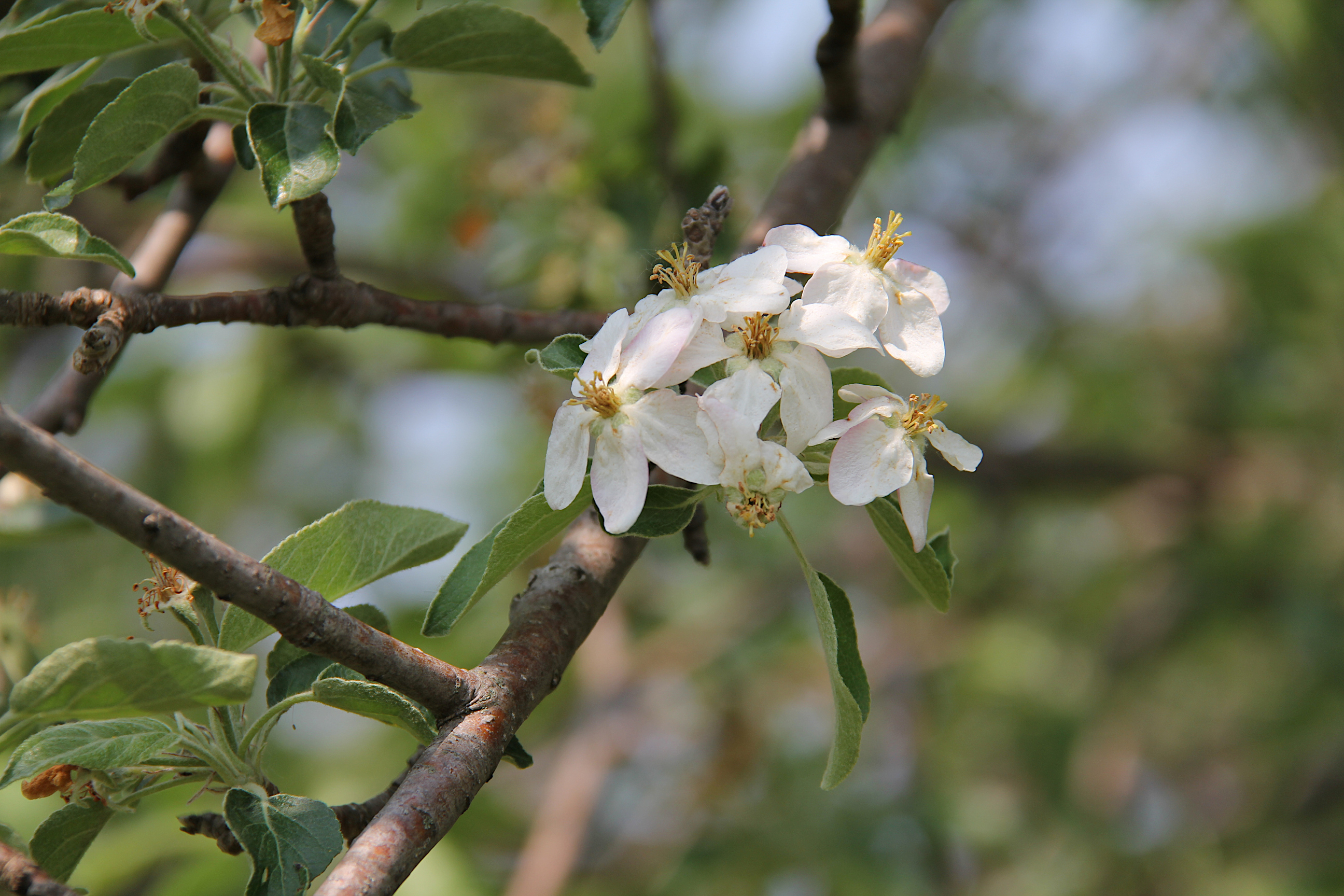
Apple blossoms. (Minnesota Prairie Roots copyrighted photo May 2023)

This visit to Barb and Bob’s farm brings back so many memories. I wander among the apple trees, most blossoms spent, and watch an elusive Monarch butterfly flit among the branches. I can almost taste the sweetness of apple jelly spooned onto buttered toast.

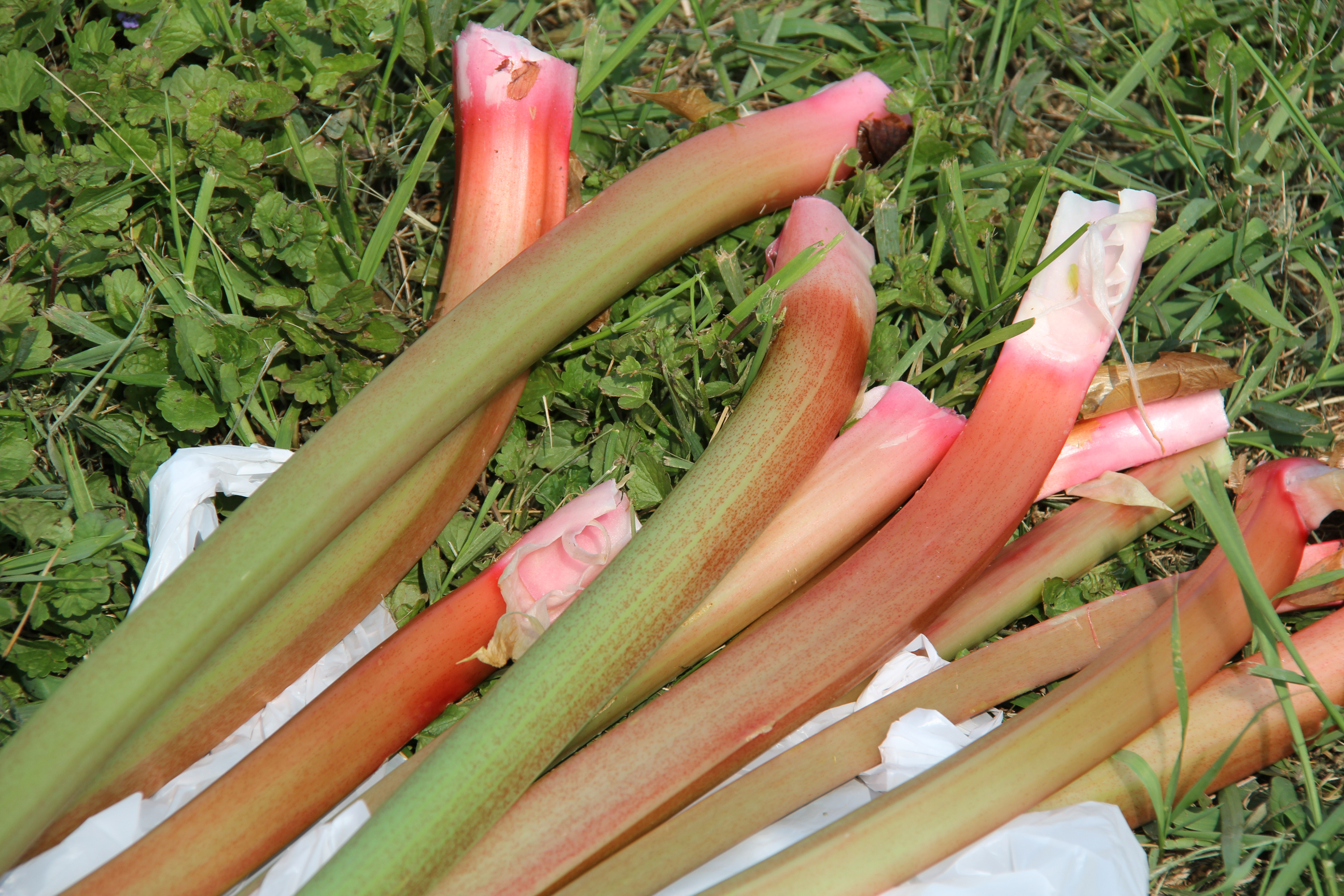
The growing pile of rhubarb. (Minnesota Prairie Roots copyrighted photo May 2023)

I check in with Randy, who hasn’t called me to help with the rhubarb harvest. He understands the pull I feel to photograph. Via photography, I notice details and that is such a gift. He’s gathered a growing stash of thick green stalks tipped in pink. Rhubarb seems such a humble fruit. Perfect for crisp, sauce or pie.

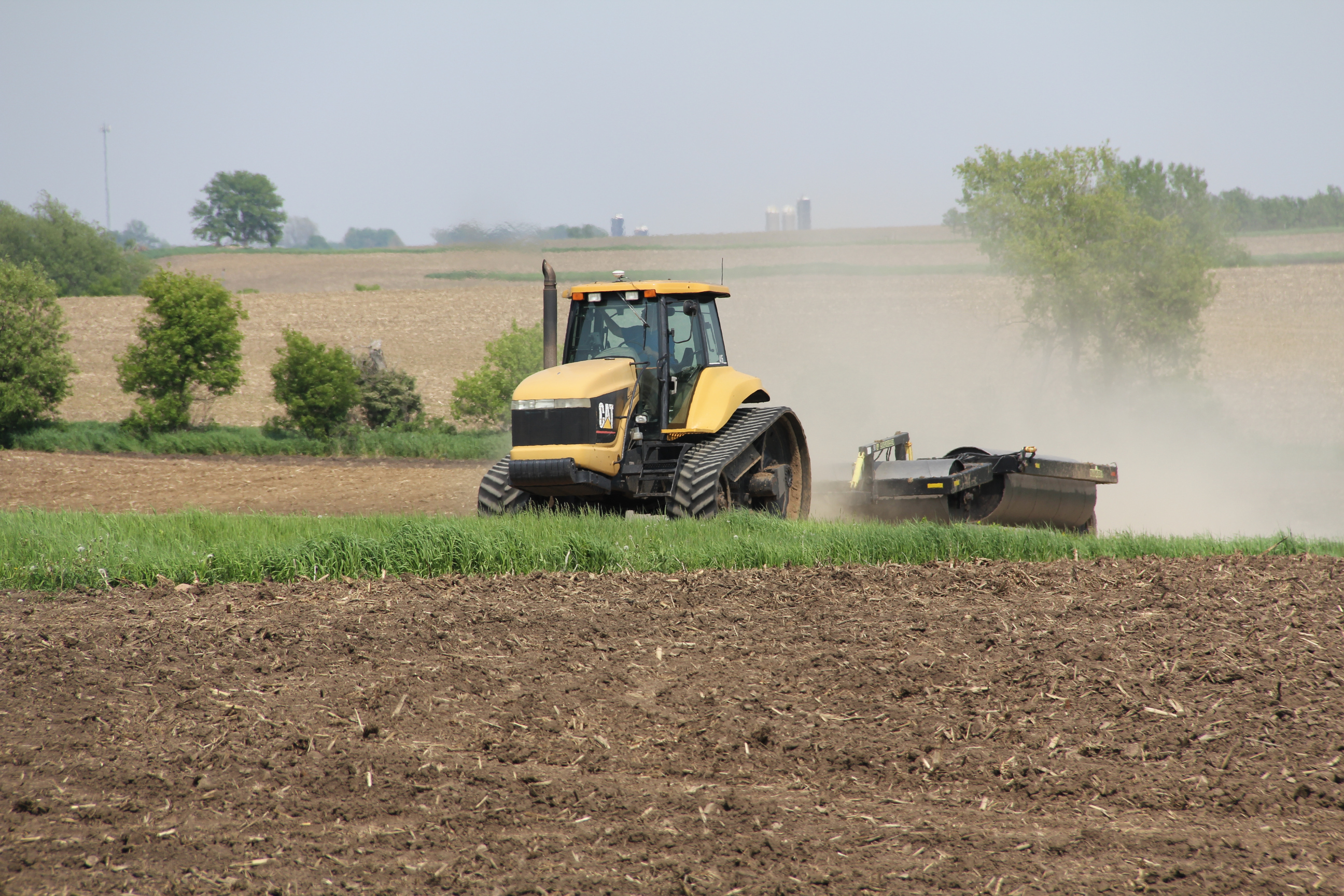
A tractor heads to a field with a roller to pack the soil. (Minnesota Prairie Roots copyrighted photo May 2023)

A tractor roars by then, dust rising around and behind as it pulls an unfamiliar farm implement down the gravel road. A roller, Randy notes later when we pass a packed farm field.

Randy carries discarded leaves away from the rhubarb patch. (Minnesota Prairie Roots copyrighted photo May 2023)

Then quiet settles again. Randy gathers the pile of rhubarb leaves, tidying the area around the old smokehouse.

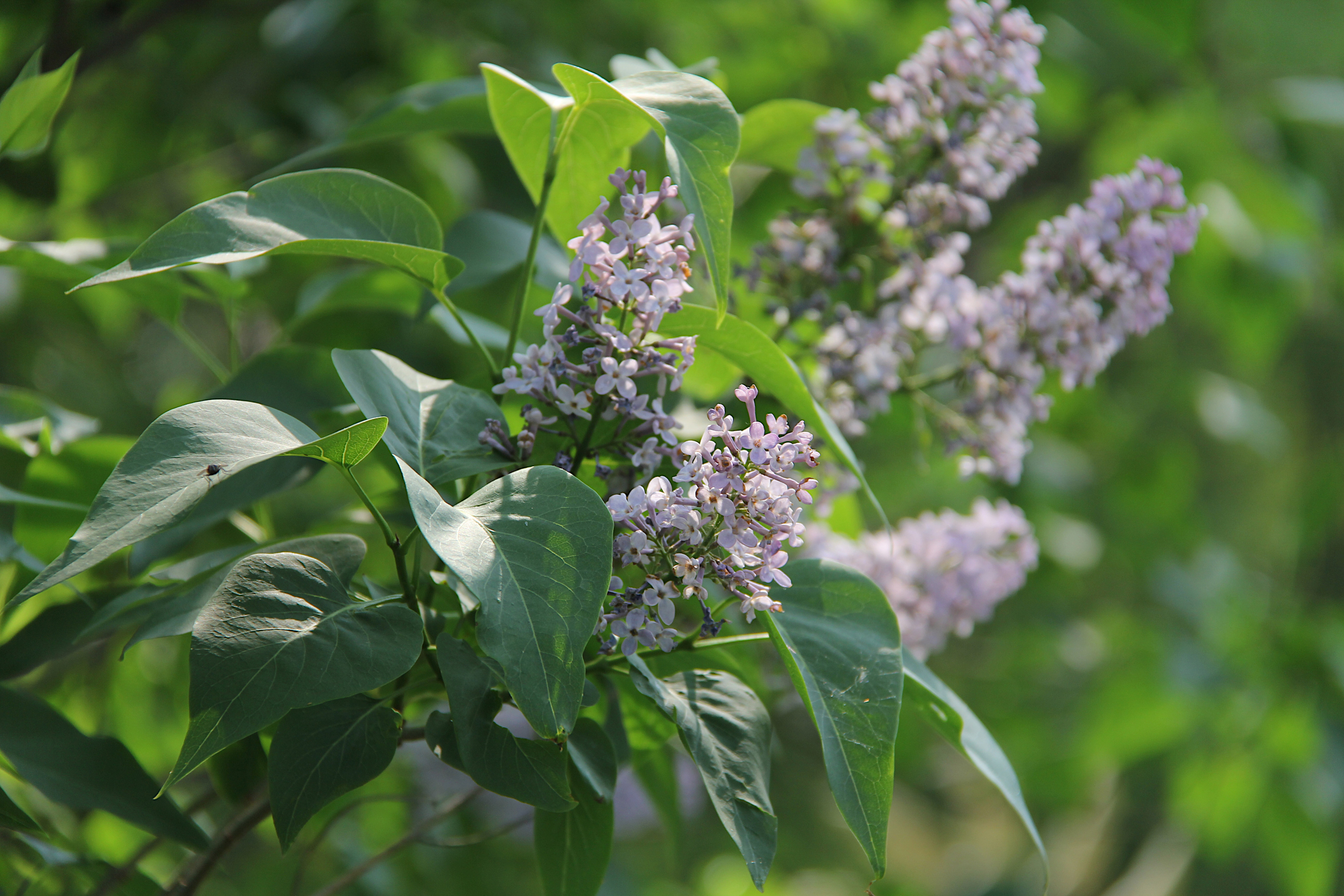
We visited near the lilacs. (Minnesota Prairie Roots copyrighted photo May 2023)

We head back toward the farmhouse, this time rousing Barb and Bob, who earlier did not hear Randy’s knocks. We settle in for a chat which turns into a lengthy conversation in the shade of trees, near the lilac bush, in their front yard garden. Birds sing. Butterflies fly. Words rise. Cold, filtered well water poured from a fancy pitcher into thick, hefty glasses quenches thirst. The four of us simply enjoy each other’s company. No hurry. Nowhere to be.

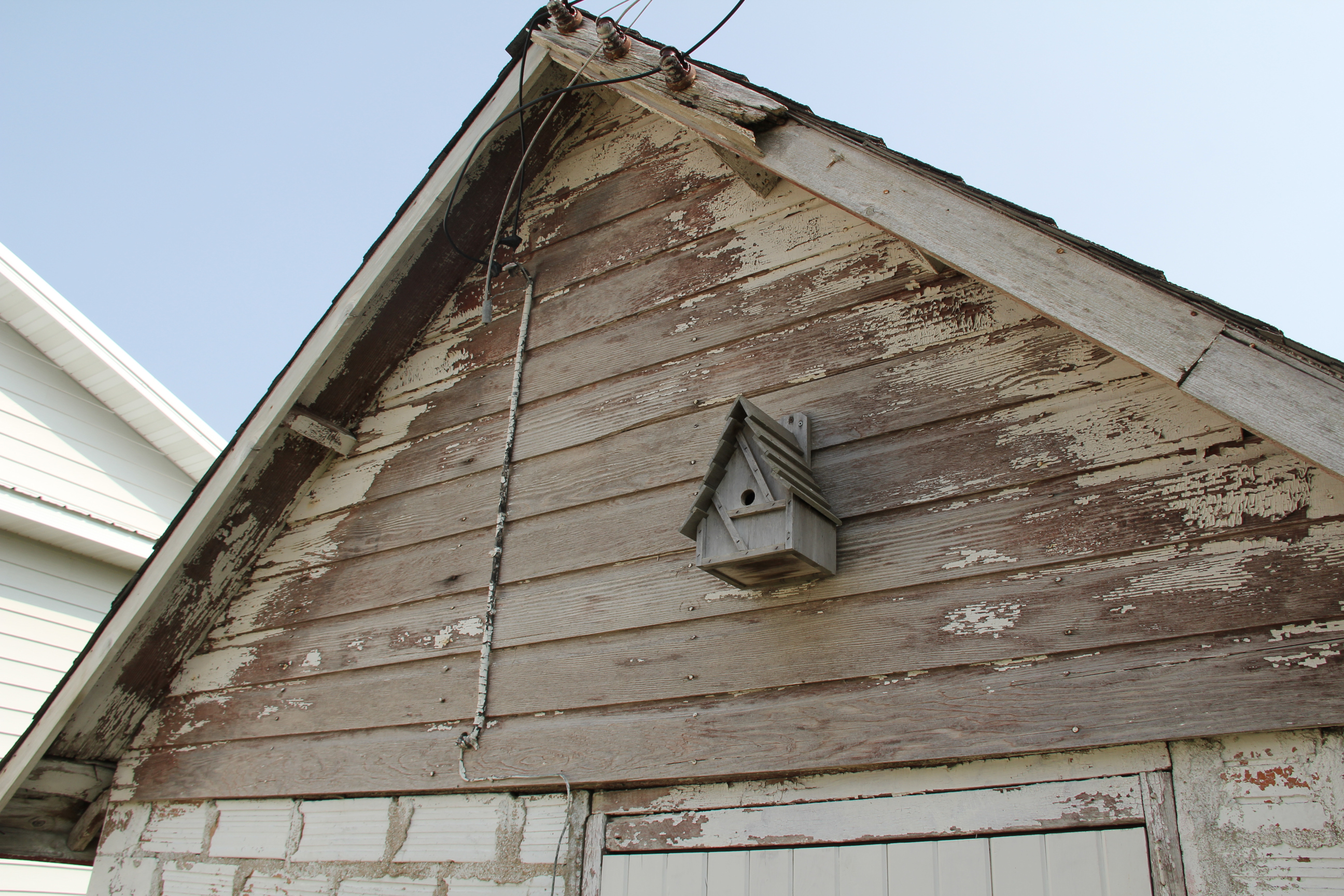
Birdhouse on an outbuilding. (Minnesota Prairie Roots copyrighted photo May 2023)

I step away to photograph several of Barb’s many birdhouses.

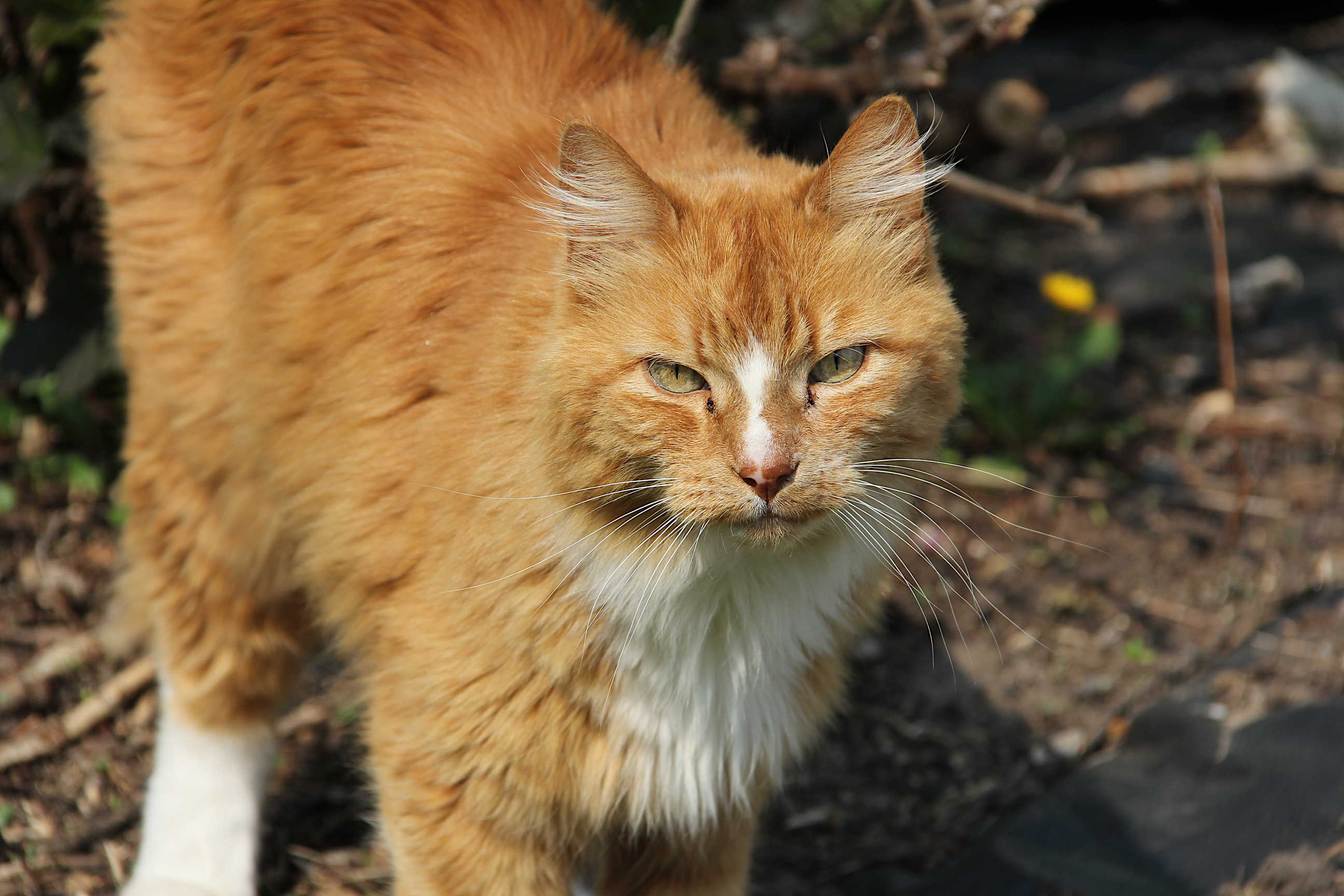
The shy farm cat. (Minnesota Prairie Roots copyrighted photo May 2023)

And then the orange farm cat appears. I excuse myself again, to photograph Fred, who requires significant coaxing to come closer. But he is skittish. My camera lens, followed by the click of the shutter scares him away.

Bird bath art on the farm. (Minnesota Prairie Roots copyrighted photo May 2023)

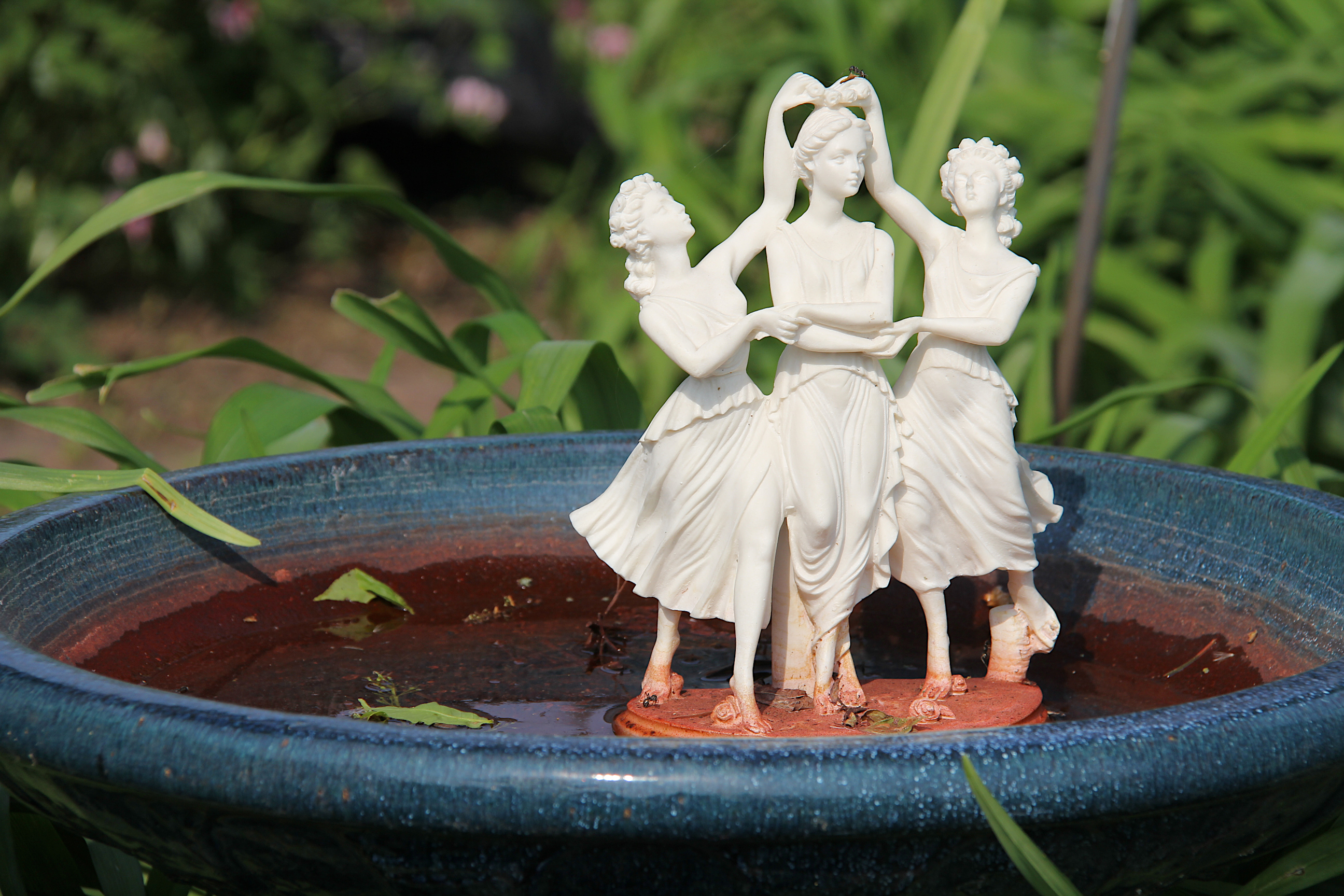
I circle back to the conversation circle, passing a bird bath with a trio of ballet dancers centering that circle. They are graceful and beautiful and seemingly out of place in this rural setting. Yet, they are not. The countryside overflows with grace and beauty. The grace of silence and solitude. And the beauty of the natural world.

On this day, I need this. To be in the serenity of this quiet place. To take in the countryside. To see the sky, the trees, the land. To talk with Barb and Bob. And then to leave with a clutch of rhubarb and the promise of warm rhubarb crisp pulled from the oven.

© Copyright 2023 Audrey Kletscher Helbling


When you can’t get rid of a mattress & box spring because… May 27, 2023

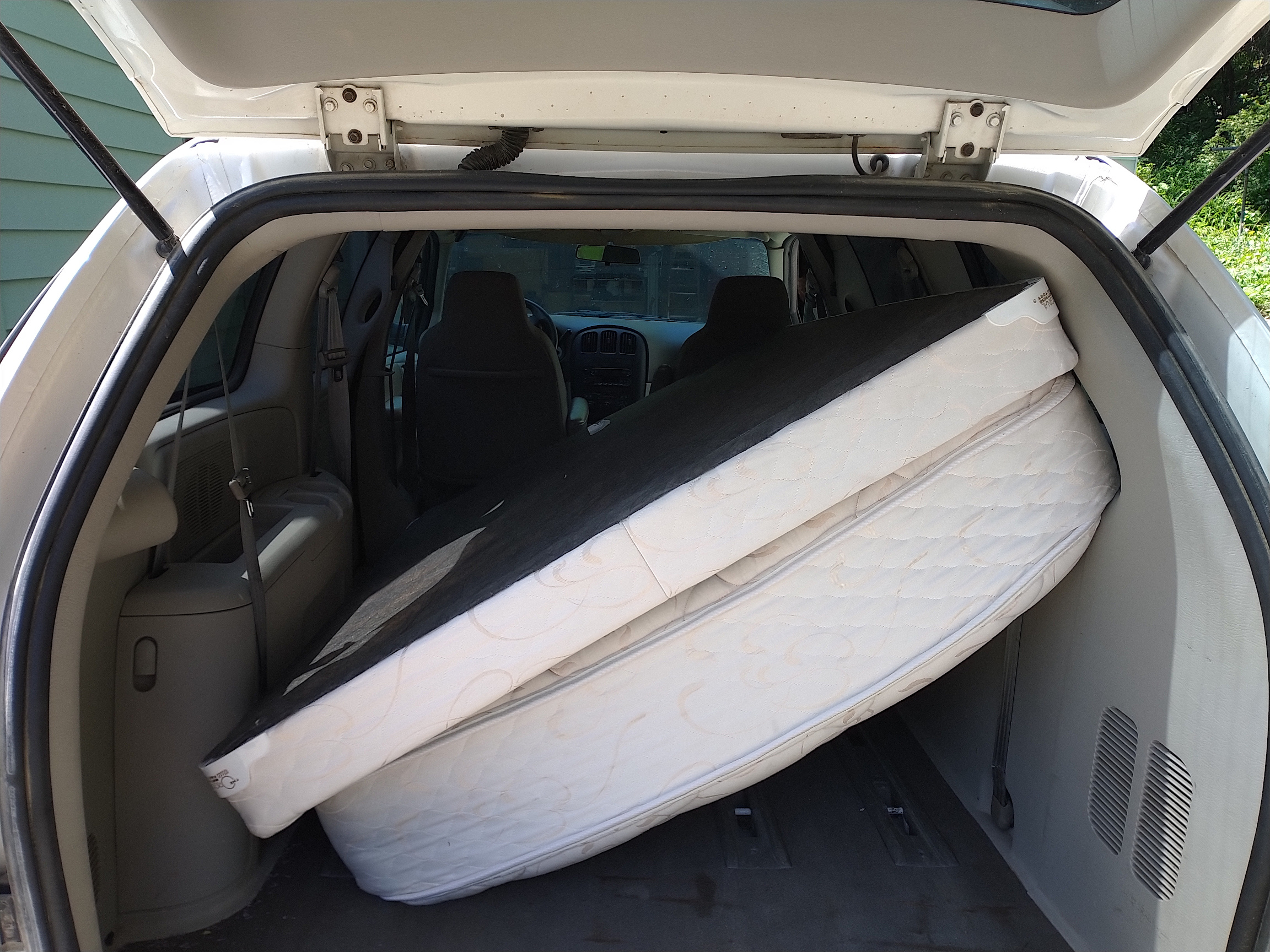
A full-size mattress and box spring fill the back of our van. (Minnesota Prairie Roots copyrighted photo May 2023)

MONDAY EVENING RANDY AND I crammed a full-size used mattress and box spring into the back of our van. It was not an easy task, but we squeezed both inside. We intended to drop the worn out set off at the Rice County Landfill the next day upon our return from a medical appointment in Northfield. Sometimes, though, plans go awry.

En route to Northfield early Tuesday morning, we noticed smoke billowing in the distance. Randy said he’d seen the same smoke on Monday, but much thicker, blacker. Burning tires type of smoke. The closer we got to Northfield, the denser the smoke, enough to warrant turning on the headlights. Smoke settled like fog upon the landscape. The air smelled putrid.

Before we left Northfield, we learned the fire was at the county landfill, a blaze which began Monday evening among all that trash. Still, we were hopeful we could drop off the mattress and box spring. What were we thinking? Randy turned the van off Minnesota State Highway 3 onto the road leading to the landfill. There a portable electronic sign flashed that the landfill was closed to the public and open to licensed haulers only.

So here we are, many days later, driving around with an old mattress and box spring filling the bulk of our van. The latest update from the county states that the landfill will remain closed to non-licensed haulers at least through Monday. There are health and environmental concerns related to the still smoldering (maybe still burning) garbage. I appreciate that local and state officials are monitoring, testing, protecting.
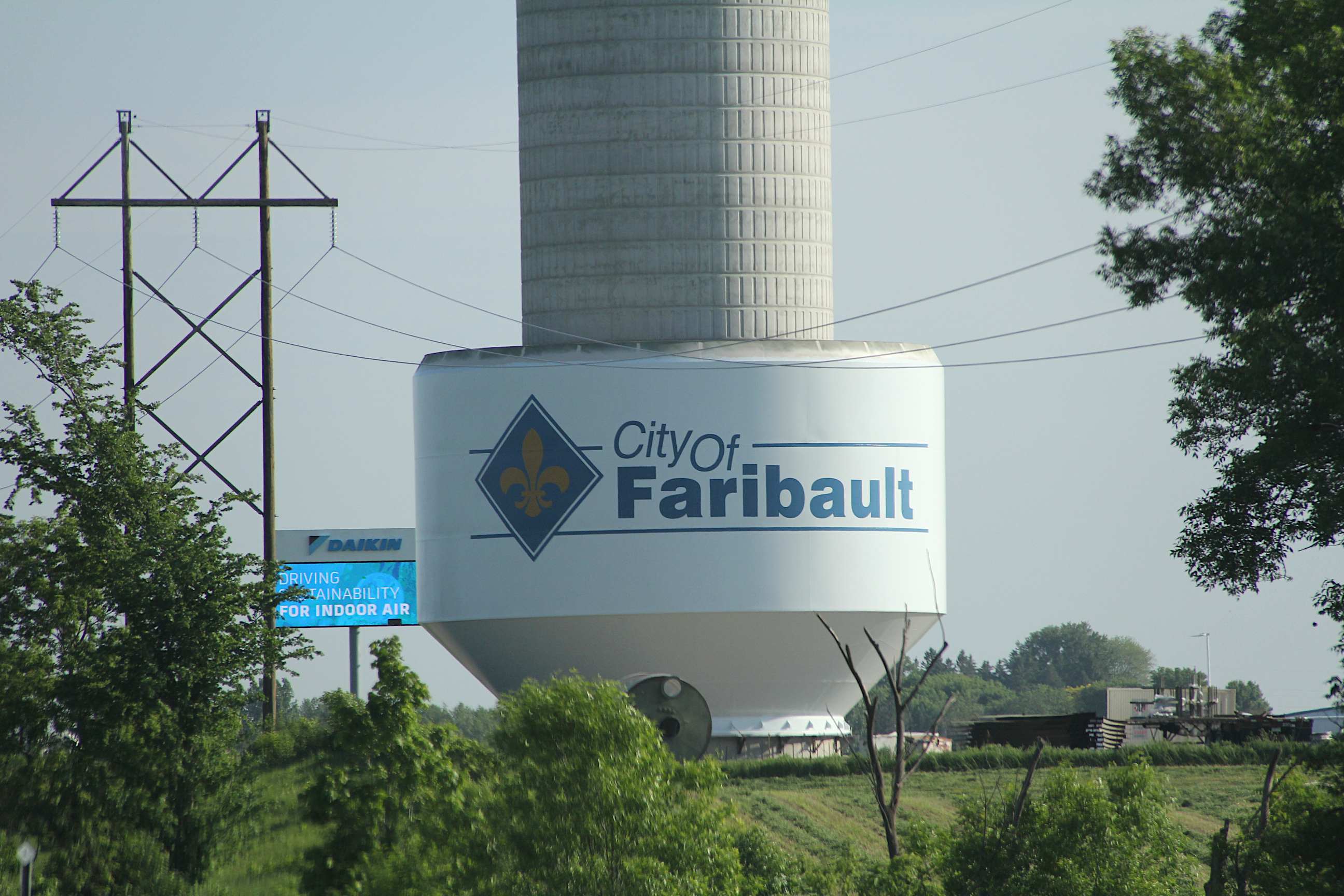
For county residents like us who need to get rid of household items, county officials have now provided a list of local licensed garbage haulers who are accepting things like mattresses and box springs. I called two haulers. One quoted me a price of $65, the other $70 for each piece. So we’re talking $130-$140, a price we don’t want to pay.
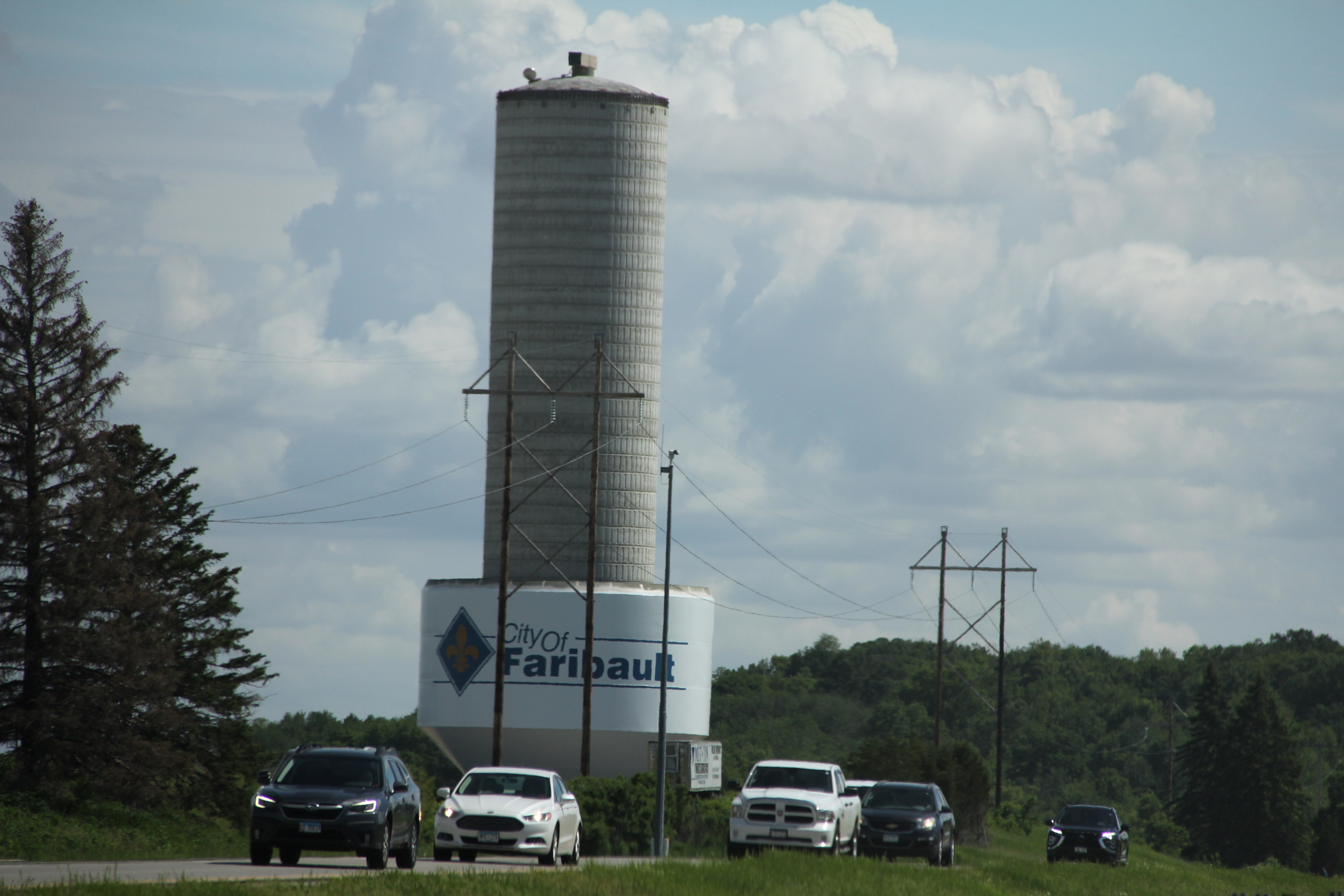
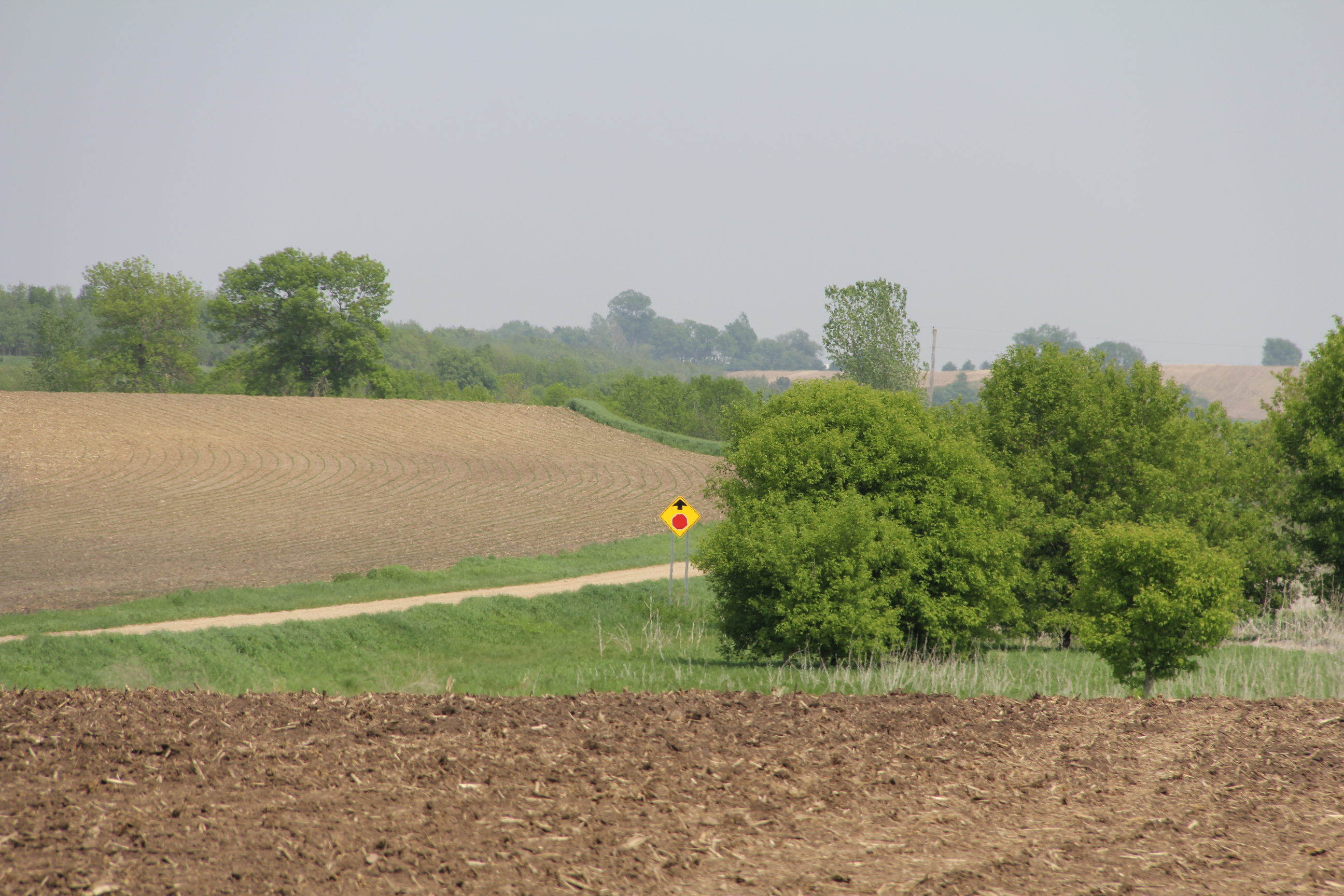
I then checked the county landfill website for disposal pricing. There are three options: $25 for each piece if they’re recyclable. What makes a mattress and box spring recyclable? I have no idea. Next, $35/each with prior permission. Finally $55/each without prior permission. Permission from whom? And why is prior permission needed? I appreciate clarity. (And I thought to myself, no wonder people dump mattresses and box springs in ditches if disposals costs range from $50-$110.)

What also remains unclear are how long the fire will burn/smolder, how the environment and air quality have been impacted, and how the health of anyone who’s breathed in that smoke has been affected. Randy and I traveled through that smoke, breathed it in on our drive to and from and during our time in Northfield.

And we live only eight miles from the landfill, which was near enough for that smoke to drift…and we did close the windows in our house Thursday evening because of a putrid odor. Was the smell from the landfill fire? I don’t know. As for that bed set, it’s still stuffed in the back of the van.

© Copyright 2023 Audrey Kletscher Helbling