Minnesota Prairie Roots

Writing and photography by Audrey Kletscher Helbling

One year later: A thank you party in flood-damaged Hammond September 21, 2011

An aerial view of Hammond during the flash flood of September 2010. Photo courtesy of Micheal and Tina Mann.

NEARLY A YEAR AGO, residents of  Zumbro Falls and nearby Hammond were evacuating their homes during a devastating flash flood.

They were not prepared—could not have been prepared—for the rapidly rising Zumbro River that would inundate their homes and businesses on September 23/24, displacing them for months and many of them permanently.

Within three weeks of the flooding, while on a Sunday afternoon drive to view the fall colors, my husband and I drove into Zumbro Falls. There I met Jackie, Tracy and Susie. Just down the road in Hammond, I met Katie.
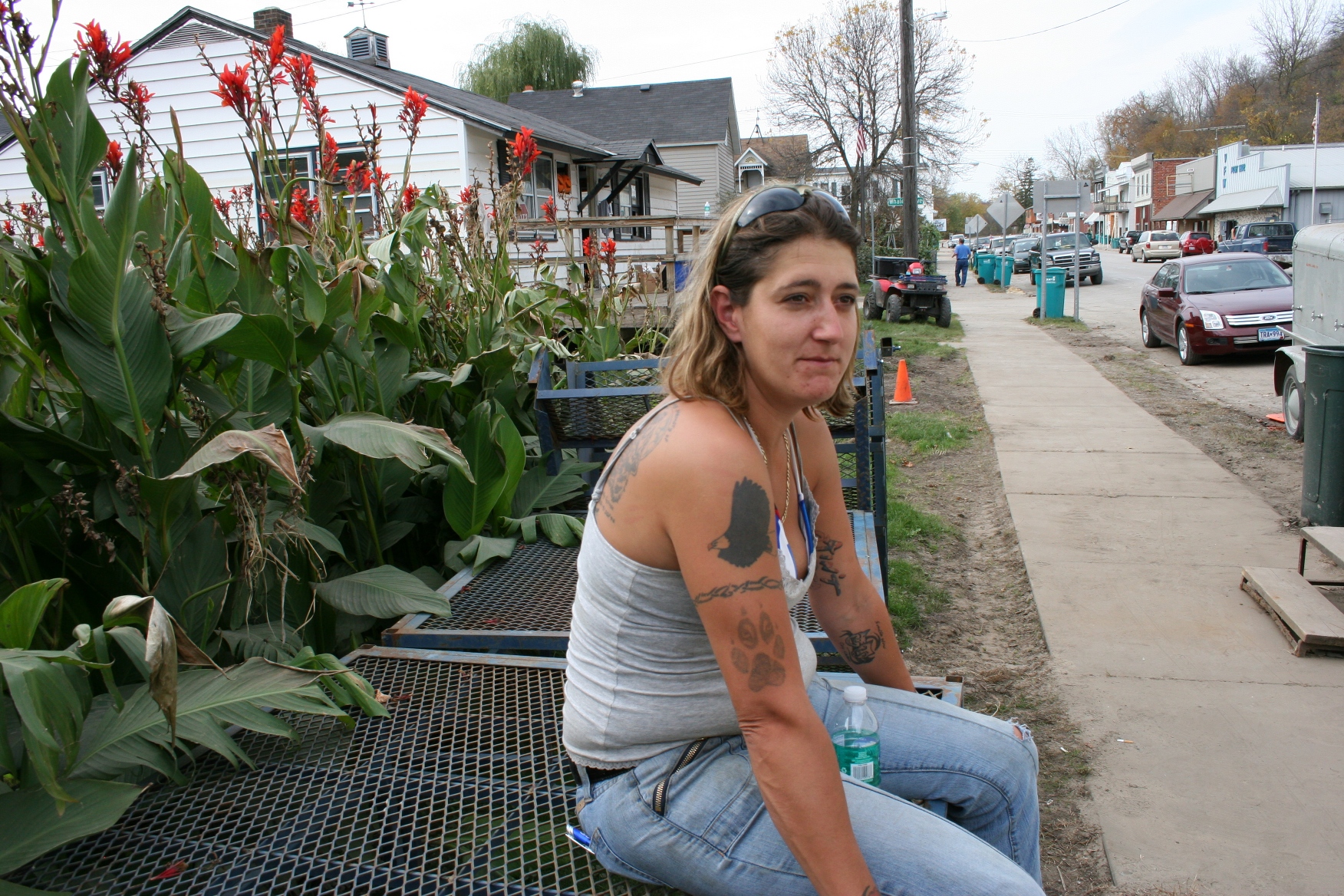
Tracy Yennie of Zumbro Falls, whom I photographed shortly after the flood which left her without a home and living temporarily in a shed.

These four women shared their stories and frustrations and worries with me. In return, I published what I today consider some of the most powerful posts I have ever written. Click here to read this flood series published on October 11, 2010.
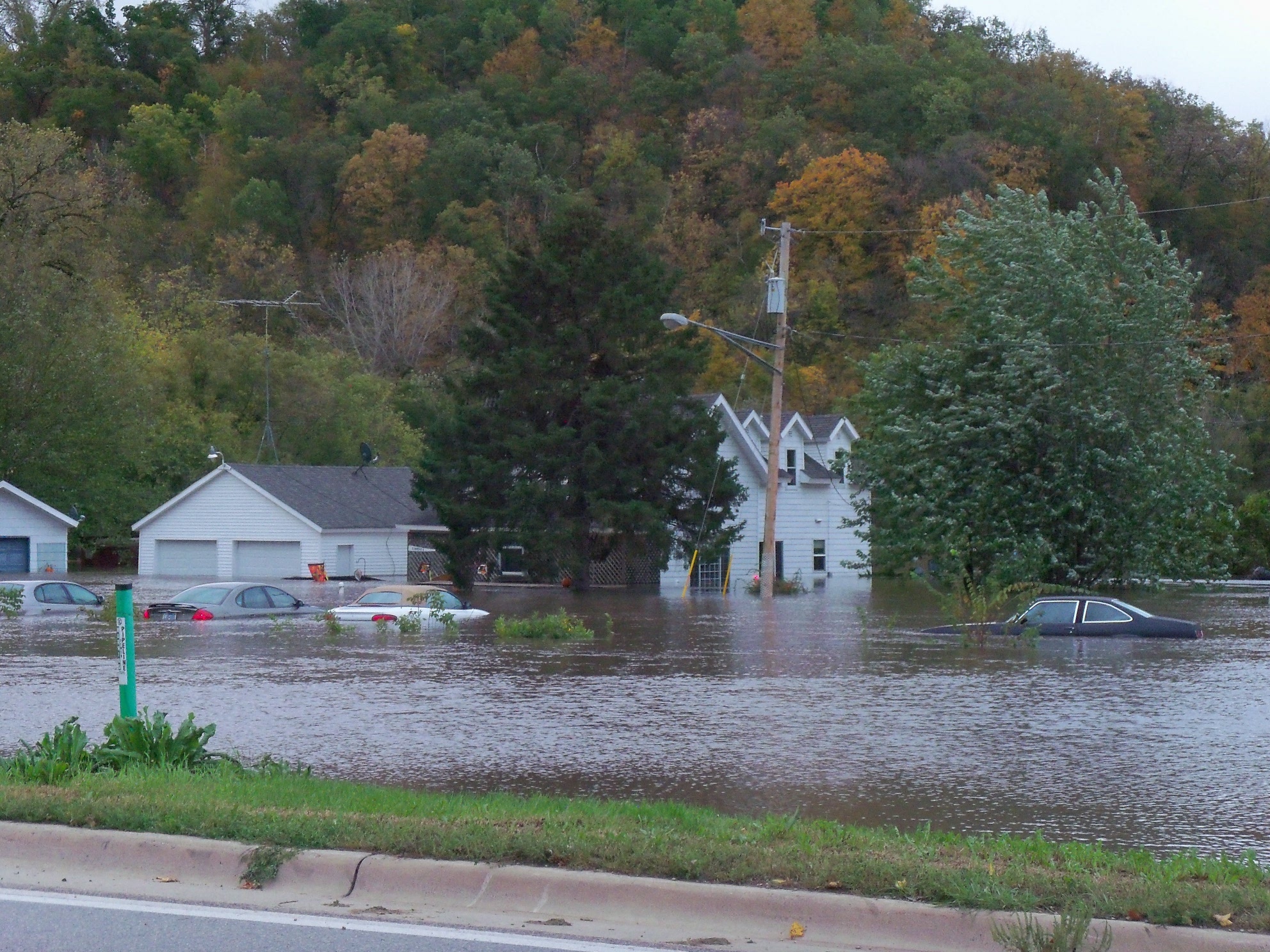
Flooding in Hammond, one year ago. Photo by Susie Buck.

My coverage of the flood did not end then. These women so impressed me with their fortitude, their strength and their outspokenness that I continued to follow one of them, Katie Shones of Hammond, throughout the year. Katie was my go-to person any time I wanted an update from her Wabasha County community of 230. Not once did she suggest that I was intruding into her life. In fact, she has gone above and beyond in answering my many questions. She also introduced me to her dear friend, Tina (Marlowe) Mann.

Tina and I have never met, but we’ve corresponded numerous times via e-mail. Like Katie, Tina has always, always, been forthright and open with me. She allowed me to share her story in a March 13-19 series. Click here to read the first of those six posts.

Via my connections with Katie and Tina, I was able to inform you of the need for volunteer help in Hammond. And at least two readers responded with crews to assist in Hammond. Others of you may have responded in ways that I’ll never know.

This weekend Hammond is celebrating its recovery with a “Thank You” party. “We would like anyone who was impacted, donated, volunteered, or showed compassion for Hammond to come back down and see how far we’ve come and allow us to show our appreciation – the Hammond way!!!” Tina wrote in a recent e-mail. She invited me to attend and said I could spread the word.

So, if you fall into that “impacted, donated, volunteered or showed compassion for Hammond” category, make your way to this picturesque riverside berg on Saturday, September 24, to celebrate with Tina and Katie and their families and the other residents, and former residents, of Hammond.
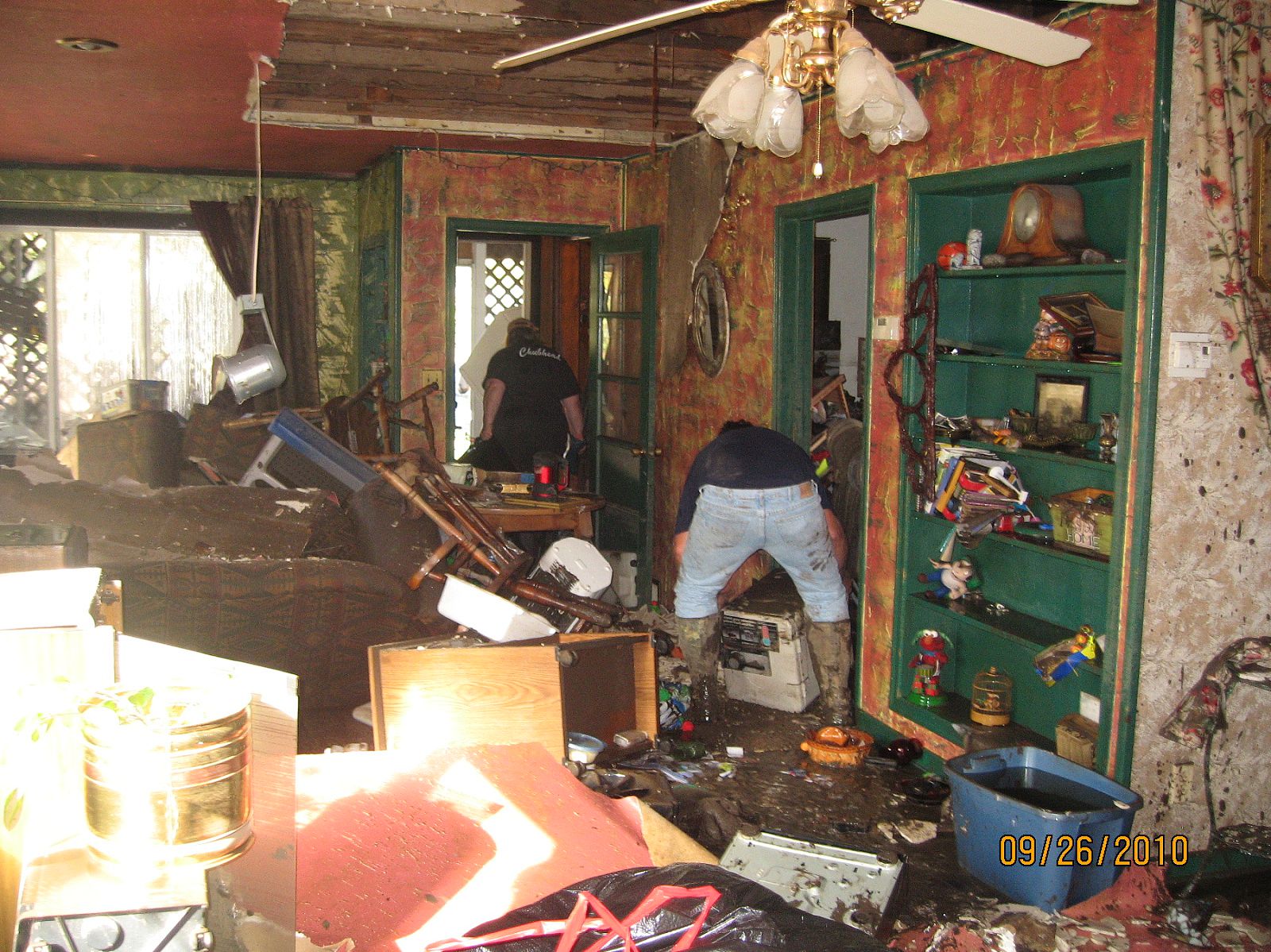
The first day back into their flooded Hammond home, Vicki and Dallas Williamson had 20 minutes to grab whatever they could carry on the back of a four-wheeler. The family did not move back. Photo by Sheri Ryan.

Tina, who now serves on the city council; Hammond Bar co-owner Janice Farris; Hammond Café co-owner Cindy Campbell; former Mayor Judy Radke; and flood-affected resident Beau Mischke did the initial planning for the party and pulled in many local residents to help with activities, according to Tina.

Here’s the schedule of events:

  • 2:30 p.m., park dedication
  • 2:45 p.m., Kiddy Carnival
  • following the carnival, horseshoes at the Hammond Bar & bean bags at the Hammond Cafe
  • 3 p.m., corn husking in the park
  • 5 p.m., free sweet corn and hot beef sandwiches
  • Also, live music by Led Penny and Bad Logic and fireworks at dusk.

As you might guess in a small town, the entire event and door prizes are being covered by donations from businesses, residents, friends of Hammond and clubs. I’m not going to list them for fear of omitting someone.

Suffice to say you would be impressed.

And just one more thing. Tina tells me that by the end of the month, 12 crab apple trees will be planted on Main Street and in the east end of the park in honor of the children of Hammond affected by the flood.  Those, too, have been donated, by a Rochester nursery and garden center. Click here to read an earlier post about the affect of the flooding on Katie Shones’ children.

I never doubted that the folks of southeastern Minnesota would rebound from the devastating flood of September 2010. I knew it when I met Jackie, Tracy, Susie and Katie. These are strong, determined women. Nothing would stop them from reclaiming their communities.
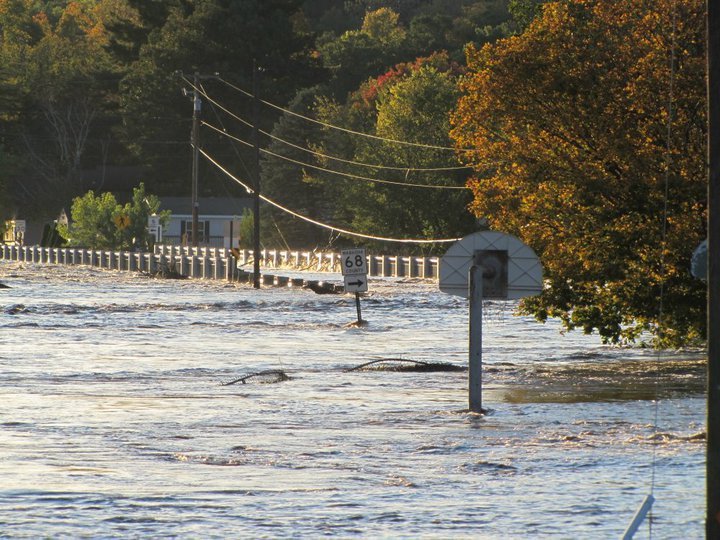
The bridge connecting east and west Hammond is barely visible during the flood, which also overtook the town's park. Photo courtesy of Micheal and Tina Mann.

CHECK BACK FOR A POST tomorrow in which Tina Mann shares her thoughts on the past year and how her community has worked toward recovery. As in the past, Tina speaks with an honest, open voice that will touch your heart.

© Copyright 2011 Audrey Kletscher Helbling


Window-shopping in Janesville, Minnesota September 14, 2011

Filed under: Uncategorized — Audrey Kletscher Helbling @ 7:06 AM
Tags: , , , , , , , , ,

I ENJOY WINDOW-SHOPPING. But when I window-shop, I’m not typically perusing merchandise to purchase. Rather, I’m shopping for signs to photograph. It’s cheaper that way; you don’t spend money except on your gas to reach whatever destination you choose.

For me, that is Main Street in Smalltown, Minnesota. Signage regulations are less strict in these rural communities, folks more trusting. I discover the most intriguing/interesting/unusual/creative signs here. Pick your adjective—all three would apply.

So let me take you today to Janesville, population 2,100, located along U.S. Highway 14 only 15 miles east of Mankato. I stopped there several weeks ago on my way to and from (yes, we stopped twice) Indian Island Winery with my husband.

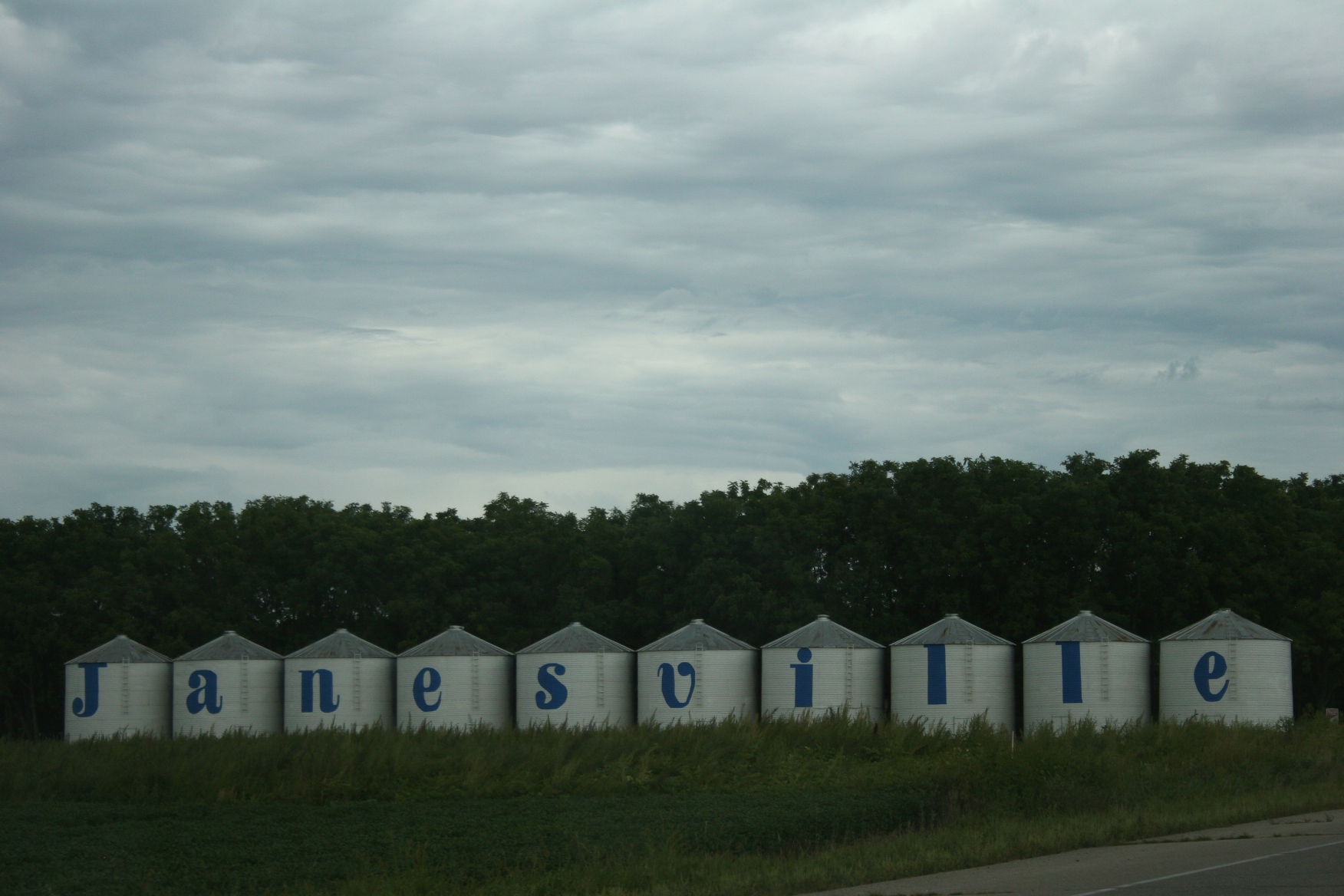
Entering Janesville from the west along old Highway 14, you'll see this grain bin signage welcoming you to town. I've always wondered: Did the farmer specifically build 10 bins to fit the town name? Or did someone come up to him after the fact and say, "You know, J-A-N-E-S-V-I-L-L-E would fit on your bins."

But before I show you my discoveries, here are two interesting tidbits about Janesville: The town has a nine-hole reversible golf course, one of among only a few in the U.S. If you know what that means, you know more than me. I am not a golfer.

Secondly, in a house near downtown Janesville, along old Highway 14, you’ll see a dummy peering through an upstairs attic window. It’s been there for years. Why? No one seems to know the truth. But its placement there has led to all sorts of speculation as imaginative as an imagination allows.

Now, moving along, I’m pleased to present photos of signage from Main Street, Janesville, Minnesota, for your entertainment. Enjoy.

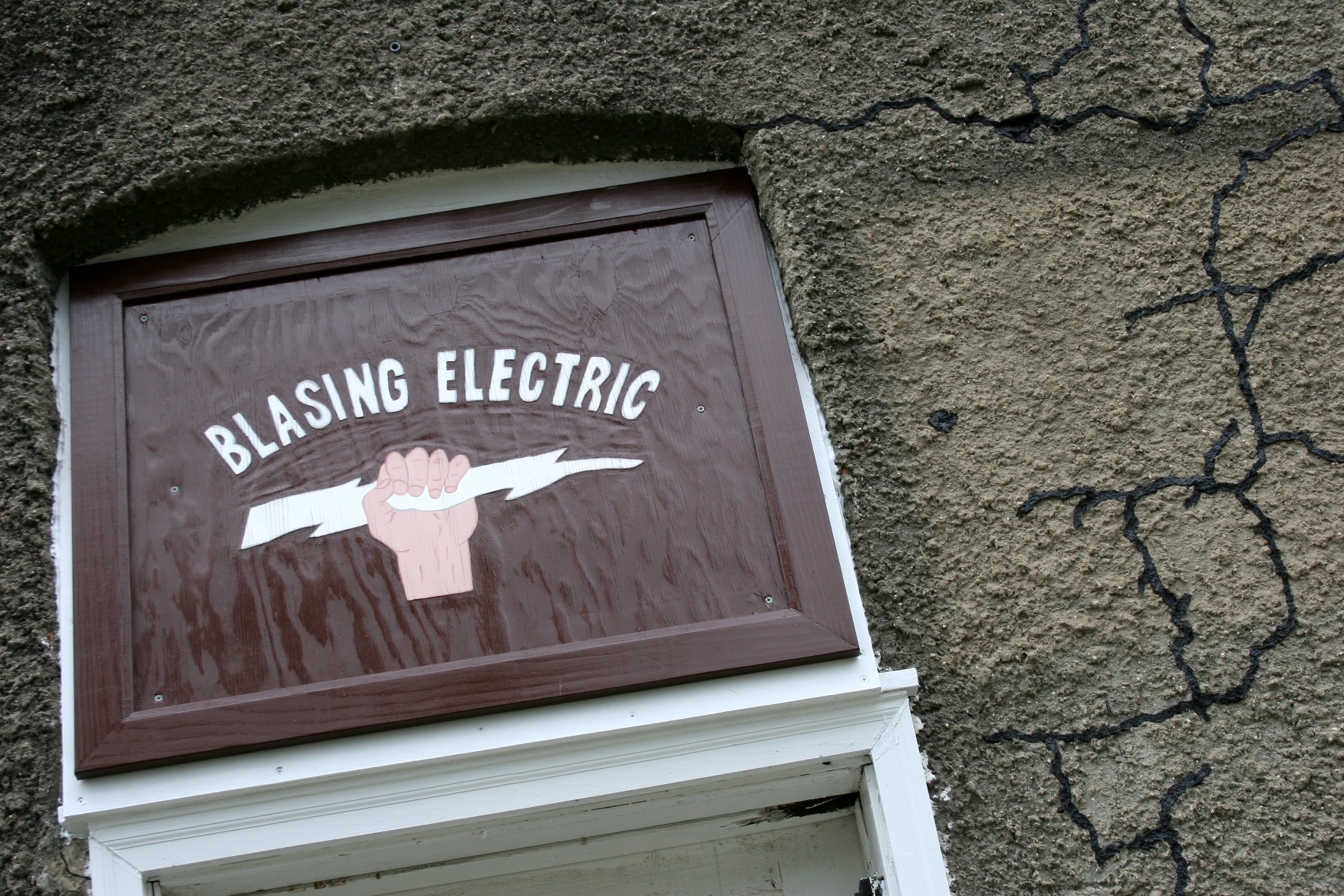
This handcrafted graphic sure makes for a memorable Blasing Electric sign hung on the side of a building across the street from the library.

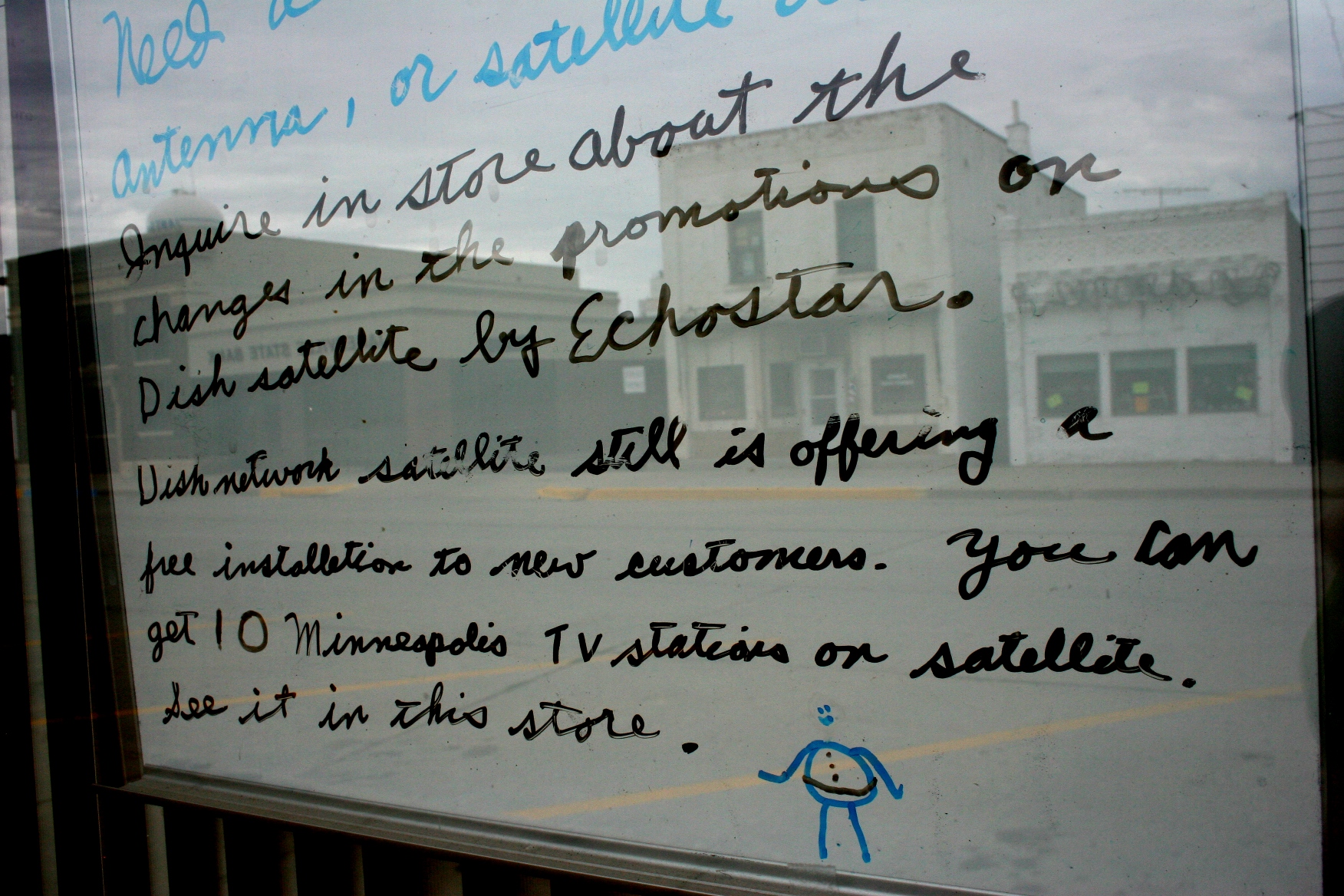
I know you folks in bigger towns, especially in the Twin Cities metro, take your television access for granted. But not so in rural Minnesota. Here's a pitch for better service posted on a window at Will's Radio & TV.

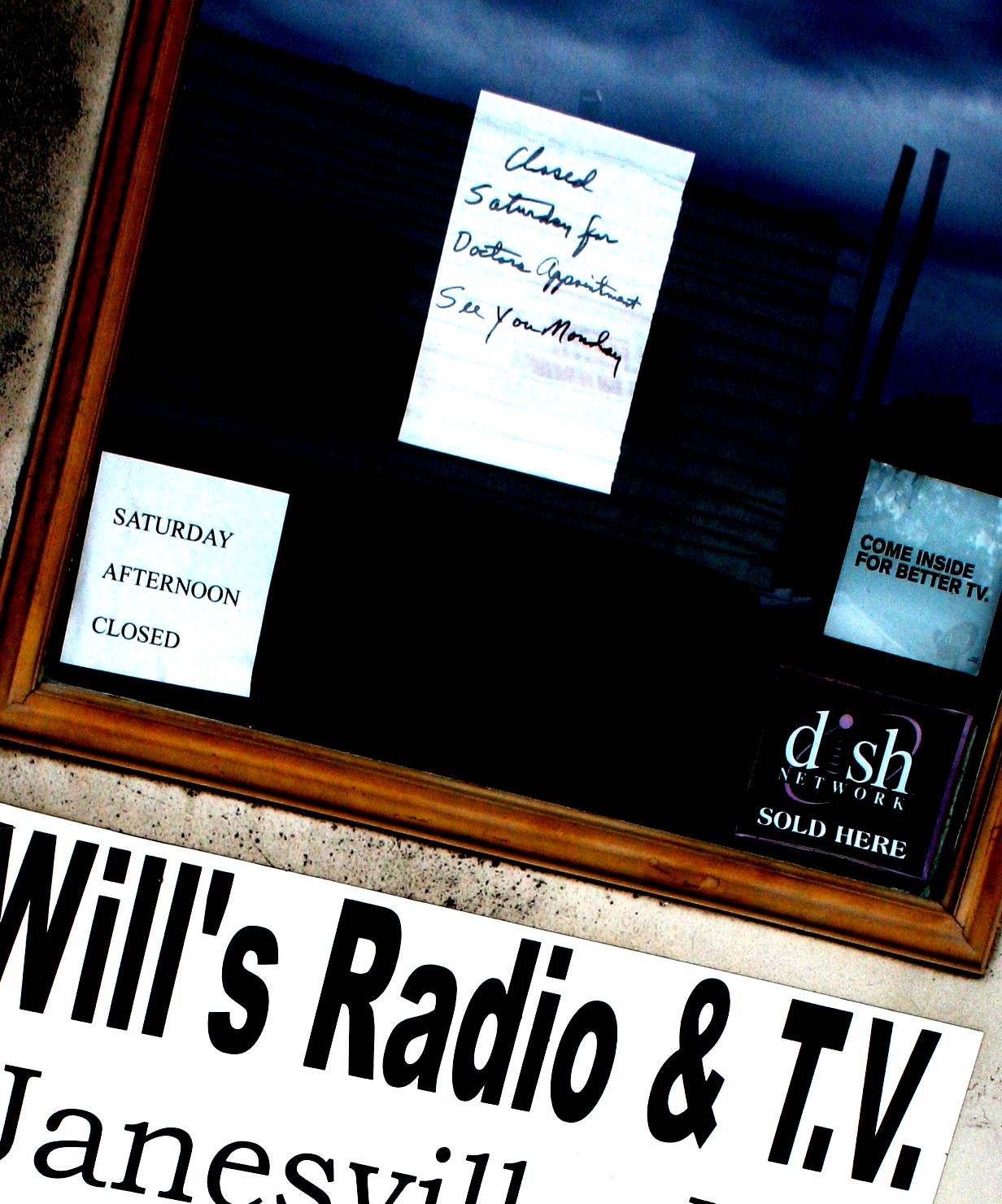
But you might not want to stop and check on that satellite service until Monday, according to this sign posted on Will's front door. Will is at a doctor's appointment.

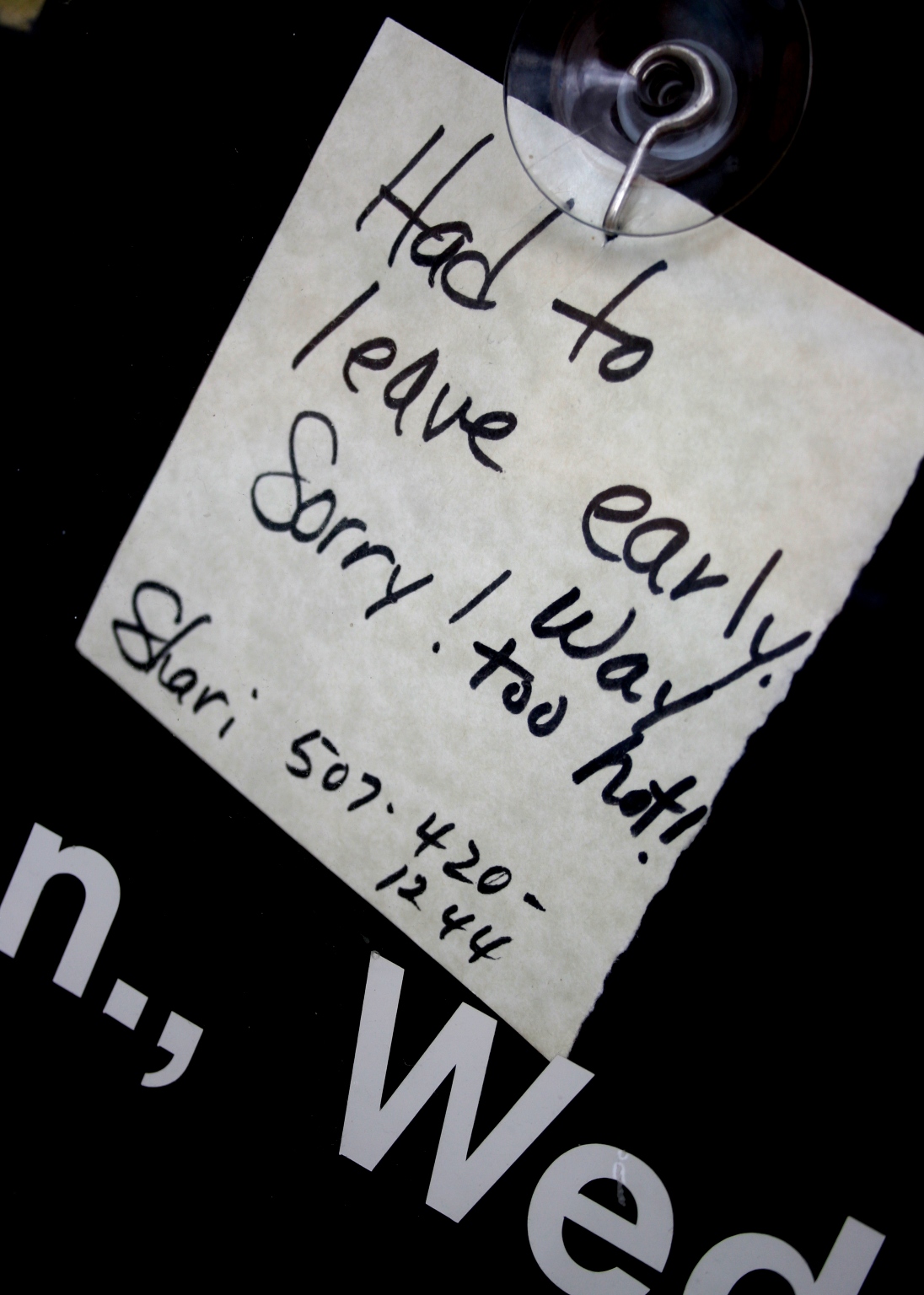
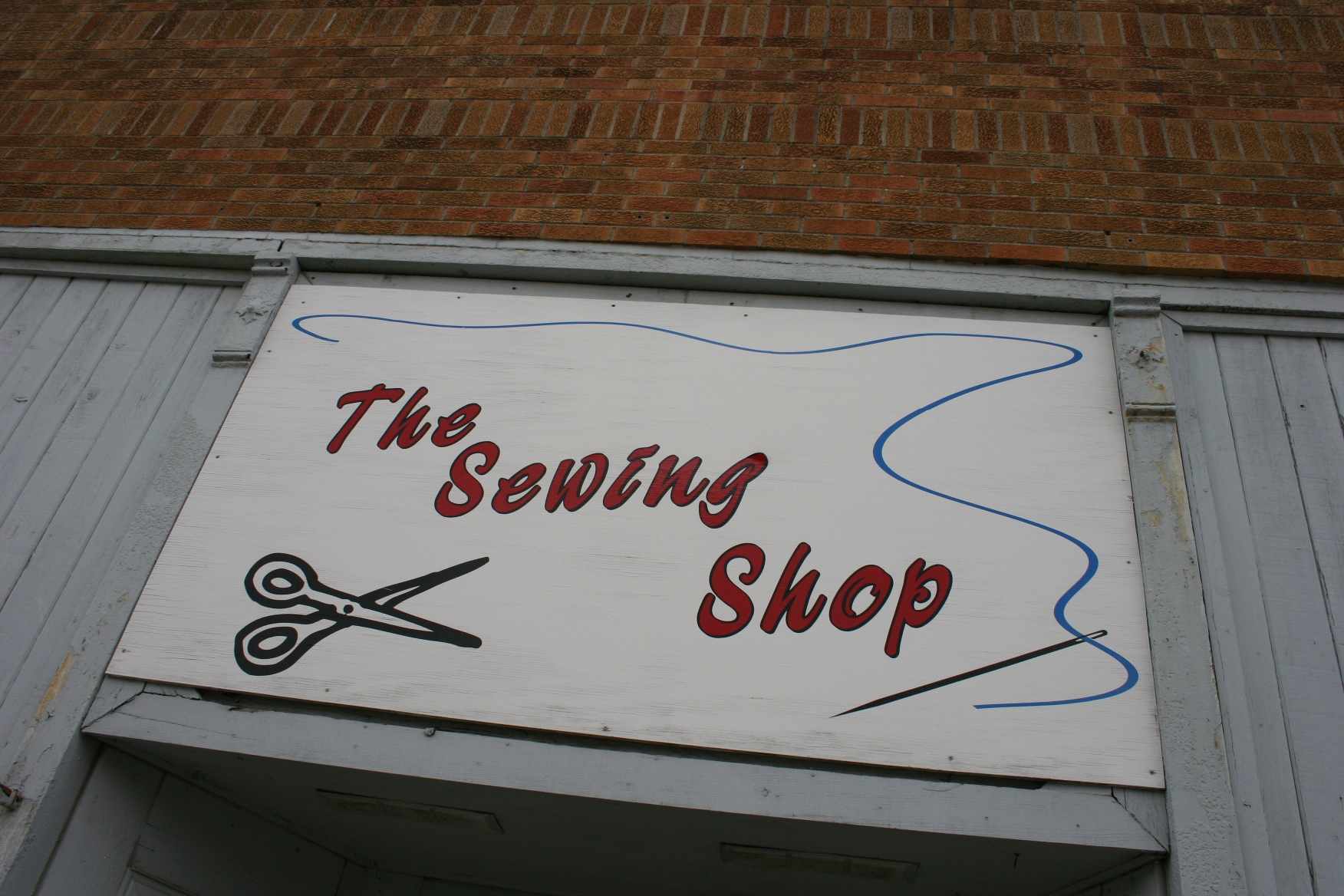
Hot weather also offers a good excuse to close up shop. I can't recall where this note was placed, but either on a beauty or sewing shop door.

Homemade signs like this one are always a bonus find on small-town Main Street.

Jethro's Soda Shop, which is no longer open, sports a misspelled word. Can you spot it?

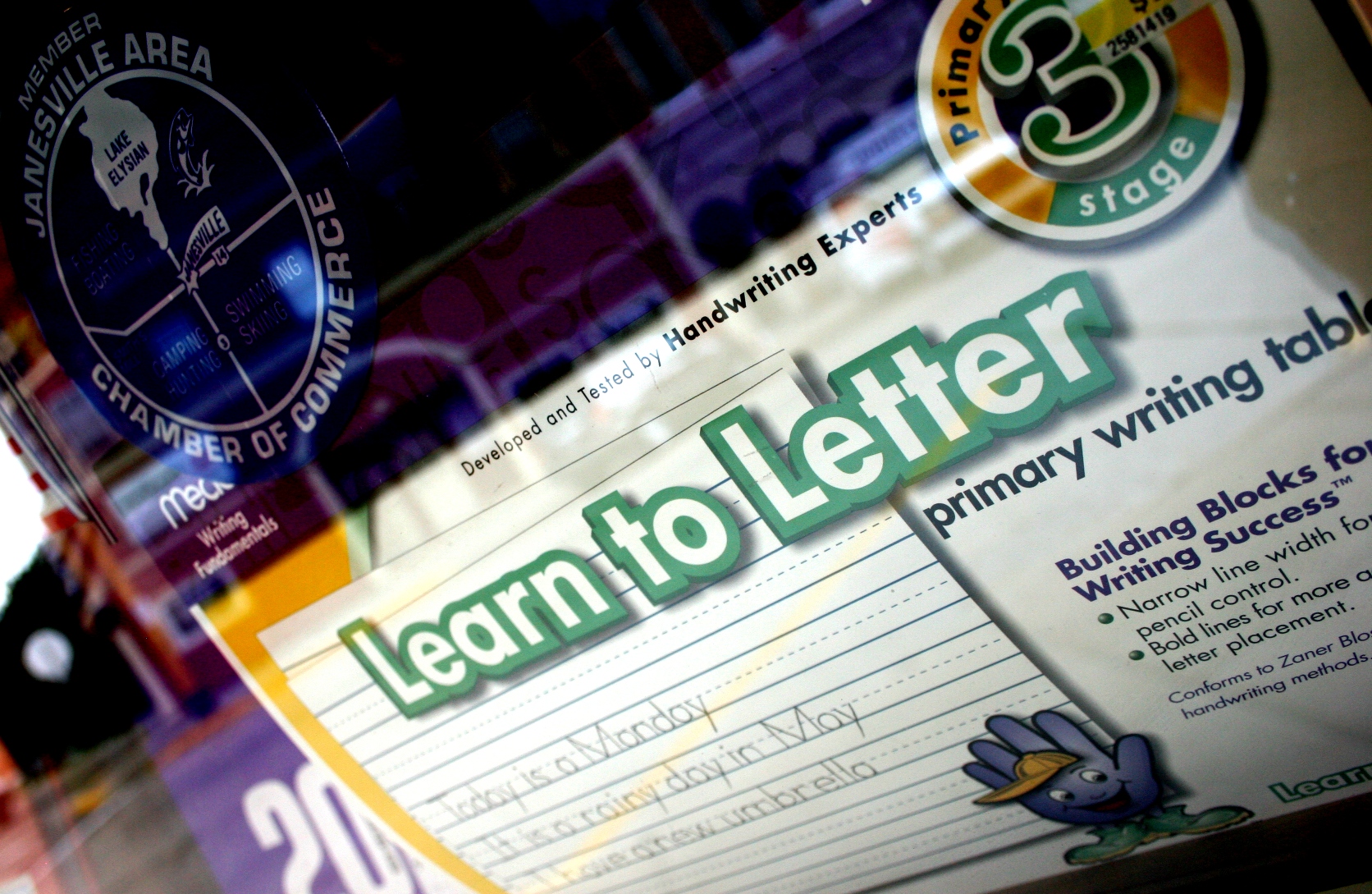
Finally, my last photo, which is not a sign, but merchandise in a window of the corner drugstore. The ruled tablet brought back grade school memories for me. Gotta love it. Main Street in Smalltown, Minnesota.

DID YOU FIND the incorrectly spelled word on the window of the former Jethro’s Malt Shop? That would be “BRAUT.” My husband contends that is the German spelling of “brat.” I contend he is wrong as my research shows that “die braut” in German translates to “bride” in English.

(NOTE: I edited most of the above images to better showcase the words.)

© Copyright 2011 Audrey Kletscher Helbling
 

A geography quiz & an award-winning tech program September 2, 2011

OK, readers, it’s time for a little geography quiz.

Where are these towns located?

  • Bellingham
  • Nassau
  • Madison
  • Marietta
  • Dawson
  • Boyd

If you know/guessed, or cheated and googled, you likely would have answered as follows:

  • Bellingham,Washington
  • Nassau in The Bahamas
  • Madison, Wisconsin
  • Marietta, Georgia or Marietta, Ohio
  • Dawson, Georgia
  • Boyd, Texas

However I would award you extra credit and move you to the head of the class if you gave these answers:

  • Bellingham, Minnesota
  • Nassau, Minnesota
  • Madison, Minnesota
  • Marietta, Minnesota
  • Dawson, Minnesota
  • Boyd, Minnesota

See, you can learn a lot by going online and reading information on sites like Minnesota Prairie Roots.

But not everyone has easy access to computers, or the technical skills to use one, especially in rural areas like those six small Minnesota towns in the list above.

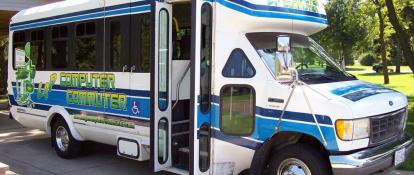
The folks in Lac qui Parle County understand that. And they’ve done something about the problem by bringing computers to the people via a mobile computer lab, LqP Computer Commuter.

The LqP Computer Commuter (Photo from online Minnesota Community Pride Showcase application)

How’s that for an innovative idea, selected as one of 30 Minnesota Community Pride Showcase winners that will be recognized on Saturday at the Minnesota State Fair?

Back in Lac qui Parle County, the computer commuter (a converted small handicapped accessible commuter bus) hit the road last summer and now travels three days a week, parking for four hours in each town—Bellingham on Monday morning, then to Nassau in the afternoon; to Madison and Marietta on Tuesday; and to Dawson and Boyd on Friday.

According to information submitted in the Minnesota Community Pride Showcase application, the mobile program has been well-received and continues to grow. You can read details about LqP Computer Commuter by clicking here.

The Lac qui Parle Economic Development Authority website, where you'll find basic info about the LqP Computer Commuter.

Aiming to increase digital literacy in a county with less than 8,000 residents, many of them over age 60, the mobile computer lab provides the public with free access to seven laptops and a lab coordinator and trainer.

Twelve local partners from the public and private sector support the project.

To the team who brainstormed and hatched this idea and to those who back the program, I applaud you. You are meeting a need in rural Minnesota.

I understand. I grew up in southwestern Minnesota and am aware how isolation, lack of funding, and more, often mean fewer opportunities.

When I was a child living on a farm outside of Vesta, I wanted nothing more than a library in town. Decades later my hometown of around 300 still doesn’t have a library, but at least the Plum Creek Bookmobile rolls onto Main Street once a month.

I expect residents and business people in Lac qui Parle County are thrilled to see the LqP Computer Commuter roll onto their Main Streets once a week.

I hope this idea catches on in other areas of rural Minnesota, and through-out the country. Rural residents should have as much access to technology, and the skills to use that technology, as those of us who live in more heavily-populated areas.

FYI: To read the list of winners in the Minnesota Community Pride Showcase, click here. The 30 winners will be recognized on Saturday at the Minnesota State Fair, where they also have an exhibit space. The fair has also awarded $500 to each winner.

Three programs in my county of residence, Rice County, are among those to be honored for their community efforts: Faribault Summer Youth Programs, Rice County Olympic Day and Northfield LINK Center.

© Copyright 2011 Audrey Kletscher Helbling
 

Discovering a Monet painting near St. Charles August 25, 2011

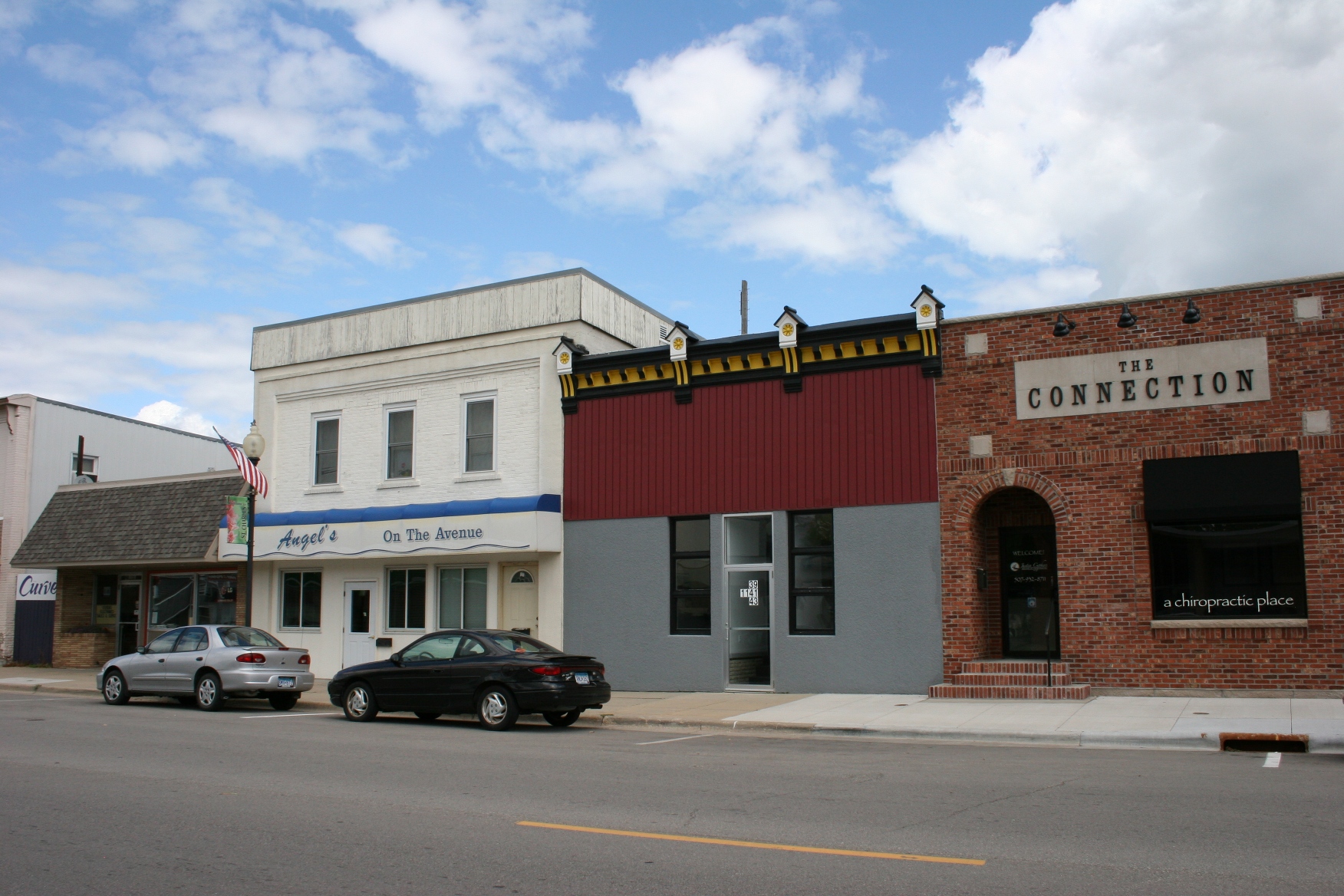
A section of downtown St. Charles, Minnesota, on a recent summer afternoon.

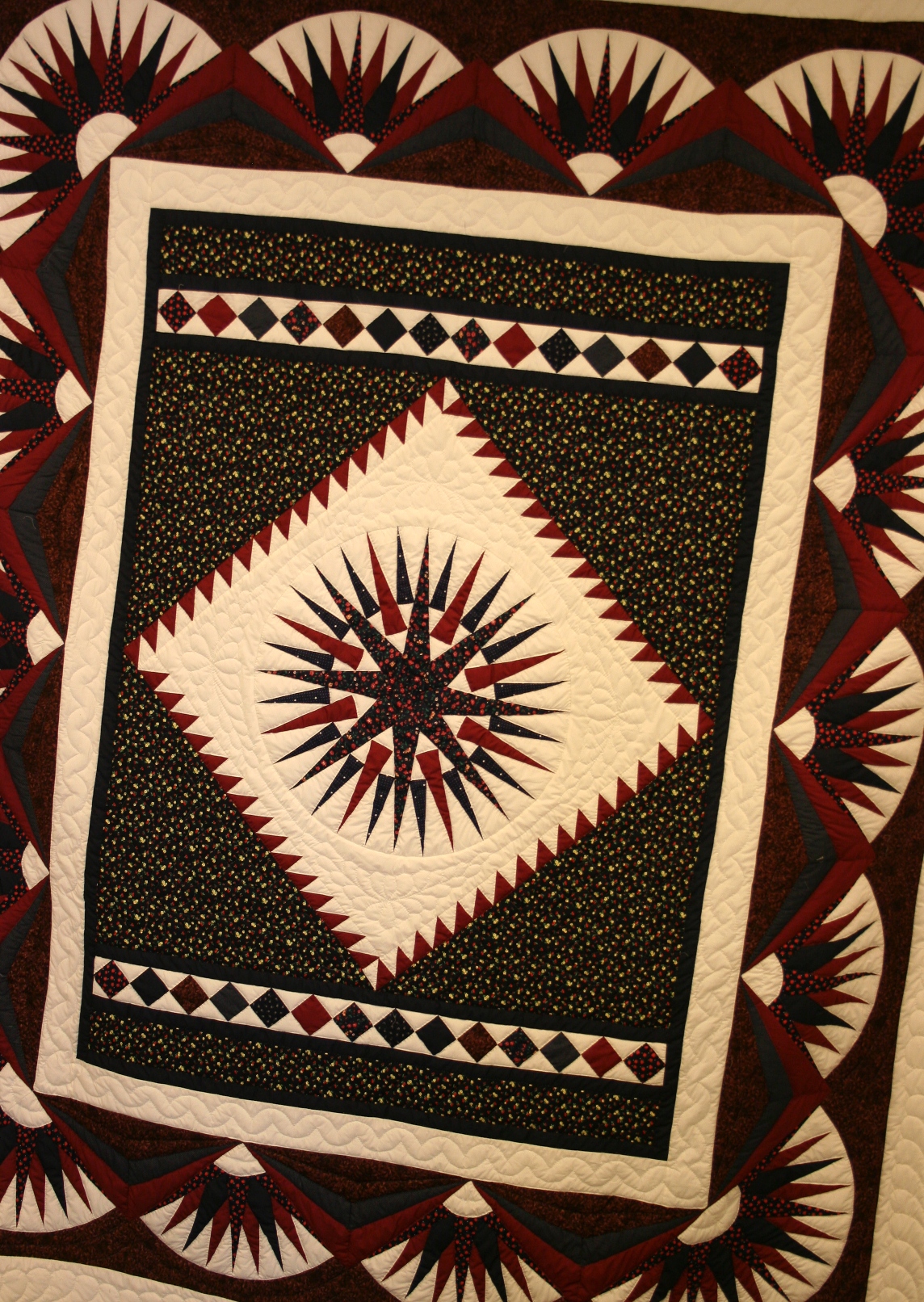
A quilt made by local southeastern Minnesota Amish and sold at the Amish Market Square.

MID-AFTERNOON ON A TUESDAY and we are dining at the Whitewater Café in downtown St. Charles.

We’ve driven to this southeastern Minnesota community of 3,300, sandwiched between Interstate 90 and U.S. Highway 14, because we’re meandering home from a family vacation to Wisconsin.

I’ve specifically placed St. Charles on our route back to Faribault for two reasons: the Amish and the gladiolus.

Before dining at the fishing-themed Whitewater Café in downtown, we stopped at Amish Market Square just off I-90 where you can gas up, eat, buy products handmade by the Amish and pose for a photo in an Amish buggy. While I admired the stunning hand-stitched quilts—priced around $1,500—and the wood cutting boards and more, I didn’t climb into that buggy for a photo. I wanted authentic Amish, not tourist Amish.

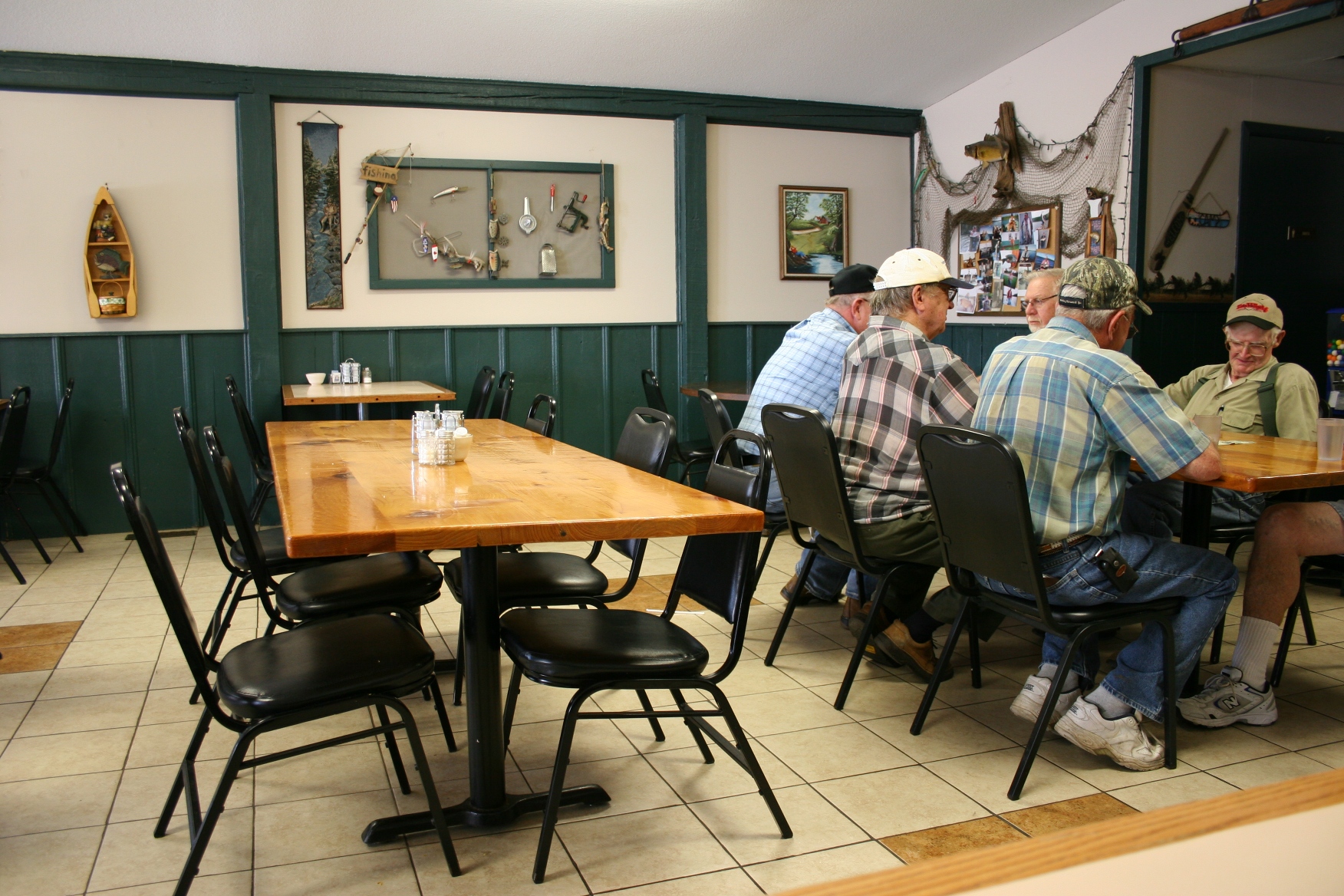
That would come later, after lunch downtown, next to “The Table of Knowledge,” aka a group of local guys who gather each morning and afternoon to shoot the breeze, drink coffee and, when asked, give directions to the gladiolus fields and Amish farms.

I didn’t get any of their names, but one of those friendly club members—and I use that term loosely here—found a Winona County map in the restaurant and highlighted a route that would take us southeast of St. Charles past Amish farms and then back north to the glad field just south of Utica. He praised the hardworking Amish, two of whom were working on a fence on his farm at that very moment. He picks them up in the morning, then drives them home at the end of the work day.

These friendly locals at the Whitewater Cafe gave us directions to the glad field and Amish farms.

We left the restaurant, opting to view the flower field first by following Highway 14 east of St. Charles, turning south onto Winona County Road 33 into Utica until we found the rows of gladiolus just outside of town. It should be noted that the flower-growing location changes annually to keep the plants disease-free. Last year the glads were grown next to St. Charles, so the knowledgeable locals told us.

Up until that moment, I’d thought mostly of gladiolus as “funeral flowers,” a moniker that has stuck for decades based on my memories of glads at every funeral I ever attended as a child. Interesting how you associate something with an impressionable event, isn’t it?

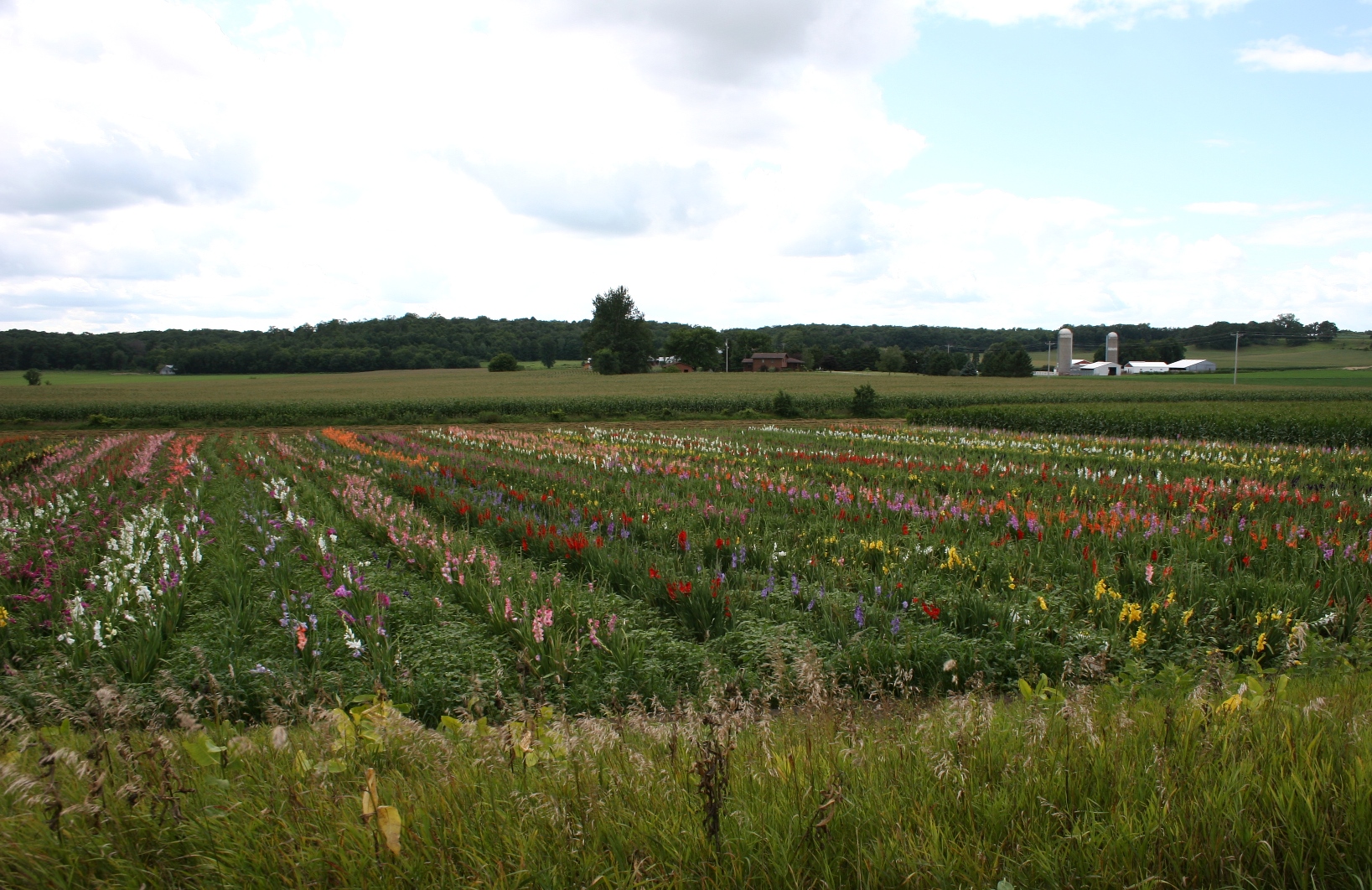
As we slowed the car to get an overview of the gladiolus in the field below, I felt as if I was viewing a painting by Claude Monet. Soft pinks and purples and blues—punctuated by splashes of brilliant red, and broken by lines of green, tight-clasped buds and foliage—created a surreal scene against the backdrop of corn, farm places, sky and a distant tree line.

A view of the gladiolus field just south of Utica along Winona County Road 33.

This is as close as I got to the glads, standing along the shoulder of the road photographing them.

I hoped for a close-up look, but found no signage indicating we could stop at a next-door building site to view or purchase flowers.

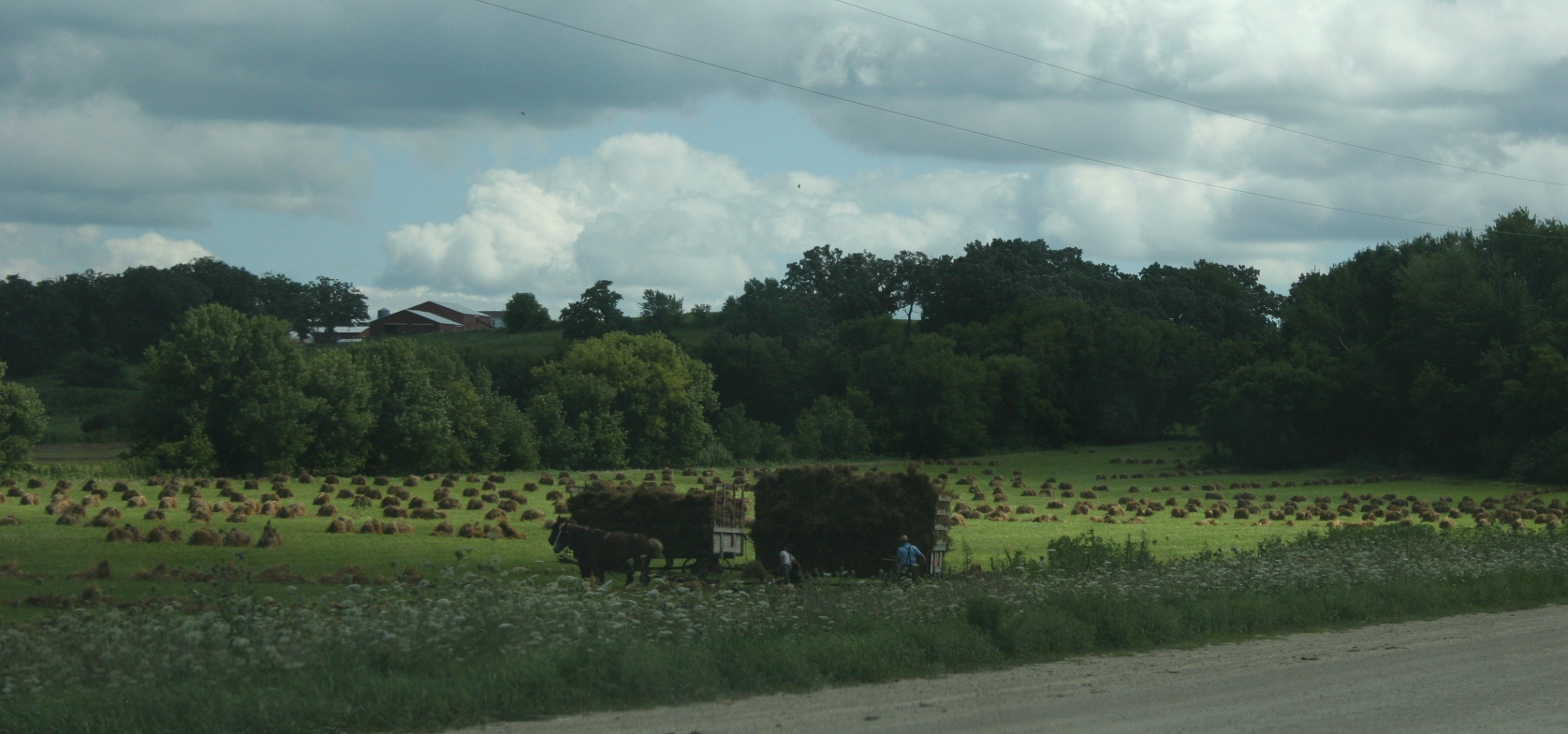
And so we drove on, further south and then west past several Amish farms—past the horses and wagons, the laundry on clotheslines, the shocks in fields and the Amish men throwing bundles high atop a wagon, their arm muscles bulging from seasons of labor.

An Amish farm site southeast of St. Charles.

We came upon this pastoral scene south of St. Charles, where the Amish were pitching bundles onto wagons.

Heading back into St. Charles, I wished I could spend more time here, in this town promoted on its website as “The Gateway to the Whitewater Valley,” and made world-famous by Carl Fischer, now deceased. He was the world’s leading hybridizer of new and distinctive gladiolus and established Noweta Gardens in 1945.

Each August this Minnesota town celebrates Gladiolus Days, which is happening right now and continues through Sunday, August 28. For a schedule of events, click here.

I fully intend to return some day to experience this festival, to this place where, if you look, you will see southeastern Minnesota’s version of a Monet painting.

The gladiolus field before me could have been a Claude Monet painting.

MORE PHOTOS OF ST. CHARLES:

The main road through downtown St. Charles, the "Gateway to the Whitewater Valley."

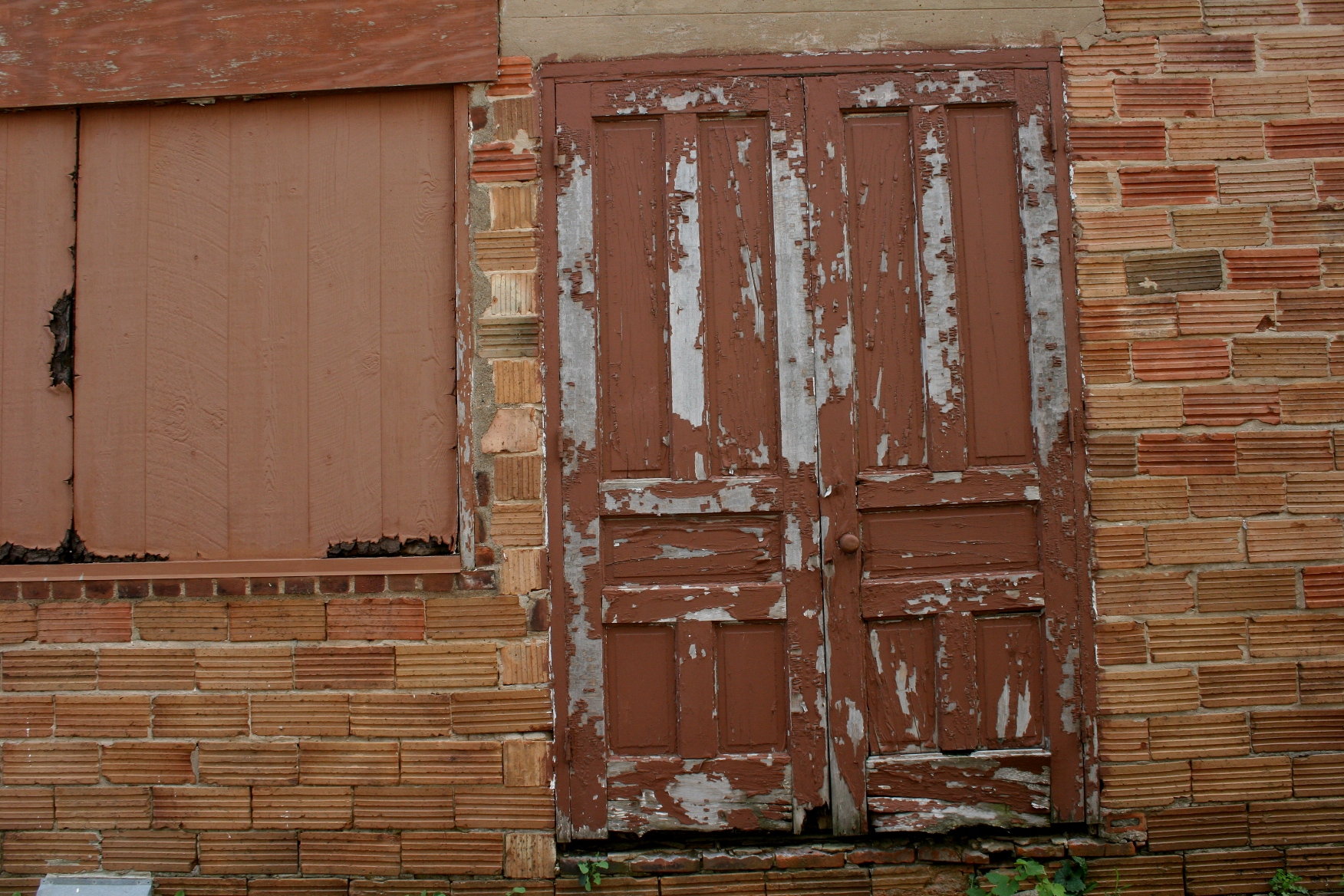
I discovered these weathered doors, found them charming, so photographed them in downtown St. Charles.

More downtown St. Charles businesses.

The post office and a pizza place along St. Charles' main drag.

I refused my husband's offer to photograph me in this Amish buggy at the Amish Market Square just off I-90.

© Copyright 2011 Audrey Kletscher Helbling
 

Take time to stop and appreciate small towns August 11, 2011

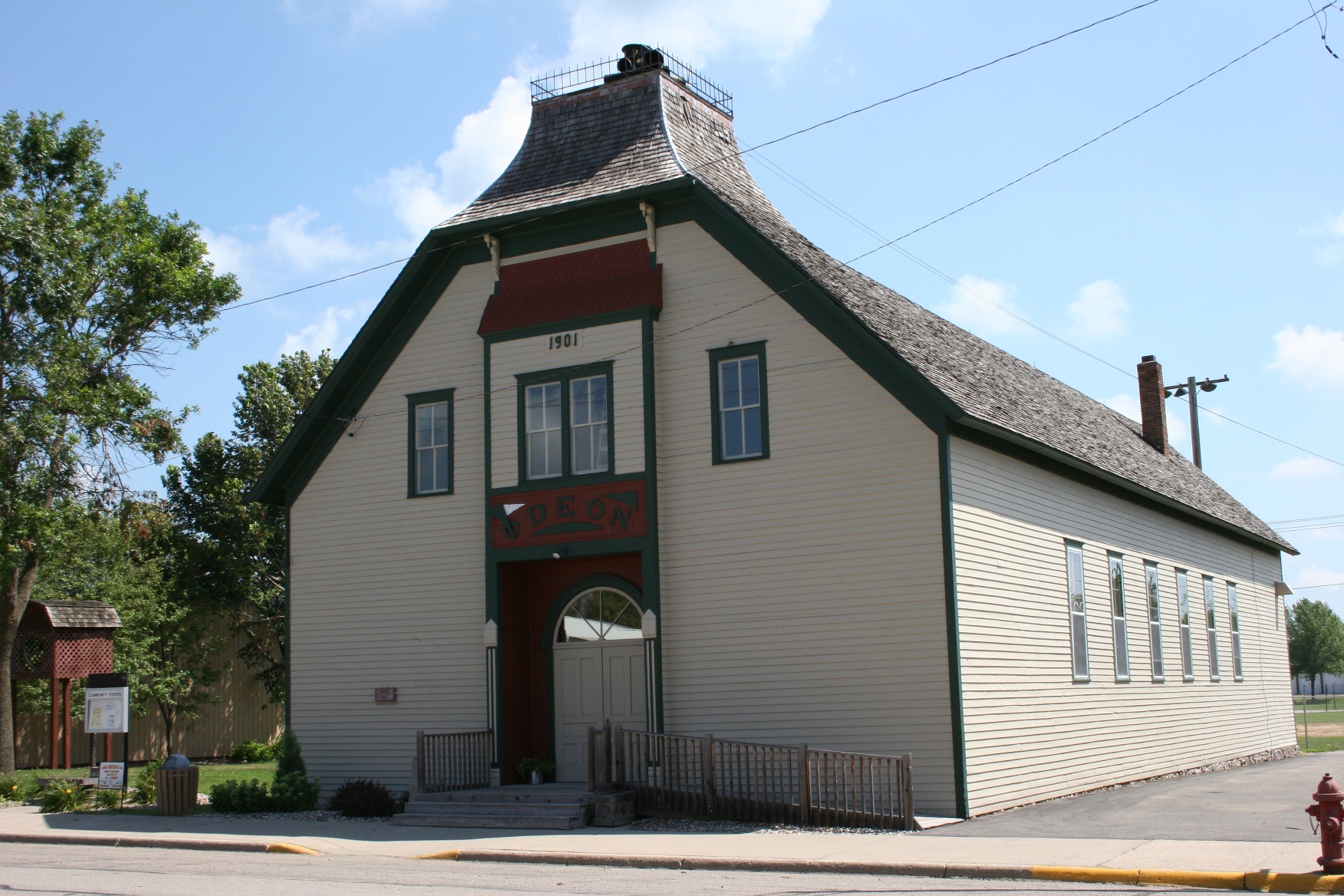
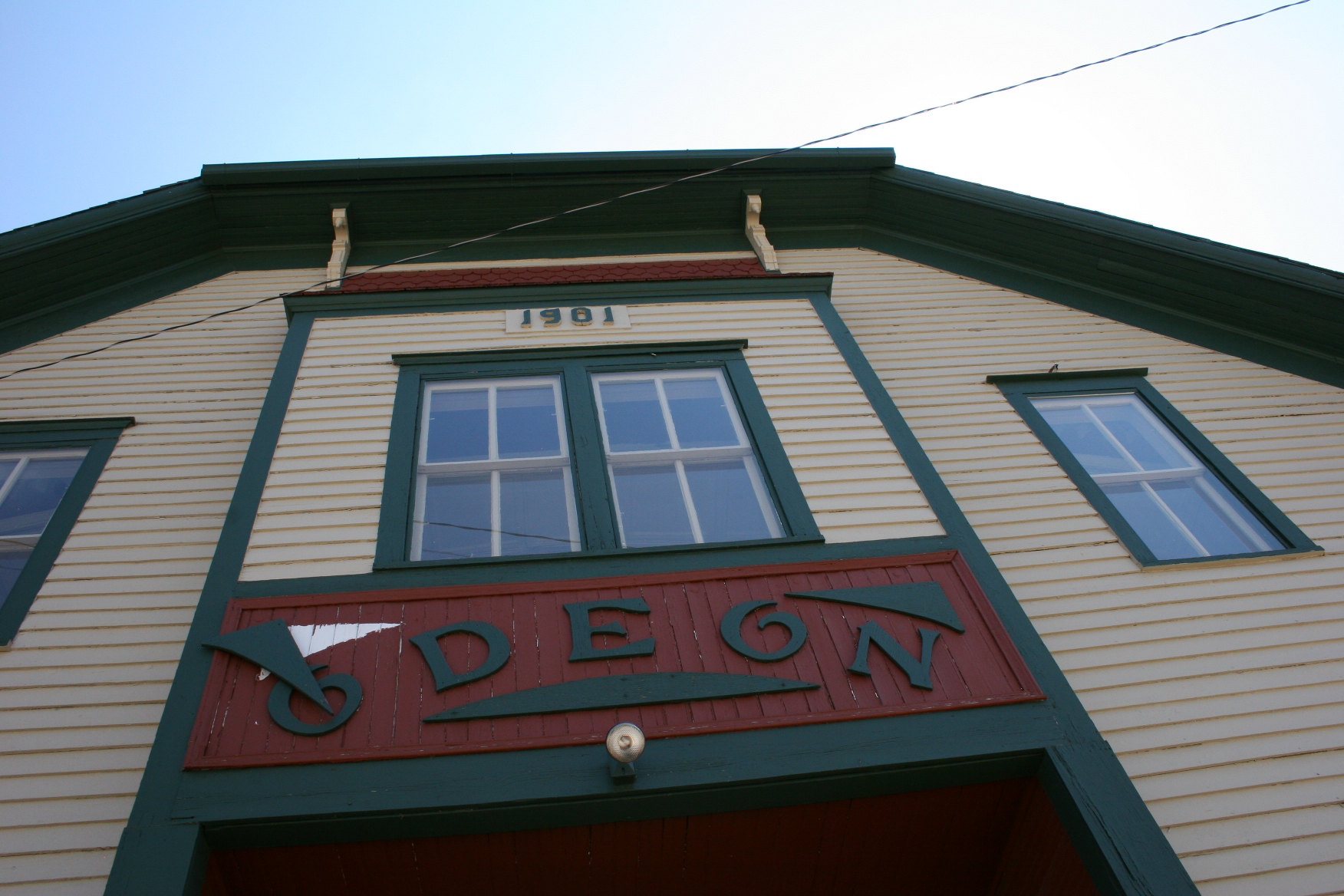
In tiny Belview, you'll find the 1901 Odeon Hall. Listed on the National Register of Historic Places, this Queen Anne style building features a barrel-vault ceiling. Still in use today for wedding receptions and community events, etc., Odeon Hall once also featured vaudeville shows, motion pictures, concerts and more.

I WANT TO THROW a challenge out there. The next time you’re driving through/near small-town Minnesota, or small-town wherever, stop. Pull off the highway and drive along Main Street. Park your vehicle. Get out. Walk. Look. See.

Notice the buildings, the architecture, the signage, the history. Consider what centers the town: the café, the post office, the grain elevator, the churches, the school—if there is a school.

Families, retirees and even single people choose to live, to work, to worship together, to celebrate, to mourn, to live their lives here. This is their home, not just some town in the middle of nowhere that you must pass through to get from destination A to destination B.

I have, in recent years, begun to appreciate the small towns and rural areas of Minnesota more than ever. I grew up on a dairy and crop farm in southwestern Minnesota, which is about as rural as you can get. But I haven’t always valued that upbringing like I should.

As I’ve gotten into the art of photography, I’ve begun to view these towns with a fresh perspective. I notice what, in the past, I’ve overlooked or taken for granted because of my rural roots.

Let me show you some photos I took recently in and near Belview, a community of 375 located four miles north of State Highway 19 in northwestern Redwood County. Belview lies about 10 miles from my hometown of Vesta, another one of those small towns that motorists zip by without a second thought. I bet you didn’t know that Vesta is the home of the nation’s first electric cooperative. I thought so.

That’s the thing about small towns. If you stop and walk and look and see, and I emphasize the word, see, you will discover more than just a place to drive through when getting from point A to point B. You will discover the heart and soul of community.

Move in close to view the details, like the front of Odeon Hall. I attended a cousin's wedding dance here decades ago. Imagine the celebrations inside this historic building.

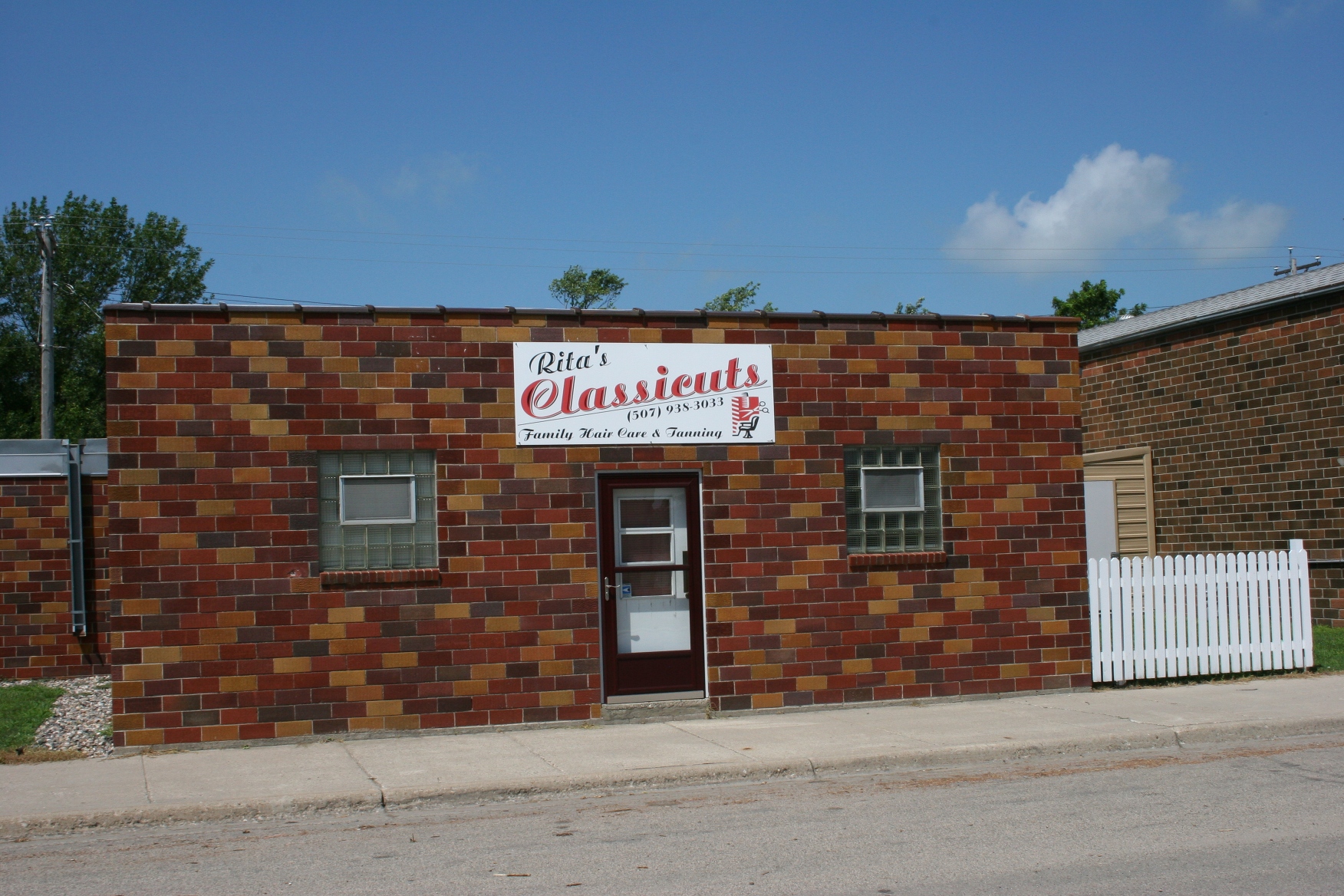
Most small towns, like Belview, are fortunate to still have a place where you can get your hair cut and styled. I appreciate the simple lines of this brick building located along Main Street.

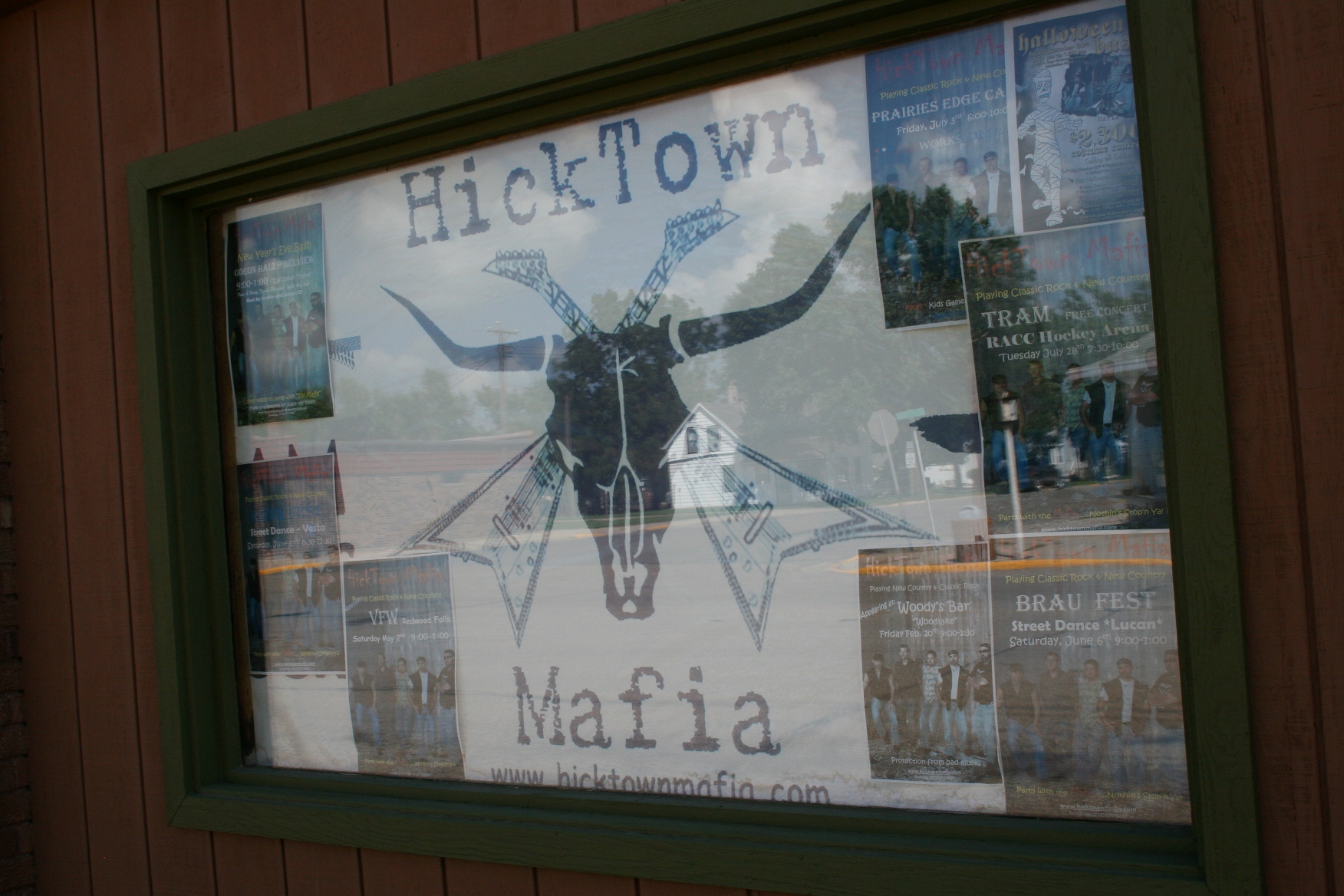
I discovered this poster in the window of a Main Street building advertising a local band, HickTown Mafia. The band plays "country with a kick, rock with an attitude," according to the group's website.

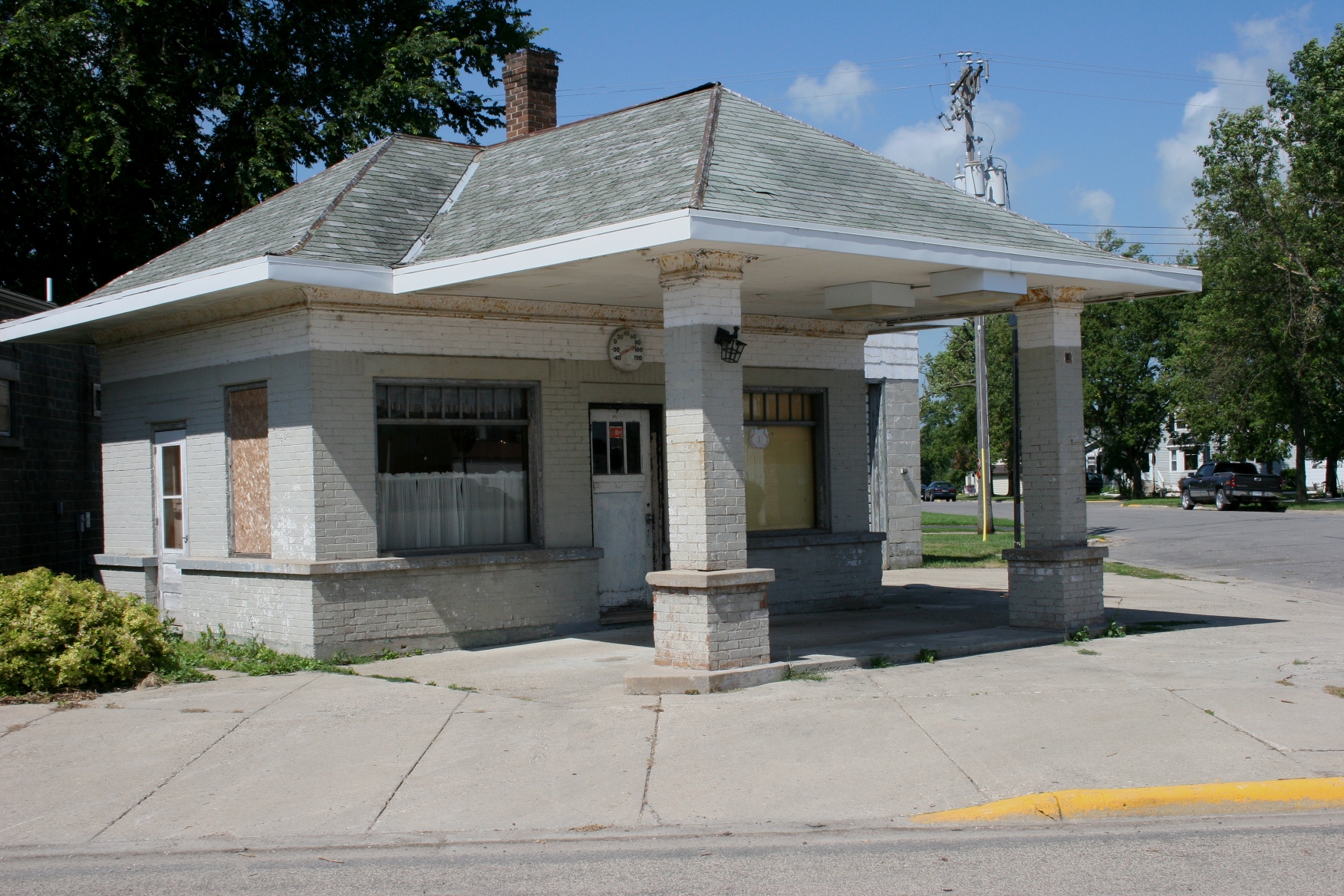
I found this abandoned former gas station (I think) on a downtown corner. This charming building practically shouts for someone to reopen it as a bakery, coffee shop, antique store or some other such venue. Perhaps the two local wineries/vineyards and other area vendors could market their products here.

The Parkview Home, a Belview nursing home, was once home to my maternal grandfather and to other extended aging family members. I've been here often to visit relatives and, during high school, to sing Christmas carols with the Luther League. The building was damaged in a July 1 tornado (note the blue tarp on the roof) and residents have been temporarily displaced.

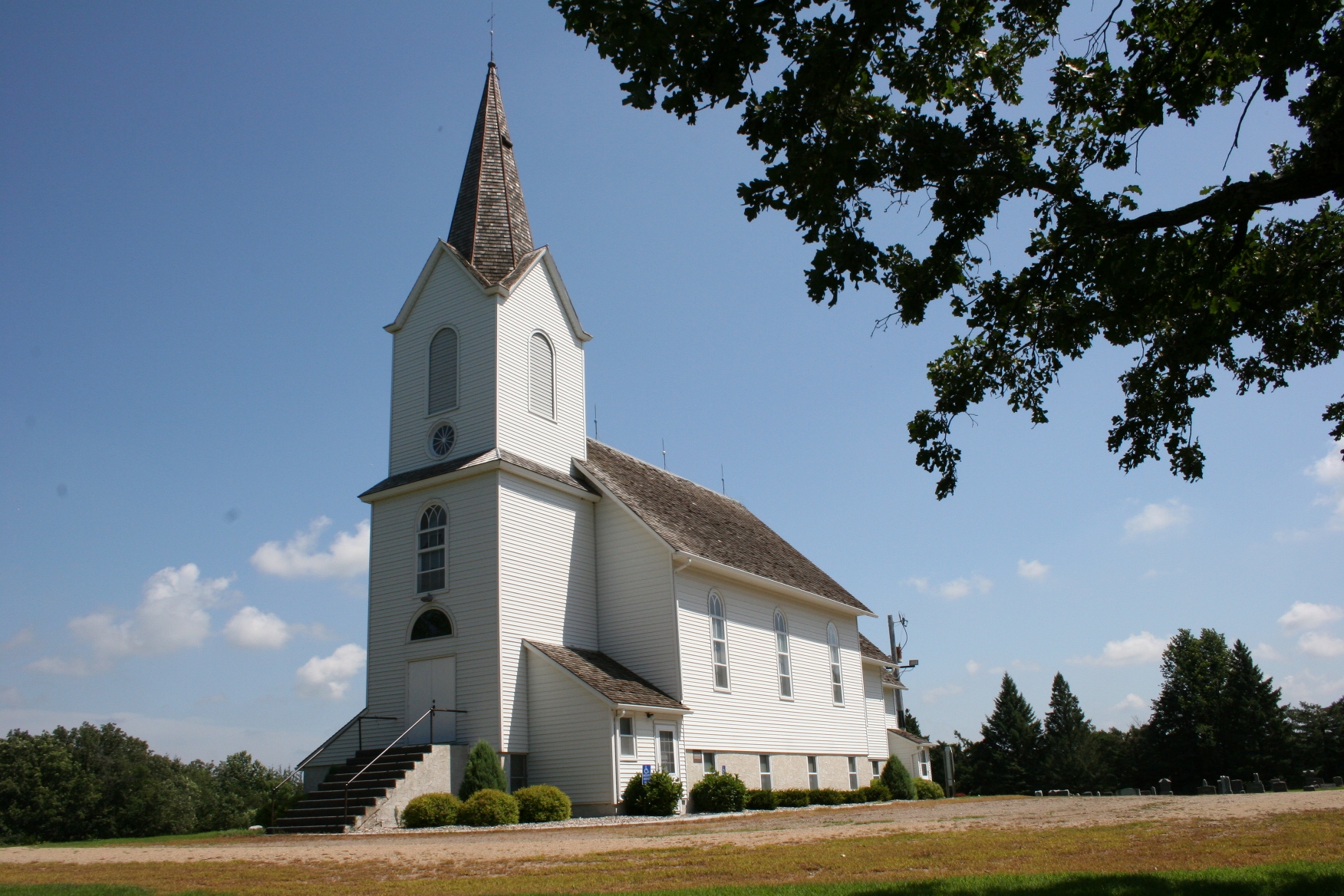
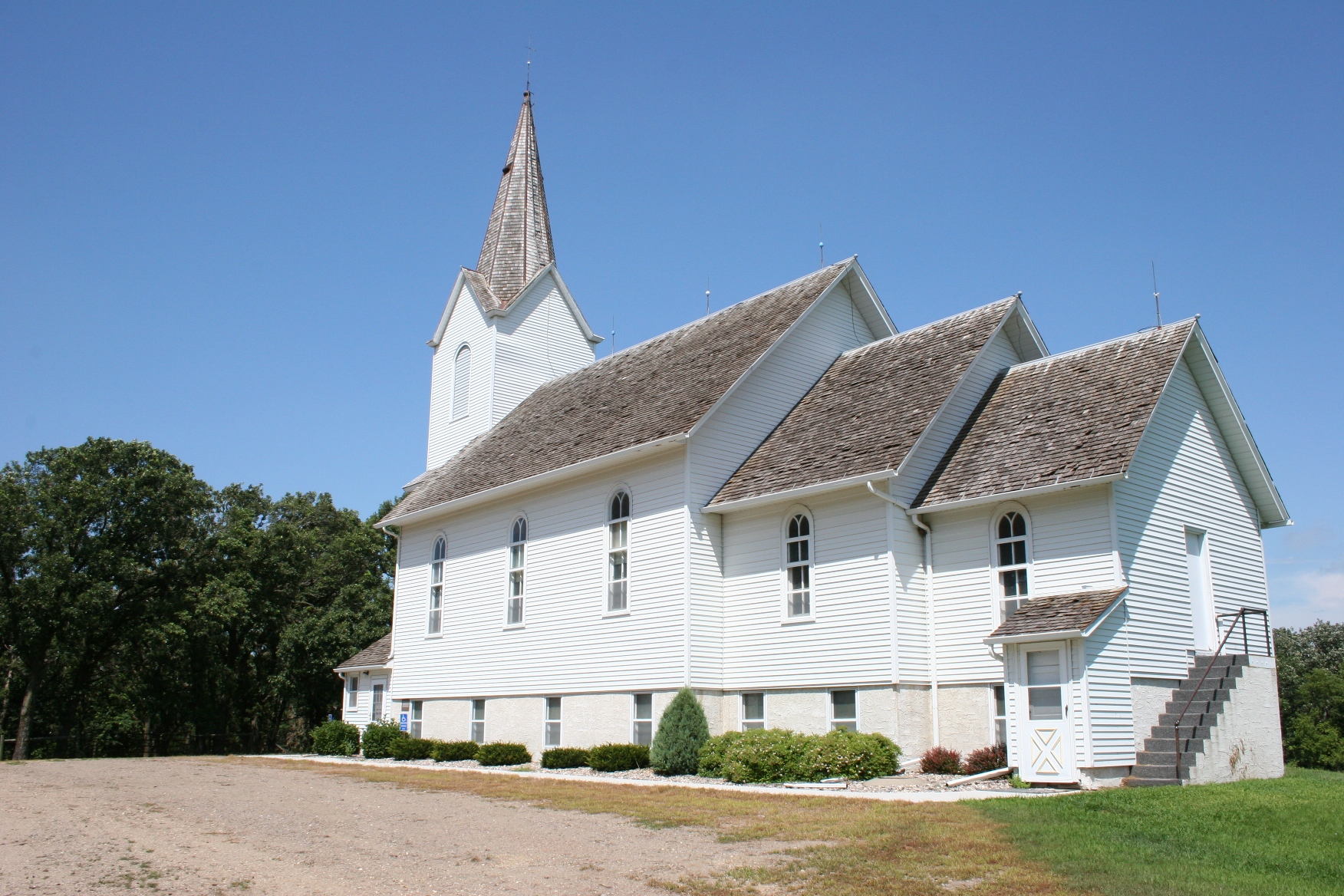
Northwest of Belview, you'll find picturesque Rock Dell Lutheran Church. My Uncle Merlin and Aunt Iylene Kletscher were married here in November 1964, the last time I was inside the church.

A side view of Rock Dell.

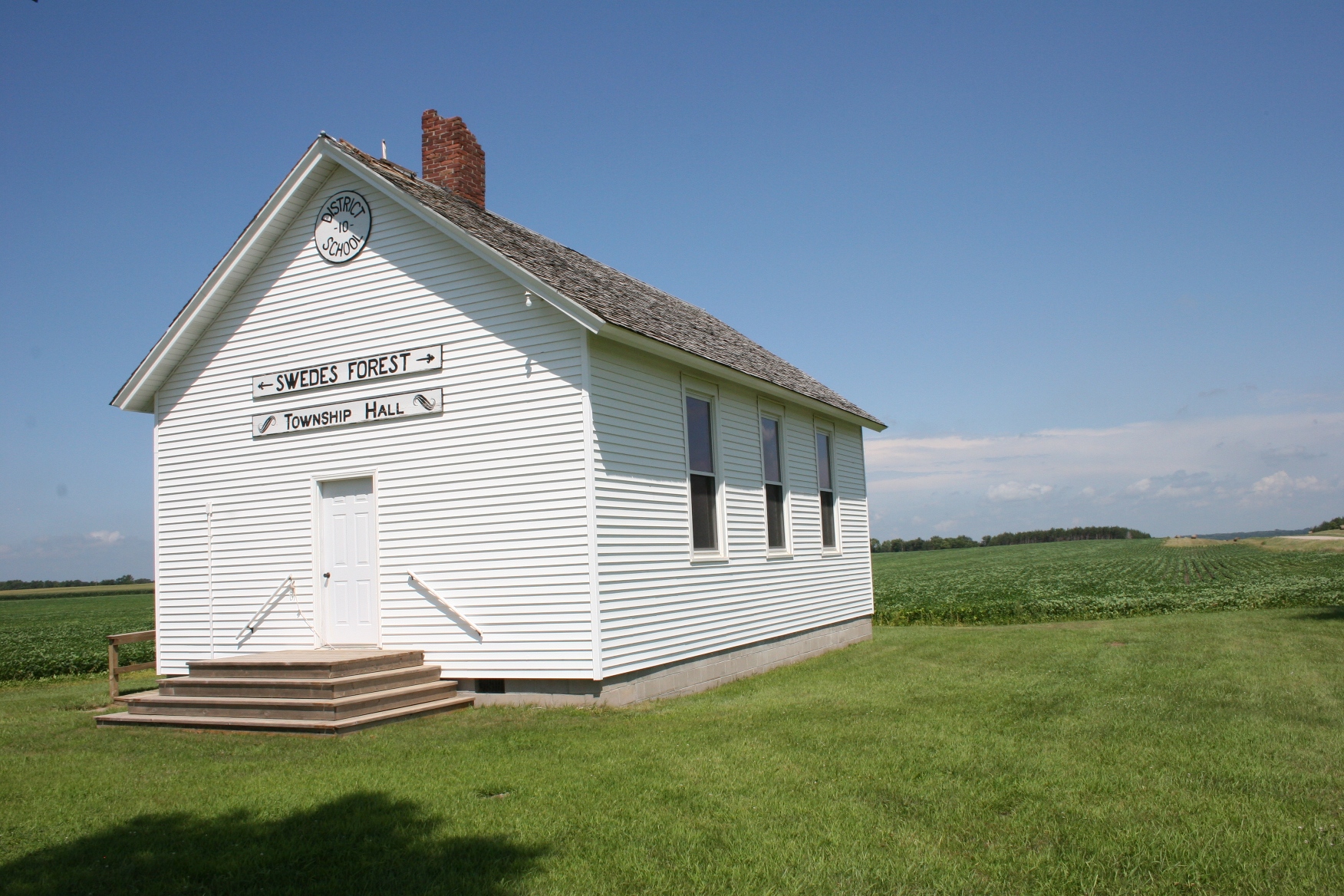
Near Rock Dell you'll find Swedes Forest Township Hall in the middle of corn and soybean fields.

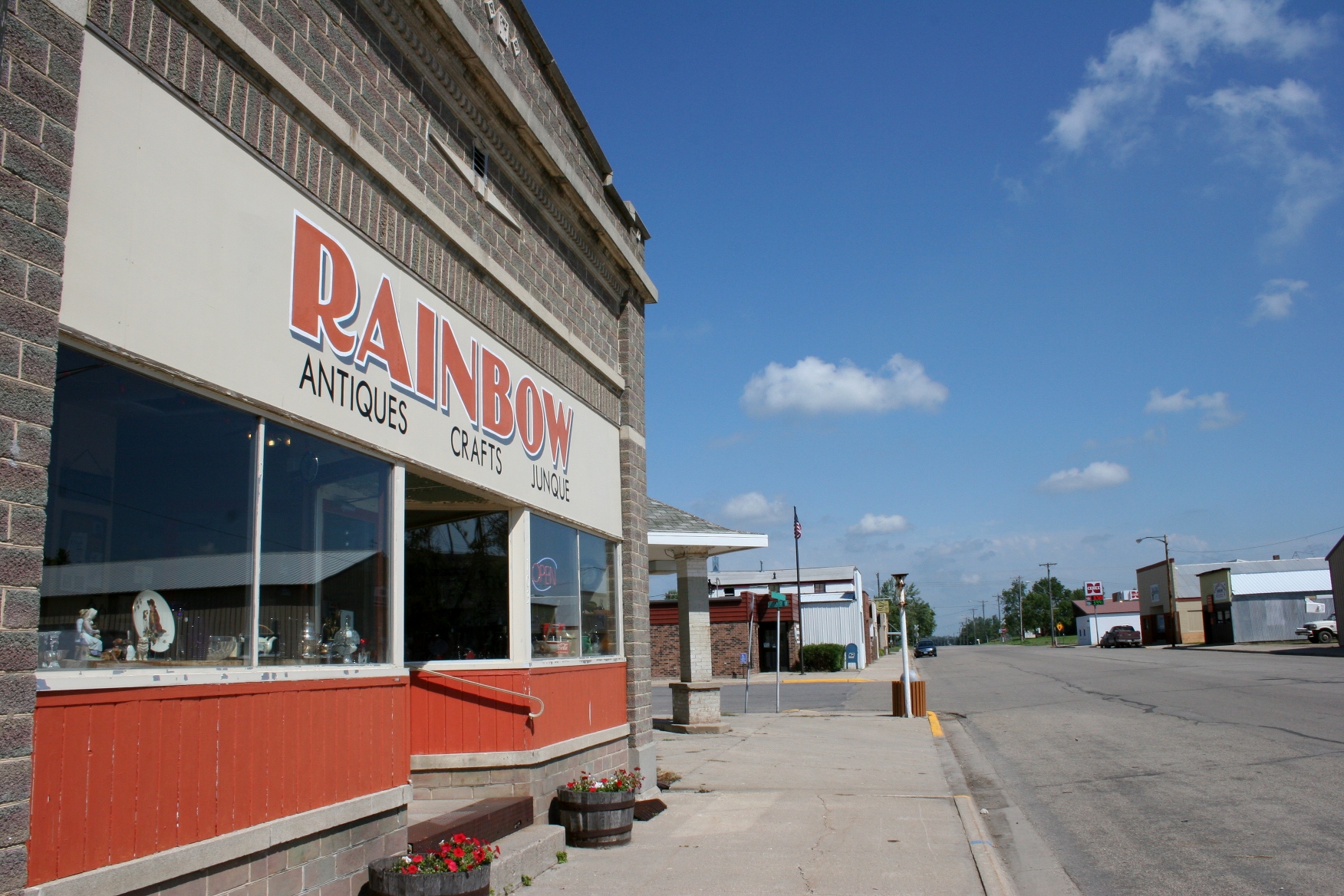
FOR MORE INFORMATION about Belview, click here and here. Also read my previous post about Rainbow Antiques, Crafts and Junque in Belview by clicking here.

TAKE MY CHALLENGE and report back to me on the treasures you discover in a small town or rural area.

© Copyright 2011 Audrey Kletscher Helbling
 

Follow the rainbow to a charming antique store in Belview August 9, 2011

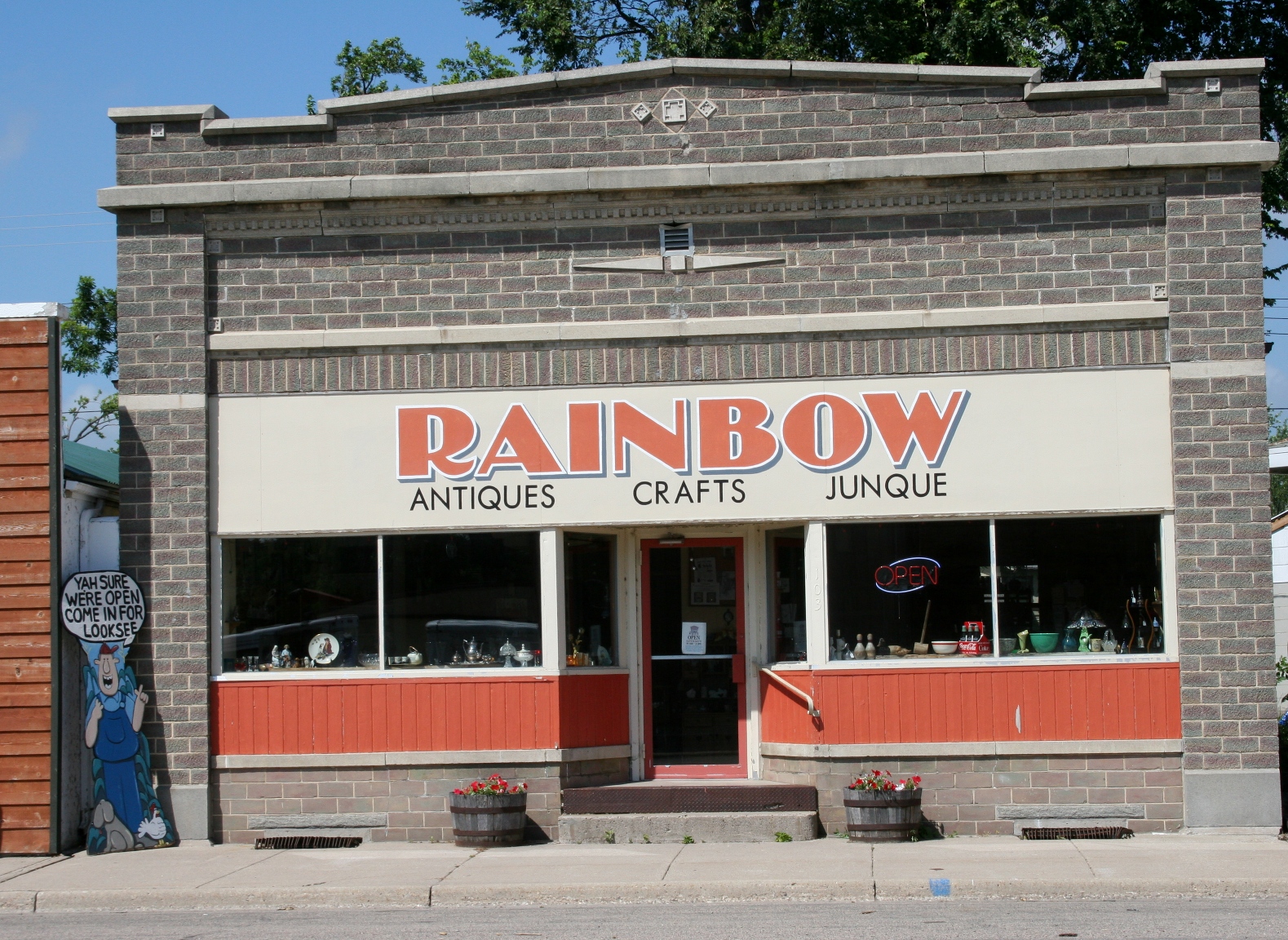
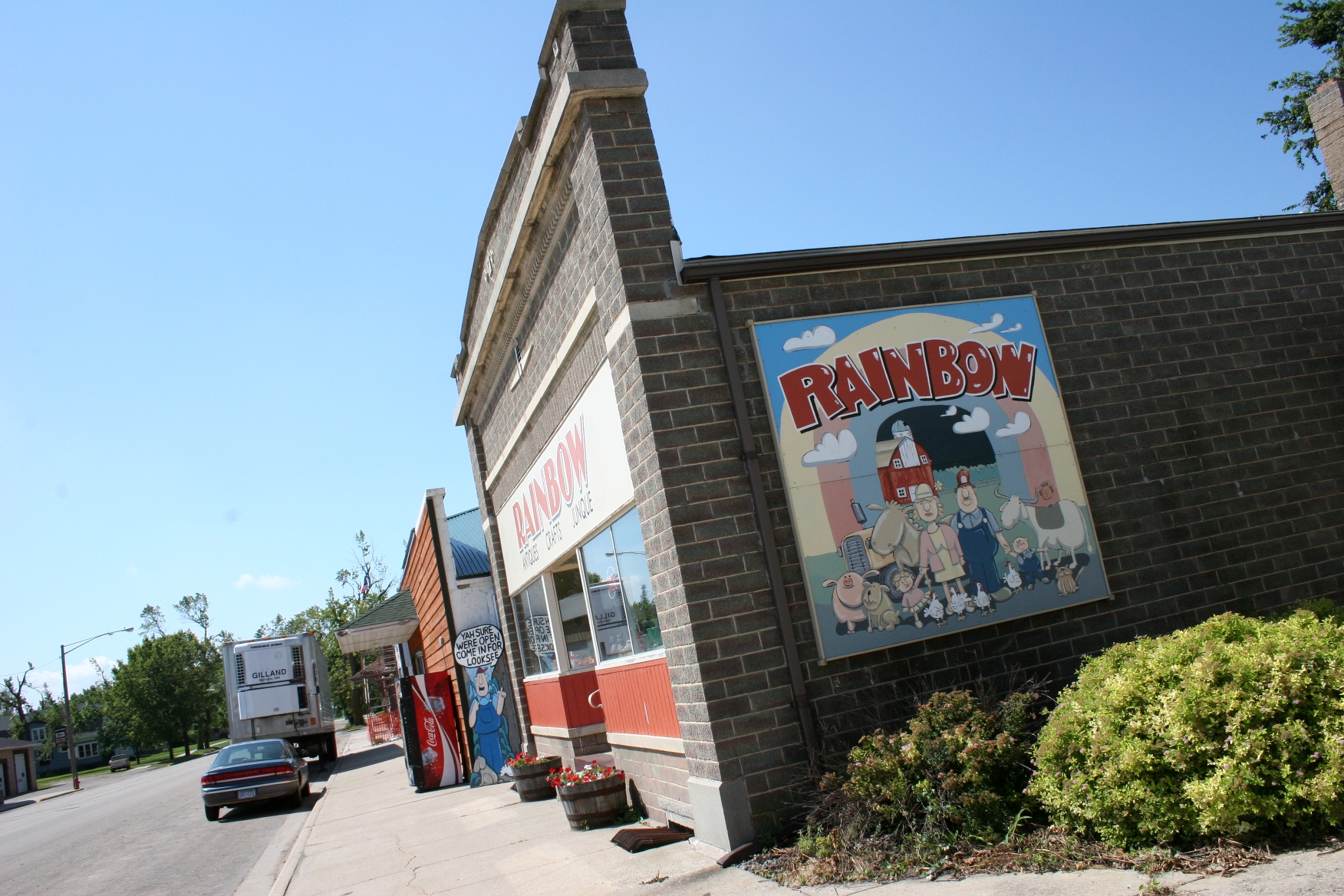
Driving north into Belview, you can't miss Rainbow Antiques, Crafts & Junque.

IF YOU’RE INTO ANTIQUING or architecture or small towns, you’ll want to visit Belview, population 375, four miles off State Highway 19 in southwestern Minnesota.

My husband, Mom and I drove to Belview on a recent Saturday morning to see my Uncle Merlin and Aunt Iylene’s “new” old home along the main drag. We also toured the town, checking out the damage from a July 1 EF-1 tornado. And, lucky us, we happened to be in this Redwood County community on the one day a week that Rainbow Antiques, Crafts & Junque is open.

And let me tell you, Don Gunelson runs one heckuva an antique store with the flair of an artist.

You’ll notice the building right away when you drive or walk Main Street. It’s built of beautiful rainbow brick which, in itself, is worth a stop. I know of at least two other rainbow brick buildings in Redwood County—one in Walnut Grove and the other on a corner in nearby downtown Redwood Falls.

Colorful rainbow bricks comprise the antique shop.

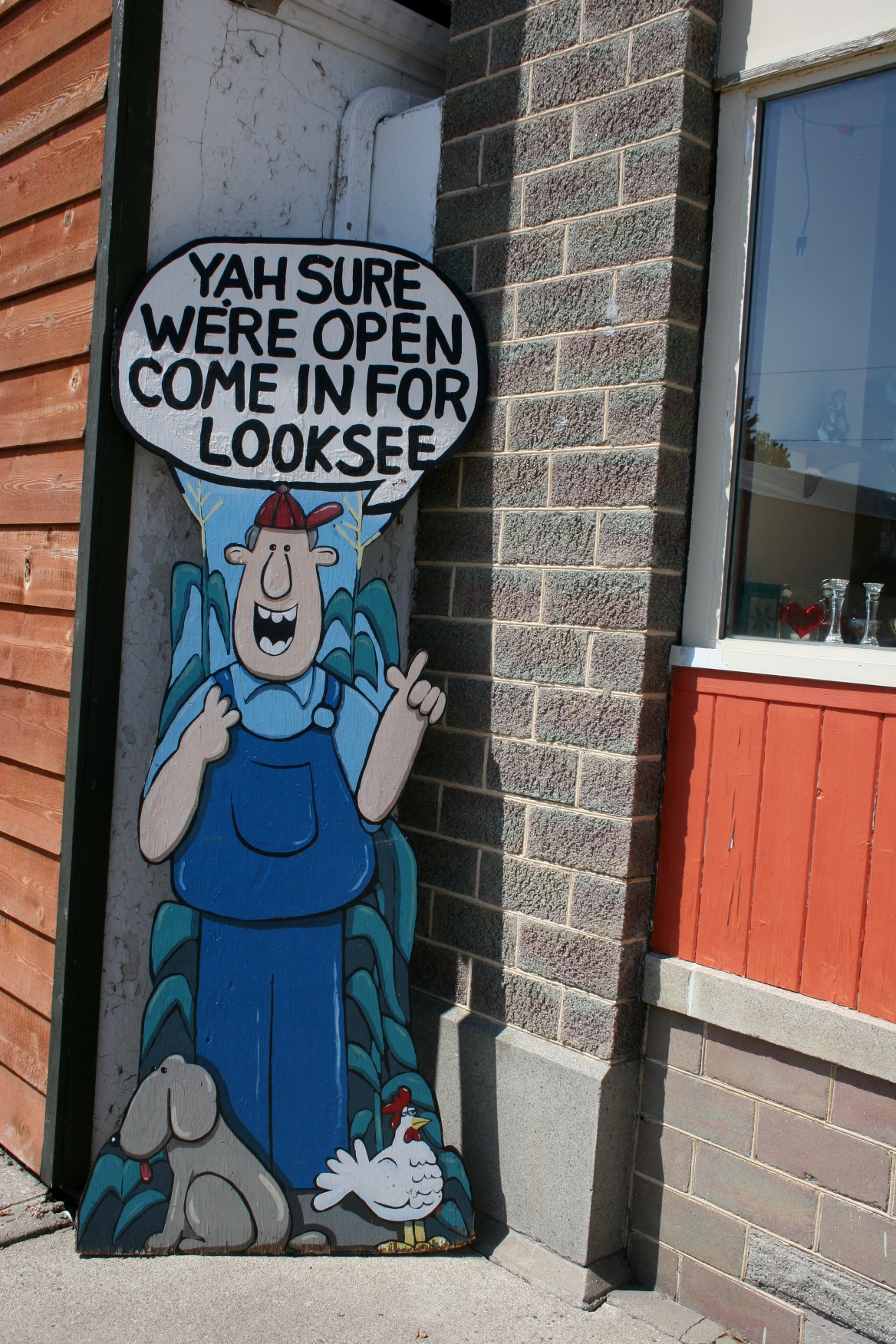
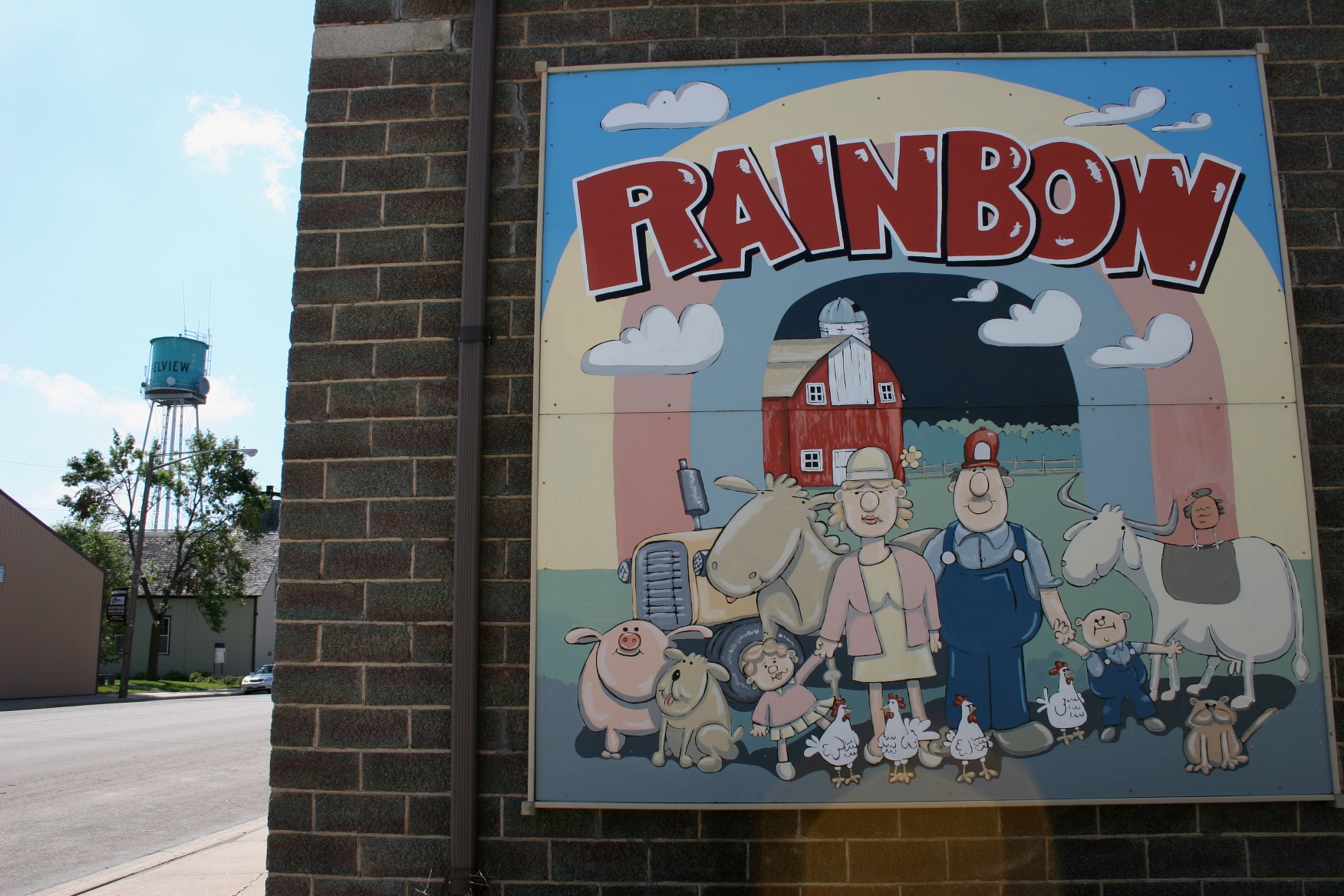
Don directs customers to his store with nicely-done folksy signage. I didn’t ask Don if he created the artwork, but he worked as a graphic designer for a construction magazine before returning to his native Belview from the metro some 10 years ago. He also works part-time at the Belview Post Office.

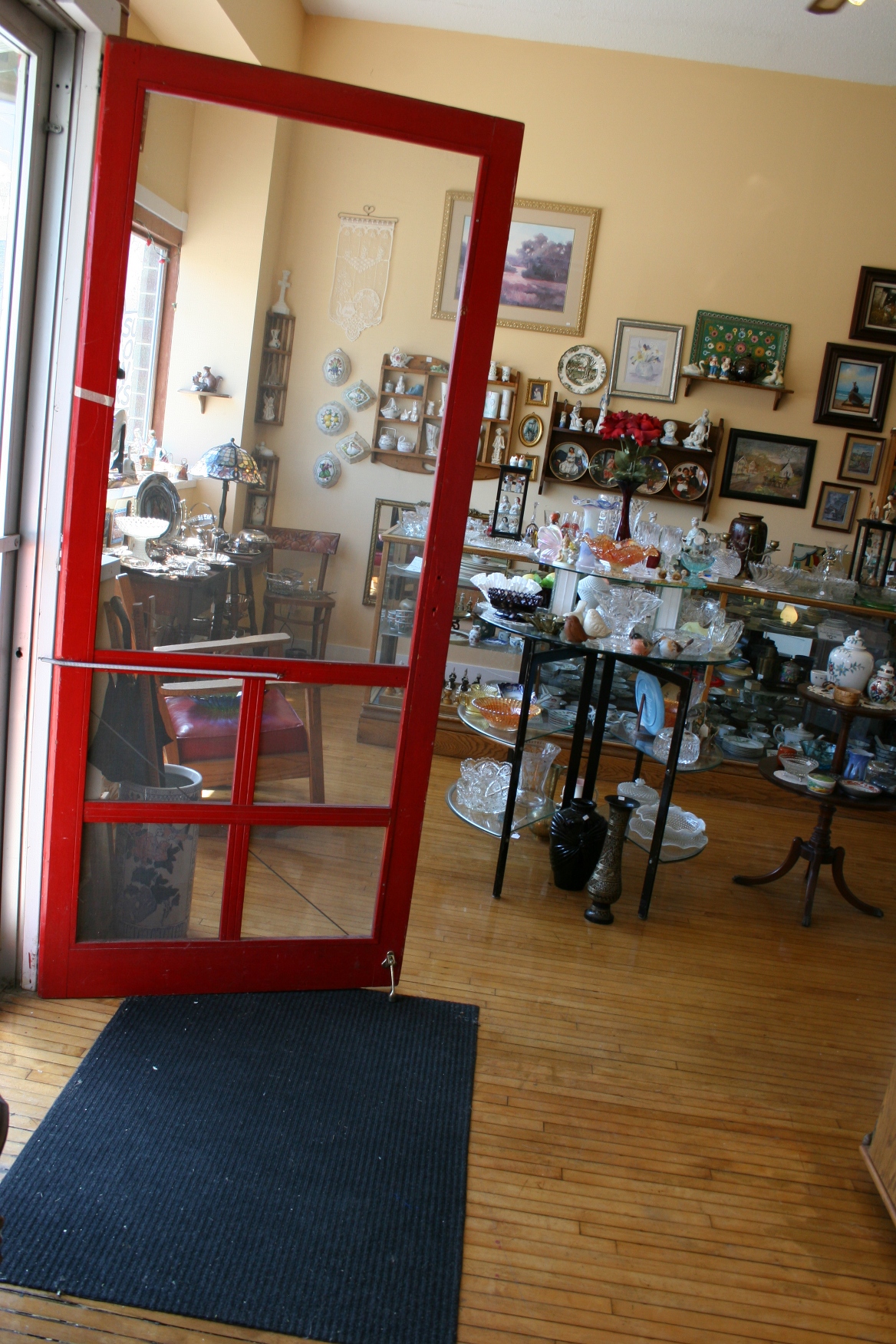
No matter, the friendly painted farmer in the bib overalls who beckons you inside for a “looksee” will already have you smiling before you stroll through the red doors and plant your feet upon the vintage tongue-and-groove floors in a room the color of butter.

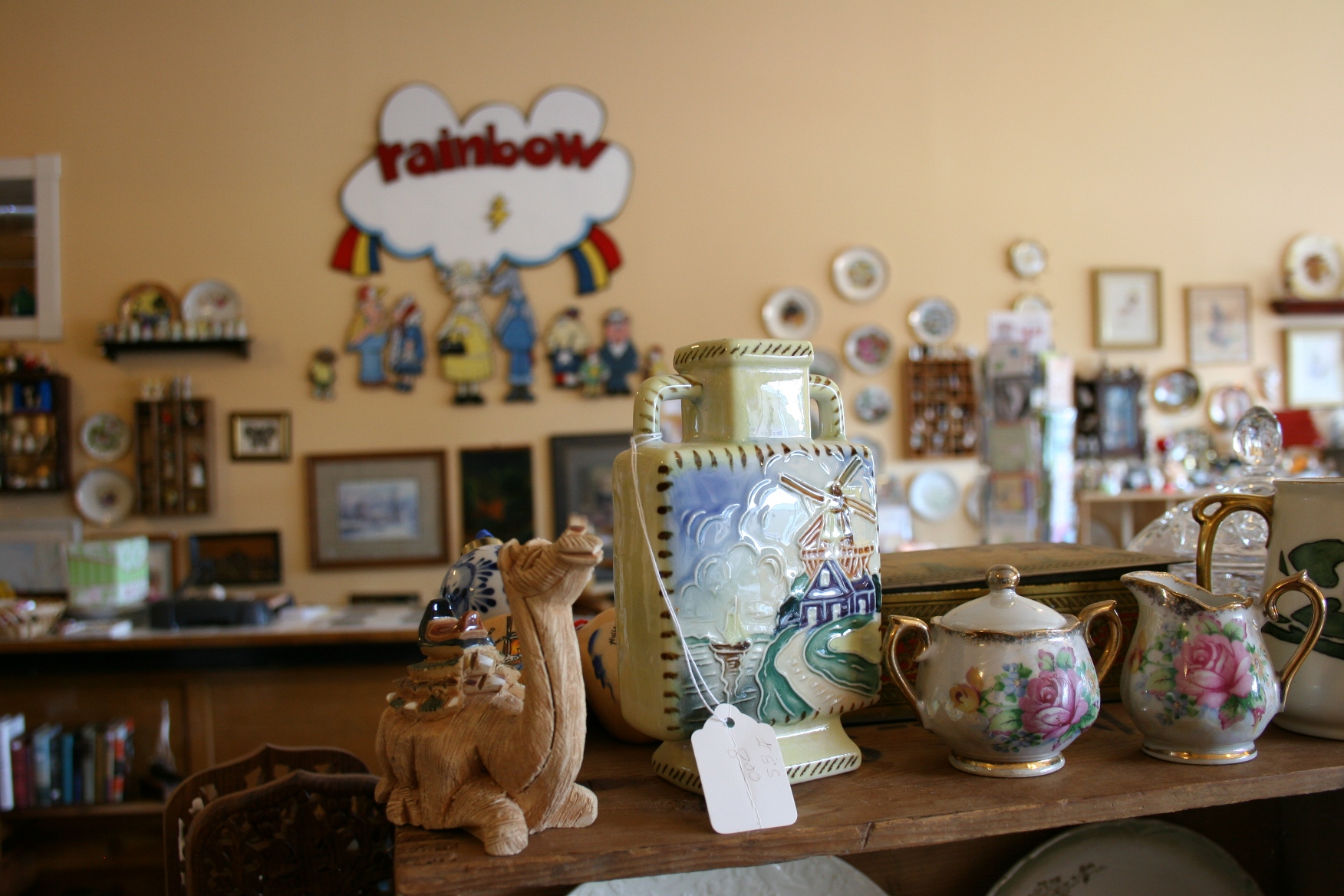
Immediately I noticed the old-style screen door painted a vivid red. It’s a perfect fit for setting the mood of this place. I’ve been in a lot of antique shops in my day, and this one, by far, rates as one of the most inviting with plenty of light streaming in the east-facing windows, merchandise displayed in a way that isn’t cluttered and a down-home atmosphere that makes you feel comfortably at ease.

I poked around for awhile, not as long as I would have liked, though, since my mom was waiting for me back at the aunt and uncle’s house. My husband explored, too, and determined the prices to be reasonable—not too high and not too low.

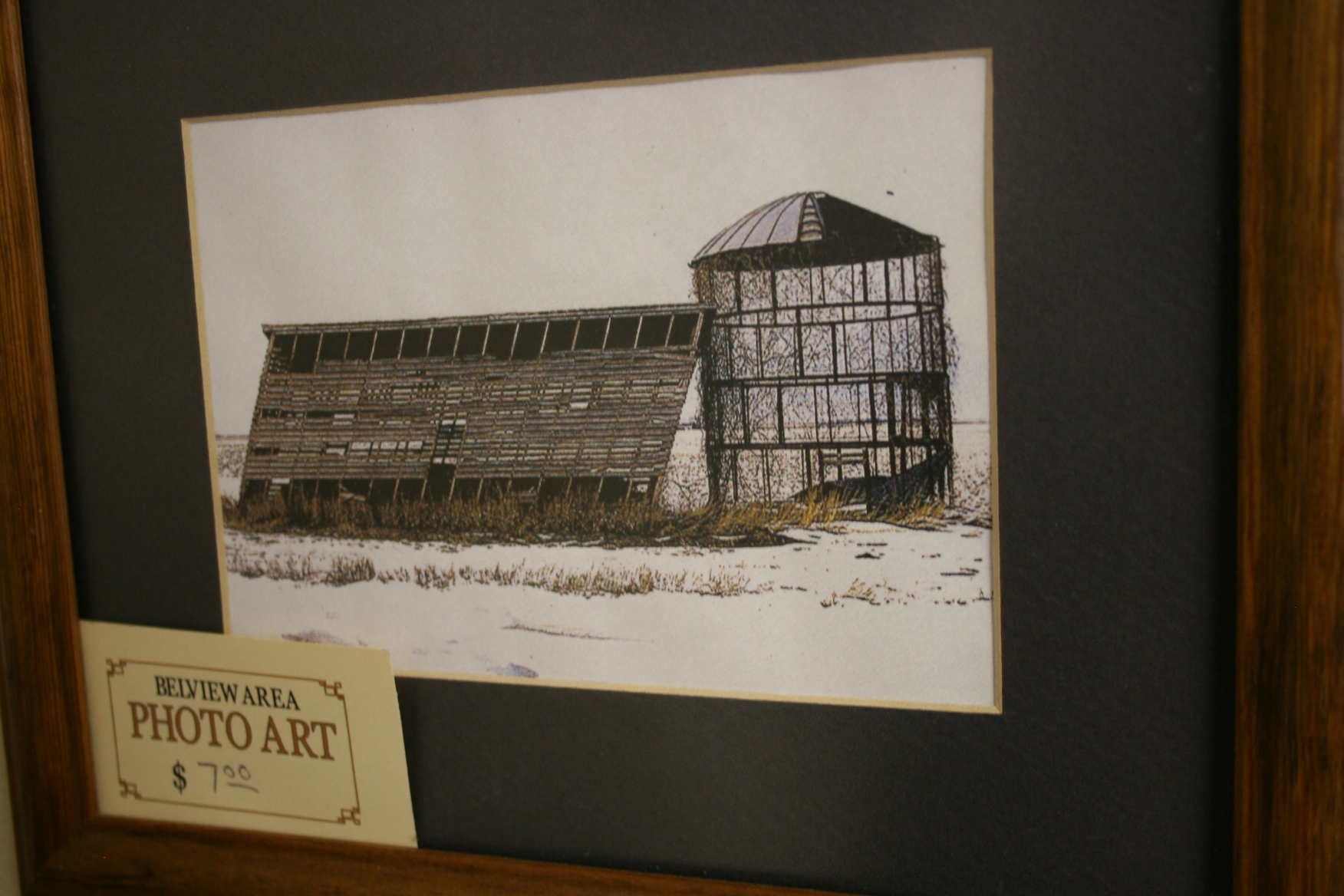
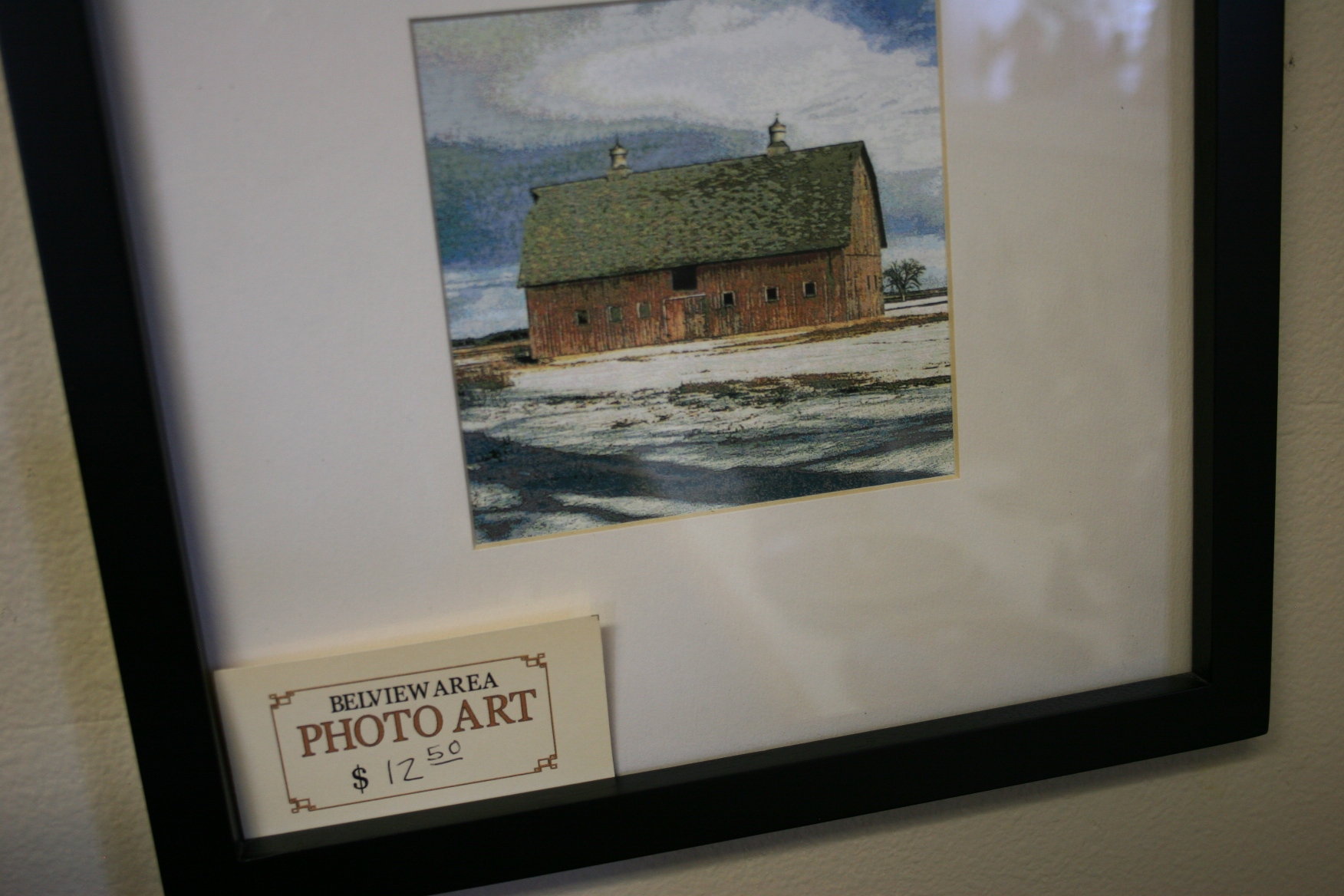
When I got to the back room, I made the discovery of the day, at least in my opinion. And it wasn’t an antique, collectible or junque. I found Don Gunelson’s “Belview Area Photo Art” displayed on the rear wall. I knew from the signage that I was viewing photos, but they sure didn’t look like photos. So I asked Don to explain.

He takes images of area subjects with an inexpensive camera—the fewer pixels the better—edits the photos on his computer and then prints them on watercolor paper with an ink that is more dye than ink. The result is photo art that resembles watercolor paintings.

I gushed over his creations and told him he needs to get these into a gallery—do an exhibit of his “Belview Area Photo Art.”

Now I’m kicking myself for not buying one of Don’s matted and framed creations because, with prices ranging from $7 to $12.50, they’re a steal.

So there you have it, a charming antique store in downtown Belview with an artist running the place.

FYI: Rainbow Antiques, Crafts & Junque, 103 S. Main, is open from 10 a.m. – 3 p.m. Saturdays. Call (507) 938-4476. Maybe Don will open up the shop if you’re in town on a day other than Saturday.

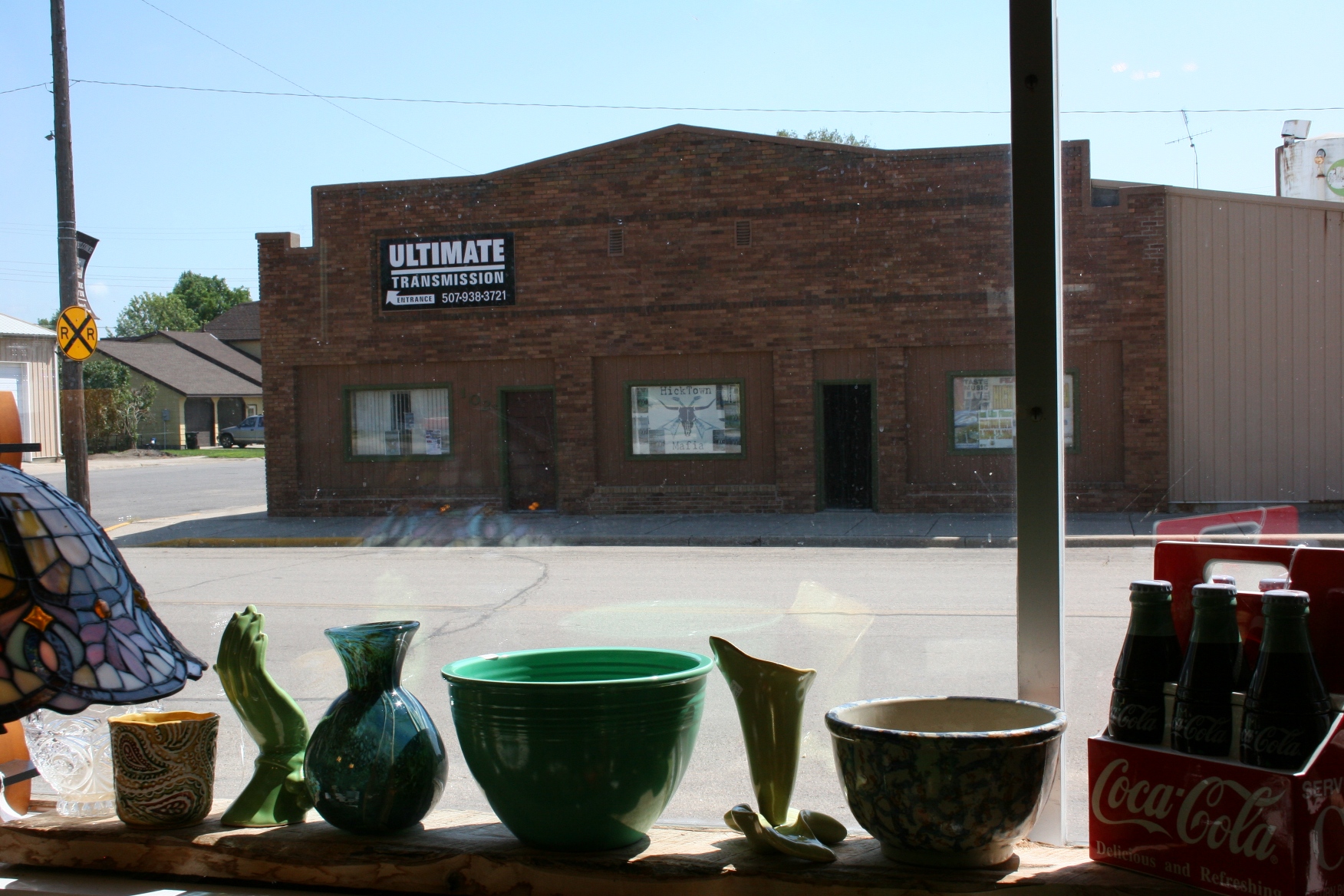
Ruby red glassware is displayed in a front window. To the right in this photo is the blue Belview water tower.

An example of Don Gunelson's Belview Area Photo Art, an area barn.

Some of the merchandise displayed in the main part of the antique store.

A view across the street through one of the large front windows at Rainbow Antiques.

More Belview Area Photo Art by Don Gunelson.

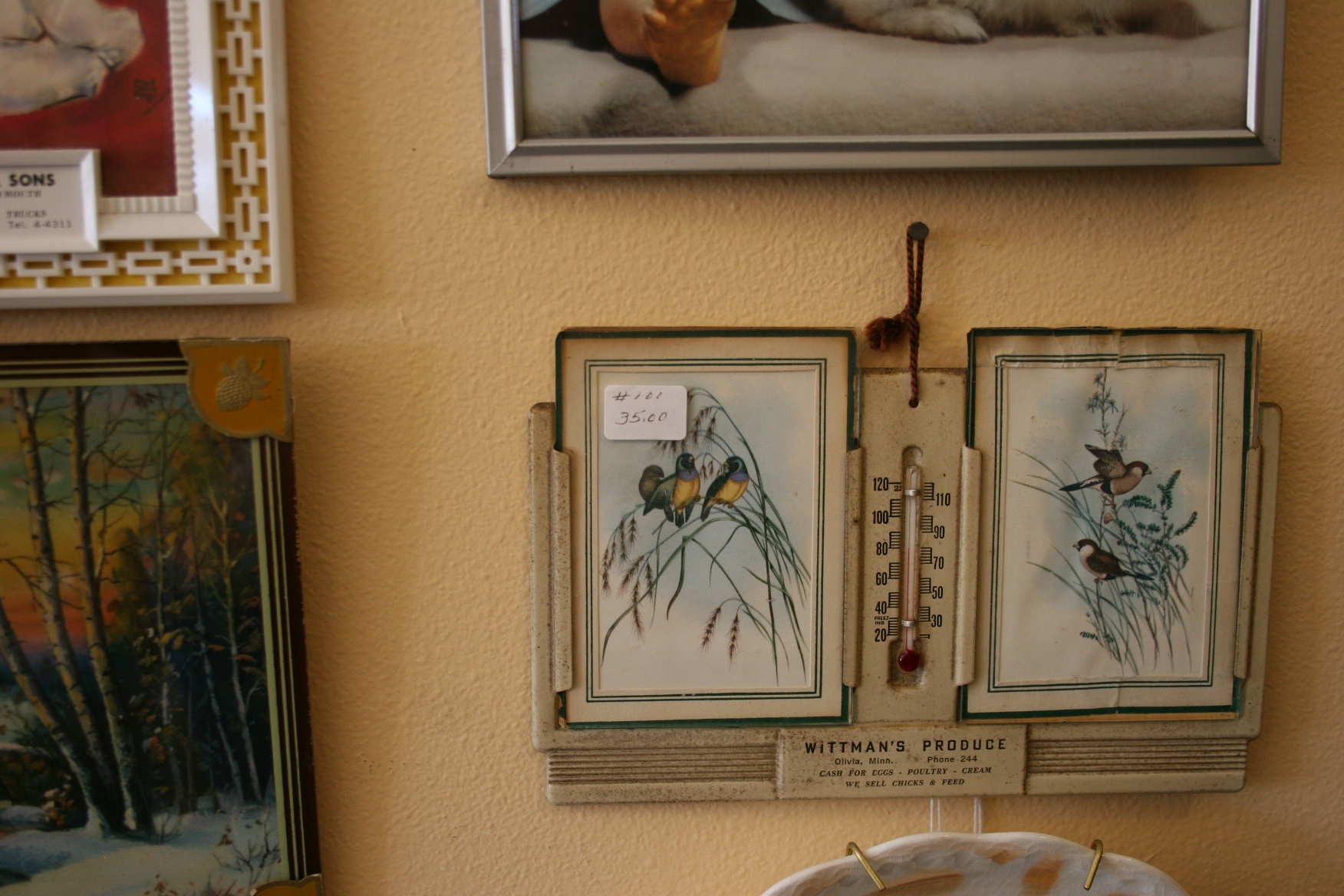
You'll find plenty of collectibles from the area, including this bird thermometer from Olivia.

This colorful folksy farm family graces the north wall of Rainbow Antiques. This photo was shot looking south on Main Street toward Belview's water tower.

Another view of Rainbow Antiques and Main Street Belview looking south.

Check back for more reasons to visit Belview in a future post.

© Copyright 2011 Audrey Kletscher Helbling
 

An old-fashioned grocery store, moosehead and all, thrives in Ellendale August 5, 2011

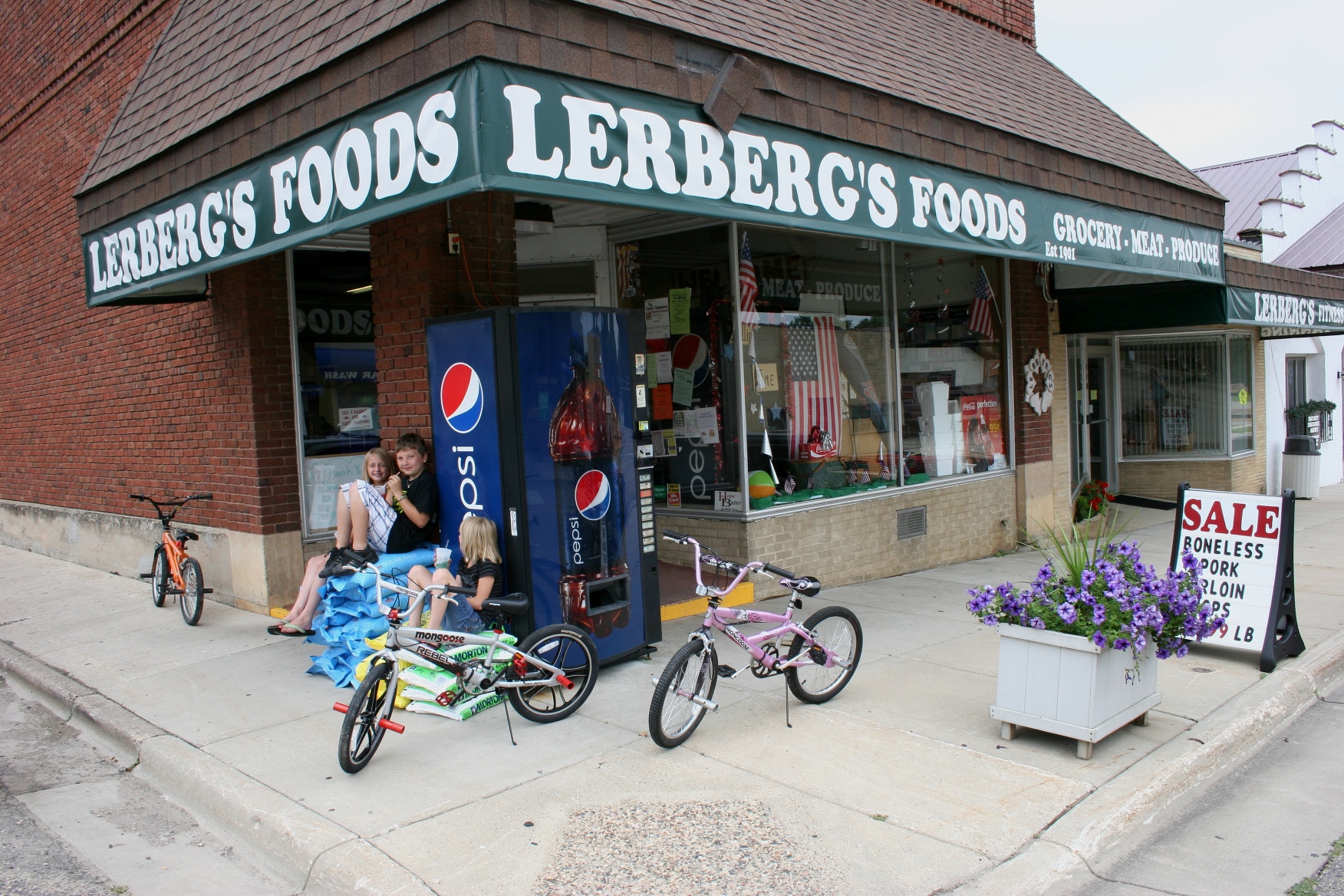
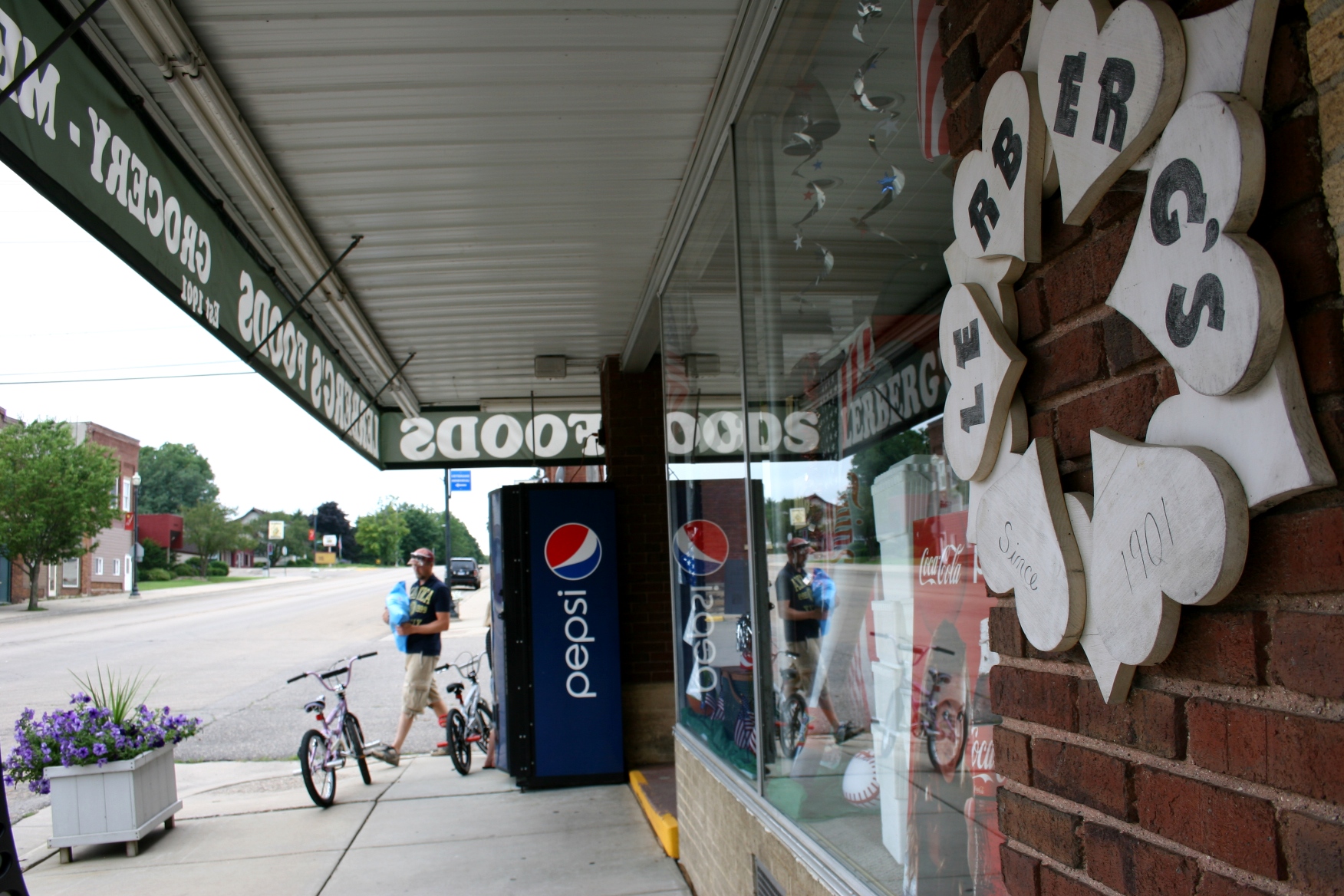
In the small town of Ellendale, kids bike to Lerberg's Foods for groceries and the occasional slushie. Here two sisters and a friend slurp their slushies while sitting on bags of water softener pellets next to the pop machine.

WHEN ANDREW LERBERG bagged a moose in northern Minnesota in 1919, the animal was brought by rail to Ellendale and the moosehead proudly displayed in the family’s grocery store.

Ninety-two years later, that moosehead still hangs at Lerberg’s Foods, above a framed photo of Andrew with his trophy and above processed fruits and vegetables stacked on grocery store shelves.

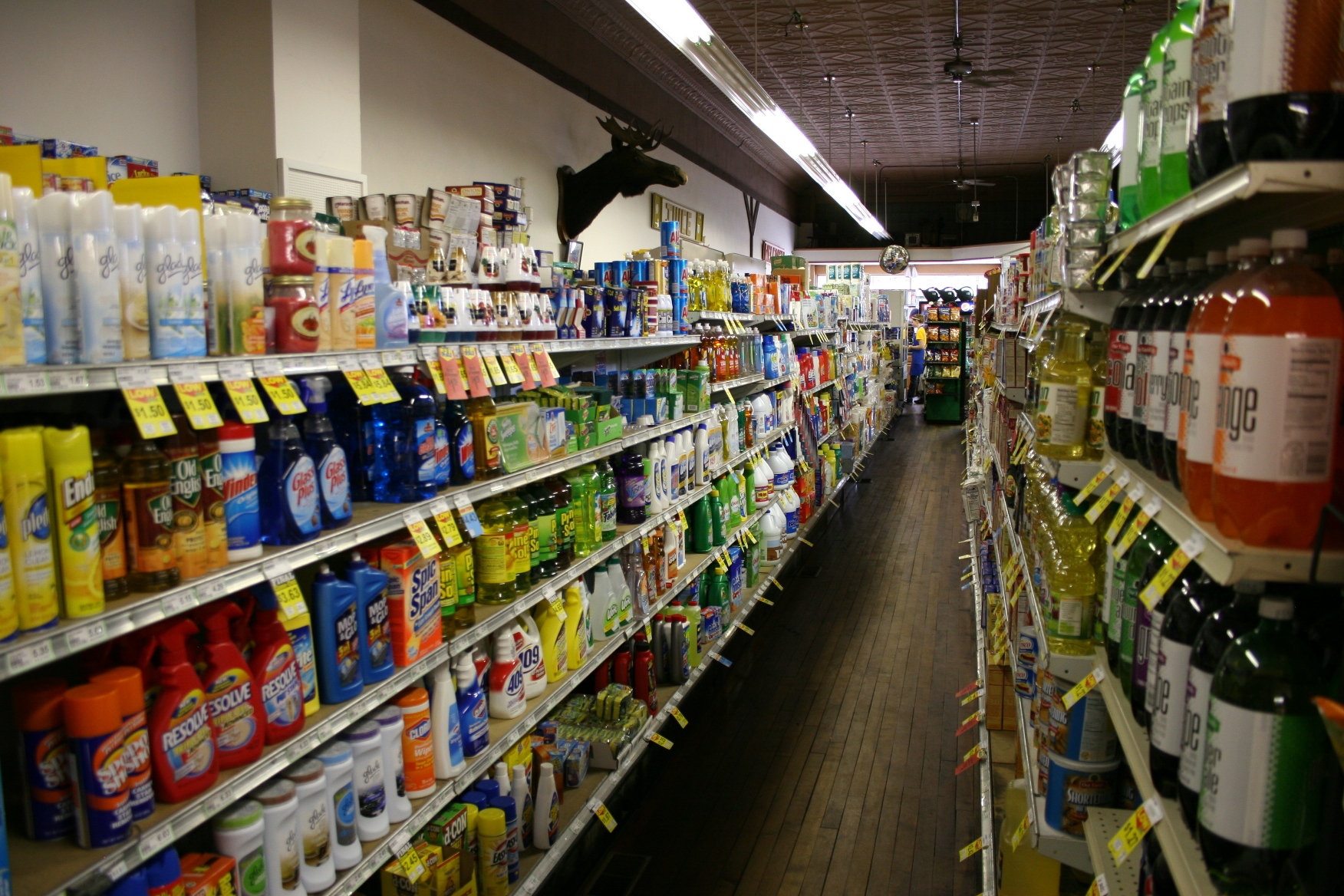
Look down the grocery aisle to your left and you'll see the moosehead that is part of Lerberg's lore.

Ross Sletten, who purchased the business in 2007 from Andy Lerberg, will tell you the moosehead came with the store and that originally the rifle used to shoot the animal rested in its antlers. Not any more. Times have changed.

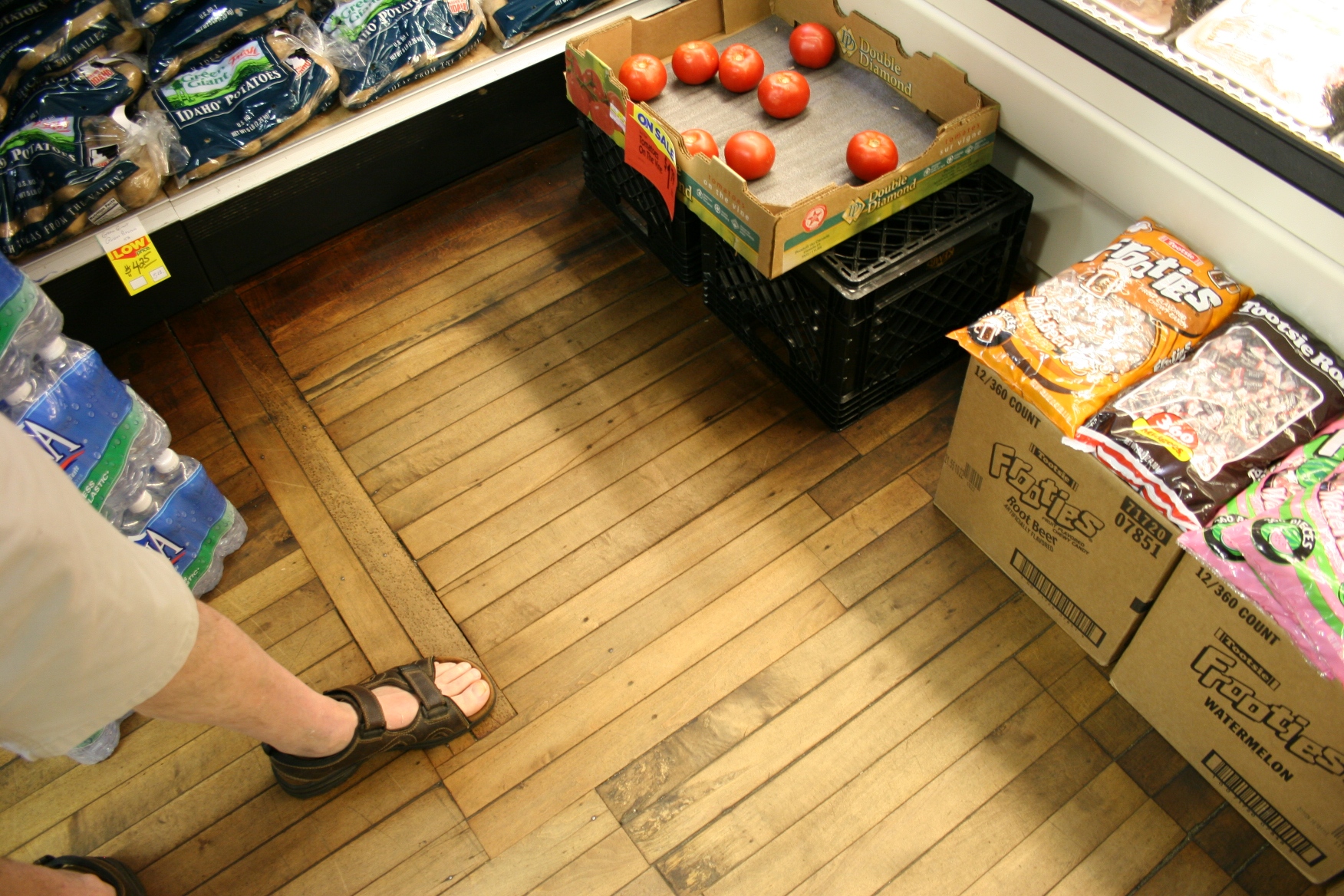
But not everything has changed at Lerberg’s. The original tongue-and-groove maple floor, tin ceiling, small-town-friendly atmosphere and more speak to the history of this 1914 brick building and to the long-standing grocery store owned by three generations of Lerbergs—Andrew, who started the business (in another building) in 1901, Arthur and Andy.

The original tongue-in-groove maple floor in front of the meat counter.

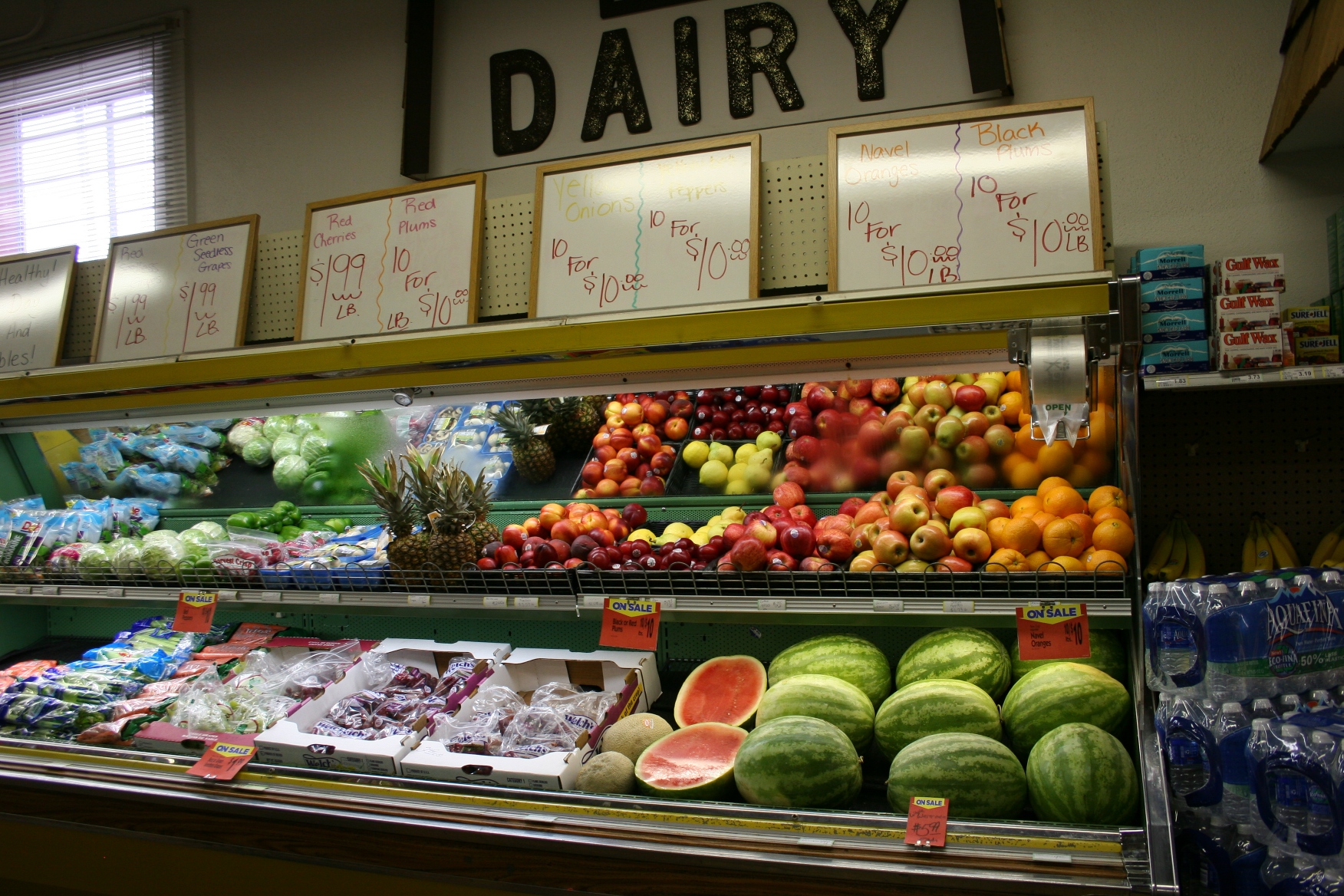
The produce department of Lerberg's Foods.

Ross began working at Lerberg’s in 1976 and, on a recent Sunday, three of his five kids—Brett, 18, Cassidy, 14, and Noah, 12—were all working at the store that anchors a corner of the main street in Ellendale, population around 600.

This long-time employee, now owner/manager, is clearly proud of his grocery store, which he claims is the oldest grocery store in Steele County and the second oldest in Minnesota.

That’s easy to believe when you walk upon the worn tongue-and-groove floor between the narrow aisles—of which there are three—pause to appreciate the tin ceiling, and listen to Ross. He’ll tell you about the tailor who had a shop in the store’s current-day upstairs office or about the eggs, ducks and chickens locals once traded for goods.

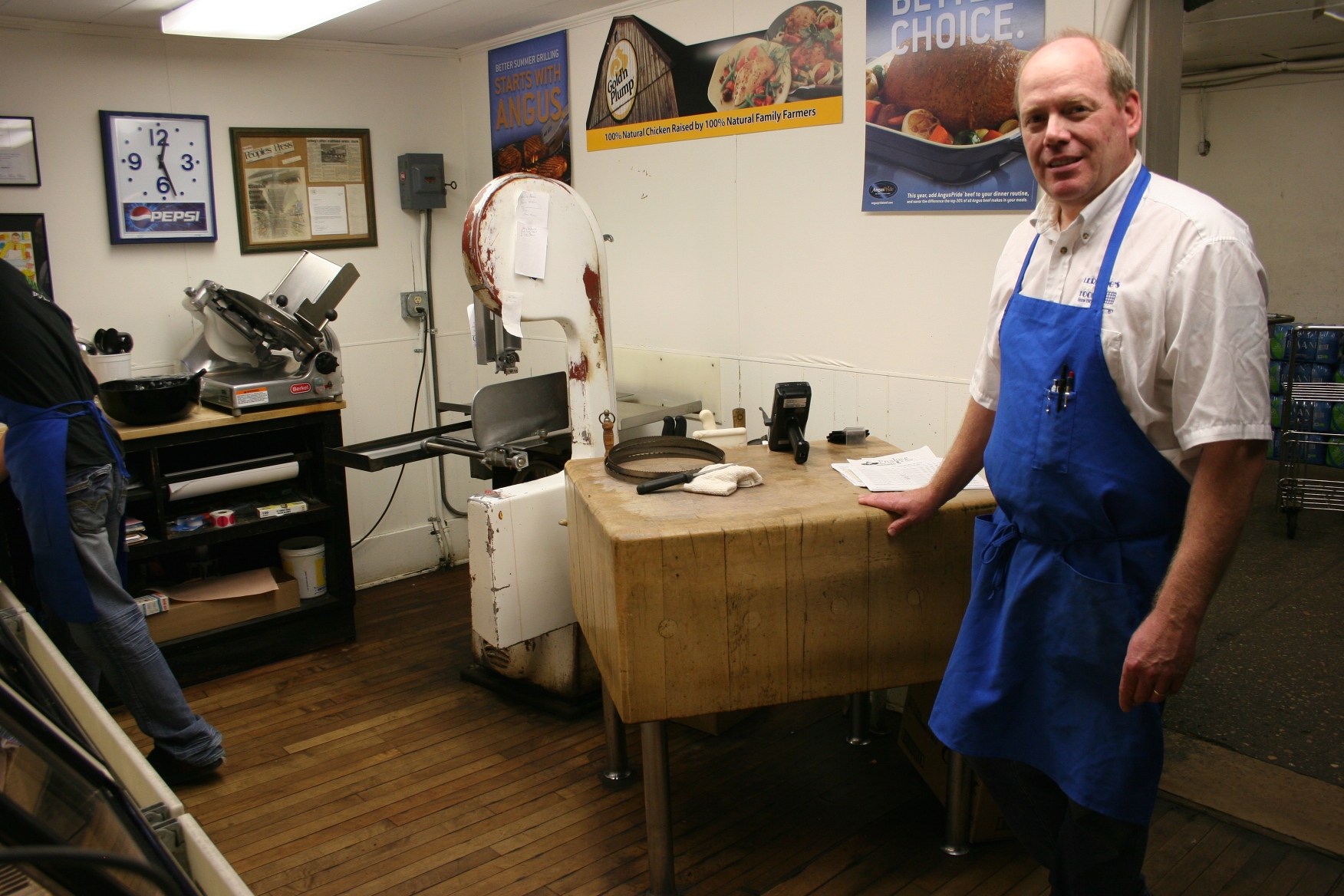
He’ll point out the store’s original coffee grinder resting on a shelf above the dairy section or direct your attention to the original wooden butcher block back in the meat department and still in use today (grandfathered in, he says).

Lerberg's Foods owner/manager Ross Sletten points out the original butcher block, which he still uses.

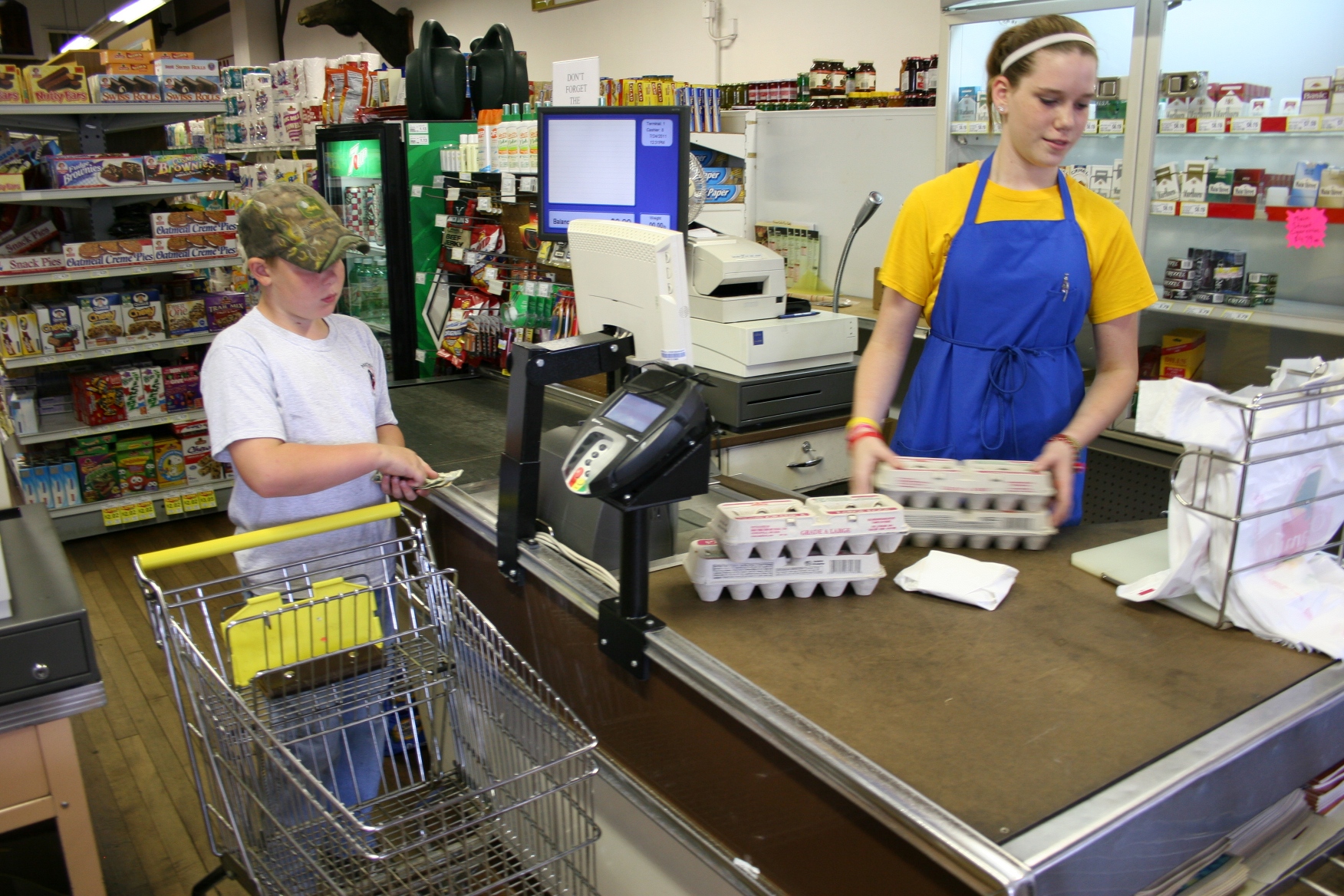
Cassidy Sletten, 14, checks out groceries on a Sunday morning.

He runs a business which, on a Sunday morning, teems with customers—folks picking up a few groceries after church, kids treating themselves to slushies from the machine at the front of the store, a 9-year-old purchasing several cartons of eggs for his mom, a guy buying three bags of water softener salt.

Located just the right distance (meaning too far) from Albert Lea, Austin, Owatonna and Mankato, the store draws customers who will shop locally rather than drive to regional hub cities, Ross says. He can offer competitive prices, he says, through his supplier, Nash Finch.

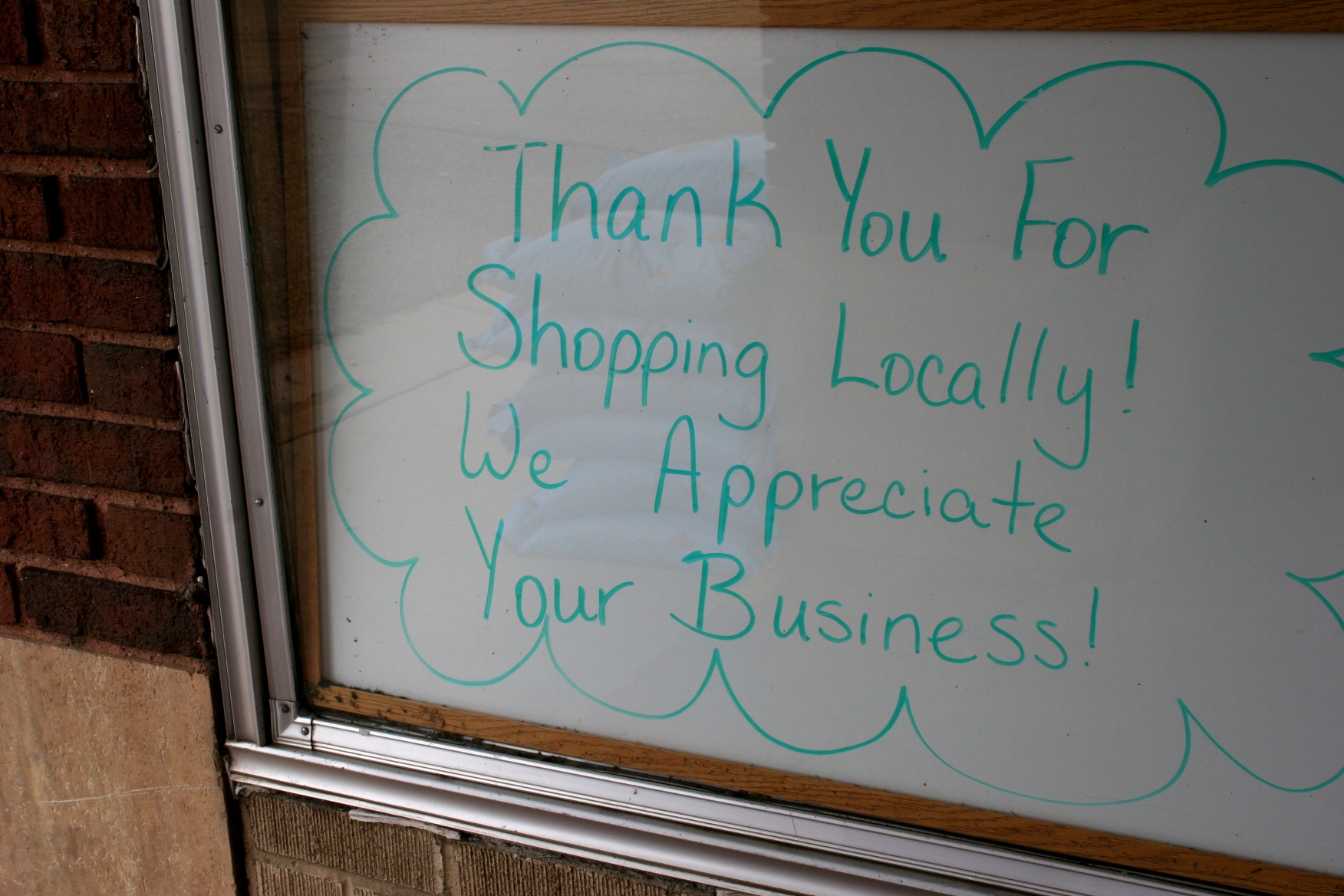
A street-side sign in Lerberg's front window thanks customers for their patronage.

Already, 12-year-old Noah Sletten is thinking about his future and maybe someday taking over the business. “I think it would be kind of fun to own something old,” Noah says, then smiles.

For someone like me, who grew up in rural southwestern Minnesota and frequented a grocery store with tongue-and-groove floors, a tin ceiling, a candy counter (where I bought my favorite Bazooka bubblegum for a penny), a toy rack and groceries lining two aisles, discovering Lerberg’s Foods brought back so many memories. I couldn’t get enough of this old-time style store.

The only thing missing, I told 14-year-old check-out clerk Cassidy Sletten before leaving her family’s store, was the old-style screen door that would bang behind me. She gave me a puzzled look.

“Ask your dad,” I said, smiled, and walked out the door.

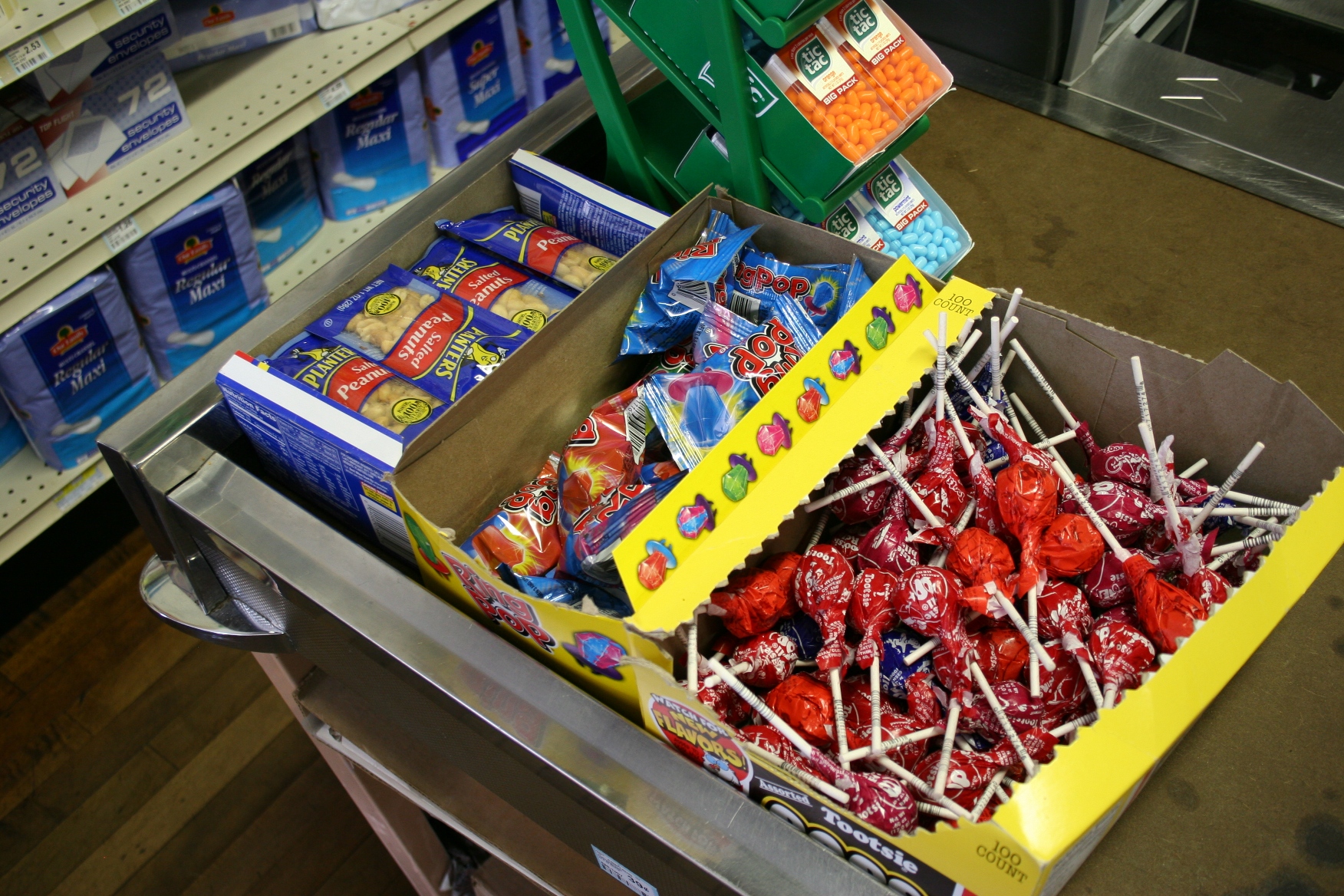
Candy at the end of a check-out counter tempts kids. There are peanuts for the adults.

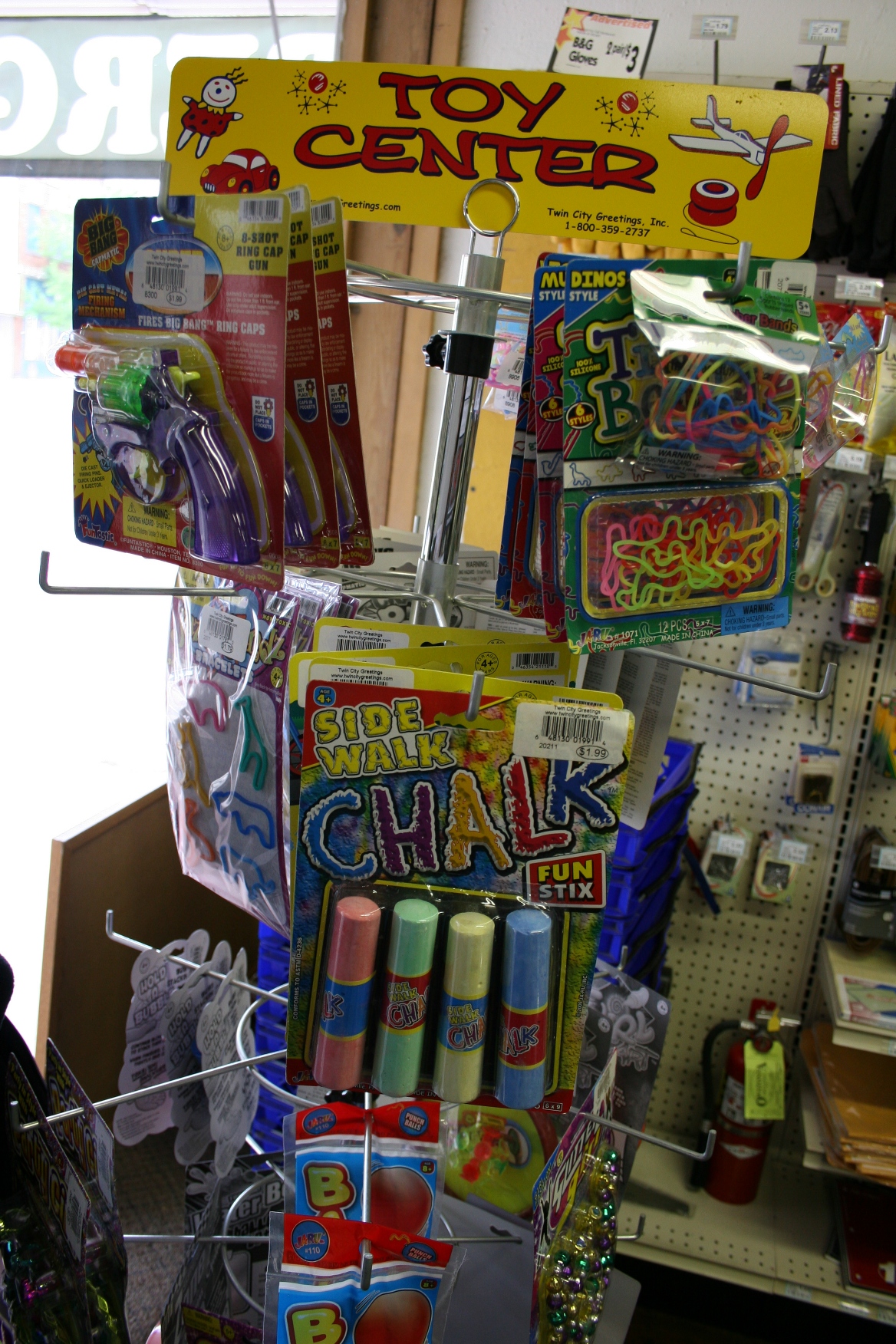
And right before you walk out the door, you'll see this strategically-placed rack of toys.

A side view of the grocery store looking toward the main street through Ellendale. A customer is carrying a bag of water softener pellets, stacked in front of the pop machine. The slushie slurping kids had to temporarily give up their hang-out spot so he could grab three bags of salt.

© Copyright 2011 Audrey Kletscher Helbling
 

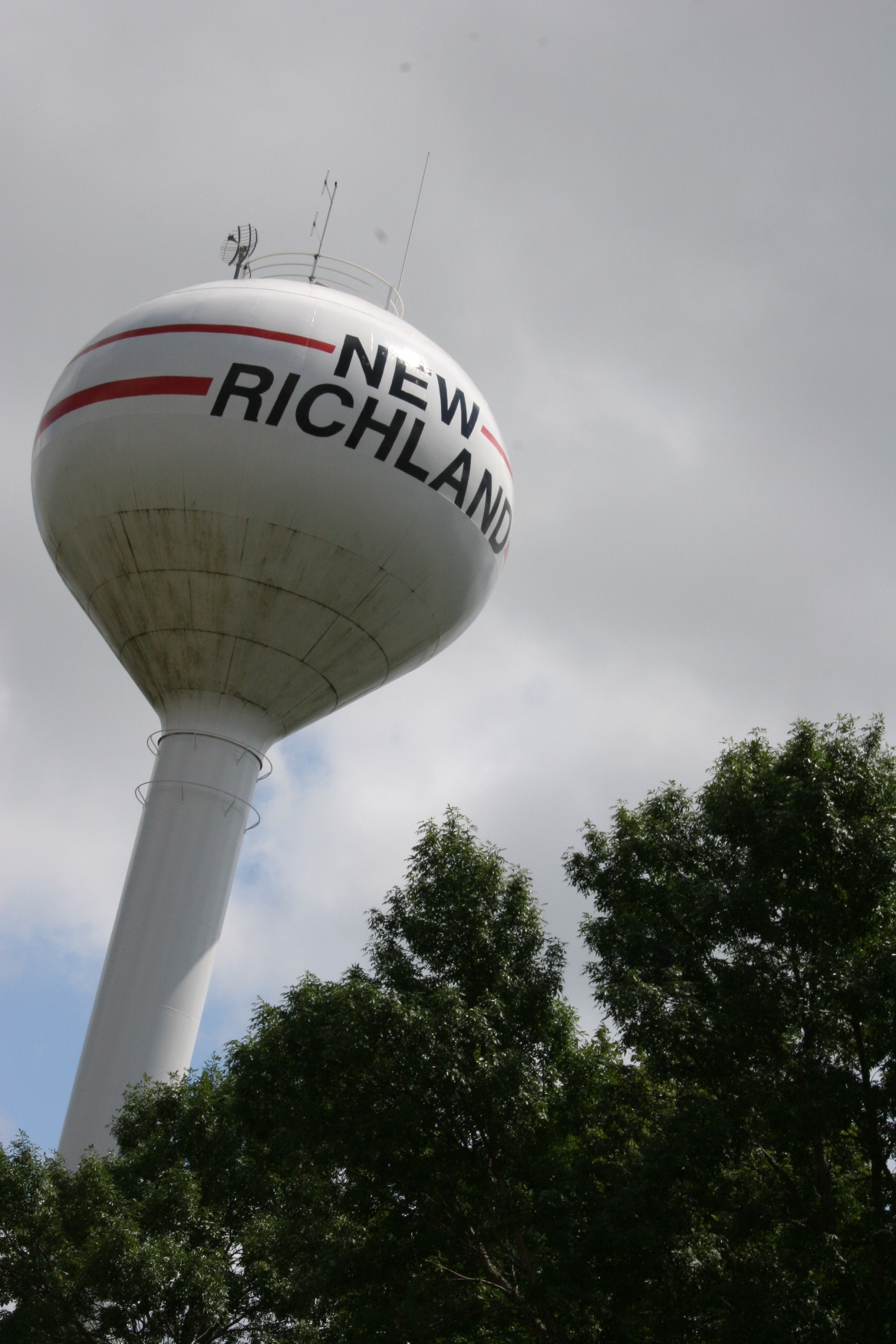
Guess the pig’s weight and other farm stories from New Richland July 29, 2011

VENTURE INTO RURAL MINNESOTA—and we’re talking the small farming communities here, not what metro folks call “Greater Minnesota” or “outstate Minnesota”—and you’ll connect to our state’s agrarian roots in some interesting ways.

Take New Richland, for example, a town of 1,200 in southeastern Waseca County. Drive into town and you’ll see the usual grain bins and elevator and other farm-related businesses you would expect in an agricultural community.

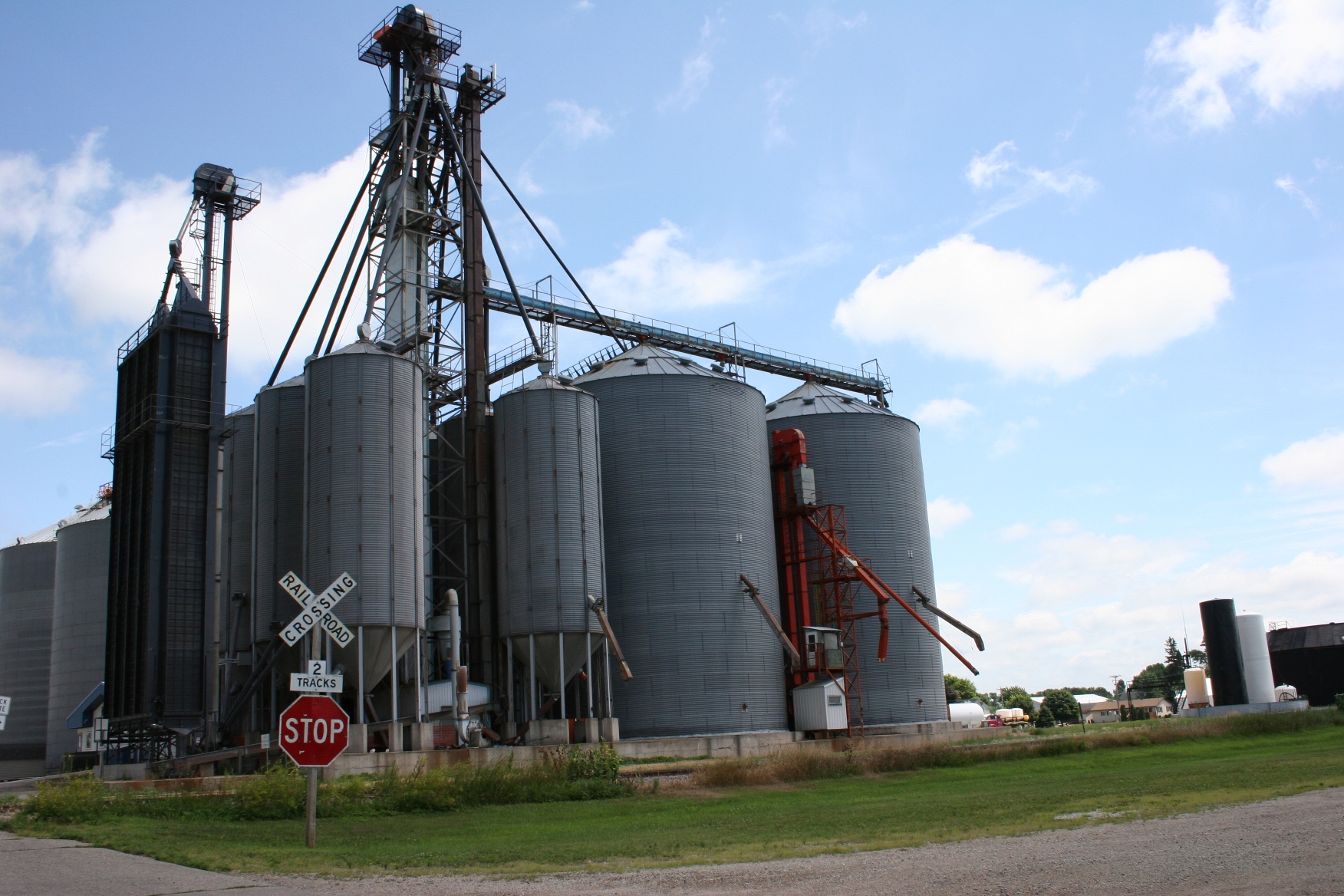
A cluster of grain bins in the heart of New Richland.

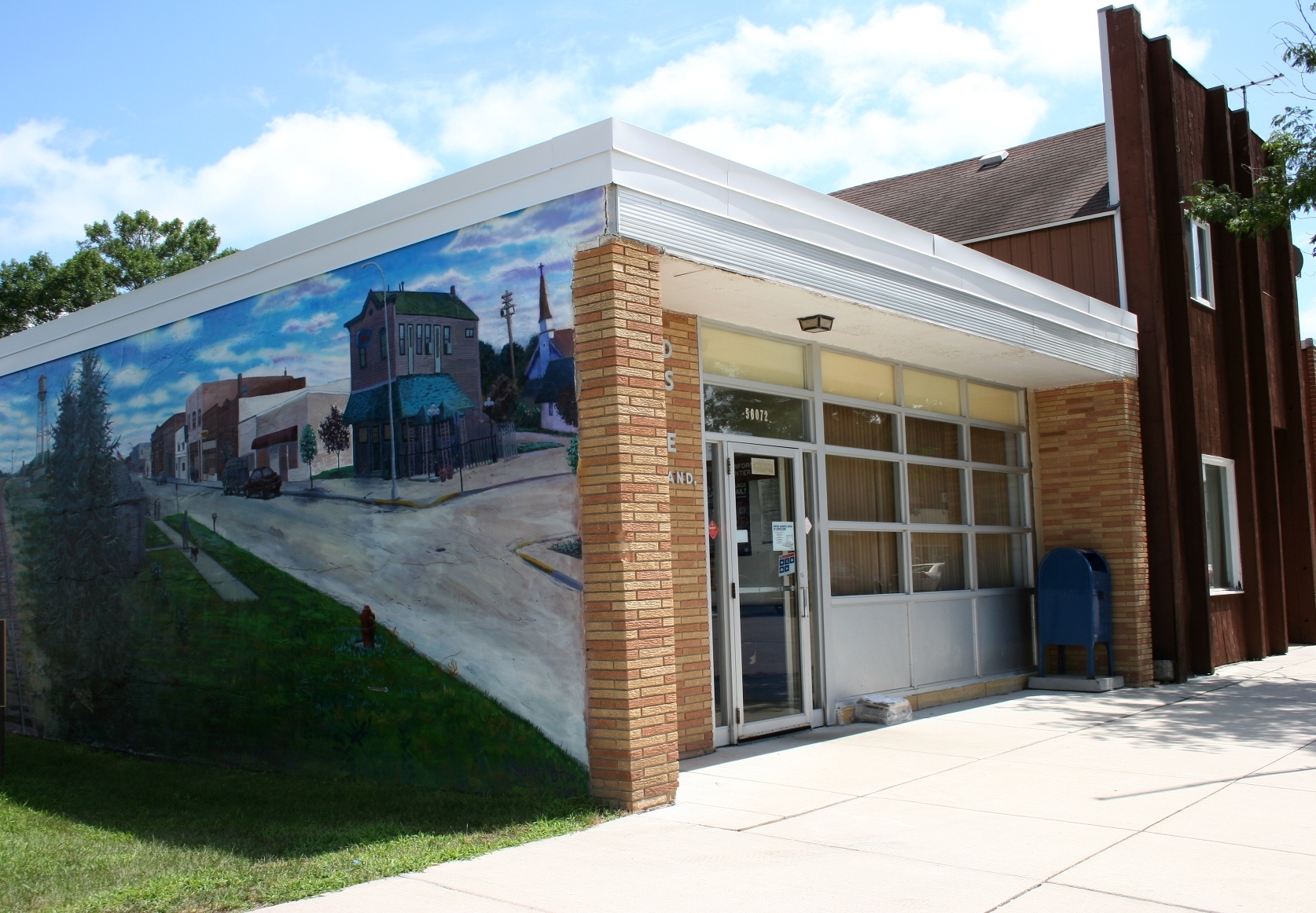
But then explore a little more and you’ll discover just how much this town values its agricultural heritage. Take the post office. Peek around the corner…

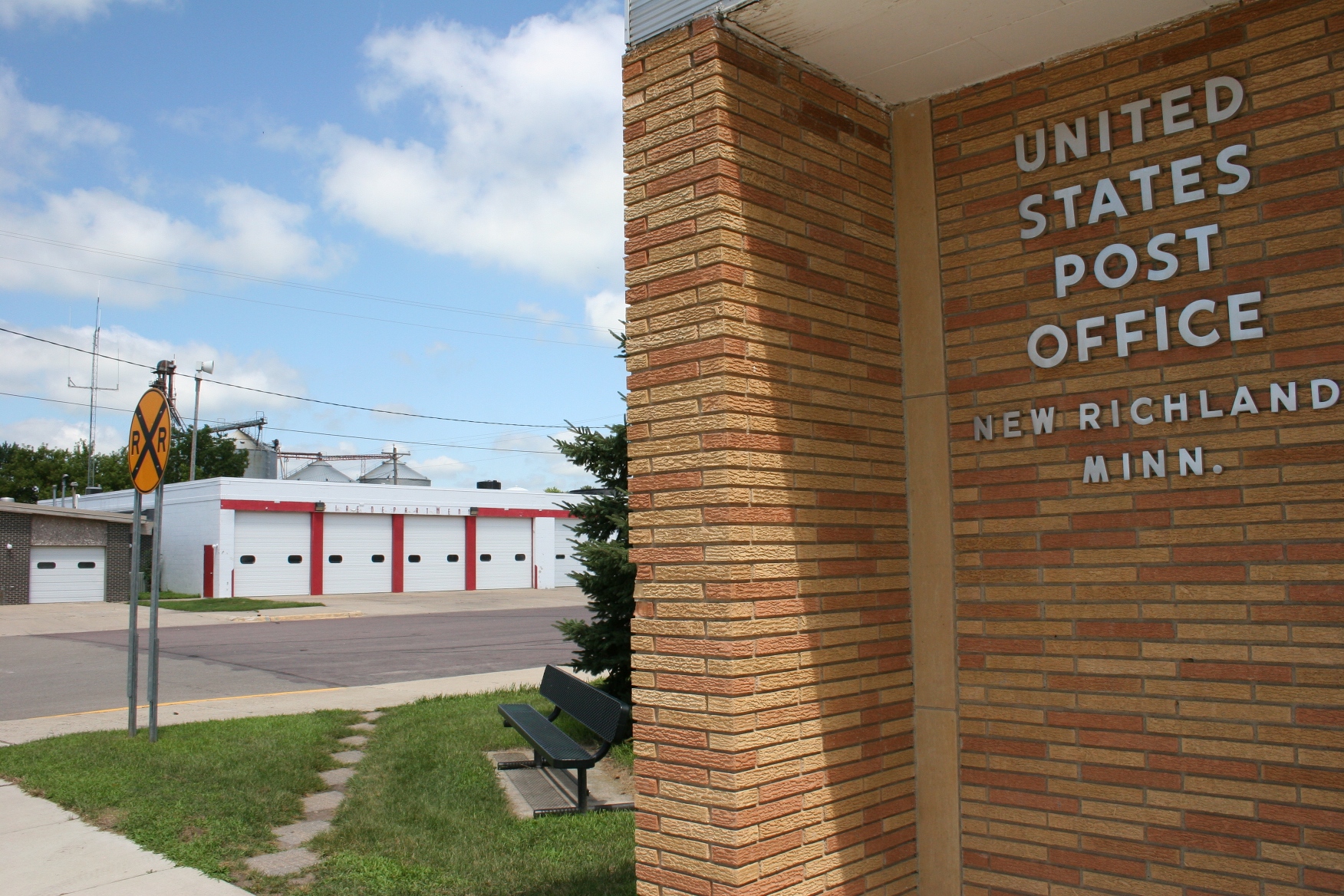
A corner of the New Richland Post Office. Note the grain bins a few blocks away.

Around the post office corner you'll find this mural which reflects the connection between city and country.

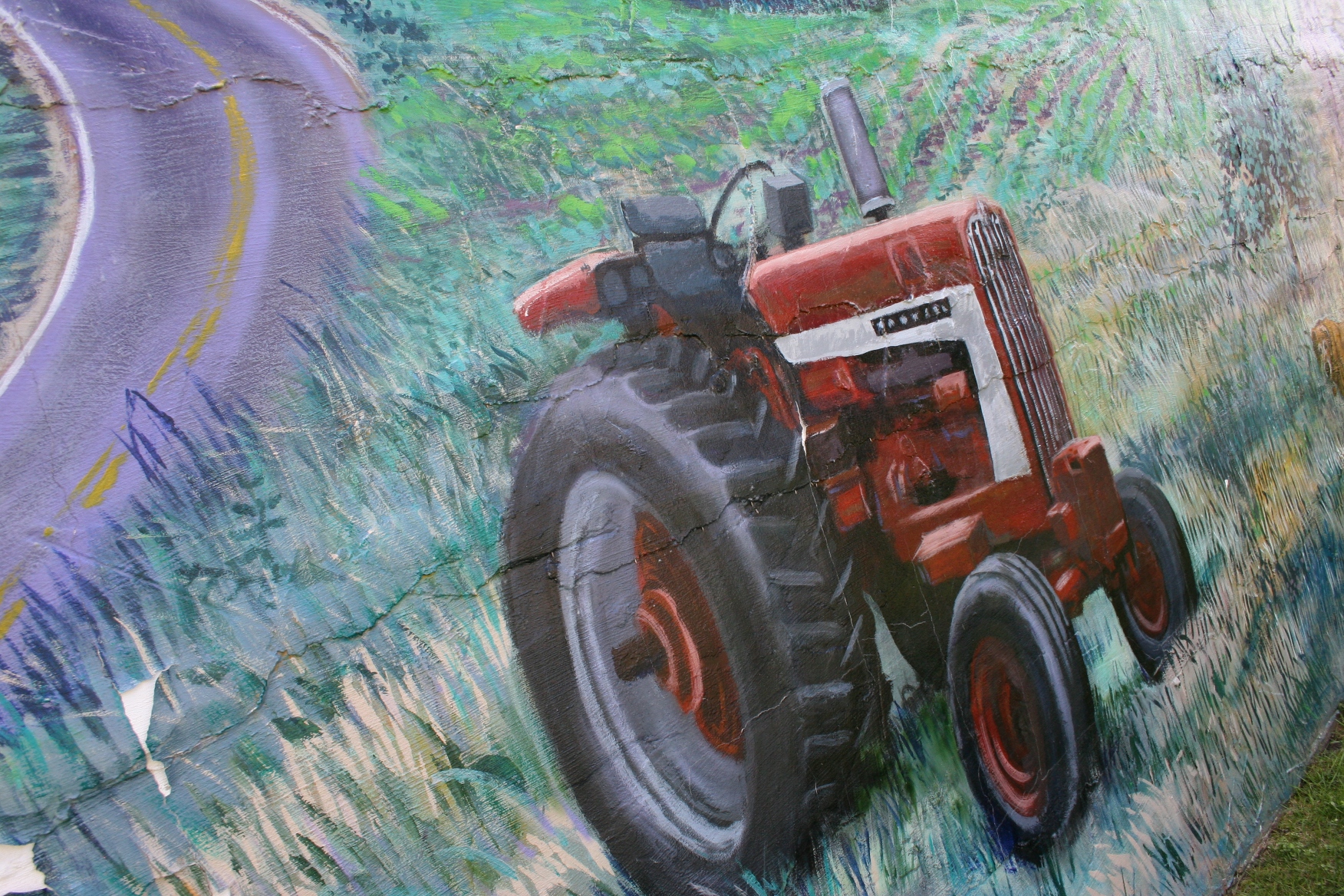
A snippet of the country portion of the mural. I wonder how the artist decided what type of tractor to feature?

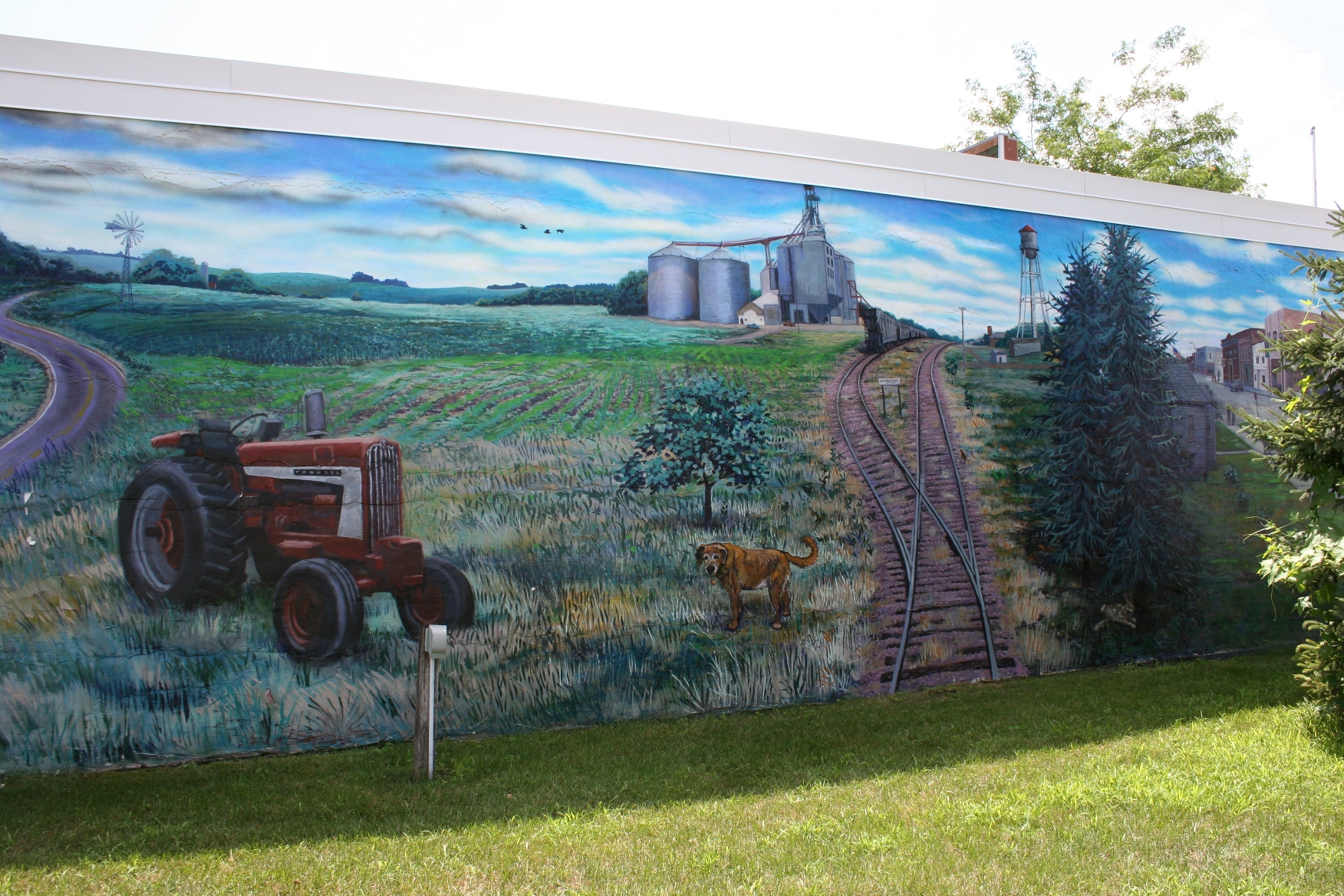
Country connects to city in this detailed mural.

and you’ll find a mural depicting farm and city.

Now I’ve seen many a mural in my day, and I’d rate this as among the best. I wish I knew who to credit for this detailed artwork that draws the eye along the winding country road, down the train tracks to the grain elevator or along city streets to downtown. But I couldn’t find any information about the mural in a quick online search.

However, I did learn more about New Richland and the pride this community takes in its agricultural roots. Just a few weeks ago the town celebrated its 28th annual Farm & City Days. Events included the usual parade, street dance, bingo, antique car show, medallion hunt and such.

But I found a few activities that definitely say country through and through.

Teams of two competed in the  second annual Chore Boy Race. (Just for the record, girls can participate, too; the winners were Molly Flor and Brandon Mullenbach). Anyway, it’s a contest that involves eggs, milk, hay, grain and wheelbarrows. You can learn more about the competition by clicking here and reading this story in the local newspaper, The Star Eagle.

I found a Chore Boy Race contestant application online and one Farm & City Days Facebook page photo and these rules (some in boldface):  “You must wear all your chore clothes at all times. This includes but is not limited to Boots, Hat, Bibs & Gloves.”

OK then, got that?

If you’d rather use your brain than your brawn, Farm & City Days offers a “Guess the weight of the pig” contest at $1 a guess. The person with the closest guess wins the pig and processing at Morgan’s Meat Market. This year two entrants correctly guessed the exact weight of 208 pounds and agreed to split the hog, according to the Farm & City Days Facebook page.

If you didn’t win the pig, you could still eat pork by buying a pork sandwich meal from the Waseca County Pork Producers at the city park.

Two other agricultural-themed activities included a kids’ tractor pull and a Farm vs. City 3-person Scramble at a golf course.

I’m disappointed I missed Farm & City Days because it sounds like one heckuva good time, as small-town celebrations typically are. But I wouldn’t even have known about this annual farm-city event if I hadn’t been poking around New Richland last Sunday, spotted that mural on the side of the post office and then gone online to learn more about it, which I didn’t, but I did.

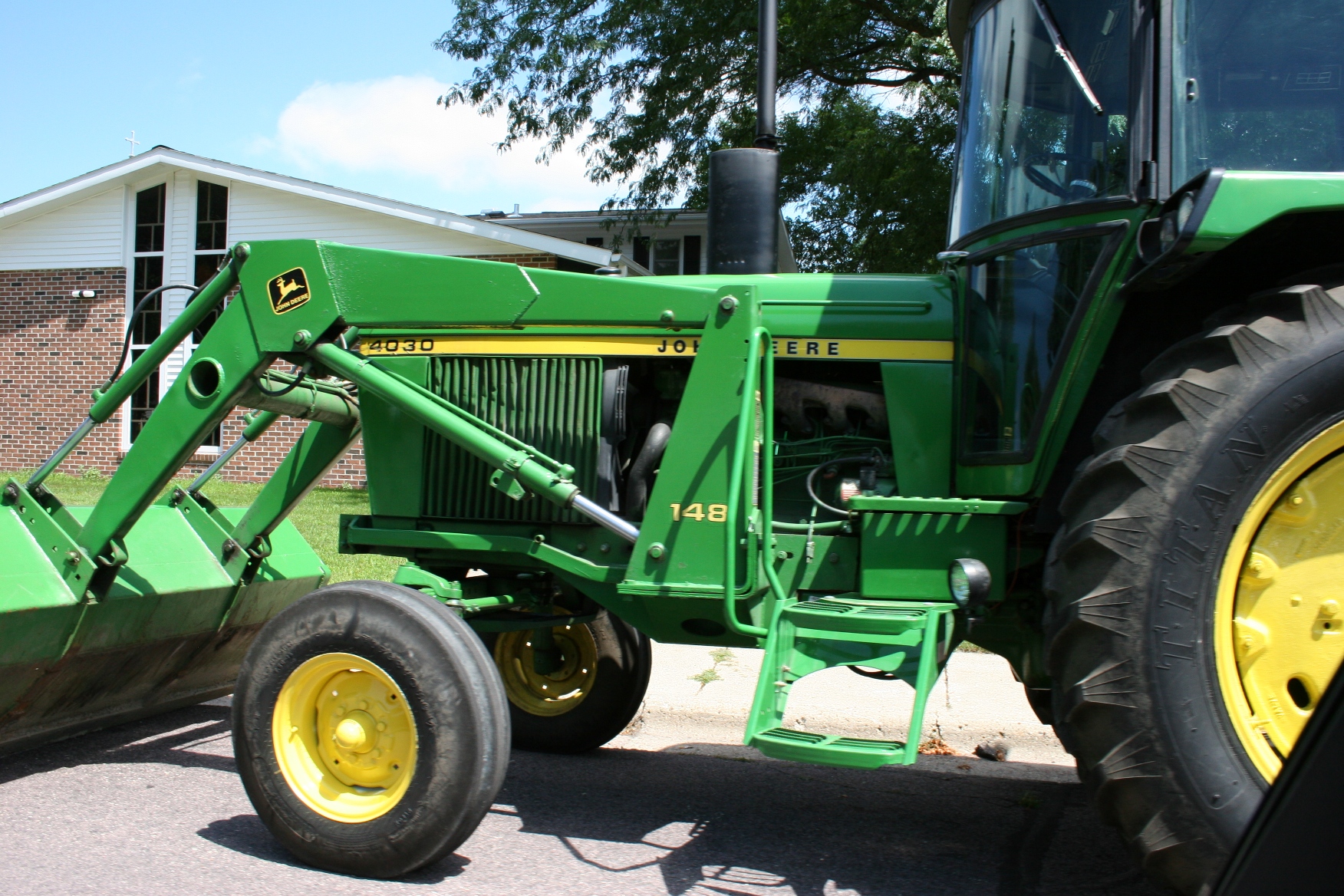
This John Deere tractor was parked outside the funeral home in New Richland on Sunday afternoon.

My husband and I stopped in New Richland while on a recent Sunday afternoon drive. Check out my July 24 blog post from this community and watch for future stories and photos from New Richland.

© Copyright 2011 Audrey Kletscher Helbling

 

Bad news from Hope July 27, 2011

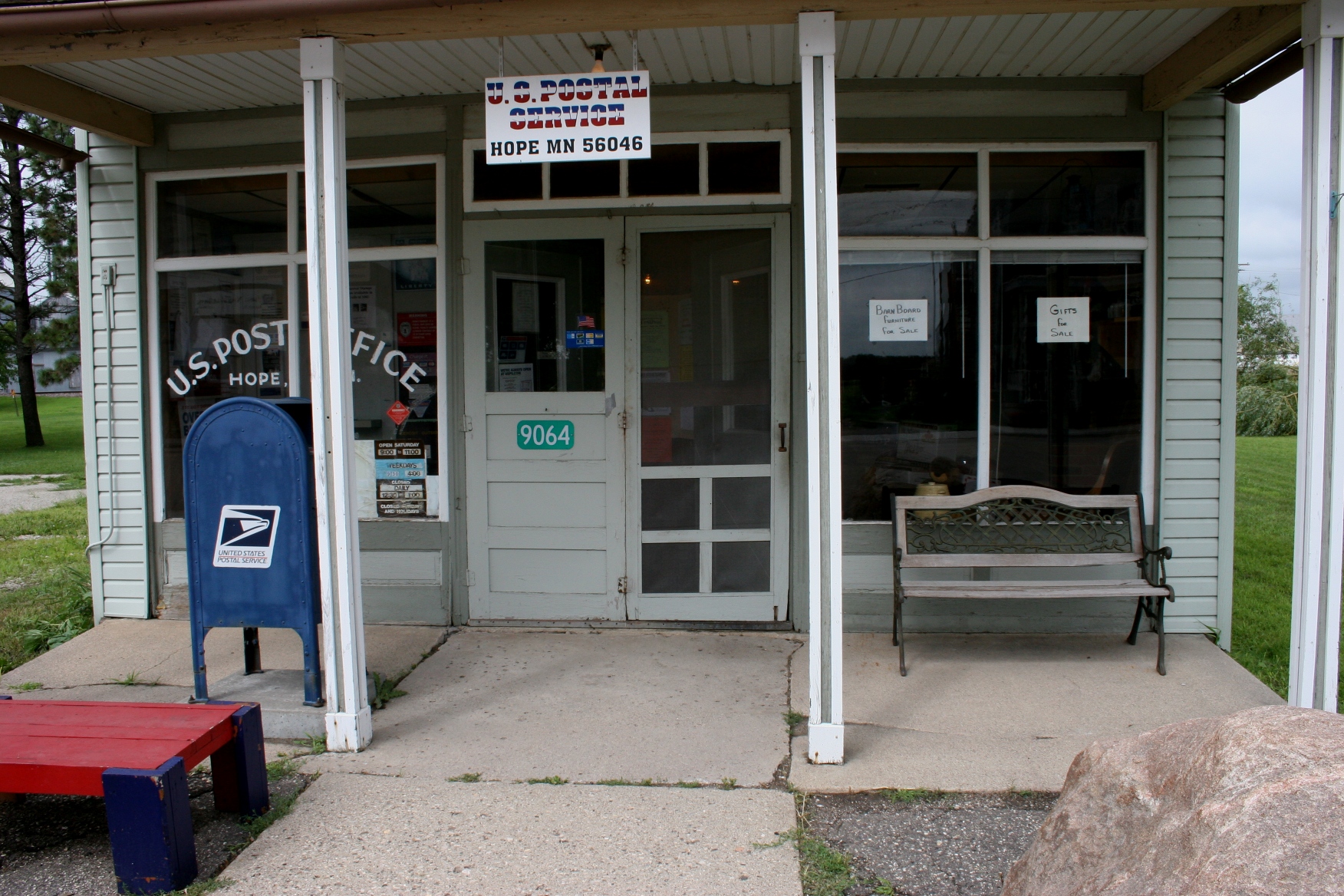
The Hope Post Office, which I photographed on Sunday.

I WISH I DIDN’T have to update a story I posted just yesterday about the post office in Hope, south of Owatonna off Interstate 35. But I must, and the news isn’t good.

On Tuesday the United States Postal Service released the latest in a lengthy list—try 3,600-plus—post offices that could be closed to save money.

Hope wasn’t on that list.

But apparently it was on an earlier list as I discovered just minutes ago. While researching another topic online, I came across two newspaper articles about the proposed closing of Hope’s post office. Community residents have already gathered at a meeting to express their dismay with the planned closure.

Click here to read a story published in The Owatonna People’s Press.

Click here to read another story published in the The Star Eagle based in Waseca County.

Residents of Hope and the surrounding area, according to the articles, will have to wait about three more months before a decision is made on the proposed closure.

You’ll read in these stories how residents fear losing the one central place that connects them, how they worry about the impact on local businesses and more.

Their concerns are legitimate. I said it in my previous post and I’ll say it again. In a small town, a post office serves as a community gathering spot. It isn’t just a place to pick up mail, buy stamps or send a package. It is part of the heartbeat of small town Main Street.

© Copyright 2011 Audrey Kletscher Helbling
 

The irrepressible spirit of two small Minnesota towns July 15, 2011

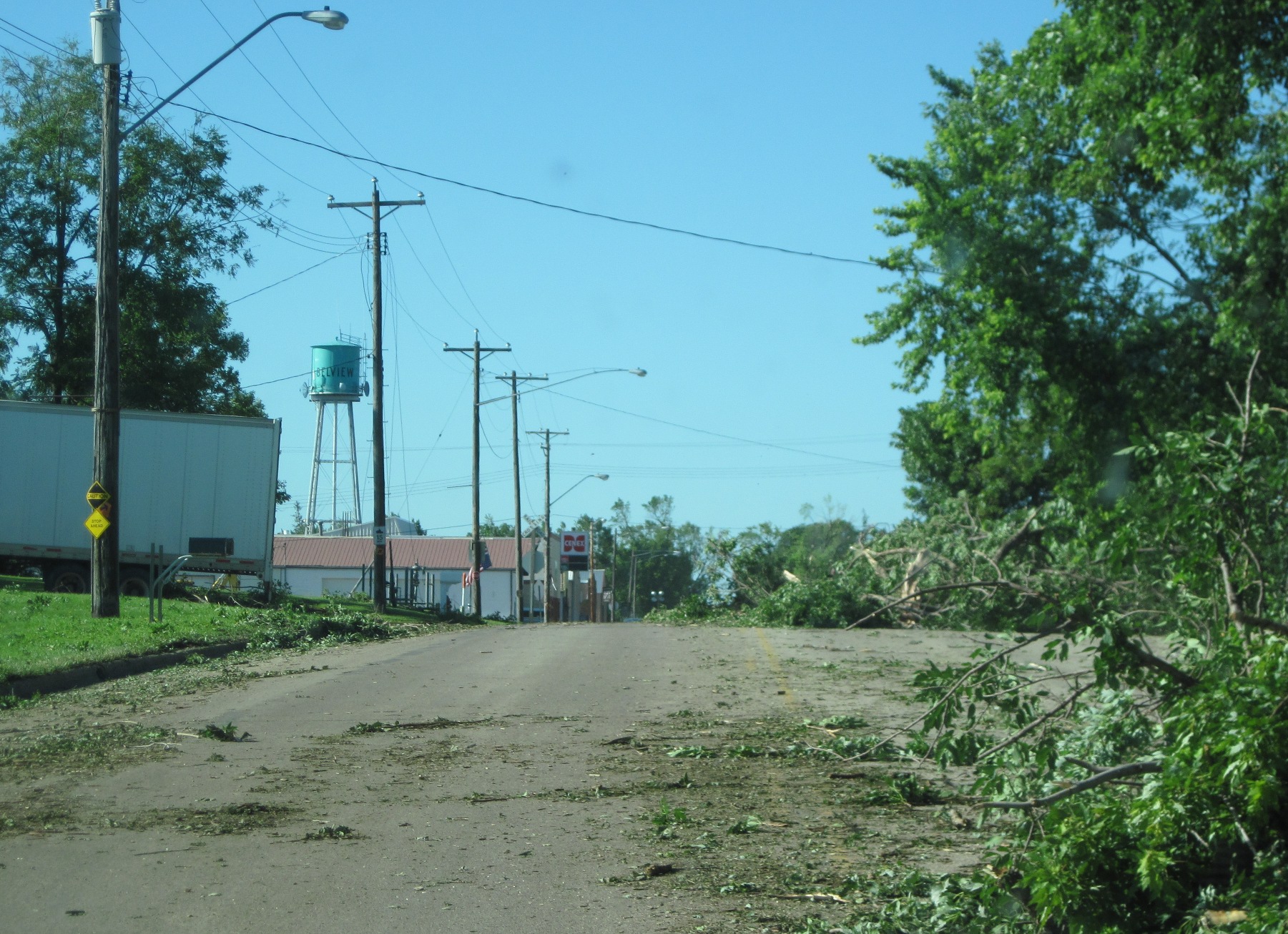
Entering Belview from Sacred Heart at 9 a.m. on July 2, the morning after the tornado. Photo courtesy of Merlin and Iylene Kletscher.
THE RESILIENCE OF RESIDENTS in two small Minnesota communities recently ravaged by storms impresses me.

The folks in Belview, a Redwood County town of 375 hit by an EF-1 tornado on July 1, and the residents of Sauk Centre, a Stearns County community of 4,221 blasted by 80 – 85 mph winds Sunday evening, won’t allow storms to squelch their summer celebrations.

This Saturday, July 16, Belview will host the town’s third “Small Town Saturday Night.”

In Sauk Centre, Sinclair Lewis Days, which began on Sunday, continue as planned through July 16.

I mean, honestly, would you feel like partying if you were still trying to deal with the mess after a tornado or high winds uprooted trees; downed branches; damaged homes, businesses and other buildings; and smashed vehicles in your community?
But I suppose pausing to celebrate in the midst of such devastation bolsters the spirit and allows residents time to take a break, come together, share stories and support each other.

Kim Sander, who initiated the Small Town Saturday Night, once-a-month May – August event in Belview, posted recently on the Belview Blue Jays’ Facebook page: “Come join us and celebrate our small town’s ‘back to life after the storm’…from 5 – 8 p.m. there will be a cruise-in, free popcorn, First Responder’s pork sandwiches, a special display of Arctic Cat mini-bikes, etc. This is our third Small Town Saturday Night and we appreciate being able to bounce back and be ready for ‘business as usual!’ So proud of our town and its people!”

You simply have to appreciate Sander’s upbeat attitude and enthusiasm.

I first learned about the Small Town Saturday Night from City Clerk/Treasurer Lori Ryer just days before the July 1 tornado roared through Belview. She had written an article about hot air balloons in Belview and I was gathering last-minute information prior to publication in the summer issue of Minnesota Moments magazine.

Ryer told me then about the event that brings people into town with classic cars, motorcycles, tractors and such. She mentioned the free popcorn, the vendors, the farmers’ market, food, sometime-hay rides to local vineyards (Echo Creek Vineyard and Grandview Valley Winery) and added, “Bring your lawn chair.” Ryer is among Belview’s most enthusiastic boosters.

I’m sidetracking briefly here to say that I like this whole concept of a Small Town Saturday Night, tapping into the past when farmers and their families would come to town on Saturday night. Heck, I remember watching movies on the side of a building in Vesta, which is just down the road to the south and west of Belview. Vesta movie night may have been on a Saturday night; I don’t recall for certain.

Belview residents seem to be doing a fine job of promoting their little town. Each year the community holds an Old SOD Day celebration. The event, which features your usual small-town activities like a kiddie parade, car shows and more, also has hot air balloon lift-offs. This year’s celebration is set for September 17.

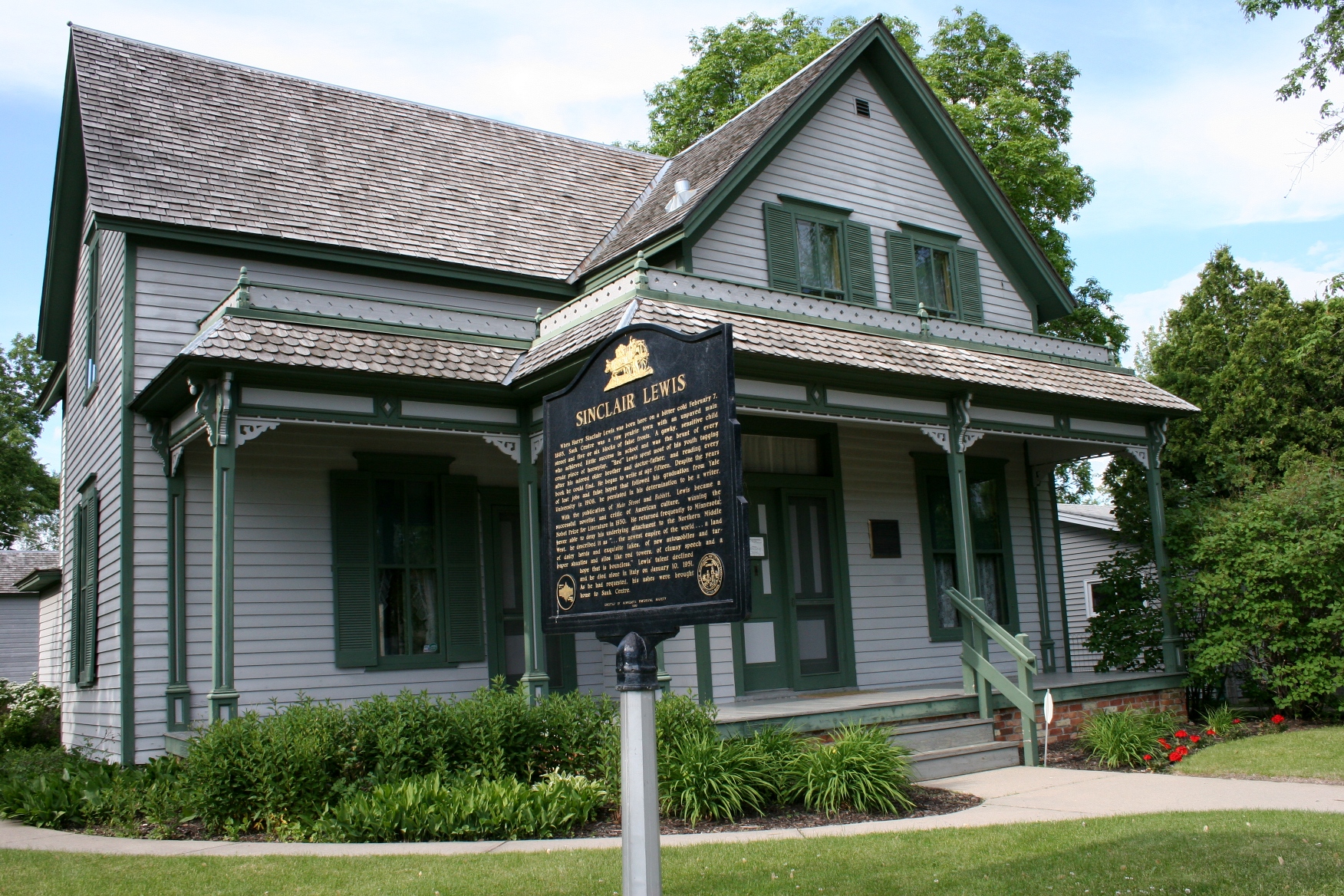
The boyhood home of author Sinclair Lewis was closed for the day when we arrived in Sauk Centre.

UP IN SAUK CENTRE, I haven’t talked with anyone about Sinclair Lewis Days, the annual celebration of native son Sinclair Lewis, author of Main Street and other noted books. But my husband and I stopped in Sauk Centre briefly while en route home from Fergus Falls to Faribault about a month ago. I’m a fan of Lewis and, although I had seen his boyhood home decades ago, I had not viewed the town beyond that. I wanted to see the real Main Street, the basis for his satirical writing about fictional Gopher Prairie.

While physically Sauk Centre’s appearance has changed since our visit, since powerful winds blew through the town on July 10, that won’t keep this community from celebrating. A Welsh Pony Show, fireworks, softball tournament, music in the park and Crazy Days are still continuing as planned, according to information posted online at the Sauk Centre Convention and Visitors Bureau.

I just have to say, Belview and Sauk Centre residents, your ability to continue in spite of challenges speaks volumes to your irrepressible spirits. Even Sinclair Lewis might be impressed.

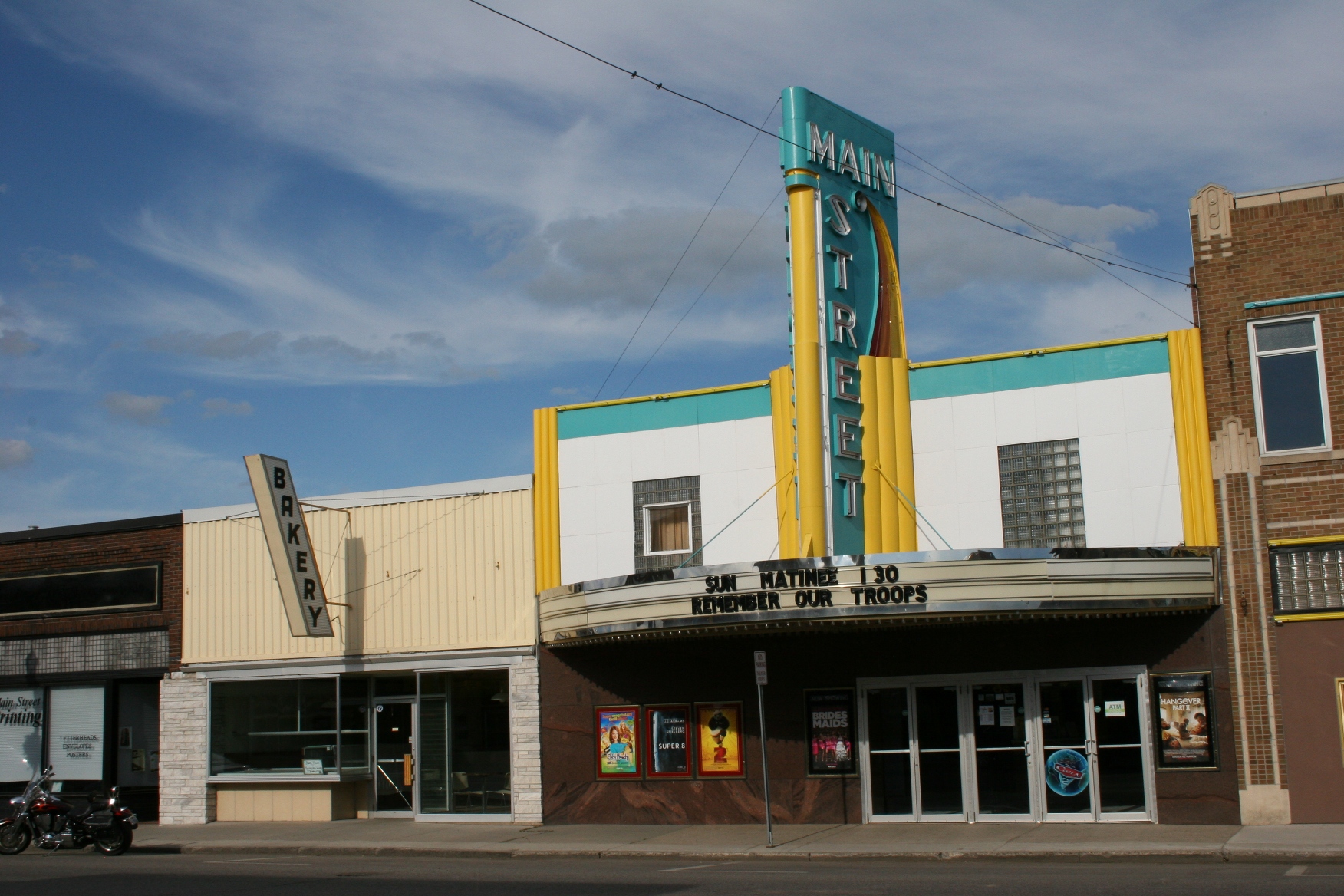
The appropriately-named Main Street Theatre in Sauk Centre's downtown.

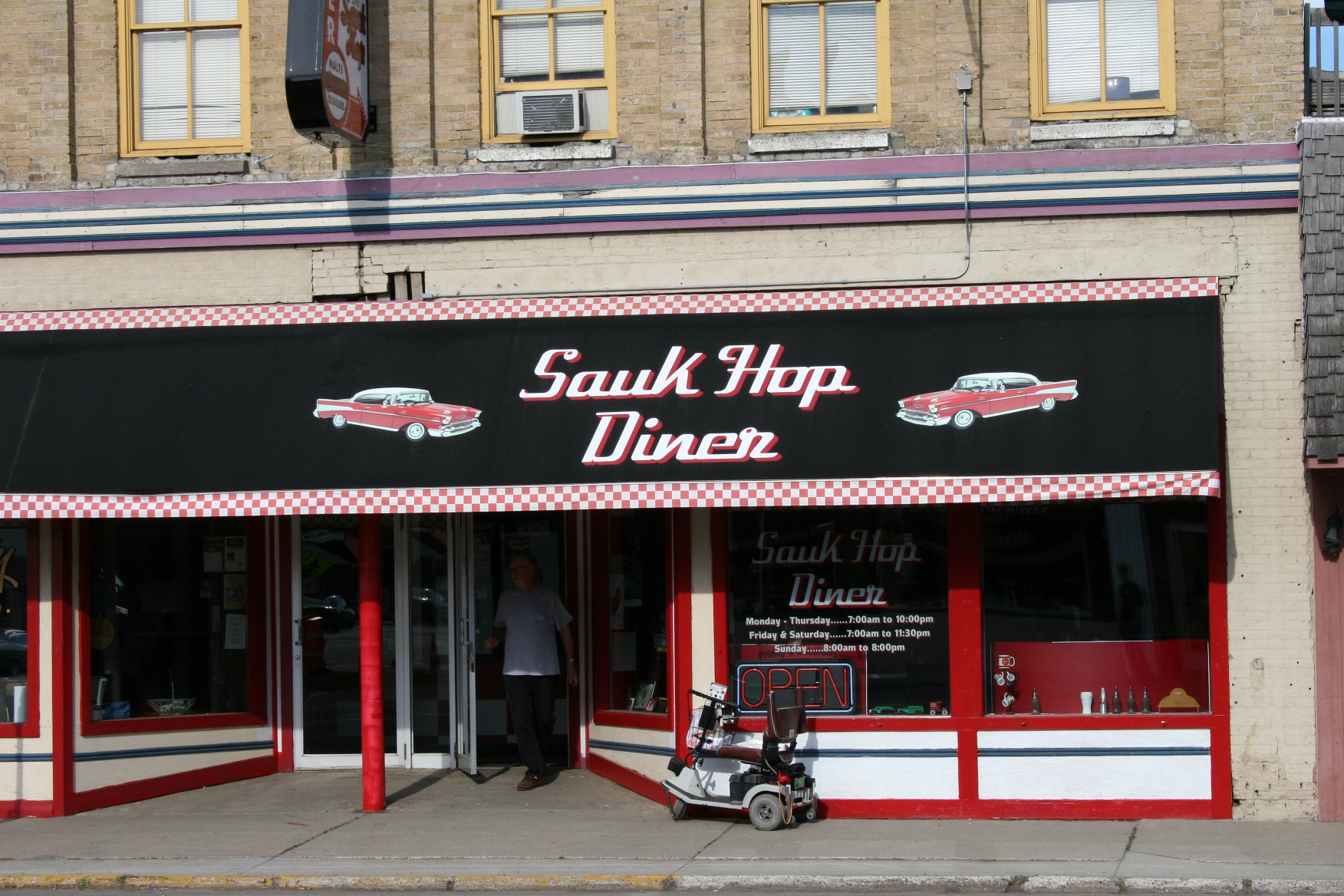
Just down the block from the theatre, the Sauk Hop Diner anchors the corner across from the Palmer House Hotel.

Sinclair Lewis worked as a night clerk at the historic Palmer House Hotel.

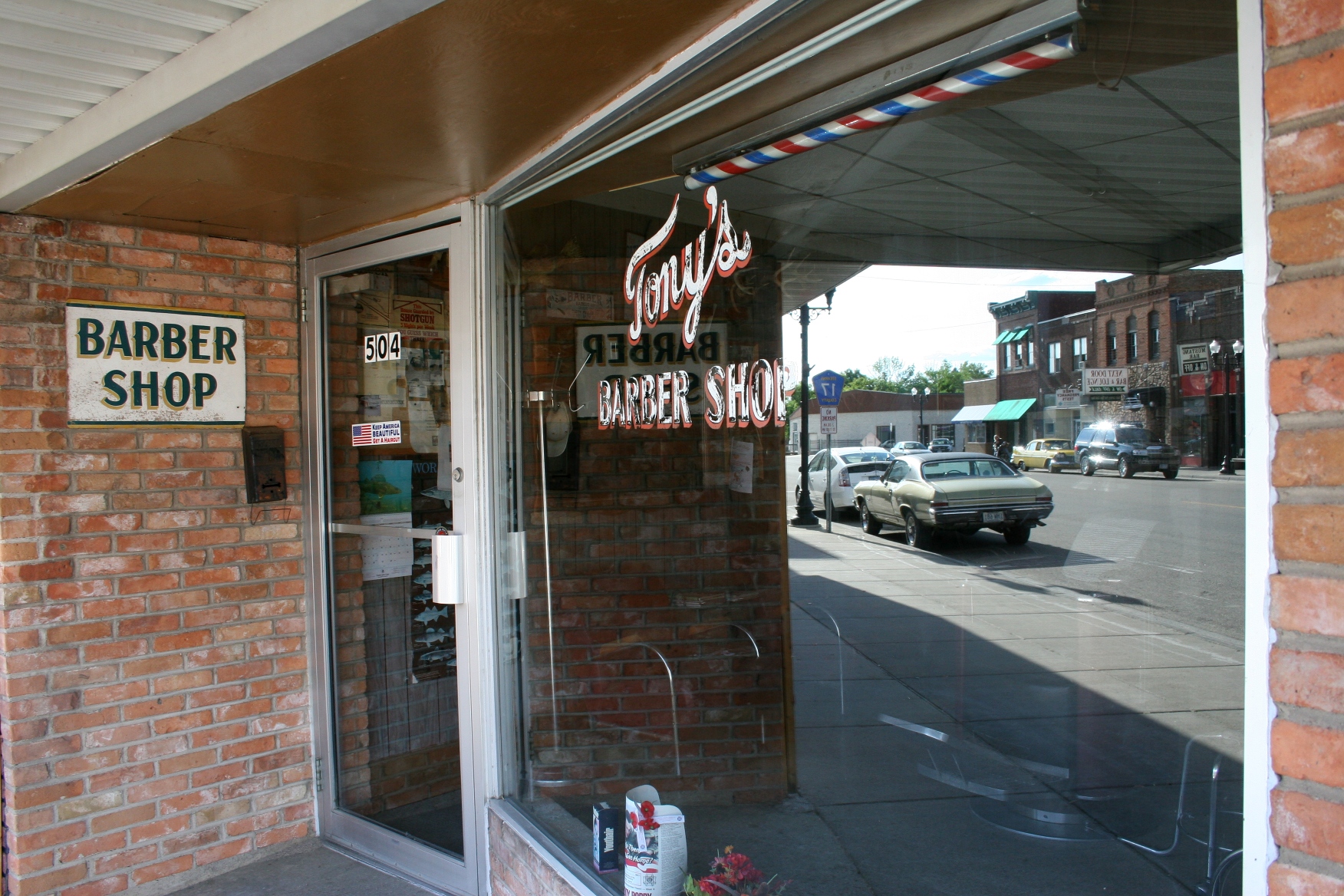
The typical small-town barber shop, in Sauk Centre, Tony's Barber Shop.

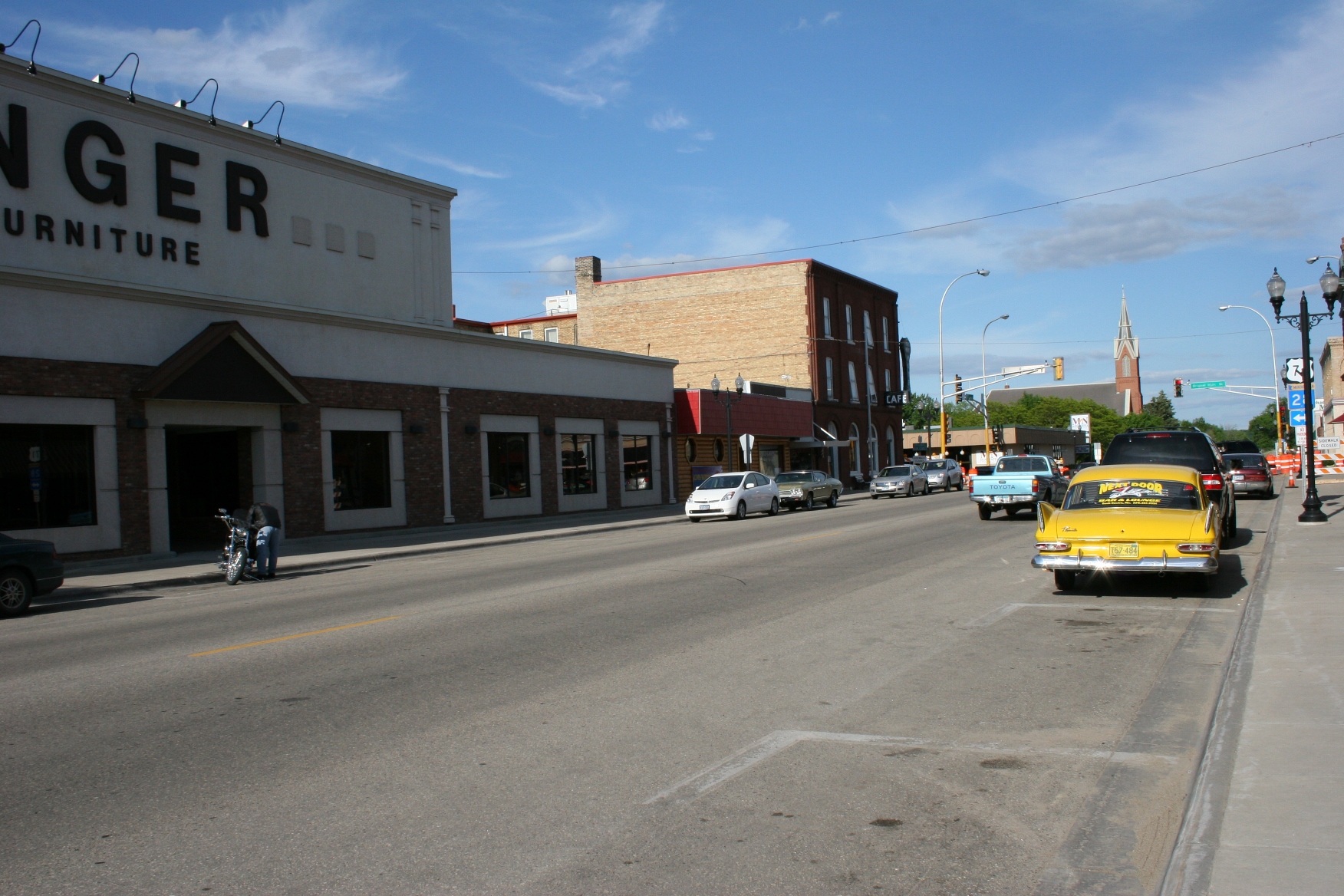
On a block packed with bars, six if I recall correctly, this one, the Next Door Bar and Lounge, stood out.

Another view of downtown Sauk Centre, shot several weeks ago.

© Copyright 2011 Audrey Kletscher Helbling