Minnesota Prairie Roots

Writing and photography by Audrey Kletscher Helbling

Little Free Libraries for Small Towns project in Minnesota and Wisconsin officially kicks off at MOA August 15, 2012

TEN MONTHS AGO, Todd Bol, co-founder of the Wisconsin-based Little Free Library, and I were discussing an idea to get Little Free Libraries into small towns without libraries. I wanted a library in my hometown of Vesta, a community of around 340 residents which has never had a library.

I had blogged about a LFL in Faribault, where I have lived for 30 years, and challenged the residents of Vesta to start a LFL.

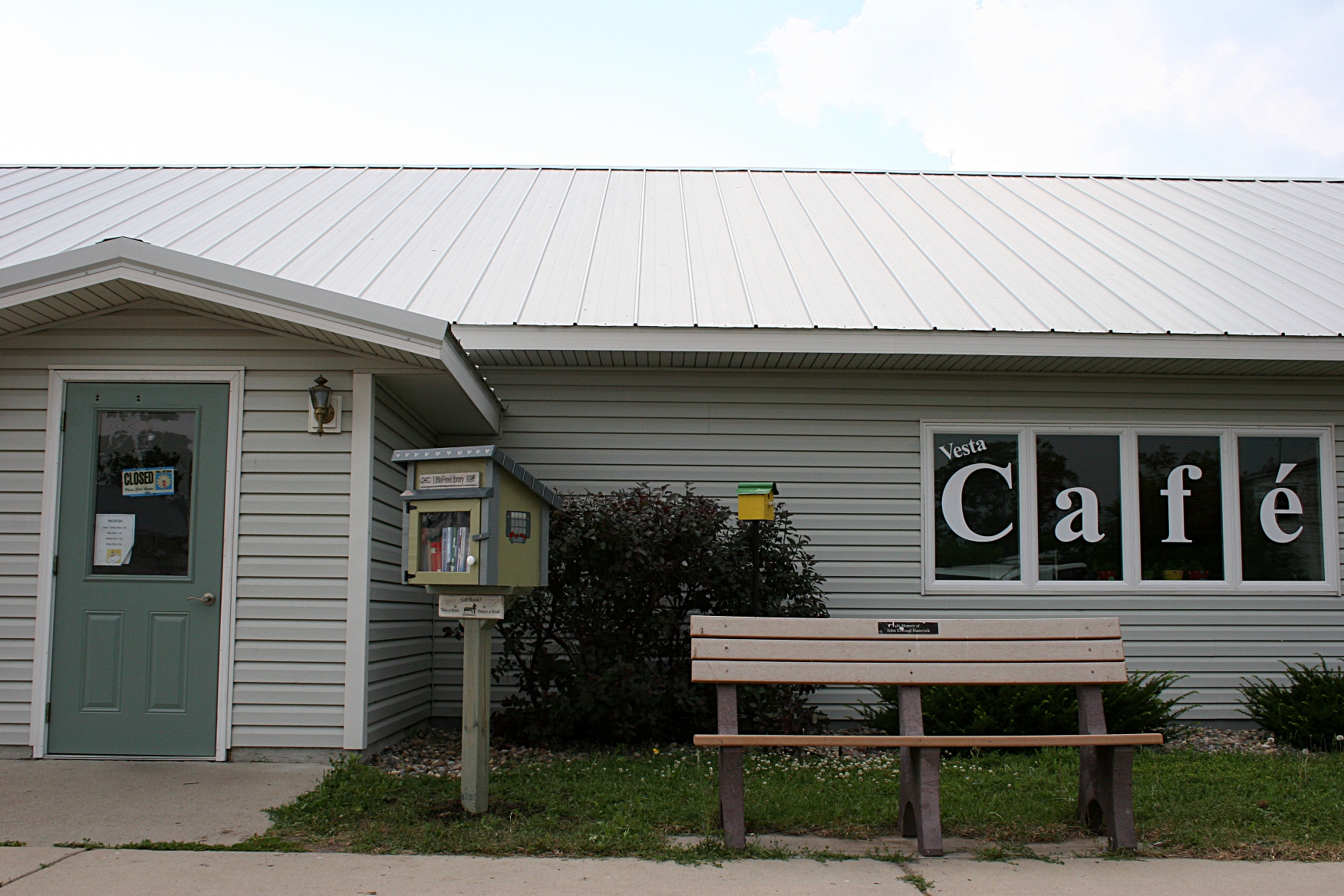
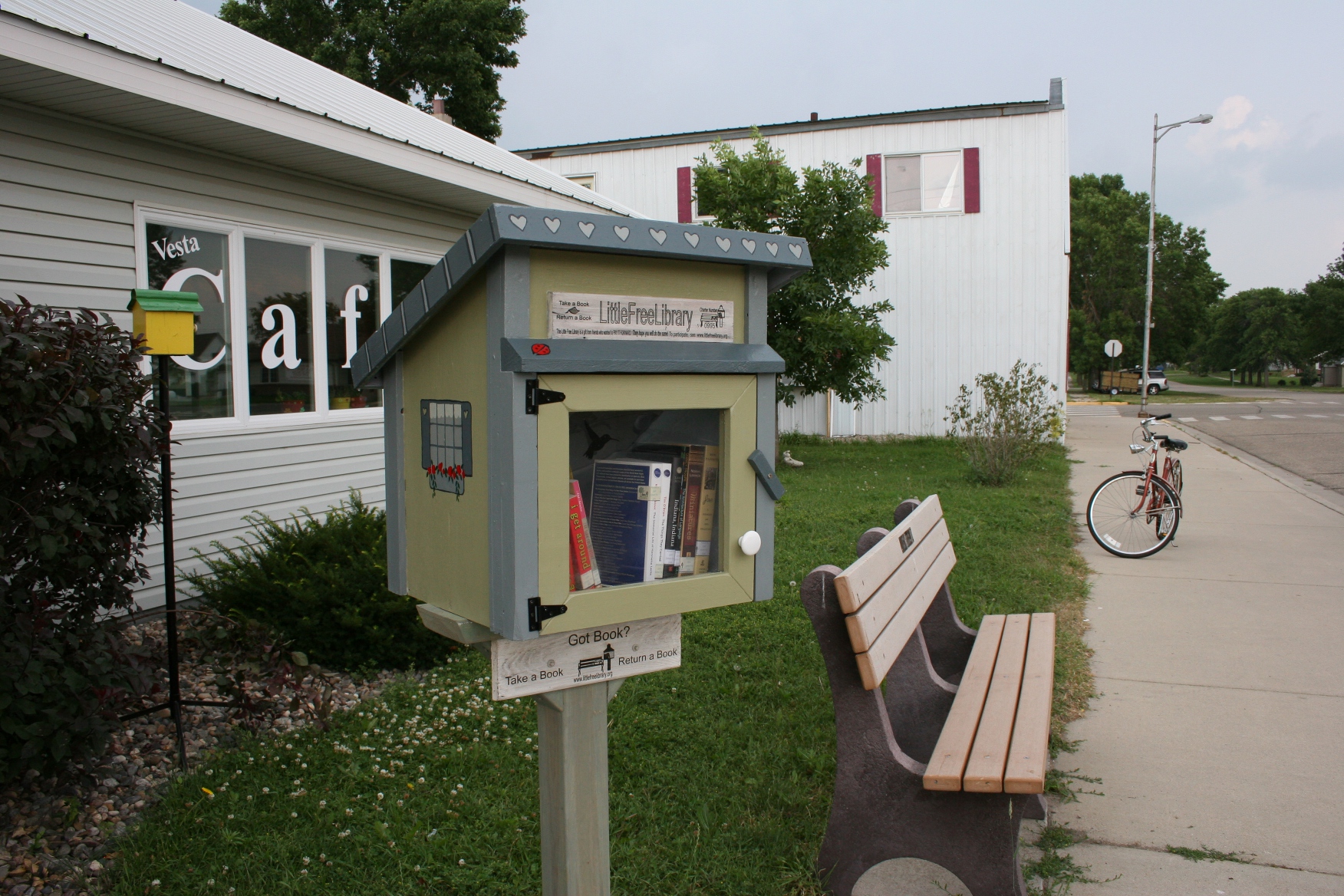
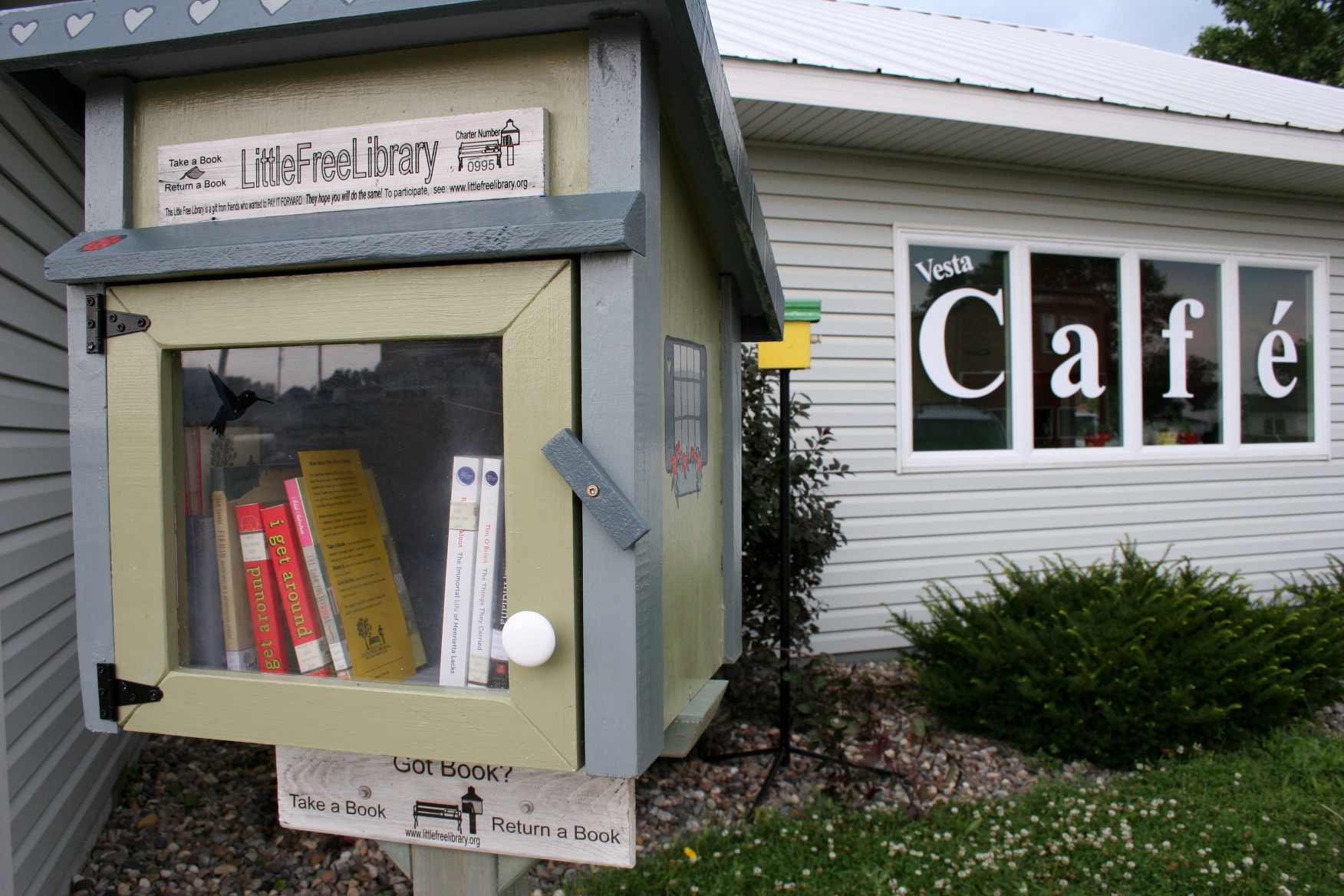
The LFL Todd and Susan Bol installed outside the community-owned Vesta Cafe.

After making that challenge, Bol and I talked and, several months later, he offered to donate, deliver and install a LFL in Vesta, placing the first library in a new initiative, Little Free Libraries for Small Towns. Bol and his wife, Susan, drove from Hudson, Wisconsin, on July 1 and installed a LFL in front of the Vesta Cafe.

This Friday, August 17, that small towns project officially kicks off with a celebration from noon to 3 p.m. in the Mall of America rotunda near the east entrance. A program featuring activities and also appearances by local celebrities sharing their favorite books is slated for 1 – 2 p.m. Businesses and publishers are donating new books and the public is encouraged to bring books for 20 uniquely designed mini libraries to be placed in Twin Cities’ neighborhoods and communities surrounding the mega mall.

MOA is donating those 20 libraries and two special libraries (numbers 2,509 and 2,510) which will tie and break the records of libraries funded by philanthropist Andrew Carnegie.

How sweet is that? But even sweeter, in my opinion, is the MOA’s general support of the Little Free Libraries for Small Towns project as a way “to promote literacy and community-building by supporting neighborhood book exchanges.”

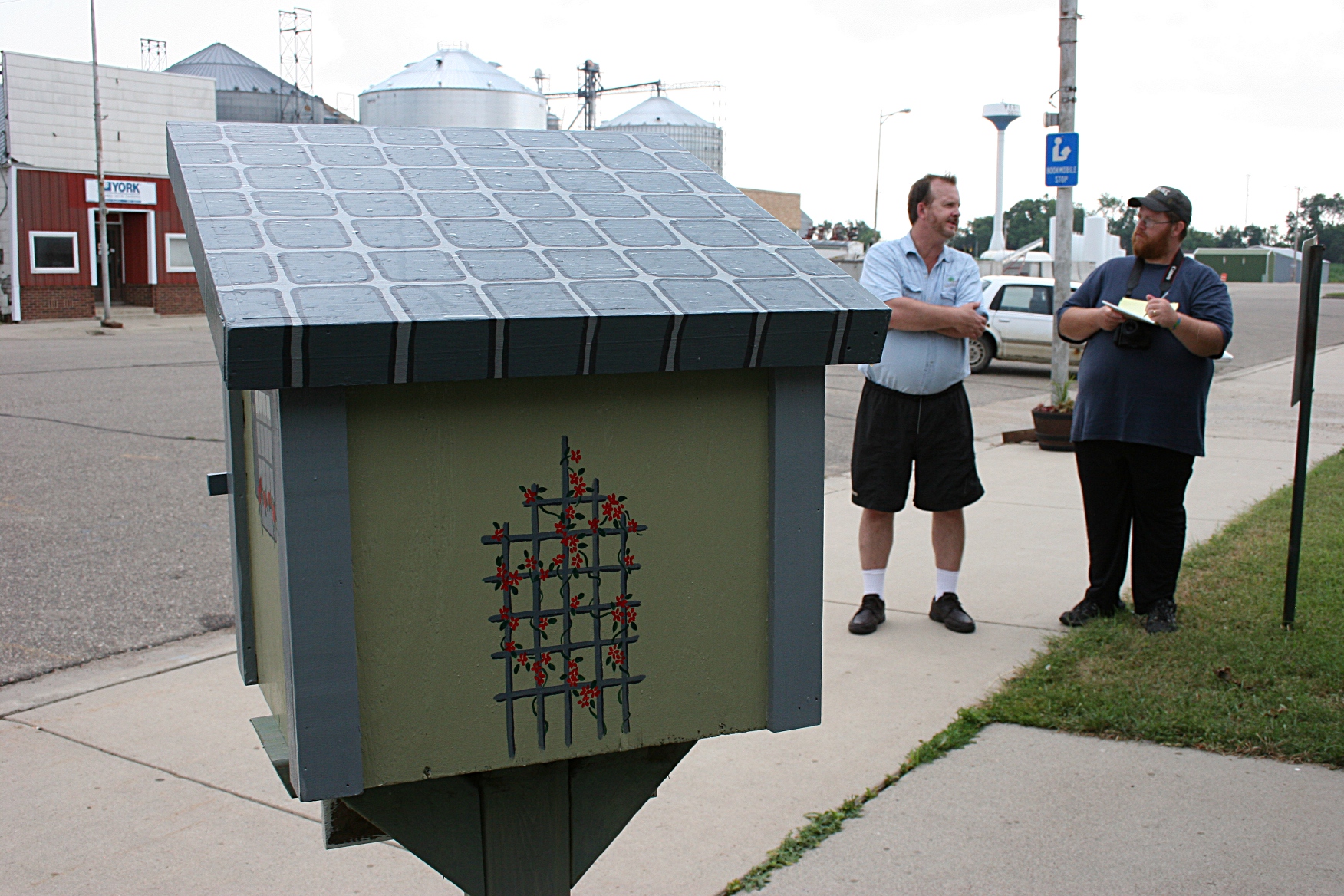
The beautiful handcrafted LFL donated to my hometown of Vesta.

The LFL works on the premise of take a book/leave a book in a little library, which is typically an over-sized birdhouse size structure attached to a post and installed outdoors, making books accessible to the public 24/7.

In kicking off its Little Free Libraries for Small Towns project, the LFL non-profit aims to focus first on the small towns of Minnesota and Wisconsin without ready access to public libraries, like my hometown of Vesta on the southwestern Minnesota prairie. The closest libraries to Vesta are about 20 miles away. Earlier this year bookmobile service to my hometown and several other communities was cut by Redwood County commissioners to save money.

I expect that many other small towns in Minnesota and Wisconsin are in similar positions, without library services because a) they’ve never had libraries or b) funding has been cut or trimmed.

Living in or near a town without a library, as I did growing up, is a hardship for someone like me who loves to read. That’s why I was adamant in my discussion last fall with LFL co-founder Bol that he focus on small towns without libraries. He liked the idea—Bol is very much an energetic ideas man—and he eventually shaped our discussion, with the help of his equally enthusiastic staff, into the Little Free Libraries for Small Towns project.

Bol thinks big. The LFL group is initially seeking 20 sponsors to each facilitate 20 Little Free Libraries for small towns across Minnesota and Wisconsin, resulting in 400 new free libraries. A $600 contribution supports construction, delivery and installation of one LFL to a small town and a starter collection of books as well as official LFL registration and promotion, and a plaque on the sponsored library.

Beyond all of that, the real satisfaction, I think, comes in the reaction of those communities which benefit from such generosity. My hometown has embraced the LFL with a level of enthusiasm beyond anything I ever expected.

The team that worked to bring a Little Free Library to Vesta includes Dorothy Marquardt, left, and Karen Lemcke, representing the sponsoring Vesta Commercial Club, LFL co-founder Todd Bol and me (holding a copy of a poetry anthology I donated and in which I have two poems, “A school without a library” and “Saturday night baths”).

Karen Lemcke, who early on supported the LFL as a member of the Vesta Commercial Club and is now the Vesta library steward, shared several weeks ago that Vesta’s LFL is a “very successful project.”

She then went on to explain that area residents are taking books from the outdoor LFL and that two bookshelves inside the Vesta Cafe have also been filled with donated books. Says Lemcke:

We have a variety of books from non-fiction, fiction and children’s books. On Sunday, children had taken some of the books and sat on a couch nearby looking through them. I heard today that tractor books were on a shelf and local farmers were borrowing them overnight to look through. The women have been going through the books as well and they will be picking up some to read, too…It’s like it (LFL) brought a “little life” to Vesta.

If you are thinking that Karen’s report brought tears to my eyes, you would be right. To hear that farmers are pulling tractor books from shelves to take home, especially, pleases me. And kids paging through books…

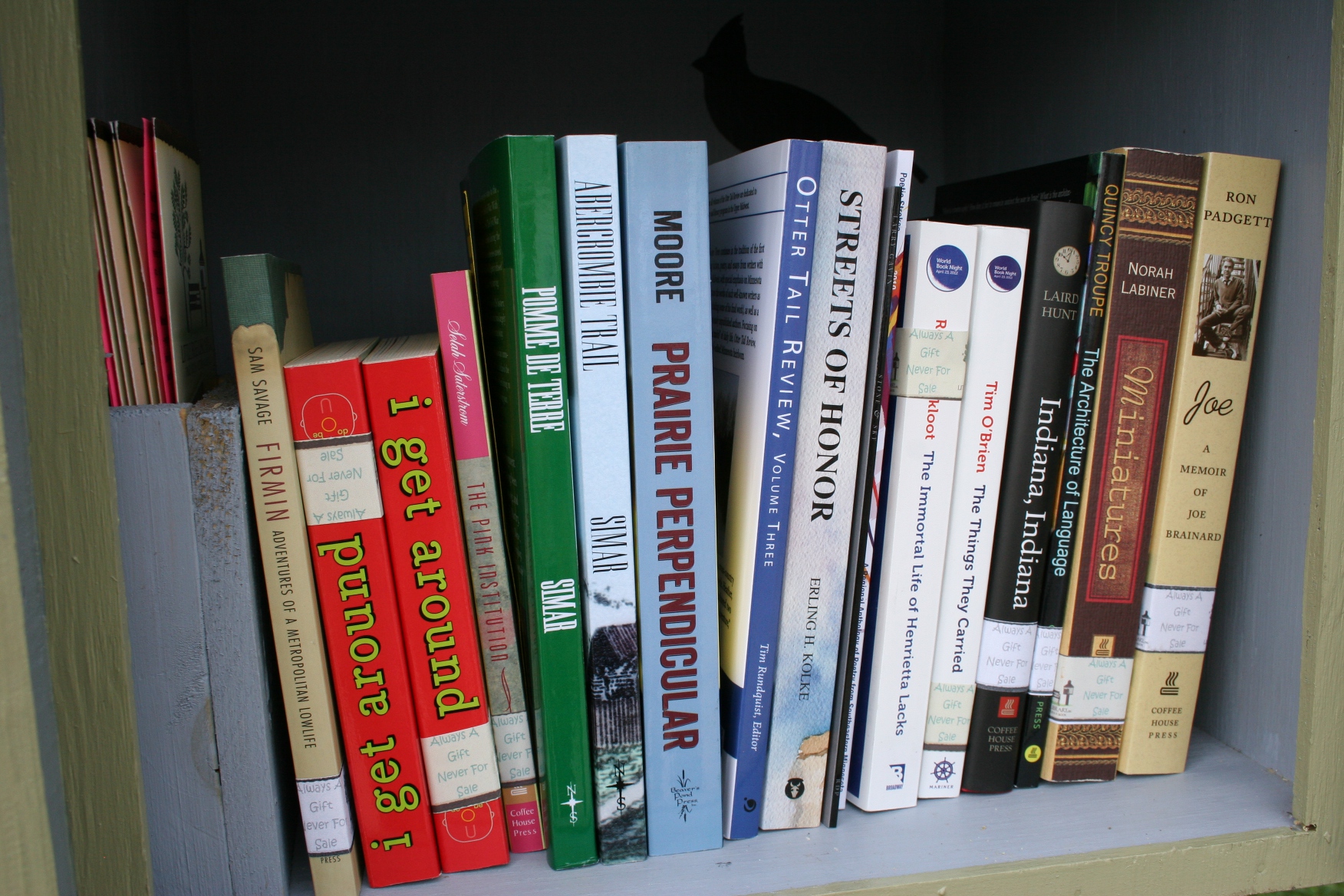
The books Todd Bol and I placed inside Vesta’s LFL on July 1. He brought books donated by several Twin Cities publishers and I brought books from my personal collection. I have since collected and donated an additional 40 books.  A retired librarian from nearby Wabasso donated eight bags of books, primarily mysteries, and the cafe manager’s family also donated books and I expect others have given books, too.

With this new LFL for Small Towns project, just consider for a moment how many more scenarios like this can happen in small towns without libraries. What a gift to bring books to the residents of small towns and enhance or instill a love of reading.

The LFL organization is now accepting applications from communities which would like to be considered for the Little Free Libraries for Small Towns project. Applicants from Minnesota and Wisconsin need only complete a short questionnaire requesting information such as the town’s population, whether it has a public library and how a LFL would make a difference in their community.

LFLs will be awarded based on available sponsorships and contributions and the need and interest level of the applicant communities, among other criteria.

So…if your small Minnesota or Wisconsin town needs a library, believe. It can happen. My conversation with the co-founder of the Little Free Library resulted in the donation of a library and a starter collection of books to my hometown…and the launch of the Little Free Libraries for Small Towns project.

The Little Free Library at the Vesta Cafe on the one-block Main Street in my hometown is the seed plant of the Little Free Libraries for Small Towns project.

FYI: For more information about the LFL program, click here to reach the website. To learn more about  the Little Free Libraries for Small Towns initiative and to download an application, click here.  Applications will also be available at the MOA-LFL event on Friday, to which I’ve been invited but will be unable to attend.

If you or your business or organization is interested in sponsoring a library or libraries for the small towns initiative in Minnesota or Wisconsin, email Megan Hanson at mphanson@littlefreelibrary.org.

© Copyright 2012 Audrey Kletscher Helbling


Oh, the interesting topics you’ll find in small town newspapers…of bullets, burgers & babies… August 14, 2012

Filed under: Uncategorized — Audrey Kletscher Helbling @ 6:51 AM
Tags: , , , , , ,

SMALL TOWN NEWSPAPERS make for some interesting reading. Stories can get downright personal and to the point.

For example, I found a gem last week online at The Redwood Falls Gazette, a twice-a-week newspaper published in Redwood County in southwestern Minnesota. It’s the newspaper I grew up reading.

The Redwood Falls Gazette editor Troy Krause, right, interviews Todd Bol, co-founder of the Little Free Library in Vesta in early July. Bol gave a LFL to my hometown and installed it at the Vesta Cafe.

In the “Backward Glance” section of the newspaper, under 1987—25 years ago, this tidbit of information was published:

In the listings of the Redwood County 4-H county fair champions, Troy Krause of the Loyal Scotties was overall grand champion in flower gardens, while Kelly Zwaschka of the Vesta Vikings won champion child development.

(Note: Troy is editor of the Redwood Gazette, while wife Kelly gave birth to their seventh child, Gideon, this week. Congrats from the Gazette staff!)

How’s that for a birth announcement? Obviously Kelly’s interest in child development, even as a 4-Her, was a clear indicator of her future. As for Todd, I believe flower gardening could be connected to creativity/writing.

You’ll also find a brief about a game warden, shot through the head in 1937 by another game warden who mistook him for a bear. That’s listed in the 50 years ago section of “Backward Glances.” So, yes, apparently Merle Shields survived the incident as he was celebrating his 20th year as a Redwood County game warden in 1962. (BTW, since writing this post, I discovered that The Gazette has upgraded its website and the “Backward Glance” I reference here cannot be found, or I couldn’t find it.)

The third piece of interest was published in last week’s The Gaylord Hub, where I worked for two years as a news reporter and photographer right out of college. Avery Grochow, past president of The Gaylord Chamber of Commerce, penned a letter to the editor which I am certain is the current coffee shop talk of Gaylord.

I’ll summarize parts of his lengthy, six-paragraph letter and quote directly when needed. Grochow begins:

We, as the chamber board, are constantly trying to do our best for our community and are constantly being criticized by some for our decisions.

Apparently locals were grumbling about the food—who supplied it and how it tasted—at the community’s annual Eggstravaganza summer festival. New volunteers, replaced Dewey (whoever that is; my words here, not Avery’s), who “wanted a year off from all the arguments.” They stepped up and worked through a new bidding process for the supplies, awarding the bid to the lowest bidder.

Grochow continues:

We have had comments both ways about the supplying of hamburger. Some have criticized us in the past because the hamburger was too spicy, that they would rather have plain burgers, and we are now being criticized that we are having plain burgers and not spiced burgers.

No matter what we do as volunteers and directors for the Chamber, we can’t please everyone…We did what we thought was fair to everyone by taking bids on everything and stand by our decision.

Now, just imagine how difficult it must have been for Grochow to write this letter. Not an easy thing to do when you live in a small town like Gaylord where everyone’s lives are intertwined.

I give Grochow credit for having the guts to publicly voice his opinion in print. He doesn’t just vent, though. He offers a solution. And therein lies the point best taken by those who read his letter.

…if anyone has better ideas for us, we still are short of directors and could use all the help we can get to make our Chamber even more successful. We also have openings on the board so you can be part of the decision making, instead of just always making bad comments because you don’t like what we did. Remember, we, as the Chamber Board of Directors, are just volunteers trying to make Gaylord a better place to live and hopefully to have a great celebration.

Those closing remarks are words we could all heed because I expect you, like me, are guilty of occasional grumbling and complaining.


Place it near a cornfield and they will come, or something like that July 13, 2012

Filed under: Uncategorized — Audrey Kletscher Helbling @ 7:09 AM
Tags: , , , , , , , ,

“IF WE DON’T FIND a bathroom soon, I’m just going to go in a cornfield.”

Such prophetic words I pronounced as my husband and I recently entered the burg of Bellechester, population 172, mostly in Goodhue County, partly in Wabasha County, in southeastern Minnesota.

Honestly, it isn’t like I haven’t peed in a cornfield. I detasseled corn in the 1970s; I’ve squatted between corn rows.

But I’m not exactly a teen any more and the idea of walking into a cornfield on a scorching summer morning to pee didn’t appeal to me.

So, after asking a local where I could find a public restroom in Bellechester and being told there were none and we’d need to drive 12 miles to Lake City, the cornfield option seemed a very real possibility.

Not quite believing the man, though, my husband directed our van toward Bellechester’s one-block business district. Spotting the Bellechester Tavern and the Bellechester American Legion, I figured I’d dash inside one or the other and we’d be on our way.

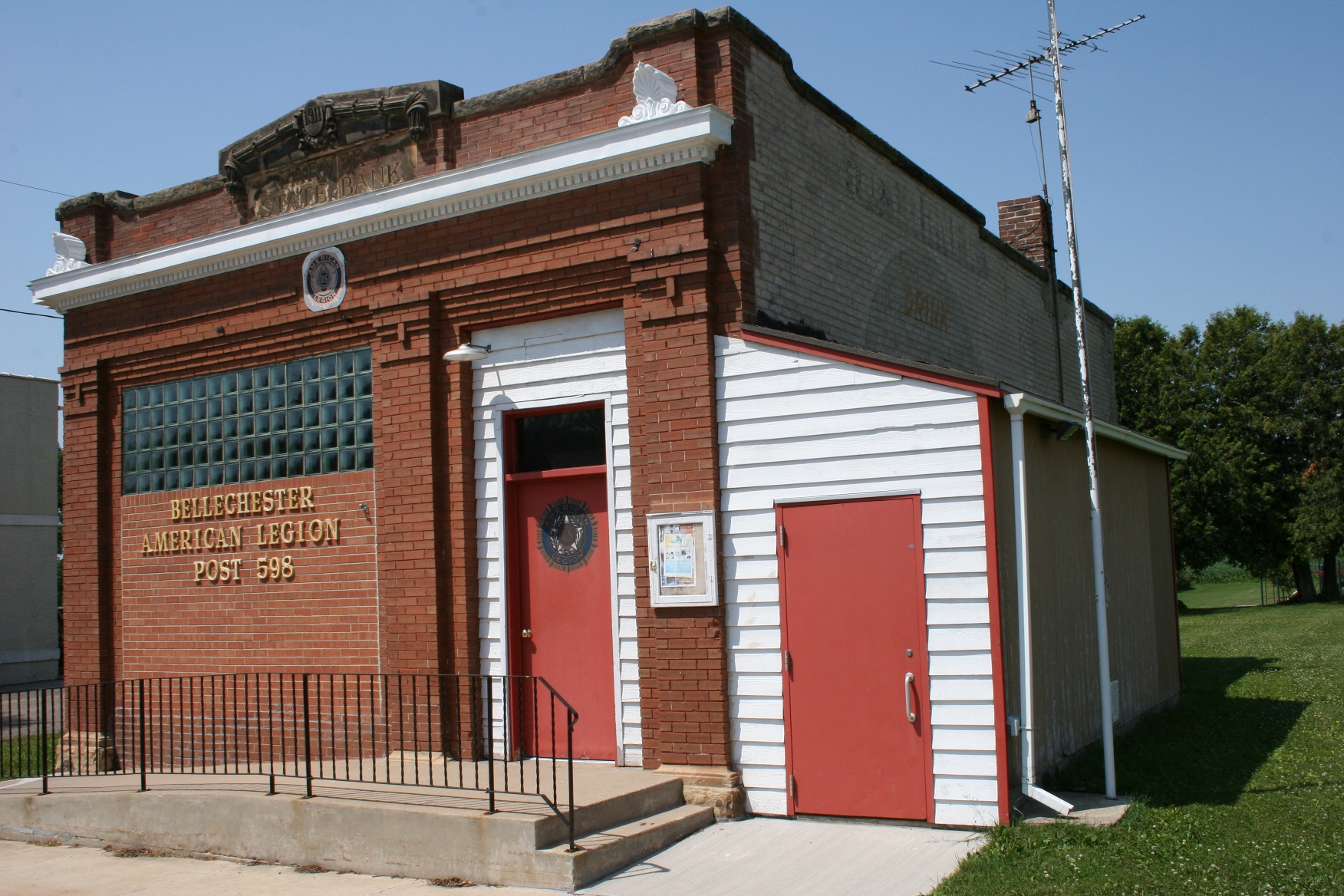
This former bank is home to the Bellechester American Legion. Yes, I took time to photograph the Legion and the tavern even though I really, really had to go. I love old buildings, what can I say?

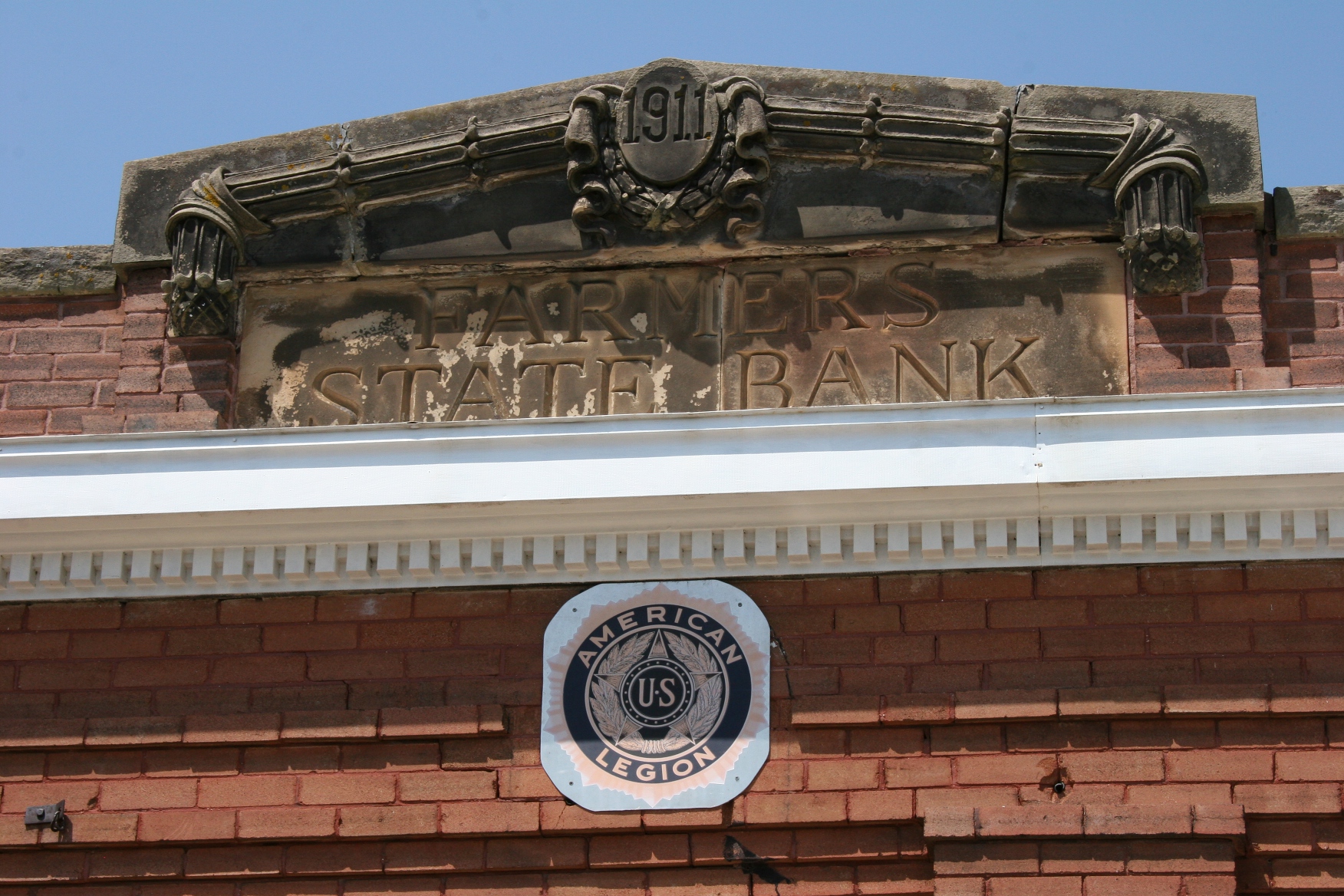
Look at the gorgeous architectural detail on the former bank. Yes, I know, I really should be moving along.

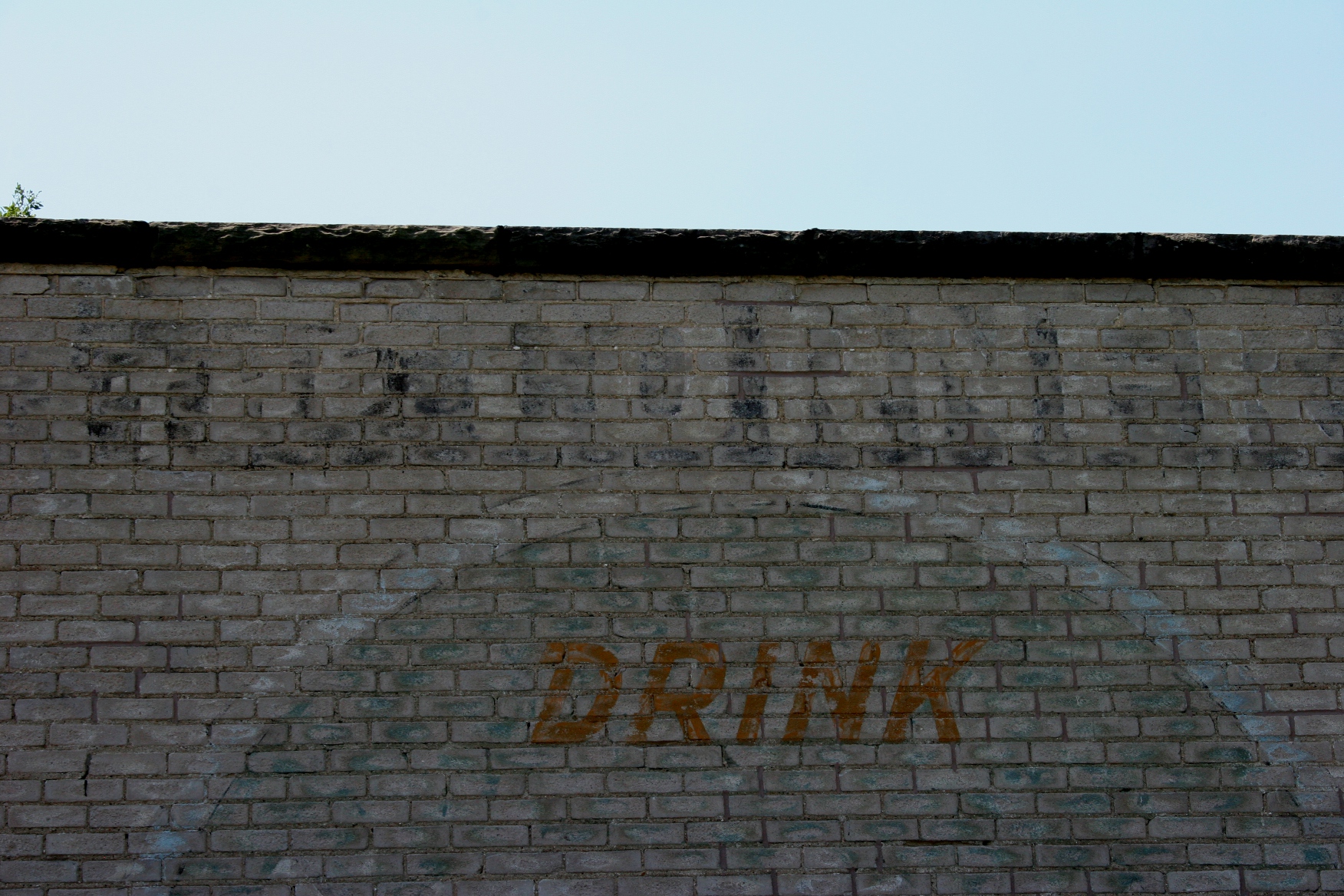
But wait, one more photo. Look at this faded signage on the side of the Legion.

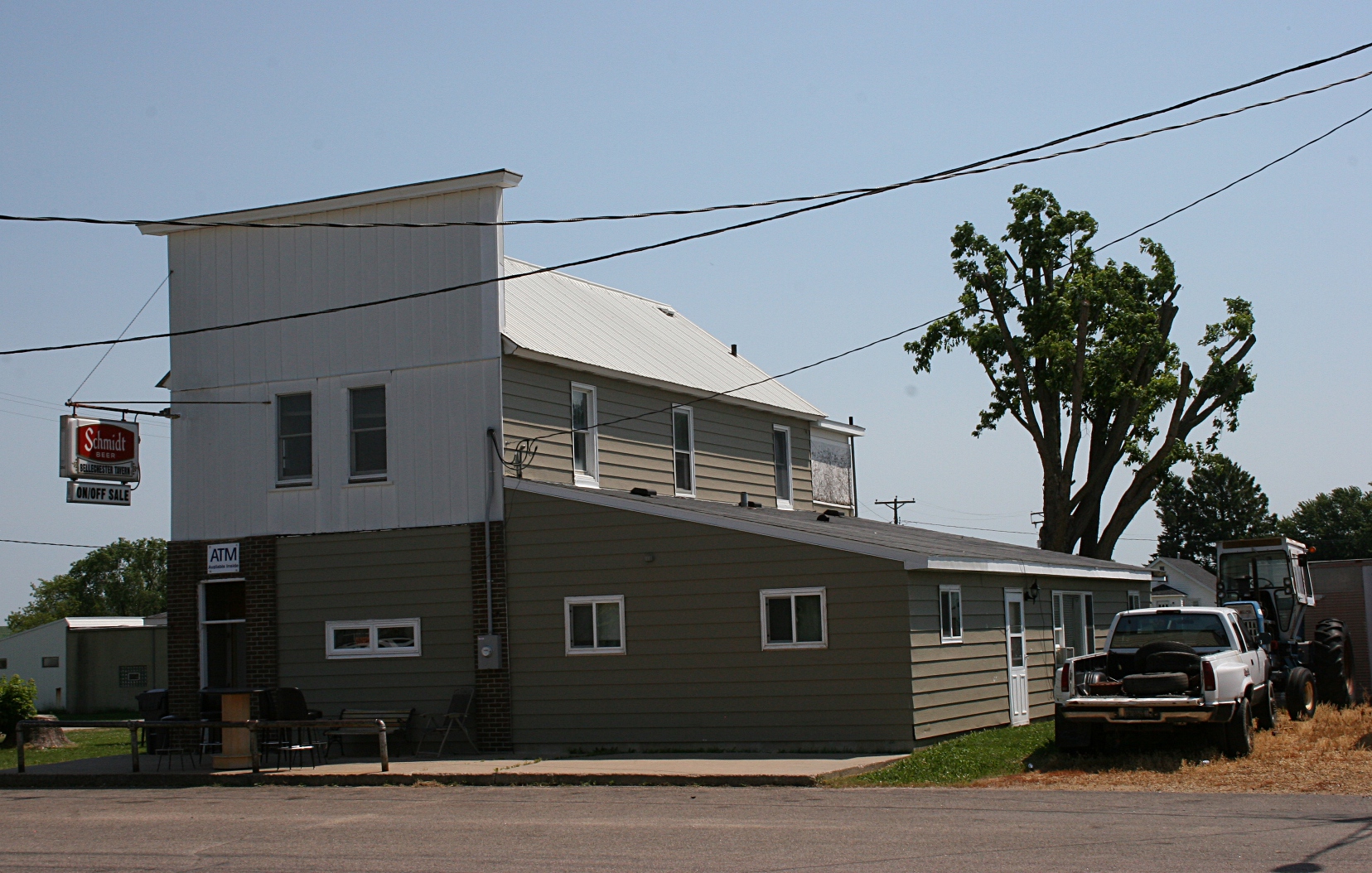
Well, as long as I’m taking pictures, I may as well show you the bar I wished was open.

As luck would have it, the tavern and the Legion were closed. I considered the busy repair shop on the corner, for like two seconds. There’s something about walking into a garage full of men that left me crossing my legs (figuratively speaking) and nearly sprinting the other direction.

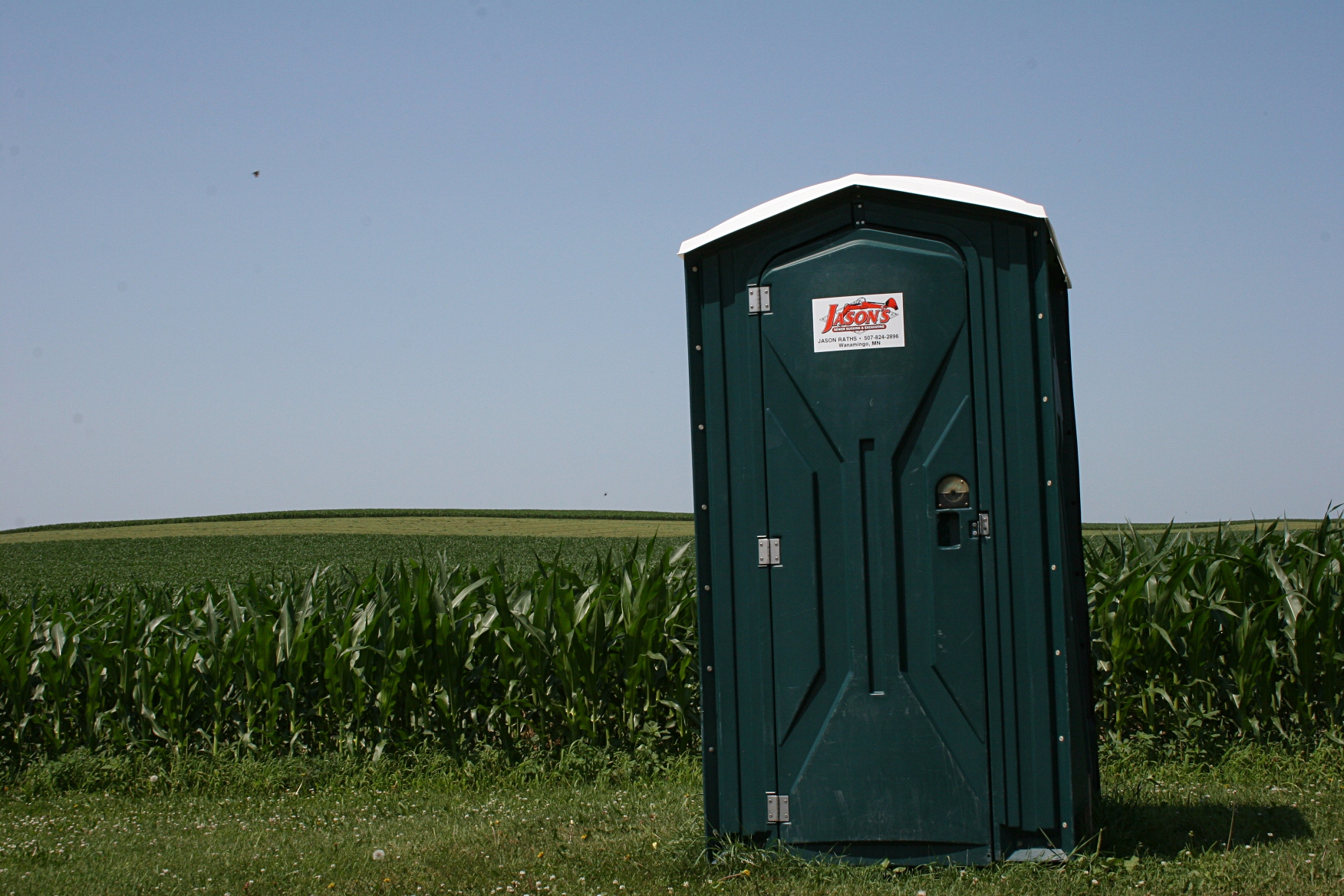
And that direction would be toward the porta potty which my kind, kind husband spotted way over yonder on the far end of a park, by the ball diamond and next to…the cornfield.

As close to a cornfield as it could be without being “in” the cornfield.

I started heading that way until my thoughtful spouse suggested we drive over there since it was too far to walk in the heat of the morning. That worked for me.

Around the corner and down a gravel road he drove to the edge of the cornfield. I handed my camera to him (I always have my camera out) and nearly rocketed out the door and into the porta potty next to the cornfield.

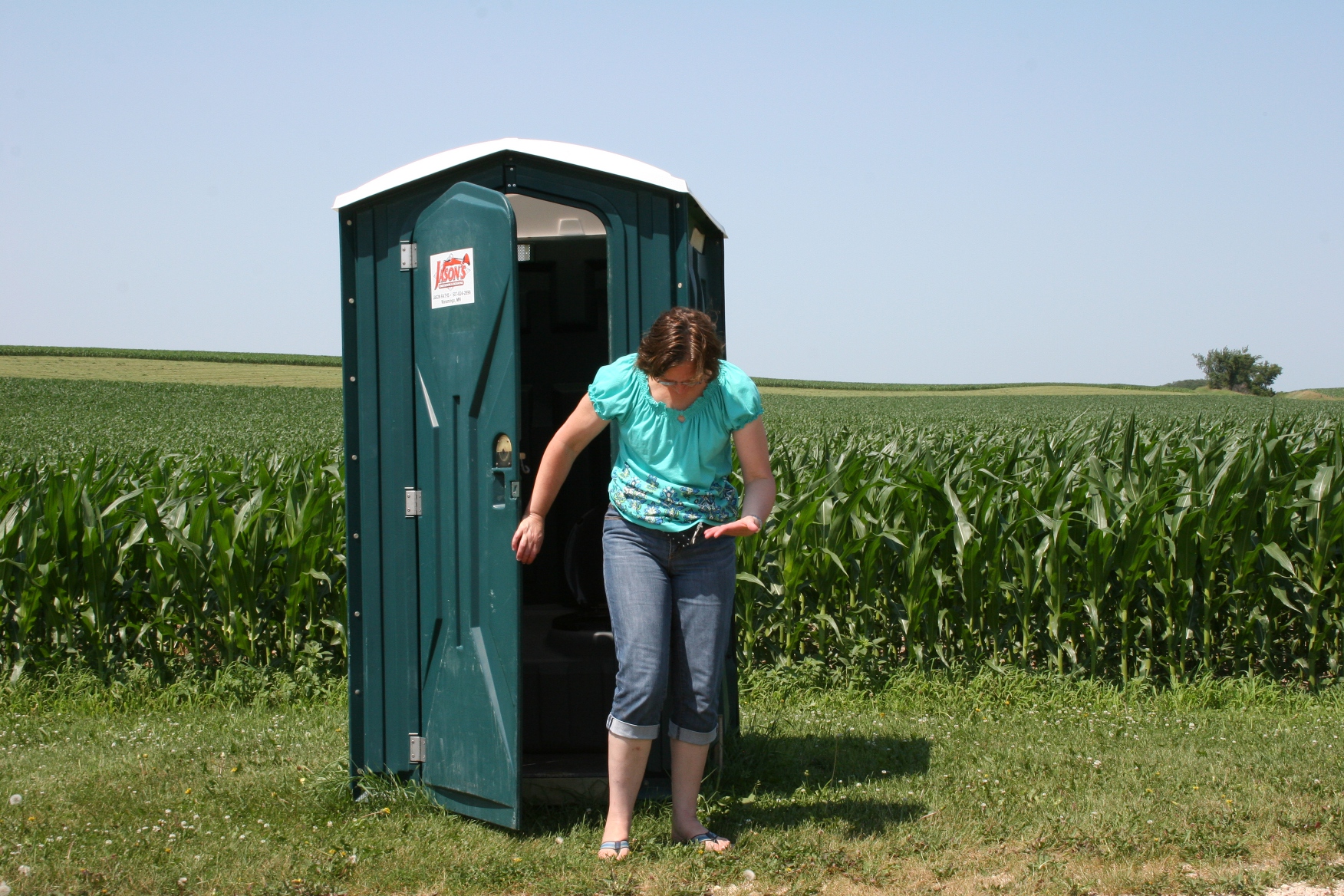
When I flung open the outhouse door while simultaneously buckling my belt (Hey, would you stay inside a porta potty any longer than you had to?), I realized I had made a major mistake.

After stepping out of the porta potty and before realizing the paparazzi was snapping pictures. I was reaching up to buckle my belt, just in case you are wondering whether I’m examining my hand.

That error would have been handing my camera over to my husband after carrying on about peeing in a cornfield. He most definitely recognized a photo op when he saw one.

And that, dear readers, is my peeing (almost) in a cornfield story and I’m sticking to it.

© Copyright 2012 Audrey Kletscher Helbling
 

Pull off Highway 14 & view the historic buildings of Lamberton June 7, 2012

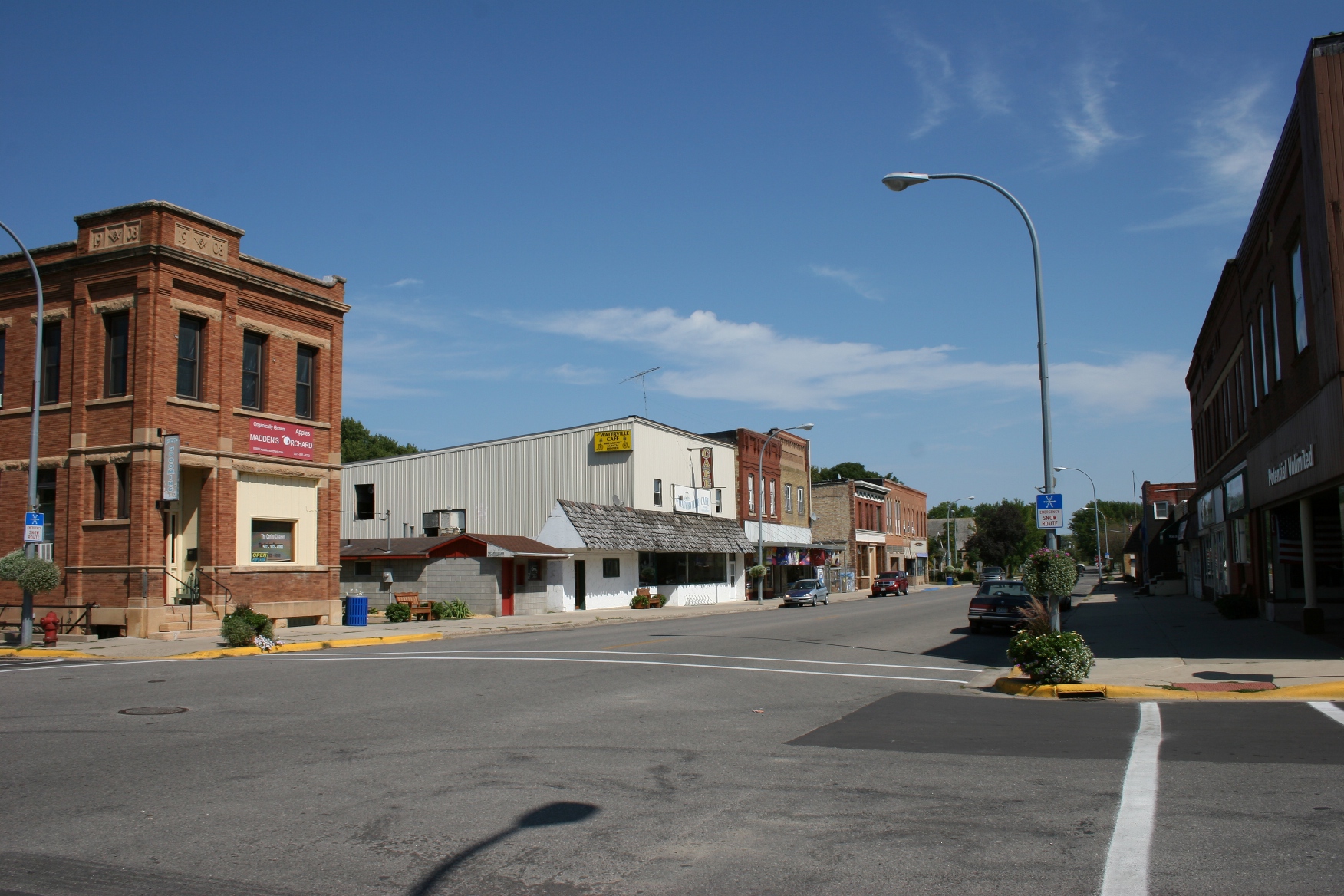
A portion of Lamberton’s Main Street shows this to be a strong agricultural community.

LAMBERTON. Just another small town on the southwestern Minnesota prairie, so you would think if you’re driving on U.S. Highway 14, The Laura Ingalls Wilder Historic Highway.

But this community some dozen miles east of Walnut Grove, destination for fans of “The Little House” books and television series, is worth at least a drive-through if not a stop.

I’ll admit that up until my middle brother moved onto acreage north of Lamberton several years ago, I hadn’t spent much time in this town of 822 except to visit an uncle and aunt who once lived and ran a furniture store here.

I still haven’t explored this agricultural community like I should. But I’ve seen enough to know that I need to look more in depth. Let me show you why, via photos I took, mostly along Main Street, during a brief stop two months ago.

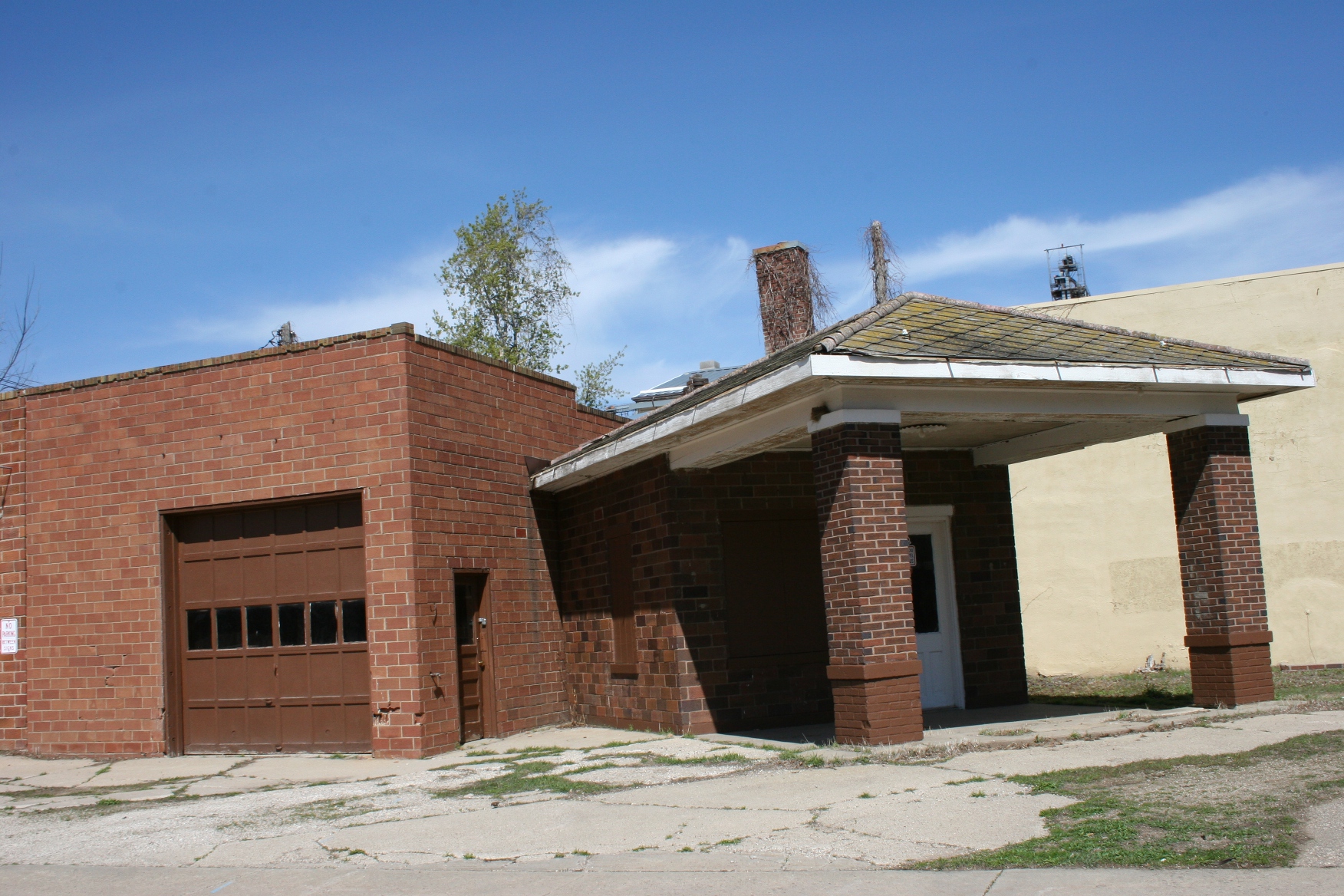
The once-popular corner gas station still stands in downtown Lamberton.

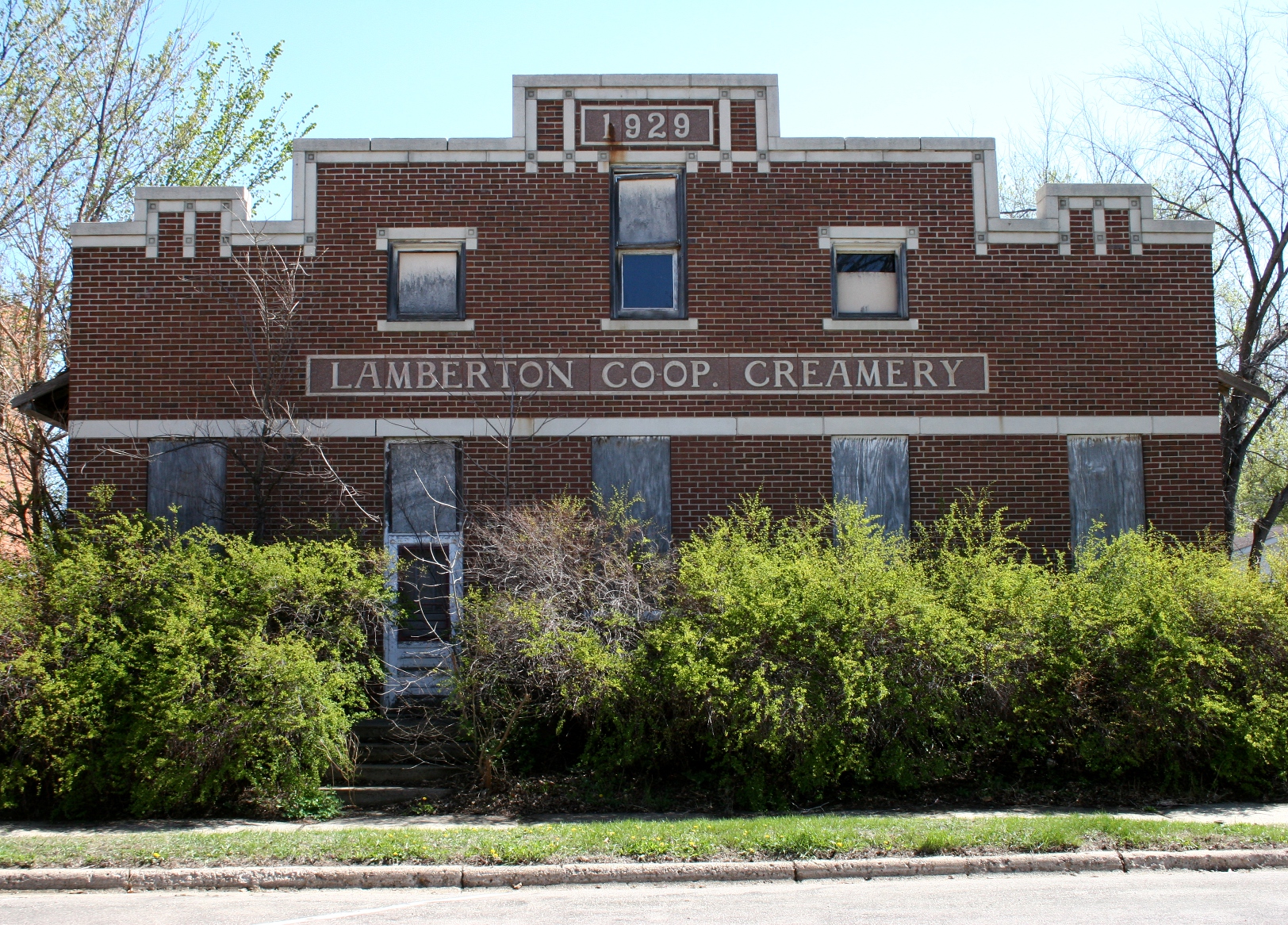
Most small towns once had creameries like this one.

Hanzlik Blacksmith Shop, dating to 1895, was gifted to the city and preserved by the local historical society. With the original wood floor and tools, it’s been called “a warehouse of a long ago lost art” by locals. The community celebrates this piece of history with an annual Hot Iron Days, this year set for September 7 – 8.

It’s the old buildings—from the cute corner gas station to the stout brick creamery to the old wood-frame blacksmith shop—that appeal to me. Some 30 miles to the northwest in my hometown of Vesta, which like Lamberton sits in Redwood County, the old buildings are mostly gone. But not in Lamberton. Here you’ll find plenty of historic buildings to please your artist’s eye and your historian’s heart.

Now all I need is someone with keys so I can take you inside these old buildings.

Vintage signs hold a certain historic charm.

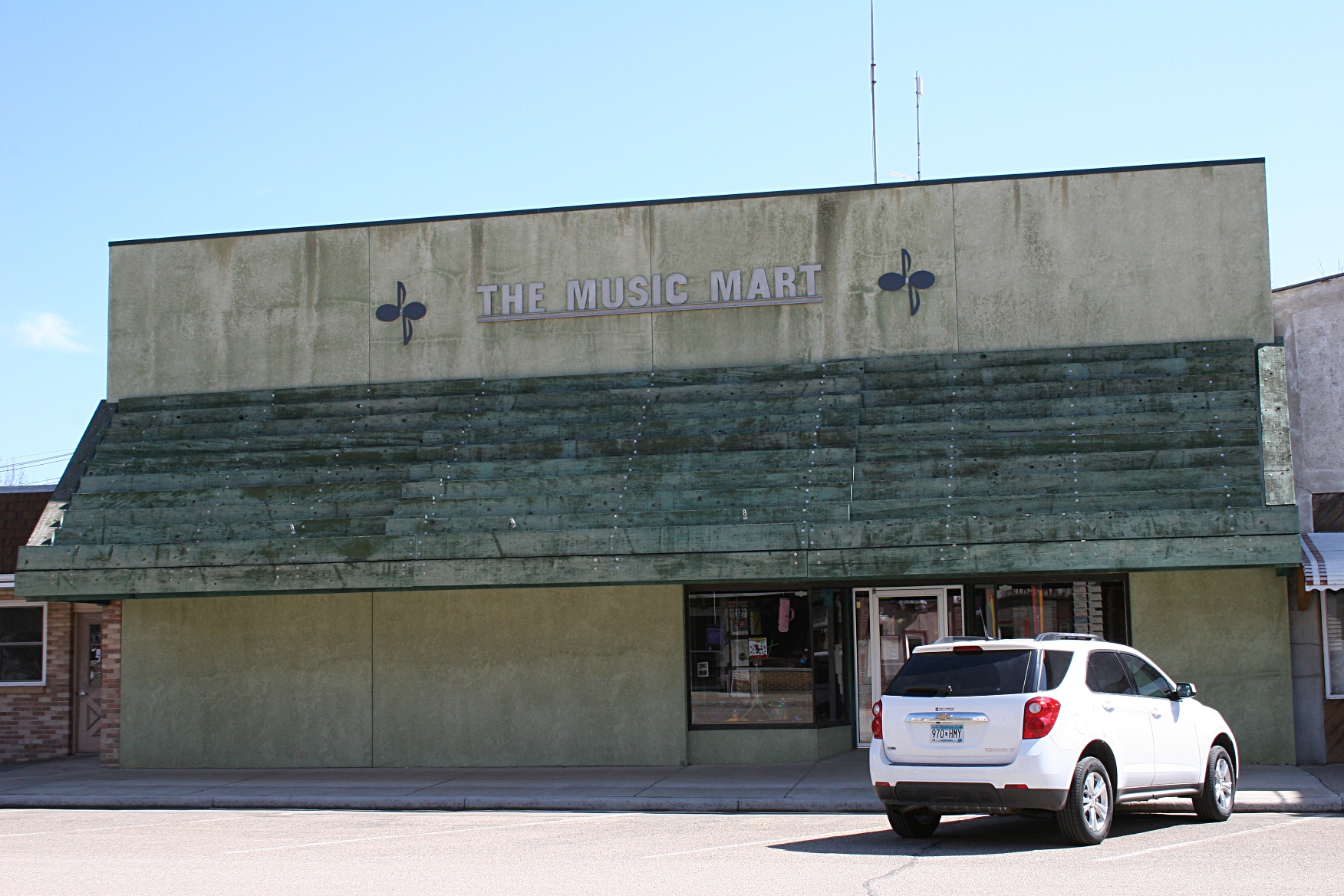
The Music Mart supplies most major brands of band and orchestral instruments. Sales staff reach out to 100-plus schools in southern Minnesota, according to online information. Who would expect to find this type of business in a small town of less than 1,000 residents? Not me.

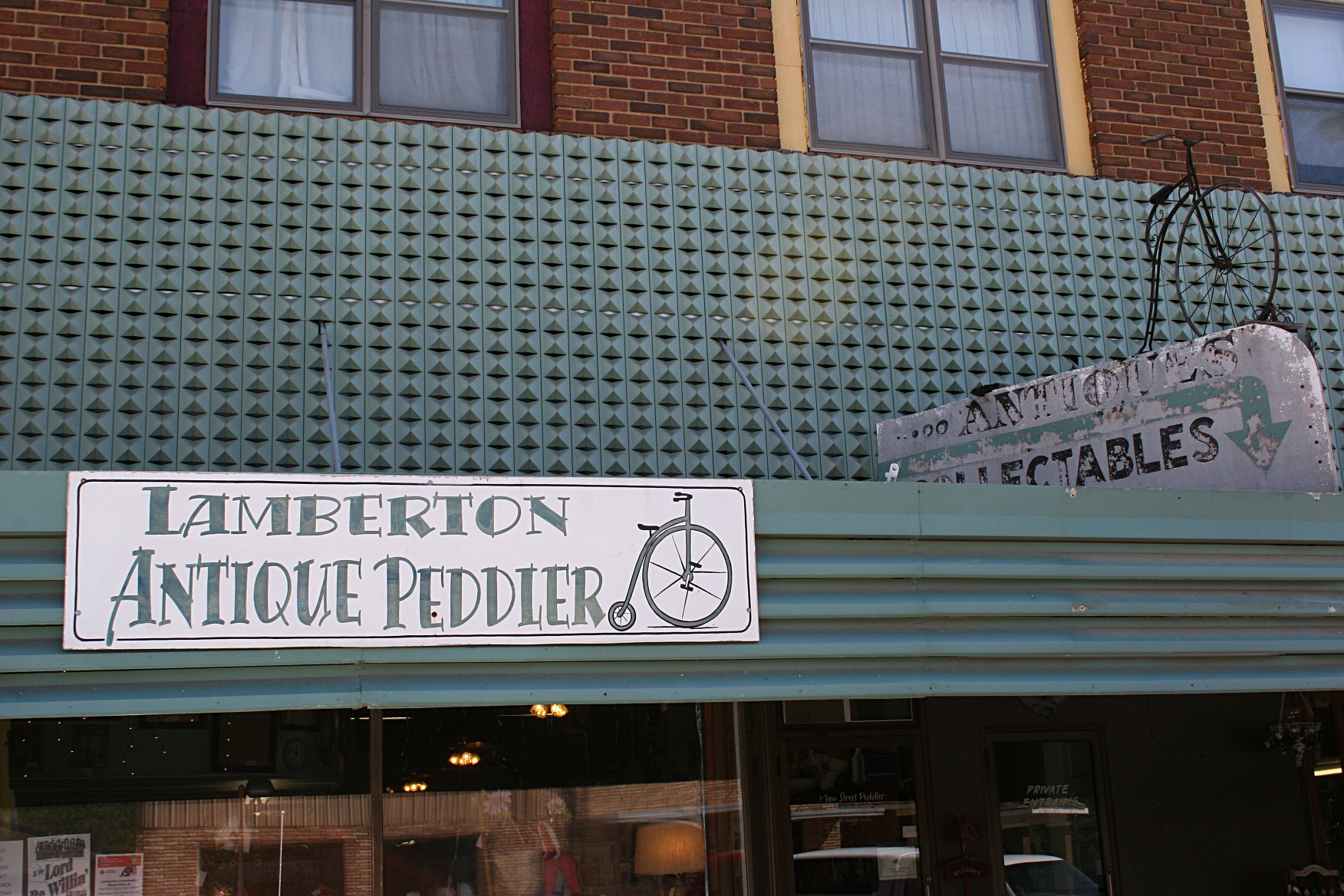
The Lamberton Antique Peddler is a must-see for anyone who is into antiques. This place is packed with merchandise in the former furniture store once operated by my uncle and aunt, Merlin and Iylene.

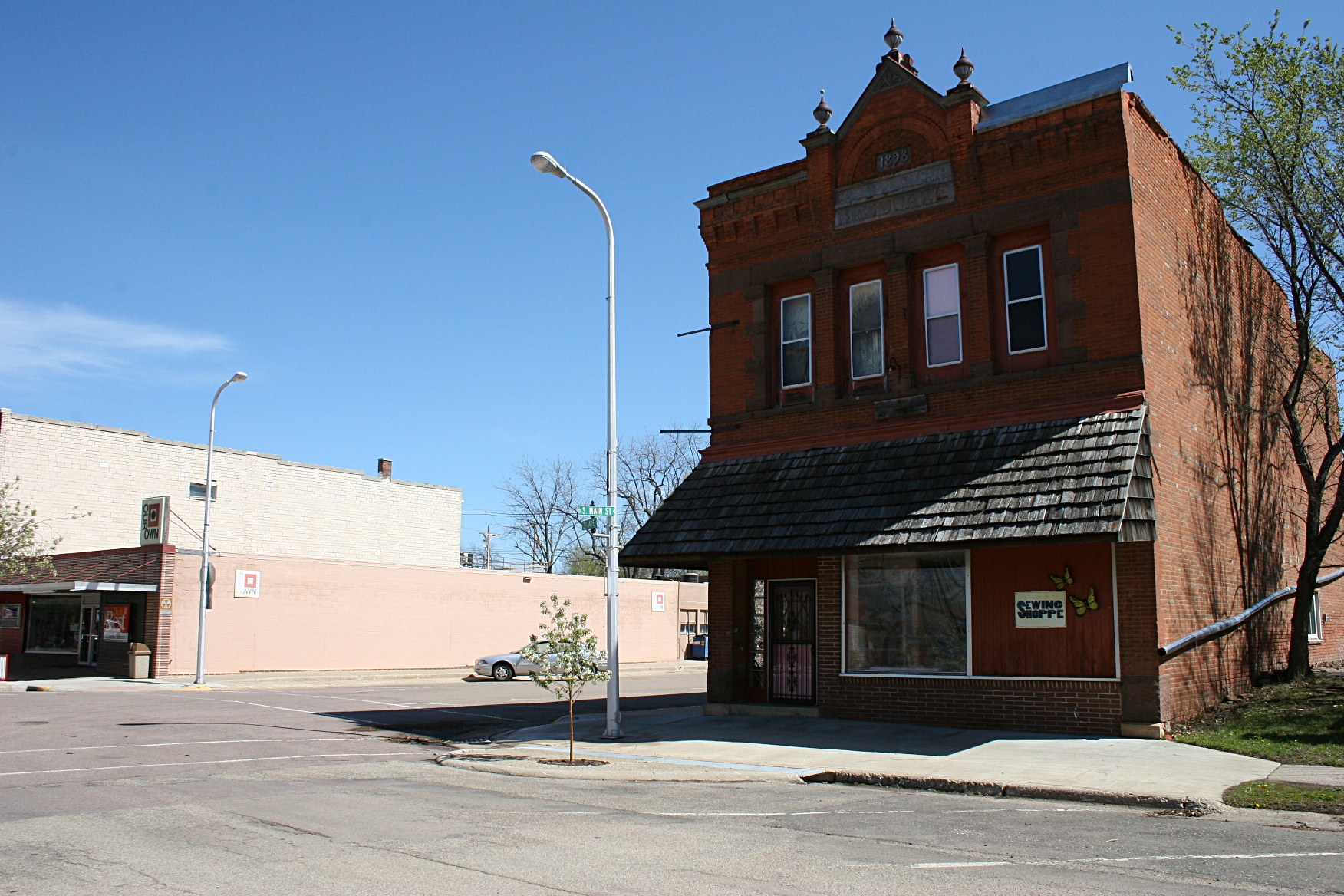
The Sewing Shoppe next to the creamery. Love the architecture.

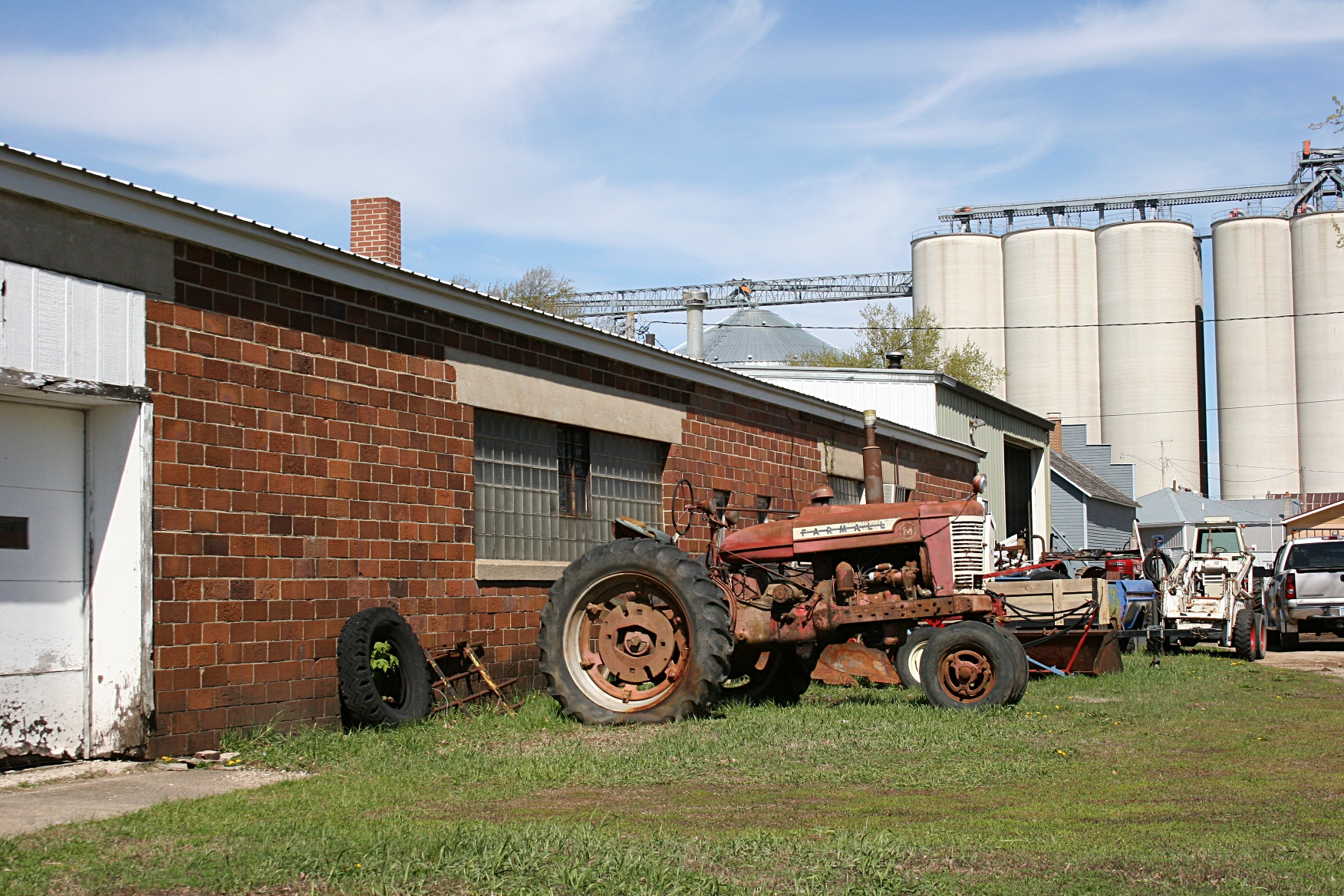
An old Farmall is parked next to a building just off Main Street.

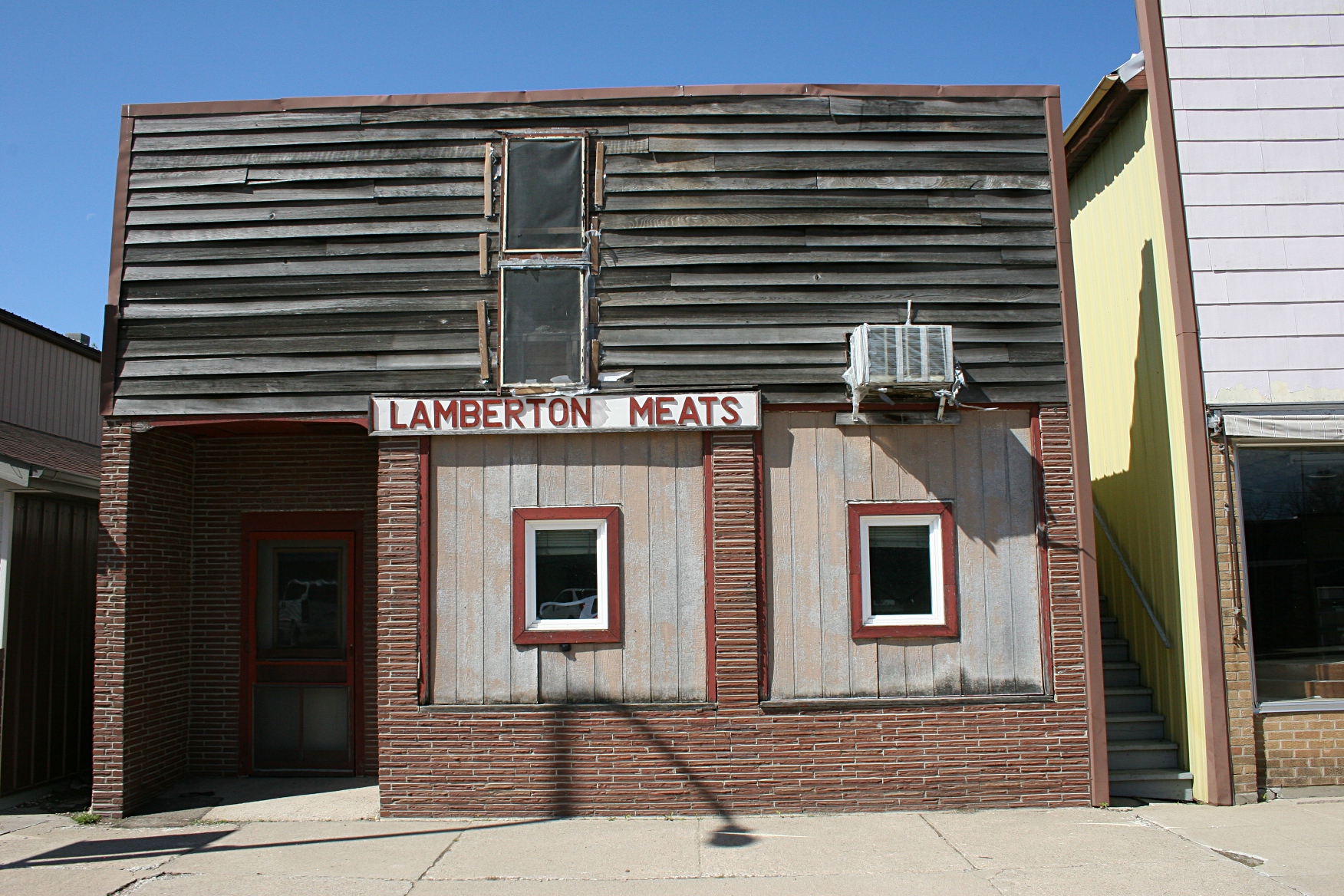
“The locker.”

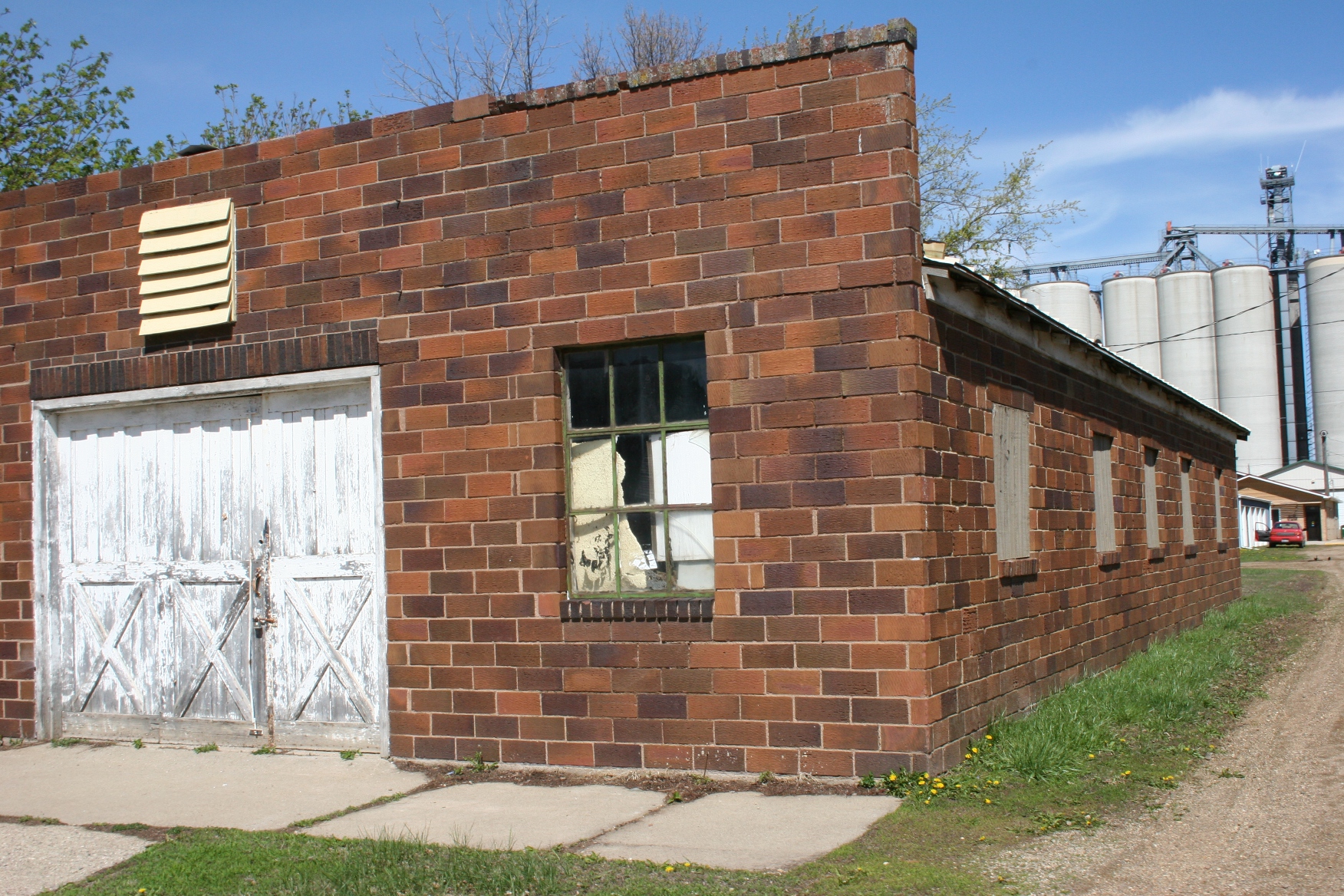
A low-slung brick building, perhaps a former garage, caught my eye.

TO VIEW ANOTHER particularly beautiful building in Lamberton, a former bakery, click here to read a previous post on Minnesota Prairie Roots.

© Copyright 2012 Audrey Kletscher Helbling
 

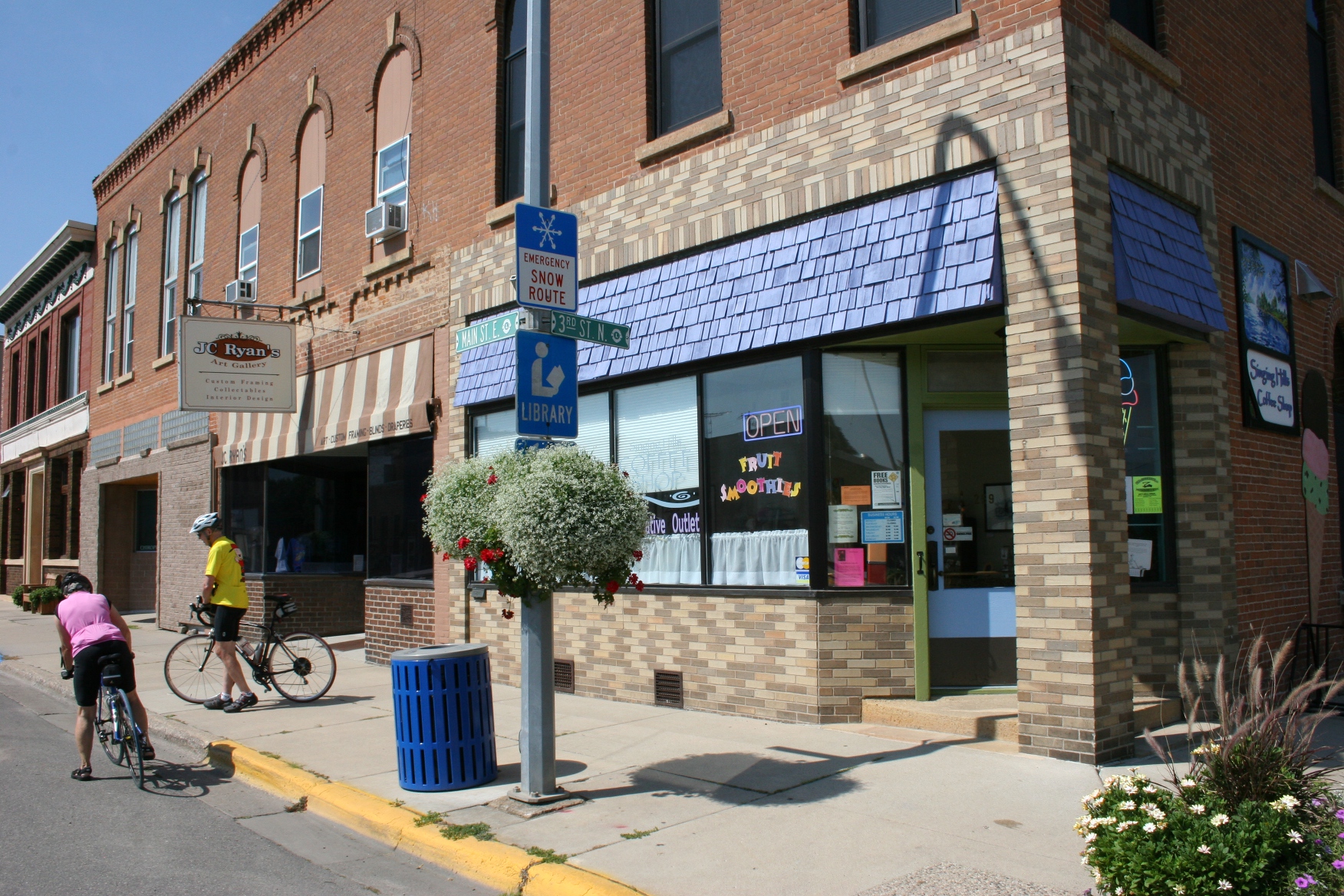
Main Street Wabasso, home of the White Rabbit April 25, 2012

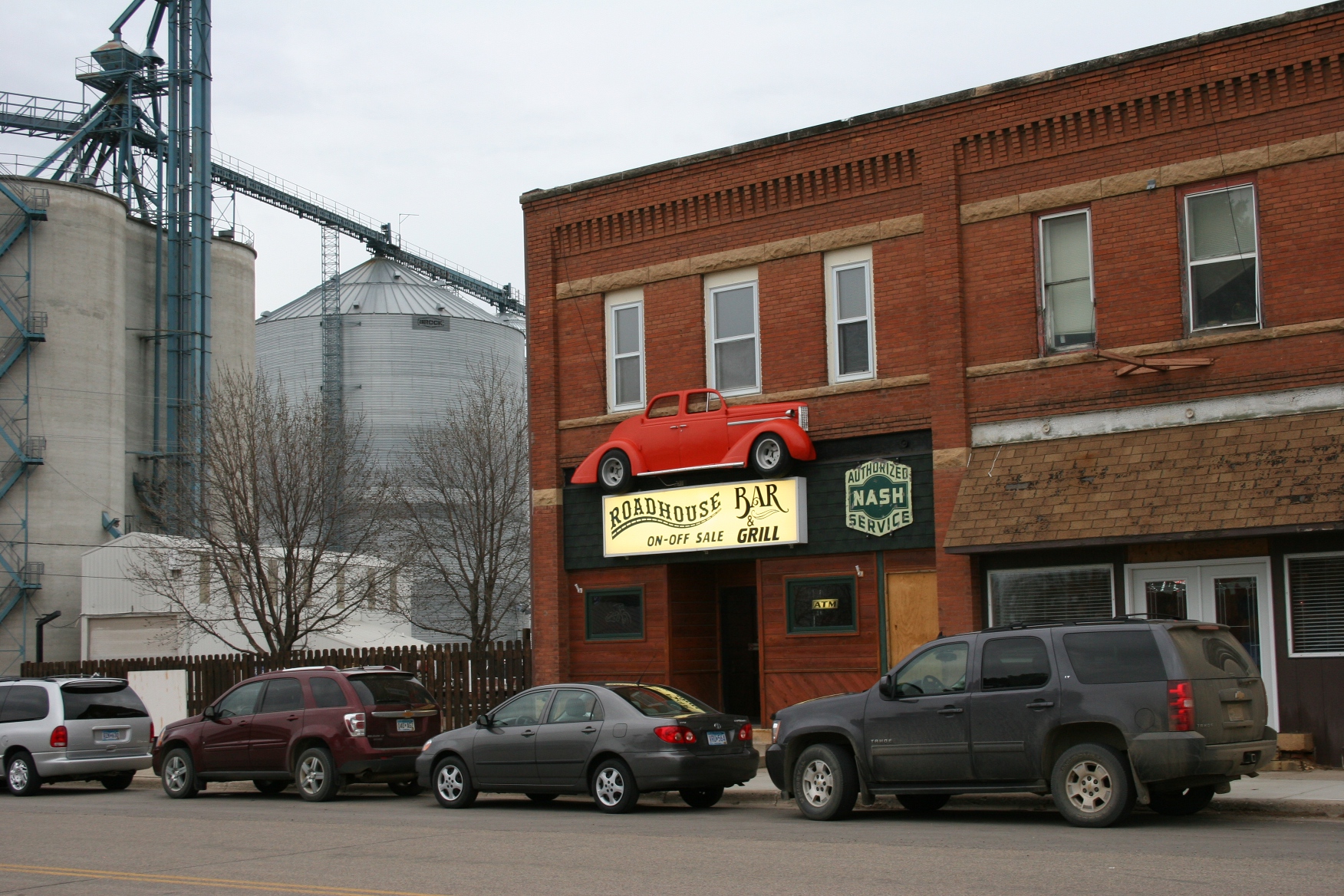
The Roadhouse Bar & Grill is a popular gathering and dining spot in Wabasso. During the summer, old car enthusiasts and motorcyclists gather here for Tuesday evening "Roll-ins" that draw up to 1,000 people. There's plenty of outdoor seating on a sprawling patio where a hamburger bar is set up for the popular event. The Grill also offers an extensive burger and sandwich menu with reasonable prices.

WITH A HALF HOUR wait before we could be seated at the Roadhouse Bar and Grill in Wabasso on a recent Saturday evening, I hit the sidewalk determined to photograph the Main Street of this small southwestern Minnesota town where I attended high school.

This road-side sculpture welcomes travelers to Wabasso, which means white rabbit.

I have, through the decades, discovered minimal familiarity among most Minnesotans with Wabasso, a Redwood County farming community of around 650 that links to Henry Wadsworth Longfellow’s poem, “The Song of Hiawatha.”

Longfellow writes in his section on the Four Winds:

“Honor be to Mudjekeewis!”
Cried the warriors, cried the old men,
When he came in triumph homeward
With the sacred Belt of Wampum,
From the regions of the North-Wind,
From the kingdom of Wabasso,
From the land of the White Rabbit.

I’ve always been told that Wabasso is an Indian word meaning “white rabbit.” I never learned of the poetic connection until researching on my own; English teachers at Wabasso High never taught this, that I recall. I doubt many of the locals are aware of Longfellow’s reference.

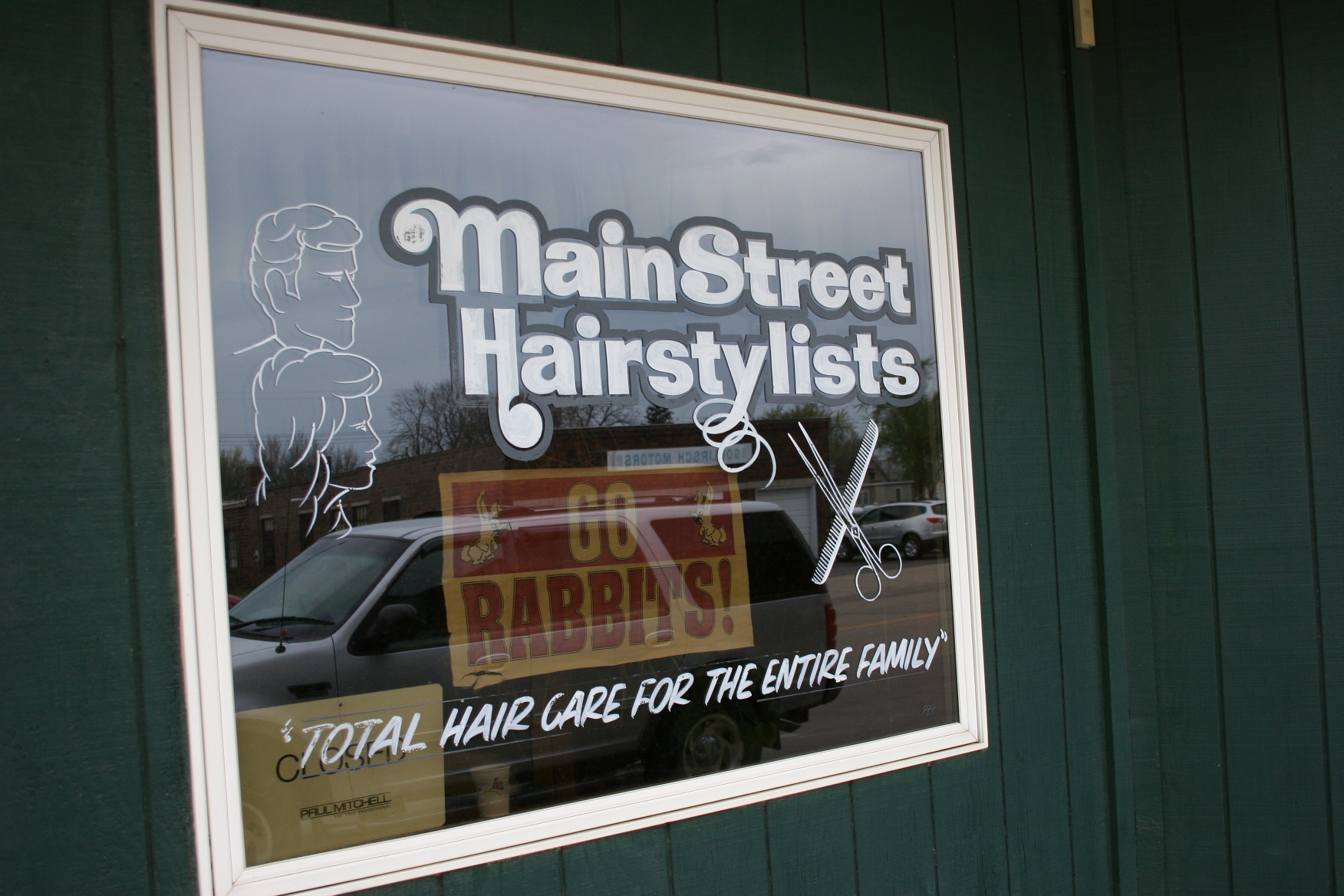
Wabasso is decidedly proud of its white rabbit namesake, though. You’ll find an oversized rabbit statue along State Highway 68 on the south side of town. The public school mascot is, of course, a white rabbit. And, as I found, even local businesses support the Rabbits via storefront signage.

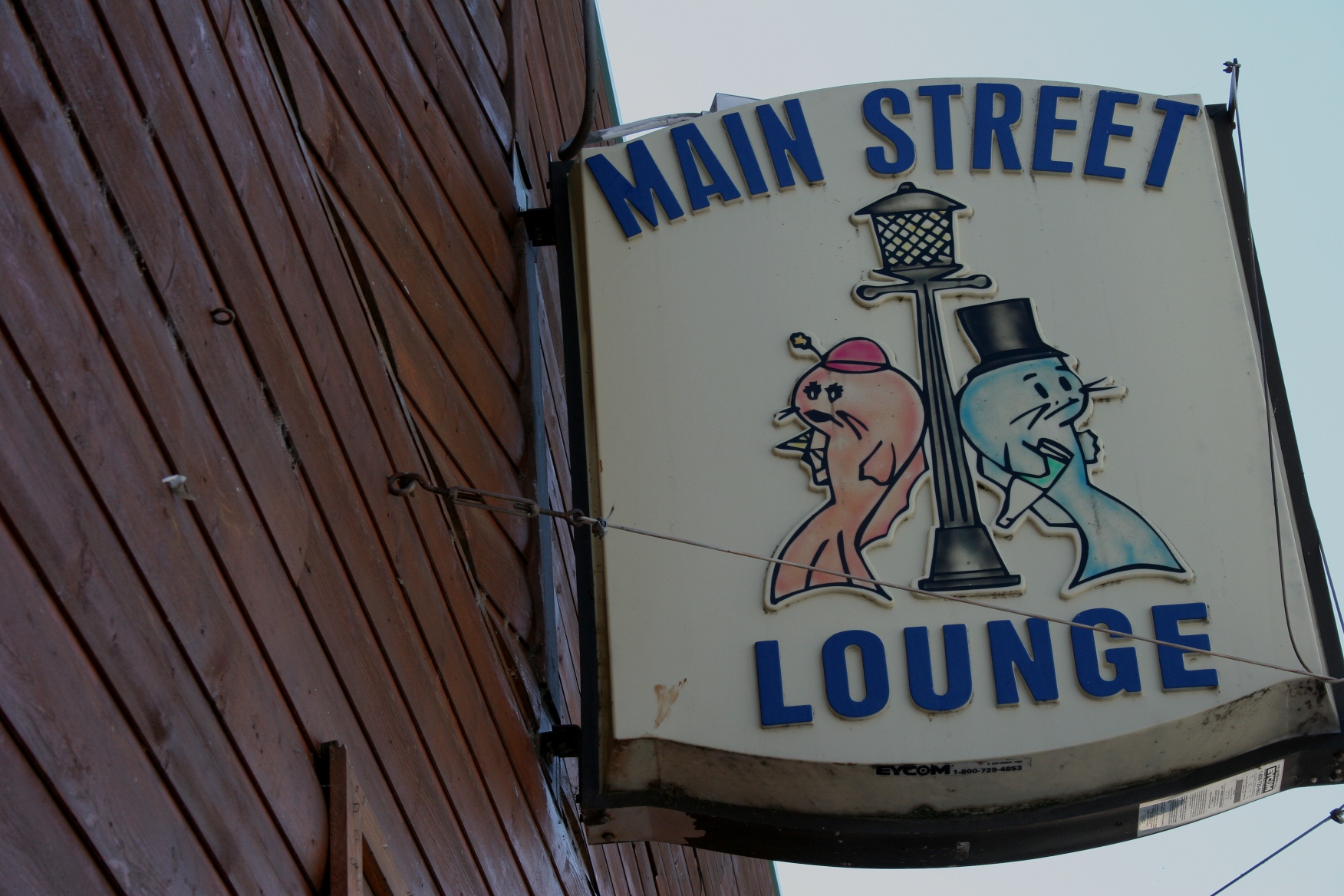
Wabasso’s downtown business district is typical rural Minnesota with a mix of well-kept and deteriorating buildings that border a broad street. Attempts to modernize once stately brick buildings with wood and metal fail and make you wish for a money bag of gold to restore such structures to their original grandeur.

But for now, in this economy, one must choose to appreciate the imperfections of Main Street as adding character to a community like Wabasso, home of the white rabbit.

A broad view of a block along Wabasso's Main Street on a recent Saturday evening.

Wabasso is a strong agricultural-based community. The outgoing Future Farmers of America Minnesota State President Hillary Kletscher (my niece) graduated from Wabasso High School in 2011.

A sign supporting the high school sports team hangs in a salon window.

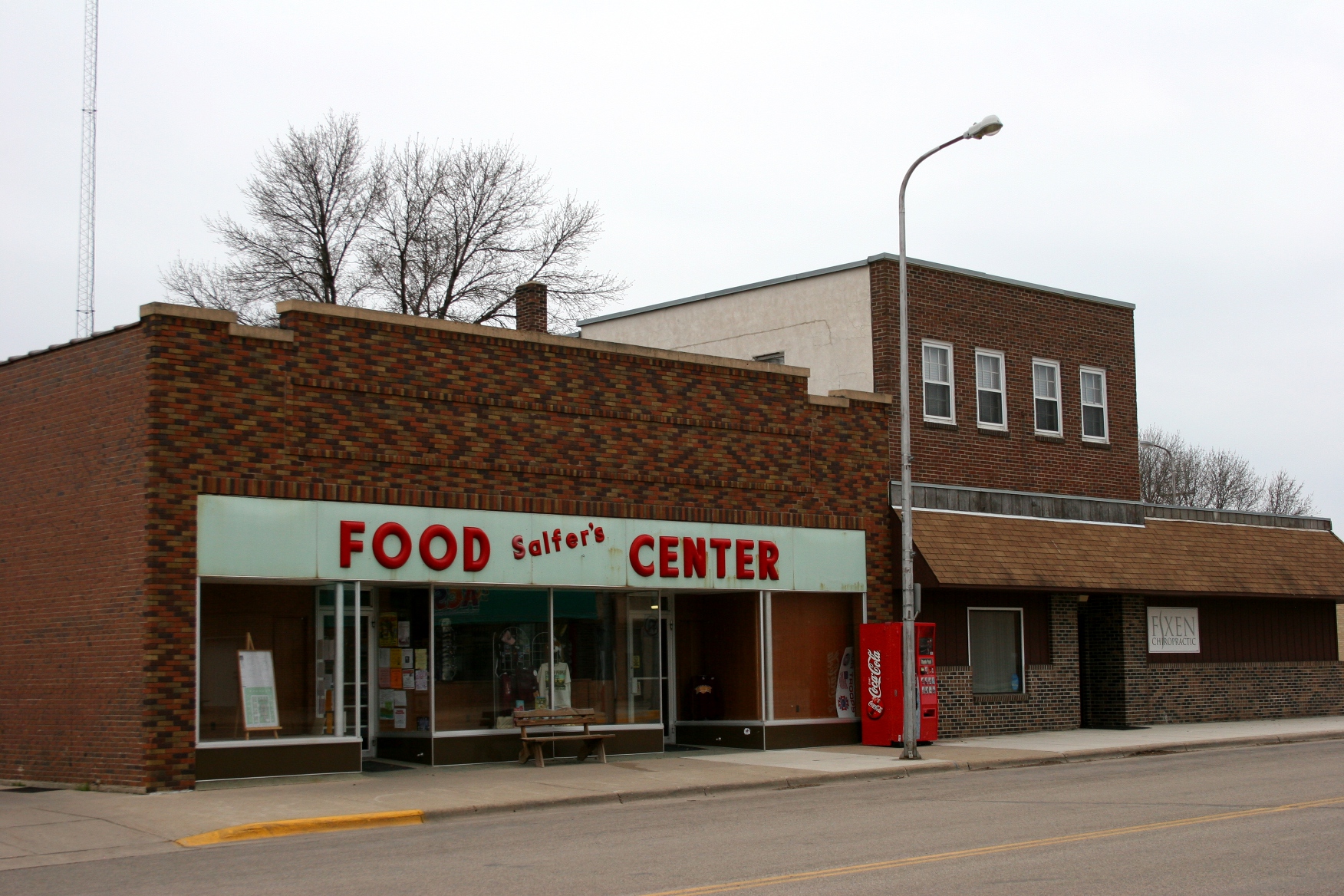
Wabasso is fortunate enough to still have a grocery store.

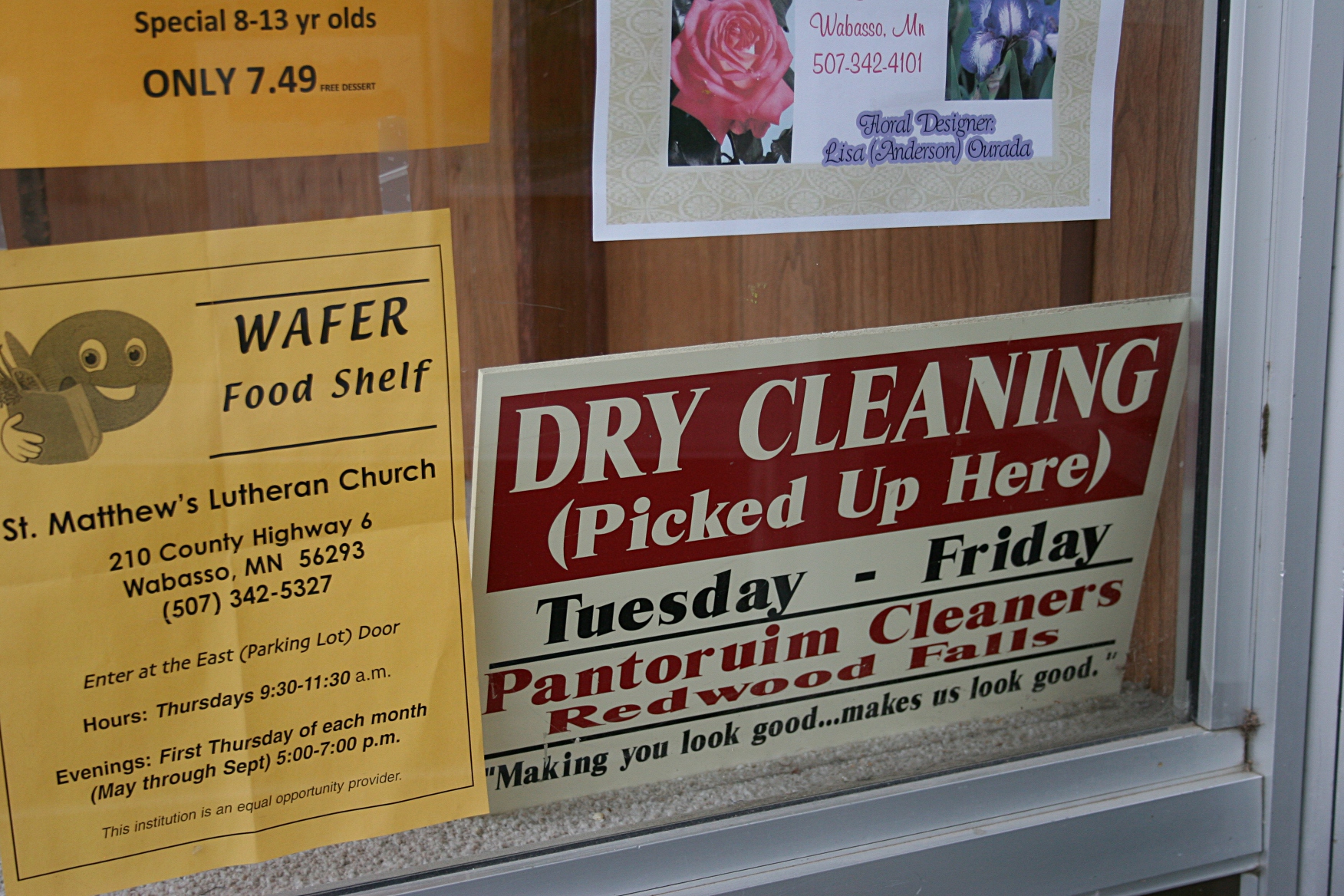
Signage in the window of Salfer's Food Center.

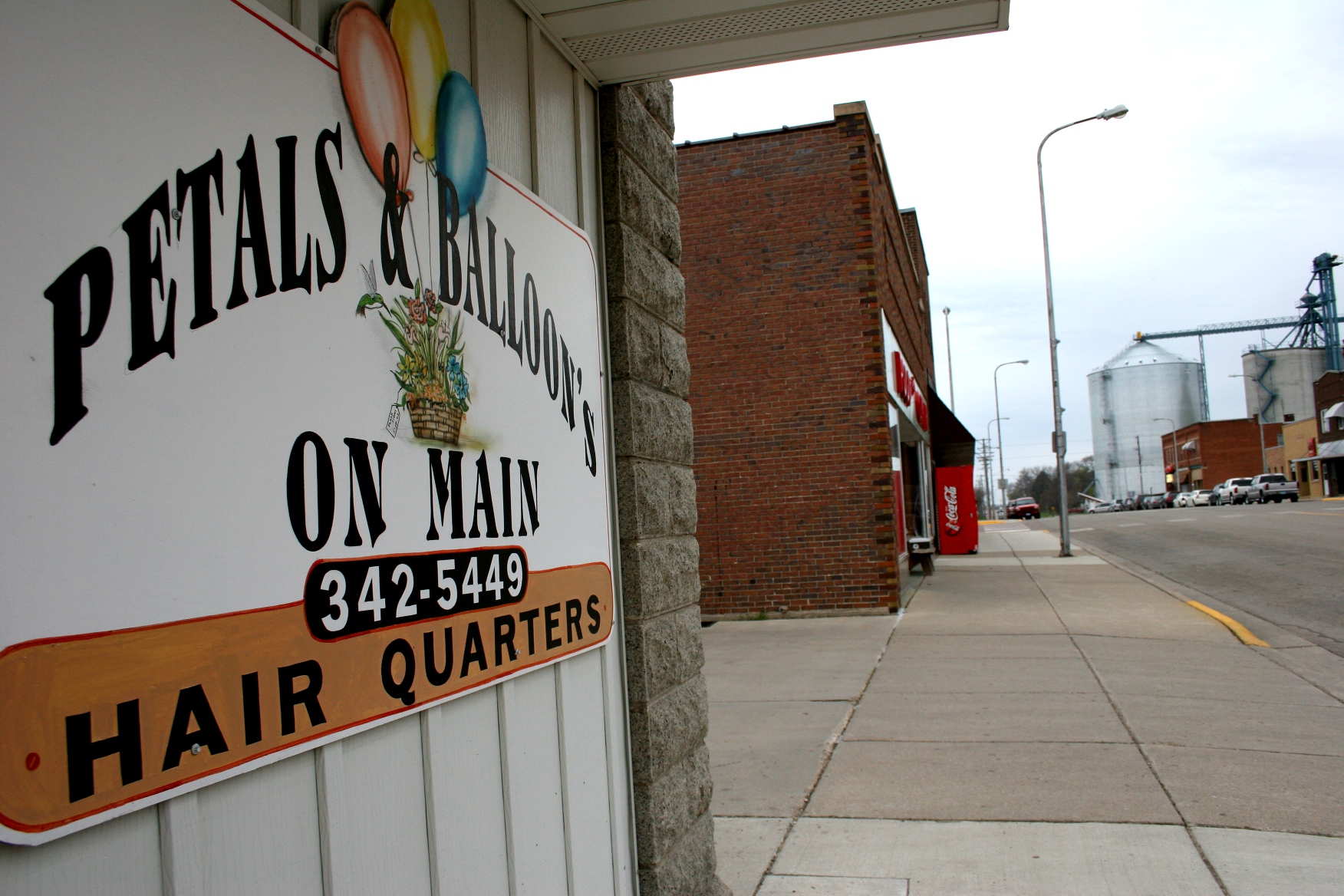
My WHS class of 1974 classmate Marcis owns this combination floral shop and hair salon along Main Street. Marcy was also waiting tables at the Roadhouse the Saturday evening I was in town.

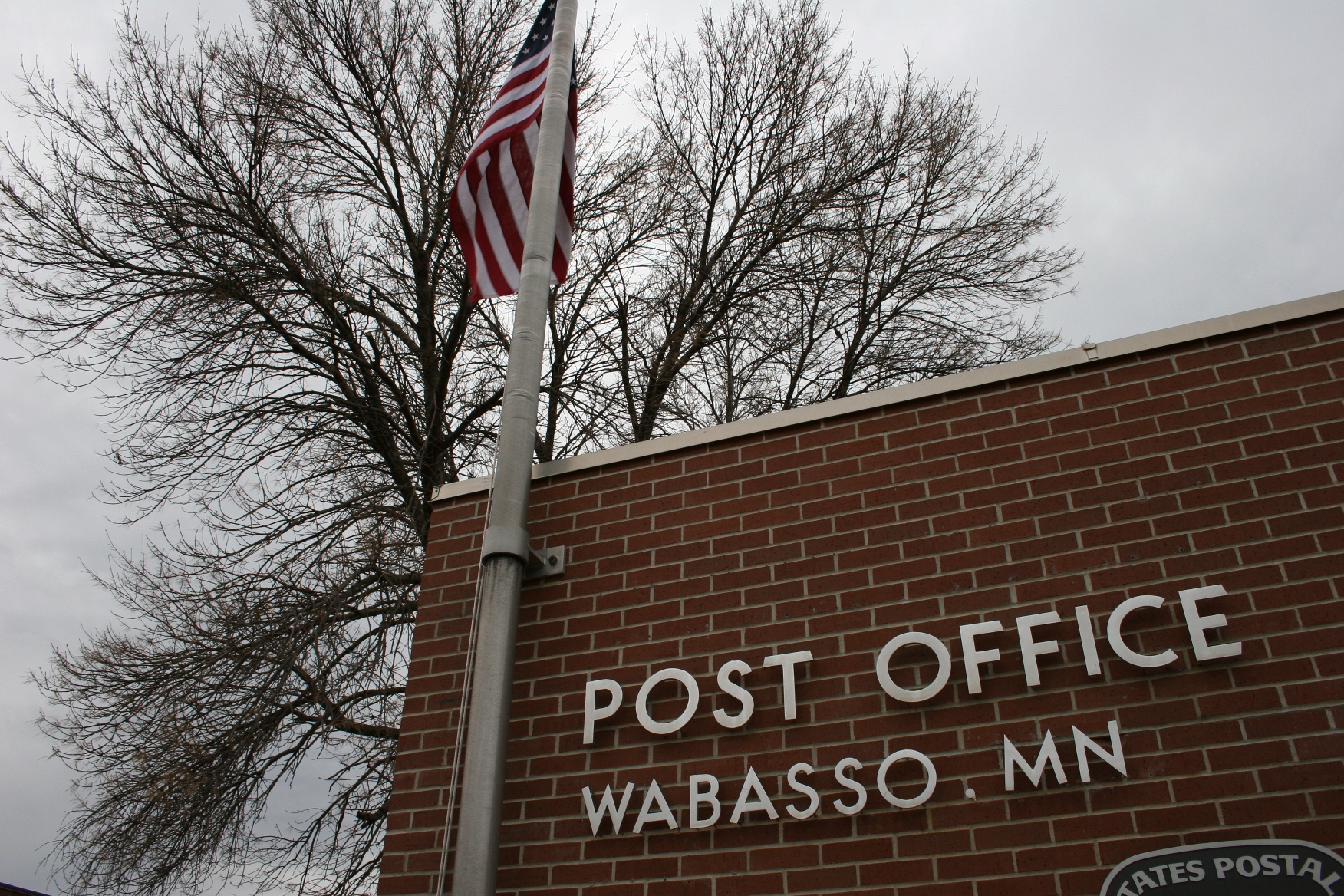
Wabasso is fortunate to also still have a post office, unlike more and more rural communities in Minnesota.

THE PHOTOS IN THIS POST are similar in content to those printed in the just-published spring issue of Minnesota Moments magazine. Photographer Ryan Ware of Chaska and I contributed 16 images from 14 small towns to a photo essay titled “Touring Main Street in Small Town, Minnesota.” The essay is only a small sampling of the hundreds, perhaps even thousands, of images we have taken of small towns and rural areas. Both natives of southwestern Minnesota, Ryan and I share a passion for photography that connects us to our rural roots. I would encourage you to check out Ryan’s photos at his Fleeting Farms blog by clicking here.

CLICK HERE to reach the Minnesota Moments website.

CLICK HERE for more information about the Roadhouse Bar & Grill.

CLICK HERE to learn more about Wabasso.

© Copyright 2012 Audrey Kletscher Helbling


In Clintonville: I survived the 1.5 March 28, 2012

Filed under: Uncategorized — Audrey Kletscher Helbling @ 11:52 AM
Tags: , , , , ,

The Booms Are Back! Residents of Clintonville Are Reporting Very Loud Noises on Tuesday Night!

So screams the headline scrolling across the Clintonville Chronicle website today as this Wisconsin community northwest of Green Bay experiences yet more unsettling booms following a recent 1.5 magnitude earthquake that rattled residents.

Since my second daughter lives in Appleton about 40 miles to the south, I’ve taken a special interest in Clintonville. Geologists determined that a “swarm” of earthquakes, amplified by Wisconsin’s unique bedrock, caused the shaking and sonic type booms that have awakened and frightened residents in this town of 4,736.

Yes, I would be scared, too, if the earth started rattling and rumbling.

And, just for the record, my daughter has been to the small medical clinic in Clintonville for her job as a Spanish medical interpreter, although not recently.

In perusing the newspaper website, I am happy to see that Clintonville is already embracing the economic opportunities that come with being thrust into the national spotlight. T-shirts emblazoned with “I Survived the 1.5” can be purchased in Clintonville or ordered online. Click here for more information about those shirts.

T-shirt sale profits “will be used to beautify or enhance something in our City as determined by the Mayor at a later date,” promo info reads. “This is not meant to make light of a serious situation but to show that we, as a community, came together to get through the events of this week.”

Let me interject here to applaud the folks of Clintonville. This is one of the attributes I admire in small towns. Togetherness.

I expect that the earthquake marks the biggest news event ever in Clintonville. In a typical week, you’re more likely to read top stories like these from the March 20 Chronicle: “Clintonville Sheep Now Famous,” “Christus to Host Spring Luncheon” and “Sheriffs Seek Evidence of Burglary” rather than “City of Clintonville is Booming.” Click here to access the award-winning Chronicle home page.

All of that booming has also prompted some Clintonville residents to purchase earthquake insurance. (Click here to see a map of  March 19 – 21 quake-related reports from Clintonville.) My daughter mentioned the insurance sales to me yesterday during a noon-time phone conversation, just before she headed out the door to a clinic in New London, some 15 miles south of Clintonville.

WHAT ARE YOUR thoughts on an earthquake in Wisconsin, of all places?

© Copyright 2012 Audrey Kletscher Helbling
 

What’s your line? January 31, 2012

WHAT LINES DEFINE your world? Horizontal or vertical?

Perhaps you’ve never considered that question. But ponder that for a minute.

Where do you live? Where do you work? What lines define your environment?

Do you live in the city, the country or a small town? Do you live on the prairie, in the mountains or somewhere in between?

My world has always been horizontal. I prefer it that way—flat and unbroken by vertical obstacles. Towering buildings overwhelm me; make me feel small, visually overpowered and uncomfortable.

Can you understand that? Perhaps if you grew up or live in a rural area, you do.

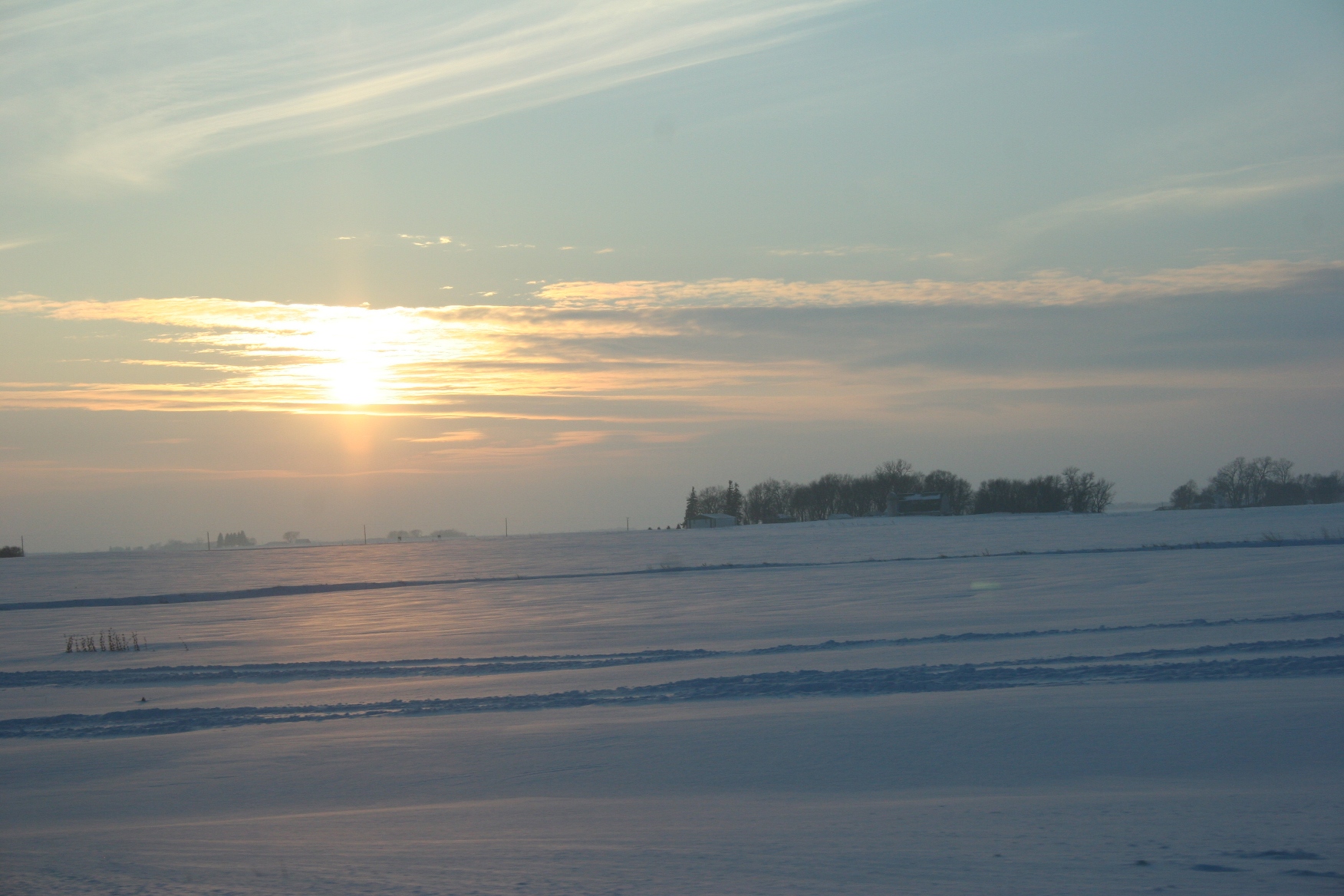
The sun sets on my native southwestern Minnesota prairie in this December 2010 image.

I traveled to Chicago once during college, and to New York. While touring the garment district in the Big Apple, I was nearly flattened by a vendor pushing a rack of clothing as I paused on the sidewalk to gawk at the skyscrapers. In Chicago, I struggled with sleeping in a hotel that stretched too far into the sky.

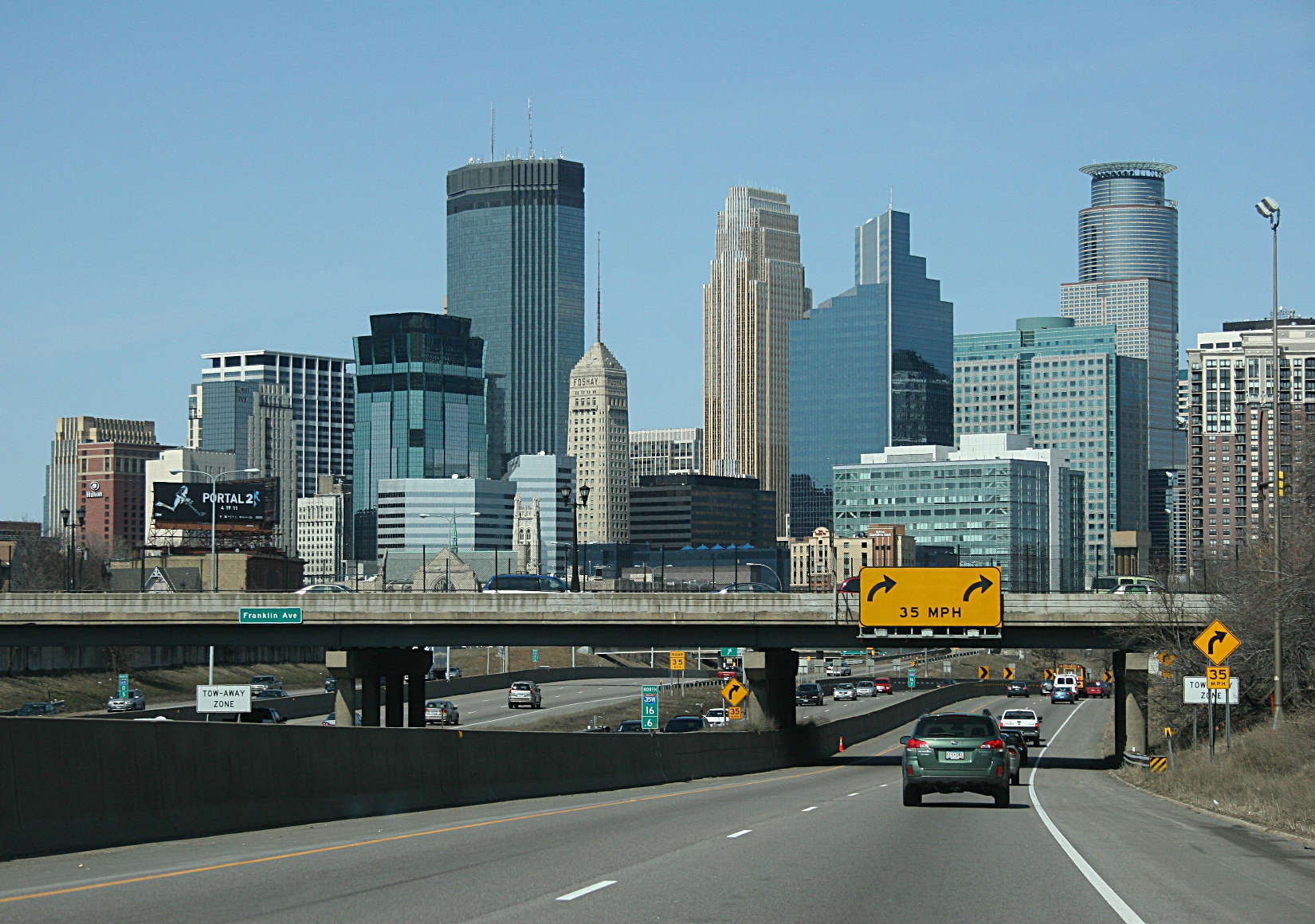
A view of the Minneapolis skyline from Interstate 35.

I can’t recall the last time I visited downtown Minneapolis, but I’m certain it’s been decades. I’ve never been to any other big cities and I have no desire to travel to them.

Some of you will say I am missing out on culture and shopping and so much more by staying out of the city. You would be right.

But to counter that, I will tell you many a big city resident fails to leave the confines of the city to explore the small towns and rural areas that offer grassroots culture and shopping and much, much more.

I am not trying to pit city against country, horizontal against vertical, here. Rather, I’d simply like you to think about your world from a visual perspective. Then, tell me, what lines define your landscape? Vertical or horizontal, or a mixture of both?

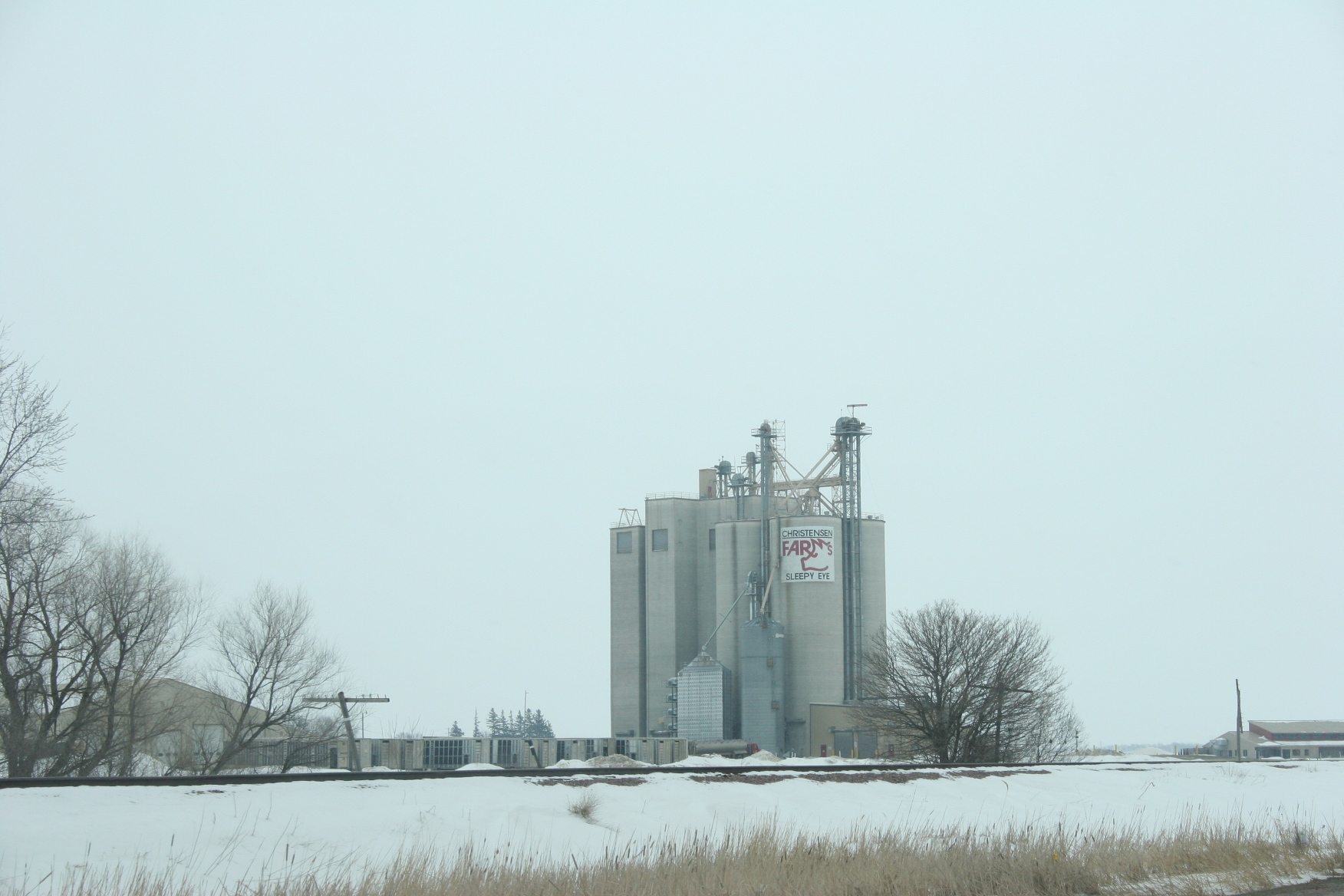
Even in rural Minnesota, vertical lines occasionally break the horizon, like this scene at Christensen Farms along U.S. Highway 14 east of Sleepy Eye in southwestern Minnesota.

The strong horizontal lines of railroad tracks and trains cross the flat prairie landscape of southwestern Minnesota. I shot this along U.S. Highway 14 between Springfield and Sleepy Eye as snow fell late on a March morning in 2011.

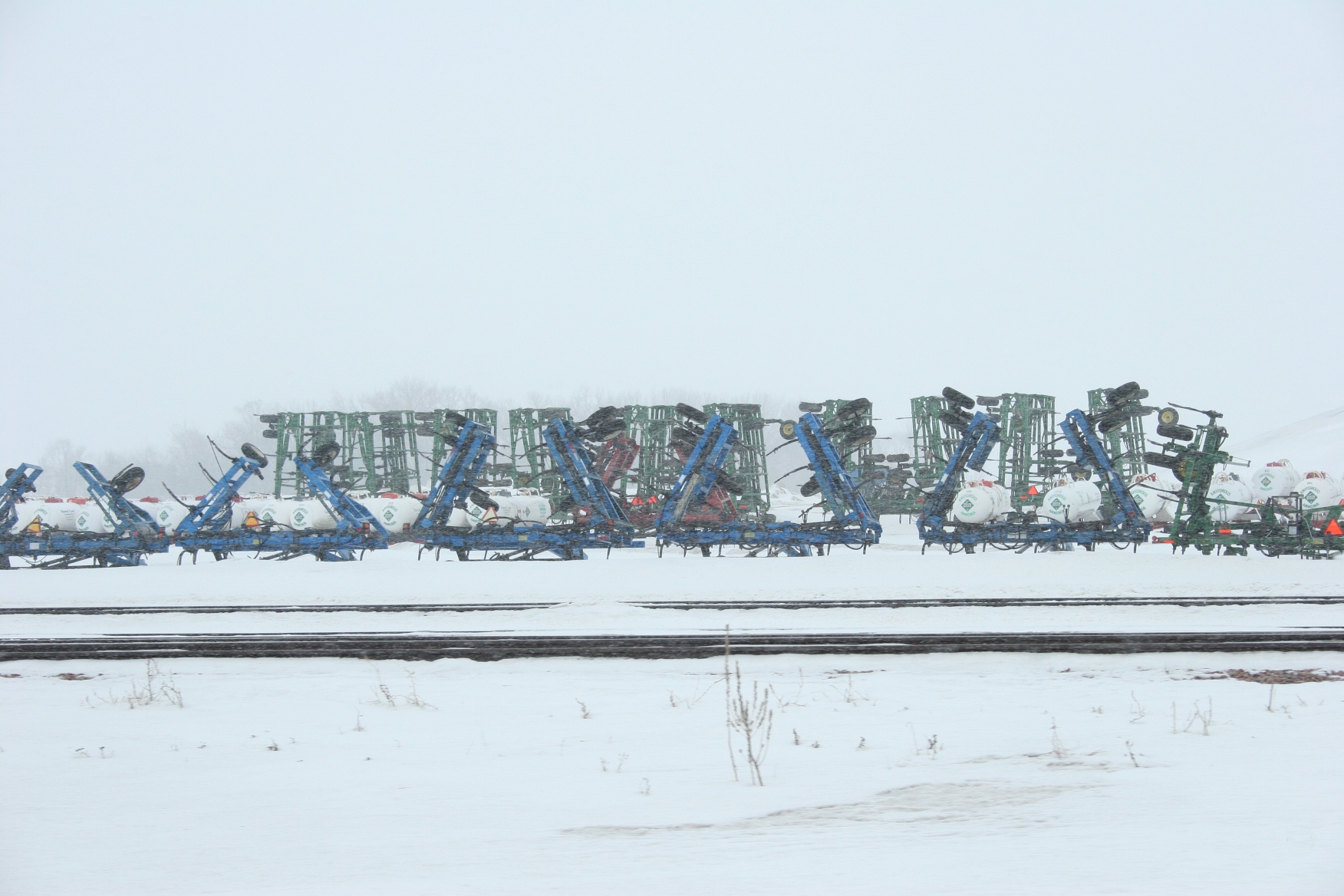
Railroad tracks and diggers slice precise horizontal lines across the landscape in this March 2011 image shot while traveling U.S. Highway 14 between Springfield and Sleepy Eye, in my native southwestern Minnesota.

I live in Faribault, an hour's drive south of Minneapolis along Interstate 35. While I certainly don't consider Faribault, with a population of around 22,000 to be a small town, it's definitely not urban. I shot this pastoral scene last spring several miles west of town near Roberds Lake.

© Copyright 2012 Audrey Kletscher Helbling
 

Appreciating Main Street December 6, 2011

Filed under: Uncategorized — Audrey Kletscher Helbling @ 8:01 AM
Tags: , , , , , , , ,

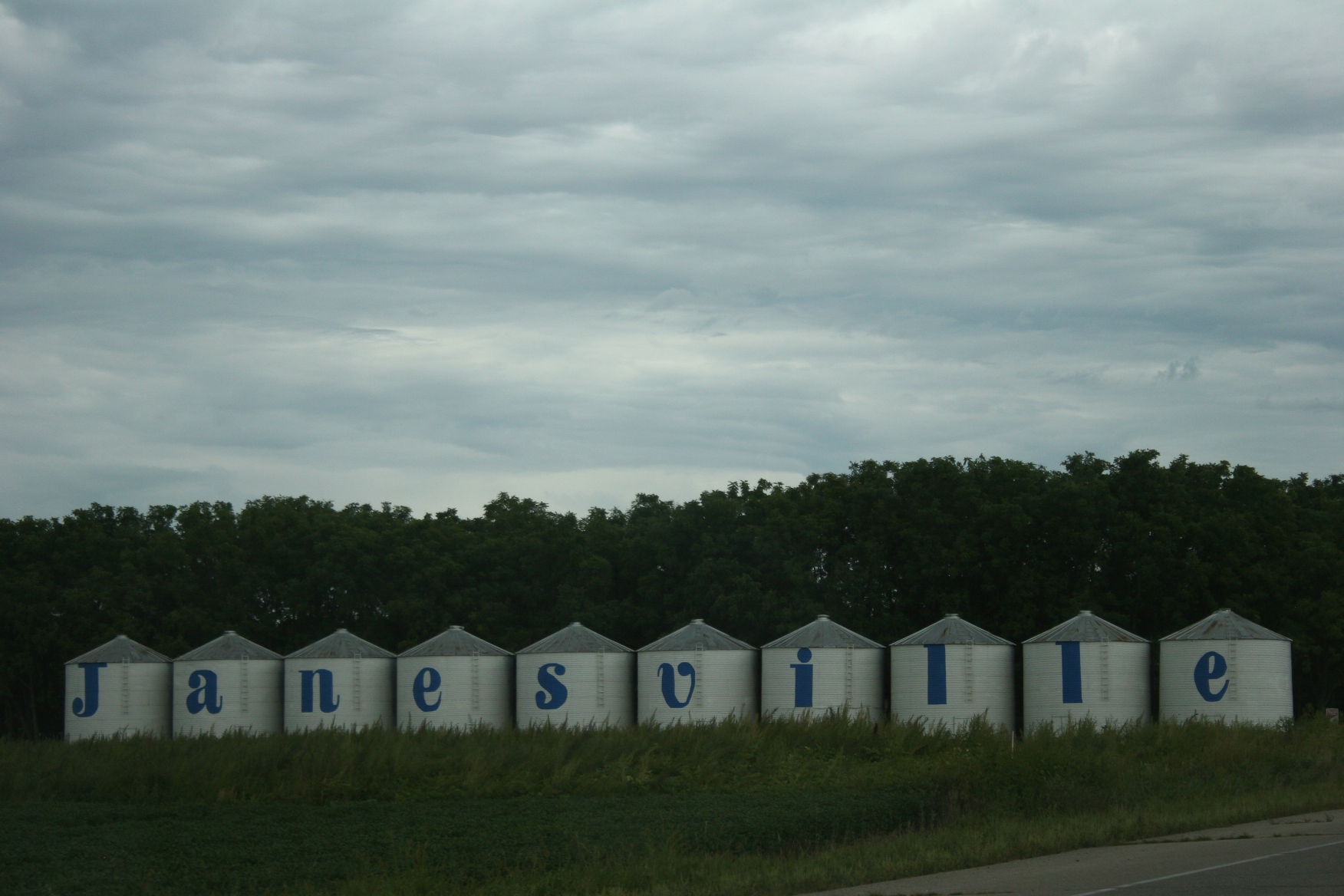
Entering Janesville from the west along old Highway 14, you'll see this grain bin signage welcoming you to town.

I REMEMBER YEARS ago driving through the heart of Janesville along well-traveled U.S. Highway 14 in southern Minnesota. The town of 2,100 teemed with traffic following this main east-west route.

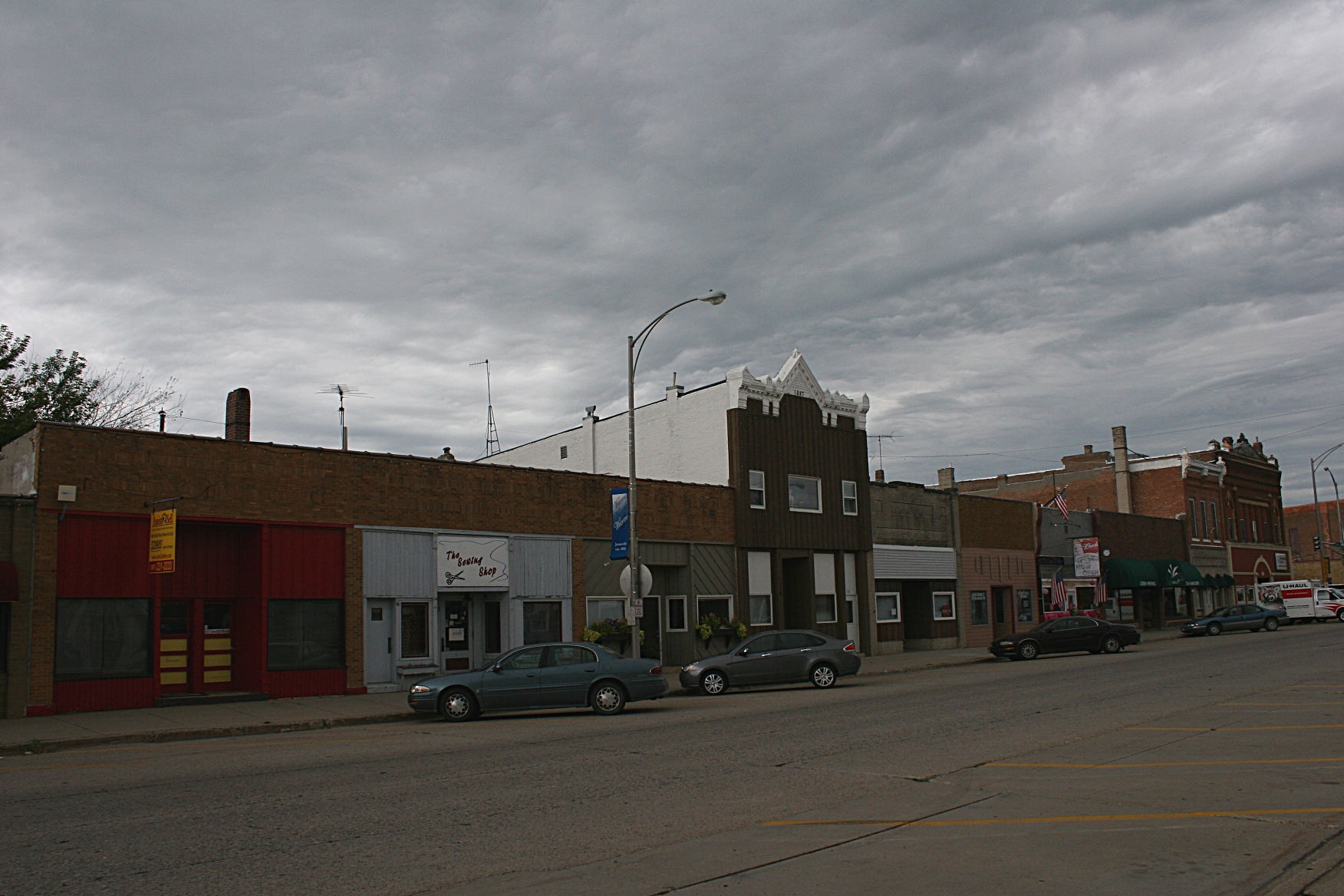
Today, as motorists bypass Janesville along the four-lane highway completed in 2006, the town barely stirs on a Sunday afternoon. Certainly, I should have expected this change when I drove into Janesville several months ago. Yet, the stillness, the boarded up buildings, the quiet Main Street surprised me. It shouldn’t have. What other result should I expect when a major highway reroutes around a town?

Janesville's downtown business district on a Sunday afternoon in August.

I possess no stake in this community nor am I critical of the Highway 14 improvement. The fixes to this treacherous roadway were necessary for motorists’ safety. I wish all of Highway 14 across Minnesota was a four-lane route, especially the deadly stretch between Mankato and New Ulm.

But back to Janesville…I’d never turned off the highway into the downtown business district, never in all the years I’d passed through this community along the old Highway 14. I’m almost ashamed to write that. But Janesville was just one more town to slow me down in getting from one destination to another.

Therein lies part of the problem. We are all in too much of a hurry, way too much of a hurry.

We need to pause, to turn off the interstates and highways and drive onto Main Street in Small-Town, U.S.A., park our vehicles and walk. Look at the buildings. Peer in the windows. Admire the character of old buildings. Stroll into a business and make a purchase. Strike up a conversation with a local.

An antique store anchors a a downtown corner across from the elevator.

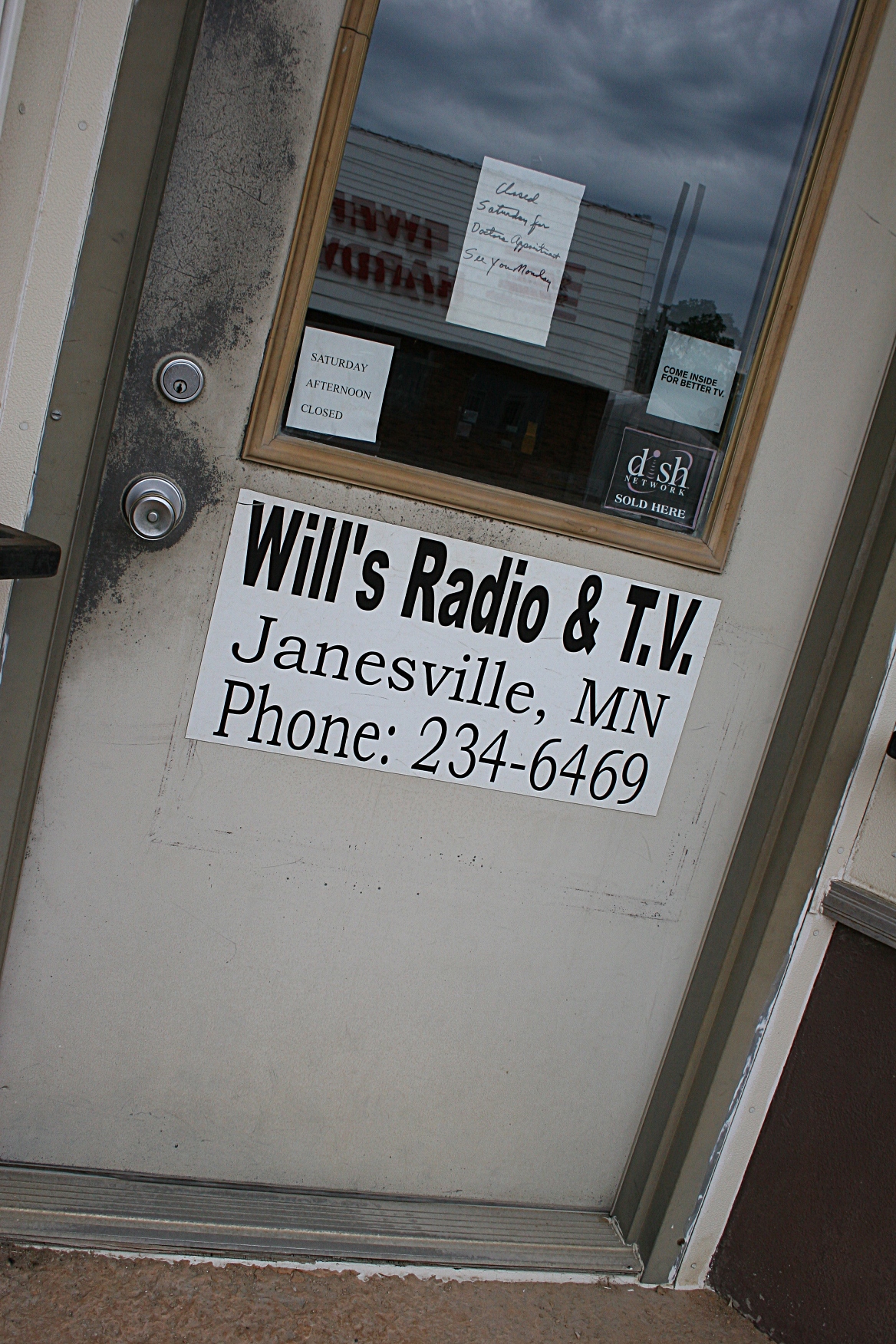
The entry to a radio and TV shop.

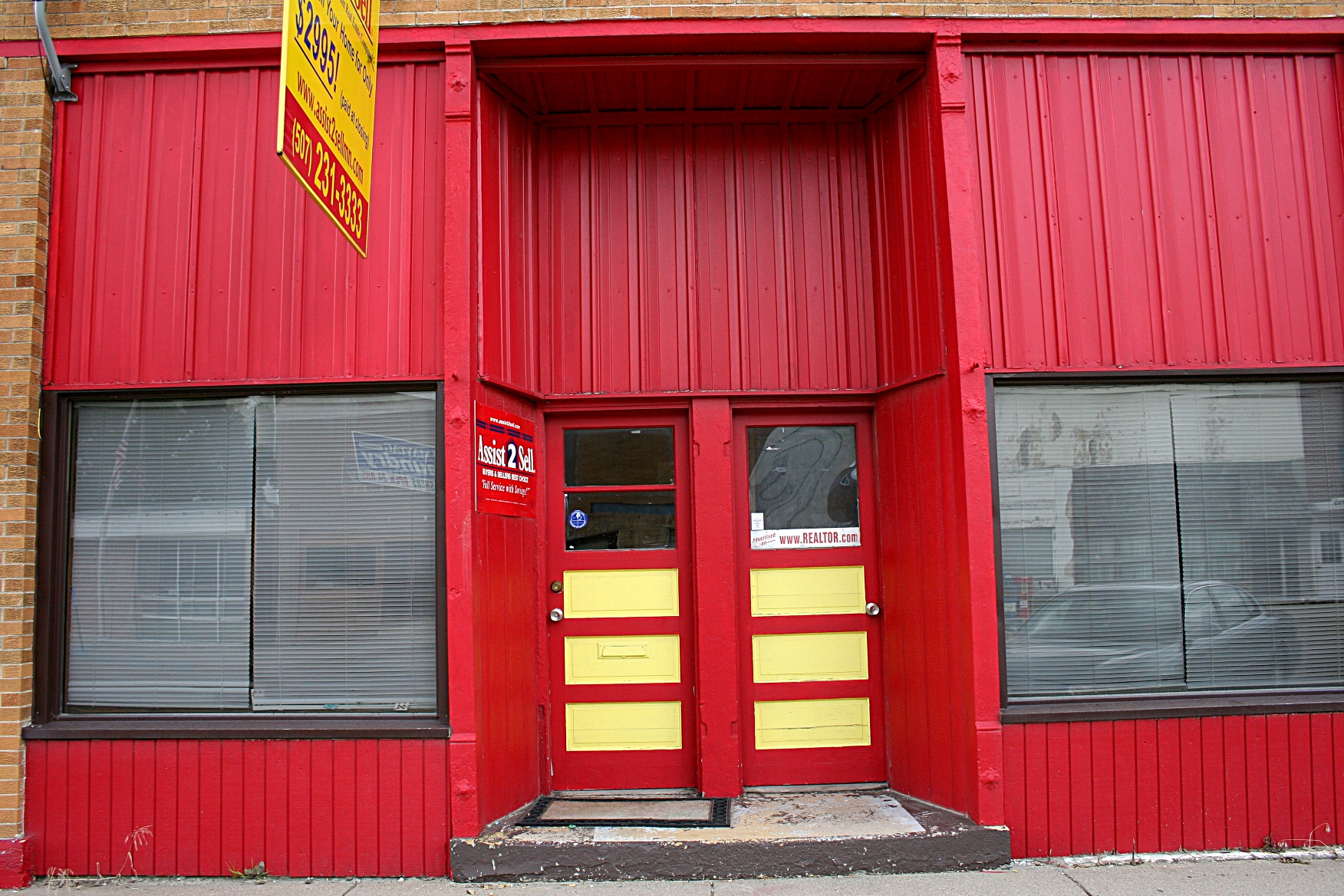
A jolt of color in downtown Janesville.

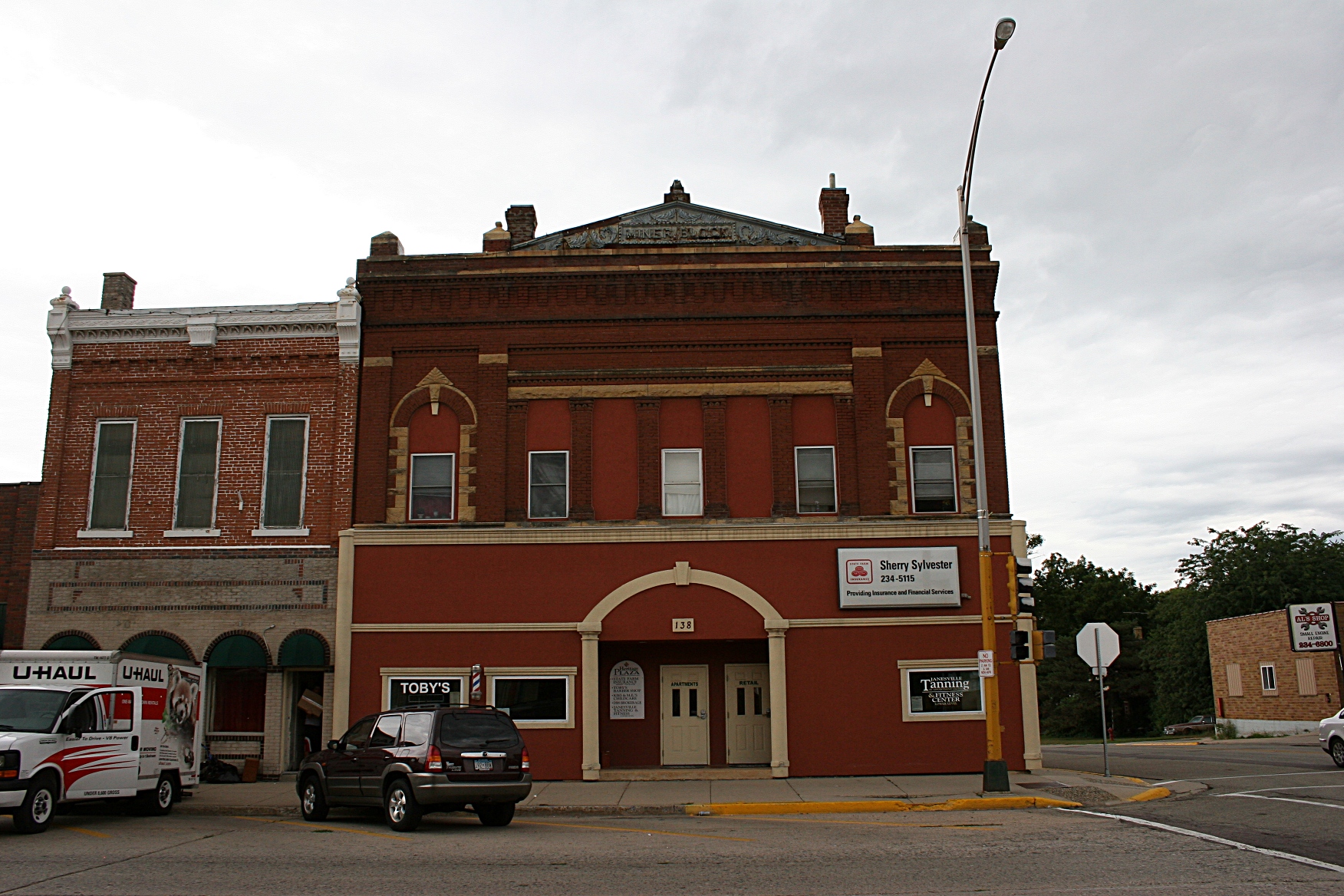
Lovely historic brick buildings grace the downtown. So much potential exists here.

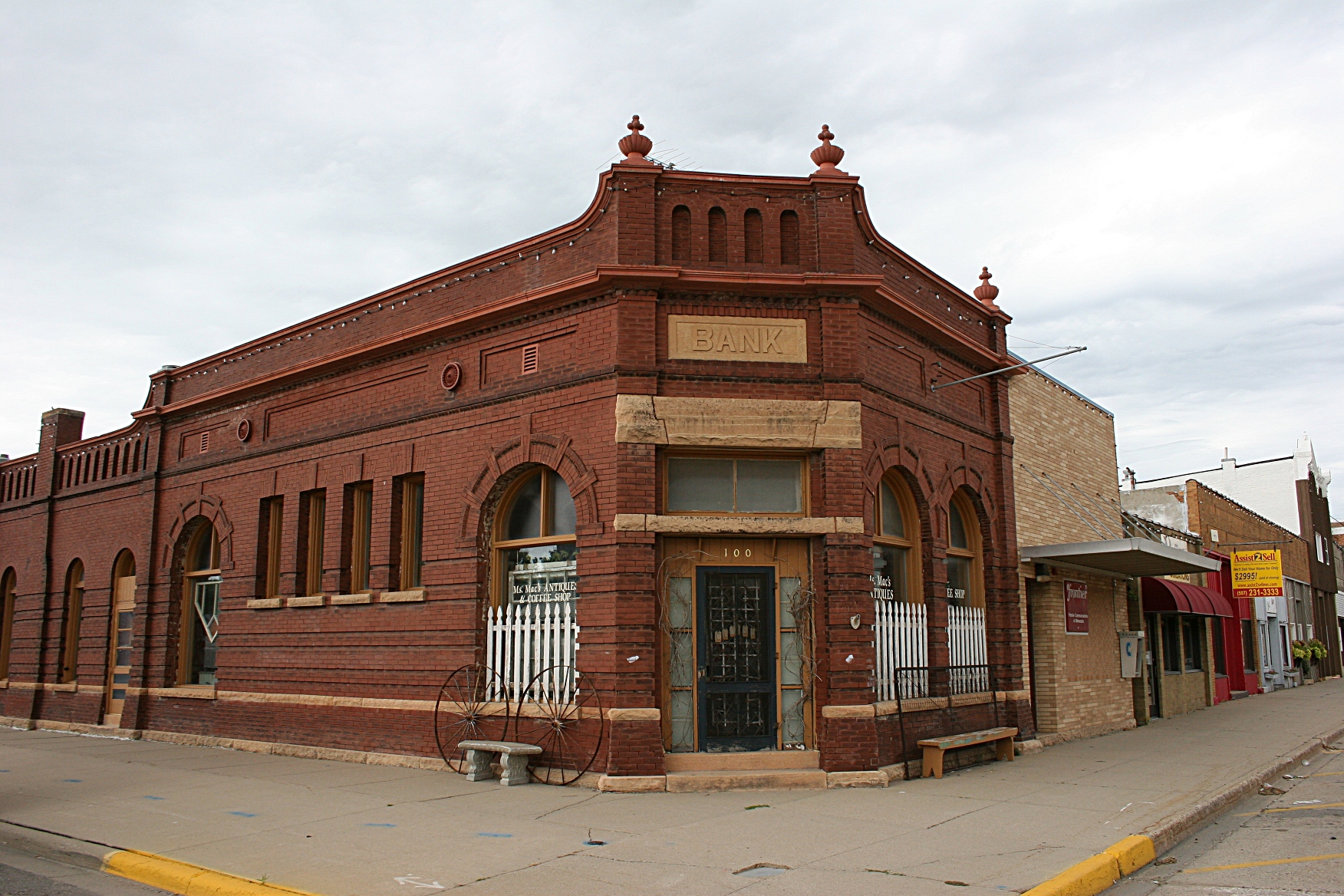
I noticed this beautiful tile outside a former bank.

More potential in this building...

The past preserved in lettering on the side of this brick building.

The intersection at old Highway 14.

I encourage each of you, wherever you live, to take the time to appreciate the small towns in your region or the Main Street in your community.

If you live in a metropolitan area, consciously choose to drive out of the city and into a rural area and onto Main Street.

If you already live in a rural area, choose to appreciate what you have, to remain positive and upbeat about your local businesses.

I expect that if I was to drive into Janesville on a week day, I’d find a busier downtown than the one I discovered on a Sunday afternoon in August. I can’t judge a community by one visit, of that I’m sure. But I do know that I can choose to slow down, look and appreciate Main Street in Small-Town, U.S.A.

So can you.

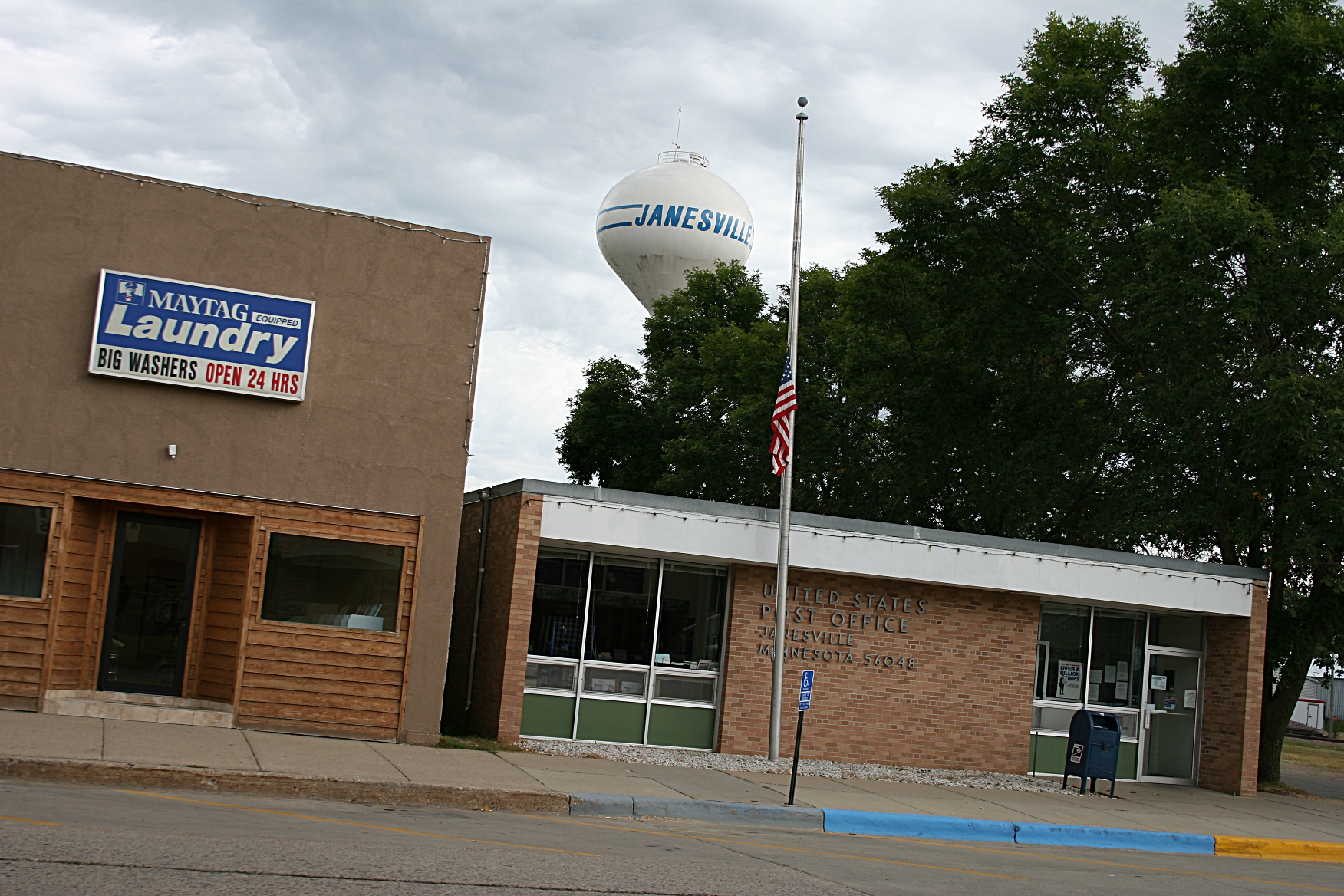
The post office, a community meeting place in small towns like Janesville.

NOTE: All of these images were taken in downtown Janesville on a Sunday afternoon in August.

© Copyright 2011 Audrey Kletscher Helbling
 

A bit of Sweden in Wisconsin October 26, 2011

J. Ingebretsen's av Stockholm on a corner in Stockholm.

STEP INSIDE J. Ingebretsen’s av Stockholm along Wisconsin Highway 35 in Stockholm, Wisconsin, population 89, and a sense of serenity sweeps over you.

Perhaps it’s the Scandinavian influence. Or perhaps it’s the charm of this quaint Lake Pepin-side village casting a spell upon you that evokes a feeling of peace.

The sign suspended from the front of Ingebretsen's, if I got the translation correct, means "crafts." The dala horse is a popular Swedish symbol.

No matter the reason, the atmosphere inside Ingebretsen’s, a Scandinavian gift shop, conveys a sense of orderliness, simplicity and a feeling that all is right with the world, or at least in this part of western Wisconsin.

On a recent day trip from Minnesota across the Mississippi River, my husband and I discovered this wisp of a village, which, except for all those inviting shops lining the main drag and side streets, would likely stand as another shuttered small town.

But Stockholm hums with activity, its streets packed with vehicles, its sidewalks teeming with folks drawn here by the quaintness, the laid-back feel of this historic place, the smorgasbord of shops that range from precisely orderly Ingebretsen’s to cluttered, books-tilting Chandler’s Books, Curios.

Step inside Ingebretsen’s, an offshoot of the main store in Minneapolis, and you’ll forget the traffic only steps away along Highway 35. You’ll focus instead on the display of dala horses. You’ll draw your hand across woolen blankets that ward off the chill of autumn, soon-to-be winter. Your eyes will turn toward the earthen-hued pottery lining shelves.

Inside the front window of Ingebretsen's, lovely pottery.

A collection of dala horses inside Ingebretsen's, a traditional symbol of Sweden. As the story goes, woodcutters from the province of Dalarna whittled away the long winter months carving these toy horses for children.

Even the pleasant shopkeeper with her crisp apron and refined demeanor fit my image of a Scandinavian. I immediately fell in love with the rough stone that defines this historic building.

You’ll admire the rough stone walls of this 1878 building, first used as a general store, then as a hotel, hardware store, confectionary, barbershop, speakeasy and café. Before it was abandoned and then reborn several years later, in 2003, as this Scandinavian import shop in Stockholm.

Wisconsin. Not Sweden.

The upper level of the restored Ingebretsen's building.

It's all about the details in Stockholm, like this clutch of flowers hugging stone at Ingebretsen's.

PLEASE READ my previous post published October 24 on Chandler’s Books and watch for more stories from Stockholm.

© Copyright 2011 Audrey Kletscher Helbling


Russell, the bookseller of Stockholm October 25, 2011

Filed under: Uncategorized — Audrey Kletscher Helbling @ 6:59 AM
Tags: , , , , , , , ,

Bookseller Russell Mattson in his shop.

The old-fashioned screen door entry to Chandler's Books, Curios.

LET ME INTRODUCE YOU to Russell Mattson, purveyor of new and used books, amateur photographer, sometime candle maker, car nut and lover of Monarch butterflies.

I met him on a recent Monday afternoon in Stockholm. Wisconsin. Not Sweden.

We struck up a conversation in his Chandler’s Books, Curios, in this Mississippi River village of 89 founded in 1851 and dubbed the oldest Swedish settlement in western Wisconsin.

You’ll find a Swedish import shop here, run by the Norwegian Ingebretsens, and an array of other quaint shops and eateries and more in this charming small town along Wisconsin State Highway 35 south of Prescott, or southeast of Red Wing, if you’re from Minnesota, like me.

Russ originally hails from St. Paul; he’s lived in Stockholm for 38 years. For 31 years, he made candles at the Minnesota Renaissance Festival before retiring in 2003. His store, once called Candles and Lanterns, previously catered candles until that market deflated.

He still makes candles now and then. He also collects swamp milkweed seed to give away in his shop, encouraging others to grow milkweed as food for Monarch butterflies.

But mostly, Russ focuses on keeping the bookshelves stocked in this cramped, don’t-meet-another-customer-between-the-shelves bookstore.

You'll find lots of book, old vinyls and other curiosities, but not much wiggle room, in Russ' shop.

If you're seeking vintage used books, you'll find them here.

The bookshelves stretch nearly to the original tin ceiling in Russ' store.
Ask Russ what sells best and he’ll pause before pointing to the rack of car books and then pulling out photos of vintage cars he once drove, wishes he still owned.
That leads him to step outside to a display table and show off the photos he’s taken, some dating back decades. Of particular interest is a blurry black-and-white image of a locomotive that looks more painting than photo.

Russ took the picture of the Canadian National in northern Minnesota in 1955 when he was only 14. He’s pretty proud of the photo. Not because it’s the best image he’s ever taken. But because of how he took the shot. He snapped the photo with his Baby Brownie by placing binoculars in front of the camera lens.

All this I learned from Russell Mattson, purveyor of books, when I asked to take his photo on a Monday afternoon in October in Stockholm.

A front window of the bookstore features an eclectic mix of merchandise.

If you need swamp milkweed seed, you'll find it in a jar on the store counter. Help yourself. It's free.

Or perhaps you need a "new" phone. Russ has one for sale "from the slow old days."

A collection of buttons inside an open drawer in the bookstore.

CHECK BACK for more photos from Stockholm, not Russ, and other Mississippi River towns in future posts.

© Copyright 2011 Audrey Kletscher Helbling