Minnesota Prairie Roots

Writing and photography by Audrey Kletscher Helbling

Montgomery, Part II: Entertaining & inspiring the folks of South Central Minnesota in an historic dance hall March 5, 2013

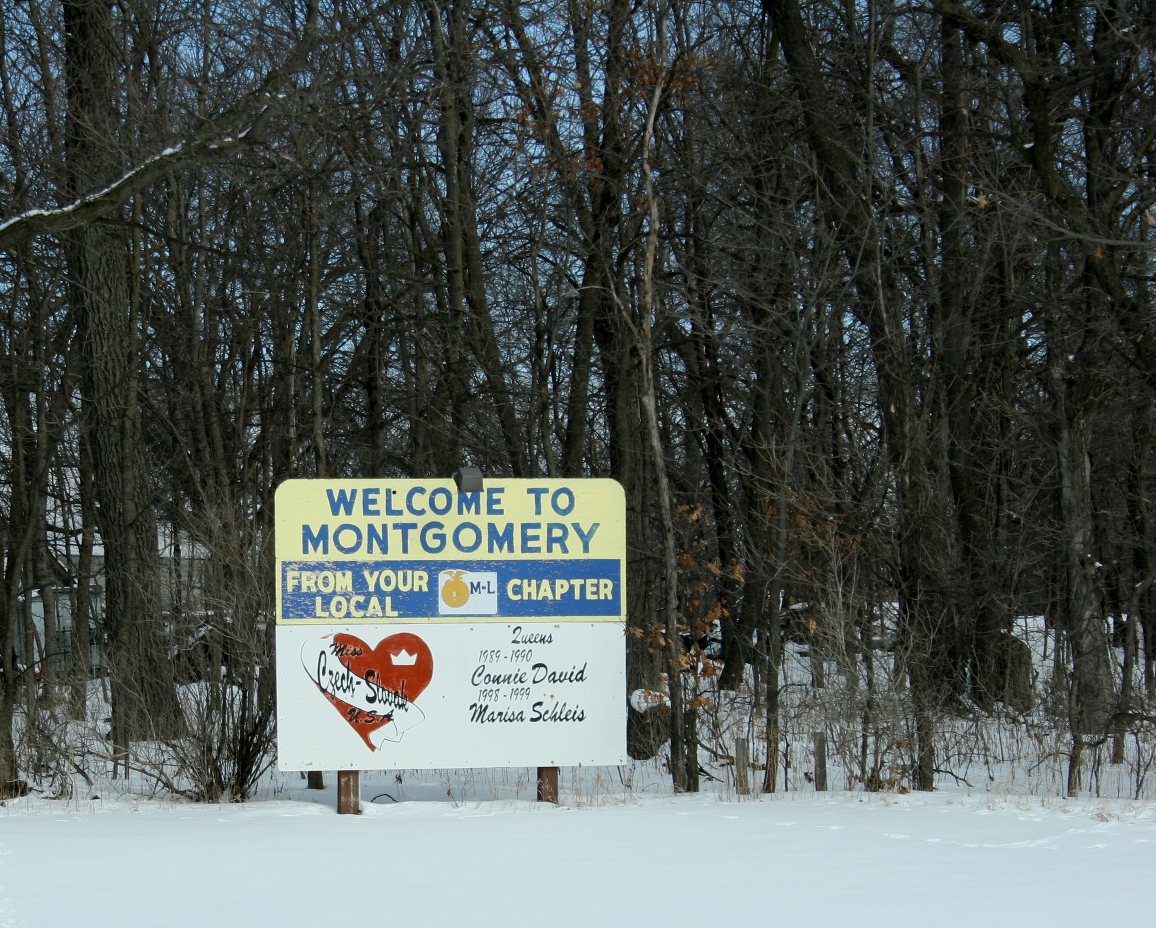
A sign just off Minnesota Highway 13 welcomes travelers to Montgomery.

A sign near the Minnesota Highway 13 and 21 intersection welcomes travelers to Montgomery.

IN RURAL SOUTHERN MINNESOTA, in the heart of Czech country, in a community with a fading welcome sign noting local Miss Czech-Slovak U.S.A. queens Connie David (1989-1990) and Marisa Schleis (1998-1999), you’ll discover an unexpected treasure.
The red-roofed building in the distance is Hilltop Hall.

The red-roofed building in the distance is Hilltop Hall.

Historic Hilltop Hall sits on the north end of First Street in Montgomery, past the library and chiropractic office, the eateries and bars, the newspaper and accounting offices, the antique shops, even farther than the bakery which bakes ethnic kolacky, just two doors up from the meat market, source of homemade sausage.
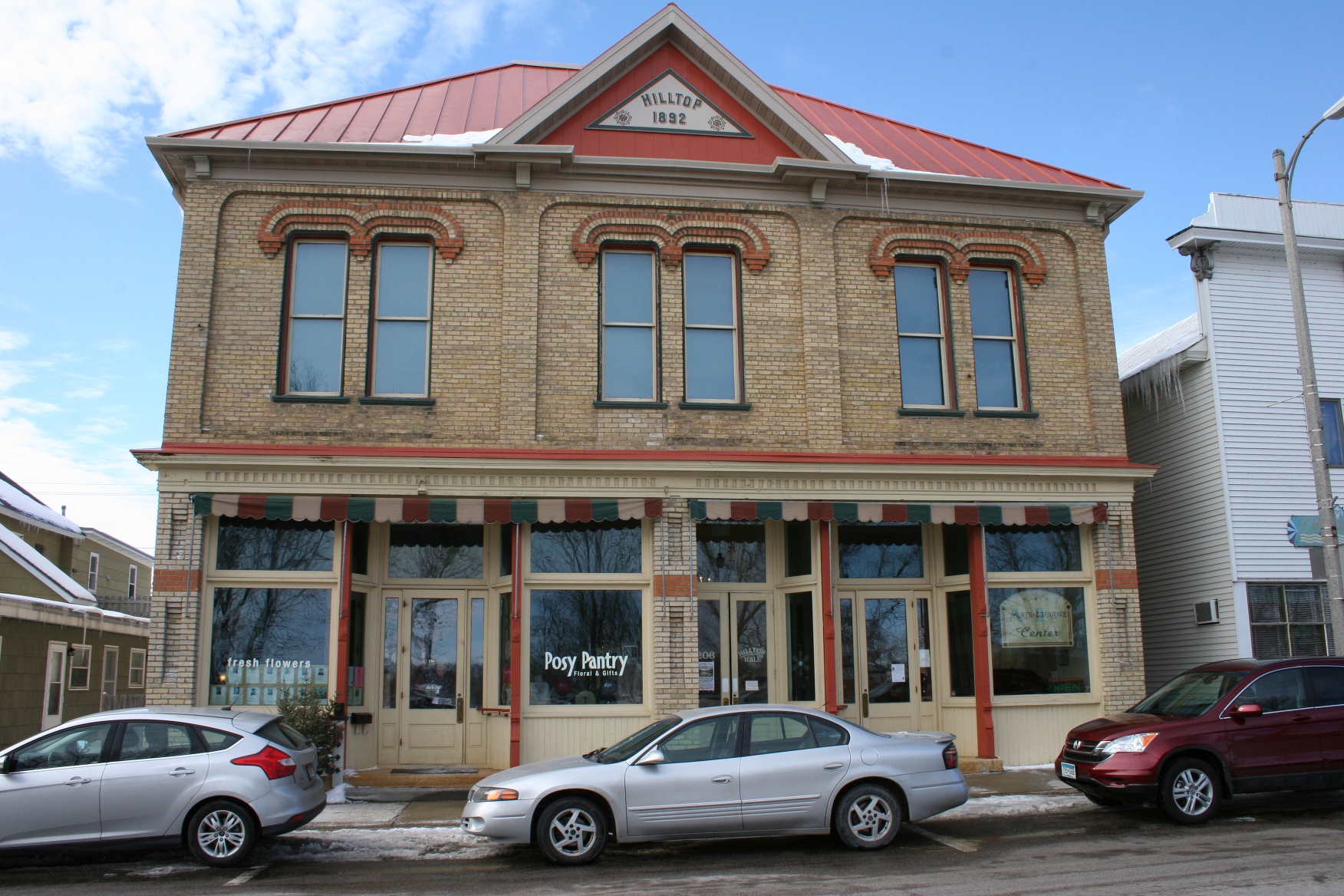
Hilltop Hall was "falling apart," John Grimm says of the building he bought in the early 1990s. He reroofed, gutted and reconstructed and/or restored the interior.

Hilltop Hall was “falling apart,” John Grimm says of the building he bought in the early 1990s. He reroofed  the hall and gutted and reconstructed and/or restored the interior.

The red-roofed 1892 brick structure on the National Register of Historic Places represents a center of culture in this self-proclaimed Kolacky Capital of the World, a farming town of nearly 3,000 notably proud of its Czech heritage.
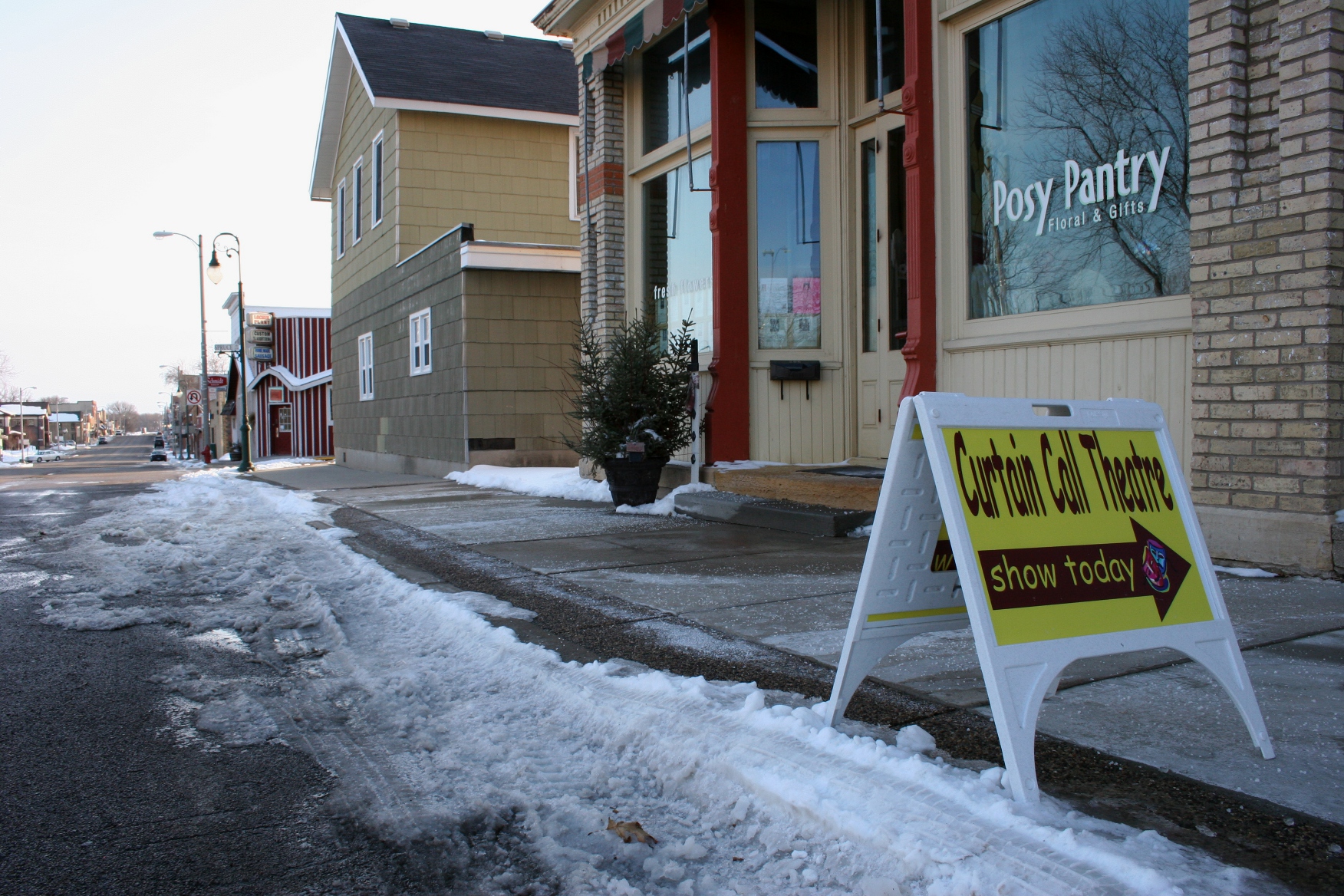
A sign outside Hilltop Hall directs guests to the Curtain Call Theatre performance of "On Golden Pond." The area theatrical group also performs in neighboring New Prague.

A sign outside Hilltop Hall directs guests to the Curtain Call Theatre performance of “On Golden Pond.” The area theatrical group also performs in neighboring New Prague.

The community should also be proud of Hilltop, a rare small town gem which hosts once-a-year comedic performances by Curtain Call Theatre and monthly Hilltop Happenings Series variety shows in the second floor 75-foot by 45-foot vintage concert and dance hall. The main floor is home to the Montgomery Area Arts & Heritage Center—featuring rotating historic and artistic exhibits—and a floral/gift shop, Posy Pantry.

Native Wisconsinite John Grimm, 72, a retired airline pilot, entrepreneur and former Le Sueur County commissioner who has lived in the Montgomery area since 1992, represents the driving force behind this cultural center nestled into a hill across the alley from St. John’s Lutheran Church.

This composer and singer—by passion, not profession—and a team of equally enthusiastic musicians six months ago revived the variety shows which have been an irregular part of Hilltop since Grimm purchased and restored the building in the early 1990s. He bought the old hall, he says, “to save a significantly historic building” and “to create a place where local folks could perform.”
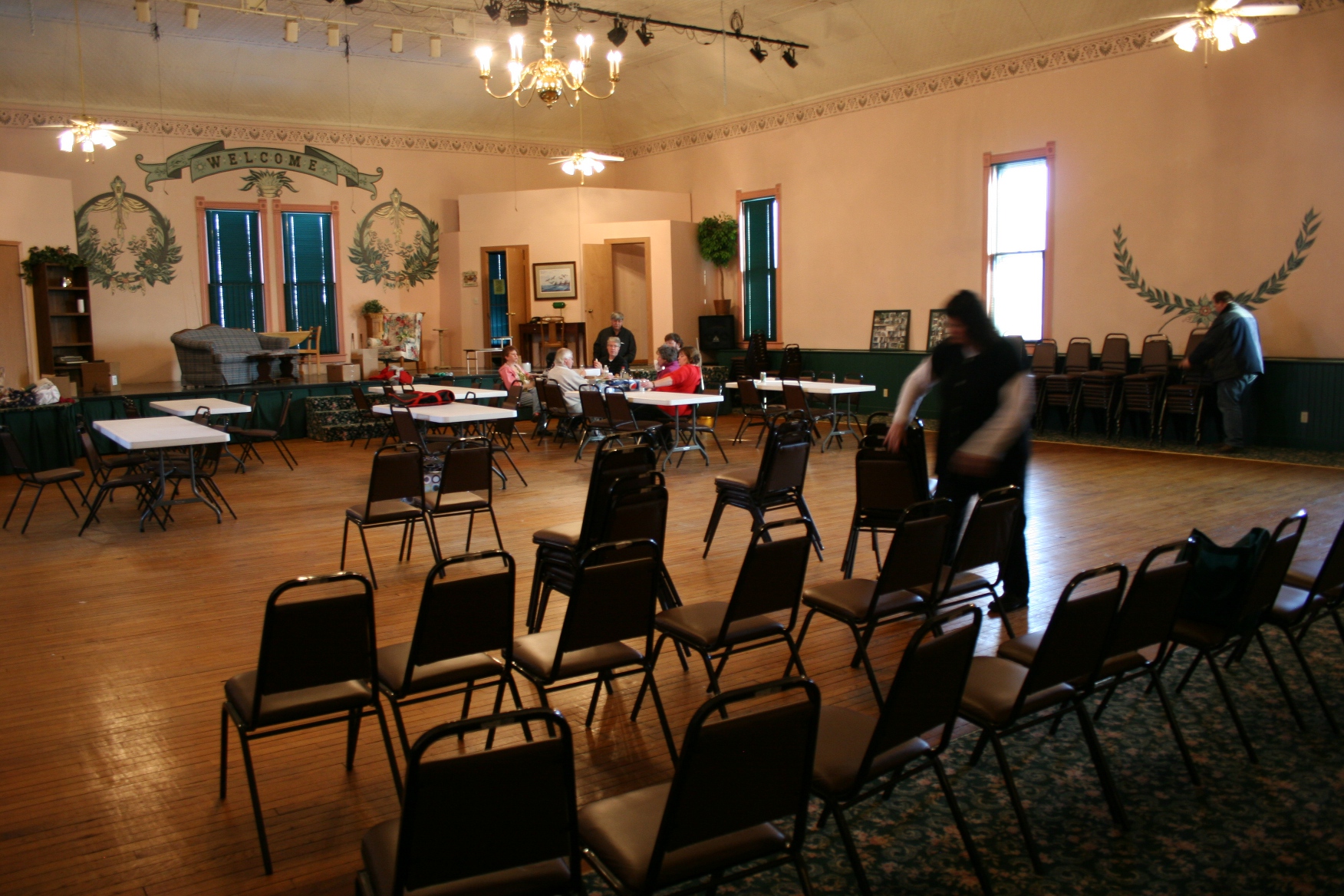
Except for a small section which was damaged by water, this wood floor is original.

Except for a small section which was damaged by water, this wood floor is original. Here volunteers stack chairs following the final performance of “On Golden Pond” while the cast enjoys pizza.

Now on Sunday afternoons, during the recently-resurrected variety shows, audiences ranging from 30 – 100 gather in the upper floor venue, feet planted on the restored wood floor, to hear next-door Lutheran pastor, Bob Kaul, strum his folk style guitar music or professional musician Craig Wasner of Northfield perform or Grimm present his Elvis impersonations (or other musical selections).

In a kicked back atmosphere where performers arrive two hours before the 4 p.m. – 6 p.m. show to rehearse, if necessary, and then sit among the crowd, the audience will hear a wide range of music from gospel to pop, folk, country, classical and more presented by regular troupe members from the Montgomery, Le Sueur, New Prague and Northfield areas.

Among the crowd favorites, Grimm notes, is 2012 Montgomery-Lonsdale High School (now Tri-City United) graduate Jesse Beulke, a gifted musician studying psychology and music at Minnesota State University, Mankato, with aspirations of becoming a professional composer. Beulke’s classical music selections on the piano have drawn standing ovations. “The audience recognizes his talent,” Grimm says.

Other regulars include musicians Wade and Mary Lou Fradenburgh, Maren Wasner and Wendy Zaske.
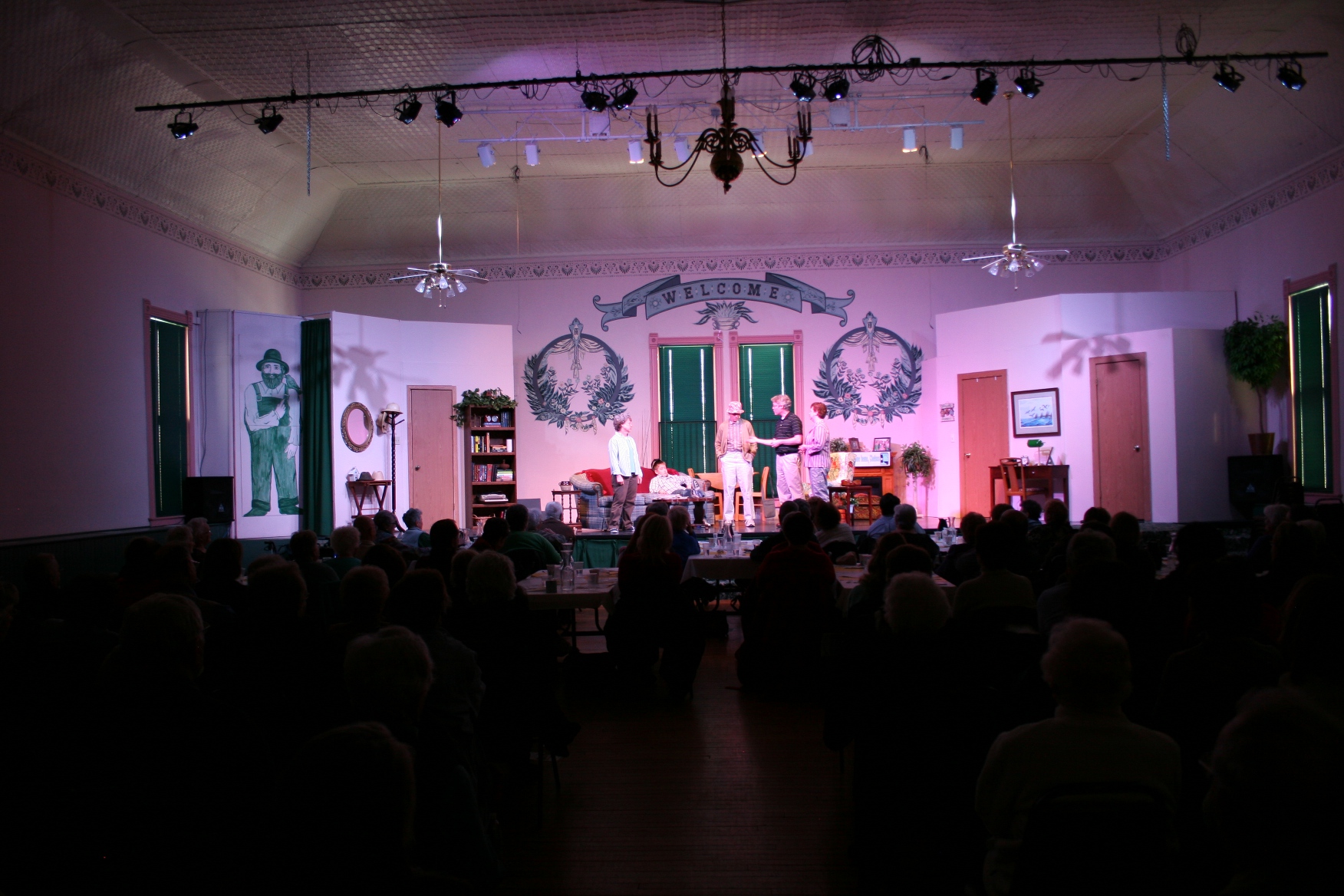
A view of Hilltop Hall's performance venue shows John Grimm and Fran Bohlke playing the lead roles in "On Golden Pond."

A view of Hilltop Hall’s performance venue shows the cast of “On Golden Pond.” John Grimm, center, plays the lead role along with Fran Bohlke of Shakopee, left in Curtain Call Theatre’s production. This marked Bohlke’s third time playing Ethel Thayer. She previously played the part during performances in Worthington and Luverne. Stenciling in the hall was either replicated or restored, depending on condition.

Grimm is planning to add original humorous skits to the monthly Sunday variety shows, tapping into his passion for performing. Fran Bohlke, who played Ethel Thayer opposite Grimm’s Norman Thayer Jr. in the Curtain Call Theatre’s recent performances of “On Golden Pond” at the Hilltop, will also sing at the March 24 show.

While Grimm and his troupe welcome guest performers, those entertainers must audition for what’s billed as “a unique mix of breathtaking talent, lighthearted entertainment and tasty snacks—all in one lovely historic place…that brings entertainment, enjoyment and inspiration to the folks of South Central Minnesota.”
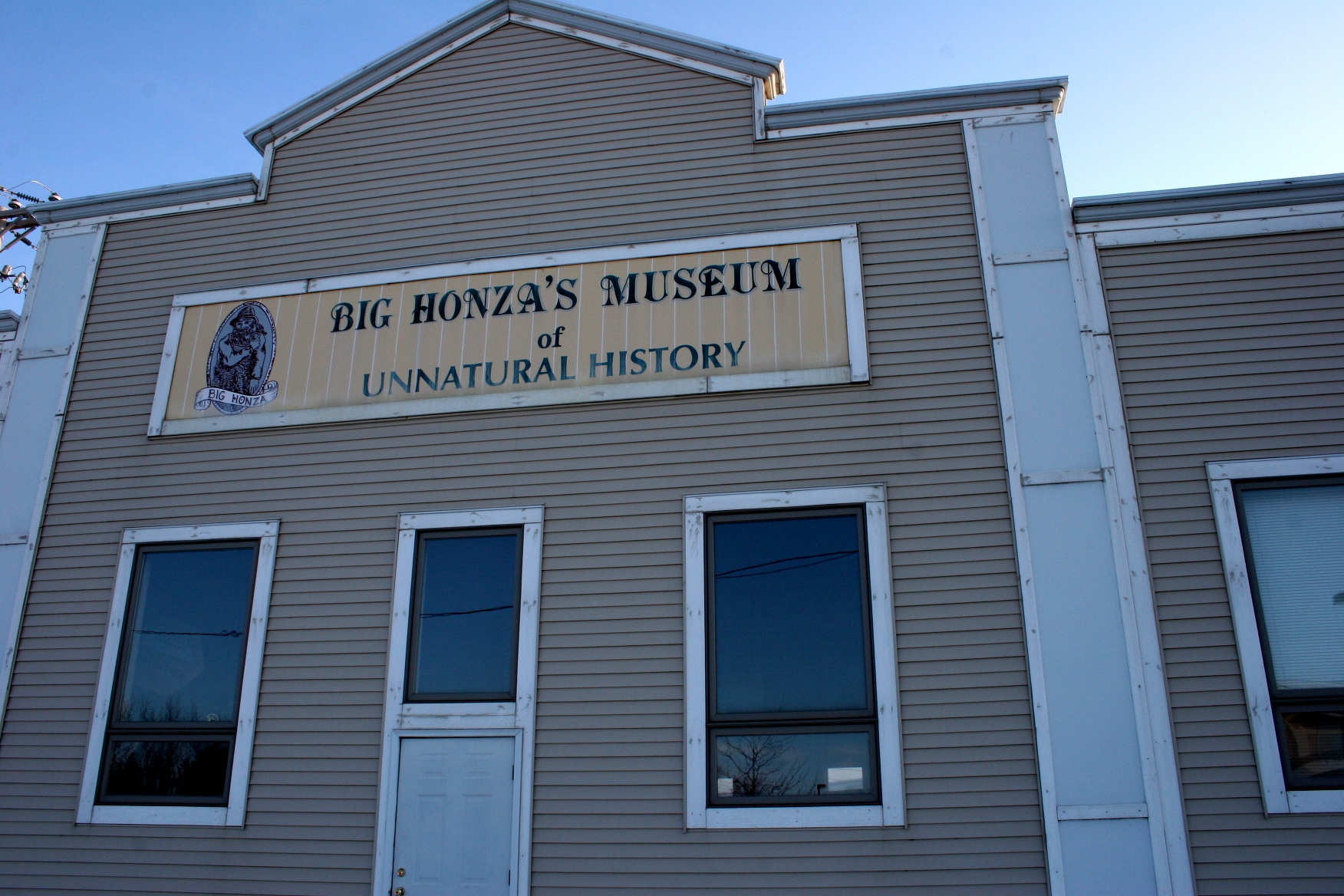
Big Honza's Museum of Unnatural History.

Big Honza’s Museum of Unnatural History.

The snacks include freshly-popped popcorn from the popcorn machine tucked in the hall’s second floor corner kitchen and pizza from Pizzeria 201 just down First Street in the historic Westerman Lumber Company office and residence. Grimm also owns that 1895 building which is on the National Register of Historic Places. Next door you’ll find Big Honza’s Museum of Unnatural History, another project of the creative Grimm.
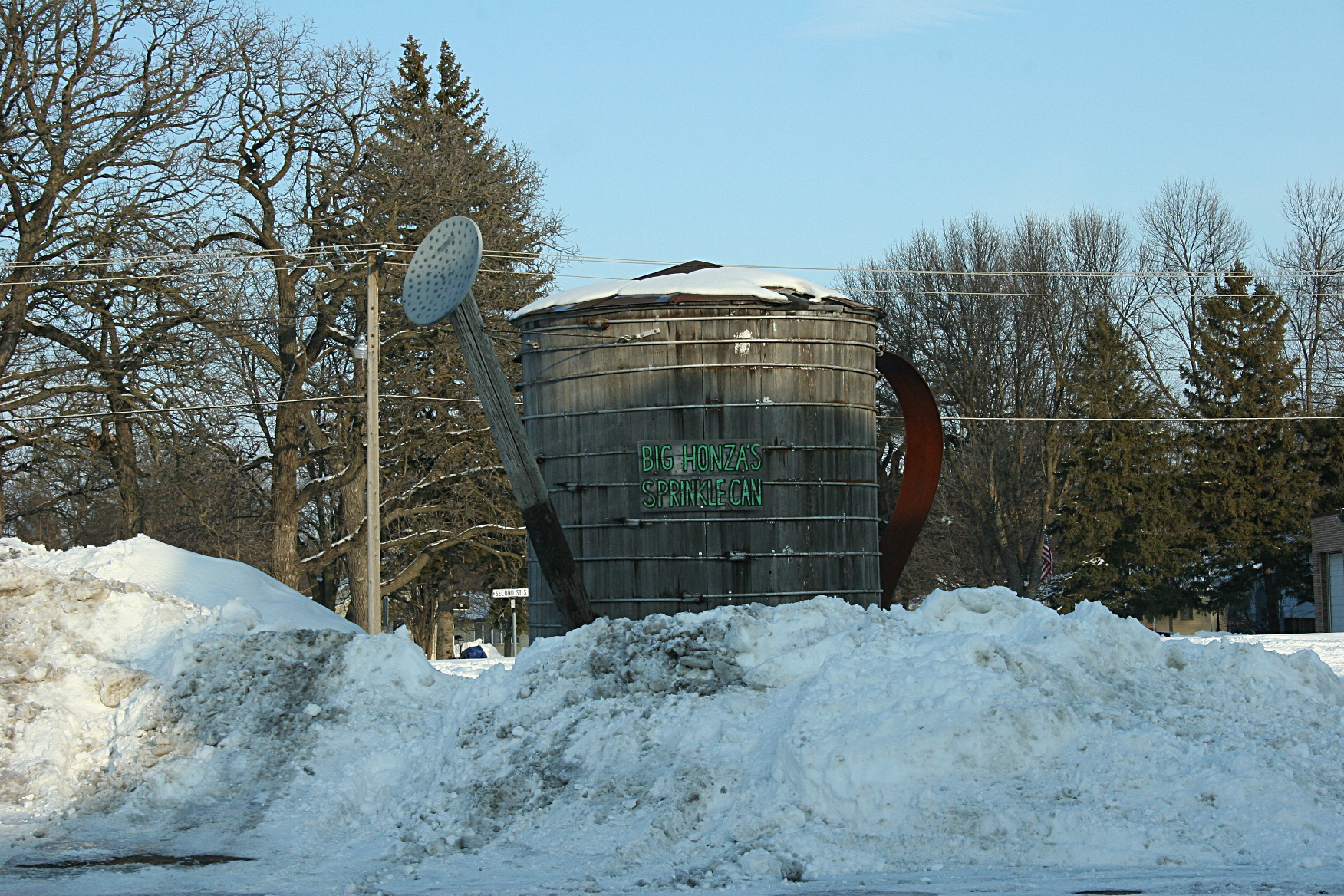
Big Honza' sprinkling can located near his museum.

Big Honza’ sprinkling can located nest to the Big Honza museum.

As Grimms tells it, the fictional Big Honza Giganticzech originated when he penned a musical for Montgomery’s annual Kolacky Days celebration, embellishing local history to create the town’s version of Paul Bunyan. That led to the museum where visitors will see items like Big Honza’s airplane/corn shredder, a chain driven concertina and more. The museum is open by appointment or ask the folks at the Pizzeria to let you in; they have a key.
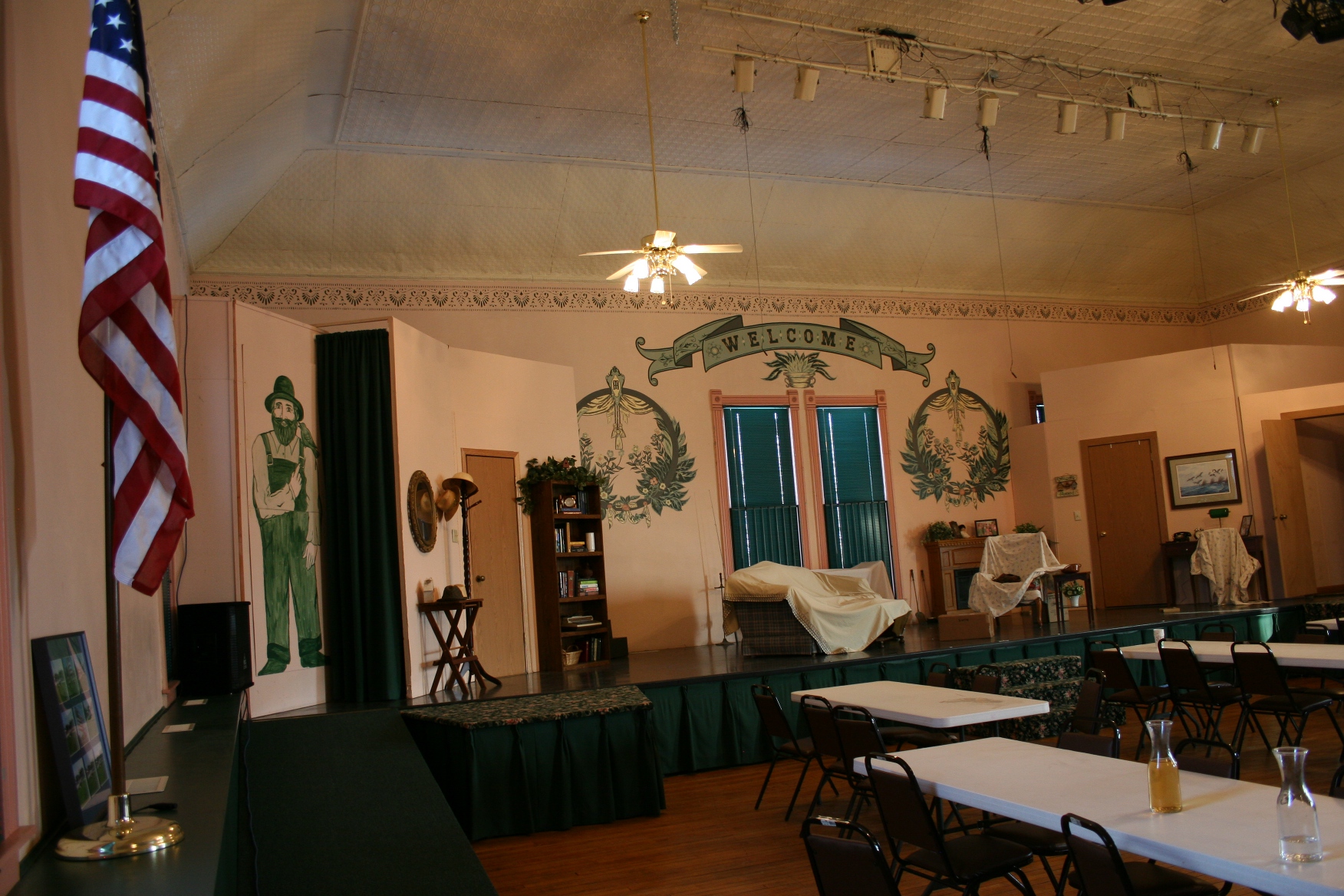
A view of the set for "On Golden Pond" with Big Honza painted on the wall to the left.

A view of the set for “On Golden Pond” with Big Honza painted on the wall to the left.

At Hilltop Hall, a rendition of Big Honza is painted onto a wall of the stage where those Curtain Call Theatre comedies are presented each February. Grimm enjoys the intimate setting of the old dance hall which will seat about 100 during the dinner theatre shows. On a recent Sunday afternoon, dinner guests savored chicken breast with pasta and sauce, roasted cauliflower and fresh fruit in a meringue-topped shell catered by Pizzeria 201. Other audience members arrived later just for the show.

“People look forward to it,” Grimm says of the yearly winter plays first performed at the Hilltop in 1999 with “Bull in a China Shop.” Other shows have included “The Odd Couple,” “Moon Over Buffalo,” The Dixie Swim Club,” and more. “Bathroom Humor” is slated for February 2014.

Set requirements, due to limited space in the built-on stage area, are the biggest restrictions in selecting a play, Grimm says. He doesn’t worry about the number of performers as a spiral staircase hidden behind the stage allows actors and actresses to slip down to the first floor floral shop to await their cues. Grimm installed the staircase after removing the building’s original freight elevator, a decision he today regrets.
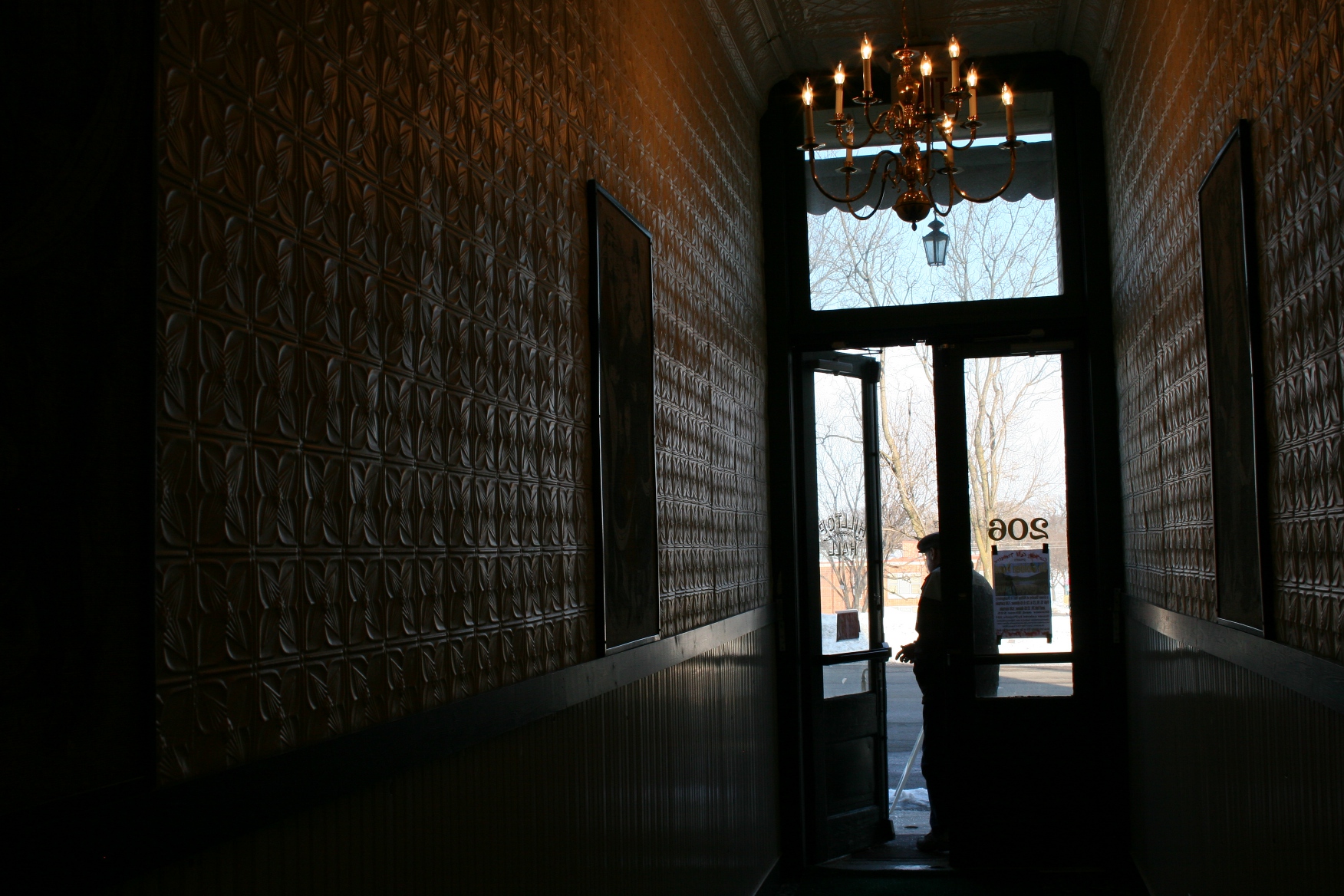
When Grimm purchased Hilltop Hall, site of a laundromat, he found 10 inches of lint covering these walls as dryers had been vented into the hallway. This hall runs between the heritage center and floral shop and leads to a stairway to the performance space.

When Grimm purchased Hilltop Hall, site of a laundromat, he found 10 inches of lint covering these walls as dryers had been vented into the hallway. This hall runs between the heritage center and floral shop and leads to a stairway to the performance space. The chandelier is not original to the building.

He’s never regretted, though, his decision to buy the old dance hall, although Grimm admits some people think he’s crazy. But his passion for singing and entertaining—he’s composed several hundred songs, made four CDs and authored a play, “It’s About Us”—for promoting Montgomery, and for offering this arts venue, drive him.

With annual taxes on the building at $10,000-plus and a monthly light bill of some $200, his Hilltop project is a “money losing situation,” Grimm says. He justifies the expense noting that he doesn’t take vacations, so his vacation money goes into his arts endeavor.
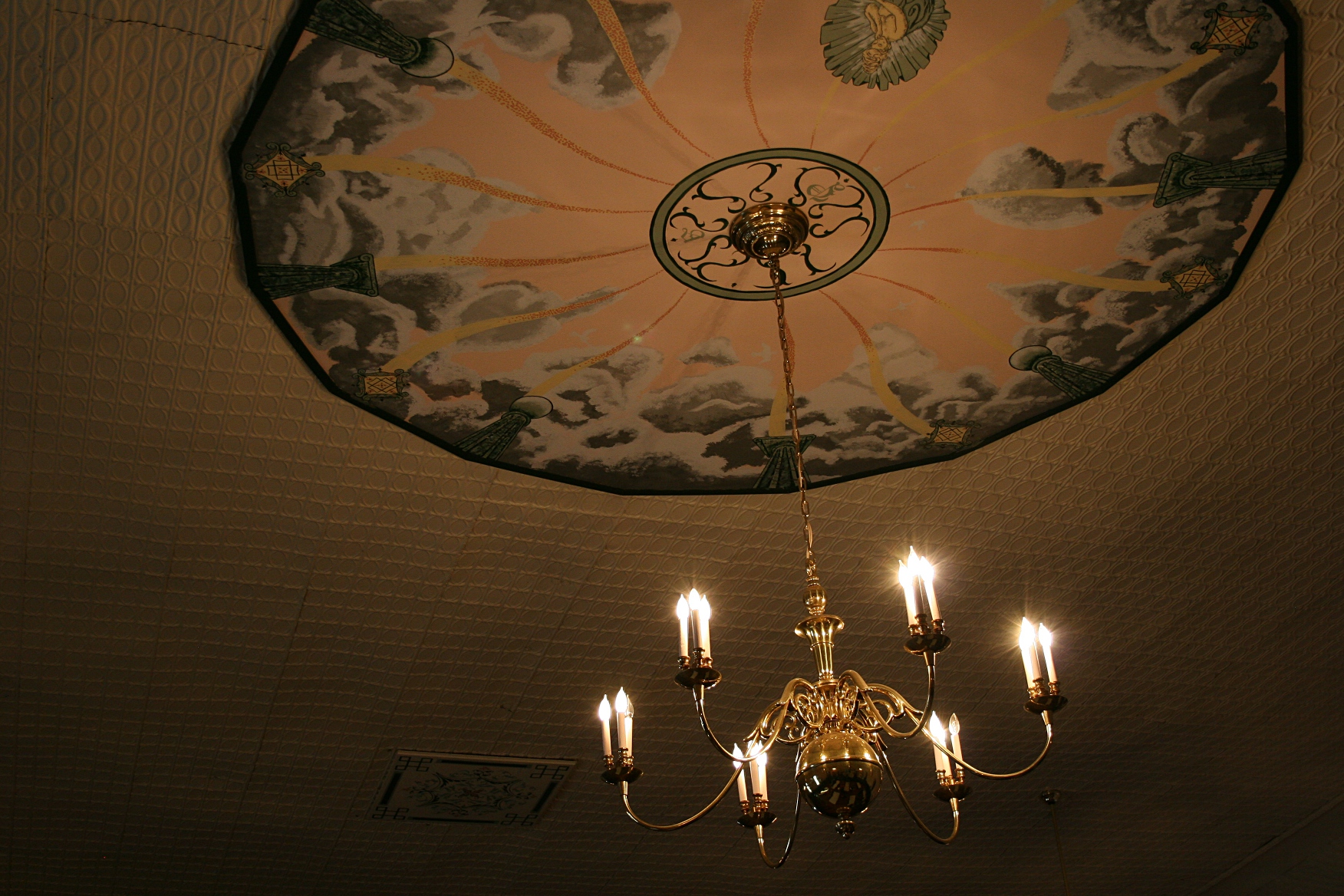
The ceiling plaster had crumbled, so an artist laid on his back to re-create this mural on sheetrock in the center of the performance space.

The plaster had crumbled, so an artist laid on his back to re-create this ceiling mural on sheetrock in the center of the performance space. The chandelier is antique but not original to the hall. The original lights could not be restored, Grimm says.

Grimm admits an ineptness at promoting and that Hilltop Hall is under-utilized. But he won’t compromise his conviction not to allow alcohol into the building which is also used for the occasional community meeting, piano recitals and exercise classes.

For now he’s focused on those monthly variety shows, bringing “pizza, performers & plenty of pizzazz” to the folks of South Central Minnesota at the historic Hilltop Hall in Montgomery.
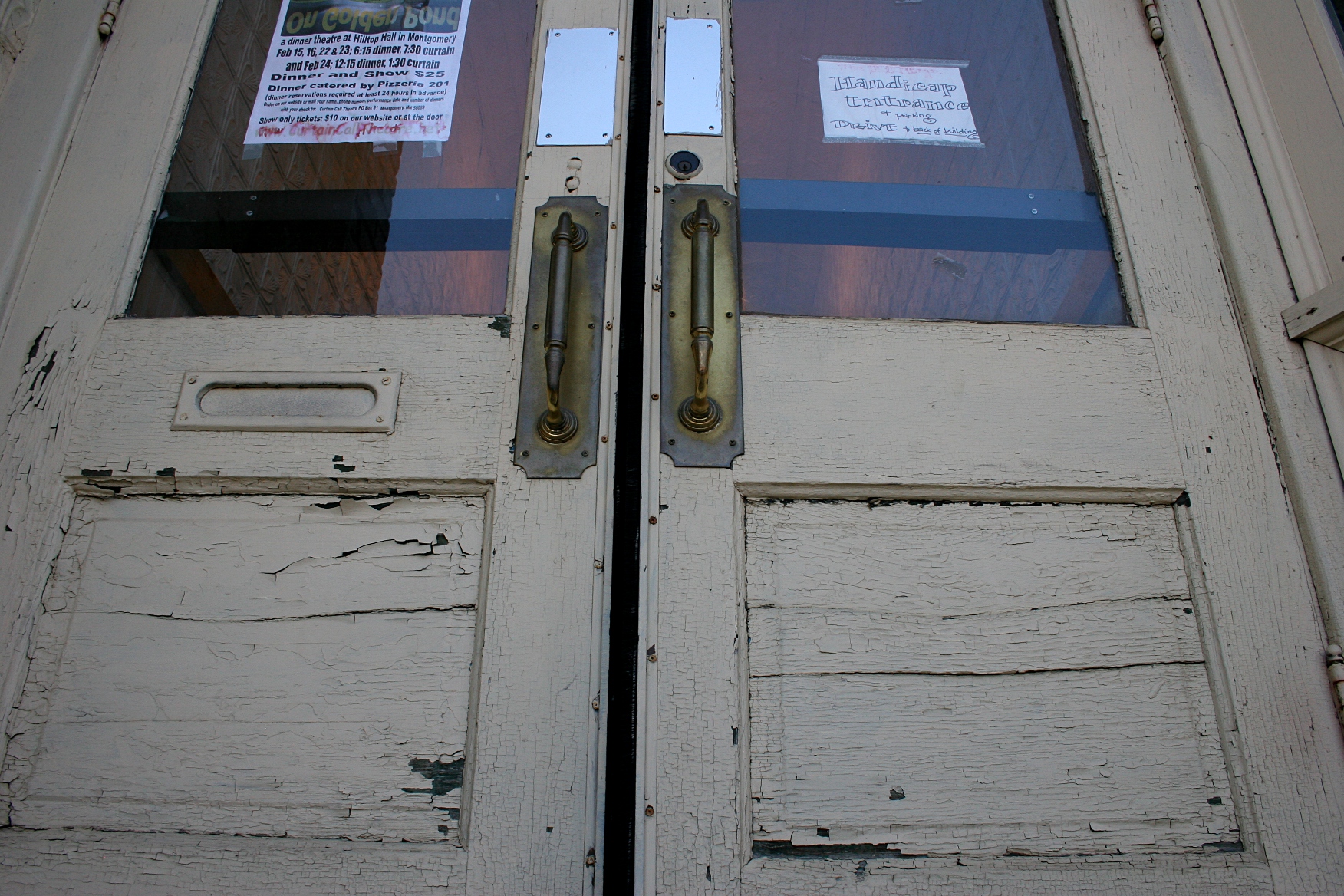
These exterior doors open to the hallway leading to the performing arts center.

These exterior doors open to the hallway leading to the upstairs performing arts center. A handicapped accessible entry is at the rear of the building off the alley.

FYI: Upcoming Hilltop Happenings Series shows are set for 4 p.m. – 6 p.m. on Sundays, March 24, April 28, May 26 and June 30. Admission is free although donations are accepted to help defray production and overhead costs.

The 2013 billing promises “…popular favorites to concert hall classics; from costumes and comedy to inspirational gospel and harmonic collaborations.”

Hilltop Hall is located at 206 First Street North in Montgomery’s downtown business district.

To learn more about the people and places in this post, be sure to click on their highlighted names. I’d encourage you, especially, to click on Jesse Beulke’s link to hear two original compositions, “I Guess It’s Goodbye” and “Rise,” by this gifted young composer and musician.

CHECK BACK FOR MORE posts from Montgomery.

© Copyright 2013 Audrey Kletscher Helbling


Part I: Touring historic downtown Montgomery, Minnesota, not Alabama March 4, 2013

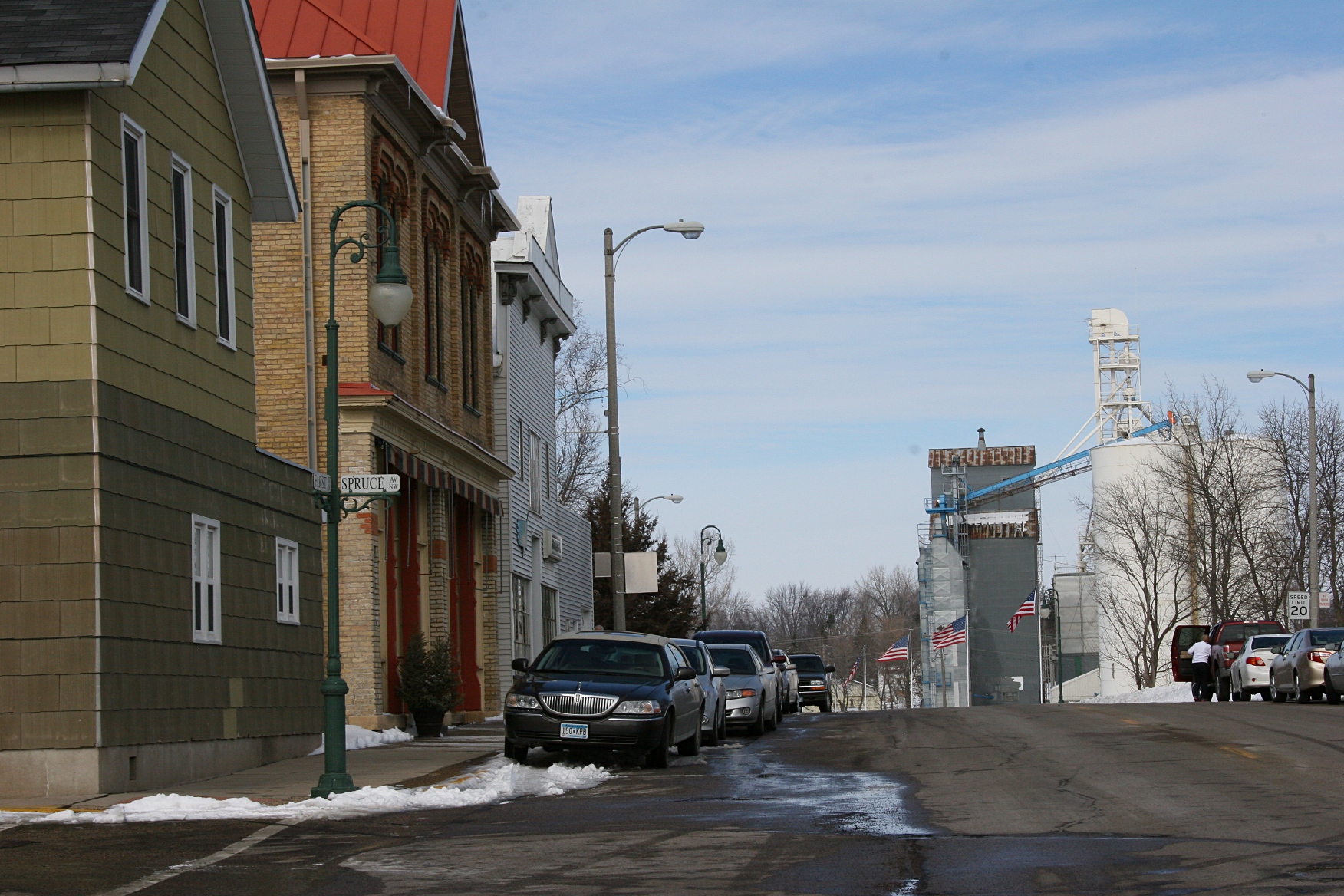
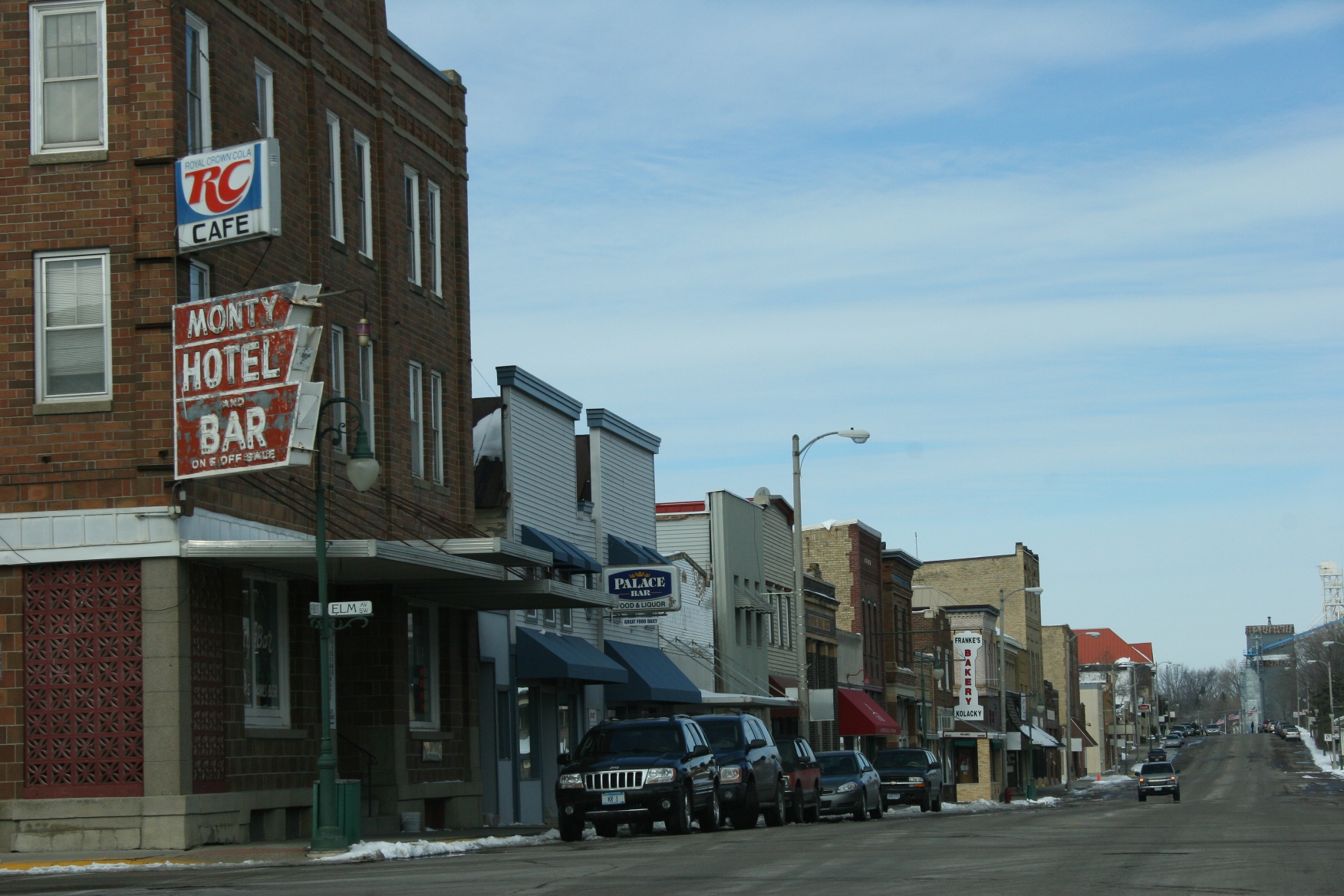
A snippet overview of First Street in downtown Montgomery.

A snippet overview of First Street in downtown Montgomery late on a Sunday afternoon.

EARLY ON A SUNDAY AFTERNOON in the dead of a Minnesota winter, downtown Montgomery, except for vehicles clustered around Hilltop Hall for a theatrical performance and around locals bars, is mostly quiet.

A mural on the

A mural depicts downtown. Minnesota Prairie Roots file photo.

The occasional pick-up truck cruises First Street, the main north-south route through the heart of this Le Sueur County farming community of nearly 3,000 noted for its strong Czech heritage.

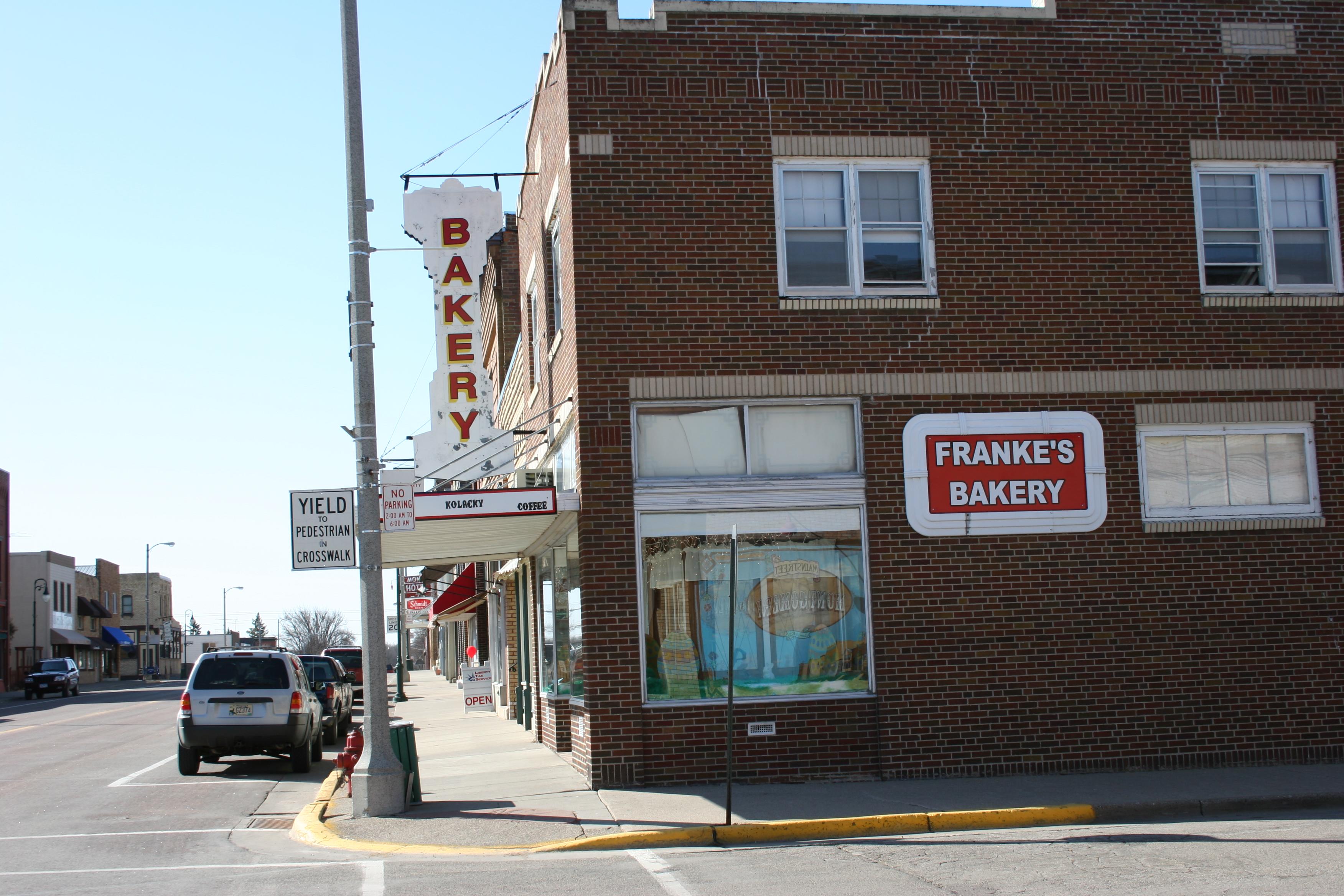
Although this self-proclaimed “Kolacky Capital of the World” lies only about 25 miles northwest of my Faribault home, I’ve never really explored the town except to attend three plays at Hilltop Hall and to write a magazine feature story about Franke’s Bakery. The 99-year-old bakery specializes in kolacky, a folded Czech pastry filled with poppy seeds or fruit.

Franke's Bakery. Minnesota Prairie Roots file photo.

Franke’s Bakery. Minnesota Prairie Roots file photo.

On this Sunday afternoon the bakery is closed. And so are most other businesses. Without distracting vehicles, I can fully appreciate the historic architectural qualities of this downtown. From the aged brick buildings to the vintage signage to the woodframe storefronts that always remind me of something out of a Western, I am smitten with these buildings, this business district.

I must, I tell myself, return to Montgomery when these businesses are open. I can only imagine what discoveries await me.

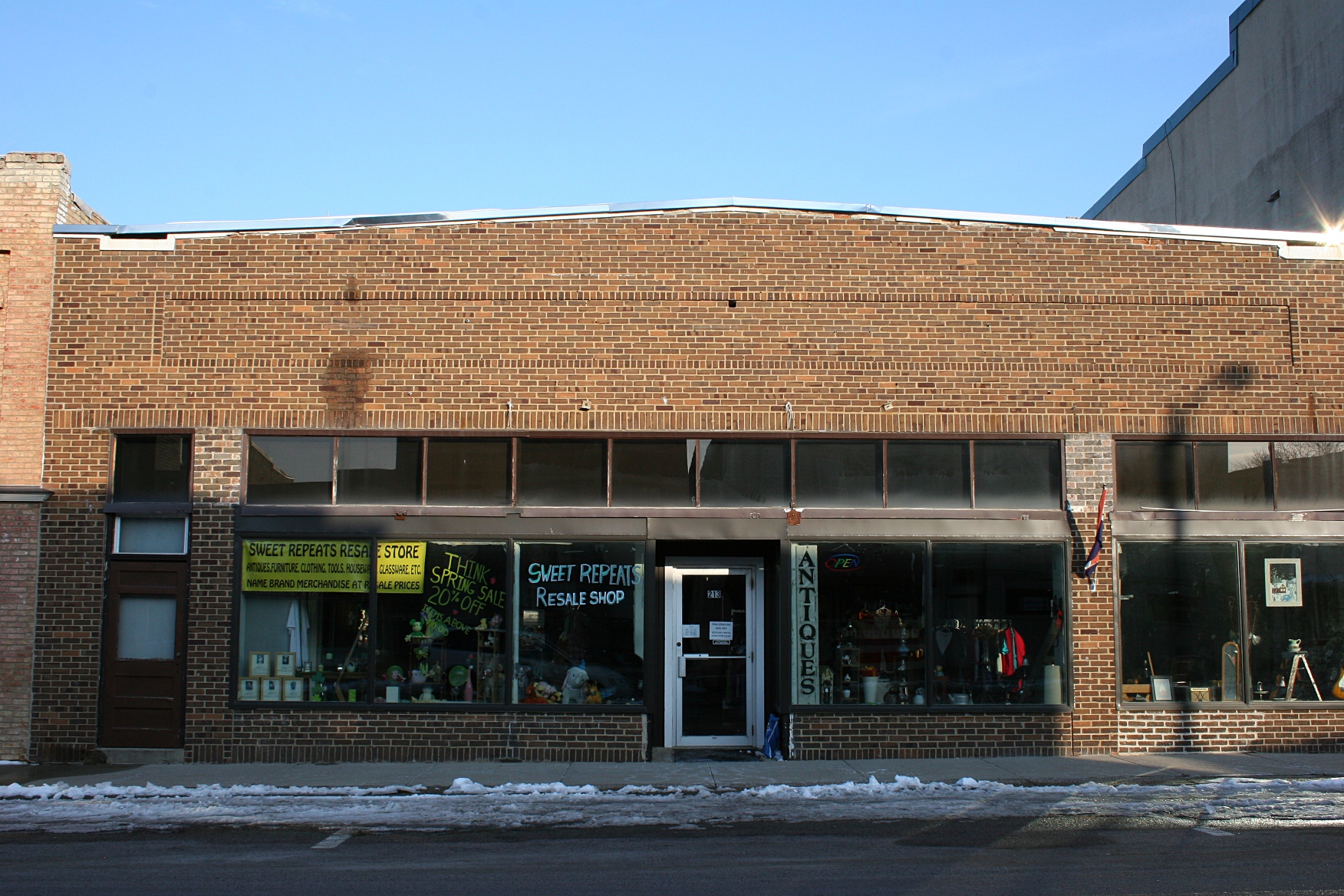
I love antique shops and thrift stores, so you can bet Sweet Repeats Resale Shop is on my list of places to check out.

I love antique shops and thrift stores, so you can bet Sweet Repeats Resale Shop is on my list of places to check out.

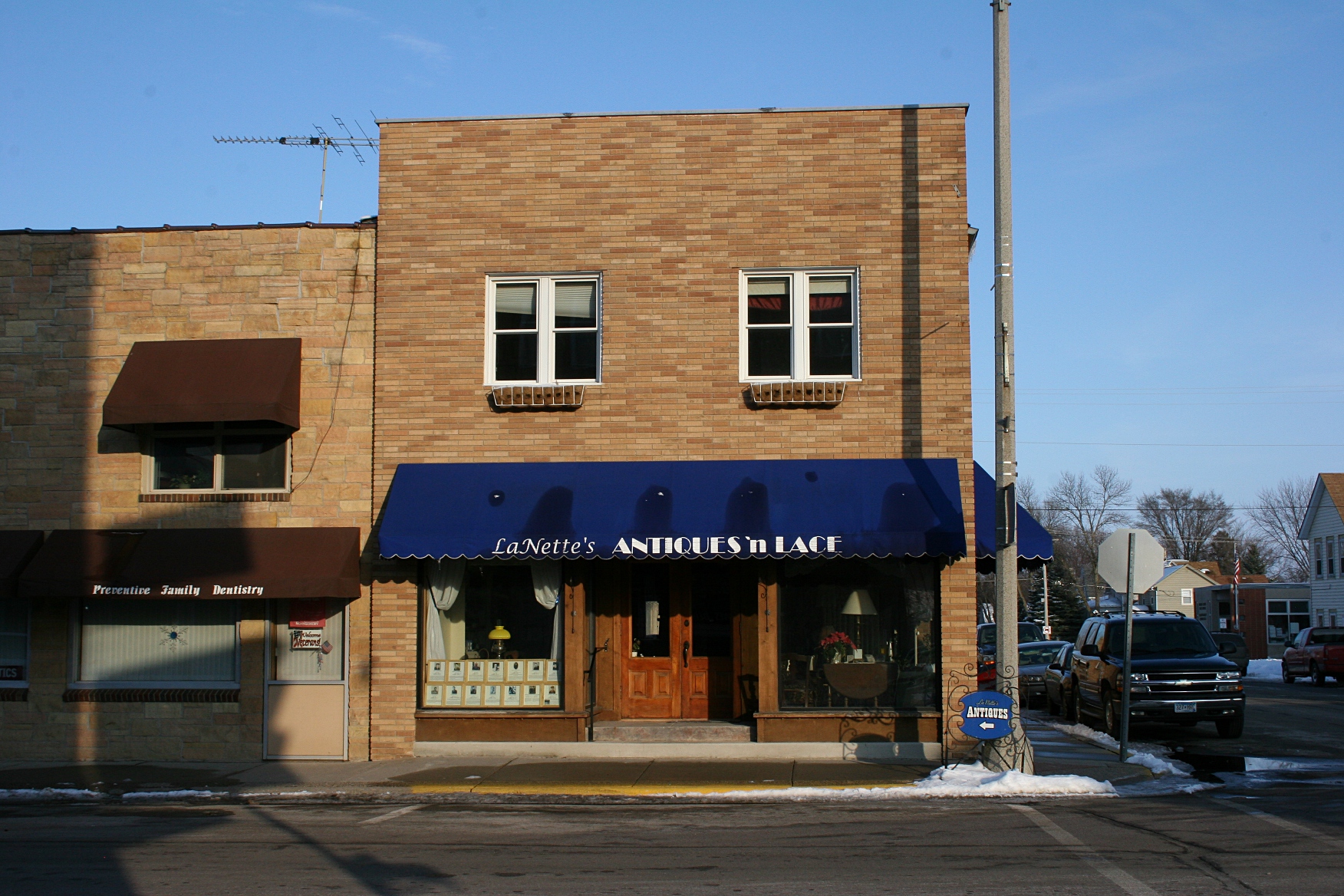
Look, another antique shop, La Nette's Antiques'n Lace.

Look, another antique shop, La Nette’s Antiques’n Lace.

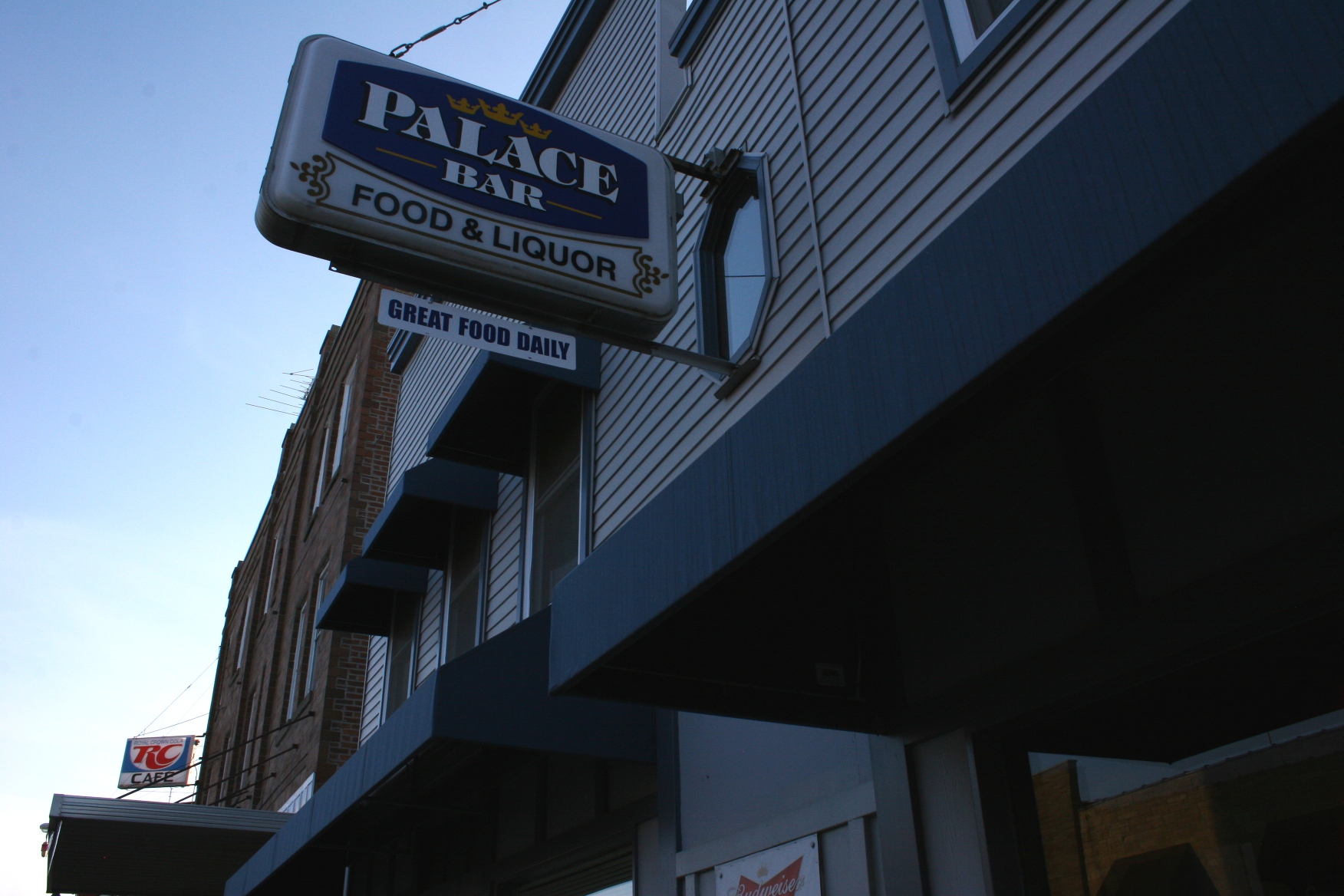
Lots of super cool vintage signage in Montgomery.

Lots of super cool vintage signage in Montgomery.

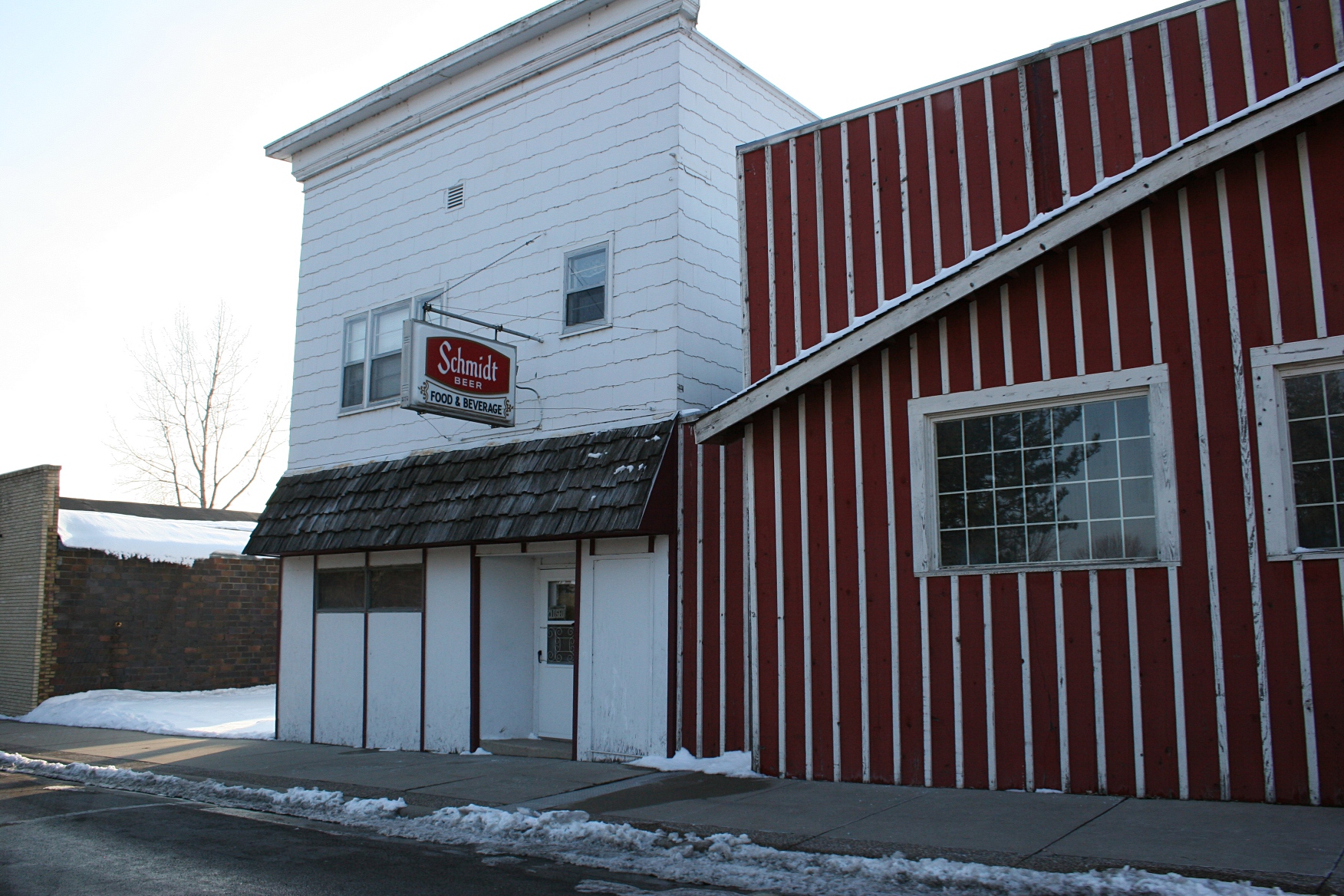
Because my eldest daughter is in love with a Schmidt boy (nothing to do with the beer), I had to photograph this sign. The striped building is the local meat market.

Because my eldest daughter is in love with a Schmidt boy (nothing to do with the beer), I had to photograph this sign. The striped building is the local meat market.

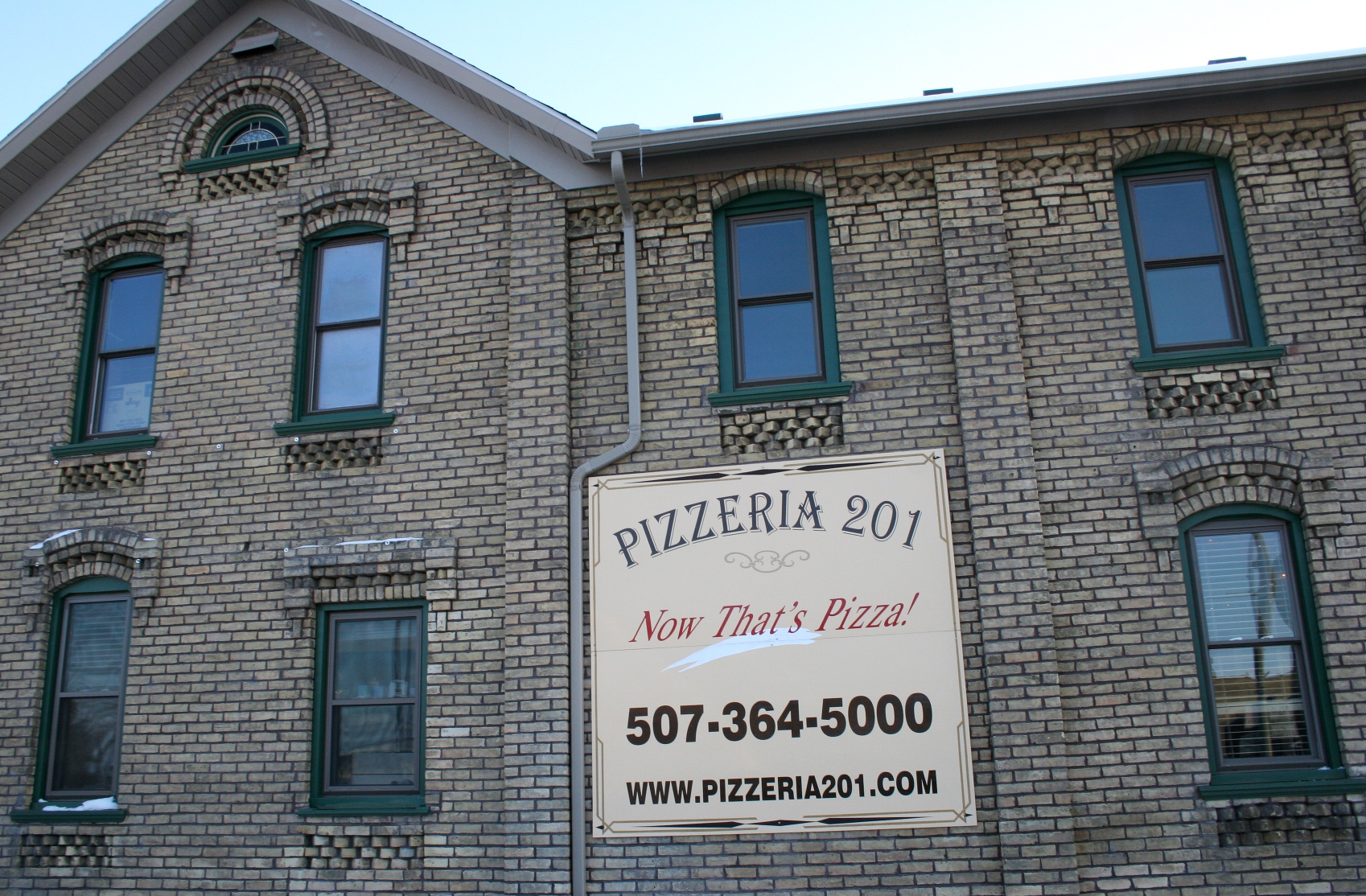
On the National Register of Historic Places, the historic Westerman Lumber Company office and house is home to Pizzeria 201. The restaurant makes homemade pizzas, a wide selection of Italian foods and more.

On the National Register of Historic Places, the historic Westerman Lumber Company office and house is home to Pizzeria 201. The restaurant makes homemade pizzas, a wide selection of Italian foods and more. I’ve heard rave reviews about the food.

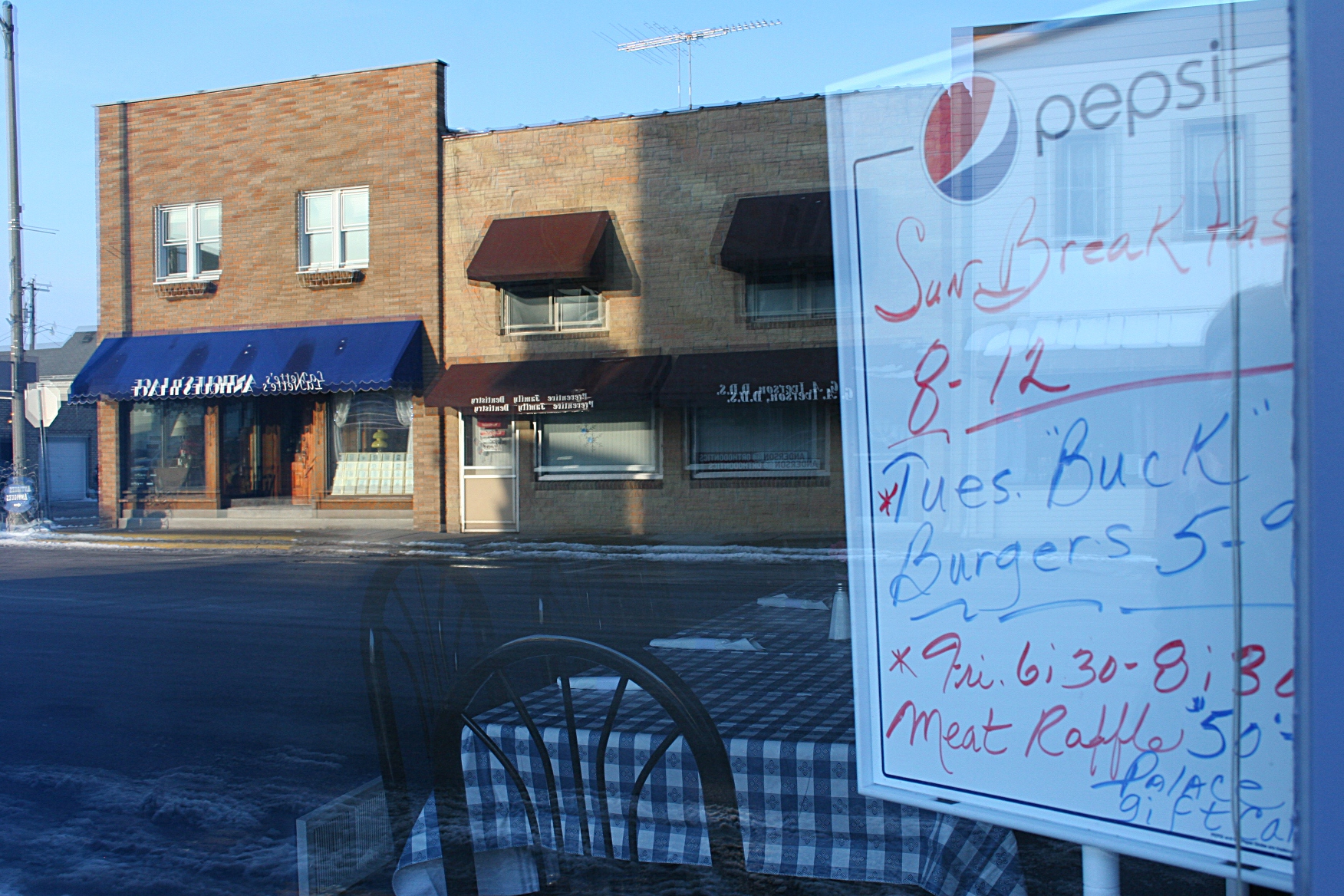
So small town: burgers and a meat raffle promoted on a whiteboard in a restaurant window.

So small town: burgers and a meat raffle promoted on a whiteboard in a restaurant window.

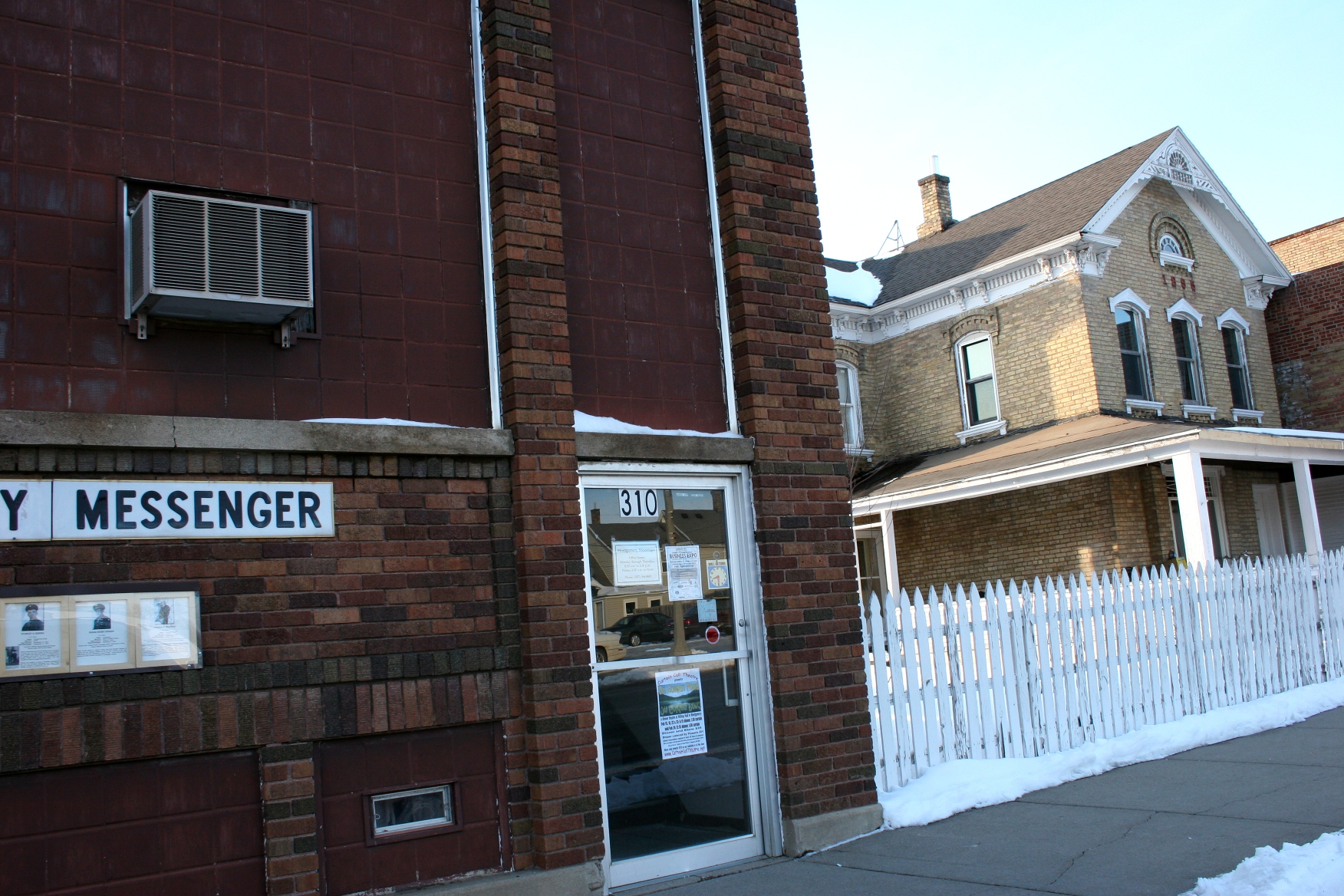
I don't expect I'll get inside this vintage 1800s house tucked between businesses on First Street, but I could try. That's the office of the local newspaper, The Montgomery Messenger, on the left.

I don’t expect I’ll get inside this vintage 1800s house tucked between businesses on First Street, but I could try. That’s the office of the local newspaper, The Montgomery Messenger, on the left.

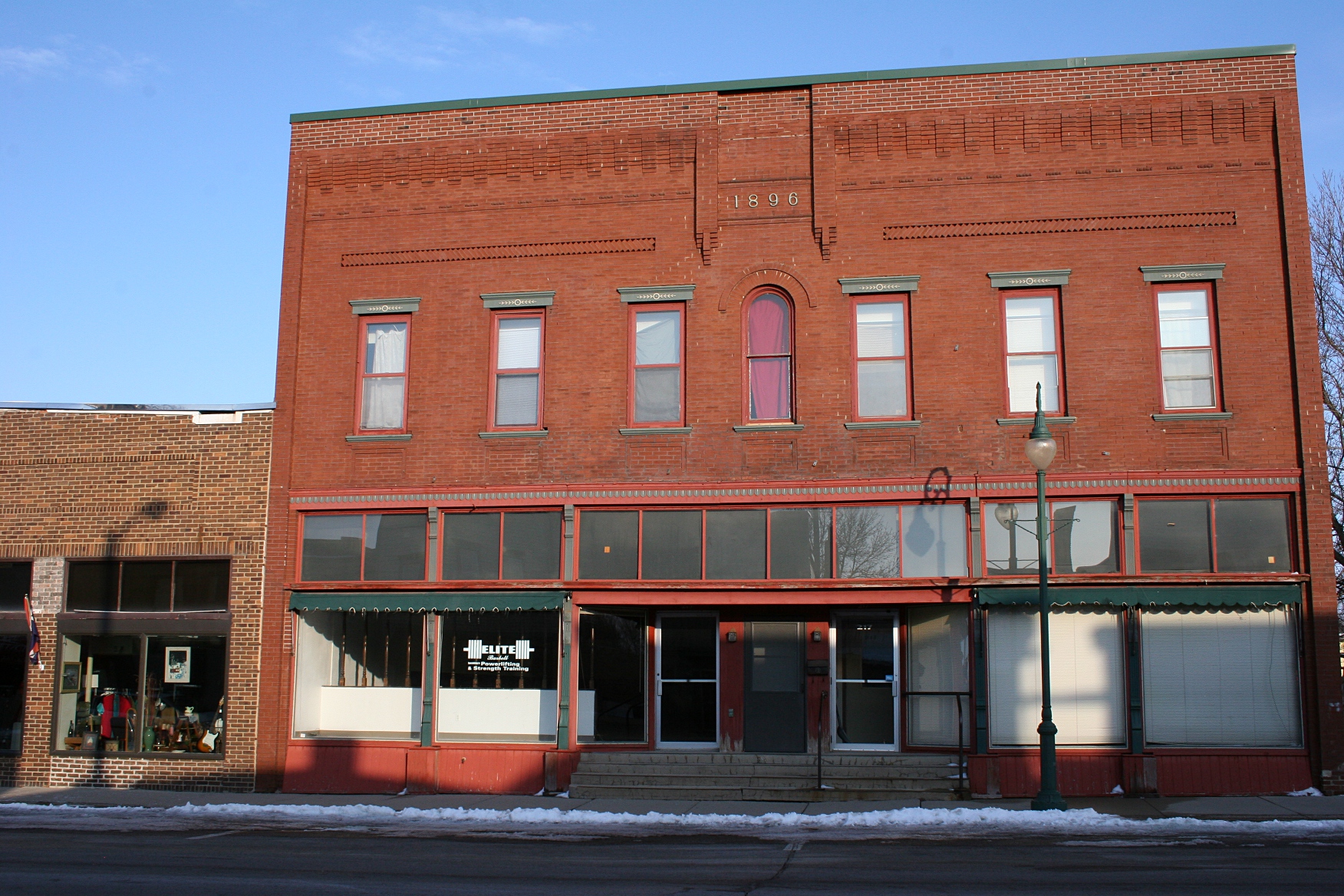
I absolutely love these small towns that have kept their historic buildings.

I absolutely love these small towns that have kept their historic buildings like this one dated 1896.

TOMORROW, IN THIS FIVE-PART SERIES from Montgomery, I take you to Hilltop Hall, which I’ve visited thrice. After that, we’ll go inside Franke’s Bakery, with photos from my 2010 visit there; I don’t expect much has changed. Next, I’ll show you how this community honors its veterans in a unique way. And then, to end my five-part series on Montgomery, I’ll show you several bonus photos from the town.

© Copyright 2013 Audrey Kletscher Helbling
 

Rural Minnesota, the place of my heart February 27, 2013

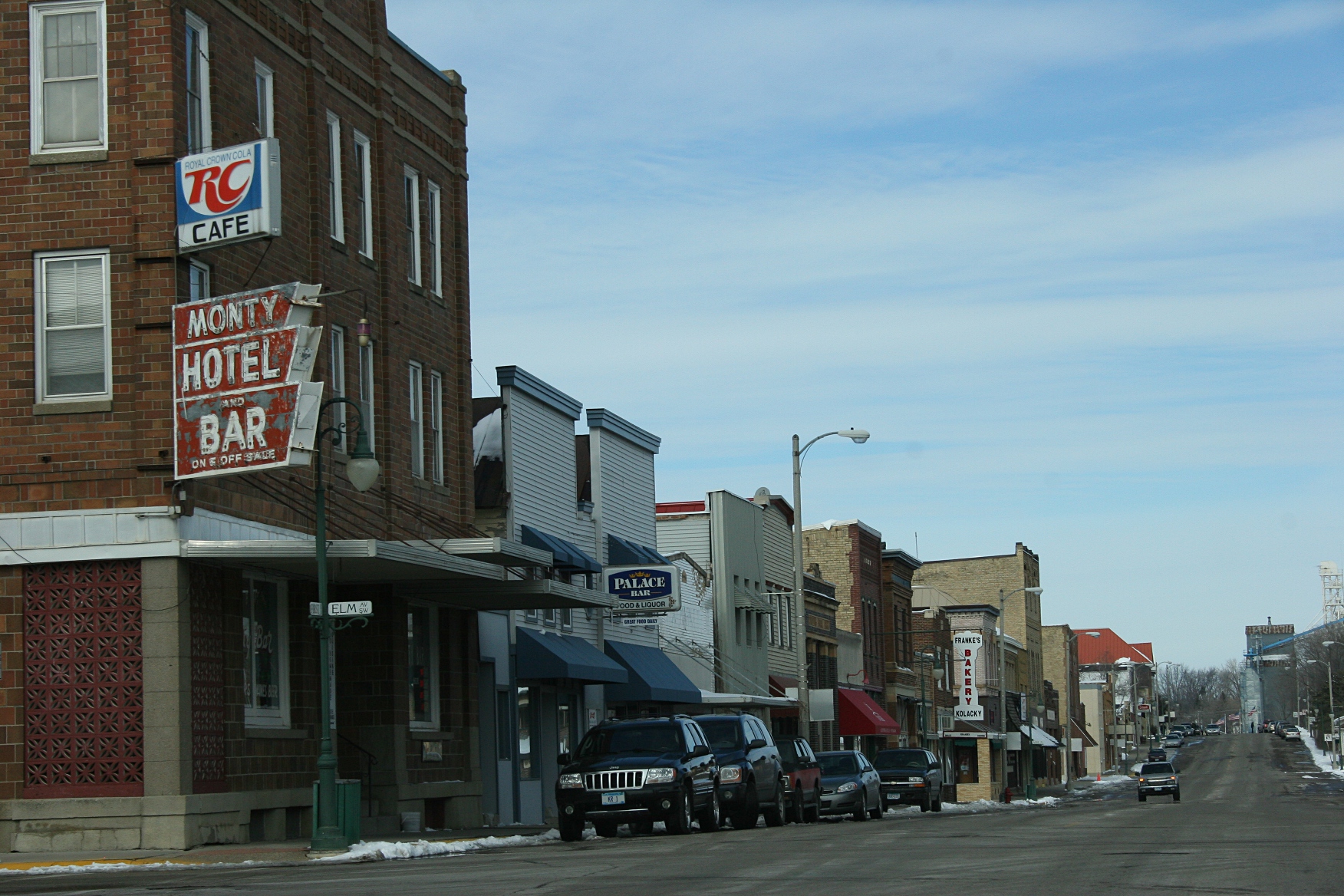
Montgomery, Minnesota, on a Sunday afternoon.

Montgomery, Minnesota, on a Sunday afternoon. That’s the Cannon Valley Co-op over the hill and to the right.

I NEVER TIRE of these snippets of small town life—the instant my eye catches a scene or a setting or a detail.

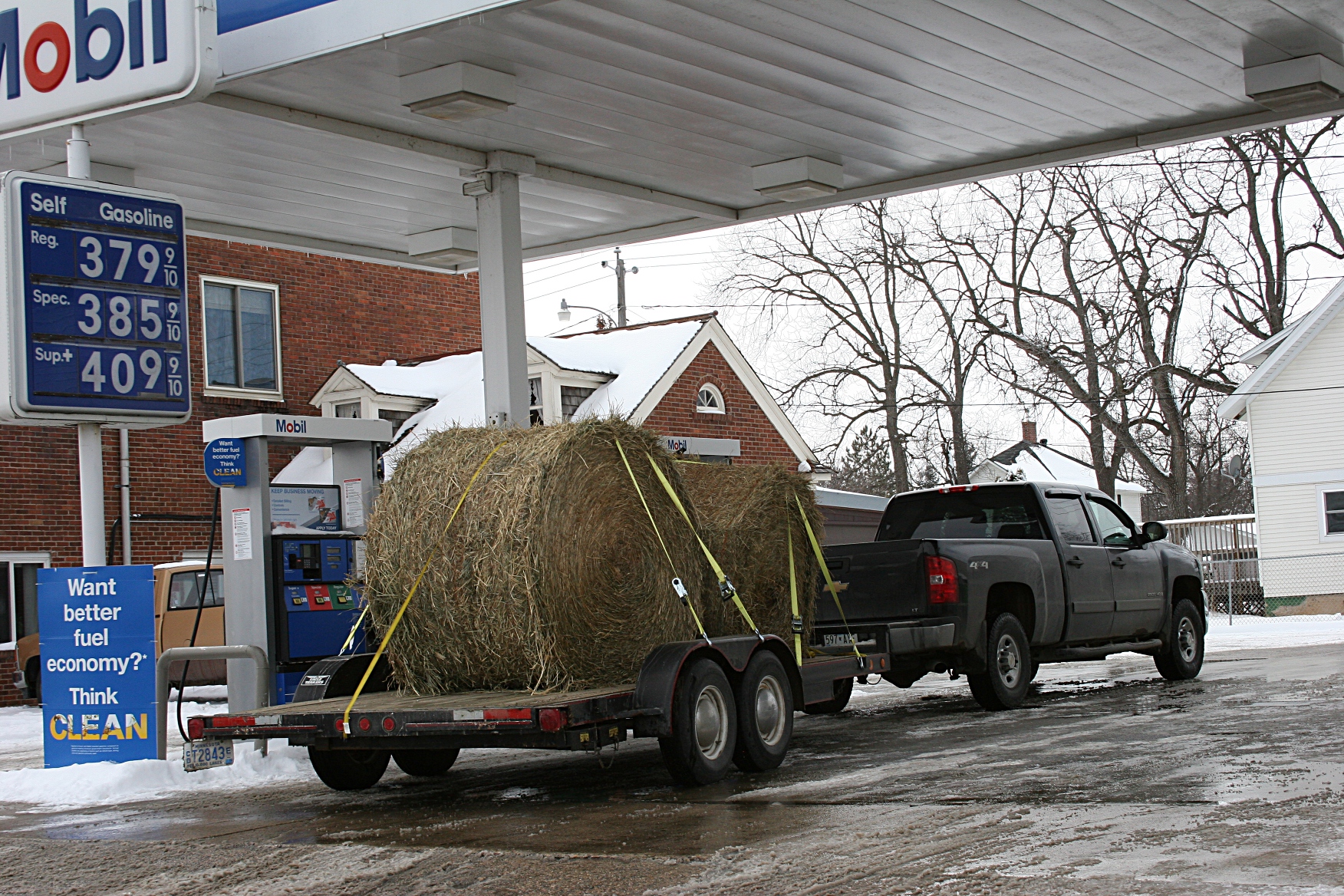
At the Mobil station in Medford on a Saturday afternoon.

At the Mobil station in Medford on a Saturday afternoon.

In those moments my heart sings with thankfulness that I live in a relatively rural region.

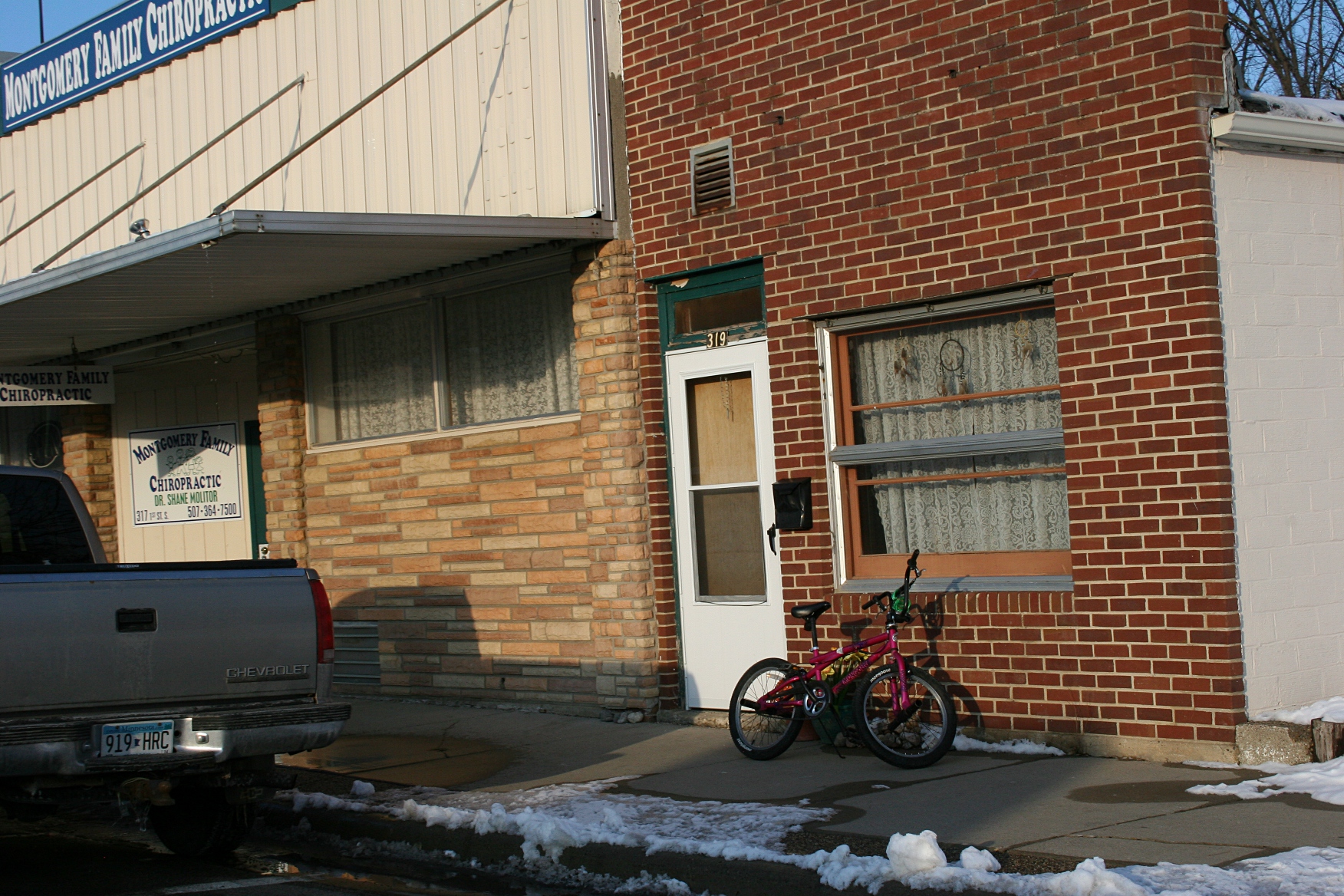
No need for bike racks in Montgomery.

Just drop the bike in downtown Montgomery.

While rural does not equate utopia or a life any less troubled or any more joyful than city life, this land is where I belong.

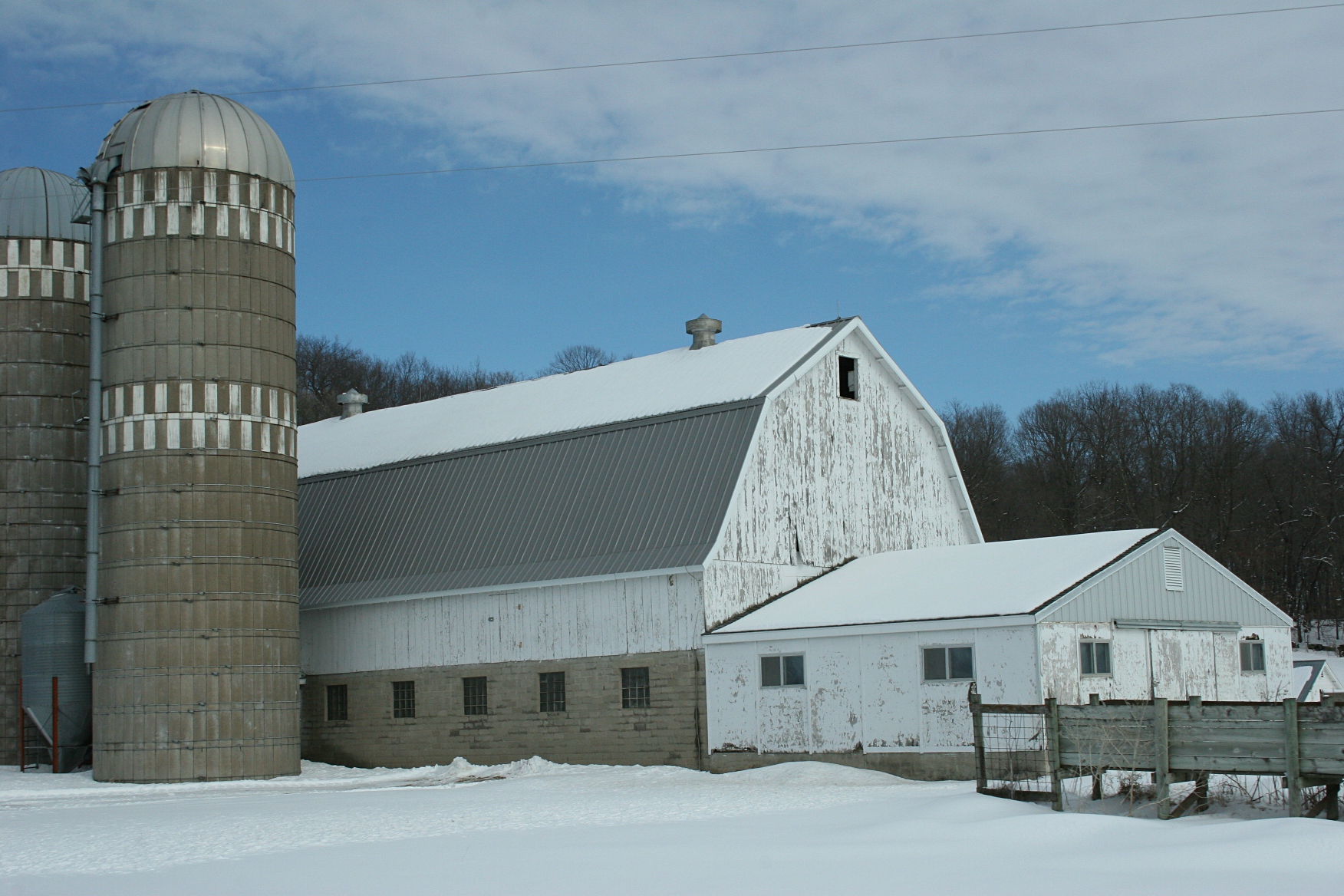
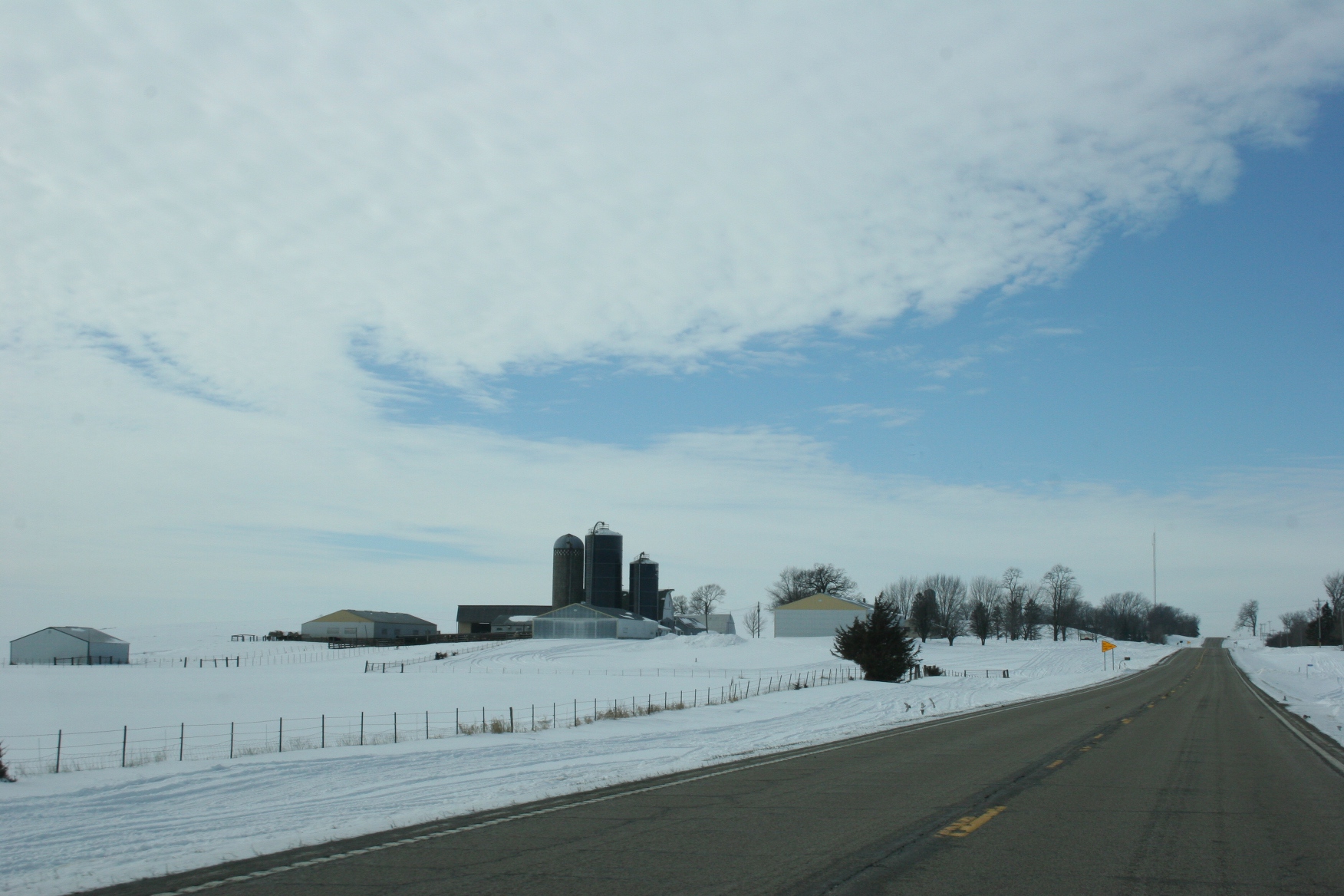
Just off Minnesota Highway 99 along a curve on Minnesota 21 heading toward Montgomery.

Just off Minnesota Highway 99 along a curve on Minnesota 21 heading toward Montgomery.

Growing up, I felt more comfortable inside a dairy barn than inside my pink-walled bedroom.

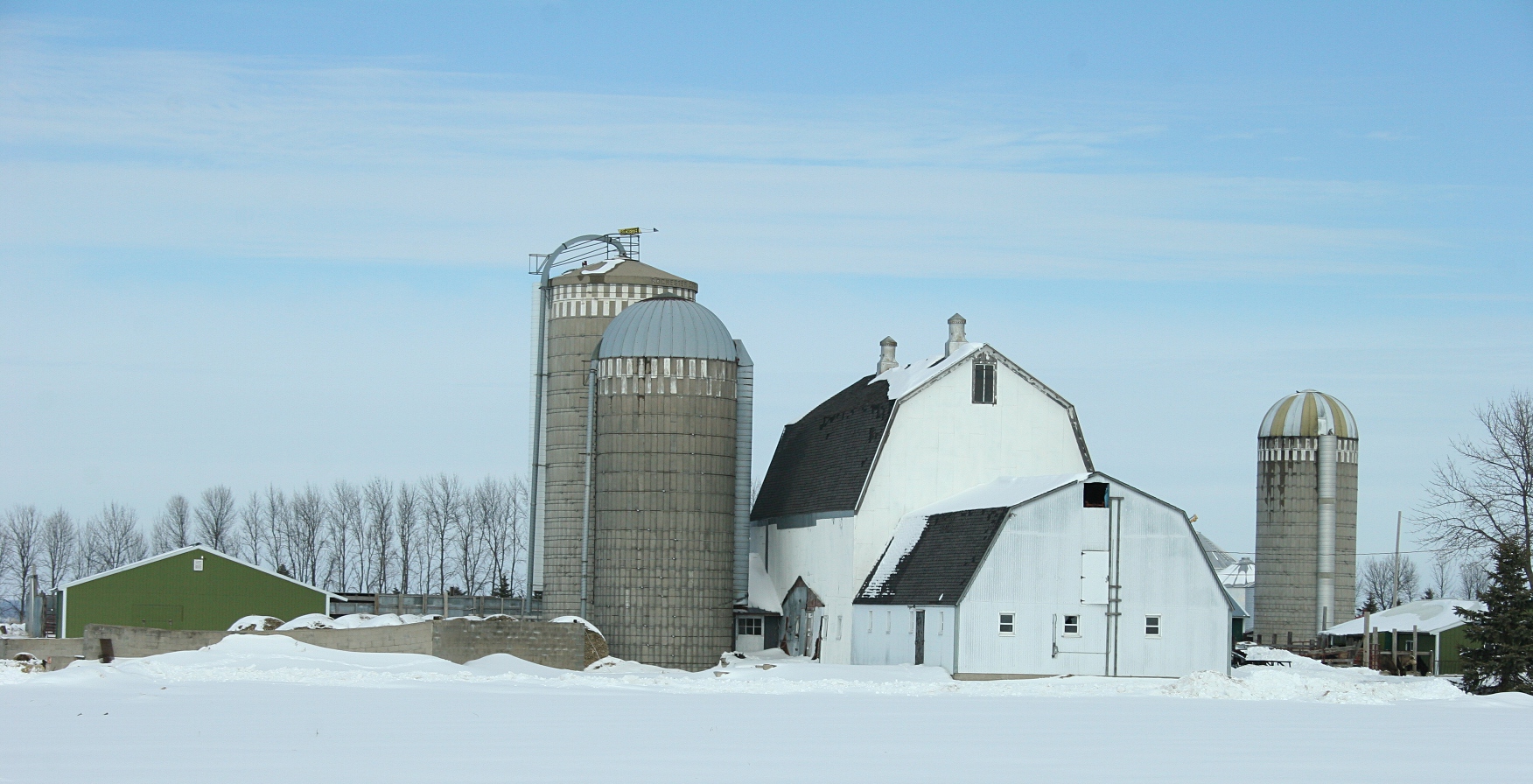
Along the same highway...

Along the same highway…

My connection to barns lingers as I’m drawn to photograph these disappearing rural landmarks.

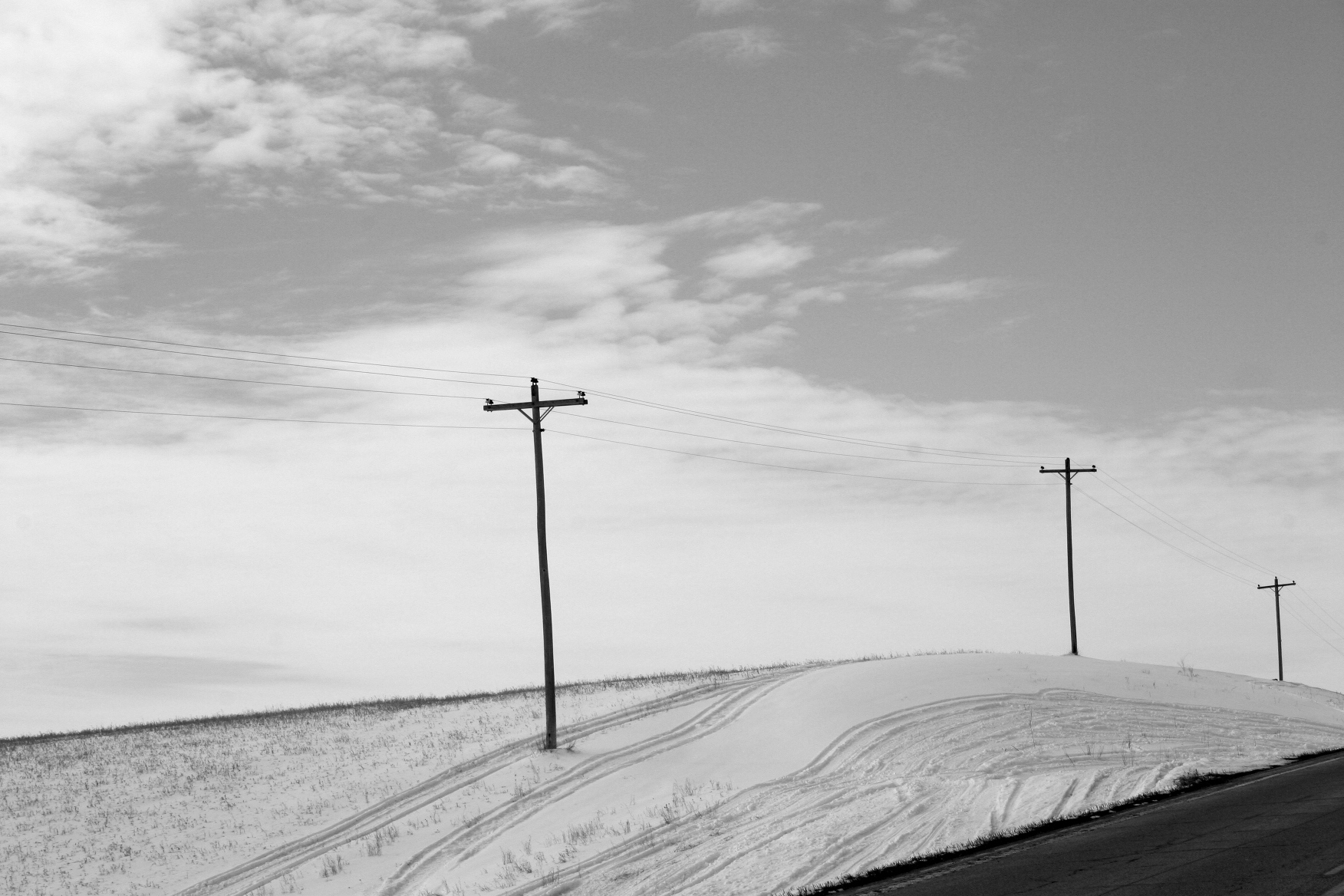
Utility poles break the horizontal landscape along Minnesota 21.

Utility poles break the horizontal landscape along Minnesota 21.

My eyes link with lines, always the lines.

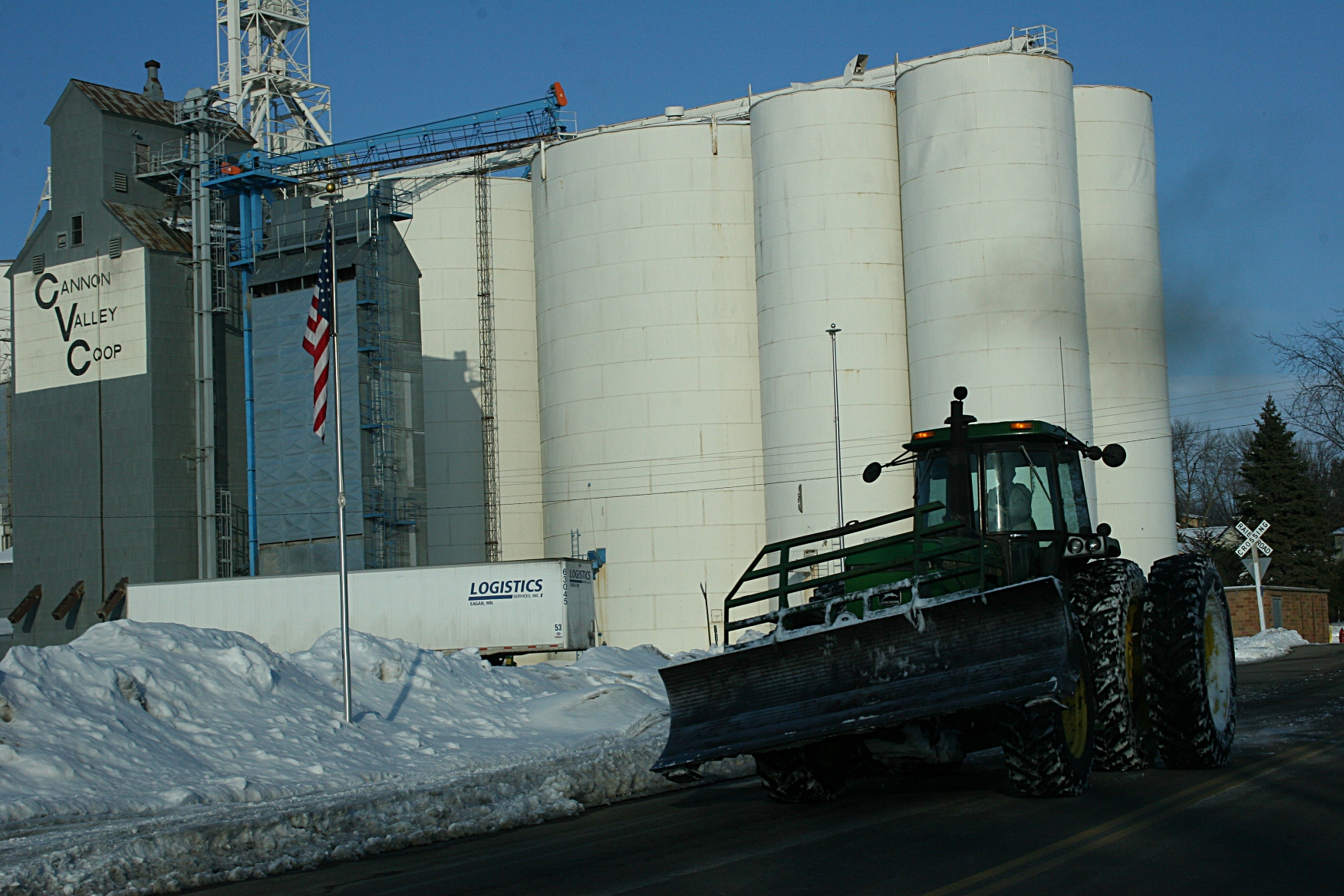
Ready to plow snow in Montgomery.

Ready to plow snow in Montgomery.

I am not a big city lights, traffic jams, hurry here, hurry there kind of girl.

Minnesota State Highway 21 between Shieldsville and Montgomery.

Minnesota State Highway 21 between Shieldsville and Montgomery.

I am a country dark, tractor in the field, meandering Sunday afternoon drive kind of girl.

© Copyright 2013 Audrey Kletscher Helbling
 

Don’t ask Santa, ask Grandma in the home of champions December 29, 2012

Filed under: Uncategorized — Audrey Kletscher Helbling @ 12:09 PM
Tags: , , , , , , , , ,

BILLBOARDS, ESPECIALLY THOSE in rural Minnesota, fascinate me.

The signs impress me as more interesting, more focused, quirkier, it seems, and zeroed in on a specific geographical region. The messages, the art, can reveal much about an area and often make me smile, sometimes even laugh.

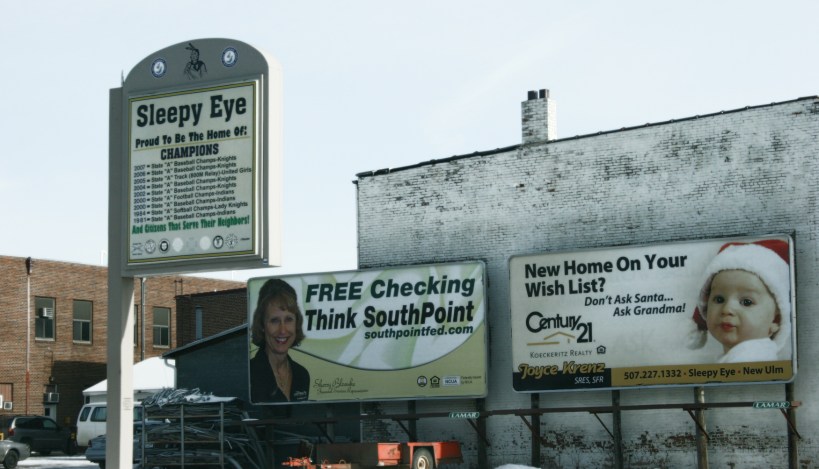
This creative real estate billboard in Sleepy Eye, at the intersections of U.S. Highway 14 and Minnesota Highway 4, makes me smile. A nearby sign boasts the local high school's athletic accomplishments.

This creative real estate billboard, right, in Sleepy Eye, at the intersections of U.S. Highway 14 and Minnesota Highway 4, makes me smile. A nearby sign boasts athletic accomplishments at Sleepy Eye and St. Mary’s high schools.

Additionally, many small towns take great pride in the local high school’s athletic accomplishments, even from decades ago.

Although many small towns brag about local sporting accomplishments, I would like to occasionally drive into a community and also read a sign boasting of academic, musical, theatrical or other accomplishments.

Wouldn’t that be nice to see in our sports-obsessed world?

Imagine reading a sign like “Home of the 2012 Minnesota State Spelling Bee Champion” or something like that.

HAS ANYONE OUT THERE ever spotted a sign in a community highlighting non-athletic accomplishments at the high school level?

© Copyright 2012 Audrey Kletscher Helbling
 

Transforming an historic building into Seven Sisters Coffee, a community gathering spot & more in rural Minnesota October 23, 2012

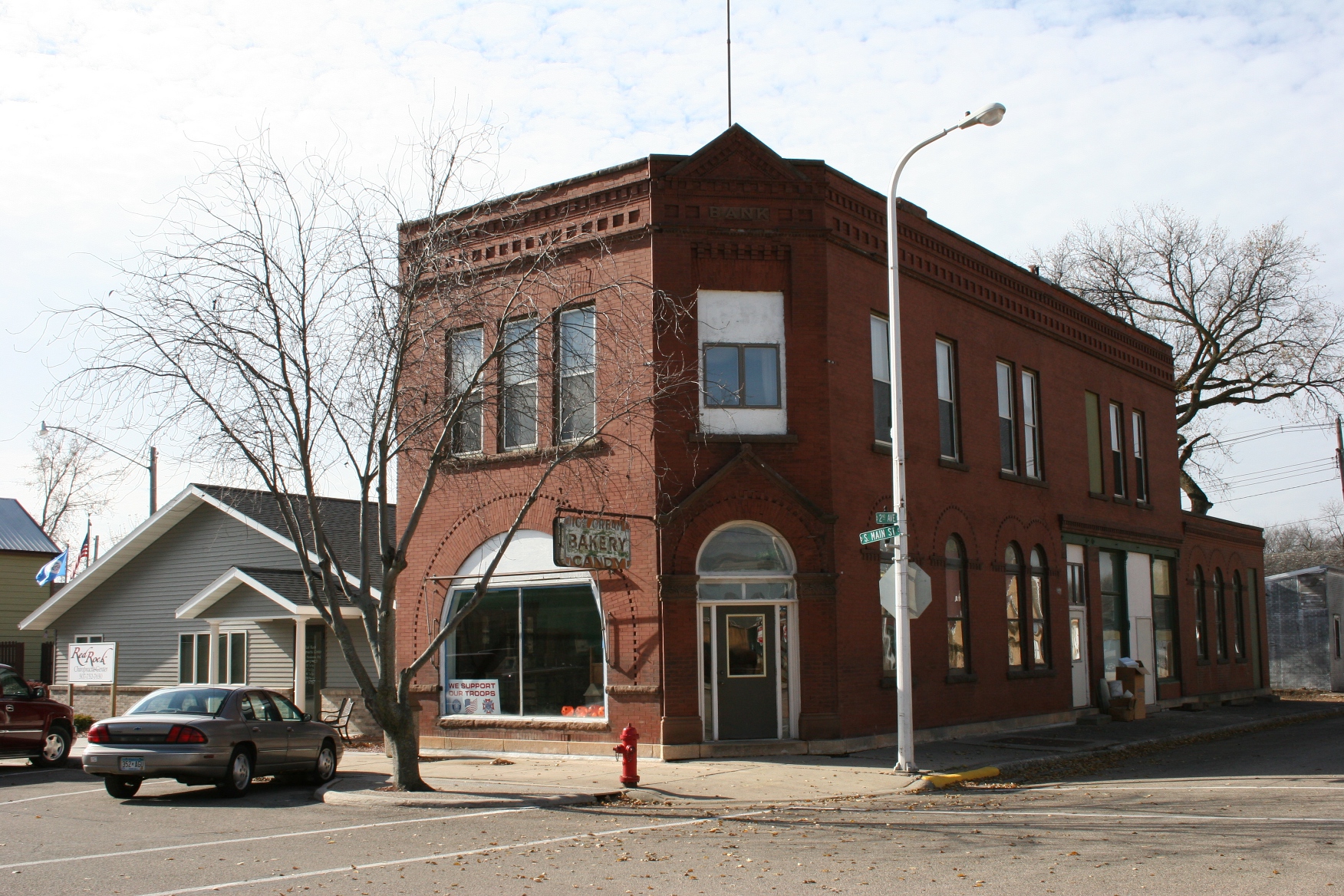
This 1892 former bank building and 95-year bakery anchoring a corner of Lamberton’s Main Street is being renovated into Seven Sisters Coffee by a young couple with connections to this area of southwestern Minnesota. After the business opens, the upstairs will be renovated into loft style apartments.

DAVID AND MICHELLE can see beyond the crumbling mortar, the moisture damage, the buckling floor boards, the teal paint.

Just barely into major renovation of an historic 1892 bank building and former long-time bakery in downtown Lamberton, this couple is thoughtfully and methodically working toward their summer 2013 goal of opening Seven Sisters Coffee.

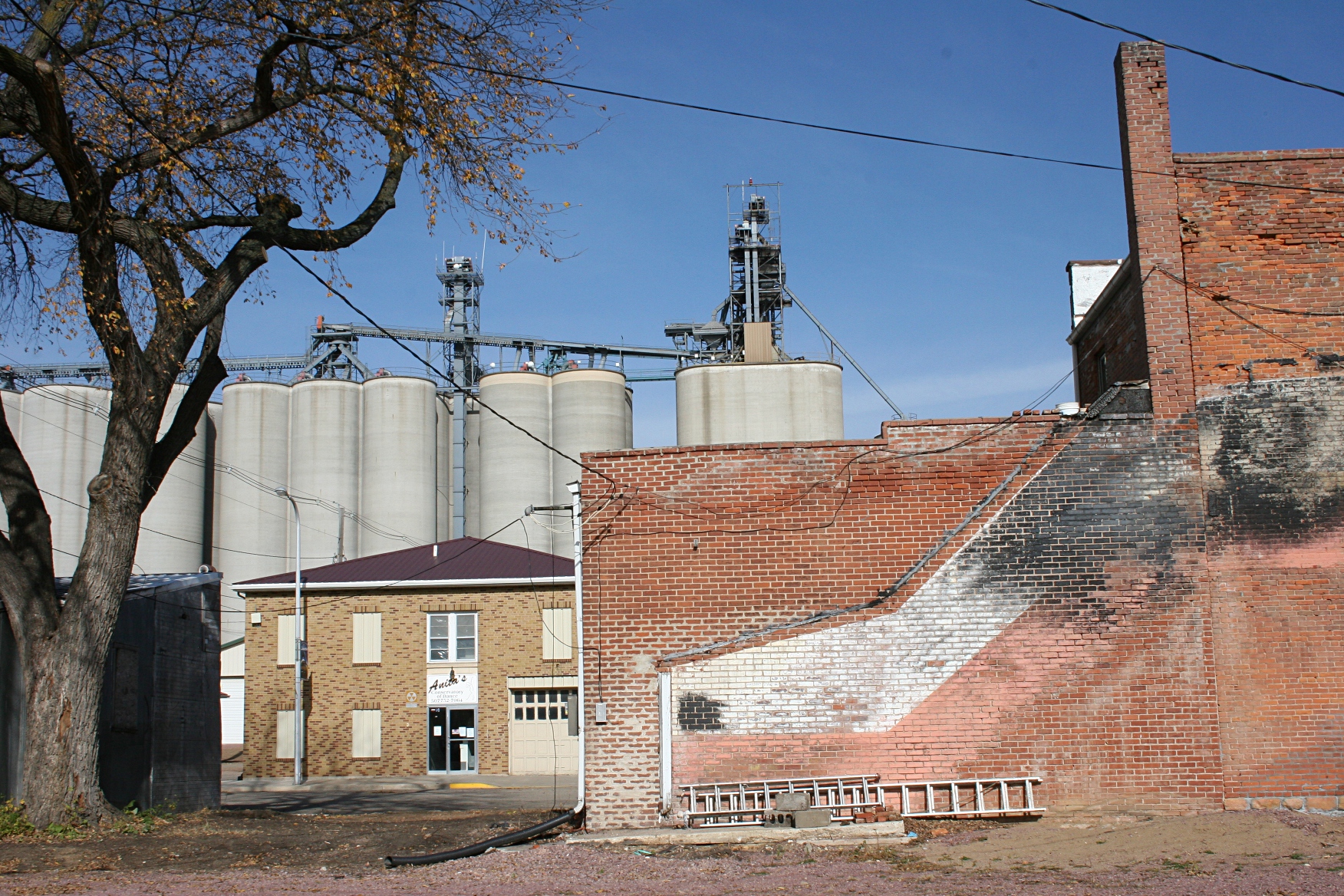
This shows the side and back view of the building, with the rear part added on to the original. Soot from a 2005 fire, which destroyed Plum Creek Crafts next door, mars the brick. Behind the building, a tree was removed and plans are to install a patio area for outdoor dining. They saved a slice of the tree to build a table.

Even the name, Seven Sisters, holds special significance for the pair as Michelle is one of seven sisters and three brothers who grew up in Lamberton, a strong agricultural community of 822 in Redwood County on the southwestern Minnesota prairie. Additionally, Michelle notes that Seven Sisters possesses multiple meanings—in Greek mythology, astronomy and even as a mountain range.

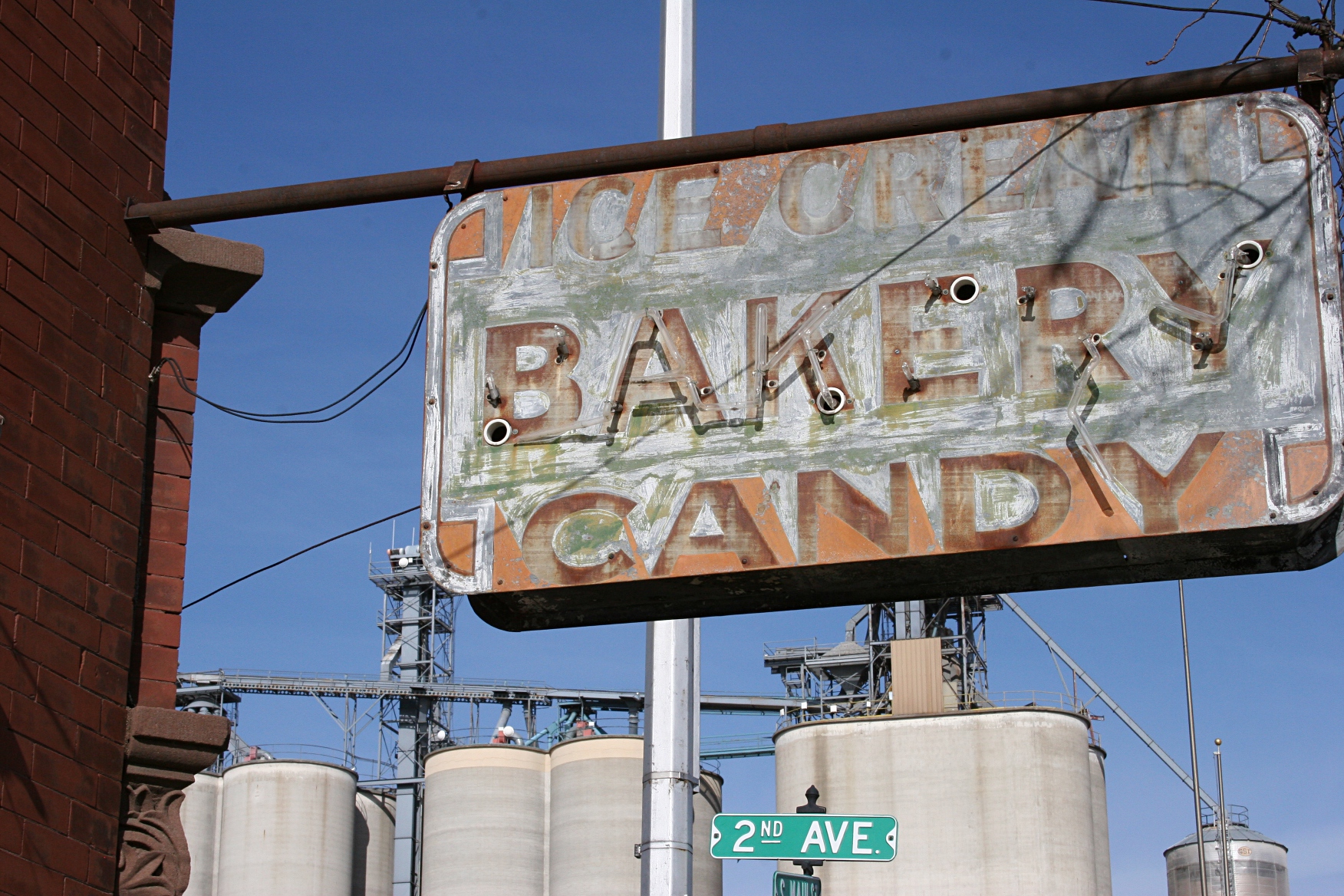
The old sign for the former Sanger’s Bakery still graces the building.

The couple may, perhaps, feel at times as if they are scaling a mountain to reach their goal of establishing a combination cafe, coffee shop and entertainment venue in the 1,900 square foot first floor of the 8,000 square foot brick building. But they are purposeful and focused and driven every week to travel 2 ½ hours from their home to proceed with their project on the prairie.

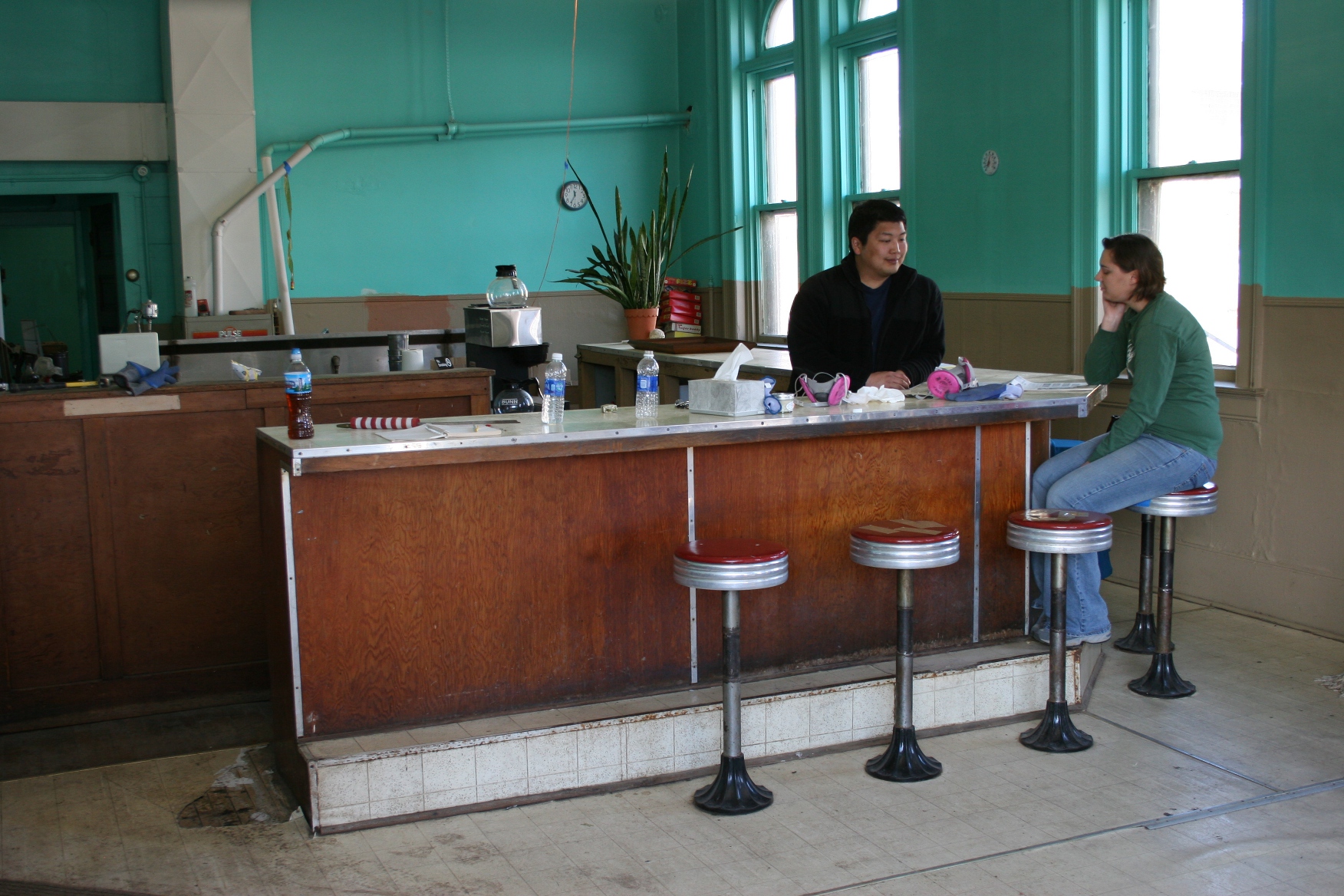
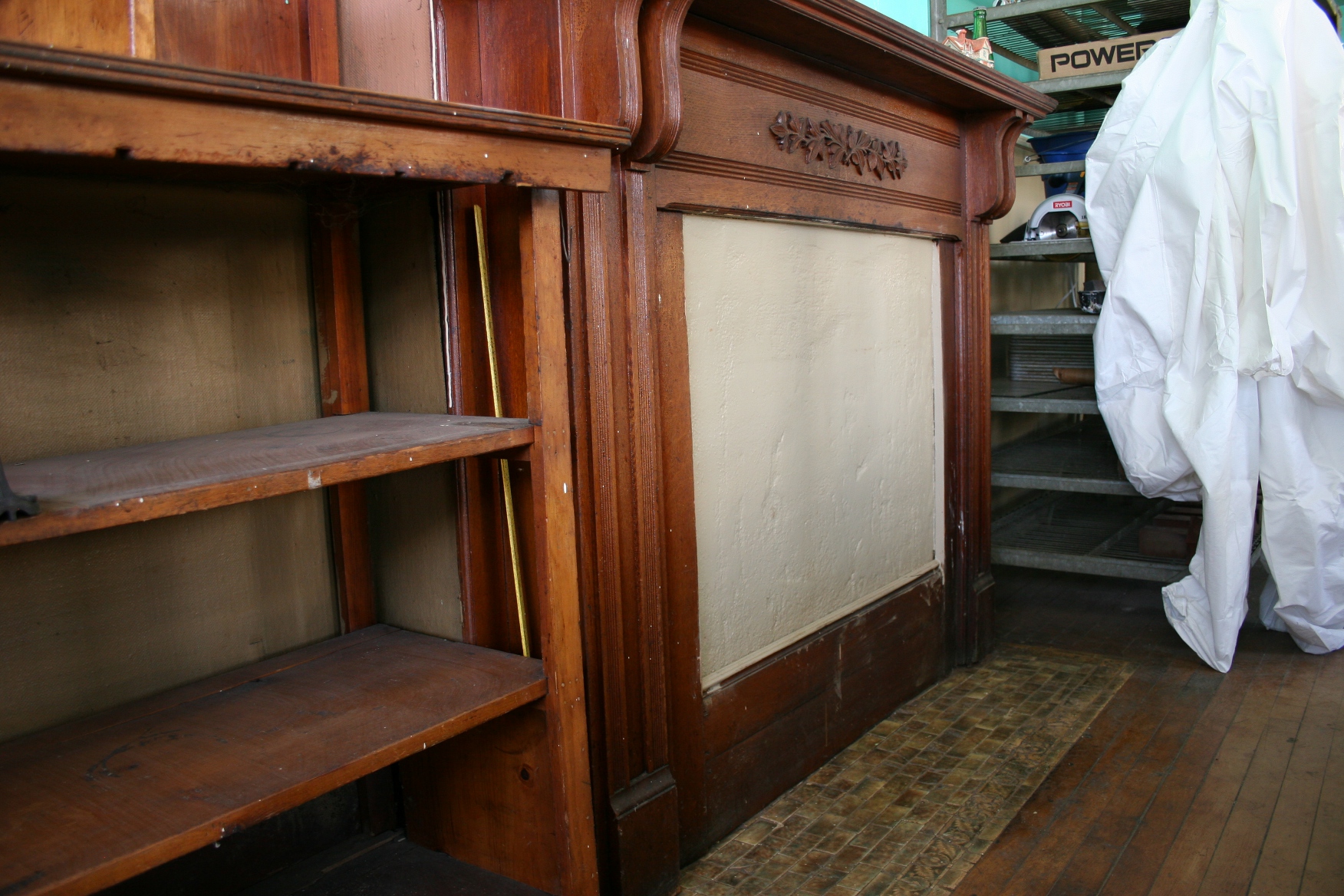
Michelle and David  are keeping the original candy and bakery goods counters and the vintage cabinet, photographed here in the front part of the building. This area of the former bank and bakery will house the cafe and soda fountain. The couple discovered a dumb waiter hidden in the area behind them in the corner.

David envisions Seven Sisters as “an artistic haven as well as a community space.” He expects “townies,” he says, to frequent the front Main Street side of the building, the bright and cheery cafe section offering a full breakfast and lunch menu and ice cream treats from a soda fountain.

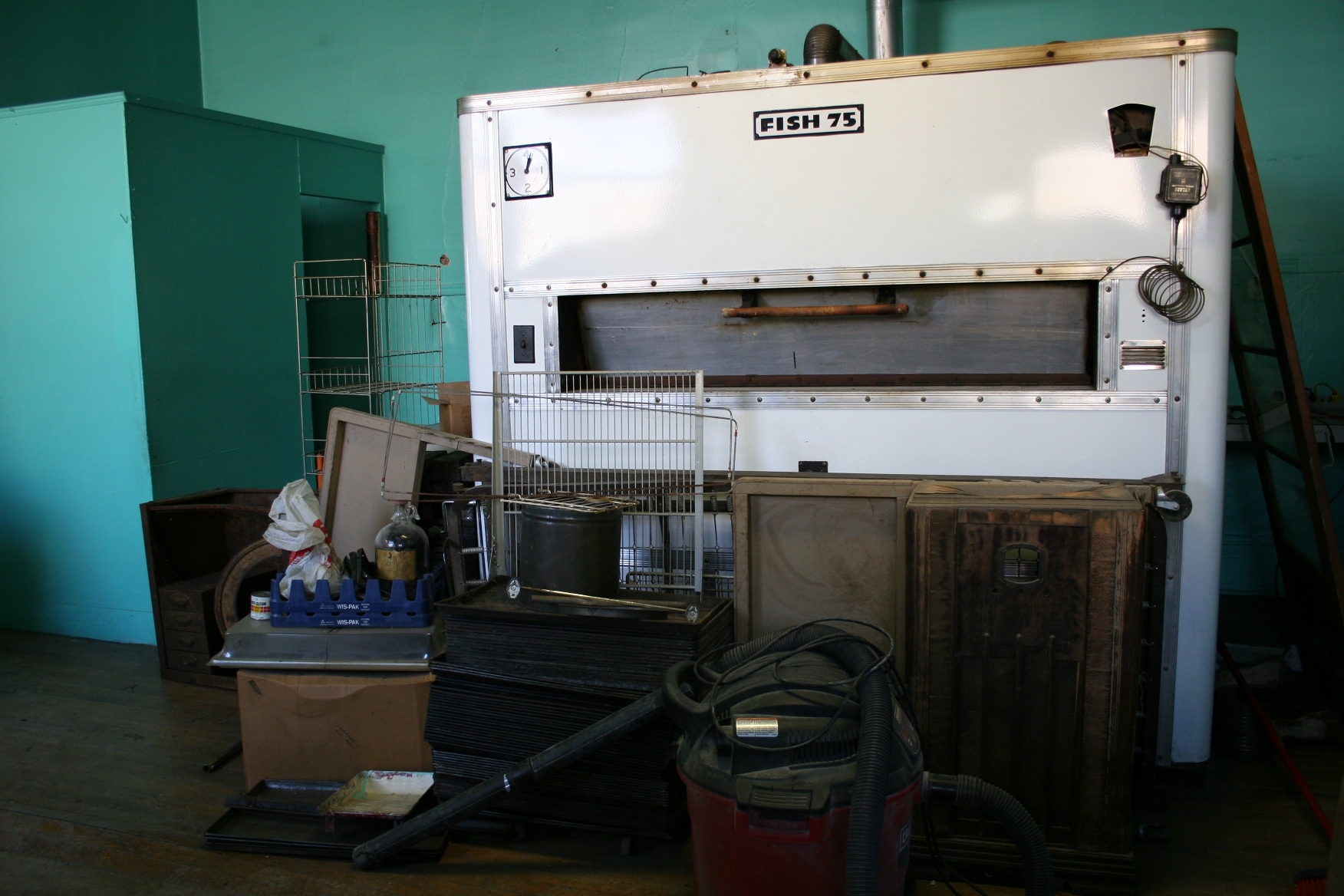
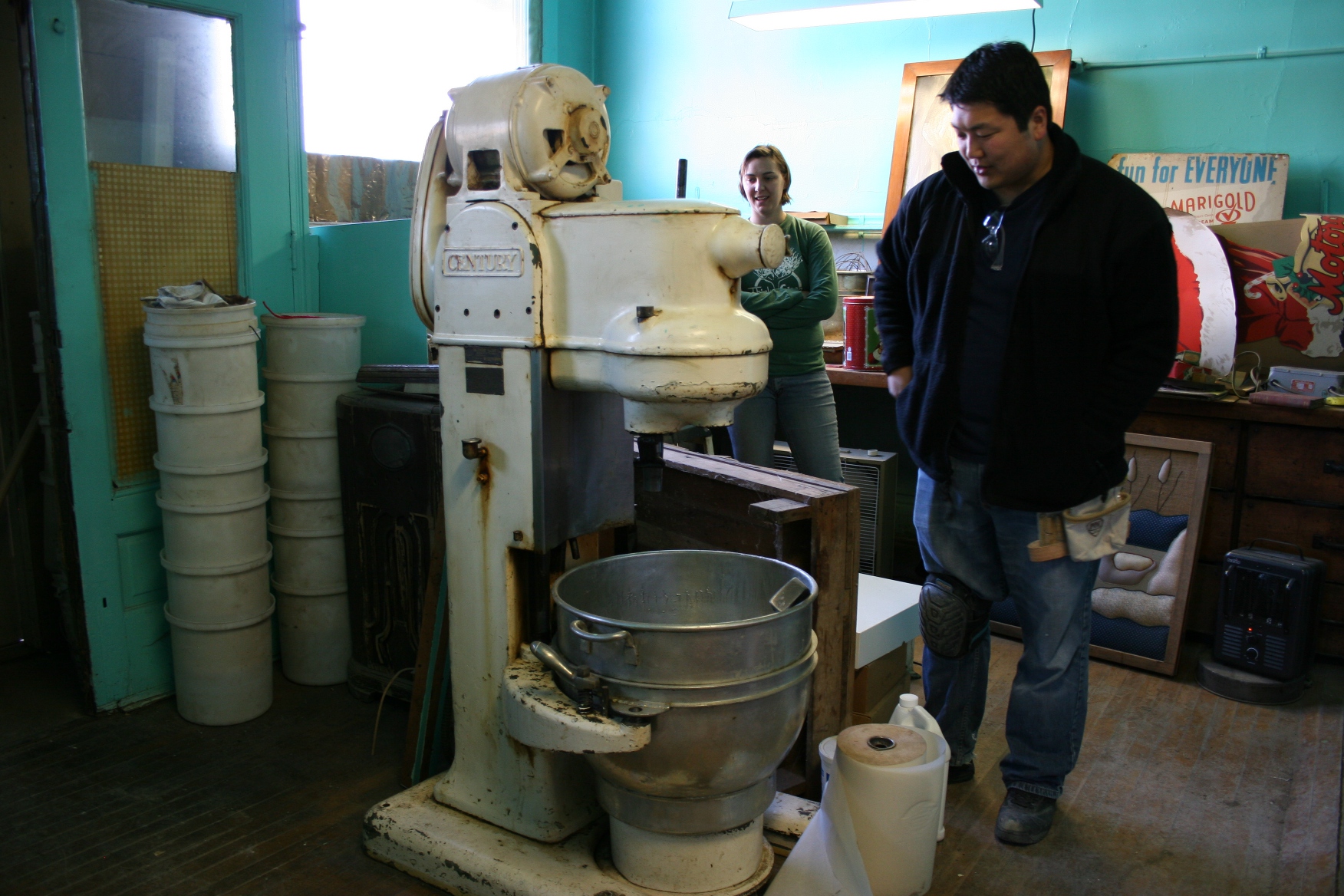
Fifty loaves of bread could be baked in this 1960s vintage two-ton rotary oven. It occupies much of the space in the middle room which will become a cozy coffee shop. This room and the front former bakery/soda fountain area were painted teal after Bob’s niece first chose that hue for the bathroom. Bob loved the color so much that he painted the rest of the place teal. The color has been on the walls for 50 years. No, they are not keeping the teal color.

An oversized mixer also occupies space in the middle room.

The smaller middle section, once a post office entry, baking area and even home to the Sanger family, will be transformed into a warm and intimate coffee shop.

The back room, with focal point brick walls, will become an entertainment venue and artists’ haven.

And in the rear area of exposed brick walls, David expects artists and others to hang out in a more energetic and modern New York loft style space devoted to music and art and private event rental.

Tour this building, inside and out, with David and Michelle and you can see the overwhelming amount of work, inside and out, that needs to be done before Seven Sisters becomes a reality in a community already embracing the business venture.

Locals as well as those living in neighboring towns such as Revere, Jeffers and Tracy and even farther away in the regional hub city of Marshall are ecstatic about Seven Sisters, David says.

Original coffee cups and Bob Sanger’s special cup are stacked under the lunch counter.

The older gas burners Bob Sanger apparently used to make coffee, etc.

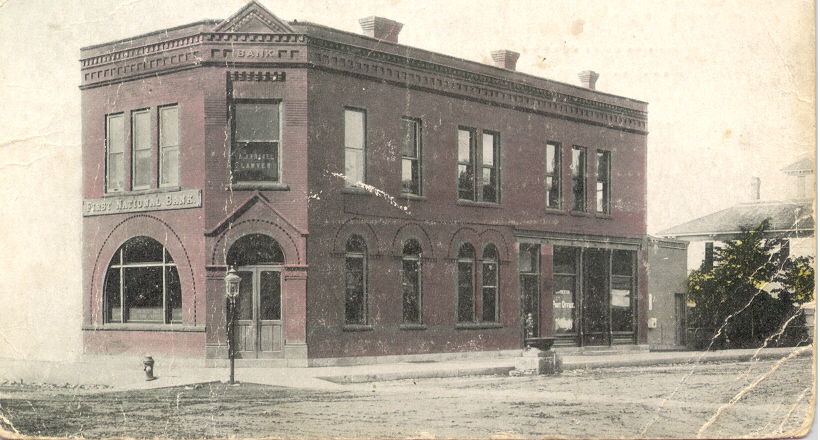
When locals George and Vern, for example, stop by to check on the renovation, David invites them inside for coffee. The two were coffee klatsch buddies of Bob Sanger, long-time bakery owner who died in March. Sanger purchased the bakery from his father, Nick, in 1961. Between Bob, Nick and previous owner, Martin Kuhar, the building has housed a bakery in the First National Bank building for 95 years.

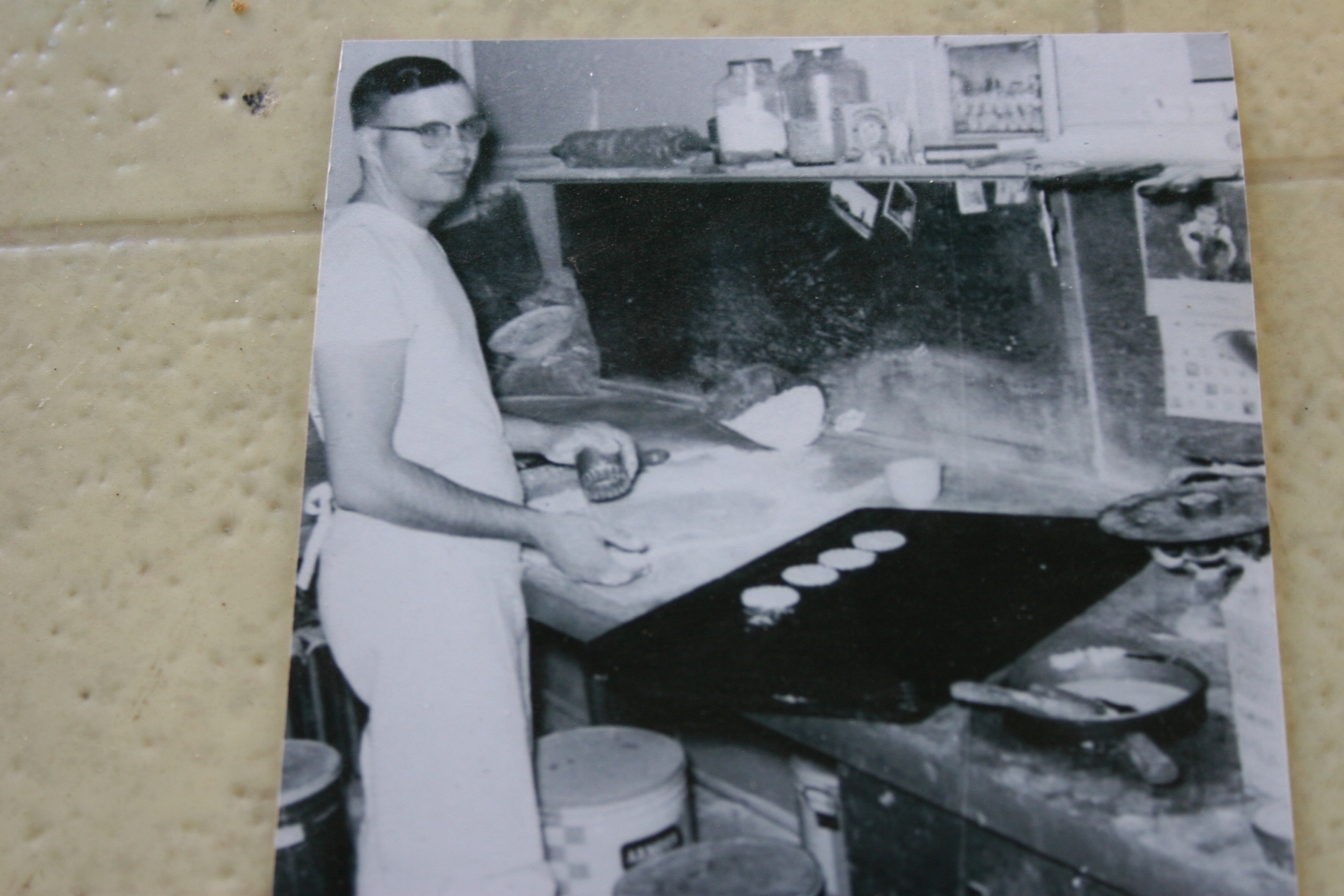
A vintage photo of bakery owner Bob Sanger who died in March at the age of 80.

A vintage photo of the First National Bank.

Says David of his and Michelle’s decision to purchase the former bakery after Bob Sanger’s death:

The building is positively gorgeous and has a fascinating history. We had admired it for some time. The quality of the construction is superior to similar buildings of that era. We’ve always talked about opening our own business and the location and timing were right.

Our review of the local economy and the needs of the surrounding area indicates a very strong potential for growth and a serious need for a business of this kind. By offering excellence in service in three different approaches (cafe, coffee shop, event space) we will offset some of the inherent risk of this type of business. In short, it was a perfect confluence of events. We got lucky.

The pair is determined also to buy local as much as possible. Dry goods will come from Griffith’s Grocery across the street. They plan to work with Brau Brothers Brewing and Fieldstone Vineyards, located in the region. They’ll grow their own herbs.

It is clear in talking to David and Michelle that they appreciate the historic gem they’ve purchased.

A section of this original lunch counter built by Bob Sanger will be refurbished and topped with granite.

They’re attempting, they say, to retain as much of the natural charm as possible. For example, they plan to refurbish the soda fountain built by Bob; relocate an original bank fireplace facade and tile into the coffee shop and install an electric fireplace; refinish the wood floors; keep the tin ceiling; reuse the candy and bakery counters; restore an old player piano; and more.

Wooden floors, like this behind the lunch counter, run throughout the building. In one section, however, where the bank vault once stood, the floor is made of pipestone granite.

This shows a section of the original tin ceiling in the front part of the building. Ceilings are a lofty 12 and one-half feet high.

Plans are to move the facade and tile from the this original First National Bank fireplace into the coffee shop, which David will manage. 

The couple is also uncovering and sifting through collectible treasures like WW I and WW II artifacts, signage, rocks, and more accumulated by Bob. So much was damaged though, beyond saving, by moisture problems in the building, David says. But they are saving what they can, possibly incorporating some of their treasures into Seven Sisters.

A pile of recently found treasures.

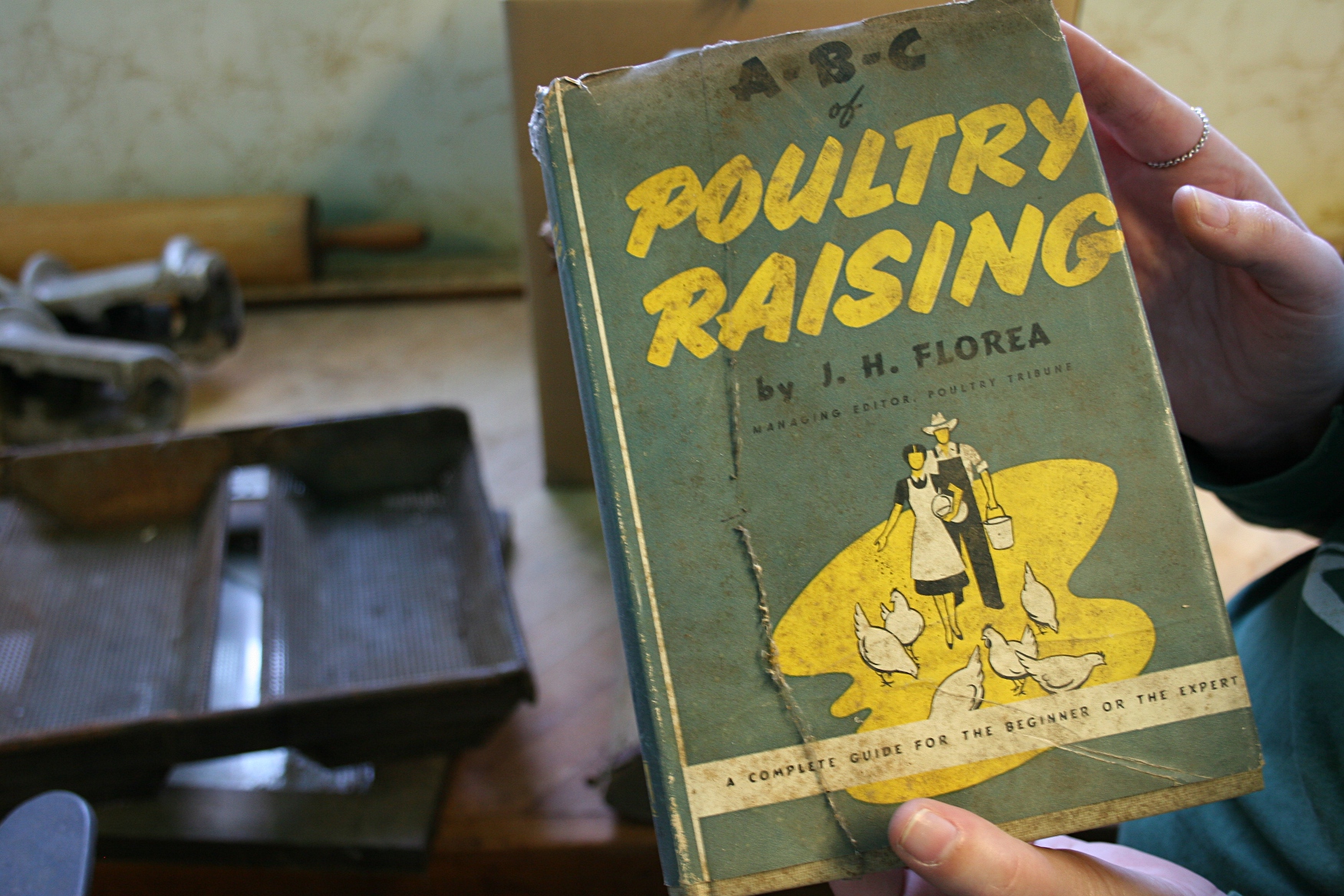
Among the old books uncovered was this one on poultry. Bob Sanger kept a flock of 100 chickens at his house, Michelle says. He used the eggs at his bakery and also sold eggs.

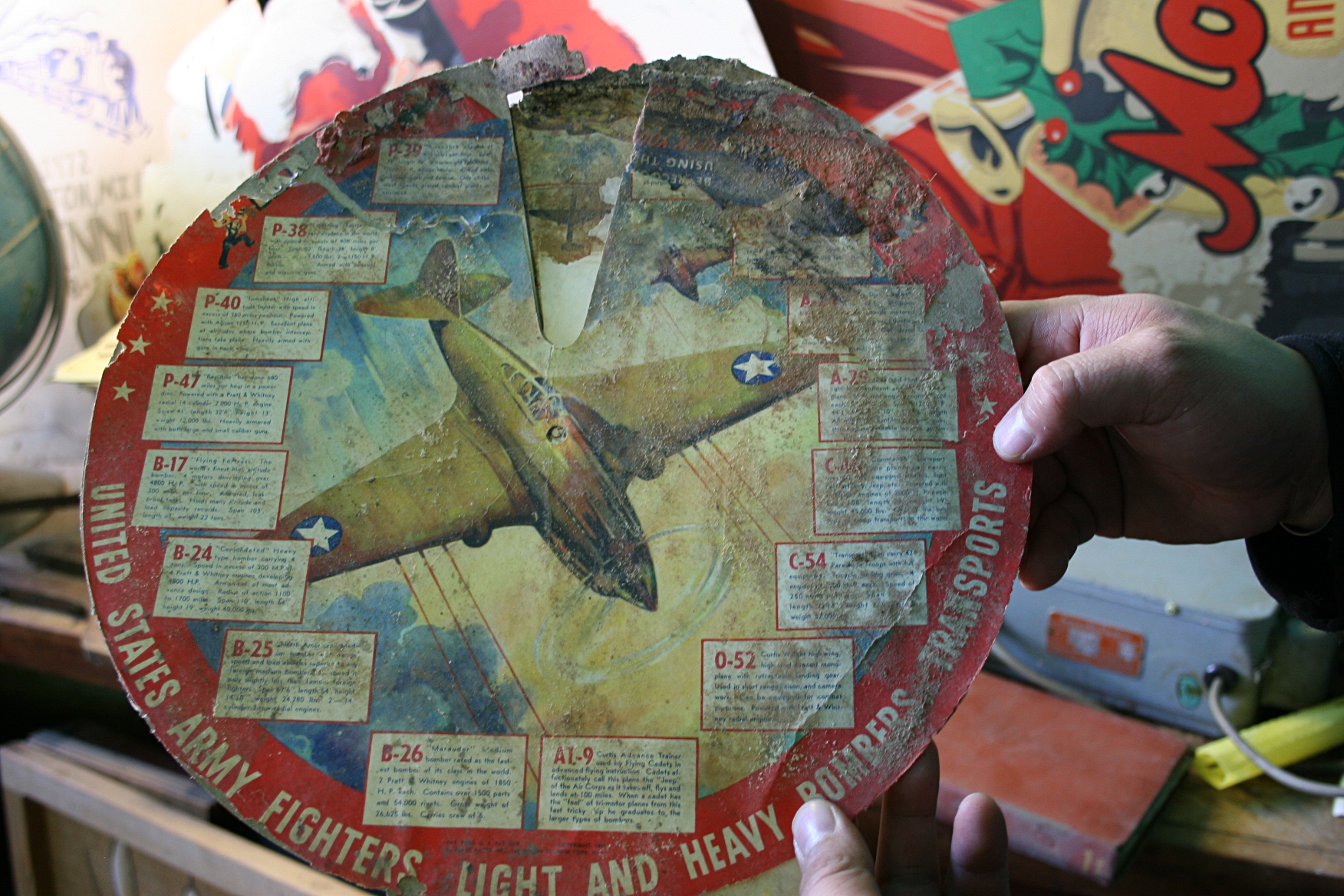
Another find, a vintage bomber transport chart damaged by water, like many of the old items found in the building.

Inedible silver cake decorating balls remain from Bob’s days of baking wedding cakes.

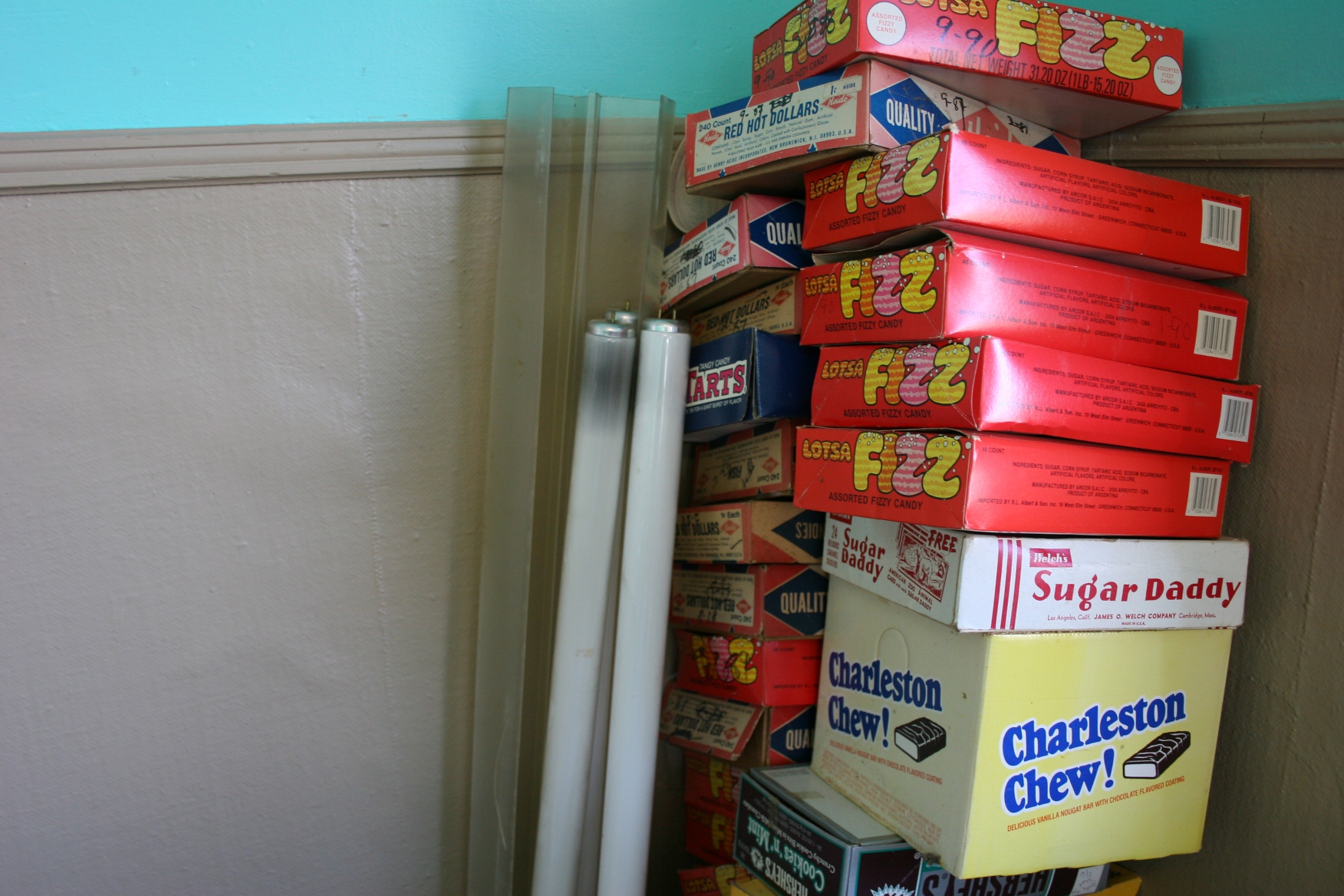
The couple found empty candy boxes (pictured here) and candy still in boxes inside the former bakery.

Michelle has fond memories of coming to Sanger’s for sweet treats. She remembers penny Tootsie Rolls and gumballs and candy cigarettes sold at the candy counter:

Thinking about the hundreds of people who have memories of this building, I really hope we can fill that same role for the next generations.

FYI: Lamberton is located along U.S. Highway 14 about 10 miles east of Walnut Grove, childhood home of Laura Ingalls Wilder, author of the Little House children’s book series. The area is a strong draw for summer tourists interested in Wilder’s books and the Little House on the Prairie television series set in Walnut Grove.

© Copyright 2012 Audrey Kletscher Helbling
 

Rural Americana: A personal tour of historic Canton, Minnesota October 18, 2012

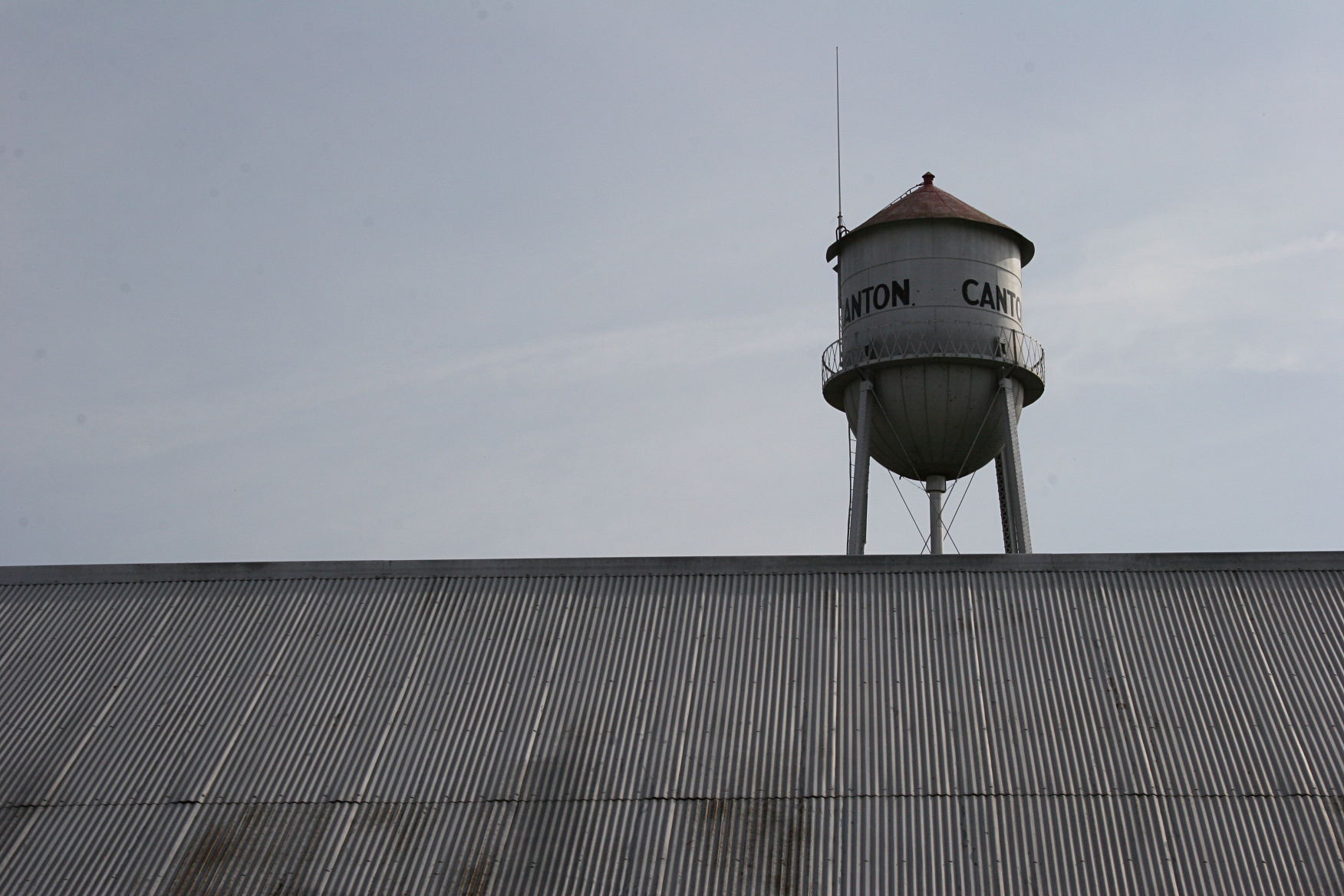
The water tower in Canton, on the other side of the roof line seen here in the foreground.

LeROY HAYNES WAS BRUSHING green paint onto wainscoting in the sunny warmth of an October afternoon when I happened upon him in Canton, a town of 328, in southeastern Minnesota near the Iowa border.

He was, he said, in the process of sprucing up Lumber Yard Antiques, the shop he and wife Kathie opened in July. Kathie’s originally from Canton where the couple now lives only three blocks from their antique store.

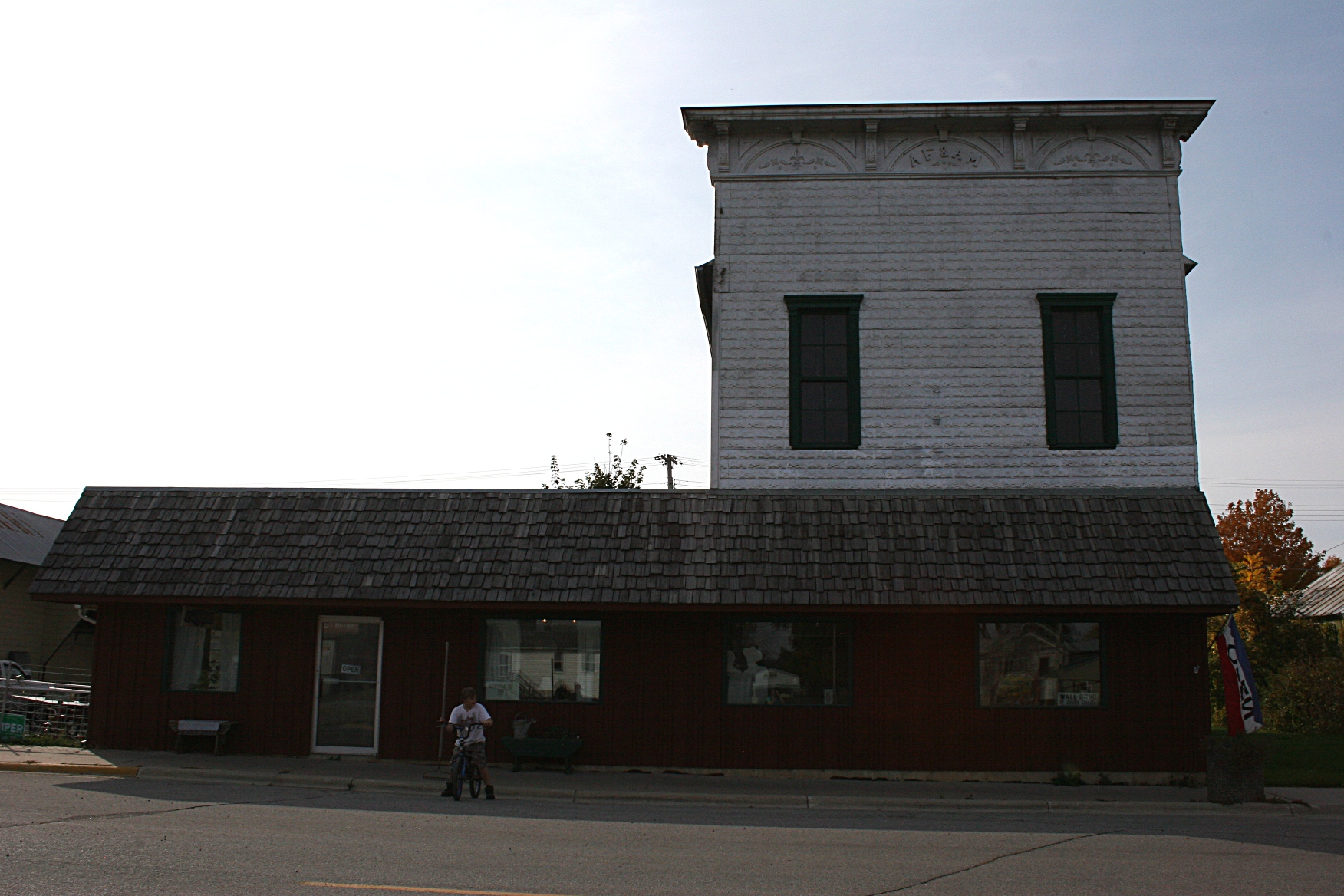
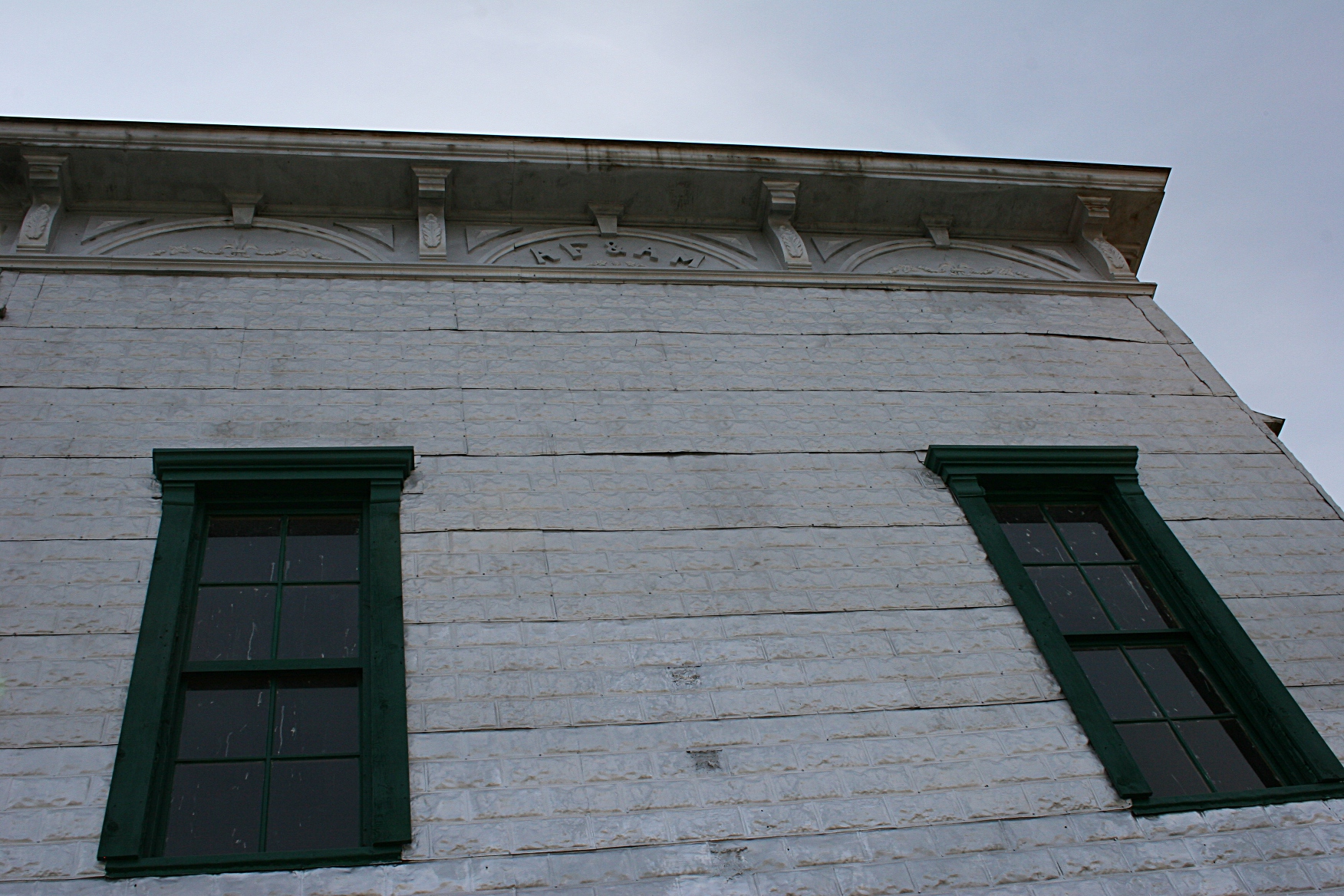
When the lumber yard moved here, it added the front red part of the building onto the former Masonic Lodge building on the right. The first floor of this complex now houses Lumber Yard Antiques.

They named their business after the lumber yard previously housed in the building complex which some 10-plus years ago was home to another antique shop and before that Canton city offices. The older part of the Haynes’ shop, the Masonic Lodge building, was once rented out by the Masons and used as a grocery store, barbershop and even as apartment space.

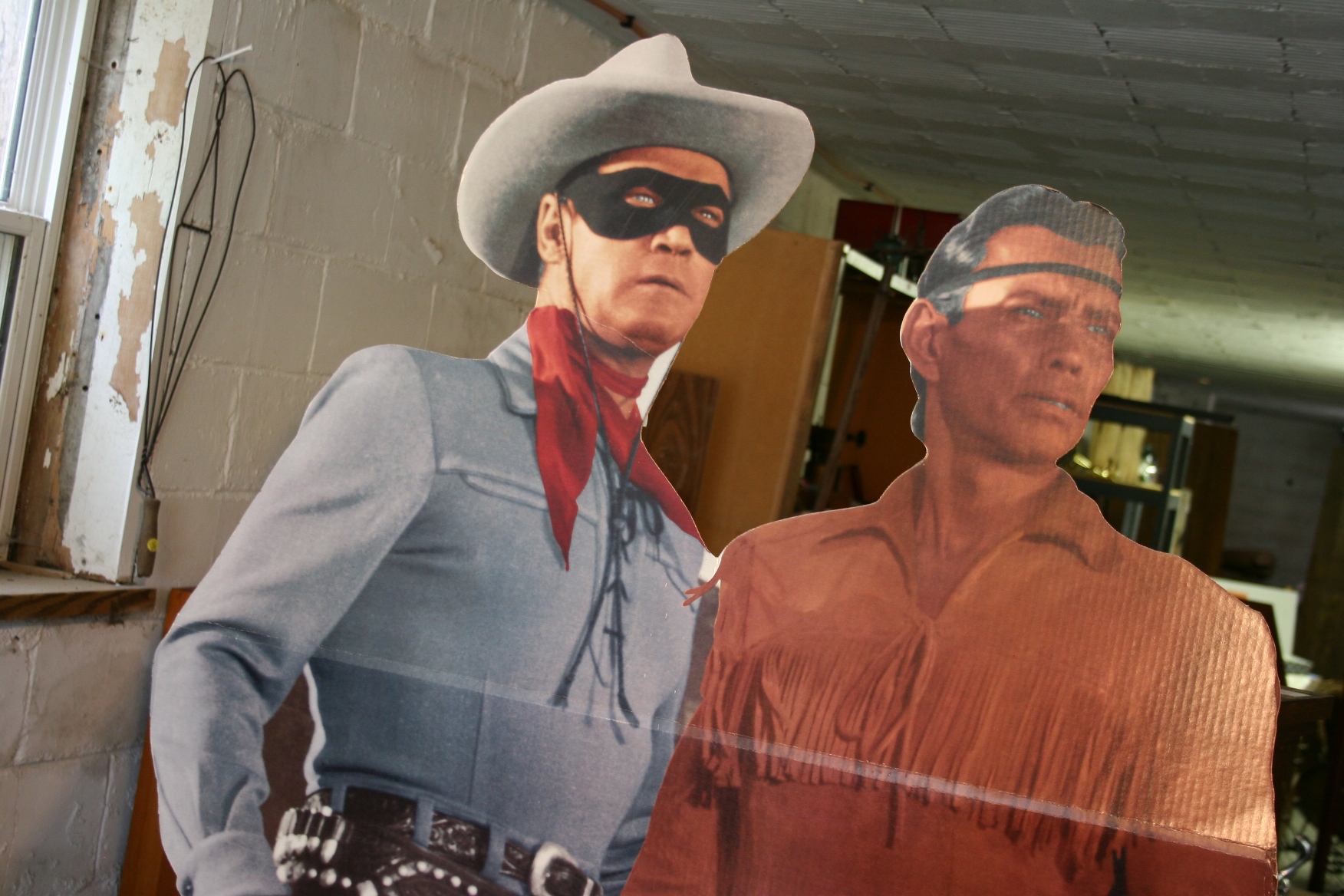
See what you learn when you start a conversation. I learned even more when I spotted a cut-out of Tonto and the Lone Ranger and mentioned to LeRoy that I’d seen one just like it in the basement of an antique shop in Stockholm, Wisconsin.

The Lone Ranger and Tonto cut-outs, photographed last fall in Stockholm, Wisconsin.

Imagine my surprise when LeRoy informed me that the cut-out had come from Stockholm, where he once sold his antiques and collectibles at A+ Antiques & Oddities.

It is a small world.

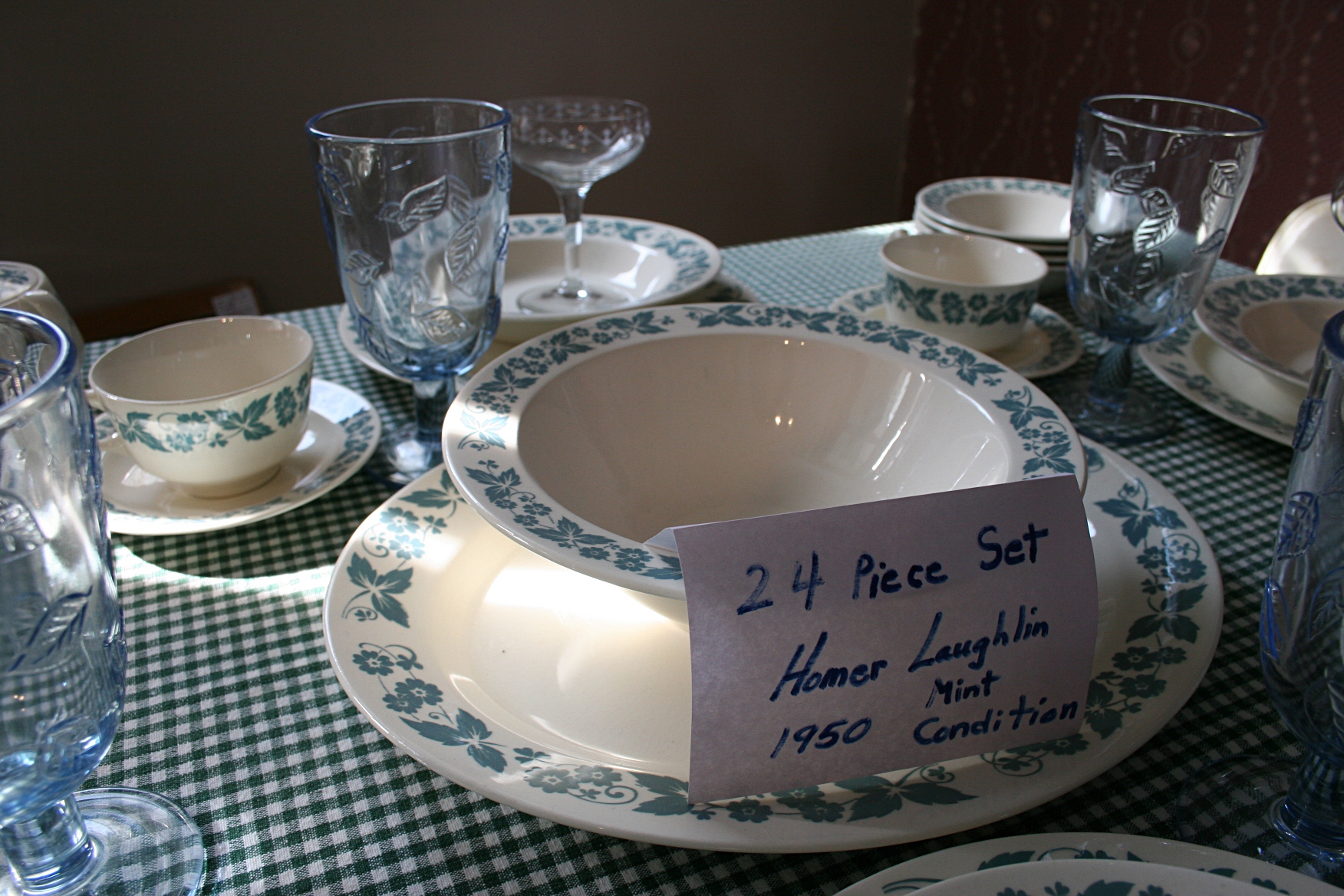
Beautiful 1950 Homer Laughlin china for sale at Lumber Yard Antiques.

LeRoy and I hit it off marvelously and soon he was offering to take me and my husband into the upstairs of the former Masonic Lodge. I had my doubts as this Presbyterian minister led us past a jumble of boxes, over broken glass and finally weaving our way up a steep and dark stairway littered with piles of bird poop. And I was wearing flip flops.

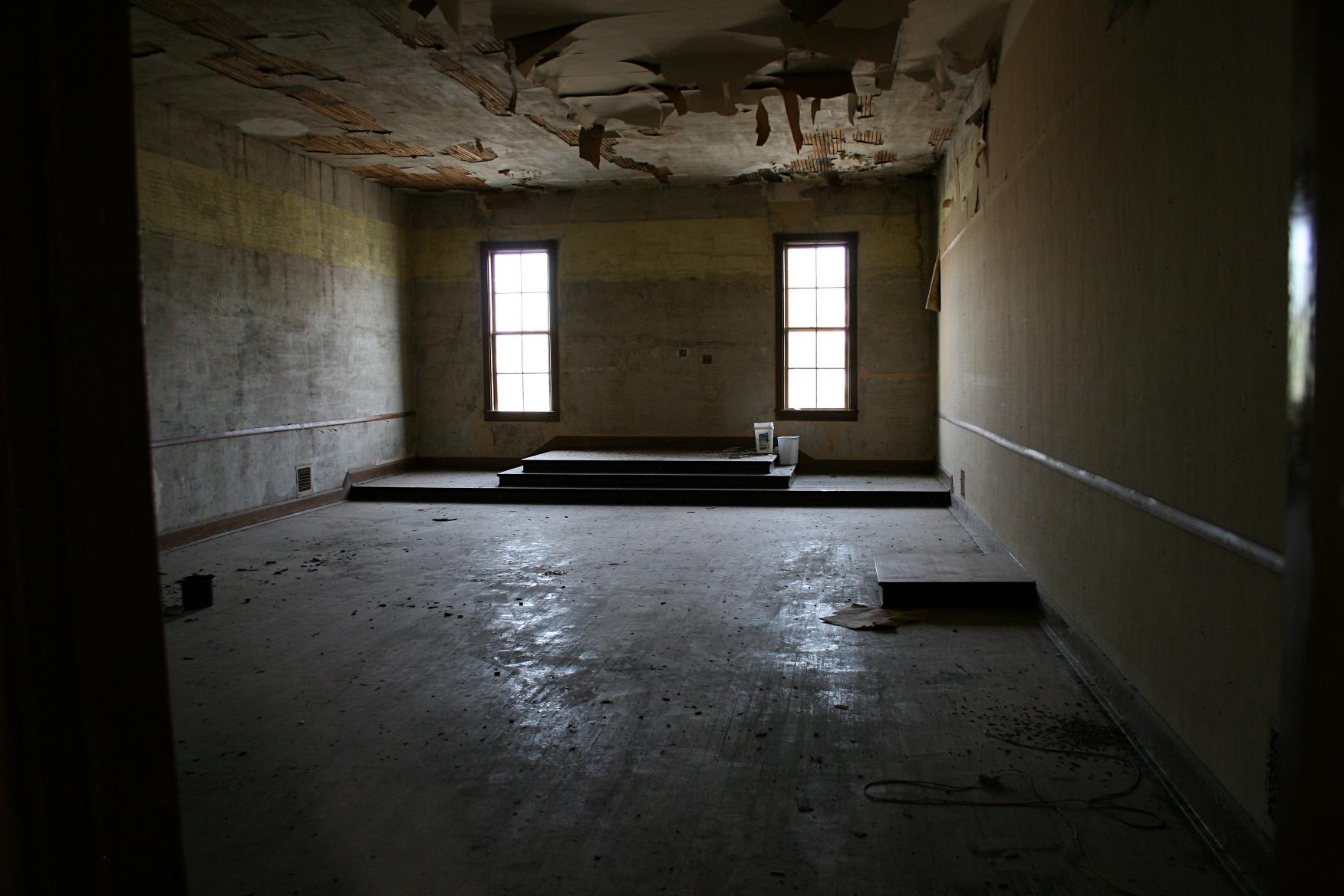
Inside the former Masonic Lodge, the second floor of Lumber Yard Antiques. Can you see the potential here?

But it was worth the climb when LeRoy led us into a spacious room with incredible potential, despite the crumbling ceiling and general disrepair. The wood floor and the step-up small “stages” on both ends of the room—something to do with Masconic ritual, LeRoy said—instantly ignited my creative thoughts. This, I told our tour guide, would be perfect for theatre and/or music.

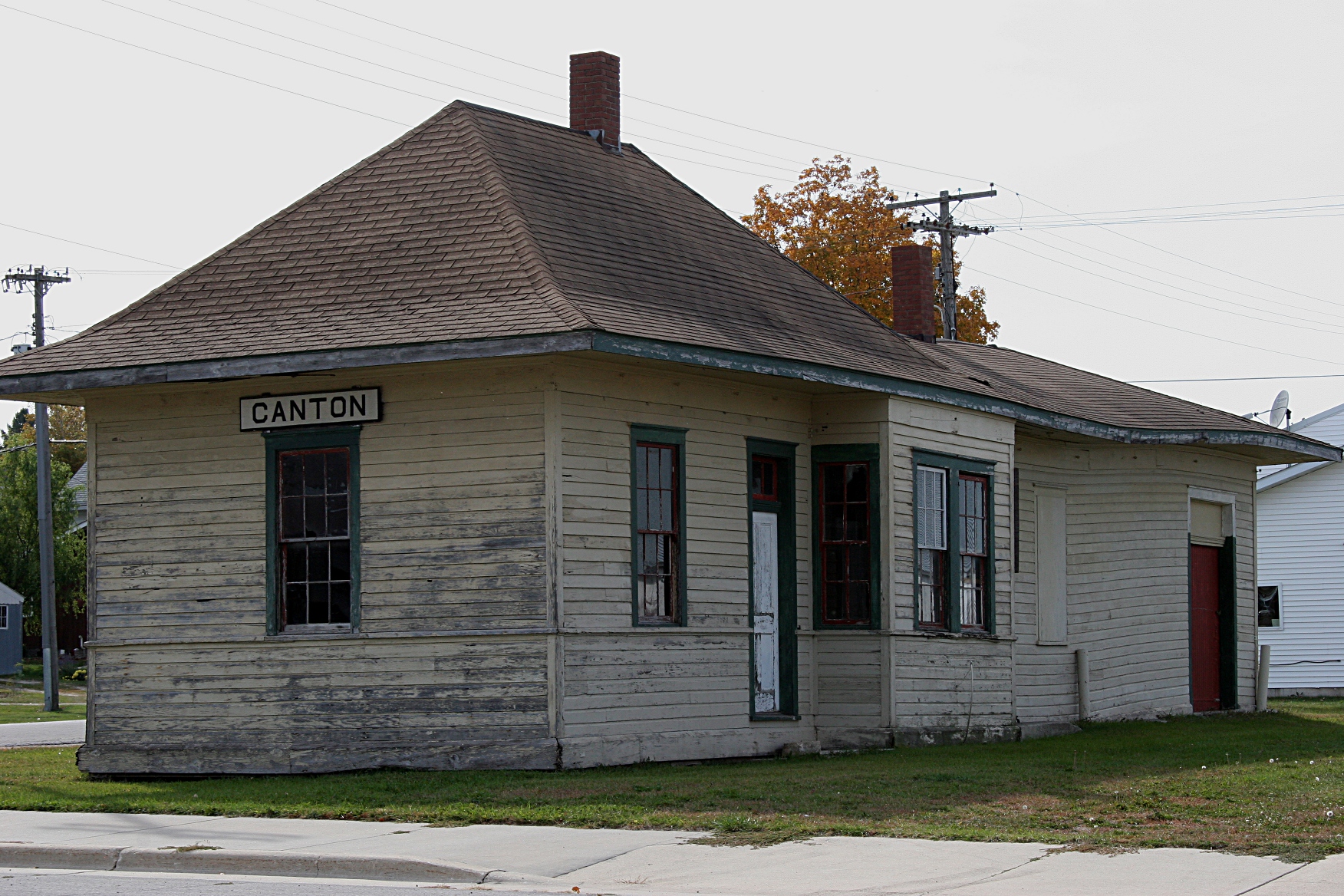
Canton’s original depot, recently reroofed.

I don’t know that LeRoy and Kathie share my vision. But they have been thinking preservation as has a railroad buff from California who bought the next door vintage railroad depot, sight unseen, according to LeRoy.

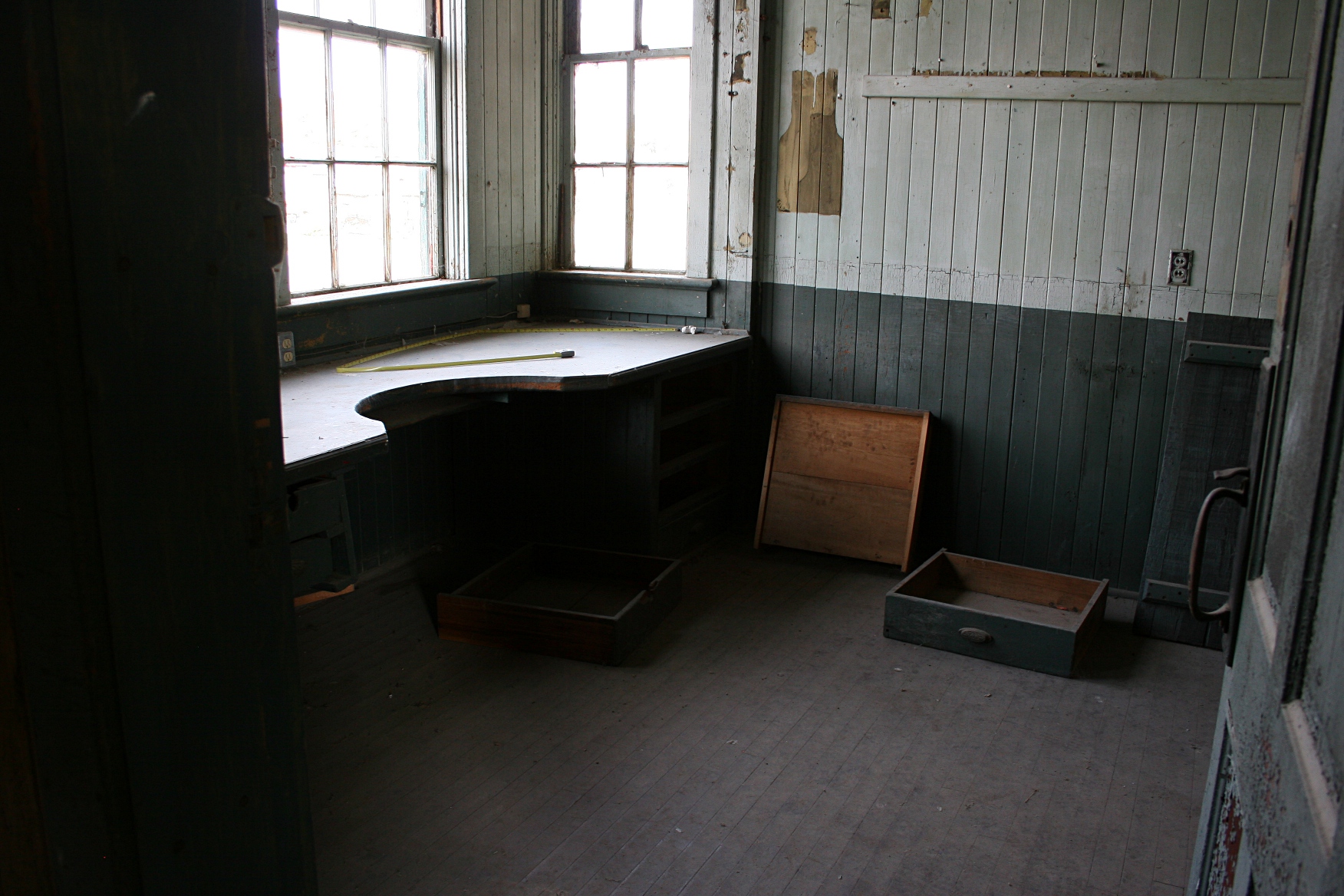
Inside the depot.

The depot came next on our tour (LeRoy’s been entrusted with a key) and I was just as delighted to get inside this historic building.

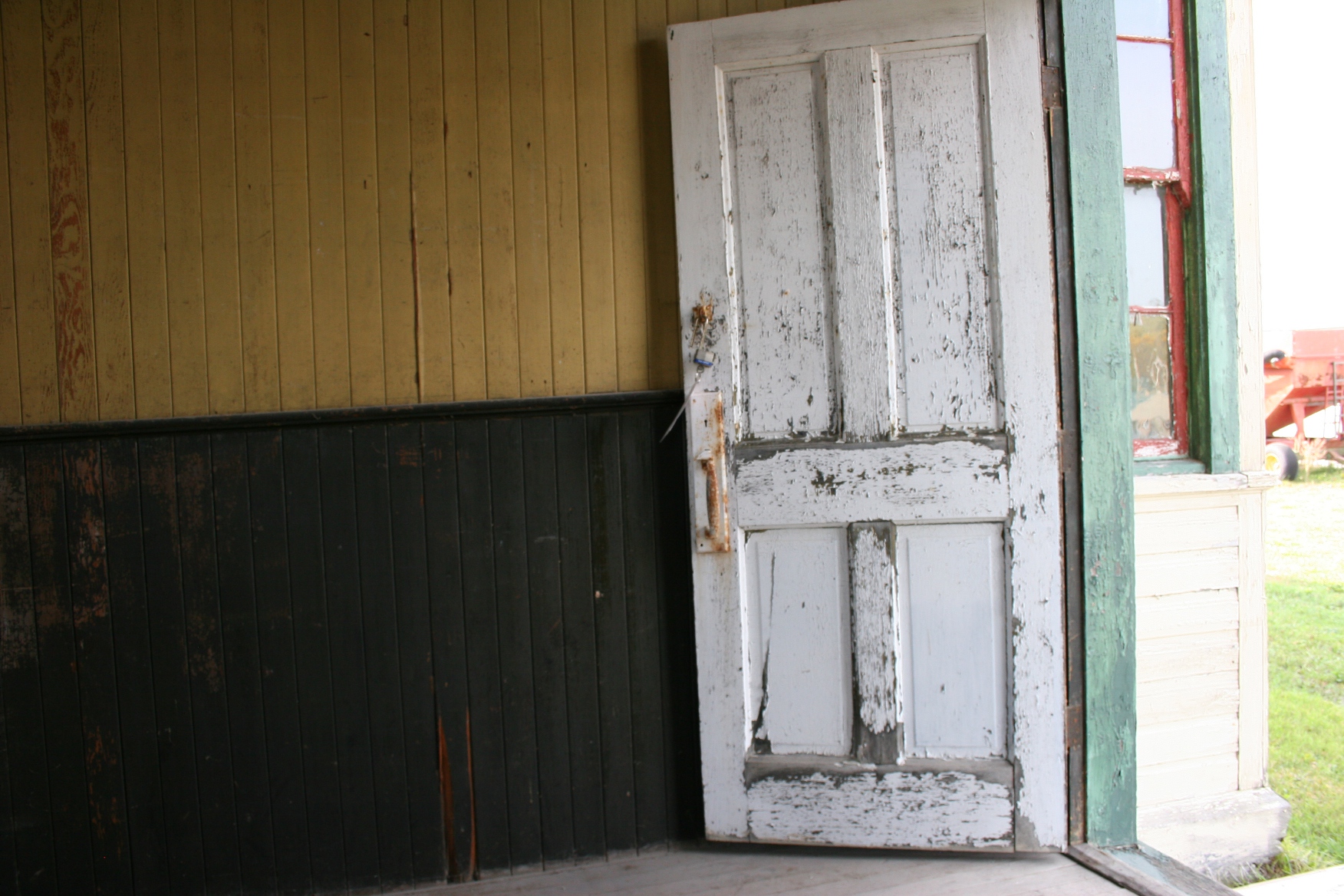
The door LeRoy unlocked into the depot. Love it.

The California man has a vision to create a historic site in Canton and a Canton Historical Society has been formed. Plans are to seek grants to restore old buildings like the depot.

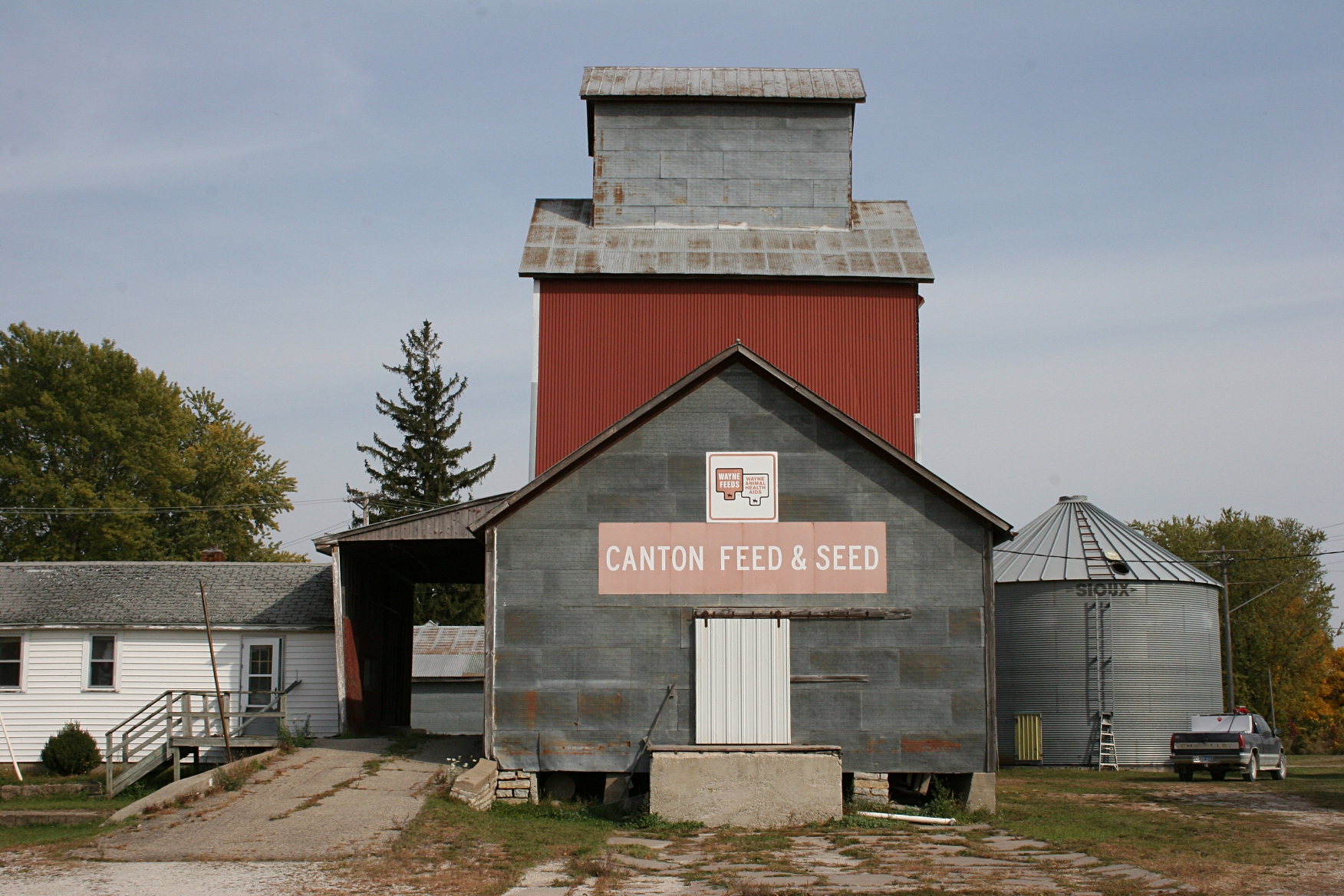
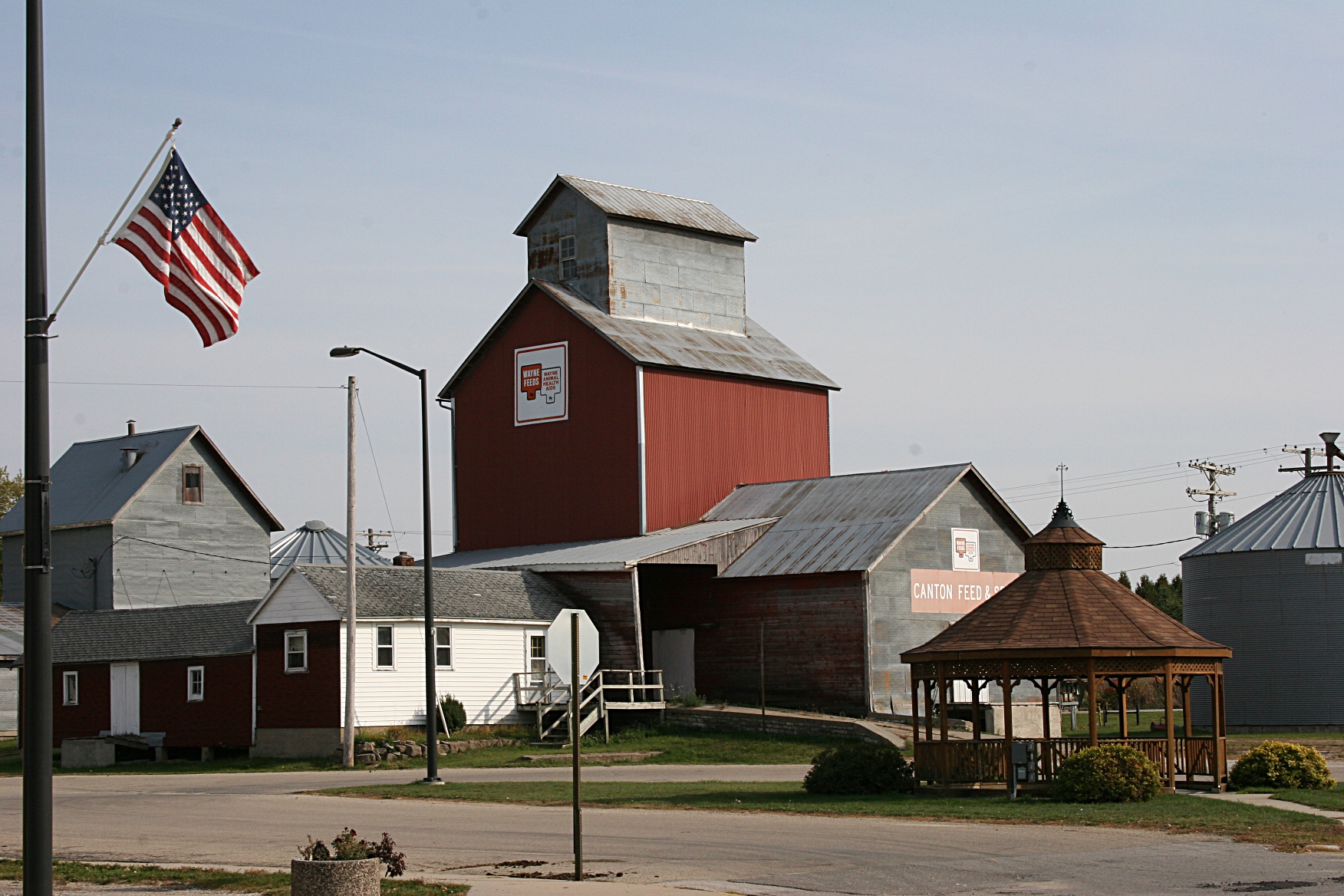
Old elevators like this are disappearing from our small towns, replaced by large, generic storage units. The Canton Historical Society hopes to save Canton Feed & Seed and other old buildings in town as part of an historic site.

And that pretty much ended our tour of the portion of Canton which lies off the main route past town, Minnesota Highway 44. Had we not driven into town via the back way, past the elevator, we may have missed all of this, and that personal, historic tour by LeRoy.

Exterior details on the old Masonic Lodge building.

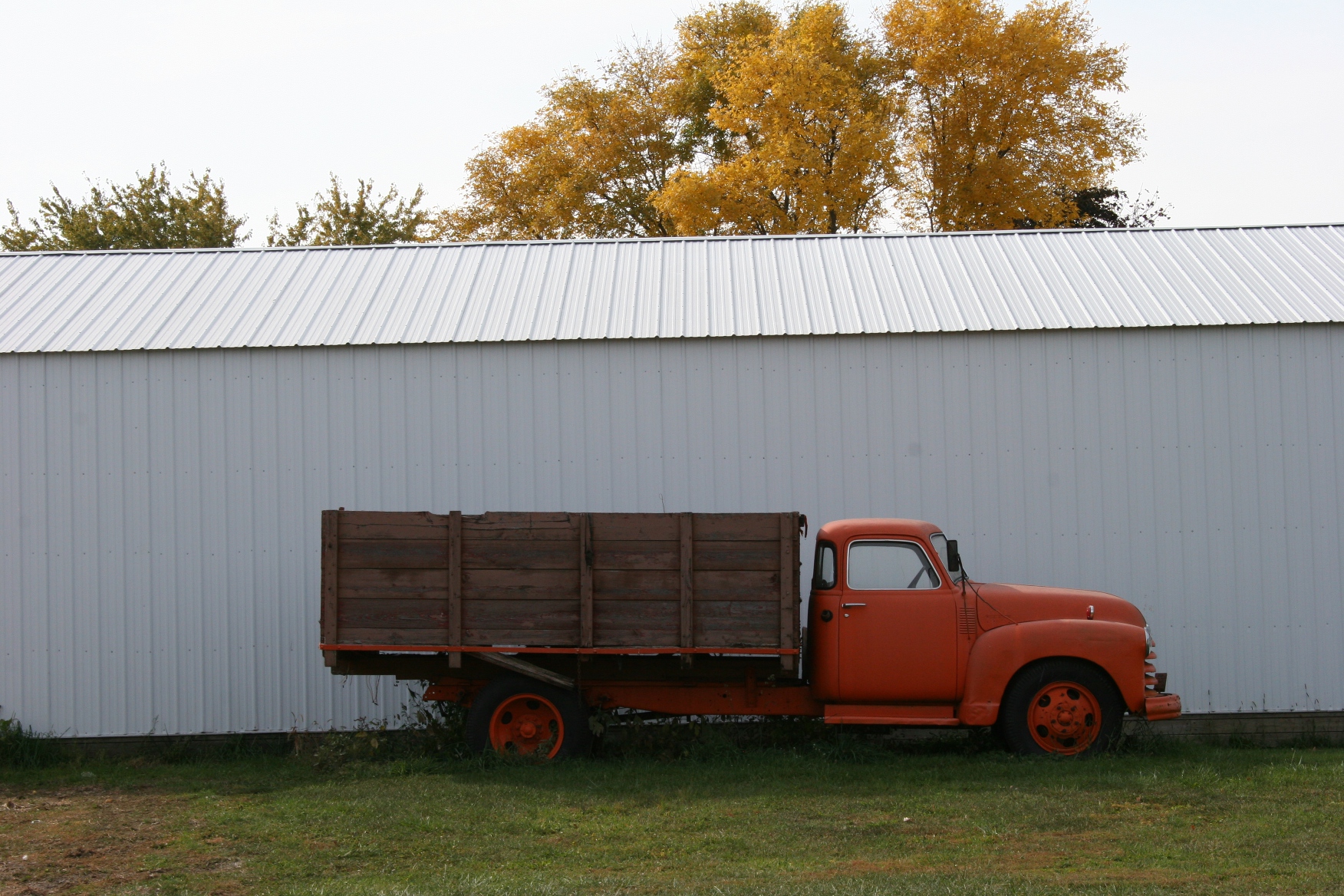
Outside the back door of the antique shop, this tangerine hued vintage truck contrasted against the gray metal caught my artist’s eye.

A broader view of the scene directly across the street from Lumber Yard Antiques and the depot. Pure rural Americana.

FYI: Lumber Yard Antiques is open from 11 a.m. – 5 p.m. “most days,” LeRoy says, but will be closed from January – March. My apologies for failing to photograph LeRoy and Kathie. What was I thinking? Clearly I was not.

CLICK HERE TO READ a previous post from Canton. 

© Copyright 2012 Audrey Kletscher Helbling
 

The corner bar in Canton October 17, 2012

If you can take your eyes off the vintage phone booth, you’ll notice a beer sign suspended from ZZs Tap (bar) along Canton’s Main Street.

PEER DOWN THE ONE-BLOCK Main Street of Small Town, USA, and your eyes likely will land on a bar or two anchoring a business district comprised of primarily vacant and crumbling buildings.

That’s an over-generalization, of course, but sadly all too true for many once-thriving small towns.

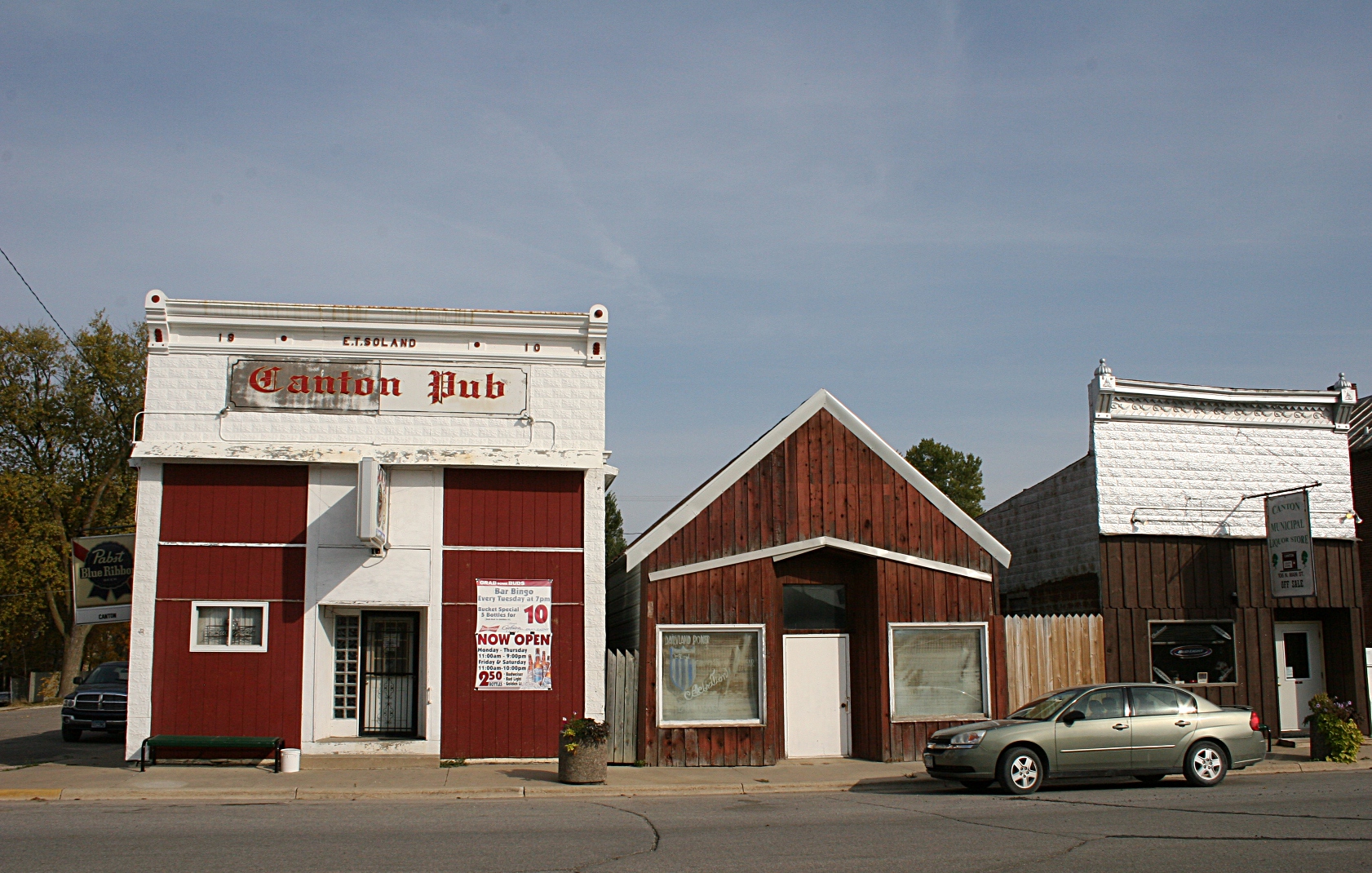
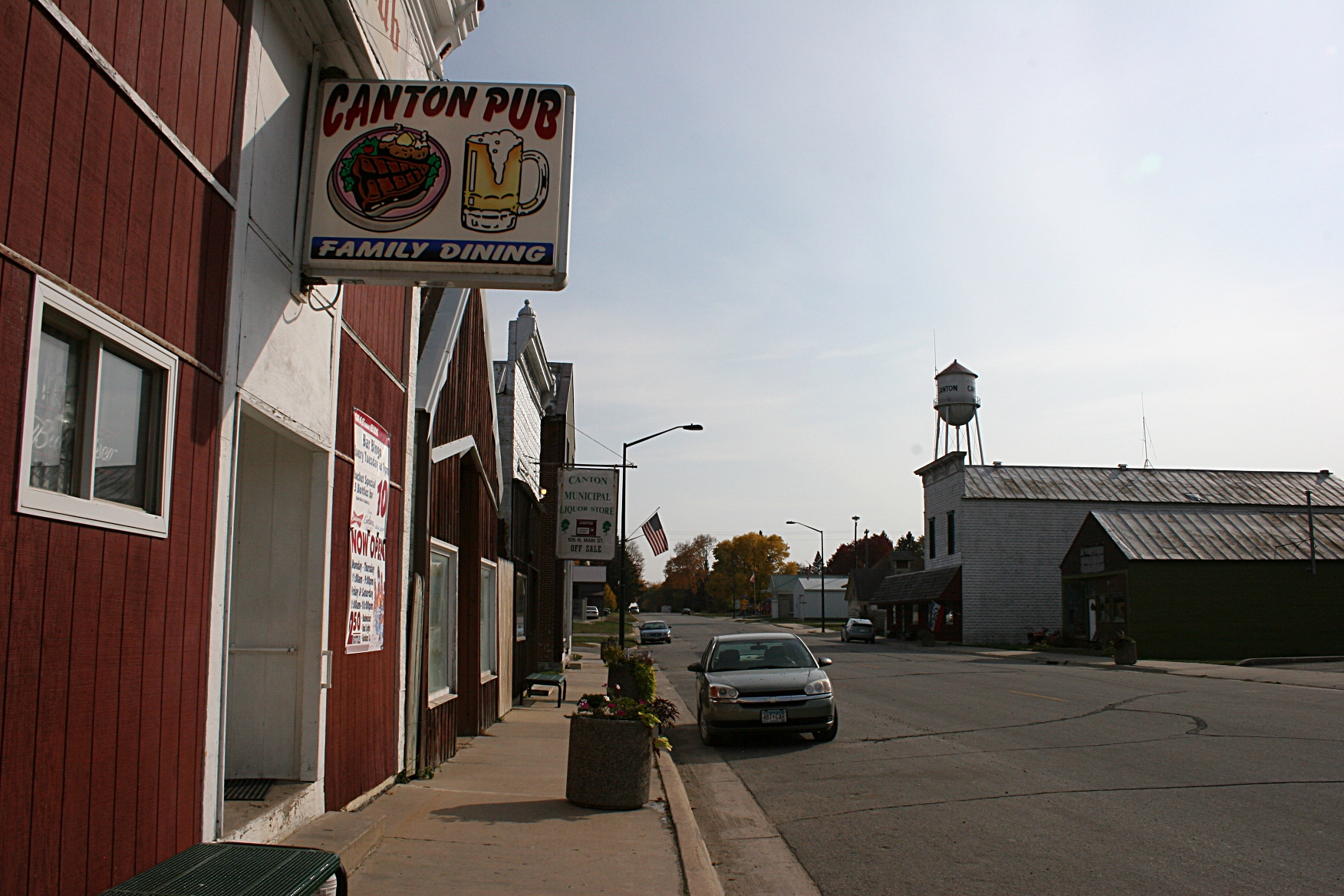
That’s the Canton Pub on the left and the Canton Municipal Liquor Store on the right with an unknown business sandwiched in between.

While hardware stores and grocery stores, even hometown cafes and barber shops, have closed, the corner bar typically endures.

I’ve never been a frequent bar customer and honestly can’t remember the last time I stepped into a small town bar where heads swivel when a stranger enters. You know what I mean, right?

Food and drink and Tuesday night bar bingo can be found at the Canton Pub.

On a recent stop in Canton, a town of 328 nudging the Iowa border in southeastern Minnesota, I spotted the Canton Pub. I didn’t even try the pub door to see if I might slip inside for a cold one on an autumn afternoon.

I was too busy photographing the beer signs.

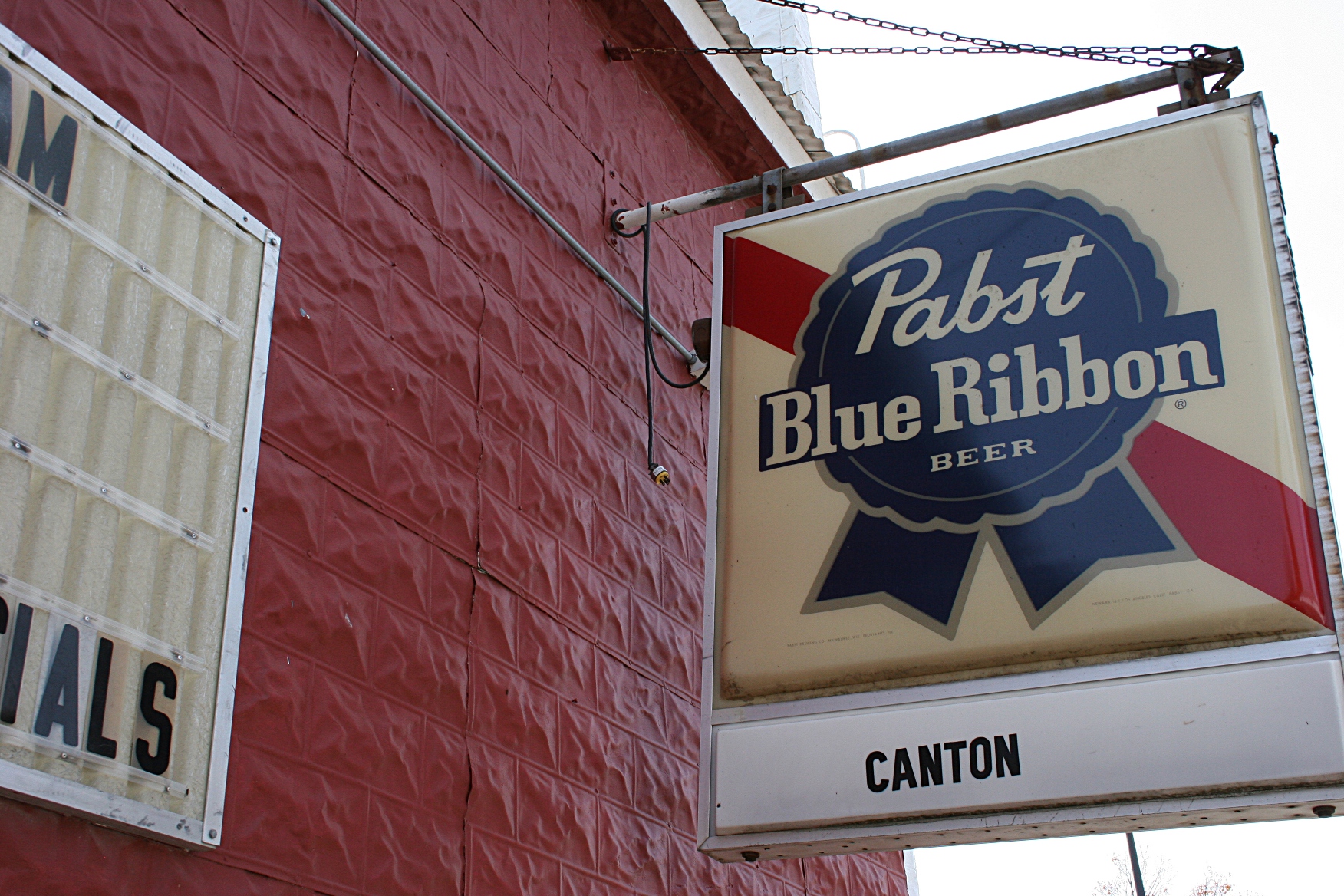
I photographed this sign at the Canton Pub for my oldest daughter’s boyfriend, Marc Schmidt, who recently relocated to the Twin Cities from LA.

Another beer sign on the Canton Pub.

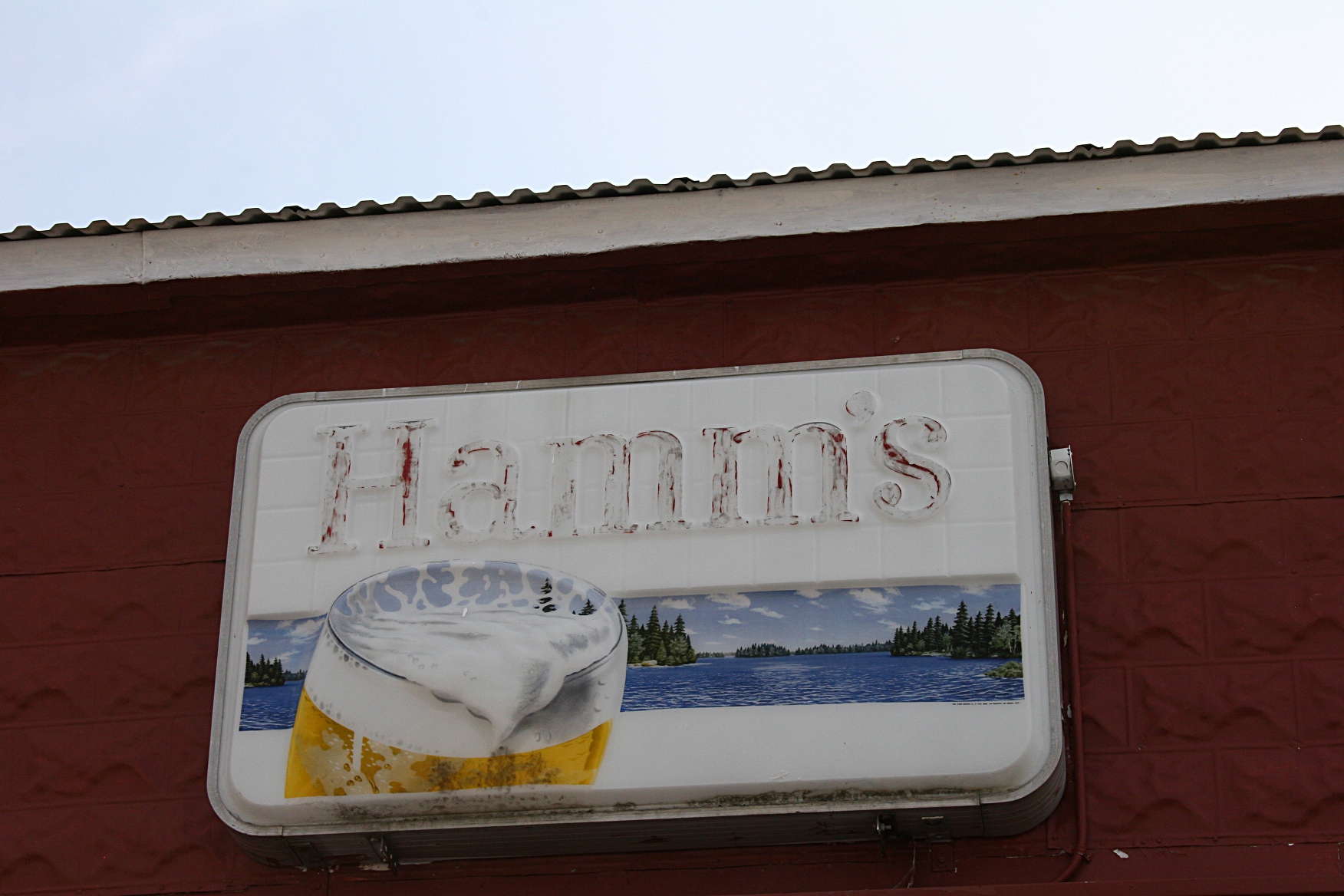
I almost missed the classic “land of sky blue waters” Hamm’s sign until my husband pointed it out at the Canton Pub.

CHECK BACK FOR ANOTHER post from Canton. There’s more to see in this small town than the bars.

© Copyright 2012 Audrey Kletscher Helbling
 

Photographing Webster, Minnesota, Part II October 8, 2012

Filed under: Uncategorized — Audrey Kletscher Helbling @ 7:29 AM
Tags: , , , , , , ,

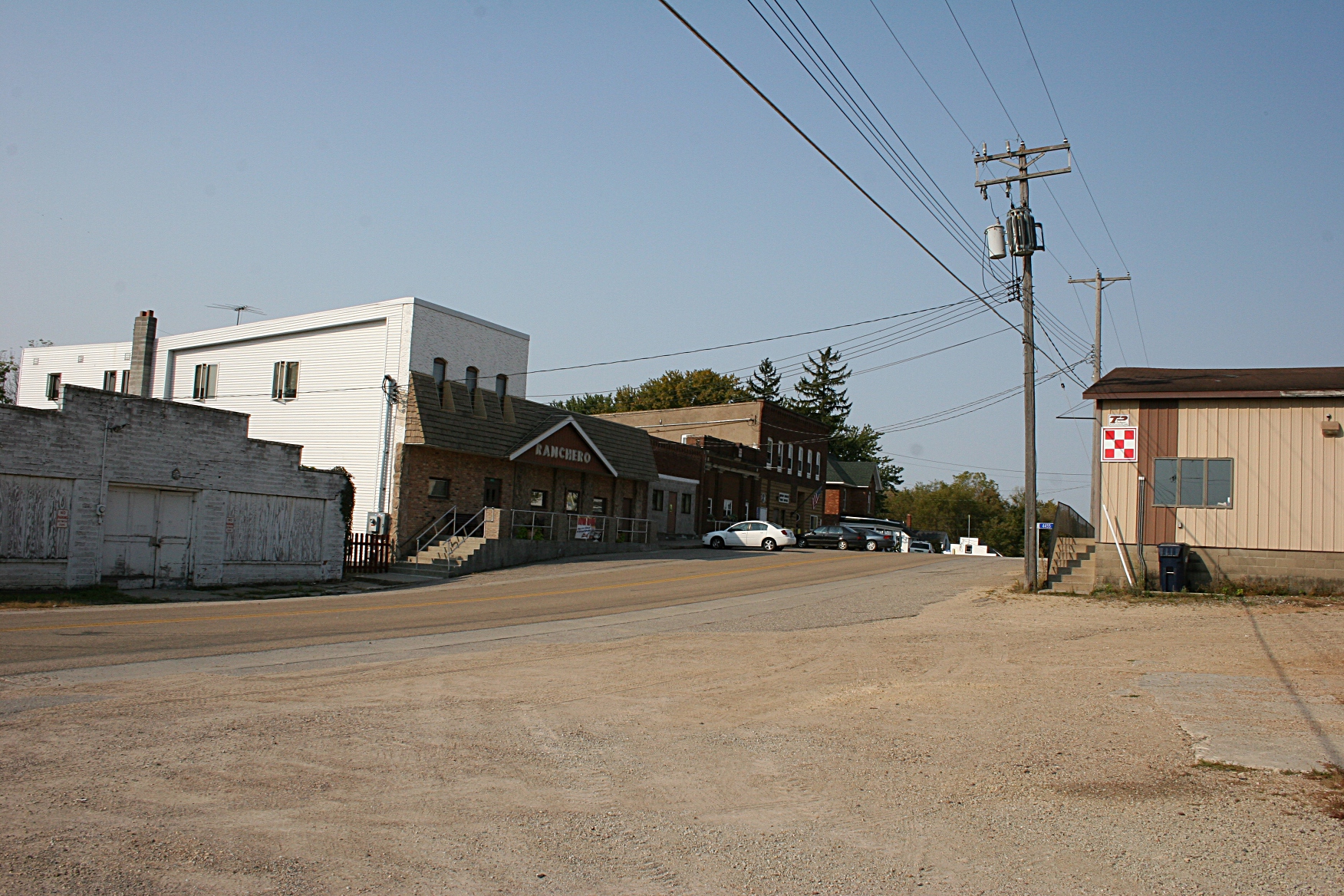
Main Street/Rice County Road 3 in Webster, Minnesota. One of the best known businesses in Webster is the Ranchero Supper Club, near middle in photo, to the left of the white car.

WHENEVER I SNOOP around a small town, I wonder when someone is going to step outside of their home or business and ask why I’m taking pictures. Only once has that happened in my many Main Street visits. That was in Otisco, south of Waseca. When I explained who I was, the local relaxed.

If I lived in one of these rural towns and saw a stranger wandering with a camera, I’d question him/her, too.  But that’s me.

My traveling companion, my husband, is used to my curious ways, my quest for interesting photos. He even tips me off occasionally to photo possibilities. Yes, he’s a quick study.

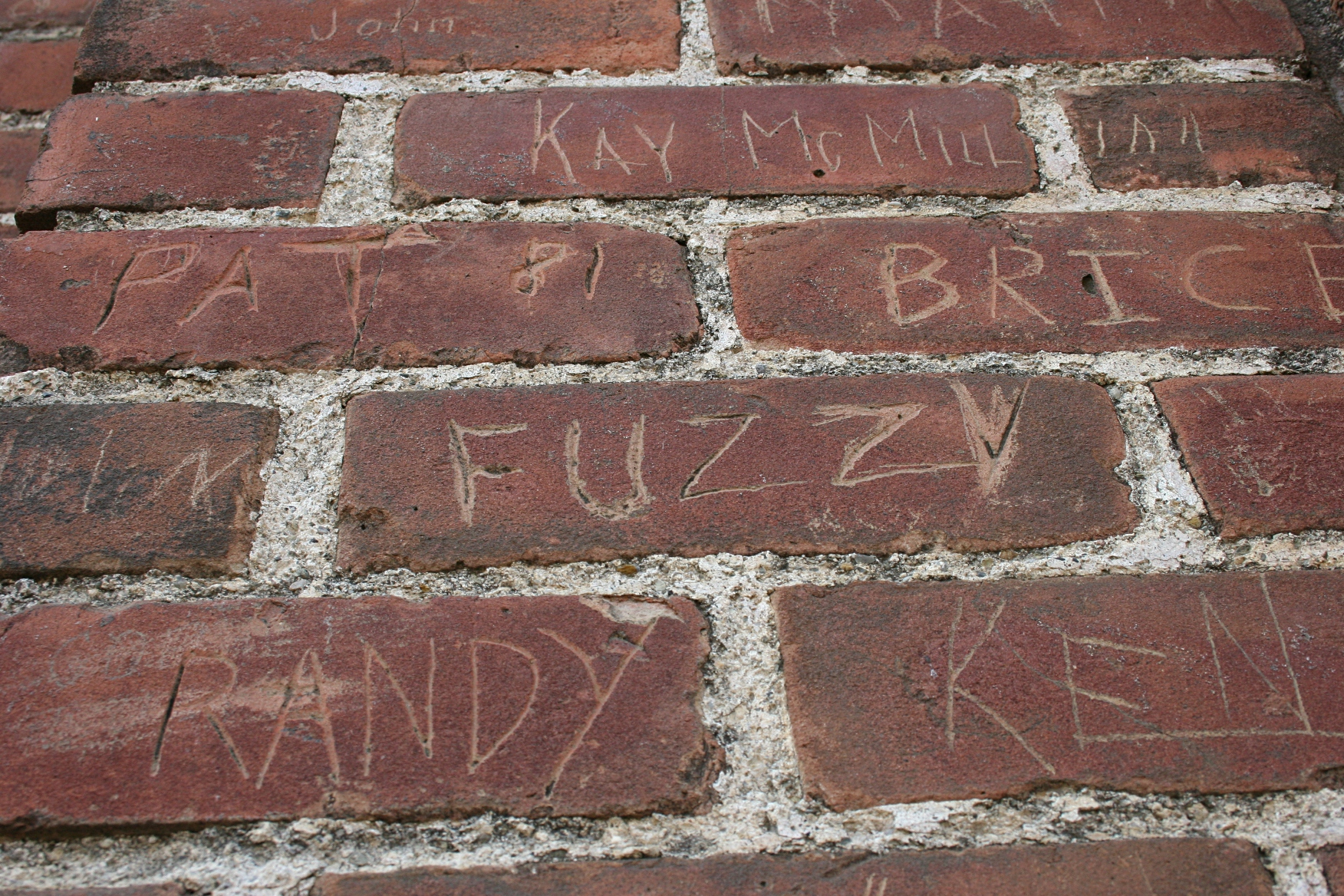
One of the more unusual finds in Webster was this graffiti etched into brick on a downtown building. Names covered several separate sections of wall. I photographed this particular section because of the name Randy (my husband’s name) and “FUZZY,” which was the nickname for one of his sisters. No, they did no etch their names here. Anyone know the story behind all of this downtown graffiti?

Sometimes he probably thinks my photo ideas are crazy. But if he does, my spouse has the good sense not to tell me.

Here are the remainder of the interesting (at least from my perspective) photos I shot in Webster in northern Rice County several weeks ago.

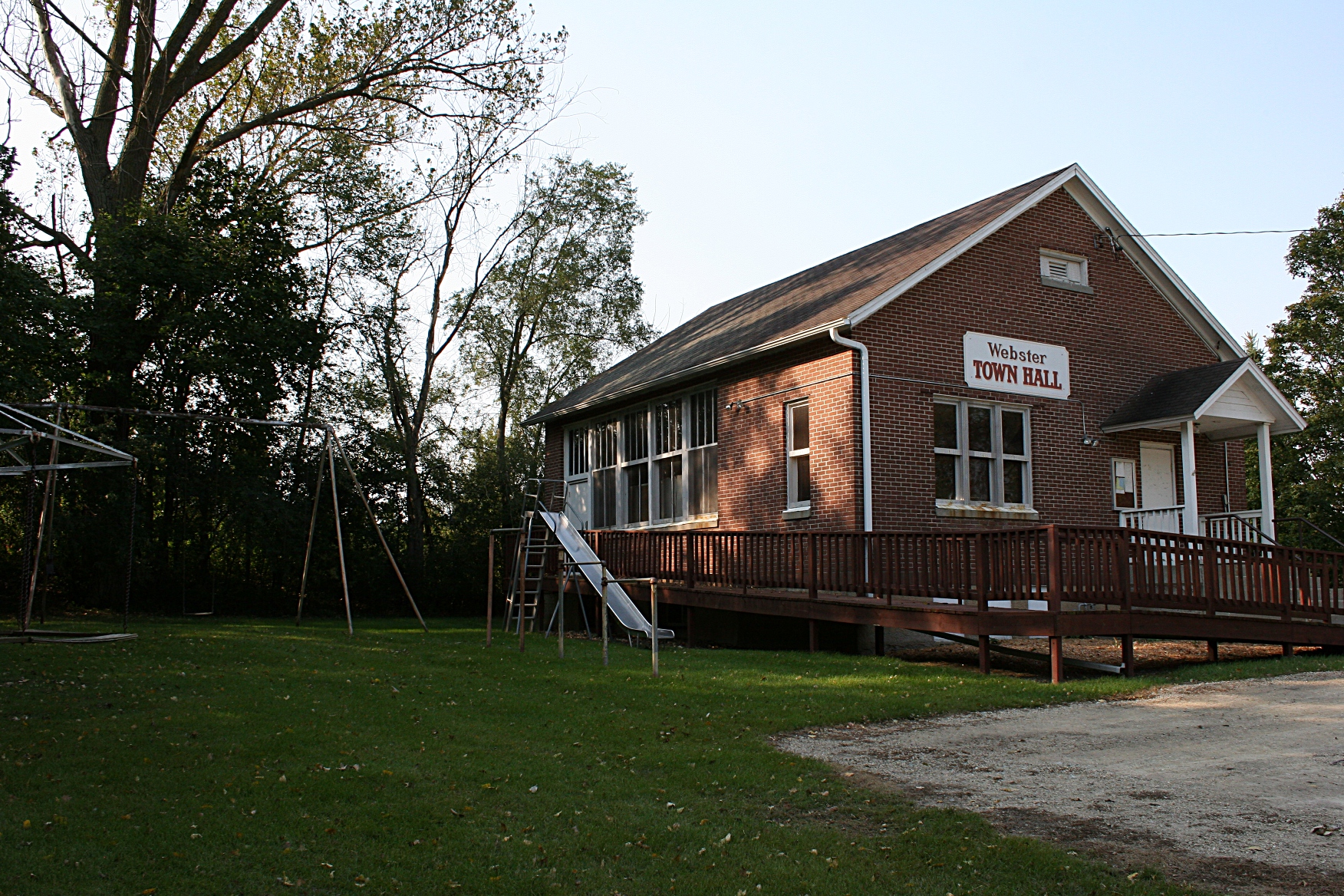
More brick at the Webster Town Hall, a former school, I presume. I love that the old playground equipment has not been removed due to safety concerns. That’s the edge of an old merry-go-round you’re seeing to the left in the frame.

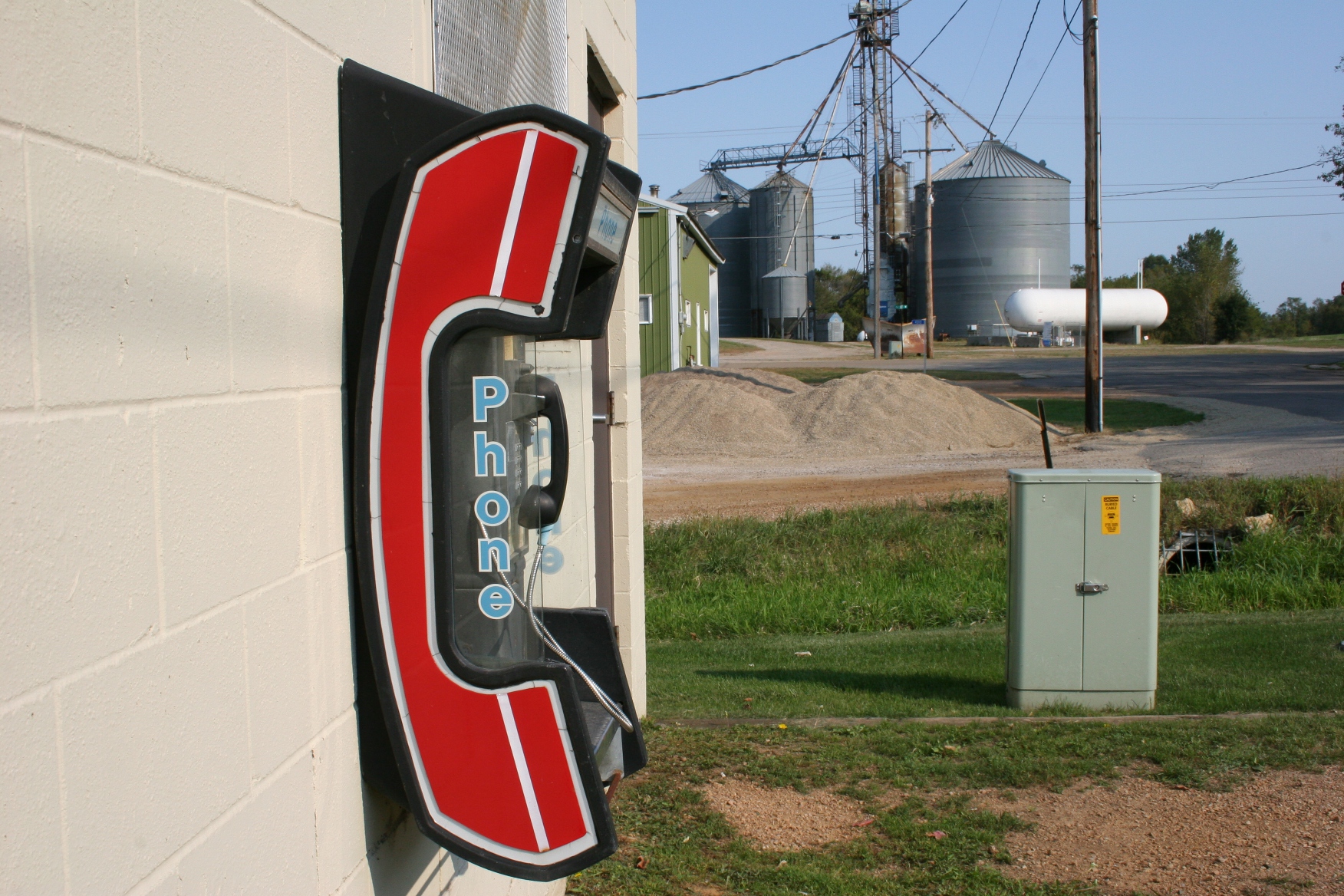
And just how often do you see a pay phone anymore? Well, in Webster you’ll find this one.

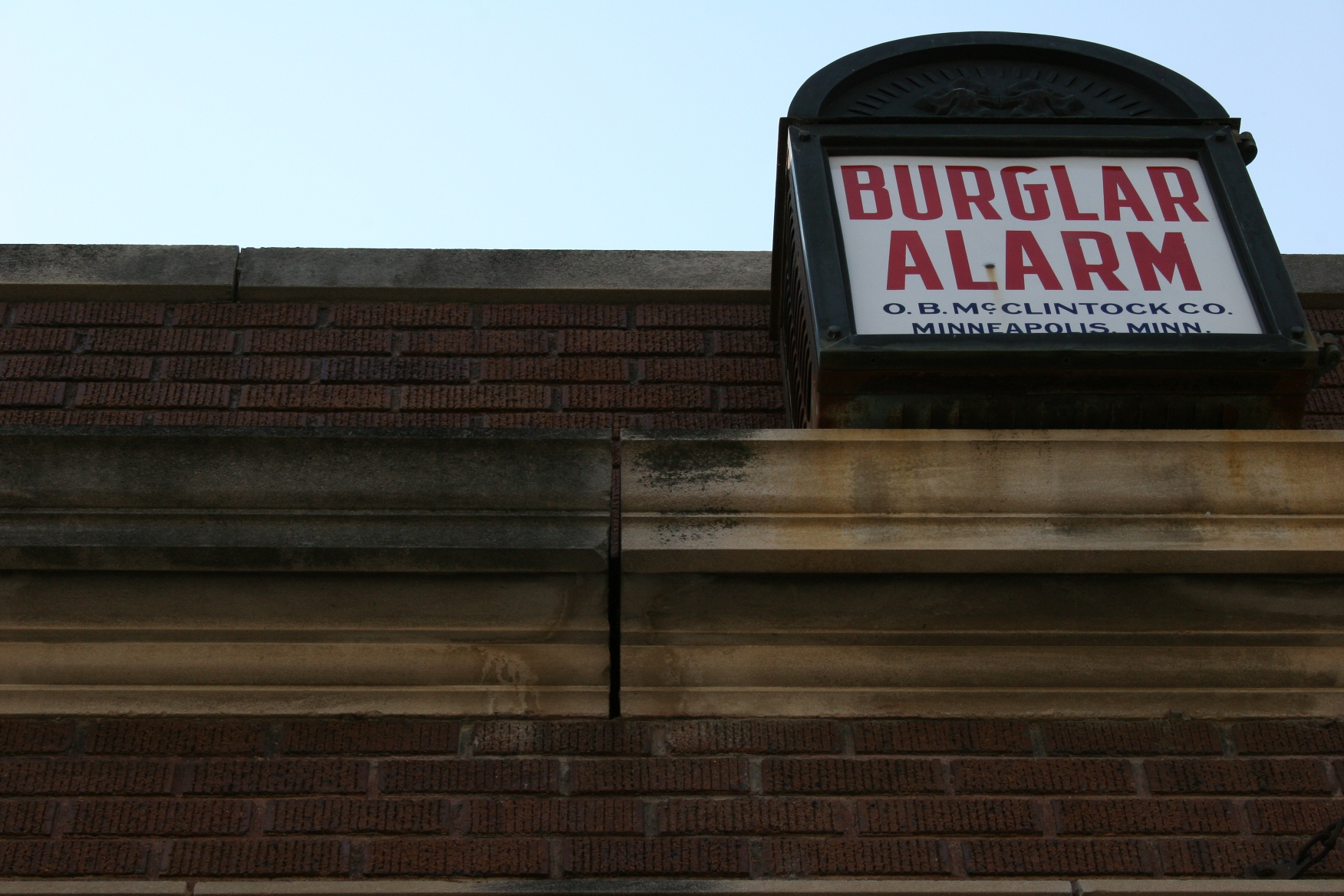
Interesting signage atop what I think is a former bank building.

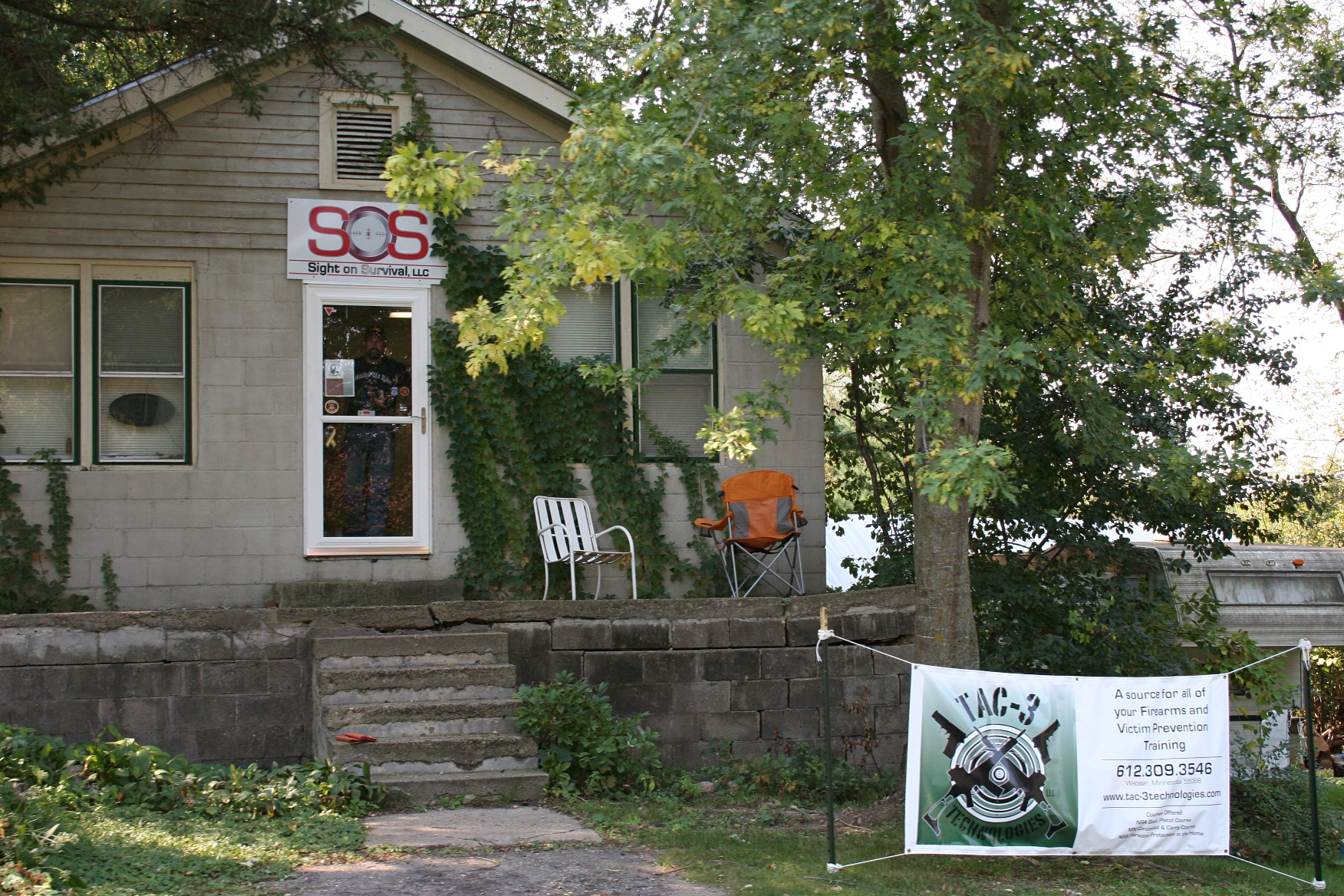
One of Webster’s most interesting businesses: Sight on Survival, “a defensive products and law enforcement gear retail store.”

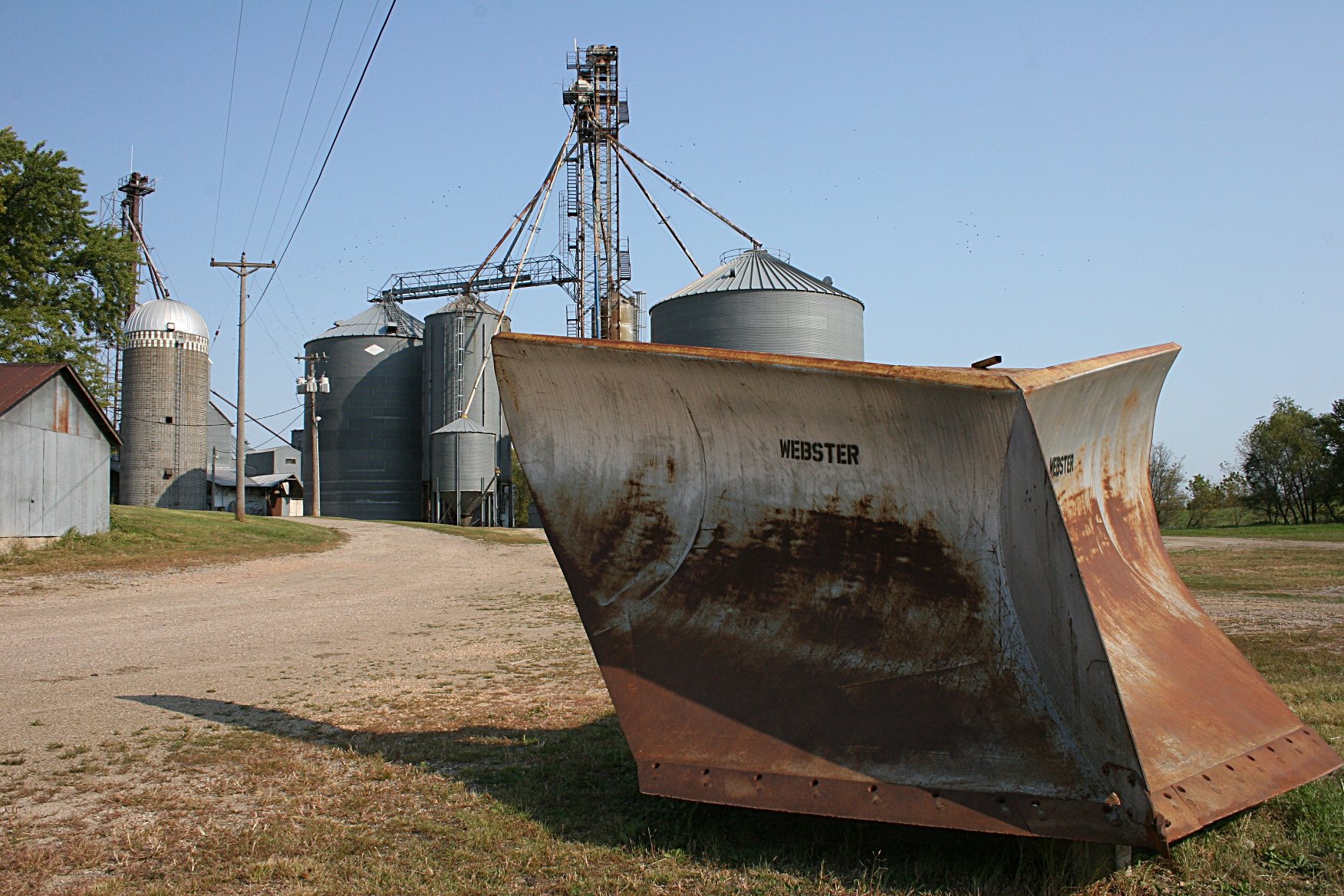
A snowplow blade awaits winter’s arrival.

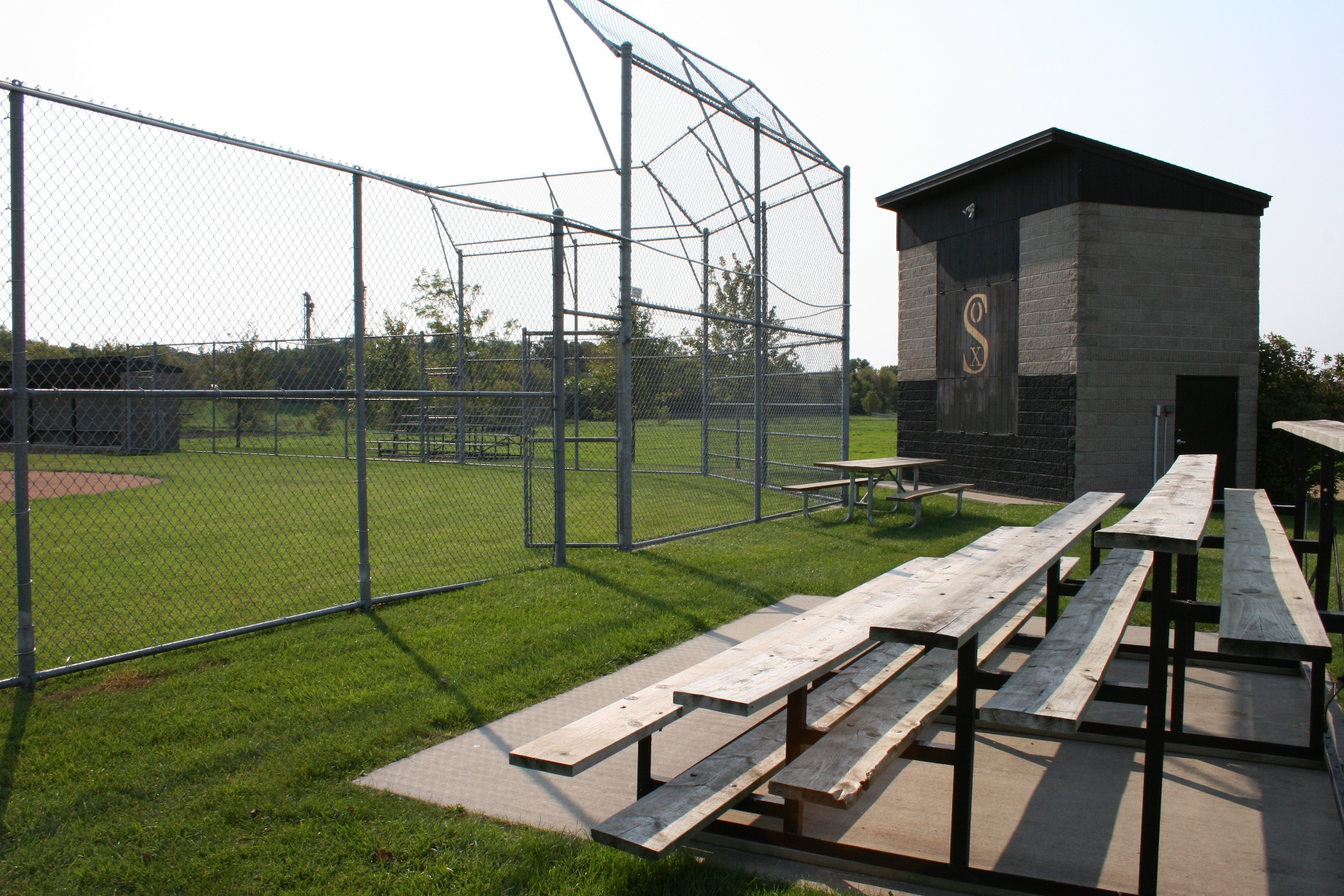
To the west of Webster lies one of the most beautiful multi-purpose parks I’ve seen, the Webster Township Park. the park includes this ball diamond, basketball court, horseshoe pits, playground, picnic shelter and grills, nature trail and more.

TO SEE ADDITIONAL images, click here to link to my previous post, “Webster, Minnesota, on a Sunday morning in September.”

Copyright 2012 Audrey Kletscher Helbling
 

Webster, Minnesota, on a Sunday morning in September October 3, 2012

Filed under: Uncategorized — Audrey Kletscher Helbling @ 9:39 AM
Tags: , , , , , , ,

Reflections in the window of the Webster Post Office.

IN WEBSTER, MINNESOTA, on a Sunday morning, the rooster crowed…

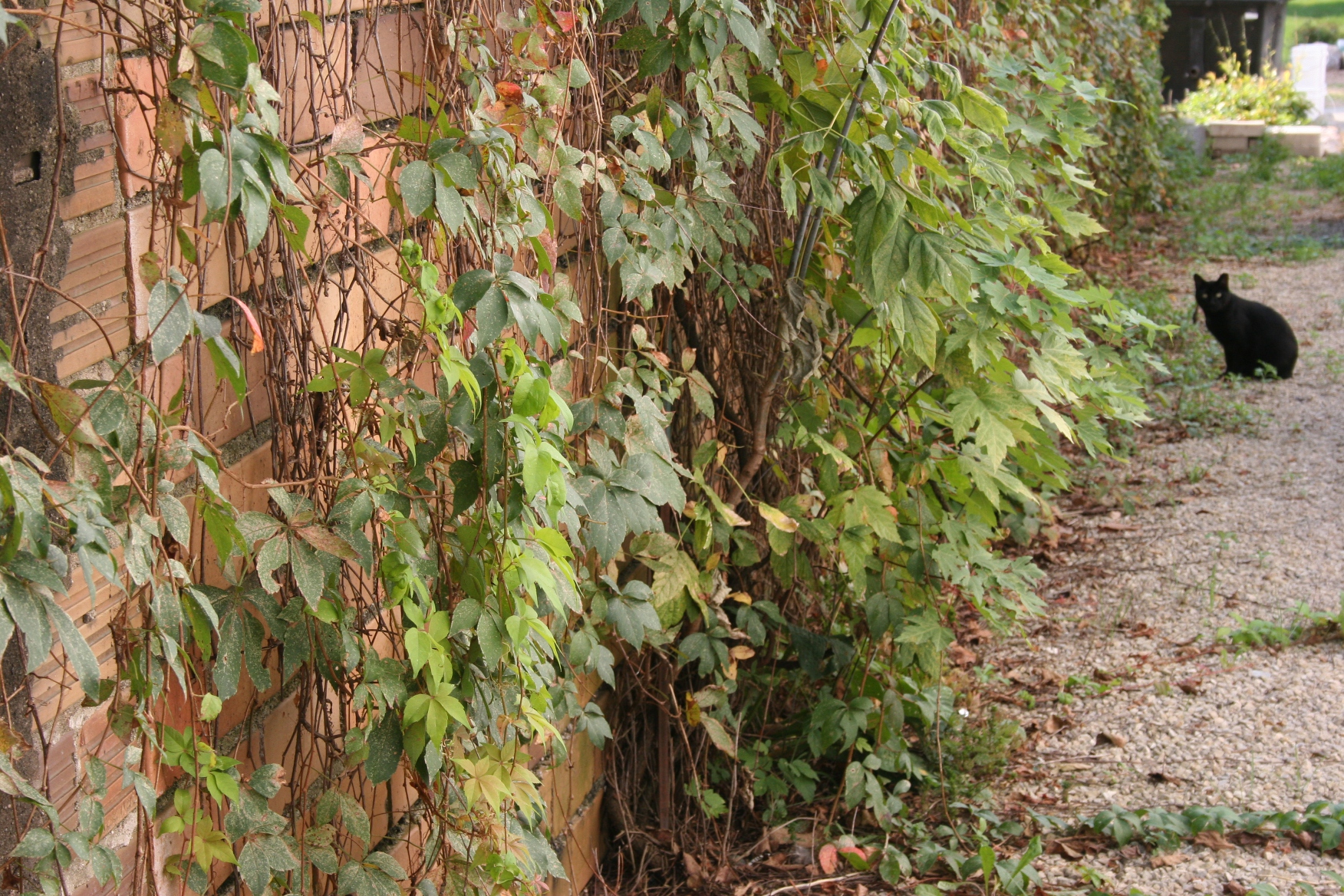
 the black cat prowled…

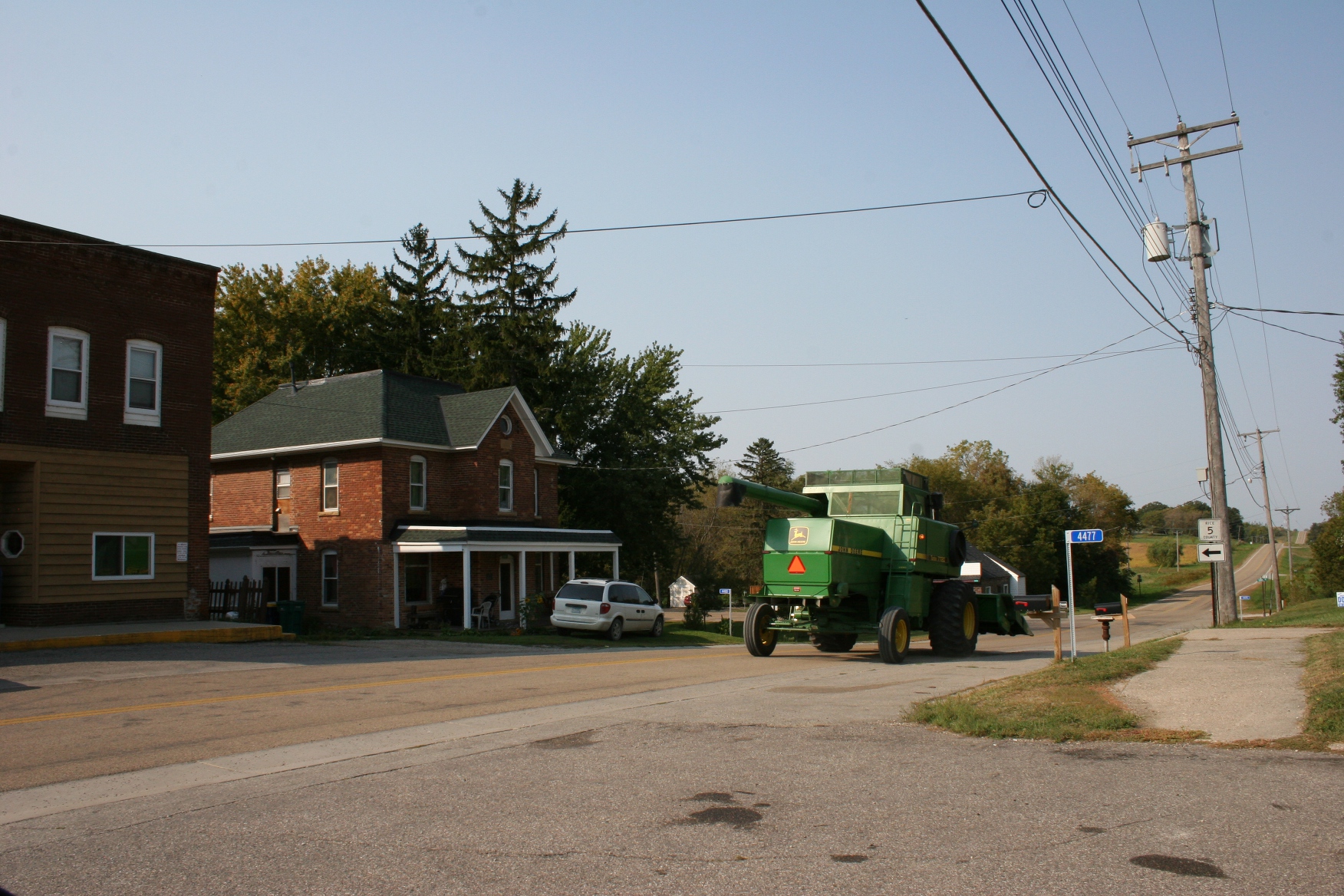
and the John Deere combine roared through town.

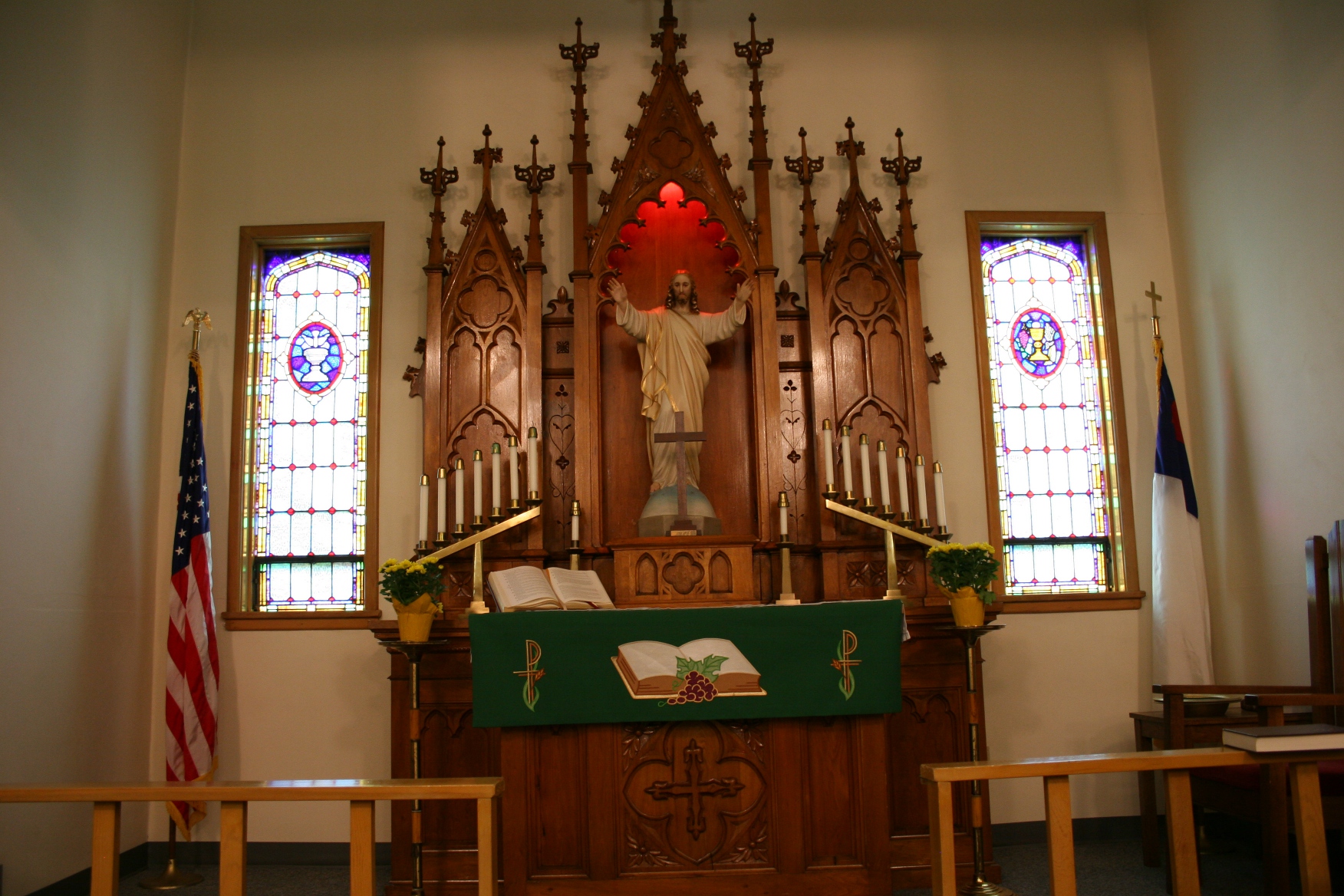
And we were an hour late for worship services at St. John’s Lutheran Church (due to an incorrect time published in an area newspaper).

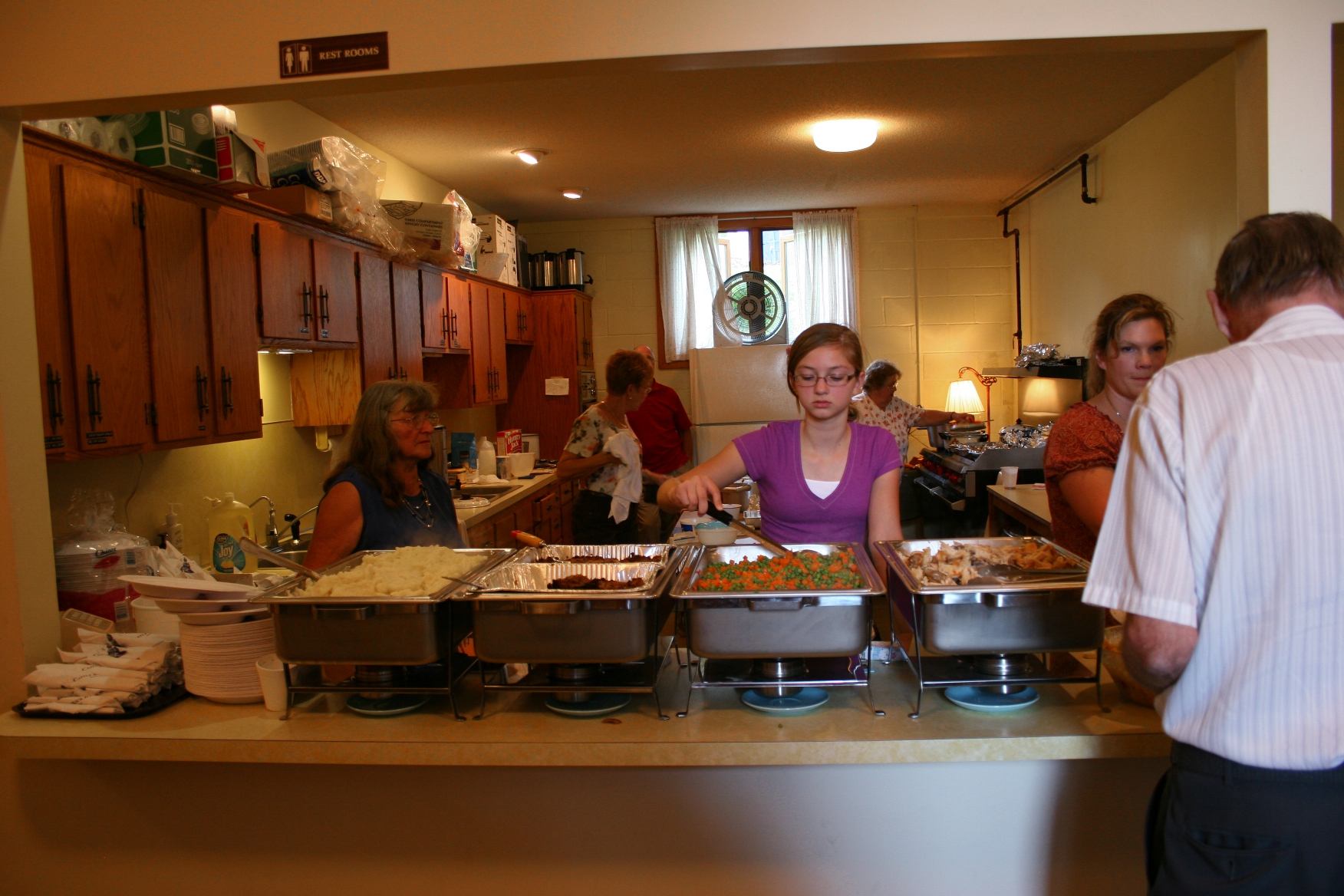
Because we missed church and had an hour before serving of the annual fall harvest dinner at St. John’s, my husband and I had more than enough time to explore this unincorporated village in northern Rice County some 30 minutes south of the Twin Cities.

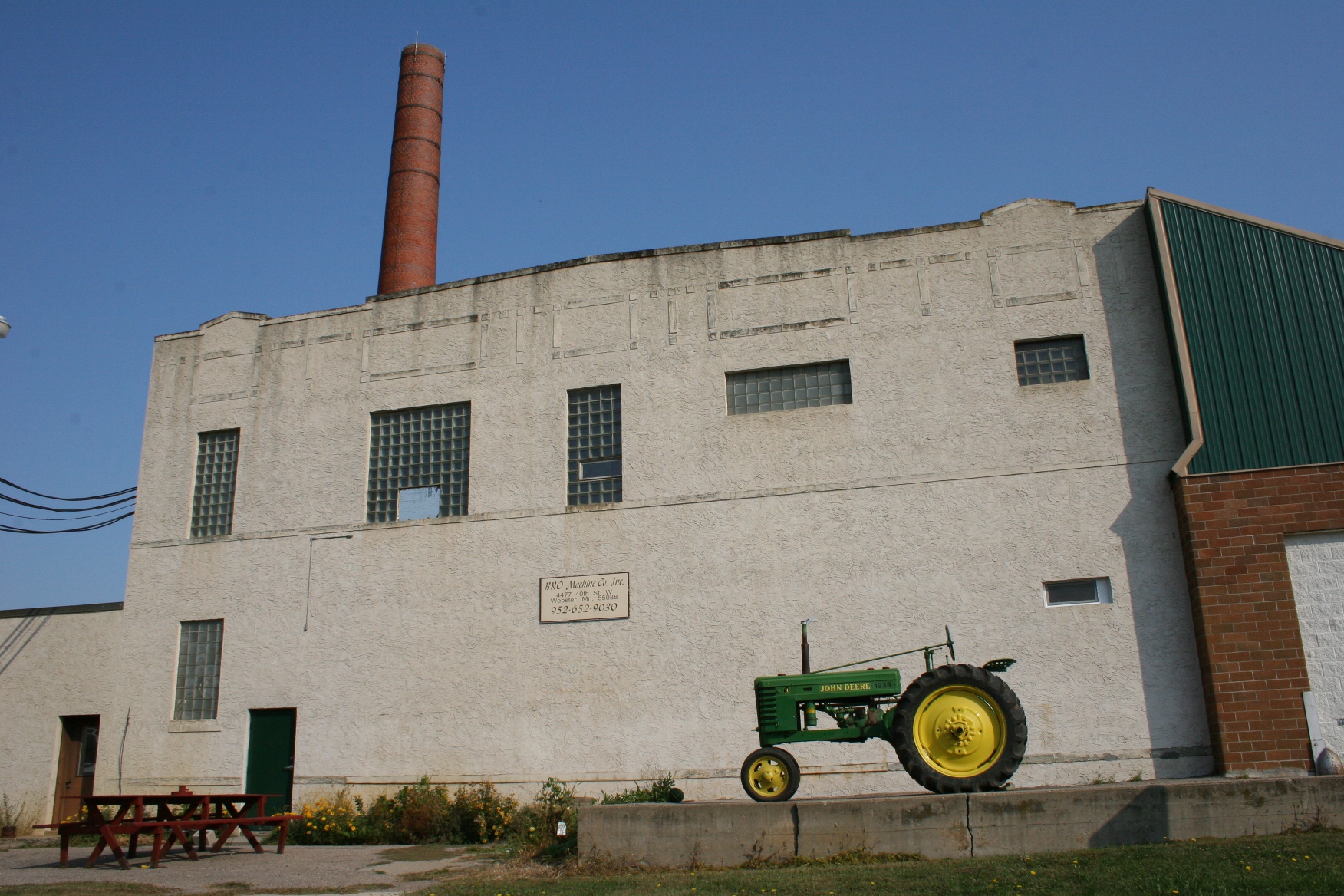
BRO Machine Company housed in an old creamery.

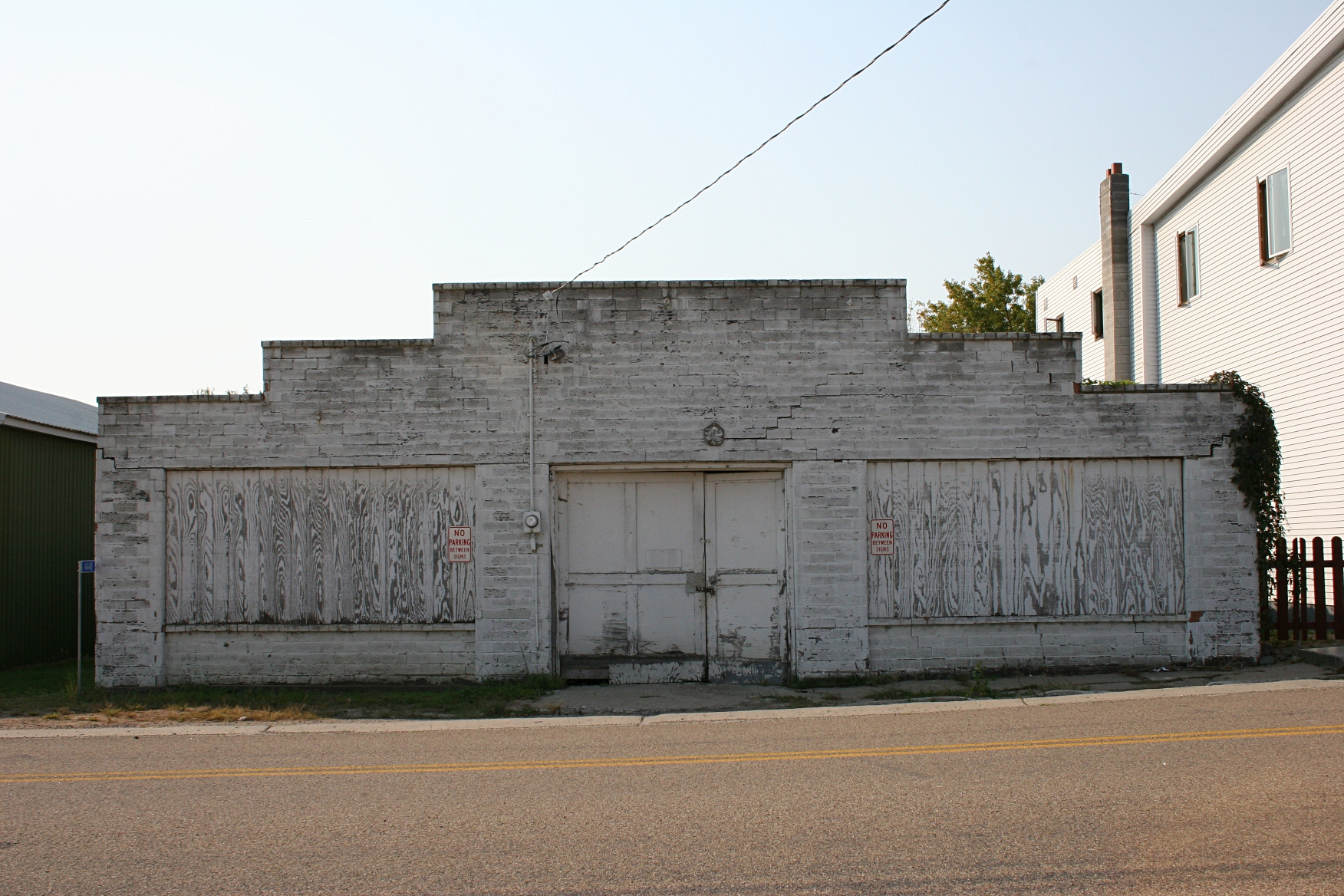
It takes all of about a few minutes to drive around Webster, unless you park, get out and search for photo ops to define the essence of this rural community. Only then do you notice the nuances that give Webster its character.

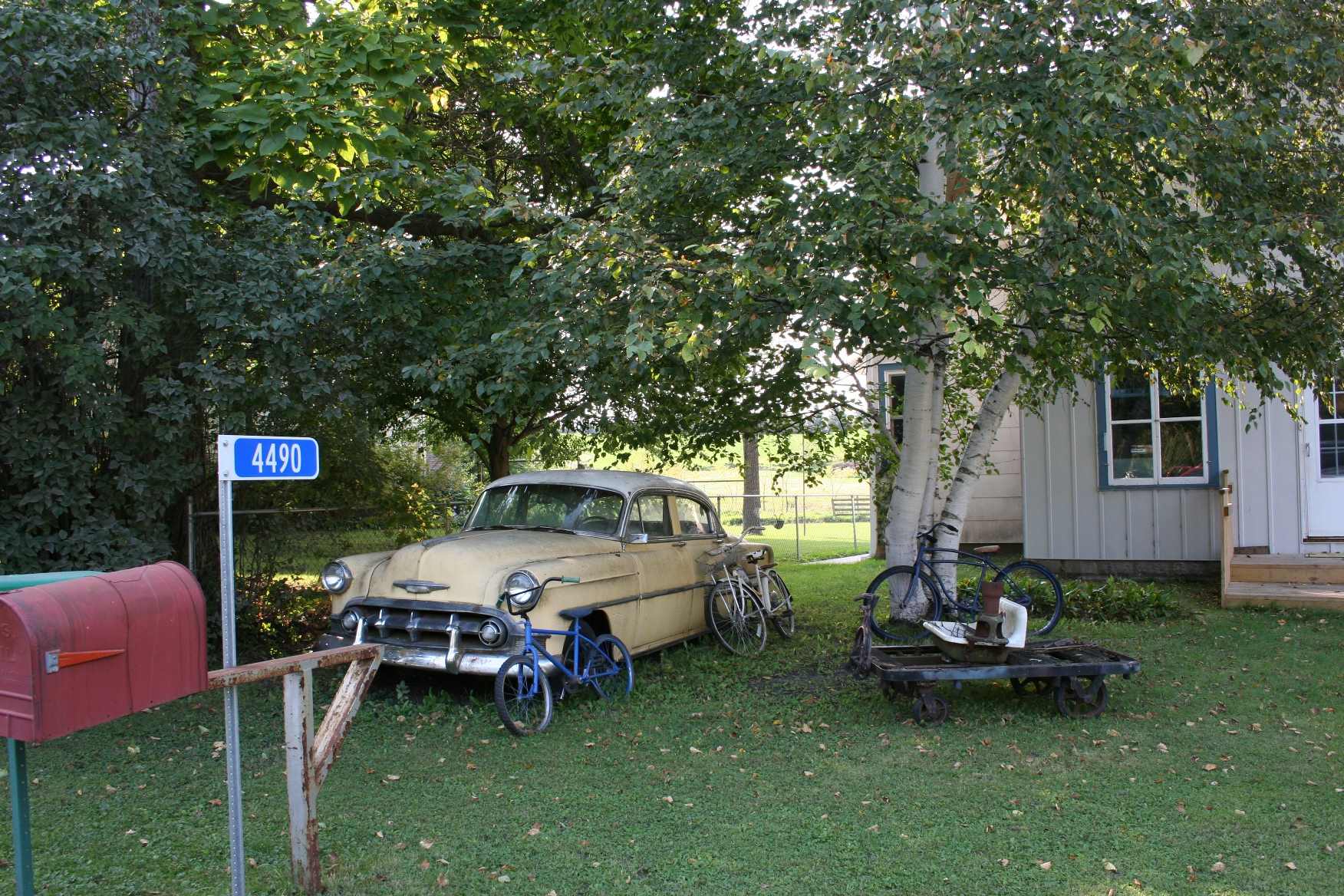
Like any small town, it’s worth your time to stop and appreciate, to notice the bikes dropped by kids on lawns, the toy trucks abandoned outside front doors, the aging buildings, the well-kept yards with beautiful flower gardens, and the rolling countryside around Webster. All of this makes you (or at least me) want to pull up roots and move to this peaceful place.

But since that’s not practical…I took photos a few weeks ago…in September.

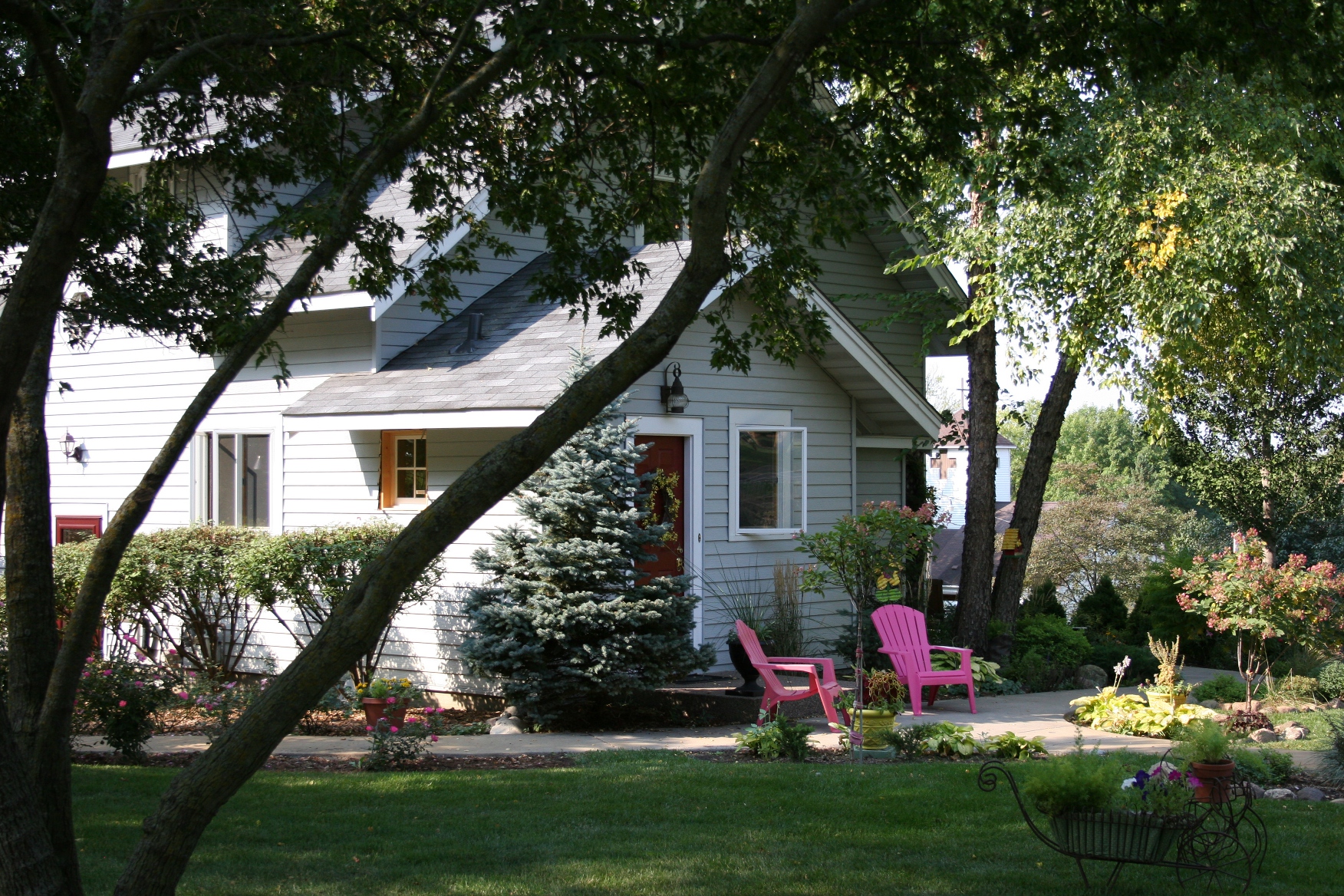
A beautifully-landscaped yard in Webster.

A front yard in Webster.

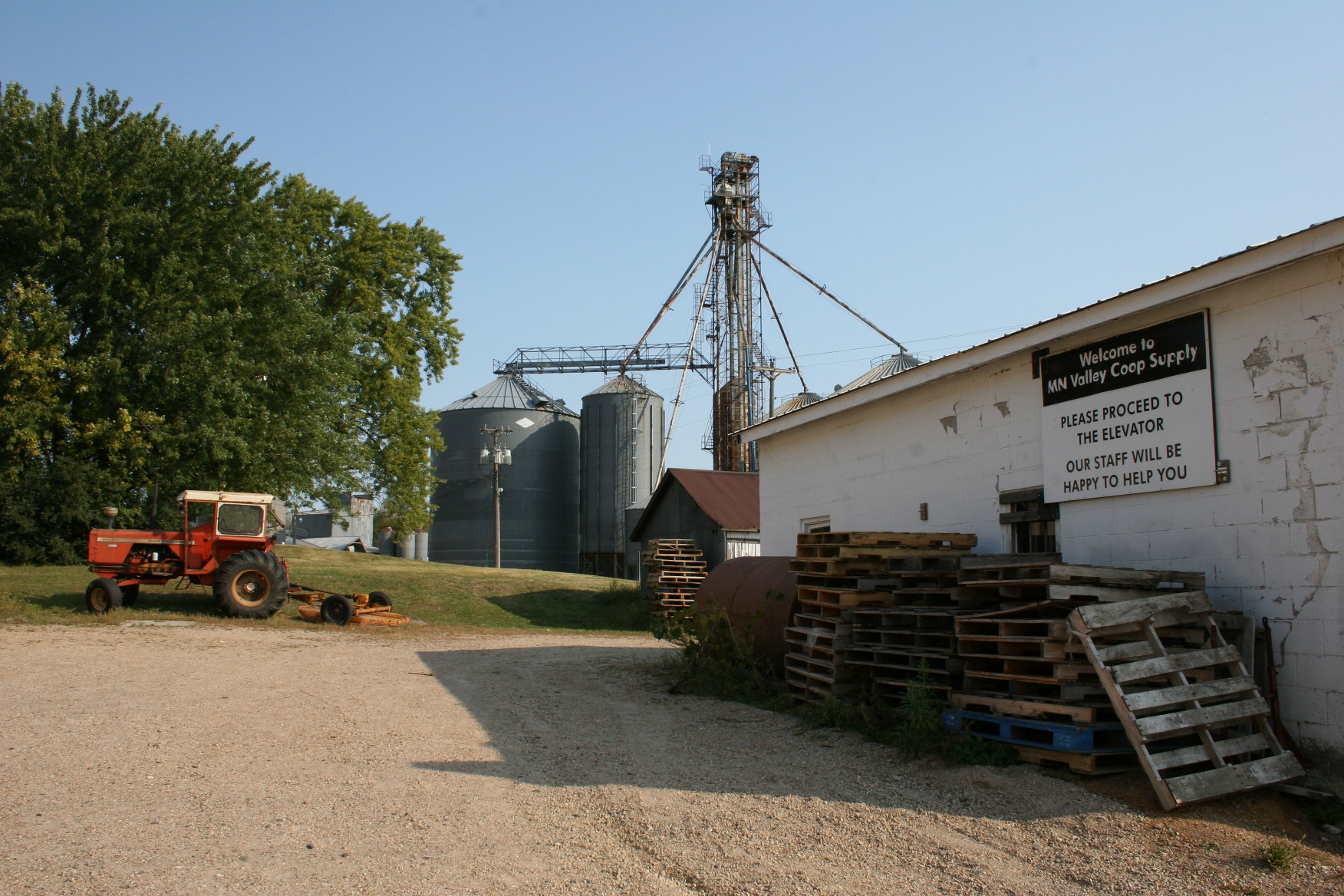
I was particularly charmed by the friendly MN Valley Co-op Supply sign on the side of the building.

PLEASE CHECK BACK for one more post with images of Webster, which is only a few blocks long and wide.

© Copyright 2012 Audrey Kletscher Helbling
 

The little brick house in Waterville September 14, 2012

Filed under: Uncategorized — Audrey Kletscher Helbling @ 7:14 AM
Tags: , , , , , ,

YOUR HOUSE NEEDN’T BE a mansion to impress me.

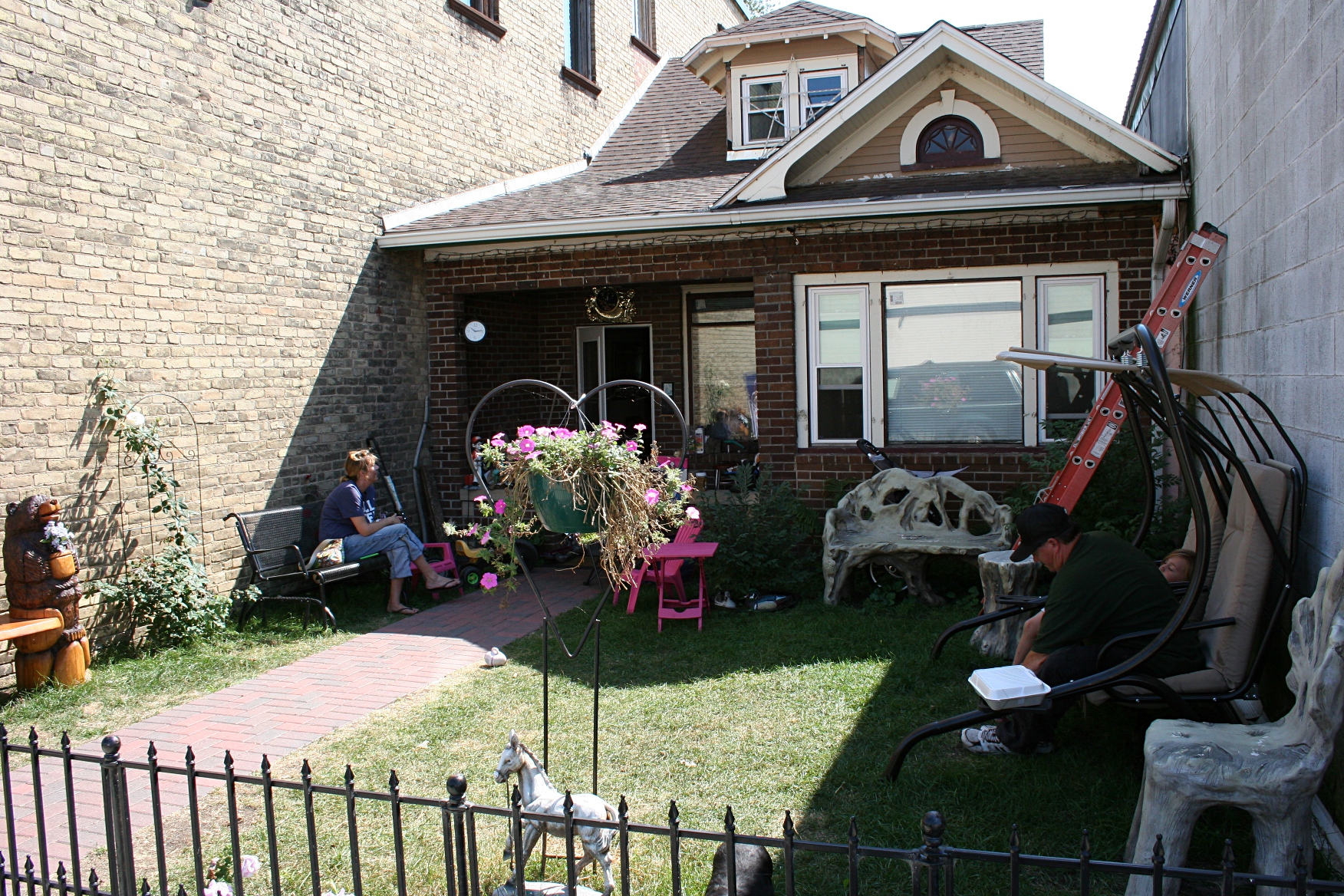
Just look at this sweet little brick house along Main Street in downtown Waterville.

I’ve never seen a house sandwiched like this, wall-to-wall, between two buildings and tucked into a totally unexpected place.

The owner ducked out of the scene just before I shot this single photo. She loves her home, she said, and that was about it. I didn’t want to overstay my “Can I take a picture of your house?” welcome since she clearly was entertaining guests.

But I really wanted to walk around the fence, right up the brick path and through the front door, just so I could see if the little brick house is as quaint inside as it is outside. And how dark, or light, is it inside that house anyway?

I counted at least four benches where I could sit a spell and chat. Maybe ask about that horse by the fence, the bear bench by the brick wall, how this house came to be, if patrons from the neighboring Corner Bar and Main Street Lounge ever cause problems. You know, stuff like that.
#

FYI: This ends, for now, my stories from Waterville. To read my first post about this southern Minnesota lakeside community, click here.

To read my second post about a quaint coffee shop, which also serves as a place for local artisans to sell their creations, click here.

© Copyright 2012 Audrey Kletscher Helbling