Minnesota Prairie Roots

Writing and photography by Audrey Kletscher Helbling

A Minnesota arts collage, from theater to poetry September 15, 2012

FOR A FEW SECONDS THERE, I searched the dictionary of my brain for that word which temporarily eluded me. Collage. That would be it.

Remember when that art form was especially popular, when, as a school assignment, you had to scrounge up ten zillion magazines and then snip out images themed to a specific subject and glue it all in a jumbled mess onto a piece of paper?

Today I present a collage—not a jumbled mess, though—of art.

Let’s take the biggest focal piece first. A Hudson.

A Hudson, like this one I photographed several years ago at a Faribault car show, centers “The Car.” Do not expect, though, to see a real Hudson on stage, only the shape of one.

The Hudson centers the stage at the Paradise Center for the Arts during a production of The Car by Carol Wright Krause. My husband and I saw this play by the Faribault-based The Paradise Community Theatre Friday evening. I’d rate it as one of the best I’ve ever seen performed locally.

Here’s a summary of the play written by director Gabe Talamantes:

The Car is about a family’s car, which as Ed (a character in the five-person drama) puts it “is a miracle of modern American engineering.” This miracle car is a character in itself, a highly theatricalized version of a 1954 Hudson. It takes us on a journey into the lives of the Banners and the challenges an all American family faces as they struggle through two decades of change at home and abroad. We will see how they choose to overcome such difficulties.

Now, why am I so enthusiastic about The Car? Because it moved me to tears. When a theatrical performance can evoke such a strong emotional reaction from me, I will embrace it with unbridled enthusiasm.

That break-down moment for me came near the end of the play, when Vietnam War veteran Hal Banner (played by Todd Ginter), broke down in the arms of his father, Ed Banner (Chuck Larsen). He was no hero, Hal said, pointedly telling his father that he (Ed) would never understand the horrors of war. And then Hal got specific, talking about seeing the eyes of those he killed.

That’s when the tears trickled down by cheeks and I struggled mightily to keep from sobbing. In that moment, I heard my Korean War veteran father, not Hal/Todd. My dad, too, spoke of seeing the eyes of those he killed on the front lines in Korea.

Later, when I congratulated Todd on his performance, he told me that he had talked to several veterans in preparation for his role. And it was the eyes which they spoke of and which he knew he needed to emphasize in that heartrending father-son conversation. It is easily the most powerful moment in the play.

I wondered how many audience members might be veterans and at that moment suppressing war memories and feelings, as my father did.

But this play is about so much more than war. It also addresses the issue of prejudice when Hal brings home a Japanese wife, portrayed by Carrie Jendza whose mother came here from Korea some 40 years ago. Carrie presents a stunning performance as do Susan Dunhaupt as Ed’s wife, Geneva, and Faribault High School sophomore Emily Remmey as Beth Banner, Hal and Sumiko’s daughter.

The prejudice starts right away when Ed Banner insists on calling Sumiko the Americanized “Sue.” He slides in references to “slant eyes” (there’s the “eye” thing again) and other derogatory comments.

In real-life, prejudice is an issue in Faribault, home to many Latino, Somali and Sudanese family. It is no secret that prejudice exists in my community. You can read about it in a previous post by clicking here.

I didn’t spot a single minority in the audience Friday evening,  not unusual despite Faribault’s sizable minority population.

There, that’s all I’m telling you about The Car, other than to advise you to see this powerful and memorable production. It’s community theater at its best for the superb acting and the unforgettable messages delivered.

Faribault artist Vivian Jones created this watercolor, “It Was Grandma’s Car,” for the current “car pARTS” show.

Additional performances of The Car at the Paradise, 321 Central Avenue, Faribault, are set for 7:30 p.m. on September 15, 20, 21 and 22 and at 2 p.m. September 16. Call (507) 332-7372 or click here to reach the Paradise website. According to info published in the theater program, production of The Car is made possible through a Minnesota State Arts Board Operating Support Grant.

While you’re at the play, be sure to check out the exhibit, “car pARTS,” in the Carlander Family Gallery.

The Beat logo.

NOW LET’S PLACE another piece in that art collage. On-air poetry.

In July, Northern Community Radio began airing poetry on its weekday morning show during a segment called The Beat.

On Monday my poem, “Her Treasure,” will air on 91.7 KAXE (89.9/Brainerd) and on 90.5 KBXE. Now I won’t be able to listen to whomever reads my poem between 7:30 a.m. – 8 a.m. and again between 3:30 p.m. – 4 p.m. Faribault is well outside the coverage area which extends from Thief River Falls to Hermantown to Pierz. Eventually, though, I’ll be able to listen to the reading of my poem online.

You can listen to The Beat via online streaming. (I’m not smart enough to figure that out and my former in-house techie now lives at NDSU in Fargo.)

I’m in the company of some mighty fine poets, from novices to Minnesota’s 2011 poet laureate, Joyce Sutphen, to well-known Minnesota writer Will Weaver. You can check out the current listing of The Beat poems/poets by clicking here.

The poems chosen for airing were selected through a juried process.

Connie Ludwig, right, and I pose for a photo with her watercolor, “Pantry Jewels” (above my head) inspired by my poem, “Her Treasure.” This photo was taken in April at Crossings at Carnegie in Zumbrota.

Just, FYI, “Her Treasure” is the same poem featured in “Poetry Artist Collaboration XI” at Crossings at Carnegie in Zumbrota last April. To read my poem, click here.

I love this whole concept of The Beat, of Northern Community Radio’s “daily reminder that, in Minnesota, poetry matters, and Minnesota poets prove that every day.”

You can expect a forthcoming detailed post from me on this project funded by Minnesota’s Arts & Cultural Heritage monies.
The cover of last year’s The Talking Stick 20.

NEXT, LET’S PLACE the third piece in this arts collage. More poetry, plus fiction and creative nonfiction.

Today I’m missing out on a book release party for The Talking Stick 21 in the Park Rapids area. This anthology, published by The Jackpine Writers Bloc, represents some fine writing by Minnesota writers. You can, referencing back to The Beat, listen to the poetry of Sharon Harris, a Jackpine member and one of the key producers of the collection.

I’ve been published in two previous volumes of The Talking Stick (including receiving an honorable mention for my poem, “Hit-and-Run,” in volume 19) and will be published again in this newest volume. My poem, “Broken,” was chosen from among 275 submissions for publication.

To learn more about The Talking Stick, click here. To learn more about The Jackpine Writers’ Bloc, click here.

THAT’S IT. Now, go ahead, add your own pieces to this art collage via your comments.

© Copyright 2012 Audrey Kletscher Helbling


Gaining confidence as a poet October 19, 2011

I THINK ALL WRITERS, if we’re honest with ourselves, face insecurities about writing.

Can we write? Is our writing “good enough” to publish? Will anyone read, or even care about, what we write?

I’ve long overcome any issues I faced about journalism style writing. I’m confident in my abilities to pull together a good feature story or another journalistic piece given my educational background in mass communications and my years of experience in journalism. And with several years of blogging to my credit, I’m also confident in that writing style.

It’s poetry which has challenged my confidence. Although I’ve written poetry off and on since high school—which stretches back nearly four decades—I’ve never written much poetry, at least not enough to consider myself a true poet. Until now.

Finally, this year, with the publication of two poems in two Minnesota literary journals and winning the spring Roadside Poetry contest, I’m comfortable adding “poet” to my writing credentials.

Getting to the point of feeling comfortable with the term “poet” really began 11 years ago with publication of a poem in Poetic Strokes, A Regional Anthology of Poetry from Southeastern Minnesota, Volume 2. I considered that a stroke of good fortune. But when four more poems published in the next two volumes, I began to think that maybe, just maybe, I could write poetry. After all, I had competed against other writers to get into the Poetic Strokes anthologies.

Then I had a poem accepted for publication in The Lutheran Digest.

Next, I earned an honorable mention for my poem, “Hit-and-Run,” published last year in The Talking Stick, Forgotten Roads, Volume 19.

Finally, this year, I had an official poet epiphany when I entered three poetry competitions and was subsequently published on Roadside Poetry billboards, in The Talking Stick, Black & White, Volume 20 and Lake Region Review.

Although I don’t know how many poets I competed against in Roadside Poetry, I do have the numbers for the two literary journals. The Talking Stick this year published 140 pieces of poetry, creative nonfiction and fiction from 99 writers, me being one of them with my poem, “Abandoned Barn,” and my creative nonfiction, “Welcome Home.” That’s out of 326 submissions from 171 writers.

Look at the list of writers, and you may recognize a few names like Marge Barrett, Tim J. Brennan, Charmaine Pappas Donovan, Jerry Mevissen, Candace Simar…

It’s quite a process to get into The Talking Stick with five members of The Jackpine Writers’ Bloc reading all of the entries and then an editorial board meeting to vote and discuss. The top four to seven favorites in each category are then forwarded to celebrity judges—this year Kris Bigalk, Kevin Kling and Alison McGhee—to choose first and second place winners in each division.

As for Lake Region Review, the process of selecting the works for publication is equally as rigorous. Co-editors Mark Vinz—author, professor emeritus of English at Minnesota State University Moorhead and first coordinator of MSUM’s Master of Fine Arts in Creative Writing—and Athena Kildegaard—author and lecturer at the University of Minnesota Morris—worked with a staff of 10. They read more than 200 submissions before narrowing the field to 27 established and emerging writers.

I’m one of those 27.

And so is Leif Enger, author of the 2001 New York Times best-seller Peace Like a River, which happens to be a favorite book of mine. It’s nice to be in the company of someone who, like me, writes with a strong sense of place.

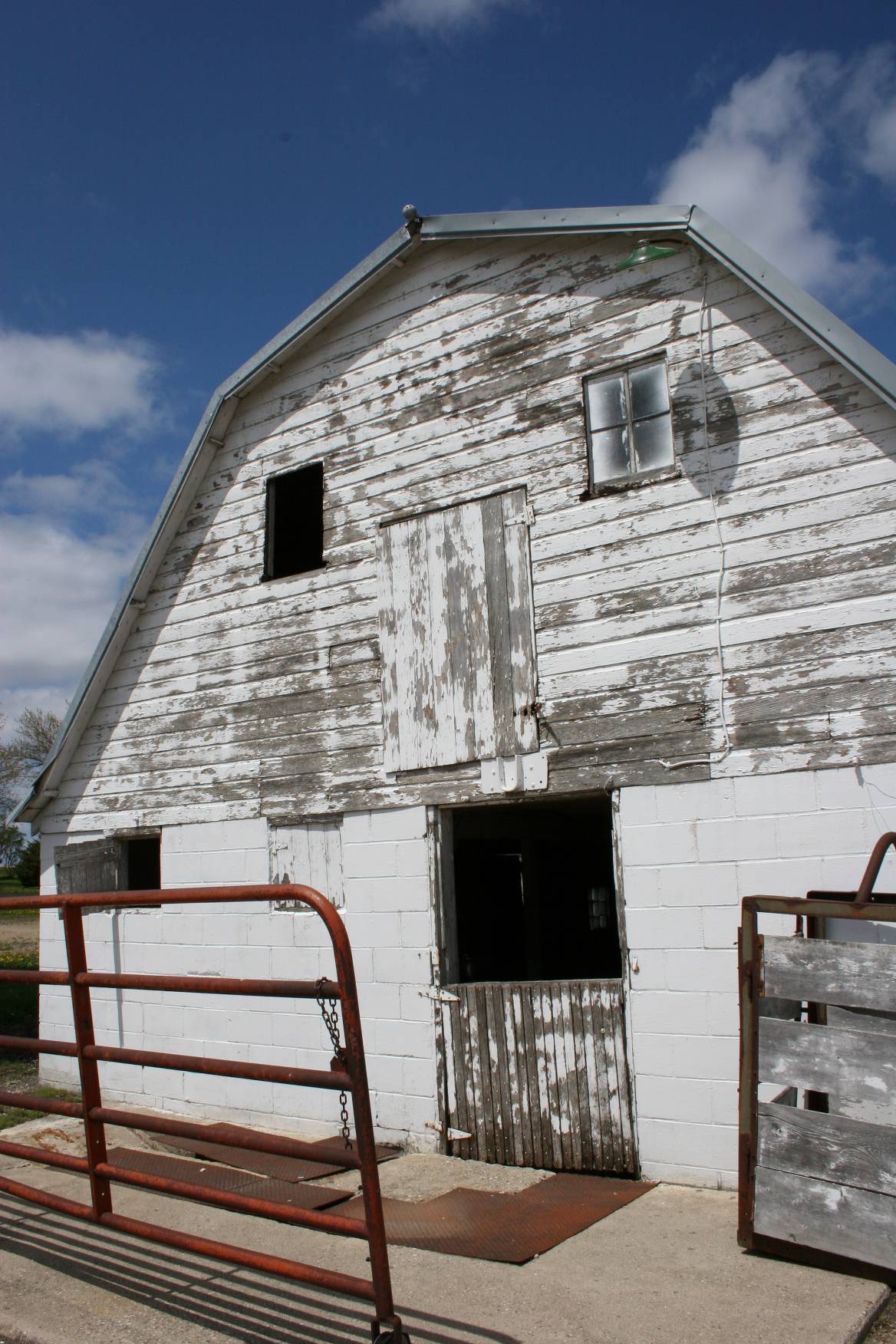
Most of my poetry connects to the southwestern Minnesota prairie, where I grew up on a dairy and crop farm. Specifically, the barn on the home place inspired my two distinct barn poems which published in The Talking Stick and Lake Region Review.

I don’t know what moved the editors of either publication to select my poems for inclusion in their literary journals. But I did incorporate lines such as “hot cow pee splattering into her gutters” and “rusty hinges creaking like aged bones.”

According to Co-editor Kildegaard at Lake Region Review, editors chose pieces that were “fresh, creative, lively, interesting. We were looking for writing that has something new to say.”

Apparently I had something new to say about the old barn.

The early 1950s barn on the Redwood County dairy farm where I grew up today stands empty of animals.

WRITERS FEATURED in the recently-published 212-page The Talking Stick, Black & White, Volume 20, are from, or have a strong connection to, Minnesota. Those published in the 138-page debut of Lake Region Review live primarily in west central Minnesota. Eight writers have been published in both collections.

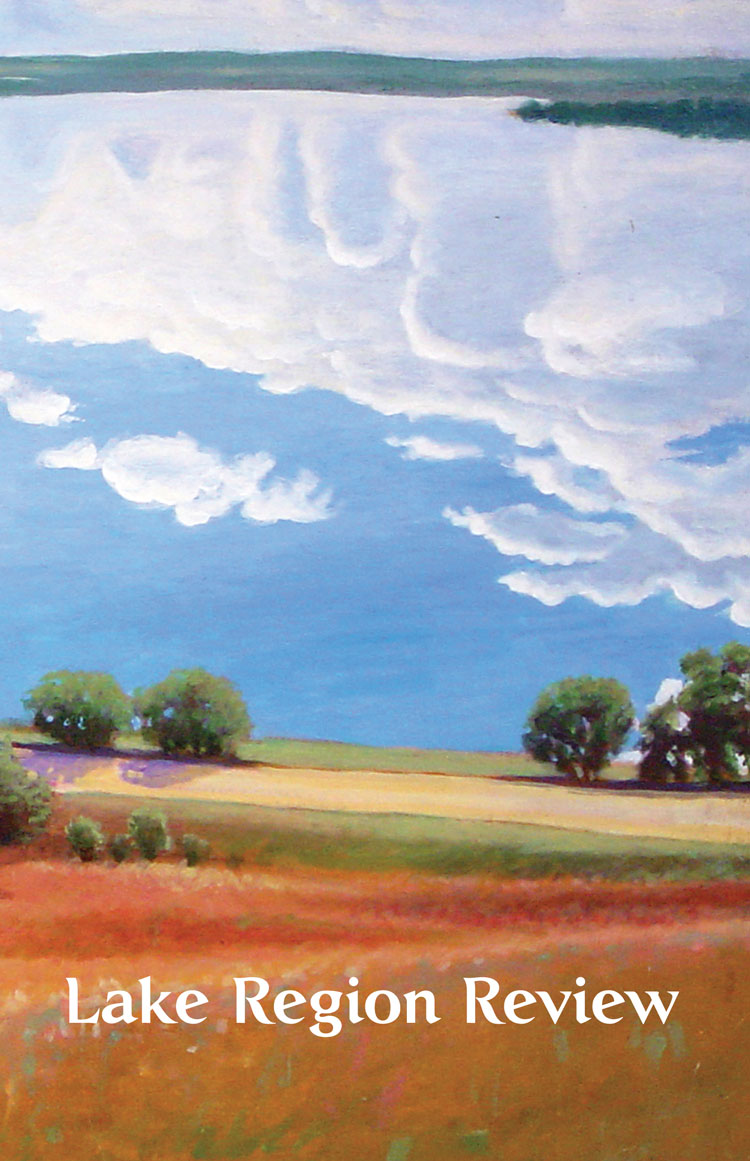
The cover of Lake Region Review is a detail of an original landscape painting, “Christina Lake: View from Seven Sisters,” by American impressionist painter Stephen Henning of Otter Tail County.

IF YOU’RE A WRITER, specifically of poetry, did you/do you struggle with confidence issues? At what point did you/will you call yourself a poet?

FYI: For more information or to purchase copies of either literary journal featured here, click on the appropriate link below:

www.lakeregionreview.net

www.thetalkingstick.com

And click here for more information about Roadside Poetry.

© Copyright 2011 Audrey Kletscher Helbling


Poetry & more in Paul Bunyan land August 18, 2011

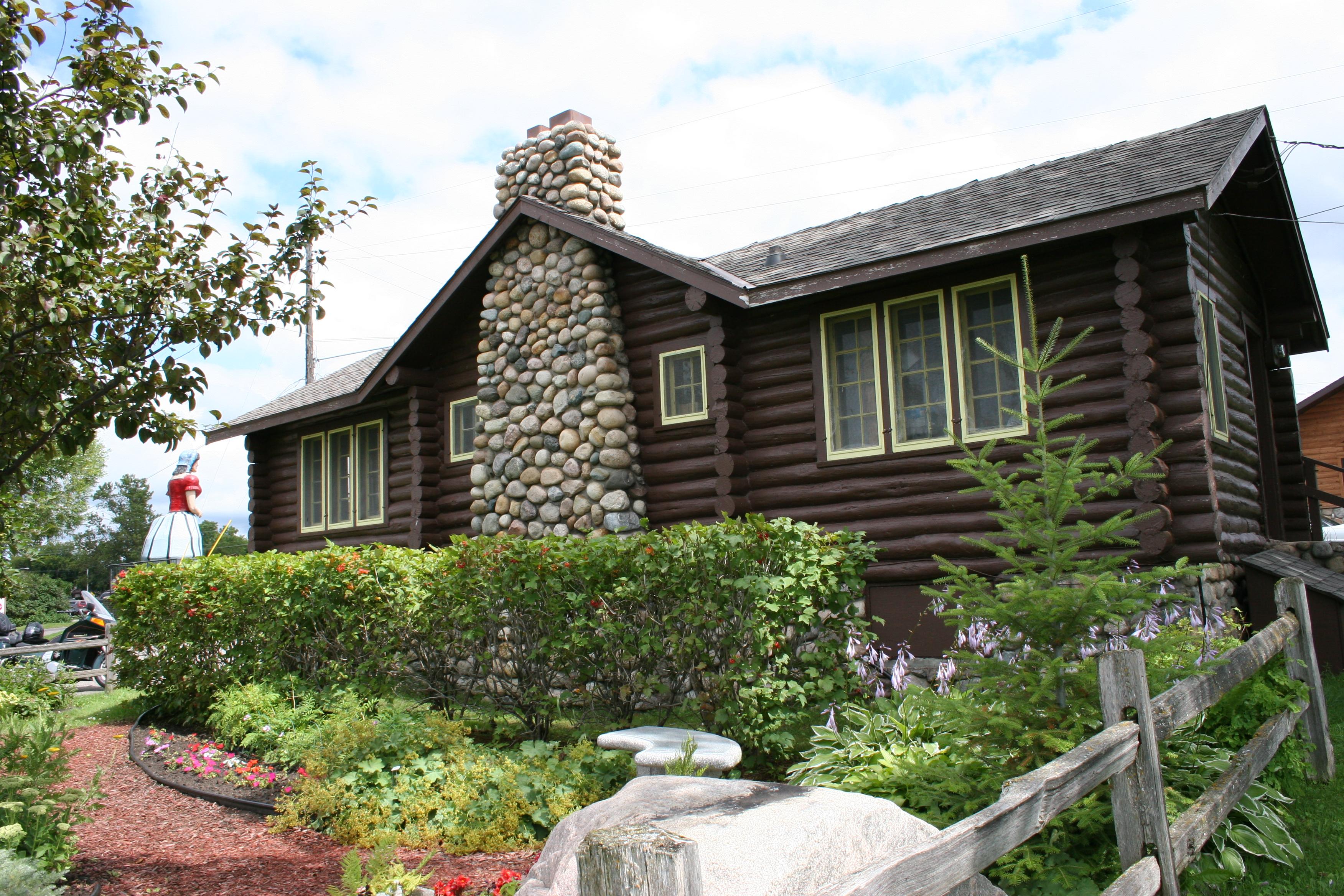
The lake side of the Hackensack Lending Library. To the left stands Lucette Diana Kensack..

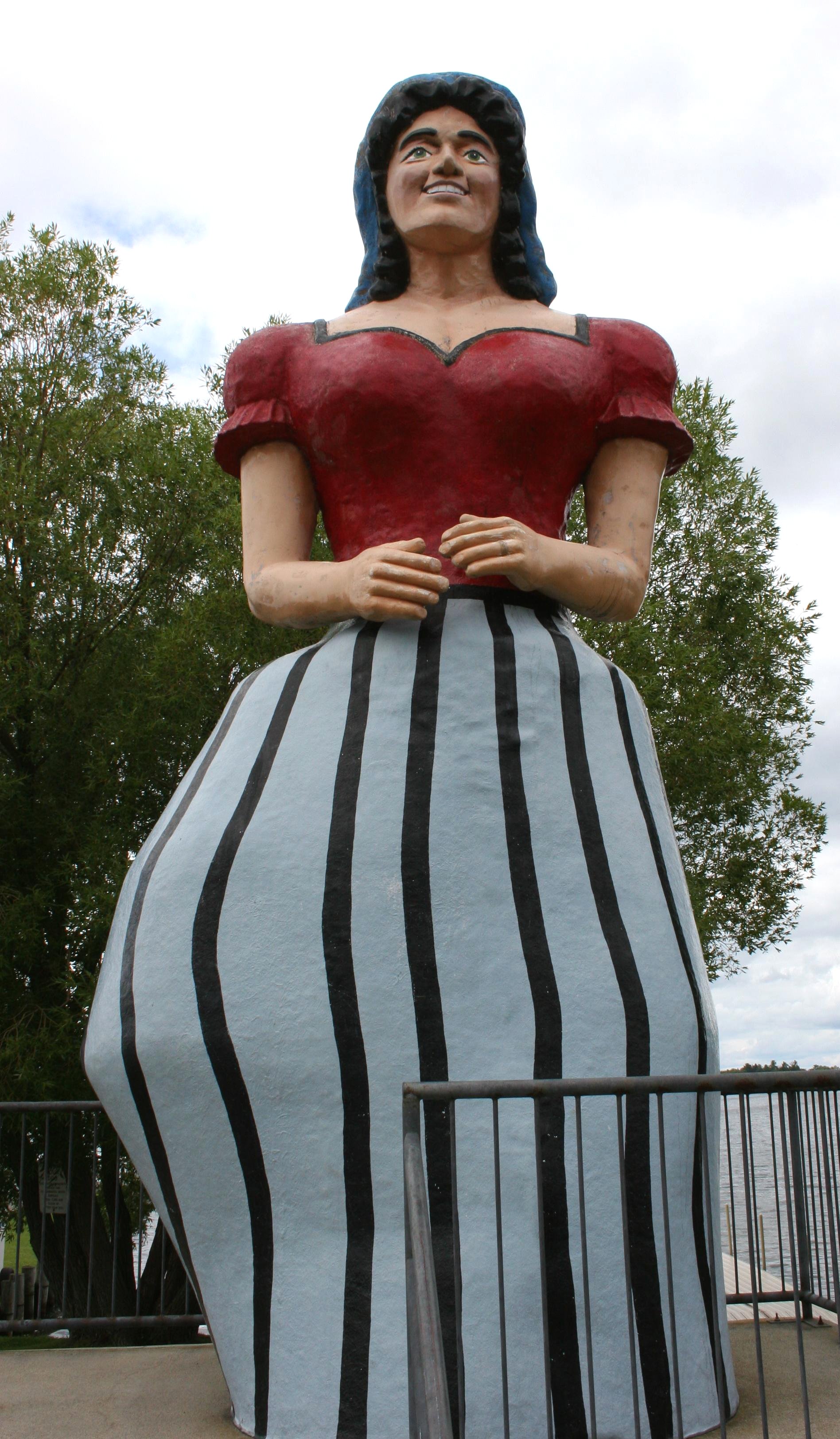
Lucette Diana Kensack

SEVERAL SUMMERS AGO while vacationing in northern Minnesota, my family stopped in Hackensack, 50 miles north of Brainerd. The initial draw to this town of 285 was the 17-foot tall statue of Paul Bunyan’s sweetheart, Lucette Diana Kensack. I appreciate kitschy roadside art. What can I say?

Two other discoveries, however, trumped seeing Lucette. A stone’s throw from Lucette, along the shores of Birch Lake, sits the cutest log cabin—a Works Progress Administration project and today home of the Hackensack Lending Library.

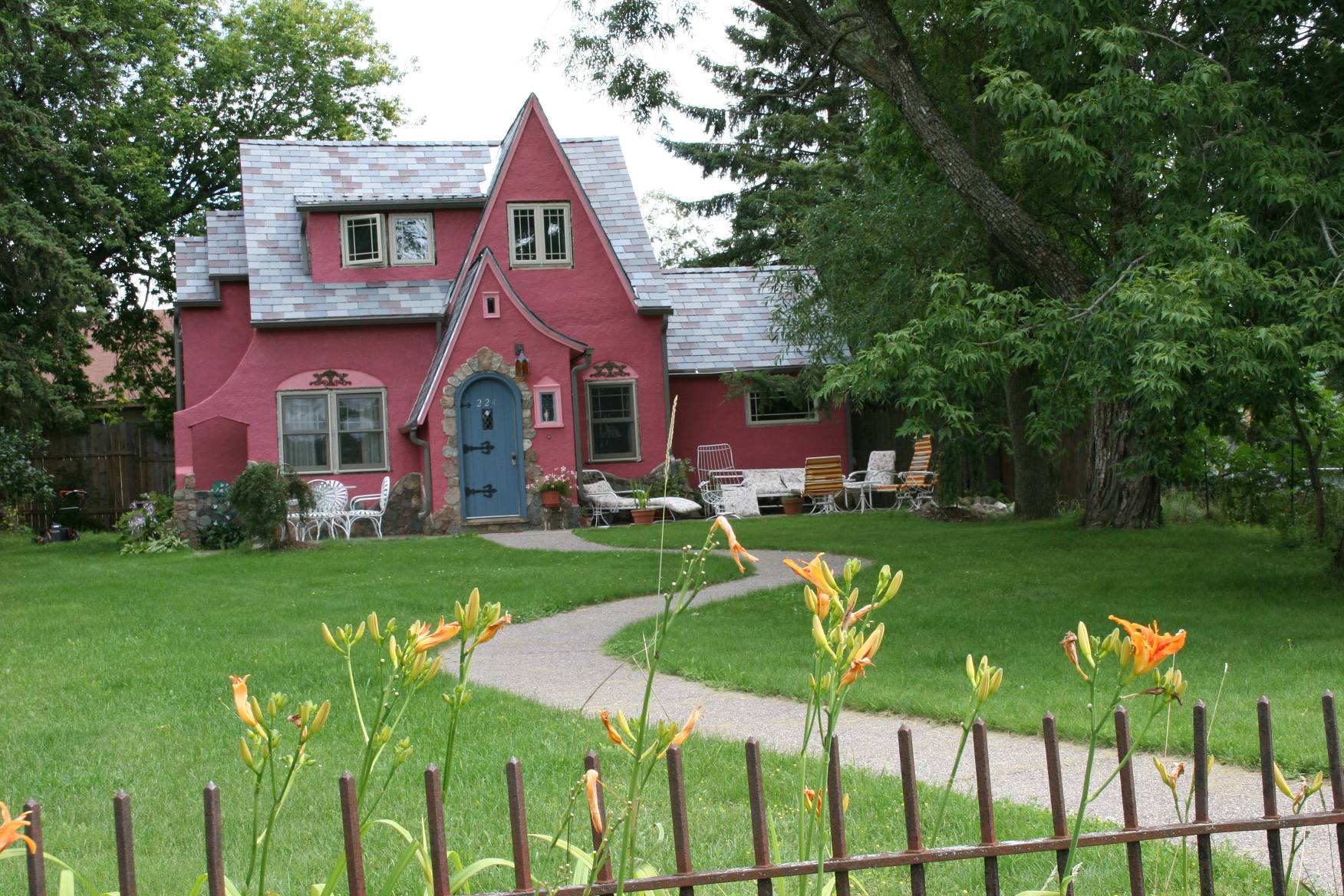
And just down the street from Lucette and the library, I found the sweetest pink fairy tale cottage.

Those small-town treasures marked my introduction to Hackensack.

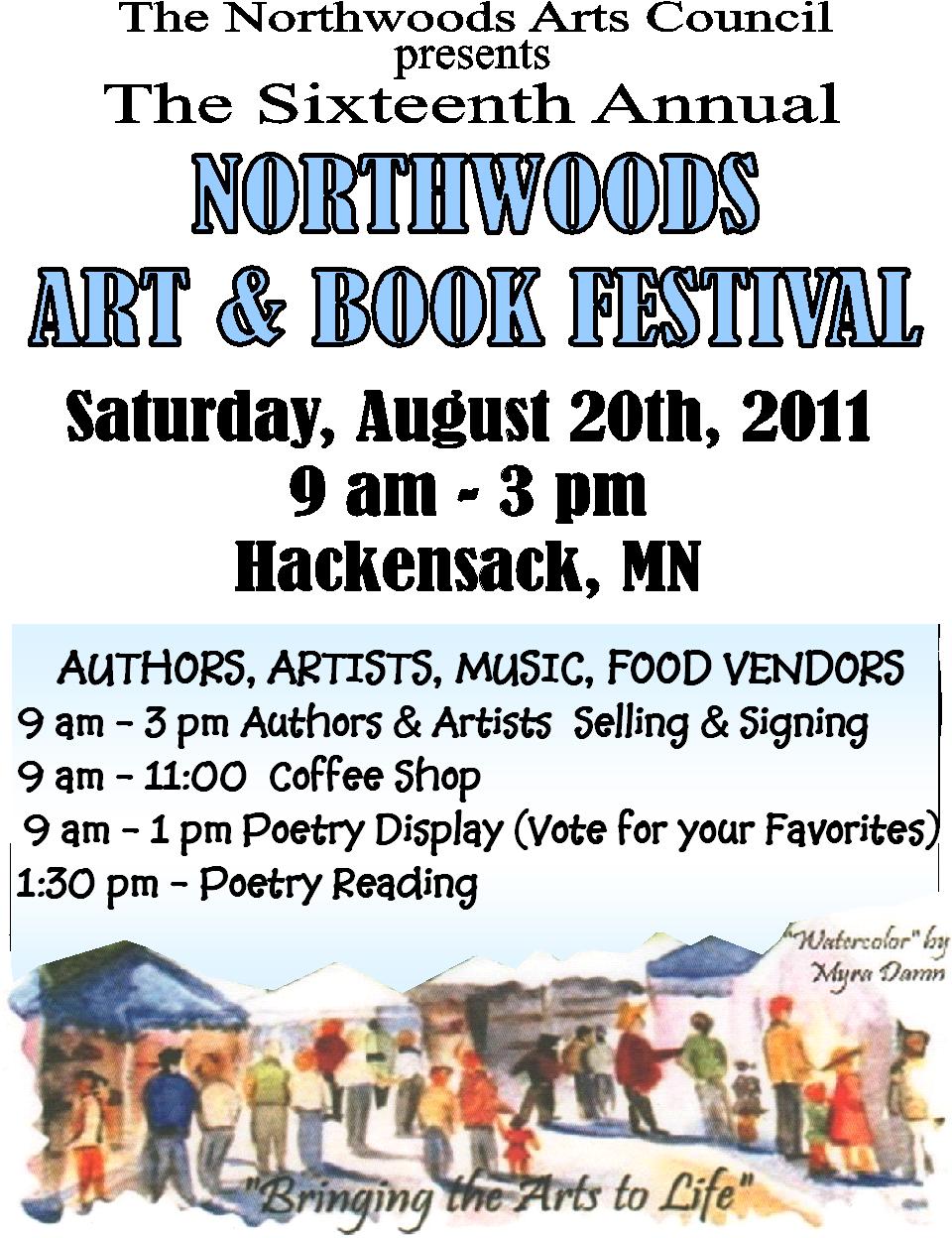
Now, fast forward to last summer. I wasn’t back in Hack, not physically anyway. Rather my poetry was among poems displayed at the town’s annual Northwoods Art and Book Festival. During that event, the featured poets are invited to read their poetry. Fest-goers can also vote for their favorites with six poems selected for “Popular Choice” awards. Six poems are also recognized as “Poems of Merit.” All of the original and unpublished poems are posted without author names attached.

I didn’t attend last year, didn’t win and didn’t deserve to win. My poetry wasn’t worthy of an award.

This year my poetry is back at the Northwoods Festival set for this Saturday, August 20, and I’m more confident that I’ve actually written poems that could win an award. Oh, I’d love to tell you which poem is mine (or it could be both poems that I submitted; I haven’t been told). But I won’t unfairly sway the voting. Suffice to say my rural background shines in my writing.

If Hackensack wasn’t such a long drive from Faribault, I’d be there taking in the poetry, the art, the music, the book-signings, the food. However, if you’re in the Brainerd lakes area or parts north on Saturday, check out the Northwoods Art and Book Festival from 9 a.m. – 3 p.m. and then tell me all about it by submitting a comment.

Voting for the “Popular Choice” awards begins at 9 a.m. and closes at 1 p.m.

If you’re already thinking, “Audrey, I don’t like poetry,” rethink your thinking. I promise you that my poetry rates as down-to-earth, understandable and not at all stuffy.

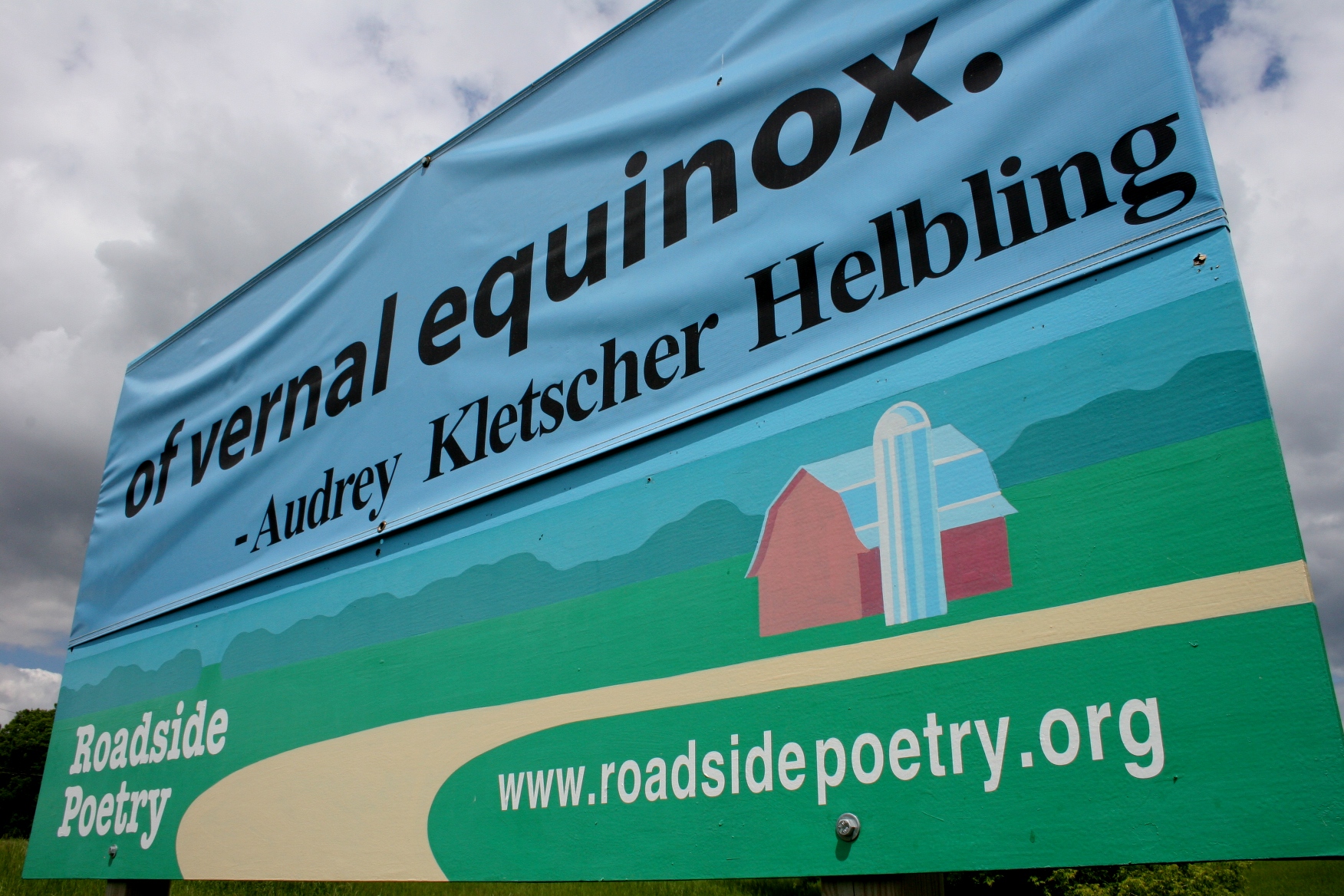
This whole concept of getting poetry out to the public via a display like the one in Hackensack pleases me. Just like the Roadside Poetry billboards in Fergus Falls. I was fortunate enough to win the spring competition and have my four-line poem plastered across four billboards there.

These new poetry venues, and the increasingly popular sidewalk poetry in cities like St. Paul, Mankato and now Northfield, are bringing poetry to the people. That’s a good thing because, in reality, how many of us actually pick up a book of poetry for leisure reading?

Minnesota poet Todd Boss and designer/animator Angella Kassube are also making poetry even more appealing by utilizing visuals in their acclaimed motion poems. Click here to read some of those.

Poetry has certainly evolved through the years, a necessity to keep writers interested in writing it and readers interested in reading it.

Professionally, I’ve only begun to unfold my wings as a poet. Even publicly calling myself a “poet” still sounds foreign to my ears. But with publication in two magazines and four anthologies, soon to be five (The Talking Stick, Volume 20, published by Park Rapids-based Jackpine Writers’ Bloc); winning the spring 2011 Roadside Poetry competition; inclusion at the Hackensack festival; and recent notification that one of my poems will publish in the Lake Region Writers Network’s first literary magazine, I finally feel worthy of the title “poet.”

The last of four billboards featuring my Roadside Poetry spring poem.

The sweet fairy tale house in Hackensack, located near Lucette and the park and photographed in 2009.

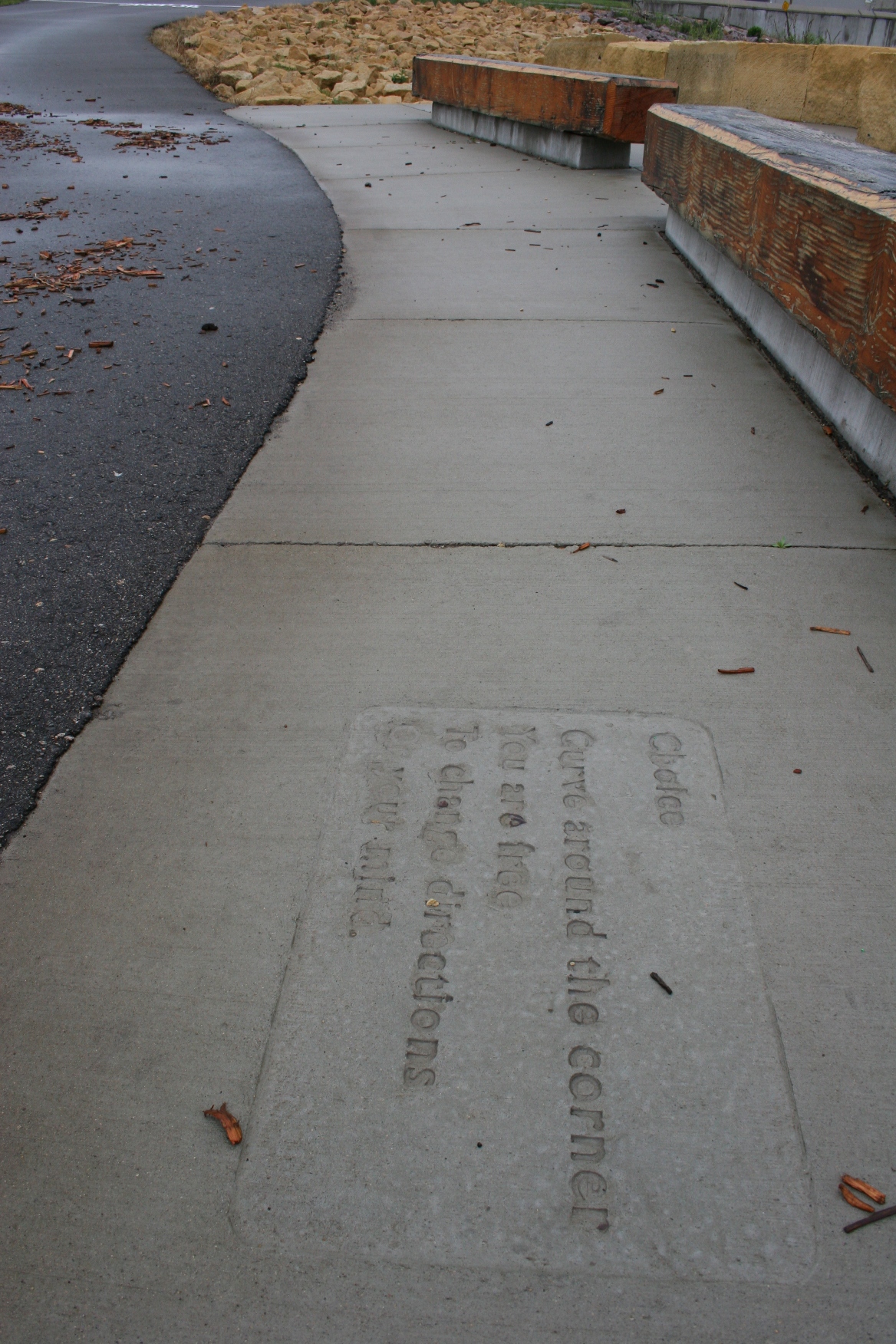
"Curve around the corner/You are free/To change directions/Or your mind," reads this poem by Marlys Neufeld of Hanska and imprinted in a Mankato sidewalk.

HOW DO YOU FEEL about poetry? Do you read it? Why or why not?

© Copyright 2011 Audrey Kletscher Helbling


Five years after a hit-and-run driver struck my son May 12, 2011

Filed under: Uncategorized — Audrey Kletscher Helbling @ 6:16 AM
Tags: , , , , , , , ,

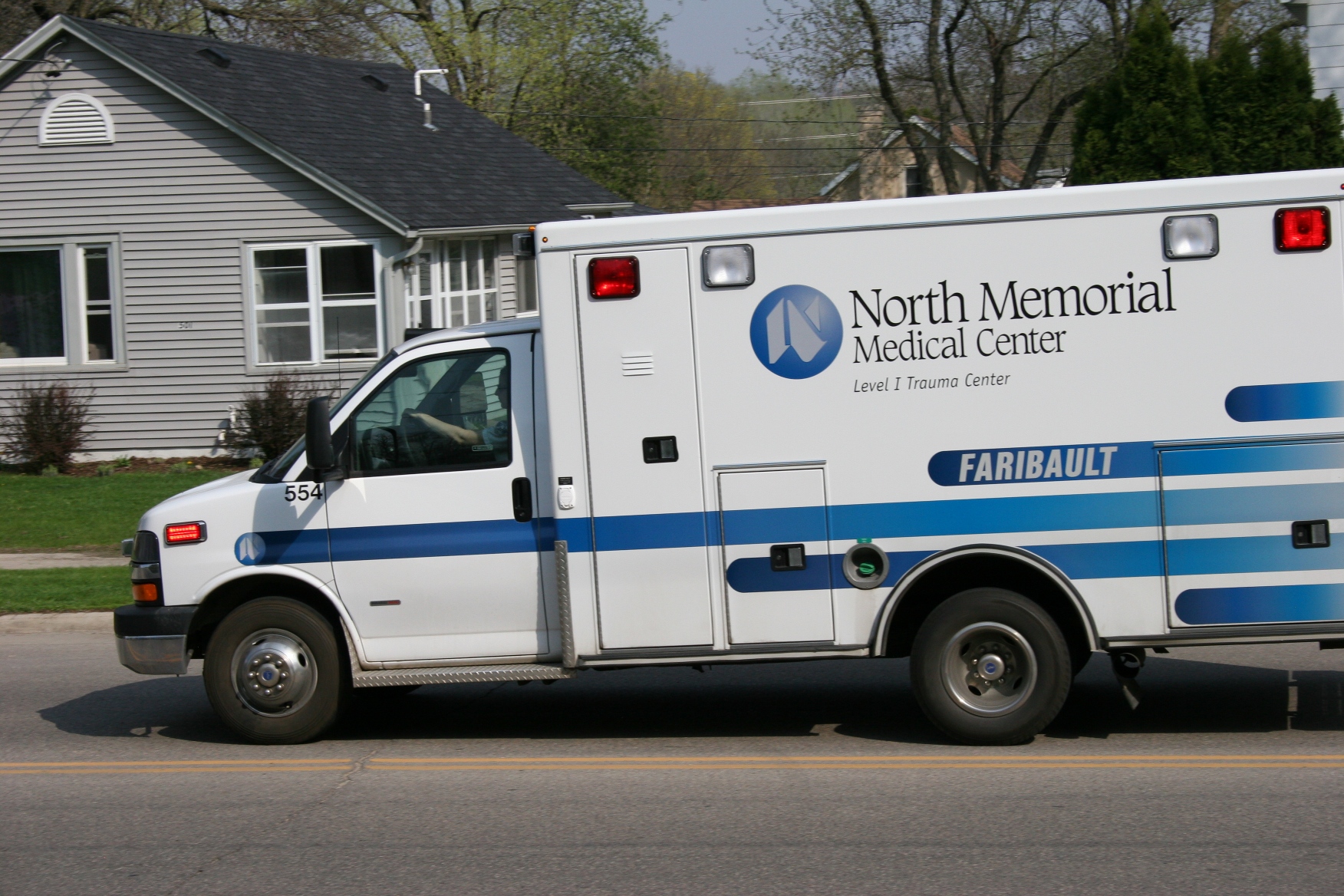
I live on one of Faribault's busiest residential streets, also a main route for the ambulance.

FIVE YEARS AGO TODAY on May 12, 2006, my then 12-year-old son was struck by a car as he crossed the street to his school bus stop.

Less than a block from home, his slender body slammed against a car and then somersaulted through the air. He landed dazed, shaken and injured along the side of the street.

Fear, unlike any I had ever experienced, gripped my heart and consumed my very being on that cool and drizzly May morning two days before Mother’s Day. In the minutes between my awareness of the accident and the confirmation that my son was OK, I feared the worst—that I had lost my boy.

I had not. He suffered only a broken bone in his hand, a bump on his head, scrapes and a possible rib fracture. Minor injuries, really, compared to what could have been.

For too many parents, the tragic death of a child is reality and I wonder how they cope. Via faith, family and friends? Somehow they manage to go on living.

In my son’s case, I also wonder how the driver copes. He/she fled the scene and has never been found. How can that driver of a blue, 4-door Chevrolet Cavalier or Corsica live with his/her actions?

It is incomprehensible to me that anyone could strike a child with a vehicle and then simply drive away.

Faribault police, early on, suspected the driver had a reason—ie. driving without a license, driving drunk, no insurance, prior record—to leave.

Despite numerous leads, including one which came via an anonymous letter penned by someone with a personal vendetta against a named suspect and another which led investigators to a prison cell, a credible suspect has never been found.

On several occasions police thought they were close to finding the driver. I have not given up hope that the driver can still be found—if conscience finally prevails and/or an individual with knowledge of this too-long-hidden secret chooses to do the right thing and step forward with information.

While the statute of limitations expired three years after the hit-and-run, Neal Pederson of the Faribault Police Department tells me that the case remains open and that his office will follow up on any tips or leads. He noted, however, that if the driver lived out of state for a period of time, the clock stops and the crime could still be investigated and charged.

Anyone with information about the hit-and-run can anonymously call the Faribault Police Department tip line at 507-334-0999 or Crime Stoppers of Minnesota at 1-800-222-8477.

I don’t dwell on finding the driver. A $1,000 reward offered several years ago for information leading to the arrest and conviction of the hit-and-run driver is no longer valid. I always hoped that honesty and decency, not a monetary reward, would be the motivating factors in solving this case.

As five years have passed, many, many times I have thanked God for protecting my son from worse injury.

Sometimes still—when I hear the screaming wail of an ambulance as it passes my house along our busy street or when I read a news story about a hit-and-run or drunk driving death—I think of that May morning when my son was struck.

I try to forget. But a memory like this remains forever.

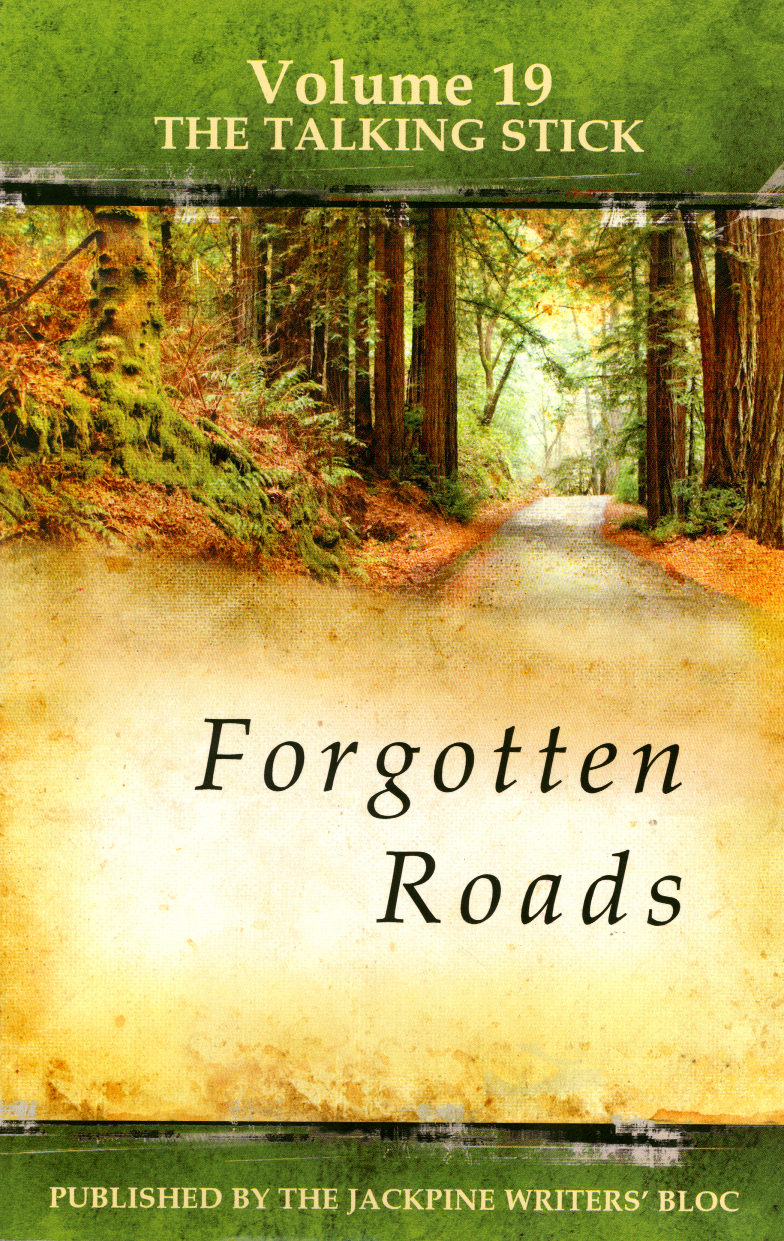
LAST YEAR I WROTE the following poem, which won honorable mention in the poetry division of a state-wide anthology competition. “Hit-and-Run” printed in The Talking Stick, Volume 19, Forgotten Roads, published by The Jackpine Writers’ Bloc.

Hit-and-Run

 In that moment, I know,

as the rivulets of water course down my body,

as I step from the tub

dripping puddles onto the linoleum,

that the sirens wail

for you,

my boy, my only son.

#

You, who tossed your backpack

over your bony shoulders,

then hurried

toward the street,

toward the bus stop.

#

While I showered,

you crossed carelessly,

your fragile body bouncing

off the car

you had not seen,

flailing in a somersault,

landing hard on the pavement.

Sirens scream, and I know.

#

Panic grips,

holds tight my heart,

my very soul,

as I race from the bathroom,

wrapped in a bath towel,

stand immobile,

watching the pulsating red lights

of the police car

angled on the street,

blocking the path to you.

#

Copyright 2011 Audrey Kletscher Helbling


My unforgettable “road” poem publishes in The Talking Stick, Forgotten Roads September 15, 2010

TYPICALLY WHEN I write poetry, I turn to my past, to childhood memories.

That’s evident by my poems published in three volumes of Poetic Strokes, A Regional Anthology of Poetry from Southeastern Minnesota:  “Abandoned Farmhouse,” “Prairie Sisters,” “Walking Beans,” “Saturday night baths,” and “A school without a library.”

Occasionally I deviate from that trip down memory lane. “Lord, My Rock” published in the fall 2004 issue of The Lutheran Digest and “Tribute to a Korean War Veteran” published in the May/June 2009 issue of Minnesota Moments magazine.

My latest in-print-poem also detours from my typical subject of childhood days, although it stays on the road of memories, albeit this one a heart-wrenching, emotional recent memory.

“Hit-and-Run” has just published in The Talking Stick, Forgotten Roads, Volume Nineteen, debuting this Saturday at a Book Release Party in the Northwoods Bank Community Room in Park Rapids.

The poem looks back to May 12, 2006, the day my then 12-year-old son was struck by a hit-and-run driver while crossing the street just a short distance from our home. Thankfully, my boy was not seriously injured. But the driver was never found and the memories of that horrible incident still linger. Now I’m sharing, in poetic verse, how that morning unfolded emotionally for me. Certainly, I have not forgotten this road.

Apparently my words resonated with the editors who reviewed the 200-plus poems submitted in this literary competition. “Hit-and-Run” was among the top seven poems selected by the editorial board for prize consideration by noted Minnesota poet Heid Erdrich. My poem earned an honorable mention.

“A terrifying imagery/memory,” Erdrich partially wrote in her evaluation.

Indeed.

If you would like to read my poem, the other winning poems and the fiction and creative non-fiction published in this latest collection by writers with a connection to Minnesota, check out the online purchasing options at The Jackpine Writers’ Bloc. The Park Rapids/Menahga-based group annually publishes The Talking Stick, which is sold by the Writers’ Bloc and several northern Minnesota bookstores.

I’ve read two of the past anthologies and I promise that you will enjoy some top-notch writing by emerging and established Minnesota writers. The Talking Stick has an excellent, long-standing reputation and I’m proud to be published in it.

If you’re a writer, consider entering the 2011 The Talking Stick competition. Submissions call for the 20th volume goes out in December with a March 1, 2011, submission deadline.

Finally, if you’re in the Park Rapids area this weekend, consider attending the book release party, which begins at 1 p.m. Writers published in The Talking Stick, Forgotten Roads, will read their works beginning at 2 p.m. No, I won’t be there as I have another commitment. But you’ll meet plenty of other Minnesota writers anxious to sell their books or compare notes on this journey we call writing.

© Copyright 2010 Audrey Kletscher Helbling