Minnesota Prairie Roots

Writing and photography by Audrey Kletscher Helbling

Marking 50 years of sharing rural history at August 29-31 tractor show August 29, 2025

Of the hundreds of photos I’ve taken at the Rice County Steam & Gas Engines spring and fall shows, this remains a favorite of a farmer watching threshing. (Minnesota Prairie Roots copyrighted file photo 2012)

FOR ANYONE ROOTED in the land, this weekend’s annual Tractor Show at the Rice County Steam & Gas Engines showgrounds along Minnesota State Highway 3 south of Dundas is a must-attend. This event, celebrating its 50th year, is like a step back in time, when farming was much more labor intensive and equipment vastly different from the computerized equipment of today.

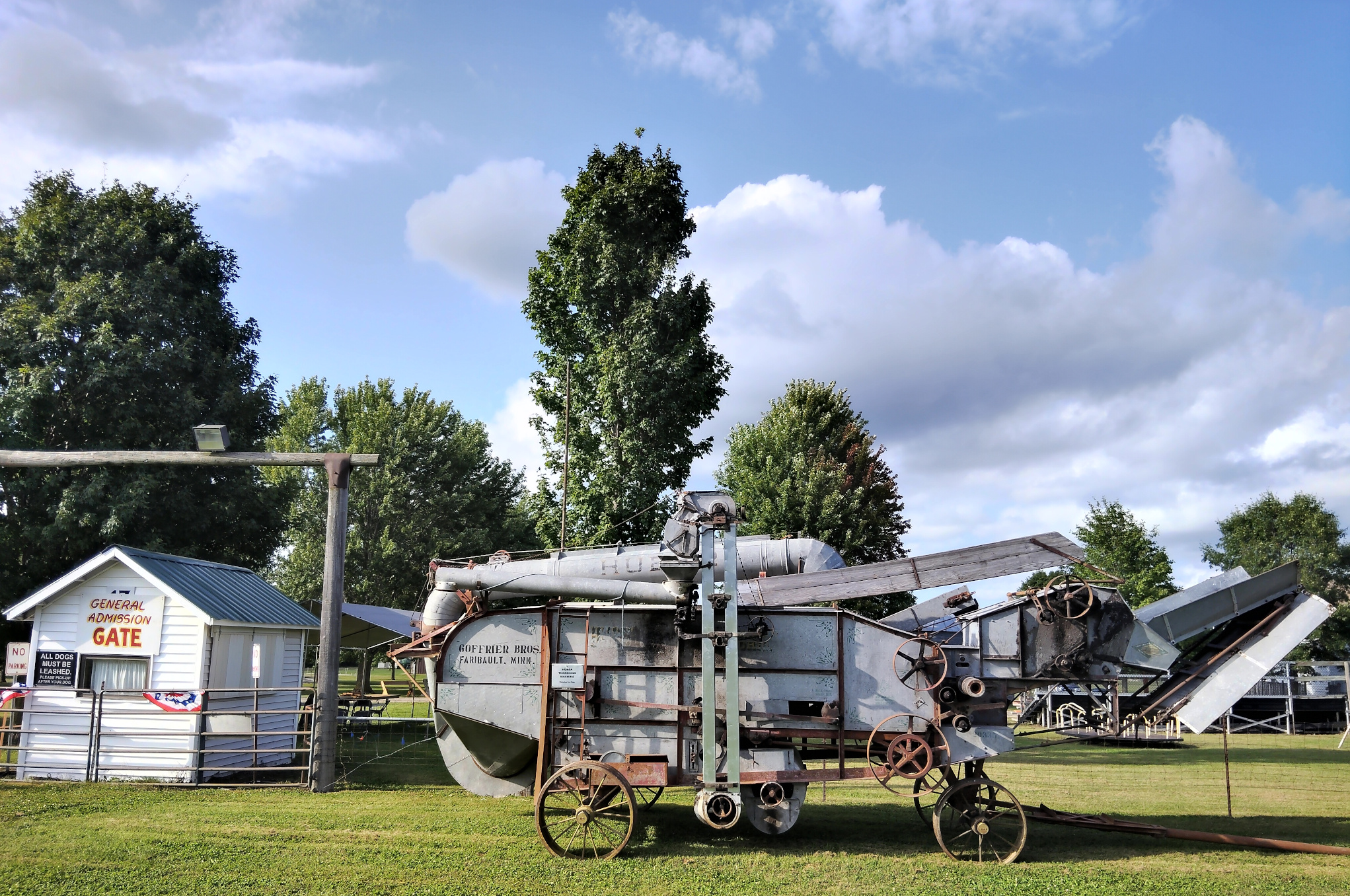
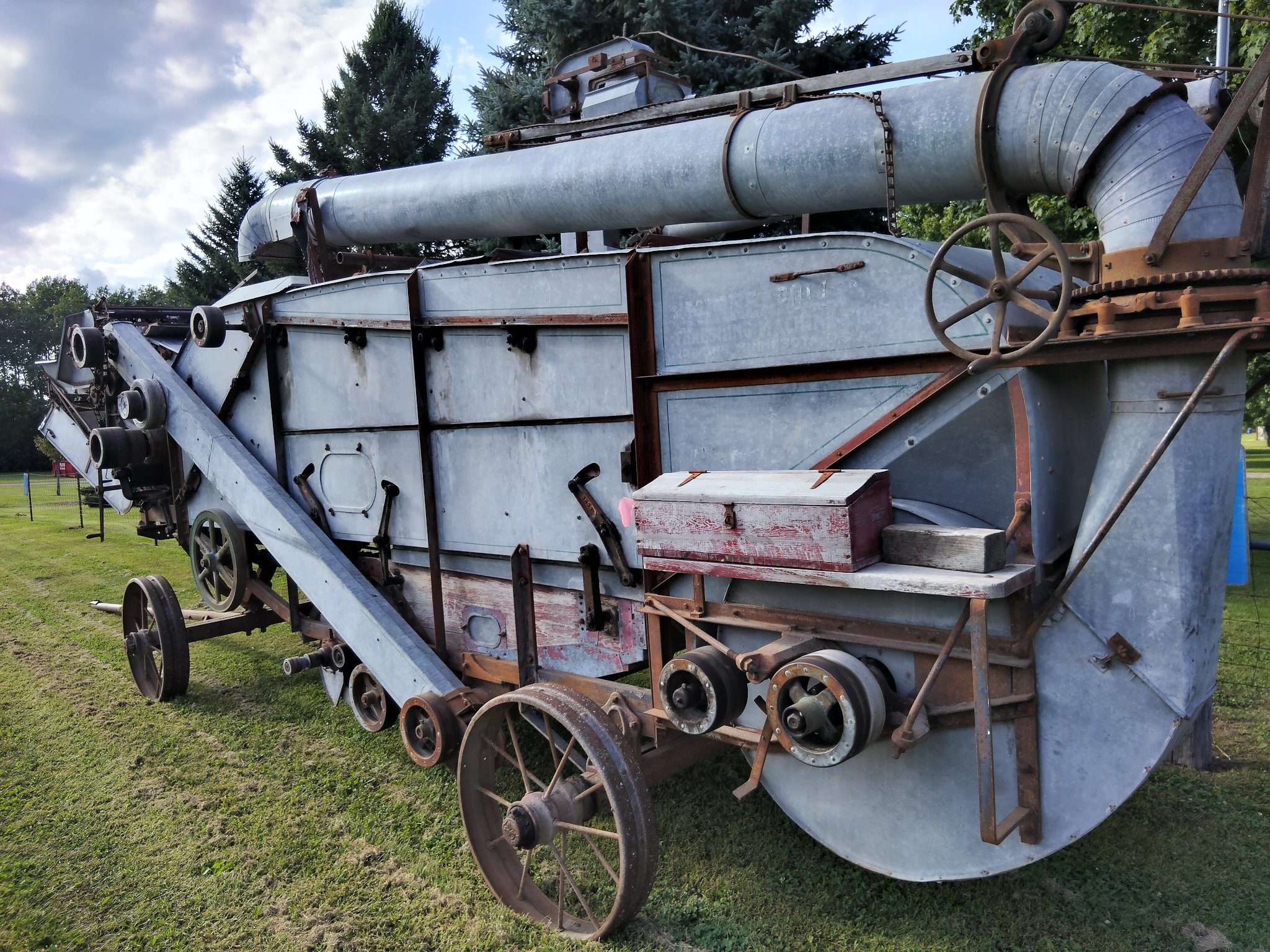
A mammoth threshing machine sits outside the fenced showgrounds on Wednesday. (Minnesota Prairie Roots copyrighted photo August 2025)

I’ve attended and photographed this show many times. And even though I’m not nearly as interested as my automotive machinist husband in old tractors, steam engines, threshing machines, small engines and miscellaneous vintage farm equipment, I still find plenty to appreciate. I am, after all, a born and raised farm girl who is incredibly proud of her rural heritage.

I’m also proud of Randy and all the work he’s done on vintage tractors. Without fail, someone will walk up to us at the show and tell him how great their tractor runs—the one he worked on. He’s overhauled many a tractor engine.

There’s a lot of work involved in putting on a tractor show that includes a daily noon tractor parade, a tractor pull, a kids’ pedal pull, flea market, living history demonstrations, petting zoo, mini train rides, food stands, live music, a cornhole tournament, raffle, Sunday morning church service, small engines and tractor displays, and much more.

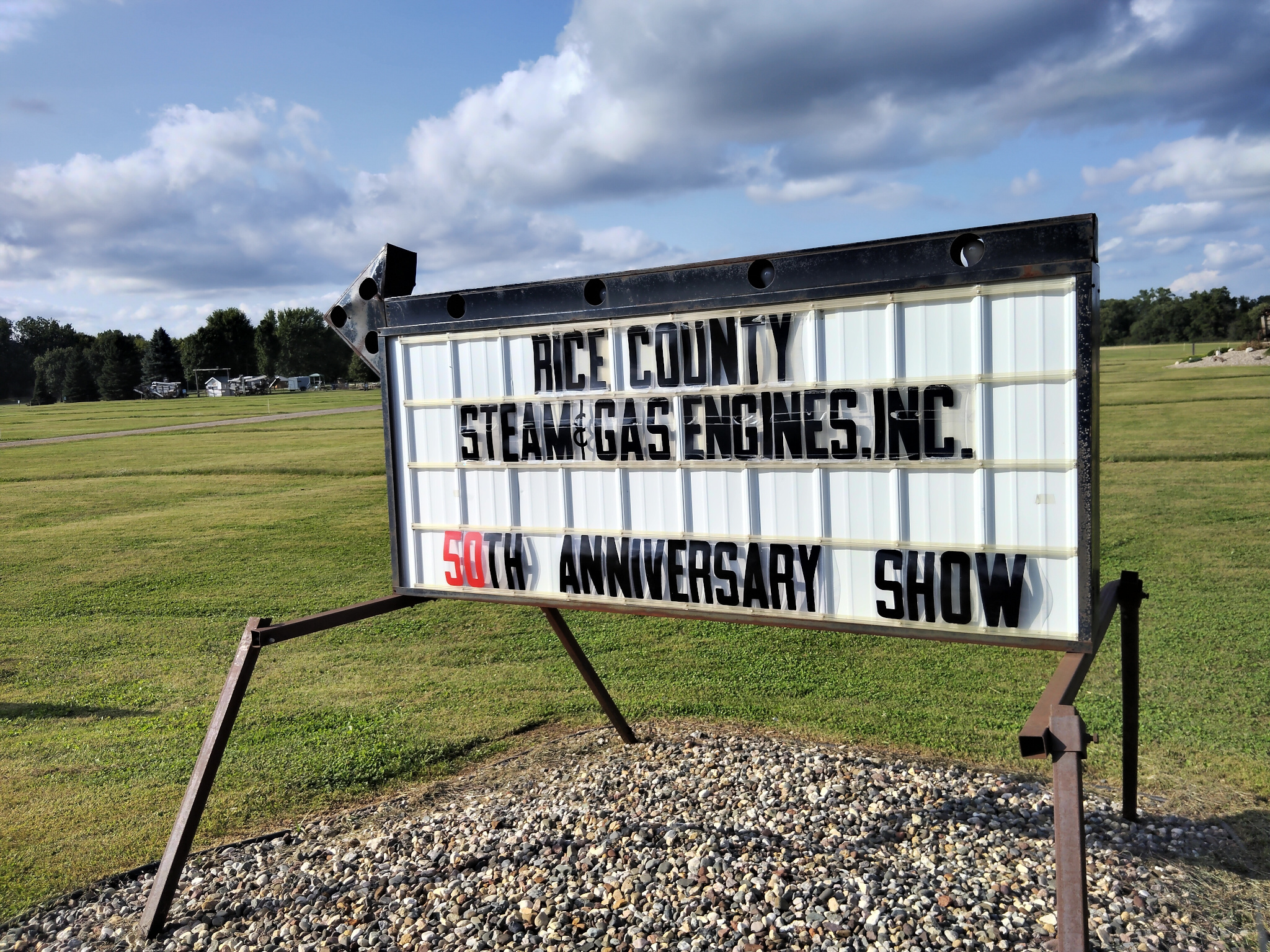
Signage at the showgrounds entry notes this as the 50th anniversary Tractor Show. (Minnesota Prairie Roots copyrighted photo August 2025)

And to think that volunteers have organized this Tractor Show for 50 years is truly remarkable. Enthusiasm for showcasing rural history and preserving the past runs deep. Old buildings have even been moved on site like a log cabin, 1912 farmhouse, an old school, town hall, corn crib…

The flea market always draws me to look and shop. I challenge myself to find the strangest of merchandise. Not hard to do. Oddities abound.

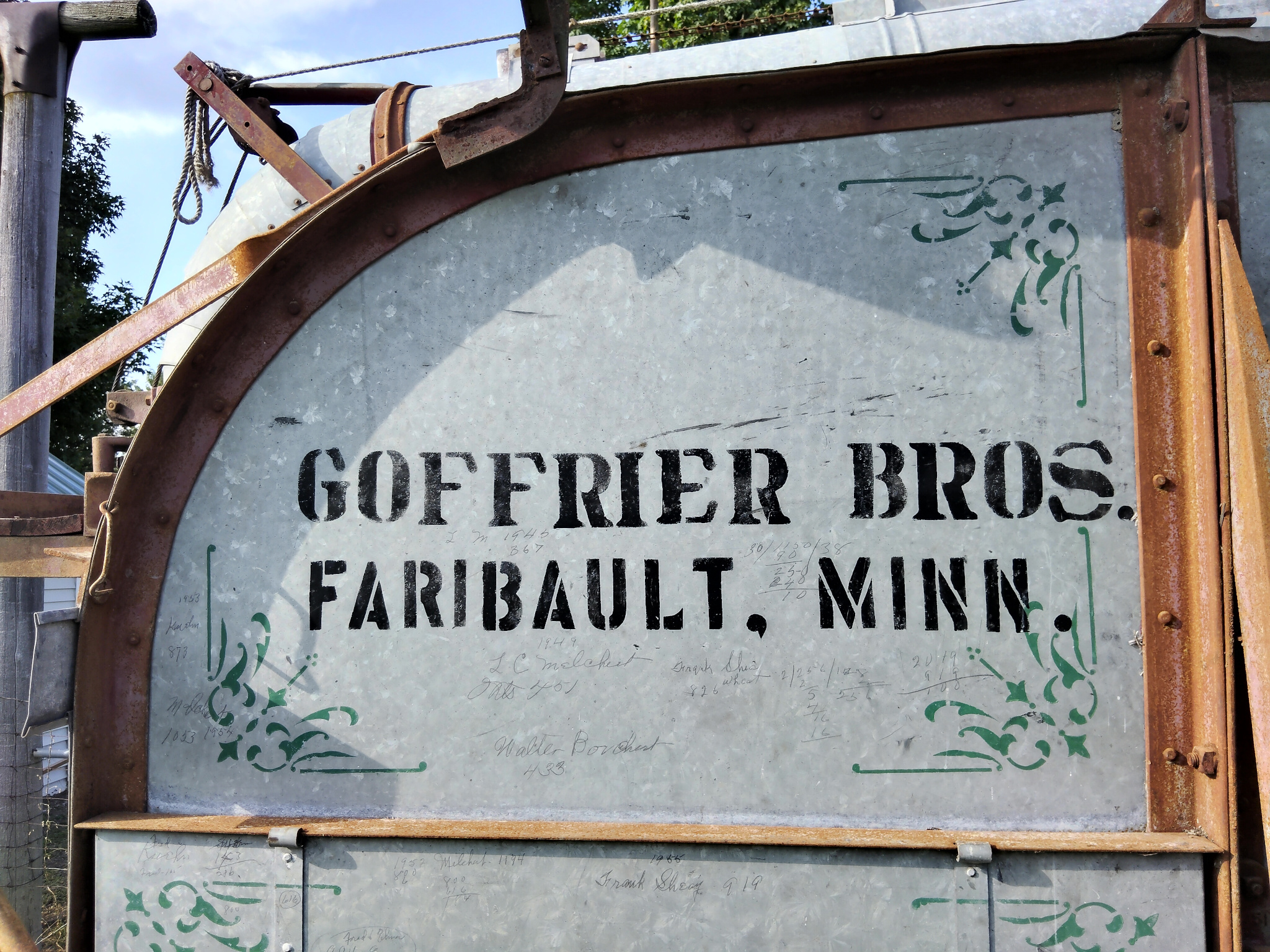
This name was printed on one of the two threshing machines I photographed, presumably the original owners. Other names were penciled onto the metal. Another sign identified this as a Huber threshing machine. (Minnesota Prairie Roots copyrighted photo August 2025)

And then there are the people. I always run into someone I know. And that’s part of the experience, too. Standing and visiting. Catching up. Discussing whatever.

This all happens on the land, on acreage Rice County Steam & Gas Engines, Inc. opens twice annually to the public. The group holds a spring swap meet on Memorial Day weekend.

Two threshing machines sat outside the showgrounds fence at the entrance gate Wednesday afternoon. (Minnesota Prairie Roots copyrighted photo August 2025)

But for Labor Day weekend, the event focuses on tractors. Gates open at 7 a.m. daily, August 29-31. Admission for all three days is $10 for adults; those 12 and under enter free. I’d encourage you to attend if you live within driving distance. And that means anyone, whether you were raised rural or grew up in a city.

FYI: Click here to learn more about the RCSGE Tractor Show and for a listing of events.

TELL ME: Have you attended this event or a similar one?

© Copyright 2025 Audrey Kletscher Helbling


Vacation memories & southern Minnesota connections August 26, 2025

An angler fishes in Horseshoe Lake, rural Merrifield, on an August evening. (Minnesota Prairie Roots copyrighted photo August 2025)

IN MID AUGUST, Randy and I headed nearly 200 miles north of Faribault for our second stay of the summer at a family member’s cabin in the Brainerd lakes area. This trip our eldest daughter and her family joined us for several days. There’s nothing quite like time with the grandkids at the lake. Time to play, to relax, to make memories. And that we did. I cherish our days together Up North.

We mostly hung out on the beach or in the cabin. Weather conditions were not ideal with cool temps and strong winds prevailing when all six of us were there together. Yet, we got outdoors—the kids running along the sandy beach, digging a hole along water’s edge, enjoying the placid water on a warm and sunny day before the weather changed.

Looking upward toward the pines from a lakeside hammock. (Minnesota Prairie Roots copyrighted photo August 2025)

MAKING MEMORIES

I led the 6 and 9-year-olds on a scavenger hunt. We searched for a feather, a mushroom, a nest…that which nature offers like a gift if only we pause to see and appreciate. Randy taught Isaac to play Marbles on a homemade wooden board. It’s a long-time favorite of the extended Helbling family. We played Yahtzee and Connect 4, on an over-sized outdoor board. The puzzlers among us (not me) pieced together a lemonade stand. We headed into town for massive scoops of ice cream, a cabin tradition. And one day we picked peas from our sister-in-law and brother-in-law’s plot in a community garden. Later I taught Isaac how to shell them. The kids delighted in a timed Ninja course at a Crosslake playground and posed for photos behind Paul Bunyan family cut-outs at another park. We devoured s’mores around the campfire.

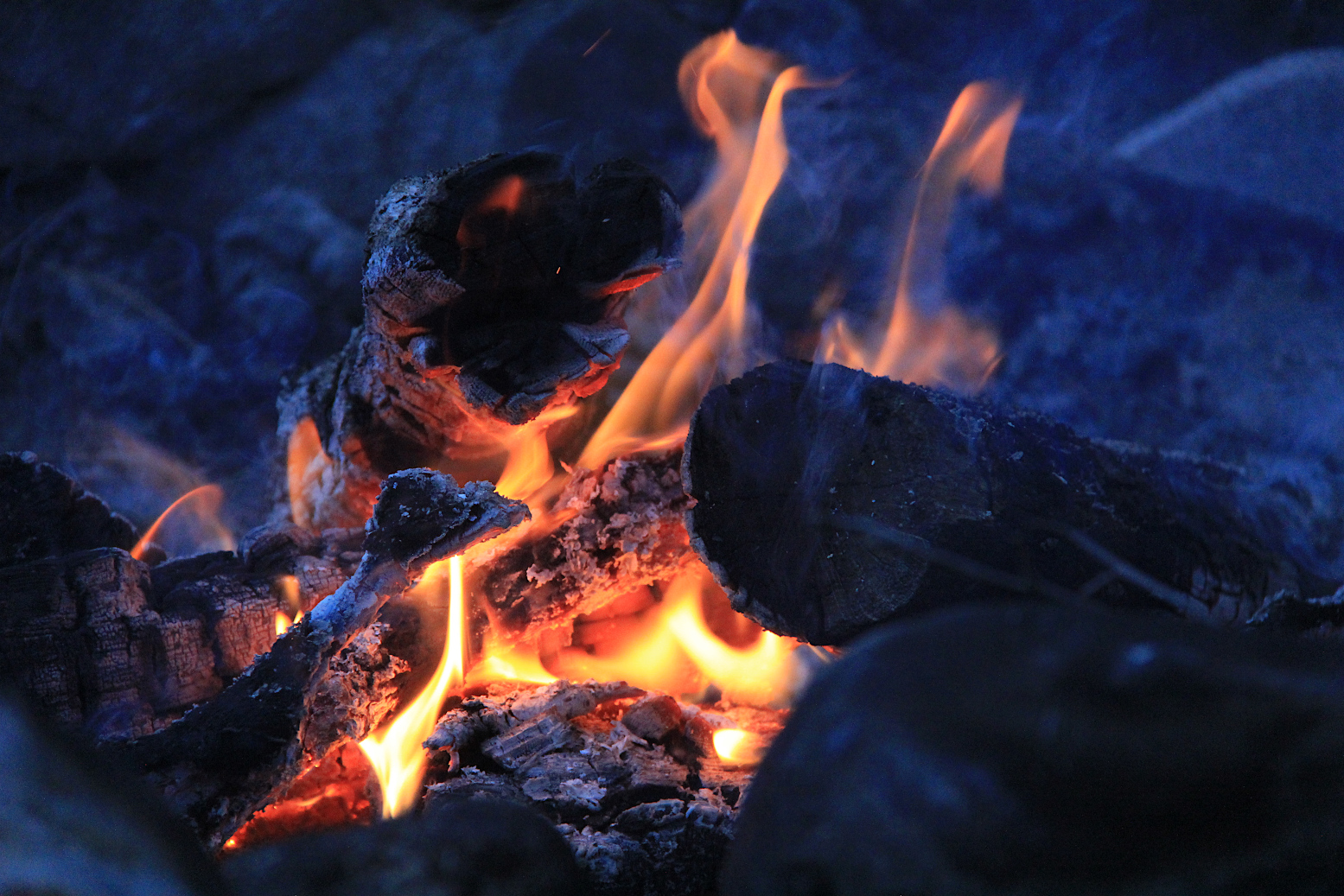
A campfire is the place to share stories, create memories. (Minnesota Prairie Roots copyrighted photo August 2025)

This is the stuff of memories. Simple. Uncomplicated. Mostly unplanned. Moments that connect us, deepen bonds.

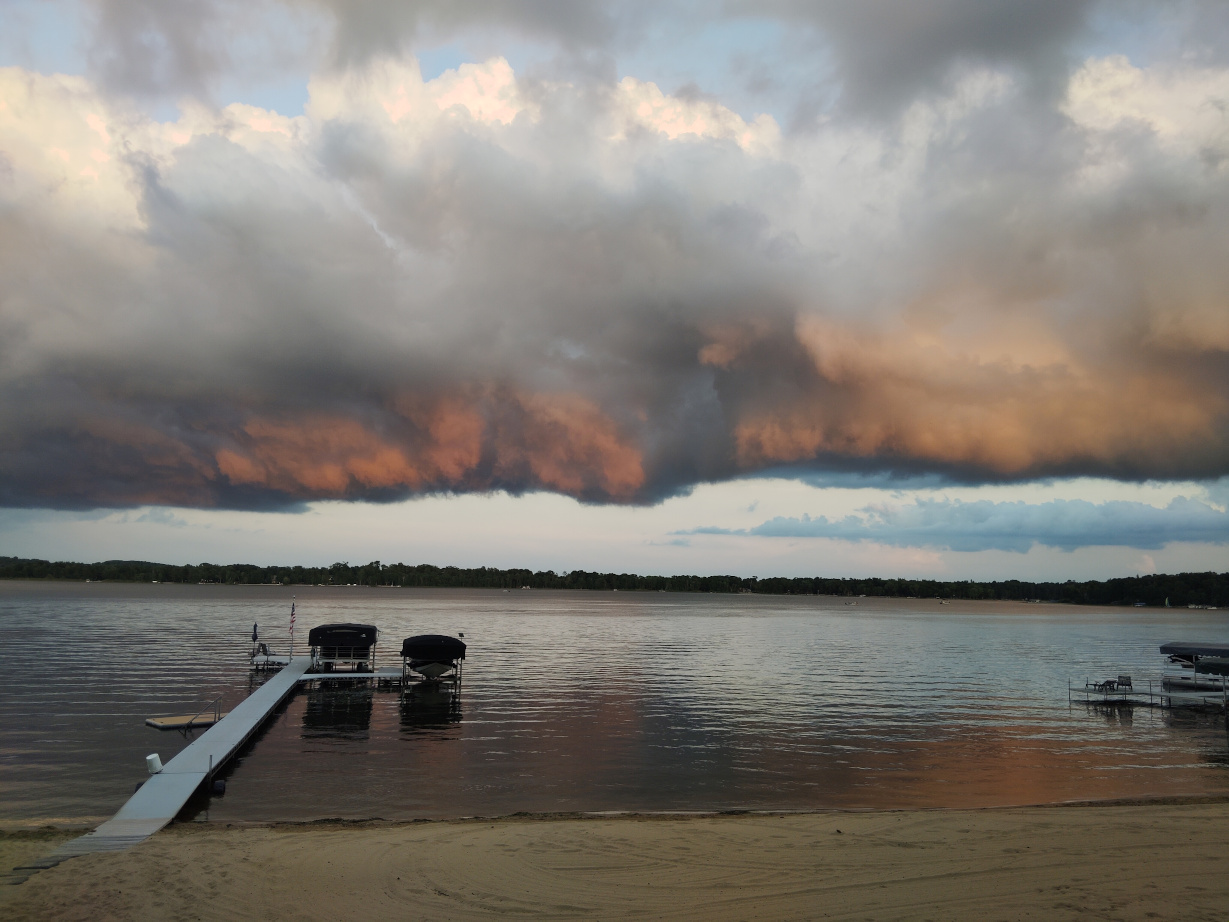
Moody clouds at sunset over Horseshoe Lake. (Minnesota Prairie Roots copyrighted photo August 2025)

Being outdoors, away from home and work and schedules and the demands of everyday life, opens us to the joys of vacationing. The haunting call of a loon and the sighting of a bald eagle perched atop a pine proved exhilarating. A bank of moody, pink-tinged clouds slung low in the evening sky drew all of us to focus on and admire the scene.

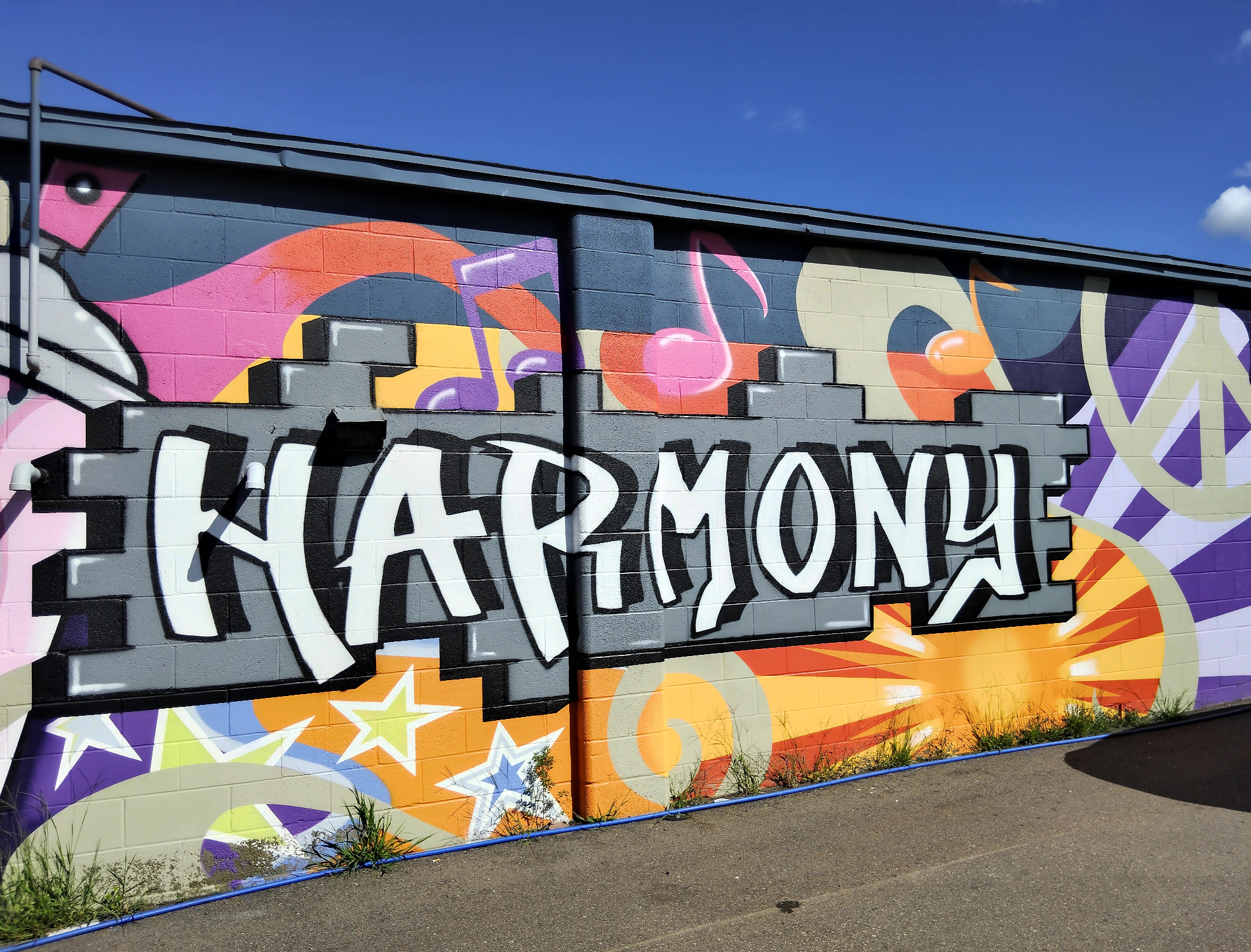
A mural in Crosby. (Minnesota Prairie Roots copyrighted photo August 2025)

MORE CHERISHED MOMENTS

When the grandkids and their parents left several days before us, our world seemed too quiet. No more kids scampering up and down the loft ladder. No more requests to go to the beach. No more…

But, sans kids, there were still moments to be cherished. Lakeside dining with friends at Breezy Point. Popping in to chat with a Faribault friend who lives in Nisswa now and works for the Chamber of Commerce. And then a chance encounter with adults with disabilities on an outing at Mission Park, rural Merrifield. I learned that visually-impaired Shannon, who uses a white cane and carries over-sized yellow sunglasses, likes to sing. I asked her to sing for me. And she did—to a movie soundtrack of ”My Heart Will Go On” by Celine Deon. I thought my heart would burst with joy as this young woman first mouthed the words, then sang them quietly and then louder as I encouraged her. It’s one of those moments I will forever treasure. Me nearly in tears and everyone inside that picnic shelter smiling during this impromptu weekday morning concert.

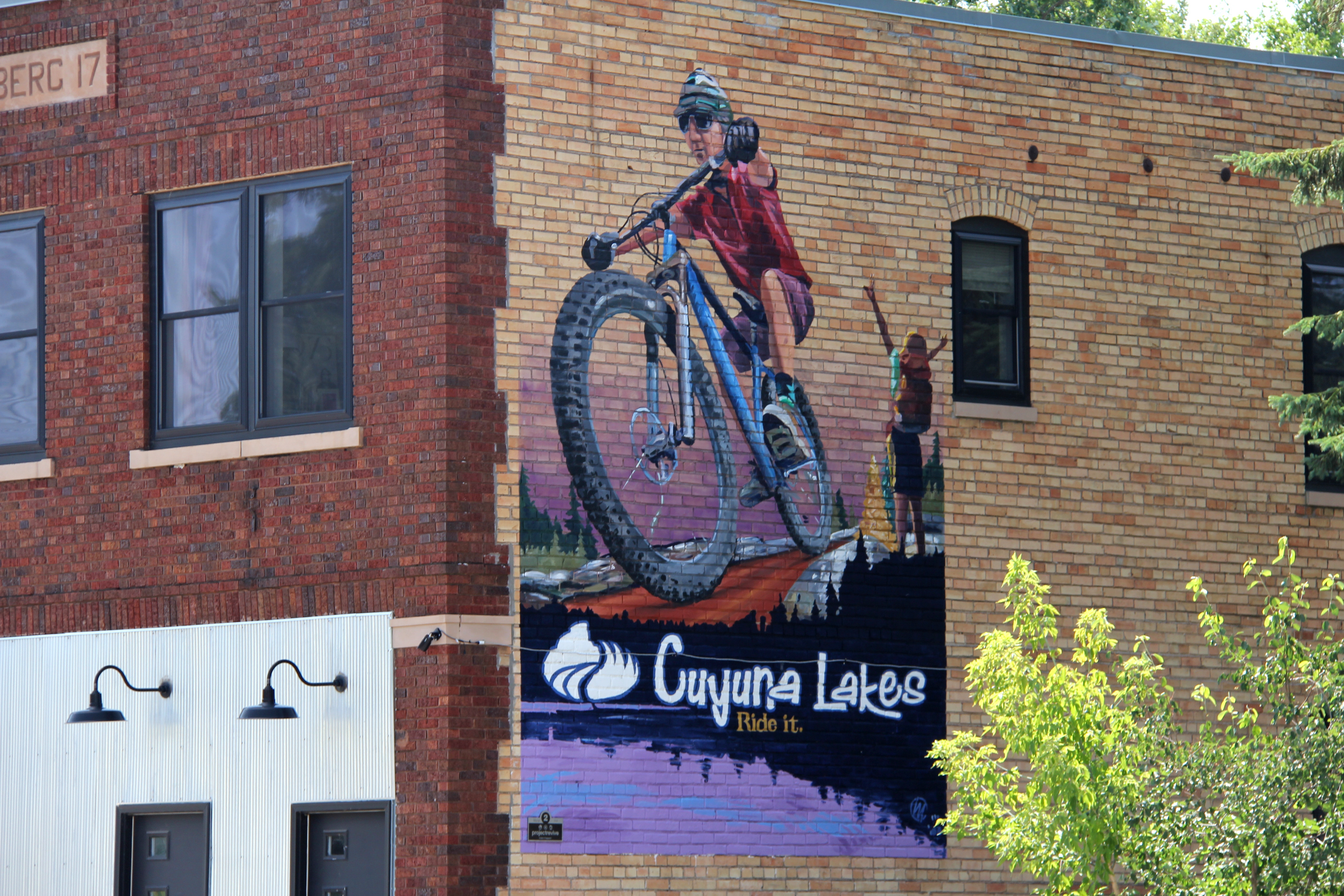
A mural by Adam Turman in downtown Crosby highlights recreational activities in the Cuyuna Lakes area. (Minnesota Prairie Roots copyrighted photo August 2025)

SOUTHERN MINNESOTA CONNECTIONS ON THE RANGE

On the way home, there were more delights during a stop in Crosby, an Iron Range community that is evolving into a destination with its many outdoor activities, shops and murals. I spotted a mural by Minneapolis artist Adam Turman, whose work can be found on murals in Northfield and on Faribault Mill products. He’s a favorite muralist of mine. I saw also, much to my delight, Faribault Mill blankets and Caves of Faribault cheeses in separate shops. I felt Faribault-proud seeing those wool blankets and exceptional cheeses for sale in Crosby.

ICE CREAM, GREEK STYLE

But it was the homemade ice cream—Rave Creamworks’ Super Premium—at Victual in Crosby that got rave reviews from me. Randy and I shared a large scoop of Baklava ice cream laced with flaky phyllo dough, chopped walnuts and honey. It is the shop’s bestseller among 24 choices, so said the teen behind the counter. I loved this creamy ice cream, which I expect my friend, Father Jim Zotalis at the Cathedral of Our Merciful Saviour in Faribault, would appreciate given his Greek heritage. Baklava is a Greek pastry. Even in that ice cream I felt a connection to southern Minnesota. We can leave home, but we never really do.

© Copyright 2025 Audrey Kletscher Helbling


A glimpse of Northfield on a folk art mural inside the post office February 4, 2025

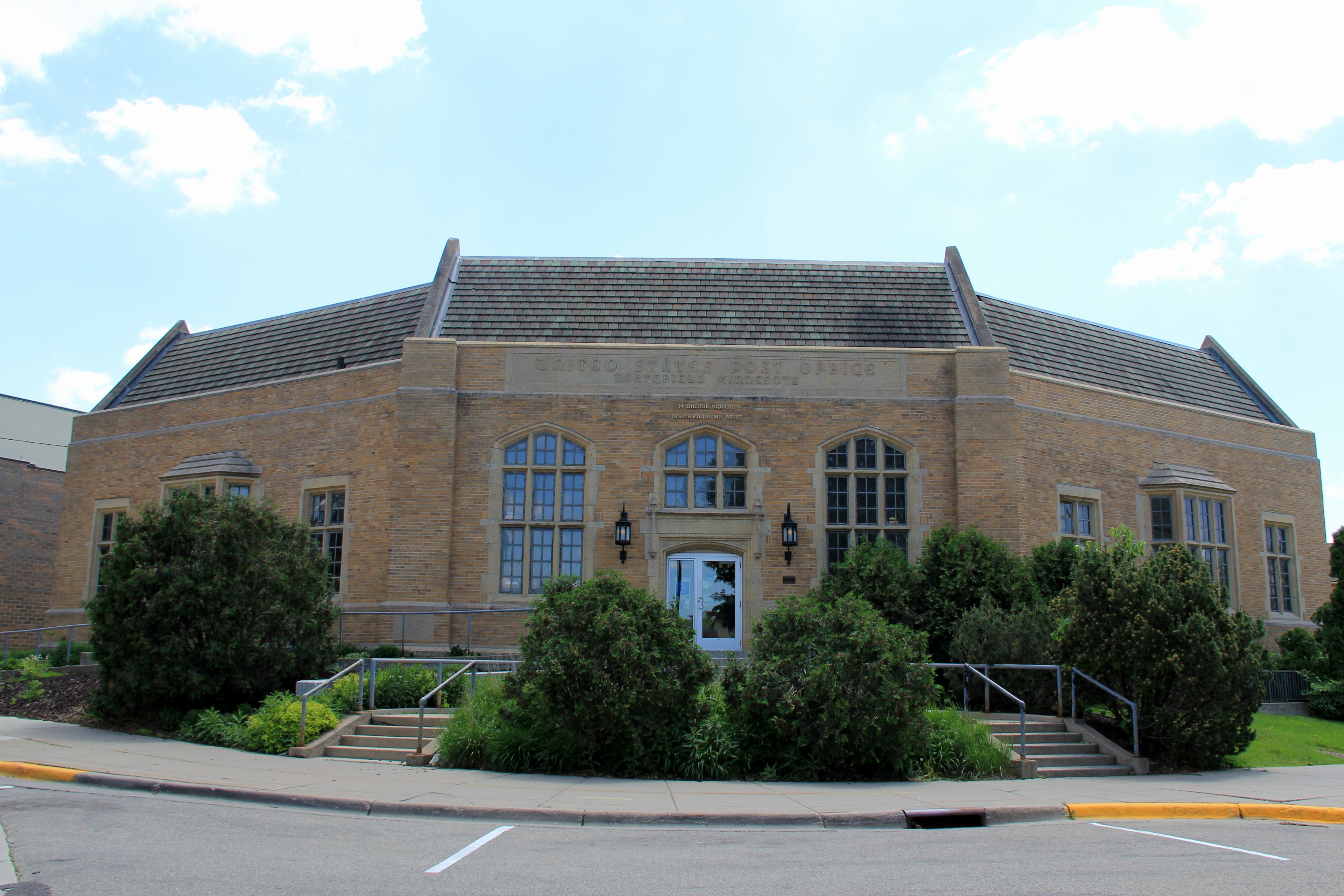
The historic post office in Northfield, Minnesota, holds an art treasure. (Minnesota Prairie Roots copyrighted photo May 2024)

OF ALL THE TIMES I’ve visited neighboring Northfield through the decades, I’d not once stepped inside the downtown Northfield Post Office. Until last May. I’ve frequented Bridge Square across the street, admiring the public art I often find outdoors in this park along the Cannon River. Yet, I never thought to look for art inside the impressive limestone structure angling around a corner of the town center.

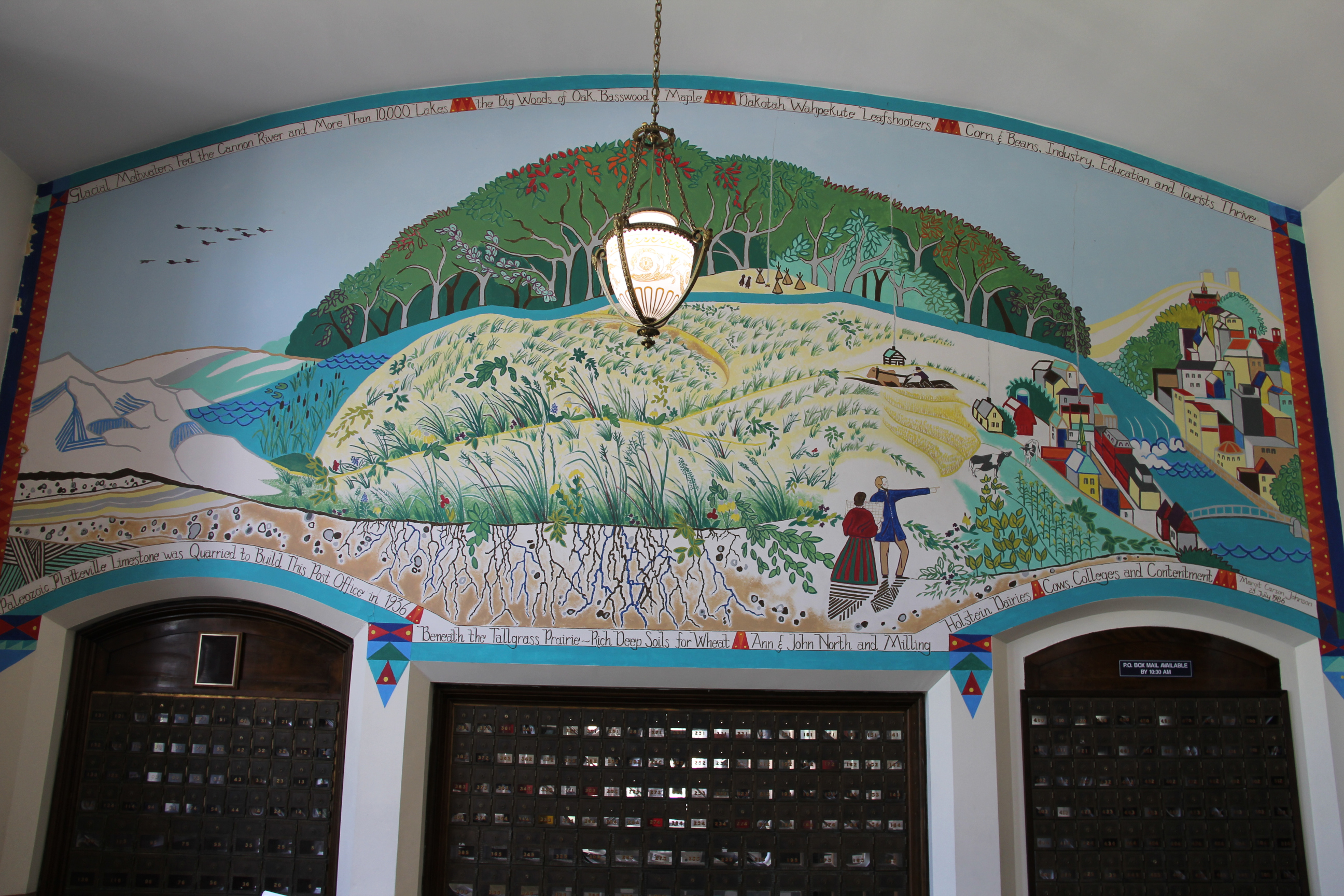
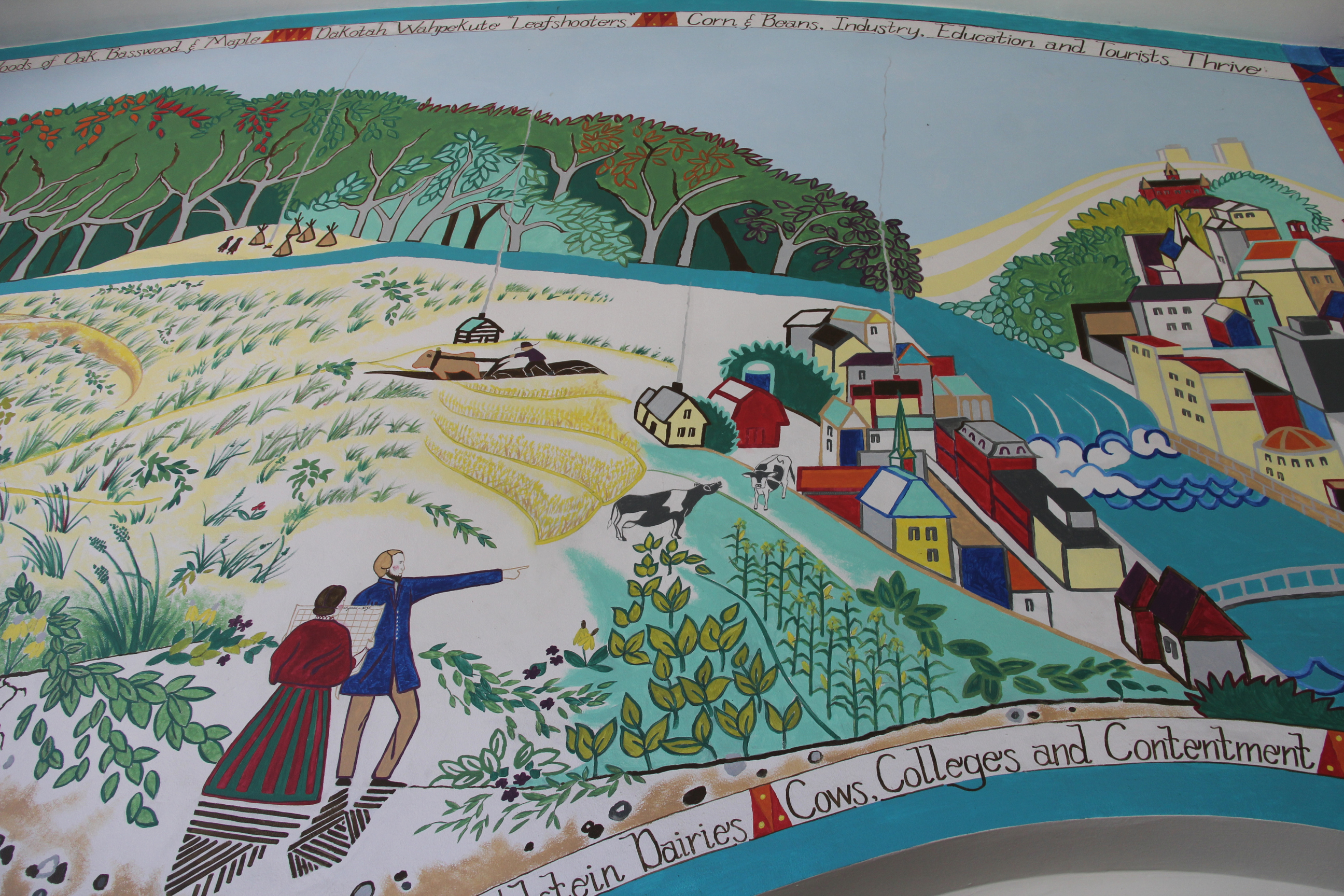
The mural above a row of mailboxes was designed by Margit Carson Johnson. (Minnesota Prairie Roots copyrighted photo May 2024)

But inside the historic 1936 post office, I found a massive piece of public art designed by Northfielder Margit Carson Johnson. The commissioned work defines the essence of Northfield. The city is perhaps most famously known for the townspeople’s defeat of the James-Younger Gang in September 1876 as the outlaws attempted to rob the First National Bank. Johnson’s 1986 mural, though, doesn’t show that. The entire bank robbery history can be learned a few doors down at the former bank site, now the Northfield History Center.

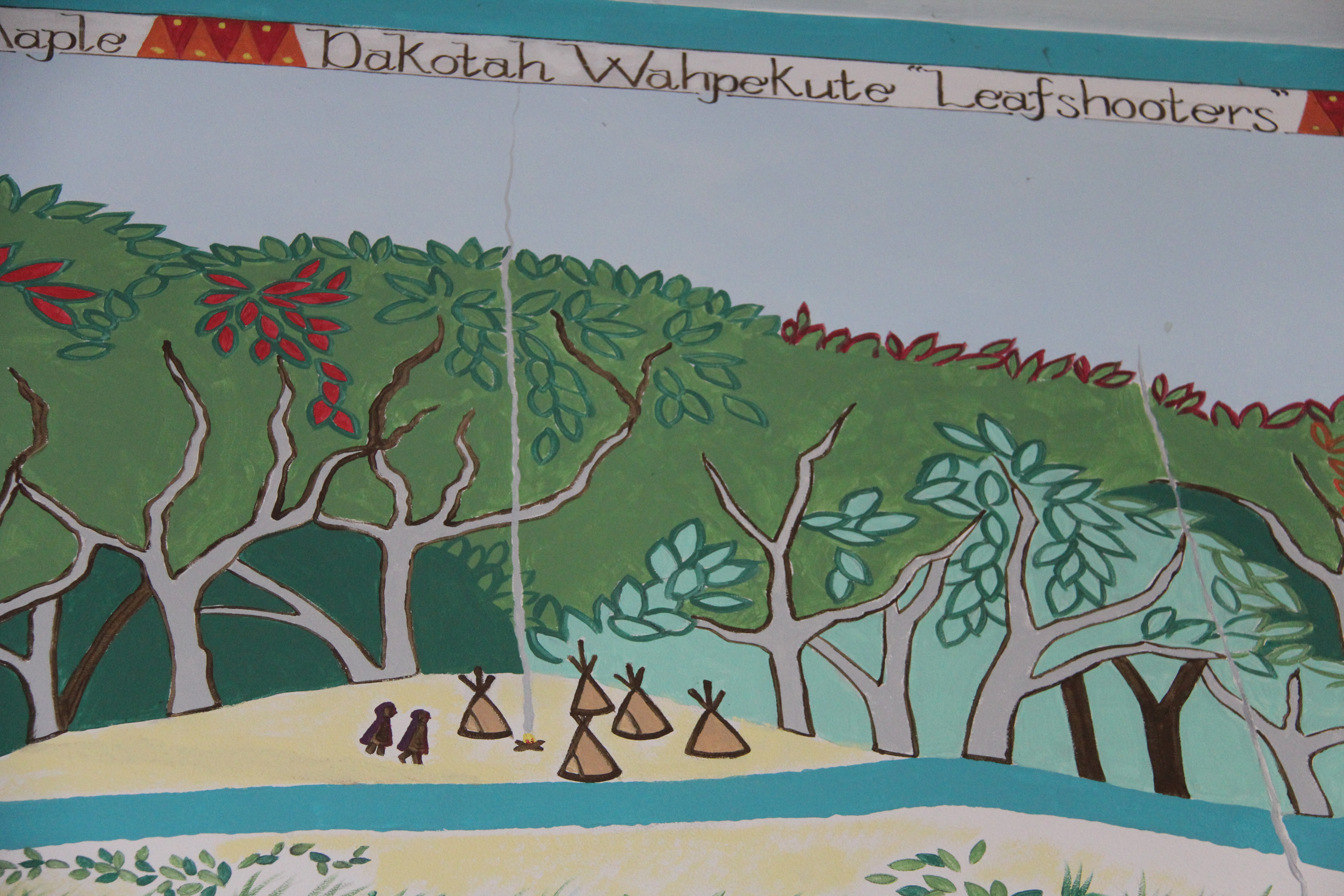
The Dakotah Wahpekute, also known as “Leafshooters,” were the original inhabitants of the land that would become Northfield. (Minnesota Prairie Roots copyrighted photo May 2024)

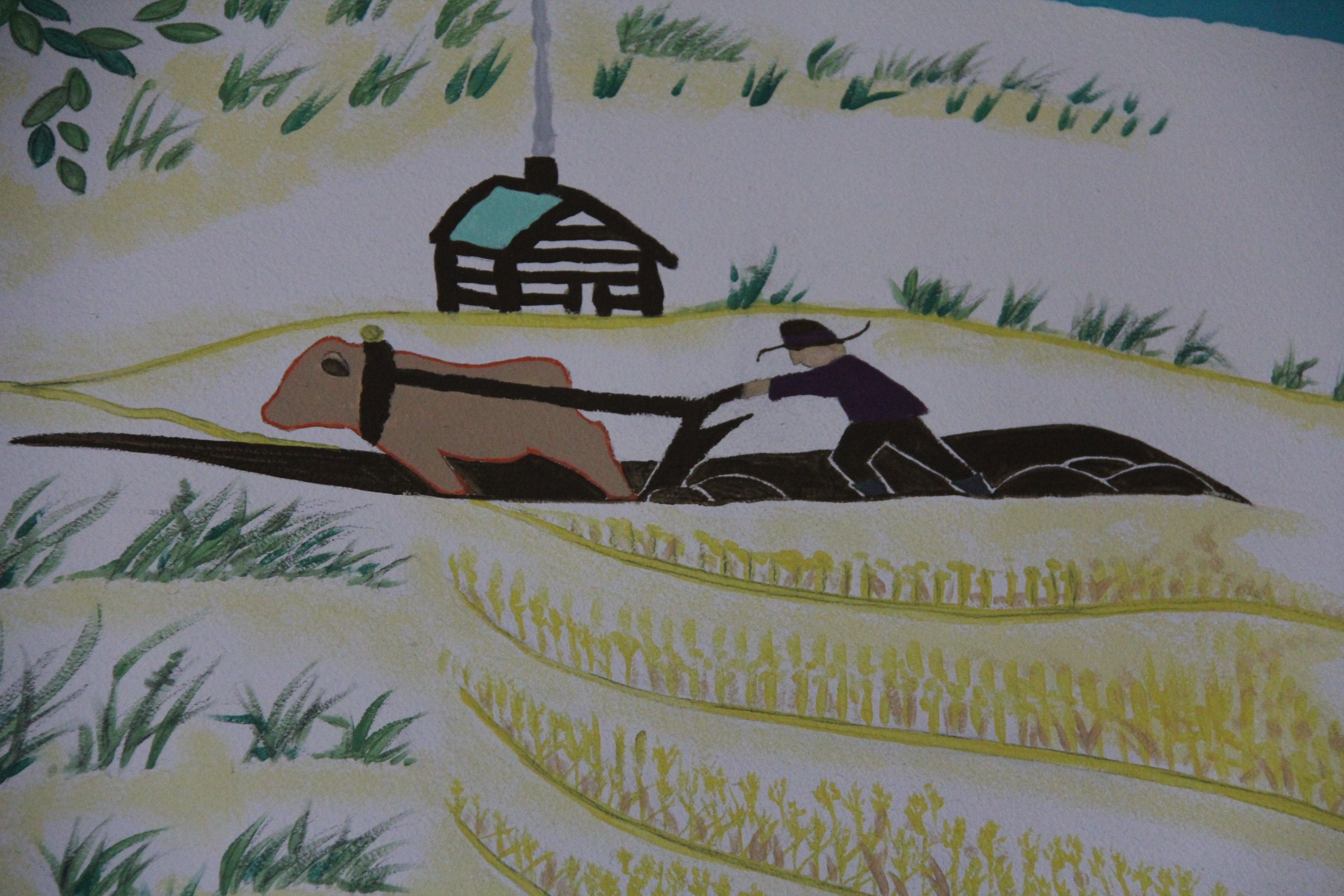
Rather, the mural on the east side of the post office lobby visually summarizes Northfield’s early history as home to the Dakota Wahpekute, then settlement as a farming (dairy and crop) and milling (flour and sawmills) community, followed by growth as a center for education (St. Olaf and Carleton Colleges), industry (including Post Consumer Brands cereal, formerly Malt-O-Meal) and tourism.

Farmers plowed the prairie grass to seed wheat. (Minnesota Prairie Roots copyrighted photo May 2024)

For anyone who knows little to nothing about Northfield, the folk art style painting completed by a team of volunteers is a good starting point to learn the basics about this community. It’s a visual Cliff Notes type of guide.

Founders John and Ann North are depicted in the painting of Northfield. (Minnesota Prairie Roots copyrighted photo May 2024)

Like many early Minnesota settlements, rivers and railroads determined the location for new towns. Northfield sits along the Cannon River, a source of water power for early milling and a route for trade. Today the river continues to center this community, creating a picturesque and engaging downtown core with businesses along Division Street backing to the river. A River Walk leads locals and visitors riverside to appreciate the natural beauty of water flowing through Northfield.

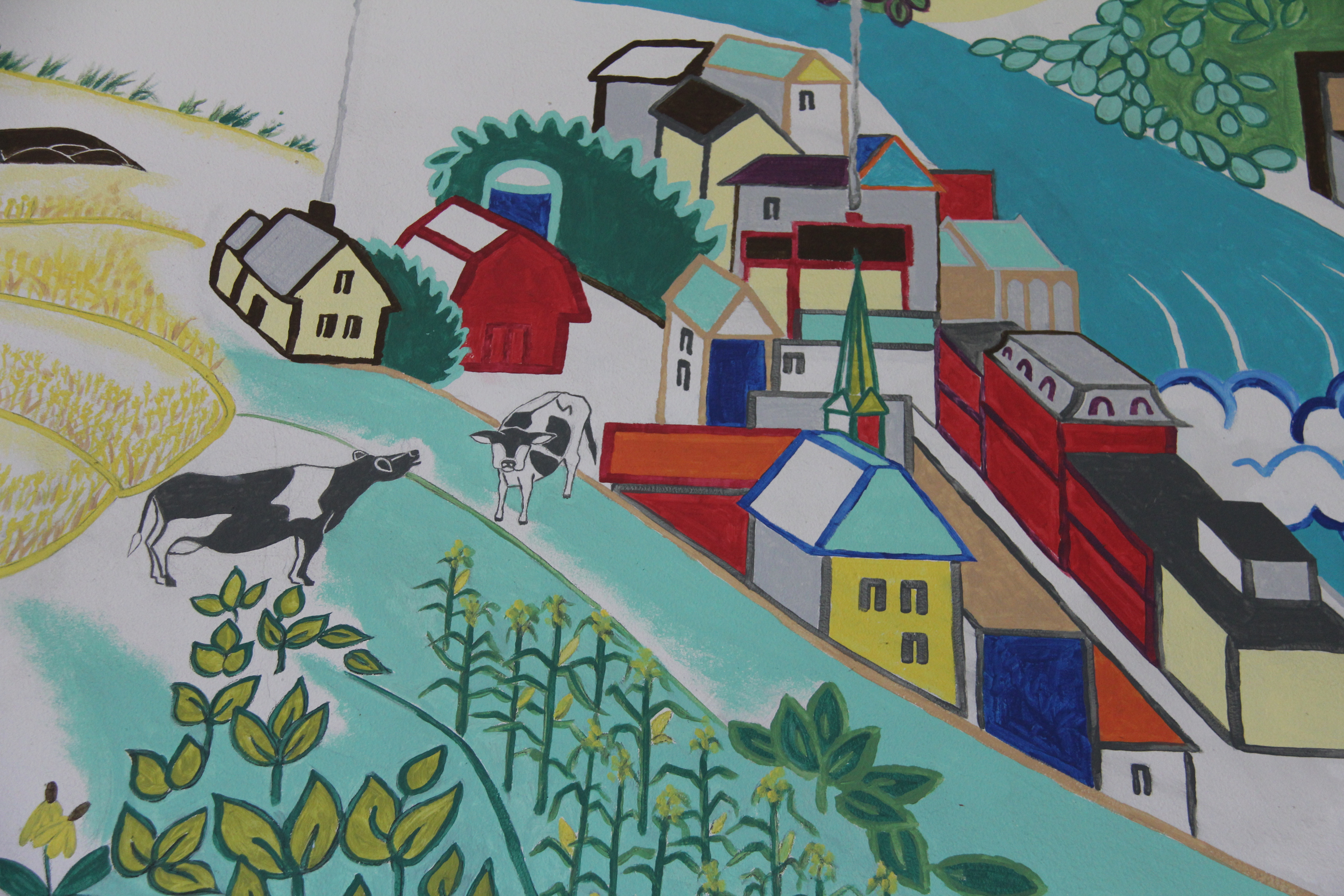
My favorite part of the mural, probably because I grew up on a dairy farm, shows Holsteins. The buildings are actual buildings in Northfield, including the historic Archer House, destroyed in a fire several years ago. (Minnesota Prairie Roots copyrighted photo May 2024)

I love Northfield, once promoted with the theme of “Cows, Colleges and Contentment.” It’s still that, although with fewer dairies than once defined the area. Today the local tourism website tags Northfield as “Close to Home/Far From Ordinary.” That fits, too.

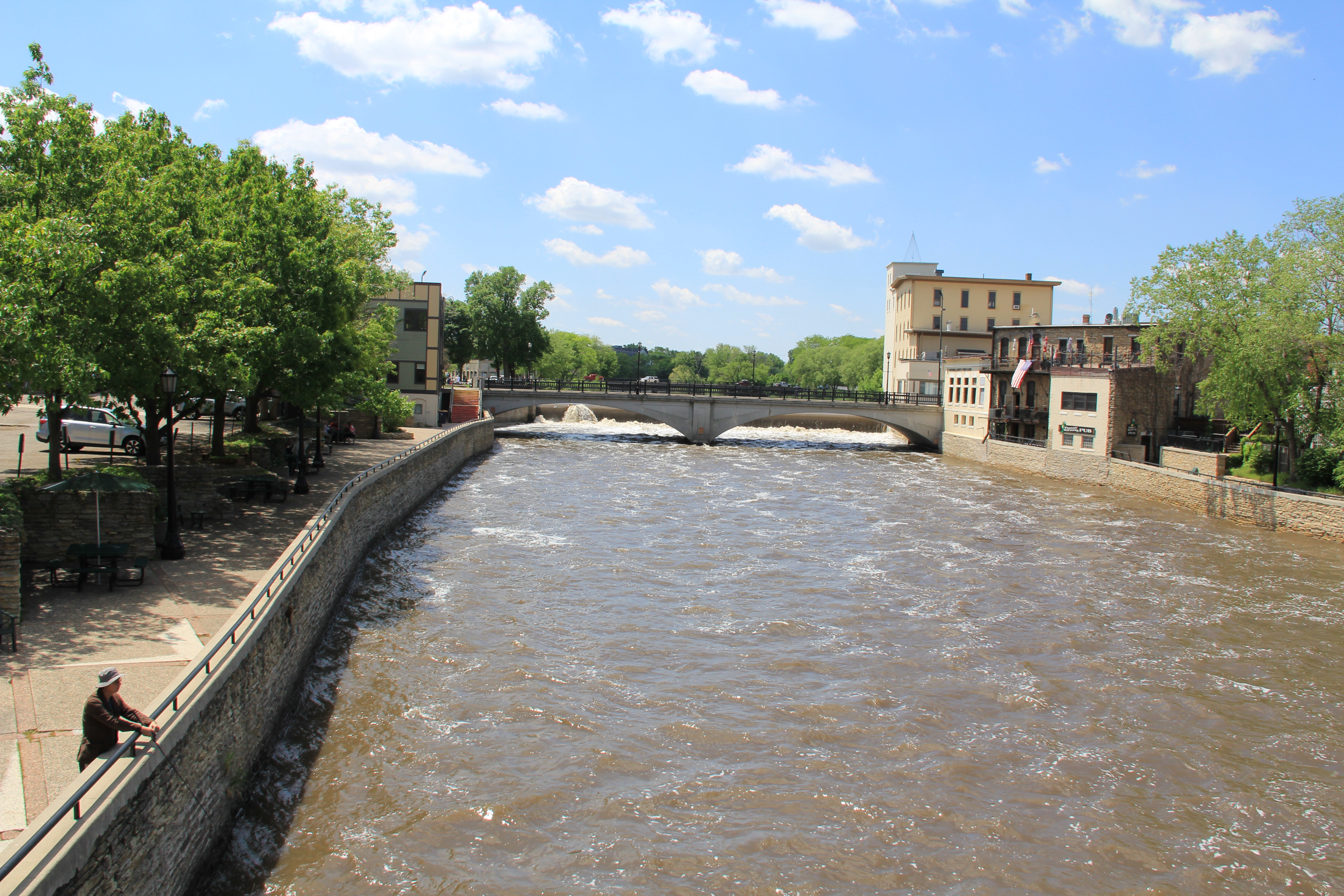
A view of the River Walk and the historic Ames Mill (to the right in the distance) from the pedestrian bridge spanning the Cannon River in the heart of downtown Northfield. (Minnesota Prairie Roots copyrighted file photo May 2024)

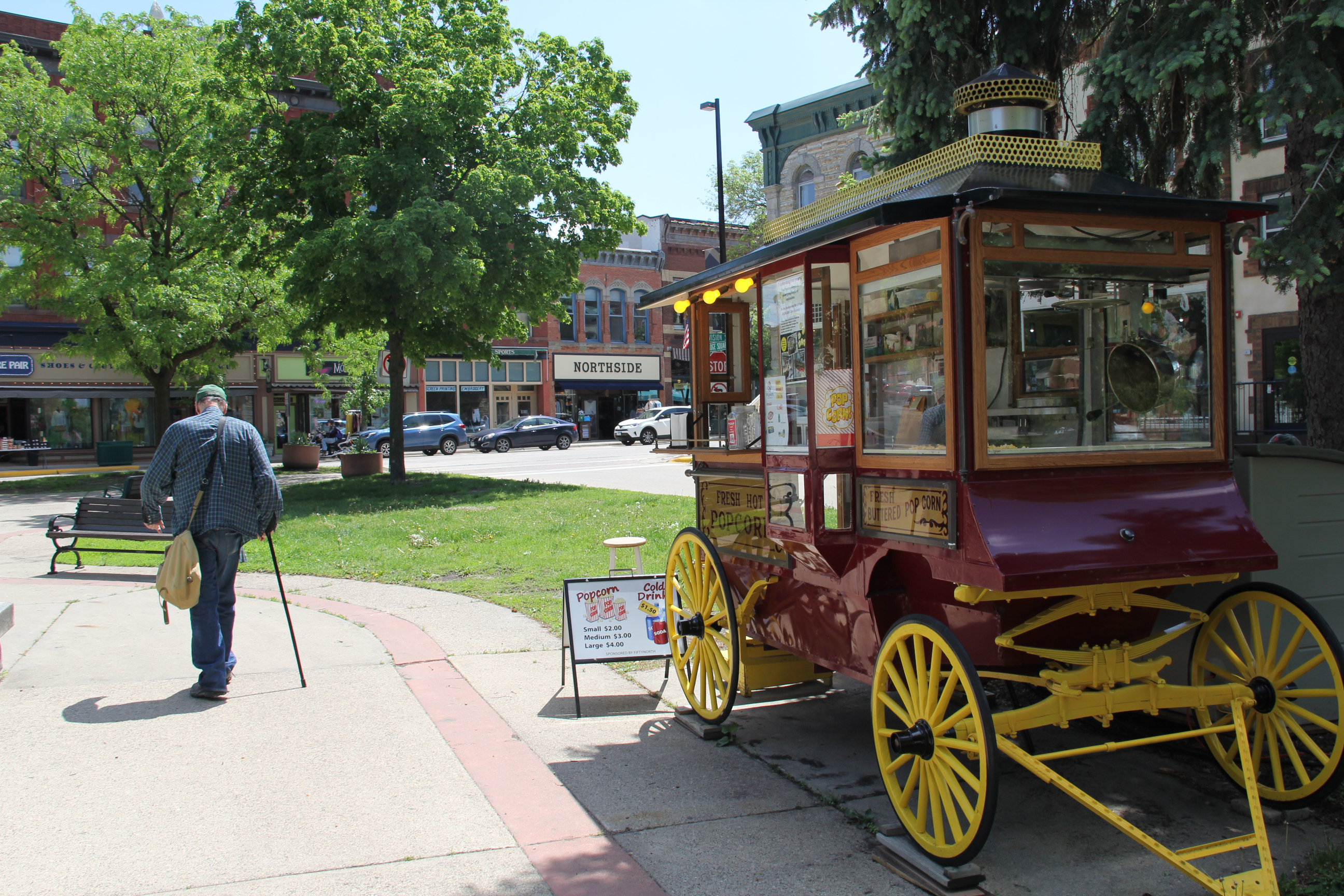
Northfield ranks as a popular tourist destination with its James-Younger connection and its many home-grown shops housed in historic buildings in a downtown that fits the definition of “charming.” The setting is decidedly comfortable and homey and as picturesque as a Norman Rockwell painting. There’s a seasonal popcorn wagon in Bridge Square, anglers fishing along the river, an old-fashioned barbershop with barber pole…

Northfield’s much-beloved seasonal popcorn wagon at Bridge Square. (Minnesota Prairie Roots copyrighted file photo May 2024)

There’s a strong sense of community and of community pride in Northfield. Art matters here. From riverside murals to poetry imprinted upon sidewalks to artwork showcased inside the Northfield Arts Guild to theatre, concerts and much more (including at the two colleges) the arts flourish.

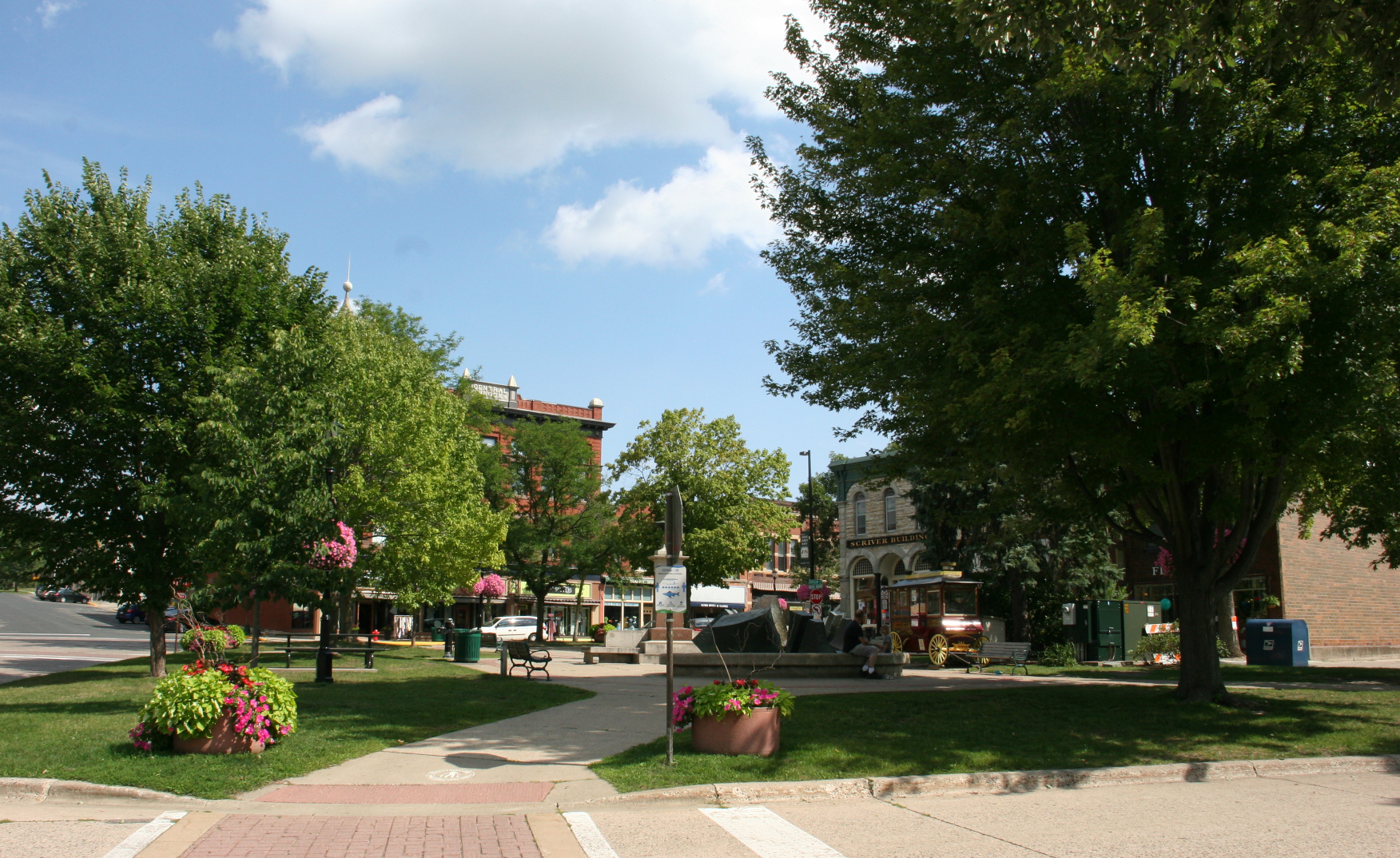
Beautiful Bridge Square, Northfield’s town center. (Minnesota Prairie Roots copyrighted file photo August 2022)

And inside the aged, massive post office, once slated for closing, the folk art mural designed by Margit Carson Johnson stretches above a wall of mailboxes to reveal the core story of Northfield. From the Big Woods to the once glacial meltwater-fed Cannon River, from the Wahpekute to dairy farmers, from tallgrass prairie to the city it is today, Northfield thrives.

© Copyright 2025 Audrey Kletscher Helbling
 

Revisiting the Surf Ballroom in Clear Lake, Iowa, & “the day the music died” January 30, 2025

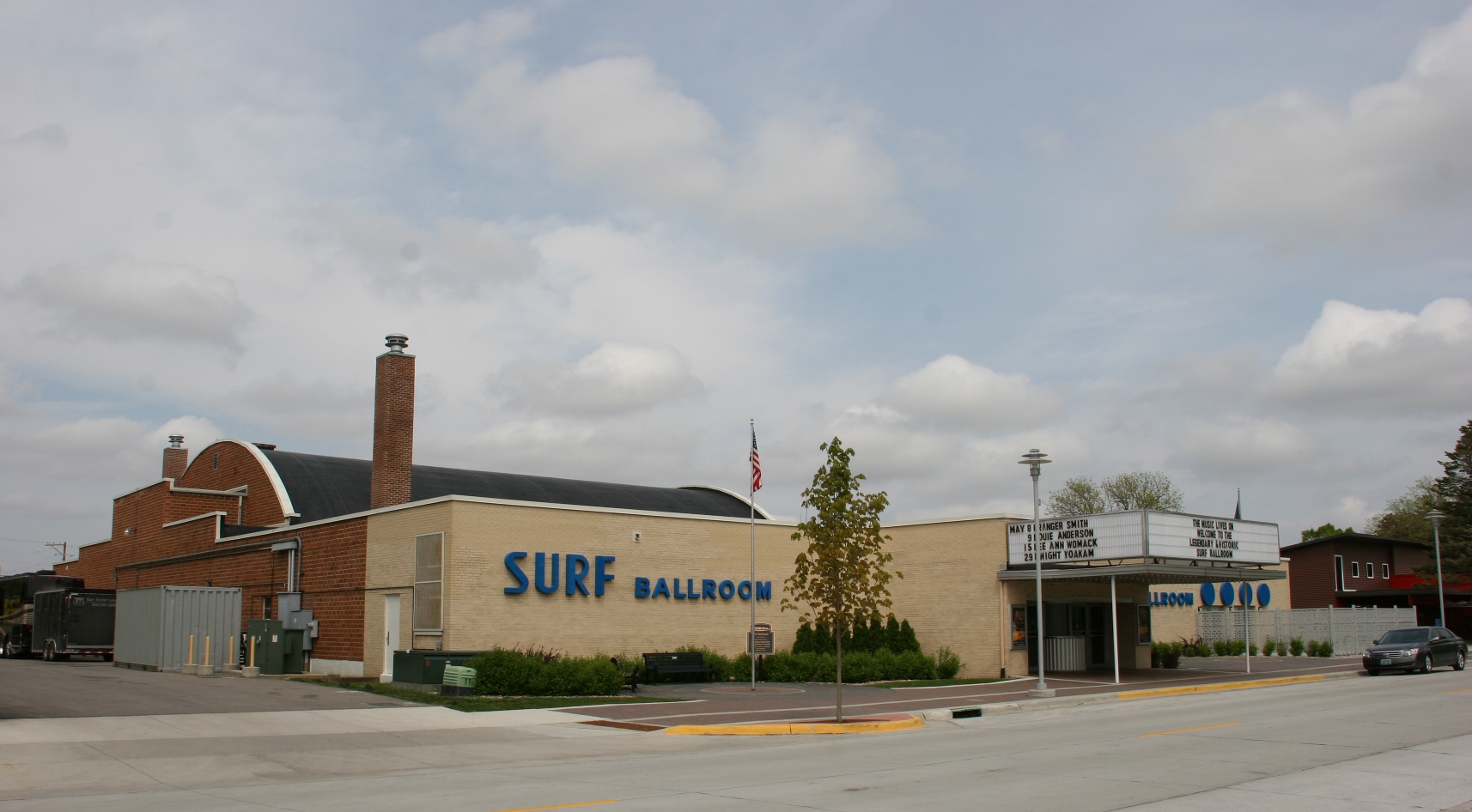
The Surf Ballroom in Clear Lake, Iowa, seats 2,100. (Minnesota Prairie Roots copyrighted file photo May 2015)

A TIME EXISTED when ballrooms centered weekend entertainment and socializing across southern Minnesota: The Monterey Ballroom in Owatonna, no longer a dance hall, but an event center. The Kato Ballroom in Mankato, today primarily a place for banquets, wedding receptions and meetings. The Gibbon Ballroom in Gibbon, once the site of Polka Days, now closed. George’s Ballroom in New Ulm, demolished. The Blue Moon Ballroom in Marshall, destroyed in a 1981 fire. Ballrooms, as they once were in their heyday, are mostly non-existent or altered in usage.

Inside the Surf Ballroom, portraits of Ritchie Valens, left to right, Buddy Holly and J.P. Richardson. (Minnesota Prairie Roots copyrighted file photo May 2015)

But just across the border along Interstate 35 in northern Iowa, an historic ballroom remains open and going strong. That’s the Surf Ballroom in Clear Lake, an 84-mile or one hour and 15-minute drive from my community of Faribault. I’ve been there. Not to dance. But to tour the venue that marked the final performance site for Buddy Holly, Ritchie Valens and J.P. “The Big Bopper” Richardson on February 2, 1959.

This display inside the Surf references “American Pie.” Displays like this line spaces in the museum part of the Surf. (Minnesota Prairie Roots copyrighted file photo May 2015)

The next morning, a chartered plane carrying the trio crashed in a field shortly after take off from the Mason City Municipal Airport, killing the musicians and pilot, Roger Peterson. February 3, 1959, was, according to singer and songwriter Don McClean, “the day the music died.” The tragedy is forever immortalized in McClean’s 1971 “American Pie,” a lengthy song I know well given I was a teen of the 70s.

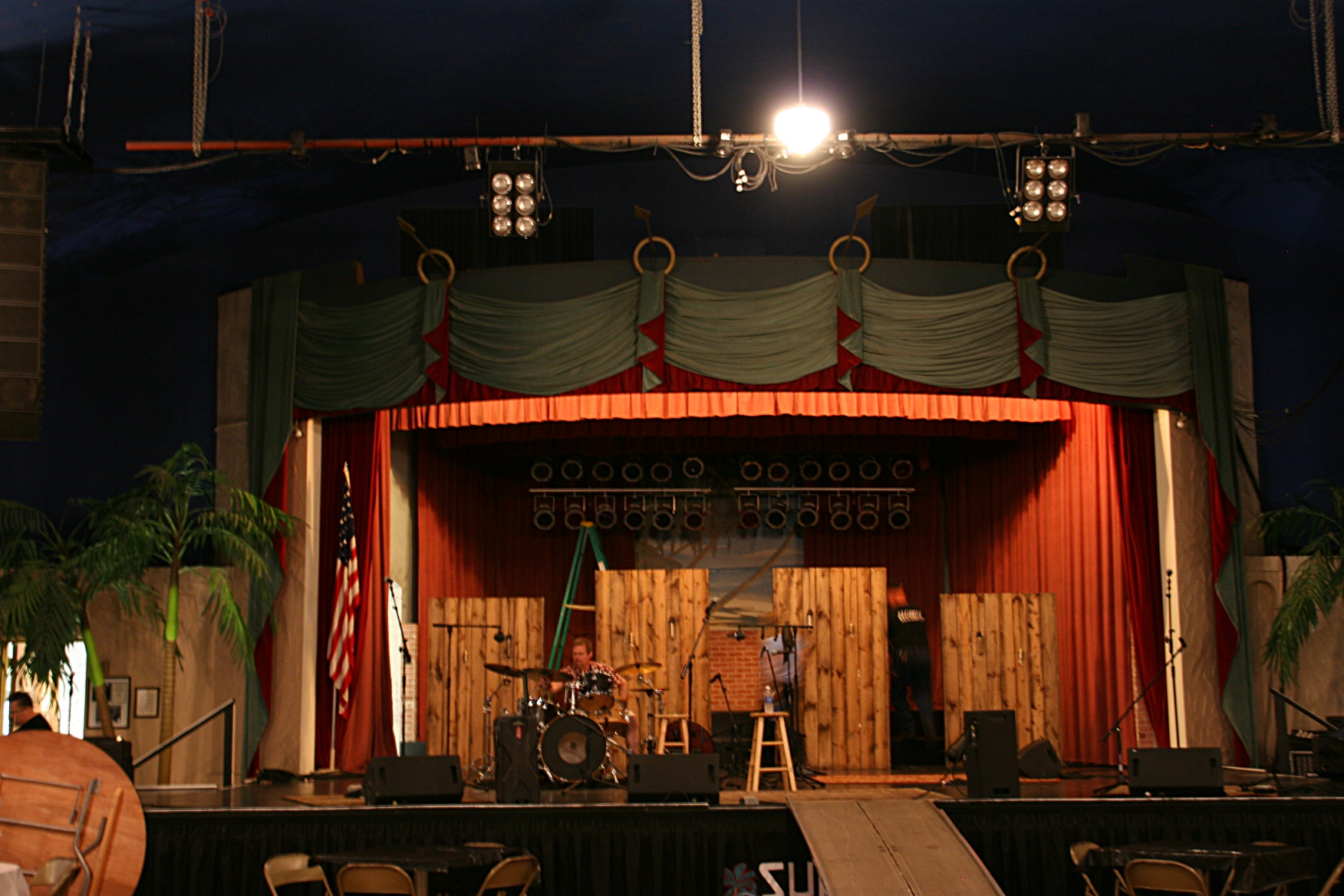
The ballroom stage, where a crew was setting up for a LeeAnn Womack concert during my visit. (Minnesota Prairie Roots copyrighted file photo May 2015)

Ten years have passed since I visited the Surf Ballroom. But nearly every January, I mentally revisit that experience of walking onto the wooden floor of the iconic ballroom and immersing myself in yesteryear. It’s not that I’m a big Buddy Holly fan or even into music all that much. But I can appreciate the significance of this place in rock ‘n roll history.

In the back of the ballroom are layers of booths, all original. (Minnesota Prairie Roots copyrighted file photo May 2015)

The three musicians, plus Dion and the Belmonts, Frankie Sardo, Waylon Jennings, Tommy Allsup and Carl Bunch, were on a 24-day Winter Dance Party tour through Minnesota, Wisconsin and Iowa when they so tragically died. They had been crisscrossing the Midwest in a tour bus, playing in big cities like Milwaukee, Green Bay, St. Paul and Duluth, but also in smaller towns like Montevideo and Mankato in southern Minnesota. That Mankato performance was January 25 at the Kato Ballroom. Following the February 2 gig in Clear Lake, Holly decided to charter a small plane rather than endure the 364-mile bus ride to Moorhead for the next stop on the tour. That decision proved fatal.

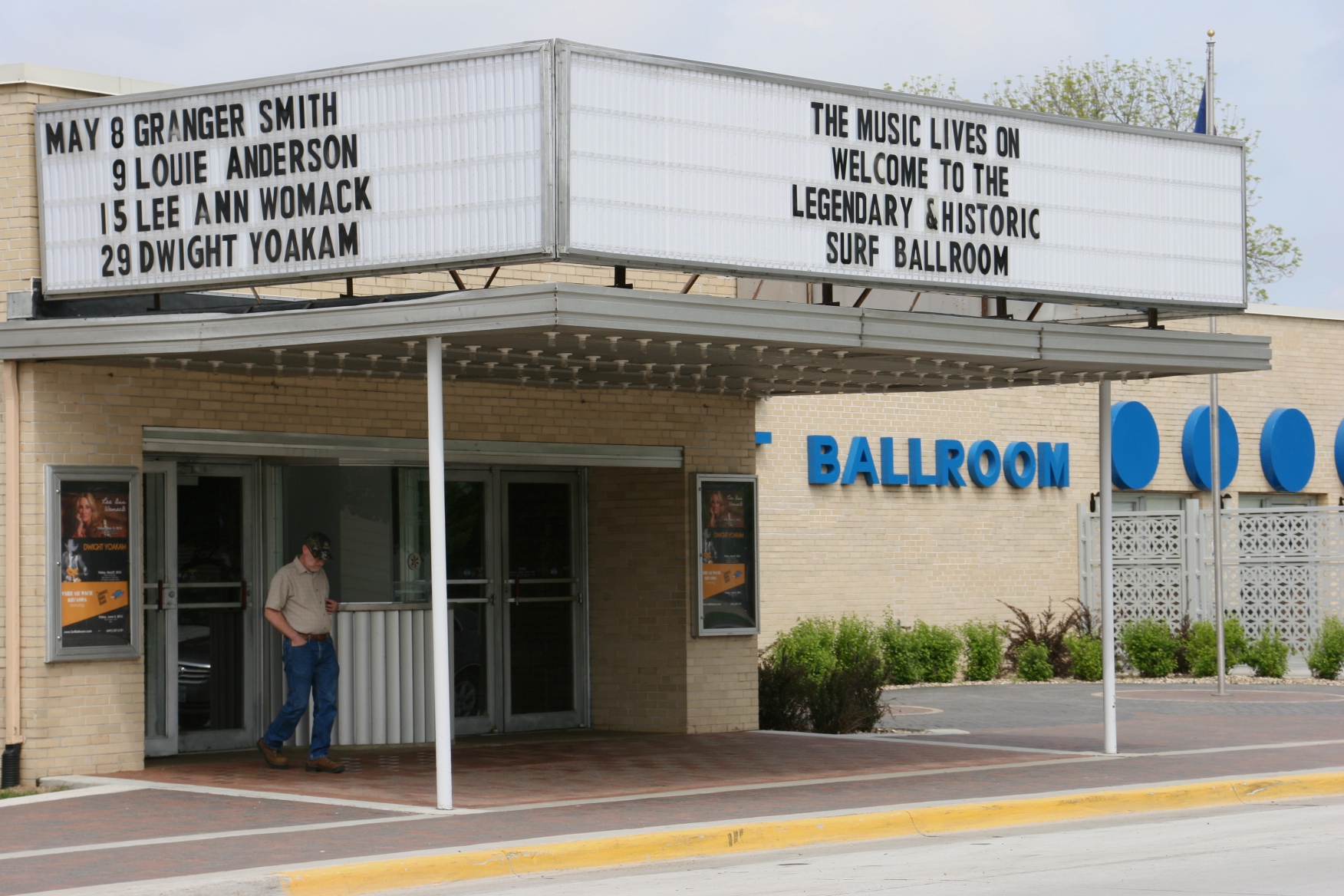
The marquee advertises upcoming events on the day I visited in May 2015. (Minnesota Prairie Roots copyrighted file photo May 2015)

The Winter Dance Party continues to this day at the Surf Ballroom as a way to honor the rock ‘n roll legends. This year’s celebration is January 30 – February 1. Closer to home, the Paradise Center for the Arts in Faribault is hosting “Buddy Holly: Oh Boy!” at 7:30 p.m. Friday, January 31. The next day, Saturday, February 1, the show will be at the State Street Theater in New Ulm at 7 p.m. This is a re-staging of Holly’s Winter Dance Party.

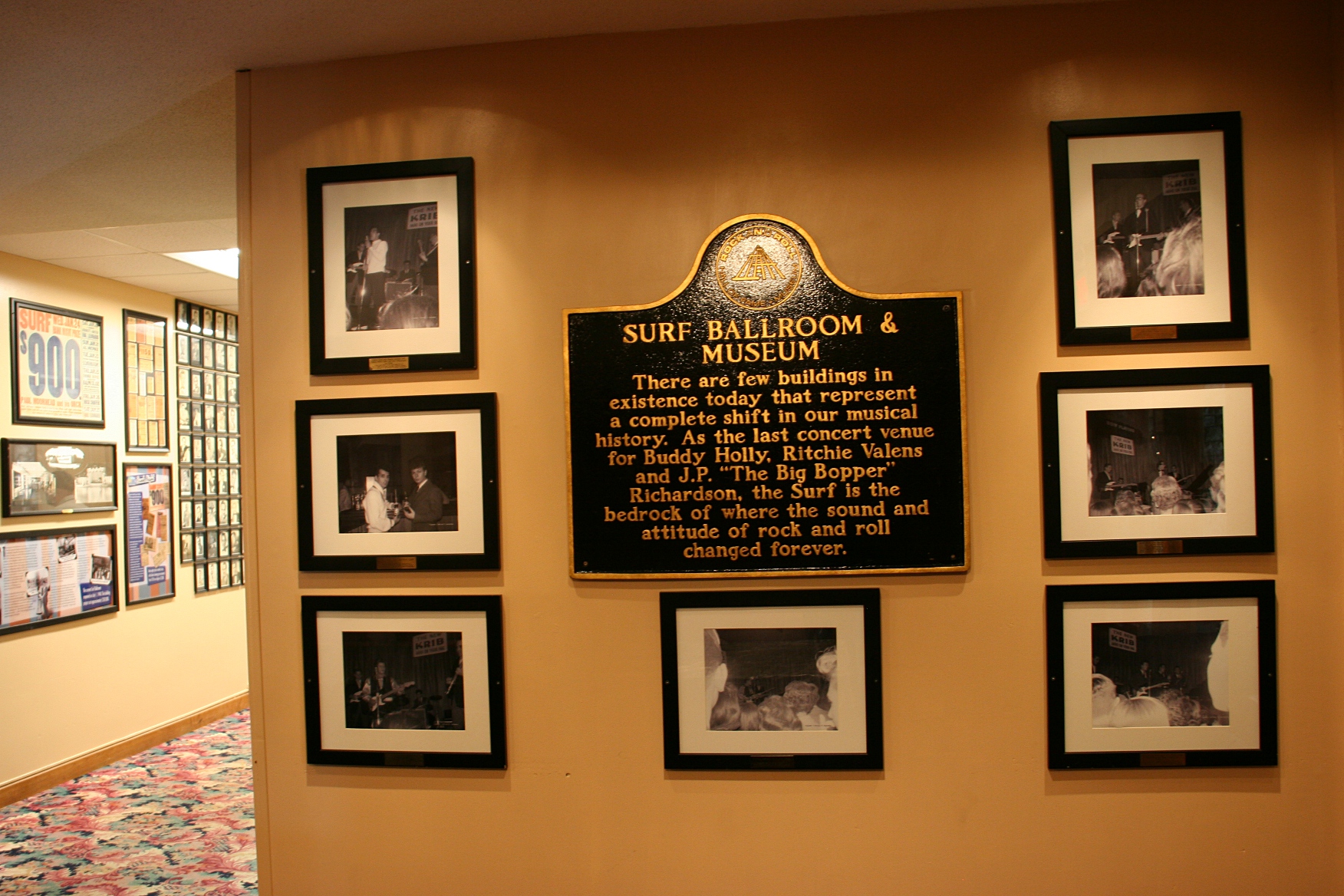
This sign inside the front entry summarizes the importance of the Surf. (Minnesota Prairie Roots copyrighted file photo May 2015)

Whether you’re a fan of Buddy Holly or not, I think it’s important to recognize the significance he held in American rock ‘n roll culture. Music, in many ways, is like an historical account of life. It carries messages, entertains, connects us to memories and events, and touches us emotionally. And when the music died on February 3, 1959, the nation cried.

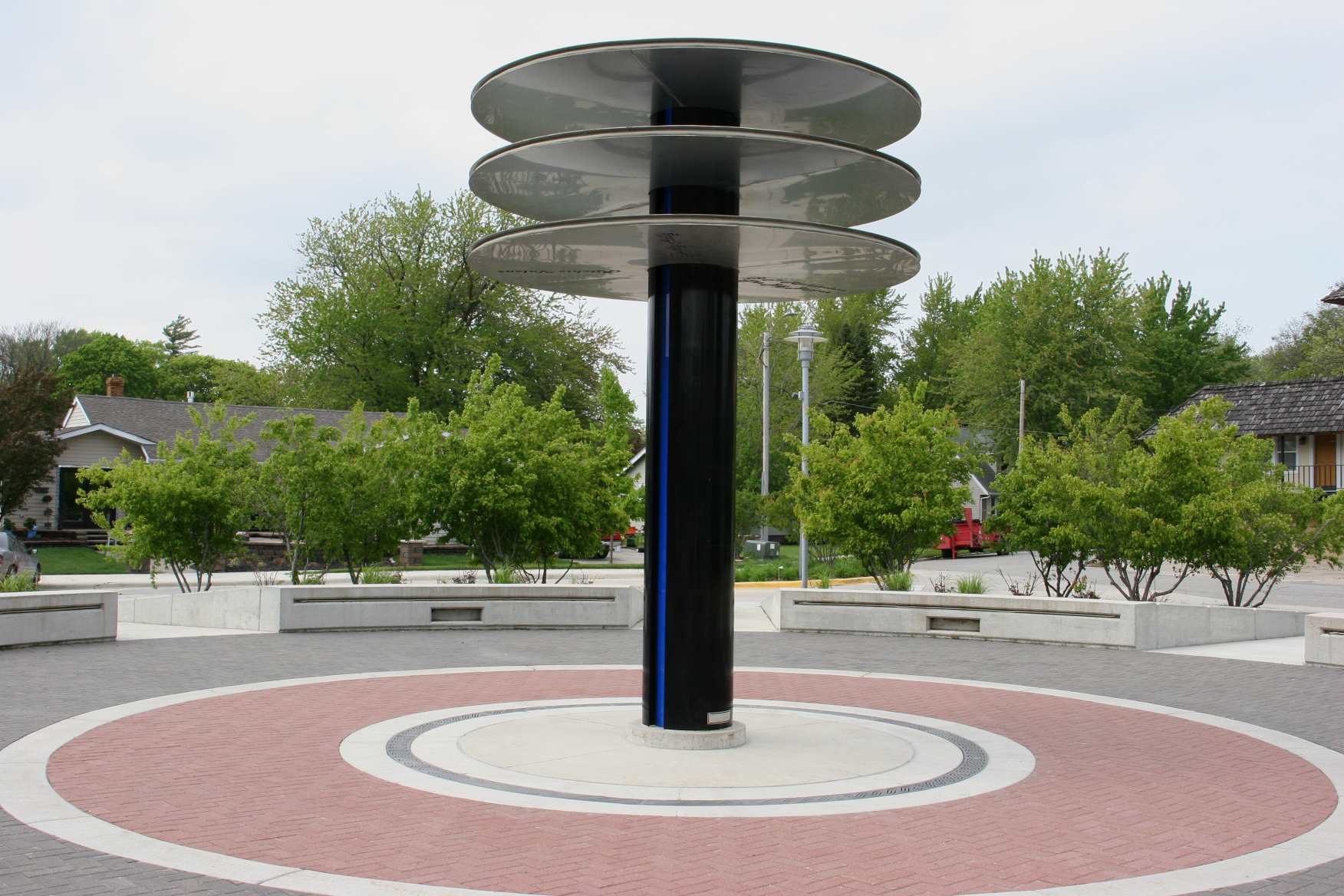
This stacked album sculpture in Three Stars Plaza honors Buddy Holly, Ritchie Valens and J.P. “The Big Bopper” Richardson. (Minnesota Prairie Roots copyrighted file photo May 2015)

FYI: The Surf Ballroom/Museum is open year-round Monday – Friday with additional times during the summer. Always check ahead before visiting as the ballroom can be closed if there’s a rental or concert. Additional related sites are Three Stars Plaza near the Surf and the crash site, about five miles distant.

© Copyright 2025 Audrey Kletscher Helbling
 

Going Up North to a Minnesota lake cabin August 6, 2024

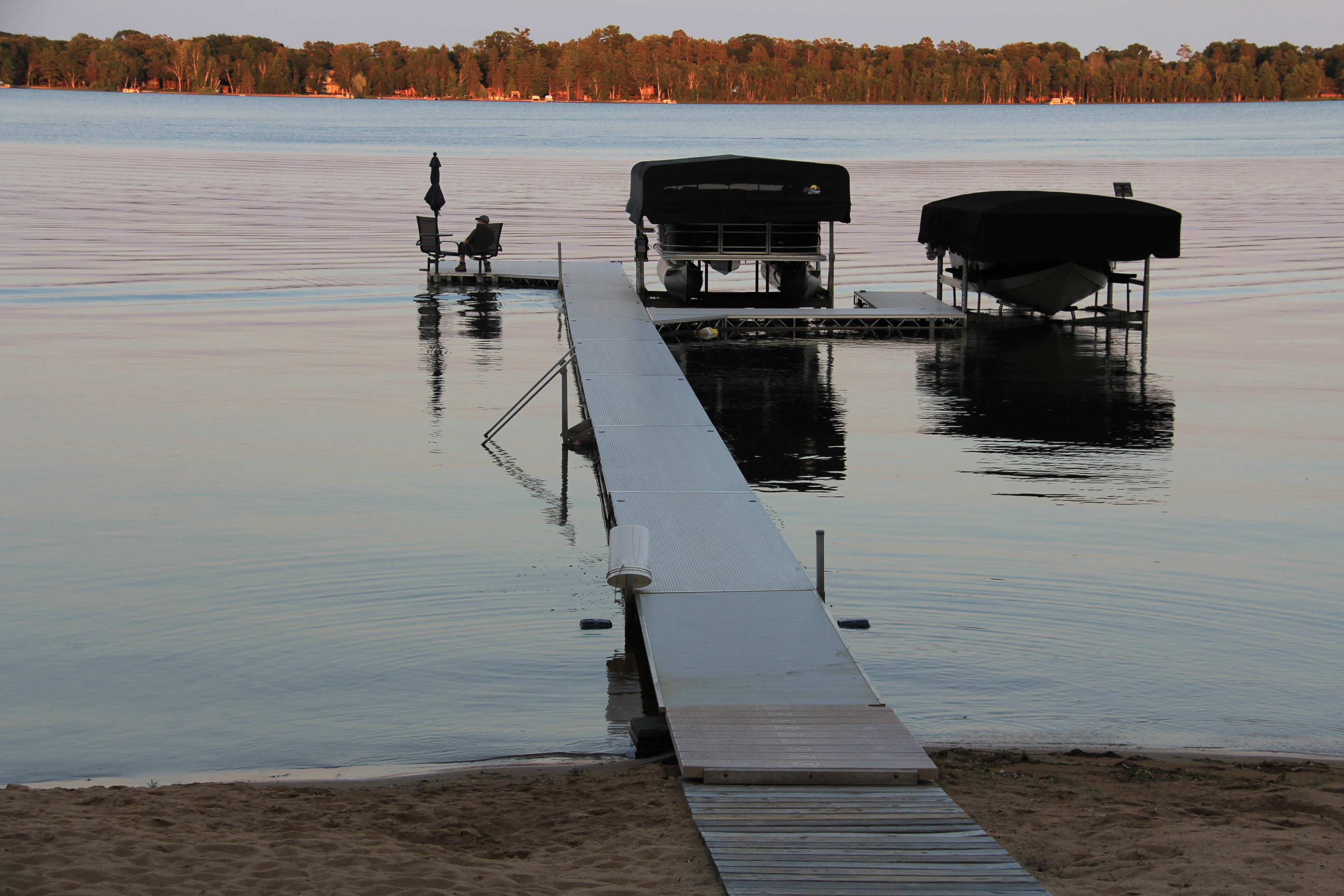
Relaxing on the end of the dock as the sun sets at Horseshoe Lake. (Minnesota Prairie Roots copyrighted photo July 2024)

LAKE, SKY, TOWERING PINES, CABIN. Those define summer Up North for many Minnesotans. Not until recent years did I, too, become one of those heading north to the cabin for a week. That’s thanks to a brother-in-law and sister-in-law who generously share their Northwoods paradise with extended family.

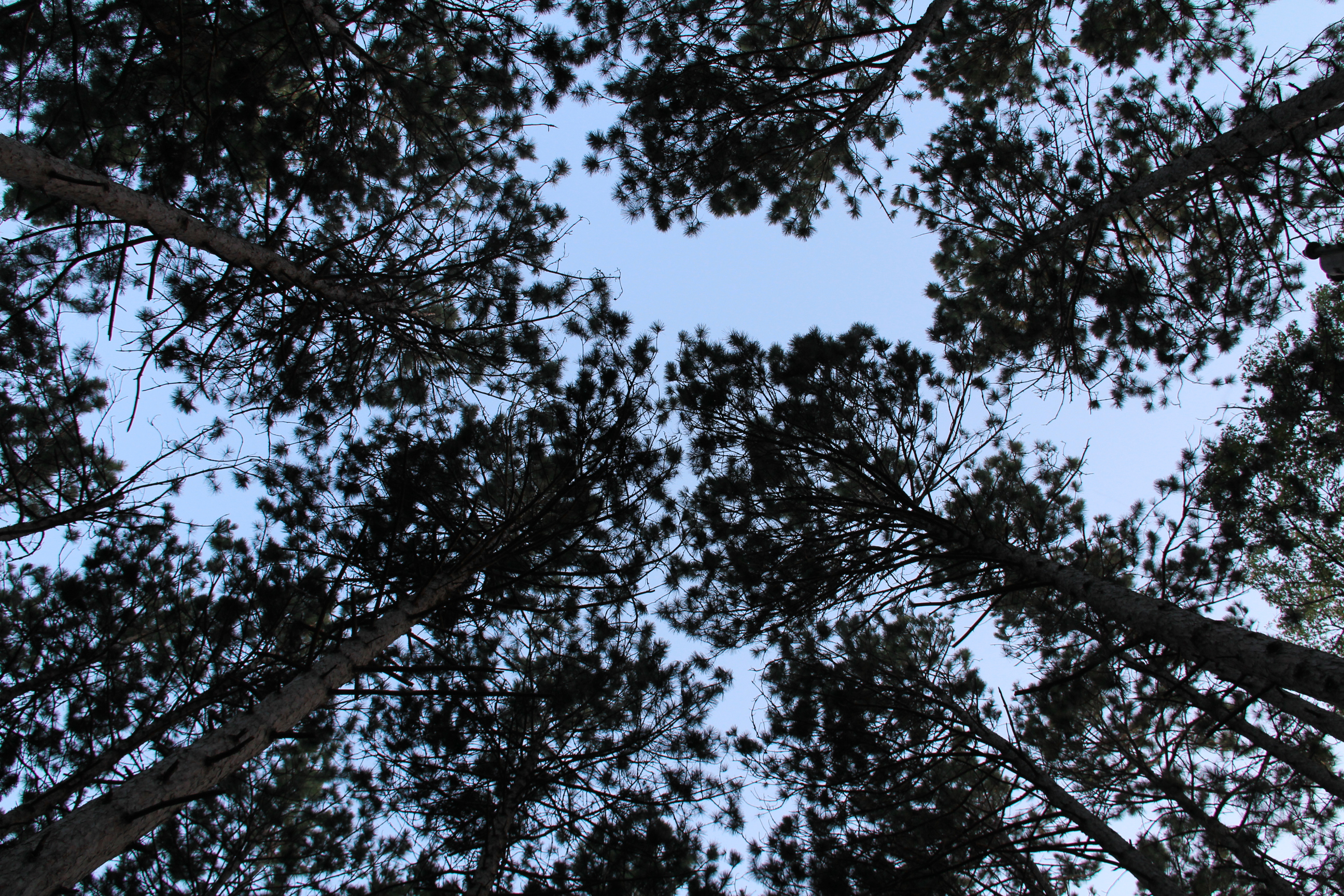
I aimed my camera straight up toward the tops of towering pines. (Minnesota Prairie Roots copyrighted photo July 2024)

Randy and I love spending time with our eldest daughter, son-in-law and two grandchildren at the cabin on Horseshoe Lake south of Crosslake. We are bonding, building memories and connecting with nature in a way that differs from southern Minnesota.

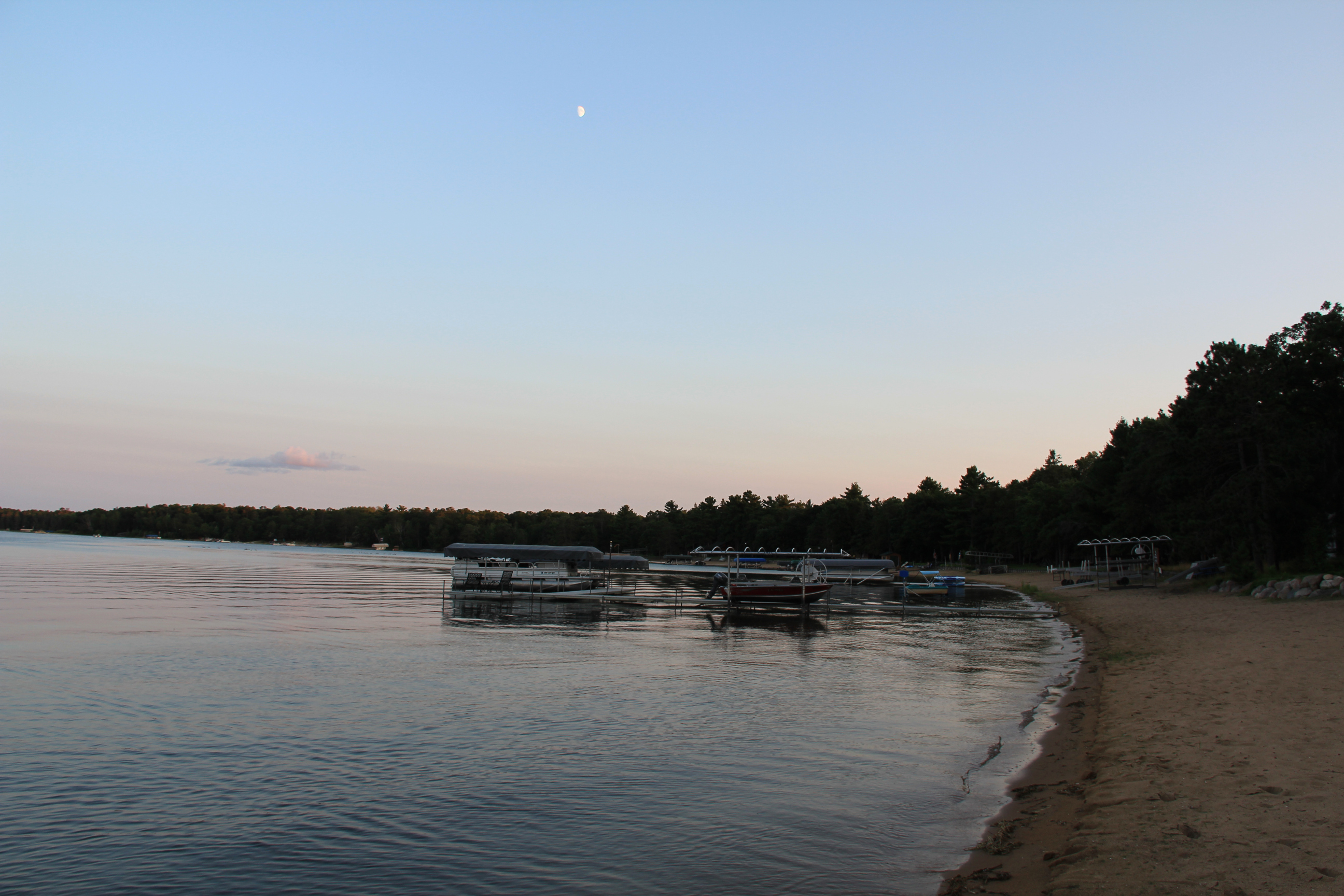
Treelines open to the beach along Horseshoe Lake as the sun sets, the moon rises. (Minnesota Prairie Roots copyrighted photo July 2024)

The Brainerd Lakes Area has a decidedly different look and feel than the lower half of our state. Dense woods, primarily pine, hug roads and homes, opening to beautiful, pristine lakes.

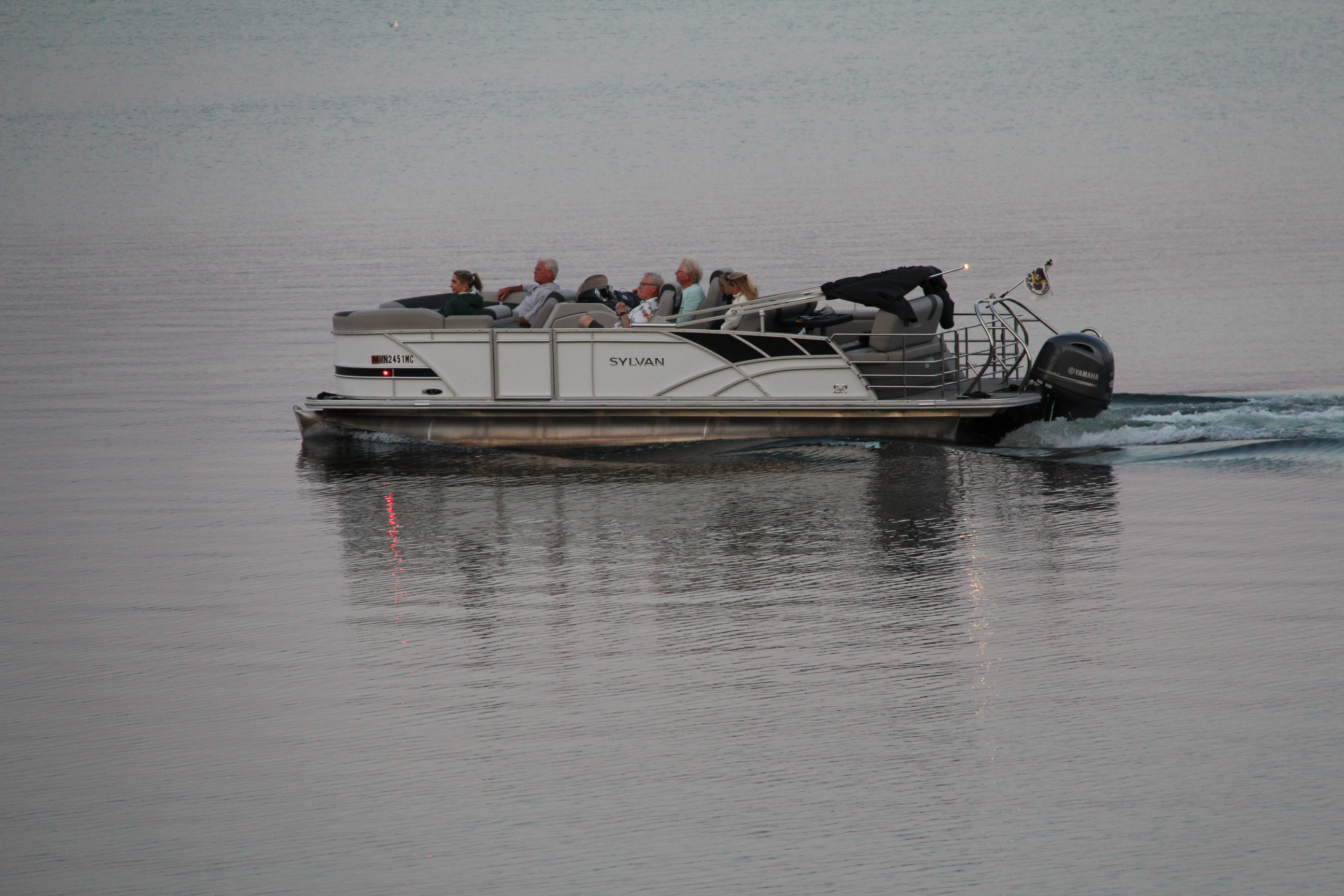
As day shifts toward night, pontoons motor around Horseshoe Lake. (Minnesota Prairie Roots copyrighted photo July 2024)
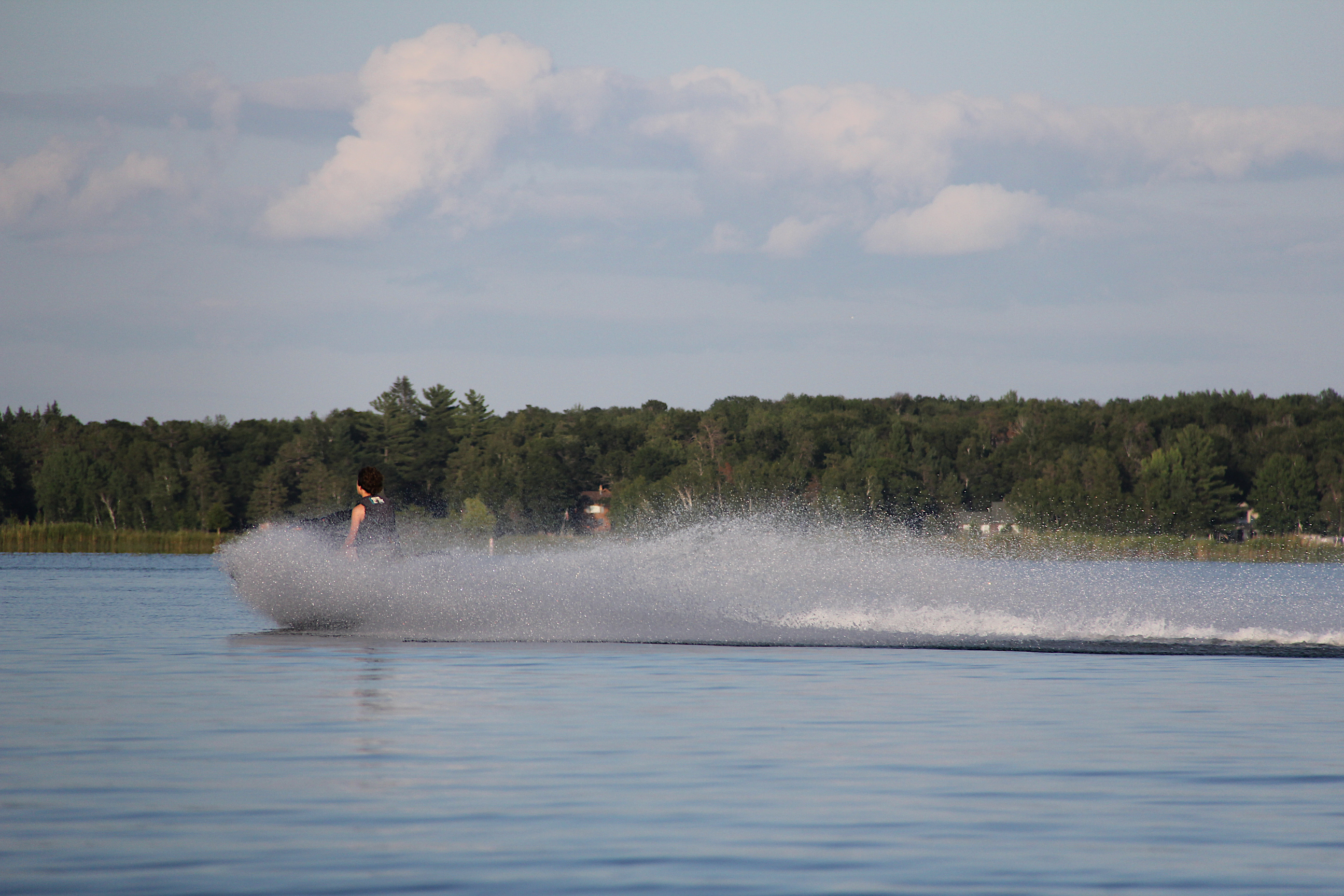
There are plenty of jet skis, too, speeding across the lake. (Minnesota Prairie Roots copyrighted photo July 2024)
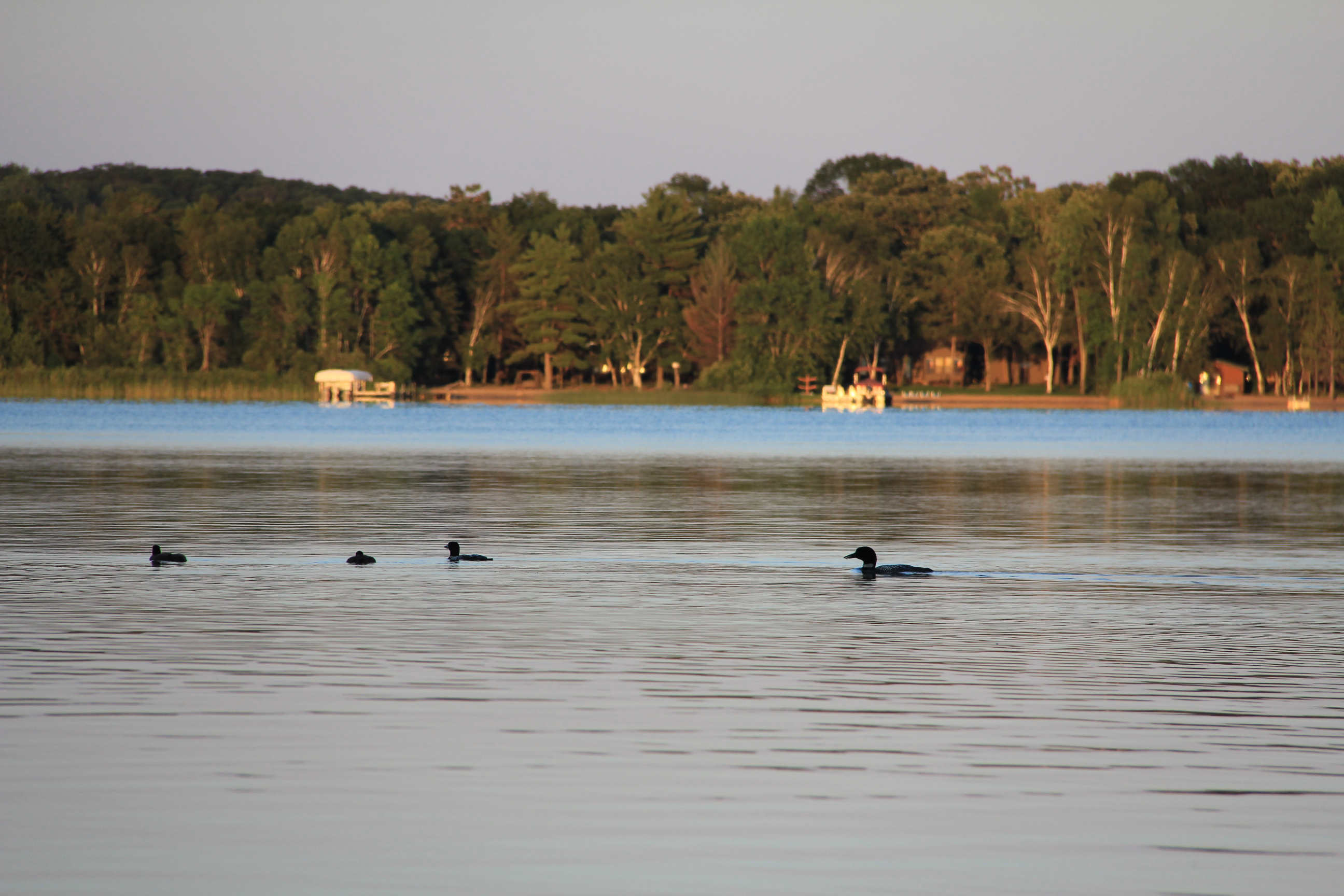
A loon family glides across the lake at sunset. We saw and heard the loons often, but none swam near enough for close-up photos. (Minnesota Prairie Roots copyrighted photo July 2024)

Up here it’s all about fishing, campfires, watching the sun set or rise, lying in a hammock, drinking coffee lakeside, grilling, eating meals outdoors, observing the loons, reading on the beach, dipping your feet in the water, kayaking, paddle-boarding, boating…

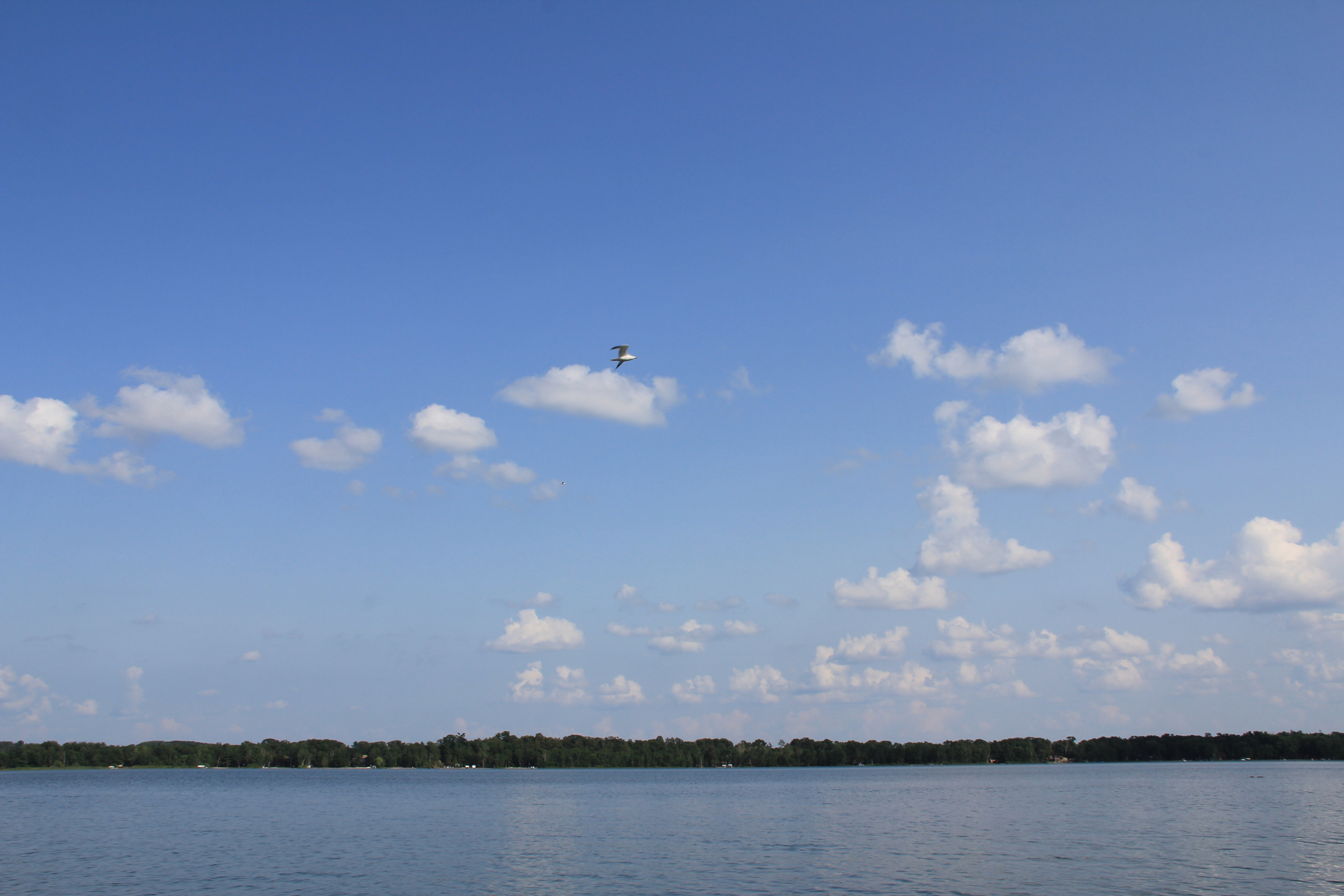
A gull wings across the wide sky on a perfect July afternoon. (Minnesota Prairie Roots copyrighted photo July 2024)

In essence, vacationing Up North means forgetting about the stresses, pressures, deadlines and routines of daily life. It means leisurely mornings, relaxing lakeside, days without time.

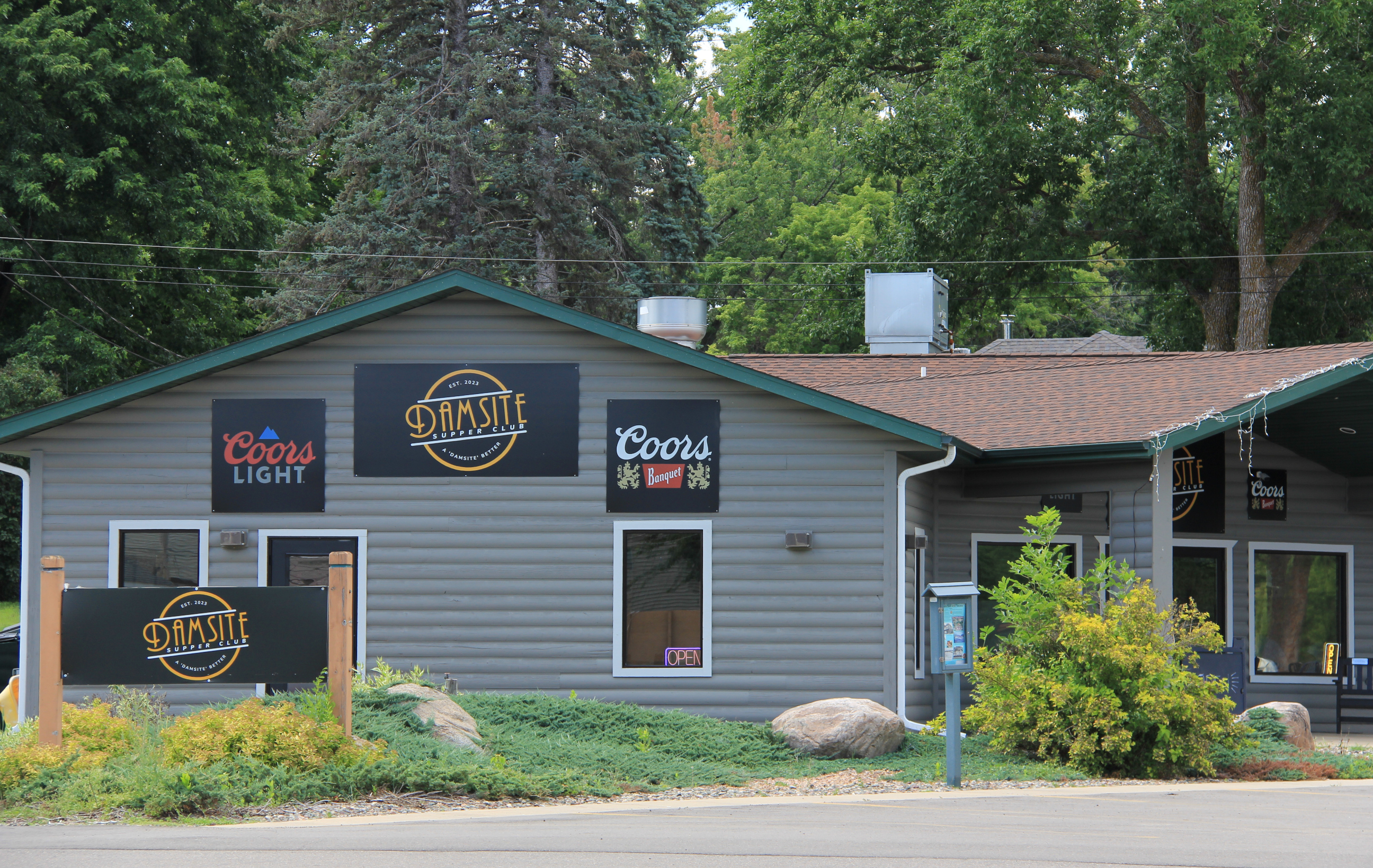
I had the best pulled pork sandwich here when Randy and I lunched with friends Sue and Charley at the Damsite Supper Club. (Minnesota Prairie Roots copyrighted photo July 2024)

Up North also means trips into town—Nisswa to peruse the shops; Crosslake for ice cream at Lake Country Crafts & Cones, a beer at 14 Lakes Craft Brewing Company, carry-out pizza from Rafferty’s and thrift store shopping; Bean Hole Days in Pequot Lakes; and this trip, lunch with friends at the Damsite Supper Club in Pine River a half hour to the north.

A mural in Ironton promotes cycling in the region. (Minnesota Prairie Roots copyrighted photo July 2024)
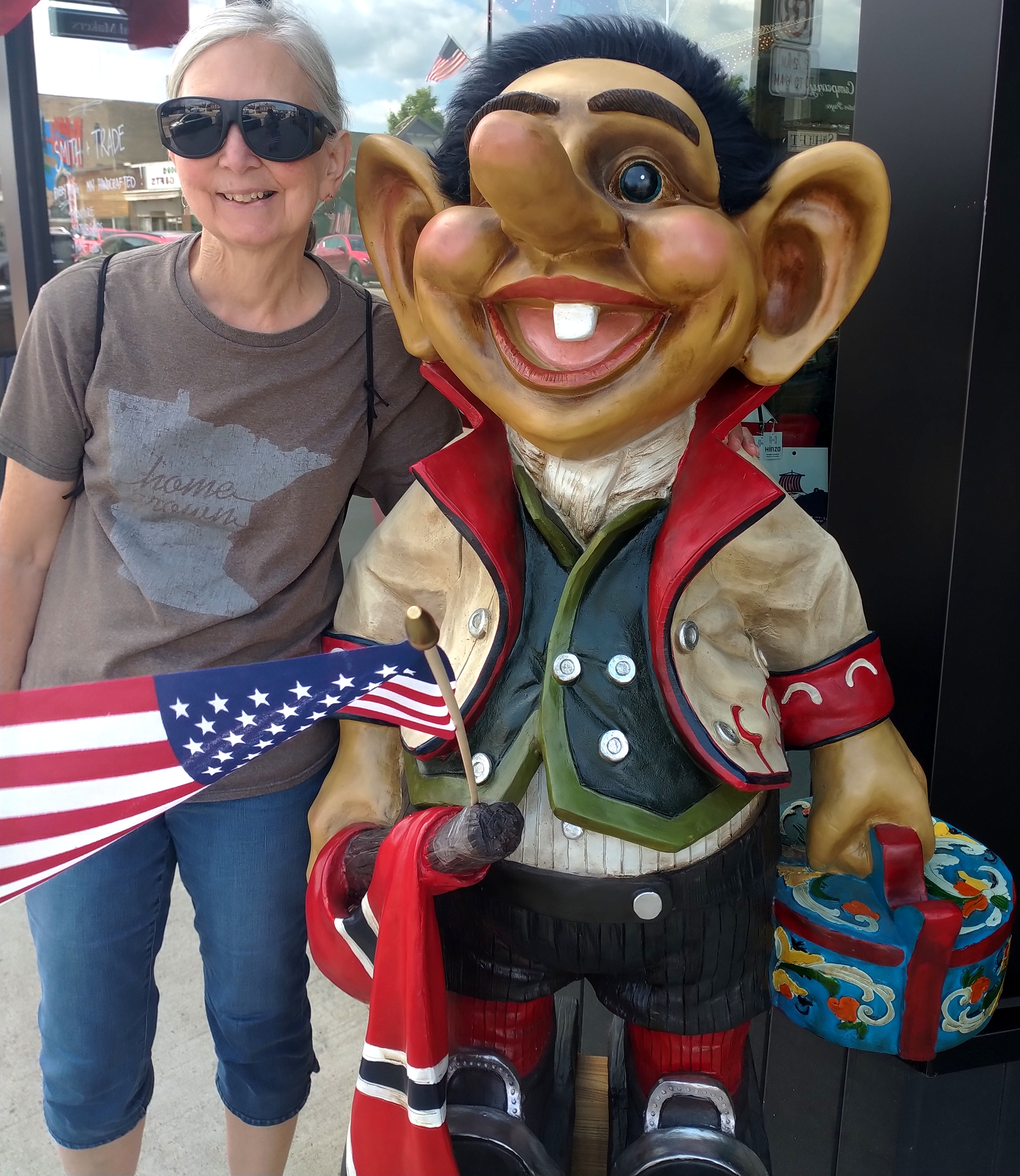
Randy photographed me with my new friend outside Nord Hus Scandinavian Goods in Crosby. (Minnesota Prairie Roots copyrighted photo July 2024 by Randy Helbling)

This stay we also drove to nearby Crosby and Ironton, towns nestled next to each other and deeply rooted in Iron Range history. We’ve only just begun to explore those communities, which are remaking and branding themselves as the Cuyuna Lakes region, drawing mountain bikers to an extensive recreational trail system, vacationers to local eateries and shops. MacDaddy’s Donut Garage in Ironton is on my list of bakeries to visit.

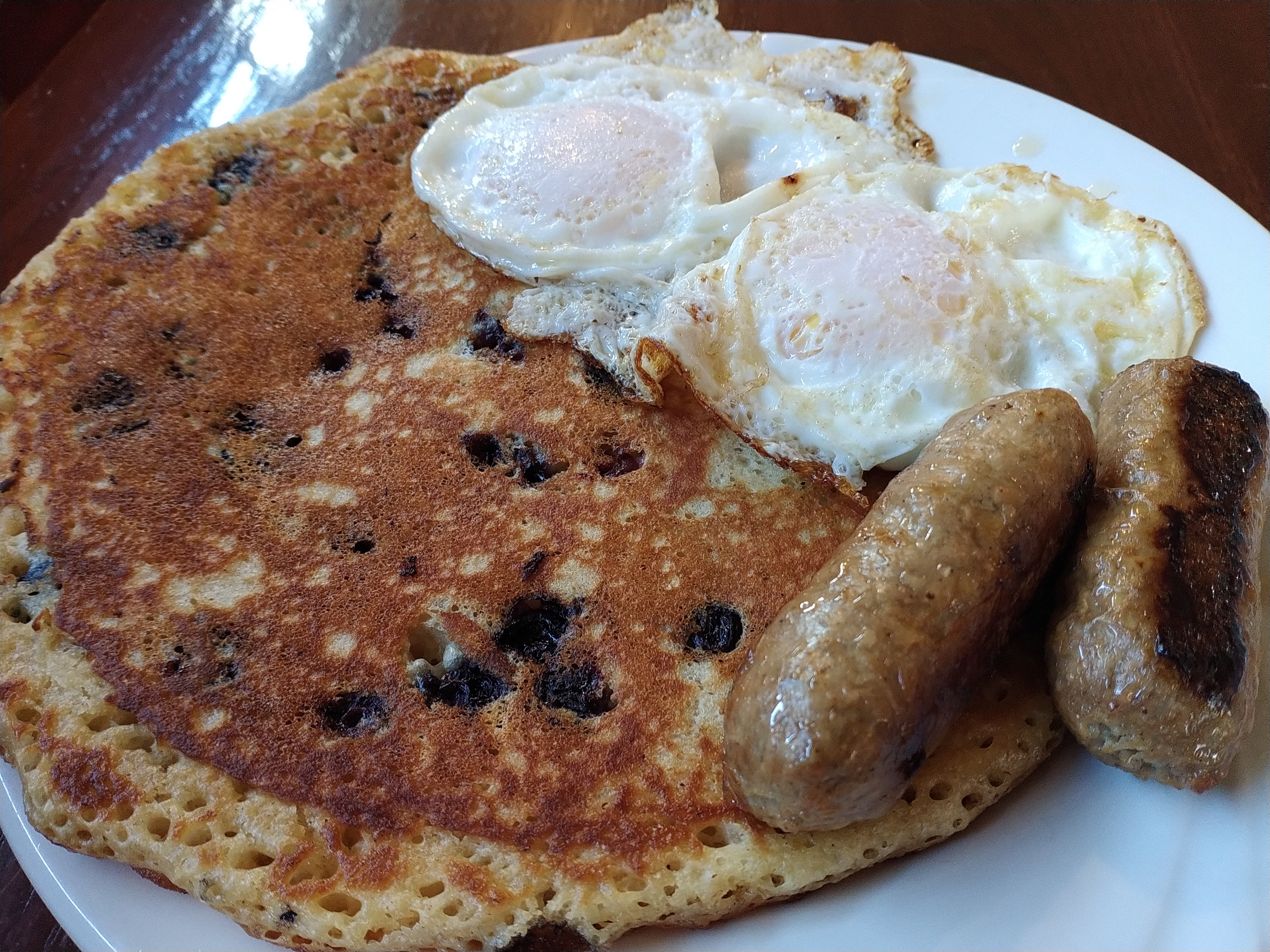
The Blueberry Special at Valeri Ann’s. (Minnesota Prairie Roots copyrighted photo July 2024)

Valeri Ann’s Family Foods in Merrifield, a short drive from the cabin, has become our source for decadent caramel rolls, one big enough for two to share and tasting almost as good as the ones my mother-in-law made. This time we also tried the breakfast specials, one featuring a dinner-plate-size blueberry pancake, the other with wild rice and more incorporated into scrambled eggs. Wild rice is another Northwoods signature food, grown and harvested in the region and parts farther north.

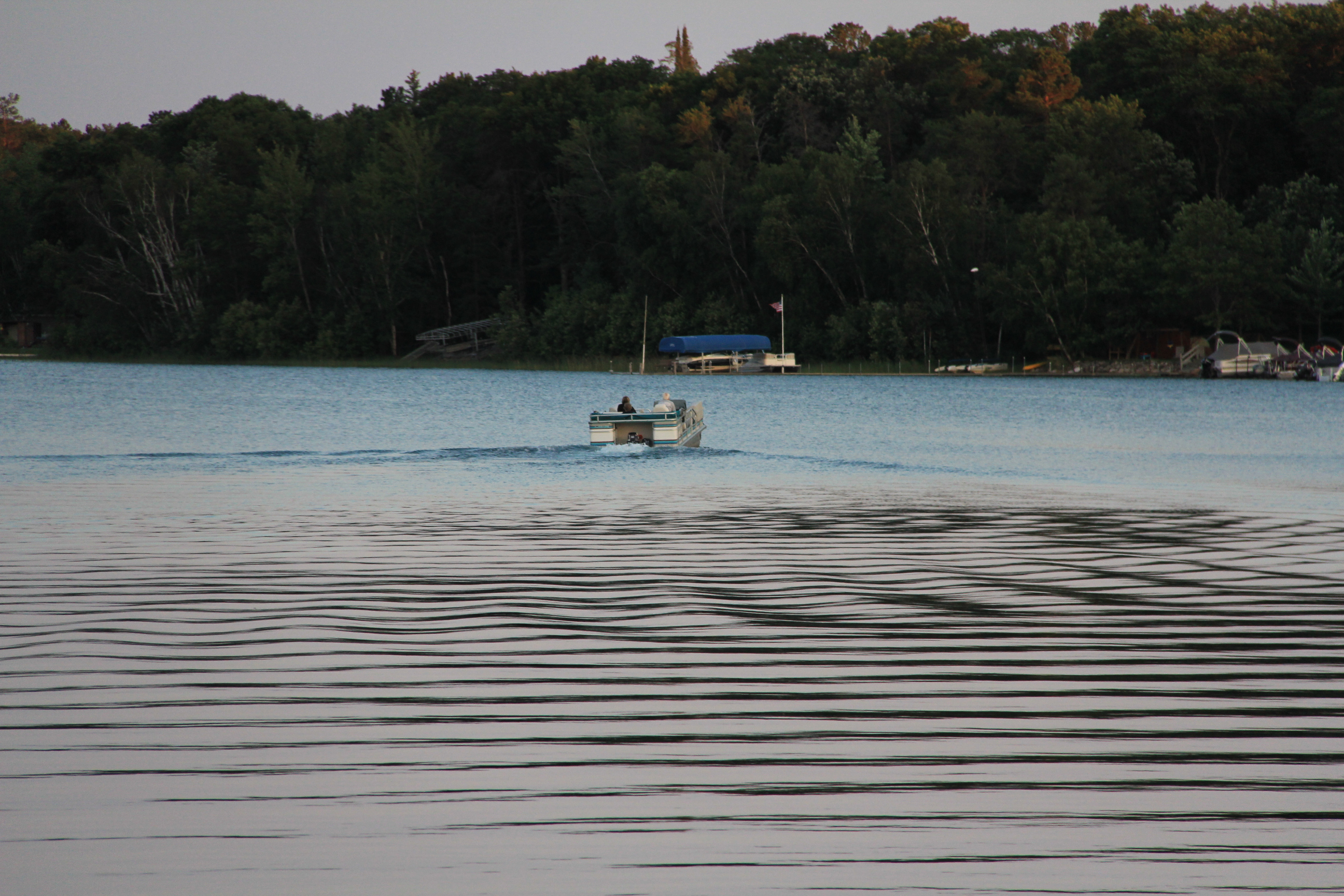
I love how the water ripples, like a work of art, as a boat crosses Horseshoe Lake at sunset. (Minnesota Prairie Roots copyrighted photo July 2024)

As I’ve explored and vacationed in the Northwoods, I’ve grown a deeper appreciation for Minnesota and its diversity of geography, topography and lifestyle. There’s so much to love about this state, from north to south, east to west. Ah, summertime…and going Up North to the cabin.

© Copyright 2024 Audrey Kletscher Helbling
 

Observations about Minnesota from a life-long resident January 31, 2024

Filed under: Uncategorized — Audrey Kletscher Helbling @ 5:00 AM
Tags: , , , , , , , ,
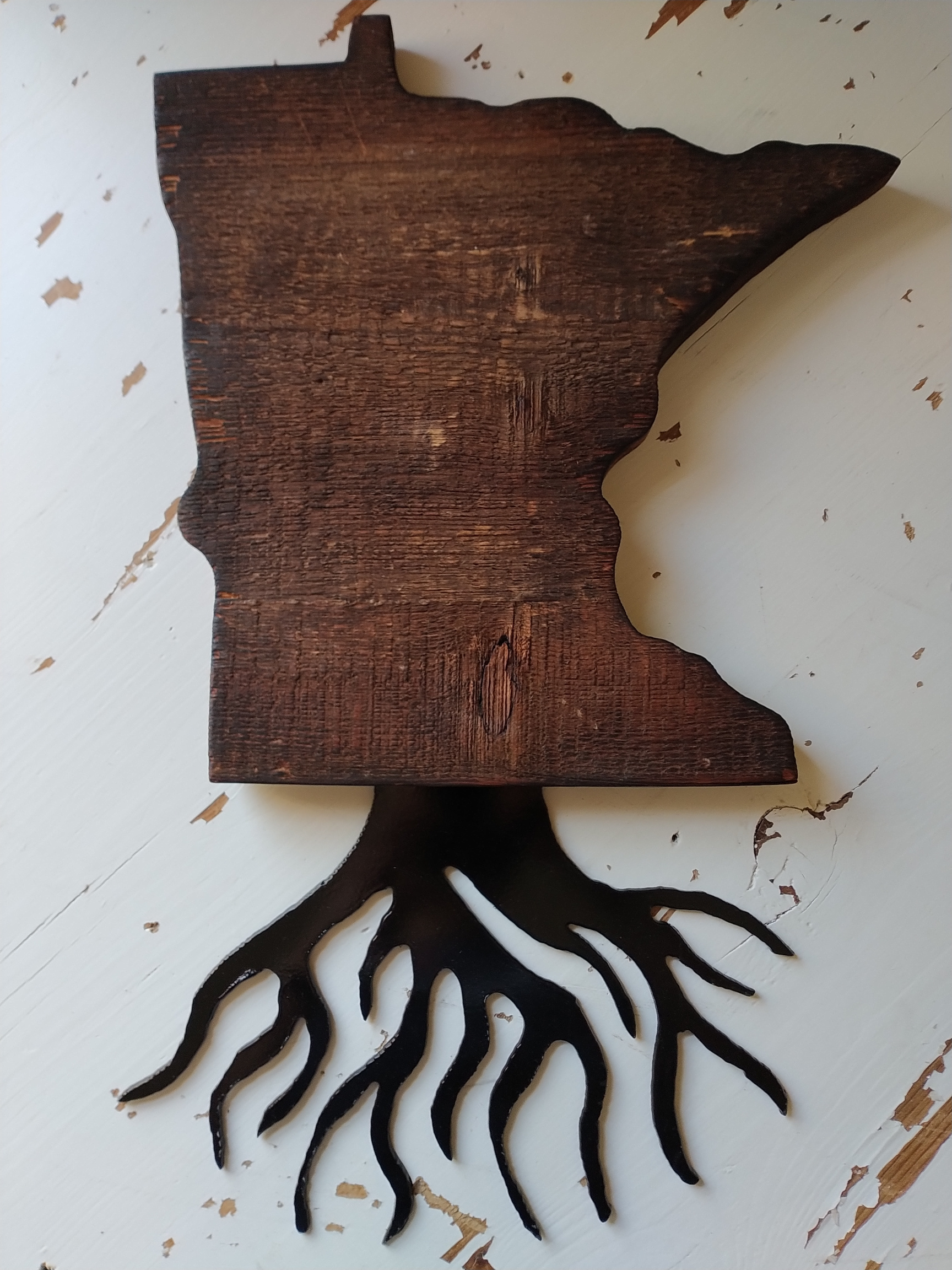
Minnesota wood art with Minnesota shape by Spanky’s Woodshed of Faribault, metal roots by my friend Steve and assembled by my husband, Randy. (Minnesota Prairie Roots copyrighted photo 2024)

AS A LIFE-LONG MINNESOTAN, I speak Minnesotan. It’s hotdish, not casserole. Pop, not soda. Bars may be a sweet treat baked in a cake pan and cut into squares or a place to imbibe. And when someone is going Up North, it’s not to Canada, but typically to the cabin in the Brainerd lakes area or thereabouts.

A serene country scene just north of Lamberton in southern Redwood County, my home county. (Minnesota Prairie Roots copyrighted file photo)

I’m proud to be rooted in this state many consider fly-over land. On a road trip to the East Coast a few years back, folks, upon learning I was from Minnesota, reacted, “Oh, it’s cold and snowy there.” I’m just fine with non-residents thinking that. It is cold for much of the year. And it is snowy, too, most winters. But we have four distinct seasons to be appreciated in a state that is geographically diverse. Prairie. Woods. Bluffs. Rolling land. Farm fields. Cliffs that rise above the Mississippi River and Lake Superior. Wilderness. Lakes numbering 10,000-plus. All inside our spacious borders.

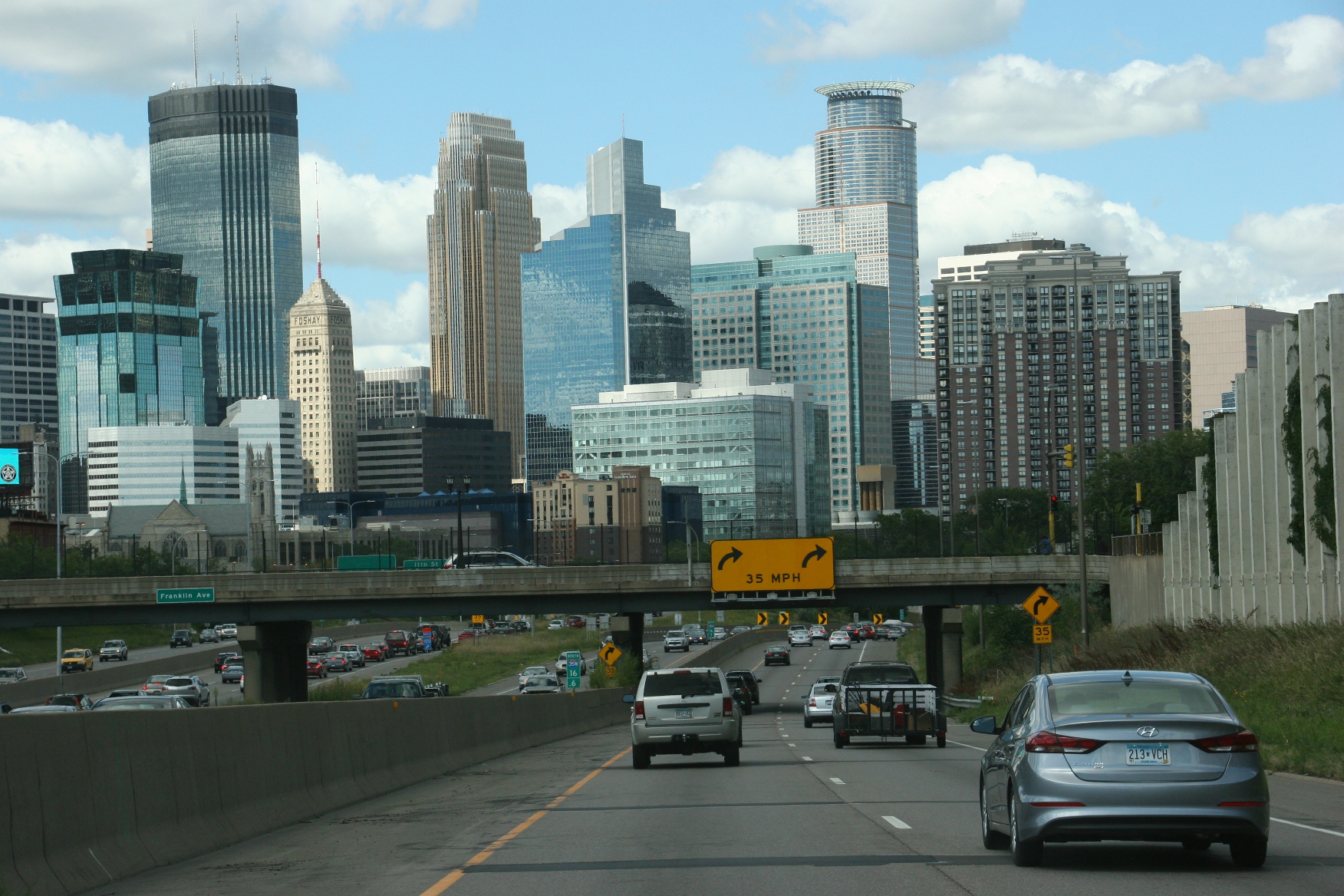
Downtown Minneapolis skyline. (Minnesota Prairie Roots copyrighted file photo)

And outside “The Cities,” as we term the twin cities of Minneapolis and St. Paul, away from metro lights, the night sky is dark, expansive and filled with more stars than you can imagine. Sky and land defined my childhood home on the vast prairie of southwestern Minnesota. But even here in southeastern Minnesota, the sky is big as noted by a Boston visitor. She saw the Minnesota night sky for the first time as we drove her to Faribault from the Minneapolis-St. Paul International Airport. The infinite number of stars impressed her. Northern lights (the aurora borealis), which I have yet to see, are also an attraction.

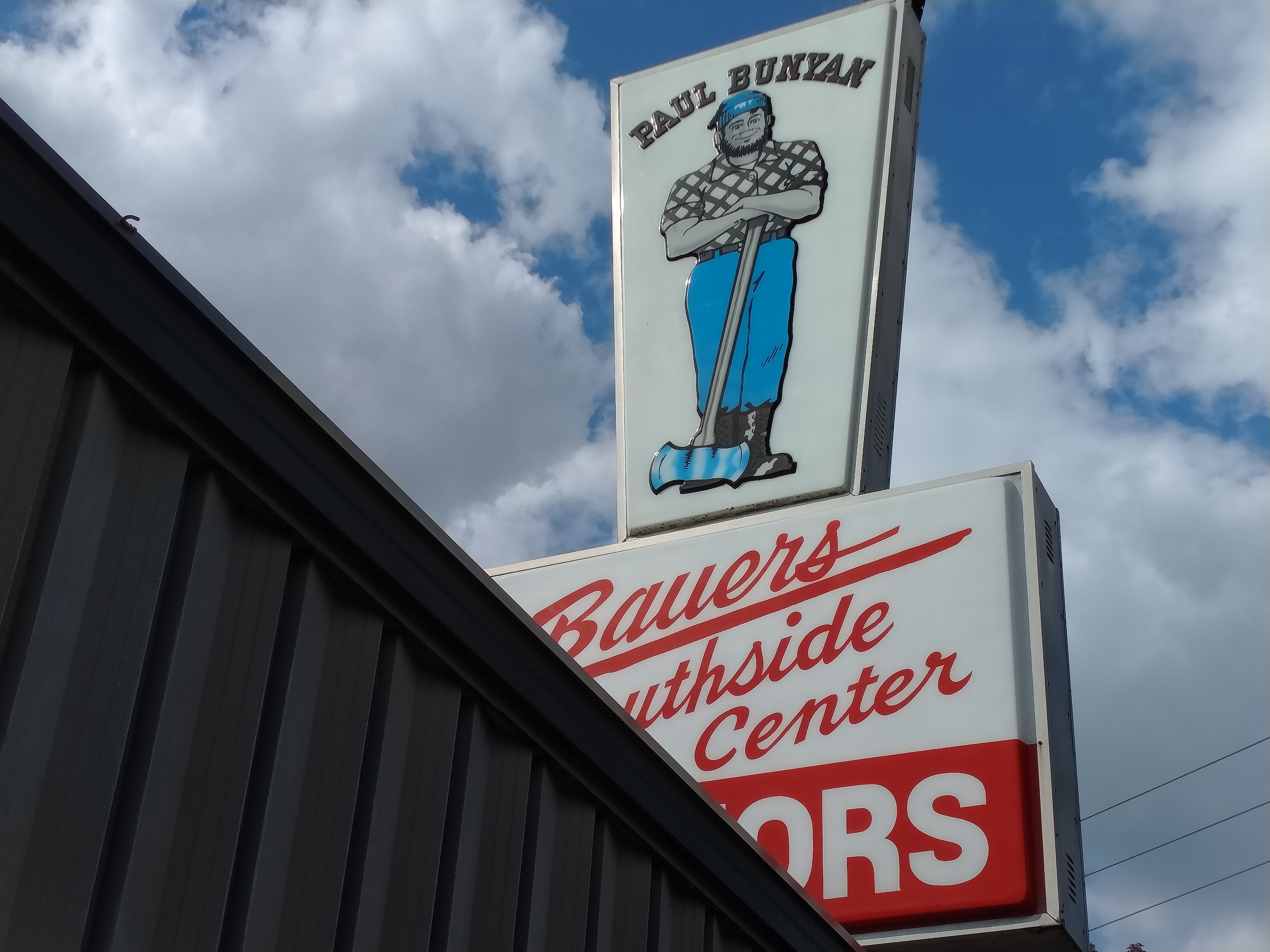
Paul Bunyan is primarily a central and northern Minnesota legend. But he can also be found in southern Minnesota, like on this sign in Faribault. (Minnesota Prairie Roots copyrighted photo 2023)

If I sound like I work for the Minnesota Department of Tourism, I don’t. That job falls to legendary lumberjack Paul Bunyan, unofficial tourism CEO. Clad in his signature buffalo plaid flannel, he is easily recognizable, much-loved and a trendsetter in fashion in the North Star State. I would venture to guess that nearly every Minnesotan owns a collection of flannel shirts. They are my go-to winter attire.

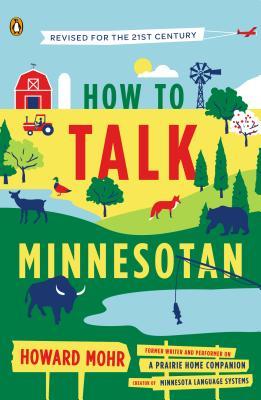
An updated version of “How to Talk Minnesota” is a good guidebook to Minnesota speak.

Did I mention that we don’t speak Fargo, even if that North Dakota city sits across the Red River from Moorhead, Minnesota? I’ve been told we drag out the “o” sound in a distinctly Minnesoooootan sound. Could be. I don’t necessarily hear it. I don’t deny, though, that we are obsessed about the weather. Conversations within our borders usually include one weather reference whether it be wind chill or humidity or “hot enough for you?”.

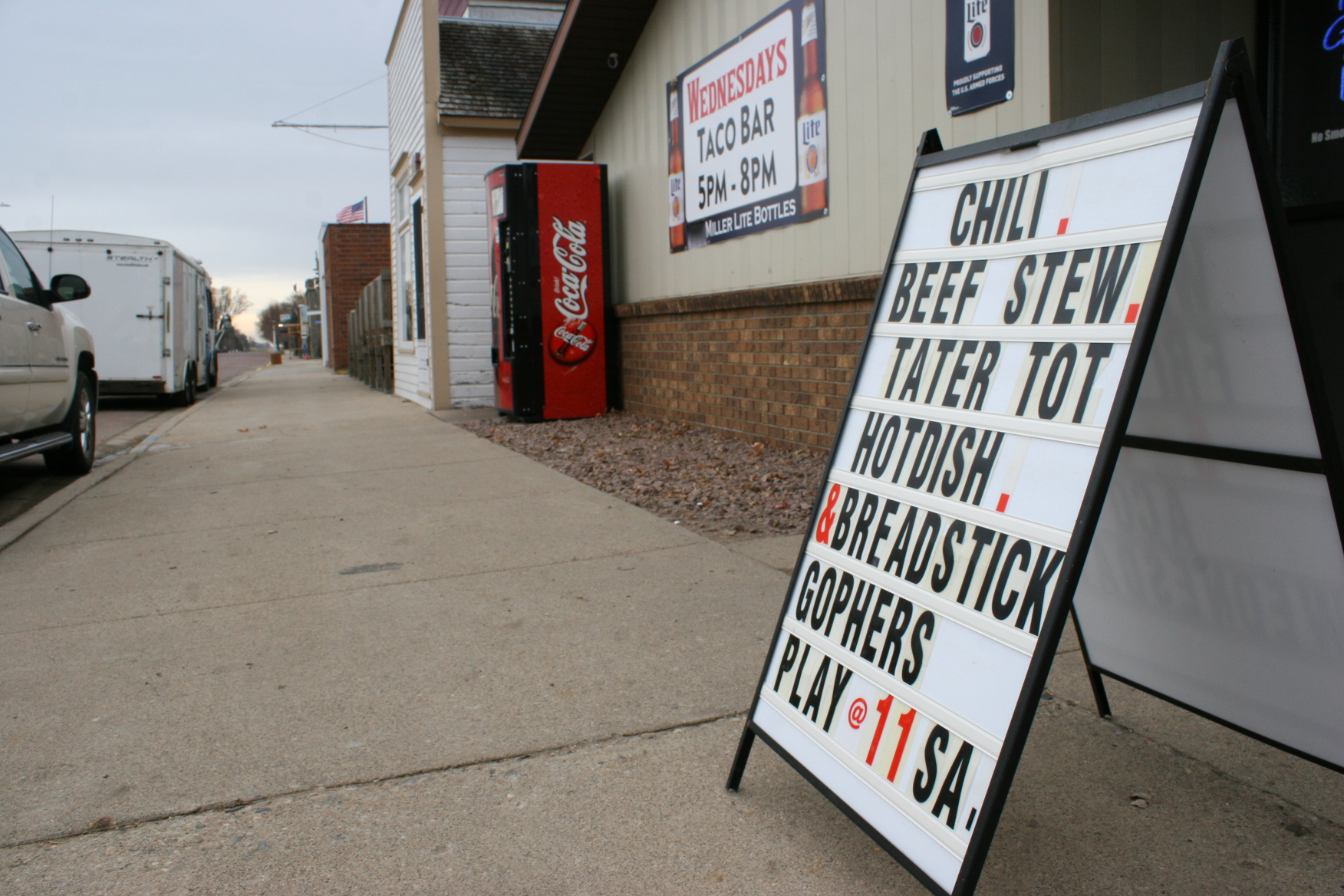
This sandwich board in small town Belview promotes one of Minnesota’s signature dishes, Tater Tot Hotdish, as a noon special. (Minnesota Prairie Roots copyrighted photo 2019)

Minnesotans are known for a thing called “Minnesota Nice,” which I like to believe is true most of the time. We are a bit reserved, use phrases like “that’s different” or “that’s interesting” when we really don’t like something or disagree, but want to be nice by holding back our honest thoughts.

The Minnesota sweet treat known as bars, often served with “a little lunch.” (Minnesota Prairie Roots copyrighted file photo)

Our goodbyes are prolonged. Often, as visiting family is leaving my home, I find myself either standing in the driveway or window waving, waving, waving. That follows the hugs I’ve given only minutes earlier. You can’t get in too many goodbye waves.

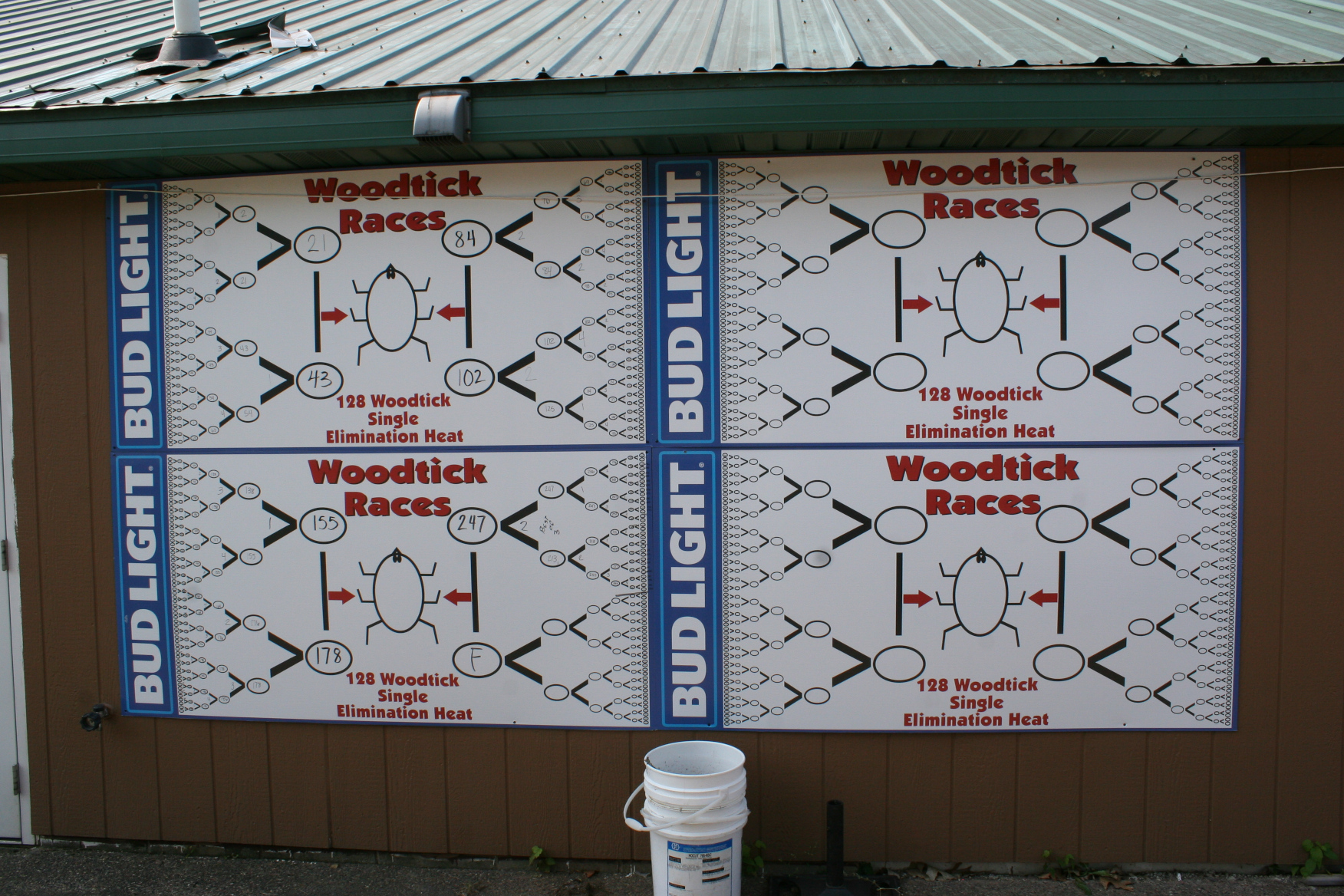
The Woodtick Inn in Cuyuna hosts Woodtick Races each summer. (Minnesota Prairie Roots copyrighted file photo August 2021)

Meat raffles, potlucks, ice fishing, lutefisk dinners (or suppers, depending on time of day), fish fries, snowmobile races, hockey, naming our snowplows, all are part of Minnesota culture. Even wood tick races (at the Woodtick Inn in Cuyuna).

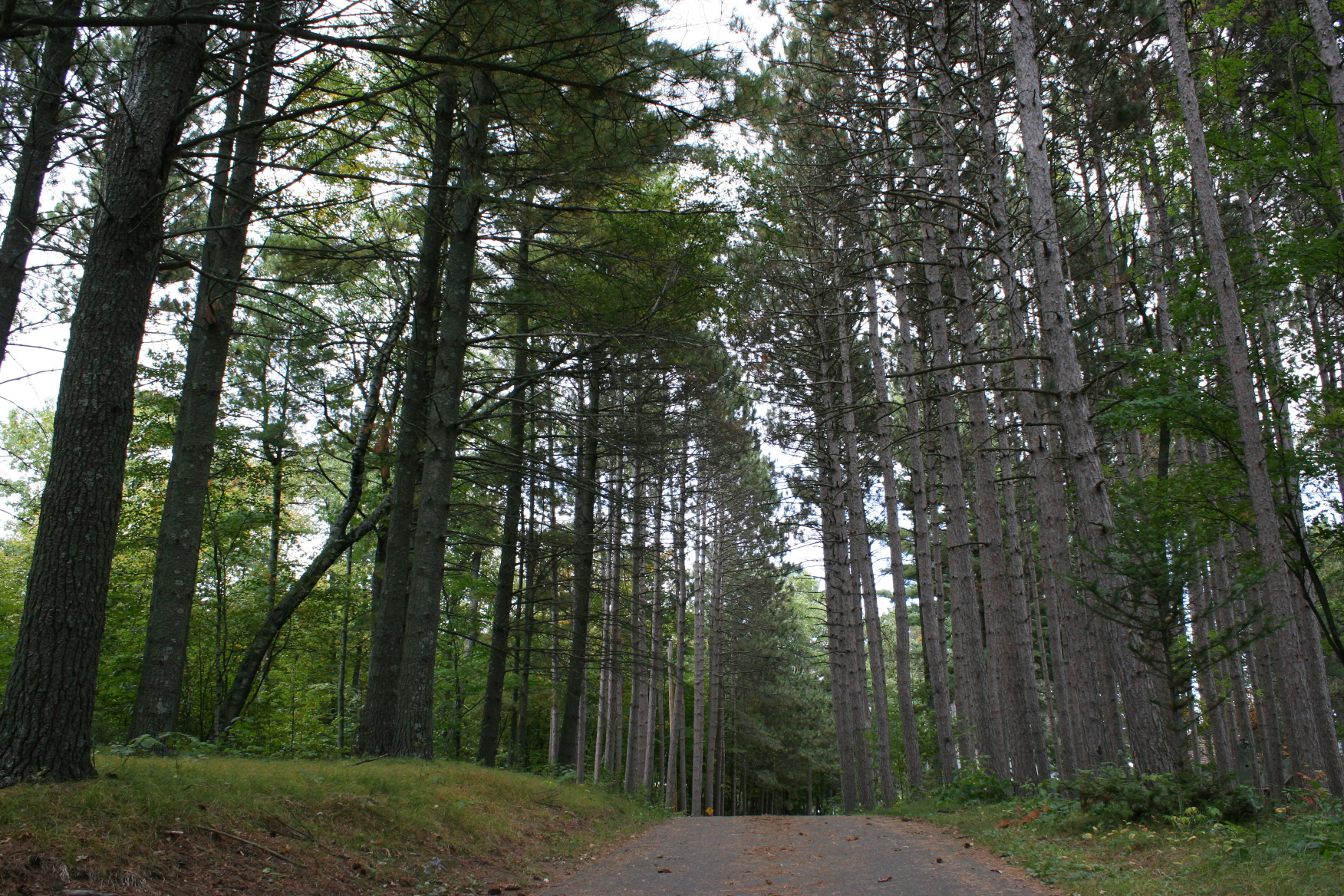
Pines border the driveway leading to a central Minnesota lake cabin. (Minnesota Prairie Roots copyrighted file photo)

I love this state where I’ve lived my entire life, even when I complain about the long winters and abundance of mosquitoes. This is home. Always has been. Always will be.

#

IF YOU HAVE any questions about Minnesota, any observations, anything you want to share, please do. Just follow the rules of “Minnesota Nice.”

© Copyright 2024 Audrey Kletscher Helbling
 

Book review: Things you gotta see & do in Minnesota showcased in new travel guidebook April 17, 2023

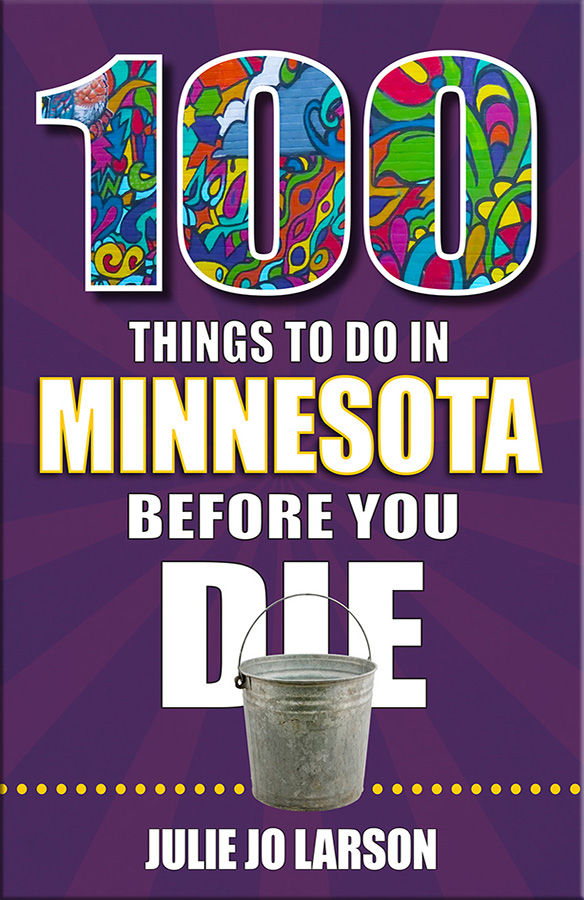
(Image source: Julie Jo Larson’s website)

WHETHER YOU’RE A LIFE-LONG Minnesotan, a newbie or a visitor, Julie Jo Larson’s newly-published 100 Things to Do in Minnesota Before You Die guidebook is an invaluable resource for exploring this place I call home. I’ve lived here my entire life, but only experienced or visited one-quarter of the listings in Larson’s travel guide.

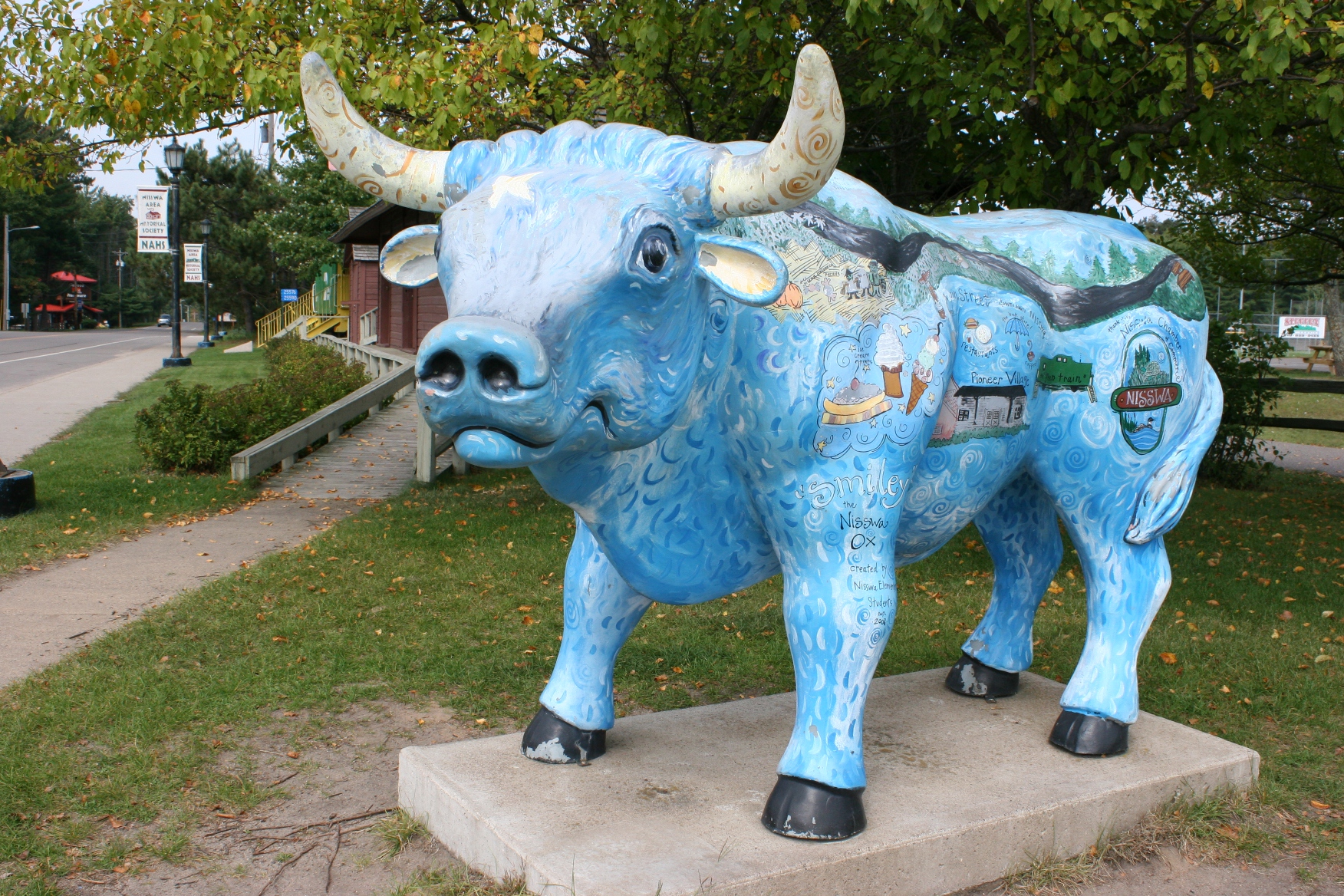
Babe the Blue Ox of Paul Bunyan legend stands along Nisswa’s Main Street. In her book, Larson encourages readers to seek out the many Minnesota-centric statues found throughout our state. (Minnesota Prairie Roots copyrighted file photo 2017)

Minnesota is an expansive state, spanning 400 miles from north to south and 350 miles from east to west. So there’s lots to see and do from prairie to woodland, from lakes to rivers, from bluffs to valleys, from small towns to bigger cities. Larson offers a good mix of destinations and activities.

Domeier’s German Store, nestled in a residential neighborhood for decades, is a must-see German import shop in New Ulm. (Minnesota Prairie Roots copyrighted file photo)

I should note that I feel a kinship with Larson in a commonality of roots. She was born in New Ulm, in Brown County next to my home county of Redwood in southwestern Minnesota. New Ulm, situated in the Minnesota River Valley and rich in German heritage and culture, has long been a favorite community of mine. There’s so much to see and do from touring and sampling beer at August Schell Brewing Company; shopping at compact German import store, Domeier’s; exploring Flandrau State Park along the Cottonwood River; watching the Glockenspiel; and lots more. Larson now lives in rural Brainerd and has already written a guide on the Minnesota Northwoods. Her love for Minnesota shines.

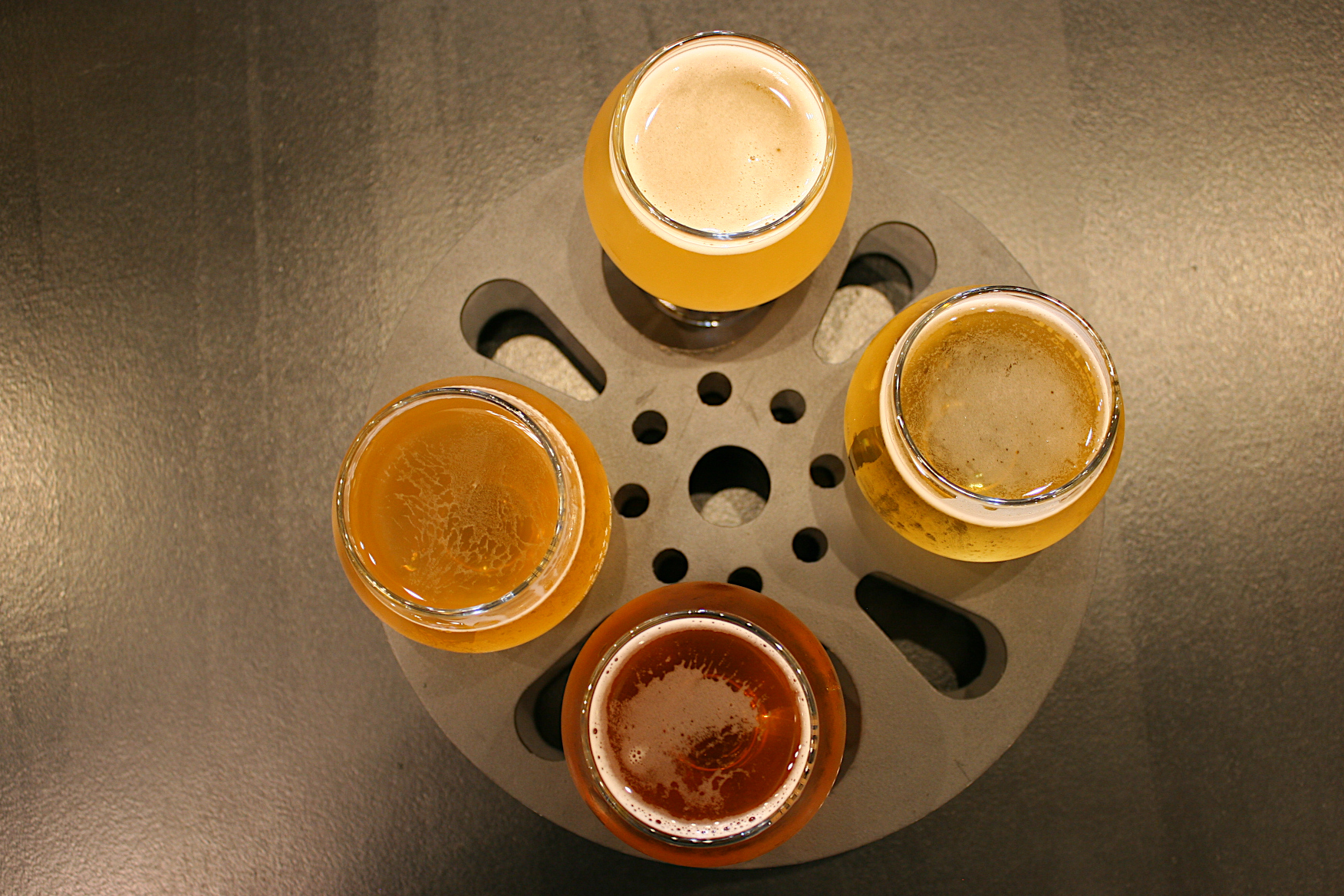
Craft beer flights are served on old movie reels at Sleepy Eye Brewing, housed in a former movie theater. While not included in Larson’s book, I recommend a stop at this unique southwestern Minnesota brewery. (Minnesota Prairie Roots copyrighted file photo)

In creating this travel book, Larson divides her suggested “things to do” into five categories: Food and Drink, Music and Entertainment, Sports and Recreation, Culture and History, and Shopping and Fashion.

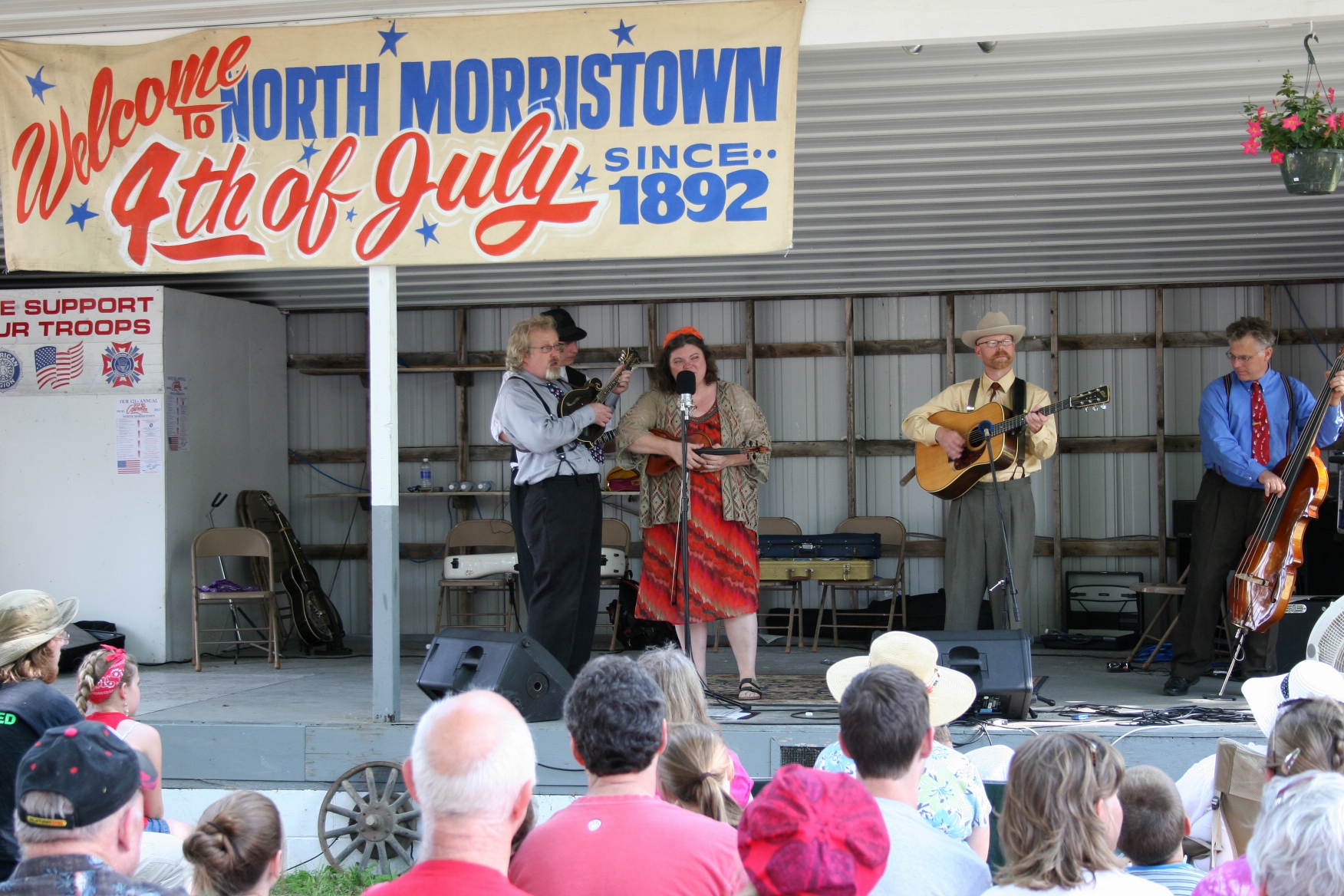
The bluegrass band, Monroe Crossing, performs every July 4 in North Morristown. (Minnesota Prairie Roots copyrighted file photo)

I so now want to try the chicken wild rice pizza at Poor Guy’s Pizza in Moose Lake. That—the wild rice part—sounds incredibly Minnesotan. I want to tour the Minnesota Music Hall of Fame in New Ulm to learn more about musicians and bands like Monroe Crossing, which performs each July Fourth in North Morristown. I want to wander among the 50 metal sculptures crafted by Ken Nyberg in Vining simply because I love outdoor public art. I want to tour the Mille Lacs Indian Museum and Trading Post in Onamia to learn more about that region’s Indigenous peoples. I want to peruse the handcrafted goods at The Shoppes of Little Falls. I want to…

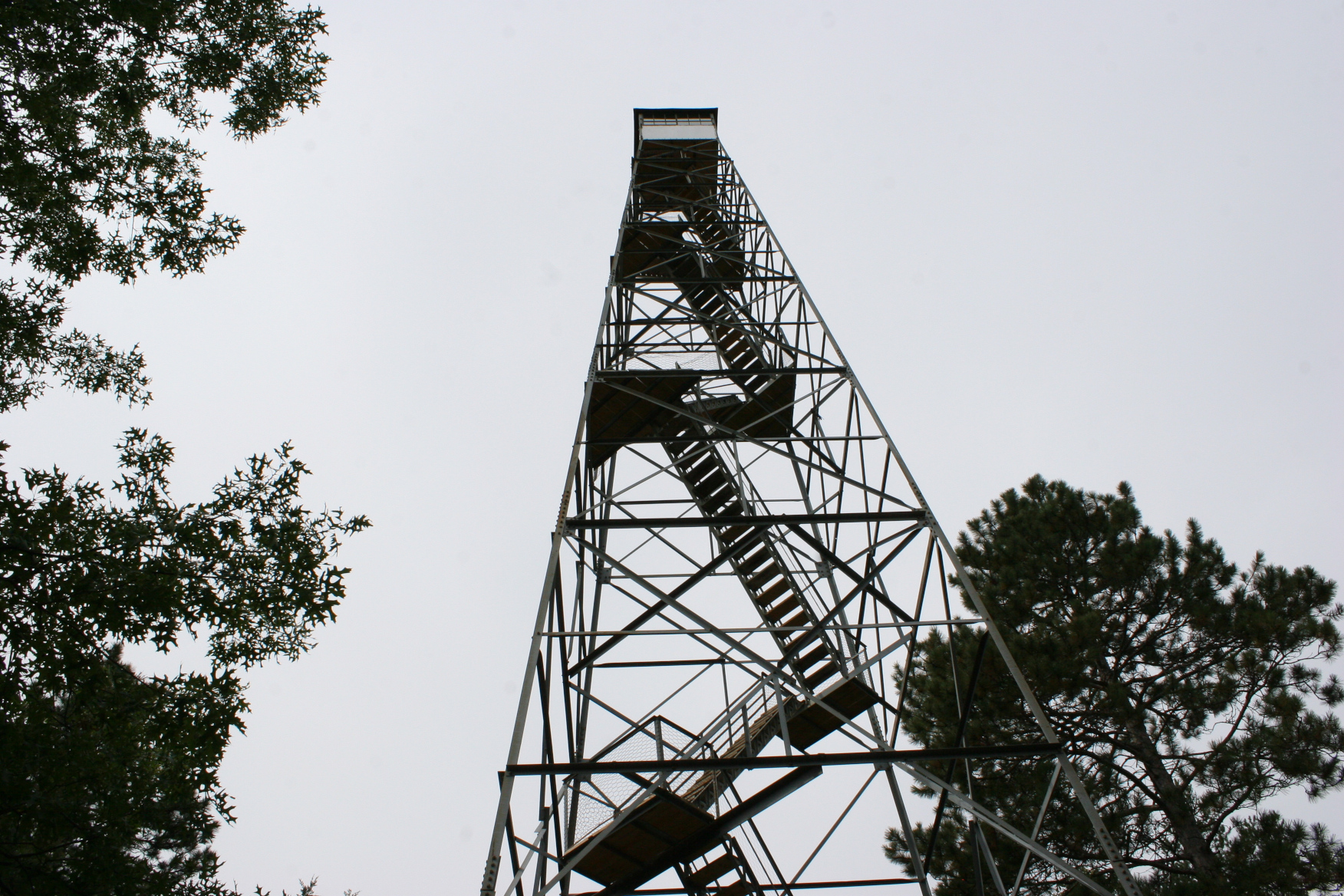
I climbed up to the tower, but not up the Paul M. Thiede Fire Tower. I’d suggest combining a stop here with Pequot Lakes’ annual Bean Hole Days in July. (Minnesota Prairie Roots copyrighted file photo 2021)

Yes, there’s a lot to do in Minnesota. Some things on Larson’s list, though, I won’t do. I won’t travel into the depths of the earth at the Soudan iron ore mine. I won’t climb to the top of a fire tower at Pequot Lakes, although I’ve hiked to it. I won’t zip through the trees 175 feet off the ground on a Kerfoot Canopy Tour in the Minnesota River Valley at Henderson. But other readers of Larson’s guidebook will and that’s good. Her “100 things to do” offers a variety of experiences and places that appeal to diverse interests.

At Minneopa State Park, Mankato, visitors can get up close with a bison herd on a drive-through across the prairie. (Minnesota Prairie Roots copyrighted file photo August 2019)

As a life-long southern Minnesotan who has explored this region extensively, I especially appreciate Larson’s tips from other areas of this vast state. She even breaks down her list to activities by seasons and suggested itineraries. Black-and-white photos scattered through the pages and a centerfold of color images only further entice readers to get out and explore.

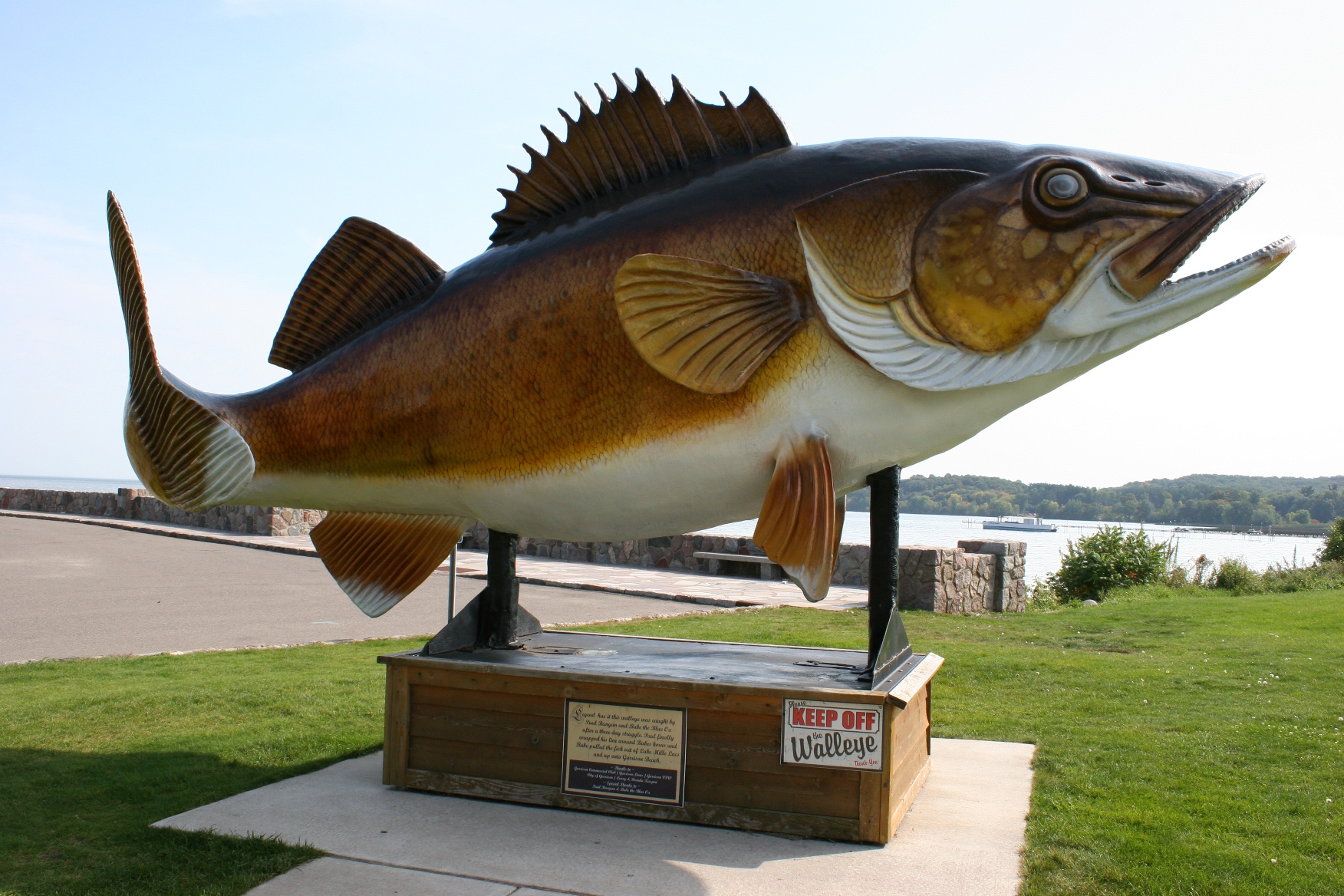
A walleye statue fronts Lake Mille Lacs in Garrison. The walleye is Minnesota’s state fish. (Minnesota Prairie Roots copyrighted file photo)

Bottom line, 100 Things to Do in Minnesota Before You Die rates as an excellent resource for anyone planning a road trip, looking for something to do/see while in a specific area of Minnesota or even just seeking to learn more about the North Star State.

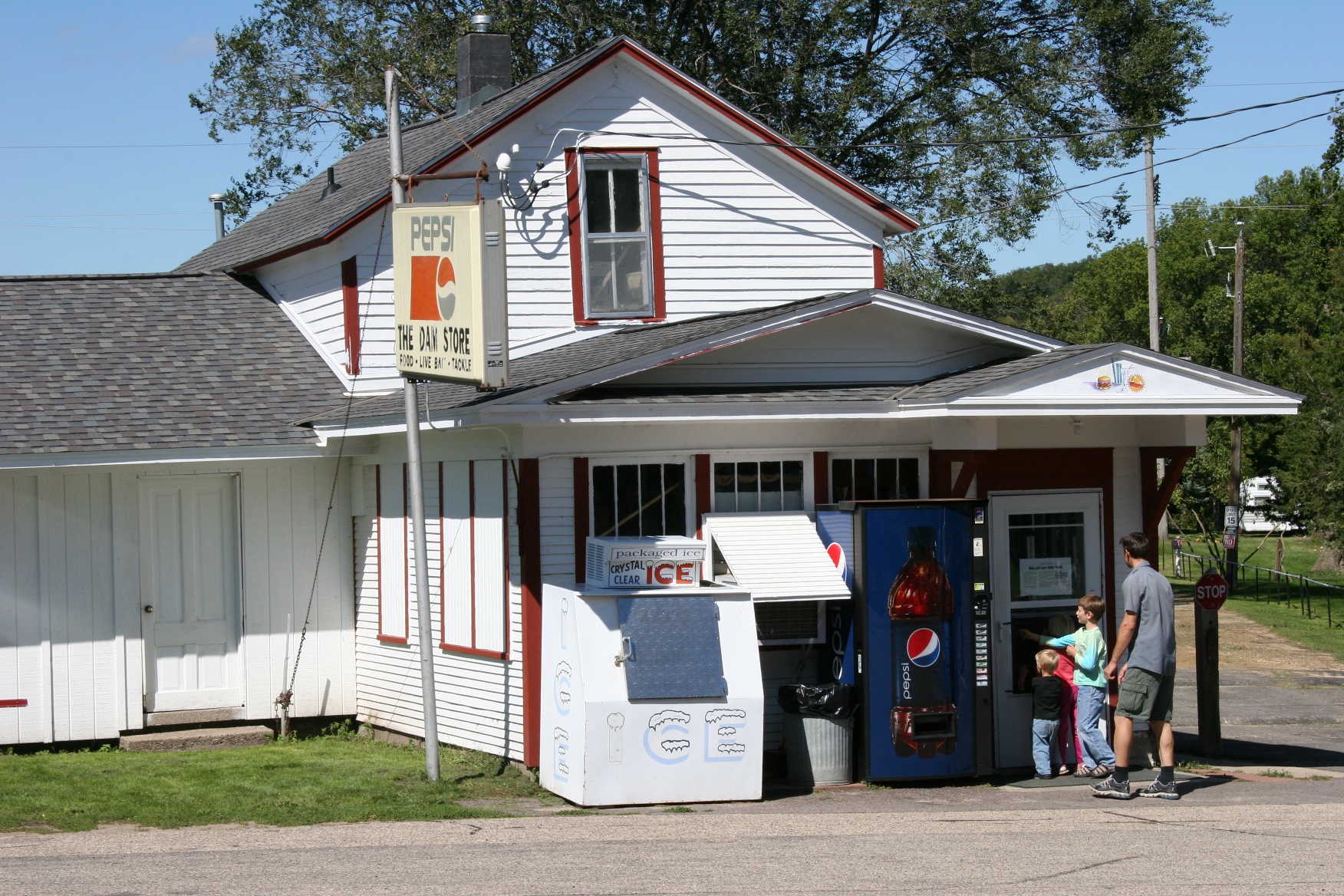
You’ll find great hamburgers and homemade pies at The Dam Store. (Minnesota Prairie Roots copyrighted file photo 2010)

Looking for a great slice of pie? Larson recommends (and so do I) the Rapidan Dam Store, yes, by the dam at Rapidan (which is near Mankato). Want to enjoy art in a top-notch museum along the Mississippi River? Visit the Minnesota Marine Art Museum in Winona. Interested in a cave tour? Head to Niagra Cave near Harmony. Wanna see a replica Viking ship? The Hjemkost Center in Moorhead features one. Need a book fix? Visit any one of Minnesota’s independent bookstores.

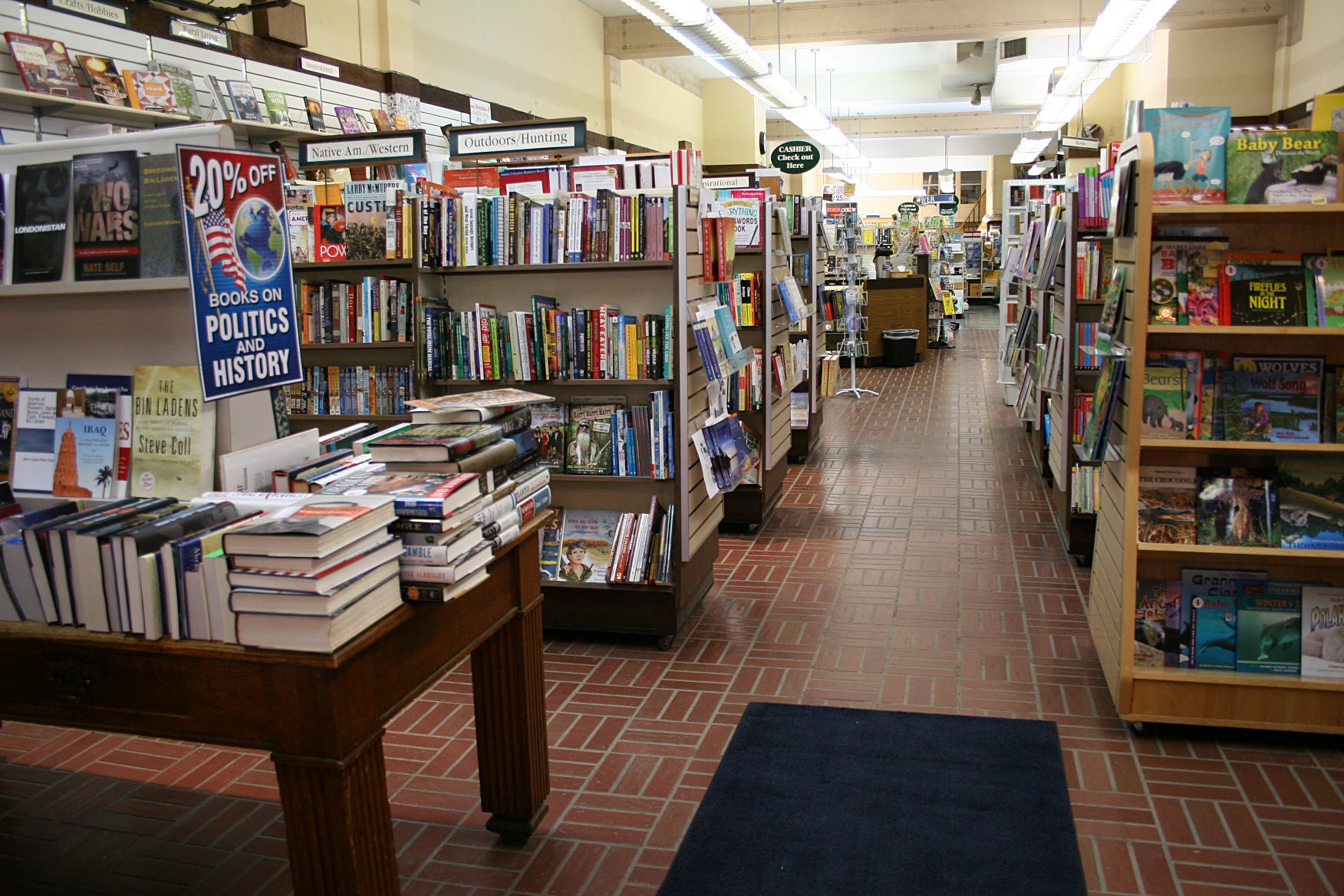
The independent bookstore portion of Victor Lundeen Company in Fergus Falls. (Minnesota Prairie Roots copyrighted file photo)

And while we’re talking books, buy a copy of 100 Things to Do in Minnesota Before You Die, published by Reedy Press. Support a Minnesota author while, bonus, learning about all sorts of places to visit and things to do in this place Larson and I call home.

© Copyright 2023 Audrey Kletscher Helbling
 

About those Northfield cows April 25, 2022

Filed under: Uncategorized — Audrey Kletscher Helbling @ 5:02 AM
Tags: , , , , , , , , ,
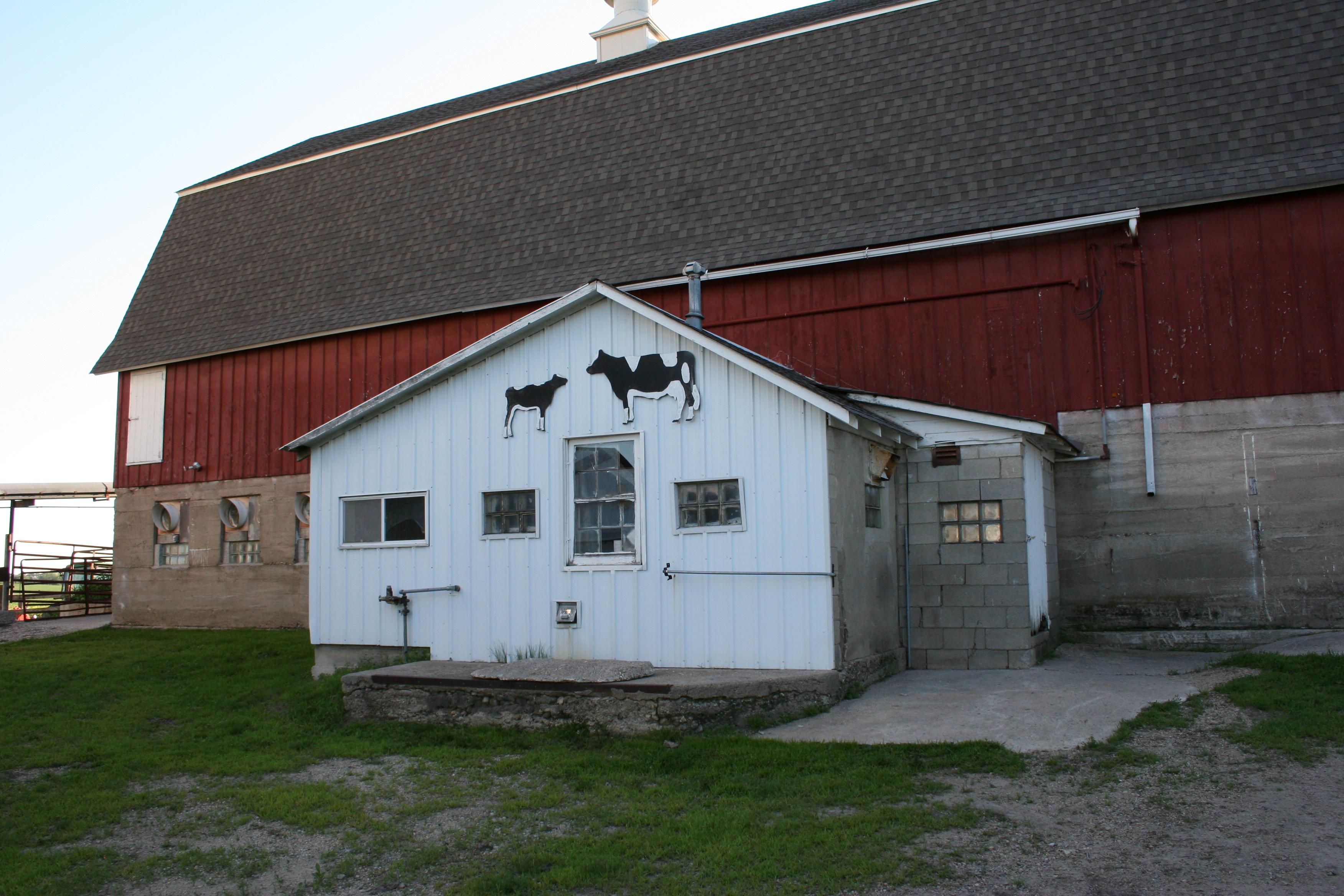
Holstein cow art adorns the milkhouse on the barn of friends in rural Dundas (near Northfield). These farmers once milked Holsteins. (Minnesota Prairie Roots copyrighted file photo September 2011)

NOW BILLED AS “A Classic American River Town” by the local tourism office, Northfield fits that description. This southern Minnesota community, where the James-Younger gang was defeated in 1876, hugs the Cannon River. The historic downtown is filled with mostly home-grown shops and eateries. And, as cliché as it sounds, Northfield is quaint and charming.

I love Northfield. If the cost of houses in 1984 had not been significantly higher than in neighboring Faribault, Randy and I would be living there. Instead, Randy has commuted from Faribault to Northfield to work as an automotive machinist for too many decades. But such is life and we’re happy to call Faribault home.

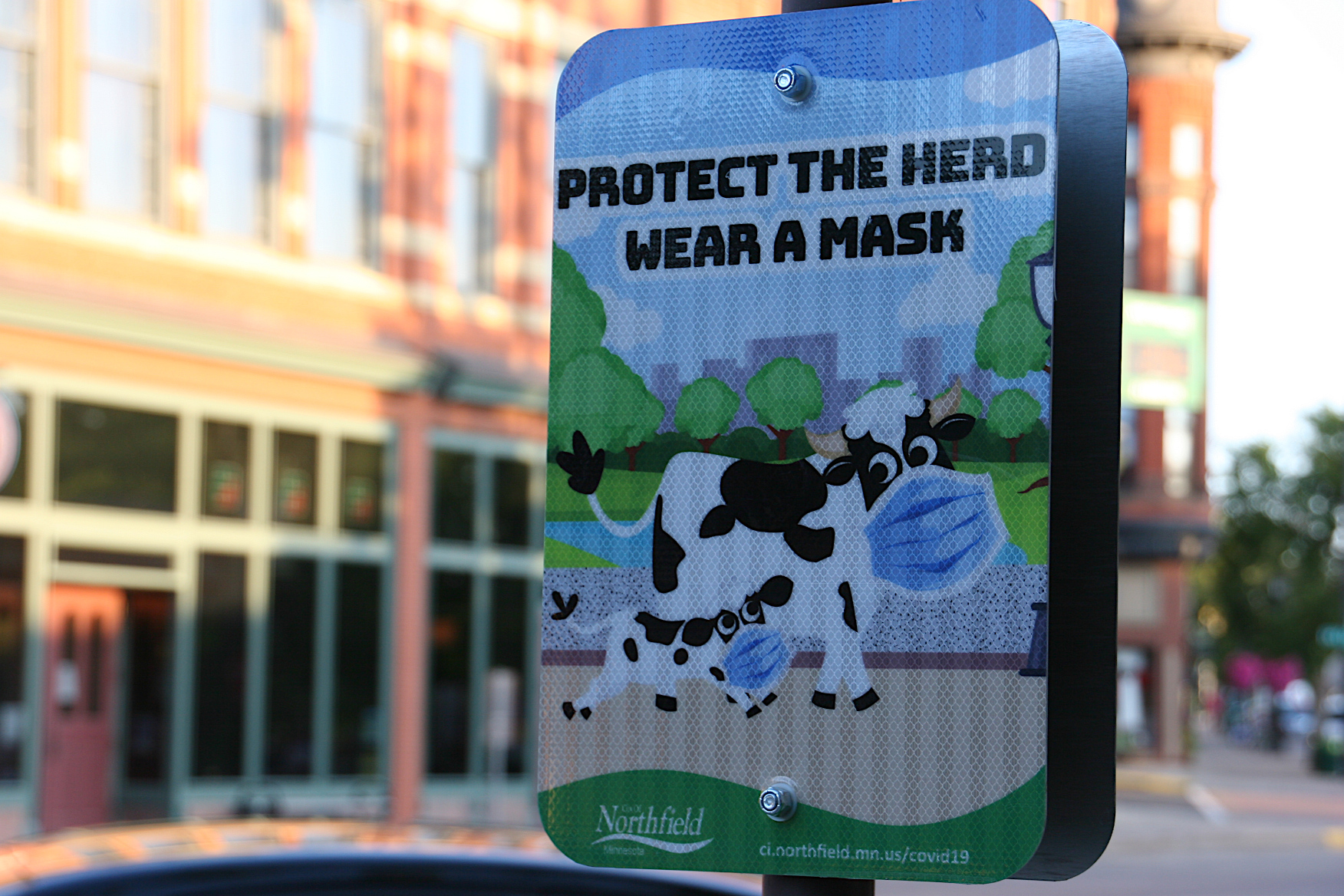
“Protect the herd” plays off the city’s “Cows, Colleges & Contentment” slogan. (Minnesota Prairie Roots copyrighted file photo 2020)

But back to Northfield. There was a time when this city actively tagged its community with the phrase “Cows, Colleges & Contentment.” That slogan still graces some signage. I observed a cow-themed sign encouraging masking early in the pandemic. “Protect the herd” focused the message from the City of Northfield. I thought that incredibly powerful and catchy. You know, we’re all in this together type attitude. Care about one another.

I understand how “contentment” fits this community. And colleges, too, as Northfield is home to St. Olaf and Carleton colleges.

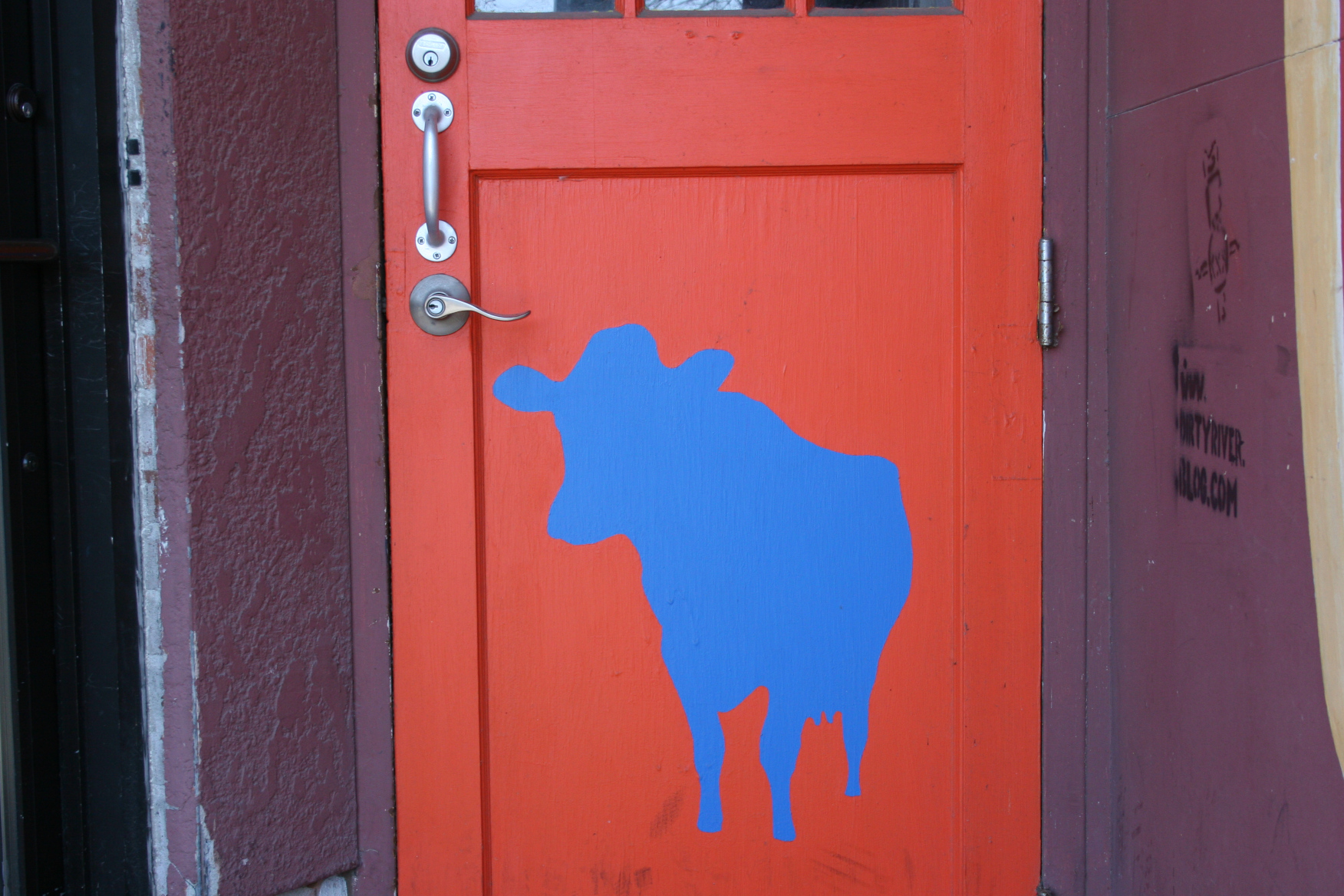
The blue cow I spotted recently in downtown Northfield. (Minnesota Prairie Roots copyrighted photo 2022)

But I didn’t quite get the “cows” part until I found an explanation on the Visit Northfield website. In summary, in the late 1890s, a local farmer/newspaper editor suggested Northfield could attract businesses by focusing on breeding of Holstein cows. That eventually happened with 5,532 Holstein dairy cattle and 261 breeders in the area by 1916, a Northfield Holstein Club and the moniker, “Holstein Capital of America,” attached to Northfield. The aforementioned colleges also established Holstein herds. I encourage you to read the full story about the Northfield cows by clicking here.

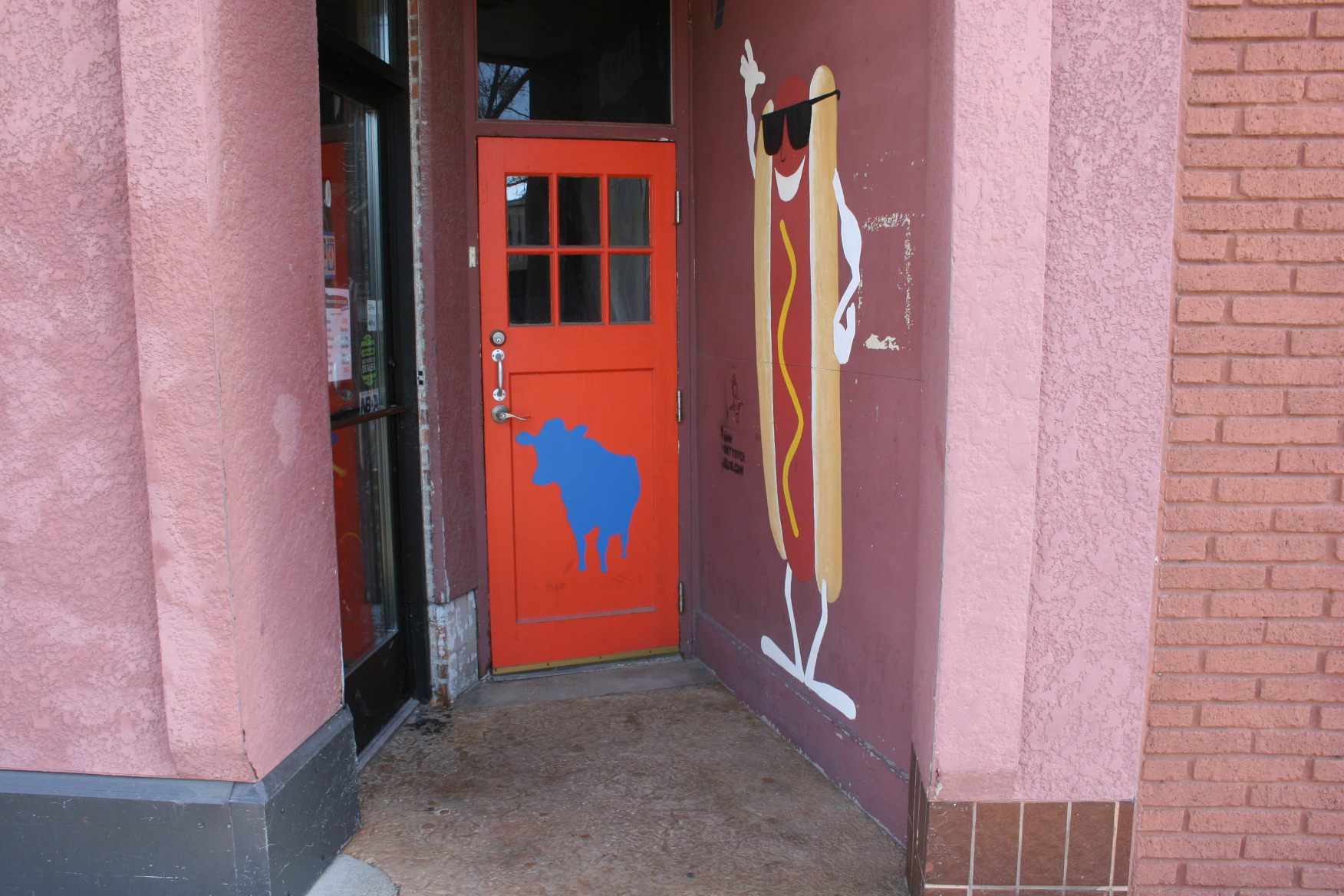
Downtown Bicycles’ blue cow image. Now, what’s with the hot dog? (Minnesota Prairie Roots copyrighted photo 2022)

On a recent walk through downtown Northfield, I didn’t see any Holsteins. But I happened upon a blue cow painted on an orange door. The cow graphic marks Downtown Bicycles, 321 Division Street. Seeing that cow brought to mind the “Cows, Colleges & Contentment” theme, which led me to uncover the story behind the bovines of Northfield.

© Copyright 2022 Audrey Kletscher Helbling
 

Pequot Lakes: In the heart of Paul Bunyan land July 28, 2021

Babe the Blue Ox, public art and photo op in Pequot Lakes. Minnesota Prairie Roots copyrighted photo.

ONLY RECENTLY HAVE I begun to explore the central Minnesota lakes region and small towns therein. Thanks to the generosity of a sister-in-law and brother-in-law, who are sharing their guest lake cabin with extended family, going Up North to the cabin is now a reality rather than a life-long dream. I feel incredibly blessed and grateful to experience what, for many Minnesotans, is a multi-generational part of their summers.

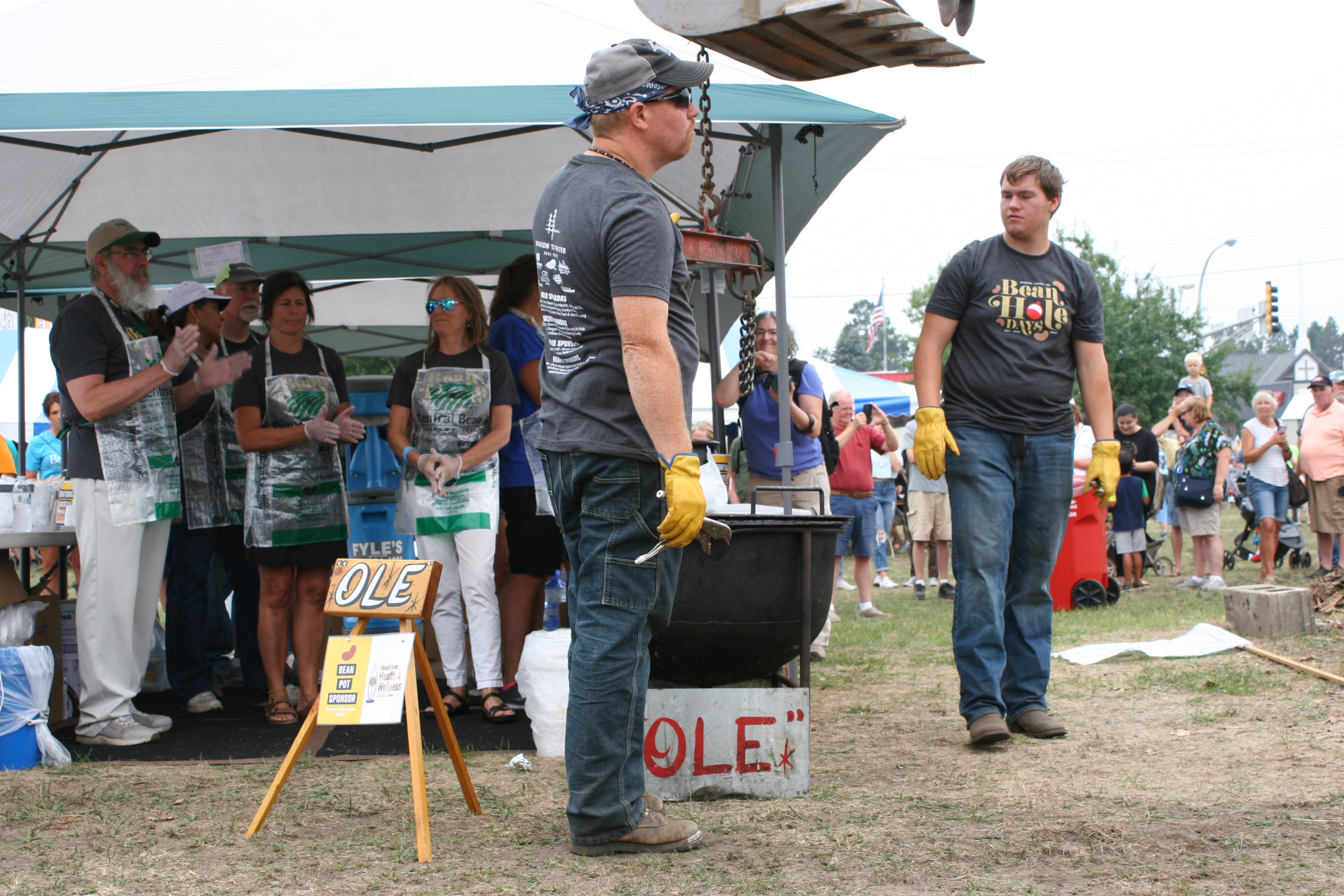
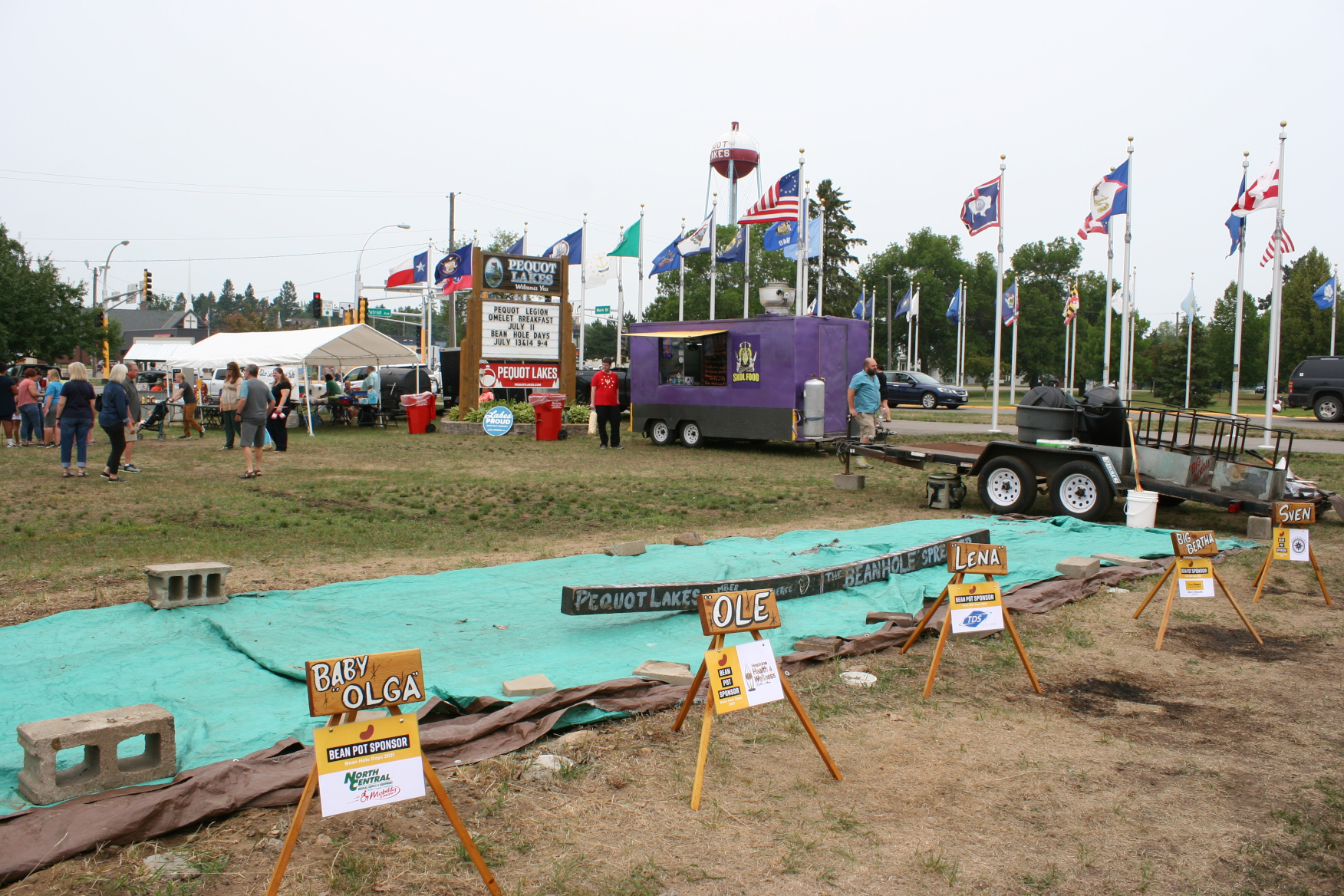
Kettles of baked beans, lifted from an underground pit, await serving during Pequot Lakes’ recent Bean Hole Days. Minnesota Prairie Roots copyrighted photo.

On our last trip North, Randy and I attended Bean Hole Days in Pequot Lakes. We’ve previously explored that small town by popping into shops, including the unique Thurlow Hardware. Pequot landmarks itself with a bobber-shaped water tower. That would be the bobber from Paul Bunyan’s fishing pole.

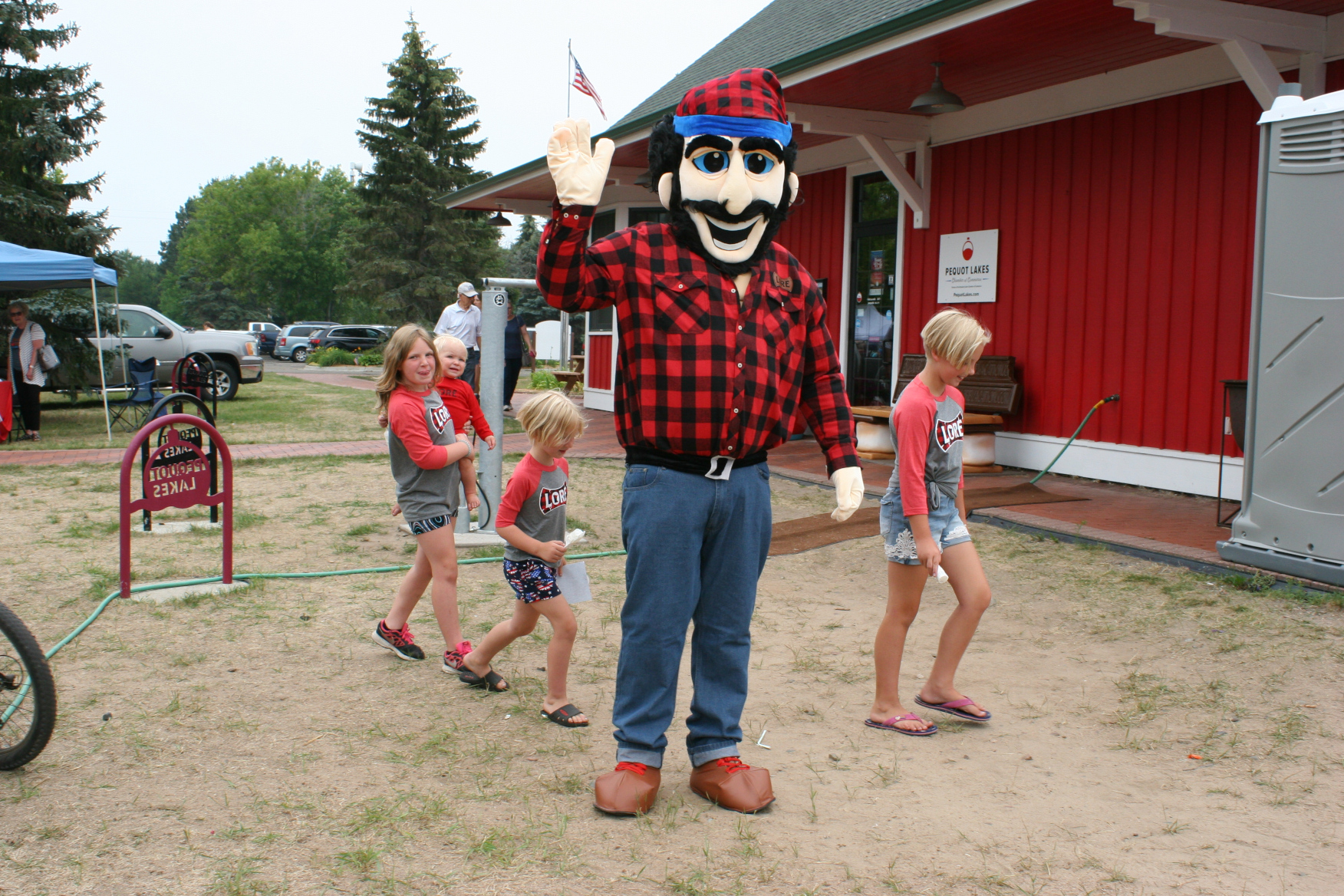
A friendly Paul Bunyan mingles with the crowd during Bean Hole Days. Minnesota Prairie Roots copyrighted photo.

This is Paul Bunyan land. The place of lumberjack lore. So different from my home in southeastern Minnesota. Paul and his side kick, Babe the Blue Ox, are universally appealing, creating a strong tourism branding identity for this region.

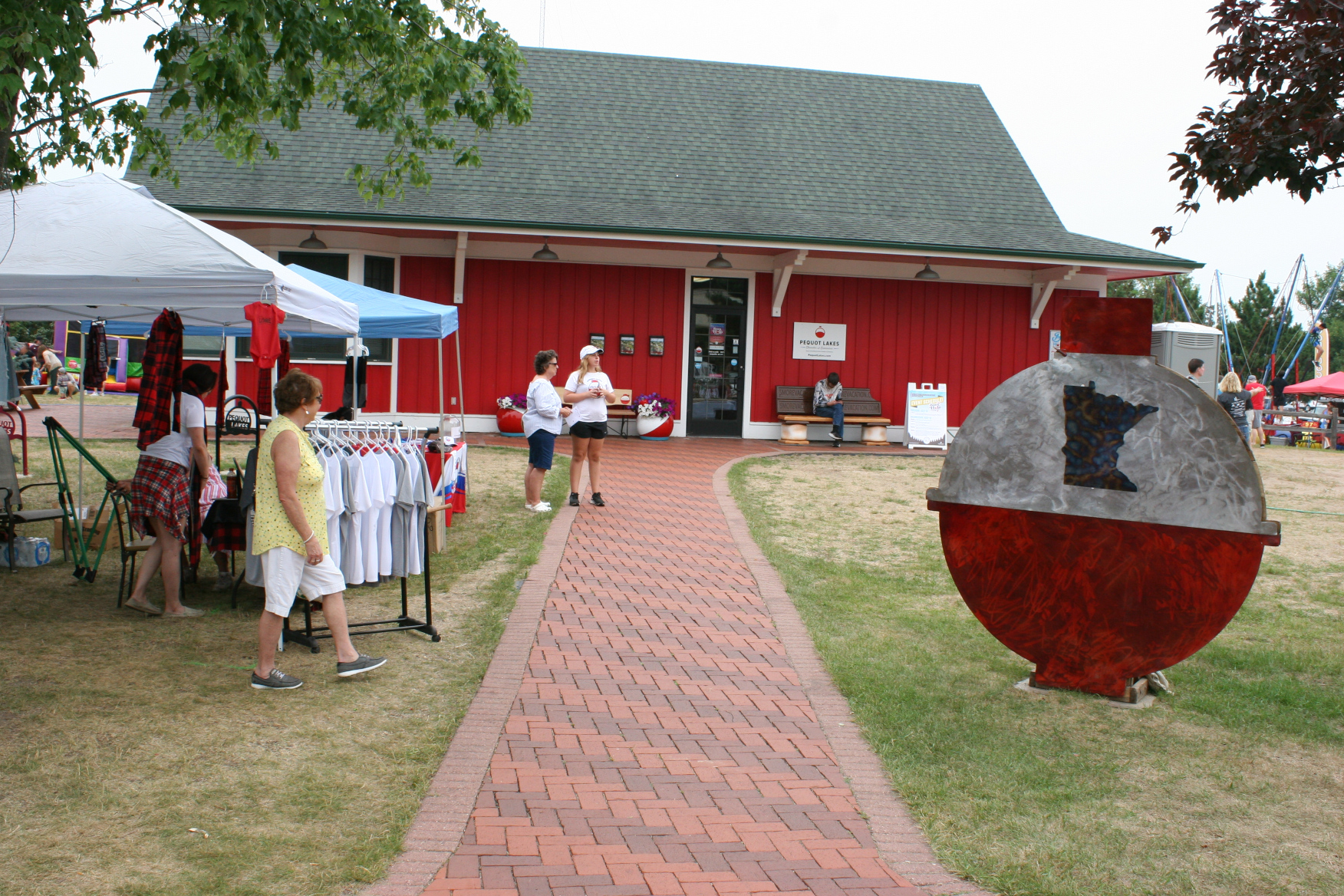
In Trailside Park, bobber sculpture and the Chamber of Commerce and Tourism office draw visitors. Minnesota Prairie Roots copyrighted photo.

The Paul Bunyan Trail from Brainerd to Bemidji runs through the heart of Pequot Lakes in Trailside Park.

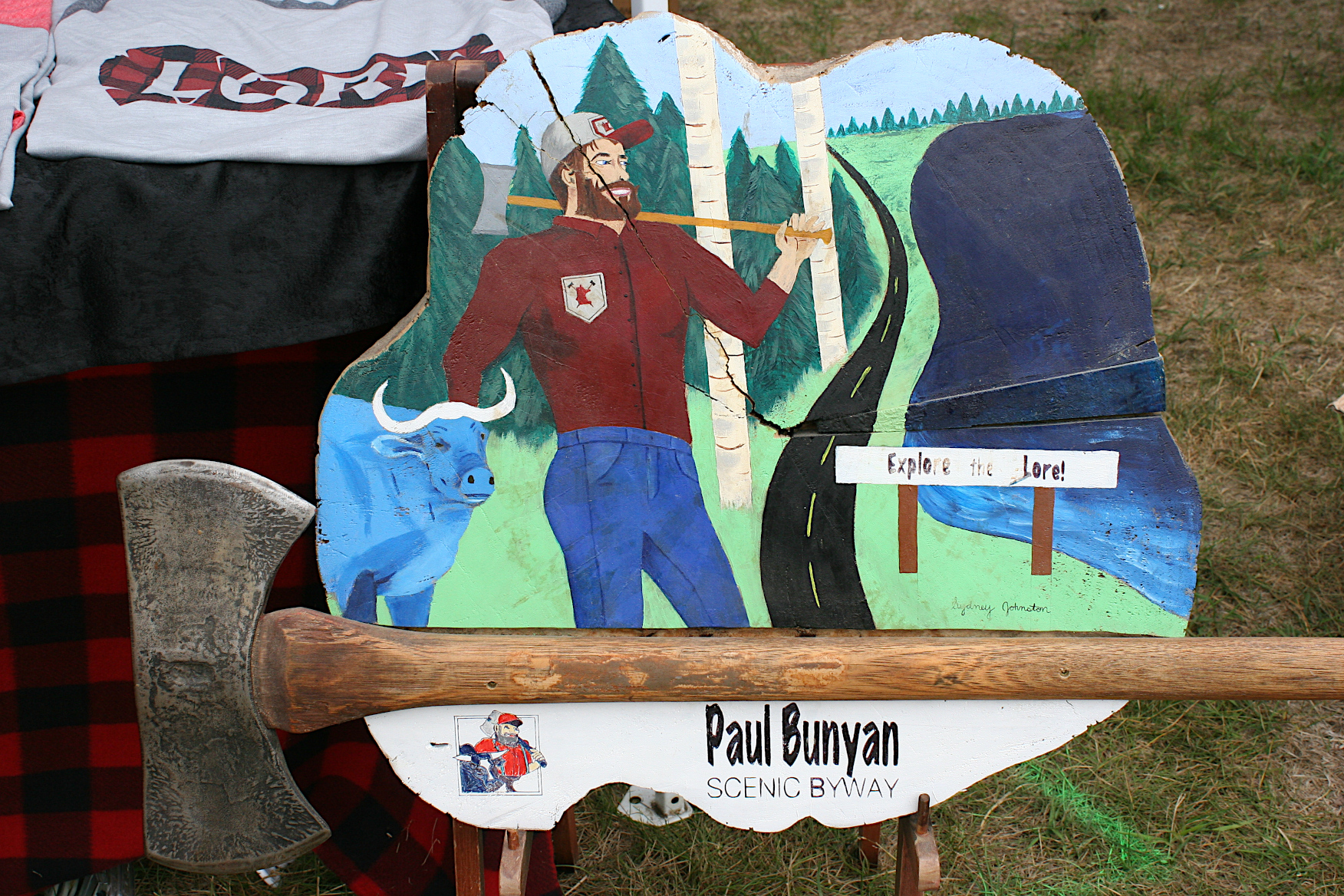
Paul Bunyan art promoting the scenic byway, spotted at Bean Hole Days. Minnesota Prairie Roots copyrighted photo.

And the Paul Bunyan Scenic Byway, a 54-mile route along county roads in scenic northern Crow Wing County and a portion of Cass County, also passes through Pequot Lakes.

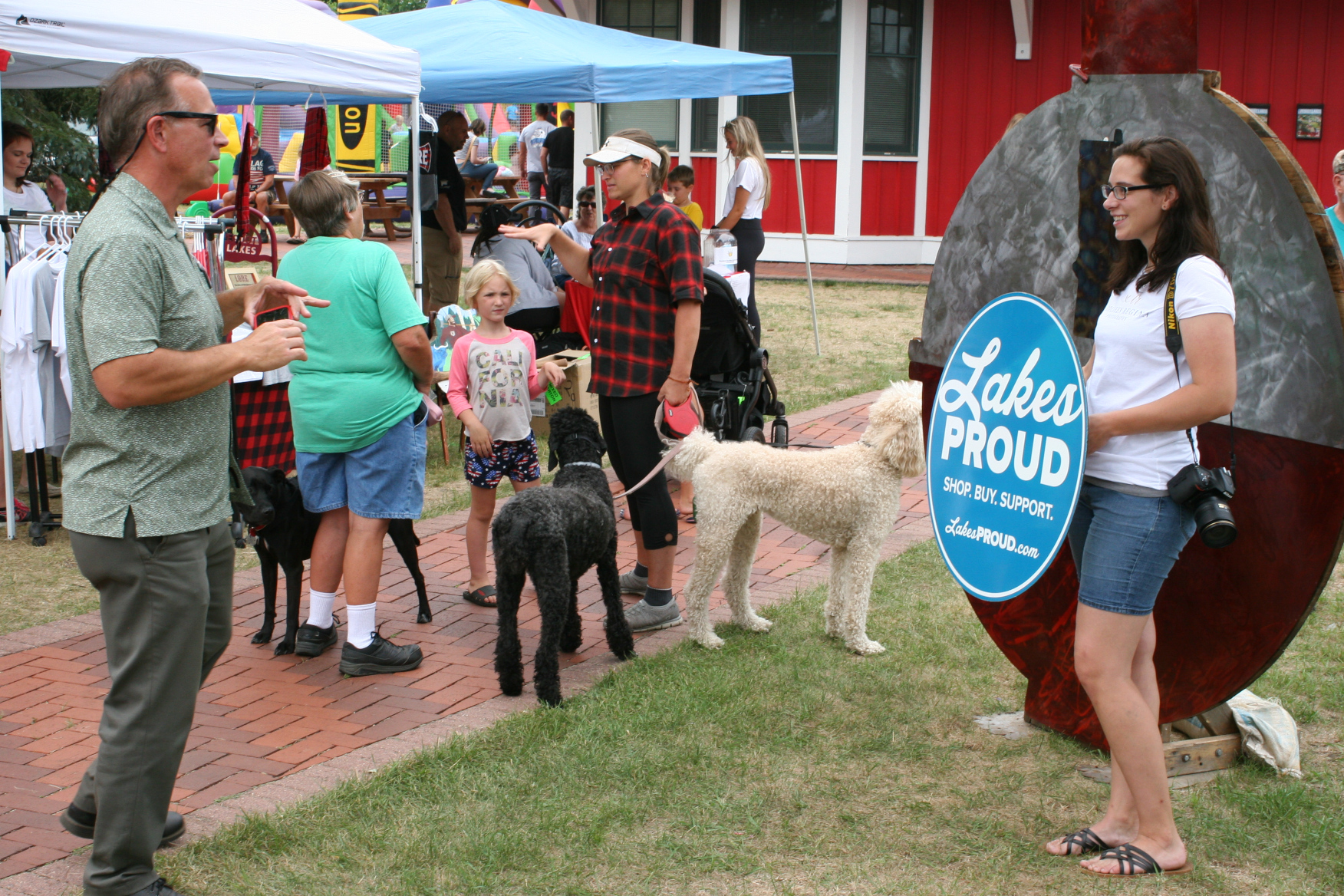
The bobber sculpture proved popular with visitors during Bean Hole Days. Minnesota Prairie Roots copyrighted photo.

To visit this region is to appreciate and embrace the stories and character of Northwoods strong Paul Bunyan. And his sweetheart Lucette Diana Kensack (seen in Hackensack, a bit farther to the north).

Kettles of beans bake in a covered pit. Each is named. Minnesota Prairie Roots copyrighted photo.

I appreciate how hard the good folks of this area work to brand this region and to create events that entertain and also provide visitors with unique experiences. Bean Hole Days, for example, rates as unlike anything I’ve ever attended. I loved everything about it from the people to the phenomenal homemade beans baked underground in Paul Bunyan-sized kettles.

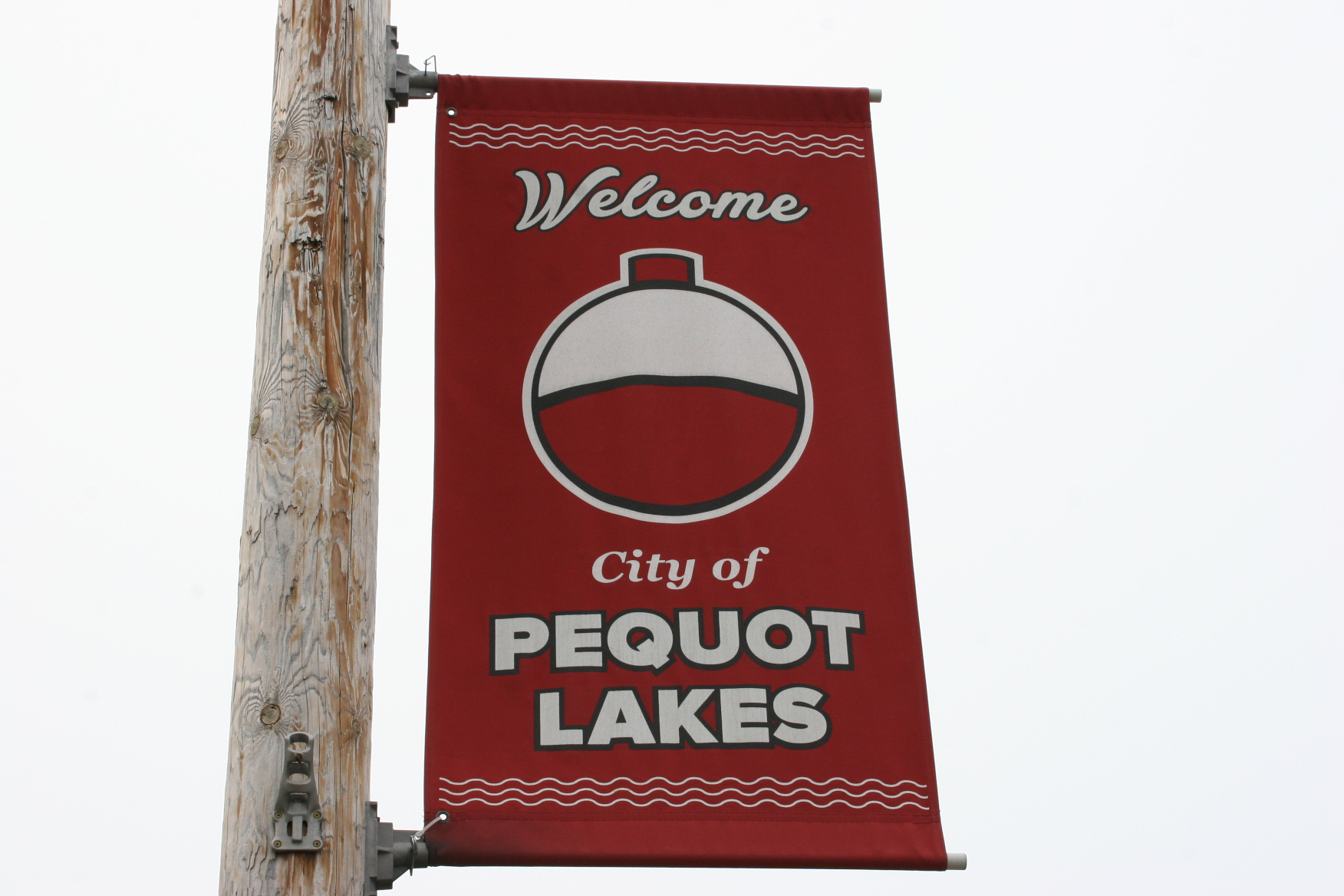
The bobber brands Pequot Lakes. Minnesota Prairie Roots copyrighted photo.

In about 10 more days, on Saturday, August 7, Pequot Lakes hosts another celebration—a Chokecherry Festival. Chokecherries are a tiny stone fruit often used in making jellies and jams. Pequot Lakes calls itself the Chokecherry Capital of Minnesota. I’m quite familiar with these berries, having picked more pails full than I care to remember while growing up on a southwestern Minnesota farm.

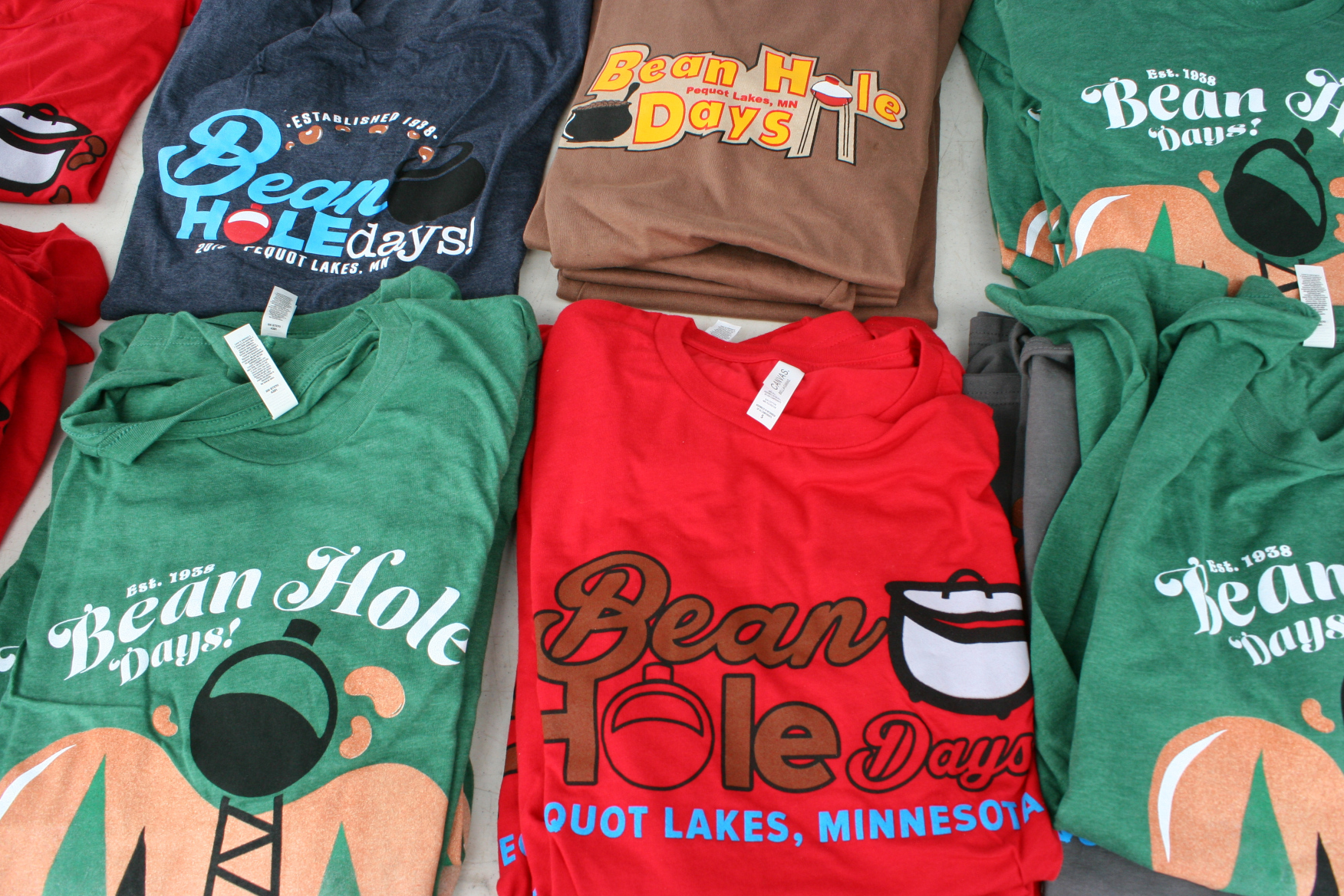
I expect vending of tees at the Chokecherry Festival, just like at Bean Hole Days. Minnesota Prairie Roots copyrighted photo.

That aside, it doesn’t appear the Pequot Lakes celebration includes any chokecherry harvesting. But it does feature a Pit Spitting Contest and a Chokecherry Culinary Contest with four categories. Jams/jellies/preserves, pastries, wine and originality.

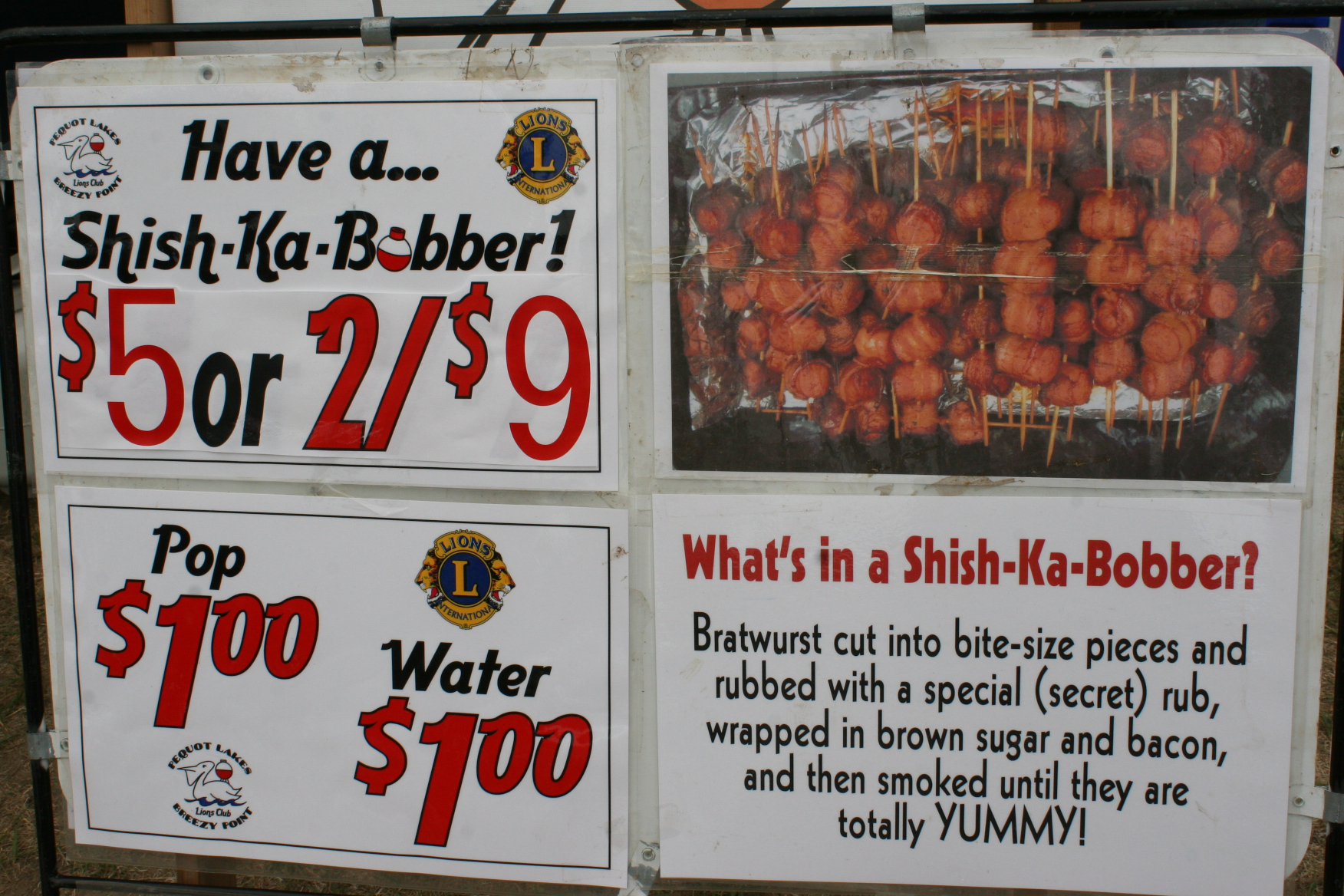
Festival food offered by the Pequot Lakes/Breezy Point Lions Club. Minnesota Prairie Roots copyrighted photo.

And just like at Bean Hole Days, the 9 a.m. – 4 p.m. event in Trailside Park includes an Arts-Crafts Fair, food vendors, kids’ activities and more.

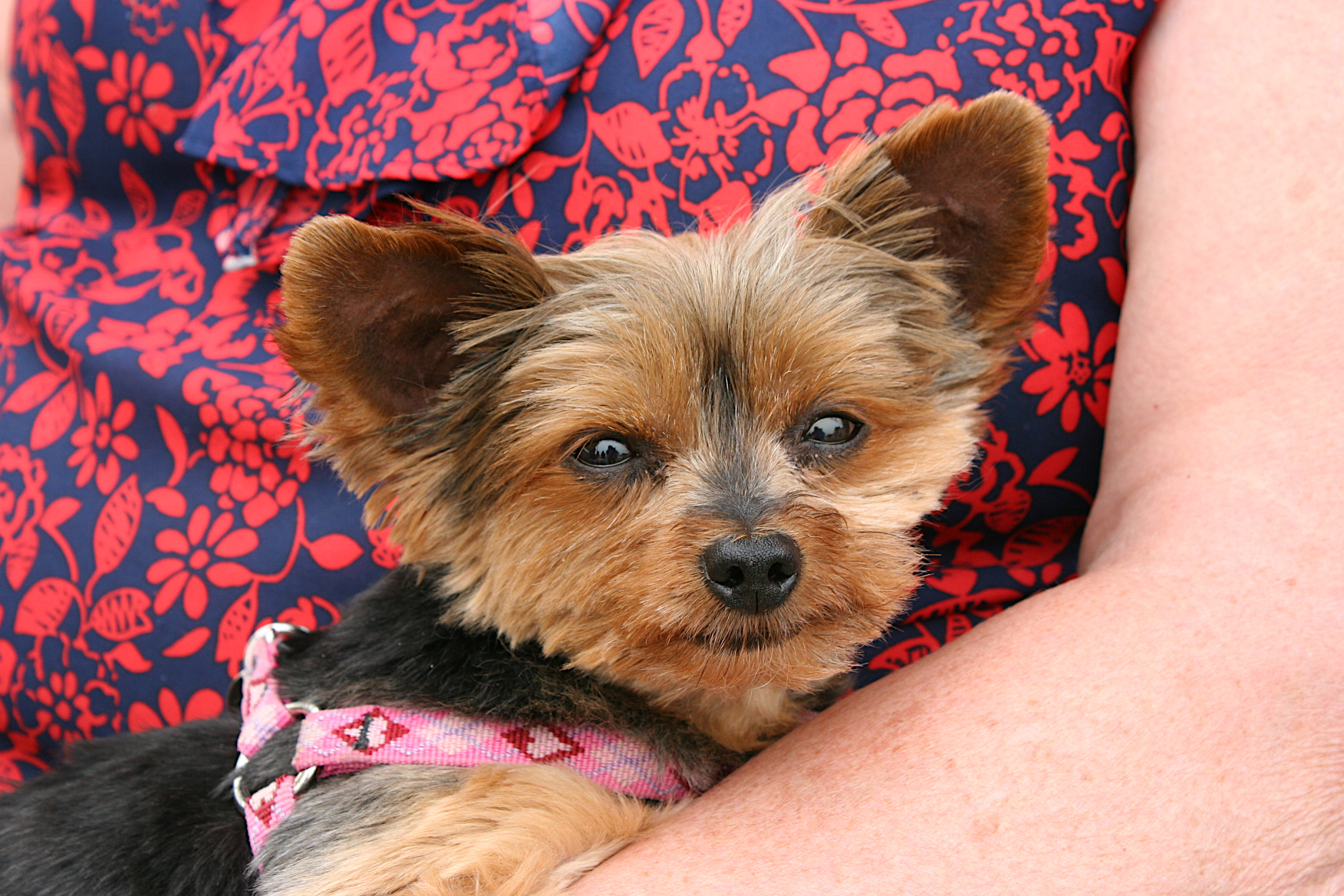
Dogs are welcome. I photographed this one in the arms of a Arts/Crafts Fair vendor at Bean Hole Days. Minnesota Prairie Roots copyrighted photo.

I encourage you to take in small town celebrations like those offered in Pequot Lakes and neighboring communities in Paul Bunyan land. To do so is to experience the Northwoods culture, at least the side that draws tourists to town.

#

This marks the third, and final, in a series of posts on Pequot Lakes.

© Copyright 2021 Audrey Kletscher Helbling
 

The art of Bean Hole Days July 27, 2021

Pottery from When Pigs Fly Studio, Nisswa, MN. Minnesota Prairie Roots copyrighted photo.

FROM POTTERY TO DYED CLOTHING and much more, creative works filled tents and spaces lining a paved path through Trailside Park during Pequot Lake’s recent Bean Hole Days.

Lots and lots of arts and crafts, some with outdoor themes for cabin country. Minnesota Prairie Roots copyrighted photo.

While beans, baked in massive kettles in an underground pit, highlight this festival, the Arts & Crafts Fair adds another appealing dimension. I always enjoy meandering among vendor booths, occasionally chatting it up with these creatives.
Featuring flags crafted from wood. Minnesota Prairie Roots copyrighted photo.

A time existed when I, too, created with my hands. As a teen, I sewed nearly all my clothes. I also stitched dresses for my paternal grandmother. I loved sewing. But college, life as a working professional and then motherhood ended that. Perhaps some day I’ll return to sewing and embroidery, two favorite hands-on crafts. For now I keep my hands primarily on my keyboard and DSLR camera.

A Flying Pig by Alice Harris. Minnesota Prairie Roots copyrighted photo.
Artists’ statement. Minnesota Prairie Roots copyrighted photo.
A mug by Dale Goodhue. Minnesota Prairie Roots copyrighted photo.

I admire the creative work of others, including those vending in Pequot Lakes. Like the pottery of Alice Harris and Dale Goodhue, Minnesota residents in the summer, Georgia residents in the winter. They create out of their When Pigs Fly Studio in Nisswa. Alice crafts the pigs while Dale creates more practical pottery pieces like mugs and plates. What a difference in approaches to pottery.

A Puzzle Box crafted by Ken Spurlin. Minnesota Prairie Roots copyrighted photo.

Perhaps the most unusual art I discovered are the Puzzle Boxes crafted by Ken Spurlin of Nevis. He takes a chunk of wood and then saws it into a puzzle with a hidden space inside. It’s magical.

Crocheted art from Spun A Yarn. Minnesota Prairie Roots copyrighted photo.

When I spotted crocheted panels in the Spun A Yarn booth, I engaged in conversation with the artist, who, as it turns out, is also a freelance fiction editor and writer. Miranda Darrow (her pen name) creates “crochet with character.” Her crocheted loon panel caught my eye given the northwoods location of the Arts & Craft Fair. Loons are common on area lakes.

Vending dyed goods and other art. Minnesota Prairie Roots copyrighted photo.
Used for natural dyes. Minnesota Prairie Roots copyrighted photo.
A sampling of the dyed clothing. Minnesota Prairie Roots copyrighted photo.

A creative backdrop and vendors dressed in dyed clothing caused me to stop and peruse the art of Shea J Maze and Diaspora Textiles. Memories of tie dying in the 70s flashed back. But unlike the chemicals I used to dye tees, these items are dyed naturally. A jar of dried flowers sitting on the table proved that. Beautiful, soft hues define this natural dying method.

Kids play at the Wondertrek booth. Minnesota Prairie Roots copyrighted photo.

Farther along the trail, the bold colors of mega blocks drew kids (and me) to the booth of Wondertrek Baxter Children’s Museum. The museum is an in-process undertaking.

Bean Hole Days included a small carnival. Minnesota Prairie Roots copyrighted photo.

Across the park, inflatables splashed color into the landscape in temporary, interactive public art.

Loved this little guy’s colorful sweater. Minnesota Prairie Roots copyrighted photo.

I can see art most anywhere, including in the striped sweater worn by a preschooler wandering the fest grounds. Handcrafted or not, I don’t know. But I found it visually appealing, albeit seemingly too warm for the hot and humid July day.

Oh, the sweetness of this little girl, providing entertainment as people waited in line for free baked beans. Minnesota Prairie Roots copyrighted photo.

While I’ve only shown you a sampling of the arts and crafts featured in Pequot Lakes, I hope this entices you to attend Bean Hole Days next summer. Not only for the delicious baked beans but also for the art.

#

Please check back for one final post (of three) on Pequot Lakes Bean Hole Days.

© Copyright 2021 Audrey Kletscher Helbling