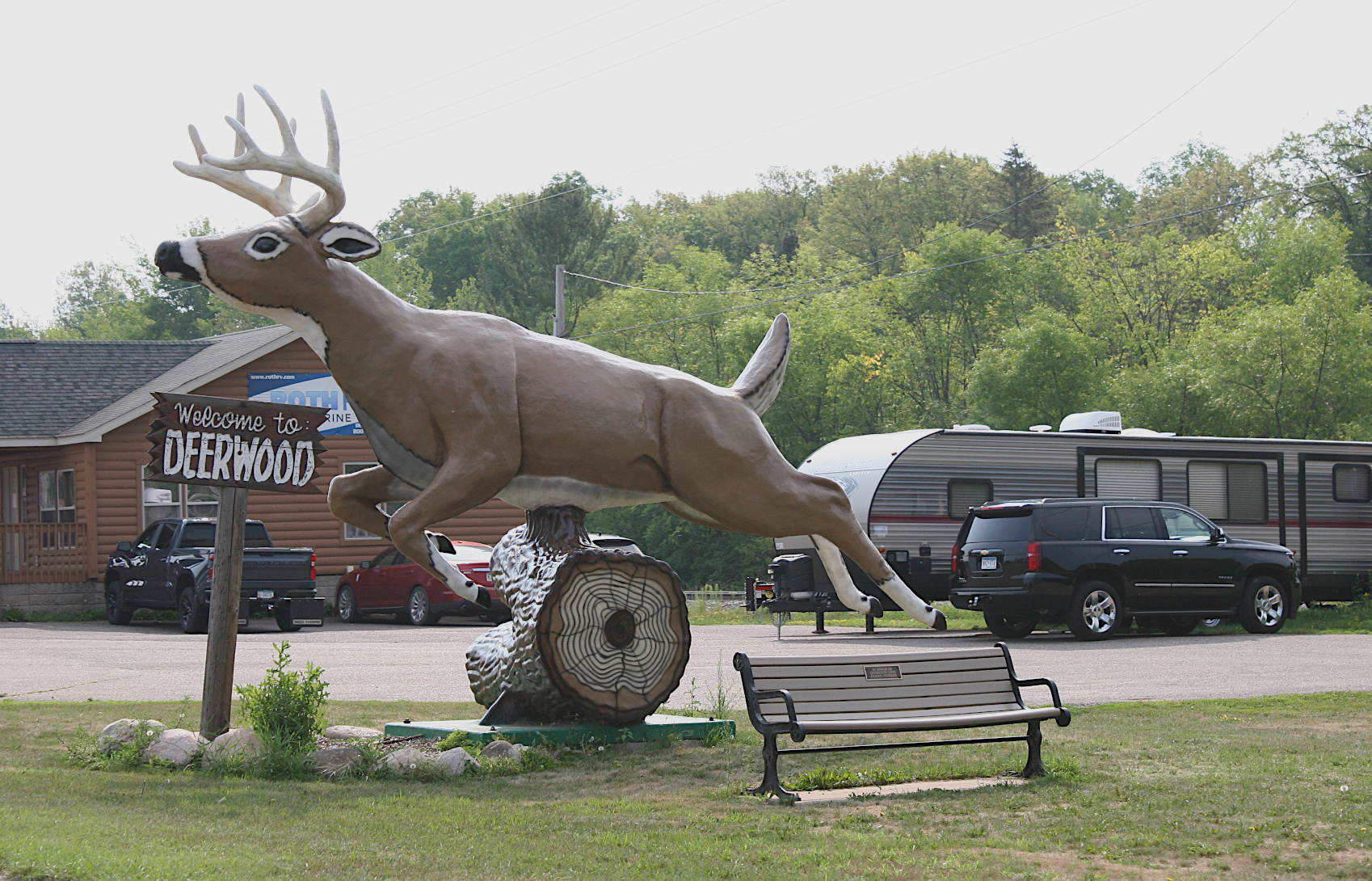
Leaping whitetail deer art in Deerwood, Minnesota. Minnesota Prairie Roots copyrighted file photo July 2021.
I APPRECIATE OUTDOOR public art. That includes kitschy roadside sculptures that define communities. The walleye in Garrison. The prairie chicken in Rothsay. The otter in Fergus Falls. Babe the Blue Ox in countless Up North Minnesota towns.
And in Deerwood, a Crow Wing County community of around 550, a leaping whitetail deer. The jumping deer, located in Elmer Park, is visible from Highway 6. I snapped a shot of it from the road last trip through this town in mid-July.
A little poking around online revealed that Deerwood was originally known as Withington. But, after being too often confused with Worthington in the southwestern corner of Minnesota, it was officially named Deerwood. That makes sense given its location among the lakes and hardwoods of central Minnesota where deer abound.
I learned a bit more history. Cuyler Adams of Deerwood discovered the iron ore which led to mining in this region. Thus the name Cuyuna Range—a combination of Adams’ first name and the name of his dog, Una.
Oh, the things you learn upon seeing, and photographing, a memorable deer sculpture next to a roadway.
TELL ME: Do you have a favorite roadside sculpture? I’d like to hear.
Cuyuna City Hall. Minnesota Prairie Roots copyrighted photo July 2021.
During a recent cabin stay in the Brainerd lakes region, Randy and I routed through Cuyuna on our way to Crosby some four miles to the south. We often follow the road less traveled because doing so can lead to fascinating finds.
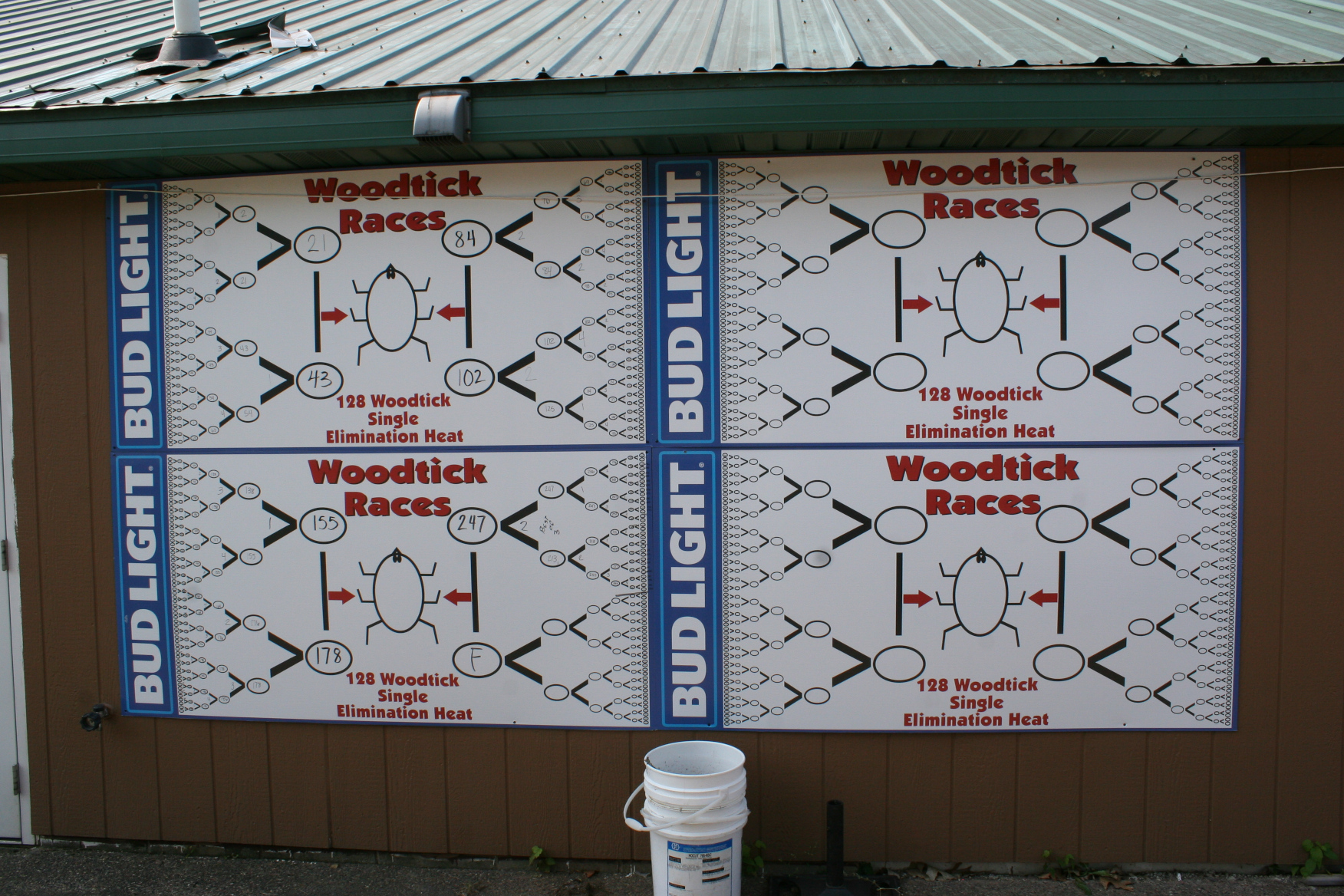
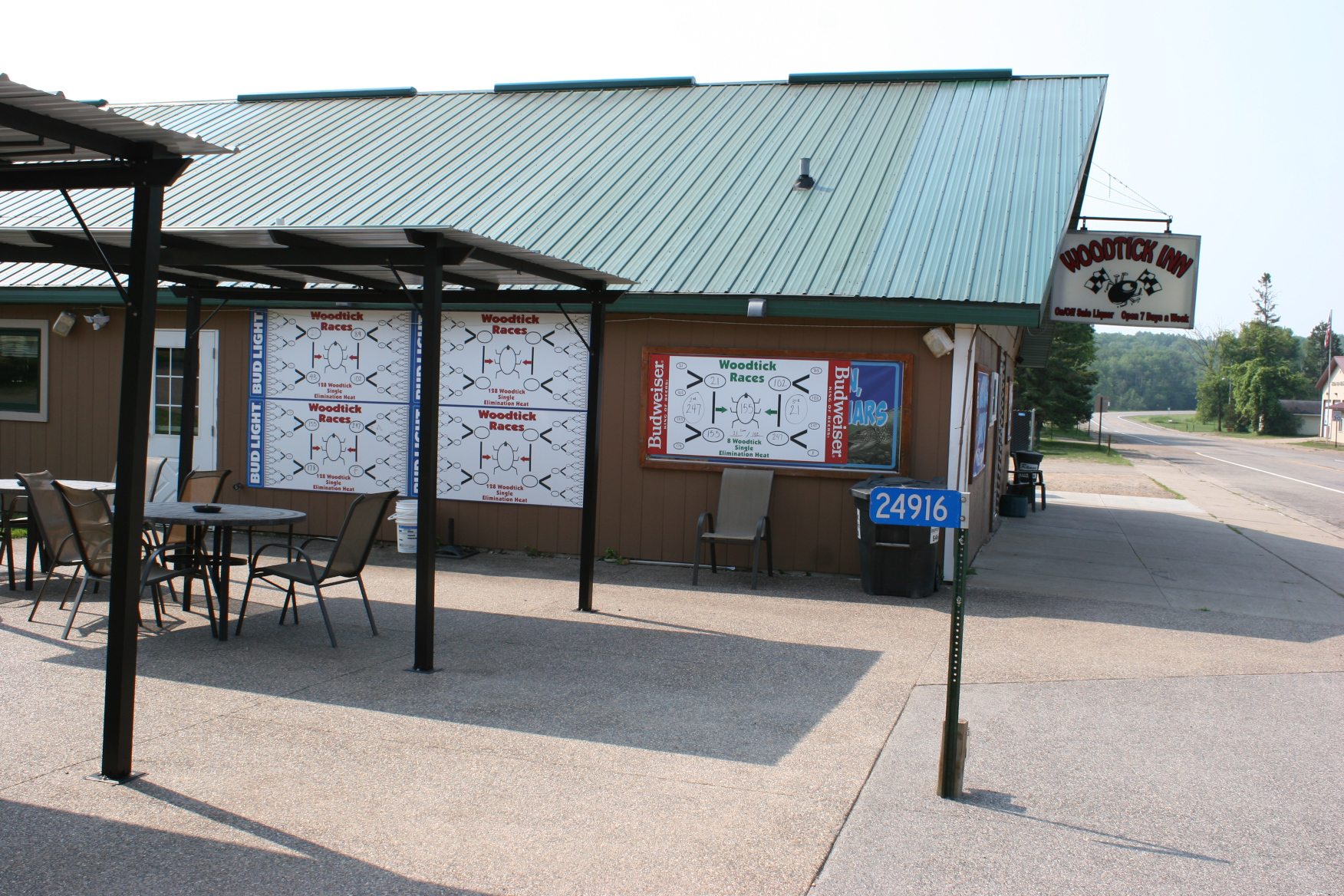
Woodtick Races scoreboards posted on the side of the Woodtick Inn. Minnesota Prairie Roots copyrighted photo July 2021.
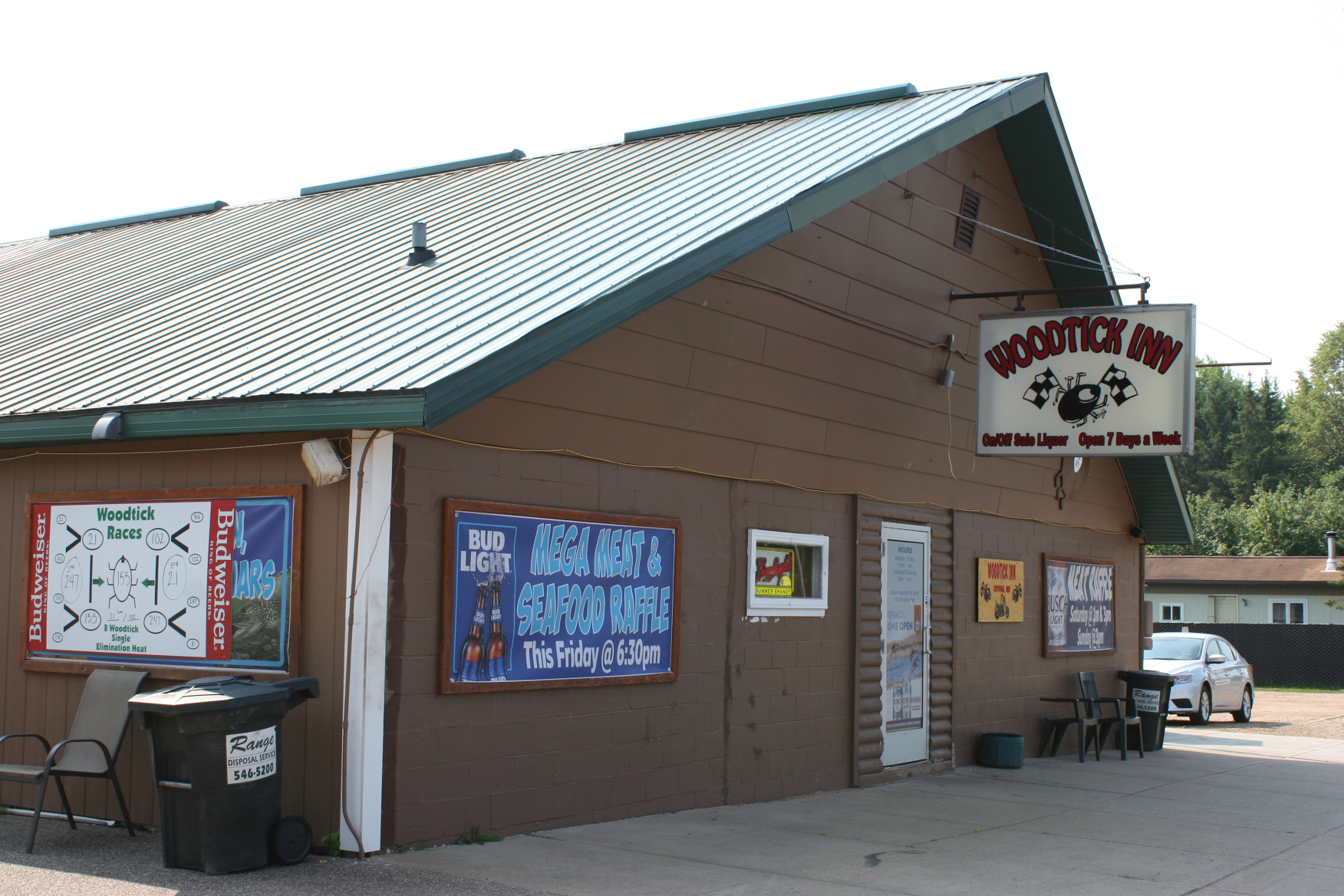
And for us on this day, it was the woodtick-dubbed bar and grill and, of all things, Woodtick Races. The Inn hosts the races annually on the second Saturday of June.
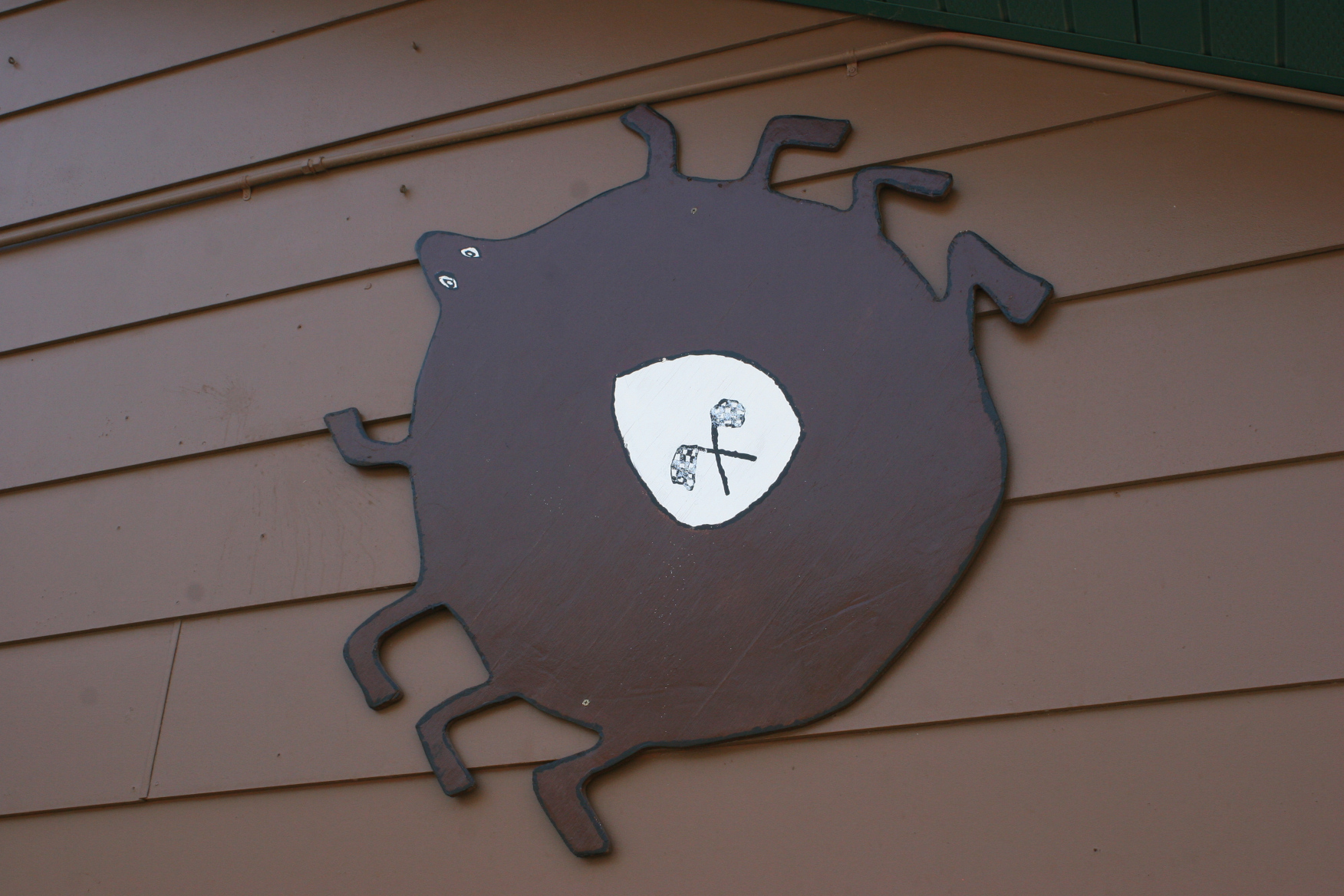
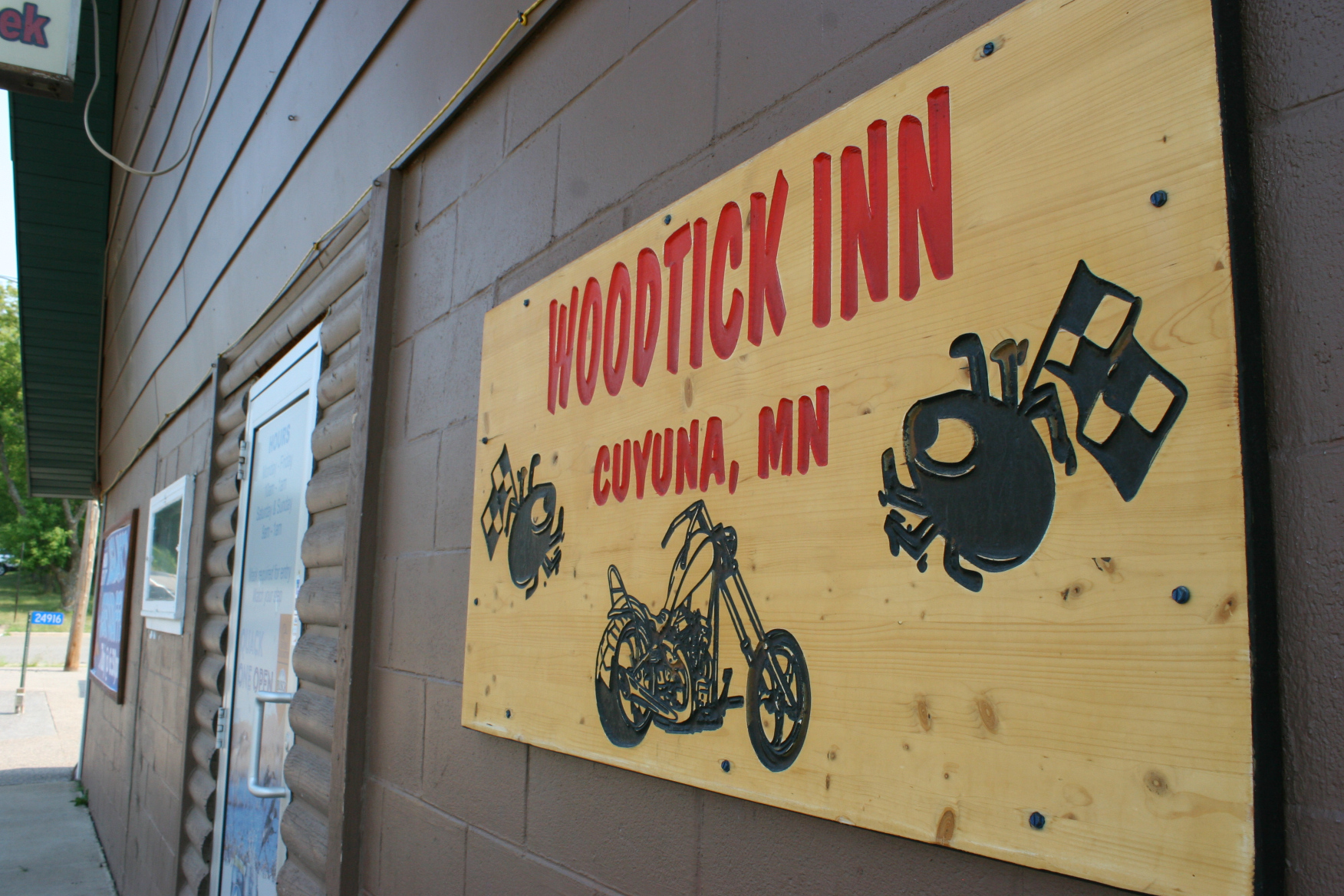
An artist’s rendition of a woodtick hangs on the bar’s exterior. Minnesota Prairie Roots copyrighted photo July 2021.
But let’s back up a minute. What, exactly, is a woodtick? It’s a parasitic arachnid. Yup, a nasty bug that will latch into your skin and suck your blood. Many varieties of woodticks exist. But those raced in Cuyuna are the common American Dog Tick. And, yes, these ticks will find a host in a dog.
The sign which first caught my eye when entering Cuyuna. Minnesota Prairie Roots copyrighted photo July 2021.
Many years have passed since a woodtick determined I would be a good feeding source. But, as a child, I often found ticks stuck to my skin after playing outdoors. And, yes, they can spread diseases. And, no, I don’t like them. Not one bit.
The Woodtick Inn also welcomes anglers in this big fishing region. Minnesota Prairie Roots copyrighted photo July 2021.
There’s plenty of outdoor space for racing woodticks. Minnesota Prairie Roots copyrighted photo July 2021.
And I expect the annual Woodtick Races also draw plenty of participants and curious observers. This year, the 42nd annual event, the top three cash prizes ranged from $224-$560. That’s a good chunk of change for a race with a $5 entry fee and an additional $1 if you buy a “caught” tick rather than bring your own.
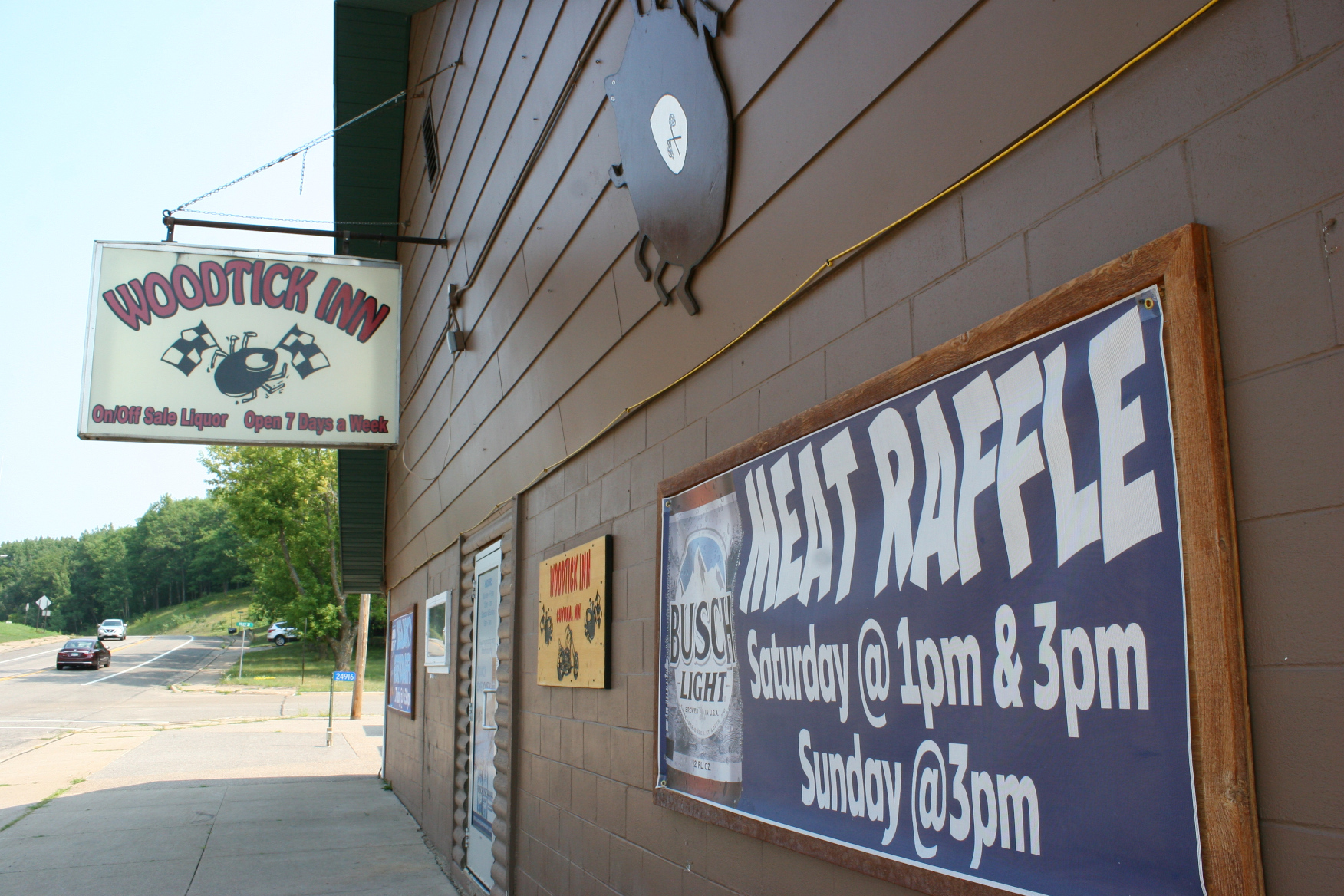
Lots of original signage identifies the Woodtick Inn. Minnesota Prairie Roots copyrighted photo July 2021.
I wondered aloud how event organizers gather woodticks for the races. “Send a kid into the woods,” Randy joked.
Meat raffles are a draw at the Woodtick Inn also. Minnesota Prairie Roots copyrighted photo July 2021.
However those ticks are gathered, the rules call for racers to place their woodticks in the middle of a circle on a table. Whichever tick reaches the outside of the circle first wins. And, yes, referees oversee the races.
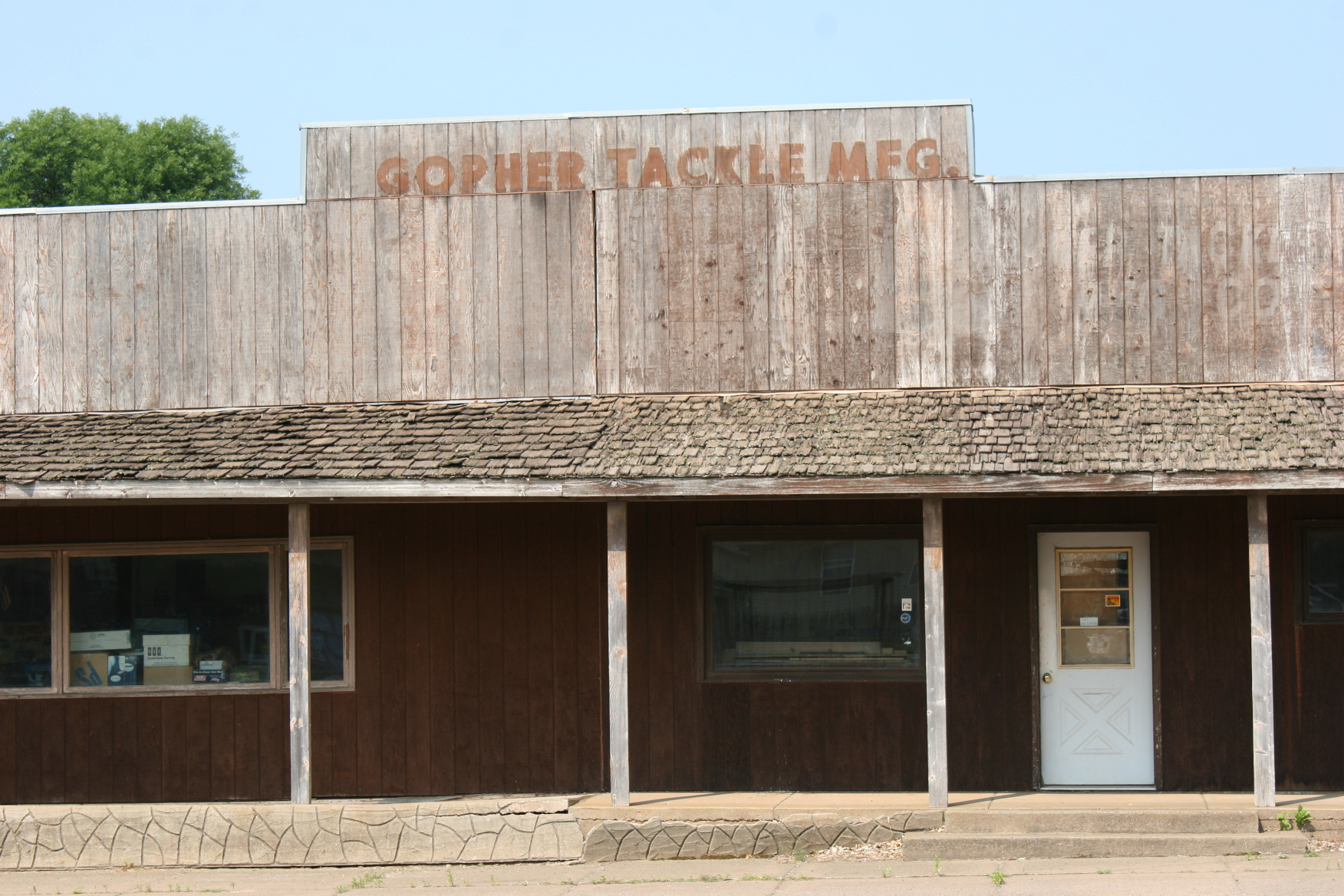
In 2021,Gopher Tackle, based in Cuyuna for 40 years, was sold and relocated to Milford, Iowa. Minnesota Prairie Roots copyrighted photo July 2021.
Some day I hope to witness these races at the Woodtick Inn in Cuyuna. And I need to further explore the spread-out town named after surveyor Cuyler Adams and his Saint Bernard, Una. The Cuyuna I saw is vastly different from a boom town that once housed a hospital, high school, theater, hotels, saloons, grocery stores and much more. A town once teeming with iron ore miners and their families. And today, woodticks.
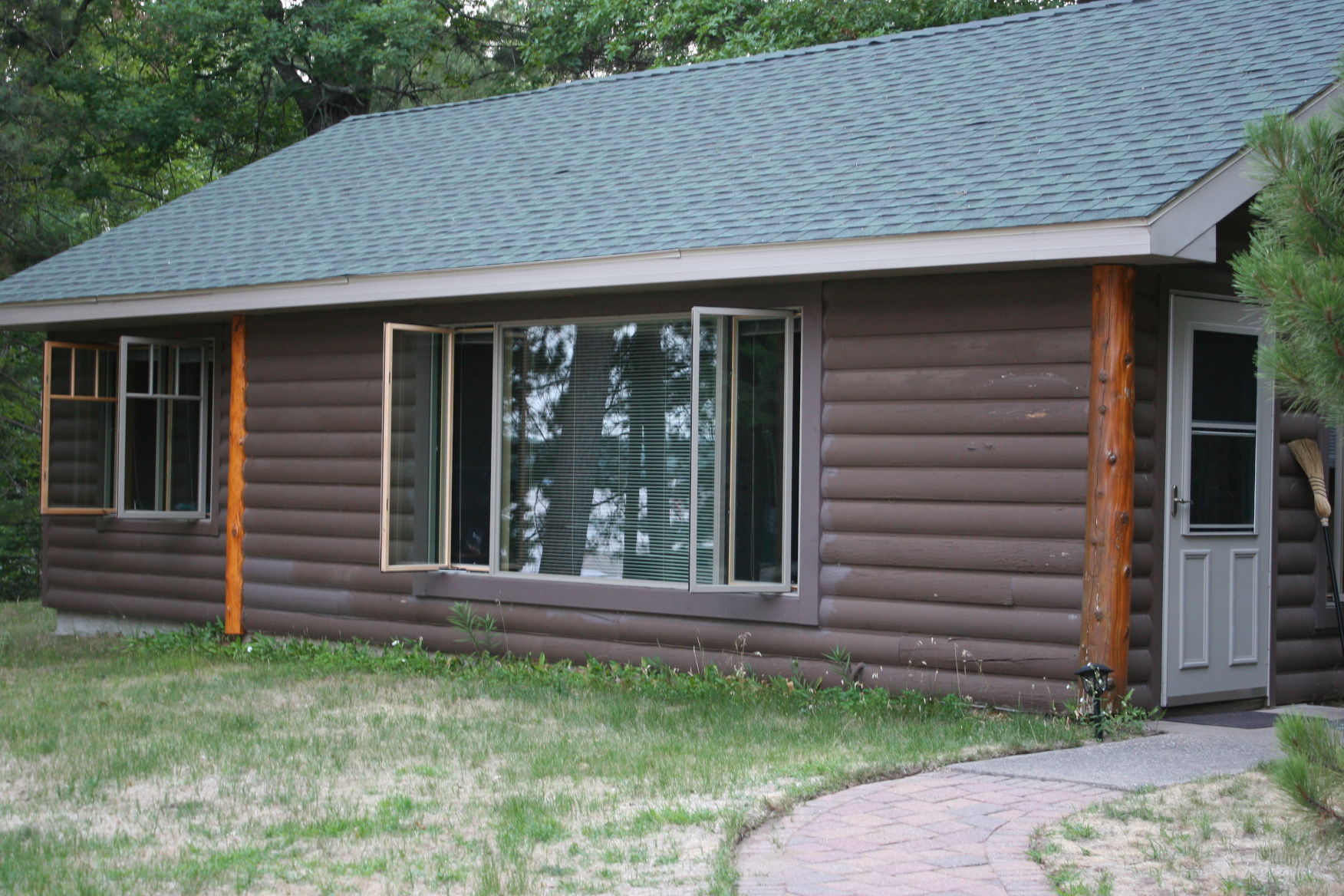
The lake cabin where we stay. Minnesota Prairie Roots copyrighted photo.
THROUGH THE SCRUB GRASS and pines we hurried. Me leading.
“You go first, Grandma,” 5-year-old Isabelle urged on our mission to corral the dragons. I’d heard them earlier, their breathy, fiery voices coming from near the cabin. Just down the lane, I noted the broken fence and the missing dragons.
There were no dragons, of course, except in our imaginations. But the sound of the blower vent on the water heater prompted the dragon round-up. We four—the two grandchildren and Grandpa and I—chased the creatures back to their enclosure.
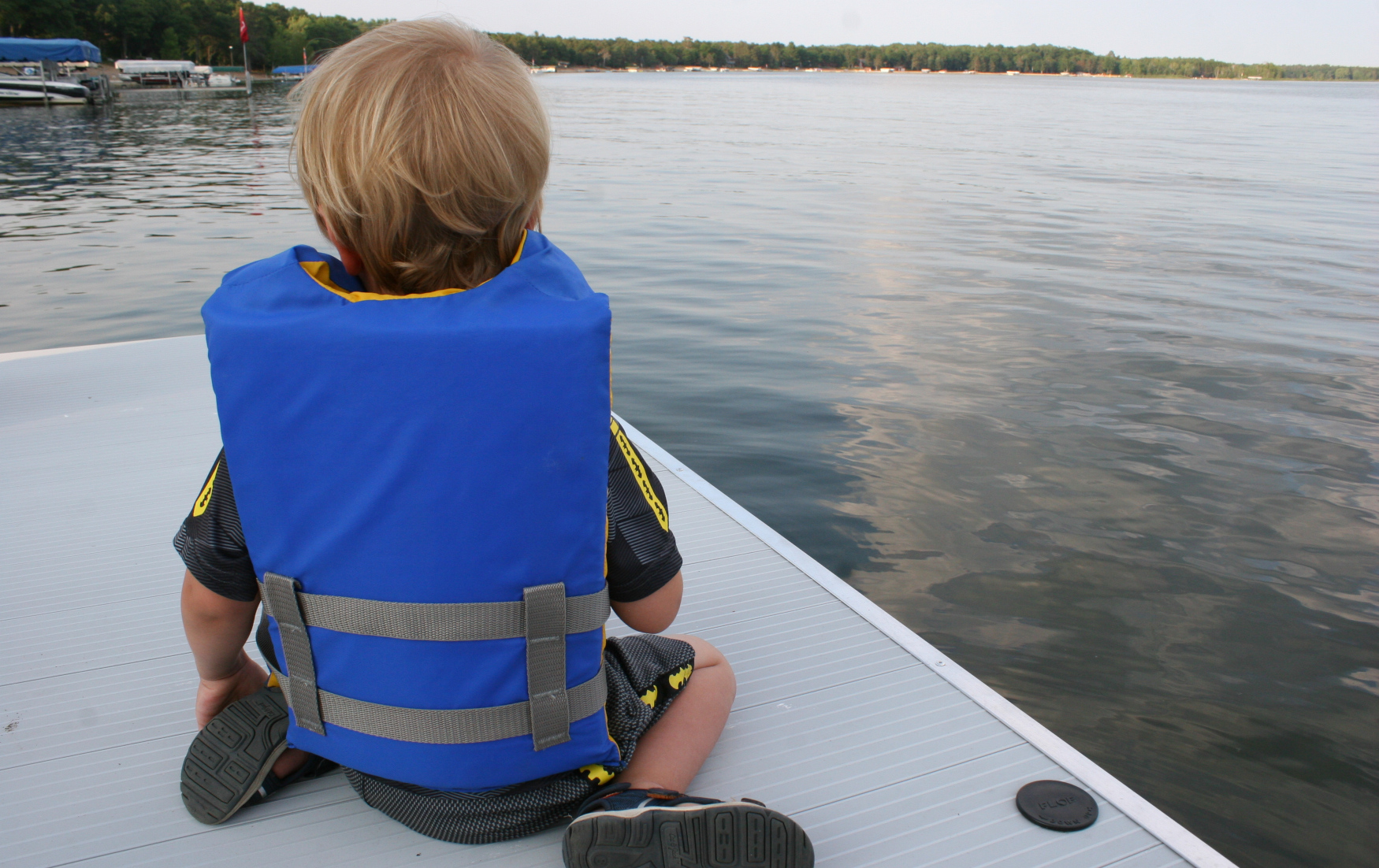
Isaac waits to fish with Grandpa. Minnesota Prairie Roots copyrighted photo.
This dragon tale is among the memories I hold from our recent stay at a central Minnesota lakes region cabin. Time with Izzy and Isaac, 2 ½, and their parents is precious family time. Days of loving and bonding and building memories.
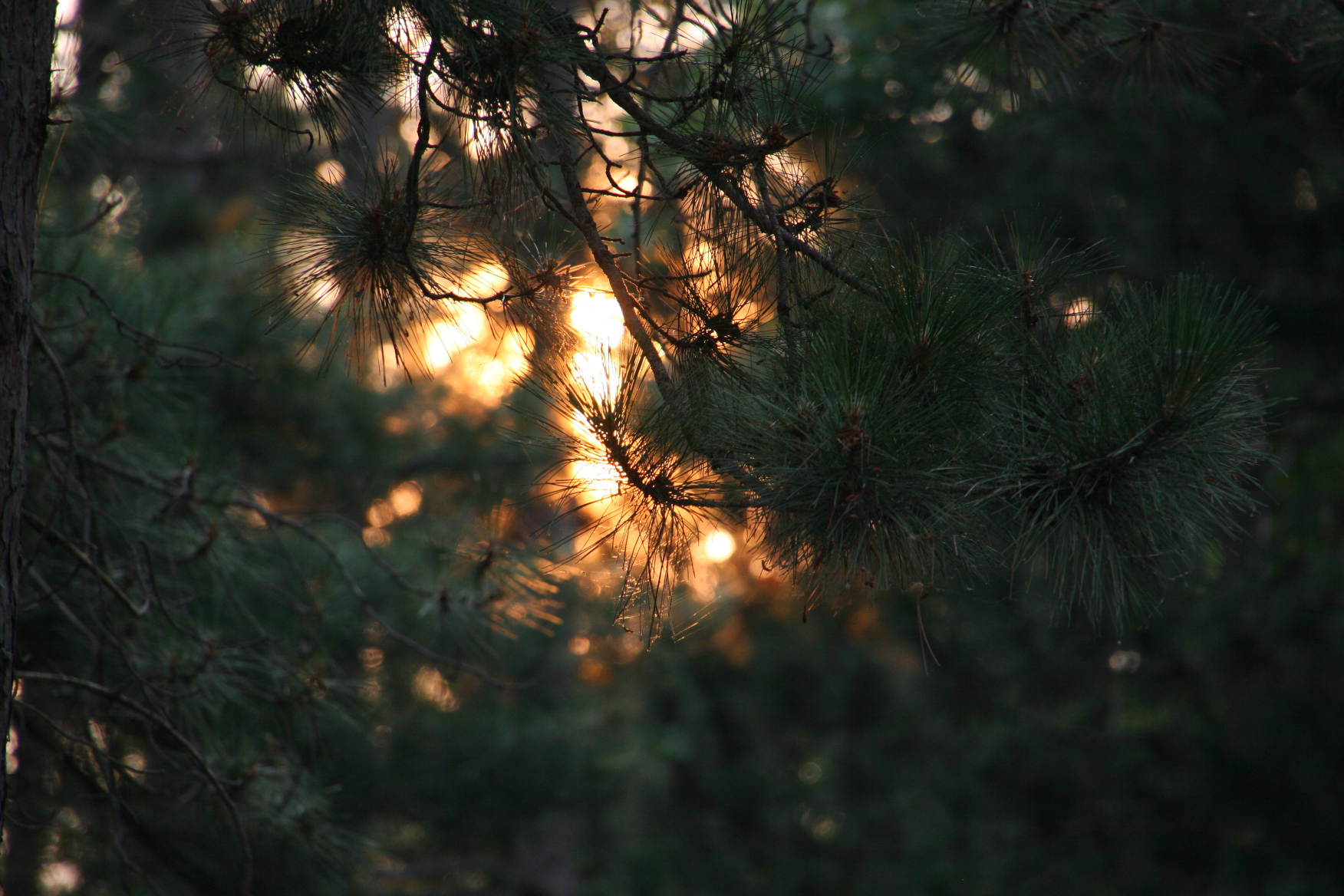
Sunset through the pines lining the driveway. Minnesota Prairie Roots copyrighted photo.
As in previous visits, Randy and I took the kids on numerous nature walks down the pine tree-lined driveway. And when we returned to the cabin, we dropped our finds in a tub of water. To see what would float—acorns, leaves, pinecones, twigs, birch bark… And what wouldn’t—stones. And that offered an opportunity to educate about Native Americans who crafted canoes from birch bark.
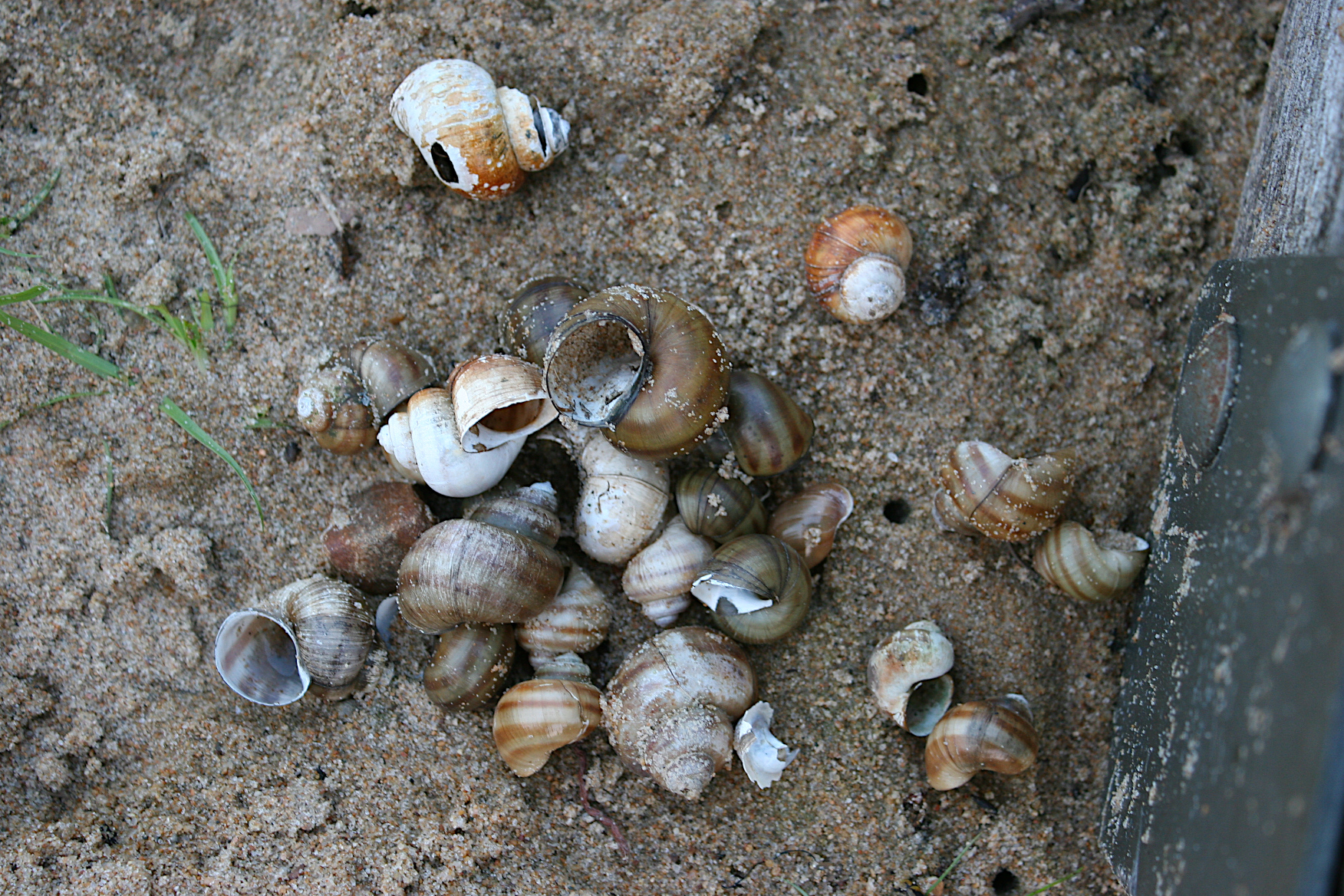
Izzy started a shell collection on the beach. Minnesota Prairie Roots copyrighted photo.
Staying at a lakeside cabin immerses us in nature without the distractions of technology and life in general. Izzy collected a mound of shells, five of which she was allowed to keep. I brought the rest home for Randy to bleach, dry and then deposit in a pint jar, a visual reminder of our time at the lake. Memories in a jar.
The water and beach drew us. To dip in the clear water, where schools of fish swarmed our feet.
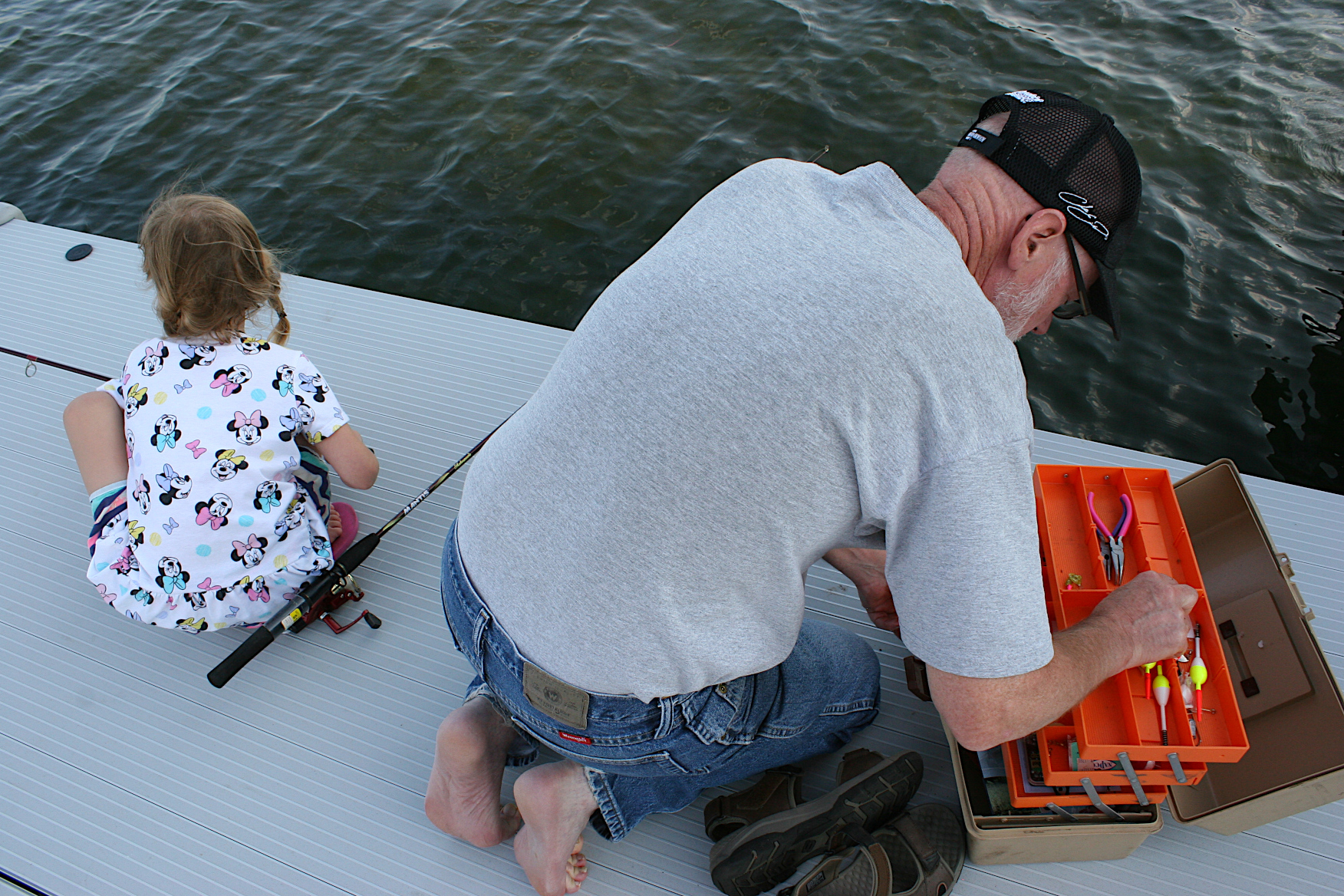
Preparing to fish. Minnesota Prairie Roots copyrighted photo.
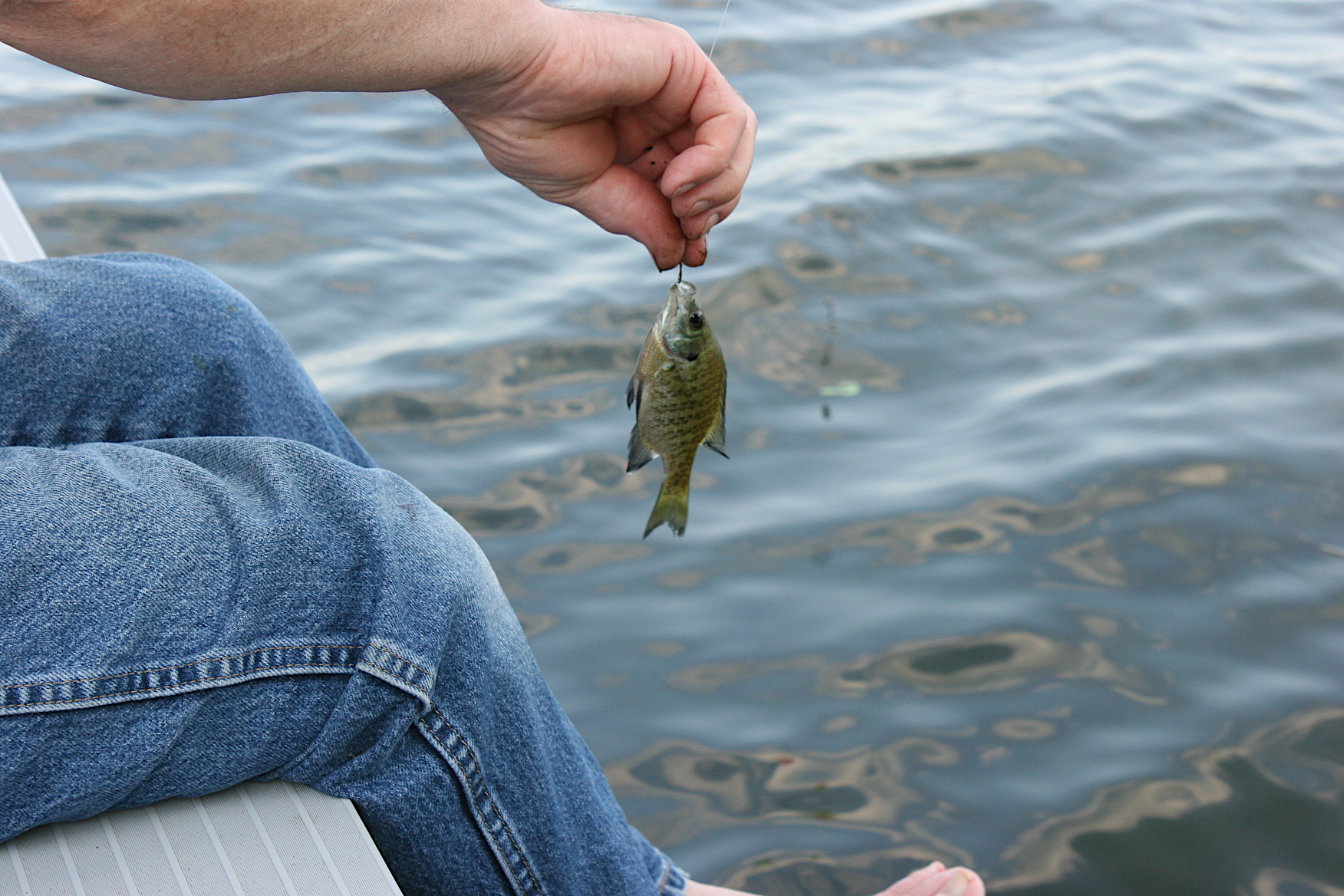
None of the fish were “keepers.” Minnesota Prairie Roots copyrighted photo.
Fishing, though, proved futile. While Randy, with the “help” of the grandkids, hooked some fish from the dock, all were too small to keep. Yet, the experience of fishing, of attempting to teach Izzy and Isaac how to reel in a line, bonds Grandpa and grandchildren. I loved watching the trio.
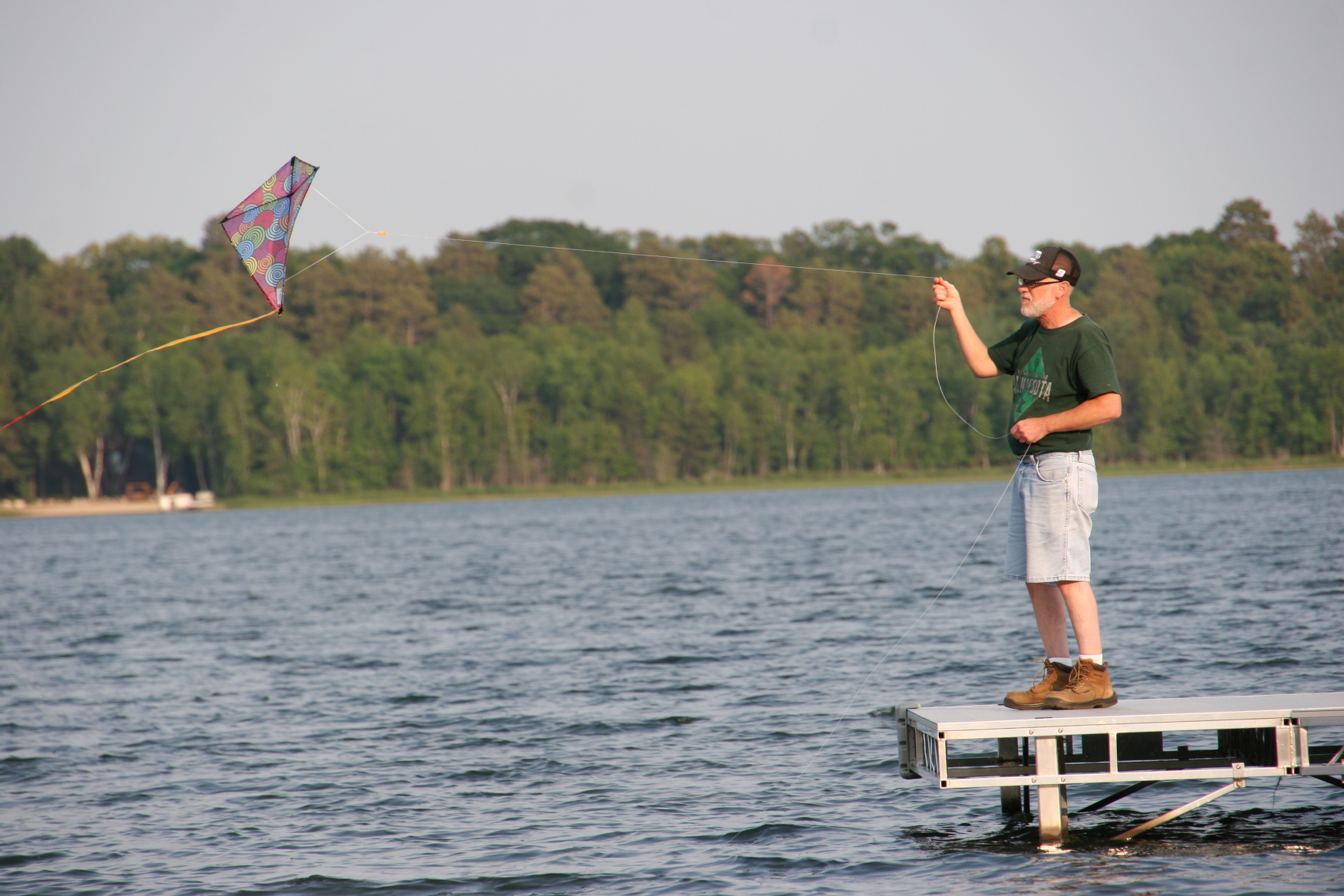
Launching a kite from the dock. Minnesota Prairie Roots copyrighted photo.
On one particularly windy day, Randy grabbed two kites from our van and headed to the end of the dock. The kids showed minimal interest, probably because they couldn’t run with the kite lakeside. We mostly watched from the beach as Randy patiently retrieved fallen kites from the water and then attempted relaunch. Repeatedly. His determination impressed me.
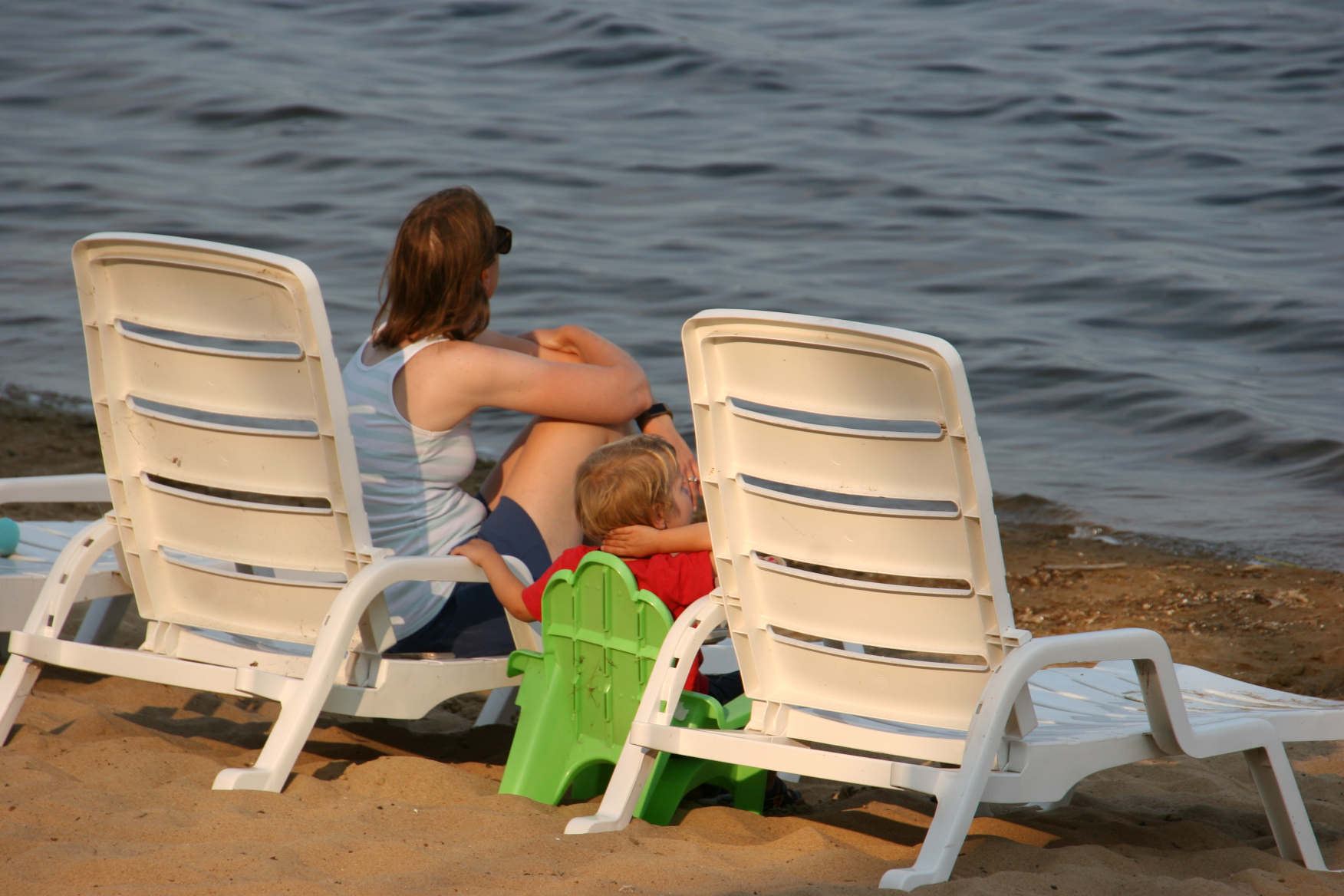
Our eldest daughter and grandson relax on the beach. Minnesota Prairie Roots copyrighted photo.
Like our last stay, Izzy opened her Sand Pie Bakery and we adults (role-playing vacationers) ordered pies in non-Minnesotan accents. Son-in-law Marc had us nearly rolling on the beach after he asked for a Mississippi Mud Pie in the thickest of Southern drawls. It was good fun, especially when Izzy claimed unfamiliarity with that particular pie while she stood with mud (sand) pie in hand.
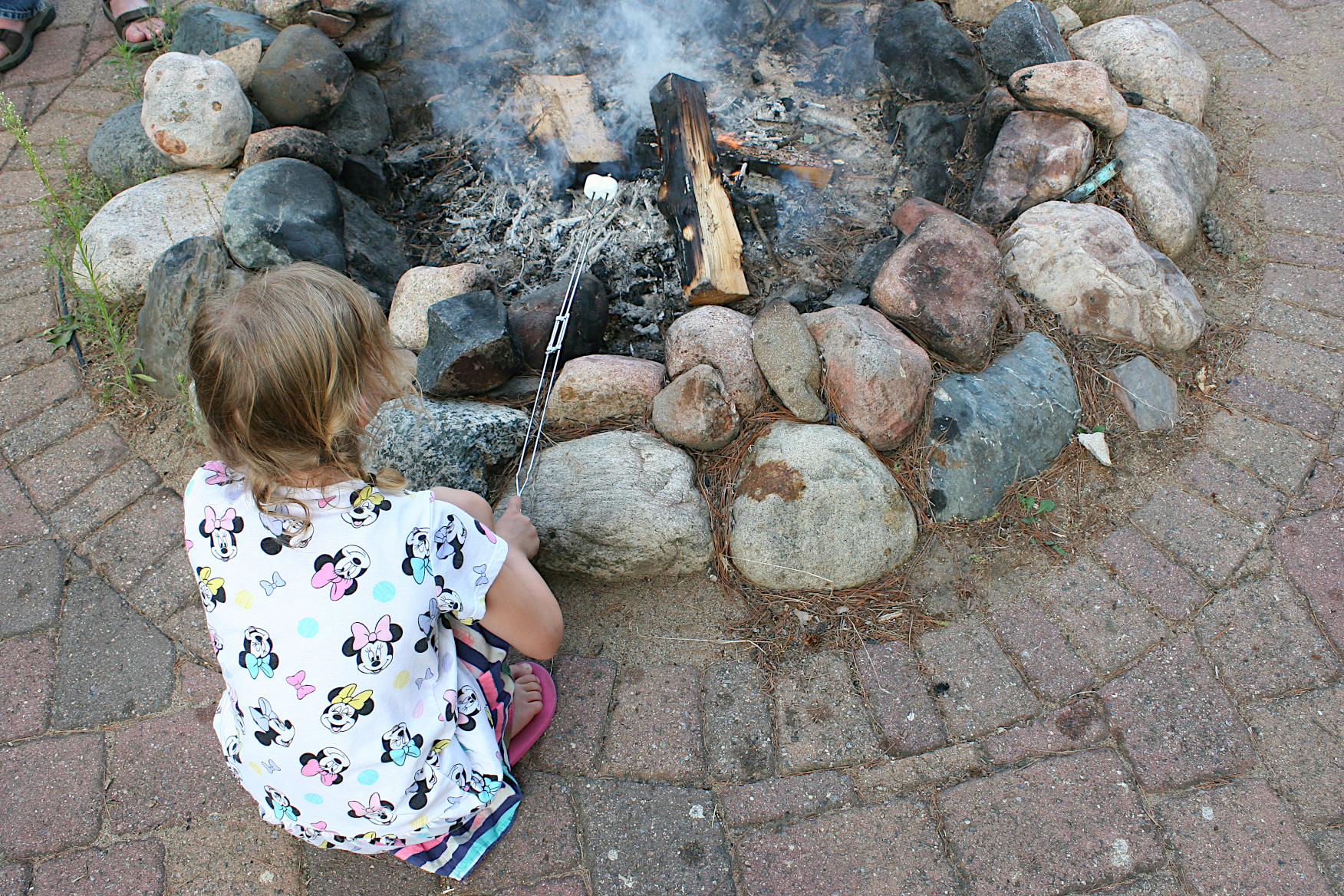
But the grandkids are enthusiastically familiar with s’mores, a campfire treat prepared each evening, except on the day strong winds warranted fire safety first due to tinder dry drought conditions. This visit Isaac joined his sister as a s’more making apprentice. I tasked him with spreading peanut butter on graham cracker halves, then adding Hershey pieces. Doing this myself would have proven easier, quicker. But easy and quick are not necessary on lake time.
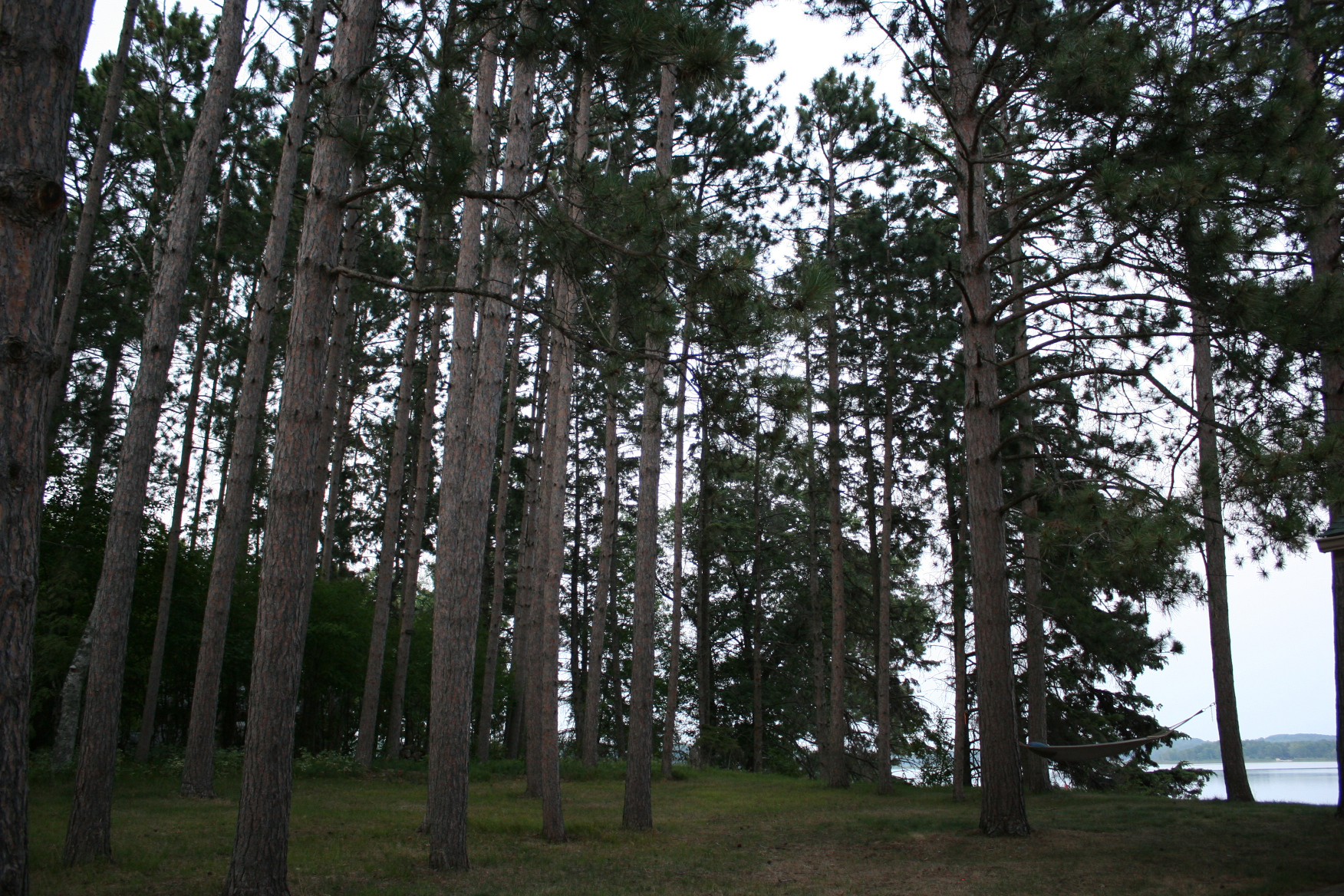
To the far right you can see the hammock strung between pines with the lake nearby. Minnesota Prairie Roots copyrighted photo.
I loved the lazy time of lying in the hammock strung between pines and with a lake view. Izzy and I lay there late one afternoon while I shared about my growing up on a farm. I’m not sure how the topic drifted to that. But my memories interested her…until she brought up bears. “What if there really was a bear here, Grandma?” She asked. We’d shared bear stories around the campfire during our last cabin stay. I didn’t have the heart to tell her the truth, that a bear had been sighted in the neighborhood. I didn’t want to scare her.
“We would just scare it away,” I said, as the hammock gently swayed. That proved good enough for her.
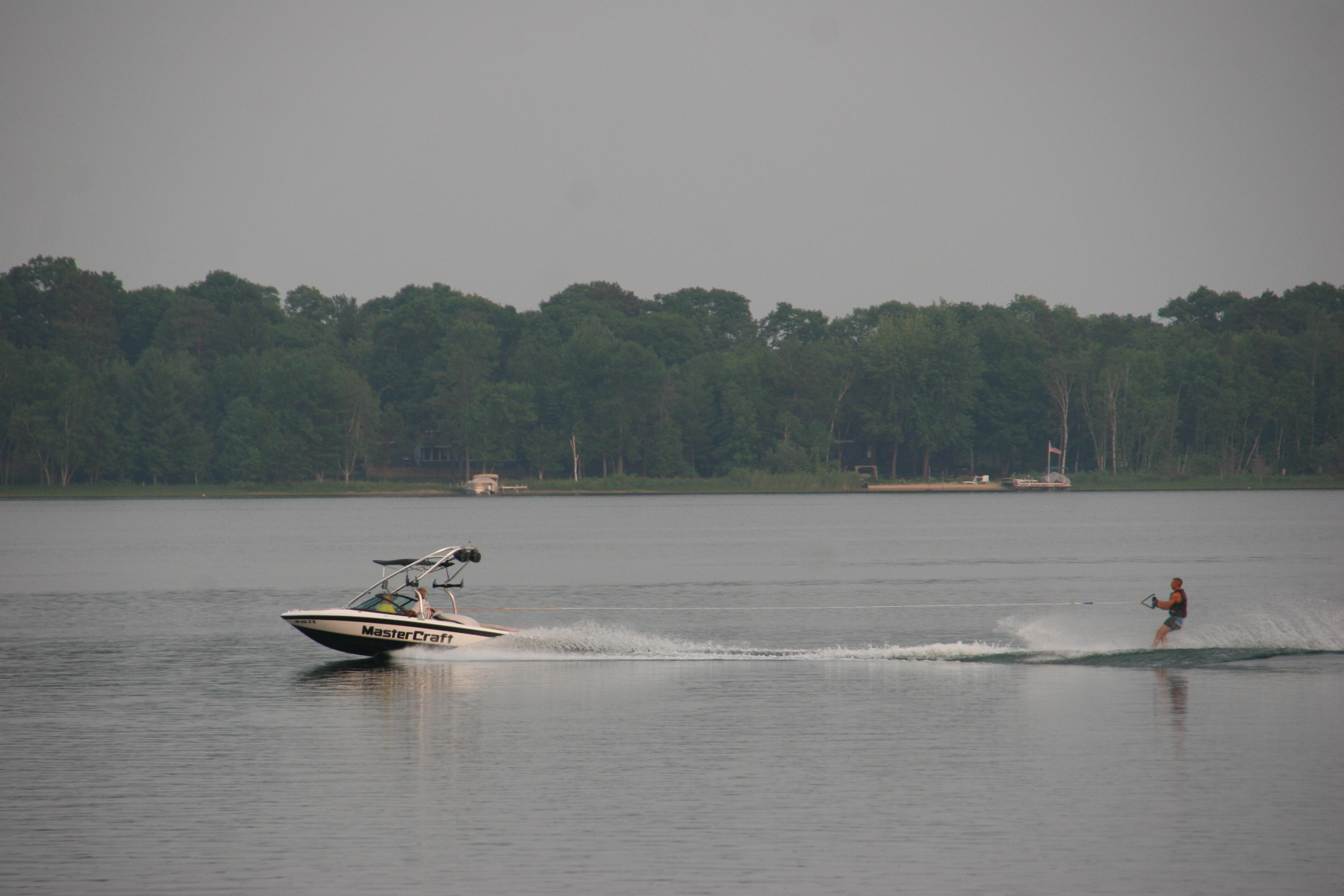
Horseshoe Lake was busy with water sports. Canadian wildfires created hazy skies. Minnesota Prairie Roots copyrighted photo.
She snuggled up to me. “I love you, Grandma.” In that moment, my heart overflowed with love for this precious little girl. This 5-year-old who wears tulle skirts on nature walks, who collects shells, who bakes pies from beach sand. Who, like me, didn’t want to leave the lake cabin…
Babe the Blue Ox, public art and photo op in Pequot Lakes. Minnesota Prairie Roots copyrighted photo.
ONLY RECENTLY HAVE I begun to explore the central Minnesota lakes region and small towns therein. Thanks to the generosity of a sister-in-law and brother-in-law, who are sharing their guest lake cabin with extended family, going Up North to the cabin is now a reality rather than a life-long dream. I feel incredibly blessed and grateful to experience what, for many Minnesotans, is a multi-generational part of their summers.
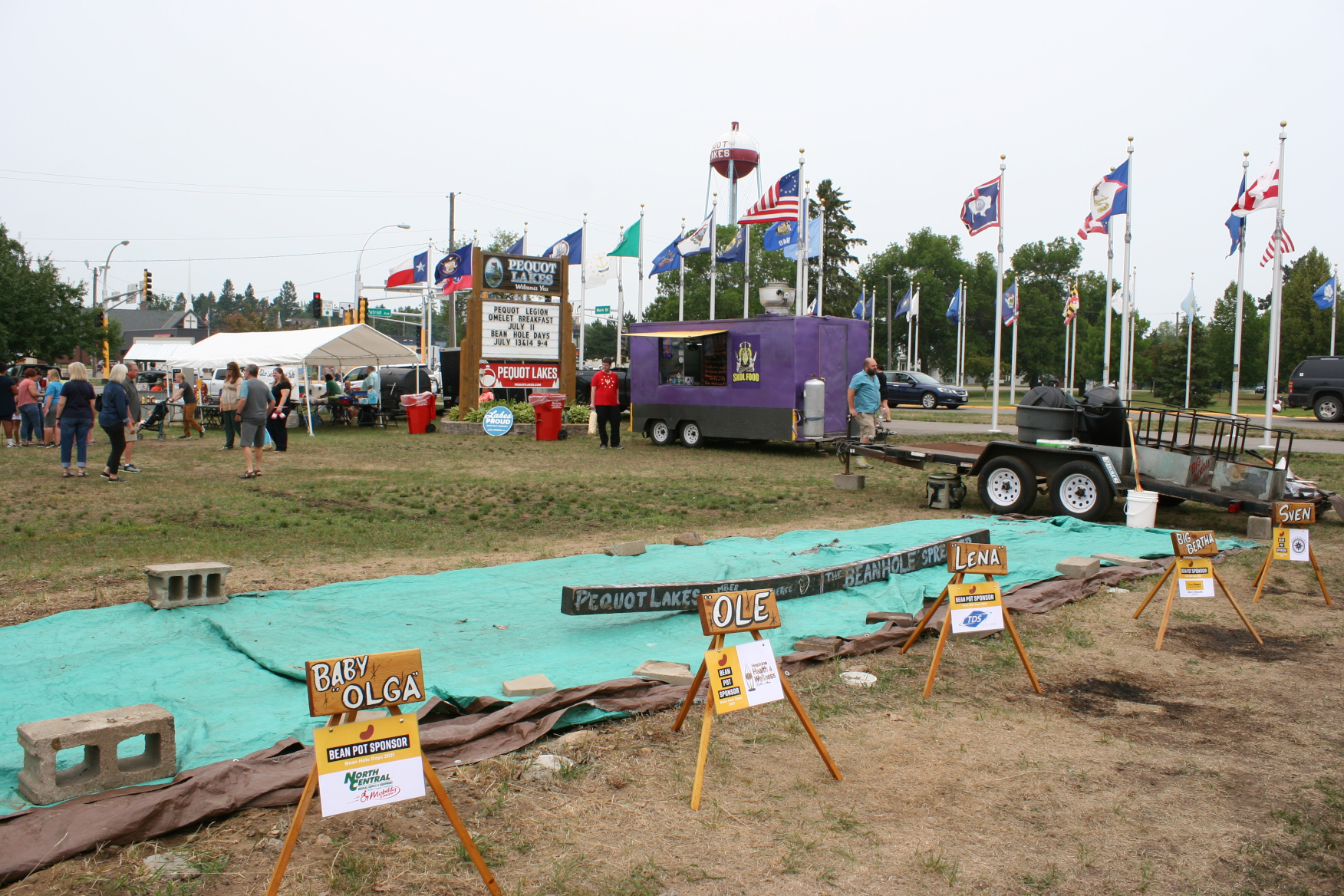
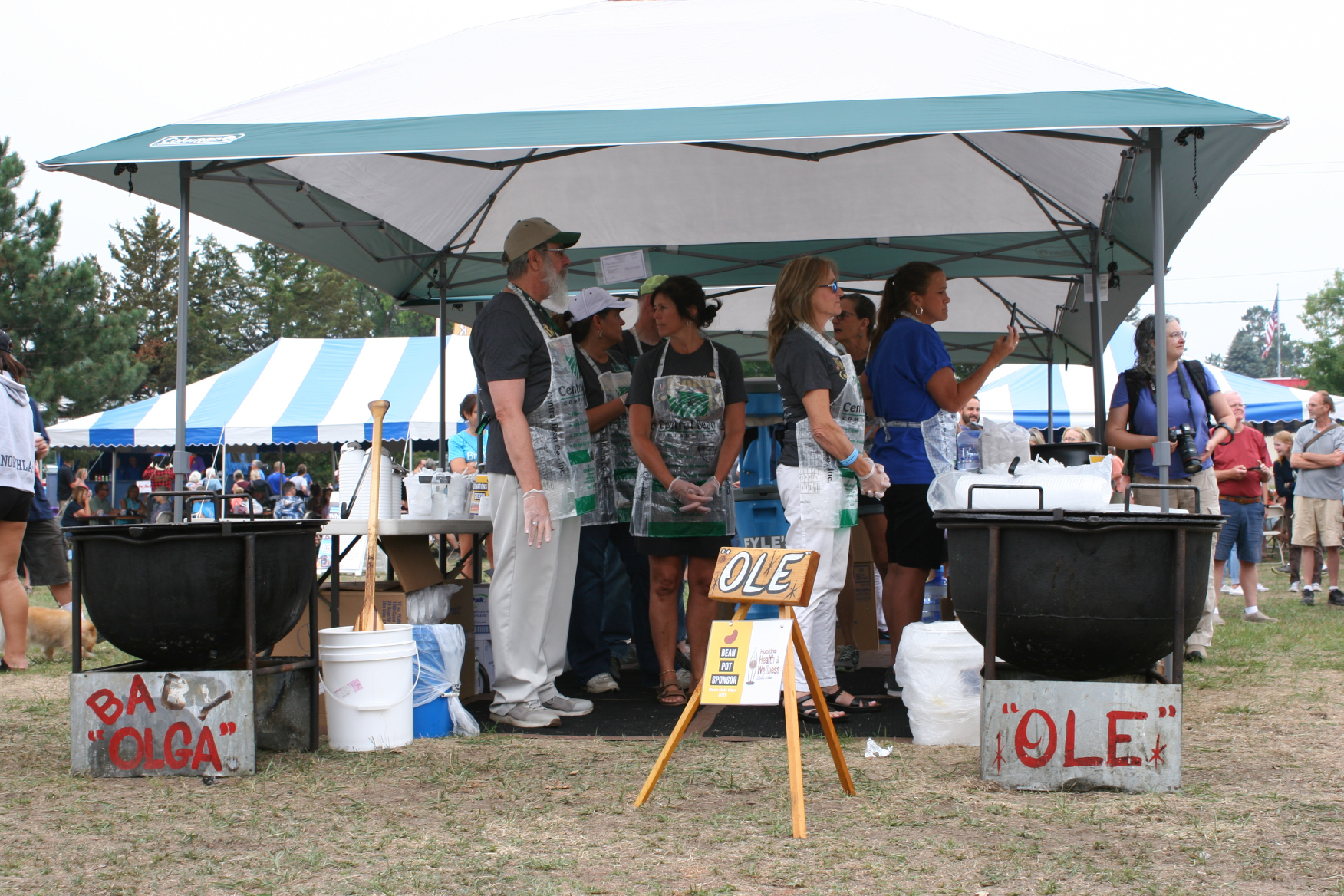
Kettles of baked beans, lifted from an underground pit, await serving during Pequot Lakes’ recent Bean Hole Days. Minnesota Prairie Roots copyrighted photo.
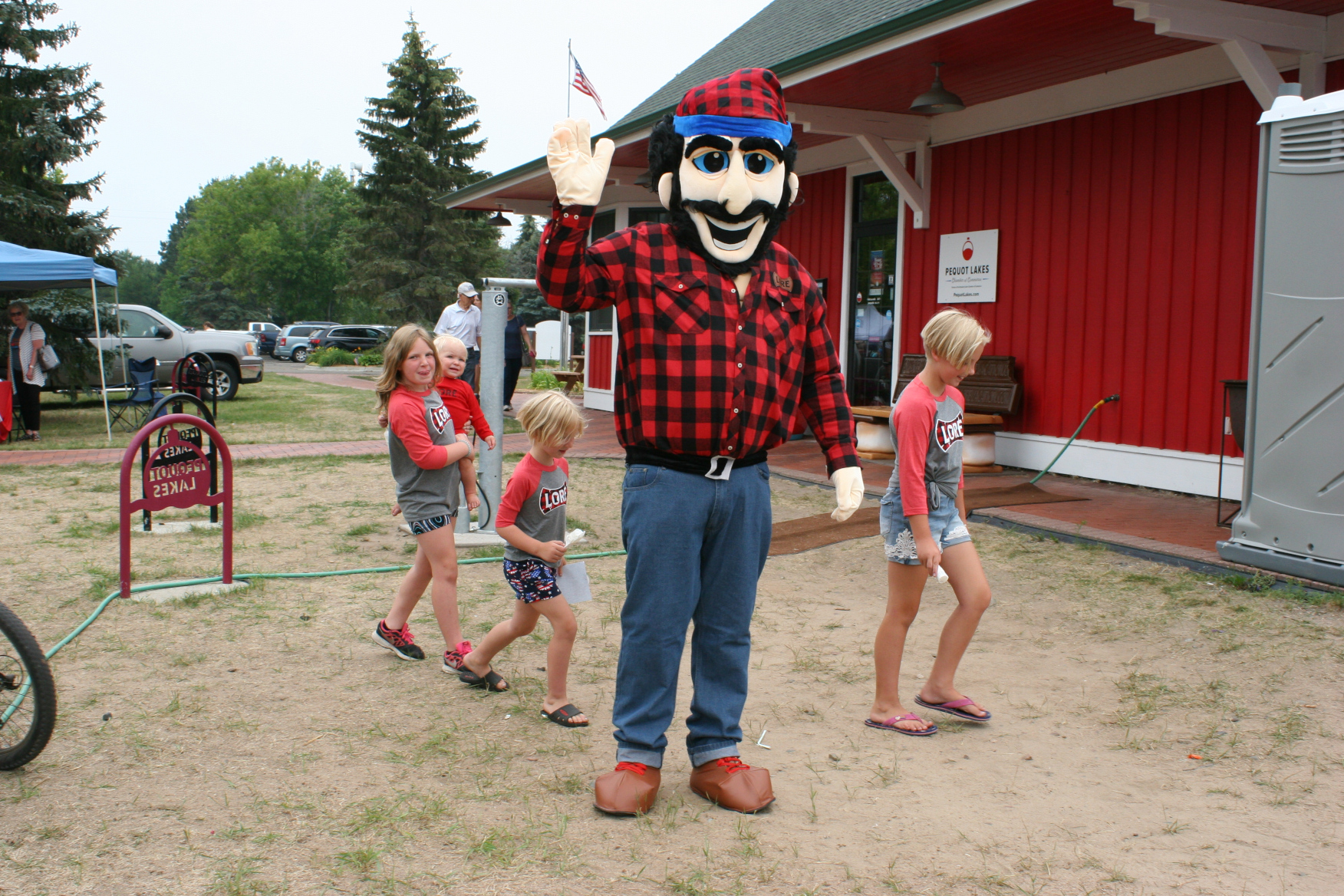
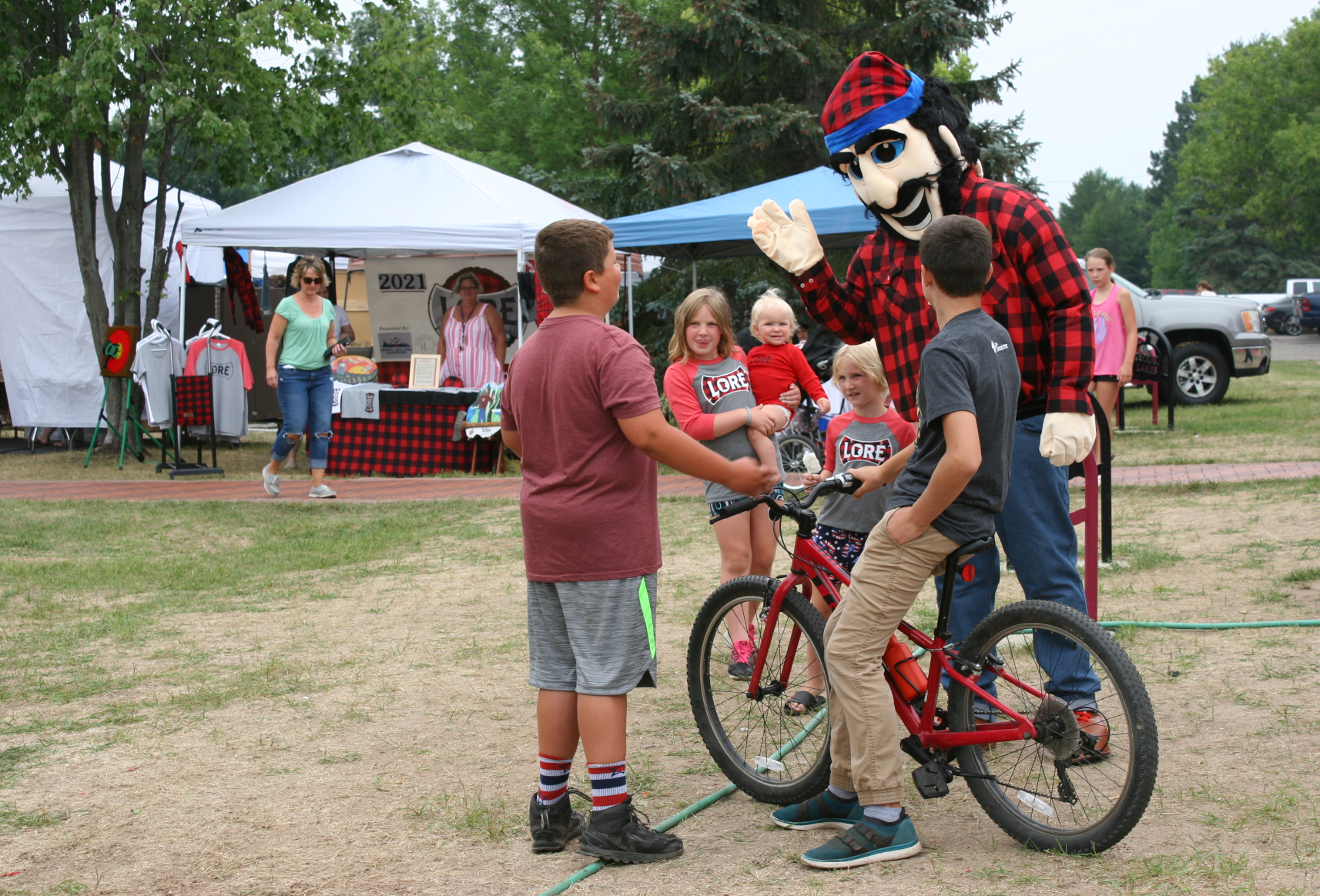
A friendly Paul Bunyan mingles with the crowd during Bean Hole Days. Minnesota Prairie Roots copyrighted photo.
This is Paul Bunyan land. The place of lumberjack lore. So different from my home in southeastern Minnesota. Paul and his side kick, Babe the Blue Ox, are universally appealing, creating a strong tourism branding identity for this region.
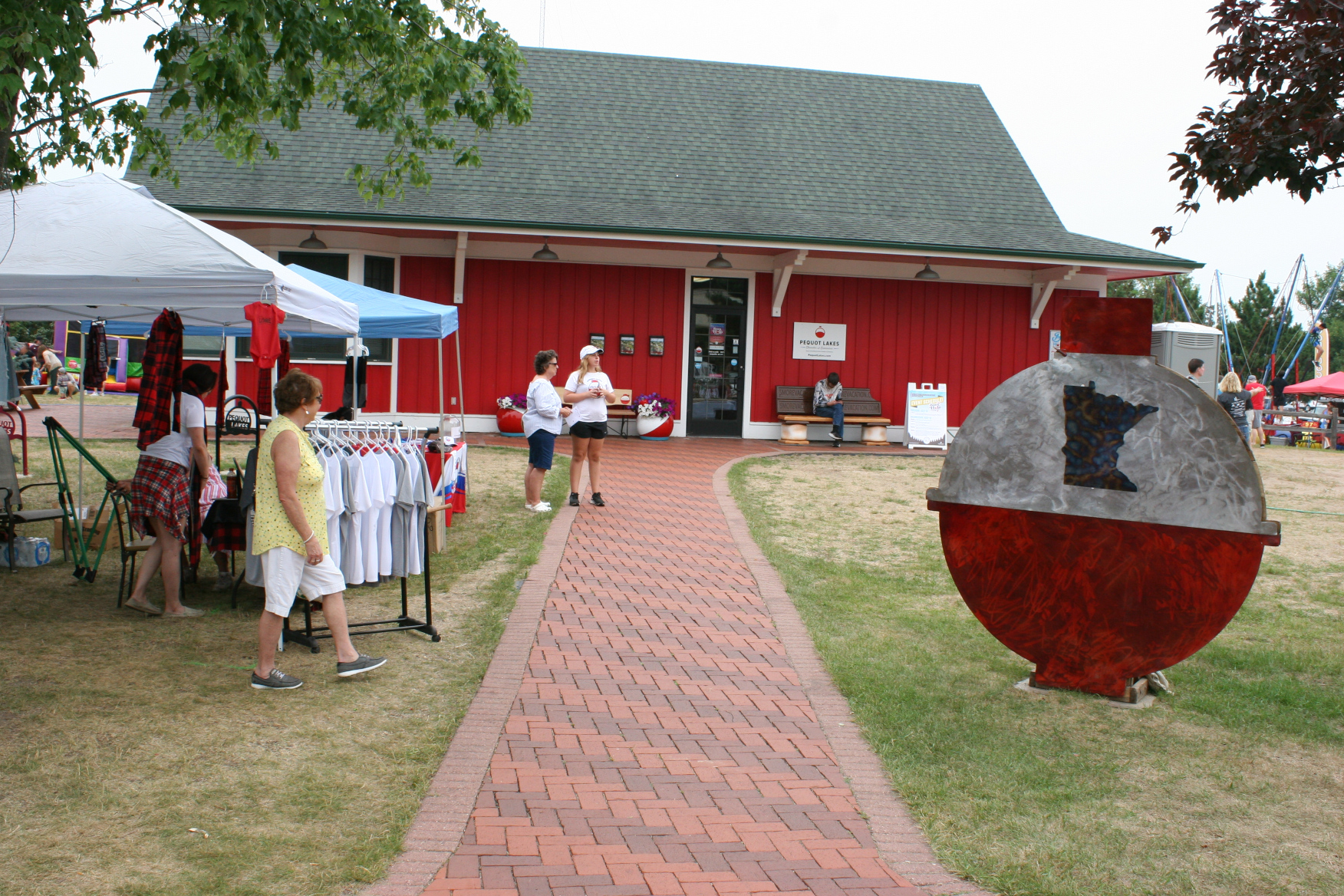
In Trailside Park, bobber sculpture and the Chamber of Commerce and Tourism office draw visitors. Minnesota Prairie Roots copyrighted photo.
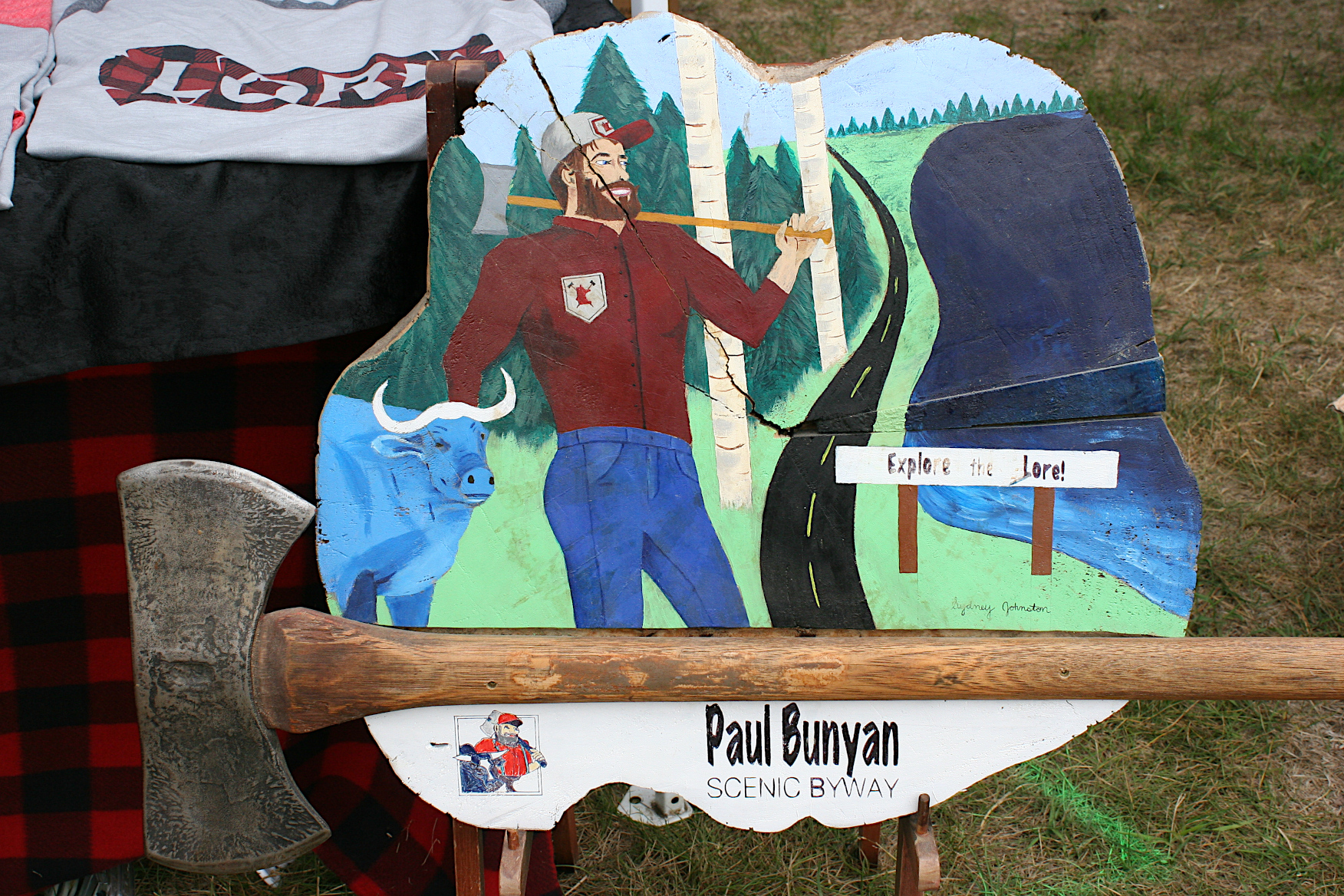
Paul Bunyan art promoting the scenic byway, spotted at Bean Hole Days. Minnesota Prairie Roots copyrighted photo.
And the Paul Bunyan Scenic Byway, a 54-mile route along county roads in scenic northern Crow Wing County and a portion of Cass County, also passes through Pequot Lakes.
The bobber sculpture proved popular with visitors during Bean Hole Days. Minnesota Prairie Roots copyrighted photo.
To visit this region is to appreciate and embrace the stories and character of Northwoods strong Paul Bunyan. And his sweetheart Lucette Diana Kensack (seen in Hackensack, a bit farther to the north).
Kettles of beans bake in a covered pit. Each is named. Minnesota Prairie Roots copyrighted photo.
I appreciate how hard the good folks of this area work to brand this region and to create events that entertain and also provide visitors with unique experiences. Bean Hole Days, for example, rates as unlike anything I’ve ever attended. I loved everything about it from the people to the phenomenal homemade beans baked underground in Paul Bunyan-sized kettles.
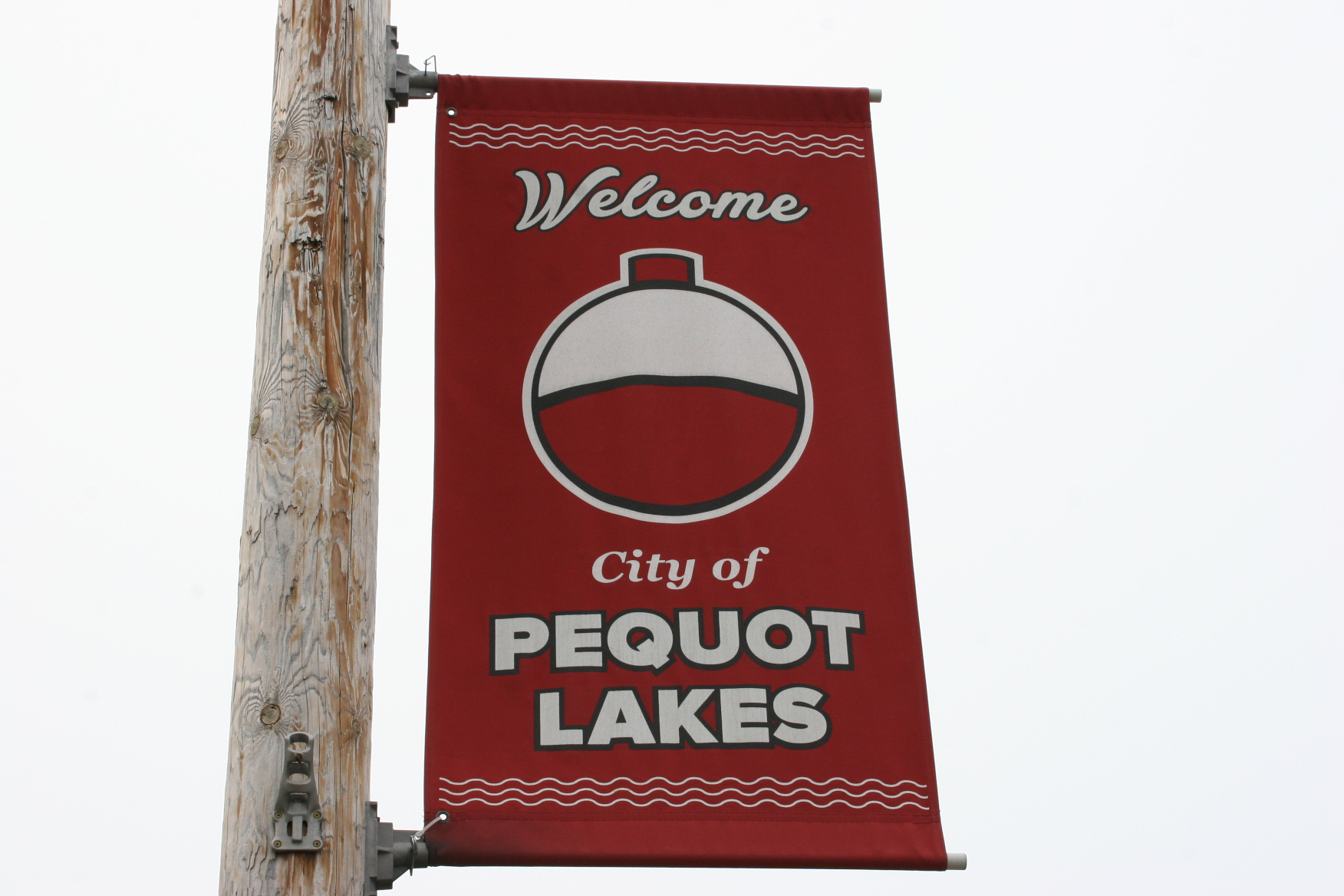
The bobber brands Pequot Lakes. Minnesota Prairie Roots copyrighted photo.
In about 10 more days, on Saturday, August 7, Pequot Lakes hosts another celebration—a Chokecherry Festival. Chokecherries are a tiny stone fruit often used in making jellies and jams. Pequot Lakes calls itself the Chokecherry Capital of Minnesota. I’m quite familiar with these berries, having picked more pails full than I care to remember while growing up on a southwestern Minnesota farm.
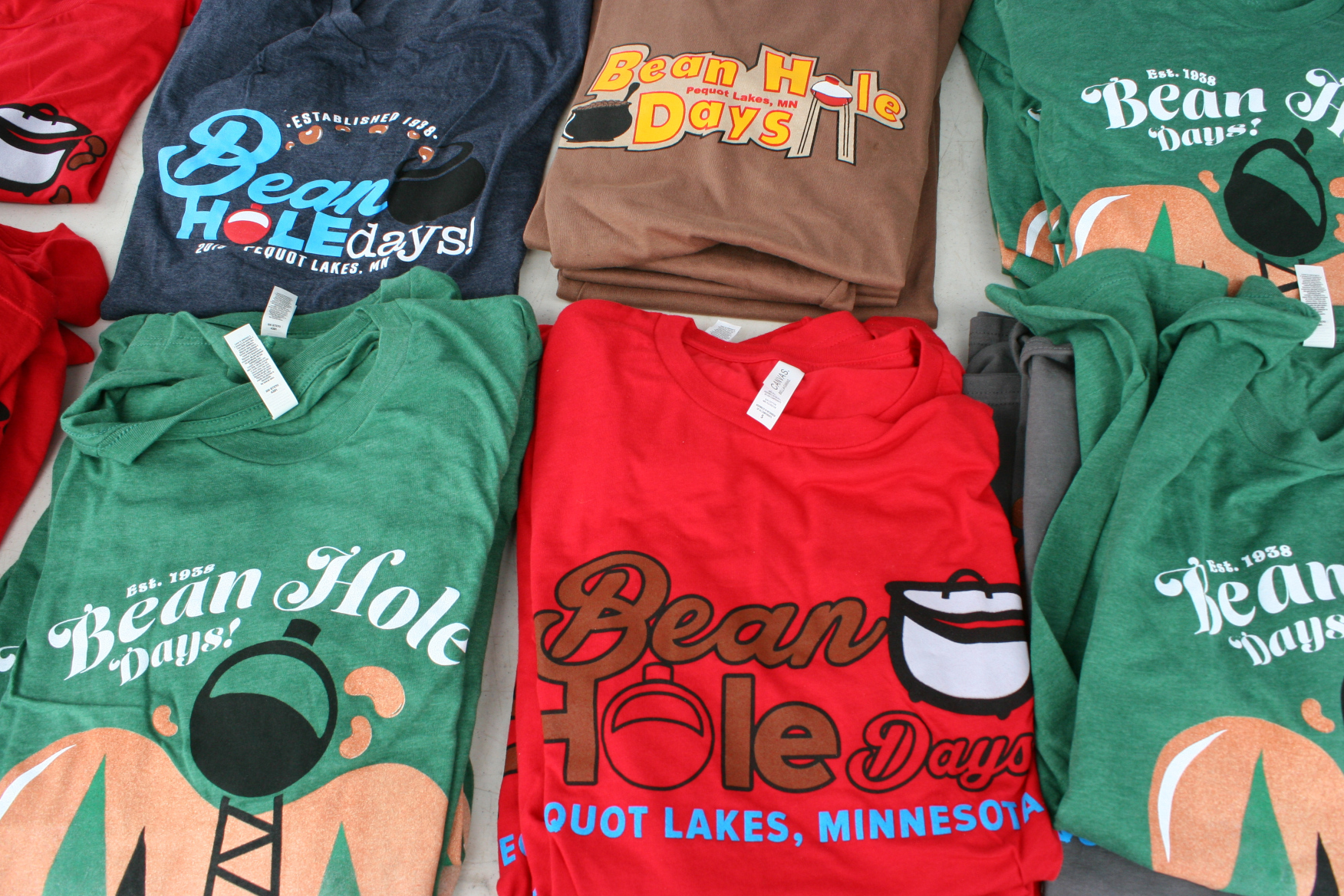
I expect vending of tees at the Chokecherry Festival, just like at Bean Hole Days. Minnesota Prairie Roots copyrighted photo.
That aside, it doesn’t appear the Pequot Lakes celebration includes any chokecherry harvesting. But it does feature a Pit Spitting Contest and a Chokecherry Culinary Contest with four categories. Jams/jellies/preserves, pastries, wine and originality.
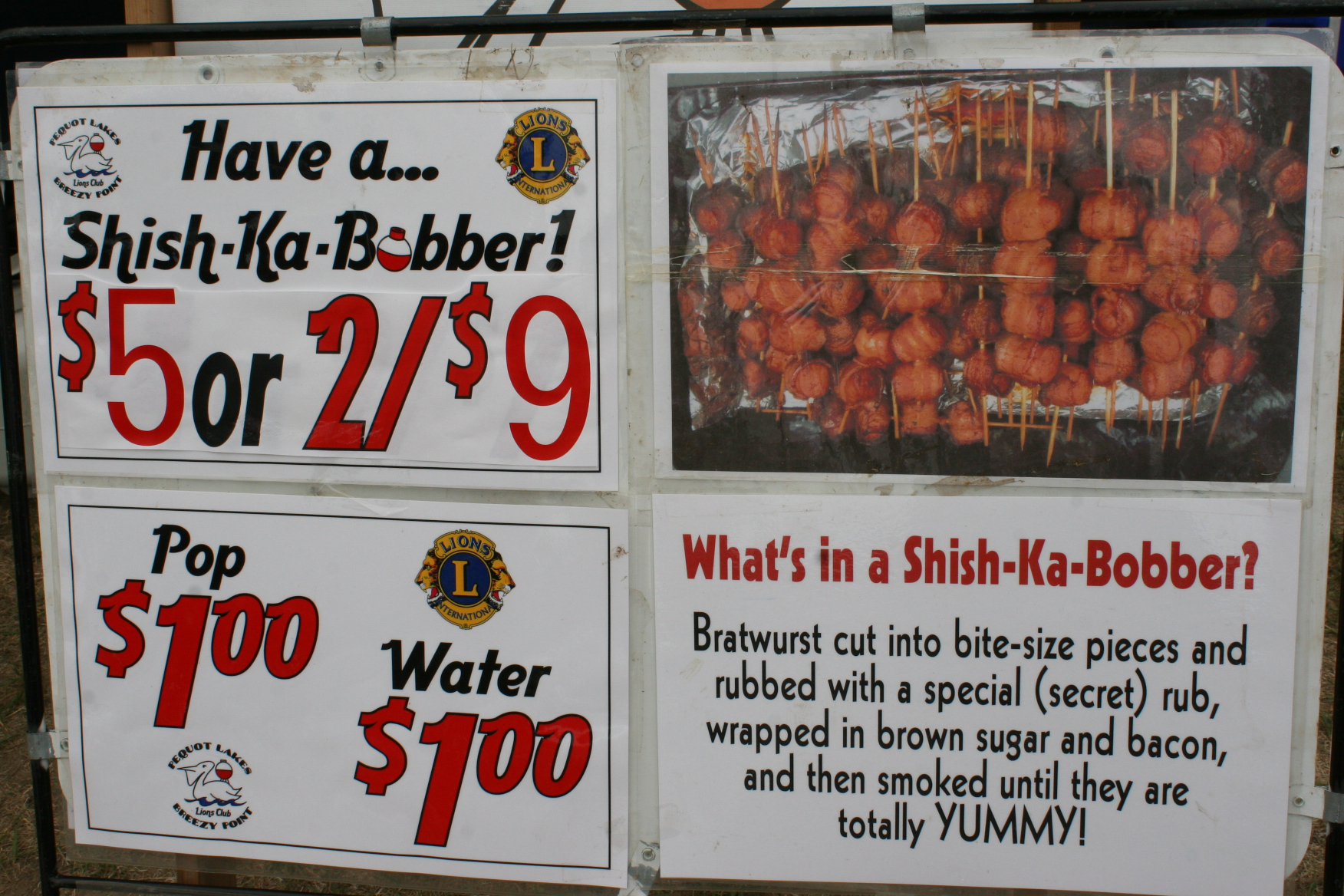
Festival food offered by the Pequot Lakes/Breezy Point Lions Club. Minnesota Prairie Roots copyrighted photo.
And just like at Bean Hole Days, the 9 a.m. – 4 p.m. event in Trailside Park includes an Arts-Crafts Fair, food vendors, kids’ activities and more.
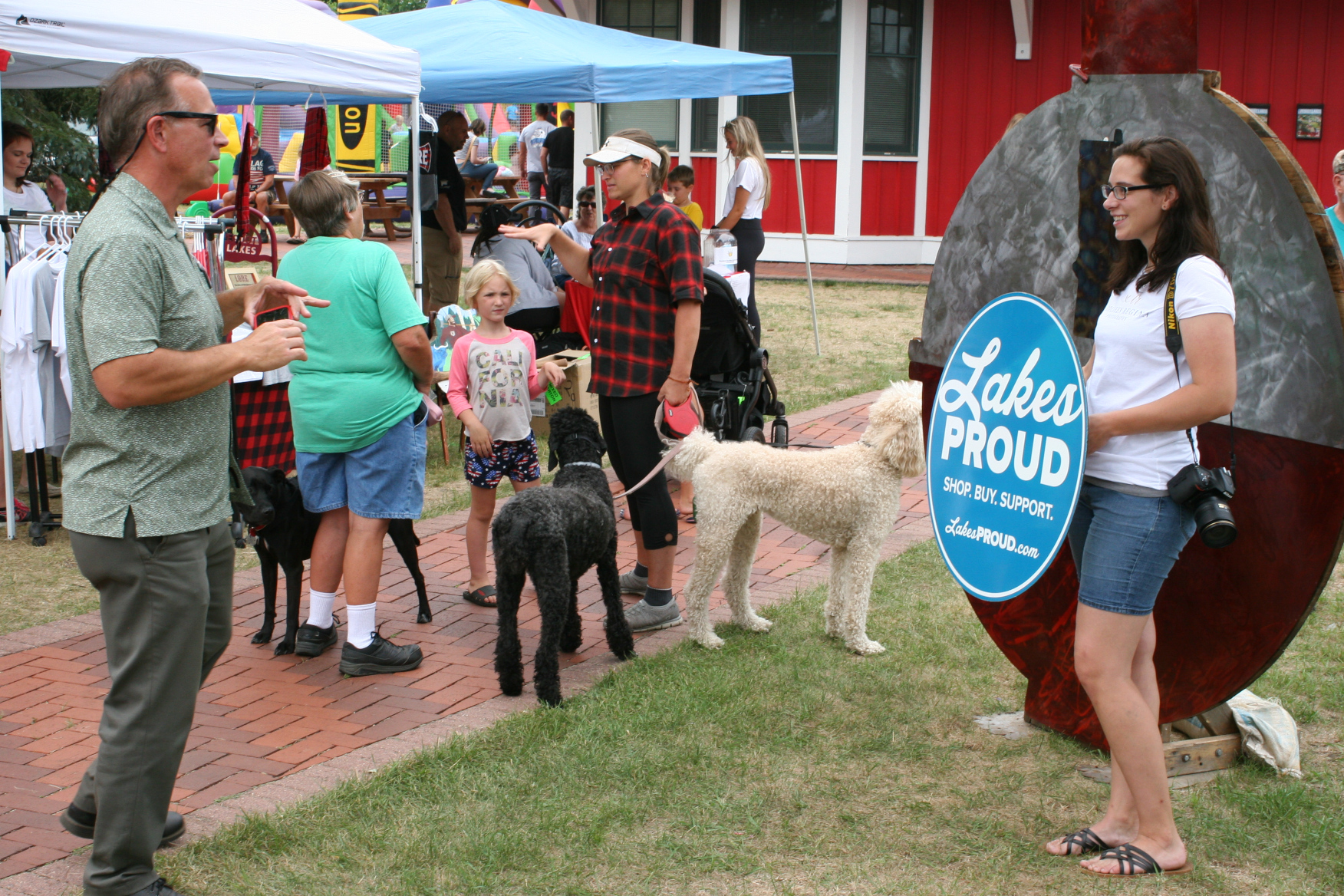
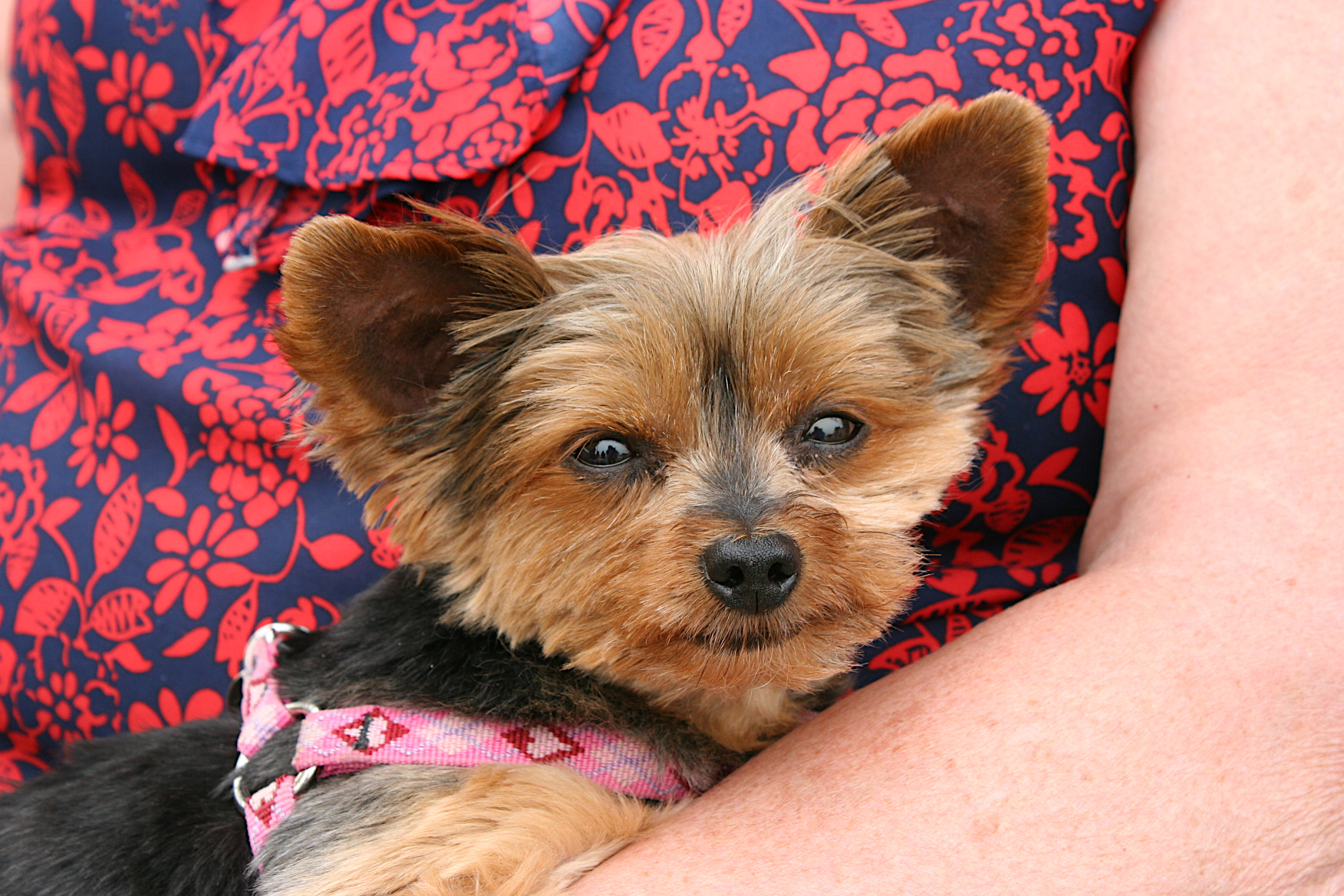
Dogs are welcome. I photographed this one in the arms of a Arts/Crafts Fair vendor at Bean Hole Days. Minnesota Prairie Roots copyrighted photo.
I encourage you to take in small town celebrations like those offered in Pequot Lakes and neighboring communities in Paul Bunyan land. To do so is to experience the Northwoods culture, at least the side that draws tourists to town.
#
This marks the third, and final, in a series of posts on Pequot Lakes.
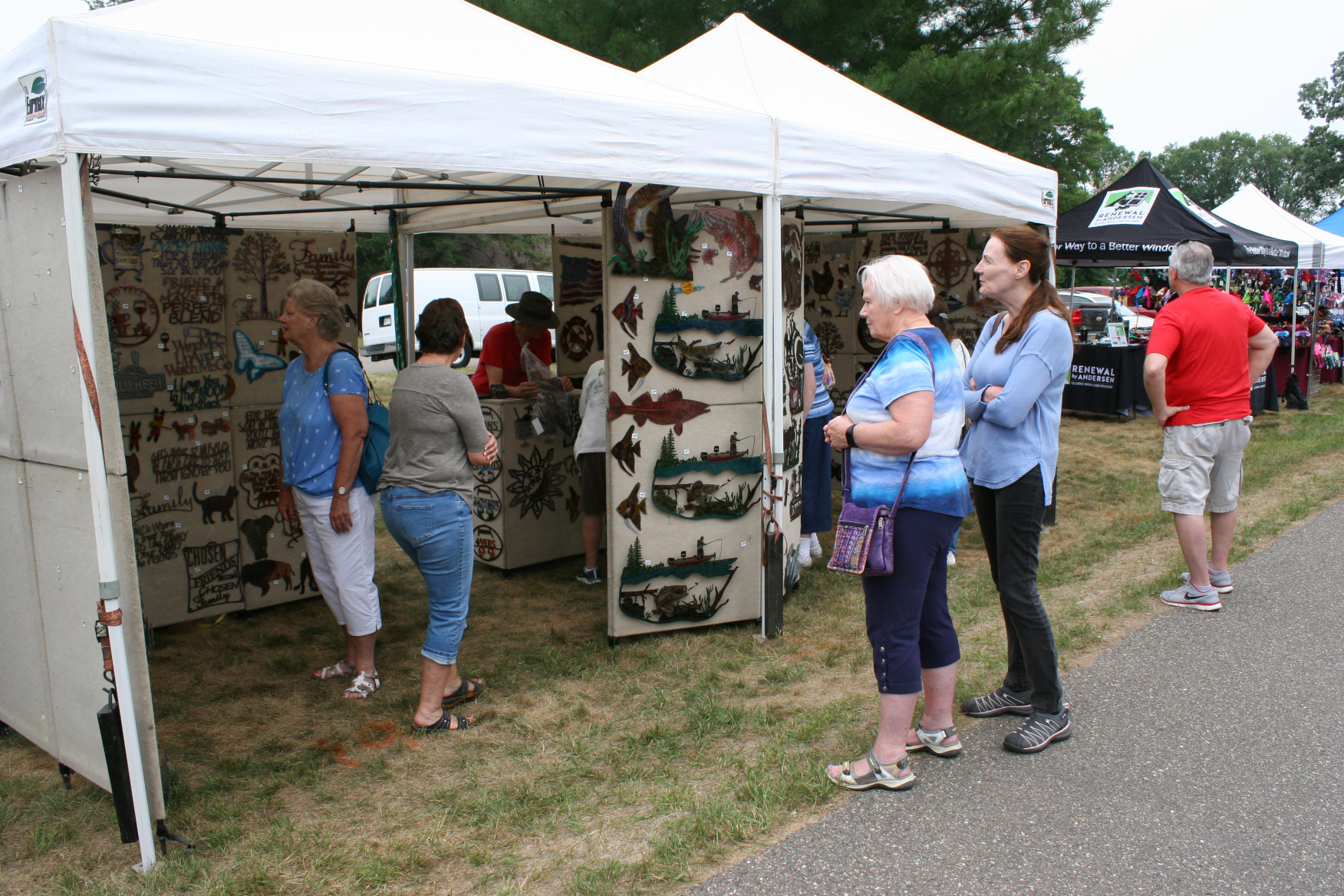
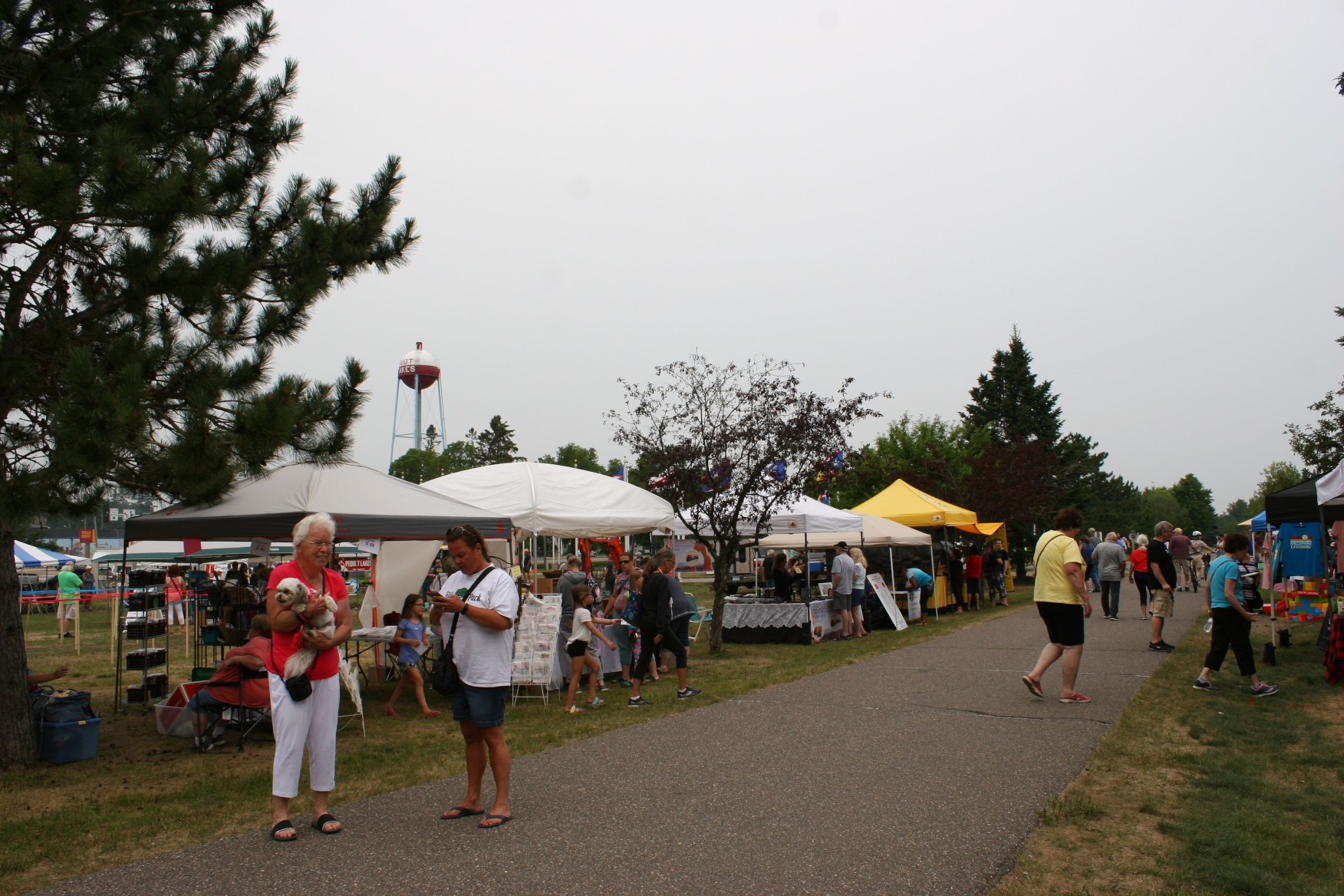
Lots and lots of arts and crafts, some with outdoor themes for cabin country. Minnesota Prairie Roots copyrighted photo.
While beans, baked in massive kettles in an underground pit, highlight this festival, the Arts & Crafts Fair adds another appealing dimension. I always enjoy meandering among vendor booths, occasionally chatting it up with these creatives.
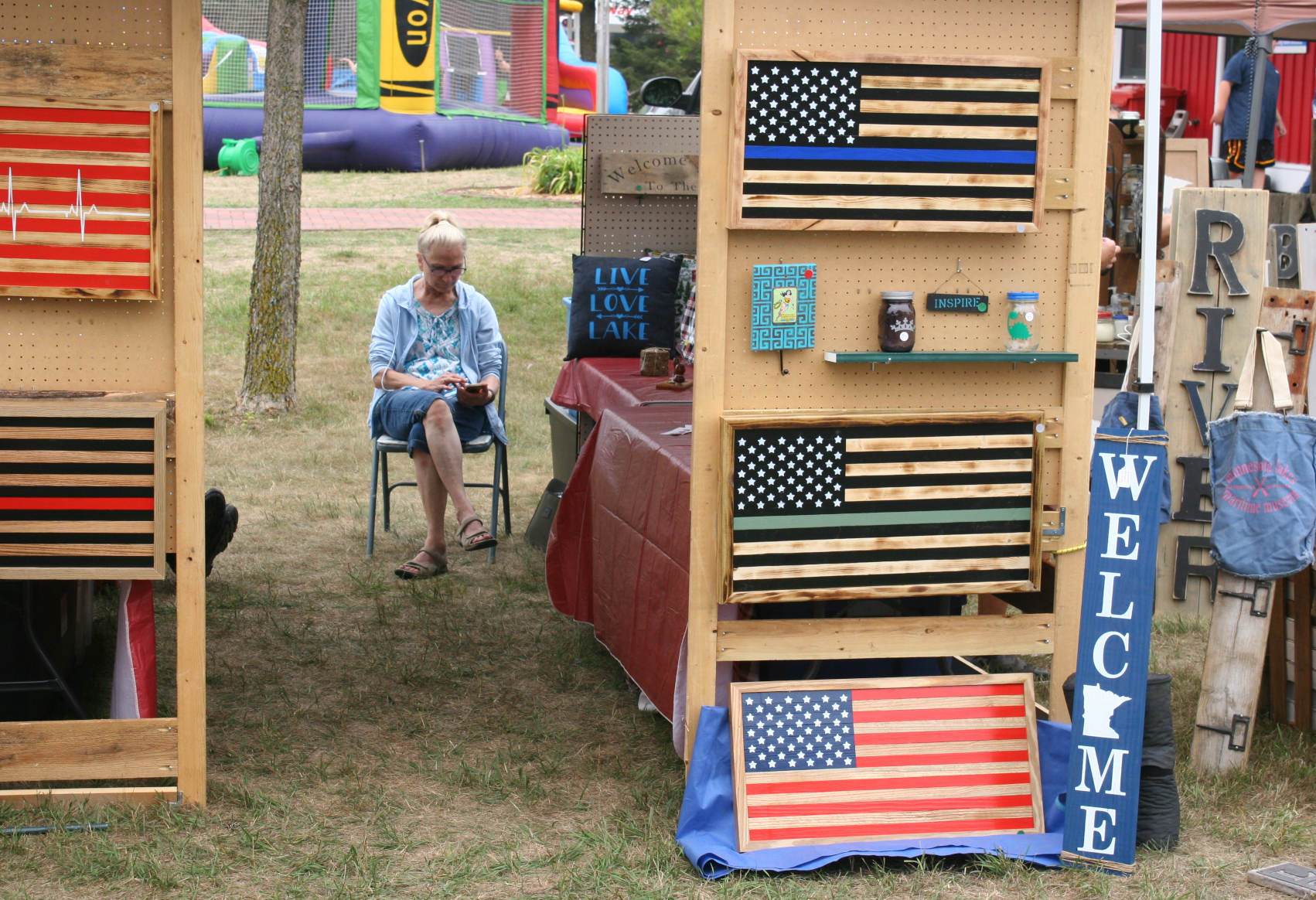
Featuring flags crafted from wood. Minnesota Prairie Roots copyrighted photo.
A time existed when I, too, created with my hands. As a teen, I sewed nearly all my clothes. I also stitched dresses for my paternal grandmother. I loved sewing. But college, life as a working professional and then motherhood ended that. Perhaps some day I’ll return to sewing and embroidery, two favorite hands-on crafts. For now I keep my hands primarily on my keyboard and DSLR camera.
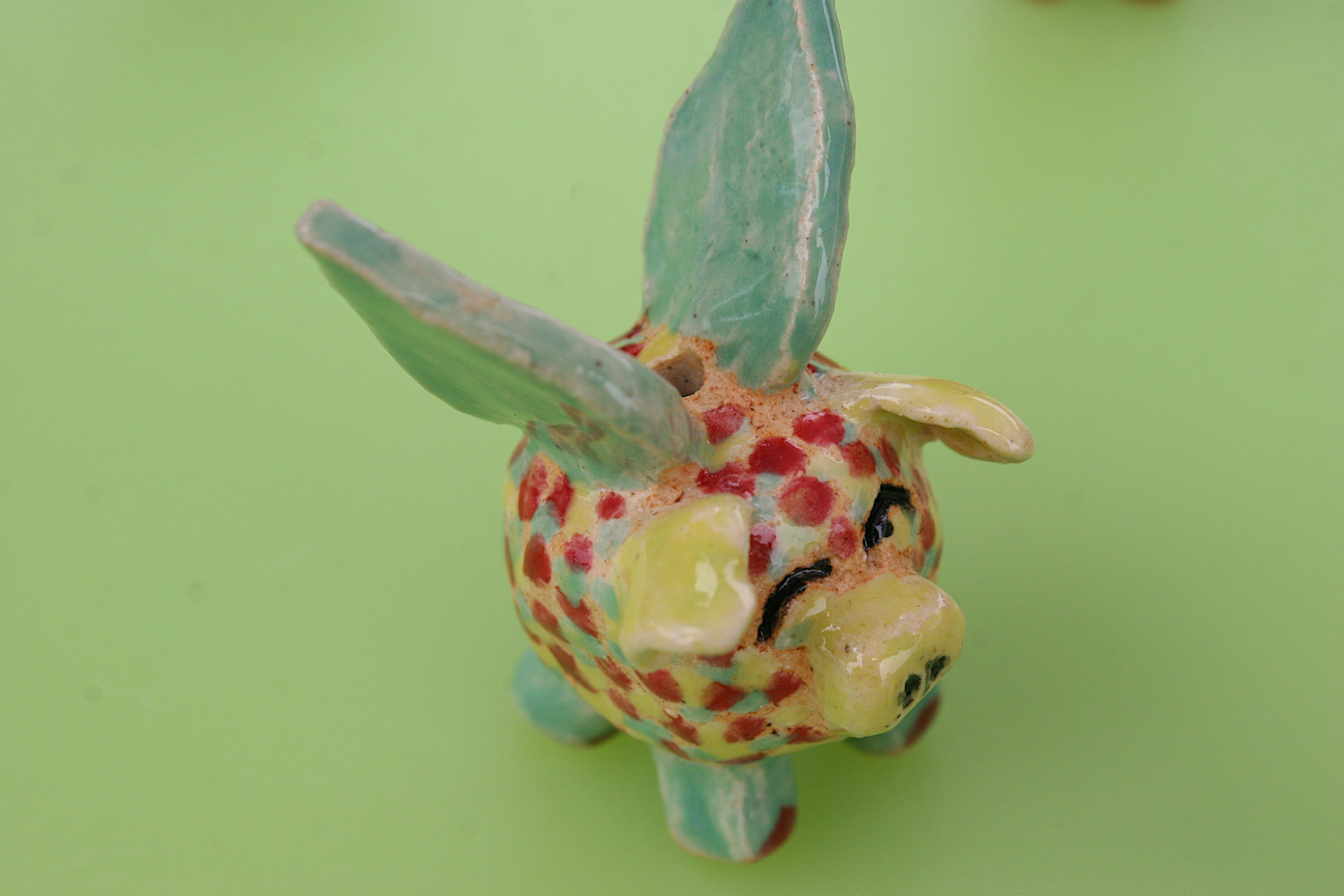
A Flying Pig by Alice Harris. Minnesota Prairie Roots copyrighted photo.
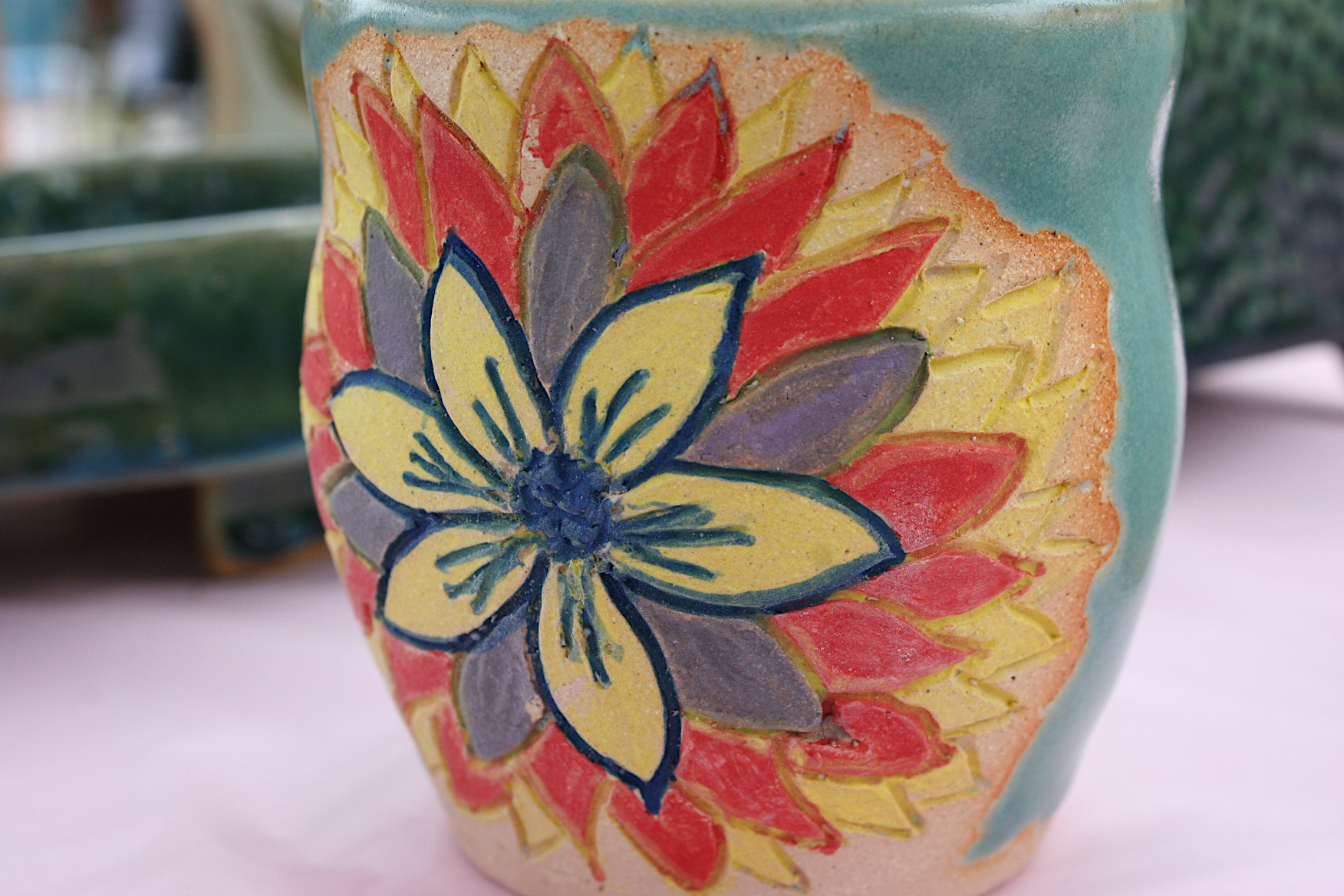
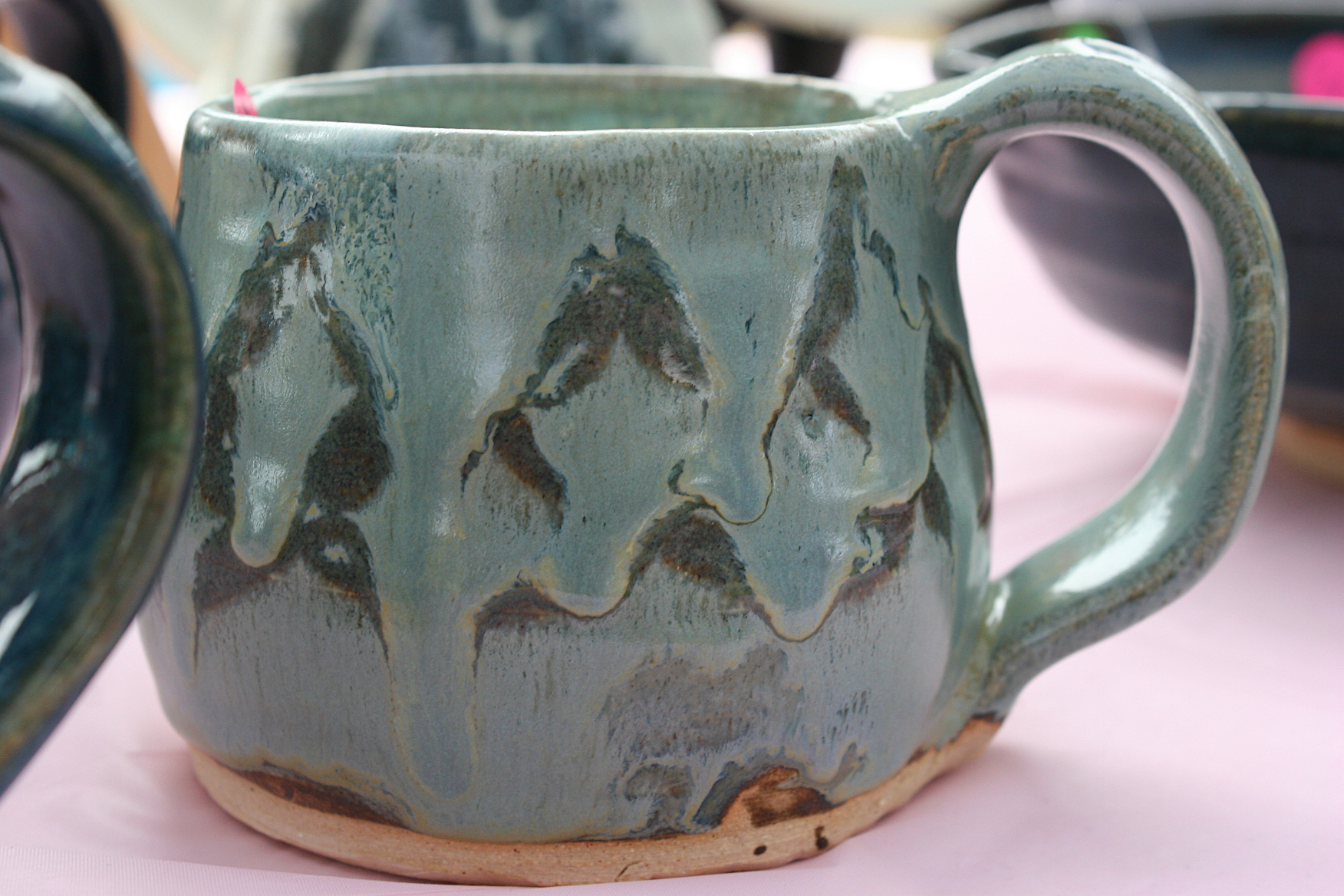
A mug by Dale Goodhue. Minnesota Prairie Roots copyrighted photo.
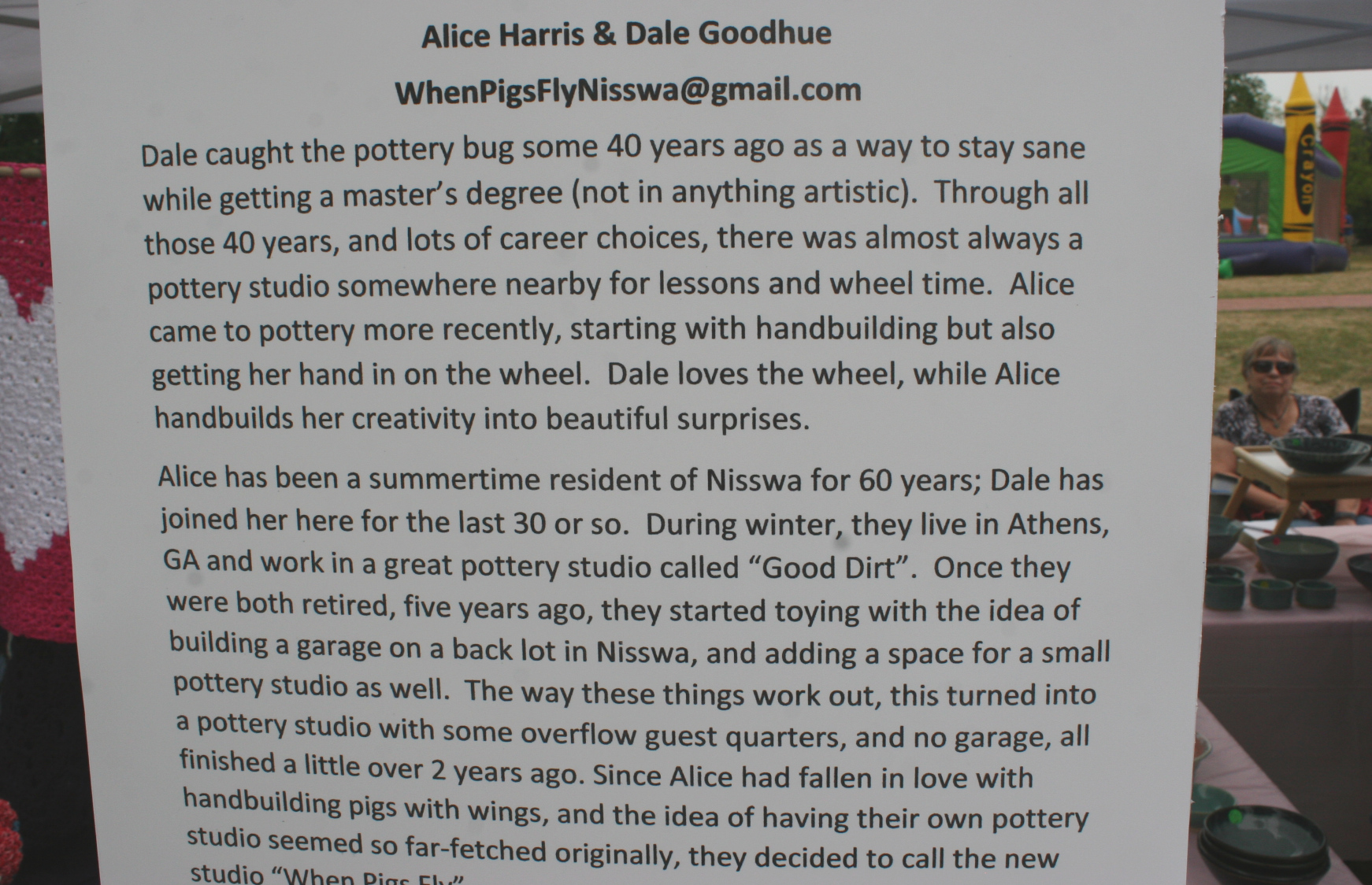
I admire the creative work of others, including those vending in Pequot Lakes. Like the pottery of Alice Harris and Dale Goodhue, Minnesota residents in the summer, Georgia residents in the winter. They create out of their When Pigs Fly Studio in Nisswa. Alice crafts the pigs while Dale creates more practical pottery pieces like mugs and plates. What a difference in approaches to pottery.
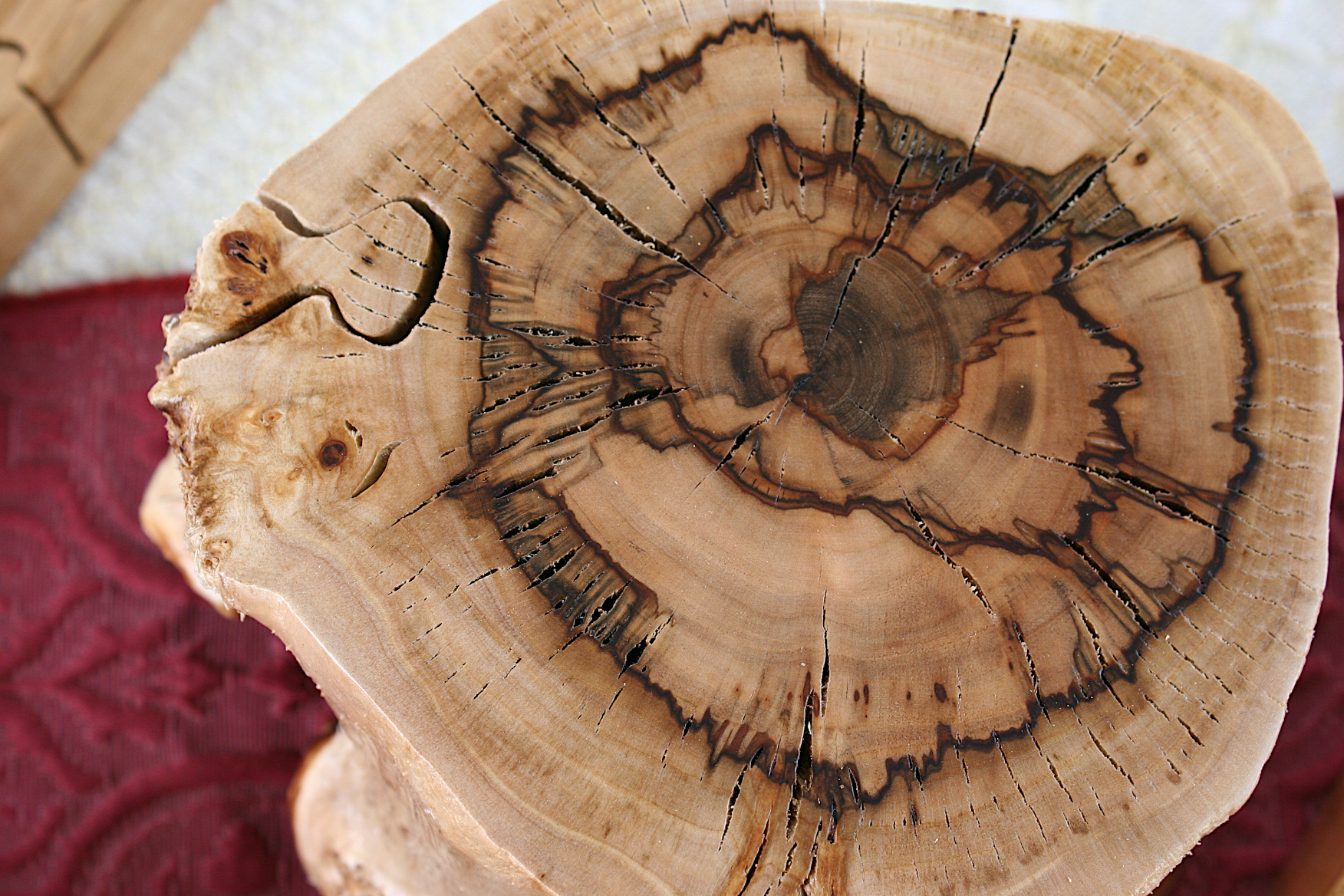
A Puzzle Box crafted by Ken Spurlin. Minnesota Prairie Roots copyrighted photo.
Perhaps the most unusual art I discovered are the Puzzle Boxes crafted by Ken Spurlin of Nevis. He takes a chunk of wood and then saws it into a puzzle with a hidden space inside. It’s magical.
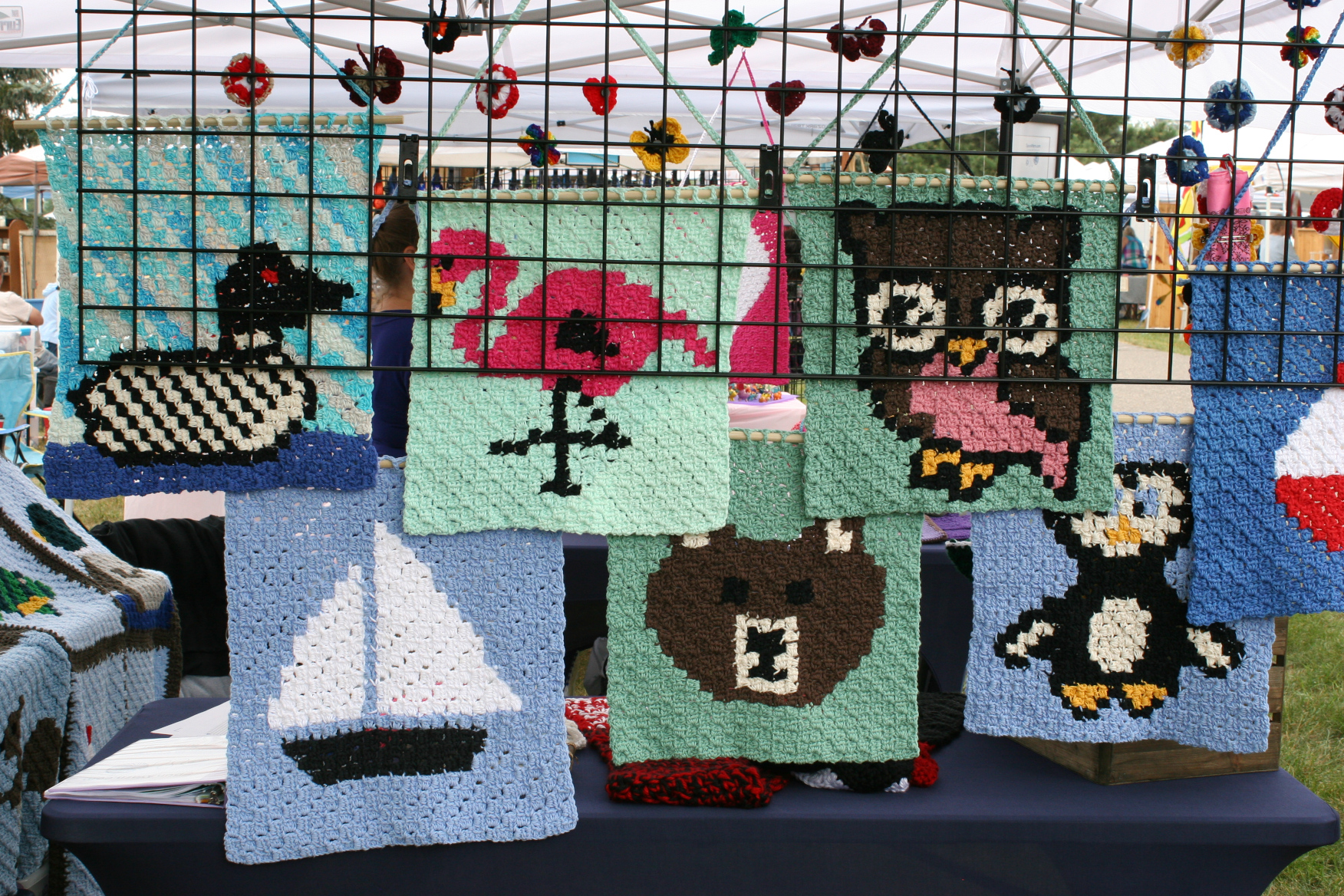
Crocheted art from Spun A Yarn. Minnesota Prairie Roots copyrighted photo.
When I spotted crocheted panels in the Spun A Yarn booth, I engaged in conversation with the artist, who, as it turns out, is also a freelance fiction editor and writer. Miranda Darrow (her pen name) creates “crochet with character.” Her crocheted loon panel caught my eye given the northwoods location of the Arts & Craft Fair. Loons are common on area lakes.
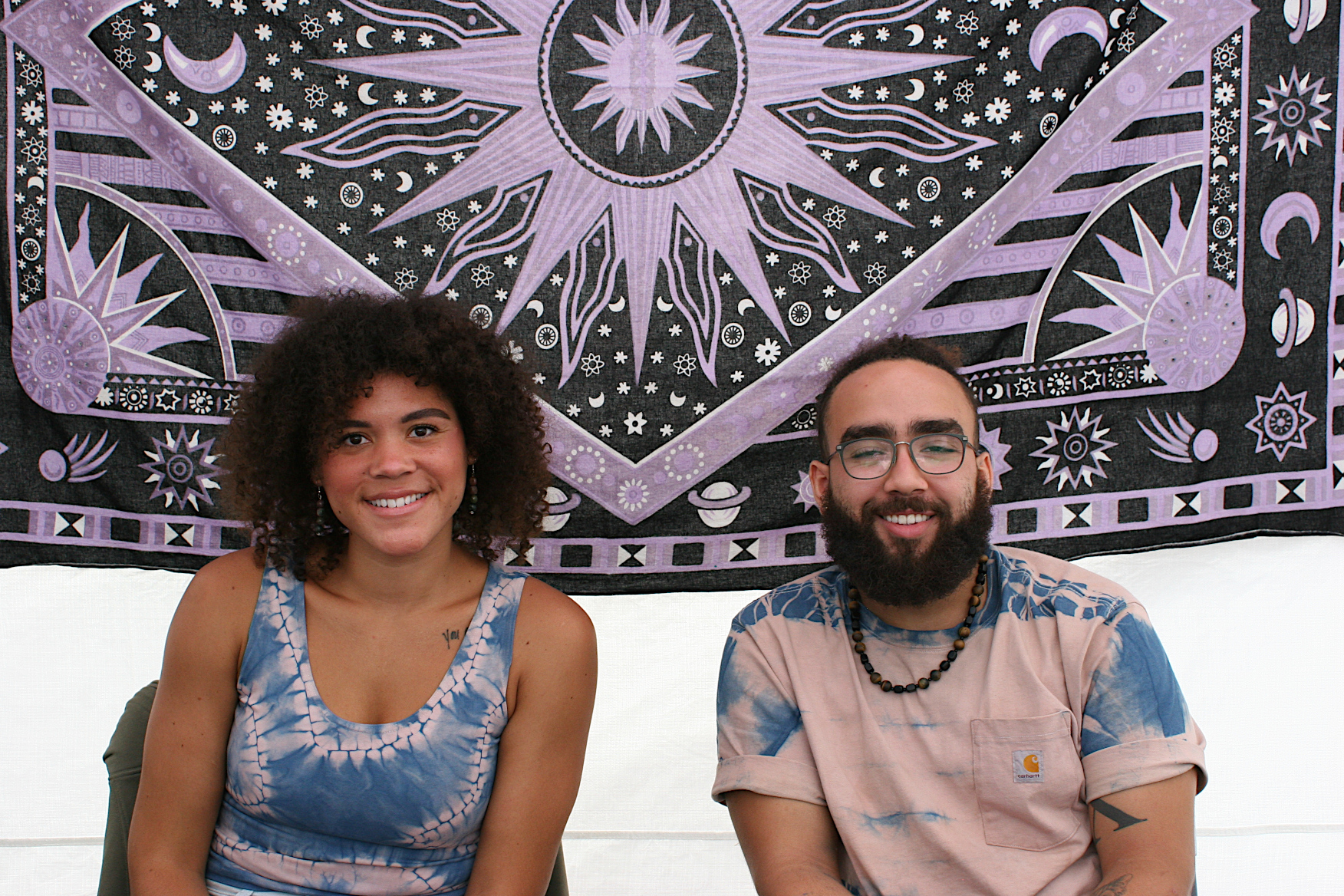
Vending dyed goods and other art. Minnesota Prairie Roots copyrighted photo.
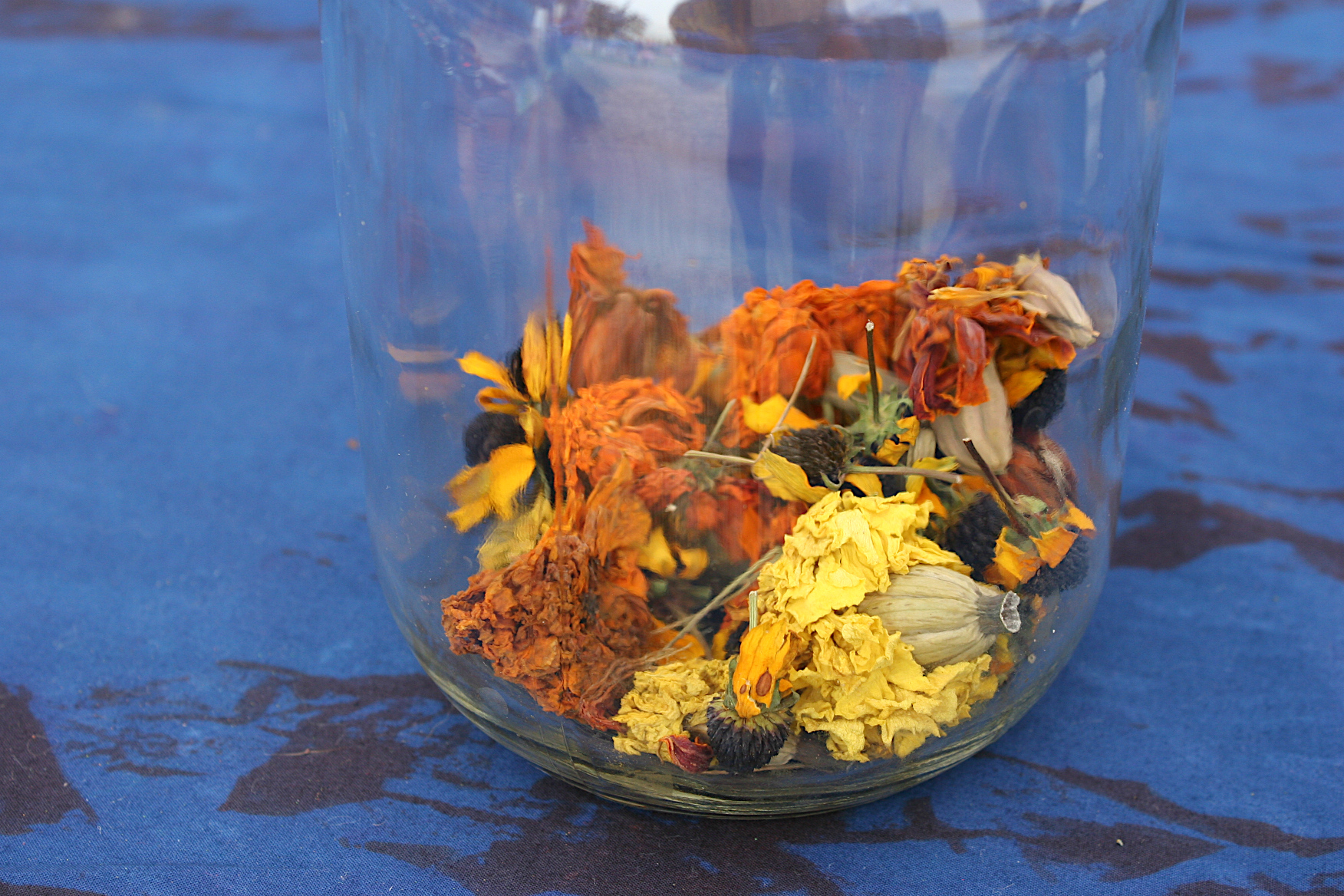
Used for natural dyes. Minnesota Prairie Roots copyrighted photo.
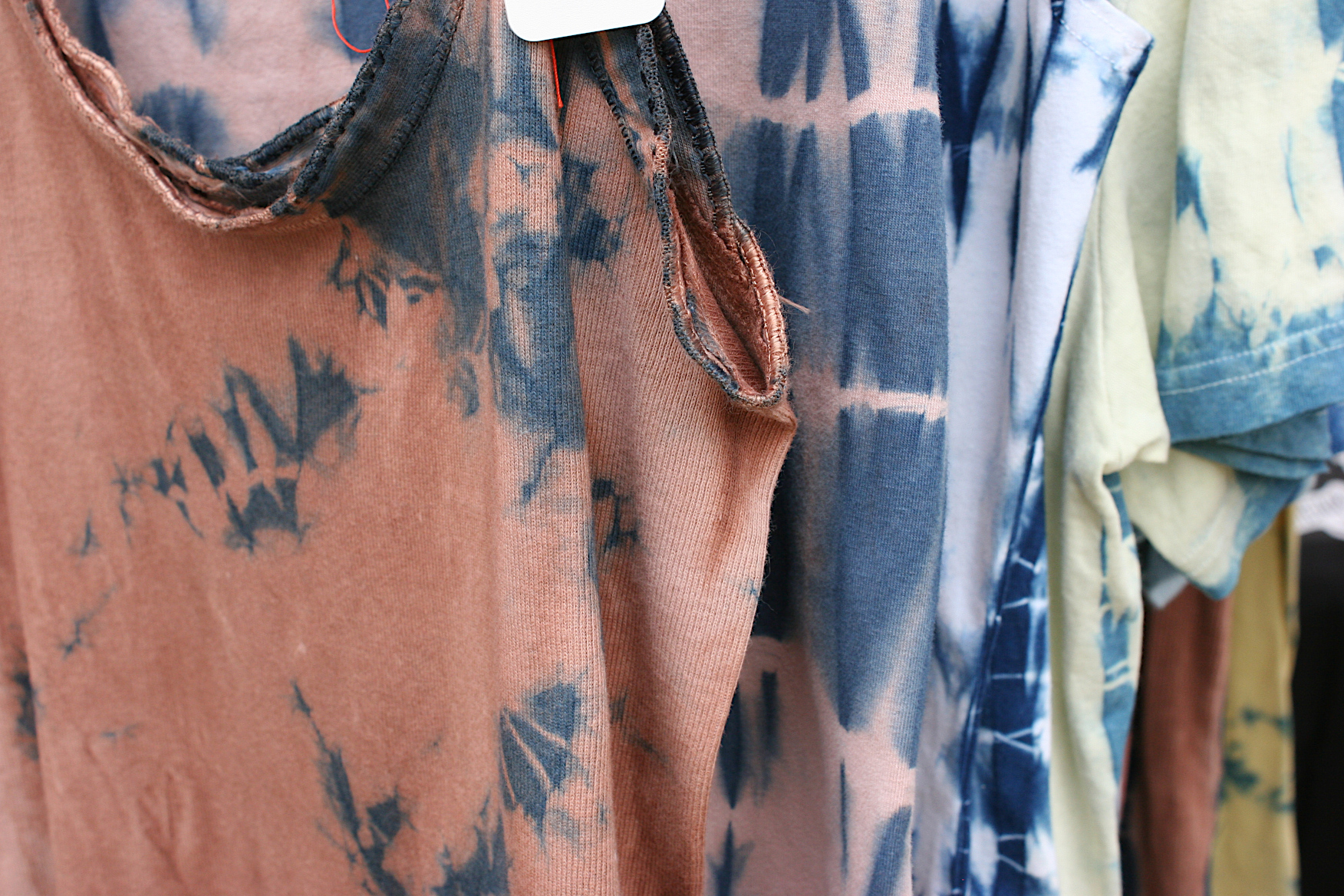
A sampling of the dyed clothing. Minnesota Prairie Roots copyrighted photo.
A creative backdrop and vendors dressed in dyed clothing caused me to stop and peruse the art of Shea J Maze and Diaspora Textiles. Memories of tie dying in the 70s flashed back. But unlike the chemicals I used to dye tees, these items are dyed naturally. A jar of dried flowers sitting on the table proved that. Beautiful, soft hues define this natural dying method.
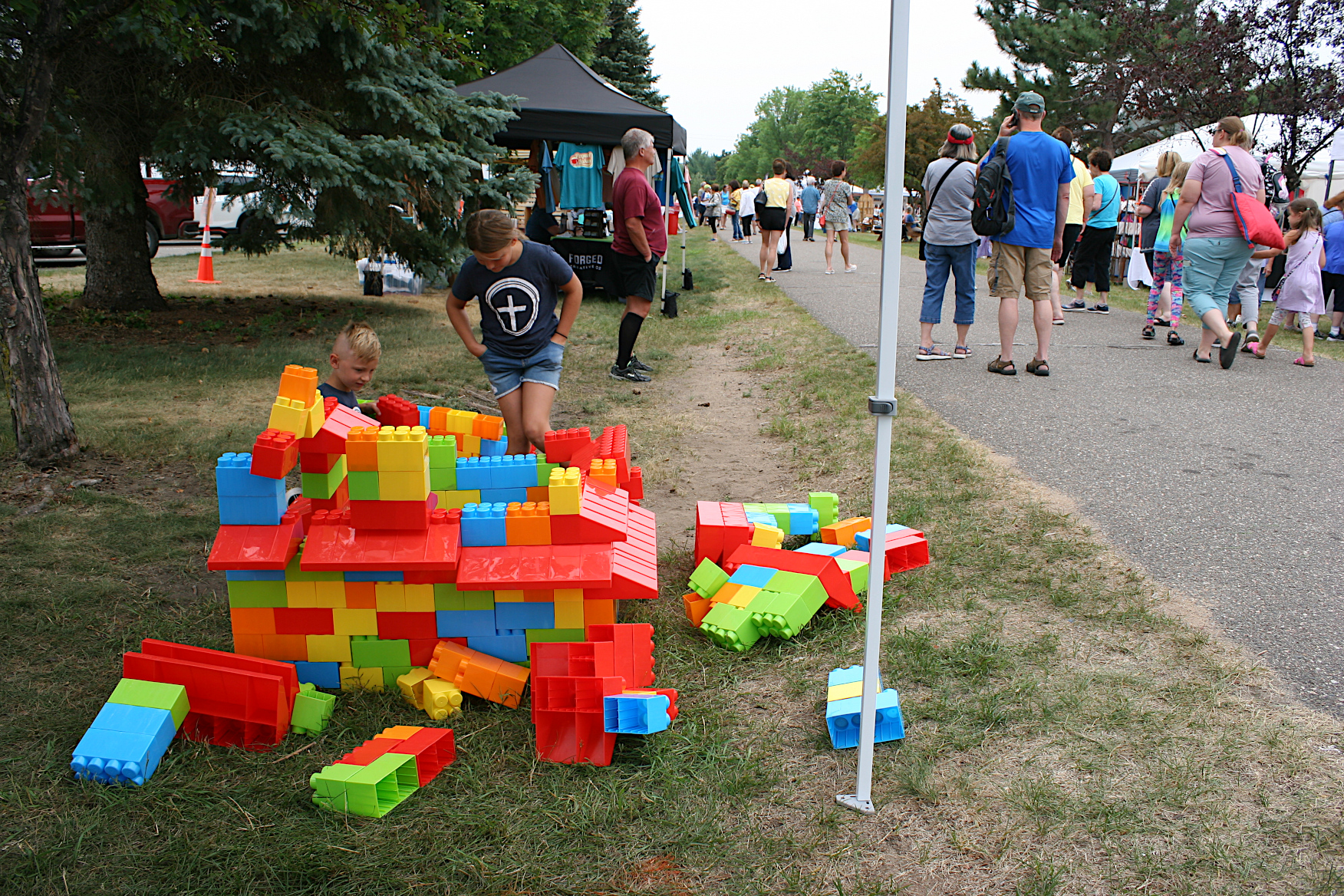
Kids play at the Wondertrek booth. Minnesota Prairie Roots copyrighted photo.
Farther along the trail, the bold colors of mega blocks drew kids (and me) to the booth of Wondertrek Baxter Children’s Museum. The museum is an in-process undertaking.
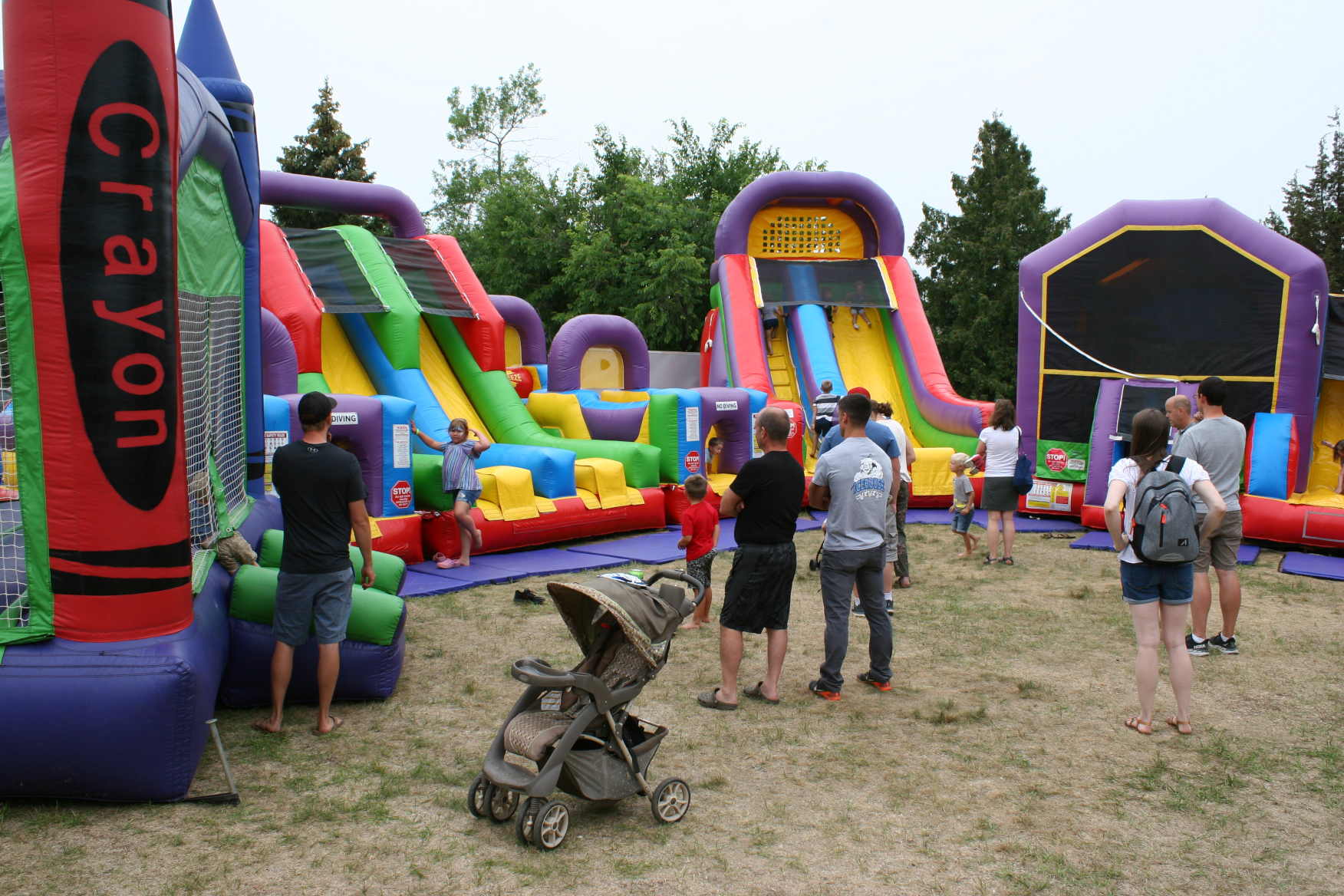
Bean Hole Days included a small carnival. Minnesota Prairie Roots copyrighted photo.
Across the park, inflatables splashed color into the landscape in temporary, interactive public art.
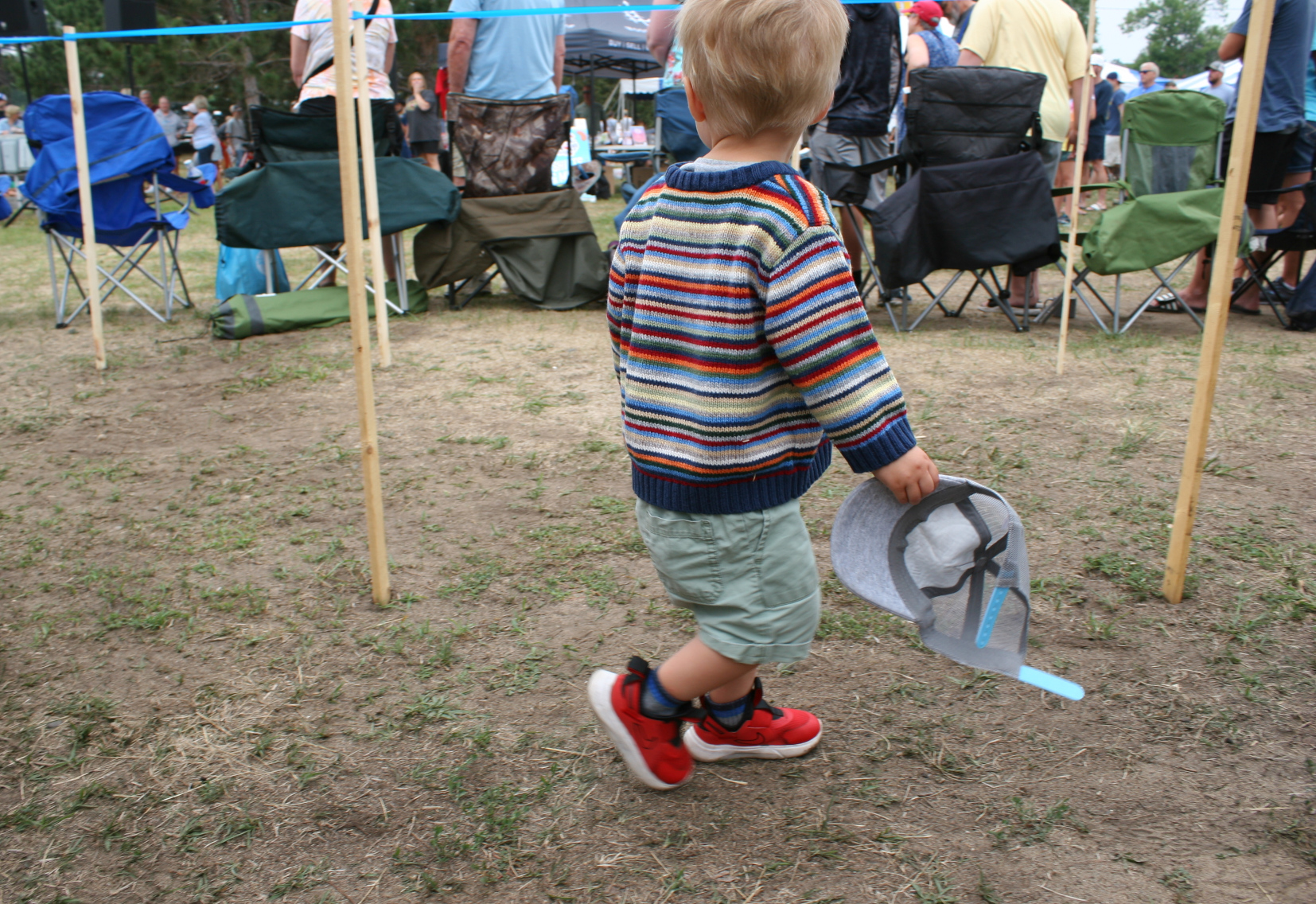
Loved this little guy’s colorful sweater. Minnesota Prairie Roots copyrighted photo.
I can see art most anywhere, including in the striped sweater worn by a preschooler wandering the fest grounds. Handcrafted or not, I don’t know. But I found it visually appealing, albeit seemingly too warm for the hot and humid July day.
Oh, the sweetness of this little girl, providing entertainment as people waited in line for free baked beans. Minnesota Prairie Roots copyrighted photo.
While I’ve only shown you a sampling of the arts and crafts featured in Pequot Lakes, I hope this entices you to attend Bean Hole Days next summer. Not only for the delicious baked beans but also for the art.
#
Please check back for one final post (of three) on Pequot Lakes Bean Hole Days.
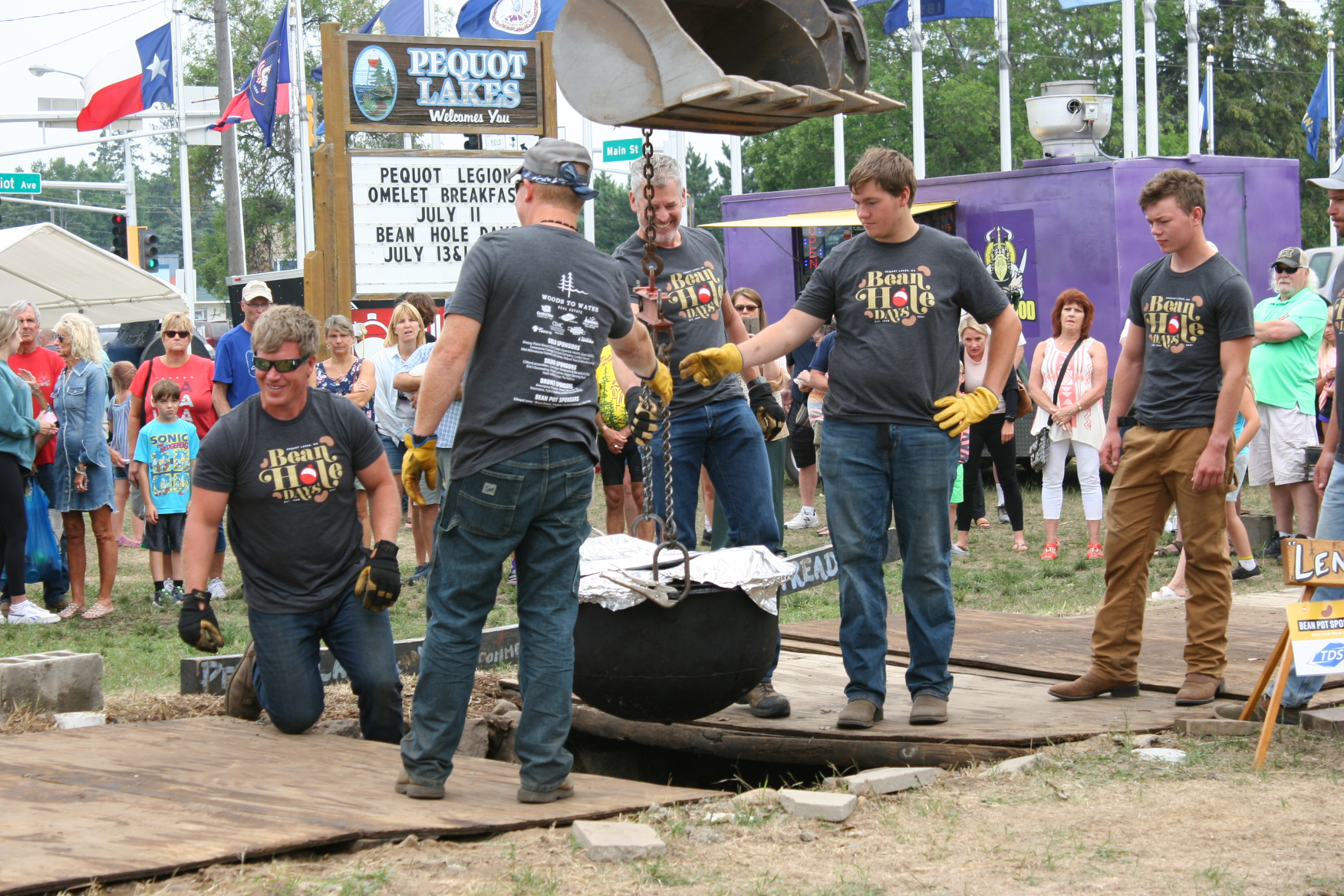
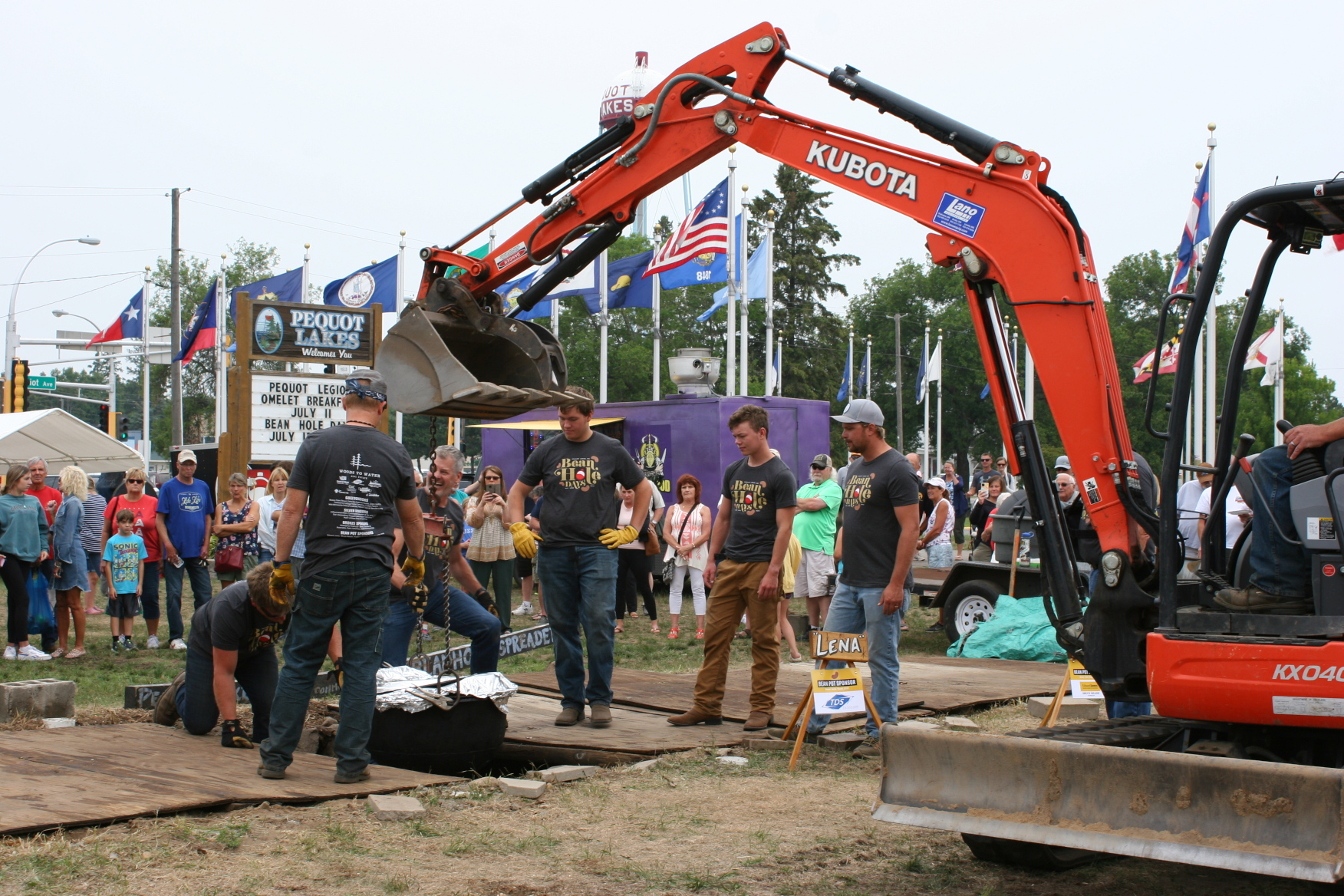
The Bean Hole crew guides a kettle of beans from an underground cooking pit at Bean Hole Days in Pequot Lakes. Minnesota Prairie Roots copyrighted photo.
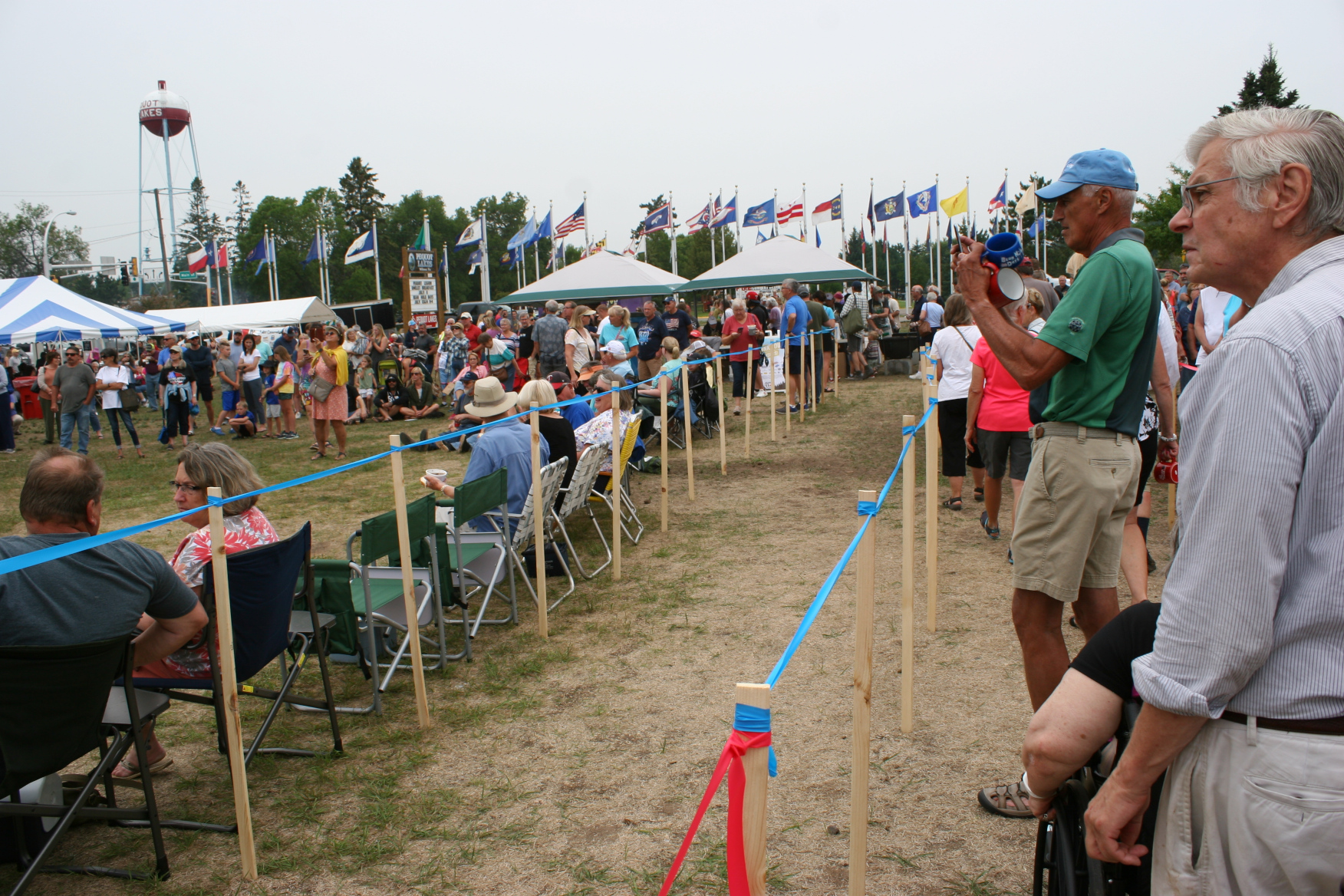
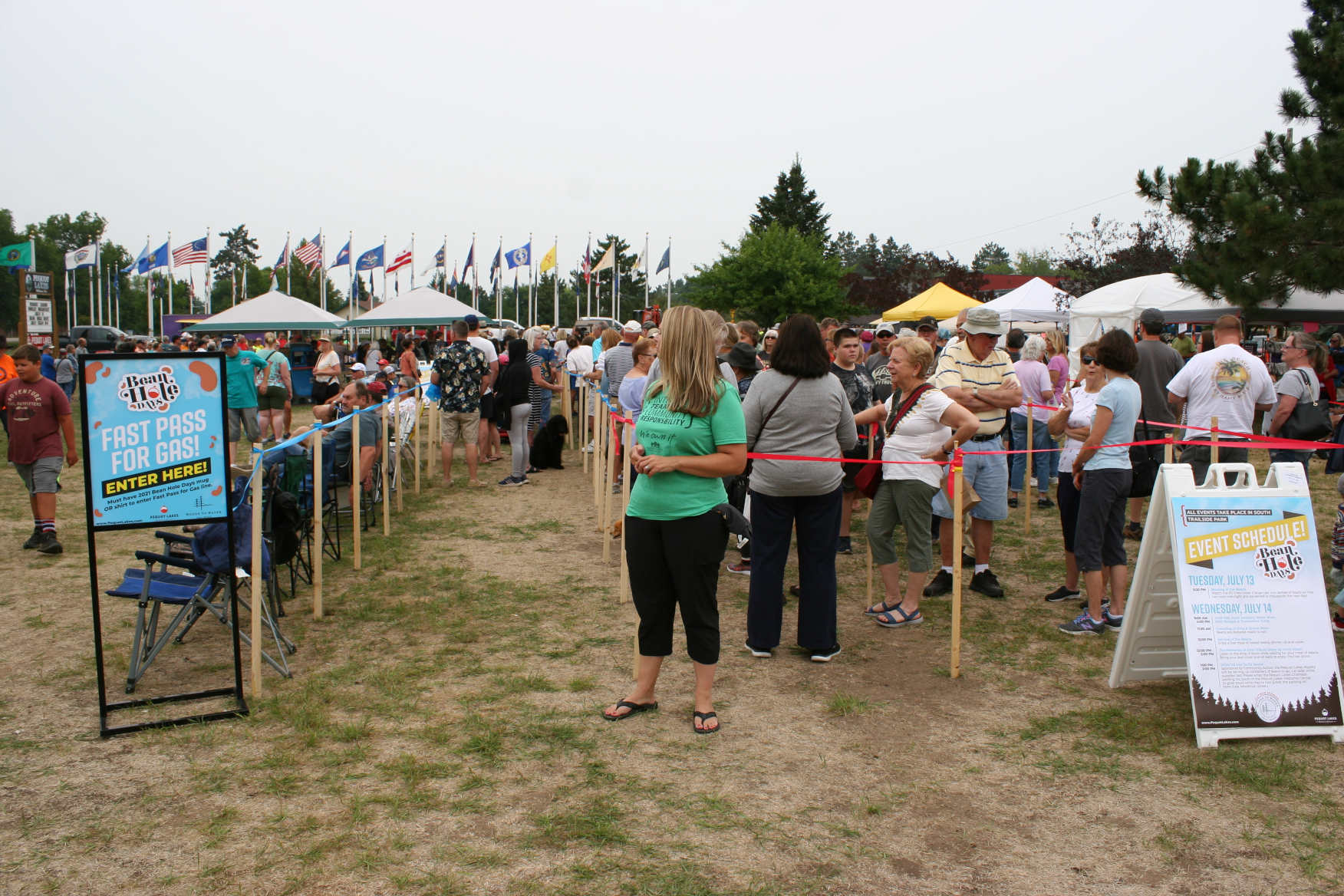
LONG LINES FORMED an hour before the event in makeshift narrow aisles crafted from stakes and ribbon. Folks waited not for Paul Bunyan, although he was there, working the crowd. And not for Elvis, although he performed. Rather, they waited for a serving of baked beans.
Thousands line up for a bowl of baked beans. Minnesota Prairie Roots copyrighted photo.
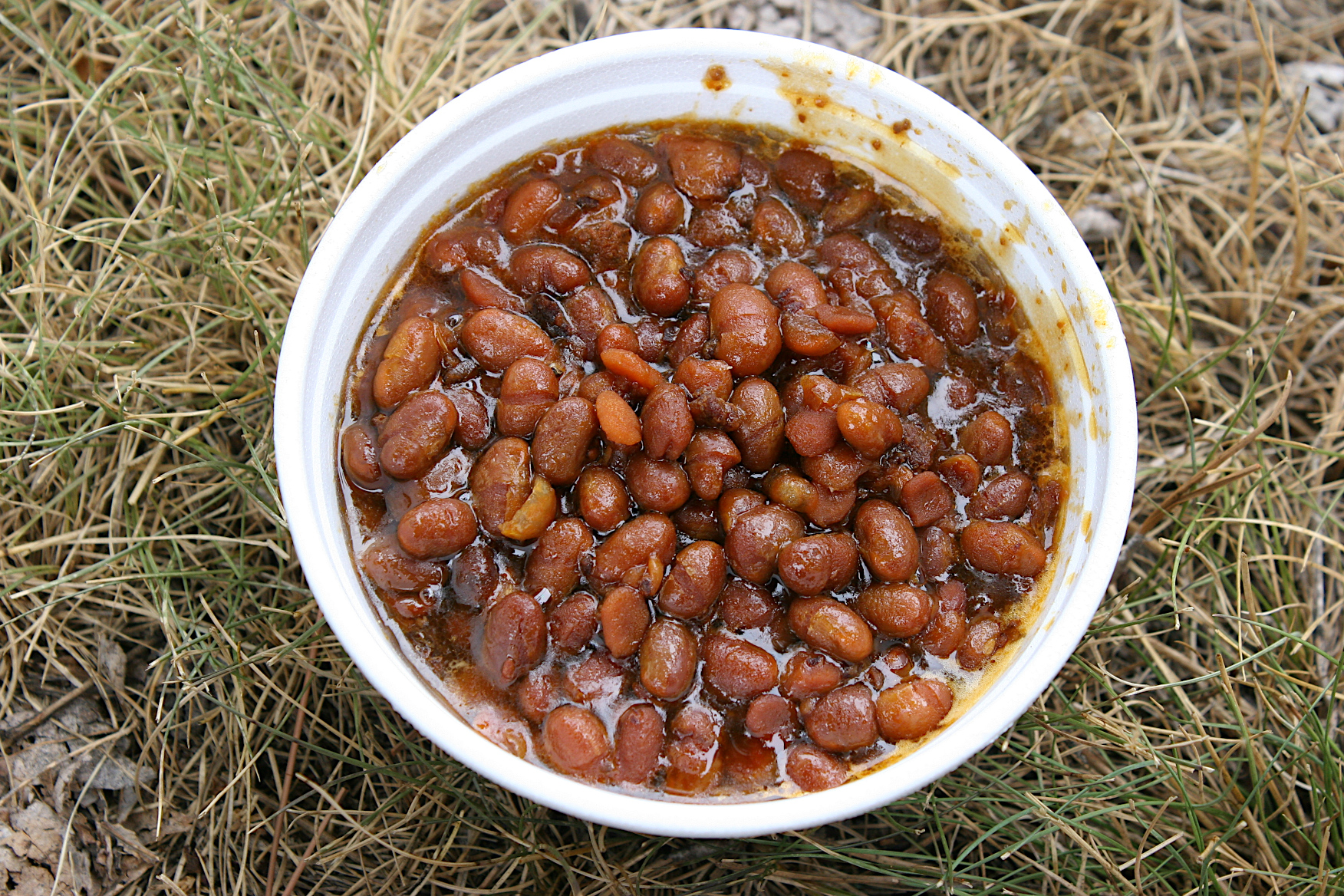
My bowl of baked beans. The beans are fee with donations accepted. Minnesota Prairie Roots copyrighted photo.
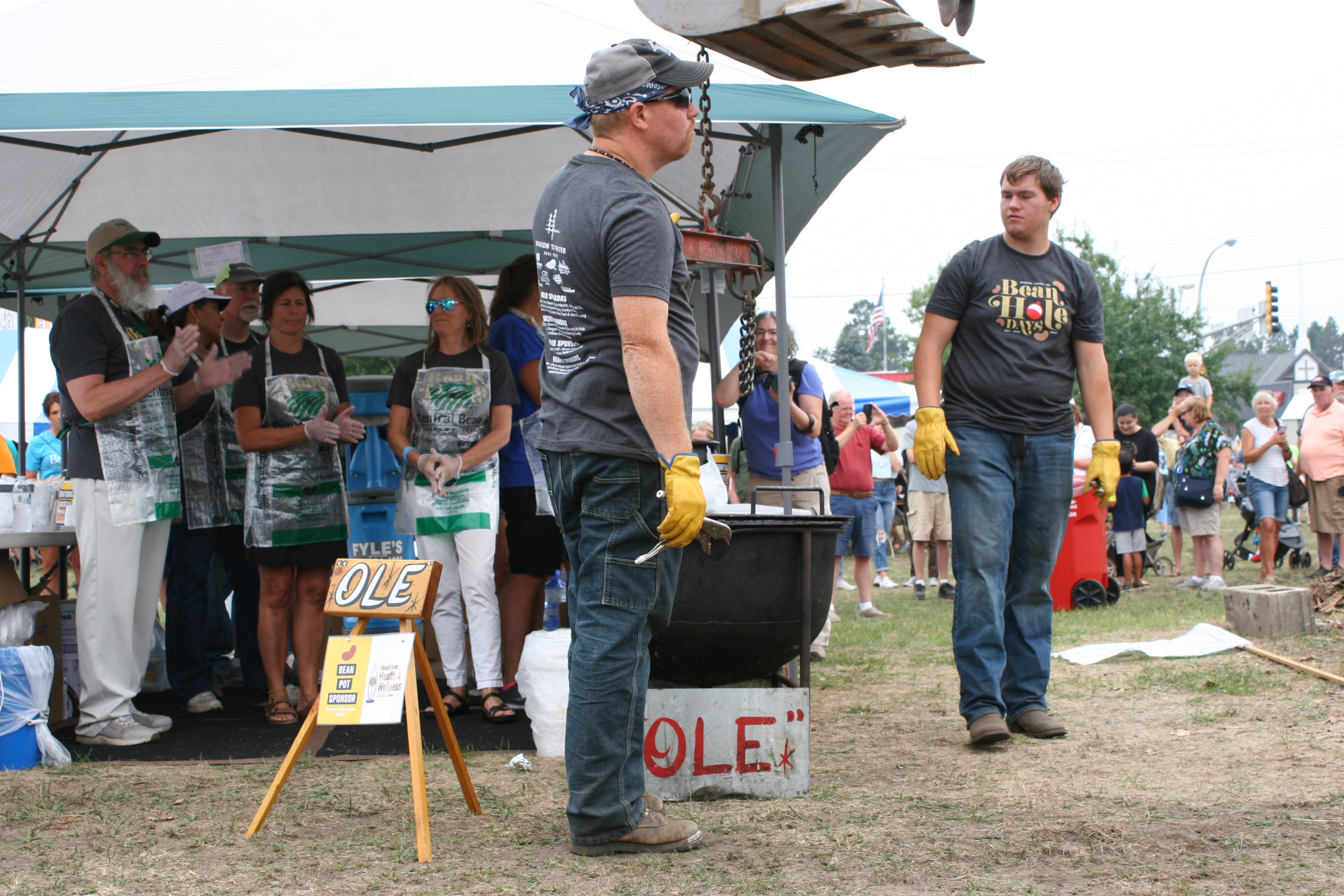
Lifting the kettles from the pit requires machinery and manpower. Minnesota Prairie Roots copyrighted photo.
This scene unfolded on Wednesday, July 14, during Bean Hole Days in Pequot Lakes, a small town in the central Minnesota lakes region. Randy and I, staying at a family member’s guest lake cabin south of nearby Crosslake, attended for the first time. And it was quite the experience. I mean that in a truly positive way. While I don’t like waiting, waiting for a generous serving of bacon-laced navy beans baked in a wood-fired pit proved well worth my time. I’ve never tasted better homemade baked beans.
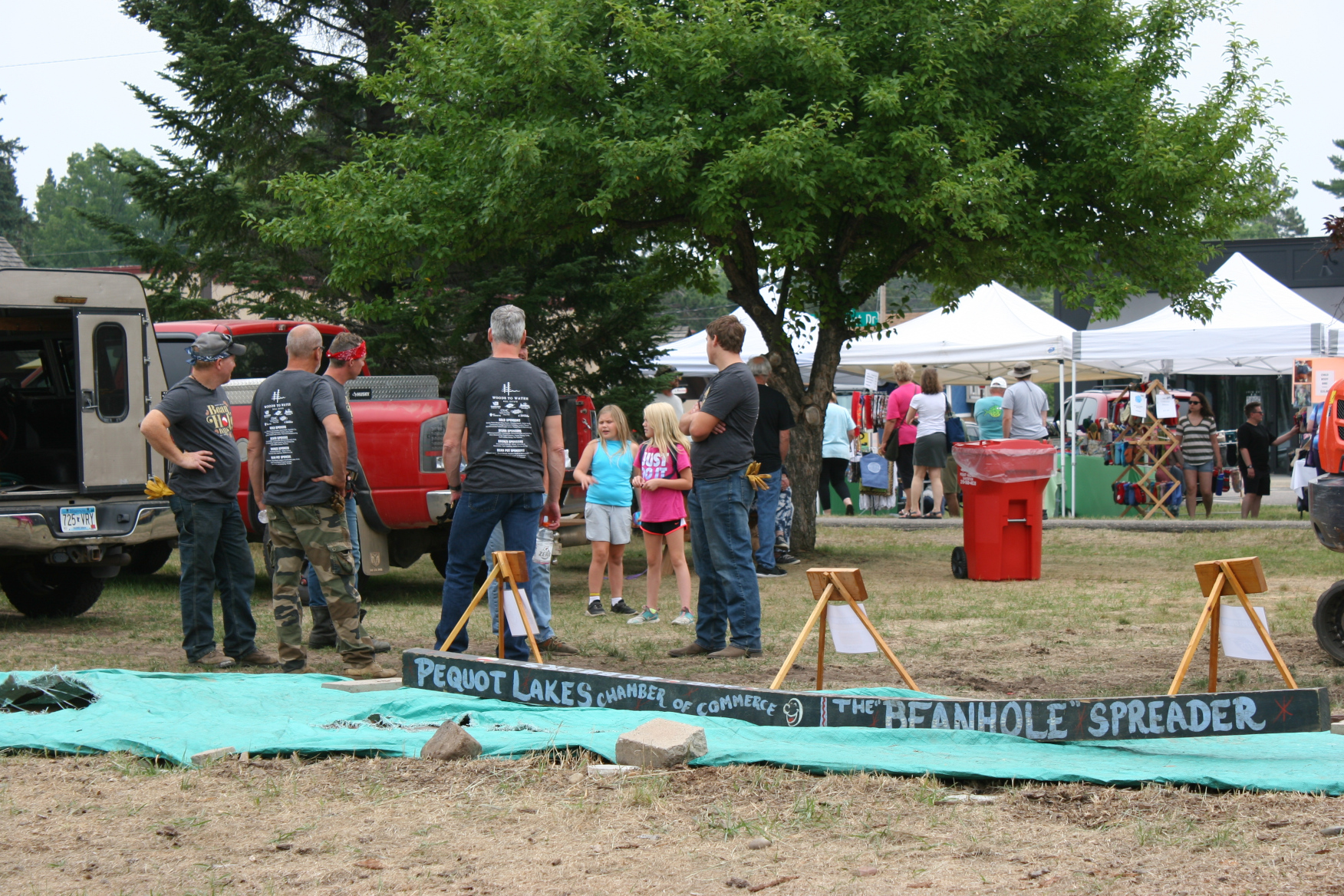
The bean crew waits near the pit where the beans bake. Minnesota Prairie Roots copyrighted photo.
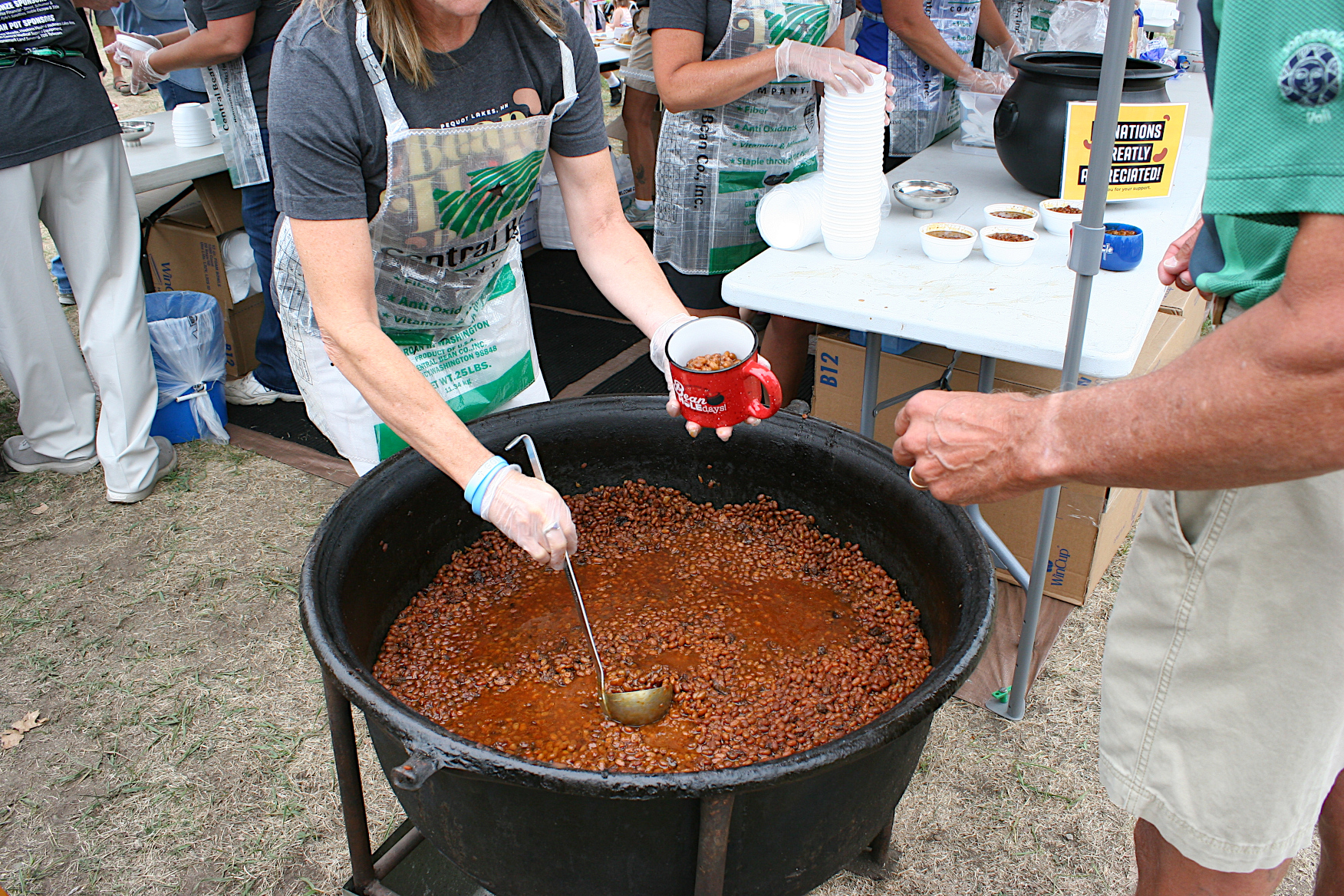
The process of crafting these beans is impressive. I missed the prep and lowering of massive cast iron kettles into the ground Tuesday. But in chatting with a bean crew member on Wednesday, I learned that the 350 pounds of navy beans were soaked and partially cooked with propane before lowering the cauldrons into the pit of wood coals for overnight baking. And yes, it takes a knowledgeable team and machinery for this operation.
Almost ready to serve beans. Minnesota Prairie Roots copyrighted photo.
My bean crew source wasn’t sharing details about ingredients, with the exception of 126 pounds of bacon mixed into the beans. The special “sauce,” which definitely tastes of molasses, is a guarded secret. And that’s all right. It adds to the mystery, the intrigue.
Lining up for beans under the direction of a volunteer. Minnesota Prairie Roots copyrighted photo.
From my observations, volunteers have this bean-baking down to a science. And they should. Bean Hole Days began in 1938 as a way for local businessmen to thank farmers for their business. Today, the focus seems more on drawing vacationers into town—to the local shops and restaurants. While waiting in line for 45 minutes, I chatted with couples from Baxter and the Twin Cities.
We arrived early with plenty of time to check out the arts and crafts. Minnesota Prairie Roots copyrighted photo.
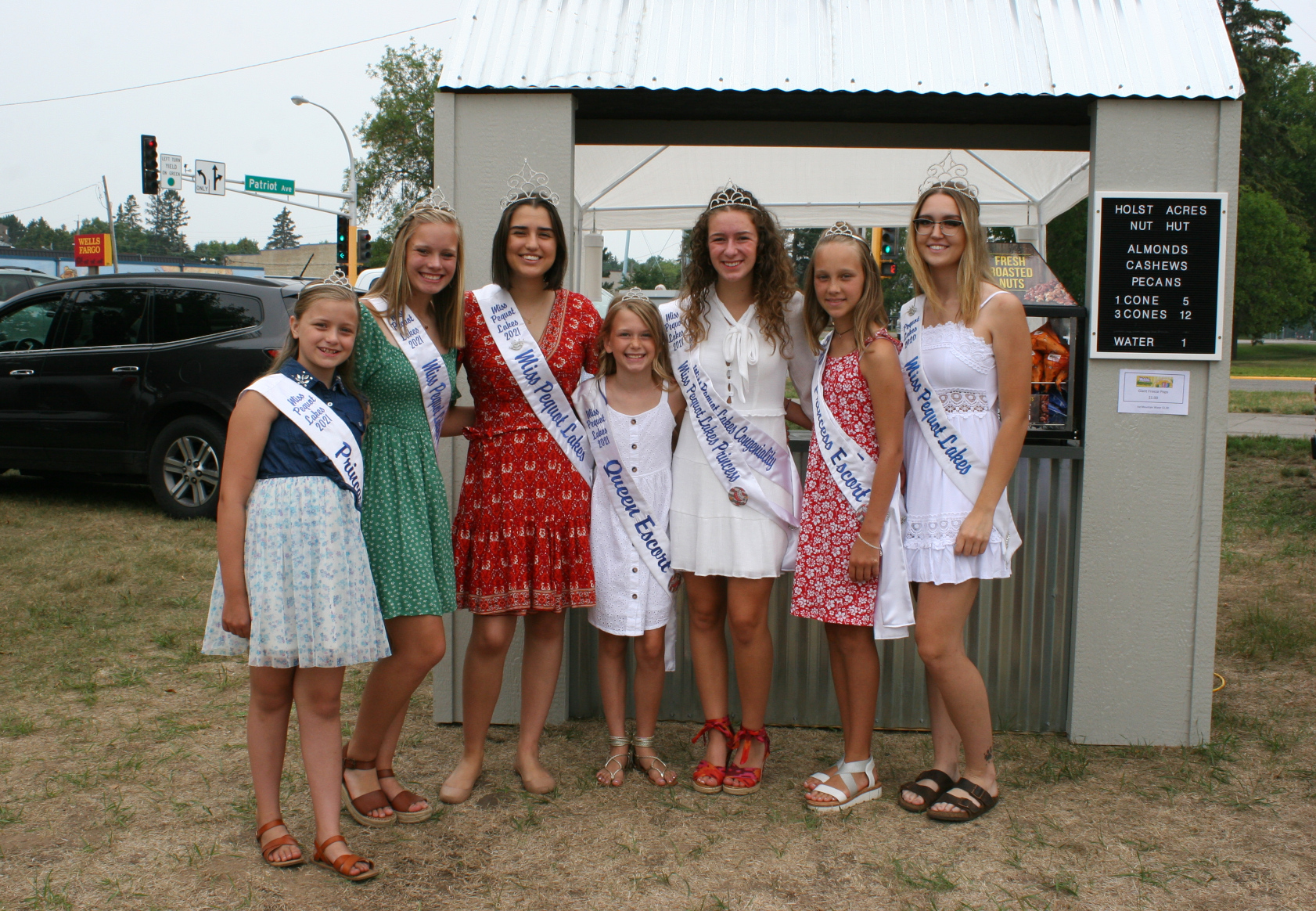
Bean Hole Days royalty. Minnesota Prairie Roots copyrighted photo.
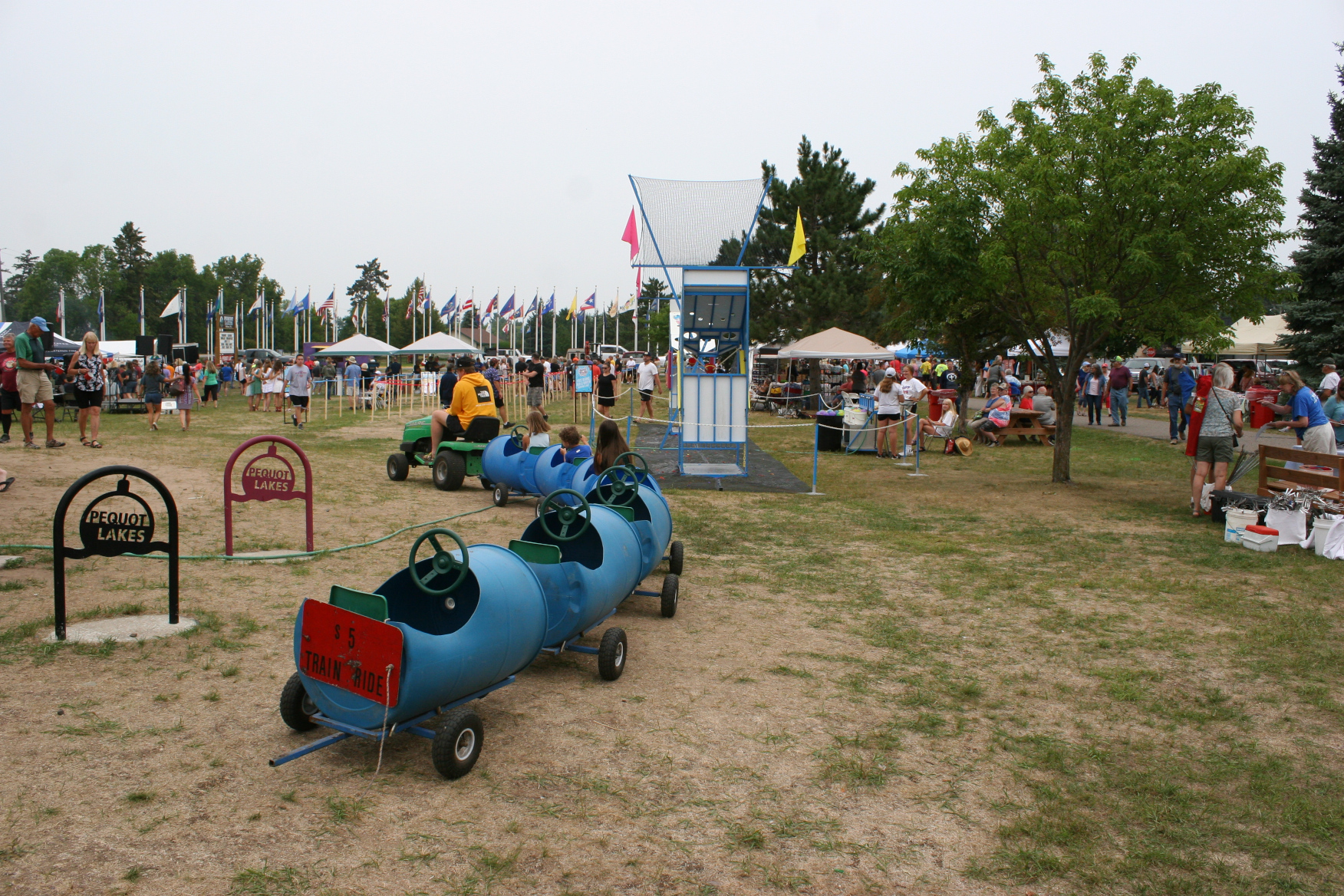
An old-fashioned barrel train weaves through the festival grounds. Minnesota Prairie Roots copyrighted photo.
This event at Trailside Park is about much more than beans. It also features an arts and craft fair, a small kiddie carnival, food vendors and crowning of Bean Hole royalty. And this year free COVID-19 vaccinations.
These friendly vendors sold art (Shea J. Maze) and naturally-dyed goods (Diaspora Textiles). Minnesota Prairie Roots copyrighted photo.
I enjoyed chatting with vendors, mingling, watching. And photographing.
Paul Bunyan greets Bean Hole Days attendees. Minnesota Prairie Roots copyrighted photo.
Bean Hole Days, because of its location in Pequot Lakes among lakes and pines in cabin country, reflects the Minnesota northwoods and all that entails. Fishing. The town water tower is shaped like a bobber. Paul Bunyan and Babe the Blue Ox. Paul shook hands, posed for photos and generally welcomed guests. Babe and bobber sculptures provided photo ops.
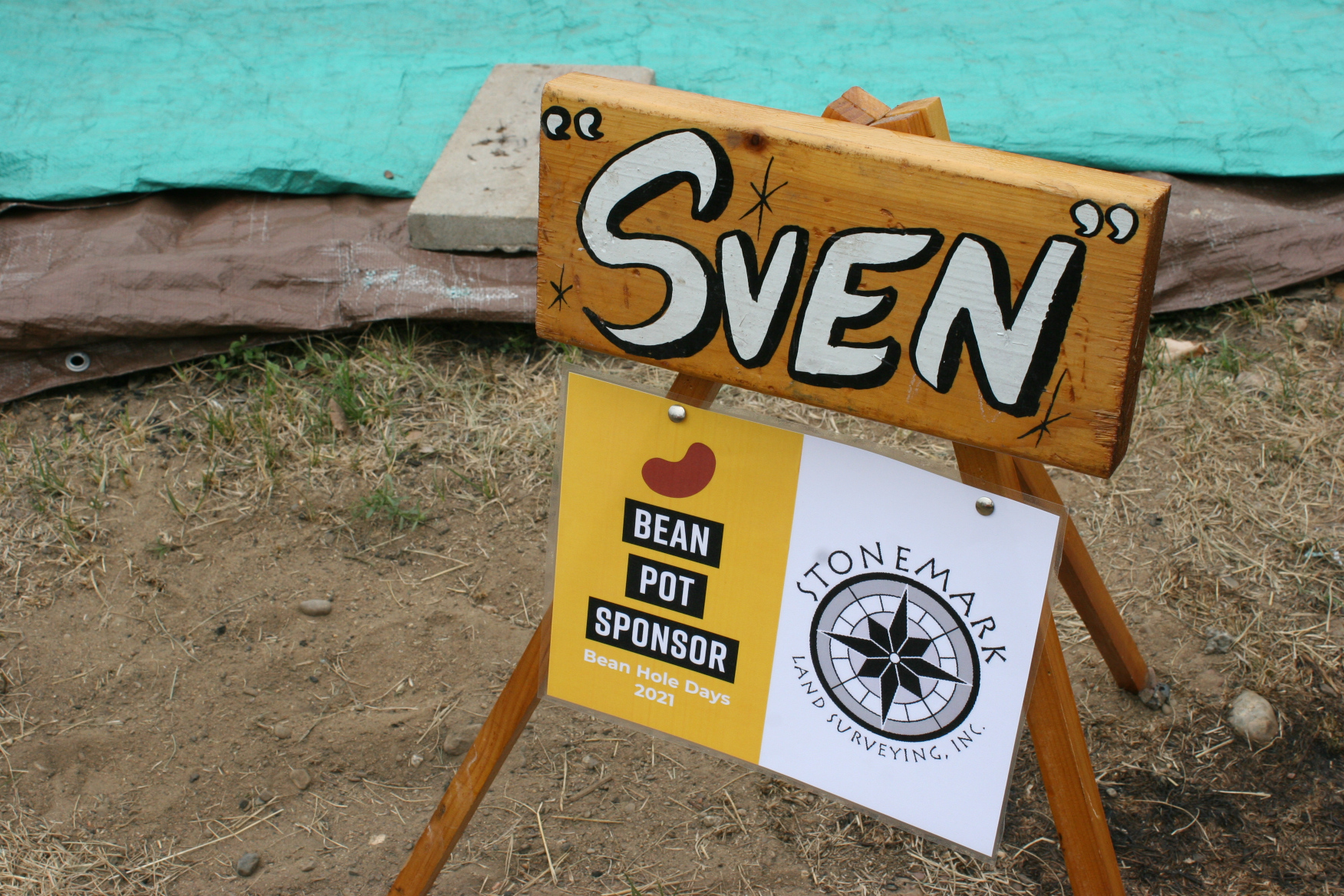
The kettles of beans are given Scandinavian names. Minnesota Prairie Roots copyrighted photo.
Even the kettles of beans, sponsored by area businesses, feature names connecting to the region’s heritage. Lena. Sven. Ole. And more.
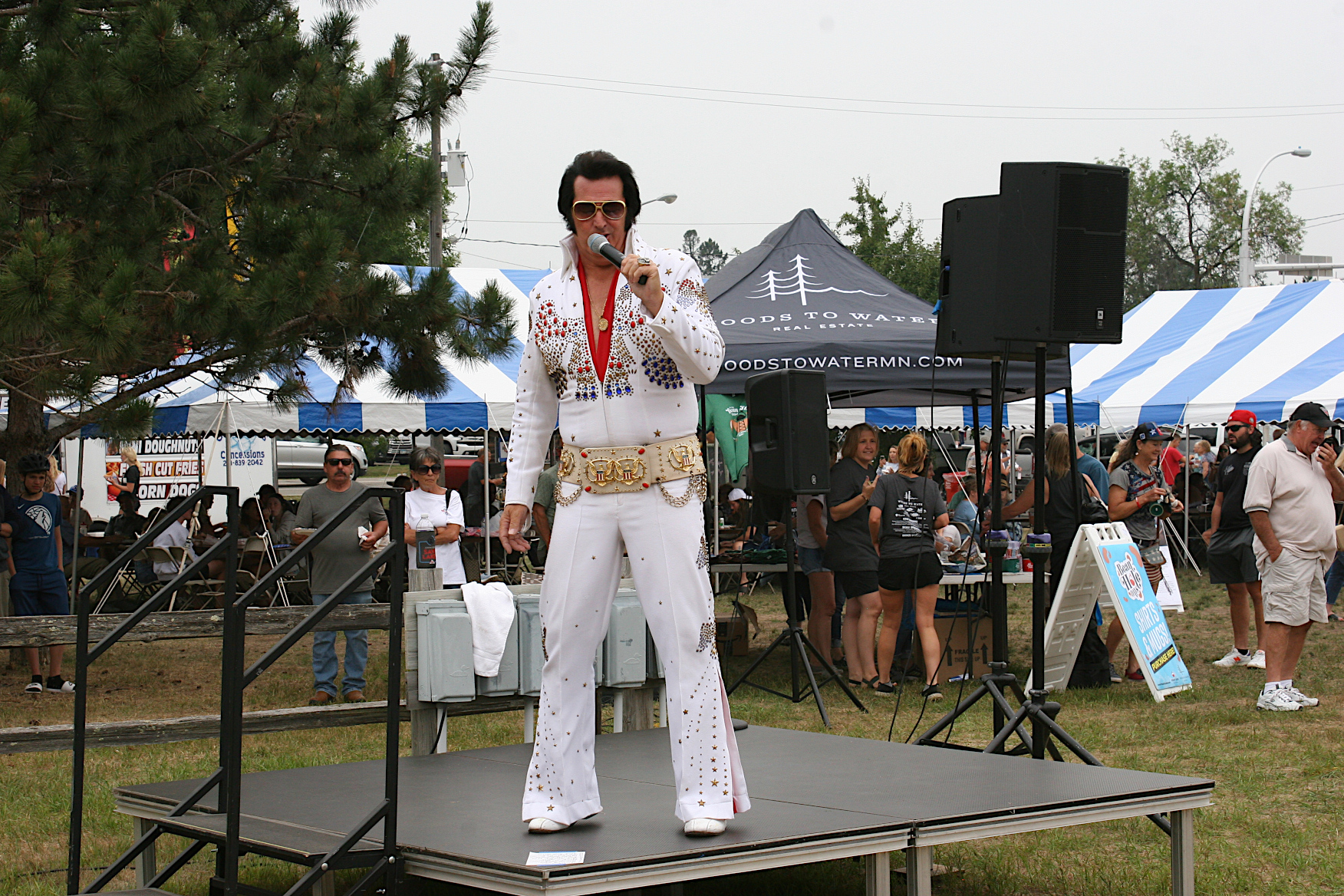
Elvis entertains the waiting crowd. Minnesota Prairie Roots copyrighted photo.
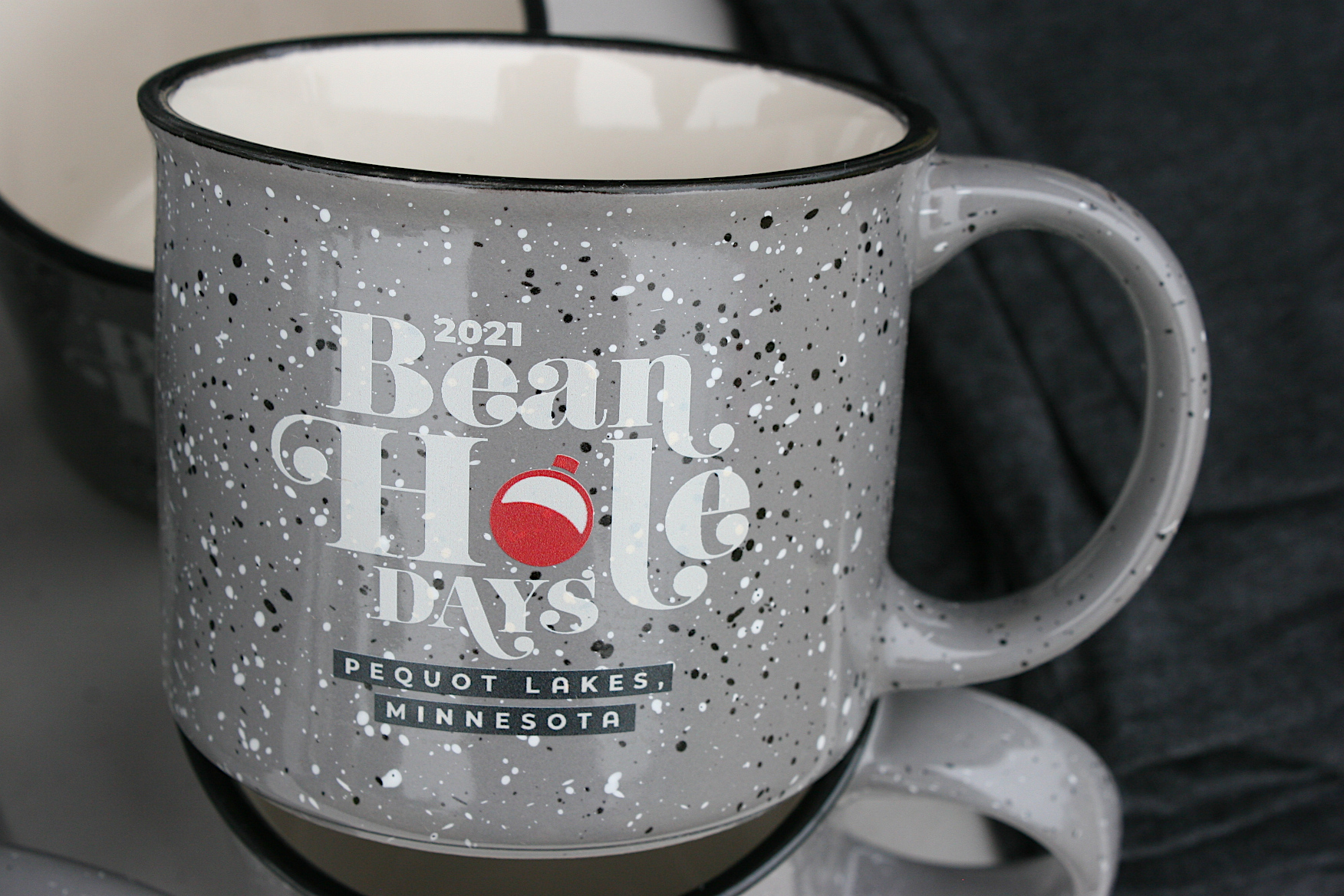
This mug allows you to go in the fast/first serving line. Minnesota Prairie Roots copyrighted photo.
Buy a mug and enter the fast lane. Minnesota Prairie Roots copyrighted photo.
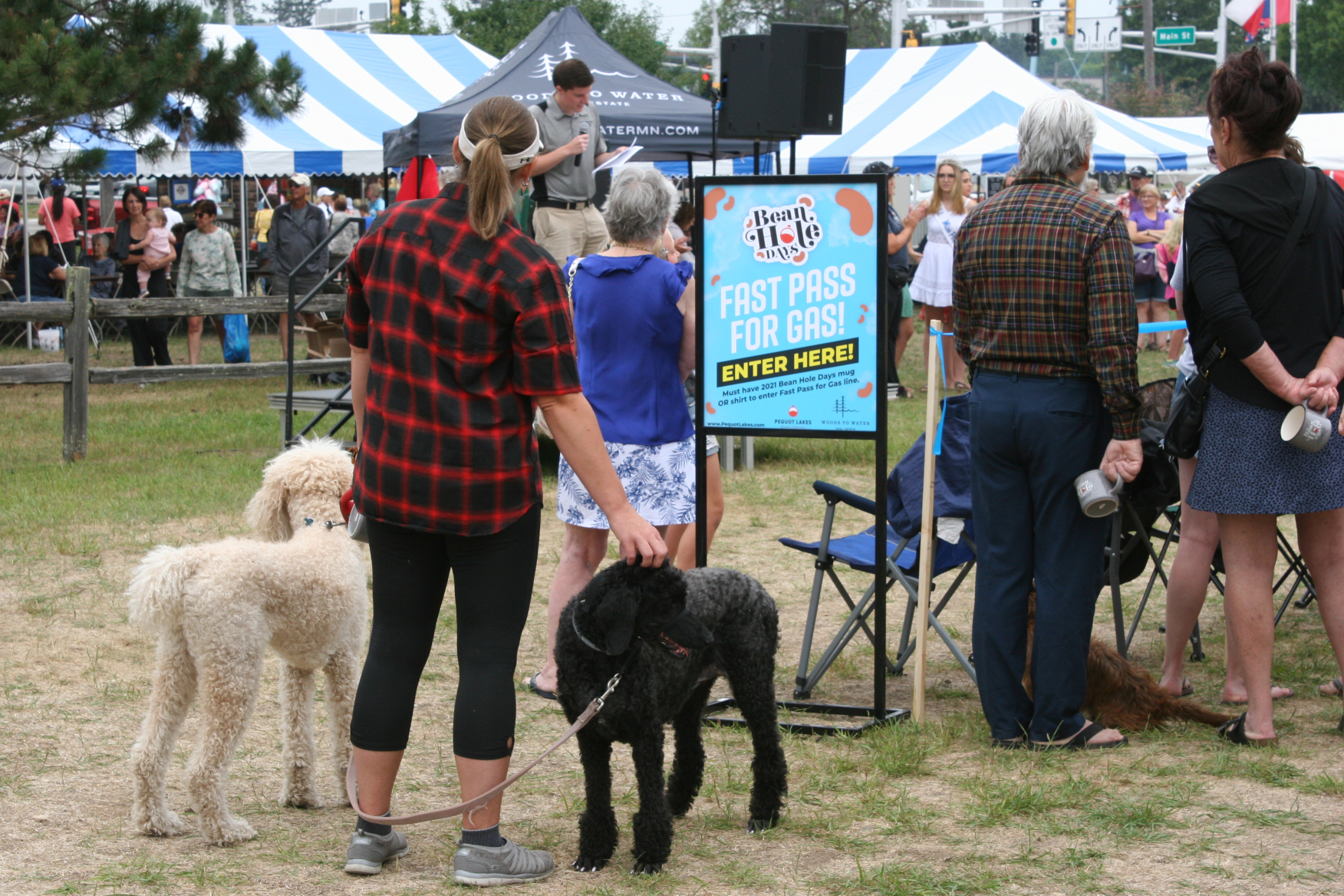
As I waited in line for beans, I danced to the music of Elvis performing live. That garnered a compliment from a volunteer guiding guests to the right serving kettles. Those who purchased a 2021 Bean Hole Days mug advanced through the FAST PASS FOR GAS line. I appreciated the humor. While Randy and I didn’t buy mugs, we left a donation.
Volunteers ladle generous portions of baked beans. Some people brought their mugs from past years. Minnesota Prairie Roots copyrighted photo.
And we left full of beans and appreciative of all the people who put together this unique small town Minnesota northwoods experience.
#
Please check back for more photos from Bean Hole Days as I couldn’t possibly fit everything into a single post.
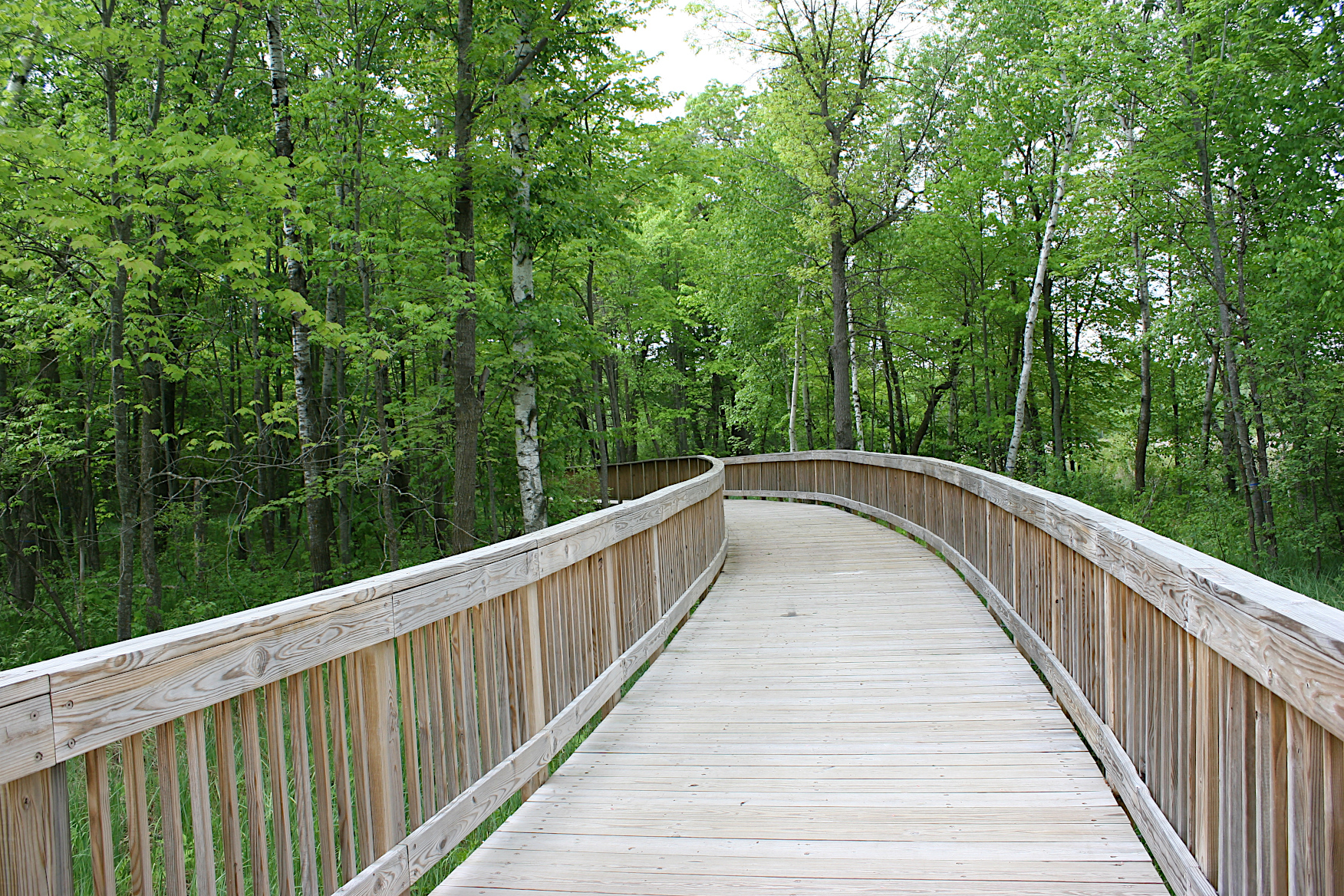
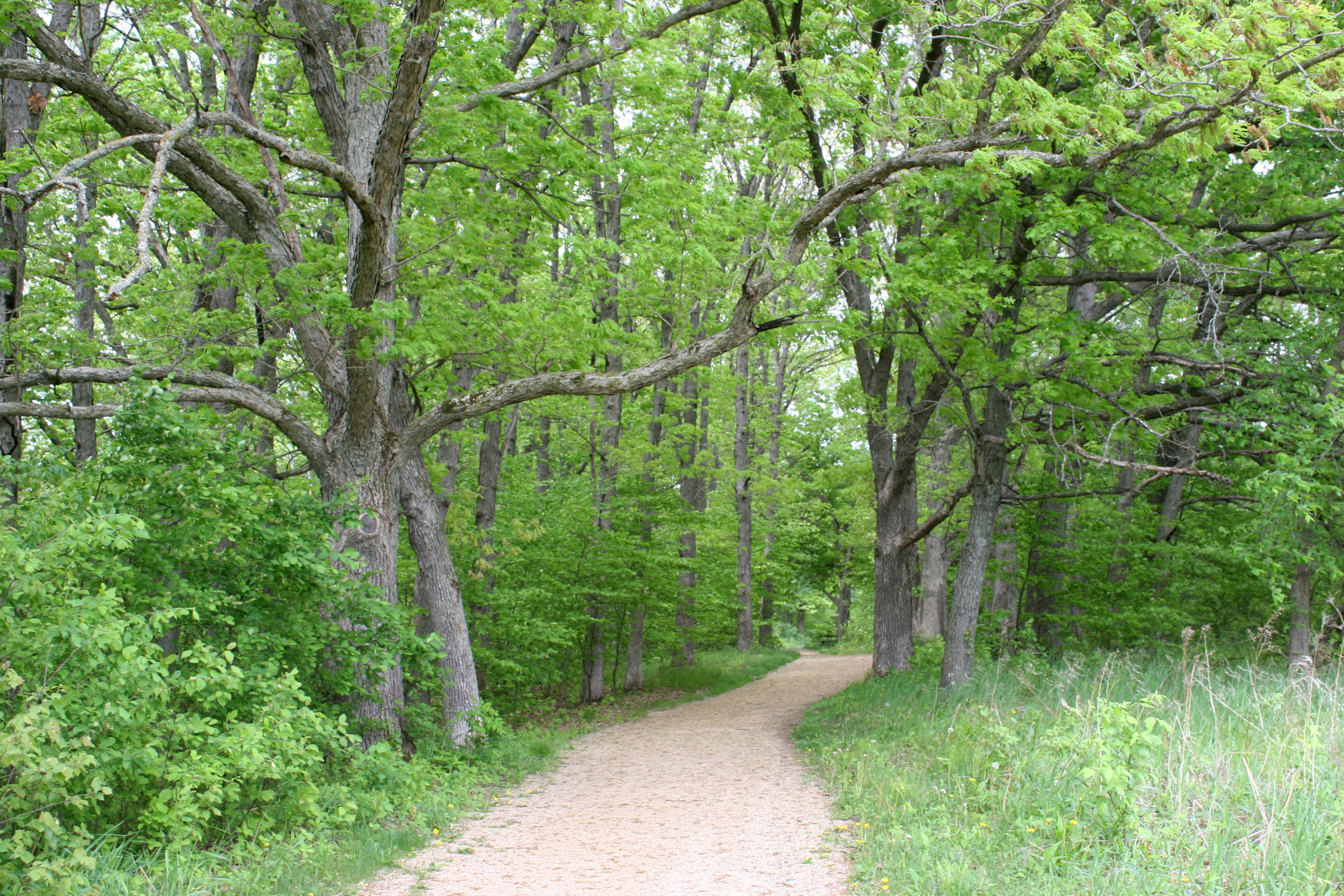
Into the woods via a boardwalk at Grams Regional Park, Zimmerman, Minnesota. Minnesota Prairie Roots copyrighted photo May 2021.
AFTER MULTIPLE VISITS to Grams Regional Park, Randy and I feel comfortably familiar with this 100-plus acre natural area. The Sherburne County park in Zimmerman has become a lunch-time stopping point on our way to a family lake cabin south of Crosslake.
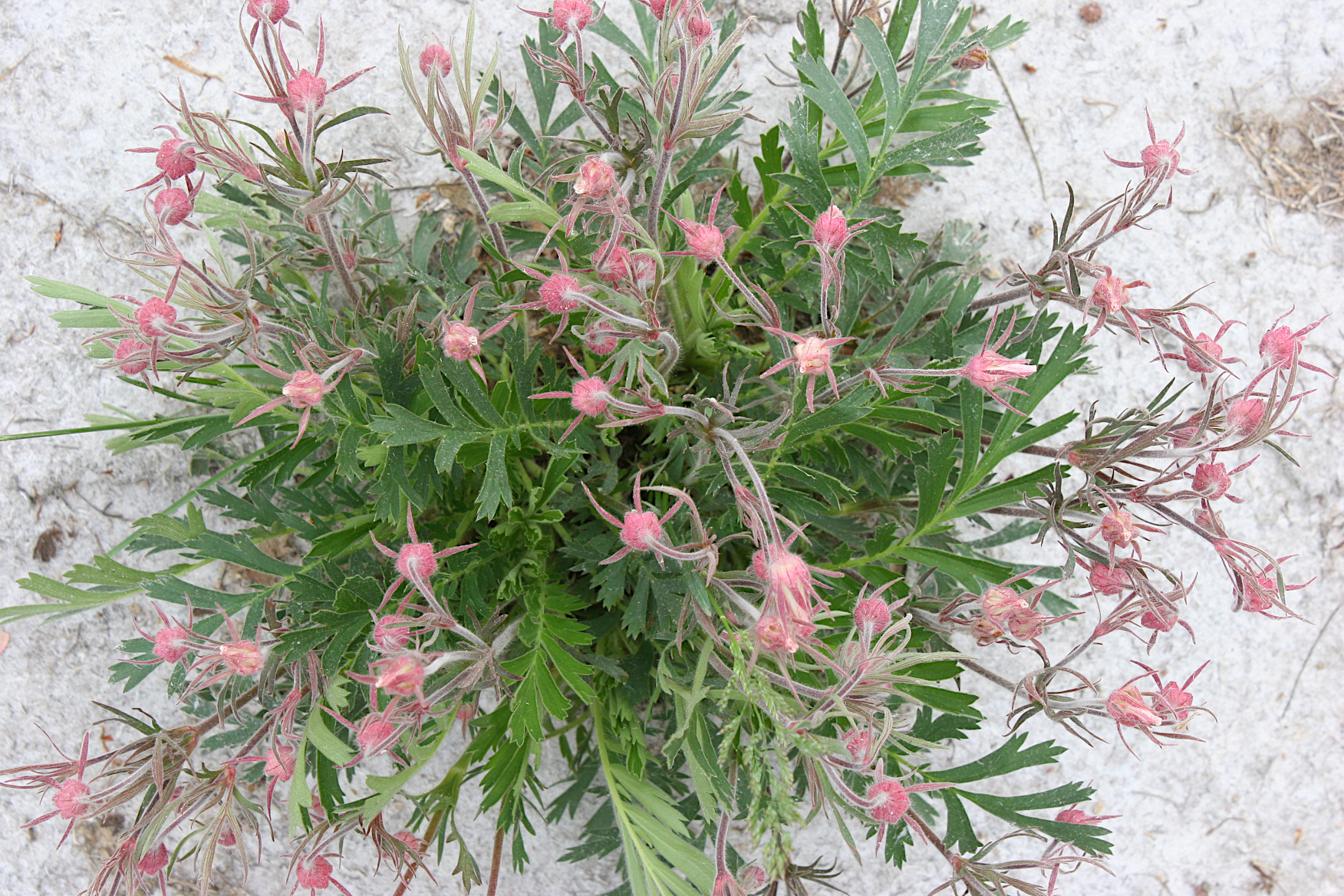
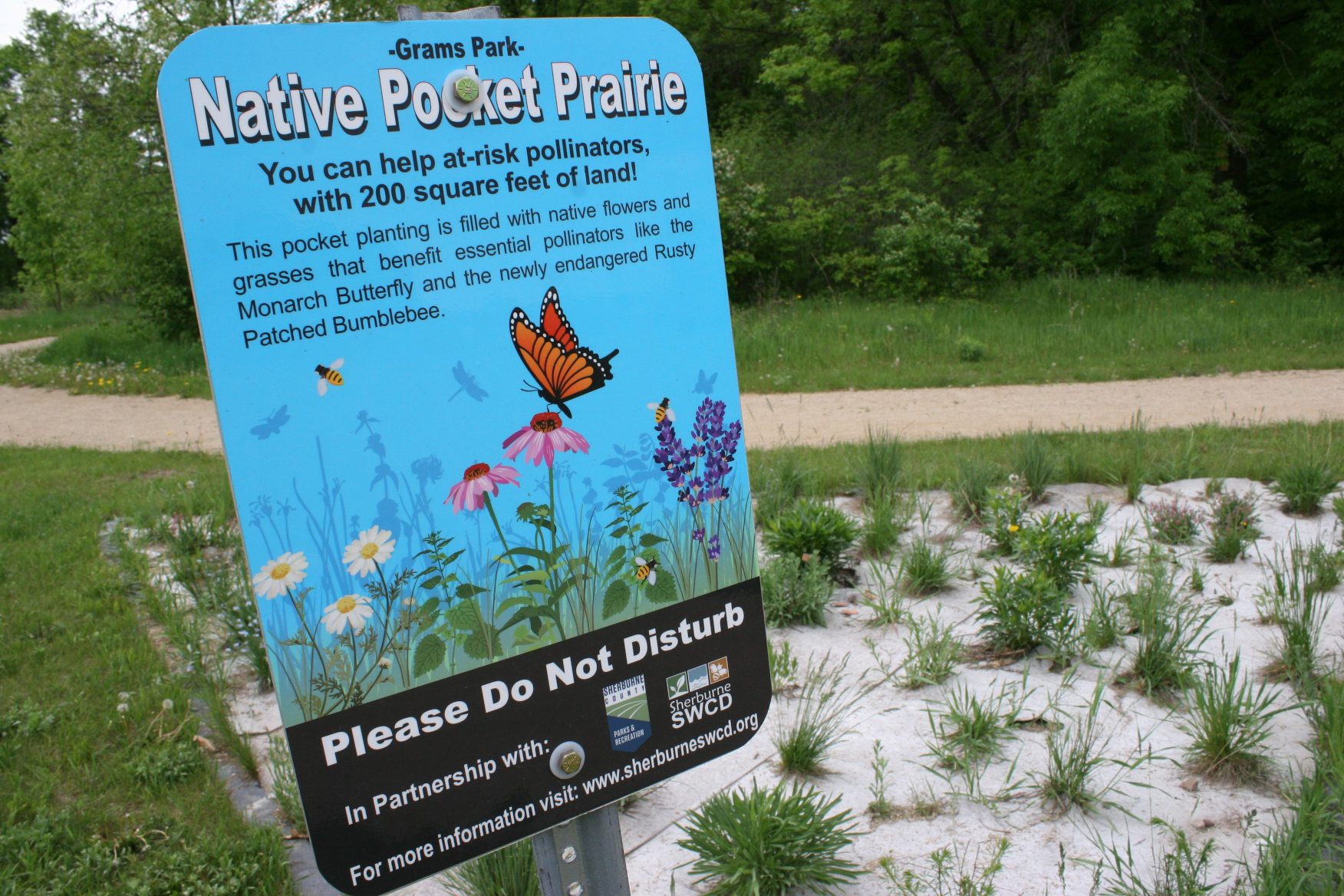
Flowers bloom in a Native Pocket Prairie Garden at Grams. Minnesota Prairie Roots copyrighted photo May 2021.
We exit US Highway 169 onto county road 4, drive a short way, then turn left and snake back to the park across the road from Lake Fremont. Here, among the oaks, we eat our picnic lunch before stretching our legs.
Into the woods at Grams Park. Minnesota Prairie Roots copyrighted photo May 2021.
The park features two miles of trails and boardwalks in a diverse landscape of open natural space, oak forest, tamarack bog and wetlands.
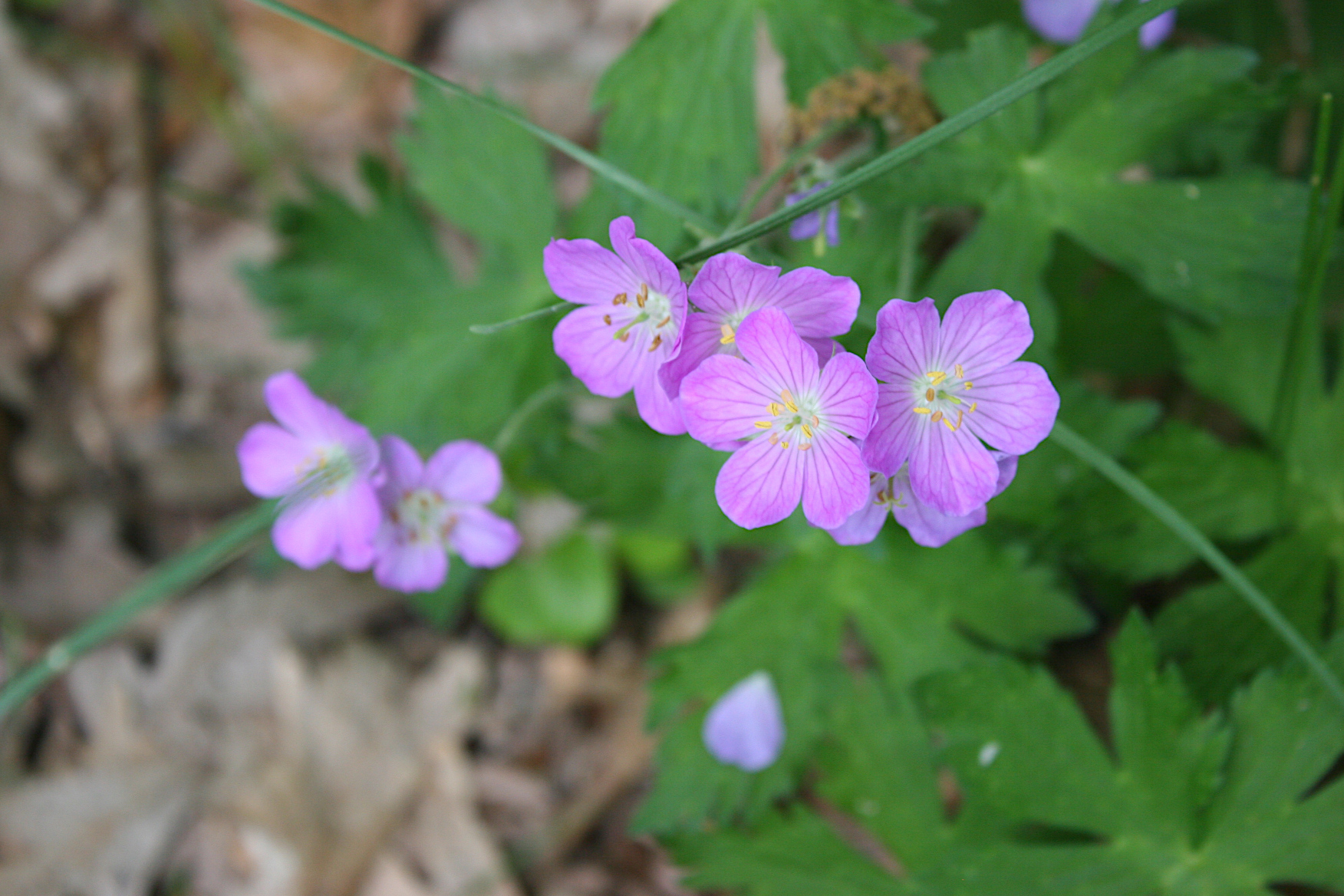
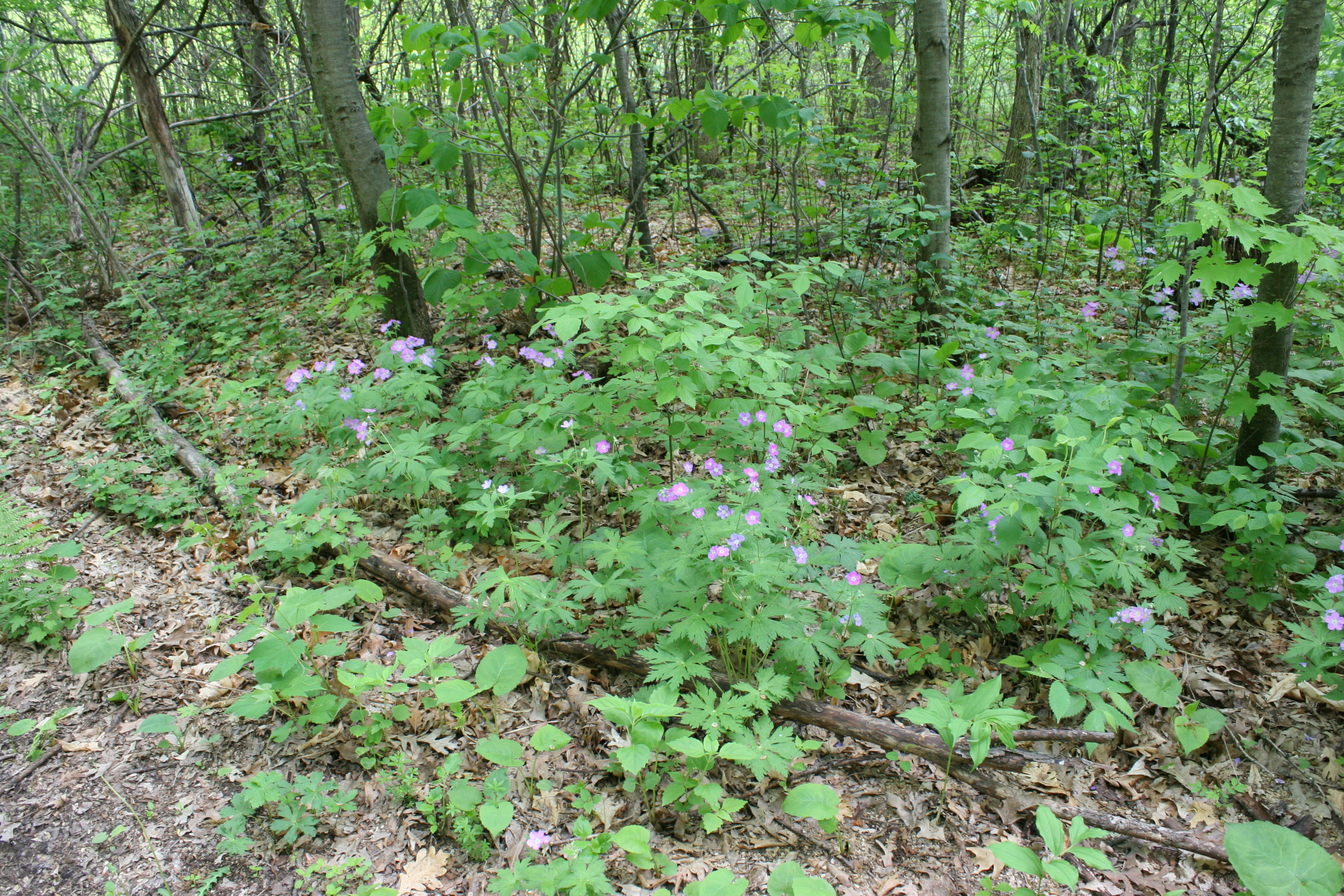
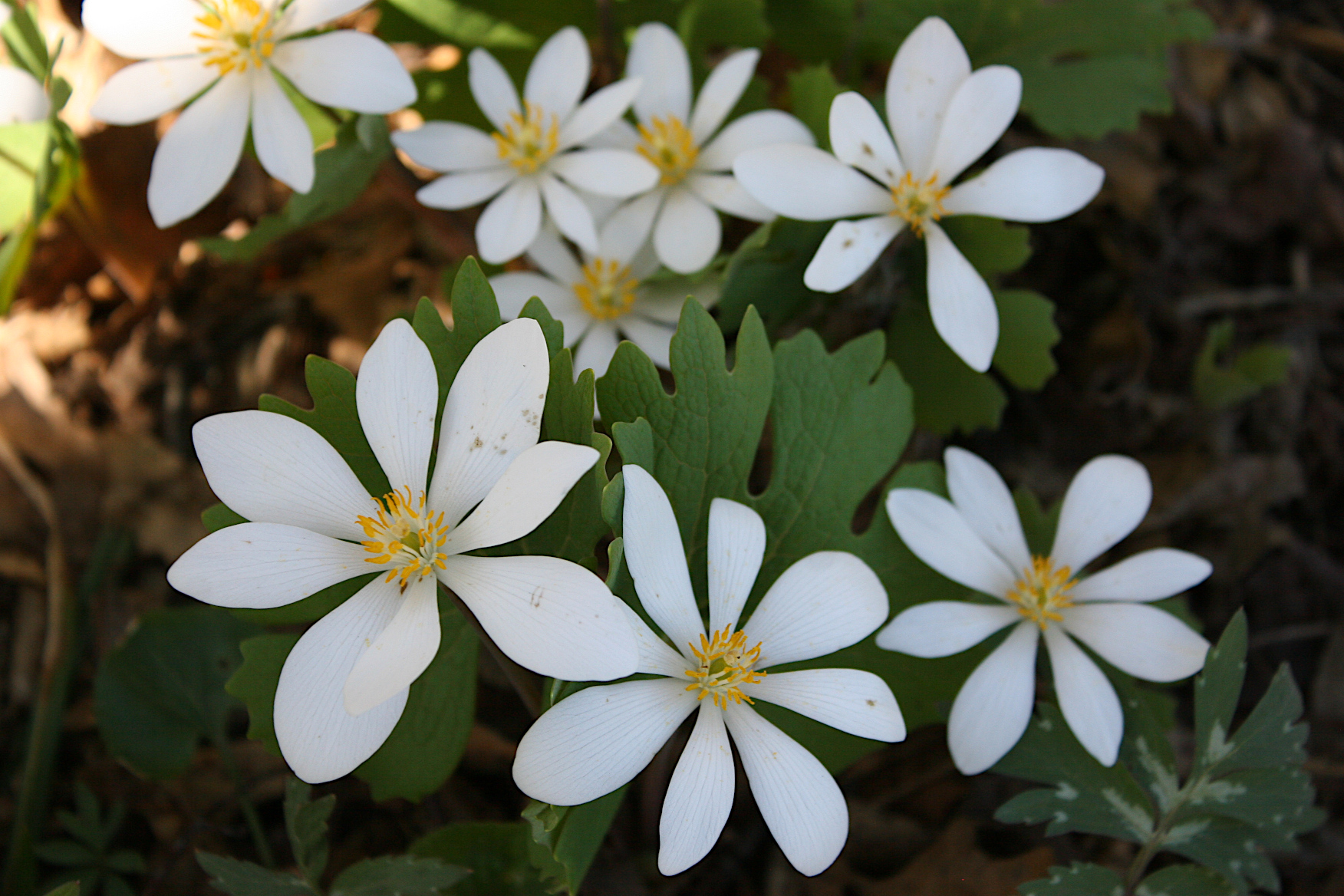
Wildflowers bloom in the woods in mid-May. Minnesota Prairie Roots copyrighted photo May 2021.
An overview of those same purple flowers. Minnesota Prairie Roots copyrighted photo May 2021.
Flowering in the Native Pocket Prairie Garden. Minnesota Prairie Roots copyrighted photo May 2021.
We’ve enjoyed the wildflowers of spring, the wild raspberries of summer and the flaming hues of autumn here in this quiet natural setting.
I appreciate this aspect of the park. Minnesota Prairie Roots copyrighted photo May 2021.
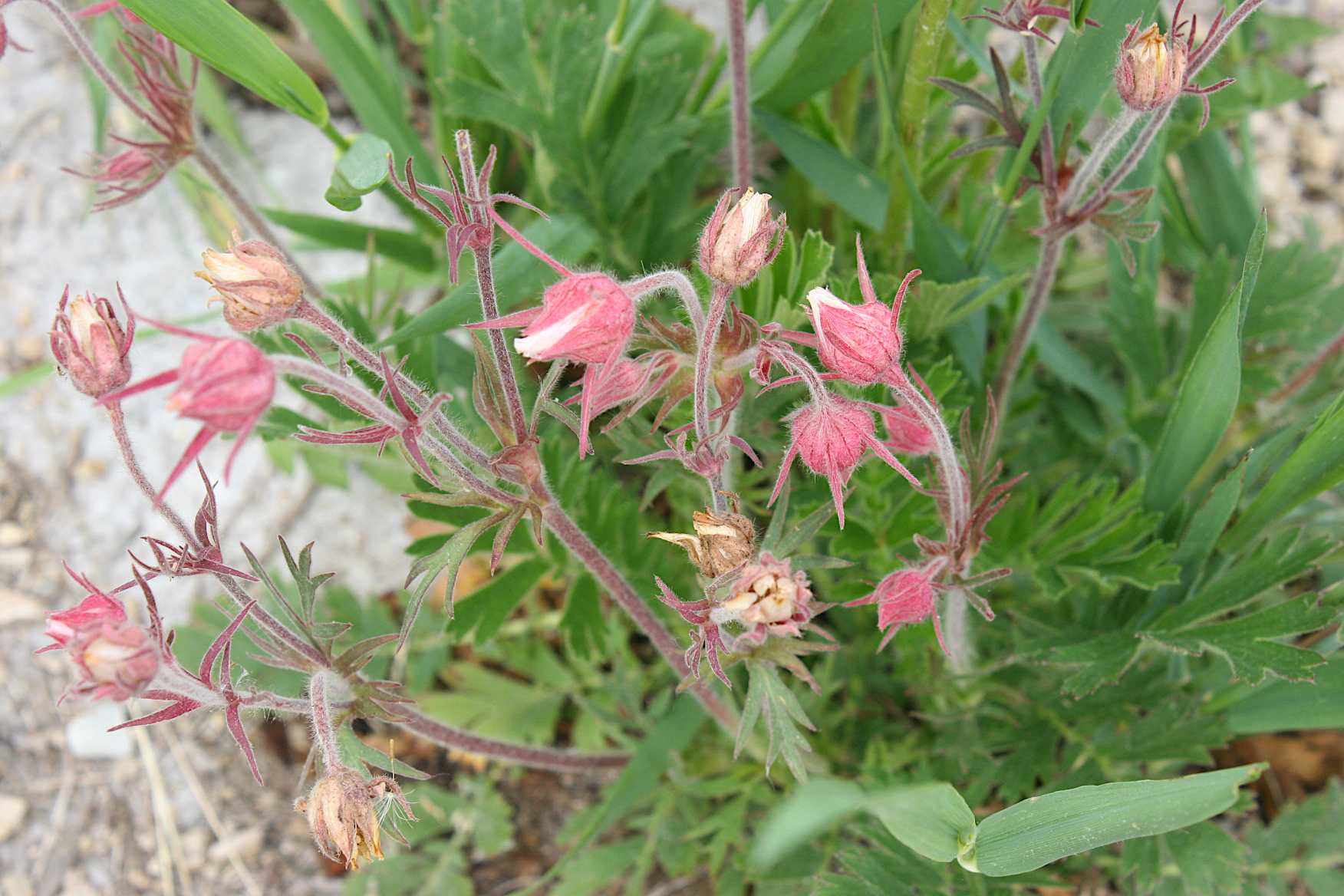
Beautiful prairie flowers in the garden. Minnesota Prairie Roots copyrighted photo May 2021.
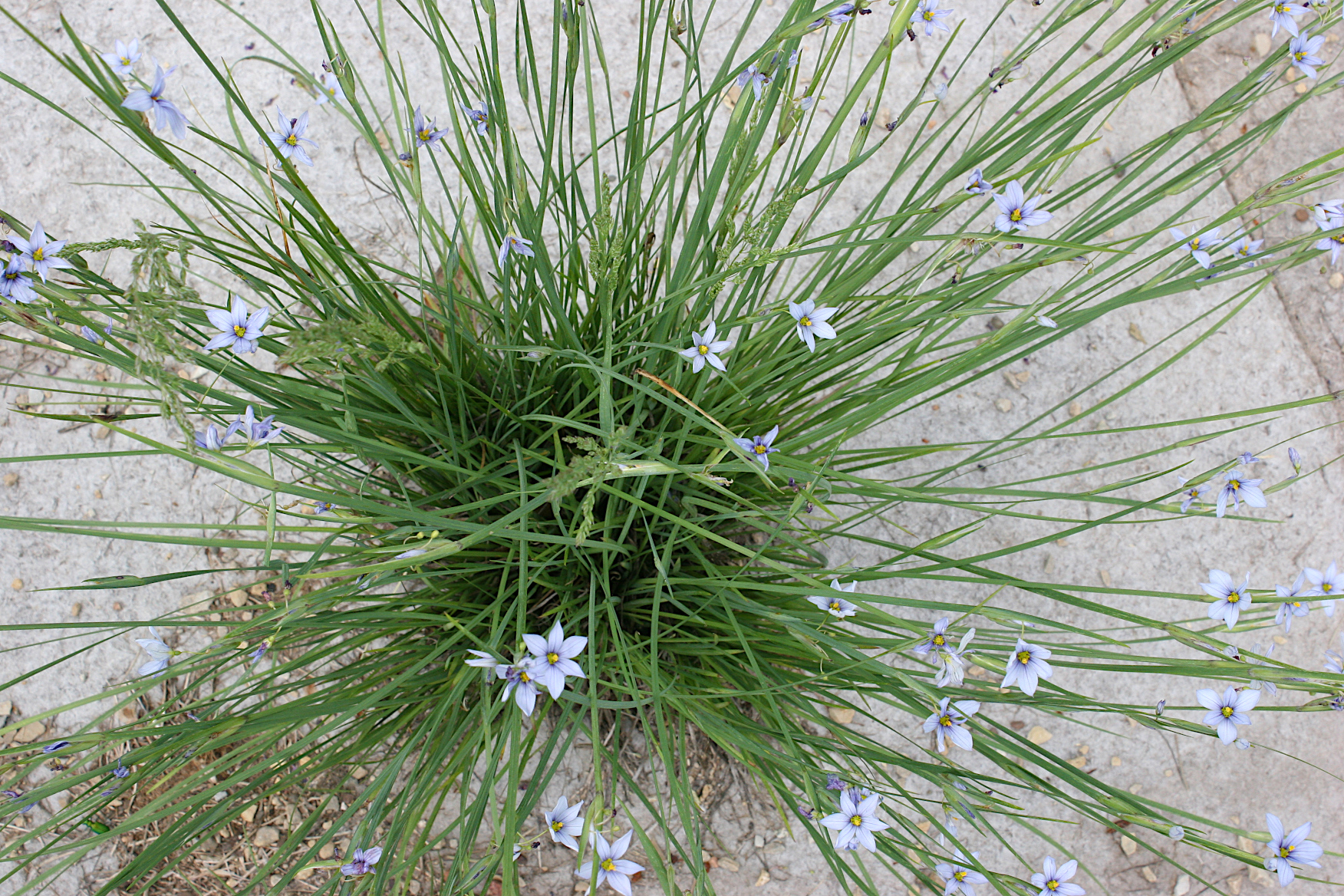
A flowering prairie grass in the prairie garden. Minnesota Prairie Roots copyrighted photo May 2021.
On our most recent stop in late May, we met a couple, Connie and Dale, lunching at the same picnic table we’d used prior to a hike through the park. It was a chance meeting which turned out to be a history lesson. Connie’s grandparents moved onto this land in 1919. She grew up here and eventually convinced her mother to sell the property to Sherburne County. The county, according to information on its website, acquired the park land from Howard and Marvel Grams in 2002.
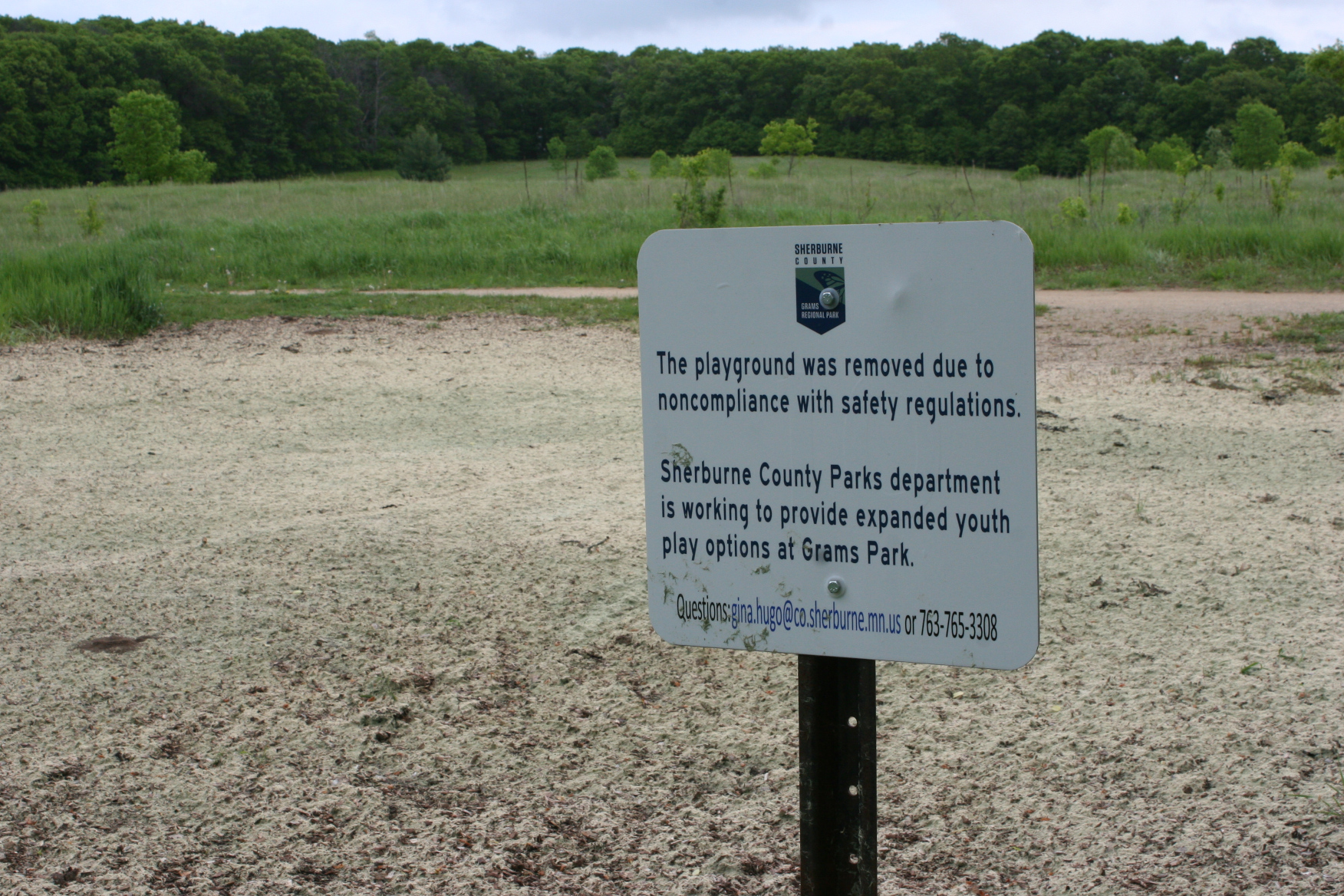
A work in progress at Grams Park. Minnesota Prairie Roots copyrighted photo May 2021.
Spotted while walking in the park. Minnesota Prairie Roots copyrighted photo May 2021.
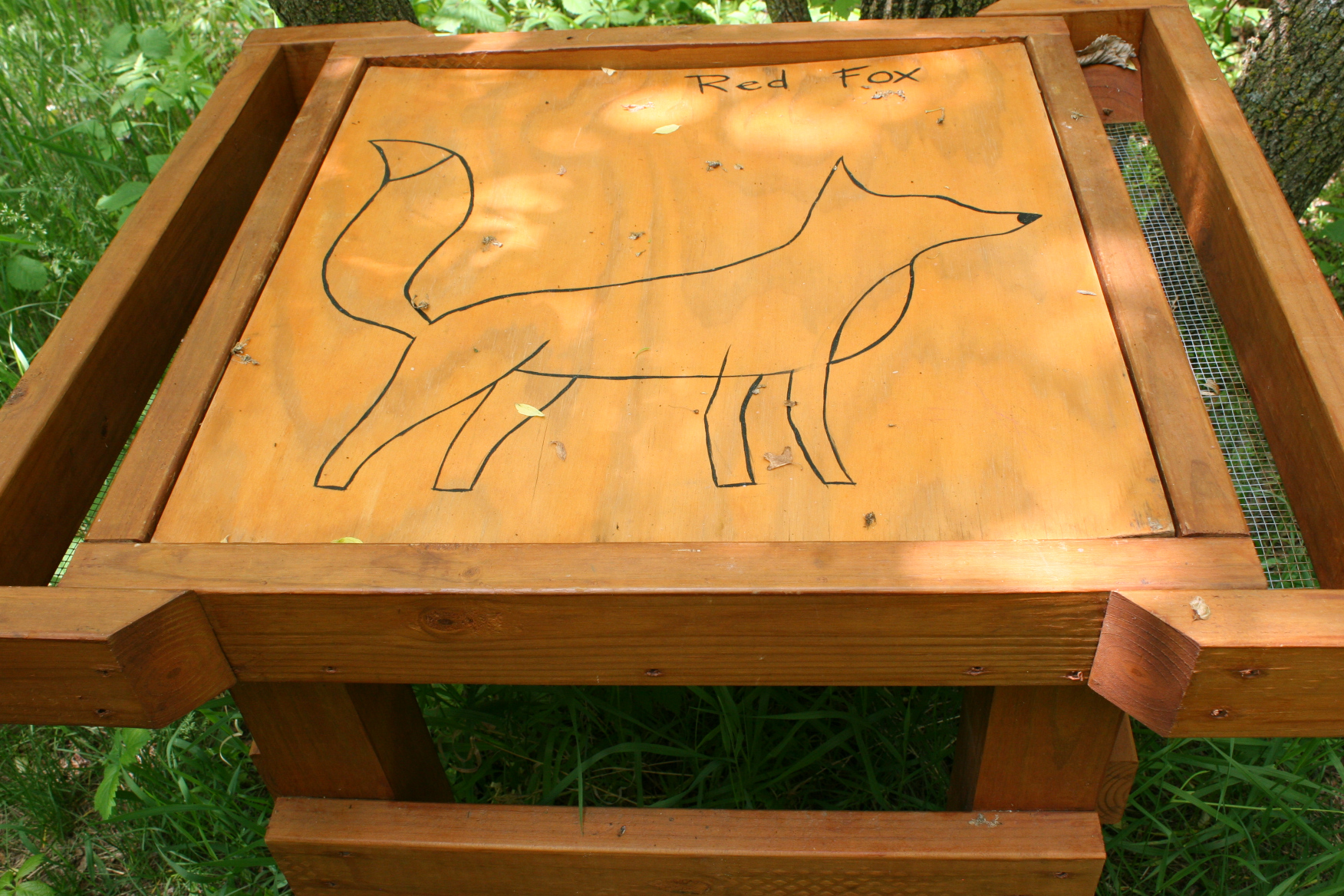
Photographed in an educational/play space for kids. Minnesota Prairie Roots copyrighted photo May 2021.
Had the property not been sold to the county, it would have become a housing development, Connie said. I could hear her gratitude that the Grams family legacy is one of a park and not of houses. I shared how much we enjoy this natural space.
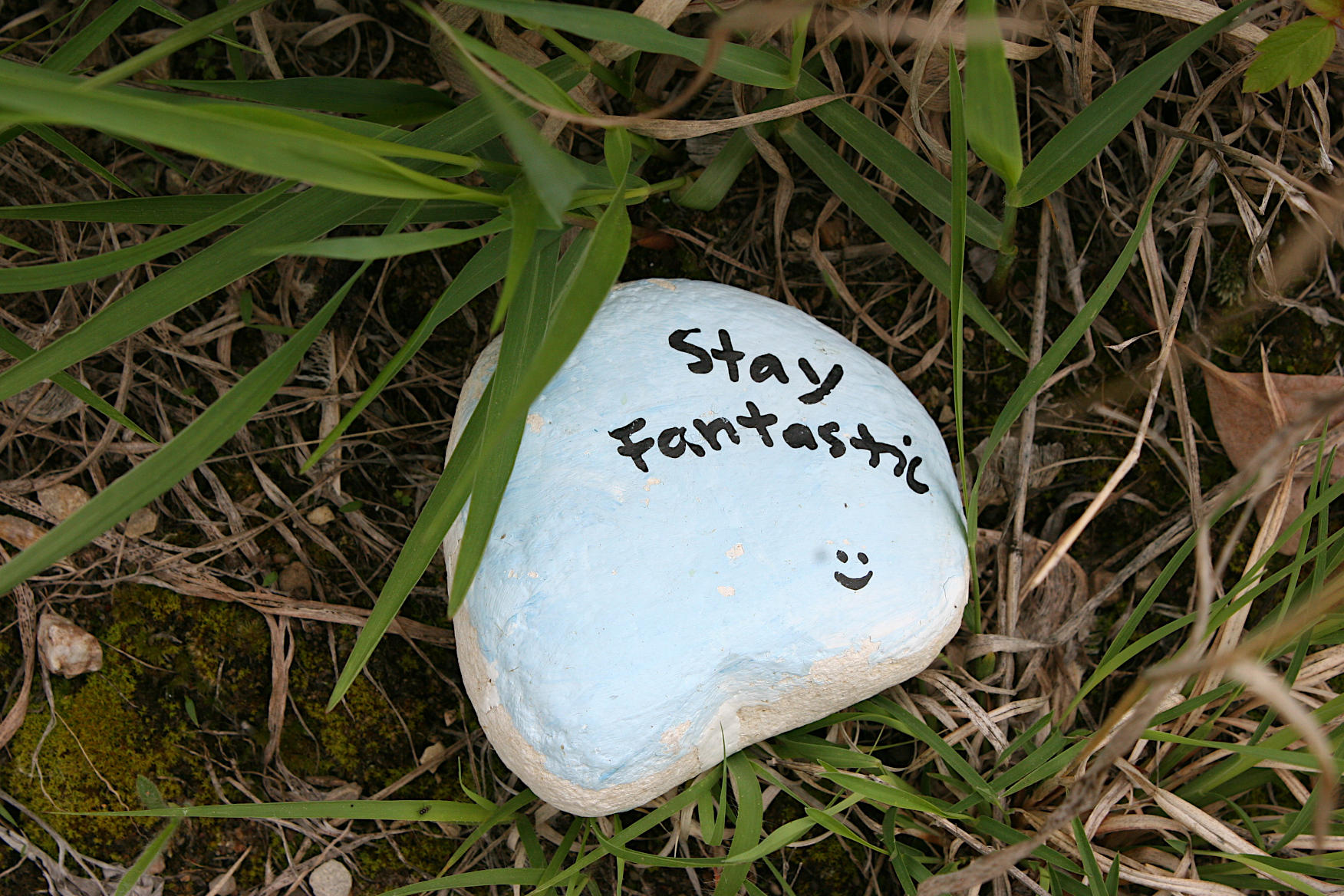
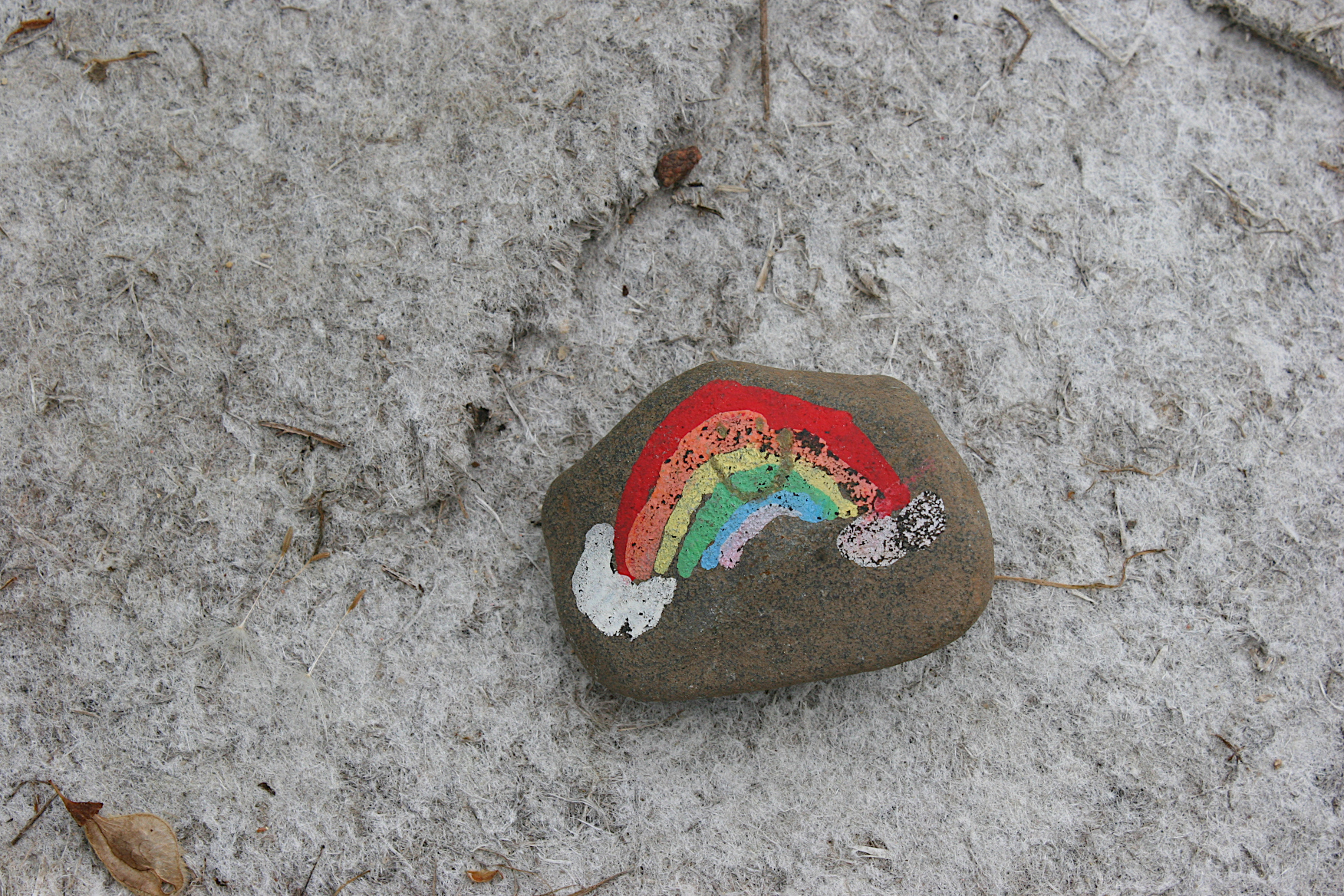
Another found, painted stone in the park. Love this. Minnesota Prairie Roots copyrighted photo May 2021.
Connie also pointed to a nearby 200-years-plus-old oak tree, now under study. I couldn’t help but think how an oak often symbolizes a family tree. The Grams family may have owned this land at one time and grew their family here. But now the branches have spread to include the broader family of those of us who appreciate this place among the oaks.
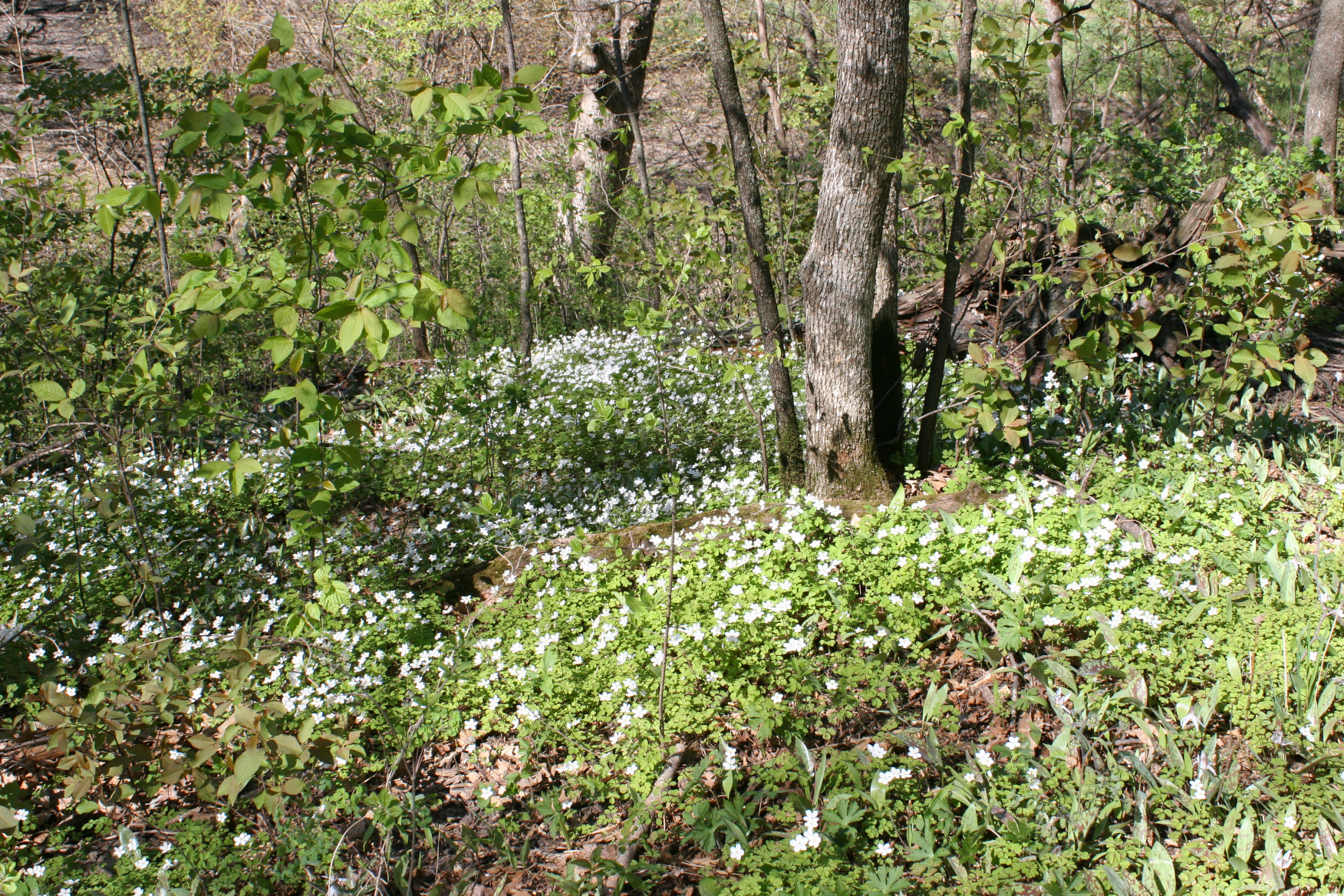
Spring wildflowers at Kaplan’s Woods. Minnesota Prairie Roots photo.
FLOWERS OF SPRING EMERGE in the woods. Among layers of dried leaves. Among fallen limbs. Sometimes blanketing hillsides.
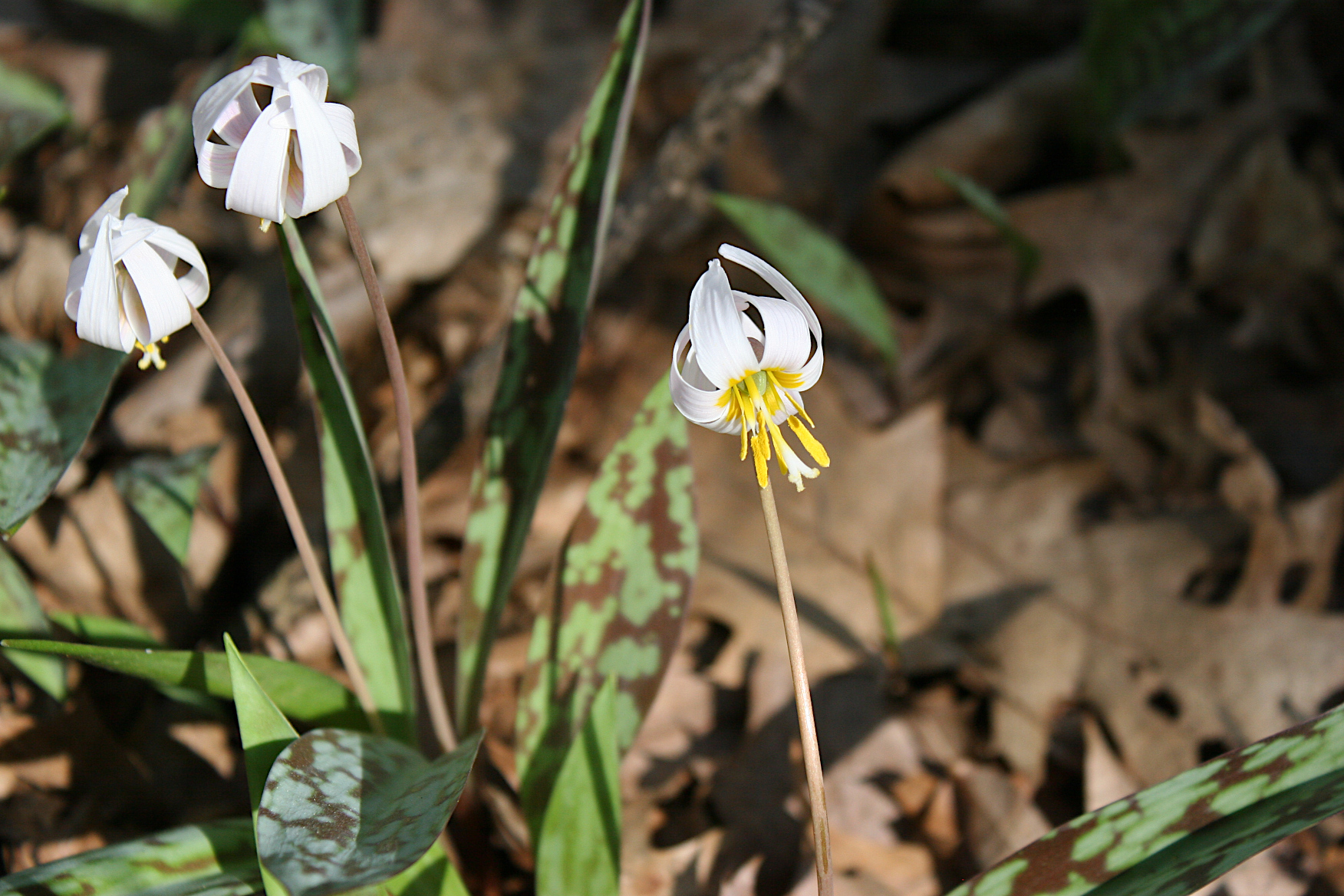
White trout lilies. Minnesota Prairie Roots photo.
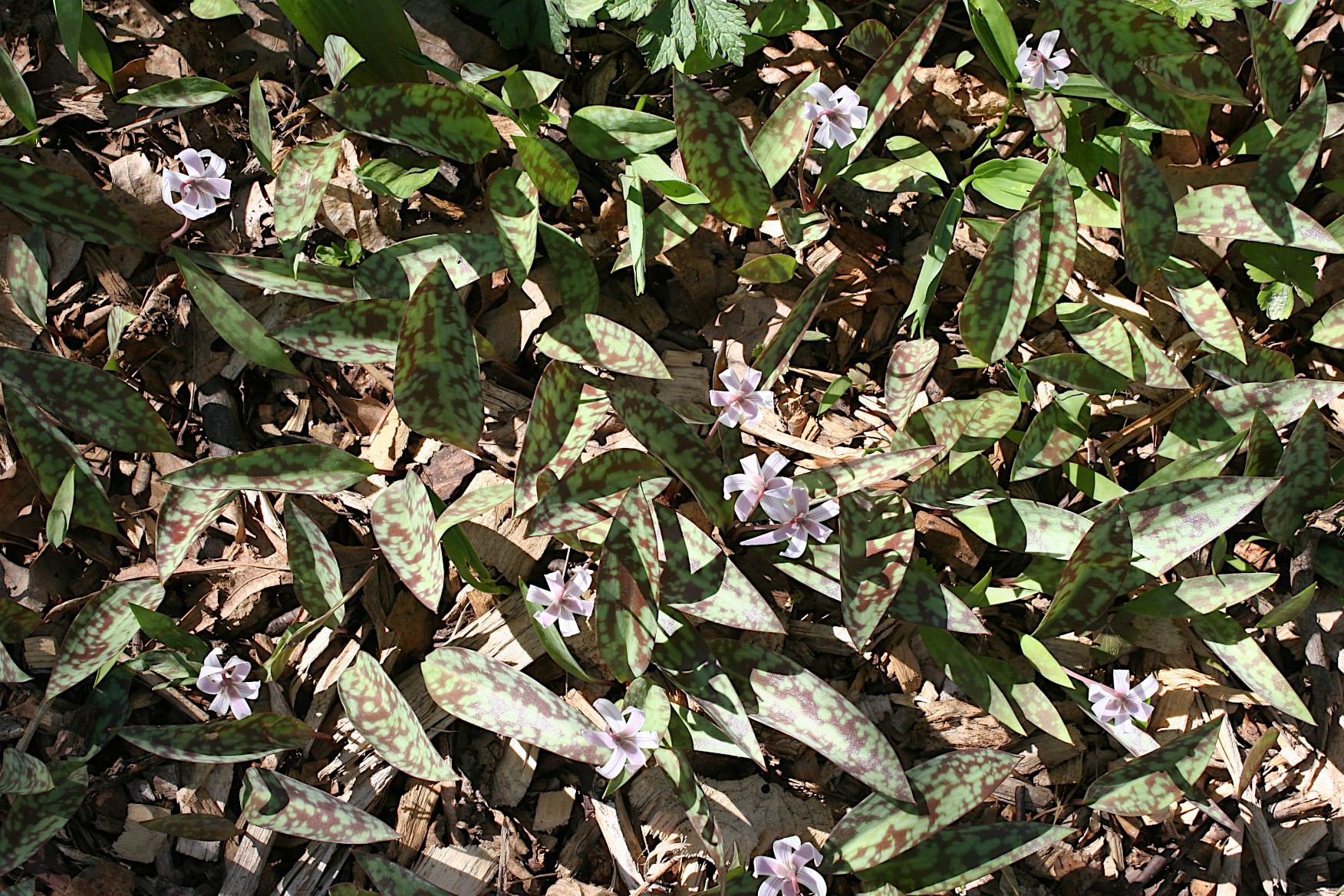
A mass of white trout lilies in the woods. Minnesota Prairie Roots photo.
An unidentified, by me, wildflower cluster. Minnesota Prairie Roots photo.
Saturday morning, as Randy and I hiked through Kaplan’s Woods Park in Owatonna, I found myself searching the edges of the wood chip covered trails for wildflowers.
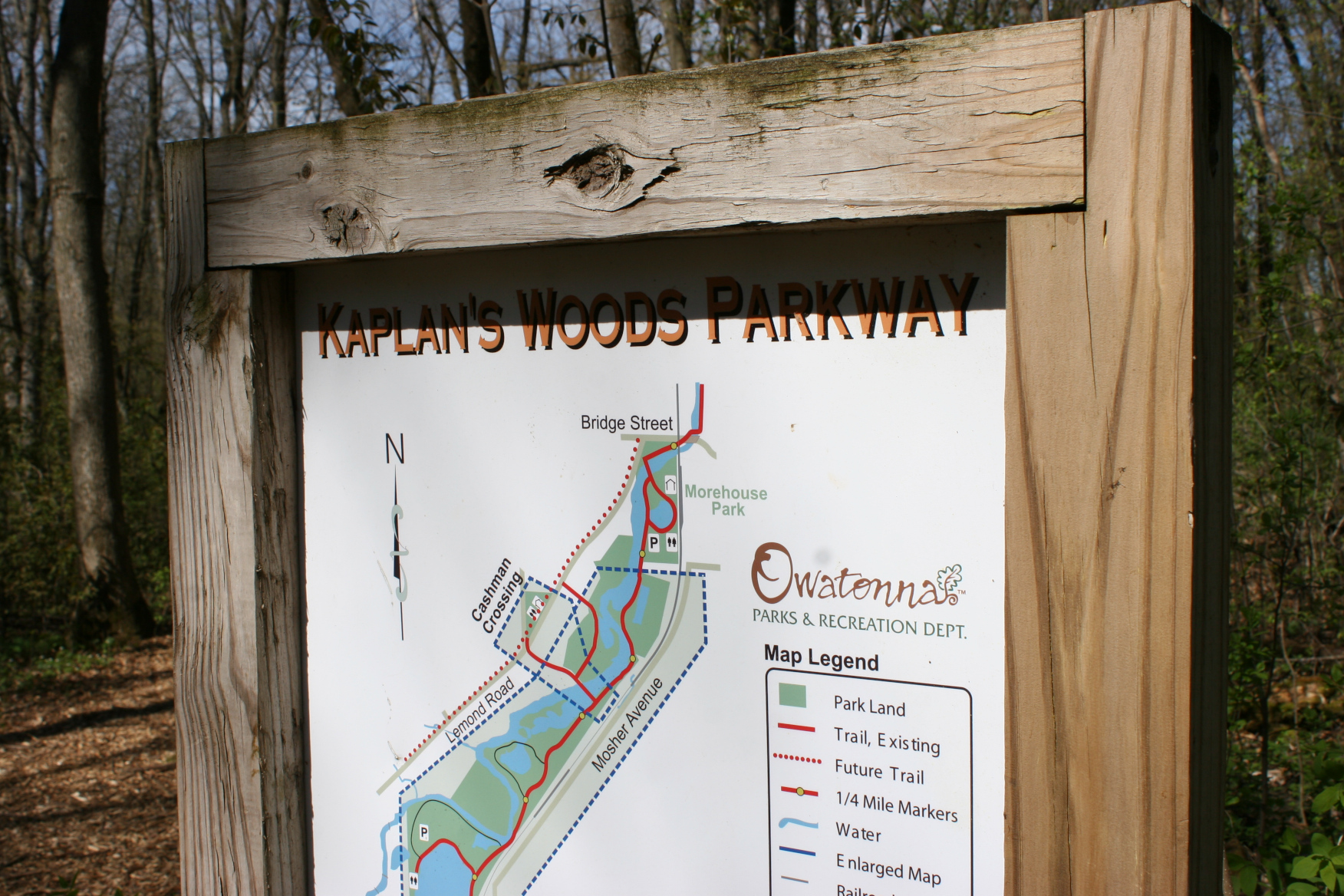
A sign inside the woods details the Parkway. Minnesota Prairie Roots photo.
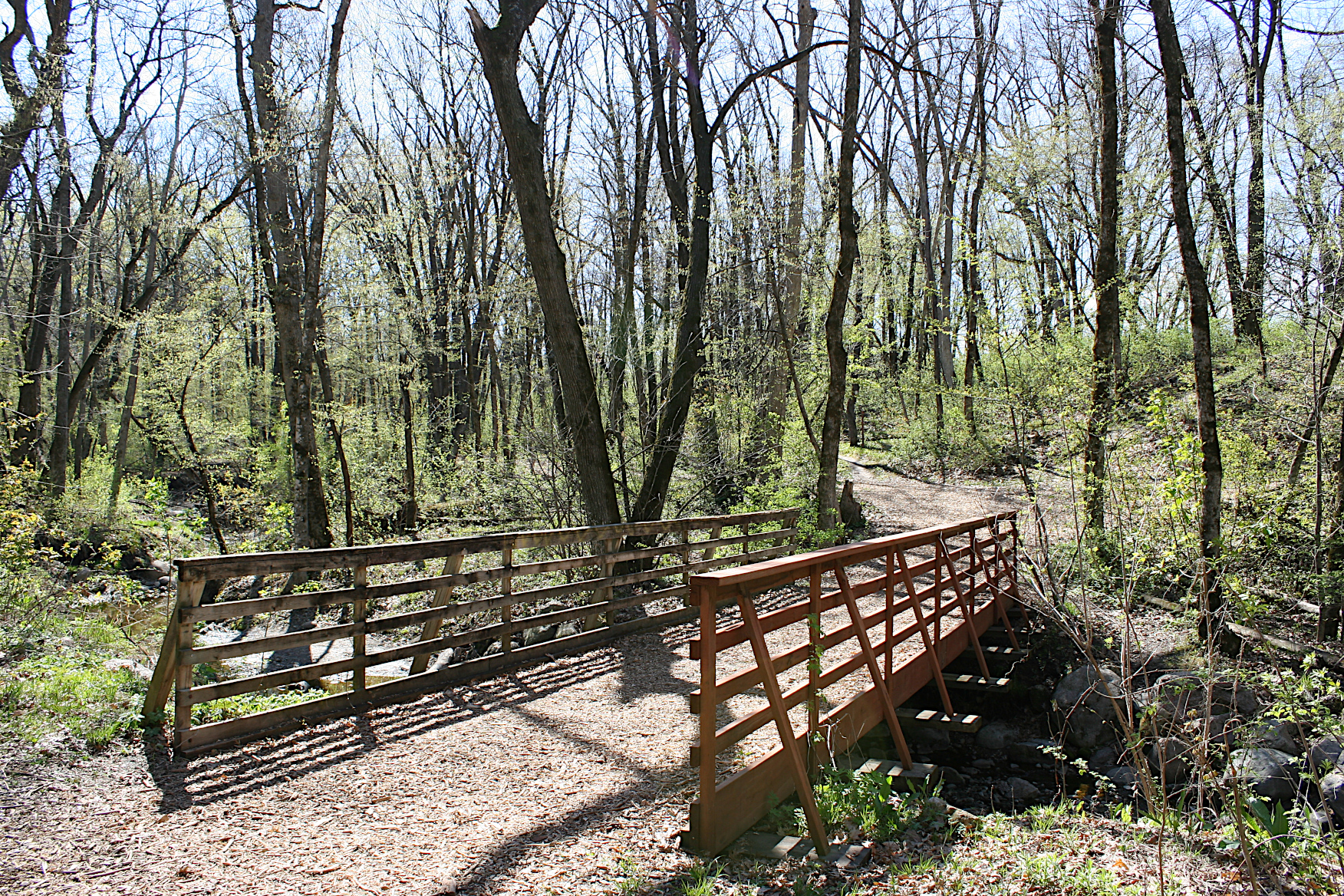
I love this foot bridge which crosses the creek and leads into the woods. Minnesota Prairie Roots photo.
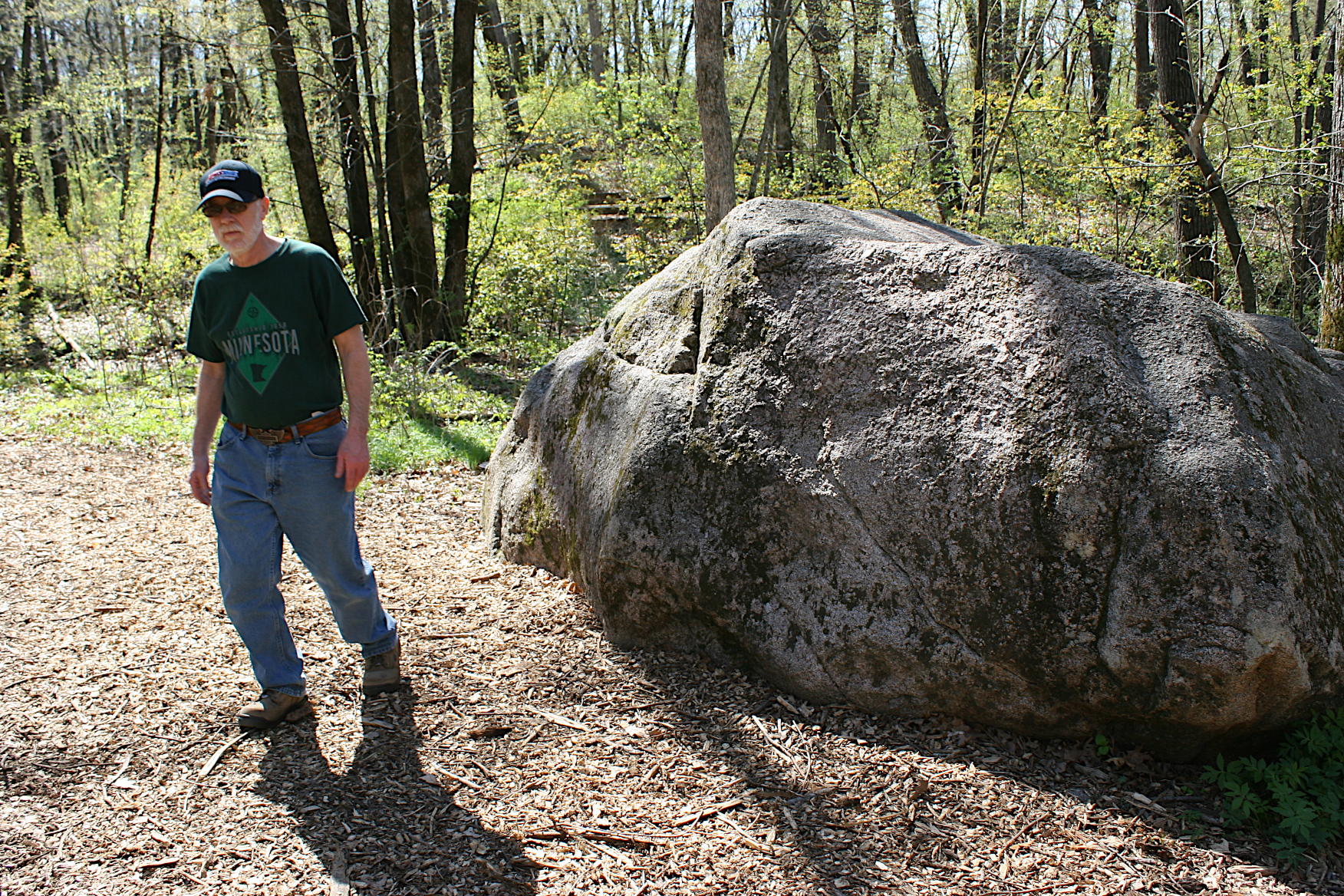
Near the creek, this solo boulder seems out of place in the woods. Minnesota Prairie Roots photo.
This time of year, especially, I crave flowers. They represent the shifting of seasons, of plant life erupting as the landscape transforms.
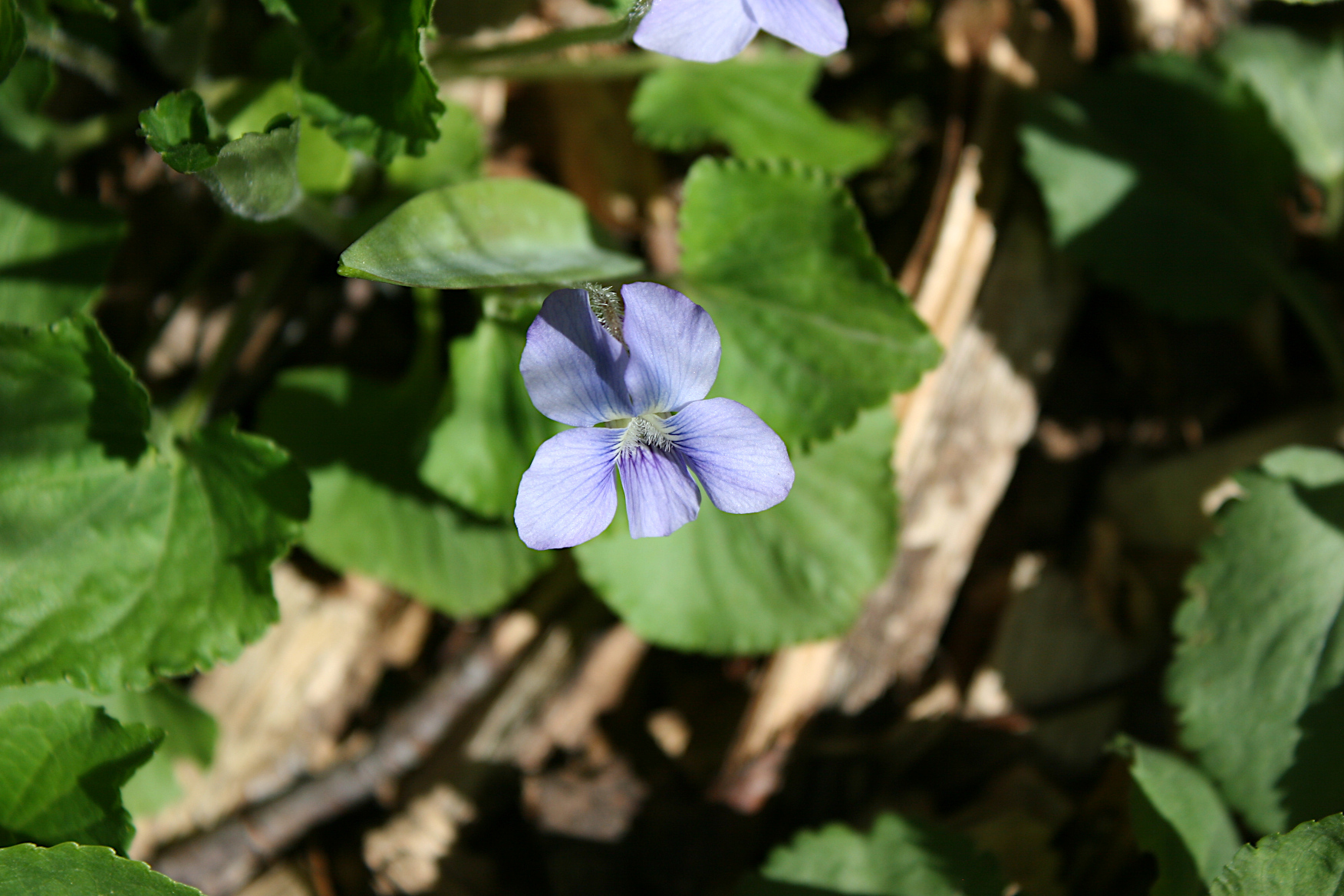
Dainty violets are among the spring wildflowers. Minnesota Prairie Roots photo.
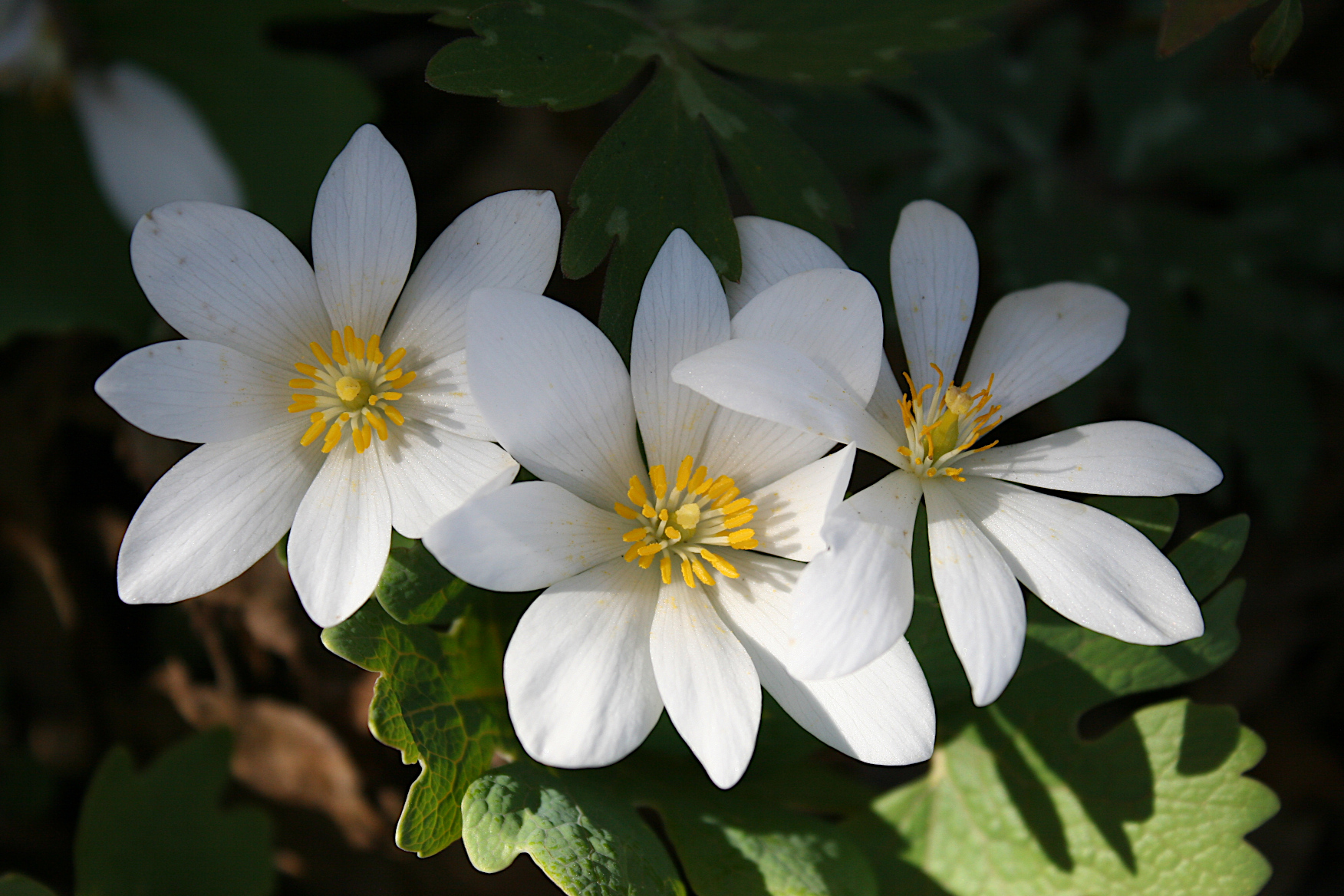
The largest of the wildflowers I saw. Can anyone identify these? Minnesota Prairie Roots photo.
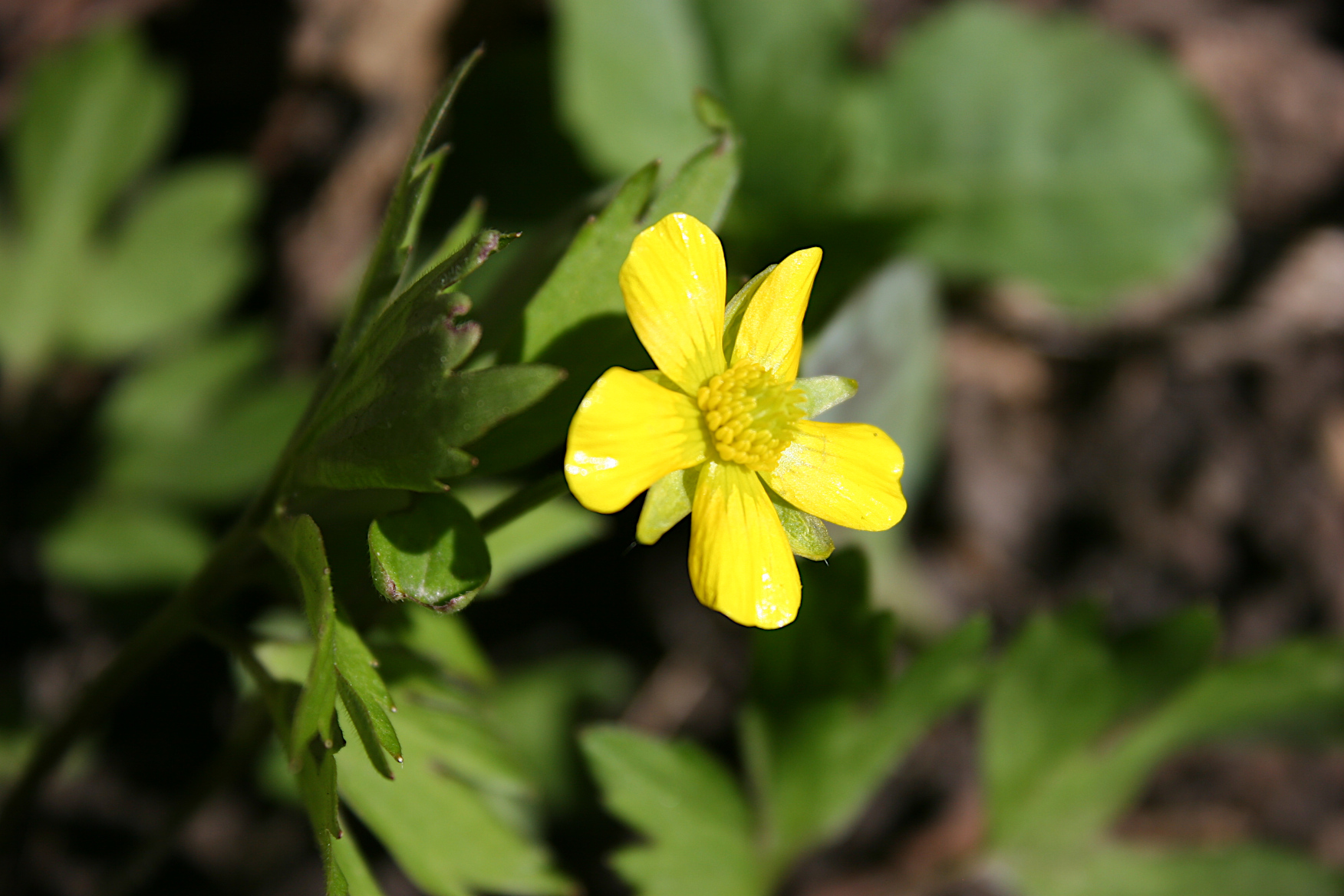
The brightest of the flowers I spotted, this one also unknown to me. Minnesota Prairie Roots photo.
Green begins to fill the woods, accented by bursts of violet and yellow and white hugging the earth. Low to the ground, easily missed if you focus only on the trail ahead.
Low water. Minnesota Prairie Roots photo.
We have walked Kaplan’s only a few times and this visit I noticed the low water level of the creek that winds through the woods.
I noticed also the noise of traffic from nearby Interstate 35. Motorists en route somewhere on an incredibly warm and sunny morning in southern Minnesota. I hope that at some point they paused to appreciate the day. The sun. The trees. Maybe even the wildflowers. And the brush strokes of green tinting the landscape.
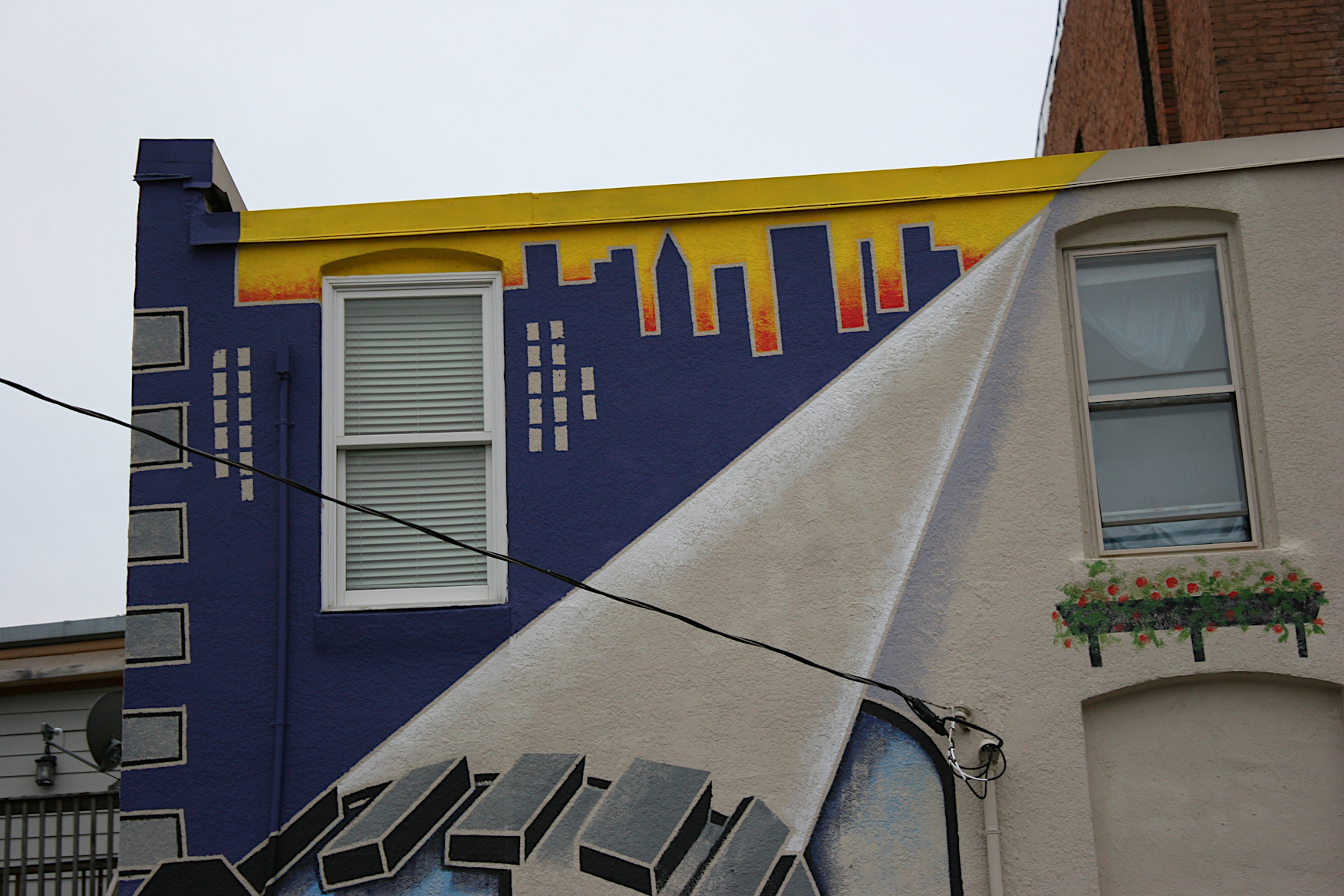
Faribault’s newest mural, completed late last year.
OUTDOOR PUBLIC ART enhances a community. It provides an outlet for creativity, adds interest to place and often brings joy. At least that’s my assessment.
As someone who grew up in rural southwestern Minnesota with minimal exposure to the arts—or perhaps more accurately minimal opportunity in the arts—I deeply appreciate the arts.
This sculptor of Alexander Faribault trading with a Dakota trading partner stands in Faribault’s Heritage Park near the Straight River and site of Faribault’s trading post. Faribault artist Ivan Whillock created this sculpture which sits atop a fountain known as the Bea Duncan Memorial Fountain. Minnesota Prairie Roots file photo.
My community of Faribault, where I’ve lived for the past 39 years, embraces creativity, centered today at the Paradise Center for the Arts. Yet, the visual arts extend well beyond the walls of the Paradise to stained glass windows in our historic churches, an art collection at Buckham Memorial Library, sculptures, architecture, home-grown shops, historic-themed murals and even the graceful curves of the historic viaduct.
In this January 2016 photo taken from the viaduct, you can see the back of The Upper East Side (white stucco building) before the mural was added. The historic building originally housed W.H. Stevens Drug. Minnesota Prairie Roots file photo.
You can see Faribault’s newest addition to the outdoor art scene from that viaduct, which offers a sweeping view of the downtown area.
The Upper East Side mural, a project of owner Suzanne Schwichtenberg and Jarvis, is more modern and graphic with strong lines. Less detailed. Bold. With unexpected pops of color. I find the zipper painted into the mural to be especially creative—the unzipping of history, of stories, of past and present. The mural invites introspection rather than simple reflection on an historic place or memory.
That’s my take. Not as someone with an art education, but rather as a creative who has grown to appreciate the arts in her community and beyond.
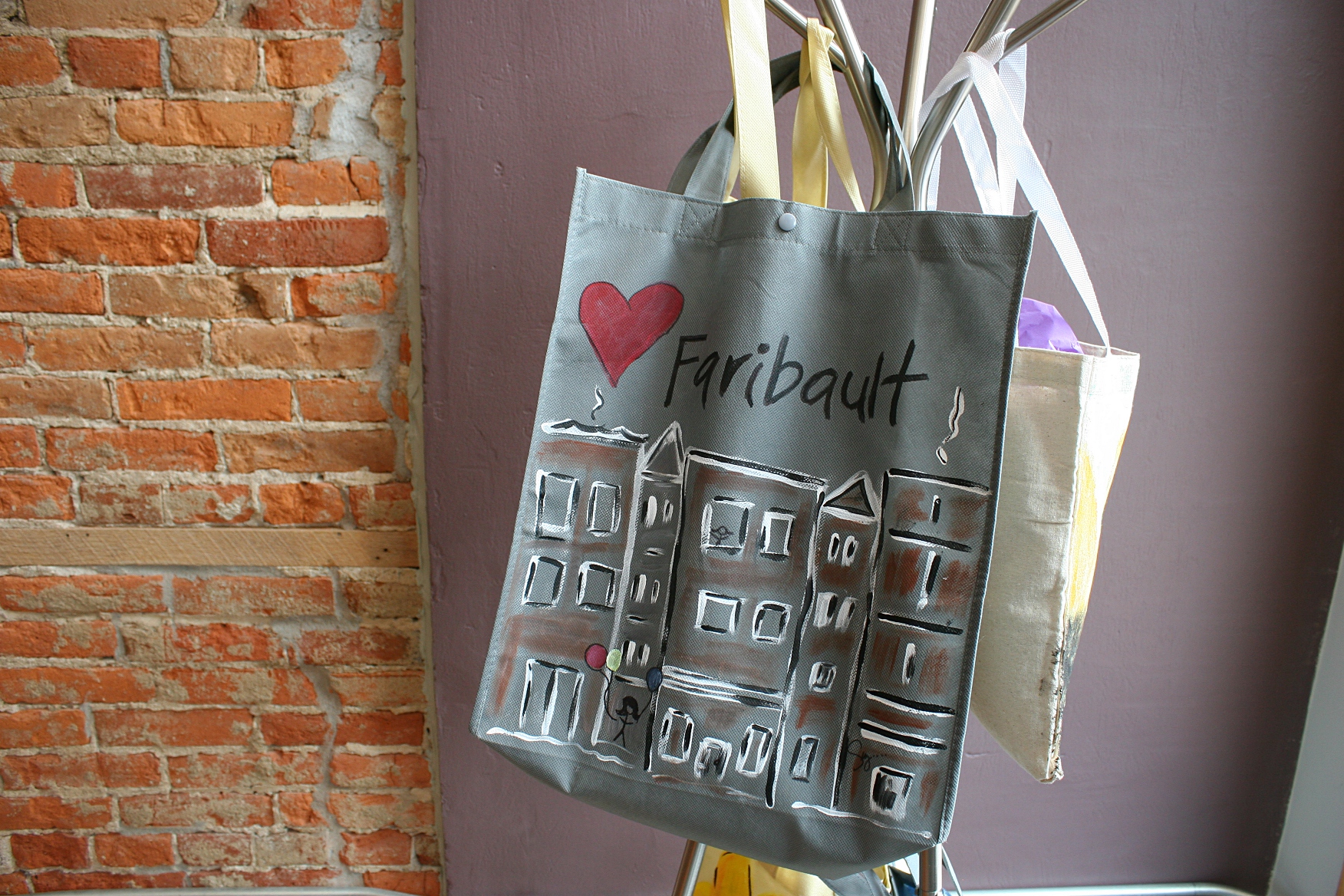
A locally-themed tote displayed at The Upper East Side. Minnesota Prairie Roots file photo September 2018.
FYI: Suzanne Schwichtenberg leads paint-and-sip events and other painting sessions at The Upper East Side and also takes painting/social gatherings on the road. Jarvis is a third-generation artist specializing in historical sketches and scenes from everyday life. He is passionate about local and regional history, authoring a book on the area’s mill history.
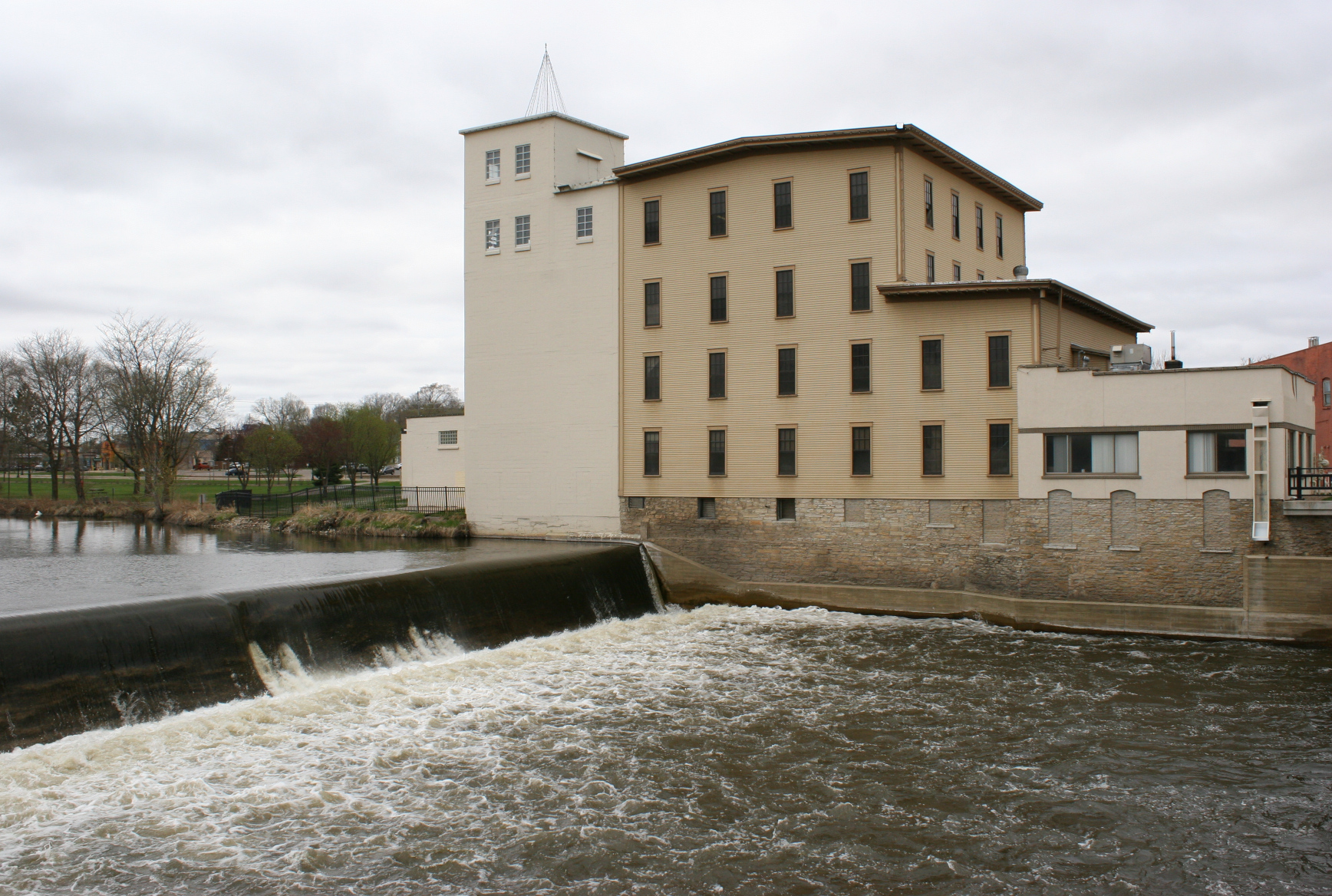
The historic Ames Mill hugs the Cannon River at the dam in downtown Northfield, Minnesota.
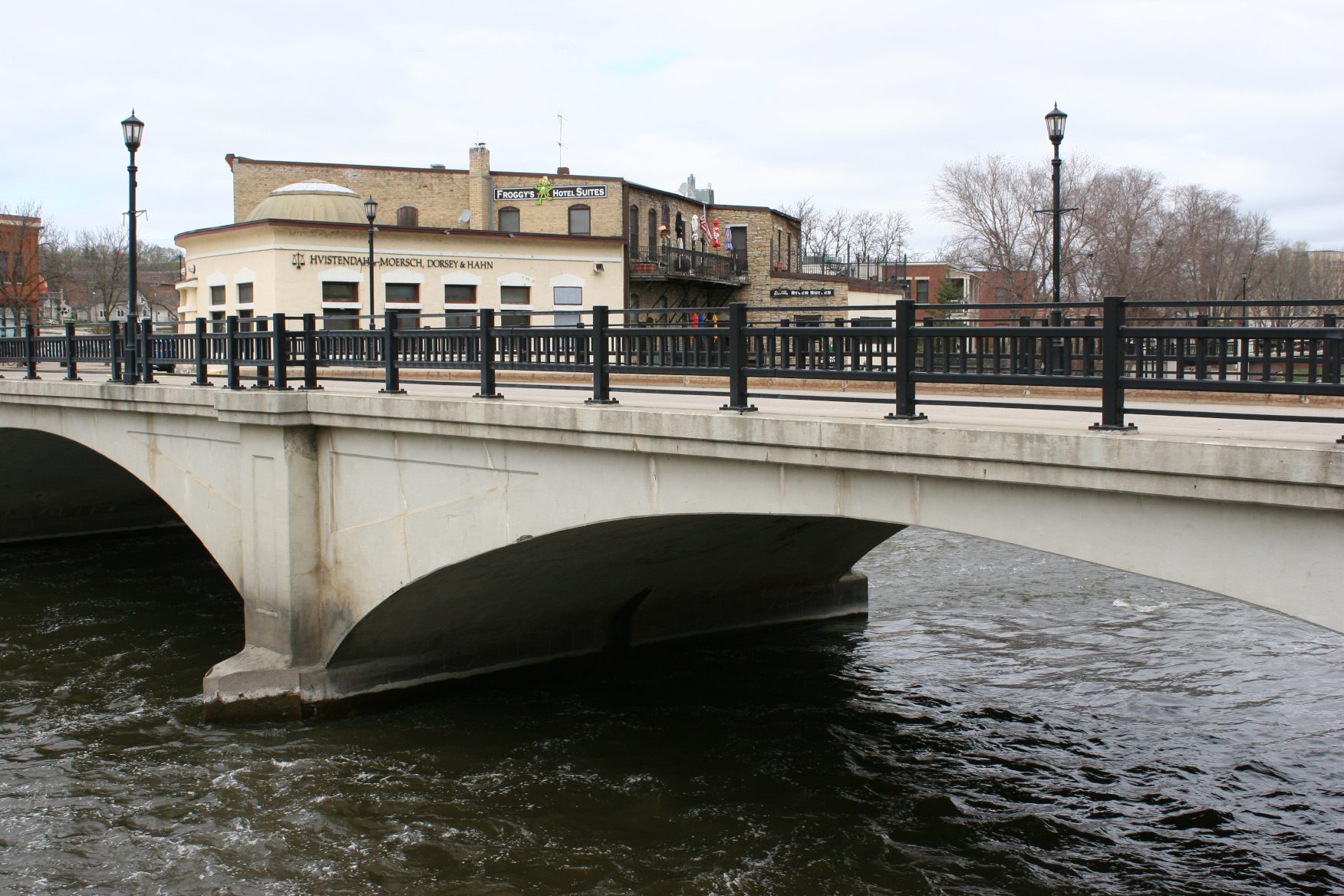
THE RIVER RUNS THROUGH. Behind businesses, over the dam by the aged mill, under bridges…
Bridging the Cannon by Bridge Square.
In Northfield, the Cannon River always draws me. There’s something about water. About the power of a river, the mesmerizing movement, the rise and fall thereof, the sense of peace which flows through me when I view water. Or watch fire. Or hear wind.
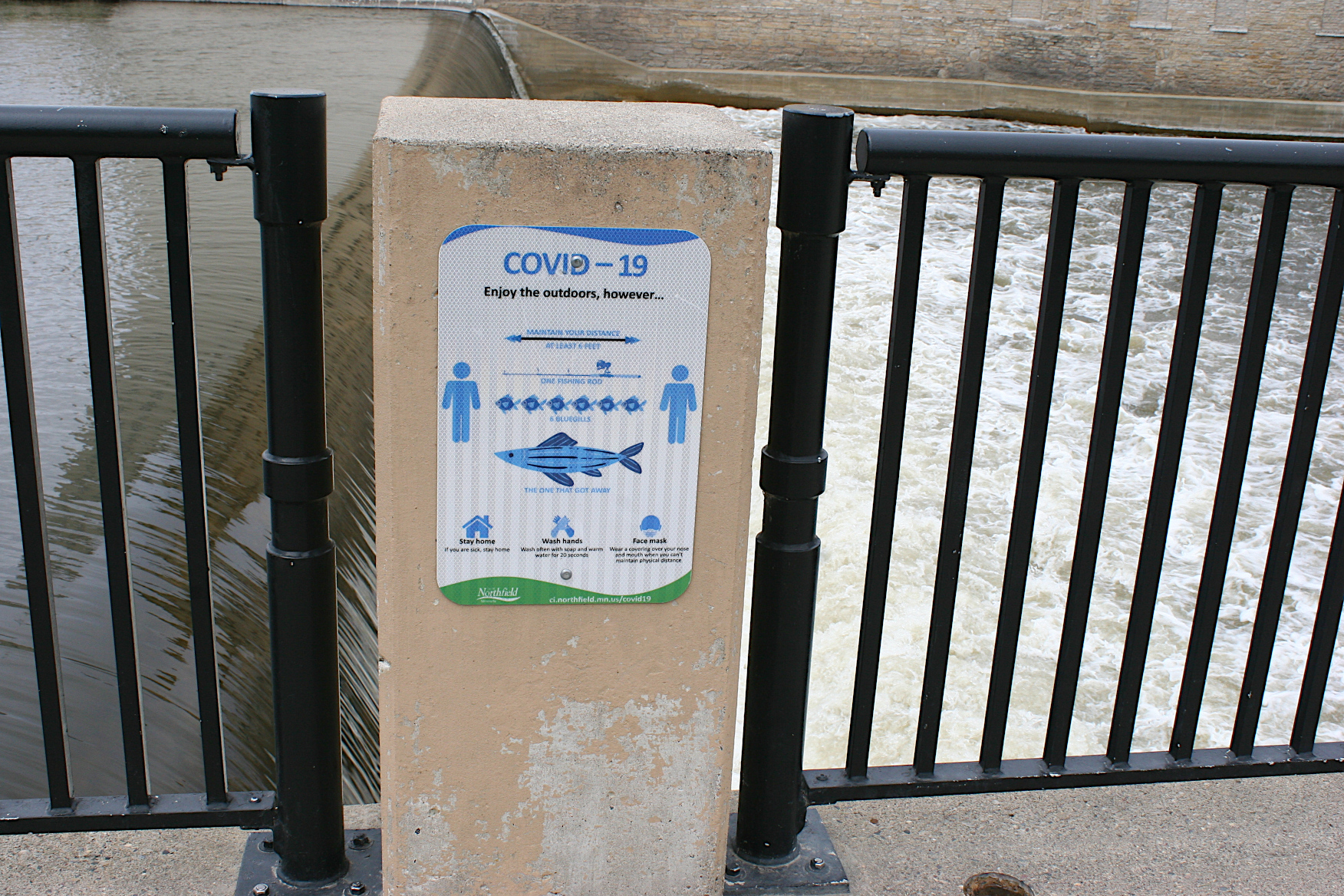
Posted on the railing by the dam, a reminder that we’re still in a pandemic.
On a recent Sunday, Randy and I headed toward the Riverwalk in the heart of historic downtown Northfield. We passed, and paused, at Bridge Square, the community’s gathering place. Every town should have a spot like this for folks to meet, to center causes, to converse or to simply sit.
We stopped to watch the Cannon spill over the Ames Mill Dam next to the 1865 Malt-O-Meal (now Post Consumer Brands) mill that still produces hot cereal, the scent often wafting over the city.
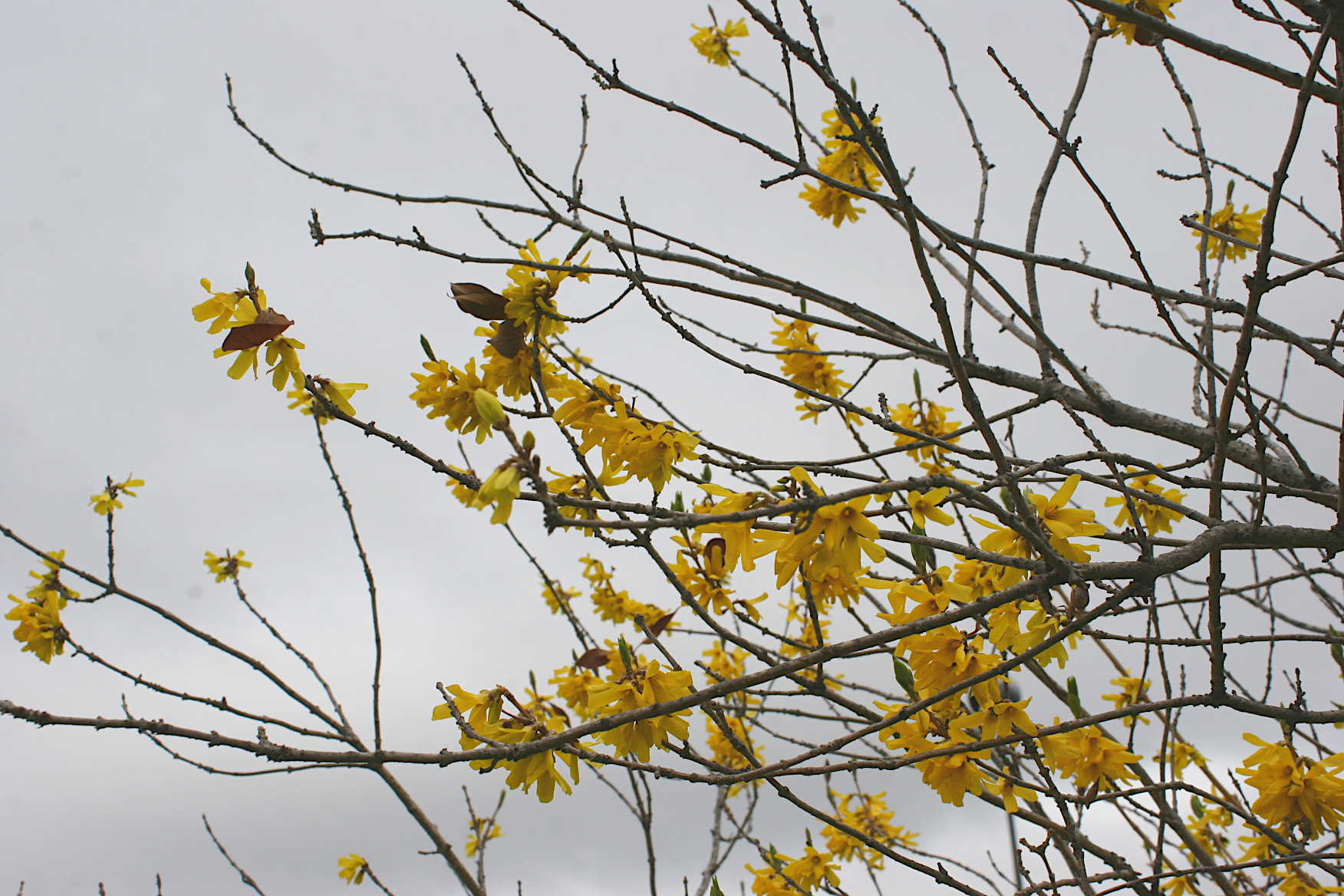
A flowering tree bursts color into Bridge Square near the river.
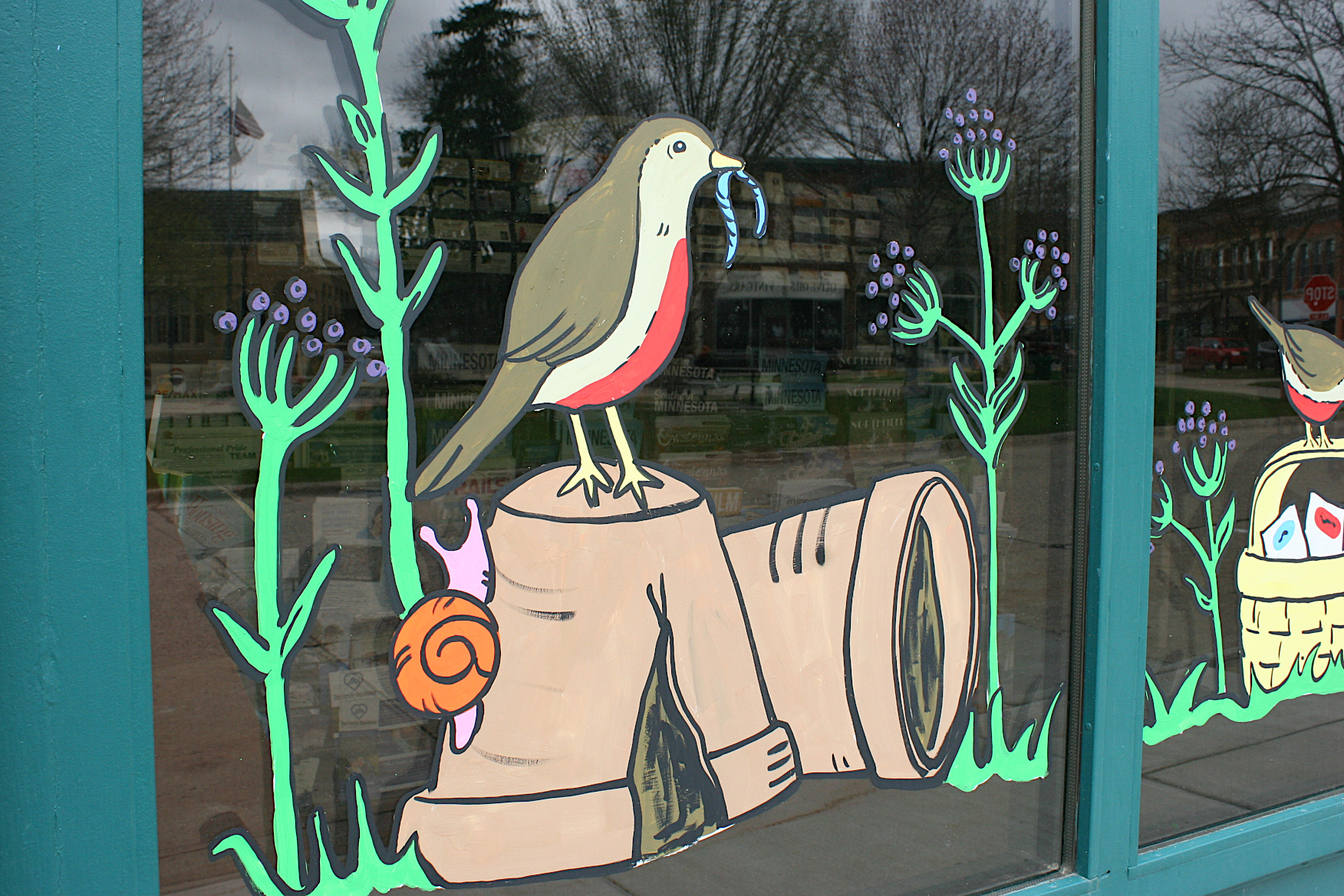
Spring in art, at the local tourism office.
I delighted in a blossoming tree and the spring-themed art painted on the front window of the Northfield Area Chamber of Commerce and Tourism office. Seemingly small things like this add an artsy vibe to Northfield. Details matter. Art matters. Nature matters.
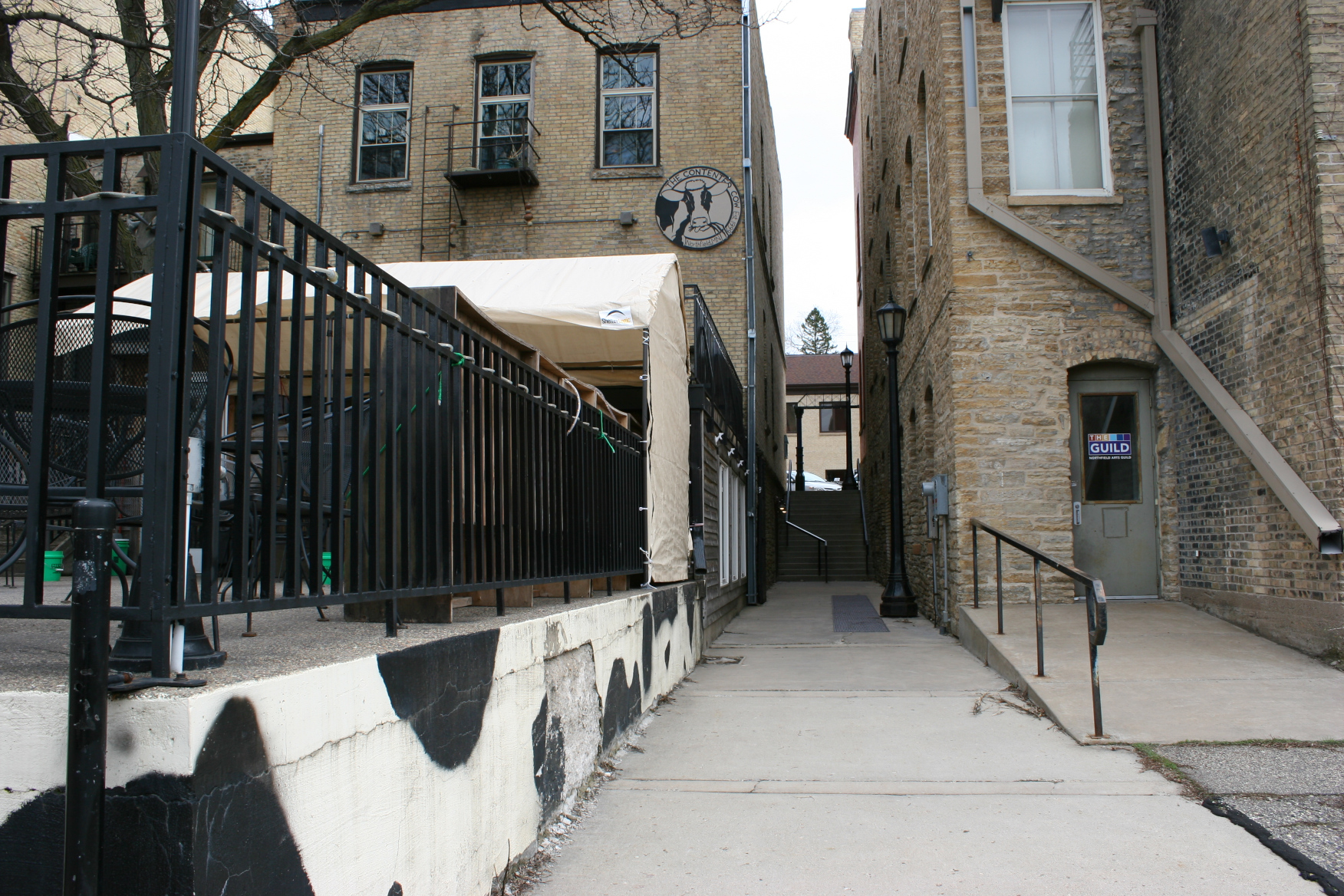
The narrow walkway by the Contented Cow (a British style pub) leads to Division Street from the Riverwalk.
When we reached the riverside back of the Contented Cow, I noticed for the first time the Holstein painted retaining walls and tables. Why had I not previously seen this? It appears to have been here for awhile.
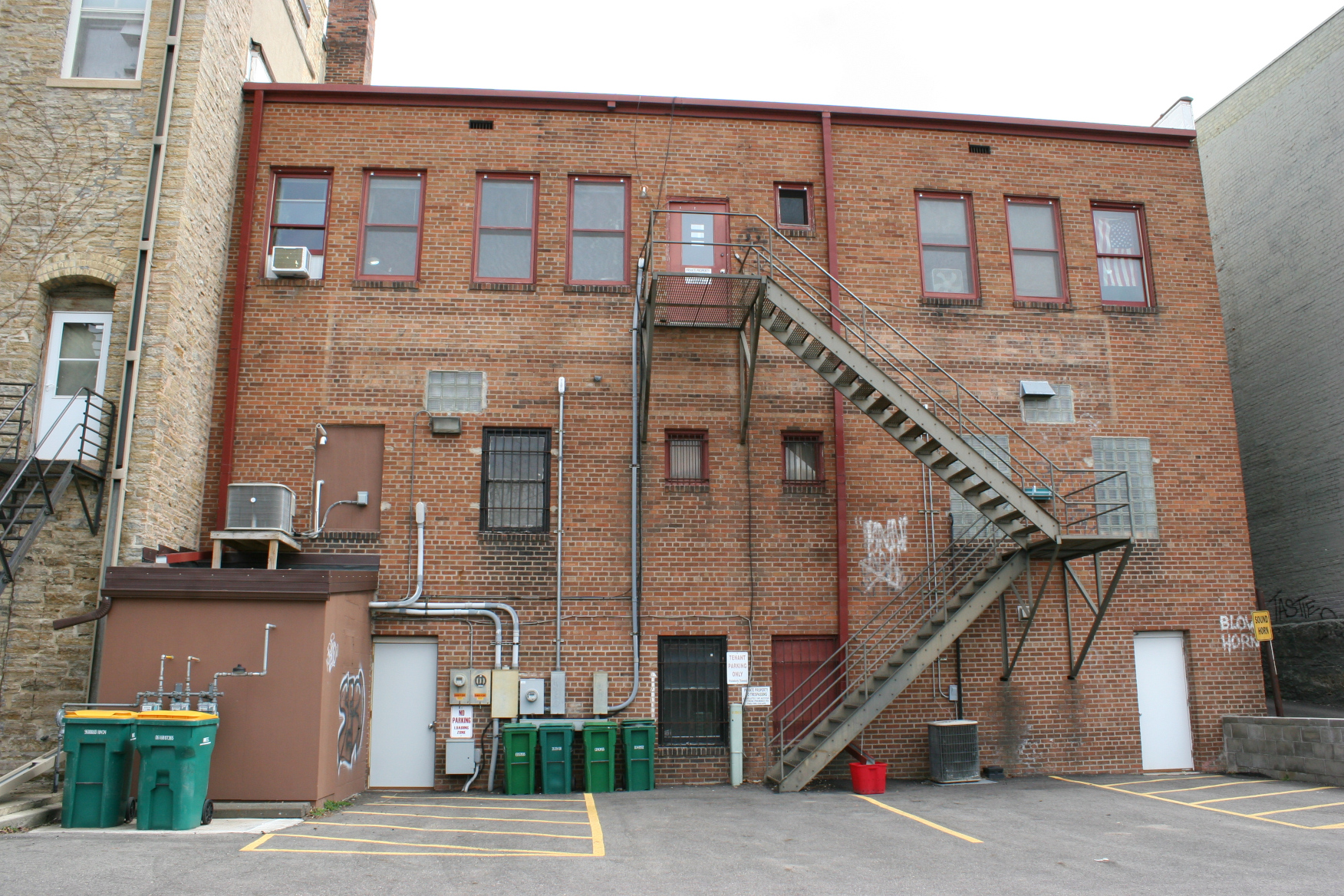
The back of an aged building photographed from the Riverwalk.
I find backs of buildings bare bones interesting, like nouns without adjectives.
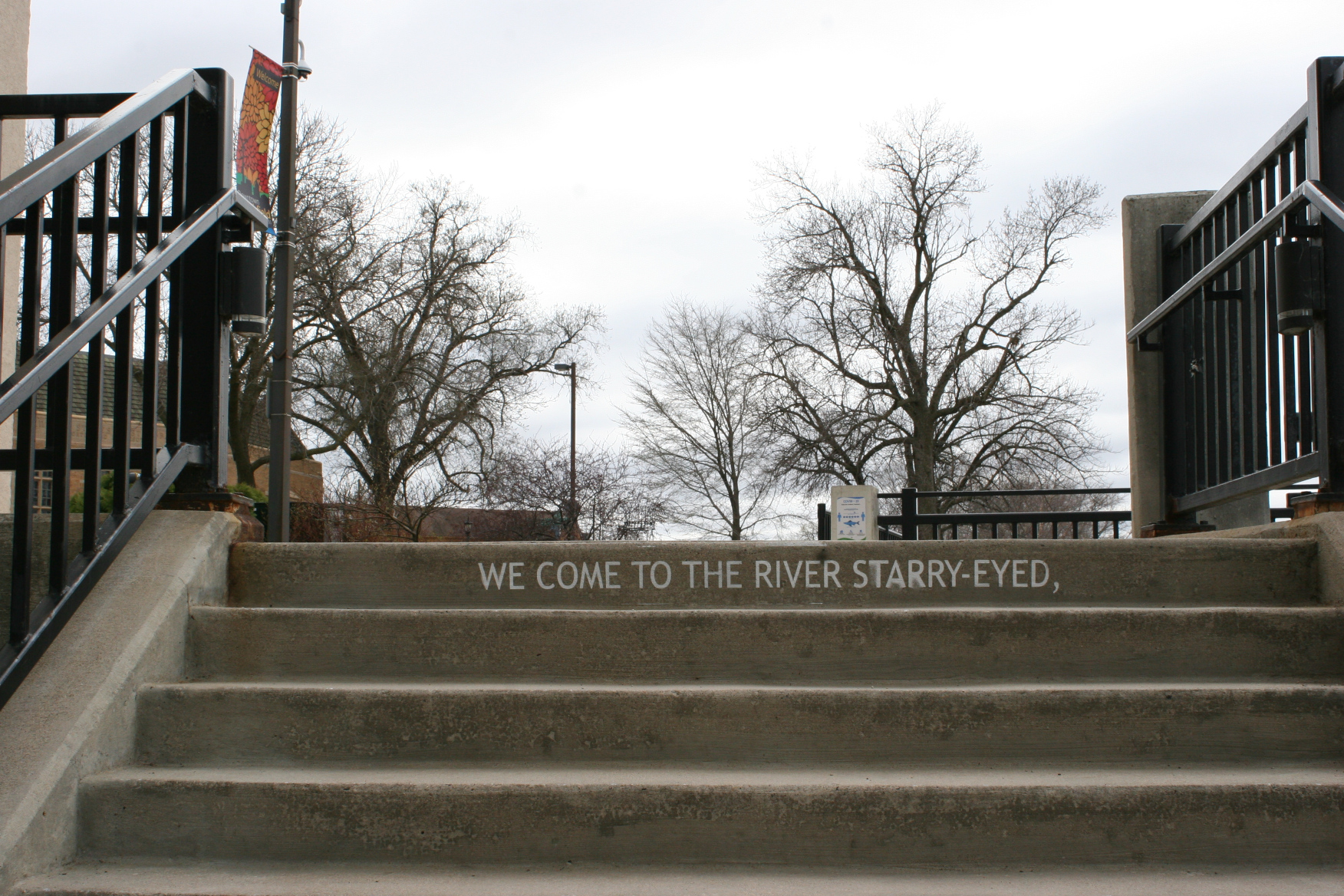
Words on the Riverwalk stairway.
That’s the thing about slowing down. Noticing. Sometimes we fail to walk at a pace that allows us to see, truly see, the world around us. The backs of buildings. The flow of the river. To take it all in, starry-eyed at the beauty which surrounds us.















 Minnesota Prairie Roots
Recent Comments