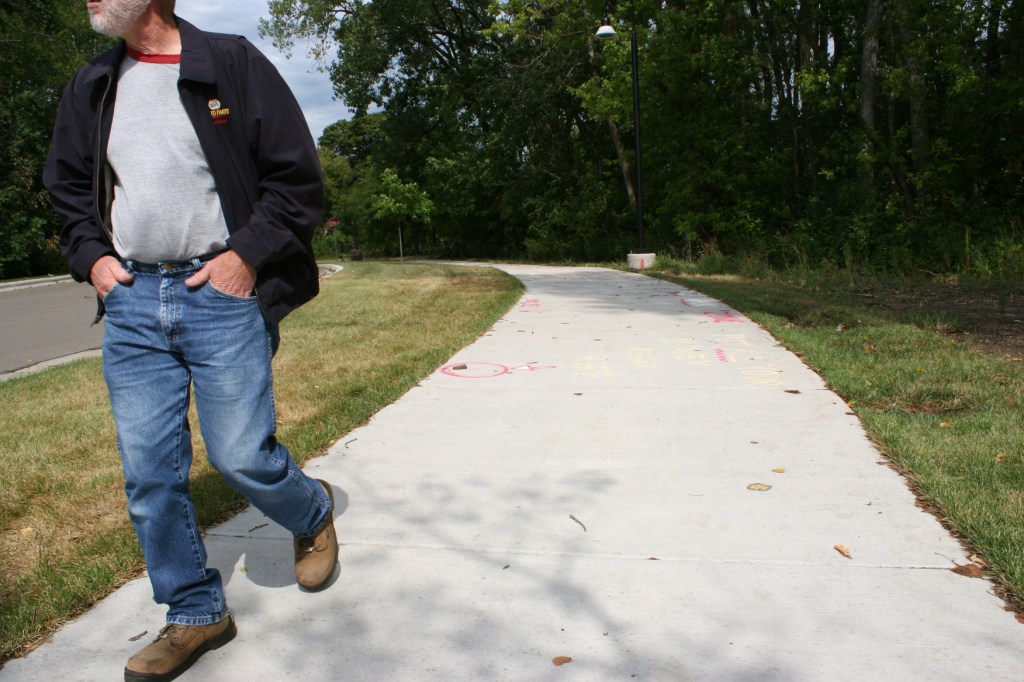
Randy walks through the SILLY ZONE on his way to Garver Feed Mill. Minnesota Prairie Roots file photo September 2020.
IT PROVED A FIRST. A walk through a SILLY WALK ZONE near the Garver Feed Mill in the Atwood Neighborhood of Madison, Wisconsin. I still am uncertain whether the words painted on the sidewalk are intentional art or graffiti.
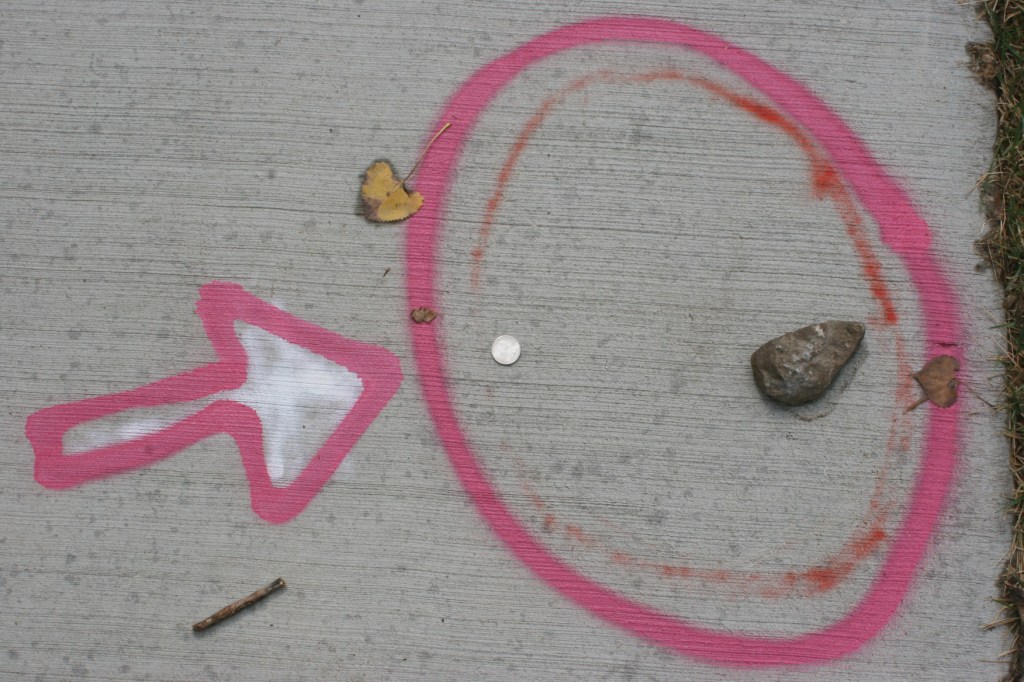
Leave your money here. Or maybe a stone. Minnesota Prairie Roots file photo September 2020.
But when Randy and I spotted the directive to PUT ALL YOUR MONEY RIGHT HERE with an arrow pointing to a circle, we laughed. And then Randy pulled a quarter from his pocket and deposited it in the circle.
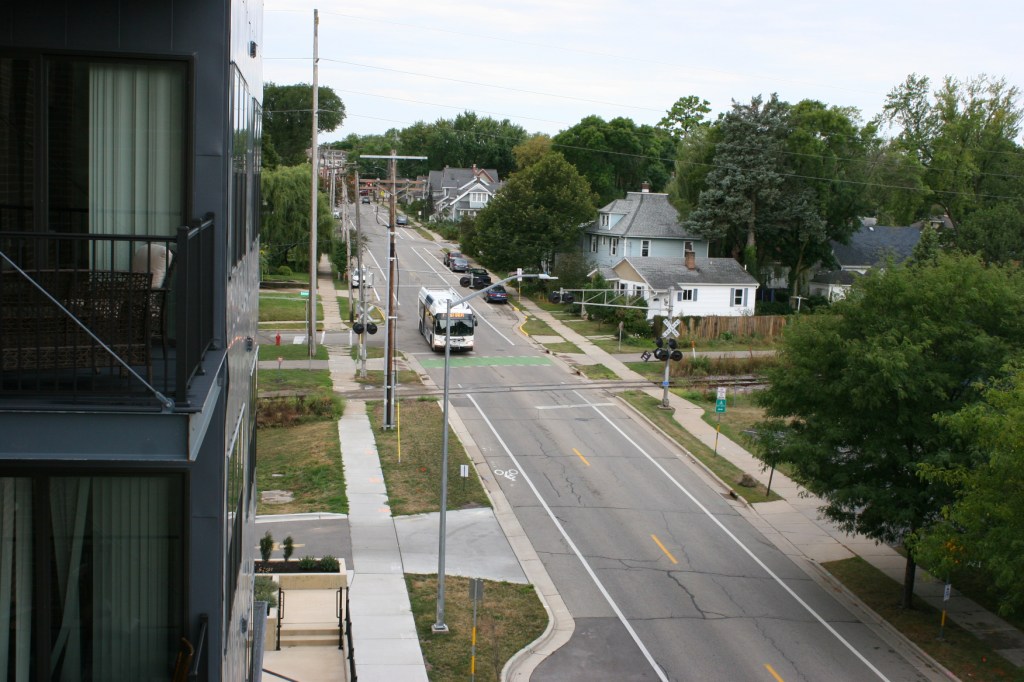
A view of the neighborhood from the son’s apartment balcony. Minnesota Prairie Roots file photo 2020.
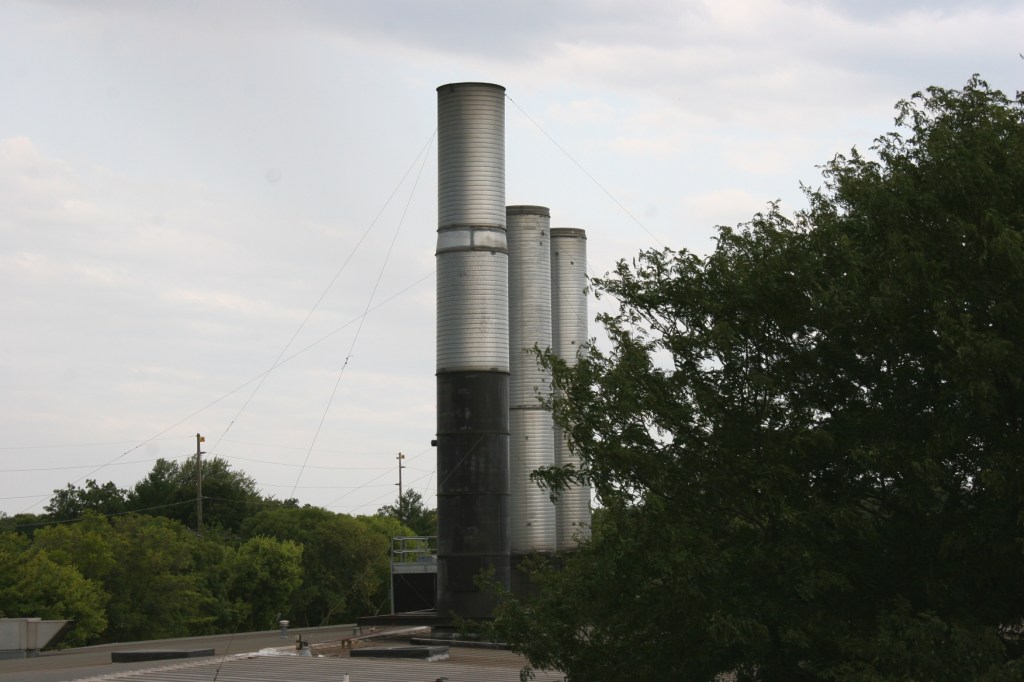
There’s still industry in this neighborhood, here Madison-Kipp Corporation. Minnesota Prairie Roots file photo September 2020.
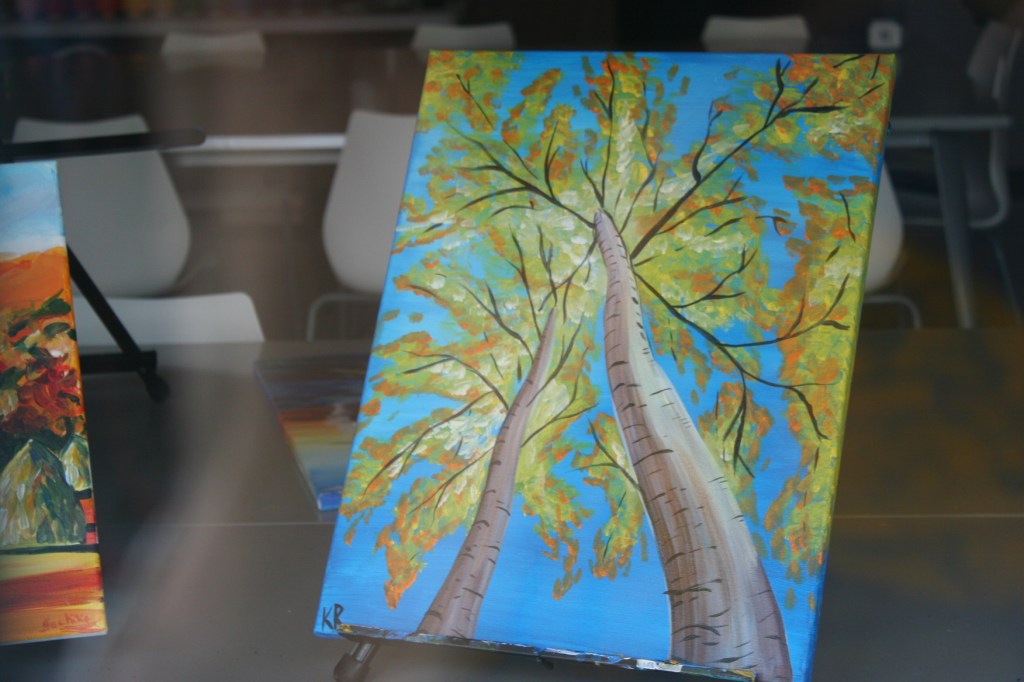
Art photographed through the window of Wine & Design, a ground level business in an apartment complex. Minnesota Prairie Roots file photo September 2020.
I documented the deposit with my camera as I did several other noteworthy scenes from that walk in the neighborhood near our son’s apartment building. Yes, I carry my camera most places when I’m out and about because, when I don’t, I regret leaving it behind.
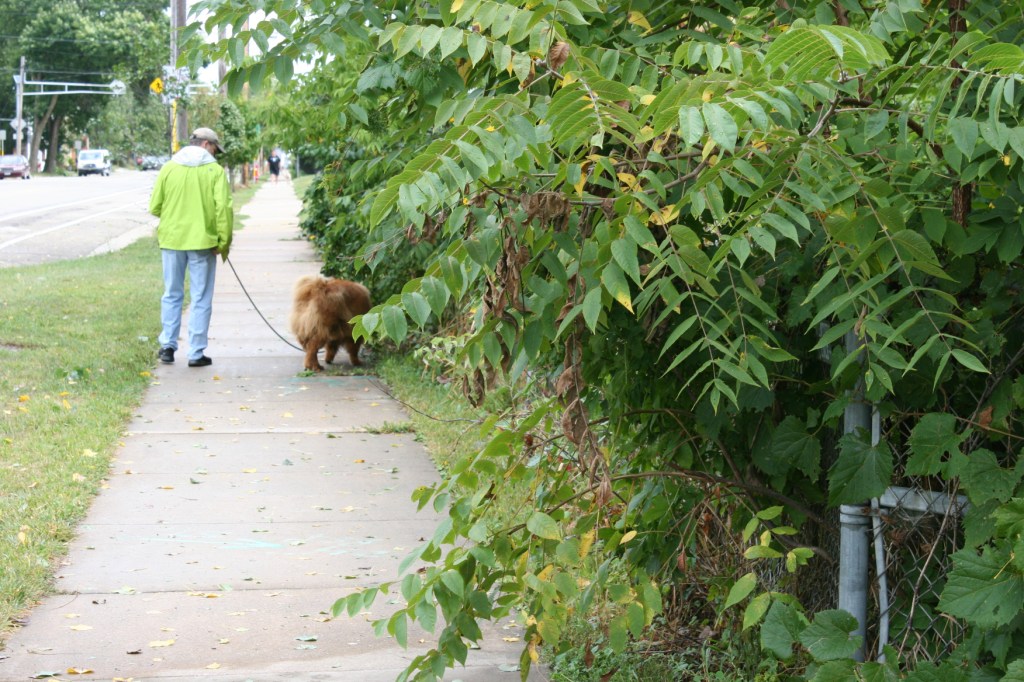
Lots of pedestrian, bike and vehicle traffic in this neighborhood. Minnesota Prairie Roots file photo September 2020.
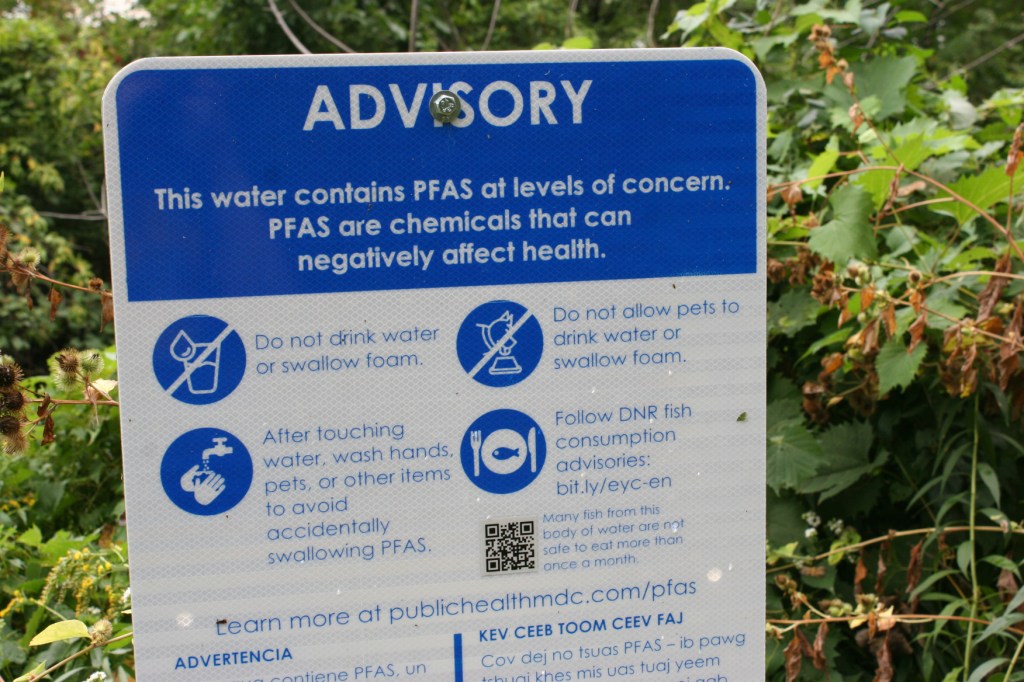
We paused to read this warning sign near the creek. Minnesota Prairie Roots file photo 2020.
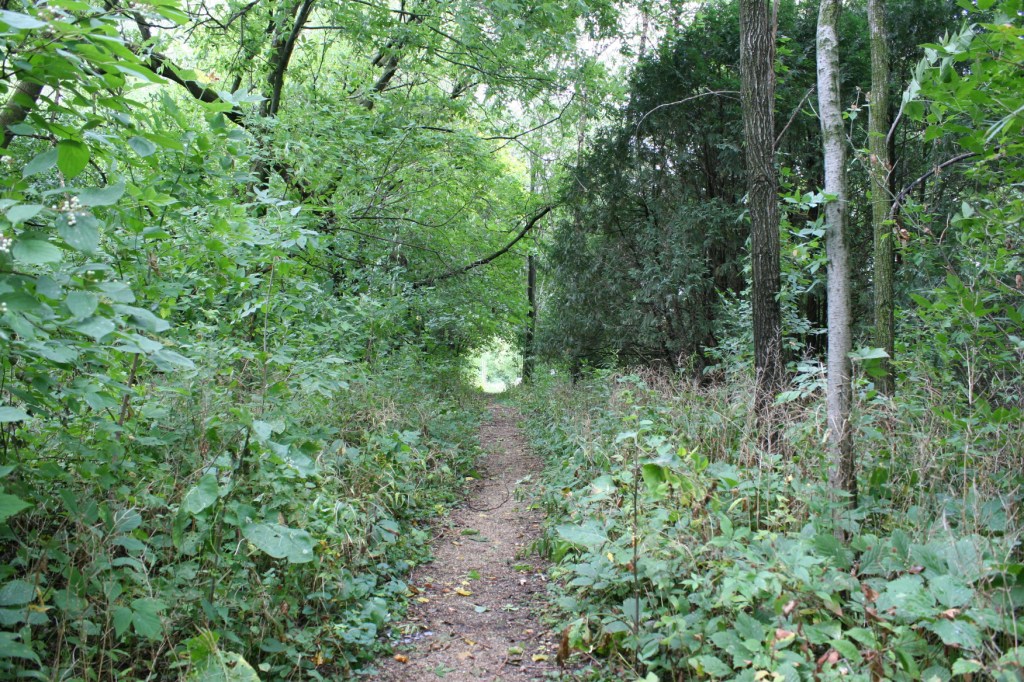
Into the woods… Minnesota Prairie Roots file photo September 2020.
One of the aspects I most enjoy about Madison is a deep appreciation for the natural world. Minnesota Prairie Roots file photo September 2020.
During this early September 2020 morning outing, Randy and I came upon a narrow dirt path leading into woods along a creek. A sign warned us of contaminated water, something our son has shared as an industry-related issue on Madison’s East Side. We followed the path for a distance before retracing our steps and crossing the street.
Humor in this sign, if you change the spelling. Minnesota Prairie Roots file photo September 2020.
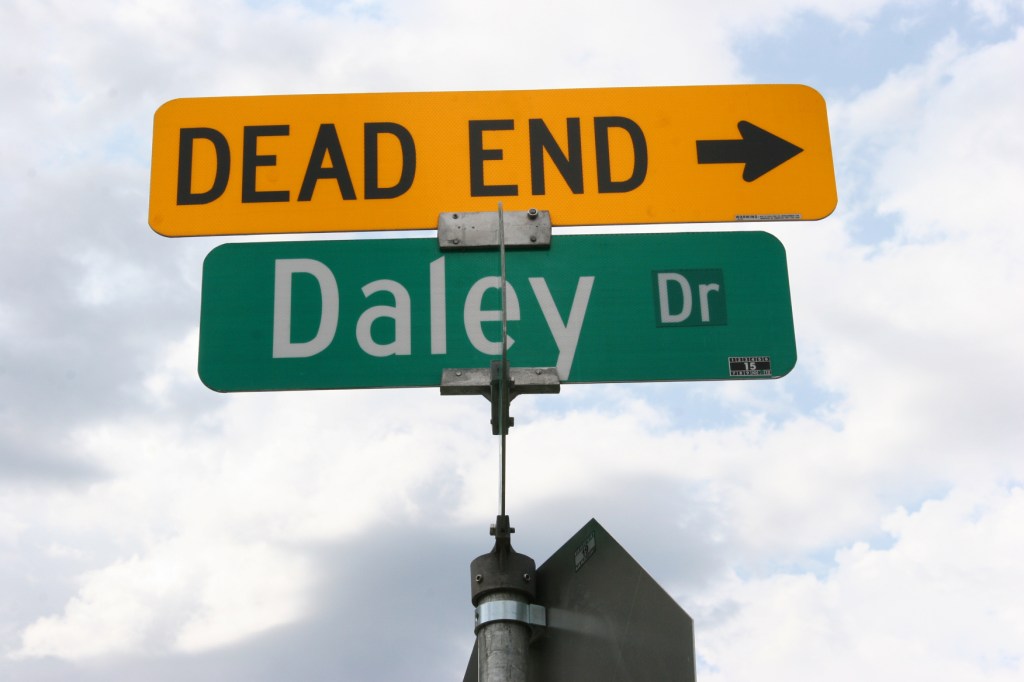
Randy noticed street signage of DEAD END, Daley Dr, which he found amusing if you change the spelling to Daily. We walked along the dead end street, noting sandbags, a clear indication that the contaminated creek sometimes floods this neighborhood.
You’ll notice many signs in the Atwood Neighborhood addressing current day issues. Minnesota Prairie Roots file photo September 2020.
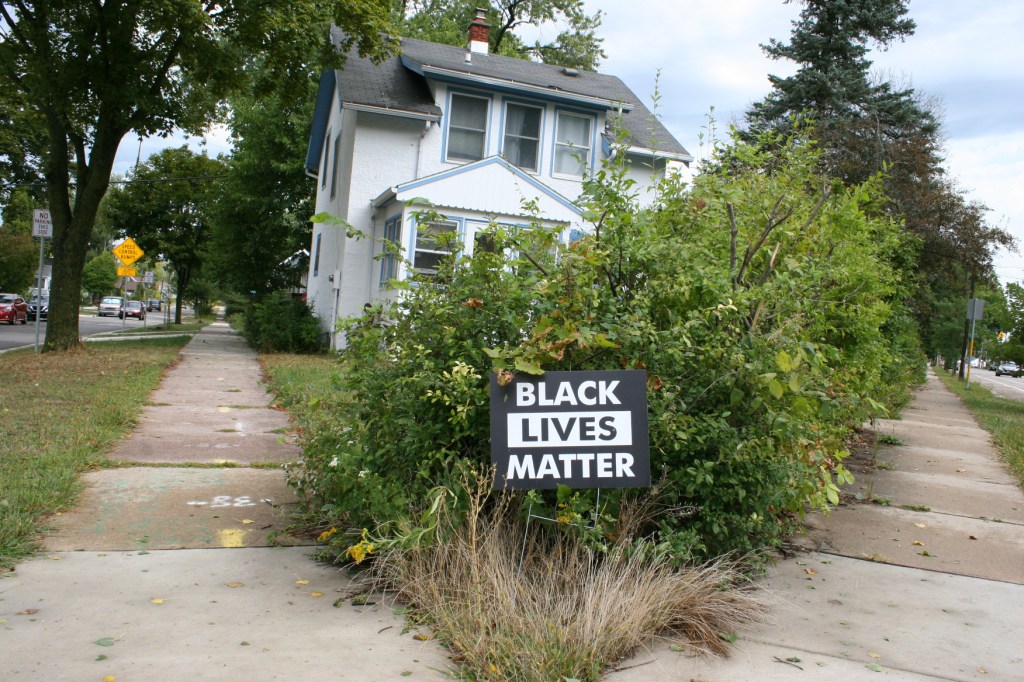
I noticed, too, the BLACK LIVES MATTER sign posted at a V in the sidewalk. Such signage is common in this area, a clear indication to me that the folks who live on the East Side care about issues and people.
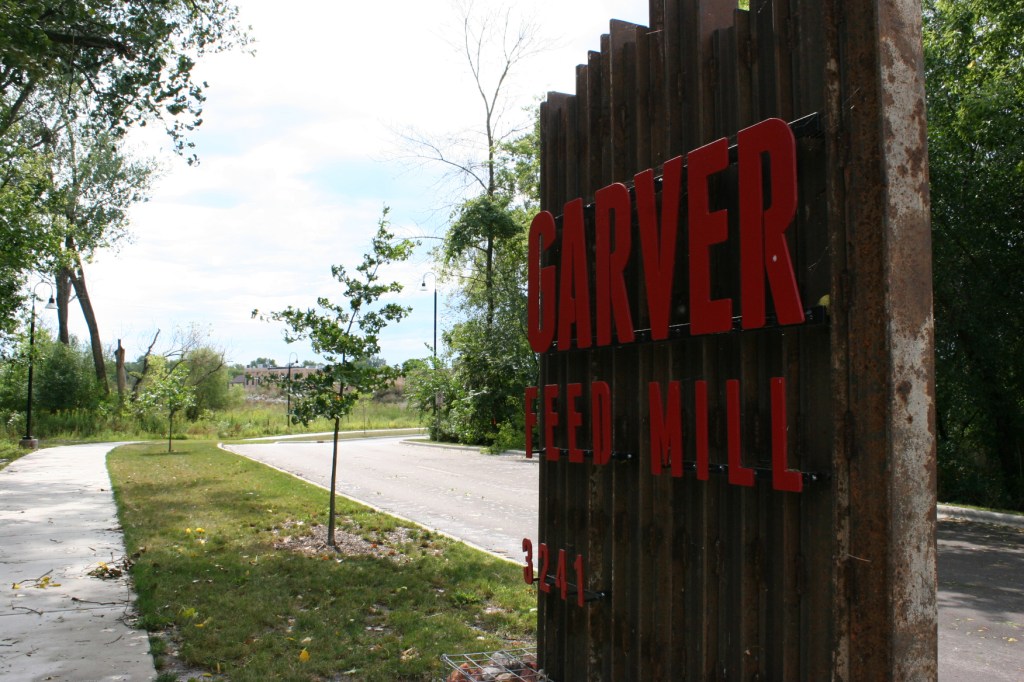
The roadside sign marking the entrance to Garver Feed Mill. Minnesota Prairie Roots file photo September 2020.
After I composed a few photos, we recrossed the busy street, aiming for Garver Feed Mill, a 114-year-old restored complex of buildings that now serves as a community hub for businesses and gatherings. It’s worthy of a solo post. So check back as I focus my camera on this gem in the Atwood Neighborhood of Wisconsin’s capital city.
Buckman, Minnesota. Minnesota Prairie Roots file photo September 2020.
RURAL MINNESOTA. For Randy and me, that represents our upbringing, the place of our roots, the land that is part of our personal geography.
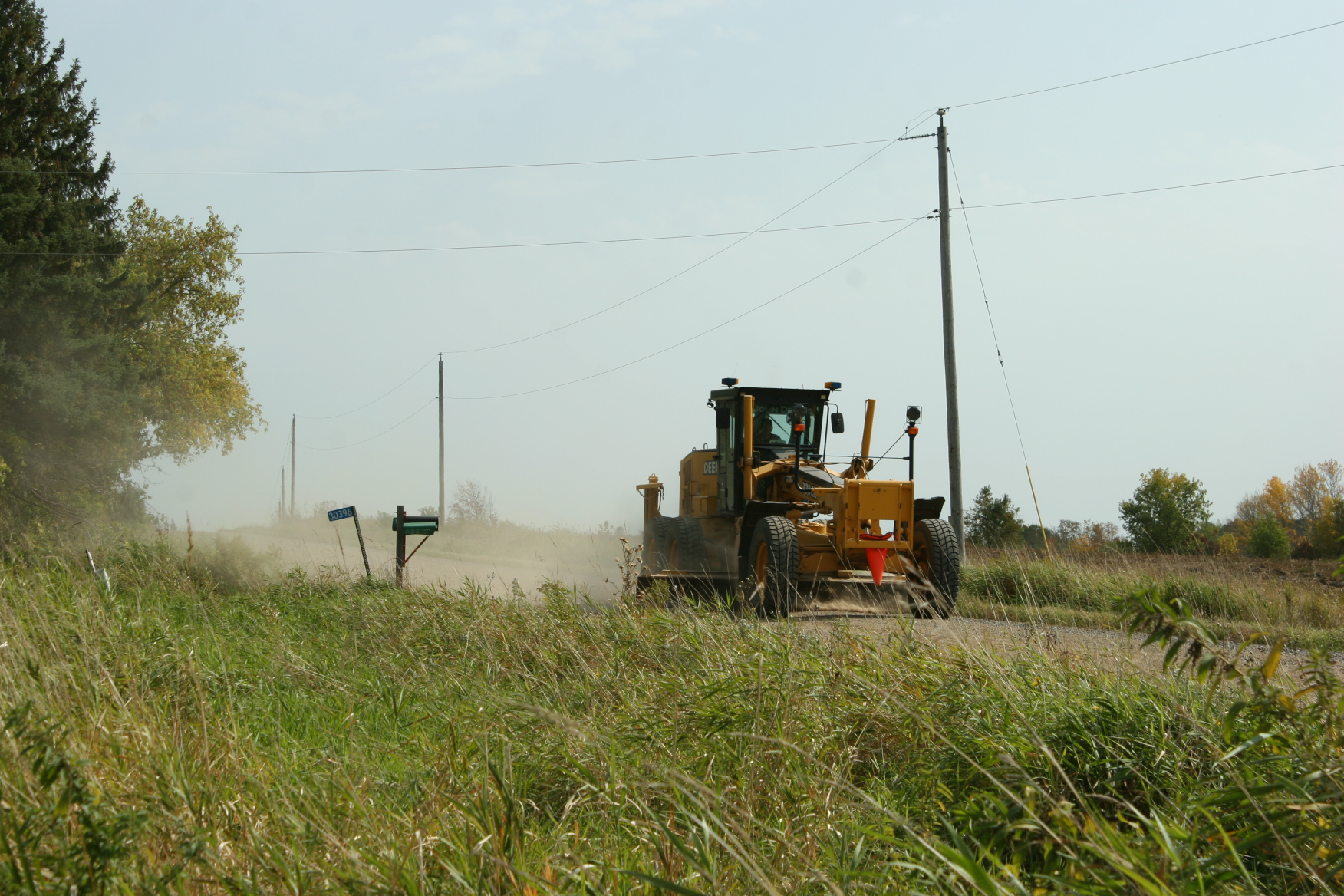
A road grader grades the gravel road near Randy’s childhood farm southeast of Buckman. We pulled off the narrow road to allow the grader to safely pass by our van. Minnesota Prairie Roots file photo September 2020.
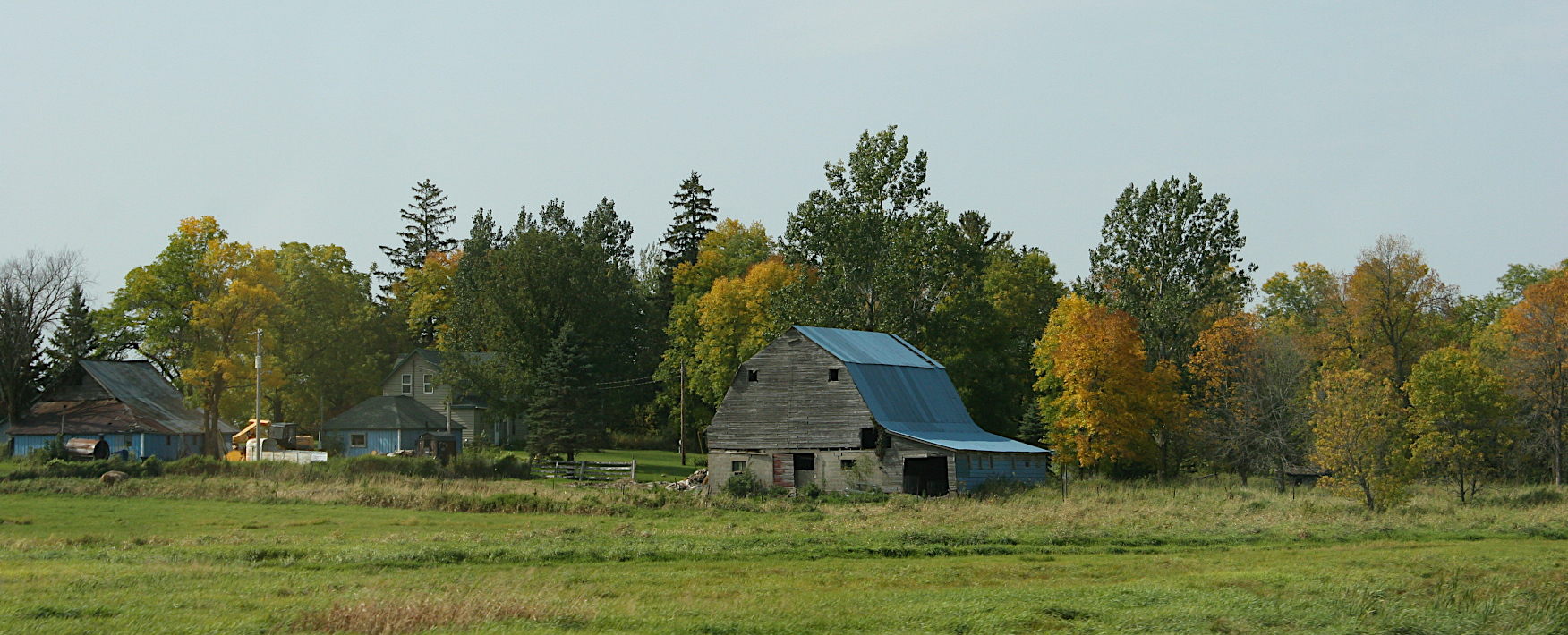
A farm place between Buckman and Gilman. Minnesota Prairie Roots file photo September 2020.
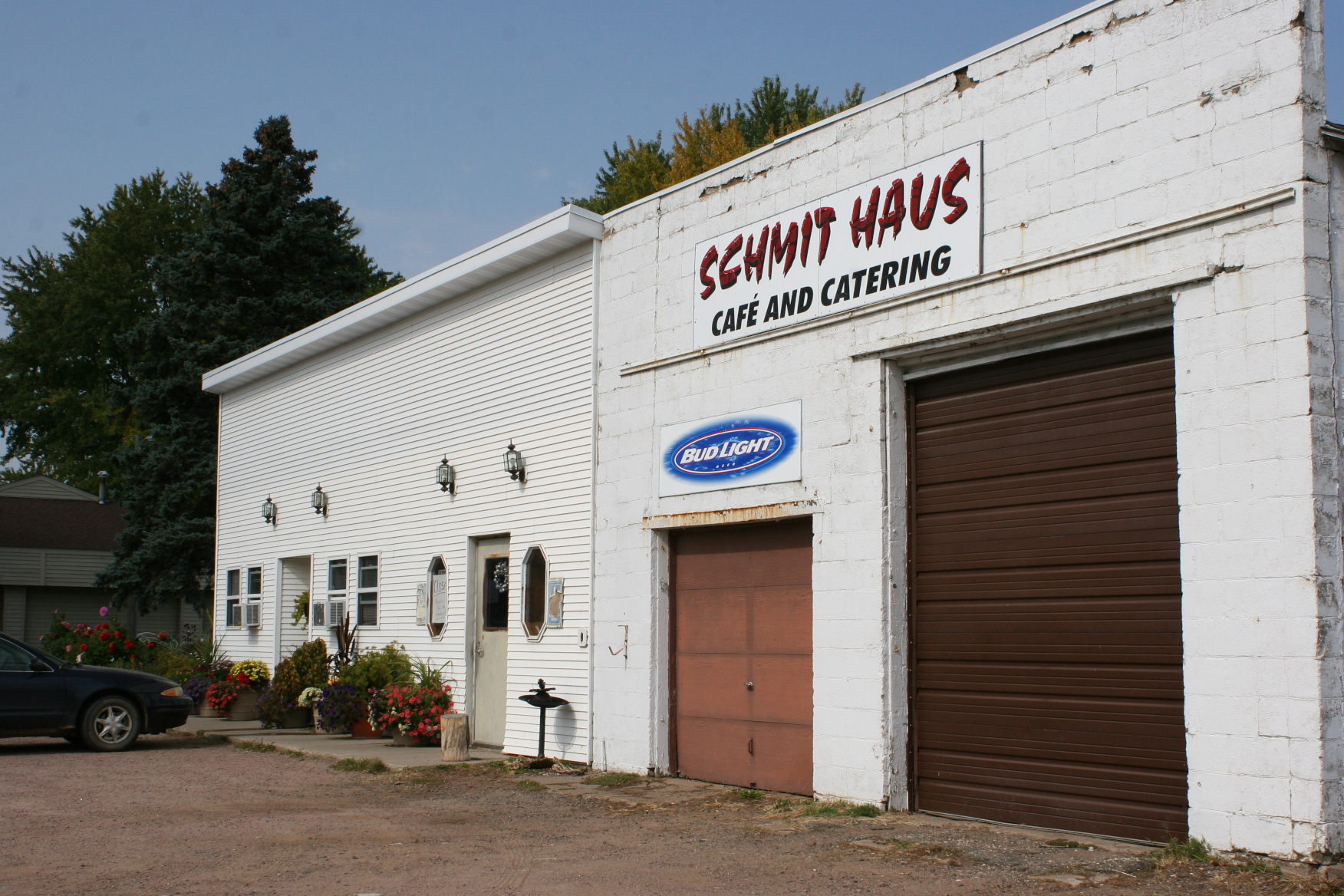
In the small town of Gilman. Minnesota Prairie Roots file photo September 2020.
We both grew up on farms, in large families—his three kids larger than mine at nine. We both picked rock—he more than me as Morrison County in central Minnesota sprouts more rocks than Redwood County. We each labored in fields and barns and understood the value of hard work and our importance in the farming operation. Even at a young age. That carries through in our strong work ethics and our strong link to the land.
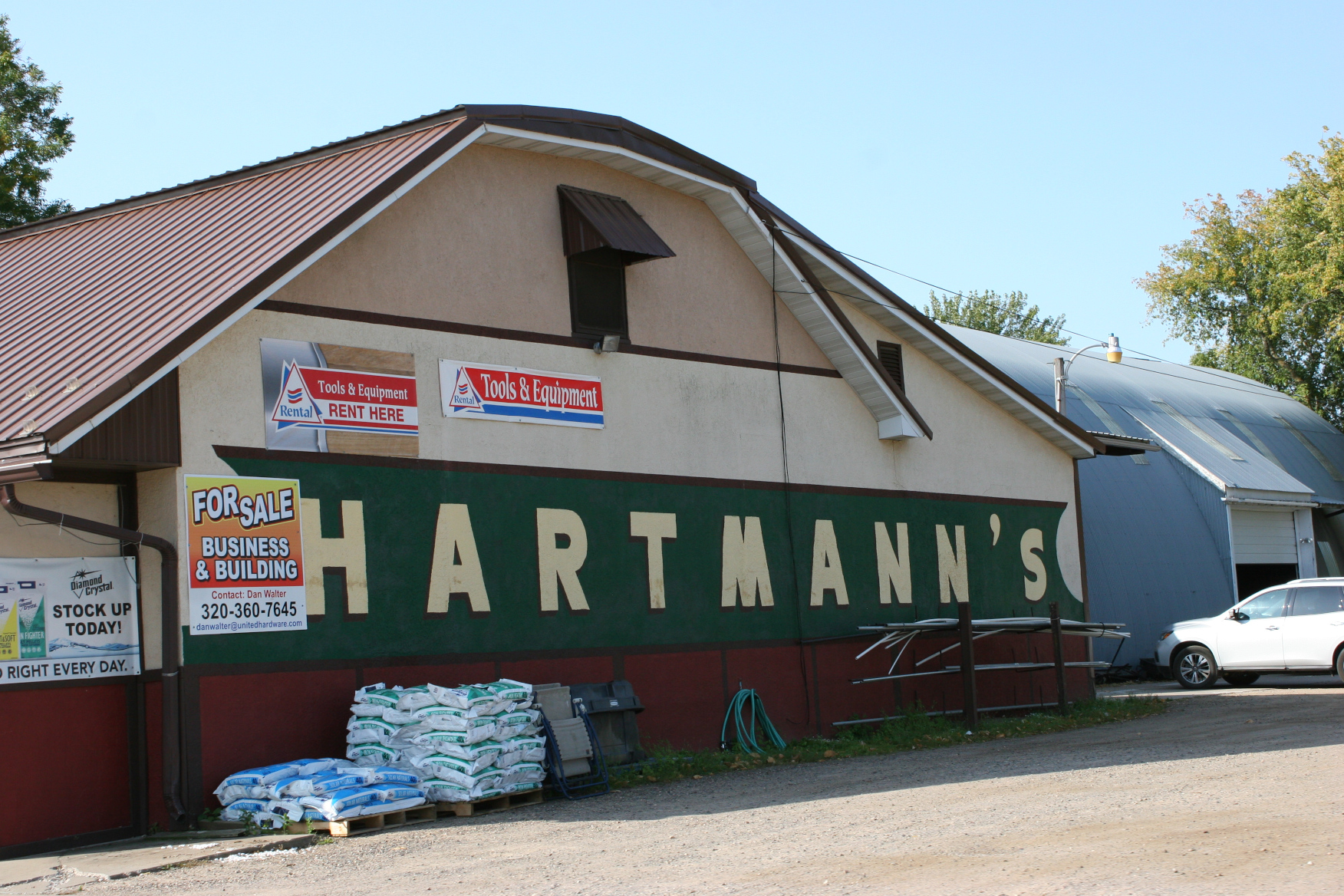
Pierz, a small town to the north of Buckman and bigger than Buckman, still has a hardware store. Randy attended junior and senior high school in Pierz. Minnesota Prairie Roots file photo September 2020.
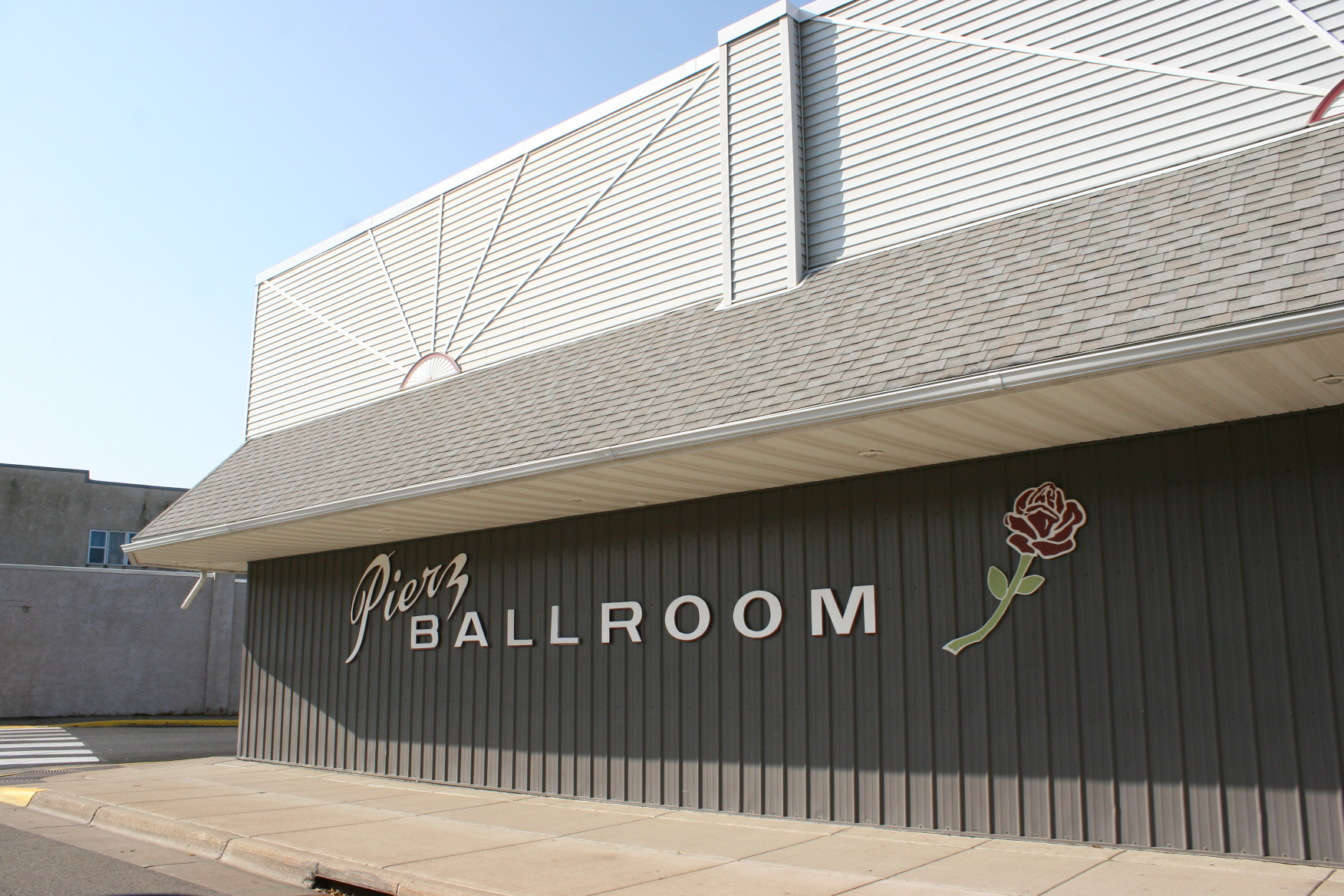
As we passed through Pierz, I photographed this updated community gathering spot. Minnesota Prairie Roots file photo September 2020.
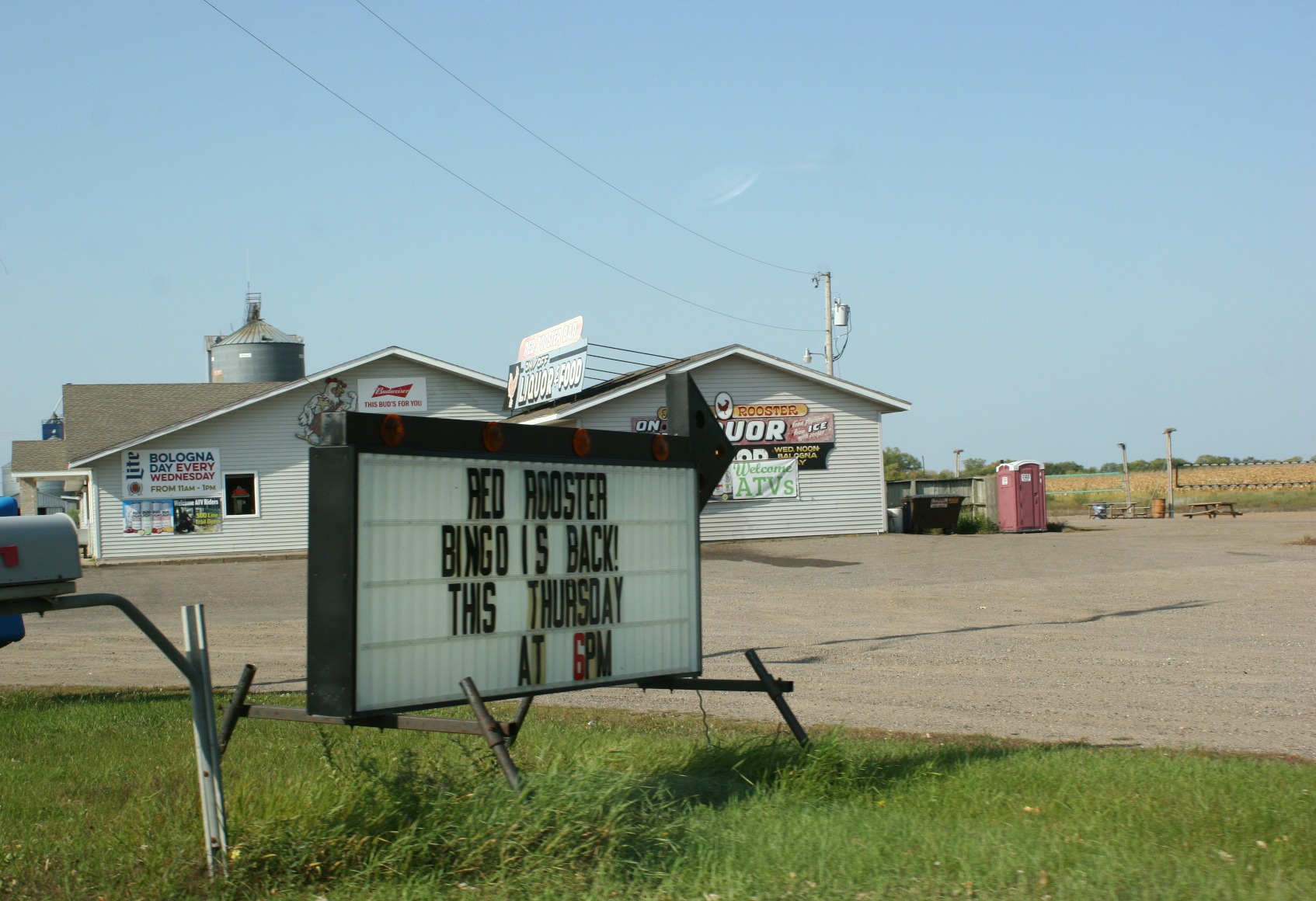
Genola, just to the south of Pierz, is home to the Red Rooster. BINGO is big in this part of rural Minnesota as is weekly Bologna Day (as noted in the banner on the building). Minnesota Prairie Roots file photo September 2020.
And, though we left our rural communities at age 17, we still hold dear the small towns—Buckman and Vesta—that were such an important part of our upbringing. Both have changed with familiar businesses long gone. Society changed and locals began driving farther for groceries and other necessities.
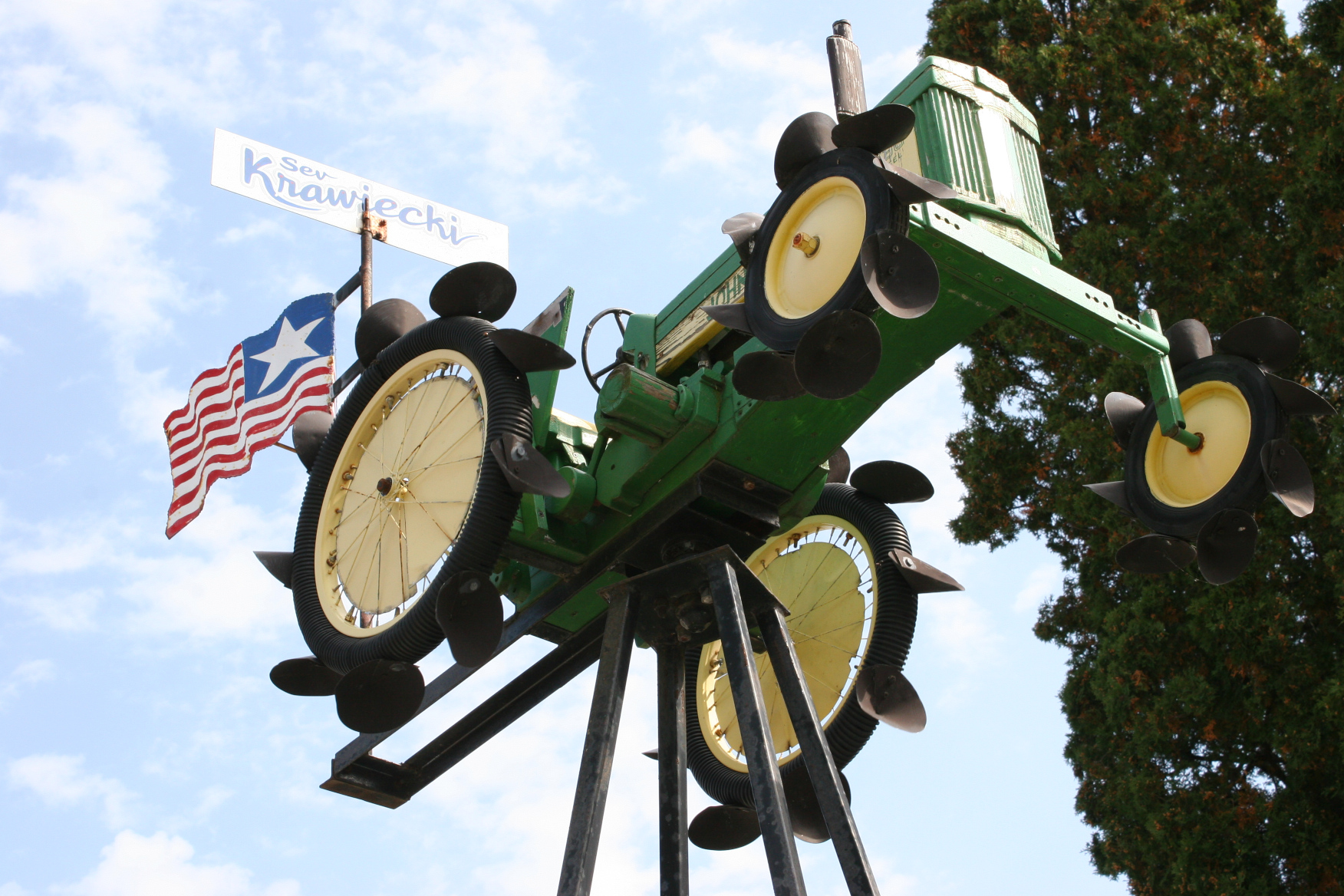
A nod to this area’s rich agricultural base outside Sev’s Food & Liquor in Buckman. Minnesota Prairie Roots file photo September 2020.
It’s easy to get caught in the memories, of the back then, of wishing nothing had changed. But it has and it does. And life goes on.
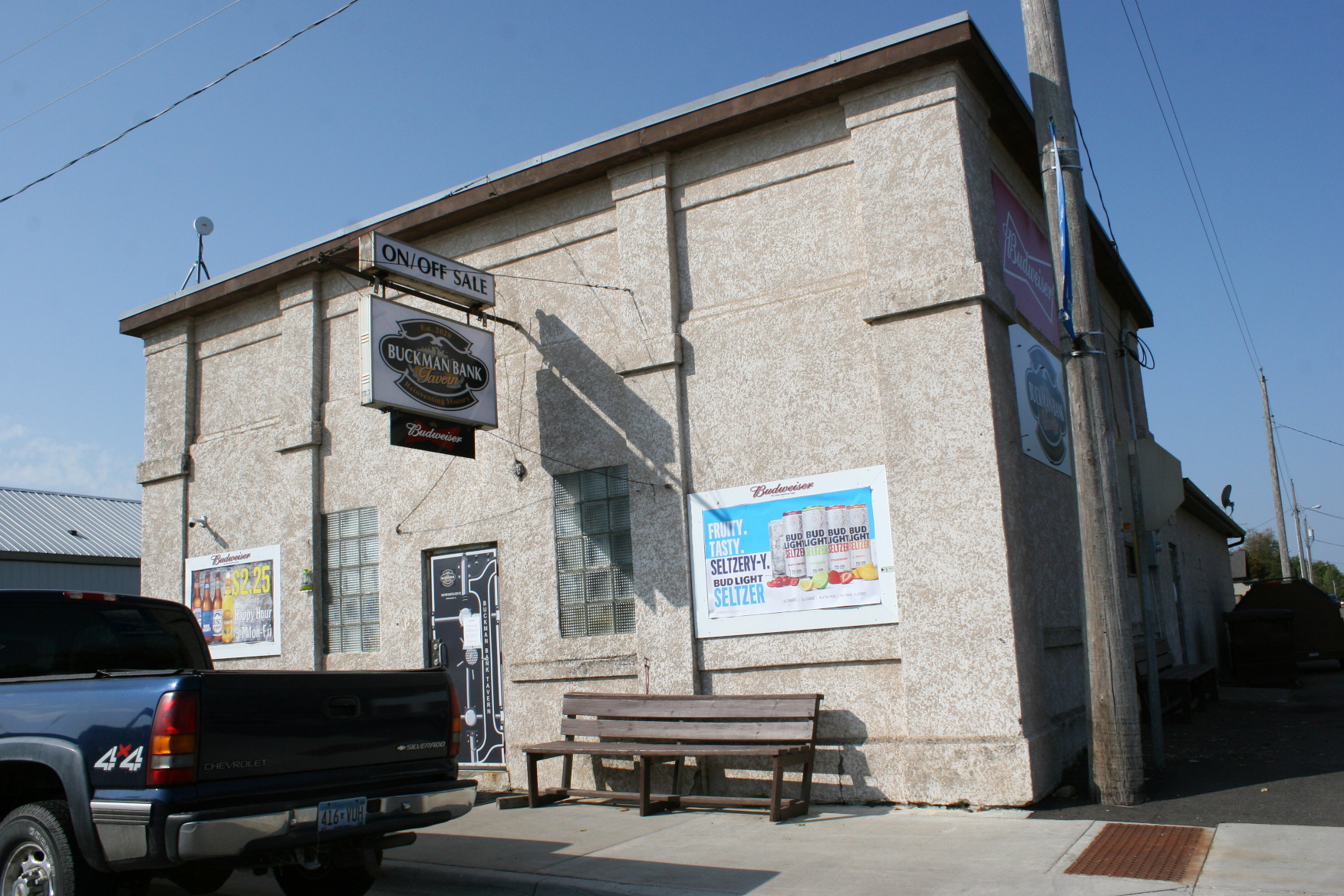
Housed in the old bank building, the Buckman Bank Tavern. Minnesota Prairie Roots file photo September 2020.
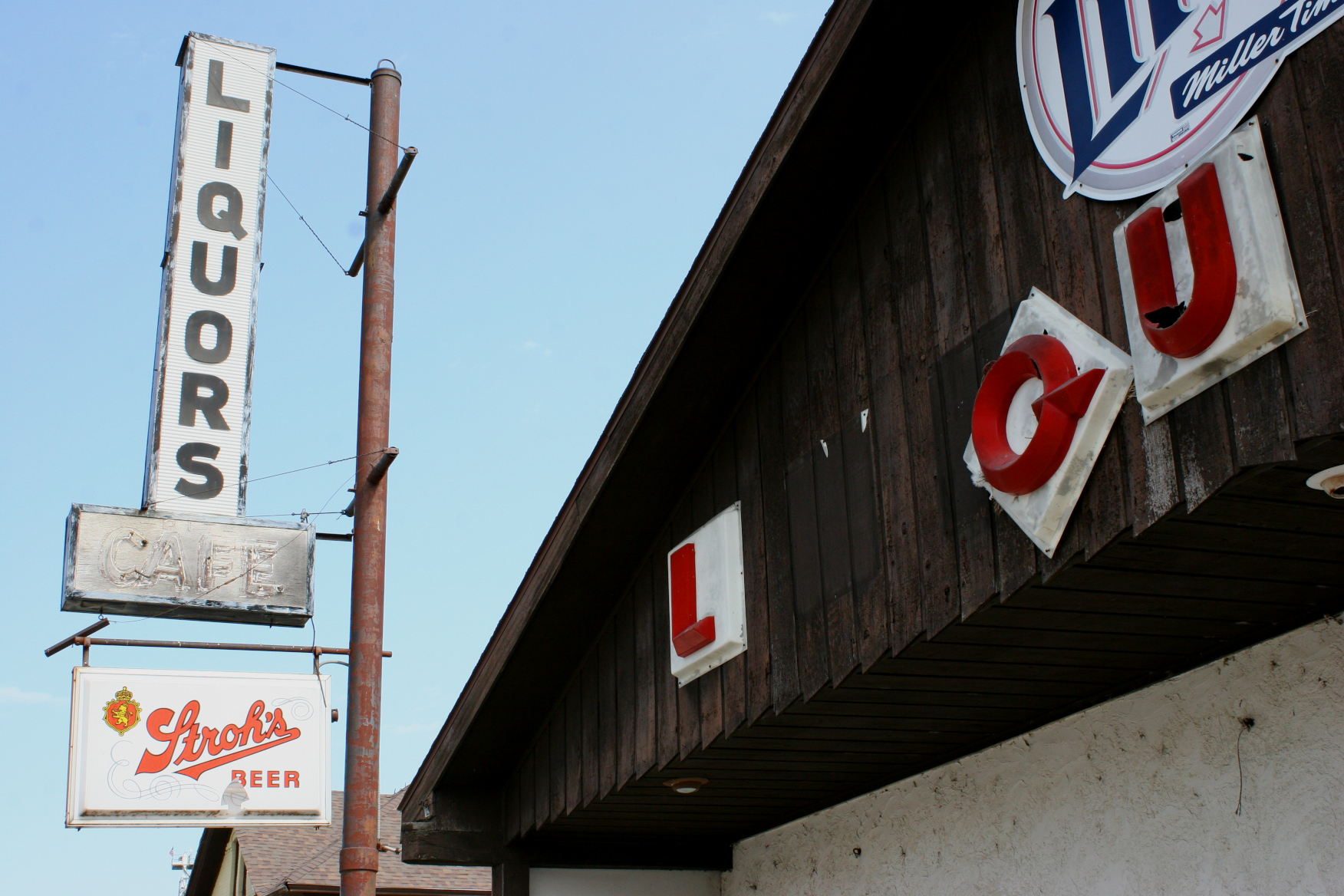
Signs on Sev’s in Buckman. Minnesota Prairie Roots file photo September 2020.
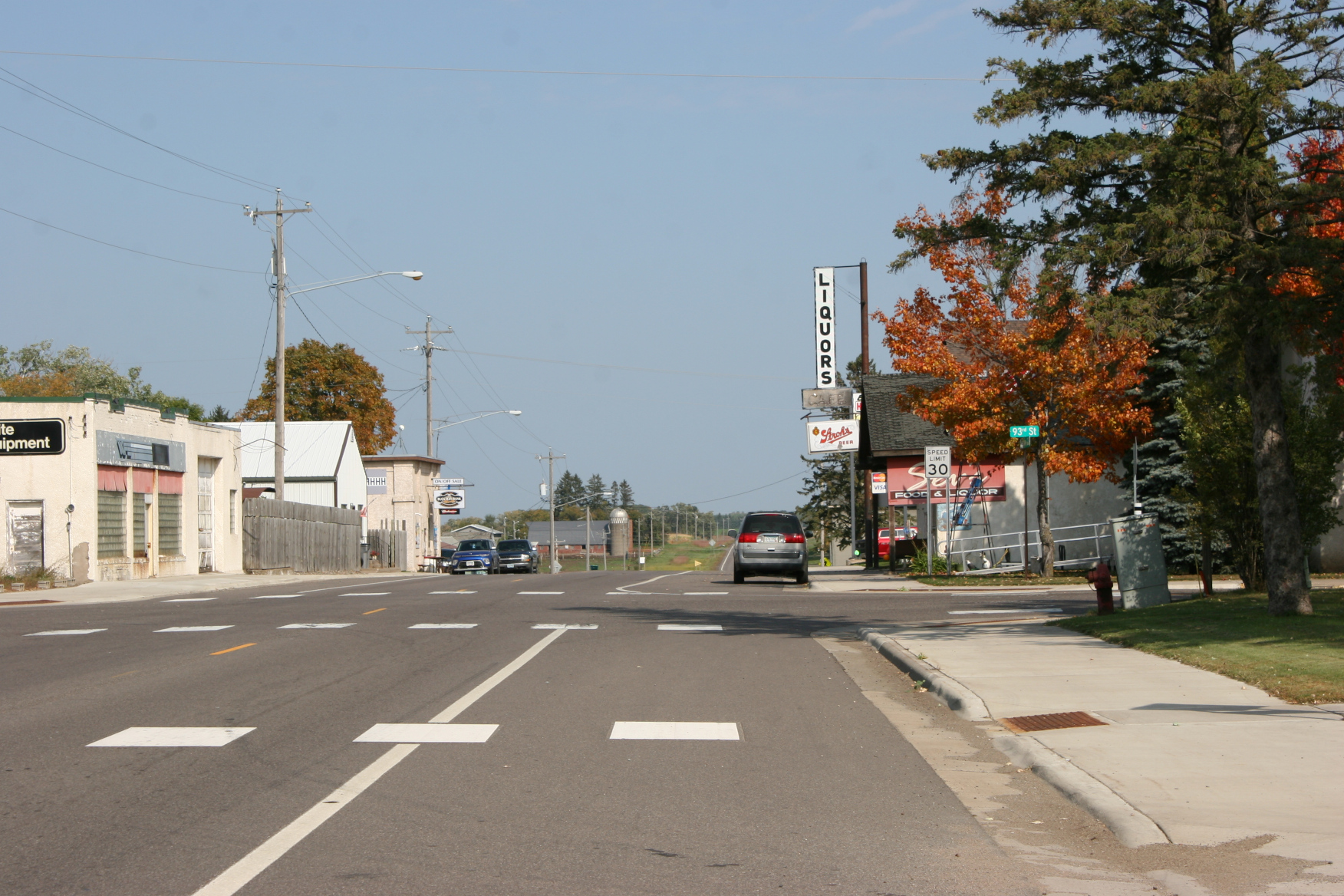
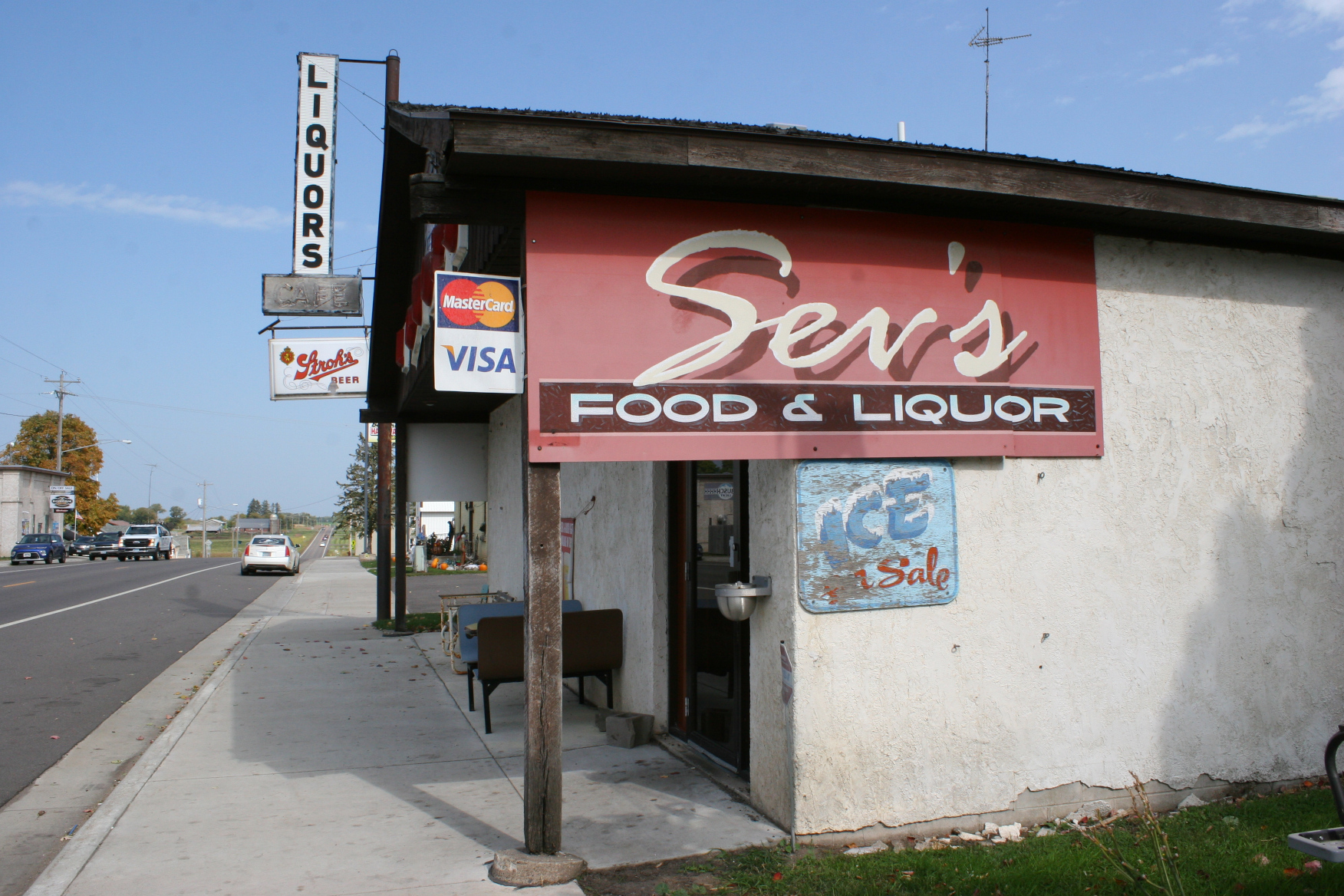
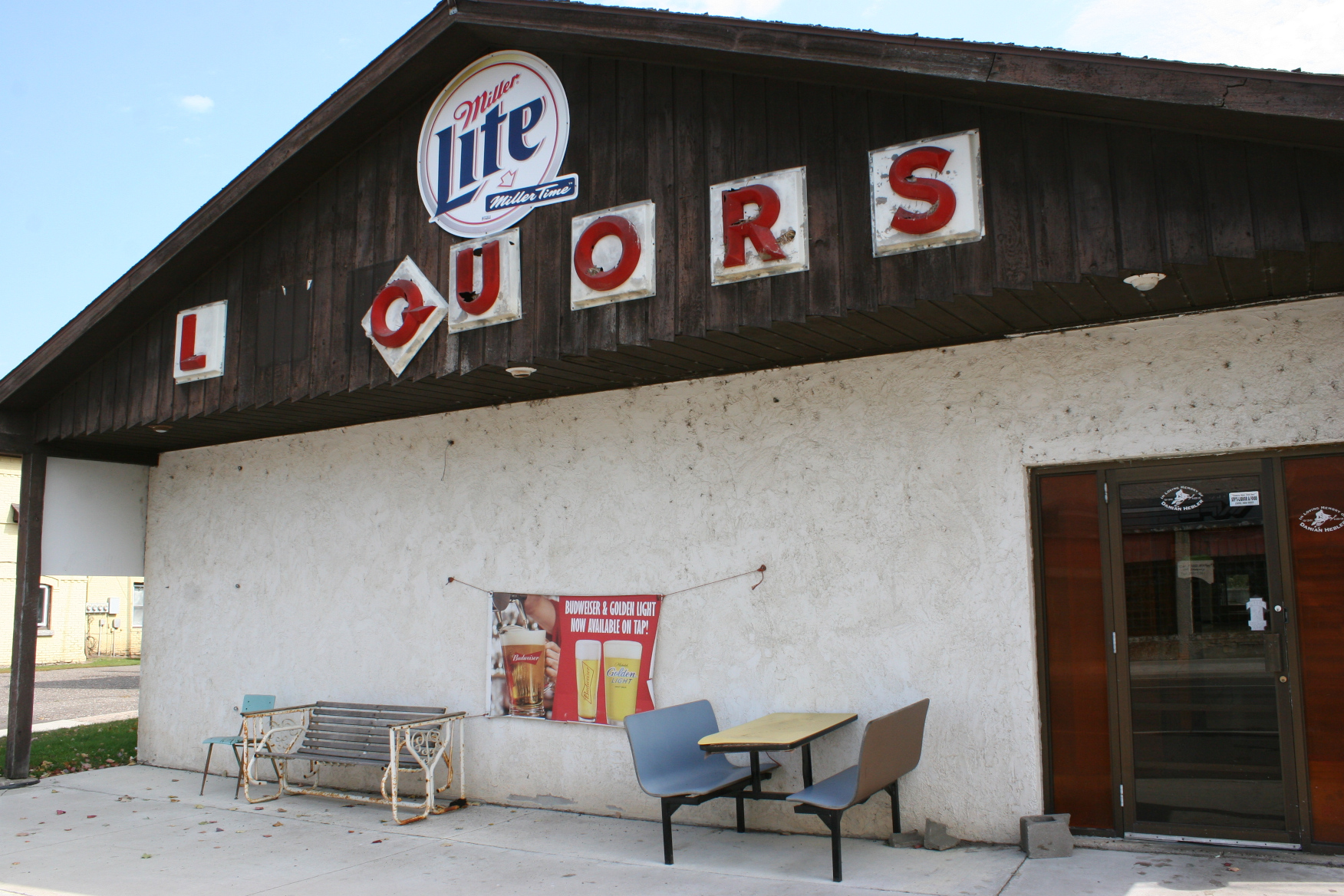
Sev’s Food & Liquor along Buckman’s main street. Minnesota Prairie Roots file photo September 2020.
Returning to our hometowns, our home areas, causes me to reflect while simultaneously appreciating that which remains. Cafes and churches and hardware stores. Post offices and bars and grain elevators. These are the community gathering spots that still mark many of Minnesota’s smallest communities, those towns that span only blocks from east to west, north to south.
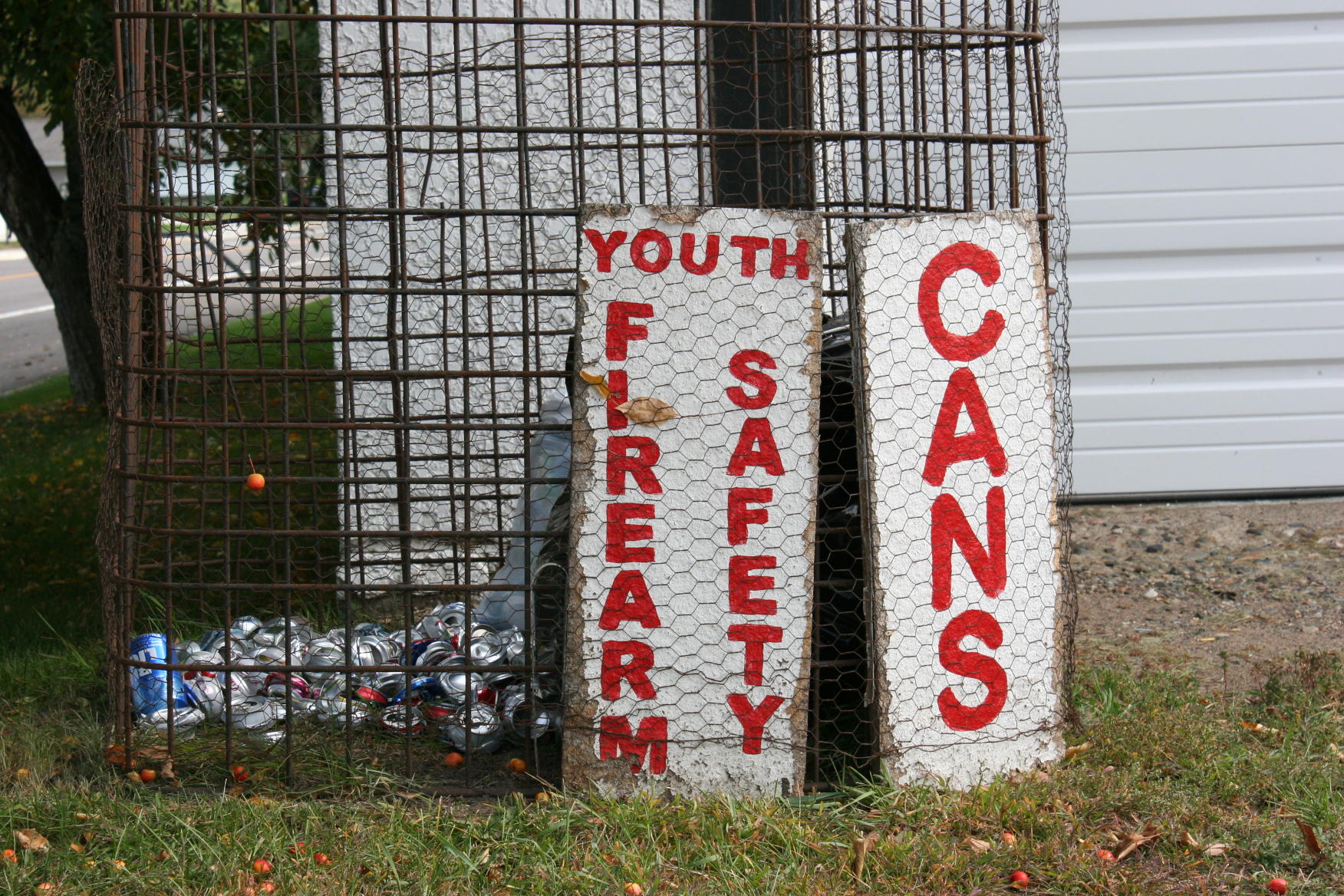
I often see can collection sites in small towns, like this one in Buckman. They offer insights into a community. Minnesota Prairie Roots file photo September 2020.
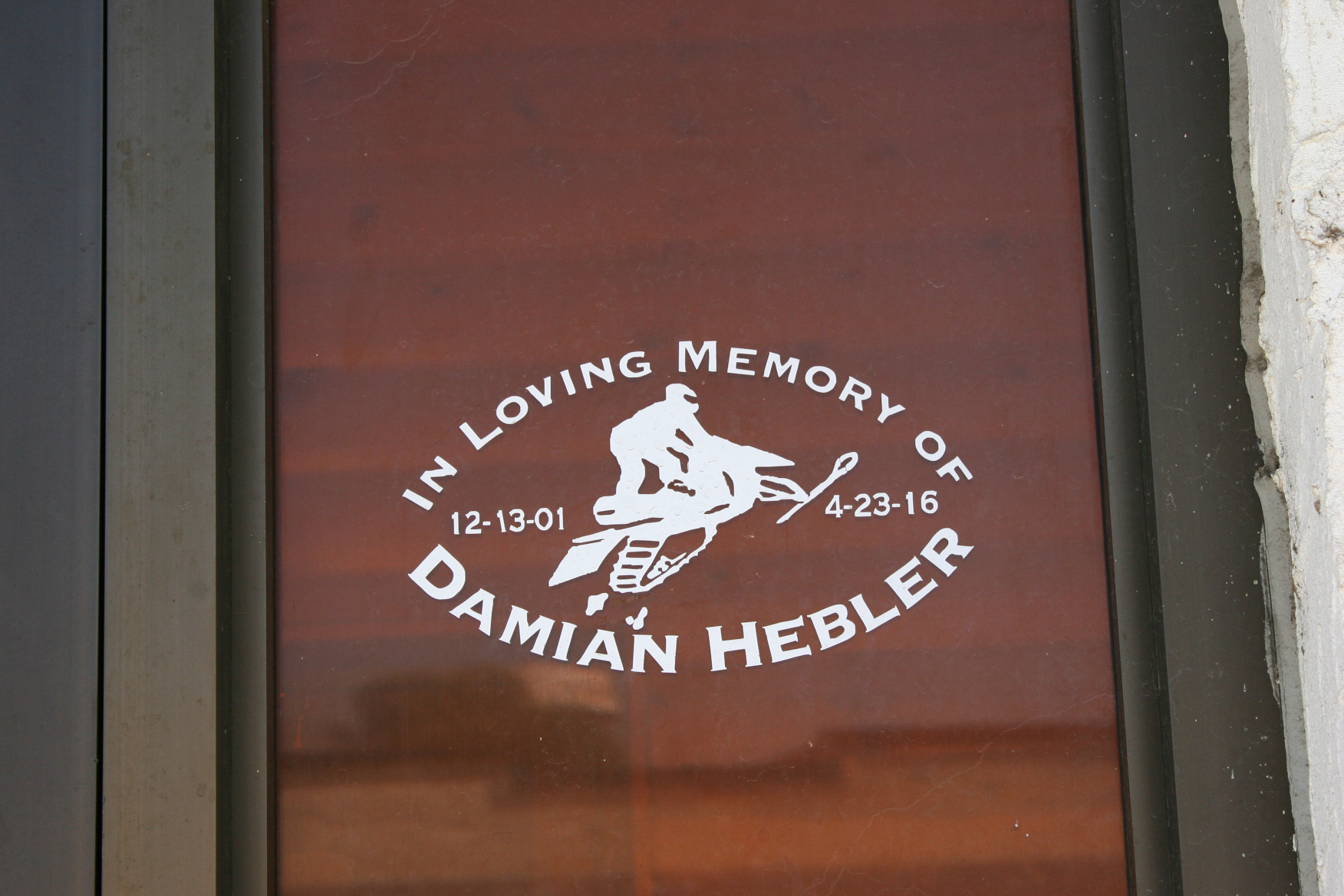
On the door of a Buckman bar, a young man remembered. Minnesota Prairie Roots file photo September 2020.
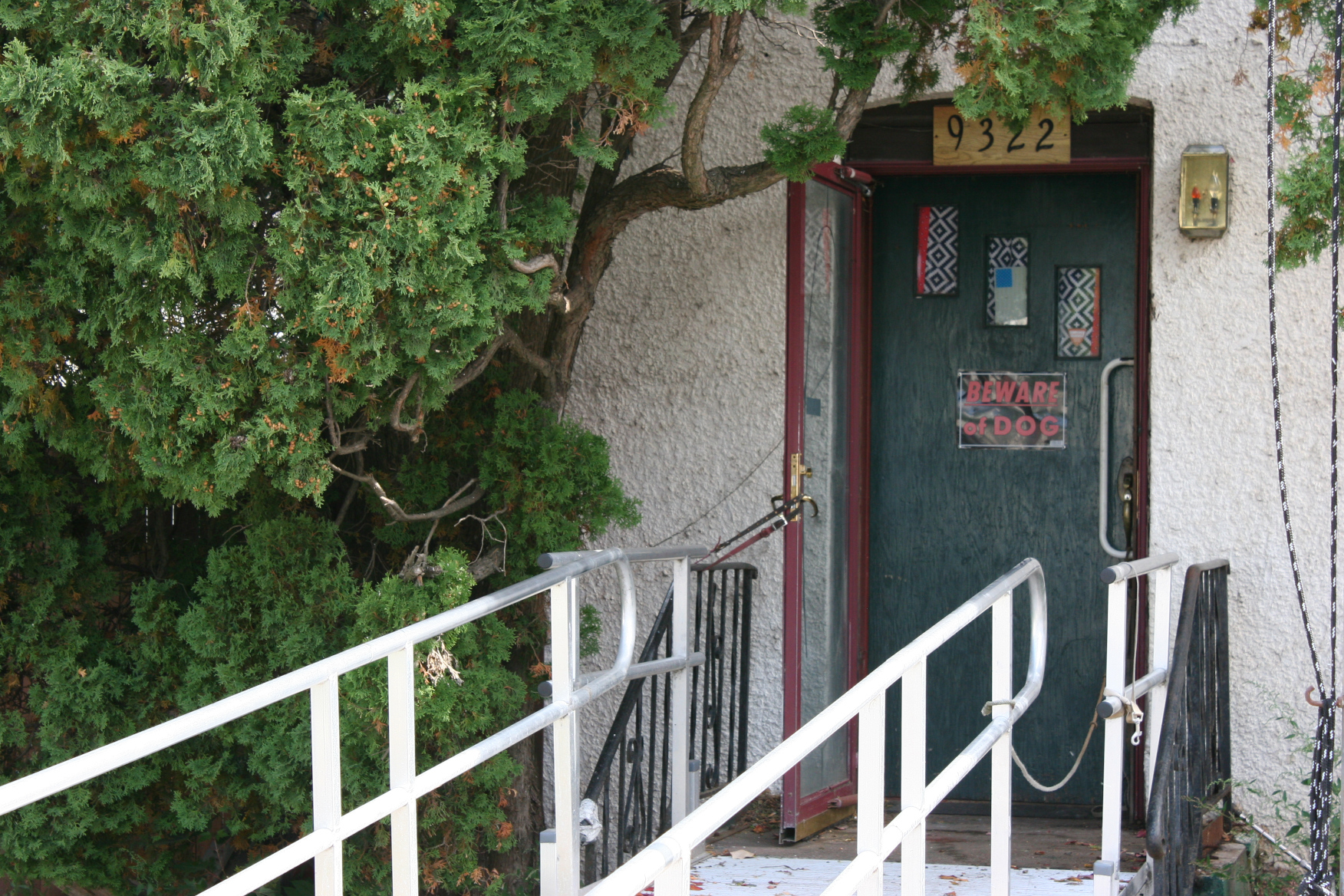
A warning sign posted on a house in Buckman. Minnesota Prairie Roots file photo September 2020.
But more than buildings, people form community. Even in Faribault, where Randy and I have lived since 1982, we’ve found our small town in a city of around 25,000. That’s in our faith family at Trinity Lutheran Church, the “town” that centers our lives. An uncle and I discussed this recently. He lives in Minneapolis. His neighborhood is his community, his small town.
A place to gather outside Sev’s Food & Liquor in Buckman. Minnesota Prairie Roots file photo September 2020.
No matter where you live, whether in rural Minnesota or New York City, the mountains of Idaho or the plains of Nebraska, I hope you’ve found your community and place of joy.
Outside my husband Randy’s home church, St. Michael’s in Buckman. Minnesota Prairie Roots file photo September 2020.
FOR MANY, THE WORD “church” prompts visions of a physical structure, a place where people of faith gather to worship. Certainly, that’s part of the definition. But, even more important, “church” is the people. That’s why, in times of natural disaster or fire or whatever may render a physical building unusable, the “church” continues.
This sign marks a back pew. Minnesota Prairie Roots file photo September 2020.
For 118 years, the faithful have gathered at St. Michael’s Catholic Church in Buckman. Even during COVID-19, Mass happens three mornings a week. On the September weekday Randy and I visited, not a soul was around, giving us ample opportunity to explore this beautiful aged sanctuary.
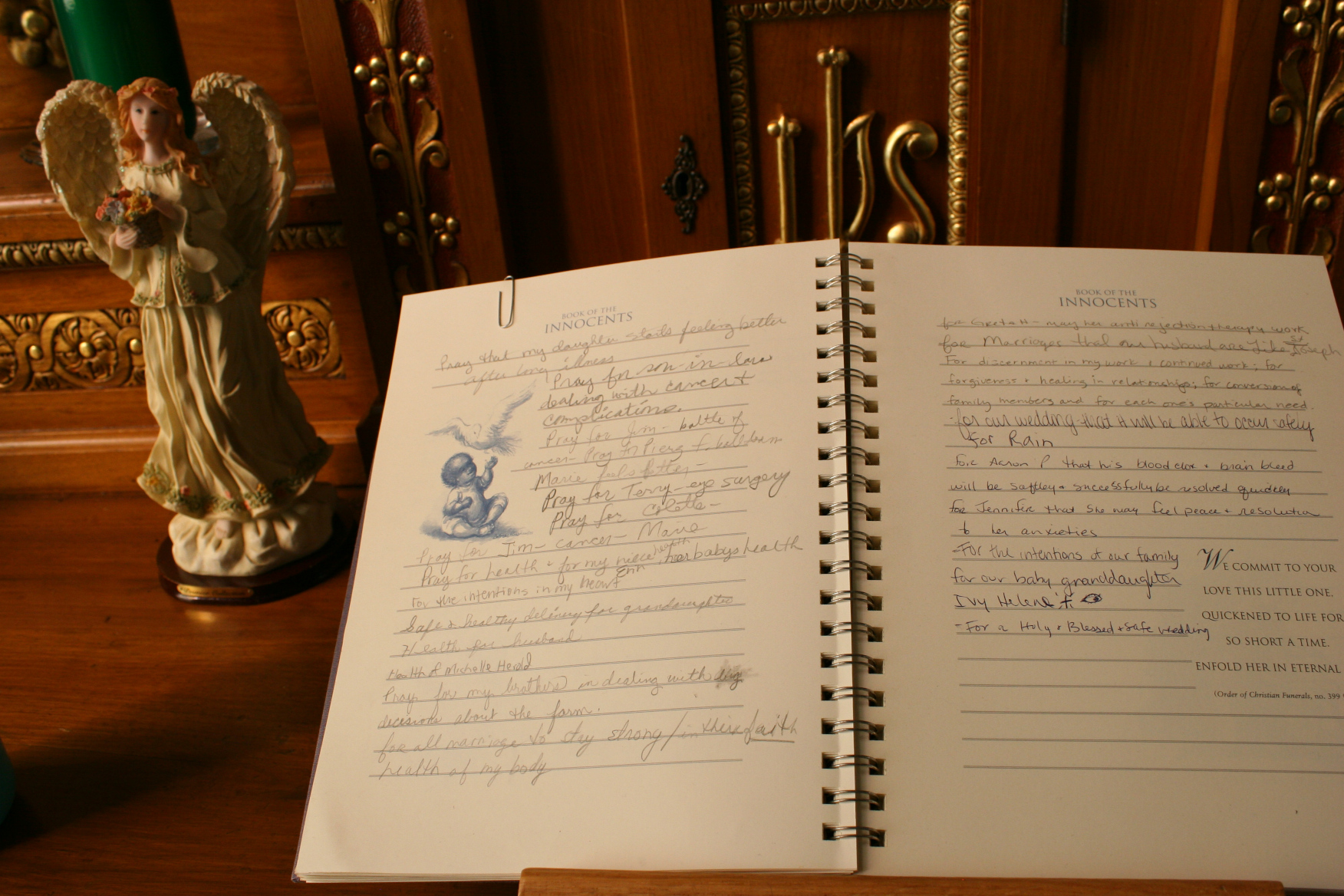
Book of the Innocents photographed at St. Michael’s. Minnesota Prairie Roots file photo September 2020.
Despite the absence of people, I experienced the presence of those who call St. Michael’s their church home. I saw the human spiritual connection in handwritten prayers recorded in The Book of Innocents.
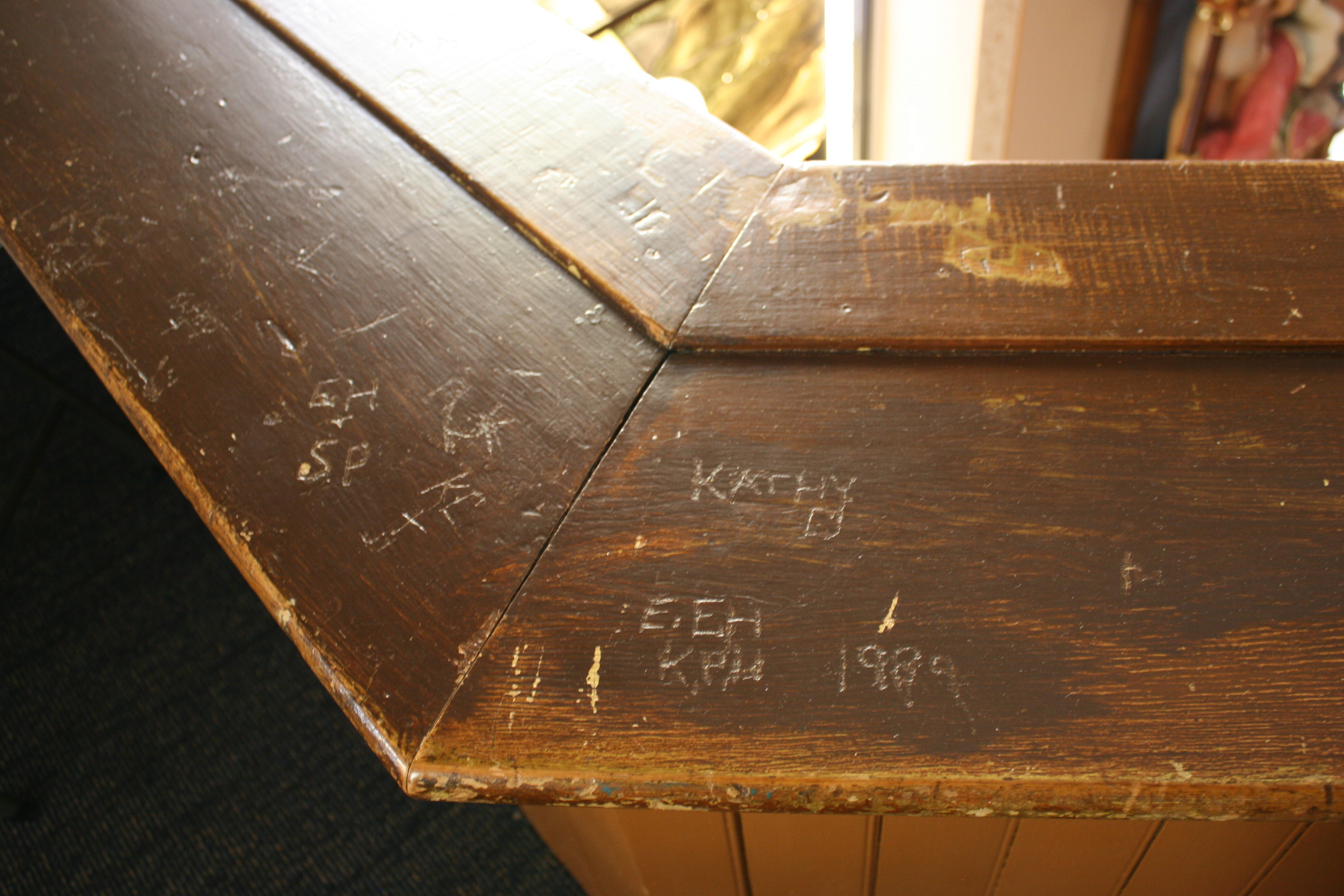
They left their mark… Minnesota Prairie Roots file photo September 2020.
Upstairs, atop the balcony wall ledge, I noticed initials, names and dates etched in wood. Another human notation, albeit probably not appreciated by all. But the scratchings are part of St. Michael’s history.
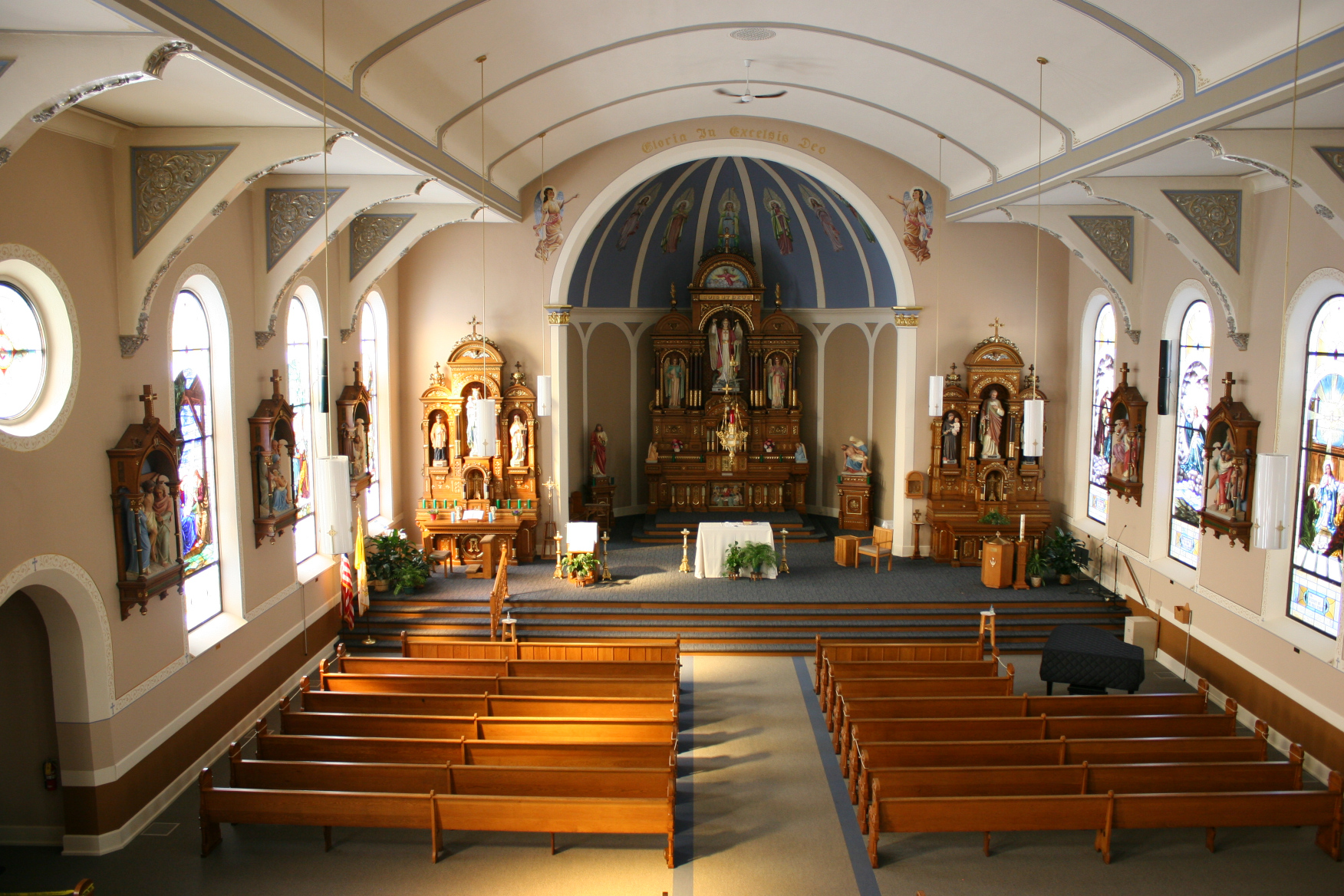
A view from the balcony. Minnesota Prairie Roots file photo September 2020.
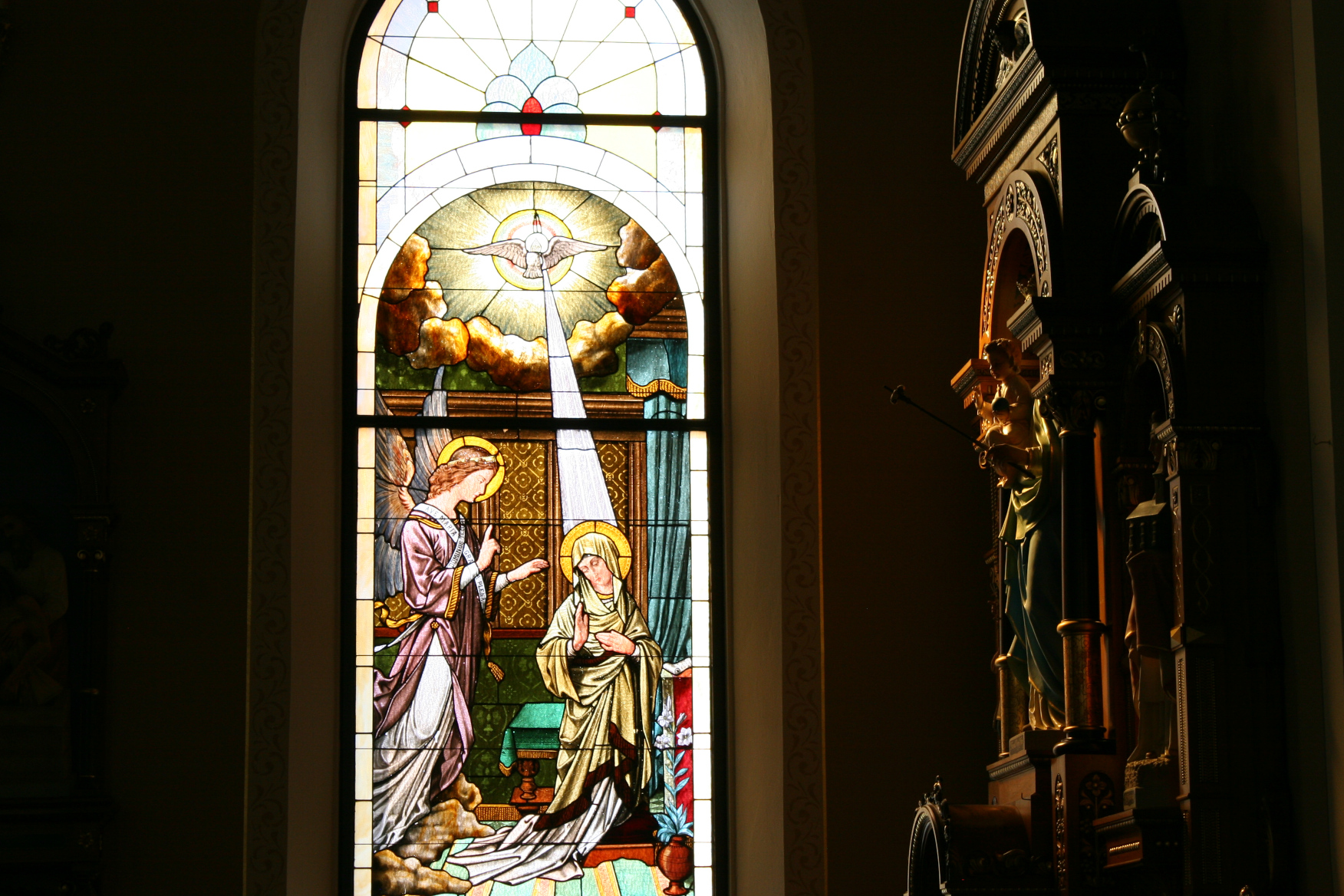
Stained glass windows abound, this one next to a side altar. Minnesota Prairie Roots file photo September 2020.
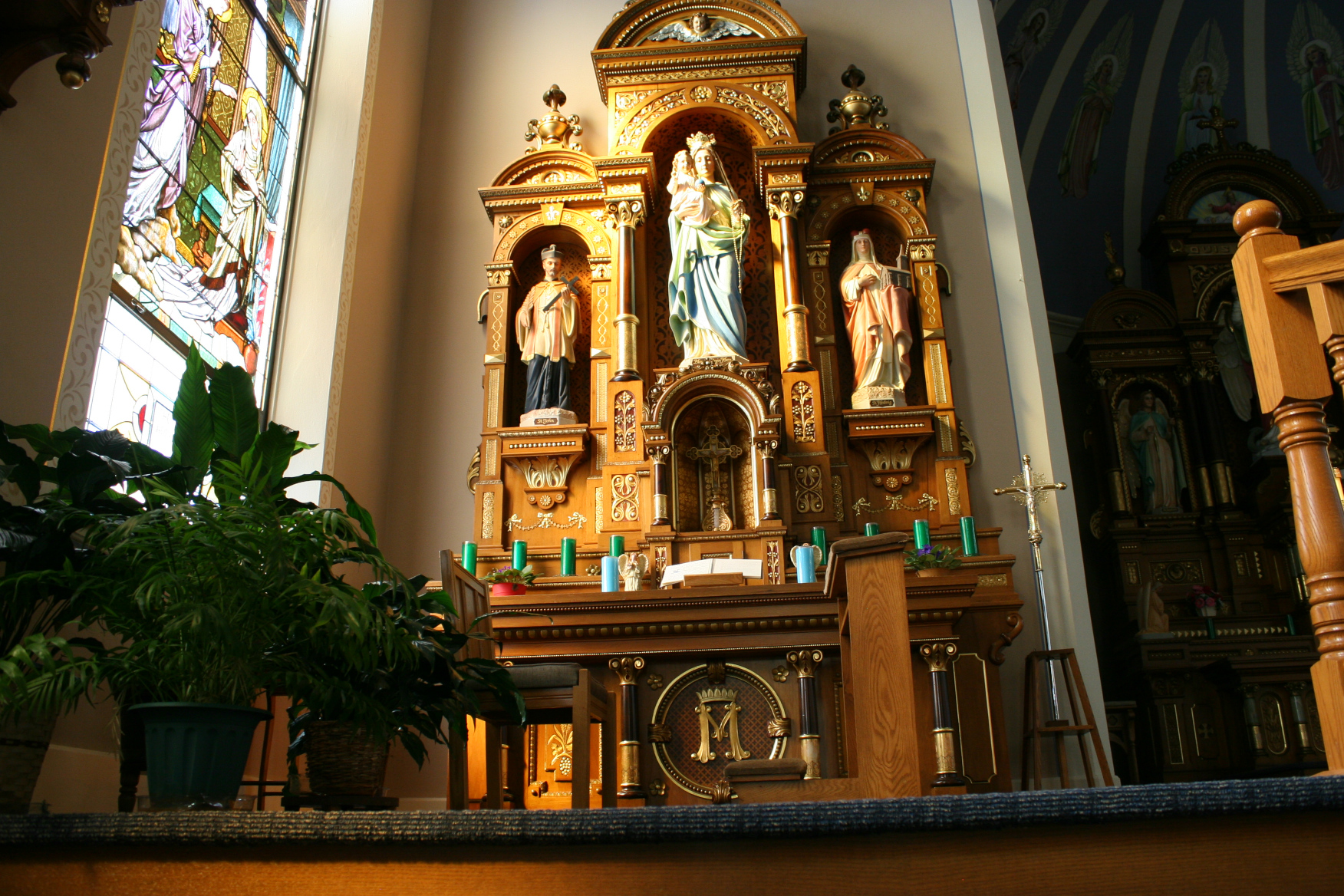
The beautiful side altar. Minnesota Prairie Roots file photo September 2020.
As I looked down upon the massive sanctuary defined by stained glass, sculptures, woodcarvings, paintings and other impressive art, I considered the humanity of this place. Baptisms. First Communions. Weddings. Funerals. Events—joyful and sad—which brought/bring people together to celebrate or to mourn. Mass, too, with singing and praying and forgiving and worshiping and growing in faith.
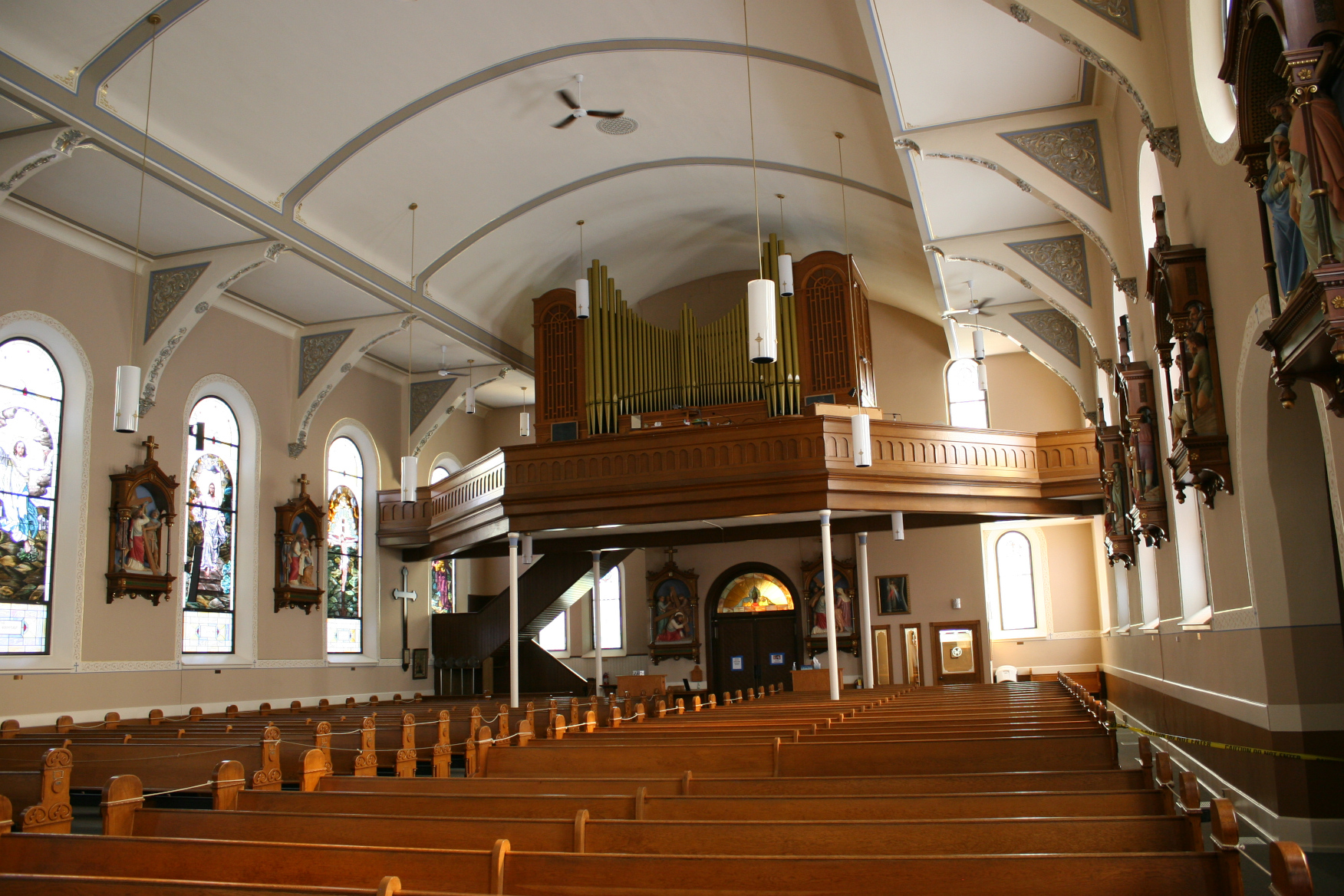
Looking toward the back of the church and the balcony. Minnesota Prairie Roots file photo September 2020.
Generations have gathered here, within these walls, as a faith family.
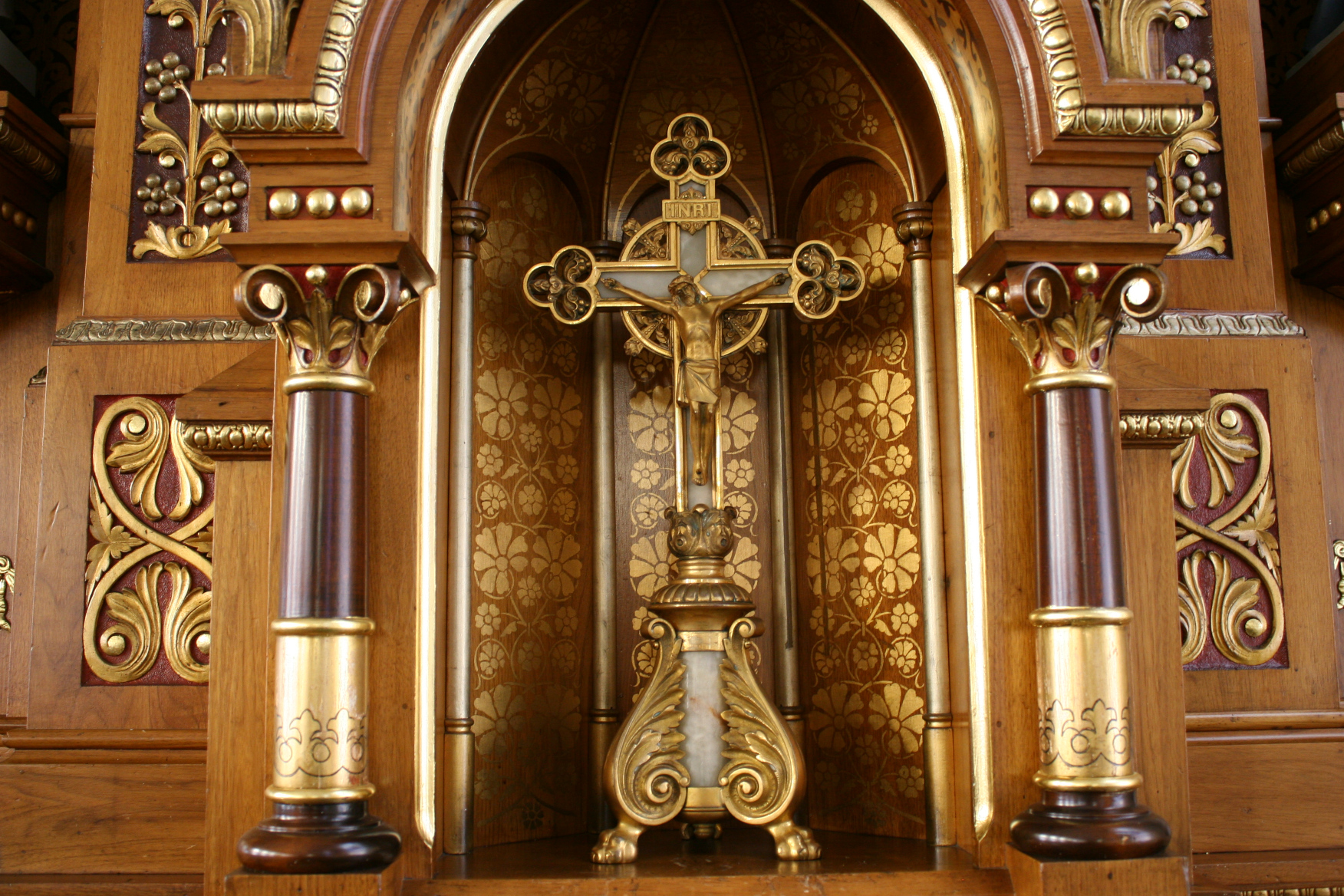
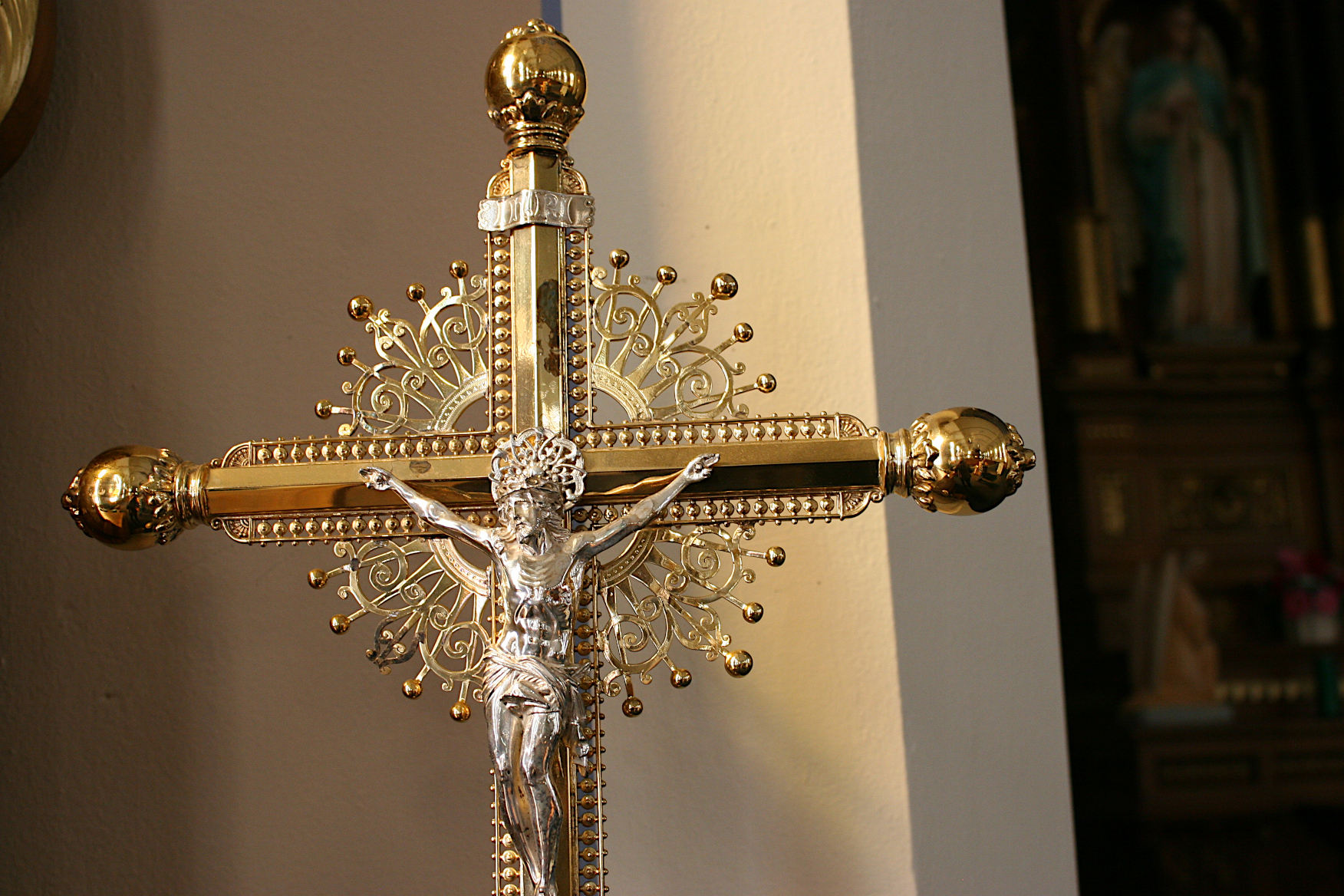
This stunning cross stands in the center of the main altar. Minnesota Prairie Roots file photo September 2020.
I’ve found comfort and joy here, too, celebrating the marriage of my father-in-law and a sister-in-law and grieving the loss of a brother-in-law and then my mother-in-law 27 years ago. Since then, the church has been restored and a side entry and fellowship hall added, making the building much more accessible.
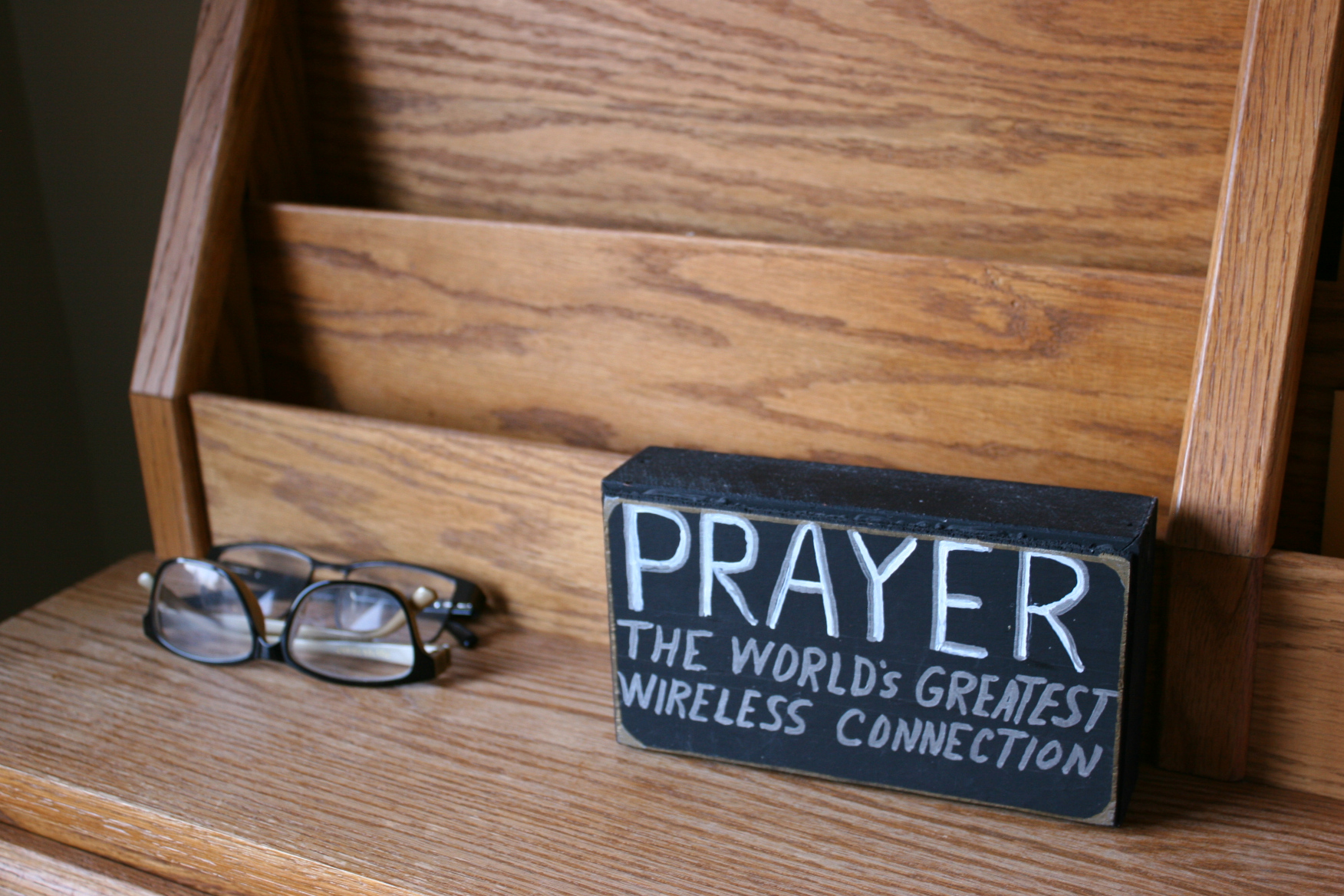
Spotted on a table in the entry. Minnesota Prairie Roots file photo September 2020.
In the new entry, I paused to read a small sign: PRAYER THE WORLD’S GREATEST WIRELESS CONNECTION. I laughed and thought, so true while simultaneously considering how much the world has changed since the construction of this church in 1903.
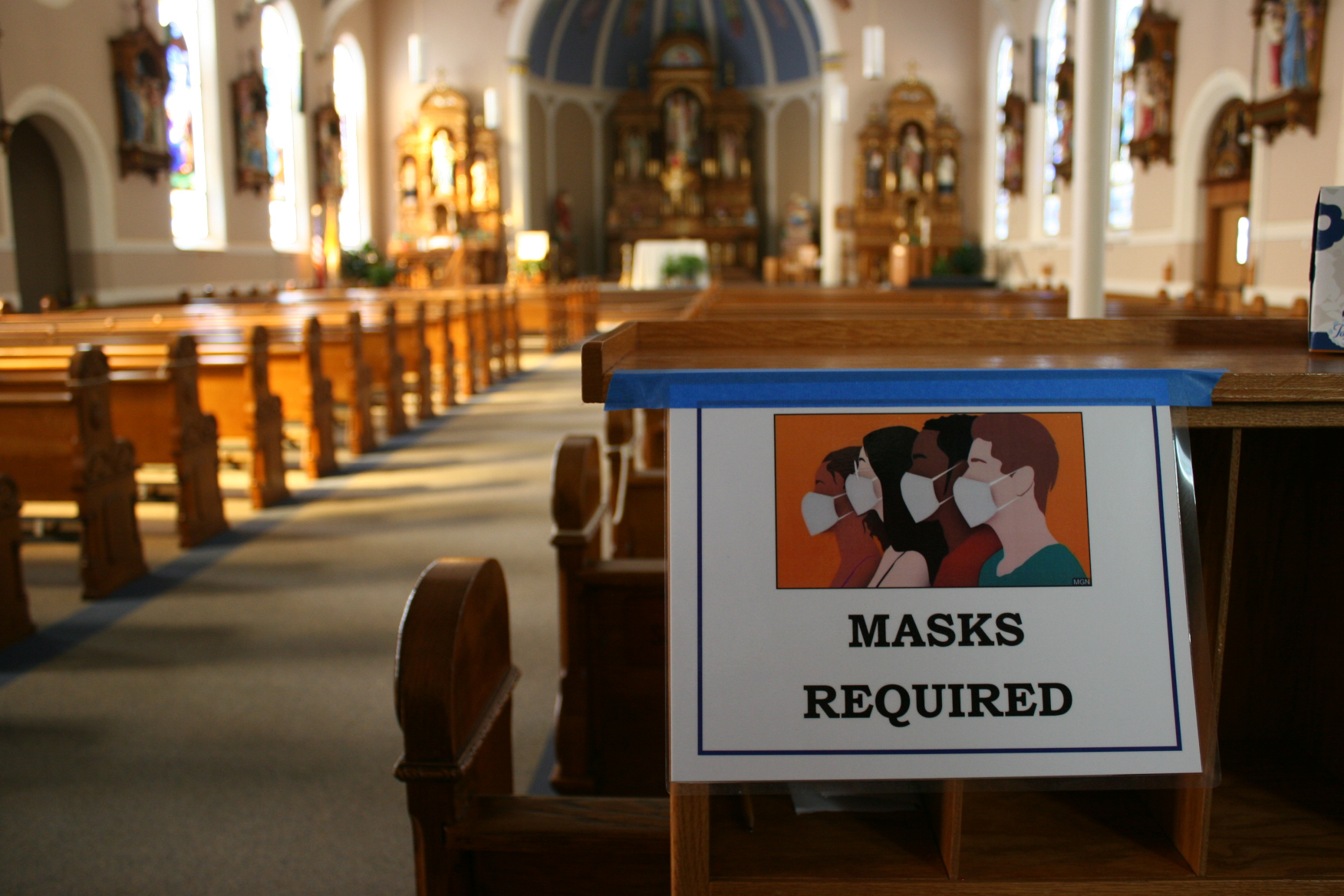
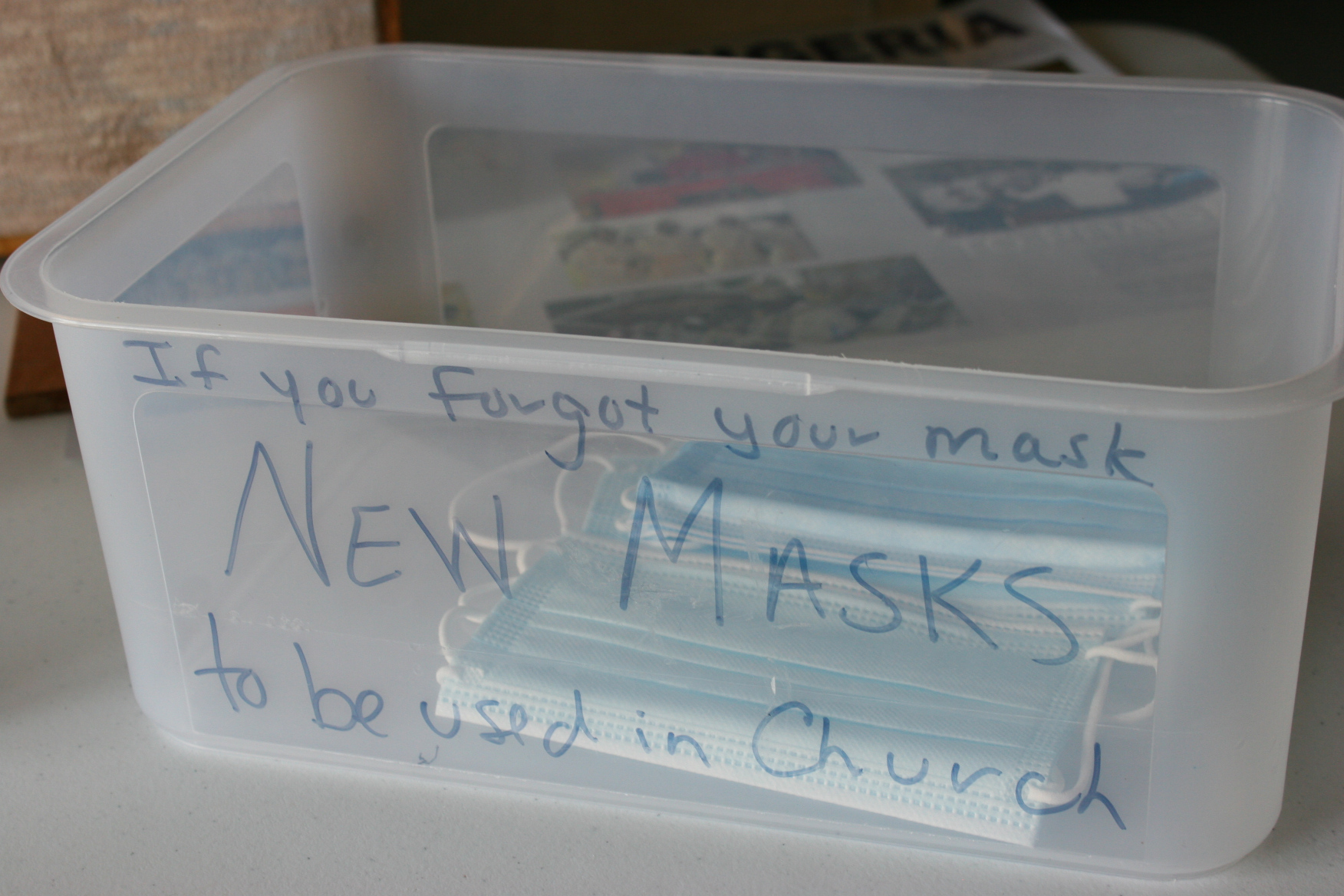
Masks are available for worshipers inside the entry. Minnesota Prairie Roots file photo September 2020.
Yet, little has changed. People still define St. Michael’s. They gather here—as they have for generations—within this art rich sanctuary, embracing liturgy steeped in music and tradition, to worship God. And to connect, heart-to-heart, with one another and with their Savior. Even during a global pandemic.
This is the final post in my three-part series on St. Michael’s Catholic Church, Buckman, Minnesota.
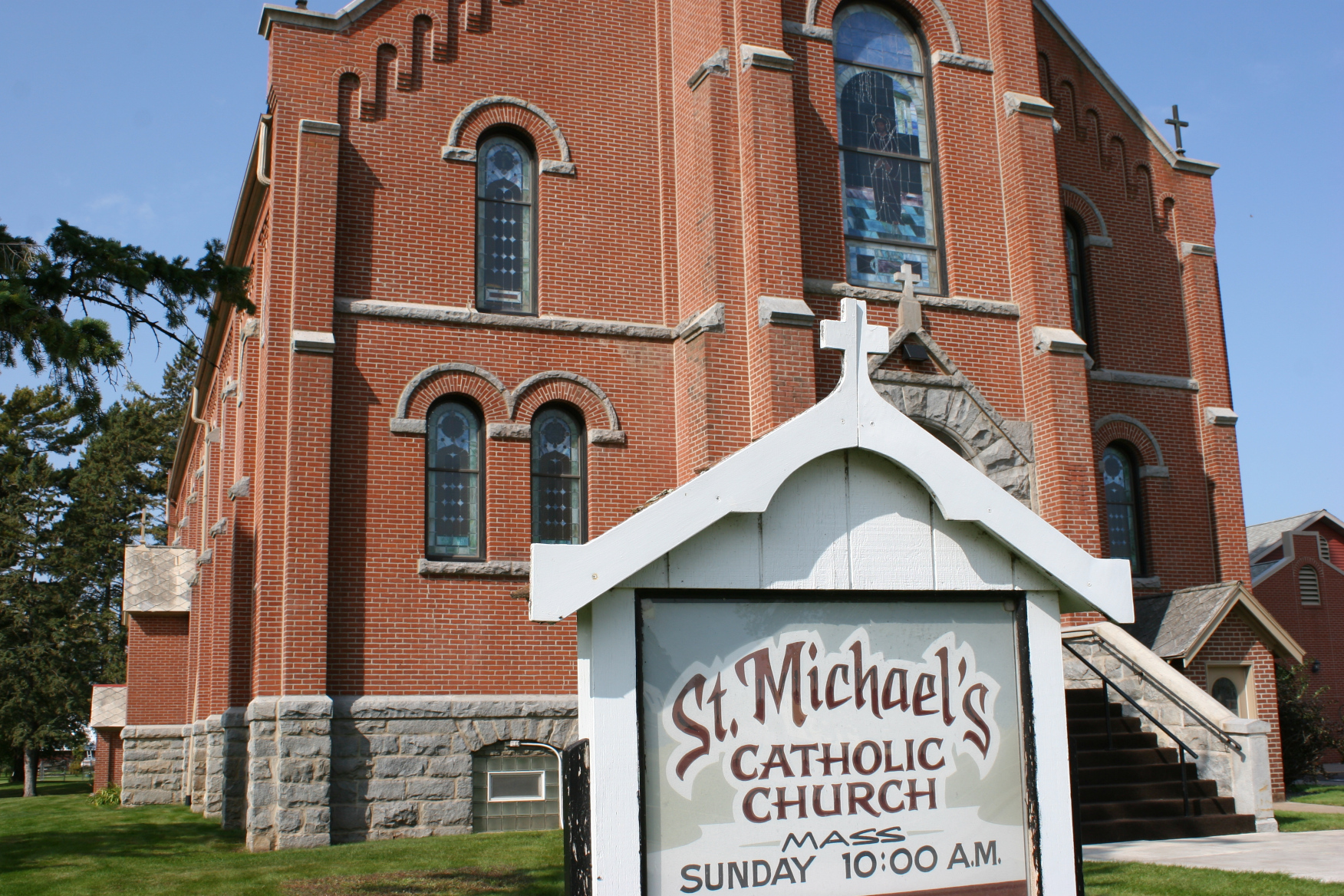
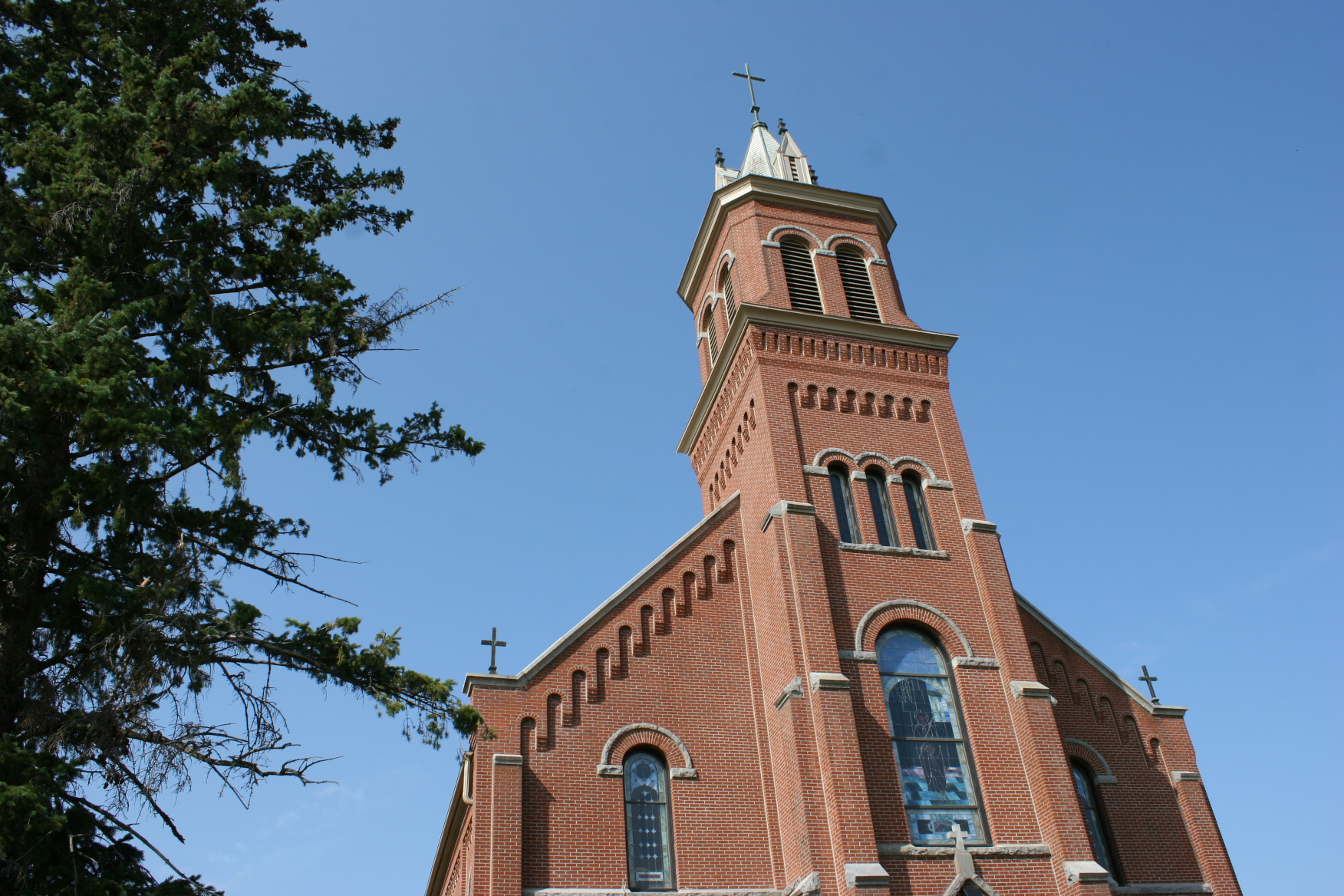
St. Michael’s Catholic Church in Buckman. Minnesota Prairie Roots file photo September 2020.
WHEN I STEP INSIDE A CHURCH like St. Michael’s Catholic Church in Buckman in central Minnesota, I feel overwhelmed by the sheer artistic beauty and craftsmanship. I wonder about those who built this massive church in 1903, dedicating it on September 29, St. Michael’s Day. How did they manage to build this 118 years ago without modern equipment? That amazes me.
Looking toward the front of St. Michael’s. Minnesota Prairie Roots file photo September 2020.
Beyond the actual structure, which surely took much muscle, many manpower hours and grit to complete, I wonder about the artists behind the artwork inside. Who crafted the stained glass windows? Who built the altars? Who shaped the statues and painted the angels and built the pews?
A stained glass depiction of Jesus carrying his cross. Minnesota Prairie Roots file photo September 2020.
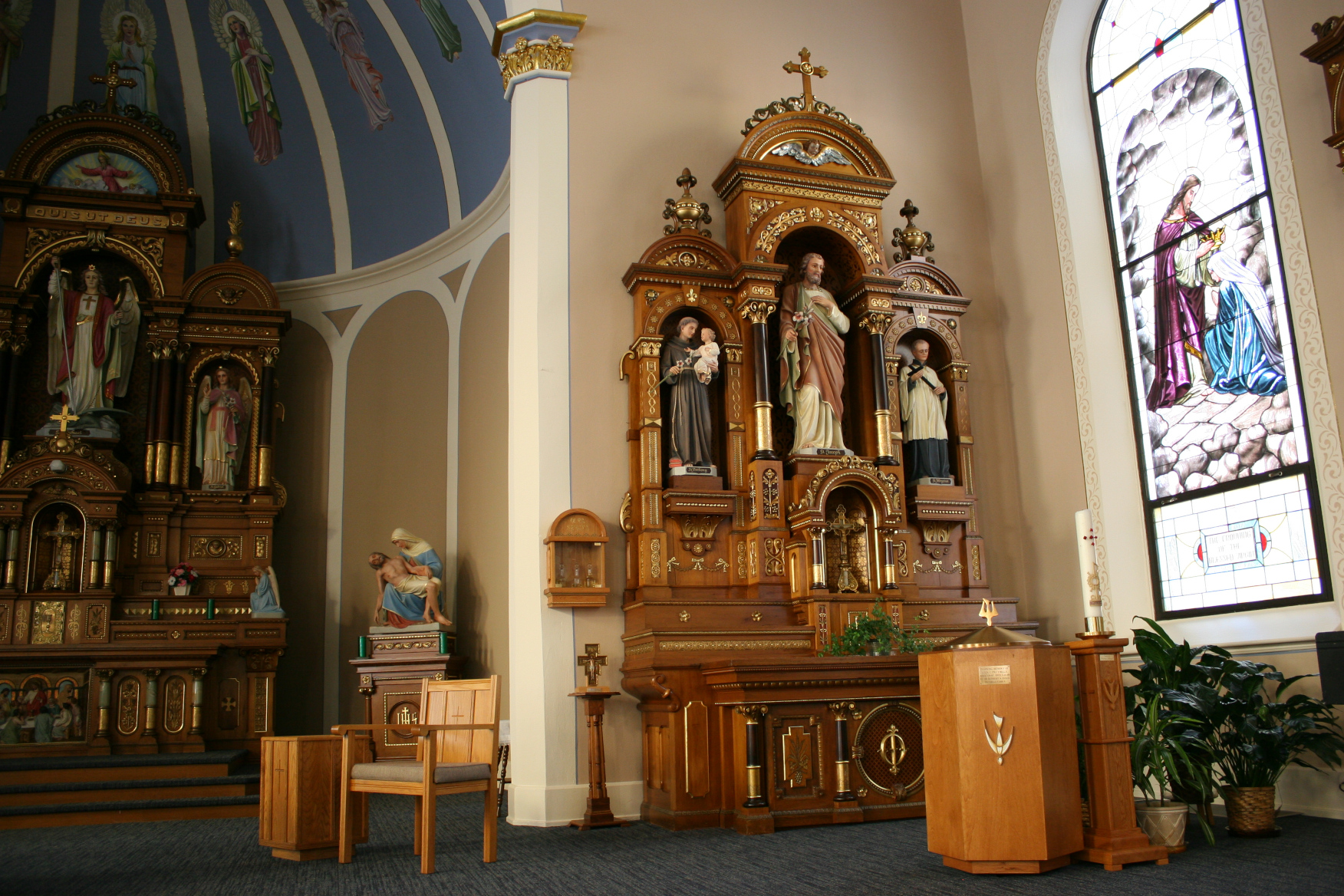
One of the side altars, right, at St. Michael’s. Minnesota Prairie Roots file photo September 2020.
The Nativity represented in stained glass, left. Minnesota Prairie Roots file photo September 2020.
I am grateful to those faith-focused artists and craftsman who created such beauty here in the middle of Minnesota. A place for farm families (mostly) to gather for Mass. To praise God. To confess their sins. To press their hearts in prayer. To mourn. To celebrate. To grow deeper in their faith.
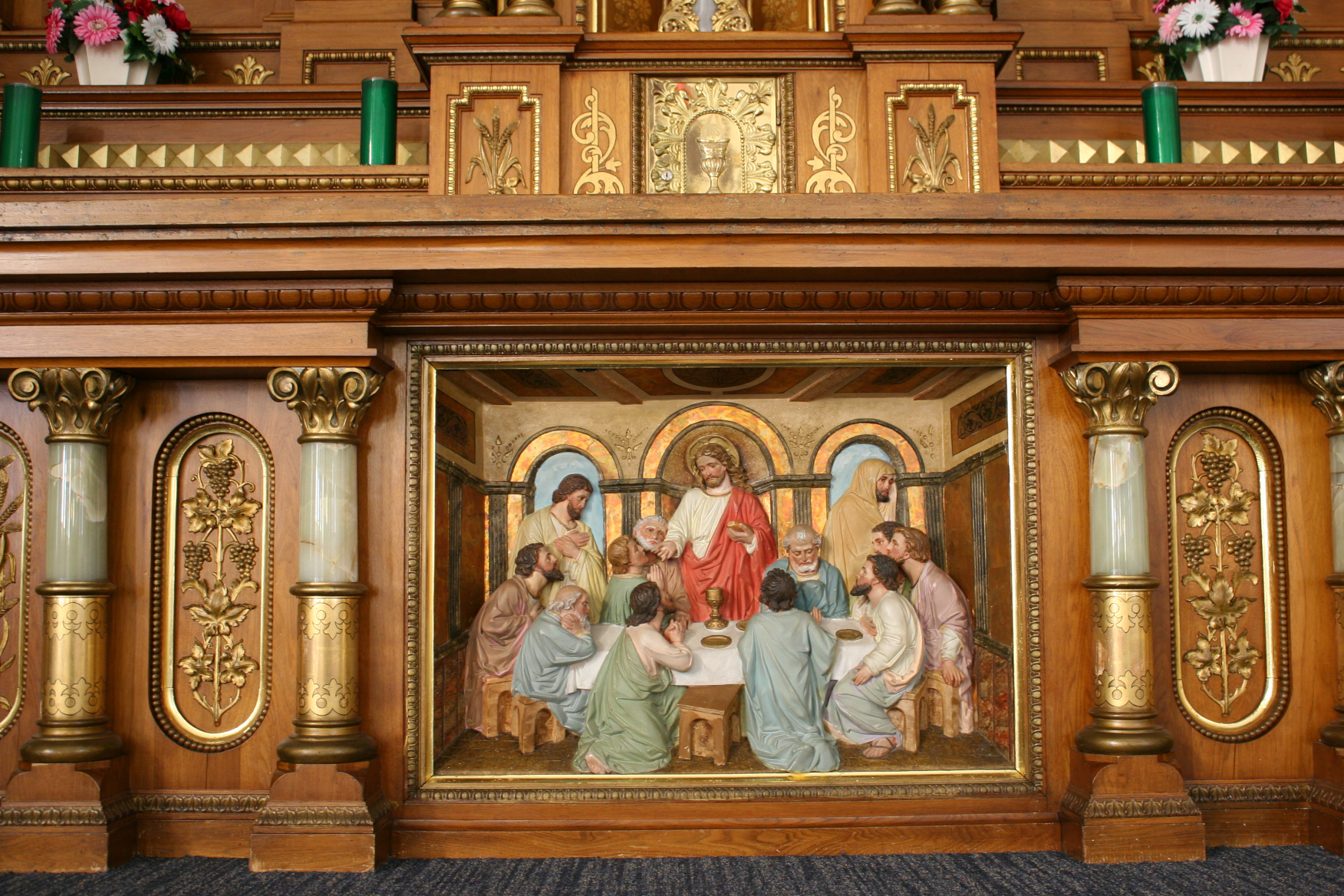
The Last Supper is depicted on the lower part of the main altar. Simply stunning. Minnesota Prairie Roots file photo September 2020.
The Helbling family made St. Michael’s their church home upon relocating to Minnesota from North Dakota in 1963. My husband, Randy, and his siblings attended elementary school across the street. That school, next to the cemetery, is long gone. My mother-in-law and a brother-in-law are buried here, across Minnesota Highway 25 from the church. So, by marriage, St. Michael’s is now part of my history.
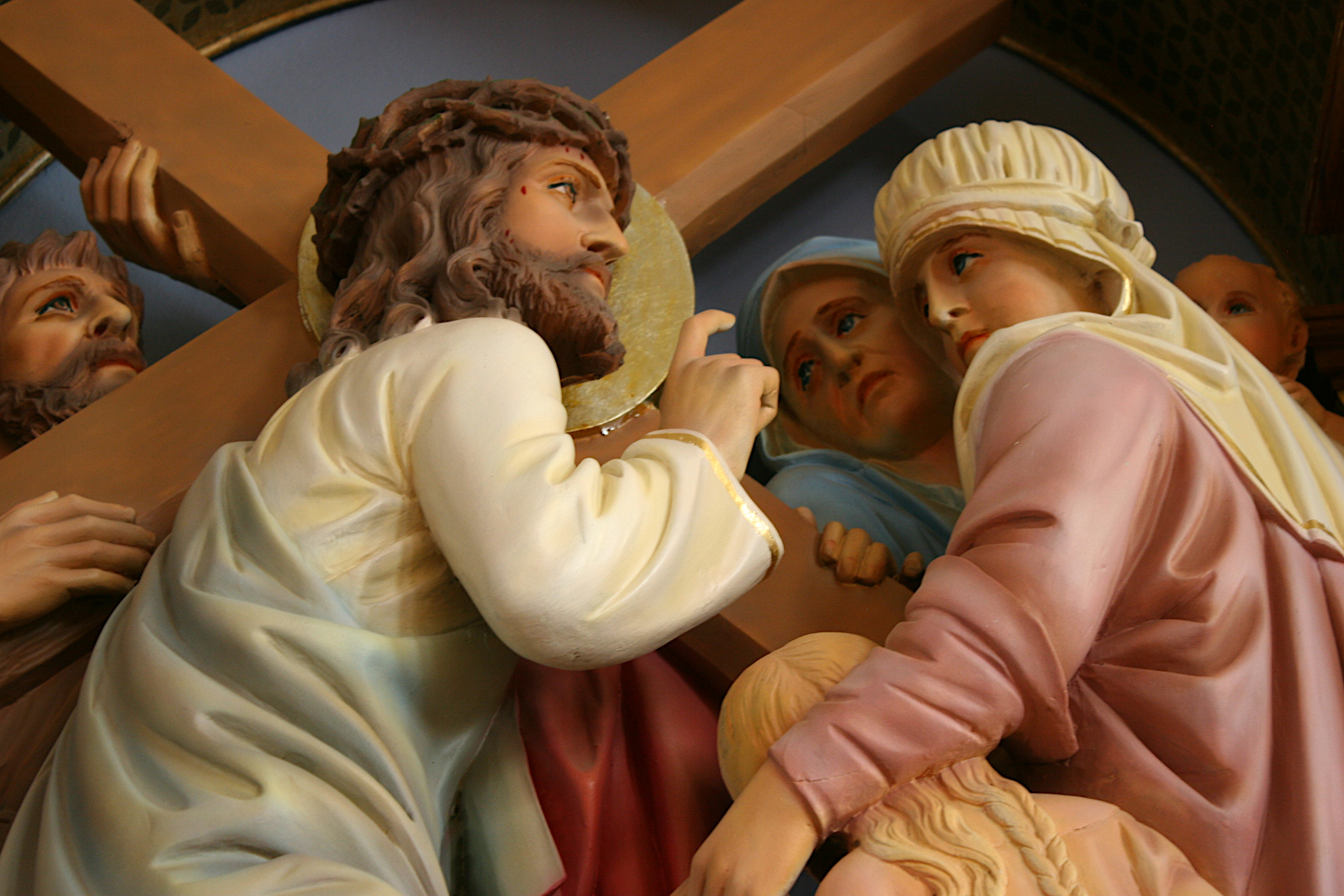
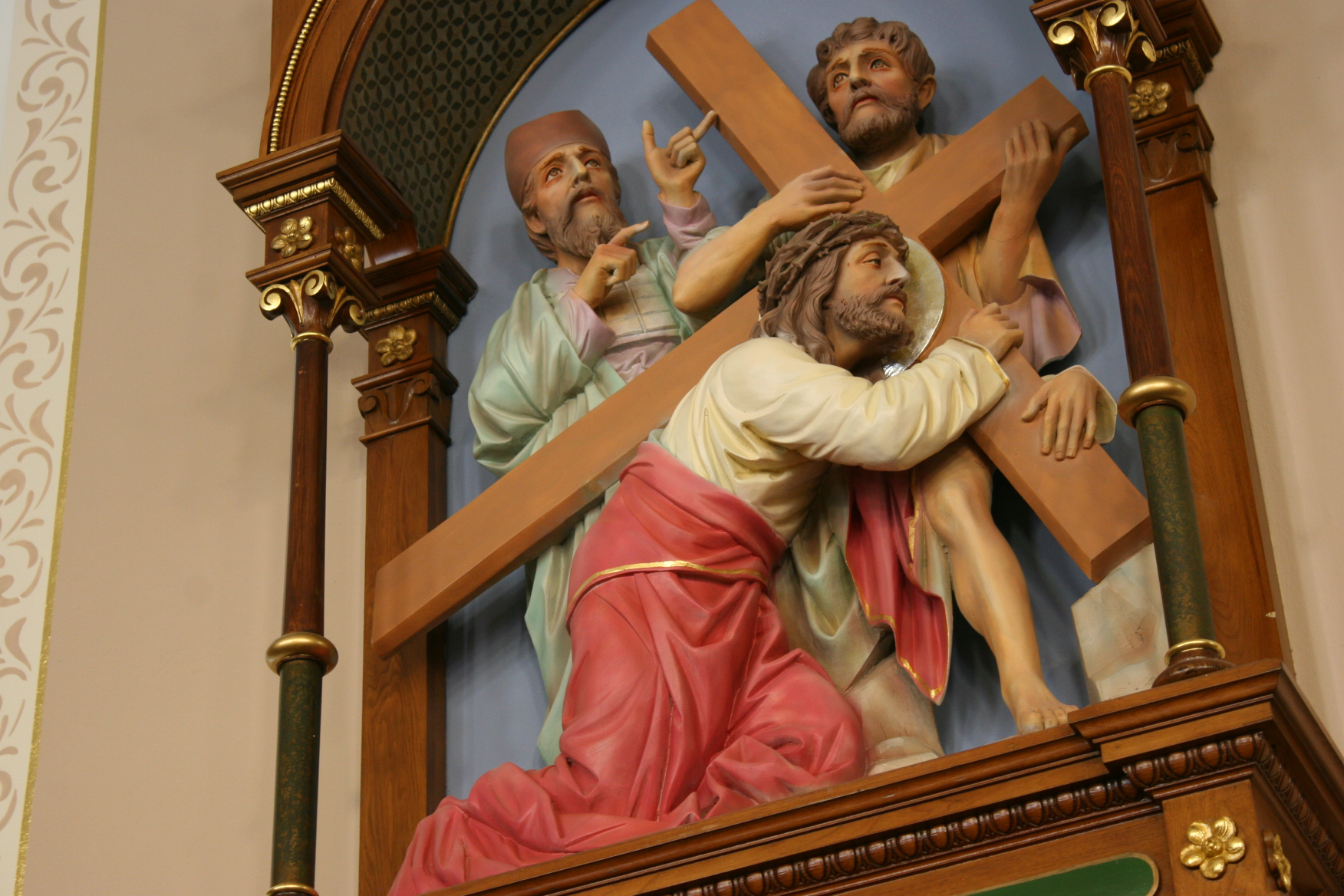
Just look at the emotions sculpted into this art. I see peace, pain, determination… Minnesota Prairie Roots file photo September 2020.
Certainly, I don’t hold the deep emotional connection that comes from years of worshiping within the walls of this rural Minnesota church. But I still hold a deep appreciation for this place which was such a valued part of my in-laws’ lives.
Stained glass windows and sculptures adorn the side walls of St. Michael’s. Minnesota Prairie Roots file photo September 2020.
As a woman of faith—I grew up Lutheran—I value aged churches and art. Religious art is often symbolic, reinforcing Bible truths and stories. It can uplift, comfort, provide peace, bring joy, remind us of our weaknesses and the source of strength and hope. It can center and ground us when we most need to feel centered and grounded.
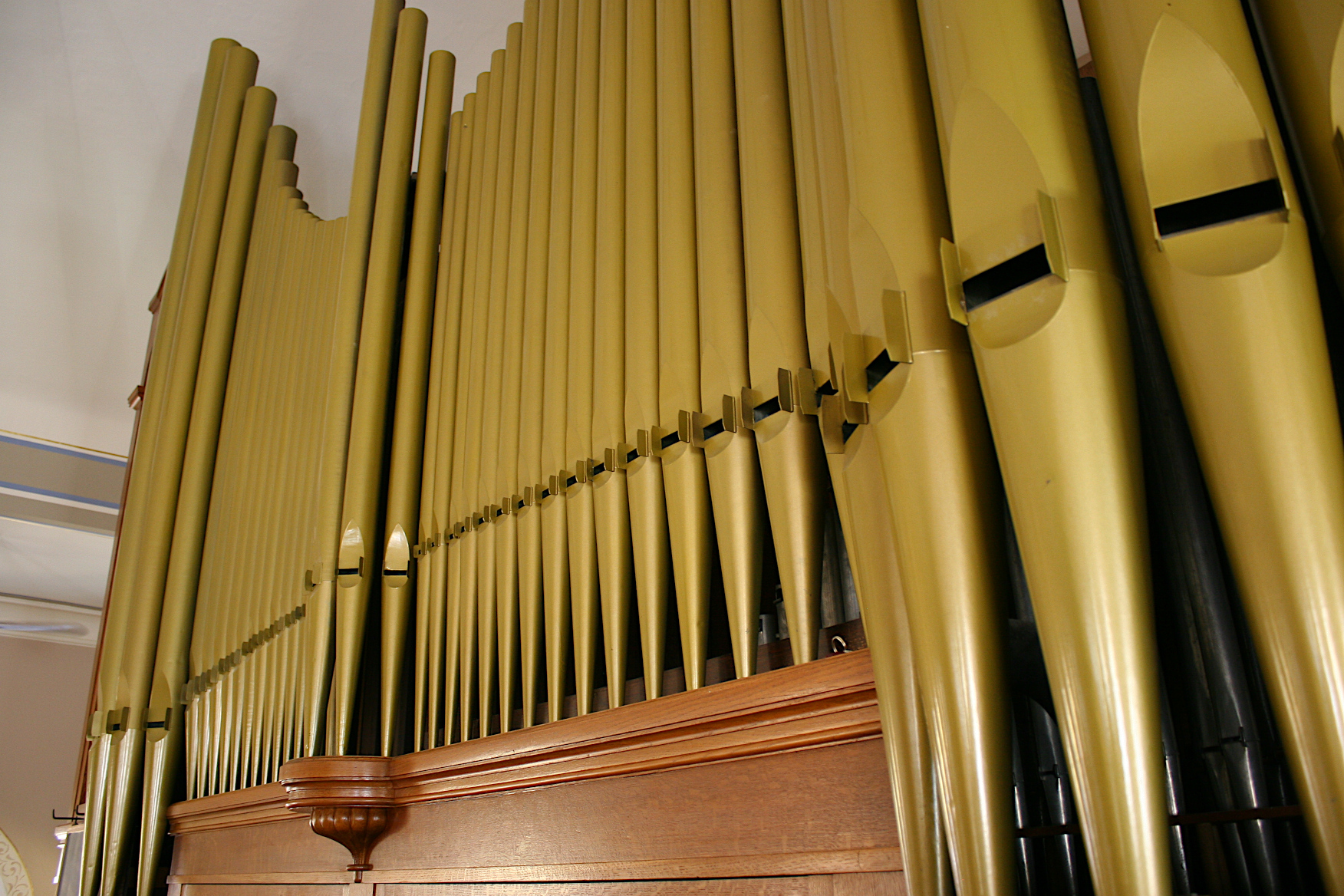
Massive pipes on the pipe organ in the St. Michael’s balcony. Minnesota Prairie Roots file photo September 2020.
Many times, church art has reinforced my faith, helped me to feel the presence and closeness of God whether in a stained glass window, the words of a familiar hymn or the comfort of a worn wooden pew.
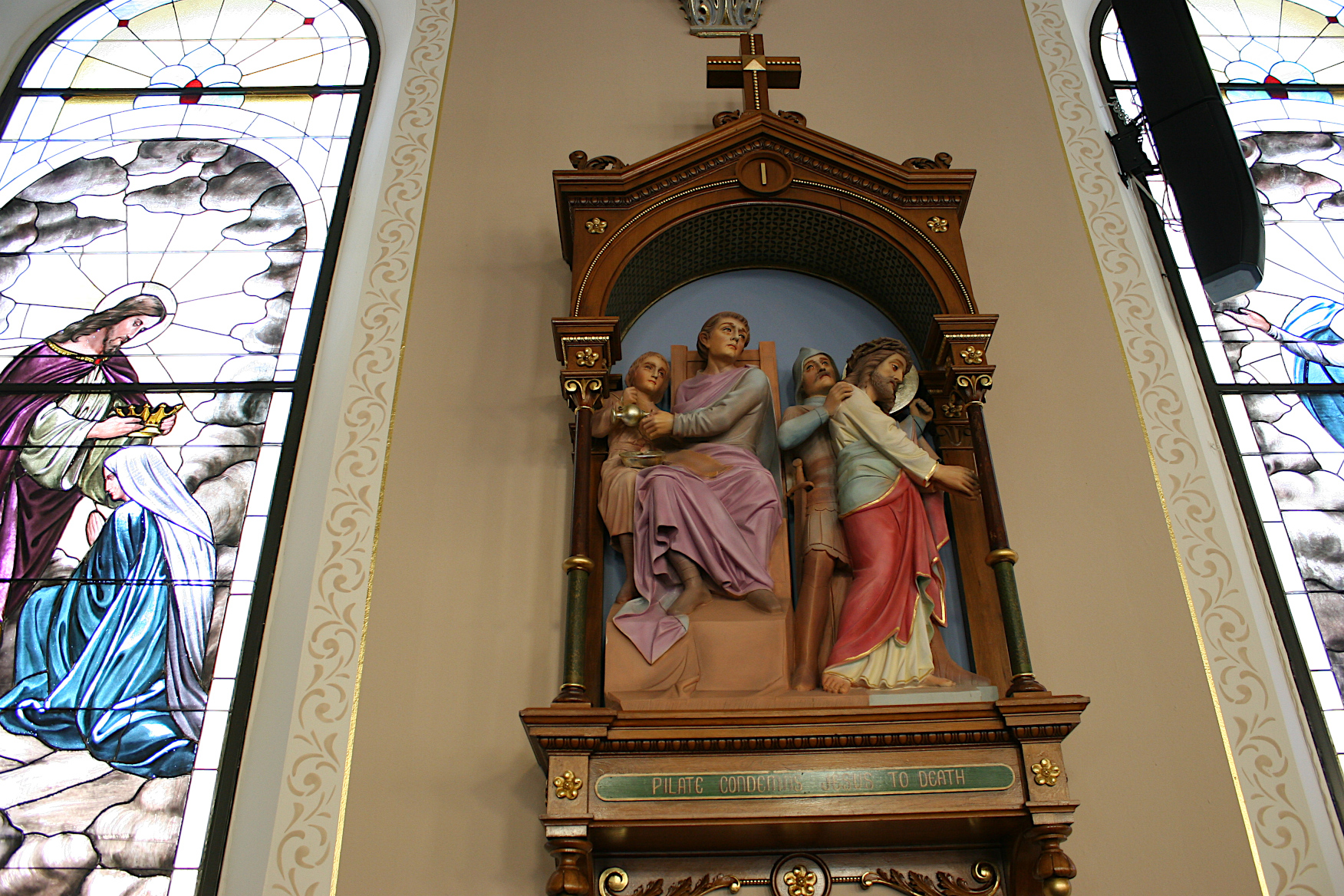
“Pilate condemns Jesus to death” sculpture between two stained glass windows. Minnesota Prairie Roots file photo September 2020.
Inside St. Michael’s, generations of families have gathered. I am grateful for those early settlers who labored to create this sanctuary in the small town of Buckman, Minnesota.
Please check back as I take you inside St. Michael’s for the final post in this three-part series.
IMAGINE, AS A YOUNG BOY, moving nearly 400 miles across the plains of North Dakota east to Minnesota with your family to start a new life. You’ve left behind your grandparents and other extended family, and the comforting familiarity of farm home, church and school. For my husband, that was reality.
St. Michael’s Catholic Church in Buckman. Minnesota Prairie Roots file photo September 2020.
As the Tom and Betty Helbling family settled onto a farm southeast of Buckman in central Minnesota in the early 1960s, Randy found himself adjusting from a one-room country schoolhouse with one teacher to a parochial school with multiple classrooms and teachers. He no longer faced cancellation of recess due to coyotes circling the playground at Chimney Butte School near St. Anthony. Rather, he faced nuns slapping his hands with a ruler or drilling thumbs into his skull, adding to his angst as the new boy in school. And then there was the matter of the frightening statue across the street inside the massive St. Michael’s Catholic Church.
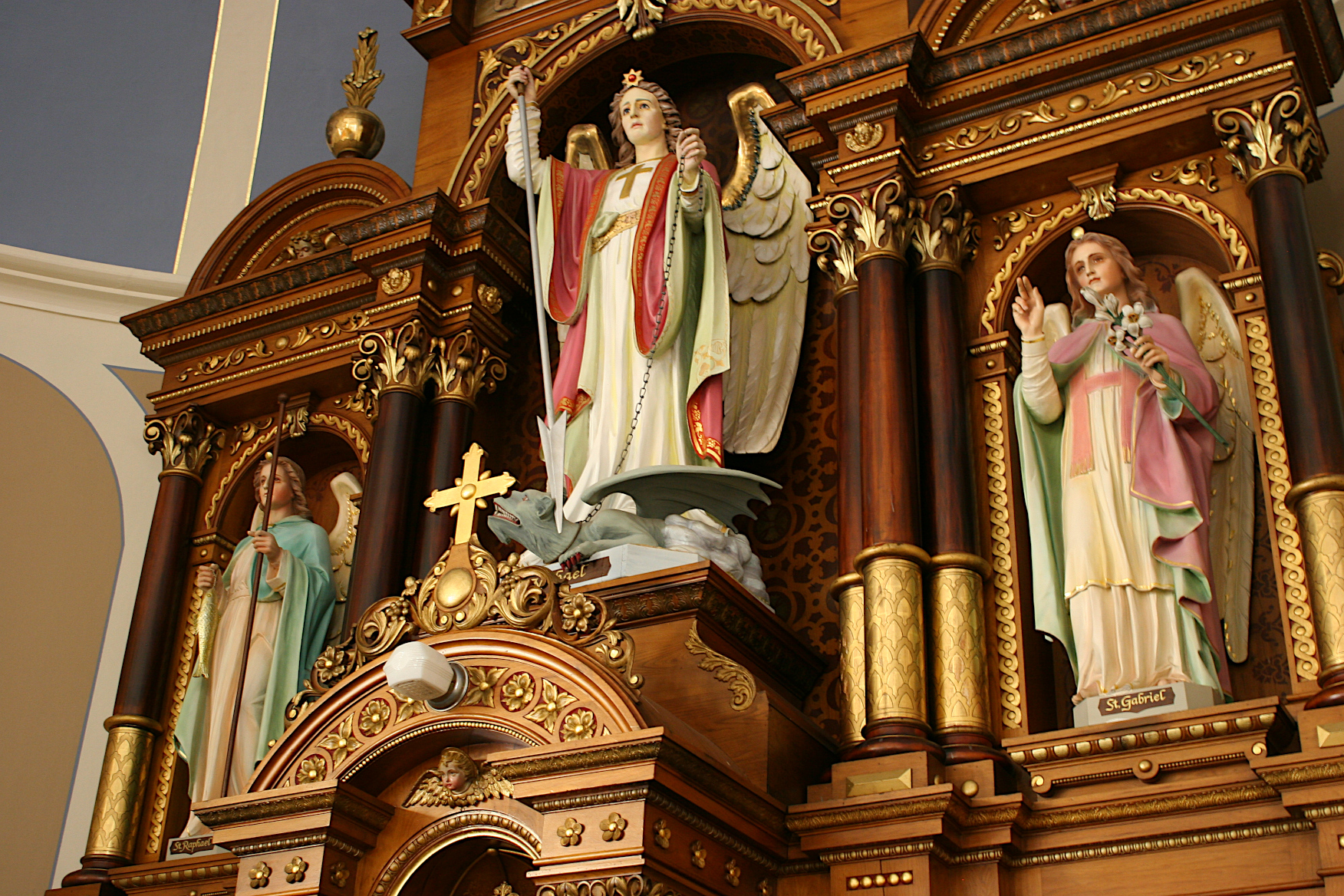
In the center, St. Michael overpowering Satan. Minnesota Prairie Roots file photo September 2020.
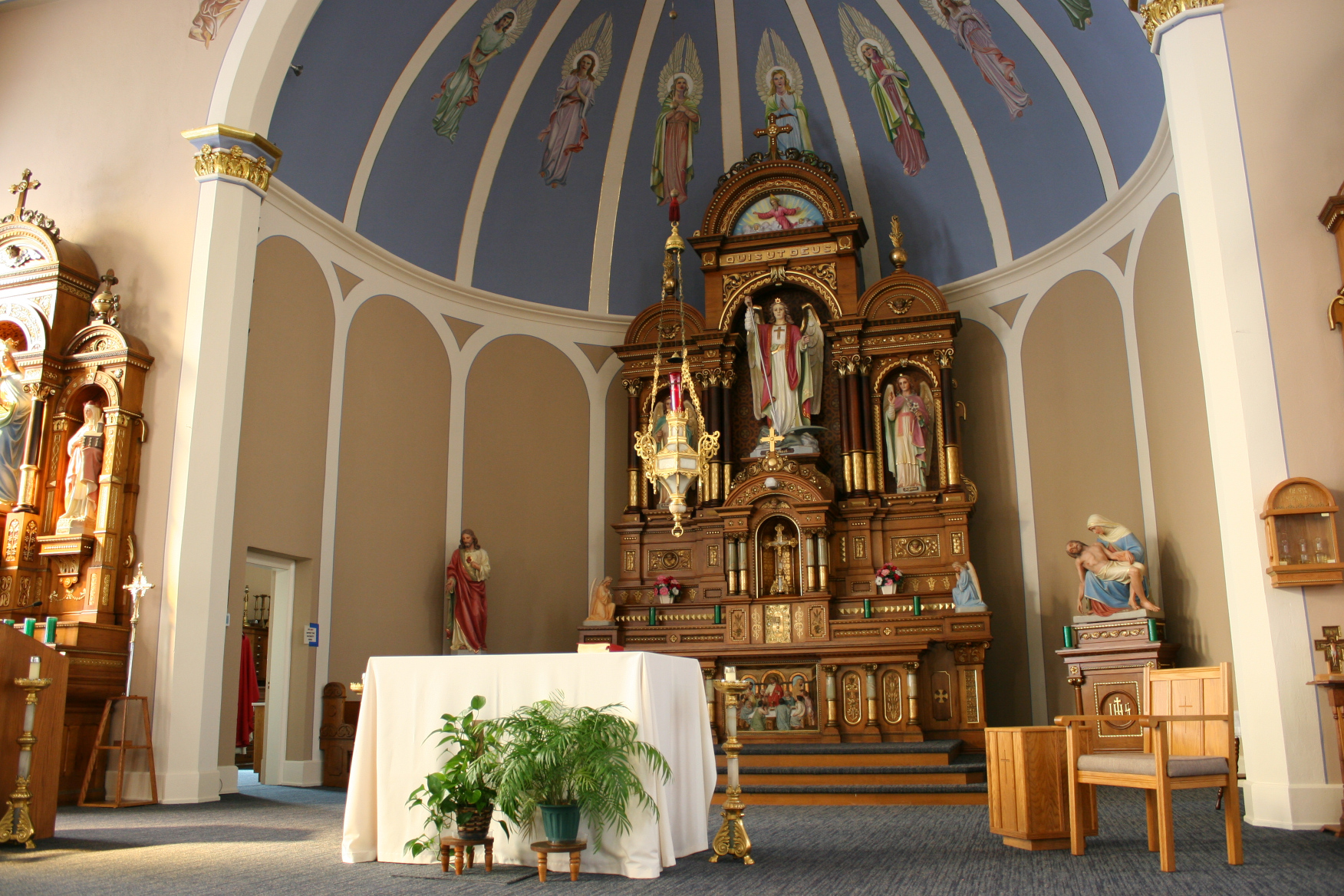
Some six months ago, I heard for the first time about Randy’s boyhood fear of the statue which centers the main altar at St. Michael’s, where he attended weekday and Sunday Mass. The statue features a triumphant St. Michael overpowering Satan with a spear. A horrid, crouching other-worldly creature with an open mouth of sharp teeth and equally sharp claws represents Satan. Enough to scare any child looking over adult heads to that altar art. Not even the chain and weapon would be enough to inspire confidence in the Evil One’s captivity.
St. Michael’s stretches long and high. Minnesota Prairie Roots file photo September 2020.
All of that aside, St. Michael’s is a truly beautiful church. Massive in size and vast in art. I’ve come to know it only through marriage as I grew up 145 miles to the south of Buckman and in the Lutheran faith.
“The Nativity” stained glass, one of many similar windows inside St. Michael’s. Minnesota Prairie Roots file photo September 2020.
A stunningly beautiful cross, one of many. Minnesota Prairie Roots file photo September 2020.
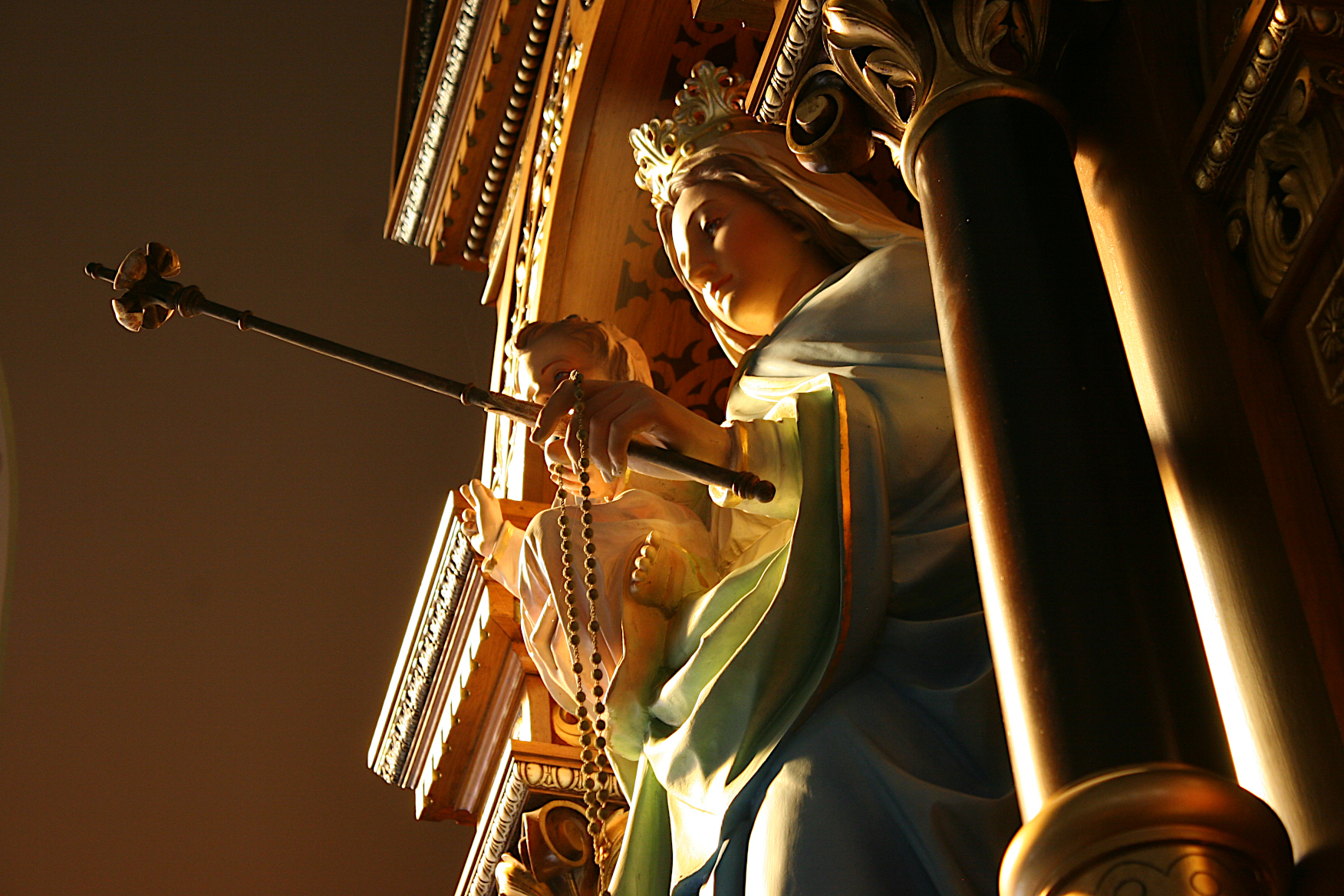
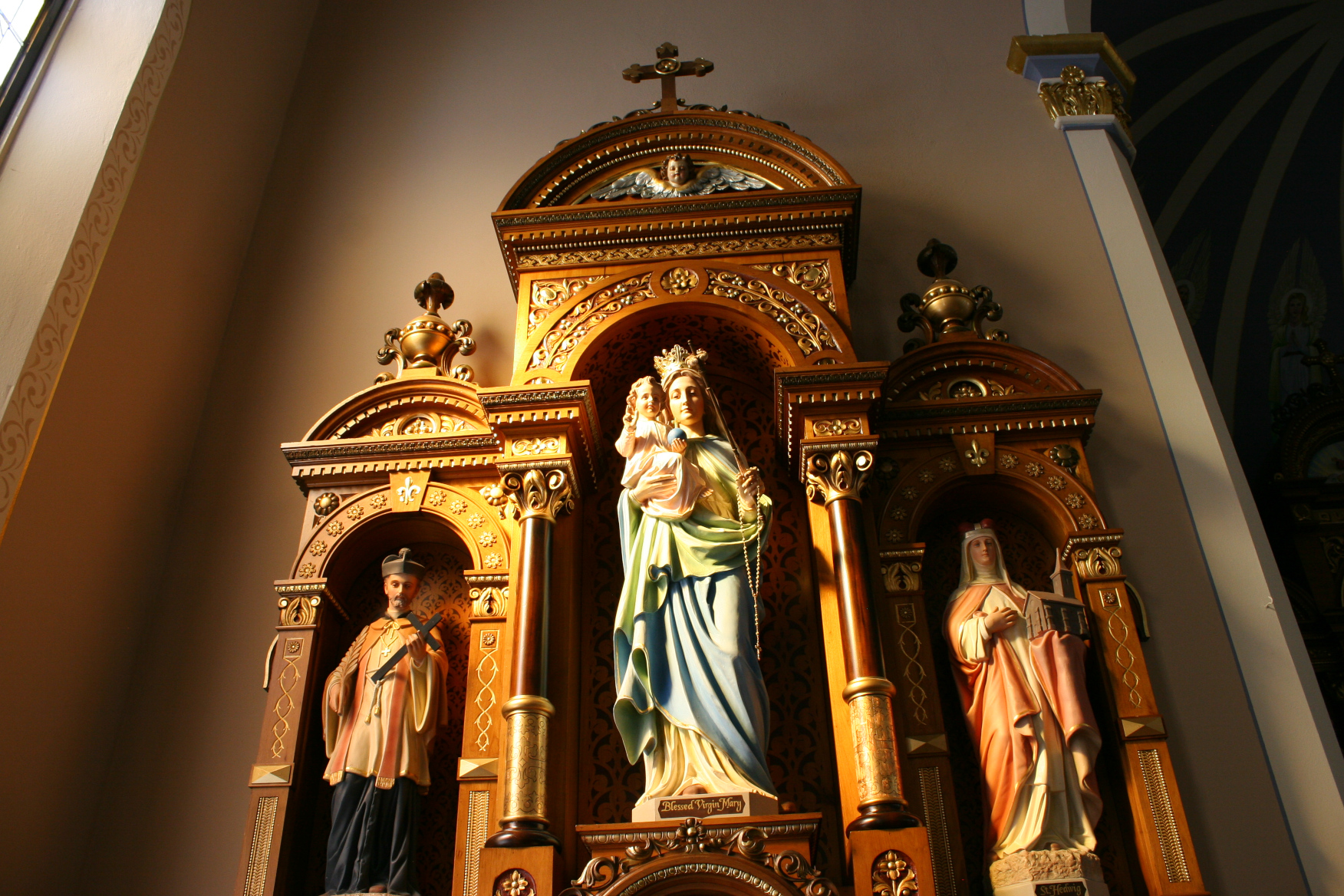
Statues on a side altar. Minnesota Prairie Roots file photo September 2020.
I don’t pretend to understand the meaning of all the art which graces this space. But one thing I do understand is that this house of worship excels in craftsmanship and artistry. Each piece of art holds meaning, significance, purpose. From the stained glass windows to the sculptures to the ornate altars.
Looking toward the back of the church and to the balcony. Minnesota Prairie Roots file photo September 2020.
Years have passed since I stepped inside St. Michael’s. So when Randy and I visited his mother’s and brother’s gravesites at the church cemetery last September, we decided to also check out the recently-restored church. I expected locked doors, so often the case now in rural and small town churches. But the doors to an addition were open and we had the place to ourselves. Note that plenty of security cameras film visitors.
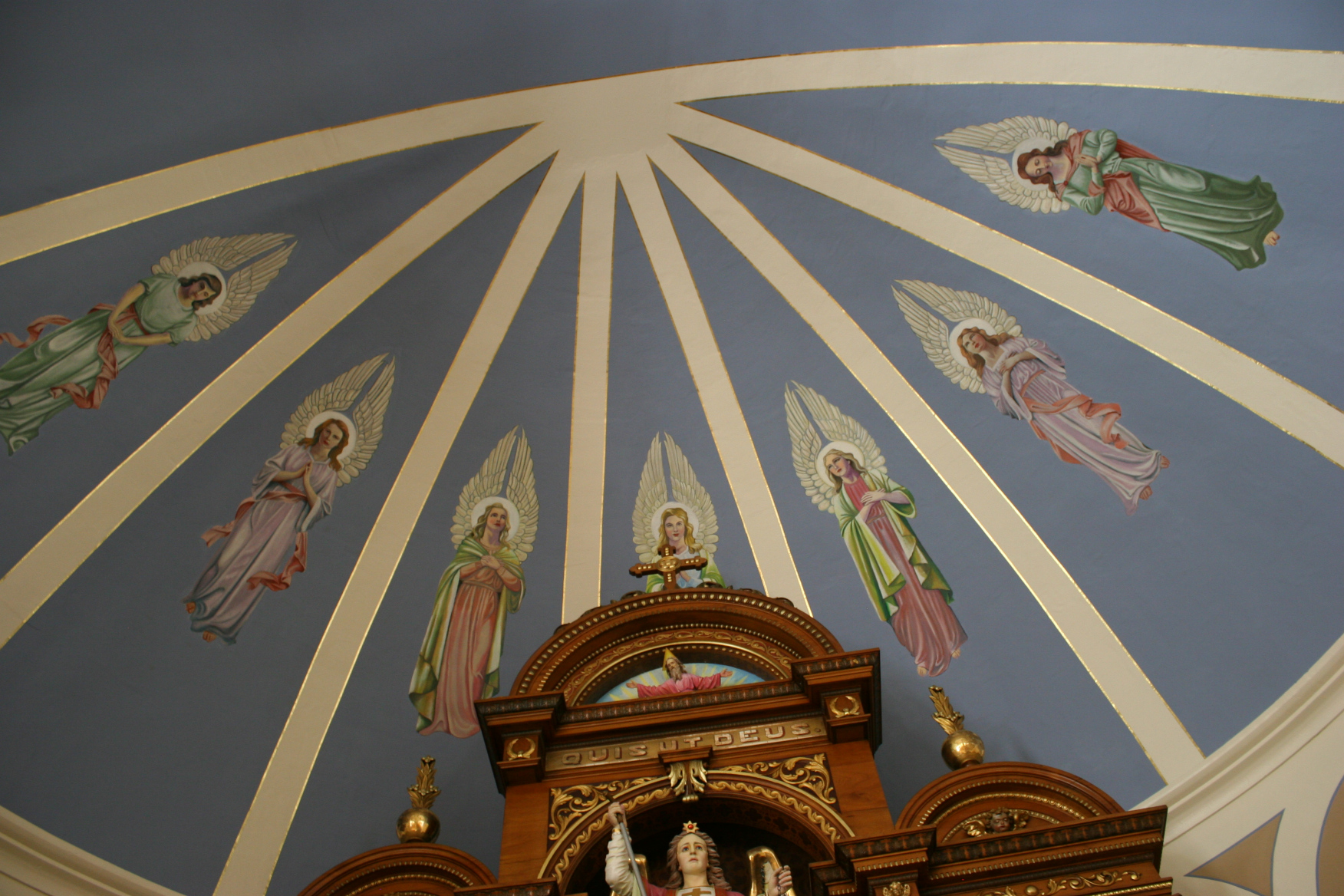
My favorite art in St. Michael’s are these angels painted on the ceiling above the altar. Minnesota Prairie Roots file photo September 2020.
My reaction was one of awe as I stood inside the sanctuary with its soaring ceiling, art seemingly everywhere. It’s a photographer’s paradise. An art lover’s dream. A place of peace for the faithful.
A side altar up close. Minnesota Prairie Roots file photo September 2020.
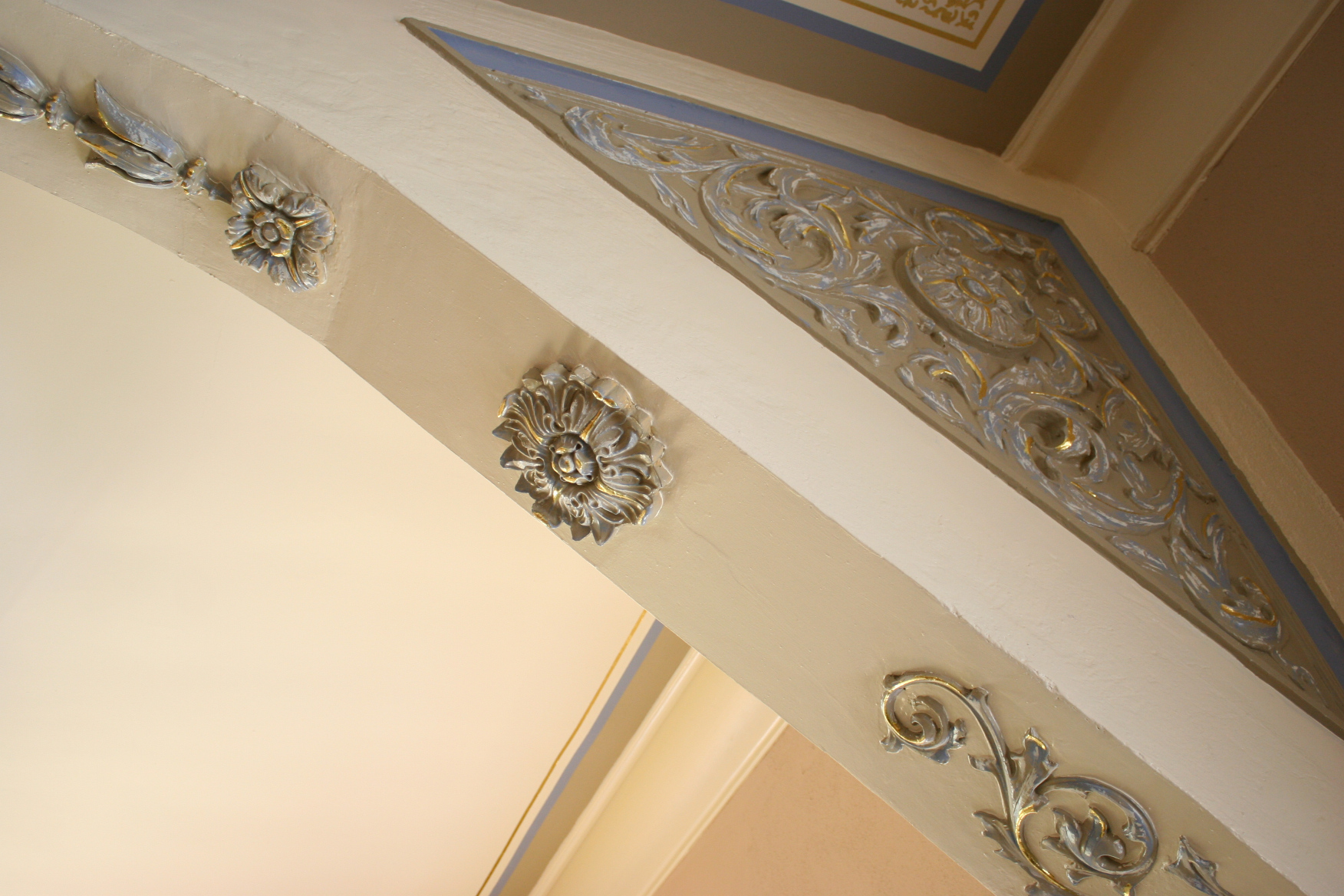
Ornate ceiling details. Minnesota Prairie Roots file photo September 2020.
One of many detailed sculptures. Minnesota Prairie Roots file photo September 2020.
I felt overwhelmed as I moved from one area of the church to the next—attempting to take in all I saw. The whole picture. The details. Oh, the details.
The center altar, with that frightening statue. Minnesota Prairie Roots file photo September 2020.
I stood for a moment, placing myself in Randy’s shoes as that young boy from North Dakota seeing this all for the first time. I locked eyes on the statue of St. Michael towering over Satan, the terrible, horrible creature with the sharp teeth and claws. And I understood Randy’s fear manifested there all those decades ago.
Please check back as I bring you more photos from inside St. Michael’s Catholic Church, Buckman, Minnesota.
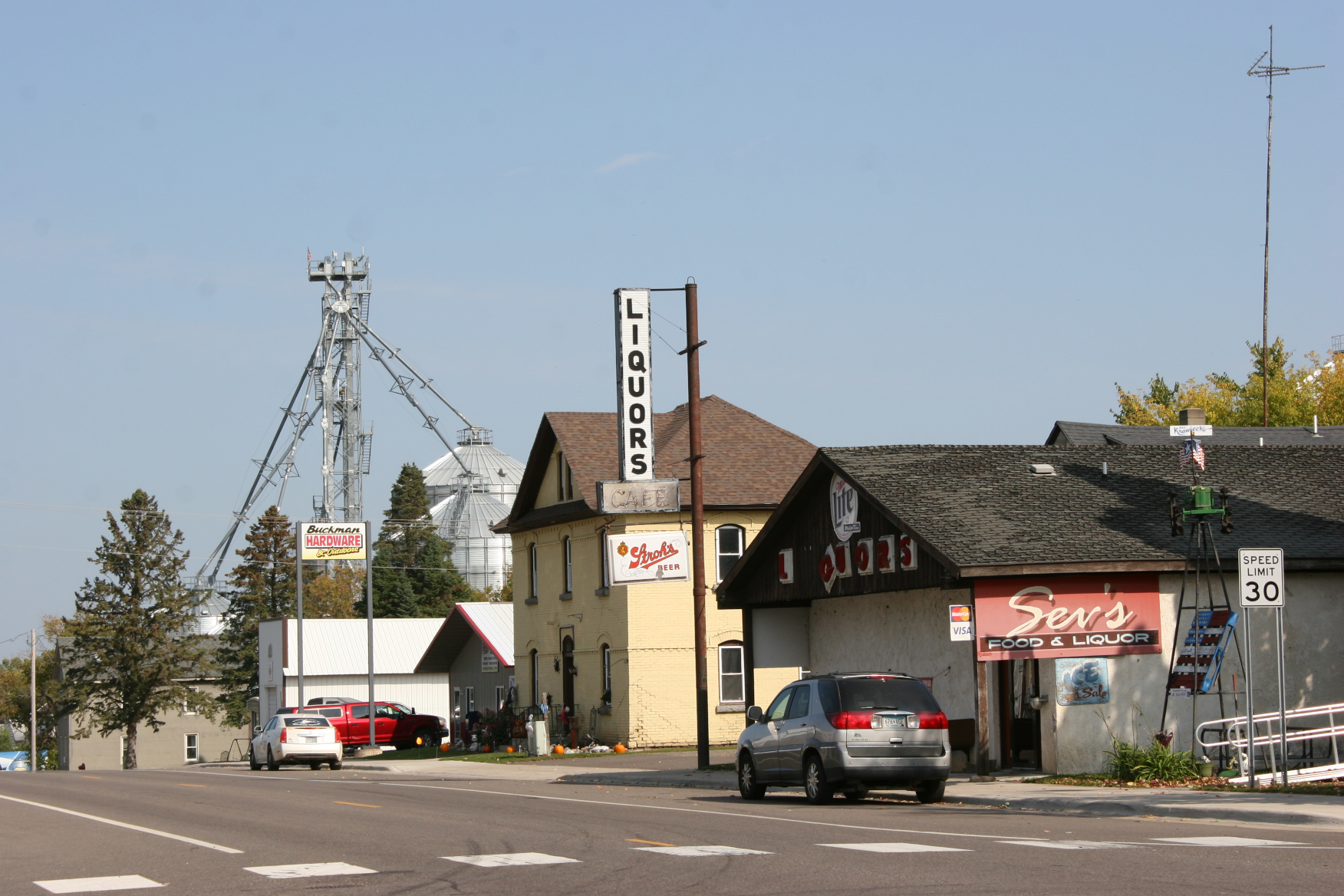
The heart of small town Buckman, Minnesota. Minnesota Prairie Roots file photo September 2020.
HOW DO YOU DEFINE a small town?
For some, it’s a community to pass by or through en route to wherever.
For others, it’s an occasional destination to visit extended family.
But for some of us, it’s the place of our roots.
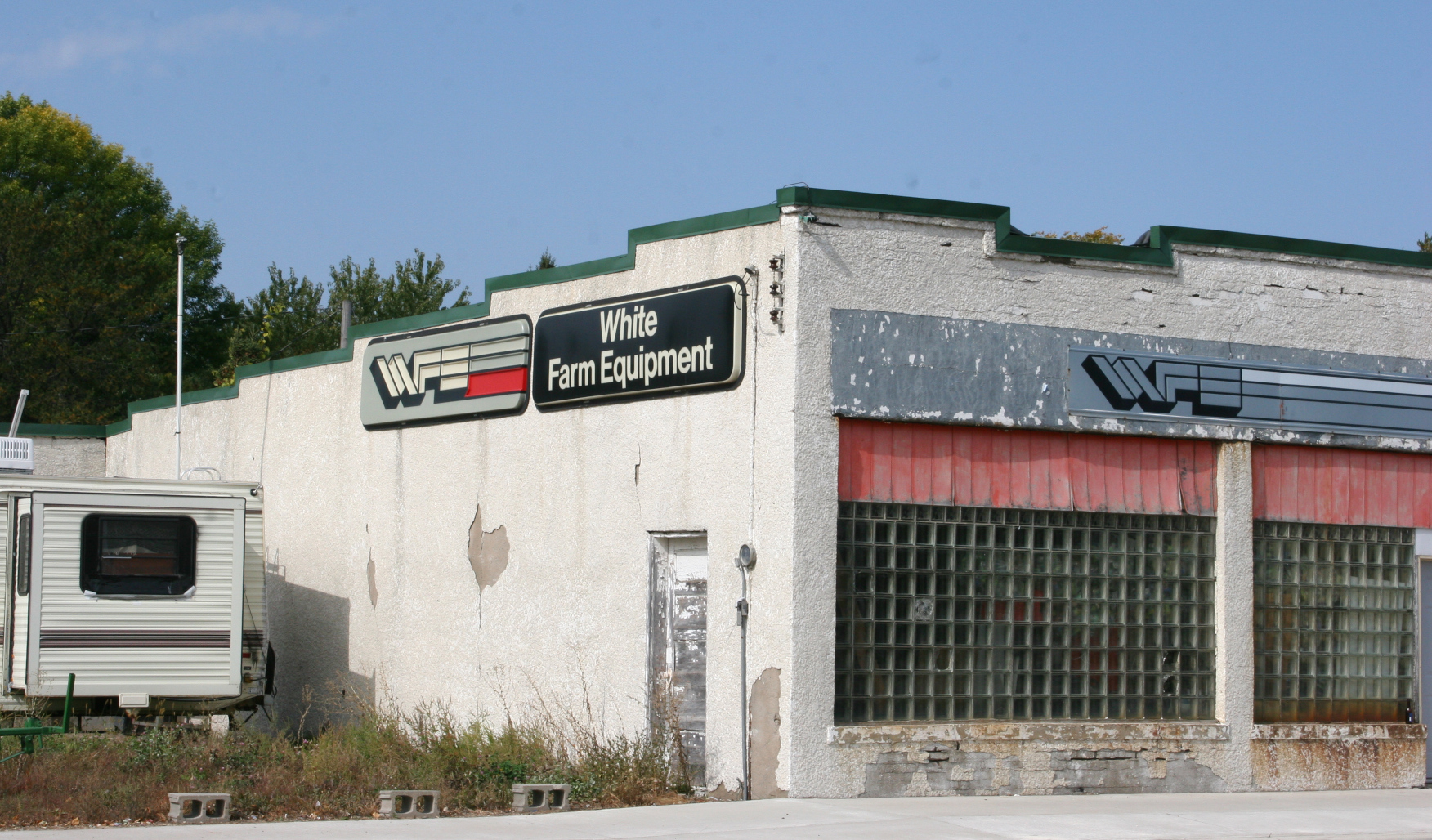
The vacated farm implement dealership in Buckman. Minnesota Prairie Roots file photo September 2020.
Randy and I both grew up on dairy and crop farms near small towns—him near Buckman in central Minnesota and me just outside Vesta in southwestern Minnesota. Those communities, once thriving with elementary schools and many businesses, are no longer hubs of local commerce or education. Much has changed since we each left our respective rural towns in 1974.
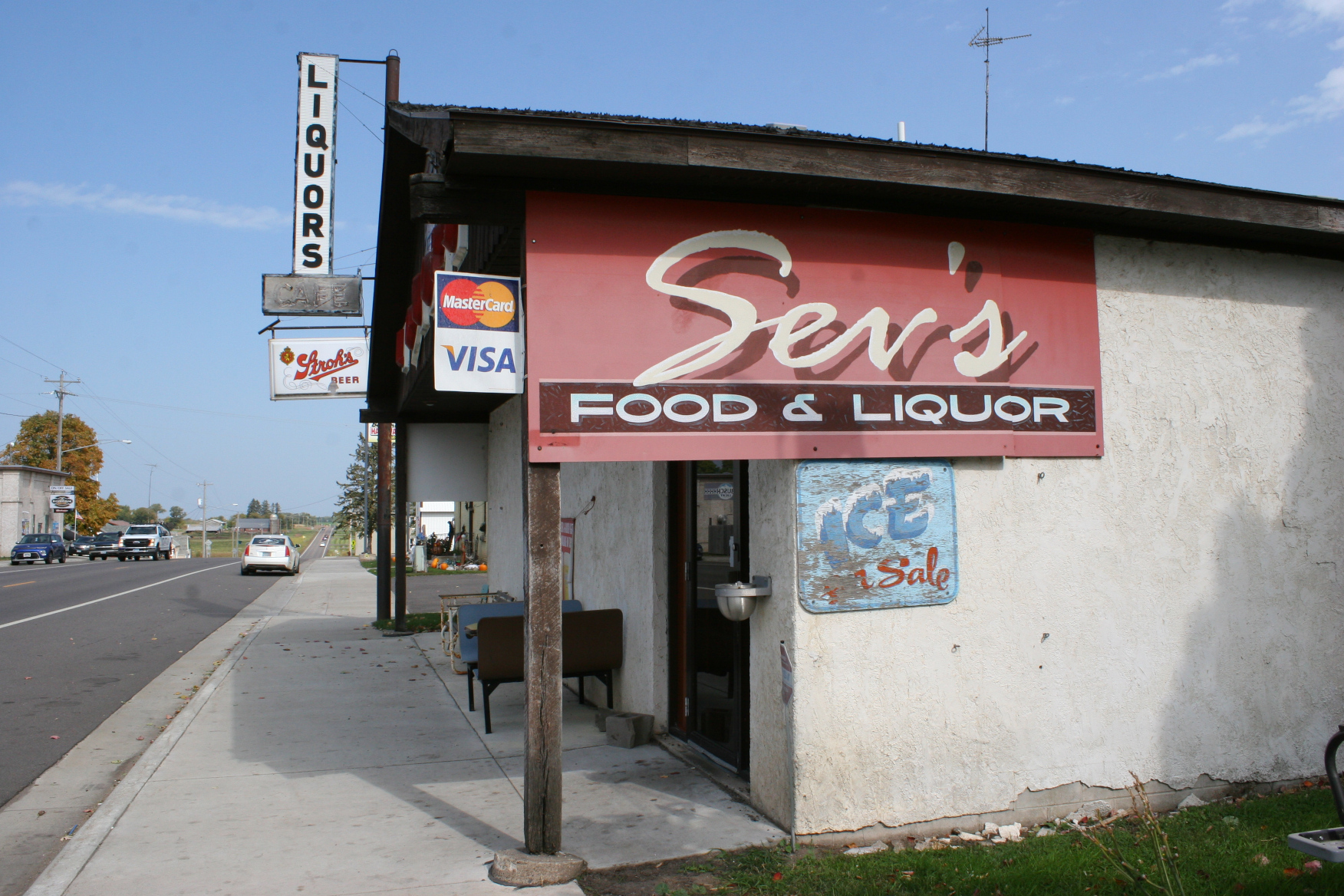
Sev’s Food & Liquor sits along Minnesota Highway 5 in Buckman. Minnesota Prairie Roots file photo September 2020.
Yet, the core of our hometowns, with populations under 300 and 145 miles apart, remains unchanged. Community spirit and neighborliness and a certain connection to place remain particularly strong. Often, generations of families live within miles of each other. Churches center these towns, too, as do bars, both community gathering spots.
It’s not often now that either of us returns to our hometowns. The farms we grew up on are no longer in the family, a loss I feel deeply. I return only for funerals and the annual family reunion. Only occasionally do we divert to Buckman so we can visit the gravesites of Randy’s mom and brother, Brian.
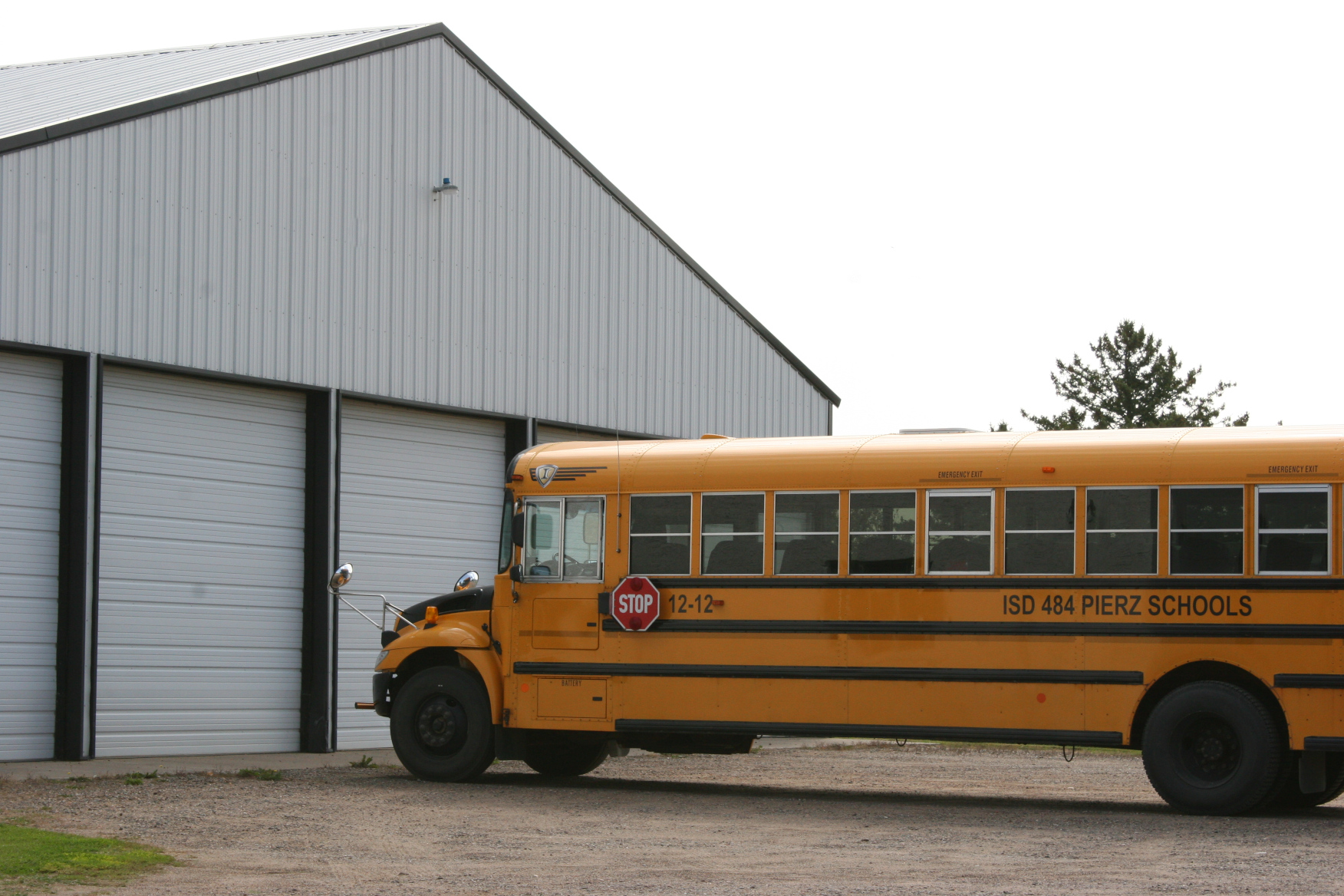
Randy attended elementary school at St. Michael’s (now gone) in Buckman and the rest of his schooling in Pierz. This bus was parked outside a garage in Buckman. Minnesota Prairie Roots file photo September 2020.
We did just that this past fall after spending time at a family member’s guest lake cabin in the Brainerd Lakes area. Buckman lies some 40 miles to the south of Brainerd. We drove through Pierz, where Randy attended junior and senior high schools, on our way to his hometown.
Minnesota Highway 25 runs through the middle of Buckman, here looking north in the heart of downtown. Minnesota Prairie Roots file photo September 2020.
Some seven miles later, we pulled off Minnesota State Highway 25, which slices through Buckman, and turned into St. Michael’s Cemetery. I always feel such a sense of sadness upon visiting my mother-in-law’s gravesite. She died way too young at age 59, just months before her grandson, our son, was born.
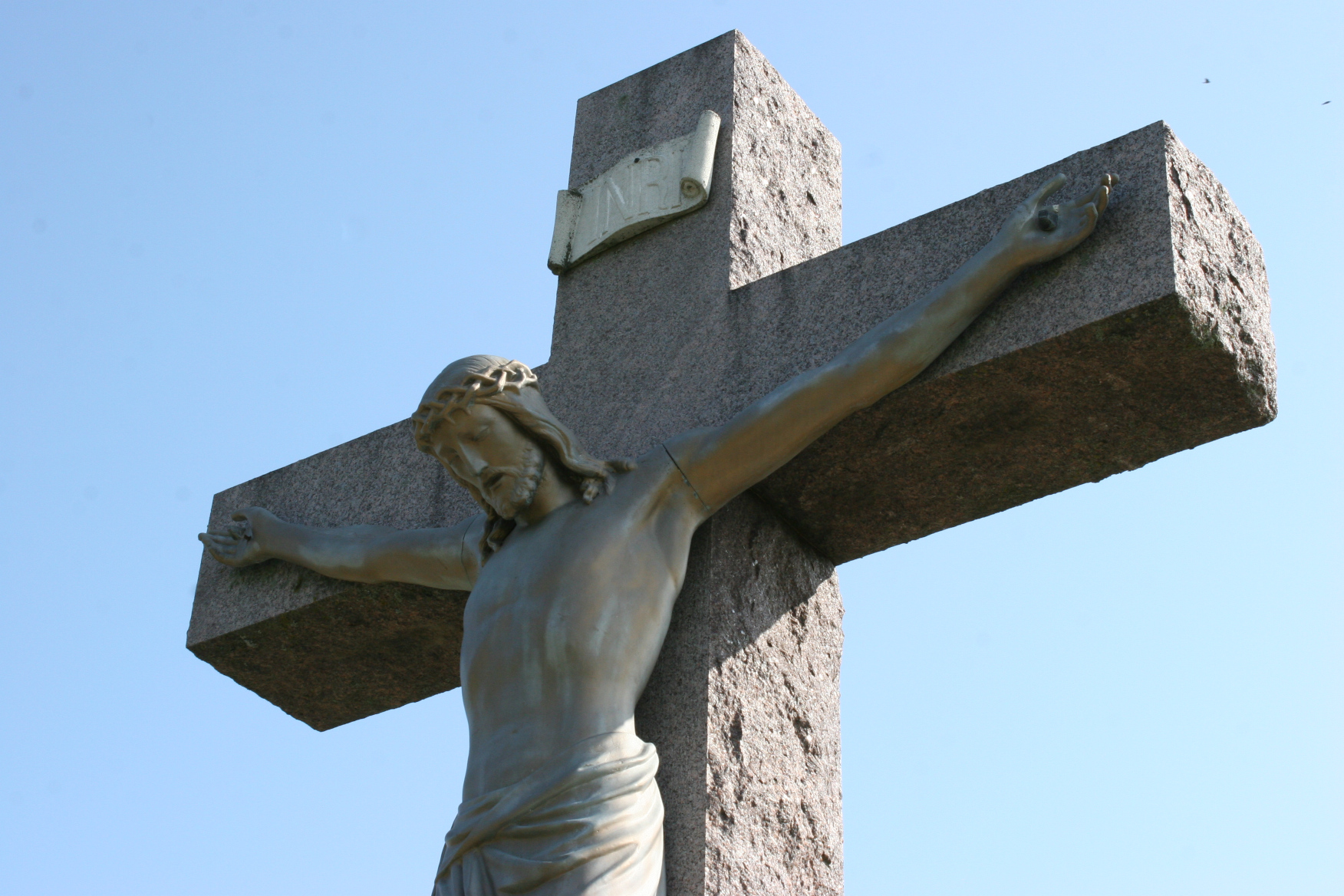
A massive stone cross monument marks St. Michael’s Cemetery in Buckman. Minnesota Prairie Roots file photo September 2020.
Tragedies, like those of the Dehler family, are written upon tombstones in this cemetery landmarked by a towering stone cross.
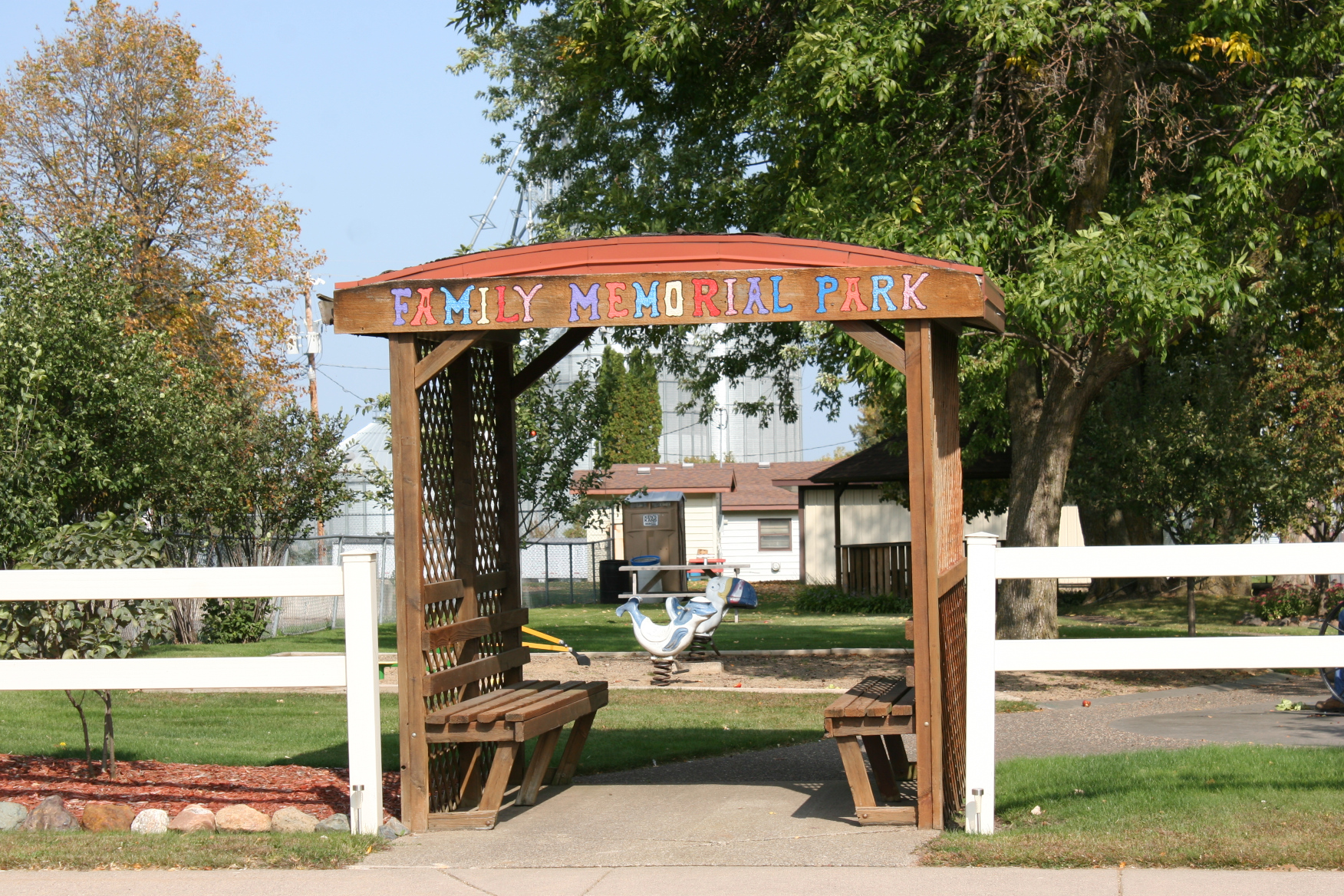
The entry to Family Memorial Park, across the street from the bus garage and cemetery, Minnesota Prairie Roots file photo September 2020.
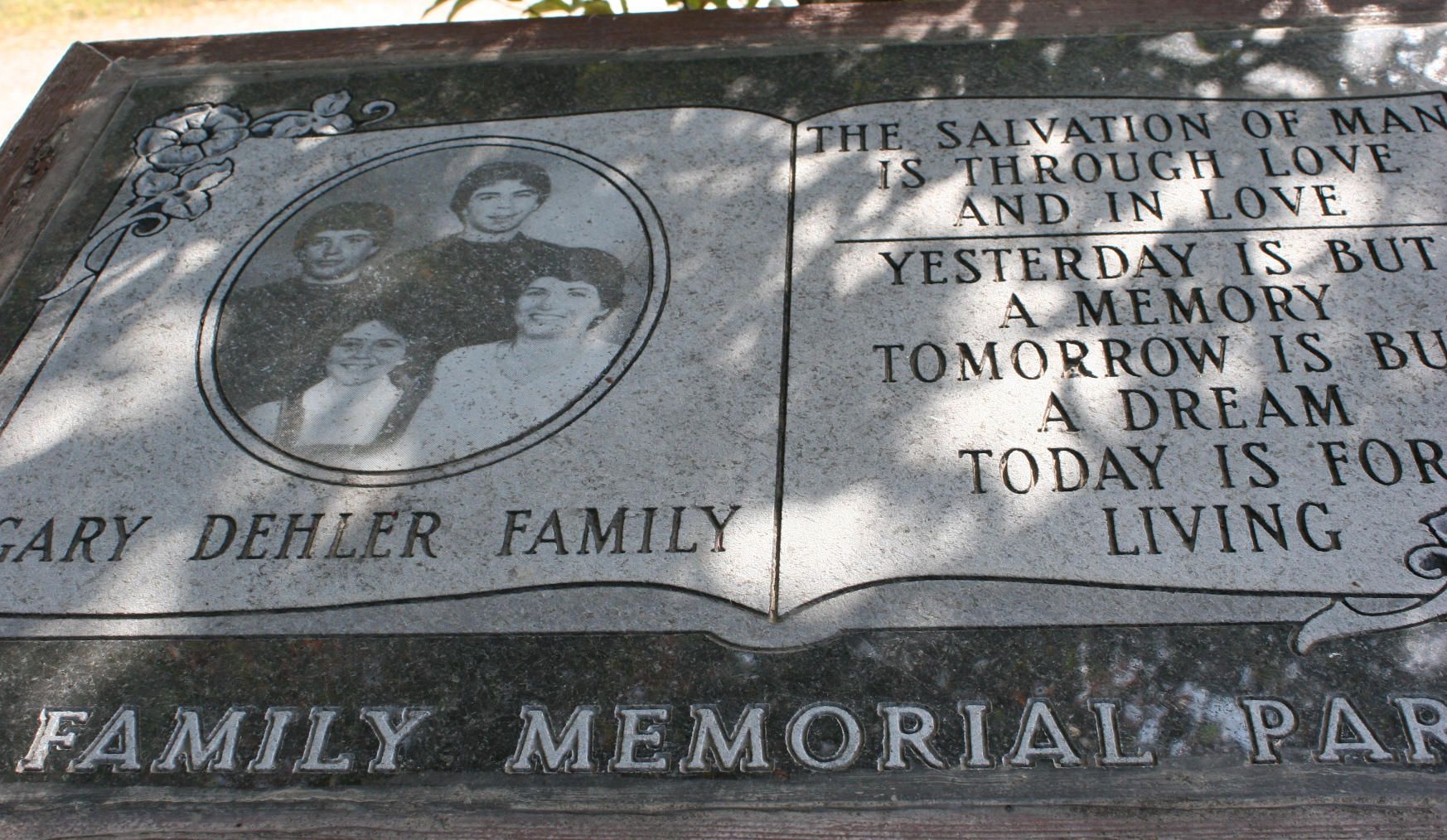
A plaque honors the Dehlers, four of whom died in a car-train collision. Minnesota Prairie Roots file photo September 2020.
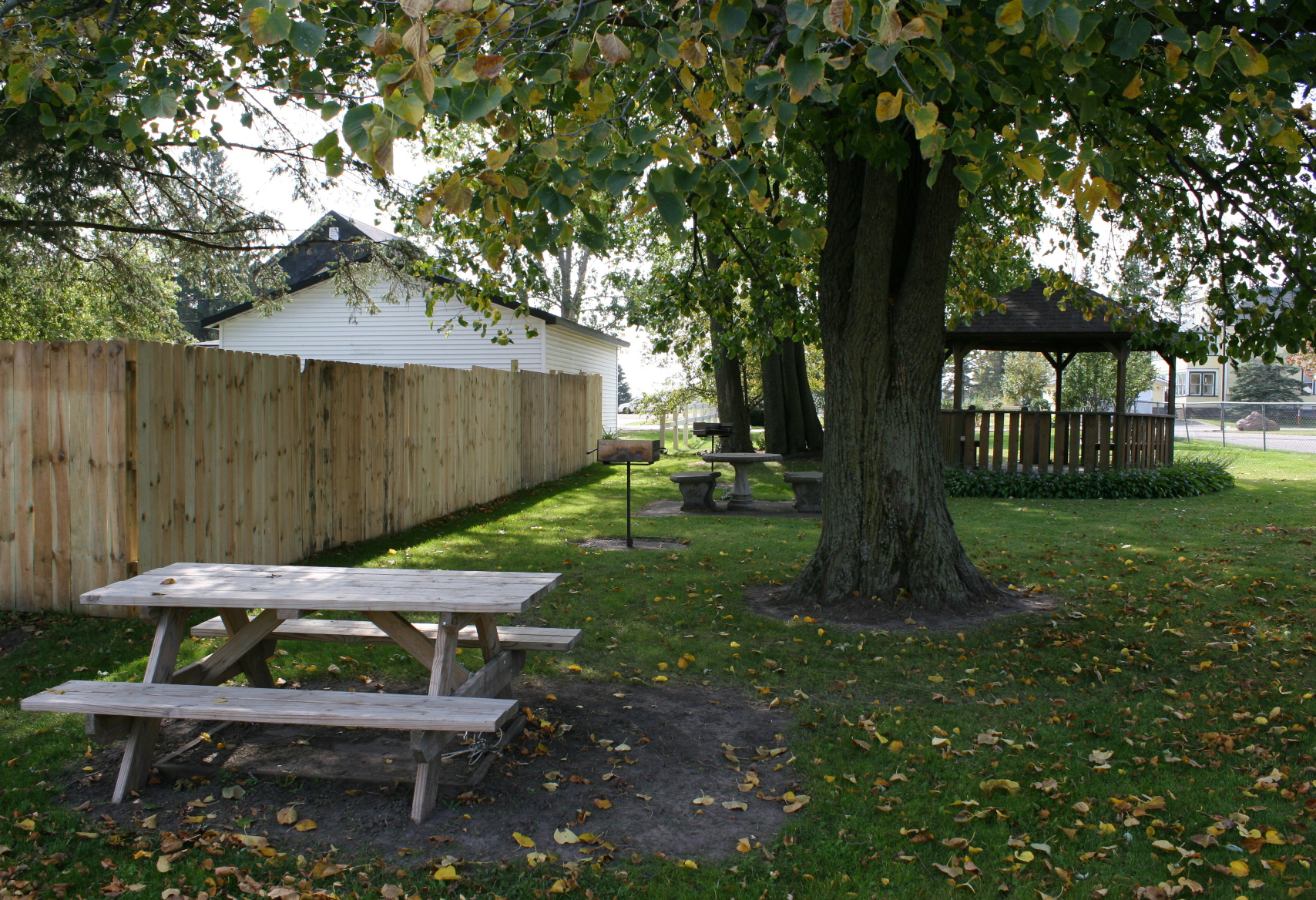
Inside Family Memorial Park, Buckman. Minnesota Prairie Roots file photo September 2020.
Across the street, Family Memorial Park—with a mini playground, picnic tables and gazebo—honors 36-year-old Suzette Dehler and her children, Gerald, 15, Christopher, 14, and Tammi, 8. They died in a car-train accident in July 1986.
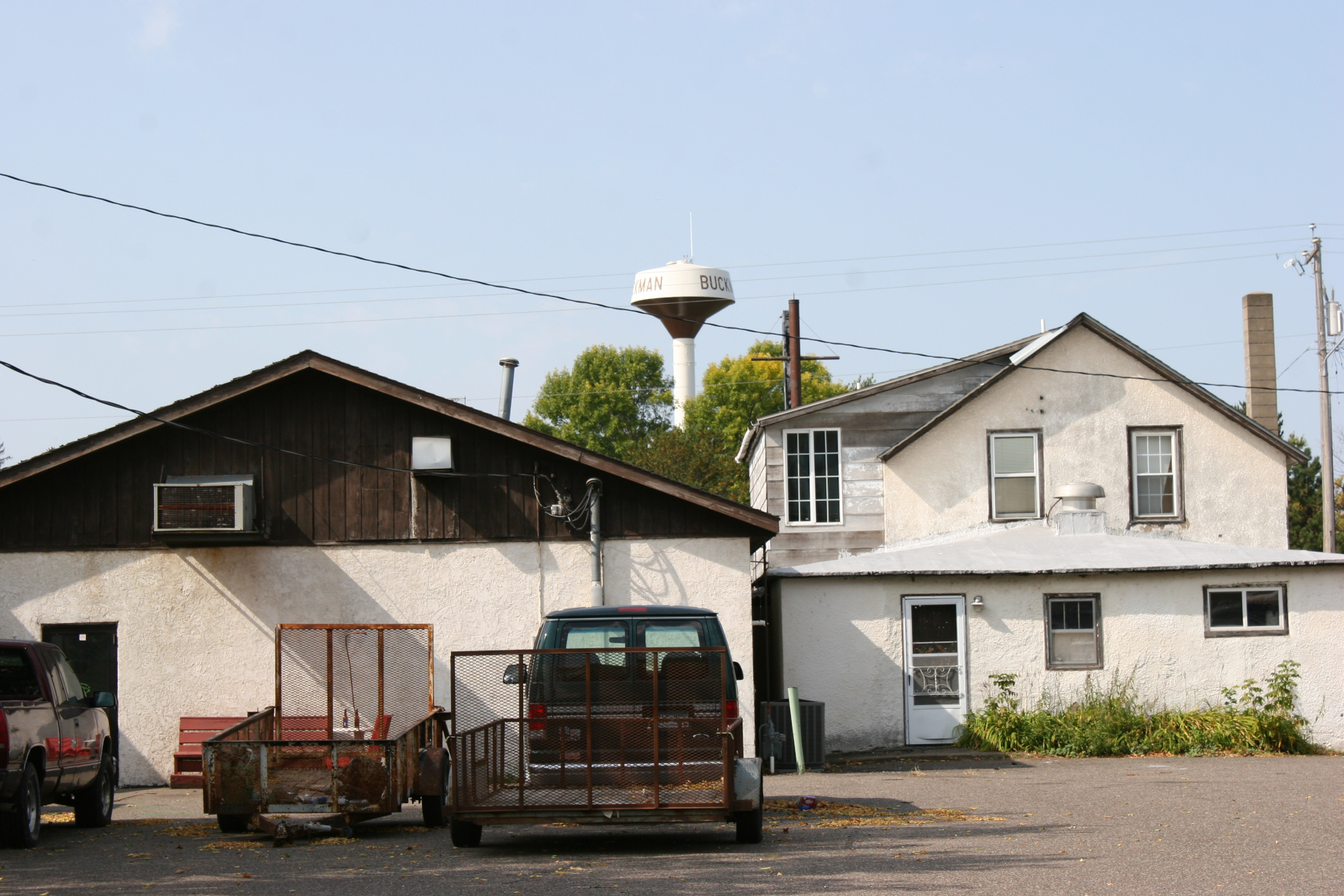
Photographed from the park, the back of Sev’s with the Buckman water tower in the distance. Minnesota Prairie Roots file photo September 2020.
On this autumn afternoon, we picnicked there, behind Sev’s Food & Liquor and across the street from the bus garage. A dog barked at the neighboring house, breaking the small town silence.
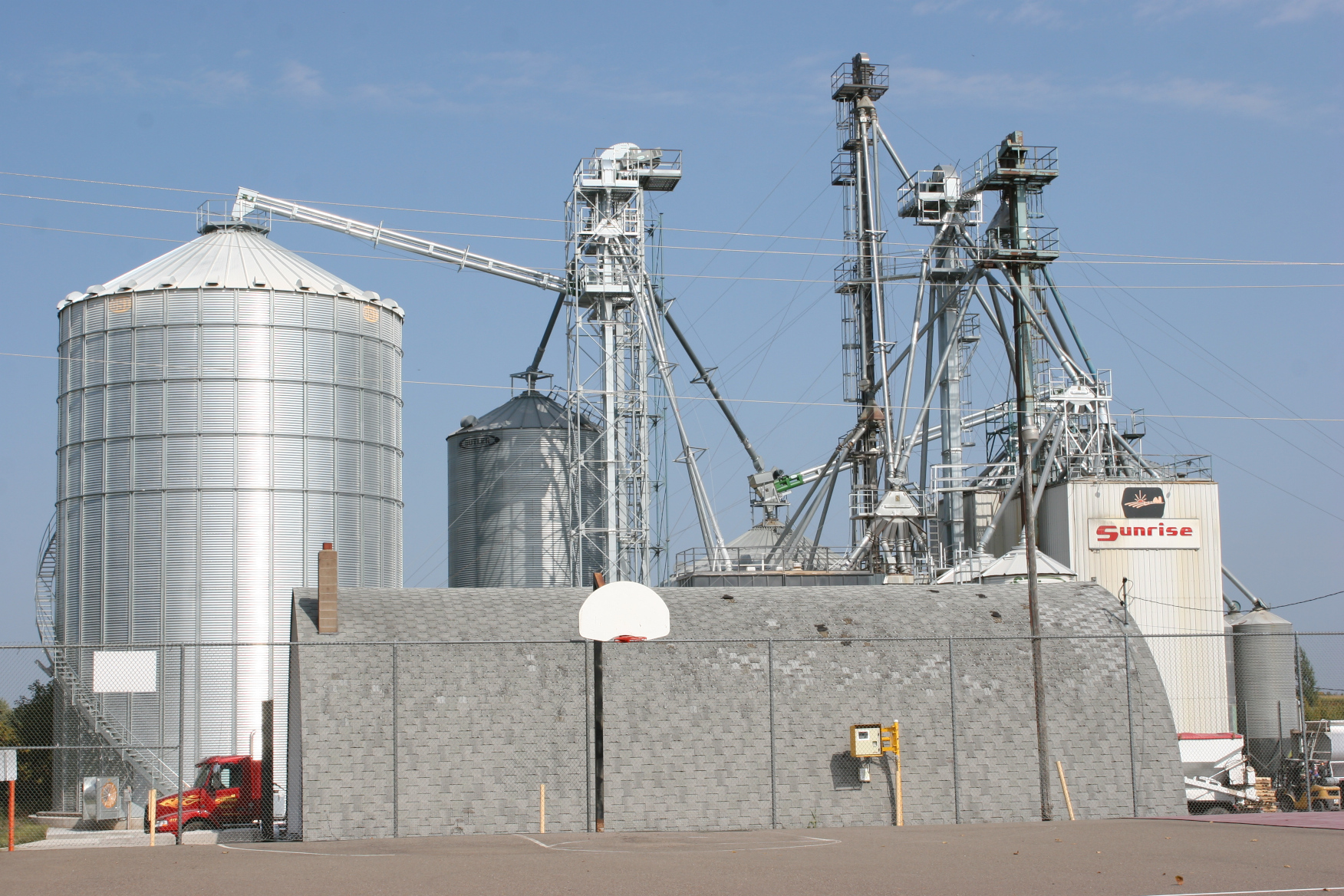
Buckman still centers around agriculture, as seen in this ag business on the north end of town. Minnesota Prairie Roots file photo September 2020.
To the north, massive grain bins define this as an agricultural community.
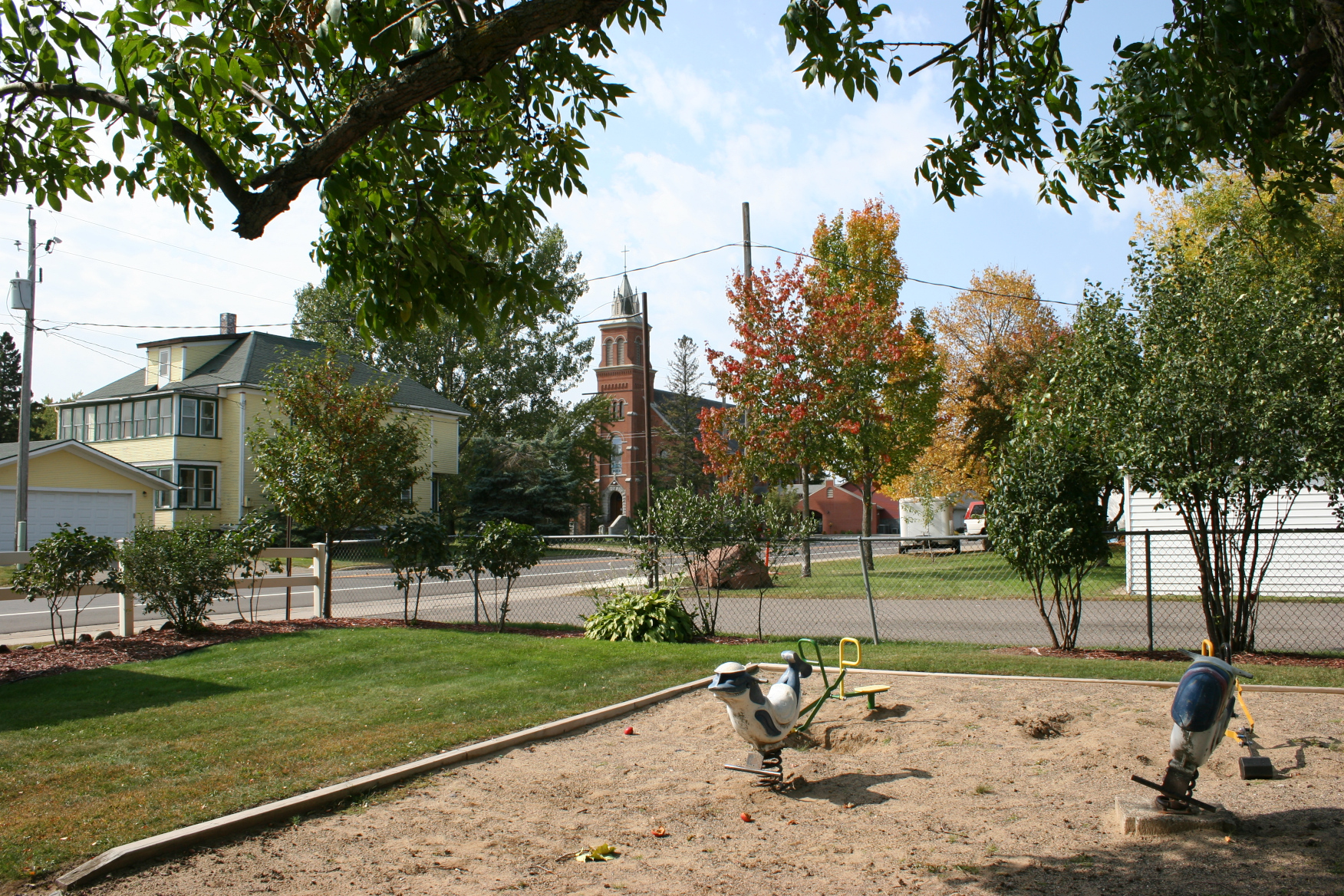
To the west of Family Memorial Park, St. Michael’s Catholic Church rises above Buckman. Minnesota Prairie Roots file photo 2020.
And to the west, the steeple of St. Michael’s Catholic Church rises above Buckman. It’s a beautiful church, recently refurbished, and an integral part of this town. Randy worshiped here with classmates from St. Michael’s Parochial School and with his parents and siblings. He served as an altar boy, too. We mourned his mom here and a few years later he stood as best man when his dad remarried. I photographed the wedding.
On this day, I carried my camera inside again, this time to document the sanctuary. I feel like a foreigner inside Catholic churches, which are typically massive and ornate, so different from the simple Lutheran churches of my upbringing.
Check back as I take you inside St. Michael’s in a series of posts focusing solely on this church. The art inside will, I expect, impress you. And remind you that, even in the smallest of towns, treasures await our discovery.
Upcoming posts will also feature more photos from Buckman and several from neighboring Pierz.
I love walking along the Cannon River in the heart of downtown Northfield, Minnesota.
PHOTOGRAPHING MINNESOTA COMMUNITIES remains a focal point of my photography. I love to document people, places and events with my camera.
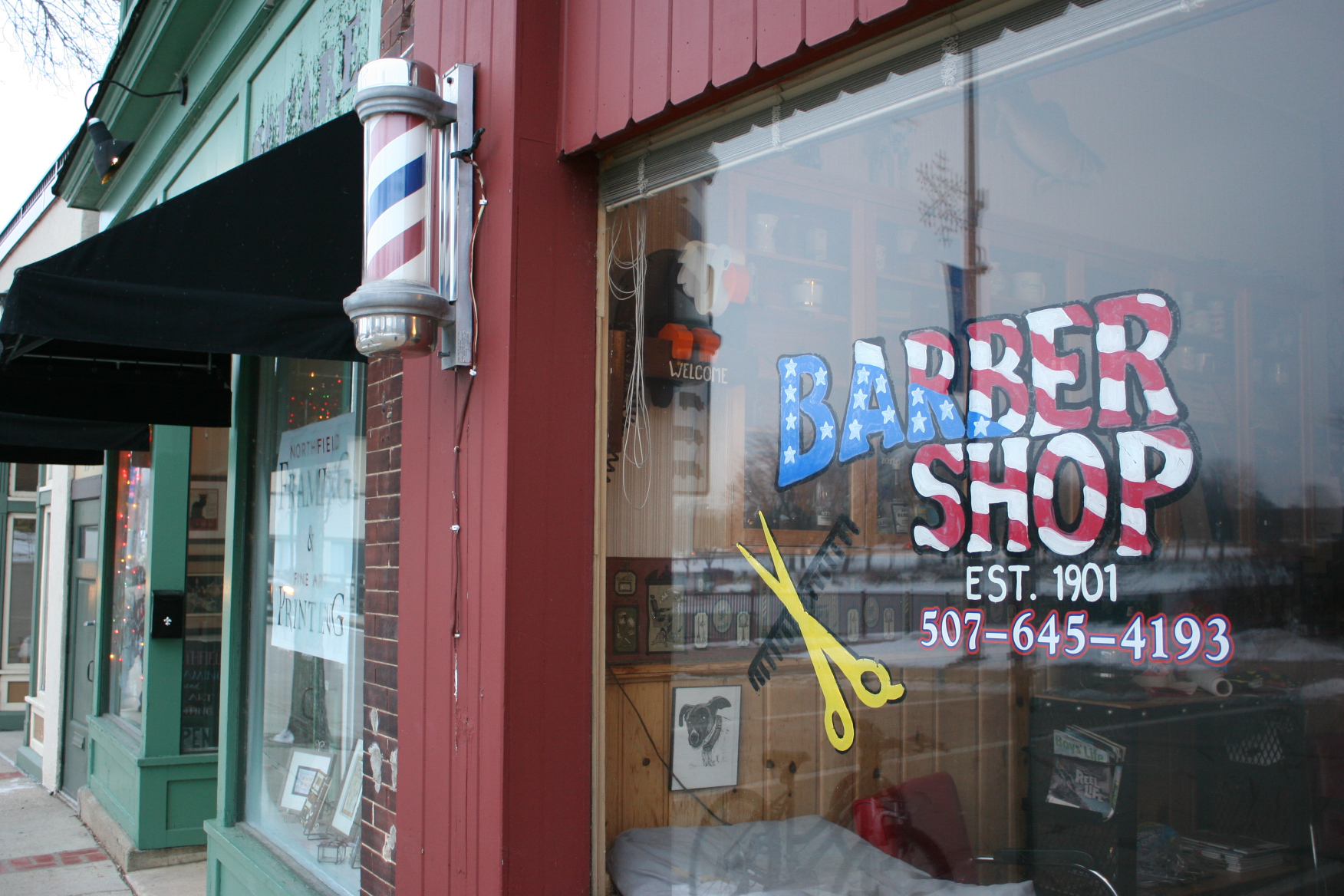
This image seems so iconic Americana, hearkening back in time to places like fictional Mayberry. This barbershop is across the street from Bridge Square in Northfield.
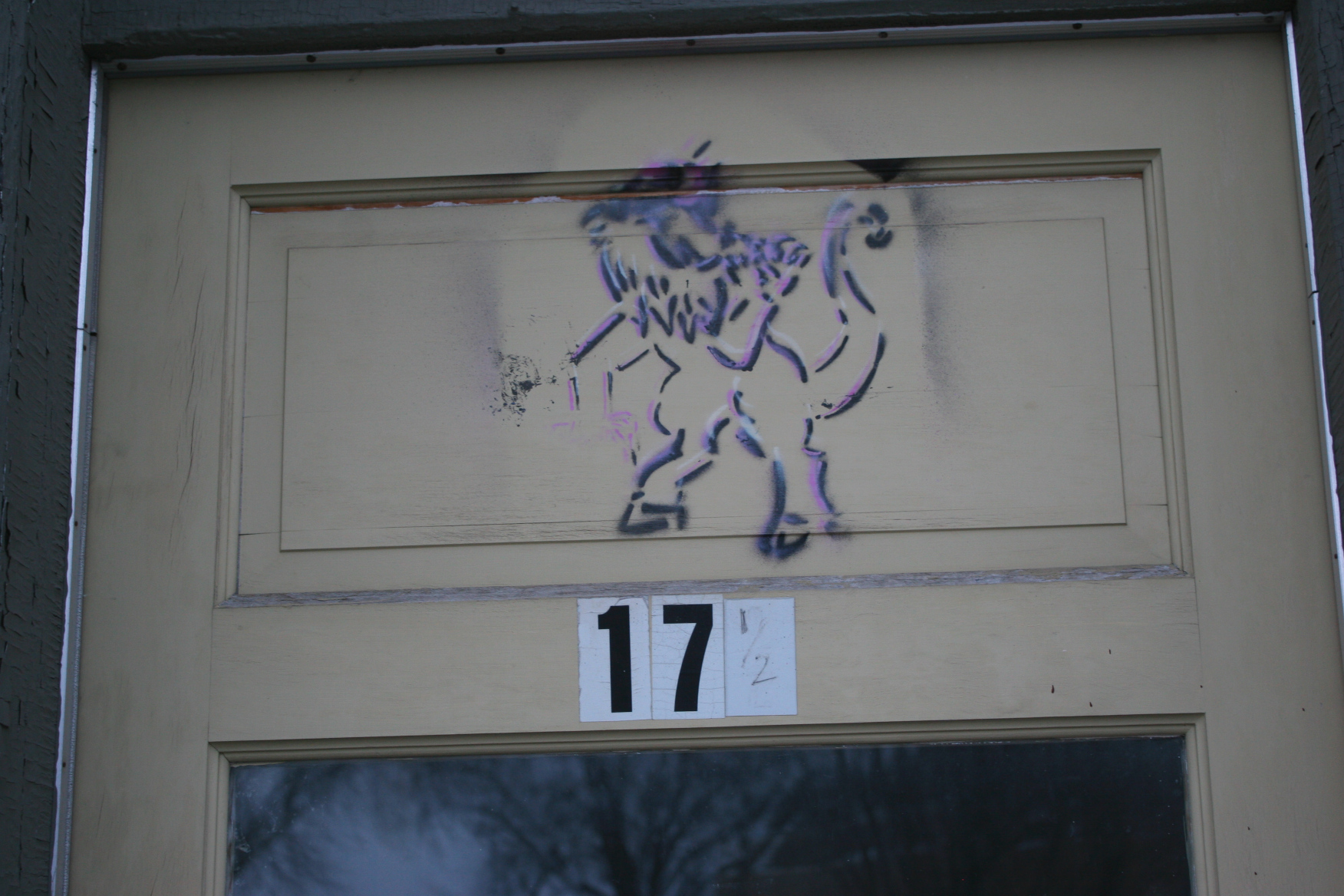
I don’t know the symbolism of this graphic art, photographed above a doorway.
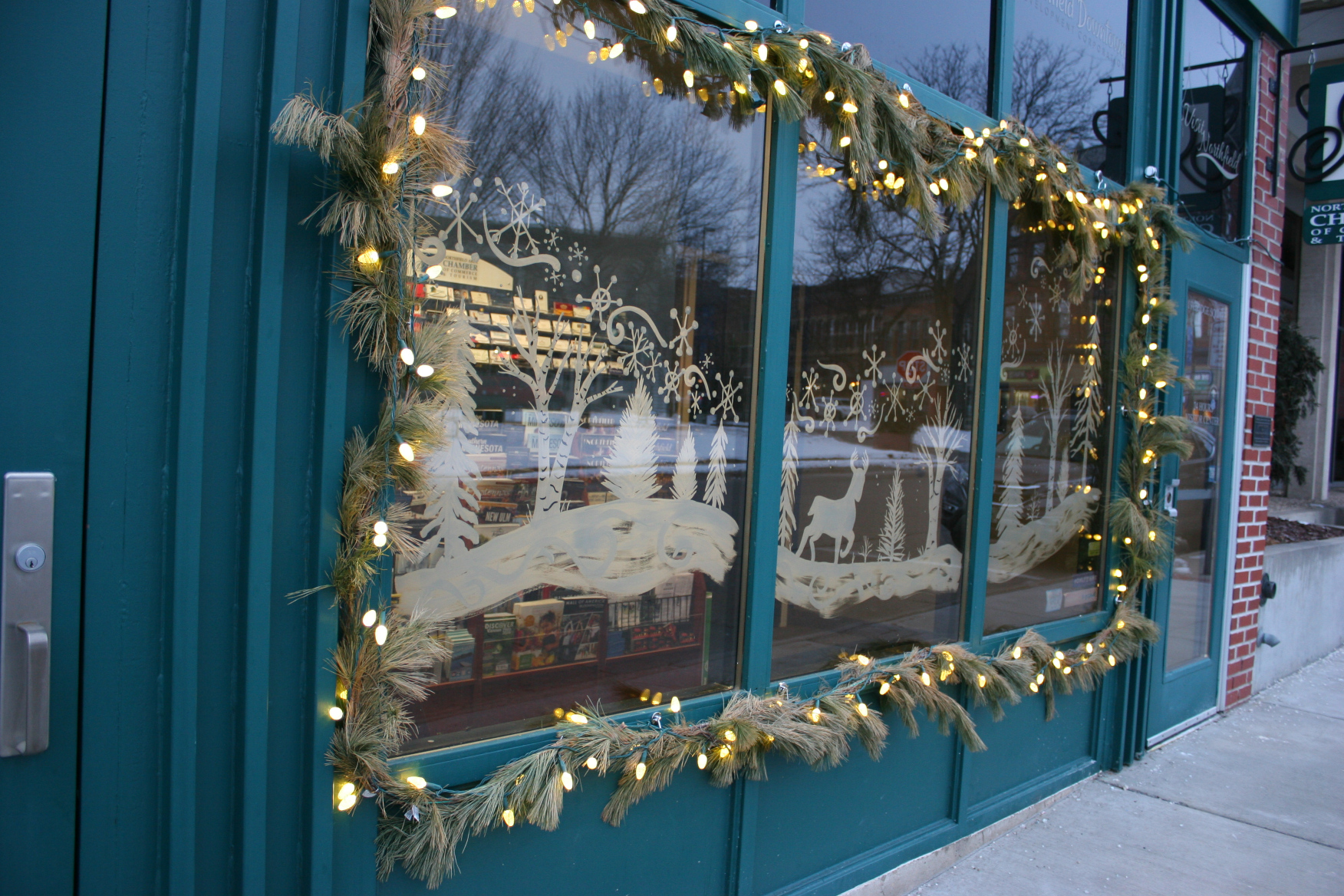
Northfield always does a great job with window displays, including this holiday-themed one.
My photos present visual stories. I suppose you could say I am both the writer and the editor. I choose what to photograph and how. I decide, in the moment, whether to show you a detailed up-close subject or whether to cover a broader area. Both are important in storytelling. I also decide the perspective from which I will photograph. Down low. Eye level. Or some other angle.
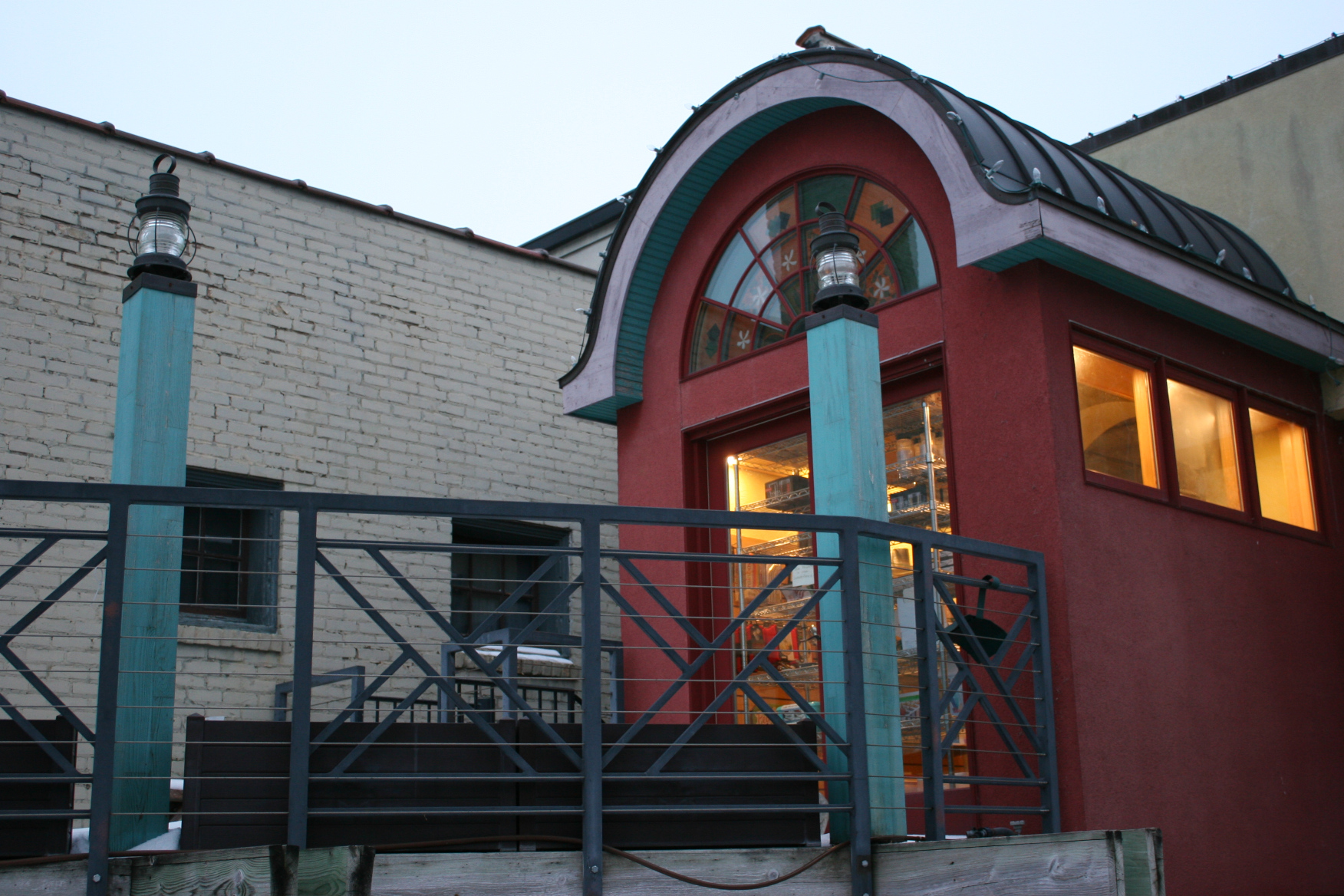
I found this add-on structure to a kitchen ware retail shop and upper level deck charming. This is on the back of the building.
During a recent visit to Northfield, one of my favorite Minnesota communities about a 20-minute drive away, I had exactly 10 minutes to photograph before our food order was ready for pick up on the other side of town. I asked Randy to act as time-keeper. When I’m photographing, I lose all track of time, so engaged am I in the creative process.
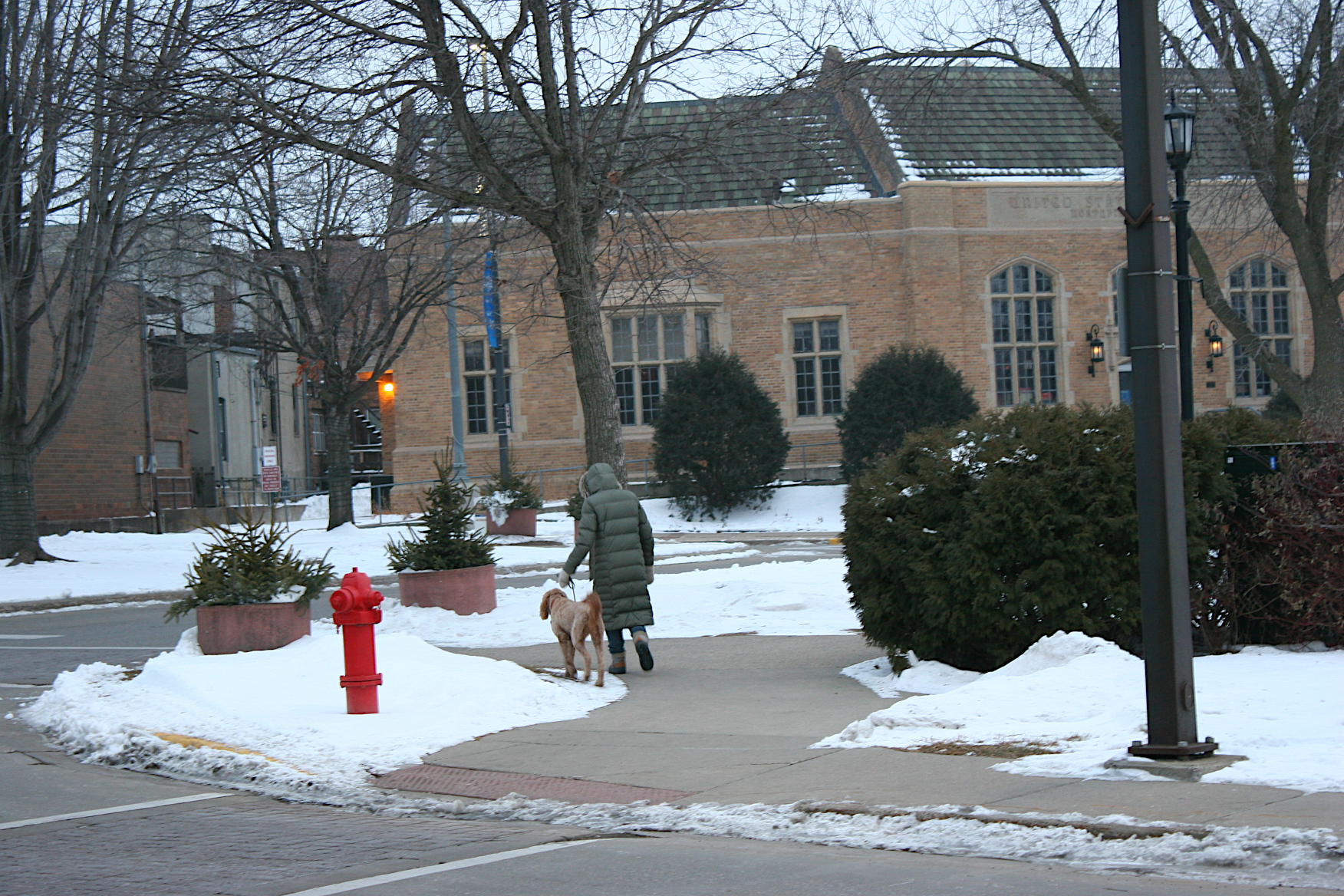
Bundled up to walk the dog at Bridge Square on a cold winter afternoon in Northfield.
We parked near Bridge Square, the heart of downtown Northfield and a community gathering spot. On this late January afternoon with the temp not quite 20 degrees and with COVID-19 reducing the number of visitors to this typically busy downtown, I observed only a few people out and about. Often finding a place to park proves challenging. Not so on this Saturday.
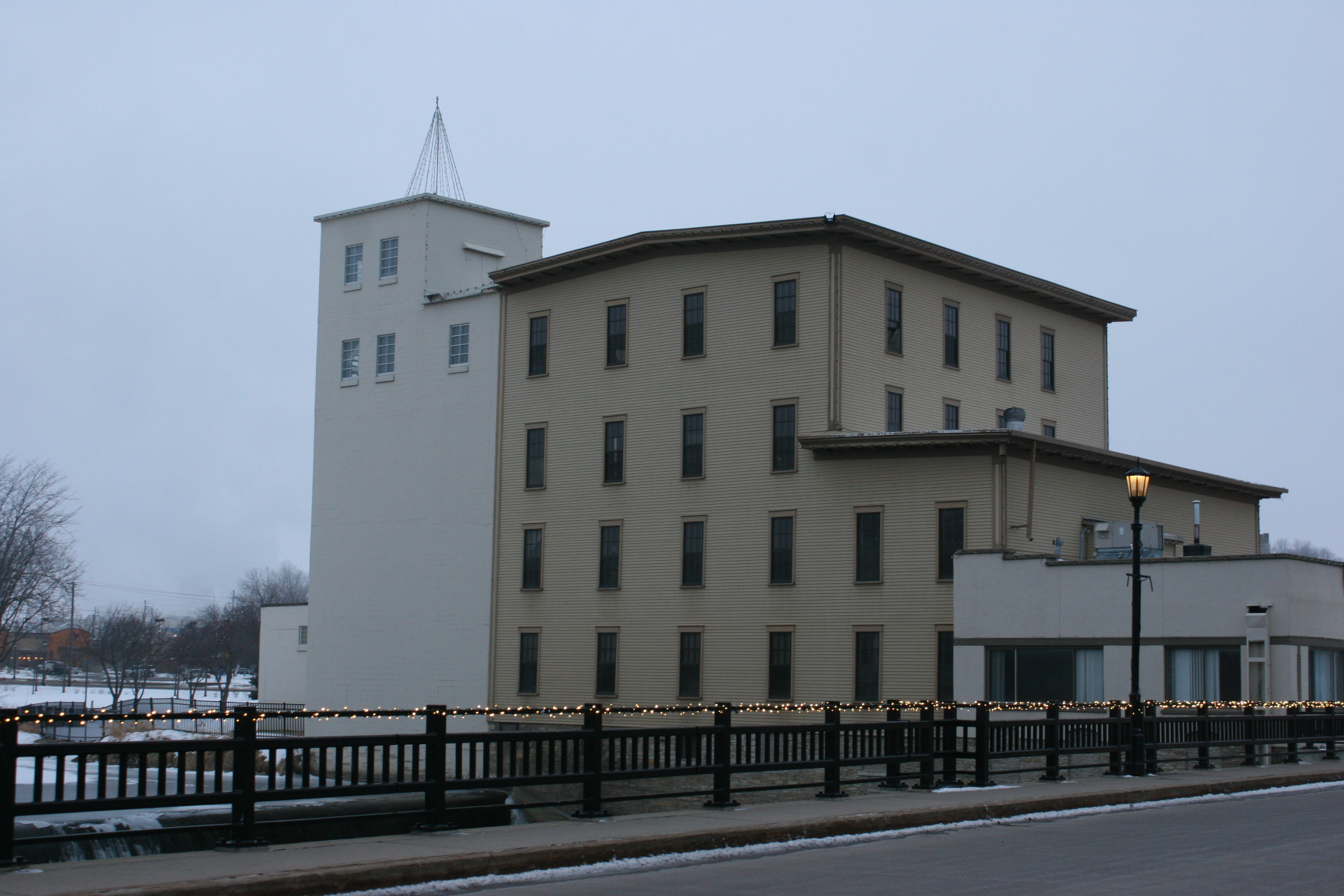
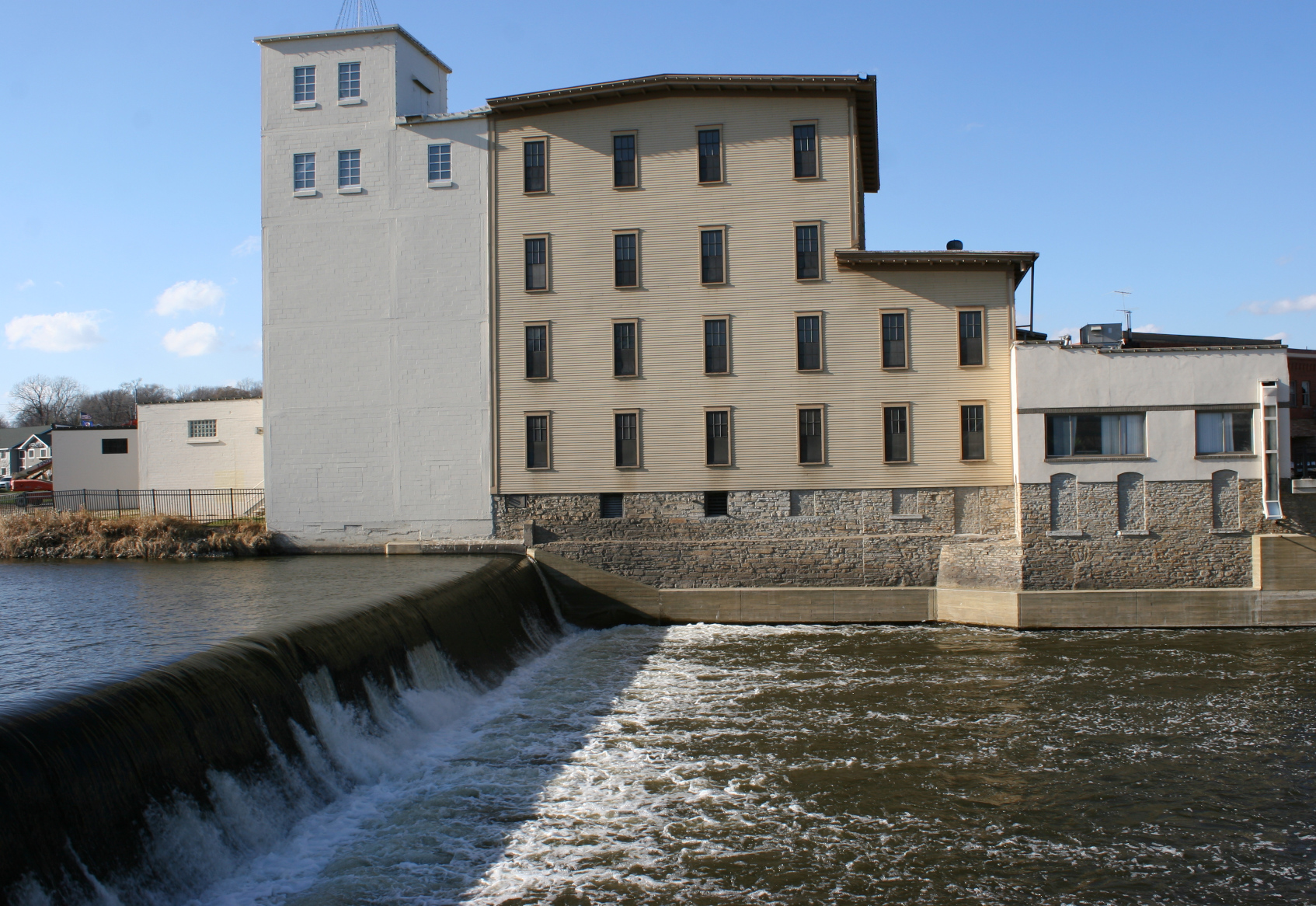
The historic Ames Mill sits on the banks of the Cannon River across the river from Bridge Square.
We walked toward Bridge Square, adjacent to the Cannon River. Turning the corner off Division Street, the wind sliced cold across my face. I knew that exposing my fingers to snap the shutter button of my camera would be numbing. My mittens, which open to finger-less gloves, help. I’d highly recommend these if you work a camera in a cold weather environment like Minnesota.
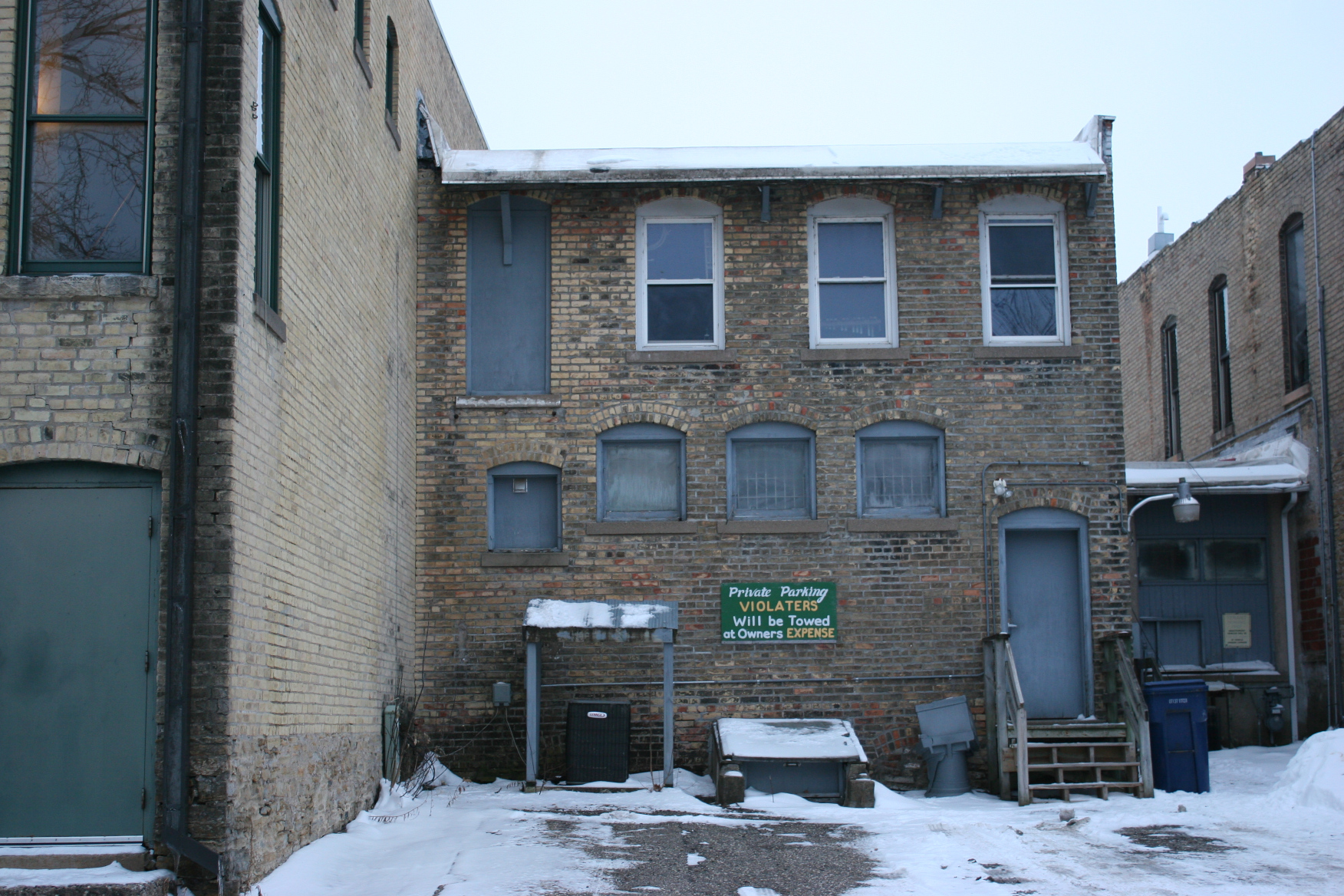
The backs of buildings can prove as interesting as the fronts. My eyes were drawn to the sign and to the brick buildings.
For the next 10 minutes, while Randy walked ahead of me—I always lag when I’m photographing—I concentrated on the half-block square area around me. The signs. The buildings. A woman and her dog. The river.
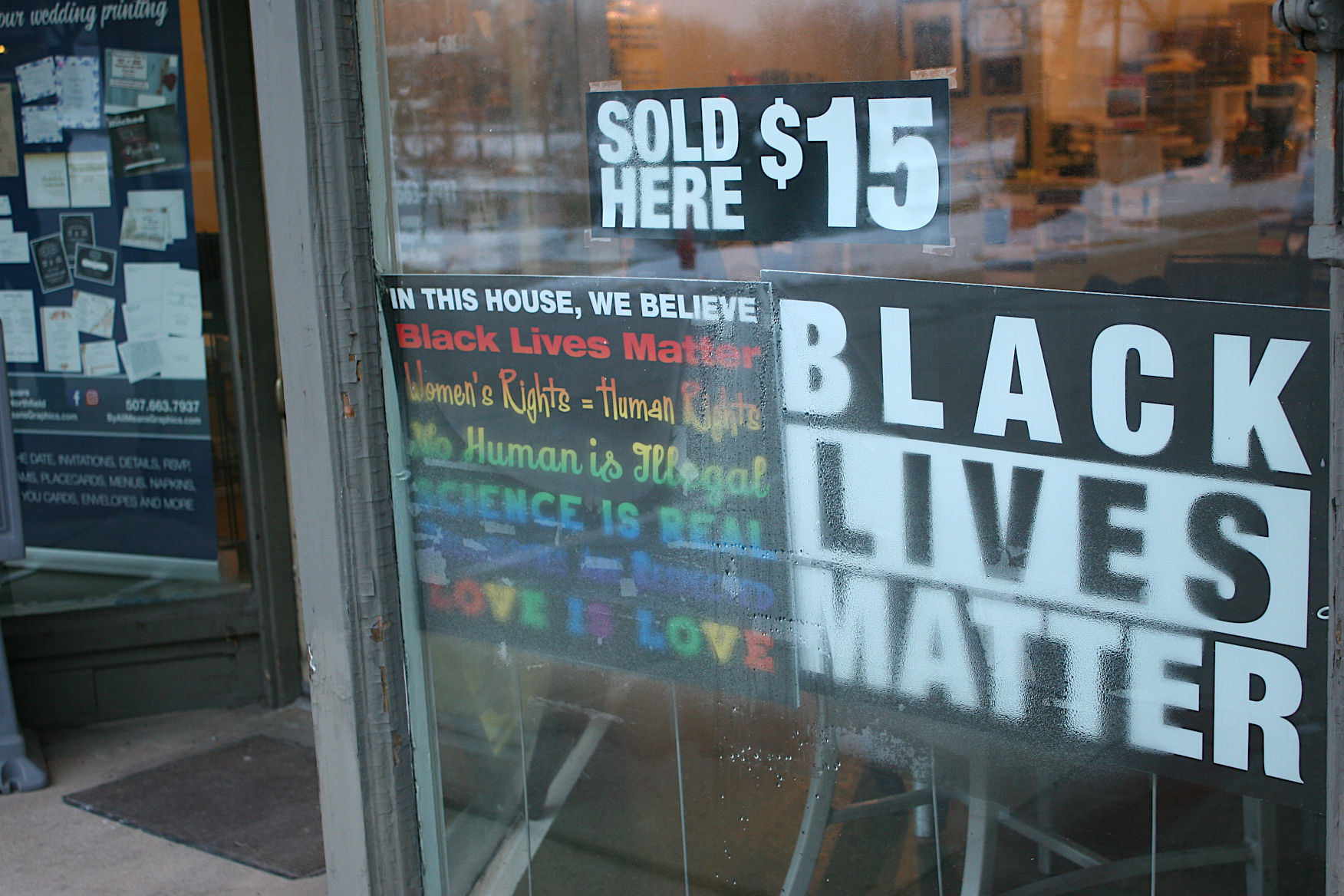
Northfield residents, businesses and students at its two colleges often express their viewpoints in publicly-posted signs and art.
In this short segment of time, I composed a short story, or at least the beginning of one. With these minimal images, I show you history, nature, voices. A glimpse in to the heart and soul of Northfield. This brings me joy, this ability to follow my passion, to share with you these visual stories through my photography.
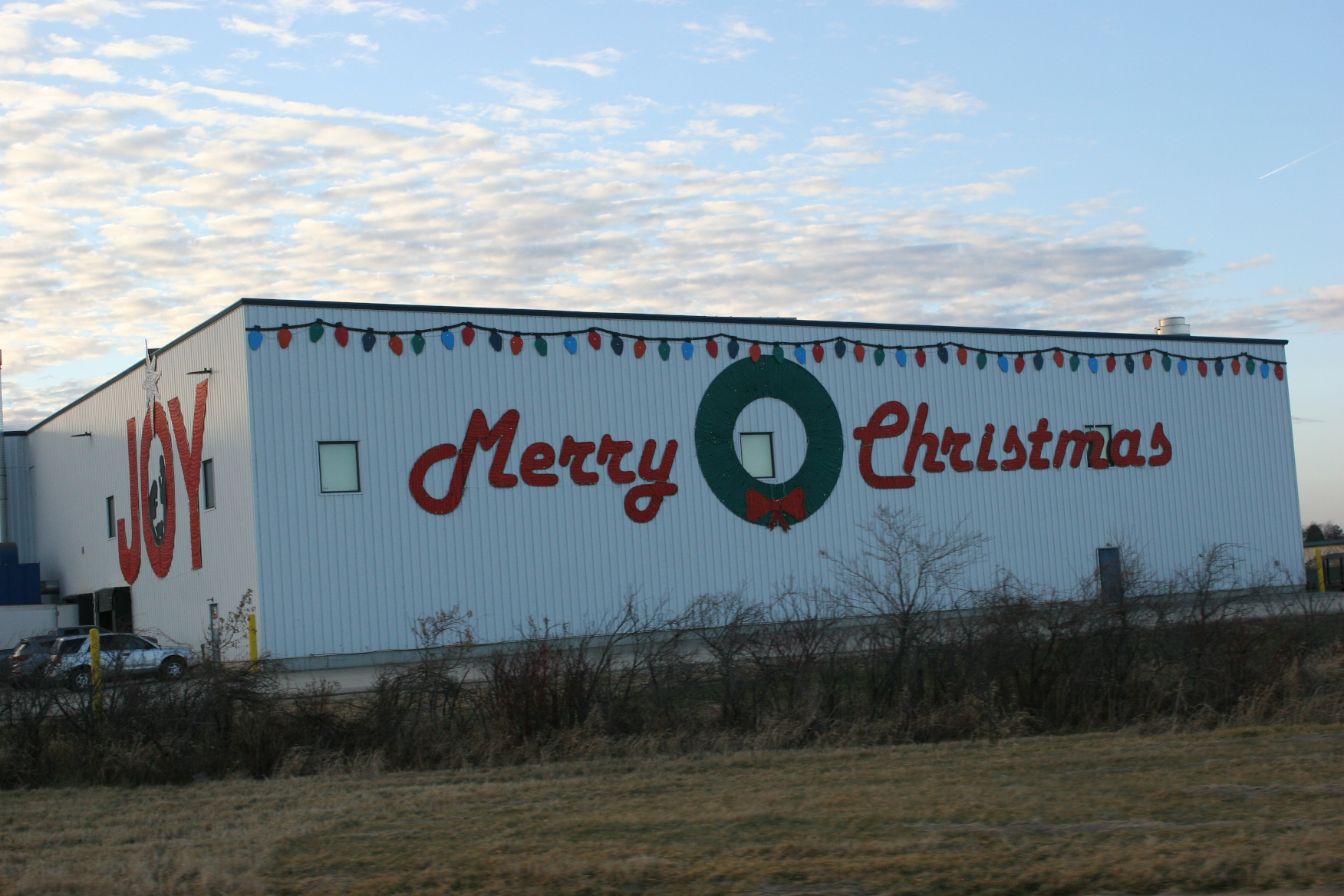
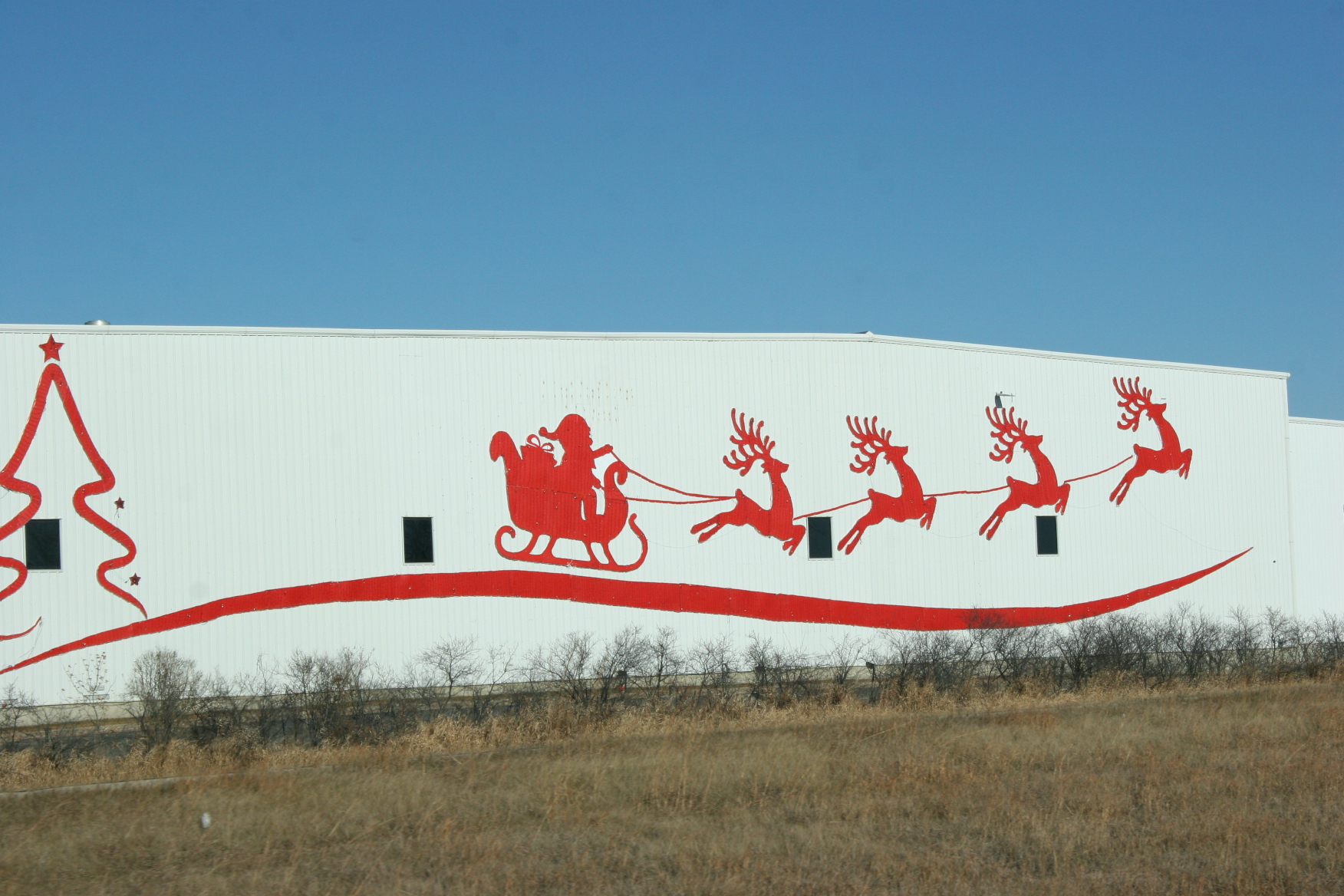
The joy of Christmas banners McNeilus Steel, Inc., Dodge Center, Minnesota.
HOLIDAY DECORATIONS SEND a message, lift spirits, bring joy. This year, more than ever.
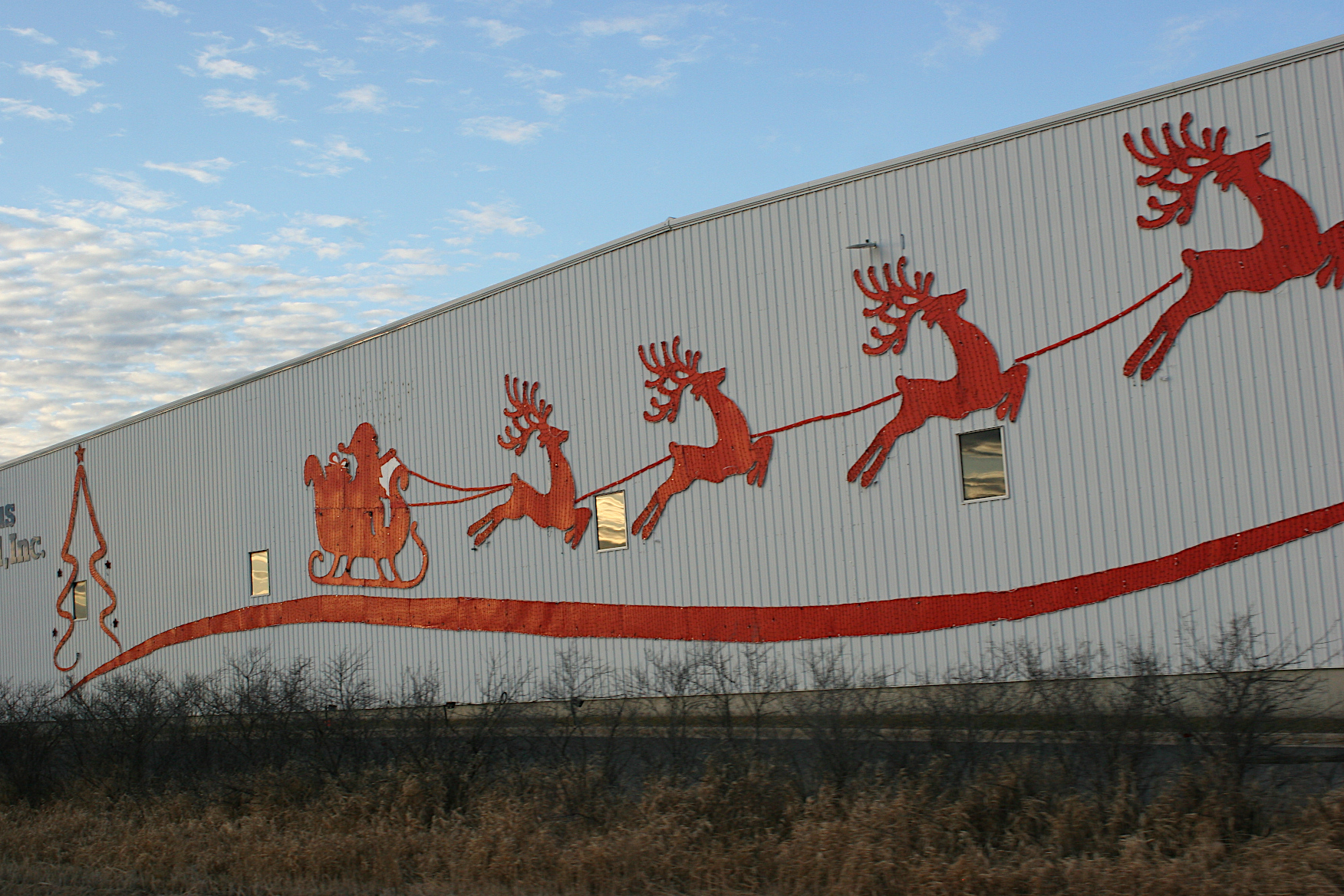
Santa and his reindeer fly across the side of a McNeilus building.
I appreciate every homeowner, every city, every church, every nonprofit and every business that takes the time and effort to create Christmas joy via festive decorations.
McNeilus, a 70-plus-year-old family-owned business centered in Dodge Center, has four locations.
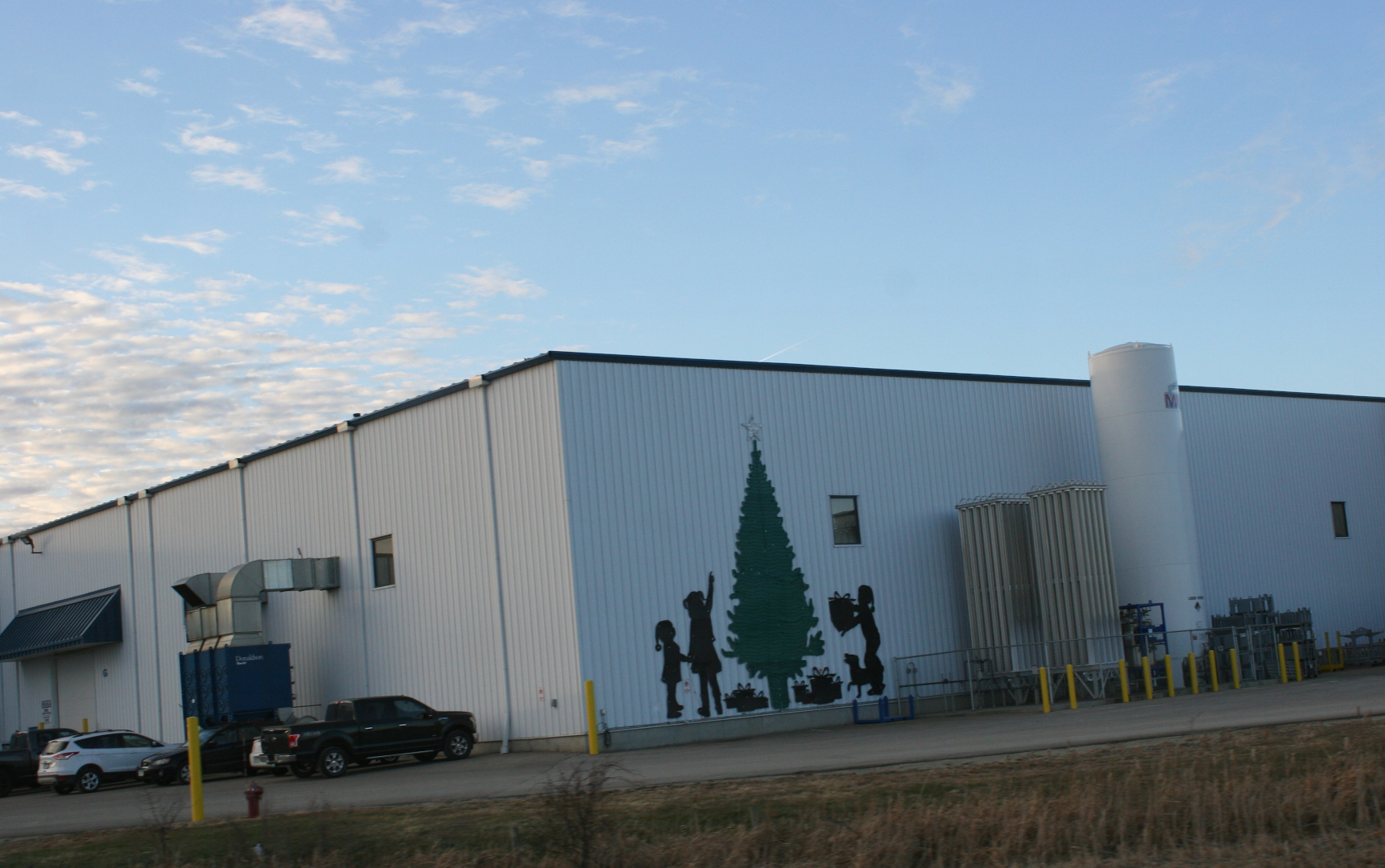
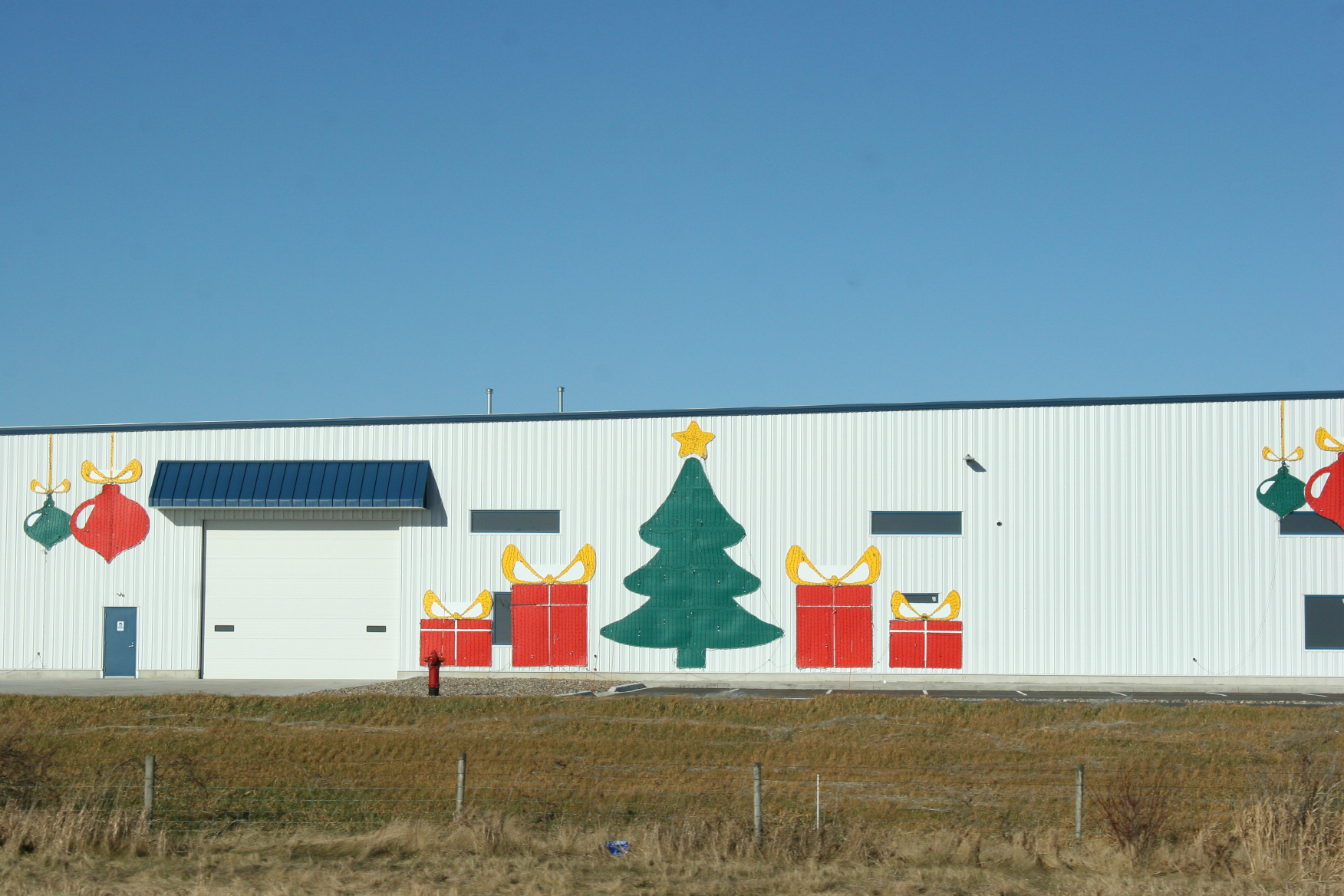
I photographed the company’s holiday decorations recently while traveling along US Highway 14. The business sits right next to the busy highway. I had to focus and shoot quickly from the passenger seat as the decorations flashed past our van.
Stretching along another building, more Christmas decor.
What a gift from this family-owned full-line steel distributor and processor to the thousands of motorists who pass by daily.
Another view of Santa and his reindeer.
During a year that’s challenged and stretched us in so many ways due to COVID-19, I’m grateful for scenes like these that share the Christmas spirit in such a visual, public way.
TELL ME: Have you spotted holiday decorations that bring you an added measure of joy this Christmas? I’d like to hear.
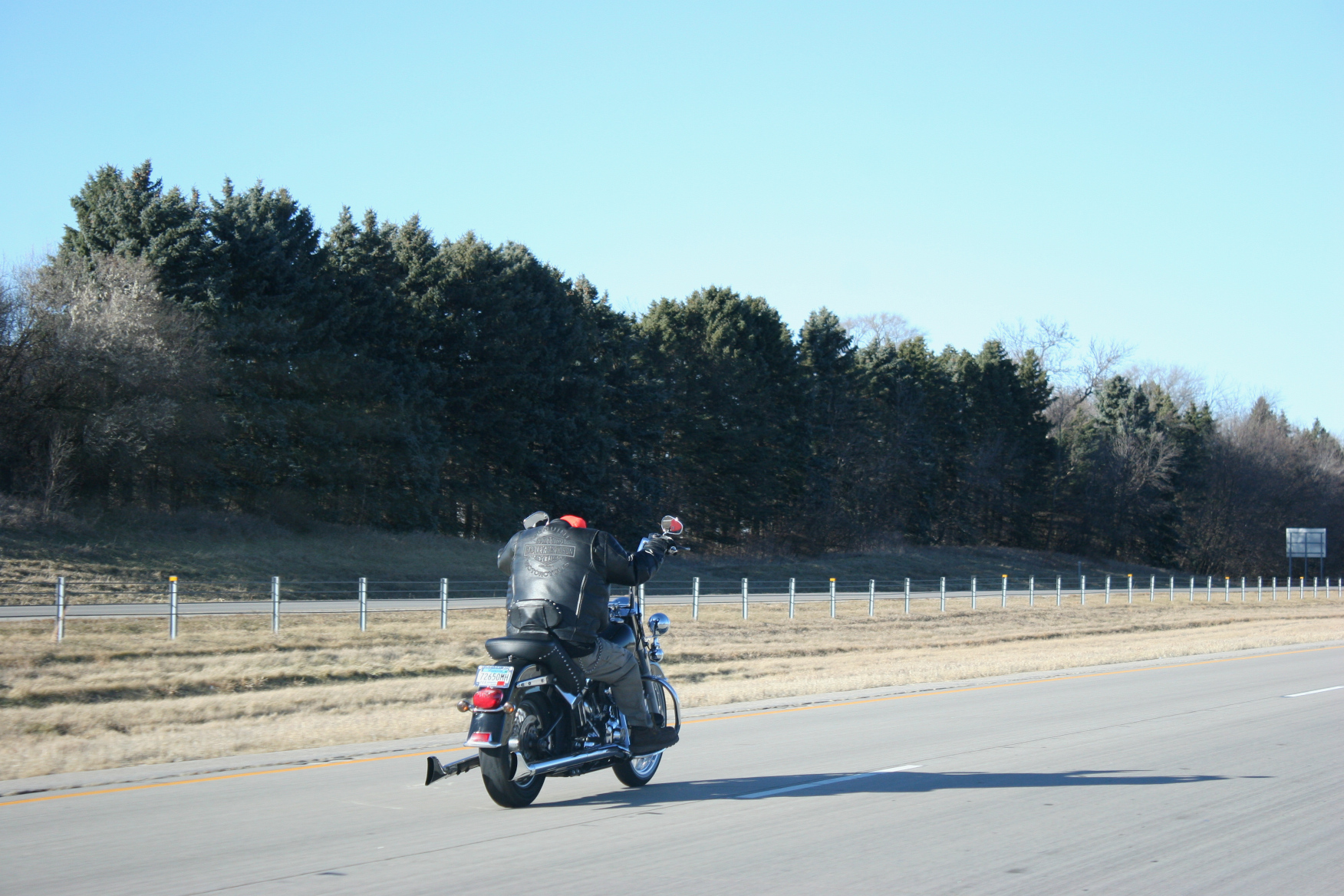
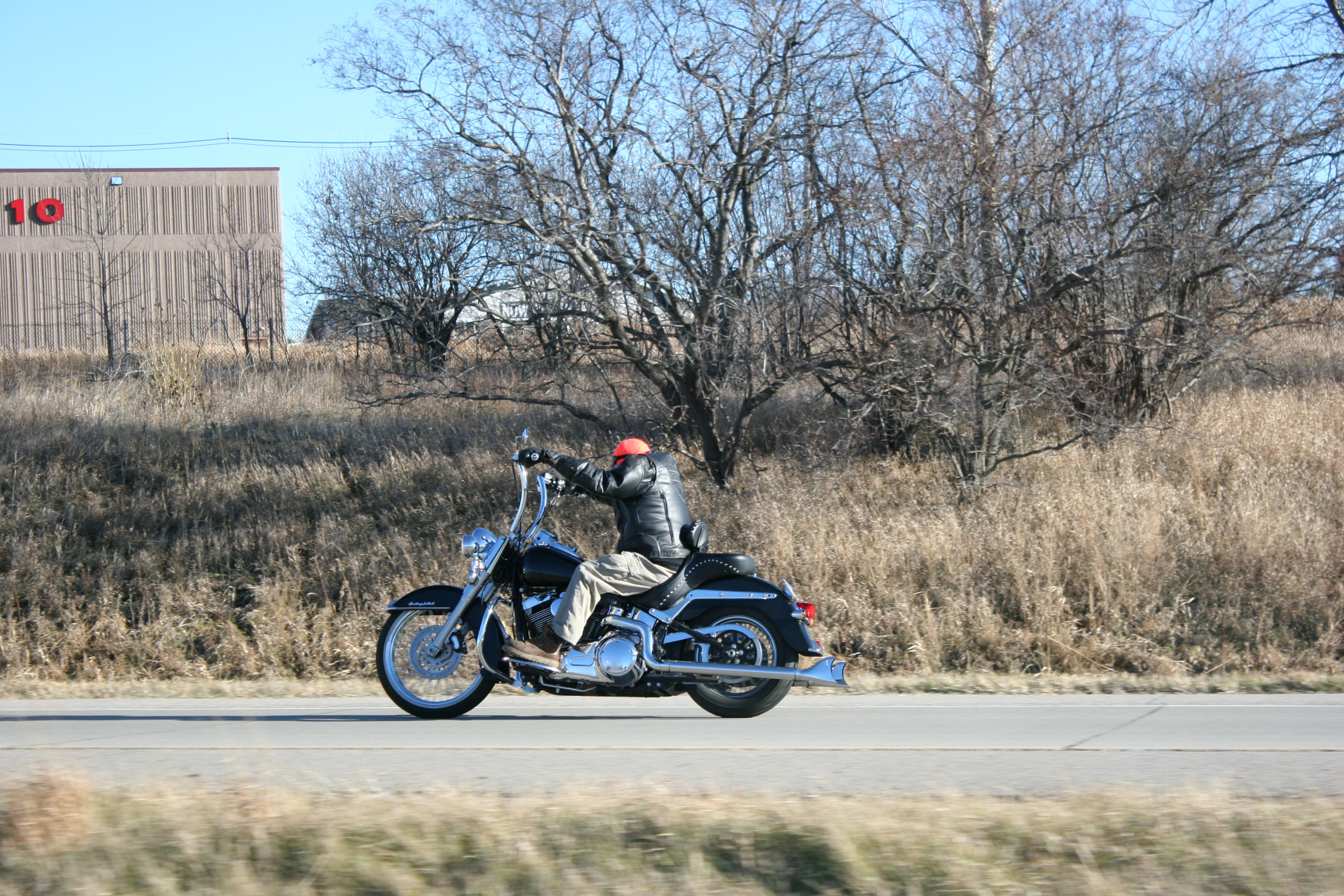
WITH TEMPERATURES IN THE LOW 50s here in southern Minnesota on Saturday, the unseasonably warm weather presented another opportunity for some bikers to hit the road before winter settles in for good.
This die-hard Harley rider passed us while we traveled northbound along Interstate 35 in Owatonna early Saturday afternoon.
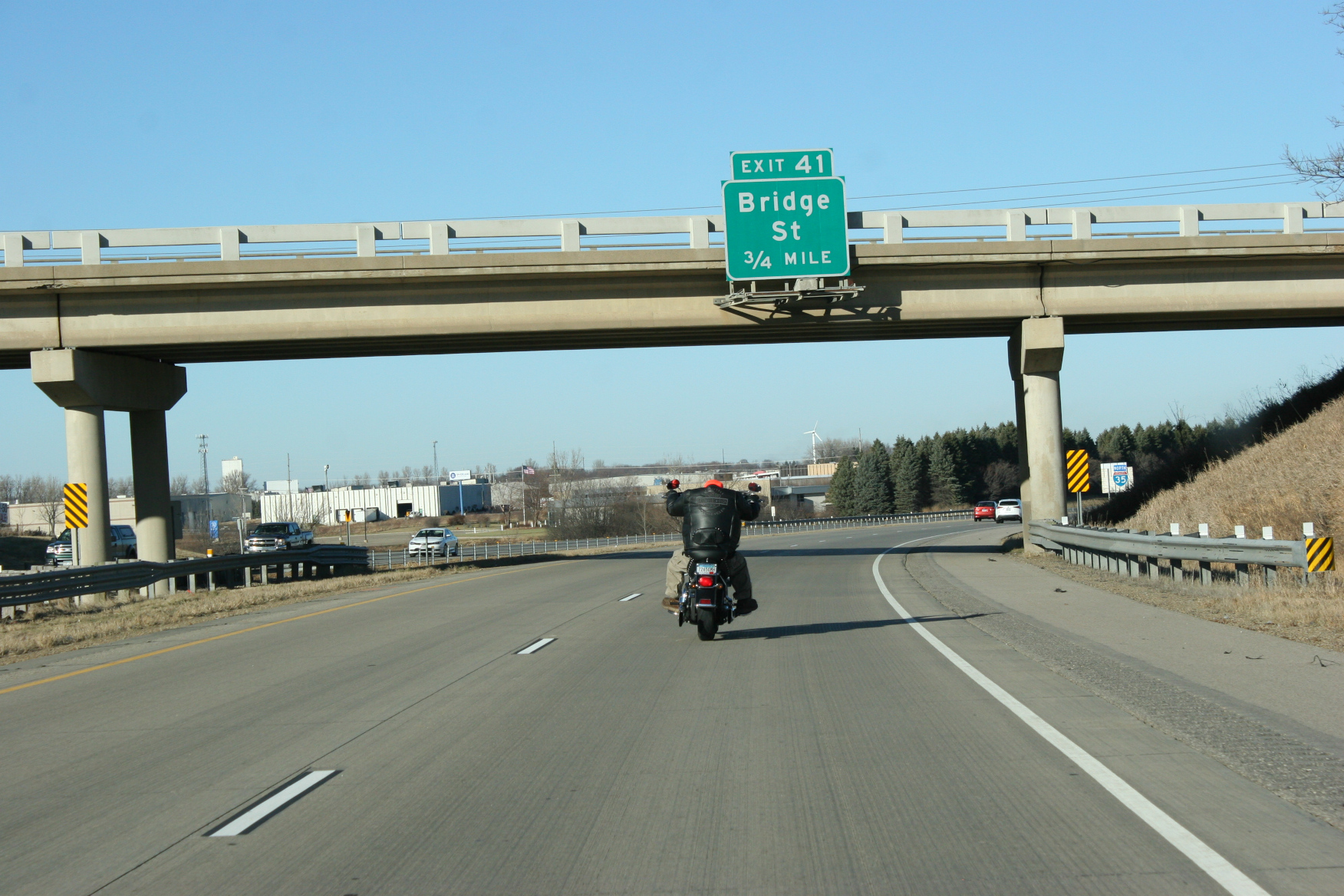
The biker lowered his left hand here, presumably to warm his hand.
He looked cold to me with his head hunched into his leather-clad shoulders while gripping the handlebars of his windshield-less bike. With his gloved hands in that high position, no blood flowed warmth to his fingers.
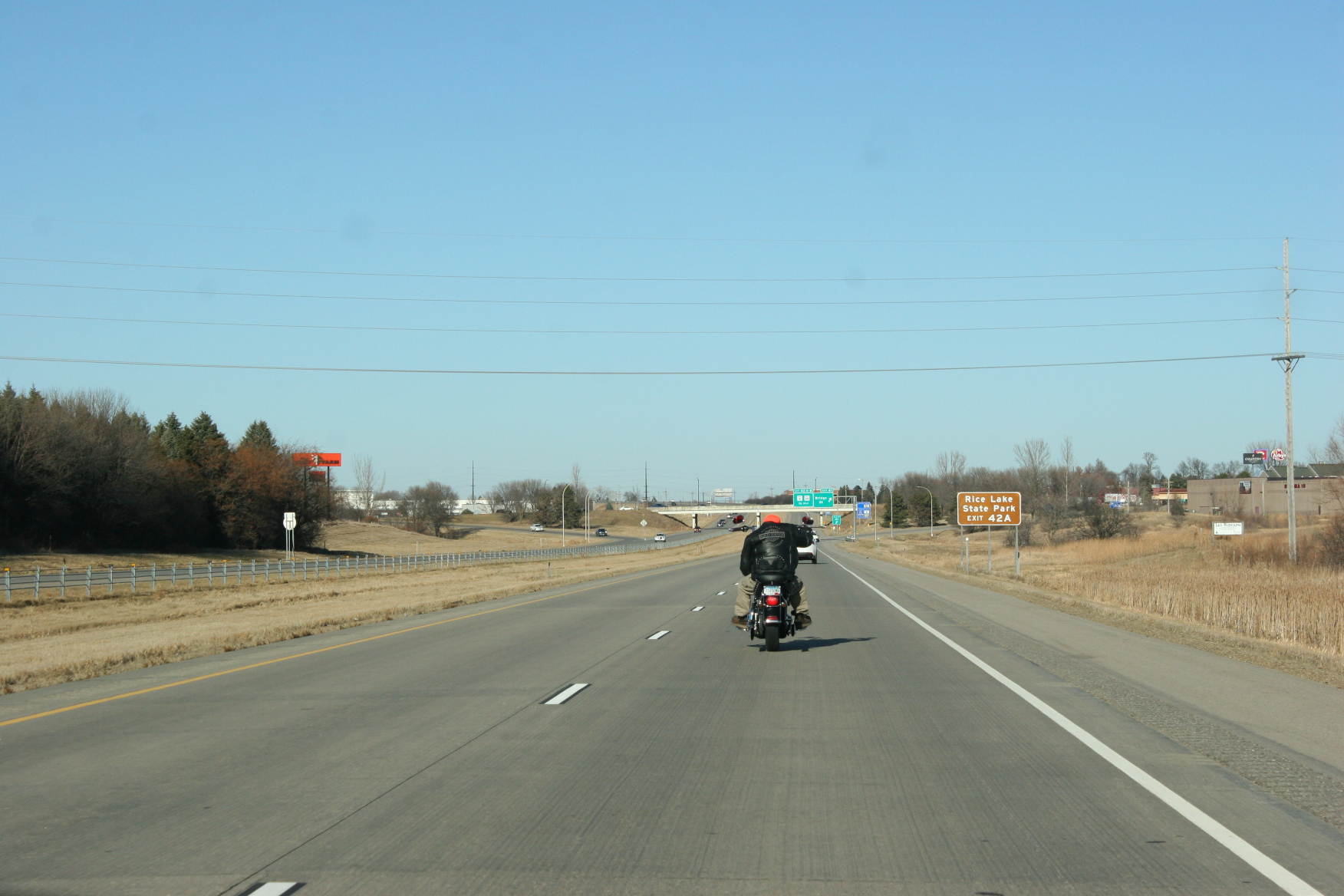
Exiting Interstate 35 in Owatonna.
Randy guessed the windchill on that bike to be in the mid-20s based on the air temp and highway speed of 70 mph. Brrr. Now that’s cold, even for a hardy Minnesota Harley rider.
The historic Ames Mill sits along the banks of the Cannon River in downtown Northfield. Malt-O-Meal hot cereals are made in the mill. You can often smell the scent of cereal wafting through this southern Minnesota community.
THE CITY OF NORTHFIELD, about a 20-minute drive northeast of my Faribault home, has long-rated as one of my favorite Minnesota communities. For many reasons.
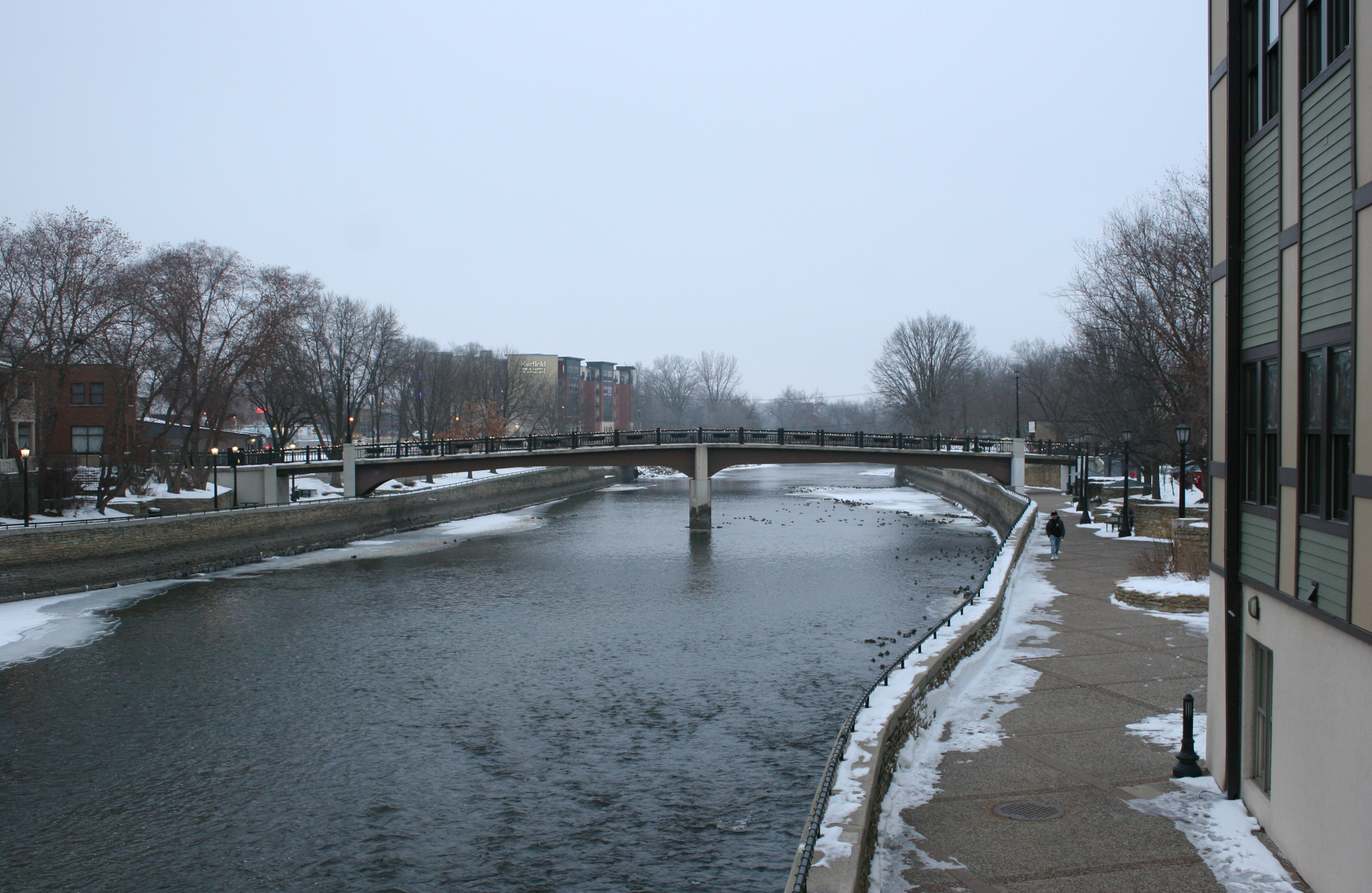
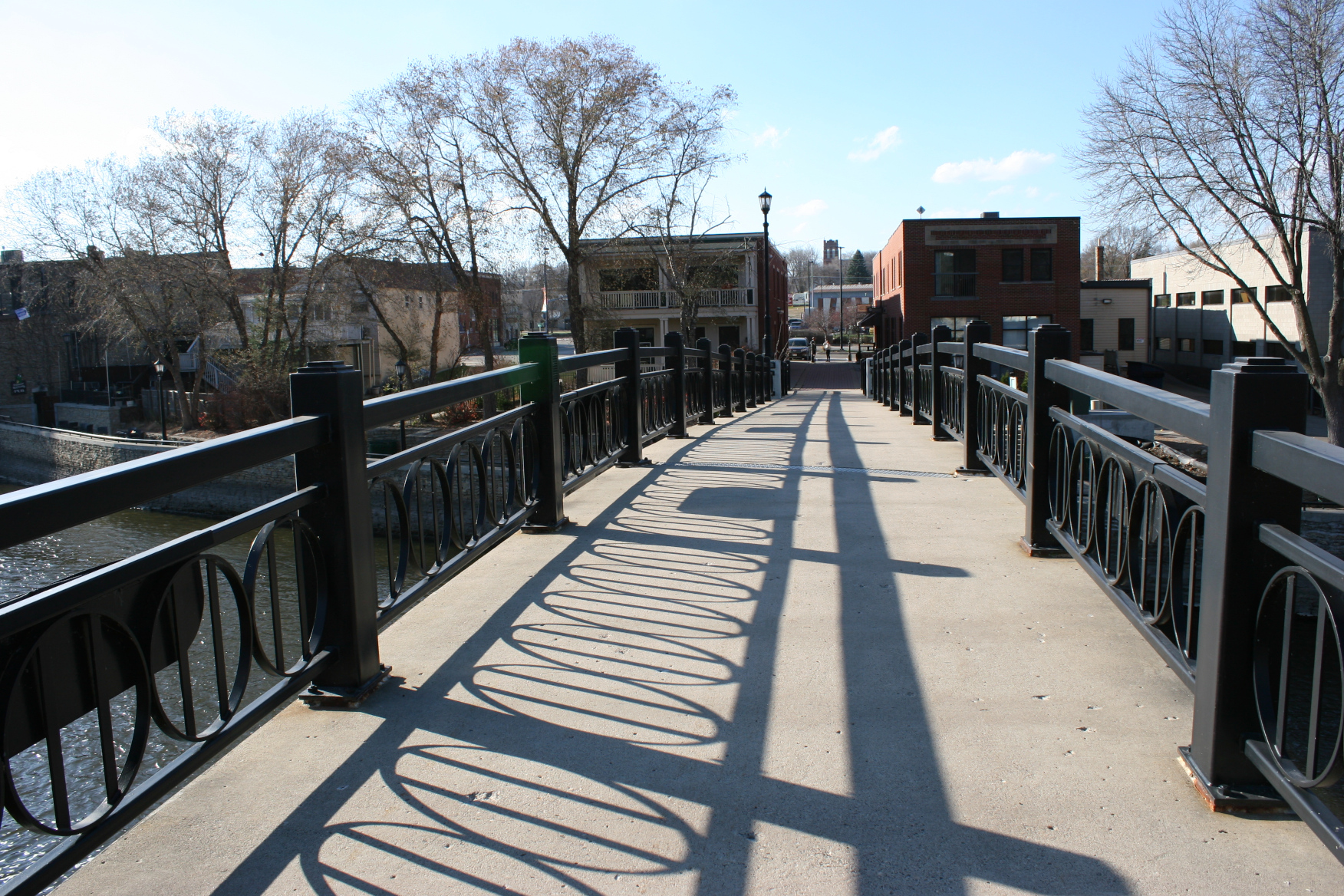
Crossing the pedestrian bridge over the Cannon River in downtown Northfield.
It’s situated along the banks of the Cannon River, making for a picturesque setting.
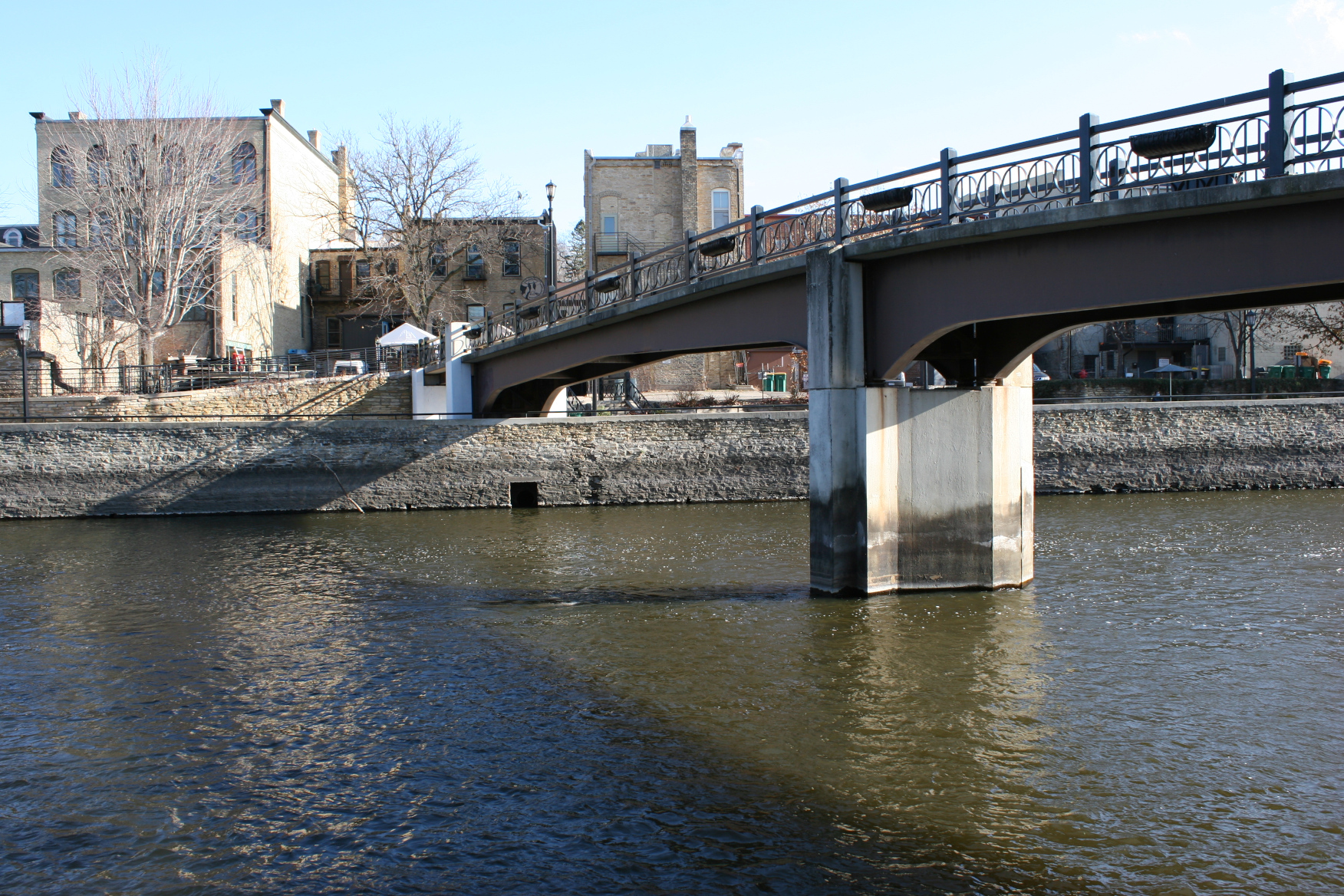
Standing along a river walk, I photographed the pedestrian bridge in downtown Northfield.
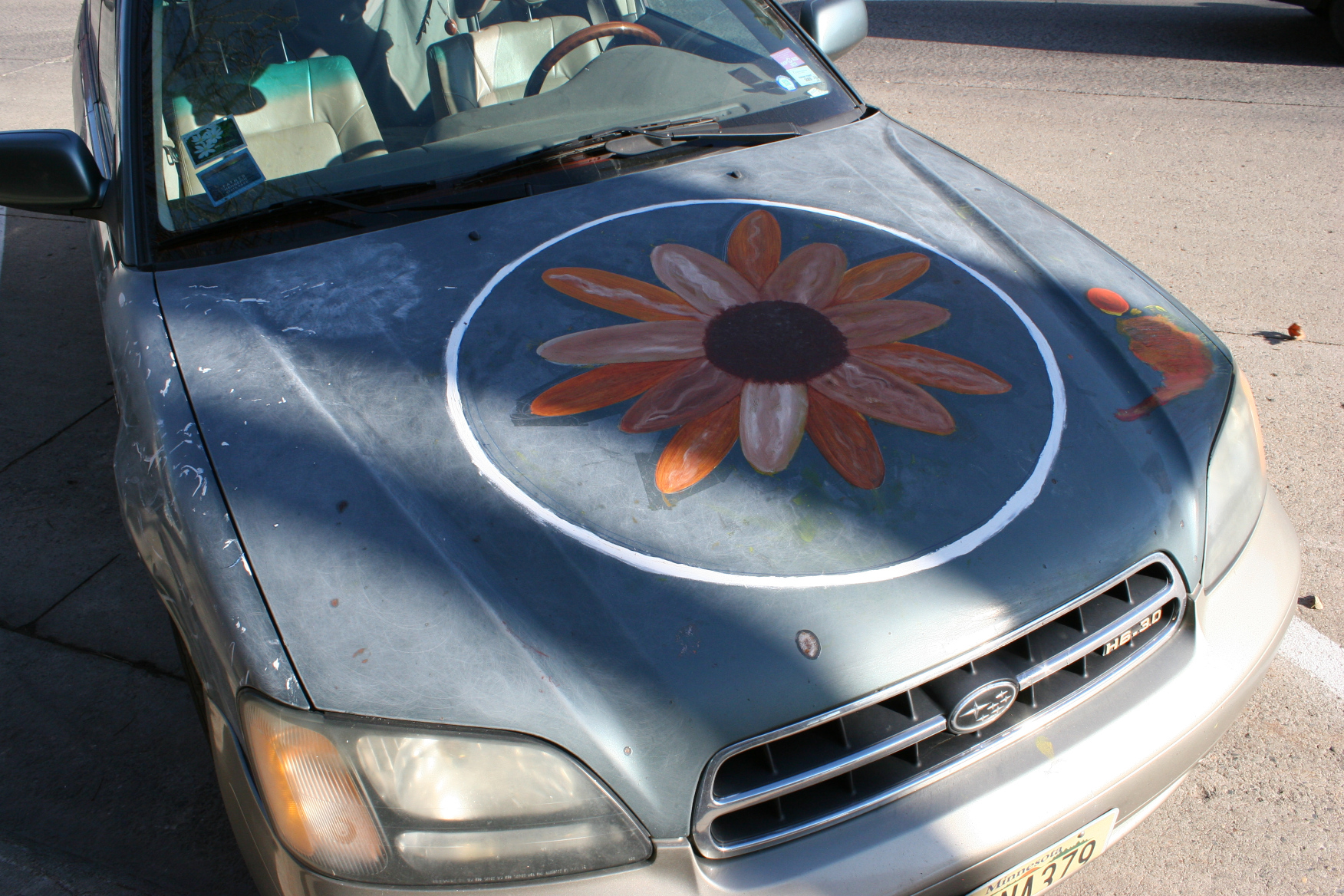
I spotted this art on the hood of a car parked along Division Street near Bridge Square.
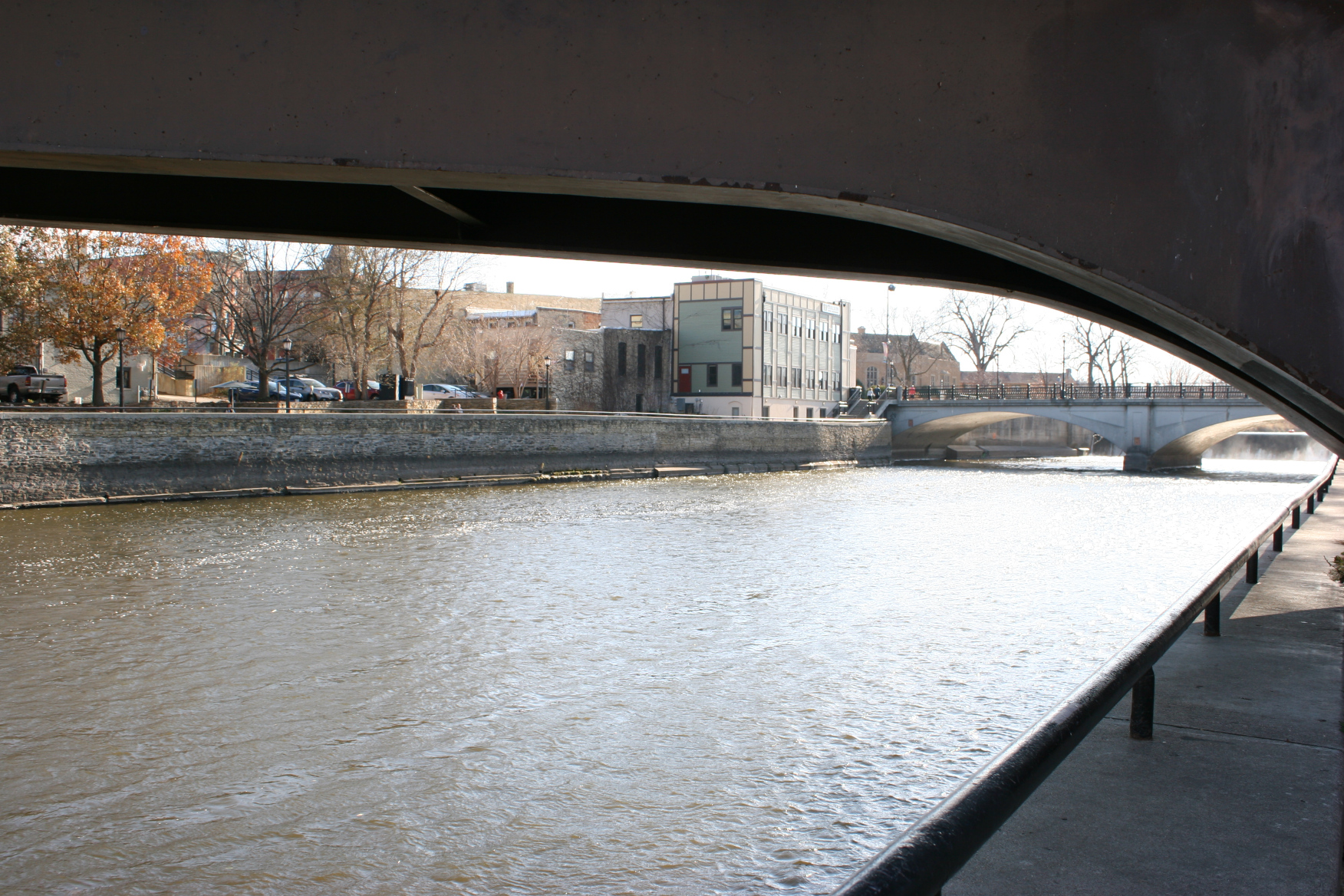
From the river walk, nearly under the pedestrian bridge, I photographed the Cannon River and distant buildings.
Homegrown businesses fill the historic downtown, which edges the river. Here you’ll still find an independent bookstore plus antique shops, boutiques, restaurants, an arts center, the public library and much more.
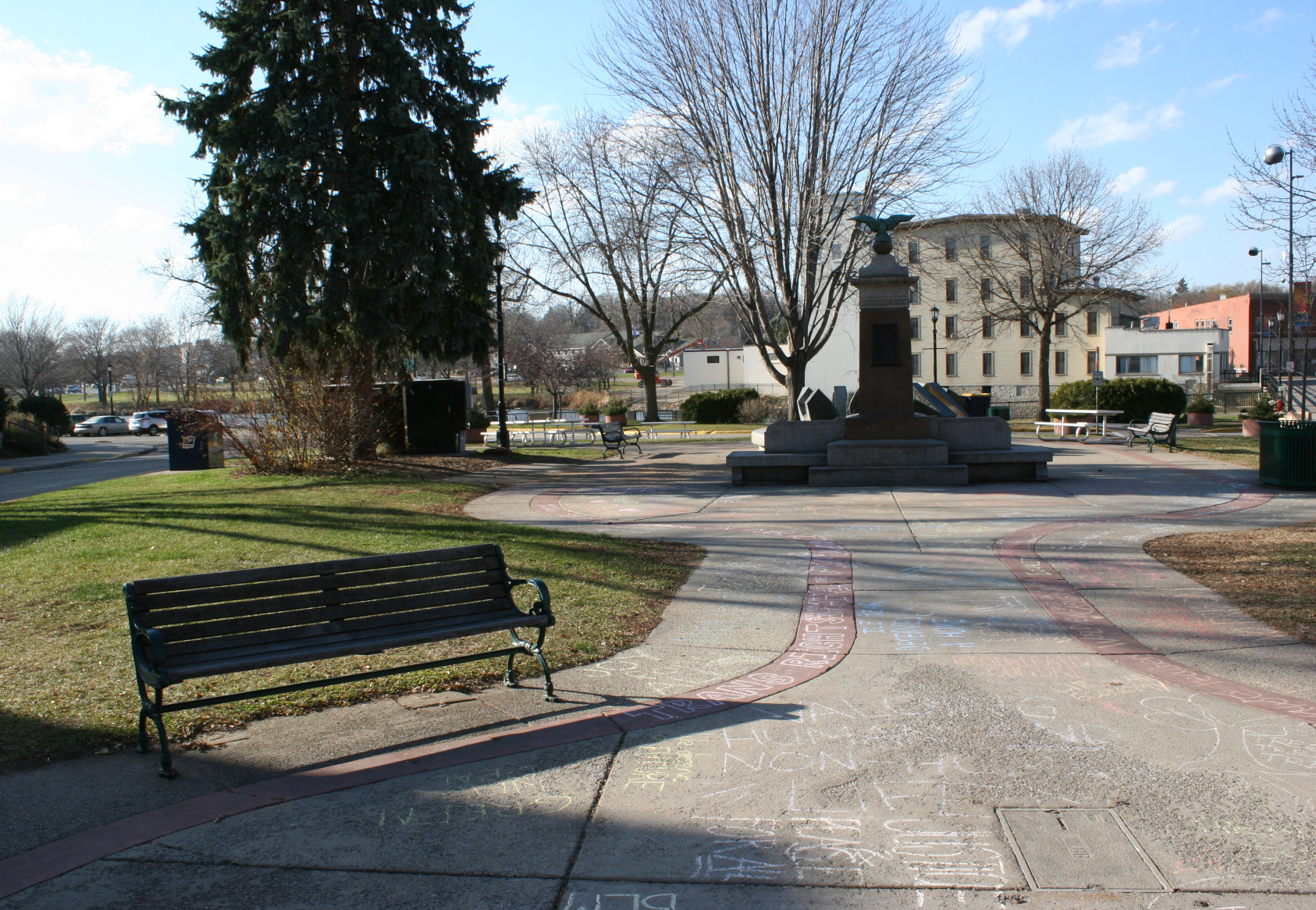
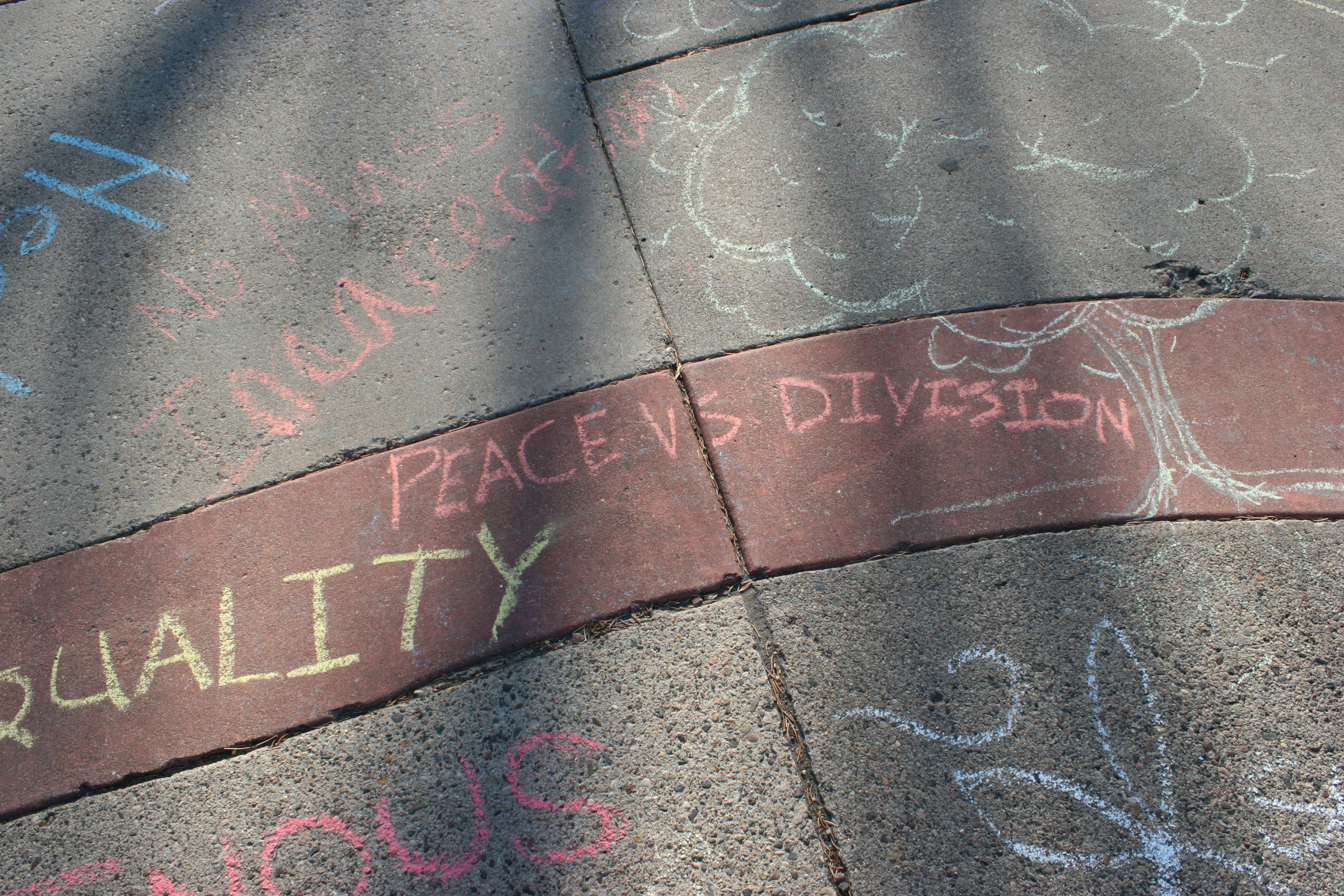
Bridge Square, Northfield’s downtown community gathering spot often chalked with messages.
And, in the heart of Northfield’s business district you’ll also find a community gathering spot. Bridge Square. Here you can buy popcorn from a vintage wagon in the summer, take the kids or grandkids to visit Santa during the holiday season. You can rest here on a bench and engage in conversation. Watch the river flow by or the water fall over the fountain sculpture or the nearby dam.
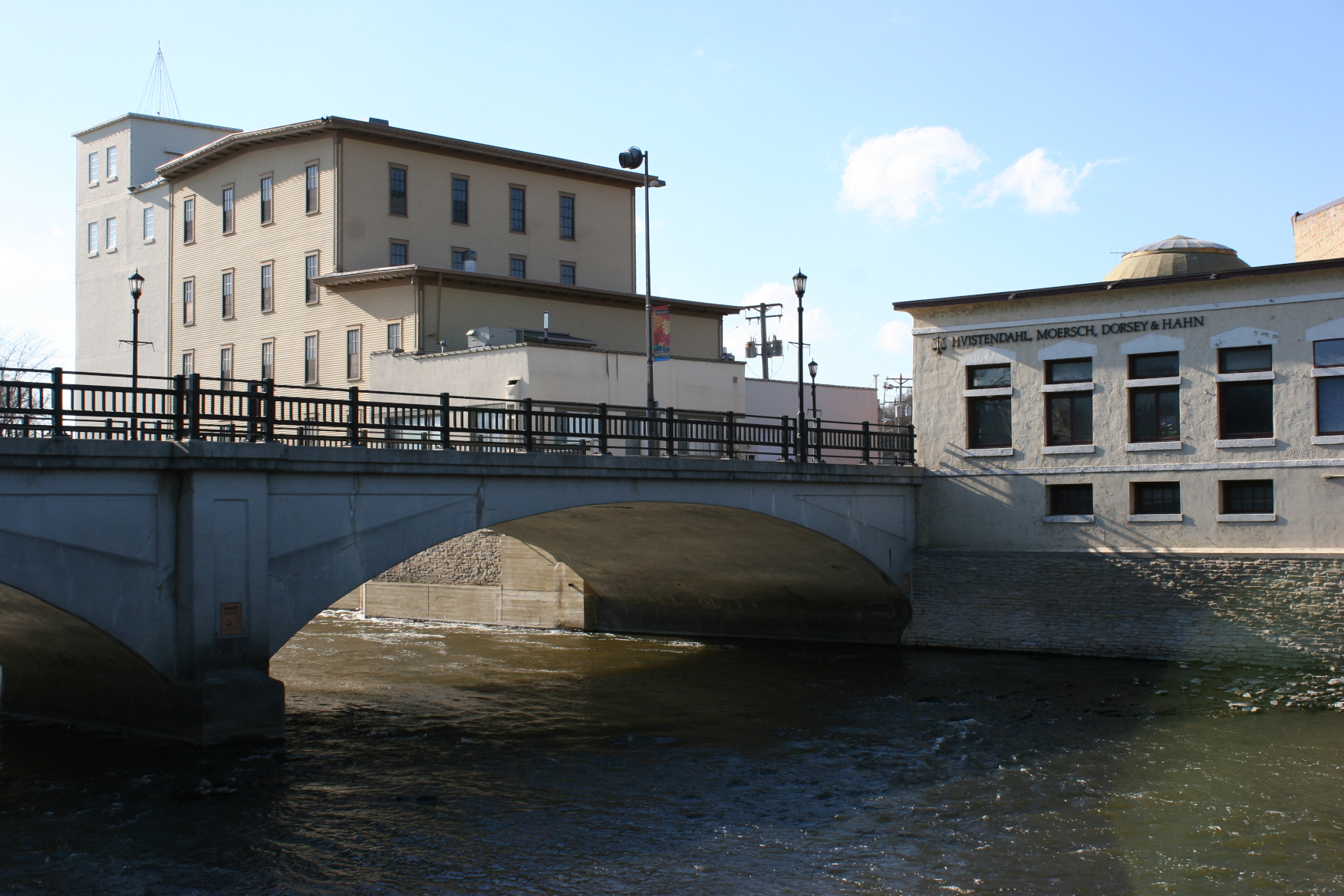
This motor vehicle bridge lies next to the Ames Mill, across the river from Bridge Square.
But Bridge Square is so much more than a Norman Rockwell-like place to meet, gather and relax. It’s also a spot where opinions are expressed. Students from St. Olaf and Carleton, two noted private liberal arts colleges based in Northfield, use this space to gather and voice their concerns. And, even though I may not always agree with their views, I appreciate that they share them. To see young people concerned enough about an issue to publicly express their thoughts gives me hope.
Among the many messages, peace vs division.
For the first time in a long time, I feel hope. Out of all the chalked messages I read on Sunday while at Bridge Square, I found one that really spoke to me. Peace vs division. Oh, how we need that. Peace. Not division.
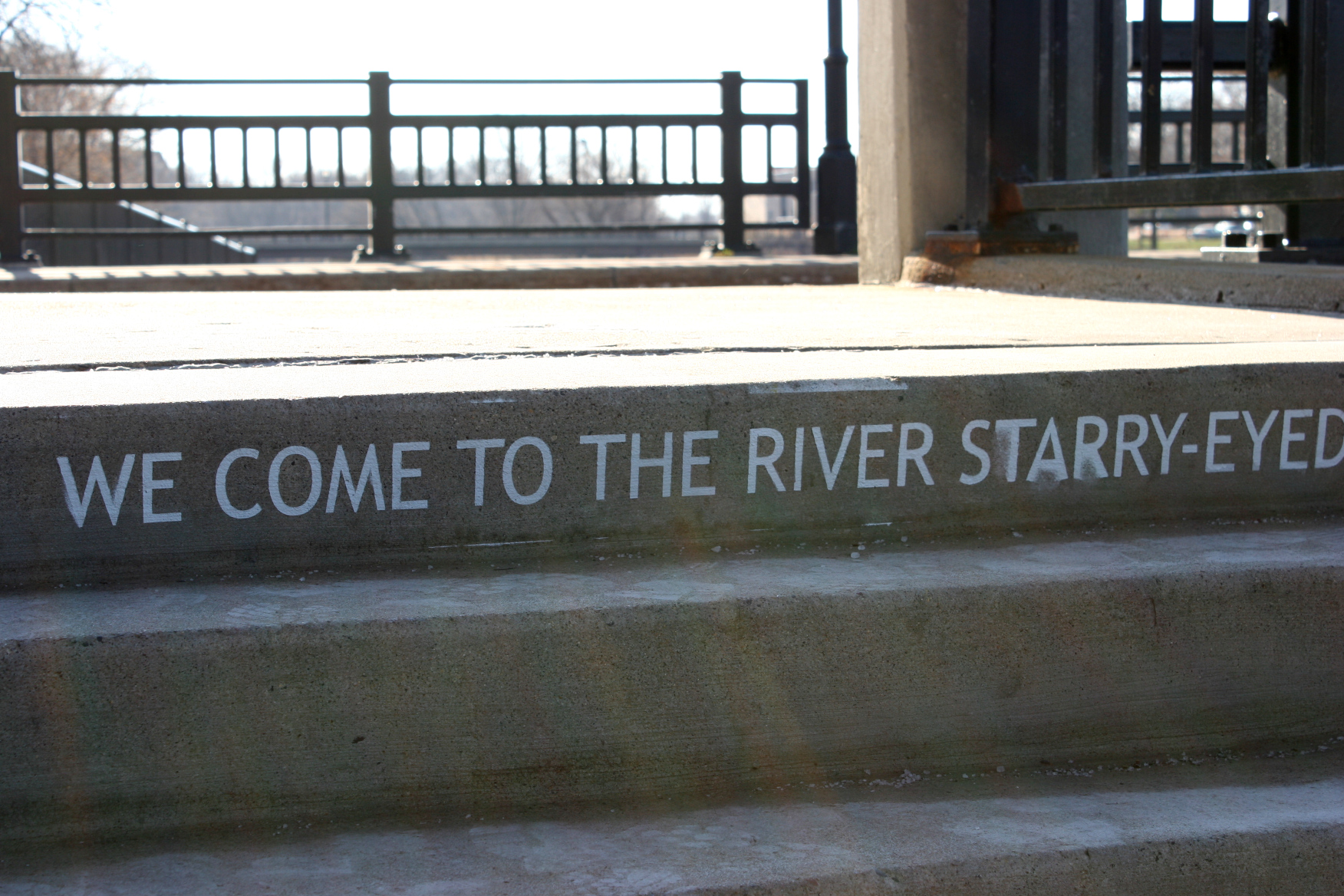
A message printed on a step leading to the river walk. You’ll also find poems imprinted into sidewalks in downtown Northfield.
That stop at Northfield’s town square, with so many issues printed in chalk on cement, could easily have overwhelmed me. I could have despaired at all the problems that need fixing. But rather, I choose to see this as an acknowledgment of concerns. Of the possibilities. Of the solutions. Of choices which can bring peace rather than division.













 Minnesota Prairie Roots
Recent Comments