Minnesota Prairie Roots

Writing and photography by Audrey Kletscher Helbling
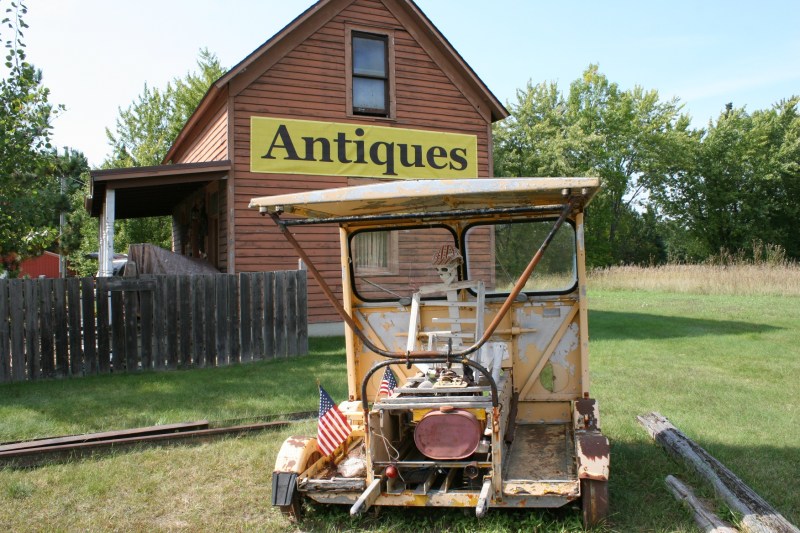
Music & merchandise at Flour Sack Antiques January 17, 2018

Filed under: Uncategorized — Audrey Kletscher Helbling @ 5:00 AM
Tags: , , , , , , ,


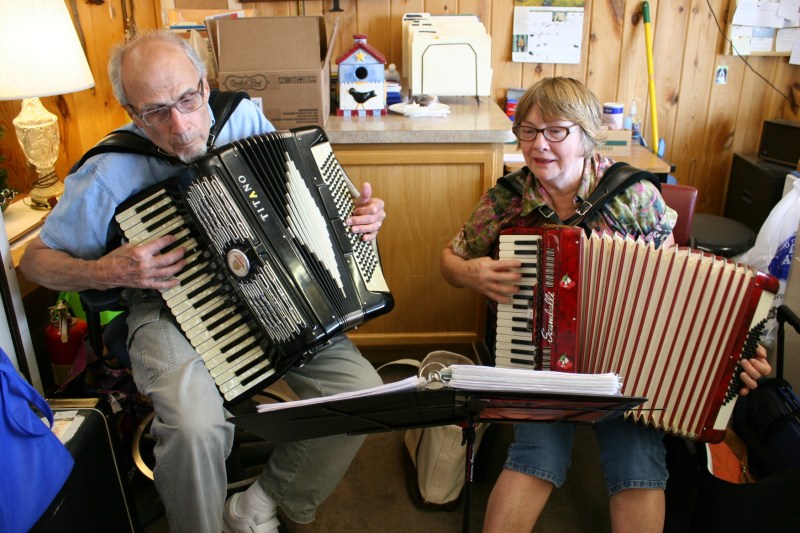
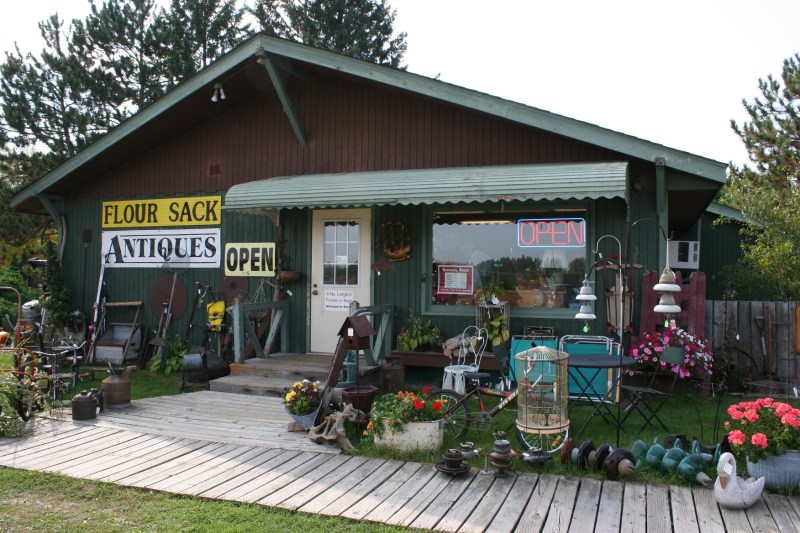
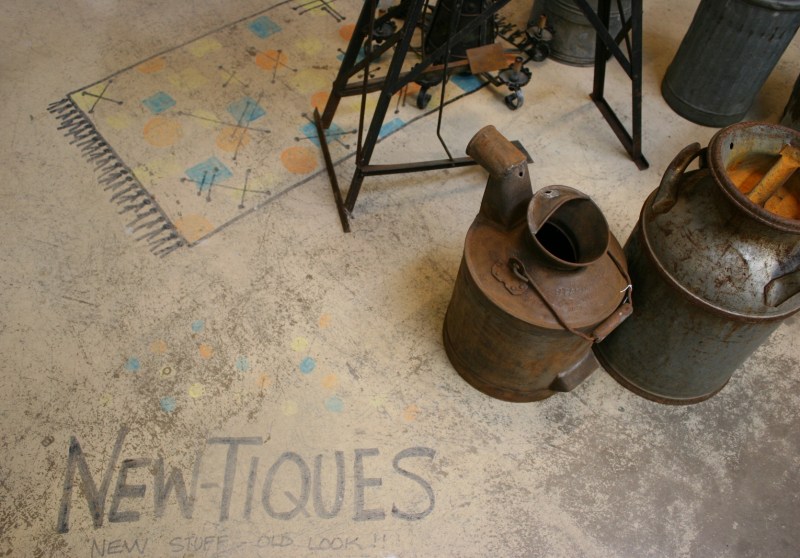
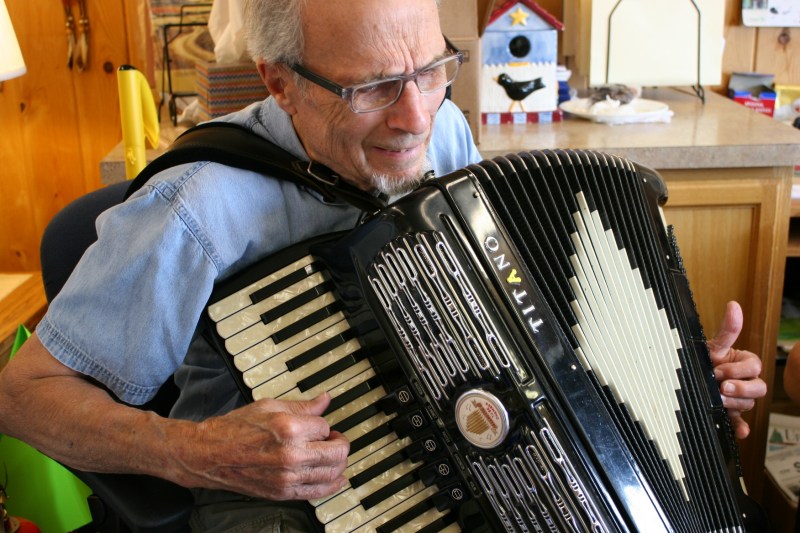
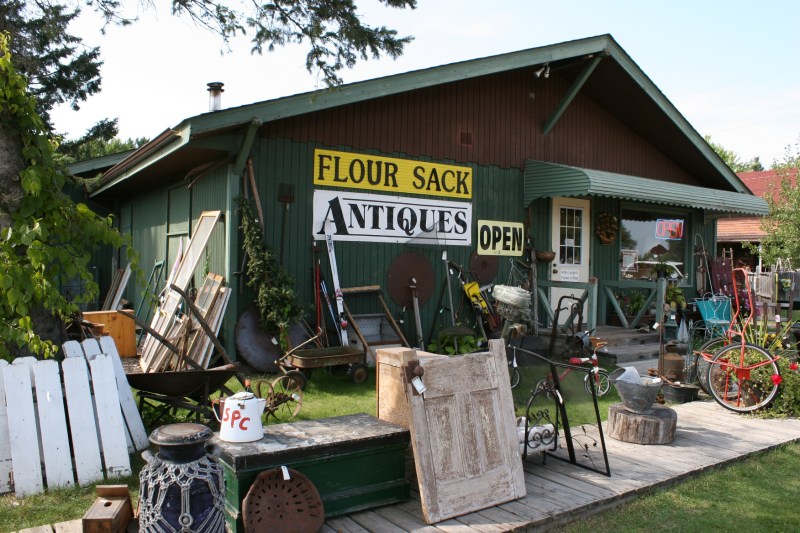
THIS MARKED A FIRST for me, hearing accordion music inside an antique shop. I rather enjoyed the rhythm of songs as I eased around corners, dipped into rooms and keyed in on merchandise inside Flour Sack Antiques just south of Pequot Lakes.


While I don’t recall the songs performed during my mid-September stop here, I remember how fitting the music for a place brimming with all things aged, all things vintage.


After you visit a few antique shops, they often blend into a sameness of overstocked shelves in too tight quarters. But the Flour Sack I’ll remember for the two musicians squeezing music from boxes while seated behind the front counter.


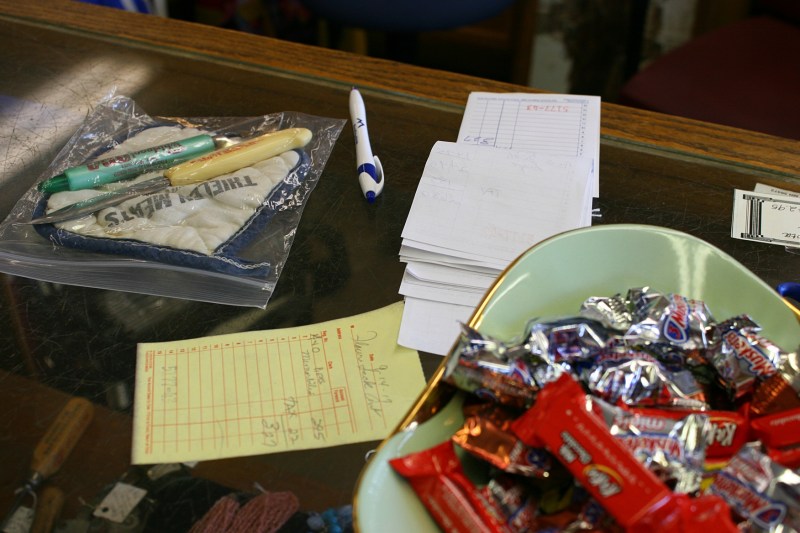
And I’ll remember, too, the handwritten receipt penned by the male accordion player/shopkeeper.


Joy comes in music. And joy comes in memorable nuances of a place like the Flour Sack.


FYI: Flour Sack Antiques is located along Minnesota State Highway 371 at its intersection with County Road 168 two miles south of Pequot Lakes in Central Minnesota.

© Copyright 2017 Audrey Kletscher Helbling
 

On the road to southwestern Minnesota, a photo essay December 19, 2017

A former country school near Essig along U.S. Highway 14.


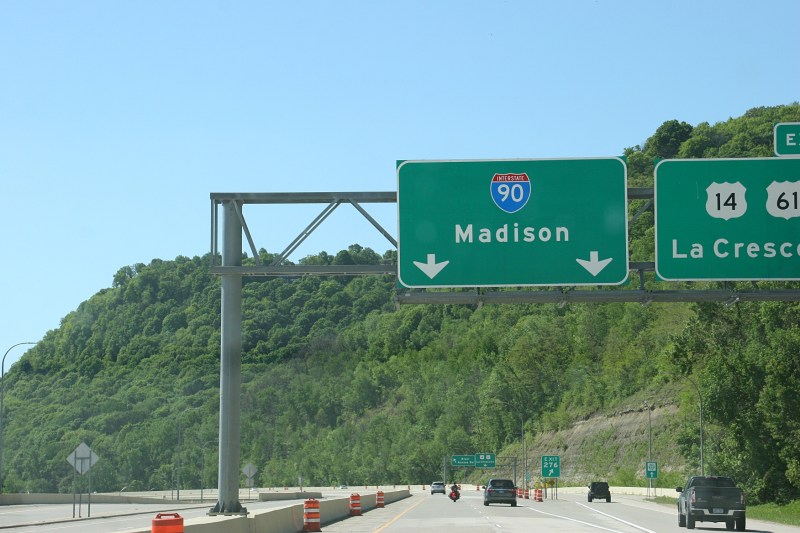
TWICE A YEAR, my husband and I head west from our Faribault home to my native southwestern Minnesota for gatherings with my extended family. We travel solely with destination in mind, not deviating to meander through small towns and explore. We get on Interstate 35 in Faribault, exit onto U.S. Highway 14 in Owatonna and then follow the Laura Ingalls Wilder Historic Highway all the way to our destination 2.25 hours away in Lamberton. That would be in Redwood County, just 10 miles east of Walnut Grove.

Near Janesville, this billboard sparkles in the morning light.

Everything along this route is familiar to me from the curves in the highway to the billboards to the farm sites and my favorite barns west of Springfield. While sometimes the drive can seem like forever, especially when wind whips snow to create iffy driving conditions, mostly I enjoy the rural route.

At the beginning of our trip, I photographed this farm site west of Owatonna. The farther west we drove, the greyer the skies became.

Enjoy this photo essay along U.S. Highway 14, aiming west toward the prairie into some of our state’s richest farmland as we headed back for the holidays last Saturday.

Red barns splash color into the rural landscape, here near Janesville.


An ethanol plant near Janesville breaks the monotony of farm fields.


Highway 14 takes us through New Ulm. I spotted this catchy and festive billboard on the west end of town.


You know you’re in the heart of farmland when you see a cash corn price posted on a sign, this one at Christensen Farms near Sleepy Eye.


This reindeer statue stands along the east edge of Sleepy Eye. It’s there year-round.


Weathered by wind and weather, this barn sits west of Sleepy Eye.


A row of vintage trucks are parked atop a hill on the east edge of Springfield.


One of my favorite barns on a farm site west of Springfield.


We reach our destination in Lamberton where grain elevators mark this rural community.


© Copyright 2017 Audrey Kletscher Helbling
 

Celebrating Laura Ingalls Wilder at a Chicago museum & I’m in December 18, 2017

Follow U.S. Highway 14, the Laura Ingalls Wilder Historic Highway, west across the prairie to Walnut Grove, Minnesota, and then on to De Smet, South Dakota. Minnesota Prairie Roots file photo.


MINNESOTA PRAIRIE ROOTS. My blog name honors my roots in Redwood County where Laura Ingalls Wilder, celebrated author of the Little House book series, lived for awhile as a child. Walnut Grove lies just 20 miles distant from my childhood home. It is a place where earth and sky spread wide, where fertile black soil grows tall corn and the wind seldom stops blowing.


The American Writers Museum in Chicago. Photo courtesy of Lee Engquist.


Some 500 miles to the south and east of Walnut Grove lies Chicago. Windy, yes. But otherwise distinctly different. Nothing prairie-like here in this city. Until you look close, to the new American Writers Museum which opened in the heart of Chicago in May.


An overview of a section of the Laura Ingalls Wilder exhibit. Photo courtesy of Laurel Engquist.


I’ve not visited the museum. Yet, I hold a connection to this acclaimed museum now showcasing a temporary exhibit, “Laura Ingalls Wilder: From Prairie to Page.” I grew up with the Little House books read by an elementary school teacher each day after lunch. That was long before the books grew in popularity, long before the TV series, long before Walnut Grove became a destination for Laura fans.


My Laura Look-A-Like Contest photo close-up in the exhibit. Photo courtesy of Laurel Engquist.


But my love of Laura’s writing and my native prairie roots are not my only connections to this exhibit which runs through spring 2018. A photo I took several years ago during a Laura Look-Alike Contest in Walnut Grove is included in the exhibit.


Laura Look-A-Like contestants gather for a group shot in a Walnut Grove city park in July 2013. Minnesota Prairie Roots file photo 2013.


Awhile ago, Boston-based Amaze Design contacted me about using the image. The design company manages content development for the museum.


This section features noted American authors. Within the museum is info highlighting Minnesota writers F. Scott Fitzgerald, Sinclair Lewis, Charles Schulz and more. Photo courtesy of Laurel Engquist.


An exhibit in the Children’s Literature Room. Photo courtesy of Laurel Engquist.


Another exhibit focuses on the writing process. Photo courtesy of Laurel Engquist.


From what my friend Laurel, who recently toured the 11,000 square foot literary museum tells me, the place is impressive. Located on the second floor of a building at 180 N. Michigan Avenue, it includes 13 permanent exhibits in six galleries plus temporary exhibits. Laurel spent hours there wandering, reading, observing and participating in interactive aspects of displays. She was surprised to find my Laura Look-Alike photo as part of the American Voices Exhibit.


The prairie near Walnut Grove is especially beautiful in the summer. I took this photo at the Laura Ingalls Wilder dug-out site north of Walnut Grove many years ago. Minnesota Prairie Roots file photo.


I’m honored to have my work included. I’m proud of my prairie roots, of my rural upbringing in a part of Minnesota made famous by a much-loved American writer.


FYI: If you’re wondering how Amaze Design found my photo, look no further than searching the internet. I also have photos included in exhibits at the Children’s Museum in St. Paul and in the World War II Museum in New Orleans. All found my work online, on this blog.


Disclaimer: Amaze Design paid for rights to use my Laura Look-A-Like image in the exhibit.

© Copyright 2017 Audrey Kletscher Helbling
Thanks to friends Laurel and Lee Engquist for permission to share their photos.

.


The antique shop next to The Van Man November 29, 2017


Next to Bay Lake Antiques, used cars, trucks, and a few vans, cram a fenced lot bannered with signs like WORKING MANS TRUCKS, THE VAN MAN, TRUCKS AND CARS FOR THE WORKING MAN.


But what if you’re a woman?


I suppose you’re still welcome. Not that I was in the market for a different vehicle, being on vacation and all. Yet, as Randy turned our aging van off Minnesota State Highway 18 between Garrison and Brainerd, I considered the potential alienation of female customers via that marketing strategy.


After my initial surprise and after taking a few photos, I focused on the neighboring antique shop and the content therein.


The gracious proprietor accepted my request to take photos as I poked around the main shop, in several stand-alone units and in a roofed wagon jammed with merchandise.


I found several priced-right rural-themed vintage trays that interested me, but passed on them because of their condition. More and more I can talk myself out of a purchase by repeating, I don’t really need more stuff.


Yet, that doesn’t keep me from antique shops, from thrift stores and such that more and more these days hold the treasure of memories.


© Copyright 2017 Audrey Kletscher Helbling
 

When a prairie native sees Mille Lacs Lake for the first time November 28, 2017

Near shore, a seagull wings across Mille Lacs Lake, water and sky melding in vastness.


AT MY REQUEST, Randy and I took an indirect route from Faribault to Brainerd on a mid-September Up North vacation. I wanted to see Mille Lacs Lake, Minnesota’s second largest inland lake covering some 200 square miles. It just didn’t seem right that, as a life-long Minnesotan, I’d never viewed this expansive body of water.

As a native of the landlocked prairie, my youthful exposure to Minnesota’s lakes included occasional fishing for bullheads, swimming in Cottonwood Lake once a year and a trip at age four to Duluth along the shores of Lake Superior. When you grow up on a dairy farm, there are few vacations; mine during childhood totaled two.


Tethered along Mille Lacs.


Without the typical Minnesota background of going up to the lake on weekends, of boating and swimming and fishing in the Land of 10,000 Lakes, I was eager to see Mille Lacs. I’ve heard so much about the lake, especially in recent years given the controversial restrictions on walleye fishing.


My first view of Mille Lacs Lake.


Our route took us along US Highway 169 along Mille Lacs and into Garrison.


I focused on a nearby shoreline until I mentally adjusted to the size of Mille Lacs Lake.


My first glimpse of Mille Lacs from U.S. Highway 169 presented no surprises. It was as I expected—a visual vastness of blue. As our van rounded into Garrison, the view opened and I anchored my eyes to the nearby shoreline. Until I adjust, I find the initial infinity of such large lakes a bit unsettling.


The concourse provides a lovely view of Mille Lacs. But there’s seagull poop everywhere.


Soon we pulled off Highway 169 and into the Garrison Concourse, a roadside scenic overlook built between 1936- 1939 by the then Minnesota Department of Highways and the Civilian Conservation Corps. On the National Register of Historic Places, this space features a rock retaining wall that, while impressive, was also unappealing for all the dried seagull poop streaking the wall, benches, sidewalk and pavement. I had no desire to sit here, linger and enjoy the view.


So I focused my attention on the 15-foot fiberglass walleye statue, built in 1980 for a local parade, and now a kitschy roadside attraction for a town that claims to be the Walleye Capital of the World (along with Baudette and several out-of-state locations).


An oversized walleye couldn’t just land here on its own. A sign posted on the statue base, next to the one that warns to PLEASE KEEP OFF THE WALLEYE THANK YOU, credits legendary lumberjack Paul Bunyan for the trophy catch. You gotta appreciate a good story.


Randy and I did the typical tourist thing and posed for selfies next to the mega walleye.


If not for my observant husband, I would have missed another attraction—a small stone marker honoring William A. Tauer, a local hotel owner who drowned while trying to save boaters during a June 10, 1927, storm on Mille Lacs Lake. Engraving credits THE PEOPLE OF MORGAN, MINN for the memorial marker. That drew my interest. Morgan sits some 175 miles away to the southwest in my home county of Redwood. Later online research revealed little more. I expect William grew up in Morgan, where the Tauer surname is still common. I’d like to know more.


All in all, the overwhelming size of Mille Lacs impressed me. But not enough that I need to return. My disappointment came in the sense of—there’s the lake, now what? Perhaps further exploration beyond just this area by Garrison would change my perspective. Or, as others suggested, a return in the winter to see the thousands of fish houses on the frozen lake would impress me.


I have no desire to board a boat in a body of water this large. Randy has done so and I’ve heard his seasick stories. Nor do I desire to fish here in the winter when the ice cracks and anglers have been stranded on ice floes.


Still, I enjoyed the view and the iconic walleye. I can now say, “I’ve been to Mille Lacs.” But I can’t say, “I’ve patronized the Blue Goose.” The iconic restaurant and bar, my husband noted and lamented, is gone.


© Copyright 2017 Audrey Kletscher Helbling
 

Brainerd memories November 20, 2017

Filed under: Uncategorized — Audrey Kletscher Helbling @ 5:00 AM
Tags: , , , , , , ,


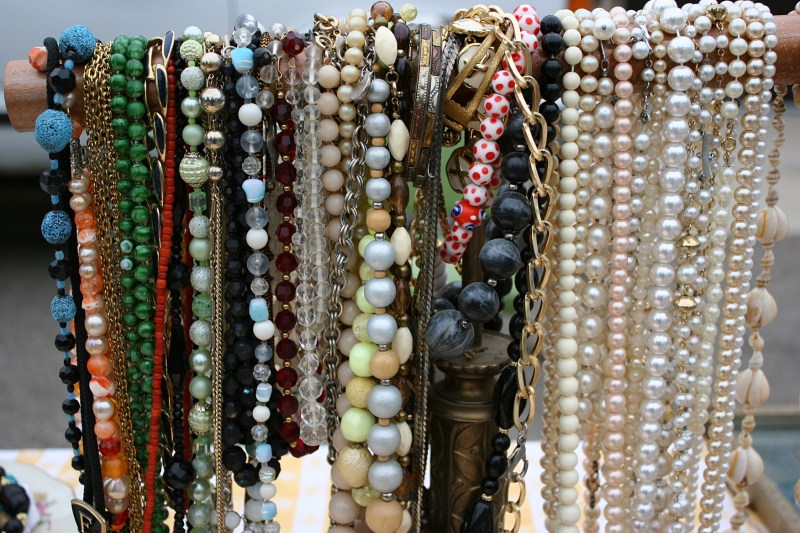
Life could be compared to a beaded necklace, each bead representing a memory. Together the beads form a necklace, an accumulation of our life stories. Artist Cyrus Swann created this necklace with handmade porcelain beads and displayed at Crossing Arts Alliance in downtown Brainerd as part of the recent “ART TO WEAR, TEXTILES AND BEYOND” exhibit.


MORE AND MORE THESE DAYS, the quickness of time catches me by surprise like the first brisk wind of winter stinging my face.


Like the varied art in the “ART TO WEAR, TEXTILES AND BEYOND” exhibit, we each hold unique qualities, shaped by our experiences, our personalities and more. The center showcased garment is the work of Carolyn Abbott and is titled “Missus Carolyn Quite Contrary.”


I pull my wool jacket closer, tighten my scarf, wrap my hands in the warmth of gloves. Those actions won’t stop winter. But they keep me warm, comfortable.

So do positive memories.


This art by Lisa Jordan seems to hold years of memories.


Many decades of memories—difficult and joyful, mundane and remarkable, everyday and extraordinary—crowd my brain. Some seem so distant, as if another person lived that life in another place in another body.

In reviewing my life, I page through the chapters of growing up, of college and jobs and then marriage and family and, finally, today, the reality of a house now empty of children with Randy and me back at start.


We brought to our marriage those years when no connection existed between us. And those are the 25 years that still yield discoveries. On a recent trip to central Minnesota, we stayed two nights in Brainerd. Randy attended vocational school there more than 40 years ago. He knows the town. I don’t.


Chain businesses, and homegrown businesses, edge main routes in Brainerd. Many are new since Randy lived here in the mid 1970s.


But in four decades, things change. That proved the resounding theme. “That wasn’t there. That’s gone,” Randy repeated. And on and on. In the context of revisiting a community you left long ago, the reality of aging strikes hard.


I always appreciate public art, including this sculpture of Paul Bunyan and Babe the Blue Ox on a downtown Brainerd street corner.


One of my favorite discoveries: this gathering space for knitters inside Utrinkets, a yarn, antiques and boutique shop along Laurel Street. Loved the place and the people.


It was nice to see this locally owned bridal and formal wear shop downtown.


Downtown carried a sense of emptiness, surprising us both as we pulled into Brainerd on a late mid-week afternoon in September. I held a preconceived image of a city crammed with mom-and-pop shops. Sure, they exist. But not as in you can’t find a place to park and we’ll never have enough time to get to all these shops (like in Park Rapids or Stillwater).

As a side note, while writing this post I learned that Brainerd is among two Minnesota cities recently selected as one of 20 finalists competing for the coveted spot of featured town in Small Business Revolution–Main Street, Season Three. The other is Owatonna, just a dozen miles from my home. The winner garners a substantial monetary prize and a Main Street revitalization plan.


No photo ban at the bridal shop, but a shoe ban instead, which makes sense.


But back to my Brainerd visit, where, after our stop downtown and a long day of travel, I wanted a craft beer. Much searching and many wrong turns, later, we eventually found Roundhouse Brewery in a railroad yard posted with signs forbidding photography. Photo bans irk me when I view so much visual storytelling potential. So I drank my beer, chatted it up with locals and simply enjoyed the evening before we headed to a hotel and dinner out.


I laughed at this sign outside Hockey House Minnesota in downtown Brainerd.


The next day we aimed north to Nisswa and Pequot Lakes, returning to our Brainerd hotel and a second town tour as the sun edged evening toward night. I tried to be patient while Randy wove the van down street after street, even snailing by Granny Growler’s house where he and two friends rented rooms and strained spaghetti in the bath tub. (The upstairs lacked a kitchen.) I’ve heard the tale too many times not to believe its truth.


The Crow Wing County Courthouse.


Randy talked of walking to the nearby vo-tech, now part of the high school campus, and reminisced about working in the tire shop at JC Penney. Or was it Sears? His words blurred, the memories he spoke holding much more meaning for him than for me.


The historic water tower, photographed as we drove by it.


The landmark Lions head drinking fountain, here since 1968.


Still, in the decades of change, some things remain unchanged in Brainerd—like the water tower and the lion’s head drinking fountain. There’s comfort in that, in tangible places that endure time, that still hold seasons of memories.

© Copyright 2017 Audrey Kletscher Helbling
 

The story of Babe the Blue Ox in Nisswa November 13, 2017

Filed under: Uncategorized — Audrey Kletscher Helbling @ 5:00 AM
Tags: , , , , , , , ,


WHAT DEFINES NISSWA?


Ten years ago, Nisswa Elementary School students created a work of art which partially answers that question in an unlikely place—on a Babe the Blue Ox statue.


Situated on a corner of Main Street, the artwork showcases most anything a visitor, like me, would want to know about this northwoods Minnesota community.


From the story behind the town’s name to the availability of pizza and ice cream treats to the turtle races, these kids highlight the best of Nisswa on Paul Bunyan’s sidekick.


They appreciate their parks and bookstore, Pioneer Village, the Halloween parade and, yes, the local library, too.


Well done, former kids of Nisswa.


© Copyright 2017 Audrey Kletscher Helbling
 

Up North in Nisswa November 9, 2017

Filed under: Uncategorized — Audrey Kletscher Helbling @ 5:00 AM
Tags: , , , , , , , , ,

Babe the Blue Ox of Paul Bunyan Legend stand on the corner by the tourism office along Nisswa’s Main Street.


ON THE THURSDAY I toured Nisswa in mid-September, the turtle race track stood empty, Babe the Blue Ox stood tall and this northern Minnesota community buzzed with visitors.


Set in the heart of lake country, this town of some 2,000 draws folks from nearby cabins, resorts and hotels to meander through the many shops that line several blocks of a route once followed by Native Americans traveling northward through these parts from southern Minnesota.


Babe the Blue Ox bears the history of Nisswa’s name on its flank.


The name Nisswa comes from the Ojibwe word nessawae meaning “in the middle” or “three.” Nisswa sits in the middle of three lakes.


On this day, I didn’t learn much about local history. But I did learn that these northerners rate as a friendly bunch. In business after business, shopkeepers greeted Randy and me with friendly smiles and welcoming attitudes. With the exception of signs prohibiting photos of merchandise (much of it original art) prevalent throughout Nisswa, I felt more than welcome.


A shopkeeper at The Fun Sisters Up North Boutique even convinced me to try on leggings and an appropriate bum-covering top. Inside my mind, I protested. But she was just so darned nice that I agreed. I’ll admit that I looked better than I thought in leggings. But I still felt like I was playing dress-up in fashionable attire totally foreign to me. She didn’t make the sale. But the clerk sold me on the genuine friendliness of Nisswa.


Signature northwoods birch logs propped outside a business.


I dropped my money in several other businesses, picking up Minnesota-themed gifts for friends and my granddaughter.


Vintage Native American art outside a shop tips visitors off to this region’s history.


The legend of Paul Bunyan, here interpreted in a woodcarving, runs strong in the Minnesota northwoods.


Nisswa presents a definitively northwoods feel with more than one Babe the Blue Ox and Paul Bunyan and plenty of buffalo plaid and loon art. Randy and I spent hours here ducking in and out of shops. And that says a lot for the attraction of Nisswa to someone like me who generally dislikes shopping. The original arts and crafts and merchandise with a Minnesota bent kept me interested.


Painted turtles mark businesses.


Although we didn’t patronize a Nisswa eatery, there are plenty of options for meals, treats and brew.


Had we arrived in Nisswa at 1 p.m. on a Wednesday weeks earlier, we would also have witnessed the weekly summertime turtle races. Reminders of that tourist draw are evident in the turtle race track and in turtles painted onto sidewalks in front of businesses. I applaud communities like this that hatch and then latch onto an idea that identifies and sets them apart from other towns. For Nisswa, it’s turtle races and friendly folks in quaint northwoods shops.

TELL ME: Have you been to Nisswa? What is your impression of this small Minnesota town?

Please check back for a closer look at the iconic Babe the Blue Ox statue along Main Street.


© Copyright 2017 Audrey Kletscher Helbling


In the dark of the night along a rural Minnesota roadway… November 2, 2017

Filed under: Uncategorized — Audrey Kletscher Helbling @ 5:00 AM
Tags: , , , , , , ,

A semi awaits the harvest. Photo used for illustration purposes only and not at the same location where this story takes place. Minnesota Prairie Roots file photo October 2014.


AHEAD OF US along the side of a county road between Faribault and Medford, hazard lights from a tractor trailer pulsated amber into the blackness of a late autumn evening.

A few miles away, combines spotlighted cornfields as farmers worked the night shift in an already late harvest season.

In the rural blackness, our 2003 Chevy Impala beamed headlights through the deep dark, our eyes scanning ditches for deer evicted from fields.

The setting was prime for drama, for threatening possibilities, for imaginations to race rampant.

And then it happened. As we edged even with the parked semi near the county line and our turn-off intersection, the driver stepped from the cab, hailing us. Randy stopped the car. I rolled down the window and the stranger approached. I never considered in that moment the possibility of danger. It was only afterward when friends questioned our decision that I evaluated our choice. But in this moment, this man needed assistance.

Randy pulled the car ahead to a safer spot. Then the stranger leaned toward me, handed me a slip of paper, cigarette breath hanging in the air. I pulled down the visor, flipped up the mirror cover to unleash light. He spoke in jerks of thickly-accented words. “No English. Ukraine, Poland…”

He pointed to the paper again. And we understood that this Ukrainian needed to find his delivery destination. Here, in this countryside where the wind whipped across fields in bone-chilling cold. Here, where dark prevailed. We pulled our smartphones out and Randy punched in the address. We were there, at the driver’s destination. But in the blackness, we perceived nothing except the faint outlines of grouped buildings.

I tried to explain that we would turn around, check out the location and return. But the driver didn’t understand and started walking, swallowed by the darkness. Randy followed. Except I didn’t know that he planned, too, to disappear into that roadway ribbon of blackness. As the minutes ticked by and I waited, my angst rose. Where was my husband? Had this stranger robbed him, assaulted him, pushed him into the road ditch…?

I picked up my phone, punched the green icon connecting to Randy’s phone. He answered. My fear lessened. “Where are you?” I asked.

“Walking back,” he assured. “There in a minute.” And he was, along with the truck driver.

Still, we hadn’t solved the problem. Randy thought the destination business had a second access. There was none, only a single gated road in and no room for a tractor trailer to park until the next morning. Our efforts to communicate in English with the driver failed. So I resorted to mimicking sleep, the rising sun and turn around and go back to town with my arms. Finally he understood and thanked us profusely.

We left the trucker there on the side of the county road, in the blackness of night. Hours later we retraced our route home to find the semi gone, presumably parked miles away at a truck stop for the night. And we wondered about the Ukrainian, how he had come to be a commercial truck driver lost on a rural southeastern Minnesota roadway in the season of harvest.


TELL ME: Would you have stopped if this trucker flagged you down along a remote rural roadway in the dark of night?

© Copyright 2017 Audrey Kletscher Helbling
 

Part III from Hackensack: A close call along Highway 371 October 27, 2017

Filed under: Uncategorized — Audrey Kletscher Helbling @ 5:00 AM
Tags: , , , , , ,

TOOLING ALONG MINNESOTA State Highway 371 just south of Hackensack on the second to last day of our Up North vacation, Randy and I chatted and watched the northwoods landscape pass by. We’d had a good past five days exploring this part of the state, attending a book release party and visiting with friends.
Except for the cool and rainy mid-September weather and me forgetting my swimsuit, our much-needed get-away to the Brainerd Lakes and Park Rapids areas and to Hackensack had gone well. But that almost changed. Almost.
Ahead of us on the shoulder of the opposite traffic lane, we spotted a large bird huddled and feasting on roadkill. We expected a crow.
But as the van drew nearer, we identified the bird as a bald eagle. With my Canon DSLR camera in my lap, I was excited about the prospect of photographing the eagle.
 

An eagle sculpture at Veterans Memorial Park in Morristown. Imagine if this was a live eagle flying over your vehicle. Minnesota Prairie Roots file photo 2012 used here for illustration purposes only.


That did not happen because…moments before our vehicle drew even with the eagle, the bird lifted off from the roadside. That would have been OK except for one problem. The eagle flew directly toward our traffic lane and our van.

In that moment, thoughts flashed of the eagle slamming into, and through, our windshield. Instinctively I ducked. Massive talons and an impressive wing span filled my view as the eagle flew over our windshield. This bird of prey is much larger than you think when observed from an underside open wing span perspective.

Randy estimates the eagle missed our van by four feet. He later told me he swerved slightly toward the fog line hoping to soften the blow of impact. I had no sense of him doing that.

Looking back on this incident, I am thankful the eagle cleared our windshield. But I’m kicking myself for missing what would have been a heckuva photo.


FYI: This concludes my series from Hackensack. Click here to read my first post and then my second.

© Copyright 2017 Audrey Kletscher Helbling