Minnesota Prairie Roots

Writing and photography by Audrey Kletscher Helbling

Out & about on a dangerously cold January weekend in southern Minnesota January 18, 2016

Filed under: Uncategorized — Audrey Kletscher Helbling @ 5:00 AM
Tags: , , , , , , , , , ,
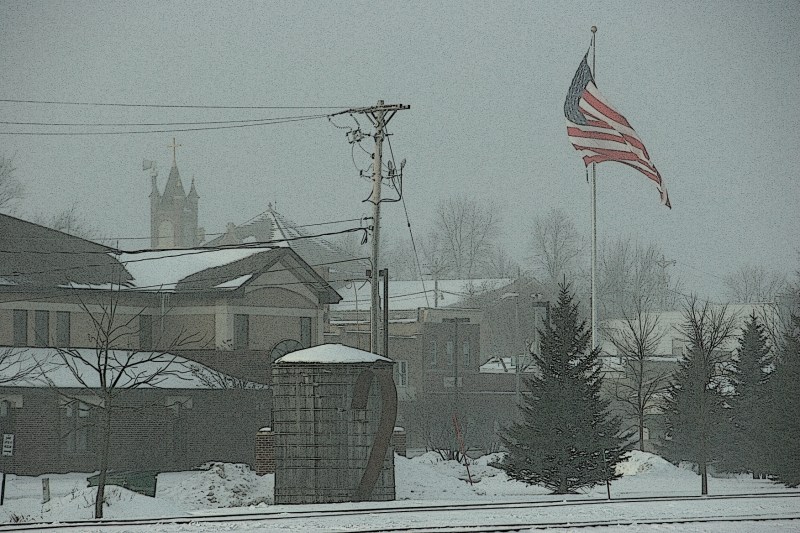
Saturday afternoon in Montgomery, fierce wind whipped this over-sized flag and a light snowfall.

Saturday afternoon in Montgomery, fierce wind whipped this over-sized flag as light snow fell.

BITTERLY COLD. Double digit below zero temperatures. Minus 15 degrees Fahrenheit Sunday and Monday mornings. Dangerous windchills of minus 35 and 45 degrees. Exposed skin that can freeze in 10 minutes or less.

That’s our reality in Minnesota these days as Arctic air settles over our state. It is the topic of conversation. We Minnesotans love to talk about our weather.

Cold enough for you?

Staying warm?

How long is this supposed to last?

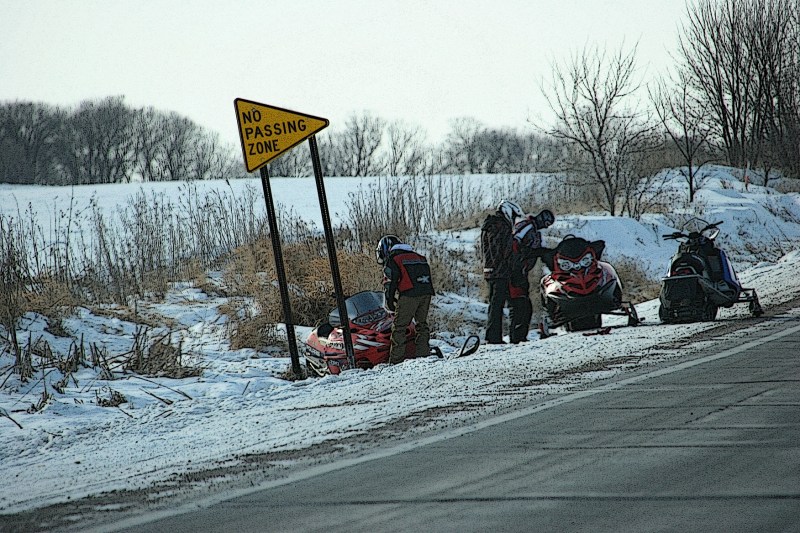
With windchills in the minus 20-degree range, Saturday afternoon, these snowmobilers dealt with machine break-down issues in the countryside.

With windchills in the minus 20-degree range Saturday afternoon, these snowmobilers dealt with machine break-down issues in the countryside.

We hole up indoors. Or we embrace the cold. As best we can. On Saturday I observed youth playing hockey outdoors while others skimmed across an adjacent skating rink. I spotted three snowmobilers parked alongside the road after a snowmobile apparently struck a highway sign. I saw vehicles ringing rural bars.

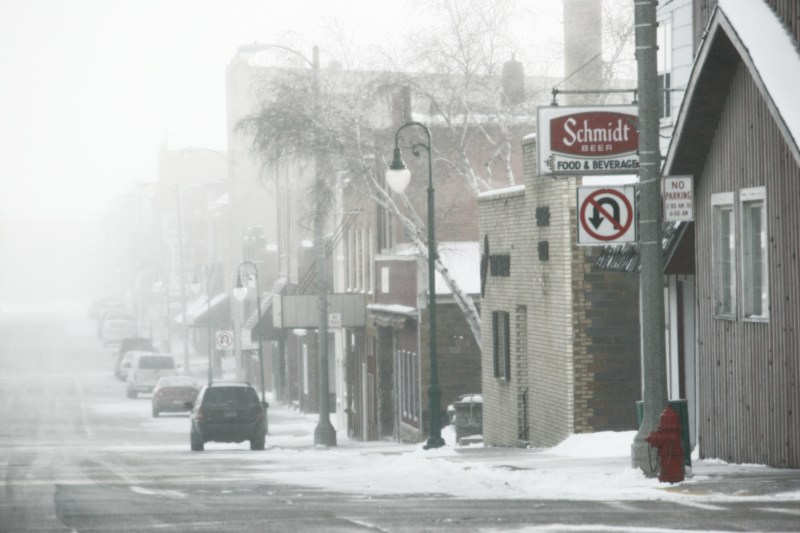
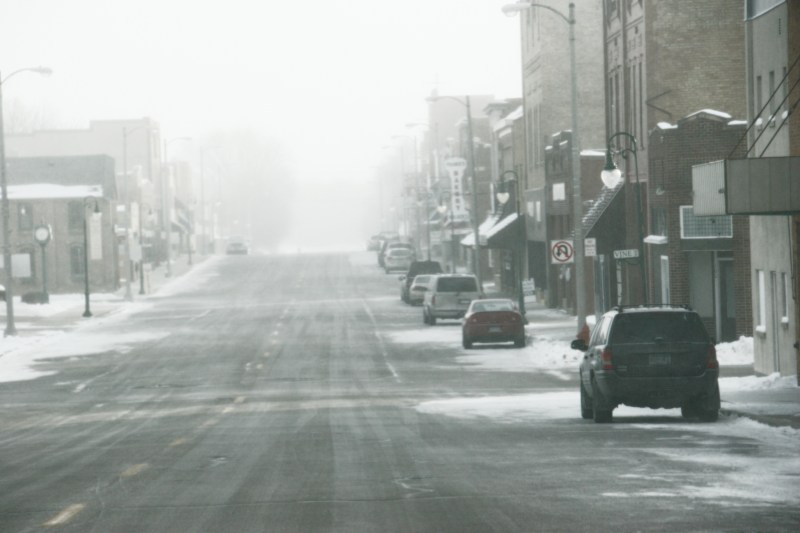
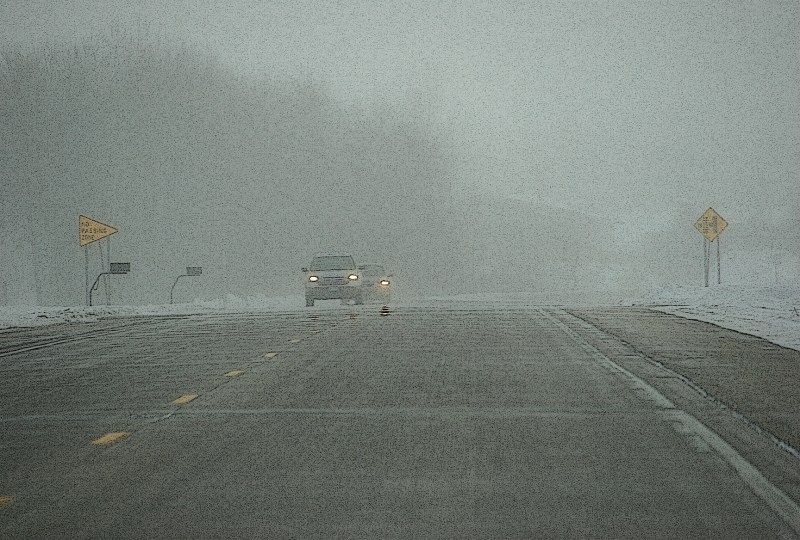
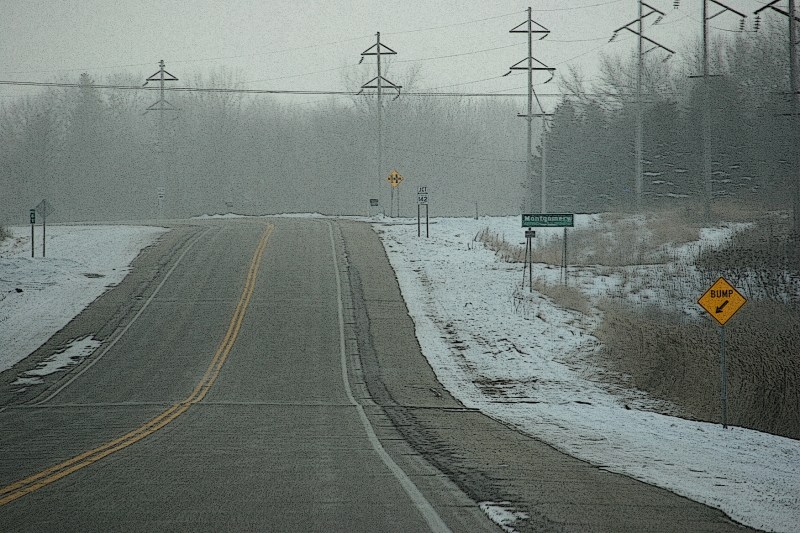
Reduced visibility driving into Montgomery Saturday afternoon.

Reduced visibility driving into Montgomery Saturday afternoon.

Me? I snugged inside the van with my husband, mini quilt across my lap, as we crisscrossed Rice and nearby counties. We just drove, feeling the need to escape reality for an afternoon. Our meandering took us to downtown Lakeville, where we ducked in and out of several home-grown shops.

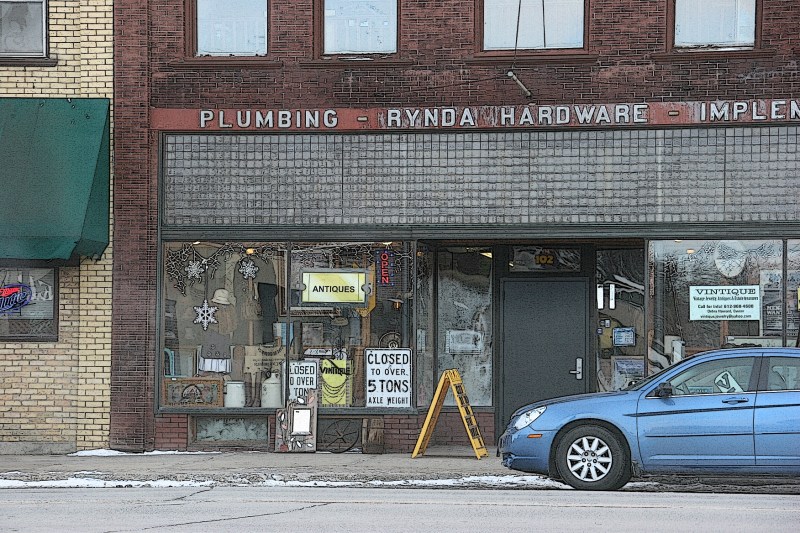
Since my last visit to New Prague, an antique shop has opened in this former hardware store. The shop holds a large collection of vinyl records and vintage Czech jewelry.

Since my last visit to New Prague, an antique shop has opened in this former hardware store. The shop holds a large collection of vinyl records and vintage Czech jewelry.

Then we aimed west, stopping at a New Prague antique shop before driving toward Montgomery.

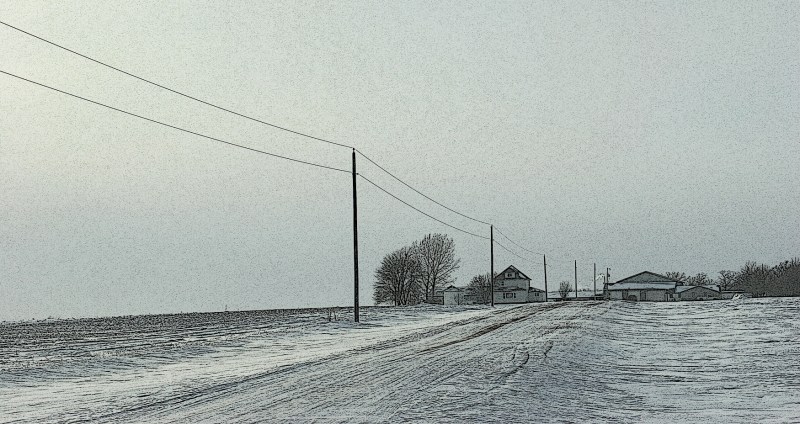
I am always struck by how desolate farm sites appear in winter. This one lies between New Prague and Montgomery.

I am always struck by how desolate farm sites appear in winter. This one lies between New Prague and Montgomery.

Sunshine occasionally sliced rays across the white-washed landscape. It is so cold you can see cold in the sun. It is so cold you can hear cold in the crunch of snow beneath tires and boots. And you can certainly feel it in the sting of cold slapping cheeks.

Traveling Minnesota State Highway 13 toward Montgomery Saturday afternoon.

Traveling Minnesota State Highway 13 toward Montgomery Saturday afternoon.

Snow swirled through the wind-driven air near Montgomery, veiling the sky.

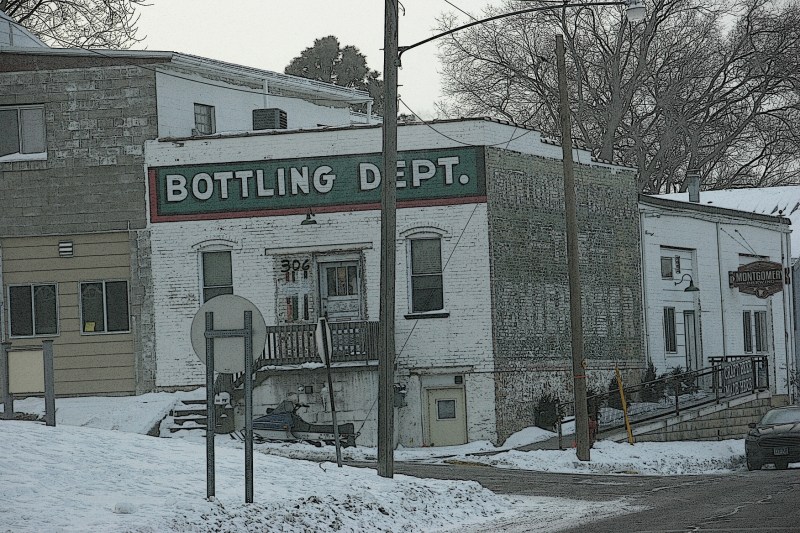
The building doesn't look like much from the outside. But step inside Montgomery Brewing Company to find an inviting taproom in an historic building.

This historic building doesn’t look like much from the outside. But step inside Montgomery Brewing Company to find an inviting taproom.

In this Czech community, we stopped for a cold one at Montgomery Brewing Company. You would think on a bitterly cold January day like this, few people would venture out for a beer. But the place was hopping with couples popping in for tap beer, conversation and growlers.

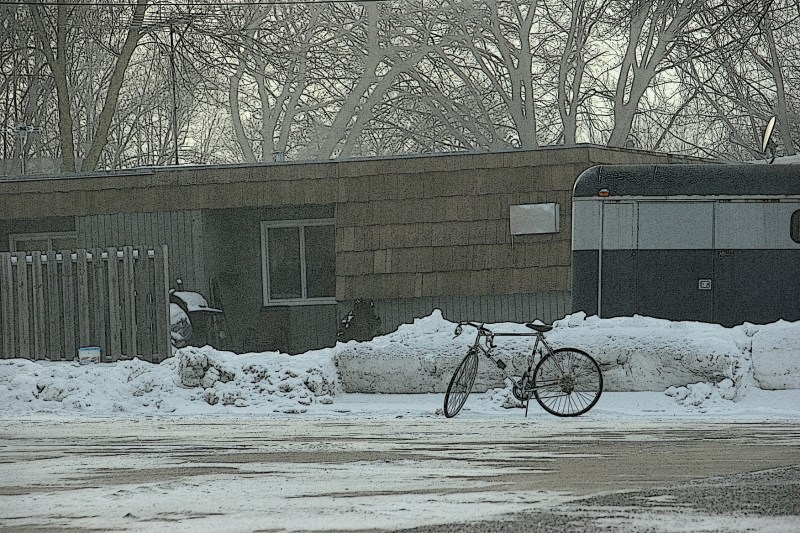
Winter does not stop Minnesotans from riding their bikes. This one was spotted in Montgomery.

Winter does not stop Minnesotans from riding their bikes. I spotted this one in Montgomery Saturday afternoon.

Back to the east in my county of Rice, Faribault’s F-Town Brewing Company offered beer samples at the Snow Crush Fat Tire Race at River Bend Nature Center on Saturday. An after-party followed at the brewery. Had the temperature been warmer, I likely would have been at the race shooting photos. But there’s a limit to what I’ll do in sub-zero/hovering around zero temps.

#

FYI: All of these edited images were shot from inside a warm van.

© Copyright 2016 Audrey Kletscher Helbling


In Winona, Part VI: Hotel humor January 14, 2016

Filed under: Uncategorized — Audrey Kletscher Helbling @ 5:00 AM
Tags: , , , , ,

Sign in Winona hotel, 392


IS THIS WARNING COMMON in hotels? Because I don’t stay in hotels all that often—maybe once a year—I’m uncertain.

Apparently theft is a problem at this particular Winona hotel, although I cannot imagine why anyone would steal any of the items on the list.

There’s a Target right next door with comparable or lower prices.

© Copyright 2016 Minnesota Prairie Roots


In Winona, Part V: Along the Mississippi January 12, 2016

A barge floats near the Mississippi River bridge that connects Minnesota and Wisconsin in Winona.

A barge floats near the Mississippi River bridge that connects Minnesota and Wisconsin in Winona. A new bridge is under construction next to the old one shown here and is expected to be completed this year. The old bridge will then undergo renovation. Minnesota Prairie Roots photo, September 2015.

IN MINNESOTA’S SOUTHEASTERN most tip, the Mississippi River flows alongside bluffs, edging small towns and cities. Like Winona. The Mighty Mississippi shaped this island sandbar, today a destination for those who appreciate history, art, architecture, stained glass and more. Sometimes folks come just for the river.

Someone chalked the Levee Park sign much to my delight.

Someone chalked the Levee Park sign much to my delight. Minnesota Prairie Roots photo, September 2015.

On a brief visit to Winona in September, my husband and I watched river traffic from Winona’s downtown Levee Park as twilight tinged the sky pink.

The Winona Tour Boat offers river cruises. Minnesota Prairie Roots photo September 2015.

The Winona Tour Boat offers river cruises. Minnesota Prairie Roots photo, September 2015.

There’s something incredibly soothing about water. Mesmerizing really. Like a lullaby or poetry or the refrain of a favorite song.

The White Angel tugs a barge.

The White Angel tugs a barge. Minnesota Prairie Roots photo, September 2015.

Water transports thoughts to a quiet place.

Winona State University's Cal Fremling boat also offers river cruises with a focus on education. Minnesota Prairie Roots photo September 2015.

Winona State University’s Cal Fremling boat also offers river cruises with a focus on education. Minnesota Prairie Roots photo, September 2015.

Or a place of adventure, sans Huckleberry Finn. Who hasn’t dreamed of clamoring aboard a raft and leaving everything behind?

As the sun sets, Winona State University's Cal Fremling boat passes under the Mississippi Rover bridge in Winona. Minnesota Prairie Roots photo, September 2015.

As the sun sets, Winona State University’s Cal Fremling boat passes under the Mississippi Rover bridge in Winona. Minnesota Prairie Roots photo, September 2015.

Days flow like a river, sometimes straight and true, other times twisting and turning through a torrent of troubles.

Boathouses as photographed from Levee Park in Winona. Minnesota Prairie Roots photo, September 2015.

Boathouses as photographed from Levee Park in Winona. Minnesota Prairie Roots photo, September 2015.

On this September evening, peace ran like a river past Winona, through my soul…

The old Mississippi River bridge in Winona. Minnesota Prairie Roots photo 2015.

The old Mississippi River bridge in Winona. Minnesota Prairie Roots photo 2015.

diminishing all thoughts of a bridge over troubled waters.

FYI: Tomorrow I conclude my series from Winona.

© Copyright 2016 Audrey Kletscher Helbling


In Winona, Part IV: Uniquely Winonan January 11, 2016

Filed under: Uncategorized — Audrey Kletscher Helbling @ 5:00 AM
Tags: , , , ,
Pulling a barge down the Mississippi River in Winona in September 2015.

Pulling a barge down the Mississippi River in Winona in September 2015.

WINONA IS A RIVER TOWN. A college town. A place of history, historic buildings, memorable businesses. And more, much more.

A few cars, some vintage, managed to sneak into the drive-in among all the tractors.

My award-winning photo taken at the Lakeview Drive Inn. Minnesota Prairie Roots file photo 2014.

I’ve savored homemade root beer at the iconic Lakeview Drive Inn in Winona.

Bloedow's Bakery is located at 451 E. Broadway St. in Winona.

Bloedow’s Bakery is located at 451 E. Broadway St. in Winona. Minnesota Prairie Roots file photo September 2014.

I’ve tasted a bacon-topped, maple-iced long john from Bloedow’s Bakery.

Worn, vintage business signage always catches my eye.

Worn, vintage business signage always catches my eye.

And I wish I’d had time to duck into Sloppy Joe’s Liquor to grab a beer and maybe a sloppy joe, if the sandwich is served there, and to hear the story behind the bar’s name.

I shot this scene of The Penguin Zesto in September 2015.

I shot this scene of The Penguin Zesto in September 2015.

The same goes for The Penguin Zesto. What’s with that name? The drive-in was closed when I visited Winona. No ice cream for me on that September day. Only questions. I always have questions.

Winona has some lovely old homes, this one photographed in September 2015.

Winona has some lovely old homes, this one photographed in September 2015.

FYI: Check back tomorrow for another post in my series from Winona.

© Copyright 2016 Audrey Kletscher Helbling


In Winona, Part III: A bank that impresses January 8, 2016

The exterior front of the Winona National Bank, originally Winona Savings Bank, presents a visual of strength and stability in design and materials.

The exterior front of Winona National Bank, originally Winona Savings Bank, presents a visual of strength and stability in design and materials.

EVERYTHING ABOUT THE CONSTRUCTION of Winona National Bank invokes trust, strength and power.

Each granite column soars 37 feet, weighs 32 tons and is constructed from a single piece of North Carolina granite.

Each column measures 37 feet high, weighs 32 tons and is constructed from a single piece of North Carolina granite.

Granite entry columns.

Green marble from Greece and white marble from Italy.

Green marble from Greece and white marble from Italy are featured inside the bank, here in the lobby and teller area.

Marble everywhere.

The mammoth steel vault door gives an impression of safety and security. It was built by Diebold Safe and Lock Company of Canton, Ohio.

The mammoth steel vault door gives an impression of safety and security. It was built by Diebold Safe and Lock Company of Canton, Ohio.

A 22 ½ ton vault door 22 inches thick.

Architect George Maher designed the metal work like these iron window gates.

Architect George Maher designed the metal work like these iron window gates which give a visual impression of security.

Iron window gates.

The lion,

The lion, another symbol of strength and power.

Lion heads are also carved in stone.

Lion heads are also carved in stone.

To the right in this display of taxidermied animals is a lion.

The taxidermy display includes a lion, center.

And then, the king of the jungle—the lion—standing atop signage, sculpted and encased in glass. A symbol of strength for a bank that stands as a powerful visual presence in the heart of this Mississippi River town.

The bank was quiet on the morning I visited.

The bank was quiet on the morning I visited. Beautiful marble. Note the word “TRUST” on the wall to the left.

On the Friday in September when I toured this 1916 Egyptian Revival style building with Prairie School influences, the bank seemed more museum than business. The atmosphere was quiet, almost shrine-like with few customers. (The bank also has two branch offices.) I felt a sense of reverent awe in the midst of such opulence, such an overwhelming display of wealth.

The largest of the Tiffany stained glass windows in the bank looms above the entry. Architect George Maher's Prairie School influences are seen in a design that includes a lotus pattern.

The largest of the Tiffany stained glass windows in the bank looms above the entry. Architect George Maher’s Prairie School influences are seen in a design that includes a lotus pattern.

Looking up toward the second floor and the area open to the lower level, the white marble from Italy conveys strength.

Looking up toward the second floor and the area open to the lower level, the white marble from Italy conveys strength. Note the art deco style lights.

Mahogany railings wrap the white marble staircase.

Mahogany railings wrap the white marble staircase.

It is difficult for me to comprehend anyone having this much money—to erect this massive building with Tiffany stained glass windows, white marble imported from Italy and mahogany railings. Chicago architect George Maher, a contemporary of Frank Lloyd Wright, designed the building.

Plans for the tile are on display.

Plans for the tile are on display.

The bank formed in 1874 as Winona Savings Bank, later merging with Winona National Bank. J.R. Watkins, founder of The J.R. Watkins Medical Company, still a stalwart business today simply known as J.R. Watkins, is also linked to the bank. In the early 1900s, J.R. acquired Winona Savings Bank as a banking concern connected to Watkins products.

The impressive boardroom.

The impressive boardroom.

When J.R. died in 1911, his son-in-law, Ernest L. King, Sr., then the vice president of Watkins, assumed the bank presidency. Eventually his son, Ernest L. King, Jr., would serve on the board of directors.

A Prairie School inspired chair in the boardroom, next to the gun collection.

A Prairie School inspired chair in the boardroom, next to the gun collection.

So there’s a lot of local business history in this formidable bank building listed on the National Register of Historic Places. The Watkins connection is highlighted in upper level displays. Inside the boardroom, designed in Prairie School style, sleek chairs pull up to hefty, gleaming tables next to a gun collection. Just down the hallway, trophy animals shot by Grace Watkins King (J.R.’s only child) and her husband, Ernest L. King, Sr., are showcased.

A trophy from Africa.

A lion trophy from Africa.

I couldn’t help but think of Cecil the lion (killed in Zimbabwe) as I photographed the lion mount inside the bank. I understand, though, that it was a different mindset when this lion and other wildlife were shot in Africa. Yet, in a building of such grand splendor, this taxidermy collection left me feeling uncomfortable and sad.

From an upper floor looking down to the lobby.

From an upper floor looking down to the lobby.

That aside, I delighted in the opportunity to tour this remarkable Minnesota treasure.

BONUS PHOTOS:

Even underfoot impresses.

Even underfoot impresses.

Likewise above...Tiffany stained glass.

Likewise above…definitely Prairie School influence.

Another view of the lobby from above.

Another view of the lobby from above.

FYI: Free self-guided tours of the bank are available during regular business hours from 8:30 a.m. – 5 p.m. Monday through Friday. The bank is located at 204 Main Street in downtown Winona. Check back next week as I continue with my series from Winona.

© Copyright 2015 Audrey Kletscher Helbling


In Winona, Part II: A Prairie School Style office building at J.R. Watkins Co. January 7, 2016

The JR Watkins complex of buildings is on the National Register of Historic Places as noted by this marker.

The J.R. Watkins complex of buildings is on the National Register of Historic Places as noted by this marker.

AH, TO WORK in such a splendid place of marble and gold and Tiffany stained glass windows.

Greenery outside the Watkins' office building.

Greenery outside the Watkins’ office building.

That’s the setting for employees at J.R. Watkins, a Winona company that sells health remedies, baking products and much more; it’s especially known for its vanilla. Office workers labor inside a monumental building designed by noted Prairie School style architect George W. Maher of Chicago.

Chiseled above the main entry into the administrative building.

Chiseled above an entry into the administrative building.

The sprawling building features a 70-foot high rotunda dome coated with 24-carat gold leaf.

The sprawling building features a 70-foot high rotunda dome coated with 24-carat gold leaf.

On a September visit to this Mississippi River community, I toured the 1912 office building which anchors a corner on the edge of downtown. It’s an unexpected gem, this stone structure that resembles a government building or art museum rather than the headquarters of a business.

Even the door handles are exquisite.

Even the door handles are exquisite.

My husband and I couldn’t just walk inside. Rather, we phoned for access and then signed in.

Inside, looking toward the front doors.

Inside, looking toward the front doors and the Tiffany stained glass window featuring a rendition of Sugar Loaf.

The Sugar Loaf window up close.

The Sugar Loaf window up close.

Looking toward a mini-museum display of Watkins items, including the Watkins wagon.

Looking toward a mini-museum display of Watkins items, including a Watkins wagon.

The building features 224 stained glass skylights.

The building features 224 stained glass skylights.

Skylights up close.

Skylights up close.

And, as you would expect, the space we were allowed to explore was limited to the main lobby area. Still, this was enough to impress as I gazed upon marble walls, the stained glass skylights (of which there are 224) and the custom-made Tiffany stained glass window (there are three) featuring Winona’s noted bluff landmark, Sugar Loaf. Because the windows are covered on the exterior to protect them, they are not quite as impressive as they could be. Still, you can’t leave this building without thinking, wow.

FYI: Check back tomorrow for a post on the Winona National Bank building.

© Copyright 2015 Audrey Kletscher Helbling

 

In Winona, Part I: Watkins, beyond vanilla January 6, 2016

Filed under: Uncategorized — Audrey Kletscher Helbling @ 5:00 AM
Tags: , , , , , , ,
Vanilla has long been a staple bestseller at Watkins.

Vanilla has long been a staple bestseller at Watkins.

MY MEMORIES OF THE WATKINS MAN are peripheral. A man at the door of our farmhouse peddling vanilla and spices to my farm wife mother.

Spices have always been a popular product with Watkins customers. These vintage spice containers are showcased in the museum.

Spices have always been a popular product with Watkins customers. These vintage spice containers are showcased in the museum.

It was an era when rural women mostly stayed home to raise their families, when families owned only one car, when the distance from farm to town was traversed but once a month.

The realy

Early on in the 1900s, the Watkins man delivered products via a horse-pulled wagon.

Salesmen, like the Watkins man, the Fuller Brush Man and the Schwans man brought goods and/or food to doorsteps. Personal service. Meeting a need.


Watkins, 451 exterior sign


In September, my husband and I stayed overnight in Winona, a southeastern Minnesota community we’ve visited often given our eldest daughter attended college there. Never, though, had we taken the time to explore the J.R. Watkins Museum & Store and the adjacent impressive administrative headquarters. This trip we did.

This portrait of founder J.R. Watkins hangs in the museum.

This portrait of founder J.R. Watkins hangs in the museum.

The business started in 1868, not in Winona, but in neighboring Plainview where Joseph Ray Watkins made and sold Dr. Ward’s Vegetable Anodyne Liniment. He’d secured the recipe from a Cincinnati physician. Today the company still sells a 96.5 percent natural pain-relieving liniment. (Click here to read a synopsis of Watkins’ history.)

The historic Watkins complex (museum on left, administrative building on right) is on the National Register of Historic Places.

The historic Watkins complex (museum, first floor on left, administrative building on right) is on the National Register of Historic Places.

In 1885, J.R. moved his business to the growing Mississippi River community of Winona. Through the years, the company flourished, and then floundered as times changed and the door-to-door sales strategy became less effective with more women working outside the home. Consumers’ tastes were also changing. Eventually, the company filed bankruptcy and was purchased in 1978 by businessman Irwin Jacobs. Now his son, Mark, heads Watkins, a thriving business that currently offers 350 products.

Watkins still sells beauty/healthcare items. These samples are in the store.

Watkins still sells beauty/healthcare items. These samples are in the store.

Spices have always been an integral part of Watkins.

Spices have always been an integral part of Watkins.

Watkins recently partnered with Kemps.

Watkins recently partnered with Kemps.

Today Watkins remains an important part of Winona, not only as a business that markets gourmet, bath and body, health, and home care products, but as an integral part of local family histories. You may not learn this touring the museum or reading the company’s history online. But talk to a museum staffer and you will hear about hometown loyalty.

Various sizes of Watkins vanillas are sold in the museum store. A recipe for Vanilla Coffee Creamer is printed on the package holding the vanilla I purchased.

Various sizes of Watkins vanillas are sold in the museum store. A recipe for Vanilla Coffee Creamer is printed on the package holding the vanilla I purchased.

I learned, for example, that the vanilla in most Winona kitchens is Watkins’ vanilla. It has always been a company top seller. The staffer did not offer proof of this claim. But I don’t doubt her assessment. I purchased a two-ounce bottle of Watkins “naturally and artificially flavored double strength vanilla” labeled as “superior quality since 1868” and “awarded Gold Medal for highest quality.”

There's a model of Winona, including the Watkins complex, in the museum.

There’s a model of Winona, including the Watkins complex, in the museum.

But the most interesting local tidbit she shared is that of “Winona Coffee,” coffee sweetened with a drop or two of Watkins vanilla added to the grounds. This is apparently how many Winonans prefer their coffee. And that says a lot for a company based in this city for 130 years.

ARE YOU FAMILIAR with the Watkins Company and, if so, do you have a favorite product?

BONUS PHOTOS:

Entering the museum. Yes, it's up several steps and through a side door.

Entering the museum up several steps and through a side door.

Spices have always been an integral part of Watkins.

Watkins spices are well-known and a major part of the company’s business.

Love the art on this vintage can of Watkins baking powder.

Love the art on this vintage can of Watkins baking powder.

more art

The annual Watkins almanac was printed in The Watkins Print Shop, open for 88 years. The shop is now the site of the Watkins museum, where the almanacs are displayed.

This toy truck, displayed in the museum, carries bags of spices.

This toy truck, displayed in the museum, carries bags of spices.

Watkins produced items for troops during WW II to fulfill government contracts.

Watkins produced items for troops during WW II to fulfill government contracts.

An overview of a section of the museum.

An overview of a section of the museum.

Pine cleaner, compared to the smell of the Minnesota northwoods.

Pine cleaner, compared to the smell of the Minnesota northwoods.

Art in a vintage Watkins calendar.

Art in a vintage Watkins calendar.

Watkins even sold mouse killer (aka warfarin) at one time.

Watkins even sold mouse killer (aka warfarin) at one time.

FYI: The Watkins Museum is open from 10 a.m. – 4 p.m. Monday – Friday and from 10 a.m. – 2 p.m. Saturdays. It’s located at 150 Liberty Street, near downtown Winona. Admission is free. Also consider touring the administrative headquarters around the corner featuring Tiffany stained glass windows. Check back tomorrow for a post on that building as I continue my series of stories from Winona.


A snippet view of historic Faribault from the viaduct January 5, 2016

The Minnesota Highway 60 viaduct stretches before me, looking to the west toward the heart of Faribault.

The Minnesota Highway 60 viaduct stretches before me, looking to the west toward the heart of Faribault.

EVERY TIME I VIEW Faribault from the Minnesota Highway 60 viaduct, I am mesmerized by this community I’ve called home for 32 years.

Before me, historic Faribault lies:

Old houses constructed of wood, brick and limestone populate residential areas near downtown.

Old houses constructed of wood, brick and limestone populate residential areas near downtown.

aged wood frame houses jutting from hillsides,

Carriage

Carriage House Liquors is an example, according to the Faribault Heritage Preservation Commission website, “one of Faribault’s best-preserved stone industrial structures.” Buggies, carriages, wagons and bobsleds were manufactured in this historic building, which later also served as a blacksmith shop.

solid brick and stone buildings anchored downtown,

Steeples of First English Lutheran Church and

Steeples of First English Lutheran Church and Congregational Church of Faribault, UCC, are seen in the background of this image.

church steeples poking the skyline,

library

Buckham Memorial Library, dedicated in 1930 in memory of Faribault lawyer and judge Thomas Buckham by his widow, Anna, sits to the left in this photo. A clock tower landmarks the building. Inside are beautiful stained glass windows designed by Charles Connick.

a signature clock tower marking the Kasota stone library.

Another snippet view of downtown from the viaduct.

Another snippet view of downtown Faribault from the viaduct.

This is a beautiful city of rivers and woods, hills and flatland. It is a place where the past is appreciated, where aged buildings still stand. Strong. Strong in history. Rooted in the past, but growing in the present.

© Copyright 2016 Audrey Kletscher Helbling


On the road in rural Minnesota December 30, 2015

Filed under: Uncategorized — Audrey Kletscher Helbling @ 5:00 AM
Tags: , , , , ,

Bales on trailer, 91 along hwy 14


ROUNDING A CURVE along U.S. Highway 14 northeast bound into Sleepy Eye, the pick-up truck lugged a cargo of 14 round bales on a recent Sunday morning.


Bales on trailer, 84 going up hill


As it labored up the hill past the Sleepy Eye Golf Club, I wondered whether the top bales would remain in place. They appeared untethered. My husband and I were following two vehicles behind.


Bales on trailer, 82 with bins nearby


But the bales stayed put as the truck and trailer topped the hill, curved past grain bins and bumped along the highway through downtown Sleepy Eye where the vehicle in front of us turned, putting our van directly behind the mound of bales.


Bales on trailer, 89 in downtown Sleepy Eye


I was hoping we wouldn’t have to follow this wide load too far, especially not all the way to New Ulm. Passing along this section of highway is often challenging under the best of circumstances. And this was not ideal with bales hanging nearly over the center line and a non-functioning left trailer brake light.


Bales on trailer, 93 turning


On the east edge of town, the driver veered his truck to the county road on the right. I was thankful, especially when I visually confirmed that the top four bales were unsecured. The bales, Randy noted, weren’t going anywhere. Maybe. Maybe not.

In the back of my mind I remembered the ice that slid from a semi trailer along Interstate 35 four days prior. That ice missiled across the median and into the driver’s side window of our van. Bam, just like that. The glass didn’t shatter nor even crack. But it was enough to scare us, or at least me. The thought of a heavy round bale tumbling into the path of our van seemed equally as frightening.

Have you had a similar experience on the roadway or observed a situation you considered unsafe while traveling? I bet you have some unbelievable stories. Go ahead. Share.

© Copyright 2015 Audrey Kletscher Helbling


Scenes along Minnesota State Highway 99 December 29, 2015

Filed under: Uncategorized — Audrey Kletscher Helbling @ 5:00 AM
Tags: , , , , ,

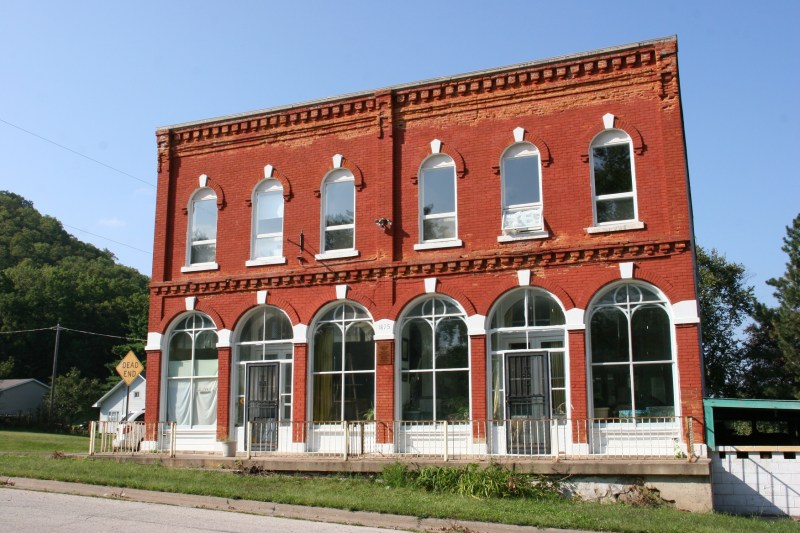
Travel, Minnesota Highway 99 near Cleveland #2


MINNESOTA STATE HIGHWAY 99 rolls through farm country and small towns from northeast of Faribault to Nicollet.


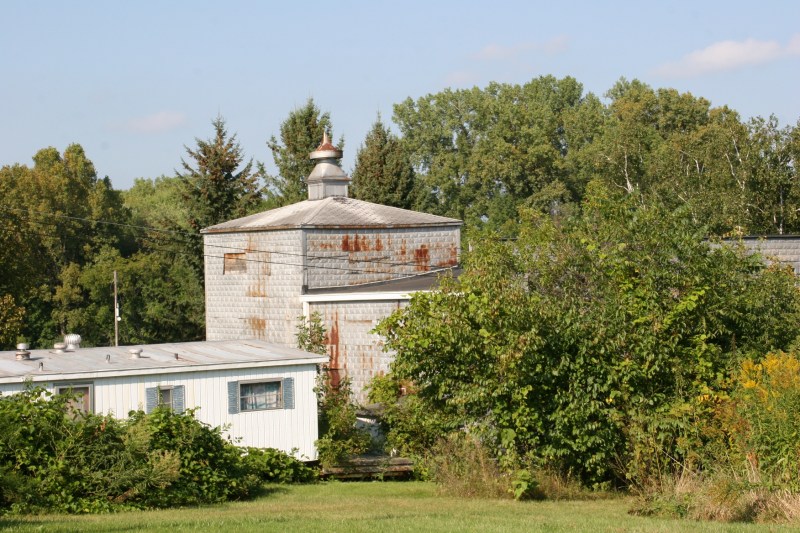
Travel, Minnesota Highway 99 farmsite near Cleveland


I call it the back road to my native southwestern Minnesota. It’s the route my husband and I take to vary our travel or to avoid U.S. Highway 14 road construction and/or traffic between Mankato and Nicollet.

Usually we are in a hurry , which allows no time to explore. It is a sad fact of much travel these days. But even in haste, I notice details.


Travel, Minnesota Highway 99 bridge over MN River in St. Peter


When Randy mentioned that the Highway 99 bridge over the Minnesota River in St. Peter is due for replacement, I snapped a photo just as were about to cross it. I love bridges like this with architectural character. The 1931 steel truss bridge is on the National Register of Historic Places and slated for rehab (not replacement) in 2017, according to the Minnesota Department of Transportation website.


Travel, Minnesota Highway 99 Swedish Imports sign in St. Peter


Waiting at a stoplight just across the bridge in the heart of downtown St. Peter, I turned my camera lens to a Swedish Imports sign, noting that we really must stop here sometime.


Travel, Minnesota Highway 99 Schmidt Meat Market sign in Nicollet


To the west of St. Peter in Nicollet, I photographed a sign for Schmidt’s Meat Market as we drove through town. The market has become a destination for many. We stopped there once. I popped inside, but quickly retreated to the car. Most people like the smokey smell of a meat market. I don’t. But that’s OK. We’re all different, with distinct tastes, likes and dislikes. That keeps the route through life varied and interesting.

© Copyright 2015 Audrey Kletscher Helbling