Minnesota Prairie Roots

Writing and photography by Audrey Kletscher Helbling

Antiquing in Wisconsin: A stop in Poy Sippi November 20, 2013

POY SIPPI.

The words roll off my tongue with a sound that pleases me.

Just like this small Wisconsin town. Poy Sippi. Off the beaten path. Sandwiched between busy State Highways 21 and 10. A community discovered a year ago while searching for an alternate route to avoid road construction along U.S. Highway 41 from Oshkosh to Appleton, where my second daughter lives.

Private property or a business? I don't know. But this is one of the first places I notice entering Poy Sippi from the south.

Private property or a business? I don’t know. But this is one of the first places I notice entering Poy Sippi from the south.

This October, my husband and I are back in Poy Sippi, named after the Pine River, called Poygan Sippi by the Pottawatomie because it flows into Poygan Lake, according to the Poy Sippi Public Library website.

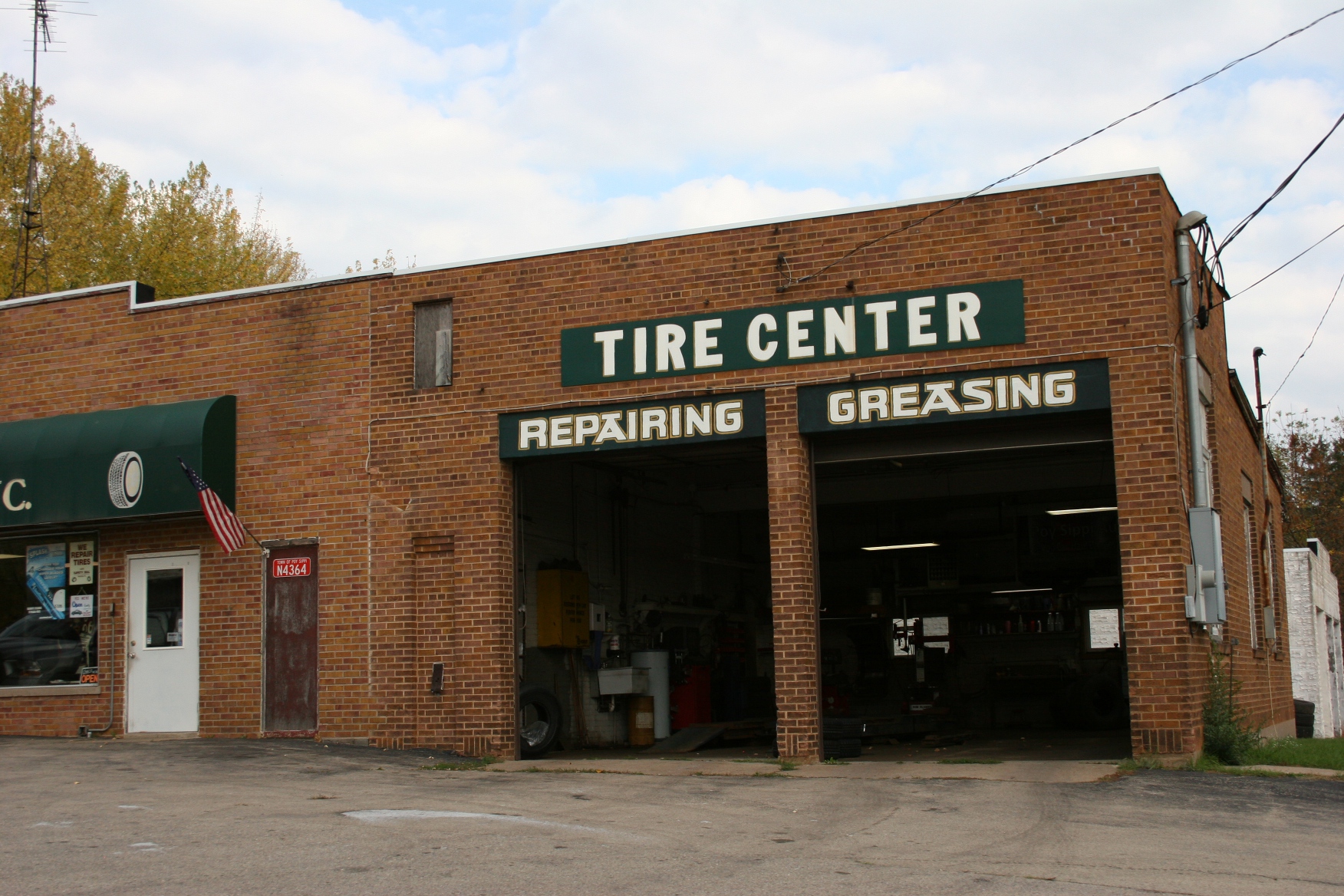
As we drive by the Tire Center, I snap this photo.

As we drive by the Tire Center, I snap this photo.

The uniqueness of the name fascinates me as do the poetically pleasing vowel and consonant combinations in Poy Sippi.

Our first glimpse of The Shop in October 2012. Minnesota Prairie Roots file photo.

Our first glimpse of The Shop in October 2012. Minnesota Prairie Roots file photo.

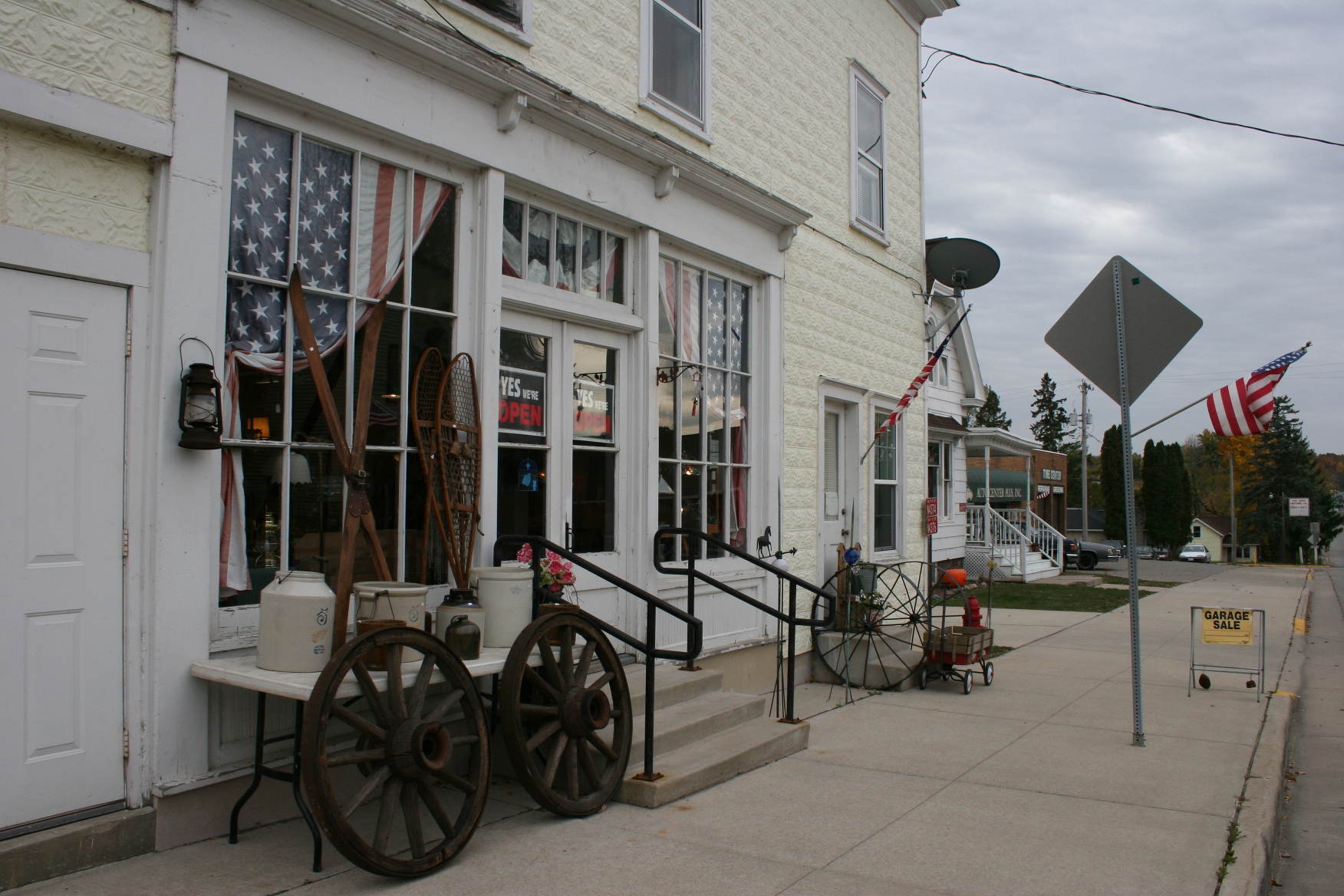
We have not explored Poy Sippi, except for The Shop, a delightful antique shop along Main Street/Highway 49.

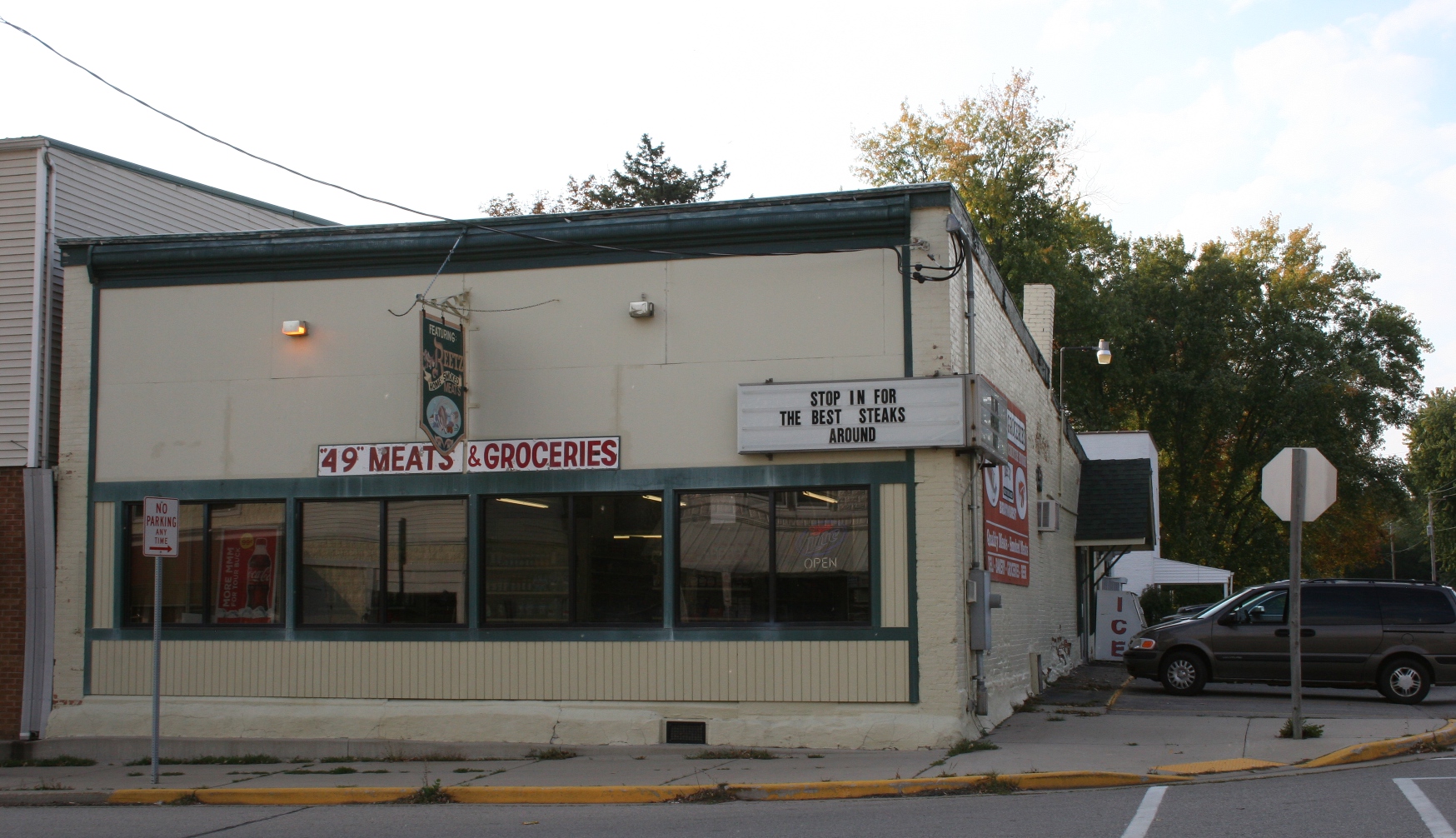
The corner grocery store and meat market.

The corner grocery store and meat market.

Dan Chier and Co. run the place, directly across the road from “49” Meats & Groceries, the corner grocery store/meat market touting “the best steaks around.” And I don’t doubt that. These small town meat markets often do offer the best in meats, this one specifically noting its home-smoked meats.

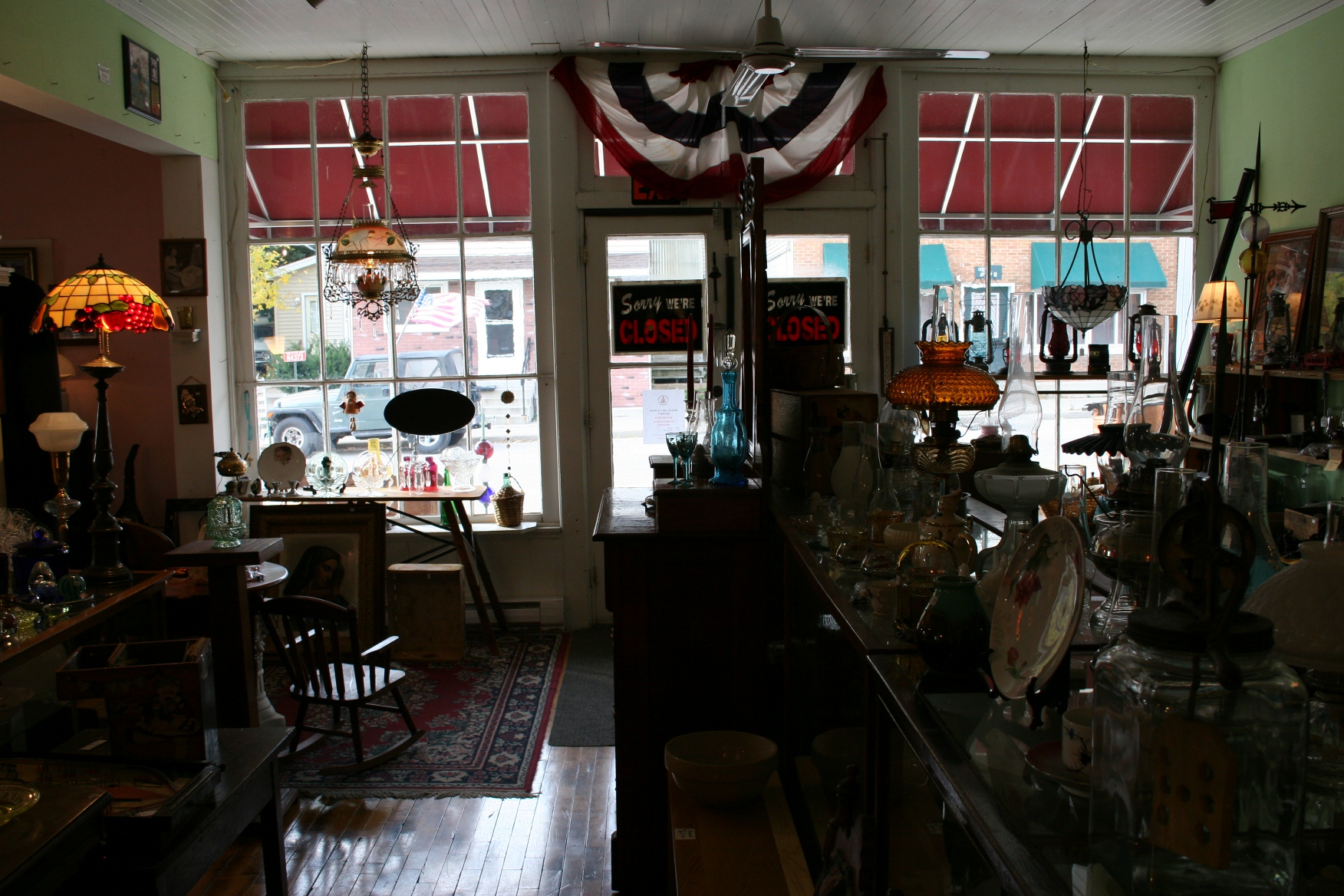
Looking toward the front the antique shop.

Looking toward the front the antique shop.

At one time the building which houses Dan’s shop operated as a general store. Dan shows me photocopies of historic photos. It’s no stretch to imagine the former mercantile occupying this space with the worn wood floor, wainscoting on the ceiling and aged double front doors.

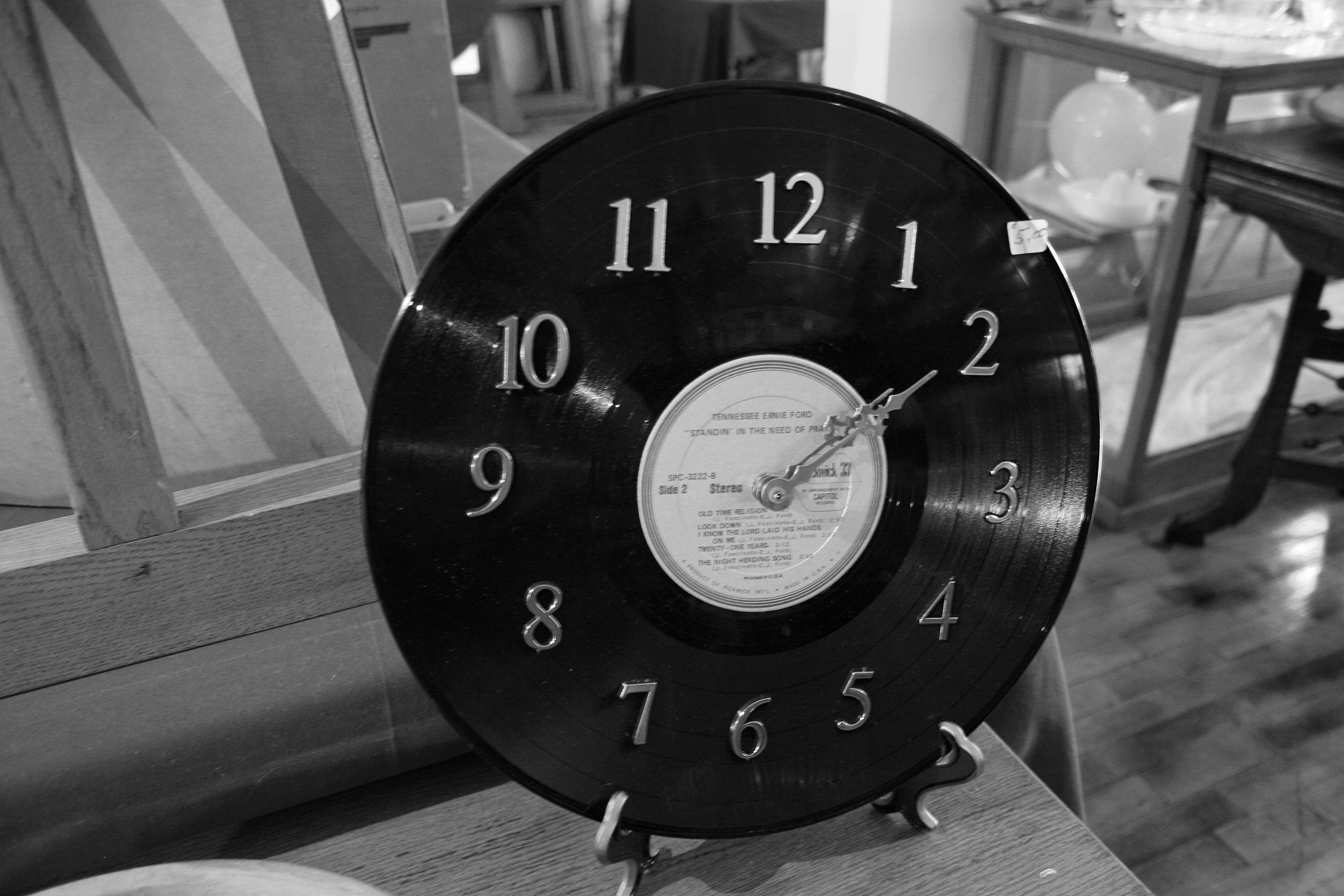
Oh, how I wish I had bought this clock, crafted by Don's mom (recently deceased) from an old album.

Oh, how I wish I had bought this $5 clock, crafted by Dan’s mom (recently deceased) from an old album.

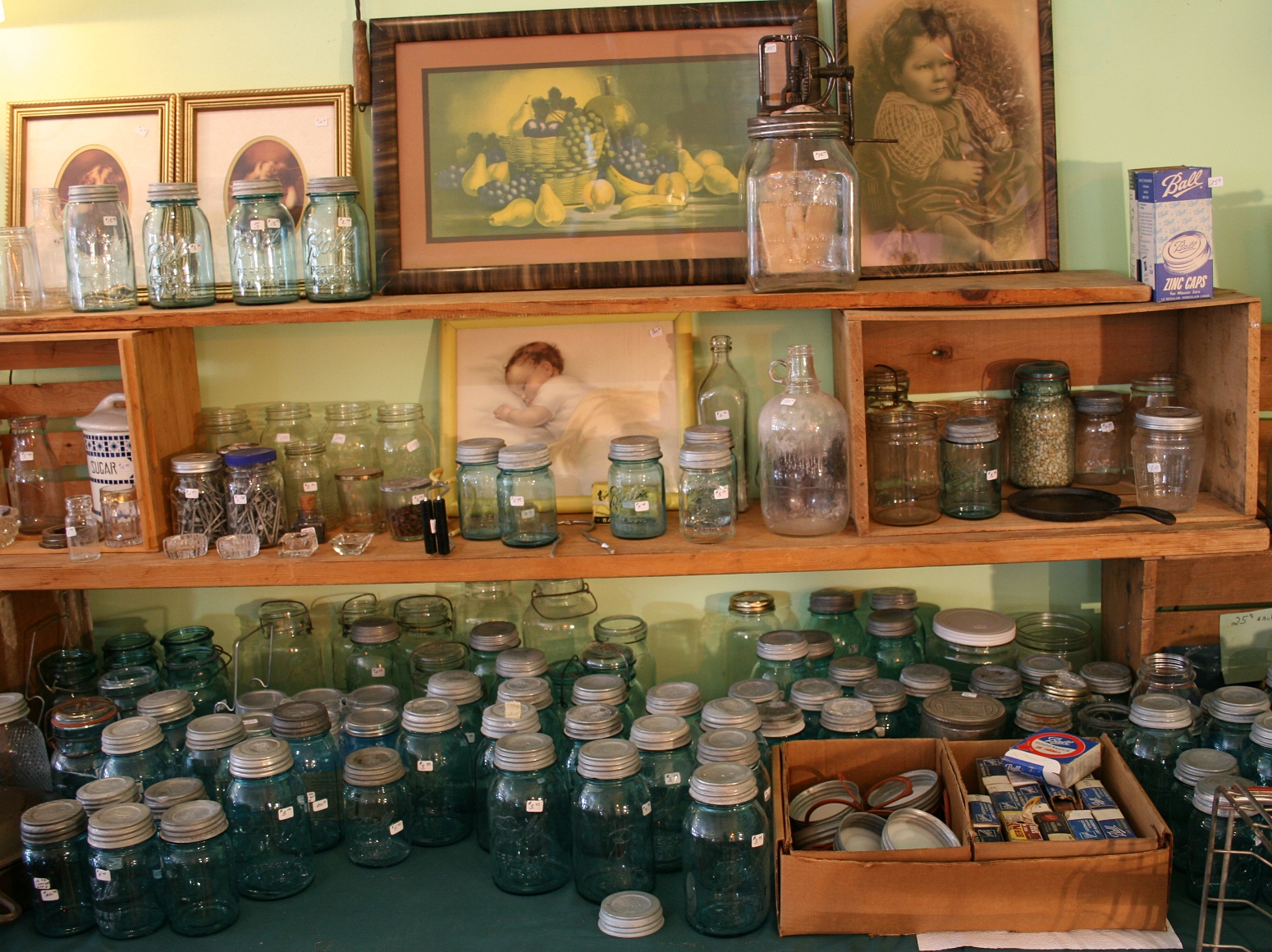
I wish I had known about these vintage blue canning jars when my daughter was planning for her September wedding. I rented quart sized jars like this for $2/each. Don is selling them for $3/each. He sold lots for weddings, he says, but the wedding demand seems to be fading. Now some are using the jars for lights.

I wish I had known about these vintage blue canning jars when my daughter was planning for her September wedding. I rented quart sized jars like this for $2/each. Dan is selling them for $3/each. He sold lots for weddings, he says, but the wedding demand seems to be fading. Now some are using the jars for lights. Oh, and see that fruit print on the top shelf. I spotted that framed piece a year ago, liked it then and still like it now. I should have negotiated a deal with Dan. He’s open to negotiating.

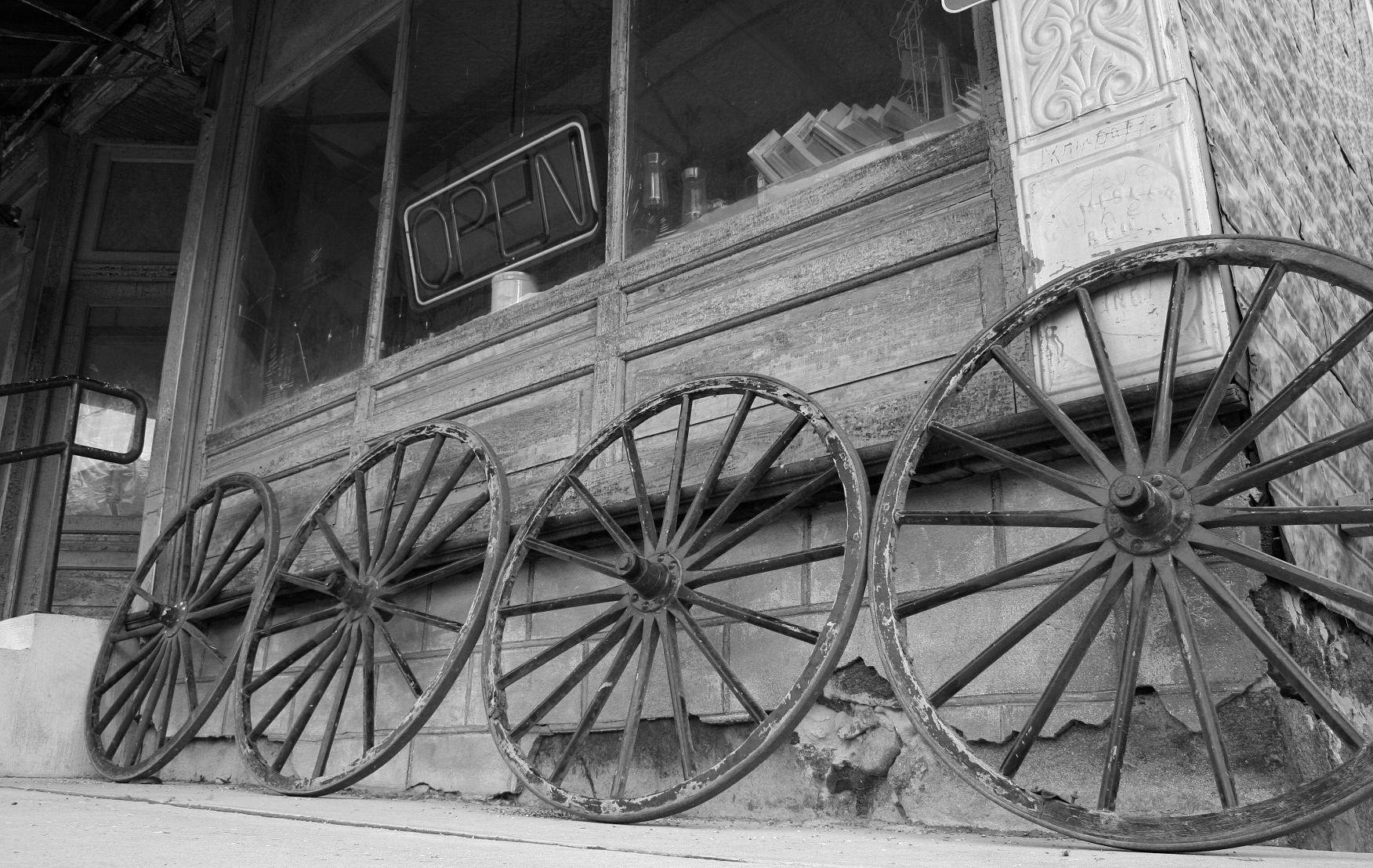
More merchandise.

More merchandise, leaning against the building next door which is for sale.

It’s the perfect place for an antique shop.

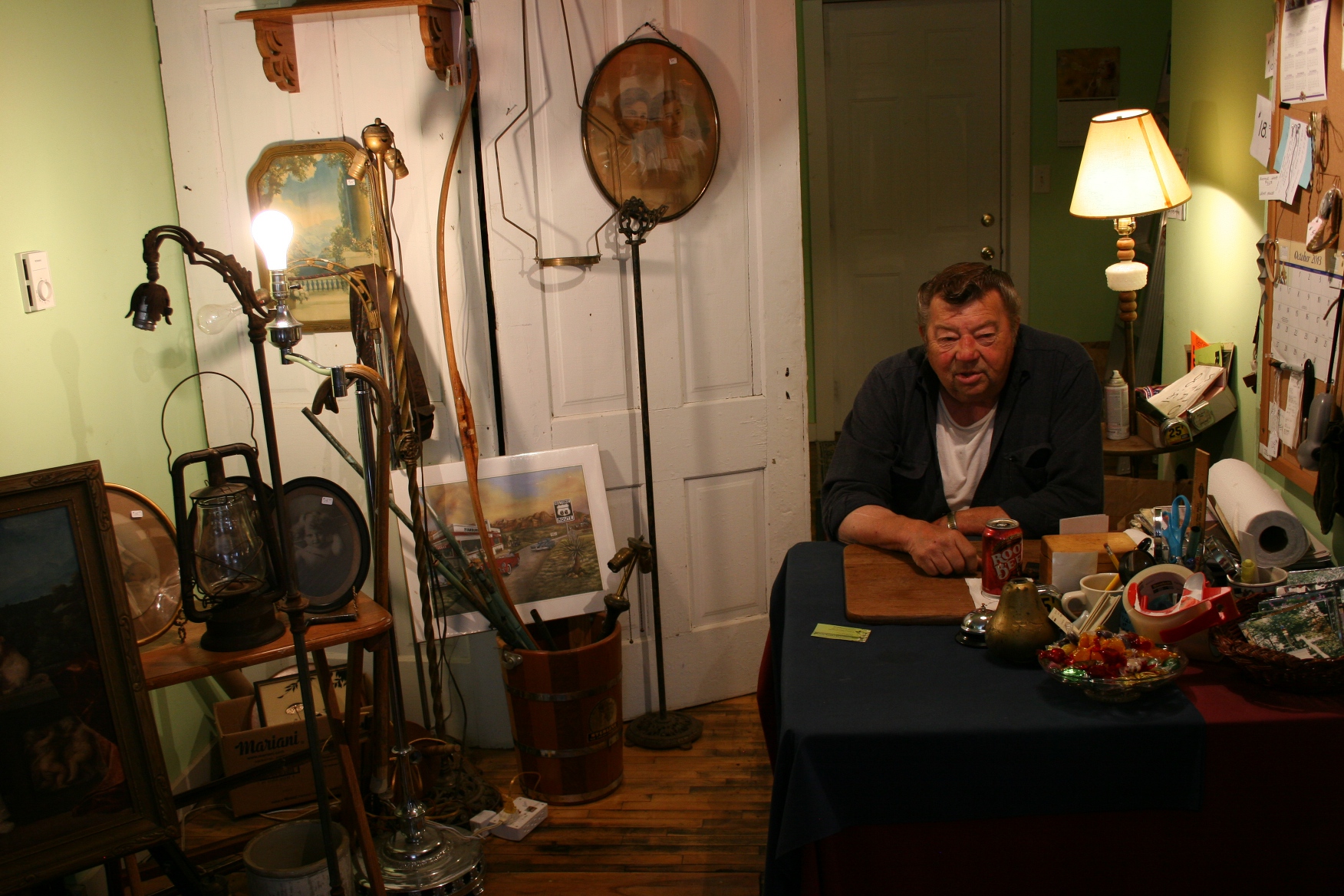
Friendly shopkeeper, Don Chier.

Friendly shopkeeper, Dan Chier.

I appreciate Dan’s warm welcome as much as the old stuff he offers for sale both inside and outside his shop in Poy Sippi. Off the beaten path. A short-cut between two busy highways.

BONUS PHOTOS:

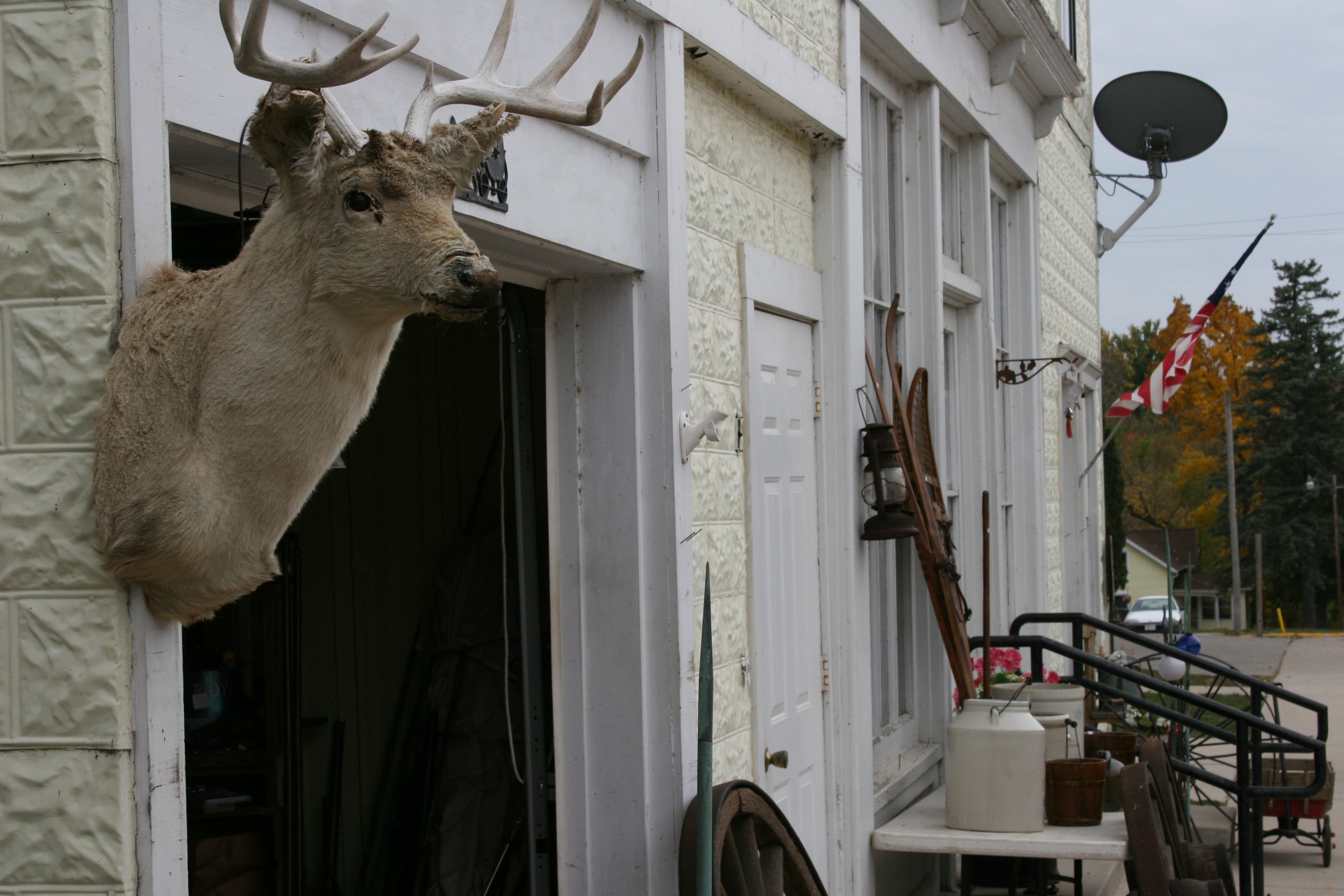
I was a bit creeped out when I spotted this deer head on the garage next to Don't main shop last fall. Minnesota Prairie Roots file photo.

I was a bit creeped out when I spotted this deer head on the garage next to Dan’s main shop last fall. Minnesota Prairie Roots file photo.

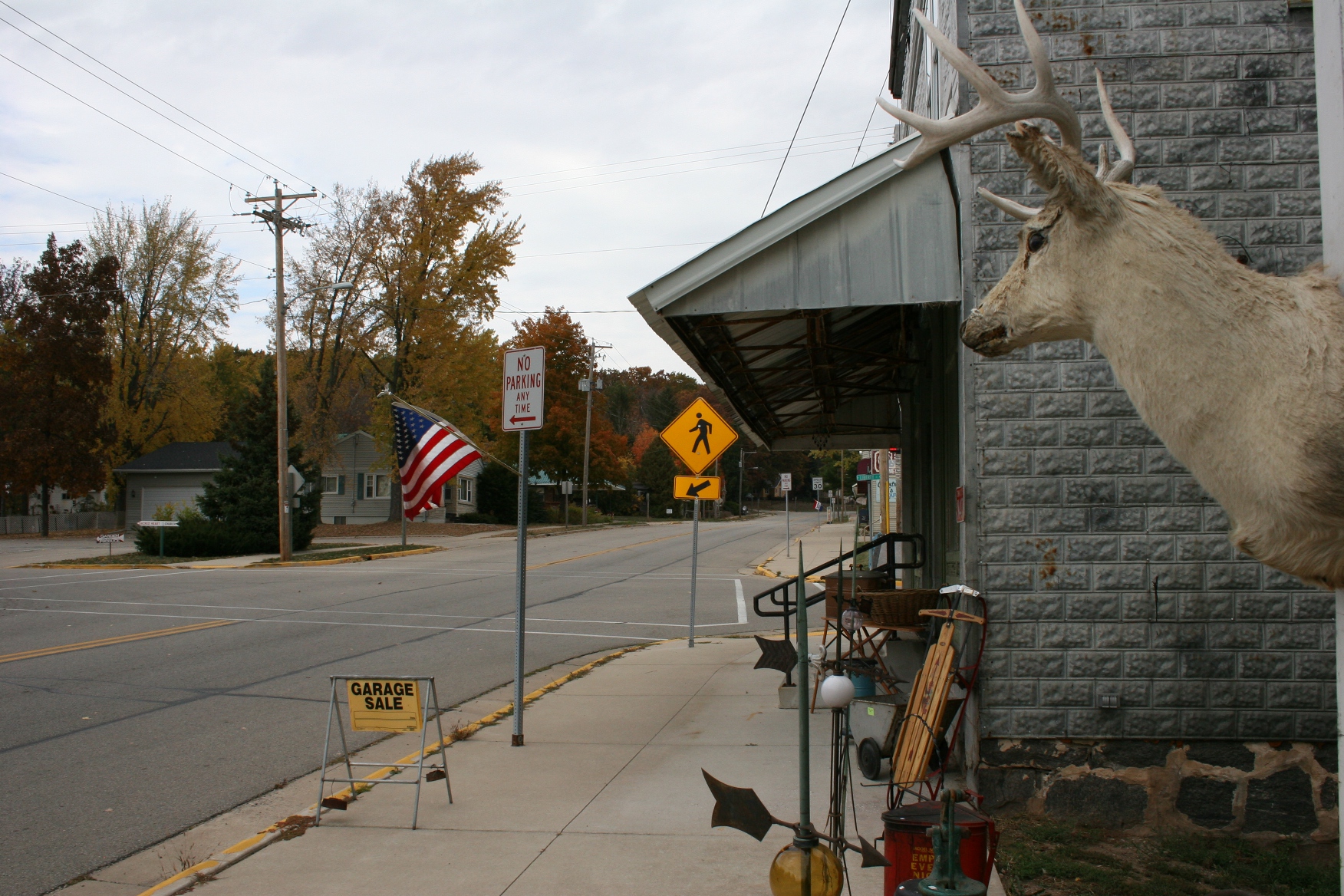
Same spot as above, just looking the other direction toward Main Street. Minnesota Prairie Roots file photo 2012.

Same spot as above, just looking the other direction toward Main Street. Minnesota Prairie Roots file photo 2012.

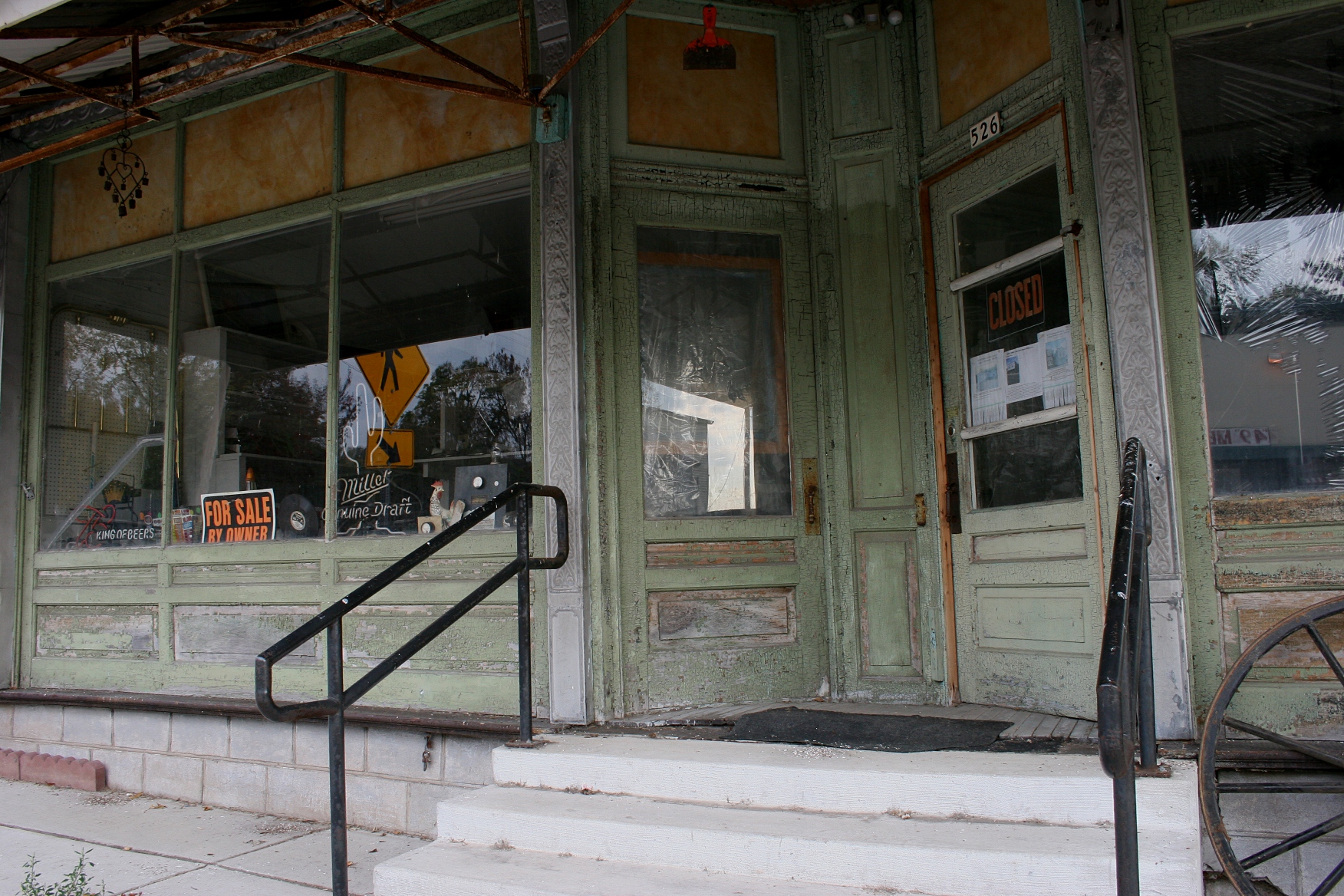
The building to the north of the garage (and deer head) that's for sale.

The building to the north of the garage (and deer head) that’s for sale.

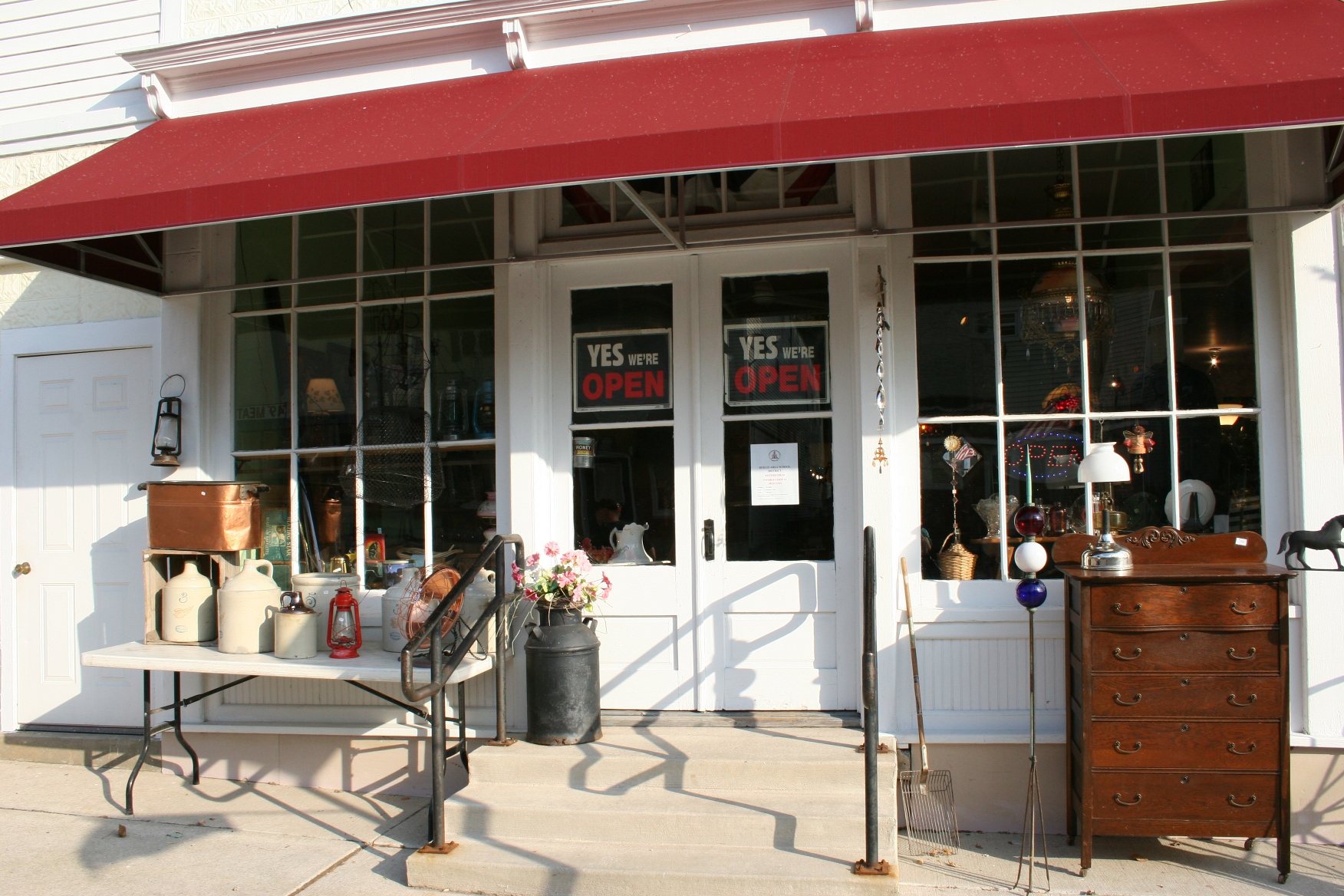
The entry to The Shop.

The entry to The Shop.

© Copyright 2013 Audrey Kletscher Helbling


In Wisconsin: Sharing the highway with the Amish November 19, 2013

Filed under: Uncategorized — Audrey Kletscher Helbling @ 5:00 AM
Tags: , , , , , , ,

IN THE PAST THREE YEARS, I’ve traveled through the heart of central Wisconsin often enough to know where I might see the Amish.

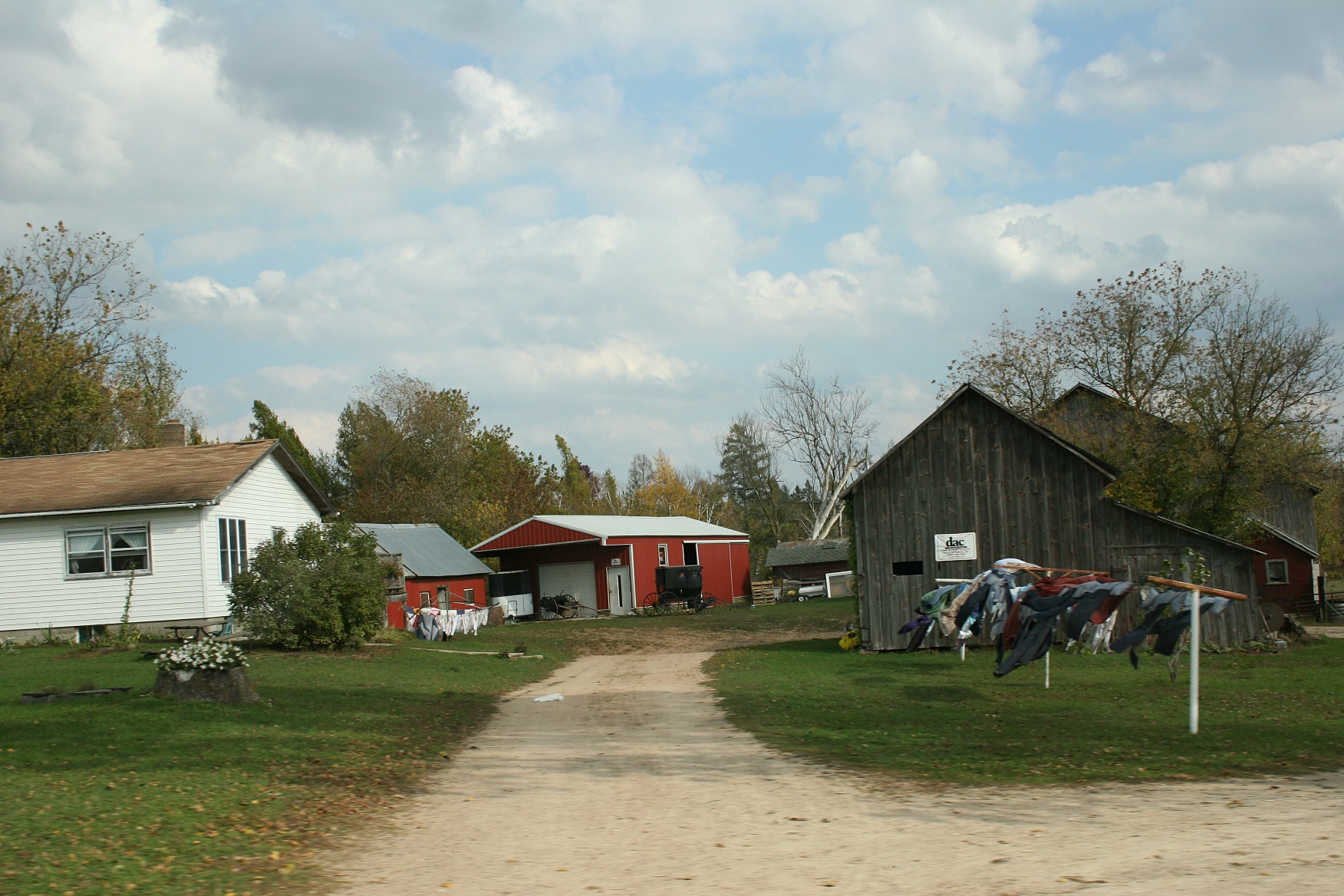
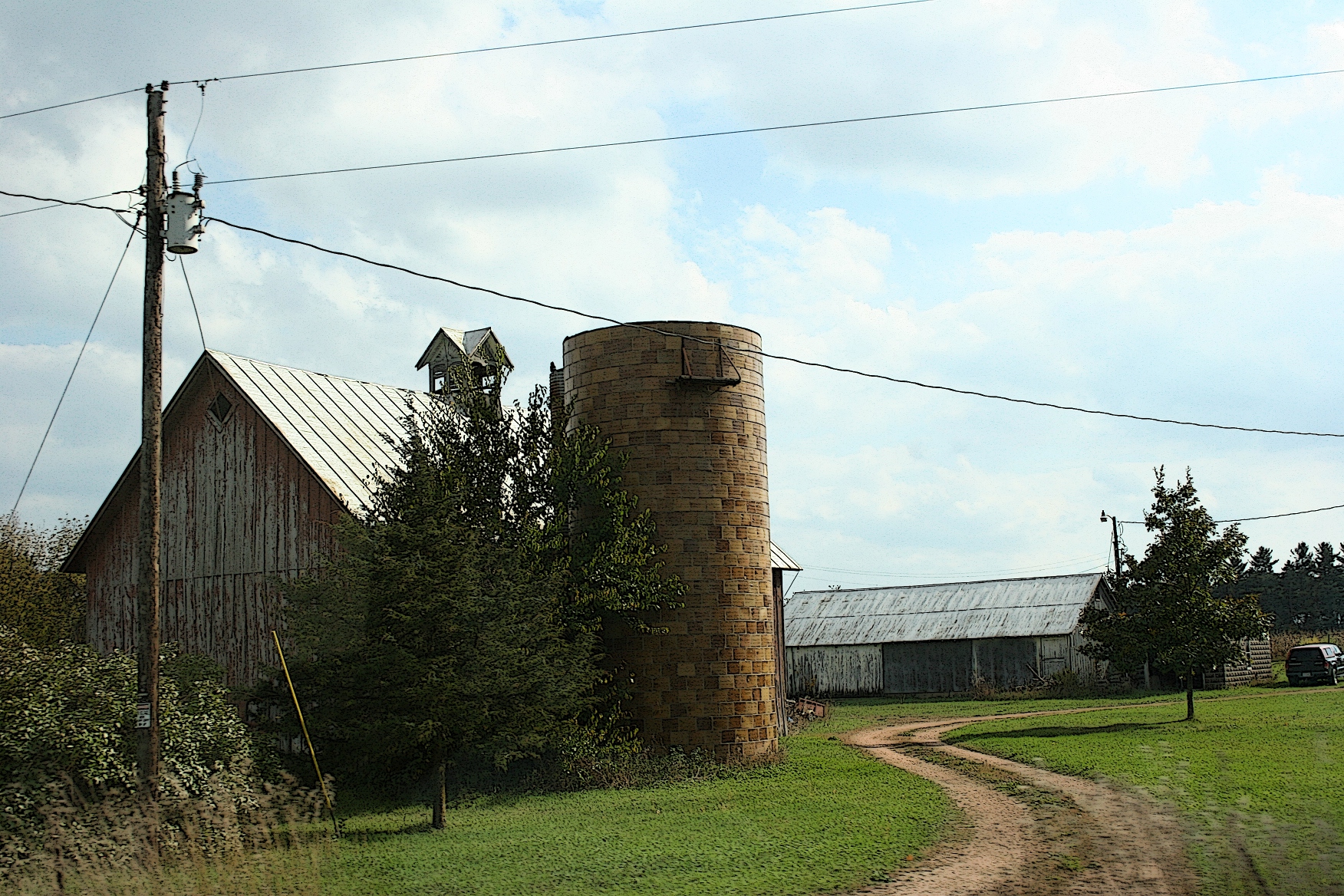
An Amish farm in central Wisconsin, photographed on Friday, October 11, 2013.

An Amish farm in central Wisconsin, photographed on Friday, October 11, 2013. Notice the buggy parked by the red shed.

Between Coloma and Wautoma is a prime location for spotting Amish farms and maybe even a buggy, especially on a Sunday, the day these folks gather to worship in homes.

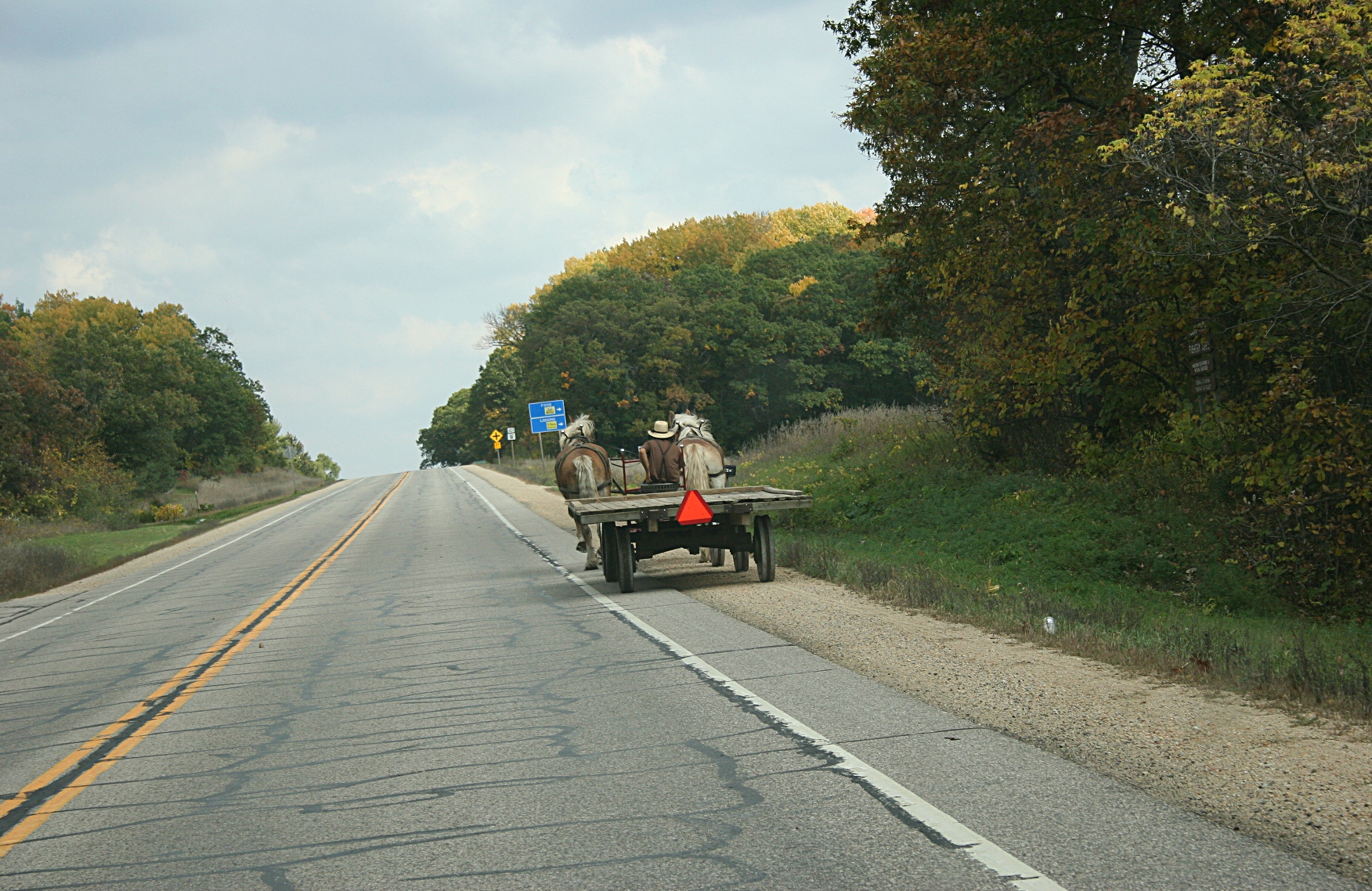
An Amish man traveling Wisconsin State Highway 21 on Friday, October 11, 2013.

An Amish man traveling Wisconsin State Highway 21 on Friday, October 11, 2013.

On our most recent trip to Wisconsin, my husband and I, for the first time, encountered an Amish man guiding a horse-pulled wagon along the shoulder of Wisconsin State Highway 21 by the Mecan River Fishery Area.

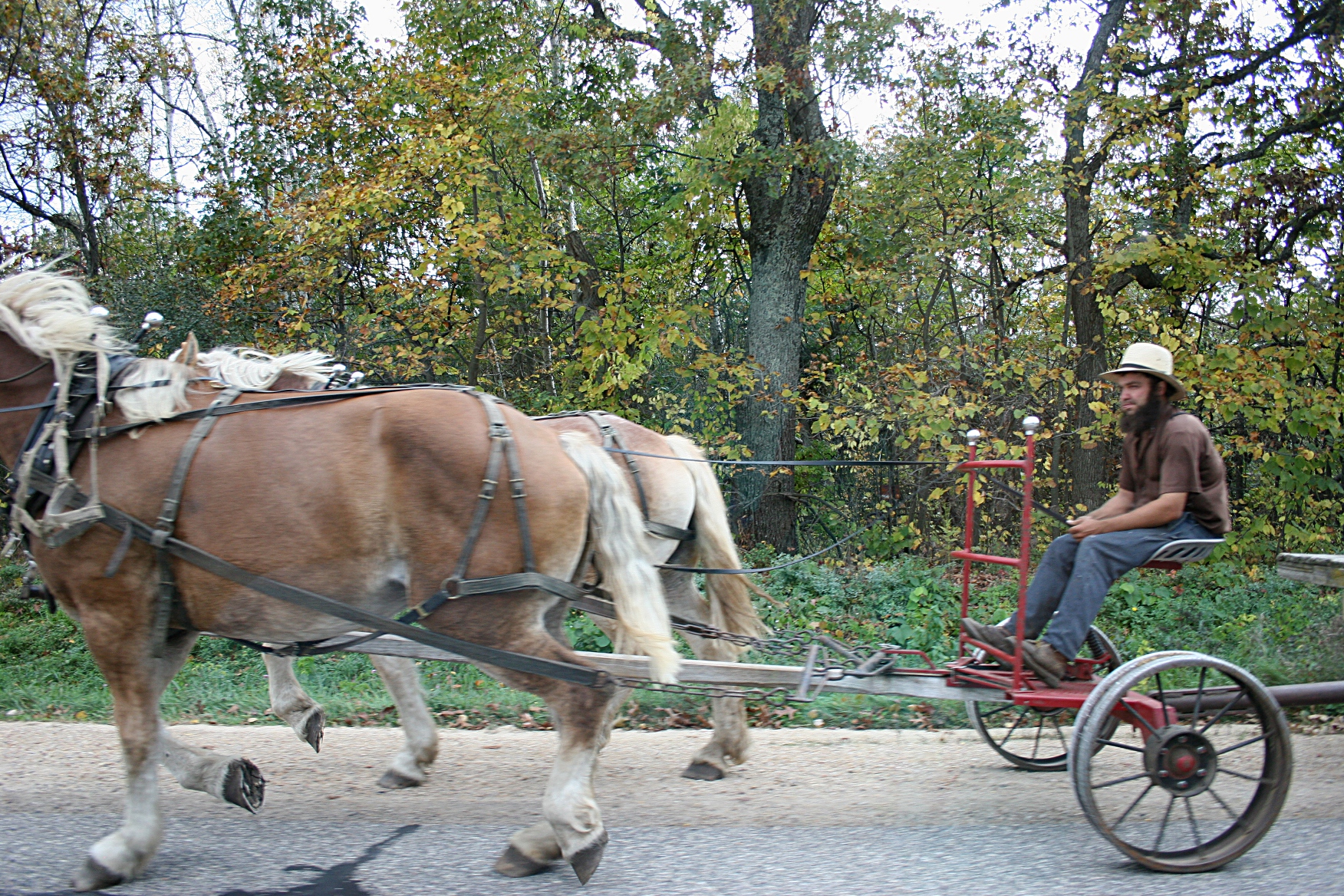
A close-up taken while passing by the Amish man.

Passing by the Amish man.

Truthfully, I felt nervous watching him journey along this busy stretch of highway heavy with semi truck and other traffic.

I could only hope drivers would see him and that his horses wouldn’t spook.

How about you? Have you ever encountered Amish along a roadway and worried about their safety?

FYI: To learn more about the Amish in Wisconsin, click here to reach the Amish America website.

© Copyright 2013 Audrey Kletscher Helbling


Country meets city in northeastern Wisconsin November 8, 2013

Filed under: Uncategorized — Audrey Kletscher Helbling @ 6:00 AM
Tags: , , , , , , , , ,
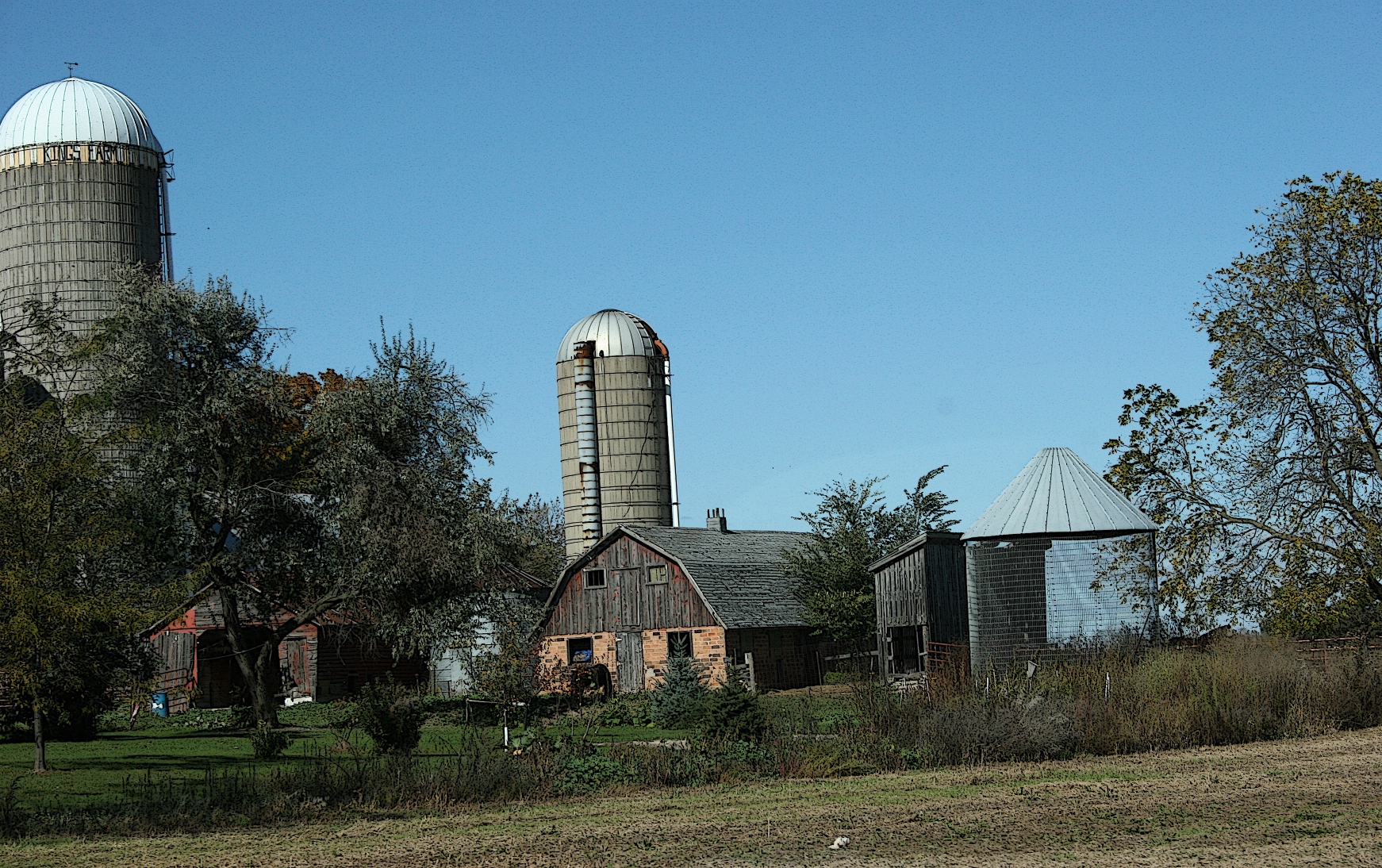
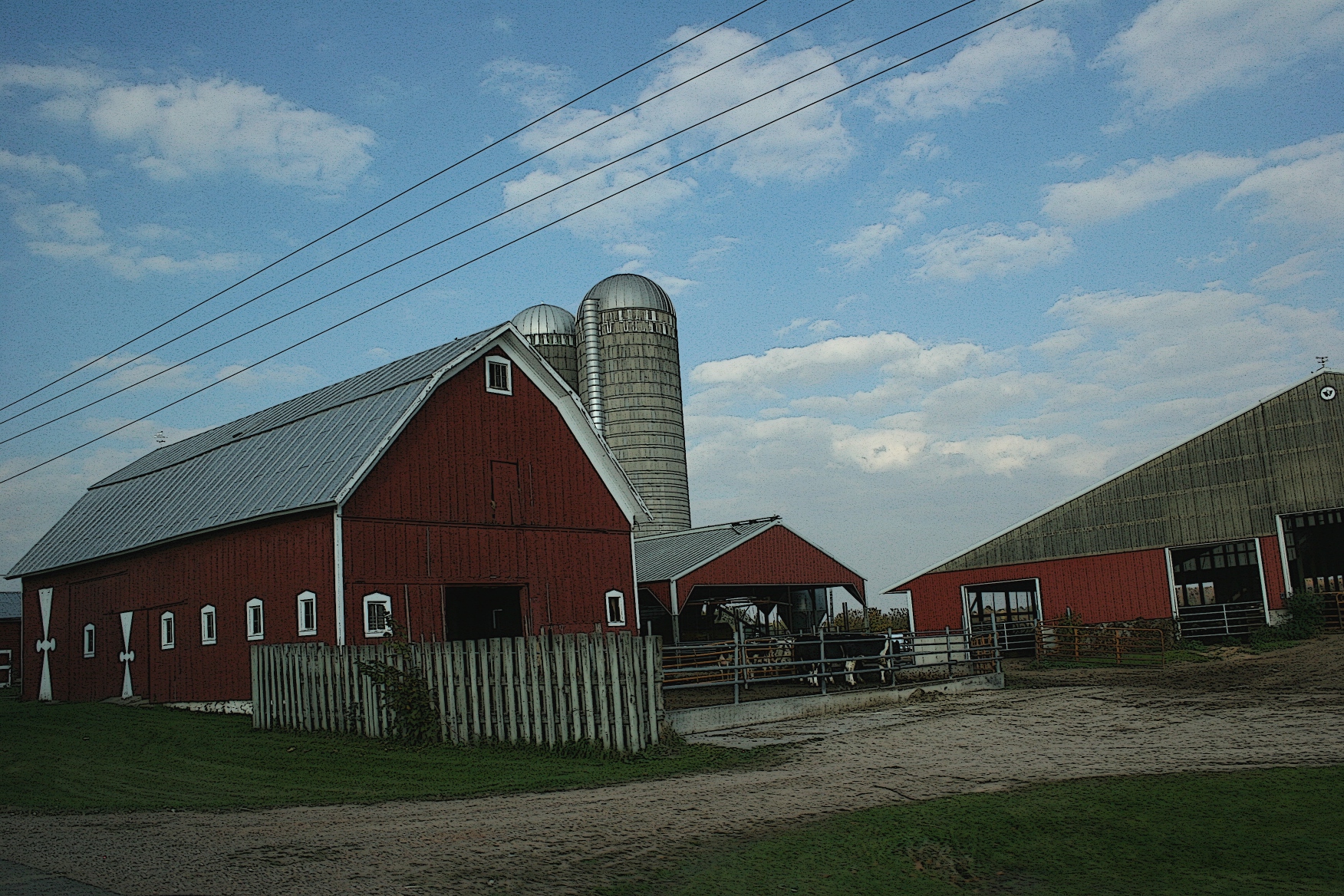
A farm just off Northland Avenue in Appleton, Wisconsin.

A farm, left, just off Northland Avenue.

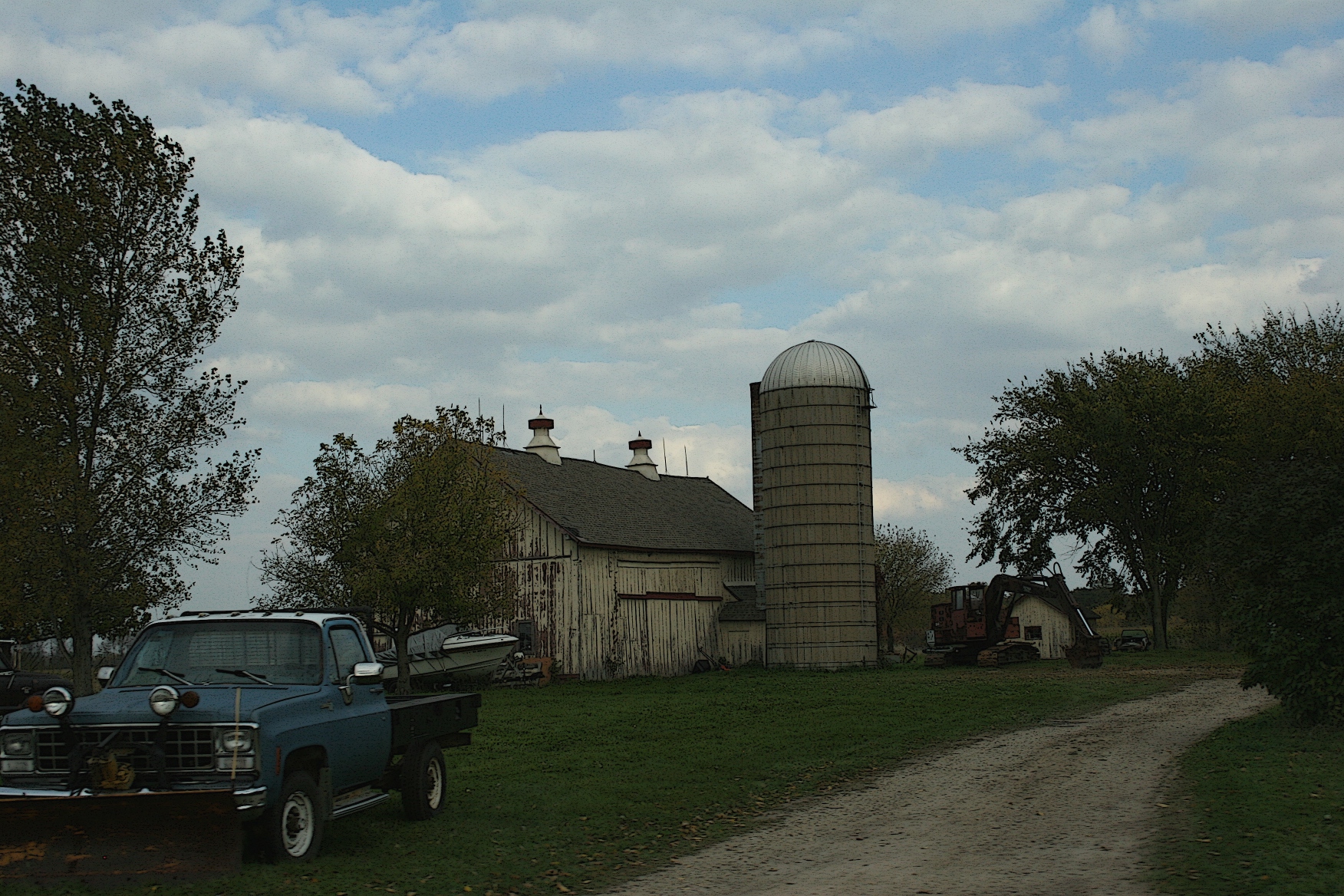
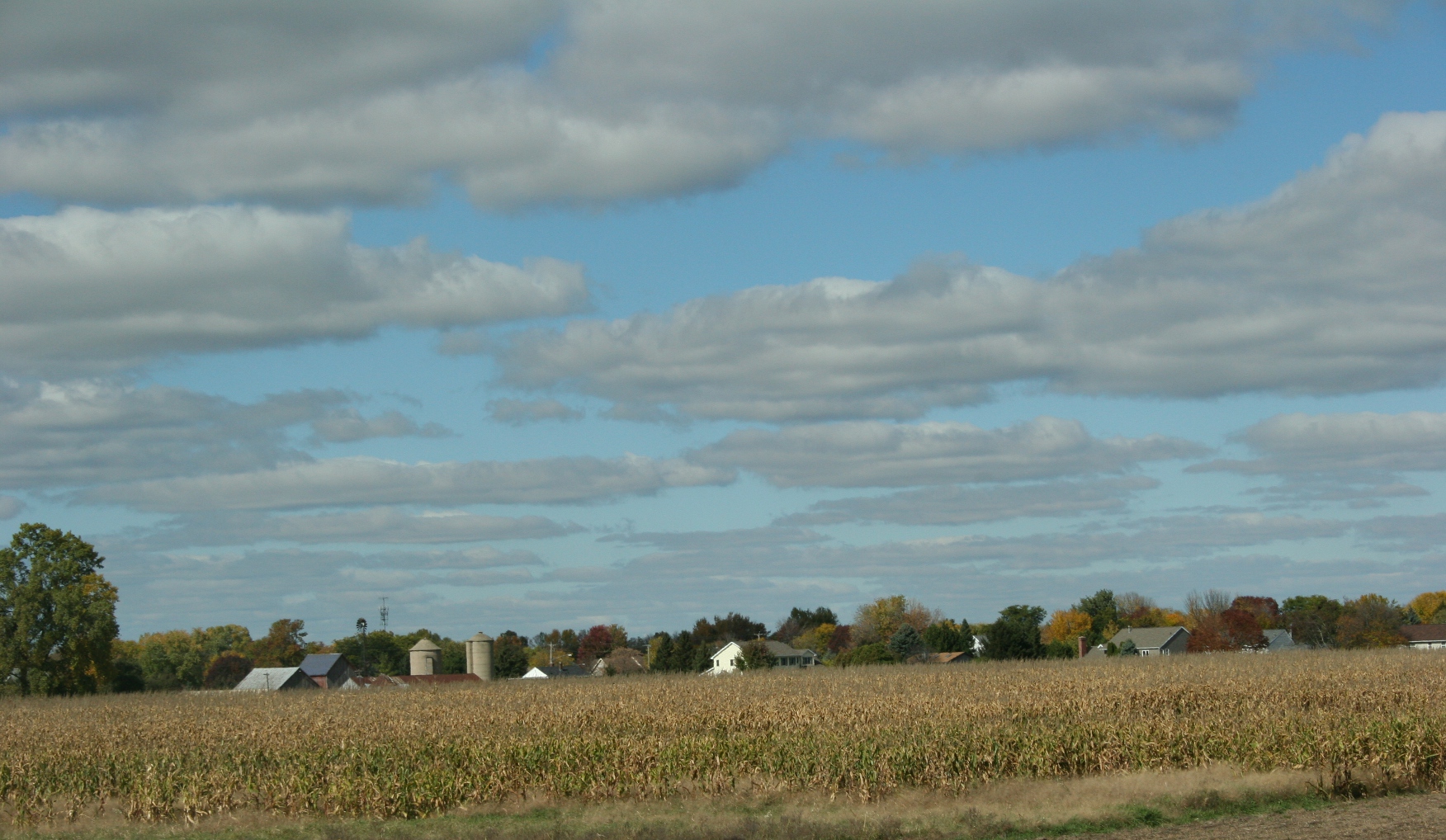
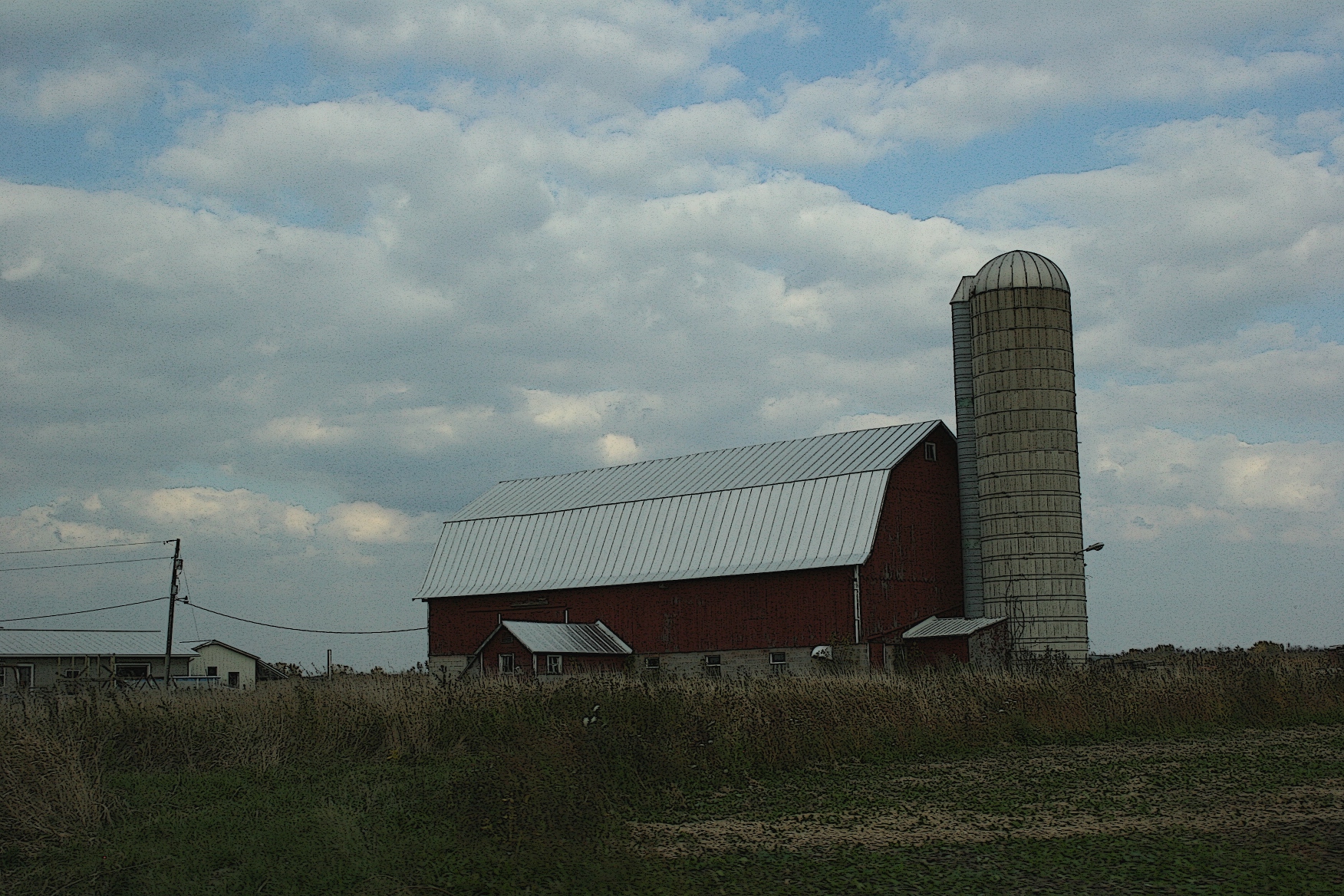
ON THE NORTHERN EDGE of Appleton or maybe its the southern edge of Grand Chute, Wisconsin (I examined maps and cannot determine which), lies a farm place with two vintage silos, a barn, a collection of aging outbuildings and even an old windmill.

The place, a rural oasis separated from busy commercial Northland Avenue by a cornfield, has intrigued me since I first spotted it three years ago.

What I hadn’t noticed, though, until my last trip to Appleton, were the cows grazing in a pasture just across the street from a residential area.

This is the thing I love about Wisconsin. This state appreciates rural. You’ll find barns and silos, corn and cows seamlessly blending into urban settings. And the mix doesn’t feel awkward or patronizing or out of place.

It feels, oh, so right in this state tagged America’s Dairyland.

© Copyright 2013 Audrey Kletscher Helbling


Exploring the magic of Appleton, Wisconsin November 7, 2013

IN THE PAST THREE YEARS, since my second daughter moved to Appleton, Wisconsin, to start her job as a Spanish medical interpreter, I’ve enjoyed exploring the Fox Valley area south of Green Bay and an hour west of Lake Michigan.

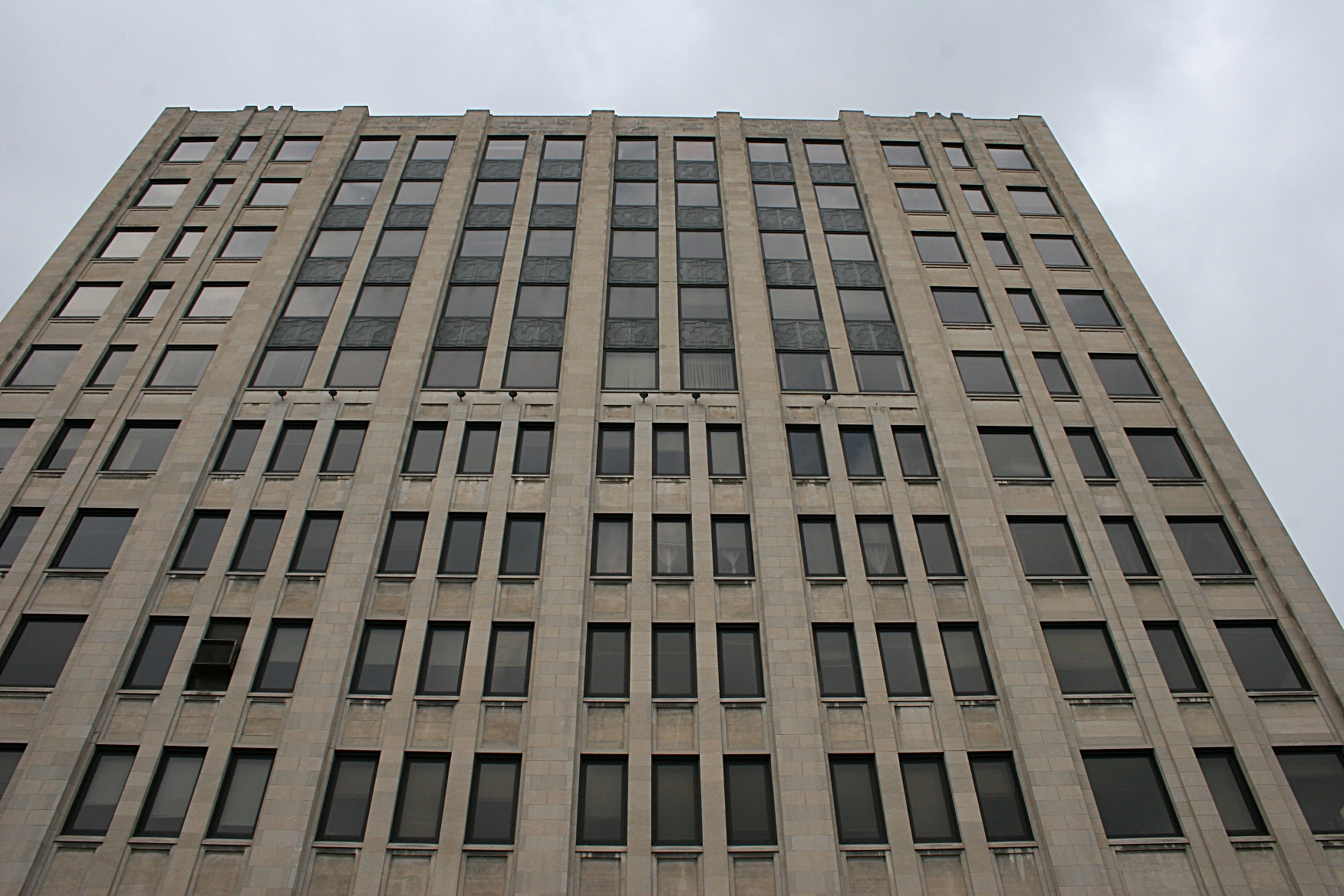
I remember my first visit to downtown Appleton, where this building is located, and my surprise at seeing tall buildings located there.

I remember my first visit to downtown Appleton, where this building is located, and my surprise at seeing tall buildings located there.

Although I’ve tried to convince Miranda to relocate nearer than 300 miles from her hometown, I understand why she’s reluctant to leave Appleton. From my observations, this metro region of some 236,000 residents in 19 communities along the Fox River appears to have a lot going for it in a landscape and lifestyle that can change quickly from urban to rural.

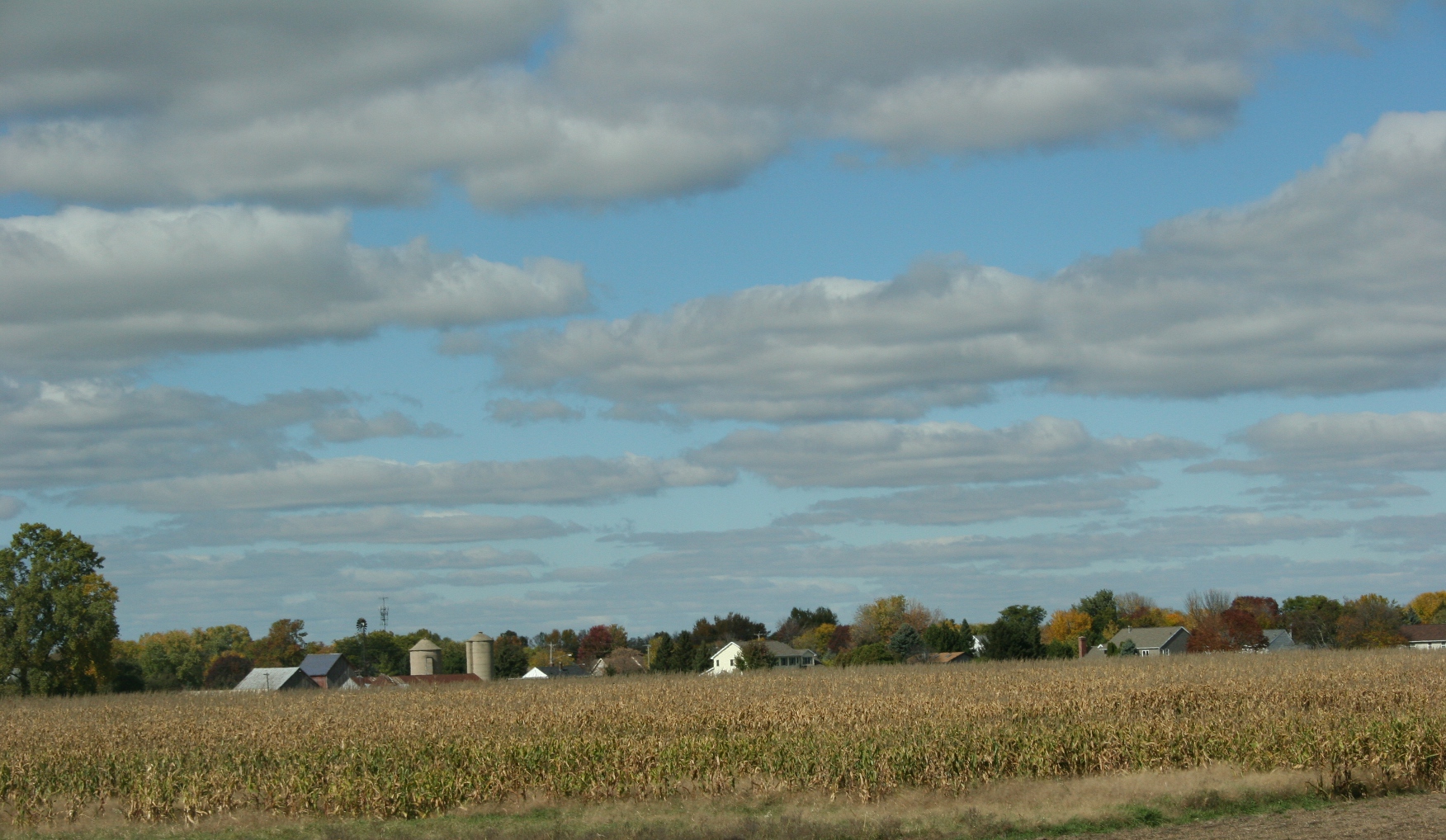
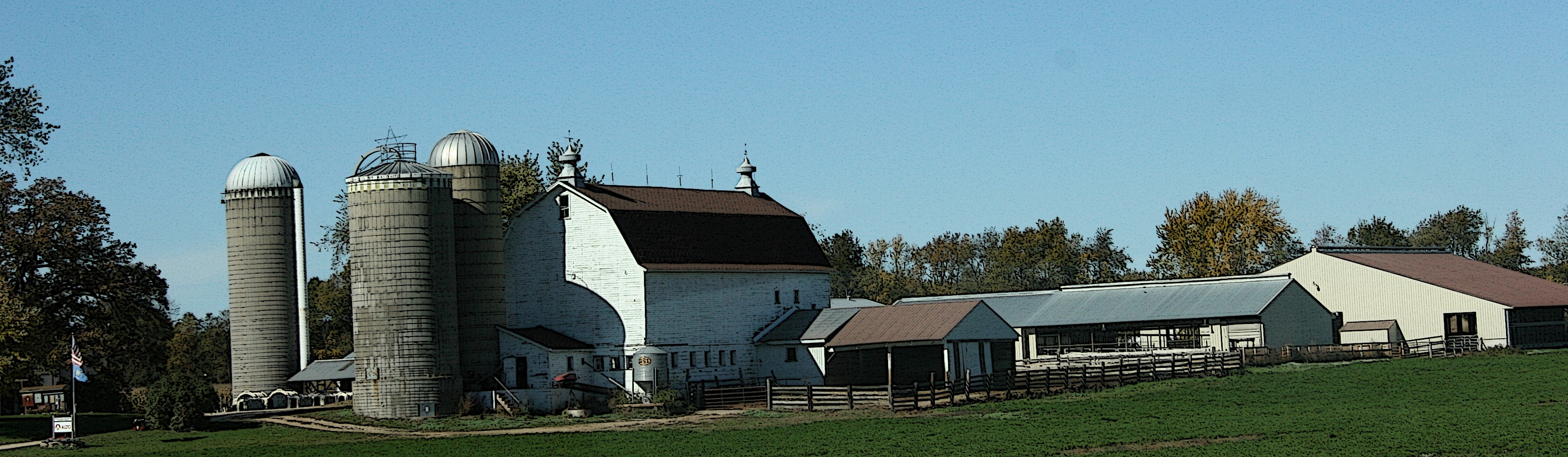
A farm place in the middle of urban housing on the north edge of Appleton, in Grand Chute if I'm correct.

A farm place in the middle of urban housing on the north edge of Appleton, in Grand Chute if I’m correct.

This is a busy and growing region, but one which has not lost its rural roots connection.

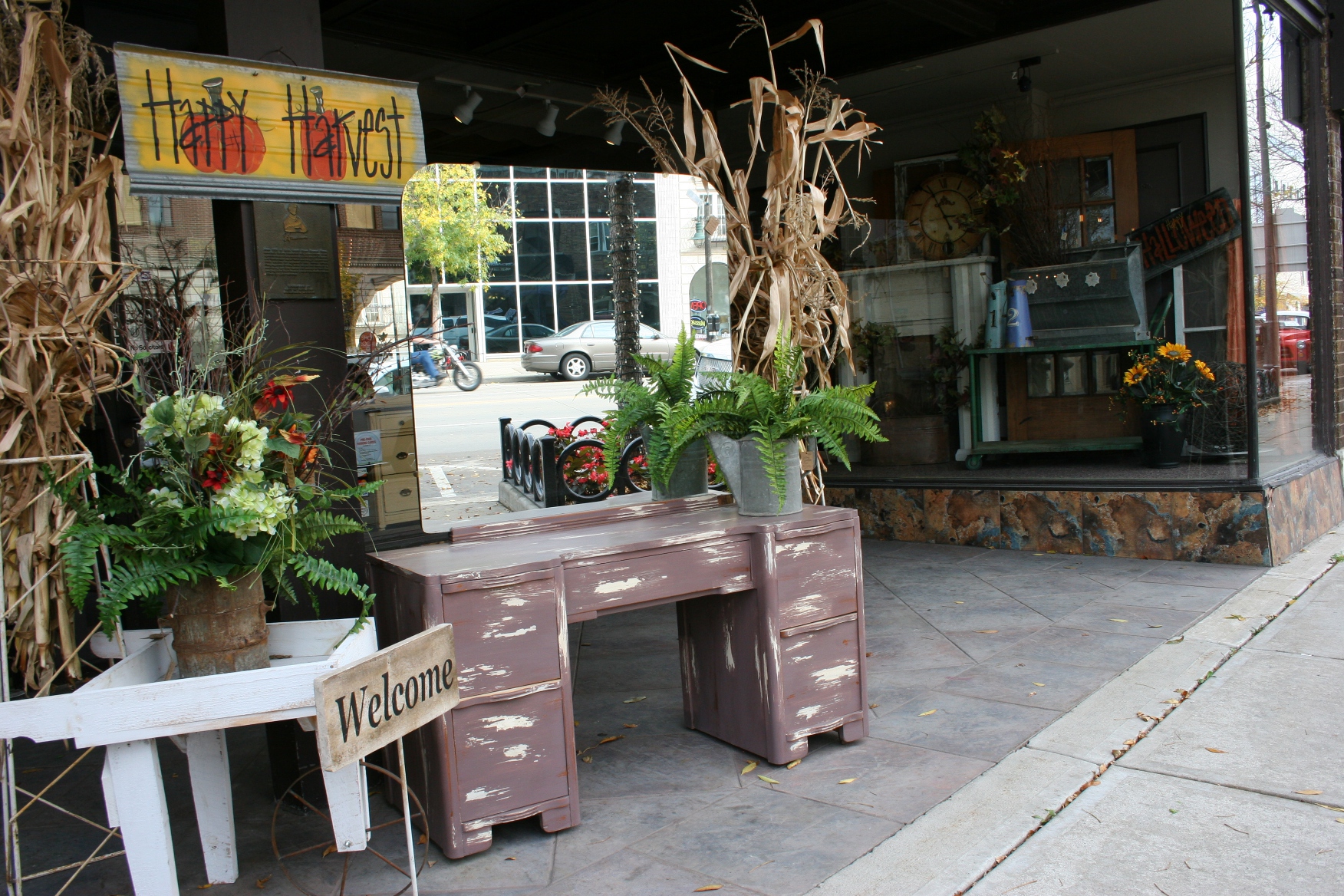
A display outside a downtown Appleton gift shop.

A display outside a downtown Appleton gift shop.

Although I’m not much of a shopper, there’s an abundance of shopping options from the Fox River Mall to one-of-a-kind local shops in the heart of an historic downtown. Plus, Appleton has a fantastic farmers’ market, which I’ve perused twice.

Cheese shops. Check. I’ve been to Simon’s Specialty Cheese and Lamers Dairy.

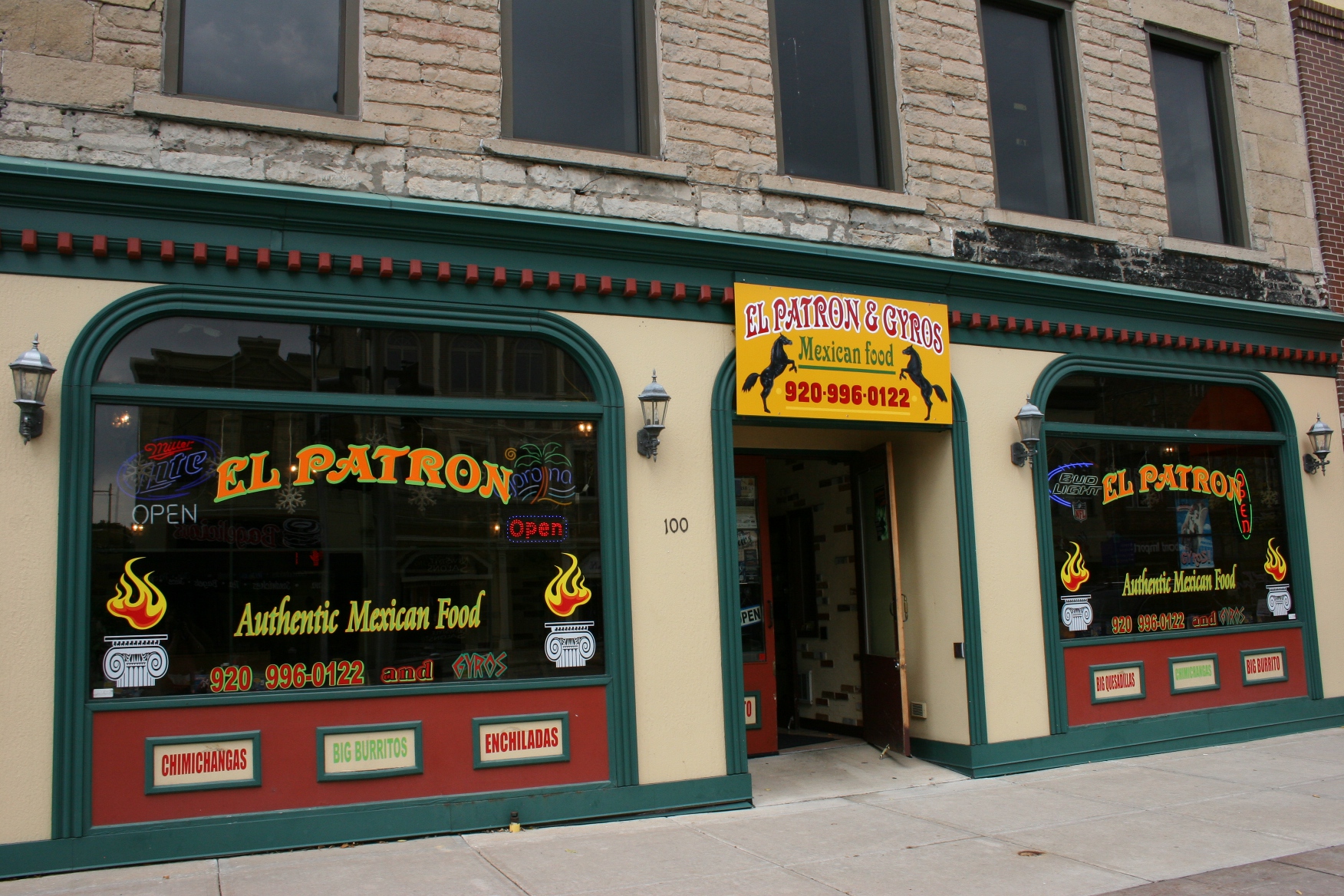
Ethnic and other dining choices abound in the Appleton area.

Ethnic and other dining choices abound in the Appleton area.

Great places to eat, too, like the best pizza accompanied by on-site brewed beer at the Stone Cellar Brewpub and delectable Indian cuisine at Sai Ram. Whenever my brother-in-law Marty, a long distance trucker, travels to Appleton, he’ll phone Miranda and she’ll pick him up and they’ll go to the Stone Cellar for pizza.

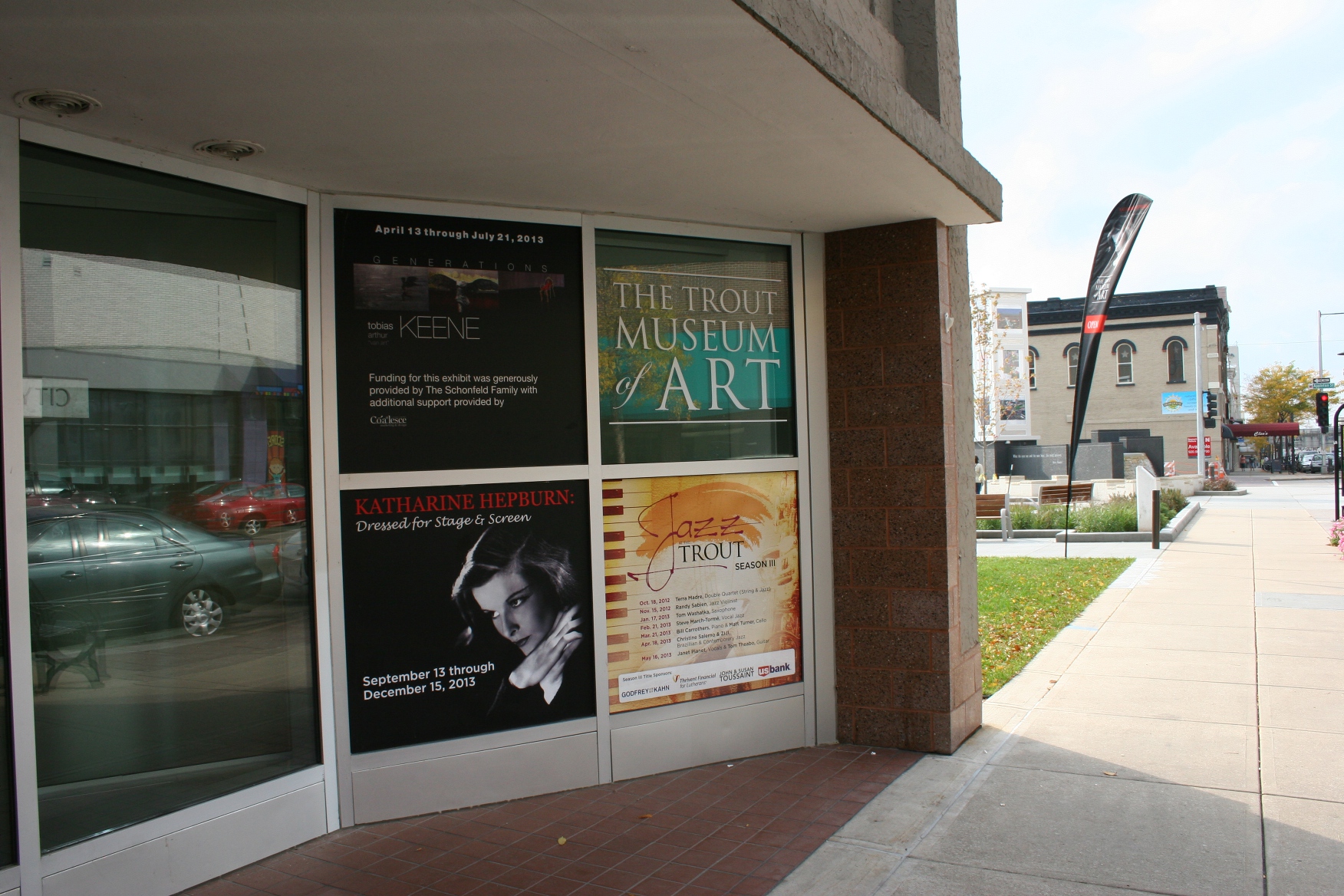
Now showing at The Trout Museum of Art, a collection of Katharine Hepburn's costumes.

Showing until December 15 at The Trout Museum of Art, a collection of Katharine Hepburn’s costumes.

On our most recent trip to Appleton, we not only celebrated my husband’s birthday at the Stone Cellar, but earlier in the day explored nearby High Cliff State Park and afterward checked out the Katharine Hepburn: Dressed for Stage and Screen exhibit at The Trout Museum of Art. Appleton offers plenty of cultural opportunities at places like the Fox Cities Performing Arts Center (which I have yet to visit and which my daughter wishes had more affordable ticket prices) and Lawrence University.

For some time now, I’ve wanted to visit the Trout. The museum’s name has nothing to do with fish, but with Dr. Monroe and Sandra Trout, who gifted 150 museum quality works of art and left a $1 million endowment. I was excited to see the Trout Collection.

But it was not to be. Apparently I misunderstood the information on the Trout website and the only collection shown was Katherine Hepburn’s costumes on loan from the Kent State University Museum in Ohio. Now if I was into film and Hepburn and fashion, this certainly would have held my interest. But I am not, nor are my husband and daughter. We breezed through the exhibit in 30 minutes under the scrutinizing watch of a security guard. When I asked if there was more to the Trout, the man at the admissions desk said we’d seen it all.

OK, then. To add to my disappointment, no cameras were allowed inside the Hepburn exhibit. I rather expected that, but I was hoping otherwise.

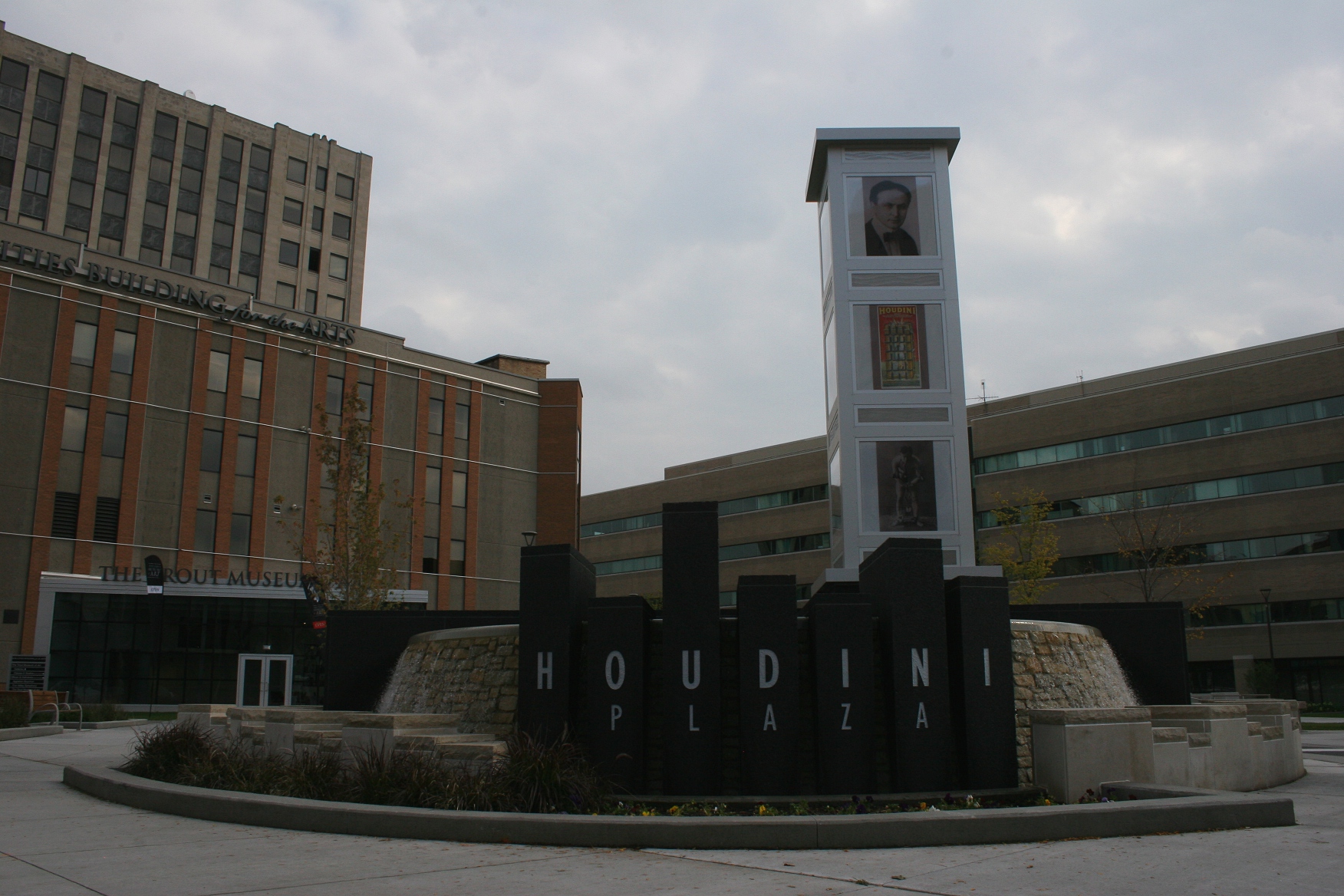
The recently revamped Houdini Plaza, a central gathering spot in downtown Appleton that features summer concerts, etc.

The recently revamped Houdini Plaza, a central gathering spot in downtown Appleton that features summer concerts, etc.

I settled for shooting photos outside the Trout of the beautiful new Houdini Plaza, honoring escape artist Harry Houdini who called Appleton his childhood home. A permanent exhibit on Houdini is housed in the nearby History Museum at the Castle, where I once saw an interesting Leonardo da Vinci exhibit.

I wish we’d gone to the Castle to tour the current temporary exhibit, Food: Who We Are and What We Eat. That might have been entertaining considering I’ve spotted green and gold brat buns at Festival Foods in Appleton.

If I’ve learned anything in the past three years about Wisconsin, it’s that Wisconsinites like love their beer, brats and Packers.

BONUS PHOTOS:

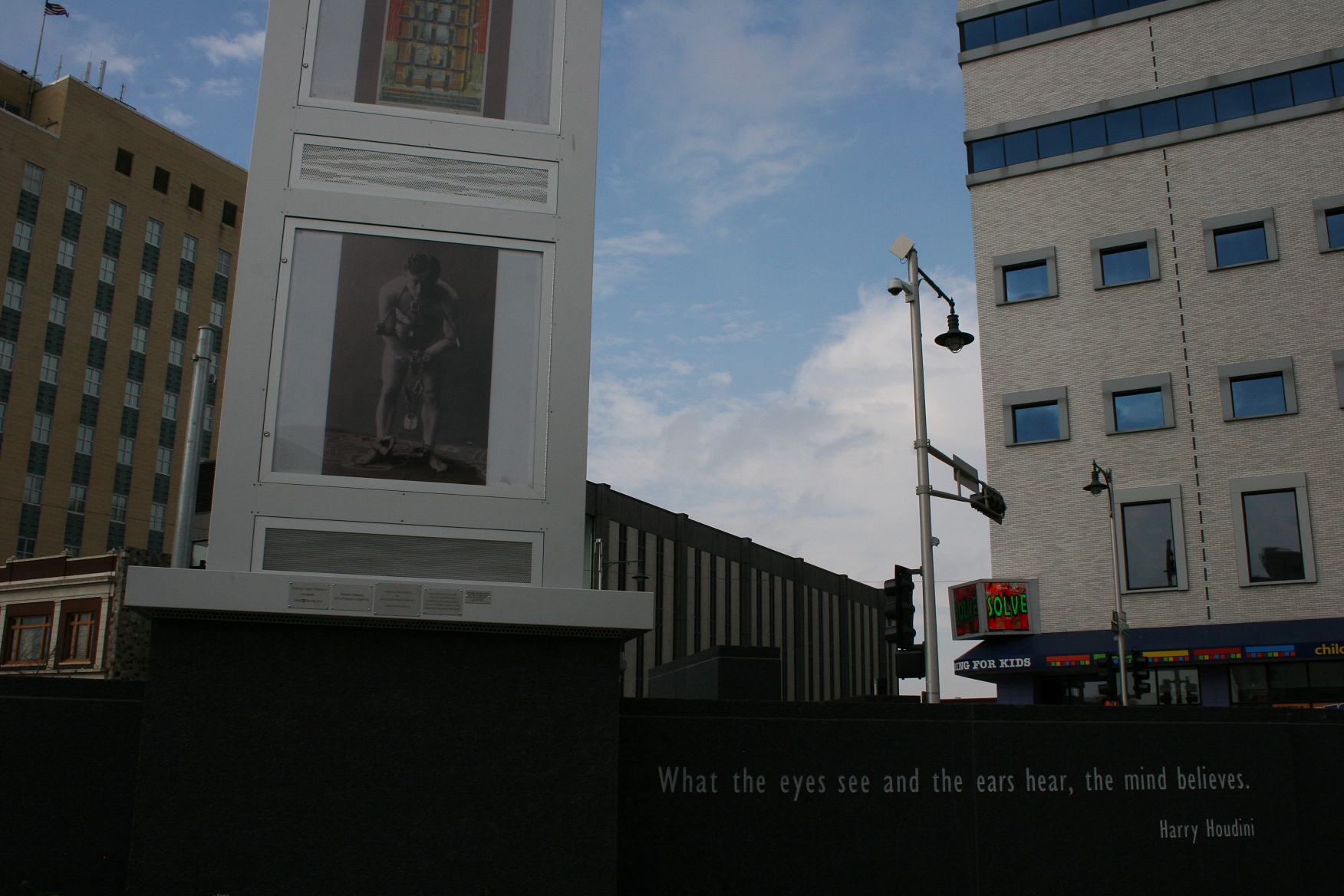
Details on Houdini Plaza.

Details on Houdini Plaza.

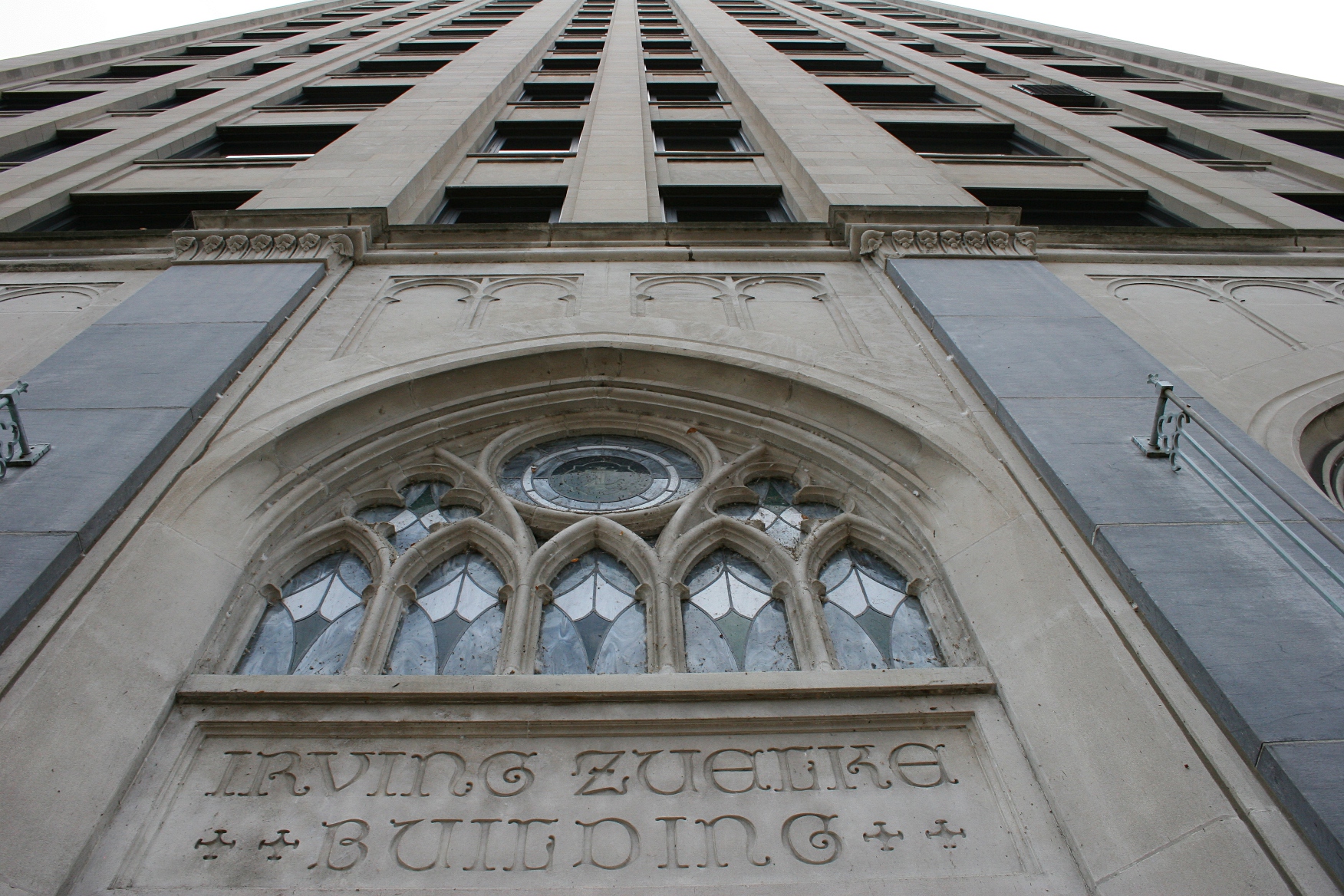
Steel, stone, marble and brass comprise the first seven floors of the Irving Zuelke building constructed in  1931. An additional five stories were added in 1951.

Steel, stone, marble and brass comprise the first seven floors of the Irving Zuelke building constructed in 1931. An additional five stories were added in 1951.

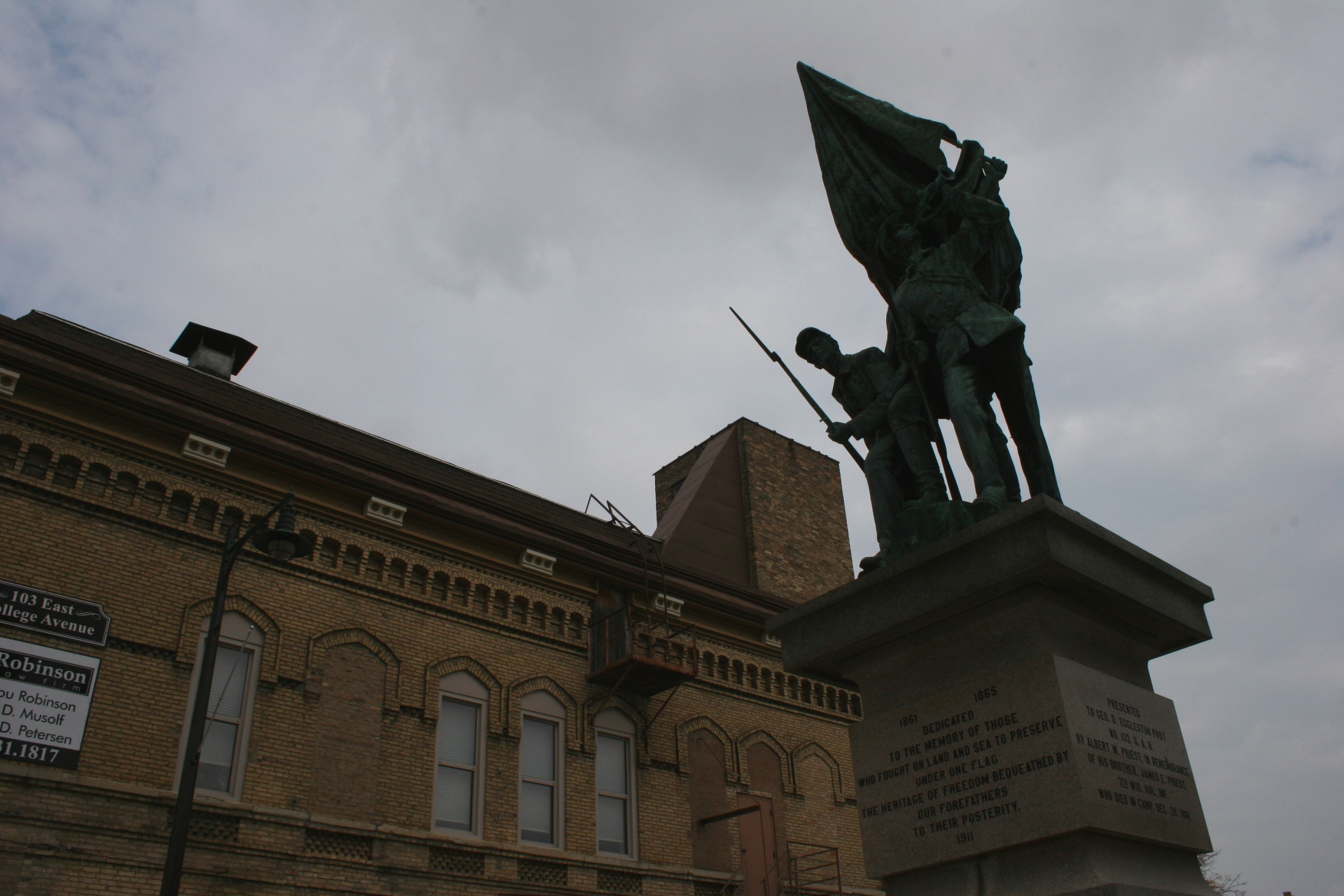
I discovered this bronze monument to Civil War Union soldiers near Houdini plaza, tucked between a parking ramp and a building.

I discovered this bronze monument to Civil War Union soldiers near Houdini Plaza, tucked between a parking ramp and a building.

FYI: To read previous posts from Appleton, and there are many, simply type Appleton into the Minnesota Prairie Roots search engine. Also, photo ops on this visit to downtown Appleton were limited given the intermittent rain.

© Copyright 2013 Audrey Kletscher Helbling


Exploring Wisconsin’s High Cliff State Park & a disappointing discovery October 22, 2013

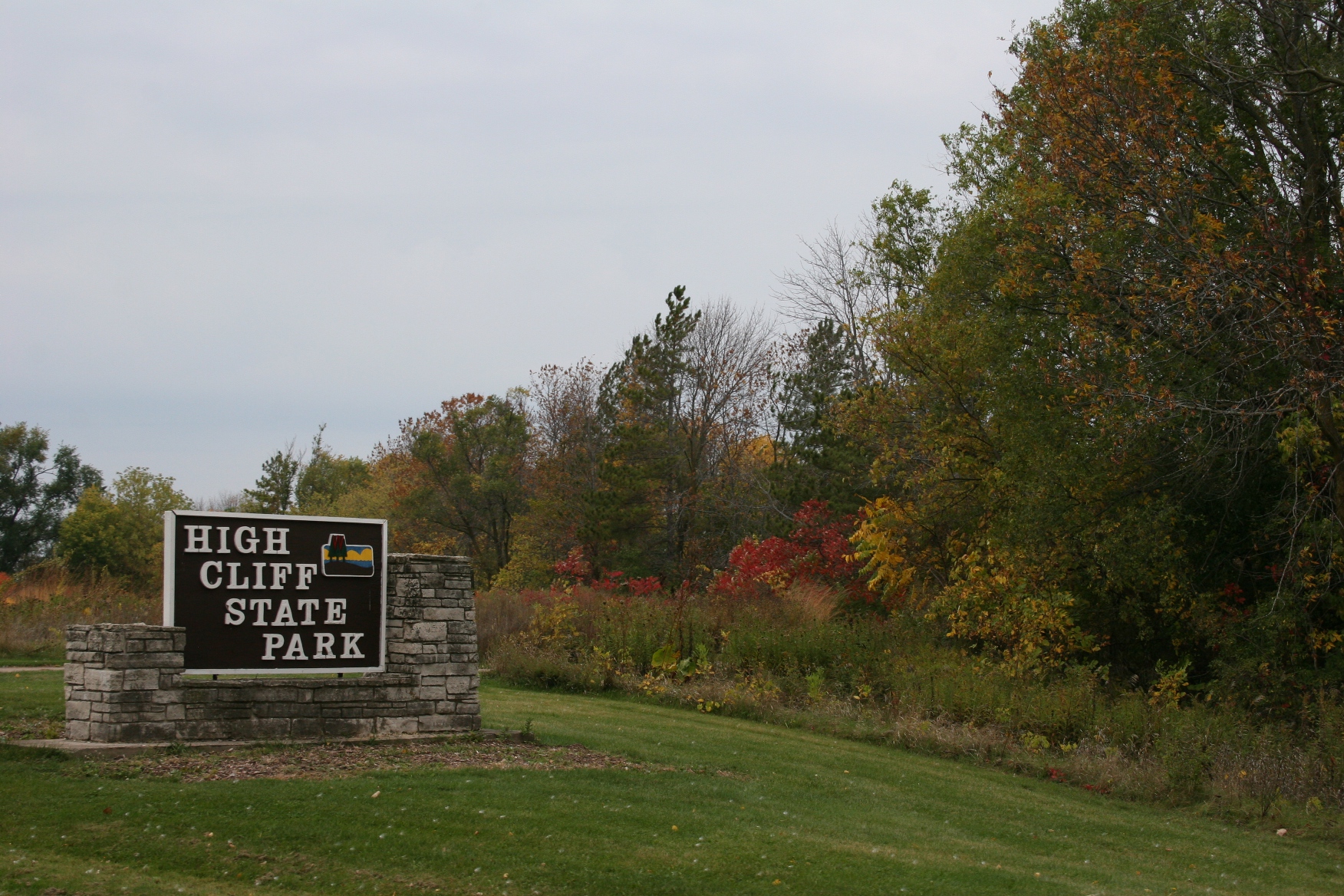
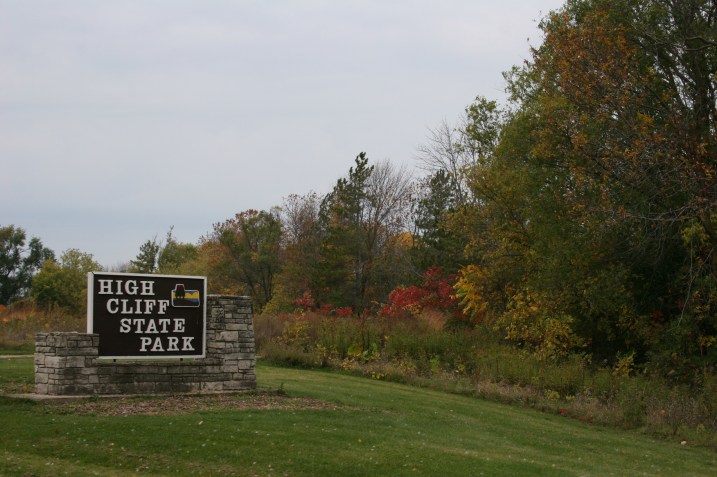
Entering the park.

Entering the park.

AN AUTUMN AFTERNOON in High Cliff State Park in east central Wisconsin, even with grey skies and the occasional spurt of drizzle, is magnificent.

On a recent Saturday, my daughter who lives in nearby Appleton, husband and I explored this sprawling park near Sherwood along the banks of Wisconsin’s largest inland body of water, Lake Winnebago.
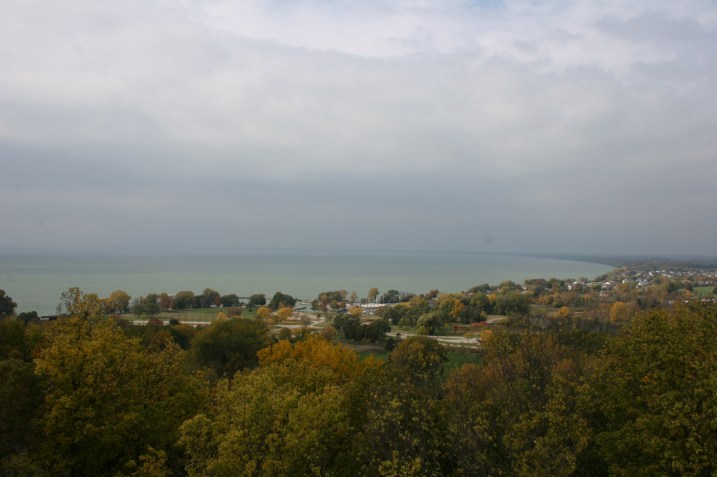
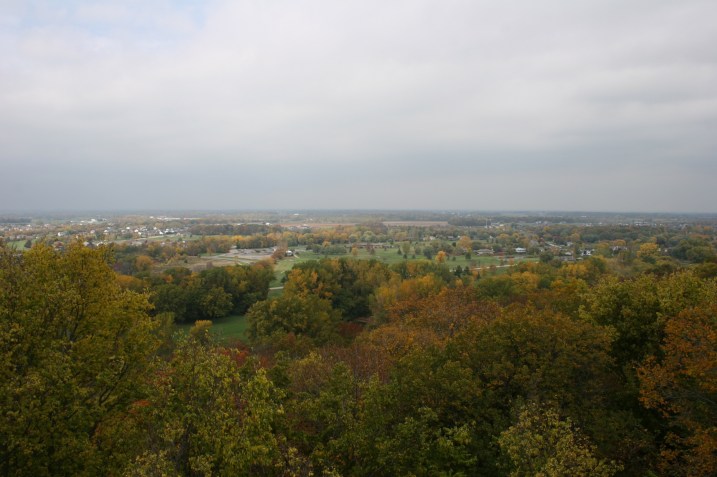
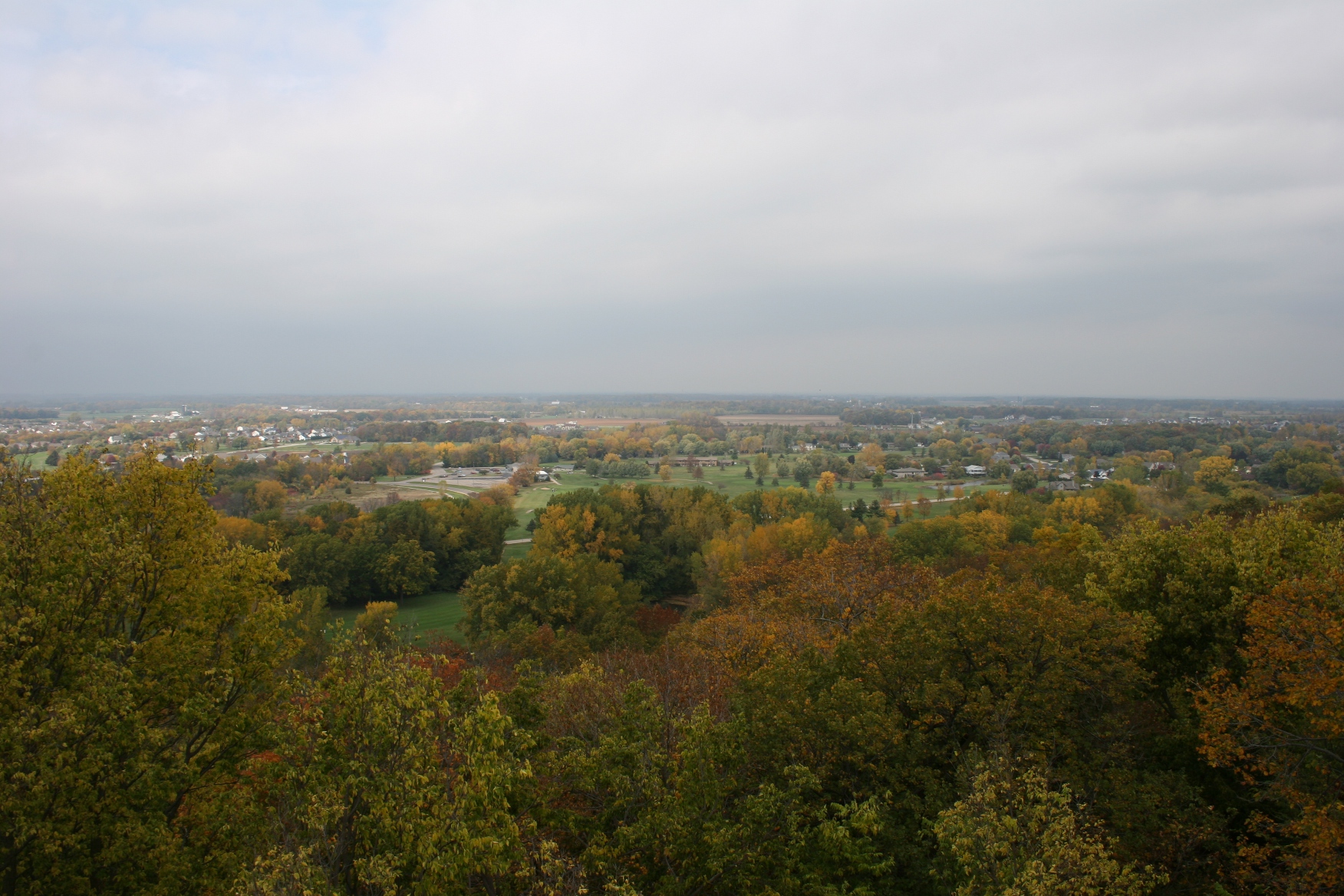
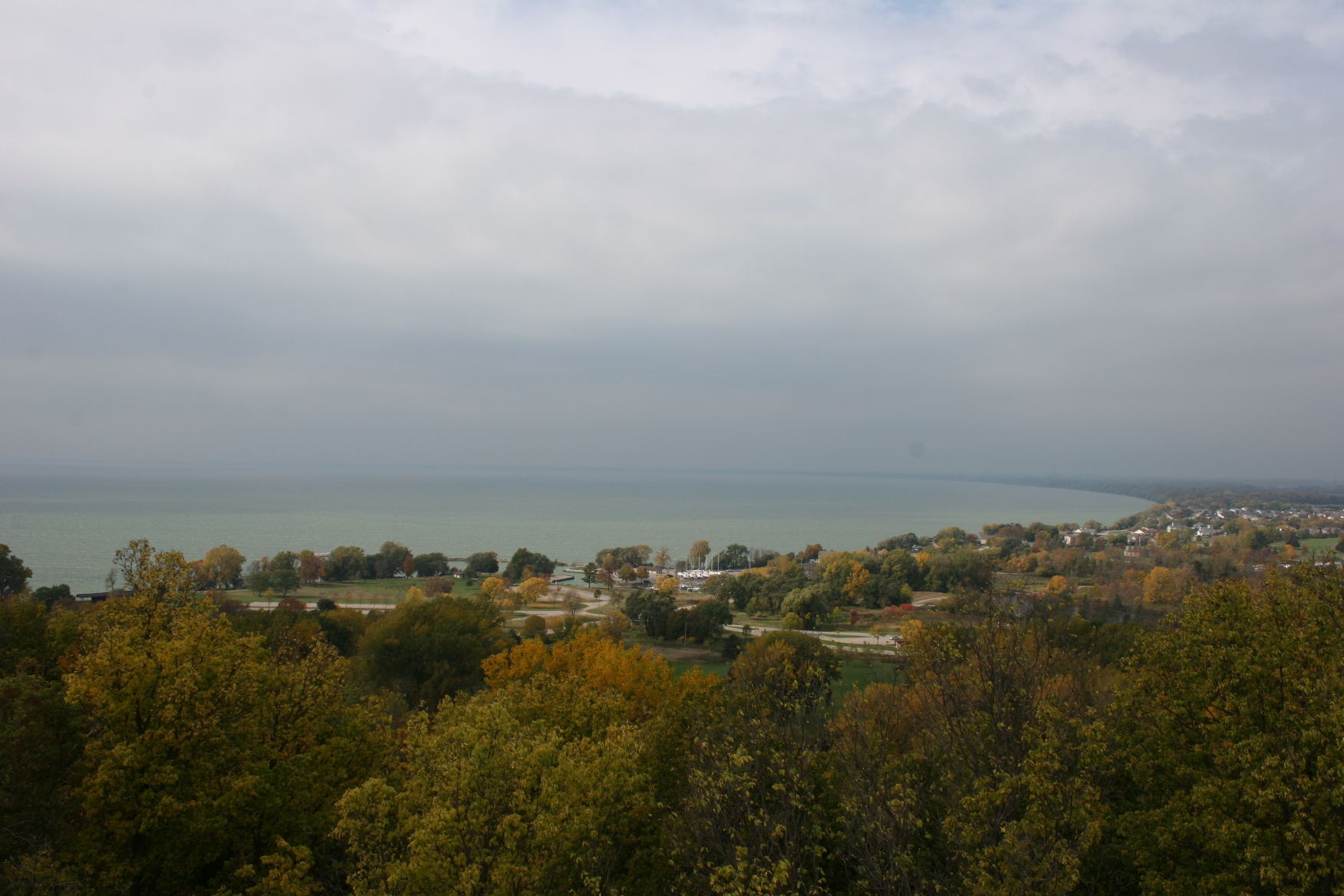
Sky and lake and land meld in this photo taken from atop a tower in High Cliff State Park. Photo by Miranda Helbling.

Sky and lake and land meld in this photo taken from atop a tower in High Cliff State Park. Photo by Miranda Helbling.

But it was not the lake—more on that later—which impressed as much as the view of the valley from high atop the park. To see acres and acres and acres of trees below, buffeted by the lake on one side, transitioning into the golden, russet and reddish hues of the season is something to behold.
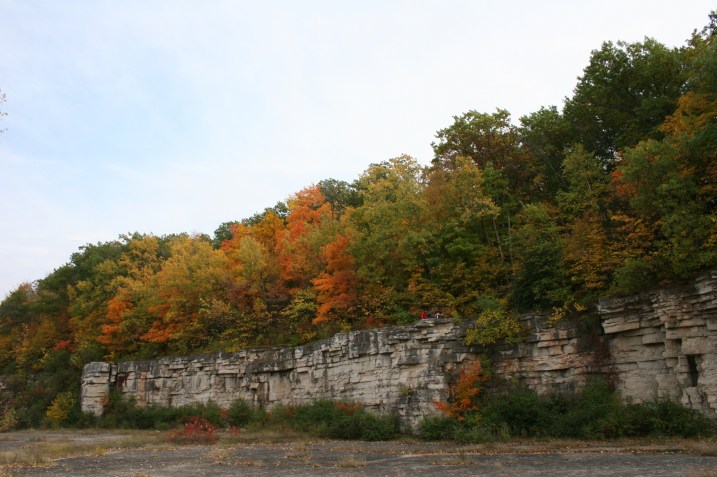
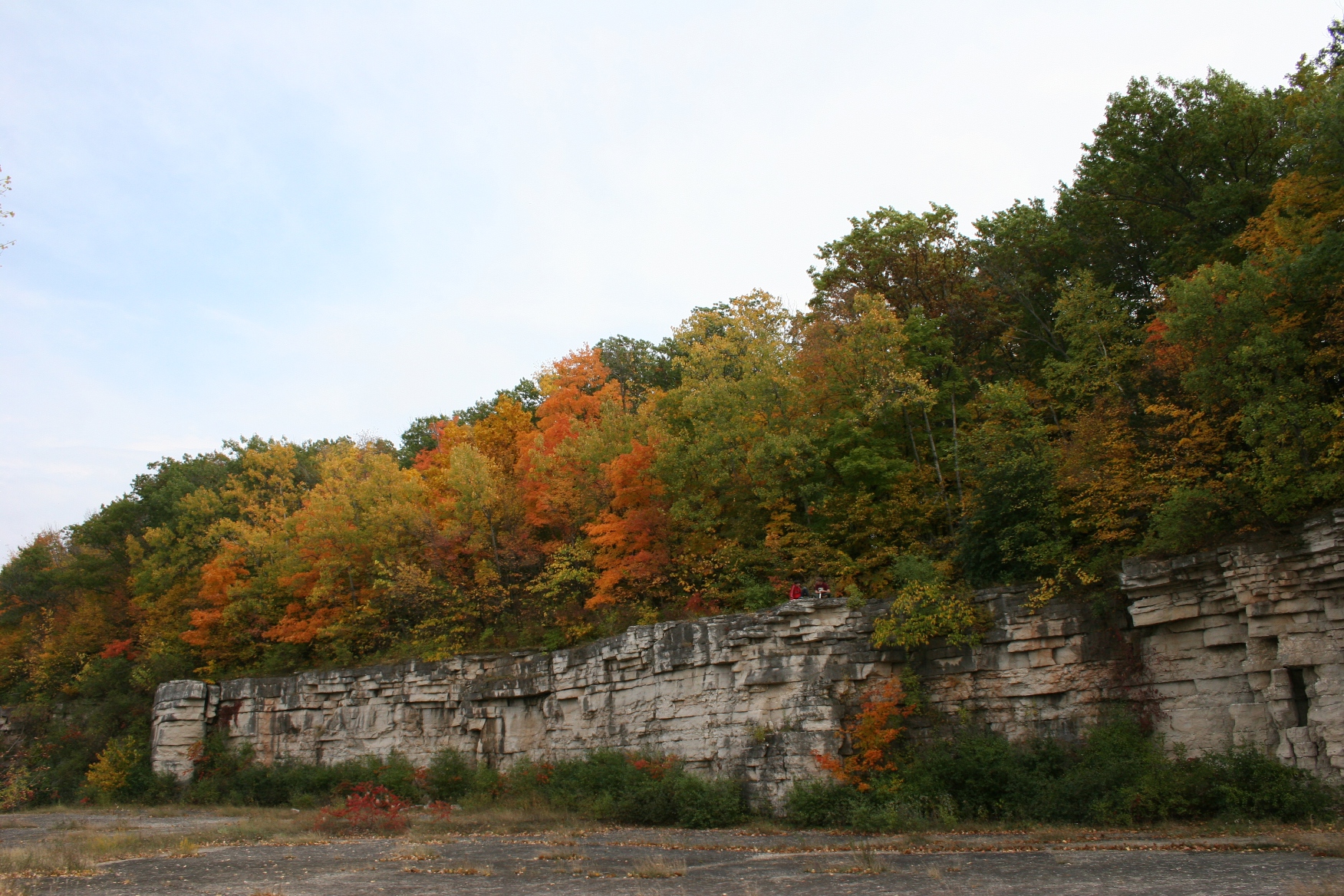
Old limestone quarry walls below a hillside of trees.

Old limestone quarry walls below a hillside of trees.

Likewise, limestone walls, remaining from the days when this stone was quarried from this land, provide a neutral backdrop to flaming maples and other trees bursting with color on hillsides.
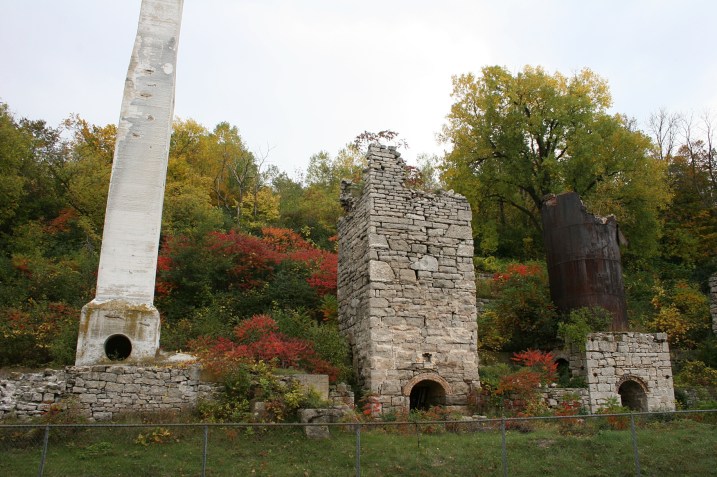
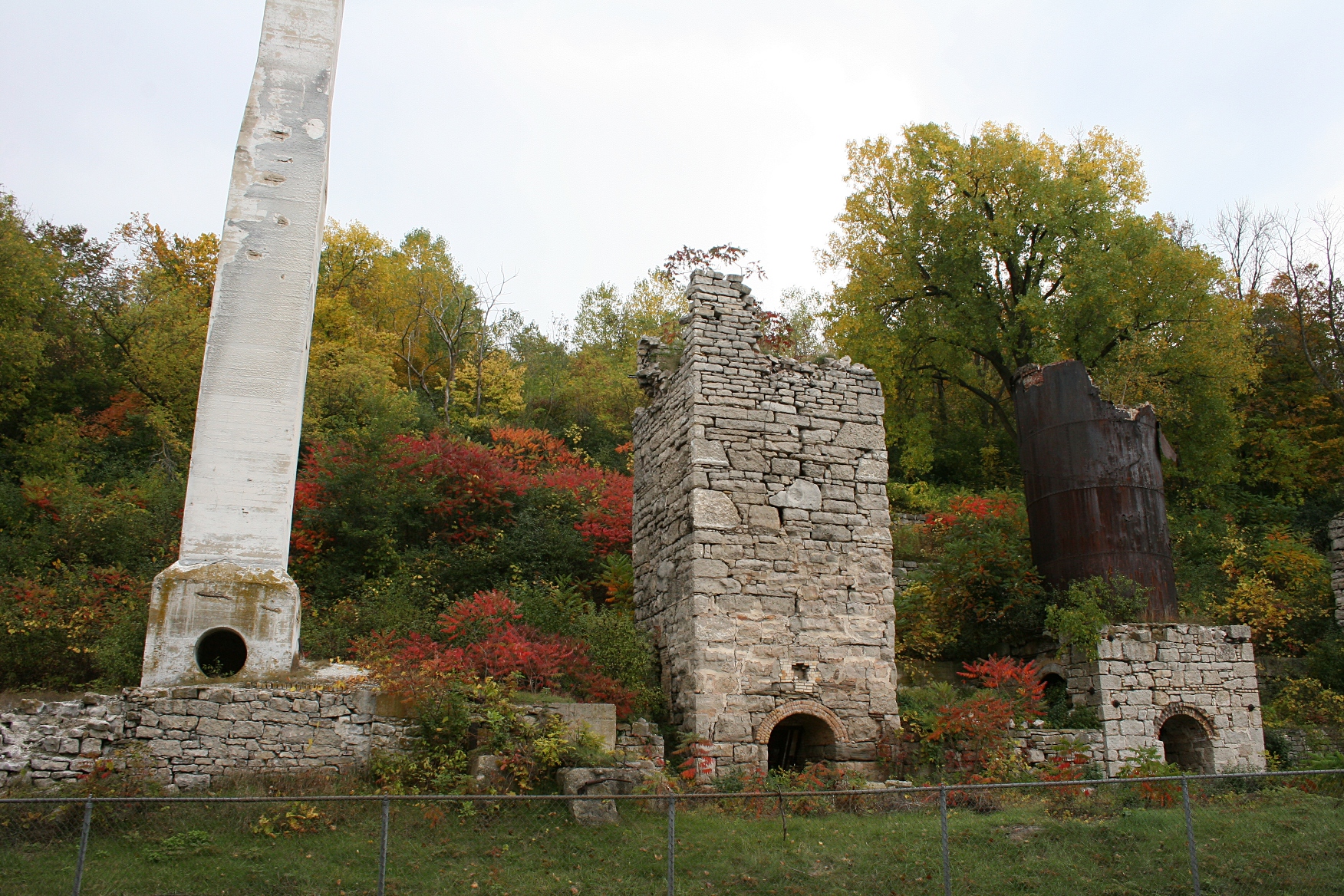
Kiln ruins.

Kiln ruins.

And then there are the old kilns, once used to create quick lime for use in plaster and cement and for agricultural purposes. I’m thankful mining operations here ceased in 1956. To totally decimate this place of natural beauty would have been a tragedy.
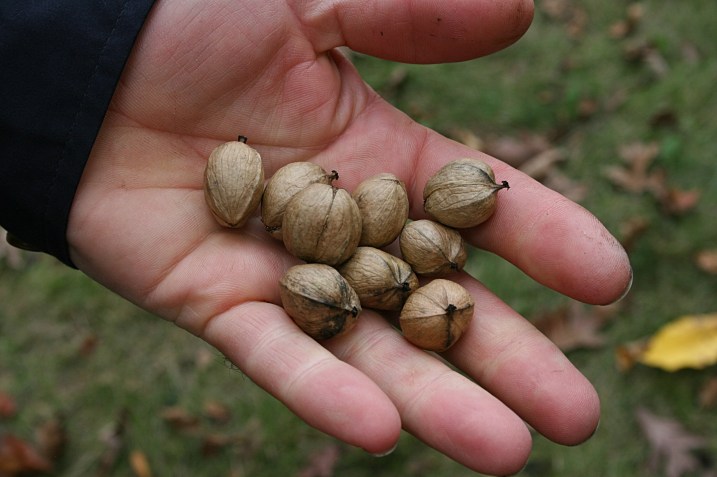
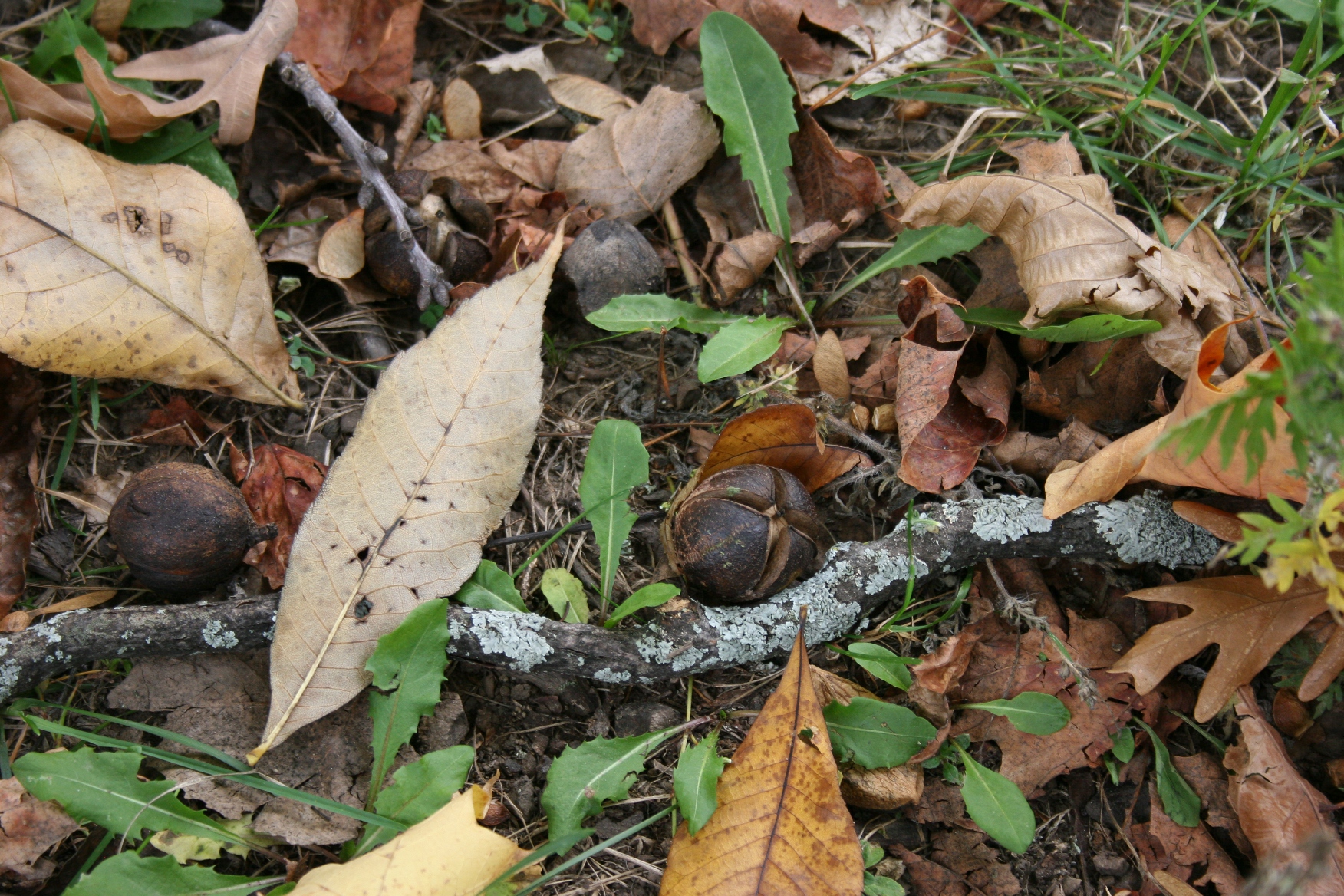
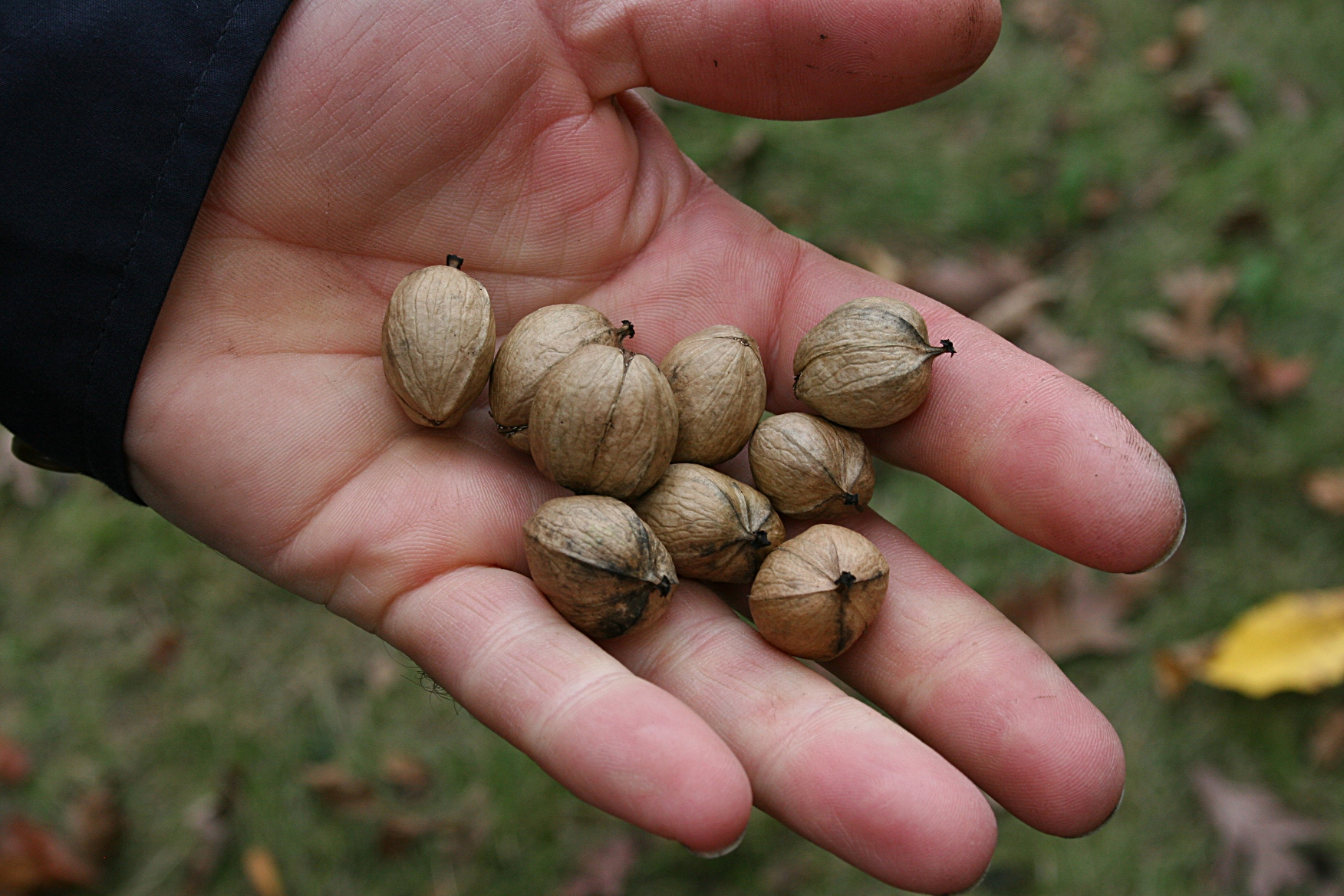
When we discovered what other park visitors were gathering, Randy began harvesting hickory nuts too and stuffing them into his jacket pockets.

When we discovered other park visitors gathering nuts, Randy began squirreling away hickory nuts, too, stuffing them into his jacket pockets.

For this beautiful park proves a lovely spot to picnic on a Saturday—a place where families pluck coveted hickory nuts from the ground to dry and crack and later eat plain or in cakes or cookies.

Here a family prepares to celebrate a wedding, placing burlap runners upon picnic tables covered with white plastic tablecloths inside the park shelter.
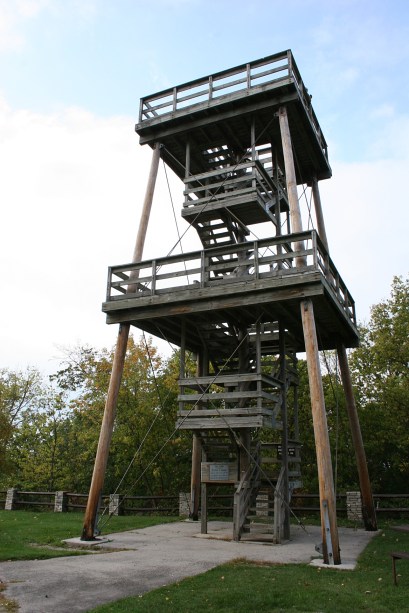
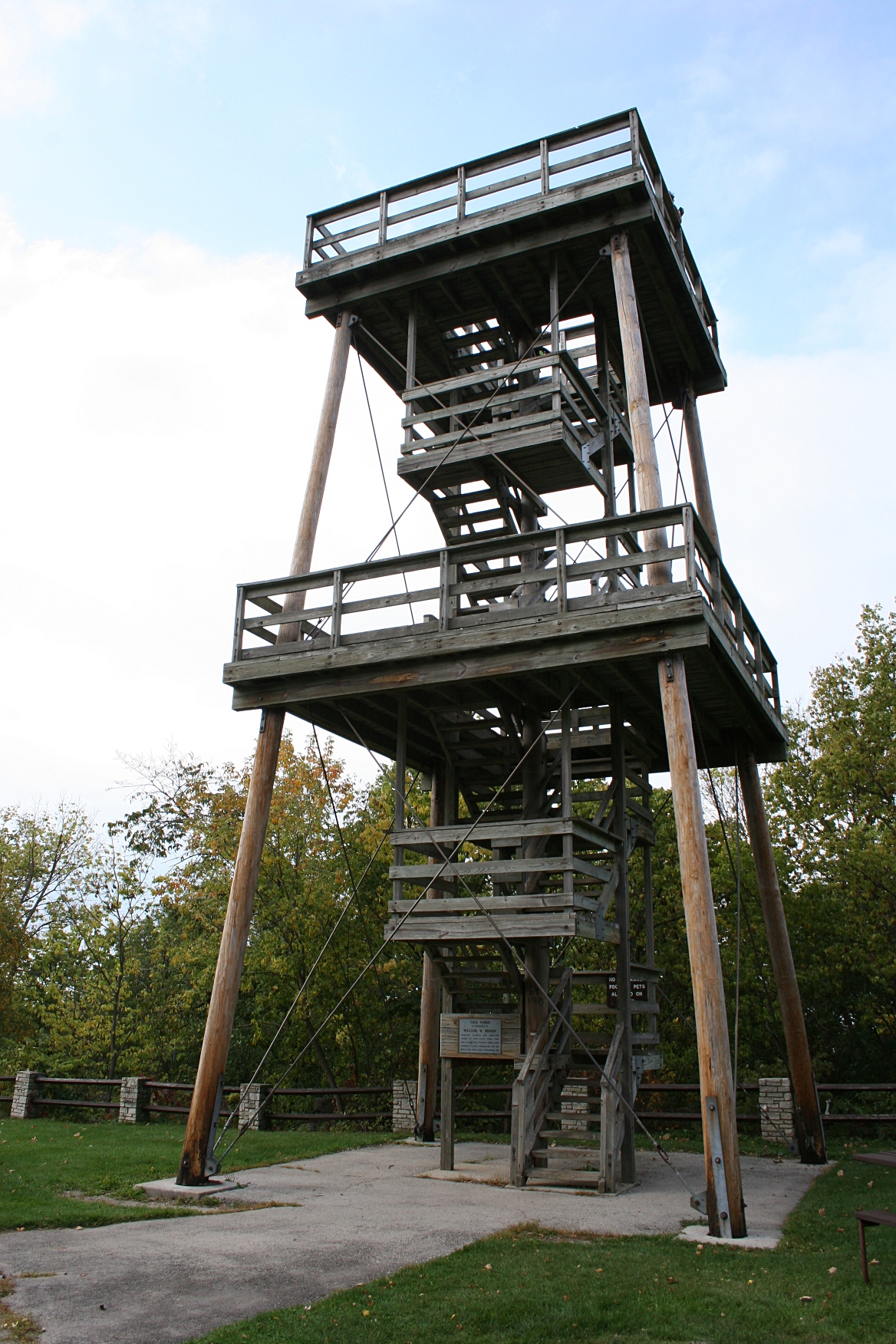
The tower...

The tower…

and the view from the tower. Photo by Miranda Helbling.

and the view from the tower. Photo by Miranda Helbling.

Couples and families climb 64 steps to the top of a wooden tower for a spectacular view of the valley. I keep my feet firmly planted on the ground, neck craned, waving to my husband and daughter high above me.
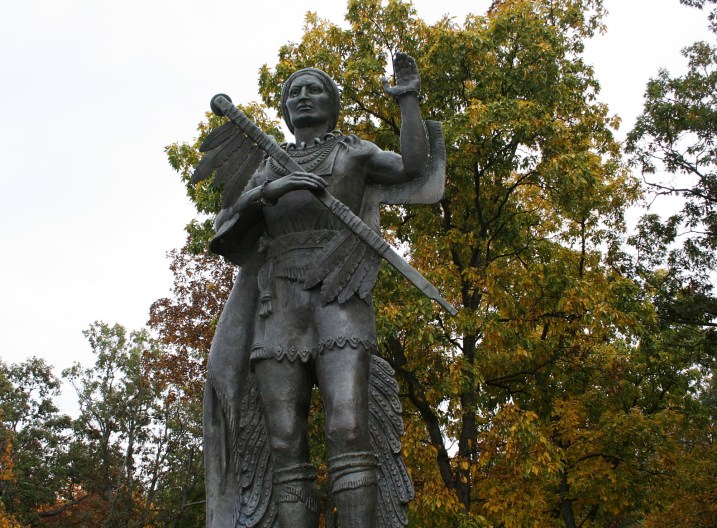
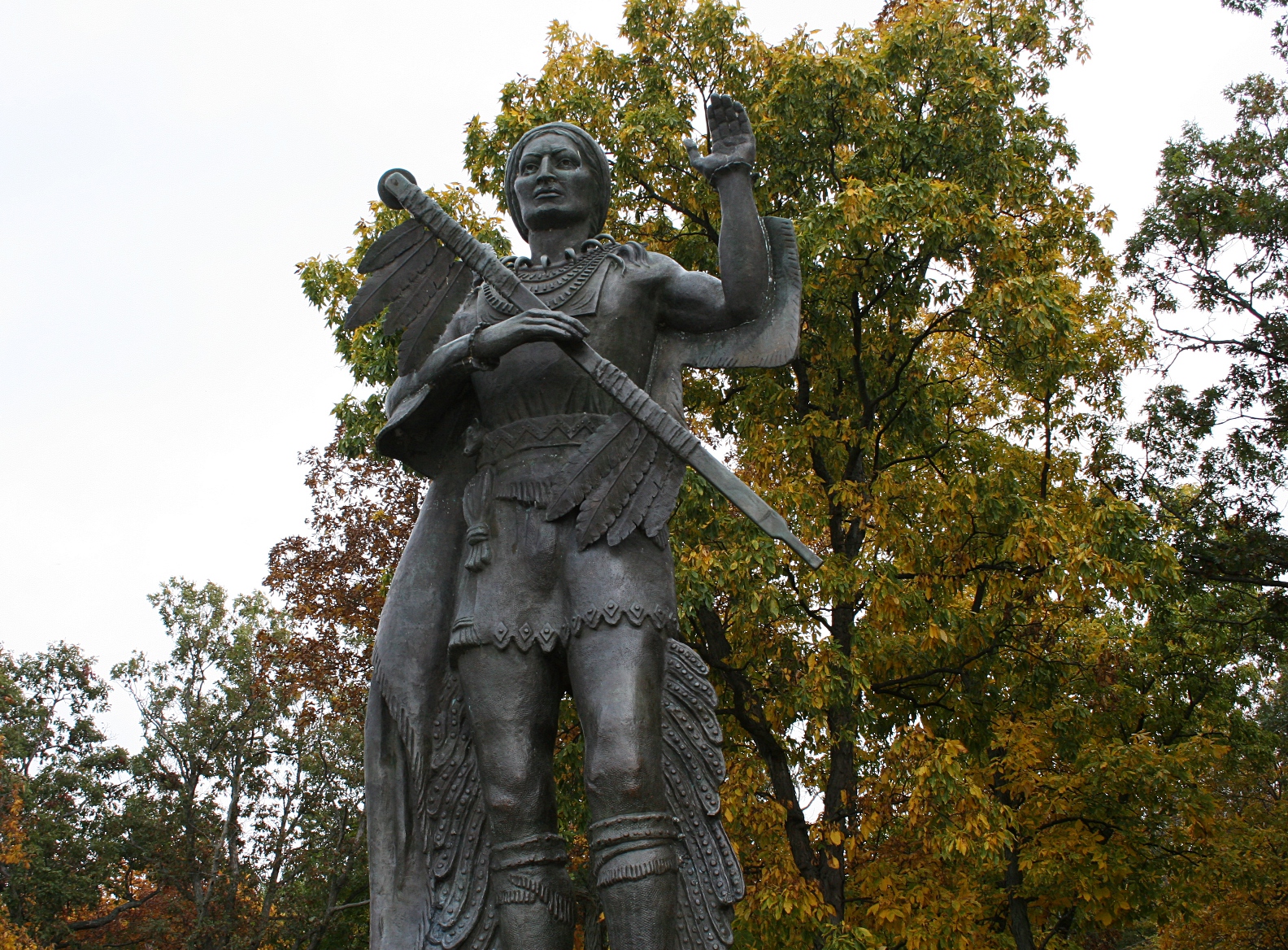
Red Bird, Chief of the Winnebago.

Red Bird, Chief of the Winnebago.

A 20-something man squats on a fence for a photo; only his balance keeps him from tumbling off and over the cliff. Nearby a statue of Red Bird, chief of the Winnebago, stands, sure and solid atop a rock.

Winnebago. It is also the name of the 131,939* acre lake which borders the western edge of High Cliff State Park and runs 28 miles long and eight miles wide near the towns of Fond du Lac, Oshkosh, Neenah and Menasha.
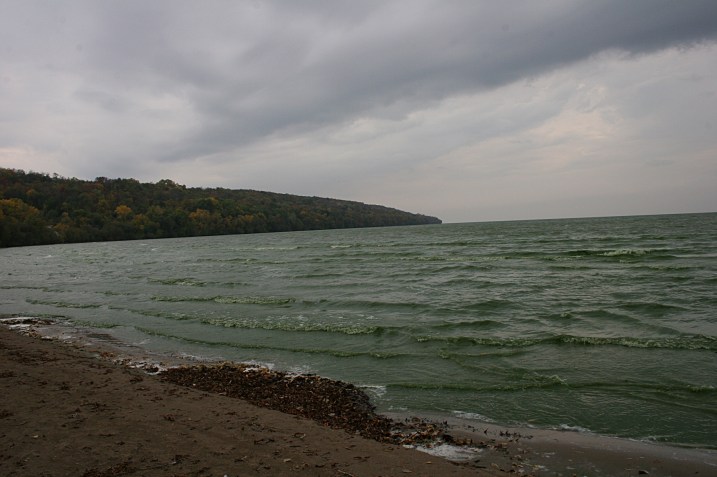
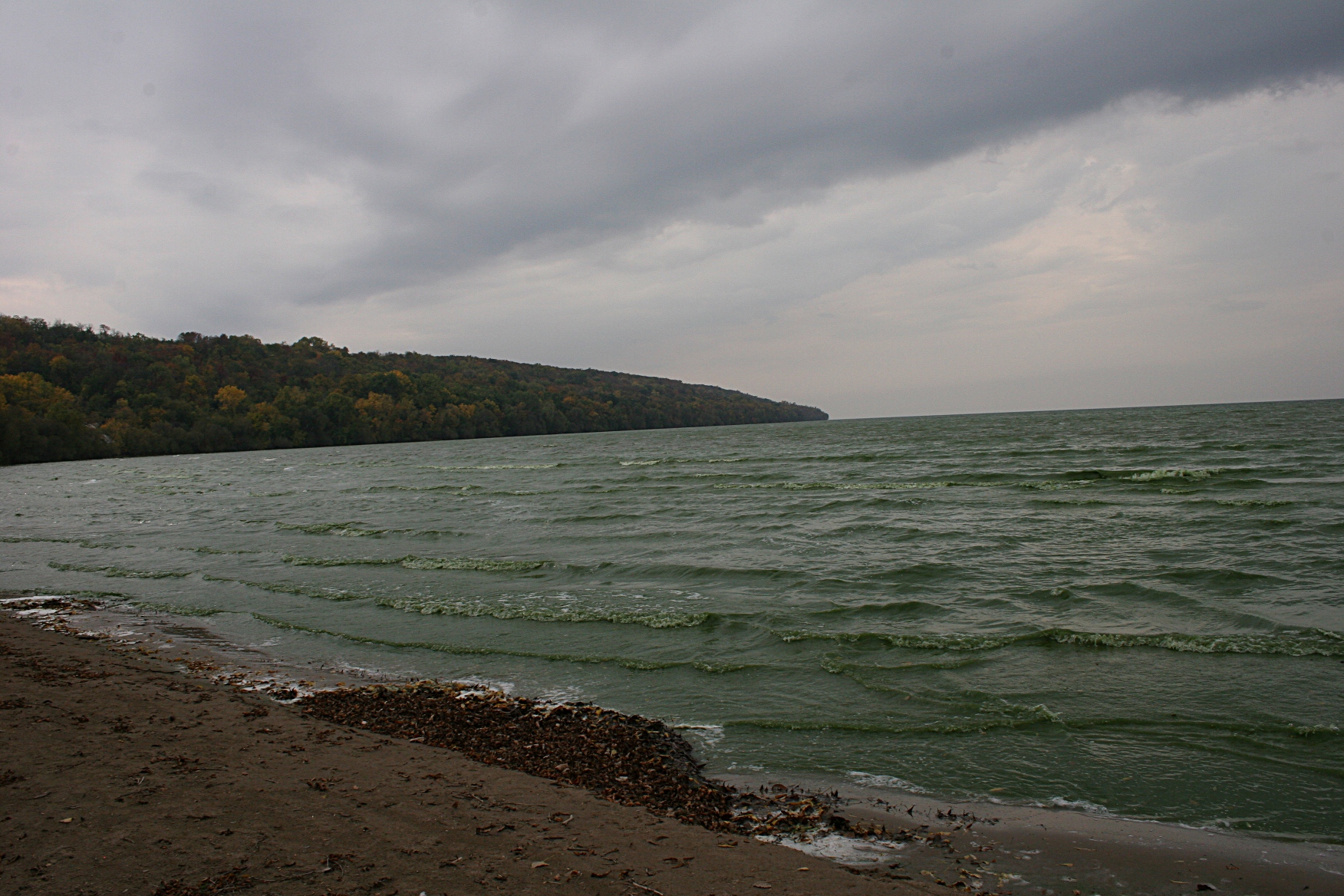
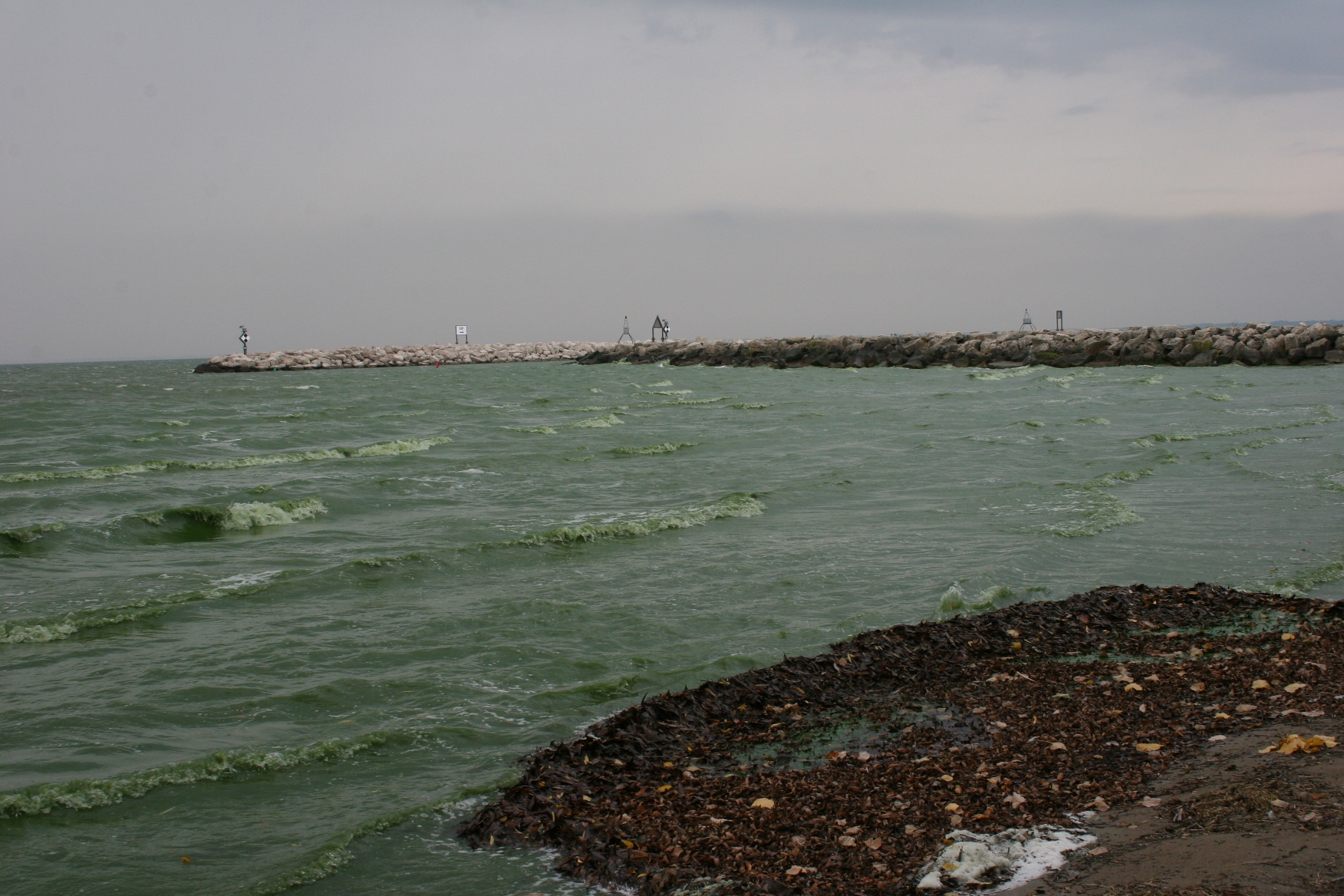
Blue-green Lake Winnebago as photographed from the beach at High Cliff State Park.

Blue-green Lake Winnebago as photographed from the beach at High Cliff State Park.

While impressive in size and fierceness—this day churning and roiling and rolling in waves—Lake Winnebago disappoints me.
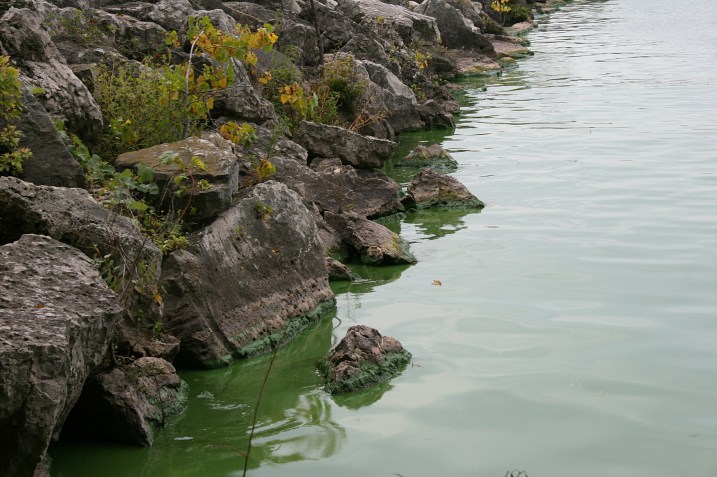
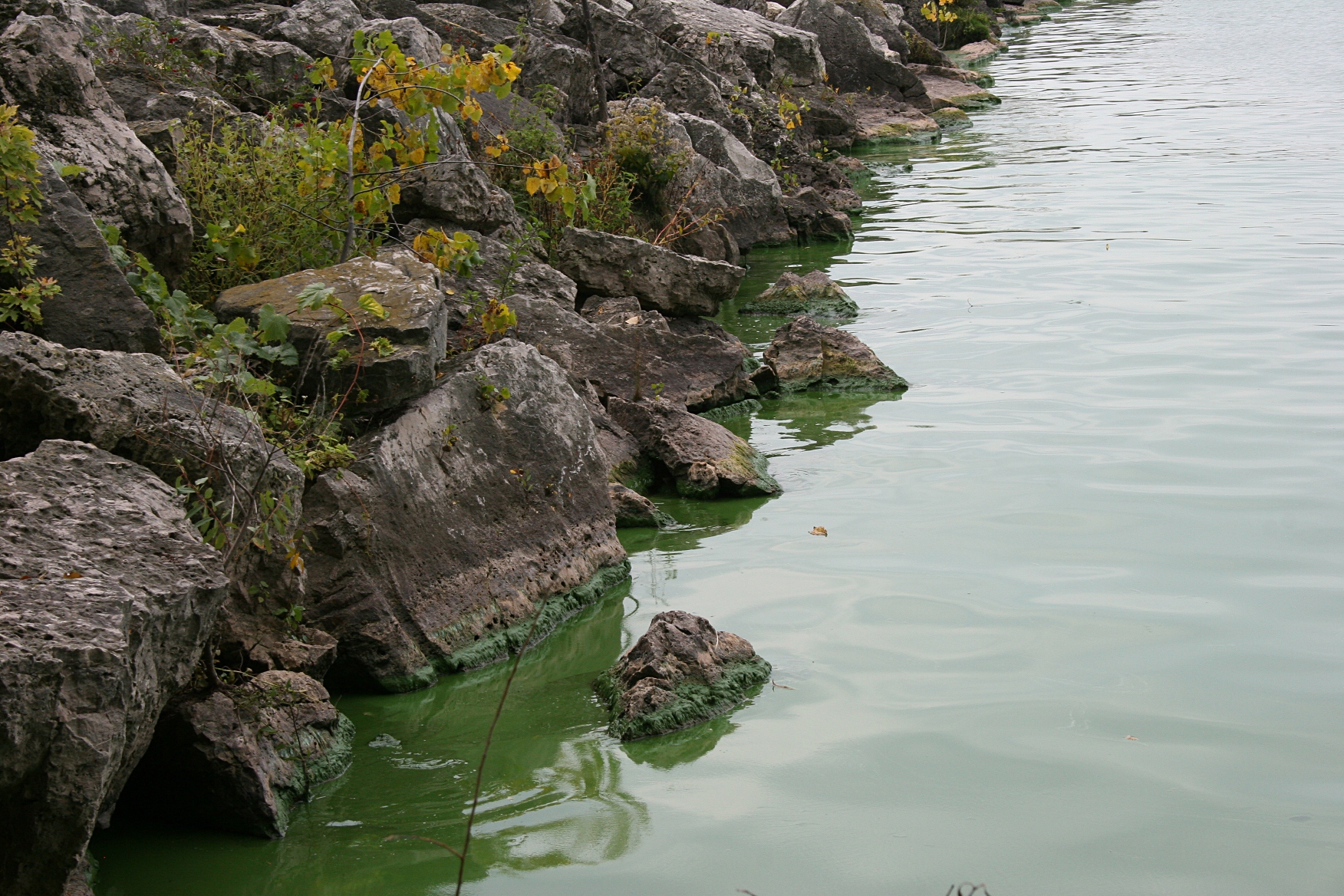
A close-up of the lake. No photo editing of the blue-green color.

A close-up of the lake. No photo editing done of the water’s hue.

I do not expect to see a lake that is green, as in it appears someone dyed the water green for a St. Patrick’s Day celebration. Why, I wonder, is a body of water this massive so overgrown apparently with blue-green algae? I am no scientist. But I suspect run-off (of chemicals) from lawns and farm fields into waterways that flow into Lake Winnebago, has created the problem.
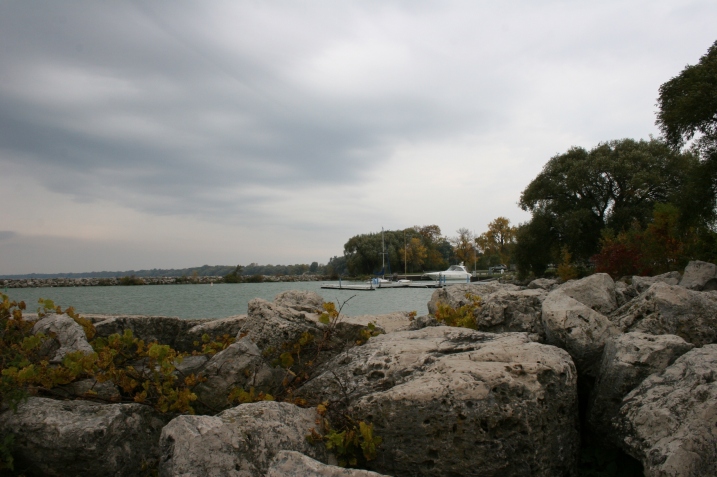
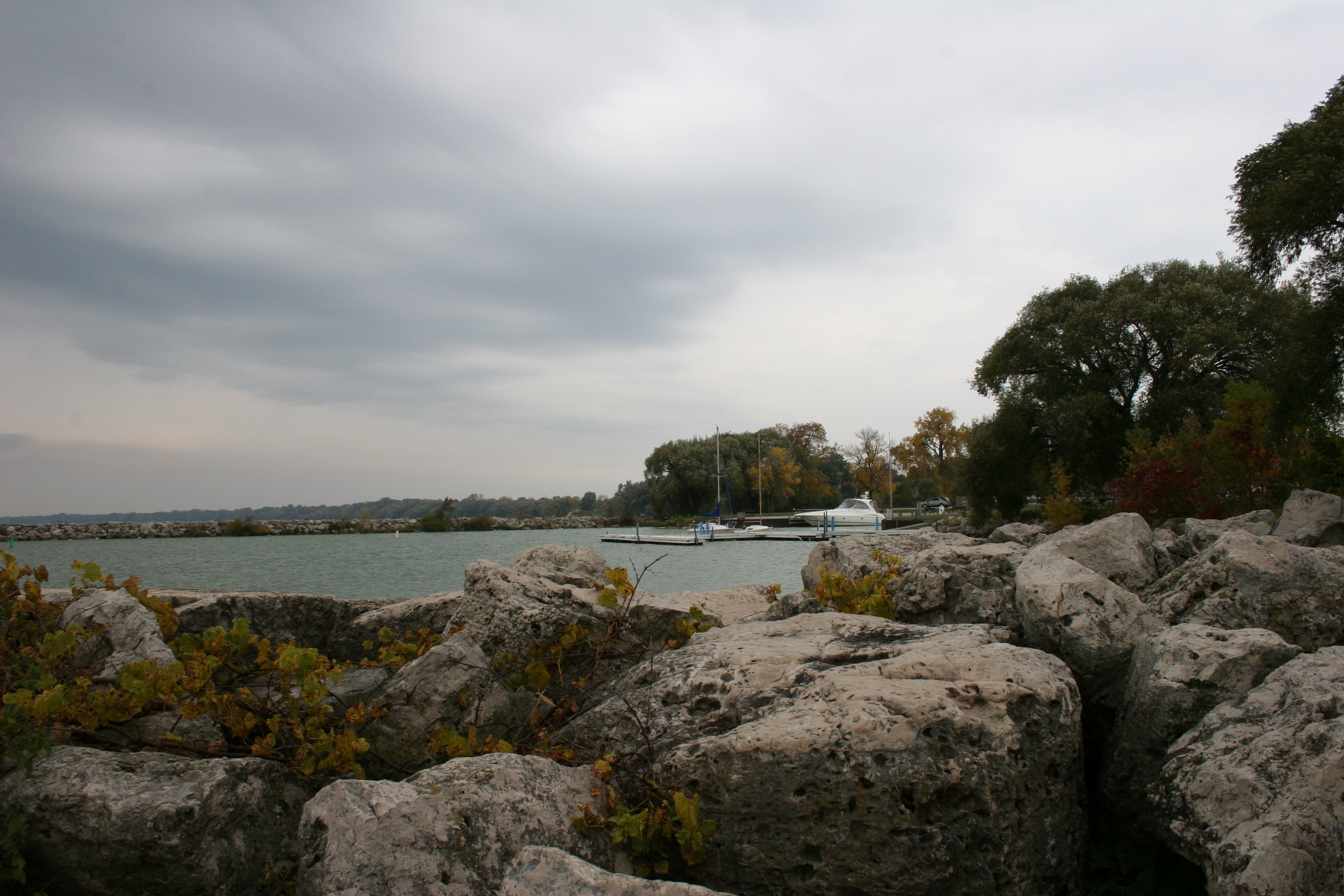
Looking from the rock wall toward the marina.

Looking from the rock wall toward the marina.

Honestly, I would never swim in this water, or even dip my toes into this lake. My daughter shares that a friend swam in Lake Winnebago this past summer and broke out in a rash.
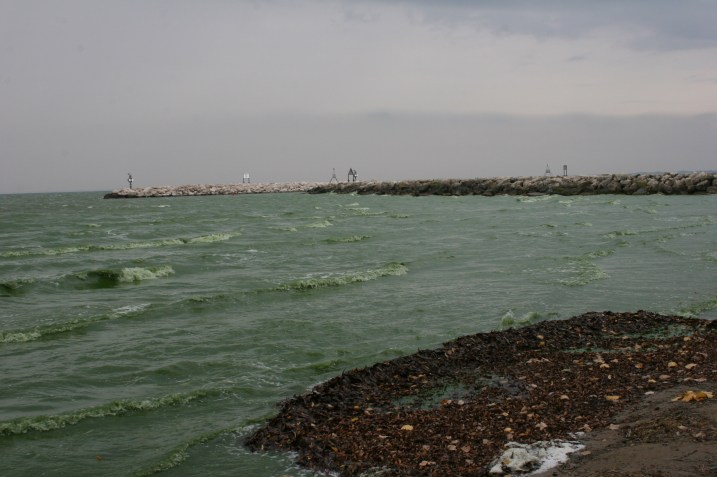
Just another view of the lake and the area where boats slip into shore.

Just another view of the lake and the area where boats slip into shore.

Researchers from the University of Wisconsin-Milwaukee are currently studying the lake, hoping to learn more about dangerous toxins produced by the blue-green algae, according to an article published in the Milwaukee, Wisconsin Journal-Sentinel. Drinking water for four area cities, including Appleton, comes from Lake Winnebago. The water is treated, of course, but it still concerns me to think this lake, in this condition, is a source of drinking water.

This lake is a popular fishing spot, too.

After viewing the lake’s poor water quality, I’m thankful these researchers have secured a $750,000 five-year grant from the National Institution of Environmental Health Sciences and the National Science Foundation to study the lake.

The quality of this lake water scares and saddens me and, truly, detracted from my experience at High Cliff State Park, an otherwise lovely place of exceptional natural beauty.

* NOTE: Various sources cite different sizes for Lake Winnebago. The Wisconsin Department of Natural Resources lists the lake at 131,939 acres, about the same acreage size of Mille Lacs Lake in Minnesota.

#

BONUS PHOTOS:
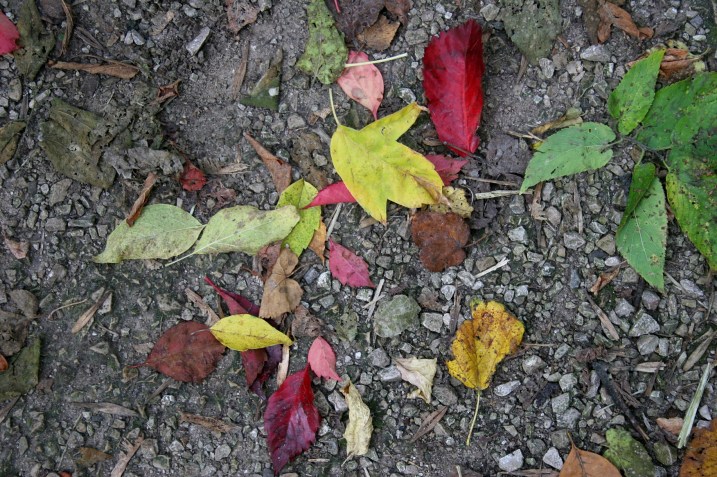
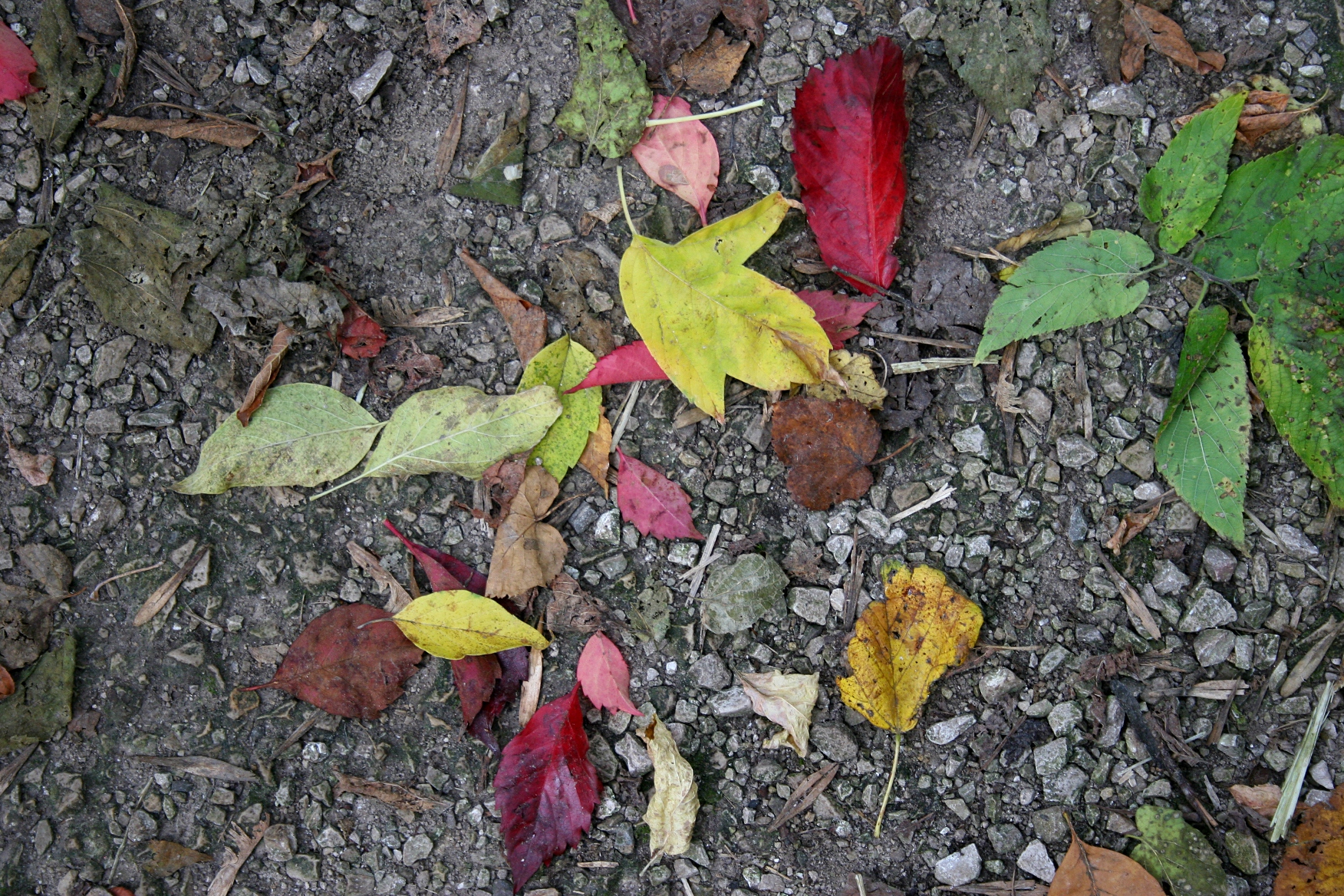
A colorful collage of leaves on a trail near the kiln ruins.
A colorful collage of leaves on a trail near the kiln ruins.

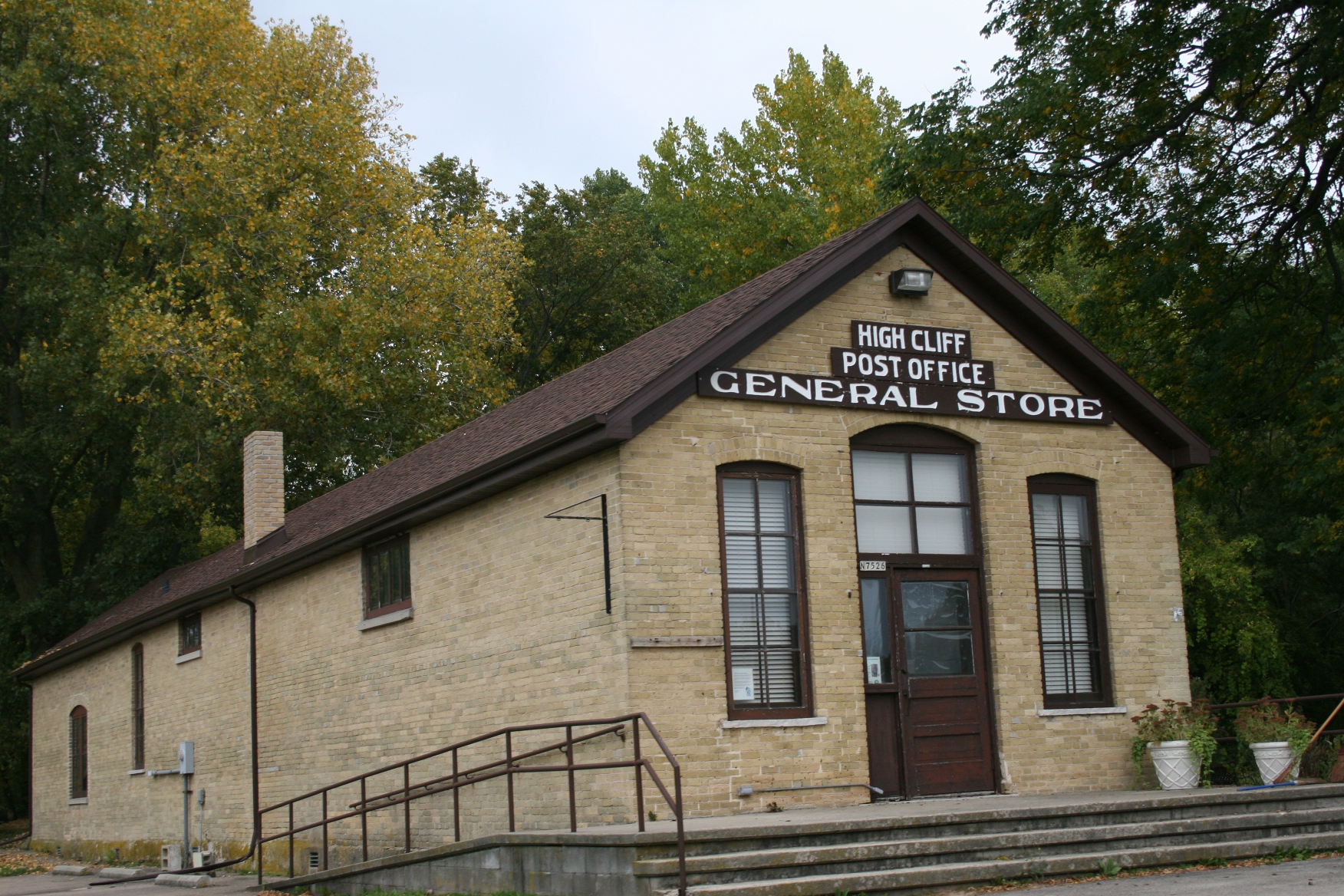
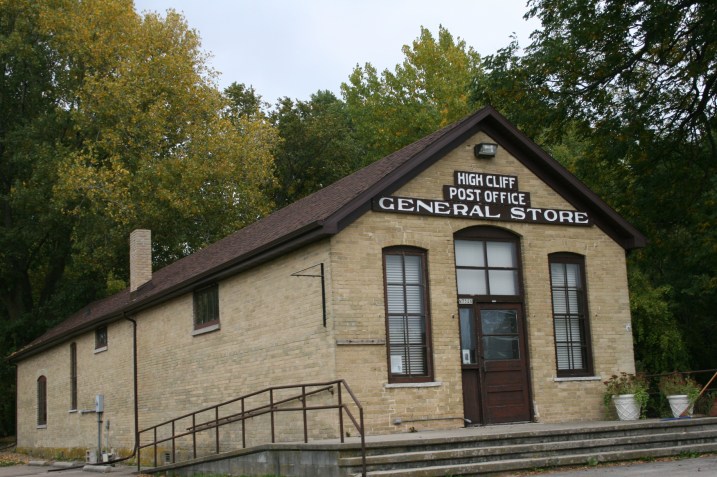
The only remaining building in

The only remaining building on the former site of Clifton, a town which existed here until the quarries closed. This 1800s building is now a museum and interpretative center, but was not open on the day we were at the park. Efforts are currently underway to save the structure from demolition, according to information on the Friends of High Cliff website. I have no idea why anyone would want to destroy this historic store.
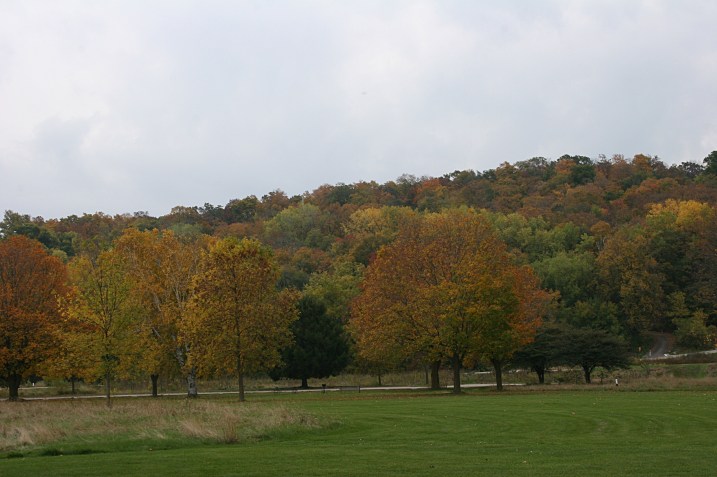
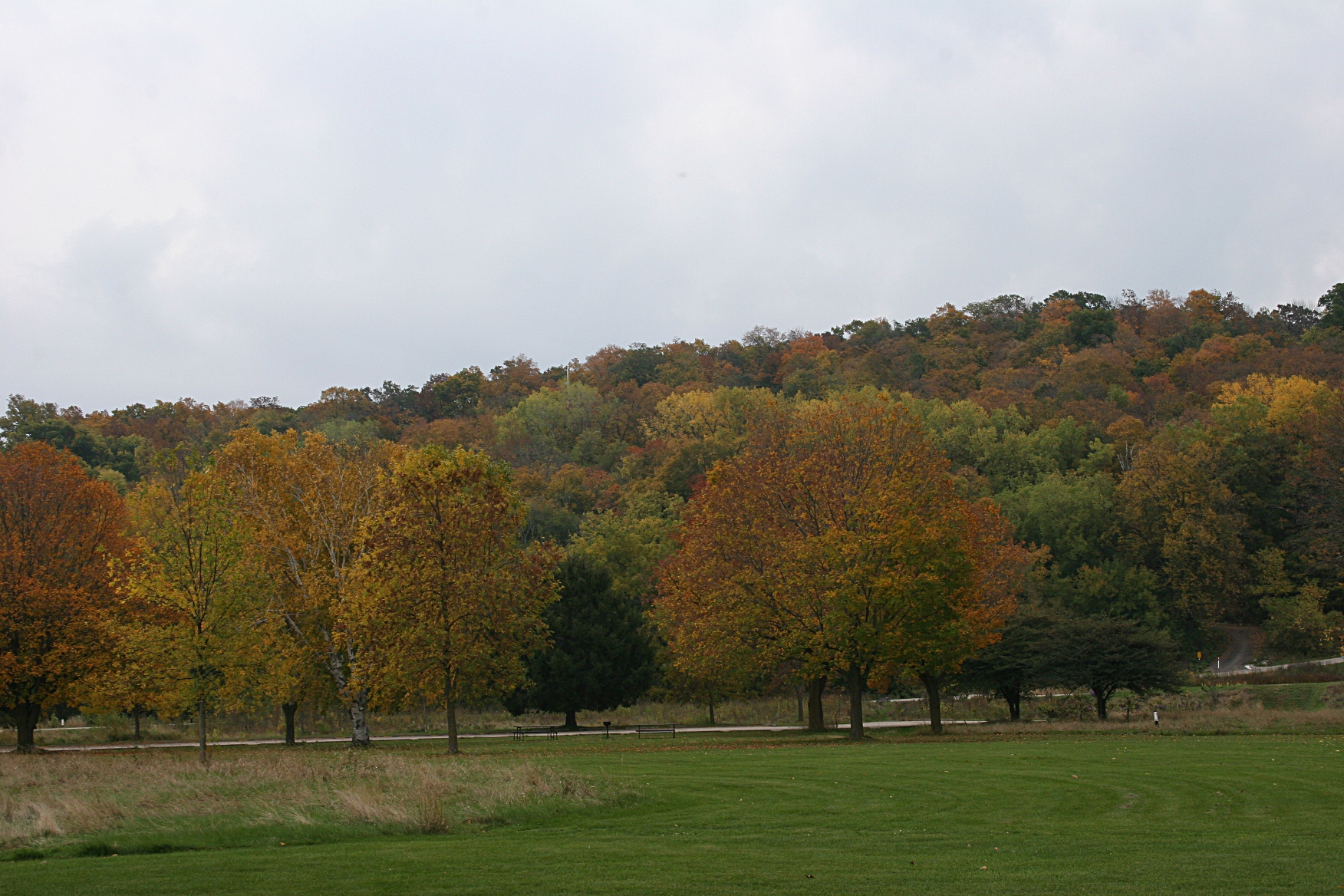
A scenic view shot from near the lake.
A scenic view shot from near the lake.

Autumn in the picnic grounds of High Cliff.

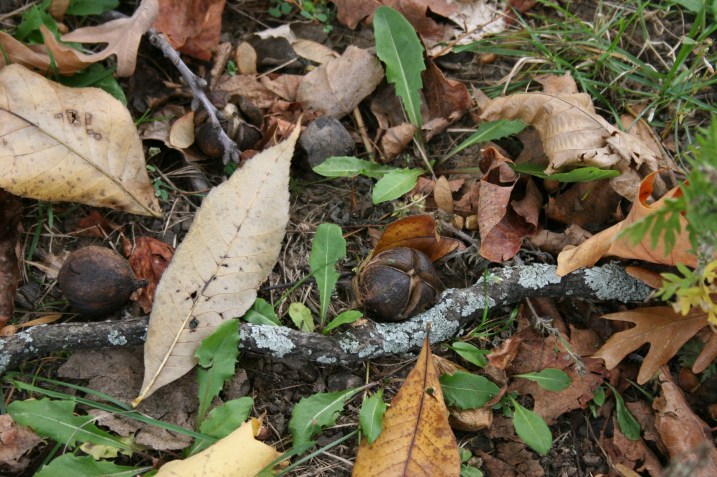
Hickory nuts, in their protective outer shell, litter the picnic grounds.

© Copyright 2013 Audrey Kletscher Helbling


On the road in Wisconsin: Duo country churches near Shennington October 20, 2013

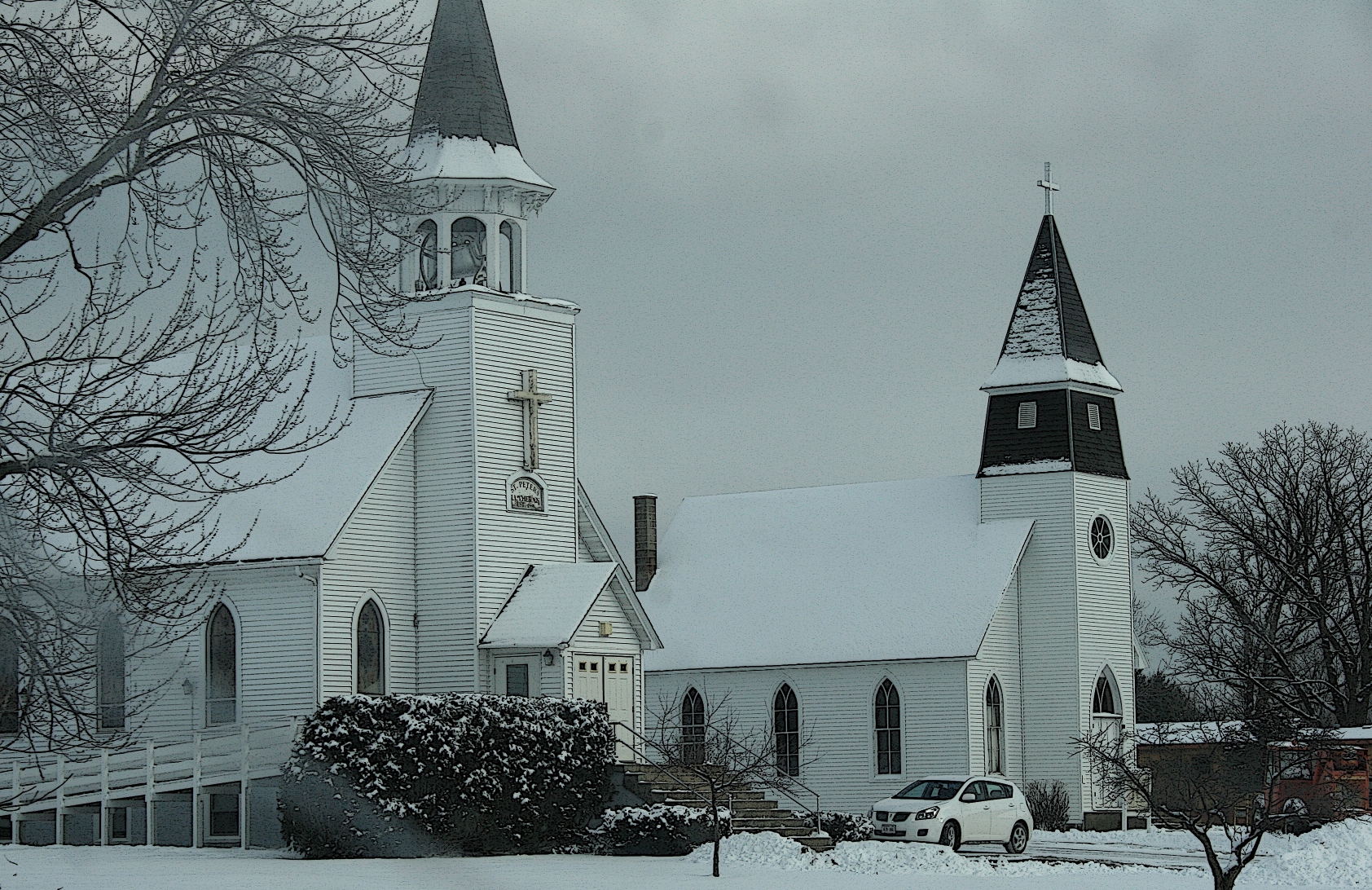
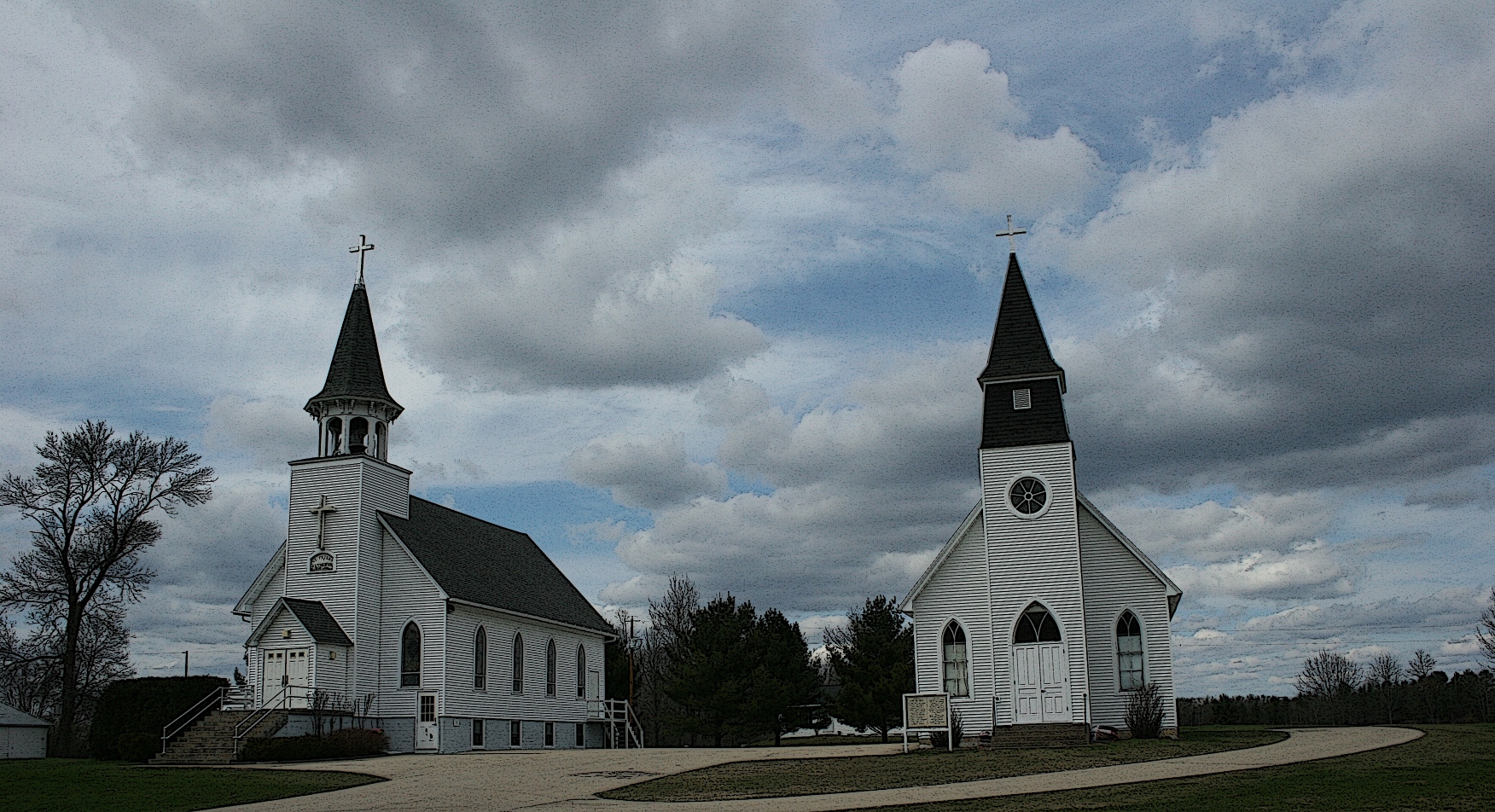
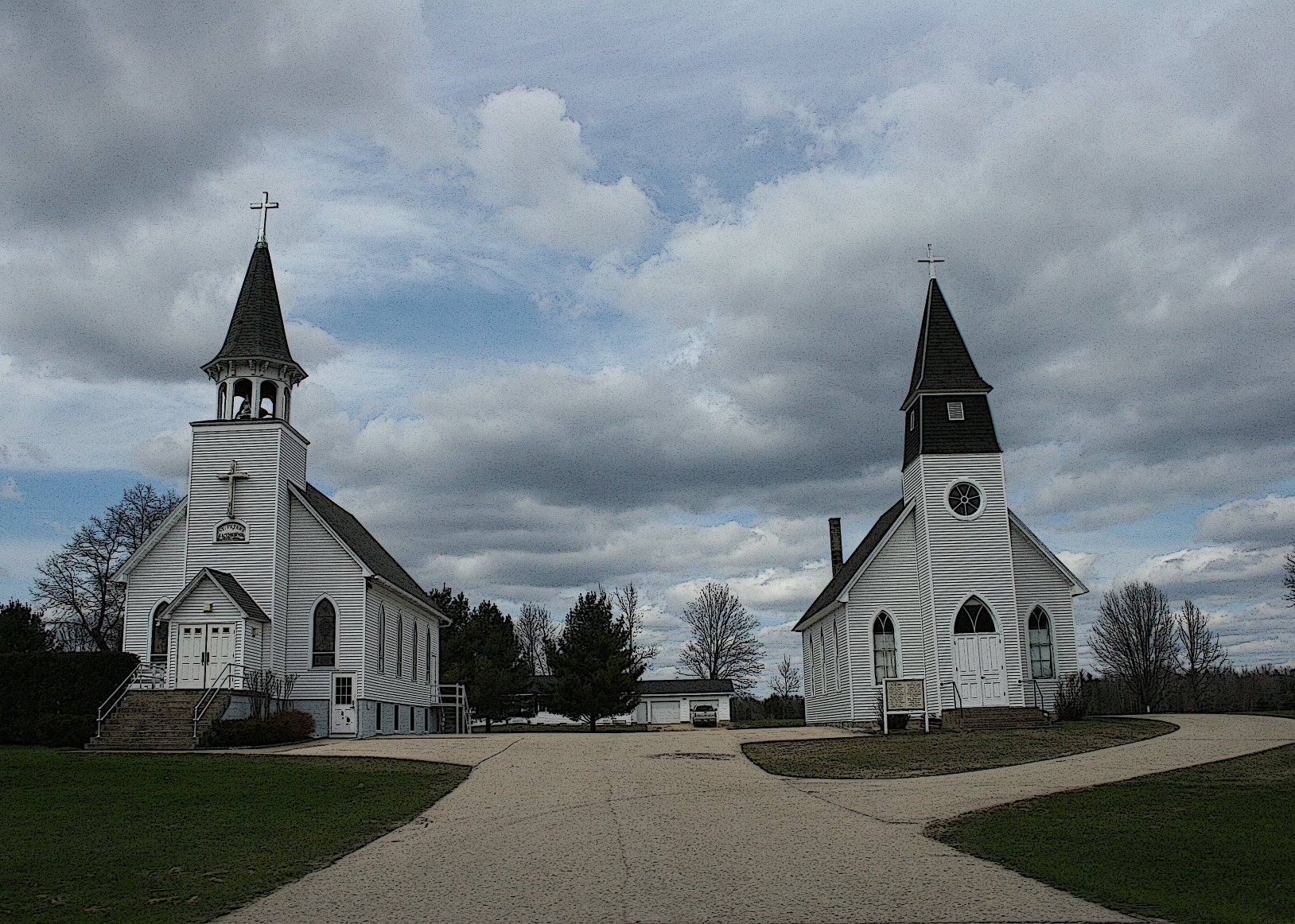
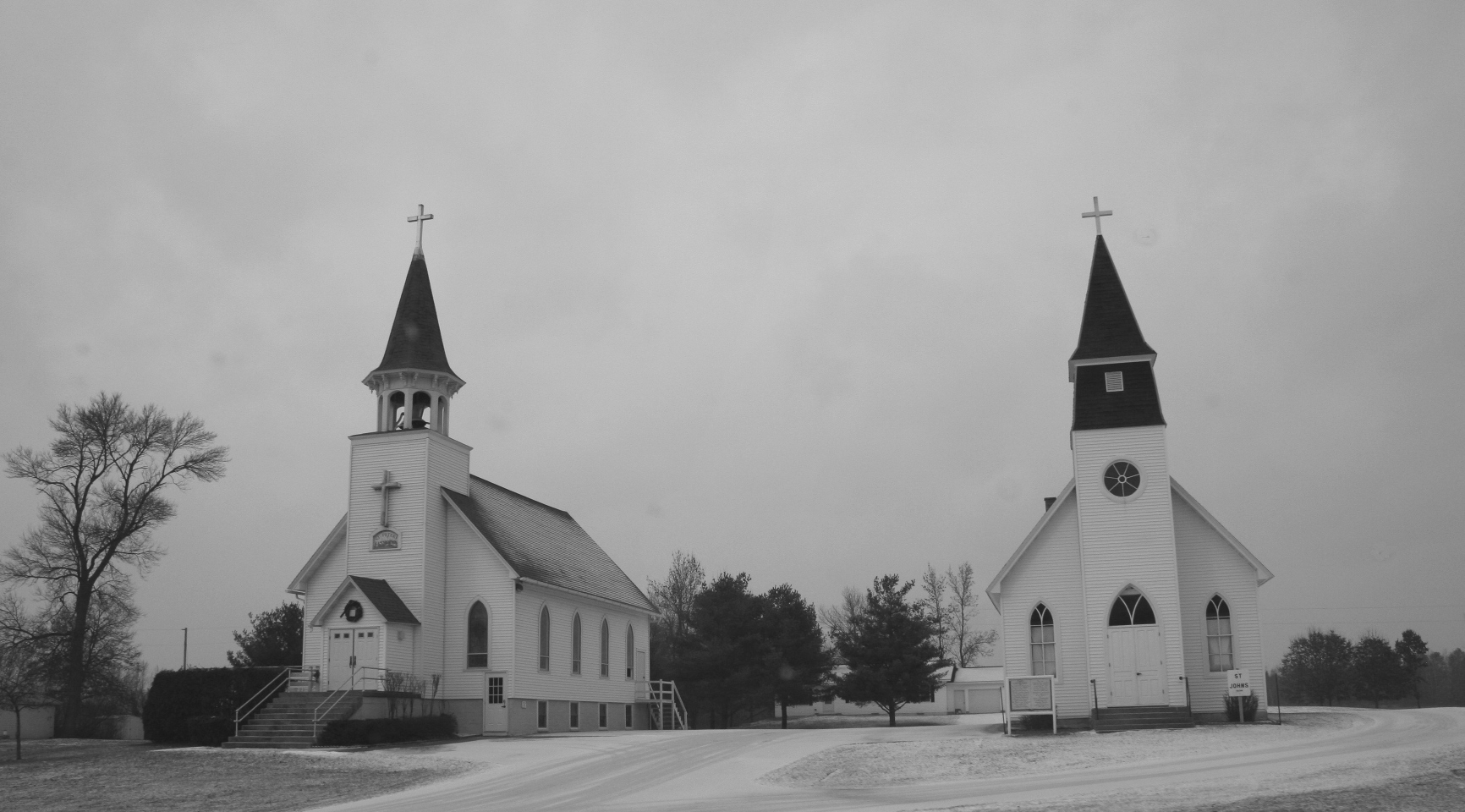
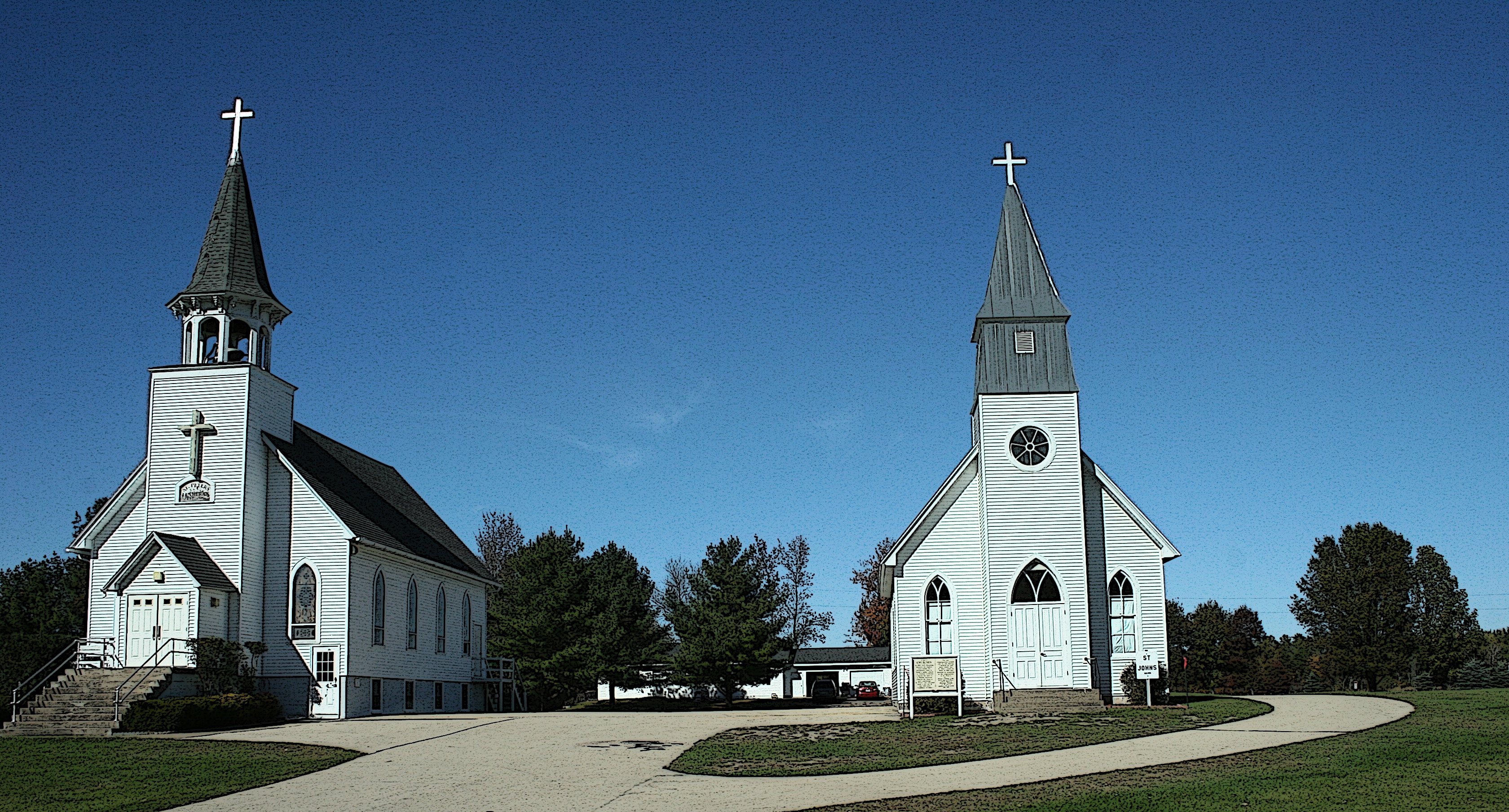
NUMEROUS TIMES I’VE PHOTOGRAPHED these side-by-side country churches along Wisconsin State Highway 21 just west of Shennington:

Photographed while driving by in the winter of 2010.

Photographed while driving by in the winter of 2010.

Photographed while traveling by in the spring of 2011.

Photographed while traveling by in the spring of 2011.

Another shot of the two churches taken in spring 2011.

Another shot of the two churches taken in spring 2011.

Several months later, in December 2011, I snapped this image.

Several months later, in December 2011, I snapped this image.

My most recent photo, shot on Sunday afternoon, October 13, 2013.

My most recent photo, shot on Sunday afternoon, October 13, 2013.

Beautiful, aren’t they? St. John’s and St. Peter’s Lutheran. German and Danish.

Not once have I stopped to investigate why two houses of worship, seemingly from the same time period, are separated only by a cement parking lot.

I should stop, shouldn’t I?

For now, though, I must rely on information published on Waymarking.com. Because that info is copyrighted, you’ll need to click here to read what I learned.

Every place has a story.

If you know anything about these two churches, please submit a comment so that we can all learn more. I’m certain there are stories to be told.

© Copyright 2013 Audrey Kletscher Helbling
 

In Wisconsin: A quick stop at a Tomah cranberry farm October 17, 2013

Filed under: Uncategorized — Audrey Kletscher Helbling @ 6:00 AM
Tags: , , , , , , , , ,
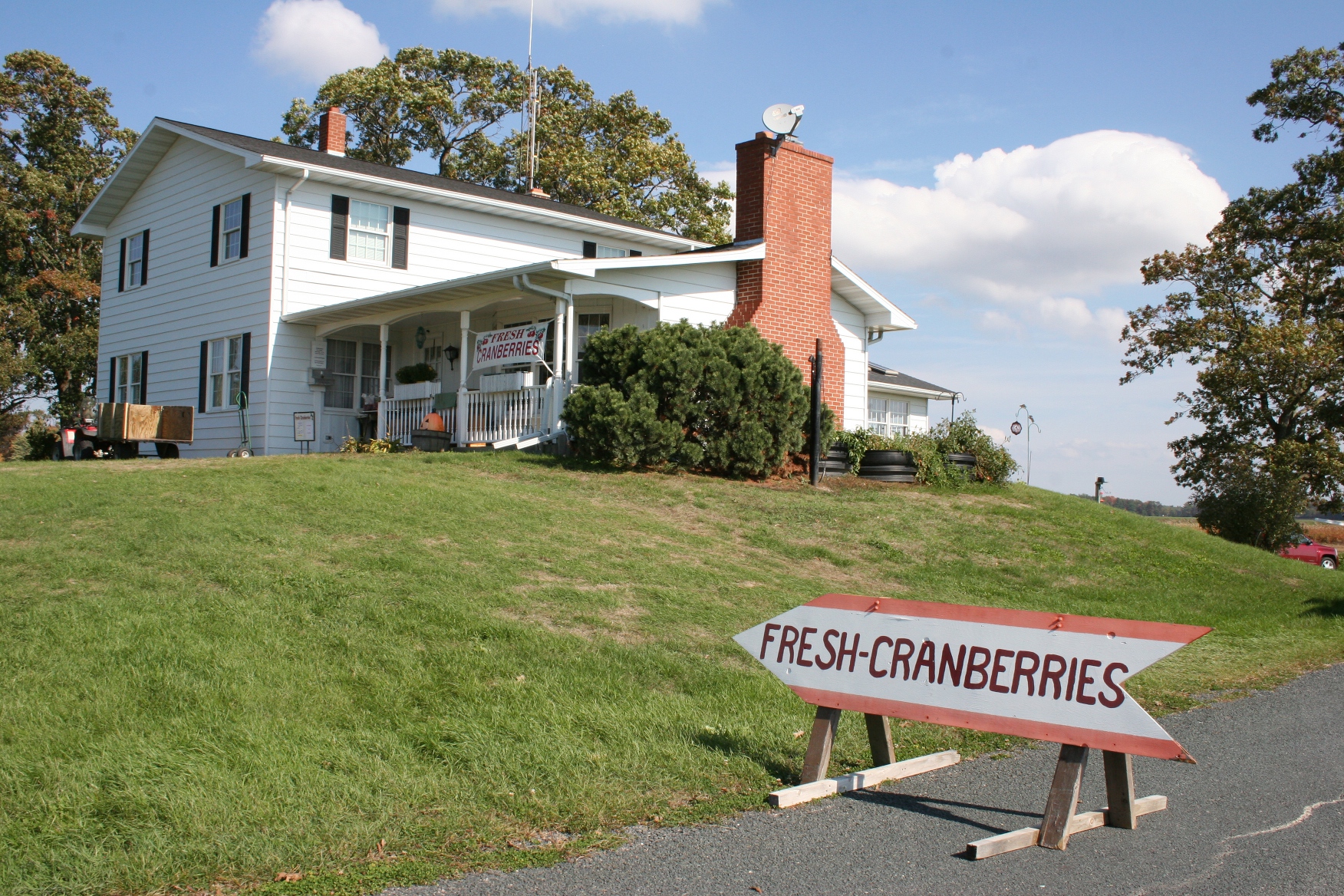
A sign at the Rezin farm points to the cranberries on the porch.

At the end of the road, a sign points to cranberries on the porch at the Rezin farm.

THE “FRESH CRANBERRIES” SIGN grabbed our attention along State Highway 21 just east of Tomah in the heart of Wisconsin cranberry country.

So my husband slowed the van in a flash and turned onto a side road to North Tomah Cranberry Co. operated by John Rezin & Sons. Randy loves cranberries. Me, too. As juice or in pie. You won’t see me scooping cranberries onto my plate at Thanksgiving.

We’d never been on a cranberry farm nor purchased just harvested cranberries. So we were excited—or at least I was to photograph a true Wisconsin cranberry farm.

Fresh cranberries direct from the bogs.

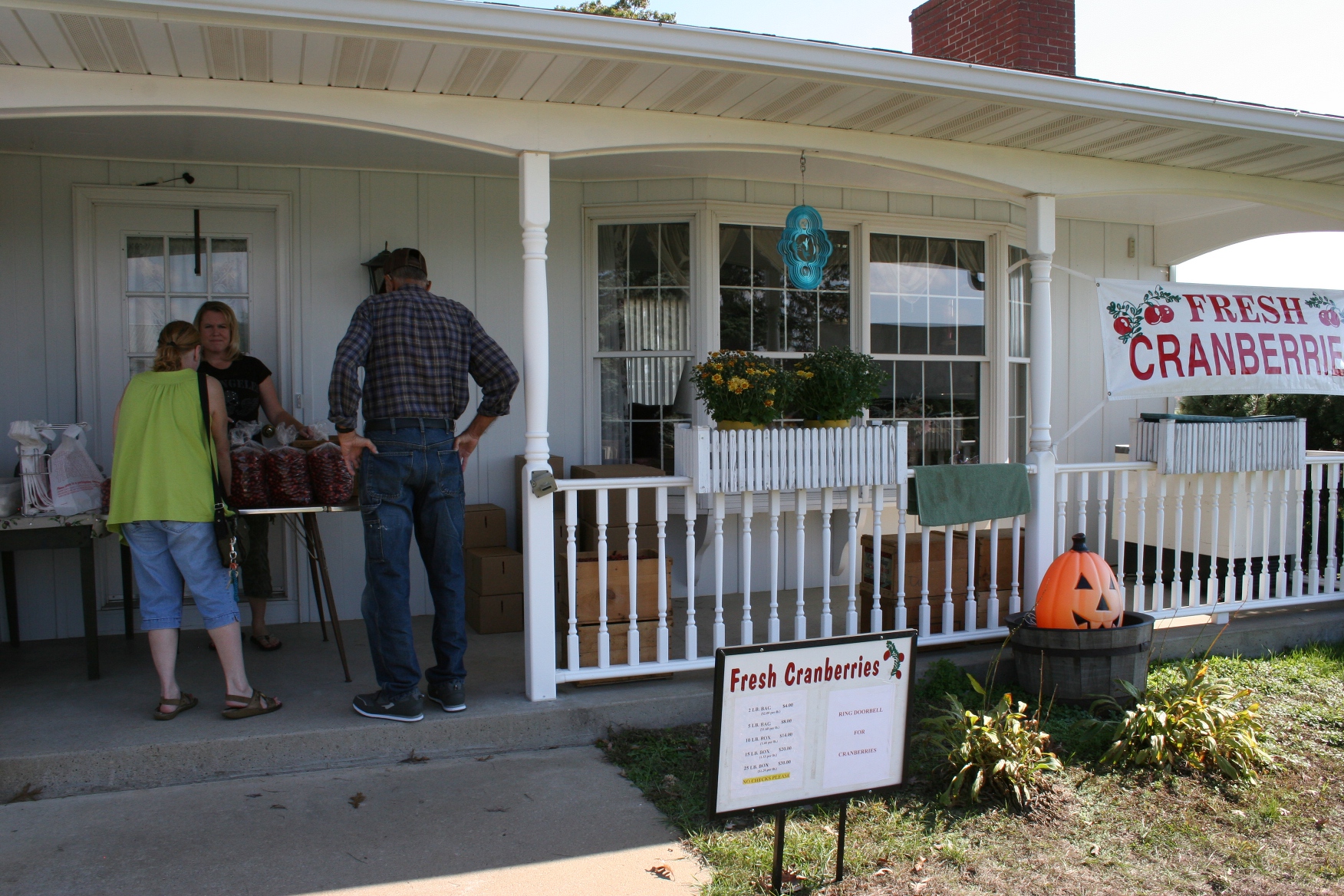
Farm fresh cranberry pricing

Teresa Rezin waits on customers.

Teresa Rezin waits on customers.

Teresa Rezin met us on the farmhouse side porch before we could follow the “RING DOORBELL FOR CRANBERRIES” signage.

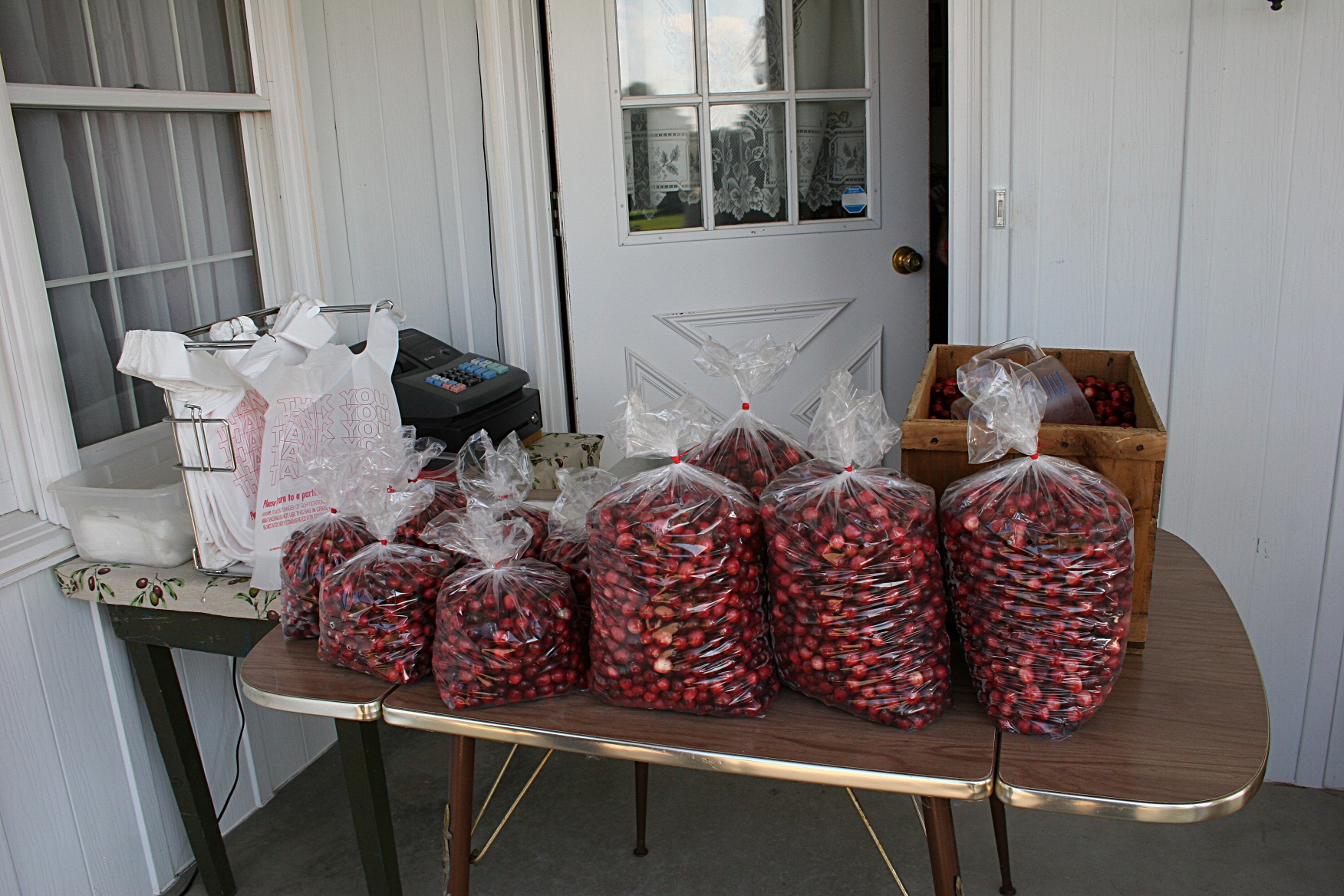
Cranberries bagged in various sizes await purchase.

Cranberries bagged in various sizes await purchase.

Randy snapped up two pounds of berries for $4, later wishing he’d bought five.

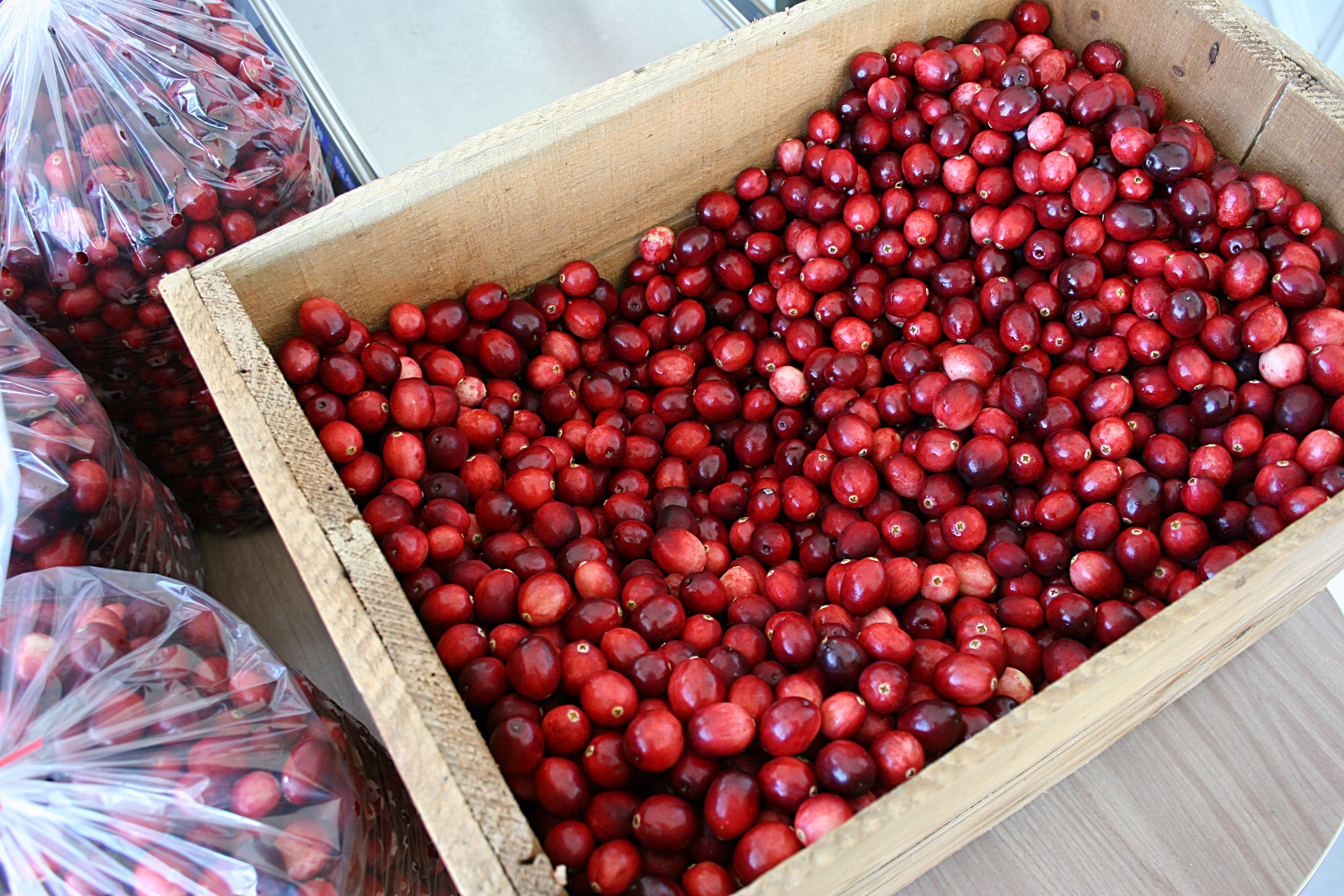
Beautiful fresh cranberries for sale.

Beautiful fresh cranberries for sale.

The next customer purchased 30 pounds—for cranberry wine. I wish I could have followed that woman home to learn about cranberry wine making. I’ve sipped and savored cranberry wine from Wisconsin.

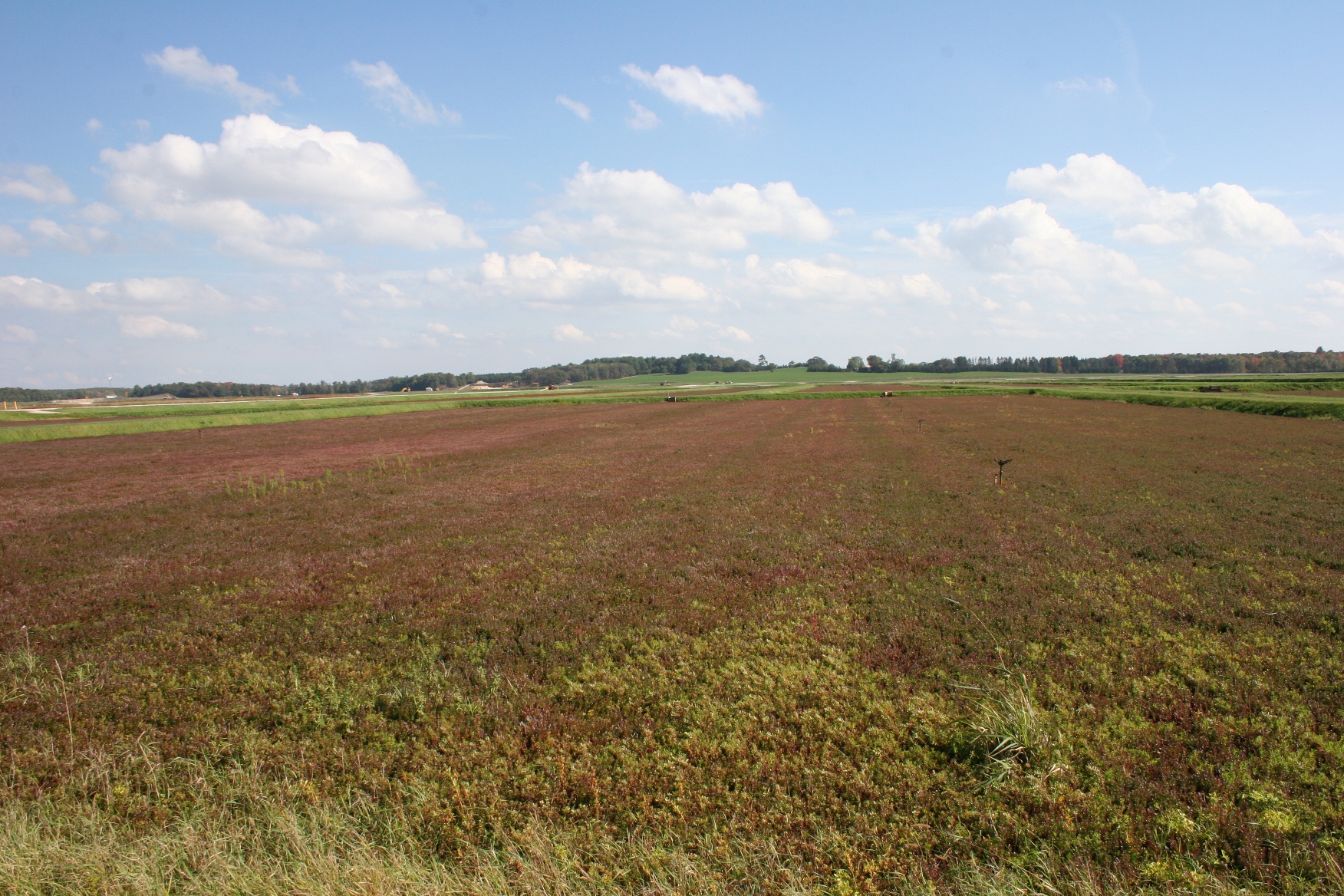
One of the many cranberry fields.

One of the many cranberry fields.

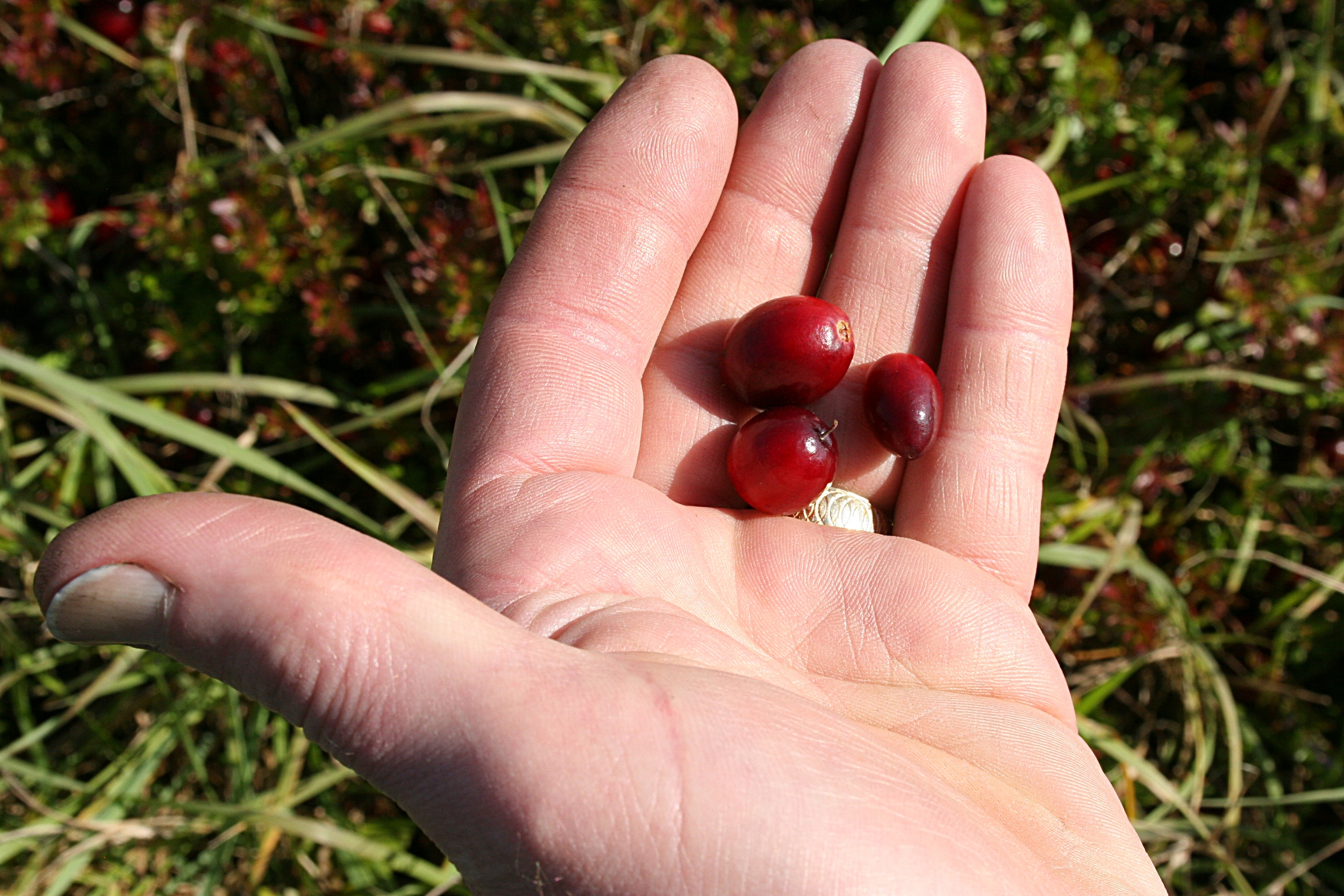
Randy pushes aside leaves and stems to reveal the cranberries on the low-lying plants.

Randy pushes aside leaves and stems to reveal the cranberries on the low-lying plants.

Just-picked cranberries.

Just-picked cranberries.

Instead, under Teresa’s direction and welcome, Randy and I headed over to the cranberry fields for a quick look at how cranberries grow. I had no idea. None. I expected waist high bushes ripe with red orbs. Instead, we discovered cranberries clinging to earth-hugging plants.

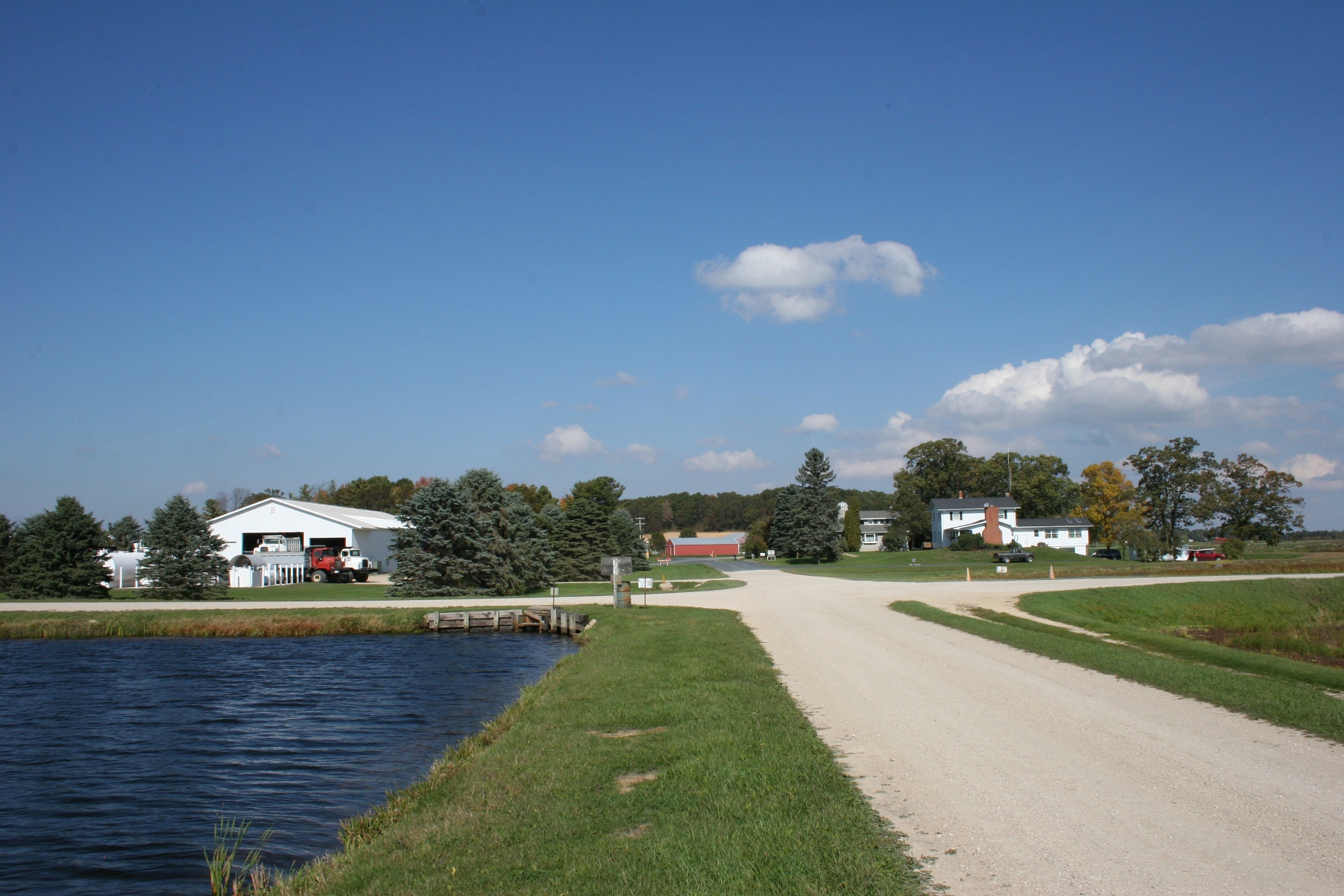
In the distance lies the farm site; to the right the cranberry fields; and to the left, the lake/water for flooding the fields.

In the distance lies the farm site; to the right the cranberry fields; and to the left, the lake/water for flooding the fields.

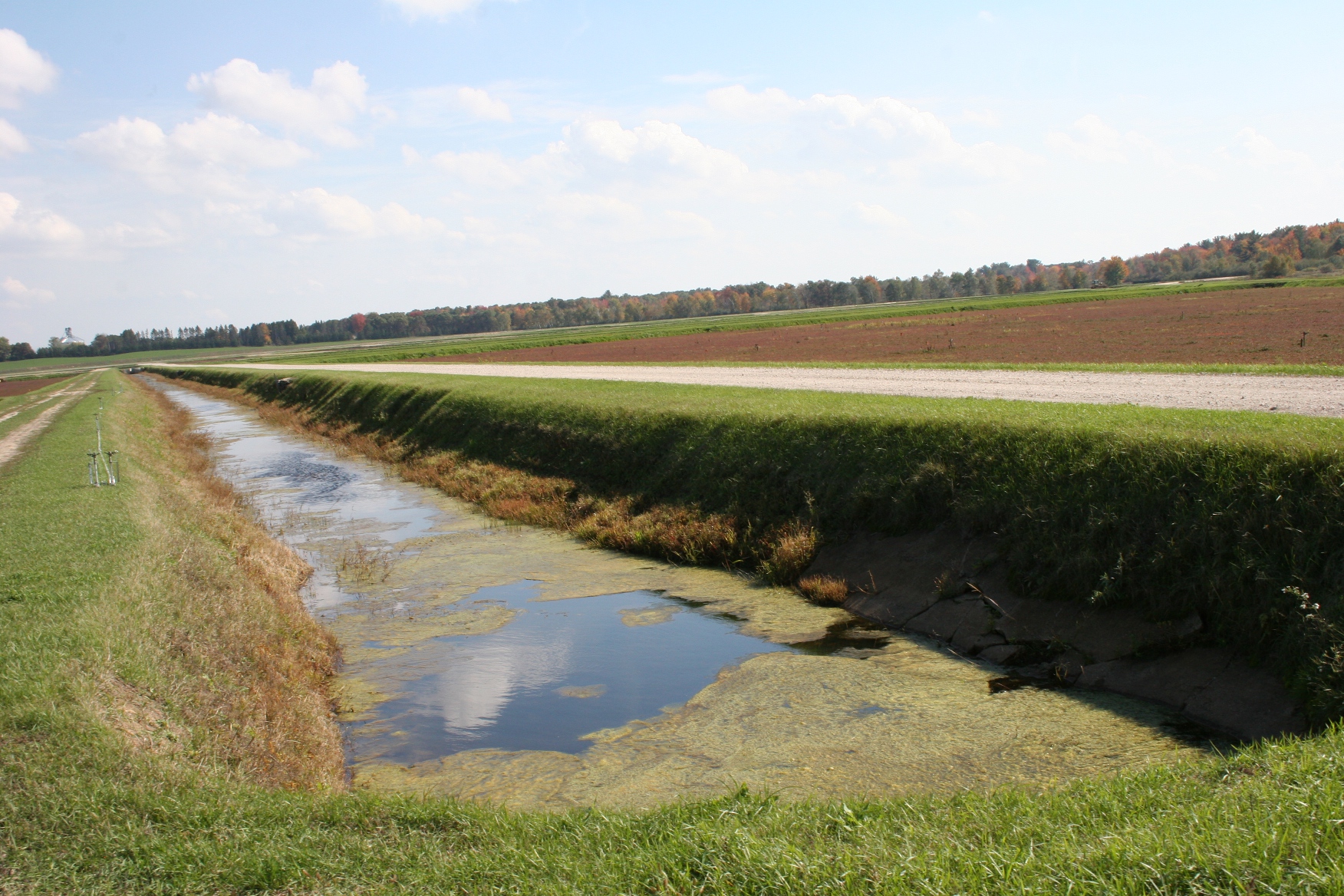
A water channel.

A water channel and cranberry fields to the right.

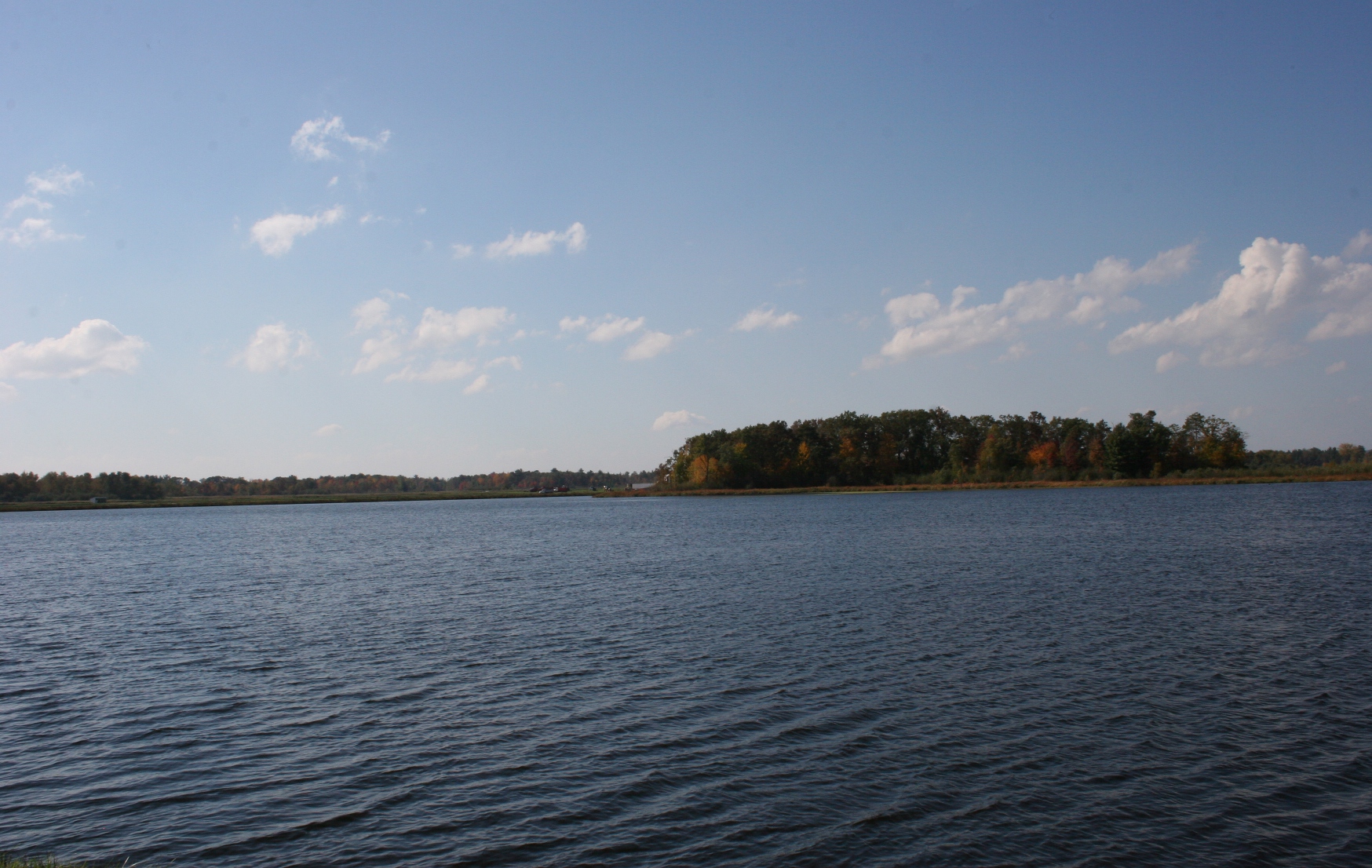
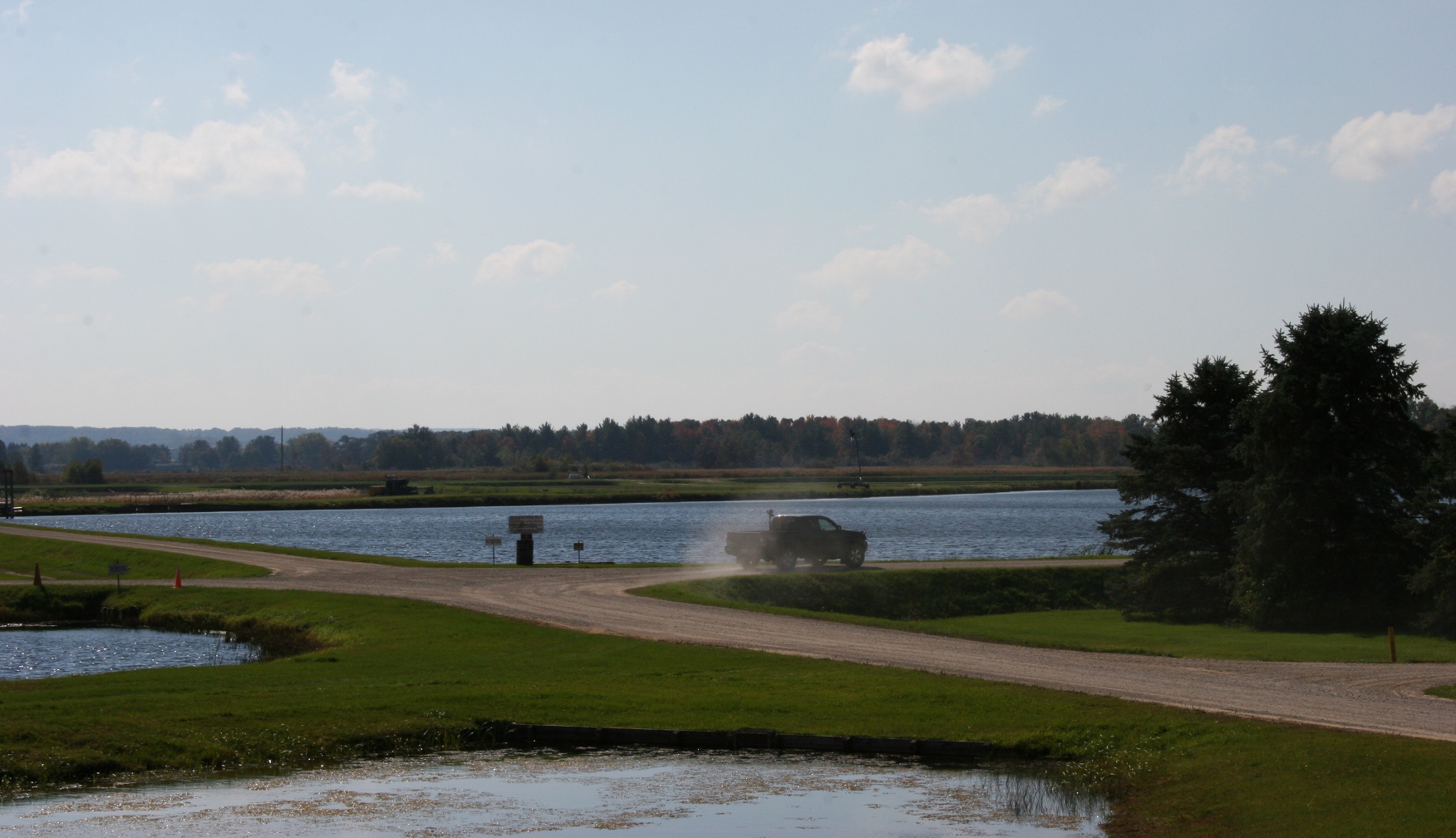
The "lake" across the road from the cranberry fields.

The “lake” across the road from the cranberry fields.

A gravel road separated the cranberry field from a small lake size body of water used to flood the cranberries at harvest. This we deduced on our self-guided quick tour.

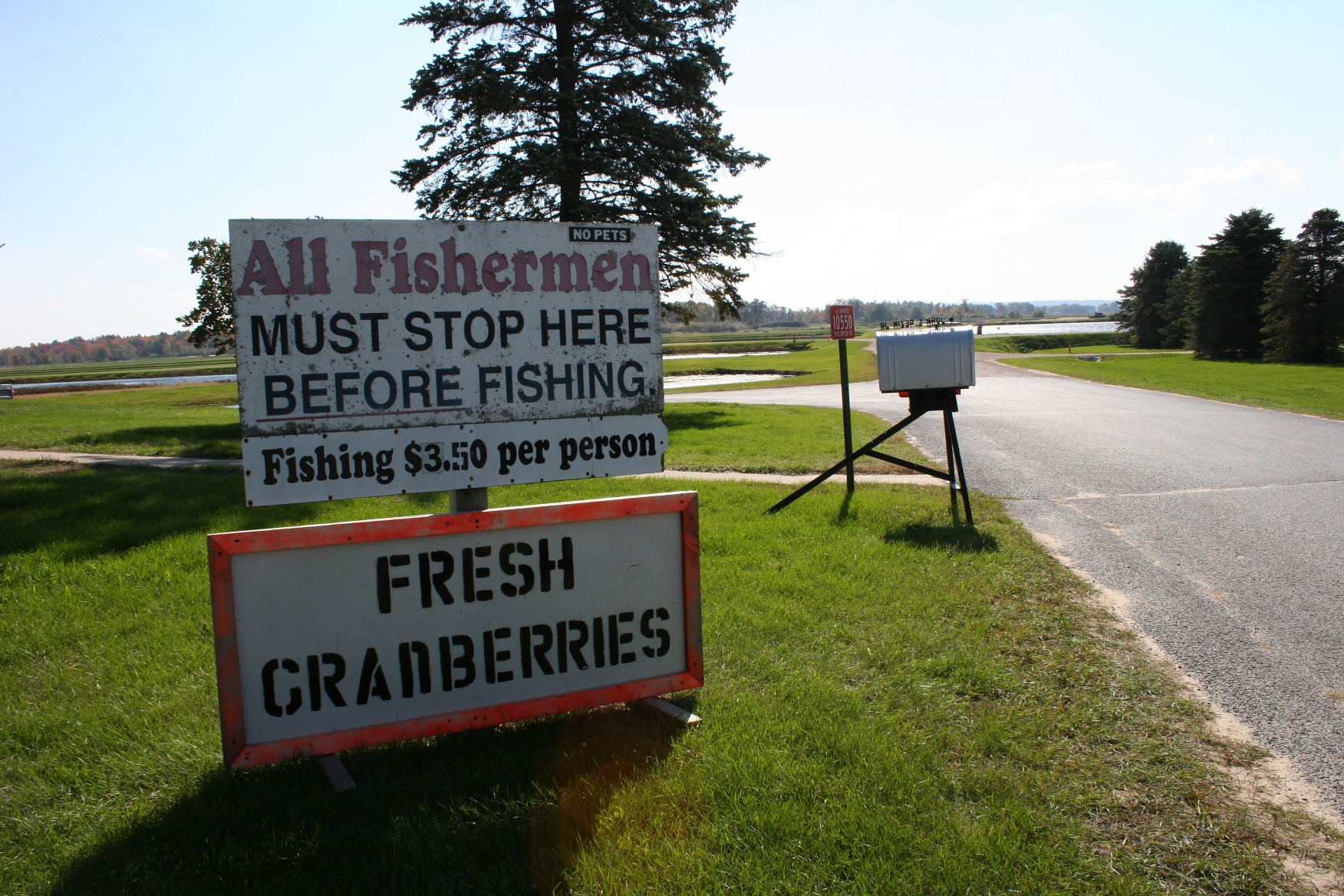
Cranberries and fish.

Cranberries and fish.

For $3.50 a day, fishermen/women can fish here, too. Northerns and bass, maybe more. I didn’t ask. What a smart dual usage of water.

We didn’t press Teresa for an educational tour. So our knowledge of how a cranberry farm operates is still minimal.

But at least now I know cranberry plants grow close to the ground.

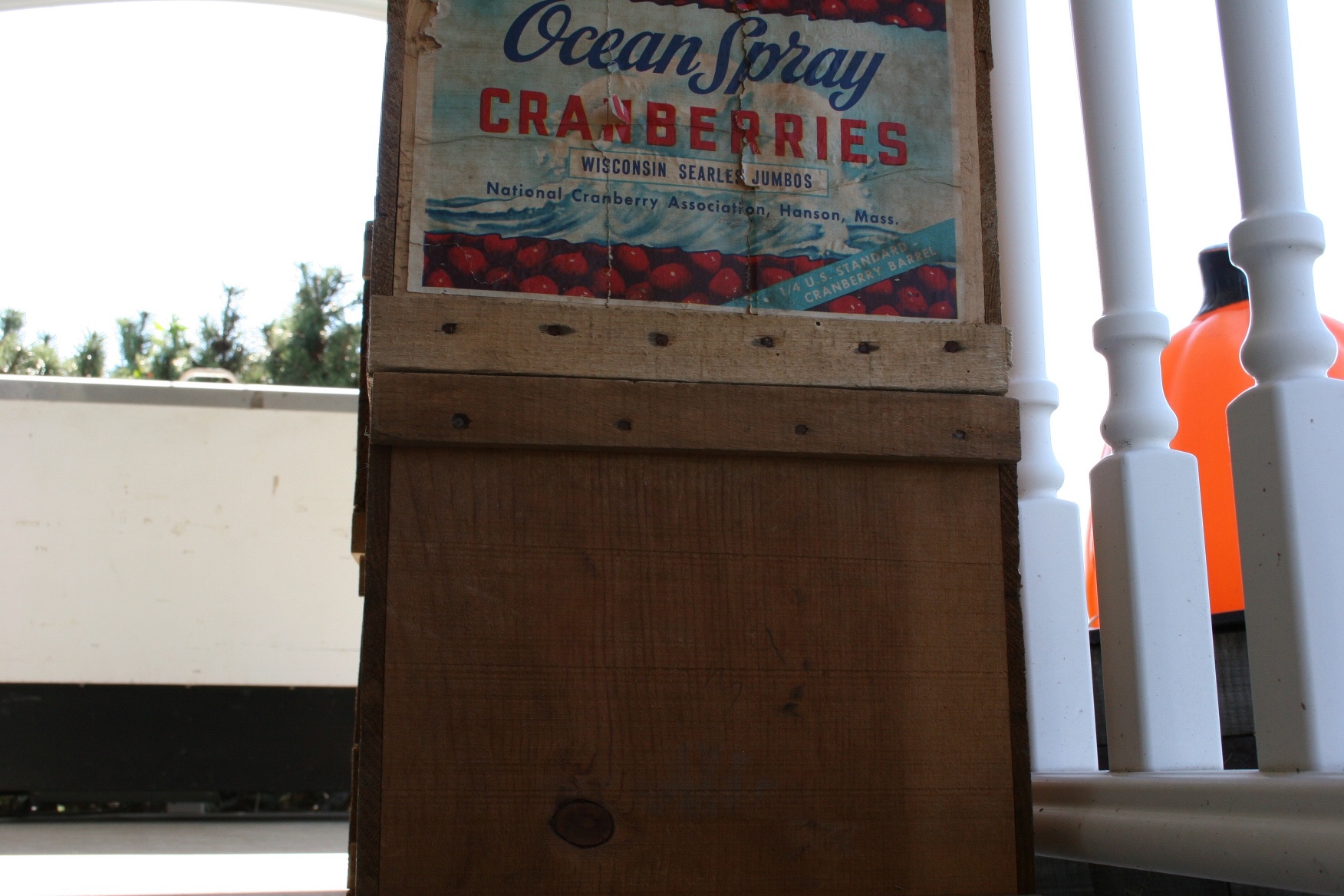
Loved these cranberry crates on the farmhouse porch.

Loved these cranberry crates on the farmhouse porch.

FYI: North Tomah Cranberry Co. berries go to grower-owned Ocean Spray, located just down the highway from the farm. The Tomah processing plant produces 31 million pounds of sweetened dried cranberries and concentrate annually, according to Ocean Spray.

BONUS PHOTOS:

The direction Teresa pointed us for our brief tour.

The direction Teresa pointed us for our brief tour.

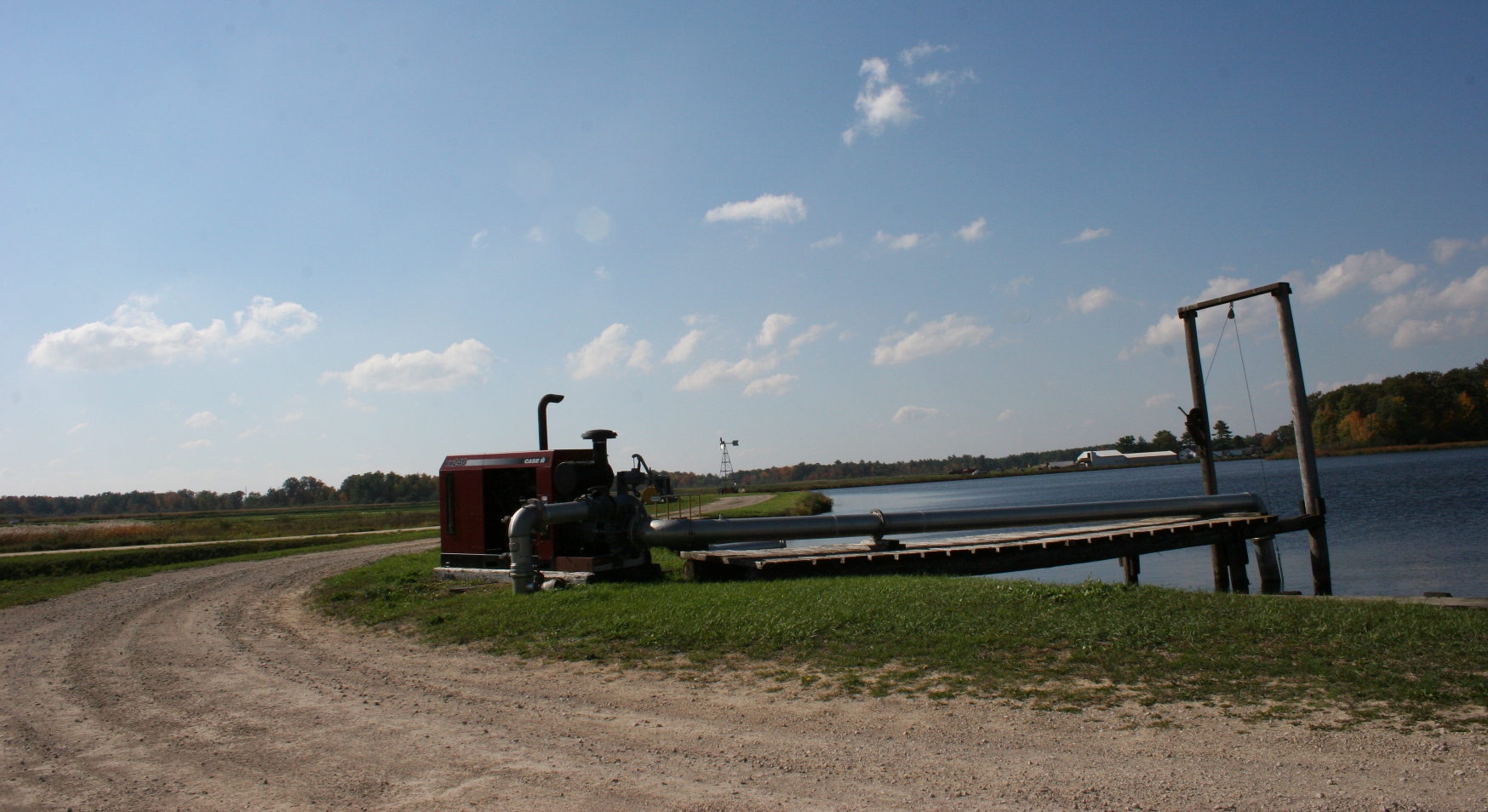
A water pump.

A water pump.

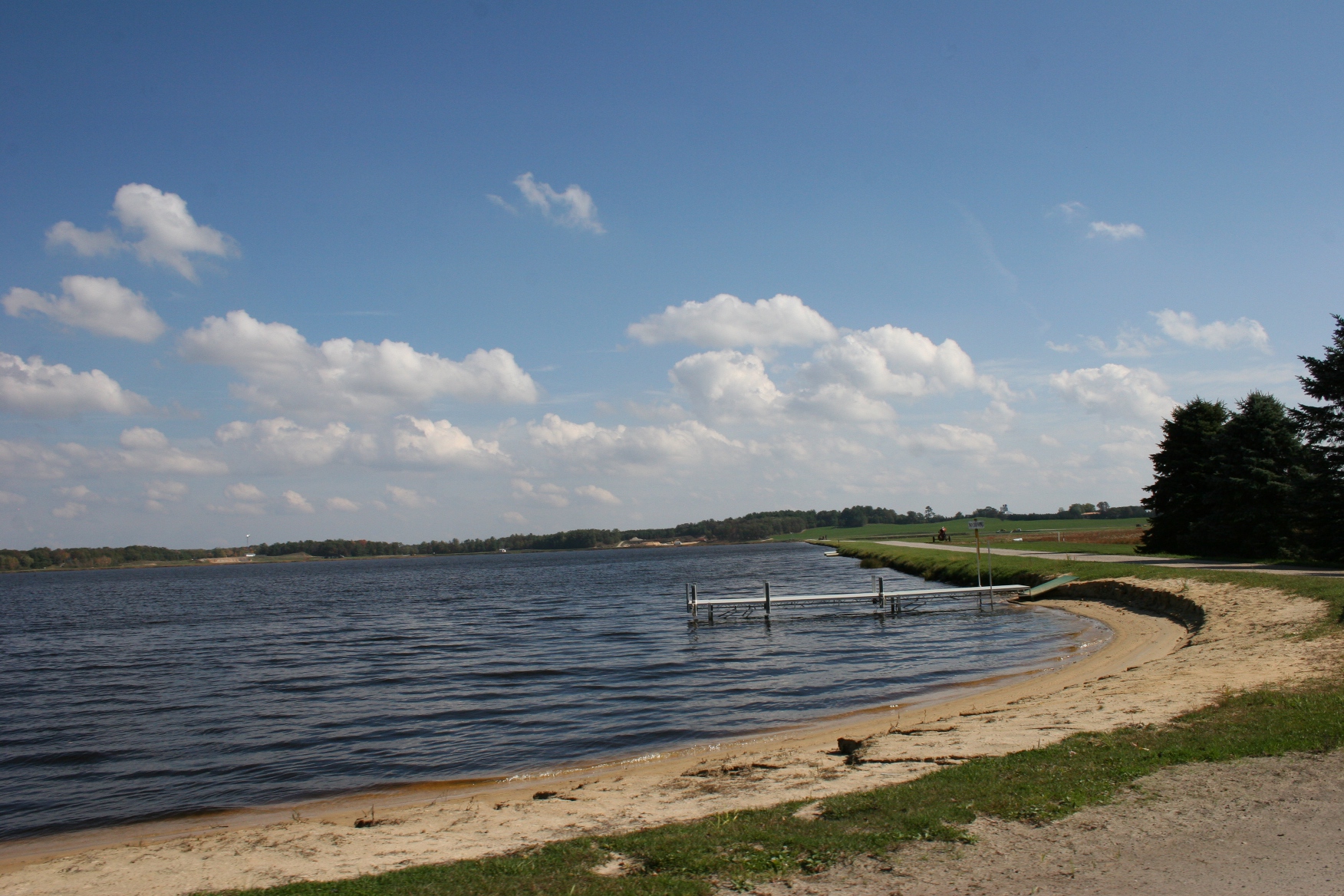
Another "lake," this one with a beach.

Another “lake” by the cranberry farm, this one with a beach.

The farm site just to the north of the "lake" pictured above.

The farm site just to the north of the “lake” pictured above.

© Copyright 2013 Audrey Kletscher Helbling
 

What to do with a chicken sandwich & 200 pounds of cheese September 15, 2013

Imprinted on a paver near the Lake Harriet Bandshell in Minneapolis. Minnesota Prairie Roots file photo.

Imprinted on a paver near the Lake Harriet Band Shell in Minneapolis. Minnesota Prairie Roots file photo.

TYPICALLY I DON’T READ obituaries, unless I recognize the name of the deceased.

But perhaps I should.

This week, thanks to a Michigan blogger (click here), I learned about 85-year-old Mary A. “Pink” Mullaney of Whitefish Bay, Wisconsin, who recently died. She left quite a legacy, as noted in her obituary.

For example, Pink advised going to church with a chicken sandwich tucked inside your purse. To feed the homeless.

Feed the hungry, kiss babies, visit those in nursing homes…the list of Pink’s empathy and care for others is lengthy.

She also offered practical advice on shoeing away possums (use a barbecue brush), reuse of panty hose (tie up the toilet flapper, for one) and a place to keep your car keys (under the front seat).

You simply must read Pink’s obit. Click here. I promise you will laugh and cry and reflect on how you live your life.

The second obituary to catch my attention, for Barry Corder, 58, of Cottonwood, Minnesota, was published in The Redwood Falls Gazette, the newspaper from my home county. He recently died unexpectedly.

When I read the paragraph about Barry making news at age 12 under the headline, “Local Boy’s Creation Responsible for Hundreds of People Reporting UFO Sightings,” I knew I was reading about an extraordinary man.

He was, like Pink, a generous person of faith, often bartering or giving away his family’s possessions, always helping others. You need only read the condolences to Barry’s family to understand the kind of man he was and the impact he made on others.

The obit paragraph that grabbed my attention, though, noted the problem of what to do with a 200-pound block of cheese that Barry made:

Survived by…his wife, Deanna, Cottonwood (who is trying to figure out what to do with 200 pounds of cheese), five sons, two daughters (who do not want the cheese) and four daughters-in-law: Antje, Nikki, Amanda and Susan (who cannot wait to sample said cheese), 16 grandchildren (who will end up eating much of the cheese) and numerous nephews and nieces (who will be getting cheese for Christmas).

In their grief, Barry’s family honors the husband/father/grandfather/uncle who made them laugh by sharing his wit in an obit laced with humor. What a suitable tribute.

You simply must read Barry’s obit. Click here. I promise you will laugh and cry and reflect on how you live your life.

© Copyright 2013 Audrey Kletscher Helbling
 

No siren equals misguided storm logic in Appleton, Wisconsin August 7, 2013

Filed under: Uncategorized — Audrey Kletscher Helbling @ 3:29 PM
Tags: , , , , , , , ,

SHE SHOULD KNOW BETTER. After all, I raised her to respect storms, to head to the basement when the siren sounds.

But early this morning, warning sirens didn’t alert residents of Appleton to the severe storm sweeping through this northeastern Wisconsin city. That’s according to my second daughter, who awakened between midnight and 1 a.m. to strong winds whipping and rattling the vertical blinds in her apartment between Northland Avenue and a residential street on Appleton’s north side, the area hardest hit in this community.

Rather than proceed to the basement, she opened her second floor sliding patio door, retrieved her pepper and other plants from the balcony and crawled back into bed. Her reason: No sirens.

Crazy girl. I taught her to respect severe storms like the one early this morning that produced reported “hurricane force” winds of up to 96 mph in Appleton and the surrounding region.

According to numerous online news sources, strong winds snapped more than 100 power lines and damaged the electrical network and transmission system leaving some 62,000-plus customers initially without power. My daughter is among those. It could take up to three days before power is fully restored to the area, according to information on the City of Appleton website.

Just blocks east of my daughter’s apartment, a section of main arterial Northland Avenue is closed due to downed power lines. Trees are down everywhere, she says, and Hortonville to the northwest of Appleton was especially hard hit. She drove by the town this morning en route to New London to interpret at a medical appointment.

Appleton Medical Center, where my daughter often interprets for Spanish-speaking patients, is reportedly operating on back-up power and is bringing in a second generator from Chicago. Surgeries have been canceled.

Residents in the region are dealing with felled trees and damage to buildings.

The Outagamie County (Appleton rests in part of this county) Emergency Operations Center has been activated, an emergency declaration issued and Red Cross shelters opened in New London and Wrightstown, according to the Outagamie County Facebook page.

The need for “great caution” while traveling in north Appleton, Grand Chute, Kimberly, Little Chute, Hortonville and Freedom is recommended because of downed trees and debris on roadways.

Now, after reading all of that, should my daughter have retreated to the basement of her apartment building during this morning’s storm?

This mom thinks so.

Should the sirens in Appleton have been activated?

This mom thinks so.

WEDNESDAY EVENING UPDATE: According to news reports, the National Weather Service has confirmed an EF-1 tornado in Appleton and an EF-2 tornado in the New London area. See this link:

http://www.fox11online.com/dpp/weather/tornados-leave-path-of-destruction

An additional Red Cross shelter has been opened in Appleton.

As of early this evening, my daughter still did not have power and was preparing to throw food and purchase additional candles and a bigger flashlight. She also is without hot water. She lives near the Northland Mall, which sustained roof damage.

© Copyright 2013 Audrey Kletscher Helbling
 

A photographic escape to Two Rivers, Wisconsin May 3, 2013

A sign inside the historic Washington Museum and Visitor Center in Two Rivers.

A sign inside the historic Washington Museum and Visitor Center in Two Rivers.

HAVE YOU EVER DRIVEN into a community you’ve never visited and fell totally, absolutely, head-over-heels in love with the place?

For me, that would be Two Rivers, along Lake Michigan in northeastern Wisconsin.

Nearly two years have passed since I toured this community which claims to be the birthplace of the ice cream sundae. I love ice cream as much as the next person and savored my sundae at Berners’ Ice Cream Parlor, established in 1881.

Signage on the exterior of the Hamilton Wood Type Museum.

Signage on the exterior of the Hamilton Wood Type Museum.

But even more so, I loved the Hamilton Wood Type & Printing Museum across the street, a magnet for artists and former newspaper types like me who view print as art and not just a means to publish news. I wrote about the museum shortly after my family’s visit there in August 2011. Click here to read that post.

A view of Two Rivers from the historic fishing village.

A view of Two Rivers from the historic fishing village.

Besides treats and type, Two Rivers wooed me with the Rogers Street Fishing Village. From there I photographed a dreamy, idyllic view of the town complete with a white steepled church in the background. Although I’ve never been to New England, I imagine the scene might be similar to a quaint fishing village there.

Cool signage.

Cool signage.

And then there’s the signage in Two Rivers—those details I notice because, well, I tend to notice details. I appreciate artful signage that beckons me.

Although I didn't stop at this fish market, the exterior charmed me.

The exterior of Susie-Q Fish Market charmed me.

Today I long to return to Two Rivers 356 miles to the east. But for this moment, viewing photo memories must suffice to lift my winter weary spirits, to erase the doom and the gloom and the visual of the snow which is falling here again this morning.
I will imagine for this day that I am among the good folks of Two Rivers, in a community where optimism, faith and good news prevail.

BONUS PHOTOS:

A snippet of small town life inside the Washington House.

A snippet of small town life inside the Washington House.

I was amused by the names of the docked boats.

I was amused by the names of the docked boats.

The Dutch Lady

Dutch Lady

Why would you name your boat Fishing Pox
Why would you name your boat Fishing Pox II? Is there a Fishing Pox I?
A simple fish shed sign in the fishing village.

A simple fish shed sign in the fishing village.

© Copyright 2013 Audrey Kletscher Helbling