Minnesota Prairie Roots

Writing and photography by Audrey Kletscher Helbling

One final look at Door County, Wisconsin October 15, 2012

Filed under: Uncategorized — Audrey Kletscher Helbling @ 7:29 AM
Tags: , , , , , , ,

DOOR COUNTY, WISCONSIN, truly is what you make it.

With that in mind, and understanding that I did not even begin to see and do everything a visitor can see and do at this scenic tourist destination in northeastern Wisconsin, here’s one last look at some photos I shot on a recent one-day visit.

You can explore the stunning natural beauty of Door County…

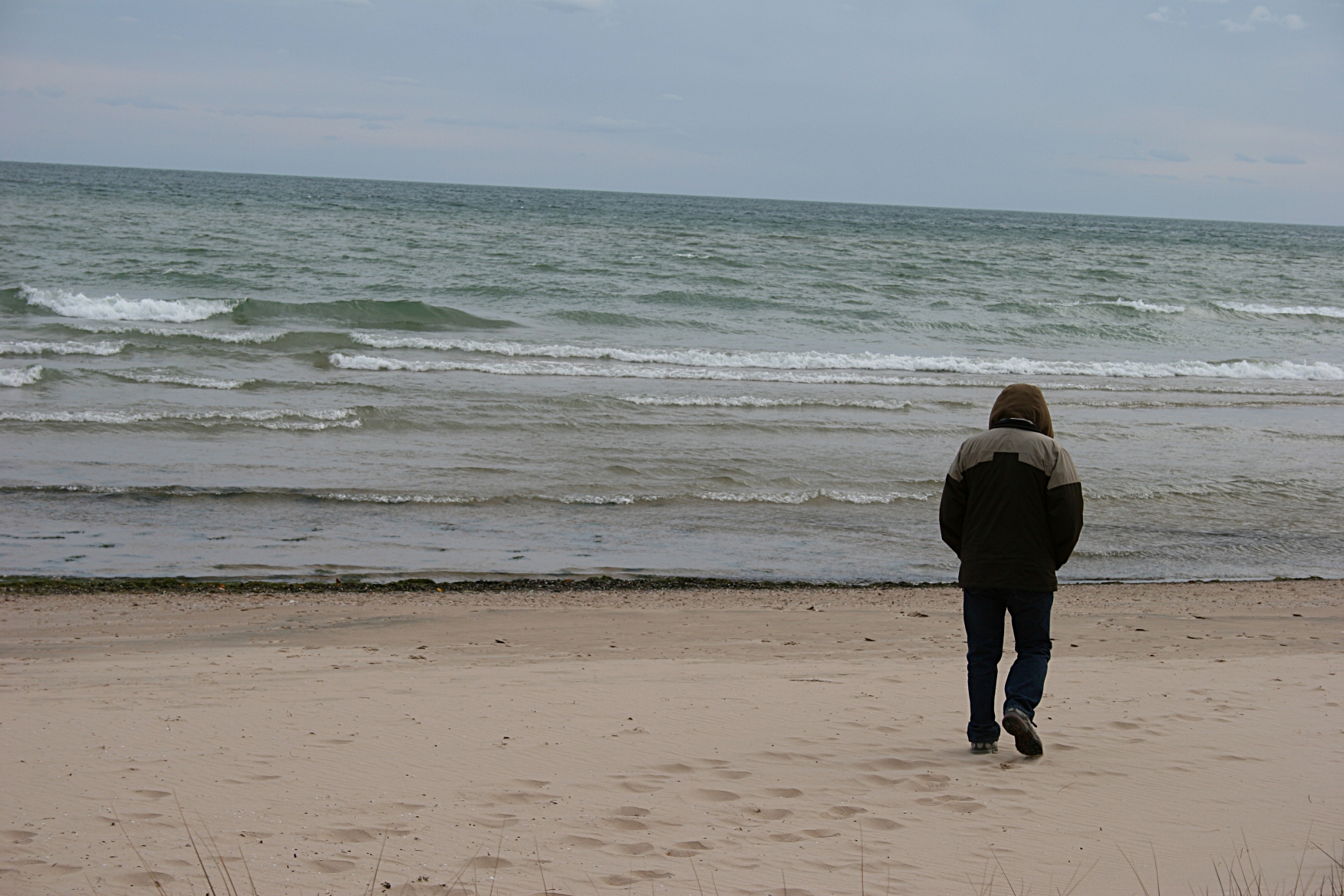
My husband walks along the beach at Whitefish Dunes State park along Lake Michigan on a recent cold and windy afternoon in October.

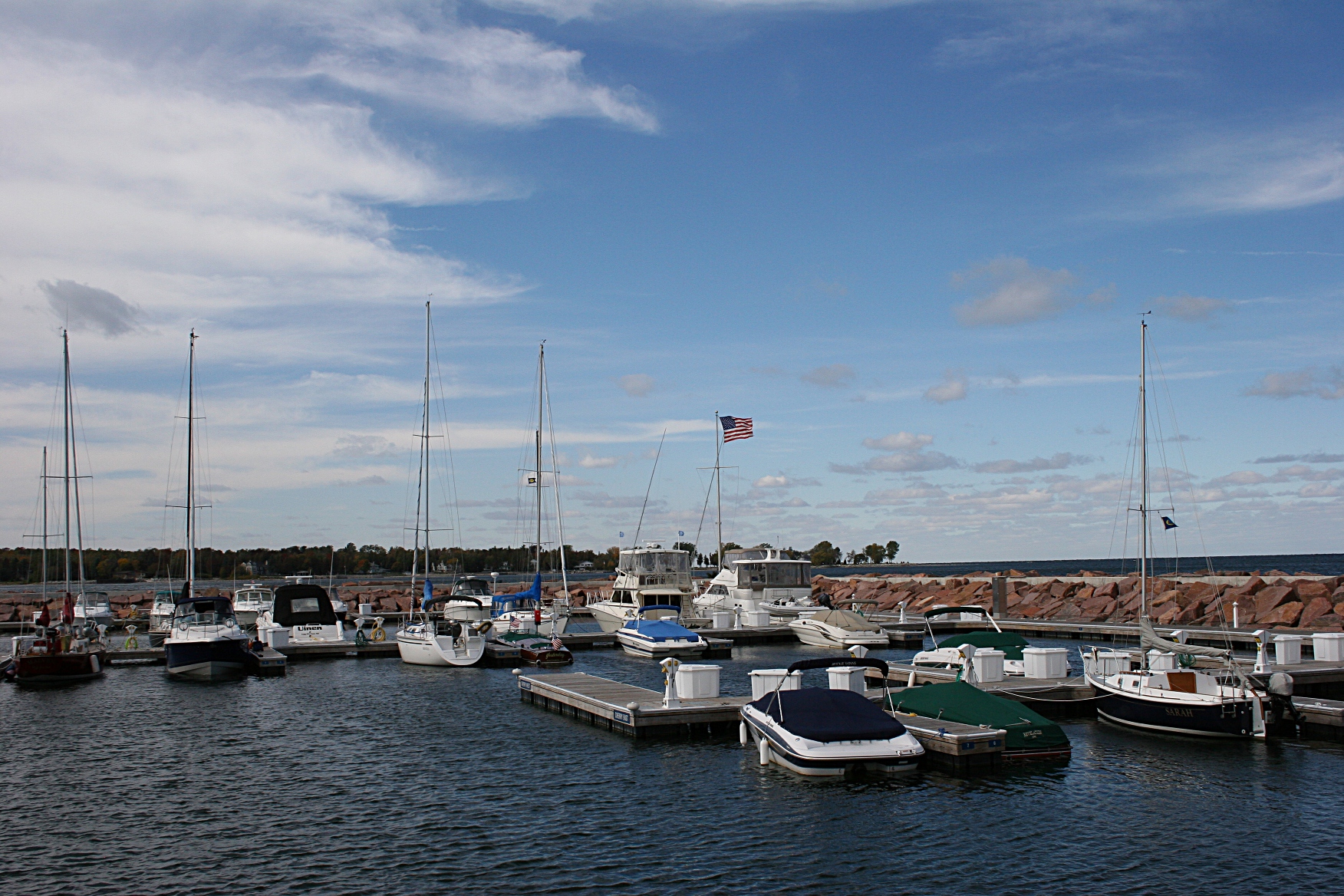
The harbor at Egg Harbor on the western side of Door County.

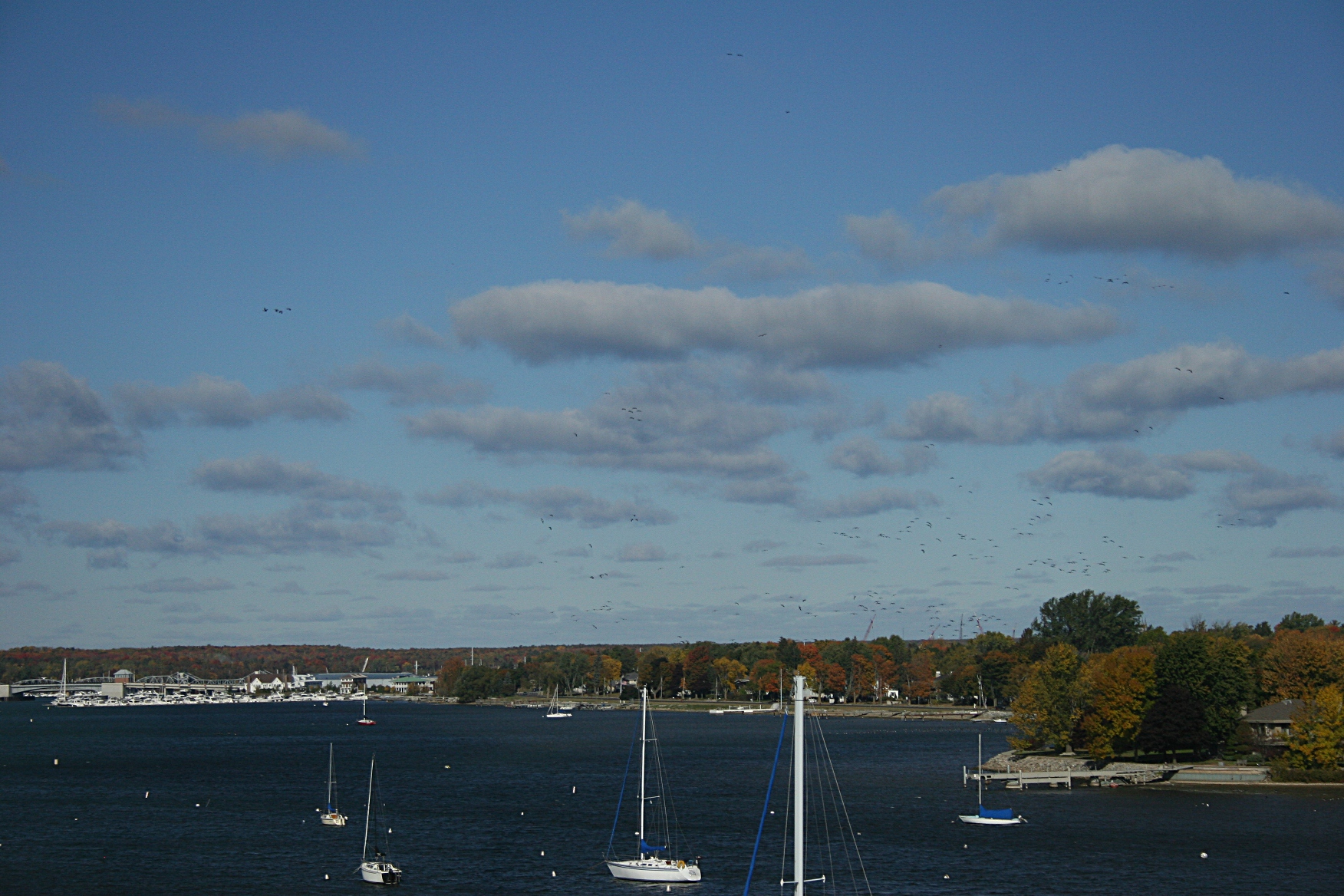
A view of the bay while crossing a bridge into Sturgeon Bay, the beginning of Door County.

…or shop the antique and gift shops…

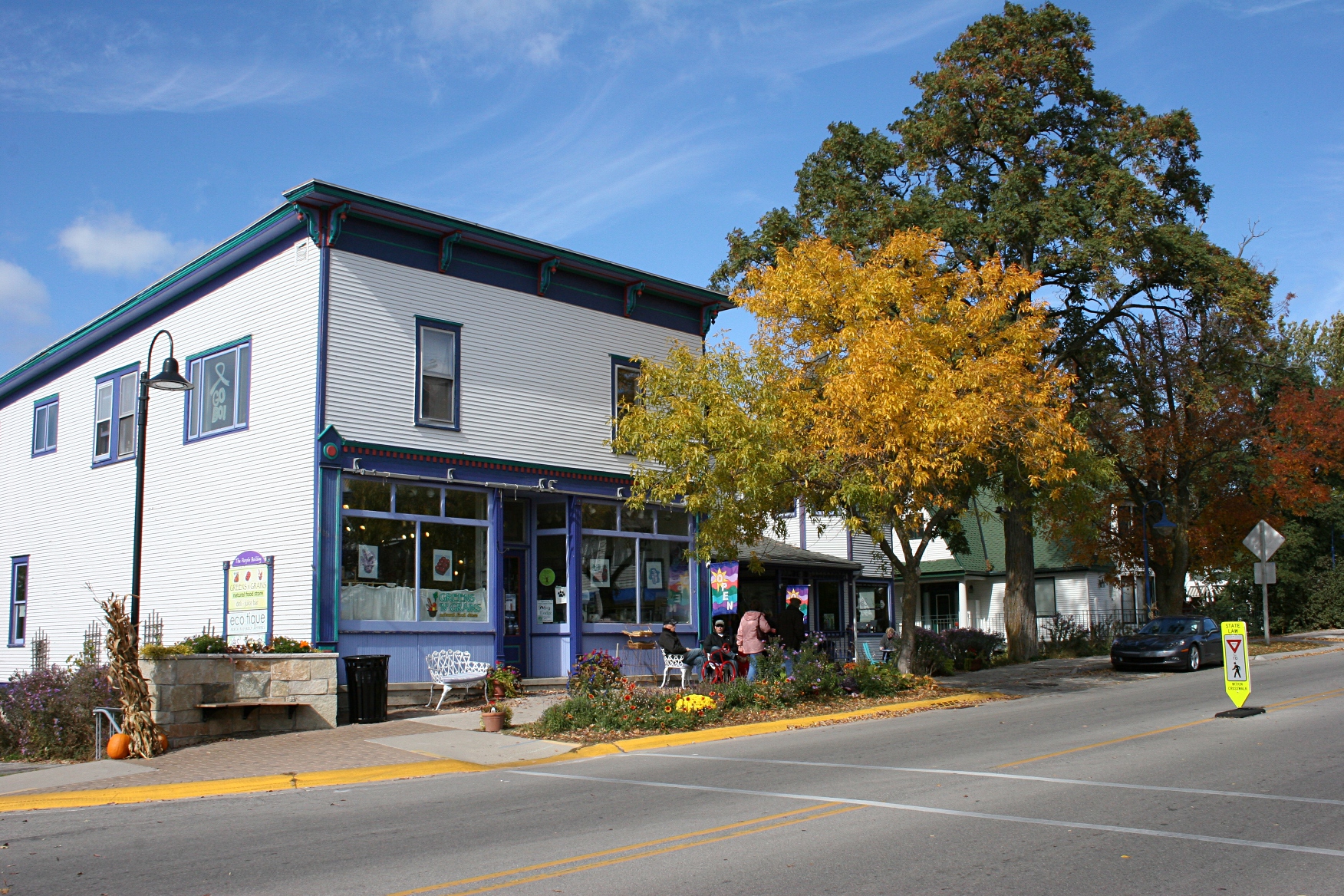
One of the many shops in cozy Egg Harbor.

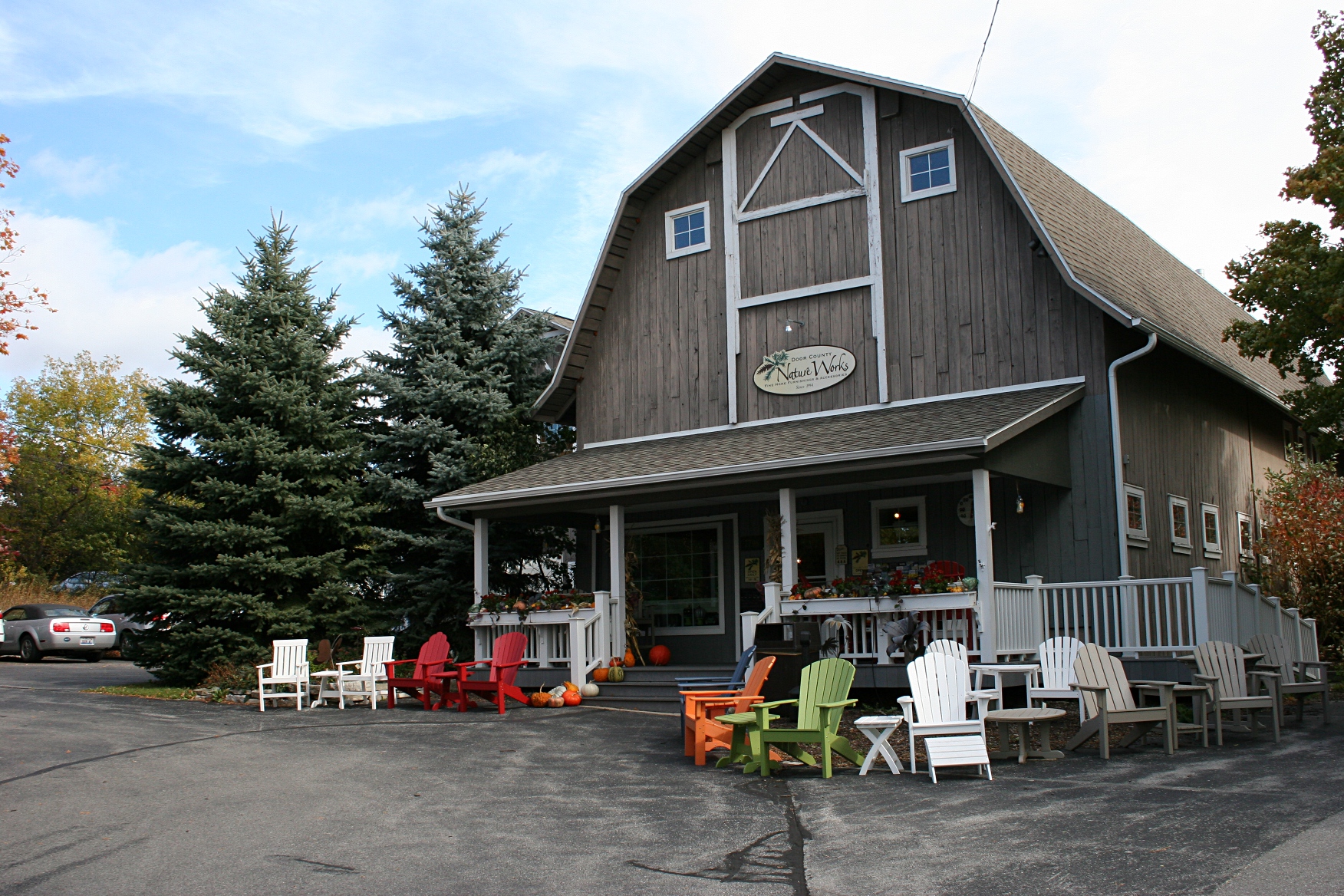
Nature Works, an Egg Harbor gift shop.

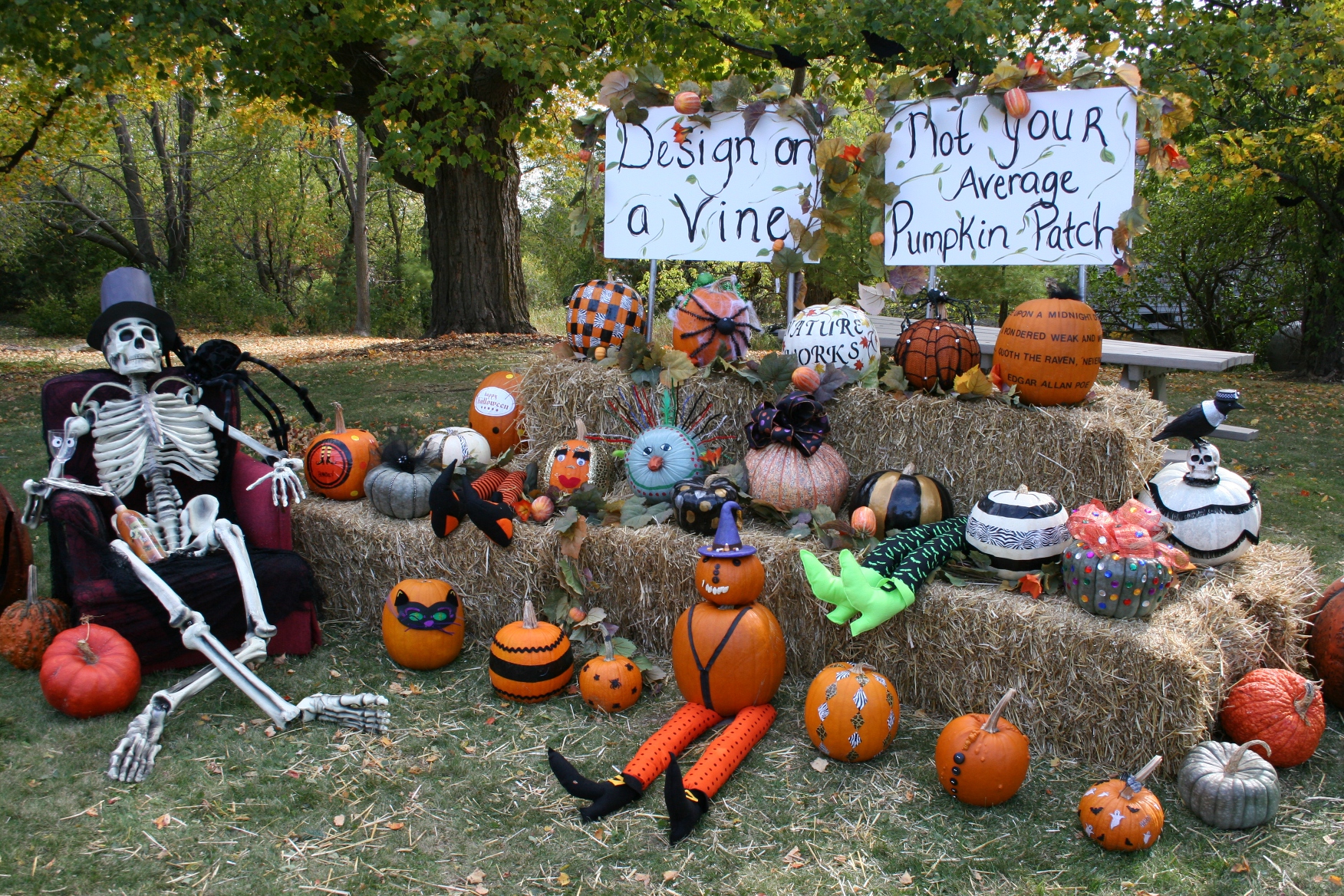
A festive display outside of Nature Works.

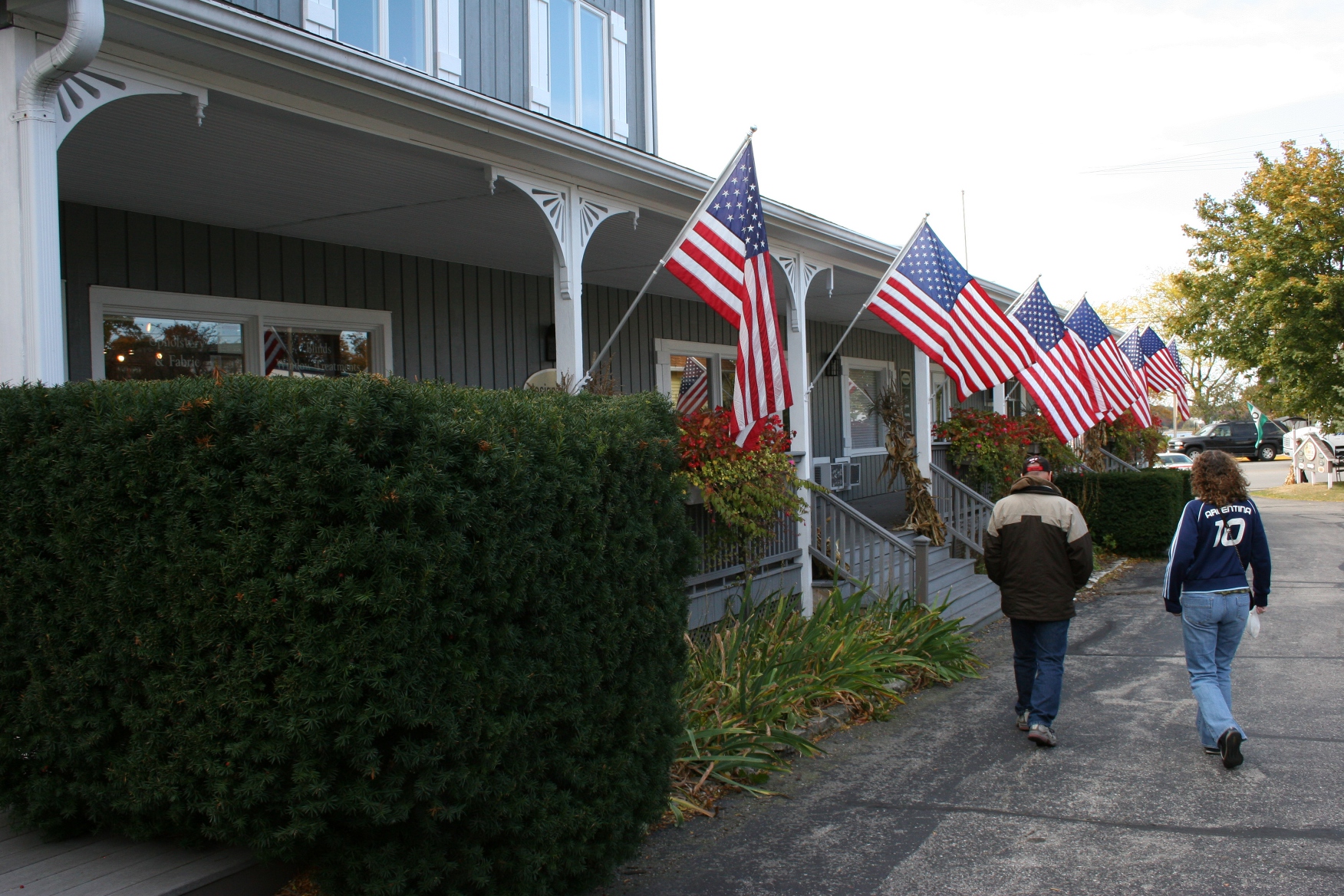
A row of flags add a bit of Americana charm to a scene in Egg Harbor.

…or wine and dine…

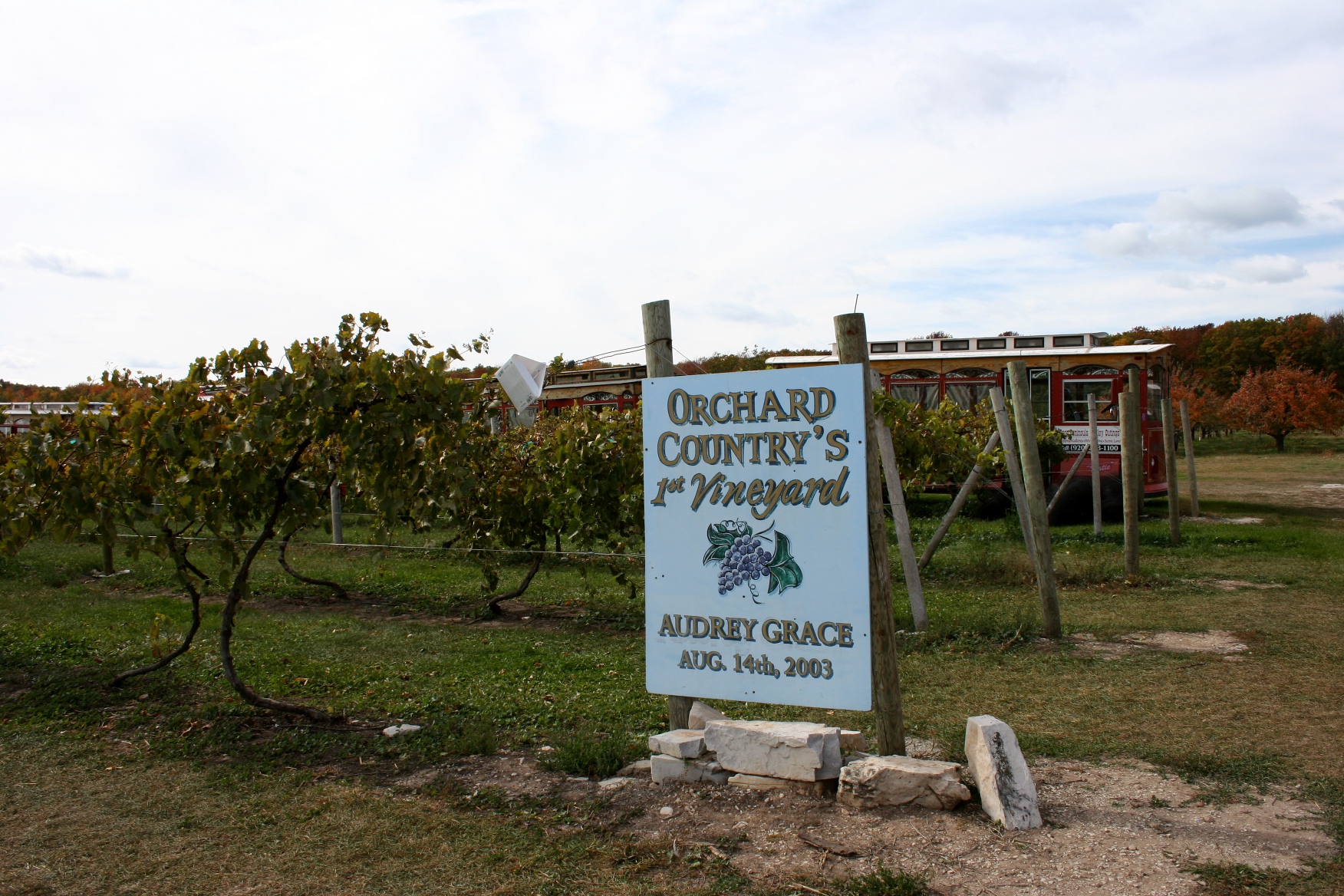
I just had to photograph the Audrey Grace vineyard at Lautenbach’s Orchard Country Winery south of Fish Creek, even if my middle name is not Grace.

…or take in the arts scene…

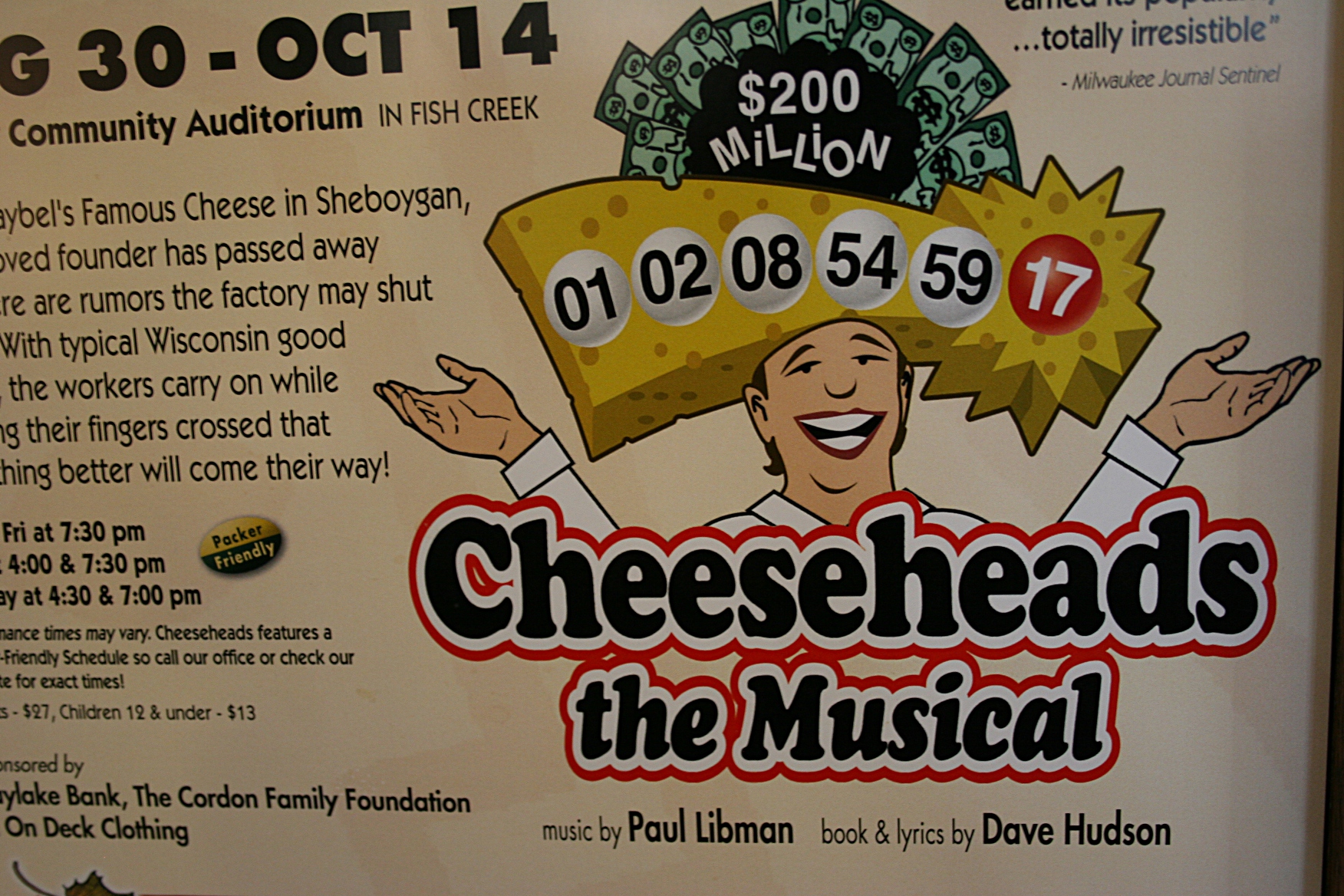
I spotted this sign for the Cheeseheads musical inside Julie’s Cafe in Fish Creek.

…or check out the historic buildings…

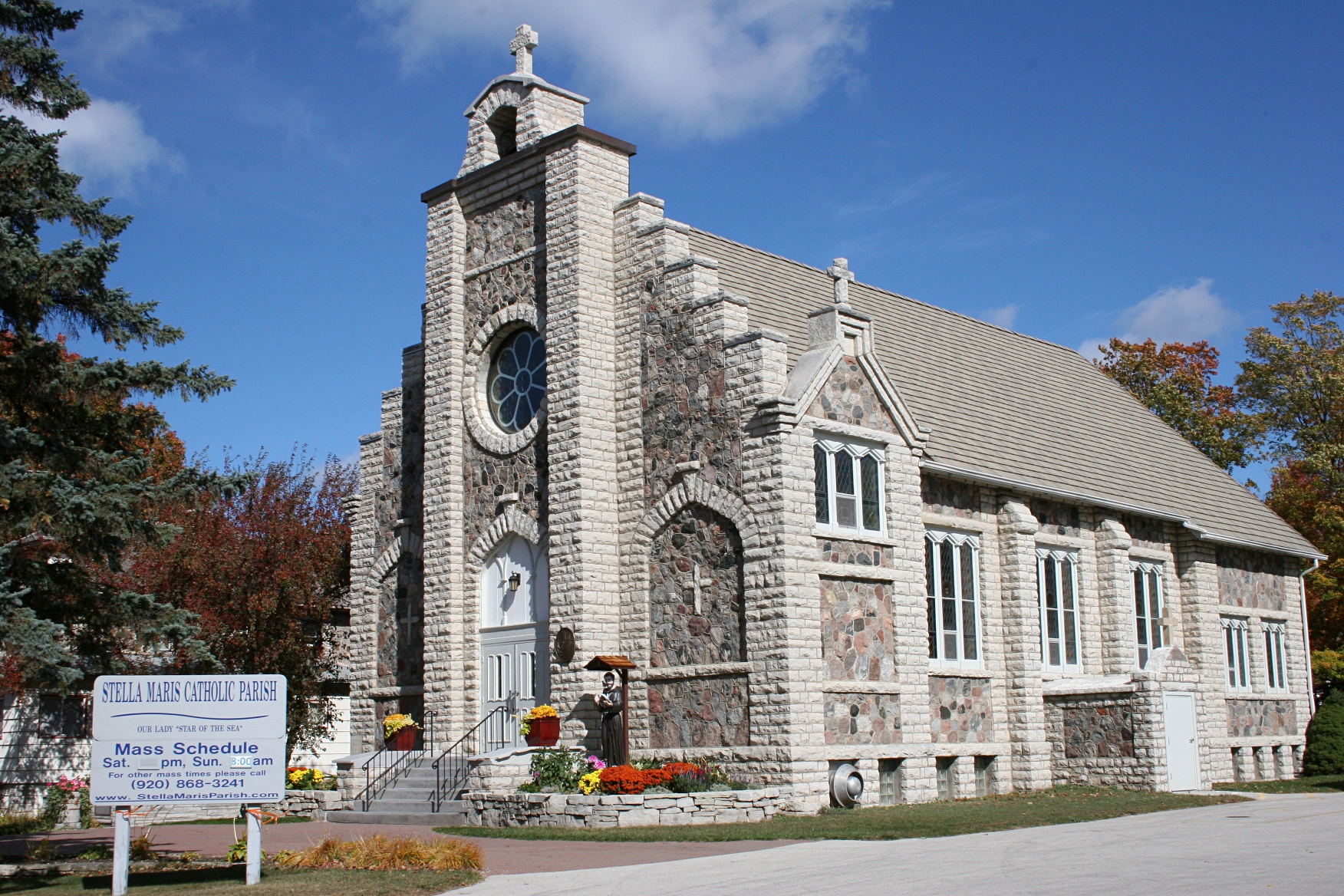
Look at this absolutely magnificent pink and gray granite church, St. John the Baptist, which I photographed at Egg Harbor. The 1907 church, constructed from stone harvested from local farmers’ fields, is part of the Stella Maris (“Star of the Sea”) Catholic Parish.

READERS, PLEASE VISIT my blog archives to see previous posts I published recently on Door County.

Copyright 2012 Audrey Kletscher Helbling


No cherry jackpot this season in Door County, Wisconsin October 13, 2012

Filed under: Uncategorized — Audrey Kletscher Helbling @ 9:12 AM
Tags: , , , , , ,

REMEMBER THAT WONDERFUL and unseasonably warm weather we embraced last March? Then remember the cold and freezing weather which followed in April, as if the two months traded spots temperature-wise. Not a good thing when you own an orchard.

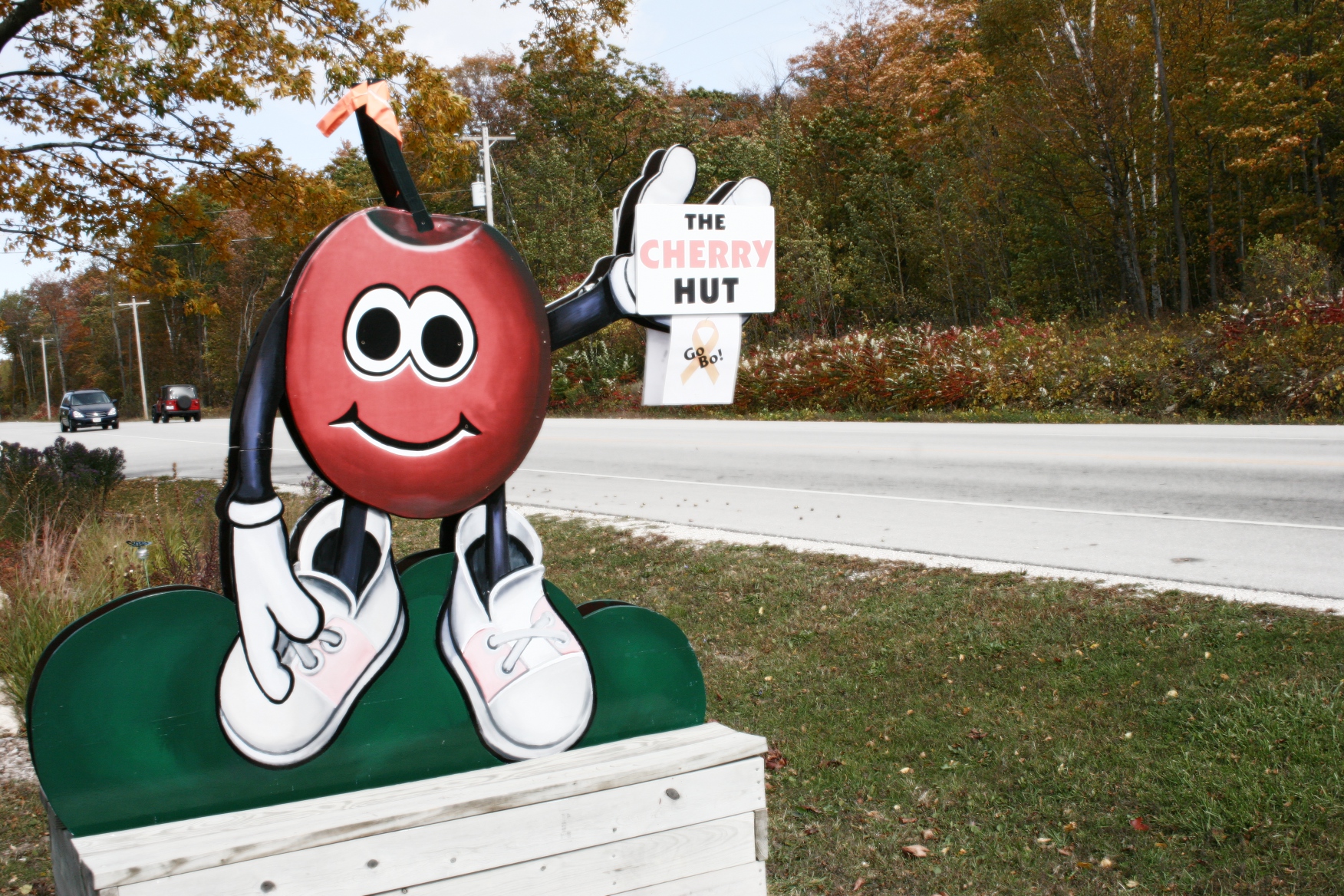
This sign along Wisconsin Highway 42 south of Fish Creek marks The Cherry Hut roadside cherry business, established in 1949.

I hadn’t thought much about that warm spring until a recent visit to Door County, Wisconsin, famous for its cherry orchards.

The northeastern Wisconsin peninsula experienced the same type of weird warm winter weather we did here in Minnesota, causing the cherry tree buds to form early and then freeze.

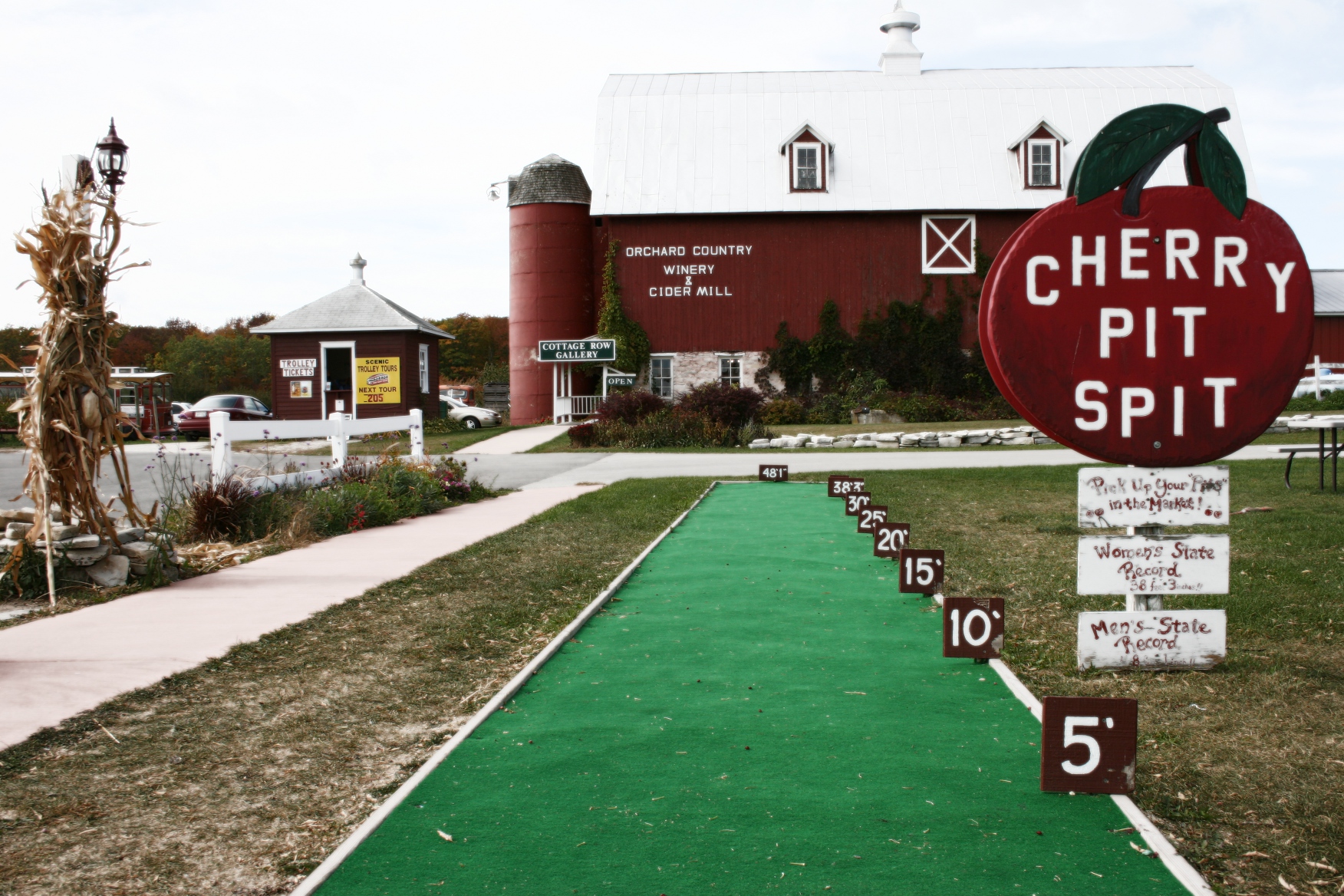
The cherry pit spit at Lautenbach’s Country Winery & Market, Fish Creek.

According to the Wisconsin Cherry Growers, Door County’s typical cherry crop of 12 million pounds was expected this year to hover around 700,000.

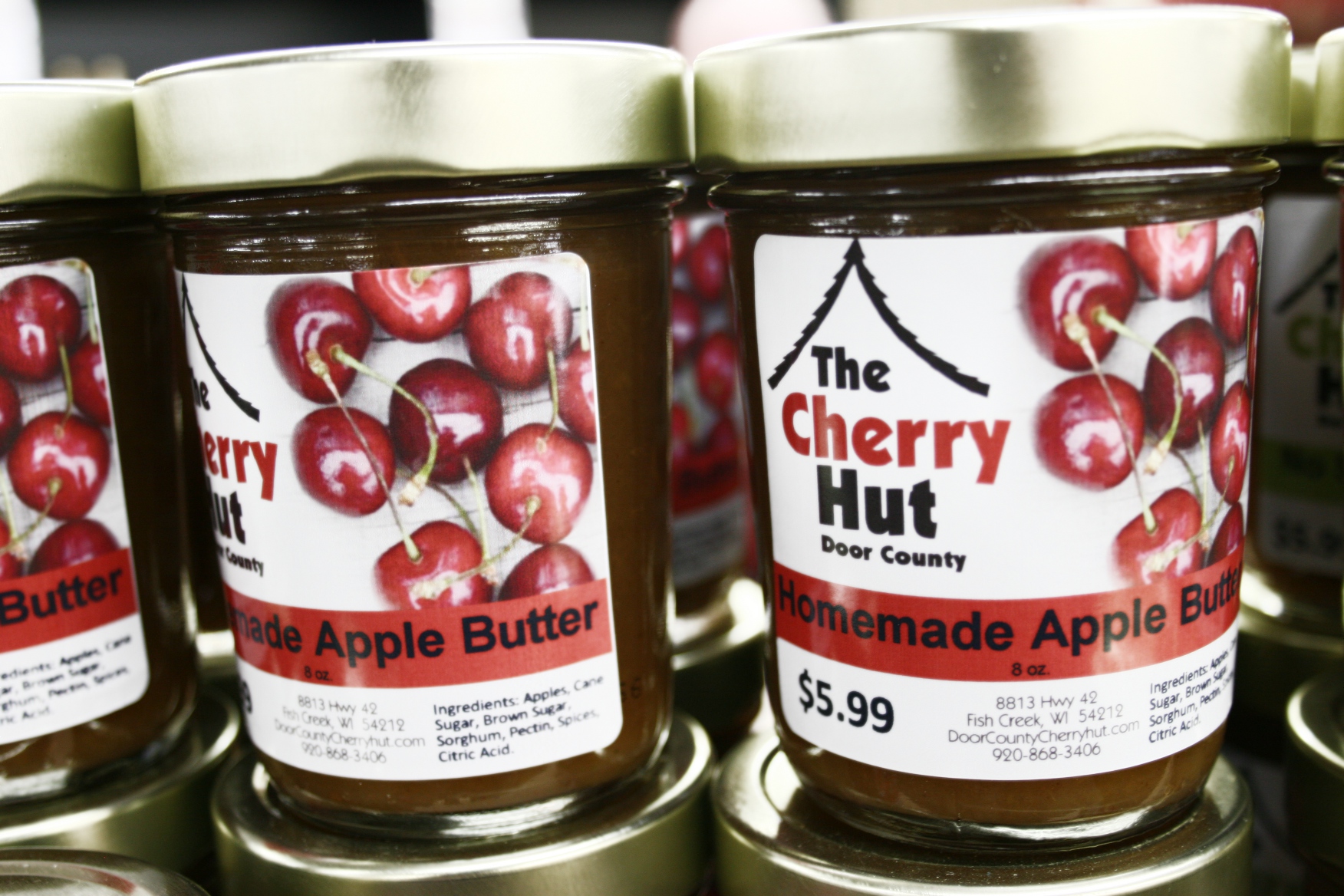
At first glance you would think this is a cherry product. Not so. This is apple butter sold by The Cherry Hut. I assume the apple crop was also down this year in Door County as it is in Minnesota.

The cherry harvest is long done in Door County. But even a poor crop doesn’t stop this tourist destination from promoting cherries and offering samples of cherry wines and juices and cherry salsa from, I presume, primarily last season’s crop.

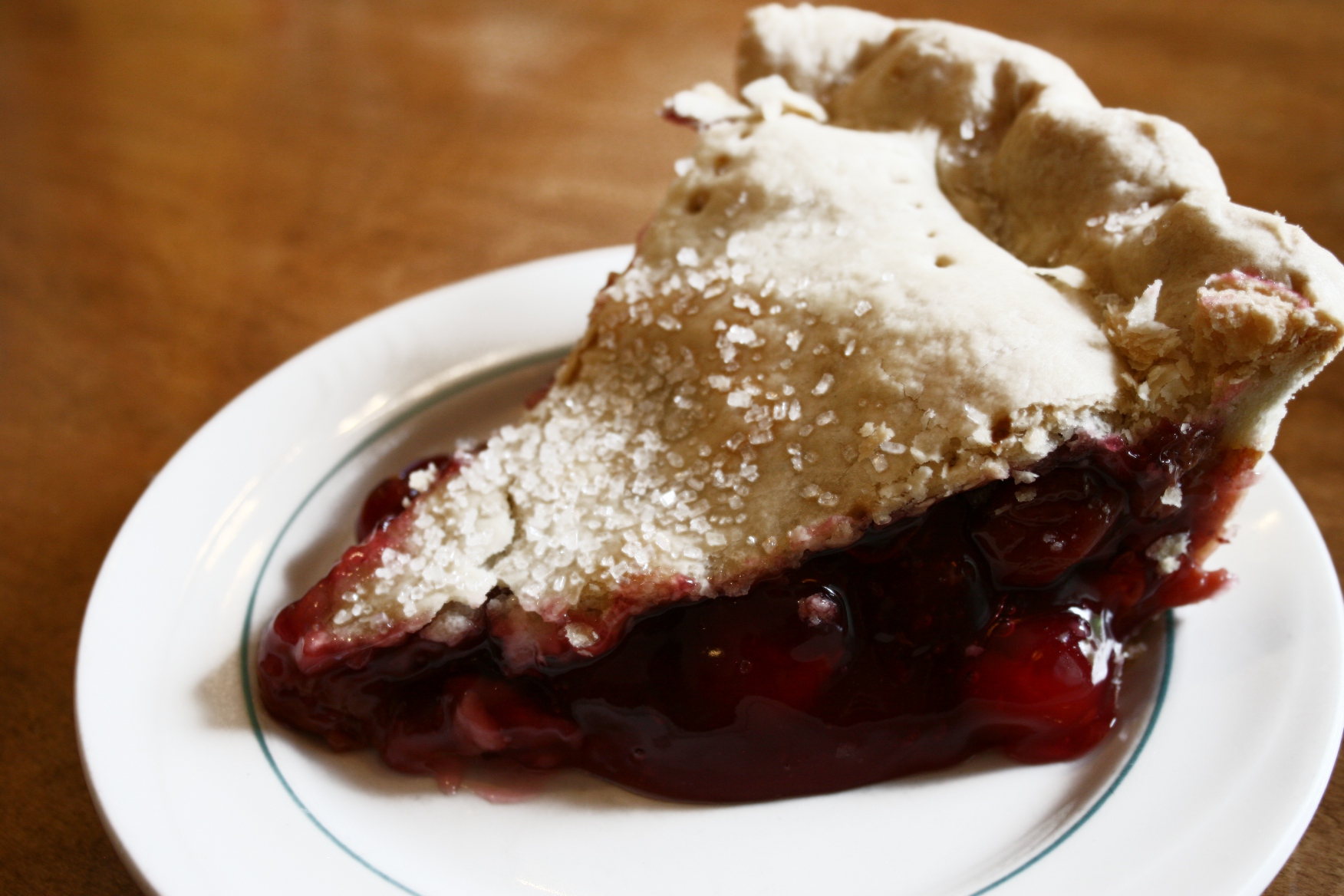
And restaurants, like Julie’s Park Cafe in Fish Creek, were still offering up slices of delicious Door County cherry pie.

A $5 slice of tart Door County cherry pie…

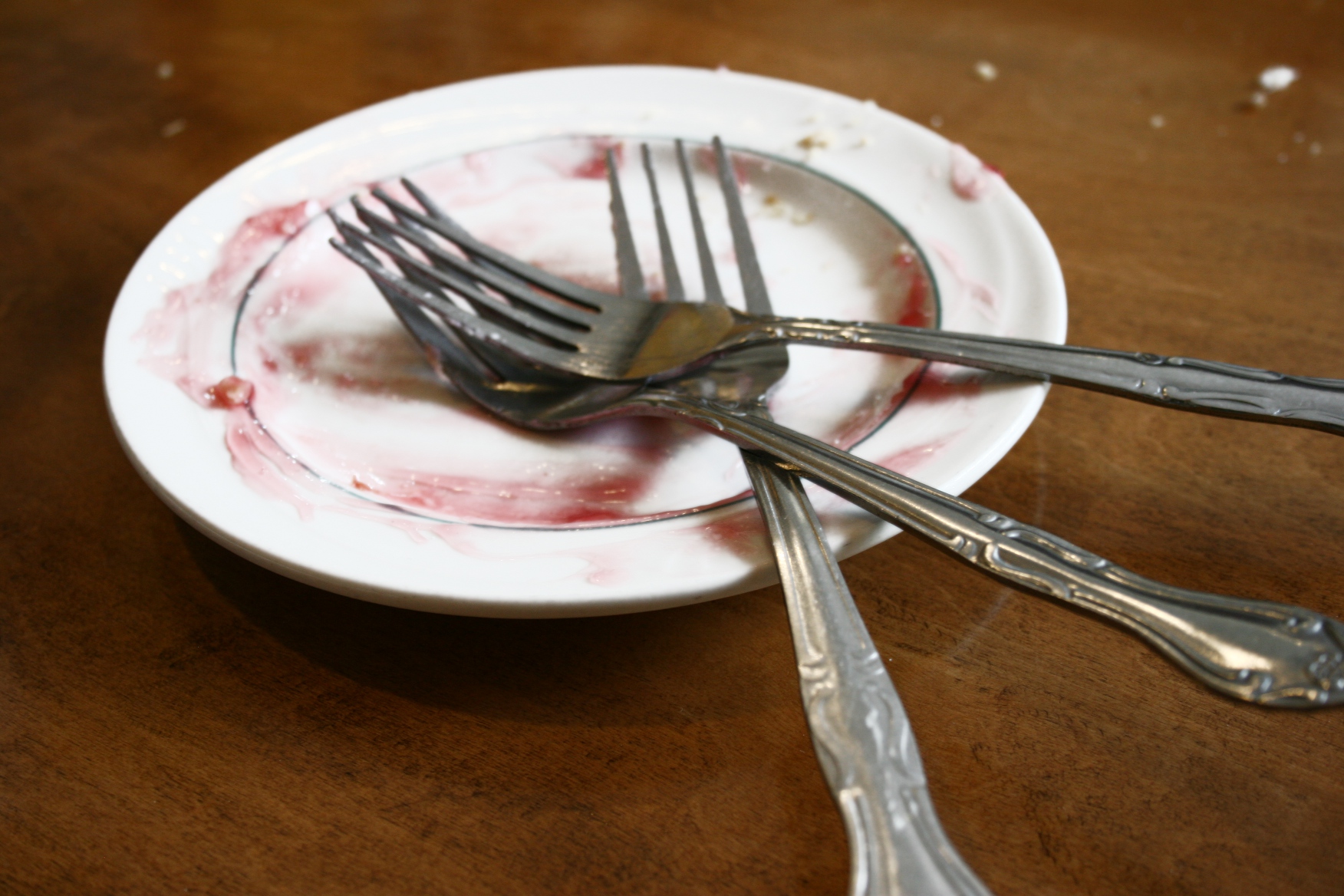
…shared by three–my husband, second daughter and me.

© Copyright 2012 Audrey Kletscher Helbling


Two delicious Minnesota food events & that Wisconsin barn October 12, 2012

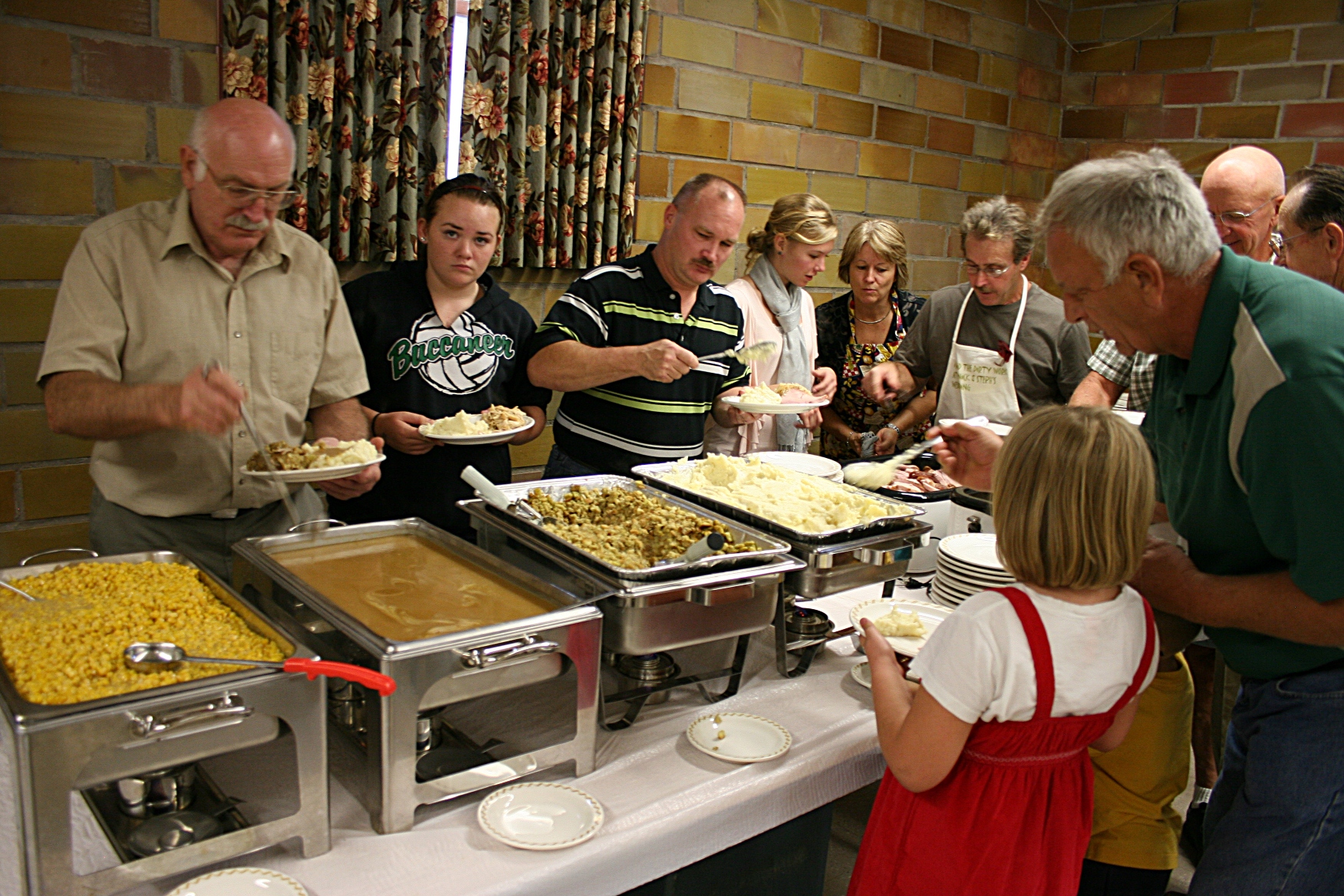
Diners dish up at last year’s fall dinner at Trinity Lutheran Church, North Morristown.

IN RECENT YEARS I’VE become an enthusiastic church dinner foodie.

And this Sunday, October 14, my favorite of all church dinners will be served at Trinity Lutheran Church, North Morristown, in western Rice County.

Let me tell you, these parishioners can cook. You’ll get real homecooked food from potatoes that have been peeled and mashed to garden grown squash to fresh-baked bread to ham that’s not pressed.

This is the meal you’ll get at Trinity Lutheran Church, North Morristown’s, fall dinner and more. Delicious.

The full menu includes turkey, ham, potatoes and gravy, dressing, squash, corn, cranberries, bread and cake. If you pile all of that onto your plate, you won’t need another meal on Sunday.

And, get this: This generous fall dinner will cost you only $10 (ages 13 and older), $5 for 6-12-year-olds and free for those five and under.

Serving is from 11 a.m. – 1 p.m. Be prepared to wait upstairs in the sanctuary for tables to empty in the church basement.

You might want to attend the 9:30 a.m. church service so you can be among the first in line.

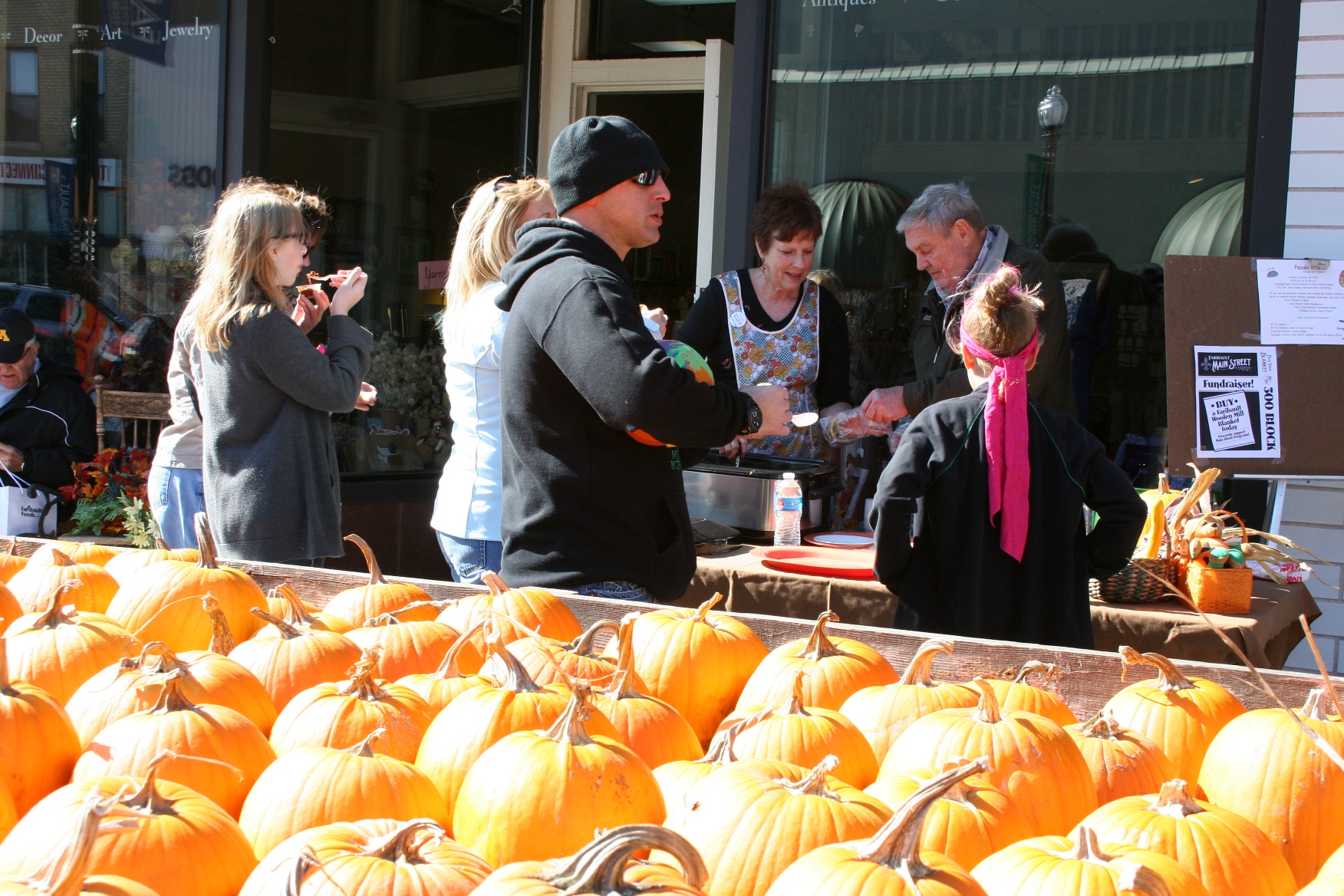
Participants in last year’s Chili Contest dish up chili at a business along Central Avenue during the Fall Festival.

ANOTHER AREA FOOD EVENT actually happens a day earlier during the Fall Festival in downtown Faribault from 10:30 a.m. – 3 p.m. Saturday. In addition to an 11 a.m. costume parade, pumpkin painting and other activities for the kids, a Chili Contest is part of the celebration.

You can eat your way down historic Central Avenue sampling about 30 chilis between 11 a.m. – 1 p.m. I’d advise arriving earlier rather than later as in the past some competitors have run out of chili. I believe the cost is $3, a real deal considering you will have your fill of chili.

Be sure to vote for your favorite because the winning chili will be featured every Friday from October through February at Boston’s The Gourmet Pizza.

Seriously, people, two days of no cooking and eating great homecooked food on the cheap works for me.

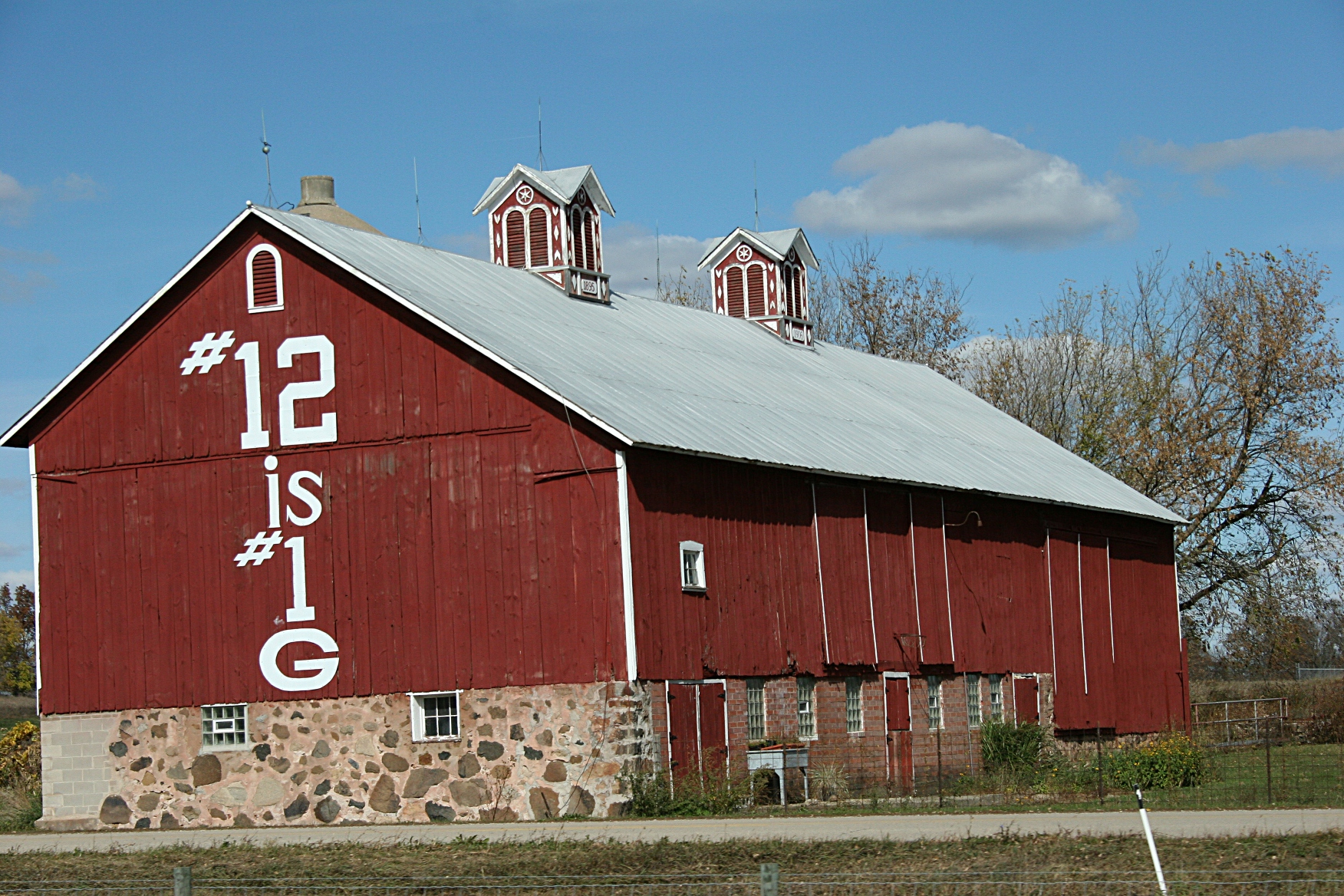
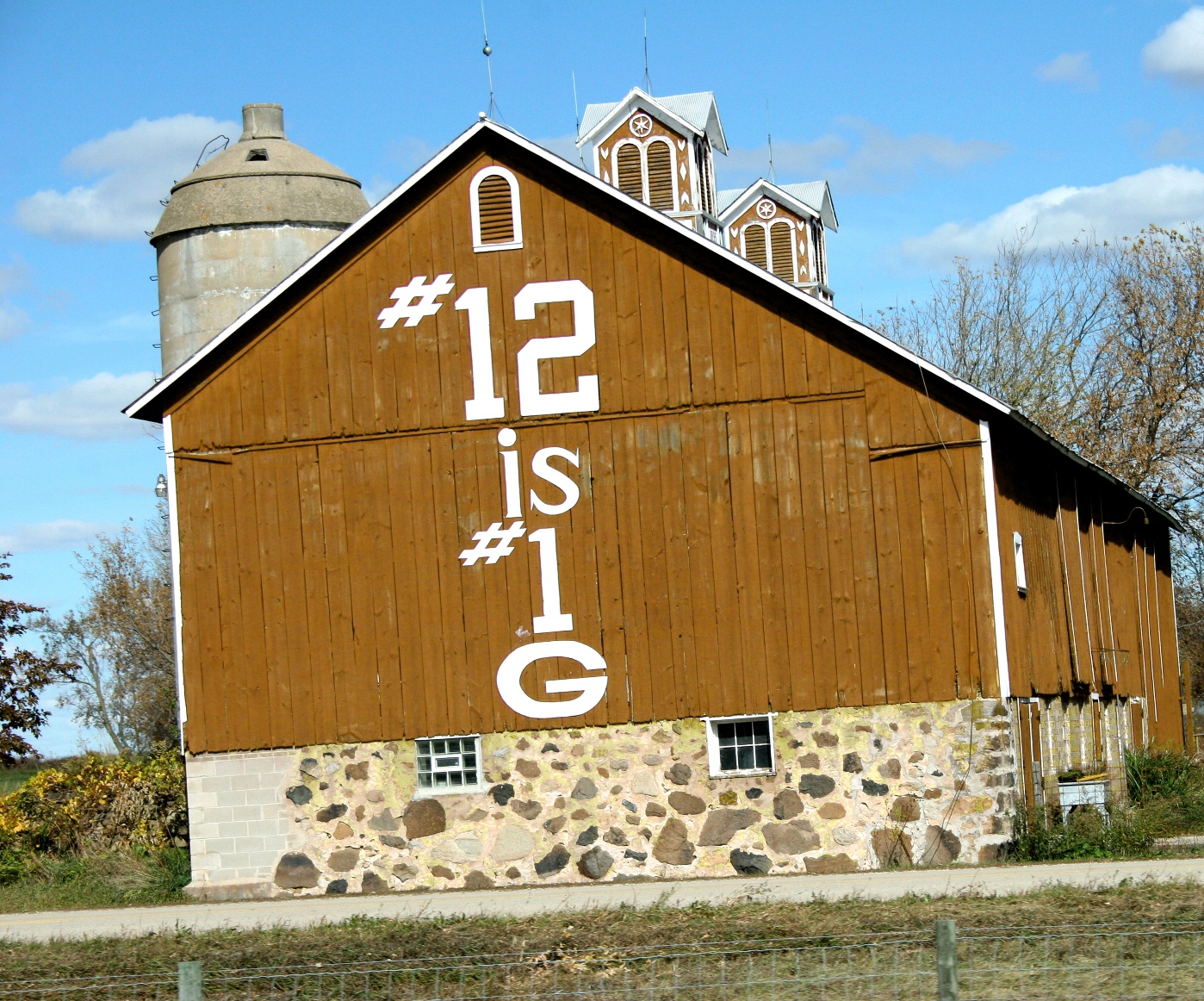
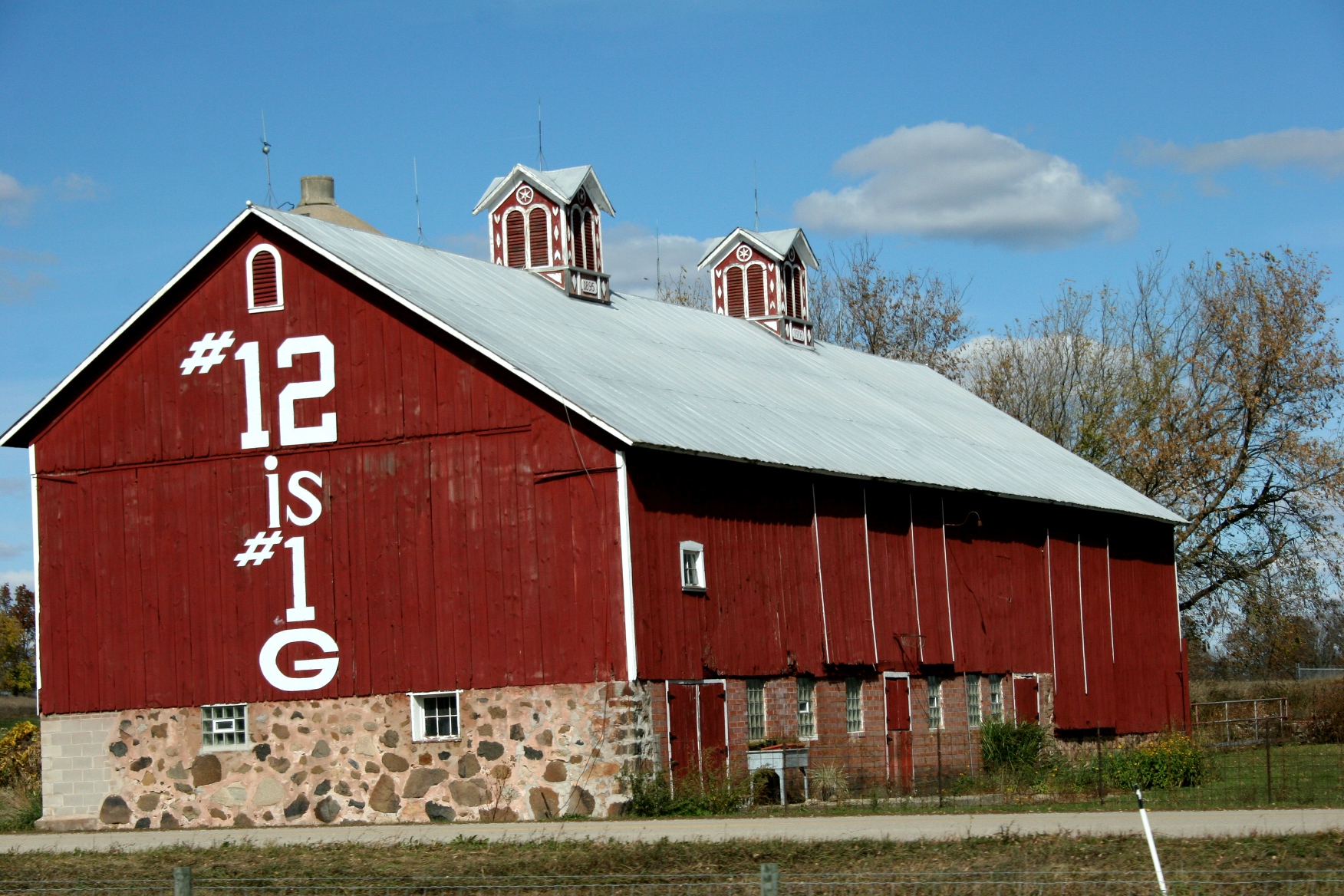
FINALLY…REMEMBER that Wisconsin barn I featured here earlier this week? You know the one with the message “#12 is #1G.” I wanted you to guess if the barn was painted green, gold or red.

Well, dear readers, here is the true barn color:

Yes, the barn is red.

I know some of you are perhaps disappointed that the barn is not Green Bay Packers green or gold.

But, I must tell you that, while shopping at Festival Foods in Appleton, Wisconsin, last Saturday, my husband and I found green and gold brat and hamburger buns on a special Green Bay Packers food display.

I could have kicked myself for not bringing my camera into the grocery store. Randy photographed the buns with his cell phone. So if we ever figure out how to get that photo onto my computer, I will show you those green and gold buns.

I am not making this up.

#

MY APOLOGIES, READERS, for the over-sized images here. But I’ve tried to reduce them without success; apparently some technical issues going on here with WordPress.

© Copyright 2012 Audrey Kletscher Helbling


Autumn splendor in Door County, Wisconsin October 9, 2012

Filed under: Uncategorized — Audrey Kletscher Helbling @ 7:47 AM
Tags: , , , , , , ,

HOW DOES ONE EVEN BEGIN to describe the glory of an autumn landscape?

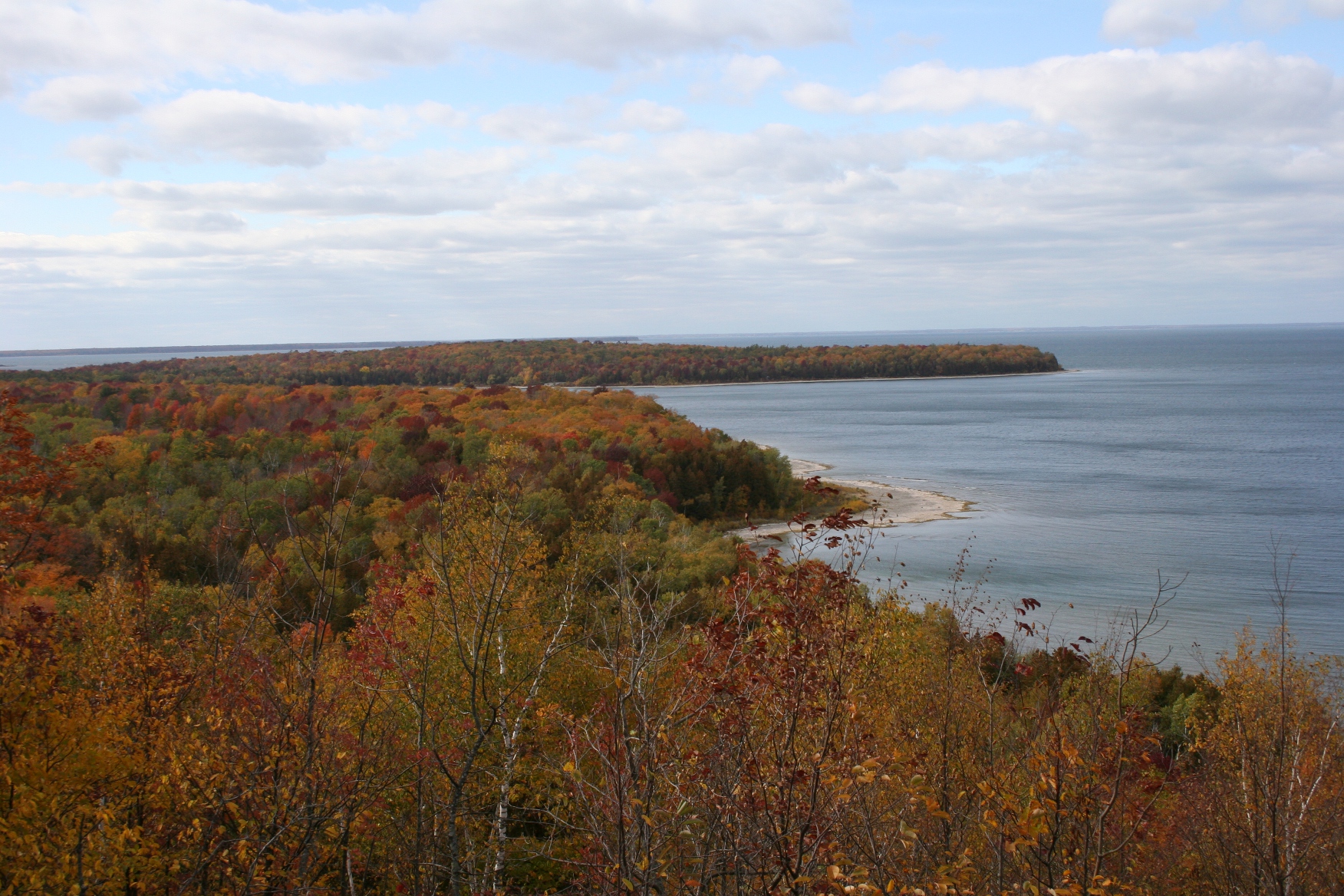
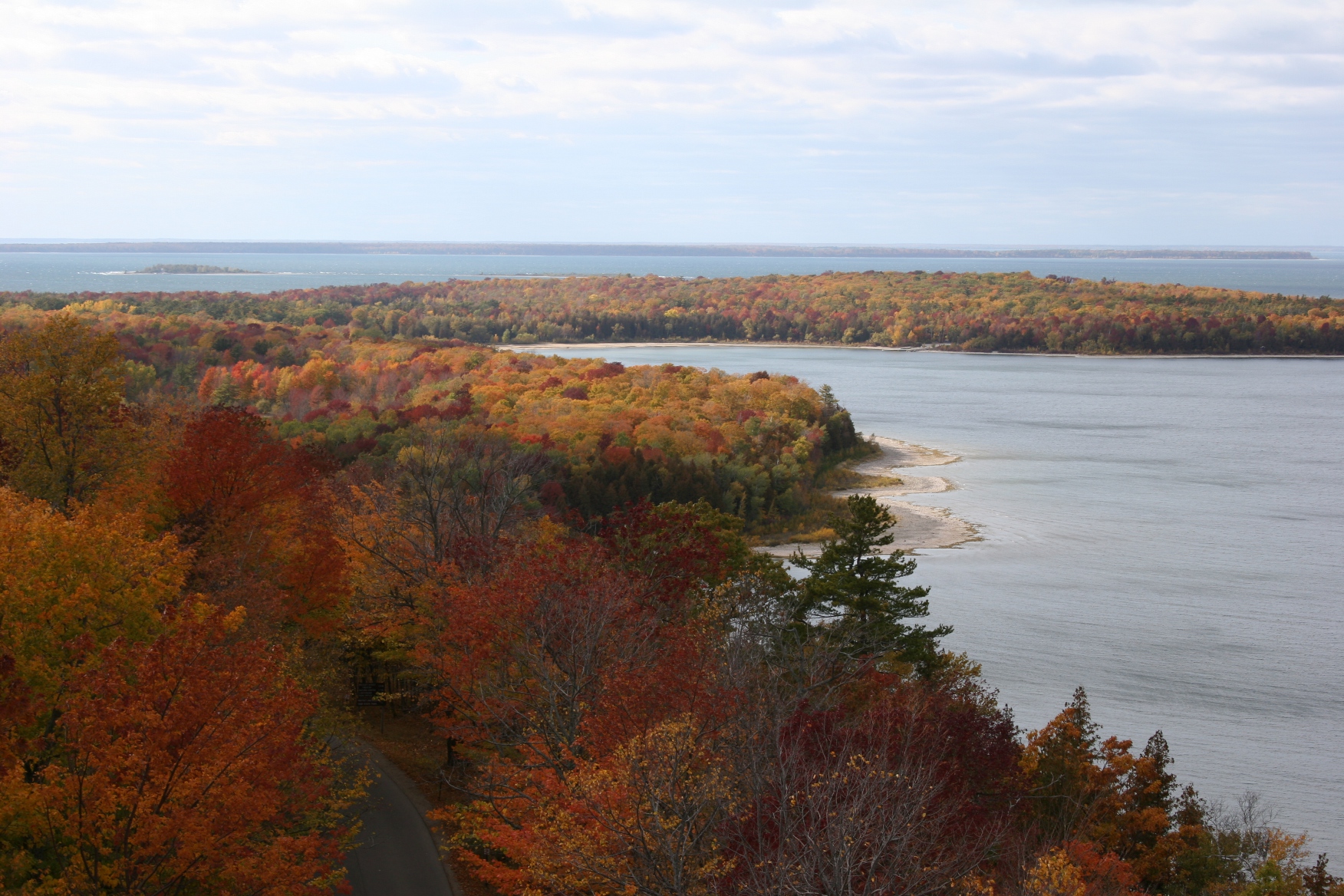
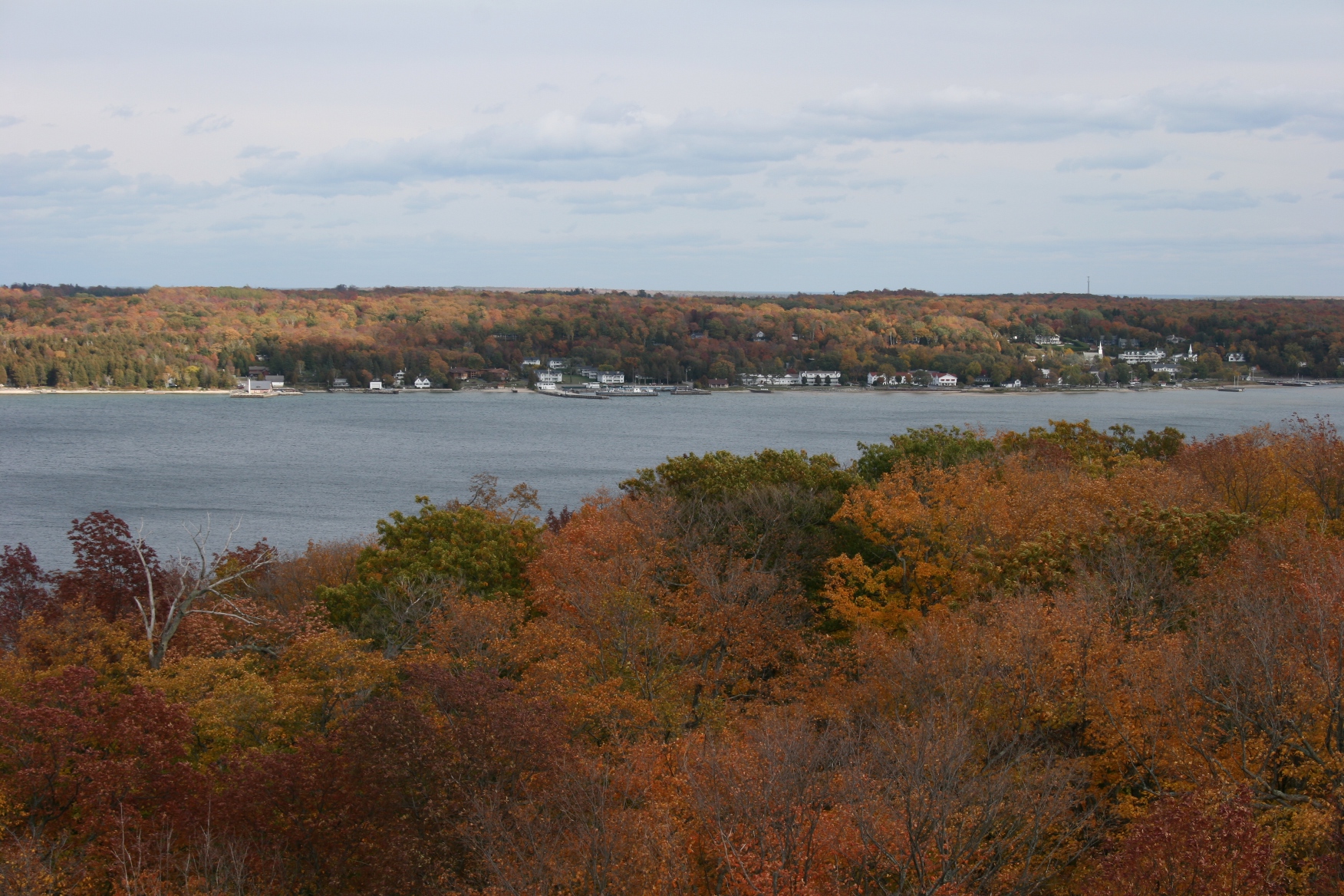
A view from the Eagle Panorama overlook  in Peninsula State Park where you can see Horseshoe, Strawberry and Chambers Islands, Welcker’s Point and the Upper Michigan shoreline.

Peninsula State Park in Fish Creek in Door County, Wisconsin, shows us what words can never summarize. Natural blazing beauty beyond belief.

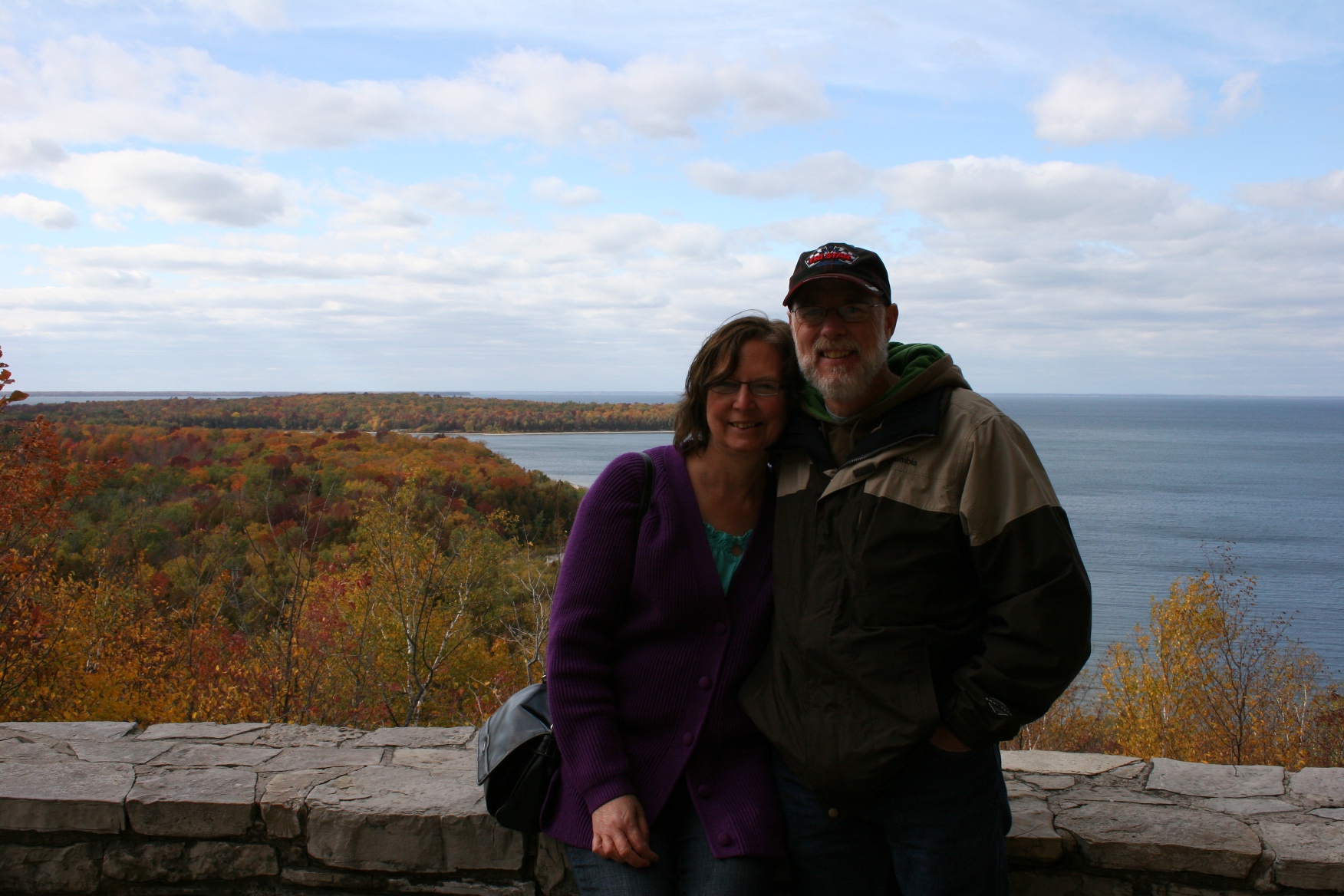
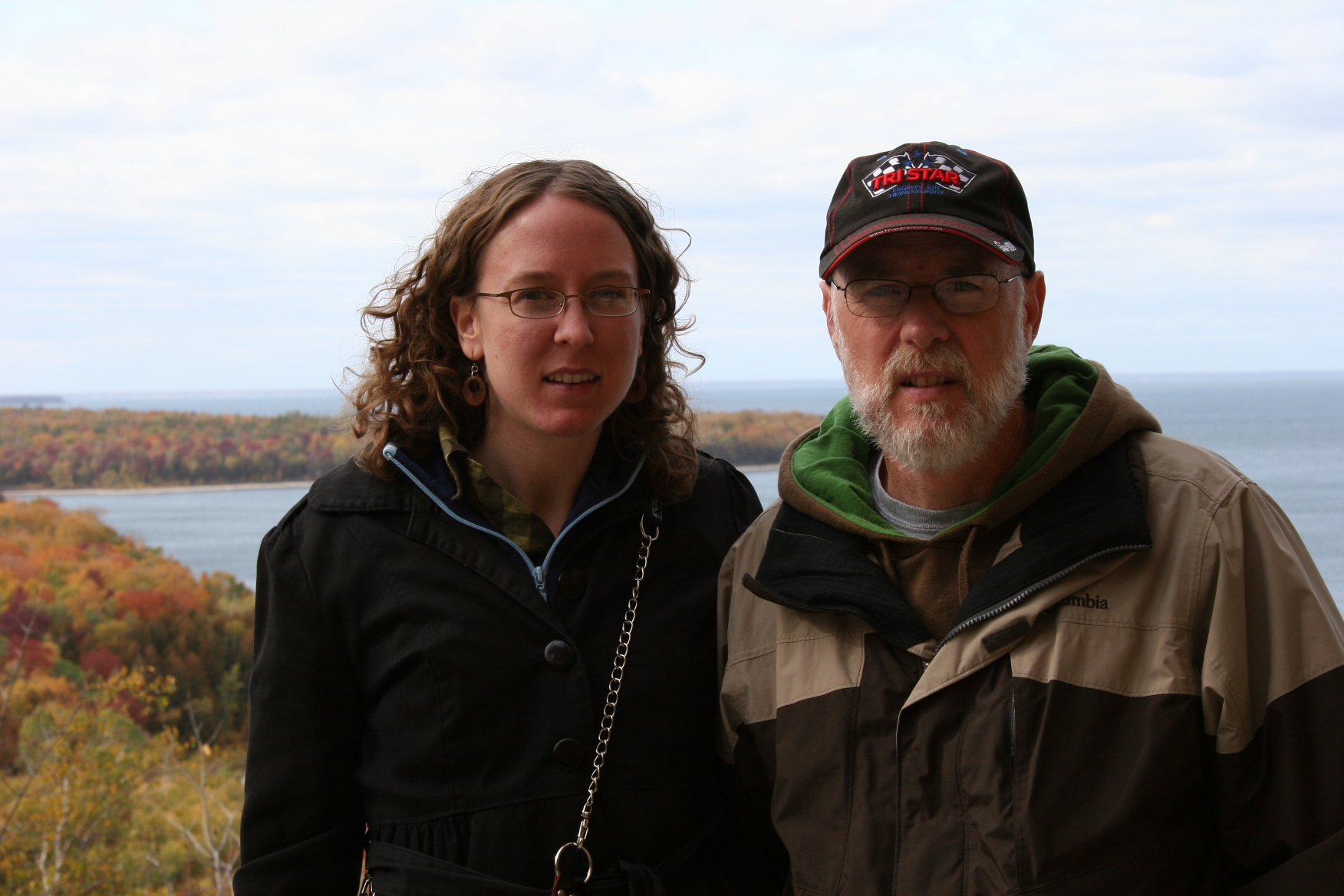
My husband, Randy, and me at Eagle Panorama. Yes, Randy is wearing the shell of his winter coat over a heavy hooded sweatshirt. I was not smart enough to bring along my winter coat or a hat.  Photo by Miranda Helbling.

My husband, Randy, with our daughter Miranda, who has lived and worked as a Spanish medical interpreter in Appleton, Wisconsin, an hour south and west of Door County, for nearly two years. This image was shot at Eagle Panorama.

My husband, Randy, daughter Miranda and I toured northeastern Wisconsin’s scenic peninsula on Thursday when fall colors were at their prime.

Except for the raging wind blasting us from Green Bay on the west side and, later, Lake Michigan on the east, we savored the day. How could we not, with colors this stunning, these from Peninsula State Park?

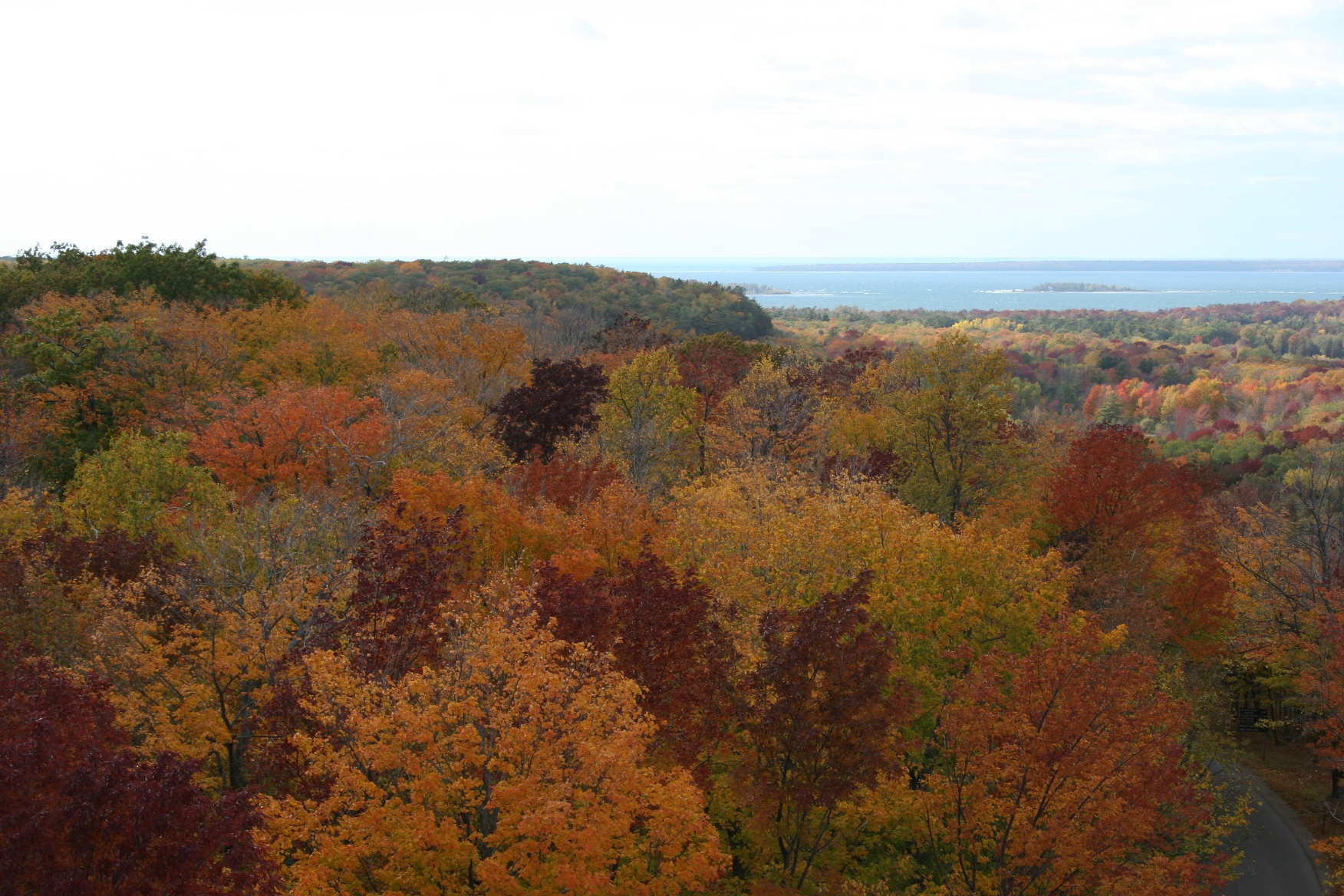
Treetop view from Eagle Tower. Photo by Randy Helbling because I would not climb the 75-foot tall tower which rises 225 feet above the shoreline. You can barely see Shore Road, bottom right, the road we drove through the park.

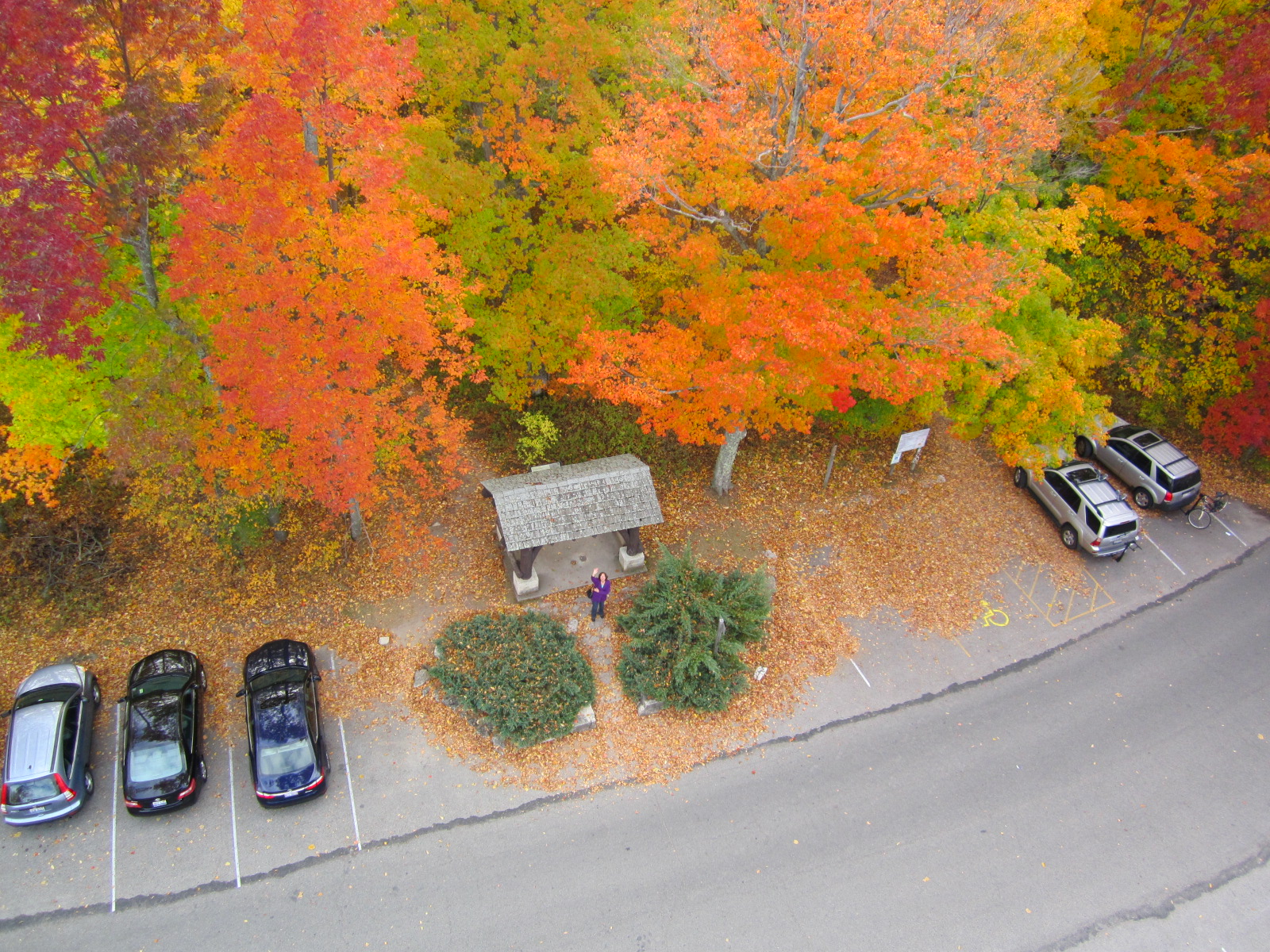
See me standing down there waving at my daughter atop 75-foot Eagle Tower? Photo by Miranda Helbling.

If I wasn’t afraid of heights, I could have seen this view from Eagle Tower shot by my husband, Randy. The road on the left is Shore Road, the route we took through Peninsula State Park.

Eagle Tower, built in 1914 as a forest fire observation platform, offers a scenic view of Green Bay and beyond. Photo by Randy Helbling.

Horseshoe Island as seen from Eagle Panorama, not to be confused with Eagle Tower.

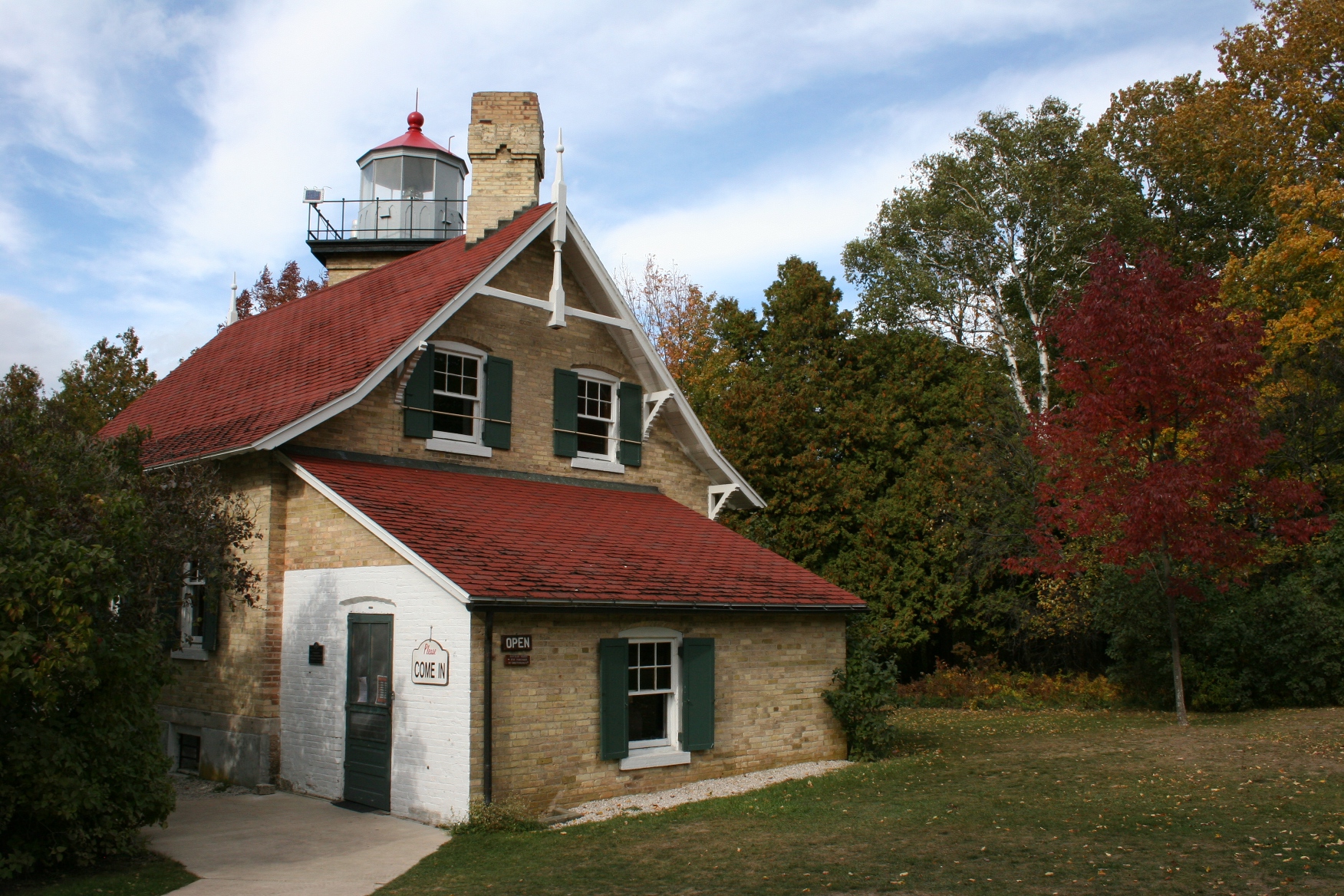
The Eagle Bluff lighthouse, built in 1868 and on the Wisconsin State Register of Historic Places. Door County is home to 11 lighthouses. No, we did not tour any and saw only this one.

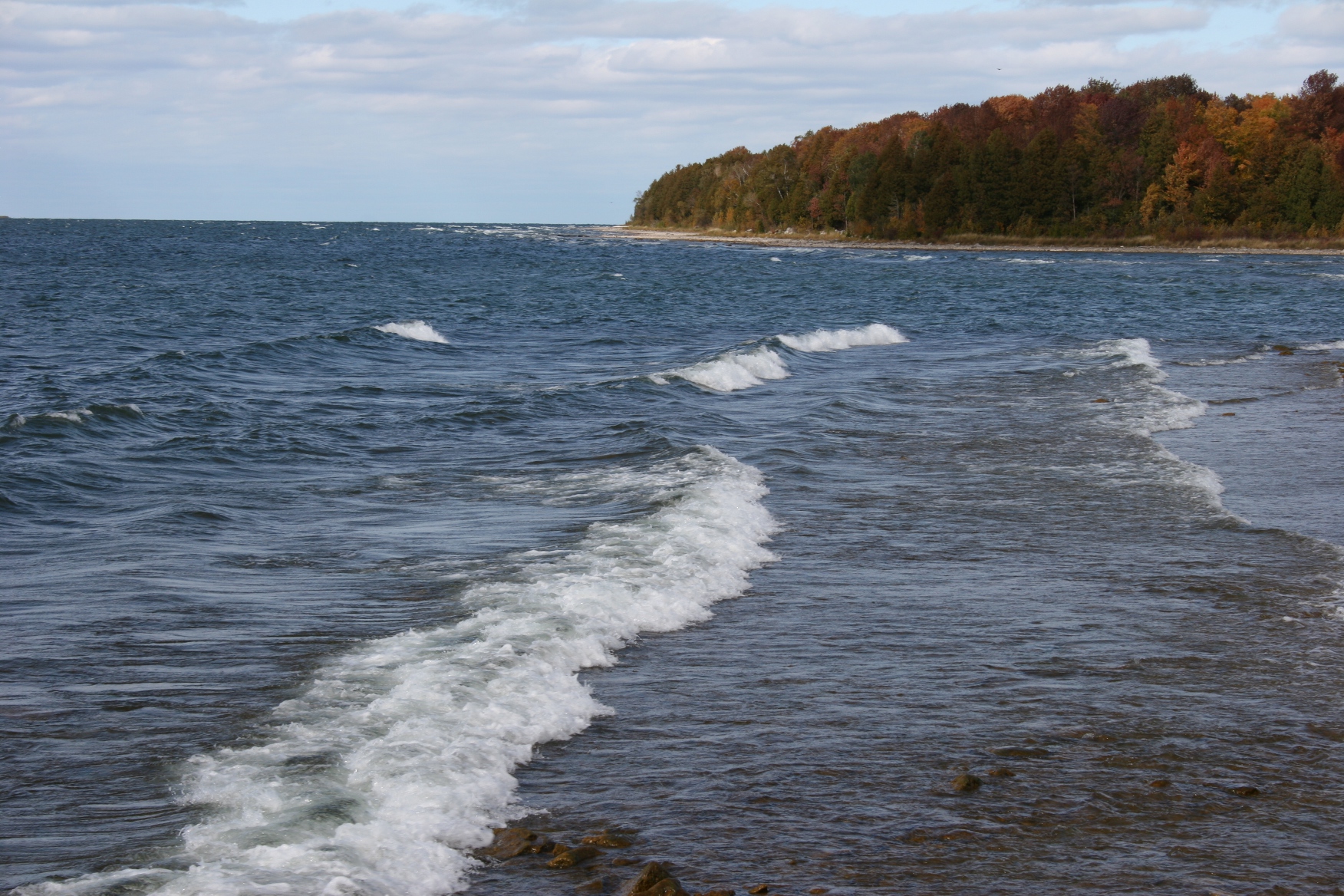
Remember my earlier mention of the wind? Well, these waves on Green Bay show you just how windy it was on Thursday morning when a wind advisory was in affect for Door County. I believe winds were around 25 – 30 mph.

Near the pier in Peninsula State Park.

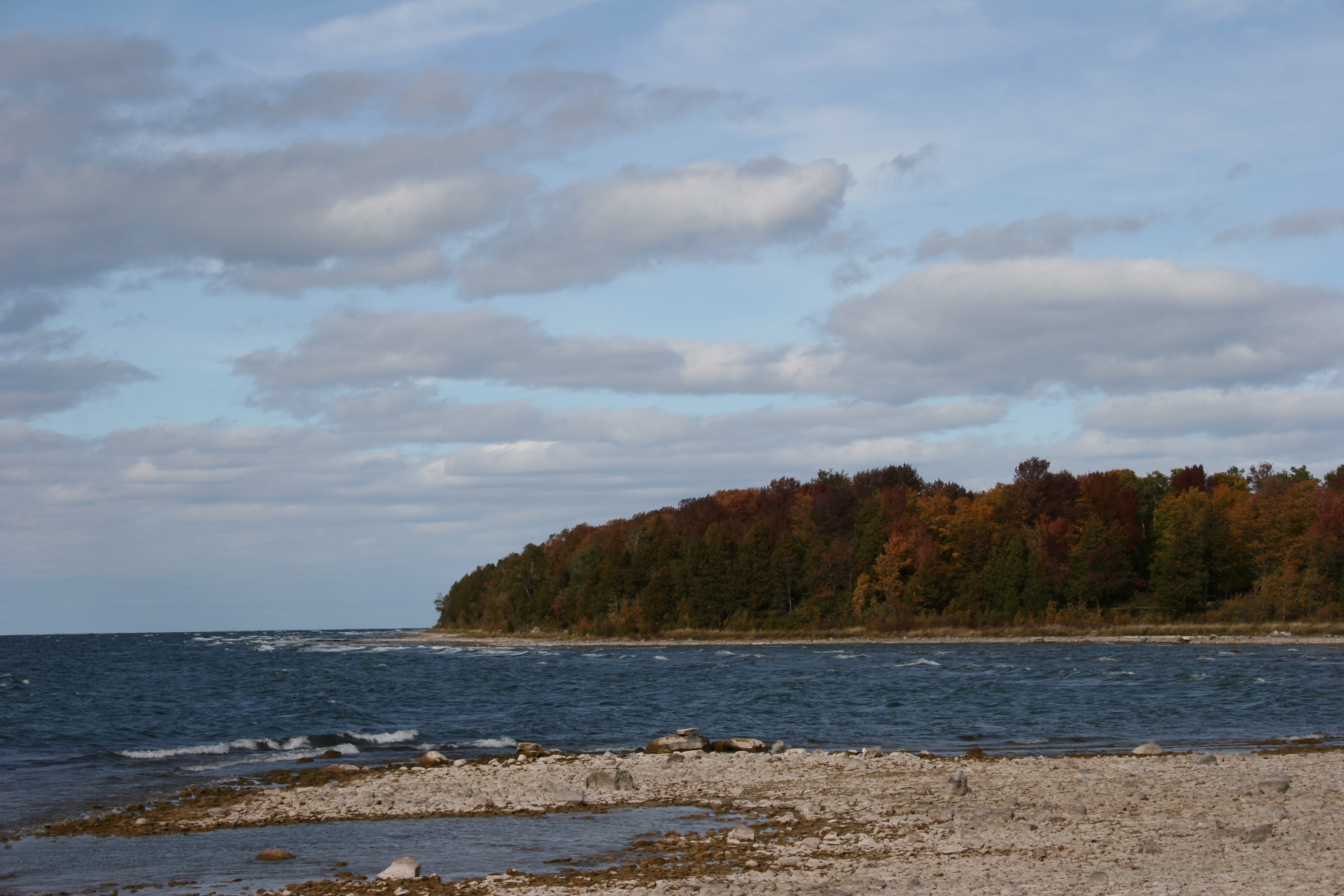
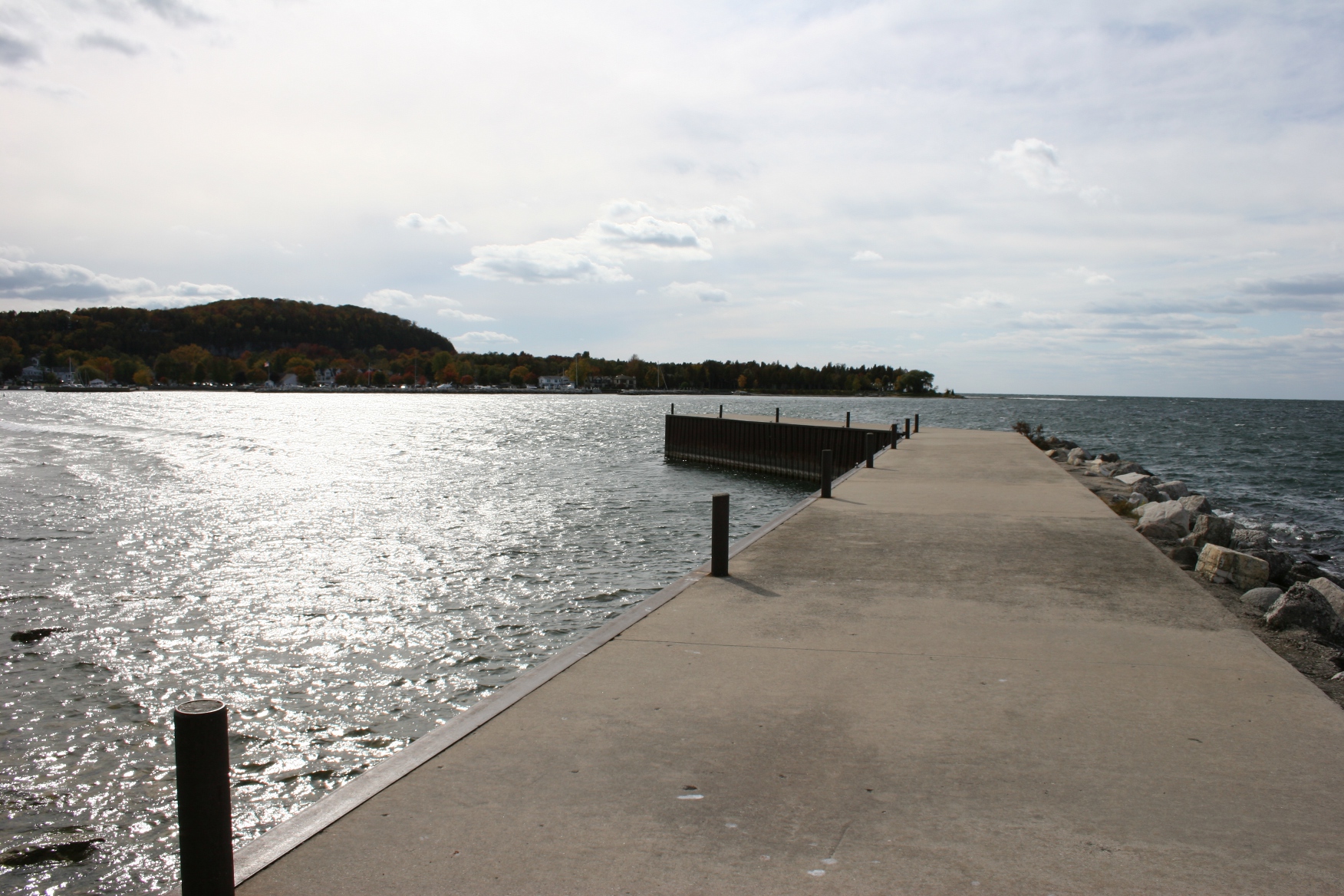
Do not let this illusion of calm waters fool you. We did not walk very far onto the pier because of the fierce wind.

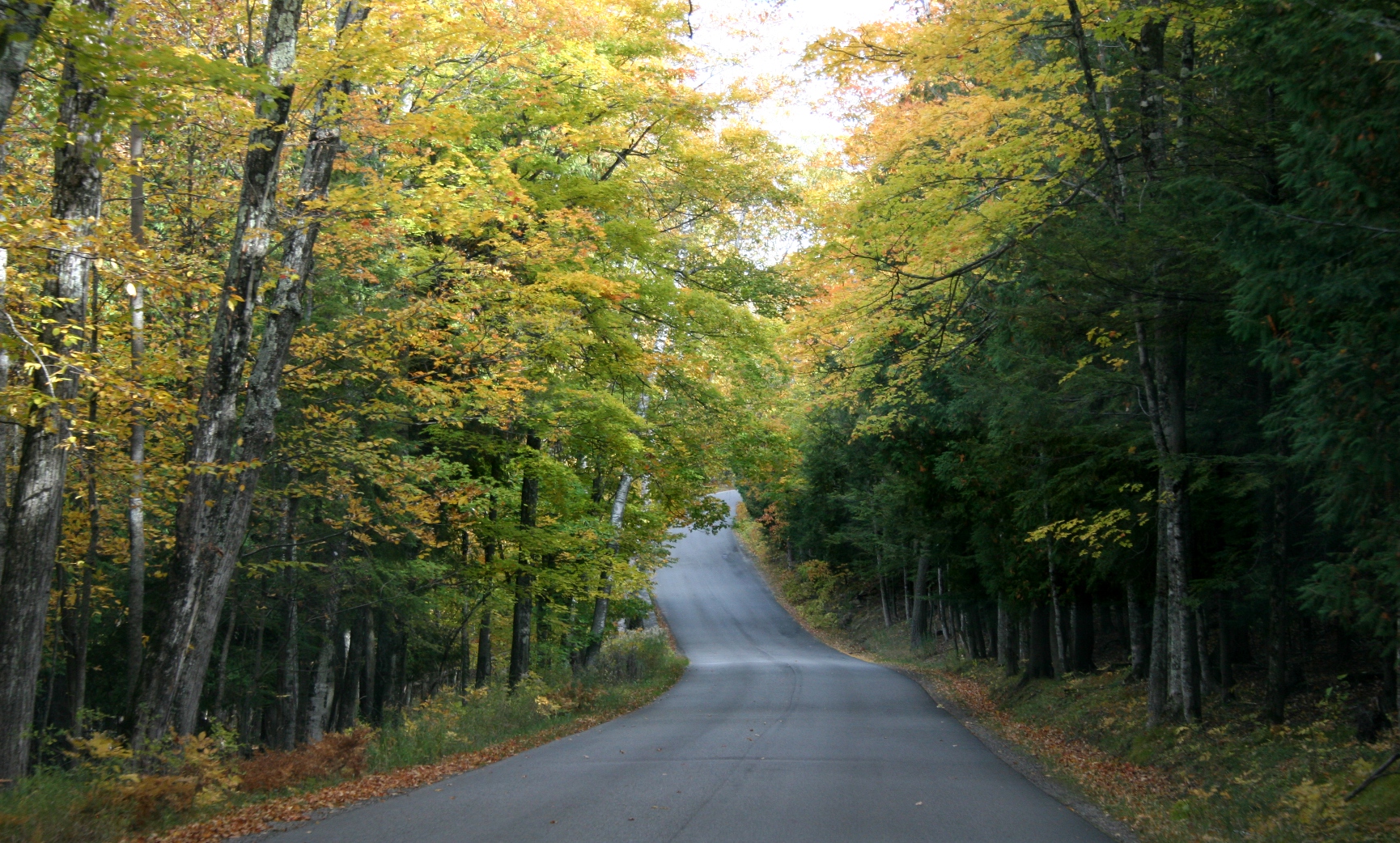
It’s a scenic drive along Shore Road through Peninsula State Park in Fish Creek.

HAVE YOU VISITED Door County? If so, what were the highlights of your trip?

CHECK BACK for additional posts of Door County.

© Copyright 2012 Audrey Kletscher Helbling


What color is this Green Bay Packers barn? October 7, 2012

Filed under: Uncategorized — Audrey Kletscher Helbling @ 9:35 PM
Tags: , , , , , , ,

TRAVELING HOME from northeastern Wisconsin this afternoon while the Green Bay Packers were playing the Indianapolis Colts, I spotted this barn along Wisconsin Highway 10 near the New London exit.

The barn owner was paying homage to Packers’ quarterback Aaron Rodgers with the message of “#12 is #1.” My husband told me that since I am clueless as to nearly anything regarding football except that Wisconsinites are crazy about their Packers.

Now, how crazy are they? I’ll let you decide. One of these barn photos shows the actual color of the barn. Which is it? You decide by casting your vote via a comment.

Go.

CHOICE #1: Is the barn painted Green Bay Packers green?

CHOICE #2: Is the barn painted Green Bay Packers gold?

CHOICE #3: Is the barn painted barn red?

Copyright 2012 Audrey Kletscher Helbling


Little Free Libraries for Small Towns project in Minnesota and Wisconsin officially kicks off at MOA August 15, 2012

TEN MONTHS AGO, Todd Bol, co-founder of the Wisconsin-based Little Free Library, and I were discussing an idea to get Little Free Libraries into small towns without libraries. I wanted a library in my hometown of Vesta, a community of around 340 residents which has never had a library.

I had blogged about a LFL in Faribault, where I have lived for 30 years, and challenged the residents of Vesta to start a LFL.
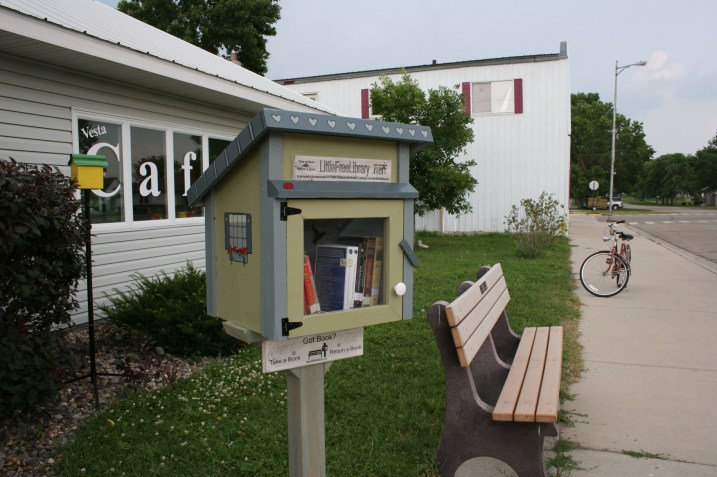
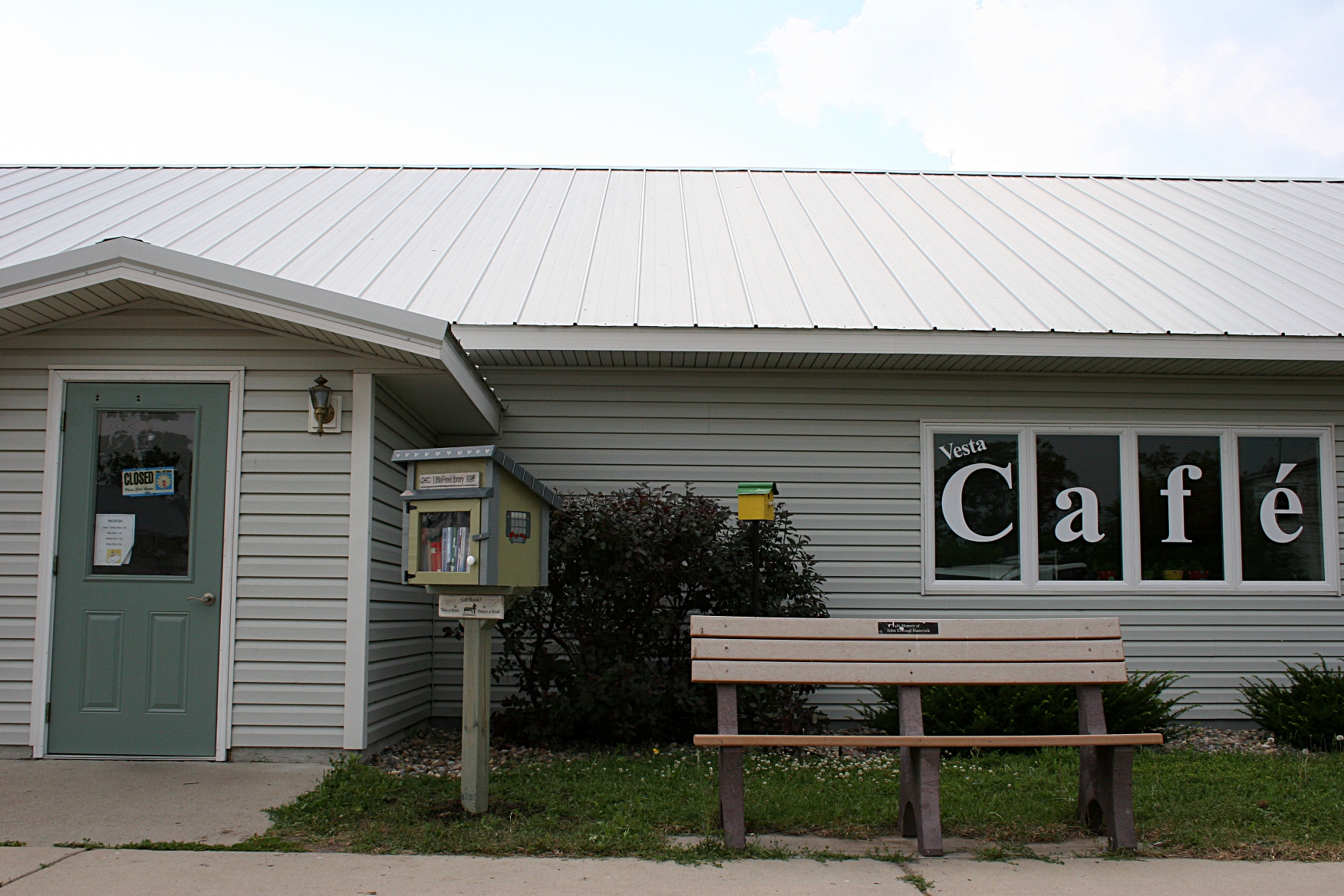
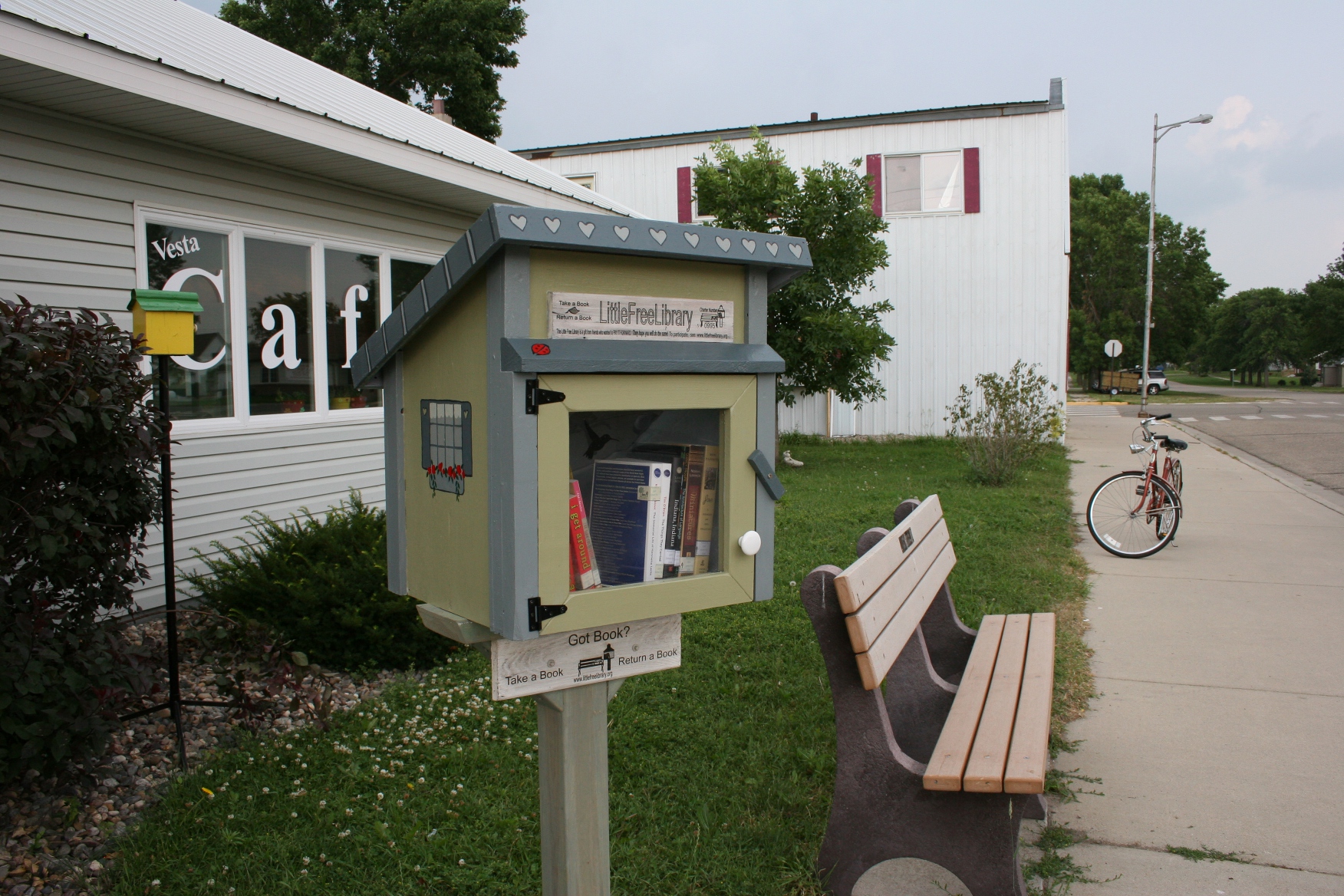
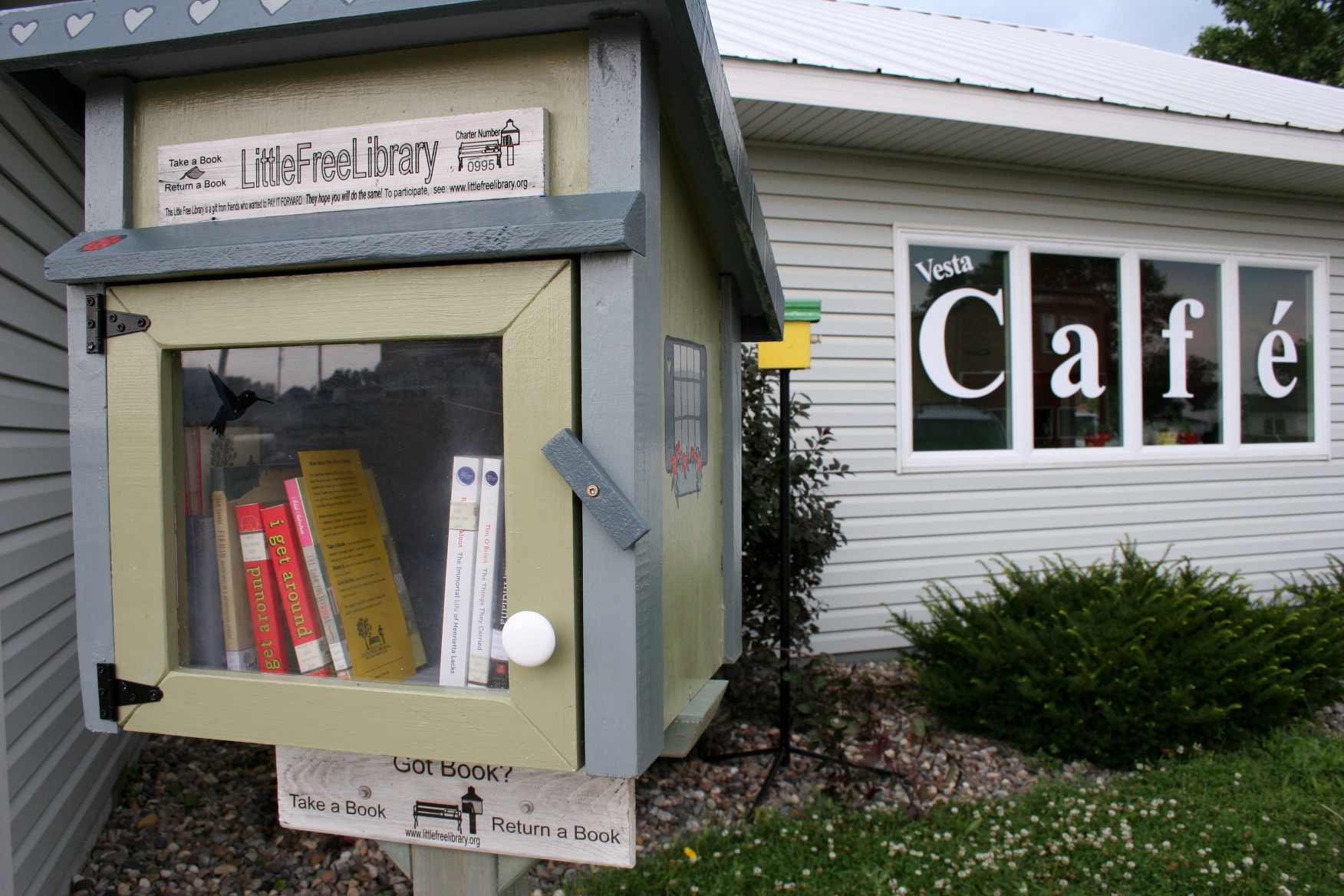
The LFL Todd and Susan Bol installed outside the community-owned Vesta Cafe.

After making that challenge, Bol and I talked and, several months later, he offered to donate, deliver and install a LFL in Vesta, placing the first library in a new initiative, Little Free Libraries for Small Towns. Bol and his wife, Susan, drove from Hudson, Wisconsin, on July 1 and installed a LFL in front of the Vesta Cafe.

This Friday, August 17, that small towns project officially kicks off with a celebration from noon to 3 p.m. in the Mall of America rotunda near the east entrance. A program featuring activities and also appearances by local celebrities sharing their favorite books is slated for 1 – 2 p.m. Businesses and publishers are donating new books and the public is encouraged to bring books for 20 uniquely designed mini libraries to be placed in Twin Cities’ neighborhoods and communities surrounding the mega mall.

MOA is donating those 20 libraries and two special libraries (numbers 2,509 and 2,510) which will tie and break the records of libraries funded by philanthropist Andrew Carnegie.

How sweet is that? But even sweeter, in my opinion, is the MOA’s general support of the Little Free Libraries for Small Towns project as a way “to promote literacy and community-building by supporting neighborhood book exchanges.”
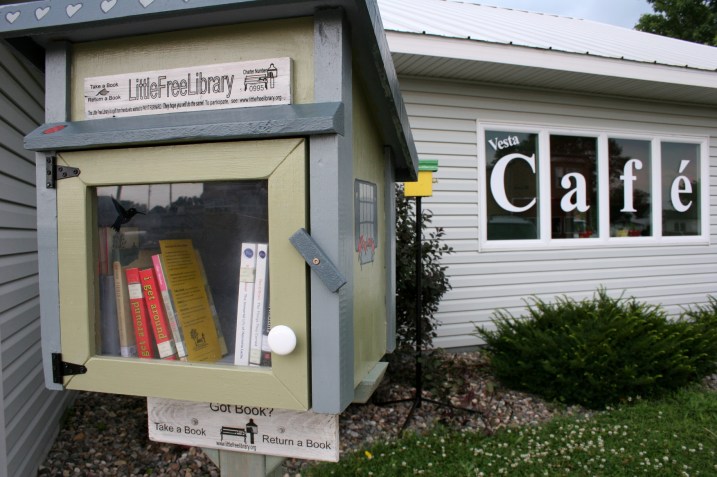
The beautiful handcrafted LFL donated to my hometown of Vesta.

The LFL works on the premise of take a book/leave a book in a little library, which is typically an over-sized birdhouse size structure attached to a post and installed outdoors, making books accessible to the public 24/7.

In kicking off its Little Free Libraries for Small Towns project, the LFL non-profit aims to focus first on the small towns of Minnesota and Wisconsin without ready access to public libraries, like my hometown of Vesta on the southwestern Minnesota prairie. The closest libraries to Vesta are about 20 miles away. Earlier this year bookmobile service to my hometown and several other communities was cut by Redwood County commissioners to save money.

I expect that many other small towns in Minnesota and Wisconsin are in similar positions, without library services because a) they’ve never had libraries or b) funding has been cut or trimmed.

Living in or near a town without a library, as I did growing up, is a hardship for someone like me who loves to read. That’s why I was adamant in my discussion last fall with LFL co-founder Bol that he focus on small towns without libraries. He liked the idea—Bol is very much an energetic ideas man—and he eventually shaped our discussion, with the help of his equally enthusiastic staff, into the Little Free Libraries for Small Towns project.

Bol thinks big. The LFL group is initially seeking 20 sponsors to each facilitate 20 Little Free Libraries for small towns across Minnesota and Wisconsin, resulting in 400 new free libraries. A $600 contribution supports construction, delivery and installation of one LFL to a small town and a starter collection of books as well as official LFL registration and promotion, and a plaque on the sponsored library.

Beyond all of that, the real satisfaction, I think, comes in the reaction of those communities which benefit from such generosity. My hometown has embraced the LFL with a level of enthusiasm beyond anything I ever expected.
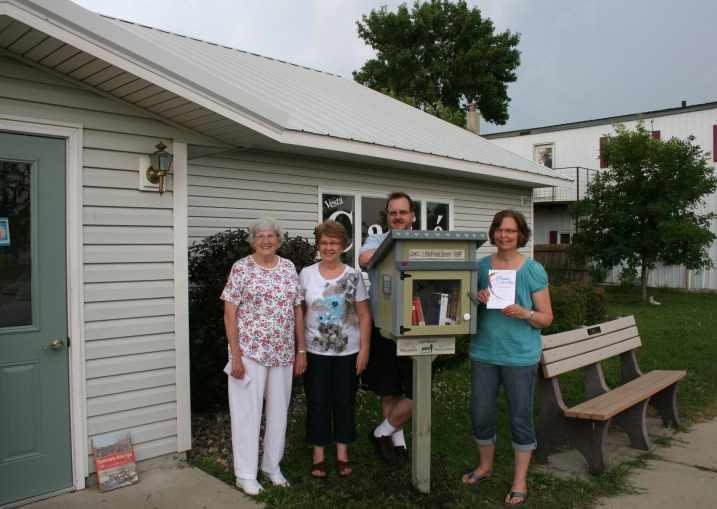
The team that worked to bring a Little Free Library to Vesta includes Dorothy Marquardt, left, and Karen Lemcke, representing the sponsoring Vesta Commercial Club, LFL co-founder Todd Bol and me (holding a copy of a poetry anthology I donated and in which I have two poems, “A school without a library” and “Saturday night baths”).

Karen Lemcke, who early on supported the LFL as a member of the Vesta Commercial Club and is now the Vesta library steward, shared several weeks ago that Vesta’s LFL is a “very successful project.”

She then went on to explain that area residents are taking books from the outdoor LFL and that two bookshelves inside the Vesta Cafe have also been filled with donated books. Says Lemcke:

We have a variety of books from non-fiction, fiction and children’s books. On Sunday, children had taken some of the books and sat on a couch nearby looking through them. I heard today that tractor books were on a shelf and local farmers were borrowing them overnight to look through. The women have been going through the books as well and they will be picking up some to read, too…It’s like it (LFL) brought a “little life” to Vesta.

If you are thinking that Karen’s report brought tears to my eyes, you would be right. To hear that farmers are pulling tractor books from shelves to take home, especially, pleases me. And kids paging through books…
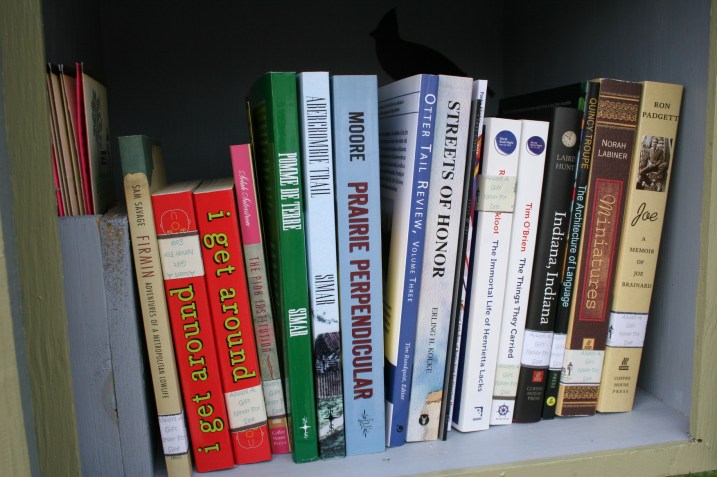
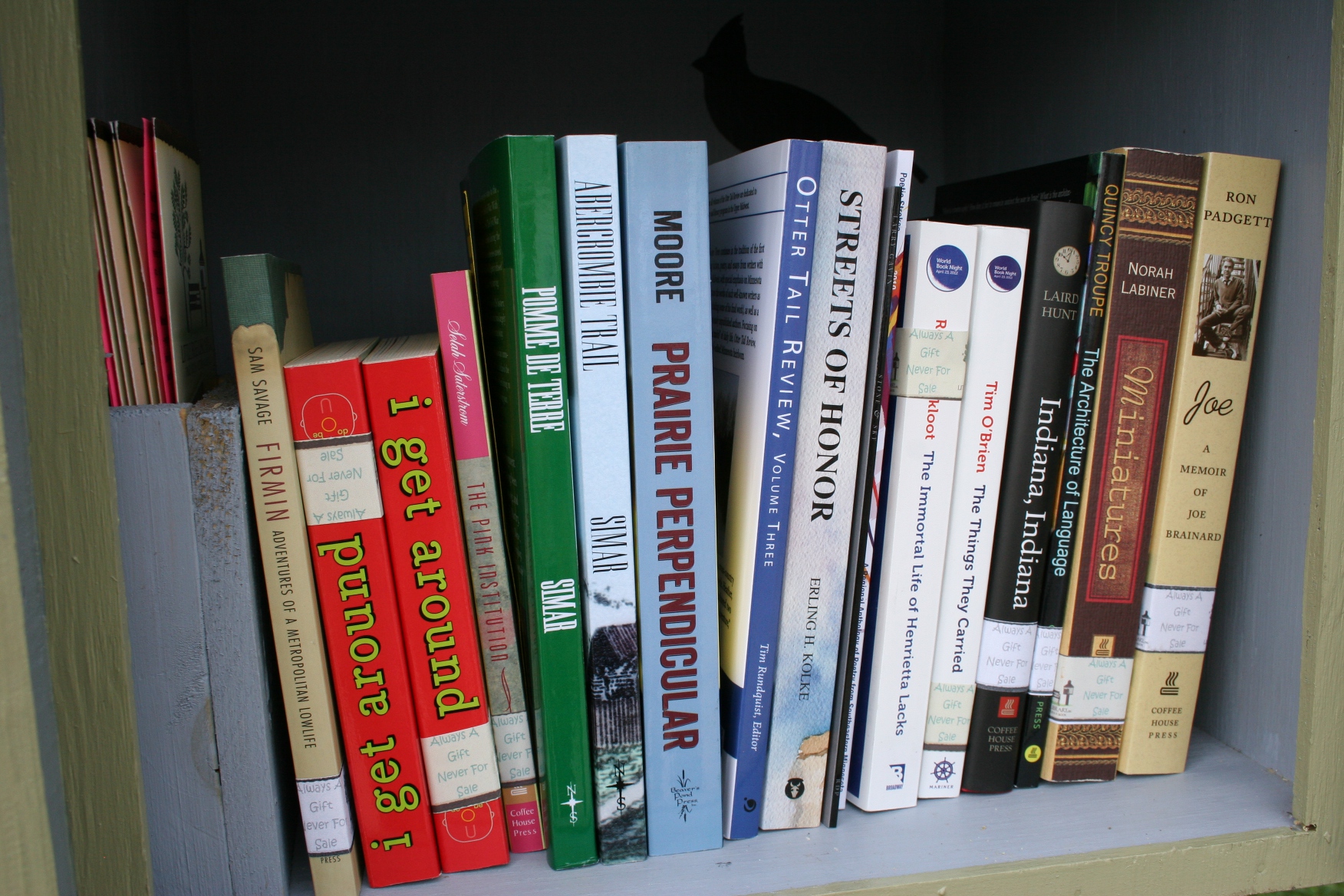
The books Todd Bol and I placed inside Vesta’s LFL on July 1. He brought books donated by several Twin Cities publishers and I brought books from my personal collection. I have since collected and donated an additional 40 books.  A retired librarian from nearby Wabasso donated eight bags of books, primarily mysteries, and the cafe manager’s family also donated books and I expect others have given books, too.

With this new LFL for Small Towns project, just consider for a moment how many more scenarios like this can happen in small towns without libraries. What a gift to bring books to the residents of small towns and enhance or instill a love of reading.

The LFL organization is now accepting applications from communities which would like to be considered for the Little Free Libraries for Small Towns project. Applicants from Minnesota and Wisconsin need only complete a short questionnaire requesting information such as the town’s population, whether it has a public library and how a LFL would make a difference in their community.

LFLs will be awarded based on available sponsorships and contributions and the need and interest level of the applicant communities, among other criteria.

So…if your small Minnesota or Wisconsin town needs a library, believe. It can happen. My conversation with the co-founder of the Little Free Library resulted in the donation of a library and a starter collection of books to my hometown…and the launch of the Little Free Libraries for Small Towns project.
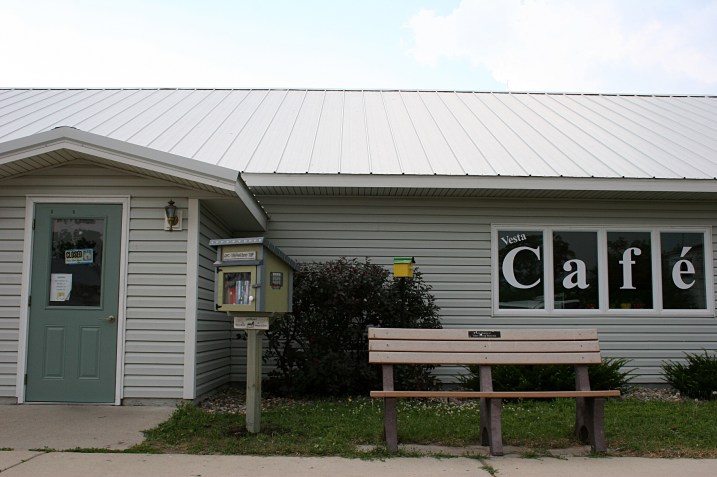
The Little Free Library at the Vesta Cafe on the one-block Main Street in my hometown is the seed plant of the Little Free Libraries for Small Towns project.

FYI: For more information about the LFL program, click here to reach the website. To learn more about  the Little Free Libraries for Small Towns initiative and to download an application, click here.  Applications will also be available at the MOA-LFL event on Friday, to which I’ve been invited but will be unable to attend.

If you or your business or organization is interested in sponsoring a library or libraries for the small towns initiative in Minnesota or Wisconsin, email Megan Hanson at mphanson@littlefreelibrary.org.

© Copyright 2012 Audrey Kletscher Helbling


What is this world coming to? July 20, 2012

Filed under: Uncategorized — Audrey Kletscher Helbling @ 9:17 PM
Tags: , , , , , , , ,

THE QUESTION LINGERS on the edge of my brain, nearly tumbling in words onto my tongue, over my lips and out my mouth.

What is this world coming to?

Do you ever ponder that very same question, asking today why a 24-year-old would open fire in a Colorado movie theater killing a dozen and injuring some 60 more? Why? What drives a person to such violence, to take the lives of other human beings who are simply out for an evening of entertainment?

Why, on July 10, did a father in River Falls, Wisconsin, kill his three young daughters? To get back at/punish/hurt his ex-wife?

Why do two young girls vanish, poof, just like that, while riding their bikes in a small Iowa town?

What is this world coming to?

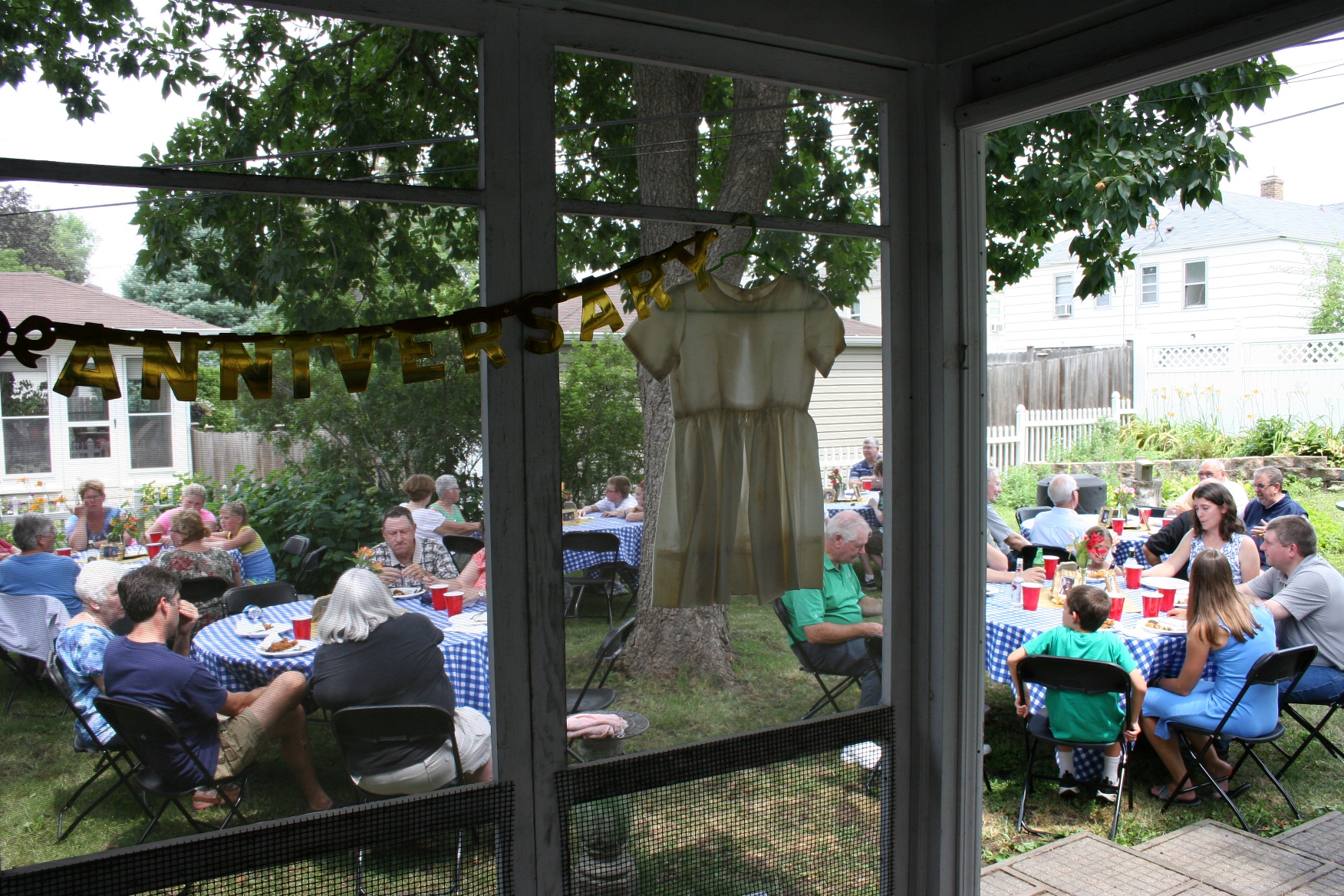
About two blocks away from this anniversary party in south Minneapolis, a crime scene was unfolding late last Sunday morning.

Why, last Sunday, when my family drove to south Minneapolis for a 50th wedding anniversary party, did we turn off Lyndale Avenue and a block away encounter a multitude of police cars and yellow crime scene tape and a TV news crew arriving? We continued on our way wondering what was unfolding as we greeted family, sipped lemonade and slipped into folding chairs in the festive, fenced in backyard just down the street and around the corner.

When my middle brother arrived a bit later, he noted that officers were posed with weapons drawn. Were any of us in danger as we drove past the scene?

What is this world coming to?

Why are children, the most innocent of victims, being shot and killed in Minneapolis on such a regular basis that this horrible crime no longer surprises us?

Have we become immune to violence and the essence of evil which drives it?

What is this world coming to?

When will the killing stop?

© Copyright 2012 Audrey Kletscher Helbling
 

Elephant poop paper and other discoveries at a Wisconsin museum April 18, 2012

ELEPHANT DUNG PAPER: The elephant’s high-fibrous diet makes for excellent paper!

If I had not read the above words at The Paper Discovery Center in Appleton, Wisconsin, I would have thought this to be a bunch of crap.

But would the creators of a paper discovery center spread untruths? I think not. After my recent visit to this museum, I followed up with online research. That led me to elephantdungpaper.com and more information about the elephant poop paper making process. Click here for details.

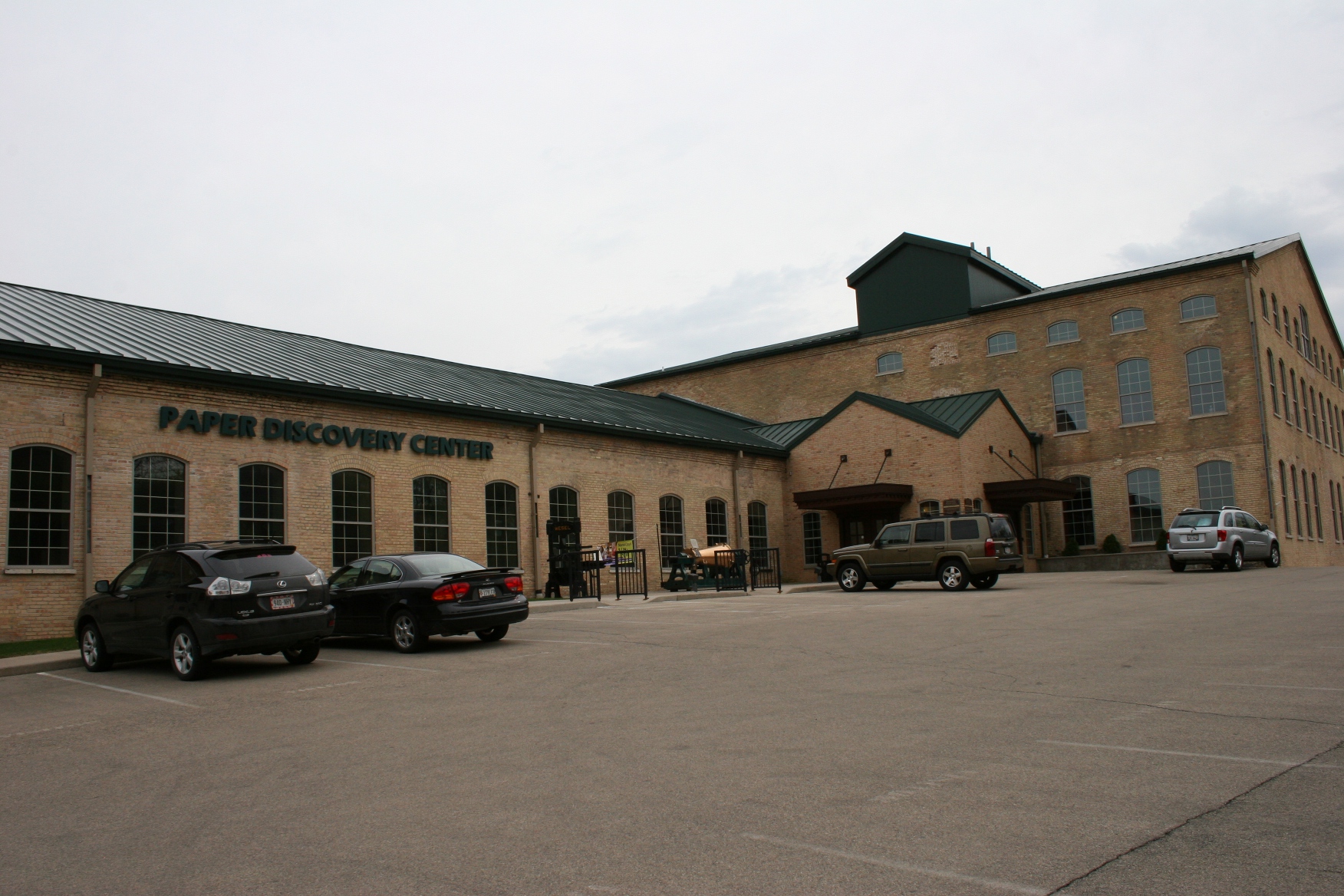
The Paper Discovery Center in Appleton, Wisconsin, with an attached coffee shop on the right, located along the banks of the Fox River. These brick buildings are stunning.

There’s no elephant dung paper making happening in the 1878 former Atlas Mill along the banks of the raging Fox River in Appleton. But visit this hands-on discovery center and you can make paper by recycling newspapers and other paper into “new” paper.

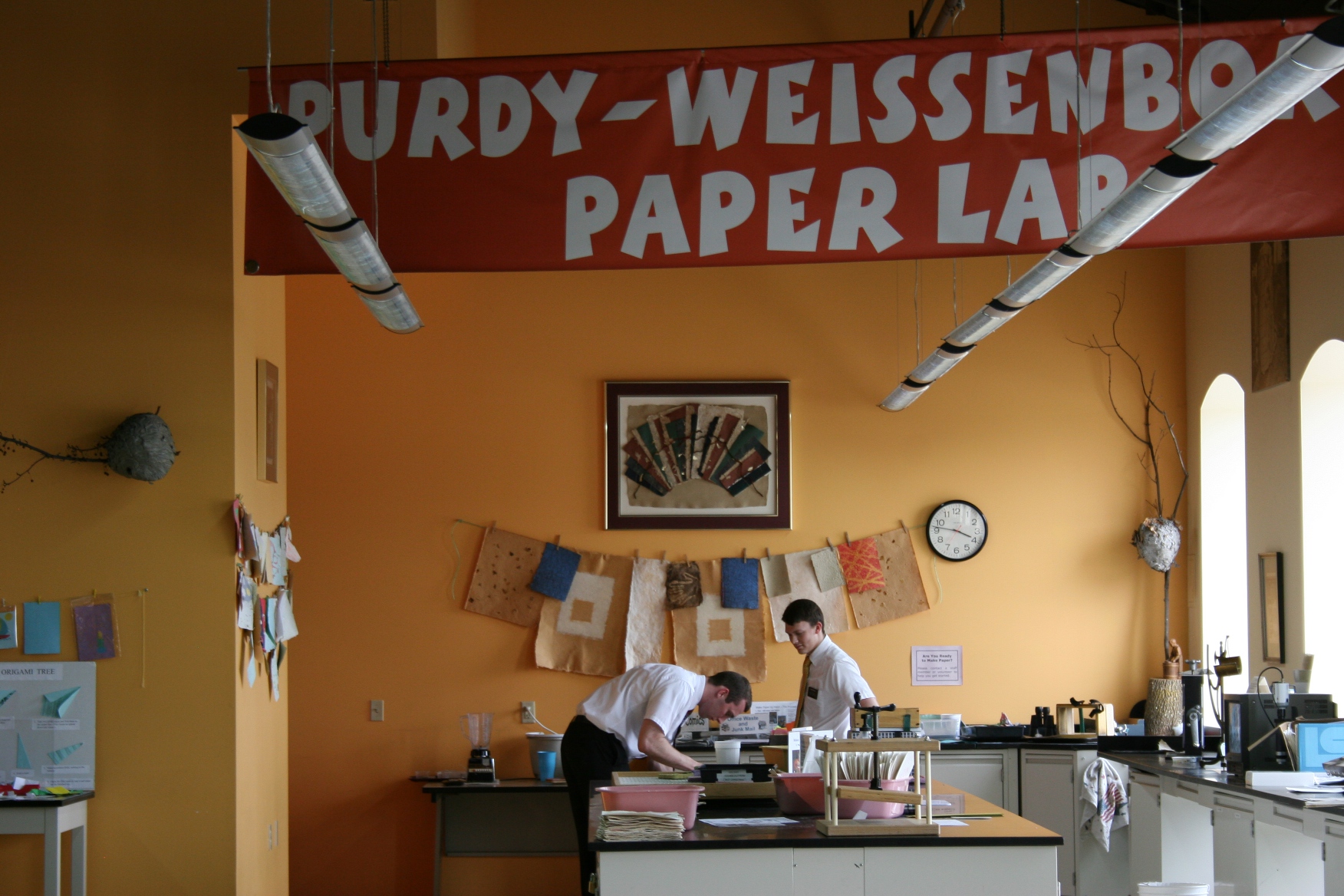
Two volunteers from the Church of Jesus Christ Latter-day Saints staffed the paper making station on a recent Saturday afternoon. Visitors can make new paper here from recycled paper.

And if you have more than an hour of time—which is all my family had—you can learn lots about paper via child-friendly interactive displays. Kids would totally love this place.

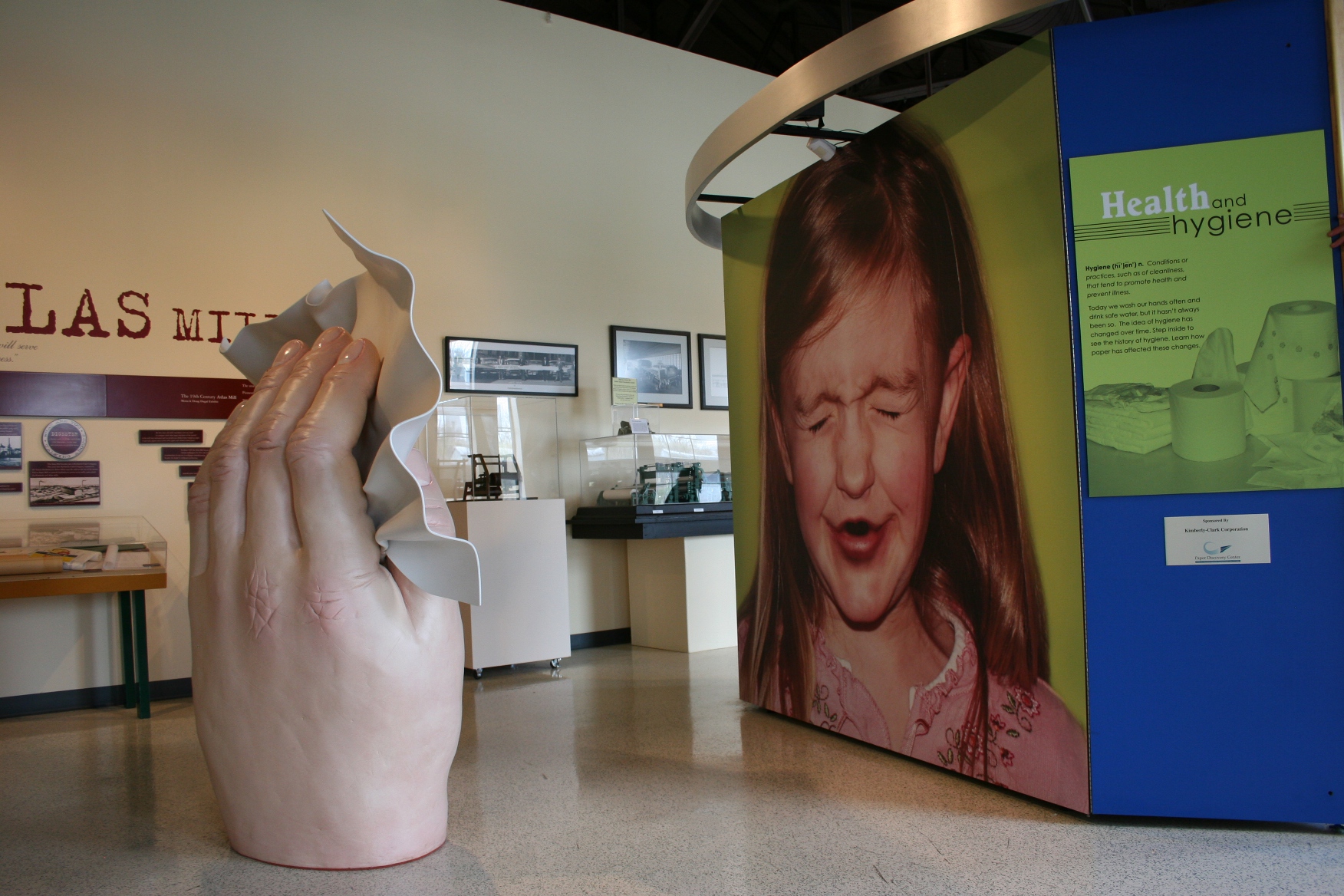
A motion-activated sensor above the model's head triggers a sneeze.

I was amused by the motion-activated sneeze that sounded in the health and hygiene kiosk next to an oversized hand clutching a tissue.

Reading an informational display about diapers, I was not amused to learn that pioneers sometimes changed their babies’ diapers only once a day and did not always wash diapers between uses.

My 26-year-old daughter was a bit startled to learn that, before toilet paper, corn cobs were used in outhouses. She even suggested that I seat myself in the mini outhouse for a photo opp. I declined, assuring her I’d spent enough time in an outhouse having lived the first dozen years of my life in a farmhouse without a bathroom.

In the “From Tree to Tissue” exhibit, visitors can follow the process of producing tissue paper, no corn cobs involved. You’ll find plenty to entertain and enlighten you at this former mill operated by Kimberly-Clark Corporation until 2000, according to the museum attendee.

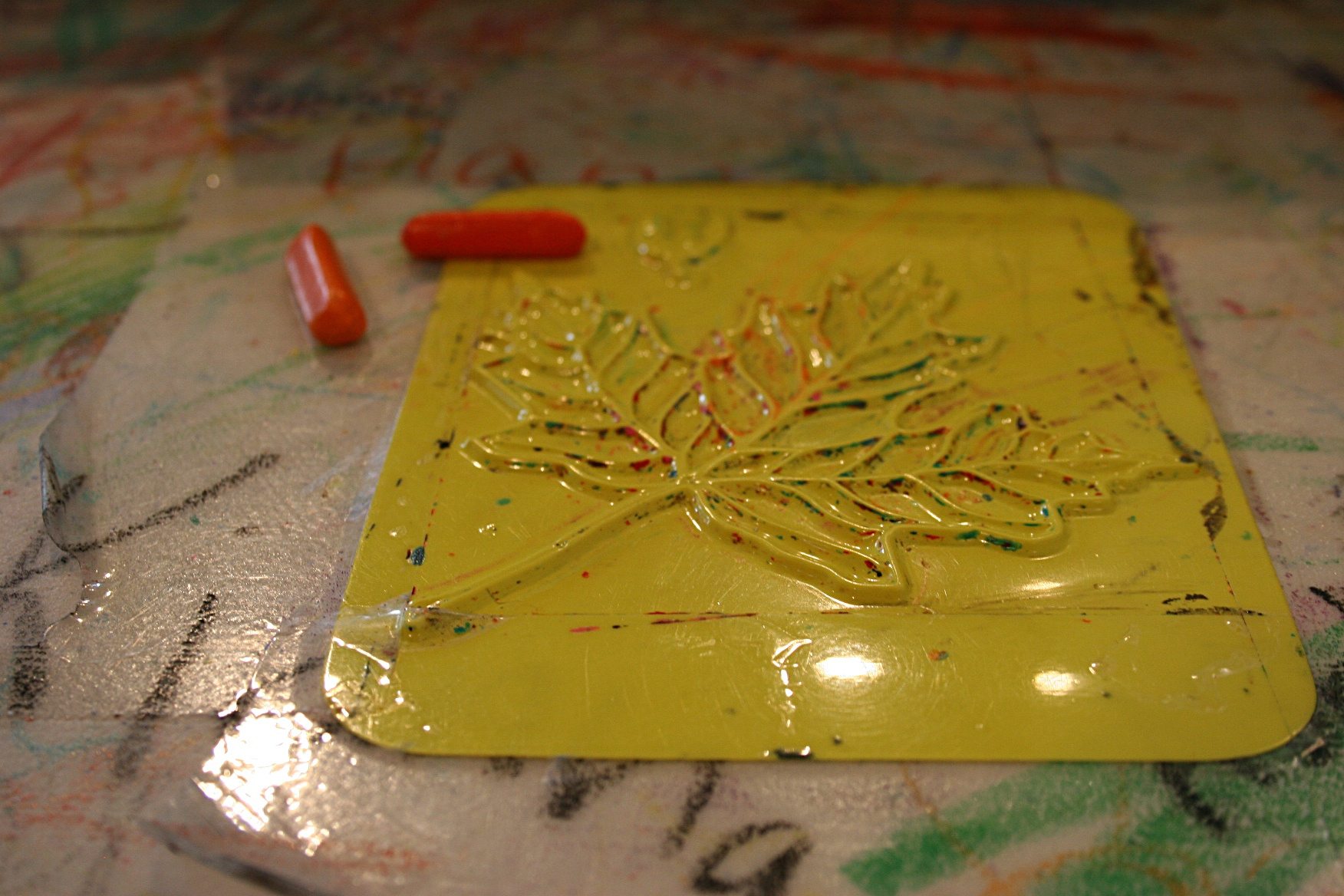
Sit down at a table, choose a color crayon, a mold and a piece of paper and create a leaf rubbing.

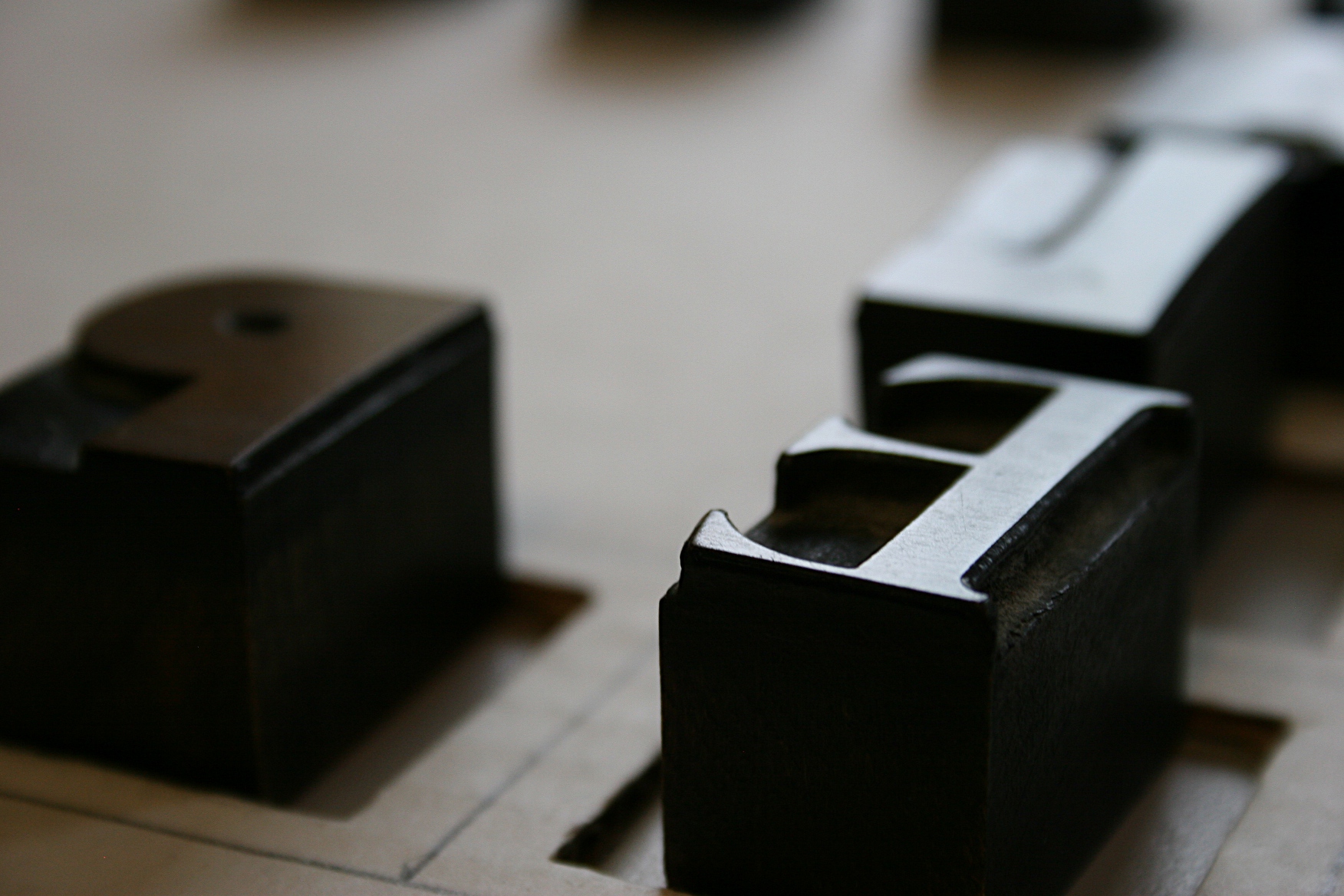
Authentic wood type is on display at a station where visitors can solve a crossword puzzle.

Assume the role of someone in the papermaking industry at this interactive exhibit.

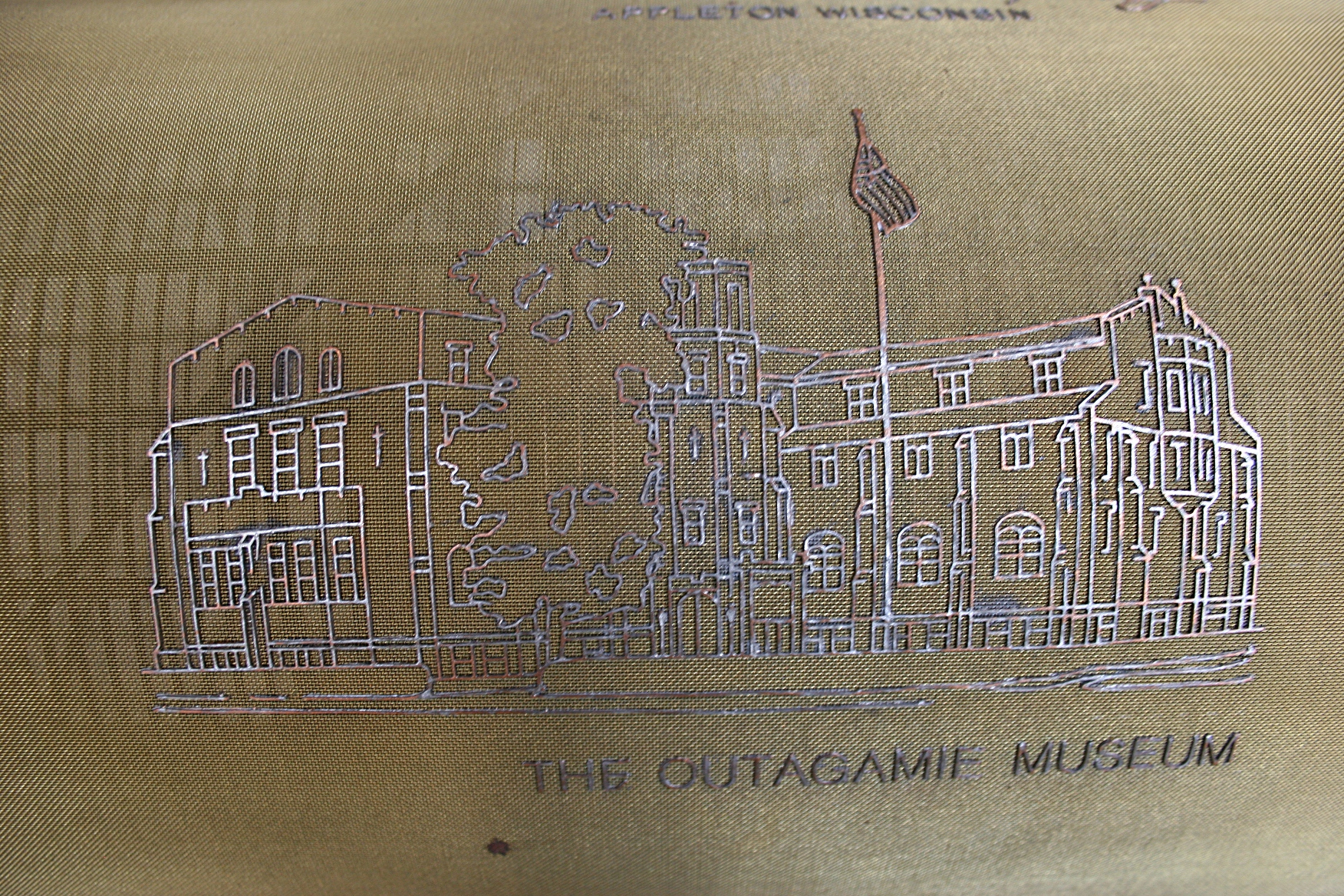
Learn how watermarks, like this one, are printed onto paper.

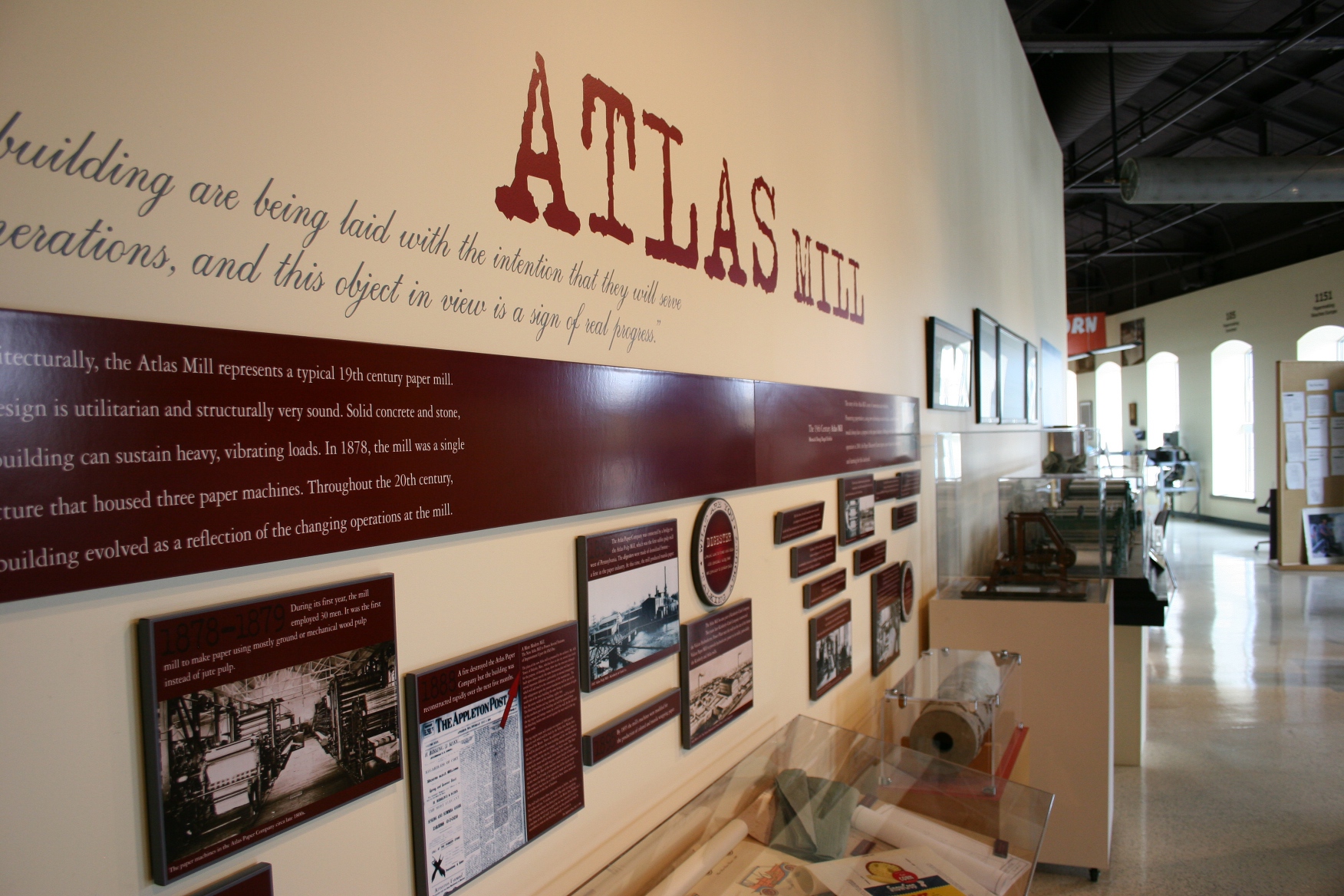
Study the history of the Atlas Mill originally housed in this building which served as a Kimberly-Clark Corporation paper research center prior to its closing about a decade ago.

FYI: For more information about The Paper Discovery Center, 425 W. Water Street, Appleton, Wisconsin, click here. If you visit the museum, allow yourself plenty of time. We arrived only an hour before closing, leaving us only enough time to make paper and rush through the exhibits.

Copyright 2012 Audrey Kletscher Helbling
 

In which we travel to Wisconsin and make paper April 9, 2012

Filed under: Uncategorized — Audrey Kletscher Helbling @ 3:20 PM
Tags: , , , , , , ,

WHO WOULD HAVE thought that making paper could be so much fun for a bunch of grown-ups?

Not me.

But making paper at The Paper Discovery Center in Appleton, Wisconsin, on Saturday proved so much fun for our family that I declared, “I could really get into this paper making.”

At that moment my 18-year-old son, Mr. Logical Scientist-Math Guy, clarified: “Technically we did not make paper.”

He would be right. We did not transform a tree into paper. Rather, we recycled the Sunday comics and other paper into new paper.

And here is how we did it with the assistance of two patient and friendly young missionaries from the Church of Jesus Christ of Latter-day Saints who volunteer at the discovery center.

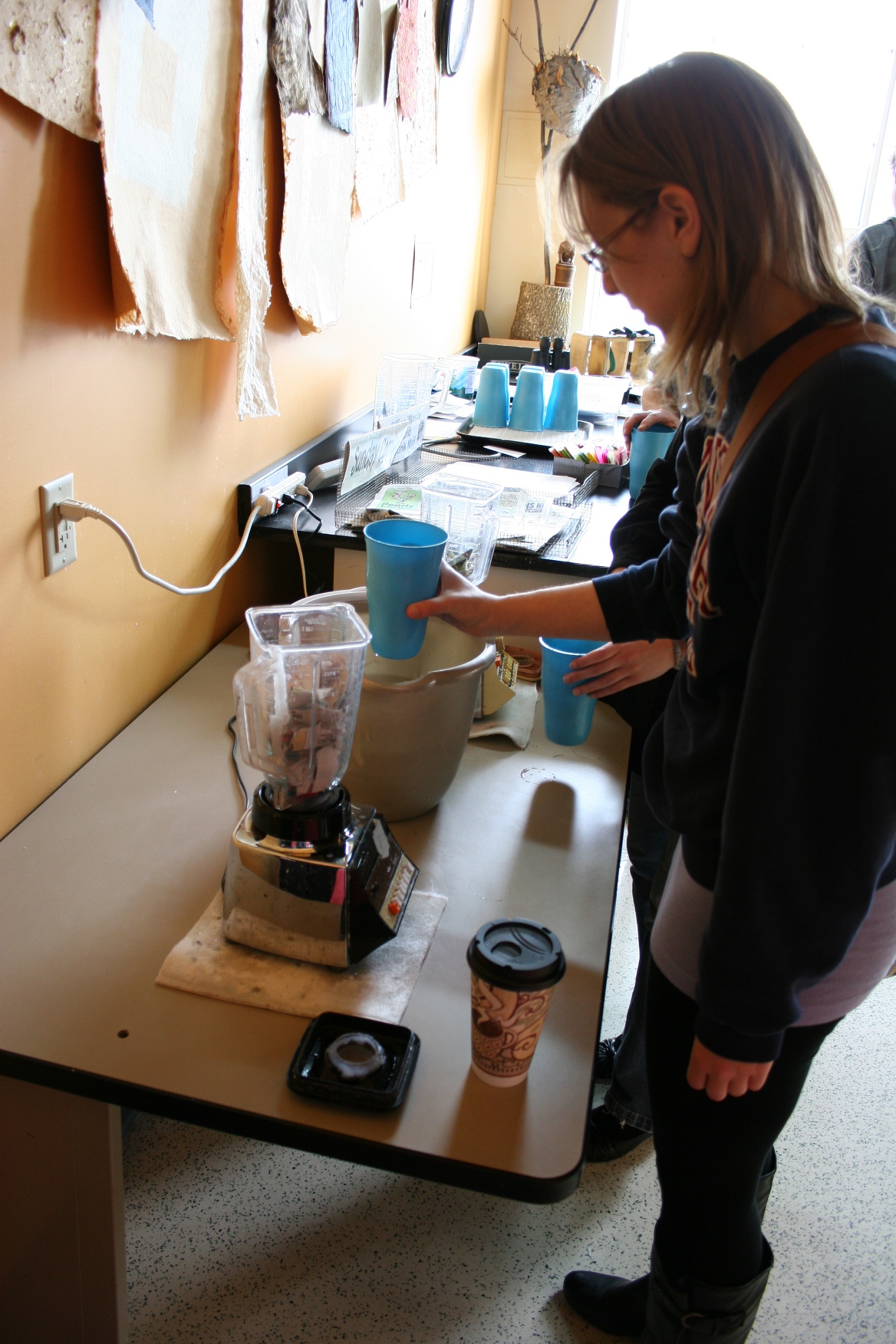
First, peruse the paper samples to determine what type of paper you would like to make. Ideally, you (your daughter) should drink your (her) coffee before coming to The Paper Discovery Center. But, if you (your daughter) are (is) fortunate enough, the nice lady at the front desk will allow you (your daughter) inside with your (her) coffee as long as you (she) promise (s) to keep a lid on it (the coffee cup, that is).

After you have torn your selected papers into postage stamp size pieces, drop the paper into the blender and add water, about three-fourths of the blue cup shown here.

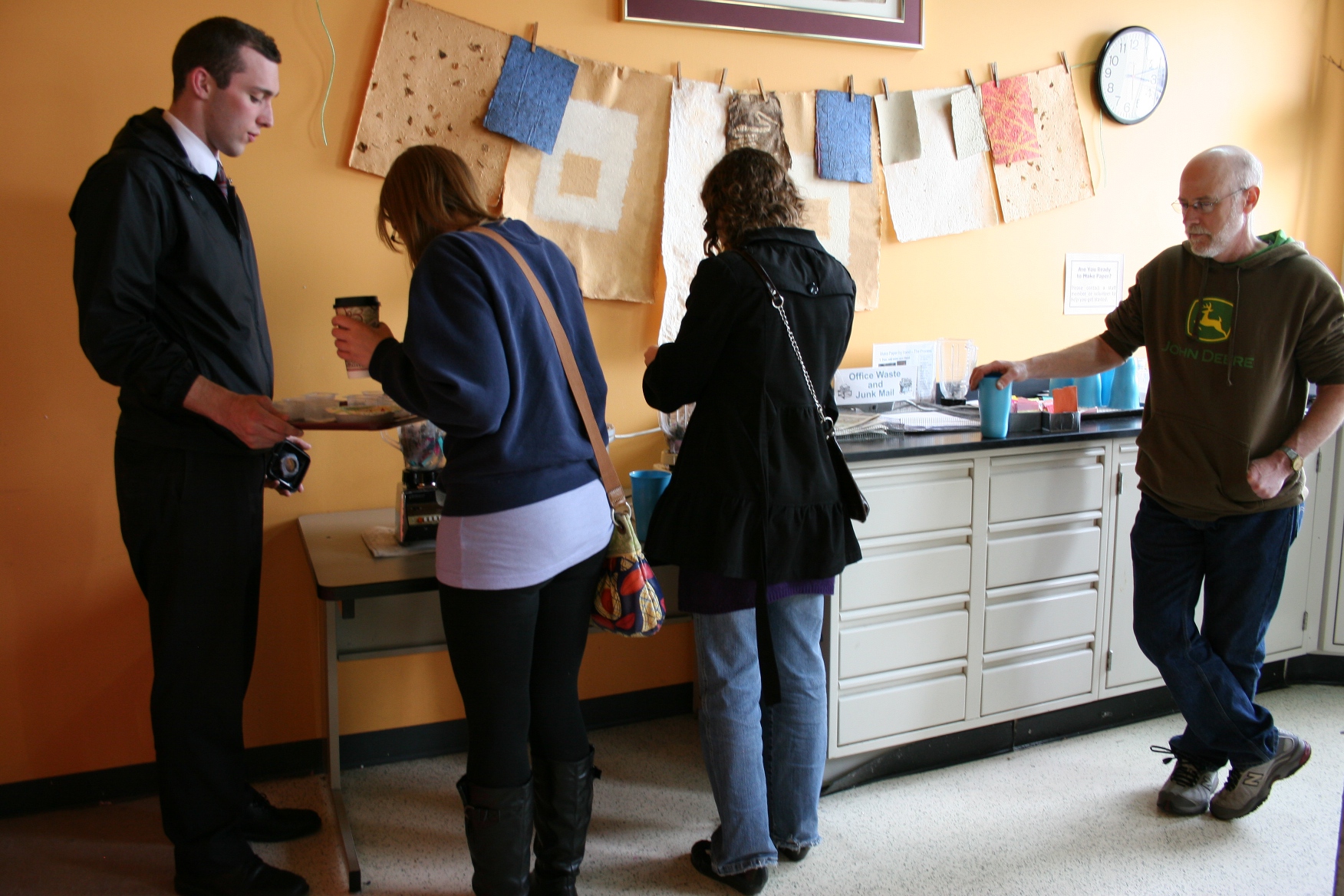
Here you can add condiments (that's what I call them) like glitter and pressed flowers to the mix before blending in an ancient blender. A garage sale blender would work great for this part of the paper making. On the left is one of the patient paper making volunteer instructors. That's my husband waiting his turn.

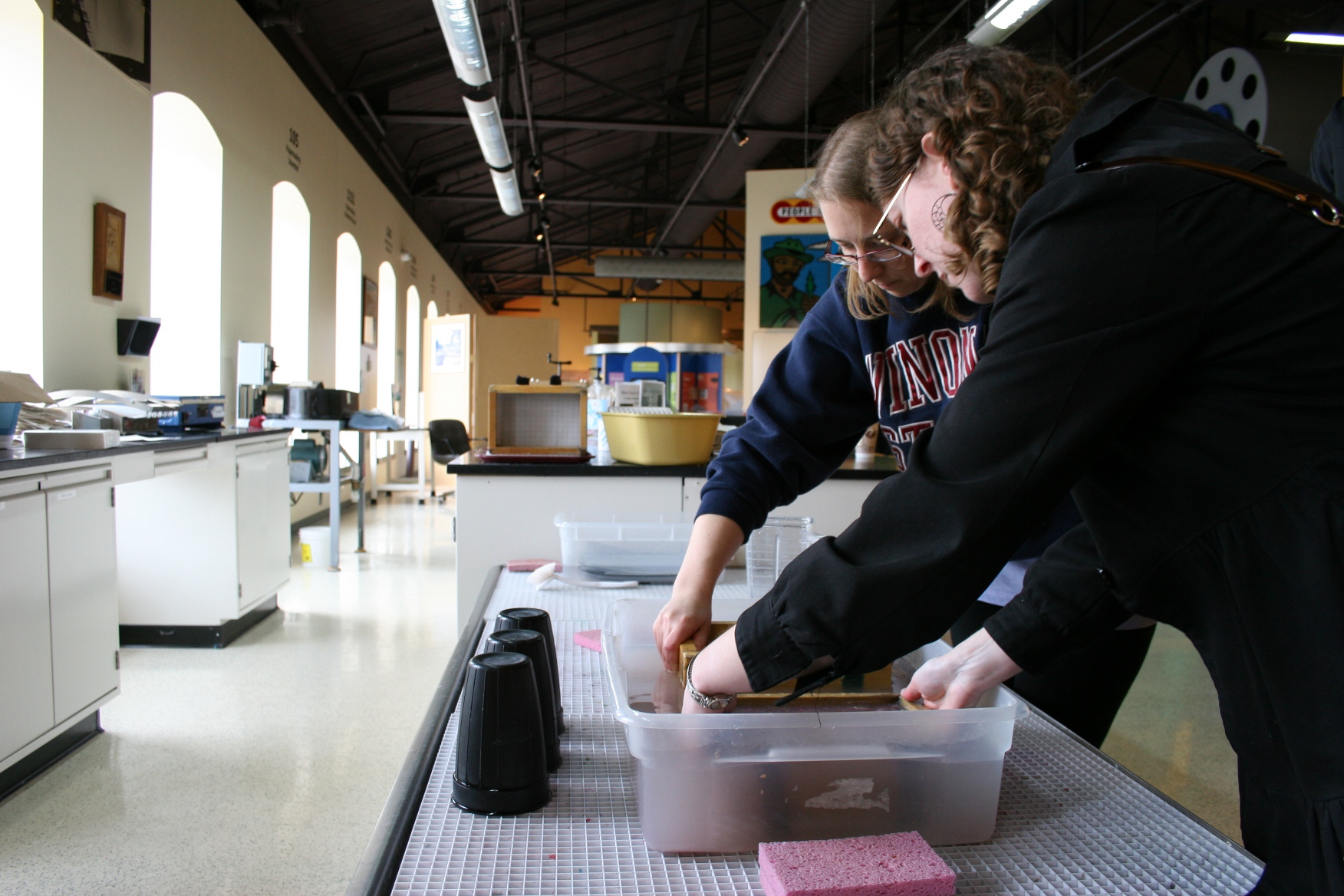
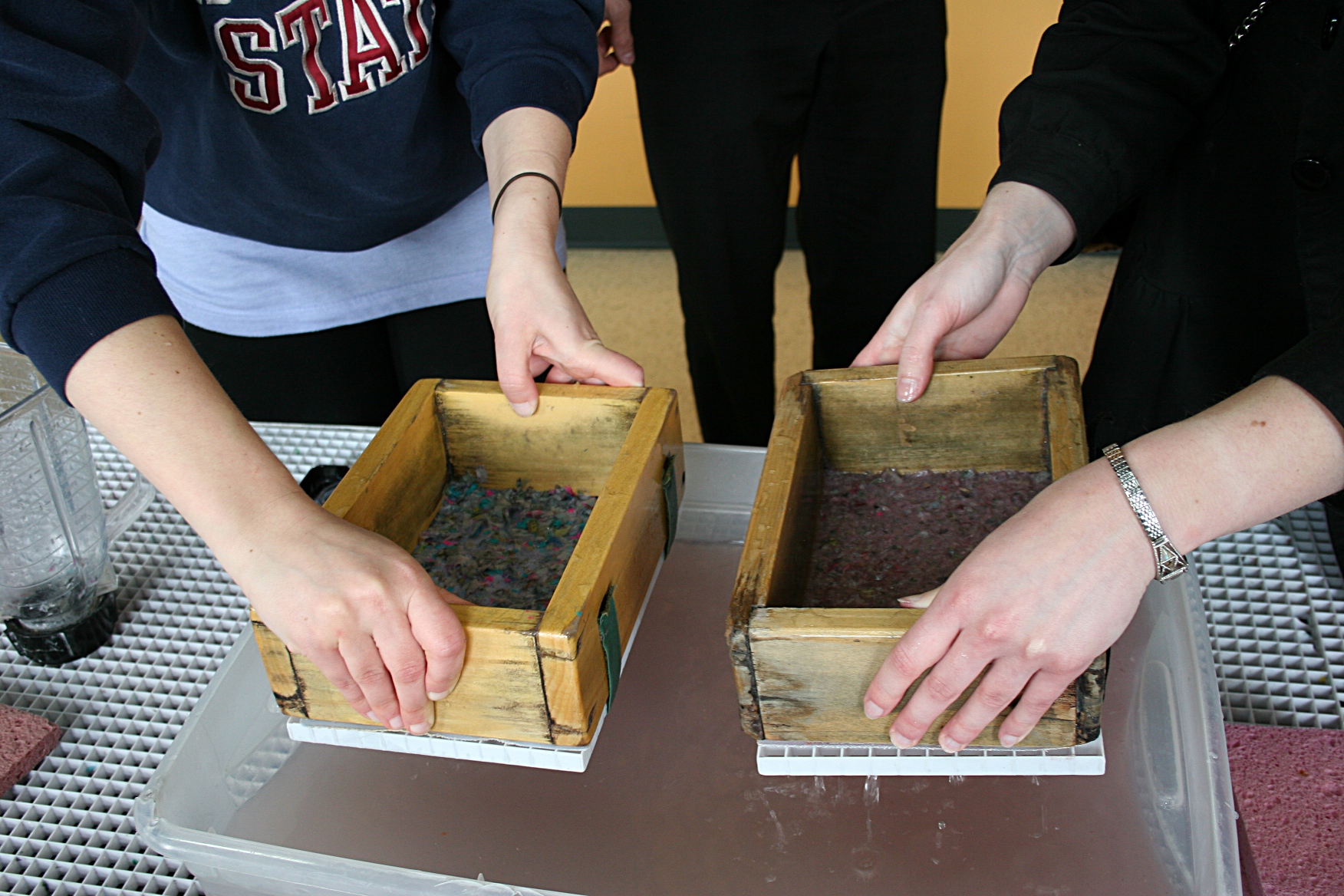
Next, pour the blended paper pulp into a screen inside a wooden form and immerse in water. Here's where you get to dip your fingers into the pulpy water and swish everything together.

Evenly ease the forms from the water to reveal your paper. Remove the forms and sponge excess moisture off.

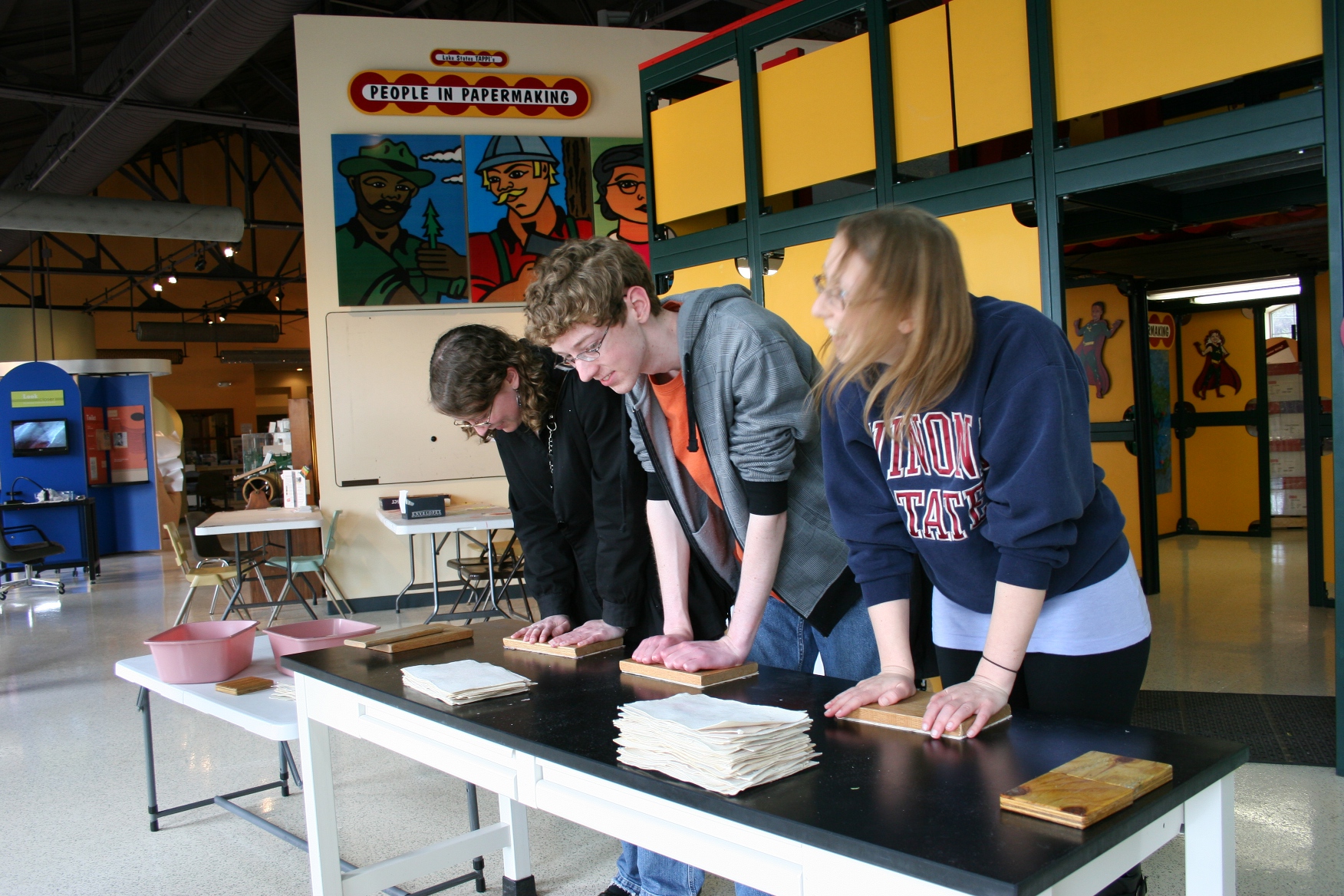
Move to the next table and lay an absorbent sheet of paper (can't recall the name, but it starts with a "c") on top of your paper. Put a board on top and press. The idea is too absorb even more water. Repeat several times.

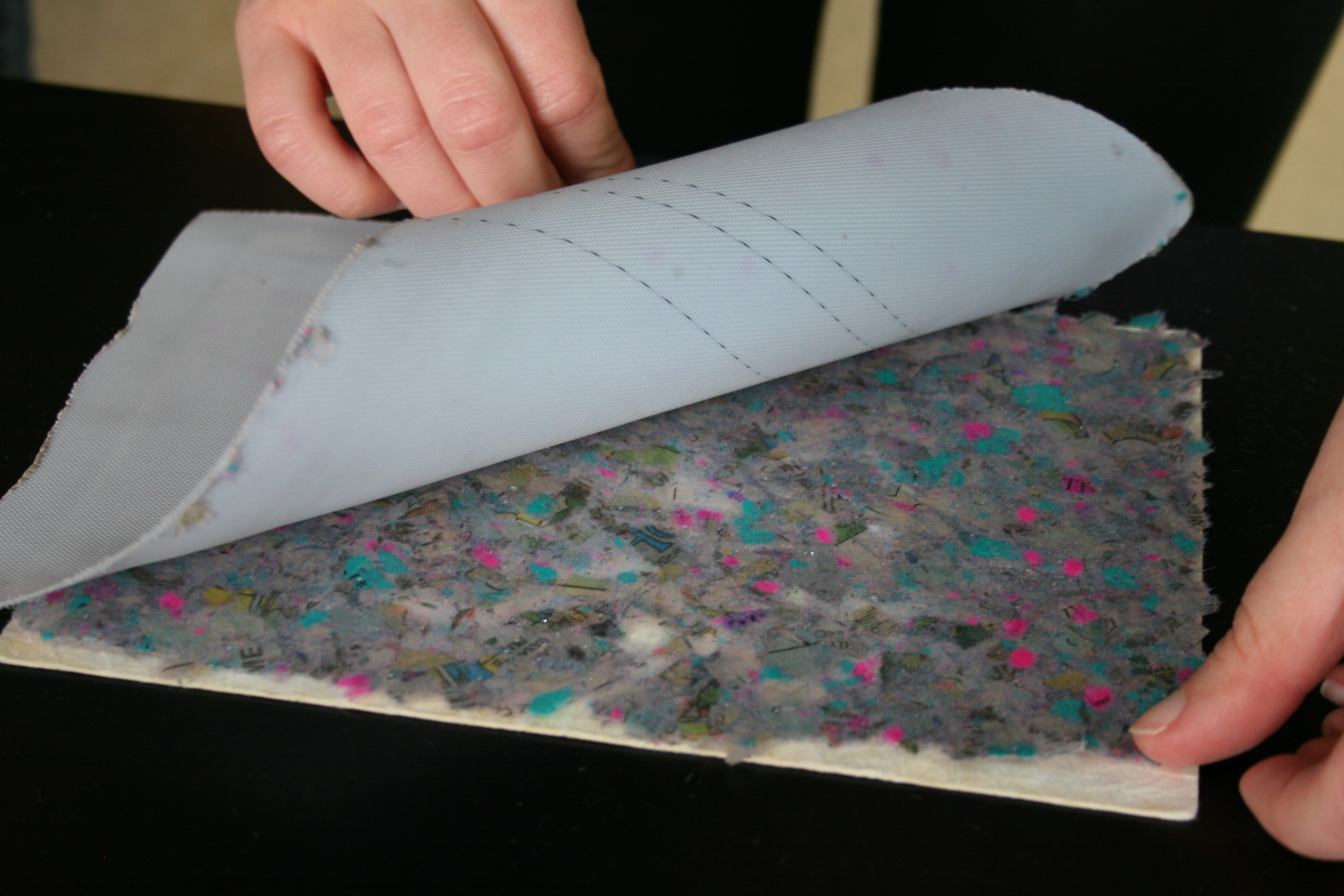
Pull back the absorbent paper to reveal the recycled paper you've made. But you're not done yet. Next, move to a contraption that exerts 2,000 pounds of pressure onto the paper, binding the fibers. After that, move to a machine that applies heat to the paper. Keep your fingers out of both.

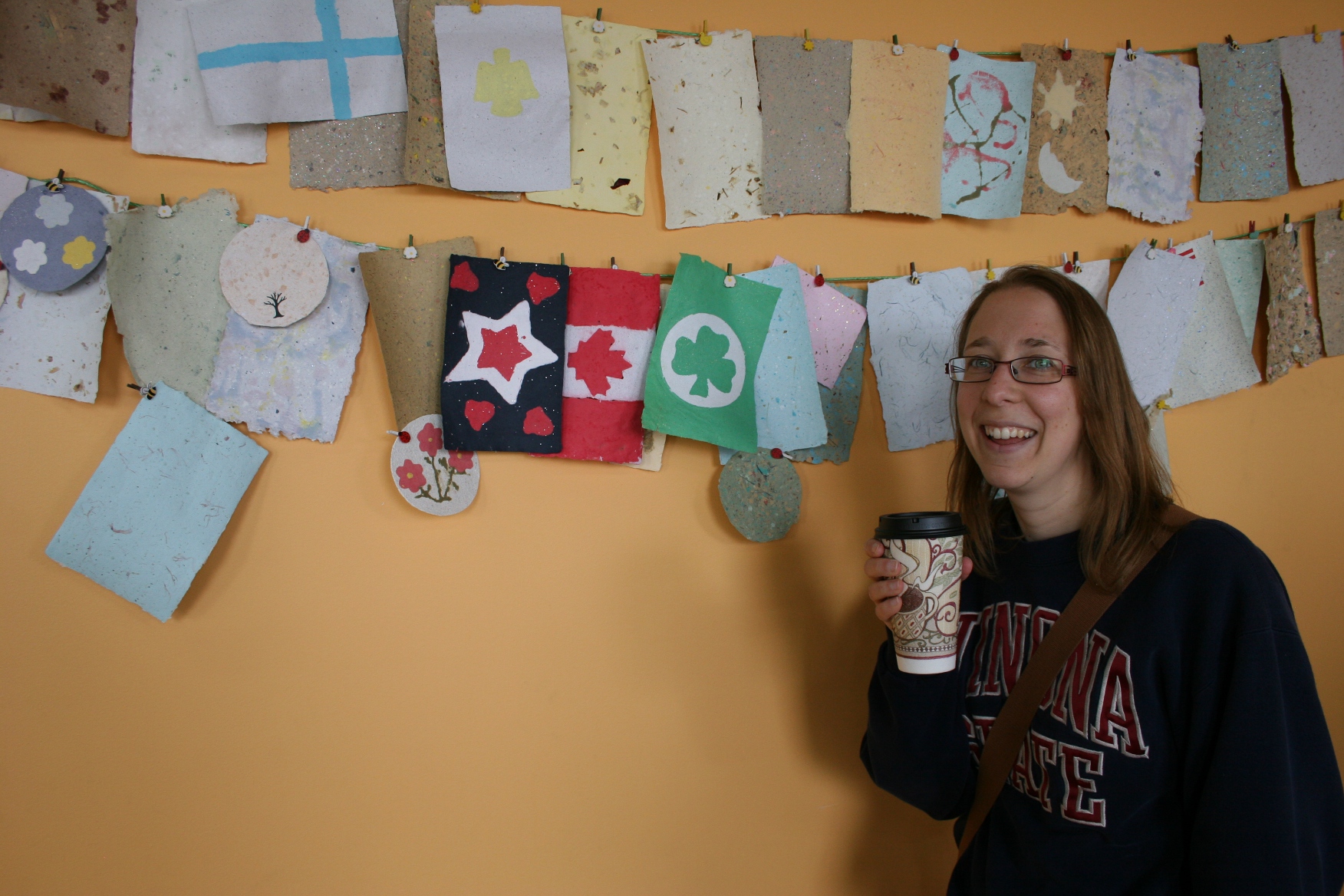
Finally, pose for a photo with the paper you've just created.

HAVE YOU EVER MADE paper like this? I’d like to hear, especially if you’ve made your own forms, etc. This may just be an art I’d like to try at home.

PLEASE CHECK BACK for another post from The Paper Discovery Center in Appleton, Wisconsin.

© Copyright 2012 Audrey Kletscher Helbling
 

In Clintonville: I survived the 1.5 March 28, 2012

Filed under: Uncategorized — Audrey Kletscher Helbling @ 11:52 AM
Tags: , , , , ,

The Booms Are Back! Residents of Clintonville Are Reporting Very Loud Noises on Tuesday Night!

So screams the headline scrolling across the Clintonville Chronicle website today as this Wisconsin community northwest of Green Bay experiences yet more unsettling booms following a recent 1.5 magnitude earthquake that rattled residents.
Since my second daughter lives in Appleton about 40 miles to the south, I’ve taken a special interest in Clintonville. Geologists determined that a “swarm” of earthquakes, amplified by Wisconsin’s unique bedrock, caused the shaking and sonic type booms that have awakened and frightened residents in this town of 4,736.
Yes, I would be scared, too, if the earth started rattling and rumbling.

And, just for the record, my daughter has been to the small medical clinic in Clintonville for her job as a Spanish medical interpreter, although not recently.

In perusing the newspaper website, I am happy to see that Clintonville is already embracing the economic opportunities that come with being thrust into the national spotlight. T-shirts emblazoned with “I Survived the 1.5” can be purchased in Clintonville or ordered online. Click here for more information about those shirts.

T-shirt sale profits “will be used to beautify or enhance something in our City as determined by the Mayor at a later date,” promo info reads. “This is not meant to make light of a serious situation but to show that we, as a community, came together to get through the events of this week.”

Let me interject here to applaud the folks of Clintonville. This is one of the attributes I admire in small towns. Togetherness.

I expect that the earthquake marks the biggest news event ever in Clintonville. In a typical week, you’re more likely to read top stories like these from the March 20 Chronicle: “Clintonville Sheep Now Famous,” “Christus to Host Spring Luncheon” and “Sheriffs Seek Evidence of Burglary” rather than “City of Clintonville is Booming.” Click here to access the award-winning Chronicle home page.

All of that booming has also prompted some Clintonville residents to purchase earthquake insurance. (Click here to see a map of  March 19 – 21 quake-related reports from Clintonville.) My daughter mentioned the insurance sales to me yesterday during a noon-time phone conversation, just before she headed out the door to a clinic in New London, some 15 miles south of Clintonville.

WHAT ARE YOUR thoughts on an earthquake in Wisconsin, of all places?

© Copyright 2012 Audrey Kletscher Helbling