Vintage fans and a thermos for sale at a past flea market. Minnesota Prairie Roots copyrighted photo 2018.
FROM A FLEA MARKET to food trucks to a farmers’ market, the Rice County Fairgrounds in Faribault will be abuzz with activity on Saturday. And I can’t wait. After a year of mostly social isolation, Randy and I are finally vaccine-protected and ready to enjoy local events.
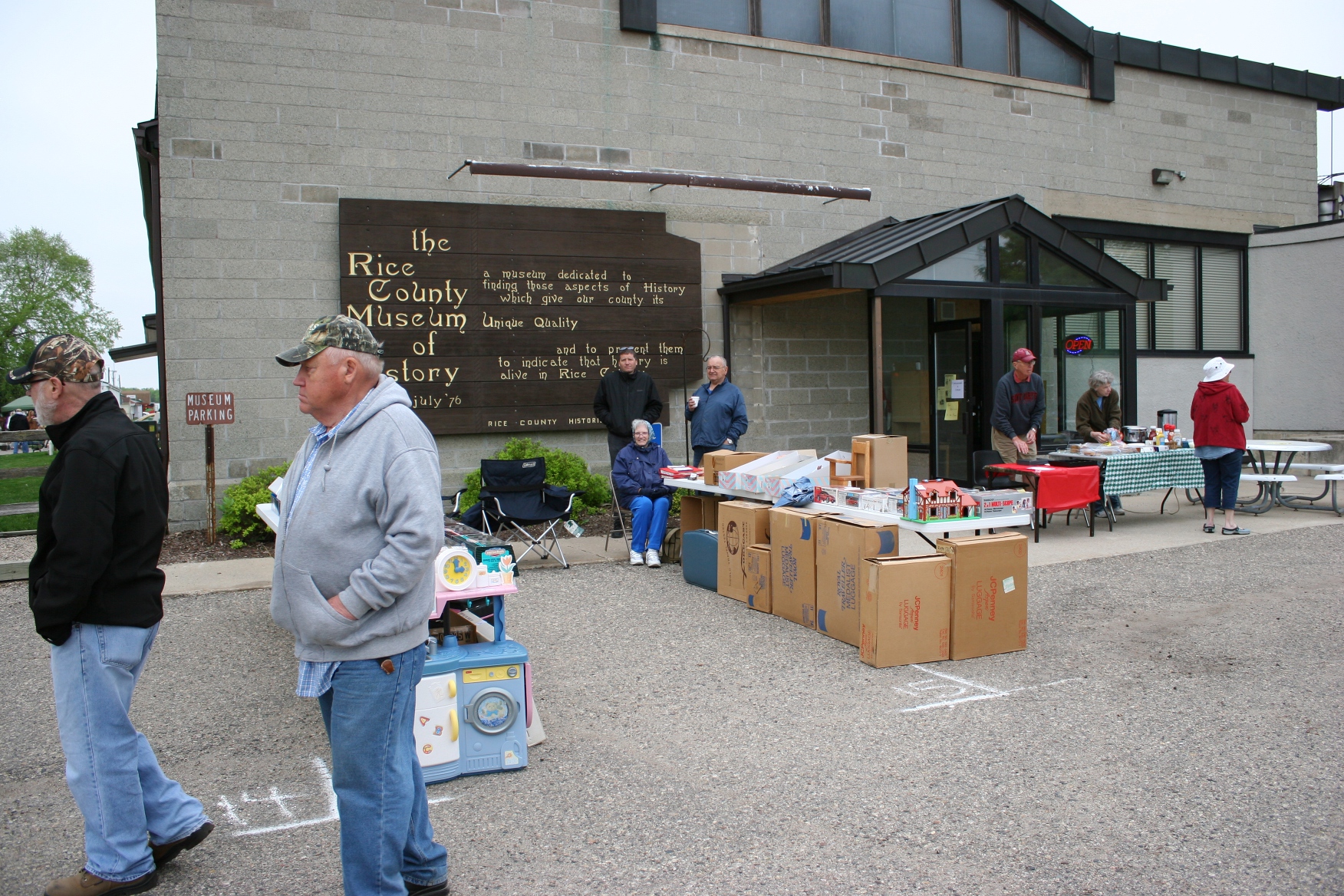
A scene from the May 2018 RCHS Spring Flea Market. Minnesota Prairie Roots copyrighted photo 2018,
The May 15 trio of activities begins at 8 a.m. with the Rice County Historical Society’s Spring Flea Market. Rain or shine, the outdoor market runs until 2 p.m. in the RCHS museum parking lot and grounds. I’ve attended this event in the past. It’s fun to look through the assortment of merchandise from antiques and collectibles to crafts and much more. One person’s “junk” truly is another person’s treasure.
Tiffany Tripp of Graise Farm co-coordinates the Cannon Valley Farmers’ Market and sells her farm fresh eggs and more at the market. Minnesota Prairie Roots file photo.
In the heart of the fairgrounds, farmers, producers, bakers, crafters and others will vend their products at the Cannon Valley Farmers’ Market from 10 a.m. – 2 p.m. The locally-grown, homemade goods come from small-scale farmers and producers in Minnesota’s Cannon River Valley. The Cannon River runs just across the road from the fairgrounds. Twenty-plus vendors will sell everything from beef to eggs to chocolate treats, bread, jelly, honey, cheese, homemade soap, plants and much more.
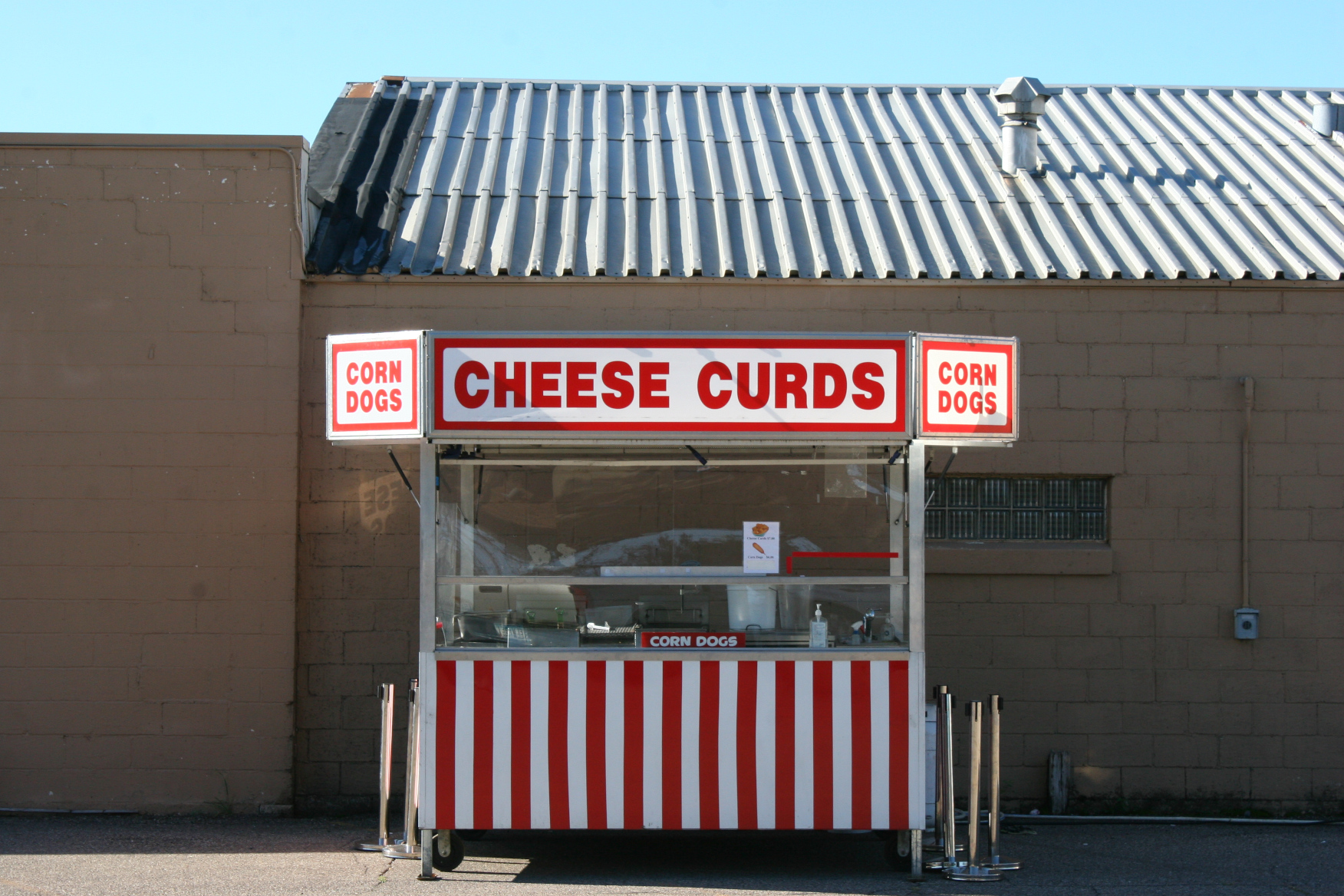
Photographed on August 29 in the Ace Hardware store parking lot, Faribault. Minnesota Prairie Roots copyrighted photo 2020.
Also starting at 10 a.m. is Fair Food Truck Days with eight trucks open for food sales: Cavemen Grilling, Delicious Potatoes, El Rey Del Taco, Lopez Concessions, Pretzel Wiz, Schroder Concessions, Temple Concessions and The Local Plate. Food sales will run until 4 p.m. and then repeat on Sunday at the same time. This will jumpstart the season of community festivals and fairs after a year without.
That said, we are still in a pandemic. If you attend, please follow all COVID safety guidelines (ie. wearing face masks and social distancing) as set by the state and hosting parties. We owe it to our friends, neighbors and strangers, especially unvaccinated kids, to keep them safe.
Graffiti on the Teepee Tonka Tunnel. Minnesota Prairie Roots copyrighted file photo May 2021.
SIX DAYS AGO I PUBLISHED a post, “From Faribault: When Graffiti Overtakes Nature & History,” which generated intense local interest. A Facebook group for people who grew up in Faribault linked to my post. And, no, this is not my hometown and I’m not on Facebook. But I have lived here for 39 years.
I appreciate the more than 1,500 views of that May 6 post. But I don’t appreciate some of the comments that followed. Let me explain.
The entry to the tunnel now covered with graffiti. Several years ago, the city installed lights inside the tunnel and painted over the graffiti. But the “art” is back. Minnesota Prairie Roots copyrighted file photo May 2021.
Initially, comments on my story about graffiti along the Teepee Tonka Trail leading into River Bend Nature Center, specifically inside an historic tunnel and on a footbridge over the Straight River, came from regular Minnesota Prairie Roots readers. They have no connection to my community. But I have an already established relationship with those readers, who comment often. So I approved their comments. Yes, I moderate replies to my posts.
Graffiti mars this footbridge across the Straight River along Teepee Tonka Trail. Minnesota Prairie Roots copyrighted photo May 2021.
PUSHING PAUSE ON COMMENTS
When comments began rolling in from those who followed the Facebook link, I pushed pause. I didn’t like much of what I was reading. The first comment, in fact, was threatening. I won’t give voice to those words here. But suffice to say that I felt uncomfortable with the message written by this anonymous individual.
Other writers used derogatory words to describe Faribault and the individuals creating graffiti. I may not like what these taggers are doing, but I also don’t like name-calling.
And I don’t like the negativity that all too often prevails about Faribault. Yes, people are entitled to their opinions. But it does no good to continually criticize. Every single community faces issues. Amplifying the negative rather than working toward improvement and resolution only perpetuates problems, or perceived problems.
The Straight River, as photographed from the footbridge along Teepee Tonka Trail. Minnesota Prairie Roots copyrighted photo May 2021.
THE POSITIVES OF FARIBAULT
Faribault is a place of incredible natural beauty from our many parks to the two rivers that run through to, yes, even that trail tracing to the tagged tunnel.
Faribault is a place where history matters, as evidenced in our downtown historic district, historic homes scattered throughout the city, aged churches, Shattuck-St. Mary’s School, Buckham Memorial Library and many more buildings. Even our viaduct. And the Central Park Bandshell. And the historic Faribault Woolen Mill. And, yes, even the 1937 Teepee Tonka Tunnel, hand dug by Works Progress Administration workers as a root cellar for the Minnesota School and Colony.
Faribault is a place of diversity. I welcome our immigrants, who often fled horrendous situations in their native countries. I value opportunities to learn more about their cultures and have always appreciated the work of The Faribault Diversity Coalition.
Faribault is a place of family and community connections. Although I am not rooted here by birth or upbringing, I see generations of families who have called Faribault home. And I wonder sometimes if that’s partially why negativity rises. Sometimes it takes leaving a place, and then returning, to appreciate its good qualities.
Faribault is a place of art. From the many downtown murals to the Tiffany stained glass windows in some historic buildings, to the Paradise Center for the Arts and more, we are a community filled with art and creatives. And, yes, that includes the graffiti artists. When I viewed their art, I couldn’t help but appreciate their talent. Not the content (especially the profanity) or the location of their art, but their skills as artists. If only their art could be channeled into something positive. Yes, perhaps that is a Pollyanna perspective.
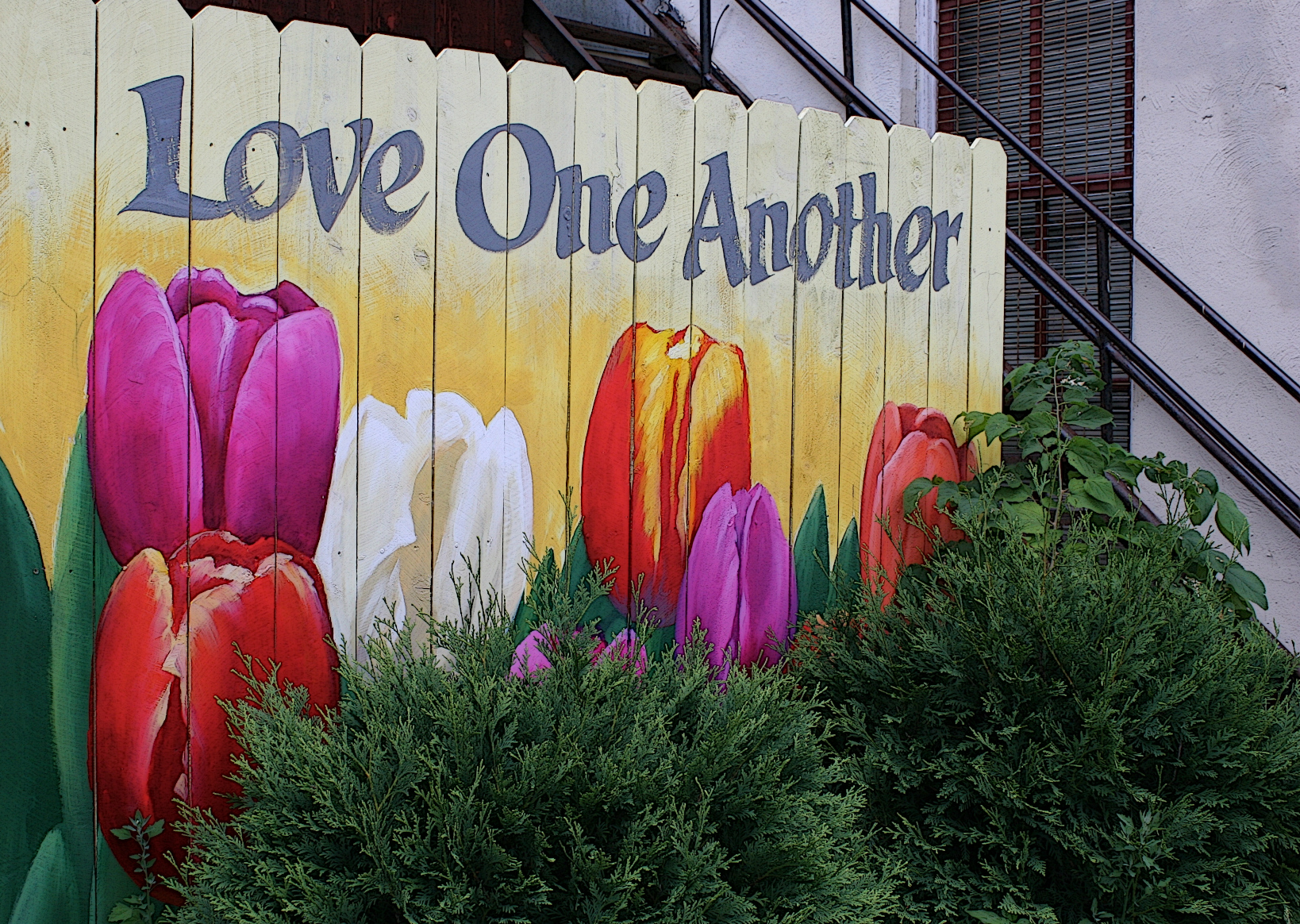
An especially bright spot in the heart of downtown Faribault is the Second Street Garden, a pocket garden with positive messages like this one. Minnesota Prairie Roots copyrighted file photo August 2019.
BEYOND WORDS
Some who commented on my initial blog post called for painting over the tunnel graffiti and one (a professional painter) offered to take on that task. That seems a good start, or restart as it’s been done before. Of course, that requires time, money (perhaps via a Community Pride Grant from the Faribault Foundation), effort and tenacity. But, as one individual commented, “This town could use a lot of TLC everywhere.” I don’t disagree.
It’s up to each of us to make that happen. To care. To act. To love. To go beyond words typed on a keyboard.
Note: I moderate all comments on my blog. Because this is my personal blog, I decide whether or not to publish comments.
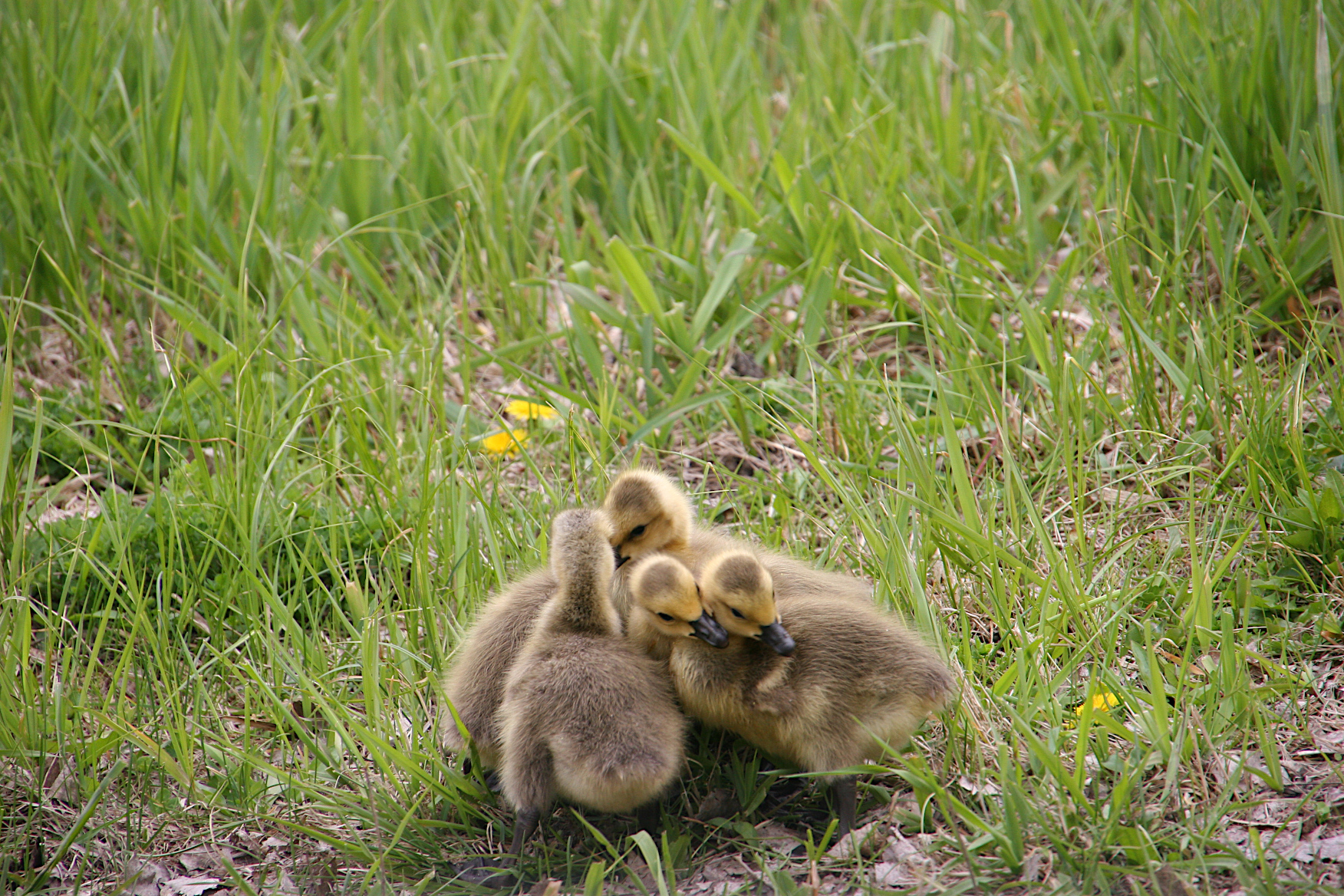
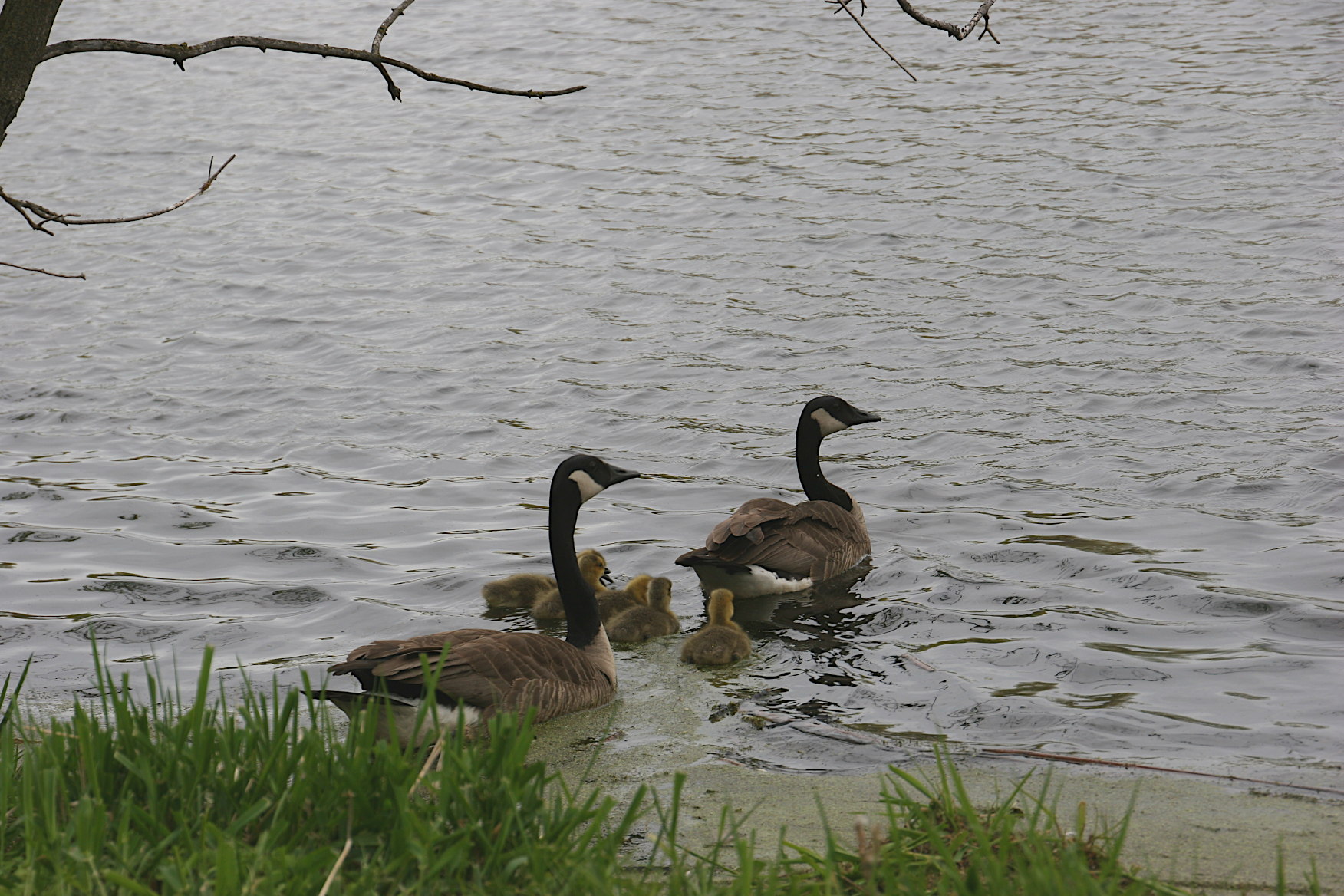
Goslings huddle near pond’s edge at the River Bend Nature Center in Faribault. Minnesota Prairie Roots copyrighted photo.
EVERY SPRING, I FIND myself drawn to pond or river’s edge to watch the goslings, the newborn offspring of Canadian geese navigating the shoreline and water.
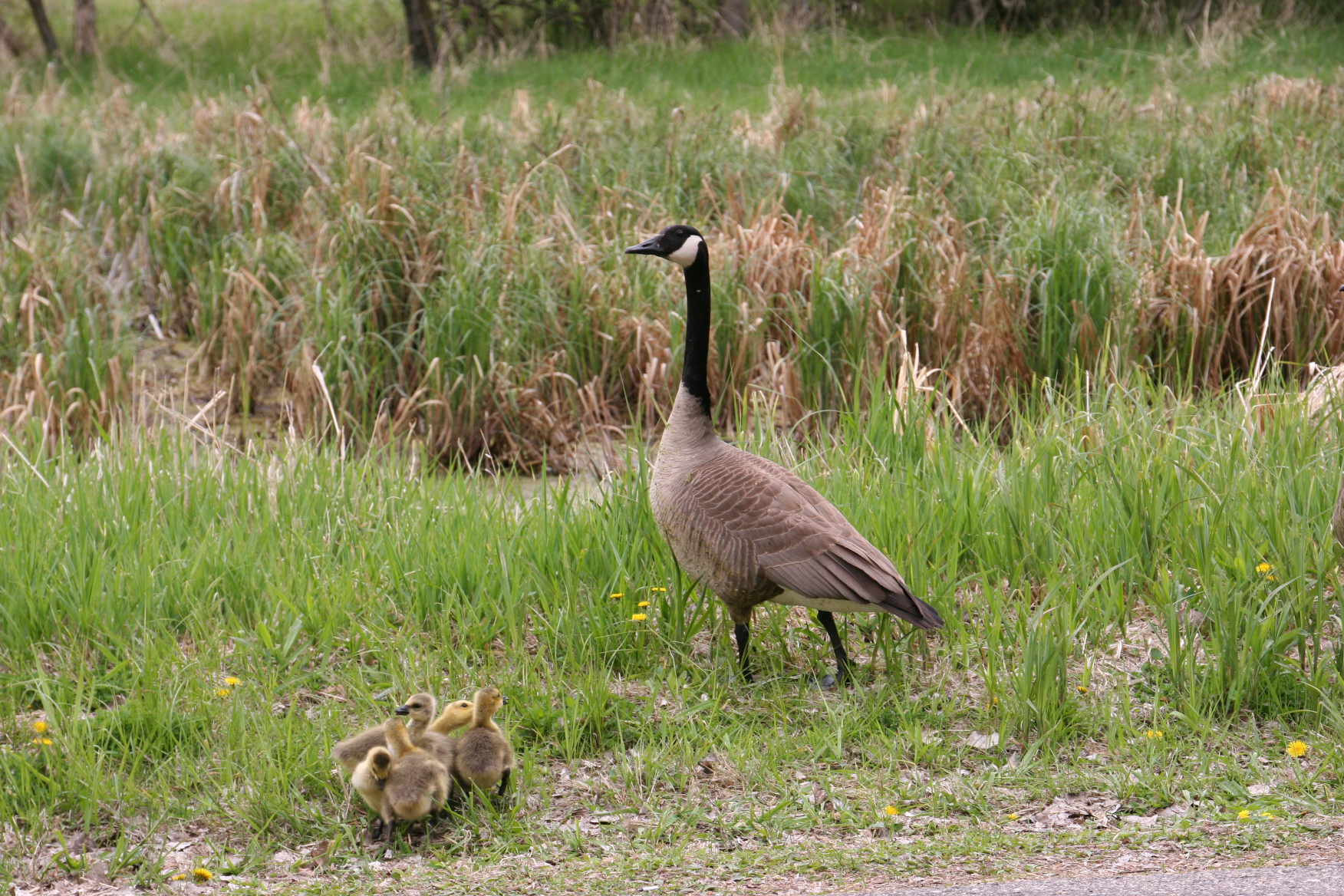
Geese are fierce protectors of their young. Minnesota Prairie Roots copyrighted photo.
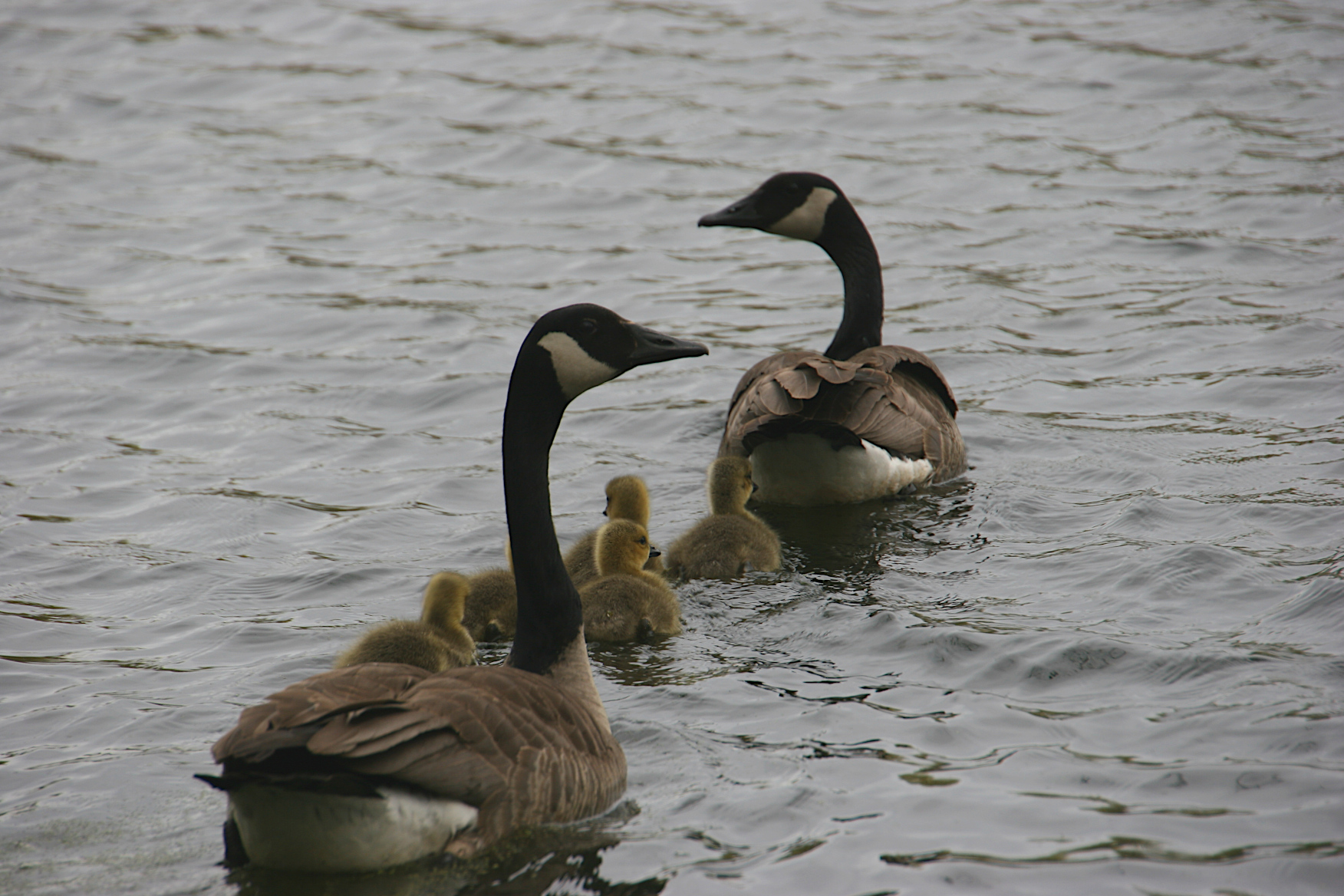
They are just so darned cute. Downy yellow. Sometimes huddling in a circle of sibling closeness.
Swimming into the pond at River Bend. Minnesota Prairie Roots copyrighted photo.
Still in the protective care of their parents. And, yes, geese can prove fierce when safeguarding their young. I steer clear of these young families, preferring to frame family photos from afar.
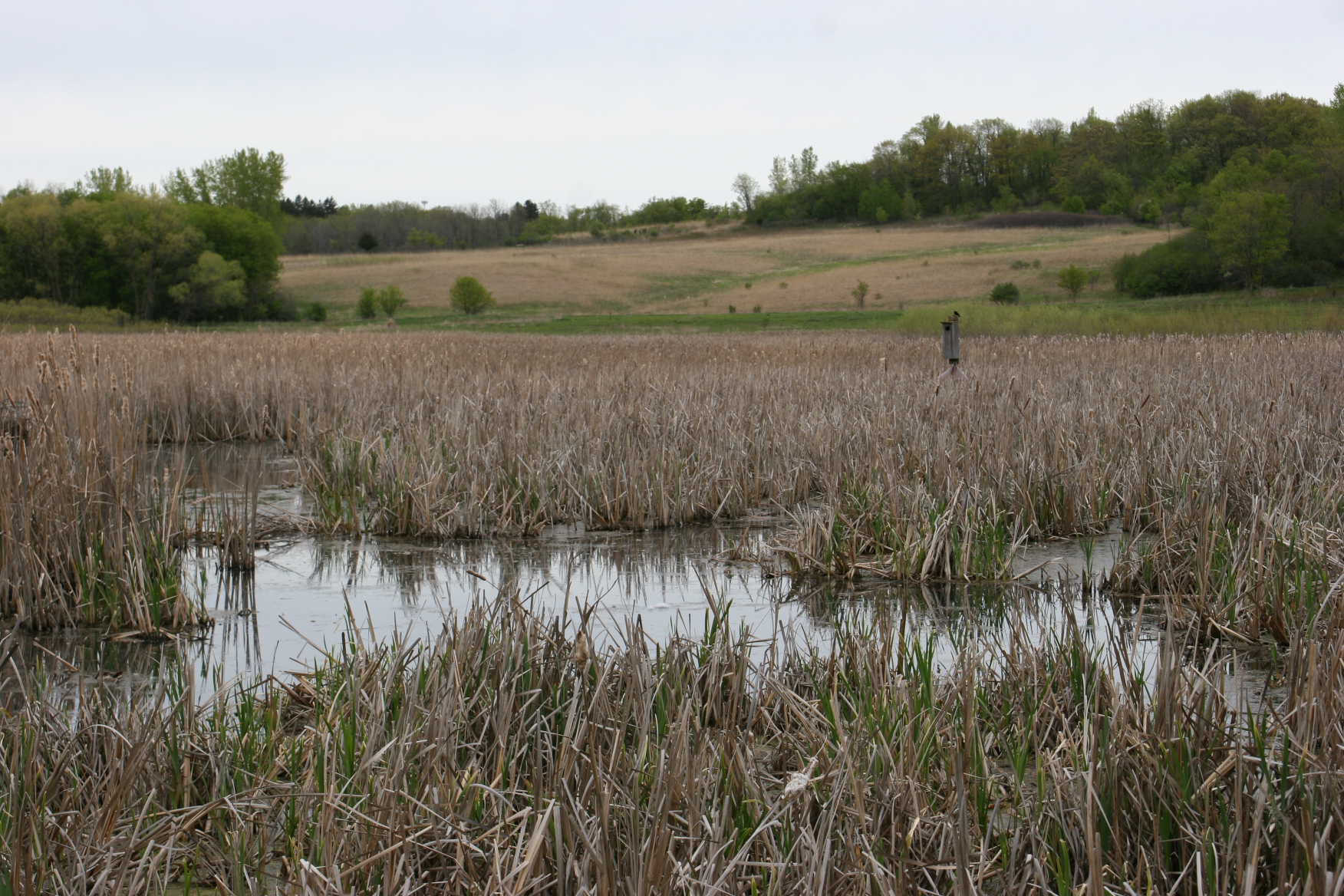
Prairie Pond at River Bend. Minnesota Prairie Roots copyrighted photo.
I love how the goslings are bookended in a protective line. Minnesota Prairie Roots copyrighted photo.
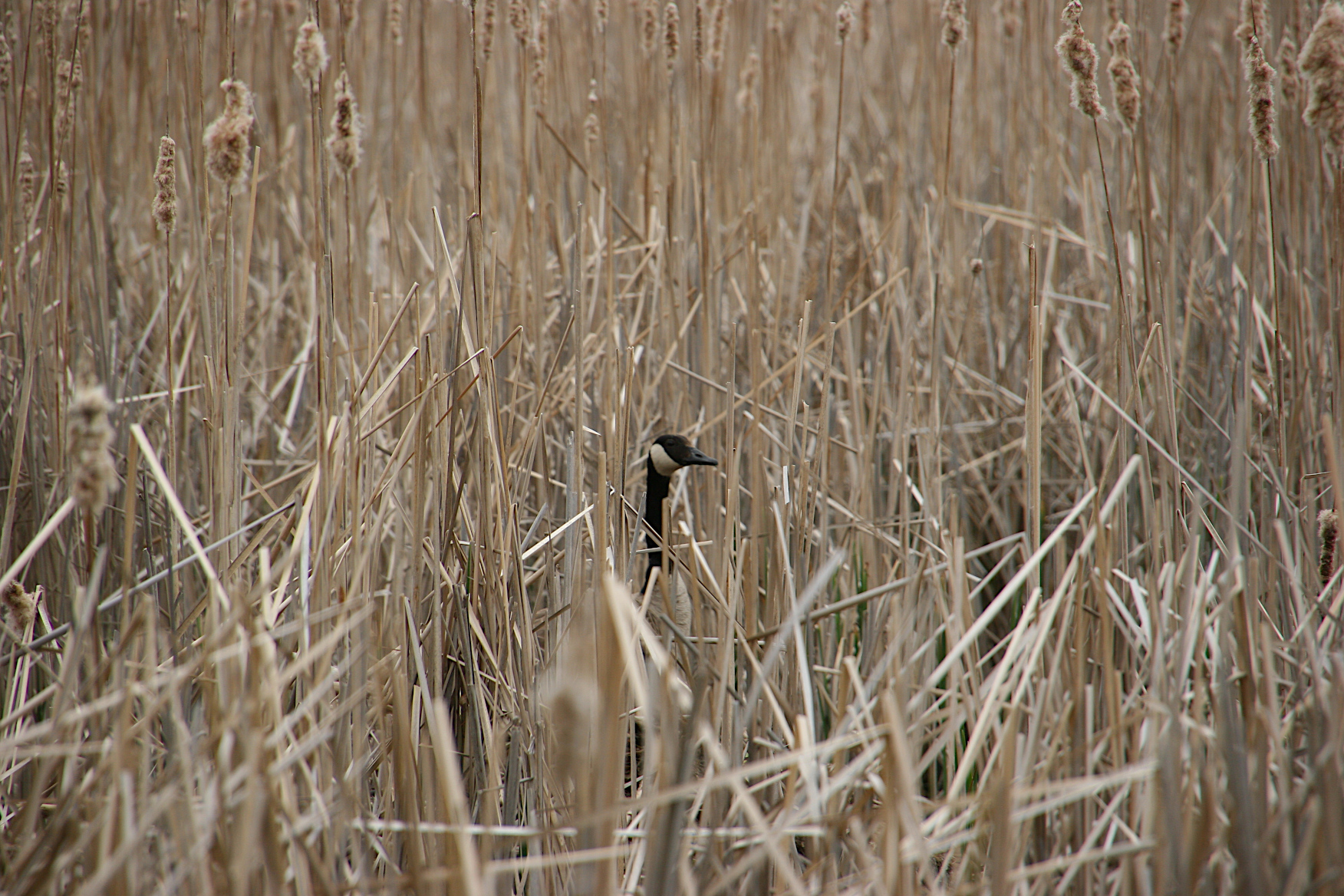
A goose is barely visible in the dried grasses of Prairie Pond. Minnesota Prairie Roots copyrighted photo.
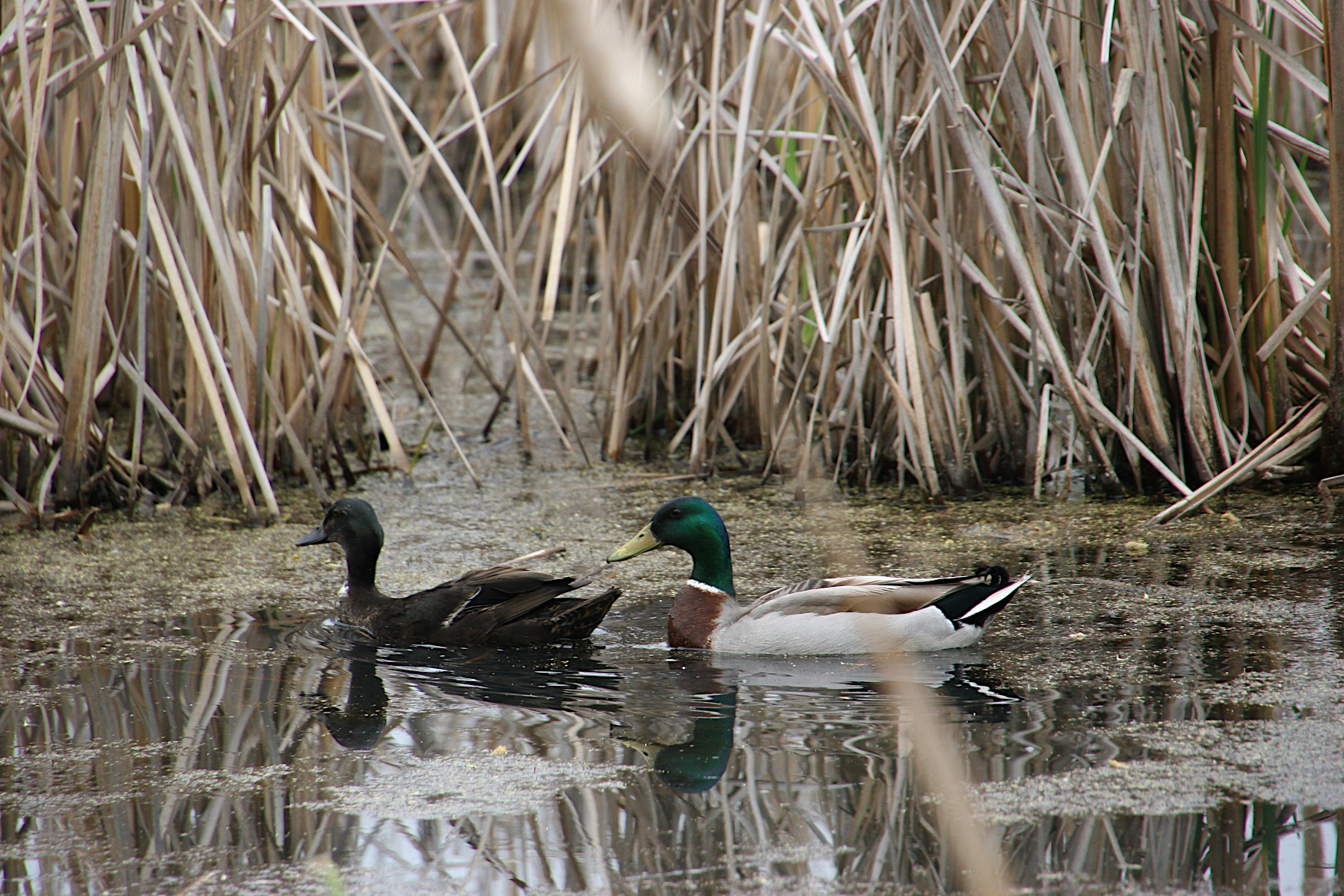
A duck pair in Prairie Pond. Minnesota Prairie Roots copyrighted photo.
While River Bend lies a long ways from McCloskey’s Boston Public Gardens pond setting, the universal appeal of ducklings spans the miles between Massachusetts and Minnesota.
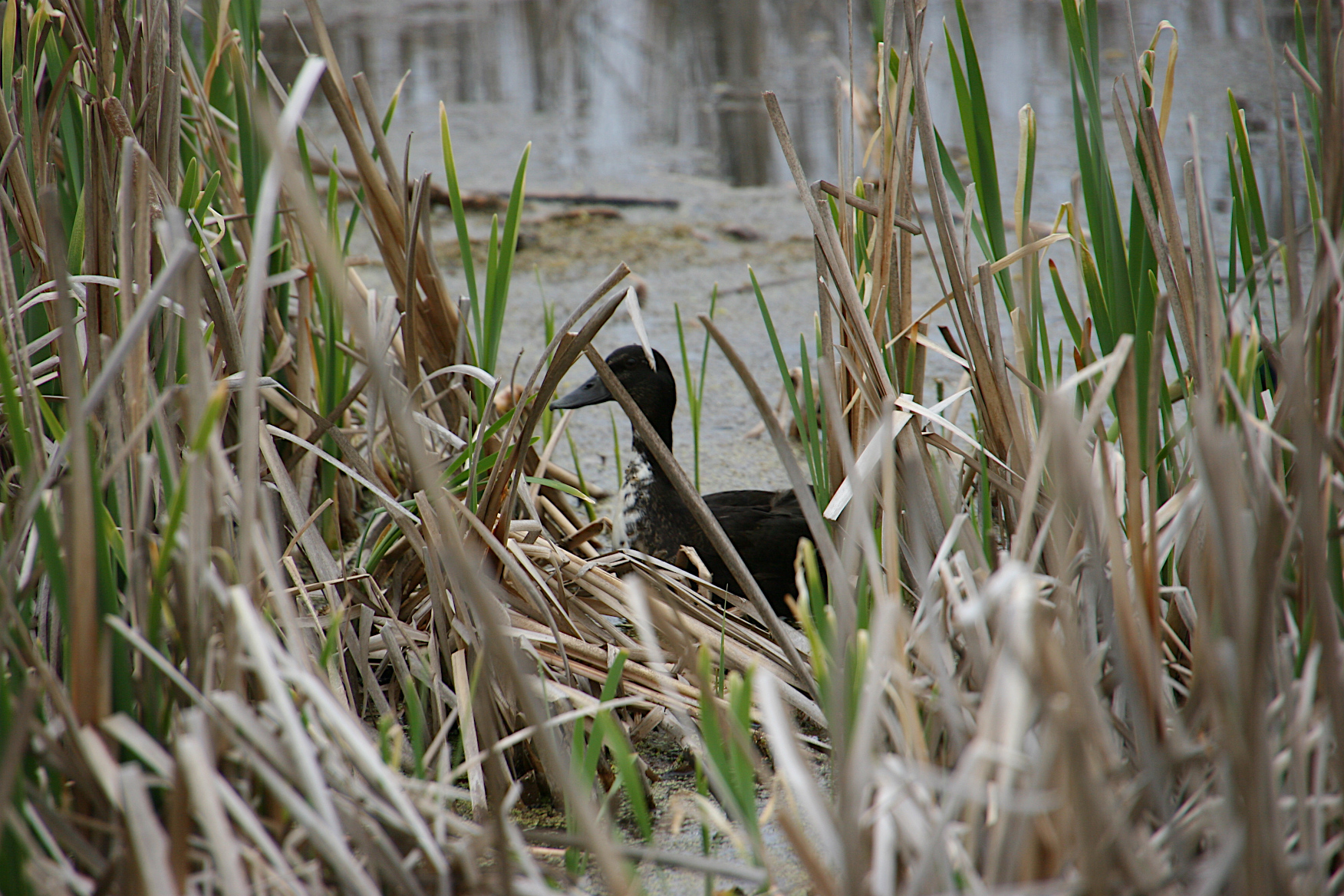
A duck emerges among the grasses in Prairie Pond. Minnesota Prairie Roots copyrighted photo.
Whether in a city, rural area or nature center, downy babies in the care of their parents create, at least for me, a sense that all is well in the world. That no matter the worldwide challenges—especially during a pandemic—no matter the community and personal challenges, the cycle of life continues.
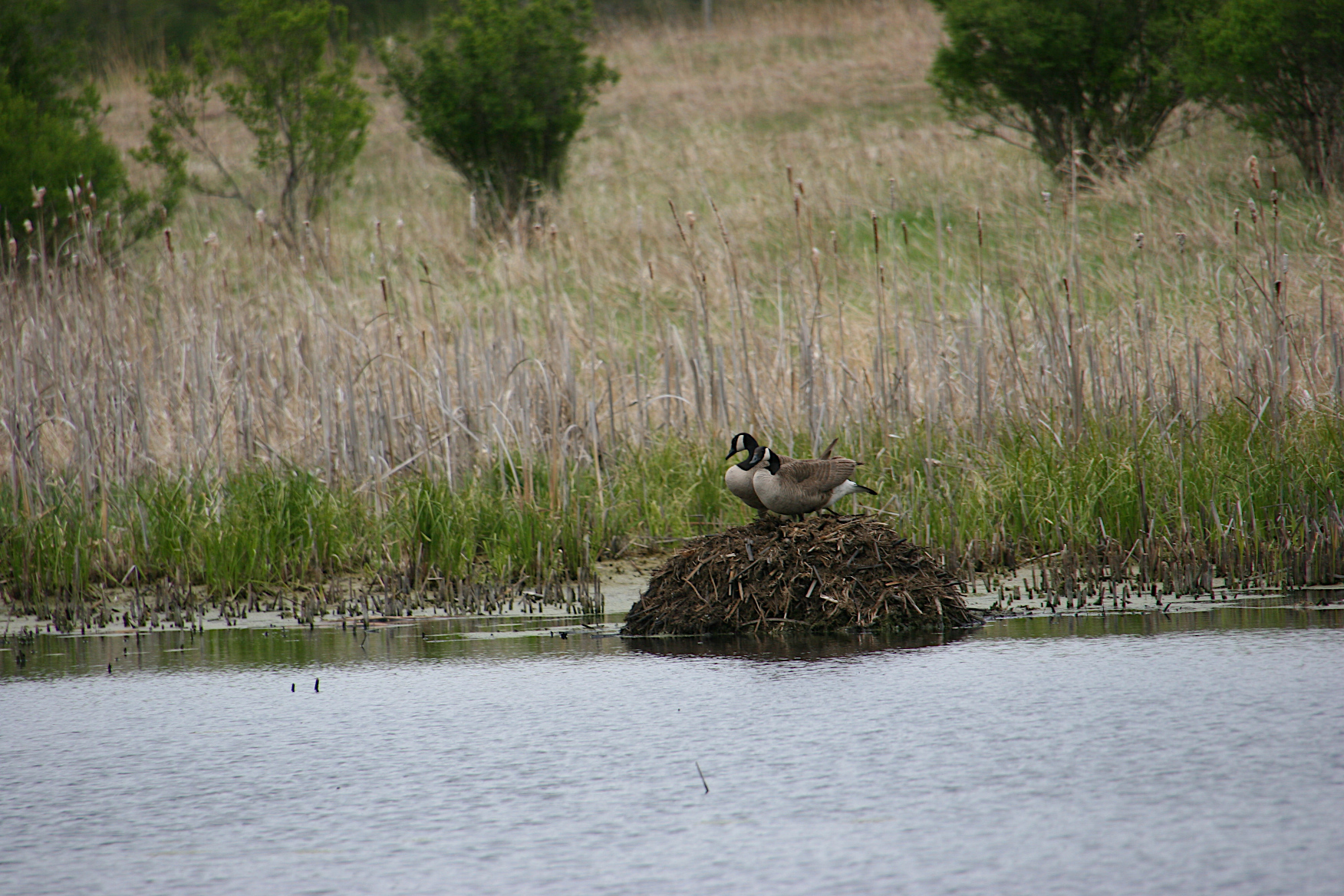
Geese nesting at River Bend. Minnesota Prairie Roots copyrighted photo.
Every spring I make way for ducklings and goslings, celebrating their arrival by documenting their arrival. With my camera. But even more, by framing them in my memory during this season of spring.
…I THOUGHT I WAS such a good mother. I baked a cake and a pie every night. Or at least had Jell-O with whipped cream.
That quote from Mimi Galvin, mother of 12, struck me as particularly personal and profound in a 377-page book focusing on one family’s experiences with schizophrenia. Six of Mimi and Don Galvin’s children developed schizophrenia, labeled by author Robert Kolker as “humanity’s most perplexing disease.”
Kolker’s Hidden Valley Road—Inside the Mind of an American Family rates as a difficult read. But this 2020 Oprah’s Book Club pick is something every single person should read to understand the depths and intricacies of a biologically-based brain disorder like schizophrenia. And how it affected one Colorado family with children born between 1945-1965.
But back to that quote and the context thereof. Doctors and others blamed Mimi for her sons’ mental illnesses. Their criticism left her crushed, traumatized, paralyzed, ashamed. Feeling all alone and guilty, as if she wasn’t a “good mother.” Such was the accusatory thinking of medical professionals. Mothers, especially, were targeted and even labeled as “schizophrenogenic mothers.” Can you imagine? Movies like Alfred Hitchcock’s Psycho (released in 1960) reinforced that theory with Norman Bates’ mother blamed for his delusional homicidal mania.
This was also the era of shock therapy and restraints and so much misunderstanding and horror. Even unafflicted Galvin siblings wondered why their brothers couldn’t simply snap out of it. That thought pattern seems almost laughable, even absurd, to me. Yet, too many people still think that. Why can’t someone simply shut out delusional thoughts and paranoia, stop talking gibberish, separate perception from reality, silence the voices in their head, go to sleep rather than stay awake all night…? And more, much more, detailed with heartbreaking truth in this story of the Galvin family.
This family experienced heartbreak almost beyond belief. Tragedy. Abuse. Violence. Disconnect. Feelings of abandonment. So. Much. Trauma.
If I ended this review now, you would likely feel incredibly disheartened, wondering why you would even want to read such a book. And you would be justified in thinking that. But this story of an American family in the thick of schizophrenia is also inspiring. Hopeful. The Galvins allowed researchers to study their DNA, to learn more about “humanity’s most perplexing disease.” A disease centered in the brain. A disease with genetic markers. Mutations. A spectrum illness. No more mother/parent blaming.
I won’t attempt to further explain those scientific findings. I’m not, as I term myself, a medical person. I had to read and reread the medical parts of this book. But I grasp the basics. That researchers, although too often hindered by lack of funding (including from pharmaceutical companies), continue to work on researching and understanding schizophrenia, on finding better medications to treat symptoms and, ultimately, to prevent the onset of this horrible disease.
I encourage you to read Hidden Valley Road. You may struggle to get through this story. But press on. And then, when you’ve finished, vow to love, support and encourage anyone dealing with mental health issues. And their families.
#
FYI: May is Mental Health Awareness Month. If you or someone you love is struggling with mental health, seek help. The National Alliance on Mental Illness, which originated in Minnesota, is a good place to start. I will continue to do what I can to advocate, educate and increase awareness.
I invite you to read three previous reviews I’ve written on books that focus on mental health:
My mom saved everything, including this Mother’s Day card I made for her in elementary school. I cut a flower from a seed catalog to create the front of this card. Minnesota Prairie Roots file photo.
IT’S EASY TO IDEALIZE motherhood. To paint a portrait of an infinitely loving and nurturing mother. Always calm. Always kind. Always putting her children first.
But the reality is that being a mom does not mean being perfect. No one is. Perfect, that is.
So this Mother’s Day, I honor all those women who are moms. Not some idealistic version of a perfect mother. But rather a mother who does her best to embrace motherhood and love those entrusted to her care.
My granddaughter. Minnesota Prairie Roots file photo April 2019.
As the mother of three now grown adult children and two beautiful grandchildren, I have a little experience in the mothering department. That doesn’t make me an expert. It just lends more authenticity to my words, to my efforts to give my children roots and wings.
I love my three. Two daughters born 21 months apart. And then the son born seven years and 364 days after my eldest. Yes, she celebrated her birthday in the hospital with her newborn brother.
As a stay-at-home mom, I found raising kids both challenging and rewarding. I expect most moms would say that. Tantrums and sibling rivalry and strong-willed children can test any mother’s patience. But then there were the moments of children snuggled next to me or on my lap while I read books. First, simple Little Golden Book storybooks. Then the Little House series. The Betsy-Tacy series. And more.
Busted in October of 1988 sneaking cookies and “hiding” in the corner of the kitchen to eat them. Minnesota Prairie Roots file photo.
And the moments of delight. Like the morning I caught my daughters eating just-baked chocolate chip cookies in a corner of the kitchen…after I’d told them to wait until after lunch for a treat. My oldest daughter pulled a chair to the counter and grabbed two cookies for herself and her sister. I secretly admired her determination. And her looking out for her sister.
I wanted to raise children to think creatively, to forge their own paths. To care about others. And they did. When the eldest, during her freshman year of college, informed us that she was going on a mission trip to Paraguay, I asked, “Where is Paraguay?” And soon the second daughter followed, journeying to New Orleans to help with clean-up after Hurricane Katrina. Twice. Then, after college, she moved to Argentina for six months.
One of my all-time favorite photos of my son at age 5. Minnesota Prairie Roots file photo.
The son, too, traveled, to attend college and work in Boston for five years. I disliked having him so far from Minnesota. But I respected his choice and my need to let go. Later, he would travel to a professional conference in Japan and then to Europe.
Certainly, there have been challenges through the years. Difficult times. Plenty of tears and angst and worry. The morning my then 12-year-old son was struck by a car while crossing the street to his school bus stop ranks as an especially terrifying moment. That hit-and-run occurred just days before Mother’s Day 2006. Thankfully, he received only minor injuries. Yet, it was a horrible experience. My heart hurts for all mothers who have lost children.
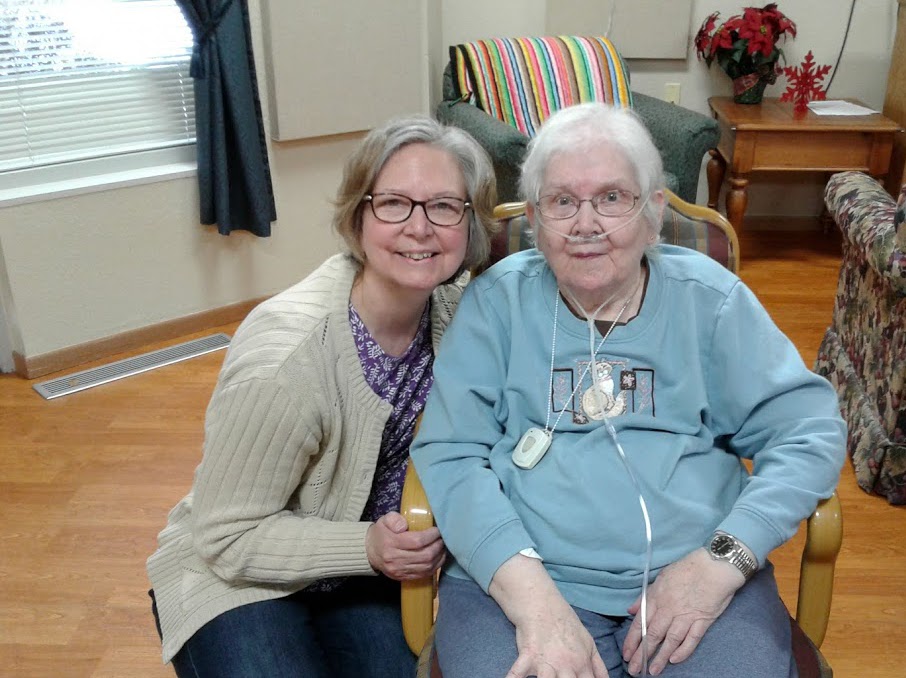
Me and my mom in December 2017. Minnesota Prairie Roots file photo.
Although my kids are long-gone from home, my love and care for them remains as strong as ever. I want the best for them. Happiness. Joy. Purpose. To love and be loved. I would move mountains for them, as cliché as that sounds. I expect my mom felt the same.
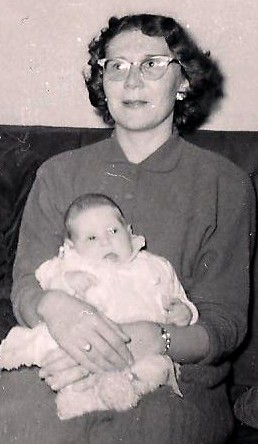
My mother, Arlene, and me.
To all the moms out there, including my mom and my eldest (the mother of my grandchildren), Happy Mother’s Day! You are valued, loved, cherished and appreciated.
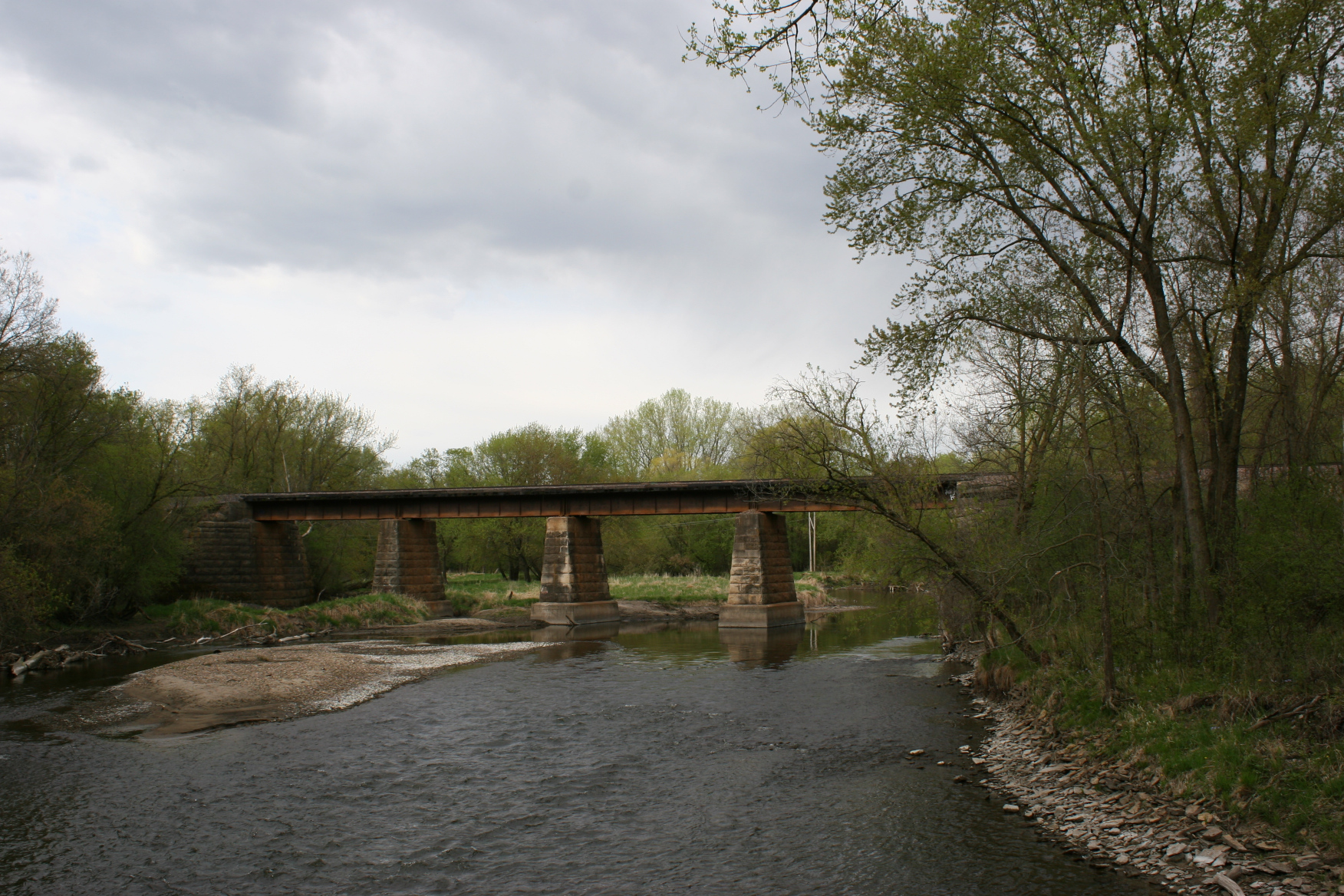
A view of the Straight River and the railroad bridge crossing it, photographed from the footbridge. Minnesota Prairie Roots copyrighted photo.
IF NOT FOR THE OFFENSIVE GRAFFITI, the natural setting would be particularly inviting. But obscene words and disturbing messages kept me from fully enjoying the trail leading from Faribault’s Teepee Tonka Park into River Bend Nature Center.
Along the trail from Teepee Tonka Park into River Bend Nature Center, I saw trees tagged with graffiti. Here I’m approaching the footbridge crossing the Straight River. Minnesota Prairie Roots copyrighted photo.
Even trees were tagged with paint. That’s a first.
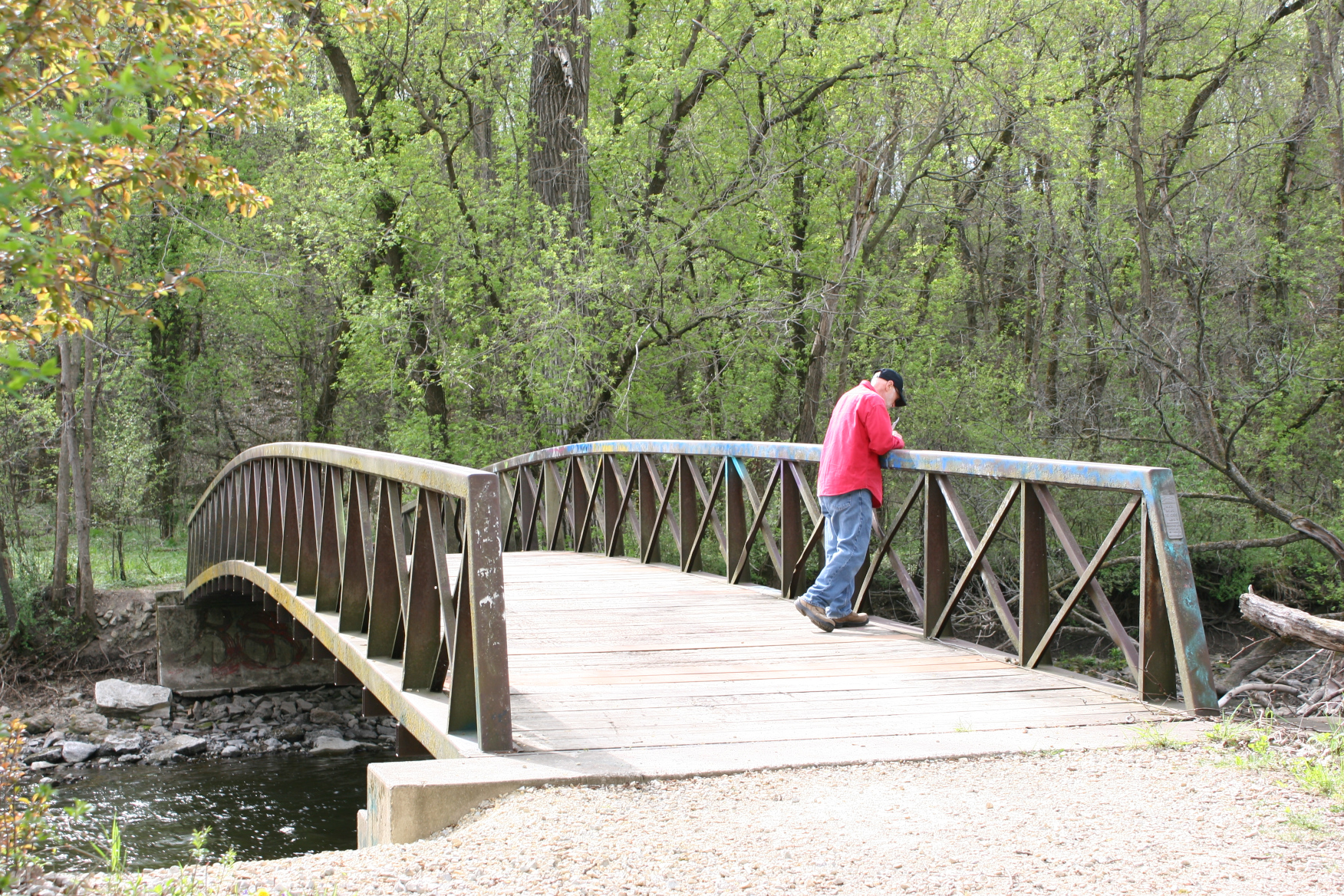
Randy looks over the Straight River. Minnesota Prairie Roots copyrighted photo.
On the footbridge which spans the Straight River, I found the most disturbing of accusations—J**** killed my mother. That shifted my already on-alert mode to what the h*** is going on in these woods? I read derogatory comments about Faribault. And I thought, why do those who hate this community so much stay here?
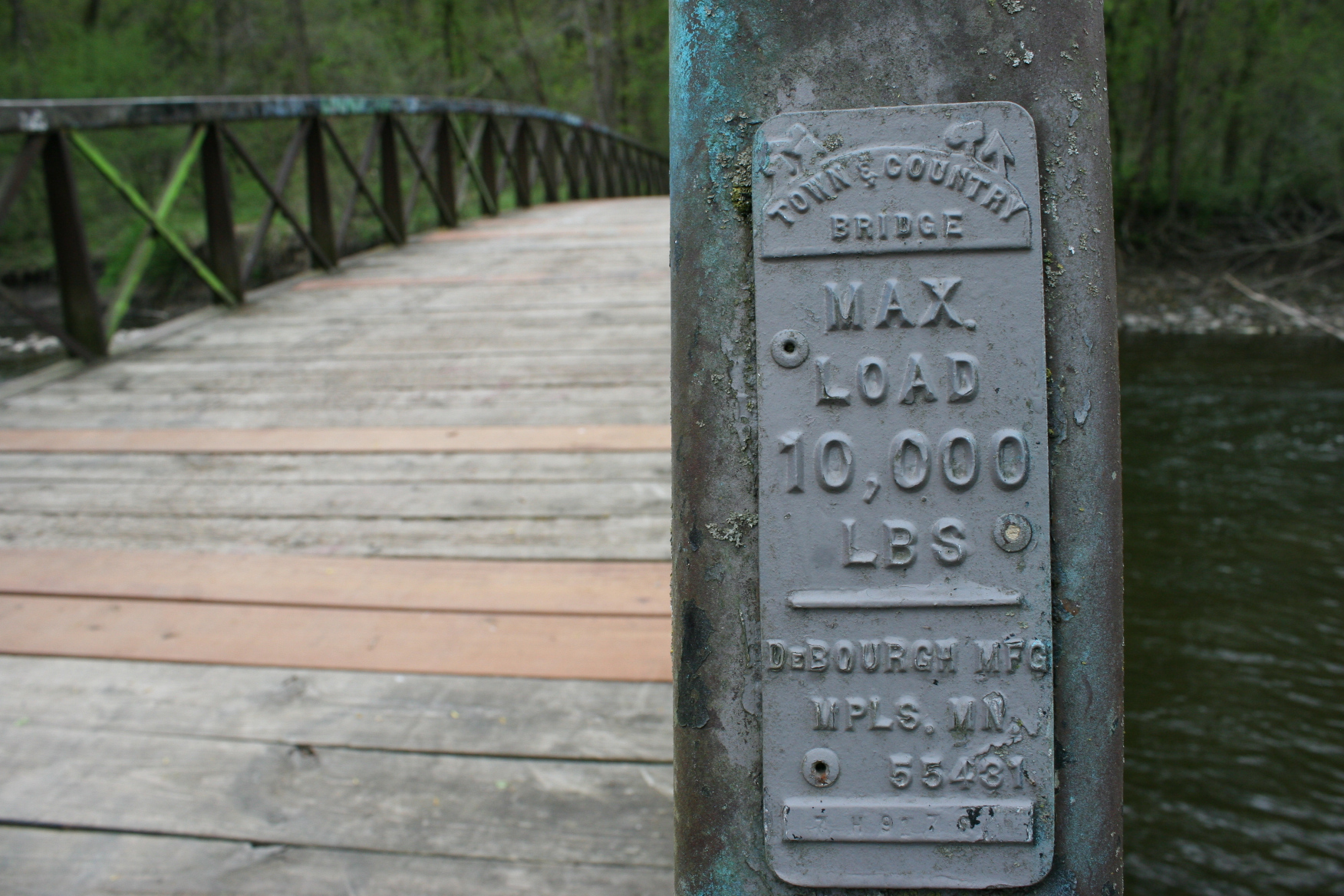
This marker on one end of the bridge remains unmarred. Minnesota Prairie Roots copyrighted photo.
I tried to overlook all that awful graffiti, but it was just too much to dismiss. I wouldn’t bring a child here, not one who can read anyway.
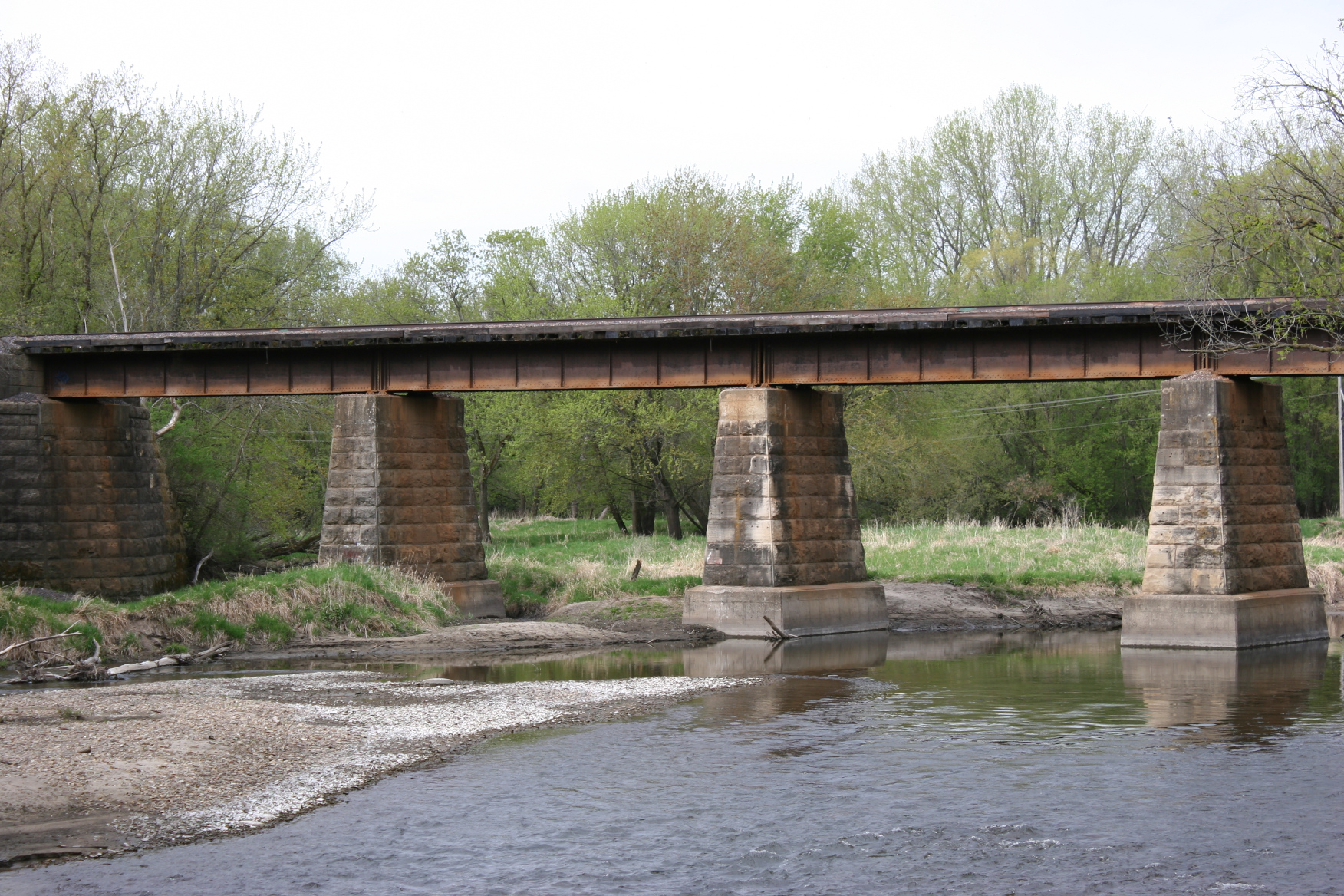
I expect there’s a story behind this beautiful railroad bridge over the Straight River. Minnesota Prairie Roots copyrighted photo.
Yet, there’s much to see and appreciate here, if you look beyond the tagging, the offensive messages. Nature and history intertwine, leaving me with more questions than answers.
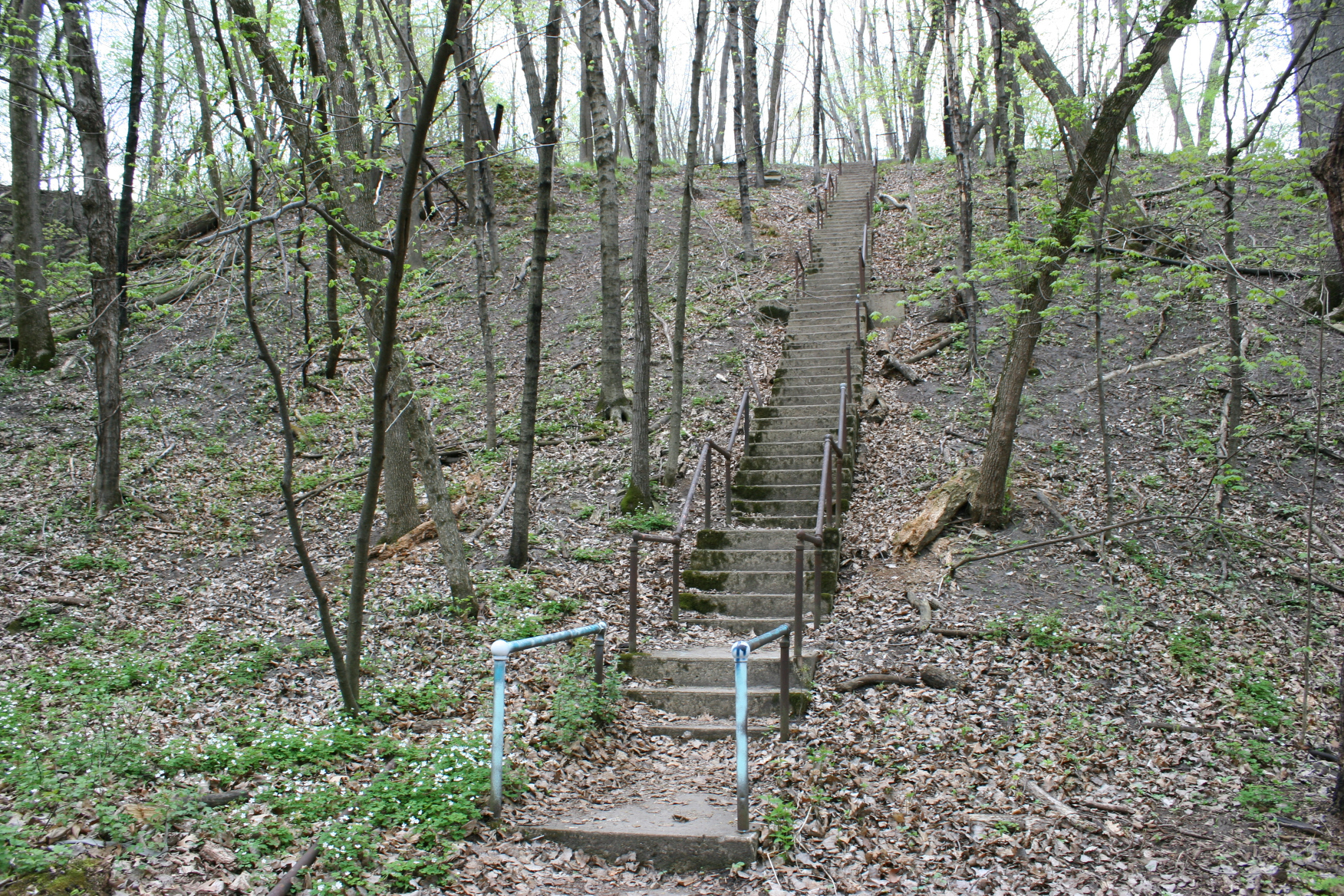
I felt tempted to climb these stairs, but didn’t have the energy. Minnesota Prairie Roots copyrighted photo.
A lengthy stairway climbs a hillside. Slabs of limestone and chunks of concrete—perhaps foundations of long ago buildings—cling to steep banks.
Graffiti mars the tunnel entrance. Minnesota Prairie Roots copyrighted photo.
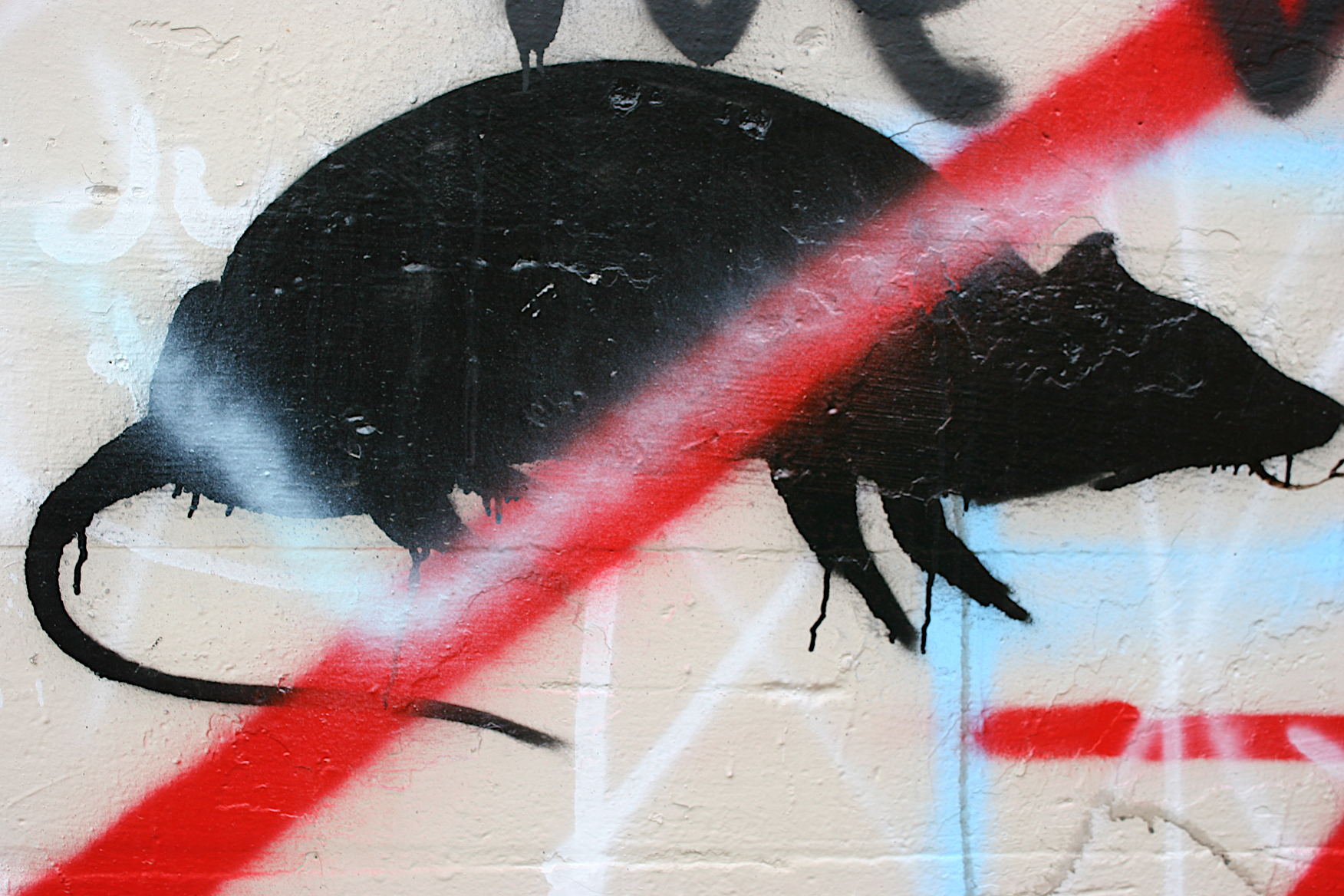
And then there’s the tunnel. The 442-foot-long tunnel, which I refused to enter. One look at the graffiti at the entry, especially the rat art, and I knew, no way, would I walk through that former root cellar. So I photographed that space, editing out the obscenities (which proved nearly impossible).
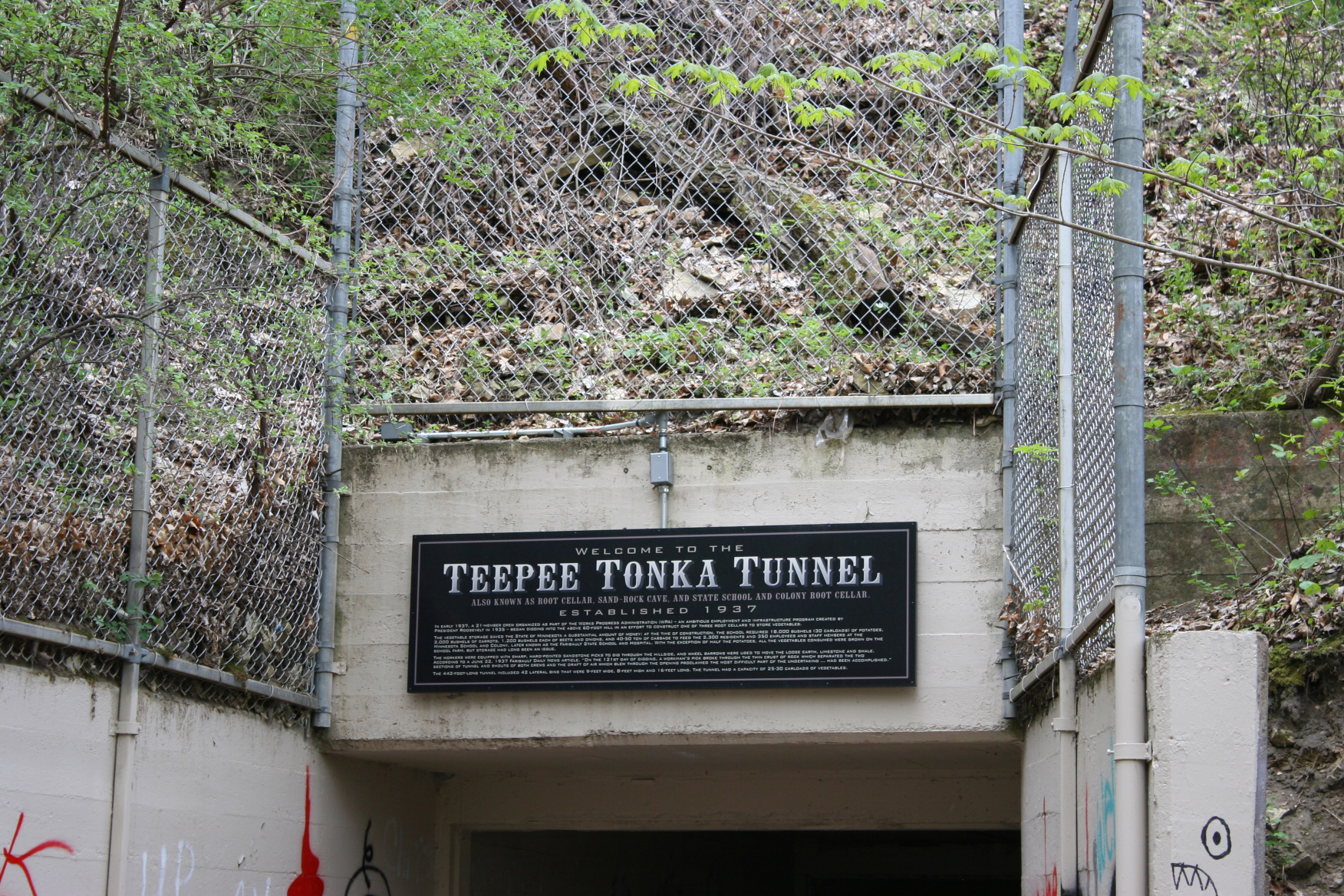
A sign above the tunnel details its history. Minnesota Prairie Roots copyrighted photo.
And I photographed the sign above, which summarizes the history of this 1937 Works Progress Administration project. Workers hand dug the tunnel with picks, hauling the dirt and rocks away with wheelbarrows. Once complete, the tunnel served as a root cellar for the Minnesota School and Colony (later known as The Faribault State School and Hospital). The Teepee Tonka Tunnel once held 25-30 carloads of vegetables to feed the 2,300 residents and 350 employees. Most of those potatoes, carrots, beets, onions and cabbage were grown on the school farm.
Another snippet of the tunnel graffiti. Minnesota Prairie Roots copyrighted photo.
Now the history, the hard work, the humanity were dishonored by those who use this as a canvas for words and art that shouldn’t be here.
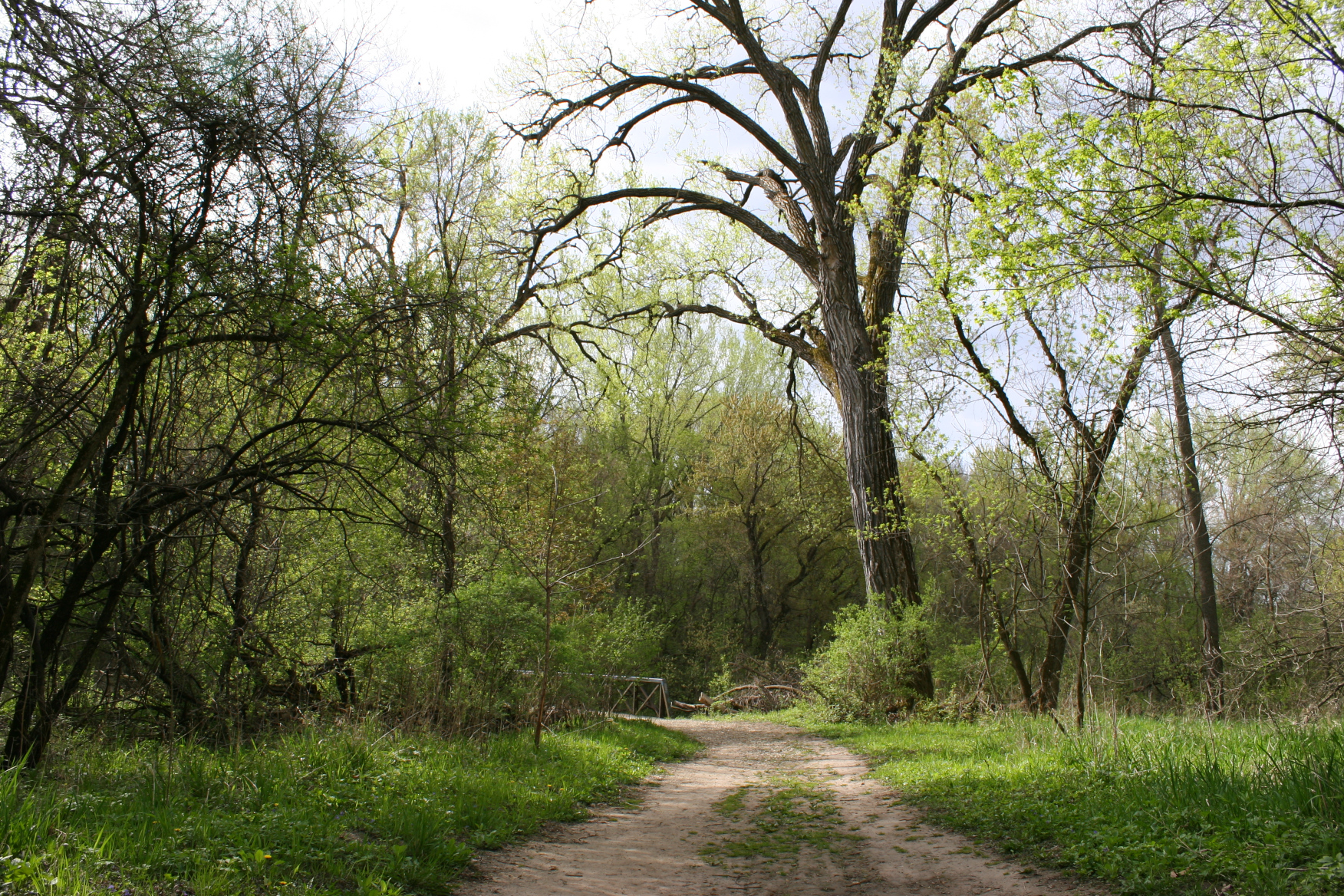
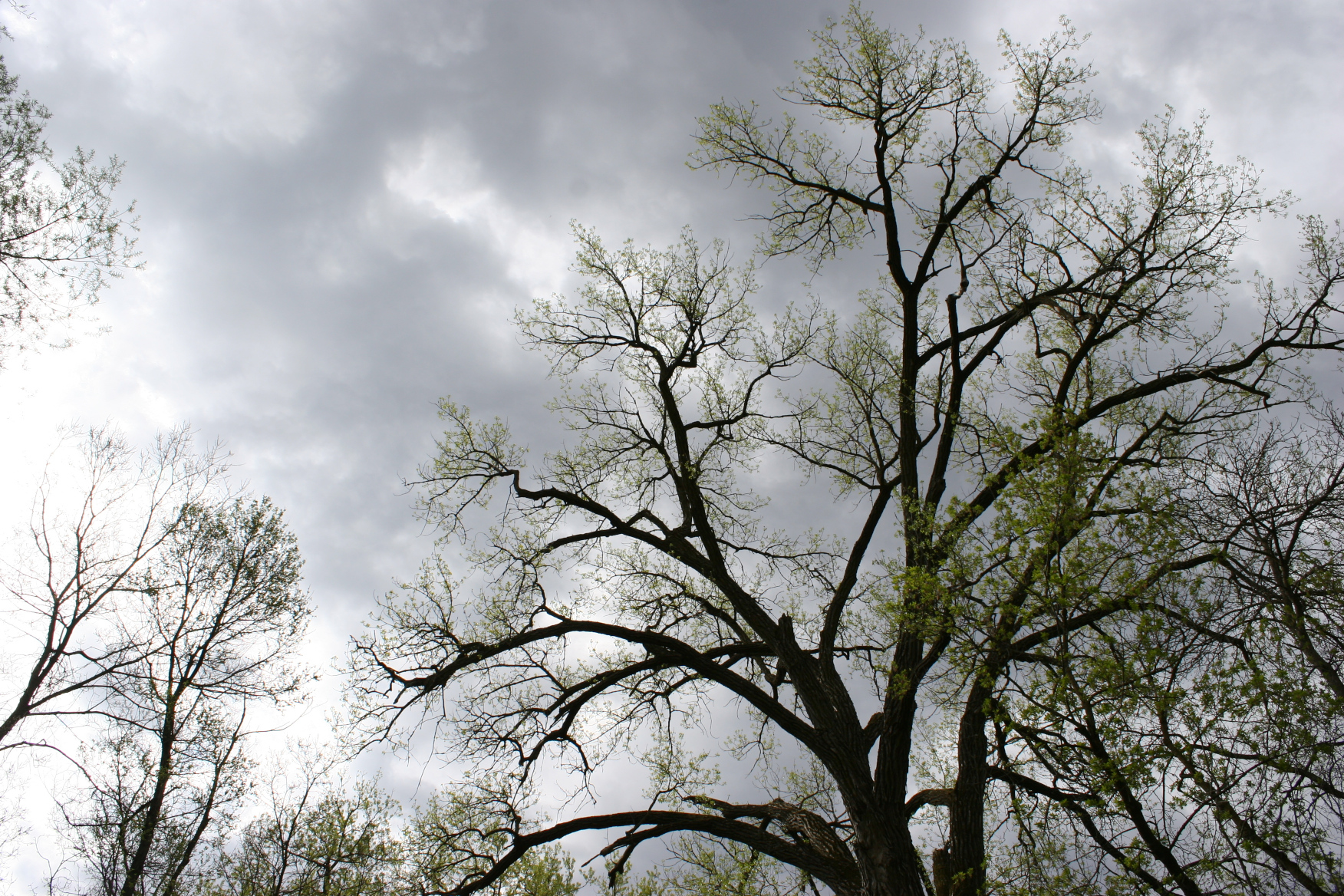
Trees tower over the trail. Minnesota Prairie Roots copyrighted photo.
All of this saddened me as I retraced my steps, watched as a young man walked along the railroad tracks, backpack strapped on, county music blaring. This should be a place of peace. Not only noise-wise, but also mentally. I pictured picnic tables near a footbridge devoid of menacing messages. I pictured a beautiful natural setting where I could bring my grandchildren. But, in reality, I understood that those tables would only be defaced, maybe even burned.
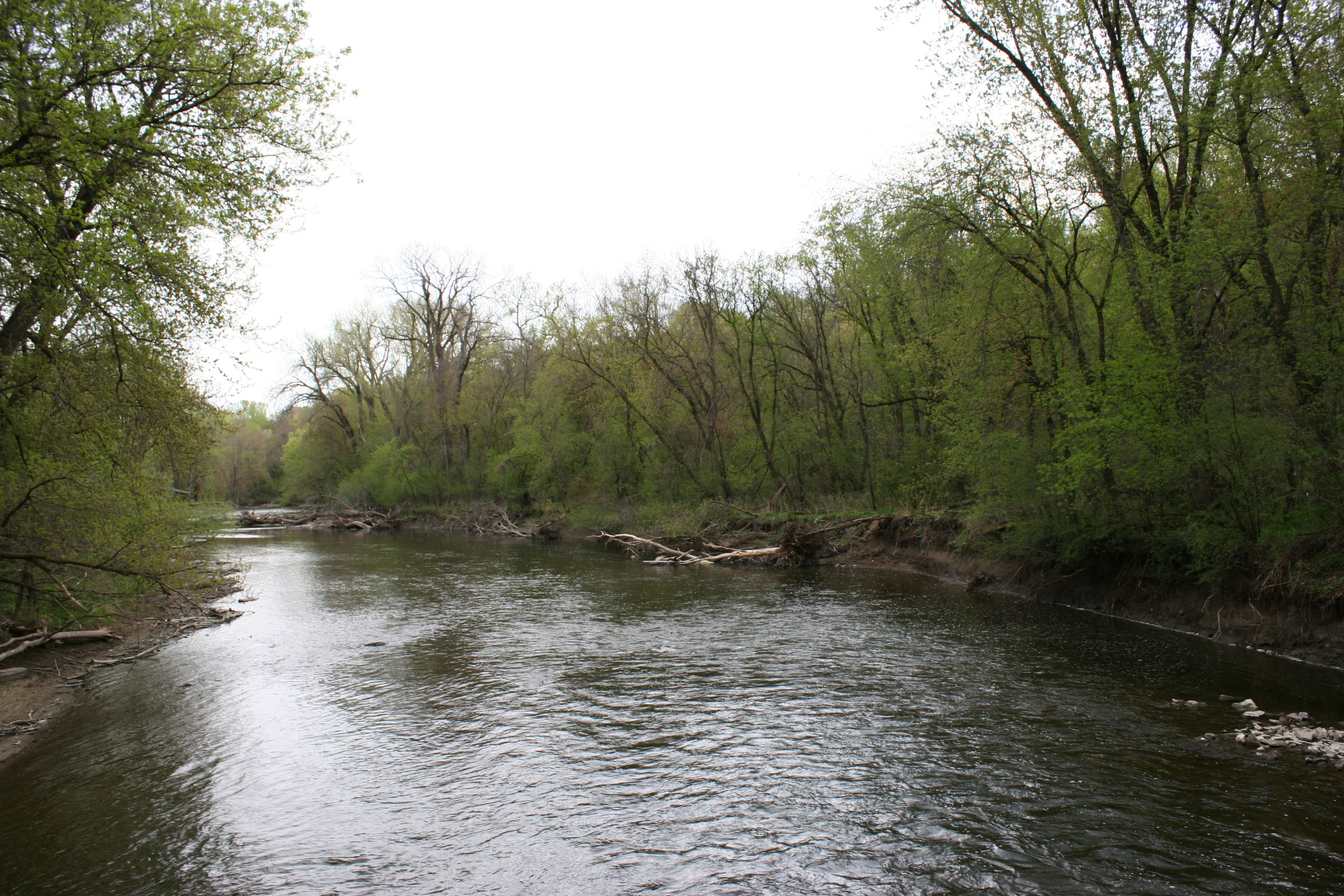
The beautiful Straight River, which winds past Teepee Tonka Park and River Bend Nature Center. Minnesota Prairie Roots copyrighted photo.
This could be so much. A respite. Water and woods converging. River flowing with history. Images of men hard at work tunneling into a 60-foot high hill. I could envision all of that…the possibilities beyond that which I’d seen.
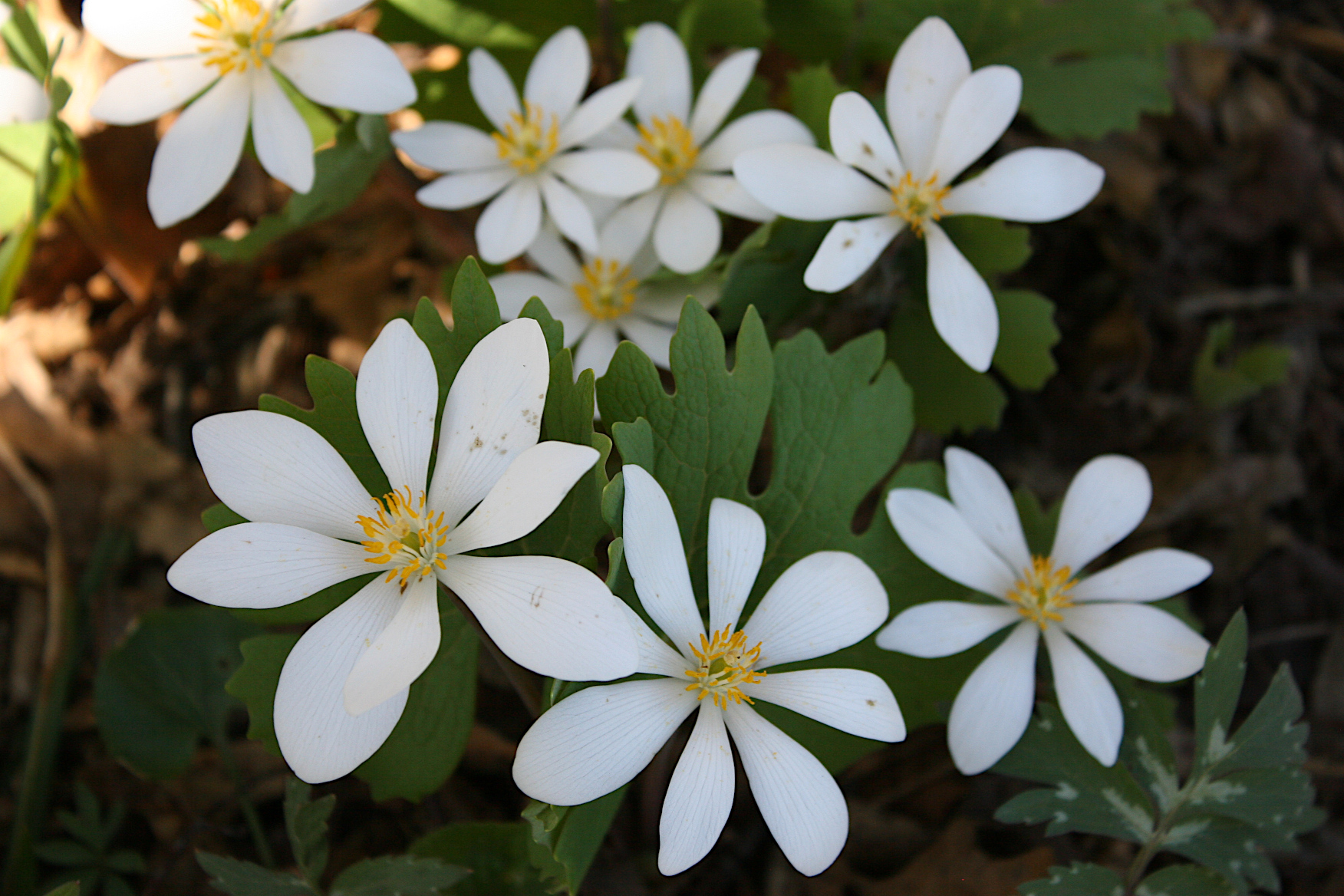
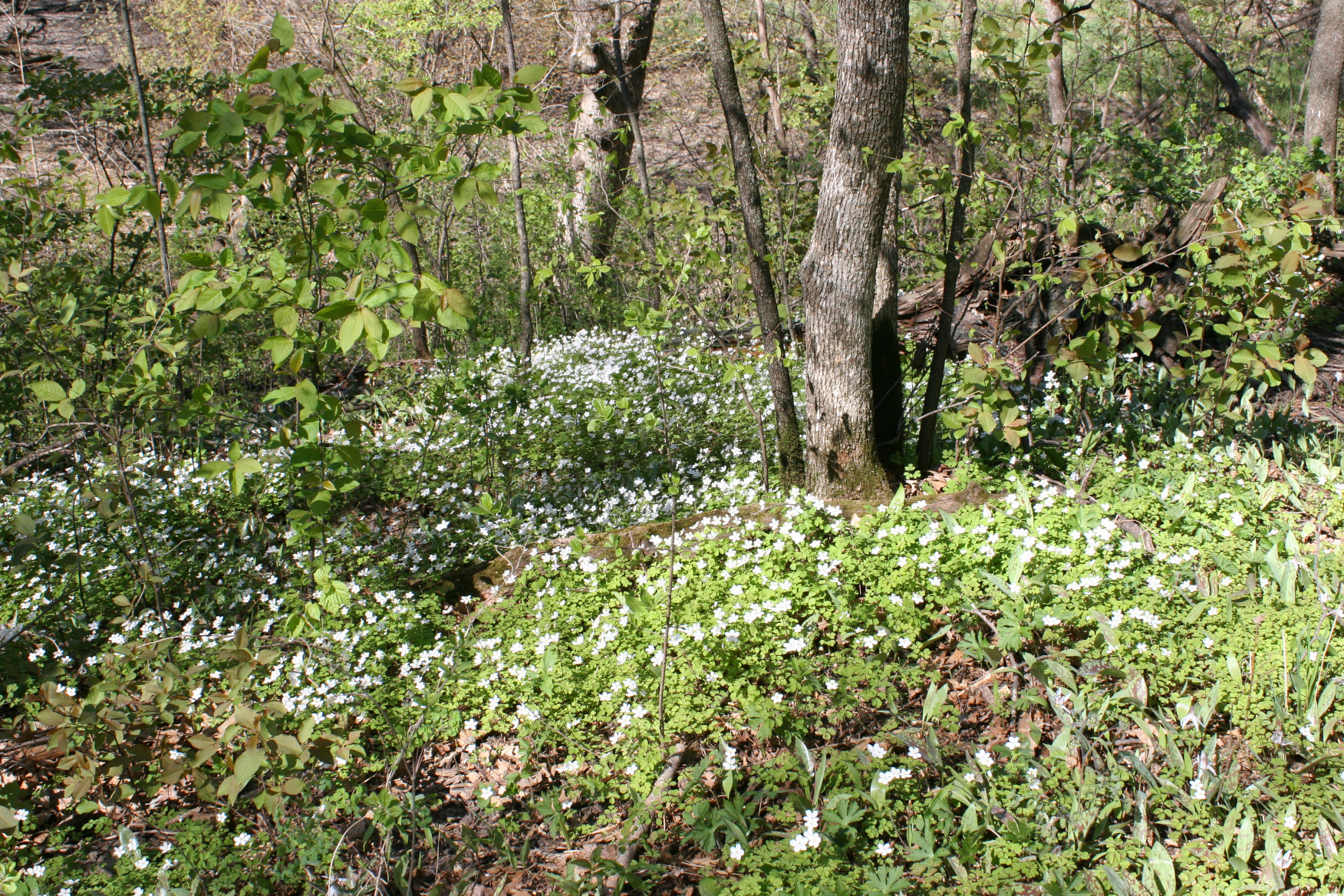
Spring wildflowers at Kaplan’s Woods. Minnesota Prairie Roots photo.
FLOWERS OF SPRING EMERGE in the woods. Among layers of dried leaves. Among fallen limbs. Sometimes blanketing hillsides.
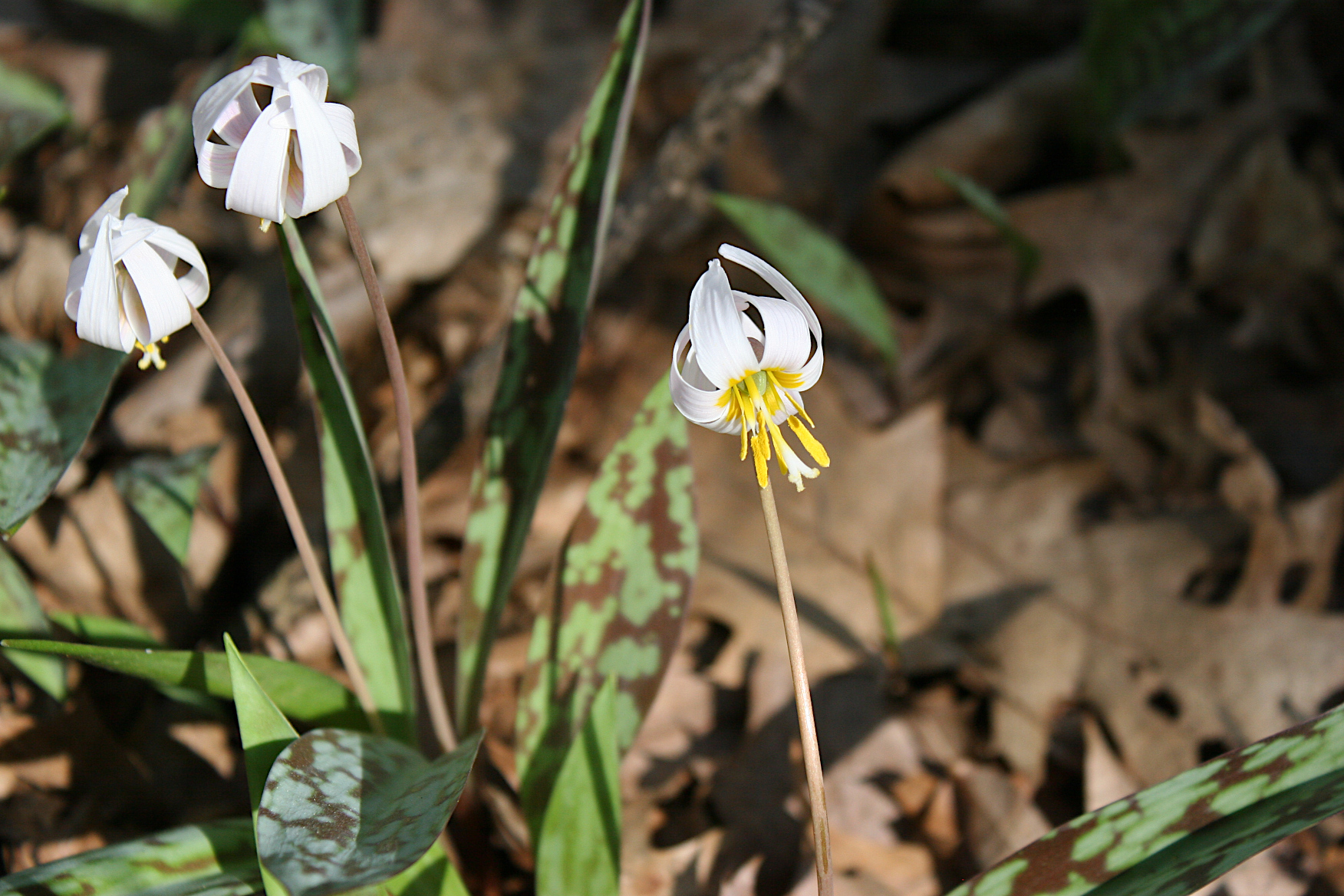
White trout lilies. Minnesota Prairie Roots photo.
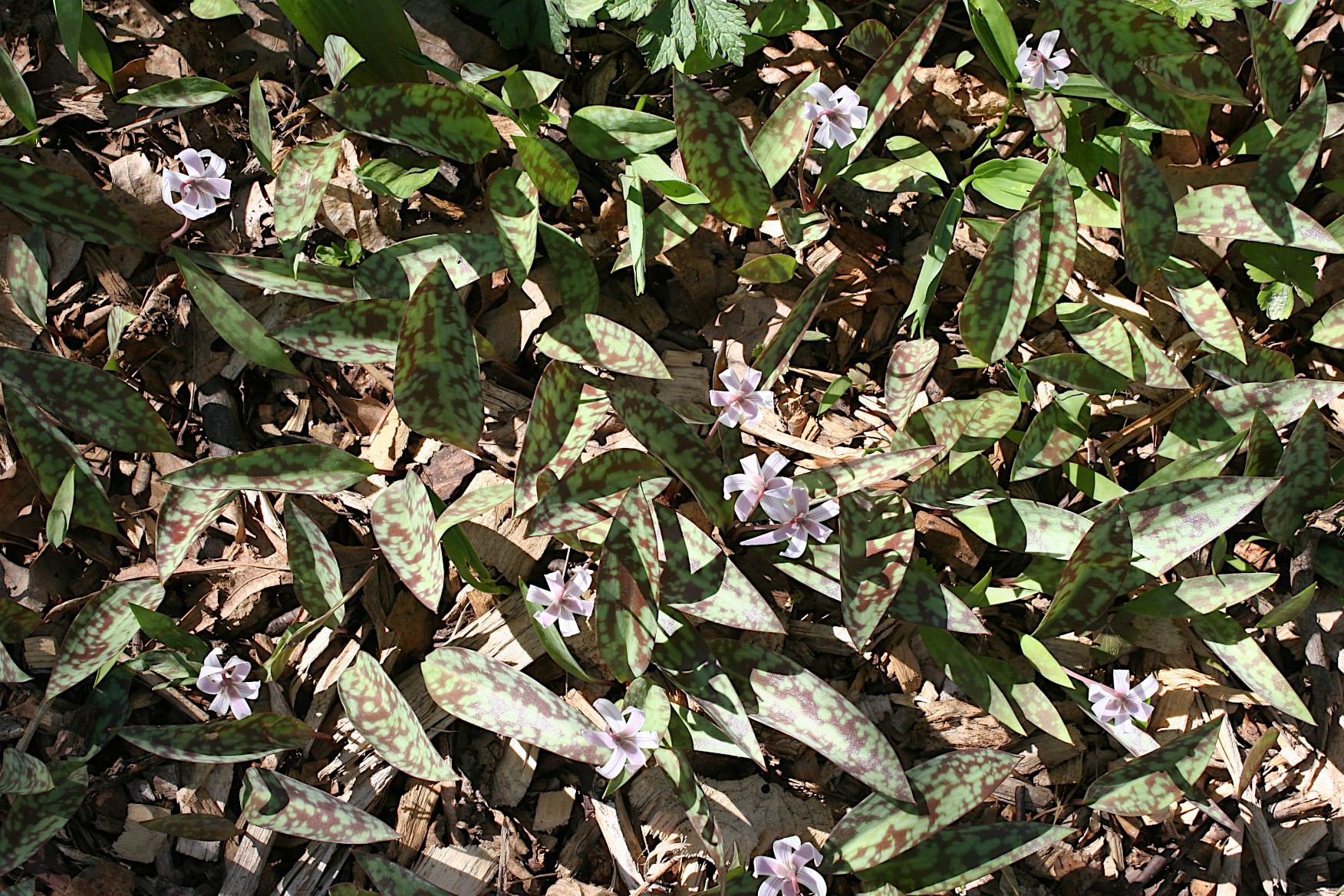
A mass of white trout lilies in the woods. Minnesota Prairie Roots photo.
An unidentified, by me, wildflower cluster. Minnesota Prairie Roots photo.
Saturday morning, as Randy and I hiked through Kaplan’s Woods Park in Owatonna, I found myself searching the edges of the wood chip covered trails for wildflowers.
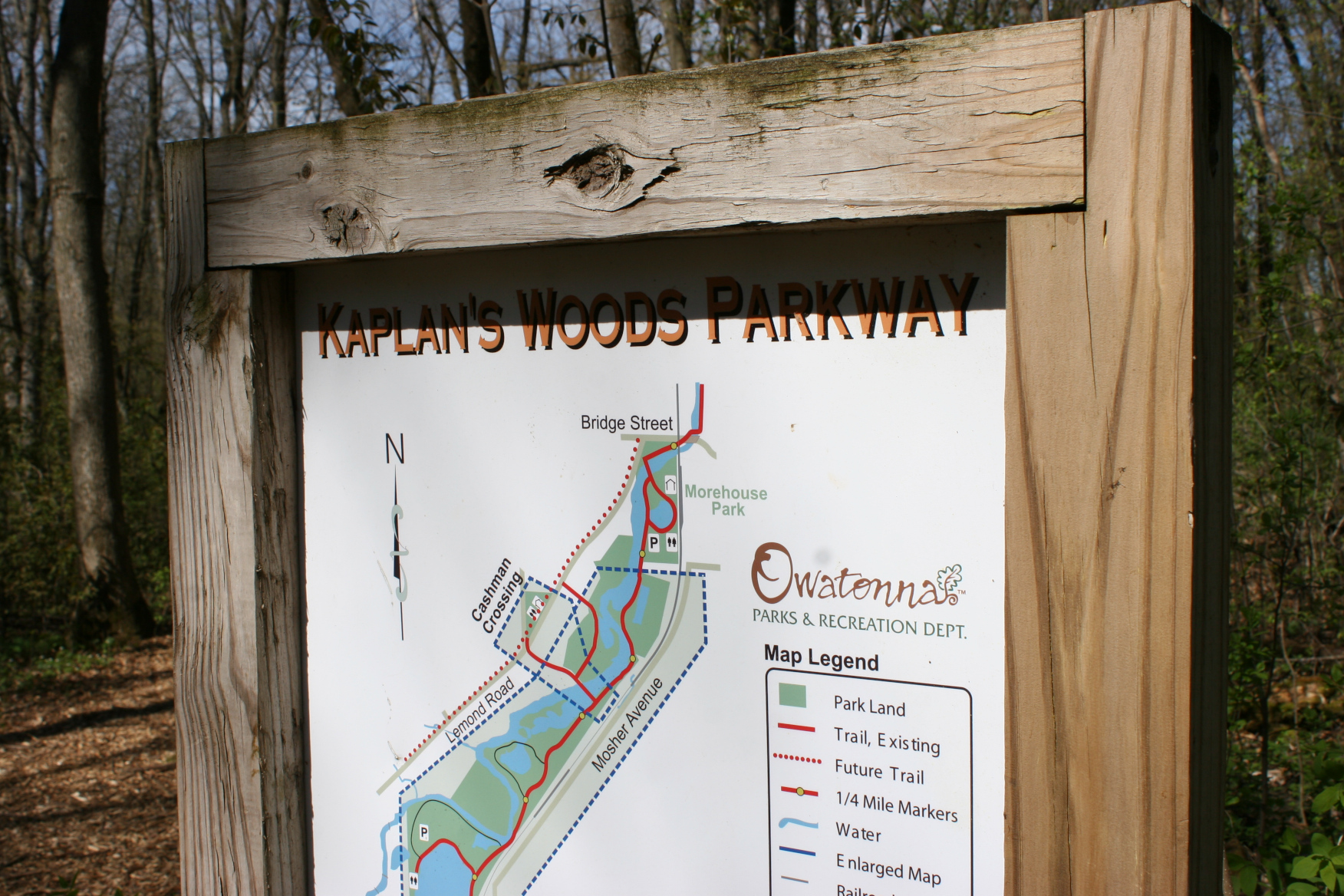
A sign inside the woods details the Parkway. Minnesota Prairie Roots photo.
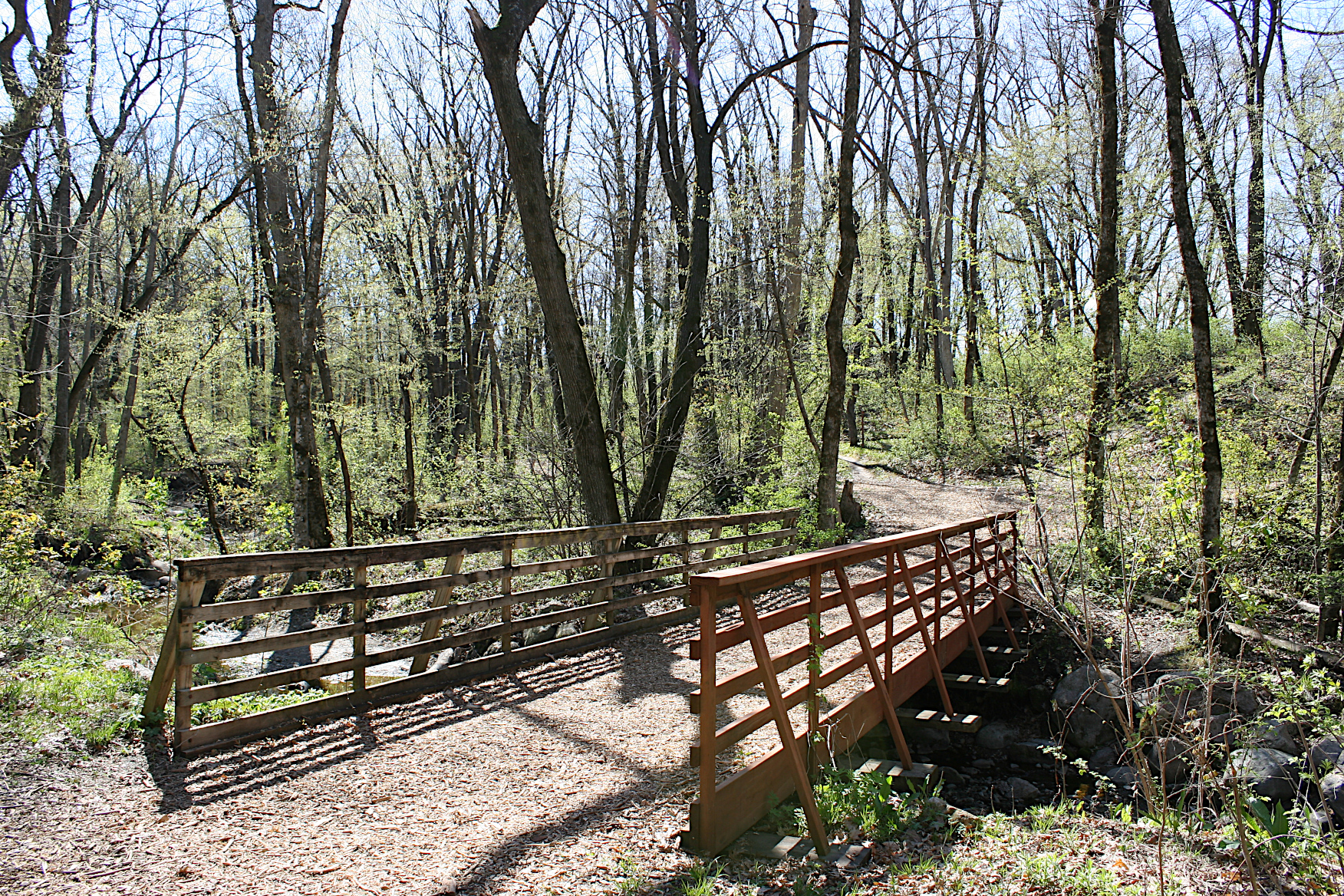
I love this foot bridge which crosses the creek and leads into the woods. Minnesota Prairie Roots photo.
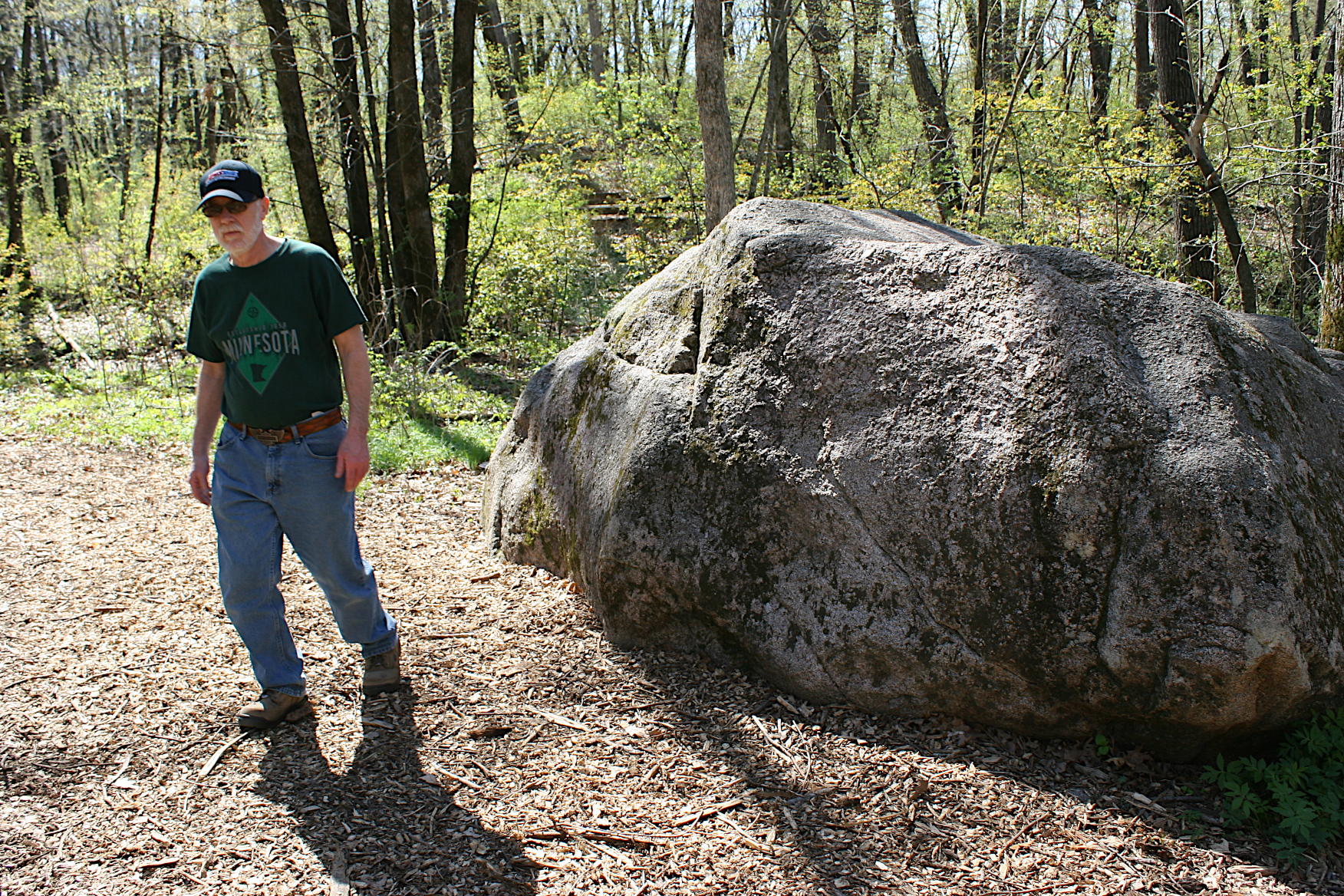
Near the creek, this solo boulder seems out of place in the woods. Minnesota Prairie Roots photo.
This time of year, especially, I crave flowers. They represent the shifting of seasons, of plant life erupting as the landscape transforms.
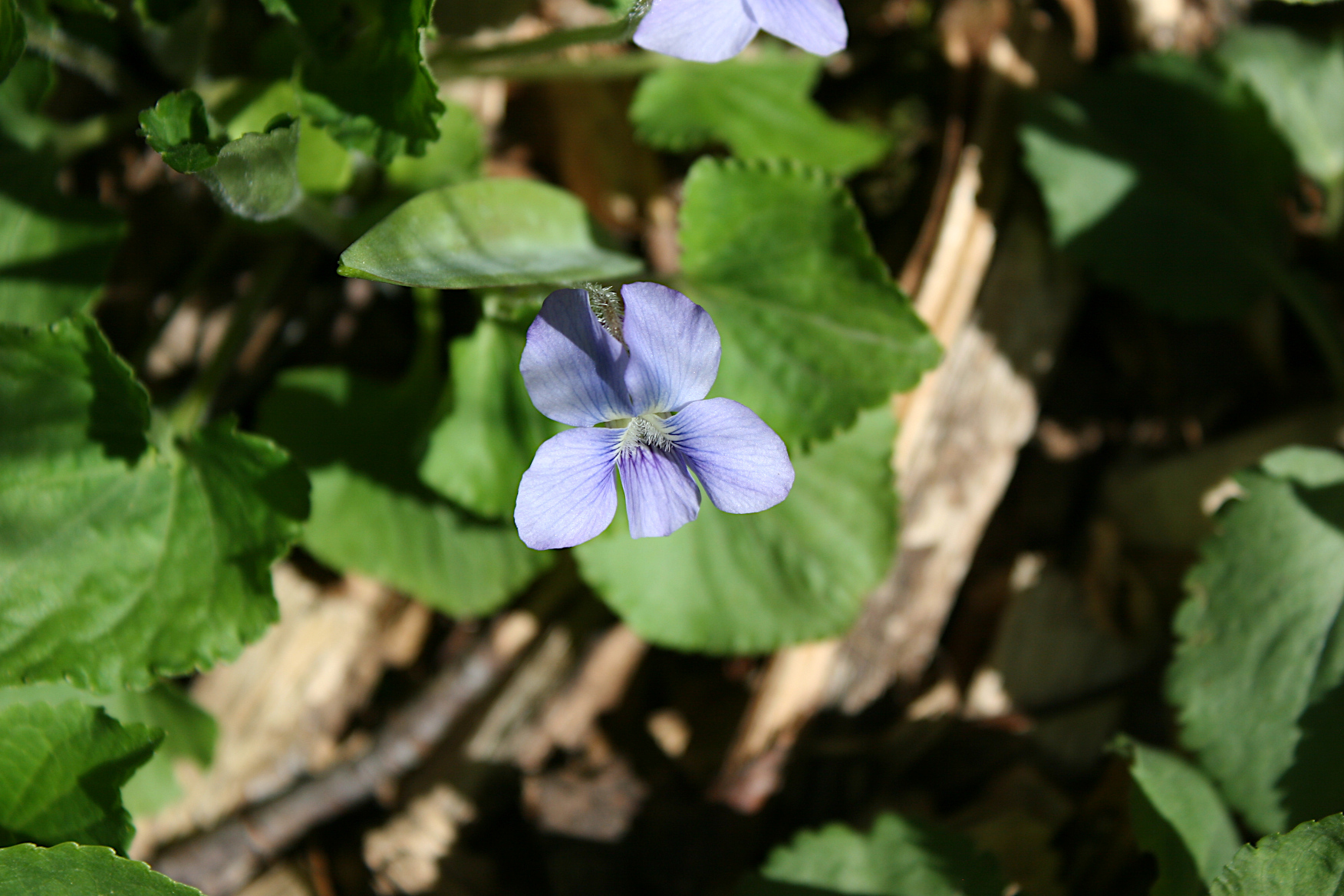
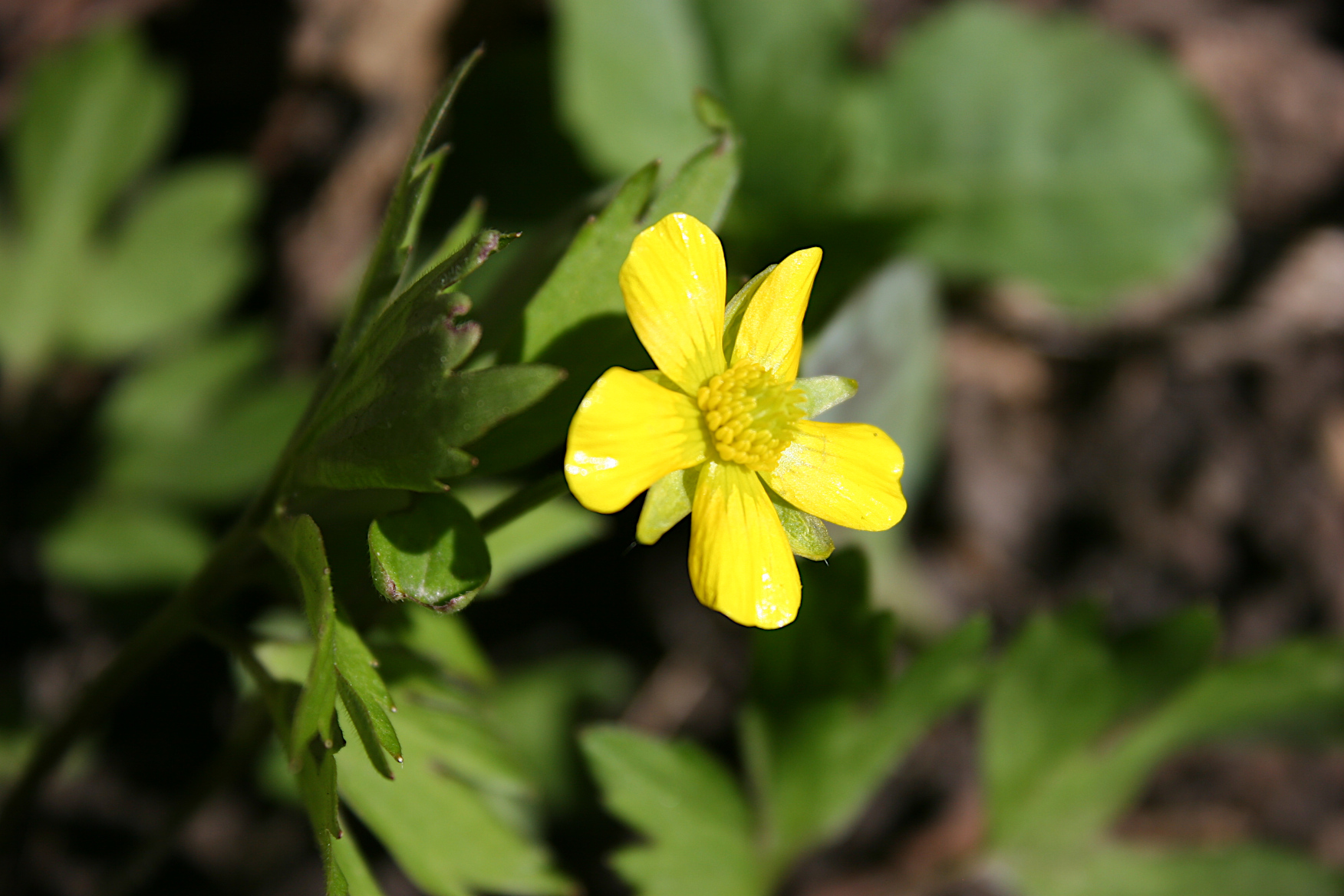
Dainty violets are among the spring wildflowers. Minnesota Prairie Roots photo.
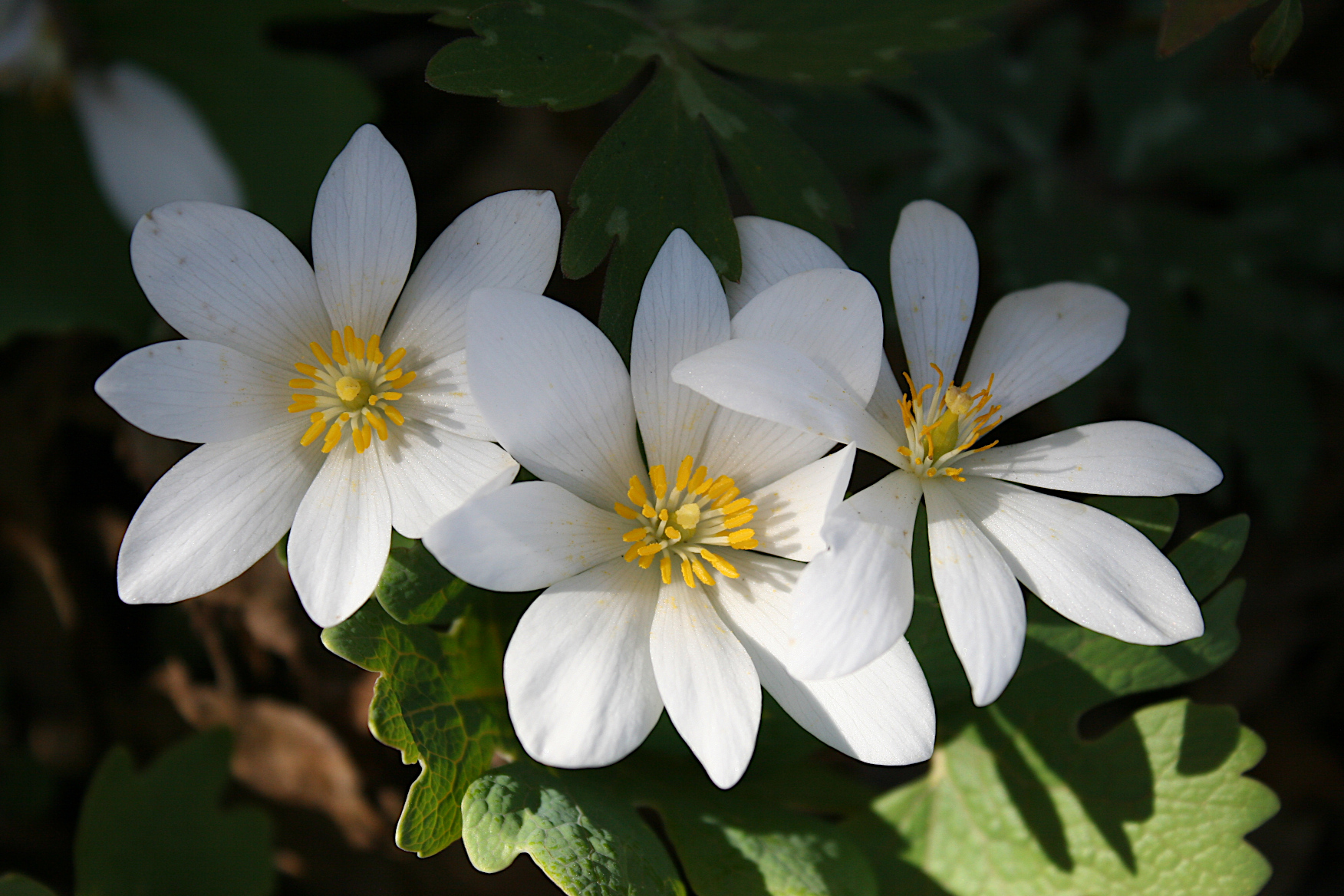
The largest of the wildflowers I saw. Can anyone identify these? Minnesota Prairie Roots photo.
The brightest of the flowers I spotted, this one also unknown to me. Minnesota Prairie Roots photo.
Green begins to fill the woods, accented by bursts of violet and yellow and white hugging the earth. Low to the ground, easily missed if you focus only on the trail ahead.
Low water. Minnesota Prairie Roots photo.
We have walked Kaplan’s only a few times and this visit I noticed the low water level of the creek that winds through the woods.
I noticed also the noise of traffic from nearby Interstate 35. Motorists en route somewhere on an incredibly warm and sunny morning in southern Minnesota. I hope that at some point they paused to appreciate the day. The sun. The trees. Maybe even the wildflowers. And the brush strokes of green tinting the landscape.
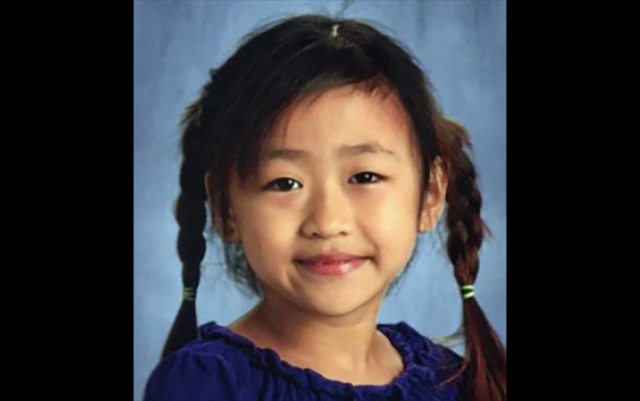
To see the photo of an adorable girl with a sweet smile and braided pigtails makes this all too real. This COVID-19. This deadly virus which, on April 25, claimed the life of Week Day.
She emigrated with her family from a Thai refugee camp to Marshall, Minnesota, in December 2015. Week was not quite 18 months old. The daughter of Mu Mu and He Lars. And then big sister to Michael.
And when she passed, the first grade student of Ms Hewitt and a classmate and friend at Park Side Elementary School.
My heart breaks for those who knew and loved this little girl. The girl who loved the color pink and singing and dancing and drawing and painting. The little girl with the kind heart, best attitude, bright smile.
Any death from COVID-19 is tragic. But, when a child loses her life, it’s especially difficult to take.
If you wish to show your love and support to the family of Week, please send cards, words of encouragement and donations to:
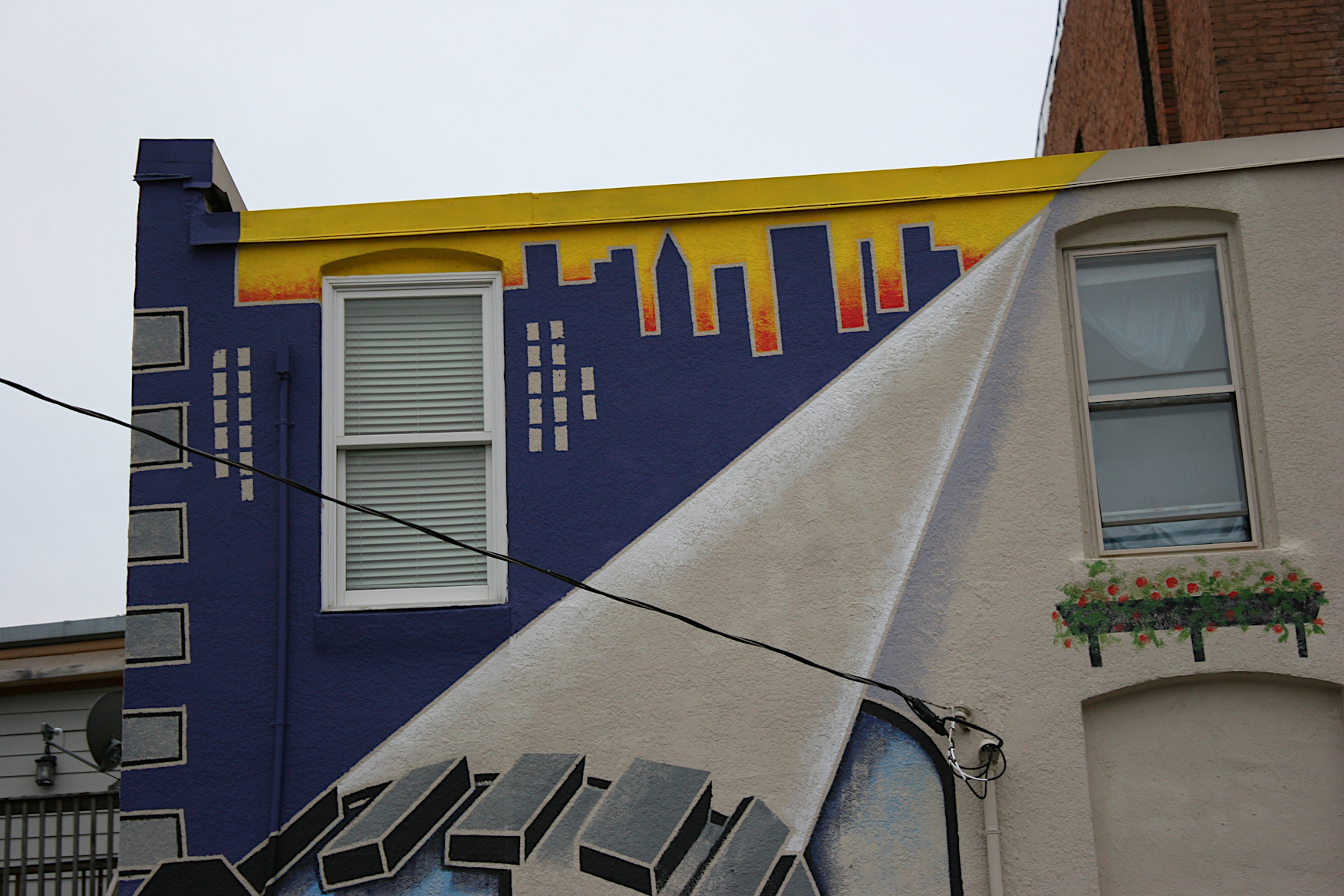
Faribault’s newest mural, completed late last year.
OUTDOOR PUBLIC ART enhances a community. It provides an outlet for creativity, adds interest to place and often brings joy. At least that’s my assessment.
As someone who grew up in rural southwestern Minnesota with minimal exposure to the arts—or perhaps more accurately minimal opportunity in the arts—I deeply appreciate the arts.
This sculptor of Alexander Faribault trading with a Dakota trading partner stands in Faribault’s Heritage Park near the Straight River and site of Faribault’s trading post. Faribault artist Ivan Whillock created this sculpture which sits atop a fountain known as the Bea Duncan Memorial Fountain. Minnesota Prairie Roots file photo.
My community of Faribault, where I’ve lived for the past 39 years, embraces creativity, centered today at the Paradise Center for the Arts. Yet, the visual arts extend well beyond the walls of the Paradise to stained glass windows in our historic churches, an art collection at Buckham Memorial Library, sculptures, architecture, home-grown shops, historic-themed murals and even the graceful curves of the historic viaduct.
In this January 2016 photo taken from the viaduct, you can see the back of The Upper East Side (white stucco building) before the mural was added. The historic building originally housed W.H. Stevens Drug. Minnesota Prairie Roots file photo.
You can see Faribault’s newest addition to the outdoor art scene from that viaduct, which offers a sweeping view of the downtown area.
The Upper East Side mural, a project of owner Suzanne Schwichtenberg and Jarvis, is more modern and graphic with strong lines. Less detailed. Bold. With unexpected pops of color. I find the zipper painted into the mural to be especially creative—the unzipping of history, of stories, of past and present. The mural invites introspection rather than simple reflection on an historic place or memory.
That’s my take. Not as someone with an art education, but rather as a creative who has grown to appreciate the arts in her community and beyond.
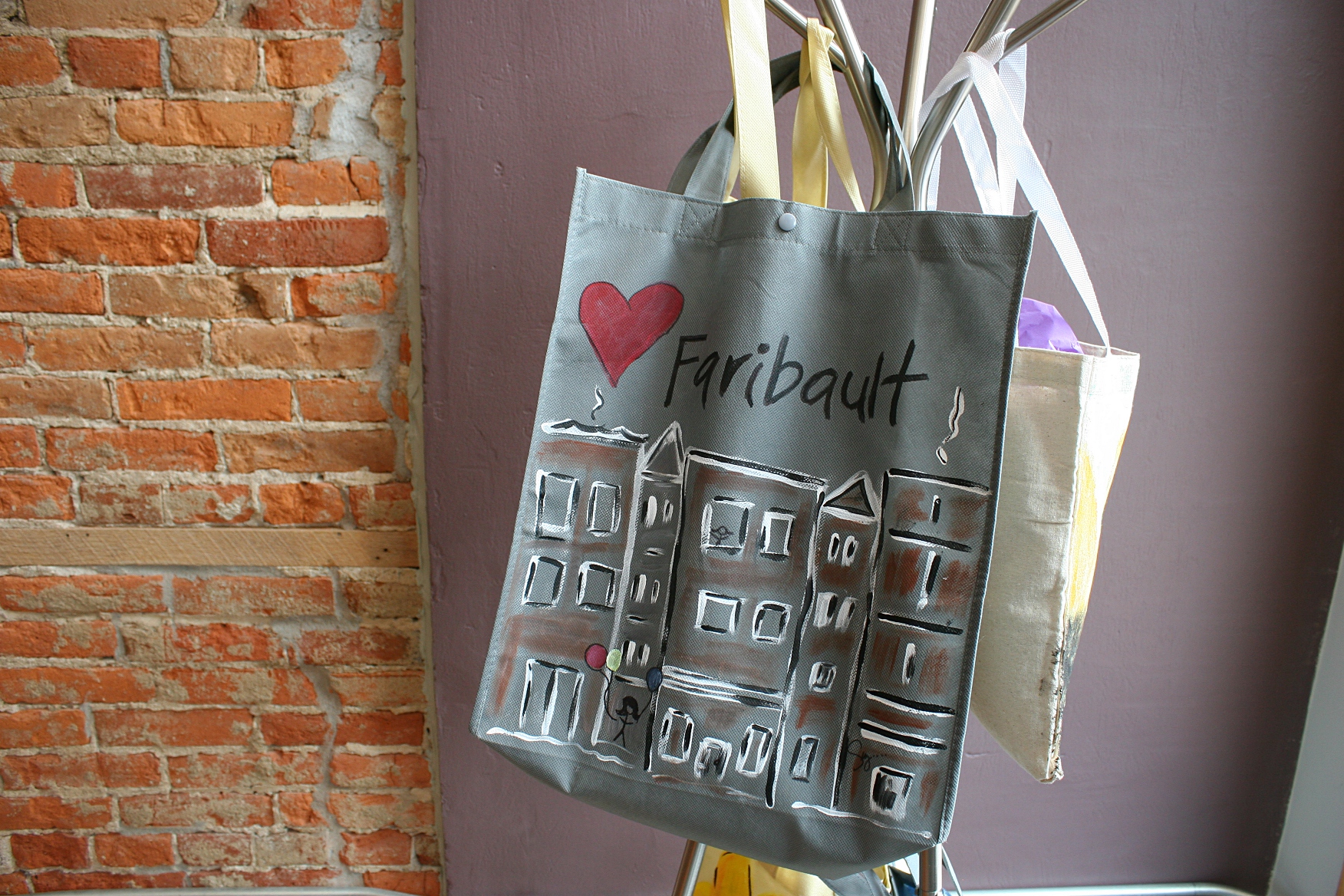
A locally-themed tote displayed at The Upper East Side. Minnesota Prairie Roots file photo September 2018.
FYI: Suzanne Schwichtenberg leads paint-and-sip events and other painting sessions at The Upper East Side and also takes painting/social gatherings on the road. Jarvis is a third-generation artist specializing in historical sketches and scenes from everyday life. He is passionate about local and regional history, authoring a book on the area’s mill history.
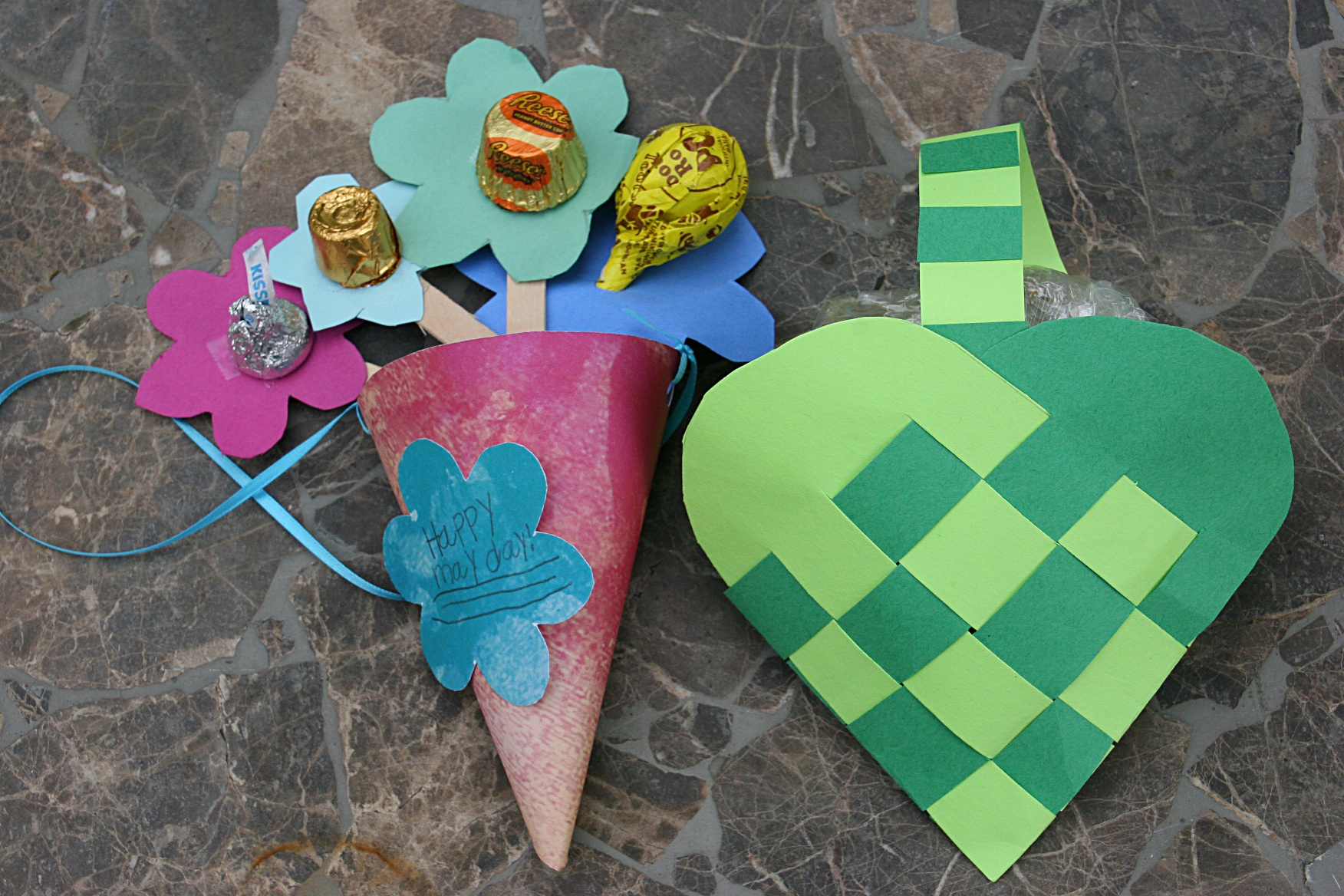
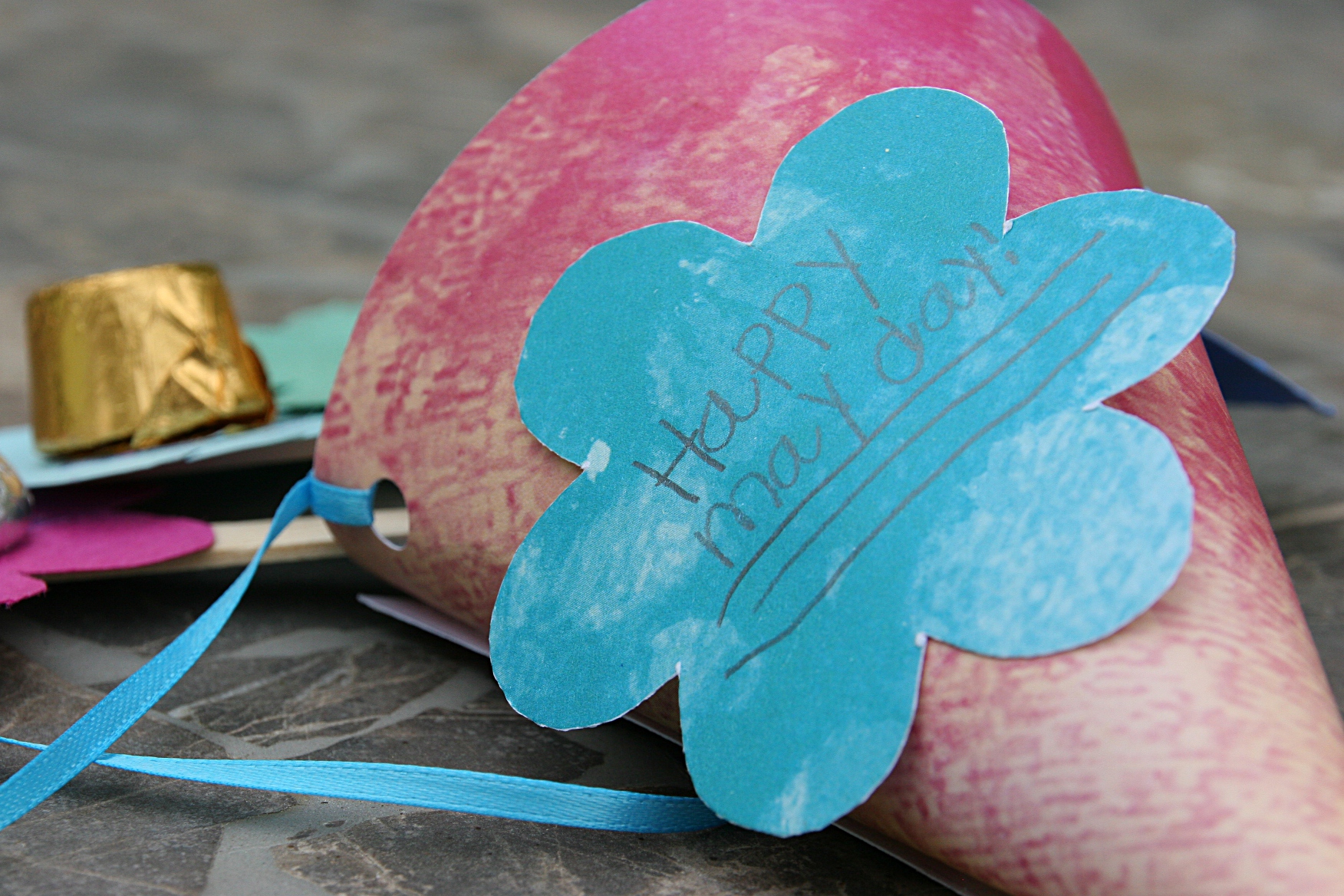
Two May Day baskets were dropped on my front steps in 2015. Minnesota Prairie Roots file photo.
HAPPY MAY DAY, dear readers!
Do you hold sweet childhood memories of May Day like me? I remember elementary school days of weaving baskets from strips of colored paper and crafting paper flowers to arrange inside. And then gifting the basket to Mom.
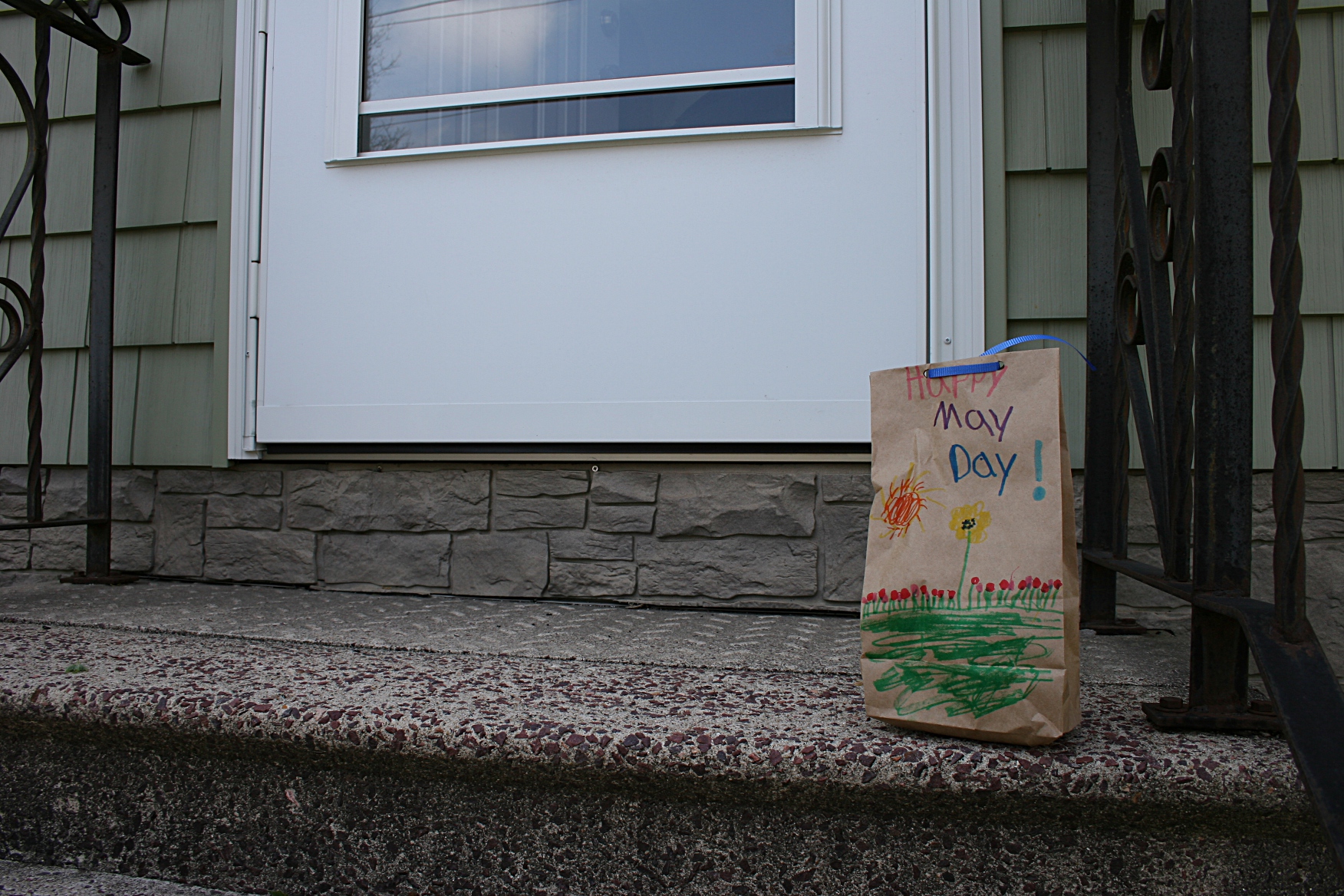
Four homemade chocolate chip cookies were tucked inside a May Day basket. Minnesota Prairie Roots file photo 2015.
And then, a few years back, hearing my doorbell ring on May 1 to find bags and baskets crafted by the children of friends. Homemade chocolate chip cookies and Puppy Chow were tucked inside. Candy centered flowers on another. Their thoughtfulness brought me such joy.
The sweet May Day surprise friends dropped onto my front steps in 2012. Minnesota Prairie Roots file photo.
The gifts of May Day had come full circle. Perhaps today you can drop a May Day basket on a front stoop, ring the doorbell and run away before being spotted. Or walk if you can’t run.
An interior view of the swine barn, building #7, set for demolition today.
Or you can give the gift of time, if you live in my area. The Rice County Fair Board is seeking volunteers to dismantle the aged swine barn today. Just show up with your gloves and hammer (and other demo tools) at 9 a.m. at the Rice County Fairgrounds in Faribault. Many hands make light work. The building will eventually be replaced with a new barn.
Fans watch The Kentucky Derby at the Paradise Center for the Arts in 2015.
At the end of the day, you can kick back and enjoy The Kentucky Derby. Typically, the Paradise Center for the Arts in Faribault holds a watch party, Big Hats & Big Hearts. But, because of the pandemic, that won’t happen this year.
My friend Beth Ann gifted me with official Kentucky Derby from 1986 and 1991 some years ago. Minnesota Prairie Roots file photo.
But in my mom’s southwestern Minnesota care center, they’ll host a Derby party for residents, including hats crafted especially for the ladies. I’m thrilled. My mom has always loved The Kentucky Derby. The big hats and finery. Watching the race. If this party sparks memories, brings happiness into her day, then I am grateful. It’s been a difficult past year-plus for our seniors, their families and those who care for them. They need this escape to Kentucky, to watch horses with names like Known Agenda, Midnight Bourbon, and Soup and Sandwich (what kind of name is that?) compete.
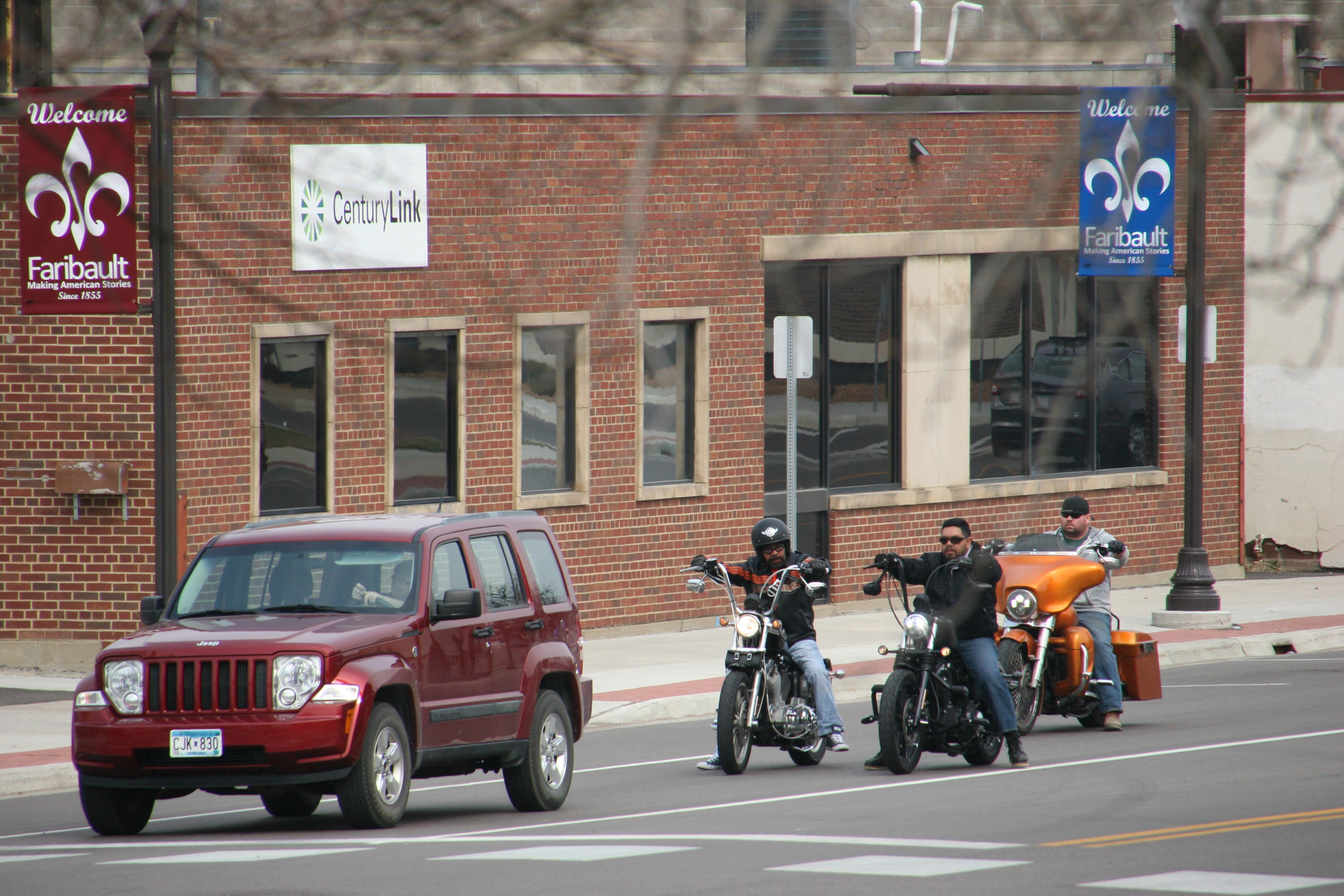
It’s motorcycle season in Minnesota. Minnesota Prairie Roots file photo 2020.
One more interesting event in the region rounds out the weekend, this one beginning at 10 a.m. Sunday in Owatonna. It’s the 25th annual Owatonna Bike Blessing at the Steele County Fairgrounds. Motorcycle riders and others will gather for music (by the Roadside Redemption Band), a guest speaker, food (available from 10 vendors) and blessings.
A May Day basket I received in 2015. Minnesota Prairie Roots file photo.
To you, my dear readers, whatever you do this weekend, may you be blessed. Happy May Day!


















 Minnesota Prairie Roots
Recent Comments