Minnesota Prairie Roots

Writing and photography by Audrey Kletscher Helbling

Don’t be an outlaw in Northfield: Protect the herd August 2, 2020

In the front display window of a downtown Northfield, Minnesota, business.


SUPERHEROES mask up.
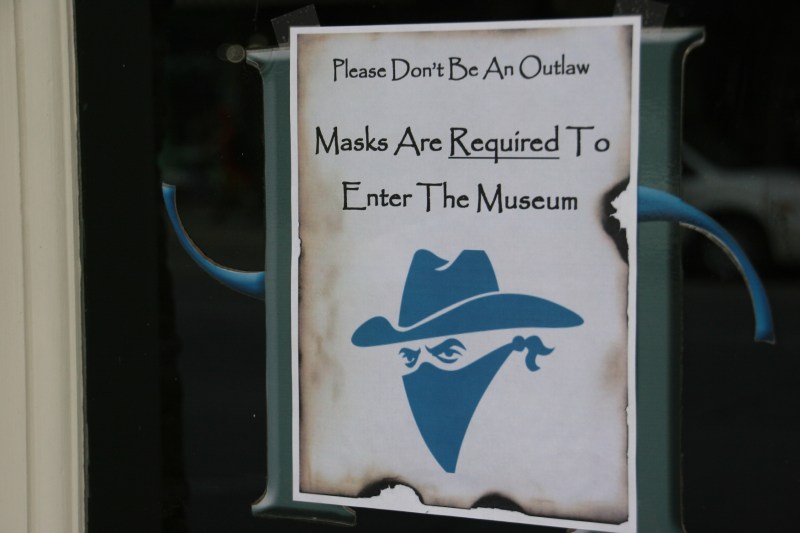
 

The image represents the James-Younger Gang.


As do outlaws.
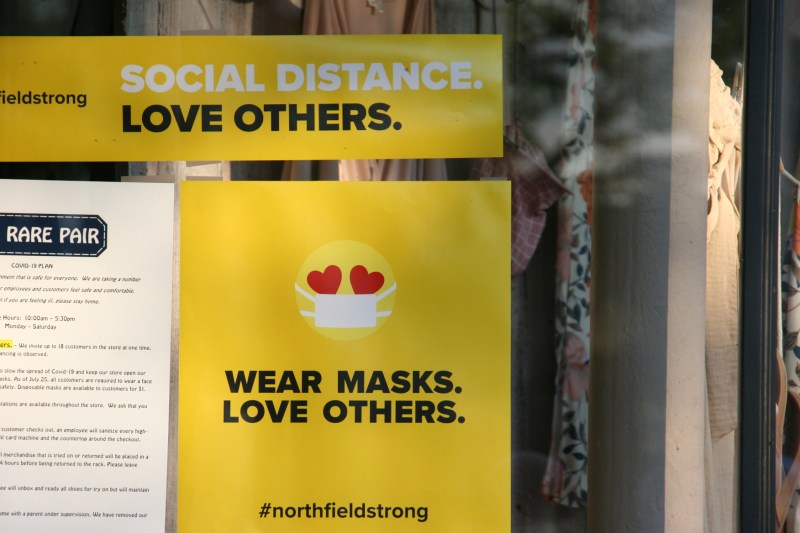
 

The reason the Rare Pair gives for wearing face masks.


And those who love others.
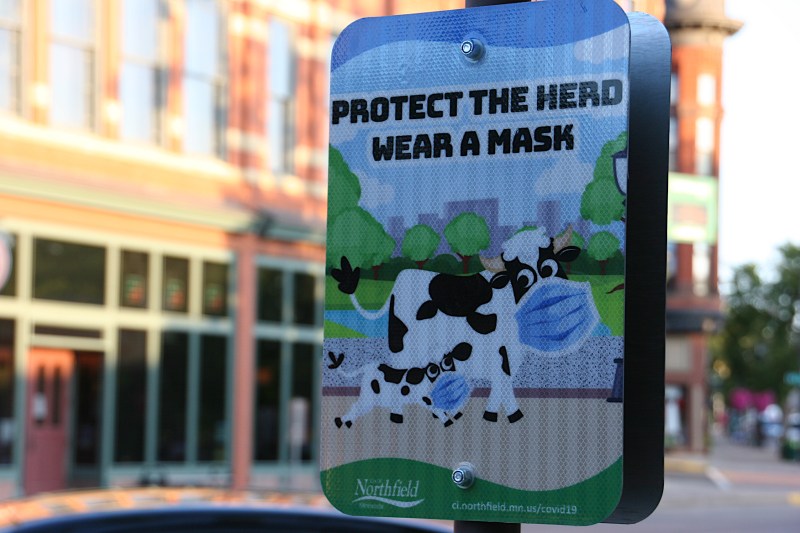
 

“Protect the herd” plays off the city’s “Cows, Colleges and Contentment” slogan. Northfield is home to Carleton and St. Olaf Colleges.


When I walked through downtown Northfield—the place of Cows, Colleges and Contentment—on Friday evening, I intentionally looked for signage on Minnesota’s new face mask mandate. This college city did not disappoint. I found signs ranging from serious to humorous.
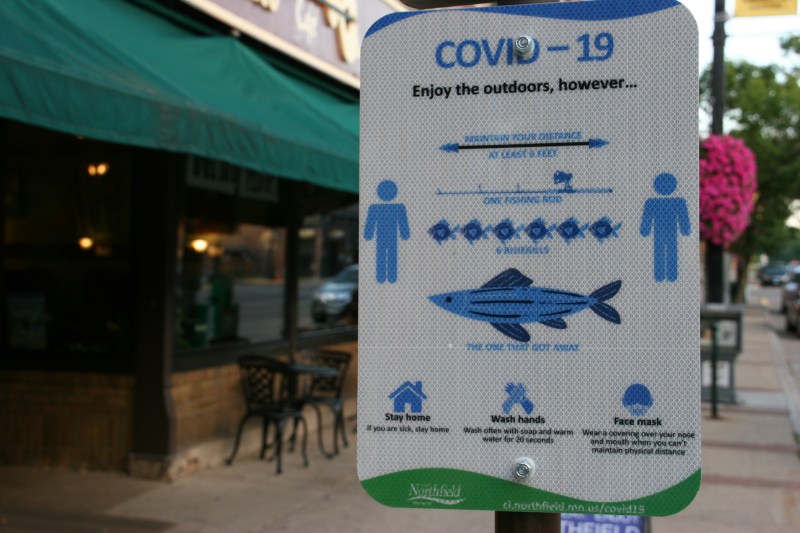
 

More humor in a COVID-19 sign that relates to safe practices outdoors.


I especially welcomed those that made me laugh, something we all need in these days of living with COVID-19, when even leaving our homes sometimes seems like venturing into the Wild Wild West.

 

Site of the famous bank raid, now a museum.
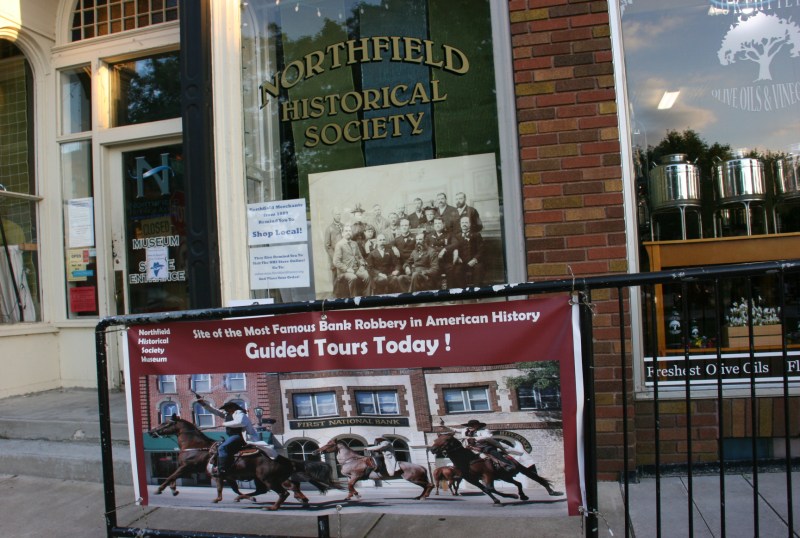
 

Tour the museum and learn the story of the bank raid.
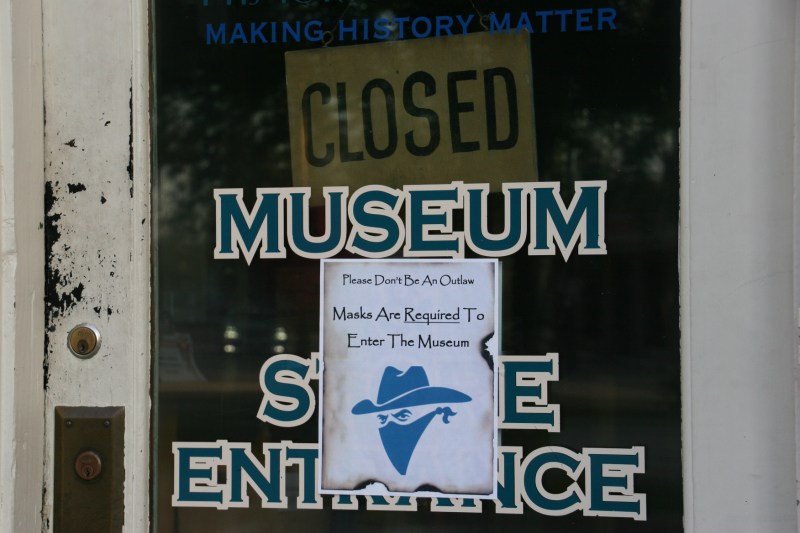
 

Northfield Historical Society face mask humor..


At the Northfield Historical Society, the historians draw on Northfield’s claim to fame—the defeat of the James-Younger Gang during an 1876 robbery of the First National Bank—to get across the mask mandate message. Please Don’t Be an Outlaw, states the message on museum doors.
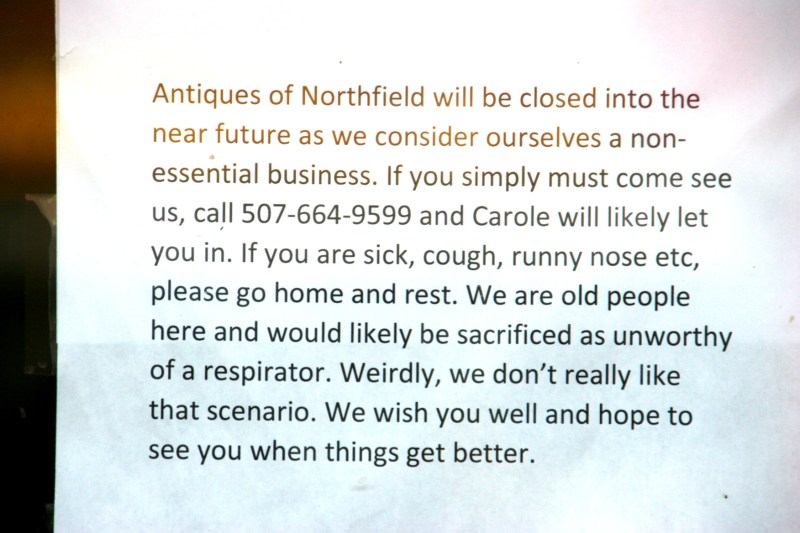
 

A message posted on the front door of Antiques of Northfield.


At Antiques of Northfield, a personal note from Carole about the store’s temporary closure made me simultaneously laugh at her comment and then reflect. Too many of our seniors have died as a result of contracting COVID-19.
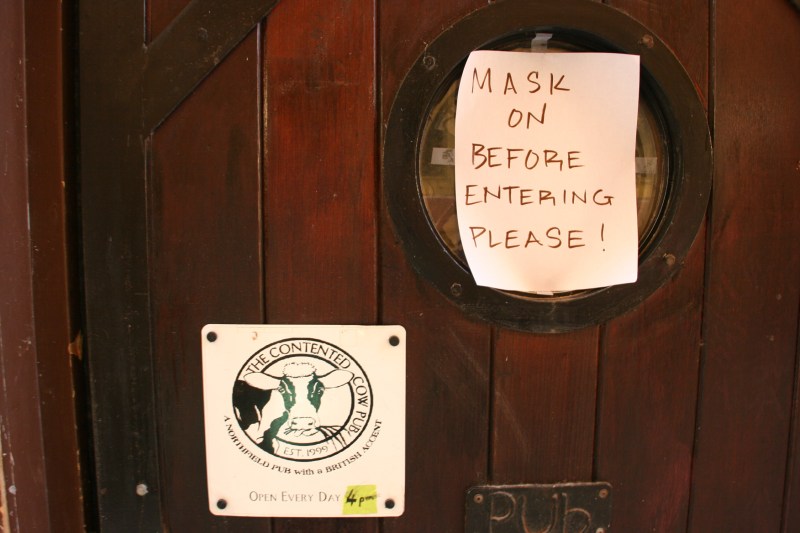
 

The sign on the door of The Contented Cow, a British style pub in downtown Northfield.


Some mask signs are more straightforward, like at The Contented Cow, with a please added to the request.
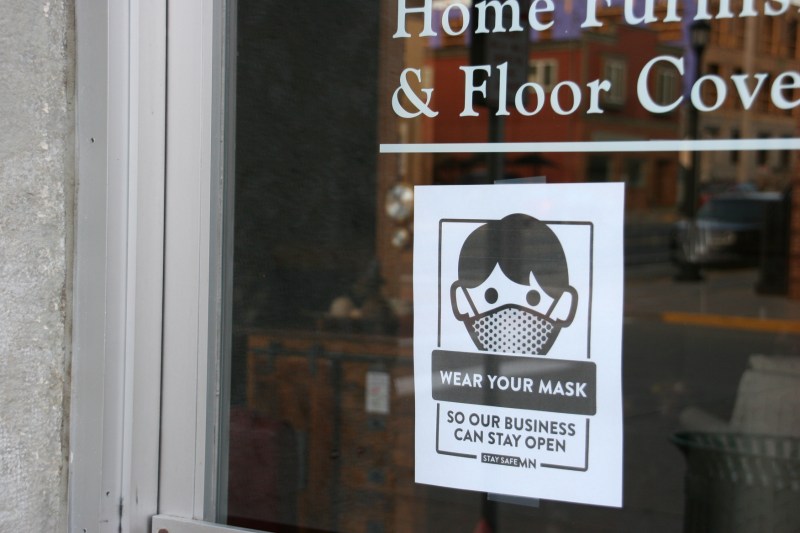
 

This Northfield business wants to stay open.


At a home furnishings and floor covering store, they want customers to mask up so businesses can stay open, as good a reason as any for masks.
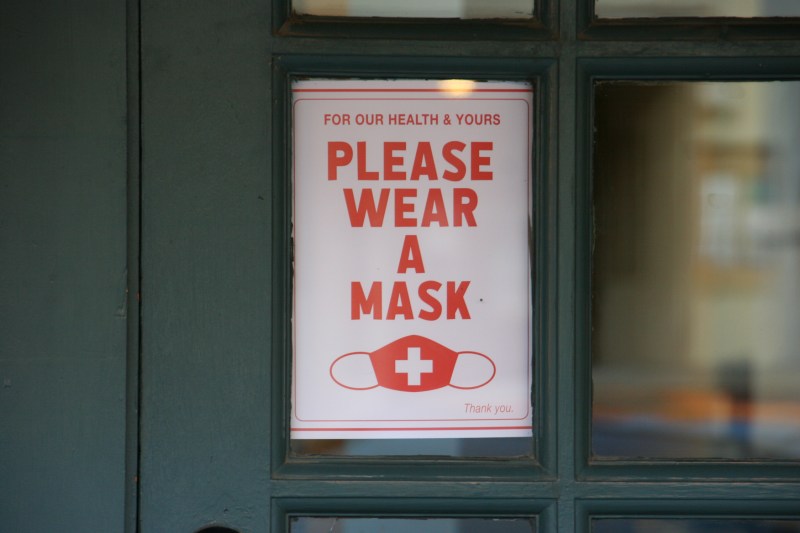
 

The #1 reason to mask up.


I appreciate, too, the signage that states the clear and obvious scientific reason for wearing a face mask during a global pandemic: for our health & yours.
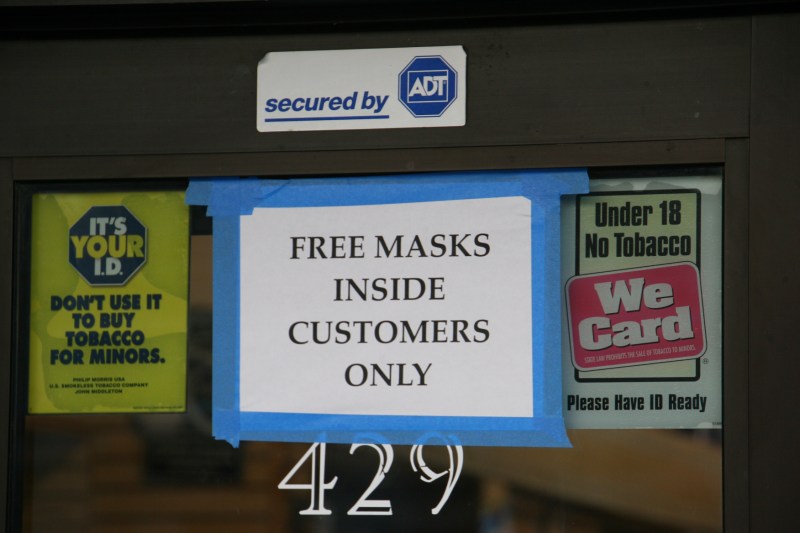
 

For those who forgot their masks… Note that a new Minnesota state law went into effect on August 1, raising the age to buy tobacco to 21. These signs were photographed on July 31.


At the tobacco shop, customers can even get a free mask inside the store.
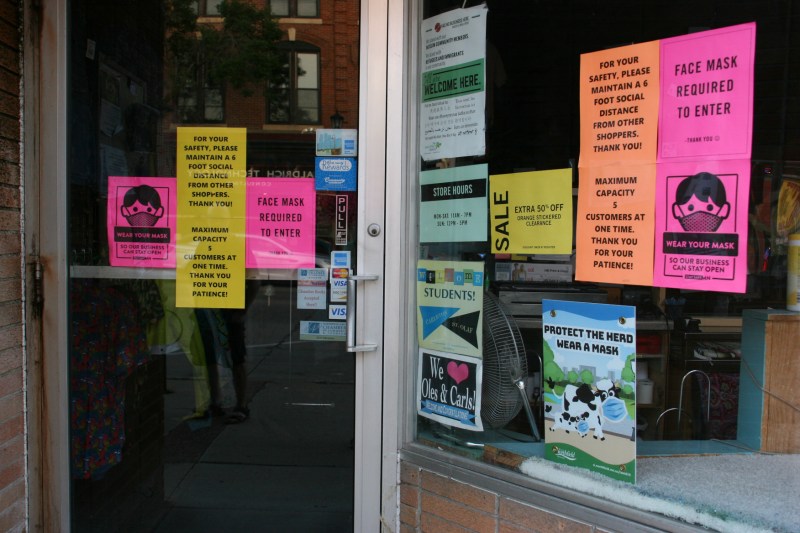
 

Customers can’t possibly miss all the signage at this Northfield business.


Whatever it takes. We all need to get the message loud and clear that masks help stop the spread of this virus. Yeah, they’re uncomfortable and hot and diminish social interaction. But we can manage those minor inconveniences because, you know, this is something simple we can do to show our care for others and protect each other.
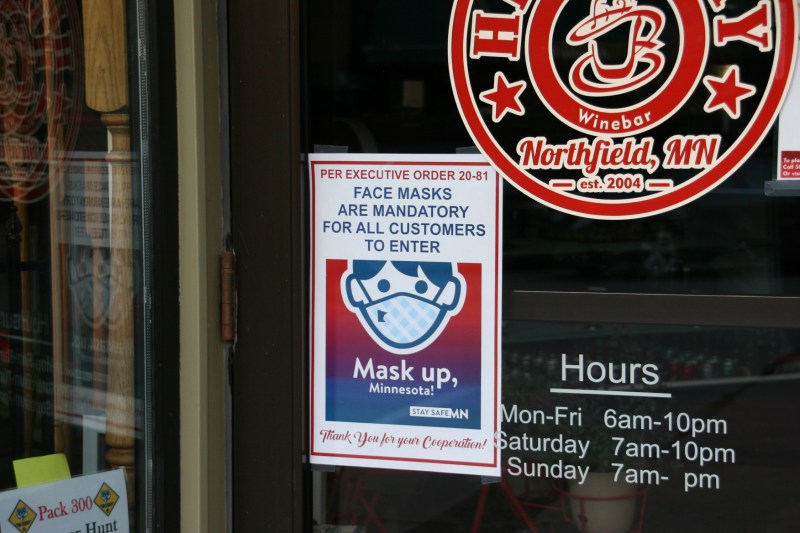
 

Just do it. Wearing a mask is required in indoor public places in Minnesota.


And masks are mandatory in Minnesota, along with 32 others states (as of this writing).


© Copyright 2020 Audrey Kletscher Helbling


Walk, sit & then study Faribault’s history via educational benches August 1, 2020


“Faribault supports the military” themes a recently-installed bench.


SEVERAL DAYS AGO, I featured historic-themed benches recently installed in historic downtown Faribault. Well, more have been added to Central Avenue. And some I missed during my first walking tour. More are yet to come.

All 12-plus (I’ve lost count) highlight important aspects of my community’s history in images and words.


Alexander Faribault and the fur trade focus a bench on the north end of Central Avenue.


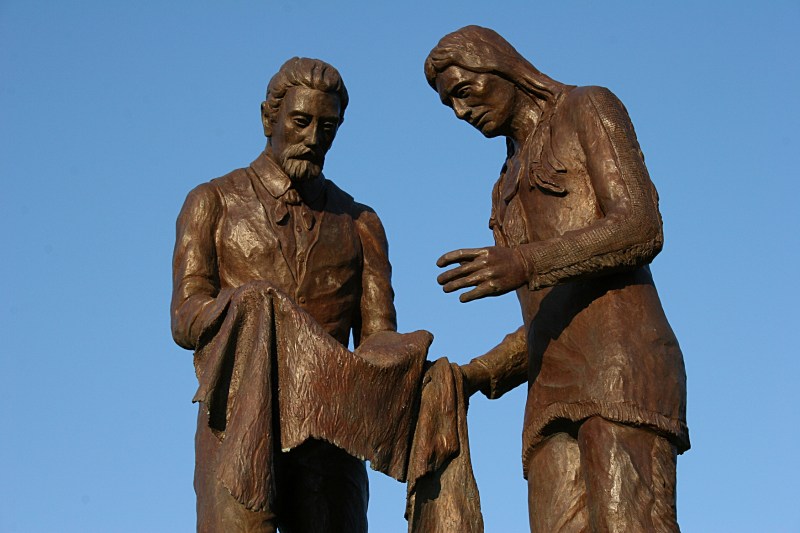
This depiction of Alexander Faribault trading with a Dakota trading partner stands in Faribault’s Heritage Park near the Straight River and site of Faribault’s trading post. Faribault artist Ivan Whillock created this sculpture which sits atop a fountain known as the Bea Duncan Memorial Fountain. Minnesota Prairie Roots file photo.


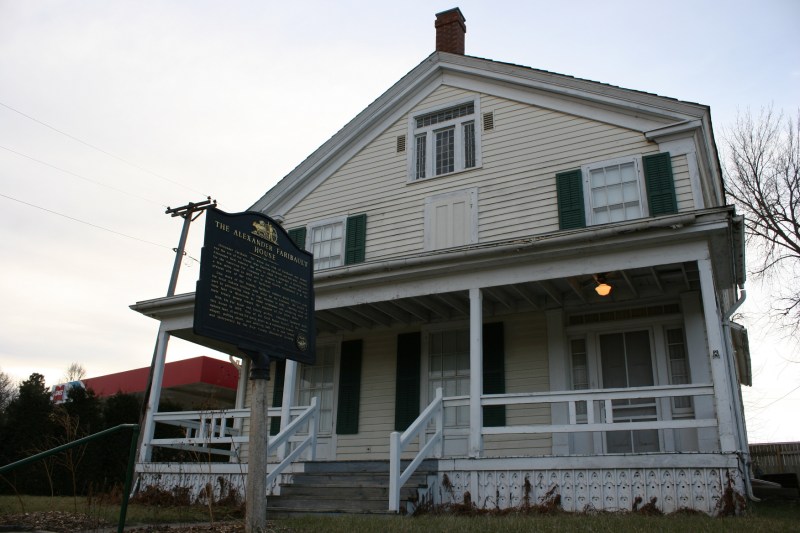
The home of town founder Alexander Faribault, located just a block off Central Avenue. Minnesota Prairie Roots file photo 2017.


One bench focuses on town founder, Alexander Faribault, and the local fur trade he began with the Dakota peoples. He was of French-Canadian and Dakota heritage. One of his fur trading posts eventually became the site for the town of Faribault.


Focus on downtown.


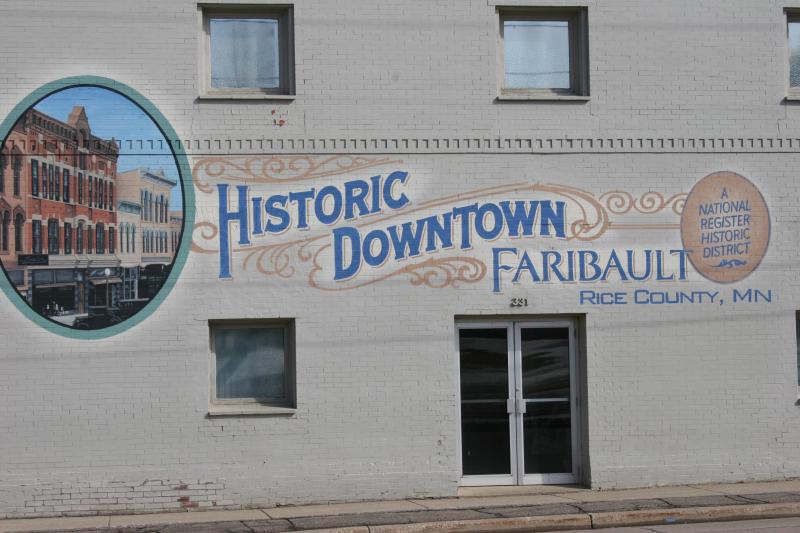
This mural on the corner of Minnesota State Highway 60 (Fourth Street) and Second Avenue, welcomes people to our historic downtown. Minnesota Prairie Roots file photo.


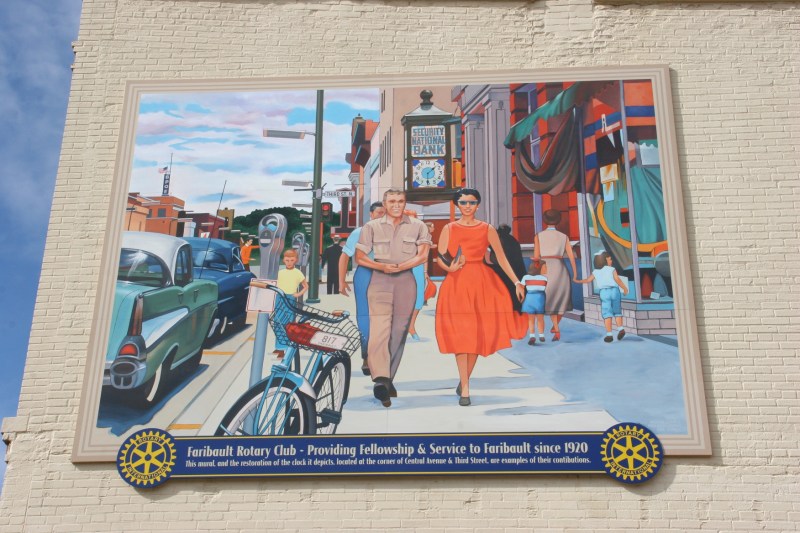
A 1950s scene along Faribault’s Central Avenue is shown in this mural in our downtown district. Minnesota Prairie Roots file photo.


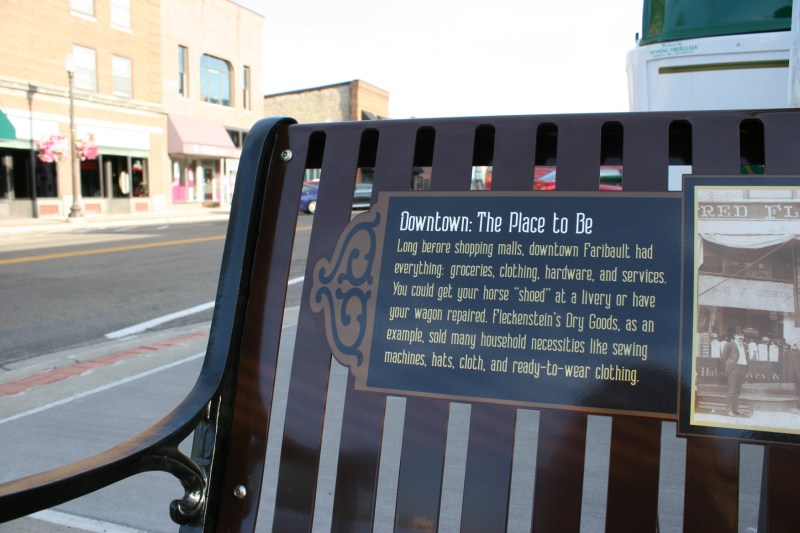
Another bench shines a light on the core business area with Downtown: The Place to Be.


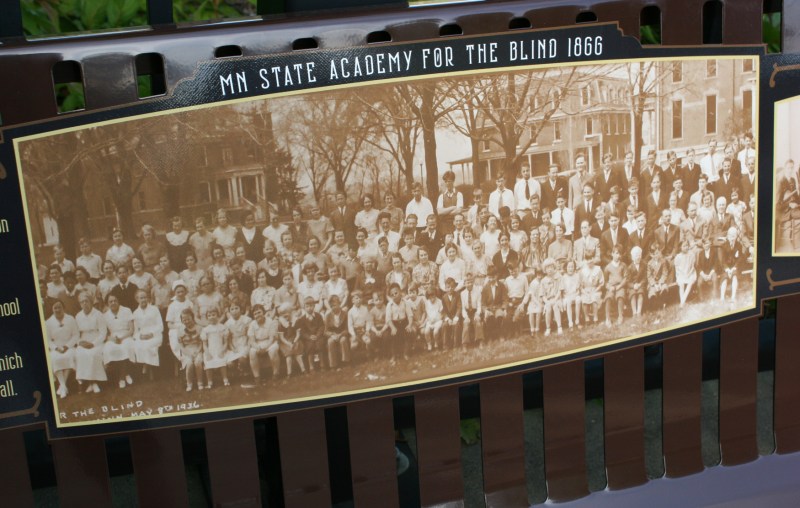
An historic photo of students and staff at the Minnesota State Academy for the Blind backs one bench.


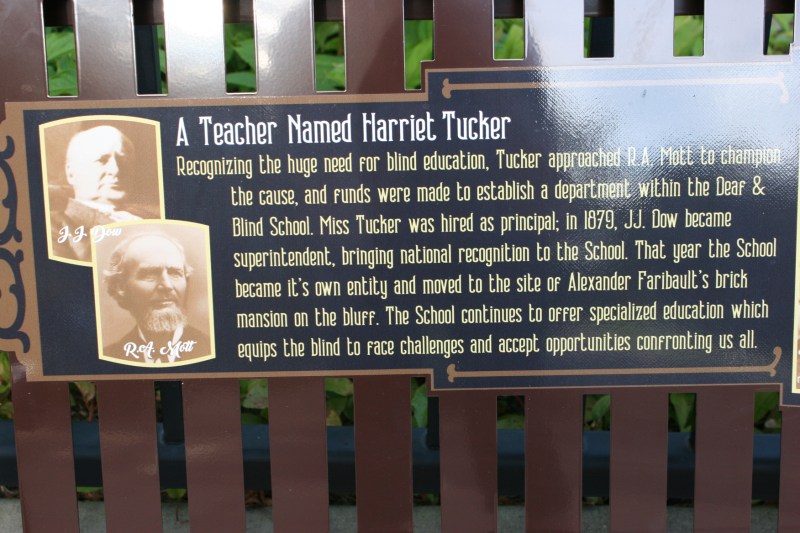
Honoring a teacher and leader at the school for the blind.


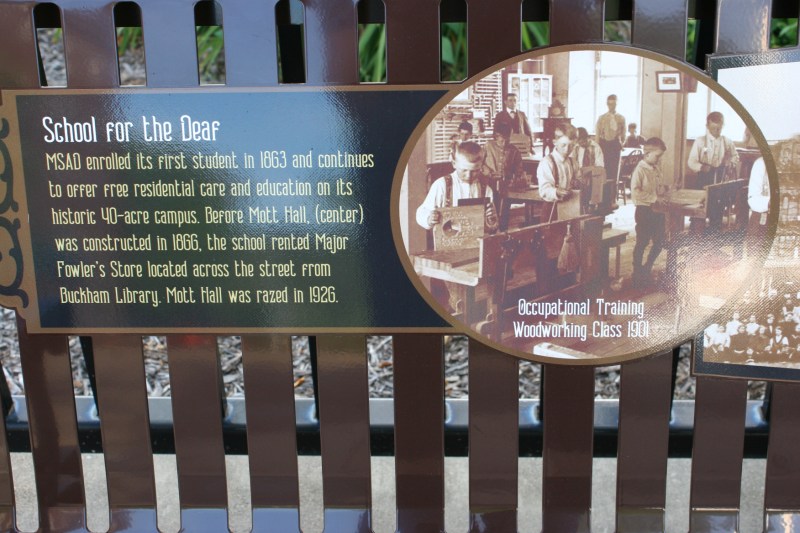
Another bench highlights the Minnesota State Academy for the Deaf.


Across the river on the east side of Faribault, sit the Minnesota State Academy for the Blind and the Minnesota State Academy for the Deaf, schools still in operation and each getting their own benches along Central Avenue.


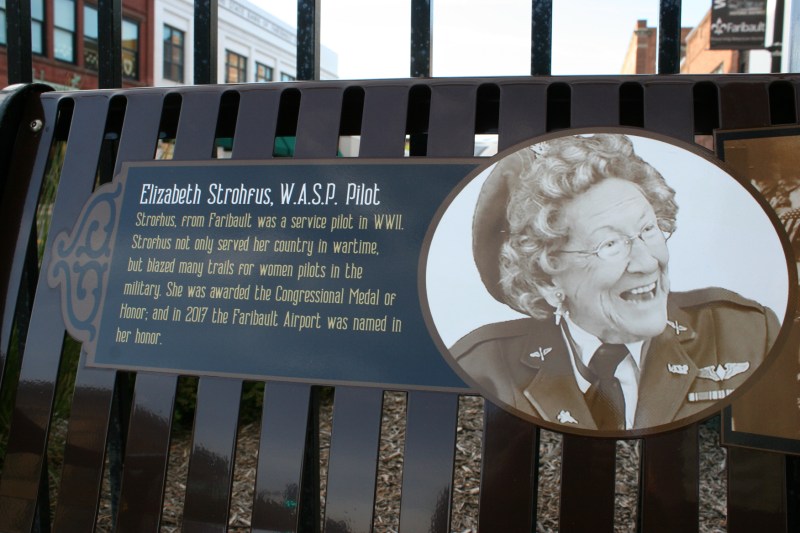
WASP Pilot Liz Strohfus, after whom the Faribault airport is named.


Finally, Faribault’s support of the military themes another bench that showcases WASP Pilot Liz Strohfus and Brigadier General Lewis Beebe, a veteran of WWI and WWII, a POW and more of notoriety.


The bench honoring the school for the deaf sits on the north end of Central Avenue.


There’s a lot of historic information to take in on these benches, a project coordinated by the Faribault Area Chamber of Commerce & Tourism and Faribault Main Street and supported by local businesses. My posts only summarize what you will discover on these locally-crafted park style benches that now enhance our downtown.


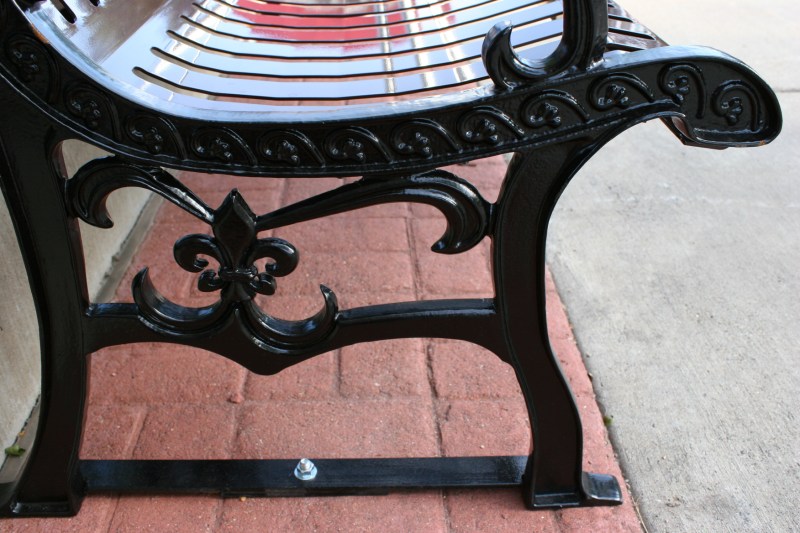
Here you see the fleur de lis symbol.


No detail is too small. On the bench ends, the branding symbol of Faribault—the fleur de lis—has been incorporated into the iron work. Depicting a lily, the symbol honors Faribault’s French roots.


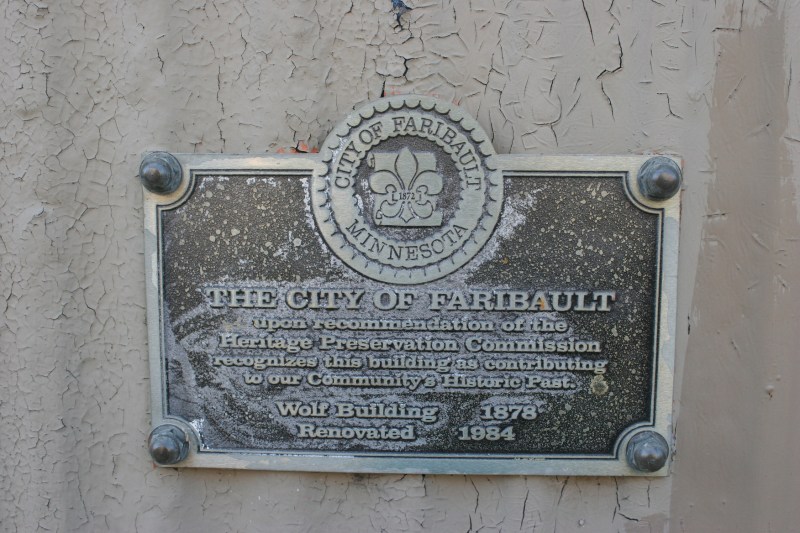
Markers like this tag historic buildings throughout downtown Faribault. Minnesota Prairie Roots file photo.


There’s so much to learn about my southeastern Minnesota community from these benches. I invite you to walk along Central Avenue, sit for a spell, shop, admire the historic buildings, enjoy the many historic murals in the downtown core. Faribault truly is an historic gem. In so many ways.


© Copyright 2020 Audrey Kletscher Helbling
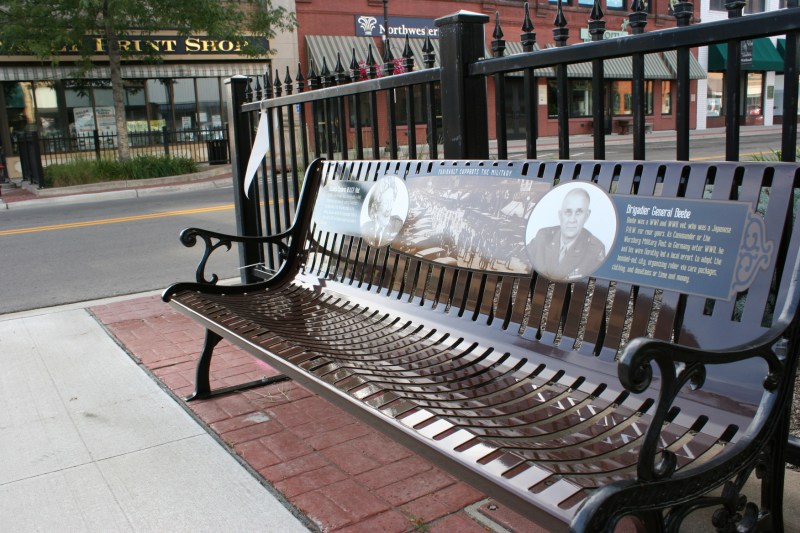
 

Signs: Wear a mask, don’t drink… July 31, 2020

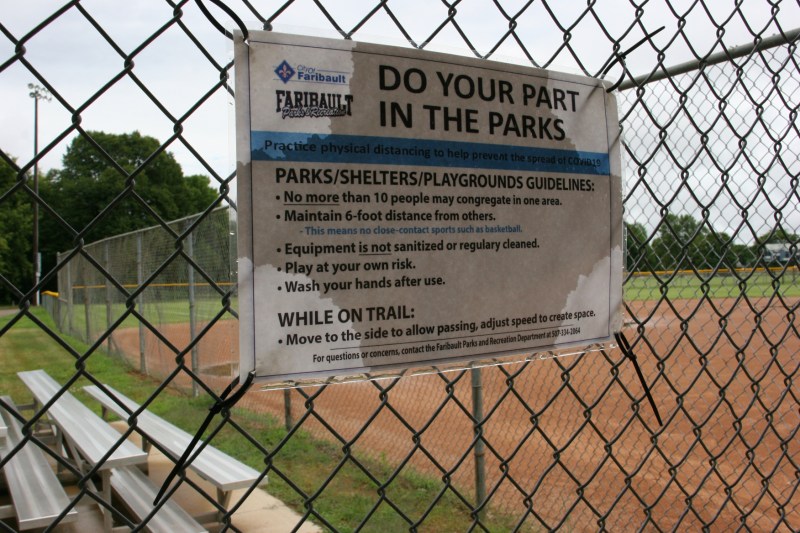
Posted on a softball diamond fence in North Alexander Park, but applicable to all Faribault city parks.


SIGNS, OR PERHAPS more accurately notices, are posted seemingly everywhere these days. Mostly to inform us about COVID-19 related issues. They are necessary reminders and sometimes required by executive mandates, like the new order in Minnesota requiring face masks to be worn in indoor public places.


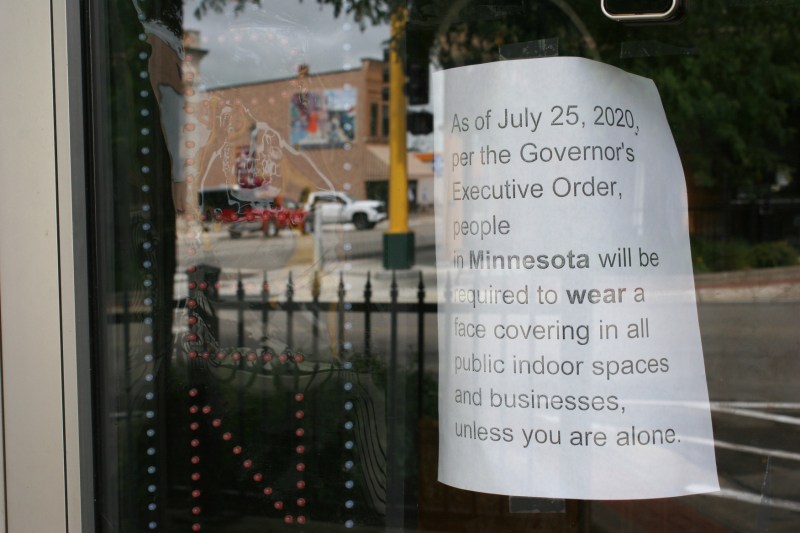
Businesses and other public places are required by the new Minnesota executive order to post signage requiring masks. This is posted on the door of a downtown Faribault business.


Minnesota’s mask mandate went into effect July 25. I’m happy to report that when I went grocery shopping last Saturday morning, I saw only one unmasked person—an elderly man. At the Faribault Farmers’ Market, some vendors and customers wore masks. Others didn’t. Masks are not required outdoors if you can safely social distance.


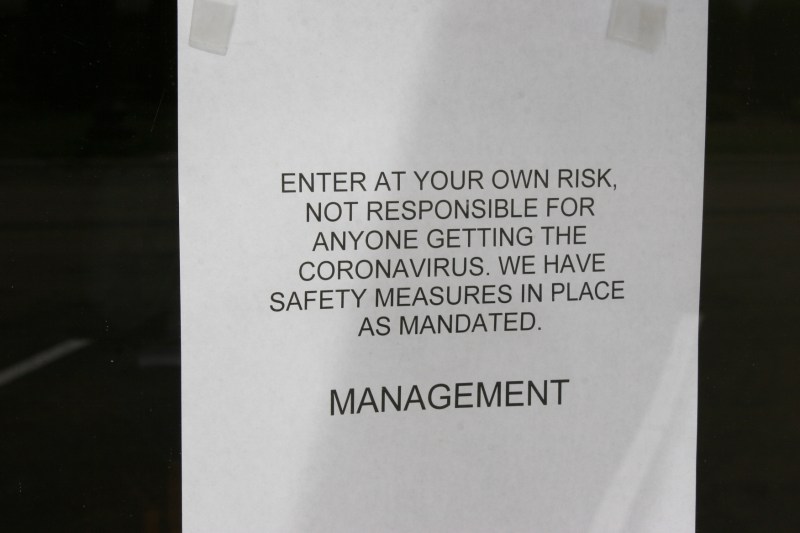
I found this strong warning on a notice attached to a side door along a side street in downtown Faribault.


We’re off to a good start, Faribault. It took an executive order from Minnesota Governor Tim Walz to do what we should have done along for the health of all. Thank you for complying. And for those of you who have been masking up prior, thank you for long ago recognizing the importance of this simple preventative measure.


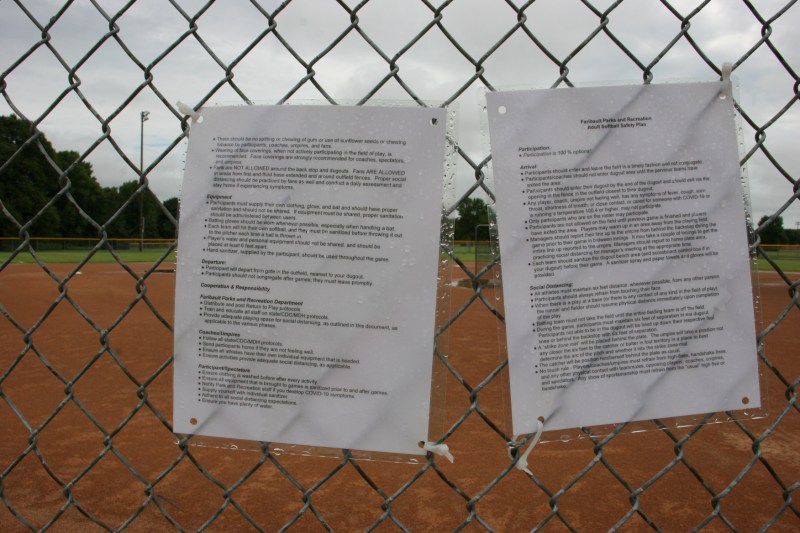
The two-page Adult Softball Safety Plan hung on the fence behind home plate and in front of the bleachers.


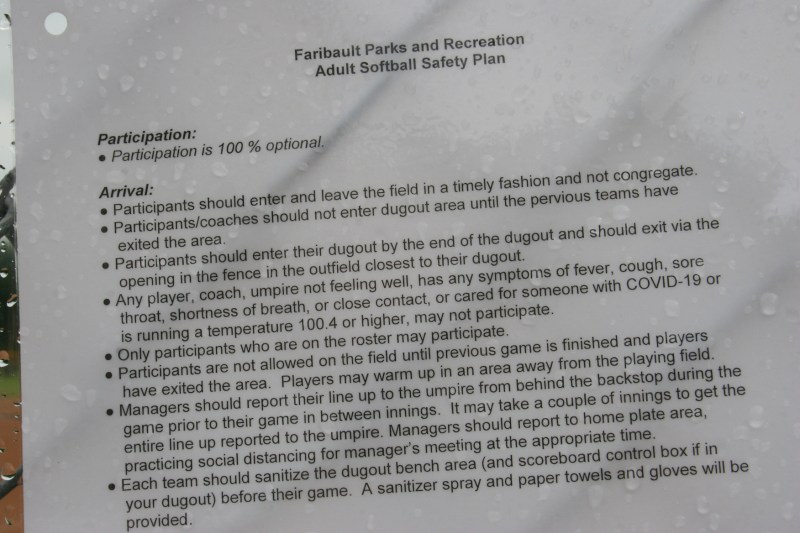
Page one of the safety plan.


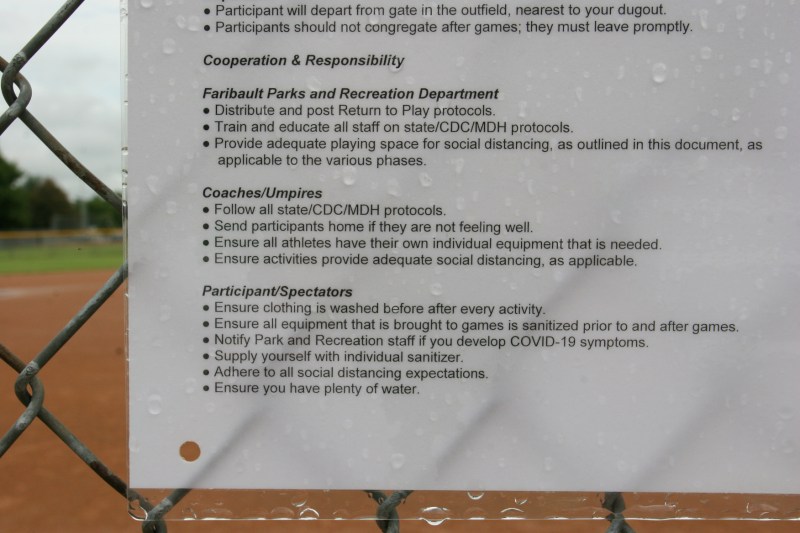
A close-up of the safety plan document, page 2.


While out and about last Sunday, including a morning walk in North Alexander Park, I spotted an abundance of signage posted on fences at a softball diamond. I paused to read messages like the two-page Faribault Parks and Recreation Adult Softball Safety Plan, which focuses on health and safety as it relates to COVID-19.


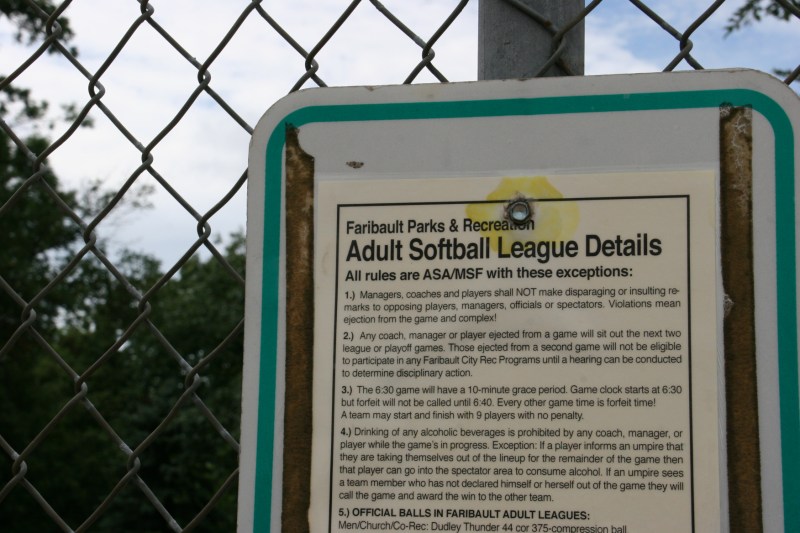
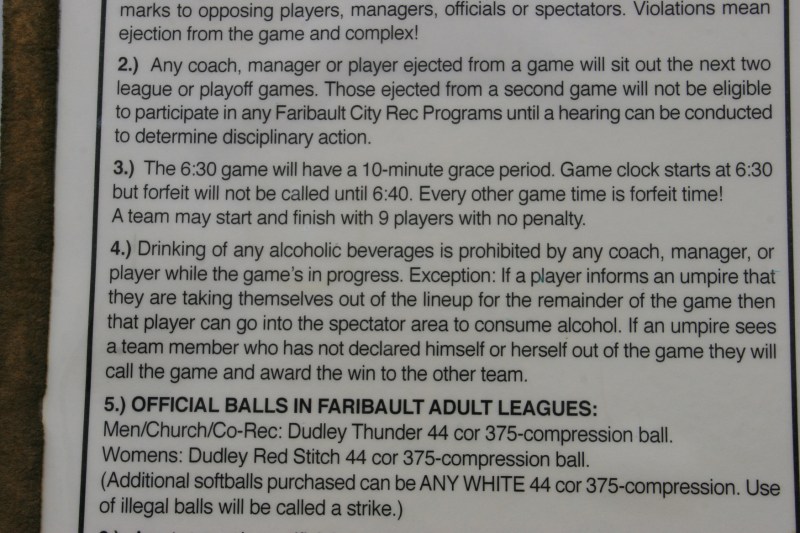
Softball league rules.


The alcohol ban is noted in rule #4.


But then I found another sign—Adult Softball League Details—which has likely been here for some time and is posted inside the fence behind home plate. Of special interest was rule #4: Drinking of any alcoholic beverage is prohibited by any coach, manager or player while the game’s in progress. An exception allows a player to drink alcohol if he takes himself out of the game and goes to the spectator area.


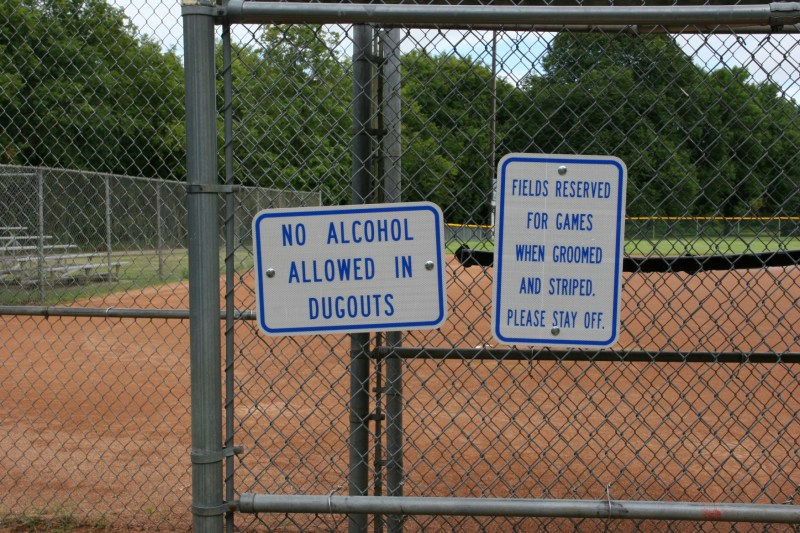
This dugout sign prohibits alcohol consumption.


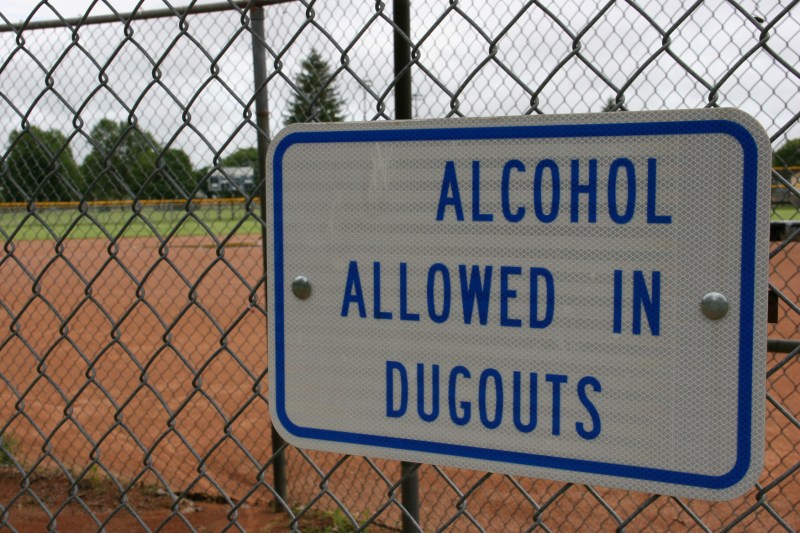
Yet, when I saw signs on the exterior of fences surrounding the dugouts I noticed a discrepancy. One read: NO ALCOHOL ALLOWED IN DUGOUTS. The other read: ALCOHOL ALLOWED IN DUGOUTS. So which is it?


But the sign at the other dugout supposedly allows alcohol.


I was momentarily baffled until Randy pointed out that someone had vandalized the sign to remove the word NO. Upon closer inspection, I agreed with that observation.

I expect those involved with softball in Faribault know the no drinking rule. It’s common sense that if you’re actively playing a sport, consuming alcohol seems a bad idea. Just like going mask-less and/or congregating at a bar during a global pandemic are really bad ideas. Minneapolis Mayor Jacob Frey this week issued an emergency order, effective Saturday evening, which limits service in bars. Patrons can no longer order or drink at the bar/counter. Now all drinks must be served while patrons are seated at tables. The reason: Nearly 400 cases of COVID-19 linked to people going to bars in Minneapolis.

Let’s continue to mask up. Social distance. Wash/sanitize your hands. Avoid gatherings. And, in general, use common sense.

Think of others, not just yourself. Be safe. Stay healthy.

© Copyright 2020 Audrey Kletscher Helbling
 

Along Wingra Creek: The natural beauty of Madison July 30, 2020

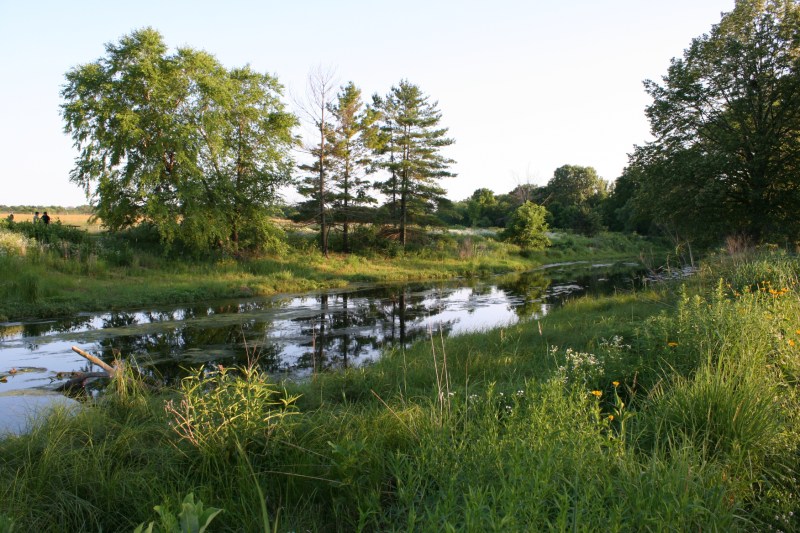
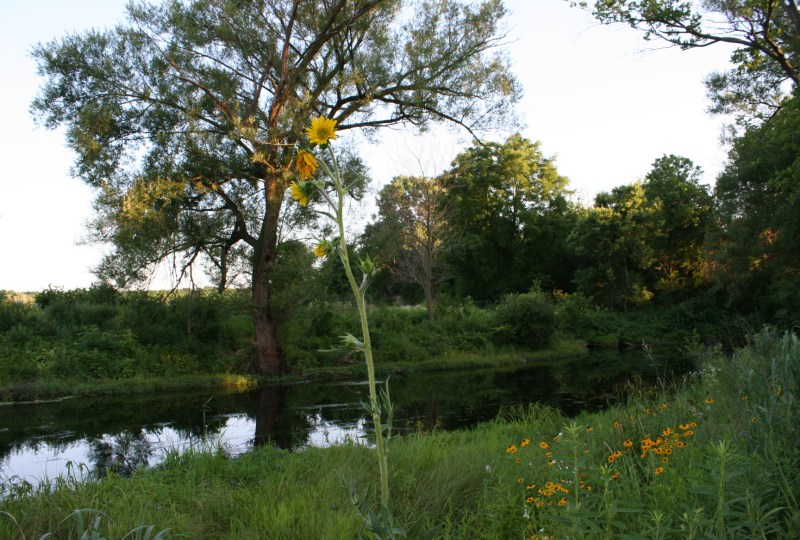
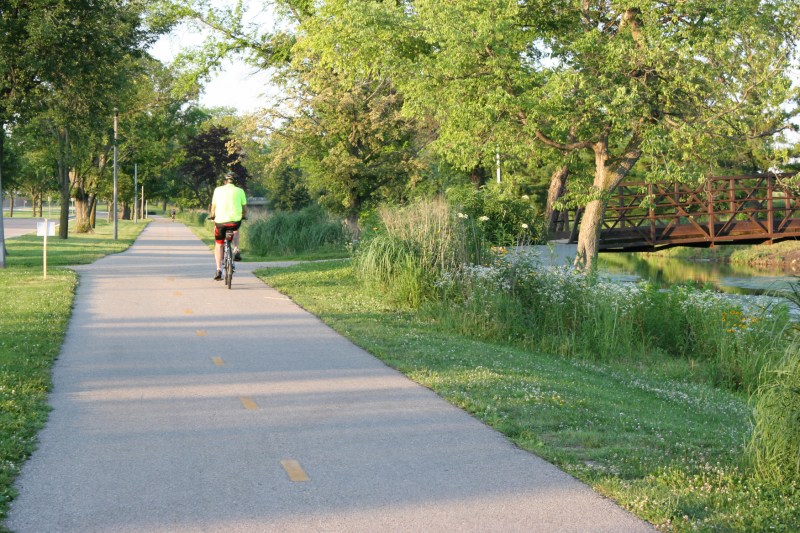
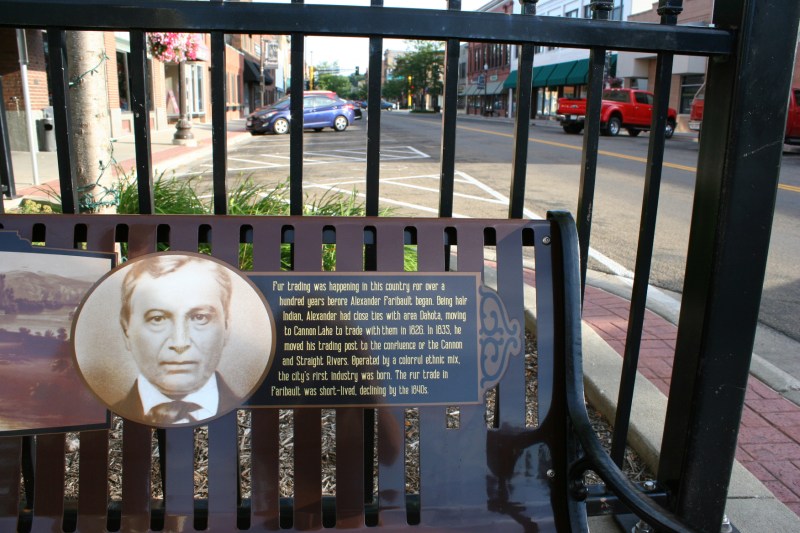
Wingra Creek, photographed from the recreational trail with the same name.


MADISON. My first impression several years ago of Wisconsin’s capital city remains unchanged. This is a place defined by water, lots of green space, an extensive recreational trail system and residents who love their Badgers, bikes, beer and cheese.


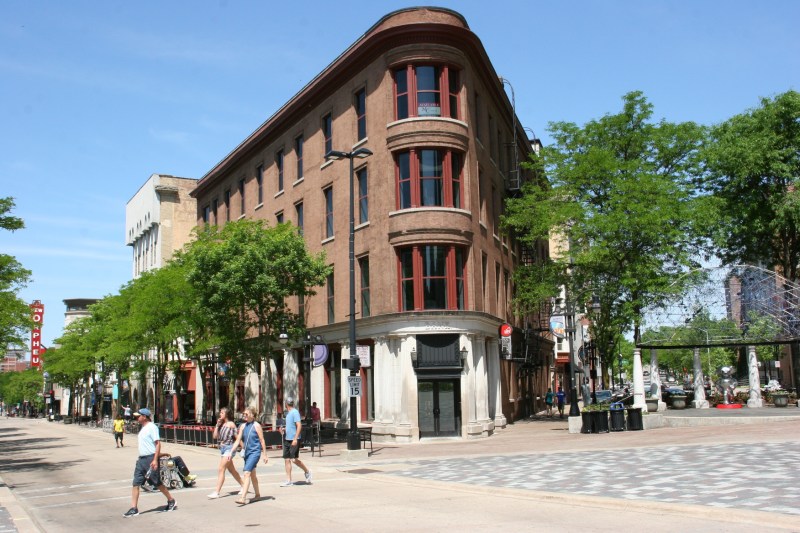
I took this photo in downtown Madison in June 2018. Love the buildings and vibrancy and walk-ability of this area, including the nearby state capitol. Minnesota Prairie Roots file photo 2018.


As I’ve explored Madison, pre-COVID, I’ve always felt comfortable. And that says a lot for someone who doesn’t really like big cities all that much. Madison maintains a minimum metro feel, yet offers all the amenities of a growing urban area. During past visits, I’ve spent time downtown—including inside the capitol, restaurants and art museums—and toured the Olbrich Botanical Gardens and more.


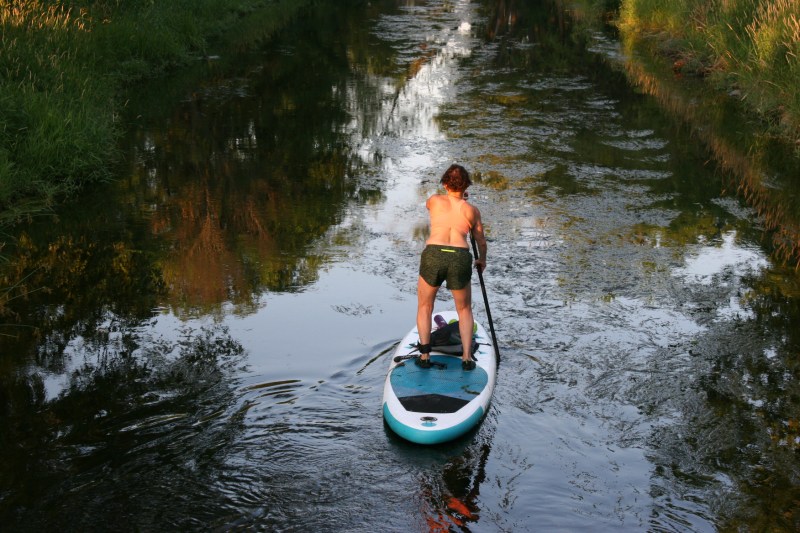
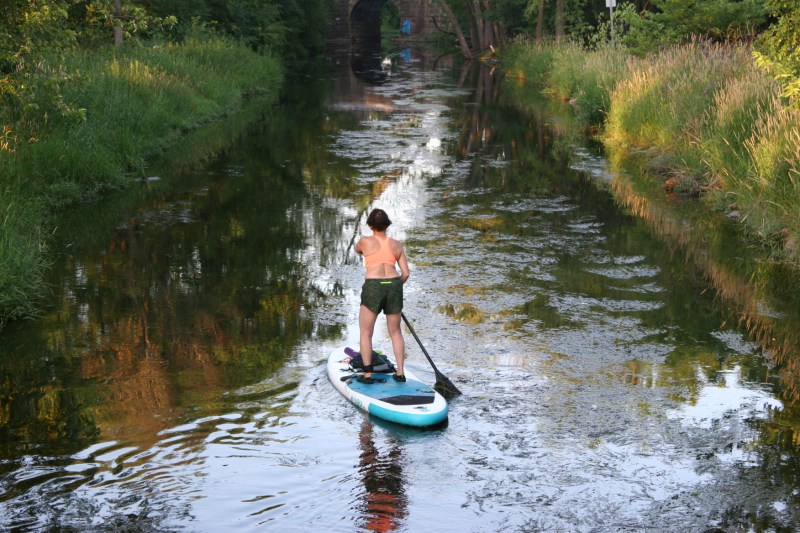
Another way to follow Wingra Creek, via paddleboarding.


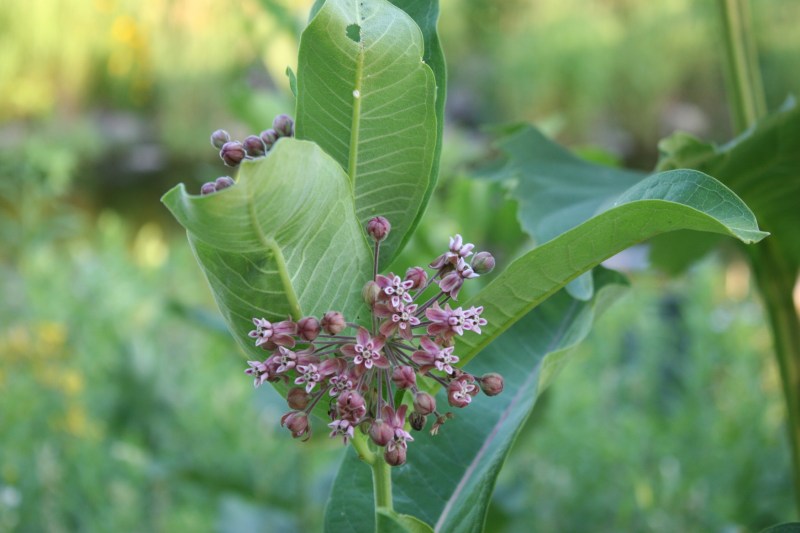
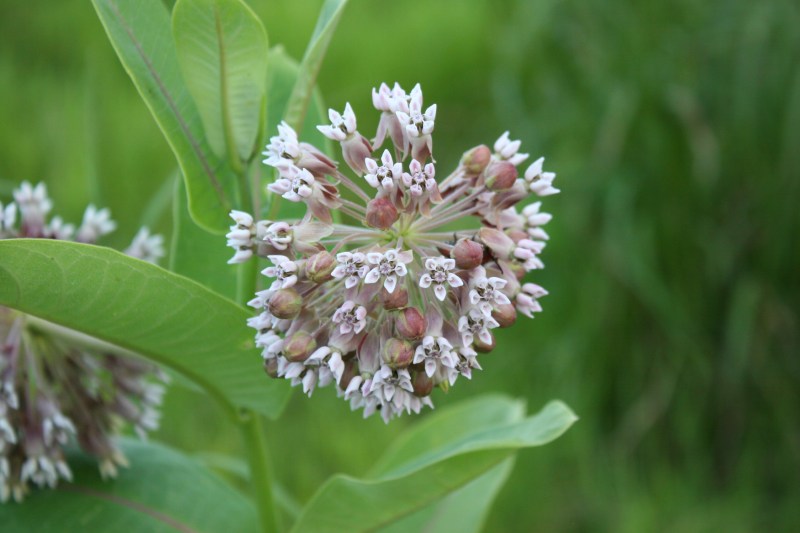
Oh, the loveliness of sunset lighting when photographing a flowering milkweed.


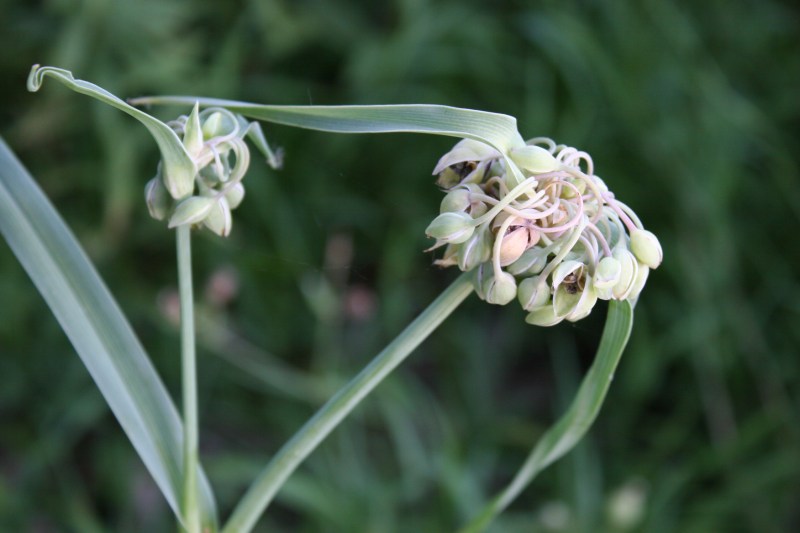
A single wildflower stalk rises along the creek bank.


On a visit in early July, because of the global pandemic, I confined my activities to a stop at a frozen custard shop and to walking. One evening I grabbed my camera to follow a section of the Wingra Creek Path near my daughter and son-in-law’s home. The golden hour of sunset presented ideal soft-glow lighting for photos.


A flowering milkweed.


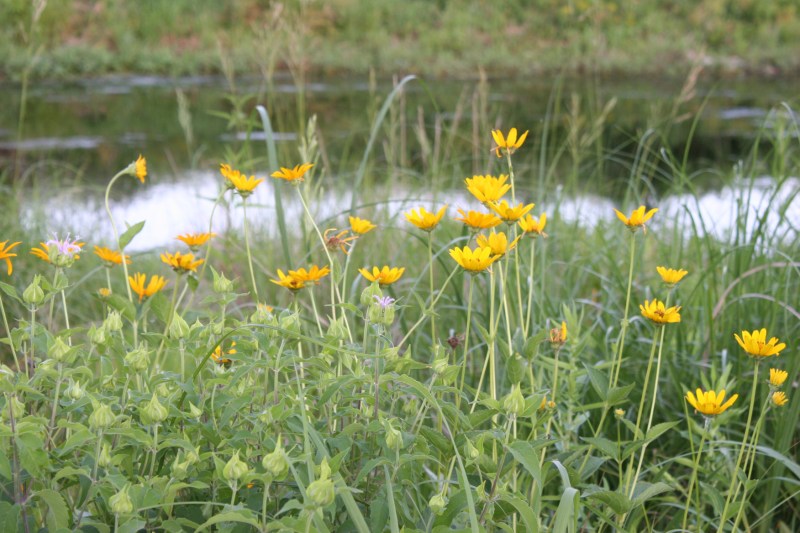
Flowers flourish along the grassy creek bank.


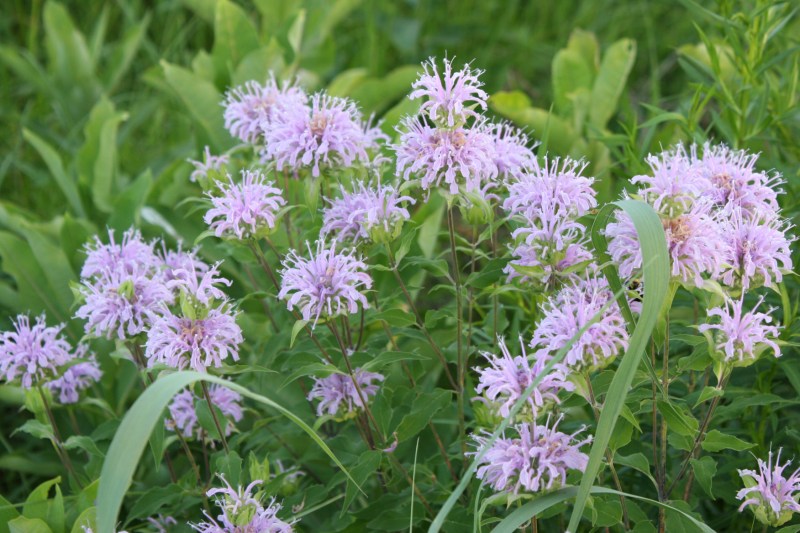
A patch of bee balm.


While the rest of the family walked ahead, I lagged, stopping to photograph the many wildflowers that grow along the banks of Wingra Creek.


I’ve learned to be vigilant while using Madison’s recreational trails due to the high volume of bikers. Because of a hearing loss, I often don’t hear them approaching from behind. And most speed by.


Occasionally a biker zipped by at a rate of speed which caused me concern. I recognized quickly that I needed to pay attention to activity around me and not get too lost in photographing this beautiful place.


Flowers, grass, trees, water, sky…


A coneflower.


Berries on a bush along the trail.


Had I not known I was in the middle of a city, I would have thought myself in the countryside.


Looking down Wingra Creek from a foot bridge linking to a park. The trail is to the left.


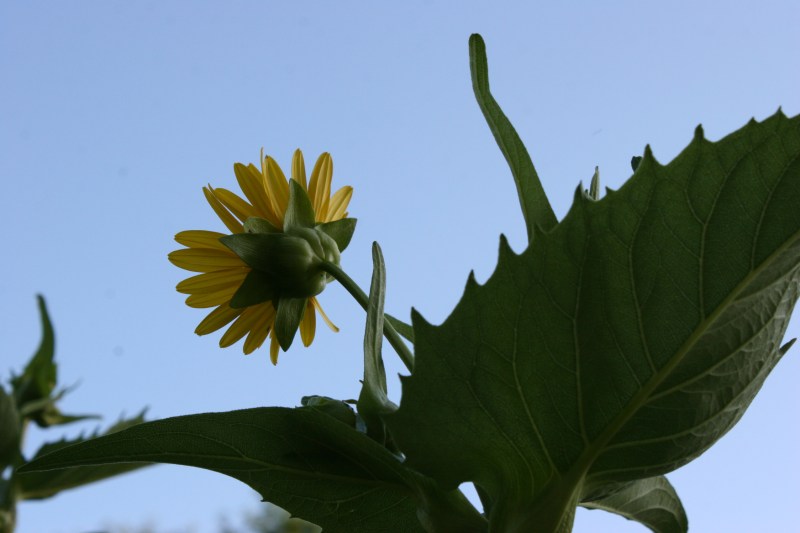
The tiniest of flowers I photographed.


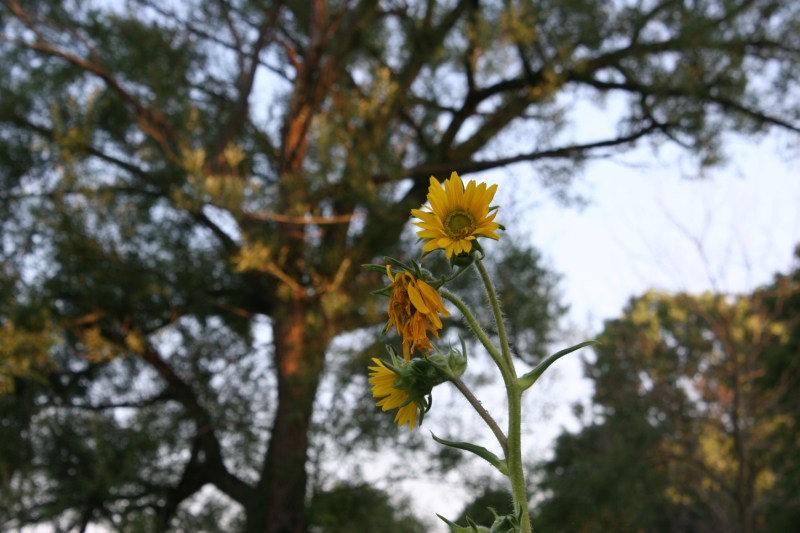
The first wildflower photo I took on this walk and among my favorite for the perspective.


The water. The flowers. The lack of city noises. All define this recreational trail as a place to embrace nature.


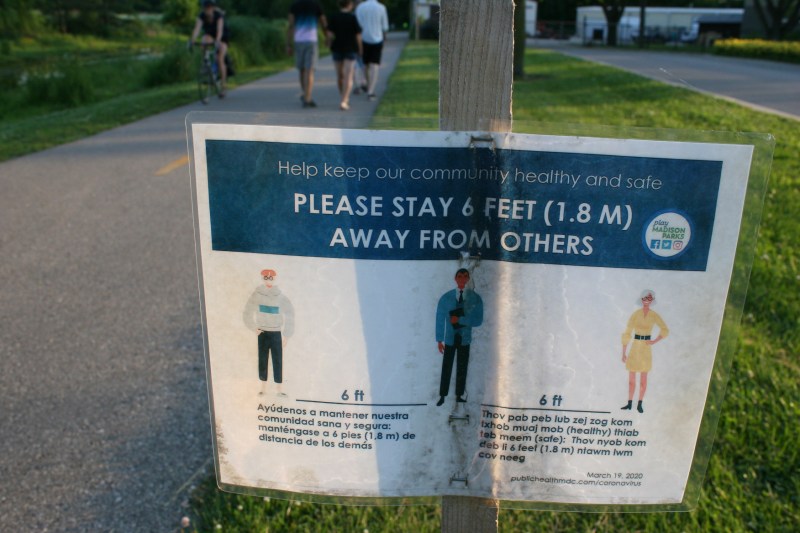
A trailside reminder that we’re still in a global pandemic.


Dog walkers. Bikers. Families out for an evening stroll. Joggers. Us. Everyone simply enjoying time outdoors with subtle reminders that we remain in a world-wide health crisis. A sign reminding trail users to social distance. A discarded face mask littering the side of the pathway.


The trail passes through this tunnel.


But for a short while we mostly forgot all about the tunnel of COVID-19.


Paddling in Wingra Creek.


When we retraced our path and crossed a footbridge back to my daughter’s street, I almost missed the paddleboarder gliding under the bridge, so quiet was she. As I watched, I admired her skills.


Light filters softness into my floral photos.


And I thought, how peaceful this moment in the golden hour of a July sunset.


© Copyright 2020 Audrey Kletscher Helbling
 

Calling all cats, dogs & creatives July 29, 2020

Filed under: Uncategorized — Audrey Kletscher Helbling @ 5:00 AM
Tags: , , , , , , , ,


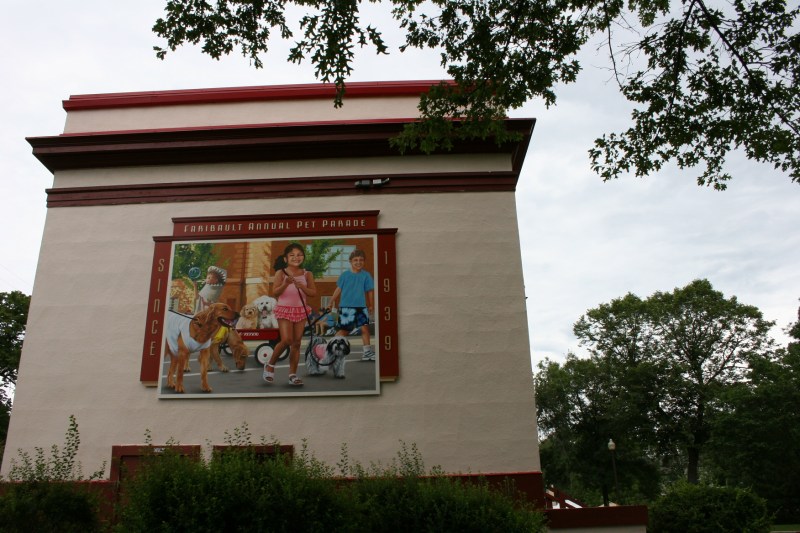
A mural on the bandshell in Faribault’s Central Park features the annual Pet Parade. Minnesota Prairie Roots file photo.


THE SHOW MUST GO ON. Or, in this case, the 2020 Faribault Pet Parade.

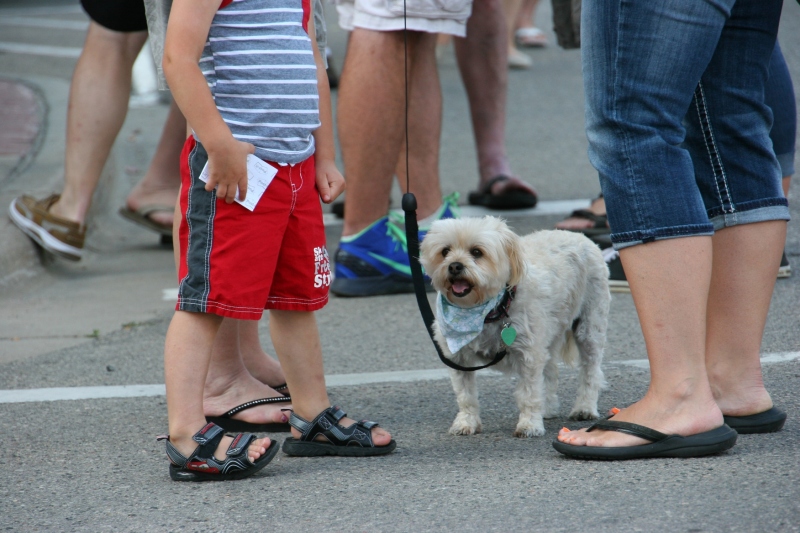
Now in its 80th-something year, this annual August parade of animals and kids continues even in a global pandemic. Not to worry. Changes have been made to protect participants and parade watchers.


This side of the mural shows a typical pet parade. This year, all participants must stay inside their vehicles. Minnesota Prairie Roots file photo.


According to information posted on the Faribault Parks & Rec Department Facebook page, the 6:30 pm, Thursday, August 6, event will be car cruise style. That means no walking; only riding in vehicles. Pets and people.

Organizers encourage folks to get creative with pet-themed vehicles or to load up their pets and hit the lengthy parade route.


The complete Pet Parade mural. Minnesota Prairie Roots file photo.


Those watching the parade must adhere to social distancing guidelines, the Facebook post states. That goes also for the concert, with a DJ playing kid-focused music, at 7 pm in Central Park. CDC guidelines and crowd limits will be enforced.


Minnesota Prairie Roots file photo.


Minnesota Prairie Roots file photo.


Minnesota Prairie Roots file photo.


Now that you understand the changes and the rules, go ahead and brainstorm. Make this a family project to transform the family vehicle into a pet. Or determine ways to showcase your pets in a festive and fun way.

We could all use a little fun and many reasons to smile. Let’s do it, Faribault. For our community, and especially for our kids. And, above all, stay safe and adhere to the rules.

© Copyright 2020 Audrey Kletscher Helbling
 

Honoring Faribault’s history in a functional, public way July 28, 2020

Filed under: Uncategorized — Audrey Kletscher Helbling @ 5:01 AM
Tags: , , , , , , , ,

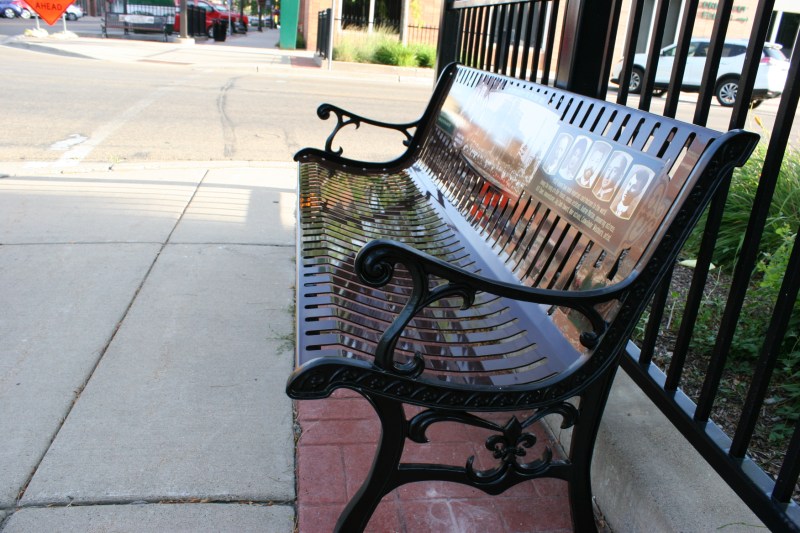
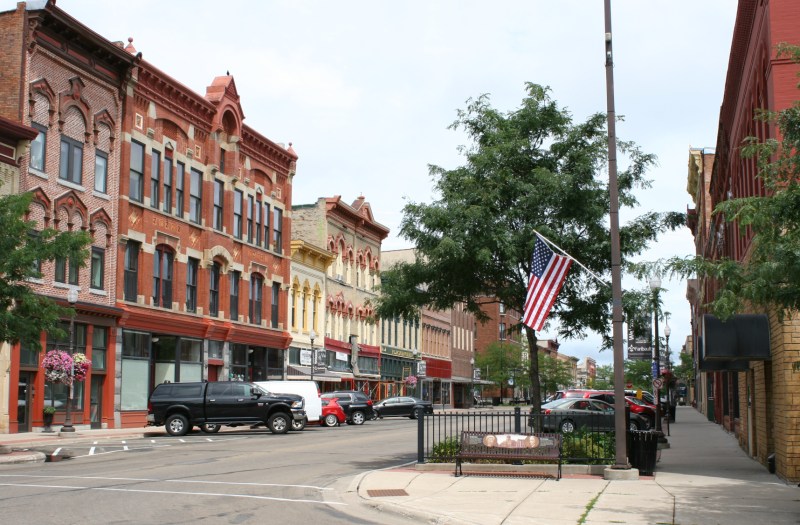
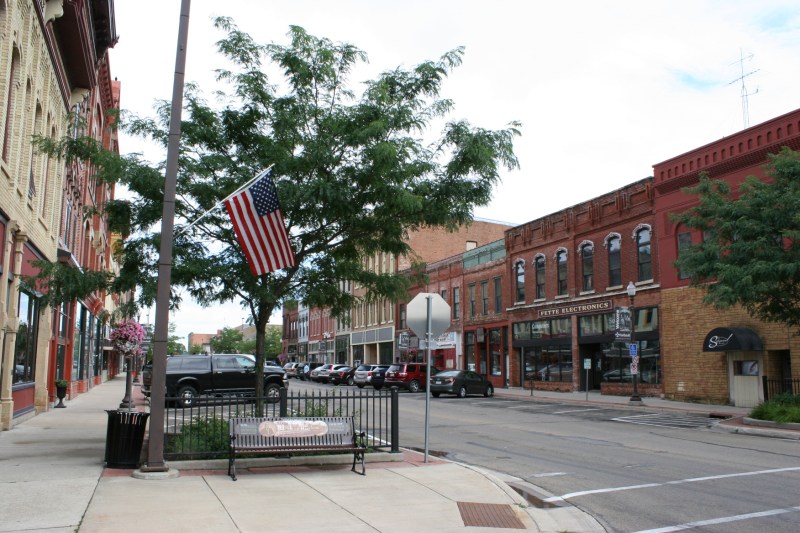
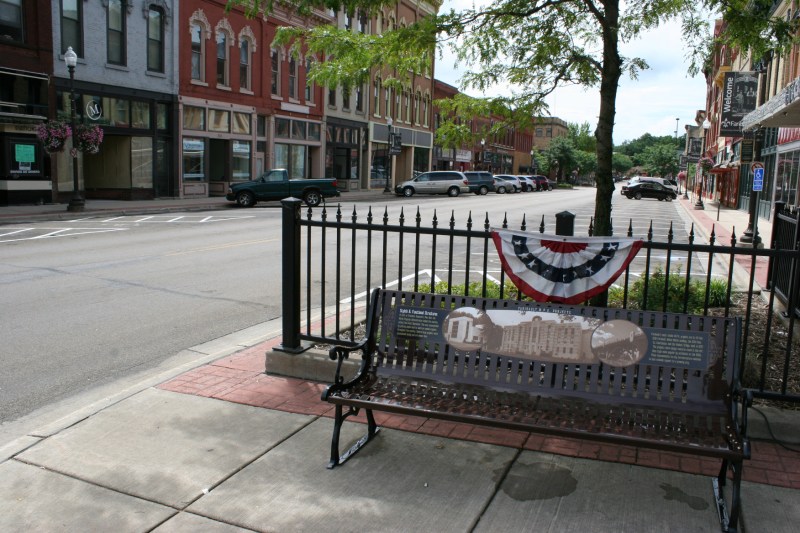
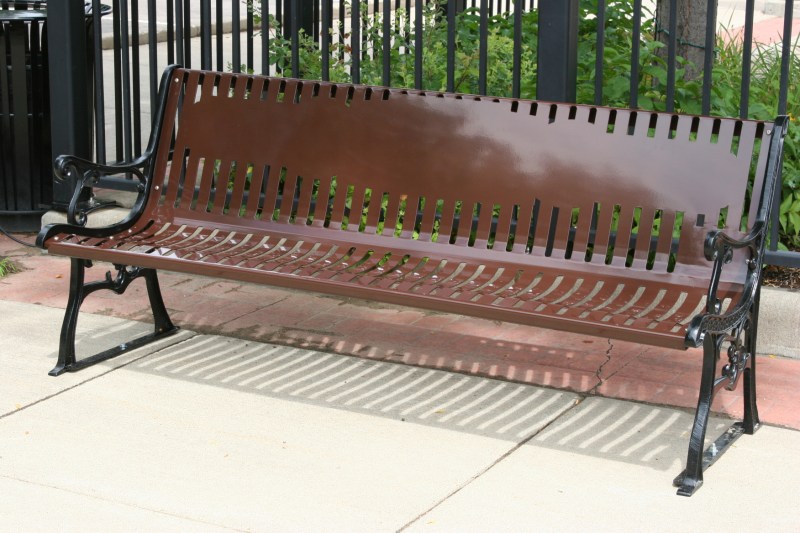
This shows a portion of Central Avenue, in Faribault’s historic downtown. Historic-themed benches now grace street corners.


MY COMMUNITY OF FARIBAULT is proud of its rich history, reflected most noticeably in our downtown historic district of primarily well-kept aged buildings. It is one of the aspects I most love and appreciate about this southeastern Minnesota city where I’ve lived since 1982.


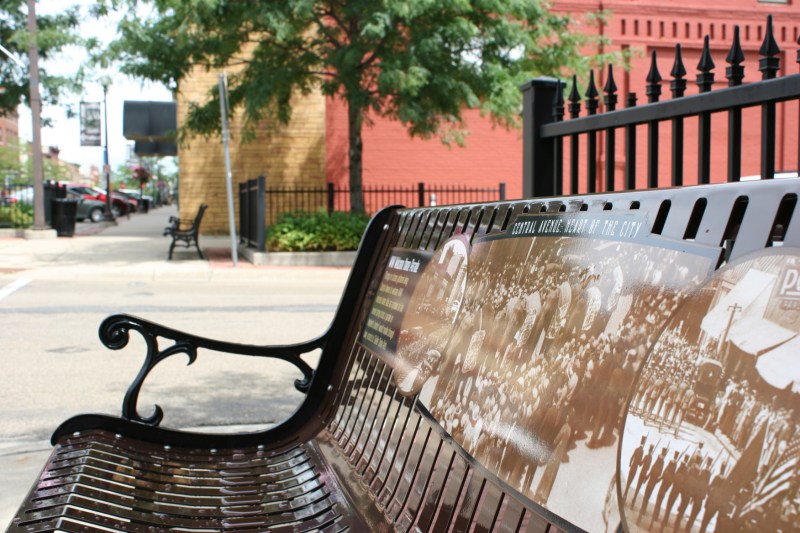
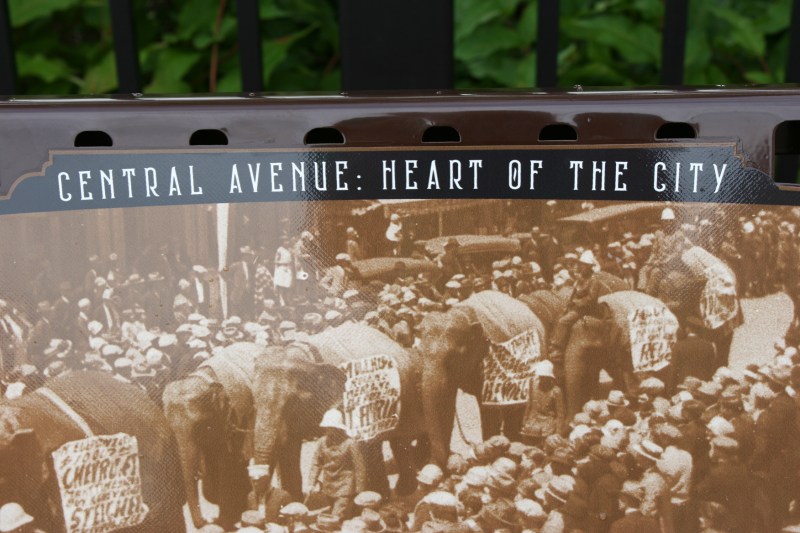
This bench, on the south end of Central Avenue, is themed “Central Avenue, Heart of the City.”


The Central Avenue focused bench features a photo of a parade welcoming home WW I veterans.


Now another dimension has been added to the downtown with the street corner placement of park style cast iron benches that feature stories and photos on local history. Functional, educational and lovely.


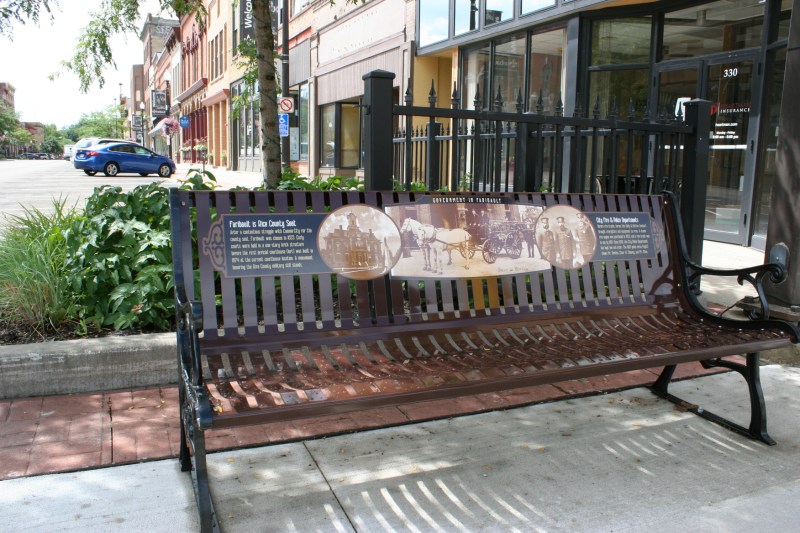
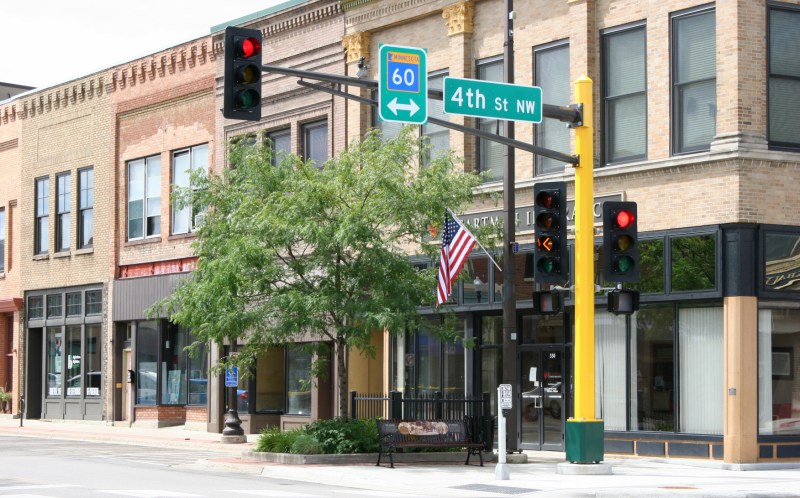
A bench on the corner of Central and Minnesota State Highway 60/Fourth Street highlights government in Faribault, the county seat of Rice County, Minnesota.


Diagonally across the street, a bench focuses on milling in Faribault.


A close-up on the milling bench shows a flour mill that once operated here.


Sunday morning Randy and I walked along Central Avenue, pausing at each bench to read the brief text and view the accompanying images.


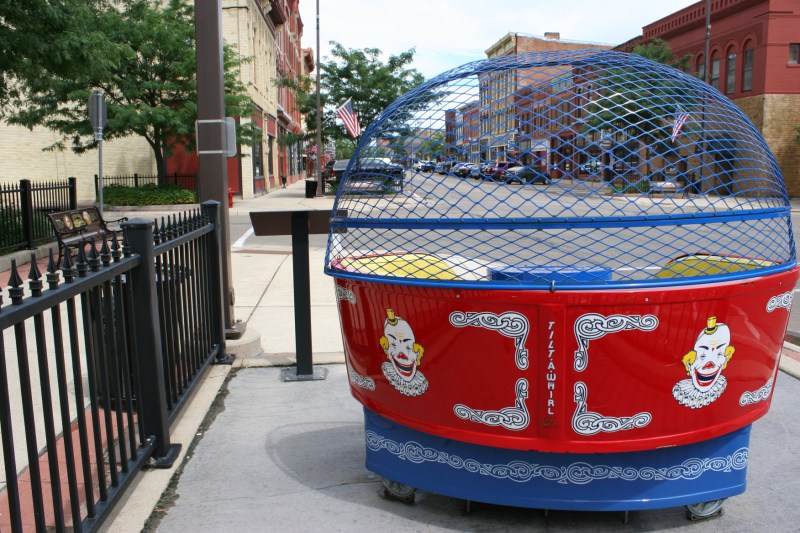
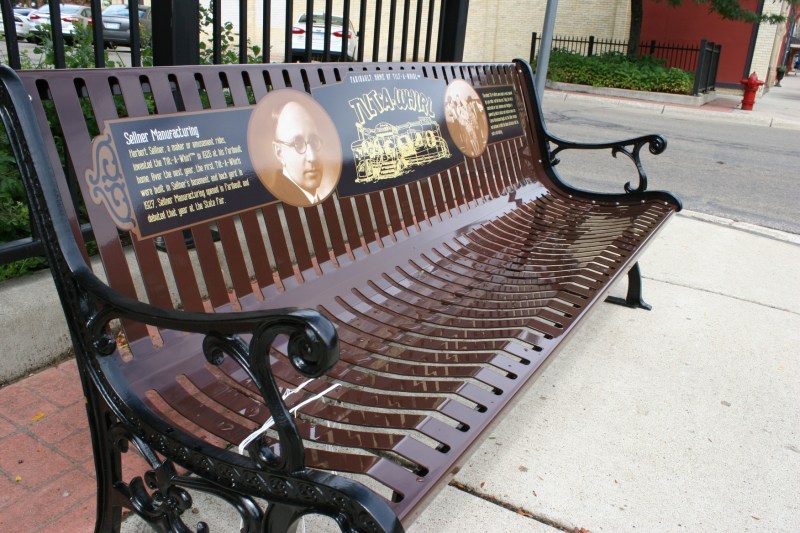
The Tilt-A-Whirl amusement ride was invented in Faribault and themes one bench. Two refurbished vintage Tilt-A-Whirls located downtown also provide photo ops for locals and visitors.


Details on the Sellner Manufacturing/Tilt-A-Whirl bench.


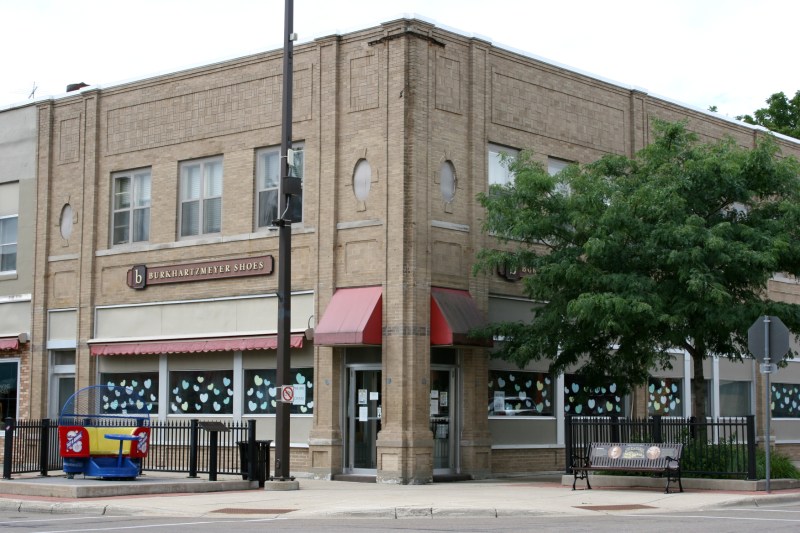
The restored Tilt-A-Whirl and themed bench are located by Burkhartzmeyer Shoes, a third-general family-owned shoe store, which includes a repair shop.


A project of the Faribault Area Chamber of Commerce & Tourism and Faribault Main Street, the business-sponsored benches provide a quick lesson in Faribault’s history. I was curious to see what topics would be highlighted. None surprised me.


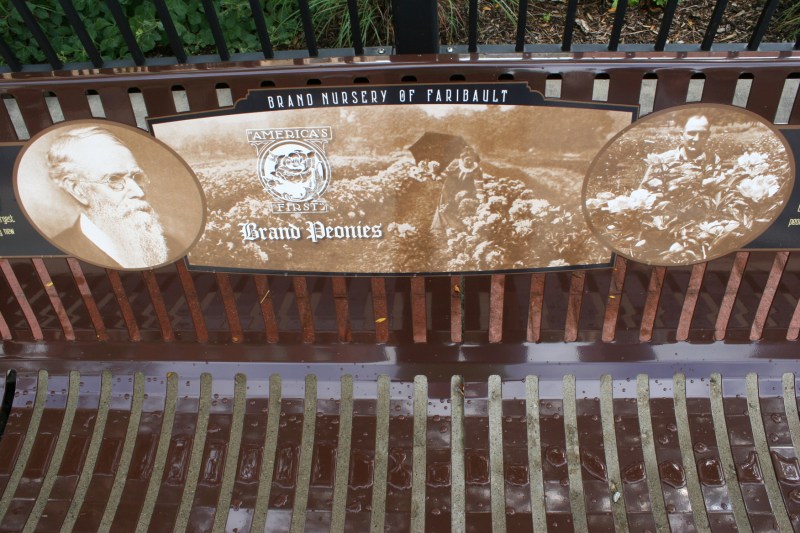
Peony farms are an important part of Faribault’s history.


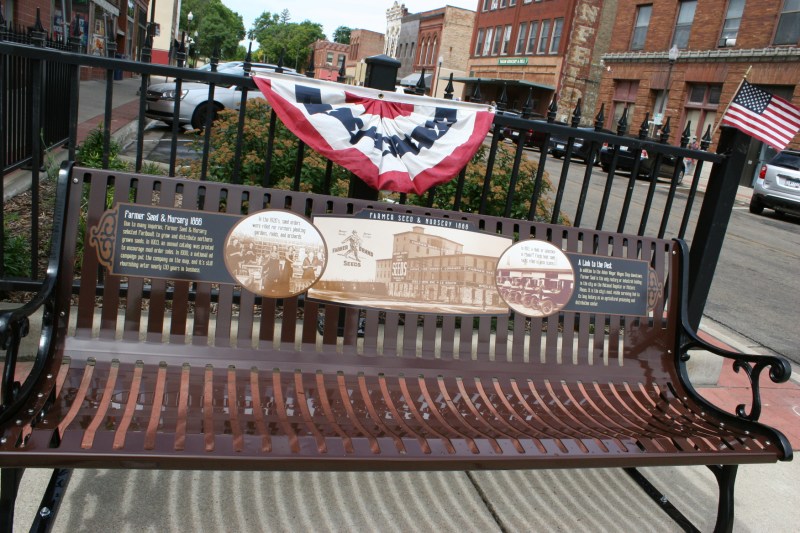
Likewise, Farmer Seed & Nursery, a long-standing business icon now closed, focuses a bench.


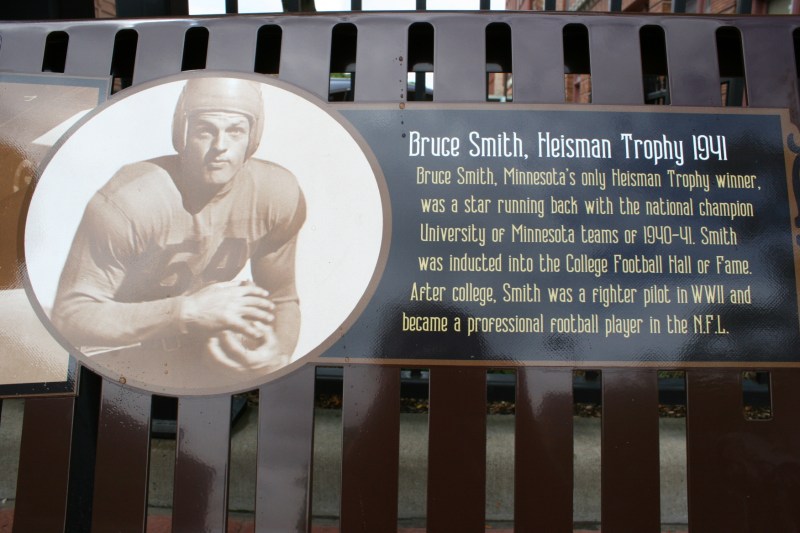
The “Famous People of Faribault” themed bench includes Heisman Trophy winner Bruce Smith, Red Jackson and Marlo Brandon (who attended Shattuck-St. Mary’s School). The local athletic field is named after Smith.


From milling to manufacturing (of the Tilt-A-Whirl), from education to floriculture, from famous people to noted buildings and much more, Faribault’s history is well-covered. I noted, though, that the fur trade, brewing history and Women’s Air Force Service Pilot Liz Wall Strohfus (after whom our airport is named) missing. But benches are in the works for those.


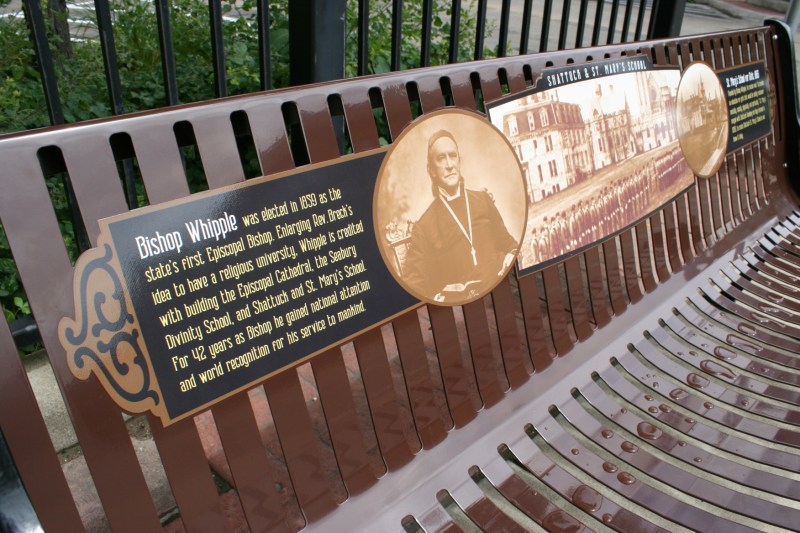
A broader view of Central Avenue, where the benches are located. This one is of Bishop Henry Whipple and Shattuck-St. Mary’s School.


This bench honors Bishop Whipple, important in founding Shattuck-St. Mary’s School and construction of The Cathedral of Our Merciful Saviour.


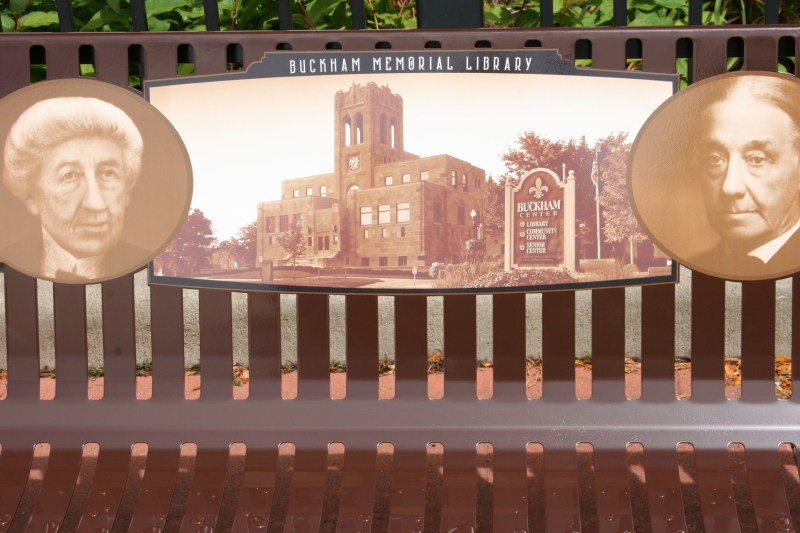
Thomas and Anna Buckham gifted a library to the city.


For anyone new to or visiting Faribault or even those who grew up here or have lived here for a long time (like me), I’d recommend a stroll along several blocks of Central Avenue to view these 12 benches. History is such an important part of a community in defining its identity. Past and present link. And sometimes it’s good to review that history, to understand and appreciate a place.


The restored Security State Bank clock is also an important part of Faribault’s preservation efforts.


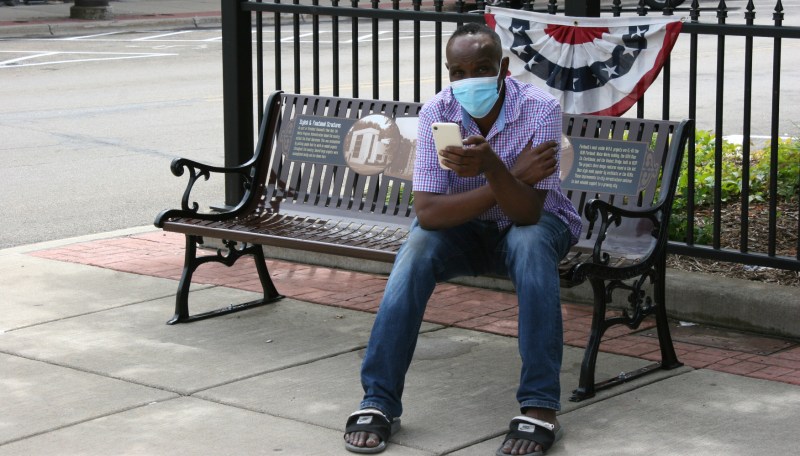
This local graciously moved so we could look at the WPA bench.


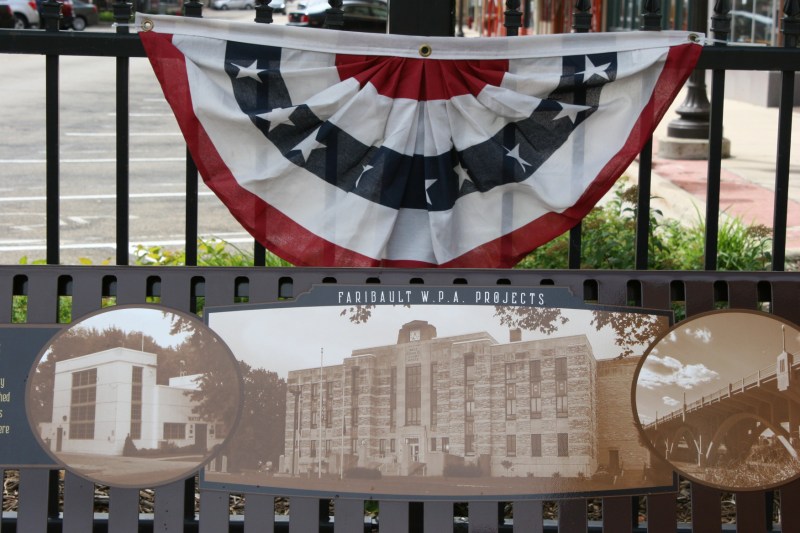
Works Progress Administration projects in Faribault highlight this bench. Those include noted local landmarks like the Faribault waterworks, the viaduct and the Rice County Courthouse.


Parents, grandparents, educators, take the kids downtown Faribault for a walk and a quick history lesson. Along the way, notice businesses and how diverse our community.


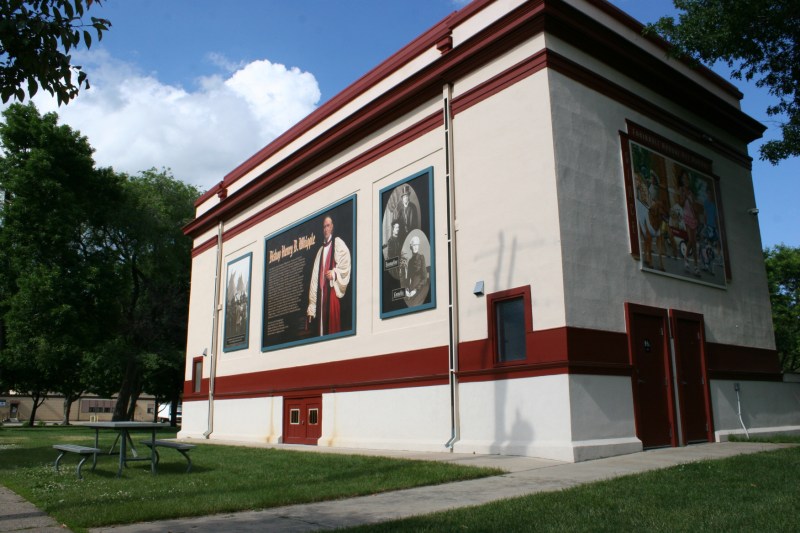
Faribault’s newest mural, left, honors Bishop Henry Benjamin Whipple. The one to the right features the Faribault Pet Parade and was placed on the Central Park Bandshell several years ago. Minnesota Prairie Roots file photo.


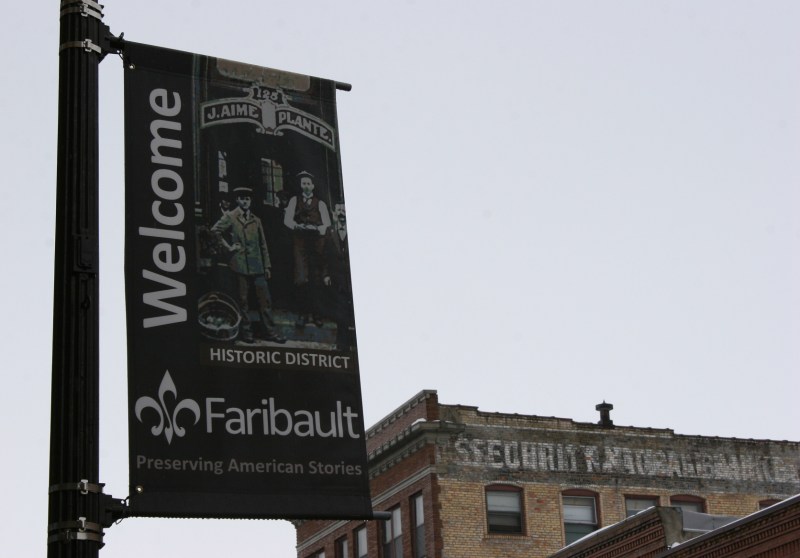
This banner hangs in downtown Faribault as part of a branding campaign defining areas of our city. Minnesota Prairie Roots file photo.


Buckham Memorial Library. Minnesota Prairie Roots file photo.


Reflect on the stories you read on these benches and perhaps plan additional side trips to take in places highlighted. Also seek out the many historically-themed murals in our downtown core.


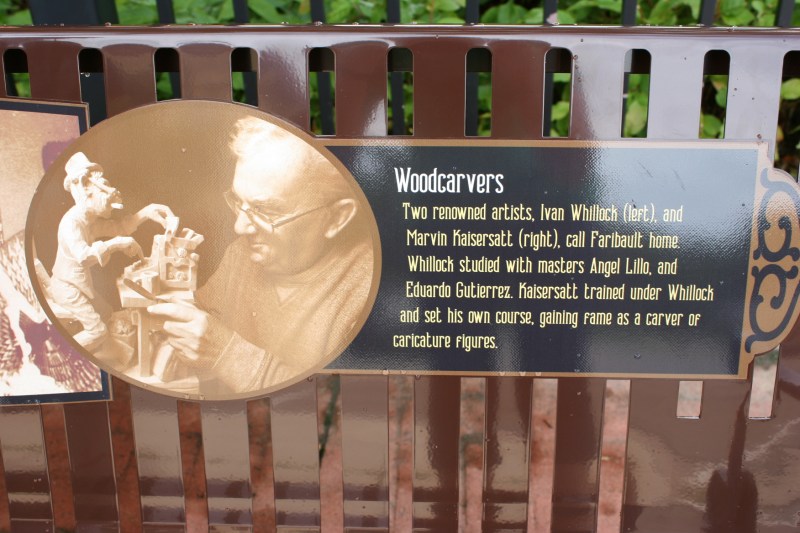
The talented artisans bench honors Grace McKinstry,internationally-known portrait painter, and woodcarvers Ivan Whillock and Marvin Kaisersatt.


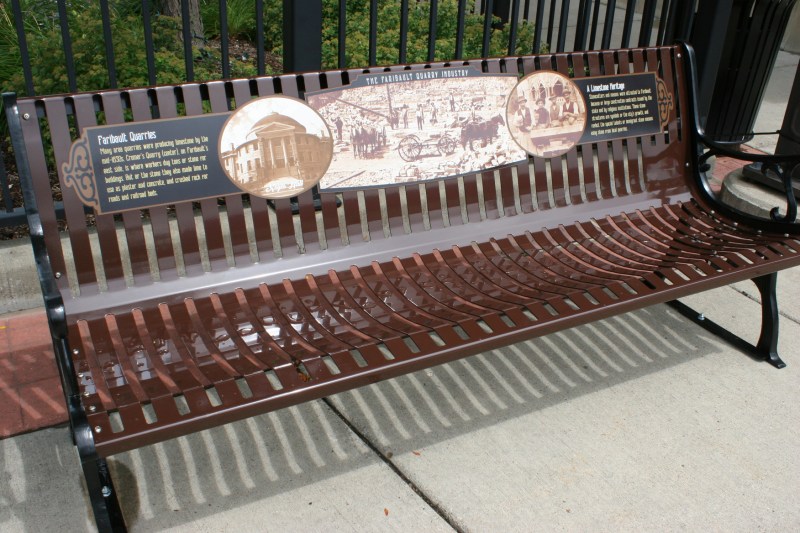
Quarrying of limestone was once a major industry in Faribault and is evidenced in the many historic limestone buildings..


The WPA bench sits outside the local pawn shop.


I am grateful to those in our community who continue to preserve and showcase Faribault’s past. This bench project is just another example of how history is valued locally. History is, and always will be, an important part of our identity.


Several benches are currently unadorned, awaiting final art.


And today, the people who live and work here continue to write history for future generations as Faribault grows and changes.

#

FUN FOLLOW-UP FACTS:

  • Local and regional businesses crafted the benches, including Jeff Jarvis of West Cedar Studio, Morristown, leading the art work; MRG Tool & Die, Faribault, crafting the steel seats; Mercury Minnesota, Faribault, painting and assembling, Alliant Castings, Winona, creating the bench ends; and Sakatah Carvers, Signs and Creations, Faribault, ordering and applying the decals.
  • The bench end design is based on a set of antique bench ends.
  • Faribault’s identifying brand symbol, the fleur de lis, is custom reverse engineered into the bench ends.
  • A ribbon cutting and history walk around the benches is planned once the project is completed.

Facts source: Kelly Nygaard, Faribault Area Chamber of Commerce & Tourism

© Copyright 2020 Audrey Kletscher Helbling
Updated at 7:40 am July 29, 2020


From Faribault: A Sunday morning walk in the park July 27, 2020

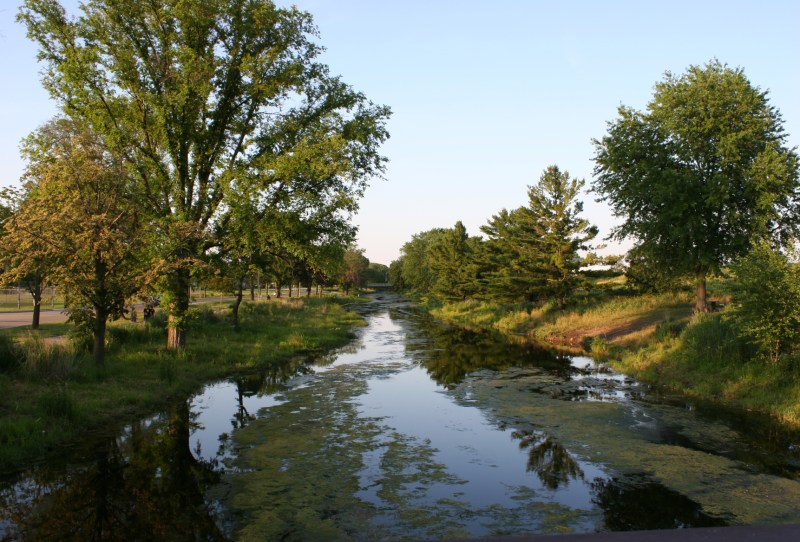
Randy and I walked Sunday morning along a recreational trail in Faribault’s North Alexander Park. The path follows the Cannon River. That’s the Faribault Woolen Mill in the distance.


MID SUNDAY MORNING and I desire to get out of the house. For one reason. A mouse. After I went to bed Saturday evening, Randy spotted a mouse running across the living room. Have I told you yet that I am terrified of mice? I understand that my fear is irrational. But that does not change my feelings about rodents. I’ve had too many mouse encounters—in a bathroom in the dead of night while pregnant. Another with a mouse found floating dead in a crockpot. And a live mouse in a silverware drawer. Yes, I detest mice. I figured if we left the house, we would come home to find the elusive mouse caught in a trap. Snap. Dead. It didn’t happen.


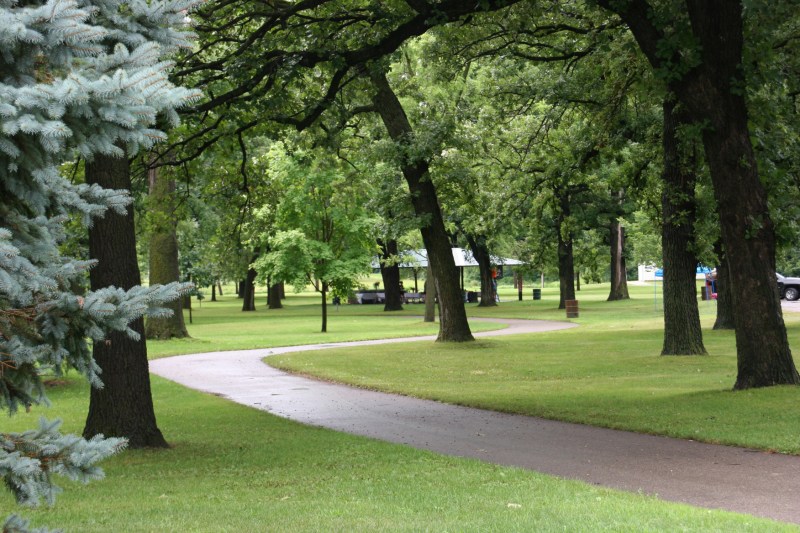
The trail winds through a wooded part of the park. At the distant shelter, a group was setting up for a grad party.


But, hey, we had a nice time at North Alexander Park in Faribault, where we walked a recreational trail and I paused numerous times to take photos. It proved a welcome break from mouse brain. And also provided photos for this blog. Win-win.


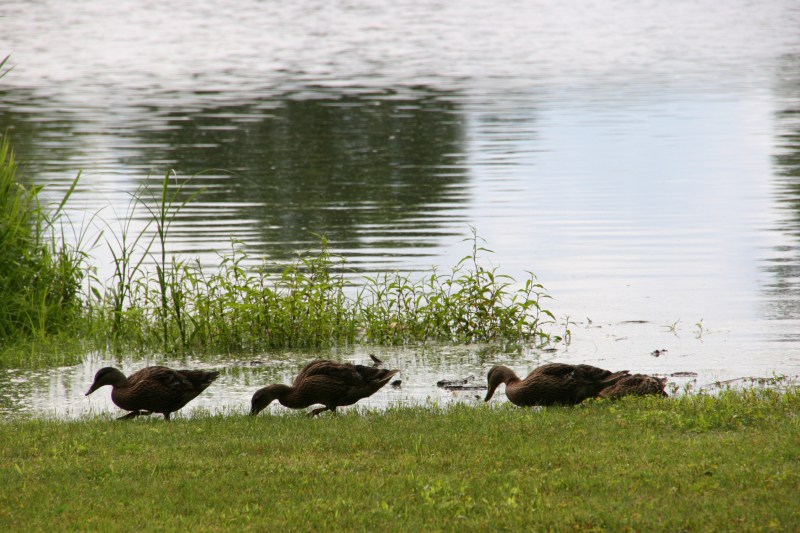
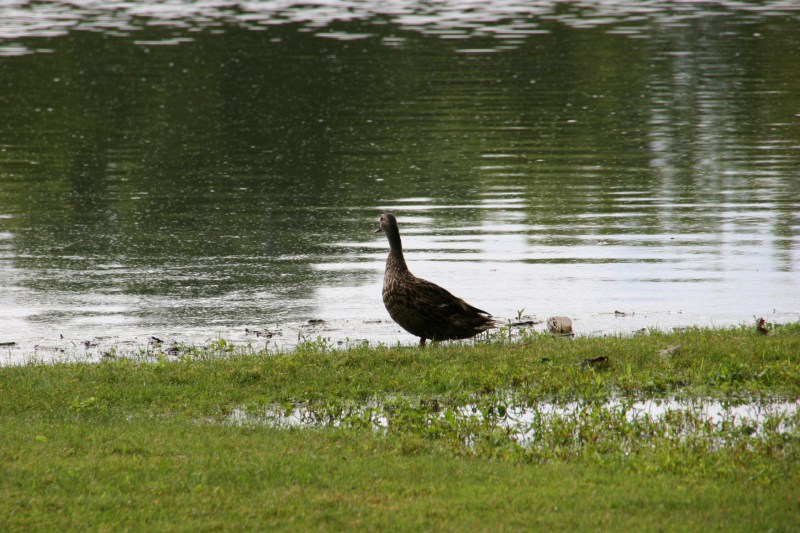
Three growing ducklings in a row.


The watchful mama duck trails behind.


Overnight rainfall raised the water level of the Cannon River considerably, but not to flood stage.


As usual, ducks and geese populated this park and I found myself dodging droppings. For the first time ever, I also observed a couple throwing bread to the fowl. I thought to myself, please do not encourage them to wander away from the river and onto the pathways further into the park.


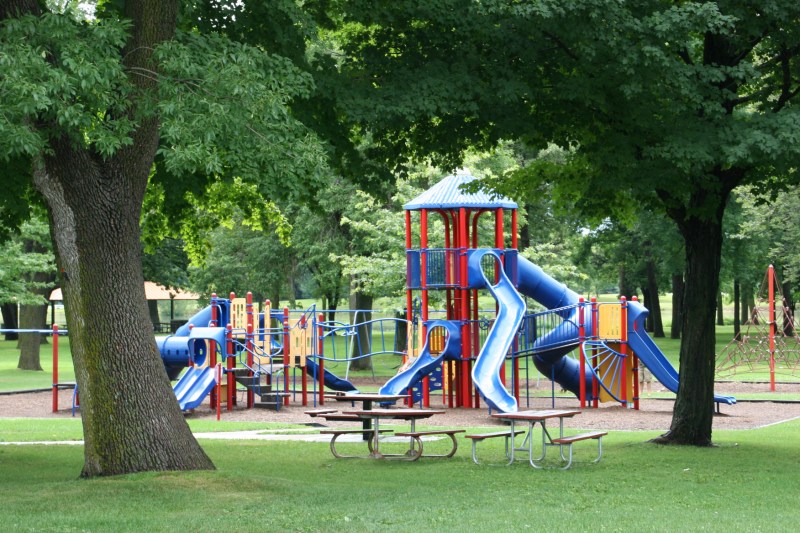
Typically, this playground is swarming with kids.


Randy and I saw a few other humans. Walking dogs. Setting up for a graduation party. A dad and his two kids on the playground.


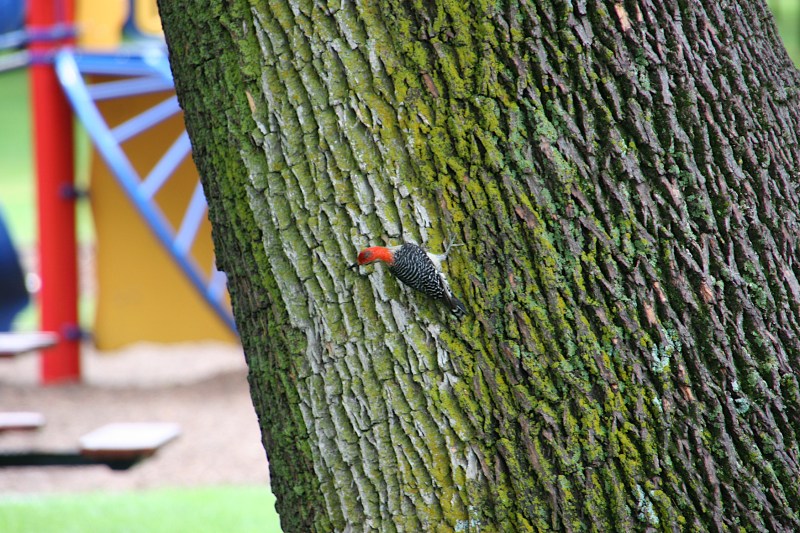
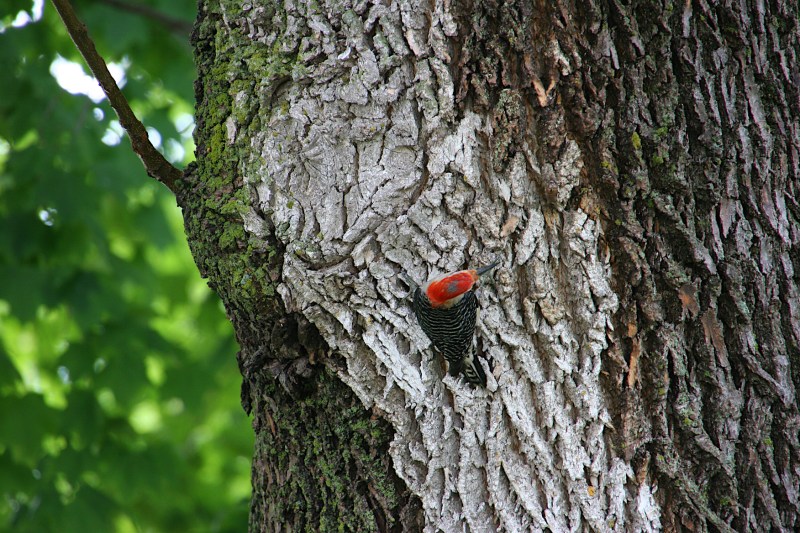
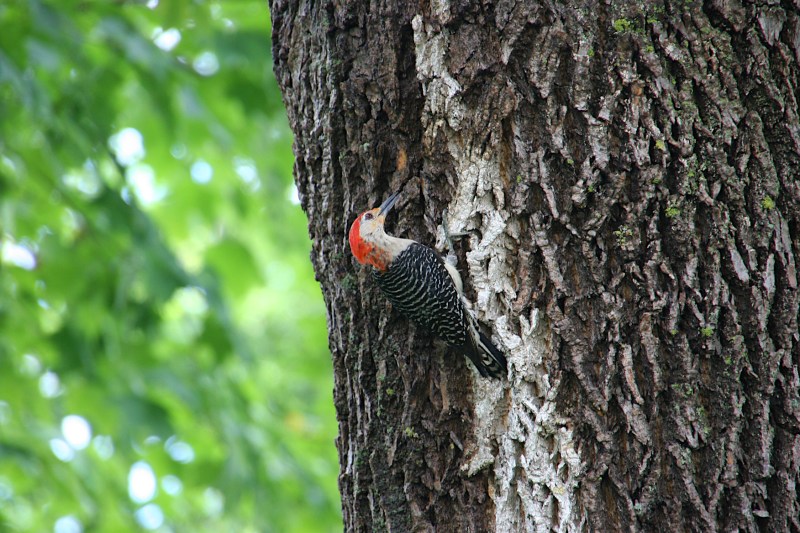
And on a nearby tree, a beautiful woodpecker searching for bugs. (If only he could scout out mice.)


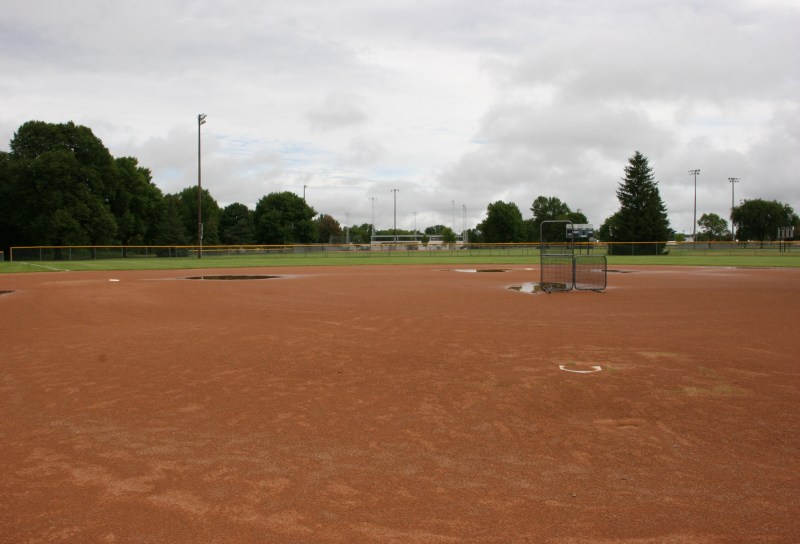
The empty softball diamond. Check back for some interesting signage photos.


Across the road, the softball diamonds were vacant. On a typical summer weekend, they would likely be busy with tournaments.


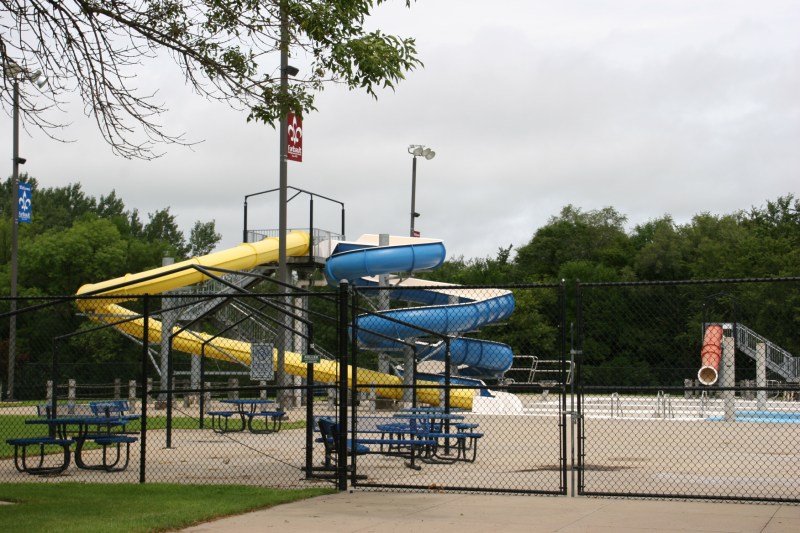
Looking through the fence at the Faribault Aquatic Center. No kids. No pool open this summer.


This sign made me laugh. Check the weather forecast before you head to the pool.


On this incredibly hot and humid July day, the pool remained closed due to COVID-19.


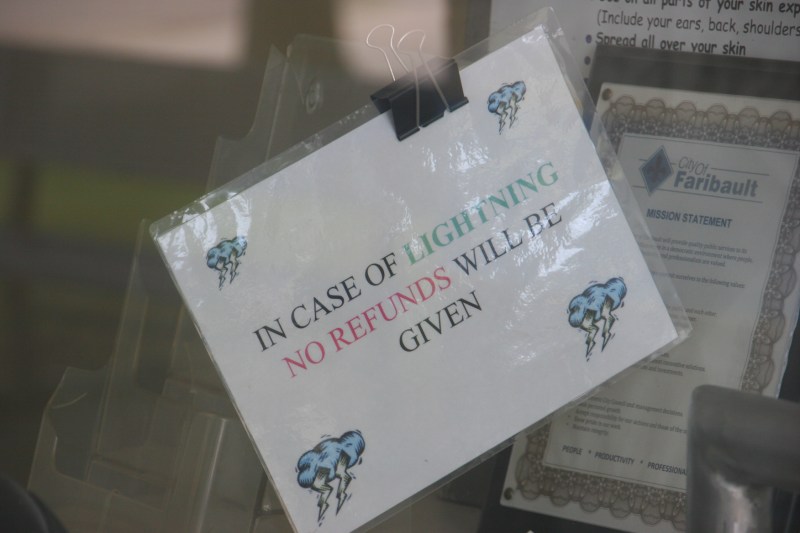
Likewise, just down the street, the Faribault Aquatic Center was also vacant, locked down due to COVID-19. I took a few photos and laughed at a sign inside the front entry that advised of no refunds in the event of lightning. It rained all night Saturday into early Sunday morning here in Faribault. Plenty of thunder and lightning.


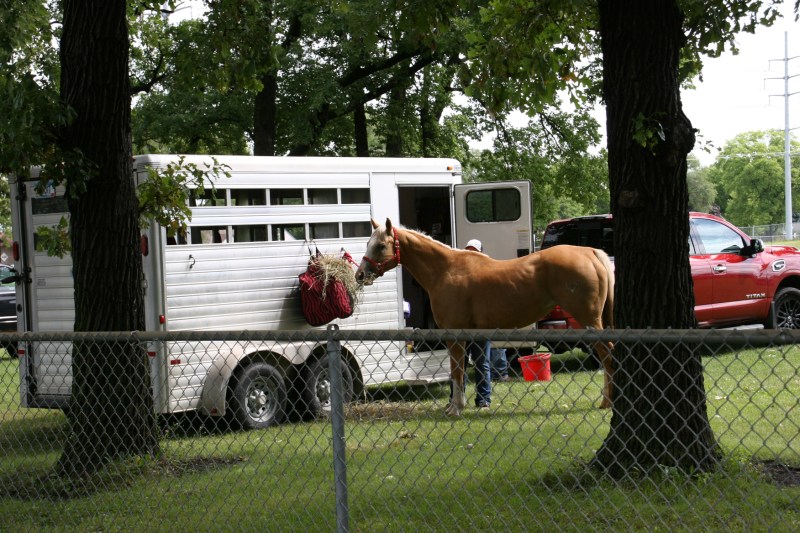
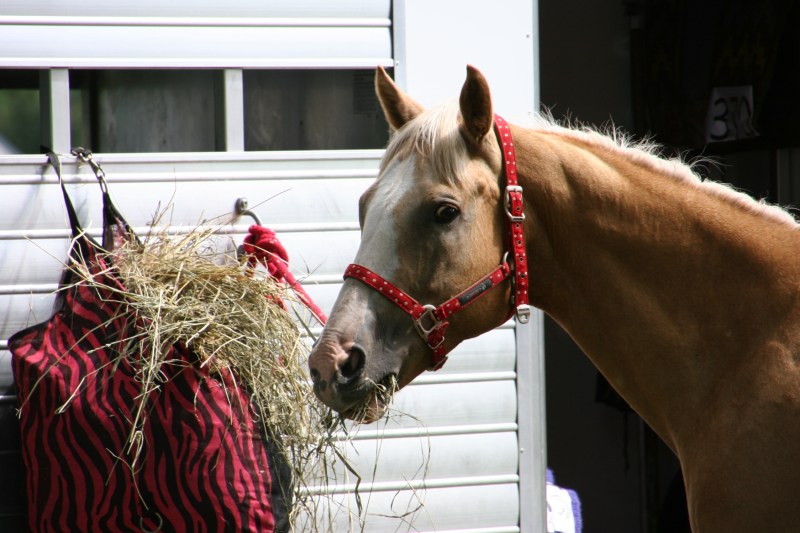
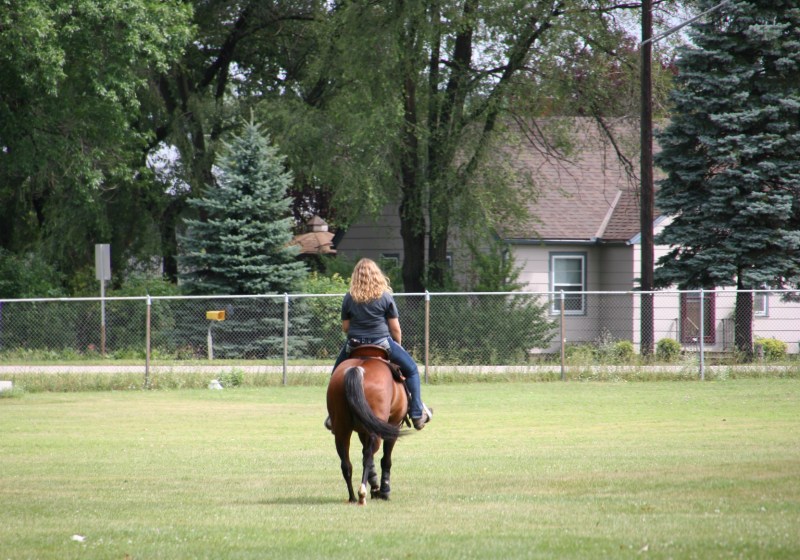
Across the road at the Rice County Fairgrounds we found one final surprise—a horse show. Not yet underway, but in the process. I’ve always liked horses.

But mice? No. Not one bit…


I’ll miss you, family July 26, 2020

Filed under: Uncategorized — Audrey Kletscher Helbling @ 5:00 AM
Tags: , , , , ,

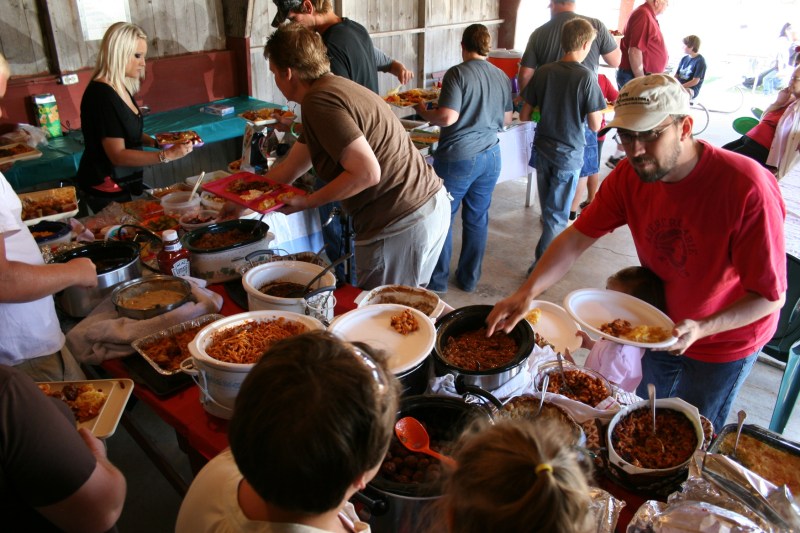
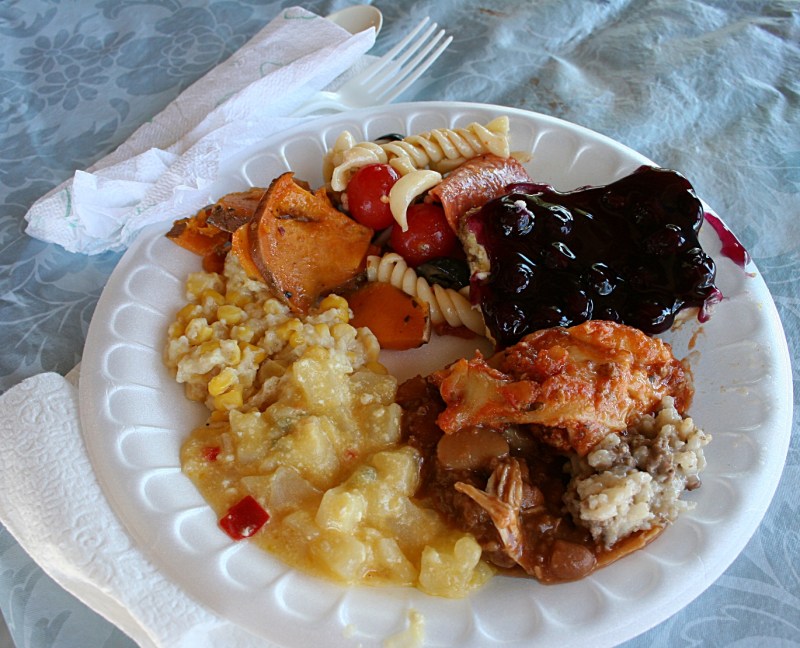
The potluck offerings at a past Kletscher Family Reunion. Minnesota Prairie Roots file photo.


ON THIS, THE LAST SUNDAY in July, for decades, the descendants of Henry and Ida Kletscher have reunited in the small southwestern Minnesota community of Vesta. We—siblings, cousins, aunts and uncles and in-laws—gather in the Vesta City Park to reconnect. To share updates on our lives. To laugh. To enjoy a potluck meal of homemade dishes that cover several picnic tables. We are a big group given my grandparents raised 10 children. And we know how to cook and bake. Hotdish. Desserts. Too much food, but, oh, so good.


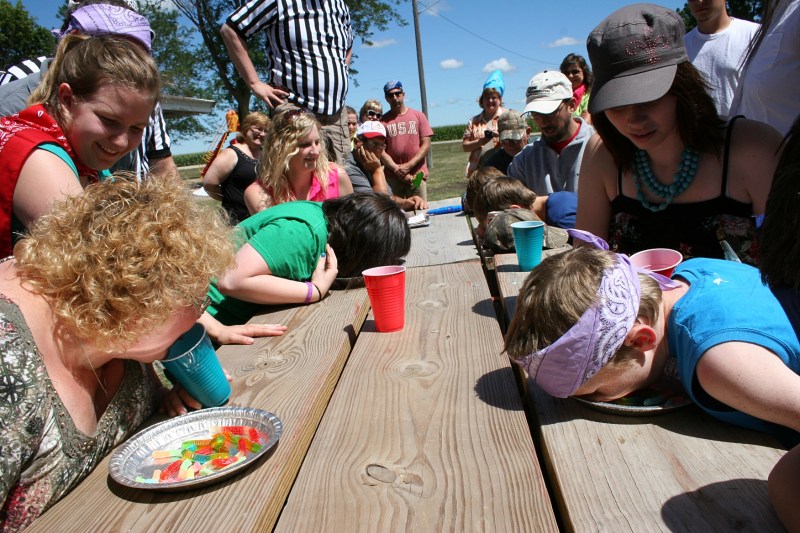
In this game, played at a past reunion, contestants race to move gummy worms from a pie plate into a cup, with their mouths. Minnesota Prairie Roots file photo.


This is our annual July tradition of family, fun and food. Our one time a year, other than funerals, when we now meet. Most years I attend. Last year I couldn’t. So I anticipated the Kletscher Family Reunion of 2020.


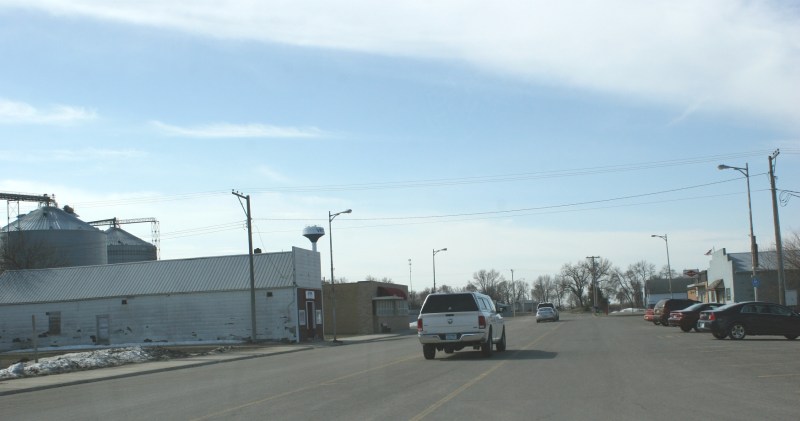
The one-block Main Street of downtown Vesta. Minnesota Prairie Roots file photo.


But, because of COVID-19, the reunion is canceled. And rightly so. Even though my home county of Redwood has only 28 cases (as of Saturday), many of us come from hotbed areas. Like the Twin Cities metro. Or my county of Rice with 944 cases, including eight deaths.

Sometimes I think it’s easy to feel insulated, protected, from the virus in rural areas. But COVID-19 knows no geographical boundaries. No age limits. No nothing. COVID cases in Minnesota’s more rural counties are increasing.


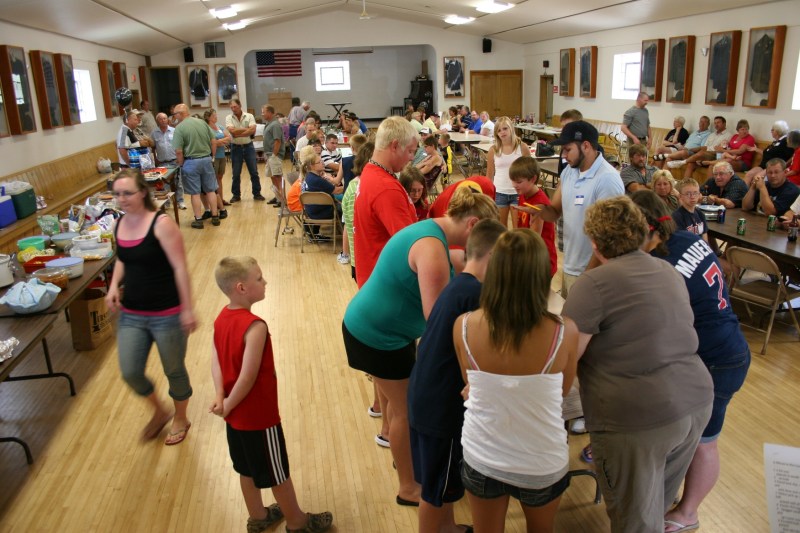
Contestants in the Minute-to-Win-It competitions gather around a table right after the potluck at a reunion held several years ago in the Vesta Community Hall because of the heat. Minnesota Prairie Roots file photo.


The call to cancel the reunion was the right one. I would not have attended had it been a go. I have been careful for five months about trying to protect myself and reduce my risk. And, as much as I love visiting with family, it’s not worth the risk to see them. I can wait.

Kris Ehresmann, Minnesota’s infectious disease director, reported this week that her department is seeing more cases directly linked to family gatherings. I am not surprised. The relaxed setting, the desire to hug and get close and more, seems the making of the perfect storm.


My plated food from a previous reunion. Minnesota Prairie Roots file photo.


And so today, on the final Sunday of July, I won’t see the extended family that means so much to me. I won’t indulge in a plate filled with incredibly delicious homemade foods. I won’t engage in conversations with cousins or admire the newest babies. But I will think of them and hope that, next summer, I can reconnect in the community of our roots with the family I love.

© Copyright 2020 Audrey Kletscher Helbling
 

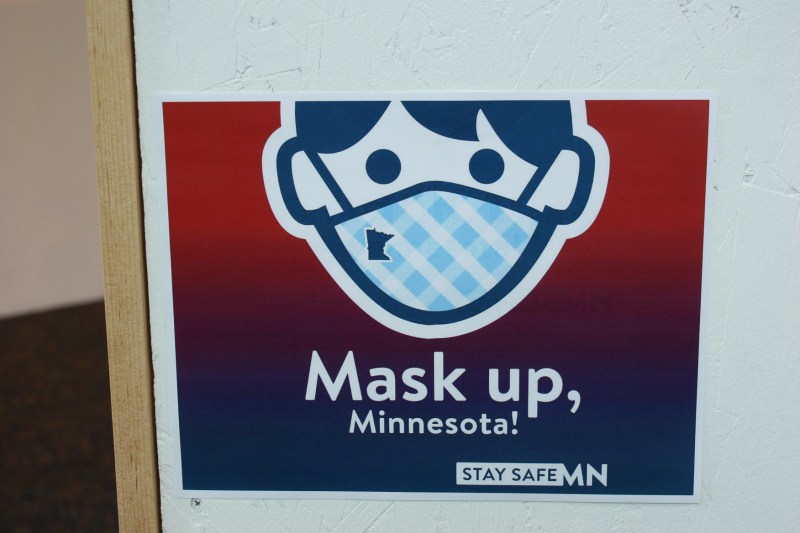
Mask up, Minnesota July 22, 2020

A sign posted at the Steele County History Center in Owatonna. Minnesota Prairie Roots file photo June 2020.


A PRESS CONFERENCE WEDNESDAY afternoon led by Minnesota Governor Tim Walz could have passed as a persuasive speech when he announced a statewide mask mandate effective at 11:59 pm Friday.

I needed no convincing as I listened and took notes. I’ve consumed enough reliable information from health officials and others to long ago recognize the value of wearing face masks during this global pandemic. Common sense also tells me that masking up helps limit the spread of the potentially deadly COVID-19 virus.

Other state officials, including Lt. Governor Peggy Flanagan who lost a brother to COVID, two infectious disease doctors and two small business owners joined the governor as he announced executive order 20-81 requiring face masks to be worn in all indoor public places in our state.


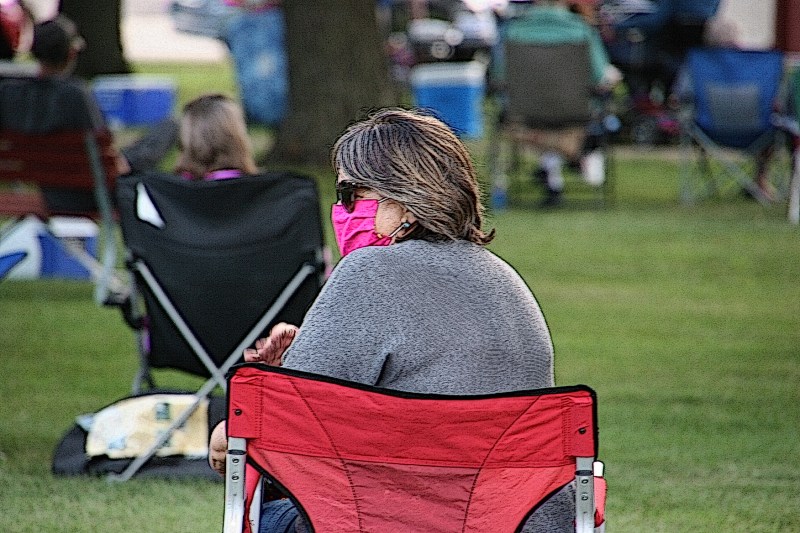
A woman attending an outdoor band concert in Faribault last week masks up in this edited file photo.


I’ve awaited this announcement for weeks as city after city in Minnesota—most recently Northfield in my county of Rice—adopted ordinances requiring face masks. The governor and his team are aiming for a 90-95 percent compliance rate to help slow the spread of COVID and save lives.

“This is a small sacrifice for a potential big gain,” Walz said as he referenced health and economic benefits.

The lieutenant governor called for Minnesotans to make wearing masks a part of their routine, to “normalize this” and to help kids get comfortable in masks to prepare for schools reopening. Children under five don’t need to wear masks, although masks are encouraged for anyone over age two.

At times, the news conference sounded like a pep talk. “Minnesotans, we can do this,” Walz said. “…we are good at doing things for others.” Wearing a Paul Bunyan buffalo plaid mask, the governor also urged people to be kind to one another in adopting this “science based solution.”


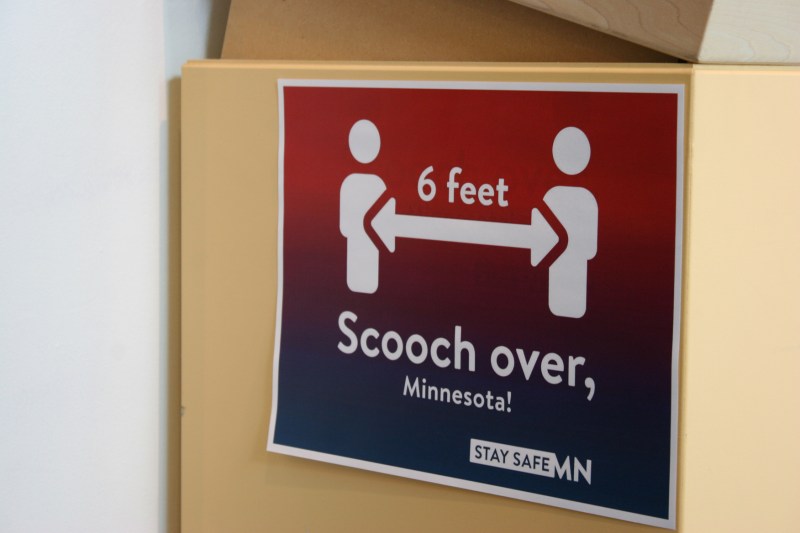
Social distancing remains part of the safety protocol to protect ourselves and others from COVID-19 as noted in this sign posted at the Steele County History Center. Minnesota Prairie Roots file photo June 2020.


Yet, several, including Minnesota Commissioner of Health Jan Malcolm warned that “A mask is not magic.” People still need to stay home when sick, avoid large crowds, practice six-feet minimum social distancing, wash/sanitize their hands frequently, avoid touching their faces… The state health department weeks ago recommended the mask mandate and Malcolm reiterated the importance of wearing face masks to help protect others and control the spread of COVID-19. She also noted that masking presents a psychological benefit in reminding people that “COVID is still with us.”

She echoed the governor’s sentiments with an encouraging, “We can do this.”

While Malcolm focused on the health aspect, Steve Grove, who leads the Minnesota Department of Employment and Economic Development, focused on the economic side. Wearing masks will keep the Minnesota economy open and pave the way for further reopening, he said. The Minnesota Retailers Association earlier backed a mask mandate. He urged individual responsibility in wearing masks while also pointing out the need for businesses to assure employees are following the order and that signs are posted requiring customers to be masked. To that end, the state is shipping disposable masks to one Chamber of Commerce in each of Minnesota’s counties for dispersal to businesses.

When customers don’t comply, Grove suggested “thoughtful conversation.” He doesn’t want, he said, for businesses to become “the mask police.”


I photographed this mask wearing local while attending a car cruise in downtown Faribault in mid May. Minnesota Prairie Roots photo, May 2020.


At one point, the governor called not wearing a mask “reckless and not neighborly.” I could sense his frustration with how masks have become a political issue. “My responsibility,” he said, “is to follow the best guidance and the best science.” But then the Democratic governor noted that “President Trump is telling you to wear a mask.” Walz had hoped Republican leaders in Minnesota would support him in issuing a mask mandate. Up until now, they have not. I feel the governor’s frustrations, too, with those who make this a political issue.

I’ve felt incredibly frustrated also with the lack of mask wearing in my community among the general public, but especially by employees in several local businesses. They want our business, yet fail to recognize the importance of protecting customers. I recently decided that I would no longer shop at local businesses where staff do not mask up. Those include local hardware/farm supply stores and two bar/restaurants (where we’ve done take-out only). I also determined to no longer allow a mask-less grocery store cashier to check out my groceries. She wore a face mask around her neck, where it did absolutely no good.

Now all that changes with executive order 20-81, an order which DEED Commissioner Grove says is “rooted in health and growing our economy.”

Mask up, Minnesota. It’s the right thing to do for yourself, your family, your friends, your neighbors, your community, your county, your state and your country.

© Copyright 2020 Audrey Kletscher Helbling
 

Close-up in the Atwood Neighborhood of Madison

Filed under: Uncategorized — Audrey Kletscher Helbling @ 5:00 AM
Tags: , , , , , ,

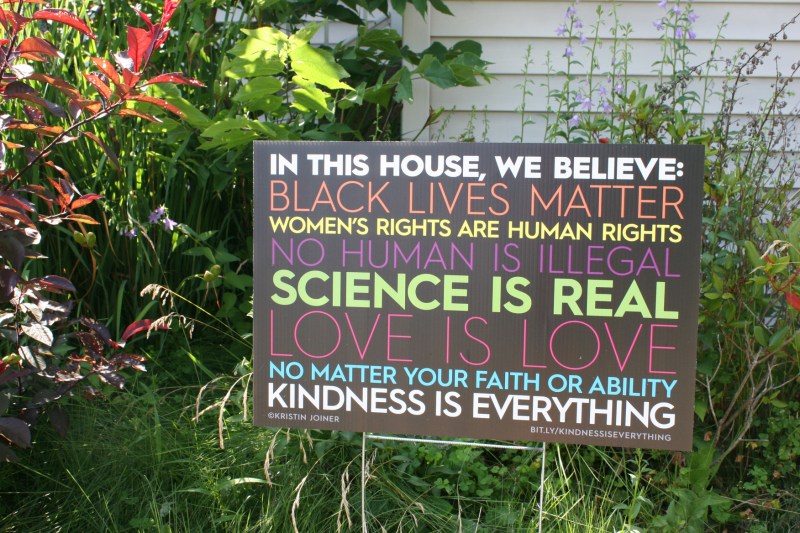
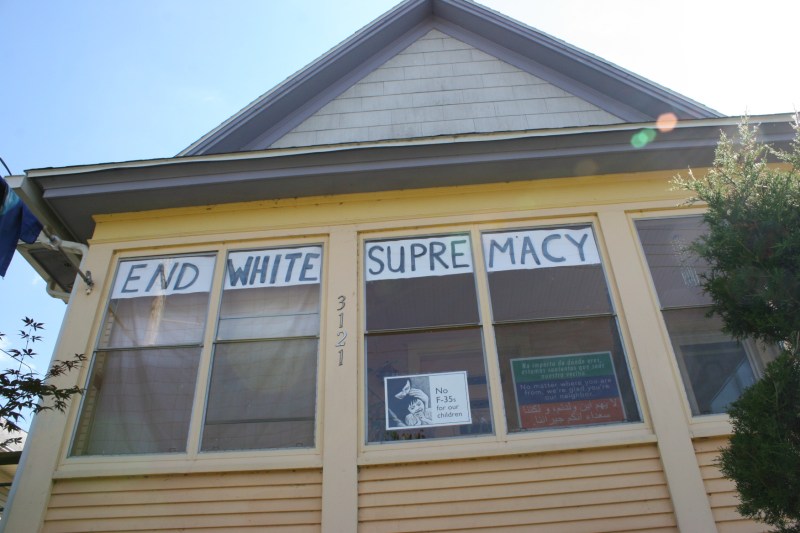
One of the many inspiring signs posted in the residential neighborhood where I walked a square block.


THE MESSAGES ARE STRONG. Powerful. Statements that express the beliefs of those who live here. In a section of the Atwood Neighborhood in Wisconsin’s capital city.


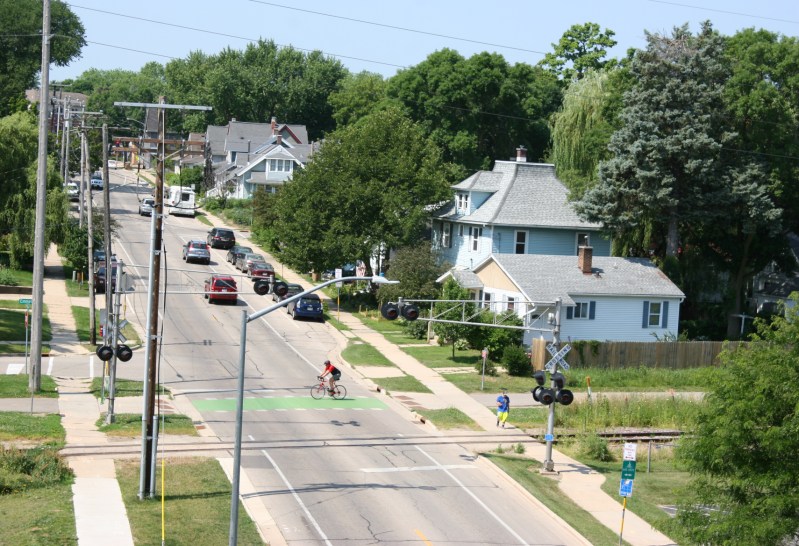
A view of the Atwood neighborhood, including the bike trail that crosses this busy street. The residential neighborhood photographed for this post is to the left (and unseen) in this image.


On a recent trip to Madison to visit our second daughter and her husband and our son, I walked a block-square residential area near the son’s apartment building on the east side. I chose that over following the bike trail since I suffer a hearing loss and often don’t hear bikers fast-approaching from behind. Madison has a great system of recreational routes. But strolling sidewalks feels safer for me as I take in my surroundings, sometimes pausing to take photos.

 

Charming homes and yards…with powerful messages posted.
 

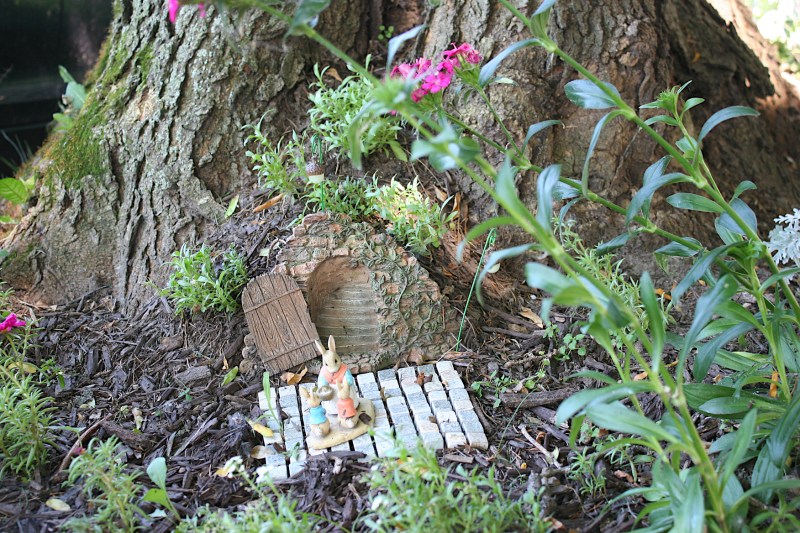
I was delighted to find fairy gardens in one yard.


Vegetables grow in a watering tank along the boulevard.

 

In the block I walked near the trail, also near Olbrich Botanical Gardens and Lake Monona, I found plenty to photograph. This is a well-kept area of older homes snugged together. Most front yards overflow with flowers, including in one, sweet fairy gardens. Inviting front porches, decks and entries define these homes that truly fit the definition of charming.


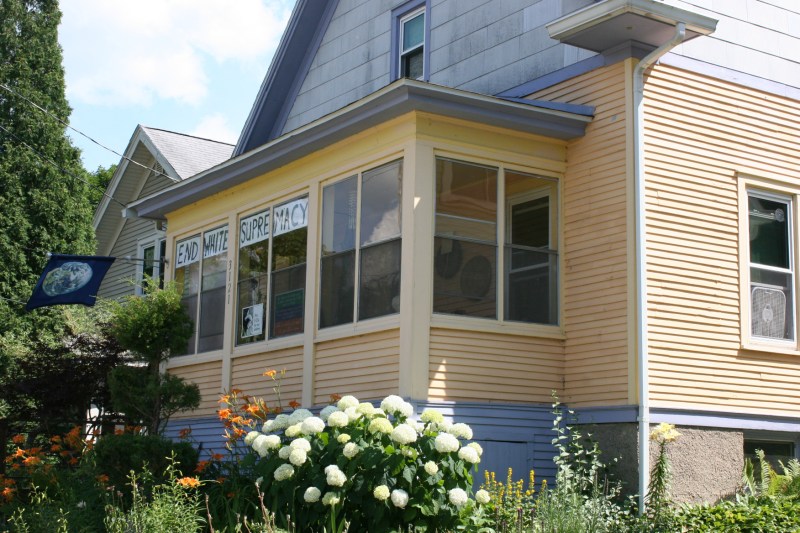
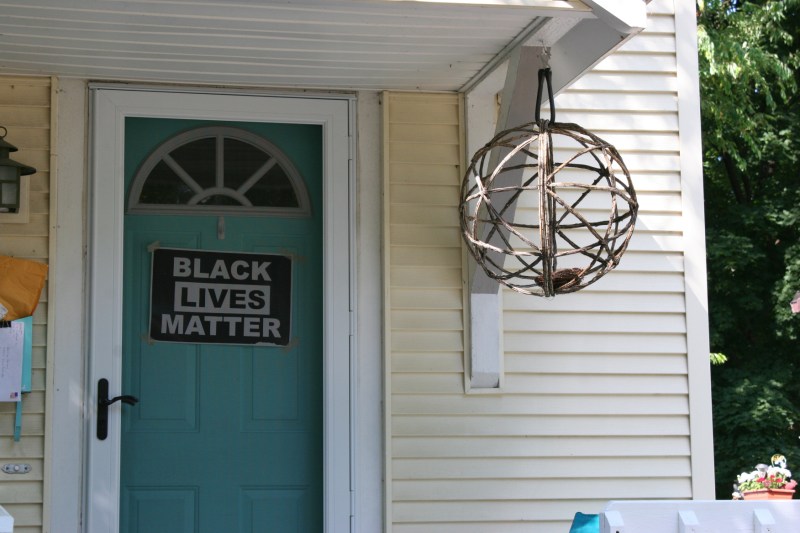
A bold door carries a strong message.


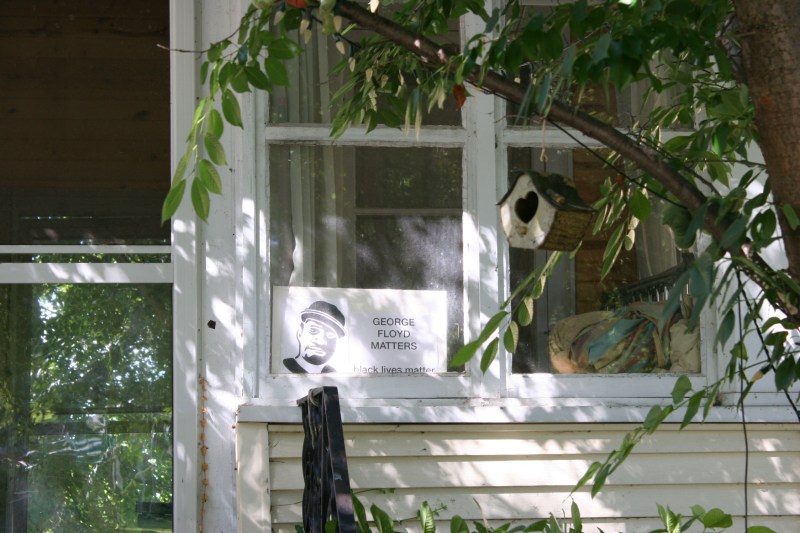
This sign references the death of George Floyd in Minneapolis on Memorial Day, which prompted a movement.


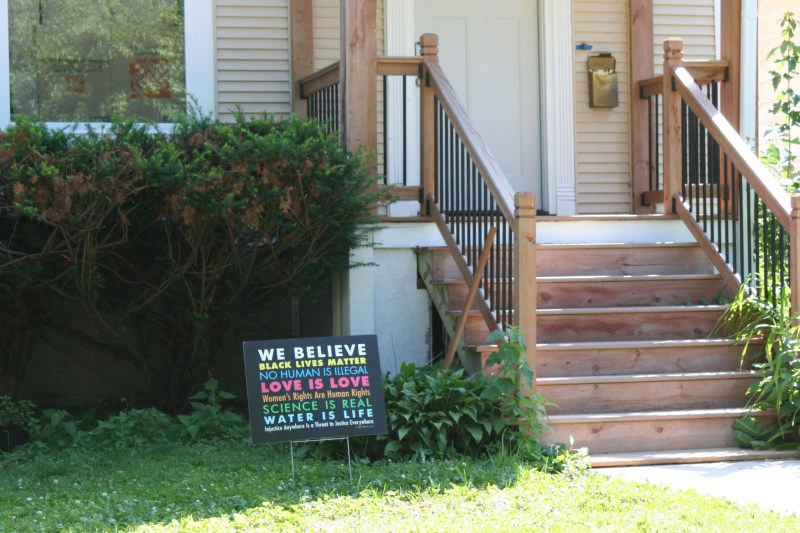
A statement of beliefs outside another Atwood home.


In these mostly lawn-less properties, there seems a cohesiveness of pride and of people who care about others, about issues, about this place they call home. And beyond. I saw that in the many posted signs addressing current-day concerns.


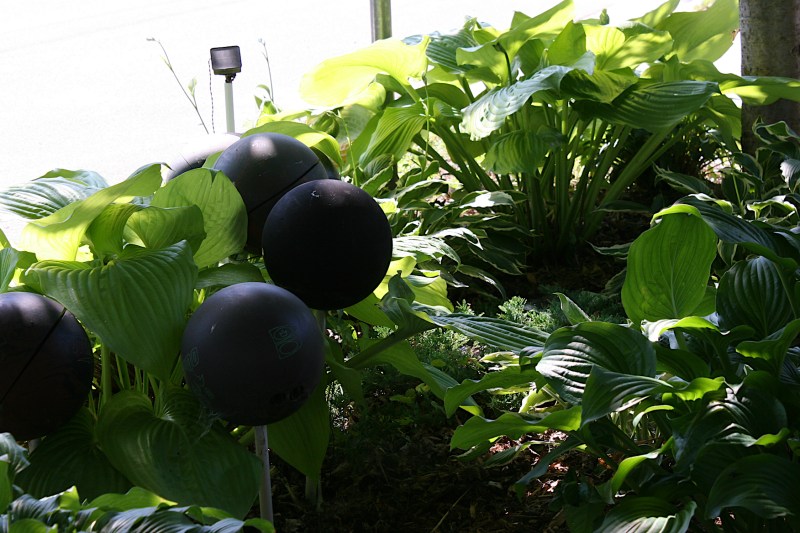
Bowling balls make for interesting garden art.
 

Lilies burst color into one of many front yard gardens.


This typewriter garden art intrigued me. I wished I could roll a piece of paper into the typewriter and leave a message.


Among the lilies and the outdoor art—including a rusting vintage typewriter—I experienced a sense of neighborhood that expands into home-grown businesses like Monty’s Blue Plate Diner, Michael’s Frozen Custard, the Barrymore Theatre
 

In this photo, the message I quote below is posted in the sign to the far right, bottom.


And I heard, too, this overall general message: No matter where you are from, we’re glad you’re our neighbor.

© Copyright 2020 Audrey Kletscher Helbling