Minnesota Prairie Roots

Writing and photography by Audrey Kletscher Helbling

Appreciating the peace, beauty & history of Valley Grove November 20, 2024

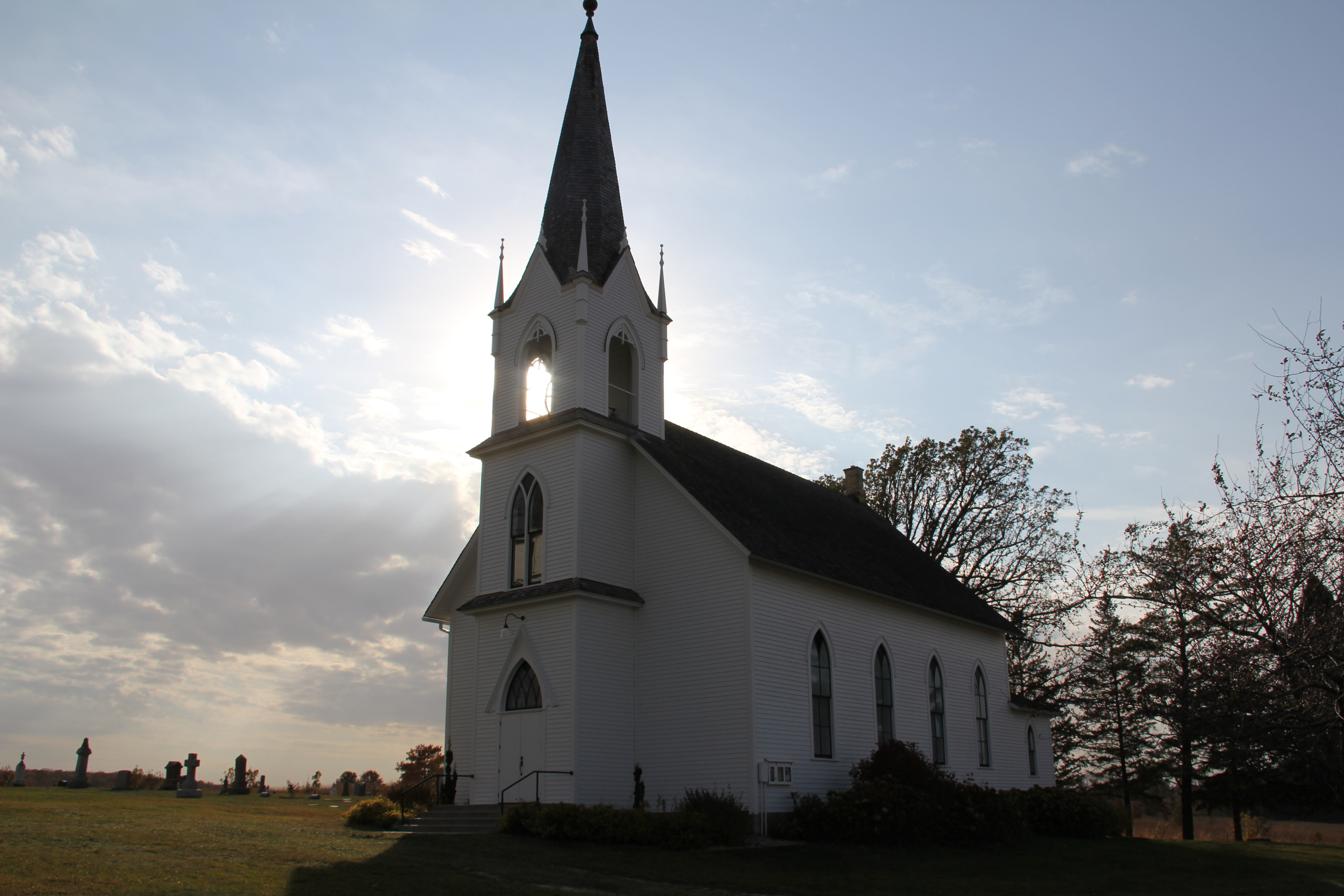
This wooden church was built in 1894 and sits directly across from the stone church. (Minnesota Prairie Roots copyrighted photo October 2024)

WHETHER YOU’RE A PERSON of faith or not doesn’t matter when it comes to appreciating a country church. Or, in the case of Valley Grove, churches. Plural.
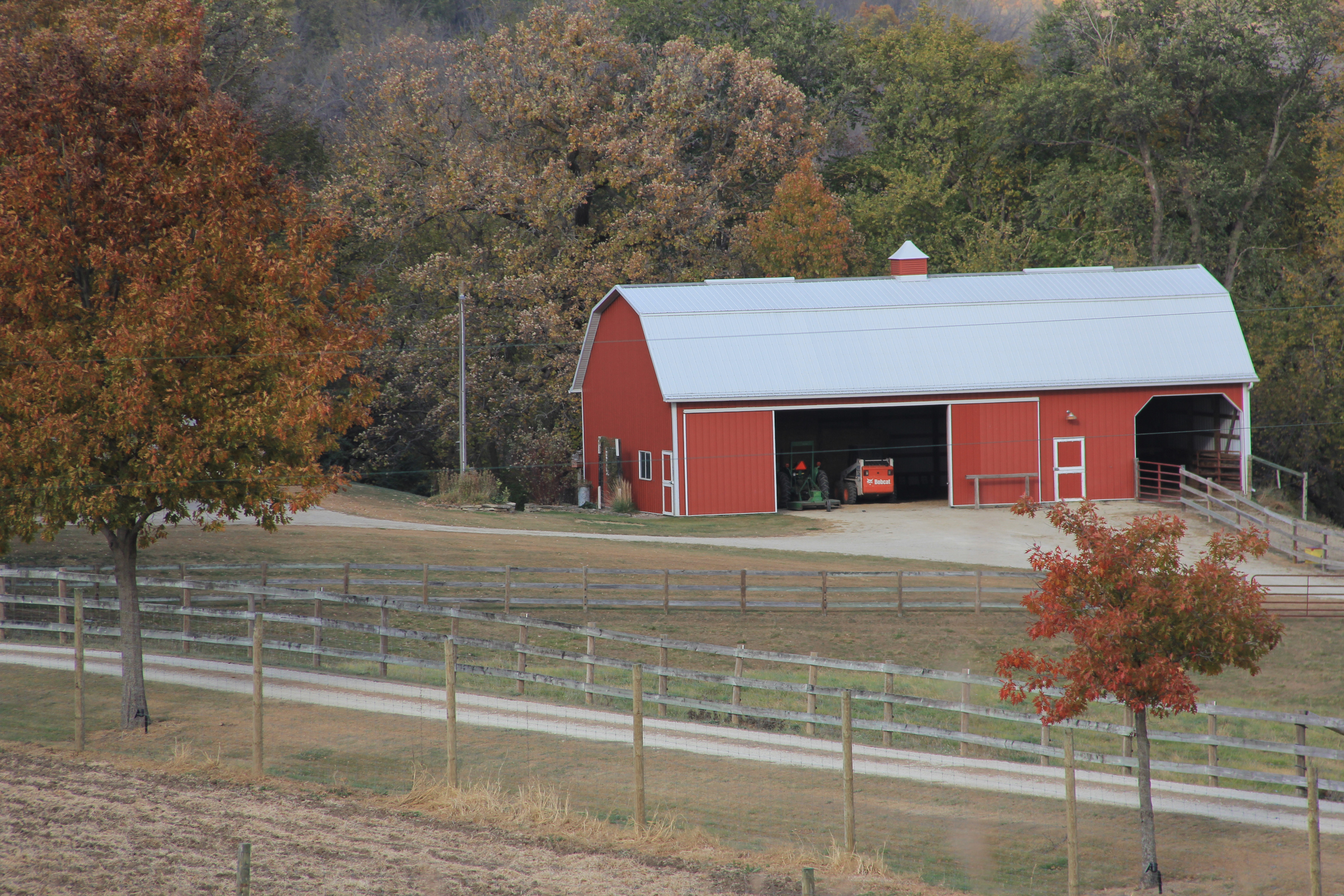
Just down the hill from the cemetery, this shed pops color into the rural landscape. (Minnesota Prairie Roots copyrighted photo October 2024)

Perched atop a hill near Nerstrand Big Woods State Park in eastern Rice County, these two churches, the cemetery, and surrounding prairie and oak savannas are a place that beckons me. I don’t know that I’ve found another rural church—and I’ve visited many in Minnesota—which holds such peaceful appeal.
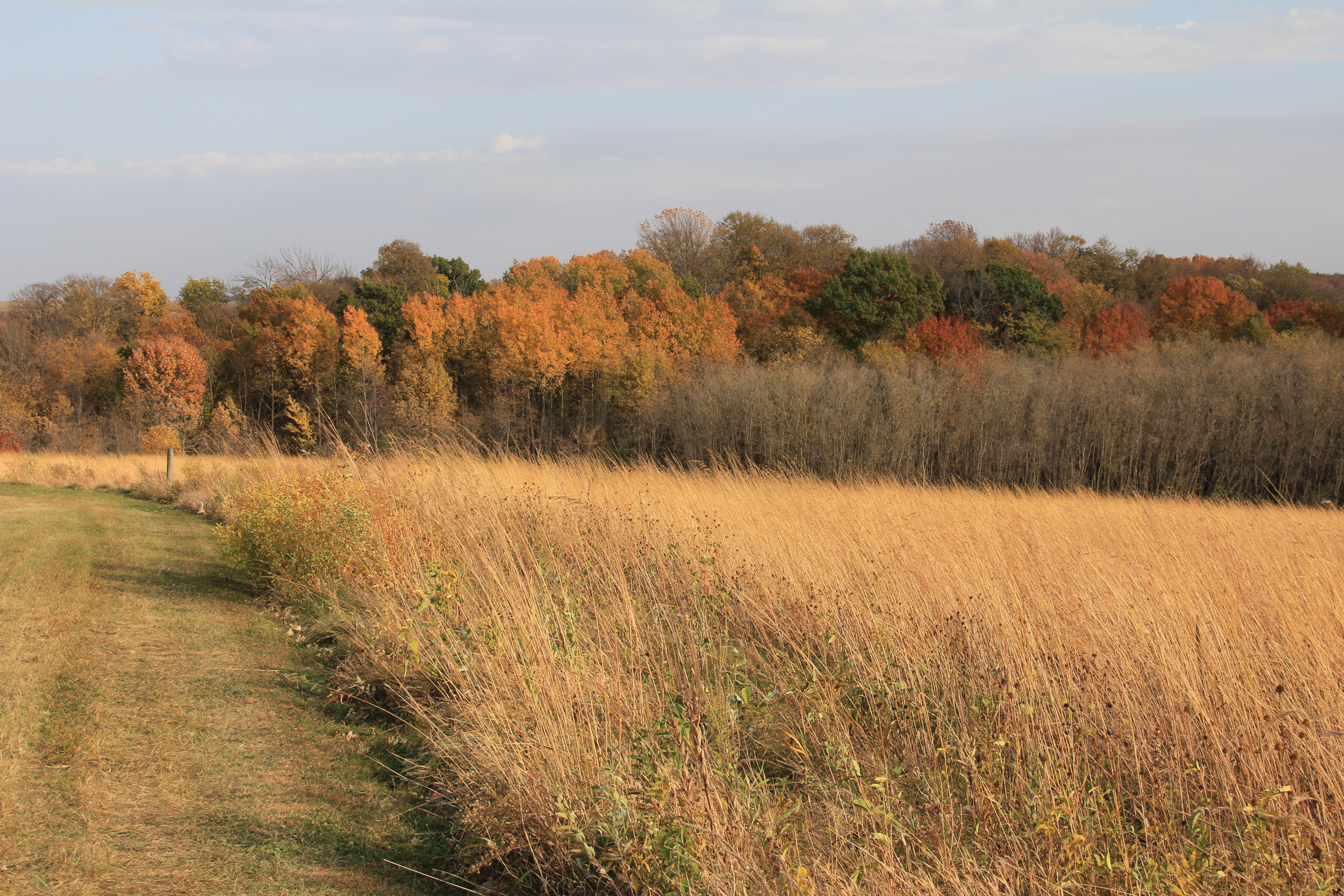
Photographed in October from the cemetery, oak and prairie savannas at Valley Grove. There are pathways through the 50 acres of land that are part of Valley Grove. (Minnesota Prairie Roots copyrighted photo October 2024)

The setting is decidedly bucolic, pastoral, whatever word you use to describe a scene that creates internal serenity. I feel such peace every time I set foot upon this land, look across the landscape of prairie and woods, surrounding fields and farm sites. Perhaps it’s my rural roots that connect me to Valley Grove.
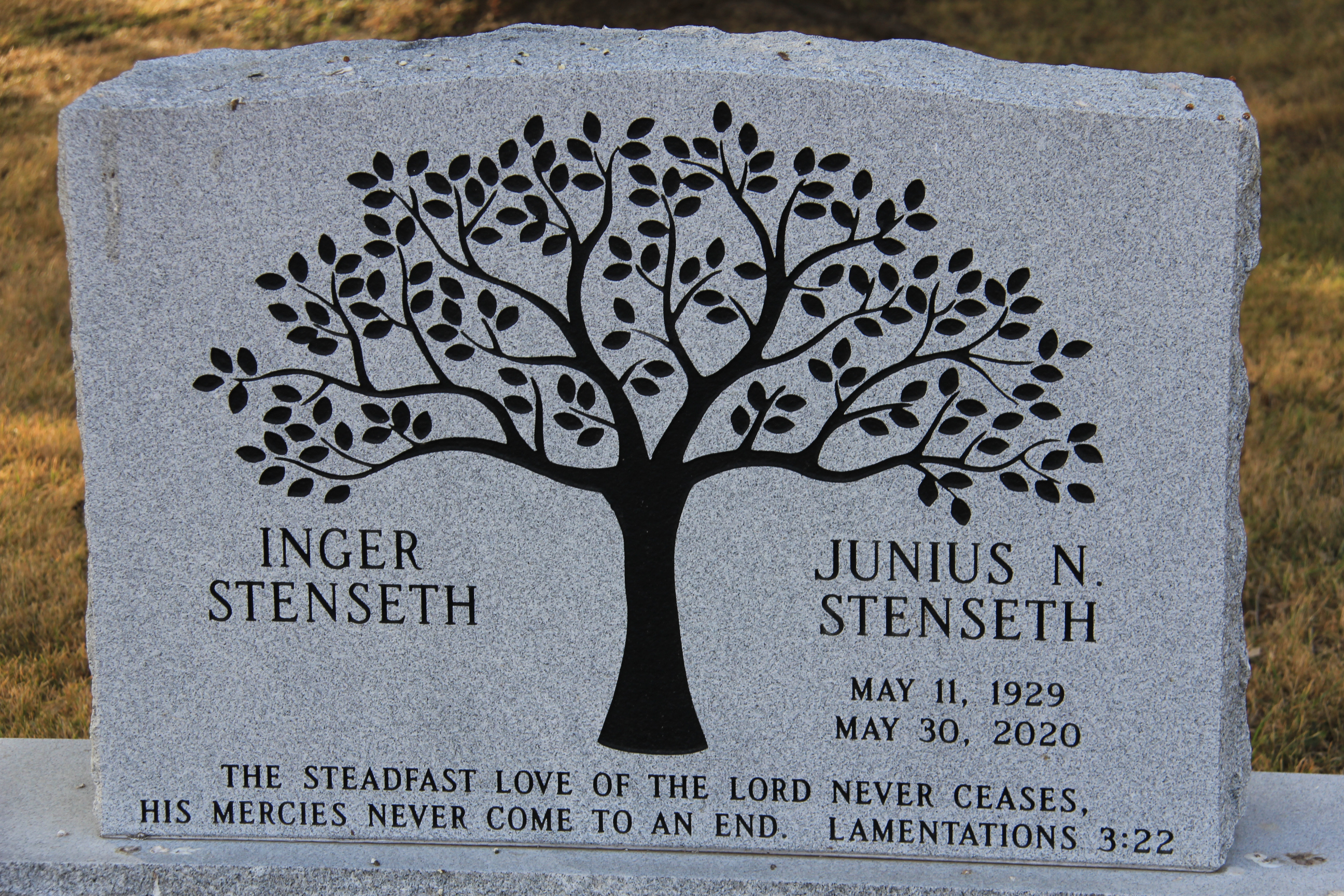
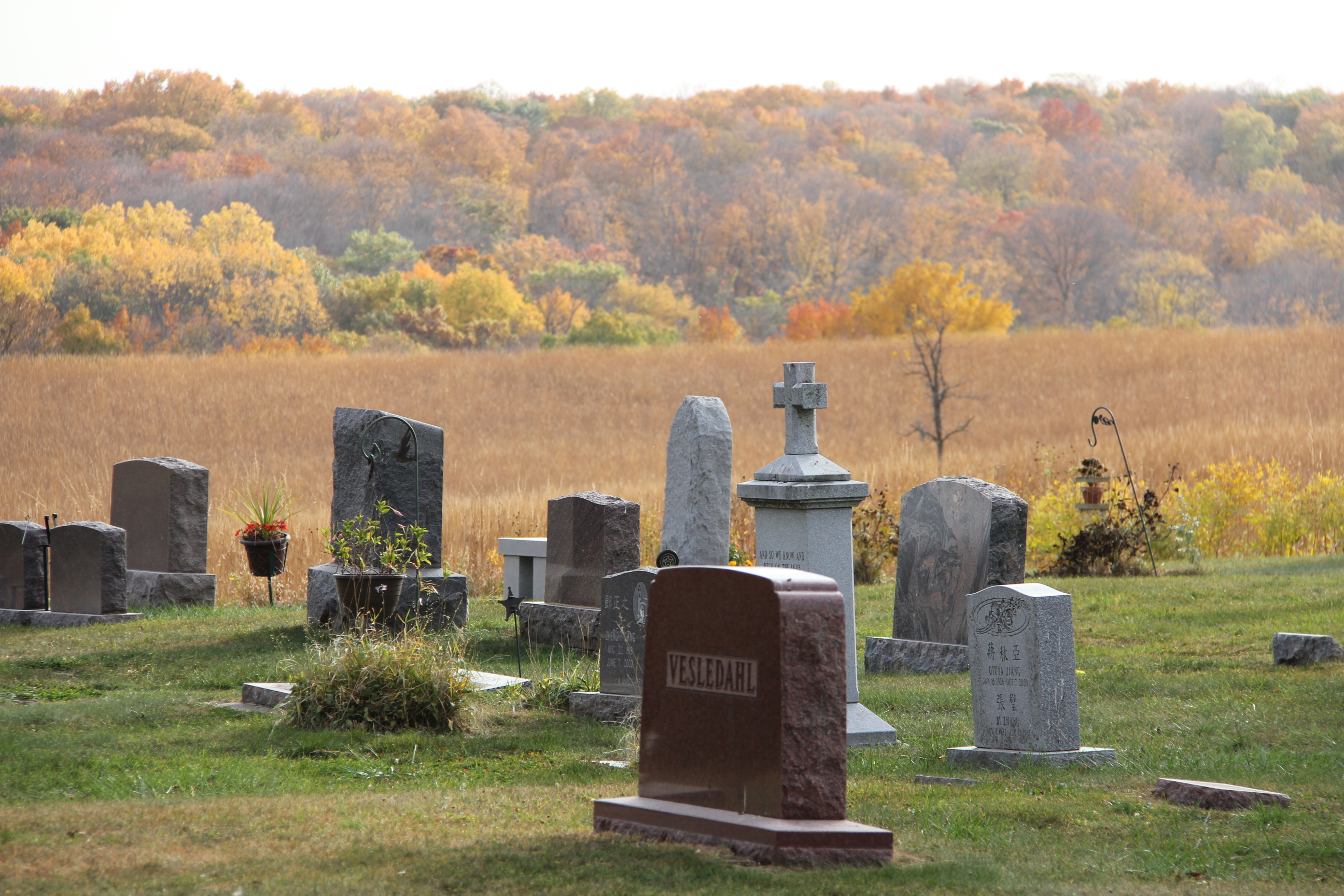
There are lots of Norwegian names on gravestones. (Minnesota Prairie Roots copyrighted photo October 2024)

I have no family connections here. Not even connections of heritage given my ancestors hail from Germany. The settlers who formed Valley Grove Lutheran Church arrived from Norway. Their imprint is here, especially in names upon tombstones in the cemetery.
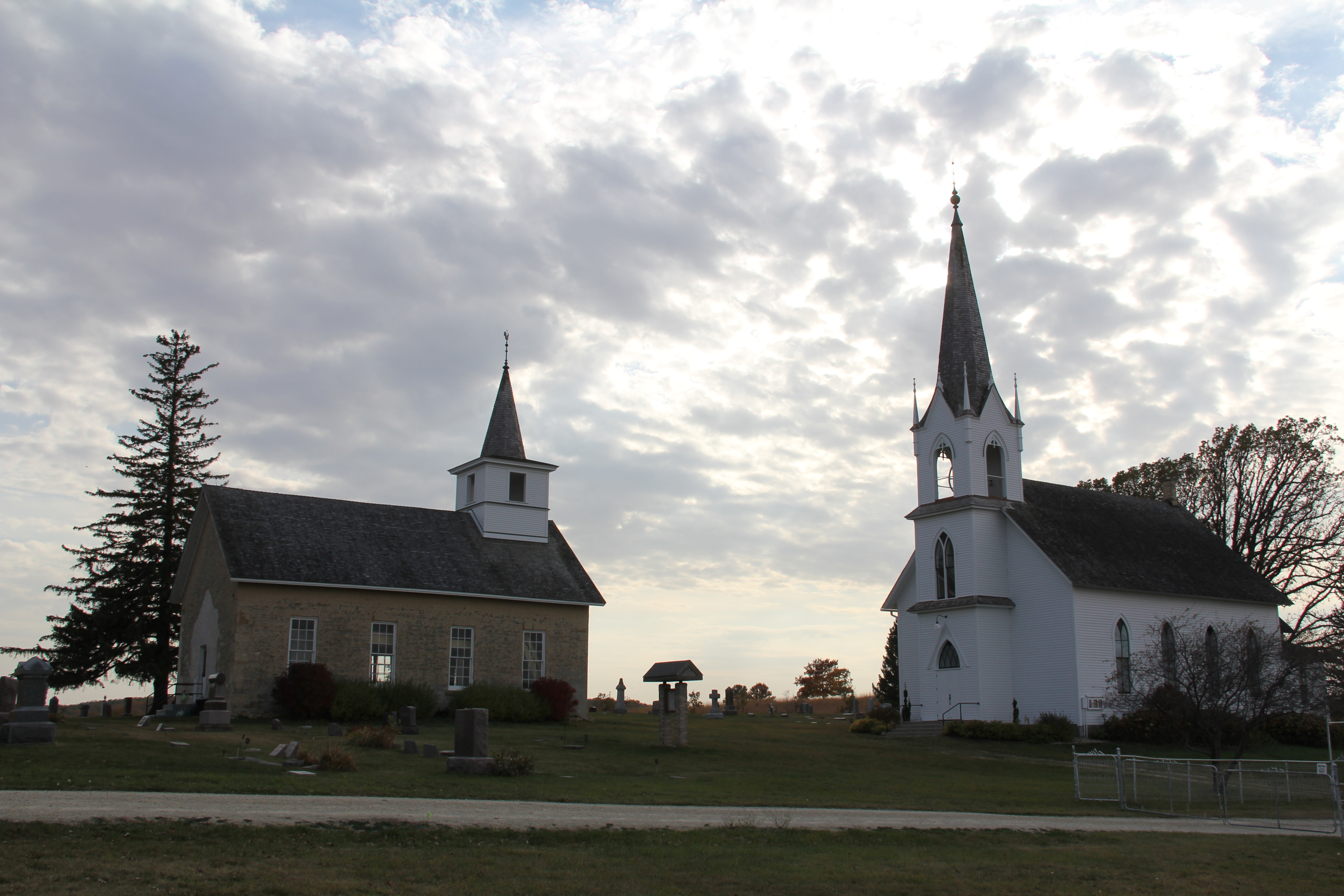
The two beautiful and well-maintained churches of Valley Grove. (Minnesota Prairie Roots copyrighted photo October 2024)

Even though this congregation disbanded in 1973, these churches have not been abandoned. The Valley Grove Preservation Society cares for and maintains the two buildings. On the National Register of Historic Places, the stone church was built in 1862 and the clapboard church in 1894. Recently, a steeple, bell structure and other restorations were completed on the wooden church. The interiors are also well-maintained, as if the congregants remain.
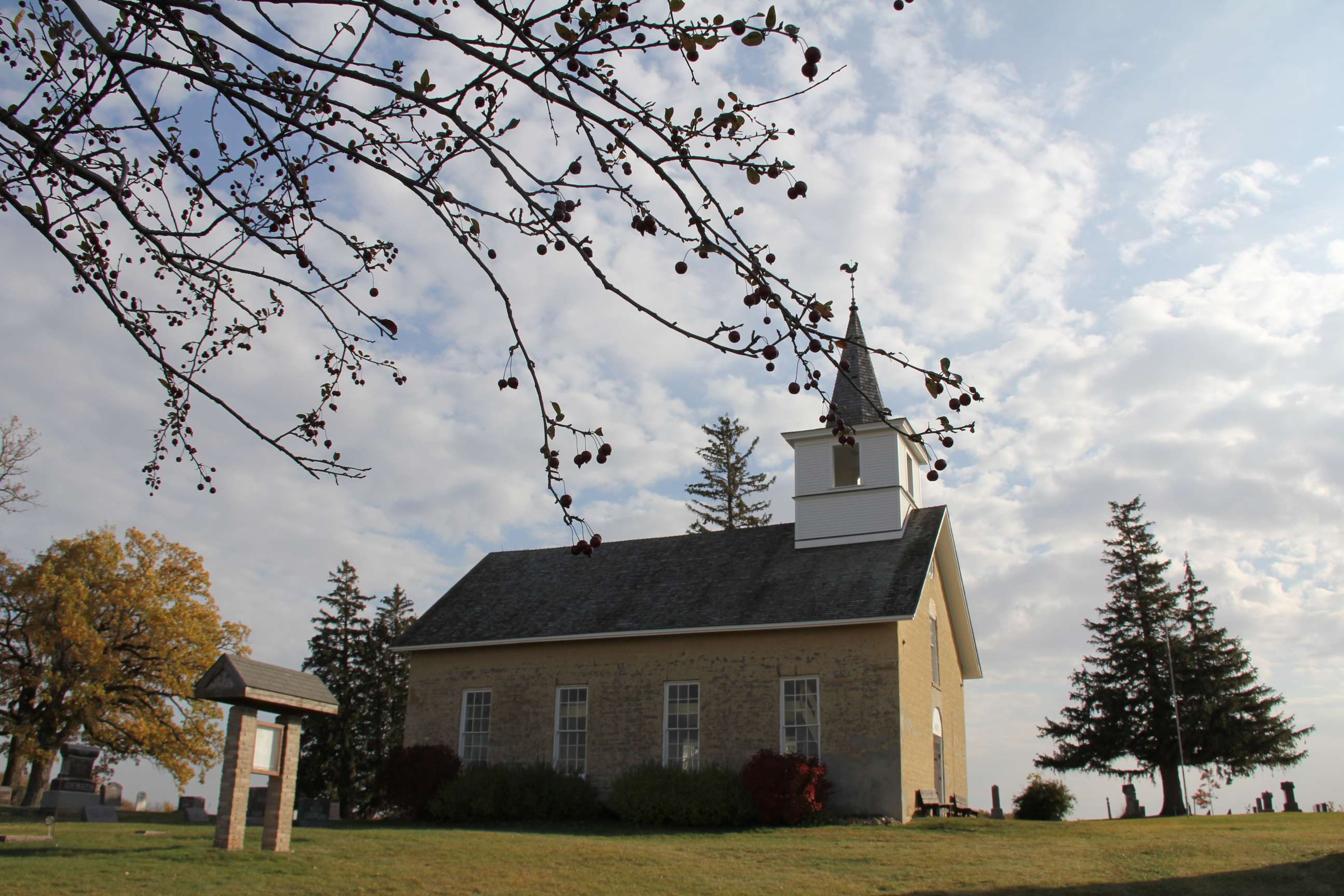
The stone church is used today as a reception and gathering space. (Minnesota Prairie Roots copyrighted photo October 2024)

Valley Grove is the site of weddings, family gatherings, occasional concerts and more, plus an annual fall country social and candlelight Christmas Eve service hosted by the Preservation Society. I’ve attended the social numerous times, but have yet to make the December 24 service. That’s at 10 p.m. with music beginning at 9:45 p.m. Winter weather sometimes forces cancellation of that event. Weeks before, a music-rich vespers service is set for 4 p.m. Sunday, December 8.
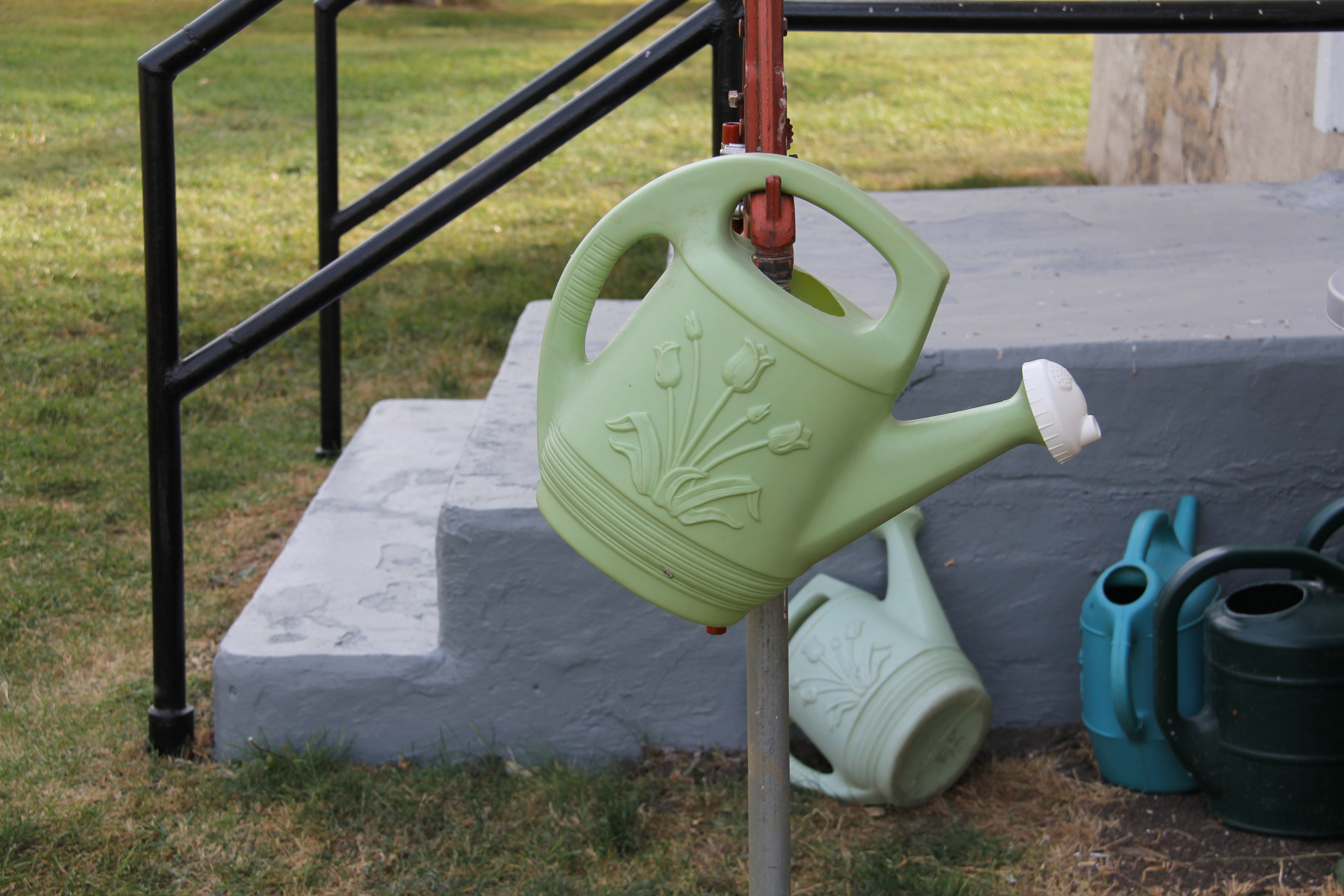
Watering cans are available for watering flowers and plants in the cemetery. (Minnesota Prairie Roots copyrighted photo October 2024)

To visit Valley Grove, whether during an event or on a personal outing, is something I would encourage if you live close by or are in the area, especially at nearby Nerstrand Big Woods State Park. Note that church doors are opened only for special occasions so don’t expect otherwise if you come on your own. That’s the case now at all country churches, whether active or disbanded. You’re not going to get inside unless someone with a key just happens to be on-site.
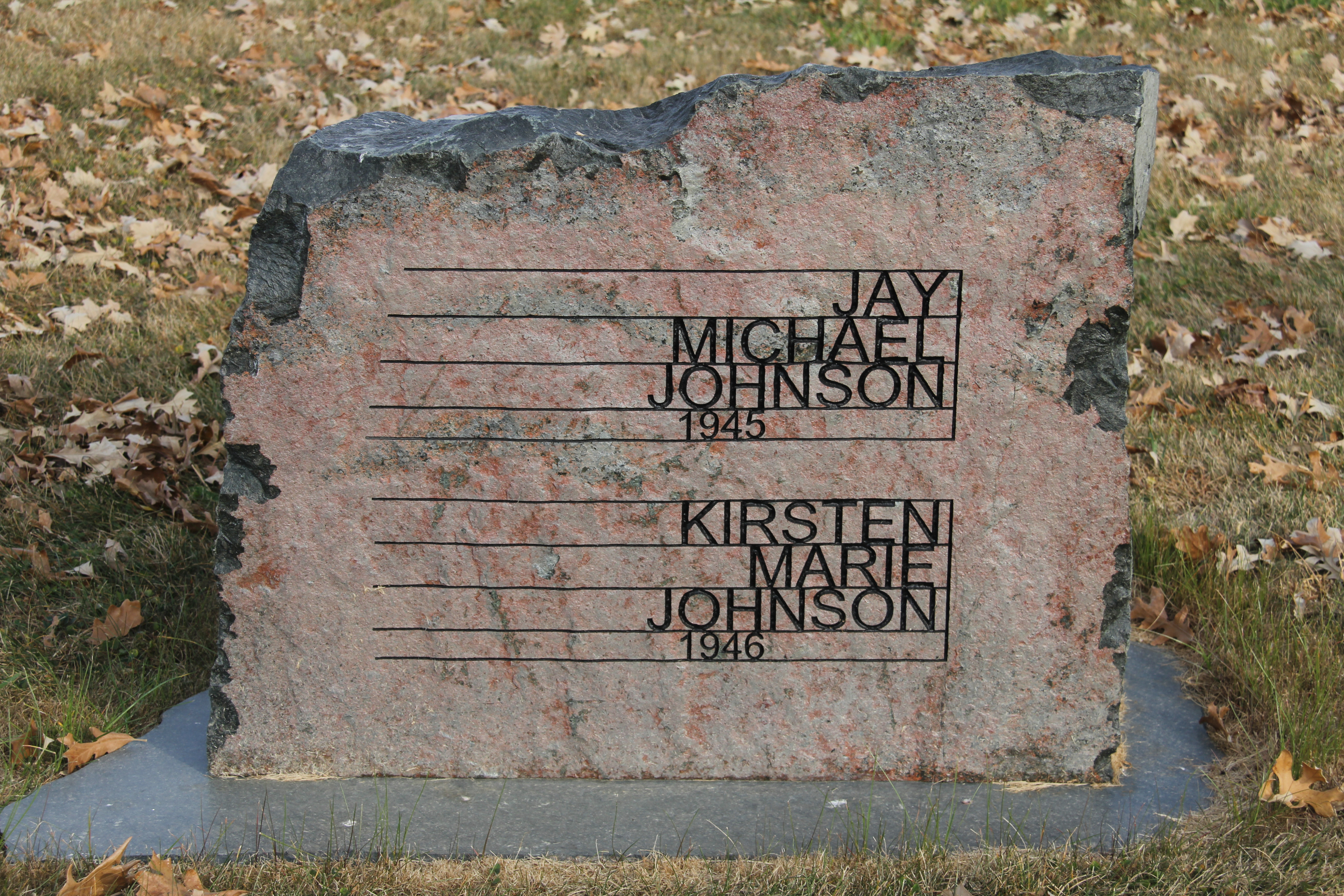
The Johnsons have their tombstone in place. I really like the simplicity, the ruggedness, the font, the shape of this grave marker, unlike any I’ve seen. (Minnesota Prairie Roots copyrighted photo October 2024)

You don’t need church access, though, to experience the essence of Valley Grove, the peace that prevails. It’s the being here, feet upon the ground, eyes taking in the countryside, that touches the soul. A walk through the cemetery, the reading of dates and names and tombstone messages channels a personal connection to those who came before us. The settlers who likely felt comfortably at home here, high atop a hill overlooking the landscape of rural Minnesota while missing the land they left, their beloved Norway.
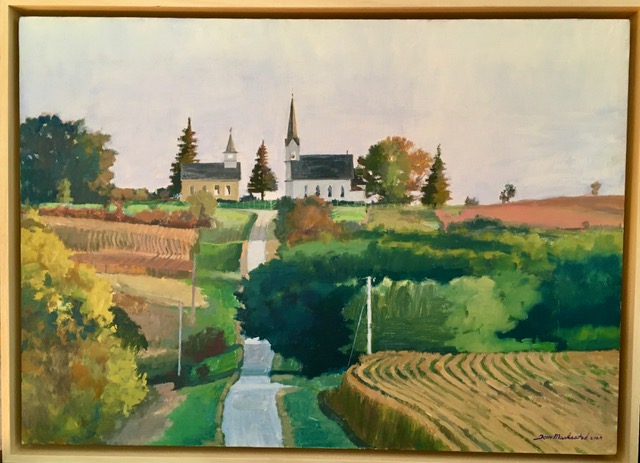
A painting of the Valley Grove churches by Tom Maakestad, to be given to one lucky person. (Image credit: Valley Grove Preservation Society)

FYI: The Valley Grove Preservation Society continues to seek donations for its Steeple Restoration Fund. As an extra incentive, those who donate $1,000 or more by December 31, 2024, will have their names placed in a January drawing for an original Valley Grove painting by Marine on St. Croix artist Tom Maakestad, who grew up near Valley Grove. His parents, Bobbie and John, founded the Preservation Society and saved the wooden church from demolition in 1975. The Valley Grove Board suggests a donation to the Steeple Fund as a Christmas gift for someone who has everything. Click here to reach the Valley Grove Preservation Society website for more information.

© Copyright 2024 Audrey Kletscher Helbling


Into the woods, onto the prairie of November November 19, 2024

The woods, sky and prairie of River Bend in early November. (Minnesota Prairie Roots copyrighted photo November 2024)

NOVEMBER MARKS A SEASON of transition, a time when the landscape slides ever closer to a colorless environment. Soon winter will envelope us in its drabness of gray and brown highlighted by white. There’s nothing visually compelling about that.

I found the veined back of this oversized fallen leaf especially lovely. (Minnesota Prairie Roots copyrighted photo November 2024)

As a life-long Minnesotan, I understand this about November. I know this. But I still don’t like the absence of color or light, the dark morning rising, the darkness that descends well before 5 p.m. And, yes, seasonal affective disorder, even if you don’t admit you’re experiencing it, likely touches all of us in Minnesota.

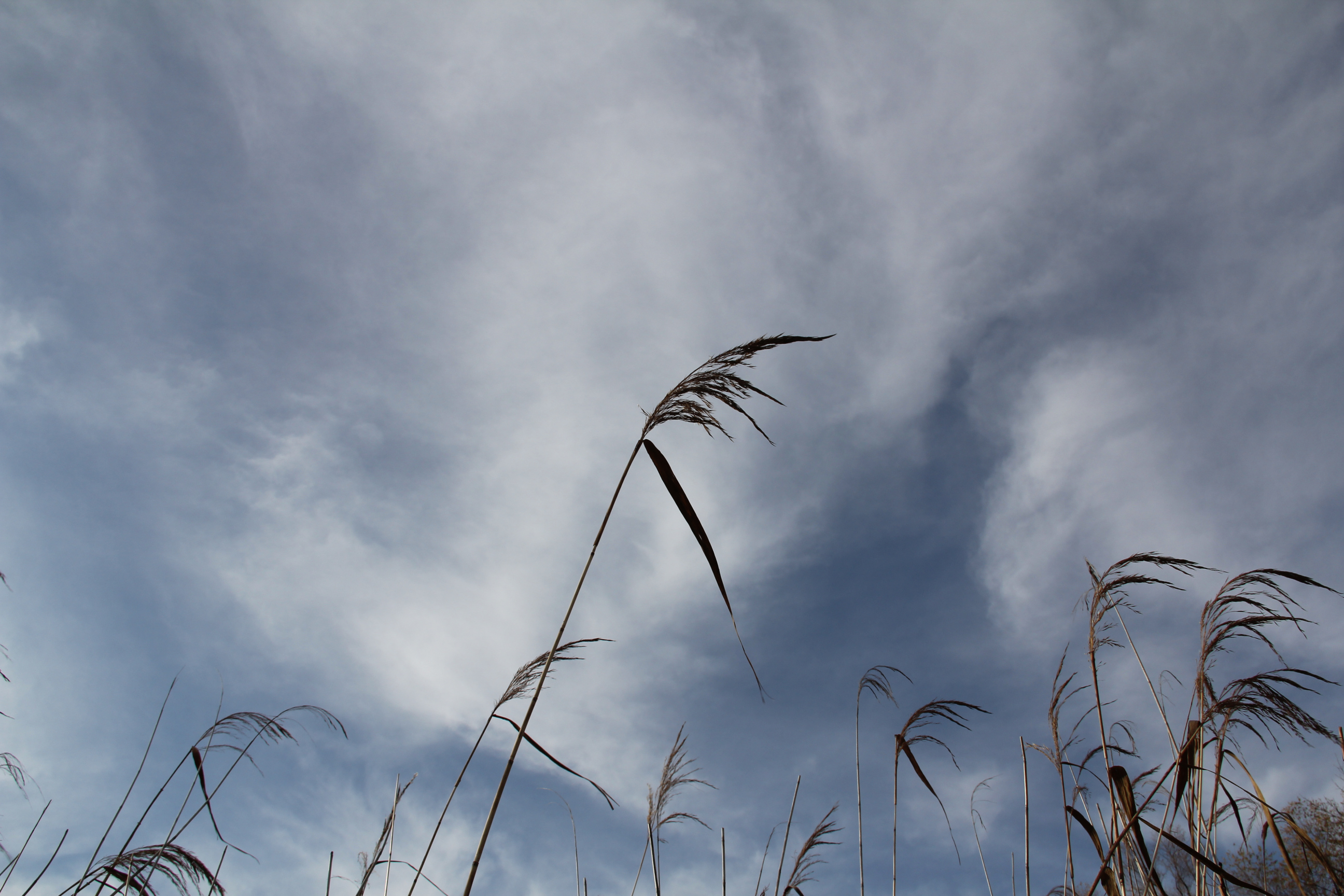
Beautiful: Wisps of clouds in the big sky and grass heads soaring. (Minnesota Prairie Roots copyrighted photo November 2024)

Times like this, it helps to get outside, into the natural world, and view the November landscape through an appreciative lens. It’s possible to reshape your thinking if you slow down, notice the details, determine that beauty is to be found in the outdoors, even in this eleventh month of the year.

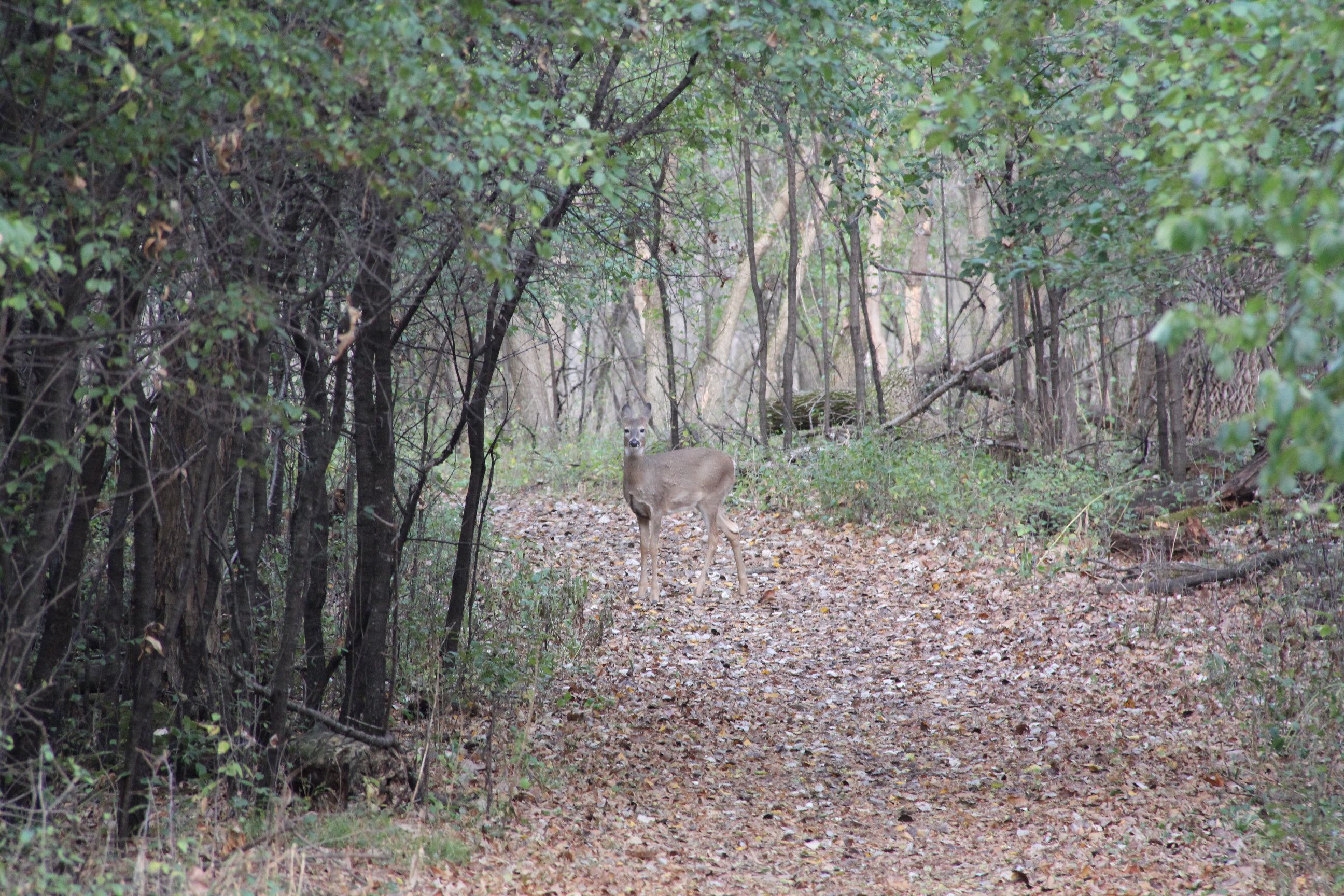
My initial glimpse of the nearly invisible deer standing on a leaf-littered trail. (Minnesota Prairie Roots copyrighted photo November 2024)

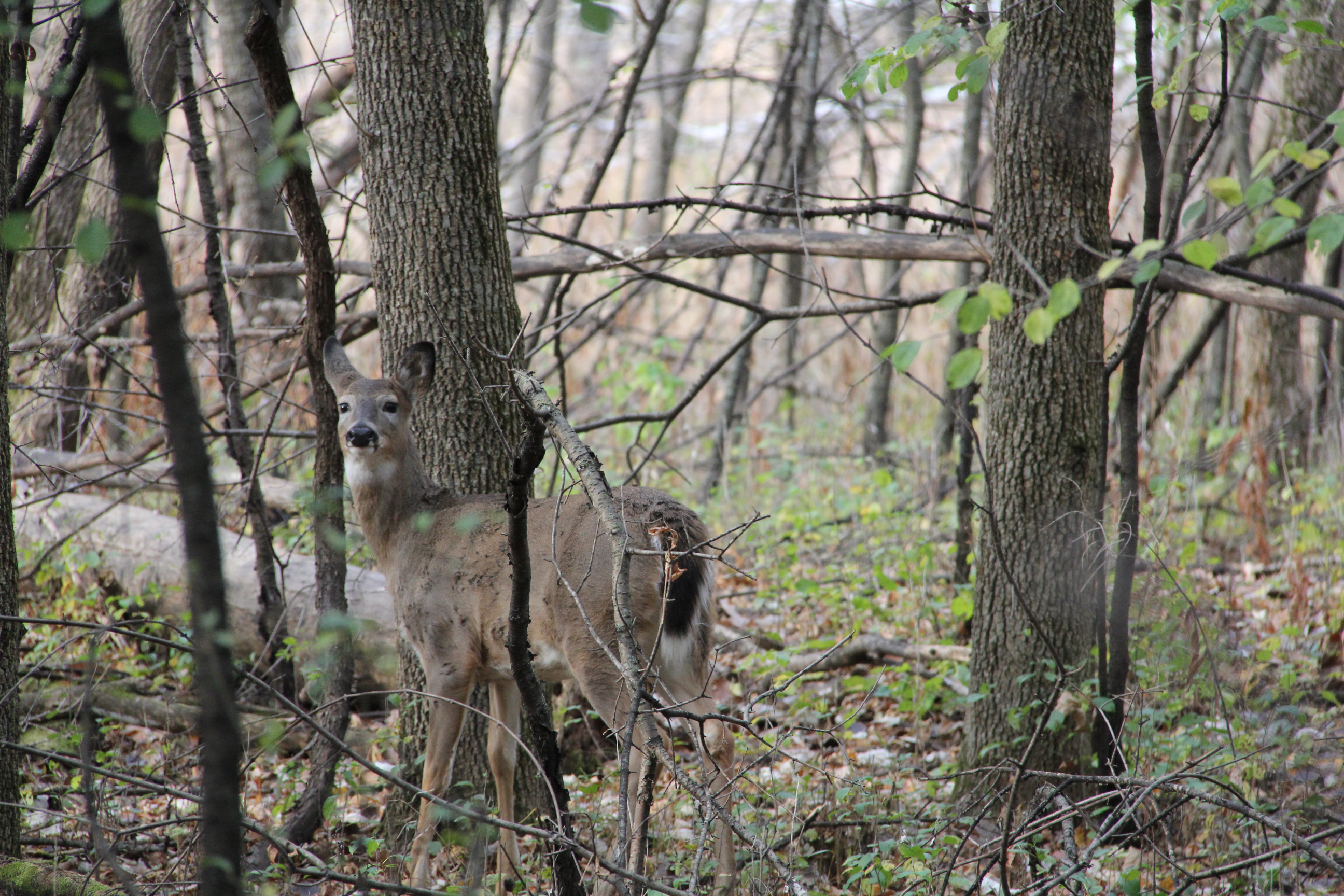
So into the woods I went at River Bend Nature Center in Faribault, where first off I spotted a deer on a trail, the animal effectively camouflaged among the dried leaves, the trunks of trees and buckthorn (an invasive species still green). The doe stood and watched as I eased slowly toward her intent on getting within better focal range. Soon she wandered into the woods, among the trees. I shot a rapid series of images as the stare-down continued, until finally the deer tired of my presence and hurried away.

I moved closer, then zoomed in with my telephoto lens to get this close-up image. (Minnesota Prairie Roots copyrighted photo November 2024)

What a wonderful way to begin my walk. Even if I consider deer too populous and a danger on roadways, my interest in watching them never wanes. And there are plenty of deer to watch at River Bend.

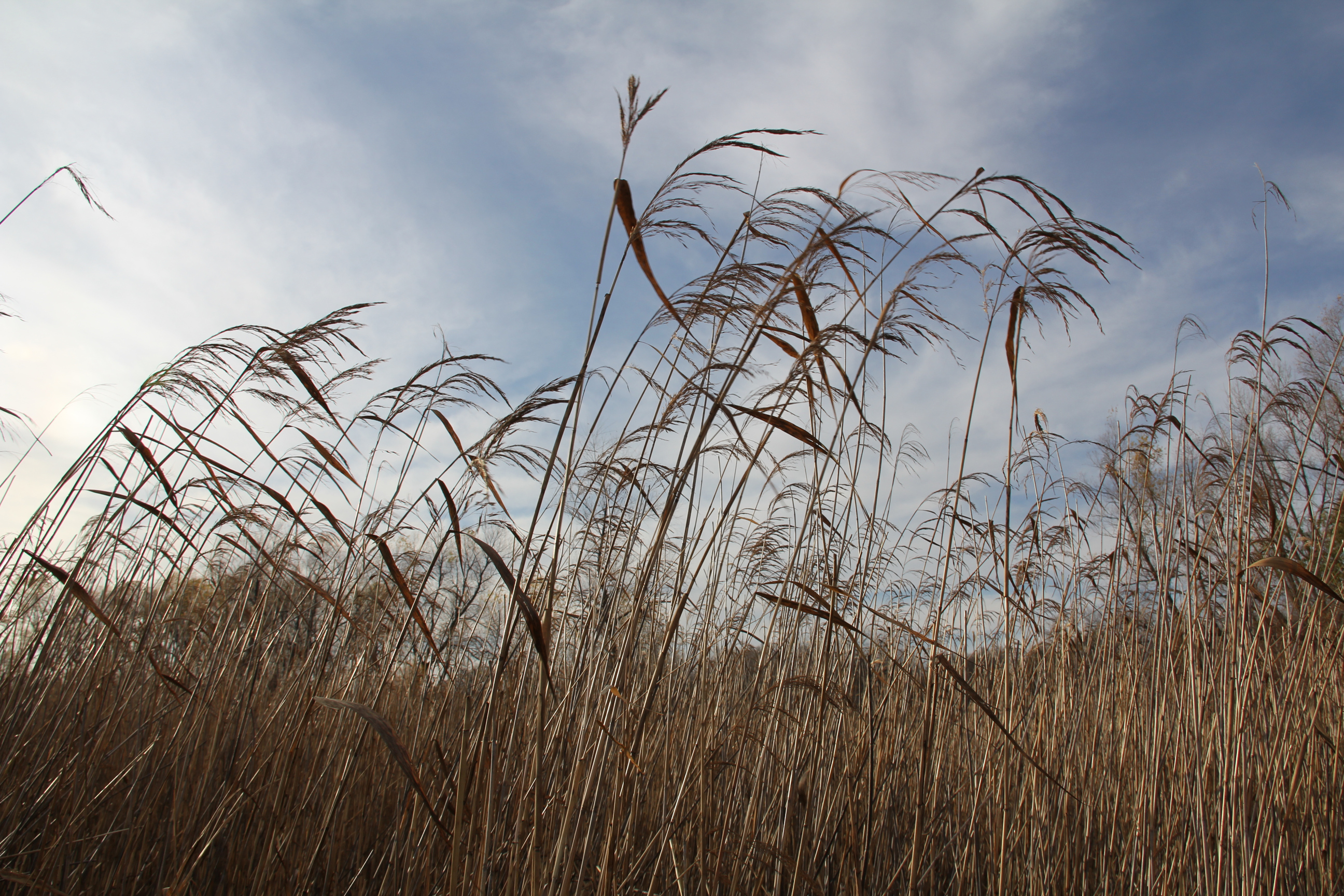
This grass stretches way above my head and dances in the wind. (Minnesota Prairie Roots copyrighted photo November 2024)

Mostly, though, I don’t see many animals at the nature center. Plant life becomes my point of interest. In November, that means dormant plants like dried grasses stretching across the expansive prairie. Or grasses rising high above my head along the trail, stalks listing, pushed by the wind. Dancing.

Dried grasses, possible fuel for fire, edge a trail. (Minnesota Prairie Roots copyrighted photo November 2024)

These grasses have lost their luster green, but they are no less lovely in muted shades. The thought crosses my mind how rapidly a spark could ignite a raging grass fire here upon the parched land.

Dried goldenrod seemingly glow in the afternoon sunlight. (Minnesota Prairie Roots copyrighted photo November 2024)

Weeds and wildflowers (I’m no naturalist when it comes to identifying what I see) are likewise dead and dried, some glowing in the late afternoon sunshine. And that, too, is lovely.

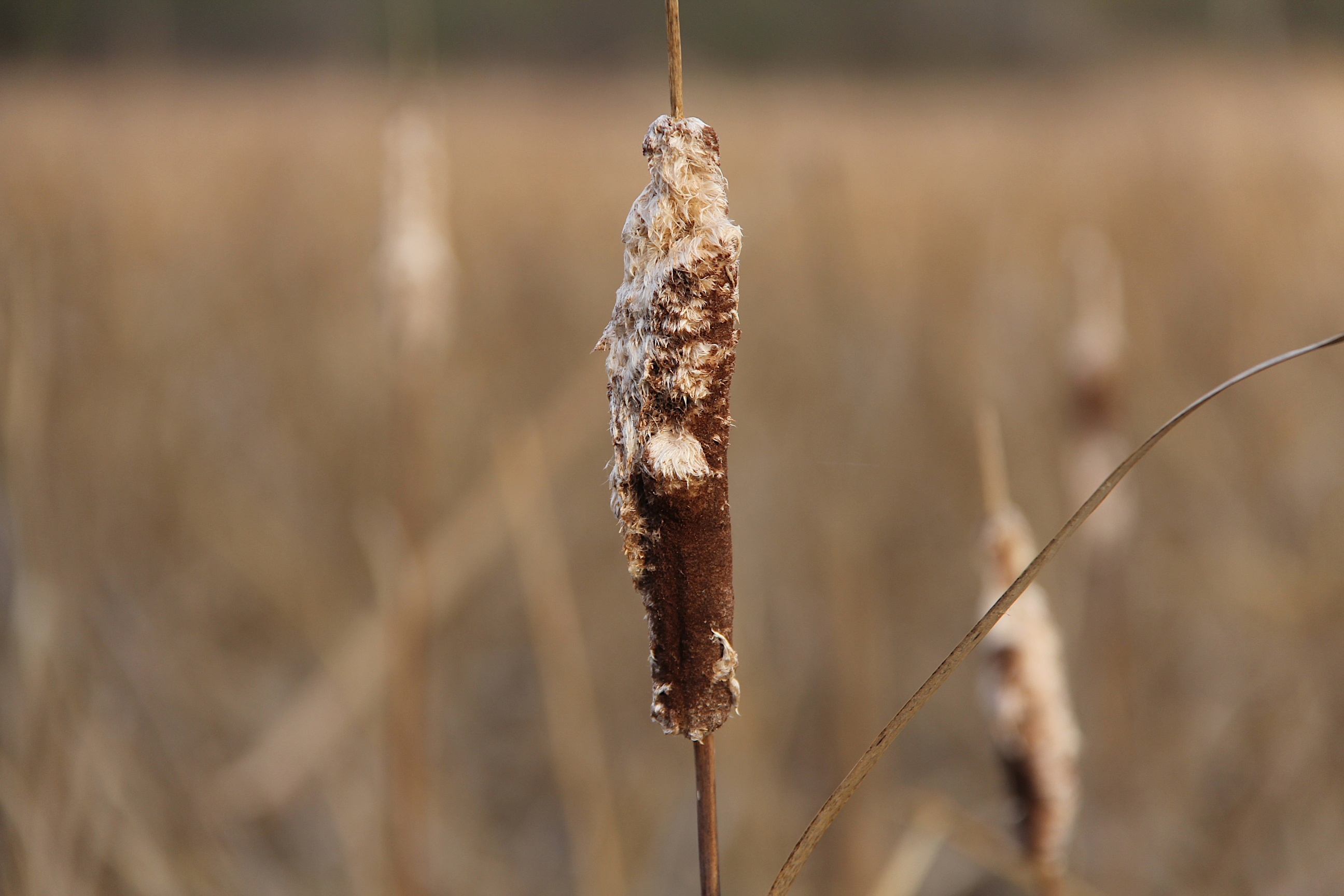
Cattails burst open at season’s end. (Minnesota Prairie Roots copyrighted photo November 2024)
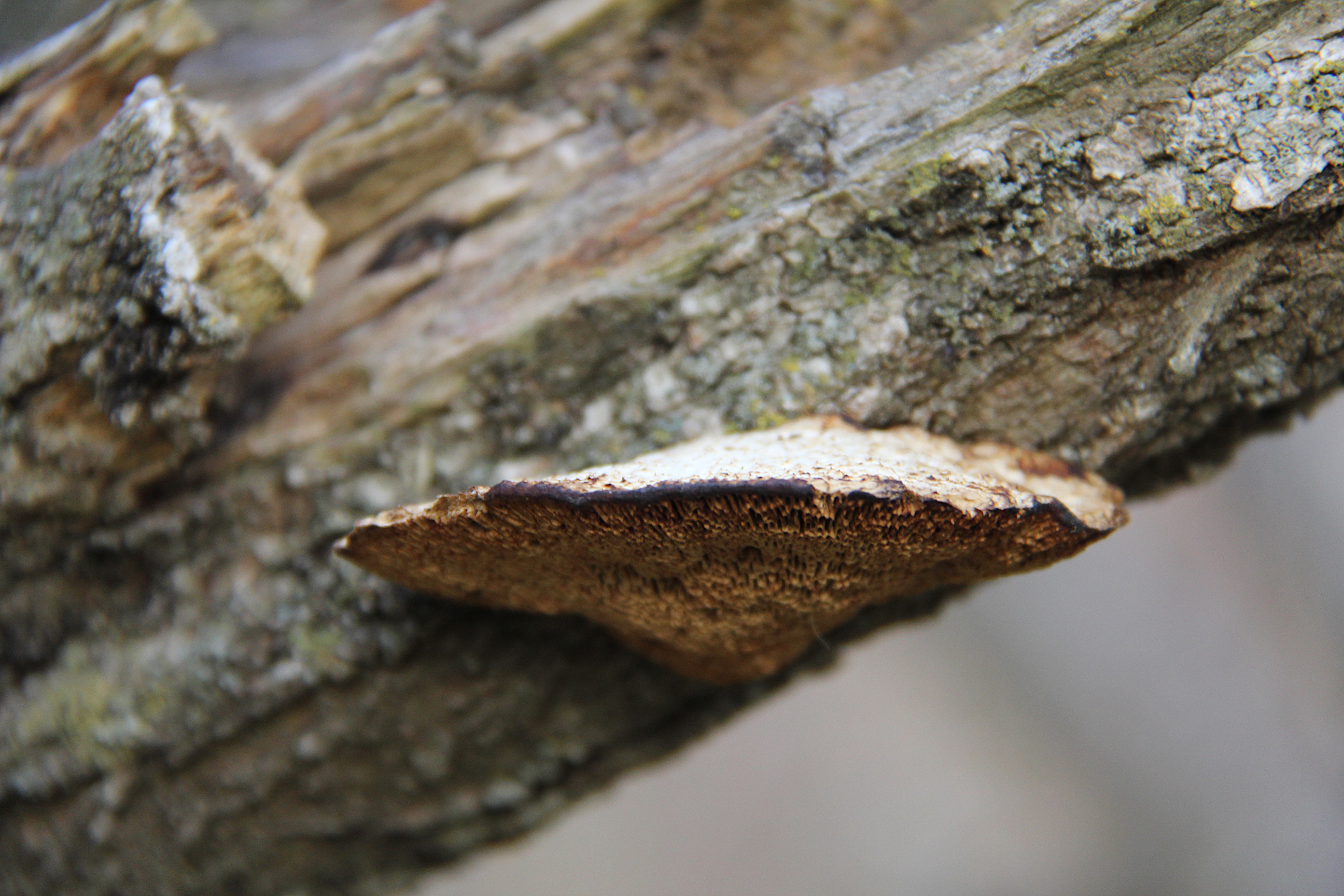
Fungus blends in with bark. (Minnesota Prairie Roots copyrighted photo November 2024)

Cattails appear ravaged by the seasons. Fungi ladder a tree branch. These are the details I notice in looking for photos, in convincing myself that beauty exists within the woods, upon the prairie, even in November.

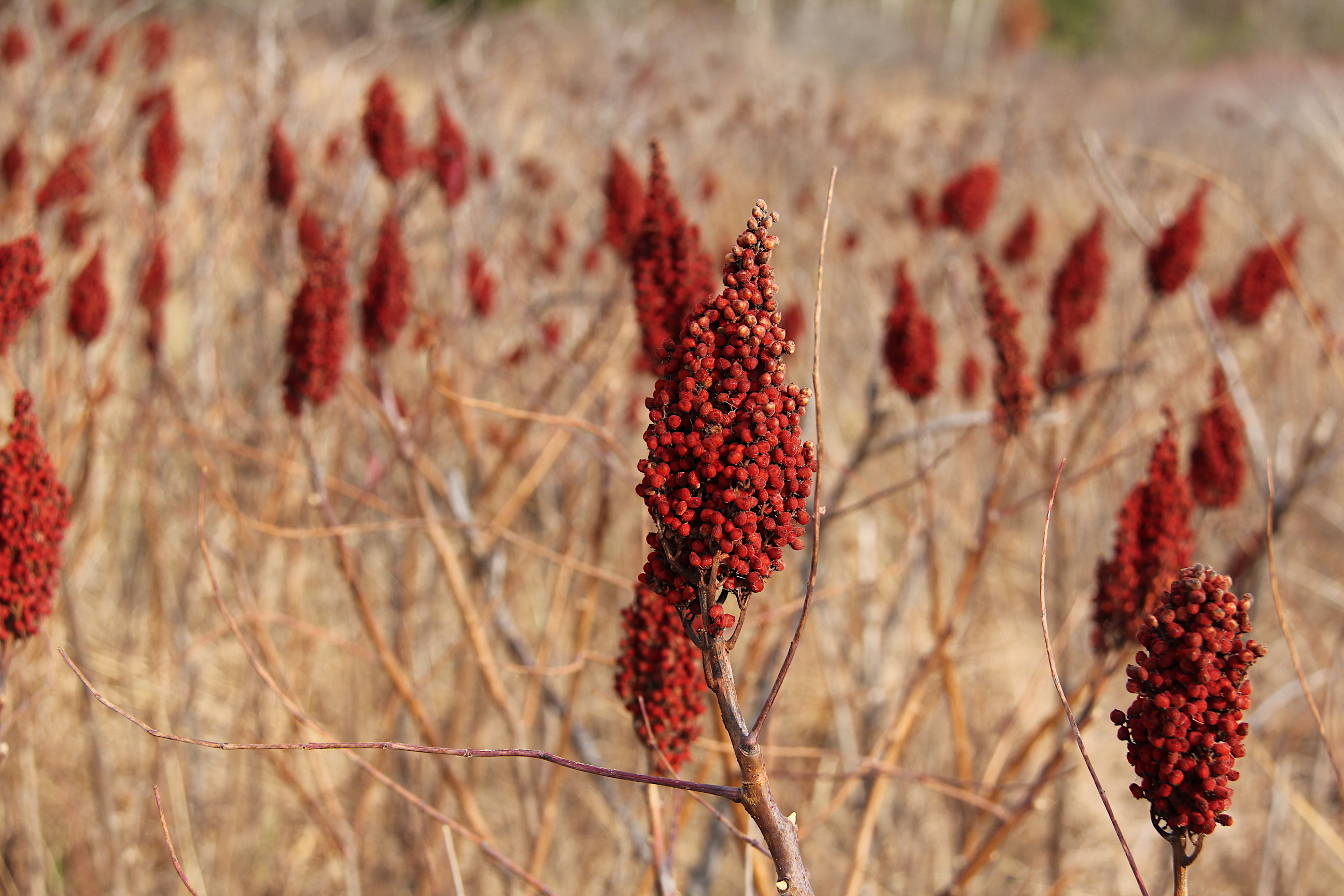
Dried sumac edge the prairie. (Minnesota Prairie Roots copyrighted photo November 2024)

Dried sumac in a hue that isn’t orange, that isn’t red, flames.

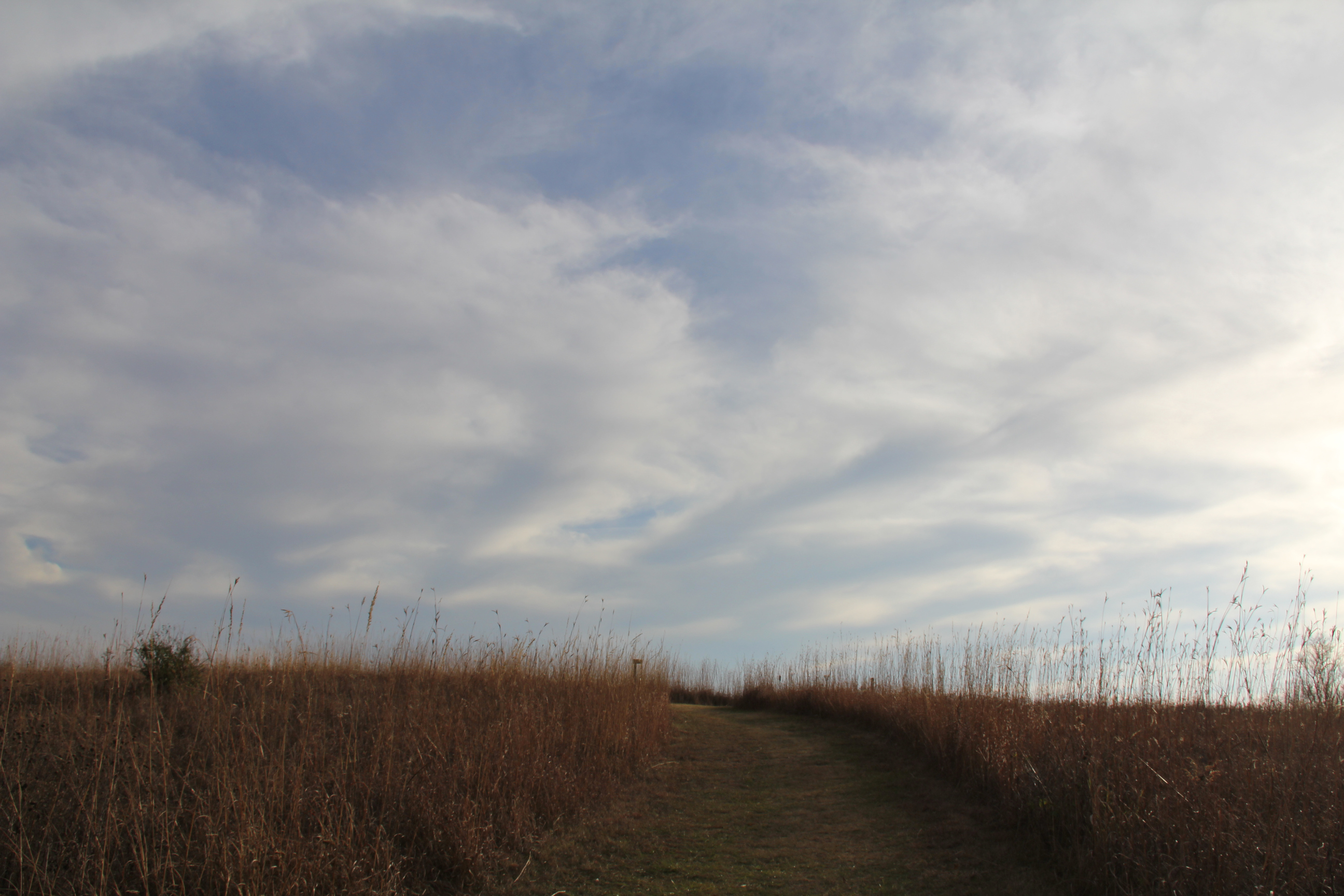
Walking uphill to the prairie, the sky appears expansive. (Minnesota Prairie Roots copyrighted photo November 2024)

A blue sky, swept with wisps of clouds, accents the scenes I take in. I always feel small under the expansive sky, no matter the month.

A spot of color in stubborn leaves. (Minnesota Prairie Roots copyrighted photo November 2024)

A few stubborn, autumn leaves still cling, flashing color like the flick of a flame. That, too, I see on this November day.

If any image visually summarizes November, this would be it. (Minnesota Prairie Roots copyrighted photo November 2024)

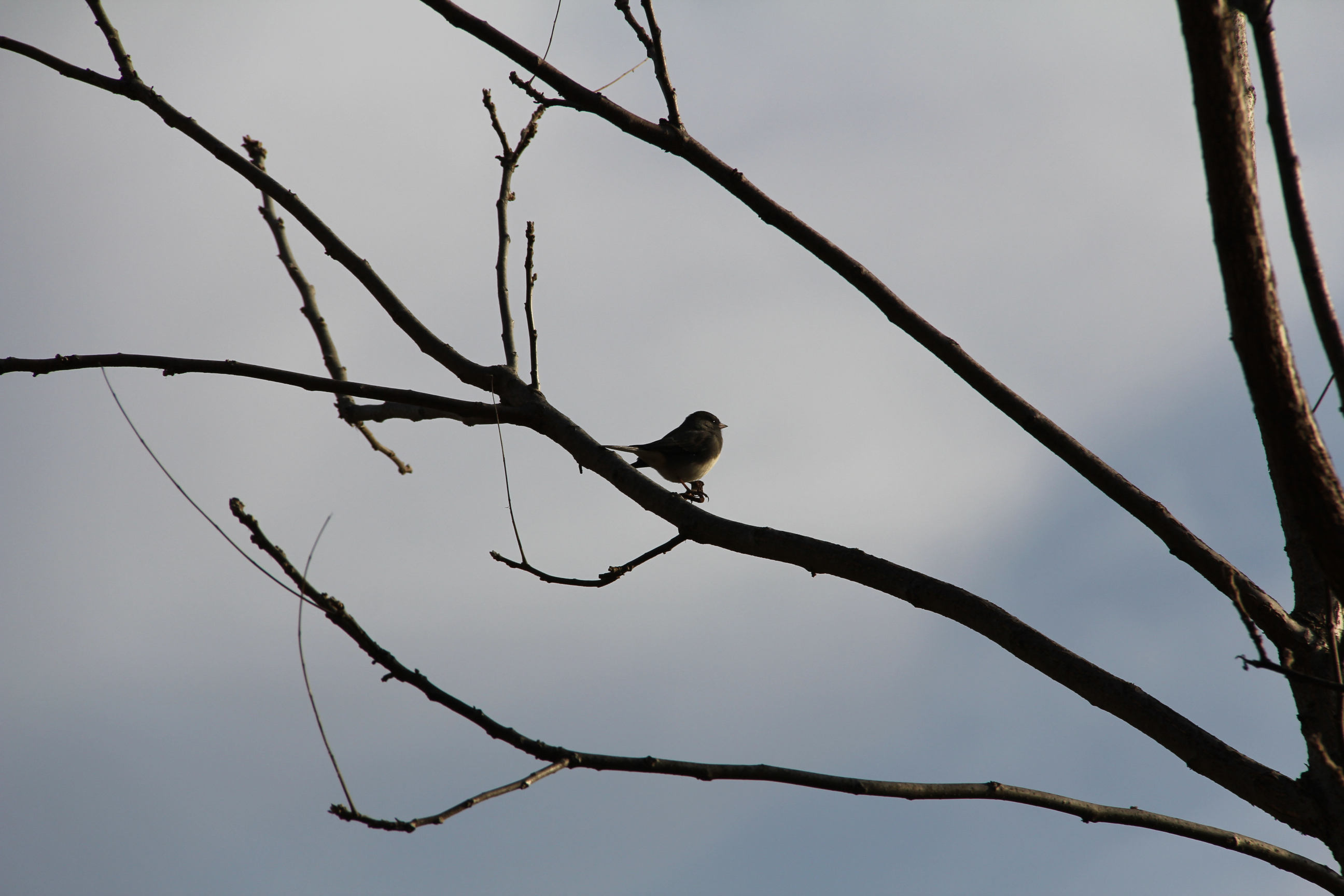
A flutter of birds near the end of my walk draws my eyes to a bare tree. To watch. To hear their movement, like a whisper of winter coming. Quiet and colorless. Signs of December soon overtaking November.

© Copyright 2024 Audrey Kletscher Helbling
 

A humorous book rooted in rural November 18, 2024

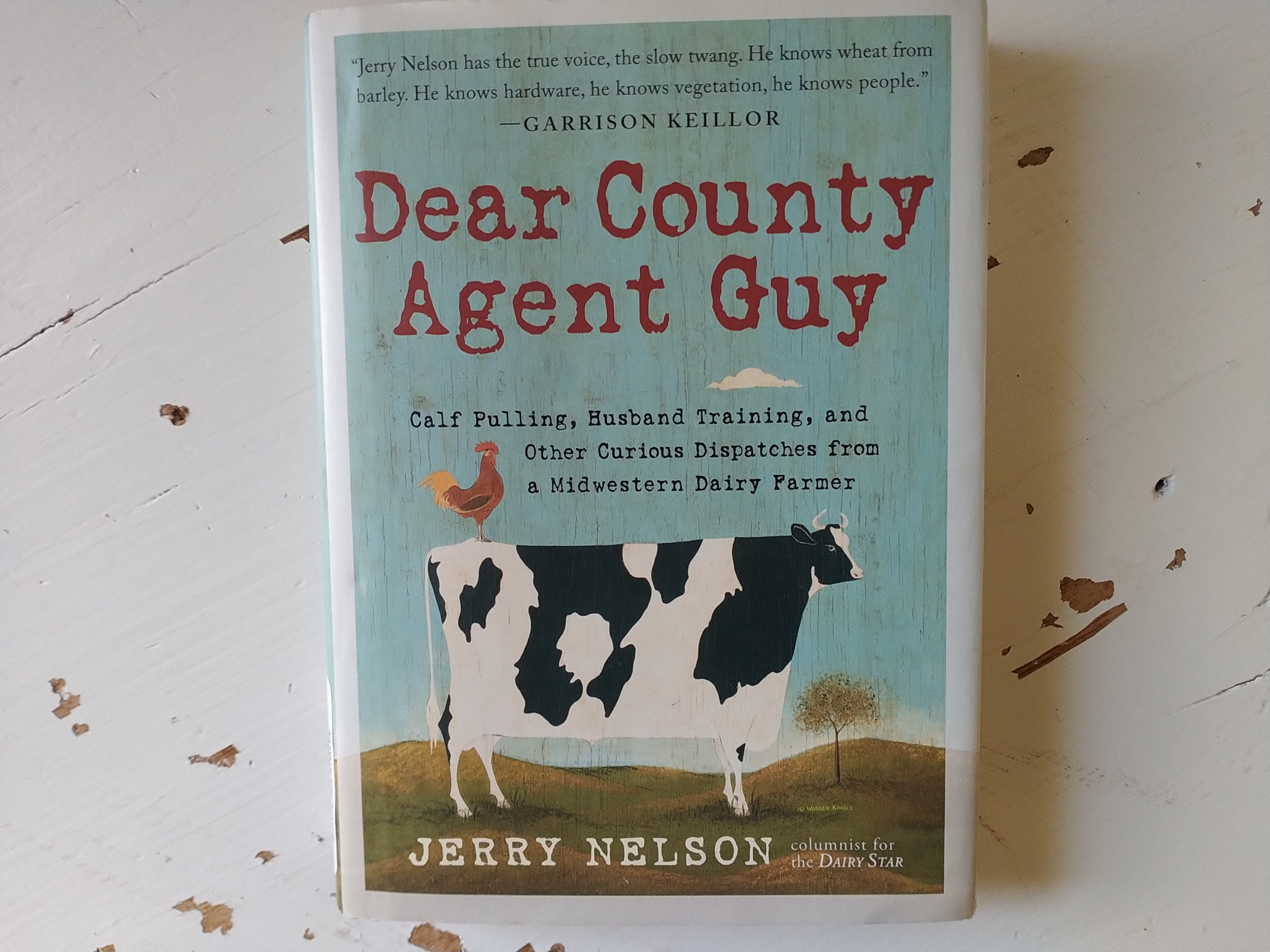
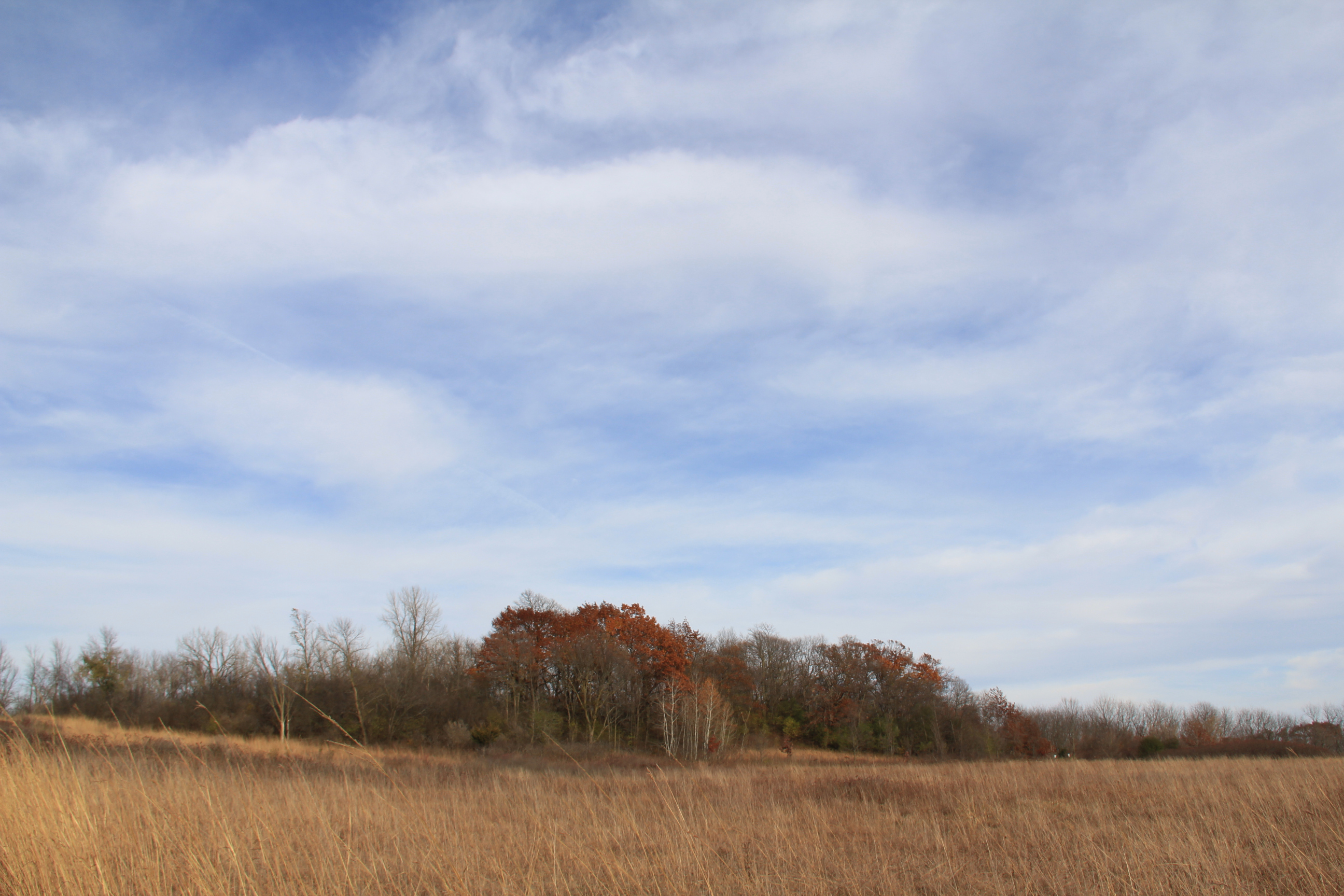
This book published in 2016. (Minnesota Prairie Roots copyrighted photo November 2024)

I NEEDED TO LAUGH. So I picked up a book I started a while ago, but which I’d set aside. That book is Dear County Agent Guy by South Dakota humor writer Jerry Nelson.

First, let’s clarify “county agent” for those of you who may not have rural roots. A county agent (kinda an old school term) is someone specifically trained to share information and research with individuals and the community. Farmers might contact the county agent about issues related to crops or livestock, for example. In Minnesota the entity heading extension services is the University of Minnesota. The U’s efforts cover agriculture, natural resources, health and wellness, youth (4-H) and more.

In his book, the author, who grew up on and then operated a South Dakota dairy farm, focuses on farm life. I, too, was raised on a dairy farm, but then left for college when I turned seventeen. This collection of humorous short stories is so relatable. Many of Nelson’s stories could be mine, although I am German, not Scandinavian, and assuredly do not like lutefisk.

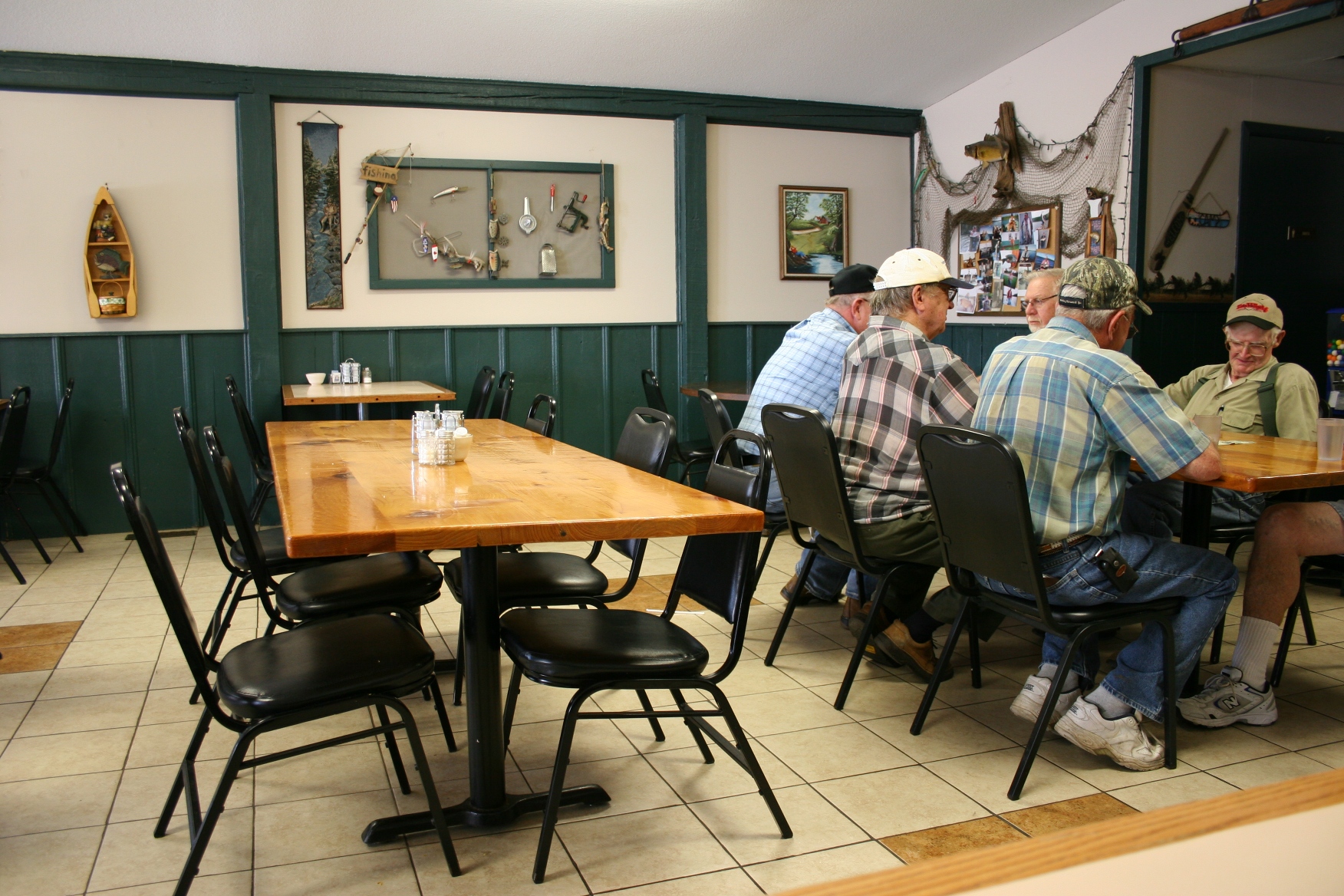
Friends gather for coffee and conversation at the Whitewater Cafe in St. Charles, Minnesota, in 2011. (Minnesota Prairie Roots copyrighted file photo)

A GIFTED RURAL STORYTELLER

Nelson’s writing made me laugh out loud at stories overflowing with humor. He’s a heckuva storyteller. I could picture him gathered with a bunch of other farmers, and a few townies, at the local cafe. Drinking coffee. Shaking dice. Exchanging stories and advice. And laughter. Lots of laughter. But I’m glad he opted to compile his stories in a book. Nelson also writes a column for Dairy Star, a Minnesota-based publication for dairy farmers in eight states. He’s among a lengthy list of columnists that include Minnesota’s Princess Kay of the Milky Way. His work publishes in many other farm publications.

The book subtitle of Calf Pulling, Husband Training, and Other Curious Dispatches from a Midwestern Dairy Farmer pretty well summarizes the content therein. It helps to have a farm background when reading this collection. But even if you don’t, you can still read, learn and laugh.

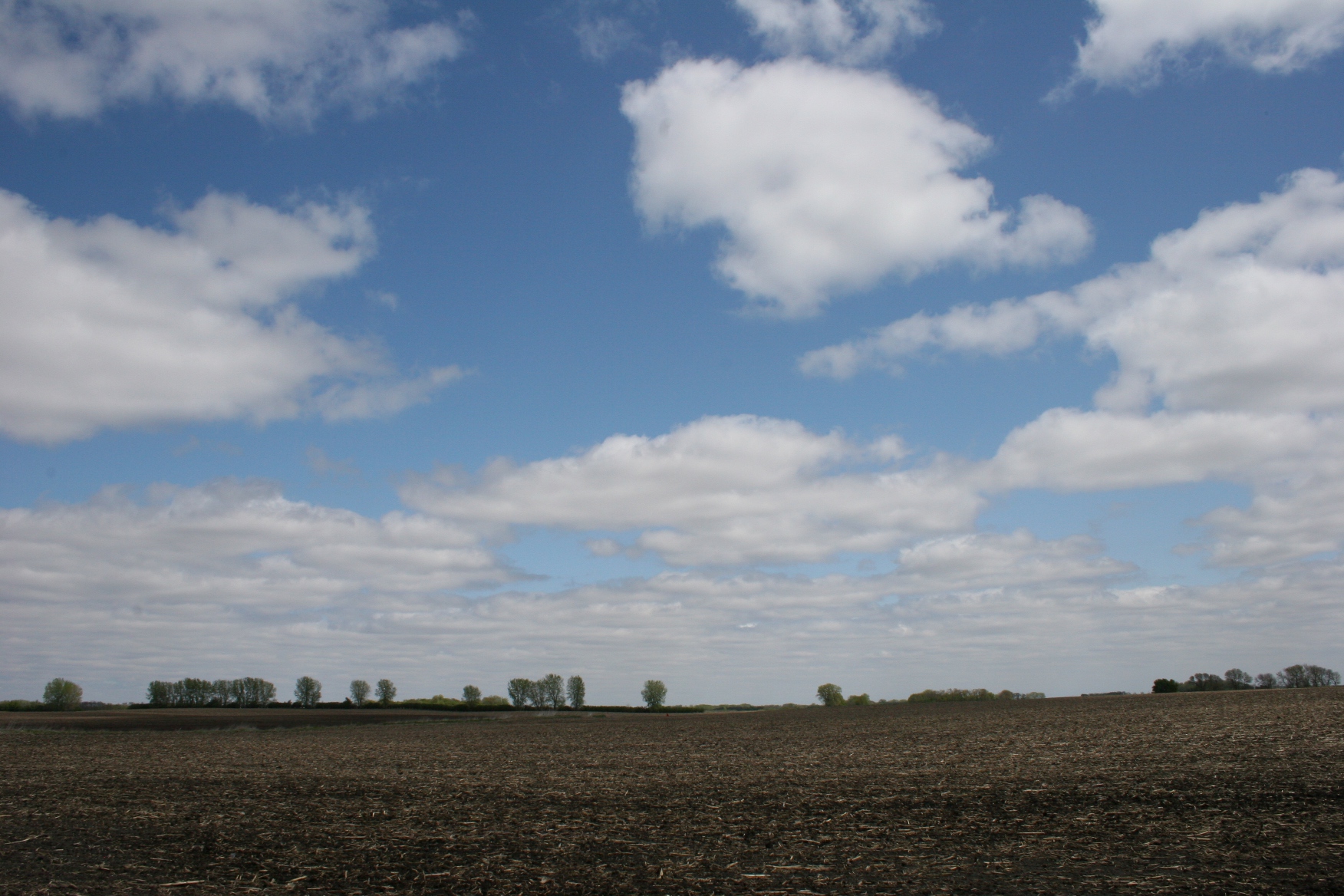
A snippet of the land where I grew up in rural Redwood County, Minnesota. My father farmed this land and my middle brother after him. The farm is no longer in the family. (Minnesota Prairie Roots copyrighted file photo)

MEMORIES GALORE FOR ME

There’s lots of nostalgia packed into these stories. How well I remember playing in the grove (the shelterbelt of trees surrounding our farm site), getting company (unexpected family and neighbors showing up to visit) and stretches of winter days stuck on the farm without electricity. Just as Nelson remembers. How well I recall Dad needing to assist a cow in giving birth (using a calf puller). How well I remember the earthy scent of freshly-turned soil.

While humor and nostalgia decidedly center Nelson’s stories, he also offers good, sound wisdom—about the importance of finding time to fish (or whatever) in a work-life balance, about appreciating family, about recognizing that life can end, just like that. Nelson nearly lost his life in a manure pit. He climbed inside to fix malfunctioning equipment when hydrogen sulfide gas overtook him. He was found floating face-up in the pit. His is a story of survival and resulting gratitude for every new sunrise.

Nelson’s writing shines with humor rooted in rural. I am grateful for his book, which shines sunshine into the world and made me laugh.

#

THANK YOU to Noreen, who follows my blog from Washington state and who gifted me with a hardcover copy of Dear County Agent Guy. I am grateful for your sharing this collection with me.

© Copyright 2024 Audrey Kletscher Helbling
 

Brownies & a book November 15, 2024

Filed under: Uncategorized — Audrey Kletscher Helbling @ 3:14 PM
Tags: , , , , , , ,
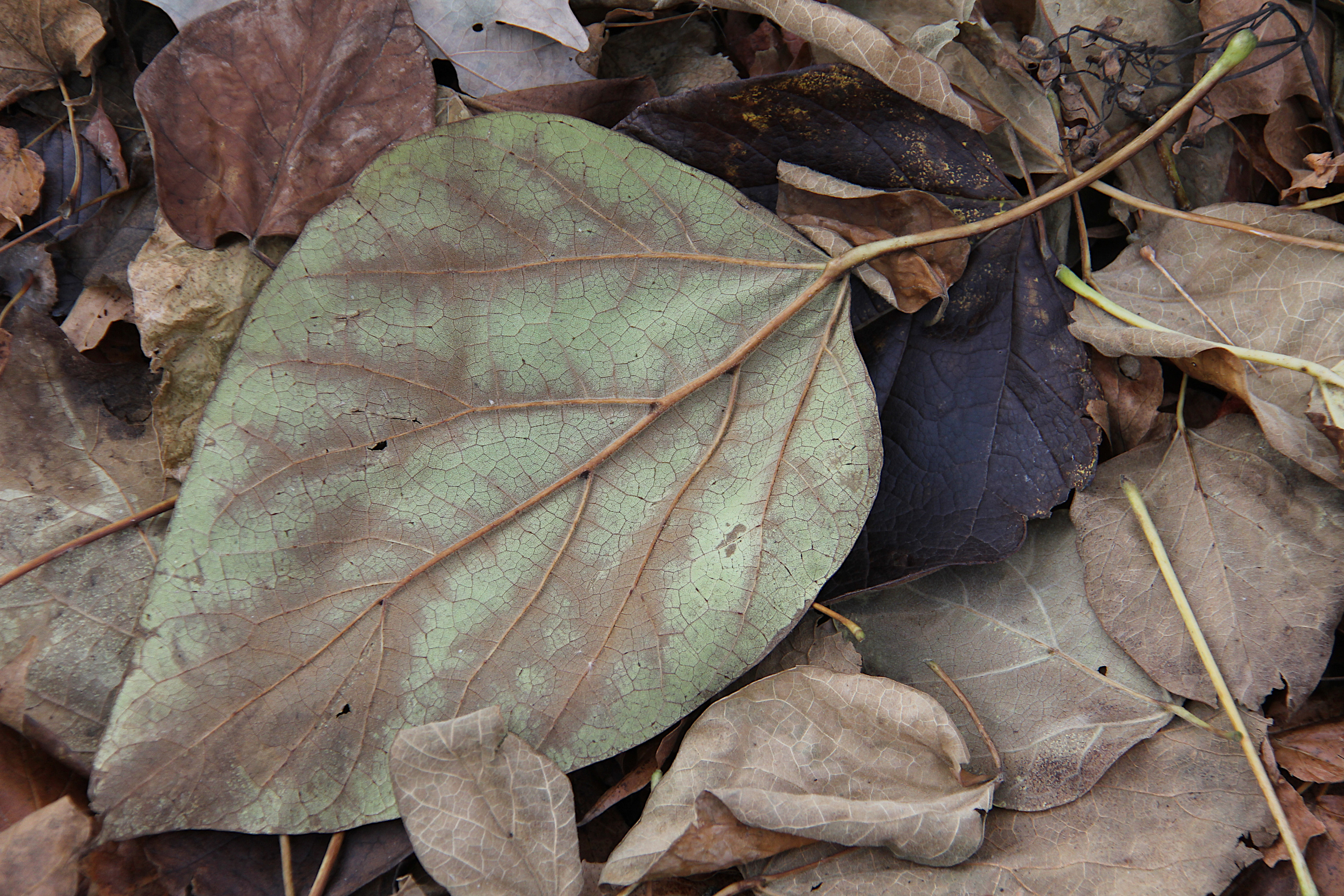
Blonde brownies baked this morning. (Minnesota Prairie Roots copyrighted photo November 2024)

I HAVE A LOT ON MY MIND, as I expect many of you do. So this morning I baked blonde brownies. Nothing healthy about this sweet treat. Nothing healthy at all. The brownies are loaded with sugar. Two cups of brown sugar, to be exact. But on this day I don’t care.

(Book cover sourced online)

Today I’m continuing to read A Fever in the Heartland by Pulitzer Prize-winning reporter and author Timothy Egan. If ever there was a book that opened my eyes to American history, this is it. I’ve had to read this book in doses given the heaviness of the topic. Every. Single. Person. Should read this book. The content is relatable to today in many aspects. And that, my friends, is beyond frightening.

Lastly, it’s Friday. The sun is shining brightly. Laundry is drying on the line. And I’m waiting for a friend, who just lost his dog, to stop over for a brownie.

Enjoy your weekend, everyone! Take a walk. Meet a friend. Defiantly bake brownies.

© Copyright 2024 Audrey Kletscher Helbling
 

Marcie Rendon, an authentic Native American voice in riveting mystery November 13, 2024

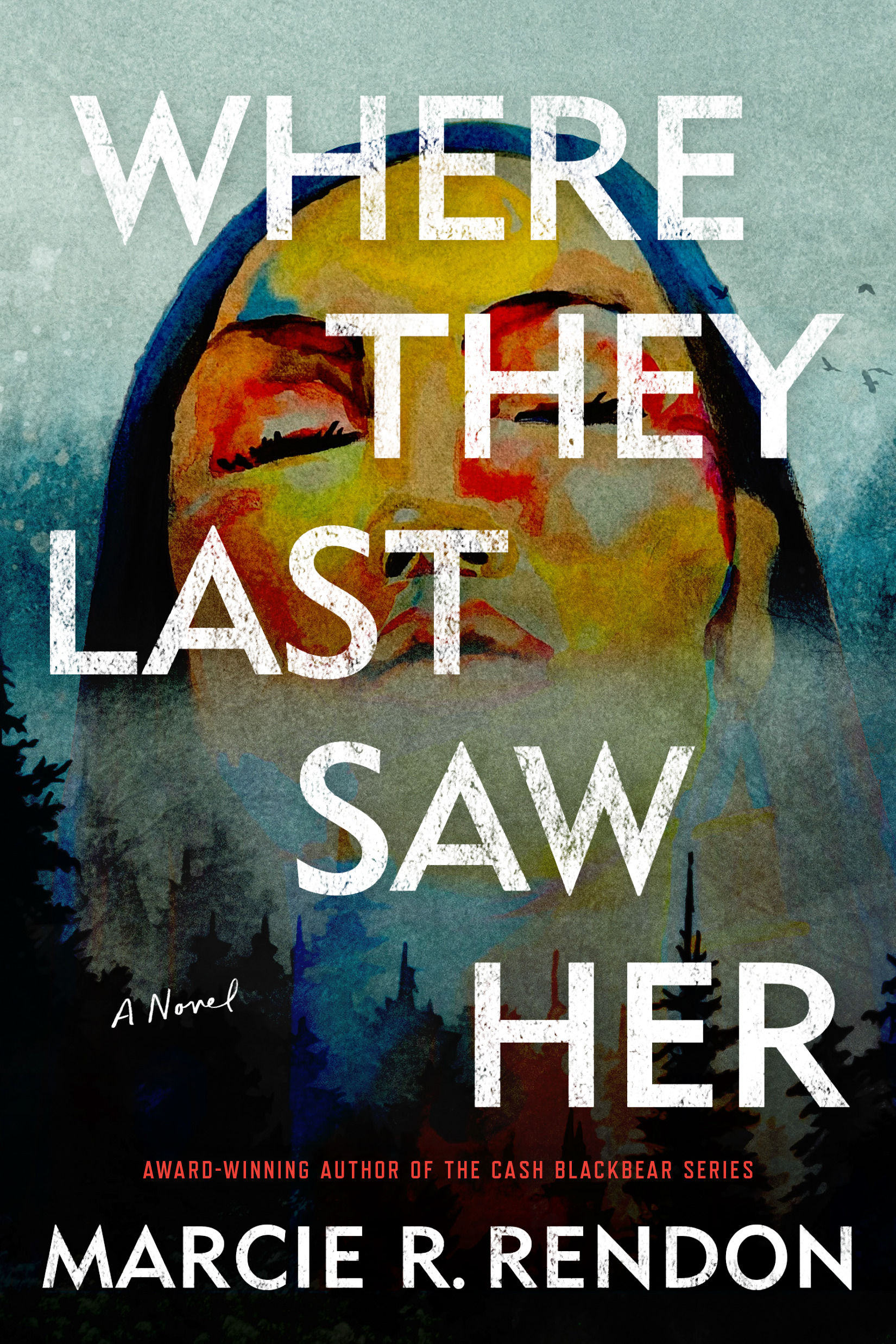
(Book cover sourced online)

AS A WRITER, I bring my voice into my writing. My work is distinctively, authentically mine. Just as it is for most writers.

Recently I finished reading a novel, Where They Last Saw Her, by a Minnesota writer with an authentically strong Native American voice. It’s a voice we don’t often hear, which is perhaps why I find the writing of Marcie R. Rendon so compelling. She is a citizen of the White Earth Nation in north-central Minnesota.

I’ve read the first three books in her Cash Blackbear mystery series and am eagerly awaiting the release of her fourth in 2025. In the meantime, I found this stand-alone mystery set on the fictional Red Pine Reservation in northern Minnesota. As in her Cash series, the main character in Where They Last Saw Her, Quill, is a strong Native woman. Quill is the mother of two, a runner, and loyal friend to Punk and Gaylyn. And she is a woman who takes matters into her own hands when Indigenous women and children go missing.

The logo of the Minnesota Missing and Murdered Indigenous Relatives Office. (Image sourced online)

I wish that part—the missing women and children—was fictional. But it’s not. Rendon assures the reader understands that. The missing focus her book. In real life, between 27 and 54 American Indian women and girls in Minnesota were missing in any given month from 2012 to 2020. That’s according to the Minnesota Missing and Murdered Indigenous Relatives Office, an agency established in 2021 to provide support and resources to families and communities affected by such violence.

Rendon weaves a story that, if not for the disclaimer of “any resemblance to actual events, locales, or persons, living or dead, is entirely coincidental,” could pass for the truth. As a writer, I understand that in every bit of fiction lies some truth. And this book seems to hold a lot of underlying truth in events, trauma, violence and much more.

I felt compelled to visit the Minnesota Bureau of Criminal Apprehension’s missing person’s website, where I scrolled through a lengthy list of missing persons. There I found the names of three Native American women: Nevaeh Kingbird, last seen in Bemidji in October 2021. Sheila St. Clair, last seen in Duluth in August 2015. And then American Indian JoJo Boswell, gone missing in Owatonna in July 2005. I expected to find more based on the MMIR summary information. Perhaps I missed something in my surface search.

That brings me back to Rendon’s fictional story. In addition to providing me with a much deeper understanding of missing (including trafficked) Indigenous women and girls in a book that I didn’t want to put down, I learned more about the culture and language of First Nations peoples. Ojibwe words are scattered throughout the story. A glossary would be helpful. Customs, traditions and spiritual beliefs are also part of Rendon’s writing. All of that lends the authenticity I noted earlier. Only someone intimately familiar with Indigenous Peoples could write with such an authentic Native American voice.

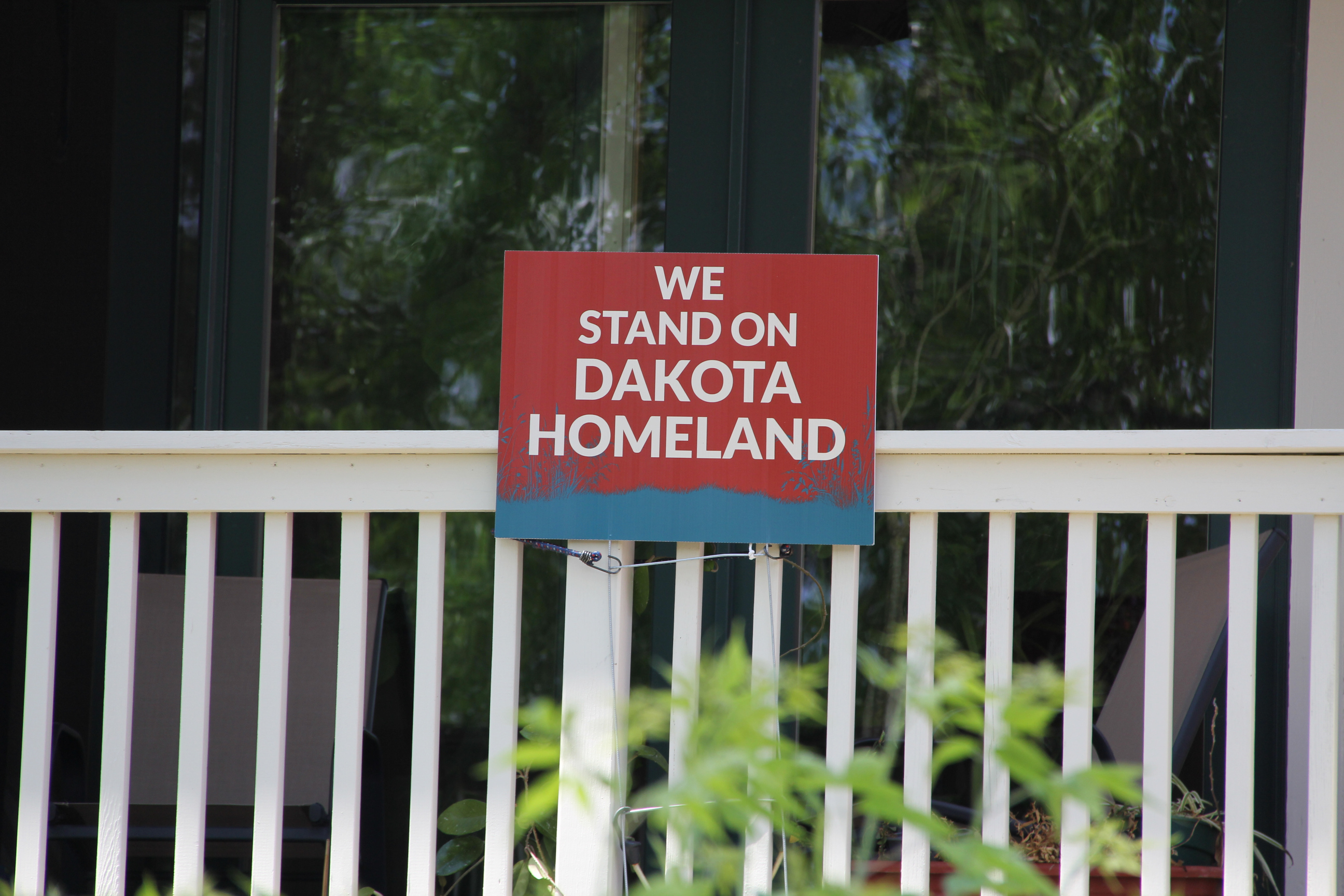
I photographed this sign along the Cannon River in Northfield. St. Olaf College in Northfield is hosting several events during Native American Heritage Month. Click here. (Minnesota Prairie Roots copyrighted file photo May 2024)

Environmental topics and pipeline construction (an actual controversial issue in Minnesota and North Dakota) also play into the plot of Where They Last Saw Her.

I’d encourage anyone who enjoys a good mystery, and who wants to become more informed, to read Where They Last Saw Her. This is a riveting read that rates as simultaneously heartrending.

#

(Image source: The U.S. Department of the Interior Indian Affairs)

NOTE: November marks National Native American Heritage Month with a 2024 theme of “Weaving together our past, present and future.” Events are planned throughout the US, including right here in Minnesota (click here). Tuesday, November 19, is set aside as Red Shawl Day, a day to remember missing and murdered Indigenous people and to honor their families. Writer Marcie Rendon includes this wearing of red in her book, Where They Last Saw Her. Please take time this month to honor Indigenous people by learning, celebrating, respecting, remembering.

© Copyright 2024 Audrey Kletscher Helbling
 

Encouraging words from Valley Grove Cemetery November 12, 2024

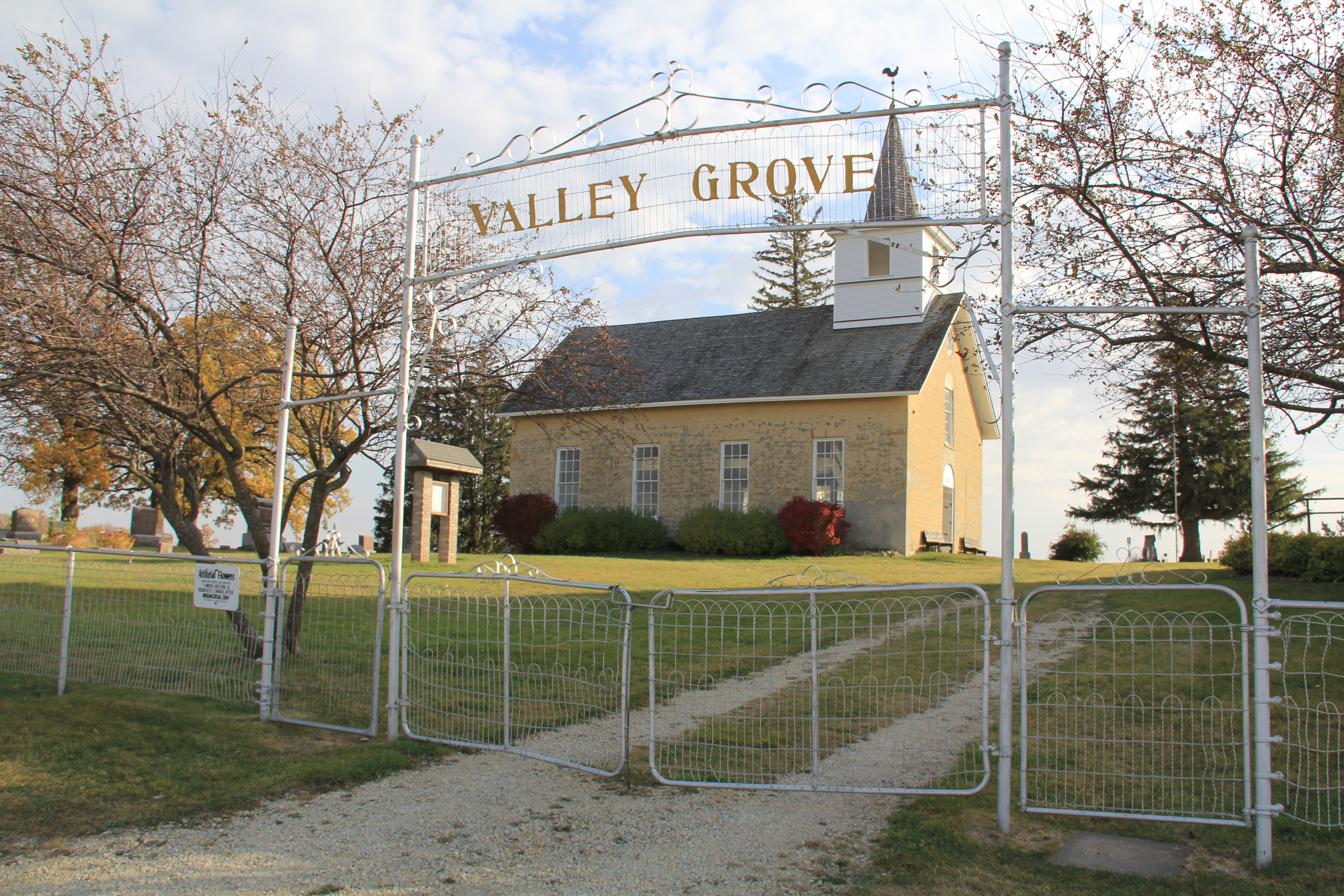
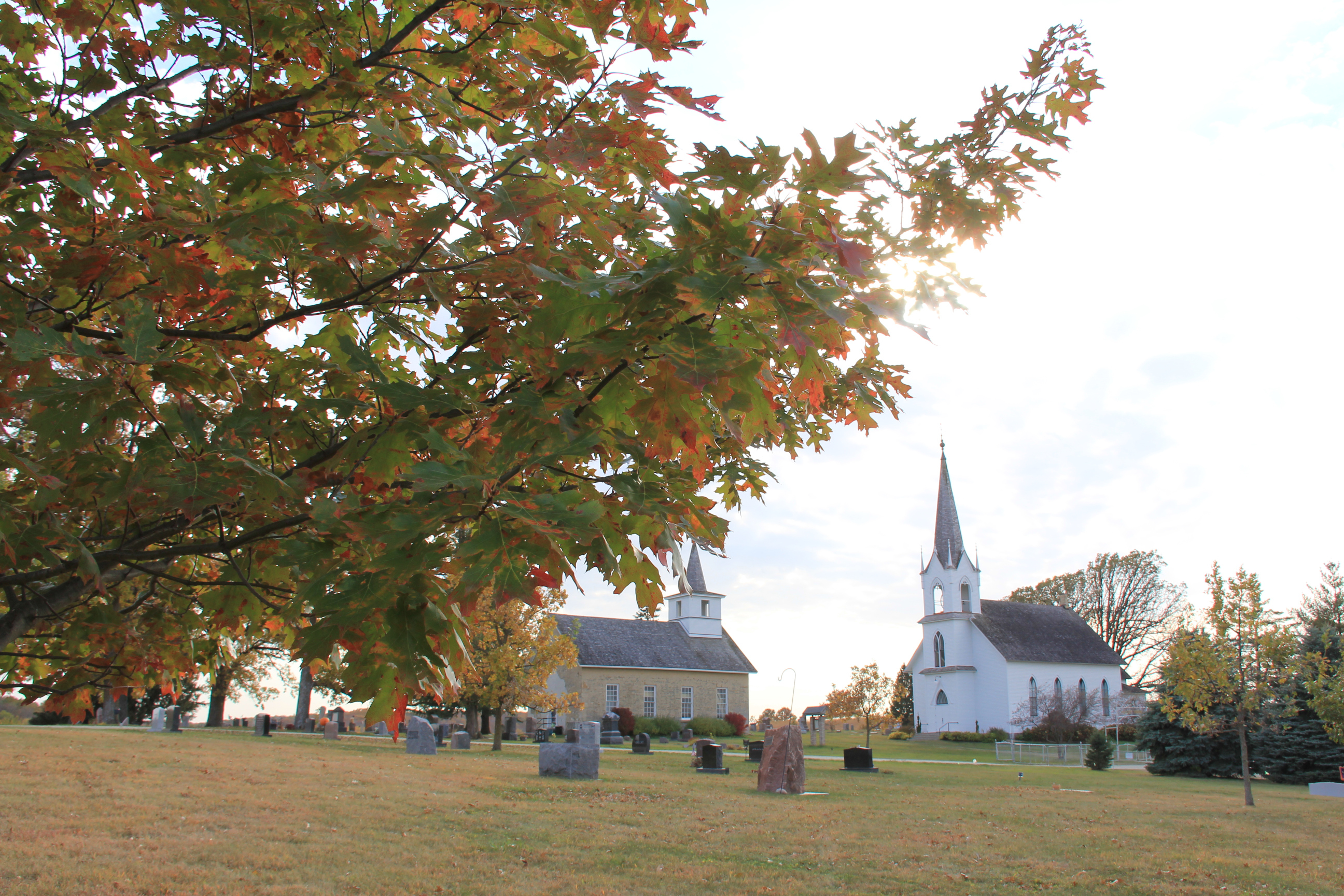
The two Valley Grove churches, including the 1862 limestone church, are edged by a cemetery. (Minnesota Prairie Roots copyrighted photo October 2024)

A CEMETERY MAY SEEM an unlikely spot to find inspiration. But that’s exactly what I found in mid October while meandering through Valley Grove Cemetery, rural Nerstrand. The graveyard sits next to the historic Valley Grove churches and rates as one of my favorite peaceful places in Rice County.

In the distance, a colorful tree line backgrounds the cemetery in October. (Minnesota Prairie Roots copyrighted file photo October 2024)
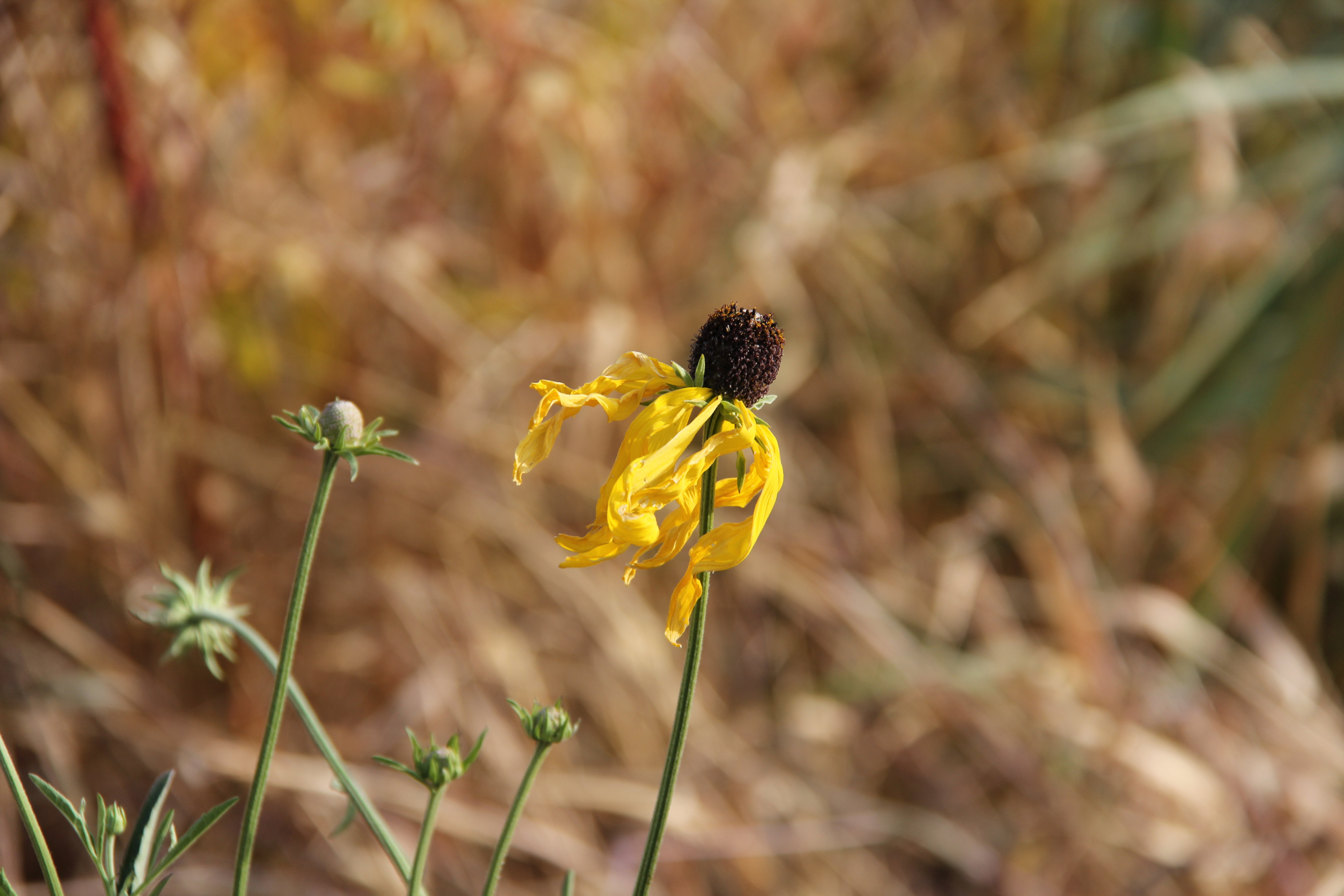
Black-eyed susans are among the prairie wildflowers that grow on Valley Grove’s 50 acres. (Minnesota Prairie Roots copyrighted photo October 2024)
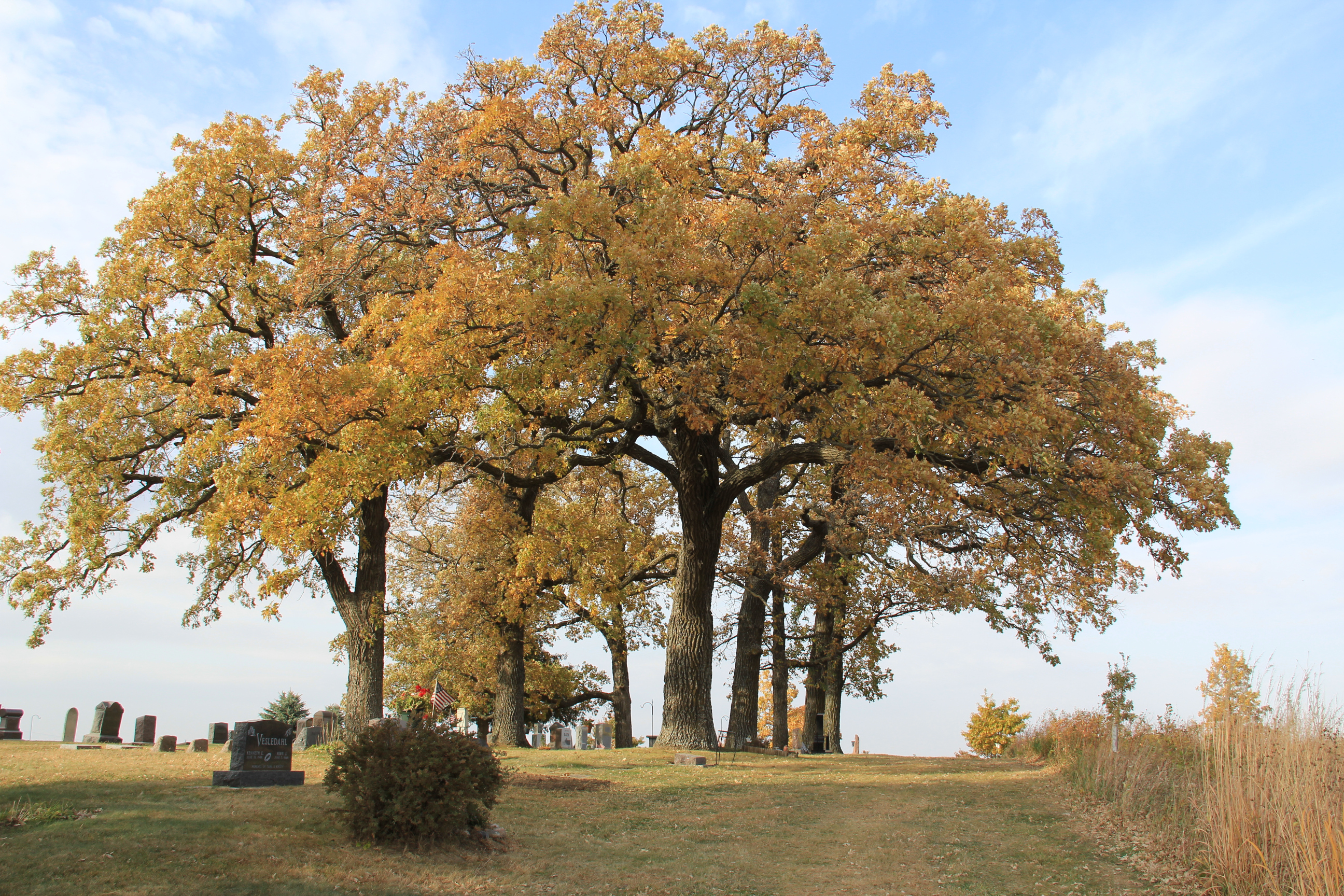
Stunning oak trees shelter a section of the cemetery. (Minnesota Prairie Roots copyrighted photo October 2024)

Here, high atop a hill, a vista of fields and farm sites, of woods, of prairie grasses and wildflowers, sings of tranquility. My spirit quiets in the presence of this place. Here I can hear a rooster crowing from afar. Here I can feel the wind on my face. Here I can look into the expansive sky and imagine.

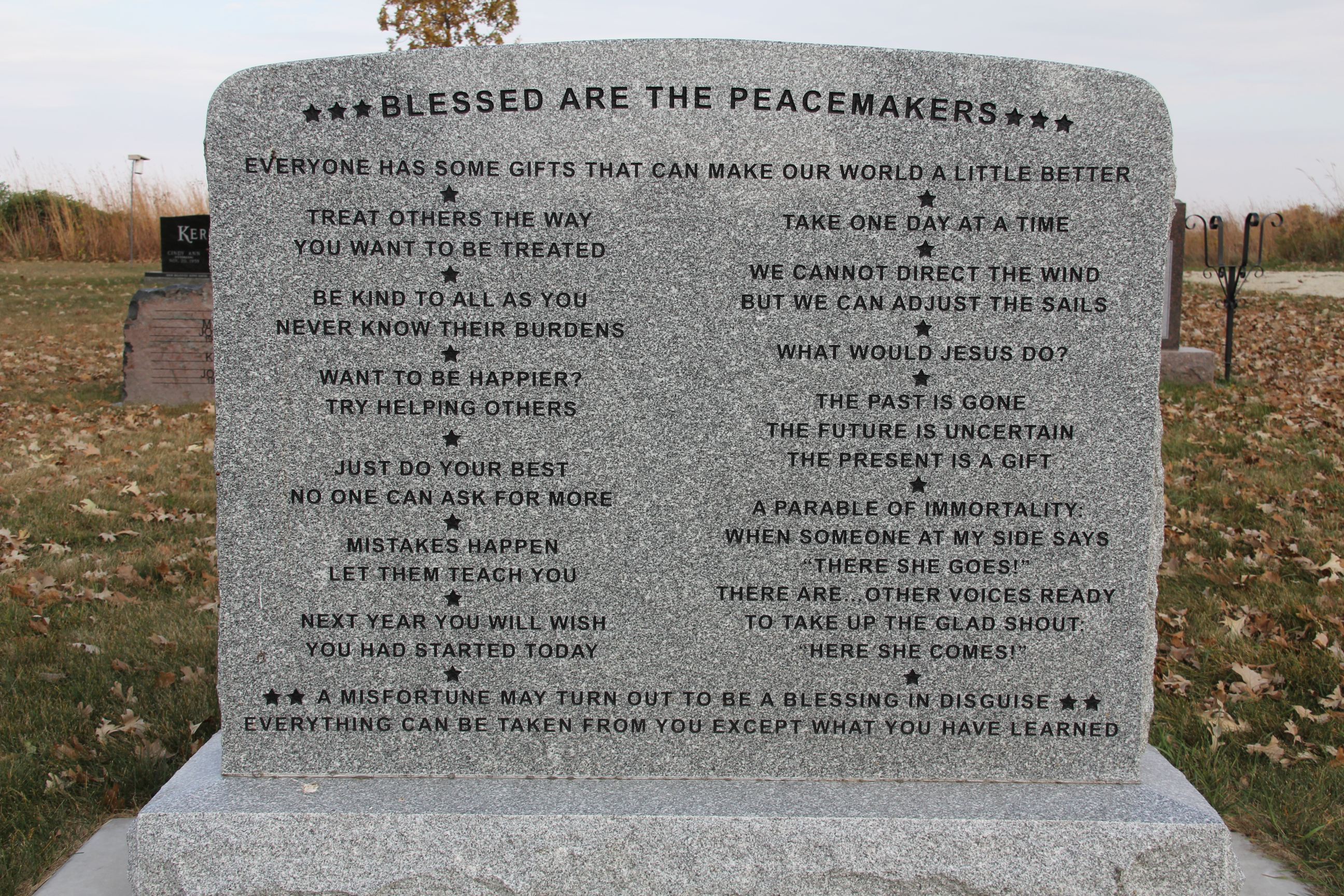
So many great messages on this tombstone. What a gift to the living. (Minnesota Prairie Roots copyrighted photo October 2024)

I can imagine a world of peace, hope, love, kindness. Words lifted from grave markers of the dead and given to the living. If only we choose to accept them and run with them, creating a kinder, gentler world.

The section in the foreground is where I found the words and messages featured here. An 1894 wood-frame church also graces this place. (Minnesota Prairie Roots copyrighted photo October 2024)
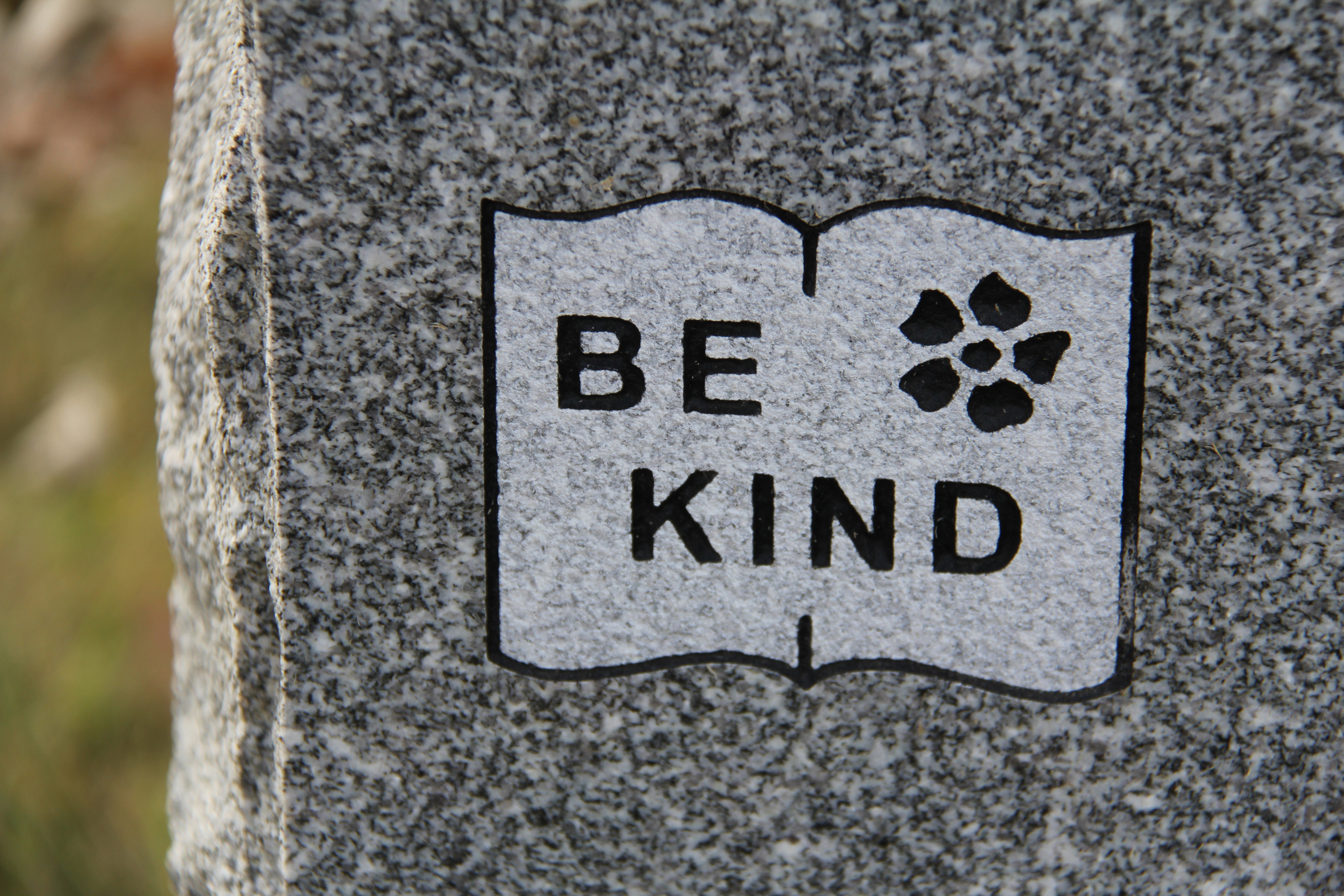
Simple, basic and powerful words on a tombstone. (Minnesota Prairie Roots copyrighted photo October 2024)
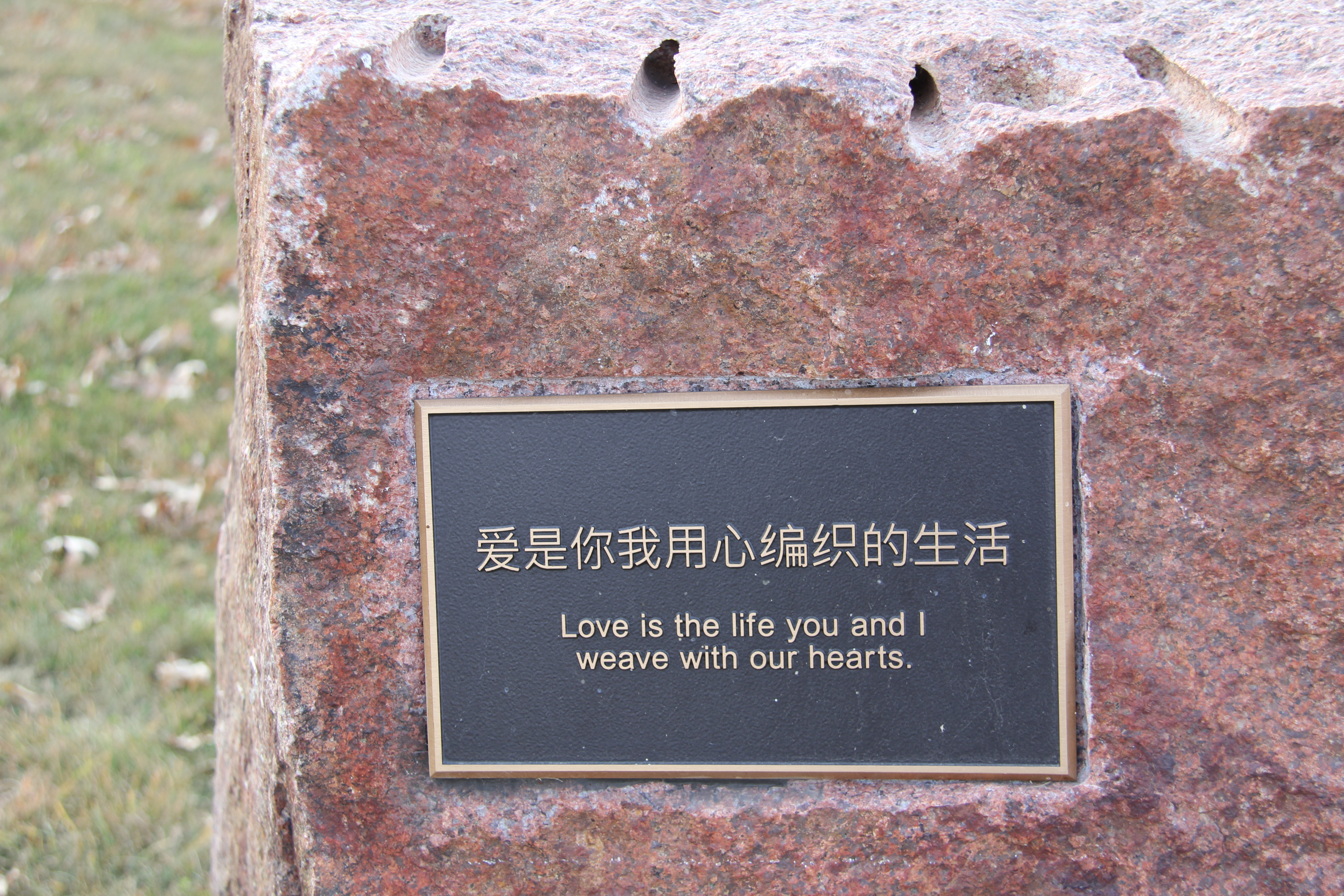
Poetically beautiful words on a gravestone plaque. (Minnesota Prairie Roots copyrighted photo October 2024)

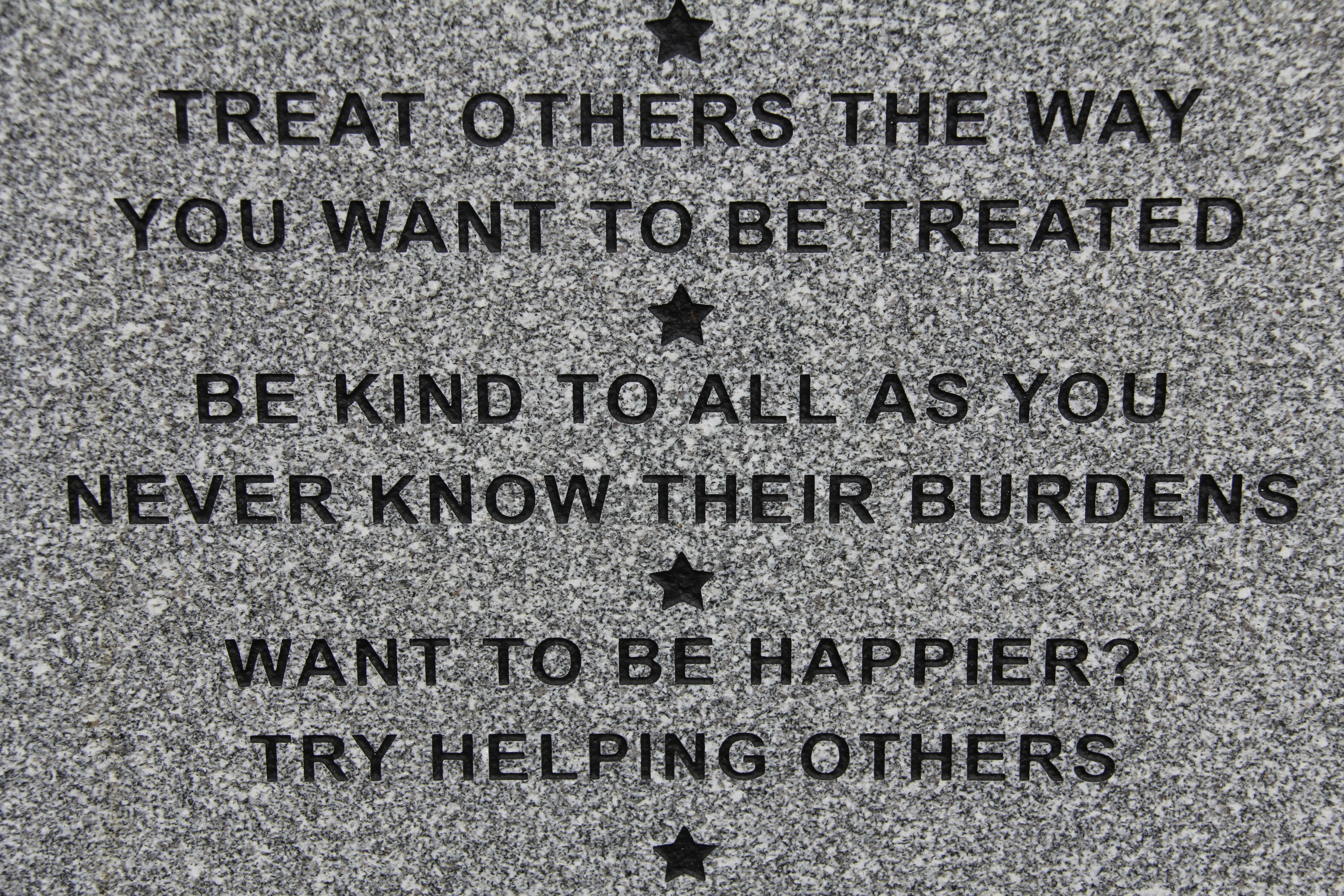
These words I found within the cemetery. Hope. Help. Peace. Be kind. And many more. Words and messages I needed to read in the discord of today, in these unsettling times. Words that are chiseled onto stone, chosen by loved ones to honor those they loved or perhaps chosen by the dead before their deaths.

Zooming in on those incredibly powerful messages. (Minnesota Prairie Roots copyrighted photo October 2024)

On this day, I contemplated the power of these enduring words and quotes which inspire, encourage, uplift. These words weather storms, stand granite-strong and unchanging here under the Minnesota sky of snow and rain and scorching sun.

A reminder of what we need, especially now. Peace on all levels. (Minnesota Prairie Roots copyrighted photo October 2024)

As I walked in this particular section of the cemetery, I felt gratitude toward those who likely lived the words inscribed upon their tombstones. I would have liked them and the examples they set by living generously, selflessly, compassionately. I would have appreciated how they lived with care, kindness, optimism and so much more. How they helped their neighbor. Loved. Served. Did everything they could to create a better world by their loving words and actions.

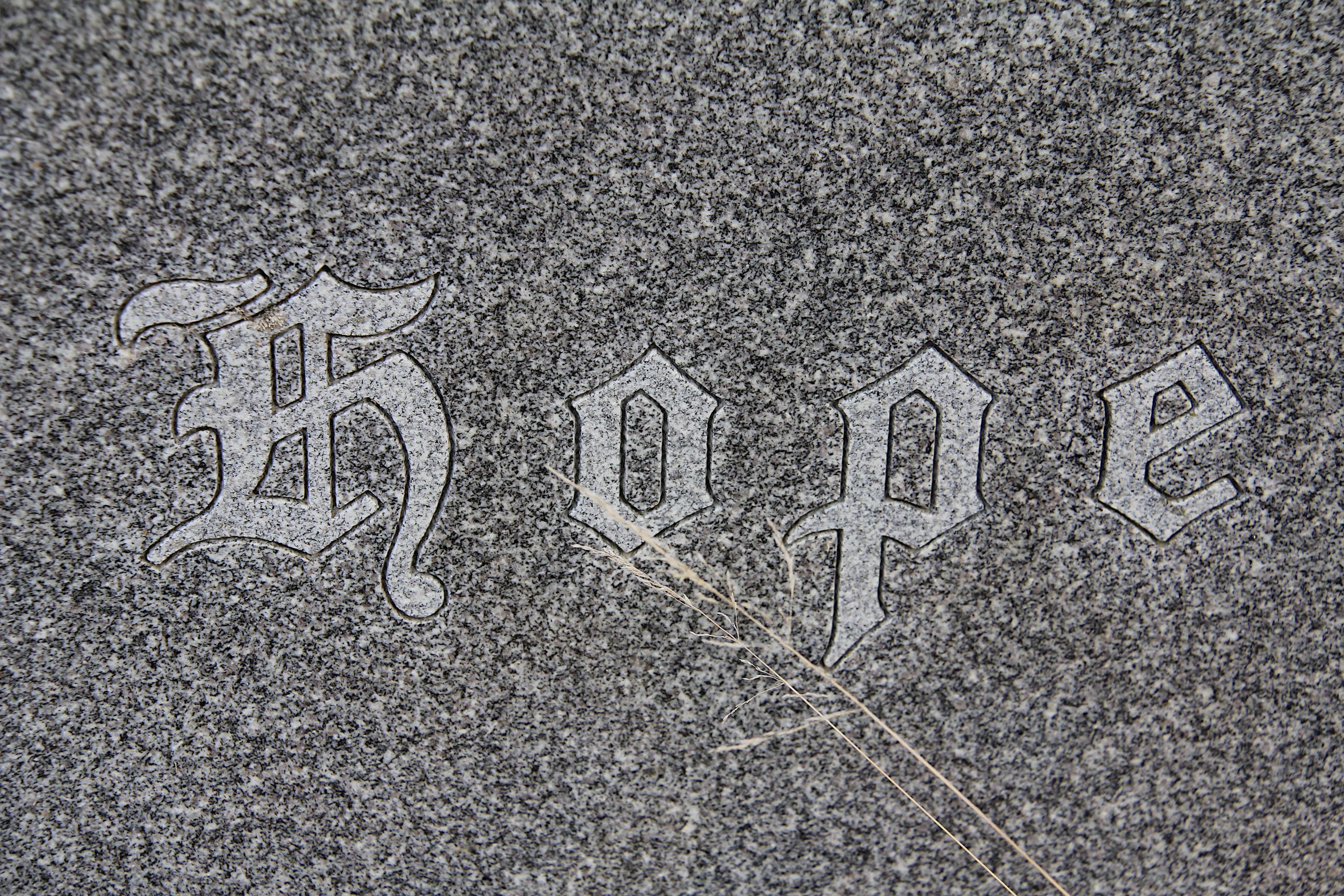
And then I found one of my favorite words, hope, on a tombstone. Hope, always hold hope. (Minnesota Prairie Roots copyrighted photo October 2024)

This I found at Valley Grove. Among the tombstones, among the dead. Messages for the living that resonate, that hold wisdom and shine like a billion bright stars piercing the darkness.

© Copyright 2024 Audrey Kletscher Helbling
 

Operation: 23 to 0 supports veterans, raises awareness about suicide November 11, 2024

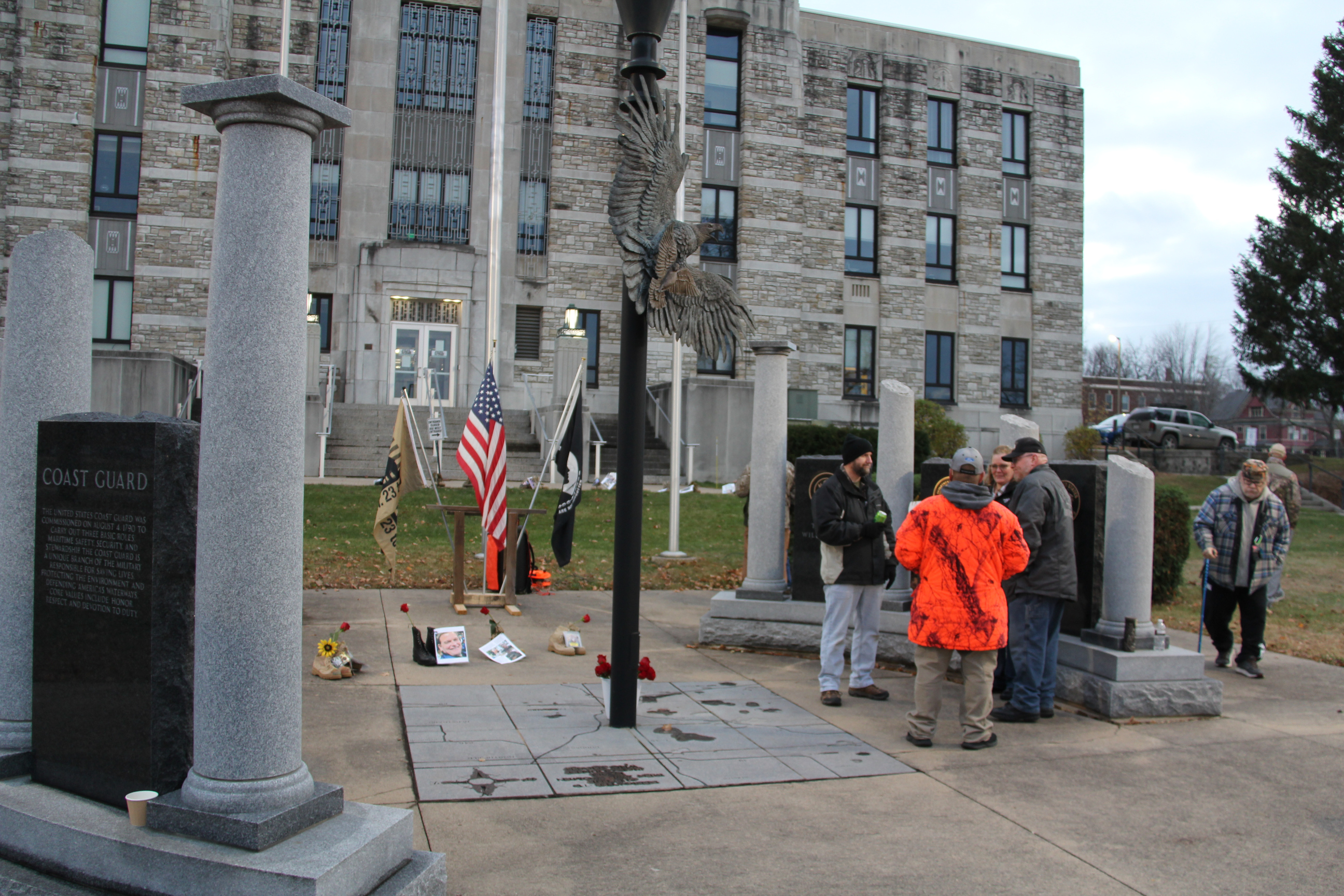
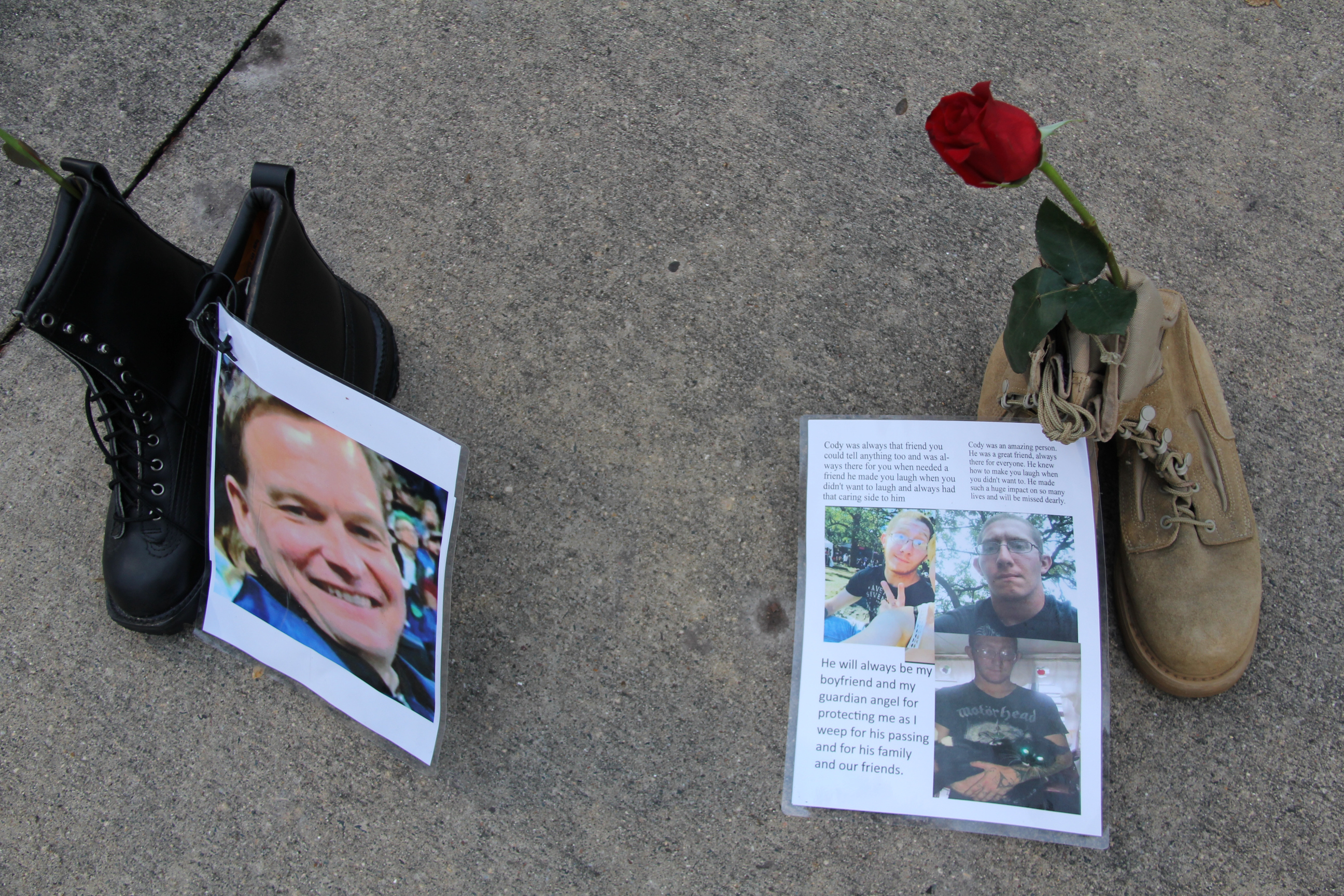
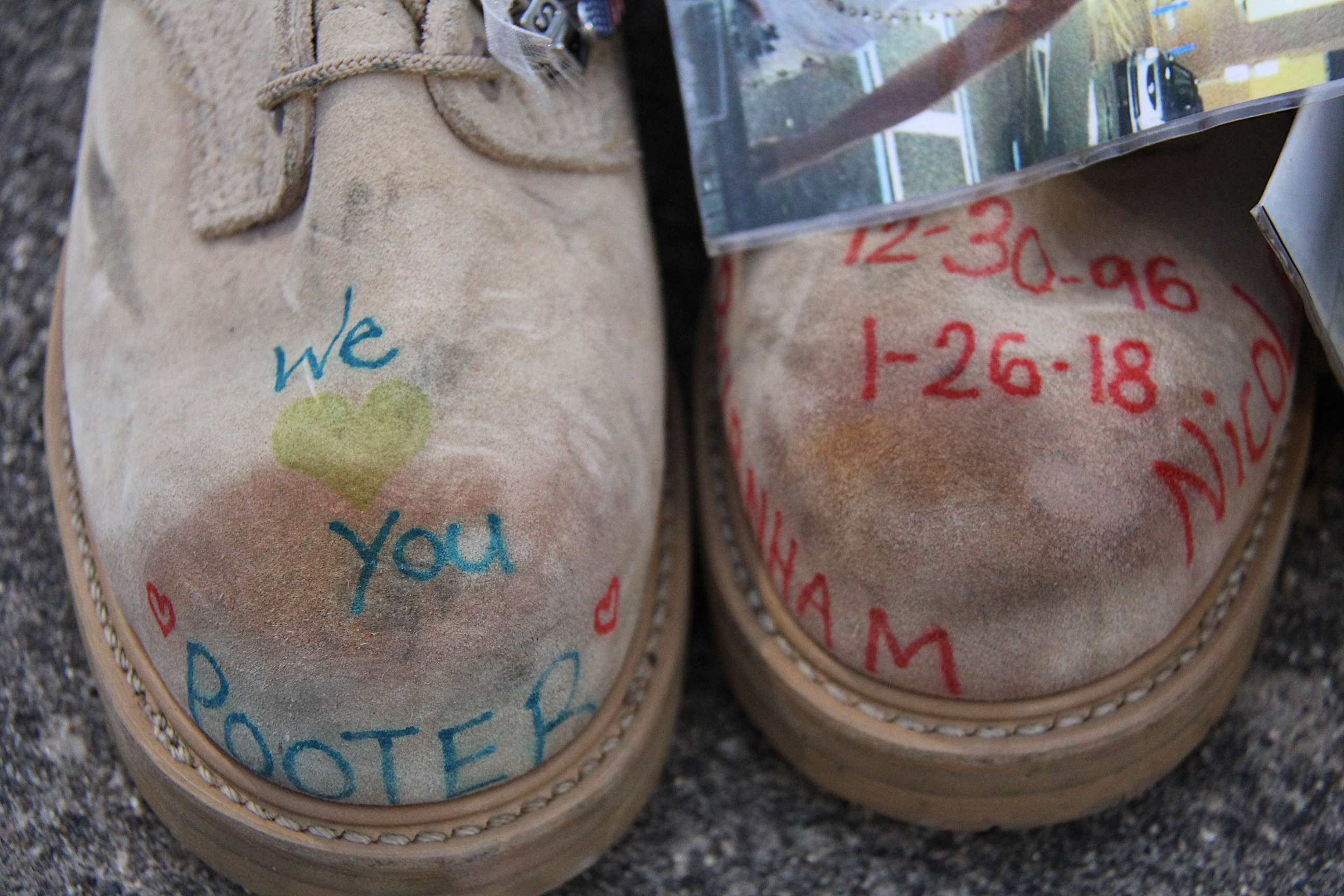
Each pair of boots displayed at the vigil represents a veteran who lost his/her life to suicide. Here, PV1 Damian Wilson of Connecticut. (Minnesota Prairie Roots copyrighted photo November 2024)

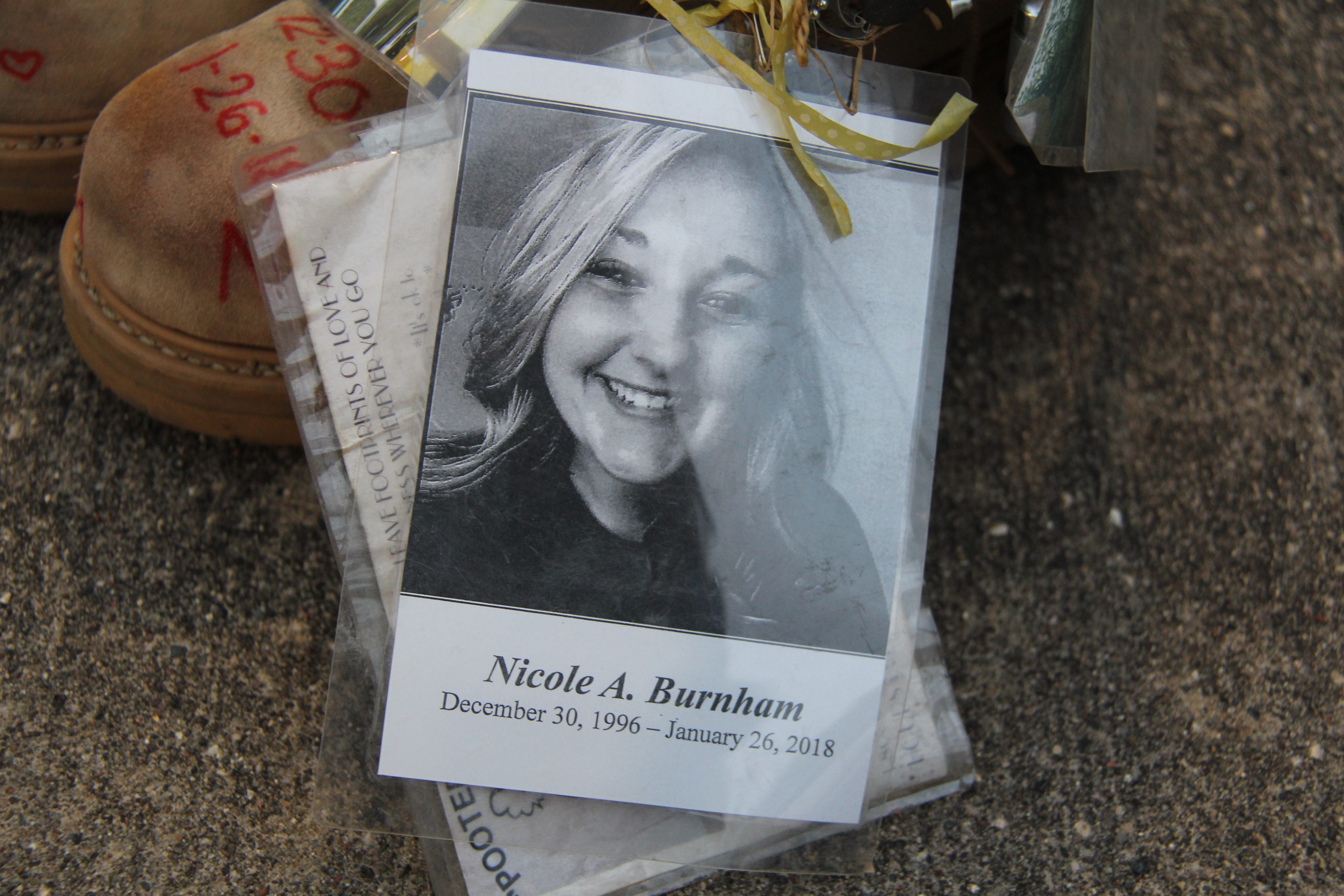
CODY, DAMIAN, NICOLE…and 20 others. Twenty-three military veterans recognized, honored, remembered during a 23-hour vigil beginning at noon Sunday and ending at 11 a.m. Monday. Twenty-three, because 22 veterans and one active military duty member, on average, lose their lives via suicide in this country every single day. The average age is 59 ½. Twenty-three because the veterans’ support group Operation: 23 to 0, southern Minnesota chapter, organized this event at the Rice County courthouse in Faribault.

At the vigil late Sunday afternoon, supporters and those holding vigil gather. Boots edge the veterans’ memorial and the courthouse steps in the background. (Minnesota Prairie Roots copyrighted photo November 2024)

That organization aims to reduce the number of deaths by suicide via providing a network of support and by raising awareness. As the daughter of a Korean War veteran who suffered from post traumatic stress disorder, I fully understand the need, the cause. This resonates with me on a personal level.

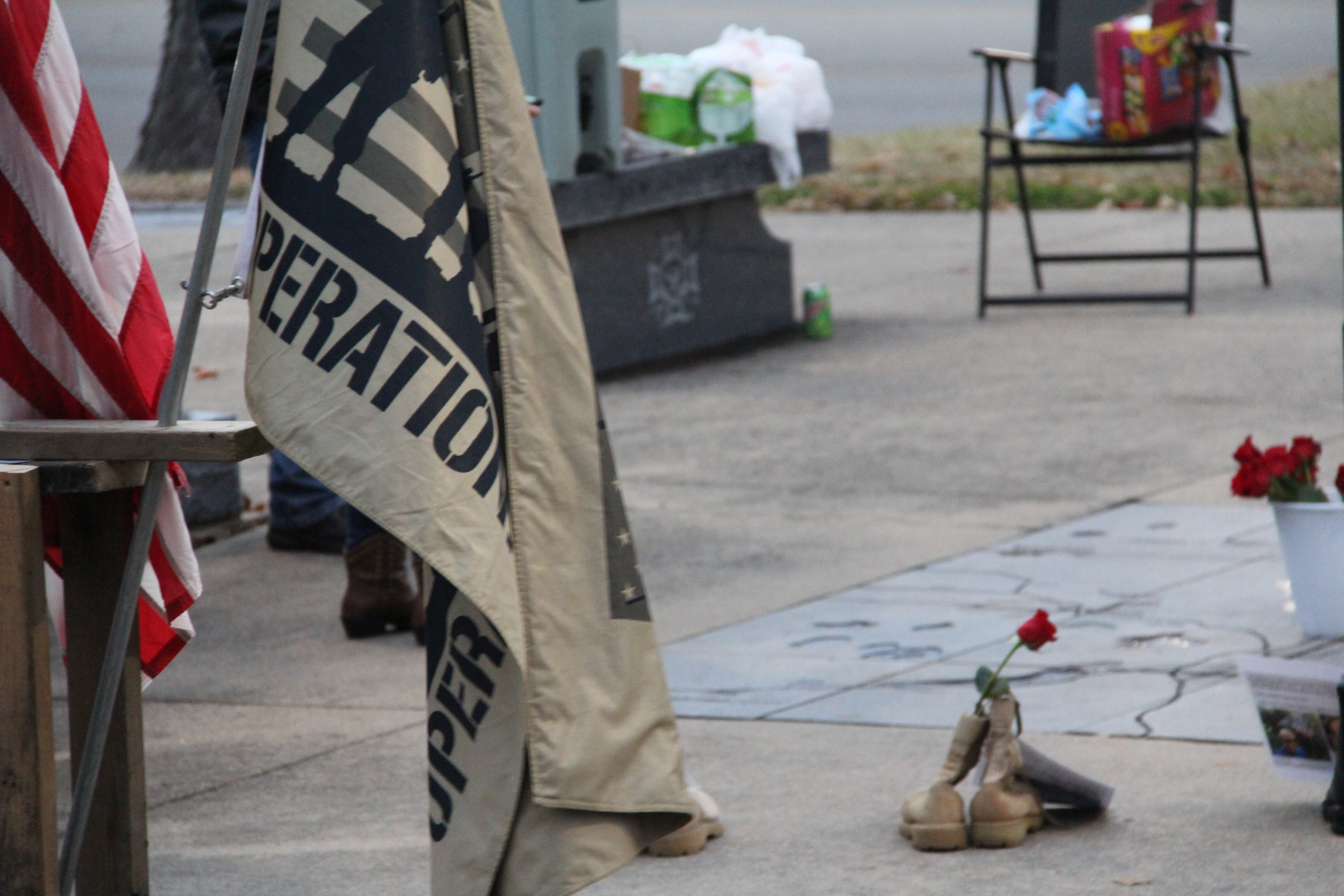
The Operation: 23 to 0 flag flew beside the American flag. (Minnesota Prairie Roots copyrighted photo November 2024)
A bucket of roses, with roses placed in each deceased veteran’s boots, sits at the vigil. (Minnesota Prairie Roots copyrighted photo November 2024)
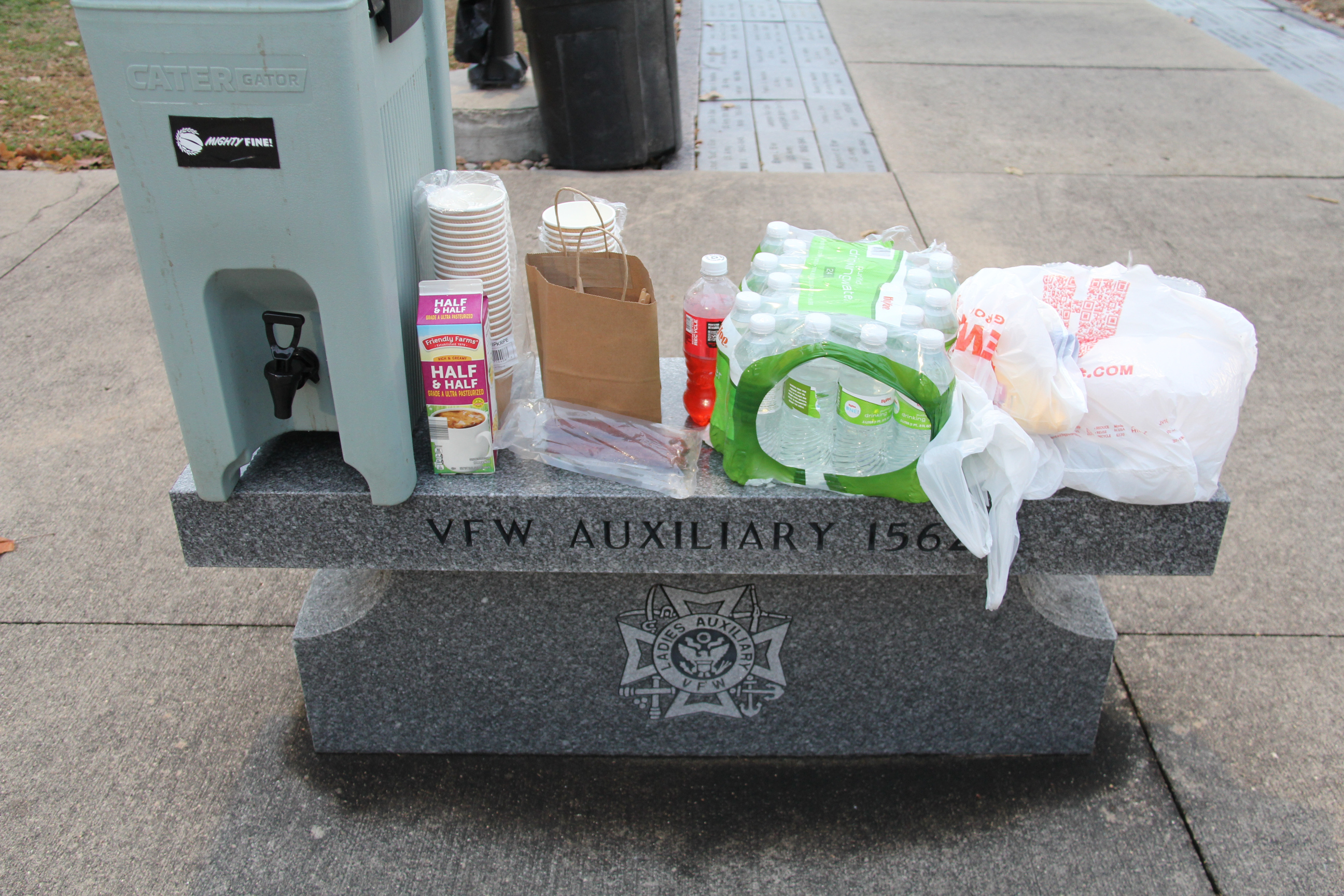
Donated food and beverages for those holding vigil. (Minnesota Prairie Roots copyrighted photo November 2024)

Because of that and because I care, I stopped by late Sunday afternoon to pay my respects and to show my support for Operation: 23 to 0 and for the veterans holding vigil. Those included Kirk Mansfield of Faribault, whom I’ve come to know through the years as an incredibly caring and compassionate individual dedicated to helping veterans. Mansfield is quick to point out that this is a team effort, that it takes a whole network of people, including the American Legion family, to make a difference.

The photos, the stories, the boots, the messages…personalize the loss. (Minnesota Prairie Roots copyrighted photo November 2024)
Images and words identify veterans who died via suicide, who are missed deeply, who were recognized. (Minnesota Prairie Roots copyrighted photo November 2024)
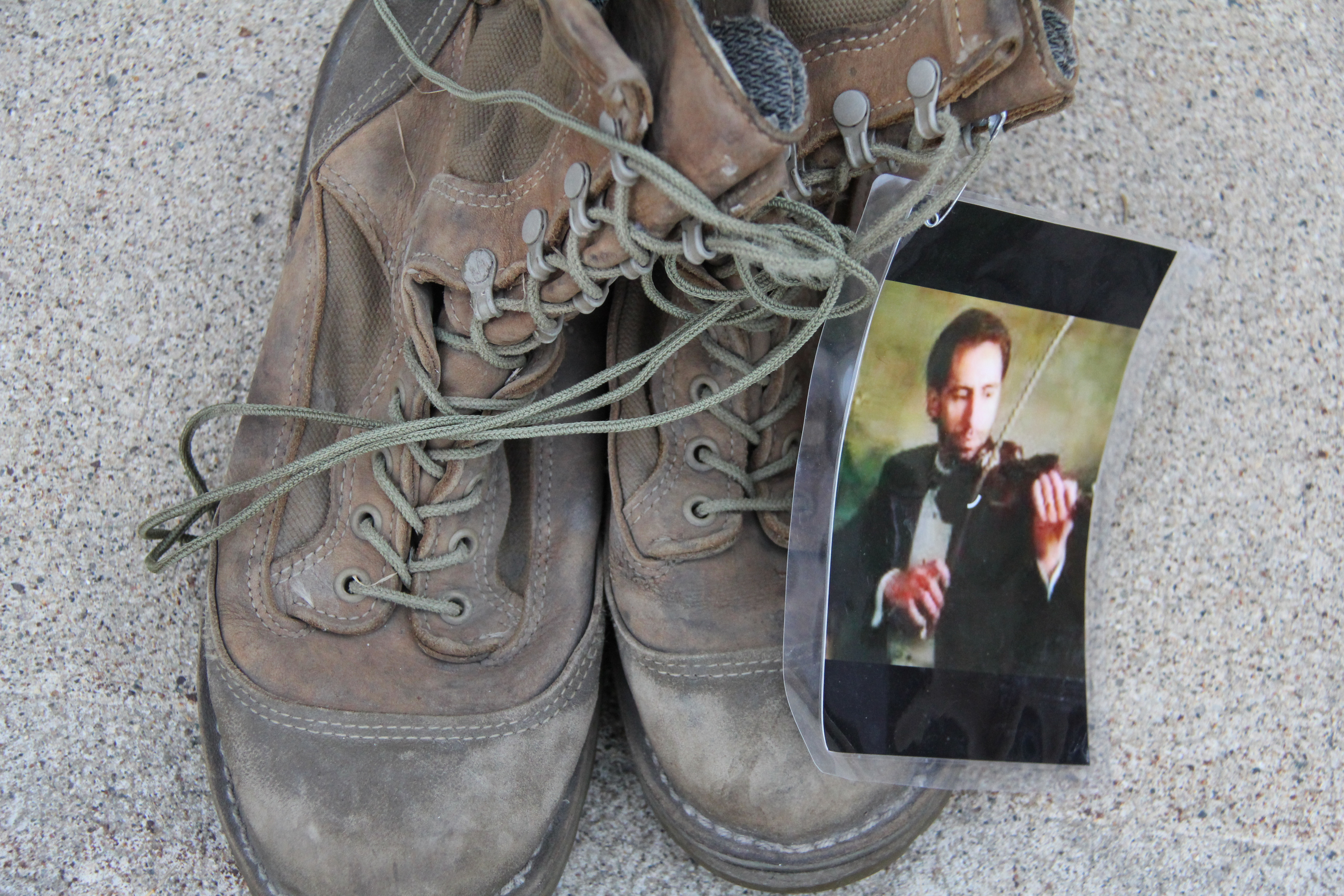
He was not only a soldier, but a violinist. (Minnesota Prairie Roots copyrighted photo November 2024)

He shared stories of a struggling young veteran in Iowa who needed a place to live, of a pregnant woman who lost her partner (a veteran) to suicide and who brought her now young daughter to the vigil in Faribault. He mentioned, too, a young veteran he was expecting later. Someone who is struggling.

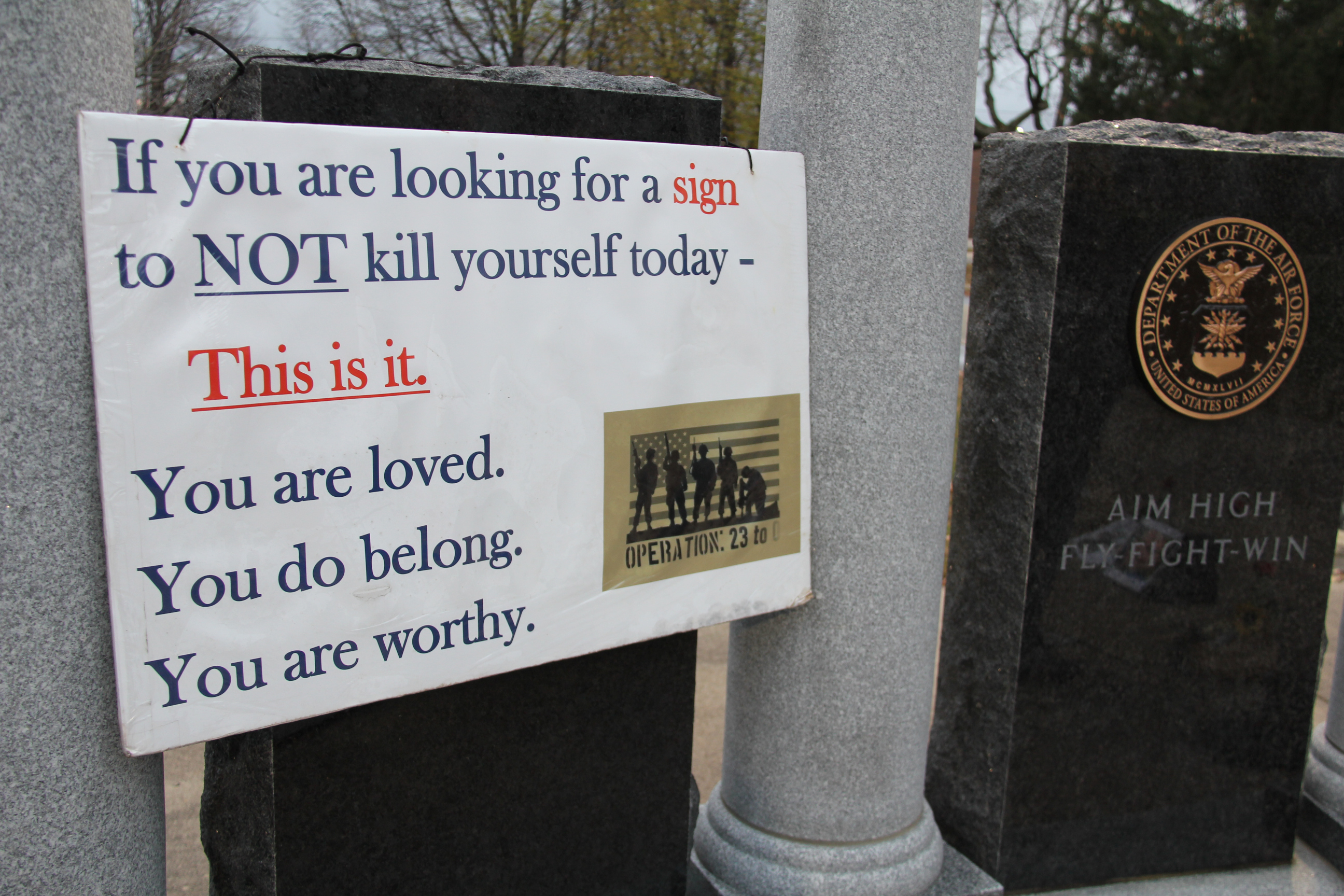
Anyone who stopped by the vigil could see this message, that they are valued. They matter. (Minnesota Prairie Roots copyrighted photo November 2024)

As I stood next to Kirk, the cold November wind sweeping up the hill, chilling me, and darkness descending, I saw the light of hope. That comes across not only in this vigil, but also in a message posted between stones honoring branches of the military. The poster reads: “If you are looking for a sign to NOT kill yourself today—This is it. You are loved. You do belong. You are worthy.” What a powerful message of hope.

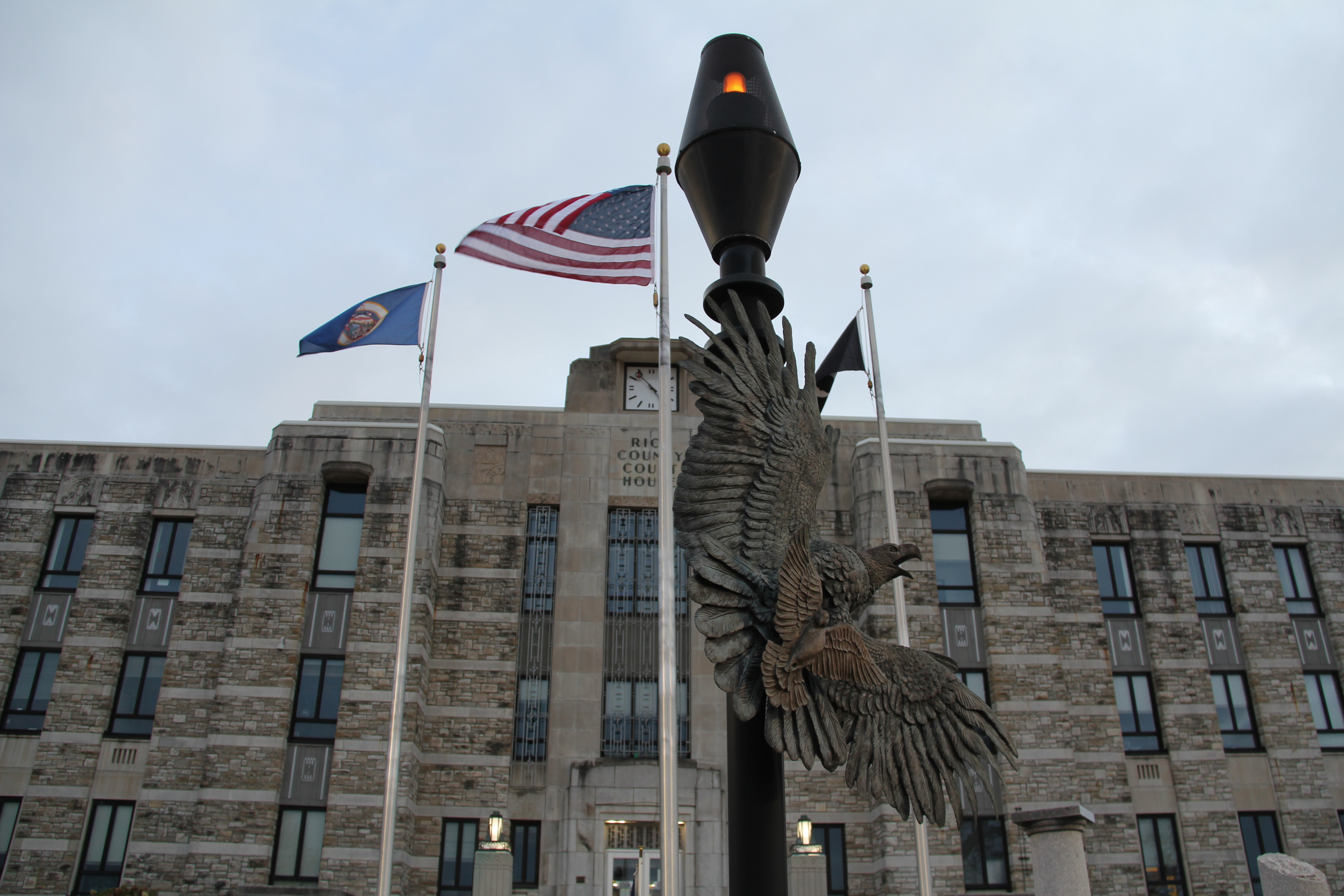
An eagle and eternal flame center the Rice County Veterans’ Memorial by the Rice County courthouse. (Minnesota Prairie Roots copyrighted photo November 2024)

On this Veterans Day, when we honor all who served our country in the military, those caring words matter. They matter because people (whether veterans or not) are struggling. Perhaps struggling with finances, relationships, mental health or any myriad of issues that create feelings of hopelessness.

Loving messages on a veterans’ boot. (Minnesota Prairie Roots copyrighted photo November 2024)
Flags, boots, roses, all honor the veterans who died via suicide. (Minnesota Prairie Roots copyrighted photo November 2024)
Love and grief on a pair of boots. (Minnesota Prairie Roots copyrighted photo November 2024)

Each pair of boots placed at the Rice County Veterans Memorial or at the foot of the courthouse steps represents someone who loved and was loved, but who now is among the twenty-three.

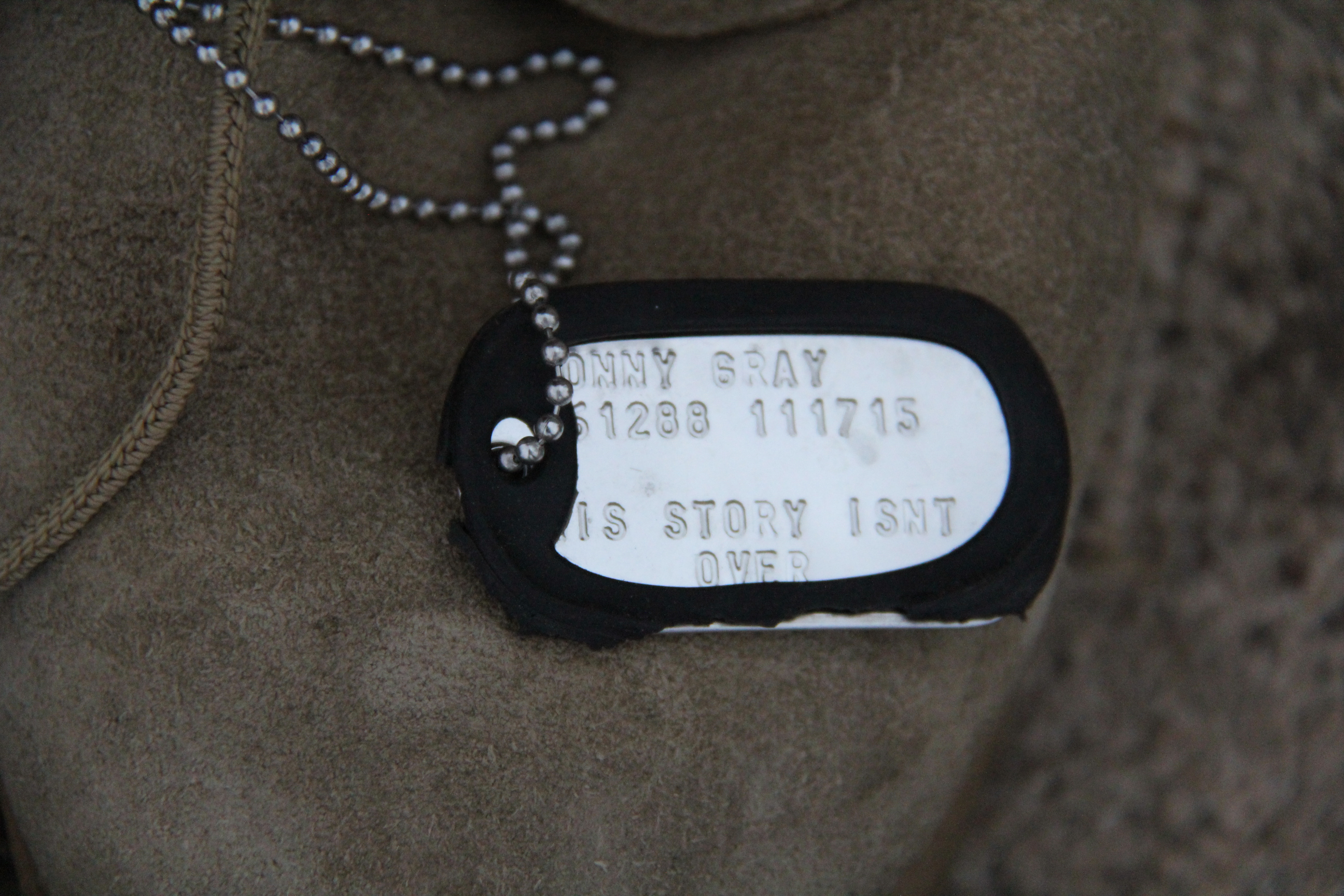
I really like this message spotted on a dog tag on a veteran’s boot. “His story isn’t over.” (Minnesota Prairie Roots copyrighted photo November 2024)

Operation: 23 to 0 is dedicated to being there. To listening. To supporting. To networking. To doing. To raising awareness. I see that. And I am grateful.

#

FYI: If you or someone you love is feeling hopeless, know that someone wants to help you. Talk to a friend, family member, professional. Call or text the 988 Suicide and Crisis Lifeline. Learn more about Operation: 23 to 0, which is based in Stillwater and has three chapters in Minnesota. You are loved.

© Copyright 2024 Audrey Kletscher Helbling
 

Whooping cough warning & my story November 8, 2024

CONSIDER THIS A PUBLIC SERVICE announcement. A warning. A firsthand account of a disease you don’t want to get. That would be pertussis, also known as whooping cough.

Nineteen years ago, I experienced a severe case of whooping cough which left me coughing uncontrollably, gasping for air and using an inhaler. I would not wish this bacterial respiratory tract infection on anyone. It’s that bad. I was sick for three months. Terribly sick. It isn’t called the 100-day cough for nothing.

NUMBERS ARE HIGH

So why am I writing about something that infected me nearly two decades ago? Well, because whooping cough cases are raging across the country, including right here in Minnesota. We are at an eight-year high with 1,622 confirmed and probable cases reported to the Minnesota Department of Health as of November 7. That compares to only 61 total cases in 2023.

Right now, my county of Rice has 11 of those cases. As one would expect, densely-populated areas rack the most reports of pertussis. In the eight metro counties in and around Minneapolis and St. Paul, 1,308 people have had whooping cough thus far in 2024, according to MDH stats. That’s just reported cases. The southeastern section of Minnesota, where I live, is also seeing plenty of pertussis.

I can throw more statistics at you. But I won’t. Rather, I’m attempting to increase awareness, to suggest you check your vaccination record. That shot you got as a kid does not last forever, as I obviously learned in 2005. I have a message in to my doctor right now checking my vaccination status for a possible booster.

UNCONTROLLABLE COUGHING, EXHAUSTION & FIGHTING TO BREATHE

Looking back to the summer of 2005 when I was infected with pertussis, I remember how awful I felt. I laid on the couch, coughing uncontrollably, beyond exhausted because I couldn’t sleep for all the coughing. The worst was the night I felt my airway closing. I gasped for air, struggled to breathe. In hindsight, my husband should have called 911.

It took three visits with my then doctor to get a correct diagnosis. Only when I coughed in his office (whooping cough has a distinct sound, thus the name “whooping”) did my physician suspect I had pertussis rather than bronchitis. I was his first diagnosed case in his 30 some years of practicing medicine. Early symptoms of runny and stuffy nose, low-grade fever, and mild cough mimic the common cold.

HIGHLY CONTAGIOUS

How do you catch whooping cough? The answer my doctor gave me back in 2005 was this: “You could have gotten it waiting in line at the grocery store.” He’s right. It’s that contagious.

Once diagnosed a month out from symptom onset, I went on an antibiotic, although it was a little late to gain the full benefits of that. My entire family also got on antibiotics. Still, two of them got pertussis, albeit much milder cases.

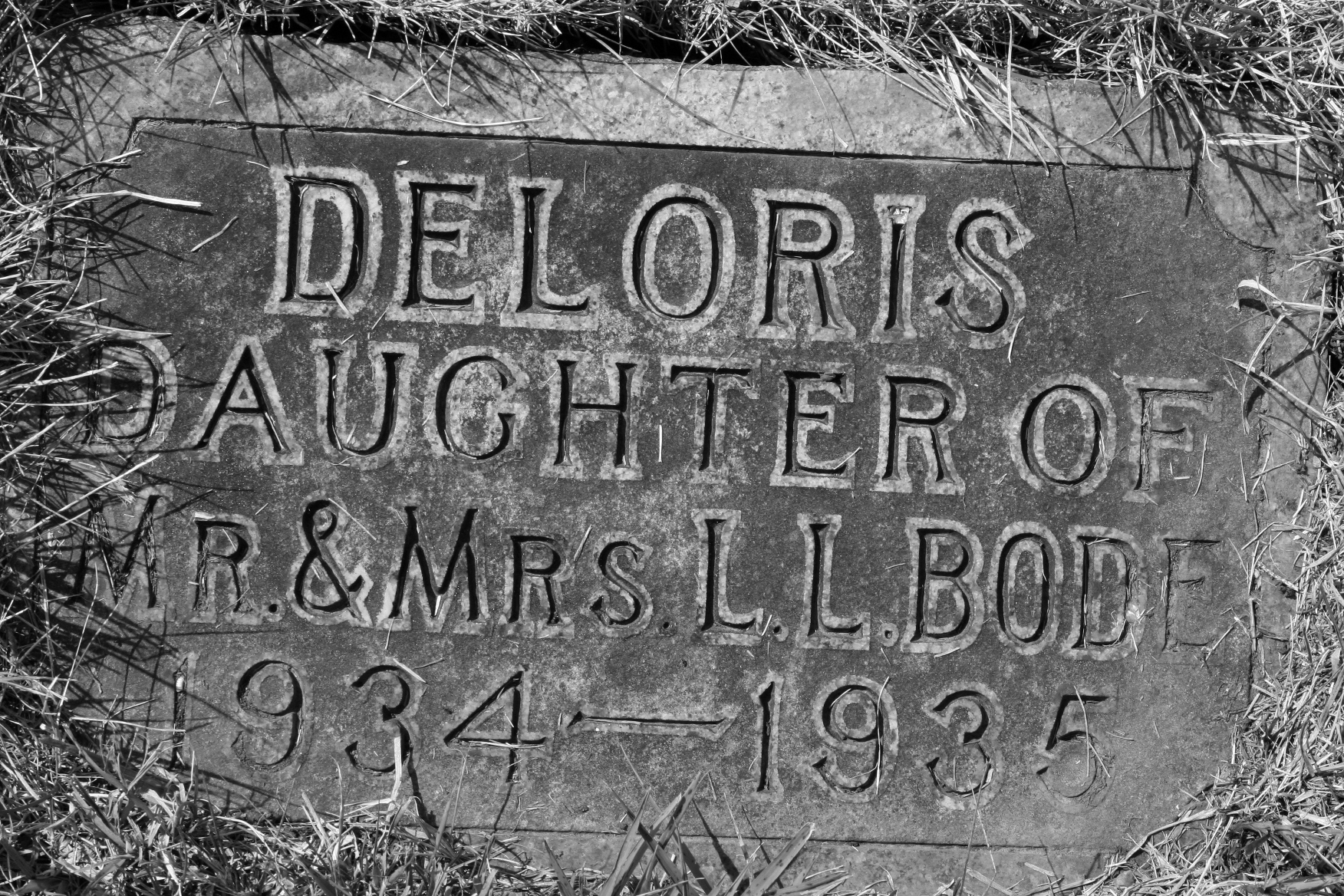
The gravestone of Deloris Edna Emilie Bode in Immanuel Lutheran Church, rural Courtland. My aunt died of whooping cough. (Minnesota Prairie Roots copyrighted file photo)

DEADLY SERIOUS

Pertussis can be serious, especially for the little people in our lives. My Aunt Deloris died of whooping cough in 1935 at the age of only nine months. Granted, more medical intervention is available today. But still, this darling baby, daughter of Lawrence and Josie, died of pertussis. My heart breaks every time I think of baby Deloris.

So that’s my health spiel for today. Be aware that whooping cough is out there. And you really don’t want to catch it.

#

NOTE: If you are anti-vax, know that I am not and I will not publish that viewpoint on this, my personal blog. I moderate all comments.

© Copyright 2024 Audrey Kletscher Helbling
 

Inside the Paradise: So much art to view & experience November 7, 2024

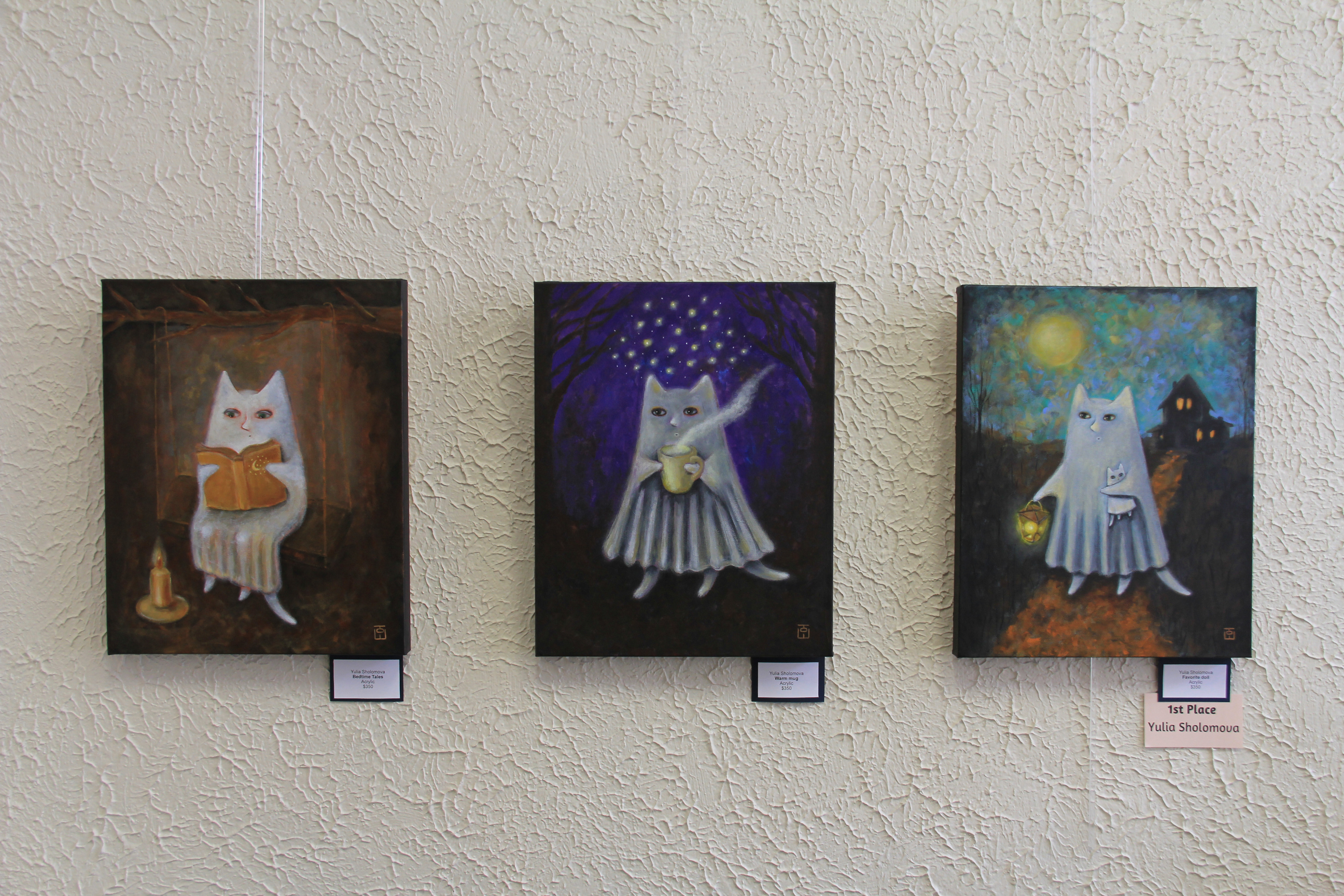
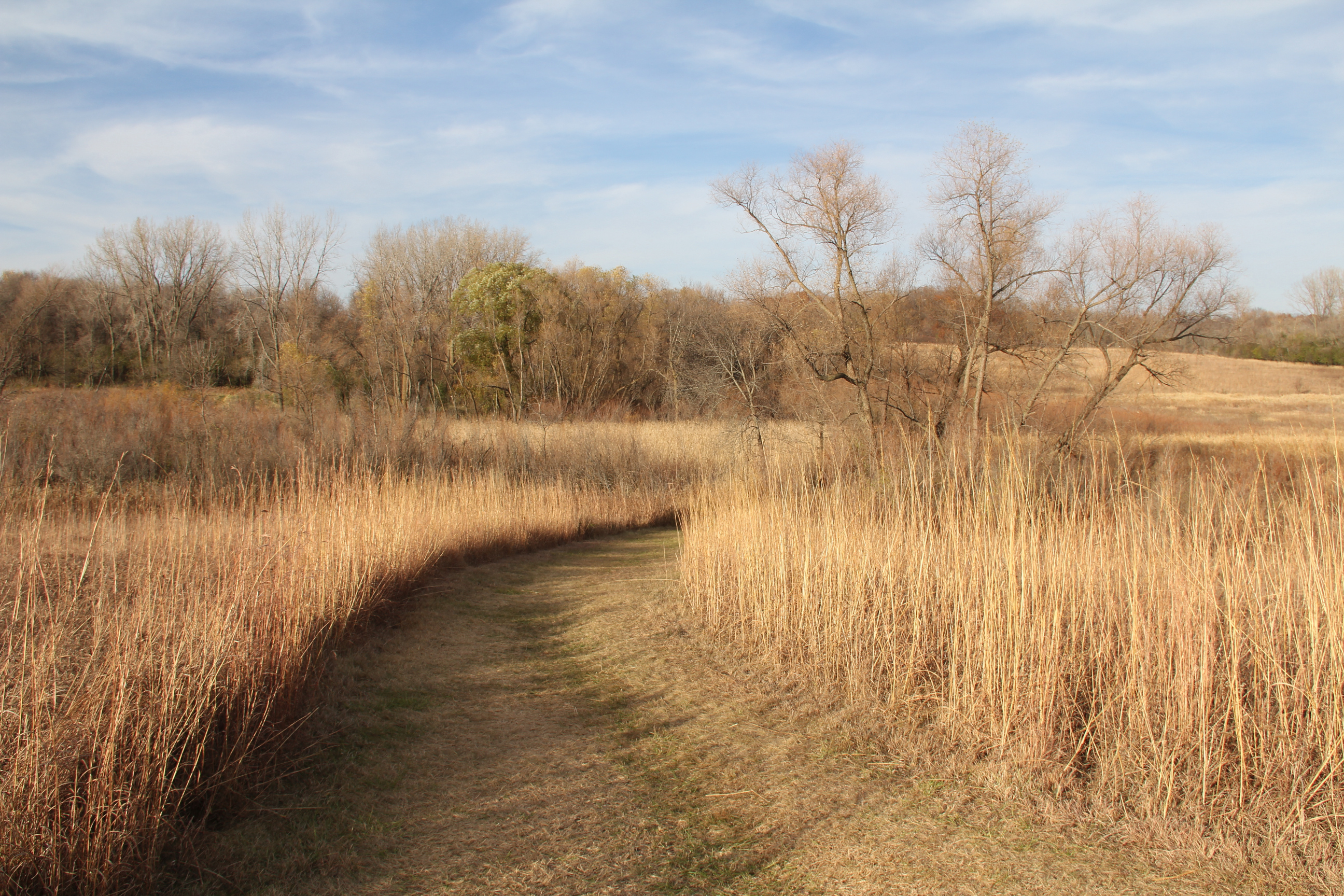
Yulia Sholomova won first place in the Halloween Group Show for her costumed kitties. The show at the Paradise Center for the Arts in Faribault runs until November 16. (Minnesota Prairie Roots copyrighted file photo October 2024)

TO VIEW VISUAL ART created by others feeds my spirit in a way that I can’t fully explain. Perhaps it’s the kinship I feel as a creative. Perhaps it’s the appreciation I hold for their work. Or maybe it’s simply because of the feelings sparked by viewing a work of art.

Admiration. Joy. Serenity. Chaos. Calm. A myriad of emotions can arise when looking at a painting, a sculpture, mixed media, a photo, whatever the artist creates.

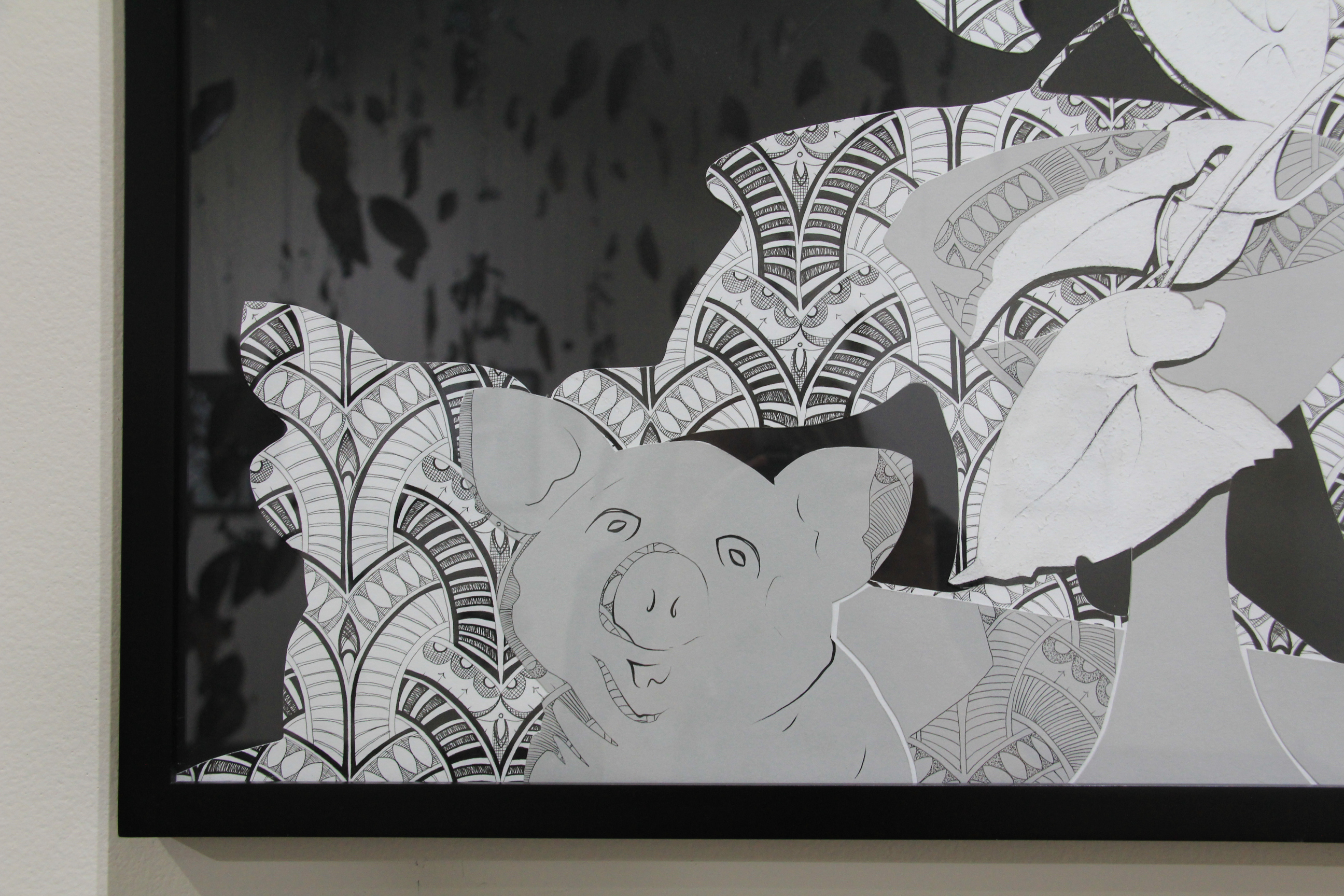
This shows a section of “Melody” done in micron pen and cut paper by Shelley Caldwell. (Minnesota Prairie Roots copyrighted photo October 2024)

Recently I popped into the Paradise Center for the Arts in Faribault specifically to see the Halloween Group Show. But then I was drawn to the other galleries. There I saw “Unfurling,” mixed media drawings and an installation by Shelley Caldwell who creates art from her Faribault County farm near the Iowa border. Her exhibit seemed familiar. And it should have. In October 22, Caldwell’s work was featured in a smaller installation at the Paradise.

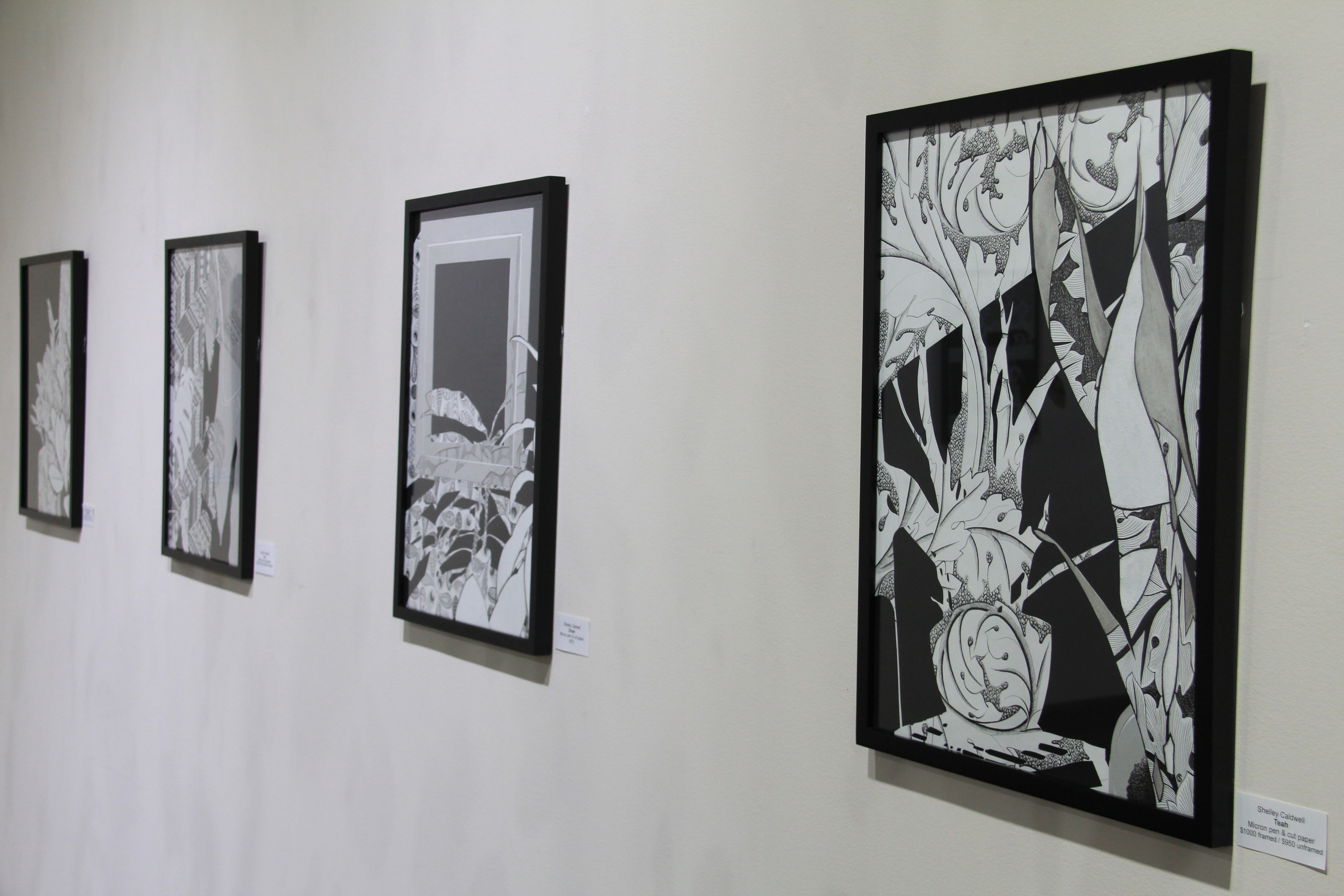
Some of Shelley Caldwell’s art, which rings the main gallery walls. (Minnesota Prairie Roots copyrighted photo October 2024)

Then, as now, plants focus her art. She combines drawings of natural subjects with abstract drawings to create art that is signature identifiable as hers. This time Caldwell worked with micron pen and cut paper to craft black-and-white framed pieces rather than artfully staging spider plants.

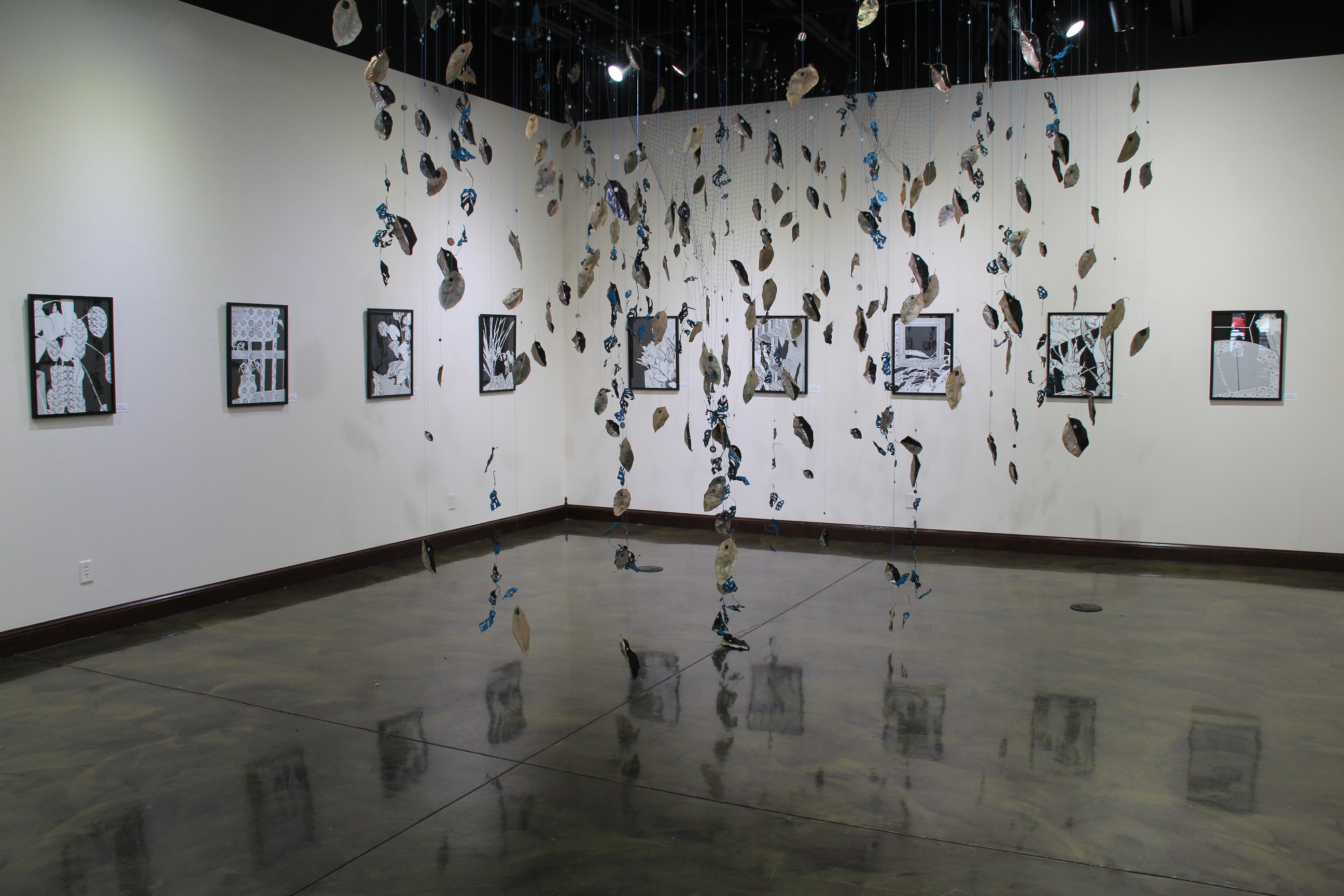
This shows an overview of Shelley Caldwell’s exhibit, including dangling leaves. (Minnesota Prairie Roots copyrighted photo October 2024)

Real plant leaves, though, dangling and dancing, shape the focal centerpiece suspended from the gallery ceiling. There is movement. Freedom. A certain airiness.

“Stars & I,” an acrylic painting by Angelina Dornquast. (Minnesota Prairie Roots copyrighted photo October 2024)
“Raspberry Cupcake,” an acrylic by Angelina Dornquast. (Minnesota Prairie Roots copyrighted photo October 2024)
Angelina Dornquast’s acrylic, “Peace and Love.” (Minnesota Prairie Roots copyrighted photo October 2024)

From Caldwell’s exhibit, I turned the corner to look at the acrylic paintings of Angelina Dornquast, a recent Waterville-Elysian-Morristown High School graduate. To think that someone this young can be this talented in portraiture impresses me. I thought in my head, “Wow, this girl can paint!” Plus, I sensed the confidence this young artist has in herself and in her work. That shines.

This portrait by Jaclyn Theiss Garlock is part of the Paradise’s permanent art collection. (Minnesota Prairie Roots copyrighted photo October 2024)

As I was about to head to the next gallery, Paradise Executive Director Julie Fakler pointed out an over-sized portrait of a glamorous woman on a stairway wall. The painting is the work of Jaclyn Theiss Garlock of Clear Lake, Iowa, and was a gift to the Paradise, part of its permanent art collection. The woman in the painting exudes strength, sass and attitude. I rather like her.

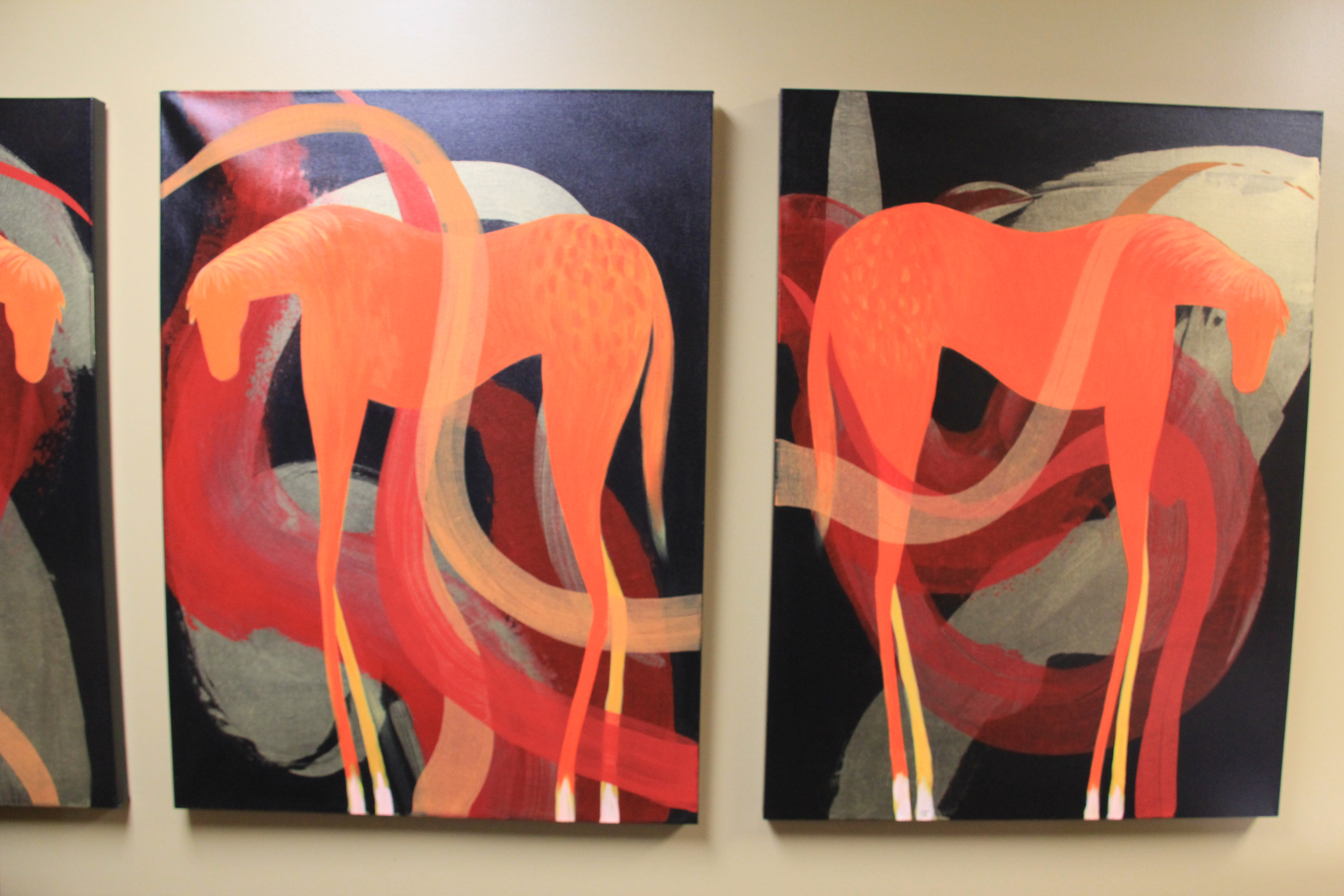
Two of the horses in Walter Salas-Humara’s trio of paintings which hang in an office at the Paradise. (Minnesota Prairie Roots copyrighted photo October 2024)

Inside Fakler’s office hangs more art in the permanent collection, including a trio of horses by Walter Salas-Humara of the musical group The Silos. The bold, long-legged horses are a signature subject and style of Salas-Humara. I enjoyed getting a peek at the permanent collection not typically seen by the public.

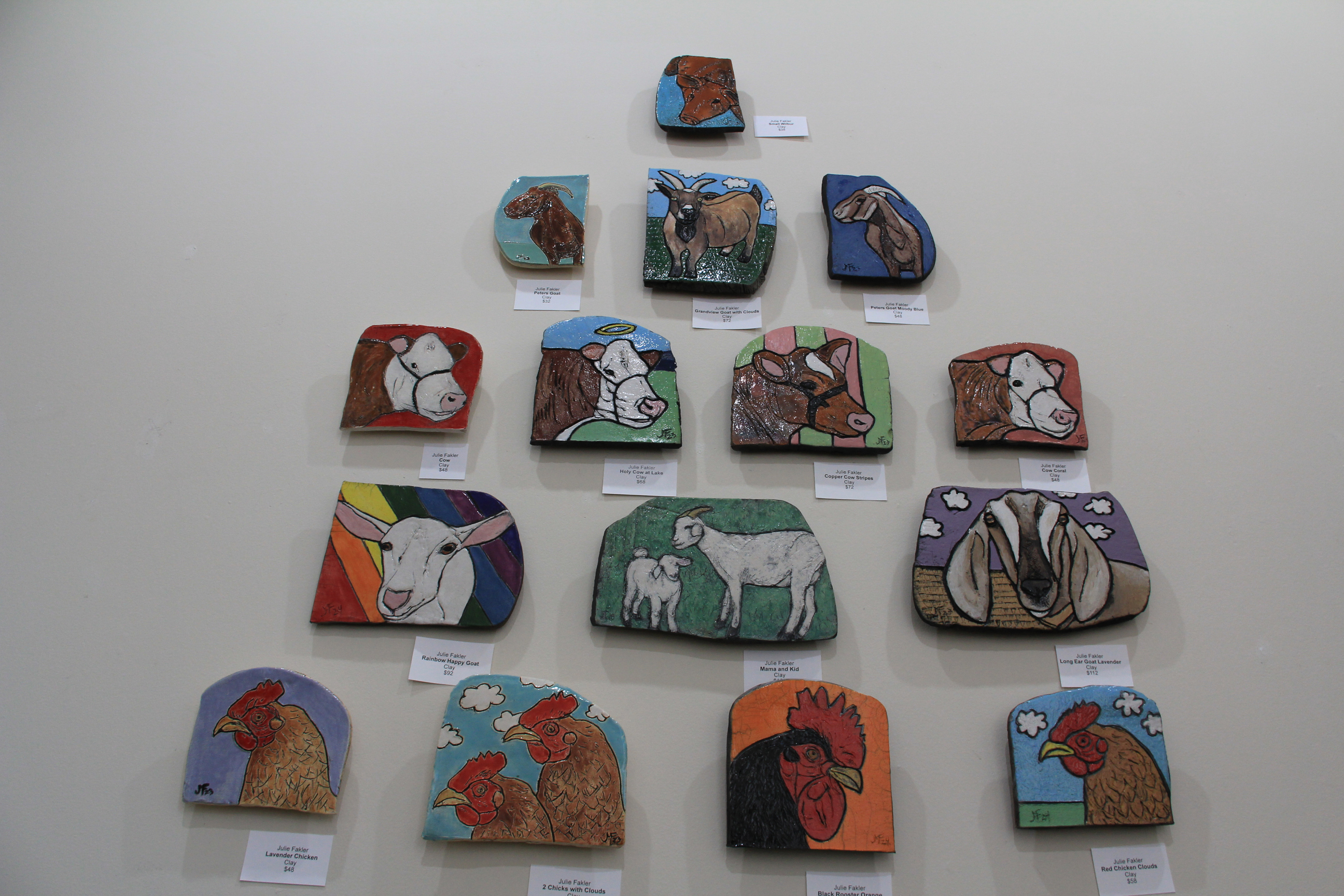
A grouping of animal portraits in clay by Julie Fakler. (Minnesota Prairie Roots copyrighted photo October 2024)
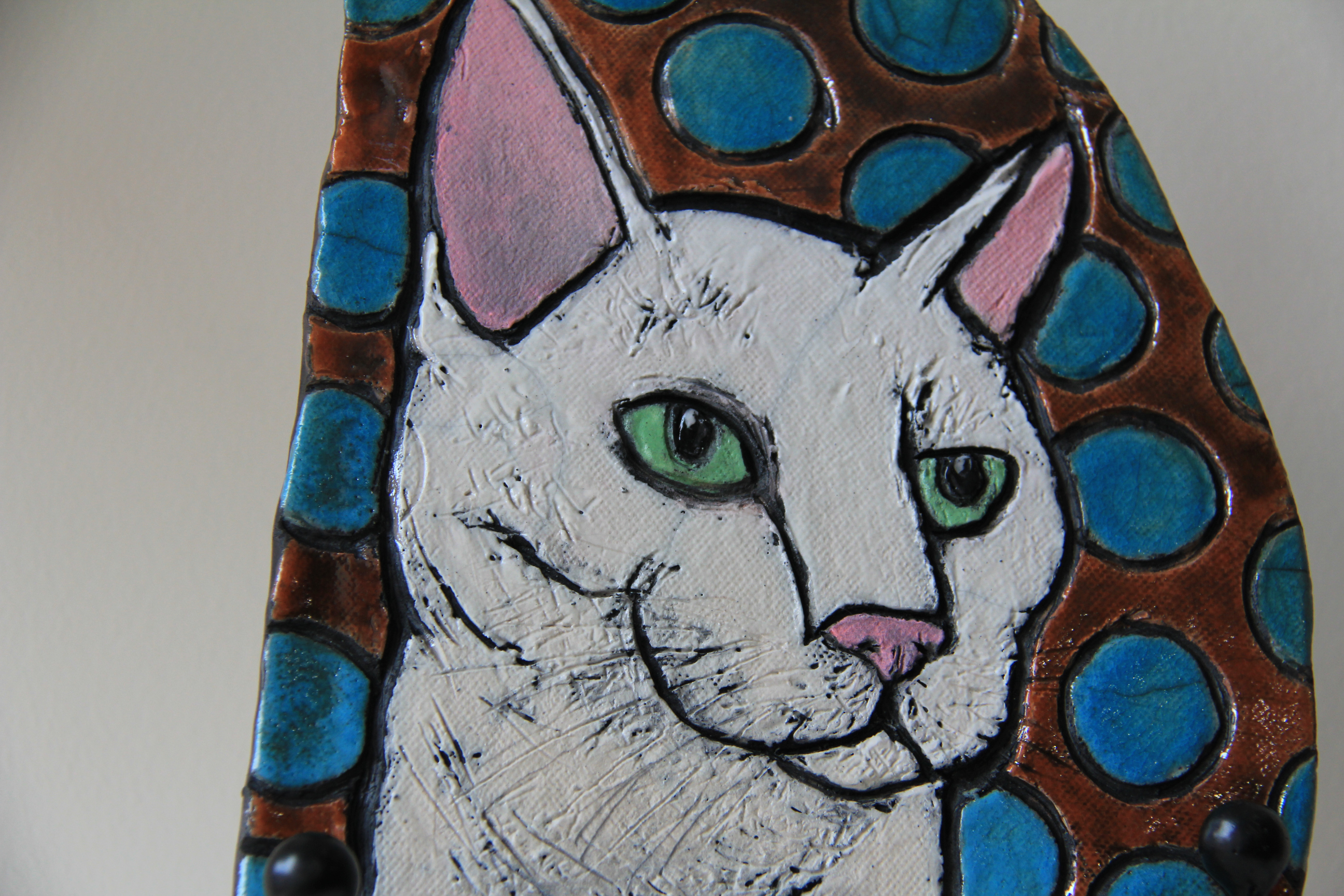
“Miro Turquoise Circles” created in clay by Julie Fakler. (Minnesota Prairie Roots copyrighted photo October 2024)
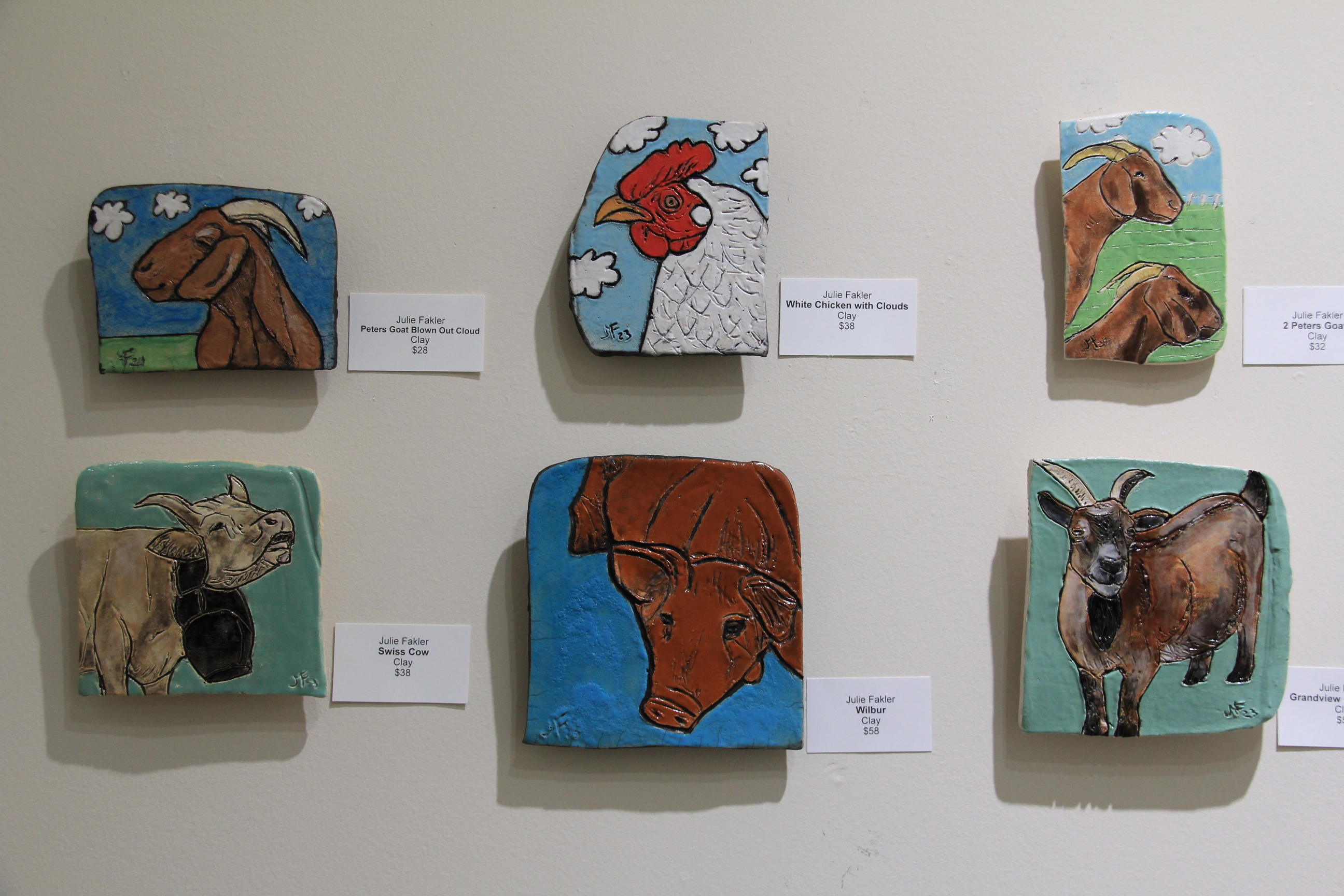
More animal portraits in clay created by Julie Fakler. (Minnesota Prairie Roots copyrighted photo October 2024)

Fakler is a gifted artist, too, not unexpected from someone who leads an arts center. She specializes in animal portraits done primarily in clay. I’d recognize Fakler’s dogs, cats, goats, chickens, cows, pigs anywhere. They are bold, with personality. I could easily envision them on tee shirts, tote bags, greeting cards. They are uncomplicated and folksy in a way that reconnects me to my farm upbringing. And they are currently on exhibit in another Paradise gallery along with the work of those in a creative aging class.

There’s so much to see, experience and feel when viewing all of this art inside the Paradise galleries. Current art will be up until November 16, after which the works of more creatives will go on display beginning November 18. To have access to all this art in my community sparks gratitude within me. I had only minimal access to the arts as a child. Now I see, and experience, the arts often, much to my delight.

© Copyright 2024 Audrey Kletscher Helbling
 

A brief stop in St. Peter, what I saw & learned November 6, 2024

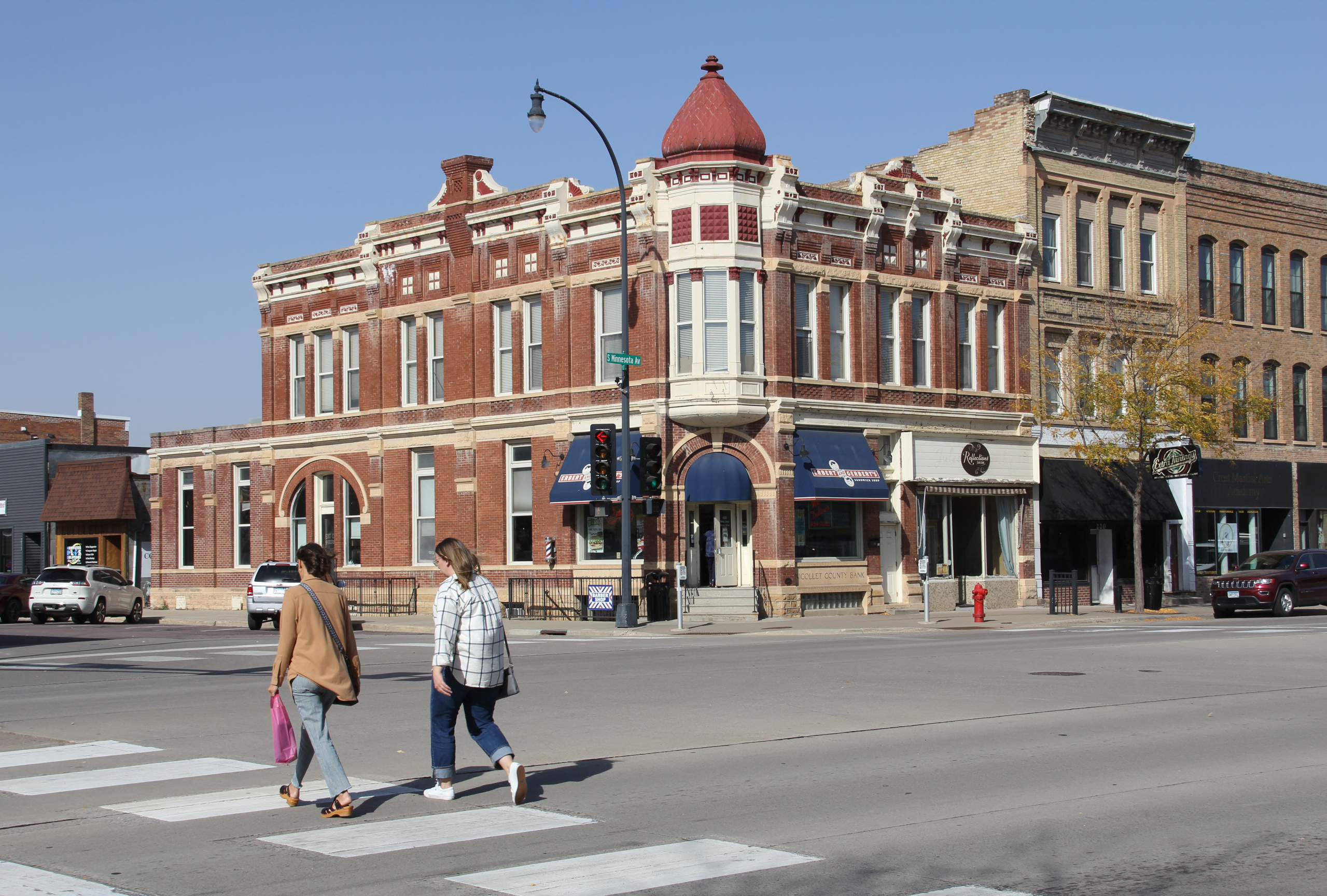
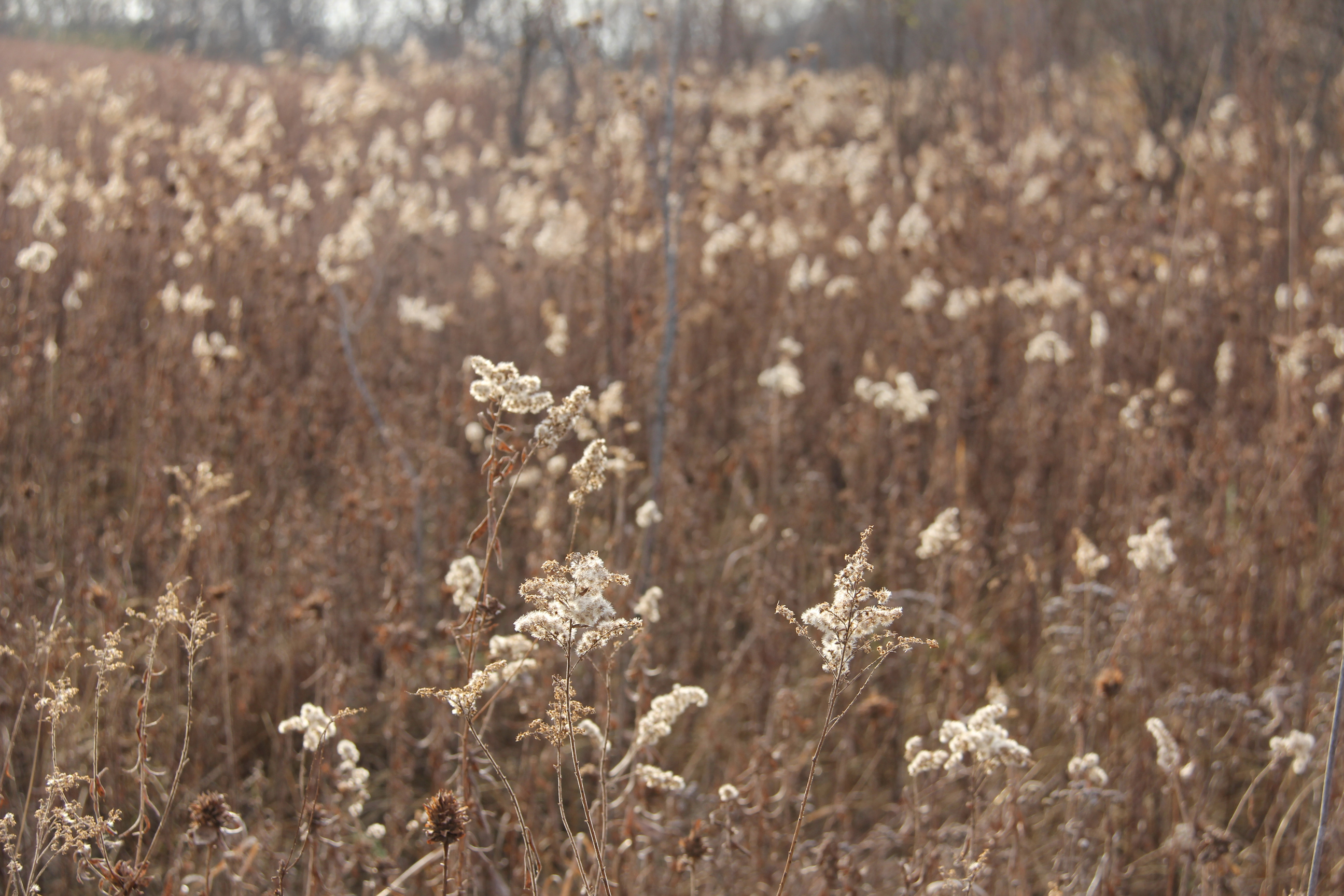
A stunning historic building anchors a corner in the heart of downtown St. Peter along Minnesota Avenue. (Minnesota Prairie Roots copyrighted photo October 2024)

A COLLEGE TOWN. A river town. A town once destined to become Minnesota’s state capital, except for a stolen legislative bill and a judge’s ruling. A town where Jesse James and his gang rode through en route to robbing the First National Bank of Northfield. A town two-thirds destroyed by a March 29, 1998, tornado. The town is St. Peter, population around 12,000, nestled in the Minnesota River Valley.

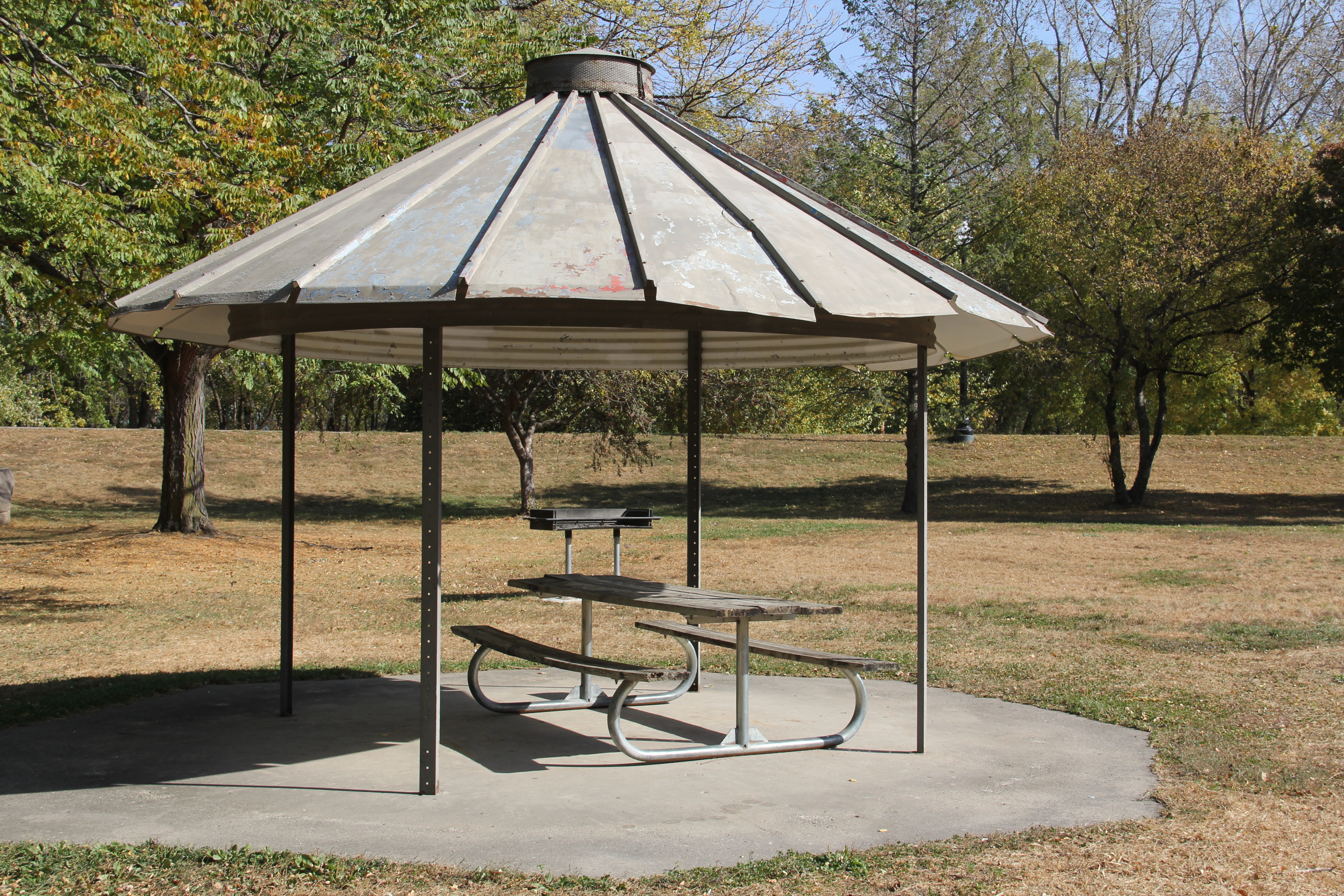
I felt right at home inside this picnic shelter with the grain bin roof. (Minnesota Prairie Roots copyrighted photo October 2024)
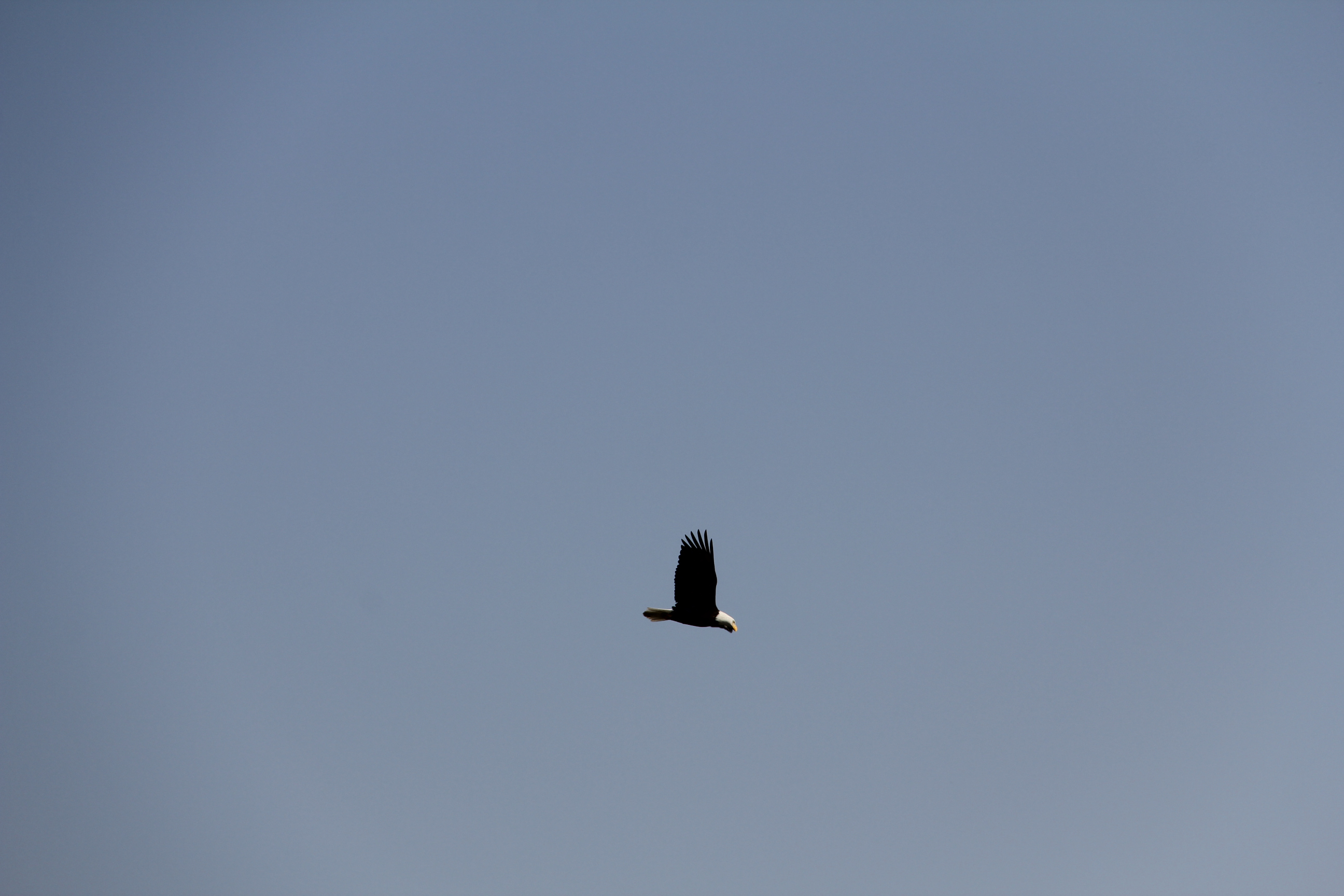
An eagle soars high above the Minnesota River at Riverside Park. (Minnesota Prairie Roots copyrighted photo October 2024)
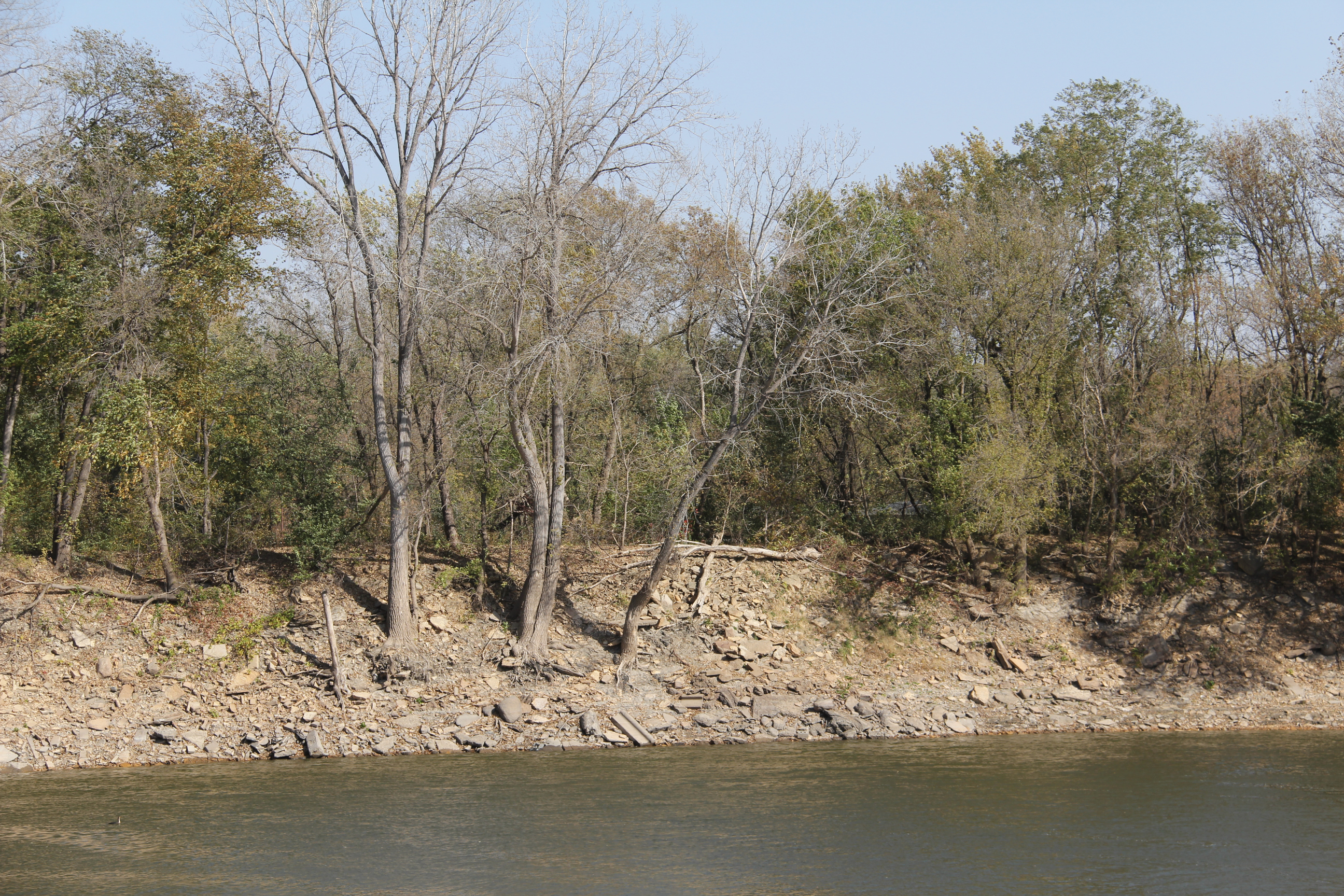
The Minnesota River shoreline as photographed from Riverside Park. (Minnesota Prairie Roots copyrighted photo October 2024)

Recently I spent a bit of time in St. Peter while on a fall color drive. Randy and I picnicked at Riverside Park—Mill Pond & Campground. I watched volunteers prepare for a haunted hayride along the park’s trails, nearly twisted my ankle in an unfilled hole in the grass, noted how murky the Minnesota River appeared, observed an eagle soaring, and noticed the roof of the small picnic shelter. It looked like the top of an old grain bin, much to my rural roots delight.

I appreciated that books inside the St. Peter Thrift Store were mostly displayed horizontally, making it easier for me to read the titles. (Minnesota Prairie Roots copyrighted photo October 2024)

Following lunch, we stopped briefly downtown when I spotted a thrift store. I always enjoy poking around second-hand shops. Not that I’m looking for anything in particular. Often I leave empty-handed. But this time I picked up a clutch of greeting cards because I’m one of those people who still sends cards on birthdays and other occasions. Randy found a cassette tape of some radio talk show, nothing that interests me.

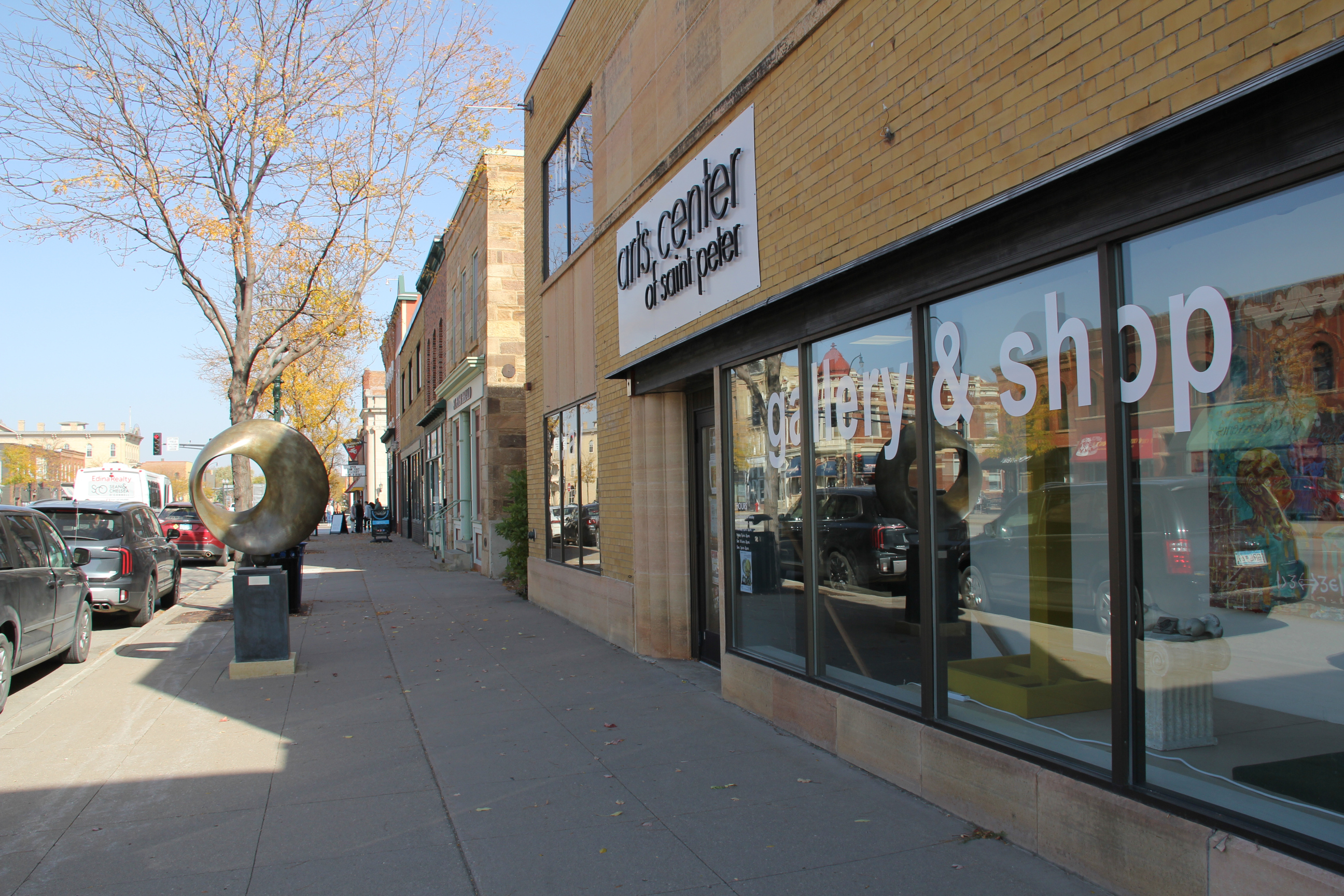
Outside the Arts Center of Saint Peter. (Minnesota Prairie Roots copyrighted file photo October 2024)
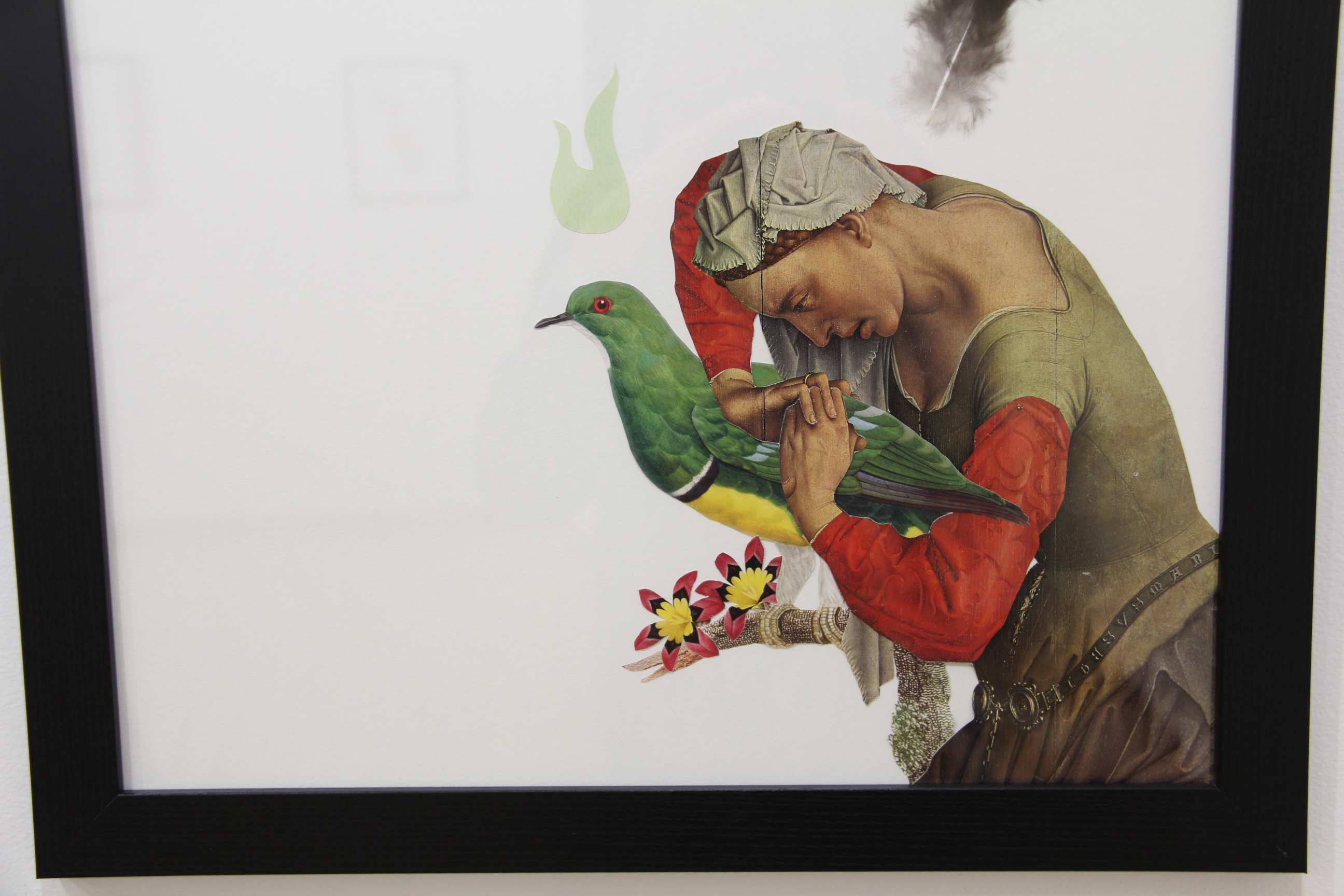
Inside the arts center, I viewed this and other collages by Mankato artist Holly Dodge. Her exhibit has closed. The gallery space now features the work of artists participating in the BUY-AND-TAKE INVITATIONAL and also Bianaca Wilson’s “SIEMPRE BUSCANDO.” (Minnesota Prairie Roots copyrighted file photo October 2024)

We’d parked along busy Minnesota Avenue/US Highway 169 directly in front of the Arts Center of Saint Peter. So, of course, I had to check out the gallery exhibit—collage art by Mankato artist Holly Dodge. The exhibit has since closed. I meandered, photographing some of her pieces. I’m always impressed by the diversity of art, how creative minds work.

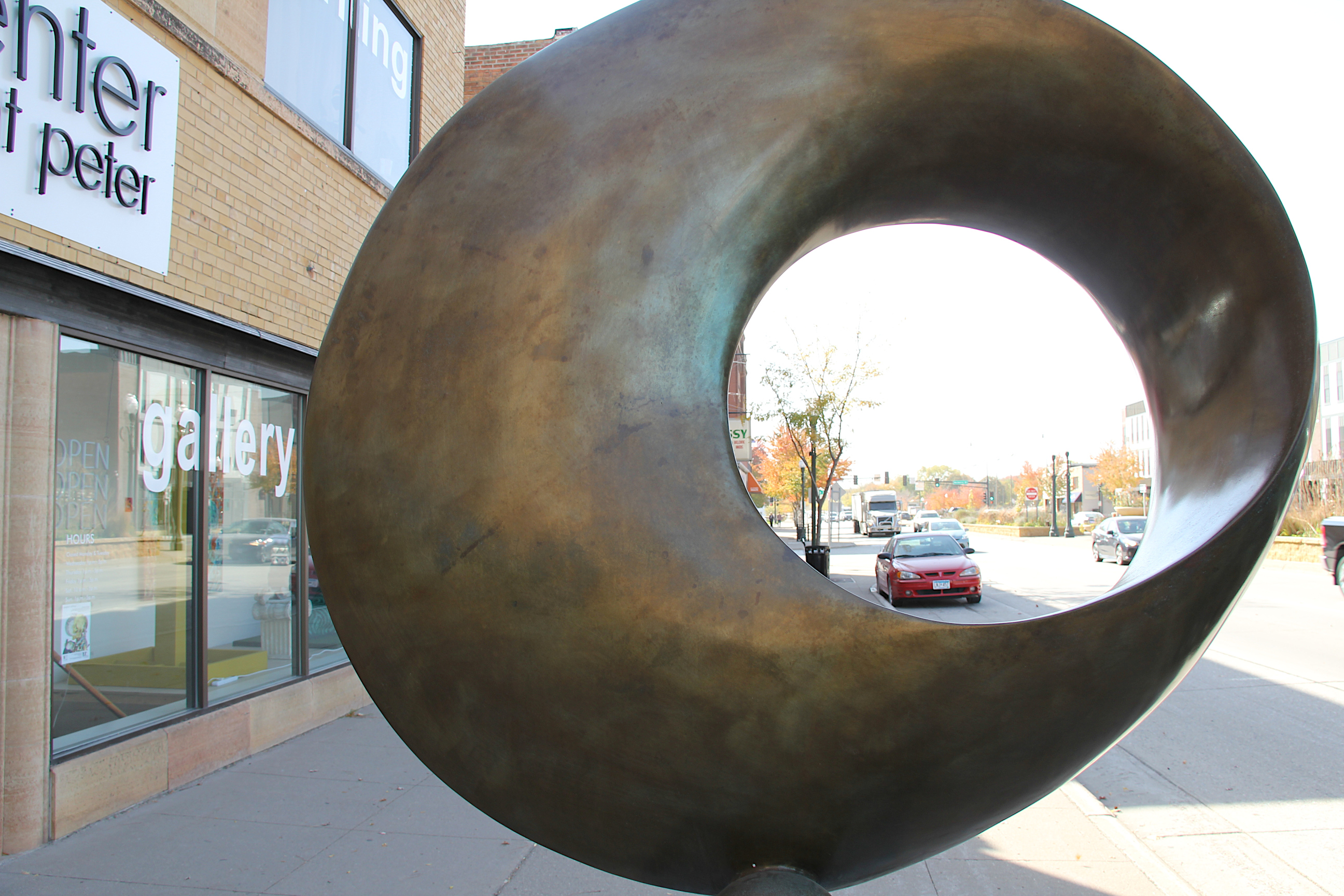
Paul Granlund’s sculpture offers a unique perspective through which to view downtown St Peter. (Minnesota Prairie Roots copyrighted photo October 2024)

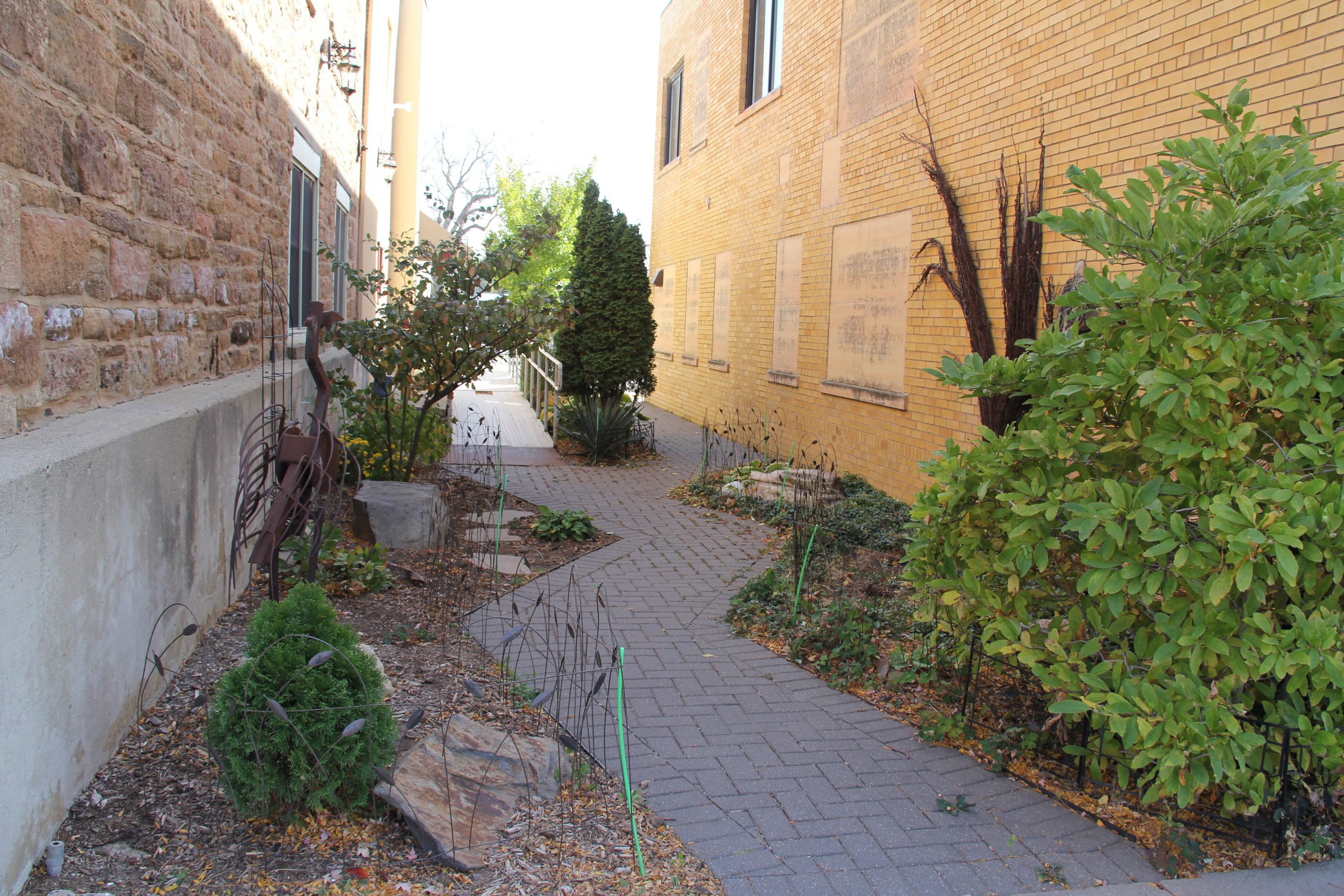
Once outside, I aimed my camera lens toward the distinctive bronze sculpture, “Mobius Strip,” crafted by Paul Granlund, a noted Minnesota sculptor, 1952 graduate of Gustavus Adolphus College (across town and up the hill), sculptor-in-residence there from 1971-1996, and much more in an illustrious career. Granlund’s sculpture is an eye-catching identifier of the arts center. Only after I returned home did I learn about the artist and about the many Granlund sculptures gracing the Gustavus campus. A return trip just to see those is now on my must-do list. I also found heron and eagle sculptures tucked into a pocket park in this block of downtown.

The heron sculpture is to the left, the eagle to the right (hidden by the shrub) in this pocket park. (Minnesota Prairie Roots copyrighted photo October 2024)

I discovered, too, Poshinate Kiddos, a beautiful baby and kids gift boutique where I looked, but didn’t buy (not this trip). I loved the merchandise and the friendly, helpful shopkeeper.

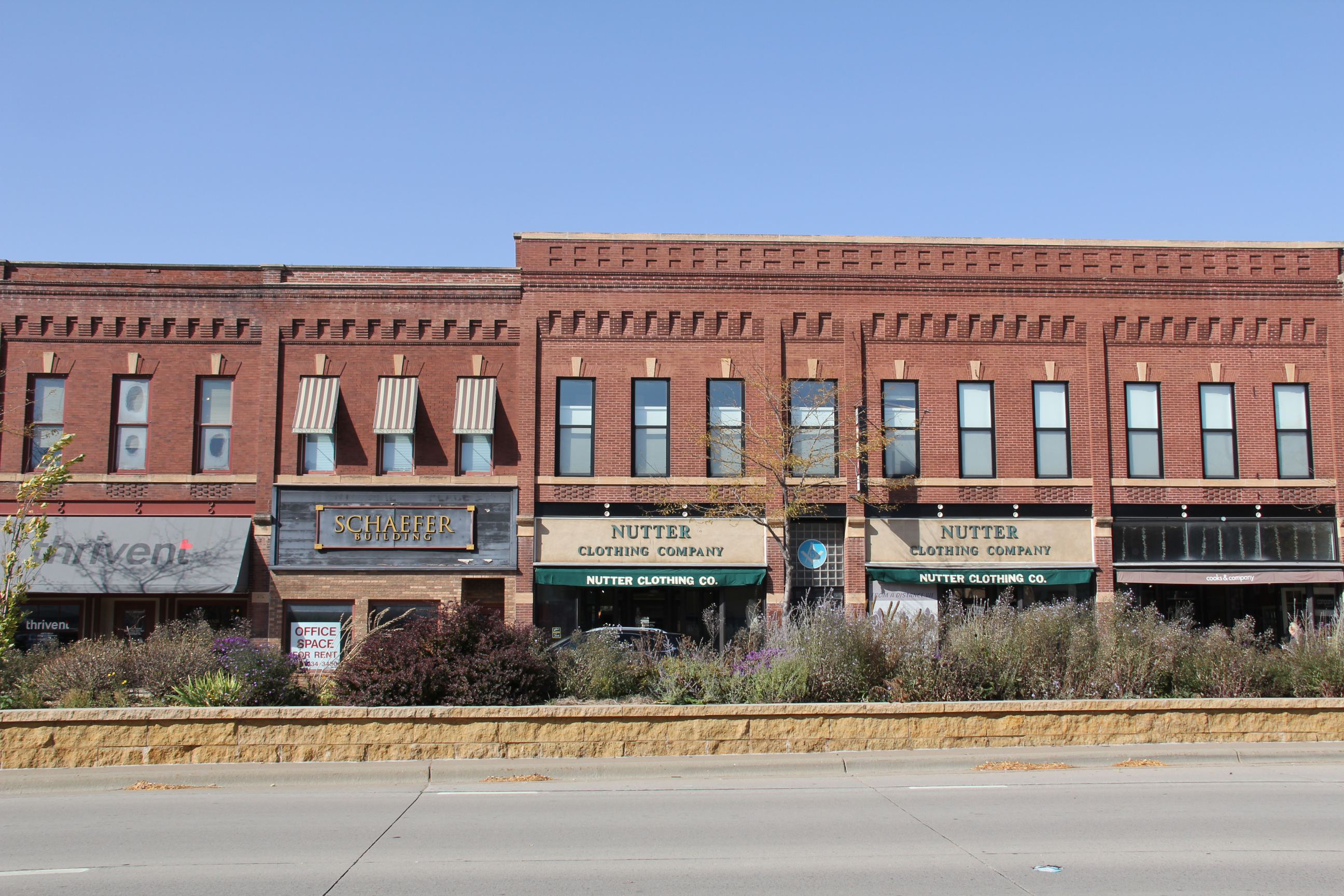
A row of historic buildings sits along US Highway 169, where a center island divides the roadway in downtown St. Peter. (Minnesota Prairie Roots copyrighted photo October 2024)

Historic buildings lining Minnesota Avenue drew my interest. About a dozen are on the National Register of Historic Places. Rather than cross the wide, wide street where traffic whizzes by at speeds that make me uncomfortable, I zoomed and photographed. I appreciate historic architecture and when a community cares enough to save it.

One of the Embassy signs… (Minnesota Prairie Roots copyrighted photo October 2024)
And then on the other side of the Embassy, this sign. (Minnesota Prairie Roots copyrighted photo October 2024)

Within the single block I walked, I also noticed signage on the Embassy Bar, or Blaschko’s Embassy Bar & Grill, depending on which sign you view. Signs always draws my interest, not only as identifiers but also as works of art.

This and other words tag the windows of the Arts Center of Saint Peter. (Minnesota Prairie Roots copyrighted photo October 2024)

Retracing my steps from River Rock Coffee & Tea, a busy place at the end of the block, I paused at the arts center again. On the second floor I spotted a singular word—writing—spanning a wide window. Now, when you’re a writer like me, you get excited about a word that celebrates your craft. That left a lasting impression on me as we pulled out of St. Peter intent on seeing what we’d come to see, the colorful trees along Highway 169 heading north toward Le Sueur. But the trees weren’t colorful. Not at all. Could have been the timing or the day, which was extremely windy with hazy skies.

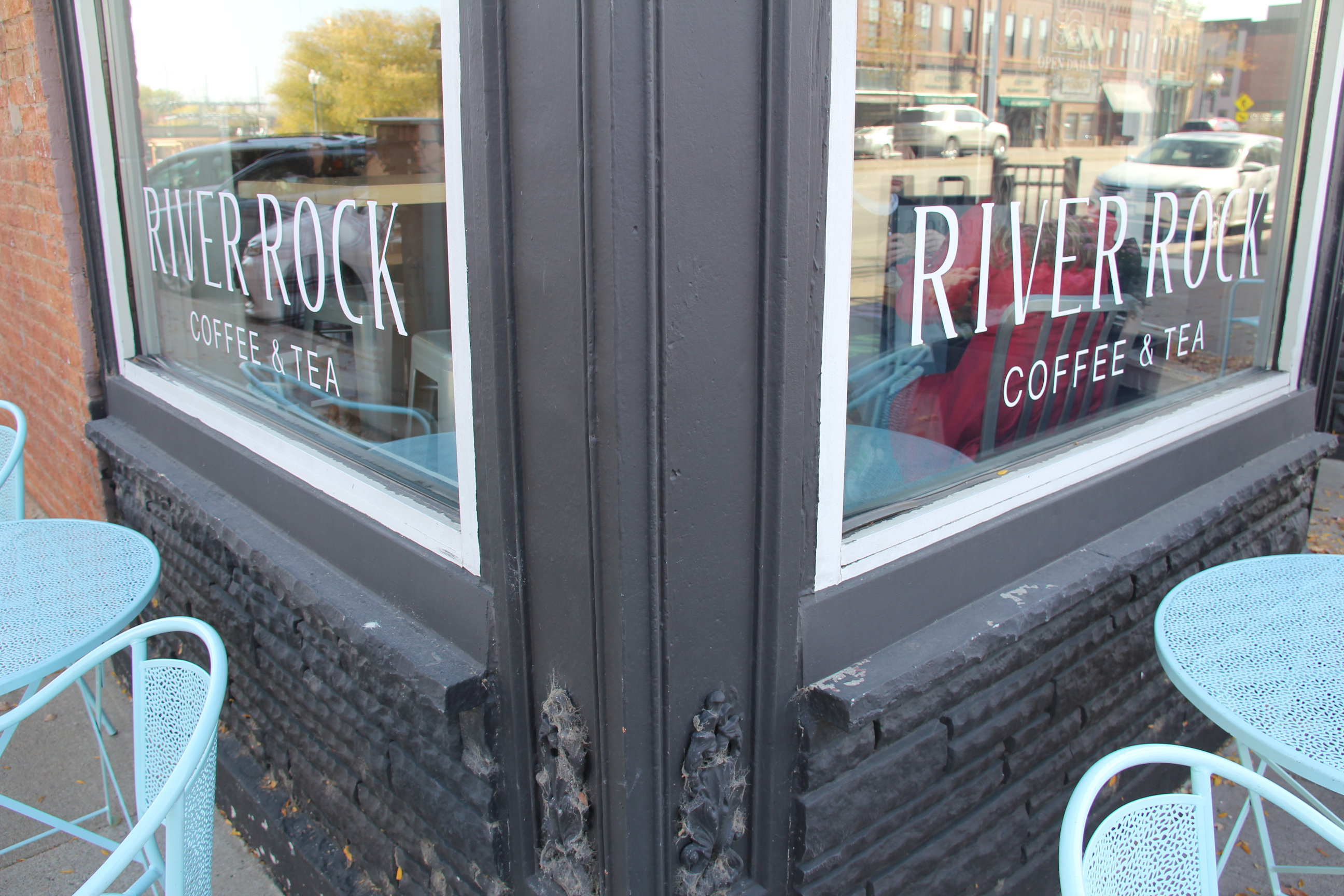
I didn’t go into the River Rock. But I looked through the large windows to see the coffee and tea shop teeming with customers. (Minnesota Prairie Roots copyrighted photo October 2024)

Although disappointed, I was not disappointed in the river town, the college town, the historical town of St. Peter. I need to return, devote an entire day to exploring a place that once could have been Minnesota’s state capital…if not for the theft of a legislative bill in 1857 by politician Joseph Rolette and the judicial ruling that followed.
© Copyright 2024 Audrey Kletscher Helbling