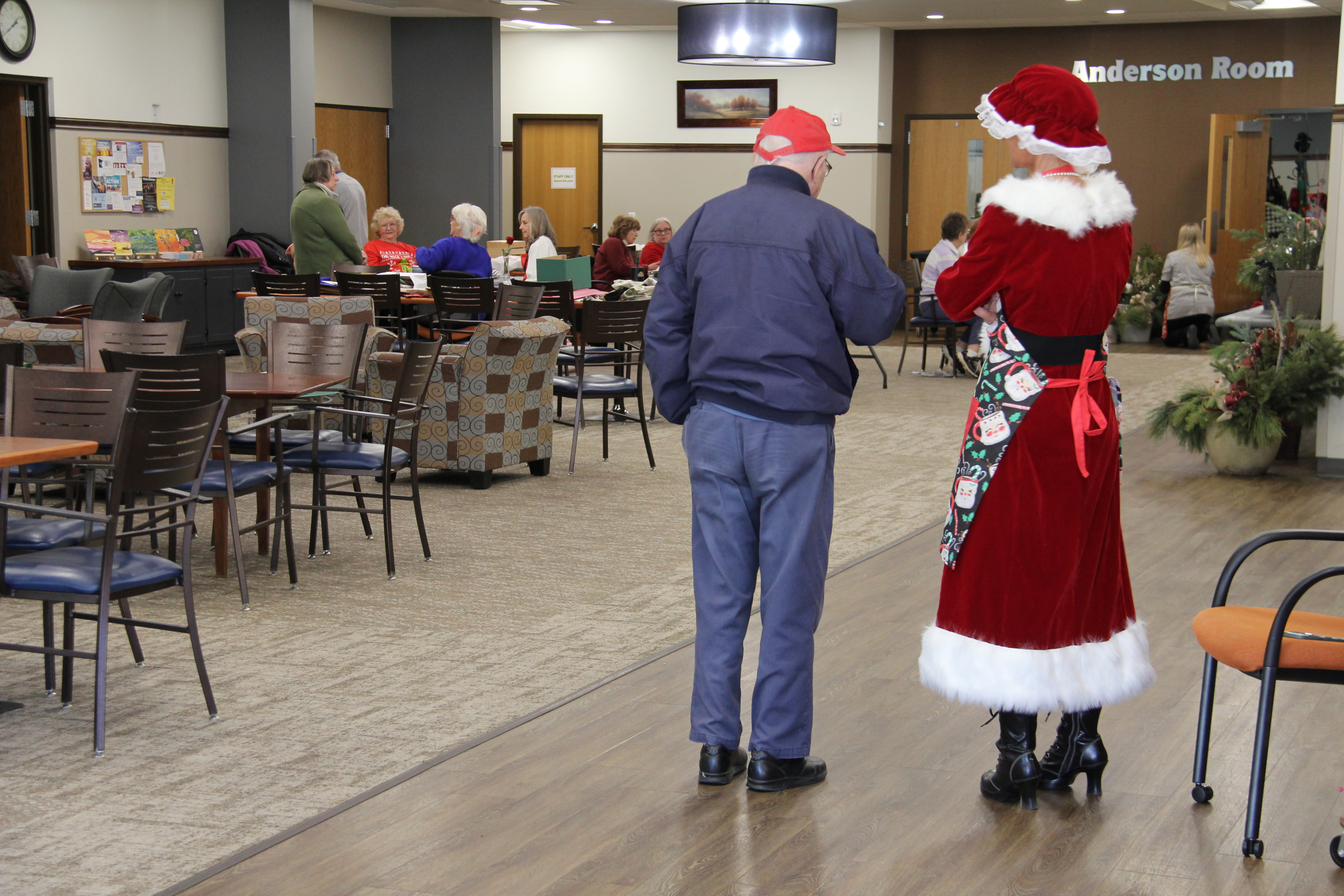
Visiting during a recent Pop-Up Christmas Shoppe at Buckham West, Faribault. (Minnesota Prairie Roots copyrighted photo November 2024)
HOLIDAY MARKETS, craft sales, boutiques, bazaars and bake sales, whatever you term them, seem endless this time of year. I’ve hit many. And that’s from someone who doesn’t like to shop.
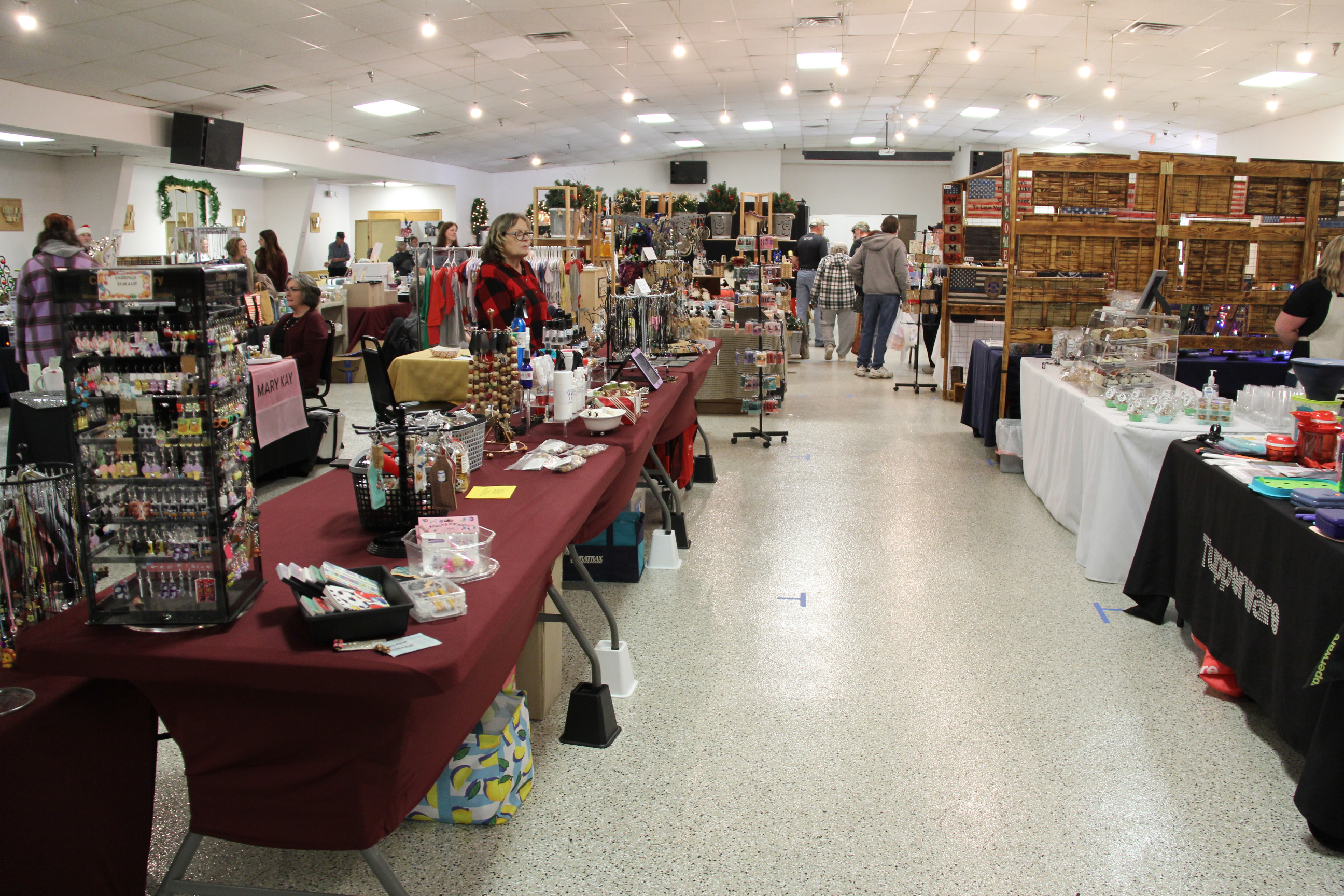
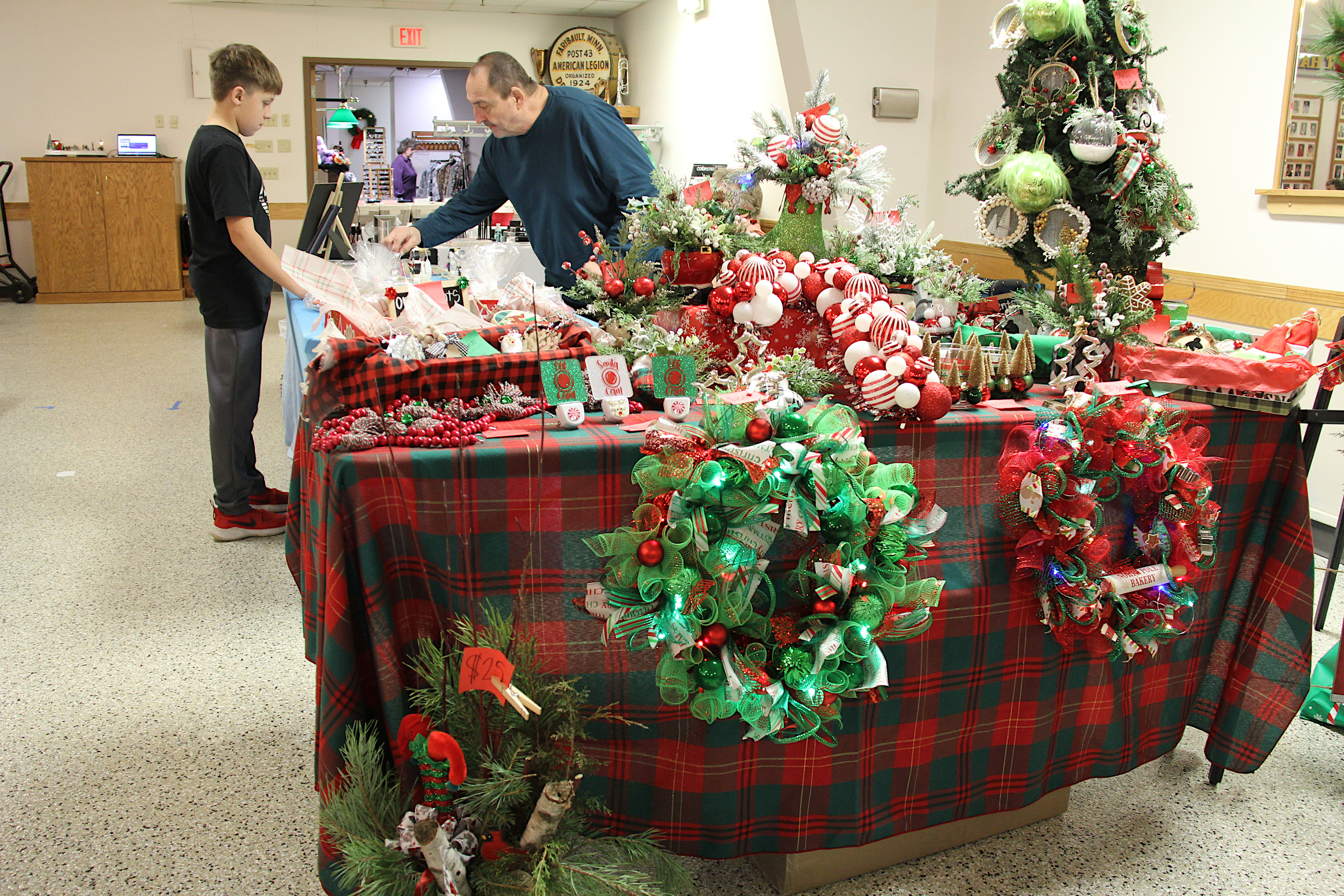
Vendors filled the Faribault American Legion on Saturday for a Christmas Market. (Minnesota Prairie Roots copyrighted photo December 2024)
I should note here that I buy very few Christmas gifts—just a couple for the two grandkids and for my son. And this year for the soon-to-be-born second grandson. That’s it. Those gifts, at least for the little people, come from a big box retailer because the kids have their lists (which Grandma appreciates).
Shoppers come and go from the Craft Spirits Holiday Market at 10,000 Drops Distillery, Faribault, last Saturday. (Minnesota Prairie Roots copyrighted photo December 2024)
Caroline Jones of Graceful Mandalas marketed these mugs and other of her creations at the 10,000 Drops holiday market. (Minnesota Prairie Roots copyrighted photo December 2024)
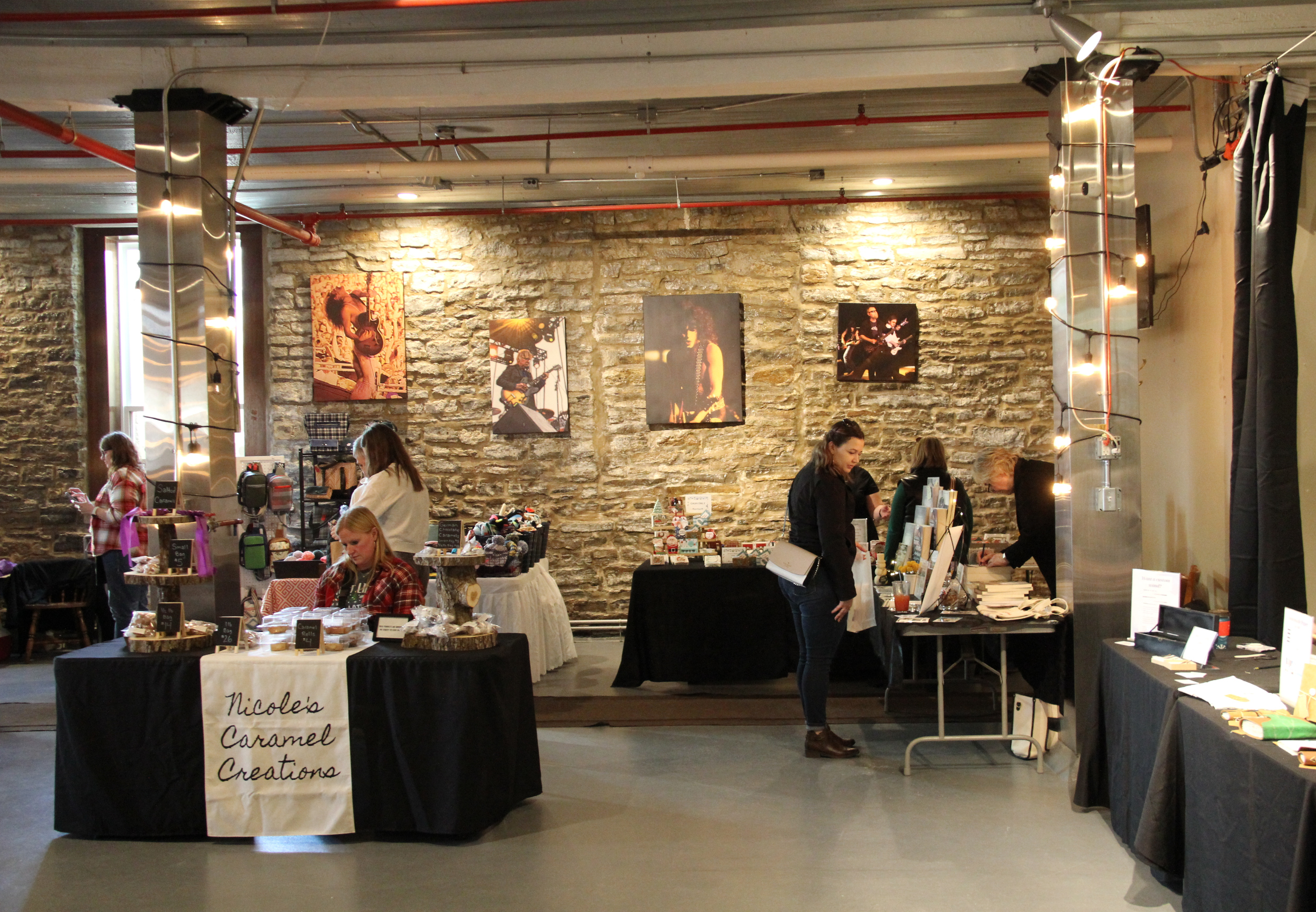
Sellers were scattered throughout the complex of buildings housing the distillery and Corks & Pints. (Minnesota Prairie Roots copyrighted photo December 2024)
Back to the one or two-day holiday markets usually held on weekends. These are not just about selling merchandise, although certainly that’s the goal. Rather such pop-up shops, whether held in a church basement, senior center, an old shed, school gym, distillery or elsewhere, are community events. A place for folks to gather, converse, embrace the holiday spirit and maybe buy a gift or two. I bought something for my son at a recent market.
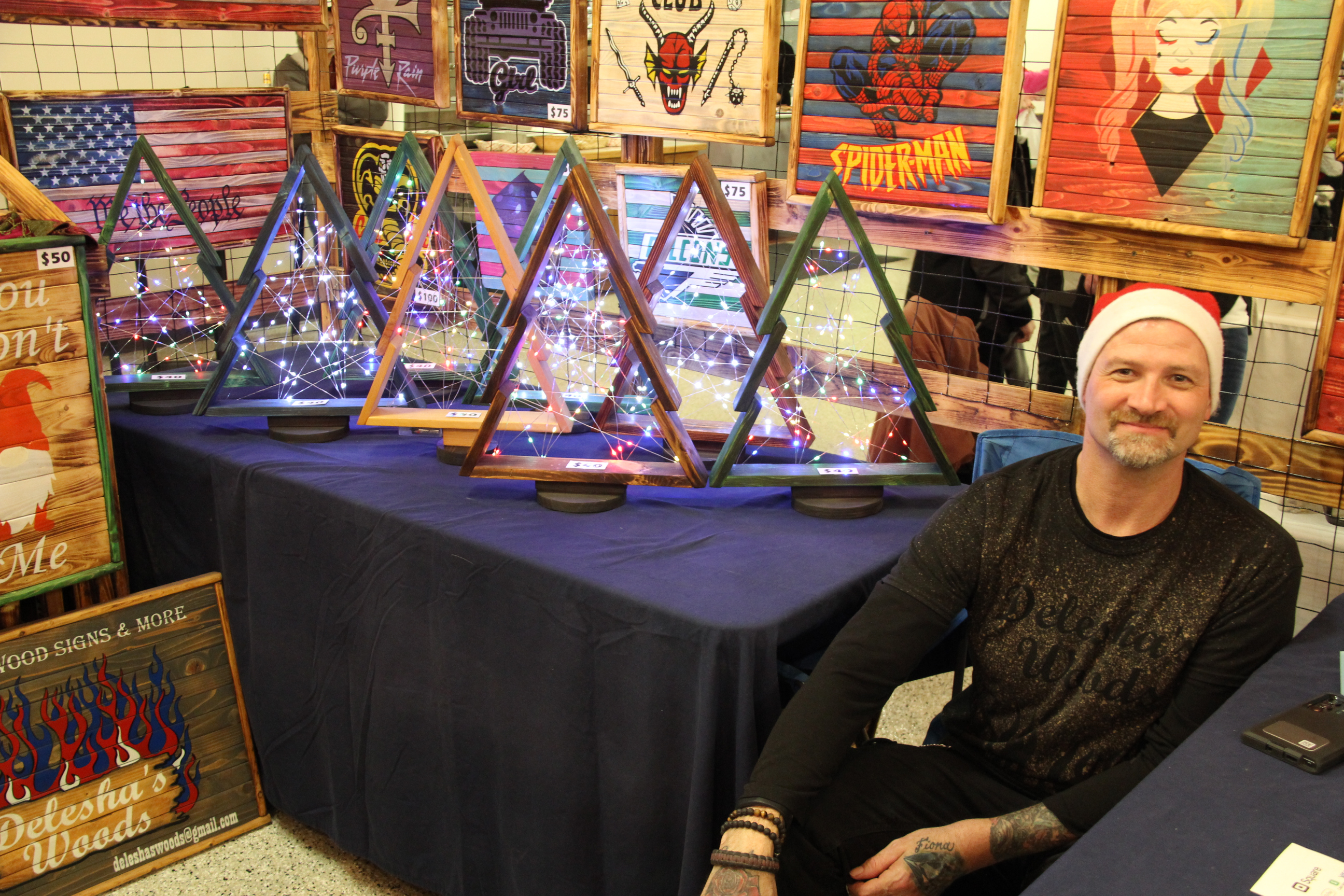
I chatted a bit with Chris Delesha of Delesha’s Woods at the Legion market. (Minnesota Prairie Roots copyrighted photo December 2024)
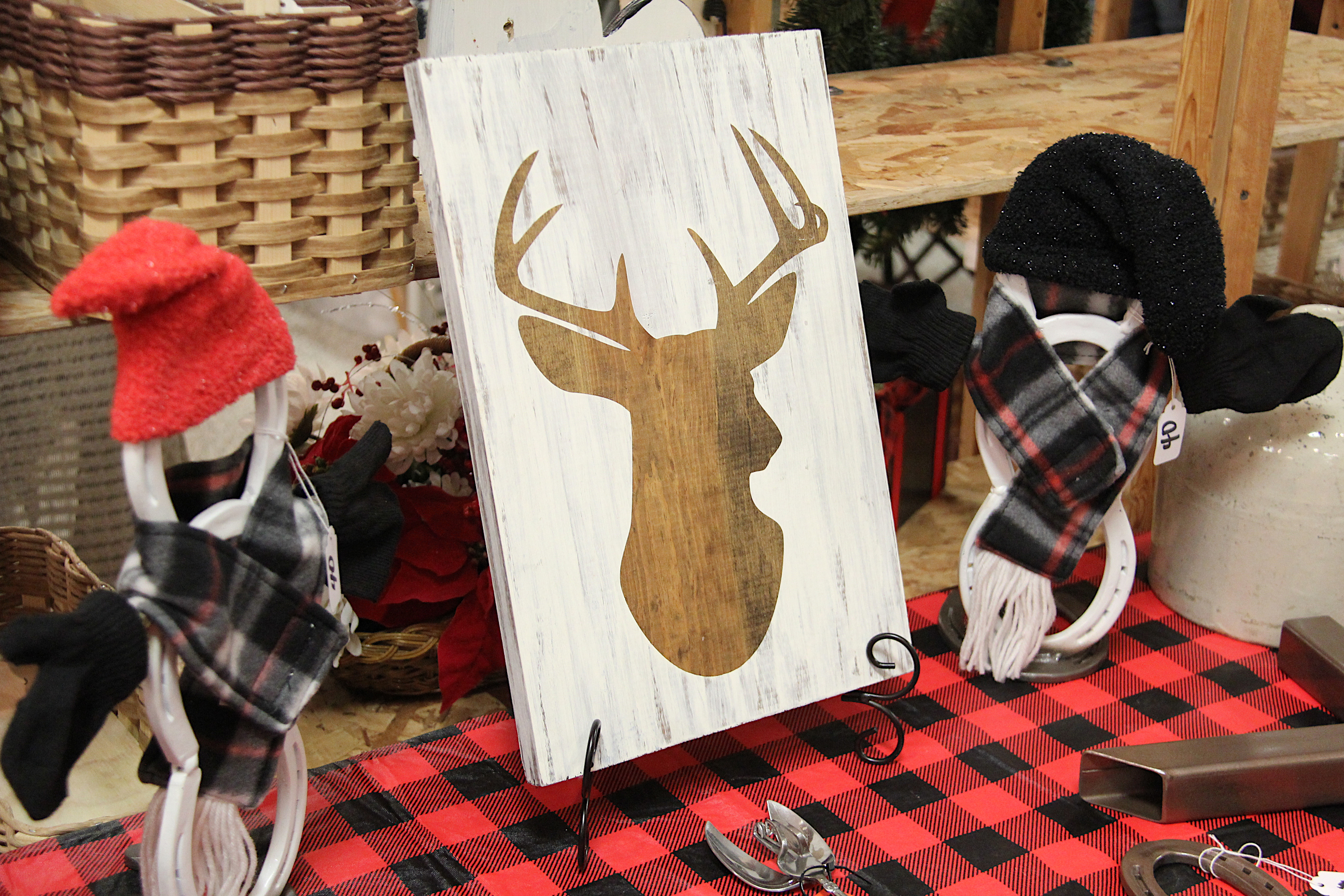
My friend Kirk Mansfield was at the Legion selling wood and metal creations crafted by him, his wife, Paula, and a friend. (Minnesota Prairie Roots copyrighted photo December 2024)
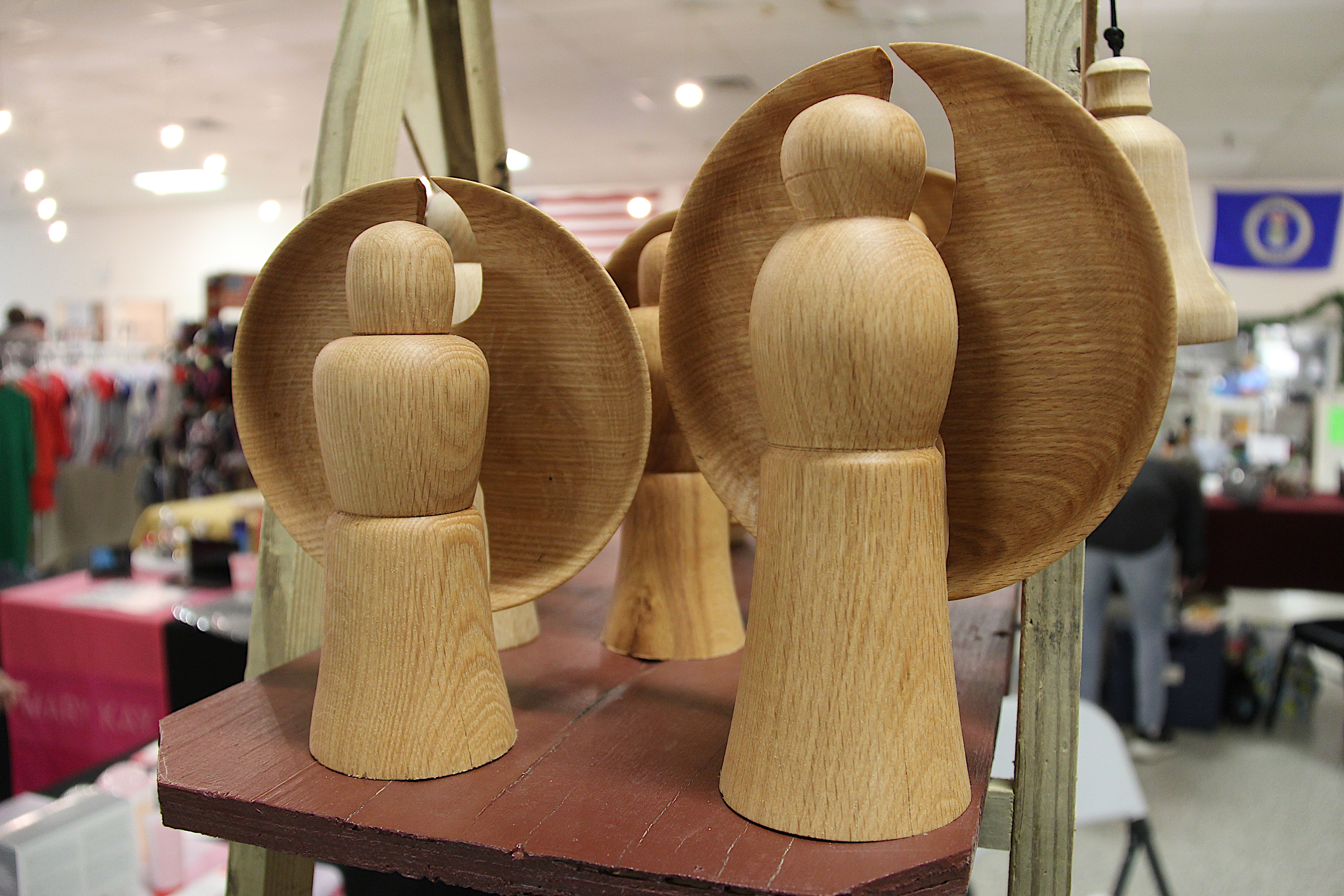
Angels, bowls and more created by Turnings by PDan and sold at the Legion’s Christmas Market. (Minnesota Prairie Roots copyrighted photo December 2024)
I enjoy connecting with people, talking to friends and strangers at these sales. Everyone has a story. Something they may want to share, whether about their product or family updates or holiday plans.
Vendors chat at the holiday market at 10,000 Drops. (Minnesota Prairie Roots copyrighted photo December 2024)
I practice active listening. Not just hearing. There’s a difference. And when I do that, I find people opening up to me. I value these one-on-one conversations allowing me to show interest, empathy and care. Sometimes all people need is for someone to listen, really listen.
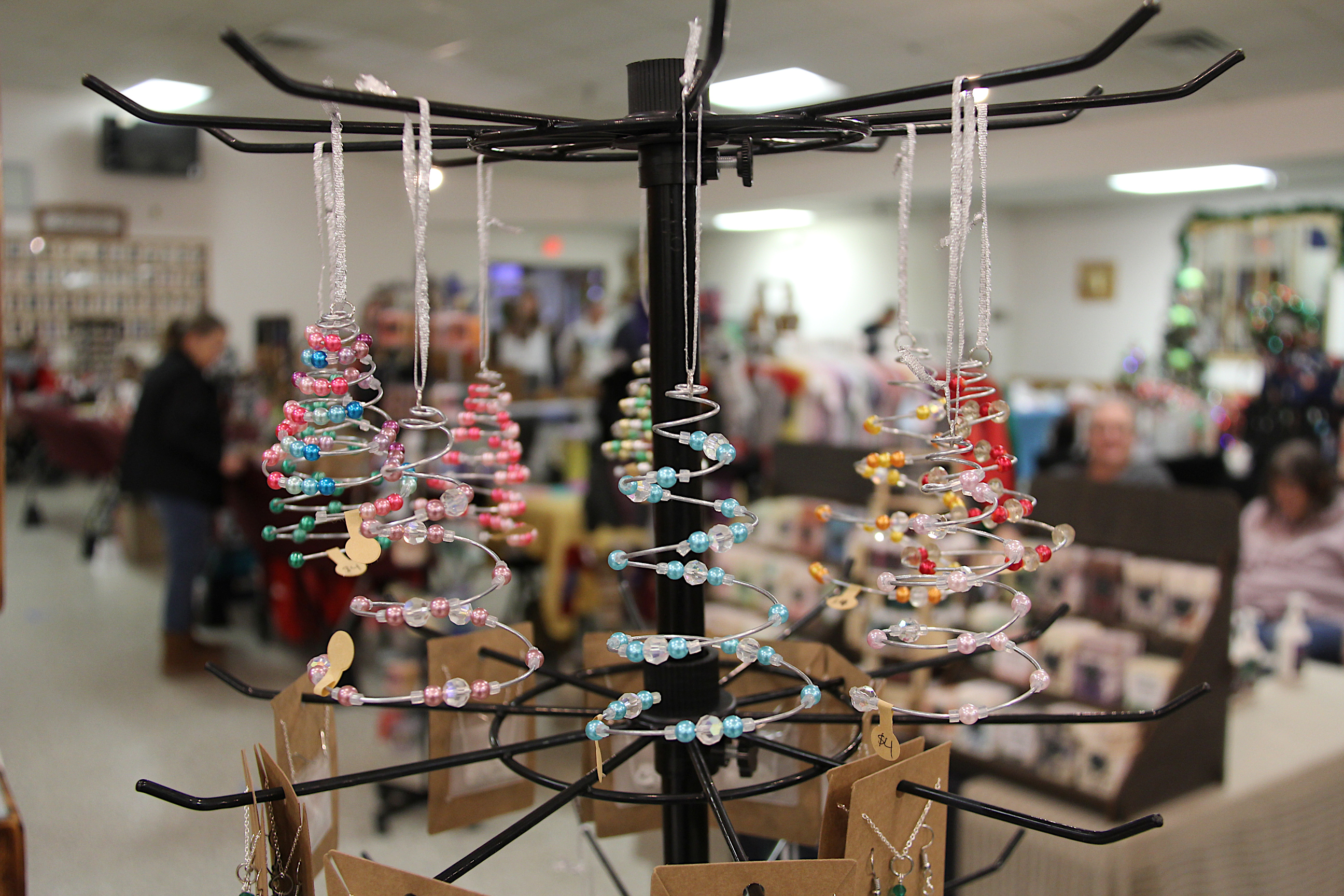
Sellers get creative in displaying their wares. (Minnesota Prairie Roots copyrighted photo December 2024)
These pop-up sales are also a place to learn. Vendors—from artists to crafters to bakers and more—are a talented bunch. Even if I don’t buy anything, I often chat with the sellers about their goods. I’m genuinely interested in learning and connecting with creatives, in listening to their backstories.
Linda’sWoolies, felted wool, fleece-lined mittens for sale at the Legion Christmas Market. (Minnesota Prairie Roots copyrighted photo December 2024)
Multi generations engage at the Legion’s holiday sale. (Minnesota Prairie Roots copyrighted photo December 2024)
Vicky Scheiber, Nicole Boehme and Heather Berg create custom papercrafts, greeting cards, jewelry and woodcrafts under the name Scheiber Designs, here sold at the Legion’s Christmas Market. (Minnesota Prairie Roots copyrighted photo December 2024)
Creatives never get, dollar-wise, what they should for the time invested. They create because they love what they do. They hold a passion for knitting, for baking, for woodworking, for sewing, for photography, for writing, for whatever and then try to turn that into something which brings in a bit of money and brings joy to others.
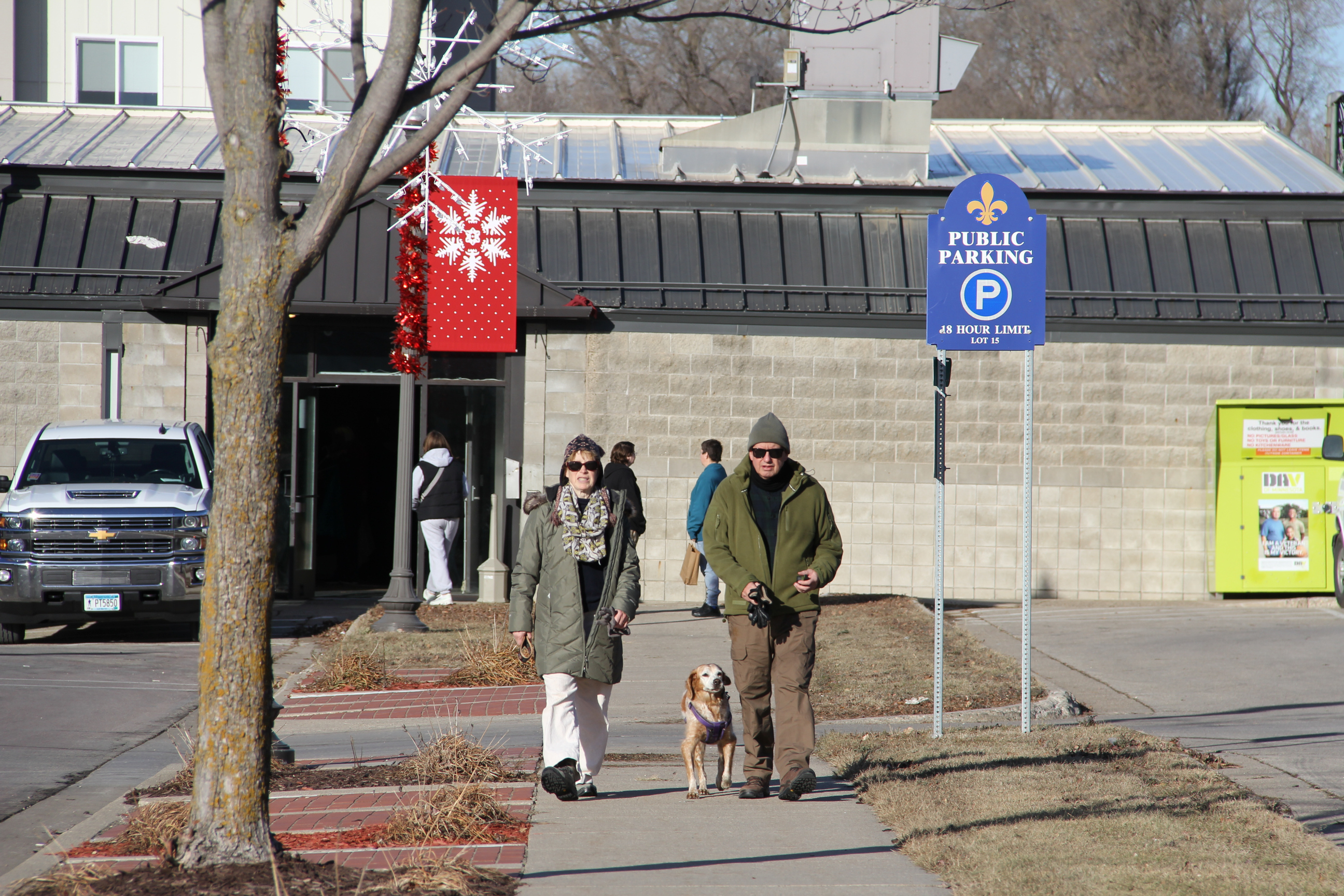
A scene outside the Christmas Market at the American Legion last Saturday. (Minnesota Prairie Roots copyrighted photo December 2024)
In these final weeks before Christmas, I hope you’ve taken time to attend a holiday market in your area. They offer a great shop local option and an opportunity to experience community at its most grassroots basic.
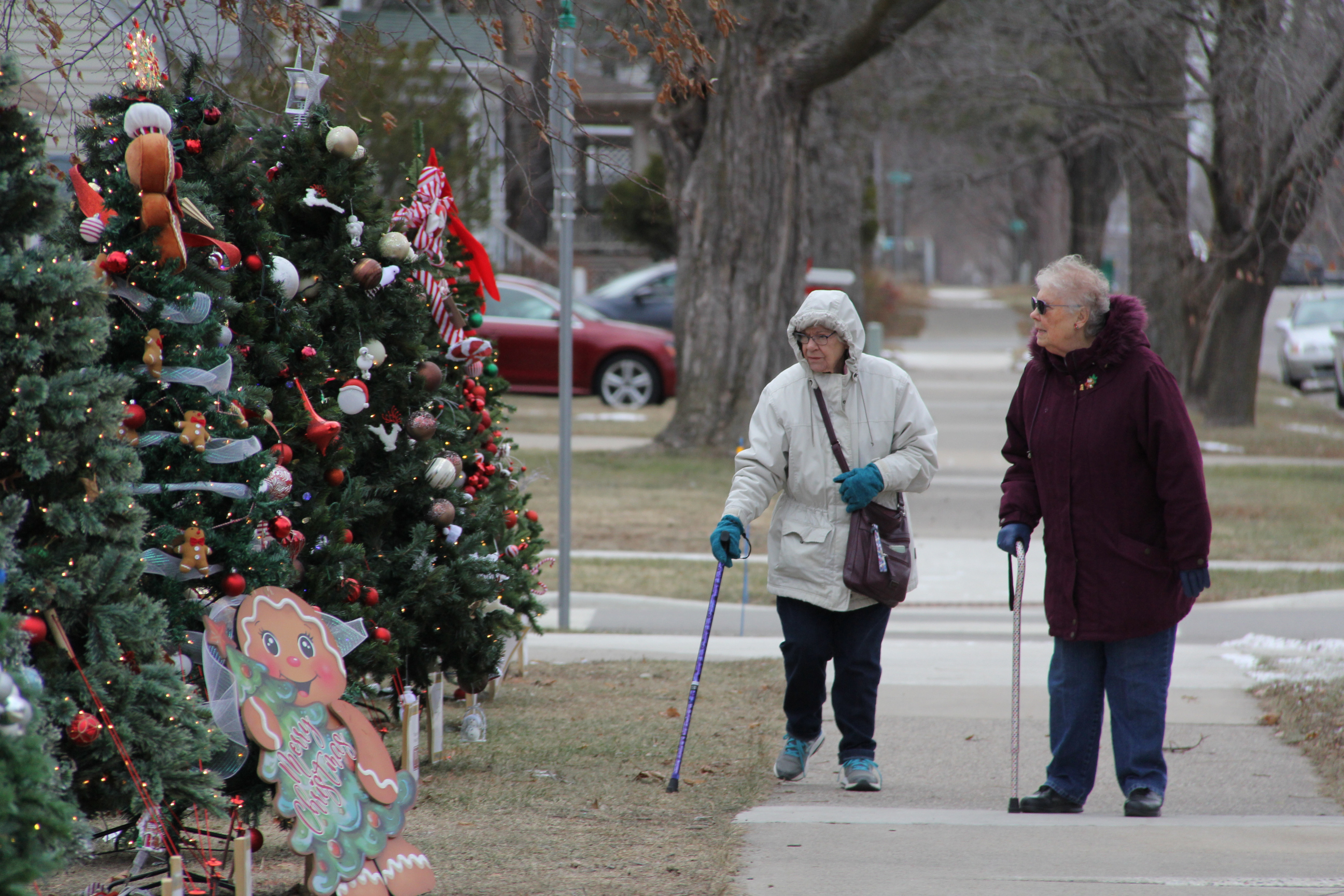
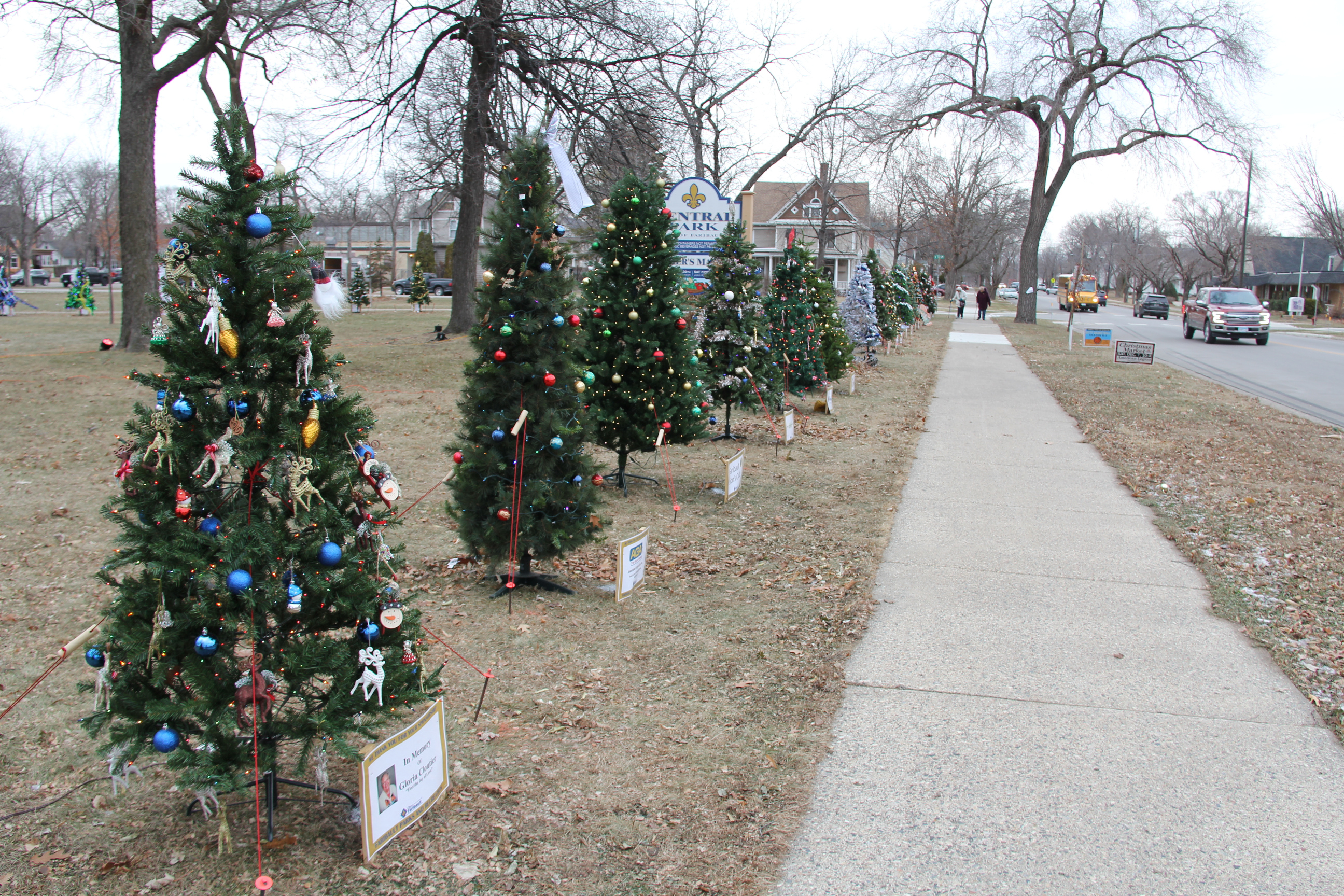
Viewing Christmas trees in Central Park on a recent weekday afternoon. (Minnesota Prairie Roots copyrighted photo December 2024)
FIVE YEARS IN TO FARIBAULT’S Adopt-a-Tree Holiday Tree Program, the initiative to give Christmas trees to those in need continues to grow. This year 75 decorated artificial trees were donated and placed in Central Park. That’s up from some 20 trees when the program launched in 2020. Each December since, those numbers have increased.
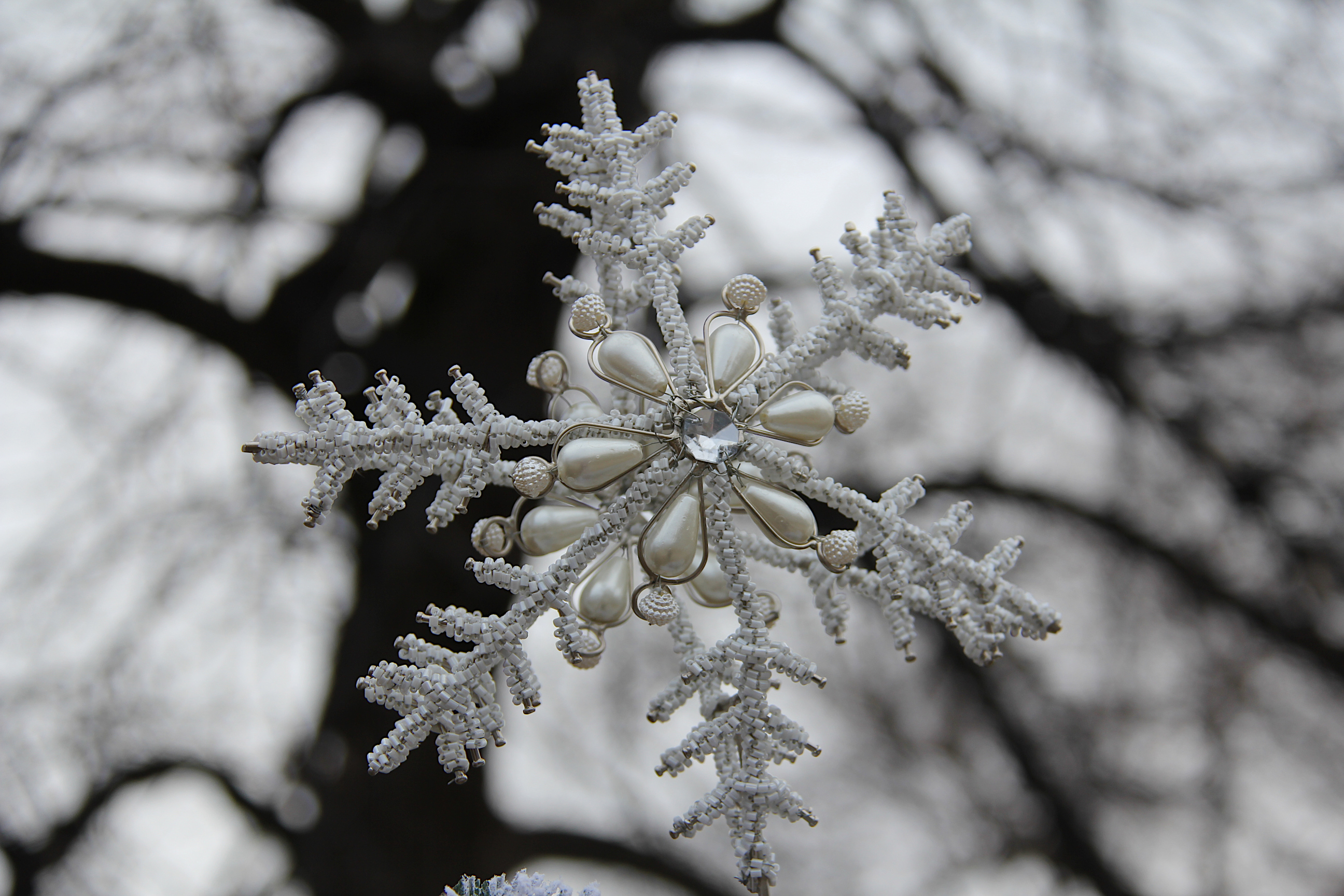
A snowflake tree topper shimmers against a backdrop of trunk and branches on a tree in the park. (Minnesota Prairie Roots copyrighted photo December 2024)
This all started during the COVD-19 pandemic after restrictions on large gatherings resulted in cancellation of Hometown Holidays events. The trees in the park not only brought light and joy during an especially dark time, but also helped folks in my community who were struggling financially.
Here trees line the sidewalk along Second Avenue. More trees edge sidewalks leading into the heart of Central Park. (Minnesota Prairie Roots copyrighted photo December 2024)
Initiated by the Faribault Parks and Recreation Department, which paired with nonprofit St. Vincent de Paul, the Adopt-a-Tree program gives Christmas trees to those who would otherwise not have one. If you’ve priced Christmas trees, you know they are costly.
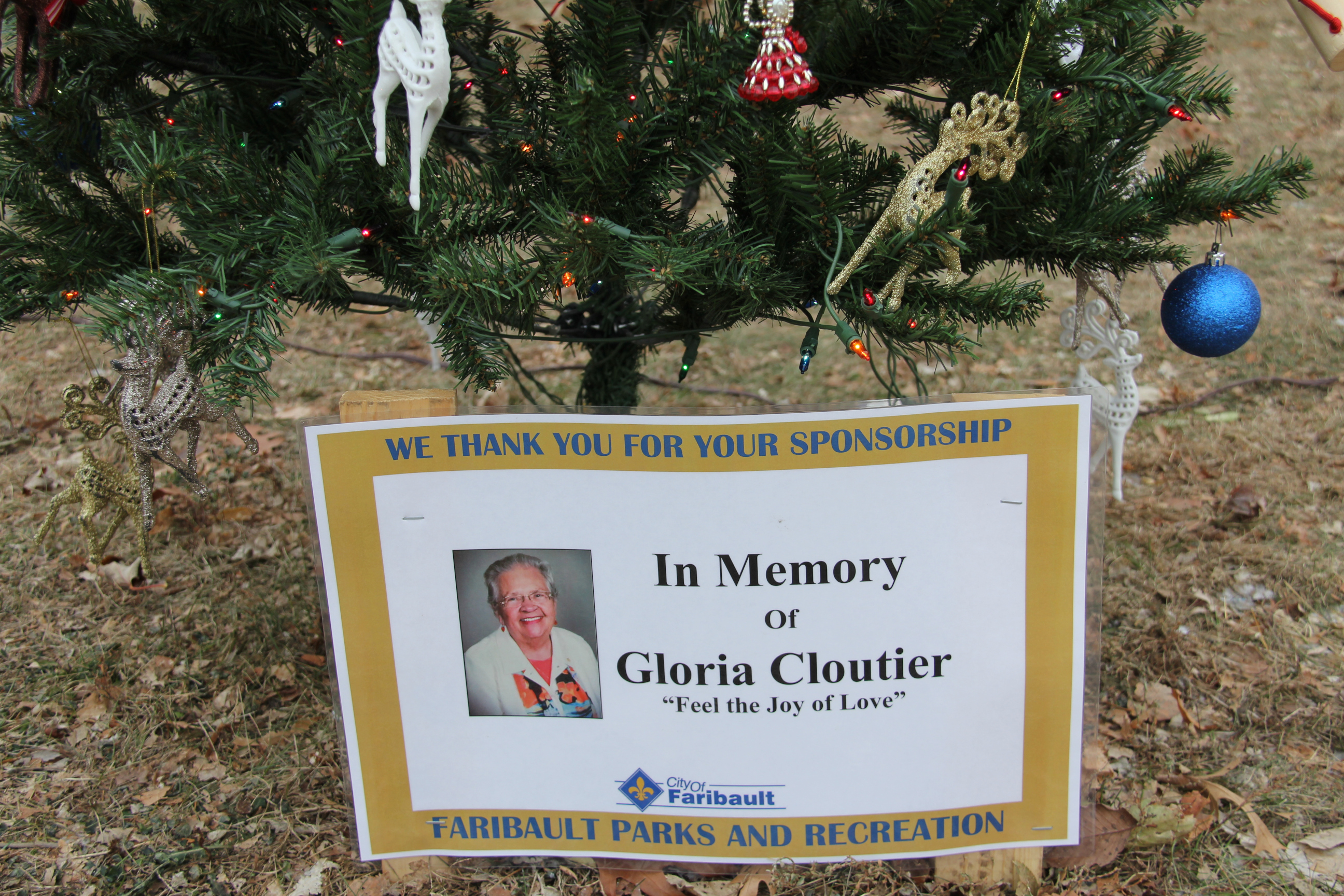
I knew Gloria, who recently passed and who absolutely exuded love and joy. I love that someone (likely family) donated a tree in her honor. (Minnesota Prairie Roots copyrighted photo December 2024)
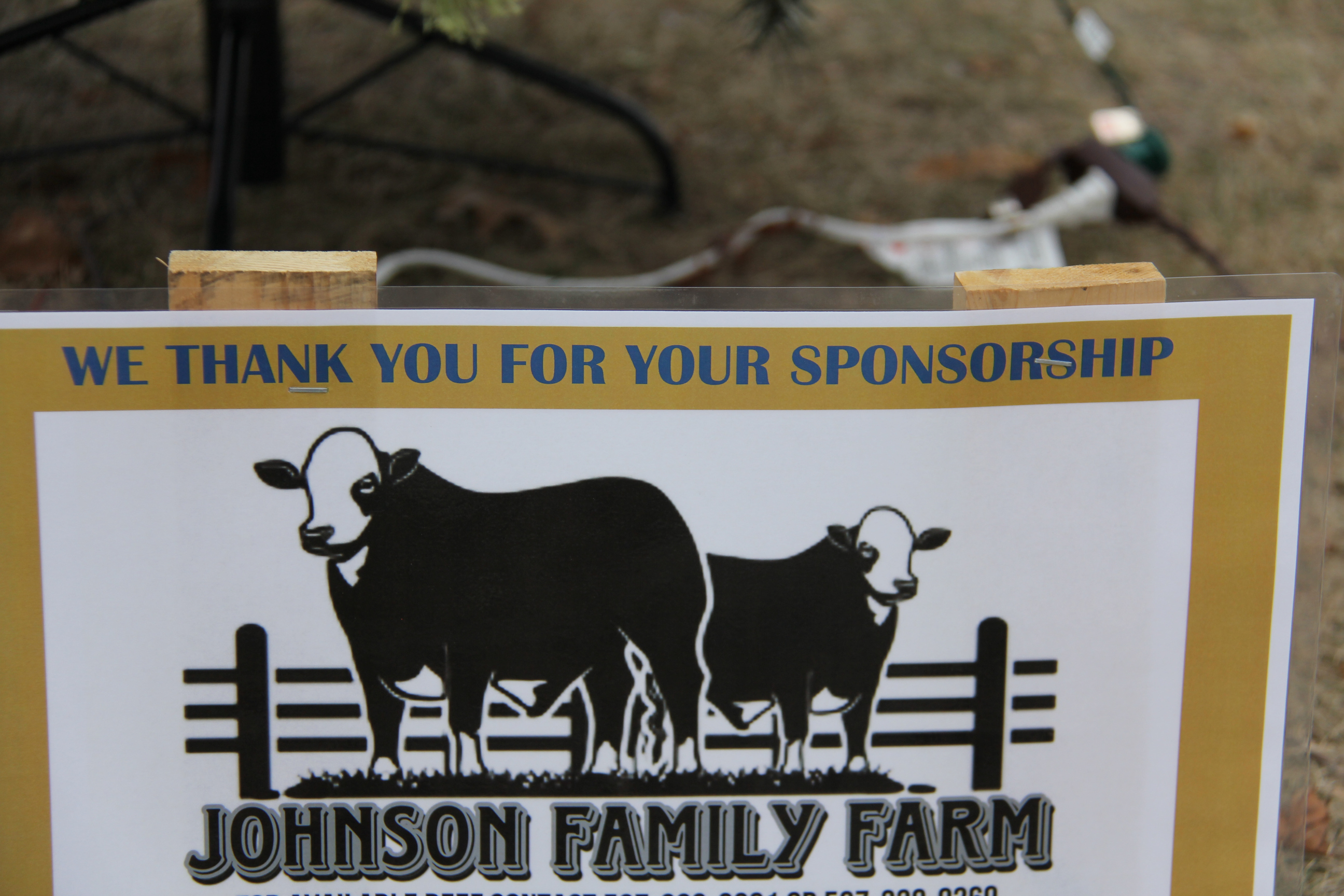
Ours is a rural area, as evidenced by this farm sponsorship. (Minnesota Prairie Roots copyrighted photo December 2024)
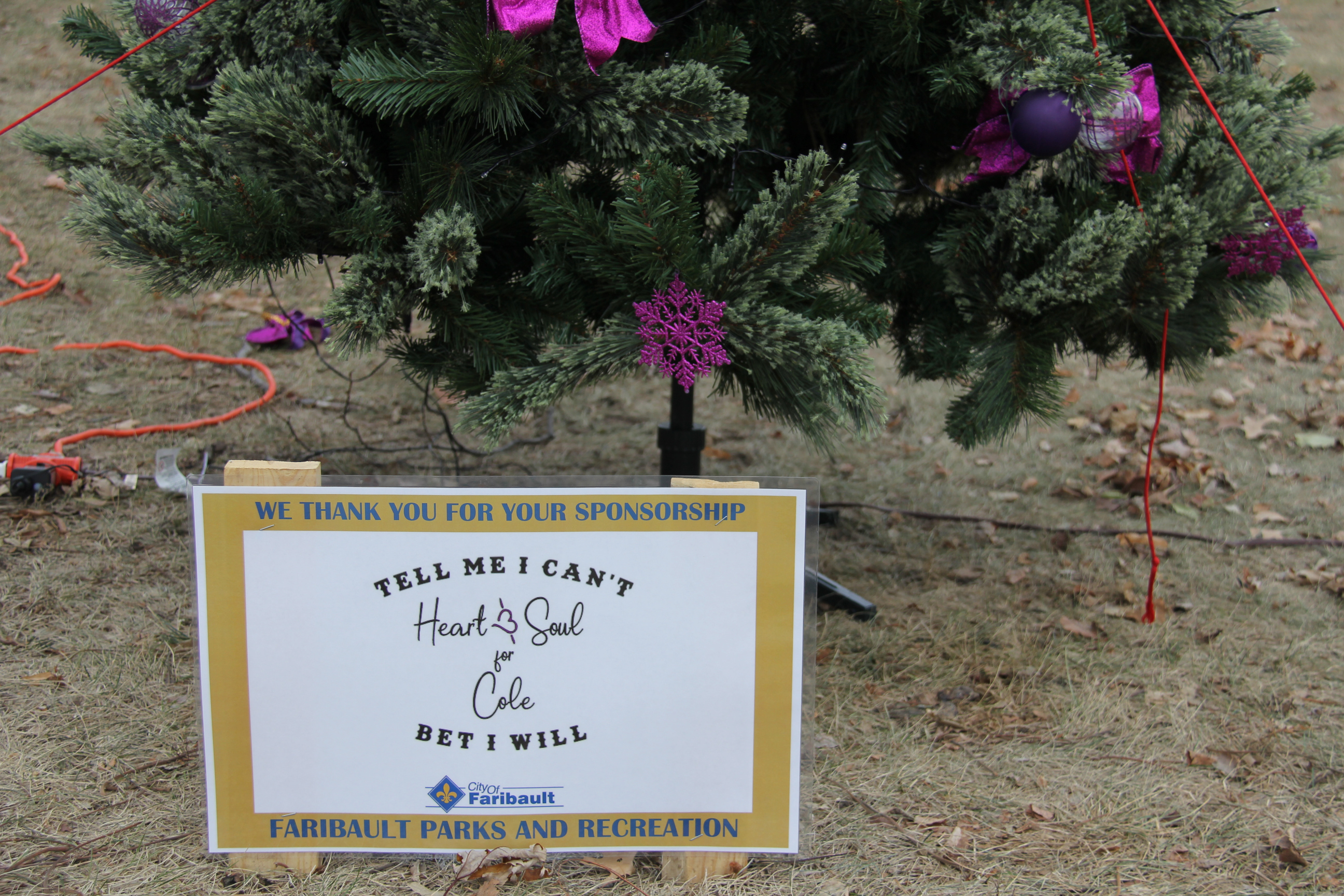
Another personal sponsorship, which speaks to love and determination. (Minnesota Prairie Roots copyrighted photo December 2024)
The community quickly embraced the idea with service clubs, businesses, churches, individuals, nonprofits, schools and more buying and decorating trees to display in Central Park and then give away. These groups and individuals benefit, too, by raising awareness about their causes/organizations/businesses or simply by offering sponsors an opportunity to give back.
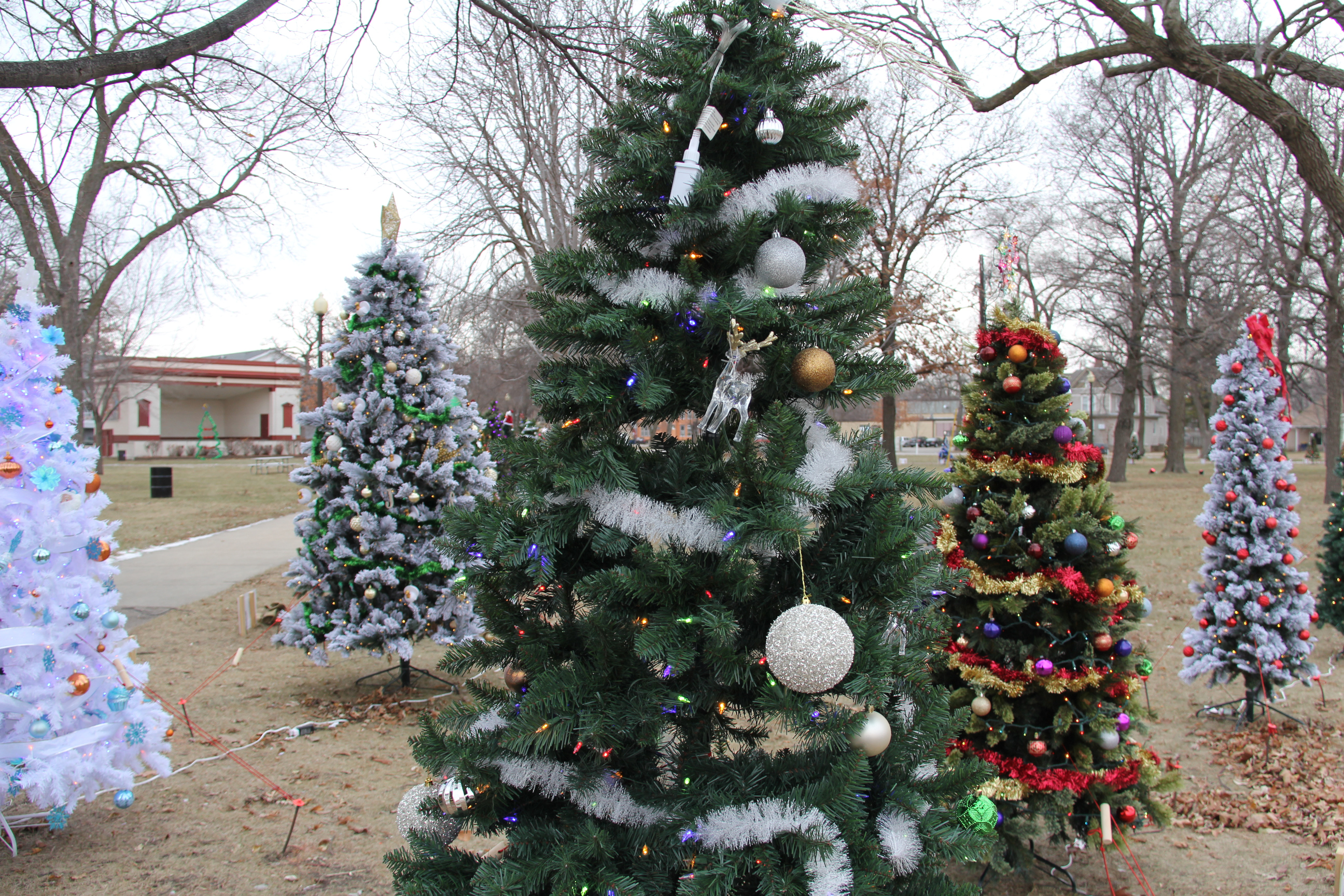
Trees in many sizes and colors were donated. (Minnesota Prairie Roots copyrighted photo December 2024)
Adopt-a-Tree has truly built community spirit. To view these festive trees is to see generosity, compassion and care. To view these trees is to understand that Faribault folks genuinely want to help others. When we connect on that level, we are a stronger, better community.
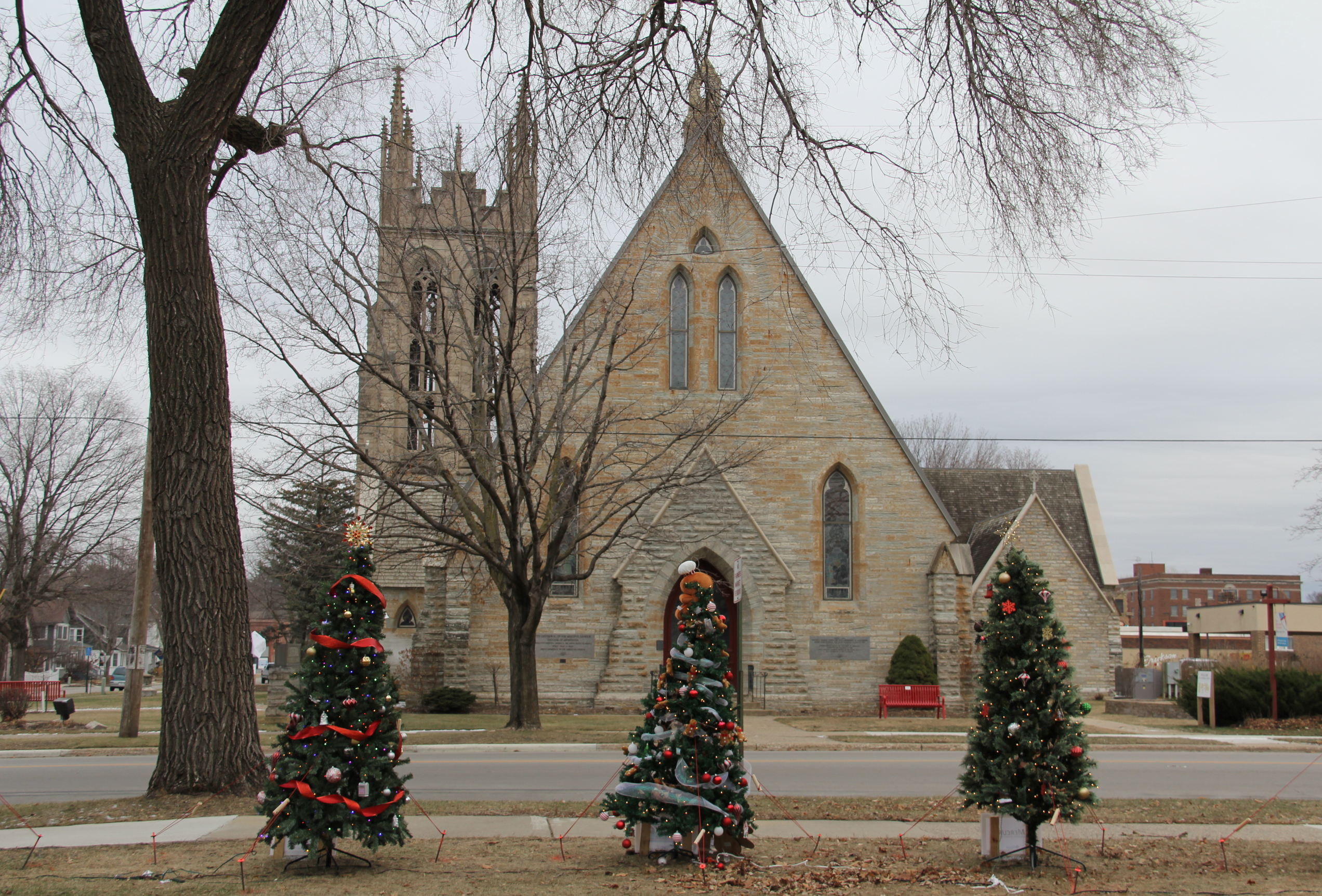
The historic Cathedral of Our Merciful Saviour backdrops trees along Second Avenue Northwest. (Minnesota Prairie Roots copyrighted photo December 2024)
I’ve seen the trees aglow at night from afar, a beautiful sight in Central Park along busy Second Avenue Northwest. I’ve seen the trees during daylight, too, when I walked through the park and looked more closely at the decorations and the tree sponsor information printed on signs.
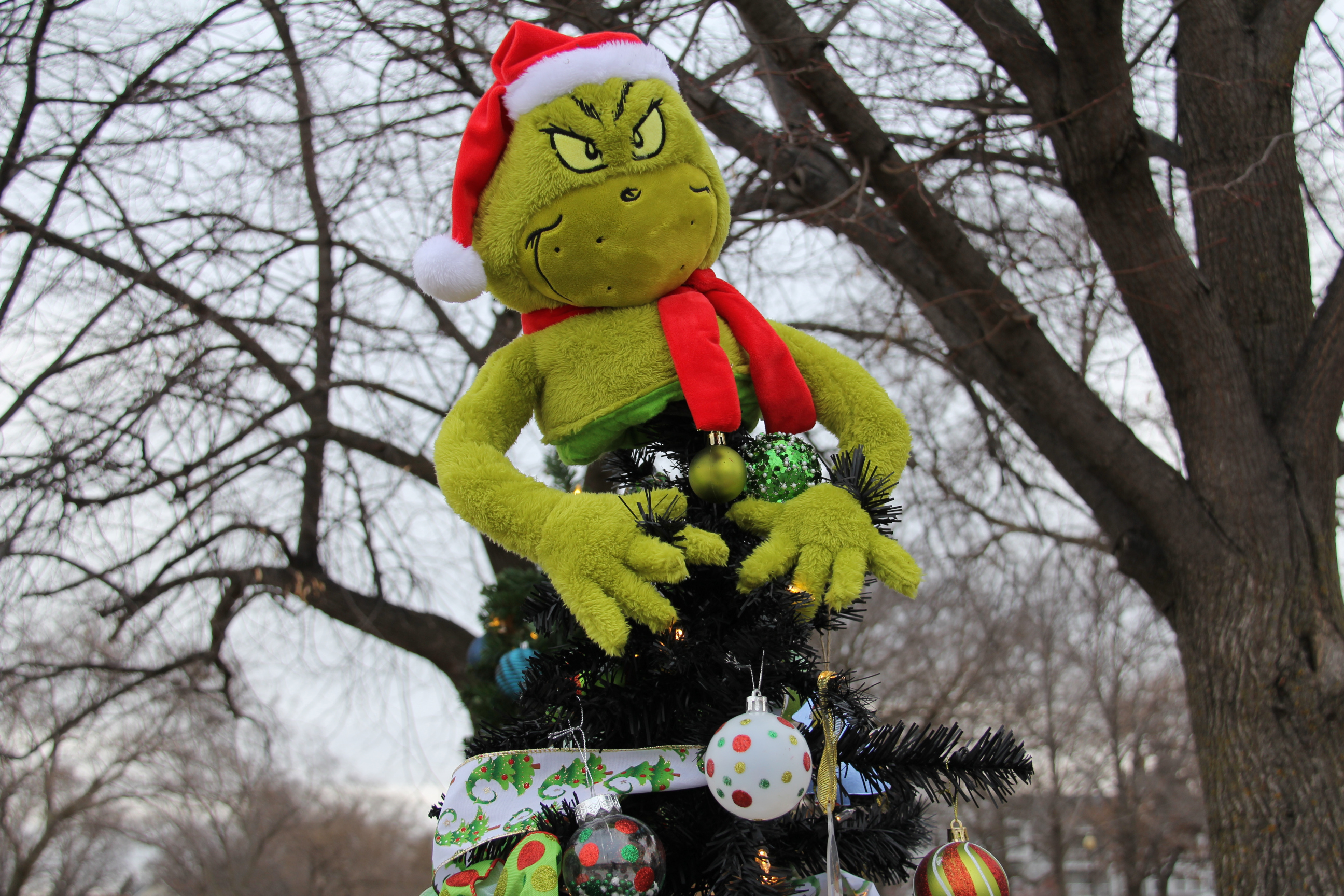
The Grinch tops a Grinch-themed tree. (Minnesota Prairie Roots copyrighted photo December 2024)
An unexpected find, a sweet reindeer in pink. (Minnesota Prairie Roots copyrighted photo December 2024)
On the candy cane-themed tree, vivid red. (Minnesota Prairie Roots copyrighted photo December 2024)
Bulbs, other ornaments, garland, ribbon, lights…adorn trees, some with toppers, some without. Some trees are themed—the Grinch, candy canes, gingerbread men, reindeer…
Spotted on the tree donated by the Faribault, Minnesota, Chapter of HOG (Harley Owners Group). (Minnesota Prairie Roots copyrighted photo December 2024)
A tub of ornaments sits in the park. Many trees blew over and ornaments fell off during strong winds last week. (Minnesota Prairie Roots copyrighted photo December 2024)
Pom poms strung together make a particularly creative and colorful garland. (Minnesota Prairie Roots copyrighted photo December 2024)
No matter the decorations or the tree size or color (from flocked to white to black to assorted greens), the visual statement is the same. We care.
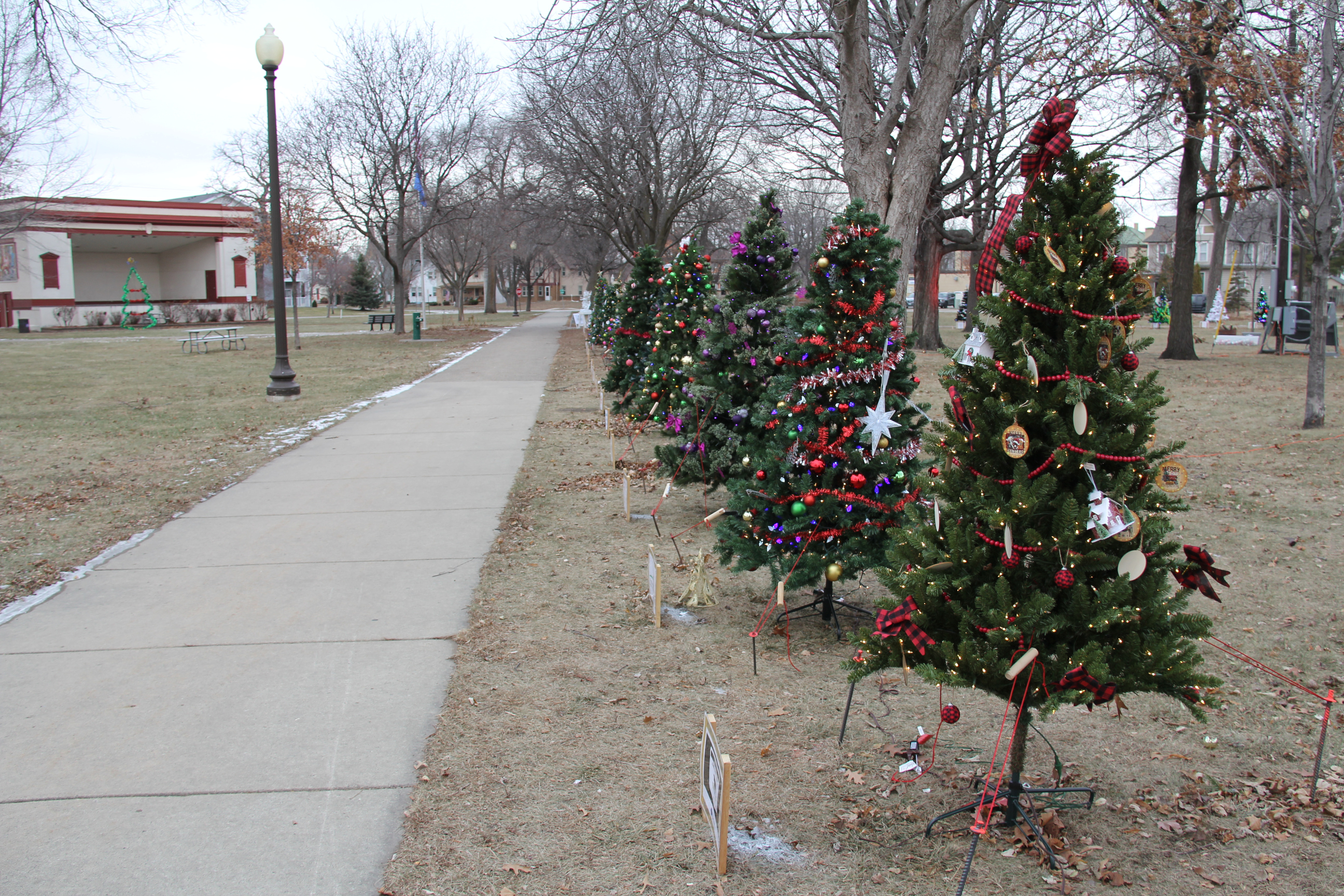
Trees line the sidewalk leading into the park toward the bandshell in the background. (Minnesota Prairie Roots copyrighted photo December 2024)
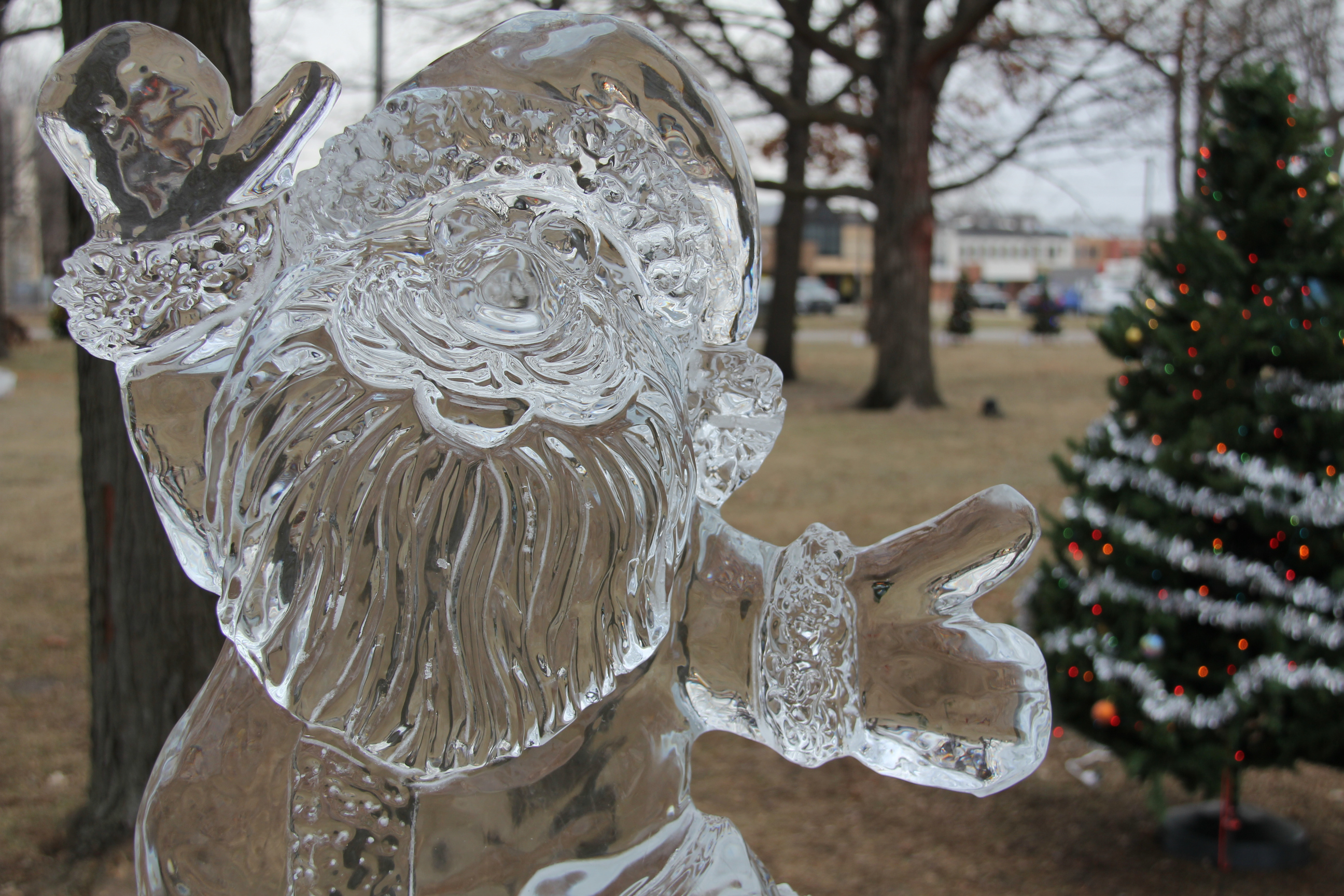
At the end of the row of trees pictured above sits this Santa ice sculpture carved by Adam Scholljegerdes and Jason Felix for Winterfest. (Minnesota Prairie Roots copyrighted photo December 2024)
When individuals and families pick up their trees from Central Park this week, I can only imagine the happiness they feel knowing that a Christmas tree will grace their homes. What a gift. This is not just about a tree. This is also about feeling loved and cared for by community. And that will last long after ornaments have been removed, the tree dismantled and placed in storage.
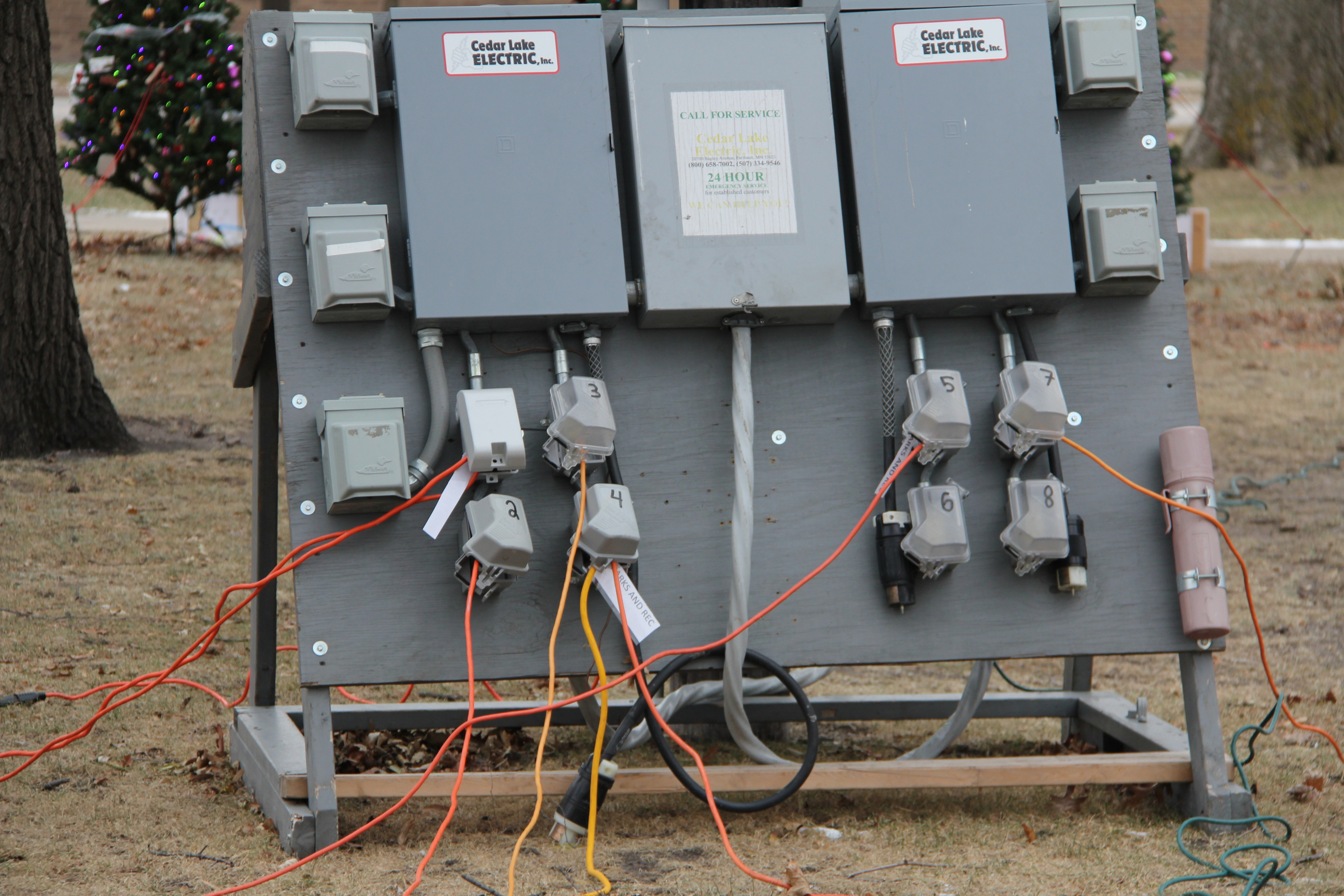
It takes a lot of power to light 75 Christmas trees. (Minnesota Prairie Roots copyrighted photo December 2024)
We never know what someone is going through, whether struggling financially or otherwise. So if the simple gift of a decorated Christmas tree lifts spirits and makes the holidays bright, consider the long-lasting impact. Light breaks through darkness. Joy fills hearts. Hope rises.
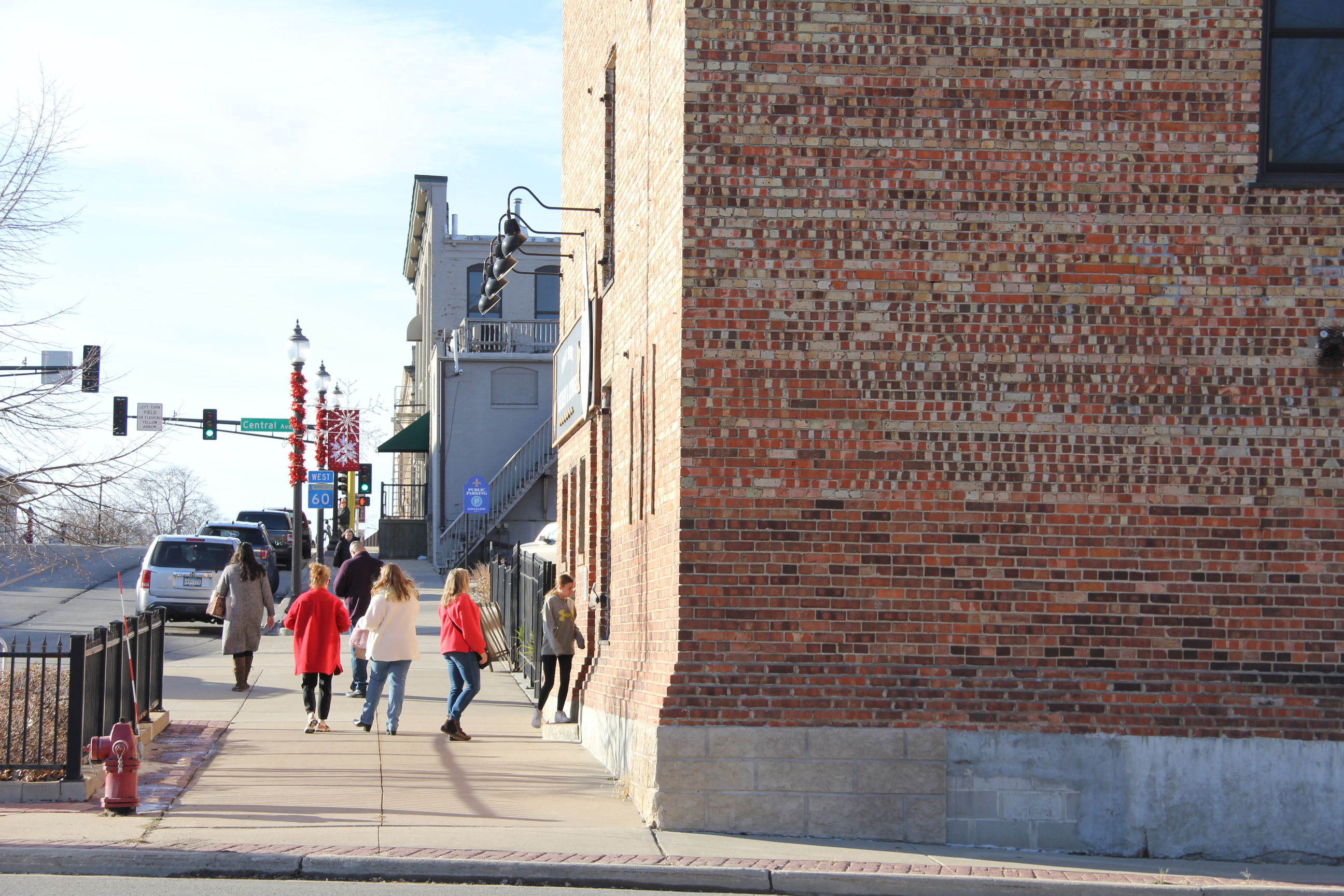
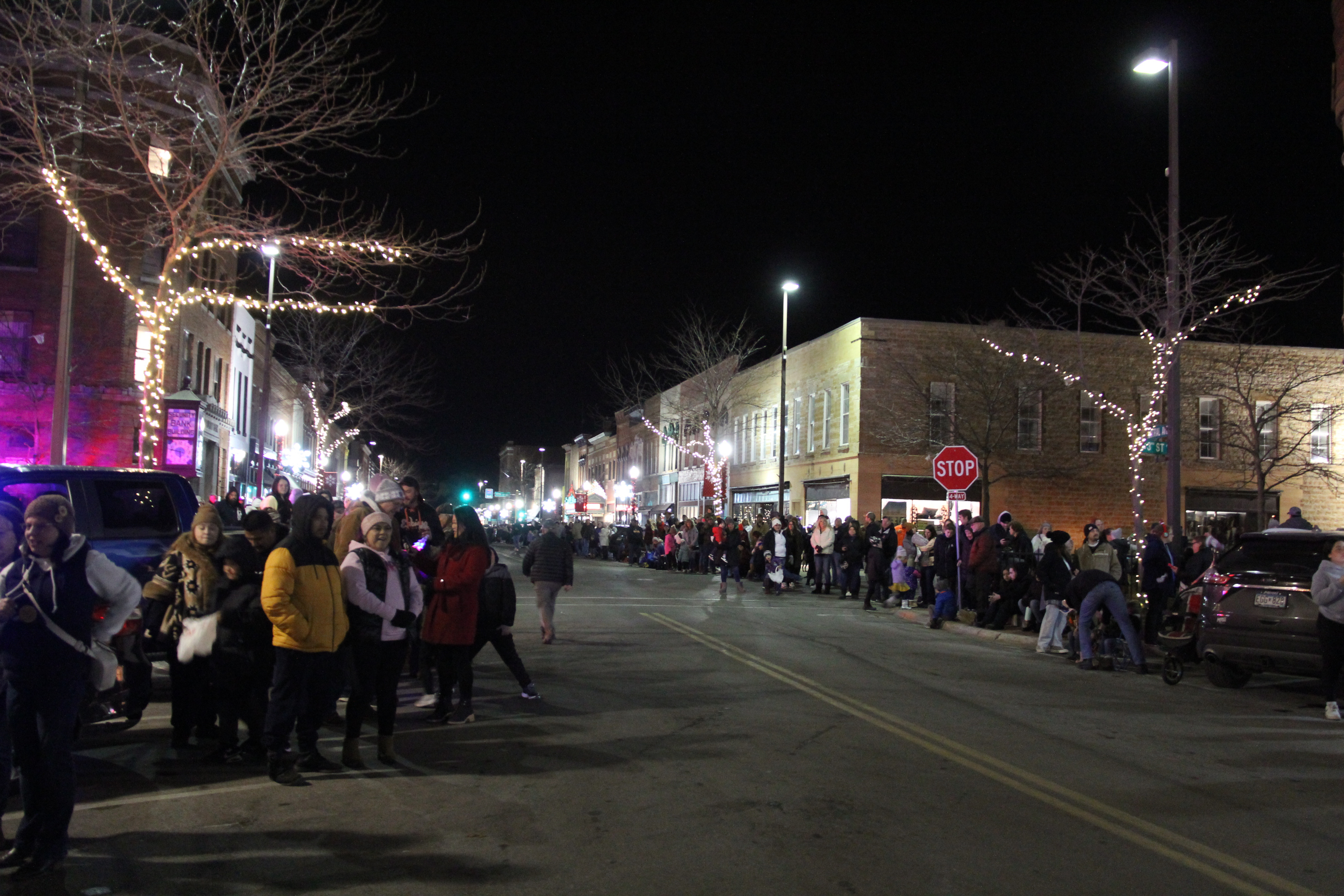
Crowds gather along Central Avenue in Faribault before Saturday’s parade. (Minnesota Prairie Roots copyrighted photo December 2024)
ON SATURDAY EVENING, with the temp at a balmy 45 degrees, crowds gathered in the heart of downtown Faribault for fireworks followed by a holiday parade as part of my city’s Winterfest celebration. Without snow and with such warmth, this felt nothing like weeks before Christmas in southern Minnesota. Yet, I wasn’t complaining. I’d rather be warm than cold.
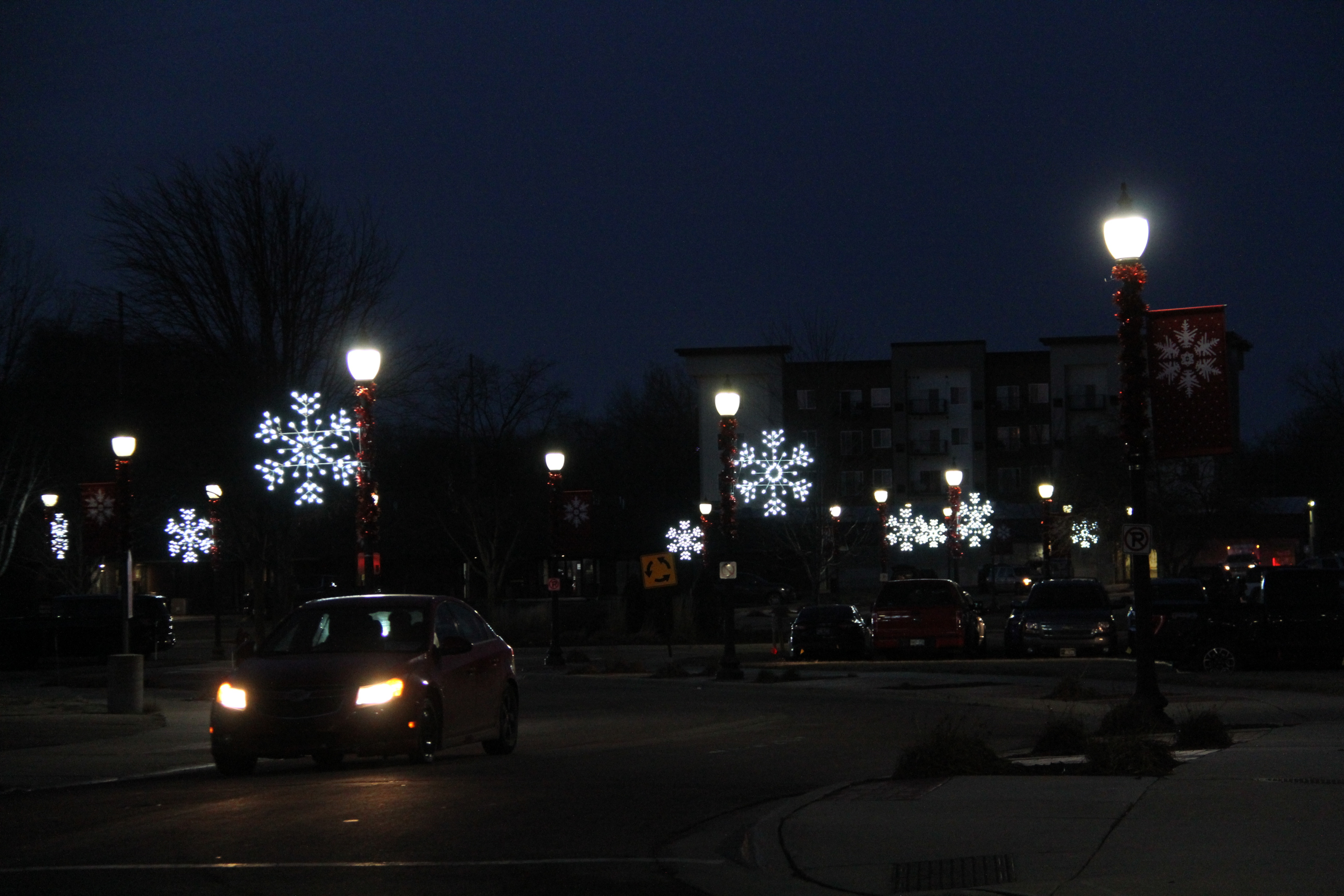
A festive street scene 1 1/2 blocks off Central Avenue near The Depot Bar & Grill. (Minnesota Prairie Roots copyrighted photo December 2024)
That meant wearing long johns under my jeans, winter boots, a stocking cap and mittens, and a hooded sweatshirt under a lighter weight jacket (not the down-filled parka I initially thought I needed). I was prepared to stave off the evening chill while waiting.
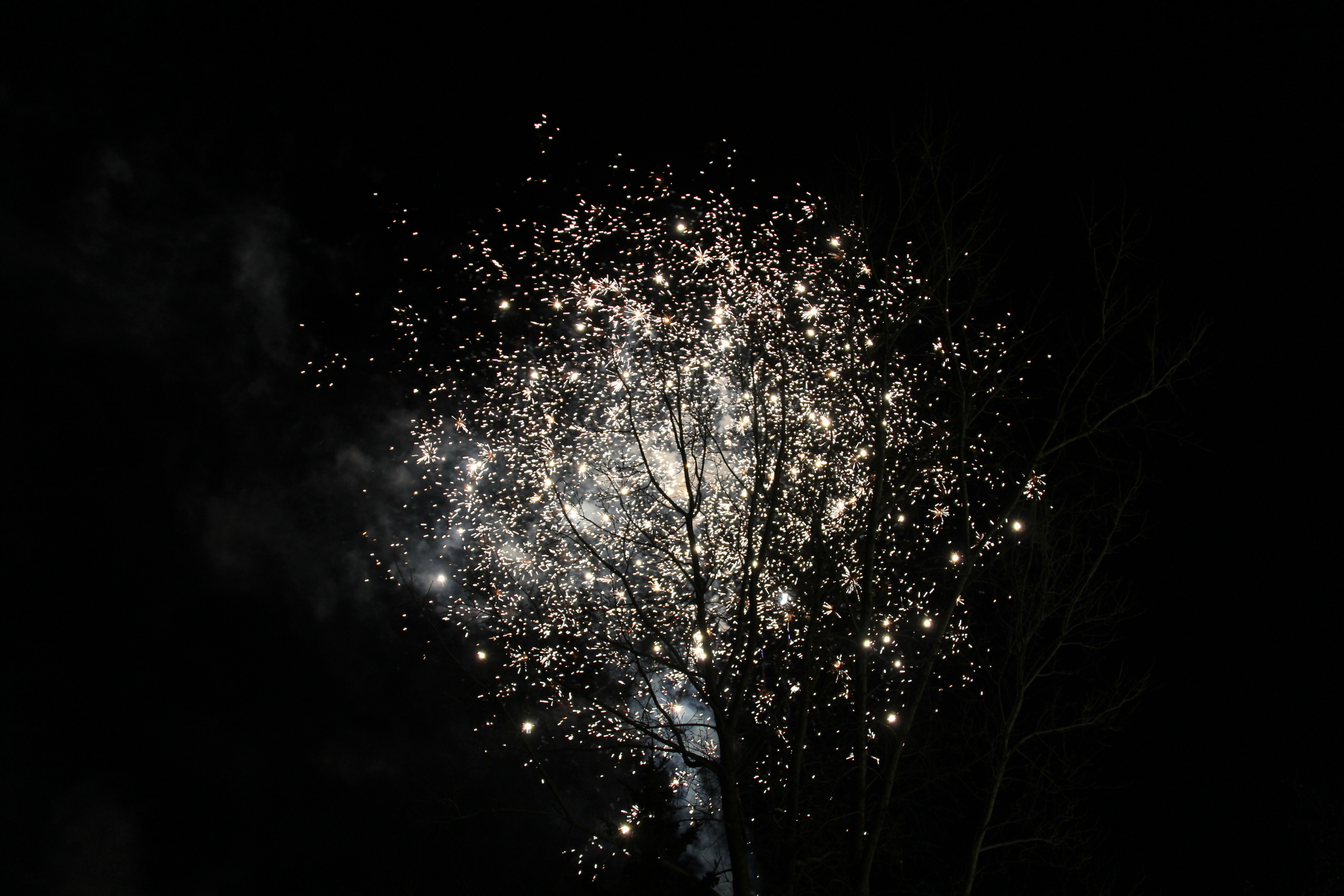
We sat really close to the fireworks launch site. Here, fireworks glitter as they fall from the sky, surrounding a bare tree. (Minnesota Prairie Roots copyrighted photo December 2024)
Randy and I did lots of waiting. First for the fireworks to start (it was our choice to arrive early) and then during the parade (as lengthy gaps between units persisted). We even left early given the delays.
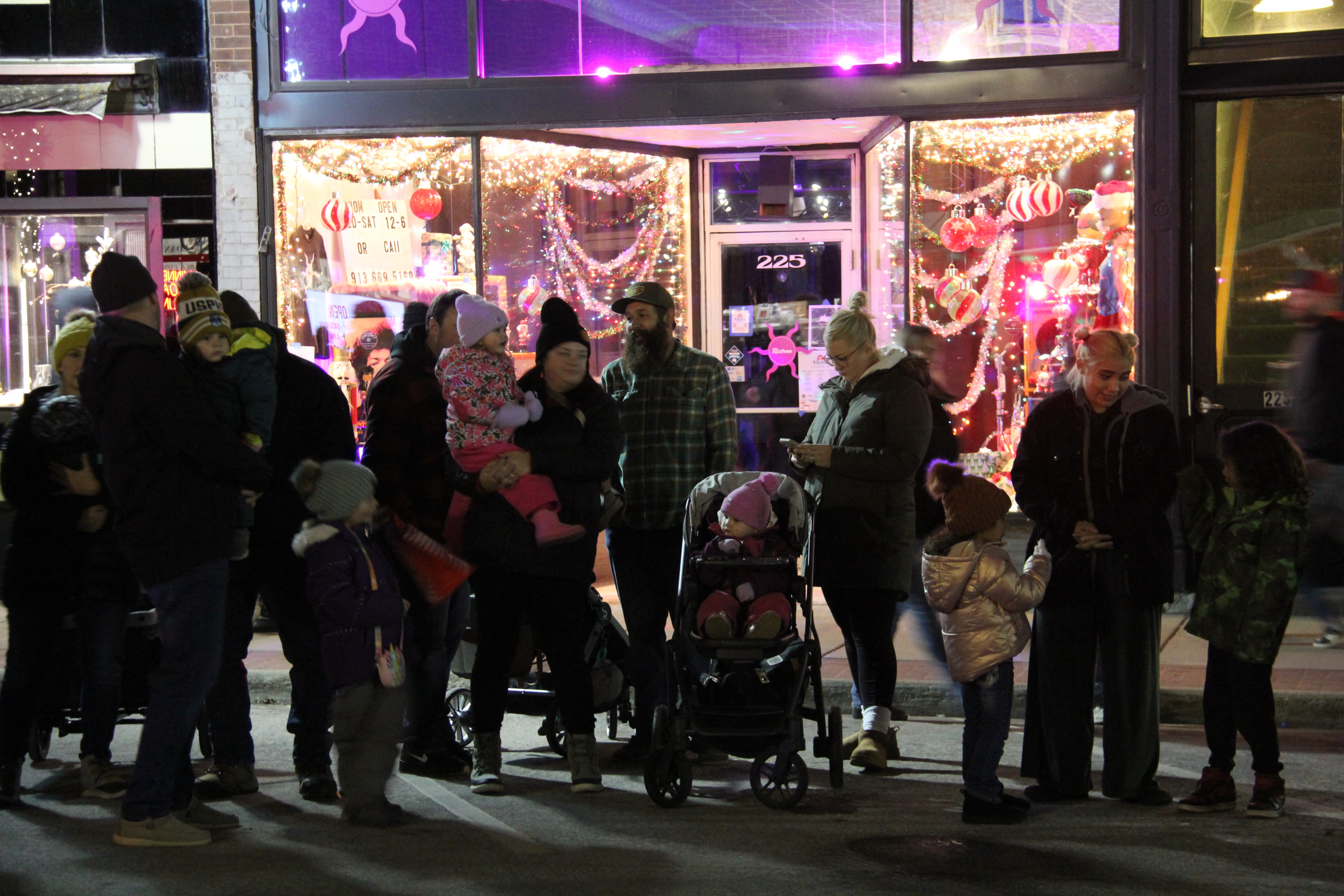
Against the backdrop of a festive storefront, families wait for the parade to begin. (Minnesota Prairie Roots copyrighted photo December 2024)
Aside from the waiting, the fireworks and Parade of Lights on Central proved wonderful. Festive and uplifting. There’s something about gathering to watch a parade that creates a true sense of community. Throngs crowded the edges of Central Avenue, leaving a single lane for vehicles, floats and parade participants to work their way through our historic downtown.
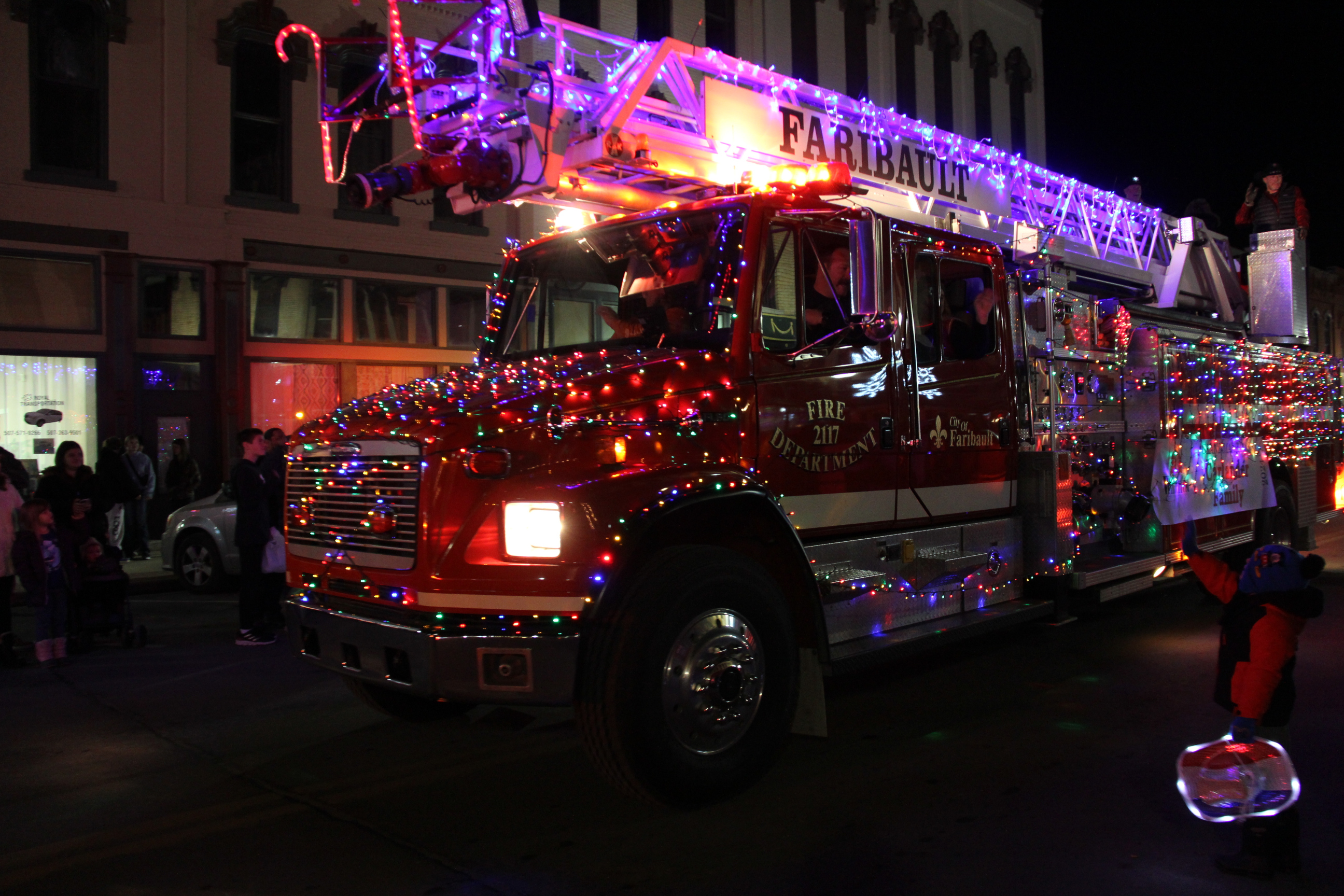
As the massive Faribault Fire Department ladder truck passes, the boy on the right holds his light-up cowboy hat and waves. (Minnesota Prairie Roots copyrighted photo December 2024)
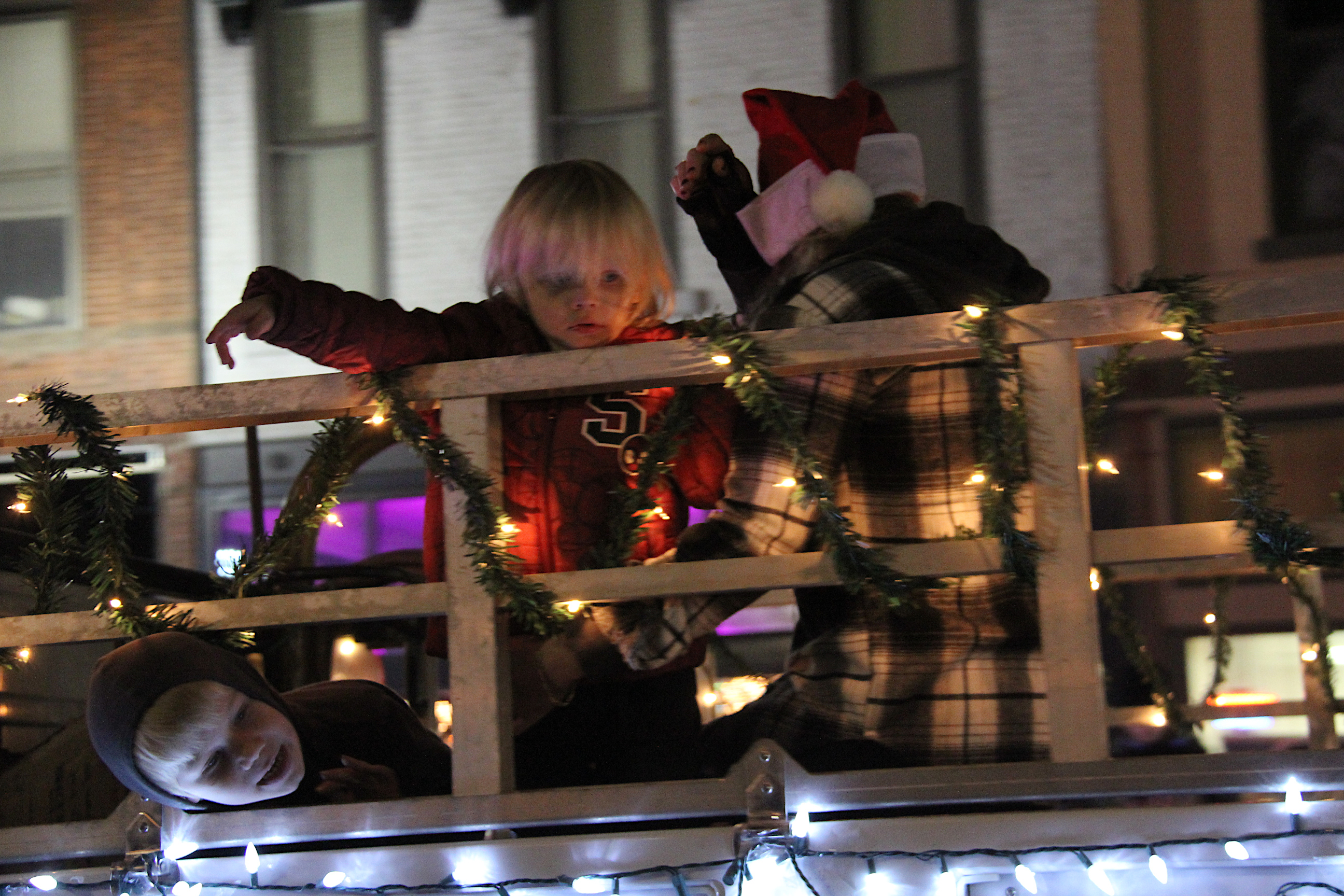
Kids not only watched the parade, but also participated, as shown here. (Minnesota Prairie Roots copyrighted photo December 2024)
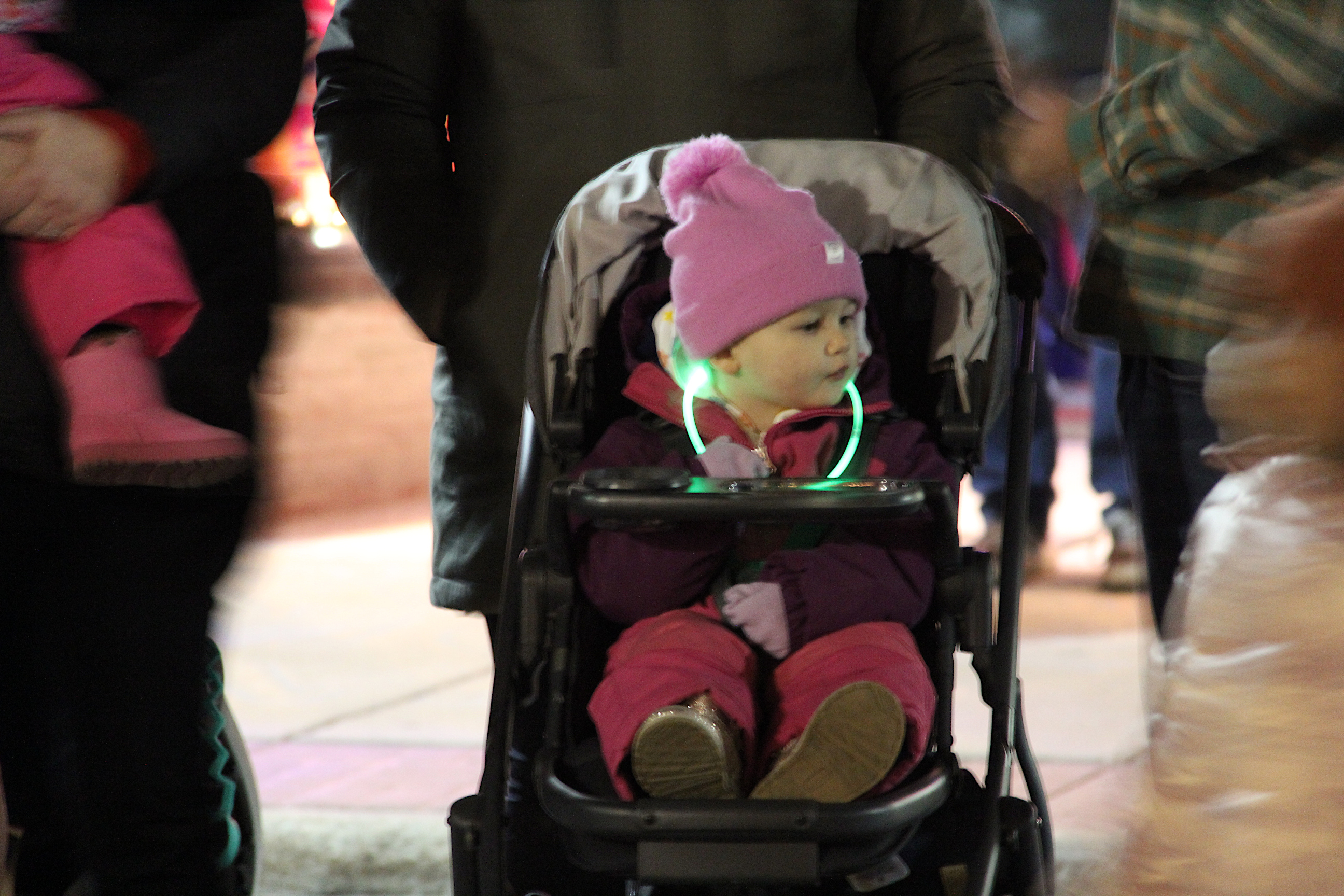
All bundled up to watch the parade from the comfort of a stroller. (Minnesota Prairie Roots copyrighted photo December 2024)
I love watching the kids. There’s magic in their enthusiasm. There’s magic in the way they scramble for candy and jump up and down. They exude pure joy.
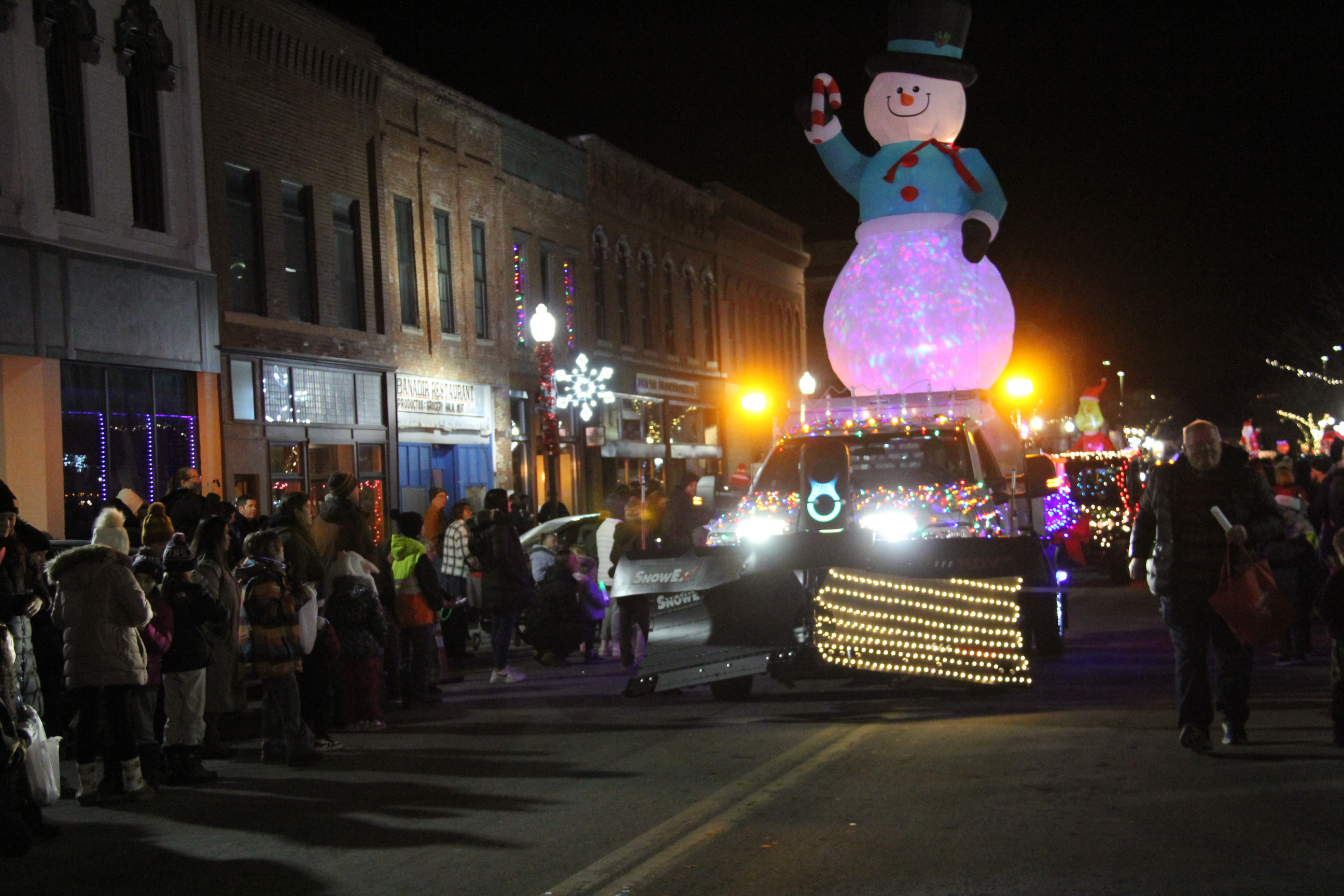
The oversized snowman is a parade staple. (Minnesota Prairie Roots copyrighted photo December 2024)
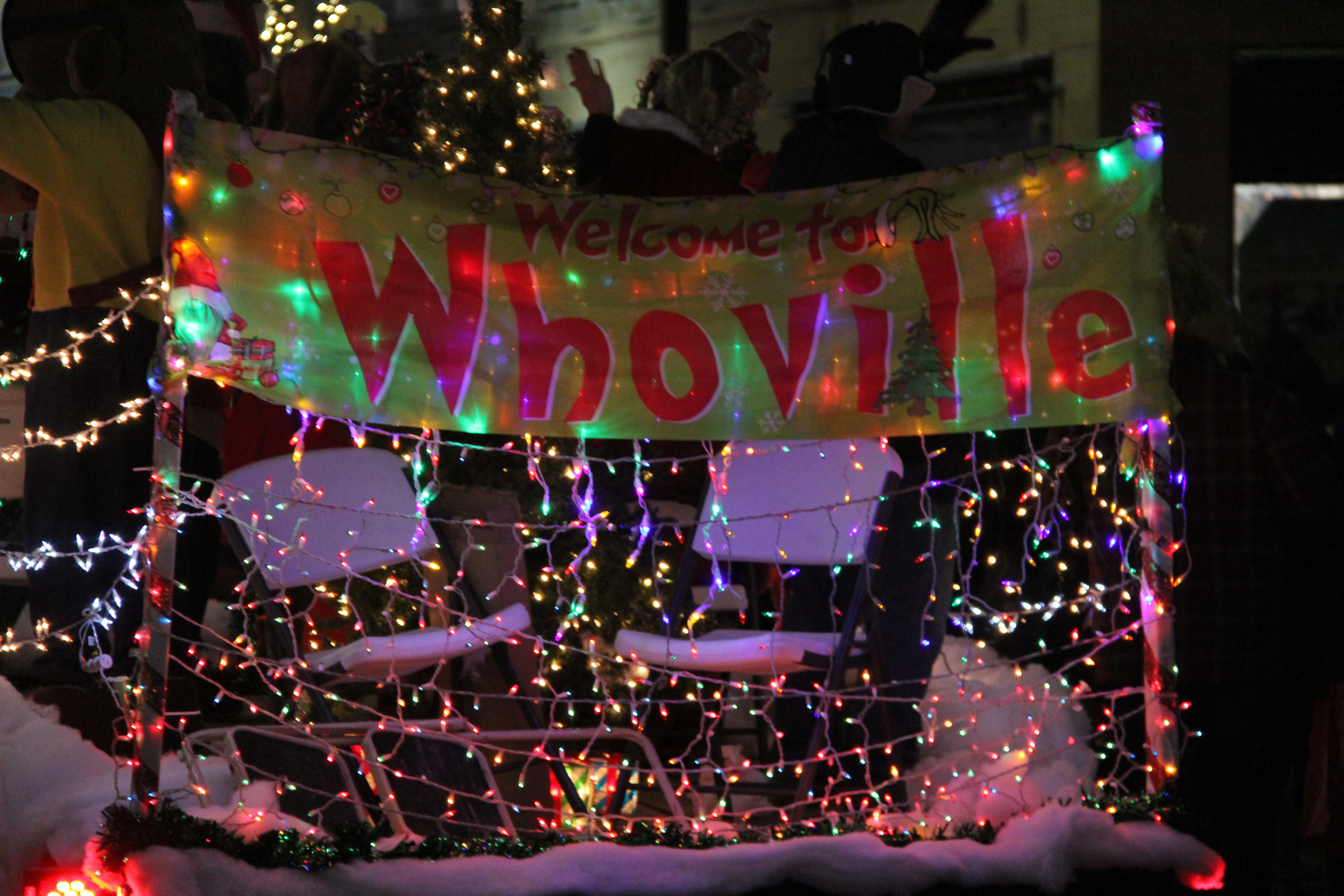
The magic of Whoville came to Faribault. (Minnesota Prairie Roots copyrighted photo December 2024)
The Grinch and Max share the love. (Minnesota Prairie Roots copyrighted photo December 2024)
You can’t help but feel happiness surging along the street as music and holiday lights and costumed characters all create a festive mood. Santa, the Grinch with Max his dog, a chubby snowman, an oversized gingerbread boy…I saw all of them and considered how these characters make us smile in the dark of December. Even as an adult, I still very much love the Grinch, who was transformed from mean to loving and caring. That gives me hope.
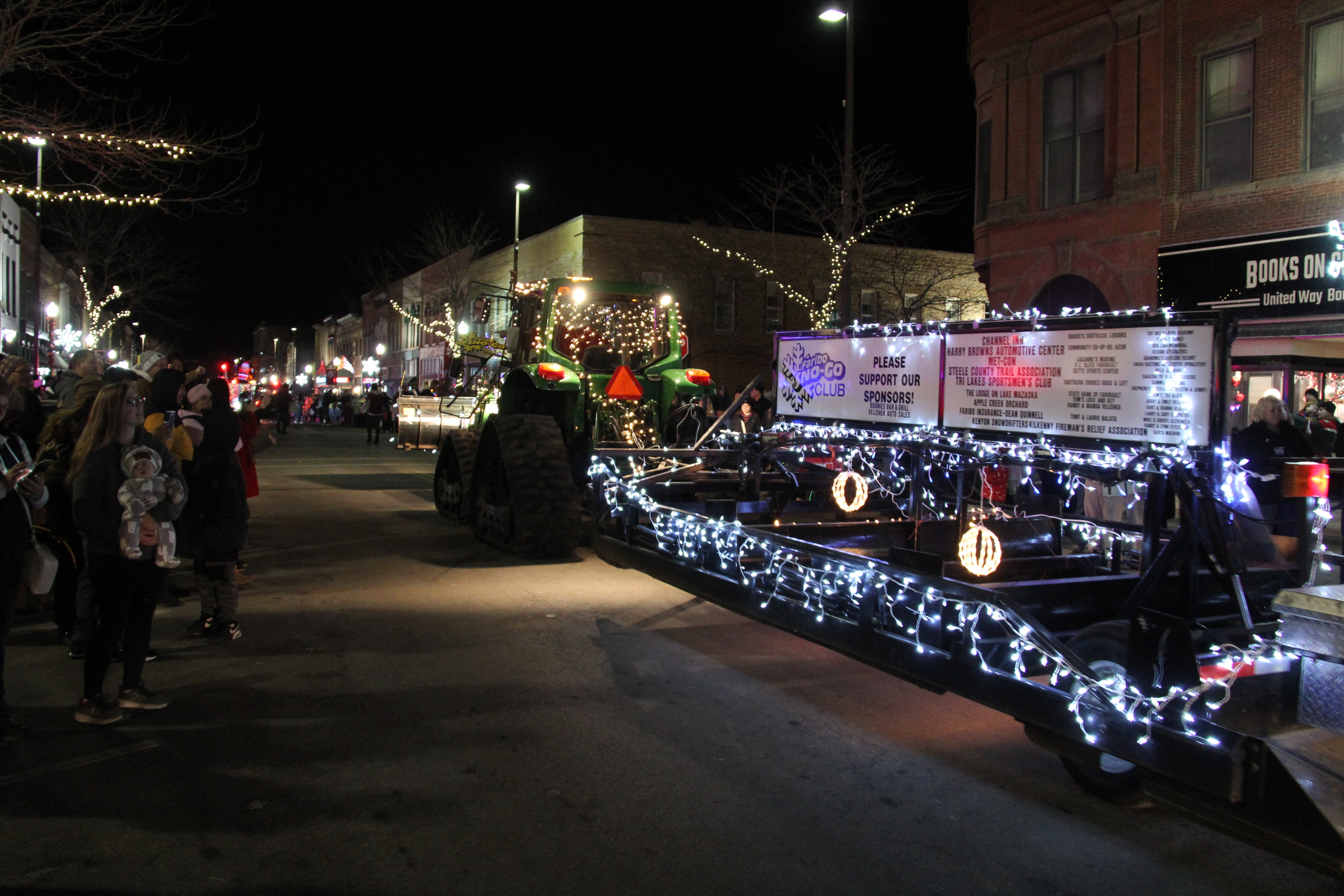
To the far left in this scene, a bundled up baby sleeps while the Sno-Go Club parade unit passes by. (Minnesota Prairie Roots copyrighted photo December 2024)
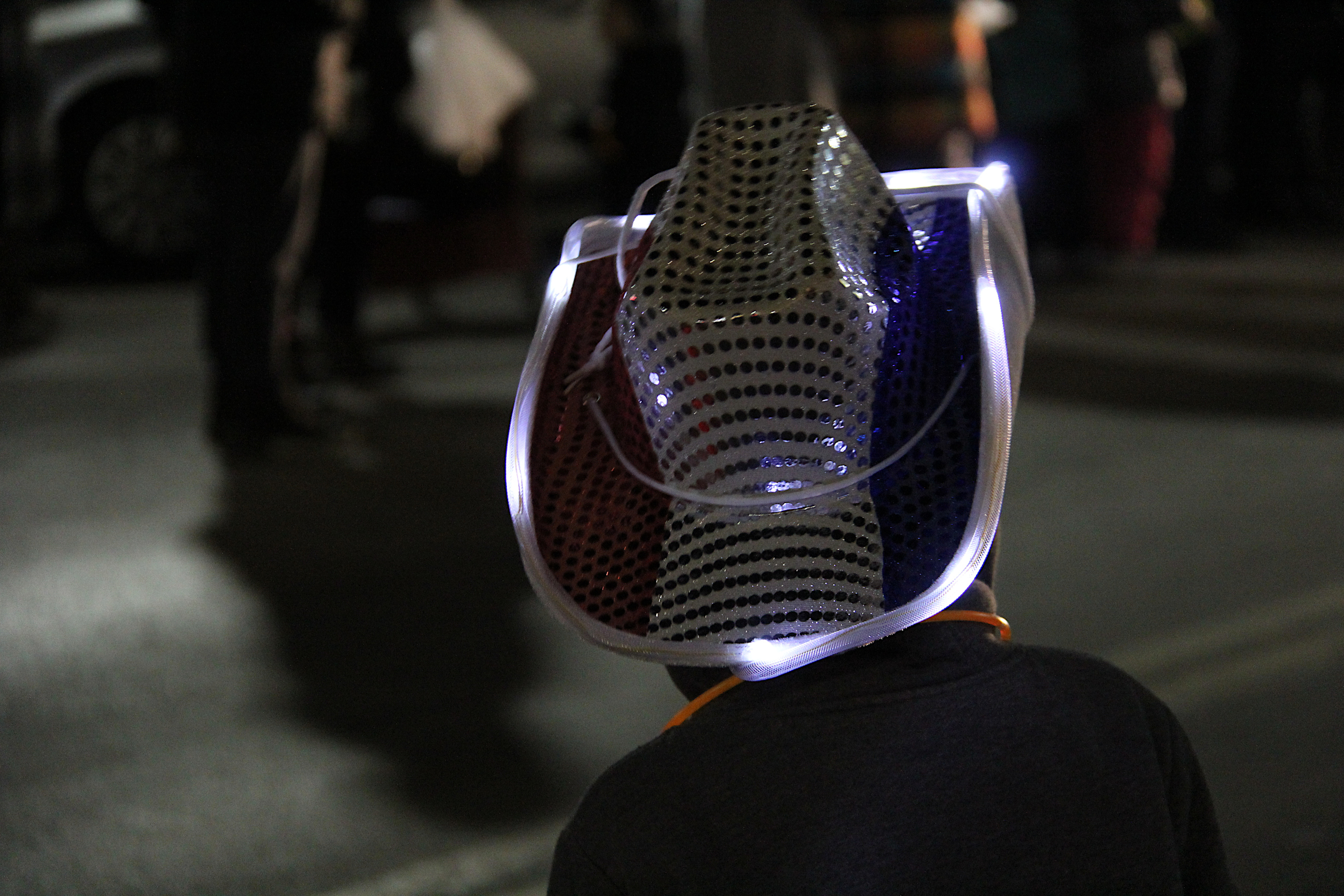
A boy standing near me got a free light-up cowboy hat. He wore it sometimes, sometimes not. (Minnesota Prairie Roots copyrighted photo December 2024)
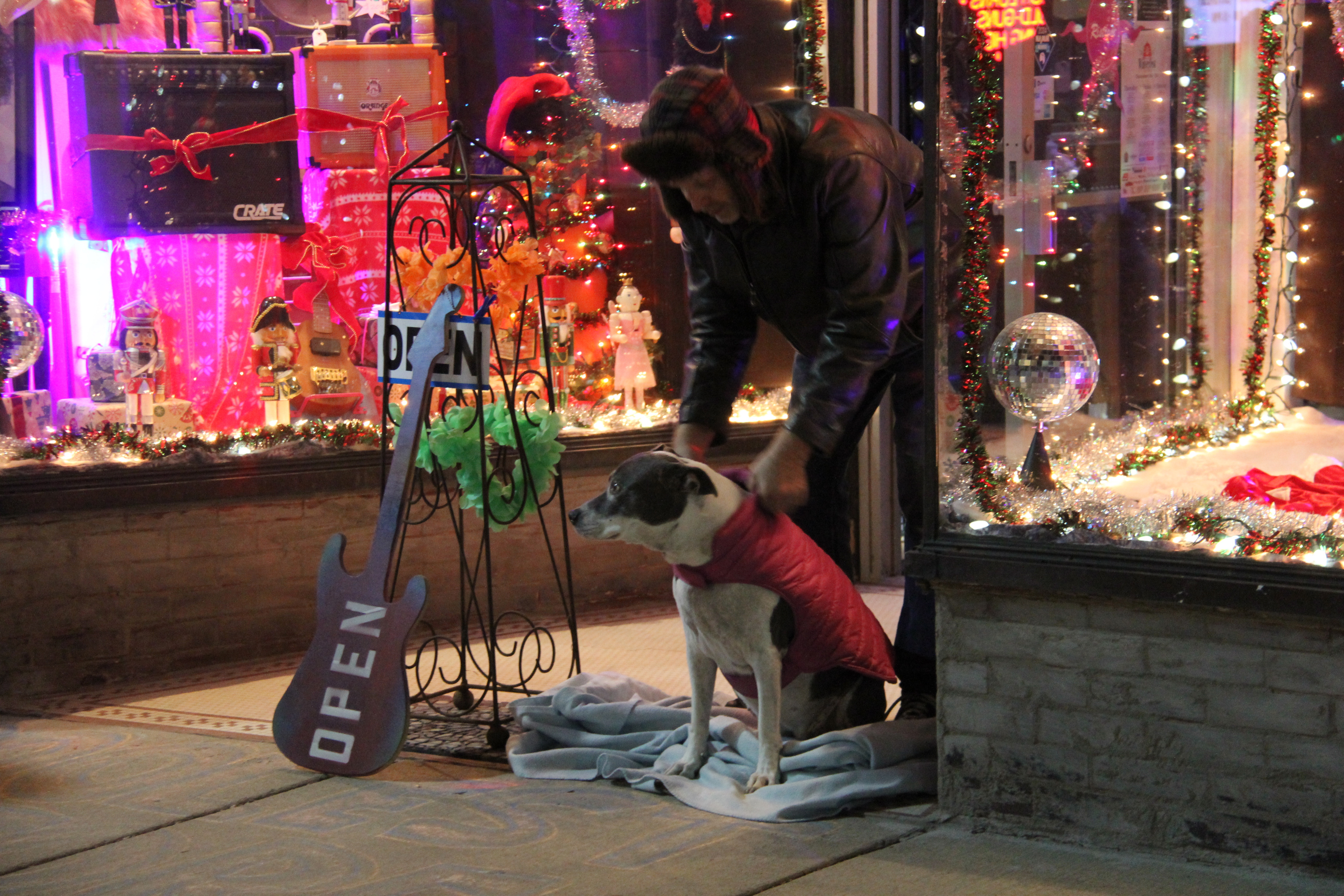
A shopkeeper and his dog at the parade. (Minnesota Prairie Roots copyrighted photo December 2024)
Glo sticks ringed necks. Freebie cowboy hats flashed atop heads. Babies bundled in snowsuits slept. Kids waited and watched. Youth danced and waved and smiled.
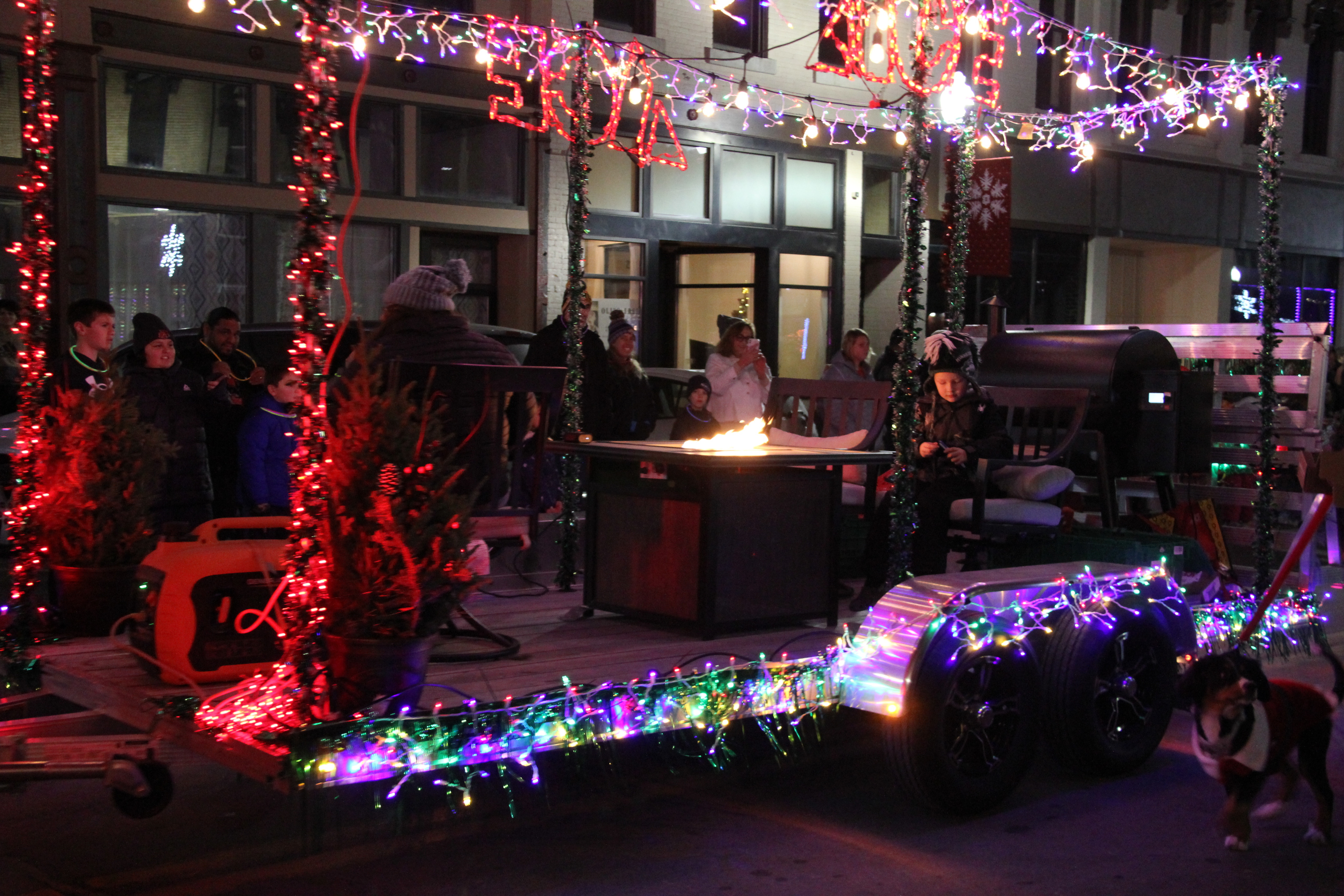
Fire on one float… (Minnesota Prairie Roots copyrighted photo December 2024)
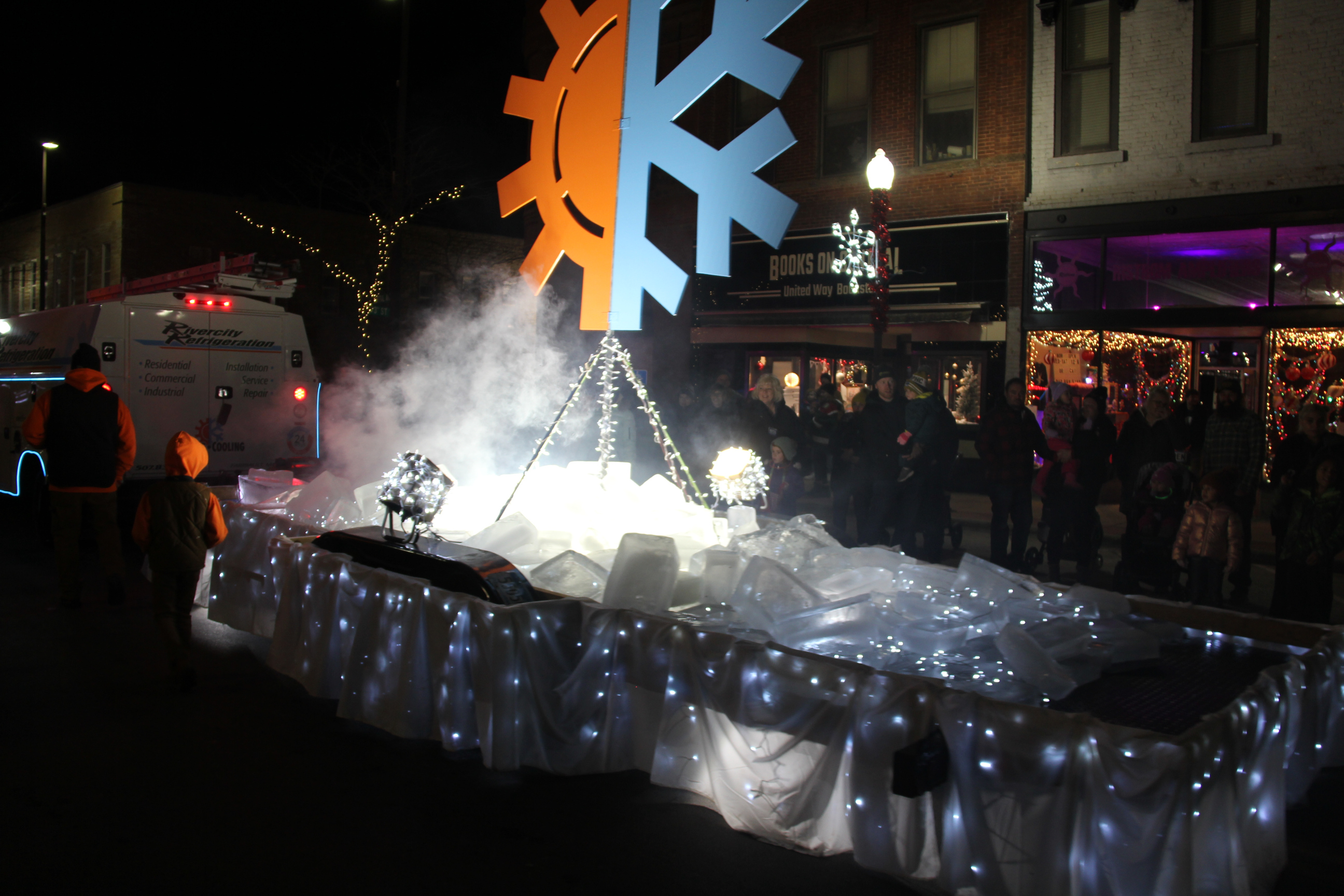
…and ice on another, from River City Refrigeration. (Minnesota Prairie Roots copyrighted photo December 2024)
I especially enjoyed the contrast of fire and ice in two parade units. One featured a fire pit, the other what I can only assume was dry ice. They were decidedly creative, a switch-up from masses of holiday lights, inflatables and standard holiday decorations.
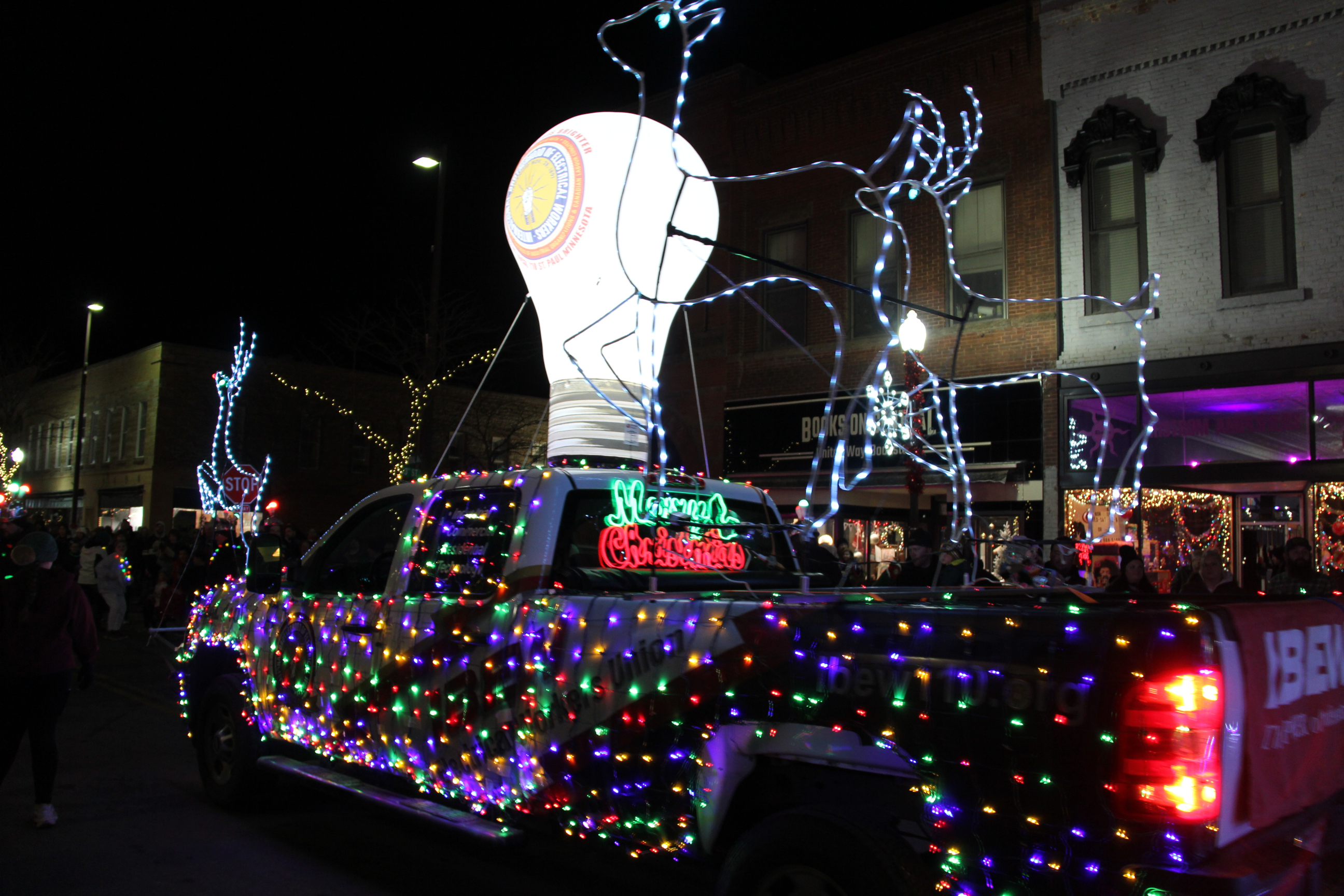
The parade unit of the International Brotherhood of Electrical Workers was all about light. (Minnesota Prairie Roots copyrighted photo December 2024)
Unit by unit, person by person, the parade lit a path along Central Avenue, shining the light of the holidays upon everyone watching. Light. The lights of happiness and joy and love and hope and a feeling that, despite our differences, we are all alike. Craving light. Needing light. Immersing ourselves in the light of community on a December evening in Faribault.
Only an hour from Faribault, we stopped in the Minnesota River town of Henderson so I could take photos. (Minnesota Prairie Roots copyrighted photo November 2024)
LATE NOVEMBER FOUND US on the road, first heading west 285 miles to Fargo, North Dakota, then back home to Faribault, and 1 ½ days later driving east 261 miles to Madison, Wisconsin. That’s a lot of windshield time for Randy and me in the span of one week.
But we did it and delighted in every aspect of our travel, except for the hour when I grew extremely hangry. More on that in a moment.
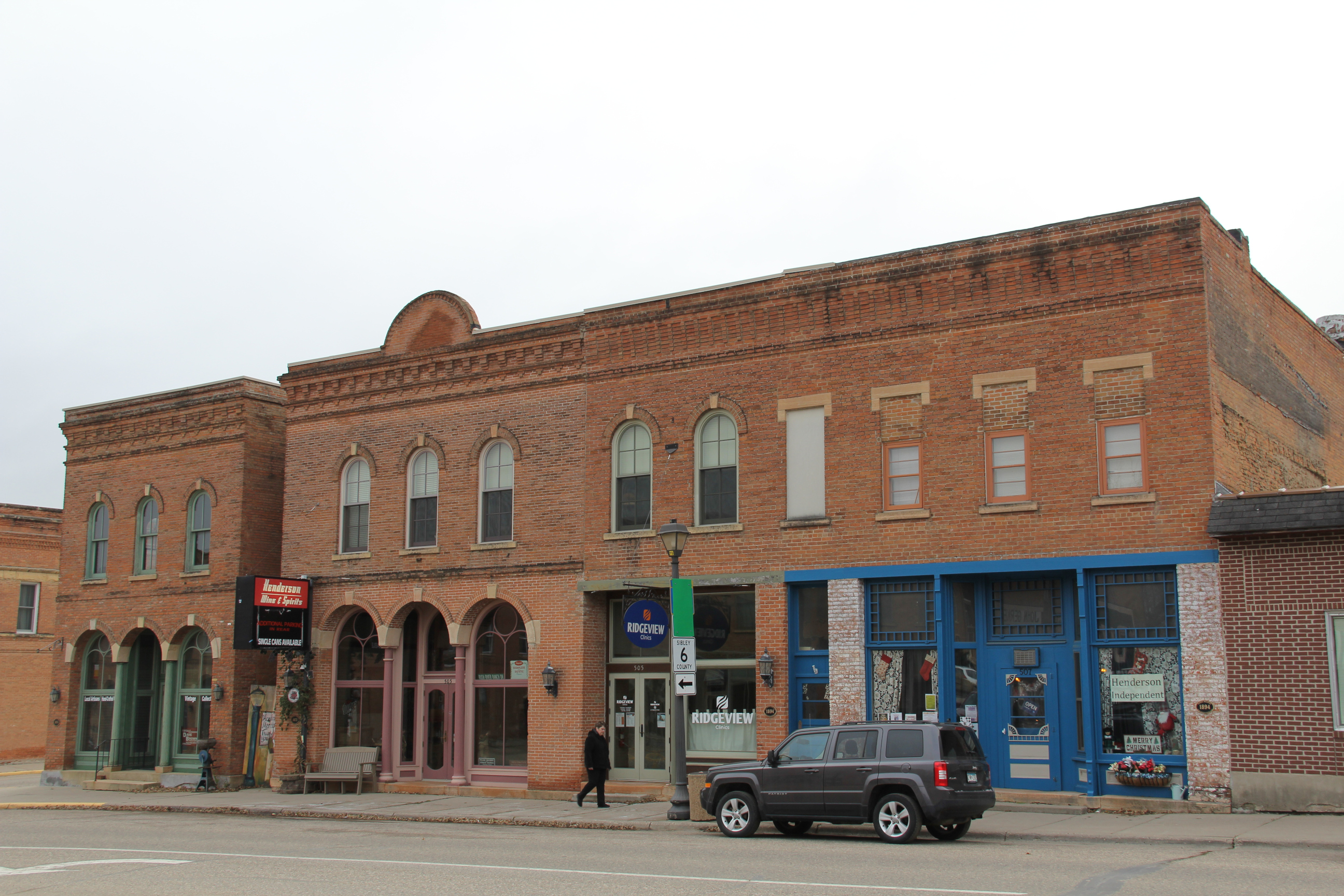
Henderson is an old river town with beautiful historic buildings. (Minnesota Prairie Roots copyrighted photo November 2024)
We began our Fargo trip on back state highways and county roads, opting for a leisurely pace that would take us through small towns rather than zipping past everything on the interstate. We stopped whenever we wanted as we drove toward Morris, our day’s end destination and an overnight stay with Randy’s sister Vivian and husband, Jerry. The next day we would head to Fargo.
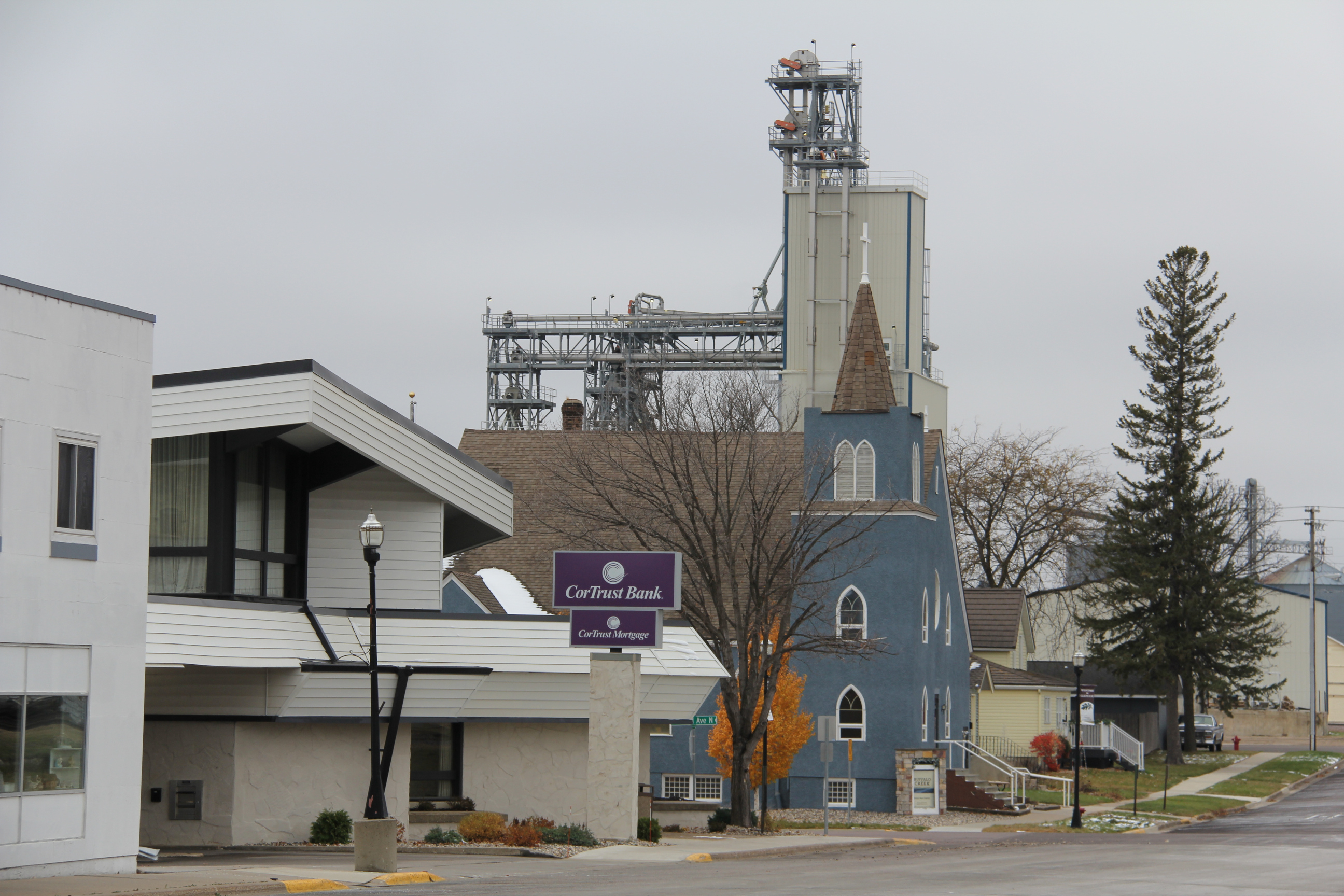
In the heart of small town Glencoe, Buffalo Creek Community Church rises. (Minnesota Prairie Roots copyrighted photo November 2024)
Along the way to Morris, we did, indeed, stop. In Henderson, Glencoe, Cosmos, Willmar and Benson. The Willmar stop was solely to eat fast food. Not by choice, but out of necessity. Our plan to enjoy lunch at a small town cafe never materialized. I envisioned ordering a Beef Commercial (roast beef and mashed potatoes on white bread smothered with homemade gravy) while dining with locals in a cozy restaurant overlooking Main Street. That, it seems, is the stuff mostly of nostalgia. The small towns we drove through either did not have eateries or, if they did, were closed.
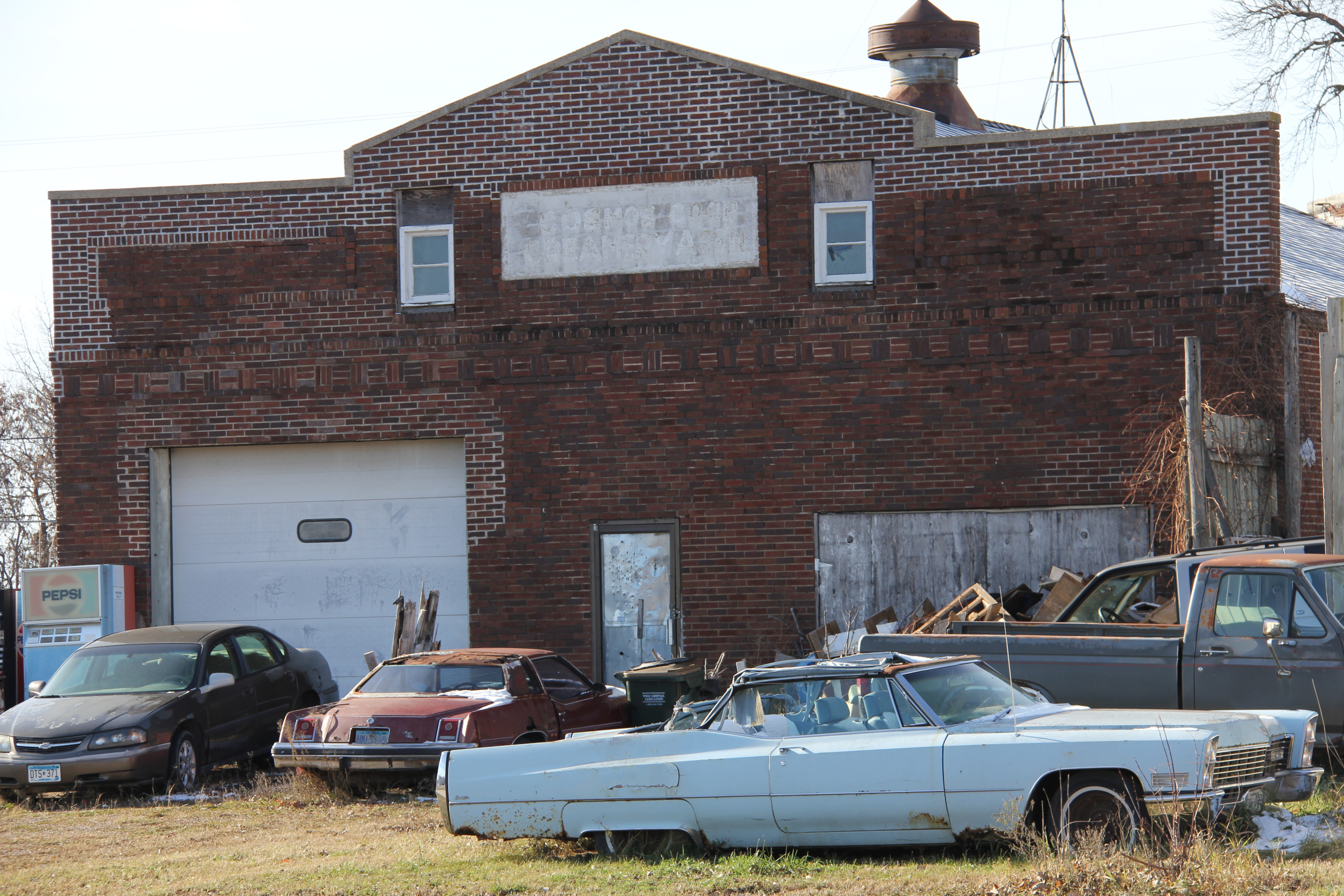
Abandoned vehicles outside what appears to be a former creamery in downtown Cosmos. Love the building. (Minnesota Prairie Roots copyrighted photo November 2024)
Most communities appear only shells of their former selves with abandoned buildings and few businesses. This is reality in many parts of rural Minnesota.
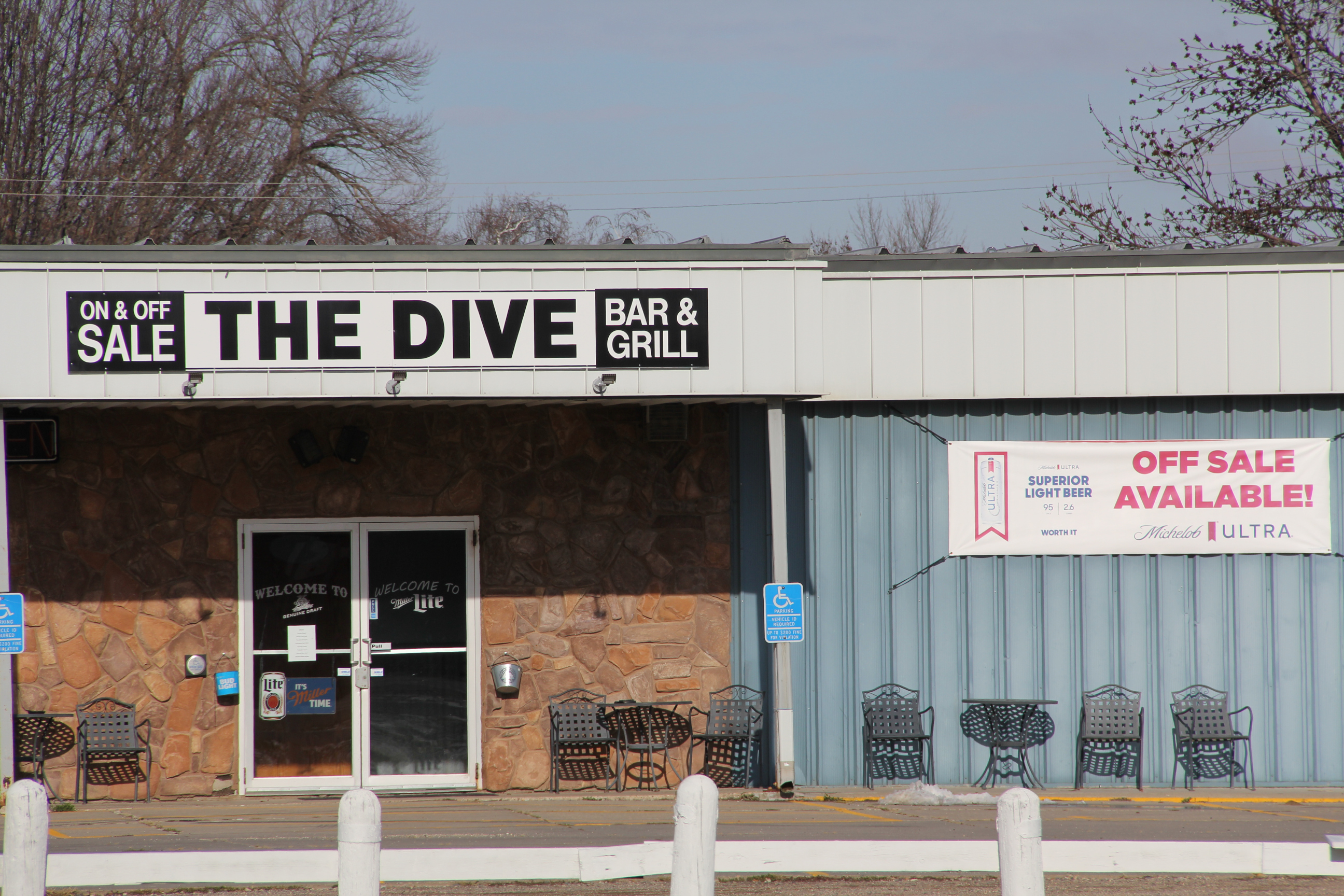
In Cosmos, the restaurant that was closed when we were in town. (Minnesota Prairie Roots copyrighted photo November 2024)
Not even The Dive Bar & Grill in Cosmos was open over noon-time. It’s probably a fine place to eat, even given the unappealing name, but I’ll never know. I hopped out of our van to take numerous photos of space stuff in Cosmos, including the water tower, while Randy searched on his phone for places to eat. He knows I do not do well if I don’t eat on schedule. And I was not doing well, meaning I was irritable and grumpy. Extremely hangry.
Paintings on the underside of the Cosmos water tower celebrate the town name cosmic connection. (Minnesota Prairie Roots copyrighted photo November 2024)
As we left Cosmos heading for Willmar, I realized we’d passed a gas station and convenience store. Why, oh, why didn’t we stop for a snack, a slice of pizza, something I could eat? Finally, in Willmar, I ate, wolfing down fries and a pot roast sandwich.
That evening, at my sister-in-law and brother-in-law’s Morris home, we enjoyed a delicious meal of ribs, cheesy potatoes, green beans and more with a grasshopper for dessert. Grasshopper being the minty green after dinner ice cream drink once served at supper clubs. What a treat. But even more so was the great conversation with much-loved family.
A view of the 300 block on North Broadway in Fargo. (Minnesota Prairie Roots copyrighted file photo November 2012)
Saturday found us on the road to Fargo for the wedding of Hannah and Bryton. Hannah is the daughter of friends, a young woman I mentored in poetry as a teen. To attend her wedding, to see Hannah giddy in love, to watch her and her dad bustin’ dance moves in the father-daughter dance, to embrace Tammy and Jesse on their daughter’s wedding day filled me with absolute joy. Life on that day in Fargo, except for the cold and the snow already pushed into piles in parking lots, doesn’t get any better.
Sunday morning we arose early and hit the interstate, this time with the goal to simply get home. My brother-in-law had wisely handed me two granola bars, which I tucked inside my purse. Just in case I got hangry. I didn’t. But somewhere along I-94, either by Fergus Falls or Alexandria, I spotted a billboard for a restaurant with this singular message: “Hangry?” It was absolute validation for me that feeling irritable when hungry is a real thing. Next long road trip, I will be sure to pack snacks.
NOTE: I’ll share more about my travels in upcoming posts. If you have time, take the road less traveled. And always carry snacks.
Walking up the driveway to Souba Greenhouse for “Christmas on the Farm” last Saturday. (Minnesota Prairie Roots copyrighted photo November 2024)
IT WAS, IN SOME WAYS, like going back to my childhood family farm in southwestern Minnesota. But rather than traveling 120 miles, I arrived from neighboring Faribault at Souba Greenhouse, a farm site and business on the western edge of Owatonna, for “Christmas on the Farm.”
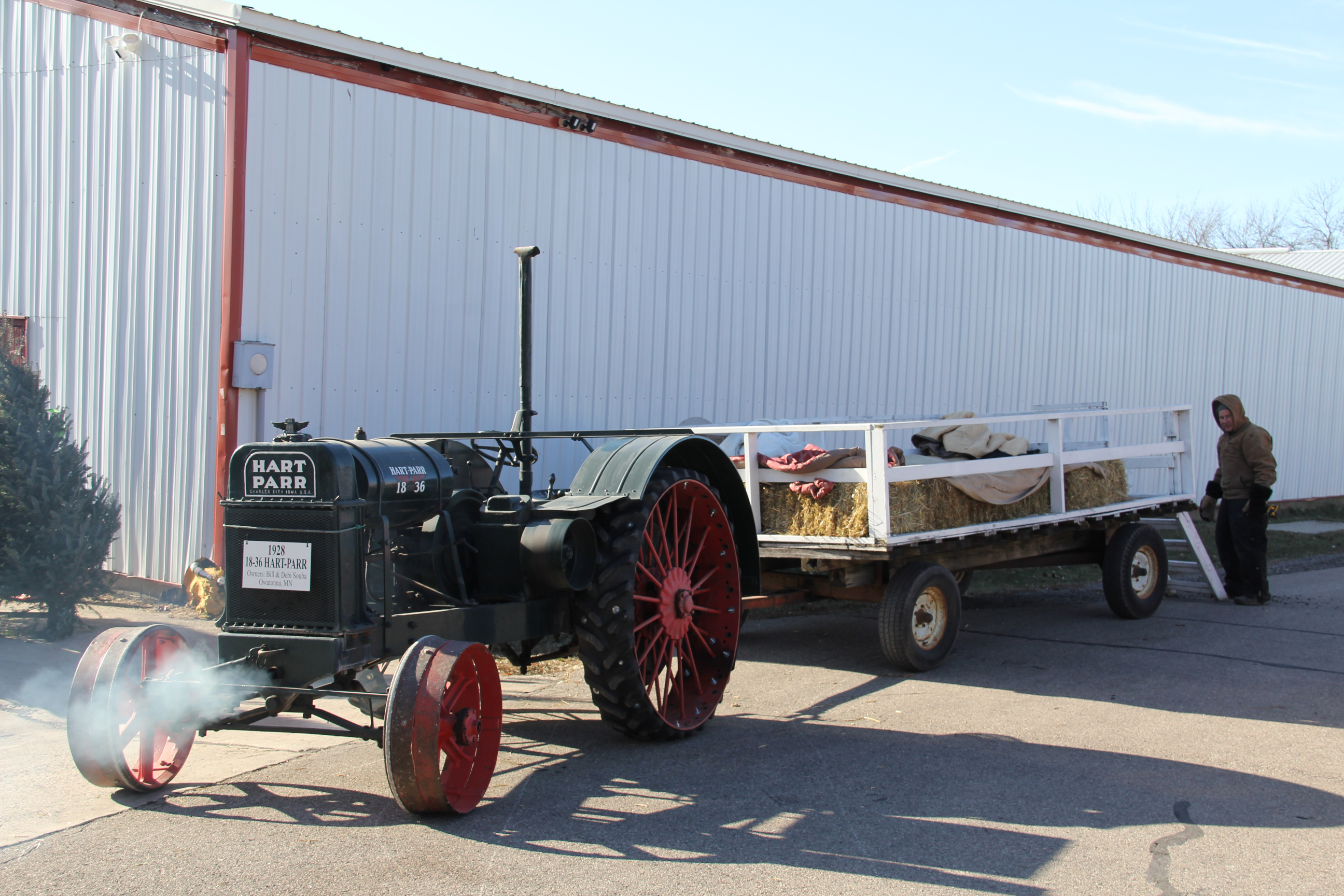
A 1928 Hart-Parr tractor owned by Bill and Debi Souba idles between wagon rides. (Minnesota Prairie Roots copyrighted photo November 2024)
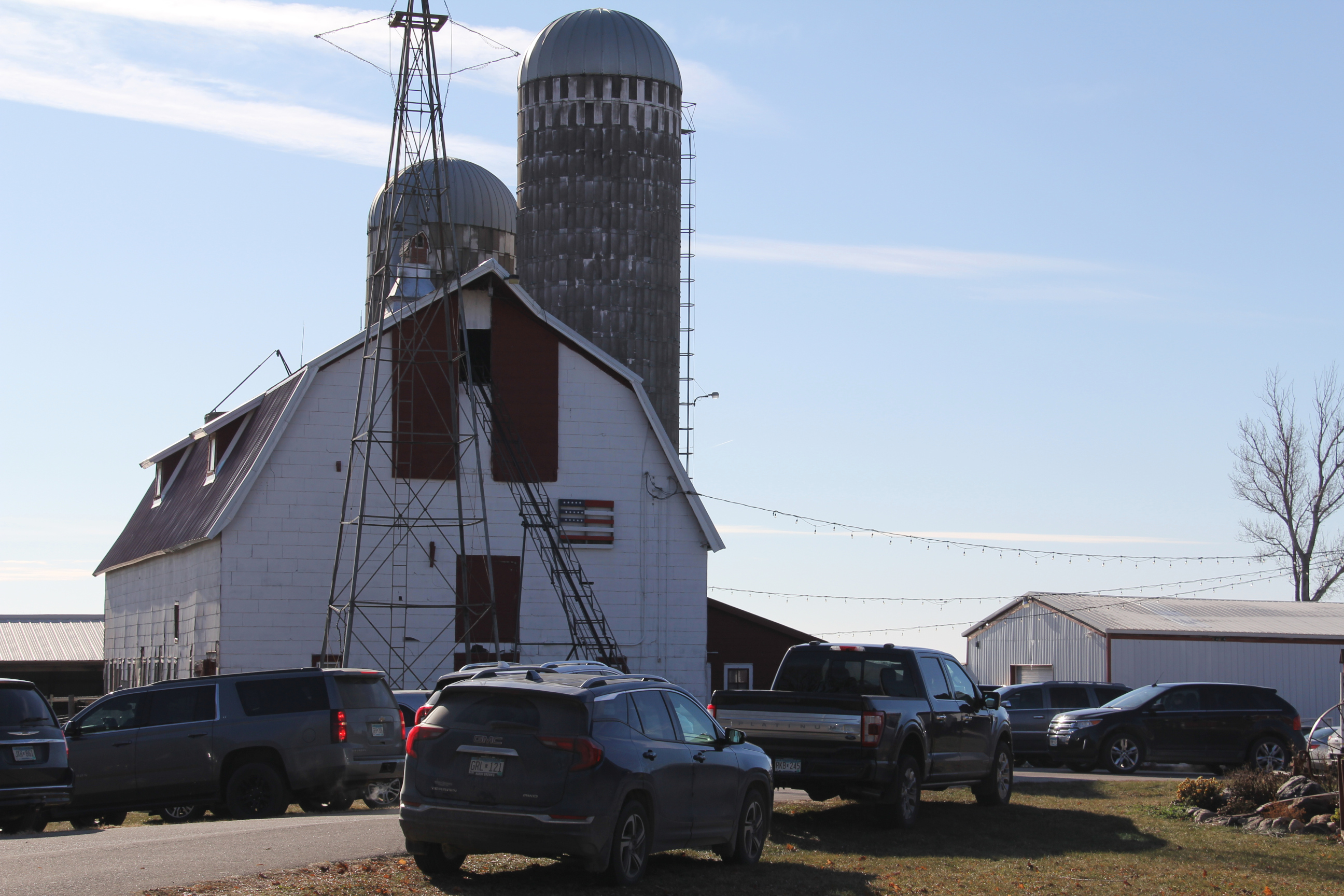
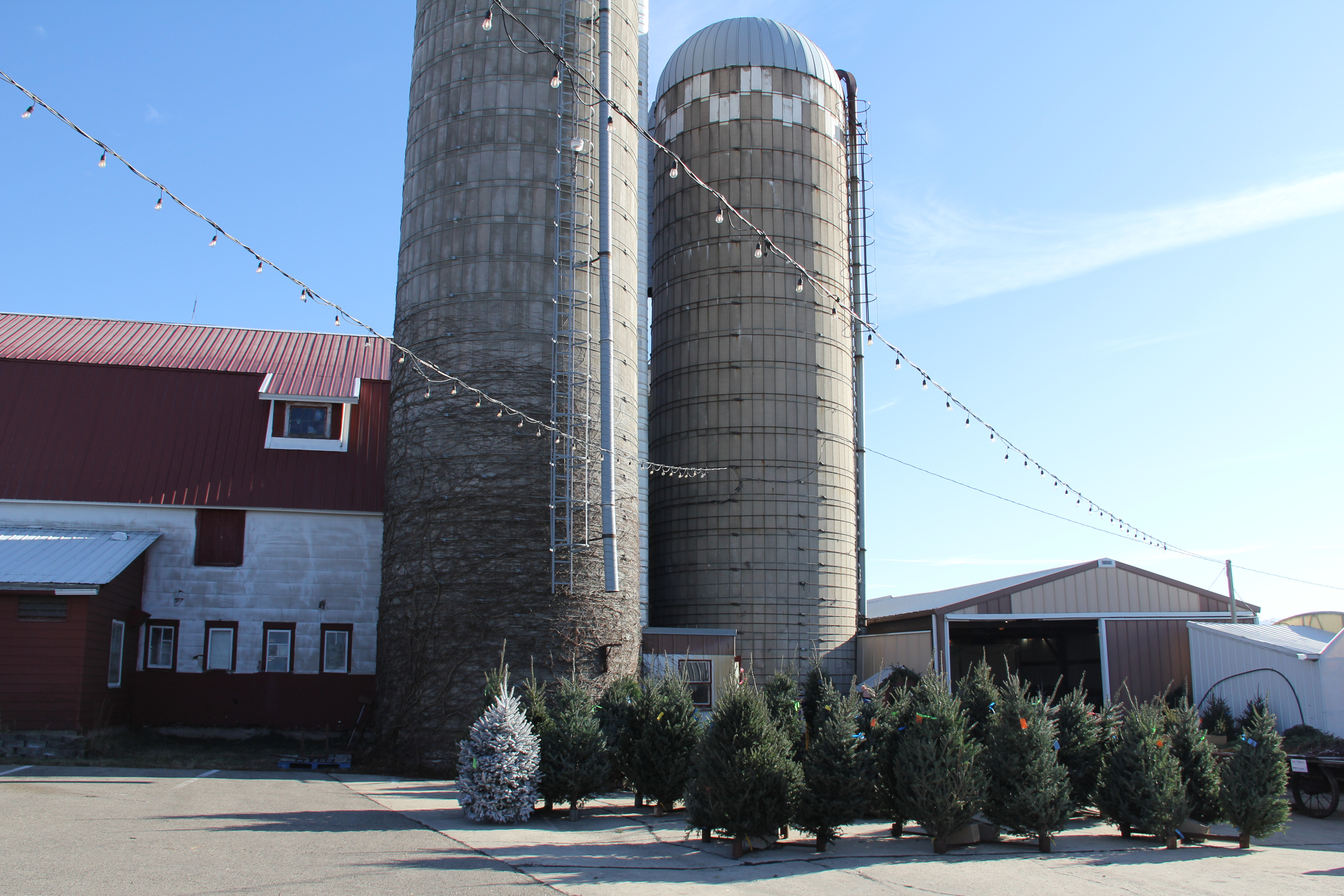
Walking up the paved driveway edged with vehicles, I felt the cold, biting wind sweeping across the land. That, too, was familiar as prairie winds are seemingly ceaseless. A massive white barn snugged by two towering silos lent more familiarity.
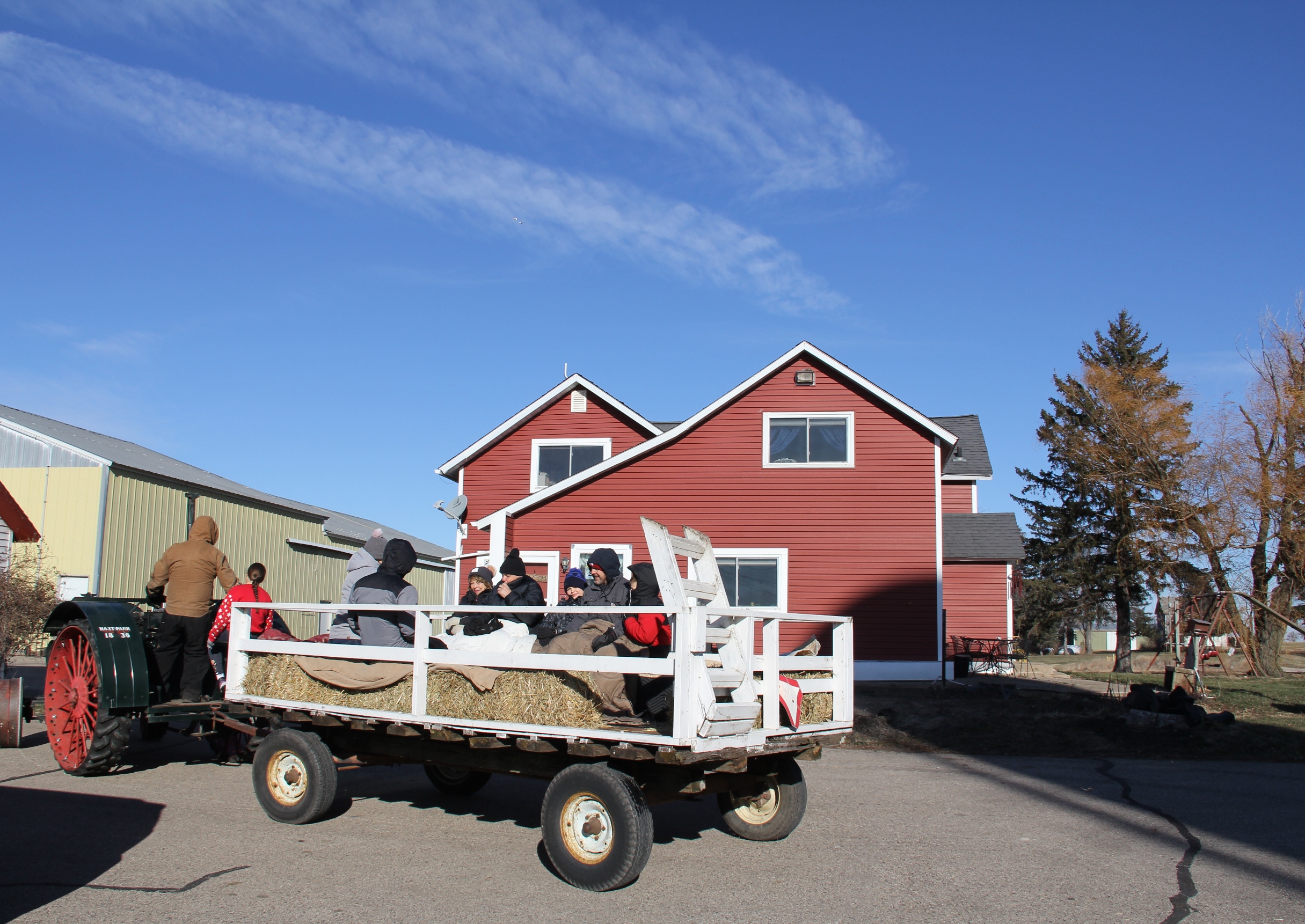
Bundled up for a wagon ride on a cold and windy Saturday morning. (Minnesota Prairie Roots copyrighted photo November 2024)
And then I heard the tractor, the deafening snap snap of a 1928 Hart-Parr 18-36. It sounded a bit like the putt putt of my dad’s old John Deere, only much louder. Guests had already settled onto blanket-draped straw bales atop a wagon for a short ride around the farm yard. They were, I noted, warmly dressed with hoods and stocking caps topping heads. The bright sunshine fooled no one on this cold and windy Saturday morning. I skipped the wagon ride, something I’d typically enjoy.
I passed the barn, silos, a pole shed and Christmas trees on my way to the greenhouses. (Minnesota Prairie Roots copyrighted photo November 2024)
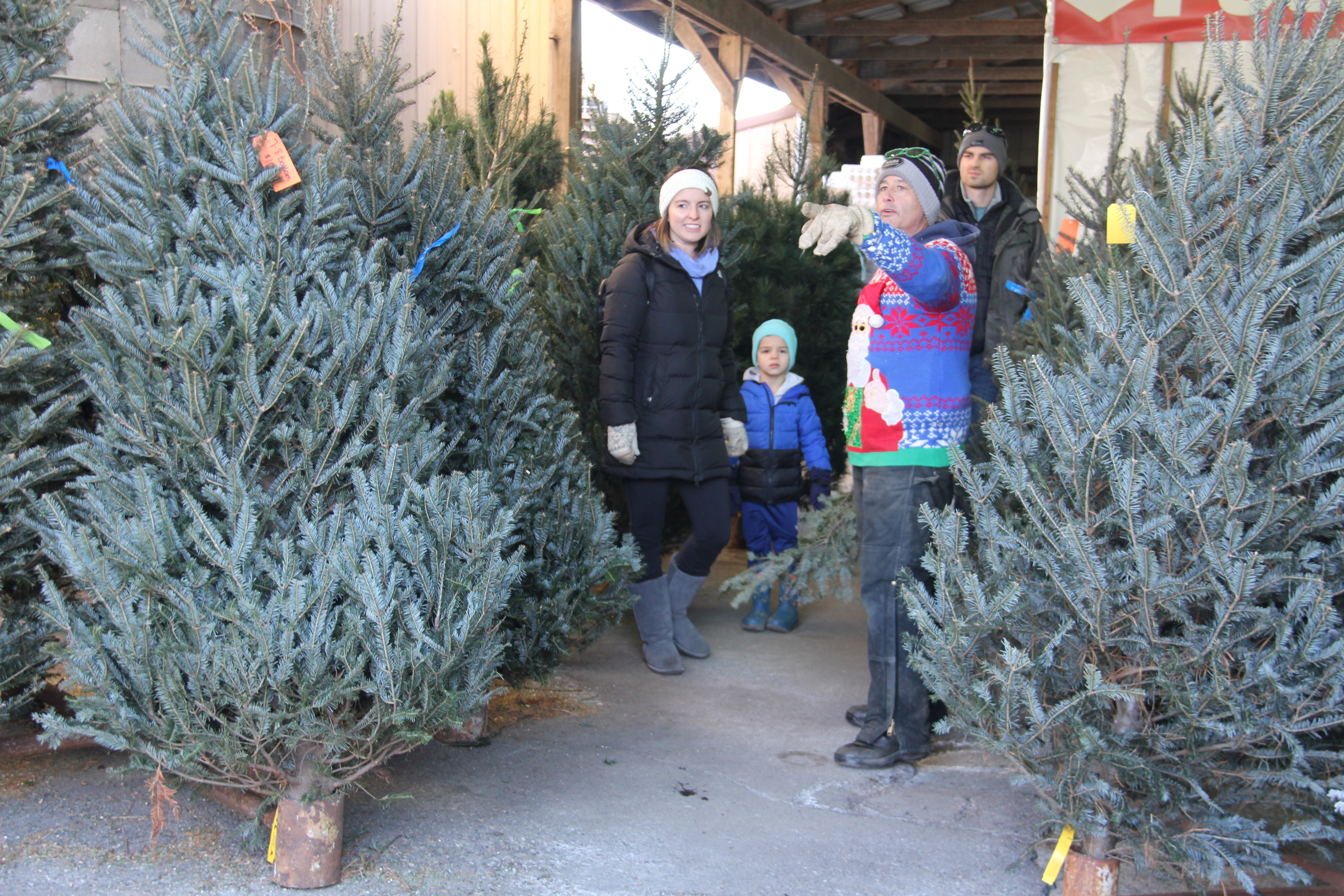
A family searches for a Christmas tree inside the pole shed. (Minnesota Prairie Roots copyrighted photo November 2024)
Instead, I aimed for the warmth of the greenhouses, passing stands of Christmas trees displayed outdoors with more for sale inside an adjacent pole shed. Already I felt the warmth of the holiday season in this rural setting.
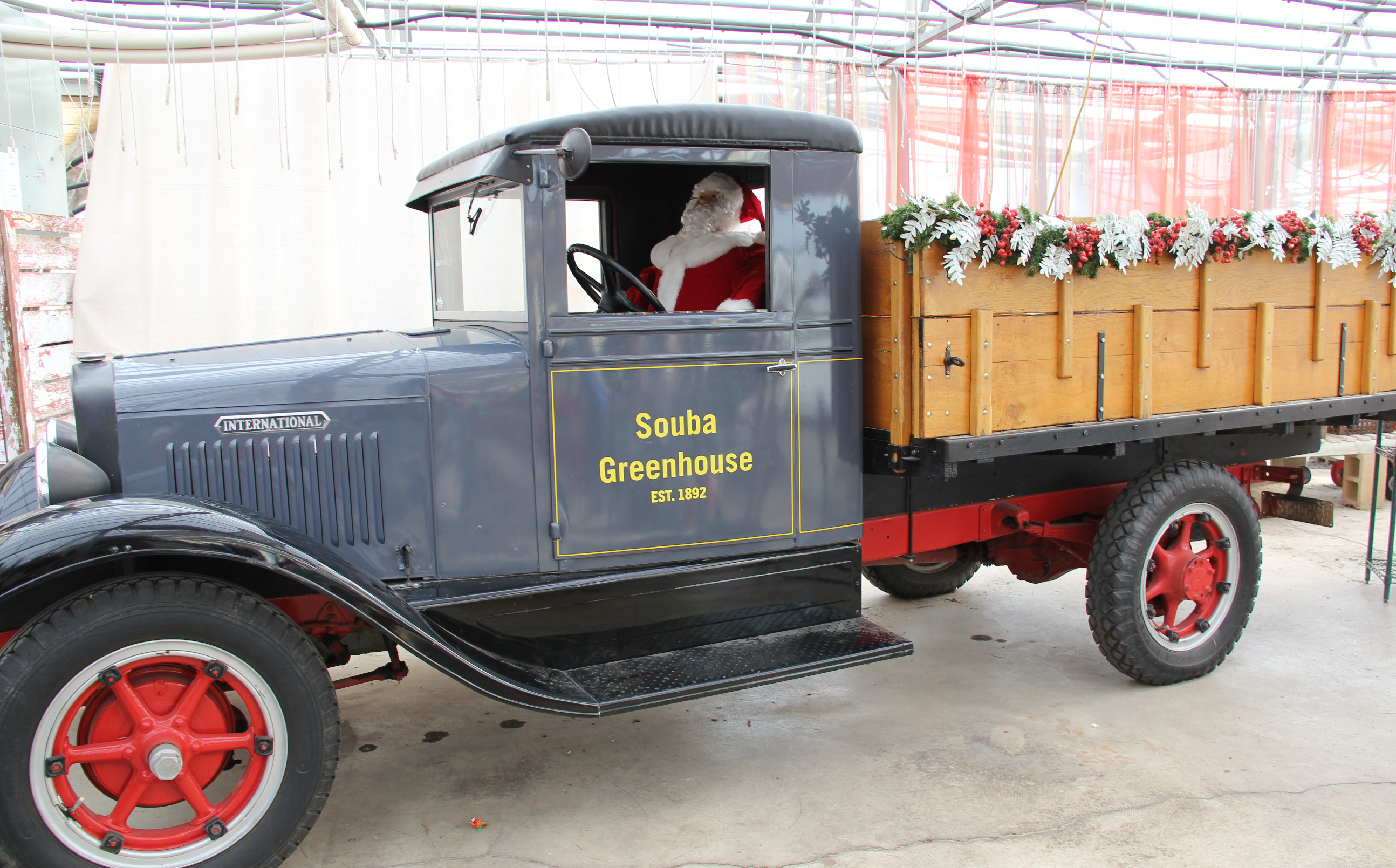
Parked inside the greenhouse was this vintage truck. (Minnesota Prairie Roots copyrighted photo November 2024)
Stepping into the greenhouse, I was immediately drawn to a vintage International truck festooned with garland, a fake Santa propped inside the cab. “Vintage” fits Souba Greenhouse, established in 1892 as a Truck Farm. Today this wholesale and retail greenhouse is fifth-generation family owned by two cousins. The business grows annual flowers and vegetables.
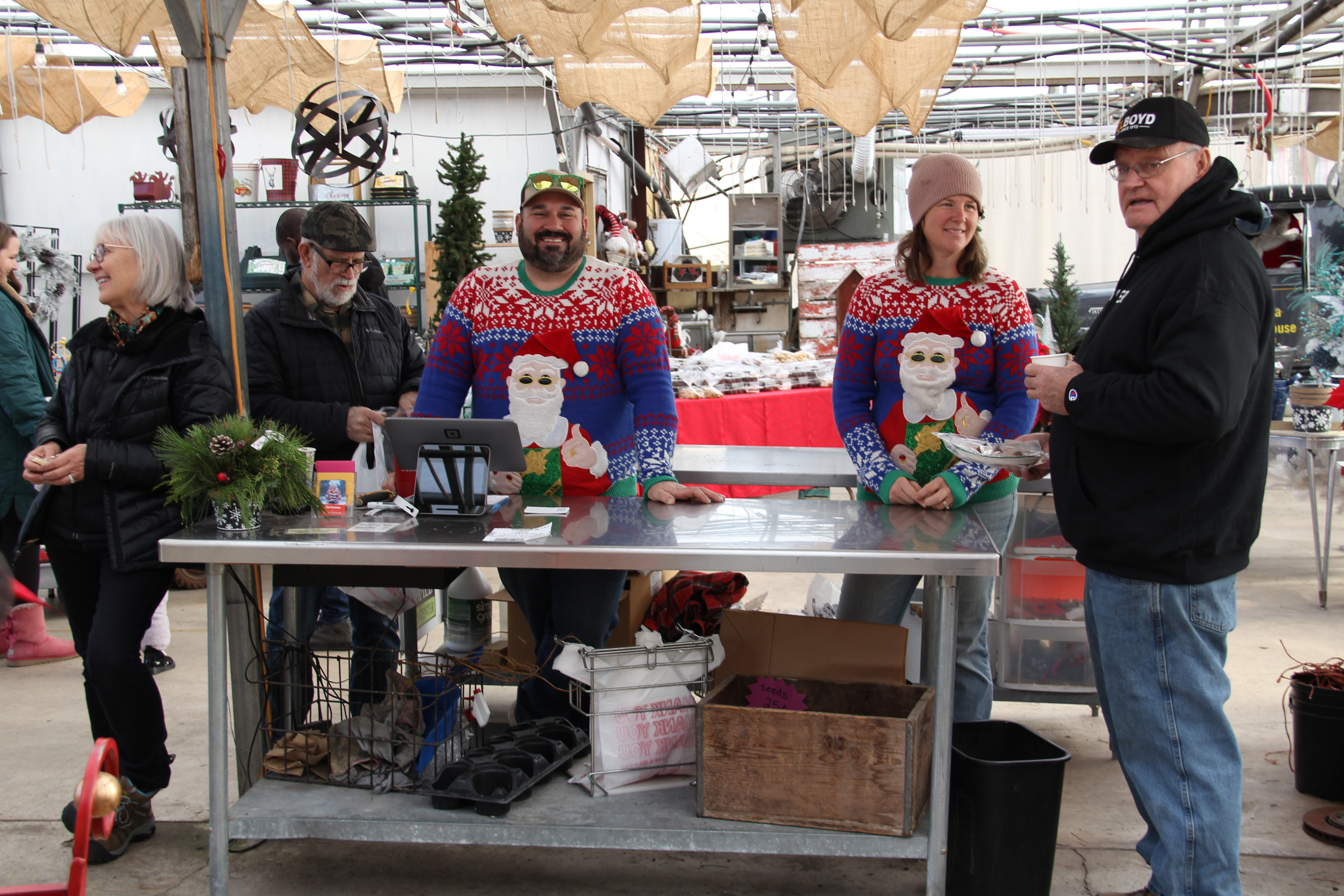
Staff sported colorful matching Santa holiday sweaters, just the right festive fashion flair for the event.
Lots of holiday ornaments for sale. (Minnesota Prairie Roots copyrighted photo November 2024)
The second-hand books inside these brown wrappers are, except for genre, a surprise to the buyer and the gift recipient. (Minnesota Prairie Roots copyrighted photo November 2024)
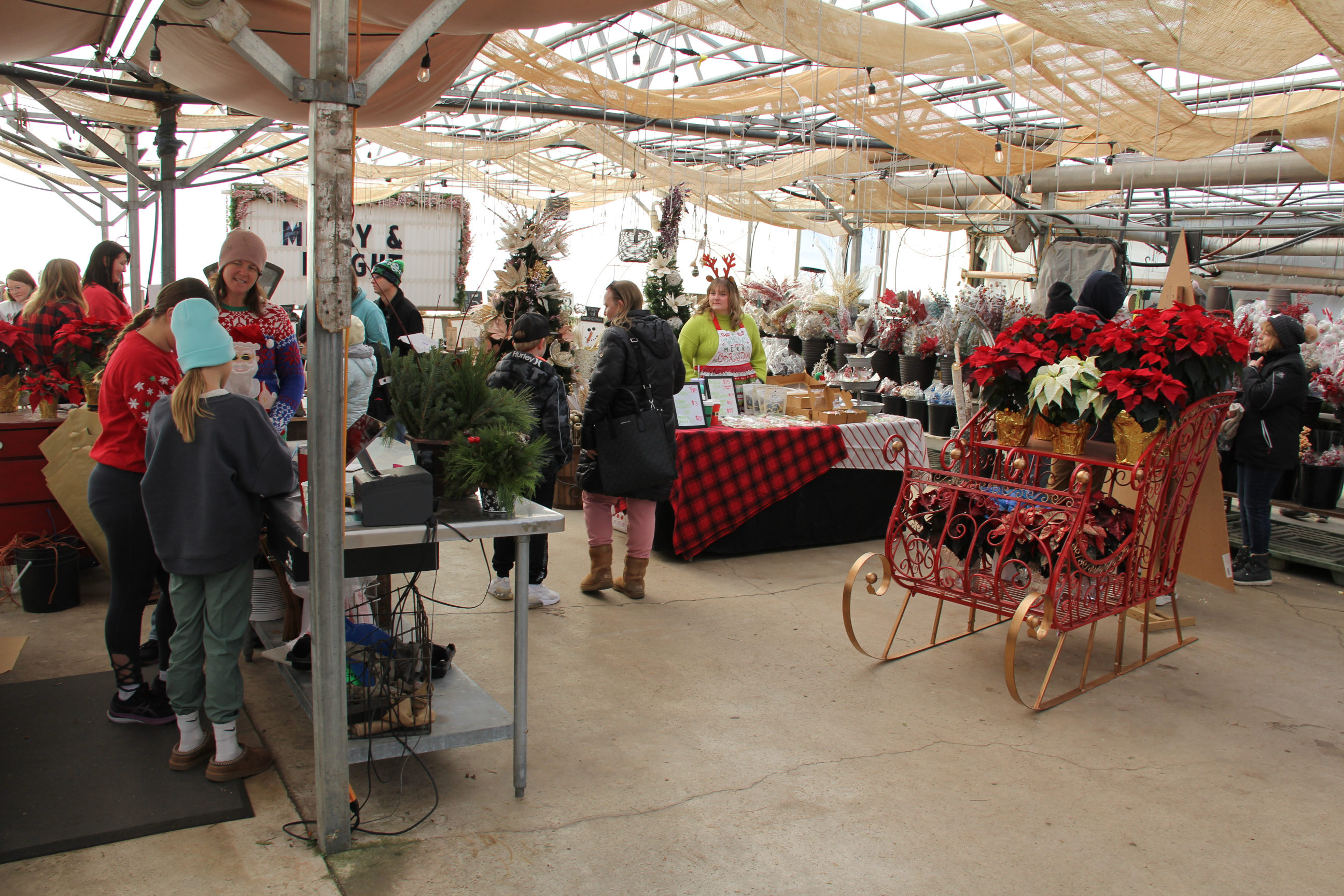
Vendors ringed the greenhouse, peddling sweet treats, holiday décor, cleverly-packaged books and more.
Everything inside the greenhouses was decidedly festive. (Minnesota Prairie Roots copyrighted photo November 2024)
And while I could have enjoyed complimentary popcorn and a hot drink as I wandered among the goods, poinsettias and more, I opted not to given I had my camera in hand. Folks shopped and chatted and smiled. Lots of smiles.
Santa, between family photo shoots. (Minnesota Prairie Roots copyrighted photo November 2024)
I waited inside a second greenhouse as families climbed into a sleigh for photos with Santa. I wanted a photo of Santa only. No need for me to pose with him.
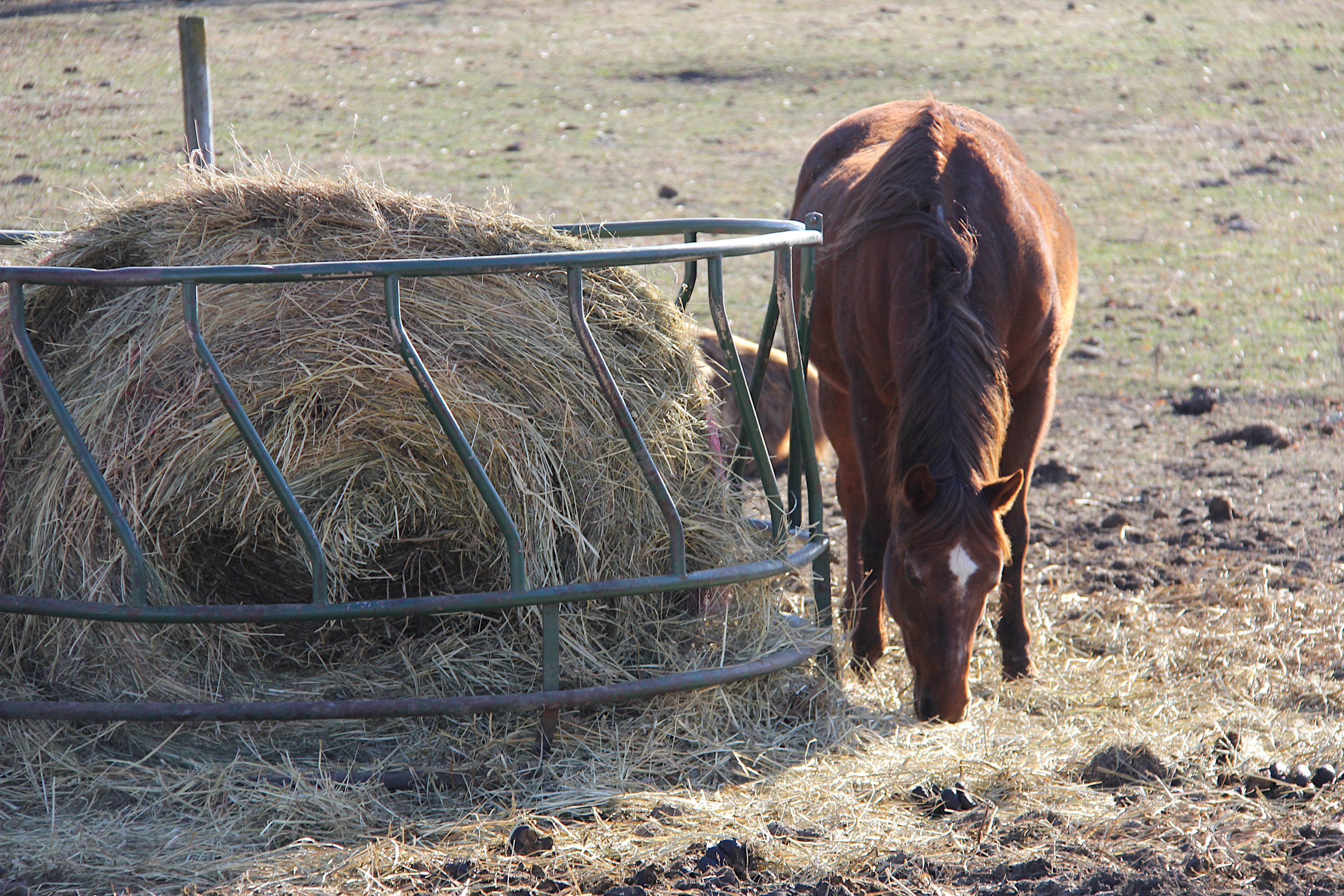
I delighted in seeing this horse and a few cattle at the farm. (Minnesota Prairie Roots copyrighted photo November 2024)
And then it was back outside for a look at the Christmas tree selection. I prefer a scraggly Charlie Brown tree to perfectly-shaped. But I didn’t find that at Souba Greenhouse. What I discovered instead was the spirit of the holiday on a piece of land that took me back in time to the farm. There’s comfort in that, in stepping onto a farm yard complete with barn, silos and pole sheds, a noisy tractor, lounging cattle and a horse munching hay. This felt very much like “Christmas on the Farm” to this farm-rooted girl.
I created this Thanksgiving display in a stoneware bowl. (Minnesota Prairie Roots copyrighted file photo)
GRATITUDE. It’s a word that gets tossed around a lot this week as we observe Thanksgiving. And that’s good as we all need to pause, reflect and focus on reasons to feel thankful.
Health and family often top that list. And I’m staying in that lane of feeling especially grateful this year for restoration of my health and for my dear family—my husband, three adult children, two grandchildren and sons-in-law. And the soon-to-be-born second grandson.
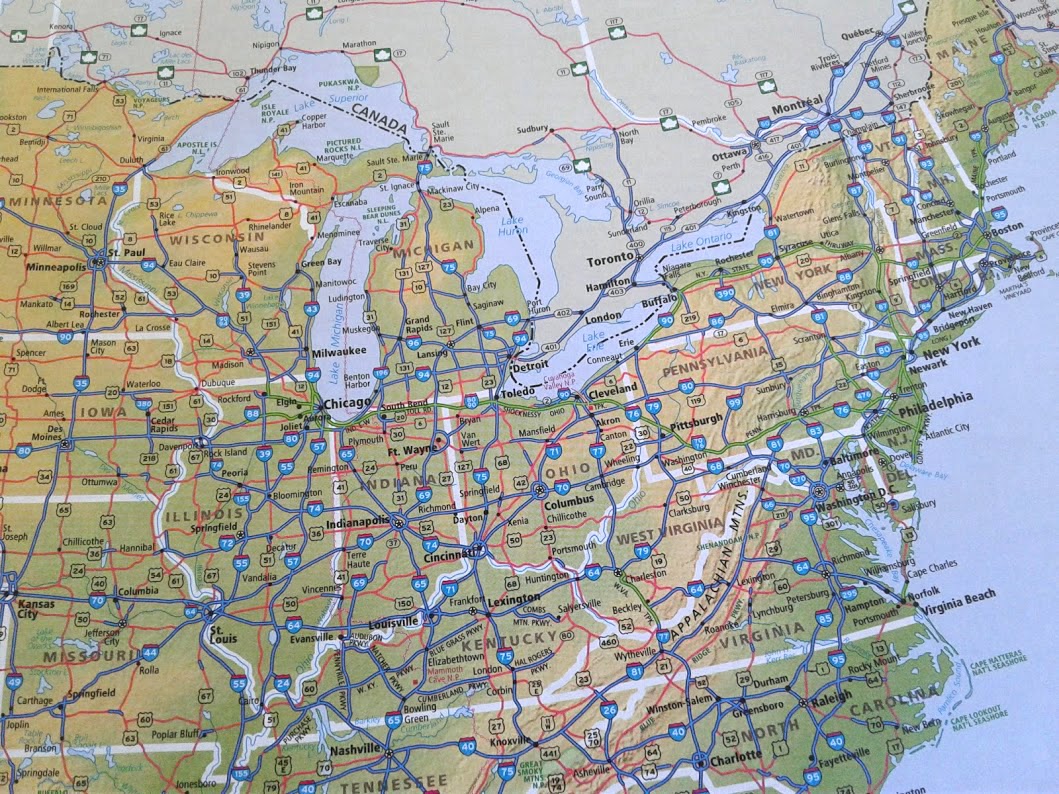
This map shows the geographical distance separating my family. (Minnesota Prairie Roots copyrighted file photo)
While my core family is scattered from Boston to eastern Wisconsin to Minnesota, we are never far apart, thanks to smartphones. So, yes, this mom and grandma, who once lived in the days of no phone service (not even a landline) and of typewriters, is especially grateful for technology that allows us to stay easily connected.
Still, that does not make up for in-person time together as a family. It doesn’t happen often that we are together. But in August, we were. All of us. For the annual Helbling family reunion. If ever my mama’s heart was full and happy, it was then. The son actually spent several weeks in Minnesota after flying in from Boston for the international unicycling convention in Bemidji and then staying until the reunion. To have that lengthy time with him, whom I typically only see at Christmas, was beyond wonderful. Technology allowed this extended stay as he could work remotely, although he did complain about my slow internet speed.
A sampling of some of the exercises I did while in vestibular rehab therapy at Courage Kenny, Faribault, from April to September 2023. (Minnesota Prairie Roots copyrighted file photo 2023)
And then there’s my health. This past year marked the year I reclaimed my life after spending 2023 dealing with issues caused by long haul COVID. I spent six months in vestibular rehab therapy to retrain my brain. I learned to feel comfortable walking without feeling unbalanced. I learned to manage sensory overload (which remains a residual problem). And much more. I shall be forever grateful to my healthcare team, specifically my physical therapist Ryan, and my family for getting me through an incredibly difficult health challenge. My symptoms were debilitating. Few understood then and few understand now what I experienced.
But because of that experience, I’ve been able to encourage and support others who are in the throes of debilitating long haul COVID. I understand. I empathize. And my compassion for them runs deep. This is real and life-changing.
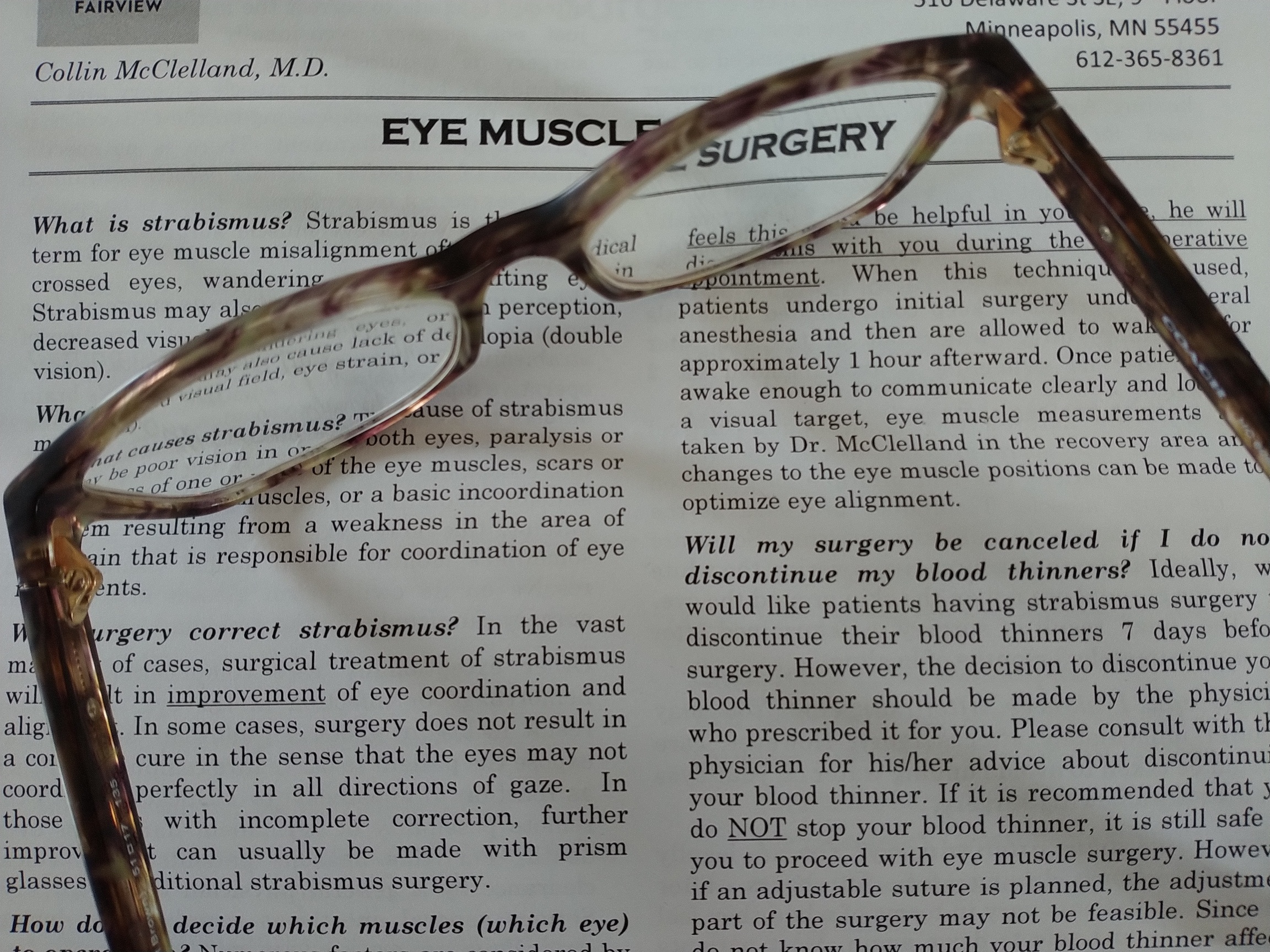
Information about the eye muscle surgery I underwent in Minneapolis under the care of a neuro ophthalmologist. I had this same surgery performed at age four. These are my pre-surgery eyeglasses, without mega prisms. (Minnesota Prairie Roots copyrighted file photo 2023)
In January, I underwent bilateral strabismus surgery to realign my eyes. Although that surgery failed (as it does up to 20 percent of the time), I remain grateful for one thing—my vision. It’s certainly far from perfect. I still see double if I’m not wearing my prism-heavy prescription eyeglasses. I struggle to tell if photos I am taking or processing are clear. But the bottom line is that I can see. And that is reason to feel grateful. I. Can. See.
This tag of reasons to feel grateful hung on a Gratitude Tree outside the Northfield Public Library in 2019. (Minnesota Prairie Roots copyrighted file photo)
In all of the challenges of life, reasons exist to feel thankful. It’s easy enough to fall into complacency and take good health, family, friends and life in general for granted. Don’t. None of those are a given. No matter what, we can choose to feel grateful, even in the midst of struggles. Something positive can come from negative. Life brims with reasons to feel grateful. I am.
Happy Thanksgiving, dear readers! I am grateful for all of you, for your support, for your friendship, for the light you shine in my life.
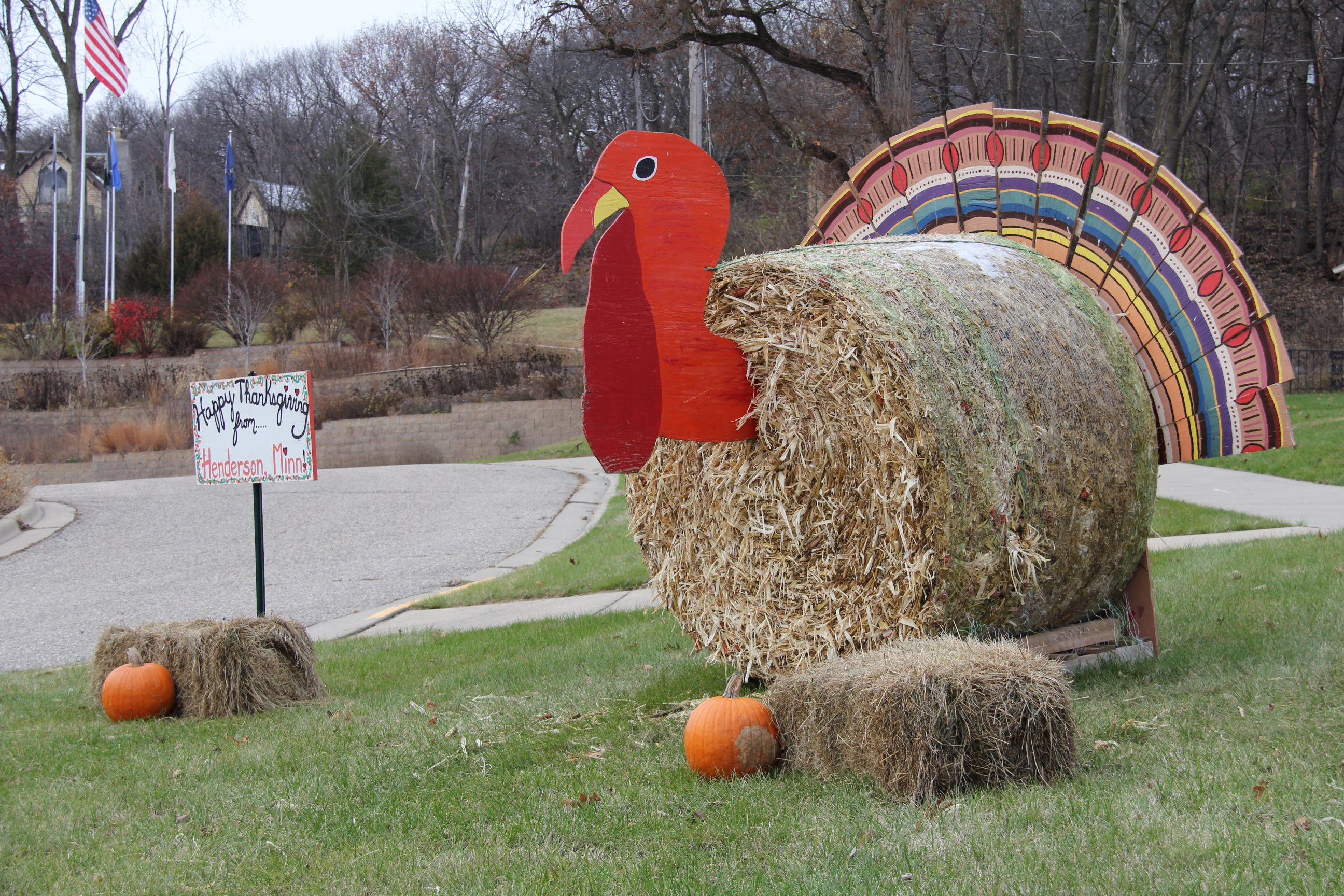
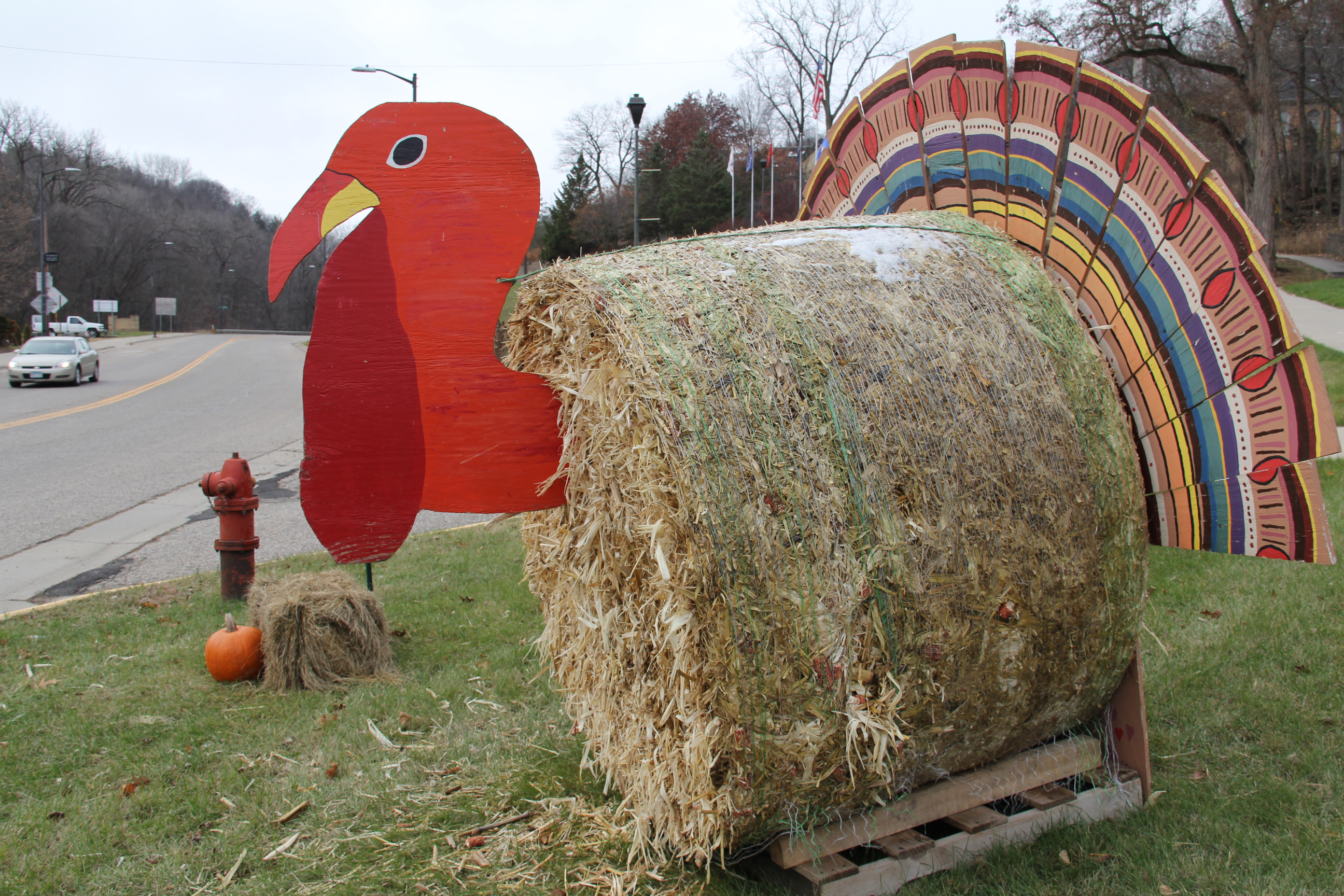
A delightful handcrafted turkey in Henderson, Minnesota. (Minnesota Prairie Roots copyrighted photo November 2024)
INFLATABLE MASS-PRODUCED holiday décor abounds. So when I saw an over-sized handcrafted turkey positioned outside a small town museum, I took notice. And stopped to photograph it.
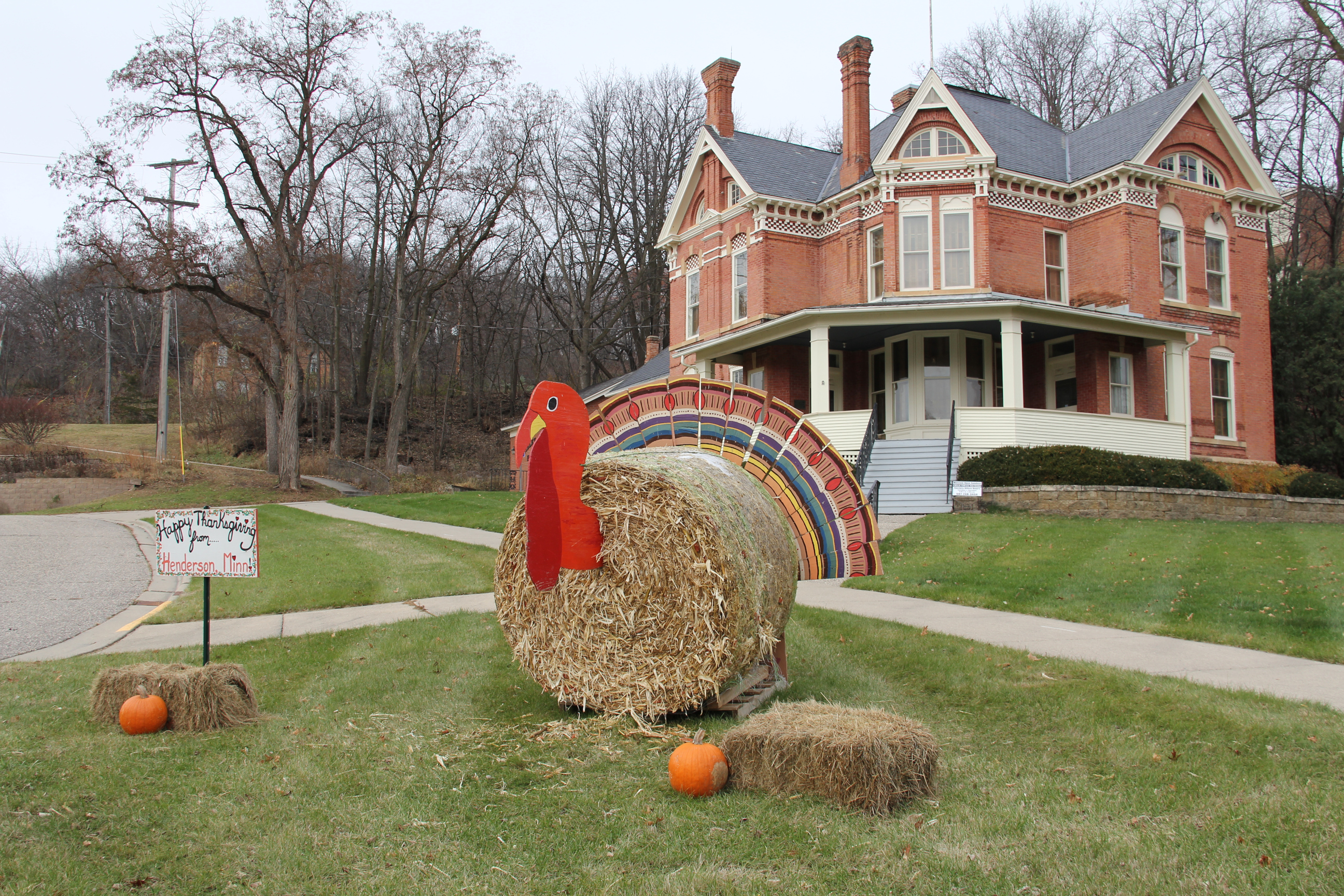
The Thanksgiving scene that drew my attention near the historical society and museum in Henderson. (Minnesota Prairie Roots copyrighted photo November 2024)
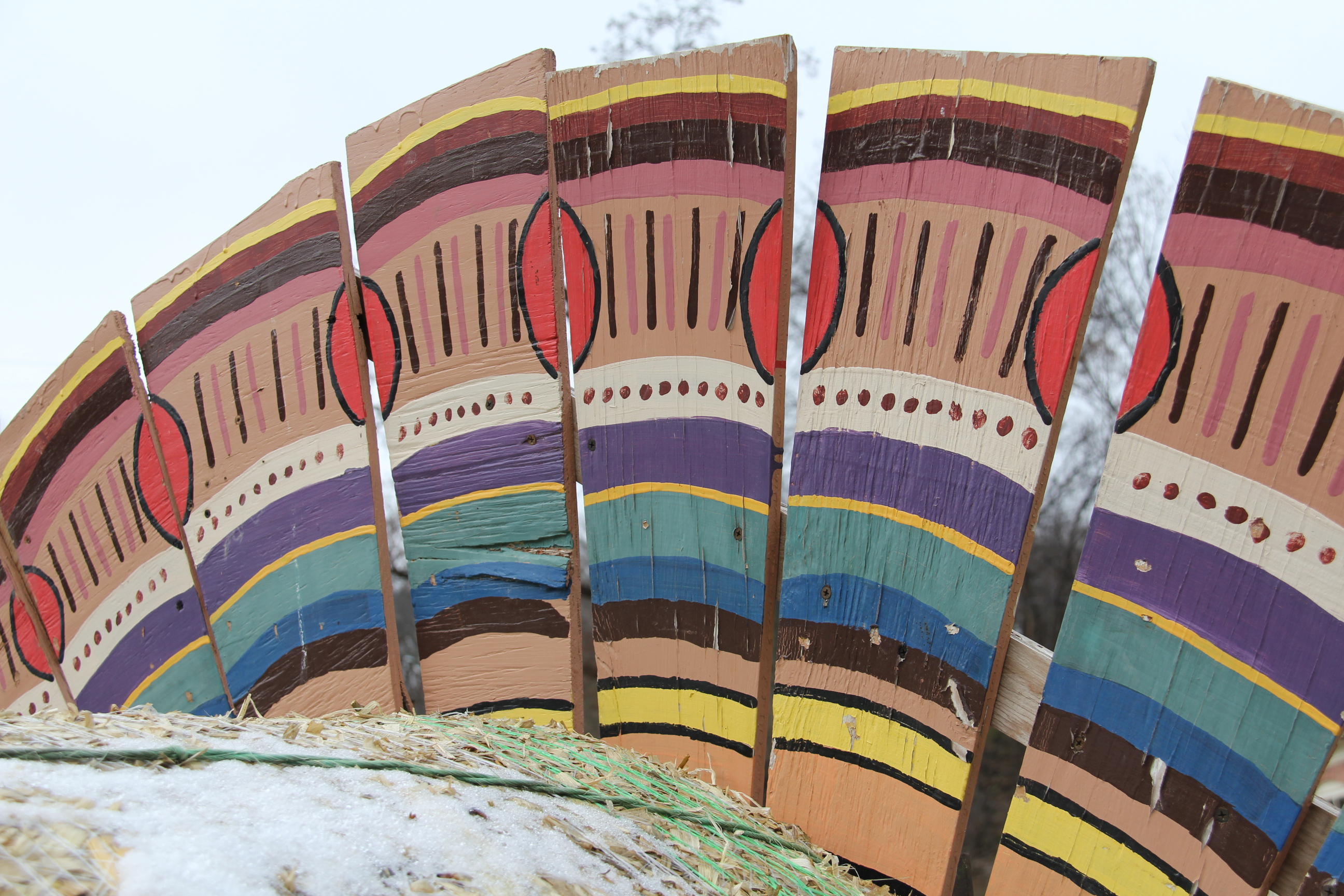
I appreciate that someone took the time to create this turkey with plywood, paint and a single large bale. The turkey truly grabs your attention on the west end of Henderson, just below the hill from the Sibley County Historical Society and Museum.
Vehicles pass right by the turkey on highway 19. (Minnesota Prairie Roots copyrighted photo November 2024)
Anyone passing by on Minnesota State Highway 19, a main thoroughfare that runs right through the heart of this Minnesota River town, will certainly notice the colorful lone turkey. And, if they’re like me, they’ll even stop for photos and a closer look.
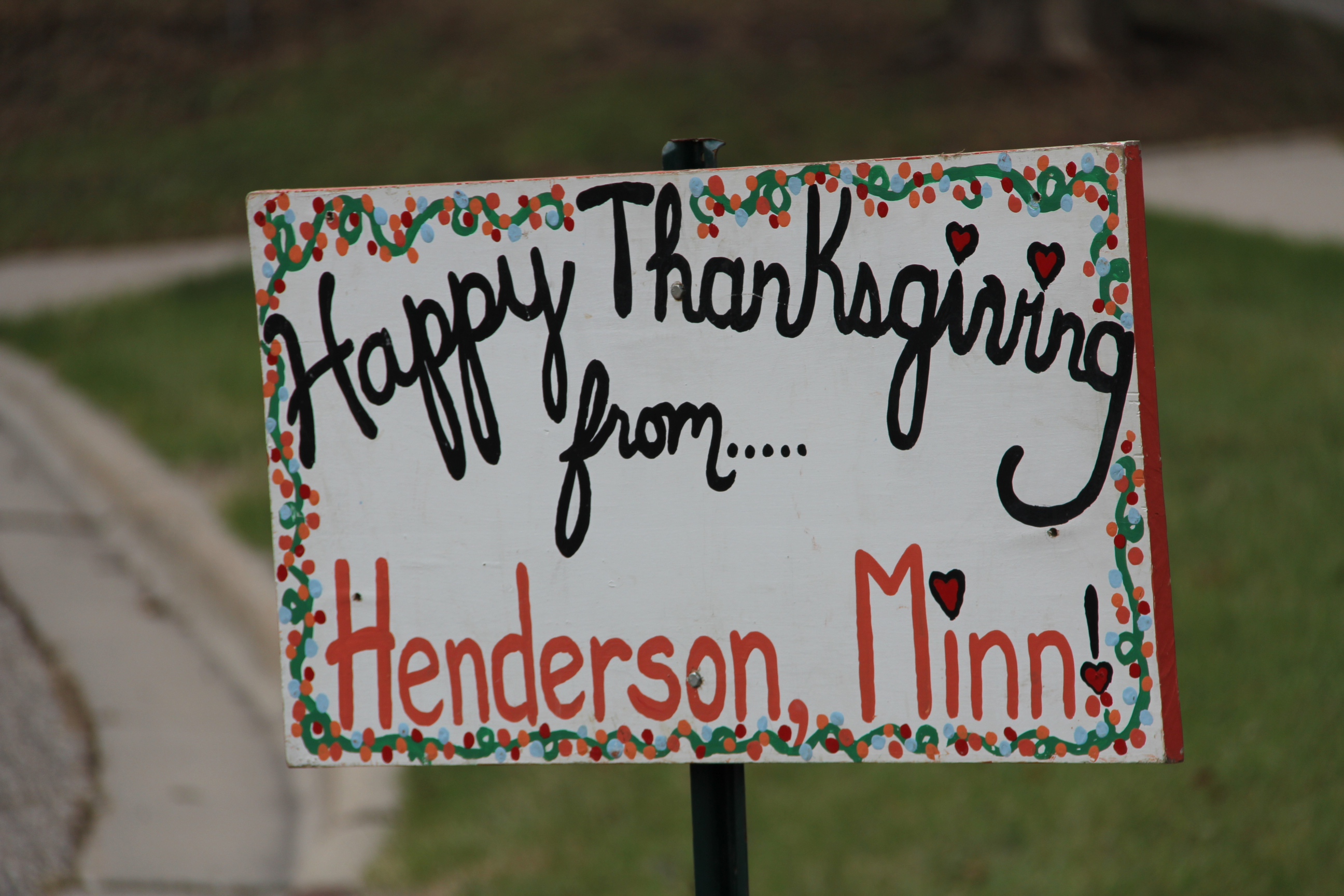
A detailed, festive message next to the turkey. (Minnesota Prairie Roots copyrighted photo November 2024)
The turkey and “Happy Thanksgiving from Henderson Minn!”, complete with red hearts dotting the “i’s” and marking the exclamation point, made me smile. And that’s a good thing. I appreciate things that make me smile.
A closeup of those colorful turkey feathers which clearly took time to cut, paint and attach to the bale. (Minnesota Prairie Roots copyrighted photo November 2024)
During this Thanksgiving week, I hope you find many reasons to smile as you consider all that is good and wonderful in your life—friends, family, community.. Pause to give thanks for your many blessings from food to health to shelter to freedom.
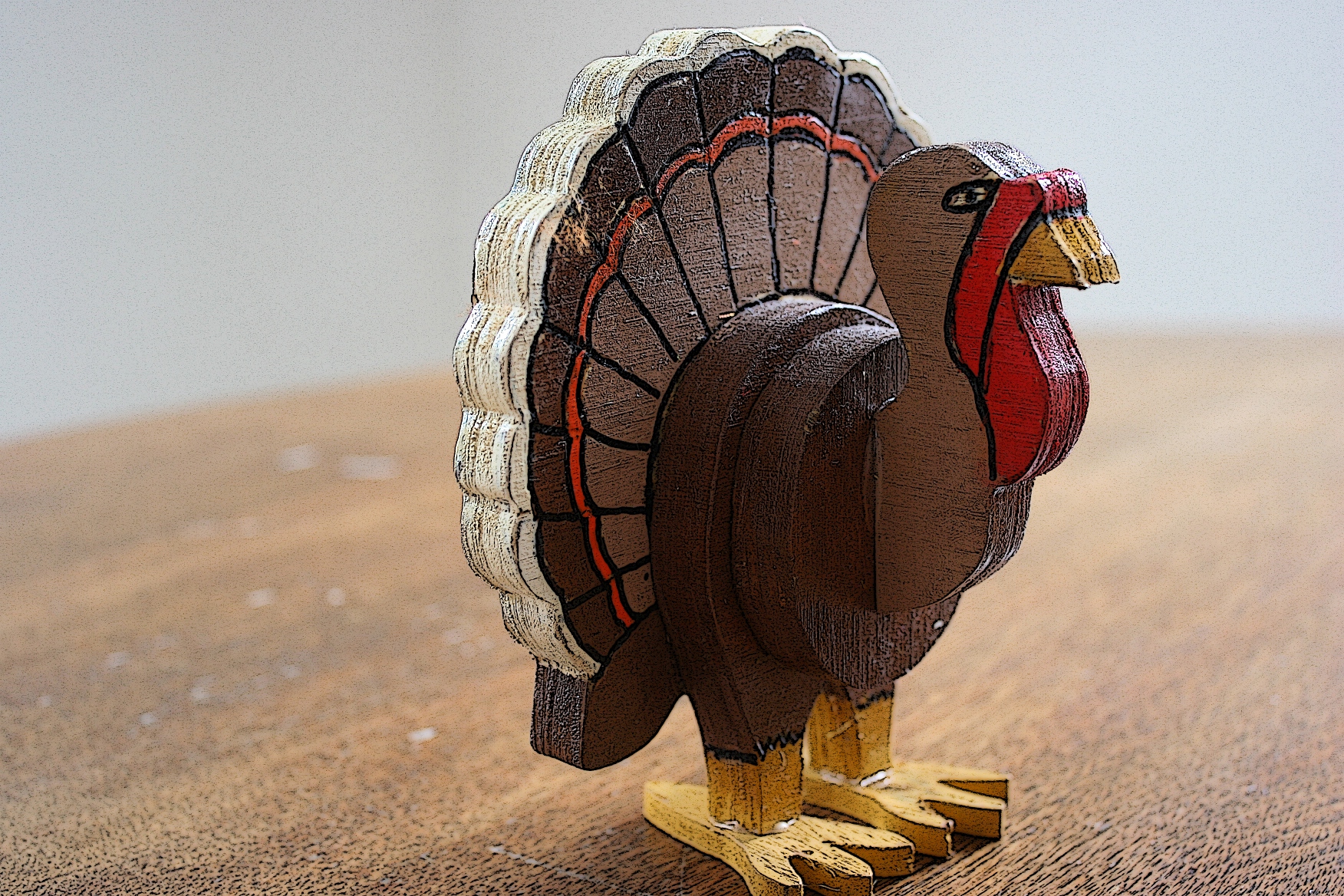
A much smaller handcrafted turkey from my collection. I bought this at a thrift store. (Minnesota Prairie Roots copyrighted file photo)
And if you see a handcrafted holiday decoration like Henderson’s turkey, take notice, appreciate and give thanks for the kind-hearted soul who shared their talents and made you smile.
I photographed this tag hanging on The Gratitude Tree in the neighboring city of Northfield in 2019. I love this idea of publicly expressing thankfulness, including for community. (Minnesota Prairie Roots copyrighted file photo July 2019)
WHEN CONSIDERING GRATITUDE, as we do this week, we usually look inward. But I want to look outward and share six reasons why I feel grateful to live in Faribault.
This is my all-time favorite image showing local diversity. Here children gather to break a pinata during an international festival at Faribault’s Central Park. (Minnesota Prairie Roots copyrighted file photo 2012)
PEOPLE make a community. I knew no one when I moved here as a newlywed in 1982. But I was welcomed and have since formed deep friendships in Faribault. I can walk into a business, attend an event, or simply be out and about and run into someone who knows me. Conversation often follows.
Recently I attended a 75th anniversary open house at Burkhartzmeyer Shoes, a third-generation family owned shoe store in downtown Faribault. After purchasing athletic shoes, I headed to a back room for complimentary refreshments. A small group of us sat there talking and laughing, simply enjoying each other’s company. I felt like I was inside a small town cafe drinking coffee and conversing. It felt that down-home comfortable.
But I can feel just as comfortable with strangers, including Adolfo, whom I met in October while walking in Central Park. Adolfo moved to America from Venezuela, a country he fled because of Communism and violence. On this morning, he was pushing his one-year-old grandson in a stroller. It’s part of their daily routine. Darling Milan drew me to his grandpa, where I connected with Adolfo on a personal level and heard his story. I feel grateful for every opportunity I have to meet Faribault’s newest immigrants and hear their stories, stories often laced with hardship and hope. To live in a city as diverse as Faribault is truly a gift.
Kids help at the Faribault CommUnity Thanksgiving Dinner by, among other things, creating festive placemats.(Minnesota Prairie Roots copyrighted file photo November 2017)
Faribault overflows with CARING INDIVIDUALS AND ORGANIZATIONS striving to help others: the Community Action Center, Rice County Habitat for Humanity, St. Vincent de Paul, HOPE Center, Ruth’s House, IRIS (Infants Remembered in Silence), the Salvation Army, Operation: 23 to 0… I’ve received support while dealing with some especially challenging life events. When you experience that community love and care first-hand, you understand the true meaning of community.
Once again this Thanksgiving, volunteers will serve a free CommUnity Thanksgiving Dinner as they have for the past 30 some years. I’ve previously helped deliver those holiday meals. Every Tuesday, a free meal is also available at the Community Cafe. With Christmas approaching, I’m part of a bible study group coordinating the annual Angel Tree (gift giving) at my church. I could go on and on with an endless list of how people are helping people in my community. Hearts are loving, spirits giving.
A 1950s scene along Faribault’s Central Avenue is shown in this downtown mural.(Minnesota Prairie Roots copyrighted file photo)
I am especially grateful to live in a community which values THE ARTS. The Paradise Center for the Arts in downtown Faribault centers our arts scene. Every time I tour a gallery exhibit, attend a play or otherwise engage in the arts, I feel grateful to live here. I’ve even contributed to the local arts scene by publicly reading my poetry. I love attending summer concerts in the park and concerts inside the historic Cathedral of Our Merciful Saviour. I appreciate the history-based murals that color our downtown. I grew up in rural southwestern Minnesota with minimal access to the arts, meaning my gratitude for the arts in Faribault runs deep.
I treasure Buckham Memorial Library, just blocks from my home. (Minnesota Prairie Roots copyrighted file photo 2022)
My thankfulness for BUCKHAM MEMORIAL LIBRARYalso runs deep, for the very same reason. I grew up in a small farming town without a library. And I love to read. That we now also have a volunteer run used bookstore, Books on Central (benefitting the Rice County Area United Way), notches my gratitude level even higher.
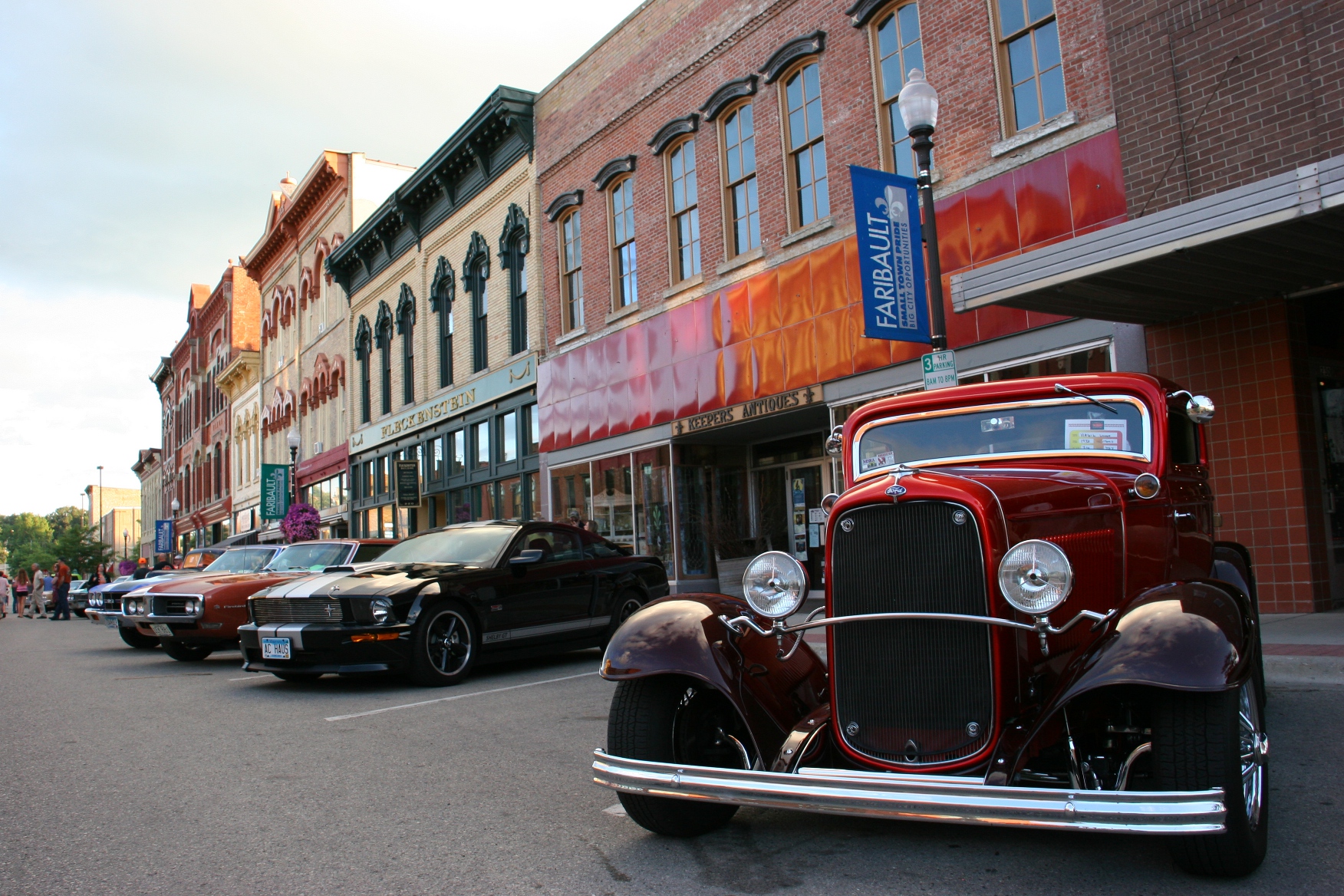
A snippet of Faribault’s historic buildings, photographed during a monthly Car Cruise Night.(Minnesota Prairie Roots copyrighted file photo 2016)
The bookshop is located in the heart of our HISTORIC DOWNTOWN, another reason I feel grateful to live in Faribault. My community cares about preserving historic buildings. I love old architecture. There’s nothing quite like walking among vintage vehicles along Central Avenue during Car Cruise Night as the sun sets at the end of a summer day. Beautiful.
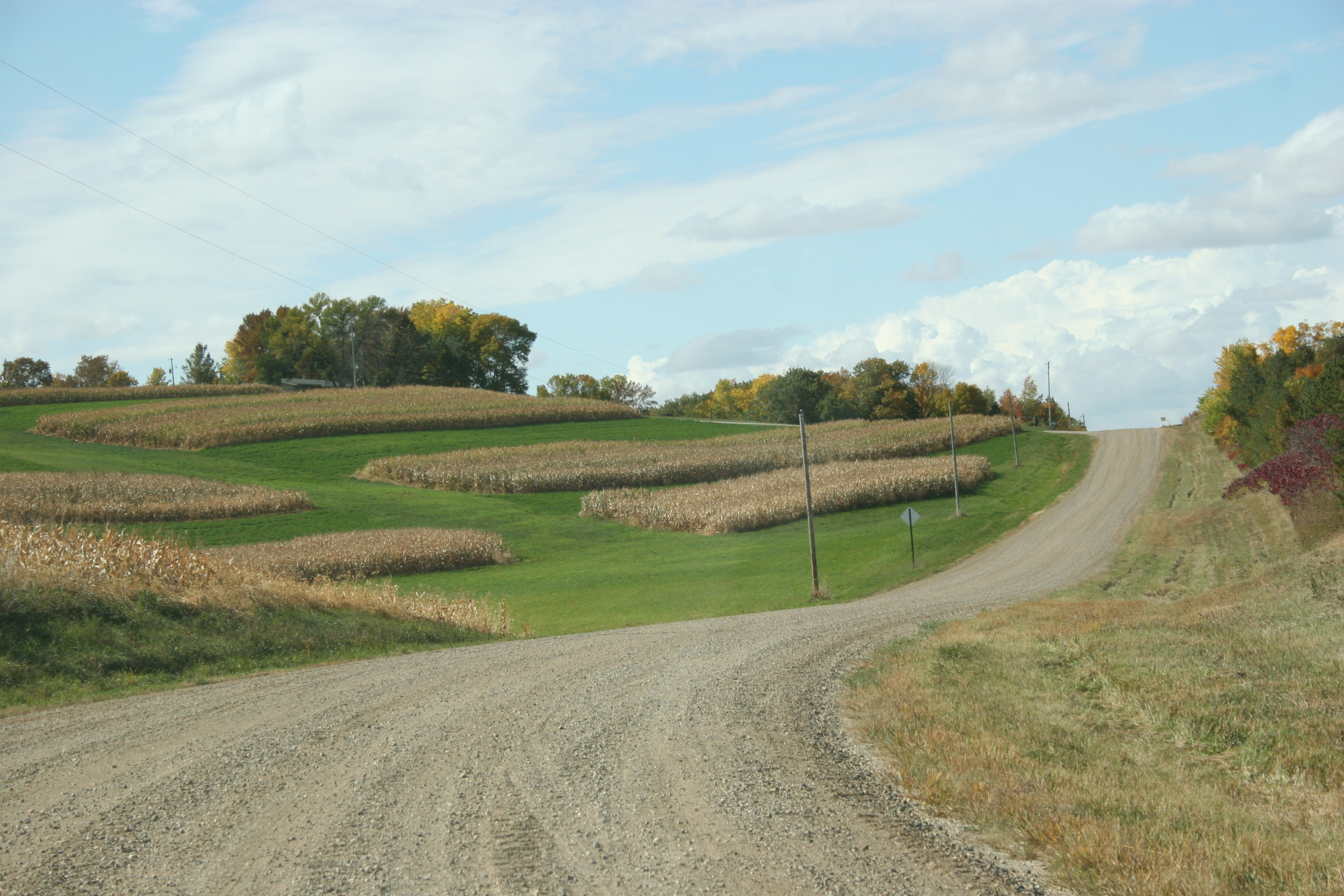
In just minutes, I can reach the countryside, where I love to travel gravel roads. This road winds among the lakes and farm fields west of Faribault. (Minnesota Prairie Roots copyrighted file photo October 2022)
Faribault also offers incredible NATURAL BEAUTY in a diverse landscape of woods and prairie, hills and valleys, ravines and bluffs. It’s so different than my native prairie. Admittedly, it took me a while to “get used to” all the trees when I moved here 42 years ago. I still mostly have no sense of direction on roads and streets that don’t run prairie grid straight. But I love to walk through city parks, along city trails, at River Bend Nature Center, on the campus of the Minnesota State Academy for the Deaf… And within a short drive of my home, I am immersed in the countryside.
A view of The Gratitude Tree outside the Northfield Public Library in 2021. People wrote their reasons for feeling thankful on a blank tag. Those were then hung on the tree. I’d like to see a Gratitude Tree in every community once a year. (Minnesota Prairie Roots copyrighted file photo May 2021)
This list of a half dozen reasons to feel thankful for the place I call home just touches the surface of why I am grateful to live in Faribault. It’s not utopia, certainly. Nowhere is. But today I want to pause, consider and acknowledge specific reasons for feeling thankful that Faribault is my home. I hope you’ll do the same, wherever you live.
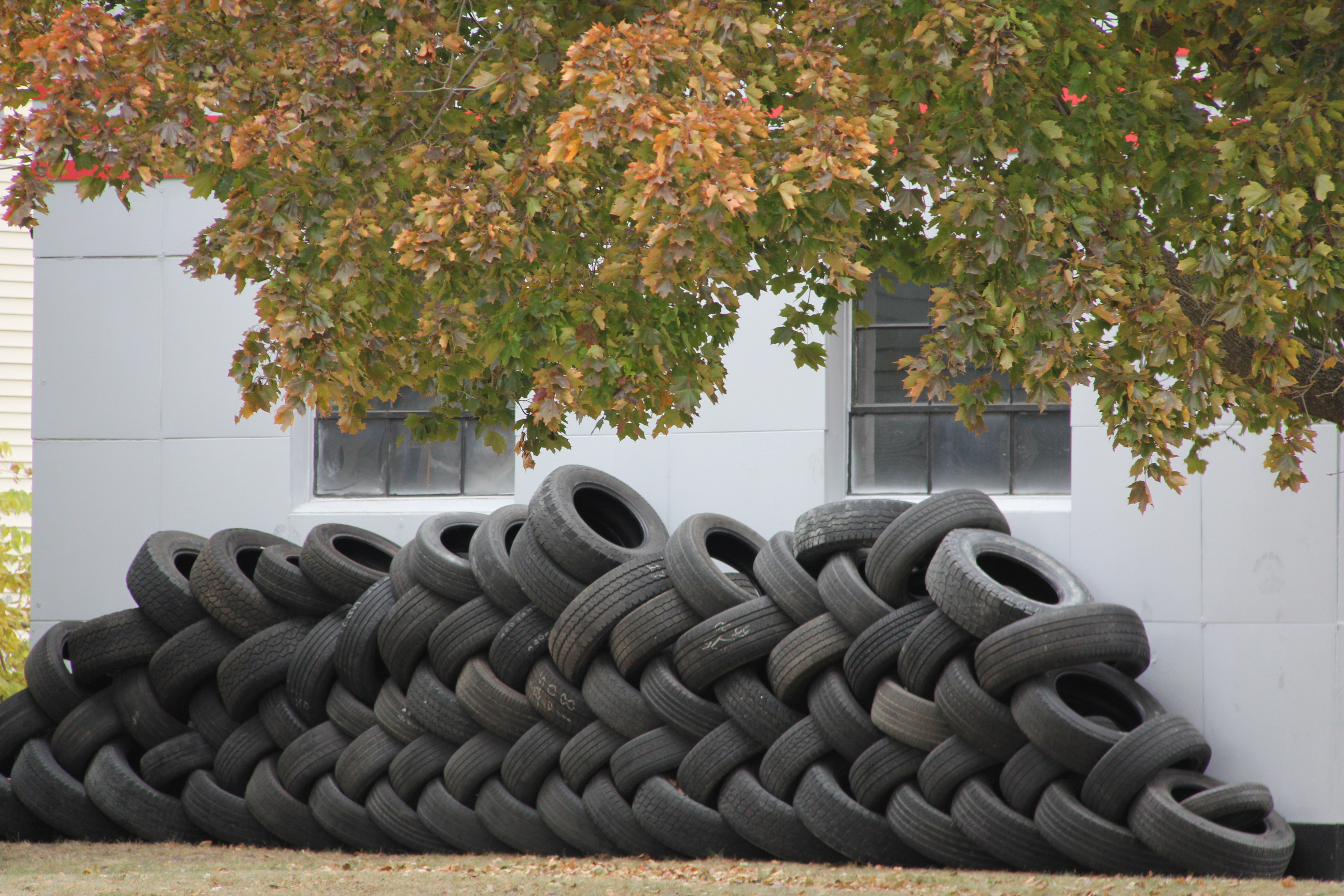
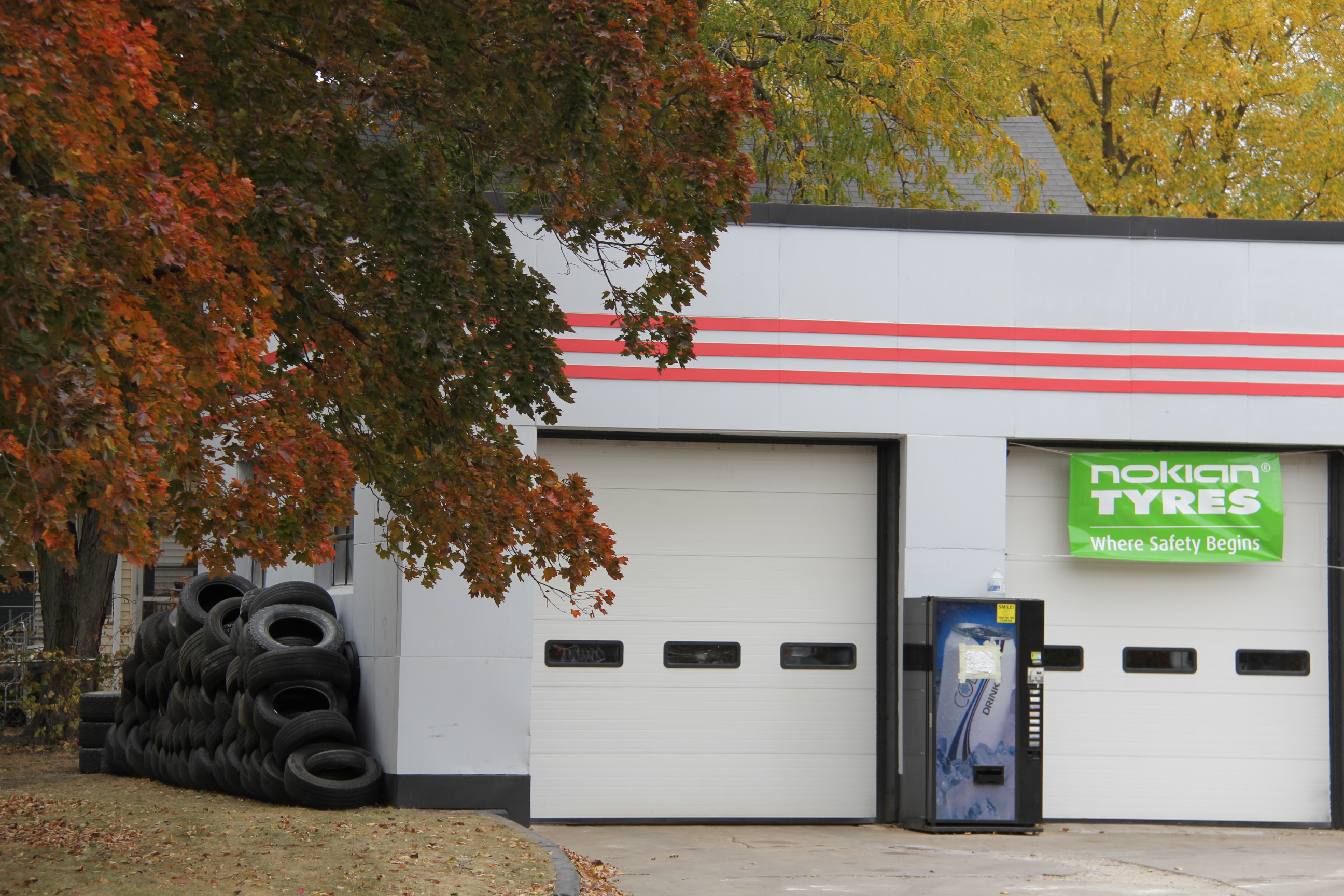
Art, as I see it. (Minnesota Prairie Roots copyrighted photo October 2024)
TIRES AND ART. Typically the two would not intertwine. But that thought changed when I spotted a stash of used tires on the side of Vintage Auto & Glass about a month ago. I noticed how the bottom three layers wove together, almost like a braid. But then the top layers were strewn haphazardly, as if the creator got bored and infused abstract into the pattern.
In all reality, this was not art at all to whoever placed the tires alongside the Faribault garage. This was simply a pattern that would keep the tires in place. At least that’s my guess.
This photo gives perspective on size and placement of the garage art. (Minnesota Prairie Roots copyrighted photo October 2024)
If any mechanics are reading this, I hope you appreciate that I appreciate the creative tire stacking. And even more, I appreciate your mechanical skills. As the wife of a long-time, semi-retired automotive machinist, I understand how hard you work to keep vehicles running. I understand the knowledge, skills and experience you bring to your work. I understand the patience needed in dealing with customers. I understand the time pressures. I understand the frustrations. I see the grease under your fingernails, the oil and dirt creasing your palms. You work hard to serve others.
And on this day, I see another side, that of a creative.
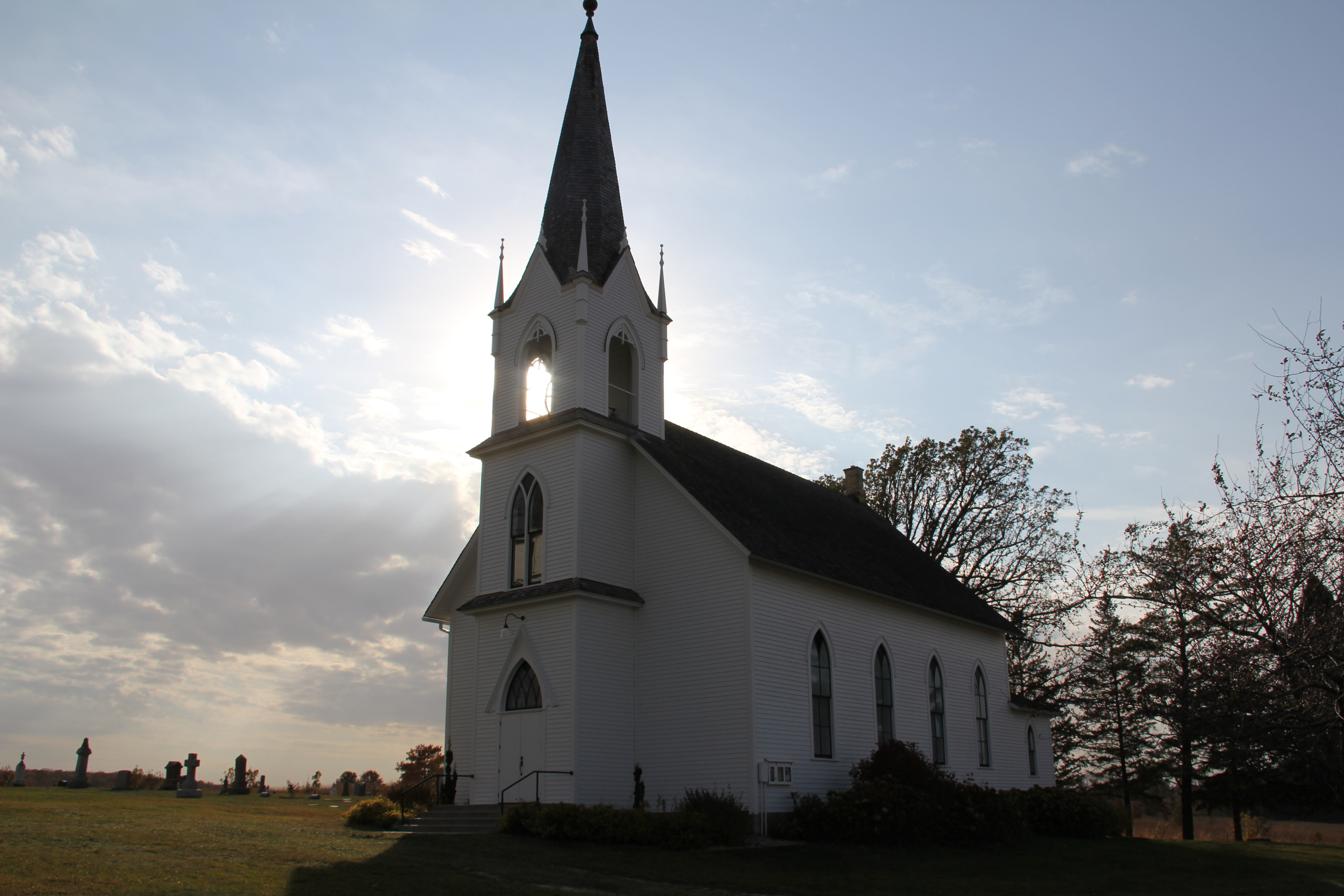
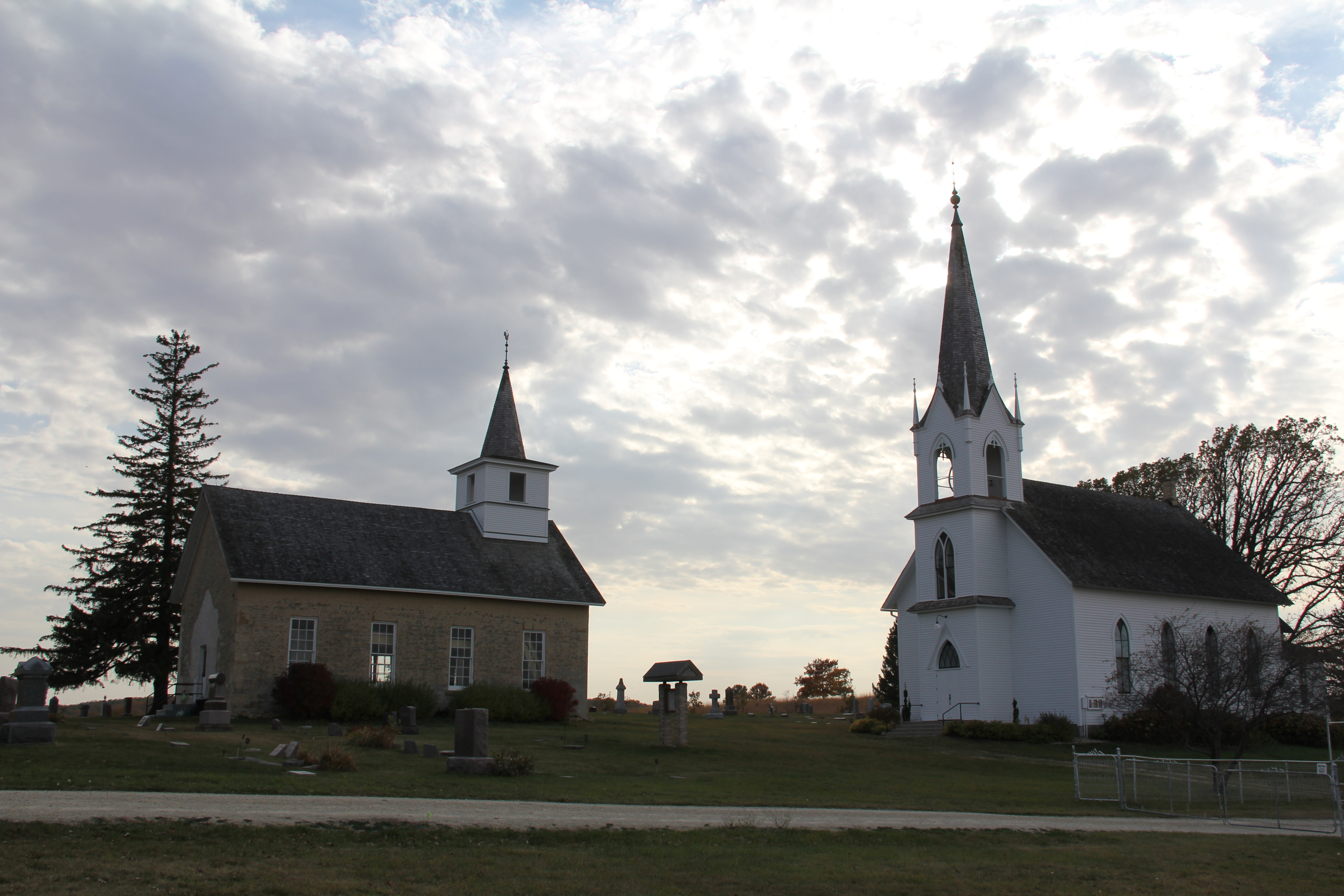
This wooden church was built in 1894 and sits directly across from the stone church. (Minnesota Prairie Roots copyrighted photo October 2024)
WHETHER YOU’RE A PERSON of faith or not doesn’t matter when it comes to appreciating a country church. Or, in the case of Valley Grove, churches. Plural.
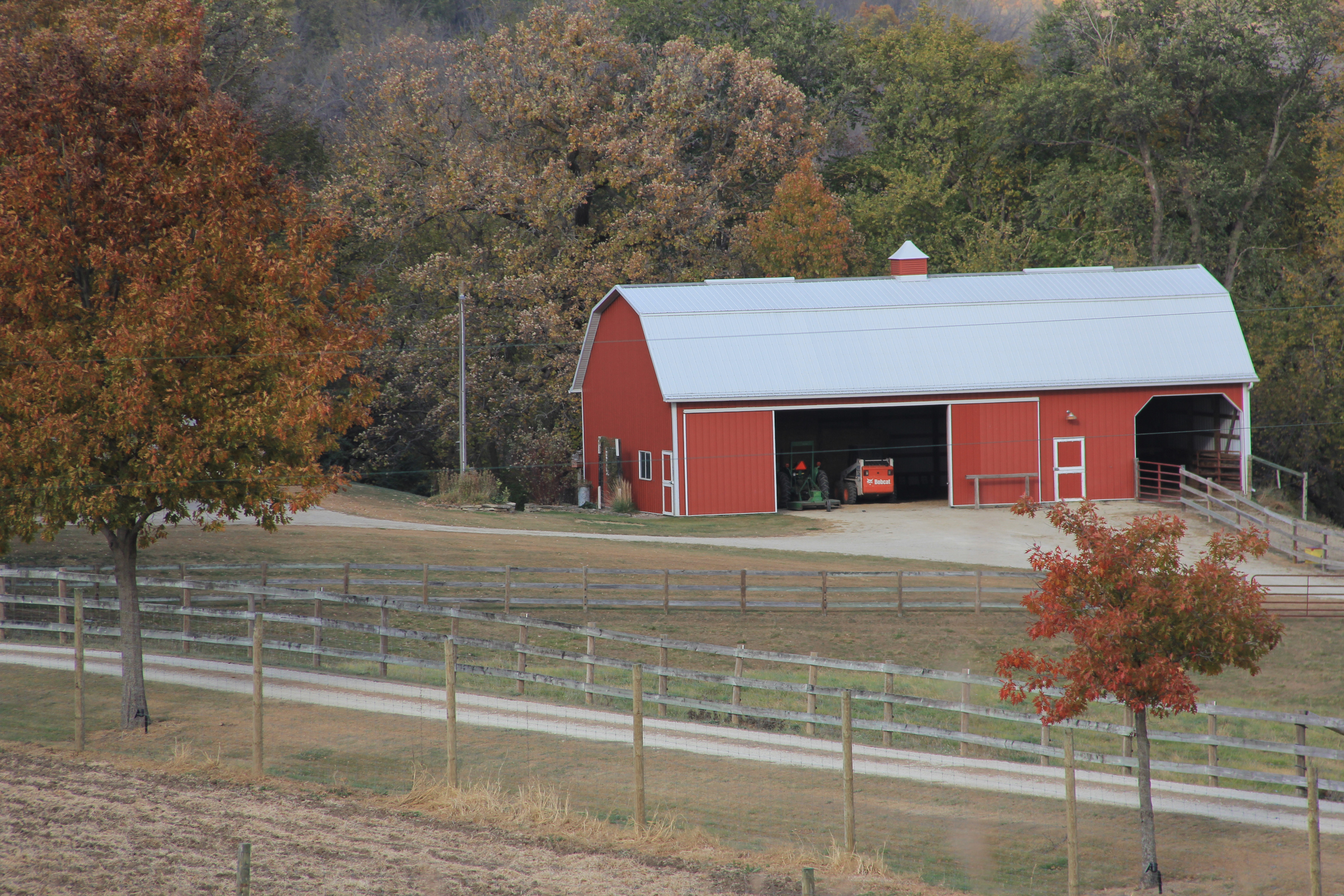
Just down the hill from the cemetery, this shed pops color into the rural landscape. (Minnesota Prairie Roots copyrighted photo October 2024)
Perched atop a hill near Nerstrand Big Woods State Park in eastern Rice County, these two churches, the cemetery, and surrounding prairie and oak savannas are a place that beckons me. I don’t know that I’ve found another rural church—and I’ve visited many in Minnesota—which holds such peaceful appeal.
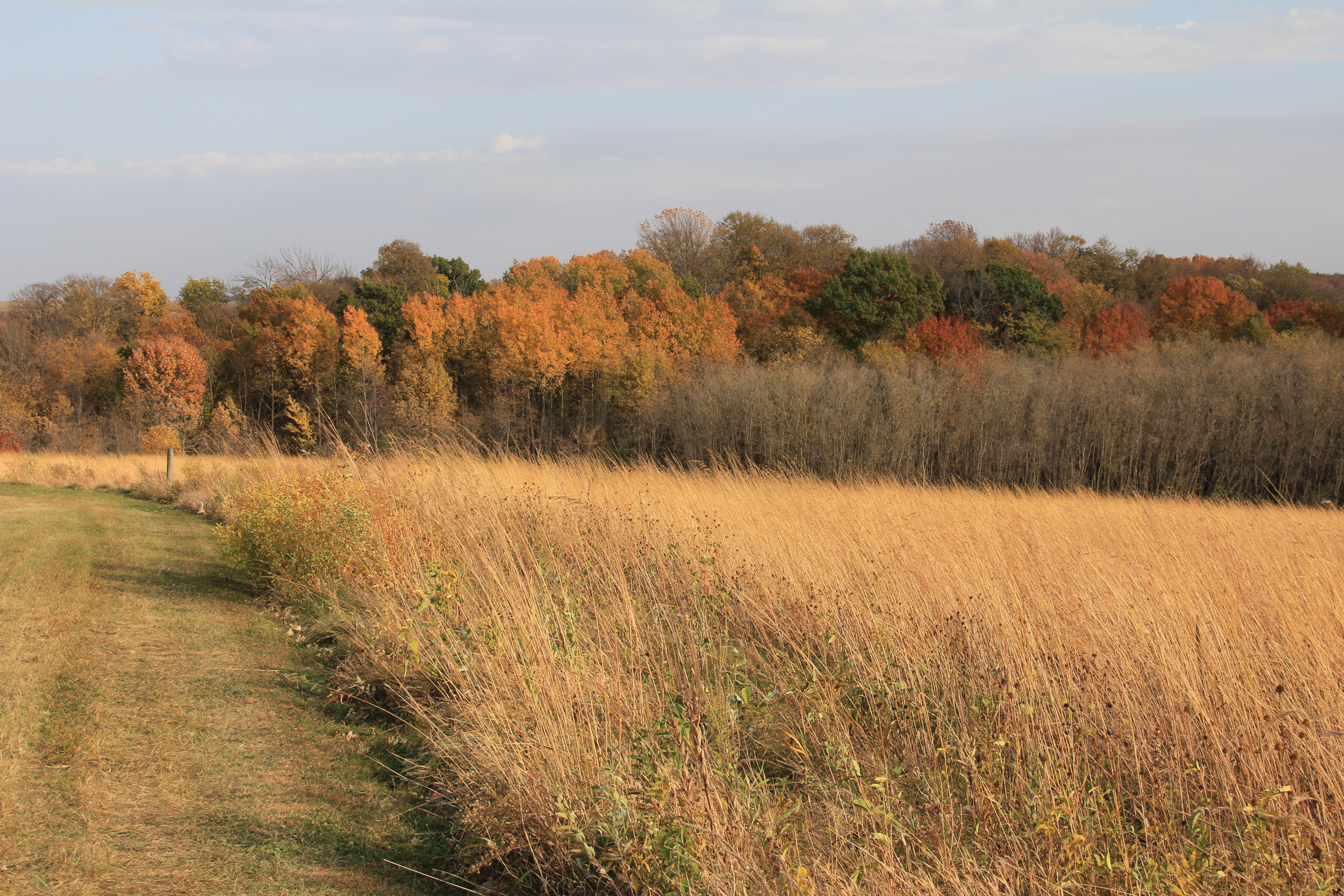
Photographed in October from the cemetery, oak and prairie savannas at Valley Grove. There are pathways through the 50 acres of land that are part of Valley Grove. (Minnesota Prairie Roots copyrighted photo October 2024)
The setting is decidedly bucolic, pastoral, whatever word you use to describe a scene that creates internal serenity. I feel such peace every time I set foot upon this land, look across the landscape of prairie and woods, surrounding fields and farm sites. Perhaps it’s my rural roots that connect me to Valley Grove.
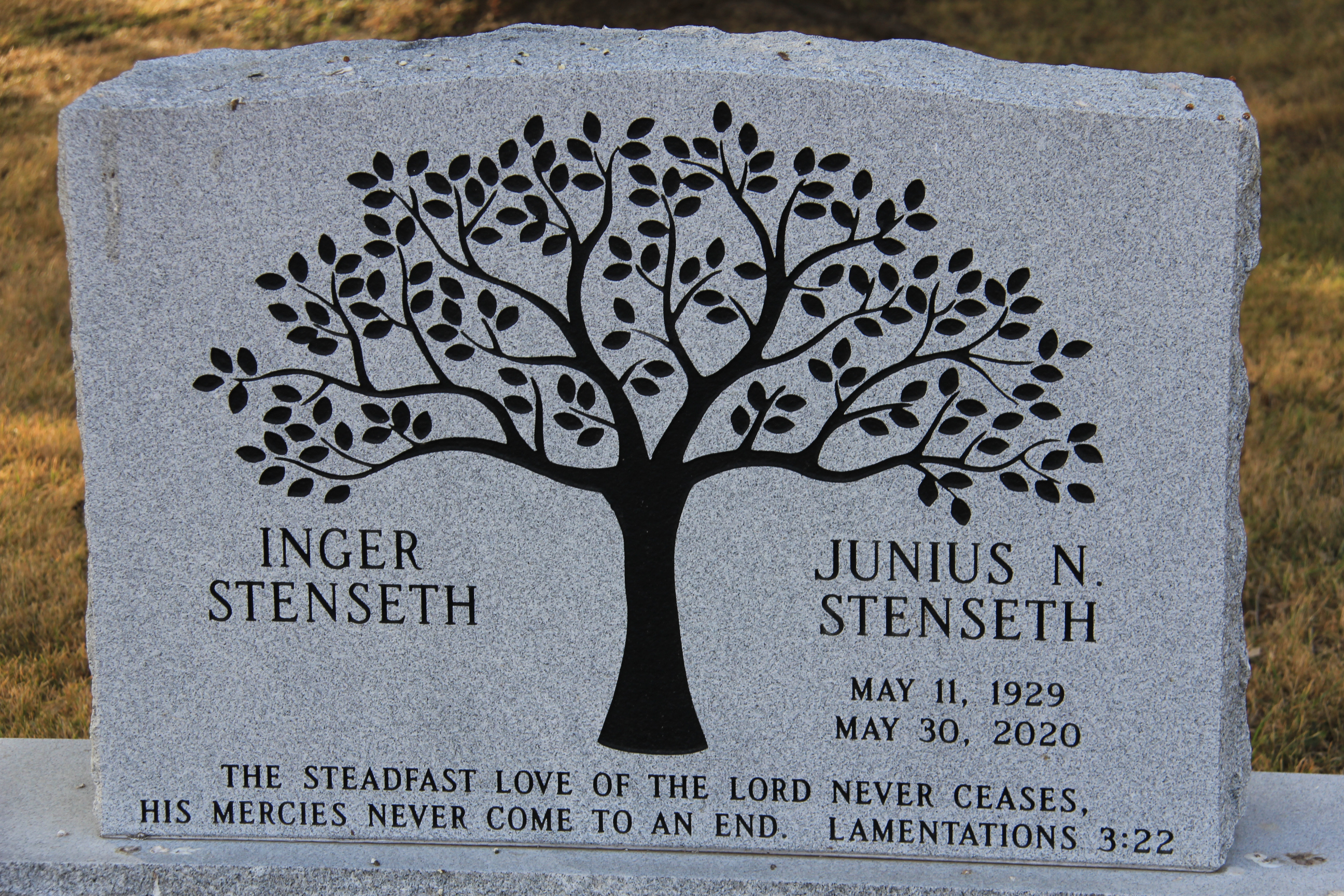
There are lots of Norwegian names on gravestones. (Minnesota Prairie Roots copyrighted photo October 2024)
I have no family connections here. Not even connections of heritage given my ancestors hail from Germany. The settlers who formed Valley Grove Lutheran Church arrived from Norway. Their imprint is here, especially in names upon tombstones in the cemetery.
The two beautiful and well-maintained churches of Valley Grove. (Minnesota Prairie Roots copyrighted photo October 2024)
Even though this congregation disbanded in 1973, these churches have not been abandoned. The Valley Grove Preservation Society cares for and maintains the two buildings. On the National Register of Historic Places, the stone church was built in 1862 and the clapboard church in 1894. Recently, a steeple, bell structure and other restorations were completed on the wooden church. The interiors are also well-maintained, as if the congregants remain.
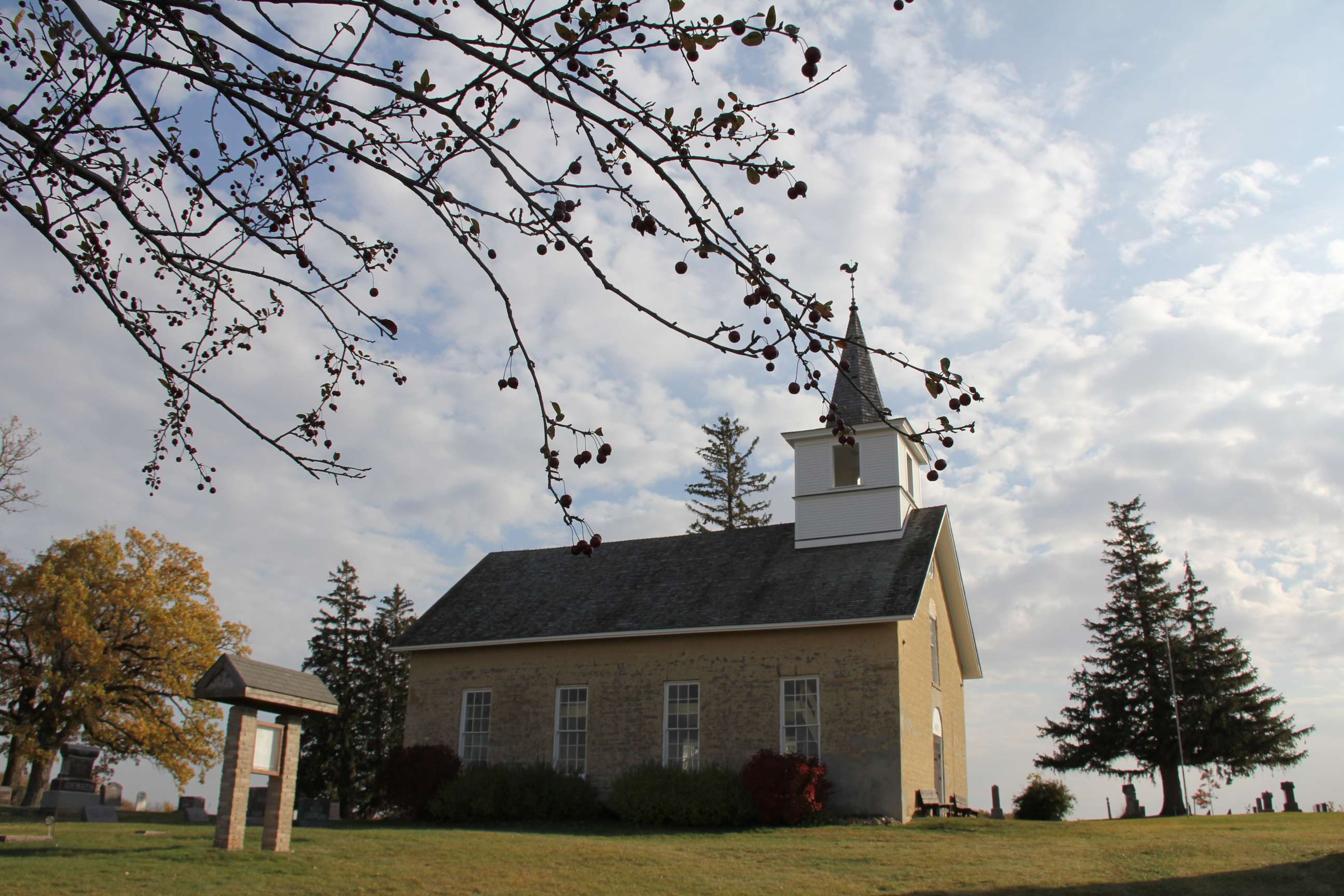
The stone church is used today as a reception and gathering space. (Minnesota Prairie Roots copyrighted photo October 2024)
Valley Grove is the site of weddings, family gatherings, occasional concerts and more, plus an annual fall country social and candlelight Christmas Eve service hosted by the Preservation Society. I’ve attended the social numerous times, but have yet to make the December 24 service. That’s at 10 p.m. with music beginning at 9:45 p.m. Winter weather sometimes forces cancellation of that event. Weeks before, a music-rich vespers service is set for 4 p.m. Sunday, December 8.
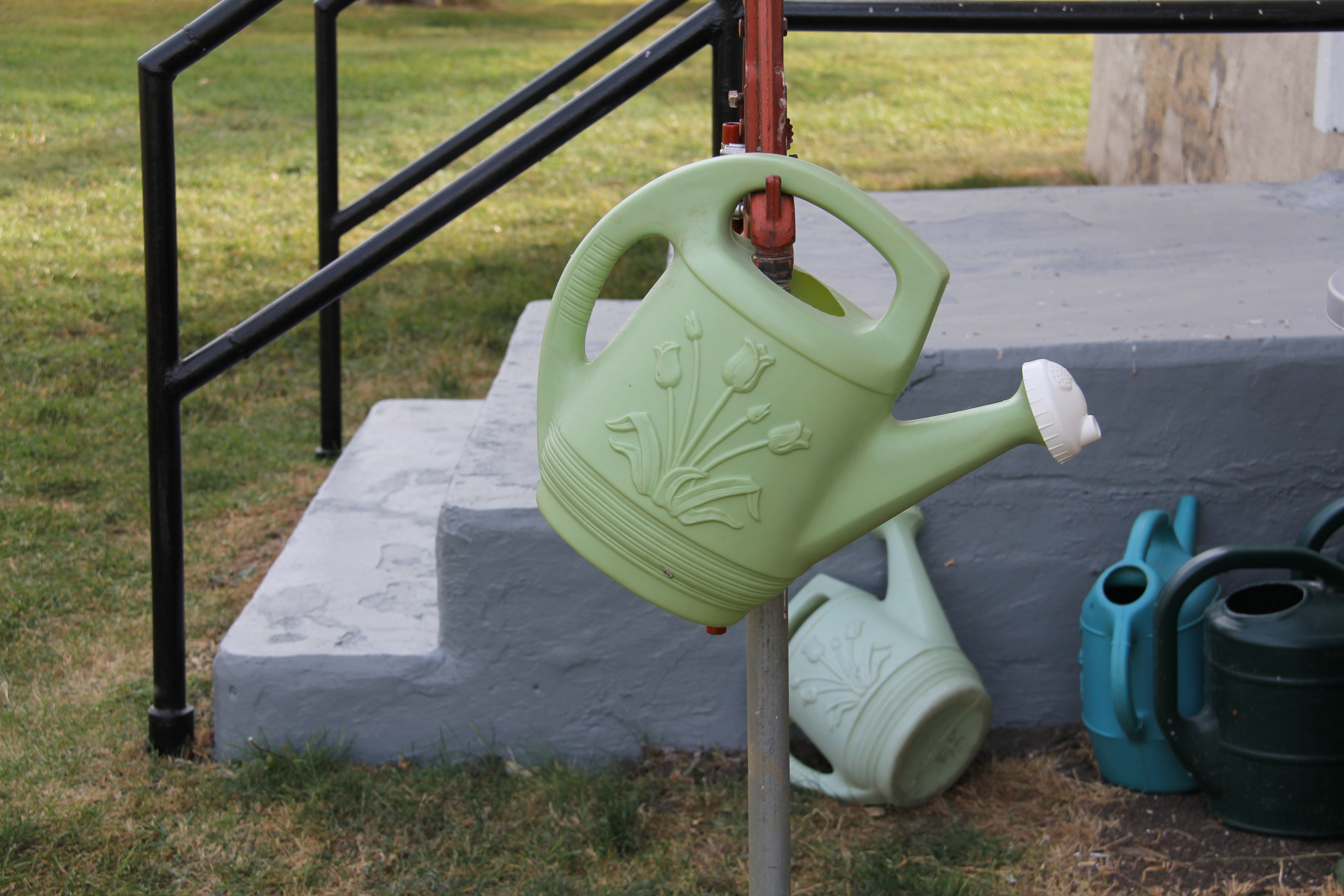
Watering cans are available for watering flowers and plants in the cemetery. (Minnesota Prairie Roots copyrighted photo October 2024)
To visit Valley Grove, whether during an event or on a personal outing, is something I would encourage if you live close by or are in the area, especially at nearby Nerstrand Big Woods State Park. Note that church doors are opened only for special occasions so don’t expect otherwise if you come on your own. That’s the case now at all country churches, whether active or disbanded. You’re not going to get inside unless someone with a key just happens to be on-site.
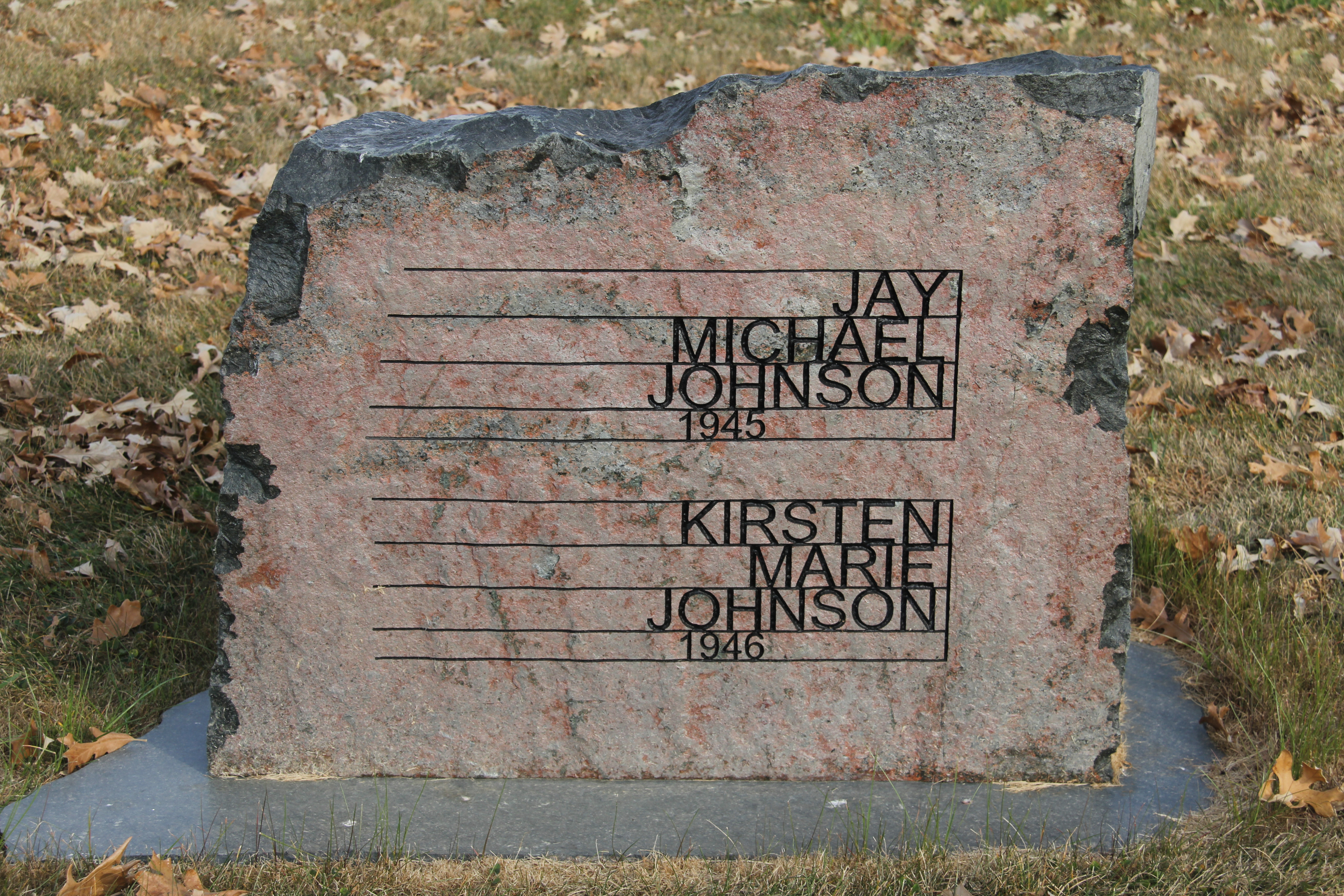
The Johnsons have their tombstone in place. I really like the simplicity, the ruggedness, the font, the shape of this grave marker, unlike any I’ve seen. (Minnesota Prairie Roots copyrighted photo October 2024)
You don’t need church access, though, to experience the essence of Valley Grove, the peace that prevails. It’s the being here, feet upon the ground, eyes taking in the countryside, that touches the soul. A walk through the cemetery, the reading of dates and names and tombstone messages channels a personal connection to those who came before us. The settlers who likely felt comfortably at home here, high atop a hill overlooking the landscape of rural Minnesota while missing the land they left, their beloved Norway.
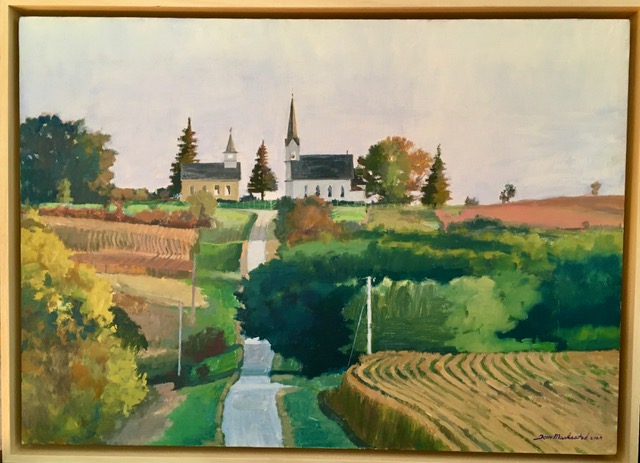
A painting of the Valley Grove churches by Tom Maakestad, to be given to one lucky person. (Image credit: Valley Grove Preservation Society)
FYI: The Valley Grove Preservation Society continues to seek donations for its Steeple Restoration Fund. As an extra incentive, those who donate $1,000 or more by December 31, 2024, will have their names placed in a January drawing for an original Valley Grove painting by Marine on St. Croix artist Tom Maakestad, who grew up near Valley Grove. His parents, Bobbie and John, founded the Preservation Society and saved the wooden church from demolition in 1975. The Valley Grove Board suggests a donation to the Steeple Fund as a Christmas gift for someone who has everything.Click here to reach the Valley Grove Preservation Society website for more information.


























 Minnesota Prairie Roots
Recent Comments