Minnesota Prairie Roots

Writing and photography by Audrey Kletscher Helbling

Latest “Talking Stick” anthology publishes & I’m in, again September 19, 2024

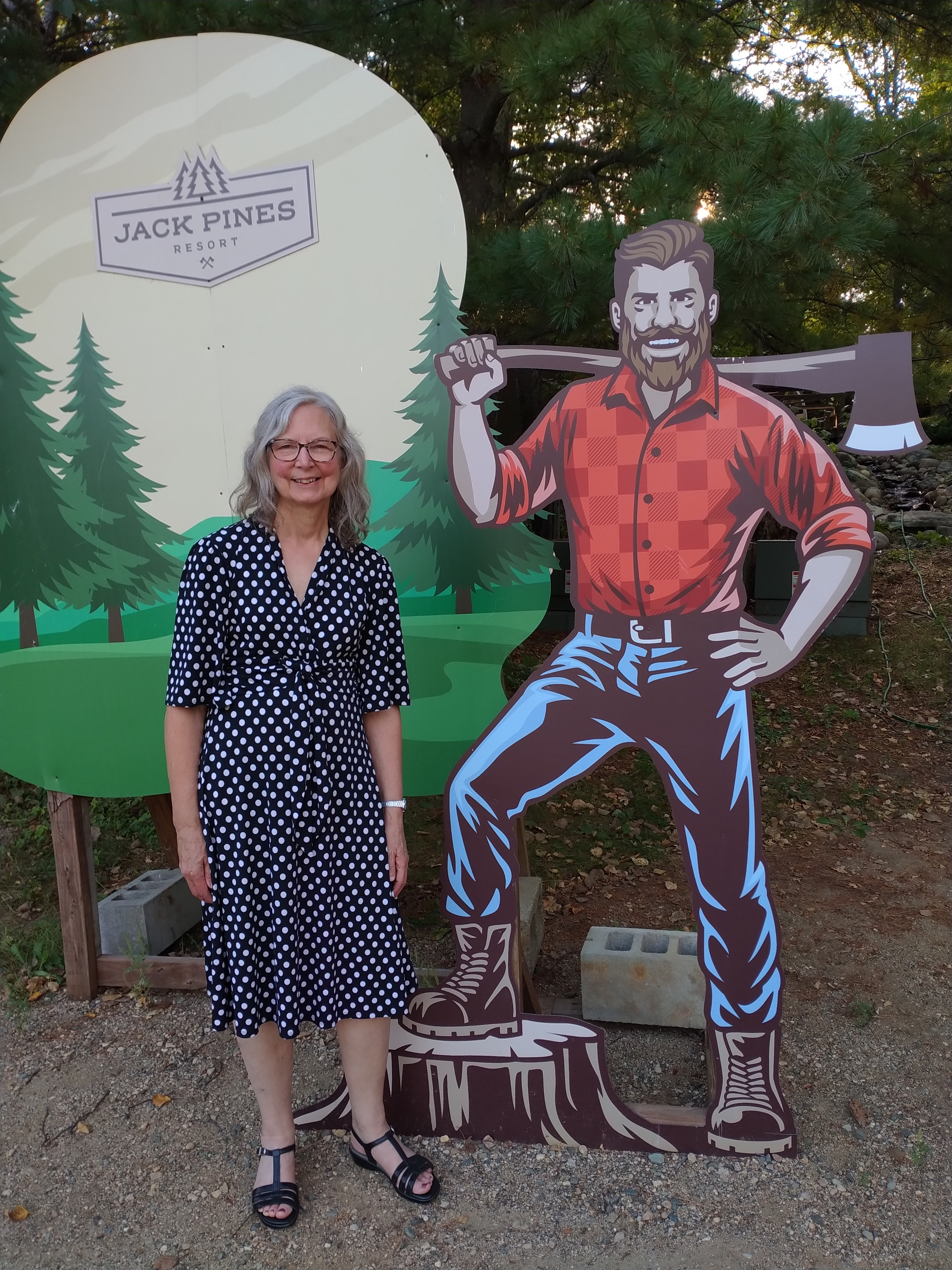
I couldn’t resist posing with Paul Bunyan at Jack Pines Resort following a book launch party there on September 14. (Photo credit: Randy Helbling)

FOR 33 YEARS NOW, a writing group in northern Minnesota has published Talking Stick, a literary anthology packed with poetry, fiction and creative nonfiction. It features not only the writing of well-known Minnesota writers, but also that of emerging writers. And that says a lot about this book published by the Jackpine Writers’ Bloc based in the Park Rapids area.

Getting published in this anthology is a competitive process with blind-judging. The judges—this year a university English professor and writer, a writer who moved to Minnesota for a rural artist-in-residency, and the author of a cozy mystery series—have no idea whose work they are considering for honors. The Jackpine editorial team chooses their top pieces to pass along to the judges for review and awards.

There were 280 submissions from 121 Minnesota writers or writers with a strong connection to our state in the 2024 writing competition. Of those, 113 works from 72 writers were published. That includes 63 poems, 22 creative twist pieces, 15 creative nonfiction stories and 13 fictional stories.
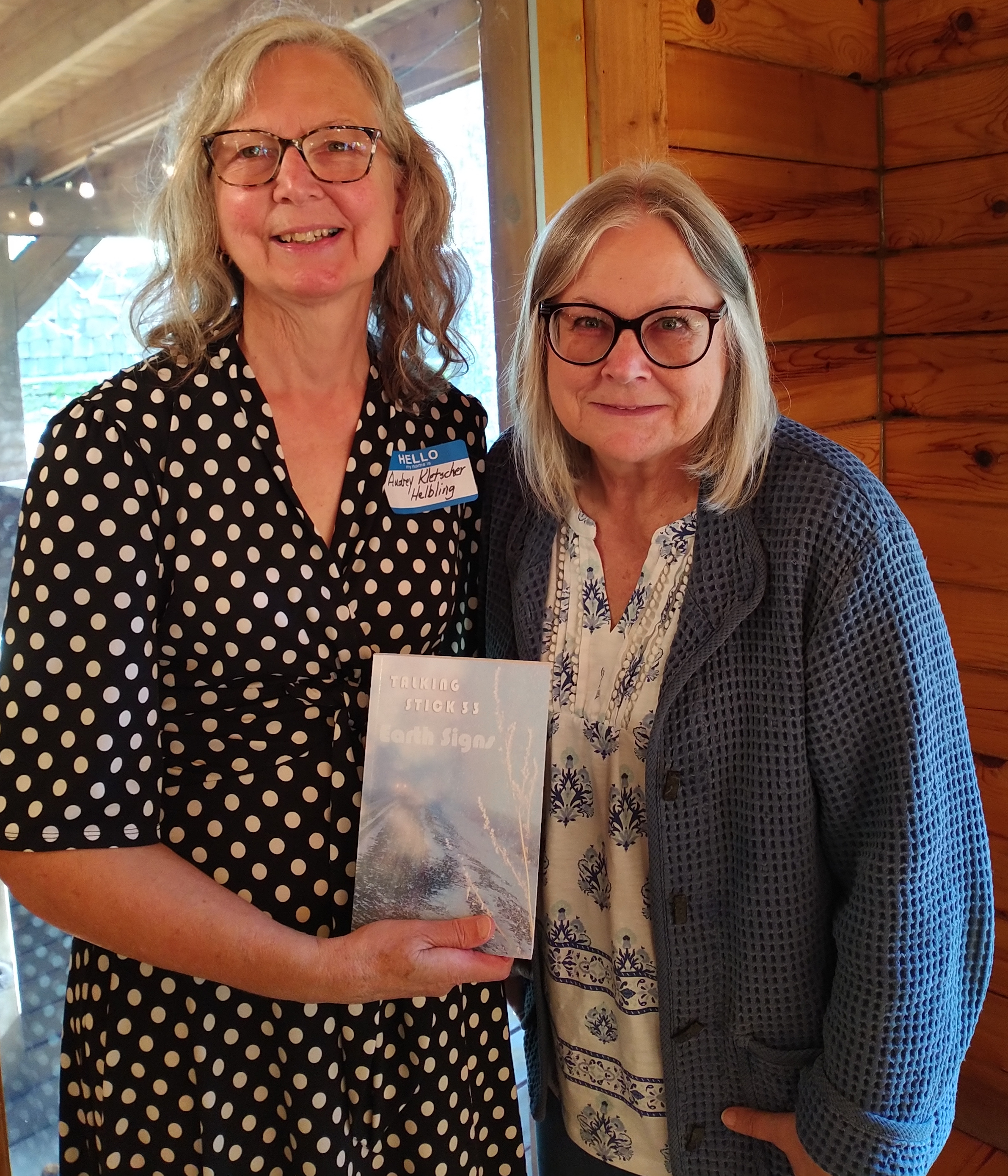
Me with author and fiction judge Jeanne Cooney, right. (Photo credit: Randy Helbling)

My short story, “Dear Mother,” earned second place in fiction as decided by author Jeanne Cooney. She’s written “A Hot Dish Heaven Mystery” series and has launched a new “It’s Murder” series. Did my mention of Hamburger Noodle Hotdish and red Jell-O salad in my story influence Cooney’s decision? I’d like to think not, but I suppose subconsciously it could have. When I wrote my short story, though, I had no idea who would be judging the fiction category. Hotdish simply fit into the storyline.
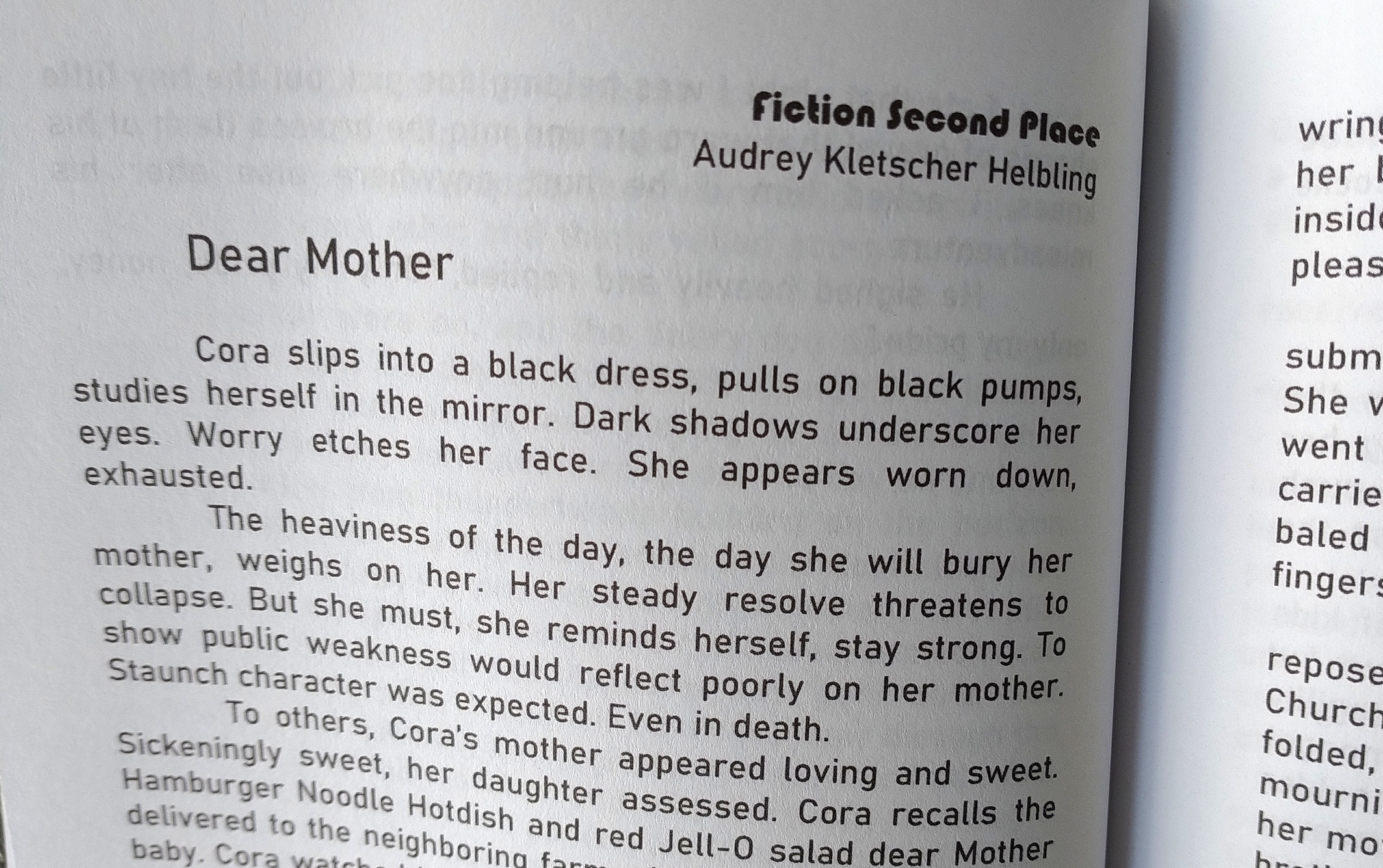
The beginning of my prize-winning fictional story, “Dear Mother.” (Minnesota Prairie Roots copyrighted photo September 2024)

Cooney called “Dear Mother” a “Very good story. But needs to be clearer.” She was right. Her comments helped me shape a stronger, better piece of writing. Dark writing. Mine is a story that begins seemingly ordinary enough, wrapping up in a surprise ending. Or rather an inferred dark ending.
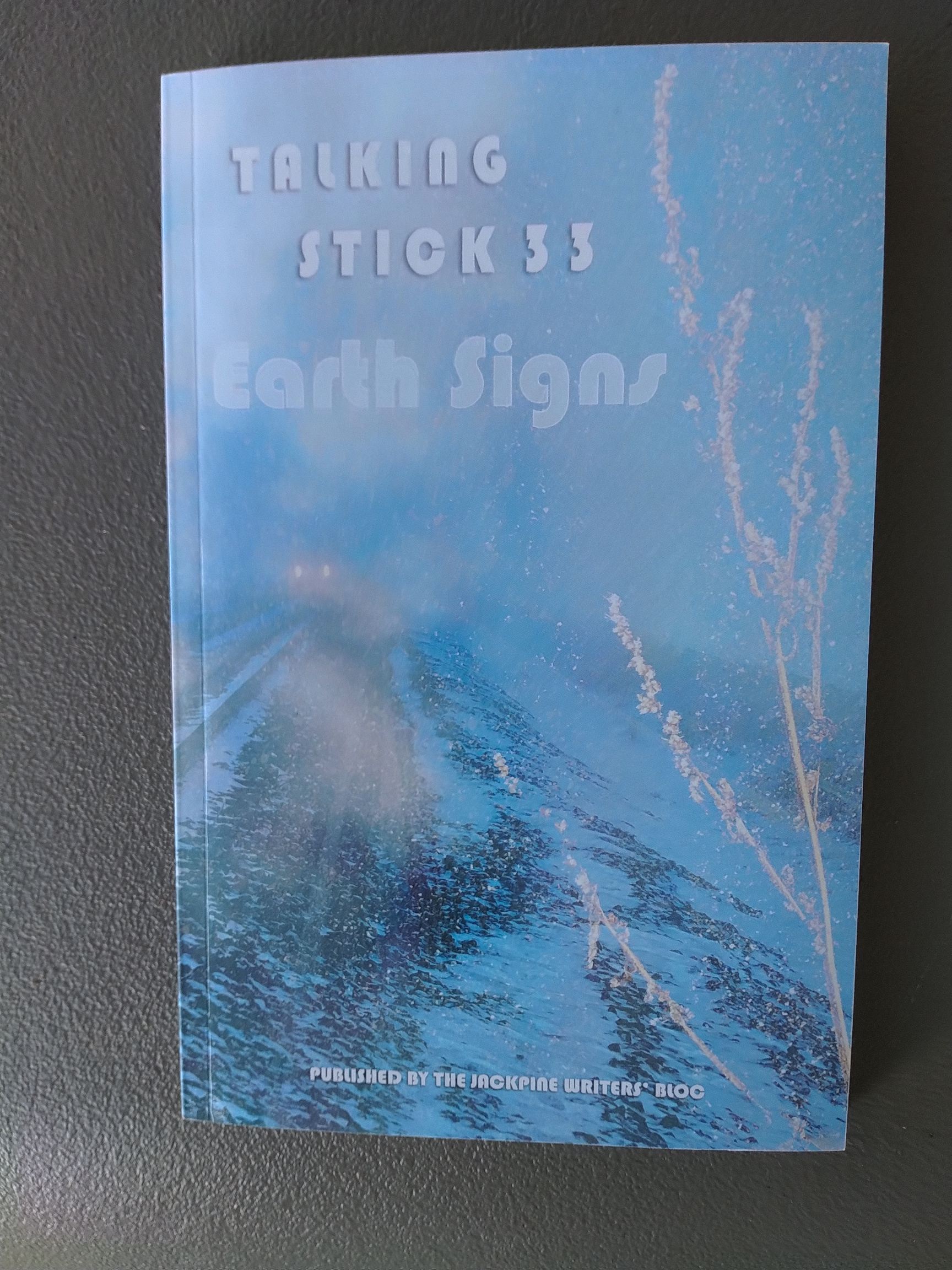
Congratulations to everyone whose work published in “Talking Stick 33.” Those include readers of this blog. Thanks also to Managing Editors Sharon Harris and Tarah L. Wolff for their ongoing dedication to the craft of writing. (Minnesota Prairie Roots copyrighted photo September 2024)

Last Saturday afternoon, I gathered with other writers and supporters for a party launching publication of Talking Stick 33—Earth Signs at Jack Pines Resort (no connection to the writers’ group) in rural Osage, a four-hour drive from Faribault. The event included a writing workshop (which I did not attend), book reading and socializing.

I’m not especially comfortable reading to a roomful of people, even though I’ve done so many times. But I practiced and then read “Dear Mother” with dramatic inflections and soft tones in just the right spots, managing to convey exactly what I wrote. There’s something to be said for hearing a poem or story read aloud. The piece comes alive via the voice of the writer.

As I listened to all these writers, I felt a strong sense of community. I felt encircled by a group of incredibly talented and supportive creatives. People who care about language and emotion and damn good writing.

My collection of “Talking Stick” books. I’ve been published in 15 of these 16 volumes. (Minnesota Prairie Roots copyrighted photo September 2024)

This marks the 15th consecutive year my writing has published in Talking Stick. A poem, “Misunderstood,” and a work of creative nonfiction, “Lessons Inside the Dome,” were also selected for publication in the 2024 volume. Both are Faribault-rooted. My poem focuses on the connection between the Wahpekute and today’s homeless population living in woods along the Straight River. In “Lessons,” I write about walking inside the Shattuck-St. Mary’s School dome during the winter and lessons I learned there.

My writing is often rooted in experiences, in observations, in overheard conversations, in memories. I’ve covered everything from farming, to aging to domestic abuse, trauma, Minnesota Nice and more. Writing prompts have come from a vintage family photo, a sign on a barbershop window in Northfield, a painting by Andy Warhol… There are stories everywhere.

I’m grateful to the Jackpine Writers’ Bloc for repeatedly choosing my work for publication in Talking Stick. That includes 15 poems, 10 short stories, nine creative nonfiction stories and two creative twist stories (written using a list of pre-selected words). I’ve thrice been awarded second place (poetry, fiction and creative nonfiction). I’ve also earned eight honorable mentions (four for fiction, two for creative nonfiction, and one each in poetry and creative twist). Winning those awards is validating to me as a writer.

But just as validating is being among other writers. Writers who appreciate the craft of writing and the hard work it takes to shape a poem or a short story. Writers who understand the importance of word choice. Writers who recognize the power of words. Writers who don’t settle for the mundane, the cliché, the everyday. Writers who will spend several hours together on a glorious September afternoon in the northwoods celebrating the release of Talking Stick, a stellar literary anthology. We have much to celebrate in Minnesota, in this place that produces a remarkable number of talented writers.

FYI: To purchase a copy of “Talking Stick,” click here. Thank you for supporting Minnesota writers.

© Copyright 2024 Audrey Kletscher Helbling


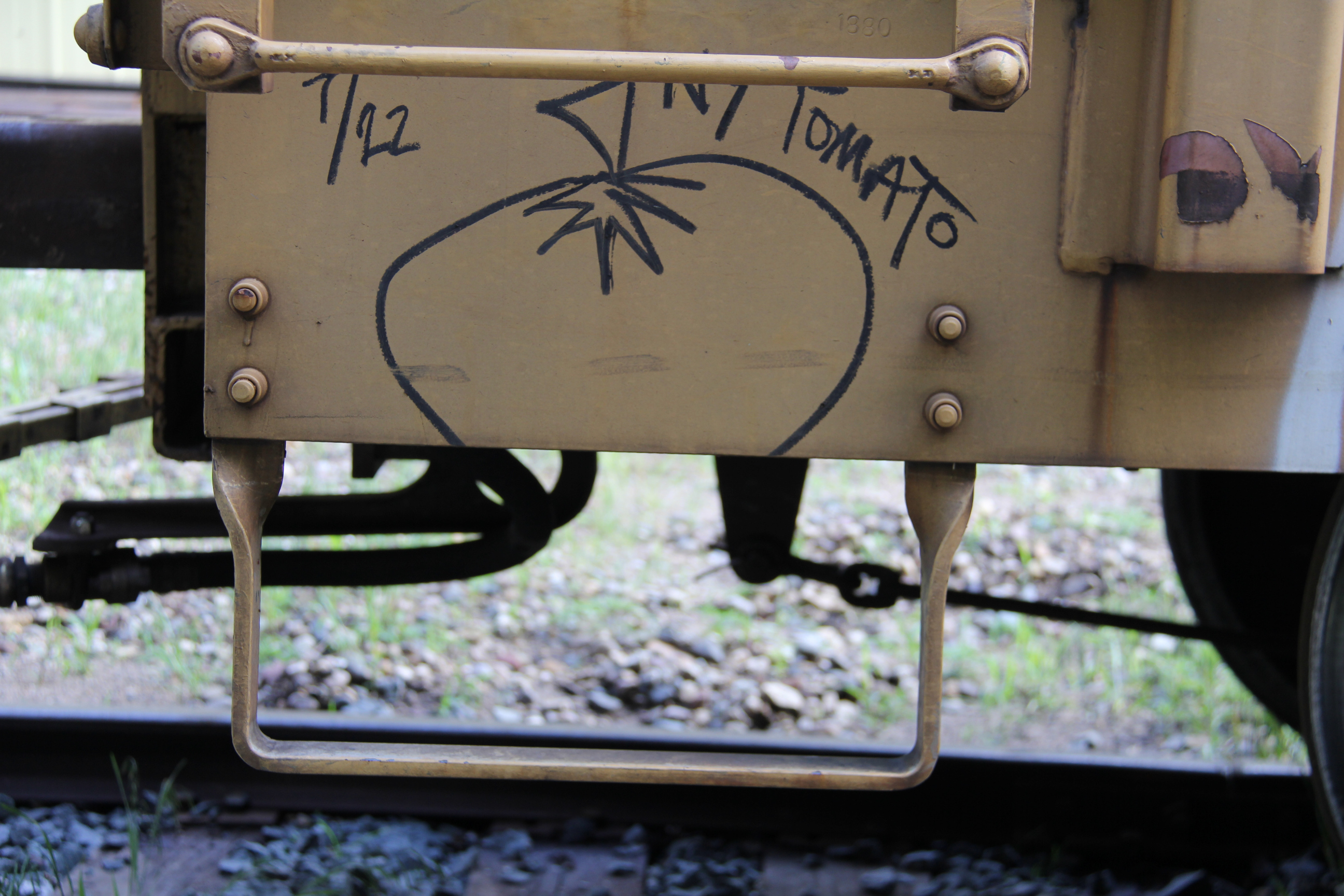
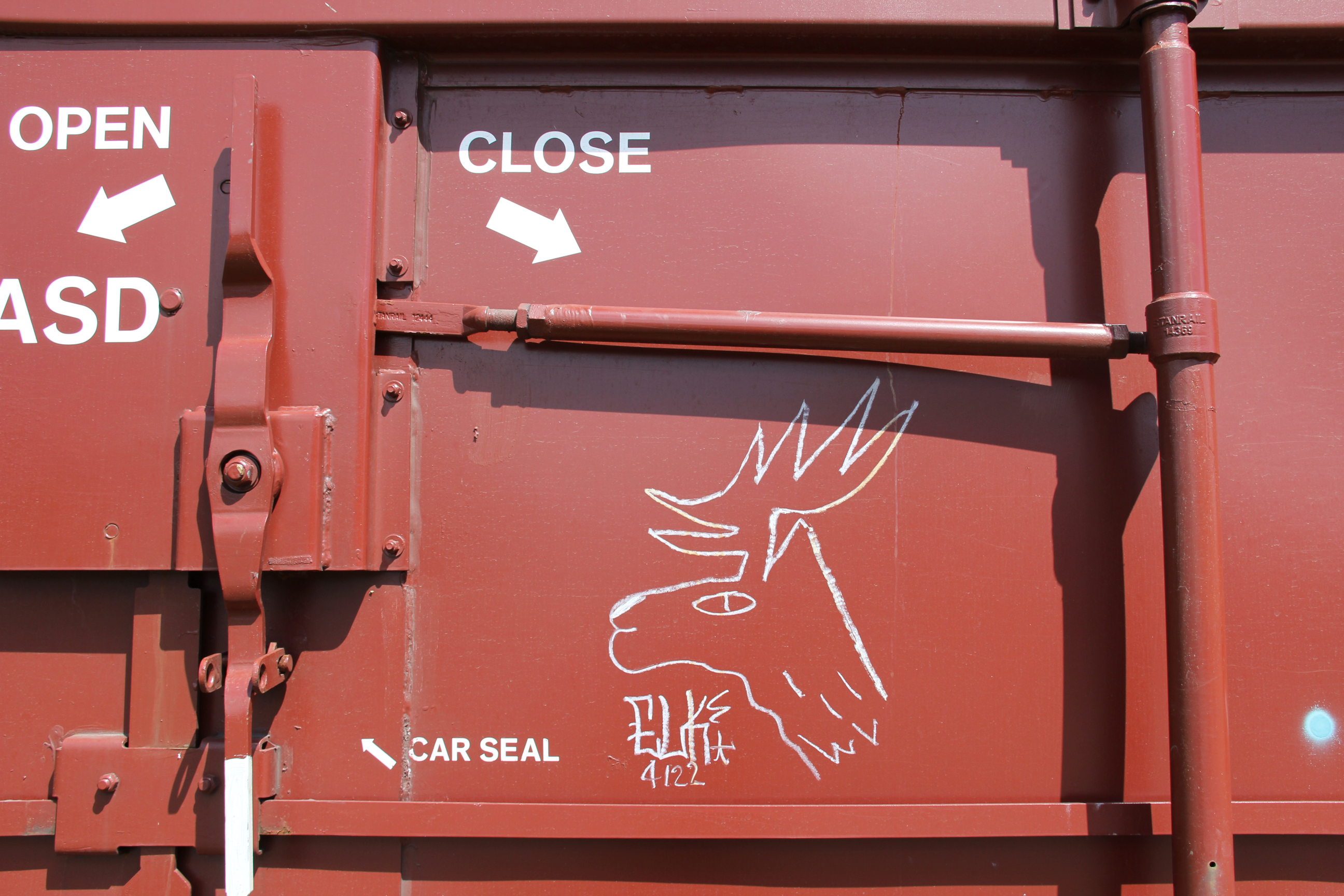
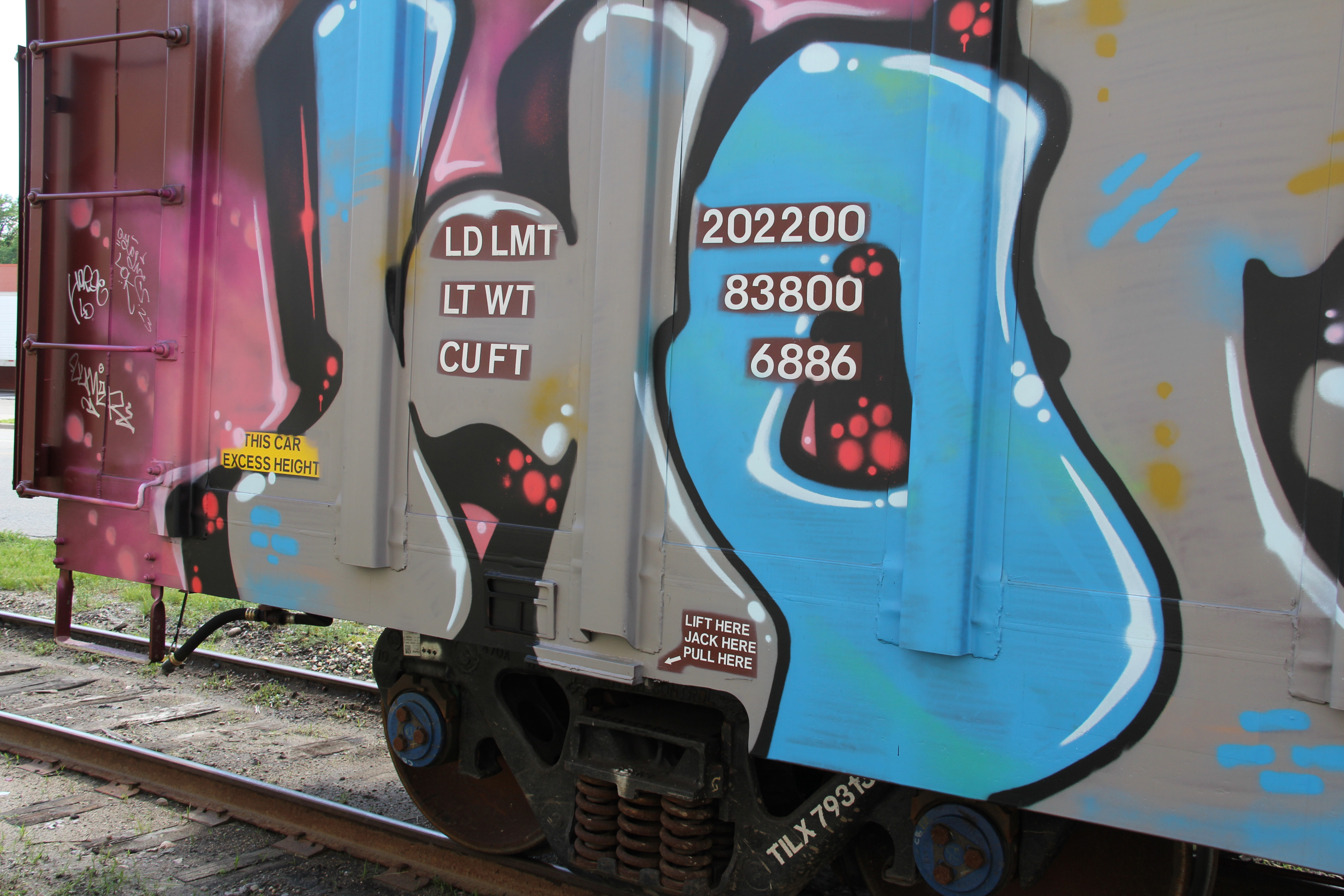
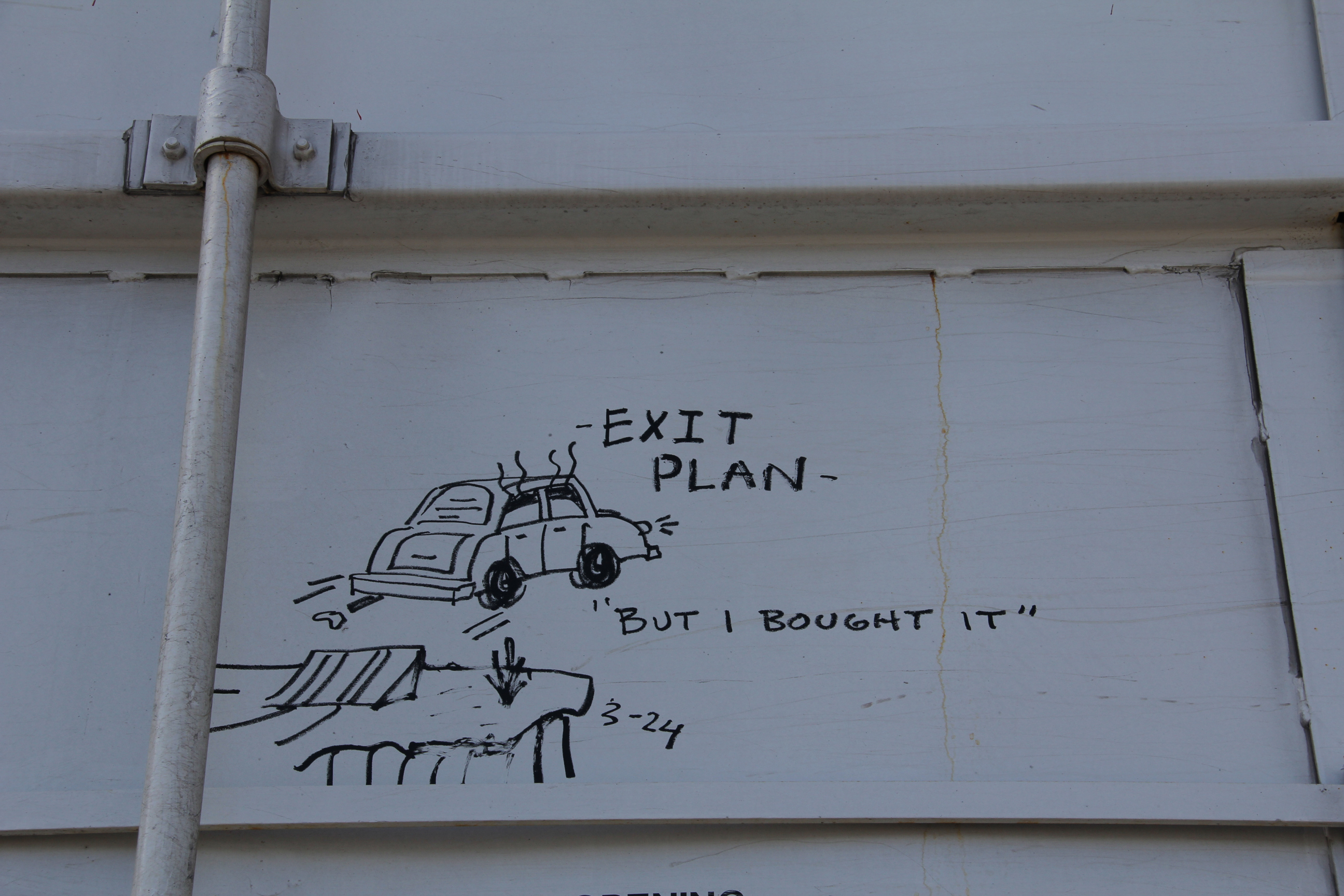
Train art or graffiti, depending… September 18, 2024

Filed under: Uncategorized — Audrey Kletscher Helbling @ 10:40 AM
Tags: , , , , , , , ,
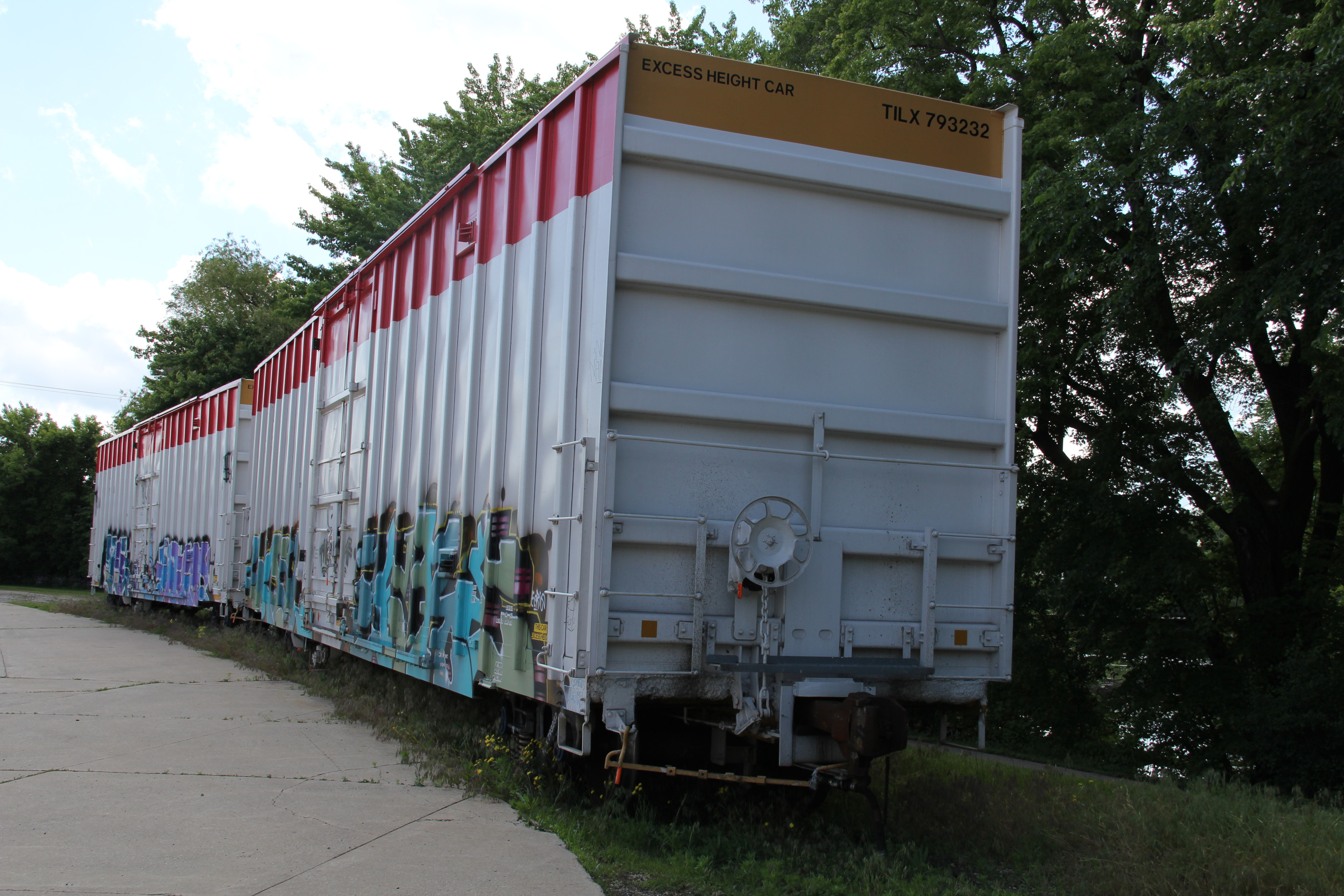
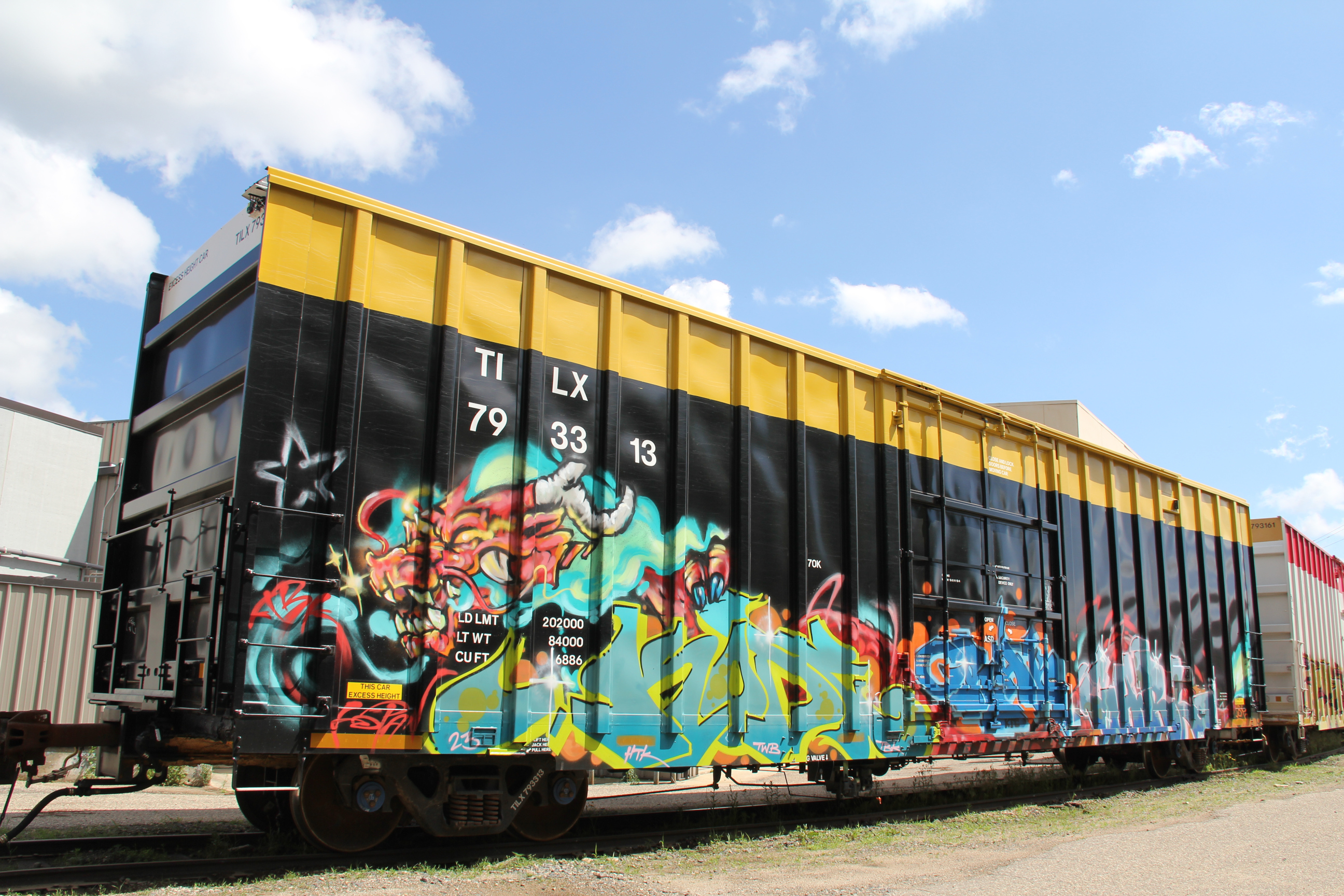
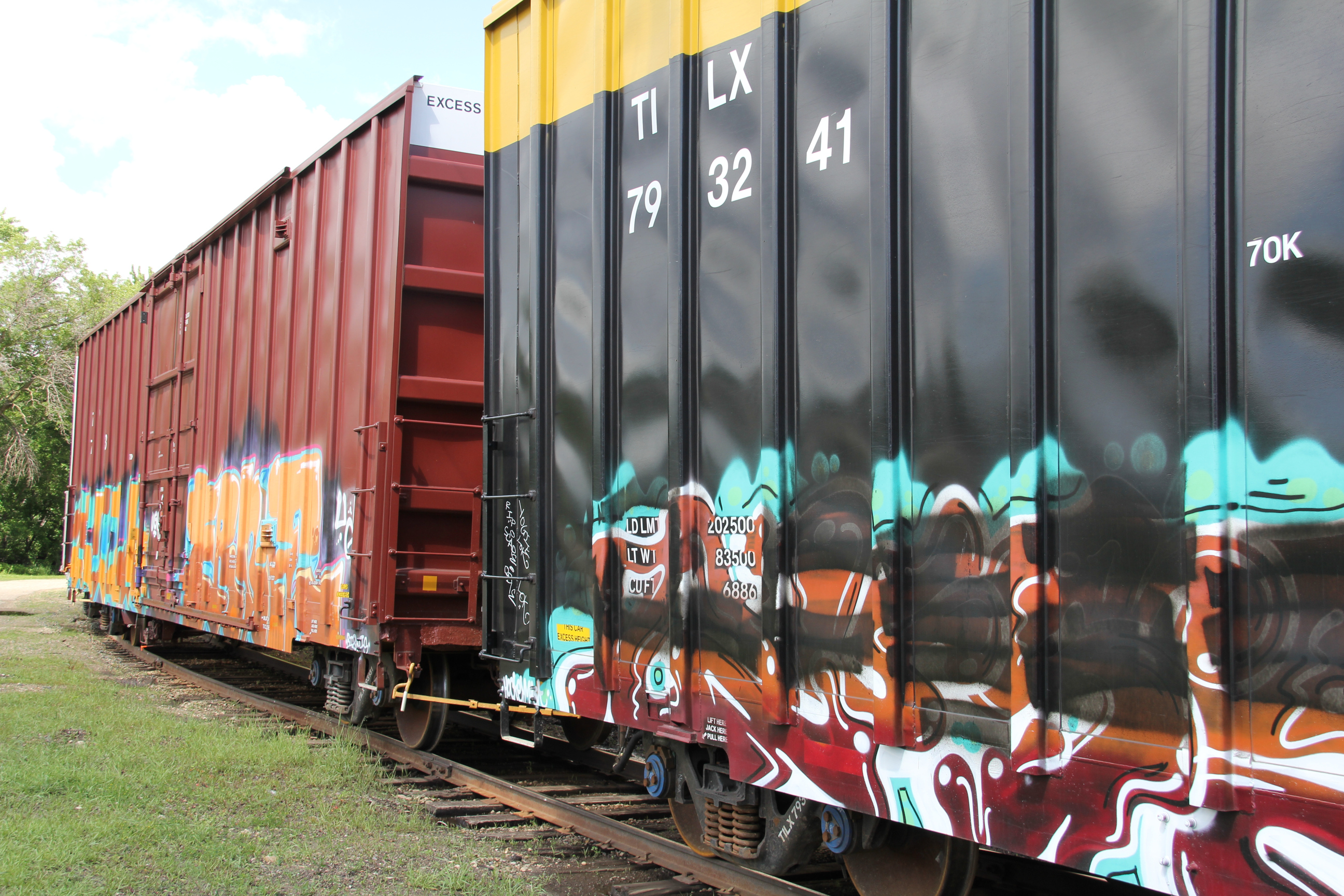
A dragon (at least that’s what I see) covers an entire boxcar. (Minnesota Prairie Roots copyrighted photo 2024)

ADMITTEDLY, I POSSESS no understanding of train art. Yet, I appreciate it. Not as the graffiti it is by definition, but rather because I see the images and words as art. A traveling art gallery. I doubt railroad companies would agree.

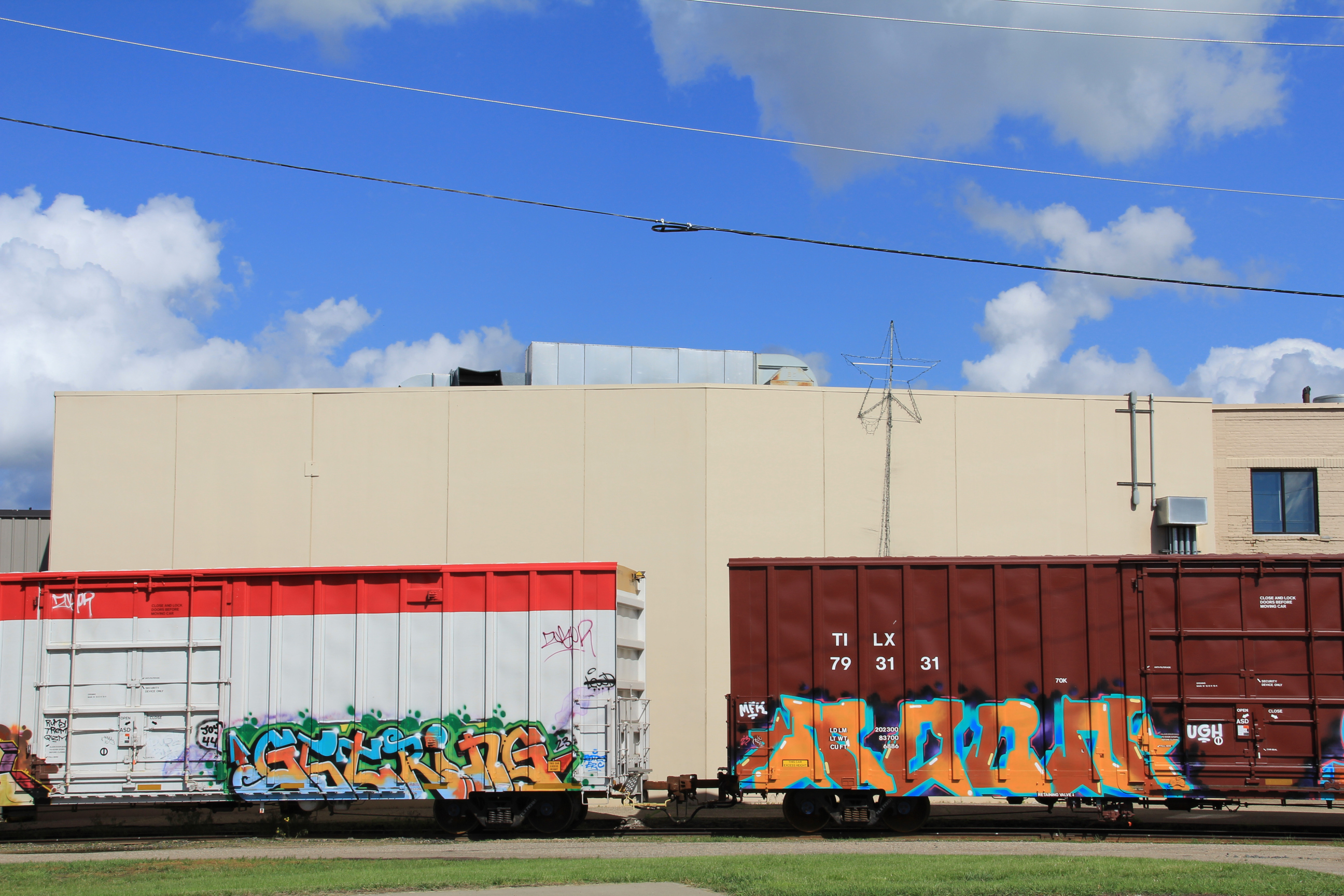
The traveling gallery parked in Faribault earlier this year. (Minnesota Prairie Roots copyrighted photo 2024)

Watch any train pass by or view a line of parked box or tanker cars and you likely will see this art form. Whenever I spot this art, I wonder, “How and when do these artists manage to paint these sprawling words and images without getting caught?”

More art/graffiti I don’t understand. (Minnesota Prairie Roots copyrighted photo 2024)

Then I try to decipher the words, which are mostly indecipherable to me. My eyes can’t separate the often over-sized uppercase letters that jam together. Even standing back to read from a distance usually doesn’t help.

Another look at the dragon from a distance and the words I can’t read. (Minnesota Prairie Roots copyrighted photo 2024)

But occasionally I figure something out and then it’s like a moment of confused clarity. Why this word? Why this art? Why this fiery orange dragon (if that’s really what it is) stretching the length of a boxcar?

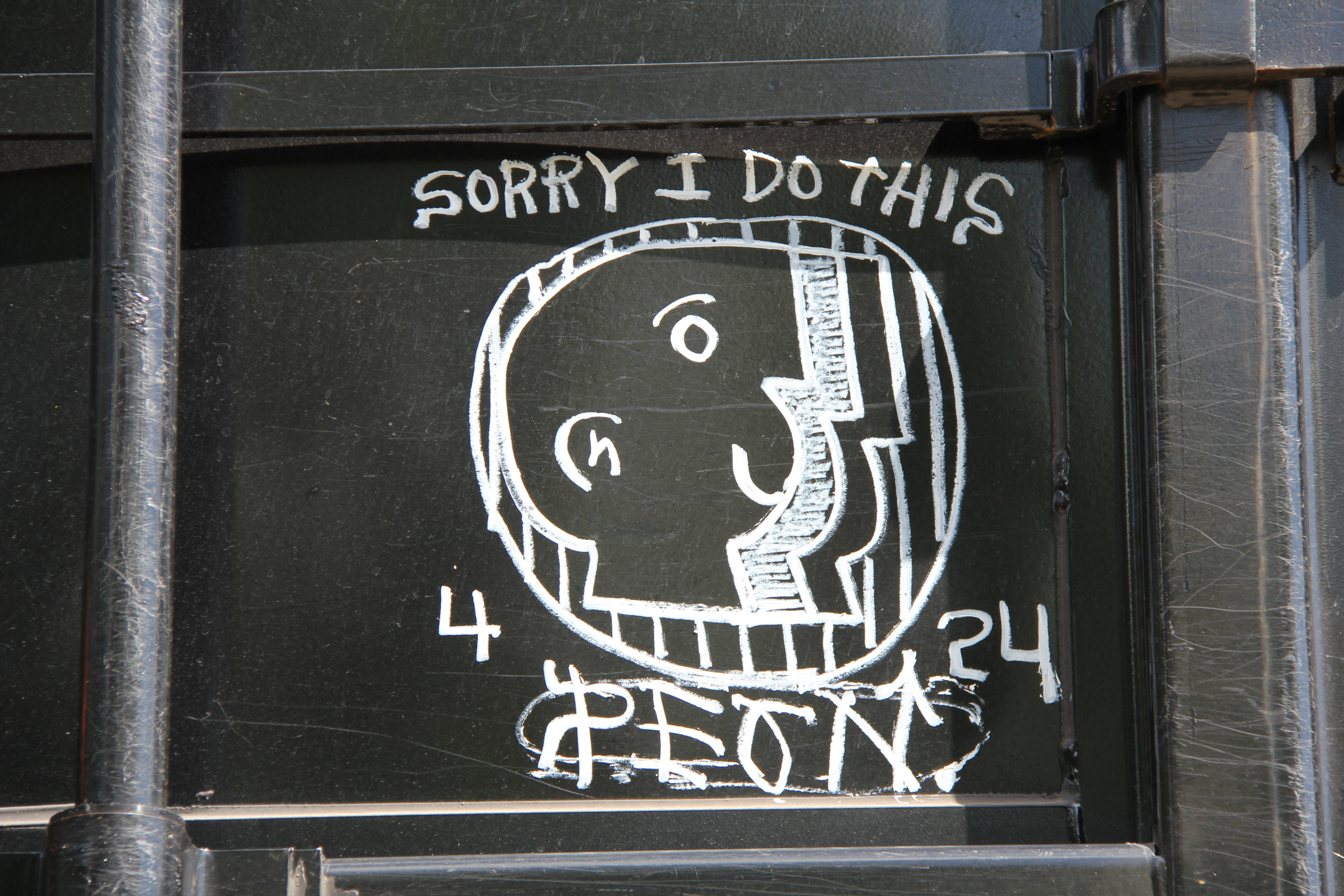
An apology. (Minnesota Prairie Roots copyrighted photo 2024)

For the artist, like any visual artist, there is meaning behind the art. I’m just not privy to the backstory. Sure, some of what I’m seeing could be gang graffiti. But mostly, I expect it is not. And if I view the train art in Faribault, for example, that doesn’t mean the work originated locally. Likely it did not. Trains travel all over the country.

The freshly-painted signature of DOLLFACE. (Minnesota Prairie Roots copyrighted photo 2024)

There are exceptions, though. While looking at art on short rows of parked boxcars a few months back in Faribault, a young couple was doing likewise. I asked whether they were the artists. The response from one: “I can neither confirm nor deny.” Later, as I rounded the row of boxcars and the pair were heading for two vehicles parked nearby, I got my answer. There, along the bottom edge of a boxcar, block letters dripped baby blue paint. DOLLFACE had left her signature.

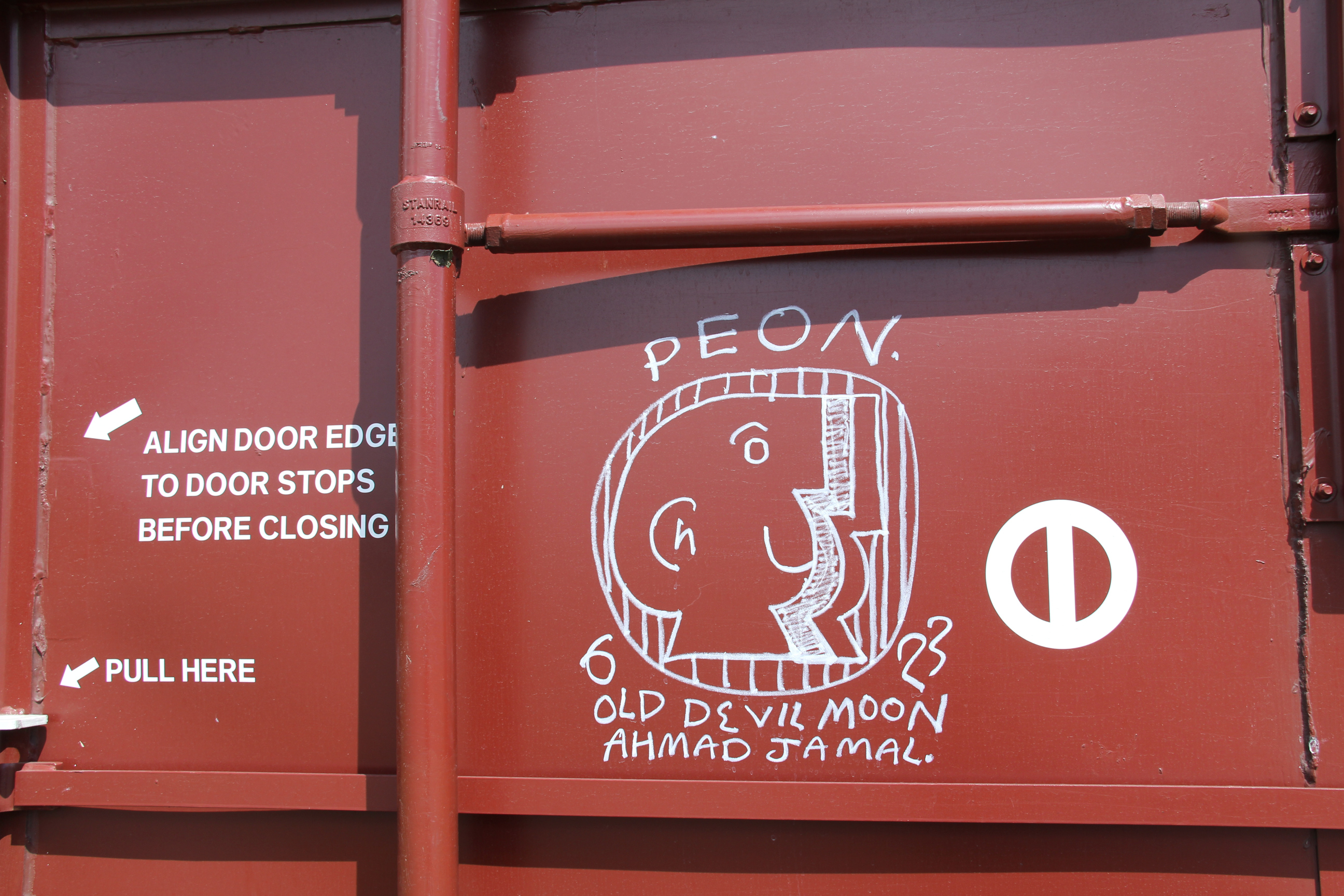
More art by the apologetic artist. (Minnesota Prairie Roots copyrighted photo 2024)
Signature or art, I’m unsure. (Minnesota Prairie Roots copyrighted photo 2024)
An artist’s tag…I think. (Minnesota Prairie Roots copyrighted photo 2024)

Other artists left their signatures, too, or what I can only assume are their signatures, along with dates, messages and social commentary. It’s all a bit of a mystery to me.

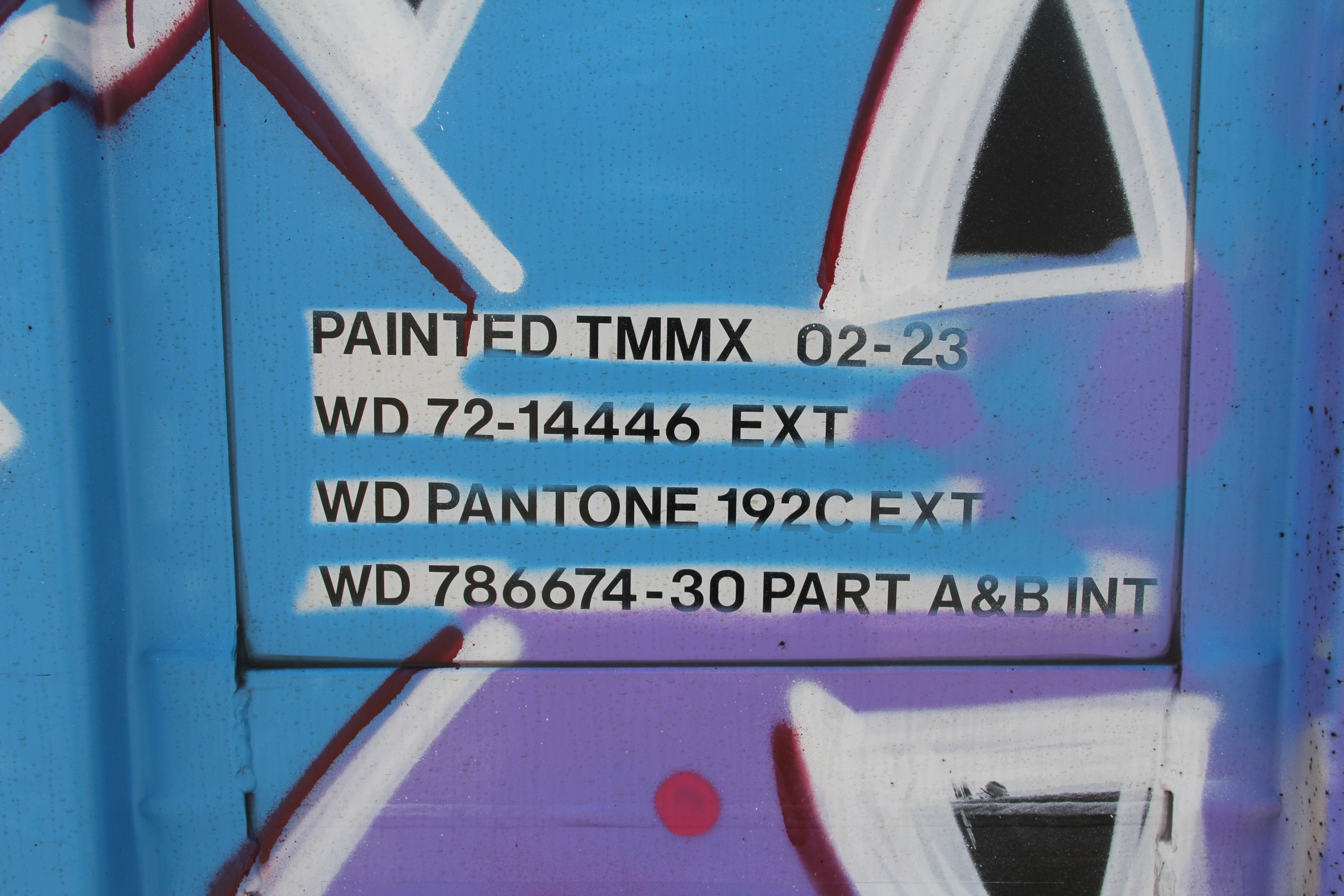
Some artists respectfully paint around official markings on rail cars. (Minnesota Prairie Roots copyrighted photo 2024)
An understandable commentary. (Minnesota Prairie Roots copyrighted photo 2024)
More art on boxcars. (Minnesota Prairie Roots copyrighted photo 2024)

But I appreciate the skill, the effort, the creativity, the vibrant hues that go into creating this art form. Long ago, hobos—who today would be termed as “homeless”—rode the rails and left their art upon boxcars primarily as a way to communicate. Train art has a longstanding history in this country.

I found this humorous, painting around the word “PAINTED.” (Minnesota Prairie Roots copyrighted photo 2024)

And that continues today. Perhaps not in the same way. But assuredly as an art form. Or as graffiti, depending on perspective.

© Copyright 2024 Audrey Kletscher Helbling
 

The joy of a Northfield tie dye artist September 12, 2024

My first view of the tie dyed t-shirts. Two days later, I returned and met the artist. (Minnesota Prairie Roots copyrighted photo September 2024)

TIE DYED SHIRTS jolted color against a brown privacy fence along West Seventh Street in Northfield next to Riverside Park on a recent weekday afternoon. The colorful display proved a photographic surprise as I headed for the park.

The shirts have creative designs front and back. (Minnesota Prairie Roots copyrighted photo September 2024)
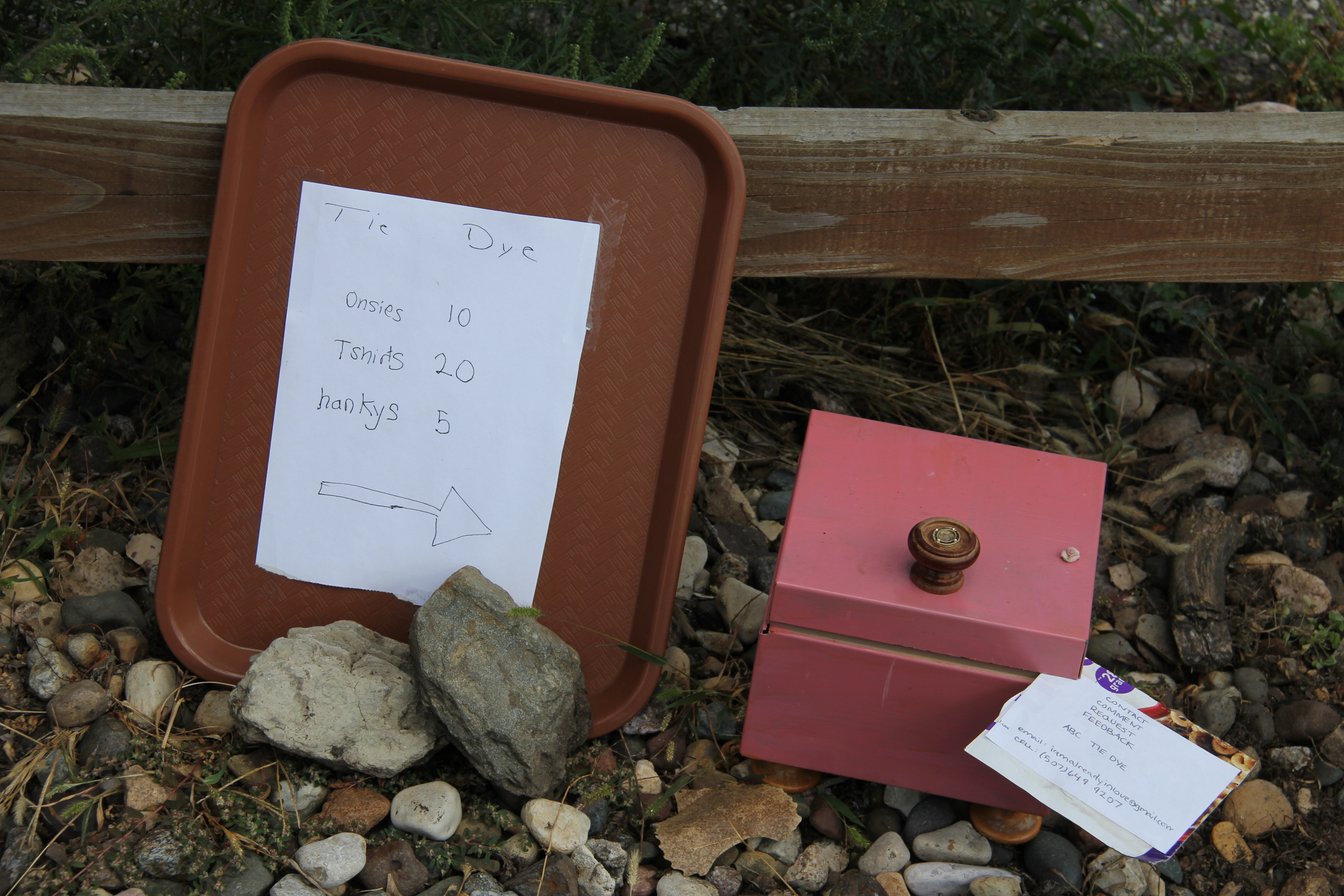
Prices and payment box, on the honor system. (Minnesota Prairie Roots copyrighted photo September 2024)
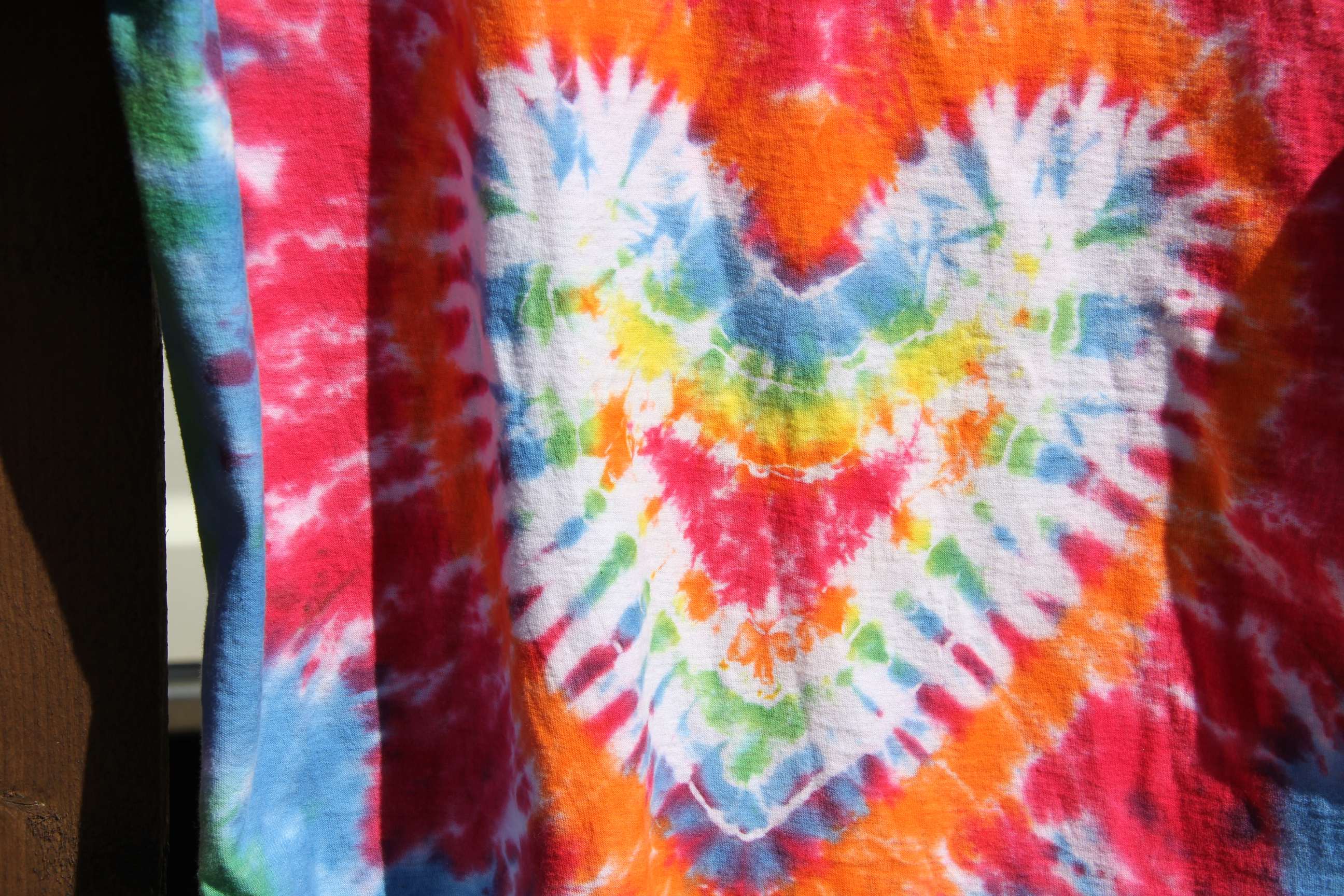
Vibrant hues on a heart shirt, one of my favorites. (Minnesota Prairie Roots copyrighted photo September 2024)

Rich, brilliant hues and creative designs instantly drew my attention to this pop-up shop that was as much a place to buy a tee on the honor system as it was an art display.

Artist Rebecca Stull. (Minnesota Prairie Roots copyrighted photo September 2024)

The creative behind the wearable art is Rebecca Stull, who lives in an apartment building behind the fence with her daughter, Lily Joy, age three. I met them two days after I initially spotted and first photographed the tie dye art. I happened to be in Northfield again, same location, aiming for the Northfield Farmers Market in the park. And out came Rebecca and her daughter, the artist carrying bowls of water to set beside the sidewalk for passing dogs.

Rebecca also tie dyed these cute heart onesies. (Minnesota Prairie Roots copyrighted photo September 2024)

I couldn’t believe my luck. To meet Rebecca, to hear her story, excited me. Everyone has a story. Rebecca is new to tie dying, learning as she goes. I would not have guessed that based on the art she produced. She has a two-year online art degree, a good background for creating this art.

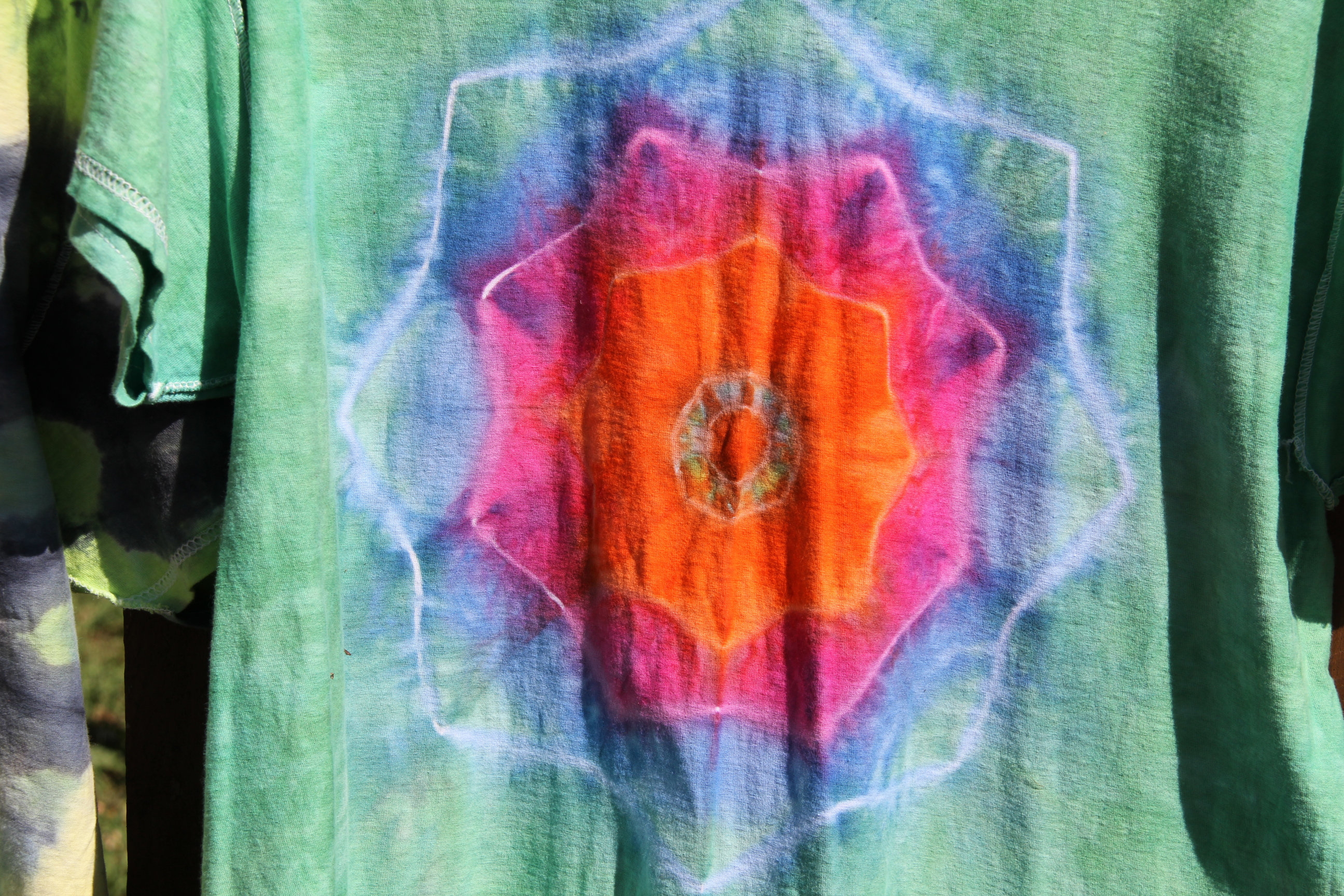
A mandala, a favorite design of Rebecca’s. (Minnesota Prairie Roots copyrighted photo September 2024)

This young mother and artist holds a passion for art, for tie dying. She feels a calling, she said, “on a journey to work with Jesus.” That shows in the crosses gracing some of her shirts, including little Lily’s. She also favors mandalas.

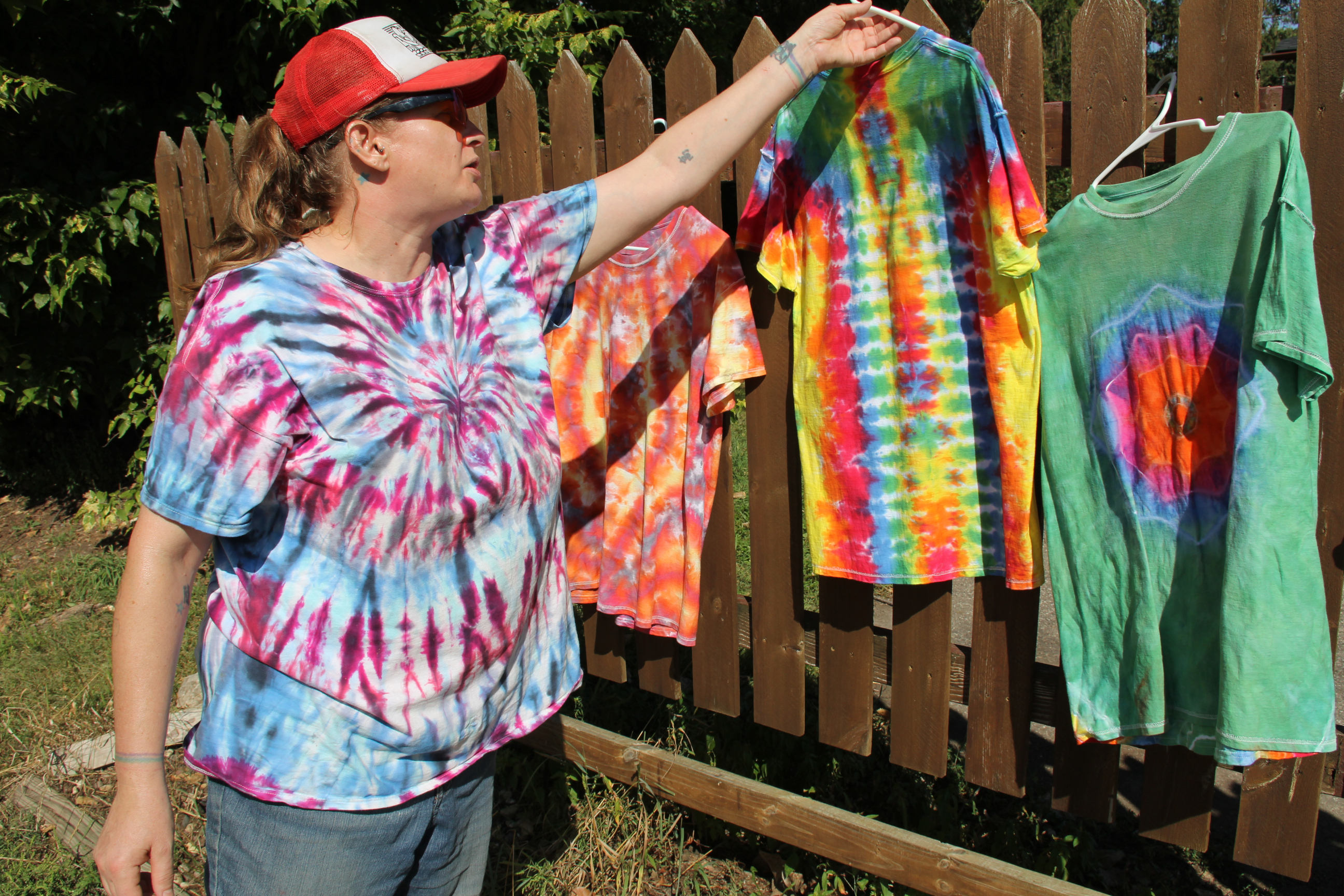
Rebecca pulled tees from the fence to show me fronts and backs. (Minnesota Prairie Roots copyrighted photo September 2024)

What I love about Rebecca, besides her tie dye art, is her joy. She exudes positivity, despite struggles. Rebecca shared just enough for me to understand that life hasn’t always been easy for her. But here she is, getting the support she needs, using her creative talents, raising Lily Joy with a joyful spirit.

Rebecca’s storefront, next to her apartment building. (Minnesota Prairie Roots copyrighted photo September 2024)

She told me how thankful she is for a landlord who supports her tie dye creativity.

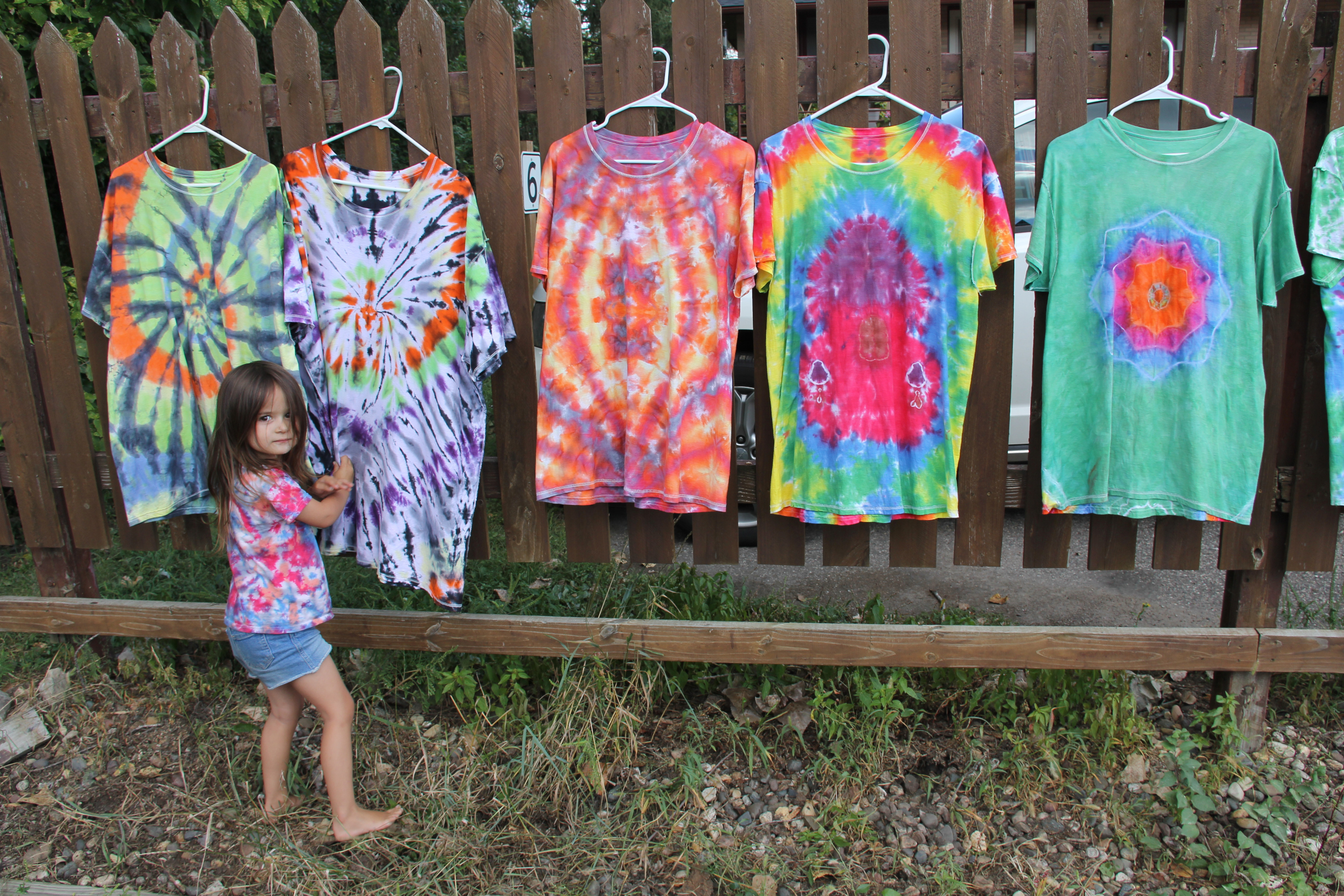
Lily Joy counts her mom’s t-shirts. (Minnesota Prairie Roots copyrighted photo September 2024)

I encouraged her. It’s clear Rebecca wants the best for her little girl. Some of the monies from her first t-shirt sales paid for Lily Joy to go to the recent Defeat of Jesse James Days carnival. The three-year-old is an enthusiastic marketer of her mom’s tie dyed shirts. As I watched, Lily Joy, walked along the fence line, touching the shirts, counting inventory for her mom.

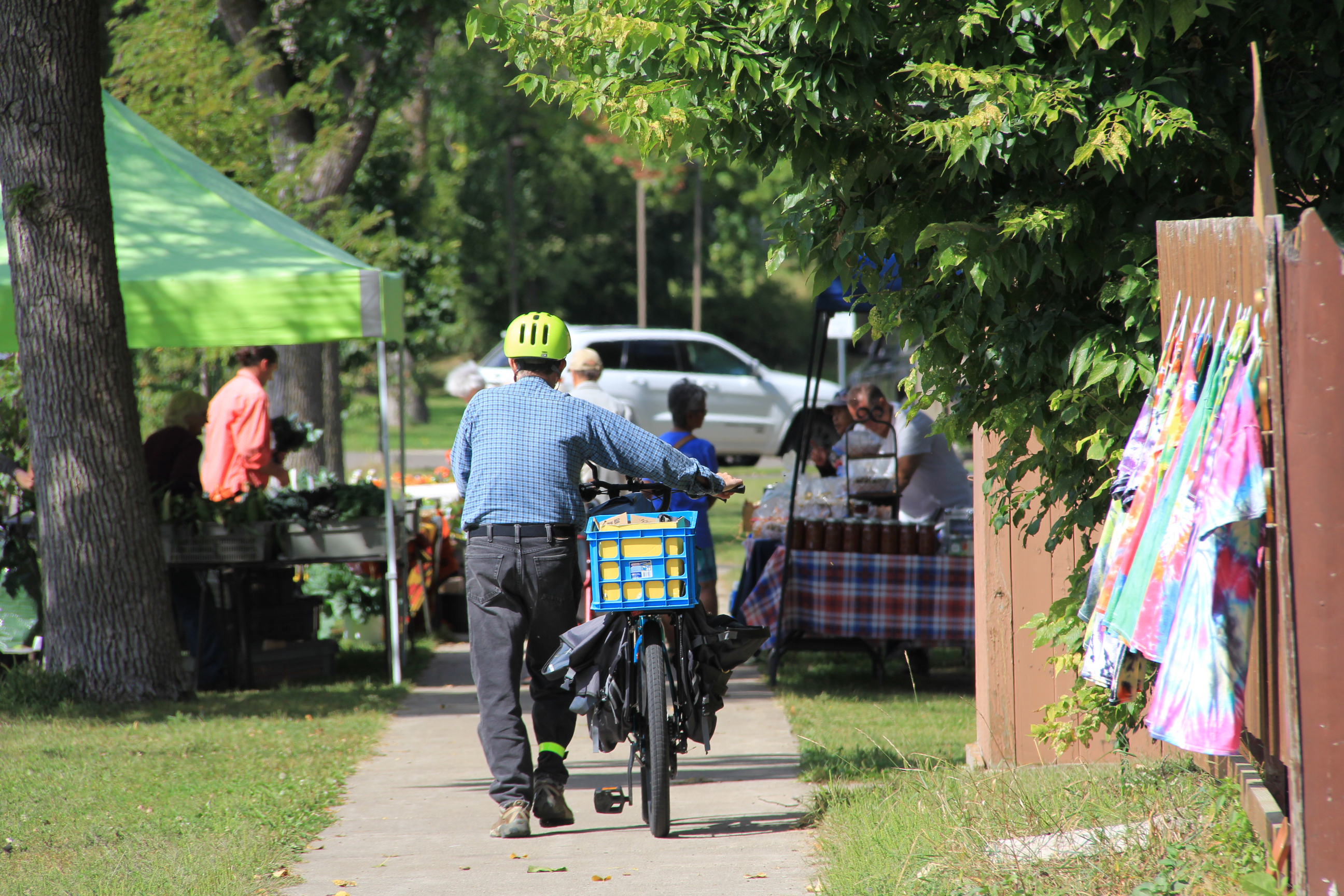
A cyclist passes Rebecca’s tie dyed t-shirts as he heads to the Northfield Farmers Market on a Friday morning. (Minnesota Prairie Roots copyrighted photo September 2024)

To have met these two blessed me, jolted joy into my day. And it all started with a walk to Riverside Park, 35mm Canon camera in hand.

© Copyright 2024 Audrey Kletscher Helbling
 

Reminiscing about, & with, Rabbits at 50th class reunion September 11, 2024

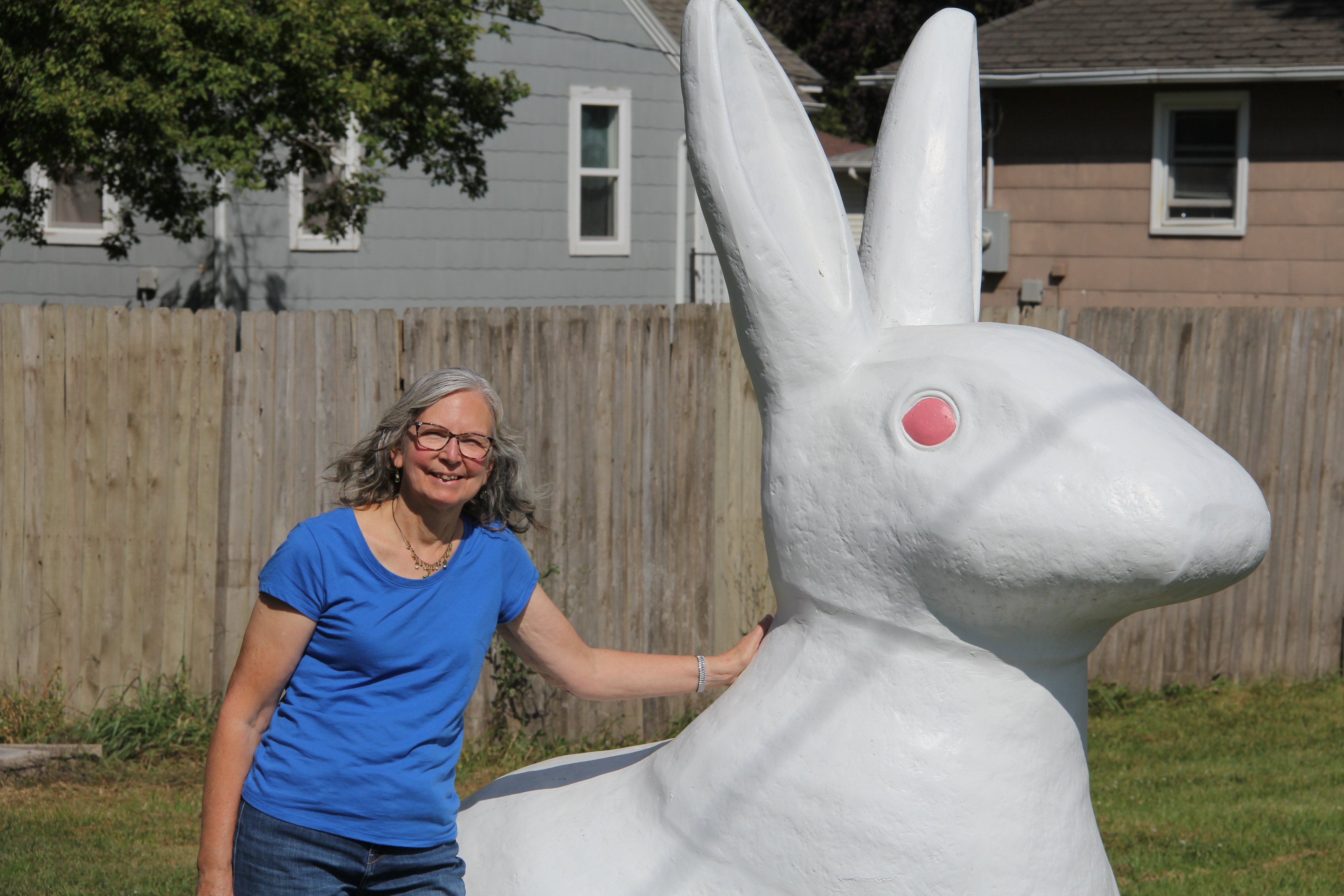
First up upon arriving in Wabasso for my 50th class reunion, a photo with the roadside white rabbit sculpture. (Photo credit: Randy Helbling)

WE MAY NEVER PASS this way again. Ah, but we have. On a recent Saturday, I gathered with some 30 of my Wabasso High School classmates to celebrate our 50th class reunion. In Wabasso, a small farming community 45 miles west of New Ulm on the southwestern Minnesota prairie.

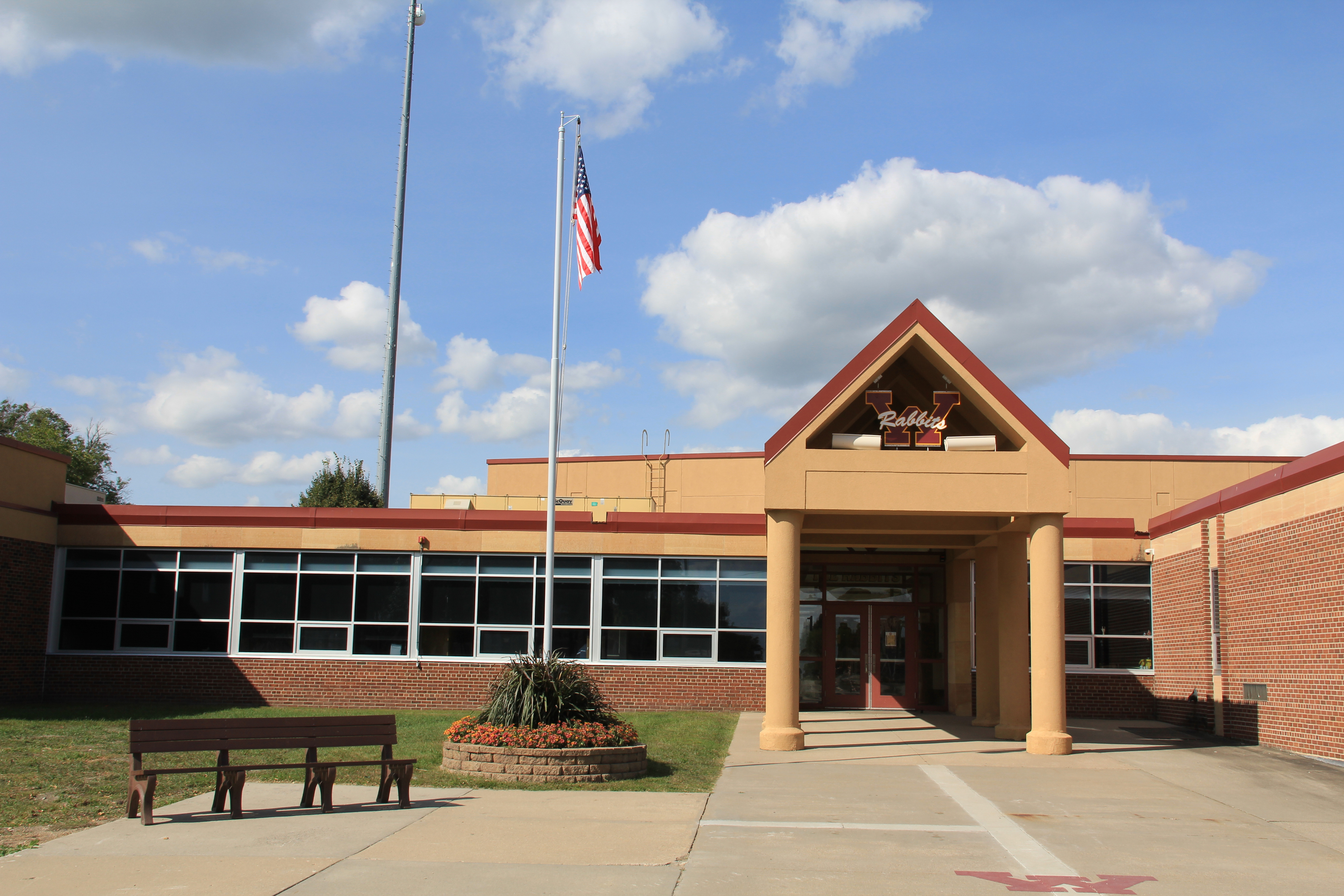
The front entrance to Wabasso Public Schools. The overhang with pillars was added after my days there. (Minnesota Prairie Roots copyrighted photo September 2024)
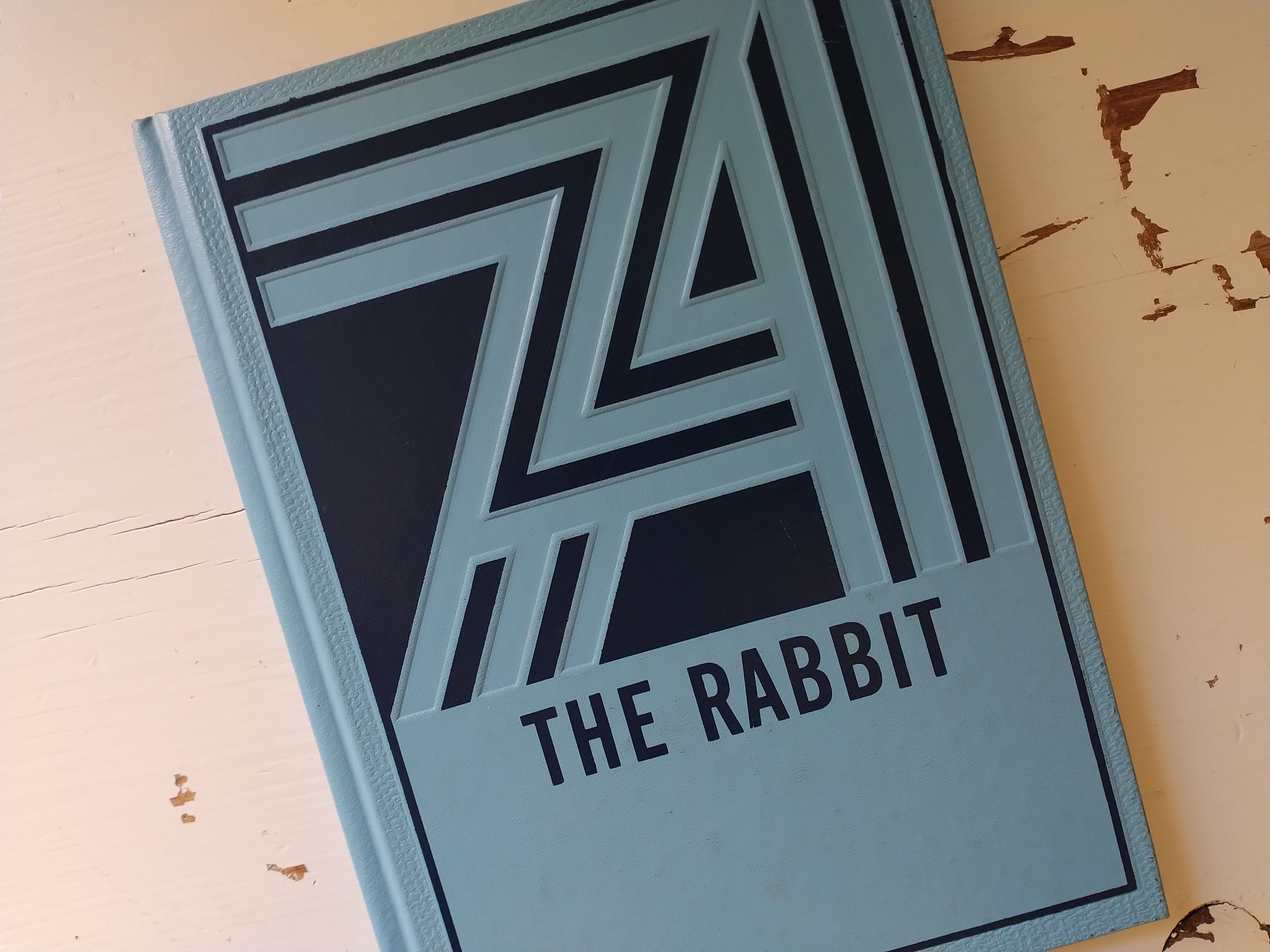
The cover of my WHS yearbook. (Minnesota Prairie Roots copyrighted photo September 2024)
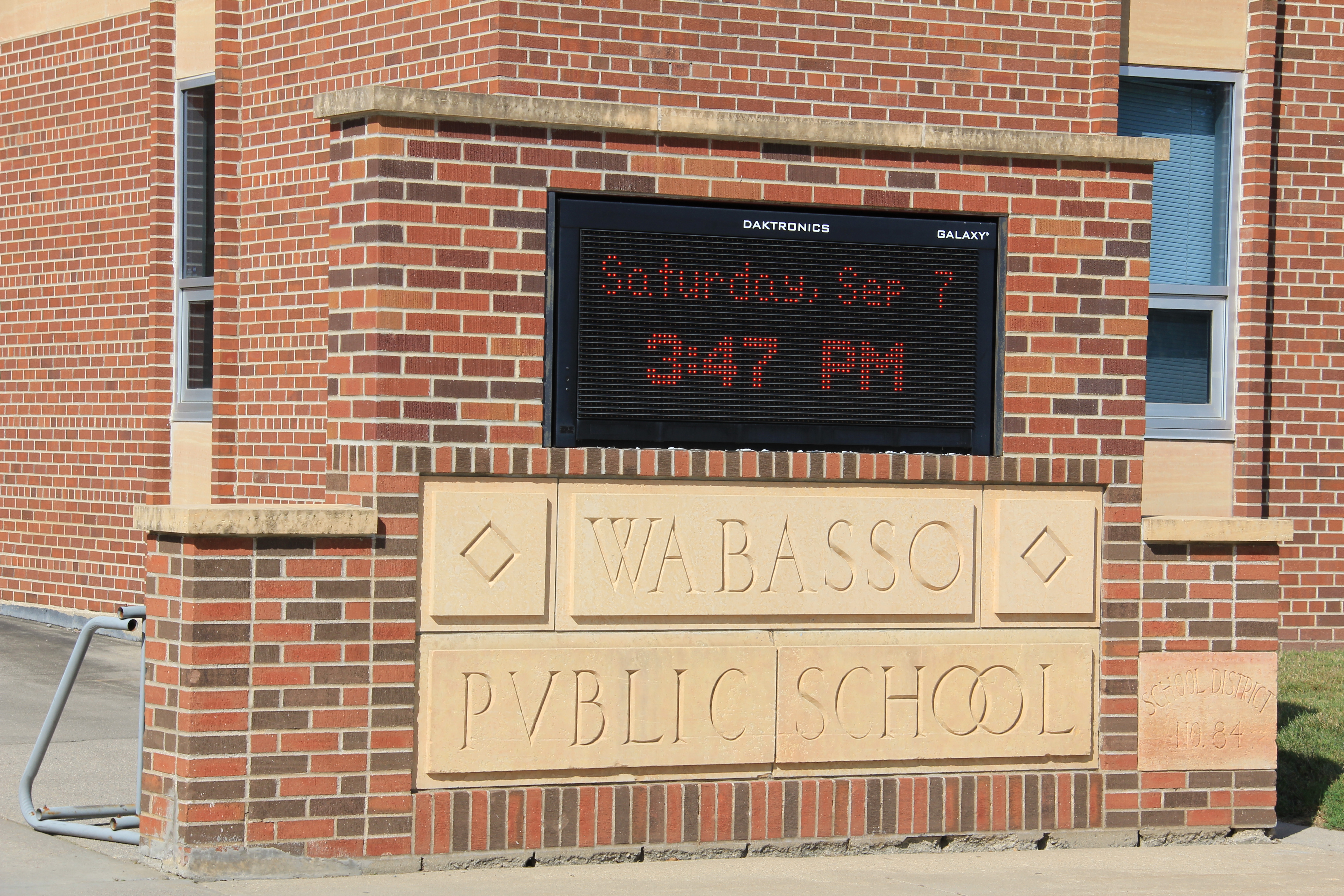
Signage at the front of the school blends the old and the new. (Minnesota Prairie Roots copyrighted photo September 2024)

I’ve attended many reunions through the decades since 89 of us graduated in May of 1974. I’ve enjoyed every gathering, especially those in latter years when no one cared any more about who was a jock or an academic achiever or a wild one or any label we may have carried through our high school days. Today we are simply individuals who share a history of attending school together. Learning. Having fun. Making memories.

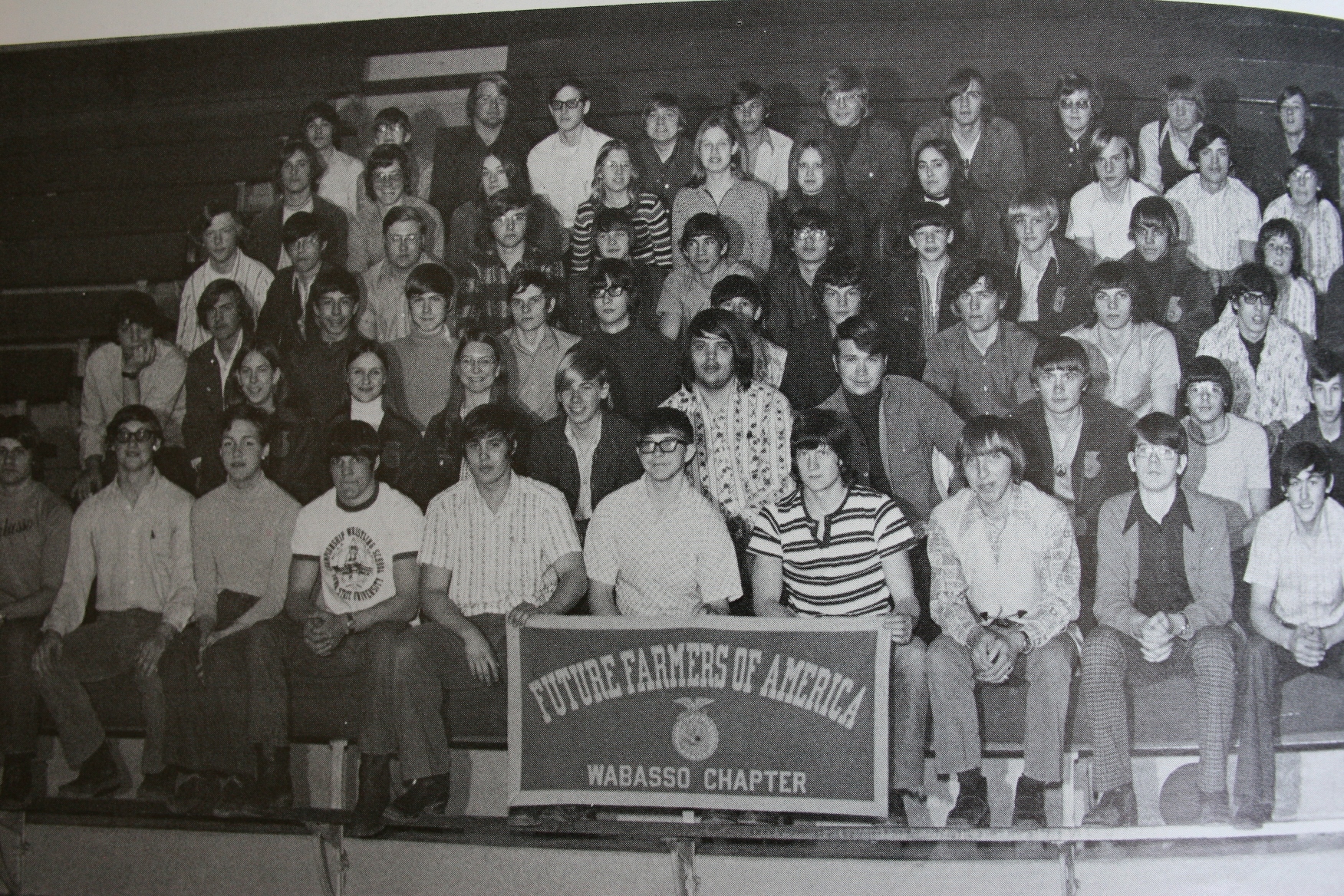
The 1973 – 1974 Wabasso High School FFA chapter consisted of mostly male students. I am among the few females featured in this photo. I’m seated in the second row, third girl on the right. (Photo credit: WHS yearbook)

Coming of age in the 1970s during the Vietnam War, we were a bit of a rebellious bunch testing our teachers’ patience. I was among those who wore a prisoner of war bracelet, embraced the peace symbol, wrote anti-war poetry. Mostly, though, I was quiet, studious, a rule follower. But I did blaze the way for young women at my high school by becoming the first girl to join the WHS Future Farmers of America Chapter. Decades later, a niece would become the state FFA president.

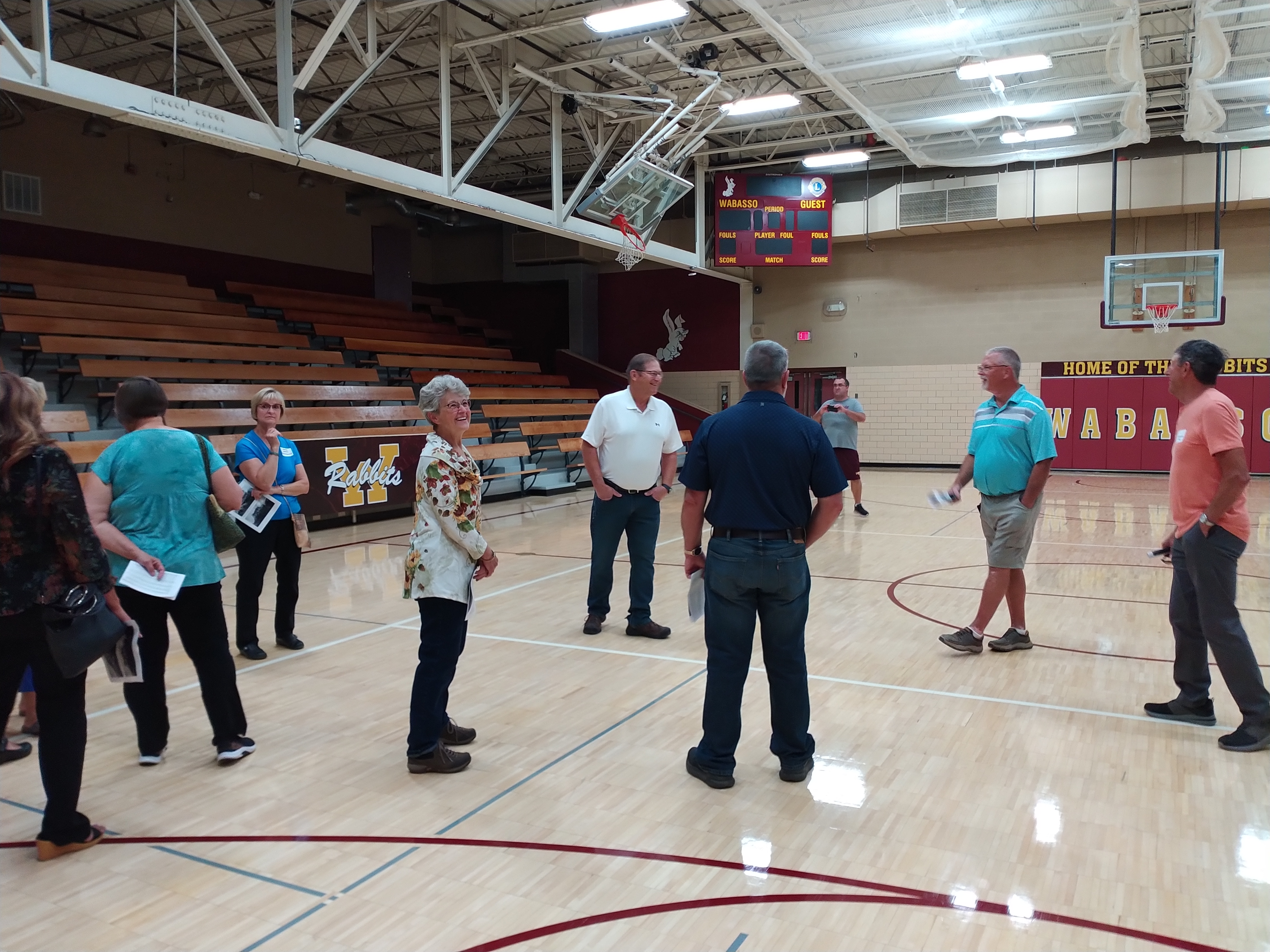
We were given a lengthy tour of the school. (Minnesota Prairie Roots copyrighted photo September 2024)

No one cared about any of that when we got together 50 years later, first touring the halls of our former school. Home of the Rabbits. Yes, Rabbits. Wabasso, meaning “white rabbit,” comes from the Dakota language. I’m proud of our school mascot, which is unique and connects to the history of the region. It honors the town name and the Dakota people who were the original inhabitants of this land and still live in the nearby Upper and Lower Sioux Indian communities.

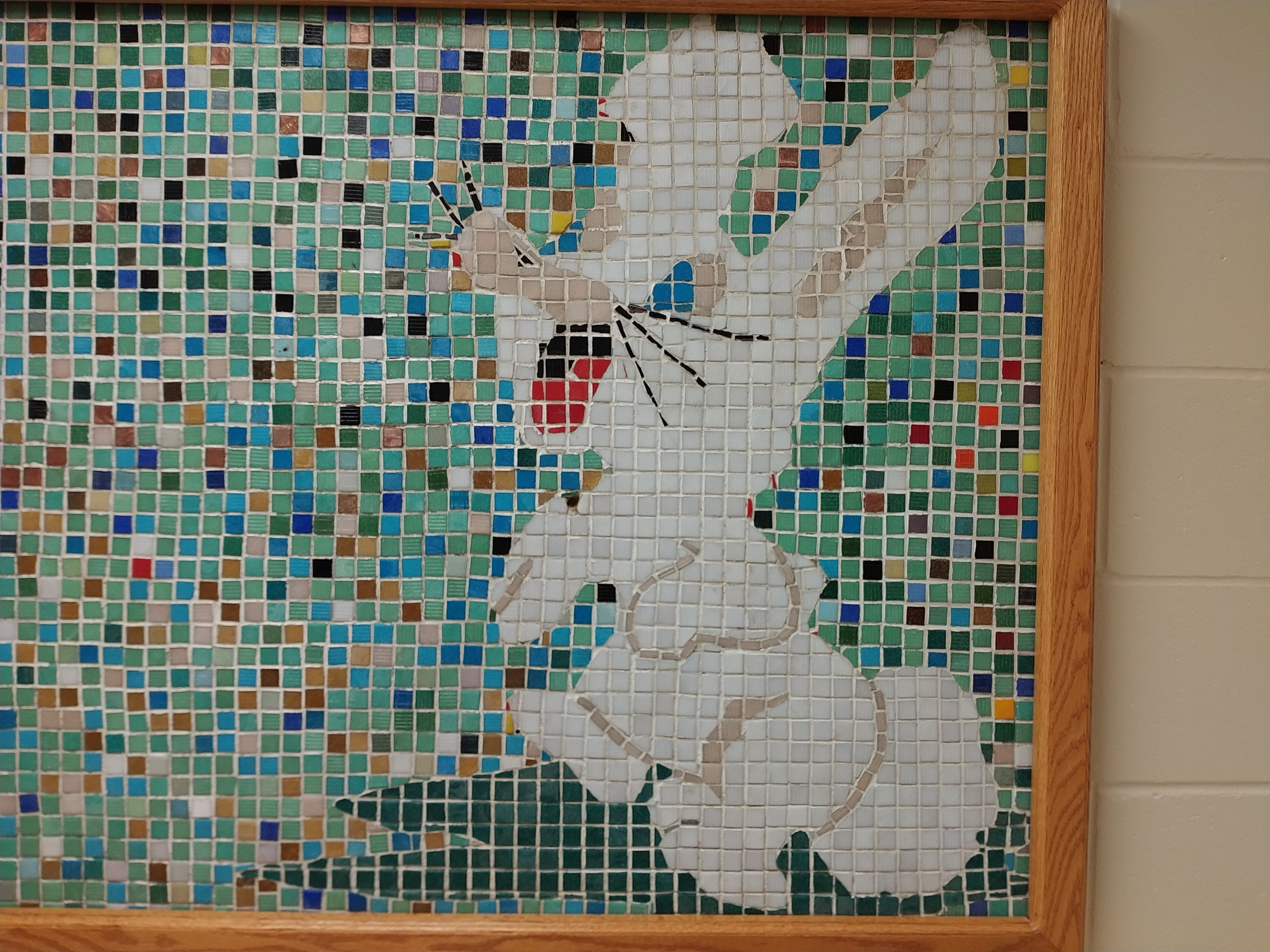
This Rabbit mosaic once hung on the side of the front office counter. It now hangs in a school hallway. (Minnesota Prairie Roots copyrighted photo September 2024)
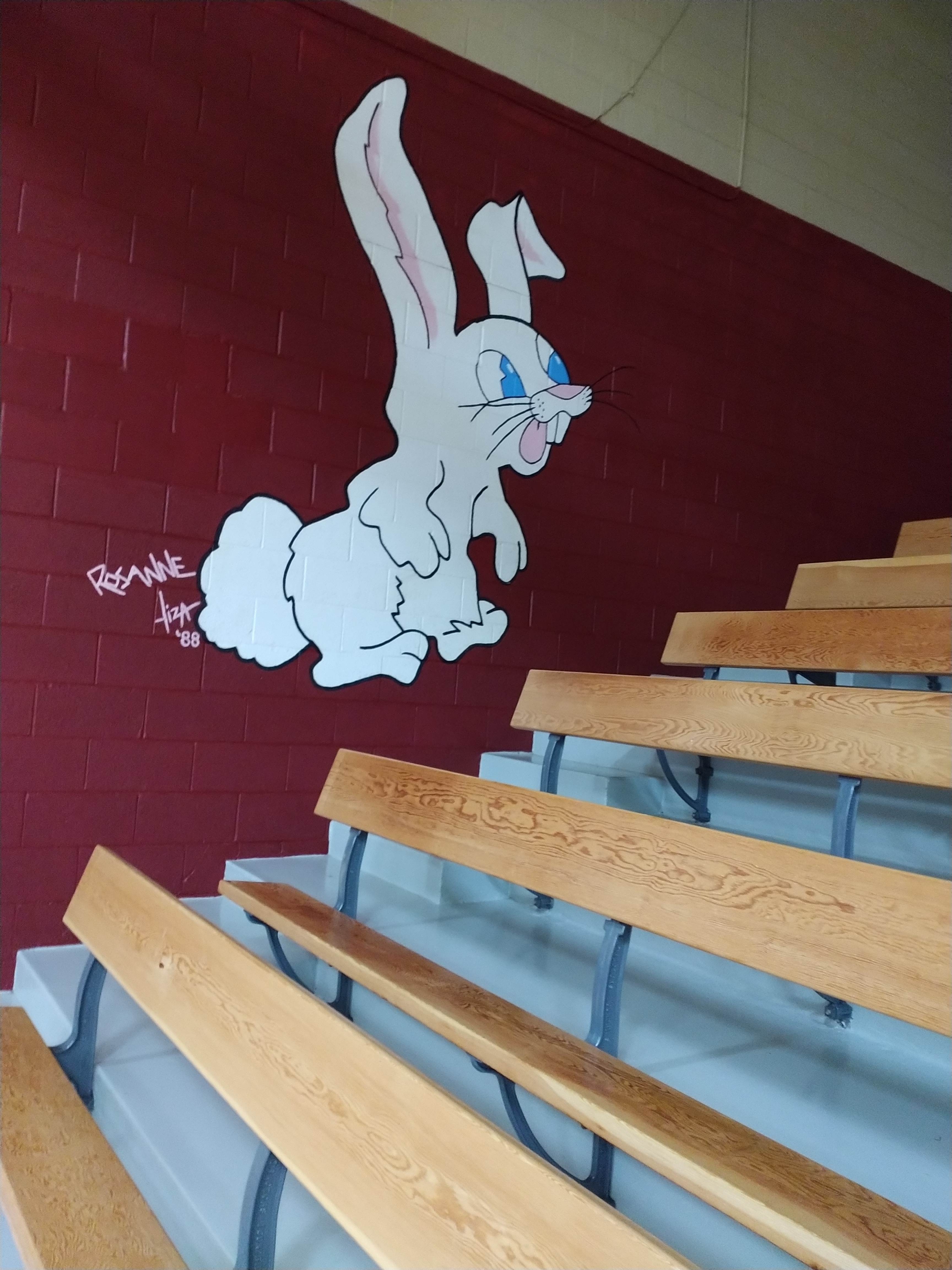
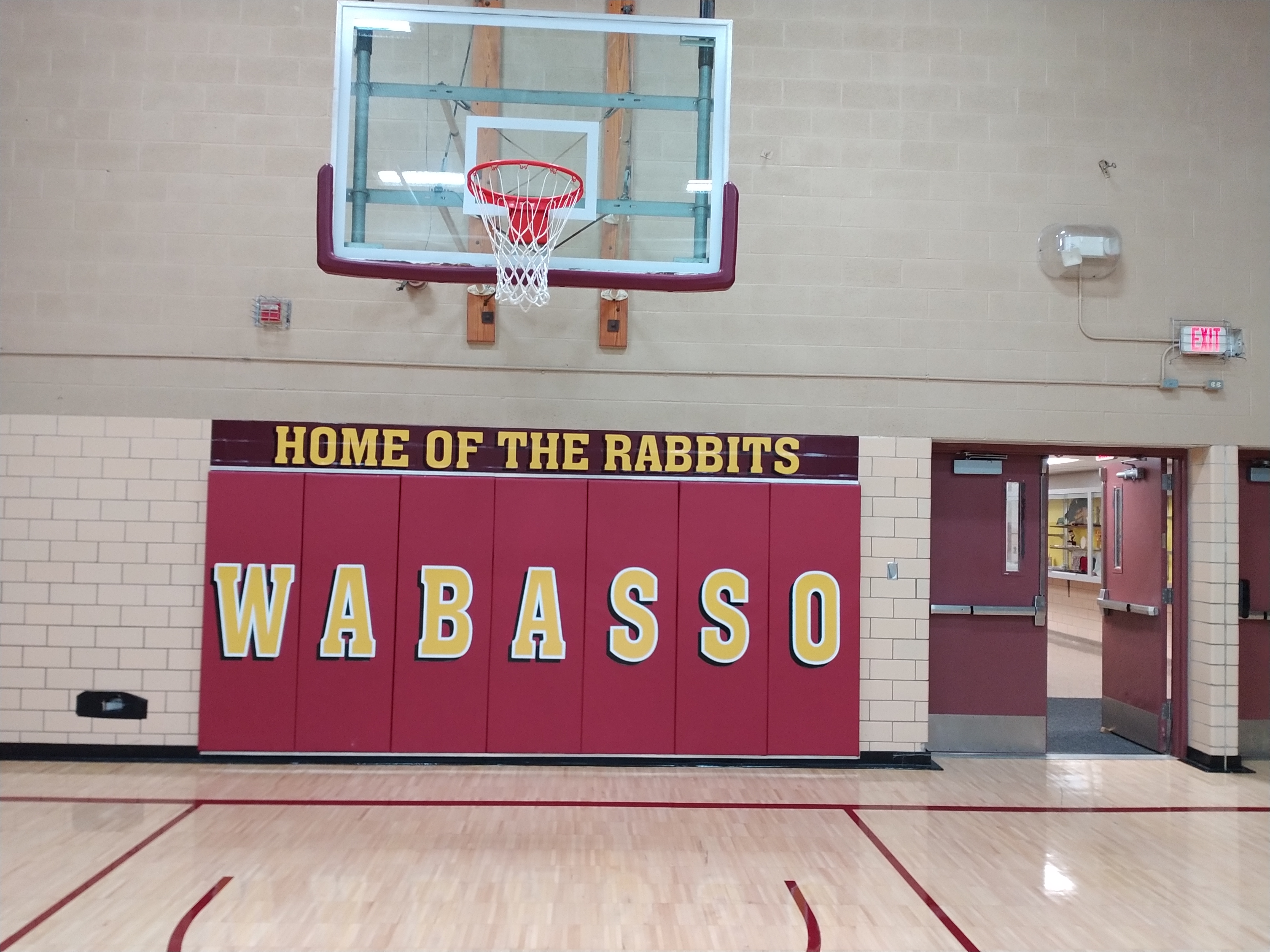
The original Rabbit mascot on a gym wall. (Minnesota Prairie Roots copyrighted photo September 2024)
Rabbit pride showcased in the gym. (Minnesota Prairie Roots copyrighted photo September 2024)

As the superintendent of schools led us through the school, I found myself drawn to the many artistic renditions of Thumper, our rabbit mascot. I don’t care for the updated, fierce version that now graces a wall in the new gymnasium. It’s not that I oppose change. I just don’t like the mean look on the rabbit’s face, his appearance of being on steroids. No thank you. I much prefer the old rabbit, the one that appears gentle and friendly. Thankfully, plenty of the original Thumpers remain in a school building I barely recognize.

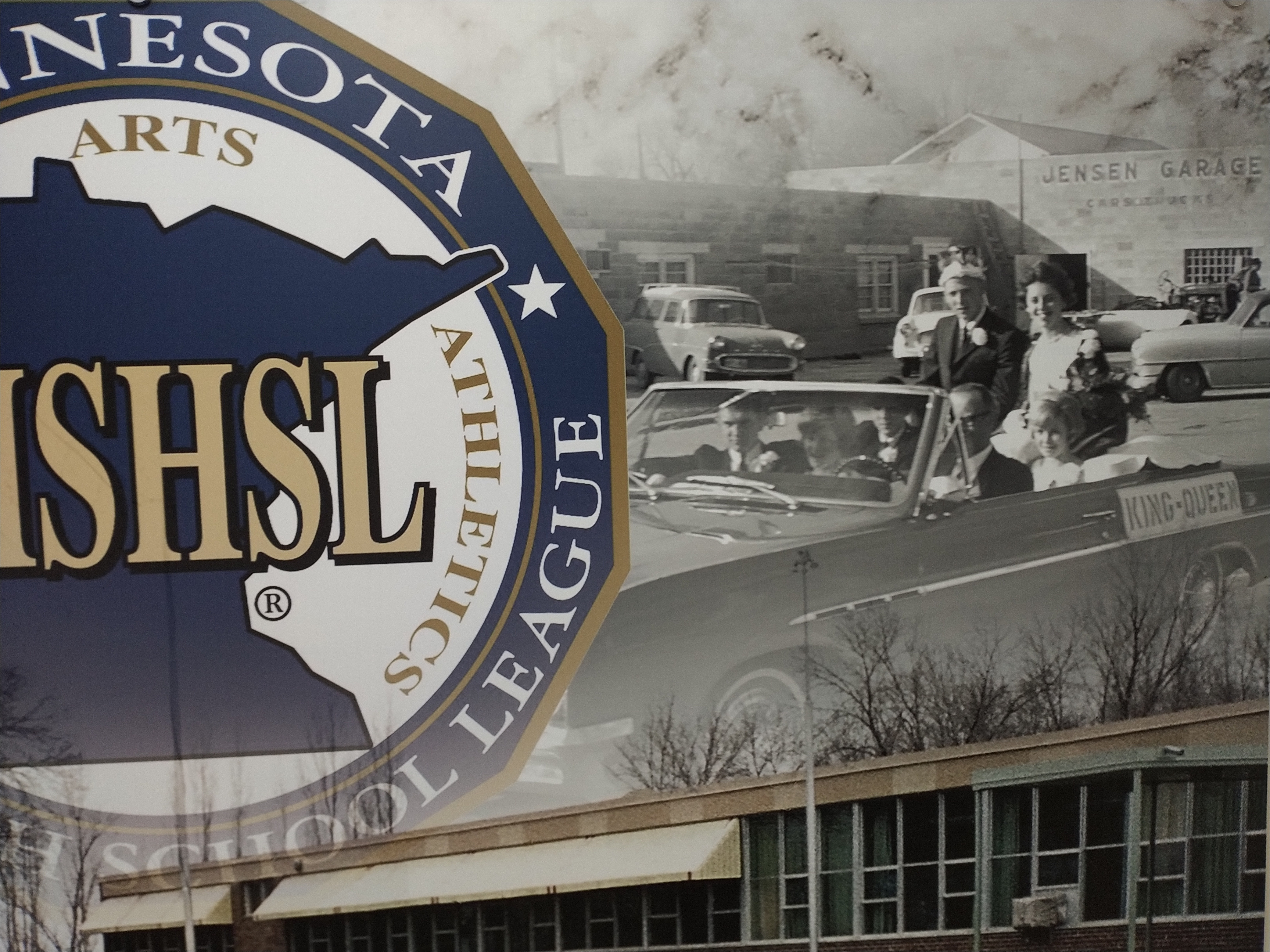
Oversized photos, including this one of the 1973 homecoming court, are displayed in a hallway of images. (Minnesota Prairie Roots copyrighted photo September 2024)

Building additions, removal of the storied stack, shuffling and changing of classrooms altered the school significantly. The home economics room is now the art room. The shop a classroom. The cafeteria is new, spacious, bright and beautiful. And the new library, although much brighter and modern in appearance, holds far fewer books than the library of my high school years, something several of us noticed and mentioned to the superintendent.

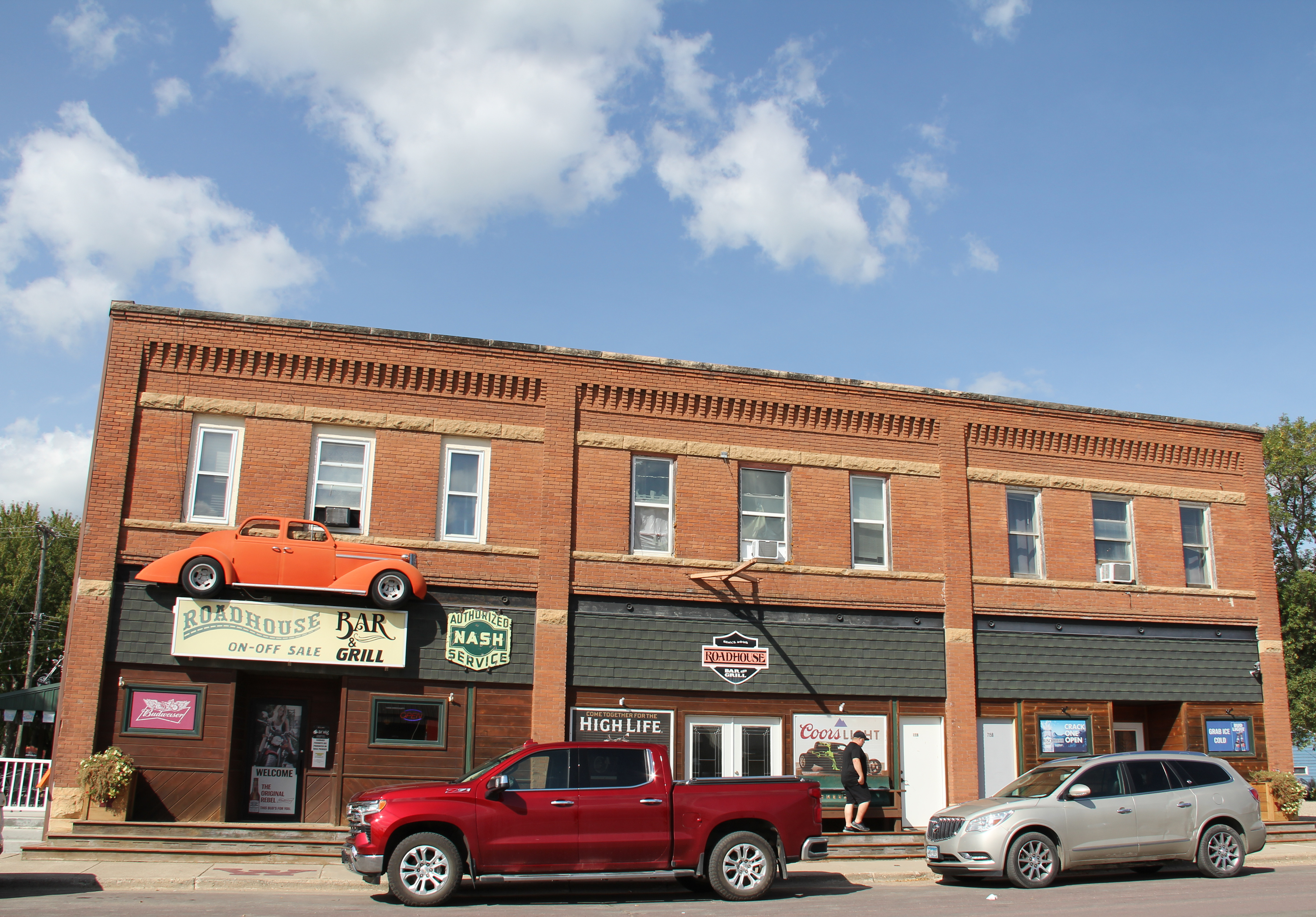
The Roadhouse Bar & Grill sits on a corner along Wabasso’s main street. It’s an especially popular summertime spot with weekly roll-ins. (Minnesota Prairie Roots copyrighted photo September 2024)
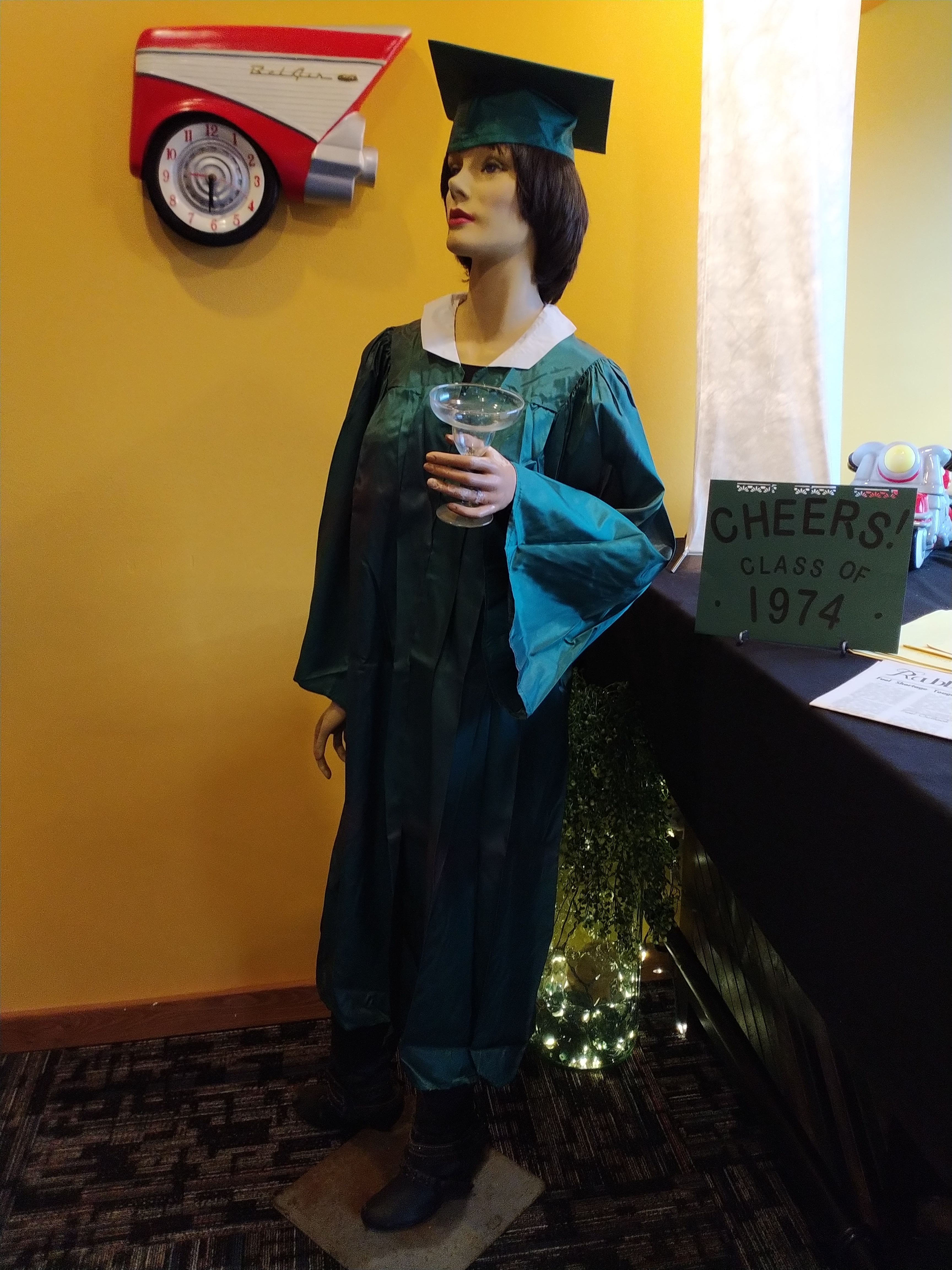
The reunion committee set up this mannequin wearing a Class of 1974 graduation gown. (Minnesota Prairie Roots copyrighted photo September 2024)
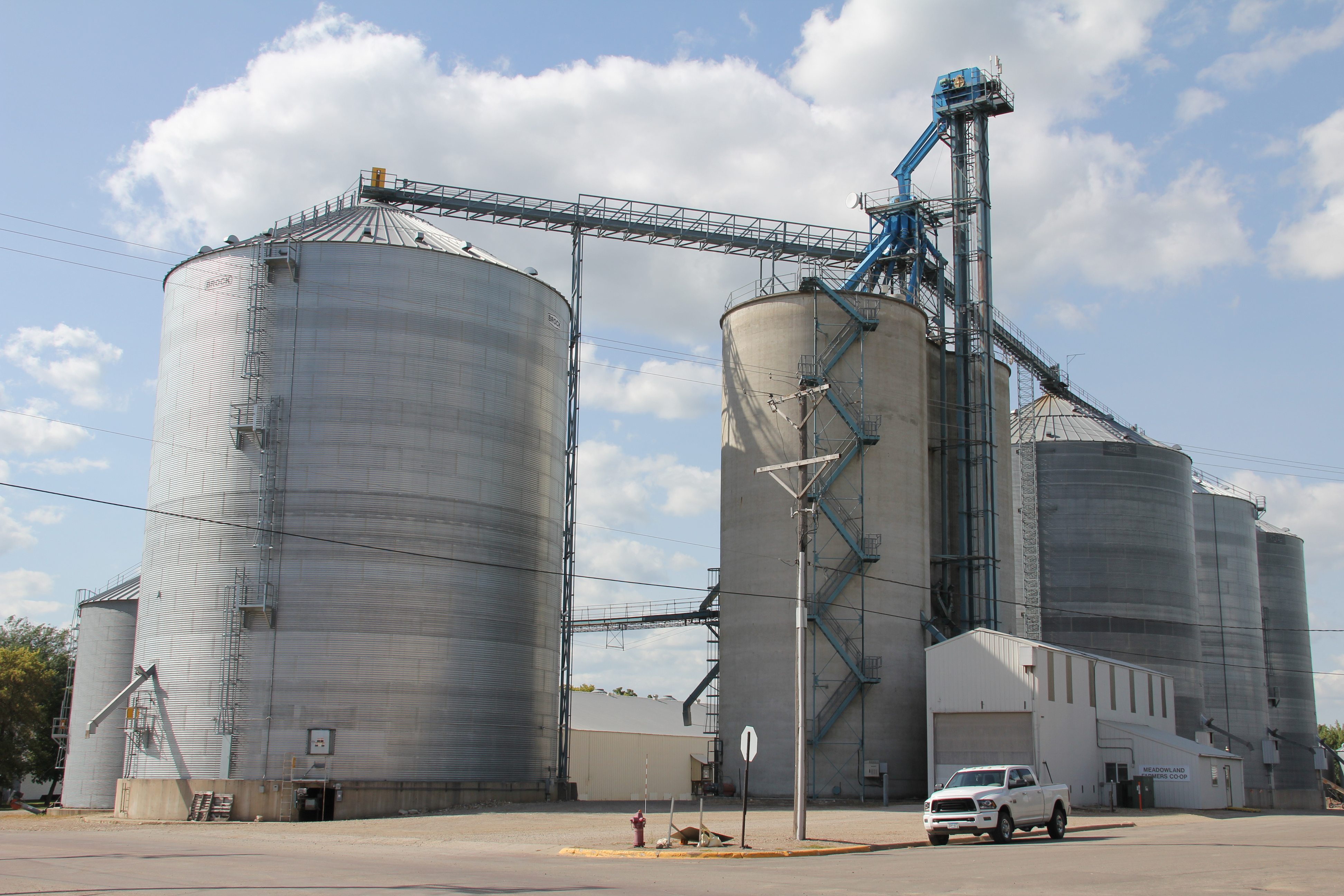
This shows just a part of Meadowland Farmers Cooperative, which anchors the business community. (Minnesota Prairie Roots copyrighted photo September 2024)

What I did notice, too, was a closeness I felt among classmates as we walked hallways and classrooms and even the old locker rooms. That feeling remained after the tour, down at the Roadhouse Bar & Grill. There we perused photos and memorabilia. Hugged. Laughed. Mourned the loss of 15 classmates. Built burgers at the burger bar. Gathered outside for a group photo. Clustered around patio tables for conversation as the sun set, brushing the sky in a subtle pink hue. All the while the ventilation fans from the grain bins across the street roared in a steady din.

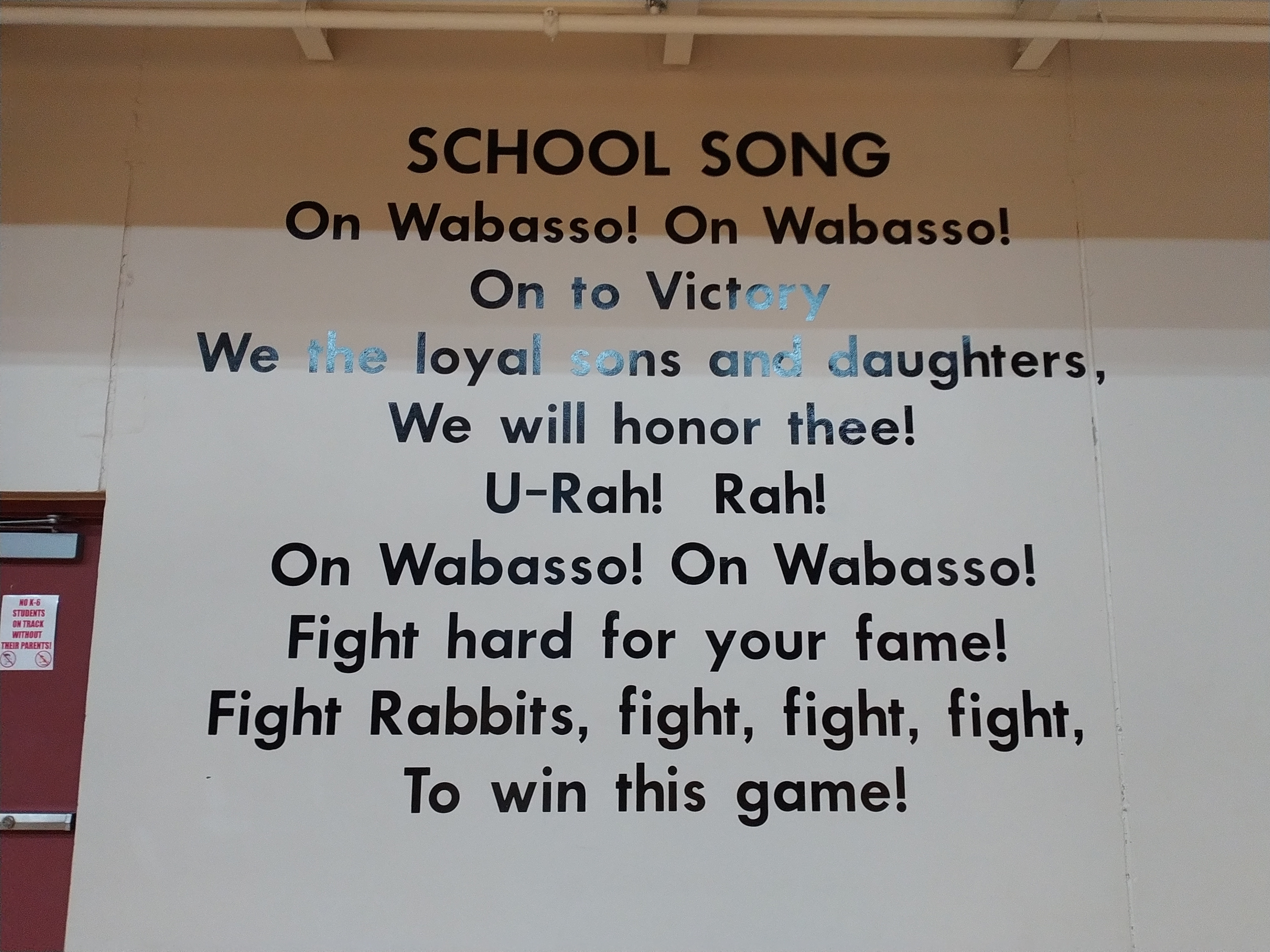
Wabasso’s school song, printed on a gym wall. (Minnesota Prairie Roots copyrighted photo September 2024)

“We May Never Pass This Way Again.” That titled the Seals & Croft tune we chose as our class song. It was our second choice. The administration nixed “Dead Skunk in the Middle of the Road.” There was no mention of skunks—at least that I heard—at our 50th reunion. But Rabbits, oh, yes, Rabbits. We are forever and always Rabbit proud.

© Copyright 2024 Audrey Kletscher Helbling
 

Old-fashioned fun for the kids at vintage farm show September 9, 2024

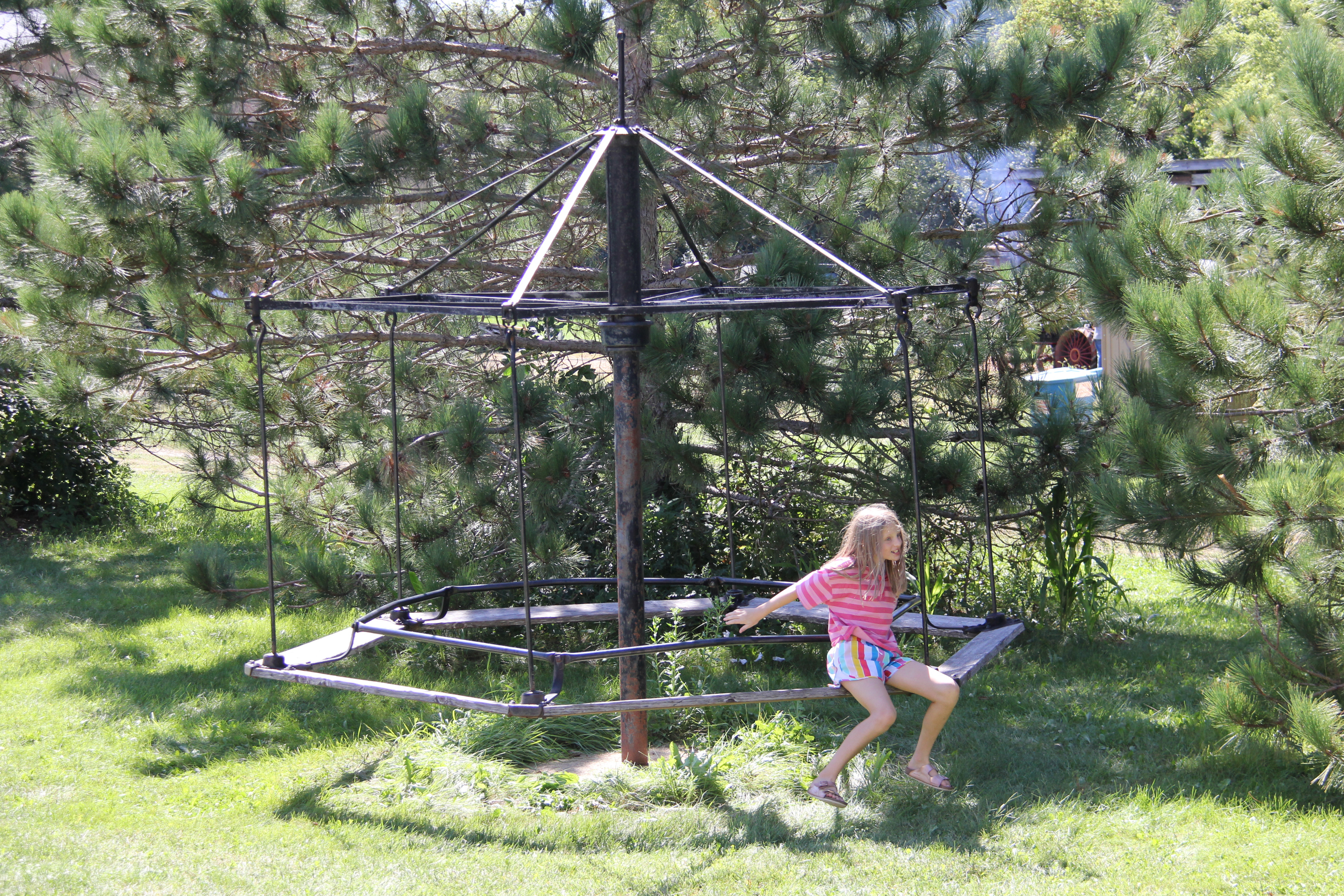
Taking a spin on the merry-go-round at the Rice County Steam & Gas Engines Fall Show. (Minnesota Prairie Roots copyrighted photo September 2024)

I LOVE WATCHING KIDS engage in activities from “the olden days.” Like circling on a vintage merry-go-round which, in today’s world, would fail all safety standards. But at the Rice County Steam & Gas Engines showgrounds in rural Dundas, playground and farm equipment of yesteryear, with all its inherently “dangerous” aspects, takes center stage. Common sense and caution are required at the bi-annual event which draws people of all ages. I observed a lot of young families at the recent Labor Day weekend farm show.

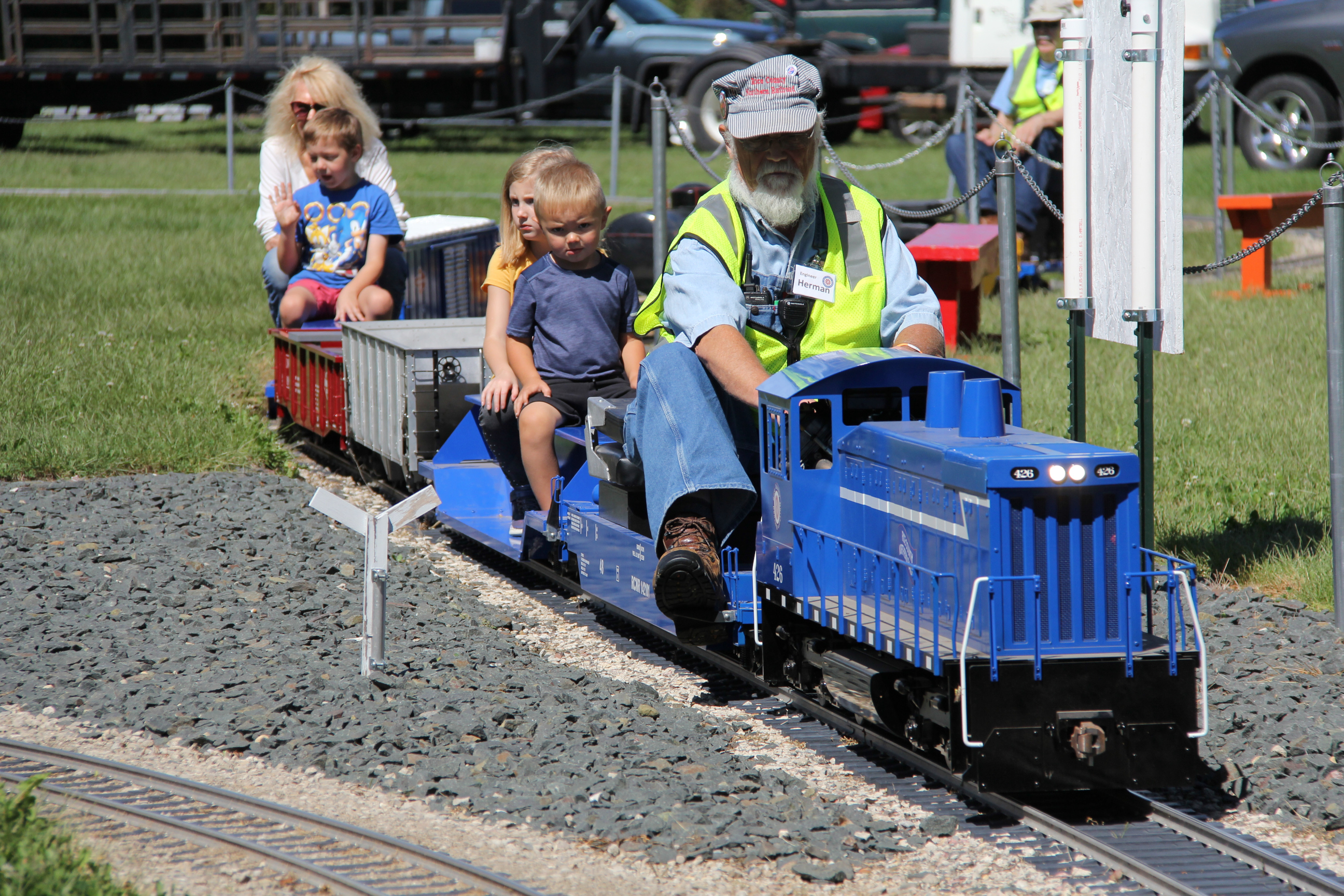
Train rides were a popular attraction with kids waiting in line to climb aboard. (Minnesota Prairie Roots copyrighted photo September 2024)
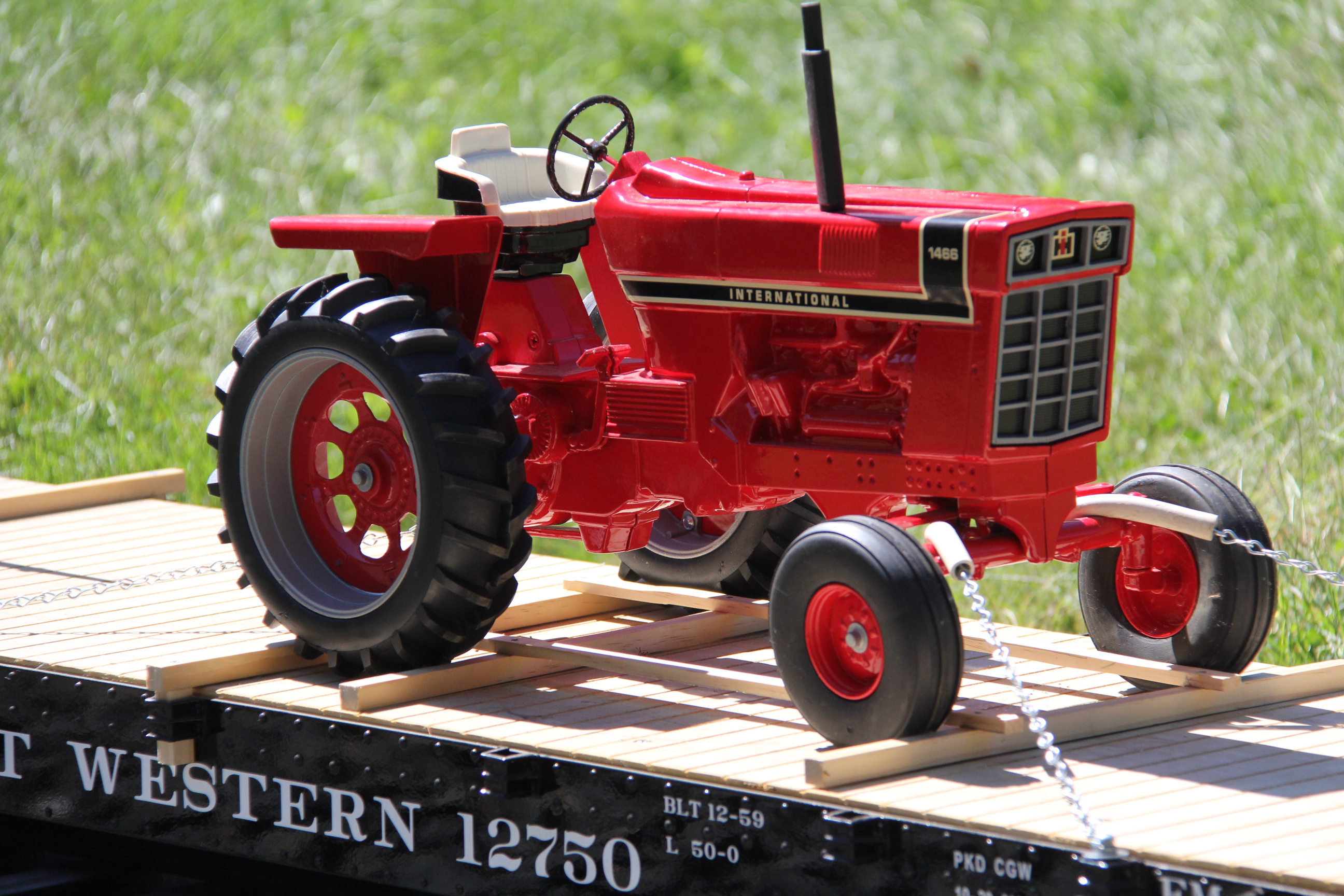
Tractors truly are a focal point of the farm show. This mini International sits on a train car. (Minnesota Prairie Roots copyrighted photo September 2024)
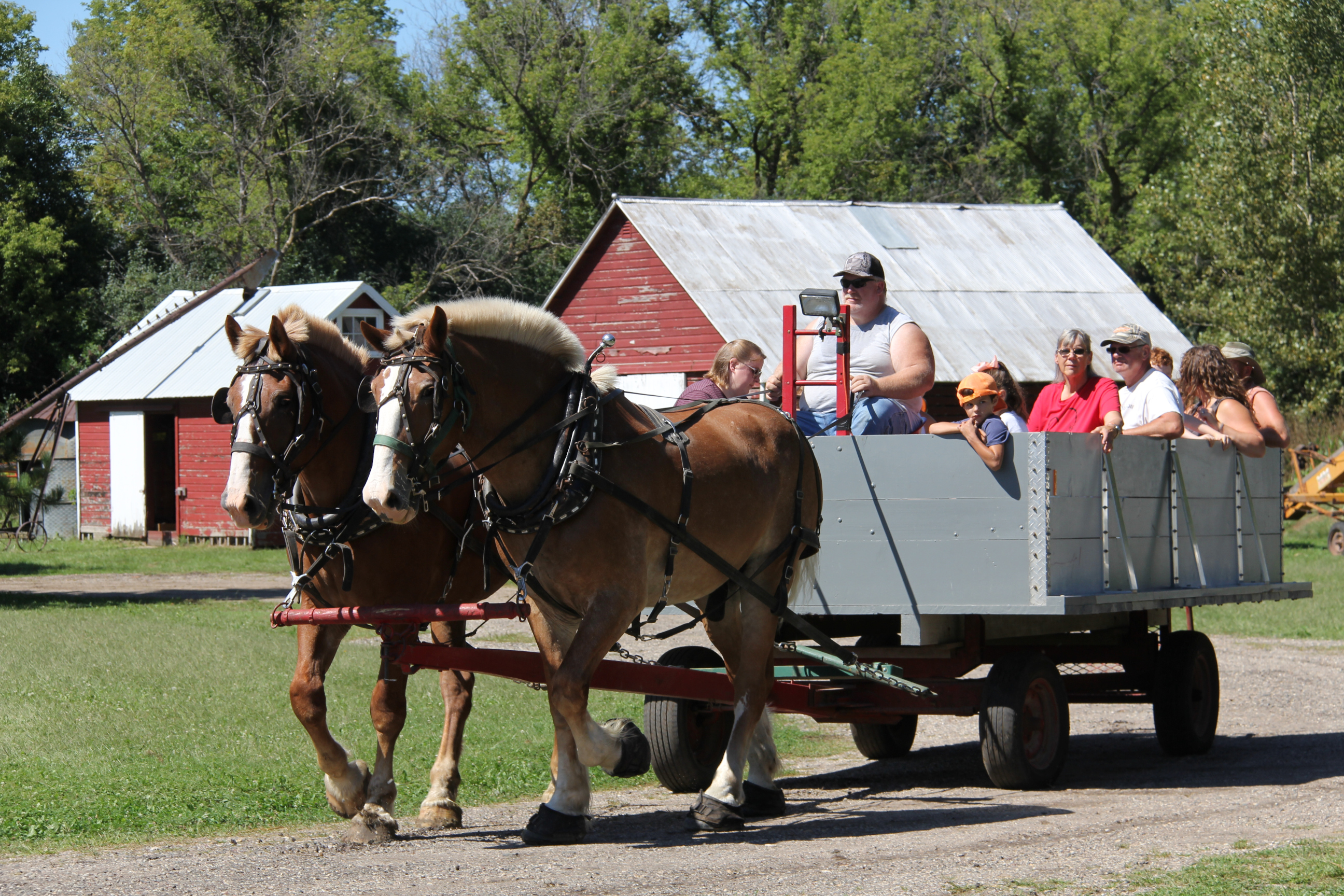
Horse-drawn wagon rides, too, drew lots of riders of all ages. (Minnesota Prairie Roots copyrighted photo September 2024)

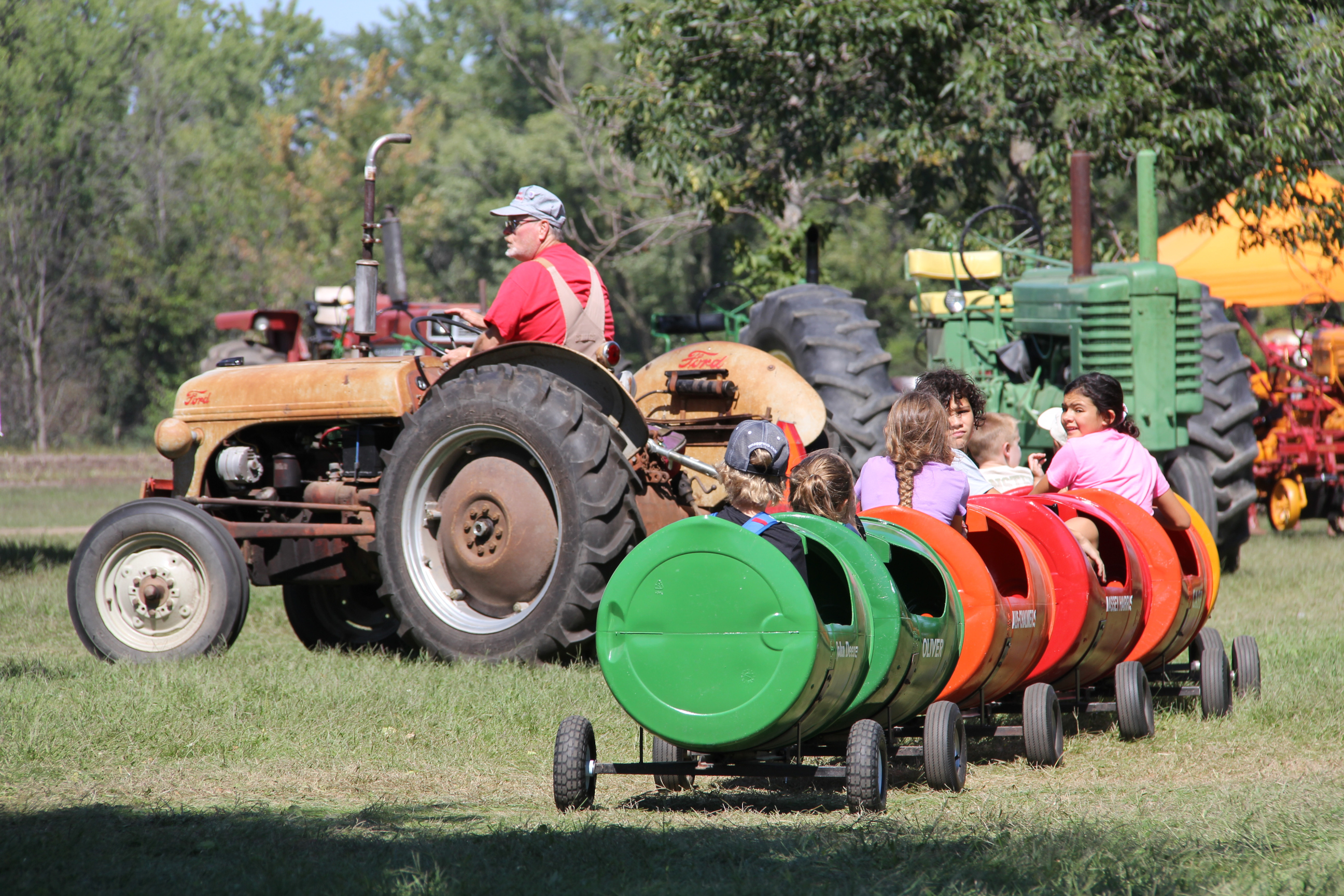
From a ride on a mini replica train, to rides on tractors, in horse-drawn wagons, and in a barrel train, kids have plenty to do here.

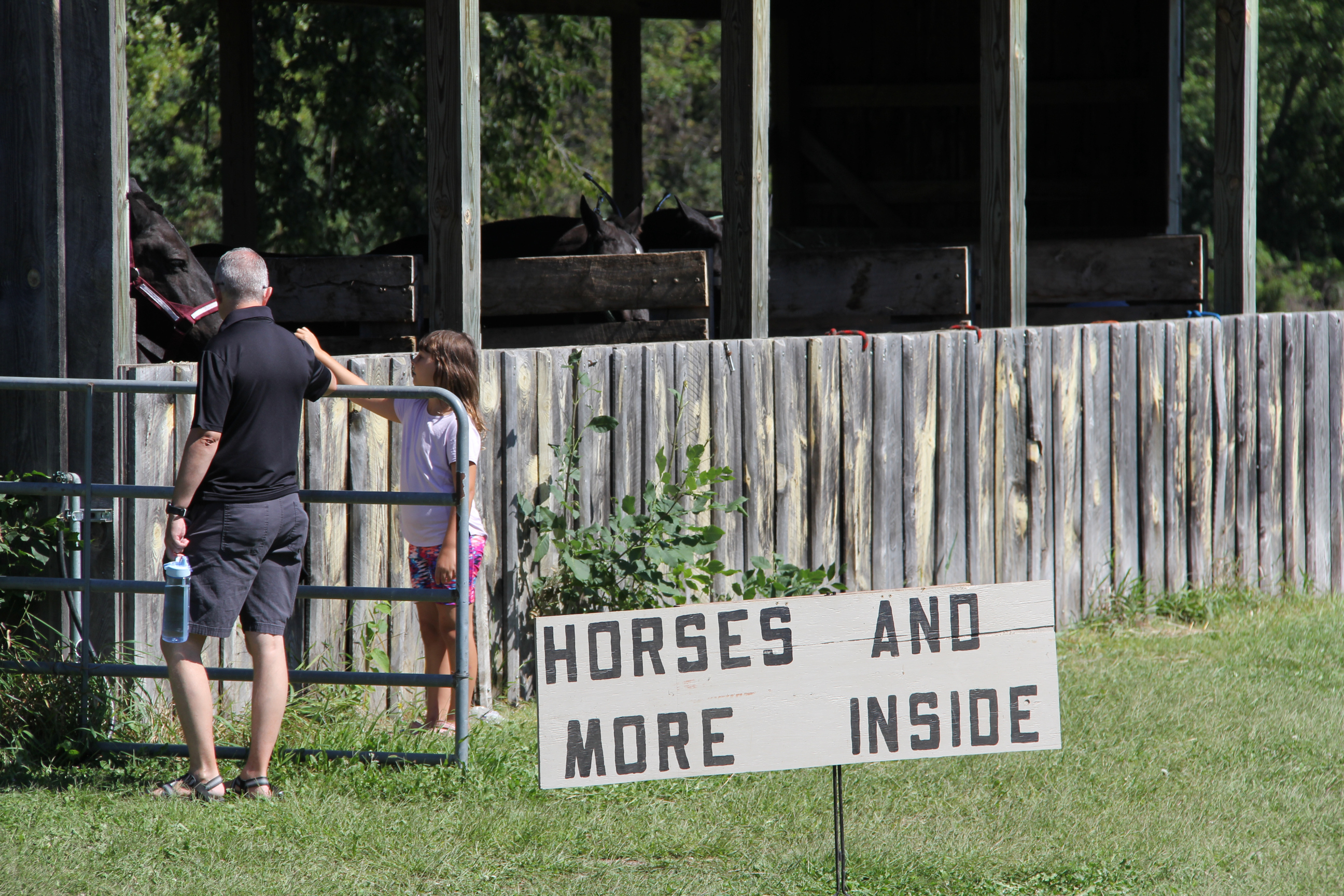
Windy Willow Farm Adventure, rural Northfield, provided animals housed in this shed. There were sheep, goats, rabbits, geese and chickens from the farm, plus horses. (Minnesota Prairie Roots copyrighted photo September 2024)
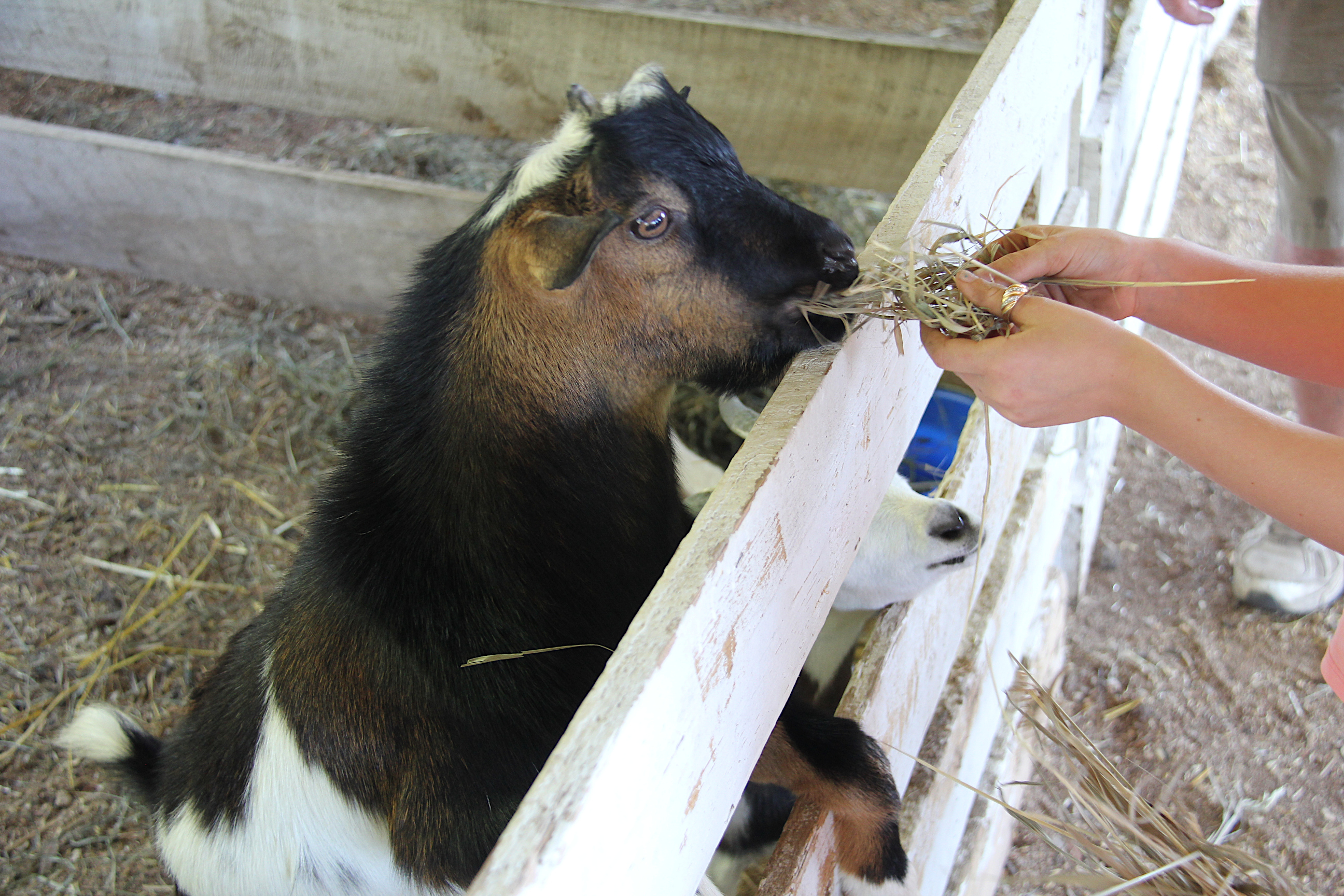
Two friendly goats vie for attention. (Minnesota Prairie Roots copyrighted photo September 2024)
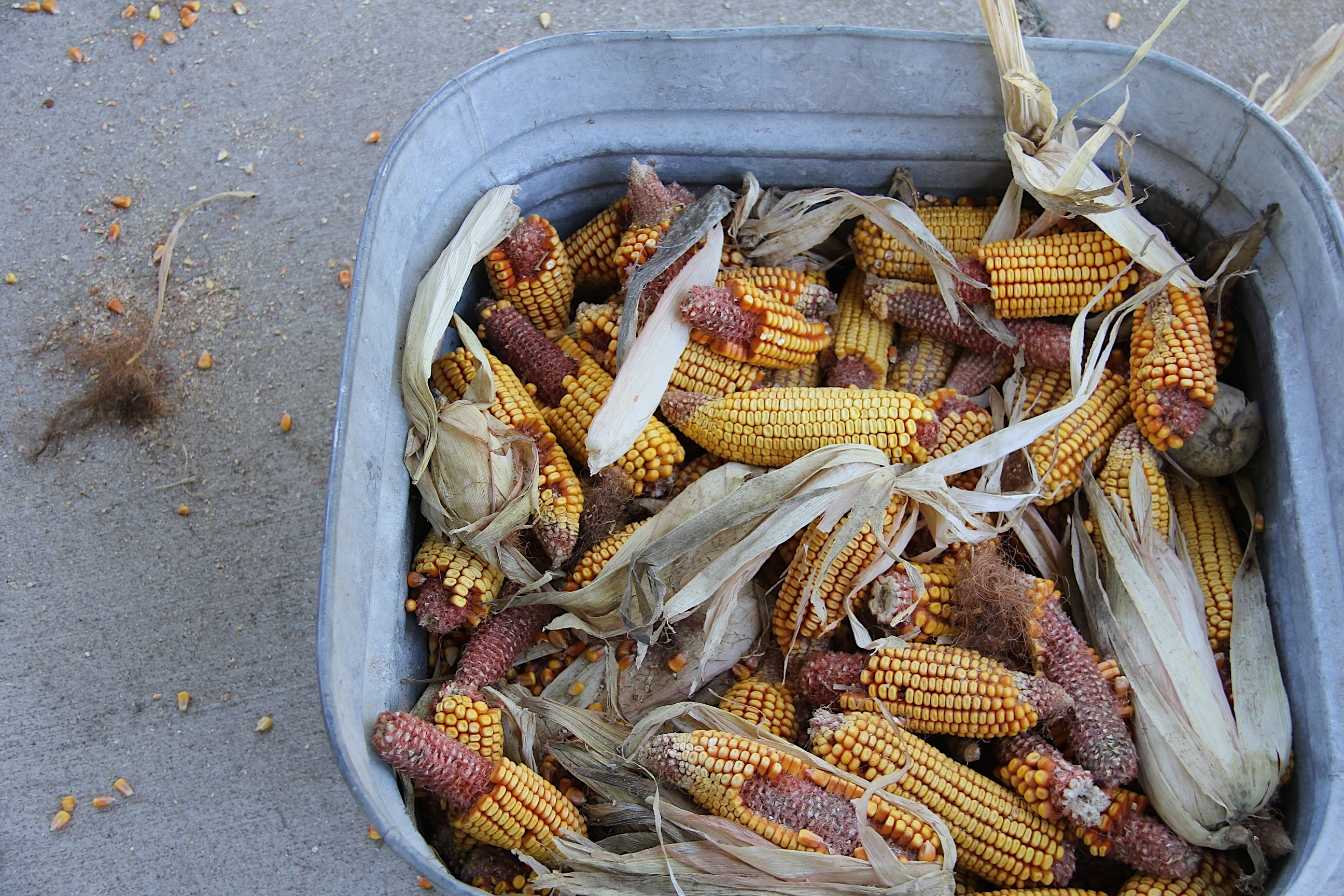
Tubs and buckets of corn await shelling. (Minnesota Prairie Roots copyrighted photo September 2024)

There are also clothes to feed through a ringer washer, corn to shell, animals to pet, a reel lawnmower to push and more.

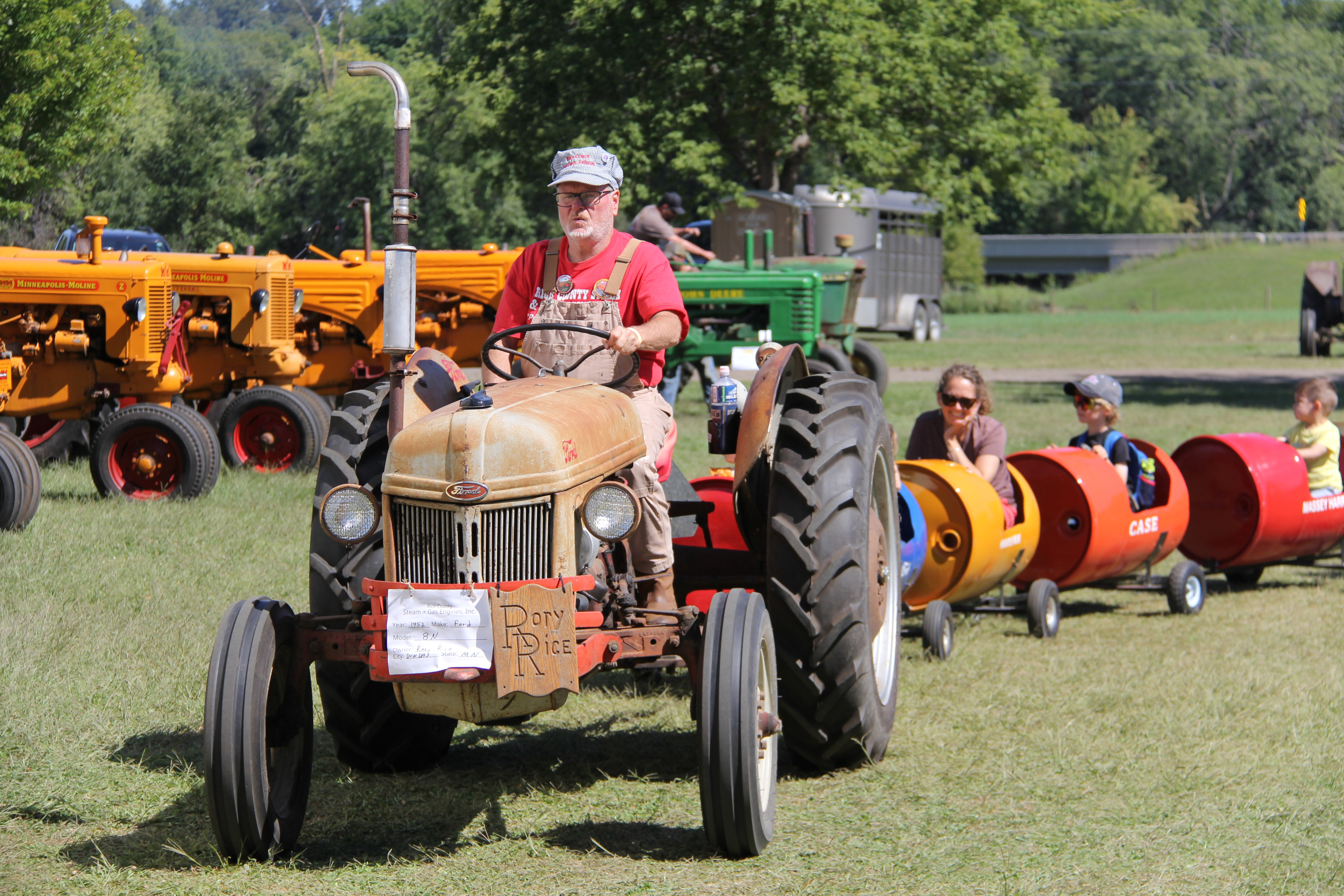
The “engineer” of the barrel train steers a 1950s era Ford tractor around the showgrounds. (Minnesota Prairie Roots copyrighted photo September 2024)
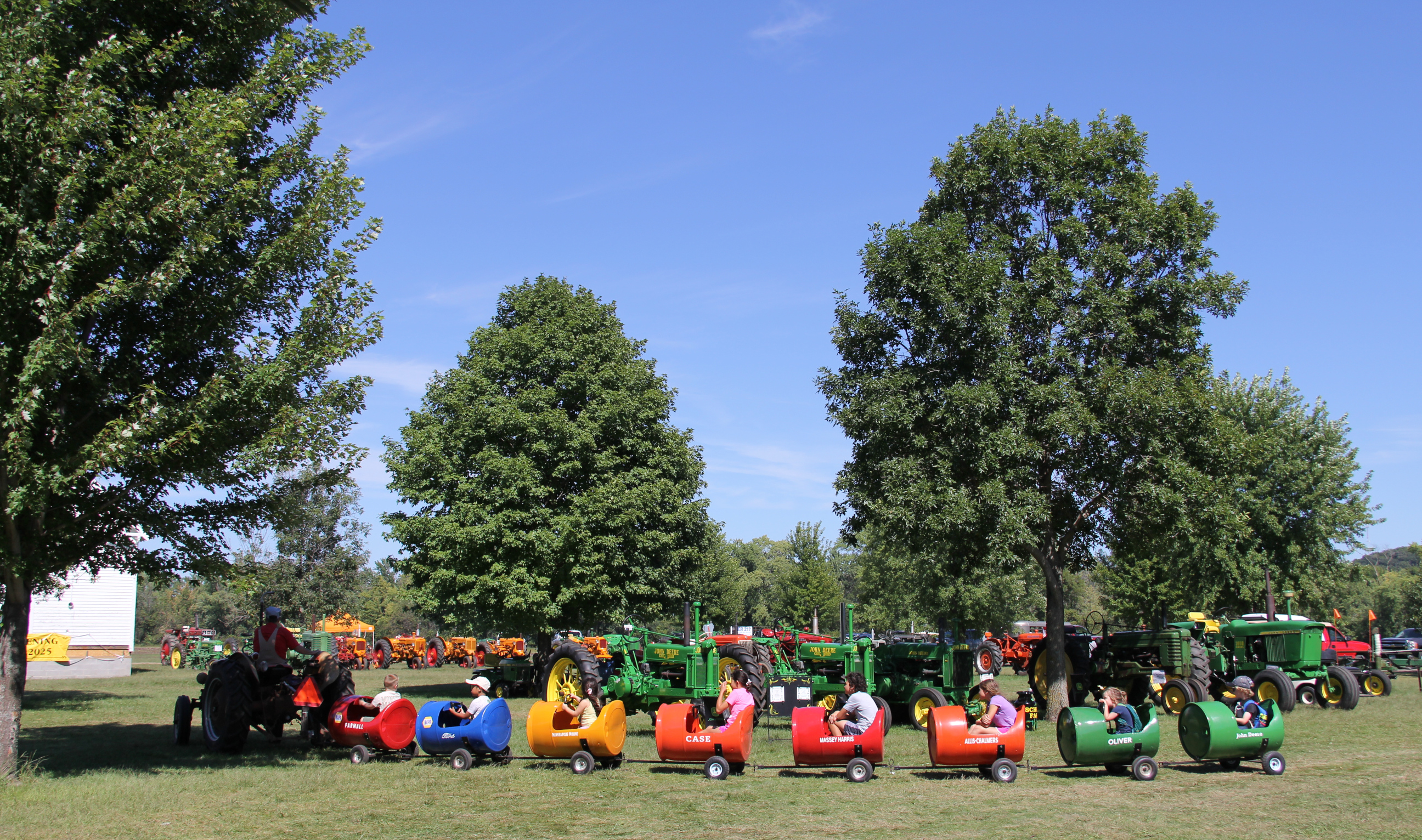
Without rails, the barrel train weaves among the vintage tractors at the farm show. (Minnesota Prairie Roots copyrighted photo September 2024)
Colorful, curving, quaint…barrel train. (Minnesota Prairie Roots copyrighted photo September 2024)

Anytime anyone can get kids outdoors, off their electronic devices and learning rural history, it’s a good thing. Organizers of the steam & gas engines show clearly understand the importance of activities that keep kids busy and happy while adults watch the tractor pull, listen to music, mill around the vintage tractors and more as they connect in this rural community gathering.

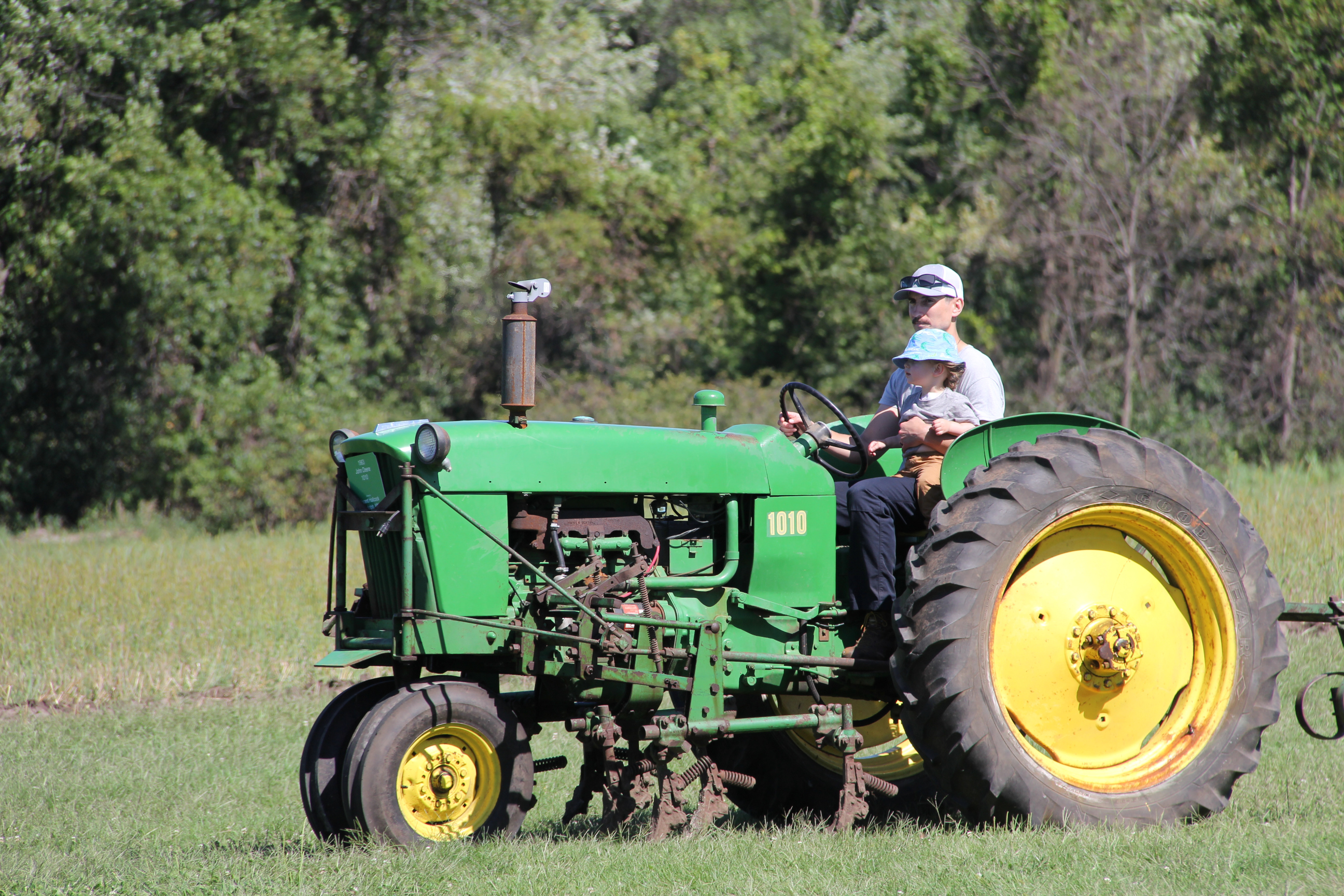
Father and son circle on a 1010 Model early 1960s John Deere pulling a cultivator. (Minnesota Prairie Roots copyrighted photo September 2024)

Most kids, even those from greater Minnesota, aren’t growing up “rural” anymore. Even if they live in the country, they’re not necessarily farm kids. So it’s important to expose them to the area’s agricultural heritage. The old tractors. The old farm machinery. The way clothes were washed and lawns were cut and how kids played back in the day.

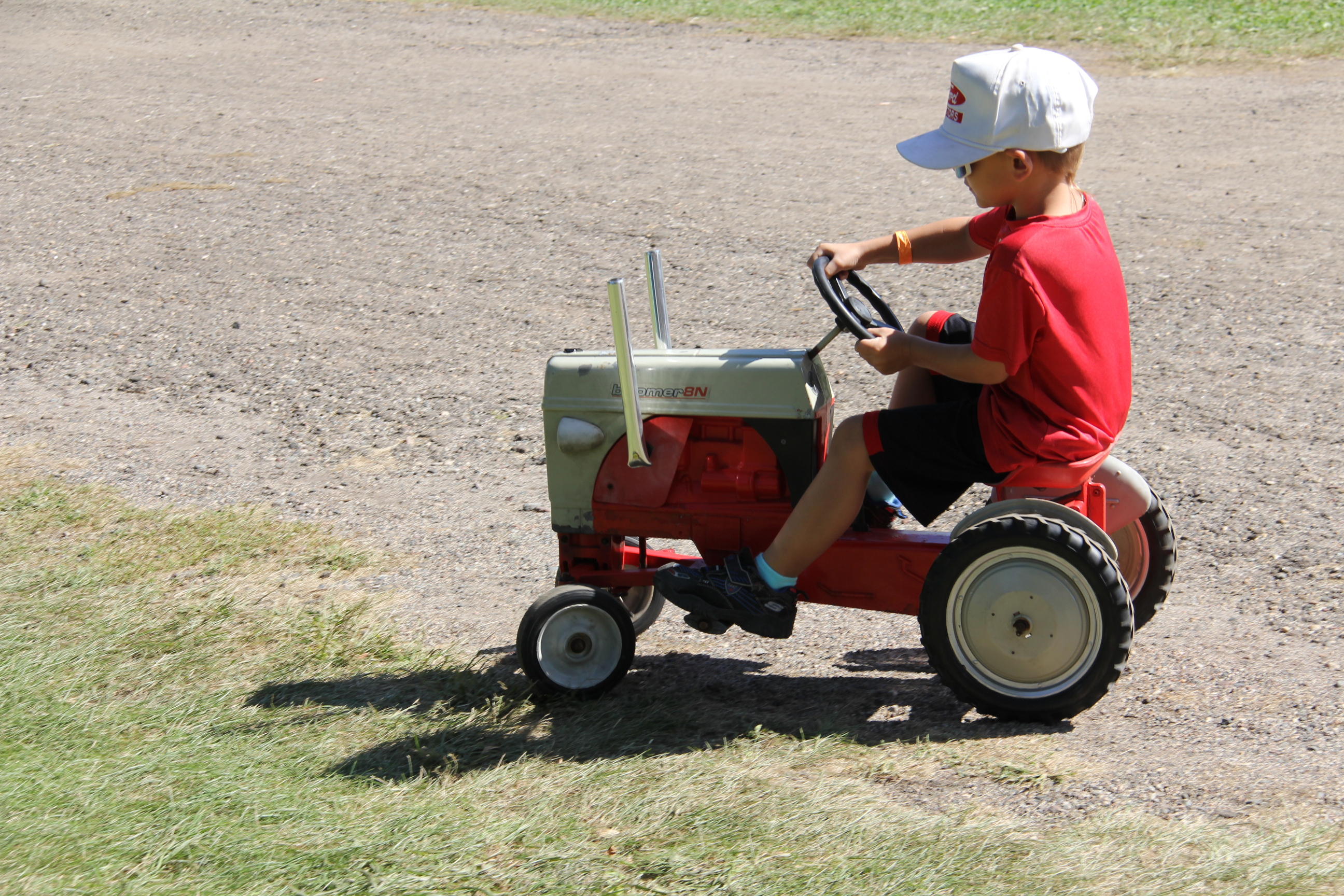
The day after he competed in the pedal tractor pull and earned second place, this little guy was back pedaling. (Minnesota Prairie Roots copyrighted photo September 2024)

A kids’ pedal tractor pull contest engages youth, allows them to compete, show off their strength. It’s also a way to build memories so that years from now perhaps they will bring their own kids to the Rice County Steam & Gas Engines Show. They’ll remember those merry-go-round rides and how they climbed into a horse-drawn wagon and how they pedaled with all their leg power to get a mini tractor across a finish line. In the end, we all cross the finish line. And sometimes getting there requires experiencing a little danger mixed with a whole lot of fun.

© Copyright 2024 Audrey Kletscher Helbling


Ice cream with a kindergartner after the first day of school September 5, 2024

The Betty, a mint-flavored Oreo ice cream treat, one of my favorites at The S’Cream. (Minnesota Prairie Roots copyrighted file photo)

AN ICE CREAM TREAT seemed in order after walking through Owatonna’s beautifully-redone, pedestrian-friendly downtown Tuesday afternoon. The sun shone bright on a day as ideal as they come in southern Minnesota. Yes, I could go for ice cream to cool off, not that I ever really need a reason.

So Randy and I headed to our favorite home-grown ice cream shop, The S’Cream.

But our stop at this busy walk-up shop turned out to be more than a pause in our day for a peanut butter sundae and a monster cookie dough Flurry. I struck up a conversation with Paisley and her grandpa (mostly Paisley) while Randy waited for our order.

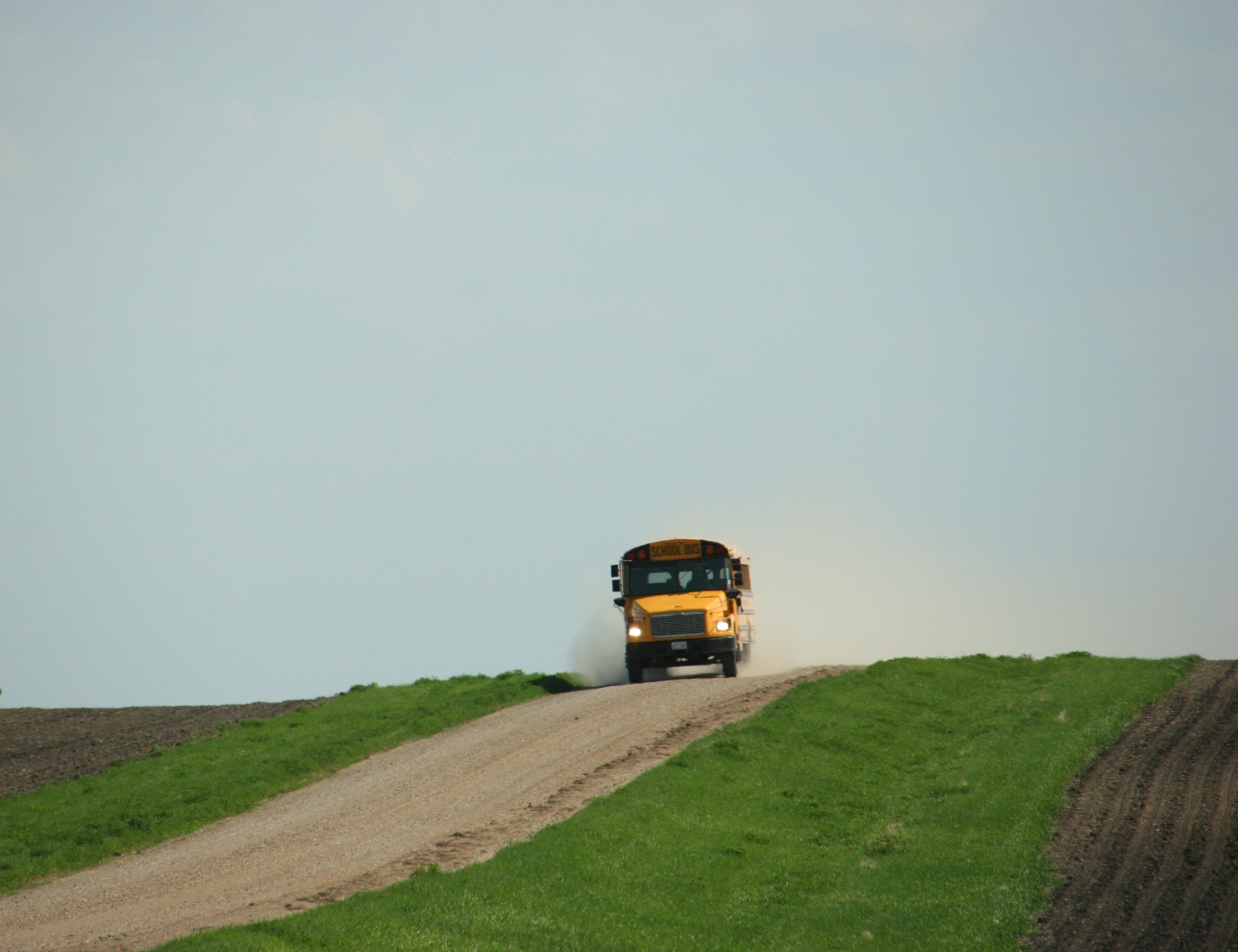
A bus photographed near Morgan, Minnesota, and used here for illustration only. (Minnesota Prairie Roots copyrighted file photo)

I didn’t know the two. But I like to engage in conversation, even with strangers. I’ve met many interesting individuals this way. Paisley is no exception. She had just finished her first day of kindergarten and was celebrating with a vanilla/strawberry twist ice cream cone.

As Paisley licked her cone and I spooned cookie dough-flavored ice cream, we talked. First off, I asked about school, a day she summarized as “good and fun.” That led to my next question, “What made it fun?”

Well, Paisley explained, she brought a Barbie book home from school. That prompted me to stress the importance of reading. If you can read, you can learn anything, I told my new friend who is turning six in September. I shared that I also have a September birthday. To which Paisley shared that she’s celebrating her birthday all month long. True or not, I don’t know. But I do know this. Paisley doesn’t like spiders, including the one hanging out in her kindergarten classroom on Tuesday.

But that didn’t quell her spirit. Paisley was happy and animated and not one bit shy. I learned a lot in the time we ate our treats. Her backpack is purple and sports a “P.” She lives in the country, had three cats (one’s gone; I didn’t ask), has three semi trucks (one is “hers”; again, I didn’t ask) and has a loose tooth. Paisley wiggled a bottom front tooth to verify her claim.

The Blast, with locations in Owatonna and Northfield, is another popular ice cream spot. (Minnesota Prairie Roots copyrighted file photo)

This kindergartner was all wiggles. Understandable given her first full school day. She moved constantly while licking the melting ice cream that soon ran onto her hands. A few drips fell onto her shirt, a sparkly pink tee emblazoned with the word LOVE.

What a great message Paisley took to school. She exudes love. That gives me hope. Here’s a little girl who loves school and life and birthdays, especially birthdays. I felt absolute joy in her presence.

Forty-five miles away, my 5-year-old grandson also started kindergarten. He’s much different than Paisley. Quiet. Reserved. But he is no less enthusiastic about school. His mom, my eldest, shared this upon his return home: “Isaac said the school day felt like 3 minutes!” So, yes, he, too, had a good day, a fun day, summarized in that creative response to his mom.

Oh, the joy these kindergartners—one a stranger, the other a dear one—brought me on a beautiful September day in southern Minnesota.

© Copyright 2024 Audrey Kletscher Helbling


A walk in a garden as autumn approaches September 4, 2024

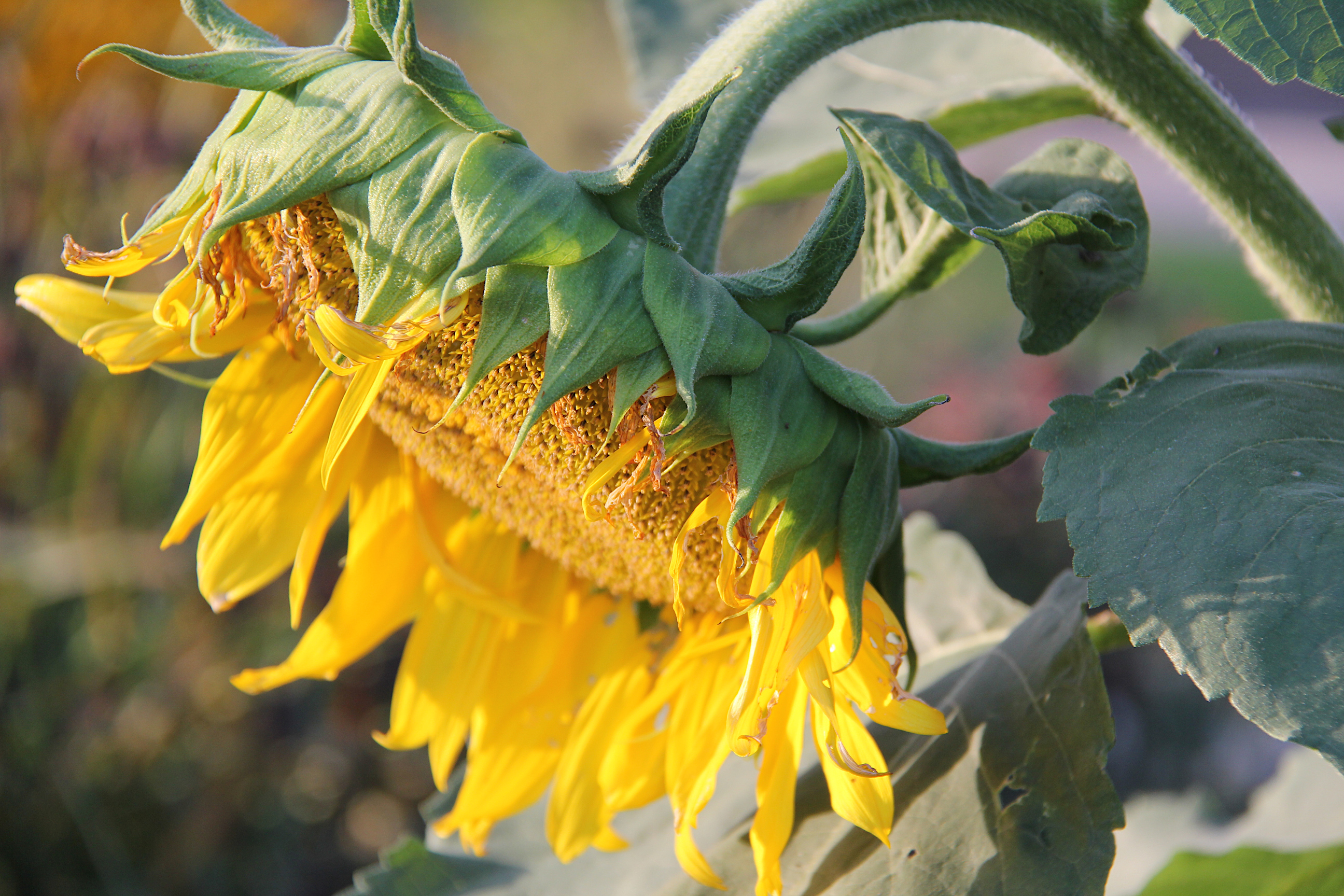
Sunflowers are drooping, like this one in the Rice County Master Gardeners’ Teaching Gardens, Faribault. (Minnesota Prairie Roots copyrighted photo August 2024)

I’M BEGINNING TO FEEL this sense of urgency, as if I need to spend more time outdoors taking in the natural world. It’s not a new feeling, but rather one which rolls into my thoughts at August’s end. When the calendar flips to September, everything shifts. I see it, hear it, smell it, feel it.

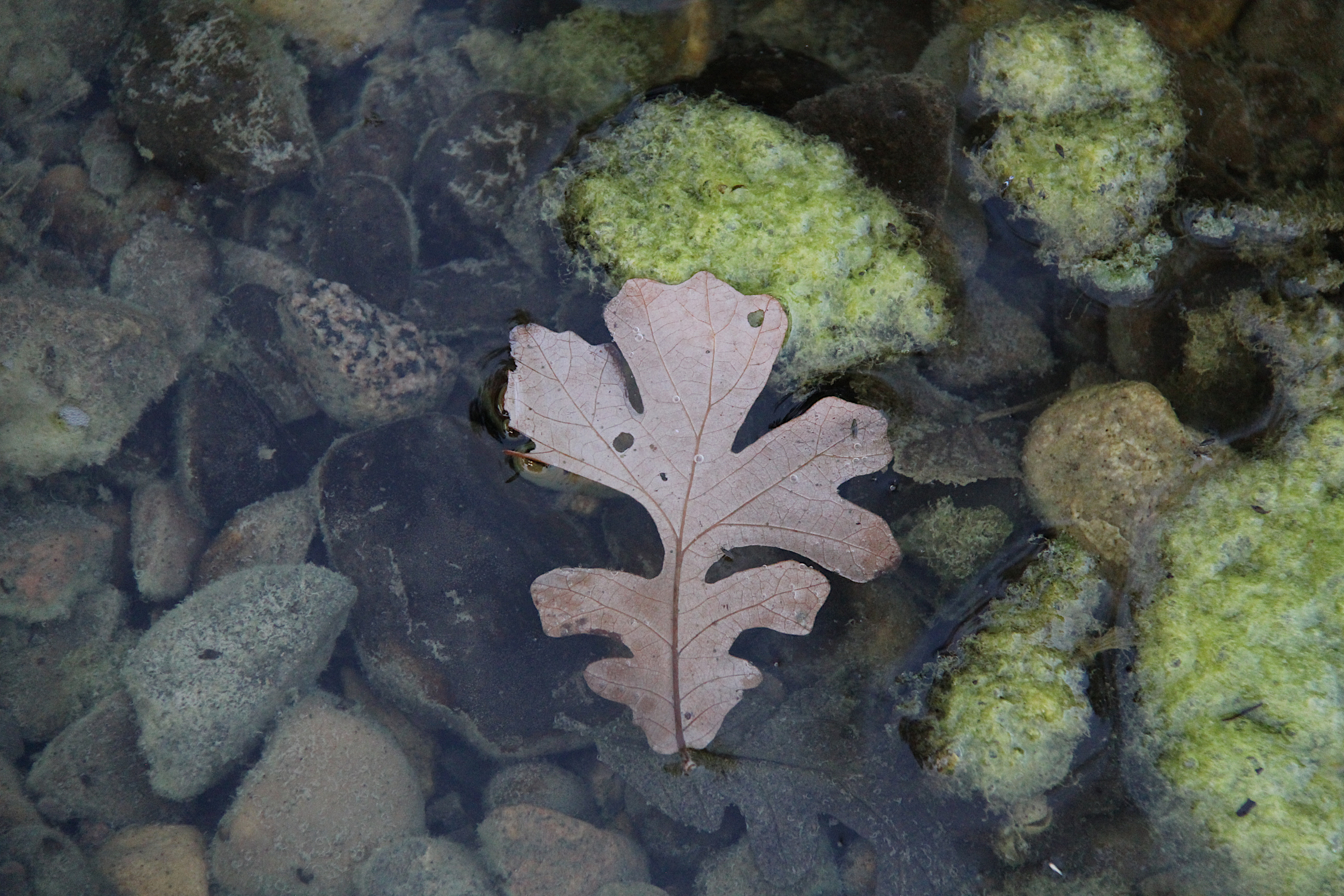
A dried oak leaf floats in a pond at the teaching gardens. (Minnesota Prairie Roots copyrighted photo August 2024)

Outside my front door, massive mophead hydrangeas are drying, morphing from green to brown. Once lush phlox are less full. Maple leaves, in hues of orange and yellow, litter the lawn. All over town, trees are beginning to change color.

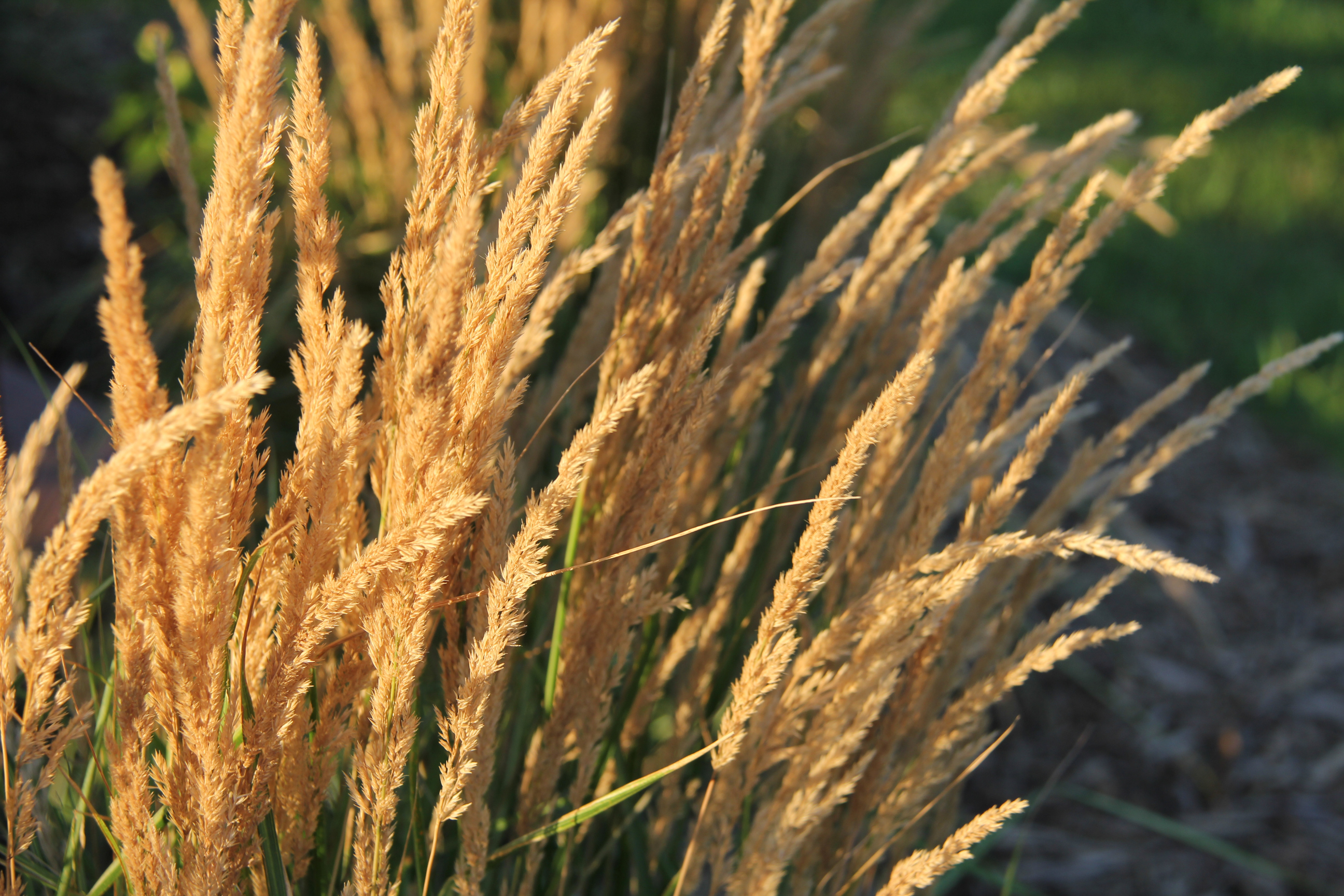
Golden grasses sway in the gentle wind of early evening. (Minnesota Prairie Roots copyrighted photo August 2024)
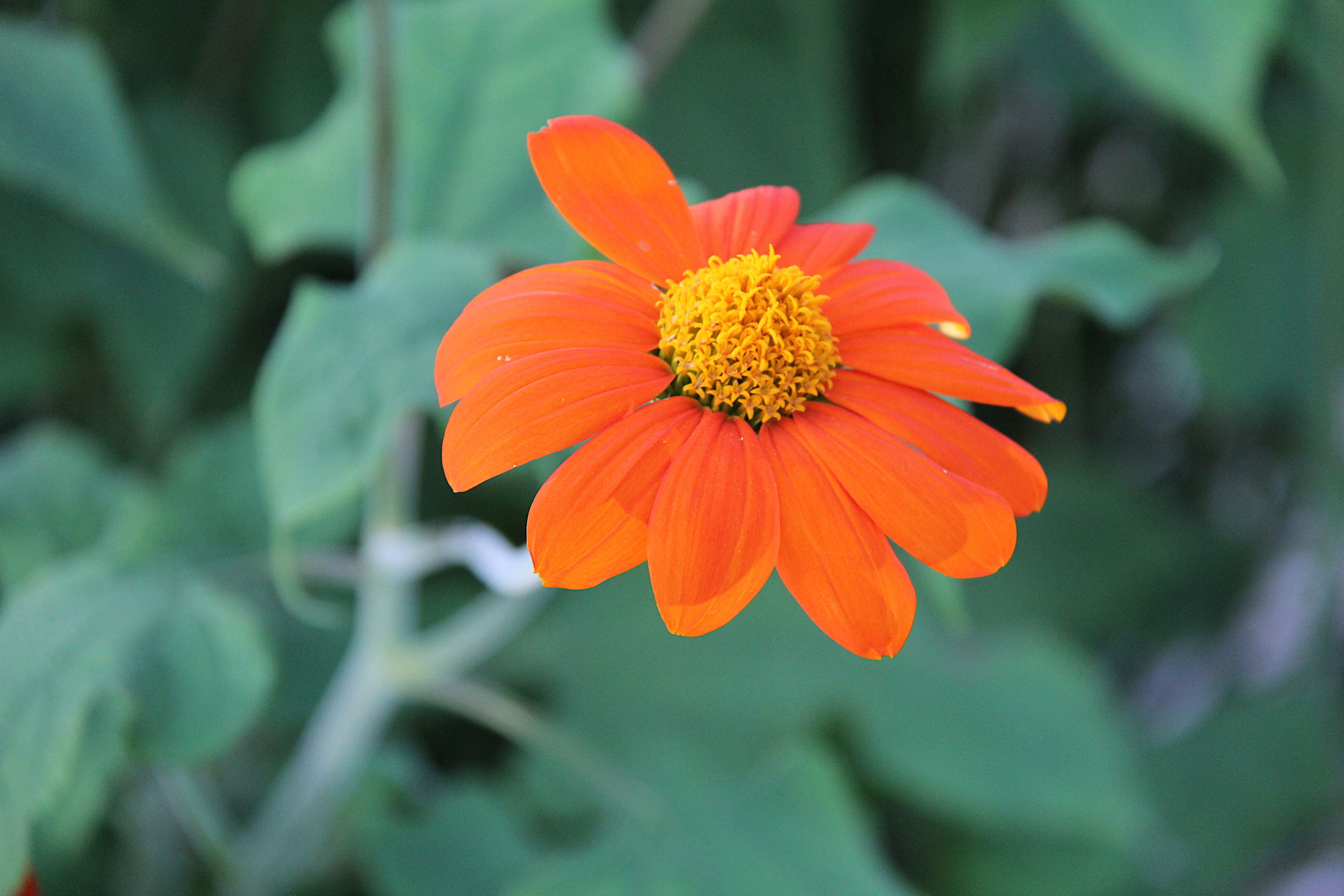
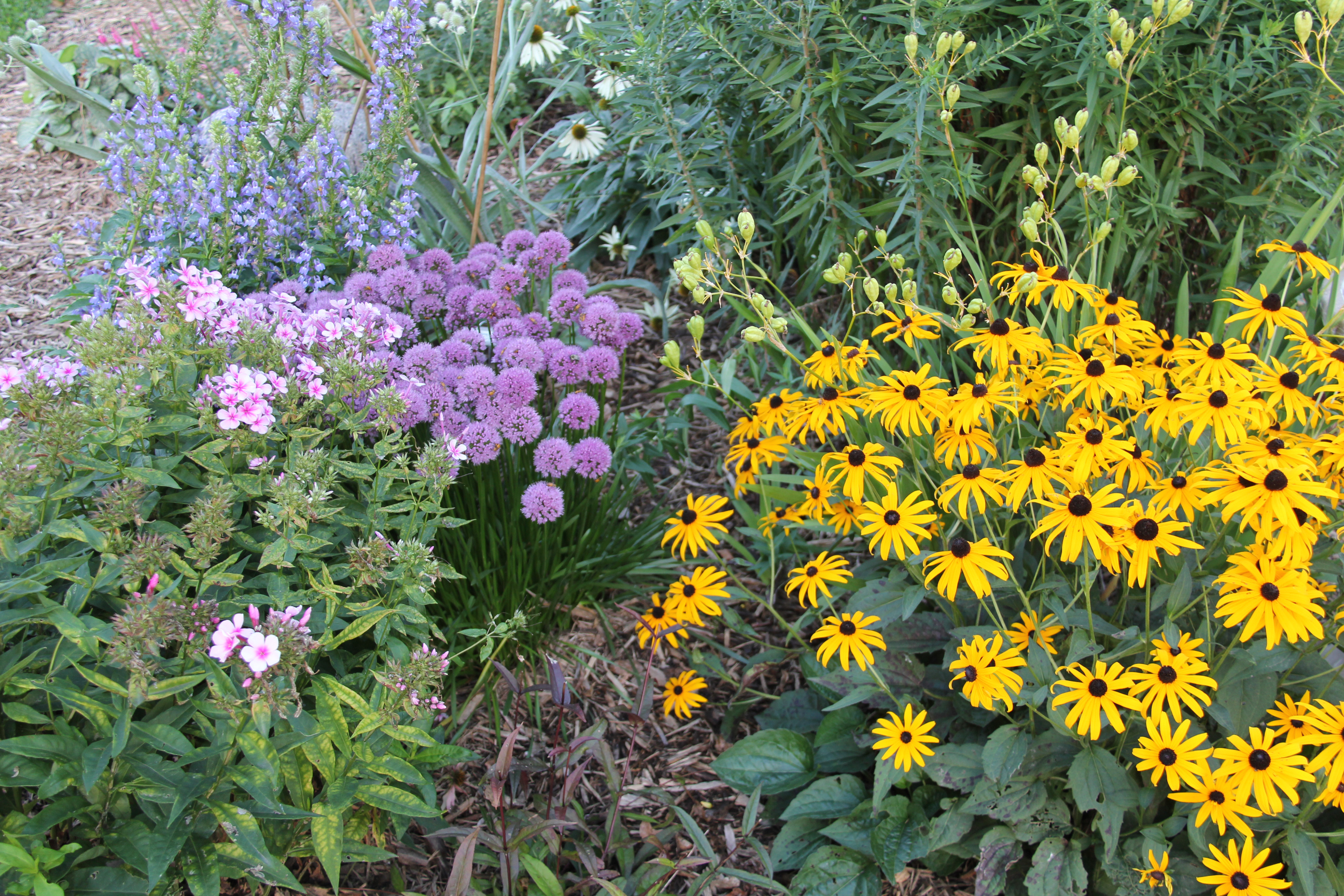
Jolts of color still fill the garden. (Minnesota Prairie Roots copyrighted photo August 2024)
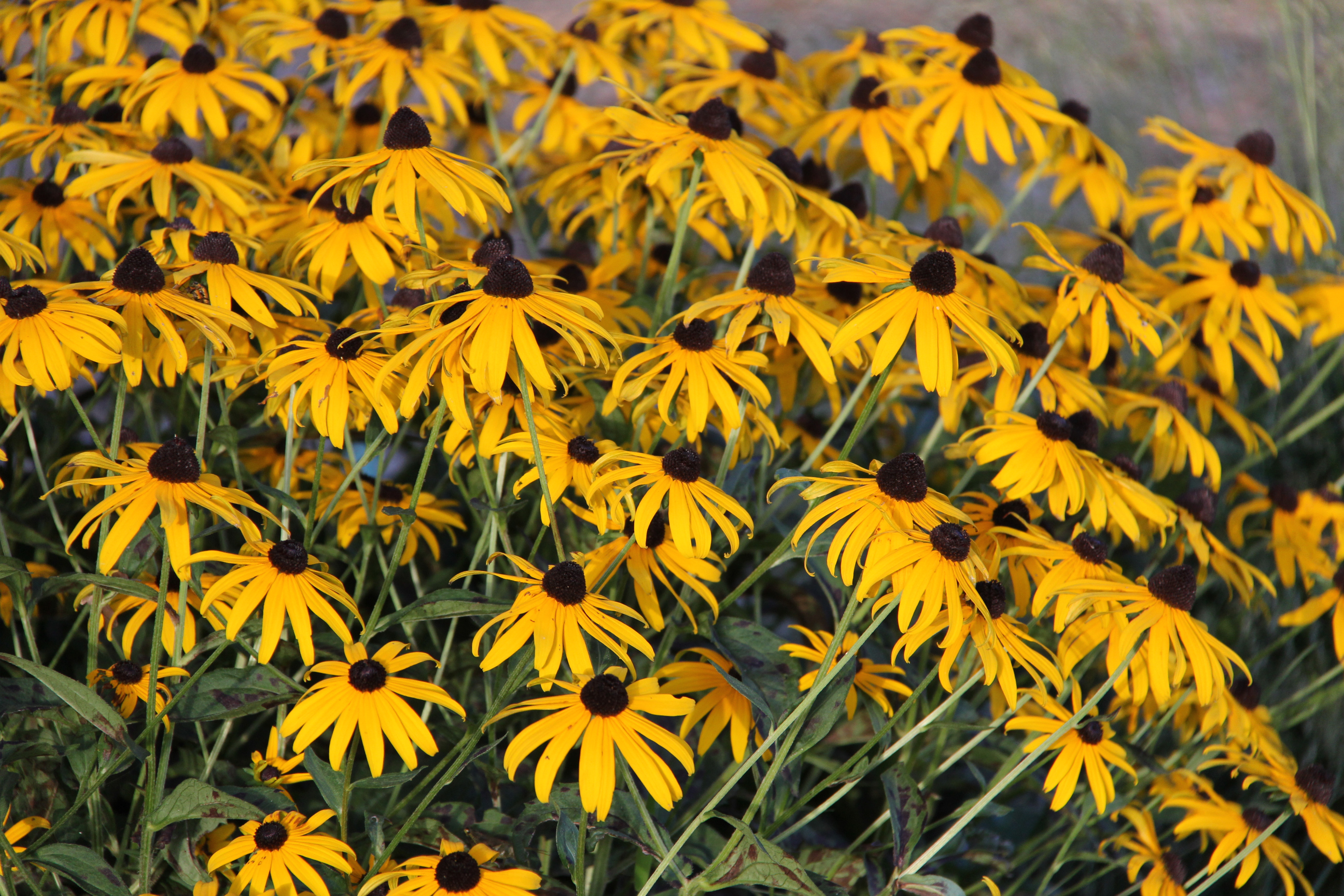
Prolific black-eyed susans. (Minnesota Prairie Roots copyrighted photo August 2024)

Crickets chirp. Cicadas buzz. School buses roll past my house. Everything is shifting. And nowhere is that more noticeable than in a garden.

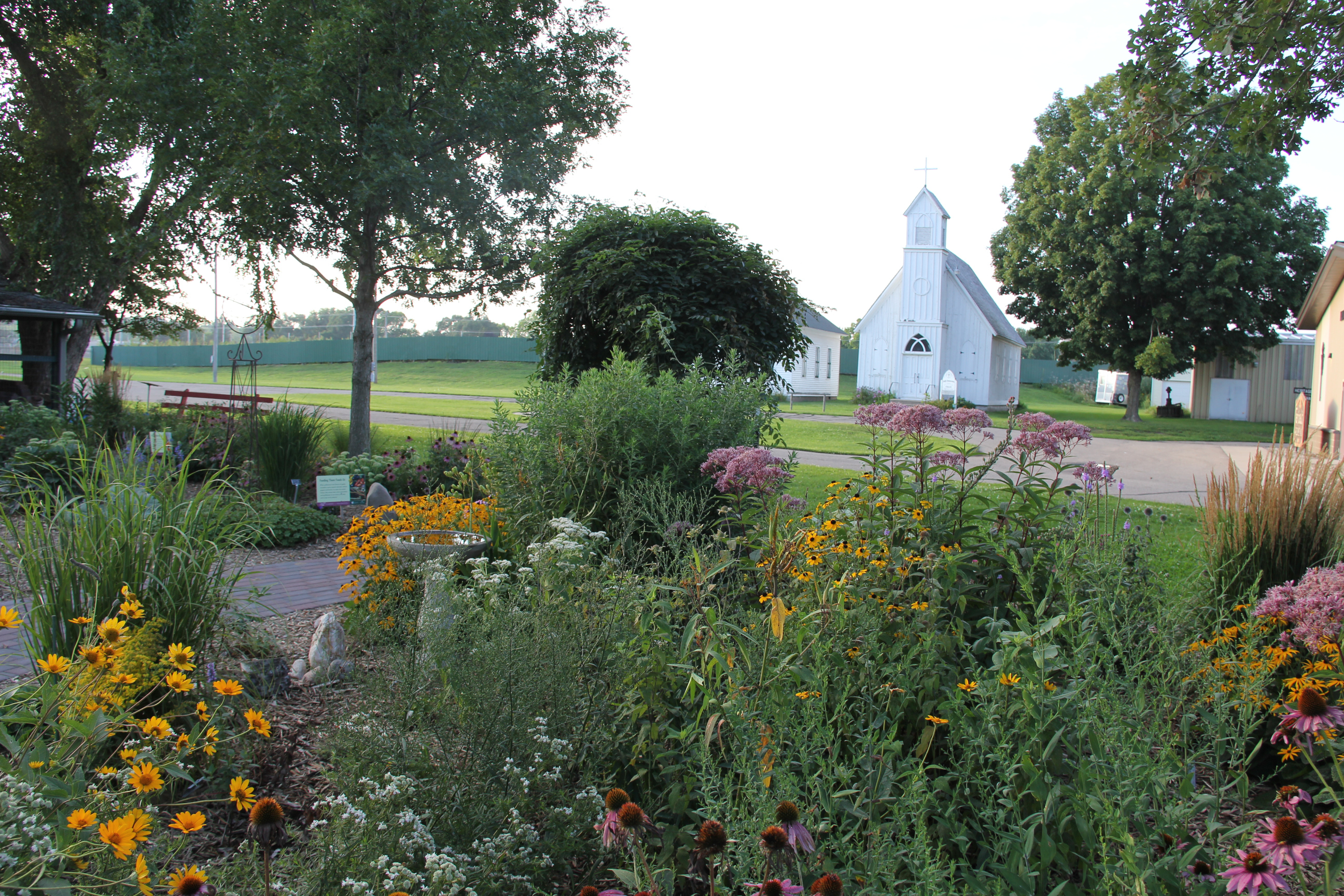
This shows only a section of the teaching gardens. That’s an historic church, on the grounds of the Rice County Historical Society, in the background. The gardens are next to the RCHS museum. (Minnesota Prairie Roots copyrighted photo August 2024)

And so I encourage you, if you live in a place that will soon change to cold and colorless, to enjoy the flowers while they are still blooming, as I did recently at the Rice County Master Gardeners Teaching Gardens.

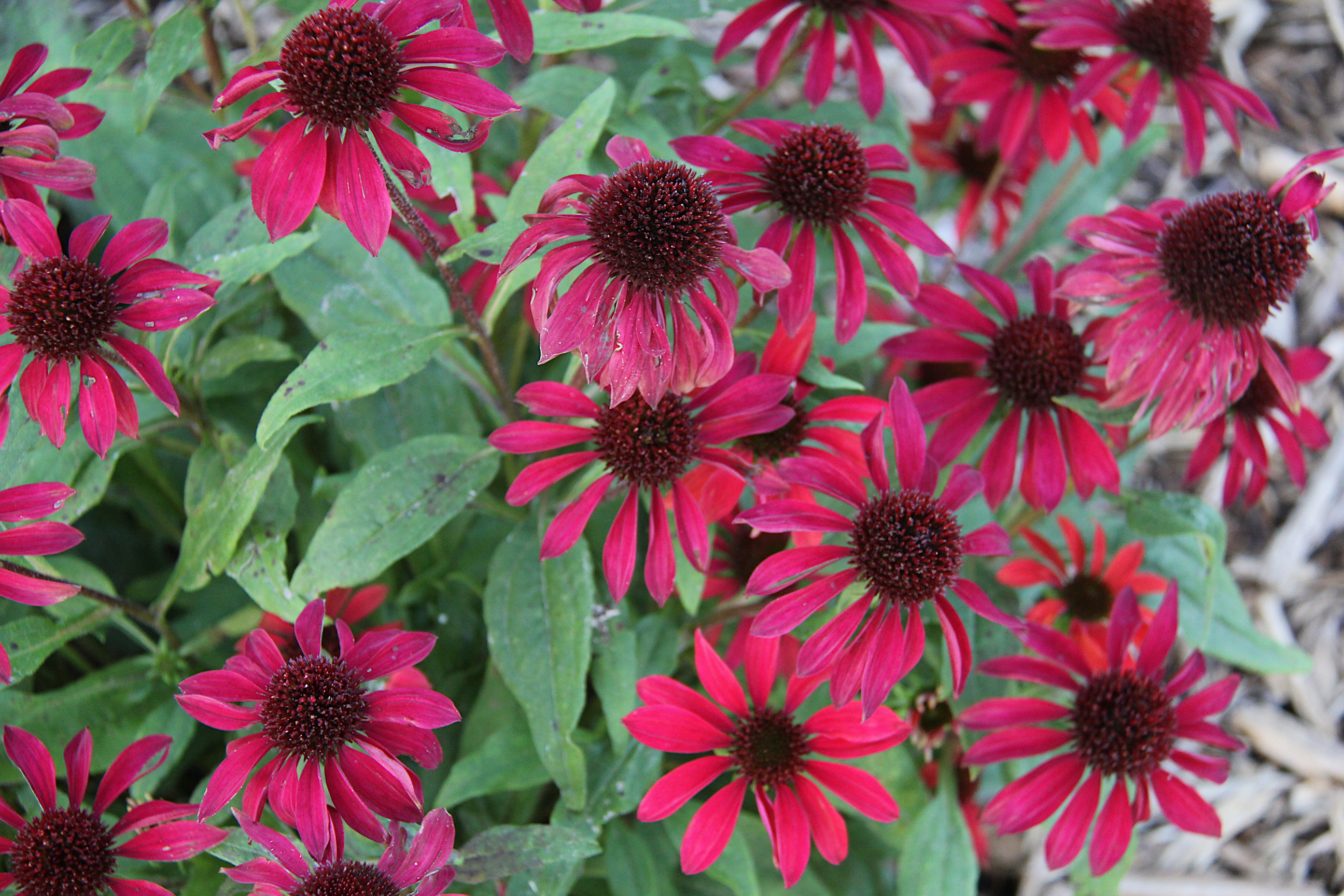
A mass of coneflowers. (Minnesota Prairie Roots copyrighted photo August 2024)
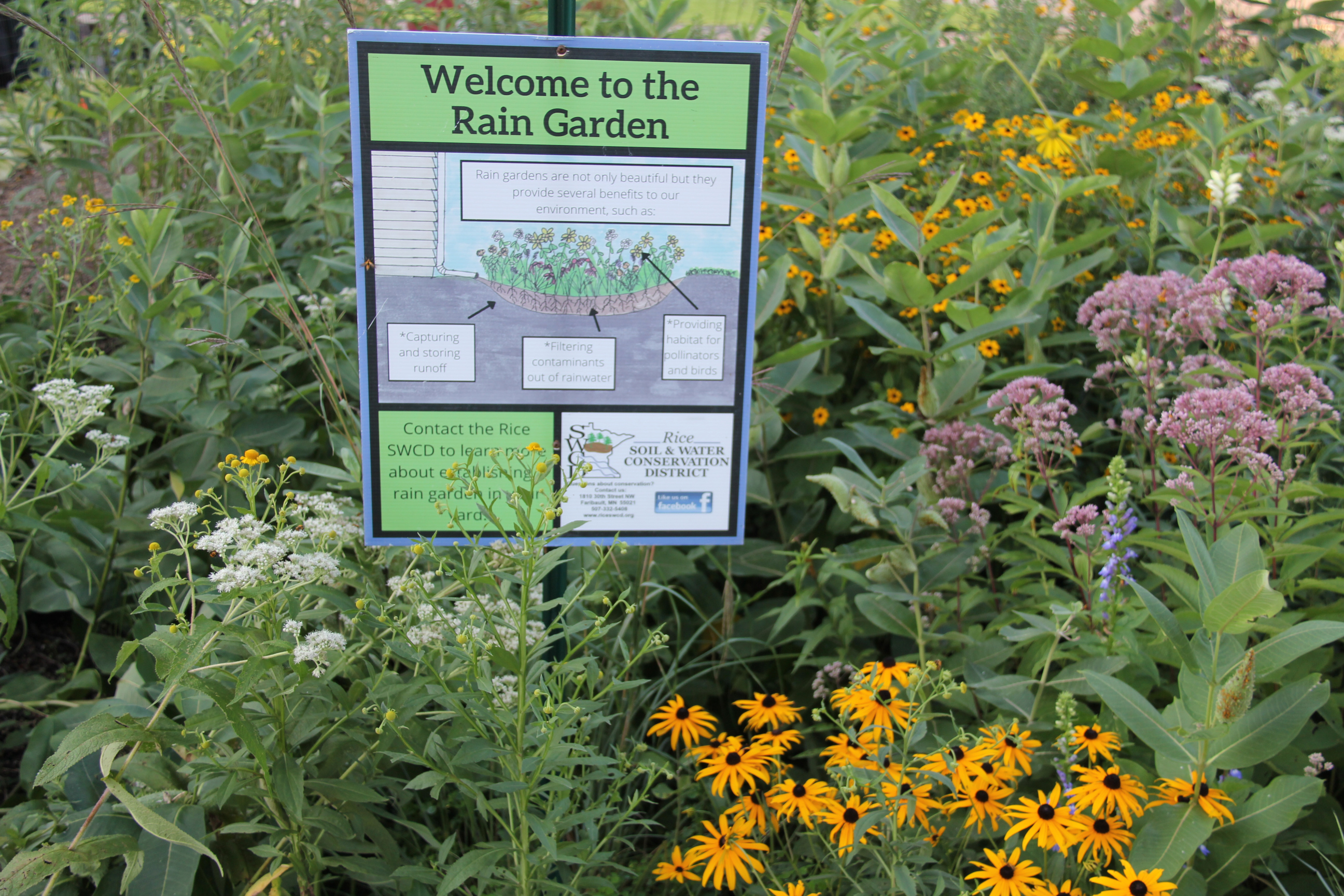
A rain garden flourishes here. (Minnesota Prairie Roots copyrighted photo August 2024)
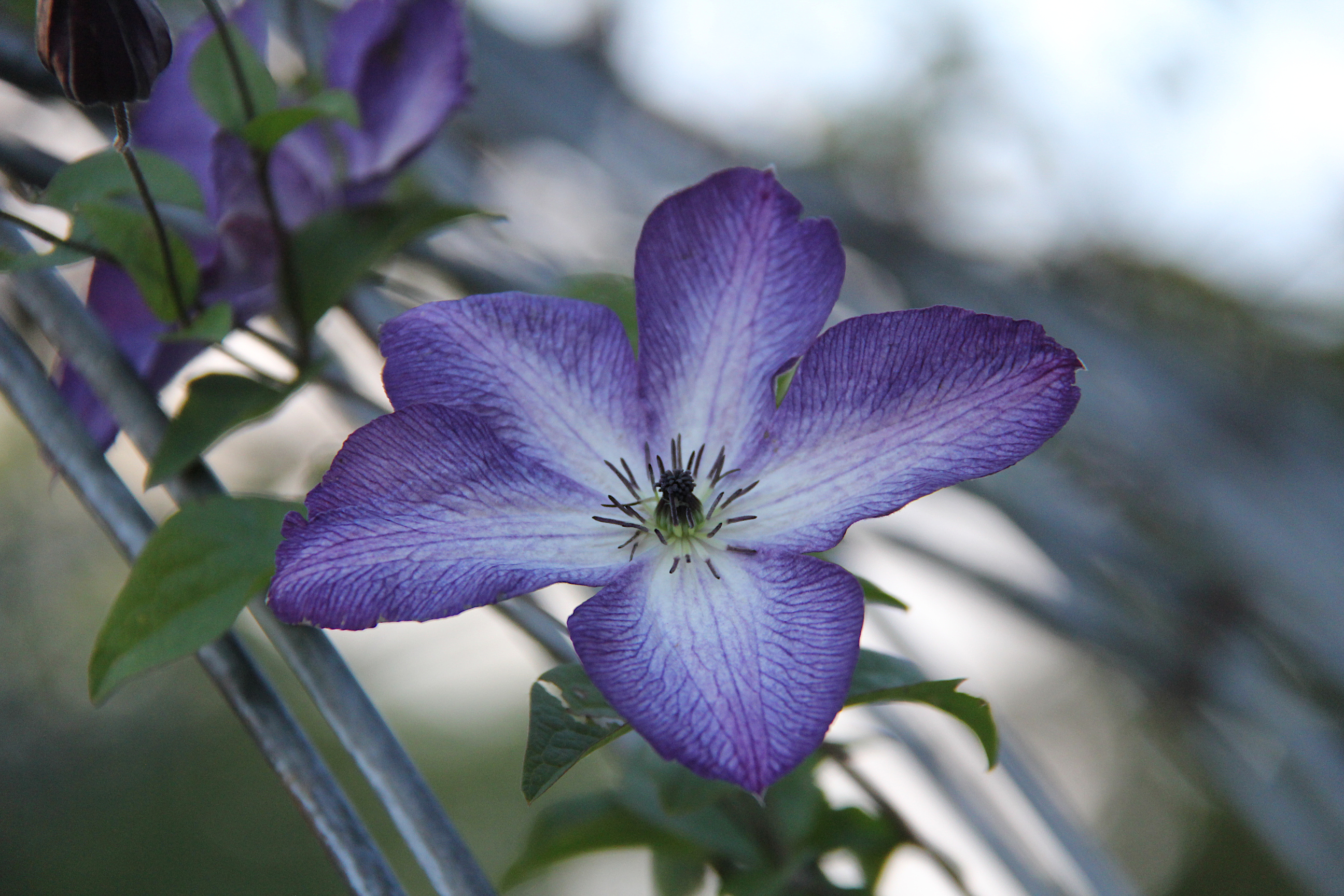
A few clematis were still blooming when I walked the gardens. (Minnesota Prairie Roots copyrighted photo August 2024)

Come, walk with me through this space with its beds of blooms, its textured perennials, its overall loveliness.

An array of flowers fill the gardens. (Minnesota Prairie Roots copyrighted photo August 2024)
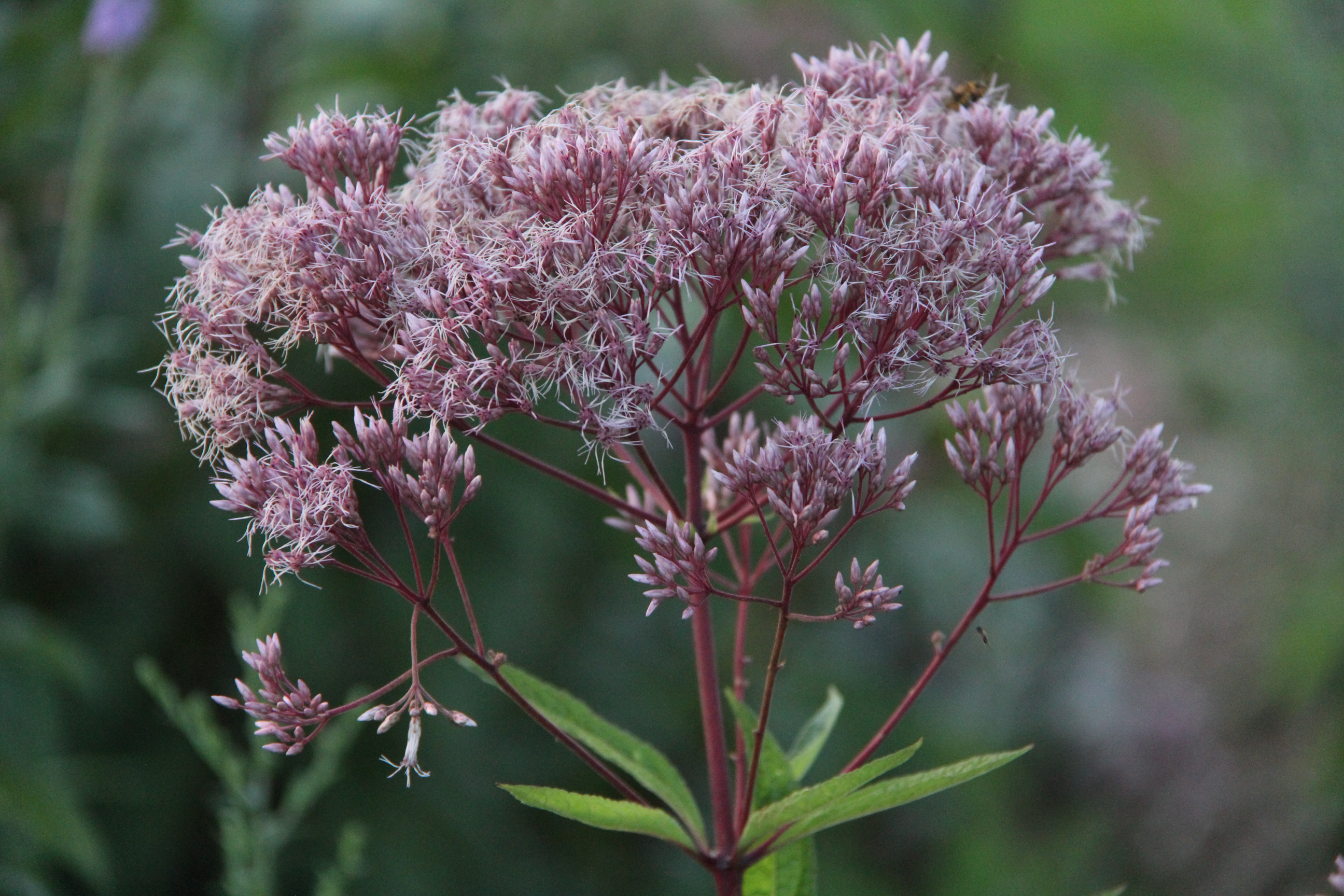
A muted hue that leans into autumn. (Minnesota Prairie Roots copyrighted photo August 2024)
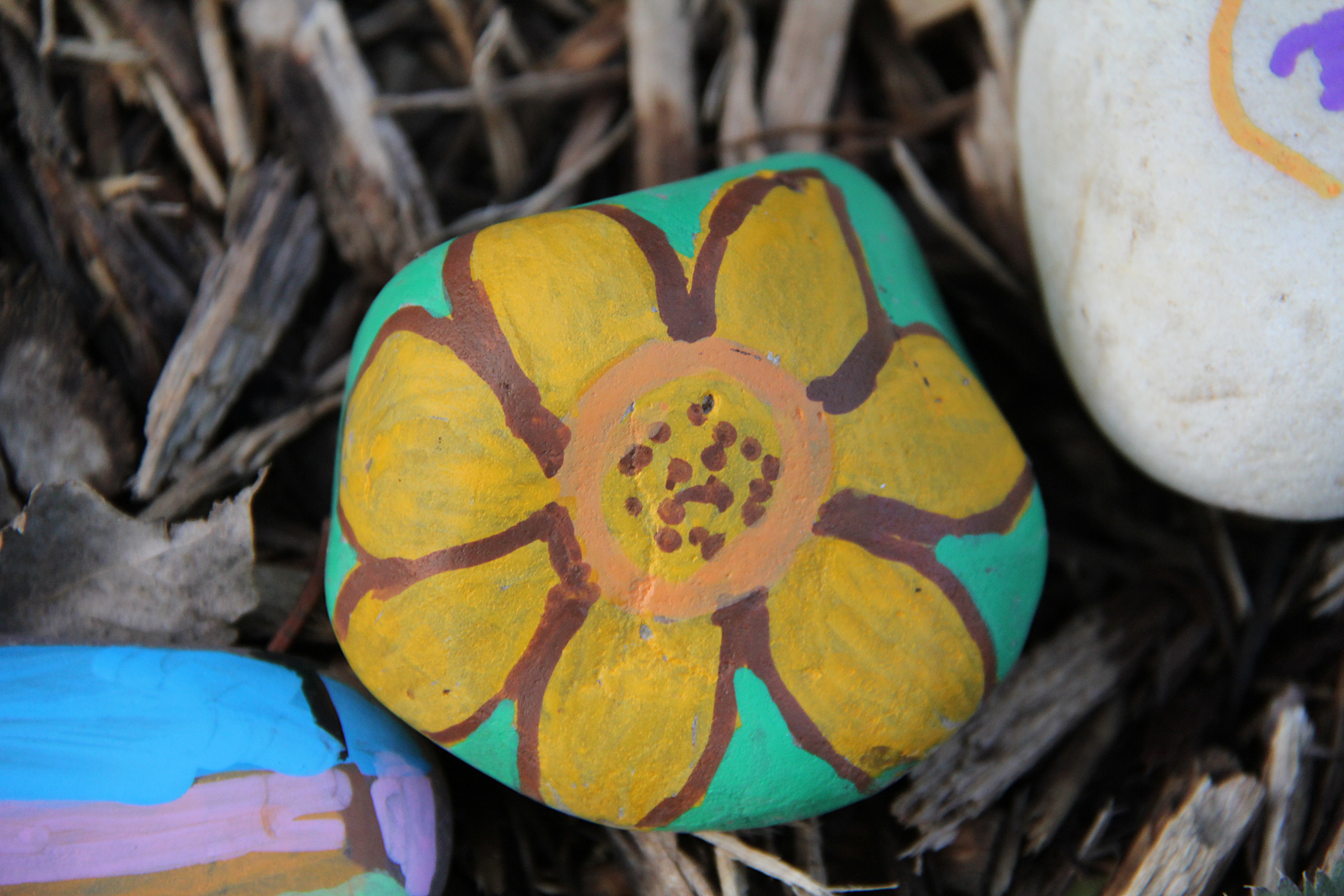
The gardens include rock art, this one in the Rock Art Snake. (Minnesota Prairie Roots copyrighted photo August 2024)

Or find your own garden in your place. Walk. Sit. Take it all in. And when the season shifts, when the flowers are long gone, when the trees have dropped their leaves, then remember this time, these days. Remember the beauty of it all. Remind yourself in the depths of winter how you paused to appreciate these days of summer transitioning into autumn.

© Copyright 2024 Audrey Kletscher Helbling


Look to Books on Central as “We Look West” September 3, 2024

(Minnesota Prairie Roots copyrighted file photo 2024)

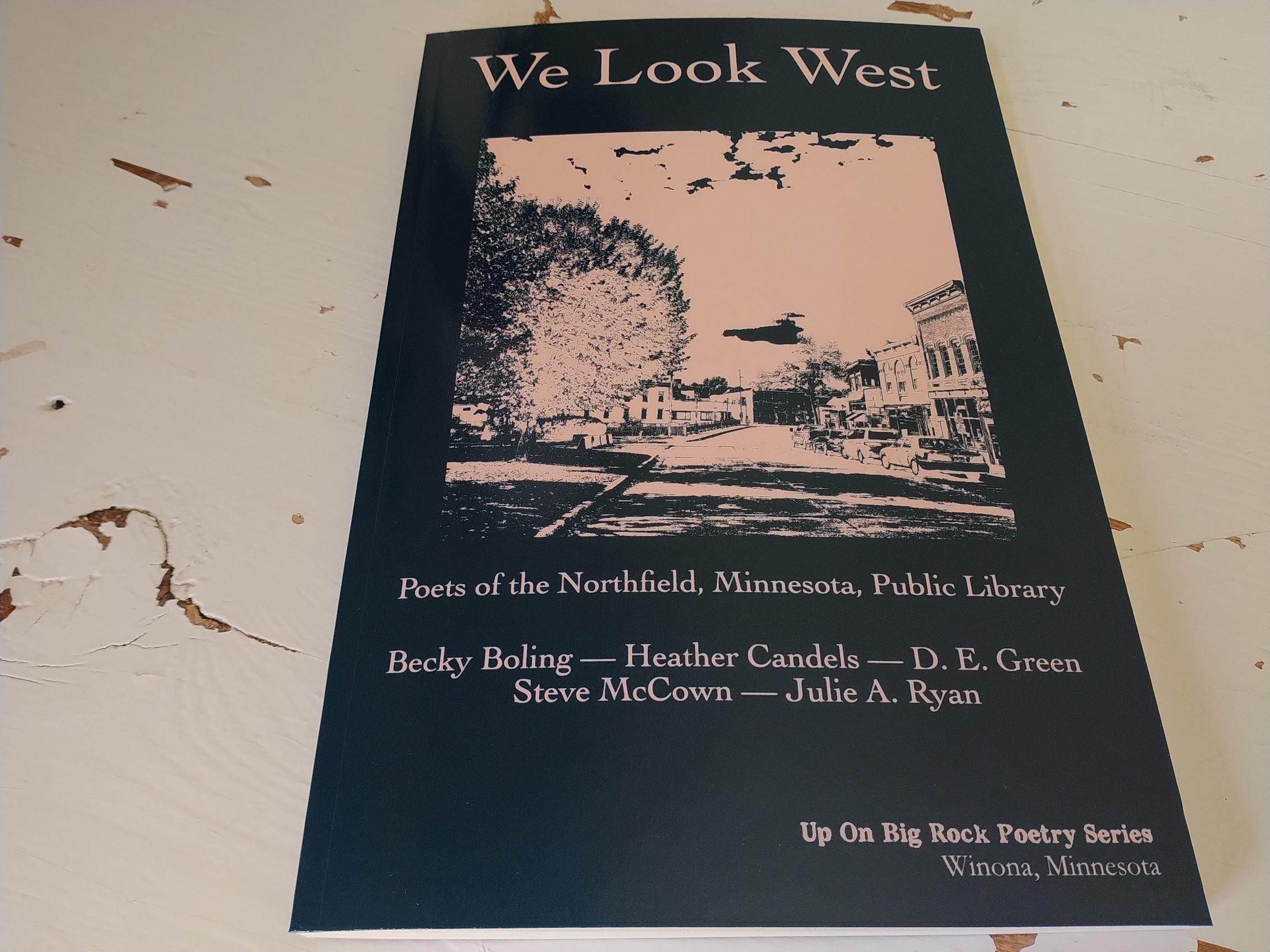
THEY ARE SEASONED WRITERS, also well-seasoned in life. They are Becky Boling, Heather Candels, D.E. Green, Steve McCown and Julie A. Ryan, collectively The Poets of the Northfield Public Library. And at 6 p.m. Thursday, September 5, they will gather at Books on Central, 227 Central Avenue North, Faribault for a poetry reading followed by a Q & A.

If you happen to be one of those people who claim a dislike of poetry, I encourage you to reconsider and come to this literary event. The poetry this group will read comes from their recently-published anthology, We Look West. Their poems are down-to-earth relatable. Trust me. I’ve read this 116-page book, loved it and reviewed it. (Click here to read my review.)

The writing within the pages of this volume are stories of life, in poetry form. Poems that transition from east to west, from the sunrise to the sunset of our lives.

They’re written by poets with extensive publishing credentials. Four have taught at the high school or college level. The fifth comes from a strong literary and visual arts background. Two are Pushcart nominees.

I’ve met Boling and Green and read poetry with them at an event at Mercado Local in Northfield. They are a wonderful married couple, comfortable and friendly. No stuffy poets here. And no stuffy poems. Just plain good writing that moves the spirit, fills the soul, imprints upon the heart.

I look forward to hearing The Poets of the Northfield Public Library read selected poems and then share the stories behind their poetry. As a poet, I’m always interested in learning what inspired a particular poem.

And if you have questions, ask away. Writers welcome engagement as they share their passion for poetry, the craft of writing.

FYI: Books on Central is a second-hand book shop run by the Rice County Area United Way and staffed by volunteers. Proceeds from the bookstore benefit organizations and nonprofits throughout the county.


Rural living history & threshing memories

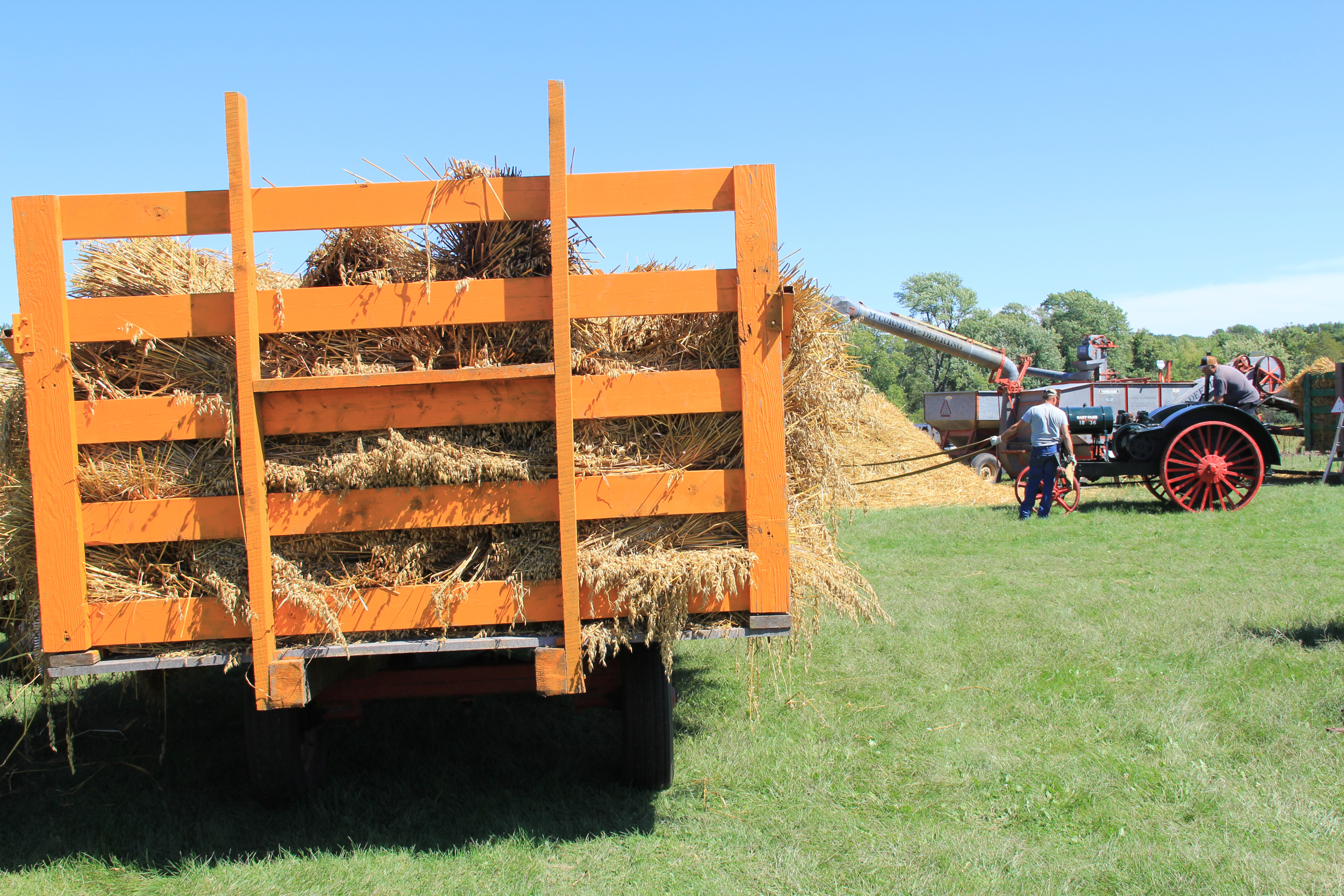
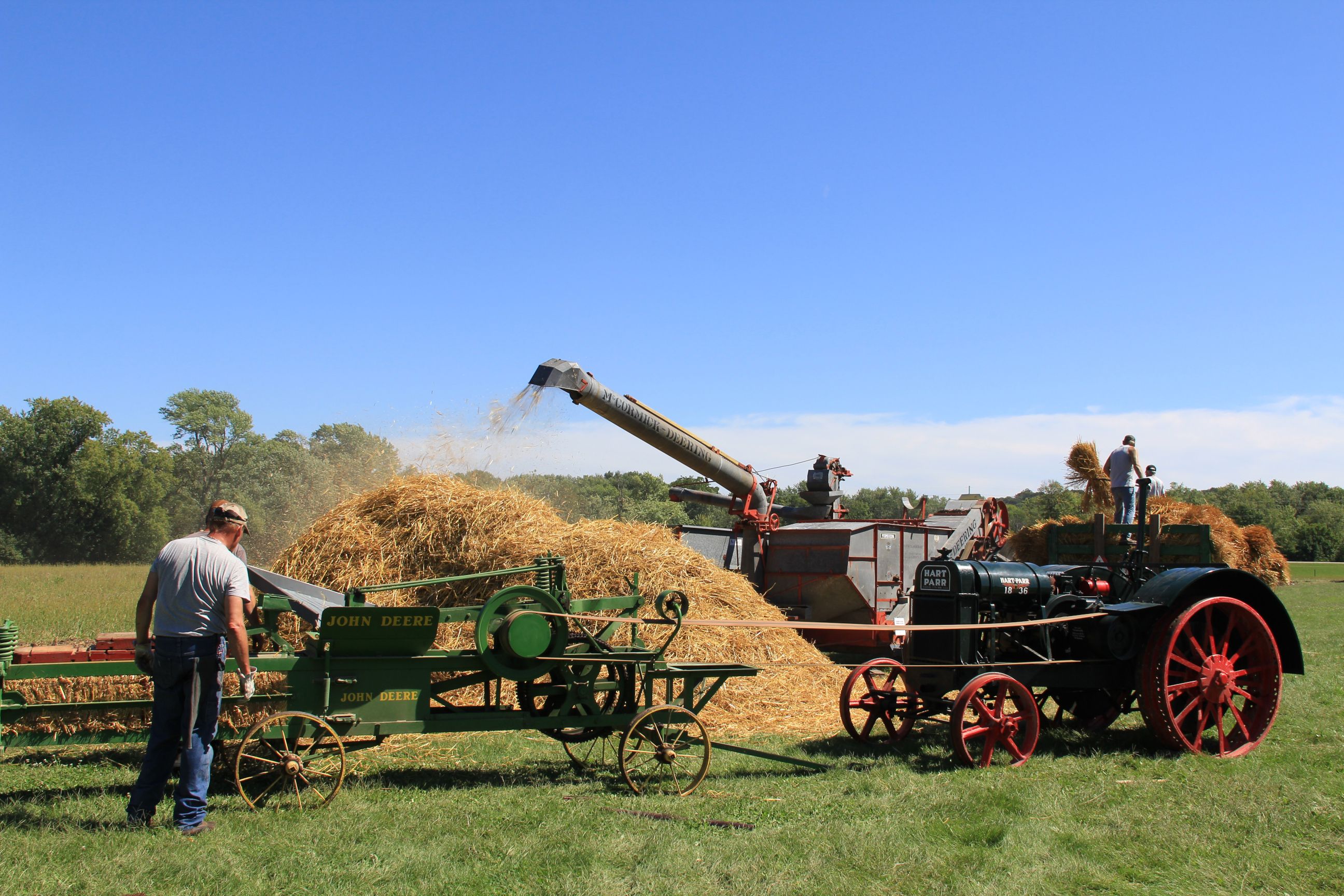
A wagonload of oats awaits threshing at the Rice County Steam & Gas Engines Fall Show. (Minnesota Prairie Roots copyrighted photo August 2024)

MEMORIES. A HISTORY LESSON. A step back in time. The Rice County Steam & Gas Engines Fall Show is that and more. It’s also entertainment, a coming together of friends and families and neighbors. A reason to focus on farming of yesteryear.

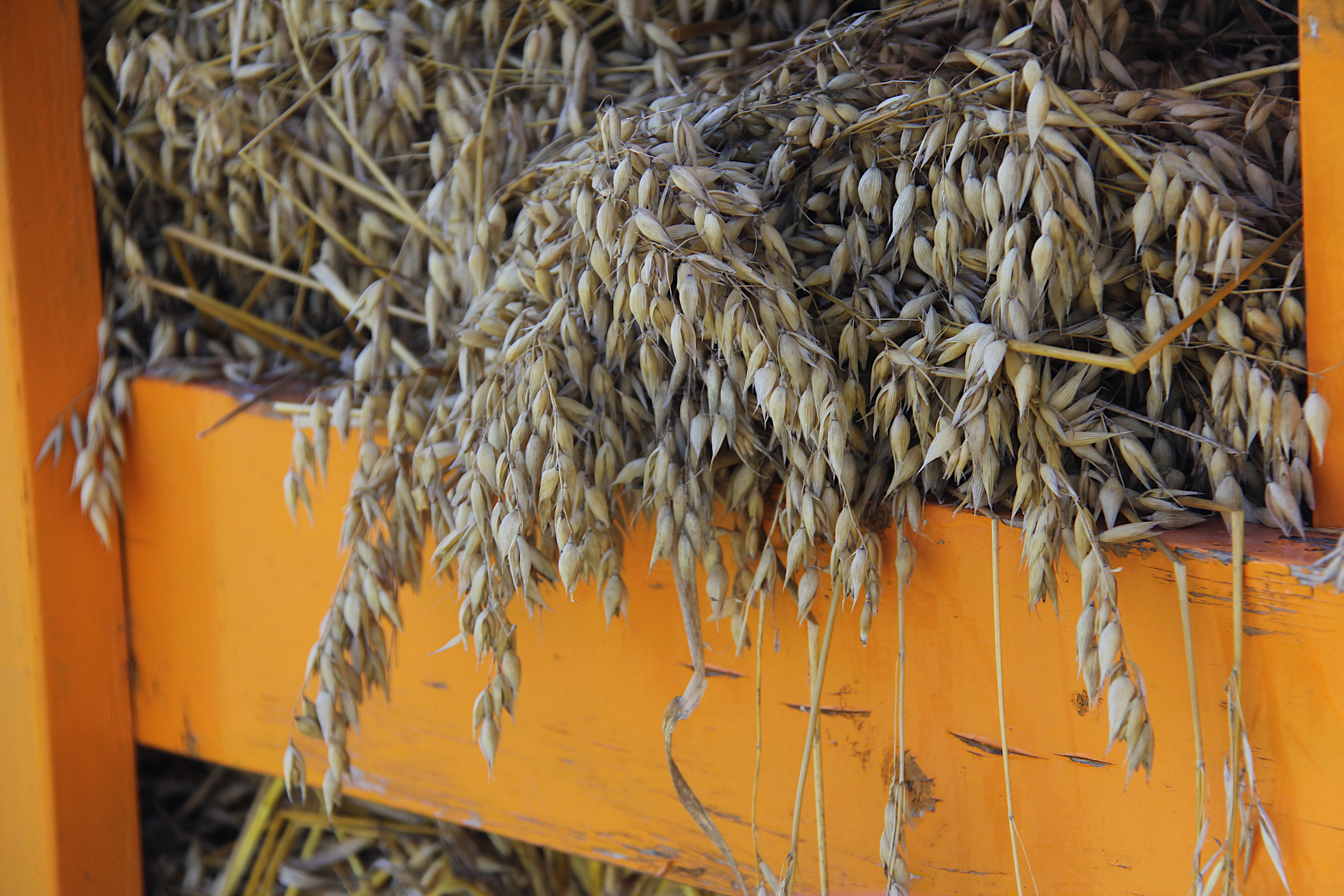
Oats drape over the edge of the wagon. (Minnesota Prairie Roots copyrighted photo August 2024)

I was among the crowds gathered over the Labor Day weekend at the showgrounds south of Dundas. This show features demos, rows and rows and rows of vintage tractors and aged farm machinery, a tractor pull, flea market, music, petting zoo, mini train rides and a whole lot more.

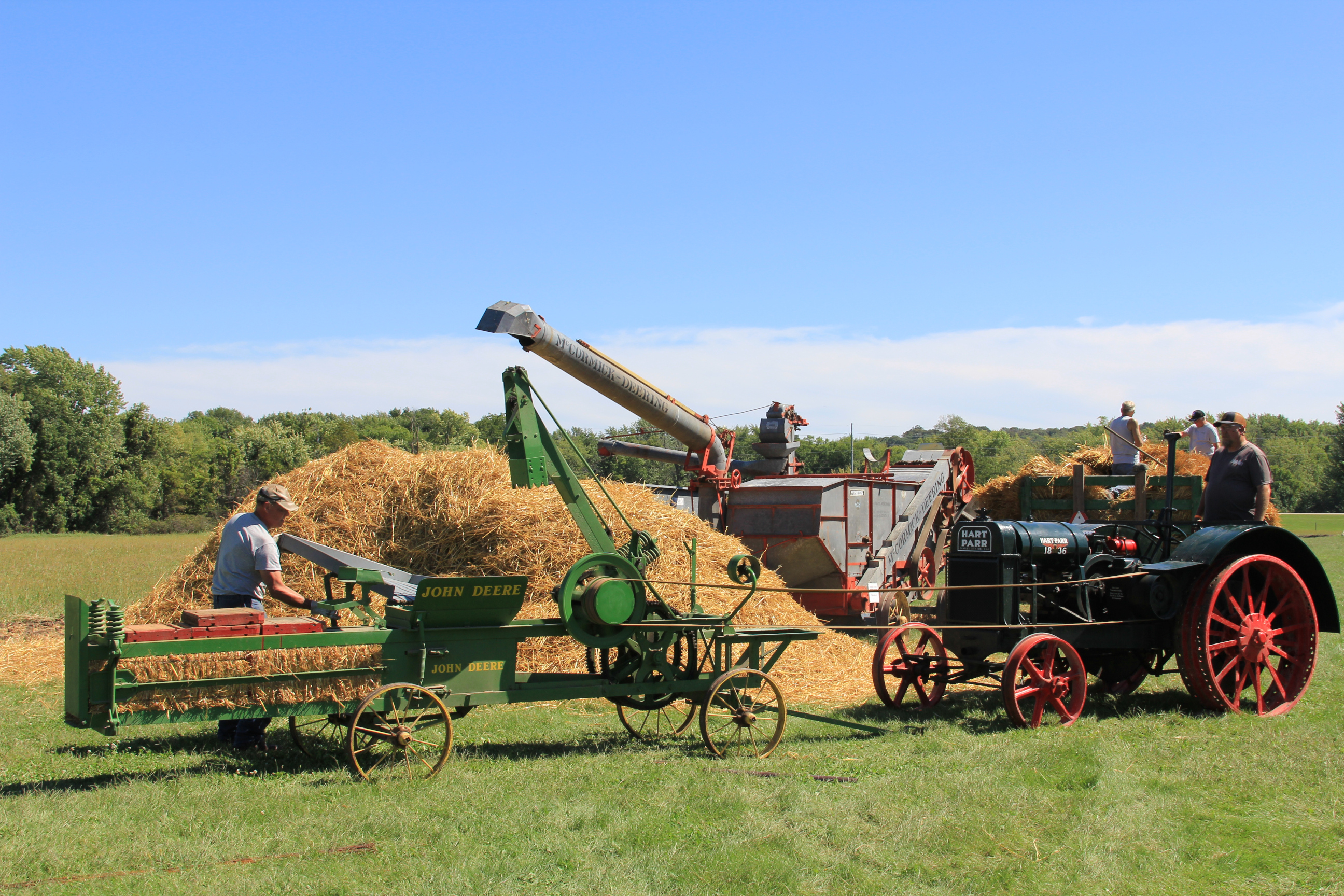
The scene is set to resume threshing with thresher, tractor, baler and manpower. (Minnesota Prairie Roots copyrighted photo August 2024)

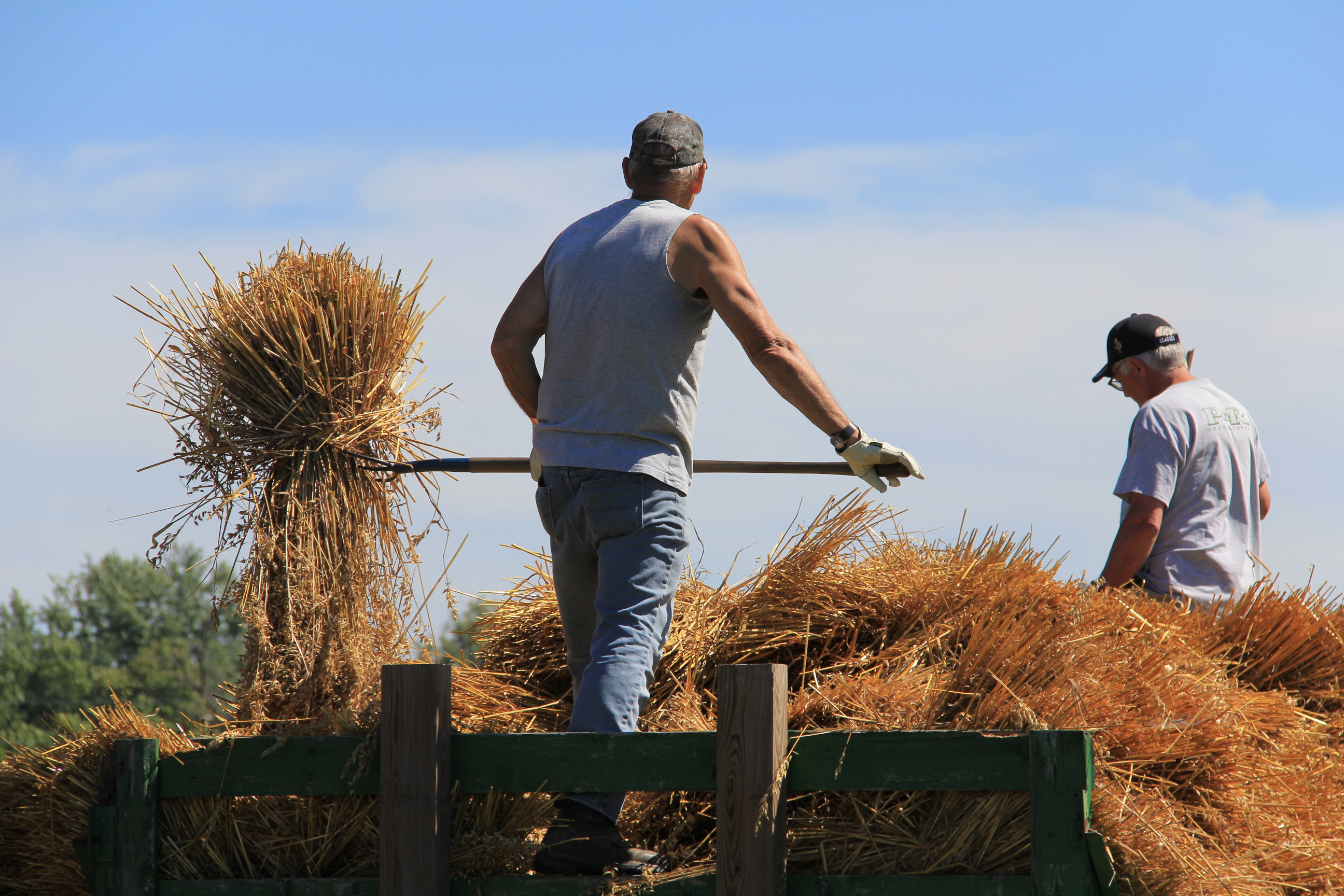
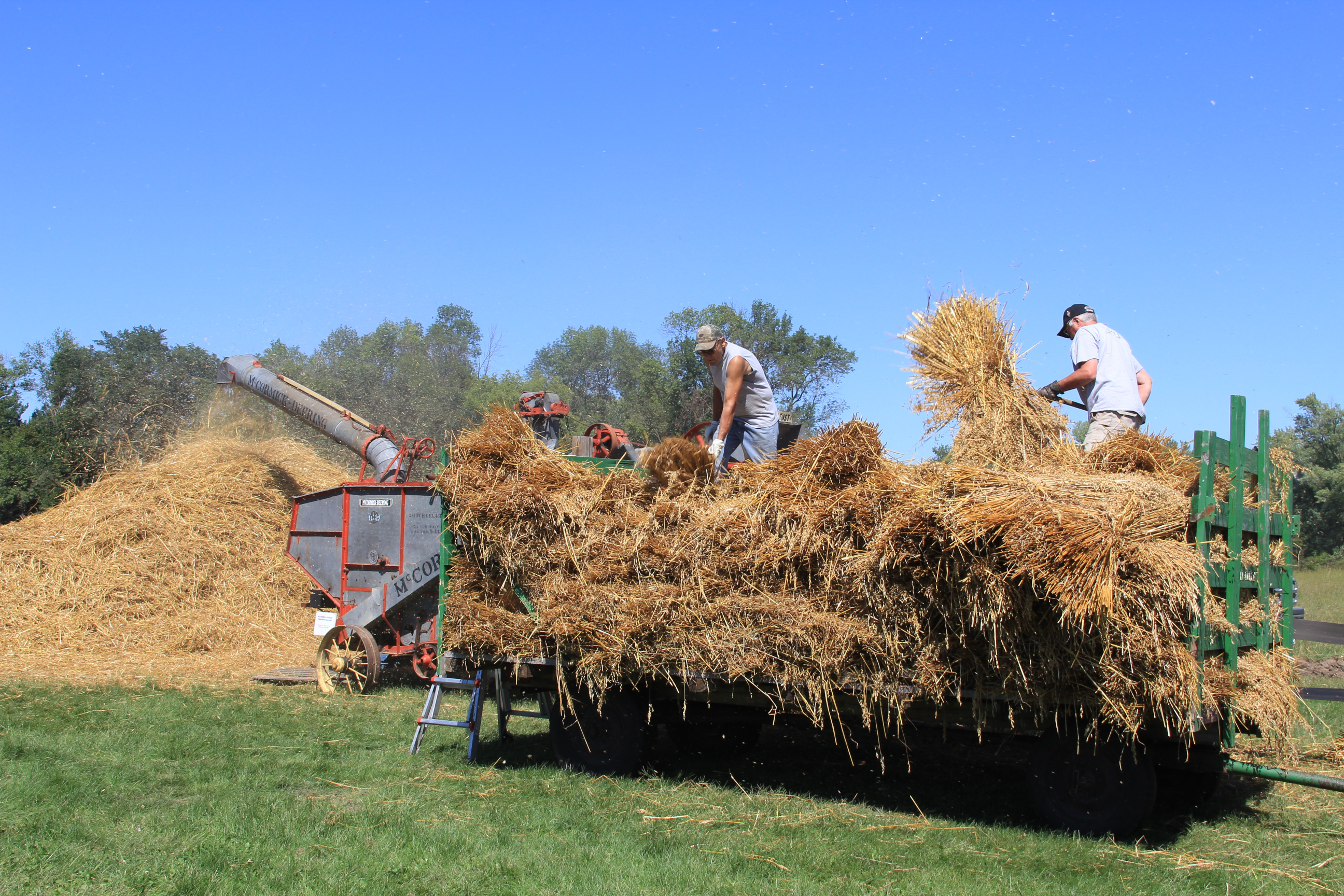
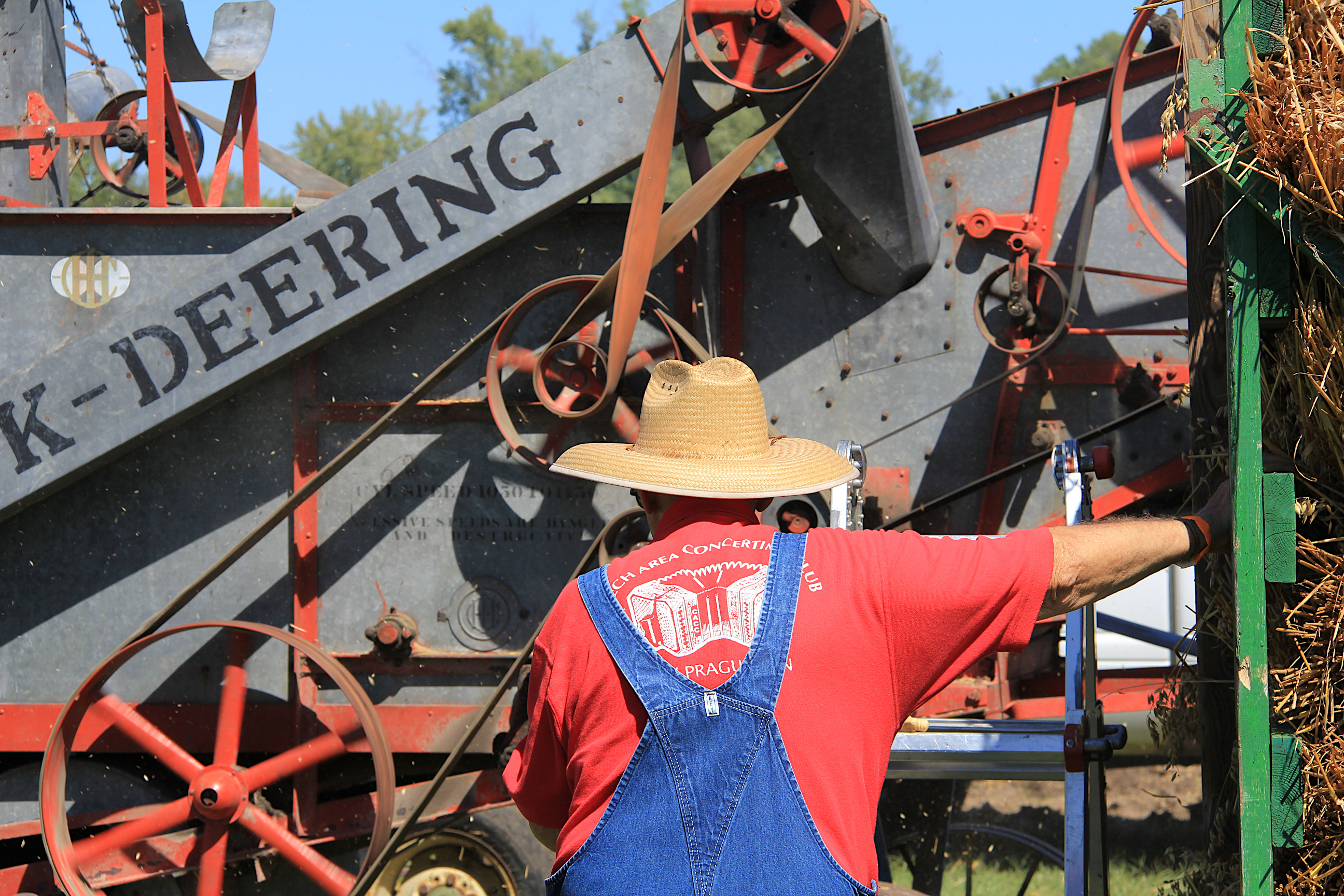
For me, a highlight was watching a crew of men threshing oats. The work is hard, labor intensive, even dangerous with exposed belts and pullies. It’s no wonder farmers lost digits and limbs back in the day.

This part of the threshing crew pitches oats bundles into the threshing machine. (Minnesota Prairie Roots copyrighted photo August 2024)

While my observations are not connected to memories, my husband’s are as he recalls threshing on his childhood farm in rural Buckman, Morrison County, Minnesota. After Randy moved with his family from rural St. Anthony, North Dakota (southwest of Mandan), his dad returned to threshing oats. In North Dakota, he used a combine. But his father before him, Randy’s grandfather Alfred, threshed small grains.

Hard at work forking bundles into the thresher. (Minnesota Prairie Roots copyrighted photo August 2024)
Lots of exposed pullies and belts line the threshing machine. (Minnesota Prairie Roots copyrighted photo August 2024)
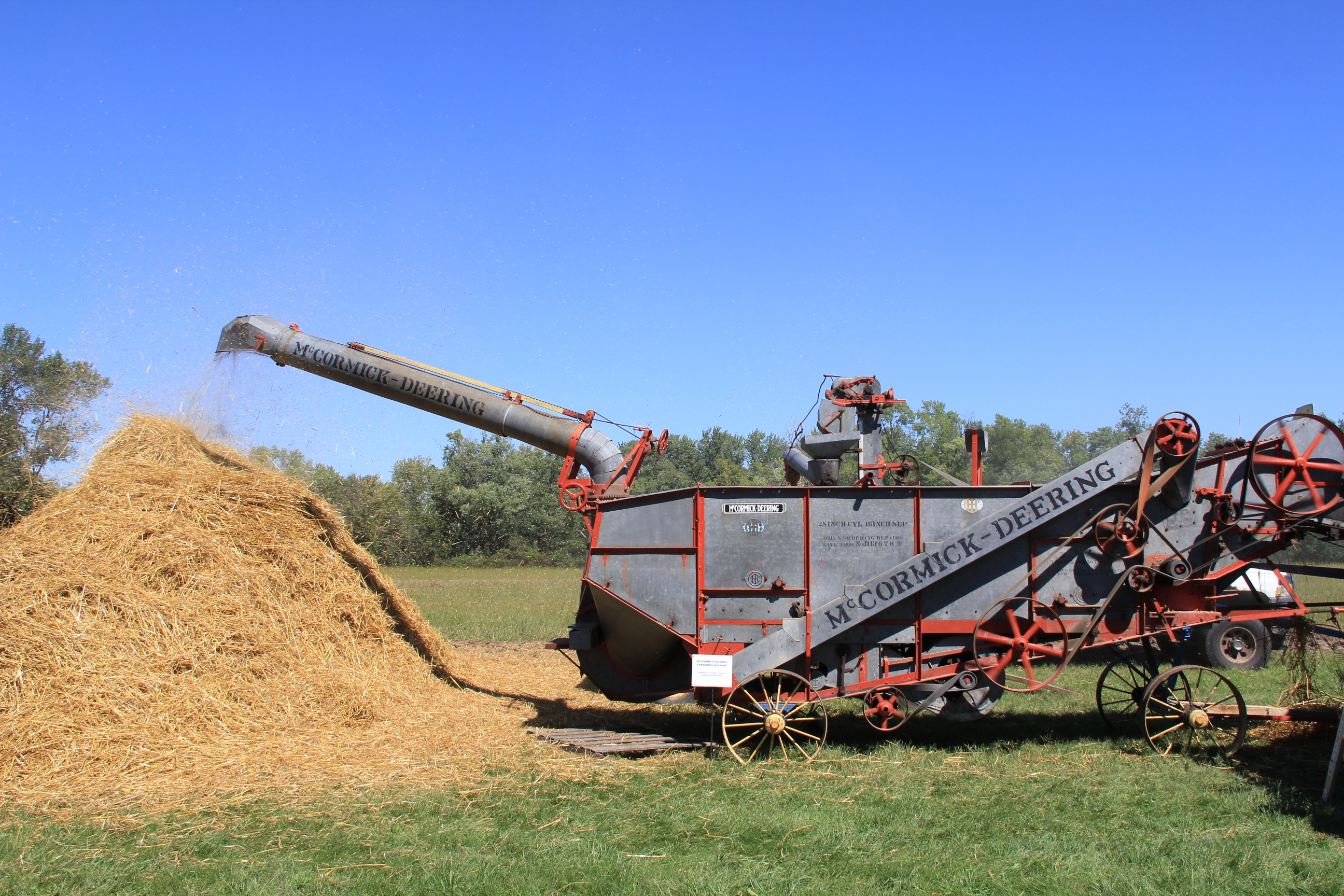
The workhorse of the operation, the threshing machine. (Minnesota Prairie Roots copyrighted photo August 2024)

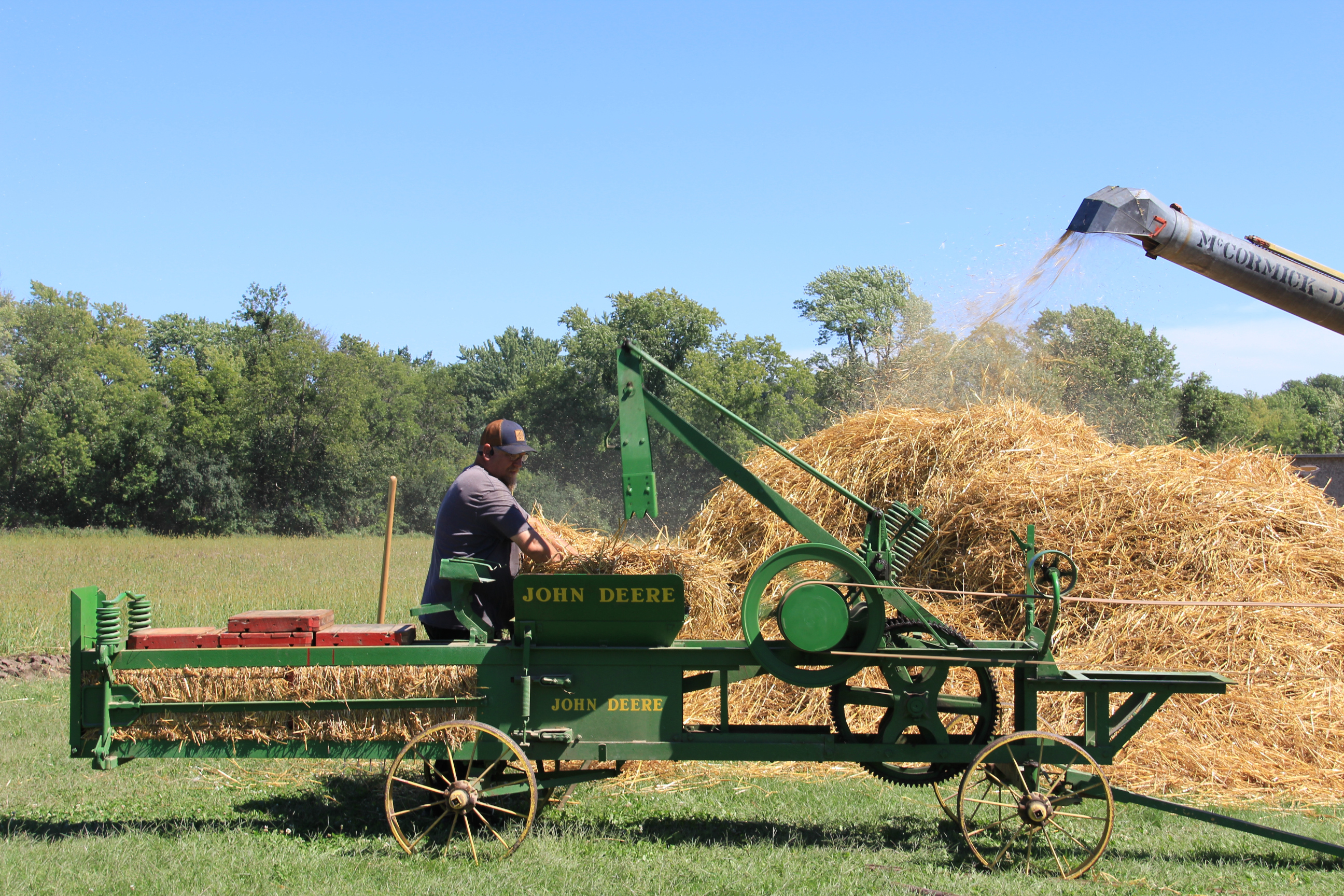
As I watched in Dundas, men forked bundles of oats into a McCormick-Deering thresher. The threshing machine separated the grain from the stalk, the oats shooting one direction into a wagon, the straw the other way into a growing pile. I stood mostly clear of the threshing operation with dust and chafe thick in the air.

Feeding the loose straw into the baler. (Minnesota Prairie Roots copyrighted photo August 2024)

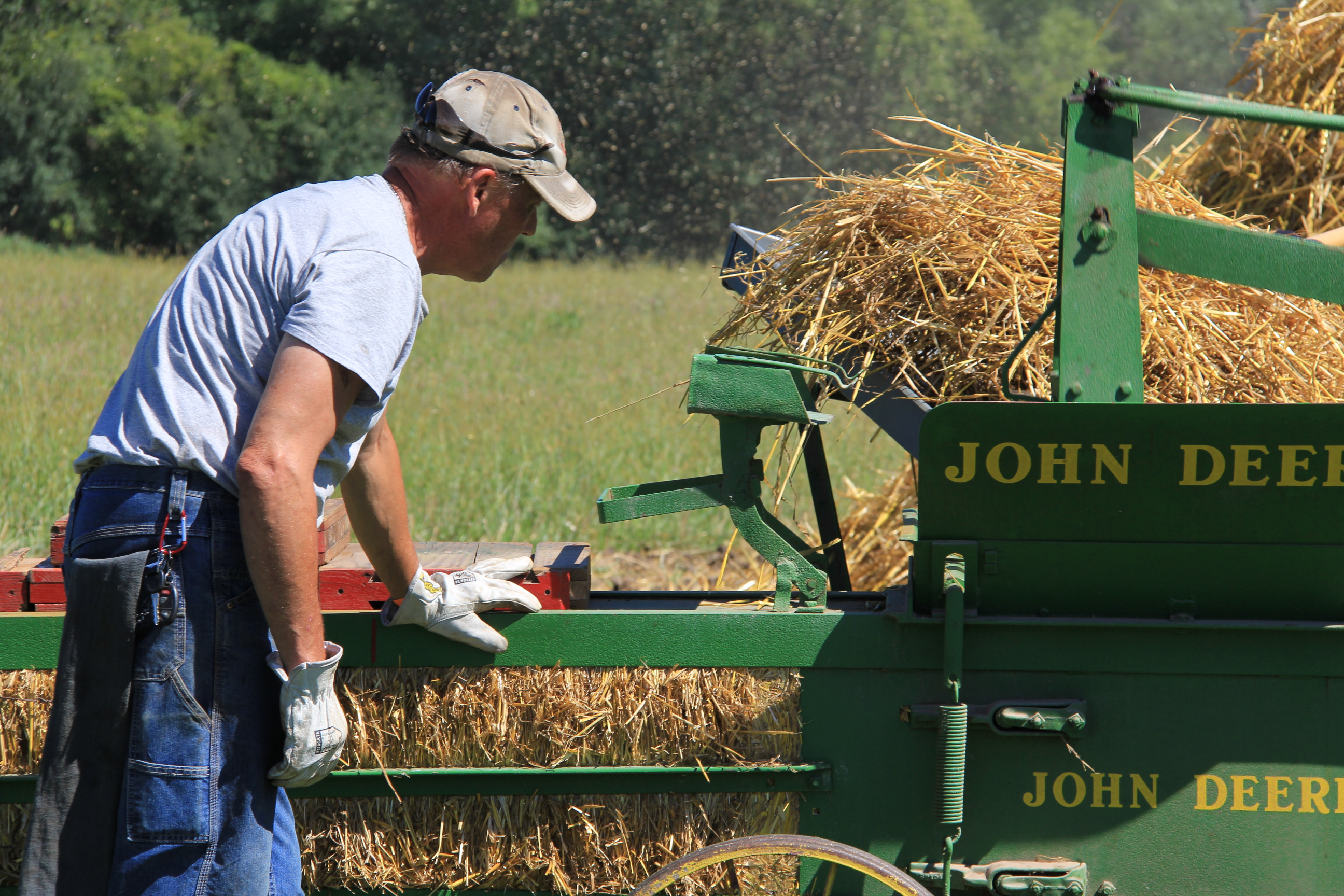
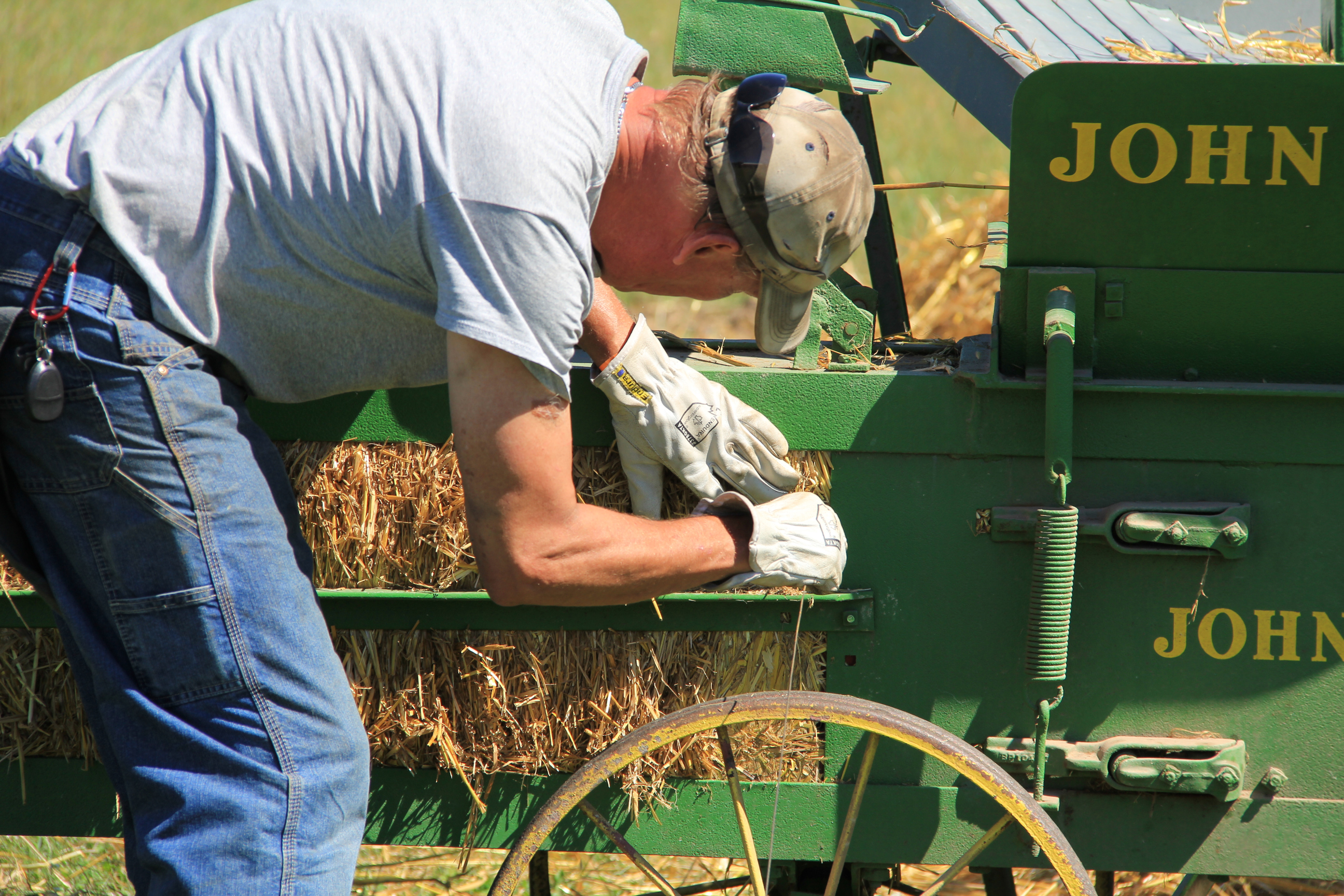
From the straw pile, a volunteer stuffed the stalks into the shoot of an aged baler. An arm tamped the straw, feeding it into the baler. Another guy stood nearby, feeding wire into the baler to wrap the rectangular bales. A slow, tedious process that requires attentiveness and caution.

Watching and waiting for the straw to compact in the baler. (Minnesota Prairie Roots copyrighted photo August 2024)

The entire time I watched, I thought how easy it would be to lose focus, to look away for a moment, to get distracted and then, in an instant, to experience the unthinkable. Farming is, and always has been, a dangerous occupation.

Carefully guiding wire into the baler to wrap each bale. (Minnesota Prairie Roots copyrighted photo August 2024)

Randy understands that firsthand as he witnessed his father get his hand caught in a corn chopper. Tom lost his left hand and part of his forearm. But Randy saved his life, running across fields and pasture to summon help. It is a traumatic memory he still carries with him 57 years later.

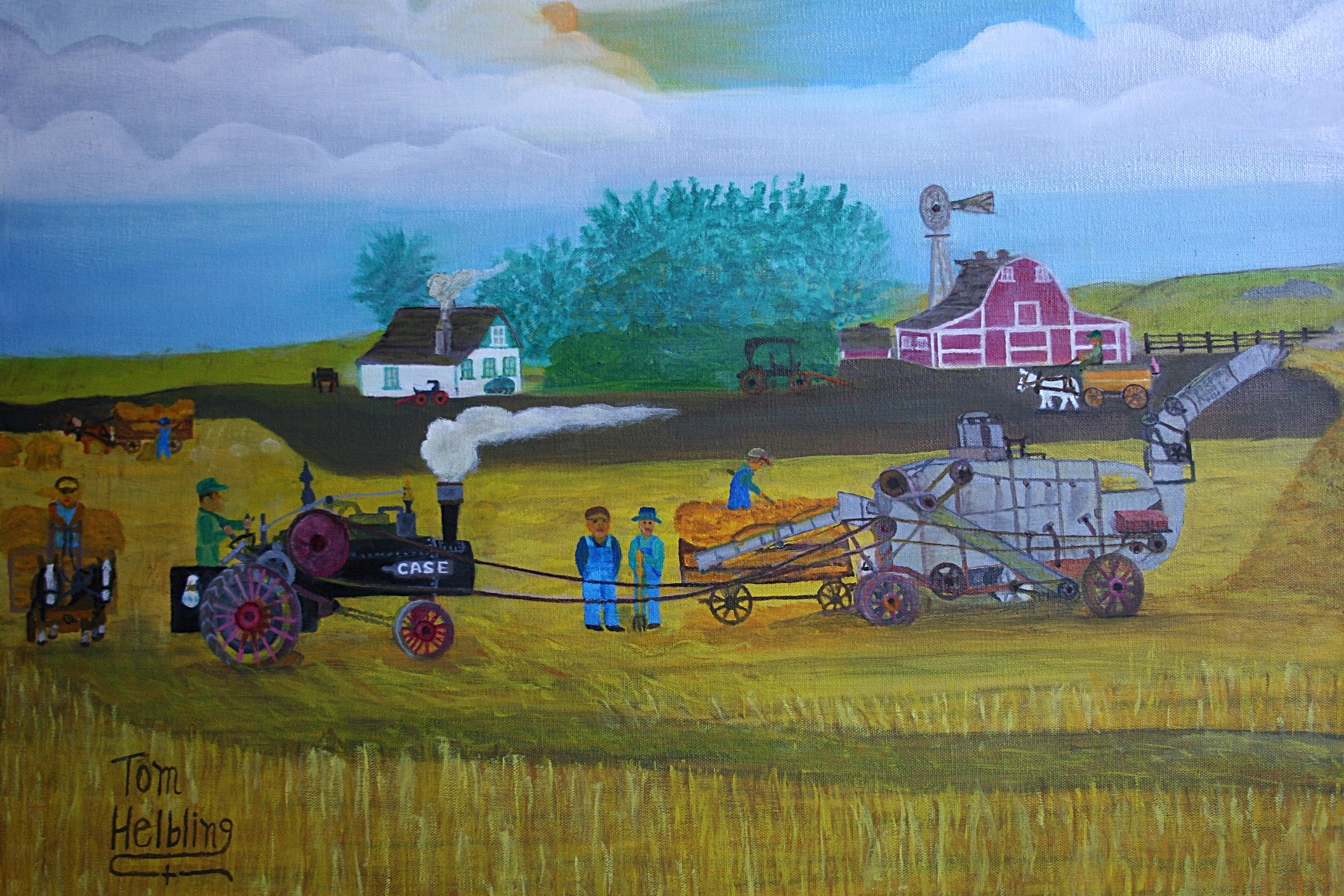
Threshing at Sunnybrook Farm, St. Anthony, North Dakota, as painted by Tom Helbling. (Minnesota Prairie Roots copyrighted file photo)

But memories of threshing are good memories, preserved today in an oil painting from the farm in North Dakota, Sunnybrook Farm. My father-in-law took up painting later in life. Among the art he created was a circa 1920s threshing scene. We have that painting, currently displayed in our living room. I treasure it not only for the hands that painted it, but also for the history held in each brush stroke.

Threshing grain, living history in 2024. (Minnesota Prairie Roots copyrighted photo August 2024)

The painted scene differs some from the threshing scene I saw in Dundas. In North Dakota, horses were part of the work team, the tractor steam powered. In Dundas, there were no horses, no steam engine at the threshing site. Still, the threshing machine is the star, performing the same work. And men are still there, laboring under the sun on a late summer afternoon.

© Copyright 2024 Audrey Kletscher Helbling
 

Reflecting on bee lawns, invertebrate inns, learning & the future August 29, 2024
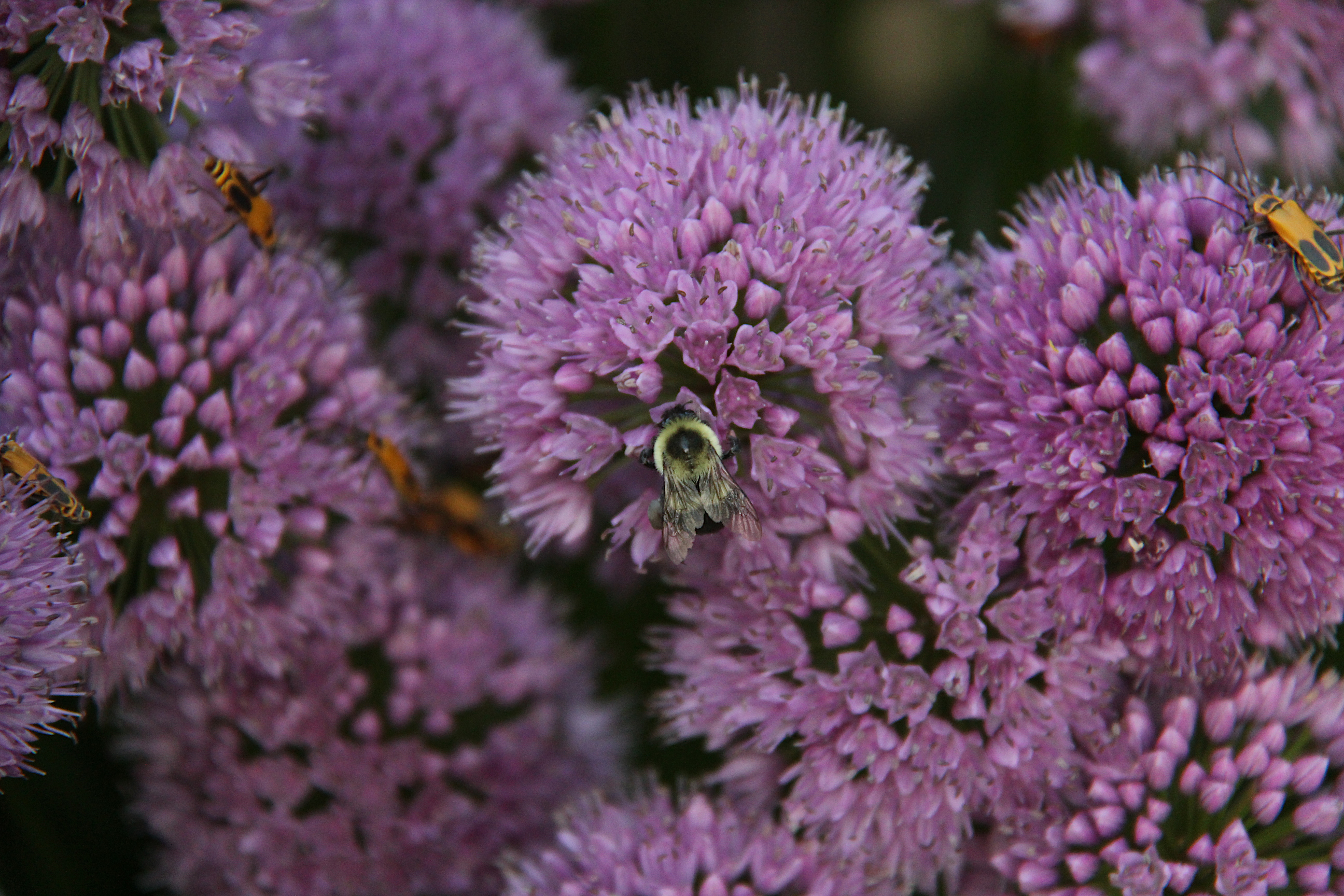
I spotted this bee and other bugs on flowers in the Rice County Master Gardeners’ Teaching Gardens. (Minnesota Prairie Roots copyrighted photo August 2024)
ADMITTEDLY, I NEVER EXCELLED in science. I sort of just got by, learning what I needed to learn to get reasonably good grades in science class. But if I was to go back to the classroom, I’d listen more intently, ask more questions, figure out how the information I was taught actually related to me and my world. In other words, I wouldn’t simply absorb, regurgitate and then move on, which seemed to be the way subjects were taught when I was a student.

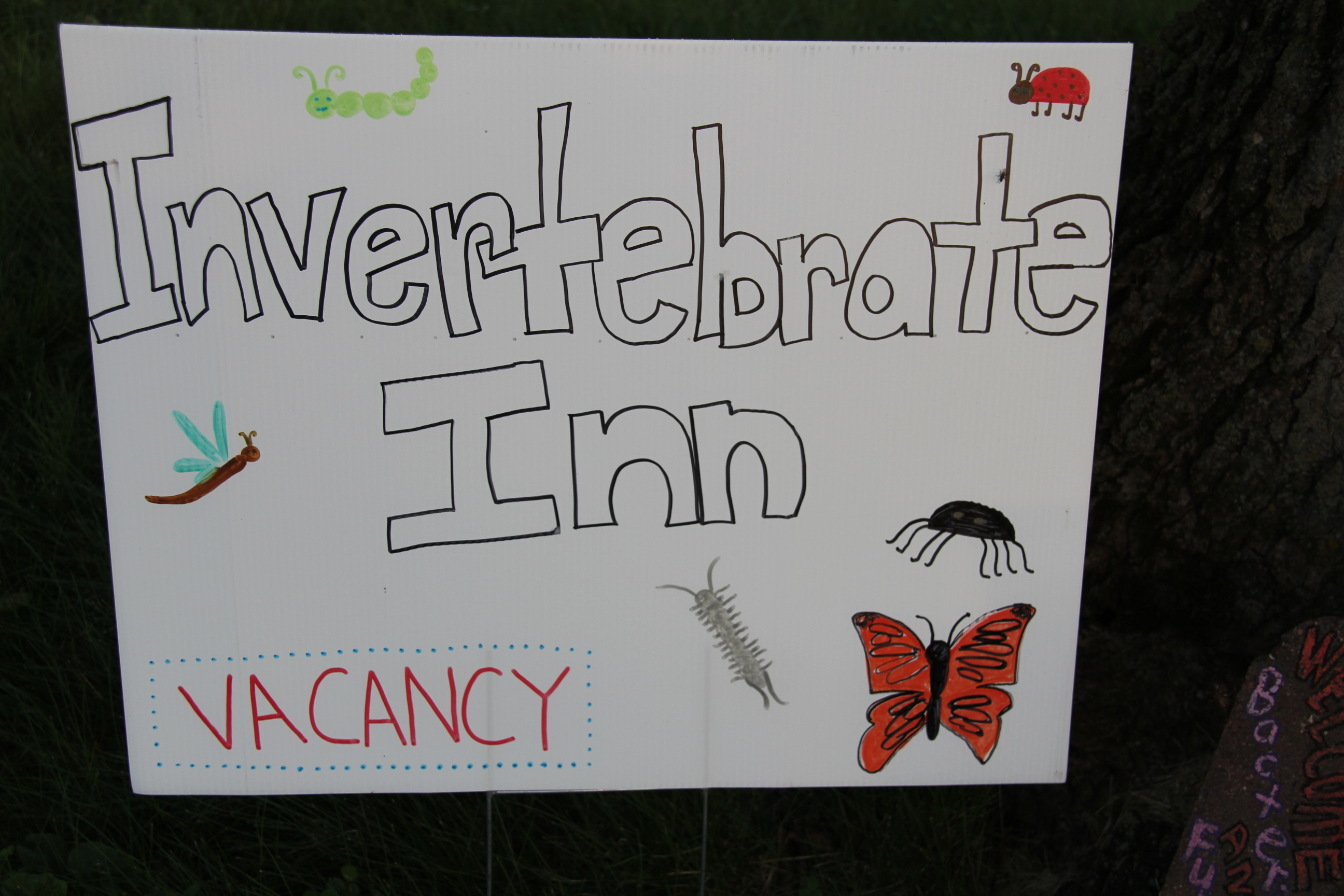
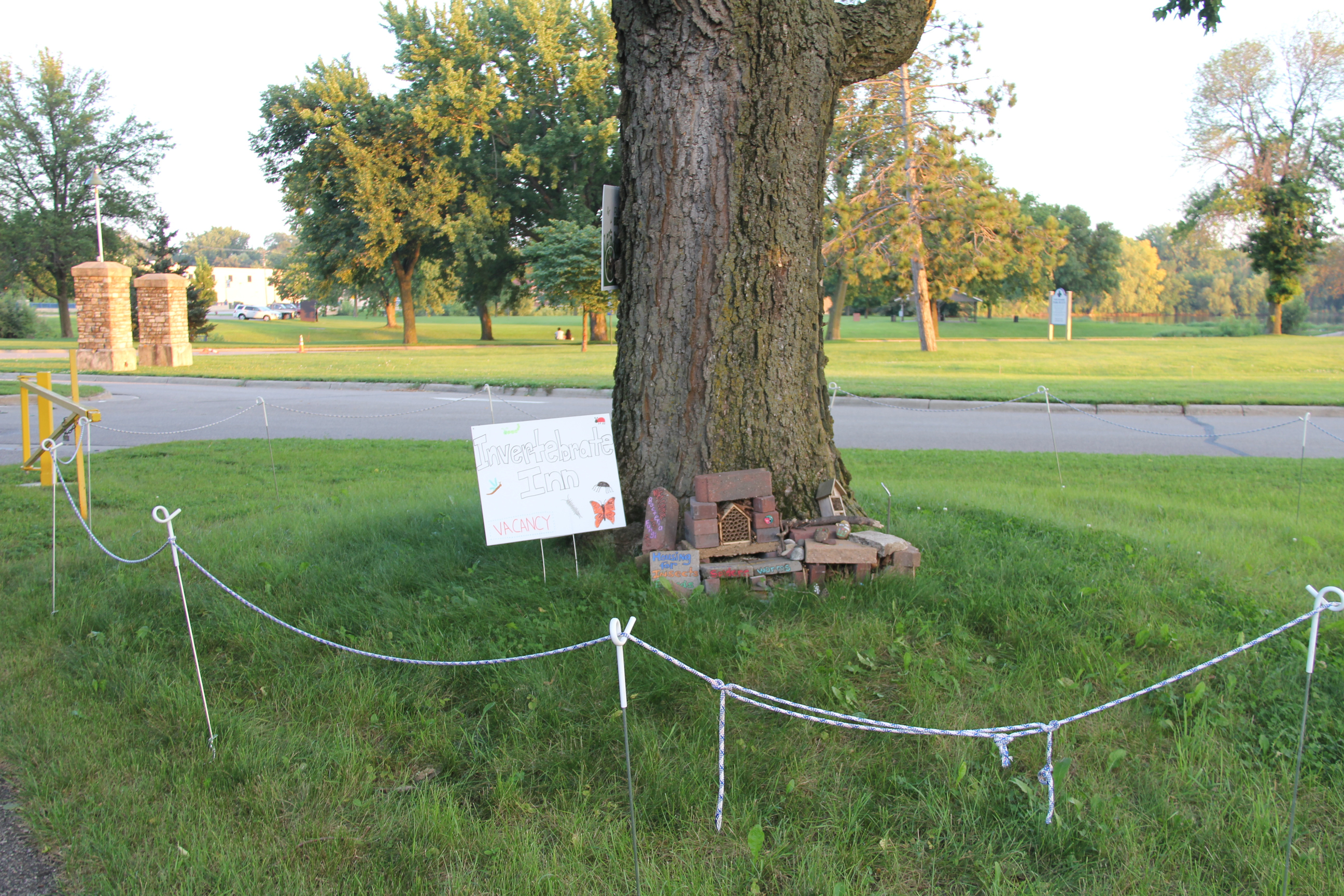
This sign drew me to the base of a tree, where I found an inn and a bee lawn. (Minnesota Prairie Roots copyrighted photo August 2024)
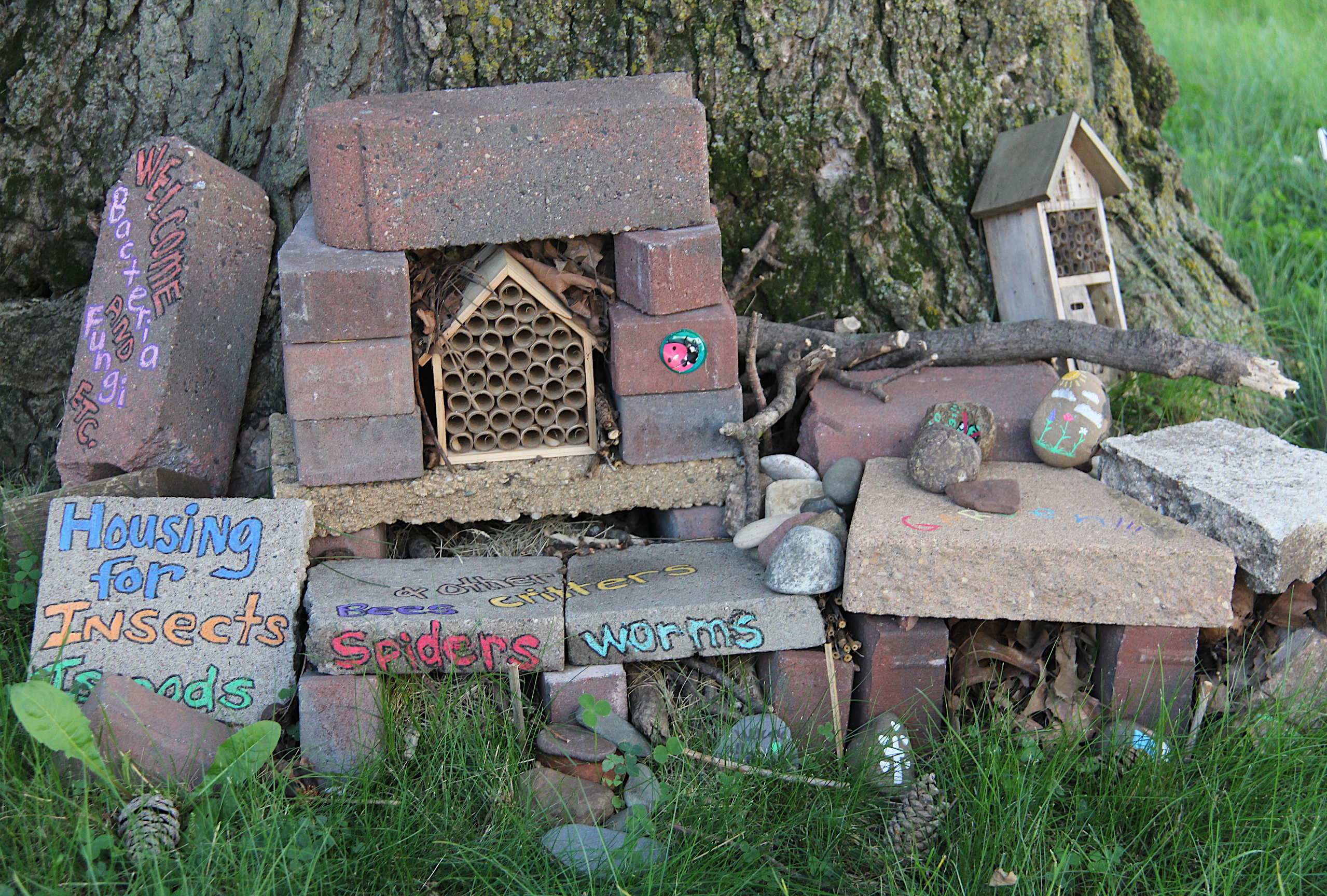
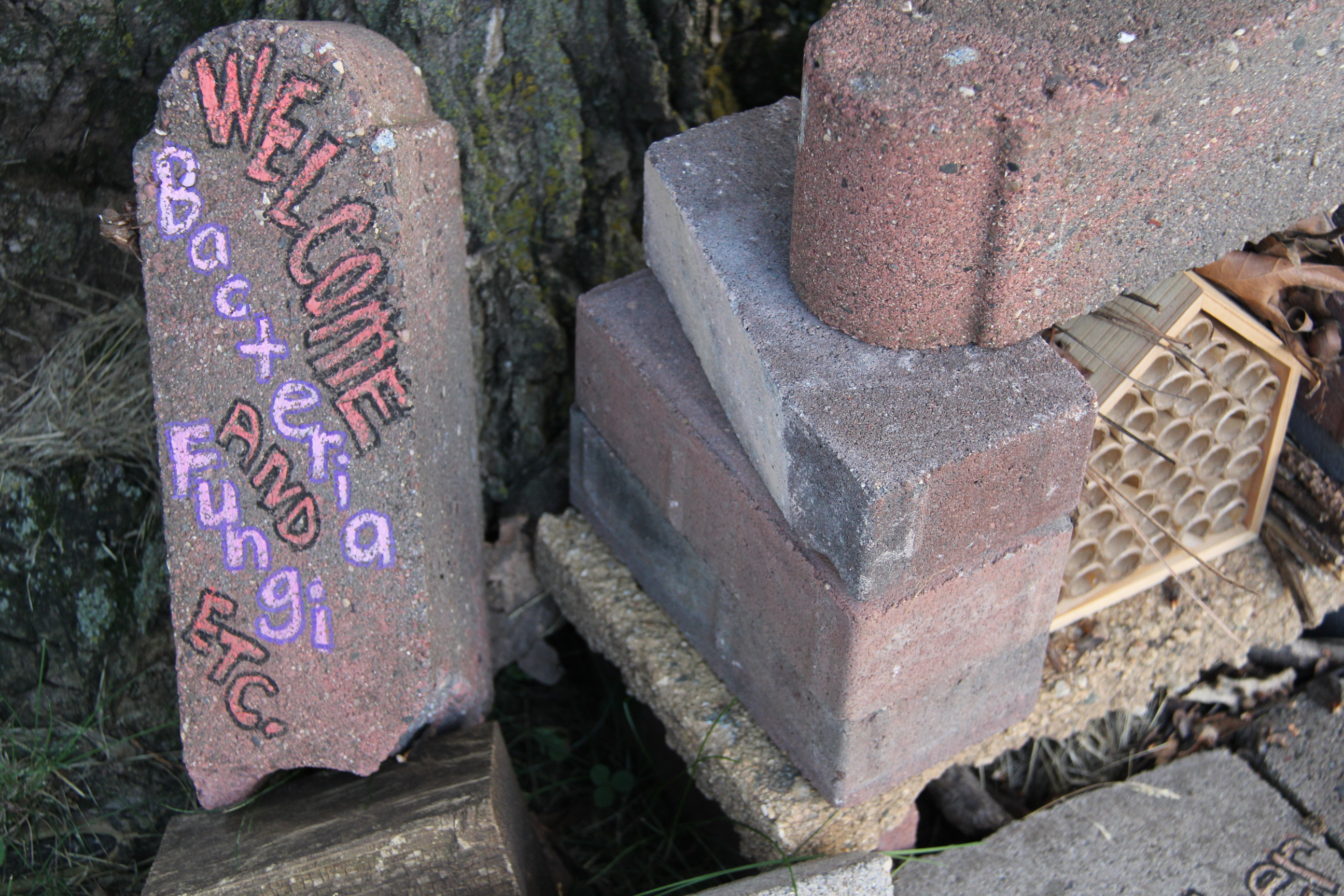
Bricks, stones, sticks and more comprise this haphazard housing unit. (Minnesota Prairie Roots copyrighted photo August 2024)
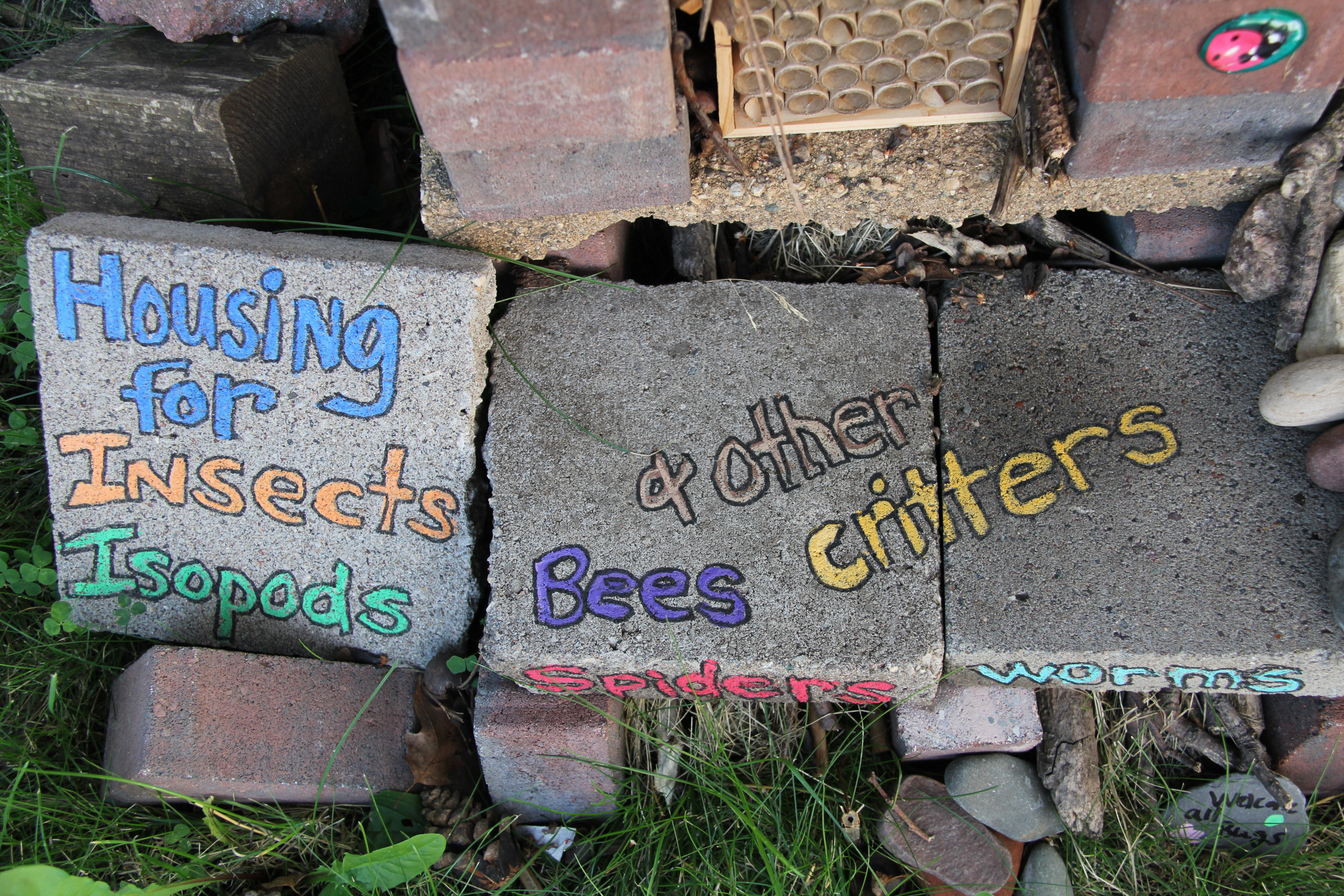
Identifying signage on the Invertebrate Inn. (Minnesota Prairie Roots copyrighted photo August 2024)

Now, as an adult, and an aged one at that, I realize that the core of learning is not memorization. It is rather taking in information that sparks interest, raises questions, causes independent thinking. I am still learning well into my sixties, this year marking 50 years since I graduated from high school.

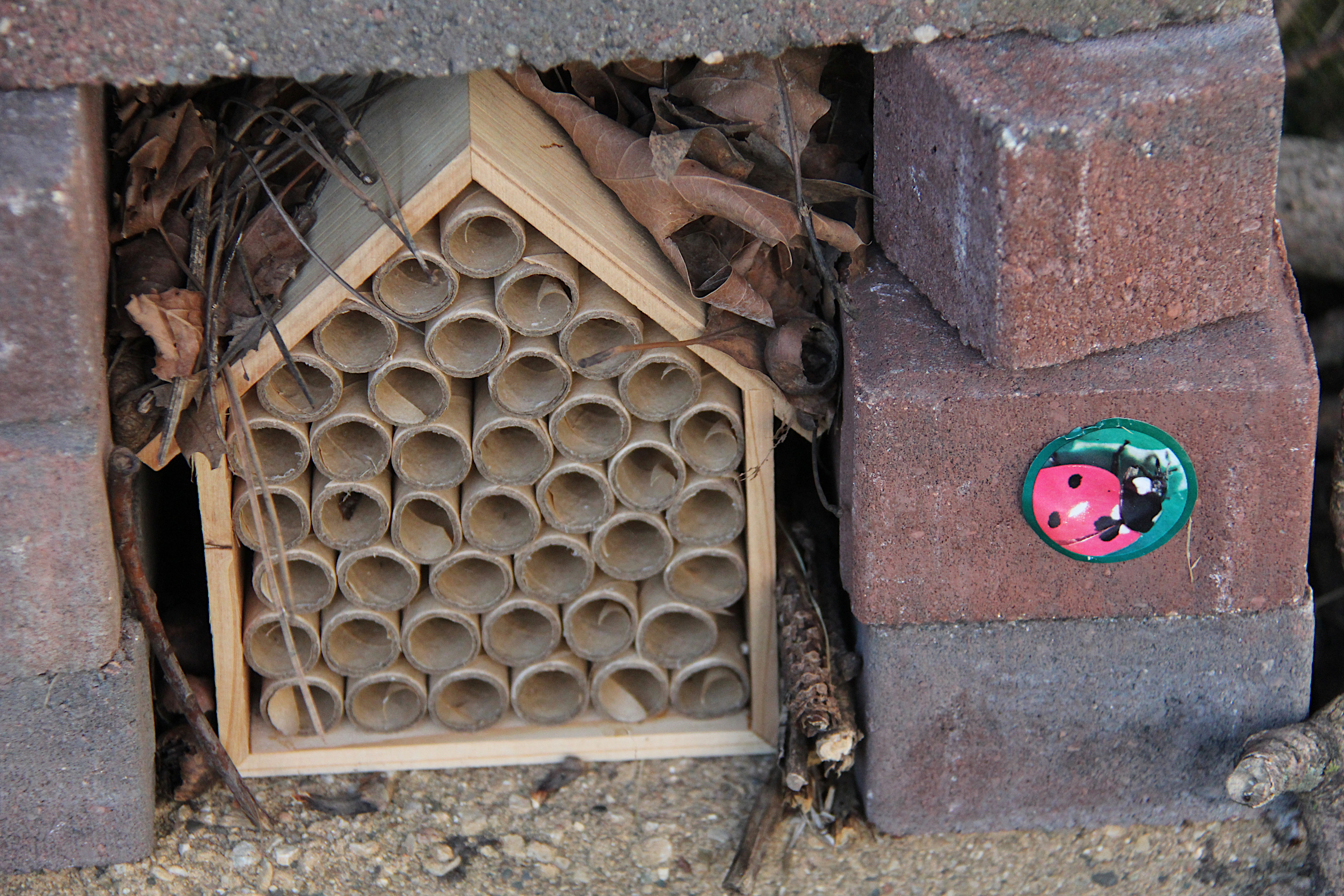
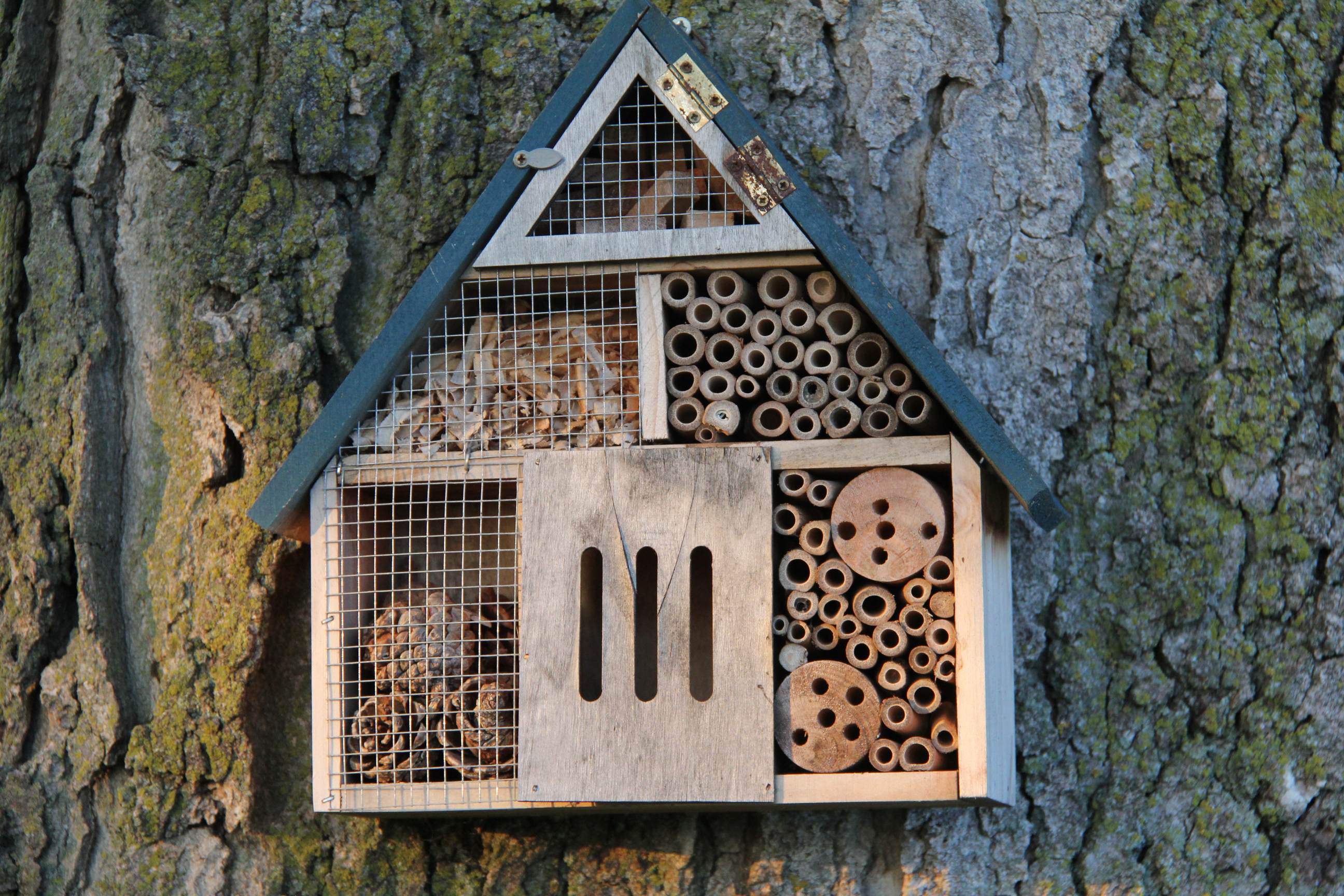
I trust this structure would be a good home for a bug. (Minnesota Prairie Roots copyrighted photo August 2024)

Today I learn because I want to, not because I need to take some class for credits or to earn a degree.

The bee lawn was roped off when I visited. (Minnesota Prairie Roots copyrighted photo August 2024)
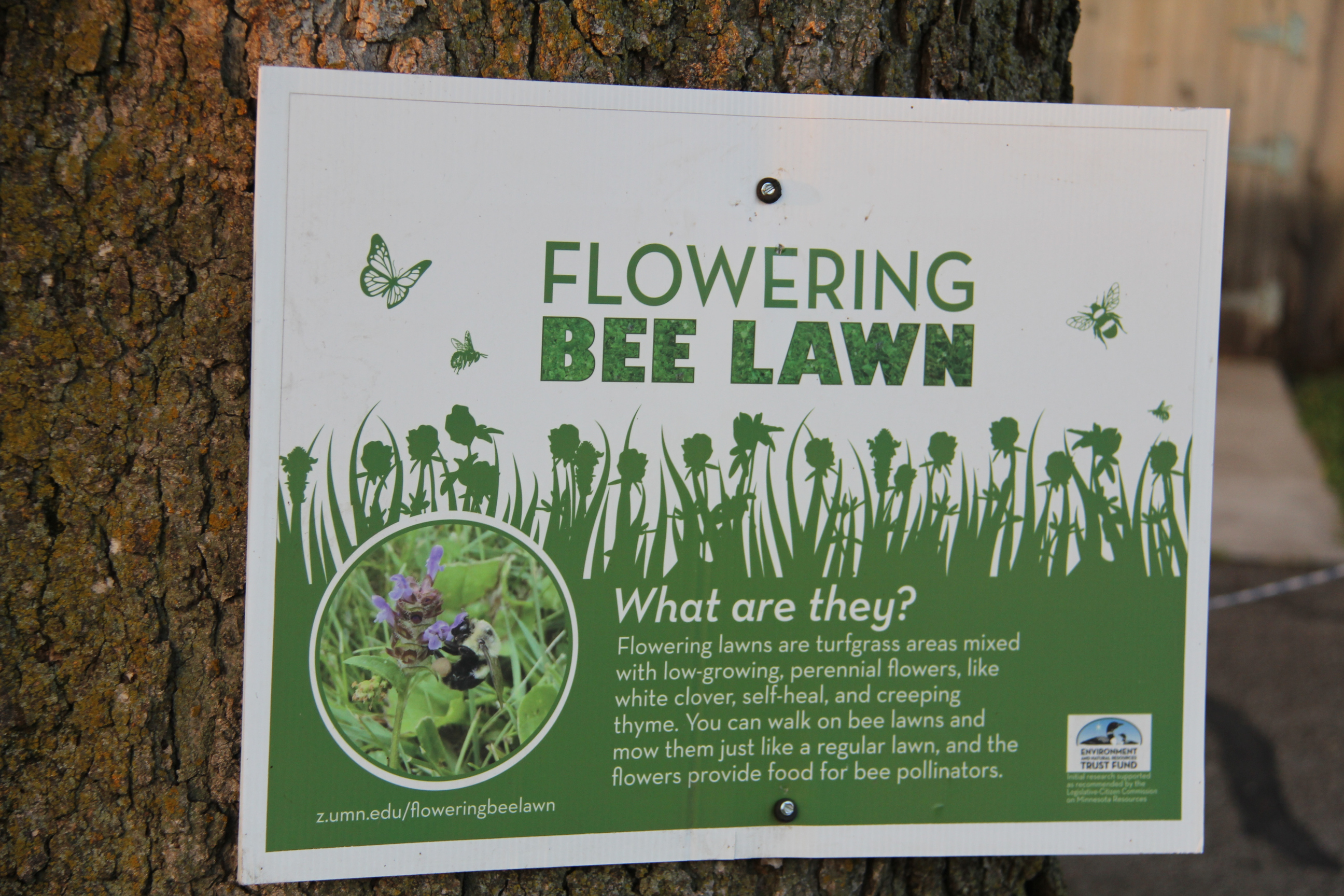
Signage on the tree explains a flowering bee lawn. (Minnesota Prairie Roots copyrighted photo August 2024)
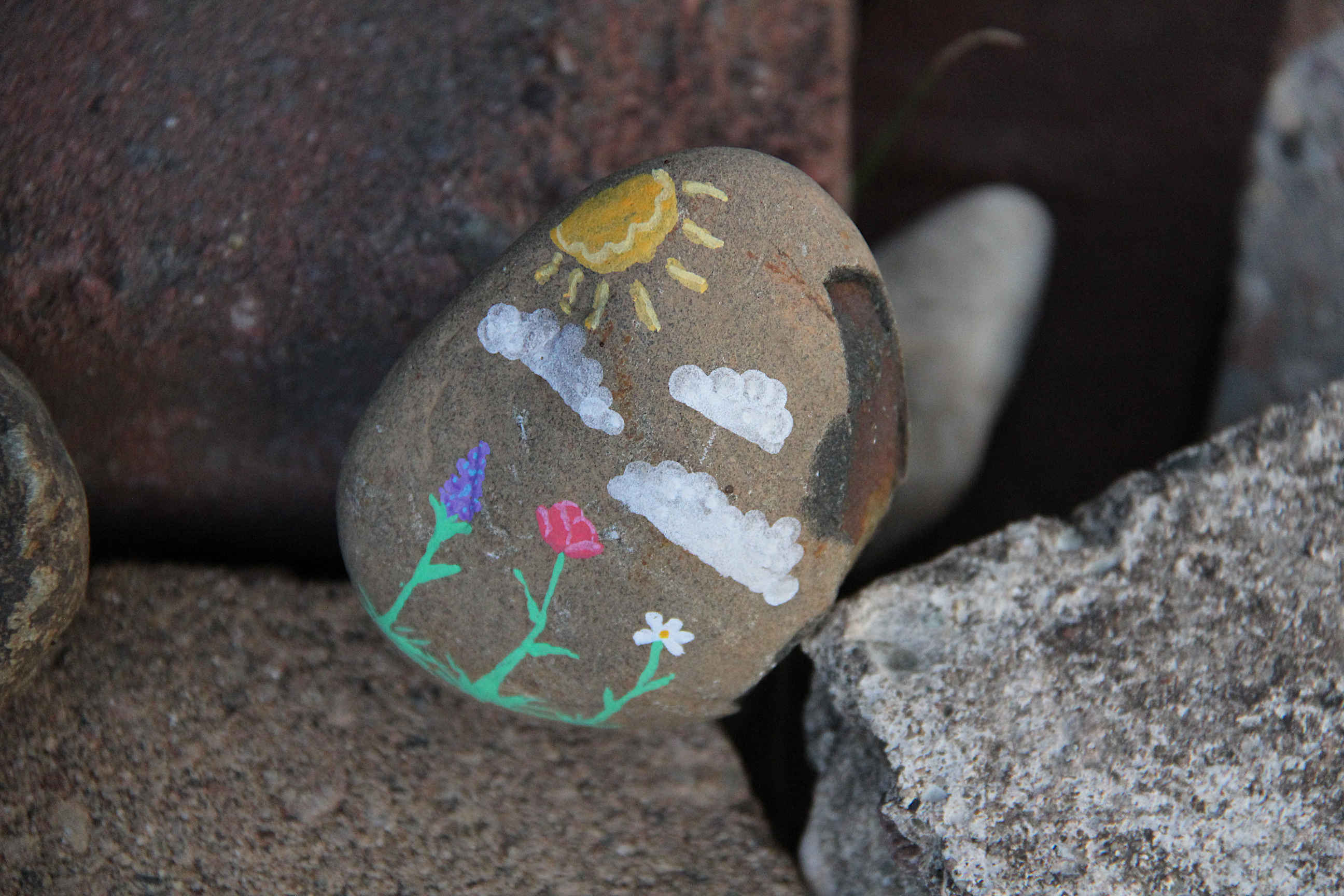
Fitting floral rock art in the inn. (Minnesota Prairie Roots copyrighted photo August 2024)

My latest delve into science was prompted by a visit to the Rice County Master Gardeners Teaching Gardens in Faribault. There I spotted an Invertebrate Inn and a bee lawn, recent additions to the beautiful gardens located at the Rice County Fairgrounds. These are not exactly novel ideas. But I’d not previously considered them much and how they benefit the natural world. Low-lying bee lawns, with their clover and other flowers like creeping thyme, provide nectar and pollen for pollinators.

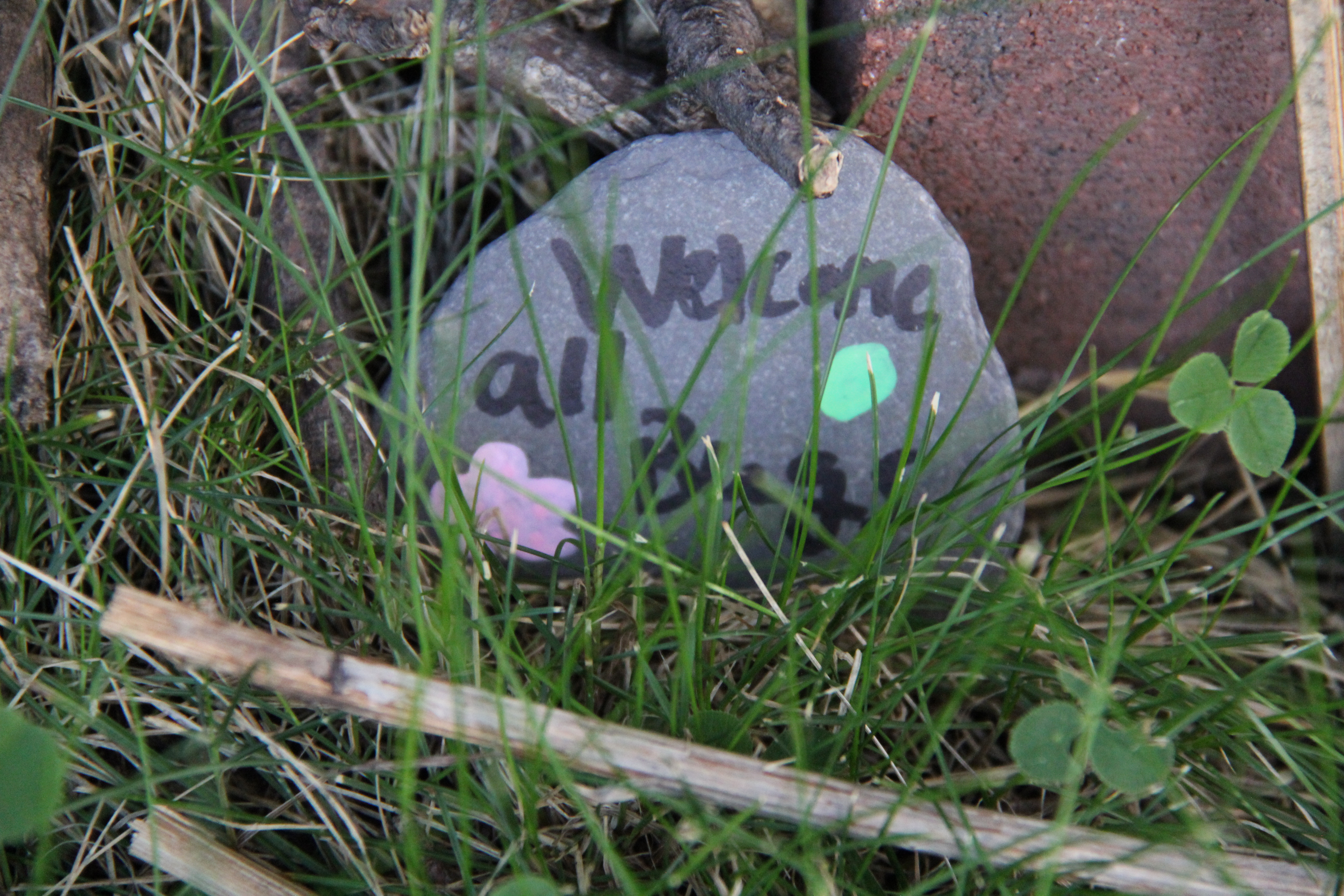
At the inn, a welcome sign for guests. (Minnesota Prairie Roots copyrighted photo August 2024)

In some ways, the inn and the bee lawn remind me of childhood days on the farm with our grass anything but weed-free and manicured. Dandelions and clover were prolific. No weedkiller or insecticides were used except on crops. No nothing applied to the grass, because who cared and who had time to nurture a lawn when there were crops to plant and cultivate and animals to tend?

Housing for more than just insects, isopods, bees, spiders, worms and other critters. (Minnesota Prairie Roots copyrighted photo August 2024)

Times have changed as farming and yard care have evolved. Insecticide and herbicide usage is prevalent. We would be naive to think this has not affected pollinators like butterflies and bees. And so when I discover something like a bee lawn and an Invertebrate Inn, I feel a spark of joy, a sense of gratitude for those who create them.

High rise housing. (Minnesota Prairie Roots copyrighted photo August 2024)

I want my grandchildren to understand that this world they’ve been given is one that needs to be nurtured and appreciated, taken care of in a way that perhaps my generation did not. Sure I celebrated Earth Day, wore Earth Shoes and spouted environmental platitudes of the 1970s. But did that really mean anything, make any long-lasting impact? It was a beginning, I suppose.

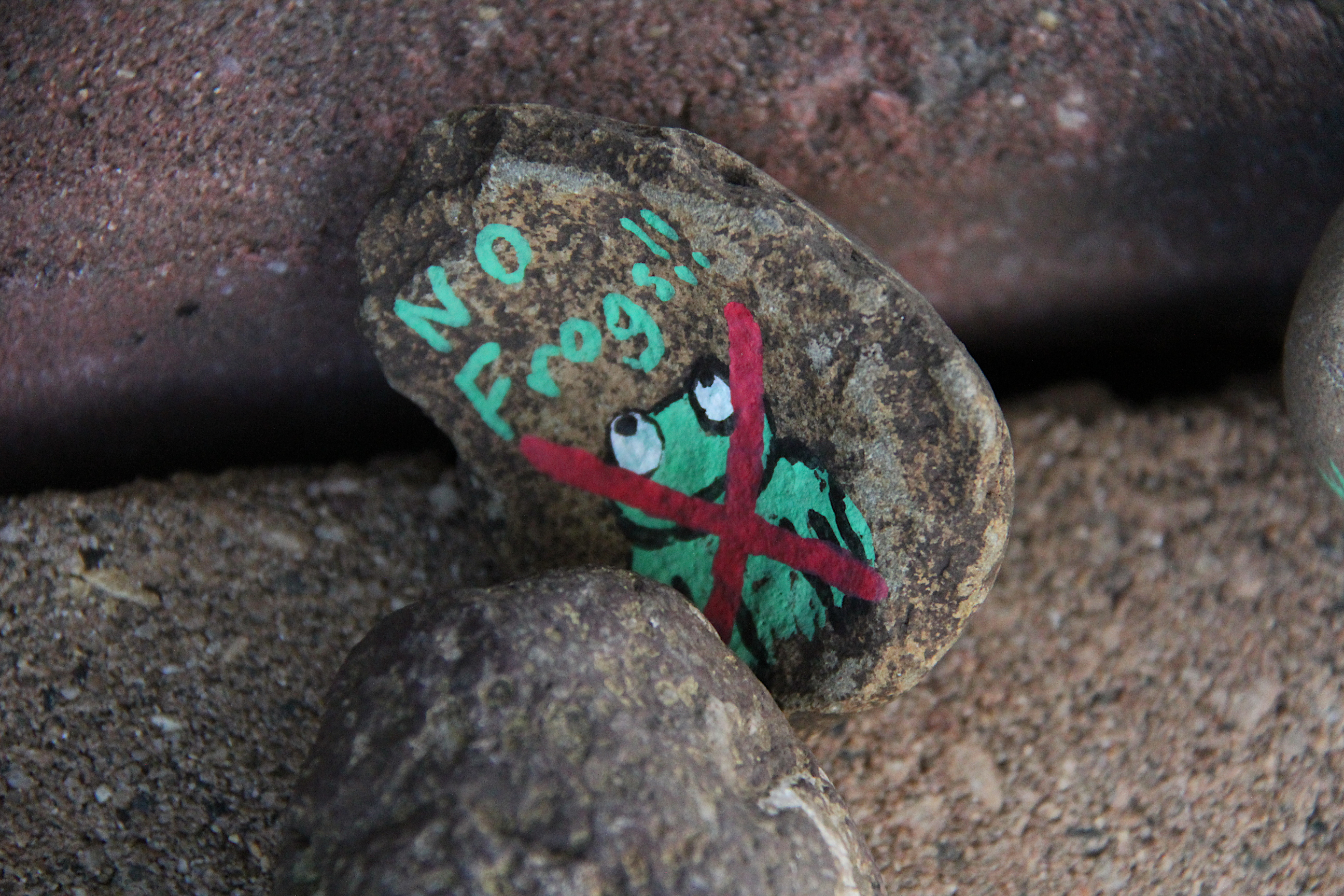
Frogs are banned from the inn. (Minnesota Prairie Roots copyrighted photo August 2024)

I want my grandchildren to ask questions in class, seek out information, learn in a way that is focused on curiosity rather than feeding back facts. I want them to care about the bees and the butterflies and the bugs.

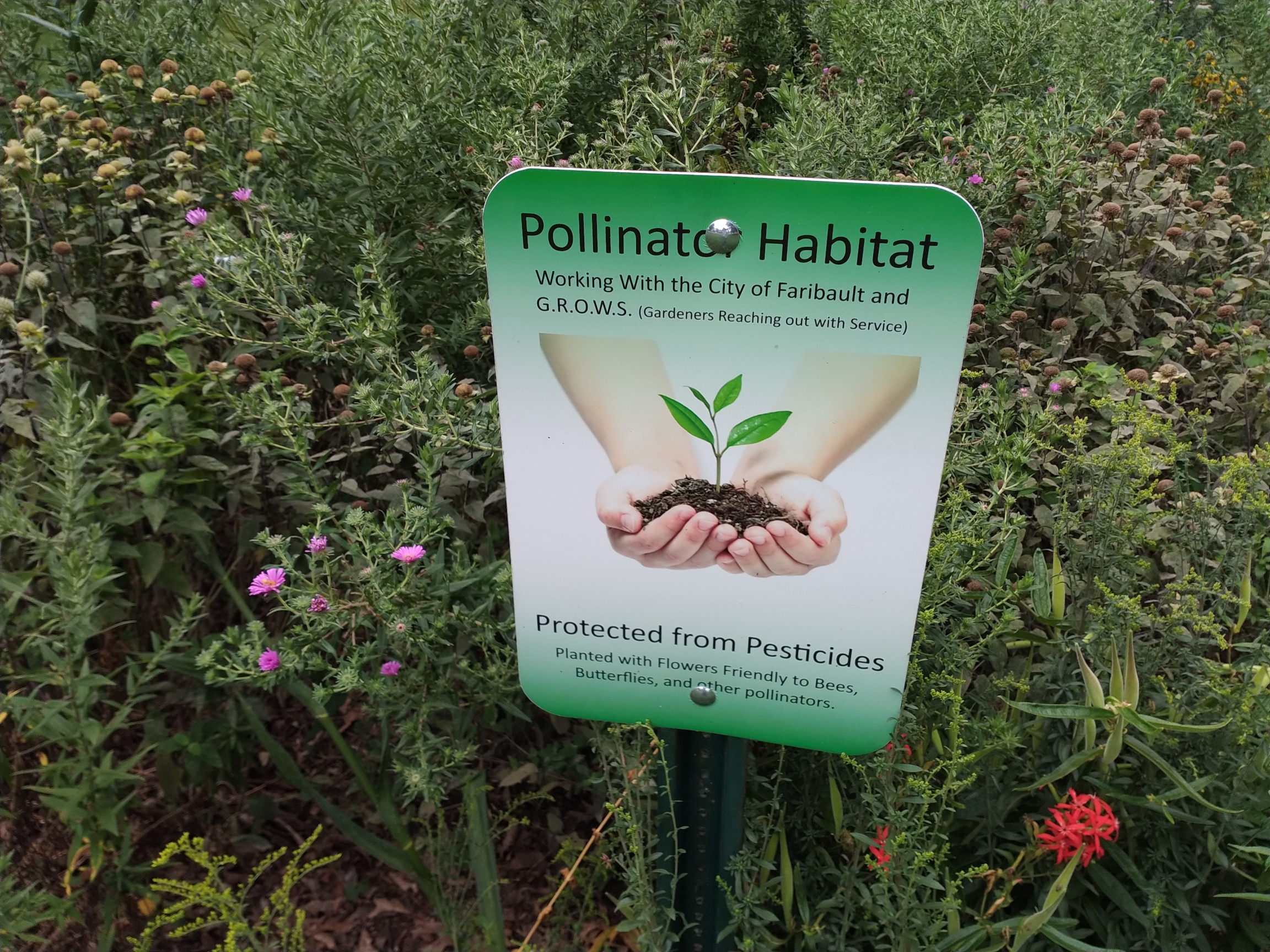
There are other bee lawns, pollinator gardens, etc., in my community, including this one in Central Park. (Minnesota Prairie Roots copyrighted photo August 2024)

I want them to connect with nature, to understand that what they do, or don’t do, to the earth matters. I want them to get their hands dirty in the soil, overturn rocks, hold bugs, pick up worms, plant flowers and, most of all, appreciate this natural world of ours. The science of it. The beauty of it. The peace it brings to the soul. The joy it brings to the spirit. And I want them to care. Always.

FYI: Click here to watch an informative video about creating a bee lawn by Faribault master gardener Jayne Spooner.

© Copyright 2024 Audrey Kletscher Helbling