Minnesota Prairie Roots

Writing and photography by Audrey Kletscher Helbling

The art of Halloween in Paradise October 29, 2024

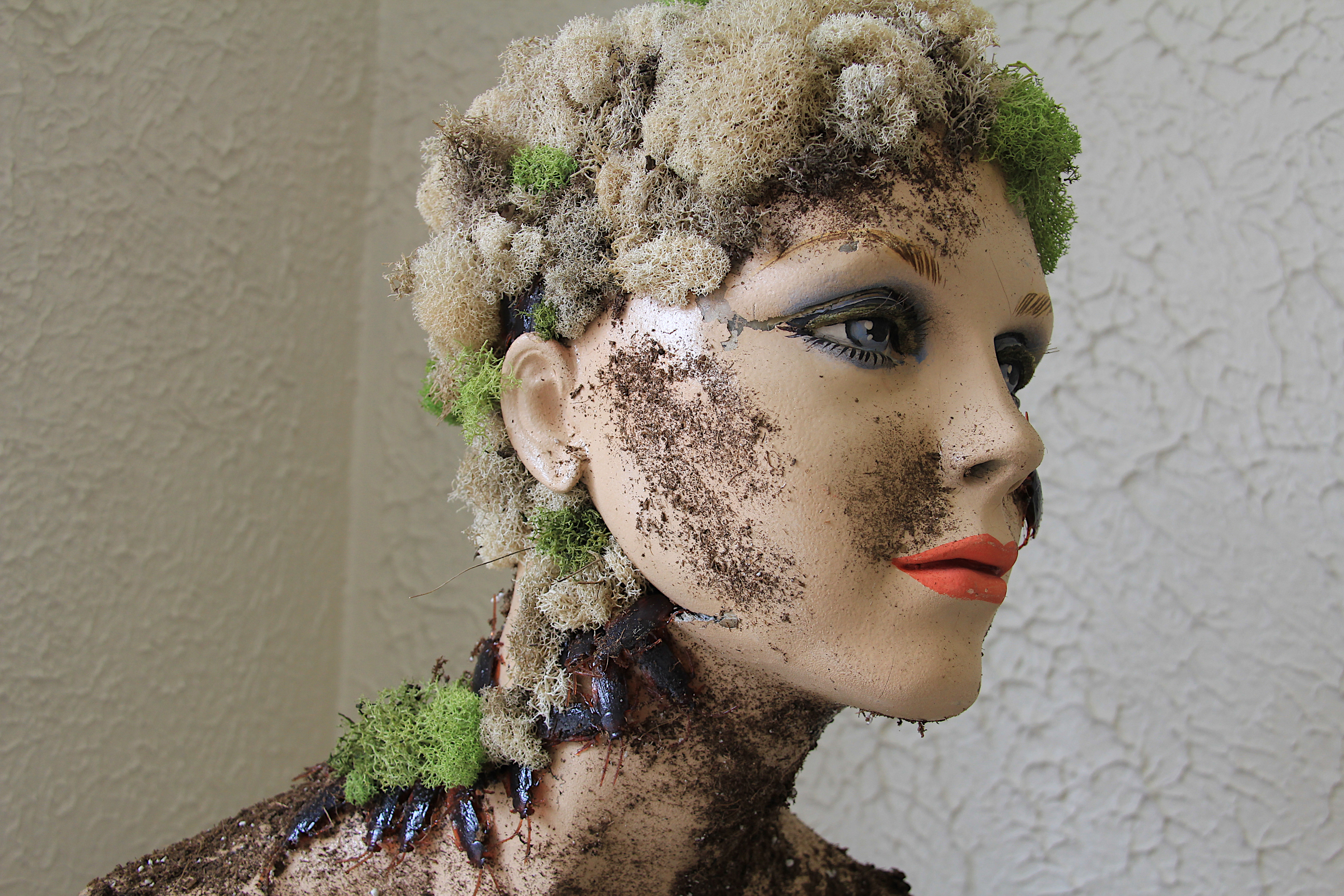
This shows part of “Roach Motel,” mixed media art by Sara Caron. (Minnesota Prairie Roots copyrighted photo October 2024)

DARK, FRIGHTENING, CREEPY, unsettling and even sweet. That’s the mix of art you’ll see in a Halloween-themed gallery exhibit at the Paradise Center for the Arts in Faribault.
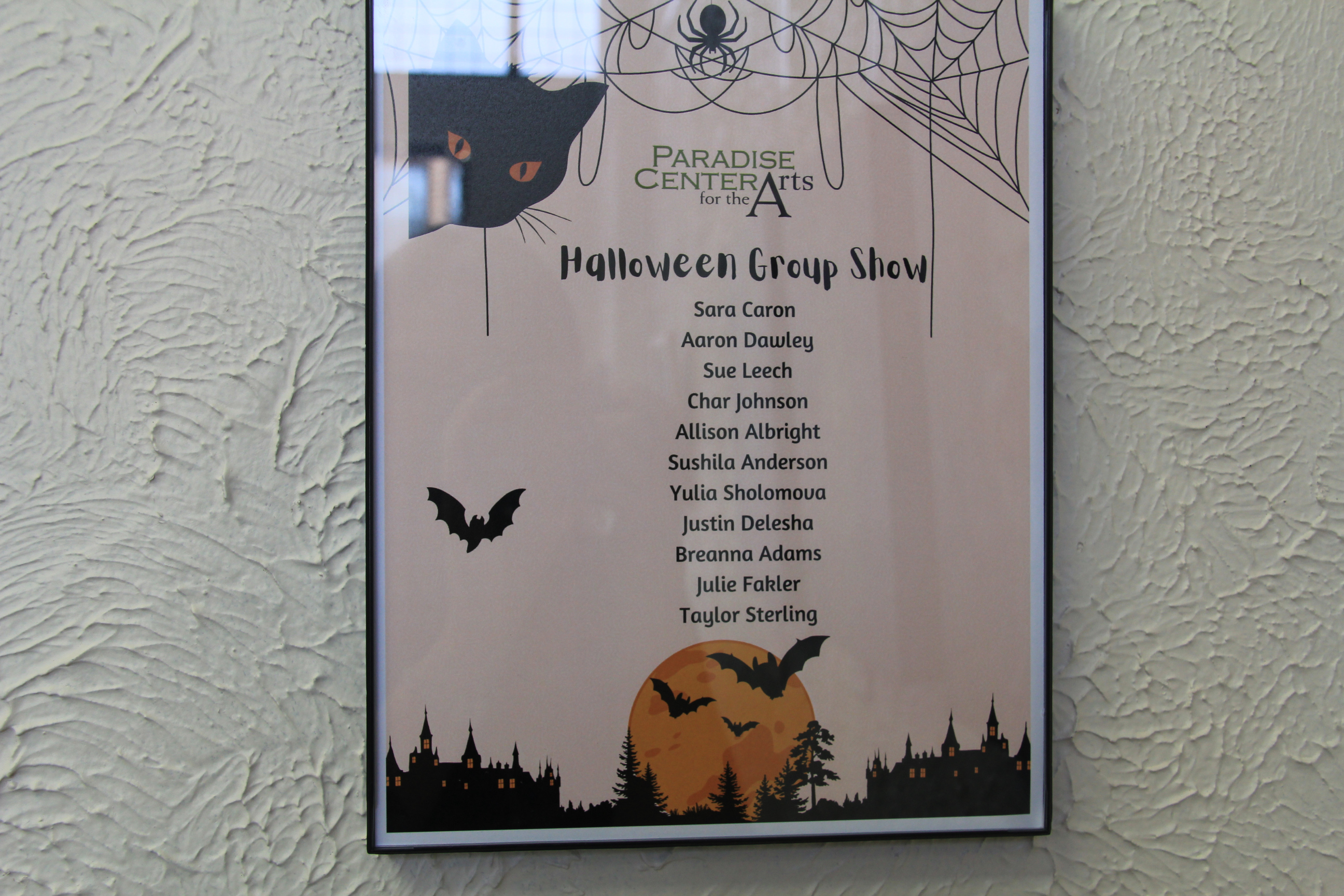
A list of the Halloween Group Show artists hangs in the gallery. (Minnesota Prairie Roots copyrighted photo October 2024)

Eleven artists participated in the Halloween Group Show. This collection shows how these creatives took a theme and created a diversity of art with mixed media, stained glass, acrylic, intagio, clay… The results are as varied as Halloween costumes. And I loved it, even if a bit creeped out by some of the artwork.
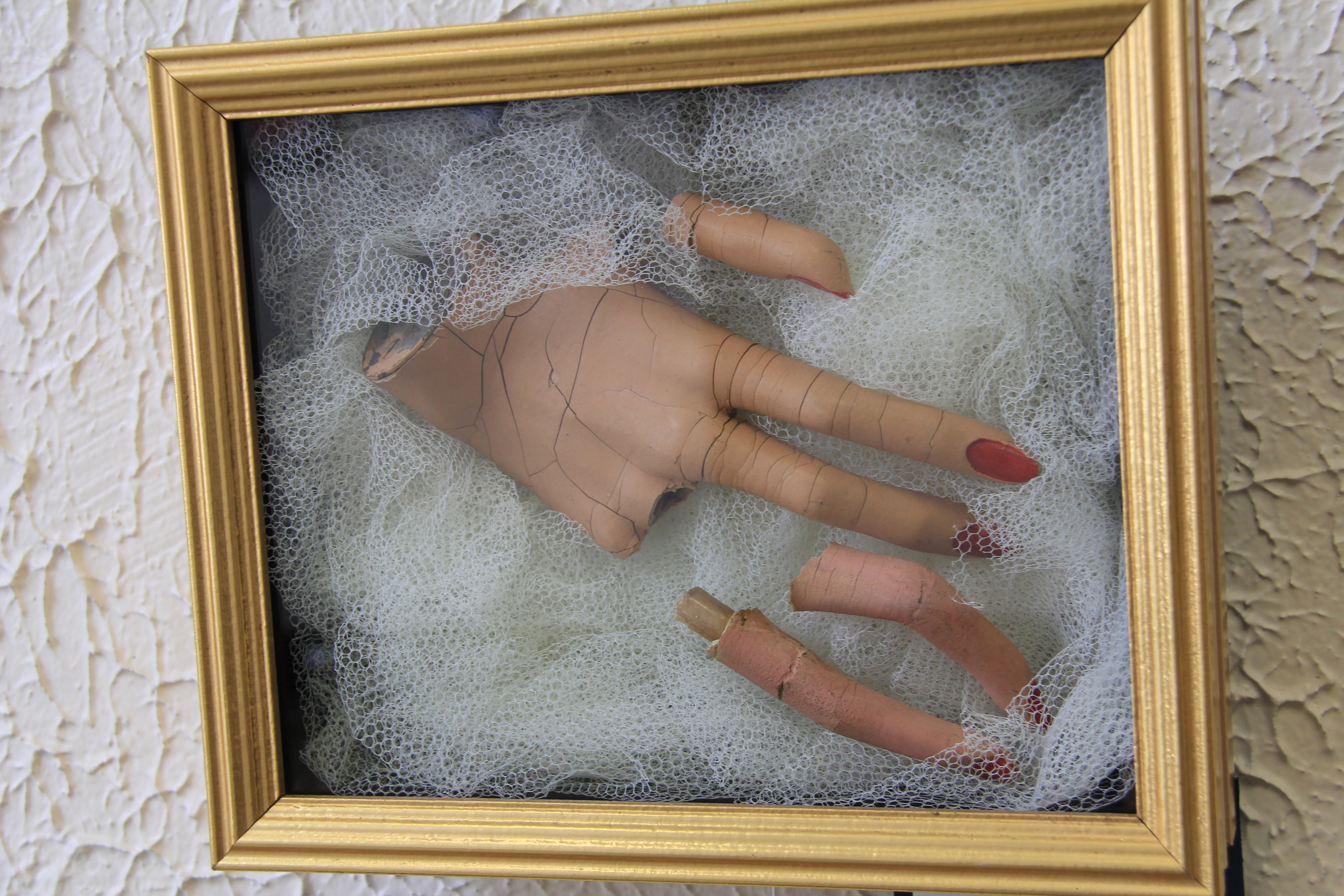
“Hand of the Beholder” by Sara Caron. (Minnesota Prairie Roots copyrighted photo October 2024)

Take Sara Caron’s “Roach Motel” mixed media piece featuring a flower-potted mannequin crawling with roaches. Or her “Hand of the Beholder” broken fingers on a hand nestled in netting, presumably a bridal veil. There’s definitely some underlying meaning going on here as implied by the title.
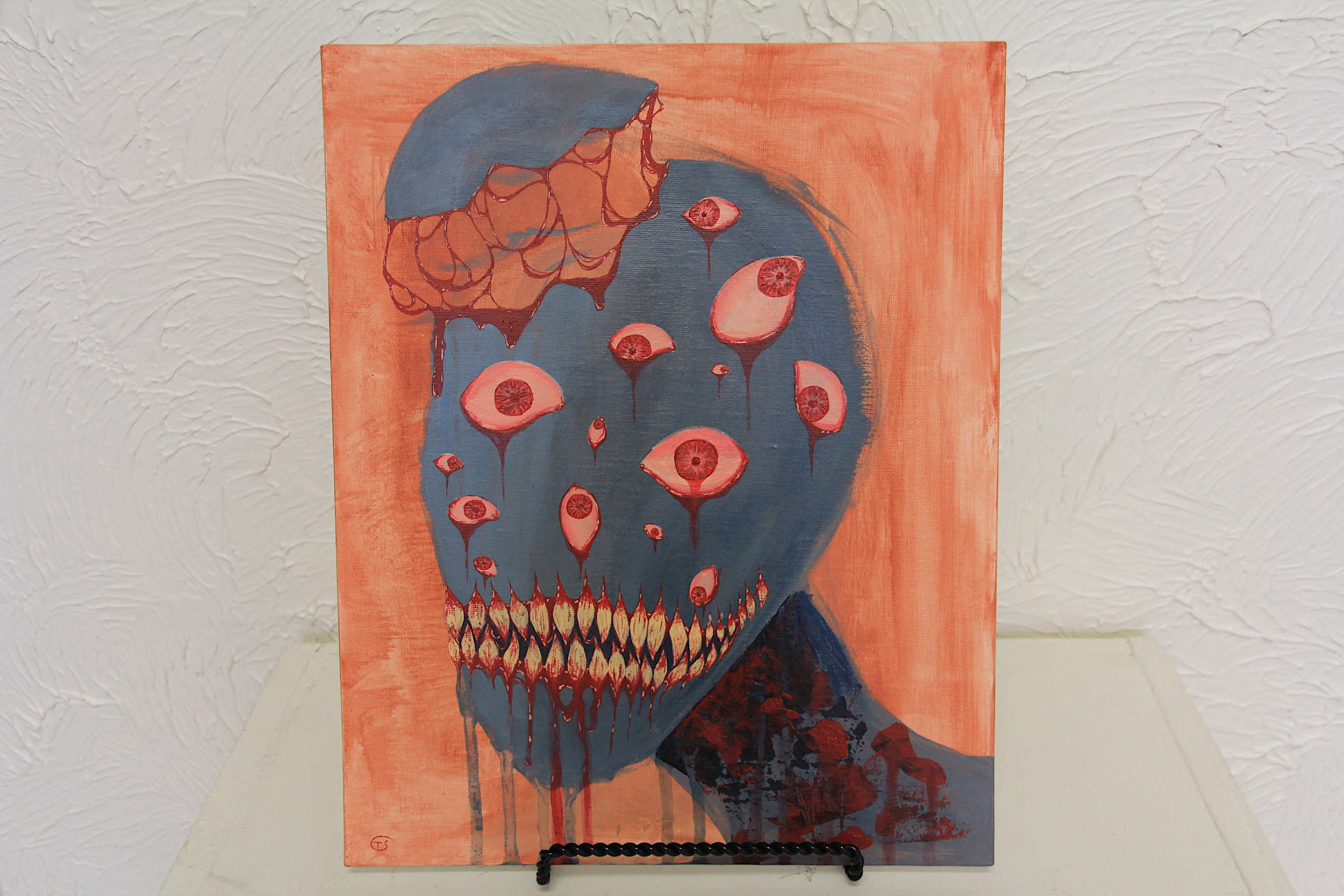
“Smile” by Taylor Sterling. (Minnesota Prairie Roots copyrighted photo October 2024)

Taylor Sterling’s blood-dripping, eye-popping, cracked skull acrylic painting titled “Smile” also taps into Halloween’s ghoulish side.
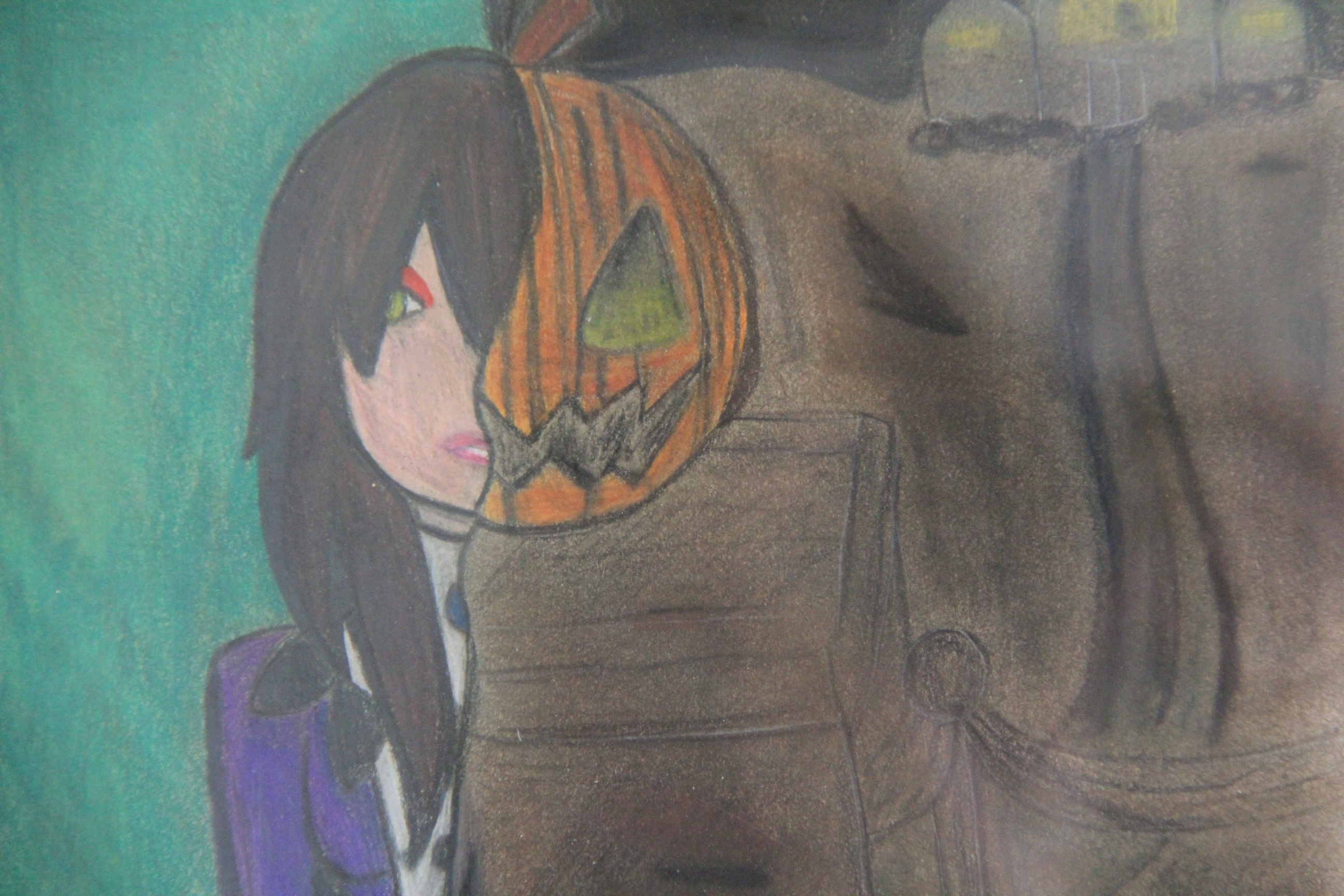
This shows a portion of Breanna Adams’ piece, “Lady Dina and Dark Horse.” (Minnesota Prairie Roots copyrighted photo October 2024)

Likewise Breanna Adams’ “Lady Dina and Dark Horse” reminded me of an unnerving performer I saw on the television show “America’s Got Talent.” Not that the AGT contestant was half pumpkin-head like Adams’ girl whose face is mostly veiled by long, dark hair. But that’s where my mind went…back to AGT. The uneasiness I felt then and in viewing the “Lady Dina” painting were the same.
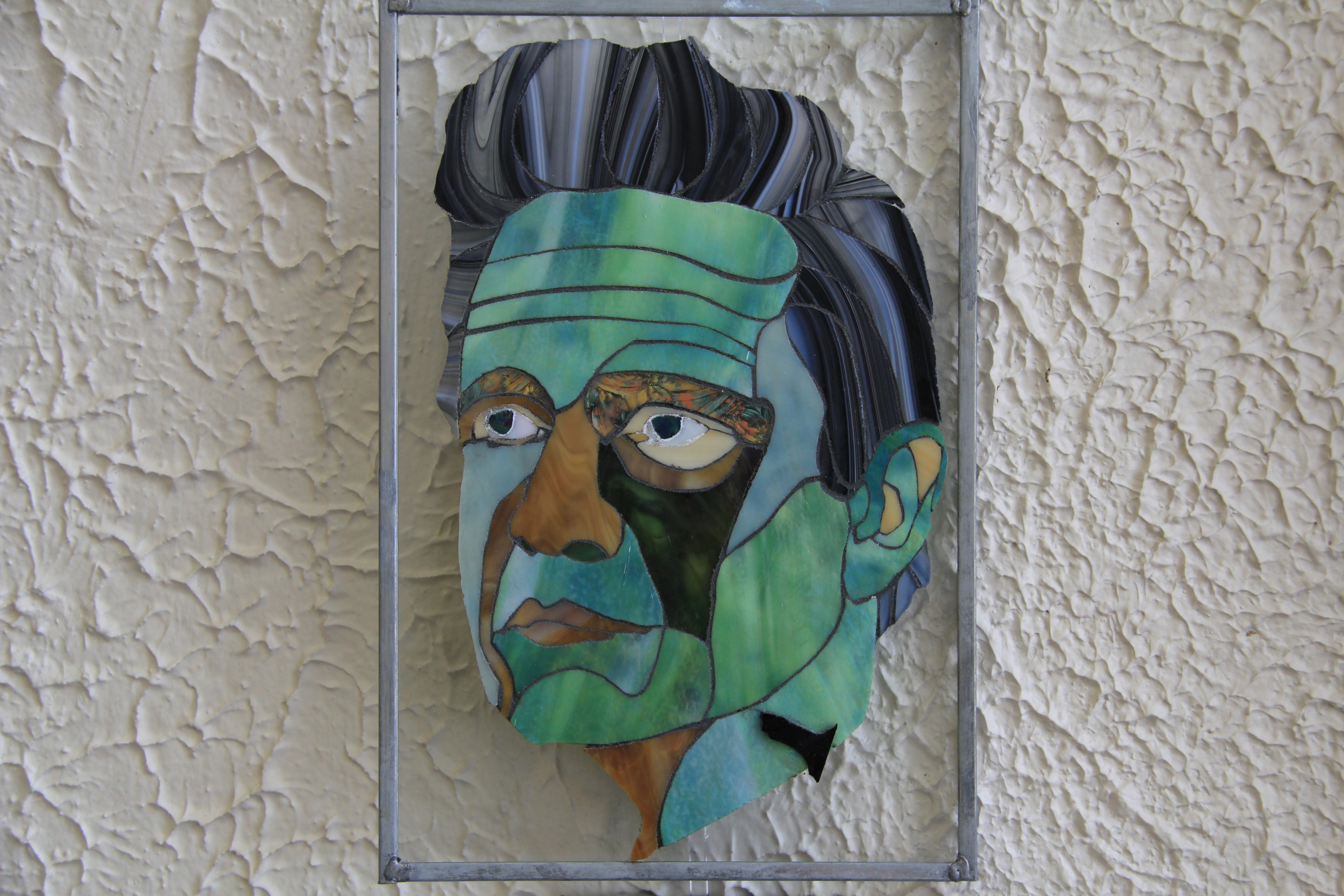
“Johnny Cash as Frankenstein,” a stained glass mosaic by Sushila Anderson. (Minnesota Prairie Roots copyrighted photo October 2024)

How we see and react to art is part of the artistic experience. Only the artist truly knows why they created what they did, how they did. As a writer, I was recently asked about the ending of a short story, an award-winning dark piece I wrote within the constraints of word count limits. It intentionally leaves the reader hanging. I couldn’t tell my sister-in-law how “Dear Mother” ends, because even I don’t know. Sometimes creativity simply flows without understanding of its root source or conclusion. I expect that can apply to both literary and visual art.
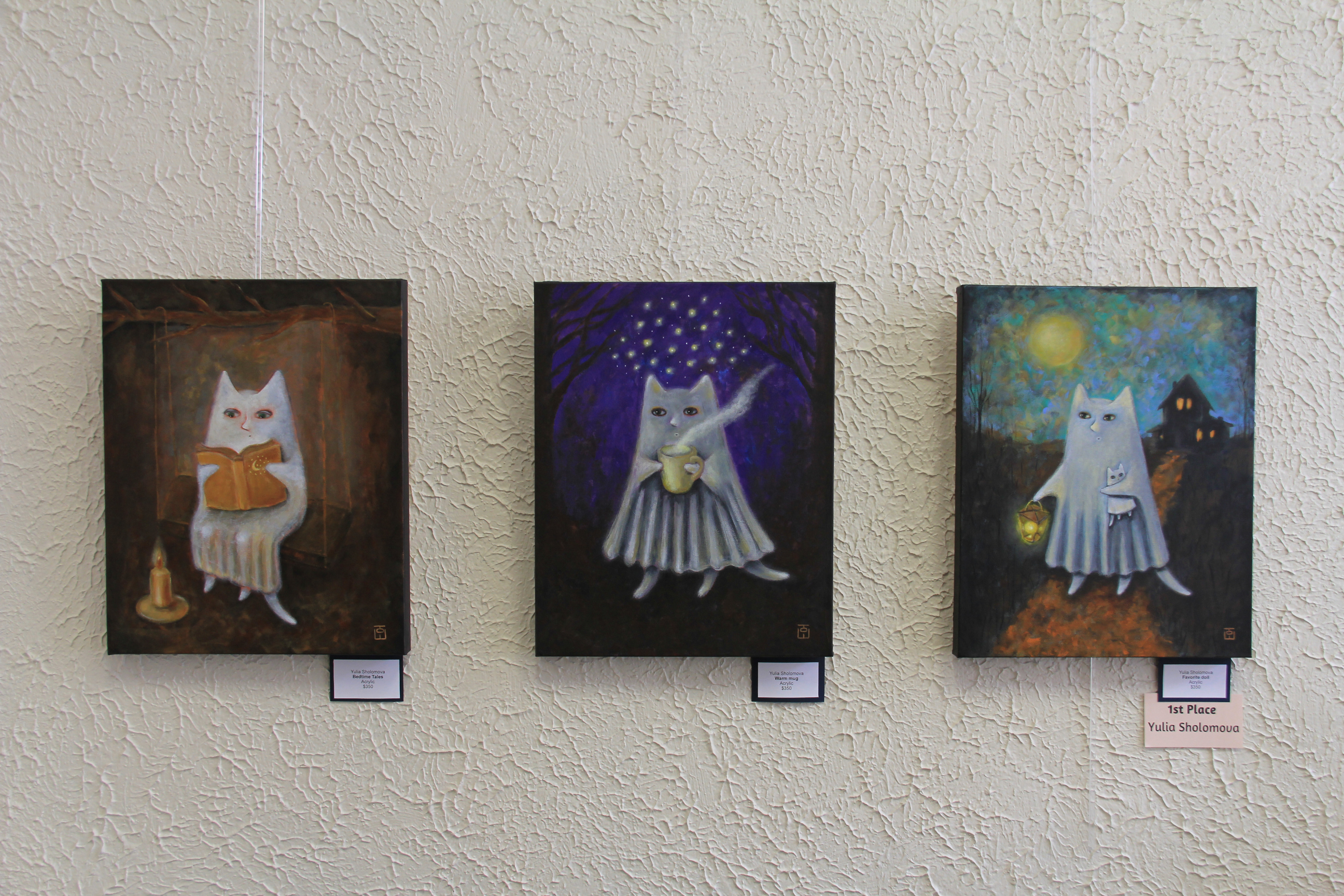
Yulia Sholomova’s trio of costumed kitty paintings titled, left to right, “Bedtime Tales,” “Warm mug,” and “Favorite Doll.” (Minnesota Prairie Roots copyrighted photo October 2024)

Or maybe the 11 artists featured in the Paradise Halloween show can tell you exactly what inspired them. Perhaps memories of trick-or-treating or fears or going through a haunted house or a long ago Halloween costume party.
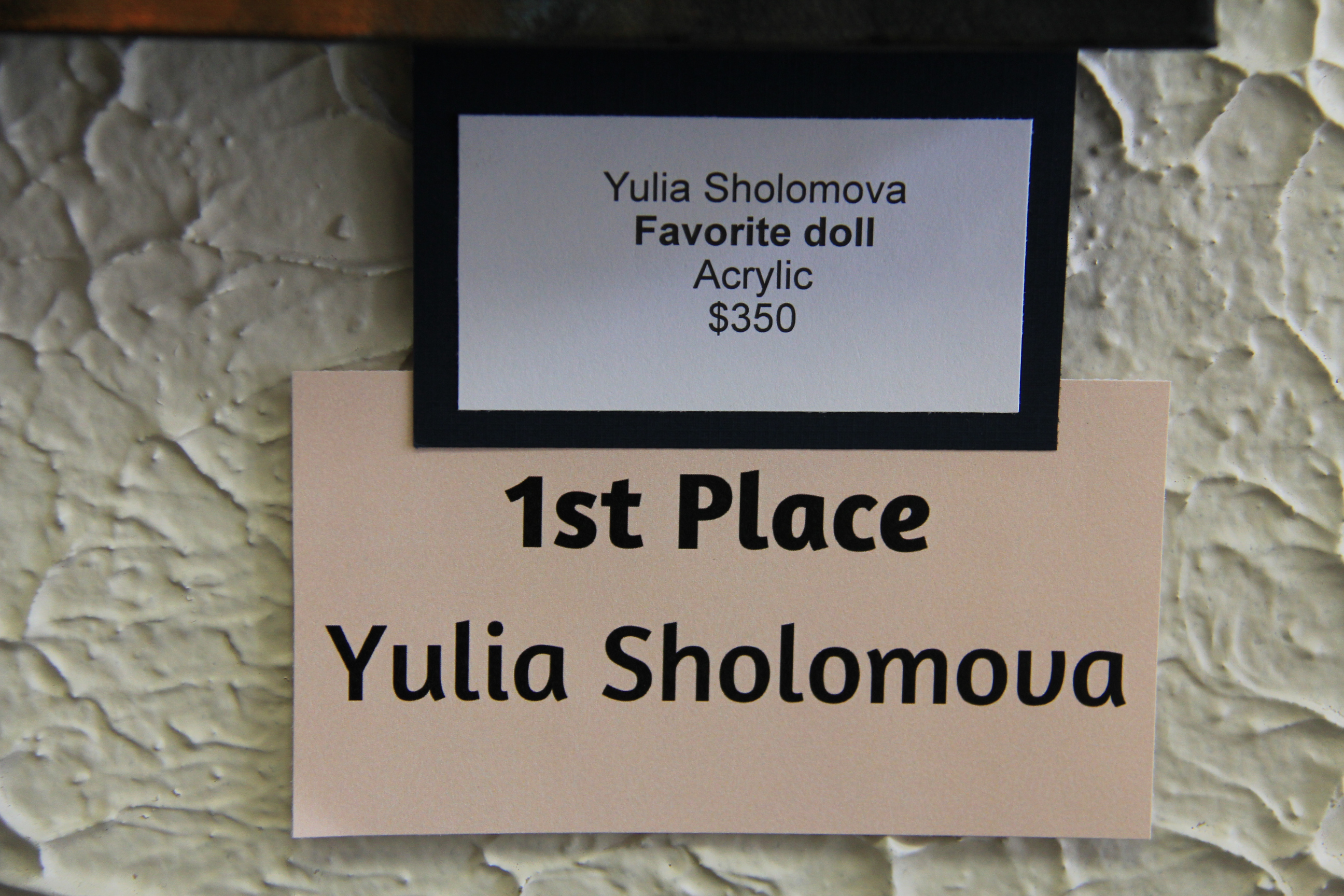
Three top honors were given in the exhibit as judged by artist Tami Resler. (Minnesota Prairie Roots copyrighted photo October 2024)

Yulia Sholomova’s trio of costumed sweet ghost kitties done in acrylics certainly lends itself to warm, cozy feelings. Her “Favorite Doll” painting earned first place in the group show. Sushila Anderson got second place for her “Johnny Cash as Frankenstein” stained glass mosaic. And Caron earned third place for that bug-infested mannequin.
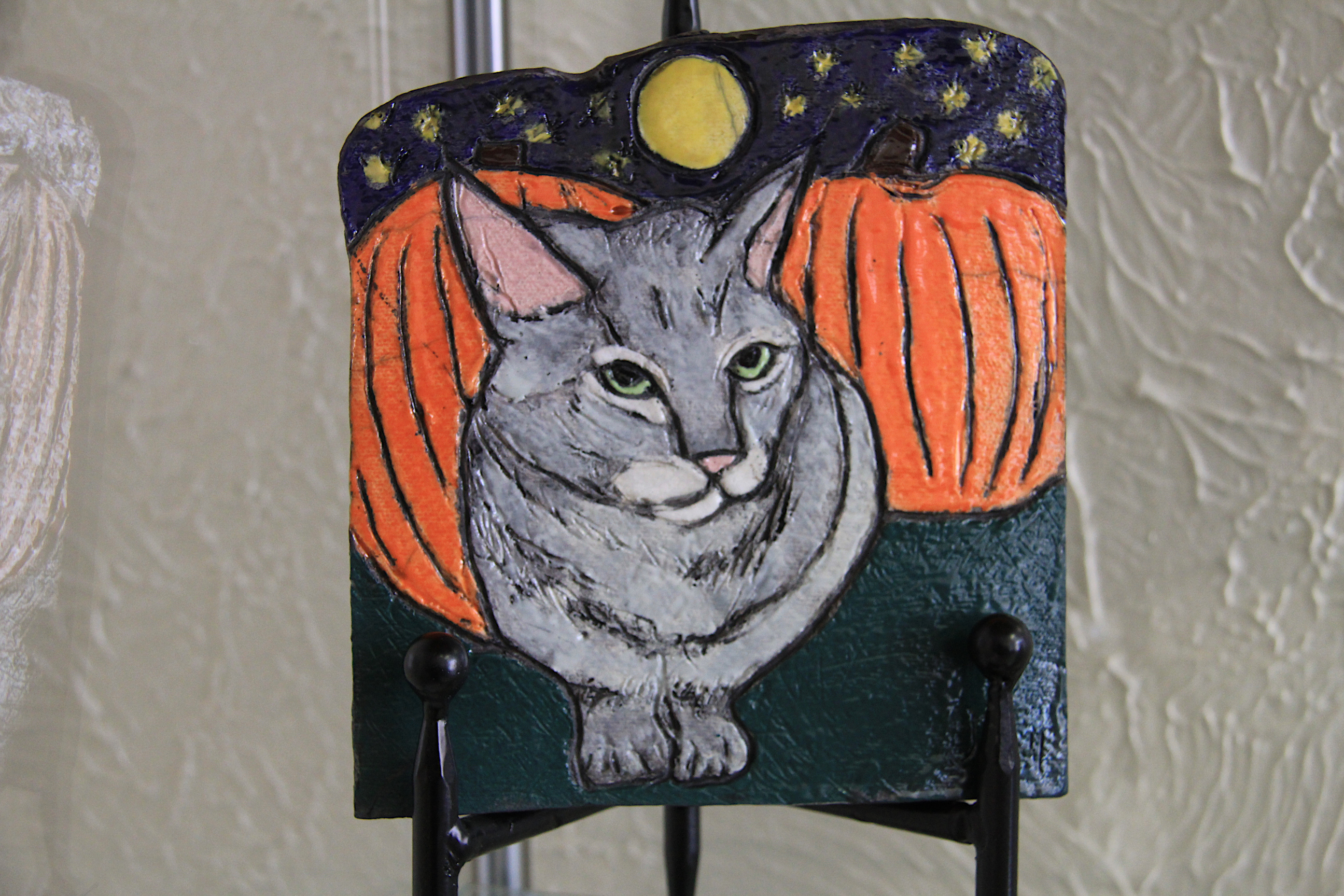
“Cat with Pumpkins 1” by Julie Fakler. (Minnesota Prairie Roots copyrighted photo October 2024)

Julie Fakler, who creates animal portraits and is the executive director of the Paradise, brings her talent to the show in clay, including the cutest cat nestled between pumpkins.
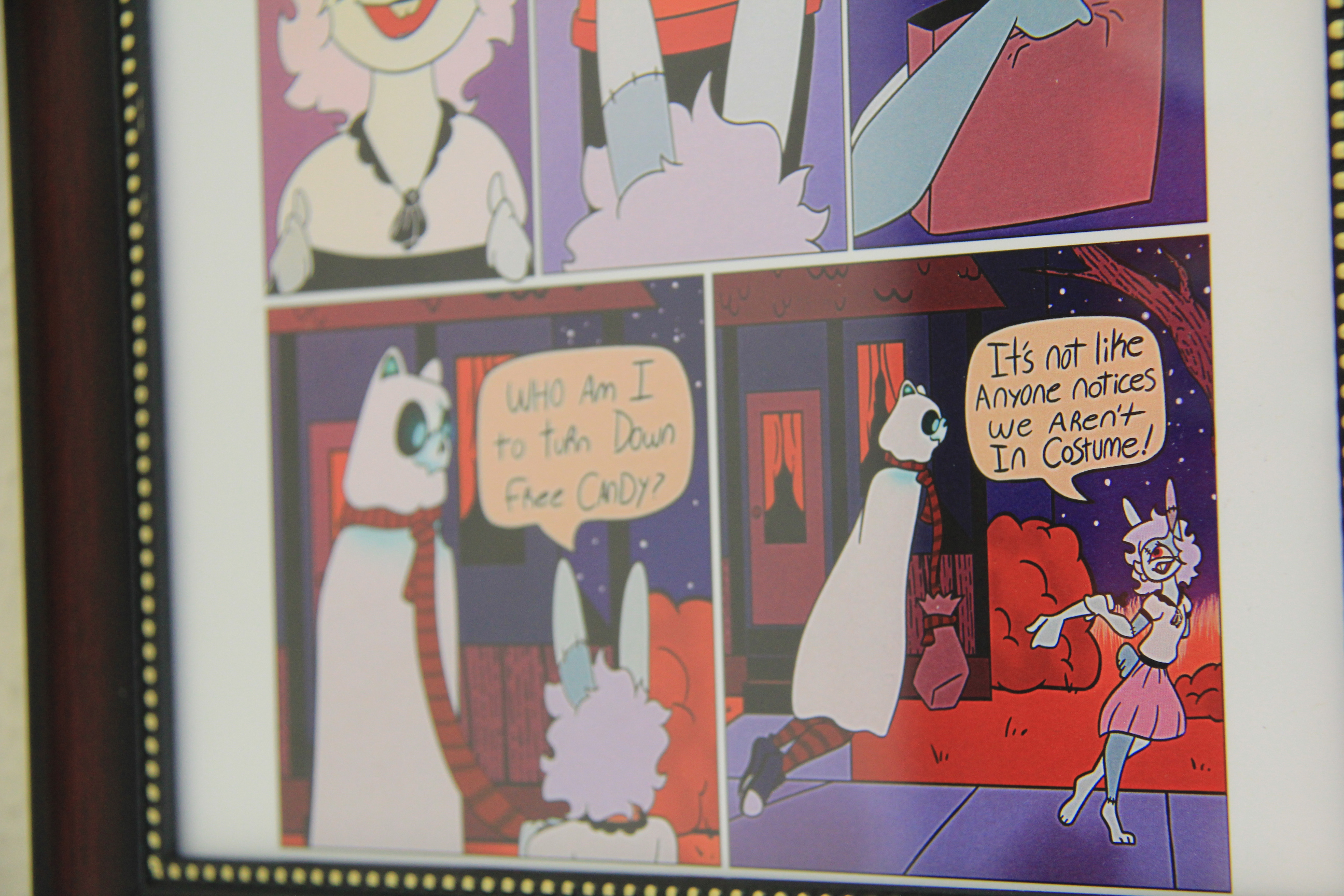
This shows a section of Aaron Dawley’s “Trick or Treat” artwork. (Minnesota Prairie Roots copyrighted photo October 2024)

There are many other pieces to be seen and appreciated, including art by Alison Albright, Aaron Dawley, Justin Delesha, Char Johnson and Sue Leech. It’s a real treat to view this Halloween Group Show, which runs until November 16.
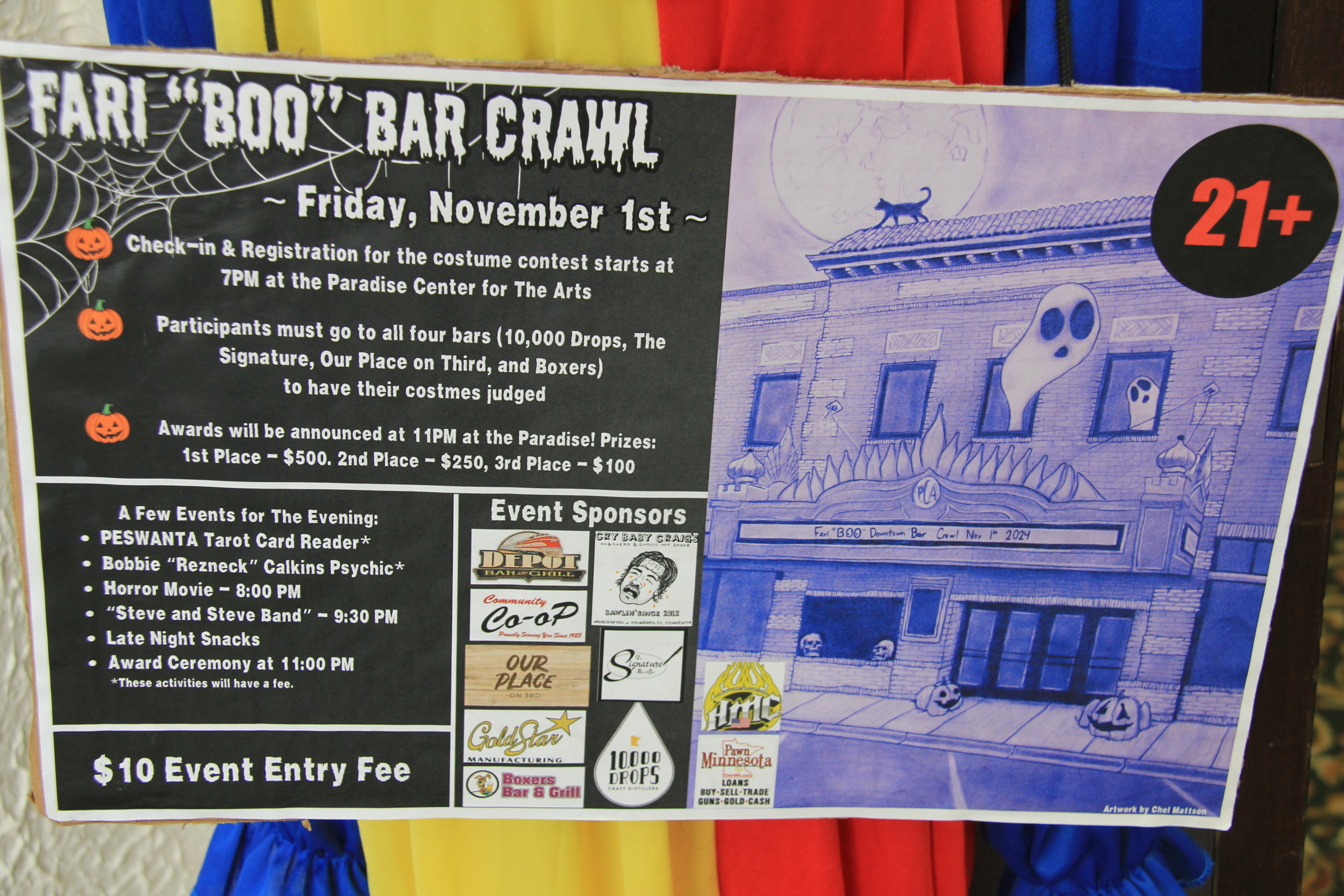
Just inside the gallery door, a creepy clown holds this sign promoting the Halloween bar crawl. Chel Mattson created the poster art. (Minnesota Prairie Roots copyrighted photo October 2024)

FYI: The Paradise Center for the Arts is hosting a Fari “Boo” Bar Crawl fundraiser from 7-11 pm Friday, November 1, at the center and at four downtown Faribault bars. The event includes a costume contest, optional tarot card and psychic readings (for an additional fee), a horror movie, music, snacks and costume awards ceremony. For details, click here.

© Copyright 2024 Audrey Kletscher Helbling


About that PUMPKIN SPICE OIL CHANGE October 28, 2024

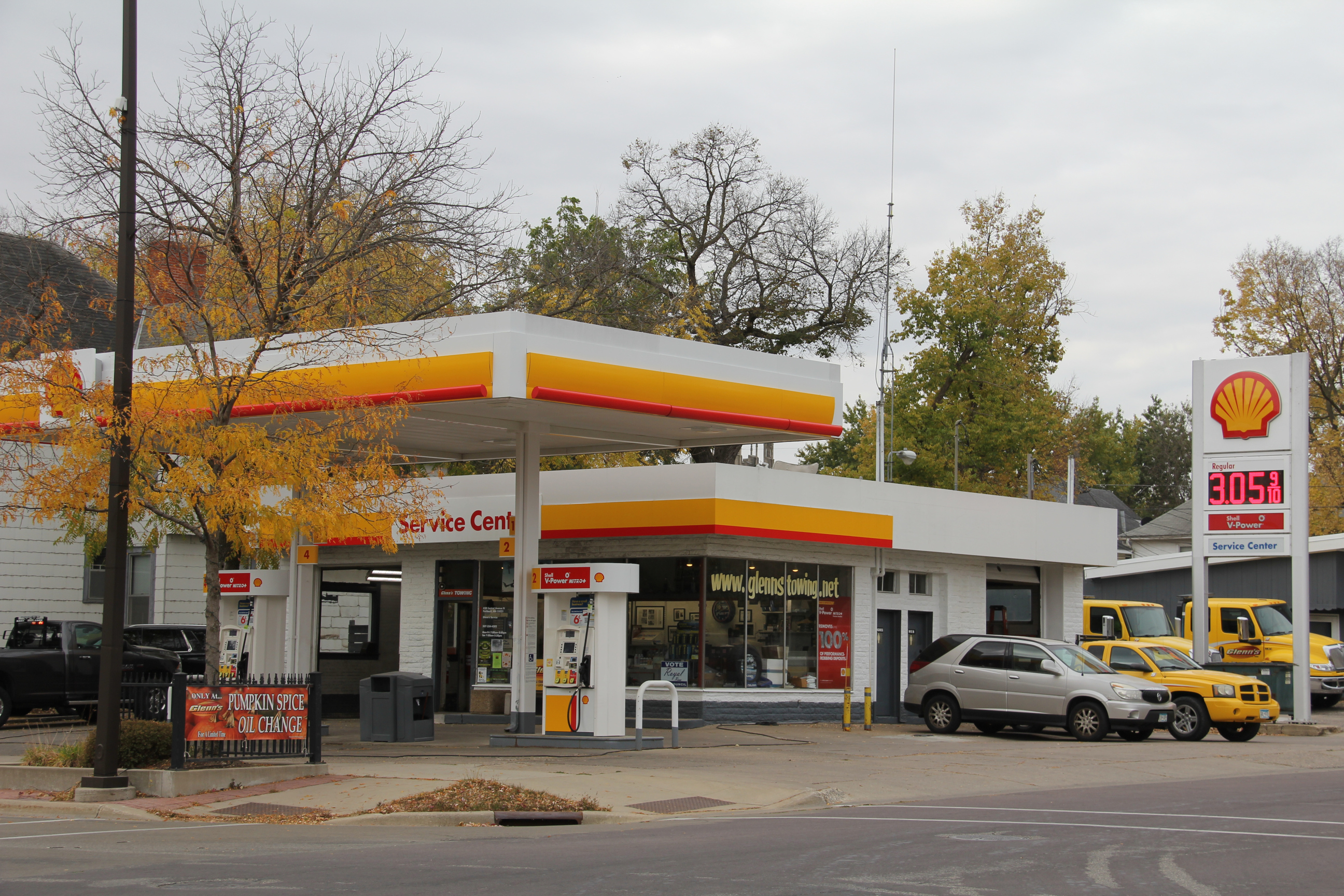
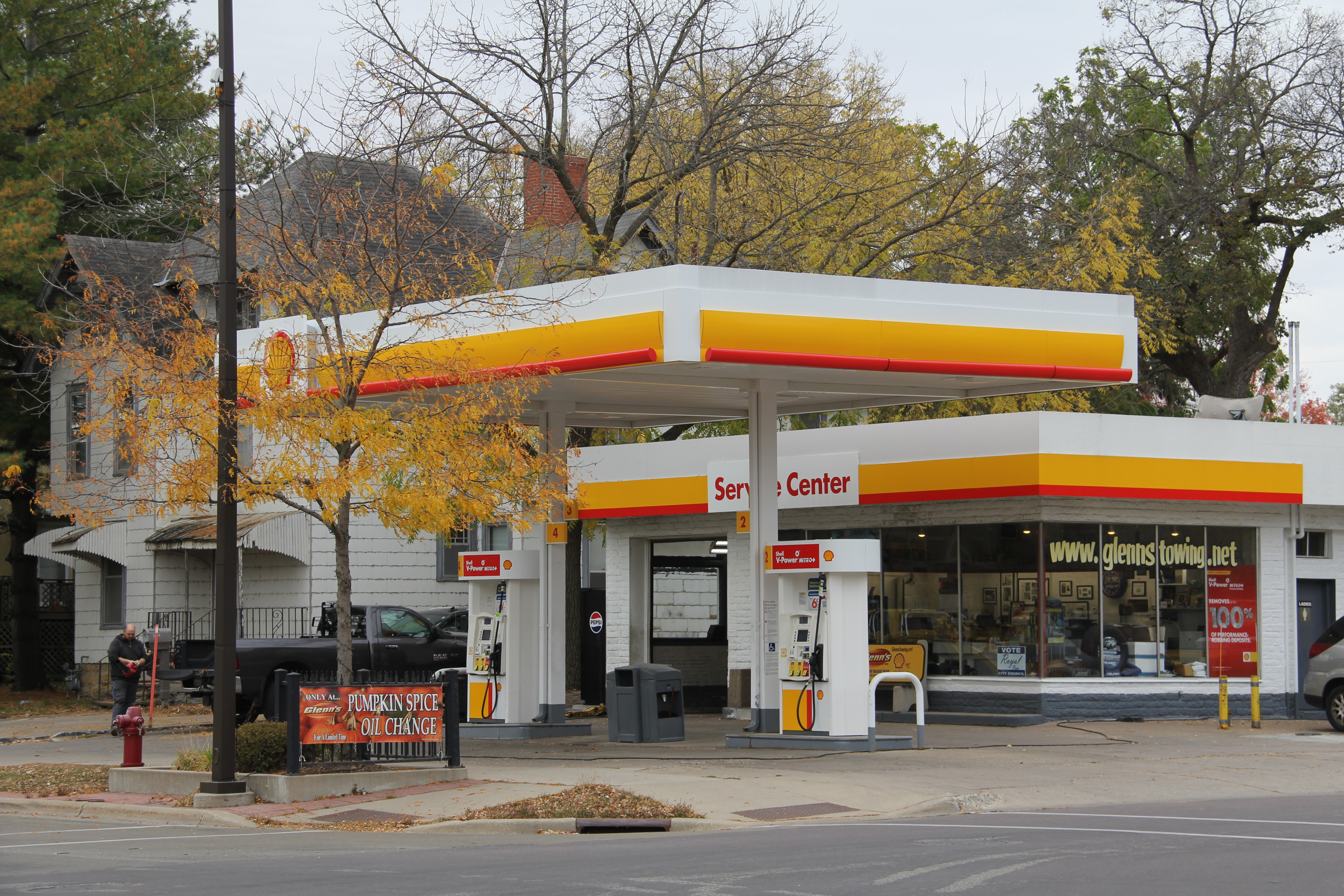
A pumpkin spice sign, far left, banners a fence at Glenn’s on the corner of Central Avenue and Seventh Street NW in Faribault. (Minnesota Prairie Roots copyrighted photo October 2024)

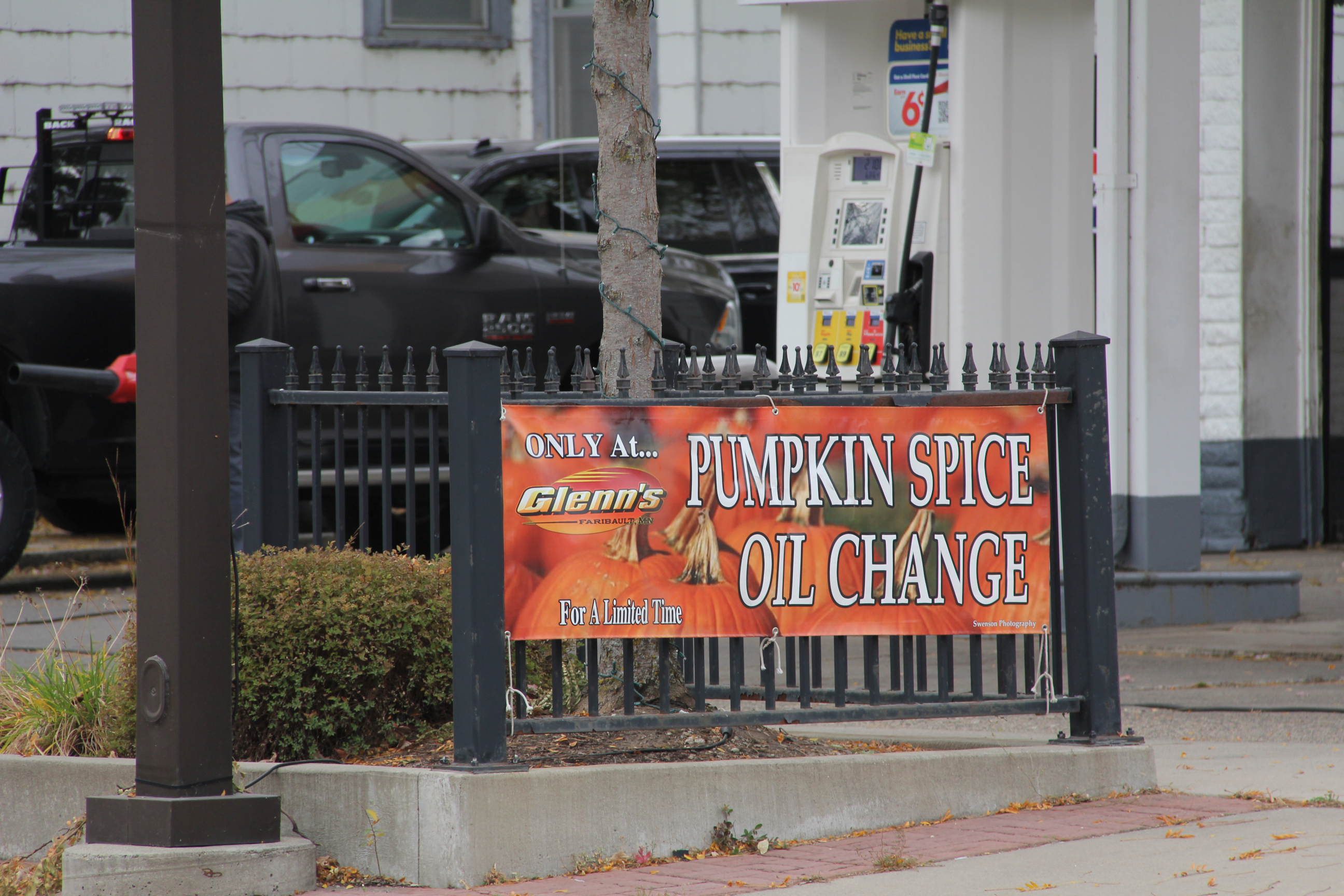
ONLY At…Glenn’s For A Limited Time. PUMPKIN SPICE OIL CHANGE.

That message bannering a corner fence at Glenn’s Service, a full service auto repair shop, gas station and towing service, 628 Central Avenue North, Faribault, certainly grabbed my attention. Not that I needed an oil change given my sort-of-retired automotive machinist husband services our vans. But, I wondered, what exactly is a PUMPKIN SPICE OIL CHANGE?

The sign led me to call Glenn’s and ask about that oil change. (Minnesota Prairie Roots copyrighted photo October 2024)

So I called Glenn’s, expecting to learn that oil change customers will be treated to a pumpkin spice latte. Not that I’ve ever had a latte. I haven’t. I brew my own plain black decaff coffee at home in my mini coffee pot. Nothing fancy for this girl, although I wouldn’t mind trying a fancy coffee drink.

The guy who answered the phone—the guy who isn’t Glenn, because Glenn passed away years ago—told me the whole PUMPKIN SPICE OIL CHANGE offer is a joke. Oh, so there’s no free pumpkin spice latte with an oil change? Nope. I didn’t ask for a detailed explanation because I know service stations are often busy places and I didn’t need to take anymore of this guy’s time. But he did volunteer that a customer had the sign made for the shop a few years back.

Glenn Rasmussen opened the business at this location in 1937. In 2010, Glenn’s son Donny sold the business to the Bock family, dad Bruce and his son, Steve. (Minnesota Prairie Roots copyrighted photo October 2024)

I can only imagine mechanics and customers joking about pumpkin spice this and pumpkin spice that. And then coming up with that PUMPKIN SPICE OIL CHANGE idea and someone ordering a banner and the guys hanging the sign, laughing the entire time.

It’s clever marketing, for sure. Humor works in marketing as does a message that elicits interest. That banner at Glenn’s has likely been the source of more than one entertaining story between oil changes, car repairs, tows…during this season of all things pumpkin spice.

© Copyright 2024 Audrey Kletscher Helbling
 

Holly Dodge’s collage art, inspired by poet Emily Dickinson, a must-see now in St. Peter October 24, 2024

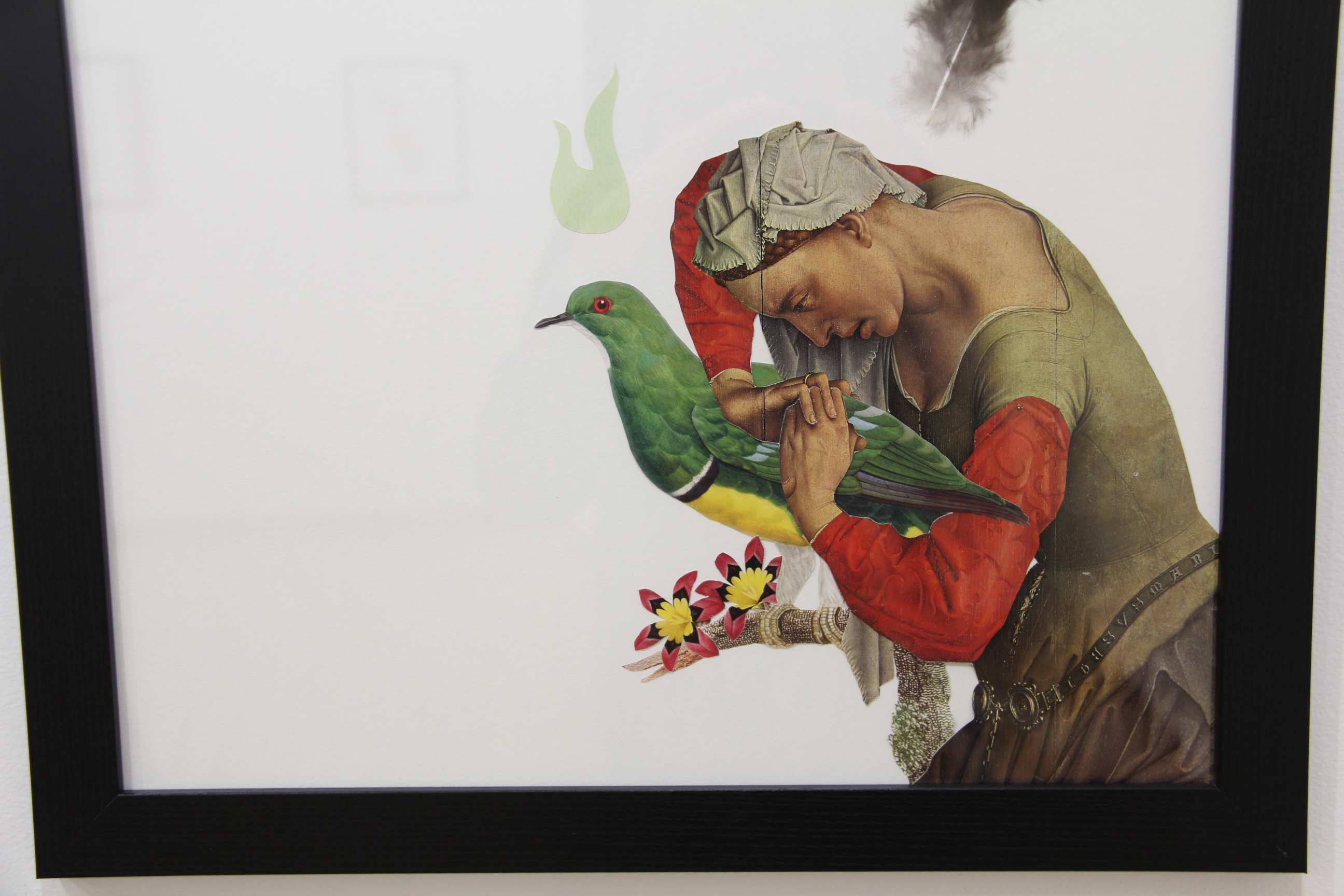
This shows a section of Holly Dodge’s collage titled “Glossolalia.” (Minnesota Prairie Roots copyrighted photo October 2024)

ONLY DAYS REMAIN until an unusual and particularly interesting art exhibit closes at the Arts Center of Saint Peter on October 26. Mankato poet and visual artist Holly Dodge created the nearly 30 collage pieces of “Gorgeous Nothings” inspired by the poetry of Emily Dickinson.

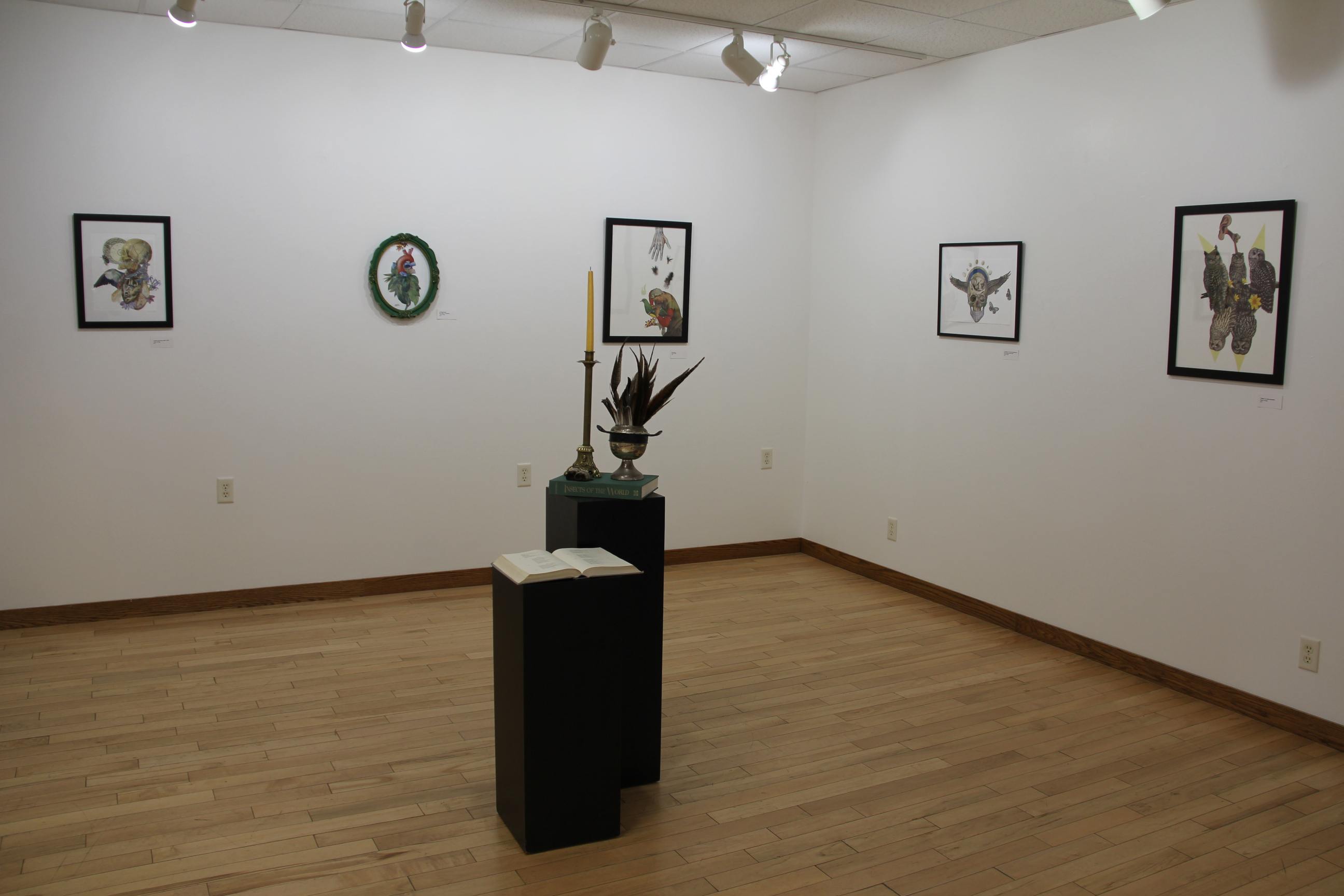
In a corner of the main floor gallery, Dodge also created a mood setting still life fronting her collage art. (Minnesota Prairie Roots copyrighted photo October 2024)

When I returned home from viewing Dodge’s work, I checked out two books of Dickinson’s poetry from the Faribault library to refresh my understanding of this recluse poet’s writing. She wrote most of her poems between 1862-1865. At one time, I really liked her poetry, maybe even understood some of it. Now? I struggled. Yet, I still delight in these words by Dickinson: “Hope” is the thing with feathers/ That perches in the soul/And sings the tune without the words/And never stops at all.

In this collage, a portion shown here. I see Emily Dickinson. It’s titled “And sweetest in the gale is heard; And sore must be the storm.” (Minnesota Prairie Roots copyrighted photo October 2024)

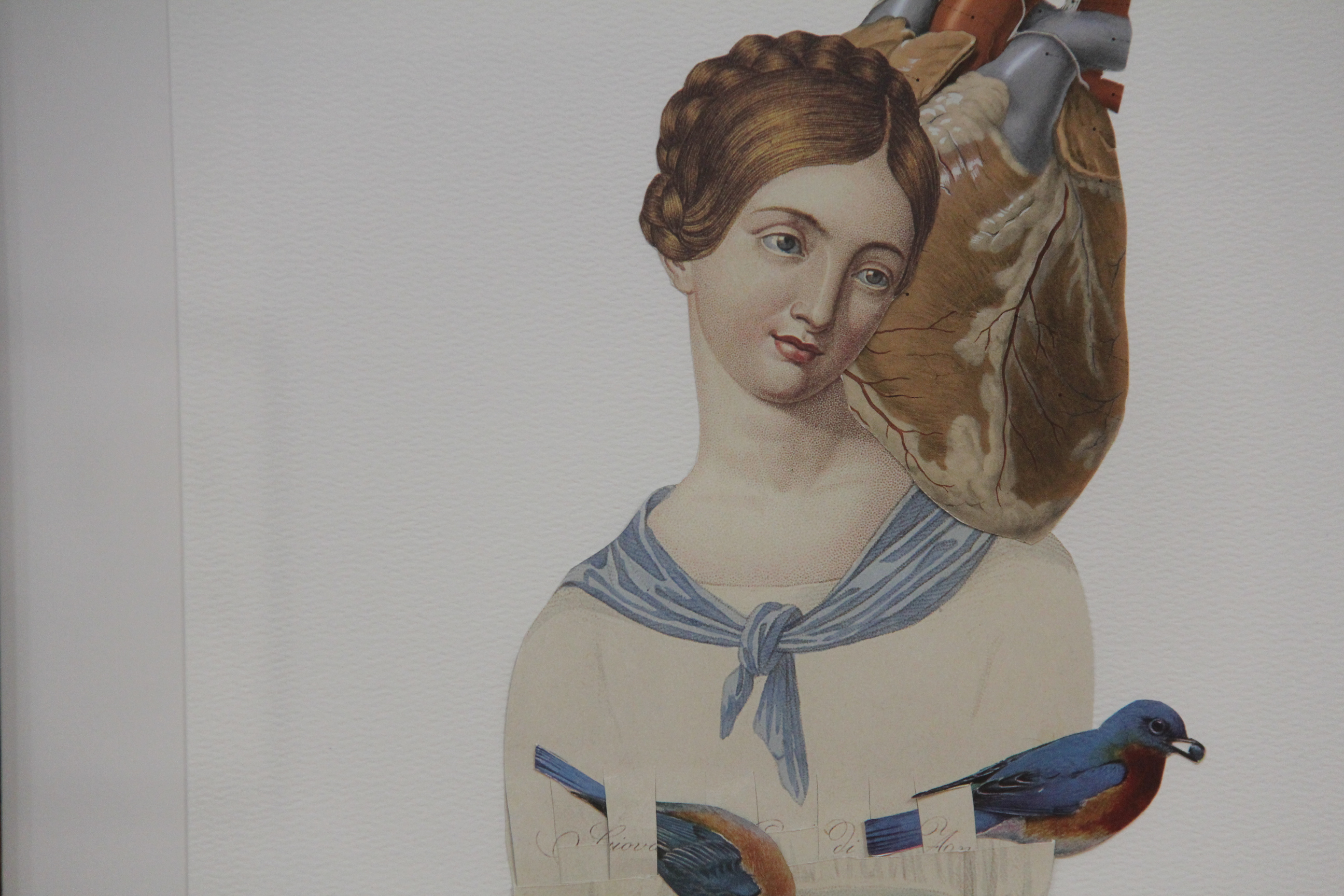
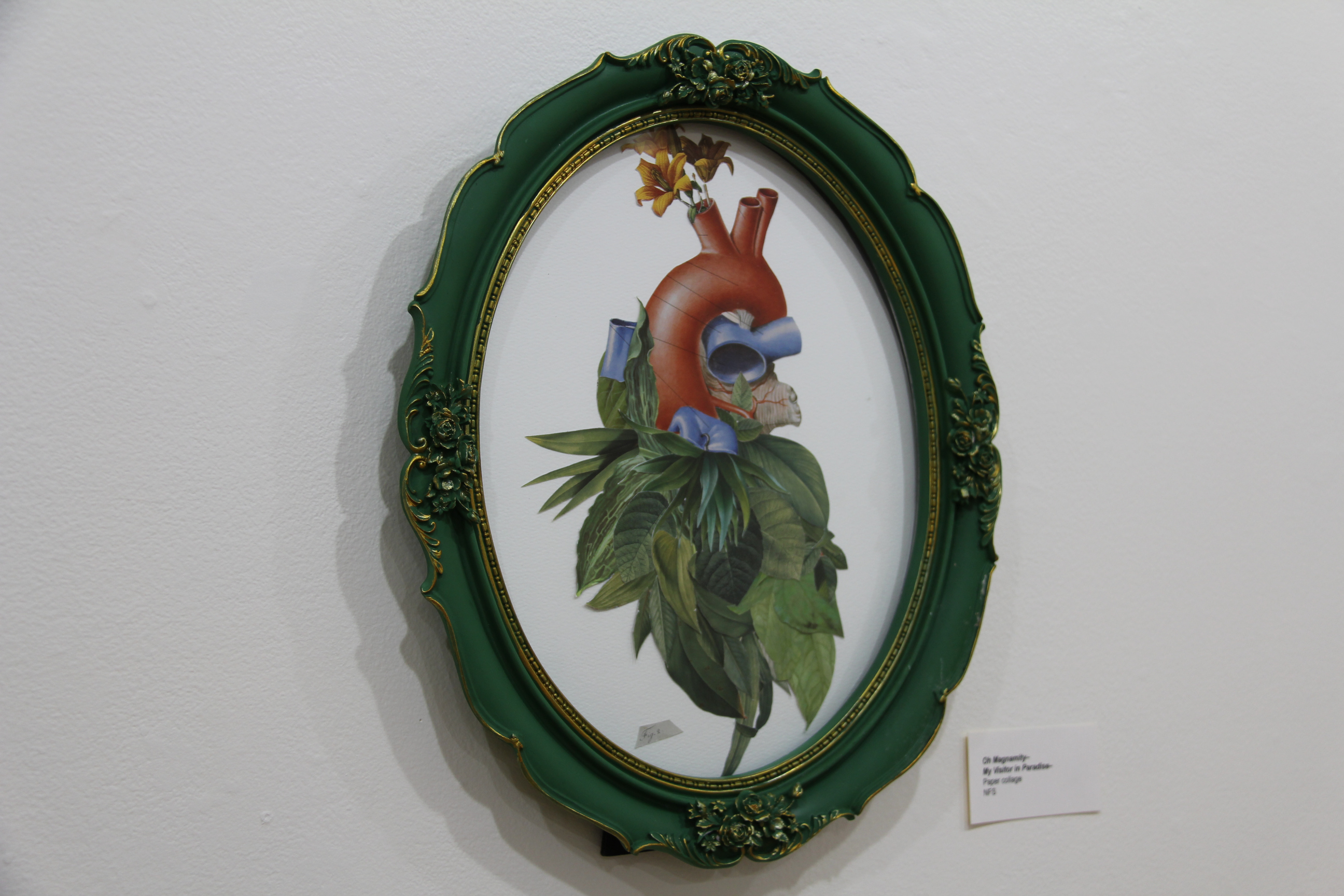
In viewing Dodge’s art, I could assuredly see the influence of Dickinson. In her artist statement, Dodge writes: “Her (Dickinson’s) fragmented, lyrical, elocutionary methods reminded me of the elements I was cutting out of books.” Dodge cut mostly flora, fauna and anatomical images from books to create her collages.

Titled “Oh Magnamity–My Visitor in Paradise.” (Minnesota Prairie Roots copyrighted photo October 2024)
Titled “I know that He exists. Somewhere–in silence.” (Minnesota Prairie Roots copyrighted photo October 2024)
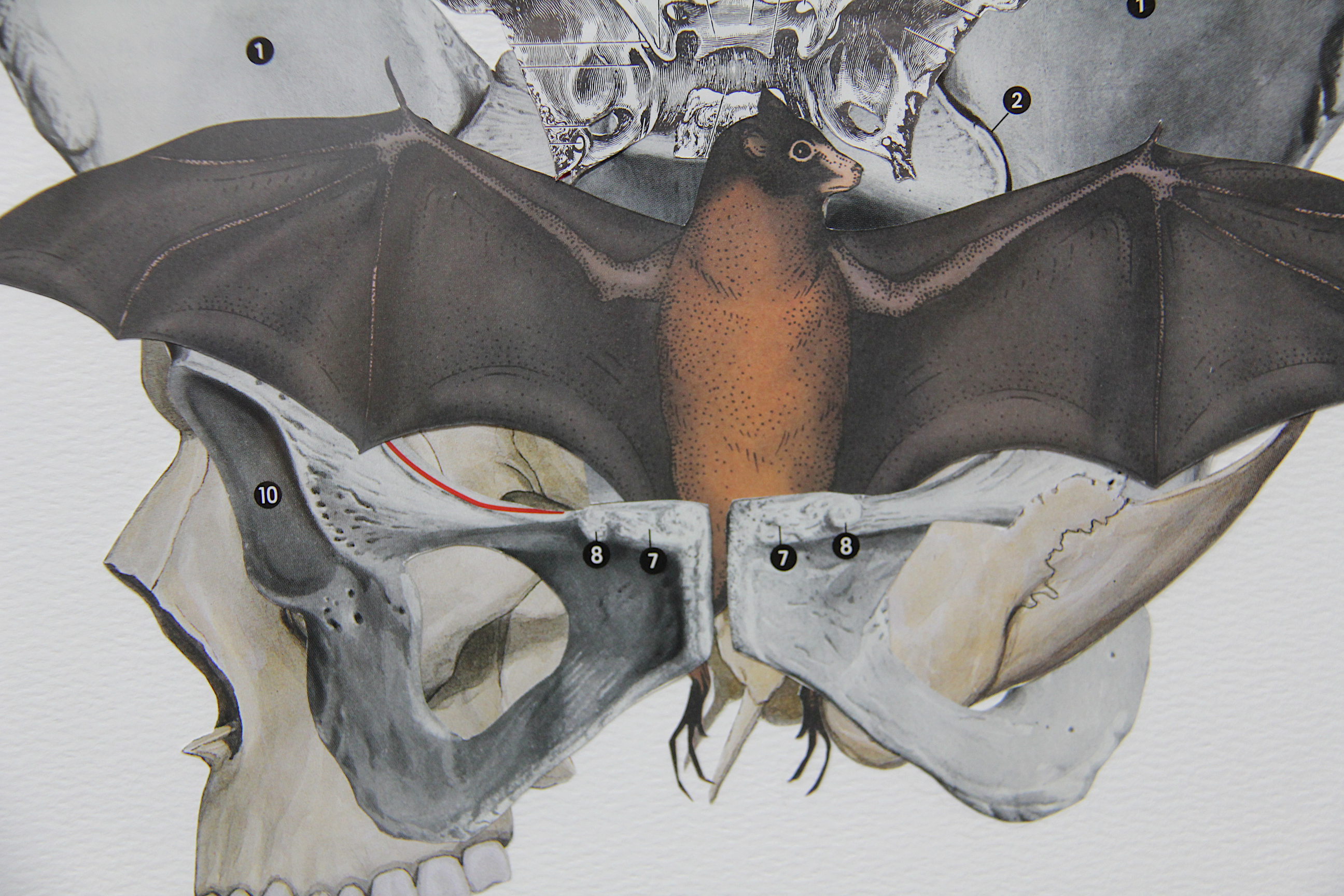
A collage titled “How softly sinks that troubling Sun In Human Nature’s West” incorporates an anatomical bat cut-out. (Minnesota Prairie Roots copyrighted photo October 2024)

It’s the anatomical aspect that pushed my mind toward scary thoughts. I doubt Dodge intended that. But given we are closing in on Halloween and body parts and birds and bats can be the stuff of fright, I leaned into that perspective.

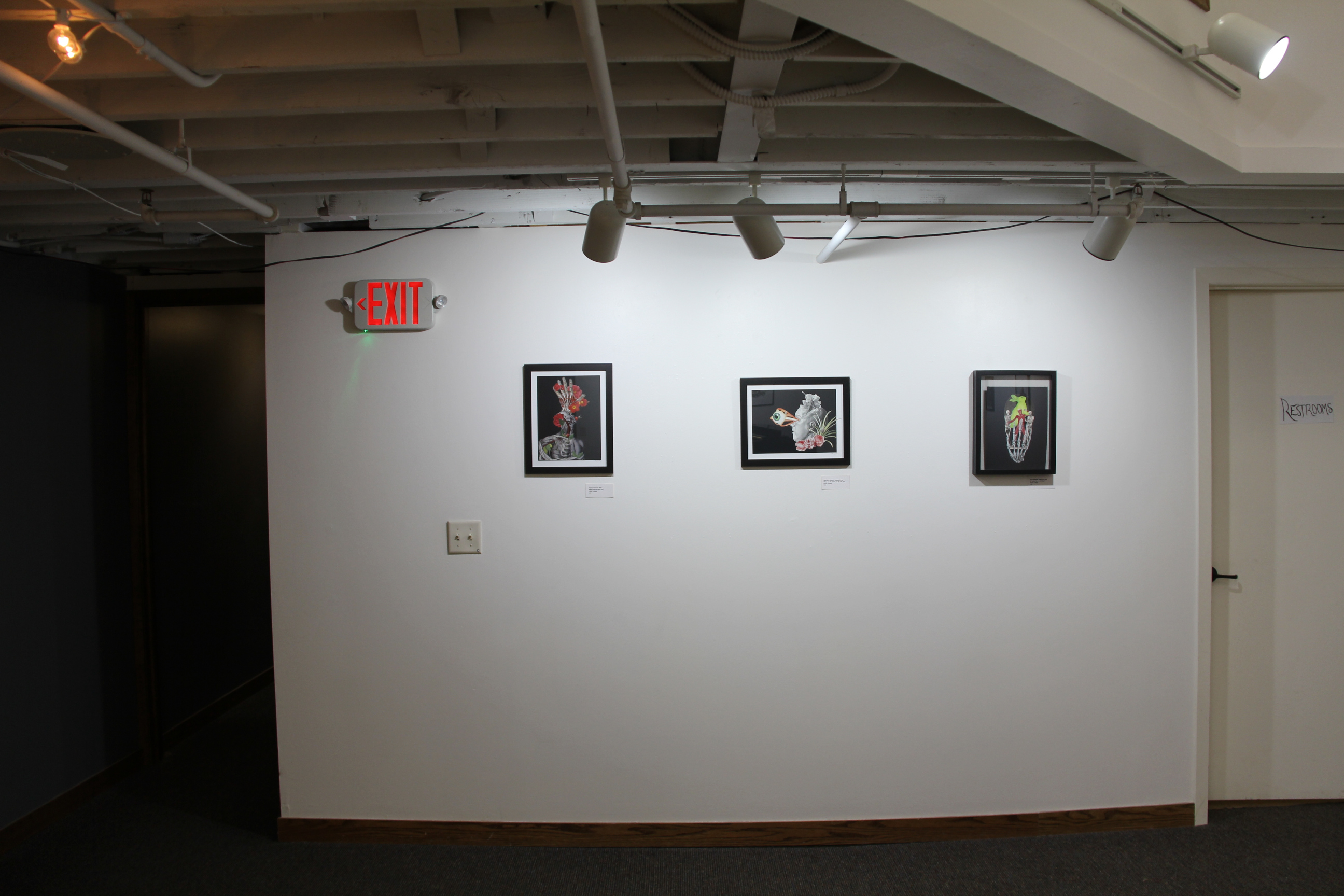
In the lower gallery, I found the eyeball popping collage, center, among a trio or art pieces hung on a wall. (Minnesota Prairie Roots copyrighted photo October 2024)

I termed Dodge’s collages initially as “ghoulish.” But the more I looked, the more I pondered, the more I connected her creations to Dickinson’s poems, the less I thought unsettling thoughts. Sure there are skulls and a popping eyeball and a chambered heart and bat and birds and such. But intermixed are the loveliness of flowers and plants and even a portrait that could be Emily Dickinson.

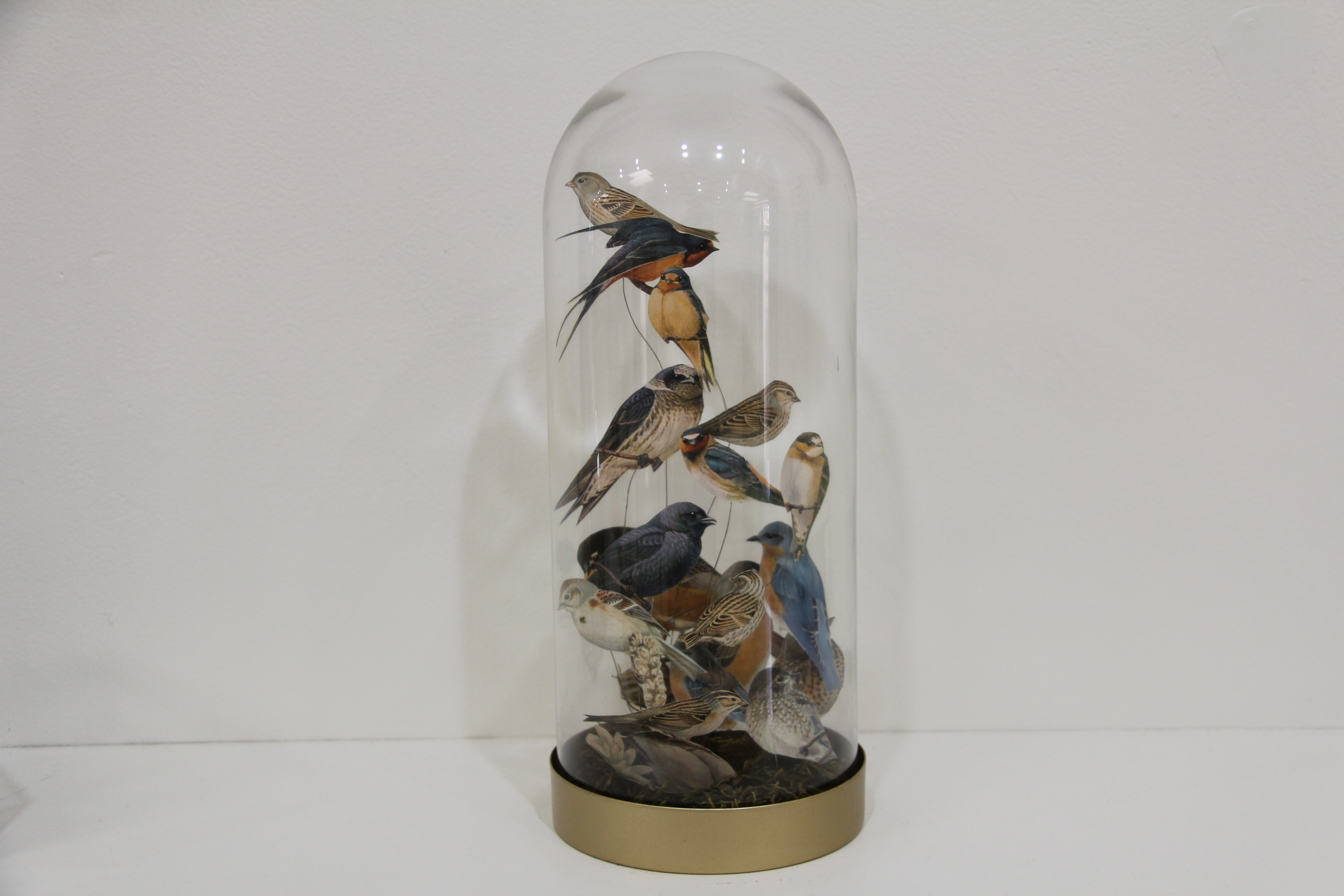
Tabletop domed art titled “God gave a loaf to every bird, But just a crumb to me.” (Minnesota Prairie Roots copyrighted photo October 2024)

The thing about art is that it is open to interpretation. We each bring our own experiences, our own biases, our own ideas to any art we view. But then an artist like Dodge, whose talent shines, causes us to pause and look through a clear lens. I could stretch my within to beyond.

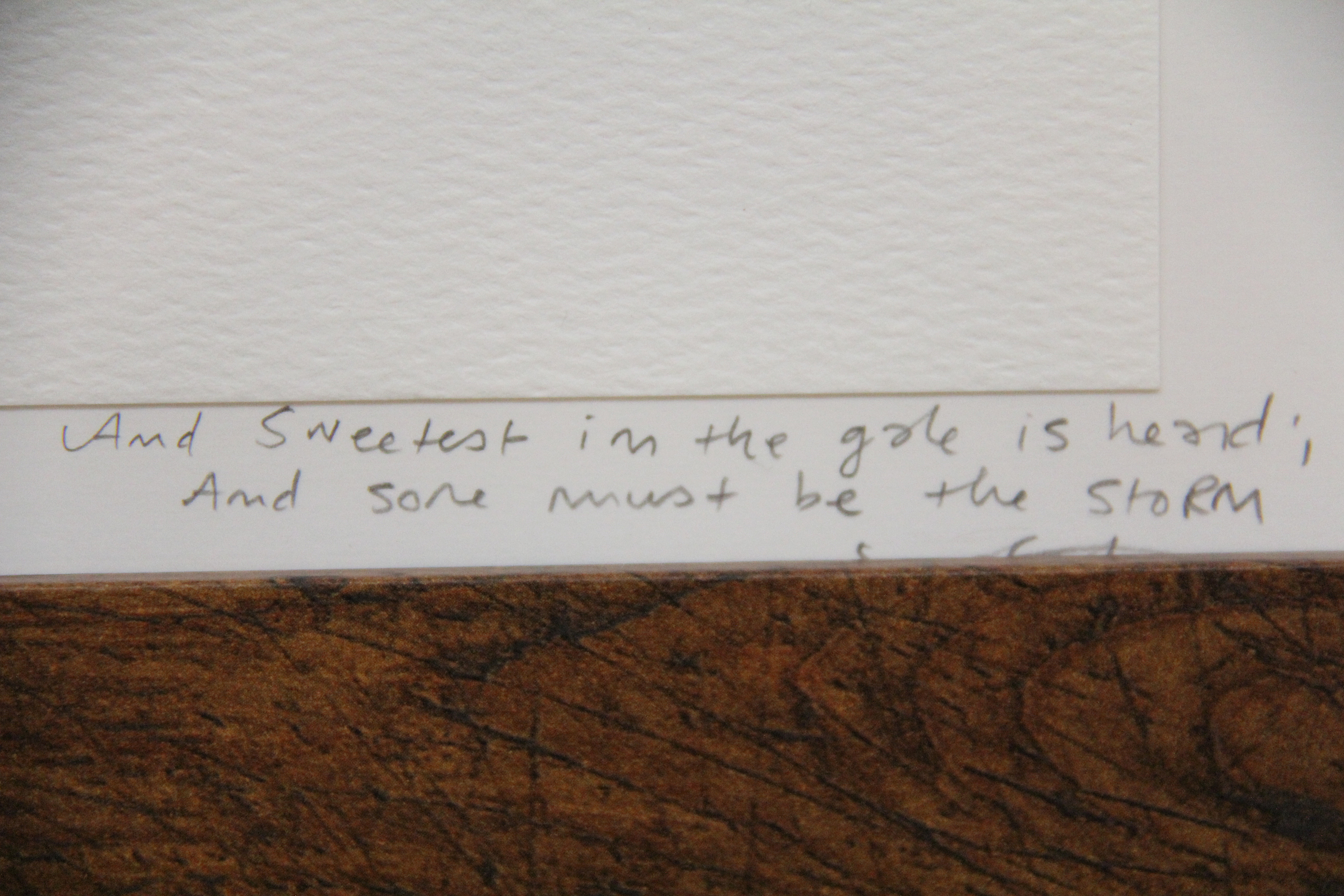
Some titles are handwritten on the art. (Minnesota Prairie Roots copyrighted photo October 2024)

Dodge titled many of her pieces directly after the words of Dickinson, who never titled her poems. Titles lend themselves to insights into Dodge’s artwork.

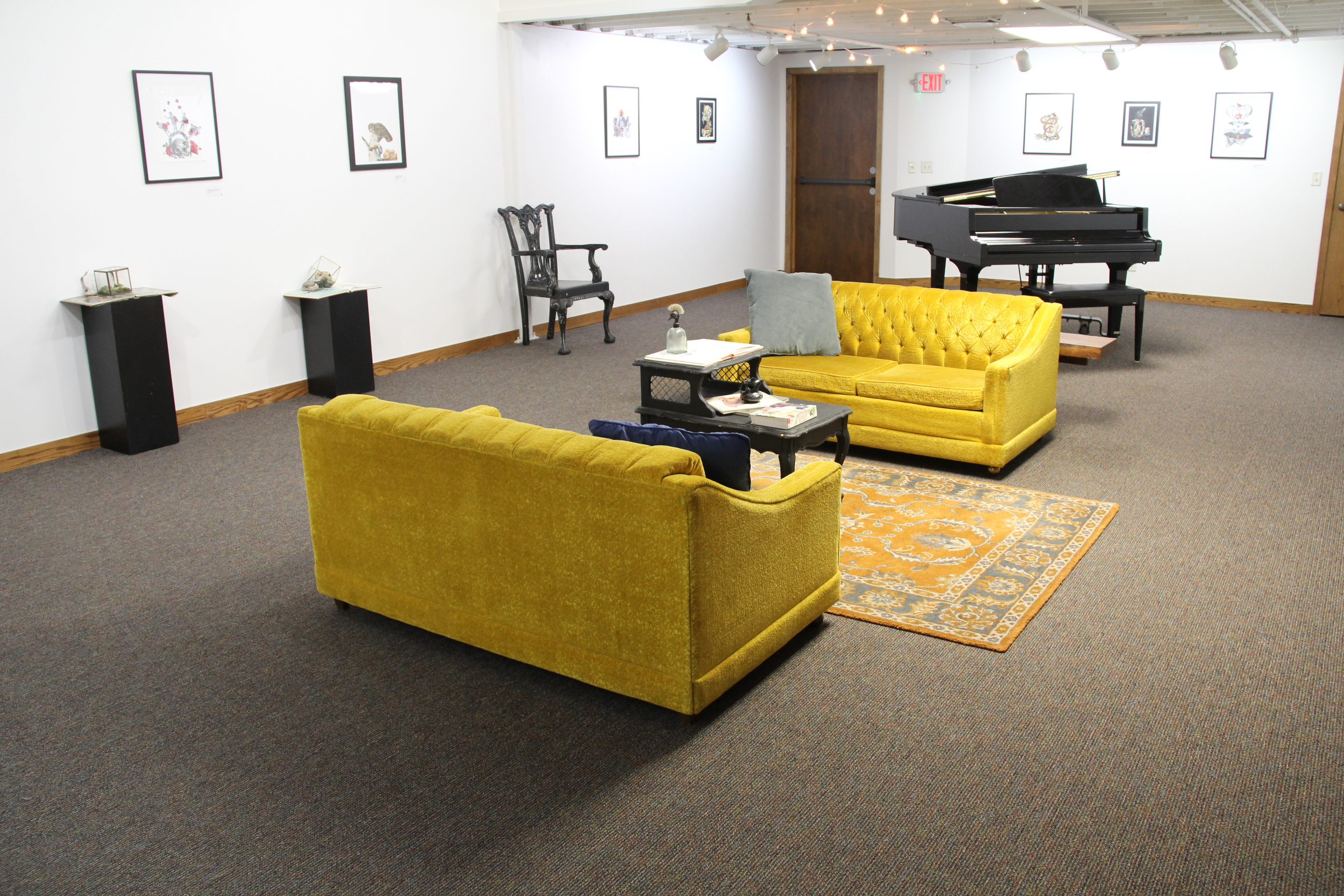
The lower level multi-purpose space where Dodge’s art is also showcased. (Minnesota Prairie Roots copyrighted photo October 2024)
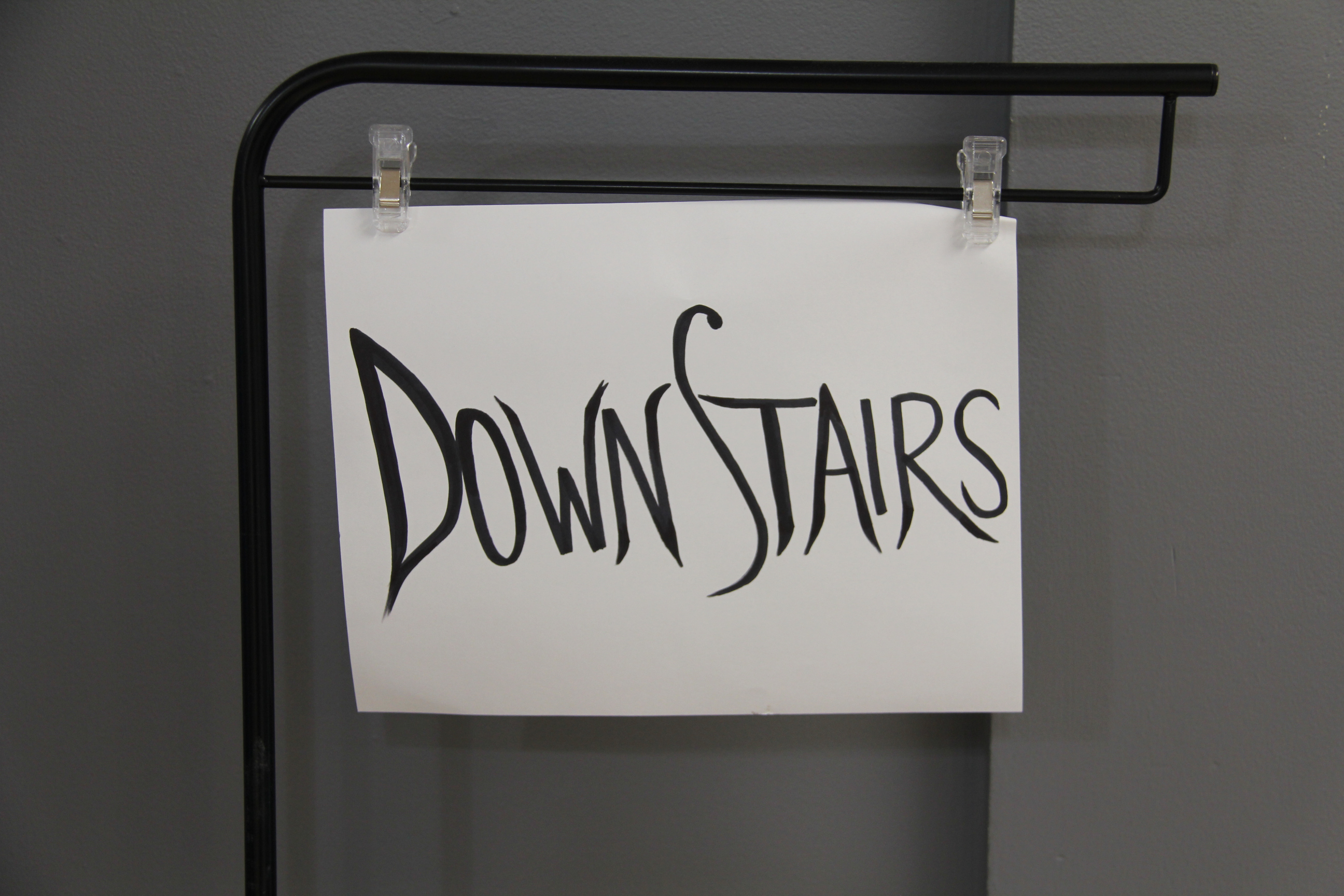
Even the sign directing visitors to the lower level is artsy. (Minnesota Prairie Roots copyrighted photo October 2024)
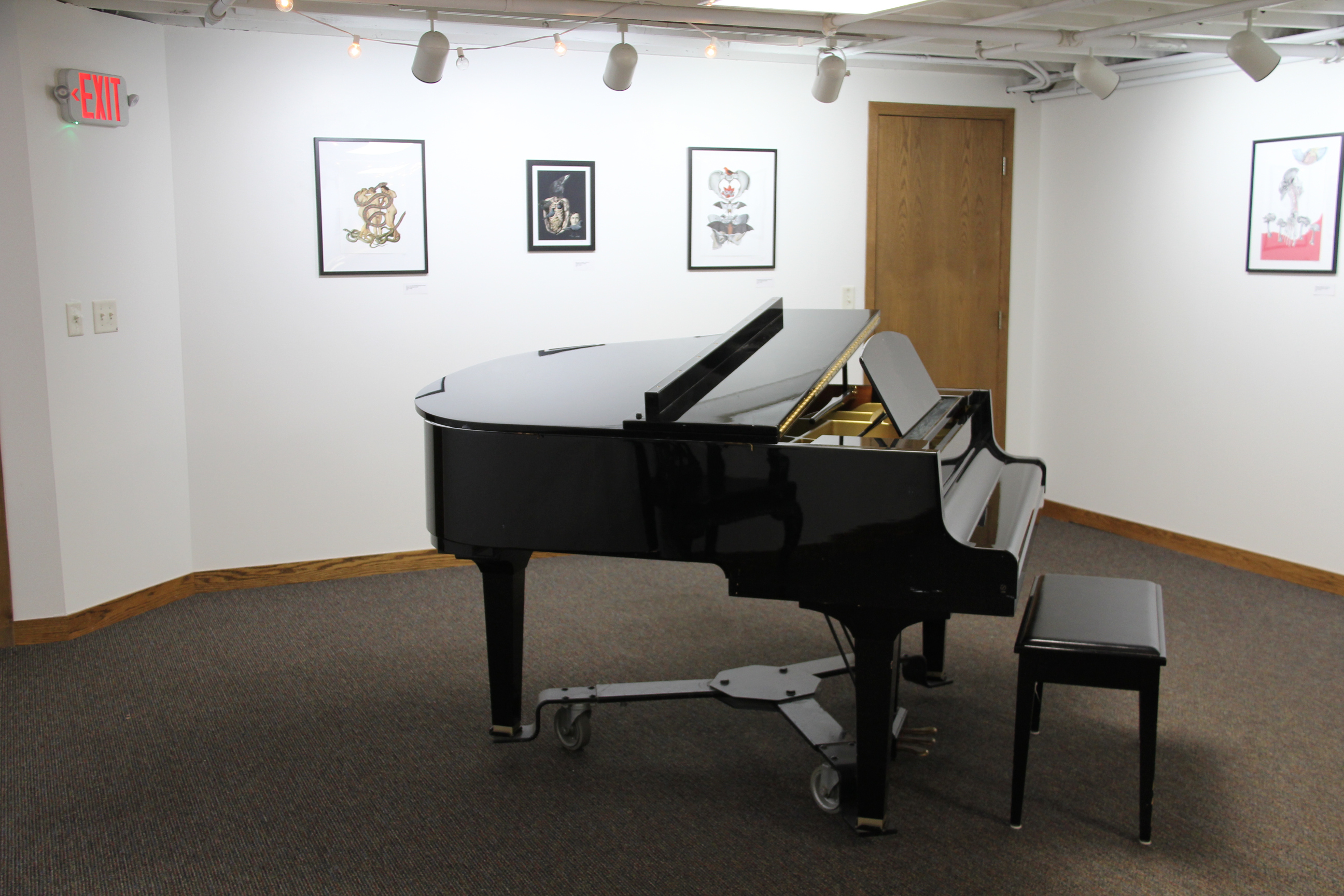
I didn’t expect to see a grand piano in the lower level gallery space. (Minnesota Prairie Roots copyrighted photo October 2024)

I never tire of viewing art in a gallery like that of the Arts Center of Saint Peter, where Dodge’s collages grace walls on the main level and also downstairs in a space centered by a sitting area and a grand piano. Greater Minnesota is home to some wonderful galleries and to incredible talent.

Another still life by Holly Dodge placed among her framed collages. (Minnesota Prairie Roots copyrighted photo October 2024)

I encourage you, wherever you live, to embrace the art and artists who share their talents in your town, your region. I don’t need to travel to a metro area to see inspiring, thought-provoking art.

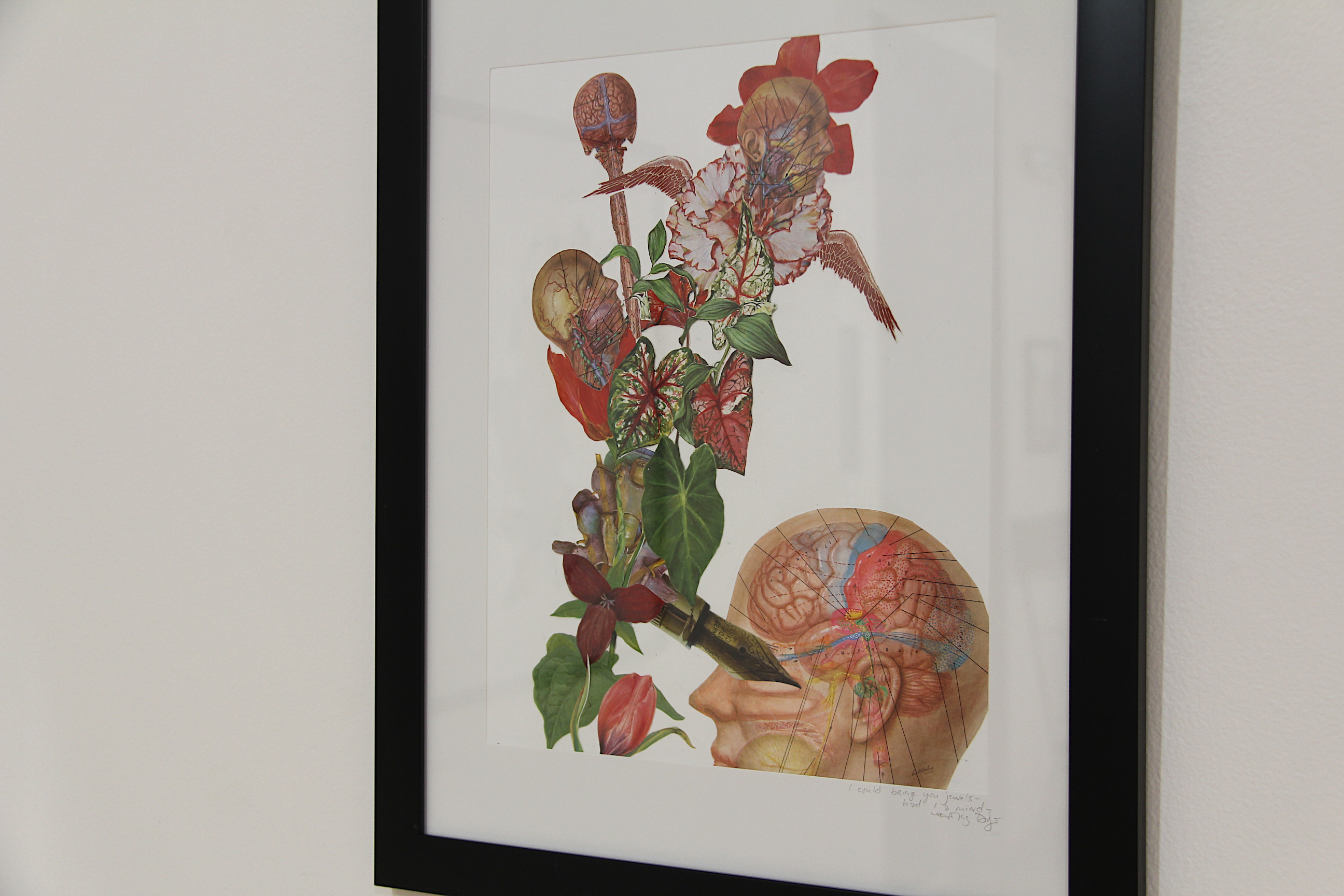
Dodge’s piece titled “I could bring you jewels–Had I a mind.” (Minnesota Prairie Roots copyrighted photo October 2024)

In the words of Emily Dickinson, “I could bring You Jewels—had I a mind to.” Holly Dodge has brought us jewels, as have so many other artists who create and share their art here in southern Minnesota.

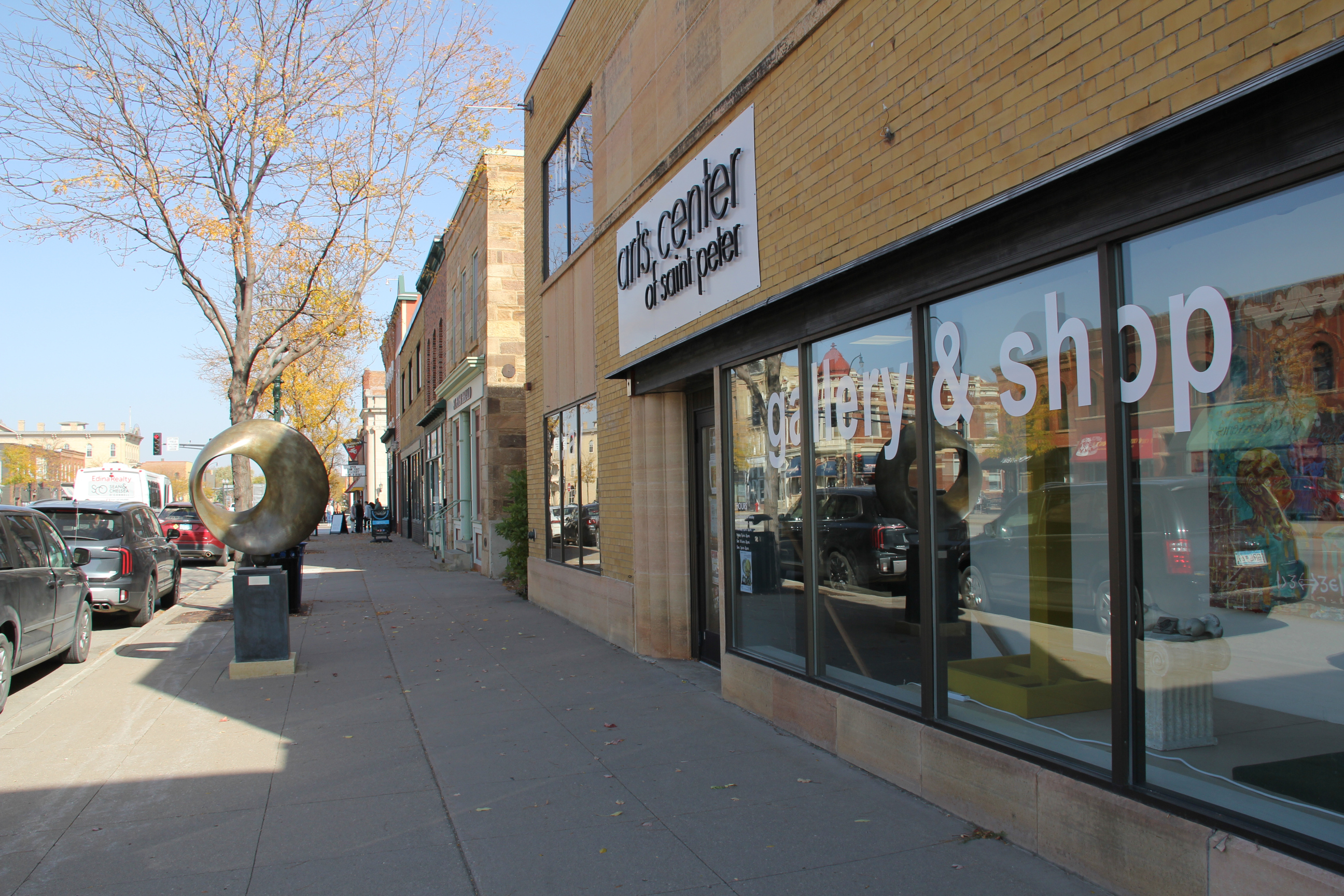
The Arts Center of Saint Peter is along busy Minnesota Avenue/Highway 169 running through downtown. (Minnesota Prairie Roots copyrighted photo October 2024)

FYI: The Arts Center of Saint Peter gallery hours are 1-5 p.m. Wednesday-Friday, 10 a.m.-5 p.m. Saturday and 1- 5 p.m. Sunday. The center is located at 315 South Minnesota Avenue in the heart of downtown St. Peter.

© Copyright 2024 Audrey Kletscher Helbling
 

Immersing myself in southern Minnesota’s autumn colors October 23, 2024

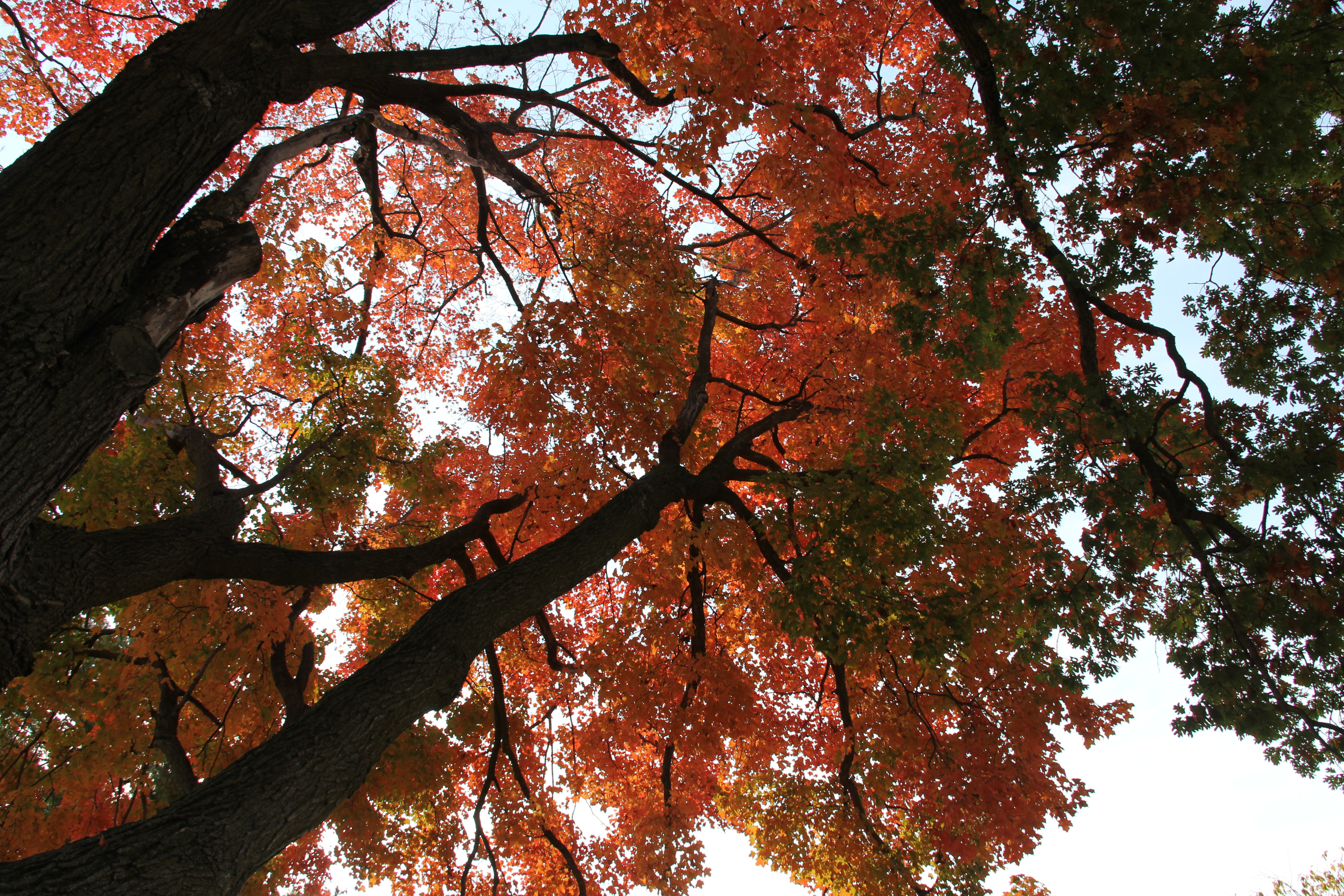
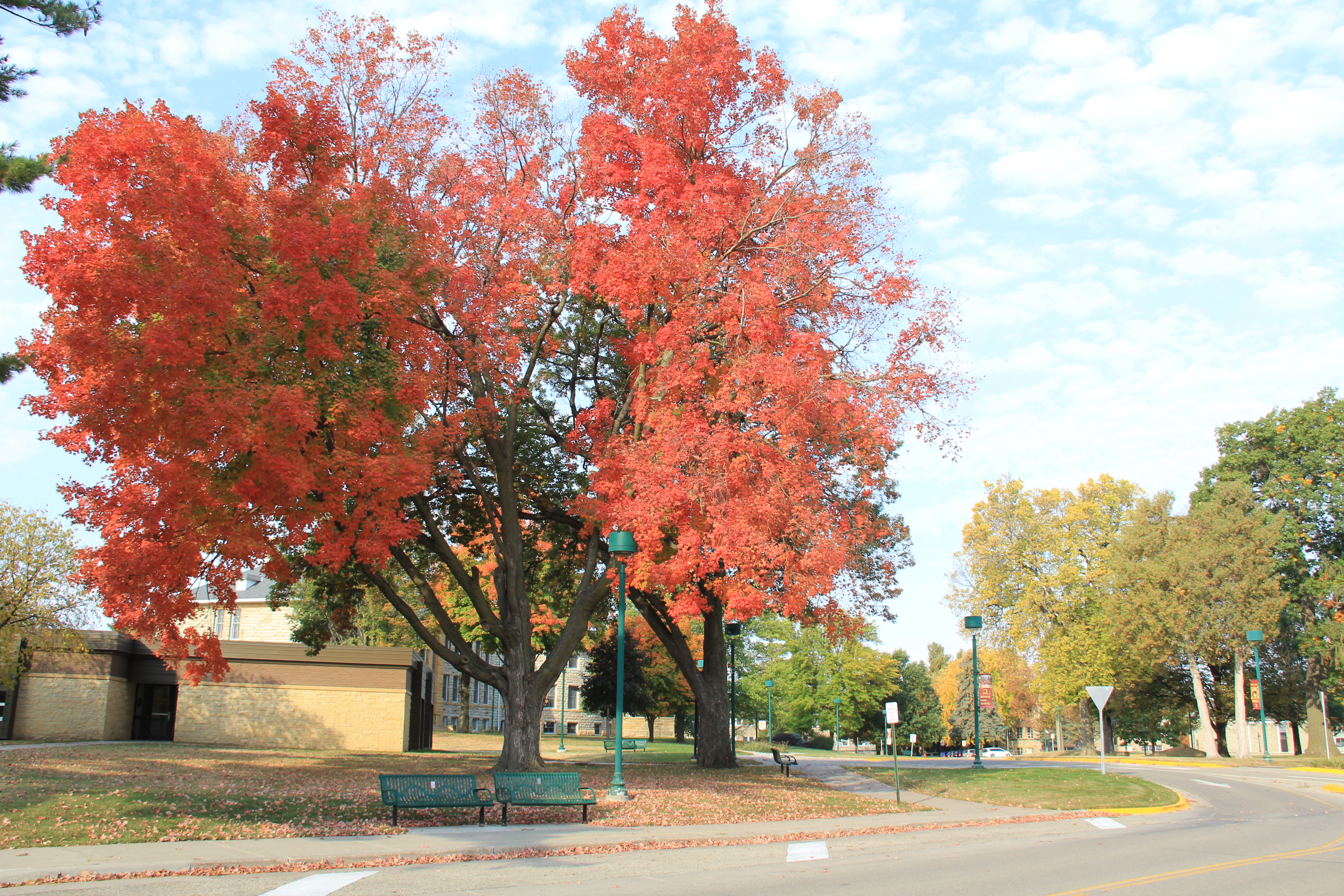
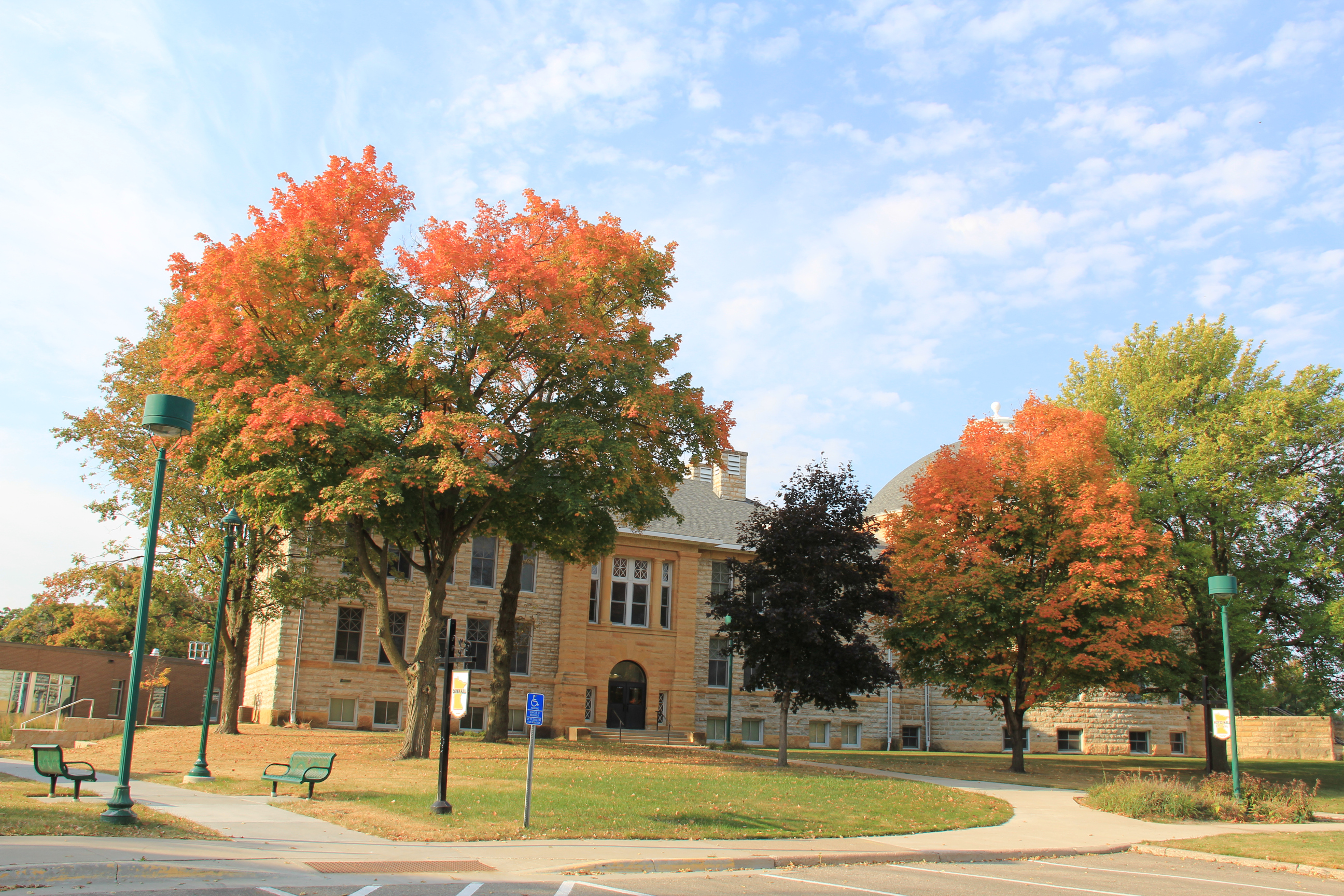
This towering maple on the campus of the Minnesota State Academy for the Deaf in Faribault is by far the most vibrant orange tree I’ve seen this fall. I took this photo nearly two weeks ago. The leaves are no longer as brilliant and many have fallen. (Minnesota Prairie Roots copyrighted photo October 2024)

FROM CITY STREETS to gravel roads, Randy and I have traveled many miles in October to view the fall colors. Autumn rates, undeniably, as my favorite season except for the part of knowing what comes next—the cold and snow of a Minnesota winter.

A full view of that MSAD maple, photographed on October 12. (Minnesota Prairie Roots copyrighted photo October 2024)

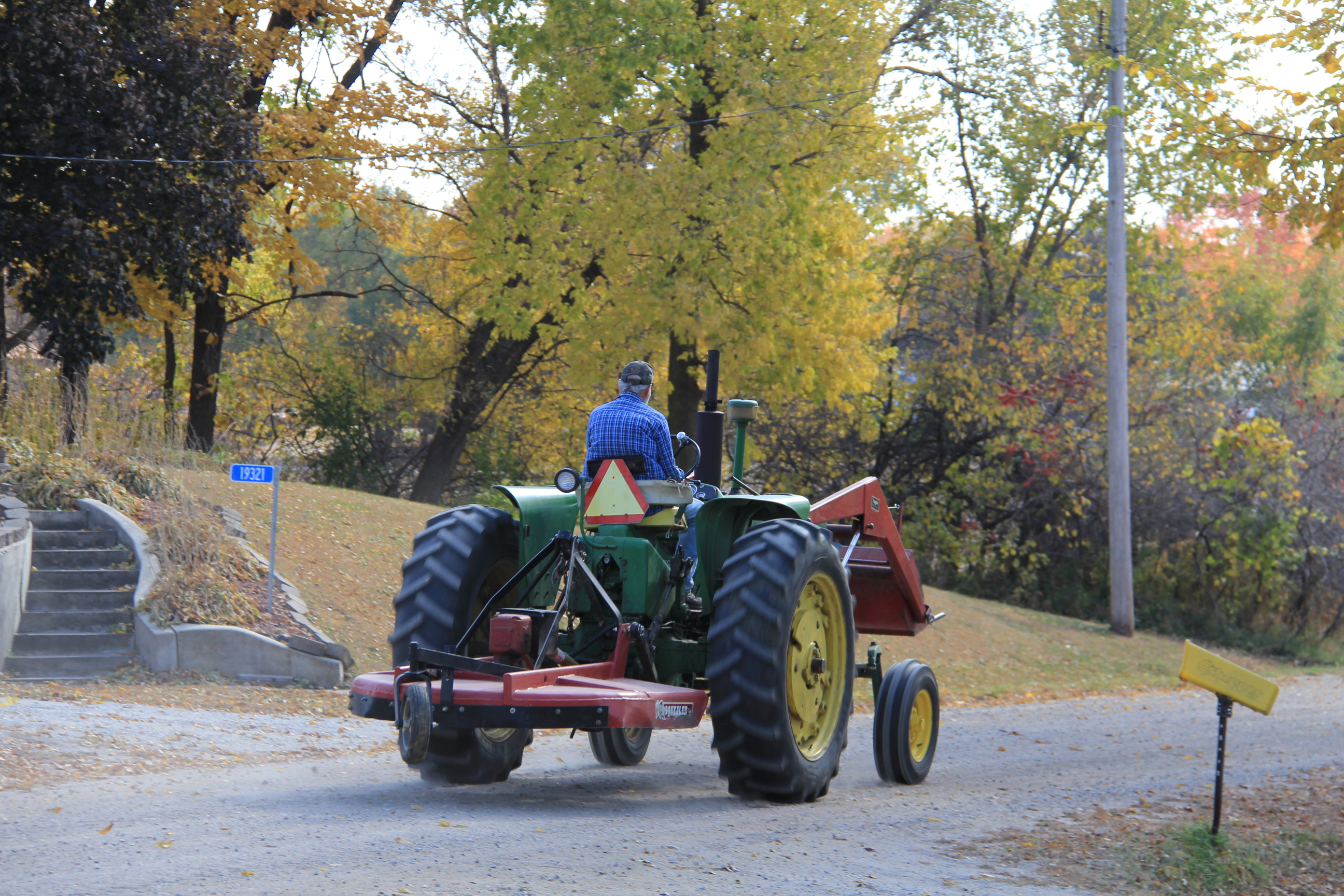
We’ve stayed close to home, driving around our home county of Rice and also heading into portions of neighboring Le Sueur County, then Nicollet and Blue Earth counties. Admittedly, the lack of color has sometimes disappointed us. Blame the current drought, the too-warm weather or the hazy, dusty skies of windy days. Yet, the color is there, just not as abundant or brilliant as some years.

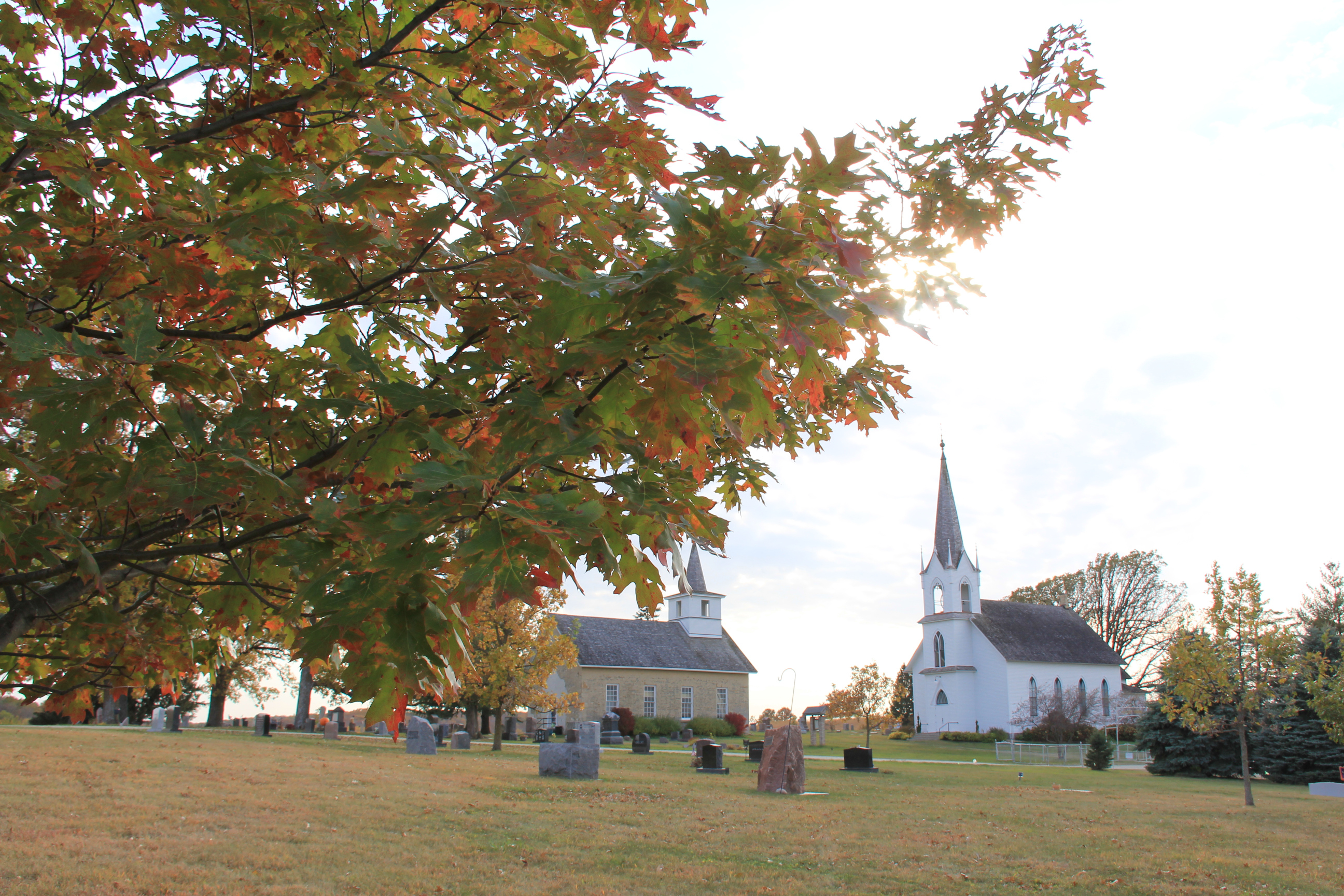
One of my favorite spots in rural Rice County is Valley Grove, two aged churches atop a hill near Nerstrand. Views and fall colors are beautiful here. (Minnesota Prairie Roots copyrighted photo October 2024)
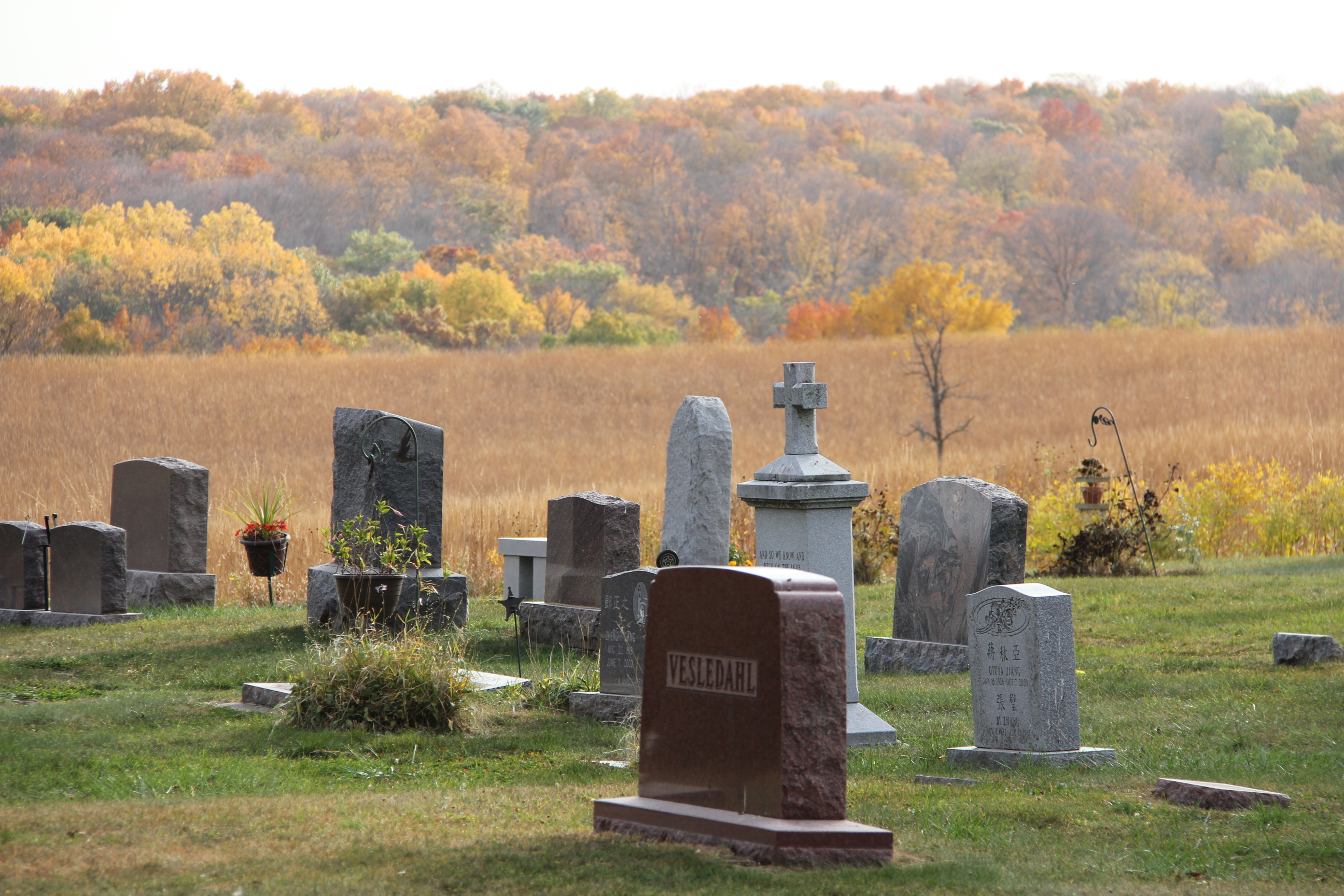
A colorful tree line backdrops Valley Grove Cemetery. On this visit, skies were mostly cloudy and hazy. (Minnesota Prairie Roots copyrighted photo October 2024)
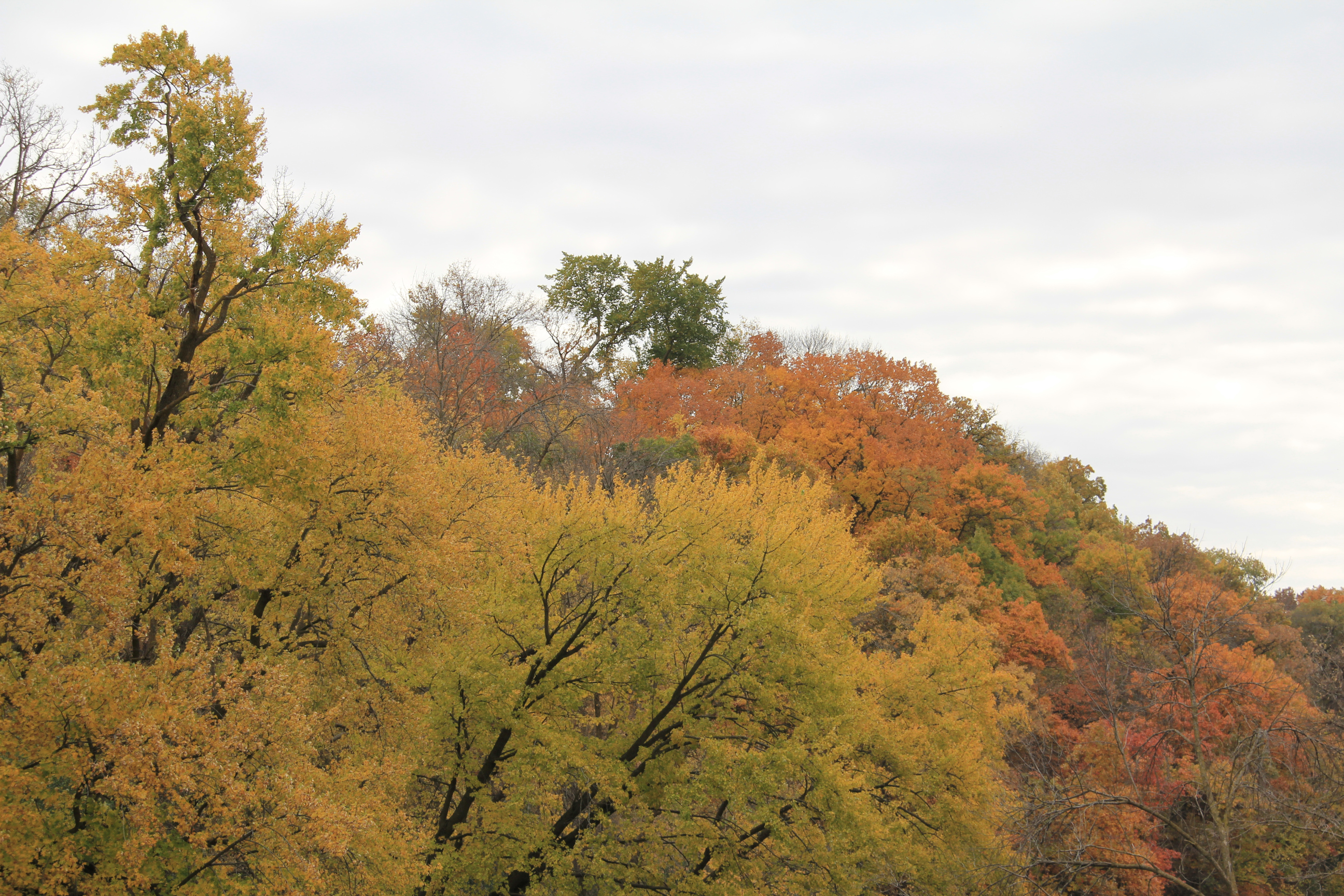
These beautiful trees hug the bluffs along the Straight River near downtown Faribault. (Minnesota Prairie Roots copyrighted photo October 2024)

Favorite area fall color spots include Valley Grove churches near Nerstrand Big Woods State Park, Dudley Lake in Rice County and right here in Faribault, along city streets, on the campus of the Minnesota State Academy for the Deaf, along the Straight River bluffs and even in our own backyard.

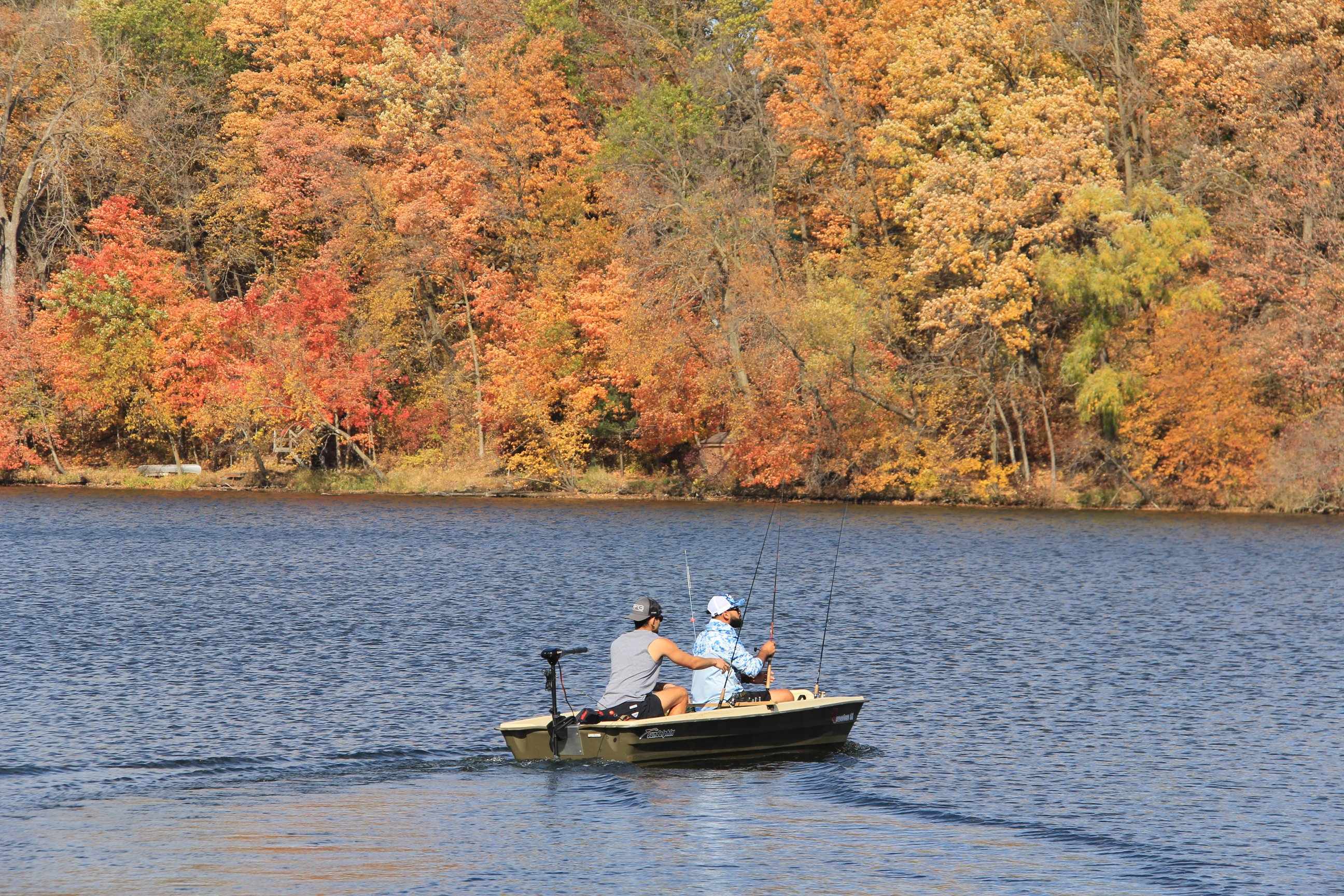
Setting out to fish on Dudley Lake Sunday afternoon. This was photographed from the dock at the public boat landing. (Minnesota Prairie Roots copyrighted photo October 2024)

It’s not too late to catch some of the colors. But they are fading, morphing, with many trees now stripped of leaves.

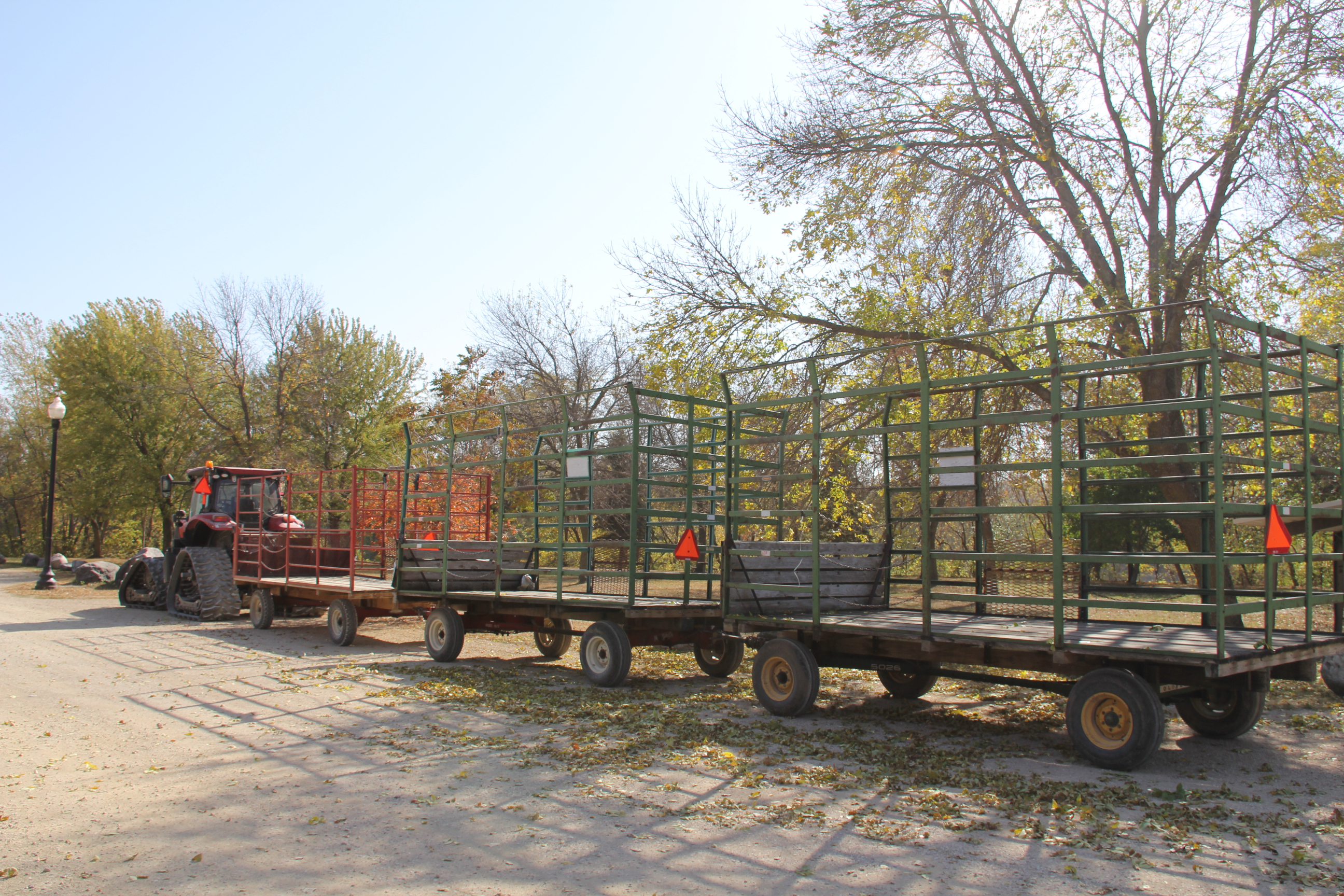
The Nicollet County Trail Association is hosting a second weekend of the Haunted Hayride from 7-11 p.m. October 28-29 at Riverside Park-Mill Pond Municipal Campground in St. Peter. The ride will wind through woods. (Minnesota Prairie Roots copyrighted photo October 2024)
Every leaf is worth study and appreciation for its fall beauty. (Minnesota Prairie Roots copyrighted photo October 2024)
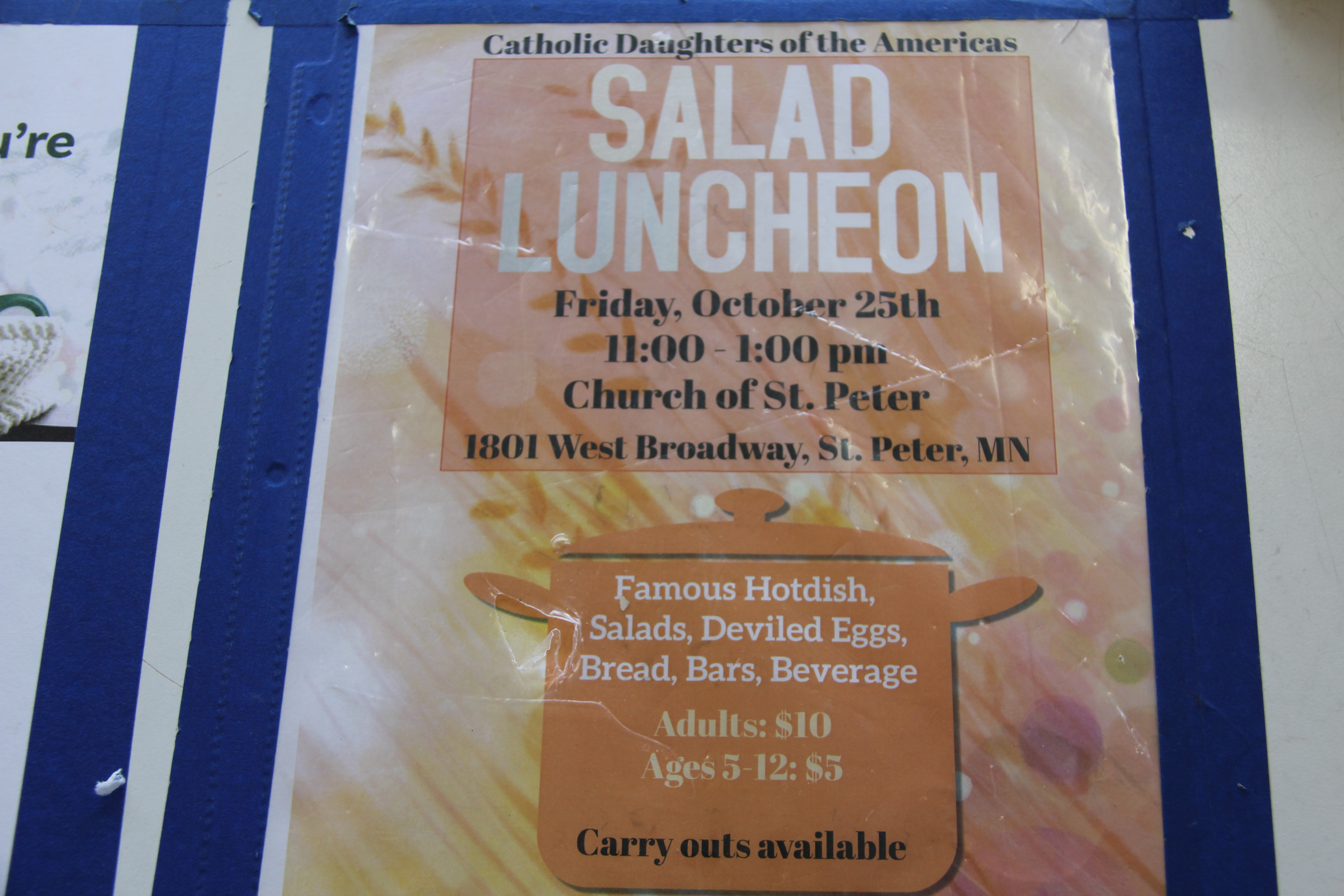
Fall is a popular time for church dinners, including this one advertised on a flyer taped to the checkout counter at the St. Peter Thrift Store, St. Peter. (Minnesota Prairie Roots copyrighted photo October 2024)

We hope to take one last fall color drive along the Mississippi River in southeastern Minnesota…if it’s not too late. Time is fleeting.

I photographed this bucolic rural scene along Canby Way just outside Faribault. (Minnesota Prairie Roots copyrighted photo October 2024)

Fall color drives are rooted within me. As a child, my parents, siblings and I piled into the Chevy each autumn for a Sunday afternoon meander along the Minnesota River Valley from the Granite Falls area to Morton. That annual outing imprinted upon me the seasonal beauty of September and October in Minnesota. I felt then, and still feel now, a close connection to the land during fall color drives.

More colorful trees, photographed October 12, on the Minnesota State Academy for the Deaf campus. (Minnesota Prairie Roots copyrighted photo October 2024)

There weren’t a lot of colorful trees on the rural southwestern Minnesota prairie where I grew up. There weren’t even all that many trees. Maybe that’s why I appreciate the trees blazing orange, red and yellow into the landscape in this area of Minnesota.

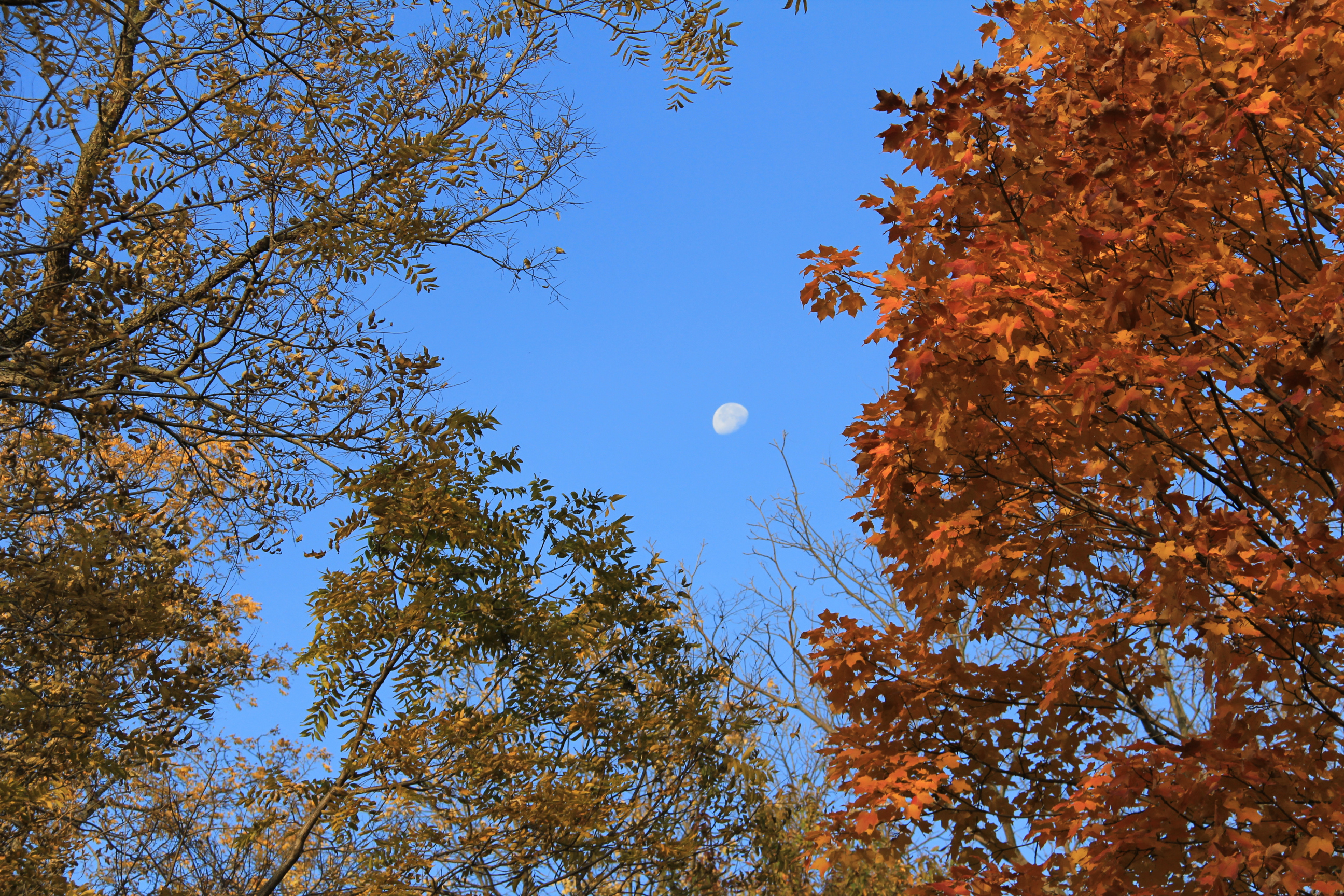
Monday morning I stood in my backyard and aimed by camera lens upward to my neighbors’ trees with the fading moon in the backdrop sky. (Minnesota Prairie Roots copyrighted photo October 2024)

I love slowing down to view stunning tree lines or a single brilliant red leaf. The nuances of nature, of the countryside, of small towns this time of year are worth noticing. And appreciating. Soon winter will be upon us. Stark. Devoid of color.

© Copyright 2024 Audrey Kletscher Helbling
 

At home comfy with Paul Bunyan in Faribault October 22, 2024

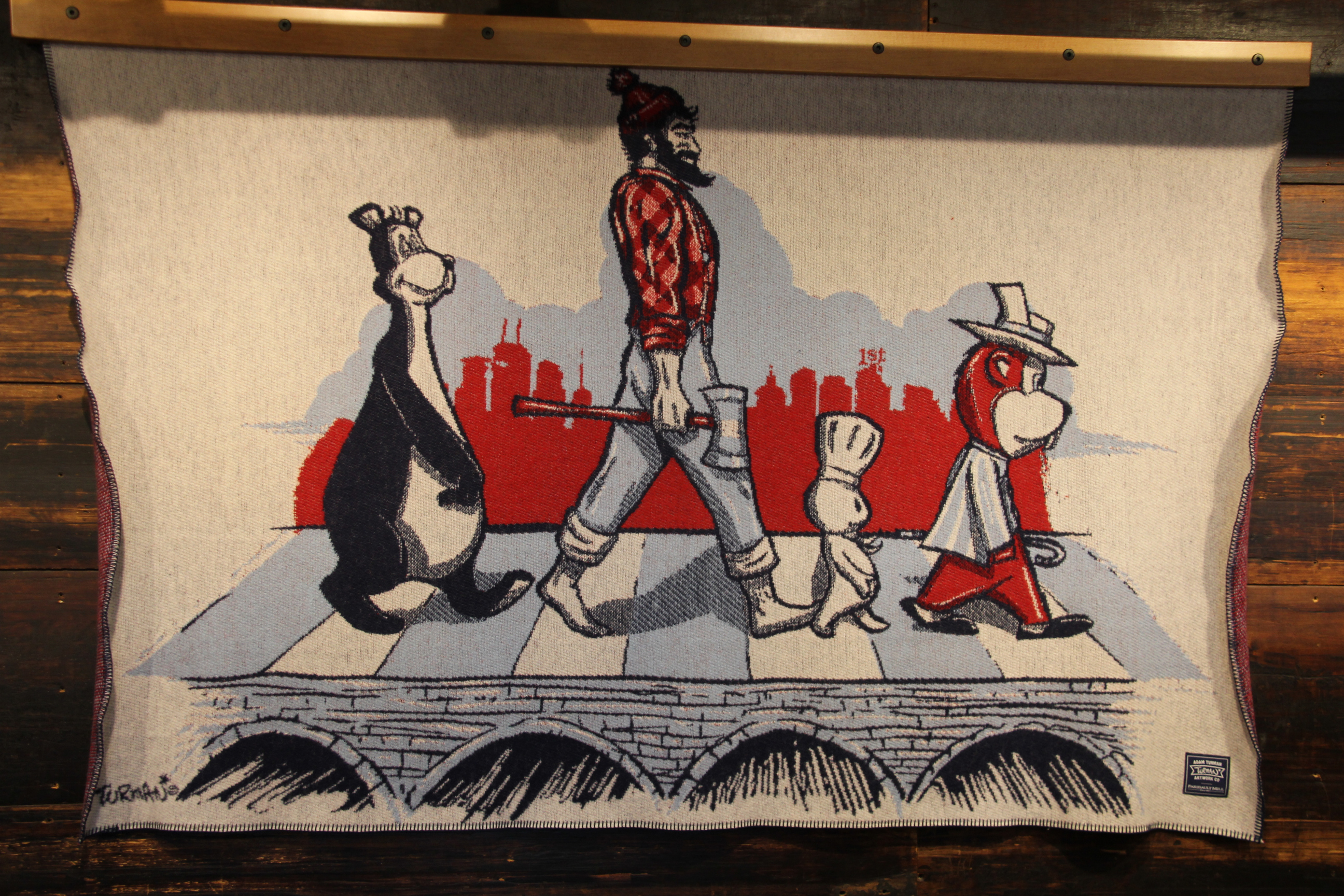
Minnesota artist Adam Turman designed this Abbey Road throw (inspired by the Beatles “Abbey Road” visual) for the Faribault Mill. It features the Hamm’s beer bear, Paul Bunyan, the Pillsbury Dough Boy and State Fairchild, all legendary Minnesota icons, against a metro skyline backdrop. (Minnesota Prairie Roots copyrighted photo October 2024)

AS A LIFE-LONG MINNESOTAN, certain things pop out at me as iconic Minnesota. Topping that list—Paul Bunyan and Babe the Blue Ox. I realize we’re not the only place claiming this over-sized legendary lumberjack and his ox as ours. But both are assuredly important in state lore, tourism and business identity, mostly in central and northern Minnesota where our lumber industry is rooted.

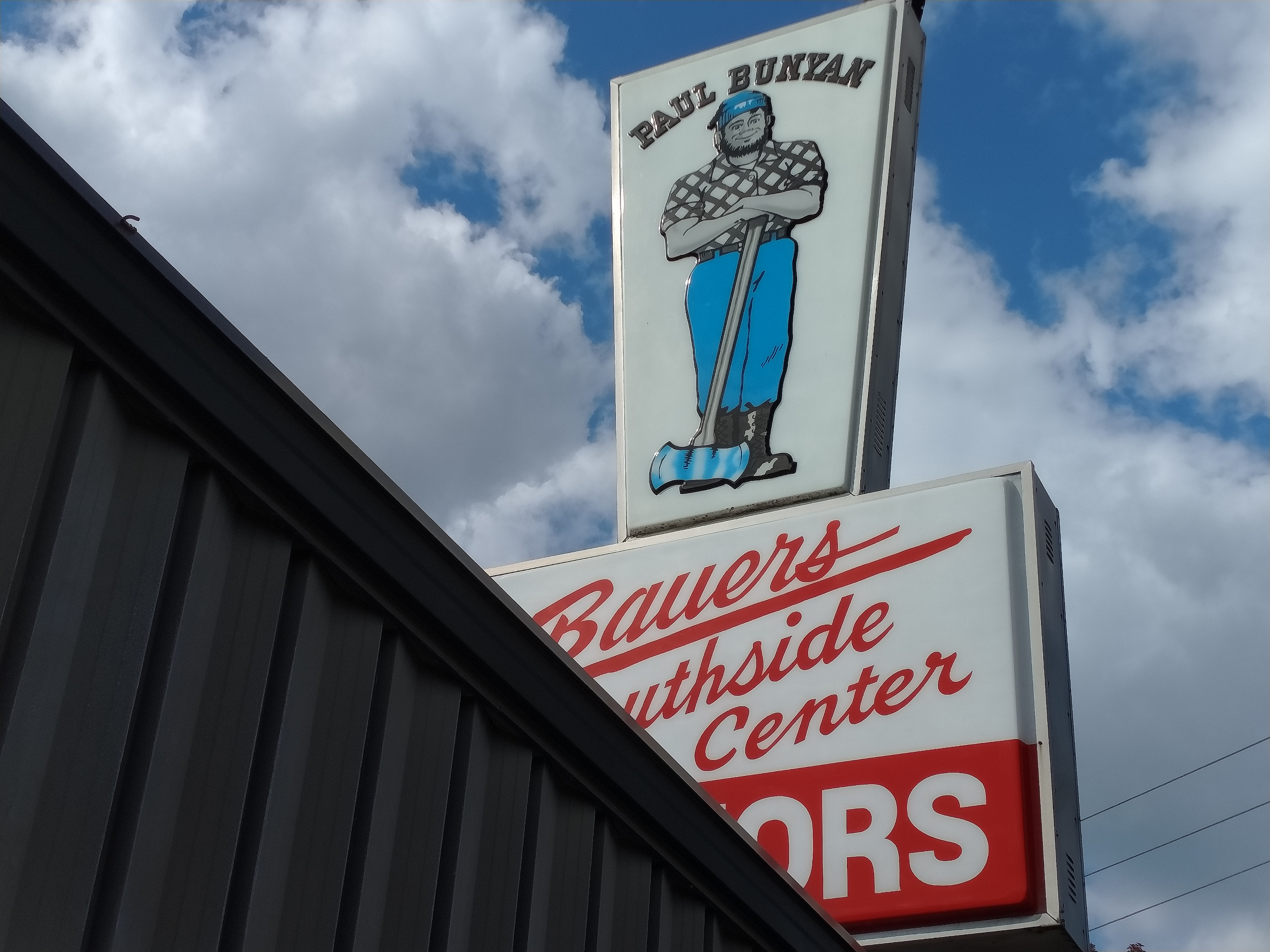
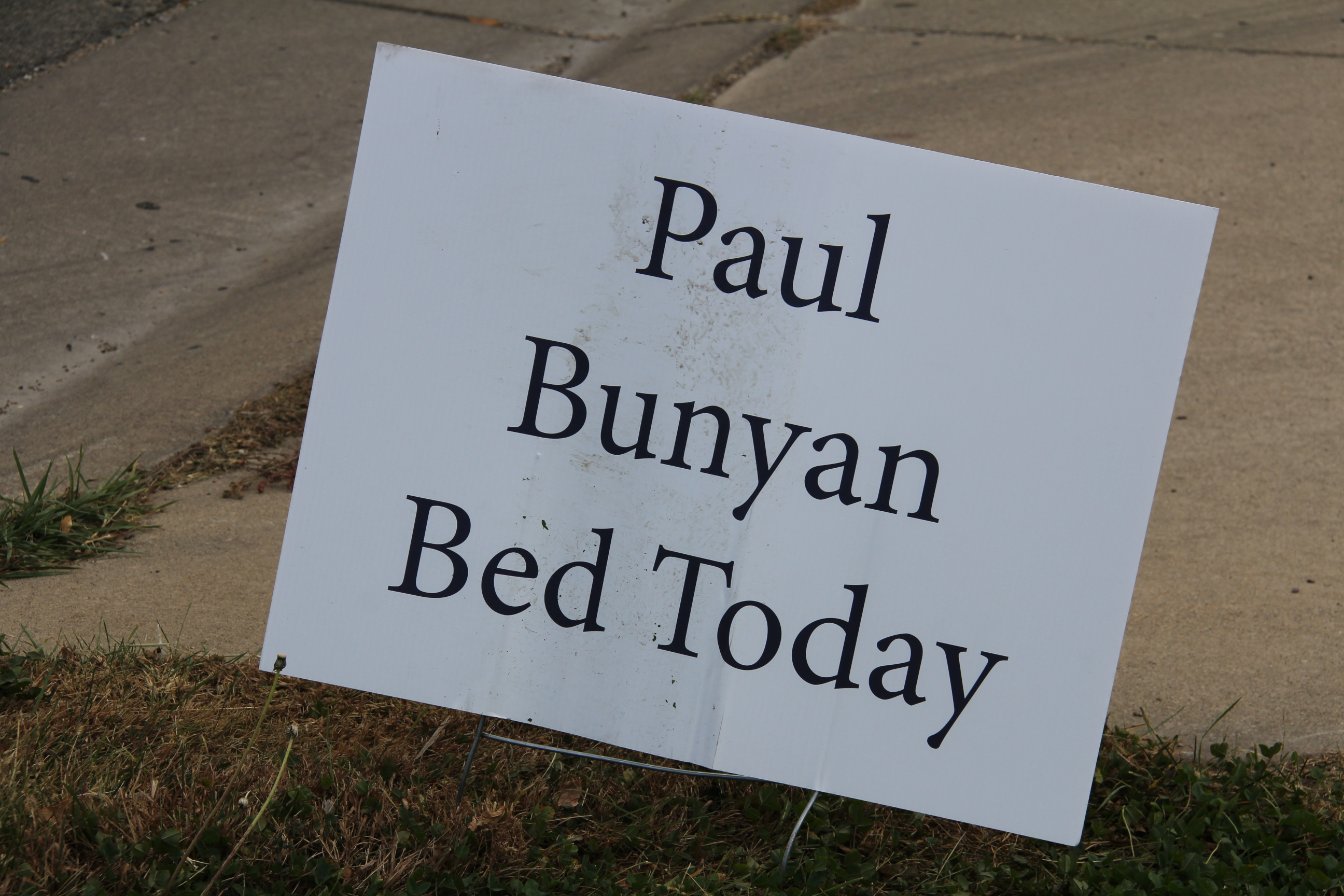
This Paul Bunyan sign is just blocks from my home. Granted, Paul is not wearing his usual buffalo plaid flannel shirt. (Minnesota Prairie Roots copyrighted photo September 2023)

Yet, I only need head south a few blocks from my house to see Paul marking Bauers Southside Liquor, once also home to the adjoining Paul Bunyan South gas station and convenience store. It closed years ago as did all the other Paul Bunyan stores in Faribault.

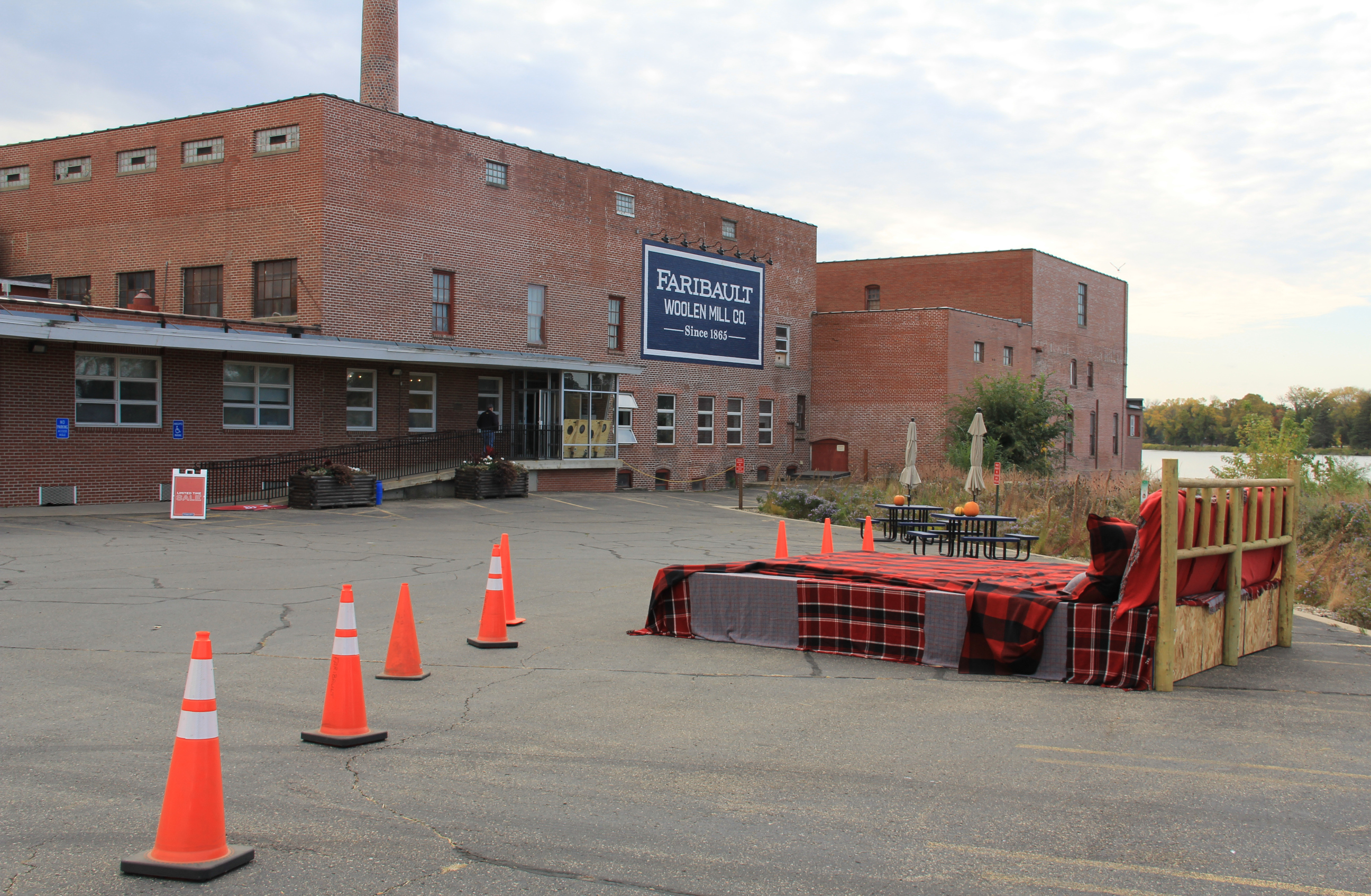
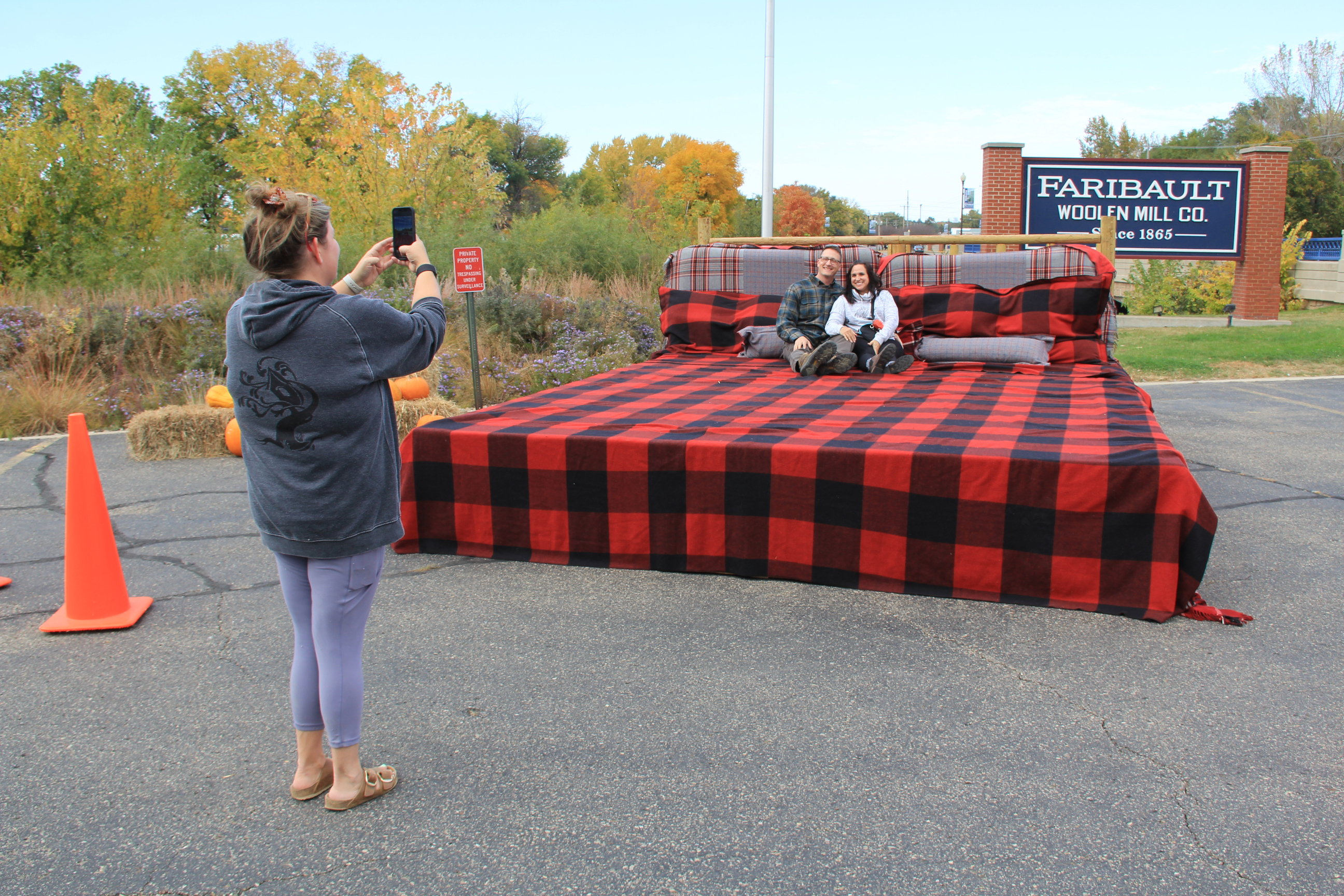
Paul Bunyan’s bed sits by the Faribault Mill along the Cannon River on Faribault’s northside. (Minnesota Prairie Roots copyrighted photo October 2024)
A roadside sign welcomes visitors to hop into Paul Bunyan’s bed. (Minnesota Prairie Roots copyrighted photo October 2024)
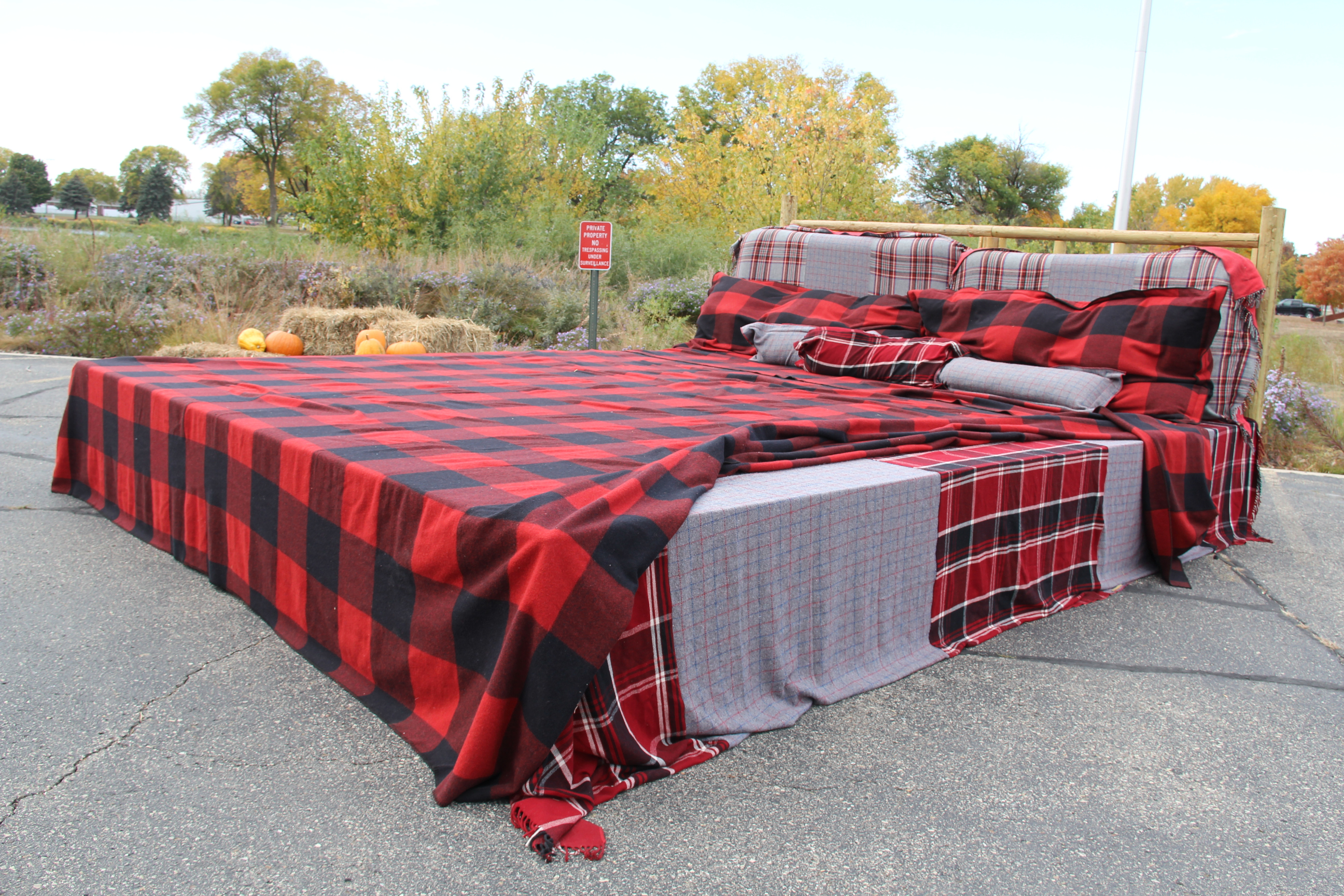
The bed showcases several of the Mill blanket patterns. (Minnesota Prairie Roots copyrighted photo October 2024)

Yet, the legendary lumberjack maintains his influence locally. Recently, I spotted an enormous buffalo plaid blanketed “bed” in the parking lot of Faribault Mill, an iconic business since 1865 known for its wool blankets. Signs invited folks to stop, climb onto the Paul Bunyan bed and take photos.

A friend photographs friends who climbed into Paul Bunyan’s bed. (Minnesota Prairie Roots copyrighted photo October 2024)

While I was there, one couple did just that. They were camping in nearby Nerstrand Big Woods State Park with others and headed into Faribault for stops at a local apple orchard and also at the Mill. I tipped them off to other places to visit, especially our historic downtown. I never pass on an opportunity to tell visitors about my community.

A comfy photo op in Paul Bunyan’s bed. (Minnesota Prairie Roots copyrighted photo October 2024)

On this Saturday, after photographing that creative marketing bed, I followed the two couples from Minneapolis into the Mill retail store. I haven’t been inside in a while. To my delight, I found more Minnesota icons on Mill products. I should note here that the Mill has a second mill (acquired in 2022) in Monmouth, Maine (Brahms Mount) which specializes in cotton textiles. Paul Bunyan is also big in Maine folklore.

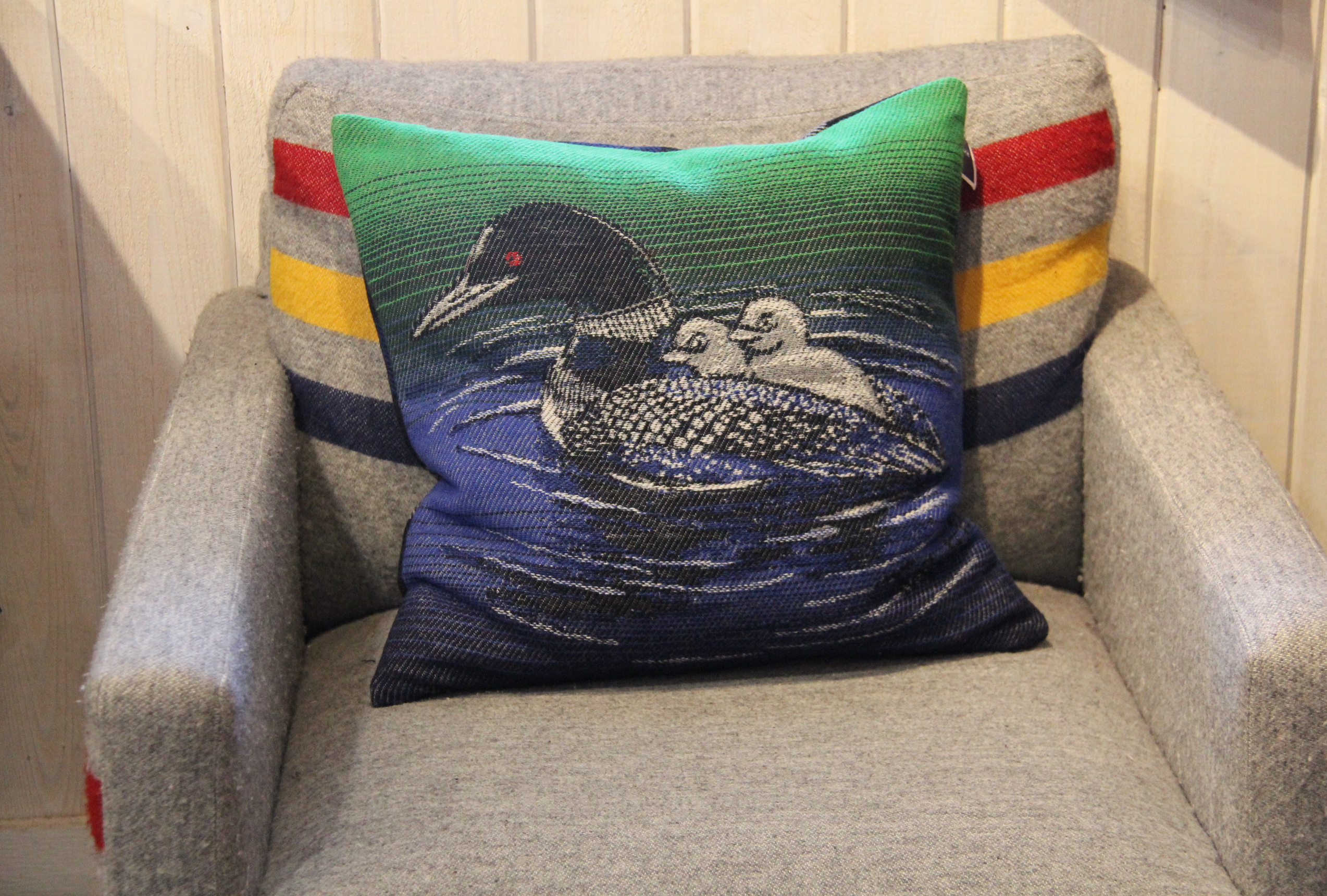
Adam Turman designed this loon throw pillow displayed on an easy chair upholstered with Faribault Mill blankets. (Minnesota Prairie Roots copyrighted photo October 2024)

I love how Faribault Mill tapped into Minnesota talent. Artist Adam Turman created art for throws and pillows that is distinctly part of Minnesota culture and life. I’ve been a fan of Turman since viewing his art on seasonal-themed murals in neighboring Northfield. His work for Faribault Mill features Paul Bunyan and Babe, the Hamm’s beer bear, the Pillsbury Dough Boy, State Fairchild, loons, a snowy owl, cardinal, Split Rock lighthouse and the Boundary Waters Canoe Area Wilderness.

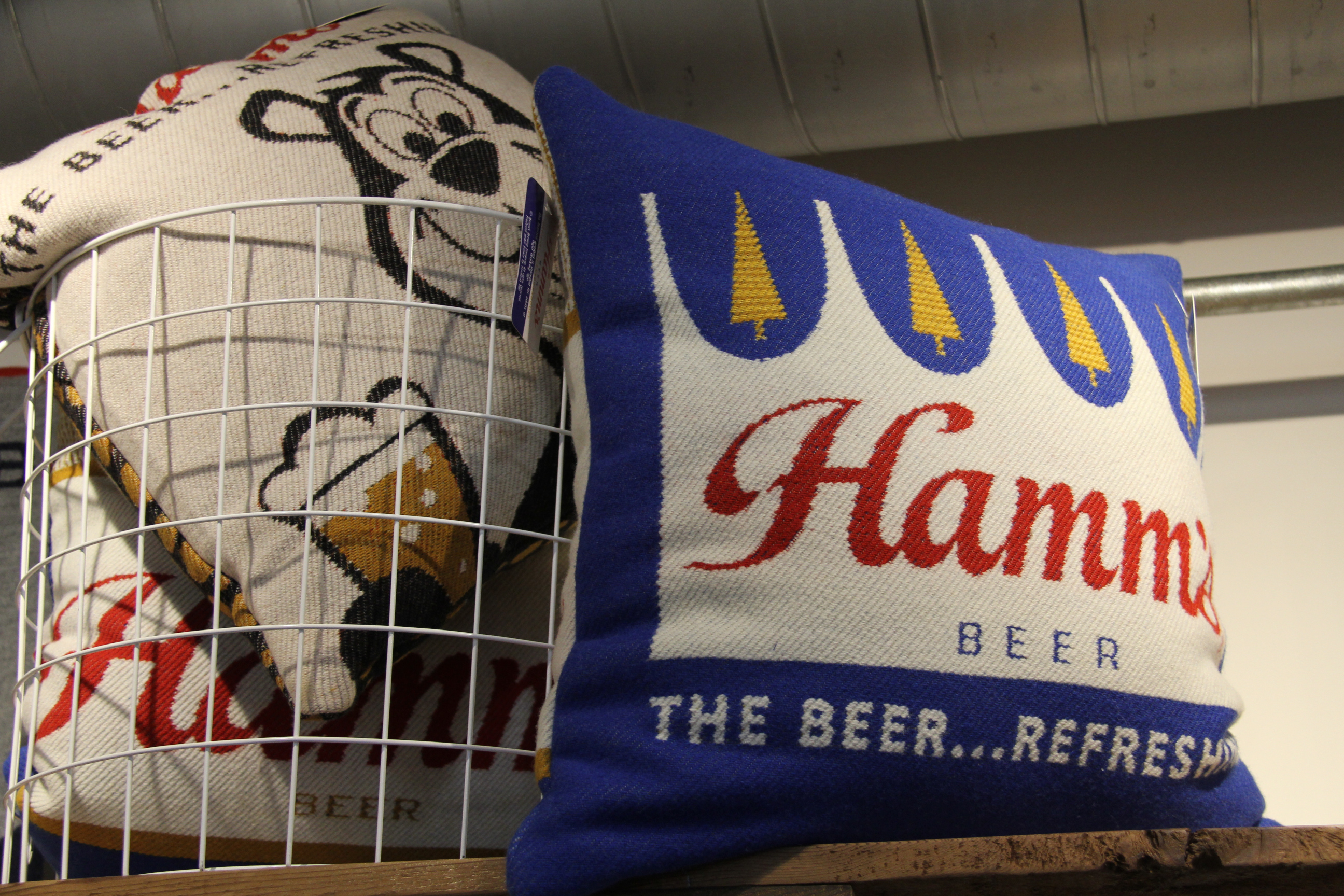
The Faribault Mill partnered with Hamm’s Beer on these pillows. Hamm’s was first brewed in Minnesota, “the land of sky blue waters,” in 1865. It is no longer made in Minnesota. (Minnesota Prairie Roots copyrighted photo October 2024)

While strolling through the Mill store, I focused on the art-themed merchandise among all the traditional primarily plaid and solid-hued woolen blankets people have come to associate with Faribault’s mill.

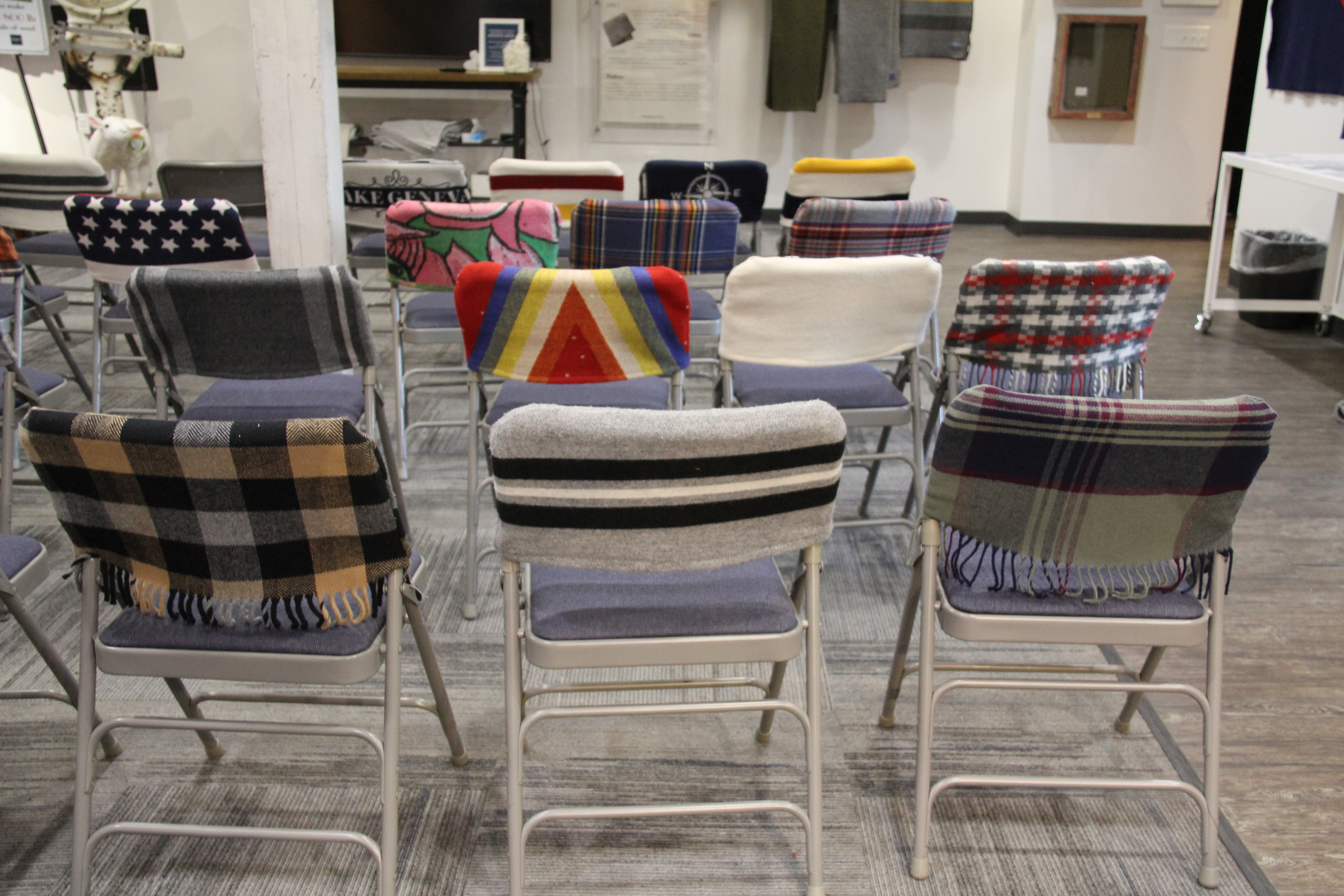
Visitors touring the Mill settle on these blanket remnant draped chairs to learn more about the Mill. (Minnesota Prairie Roots copyrighted photo October 2024)

In a room just off the main shop, I spotted folding chairs set up for folks who tour the mill. Tours are available at 11 am and 1 pm Fridays and Saturdays for a fee. Wool blanket remnants drape the chair backs, creating a memorable and colorful scene.

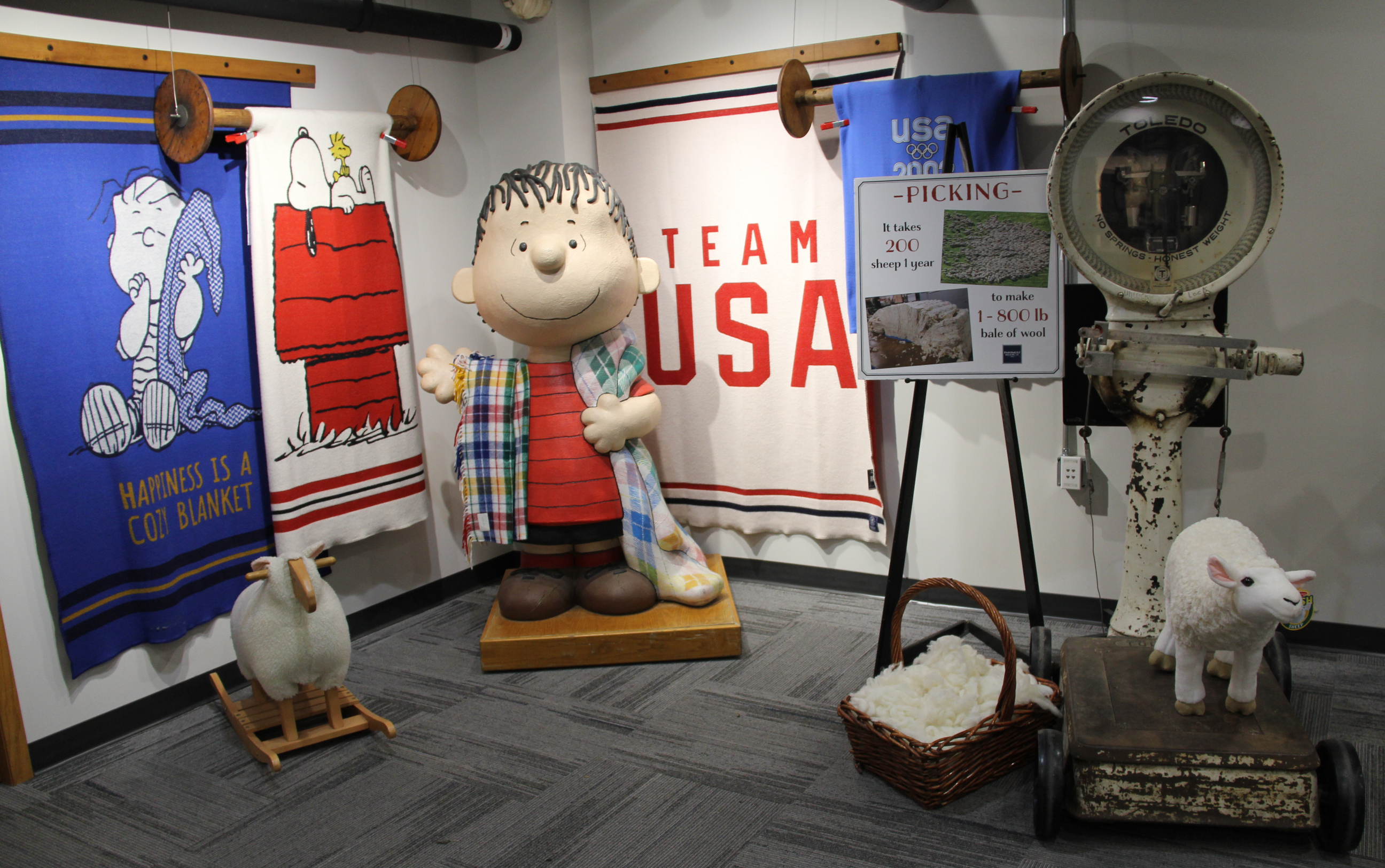
Peanuts themed throws are among Mill merch, shown here in the gathering space for those touring the factory. (Minnesota Prairie Roots copyrighted photo October 2024)

Also memorable are the Linus statue and the Peanuts-themed throws. We Minnesotans are proud of the Peanuts crew created by Charles Schulz, born in Minneapolis and raised in St. Paul. And I am proud of the Faribault Mill, a long-standing business in my community known for its quality made-in-America products. During the two World Wars, the then Faribault Woolen Mill made wool blankets for Army soldiers.

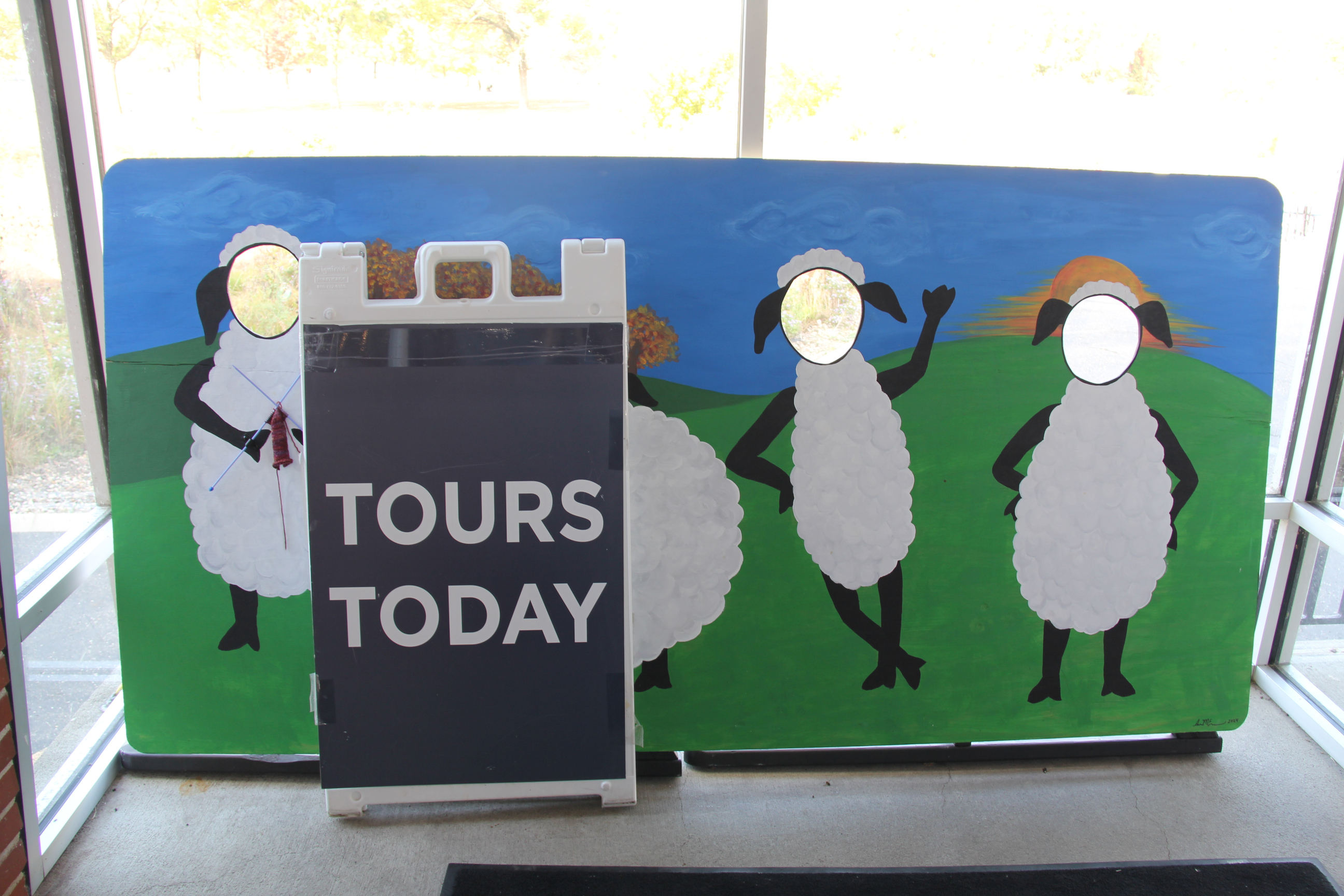
Another photo op, sheep cut-outs photographed inside the entrance to the retail store. (Minnesota Prairie Roots copyrighted photo October 2024)

Today Mill employees continue to create quality products, and not just blankets, at its two plants. The Mill also weaves into the fabric of America via a Paul Bunyan-sized spirit of generosity. For every bed blanket sold, the company donates a blanket to nonprofits serving youth experiencing homelessness in major cities across the U.S. That’s through its Spread the Warmth program. The Mill has also donated blankets to local youth.

The marketing and business teams at Faribault Mill clearly understand the value of connecting with community, of giving back and of drawing customers via creativity. The Paul Bunyan-sized buffalo plaid blanketed bed and the Minnesota art by Adam Turman both grabbed my attention. While the bed has been put to bed for the season—maybe because Paul Bunyan needs his wool blankets back for the forthcoming winter—you can still step inside the retail store and wrap yourself in the warmth of Minnesota from blankets to legendary icons.

© Copyright 2024 Audrey Kletscher Helbling
 

A glimpse of Gilman, including Kelash’s Corner October 21, 2024

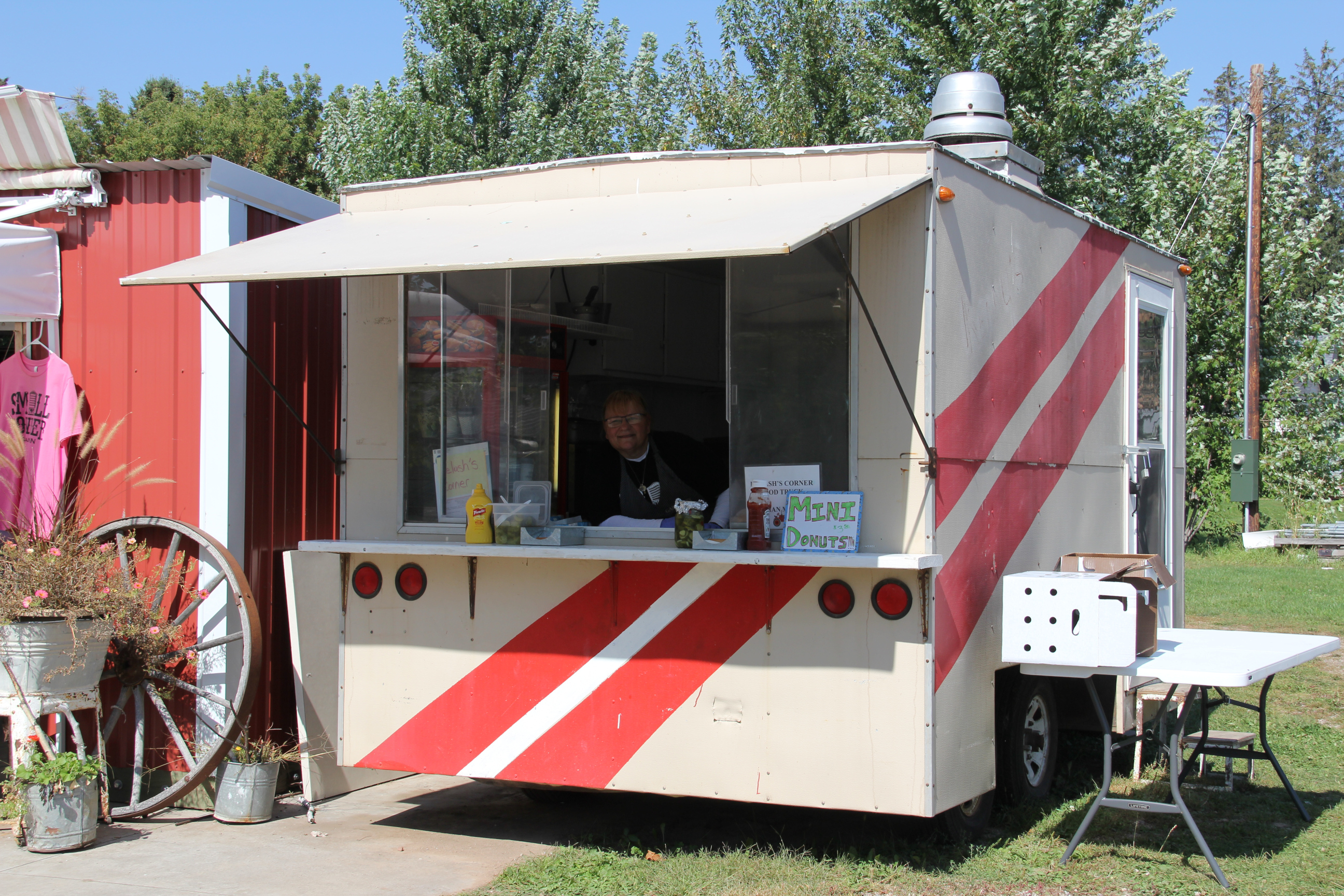
Amy Kelash ready to serve from her food truck. (Minnesota Prairie Roots copyrighted photo September 2024)

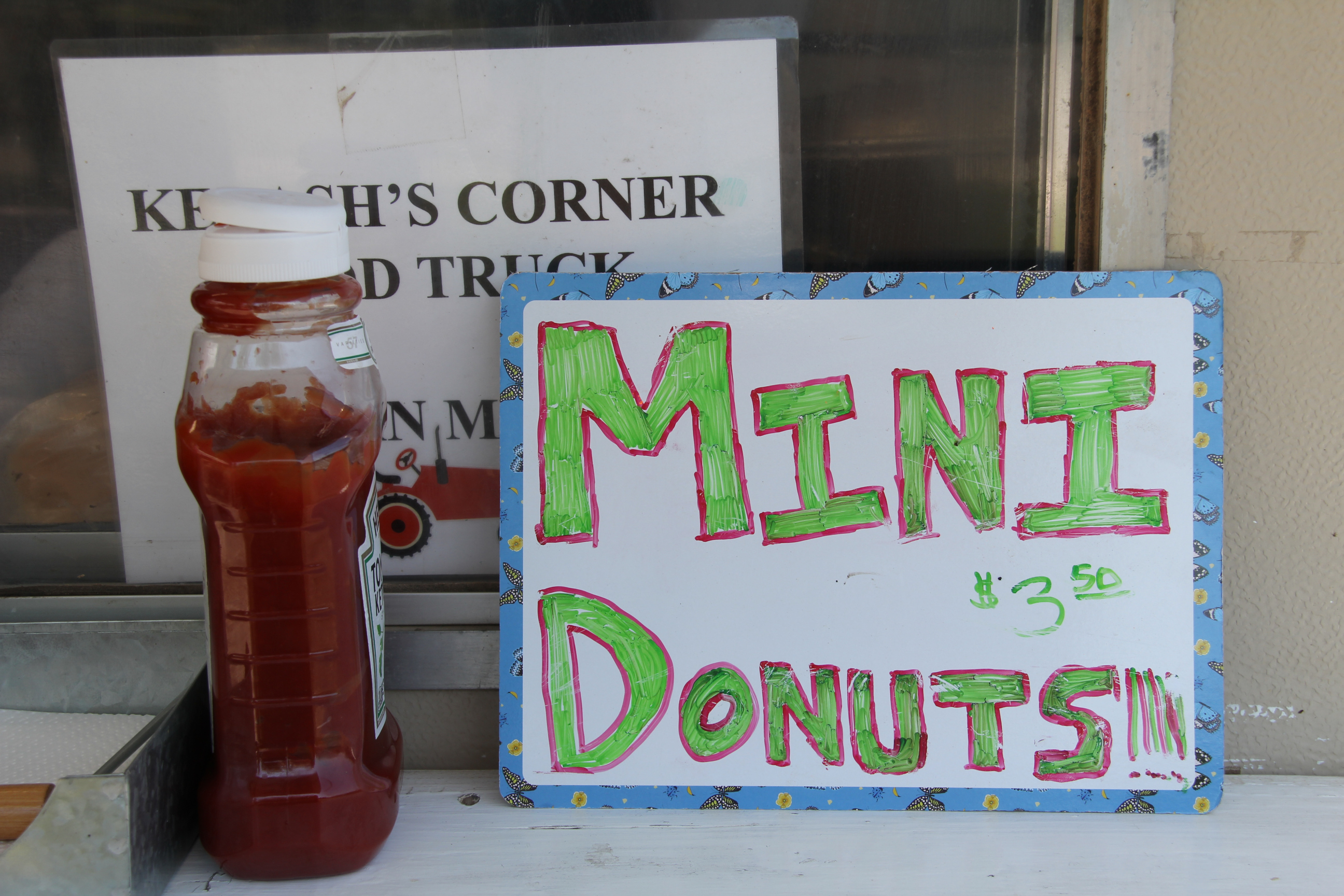
IF ONLY I HADN’T JUST EATEN a picnic lunch, I would have ordered a bag of mini donuts from Kelash’s Corner Food Truck in Gilman. But I wasn’t hungry. Even though I really really really wanted donuts, one of my favorite fair food sweet treats, I stood strong. I shouldn’t have. Life is too short not to occasionally cave to cravings. Especially at my age.

My eyes landed right on this sign. (Minnesota Prairie Roots copyrighted photo September 2024)
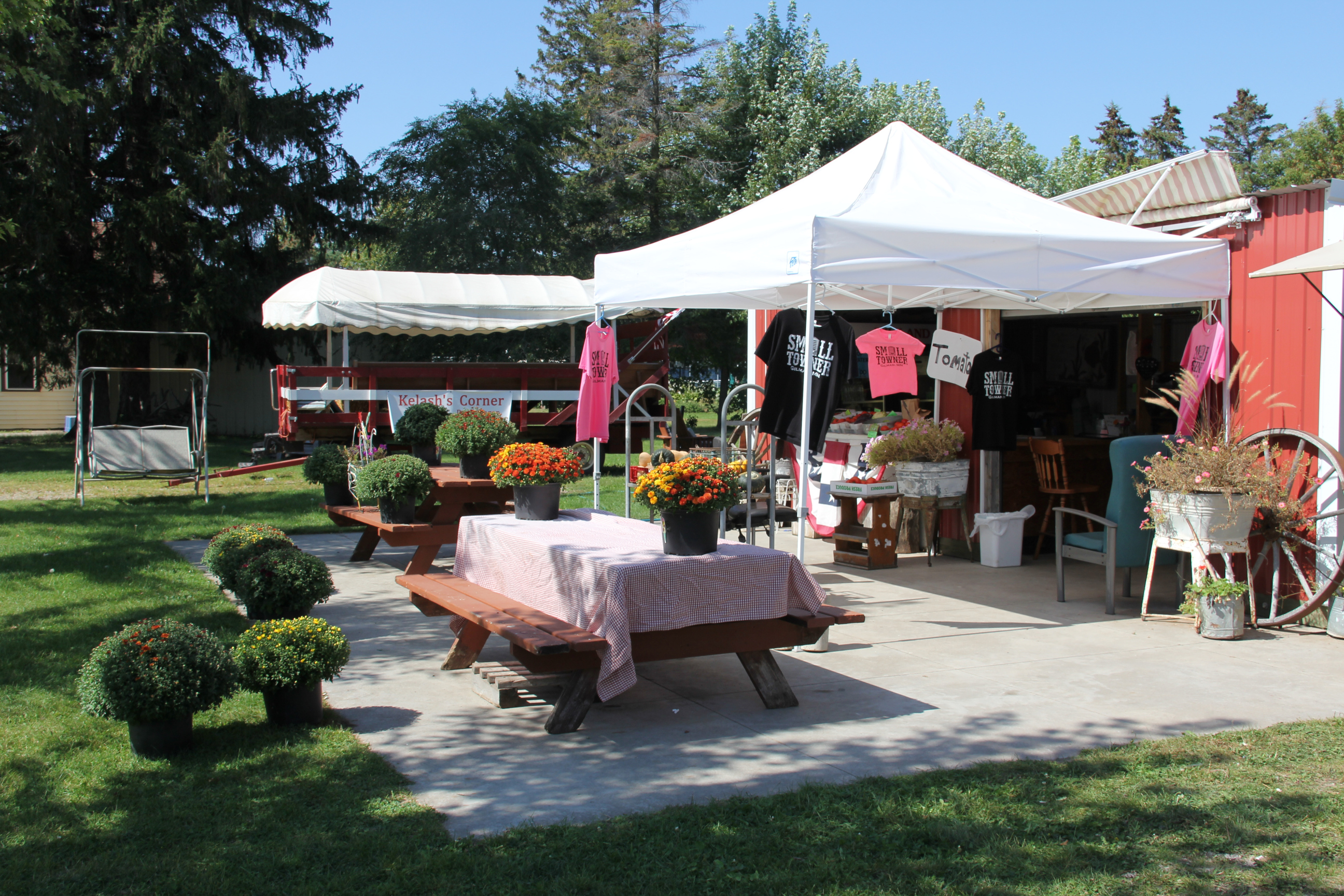
Kelash’s Corner is an inviting community-centered space. (Minnesota Prairie Roots copyrighted photo September 2024)
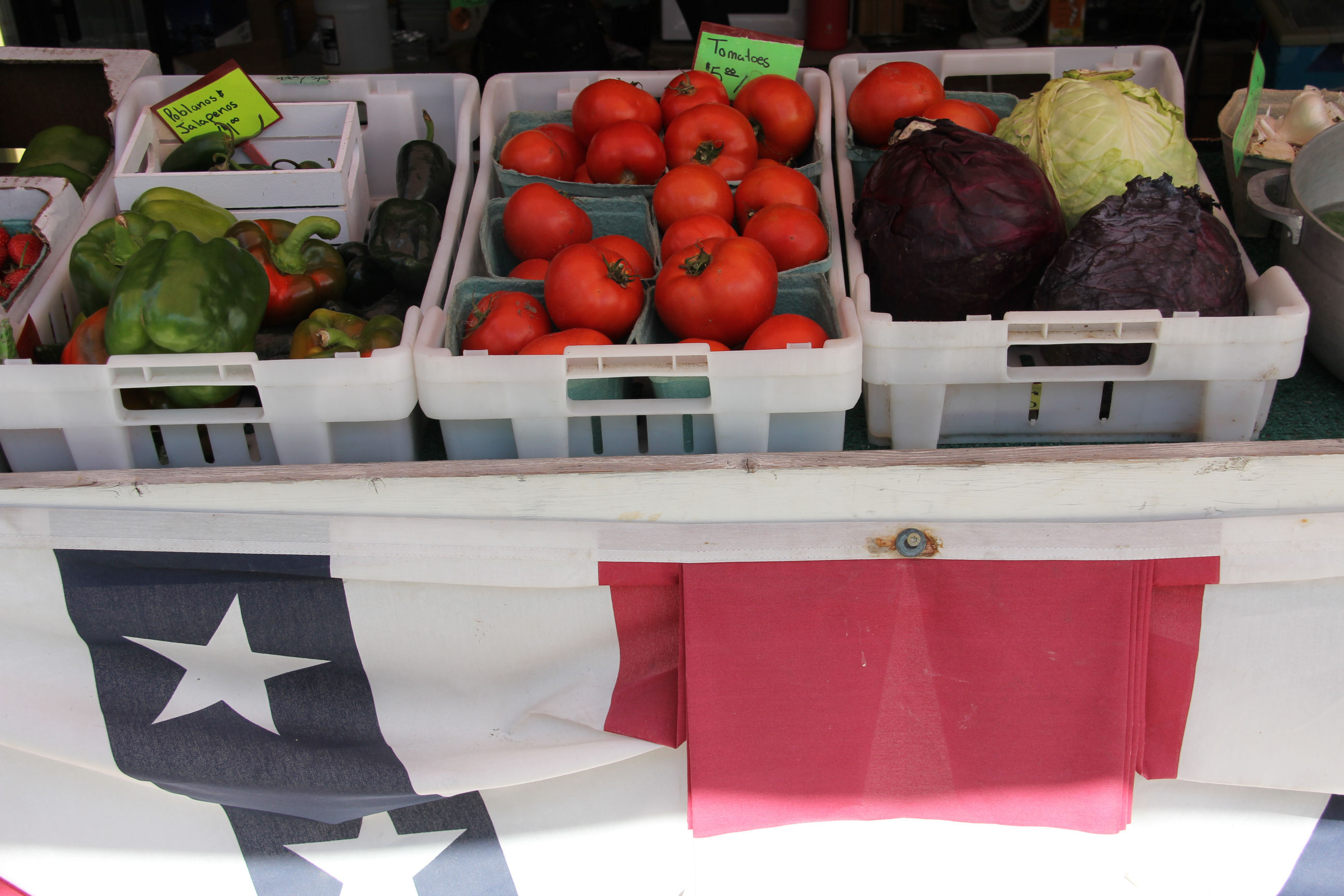
You’ll find garden fresh vegetables for sale here. (Minnesota Prairie Roots copyrighted photo September 2024)

If I lived in or near Gilman, I could pop in at Kelash’s Corner for not only those coveted donuts and other food, but also for garden fresh vegetables and whatever goods twin sisters Ann and Amy Kelash sell at their seasonal business.

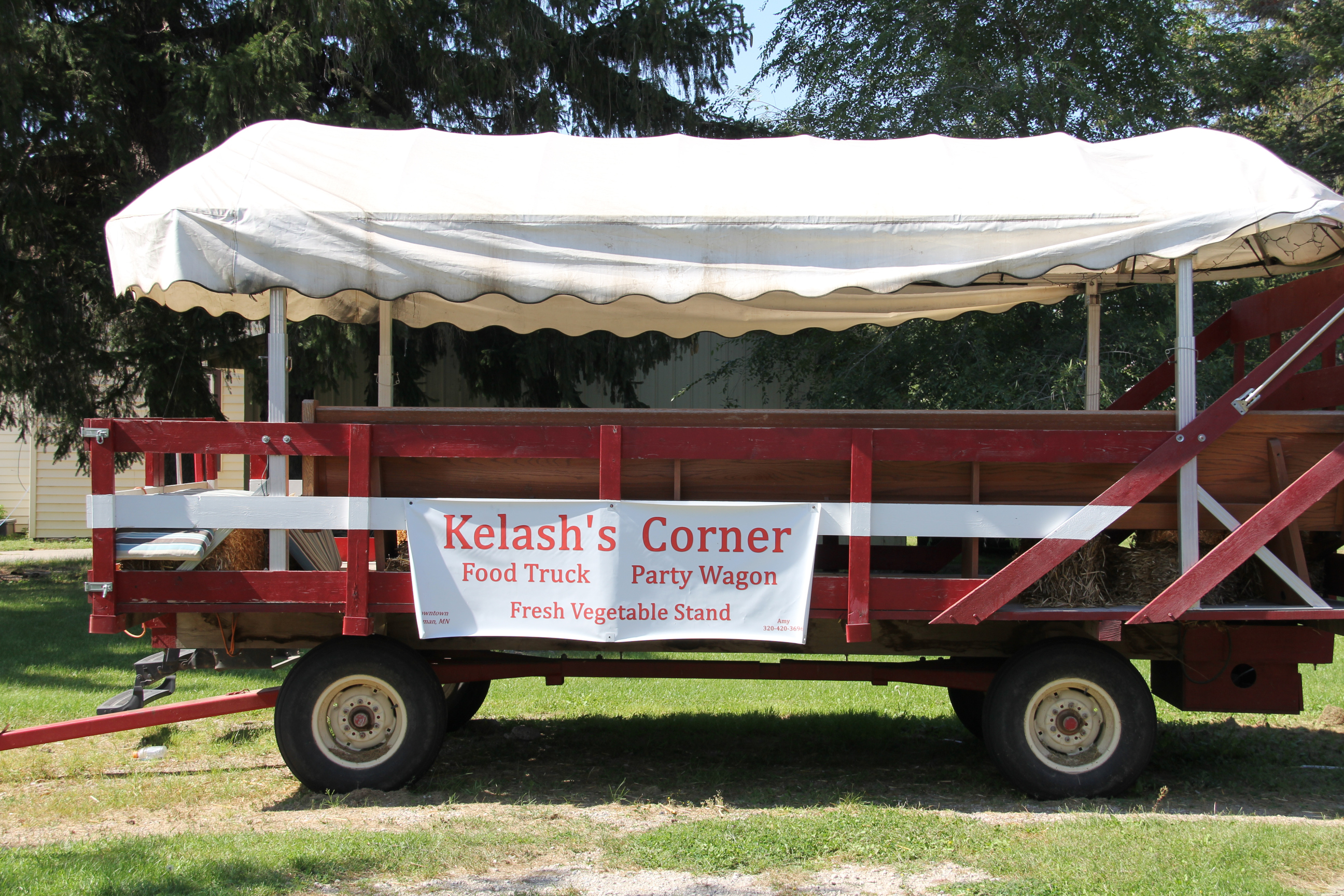
The Kelash party wagon was parked on-site. (Minnesota Prairie Roots copyrighted photo September 2024)

My stop was brief, yet long enough to appreciate this home-grown corner set-up of food truck, vegetable/merch stand with a party wagon to boot.

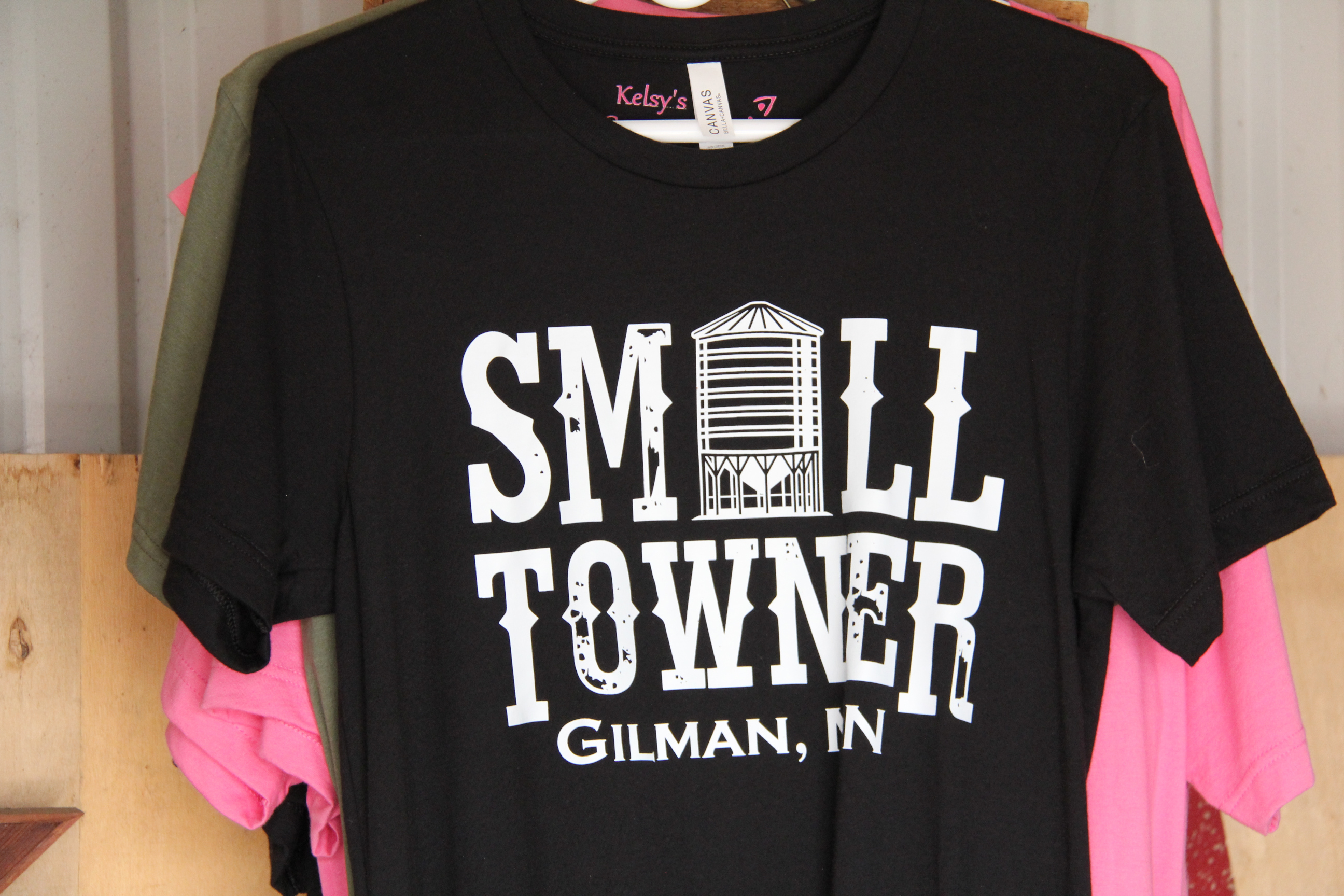
These SMALL TOWNER t-shirts are available in assorted colors. (Minnesota Prairie Roots copyrighted photo September 2024)

The “SMALL TOWNER” tees with grain bin graphics caught my eye given my rural roots. Had the town name of Gilman not been printed on the shirts, I might have bought one. Gilman, located five miles north of Foley off Minnesota State Highway 25, definitely fits the definition of small town with a population of about 220. There’s not a whole lot here, but enough. Catholic church. Municipal liquor store. Bank. Post office and city hall. Gas station and auto body shop. Co-op creamery and feed store. And maybe more, but not much more.

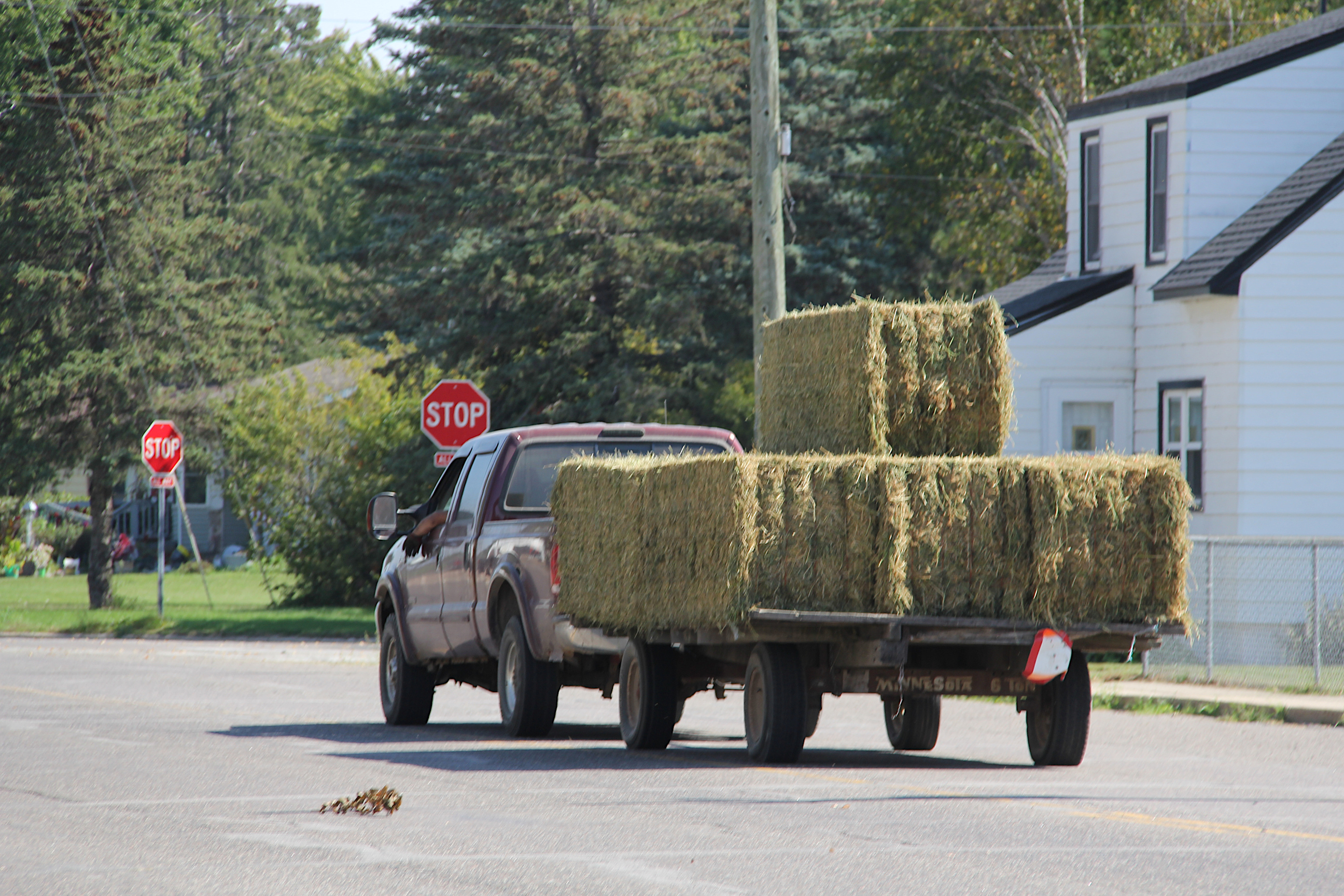
Gilman sits deep in farm country. Here a pickup pulls a load of hay through town. (Minnesota Prairie Roots copyrighted photo September 2024)

It’s the type of small town most would pass by without stopping. I’ve always mostly just passed through as a shortcut route to my husband’s childhood farm, no longer in the family. This trip we were in the area for Randy’s 50th class reunion, aiming for a drive by the Buckman Township farm site, then on to Buckman and Pierz. We hadn’t planned on stopping in Gilman. But then I spotted Kelash’s Corner.

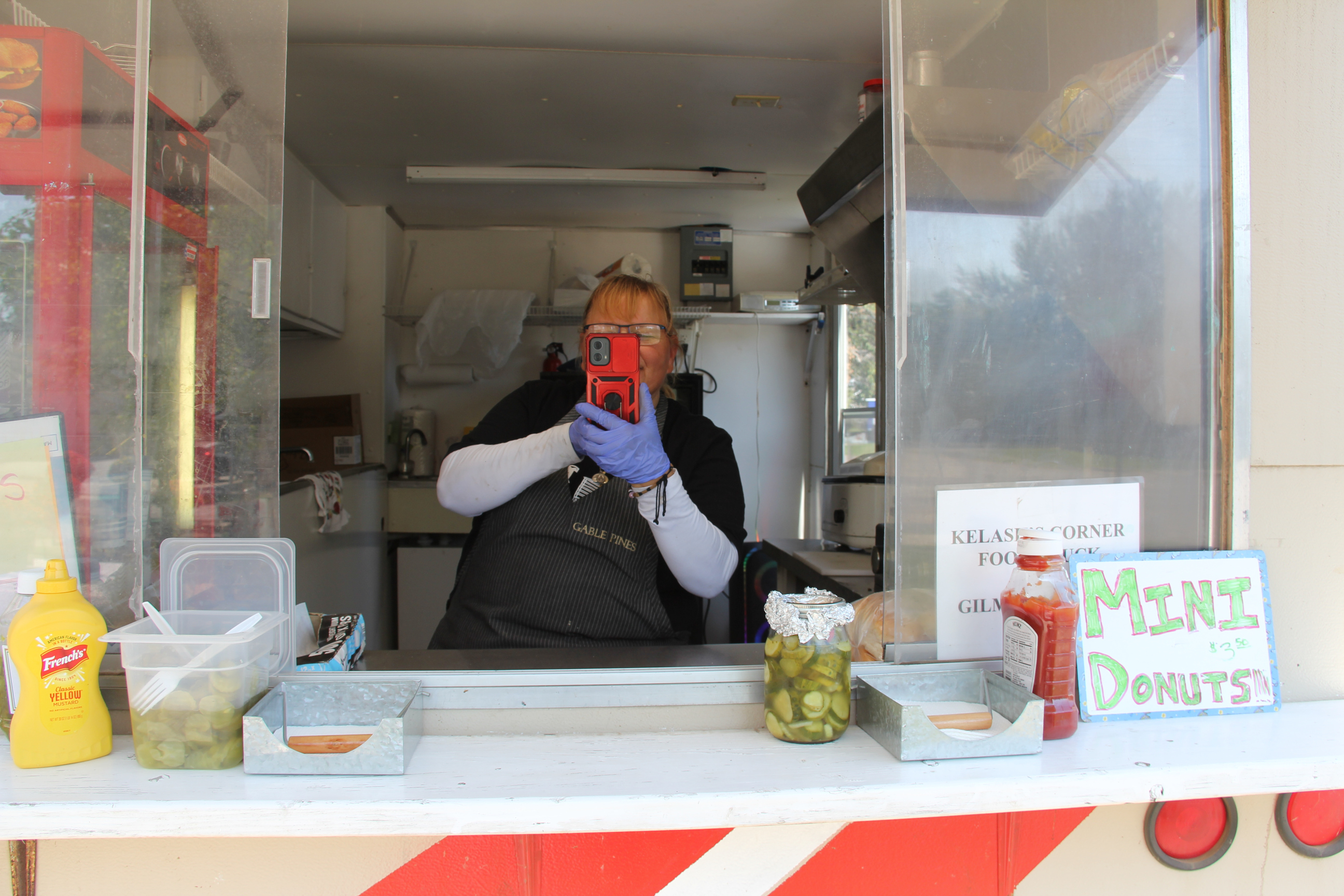
While I photographed Amy, she photographed me. (Minnesota Prairie Roots copyrighted photo September 2024)

When I see a place like this, I feel compelled to document it with my camera…because I love one-of-a-kind/home-grown/small town spots. They are grassroots appealing. I’m a person who always chooses a local eatery over a chain restaurant, who likes small town bakeries, who finds roadside stands Norman Rockwell charming.

This sign was impossible to miss. (Minnesota Prairie Roots copyrighted photo September 2024)
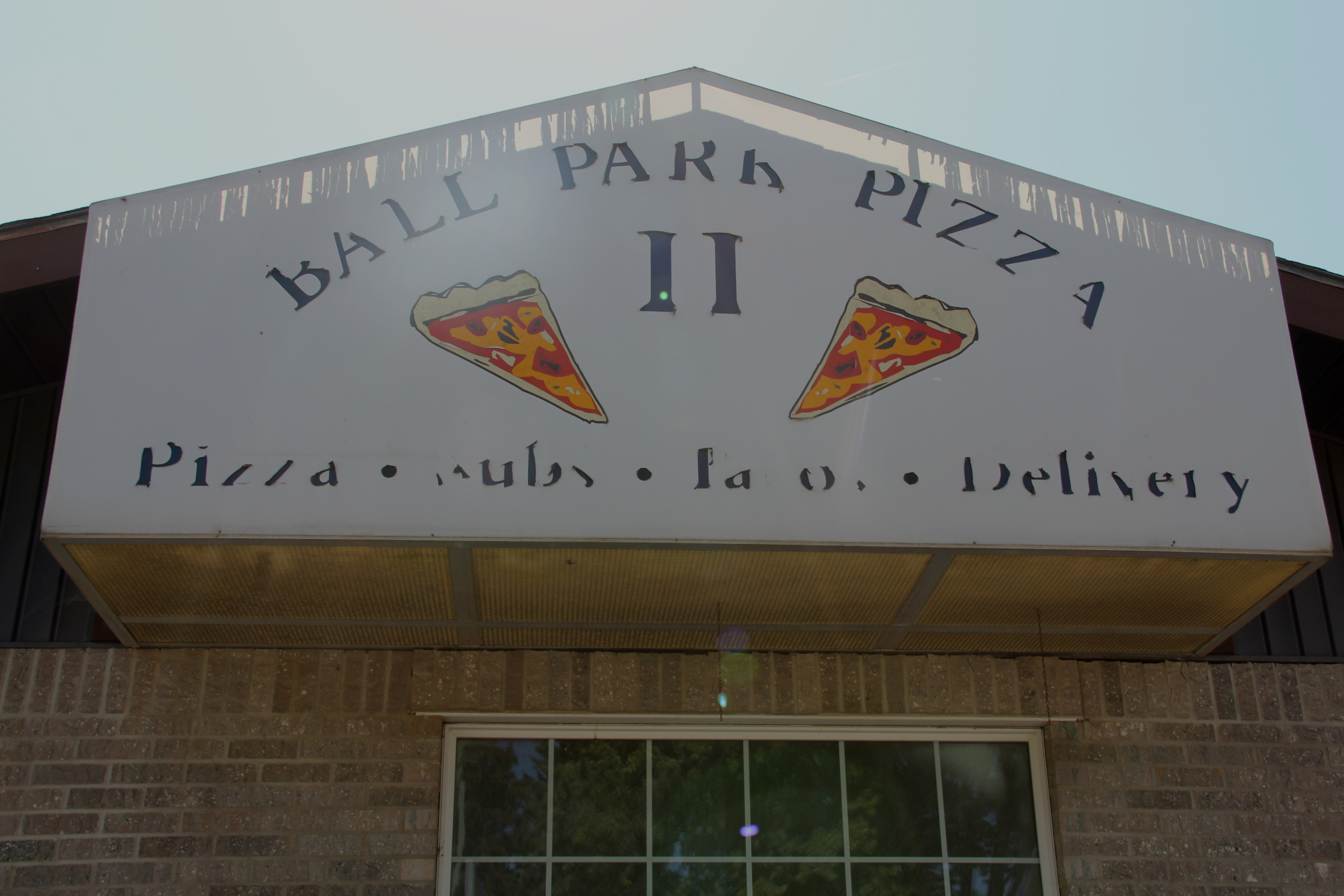
Once upon a time, this building housed a pizza place. I was shooting into the sun, thus a subpar image. (Minnesota Prairie Roots copyrighted photo September 2024)
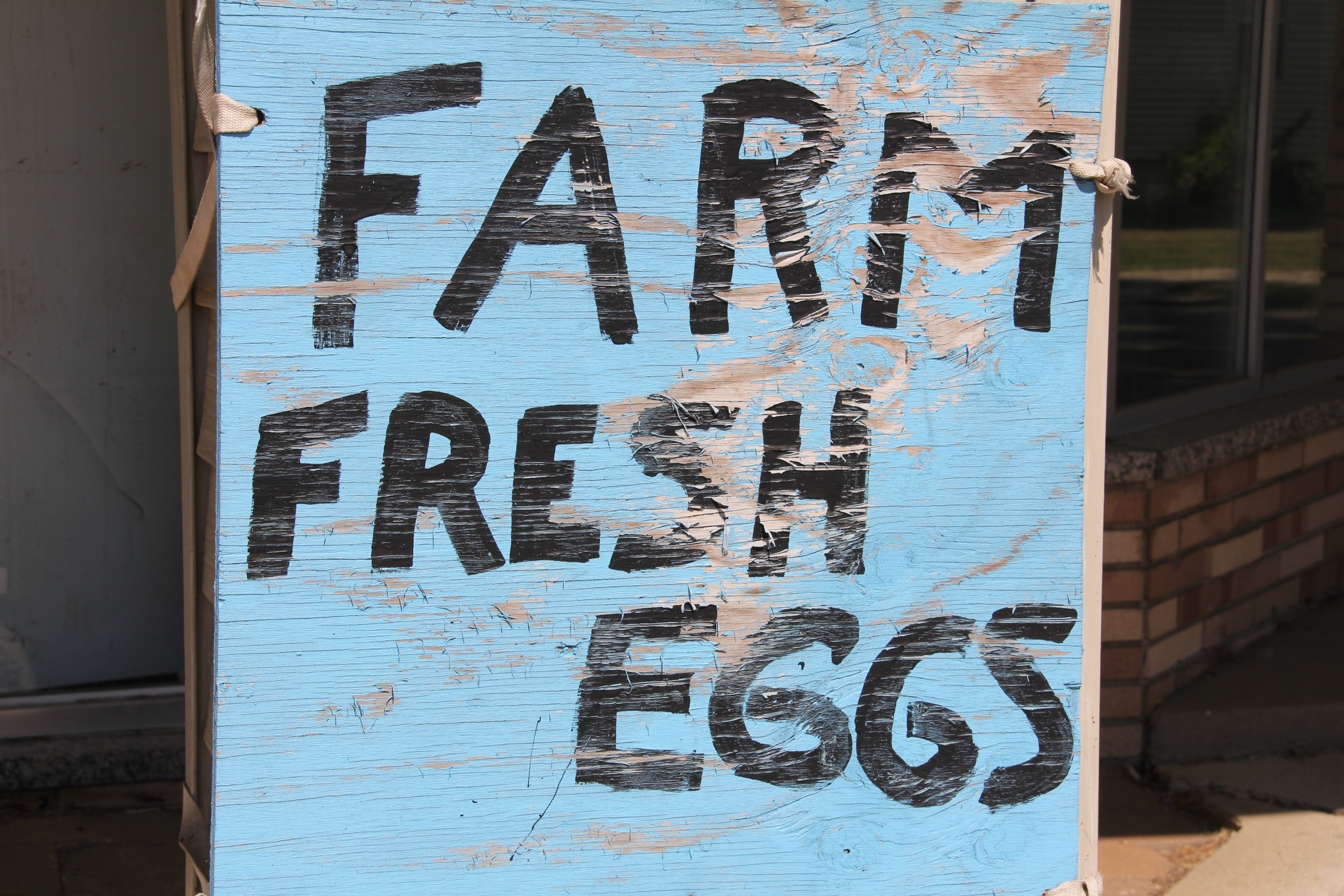
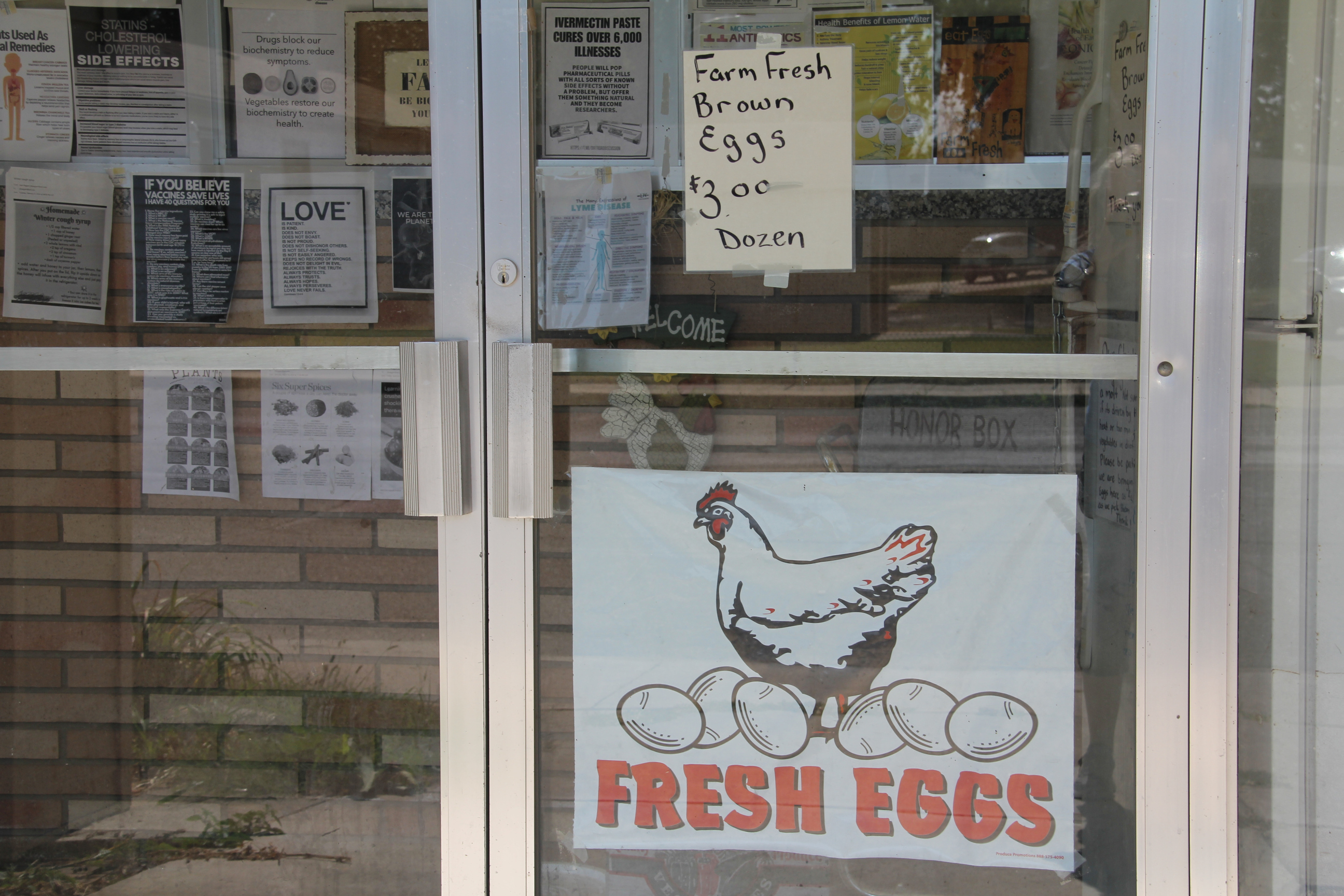
Although I saw signs, I didn’t see any eggs. These signs were posted on what appears to be a former bank building. There were lots of “interesting” notices posted in the lobby. (Minnesota Prairie Roots copyrighted photo September 2024)

My stop in Gilman was periphery really—a few photos snapped and a quick glance at a town rooted in rural. I watched as a pick-up truck pulled a wagon of hay bales through town. I noticed the fading sign of the former Ball Park Pizza. I spotted a sign advertising farm fresh brown eggs for $3/dozen.

I spent the most time at Kelash’s Corner, perhaps subconsciously because of those mini donuts. The ones I should have purchased…

© Copyright 2024 Audrey Kletscher Helbling
 

“Charlotte’s Web” on-stage in Faribault, my take on this classic October 18, 2024

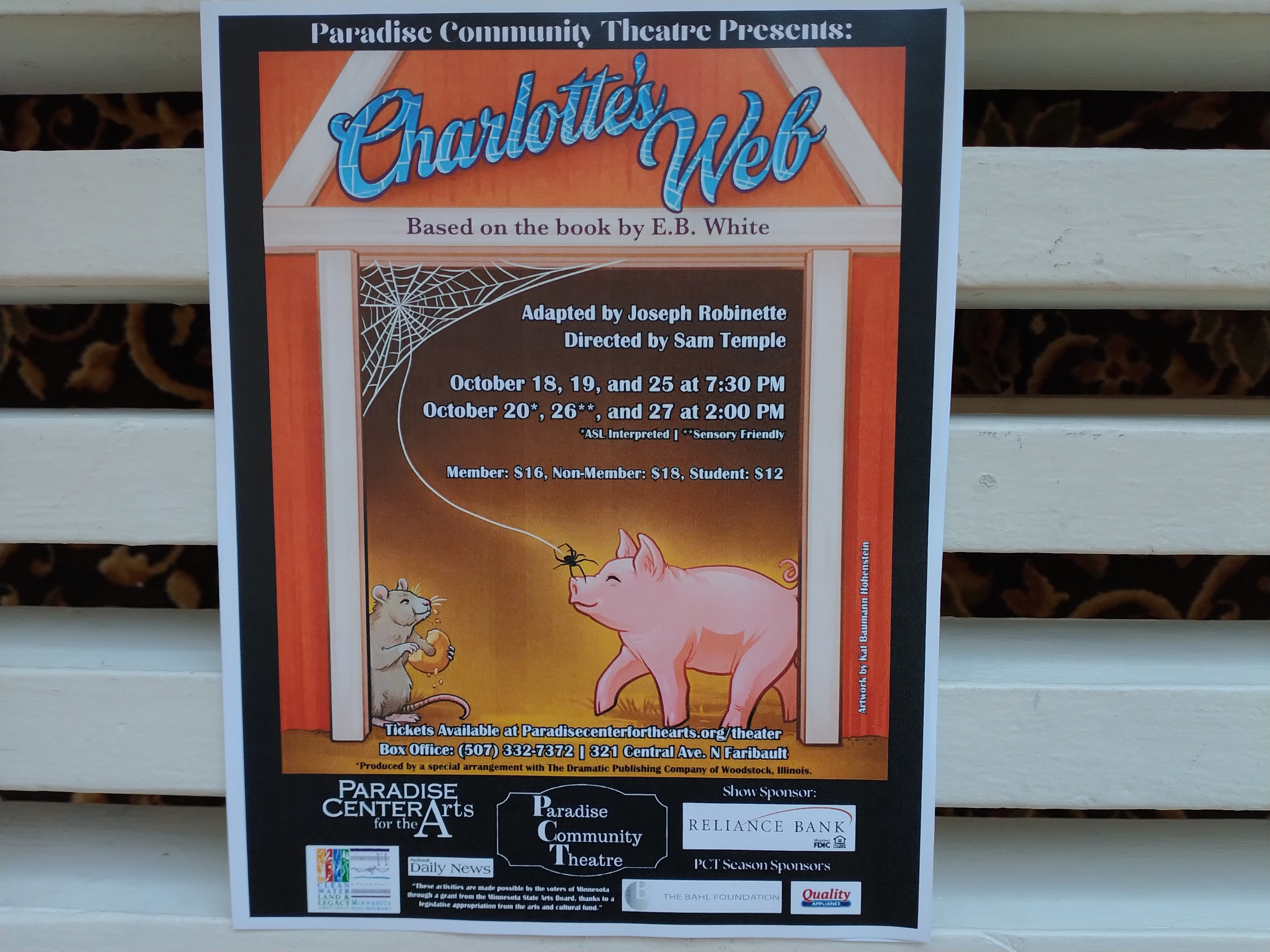
The promotional poster for the local production of “Charlotte’s Web.” (Minnesota Prairie Roots copyrighted photo October 2024)

THE CLASSIC CHILDREN’S BOOK, Charlotte’s Web, comes alive at the Paradise Center for the Arts in Faribault beginning Friday evening, October 18. I was among a theater full of guests who attended the final dress rehearsal on Thursday. Tickets are selling quickly for the six performances. That’s no surprise given the popularity of the Newbery Honor book penned in 1952 by E.B. White and illustrated by Garth Williams (of Laura Ingalls Wilder illustration notoriety). The book holds universal, long-lasting appeal.

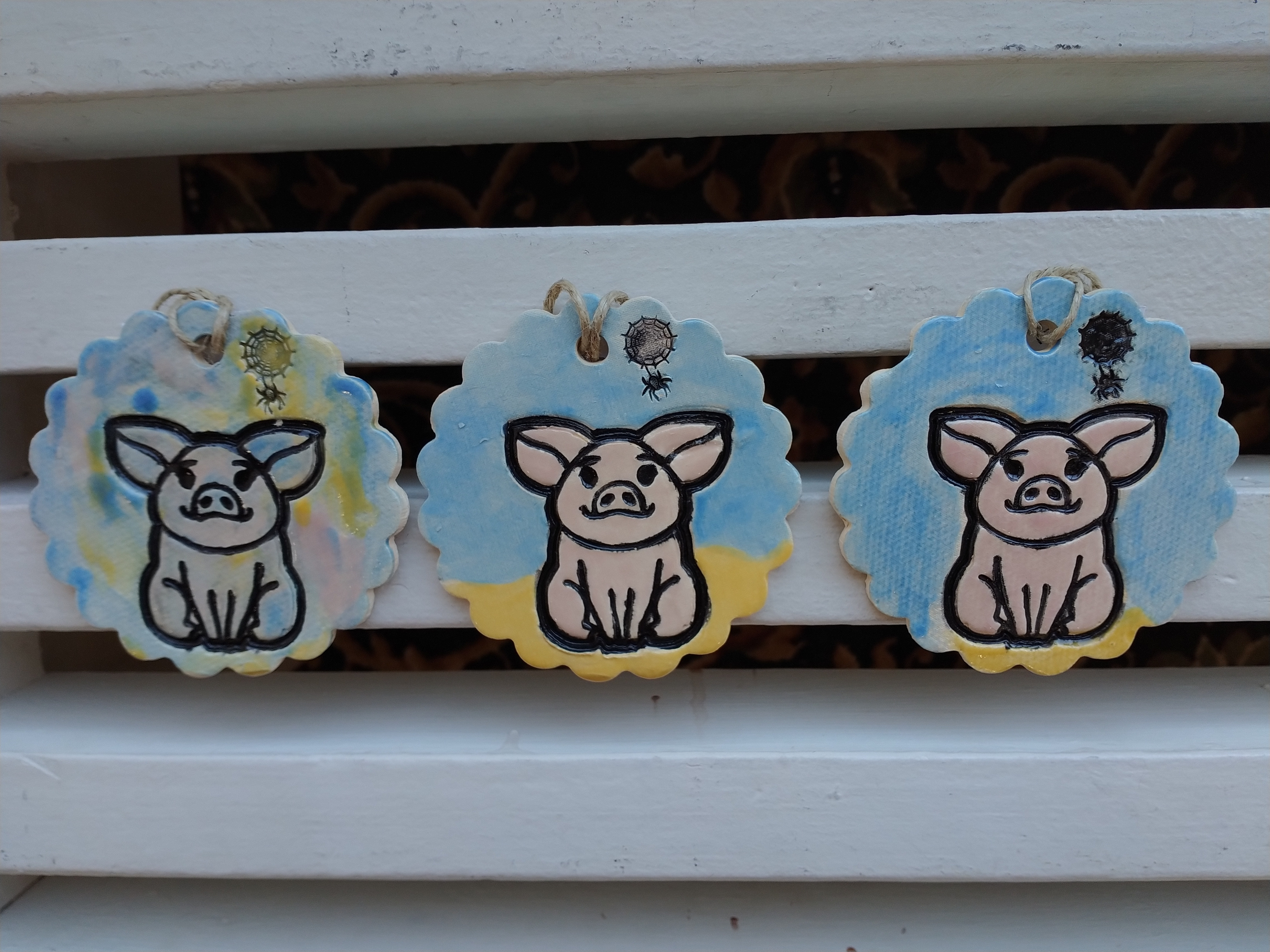
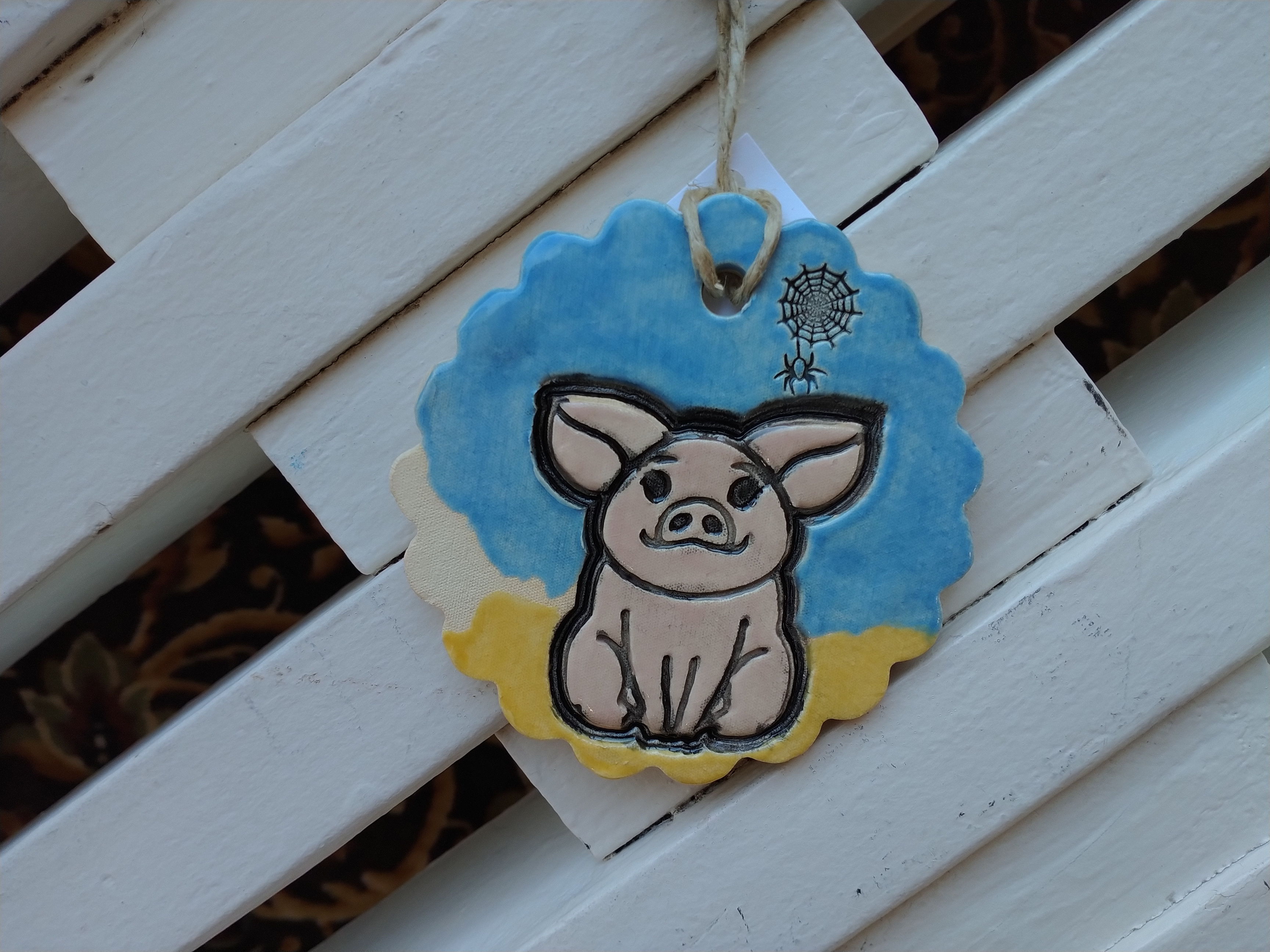
Children and their families glazed these Wilbur medallions at the Paradise Center for the Arts during a special event with funding from a Faribault Foundation micro community grant. Participating kids also got free tickets to the play. (Minnesota Prairie Roots copyrighted photo October 2024)

To see White’s story about Wilbur the pig, Charlotte the spider and Fern, the young girl who loved them both, played out on stage proved entertaining and enjoyable. Entertaining in how the play was presented by a talented Paradise Community Theatre cast of nearly 30 ranging from newbies to seasoned performers of multiple generations. Enjoyable in that a good retelling of a classic book which sticks to the story line is always a delight.

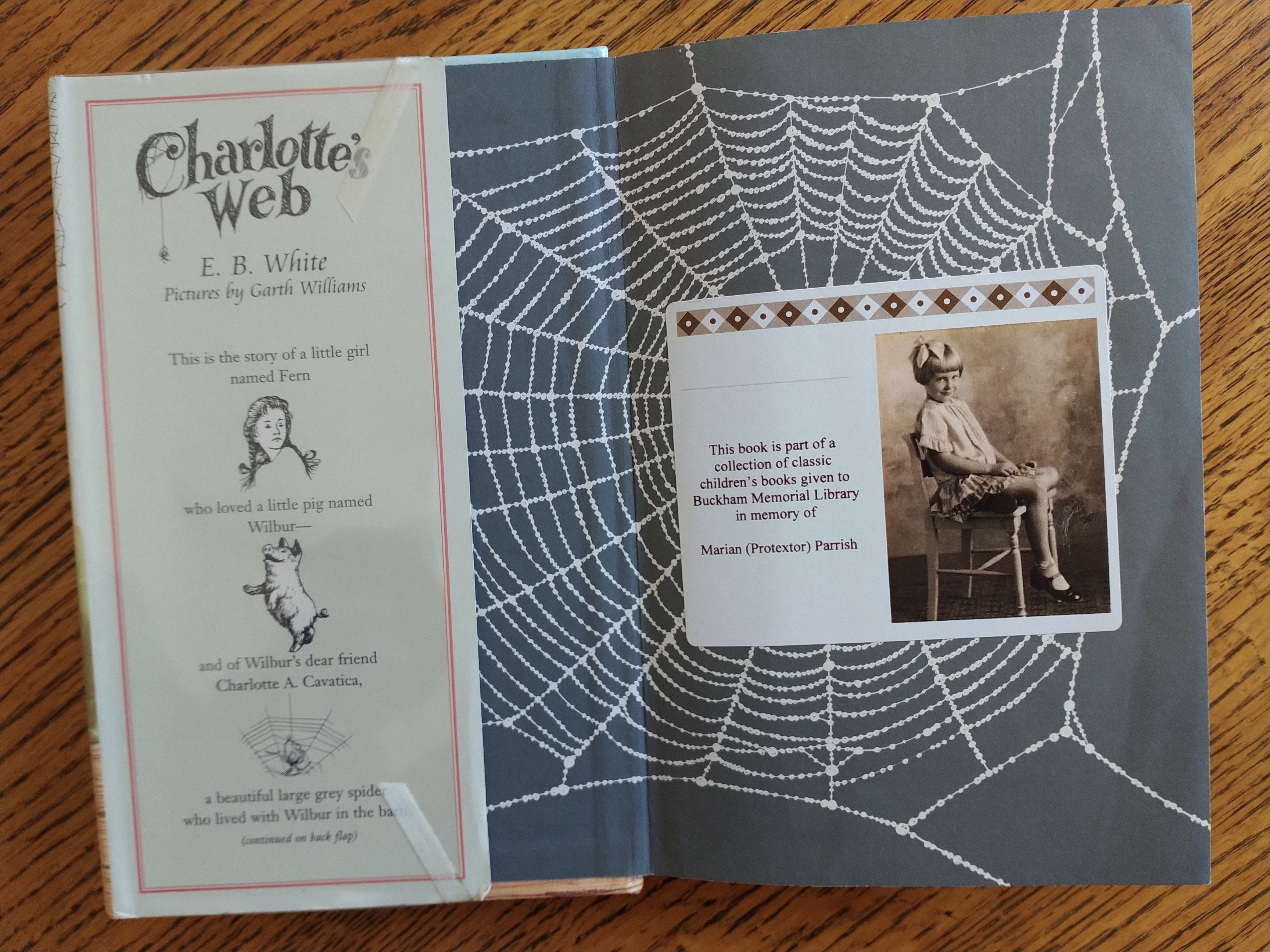
I found this personalized book plate inside a copy of “Charlotte’s Web” at Buckham Memorial Library, Faribault. (Minnesota Prairie Roots copyrighted photo October 2024)

Sam Temple, himself a seasoned actor, directed the play, assisted by his mom, Linda Temple. As Sam shares the Temple family backstory, Charlotte’s Web is his mom’s favorite book, one she read repeatedly as a farm girl and then later read with students in her classroom. Sam grew up knowing Wilbur, Charlotte and Fern. That personal connection, that love of the book, shows in the performance.

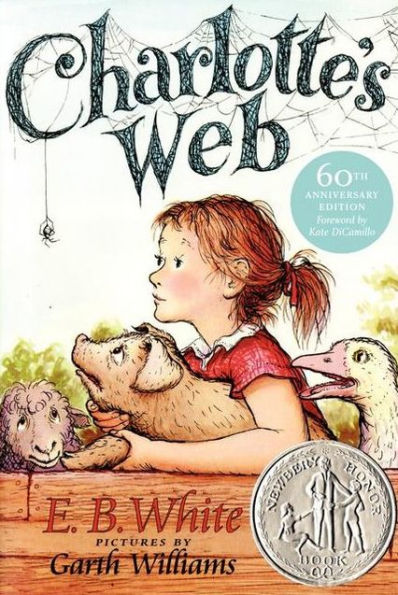
(Book cover image sourced online)

The part that really stood out for me is the incorporation of digital technology with pages from the book projected onto a screen behind the performers. Those pages, sometimes text only, other times illustrations only, drew me into the book as did occasional narrated excerpts. This truly was literary, visual and performing arts melding to create a unique, immersive experience. Add in the superior surround sound (complete with chirping crickets) and performers sometimes acting in the theater aisles, and I felt very much a part of the story. I was there in the barn, at the county fair, the settings for the two-act, nearly 90-minute play.

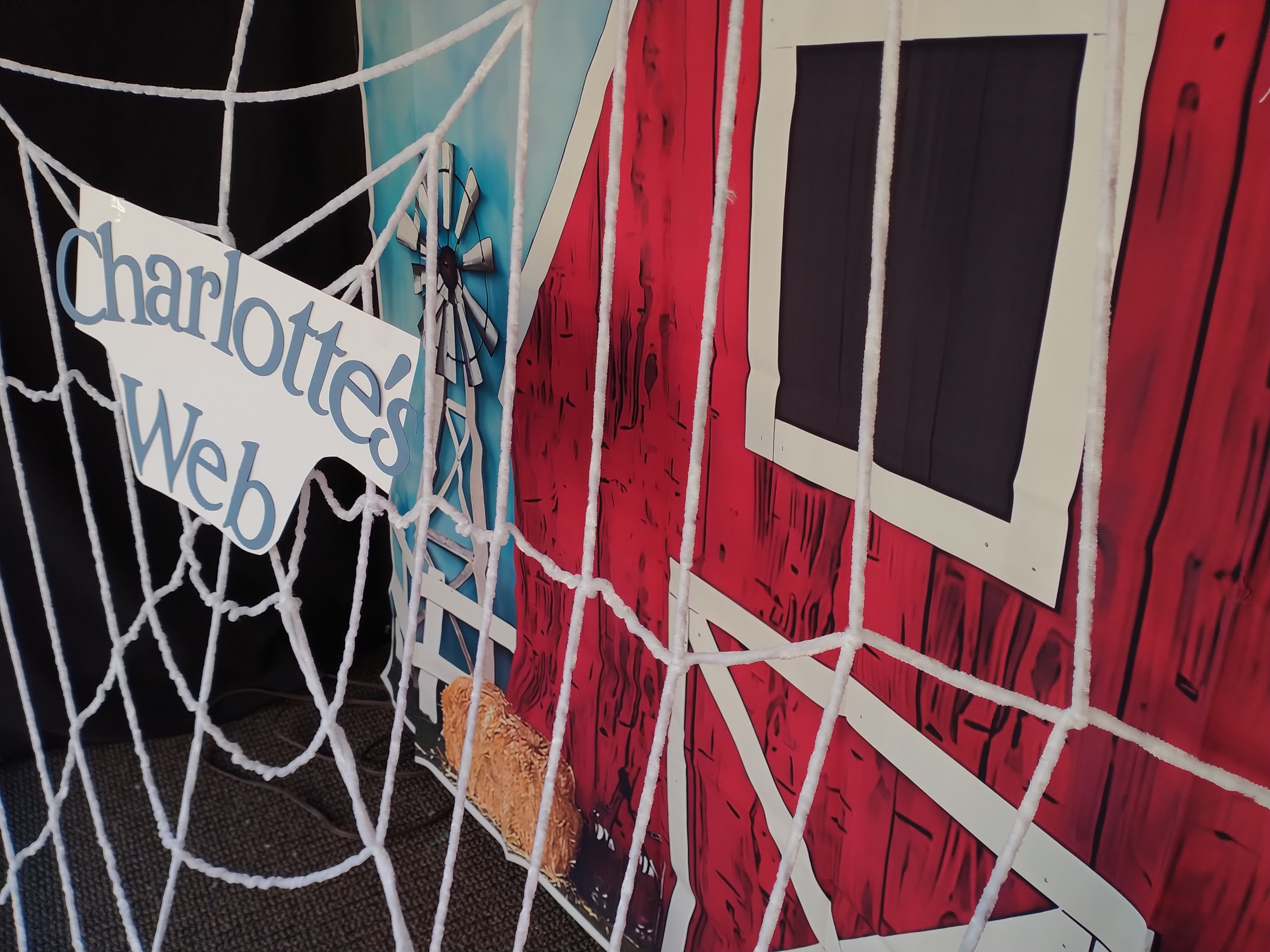
A section of the PCA window display promoting the local production. (Minnesota Prairie Roots copyrighted photo October 2024)

The story of Charlotte’s Web, at its core, is about friendship. Charlotte spins words into her webs in an effort to save Wilbur, her new barn friend, from slaughter. The word-filled webs become a local attraction and Wilbur’s life is eventually spared.

The handcrafted medallion depicts the friendship between Wilbur and Charlotte. (Minnesota Prairie Roots copyrighted photo October 2024)

Words. As I, a wordsmith, sat in my theater seat listening to the words spoken/read on stage, jotting some in my notebook, I contemplated how much words matter. Charlotte wove “Some pig,” “terrific,” “radiant,” “humble” into her webs. Powerful words. Words with depth. Words worth pondering. Especially today, when negative and degrading words often fly too easily. I couldn’t help but note the arrogance of self-centered Uncle, a pig vying against Wilbur for a blue ribbon at the county fair. He was decidedly full of himself.

For a while, I thought the same of Templeton, a main character in the book and play. But then I changed my mind, considering the barn rat more confident than self-centered. I found myself really liking this outspoken, sly, even funny, character who assisted Charlotte by finding words for her to weave into her webs. Friendships developed inside the barn, home to pig and spider, rat and geese, lamb and sheep.

Mostly, this play is about friendship. At show’s end, Fern calls Charlotte “a true friend and a good writer” who taught her bravery. But this play is also about acceptance. When Charlotte experienced an adverse reaction to revealing that she eats flies, she stood up for herself. “That’s the way I’m made,” Charlotte told her friends. “I can’t help it.” How wise that spider.

And then this line from Charlotte resonated: “People are not as smart as bugs.”

This play by the Paradise Community Theatre really does appeal to all ages. Kids may not catch everything we adults do. But that’s OK. Perhaps they shouldn’t. They have their entire lives to figure out that life is much more complicated than simply a story about a spider, a pig and the girl who loved them.

© Copyright 2024 Audrey Kletscher Helbling
 

In which I meet Adolfo, Jose & little Milan October 17, 2024

Filed under: Uncategorized — Audrey Kletscher Helbling @ 5:00 AM
Tags: , , , , , , , , , ,
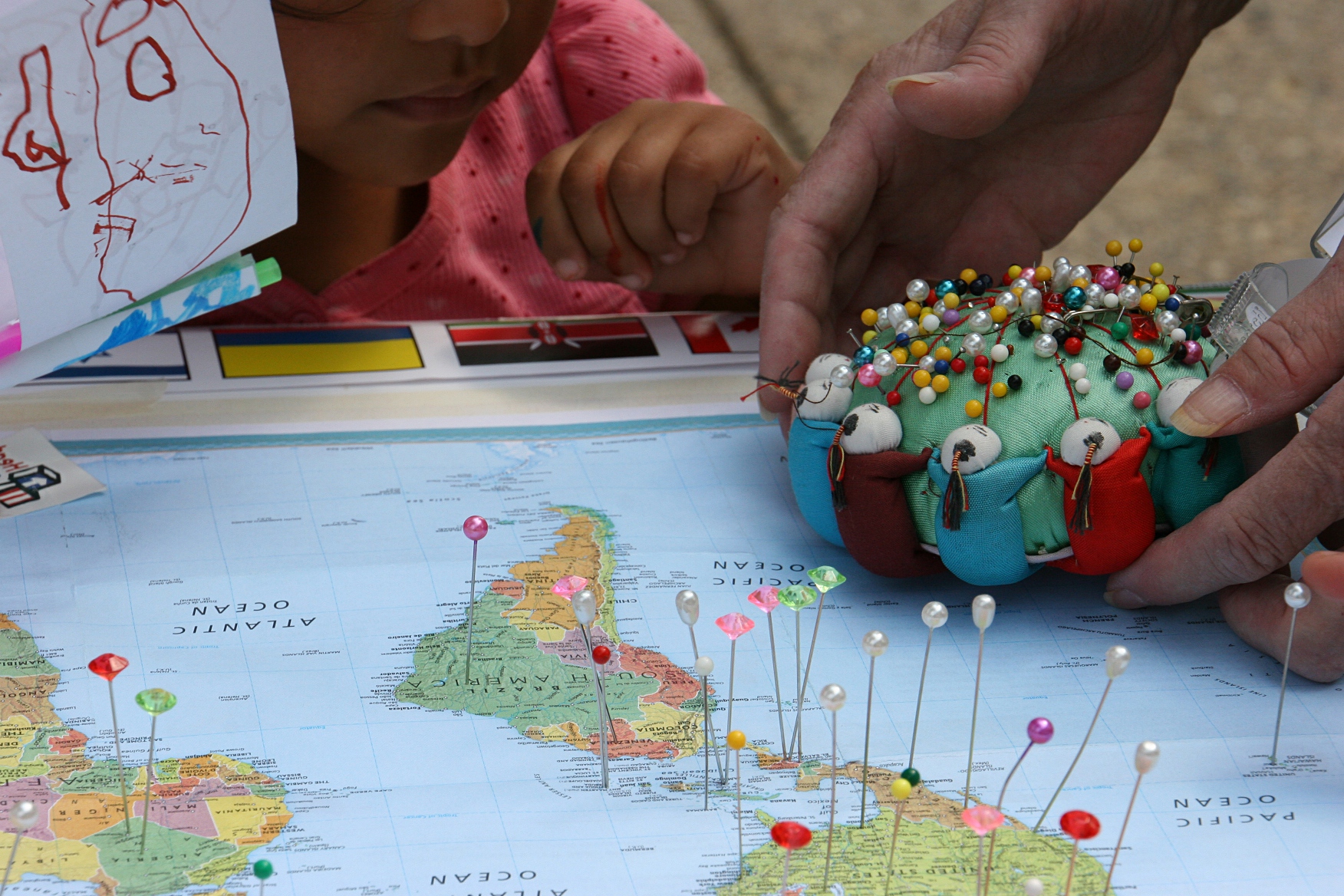
Faribault is home to people from many countries as noted on this interactive map at a past International Festival in Faribault. (Minnesota Prairie Roots copyrighted file photo)

TWO DAYS. TWO CONVERSATIONS. And I am the richer for meeting Adolfo and Jose and hearing their stories.

I should backtrack a bit and state that for me to strike up conversations with people I don’t know is not unusual. Such interactions widen my world, broaden my understanding and simply help me learn more about others.

It was little Milan, Adolfo’s one-year-old grandson, who initially drew me to pause during a morning walk through Faribault’s Central Park. Adolfo was pushing Milan in an umbrella stroller when Randy and I crossed paths with them. Milan, with his big brown eyes, black hair and radiant smile, is the essence of cuteness. Cute babies and kids are always a reason to stop and chat.

The pair walk through the park every morning as Adolfo cares for Milan while his mom is at work. I don’t recall whether Mom is Adolfo’s daughter or daughter-in-law. Doesn’t matter. What matters is the deep love Adolfo has for family and his willingness to care for his grandson before heading to work in the afternoon.

Kids used markers to create flags from their native countries while attending the local International Festival. (Minnesota Prairie Roots copyrighted file photo)

ESCAPING COMMUNIST VENEZUELA

I asked Adolfo about his background, what brought him to Faribault. He moved here from Orlando to be with family. But he’s originally from Venezuela. His home country, he said, is not a good place to live. The reason: Communism and violence. He left family behind and desperately wants them here, safe in America.

By that time, little Milan was out of his stroller, pushing it, then dropping to the ground, his pants covered in bits of dried leaves, his tiny hands clasping two Matchbox cars. He is close to walking alone. Milan proved a distraction from the deep pain Adolfo obviously feels separated from his family still in Venezuela.

“We’re so happy to have you here,” I told my new friend. And I genuinely meant that as my heart hurt for this man who has endured so much already.

“God bless you,” Adolfo said, as he made the sign of the cross, held his hands to his heart.

Adolfo repeated our names several times, clearly an effort on his part to remember them. I repeated his, too, and Milan’s, and wished I knew Spanish. Adolfo spoke Spanish to Milan, who is being raised bilingual. What a gift to that little boy with the big brown eyes, with the loving family, with the Grandpa whom I consider kind, caring, loving and brave.

Children gather at Faribault’s Central Park to break a pinata during an International Festival. This photo placed first in a local photo contest and remains one of my favorite. I love that it reflects the diversity of Faribault and shows kids simply being kids with no thought of ethnicity. (Minnesota Prairie Roots copyrighted file photo)

FINDING A WELCOMING NEW HOME IN RURAL MINNESOTA

A day later I met Jose, a young man taking his lunch break at a park near Montgomery. He was working there for the Le Sueur County park system. Jose moved to nearby Le Center 15 years ago, having lived in California, Texas and Mexico. Like Adolfo, Jose is grateful to be here, with family. I told him how happy I am to have him living in Minnesota.

It didn’t take long before he opened up about how much he feels welcomed here, how he’s learned to love our four seasons, even winter. Jose shared about learning to drive in winter. And then he recounted being “baptized by black ice.” He walked onto the unseen ice and found himself flailing backwards. This part of Jose’s story included theatrical actions that left all of us laughing.

What a delightful young man. He’s hardworking, loves his family and likes living in a rural area. To hear that he’s found Minnesotans to be friendly pleases me. The reality is that not everyone welcomes individuals like Jose and Adolfo. I do.

I am the richer for having met these two men, whose life experiences and stories are vastly different than mine. Yet, we are the same. We have families and heartaches and hopes and dreams. That commonality connects us. And so does our humanity.

© Copyright 2024 Audrey Kletscher Helbling
 

Driving through the southern Minnesota countryside on an autumn day October 16, 2024

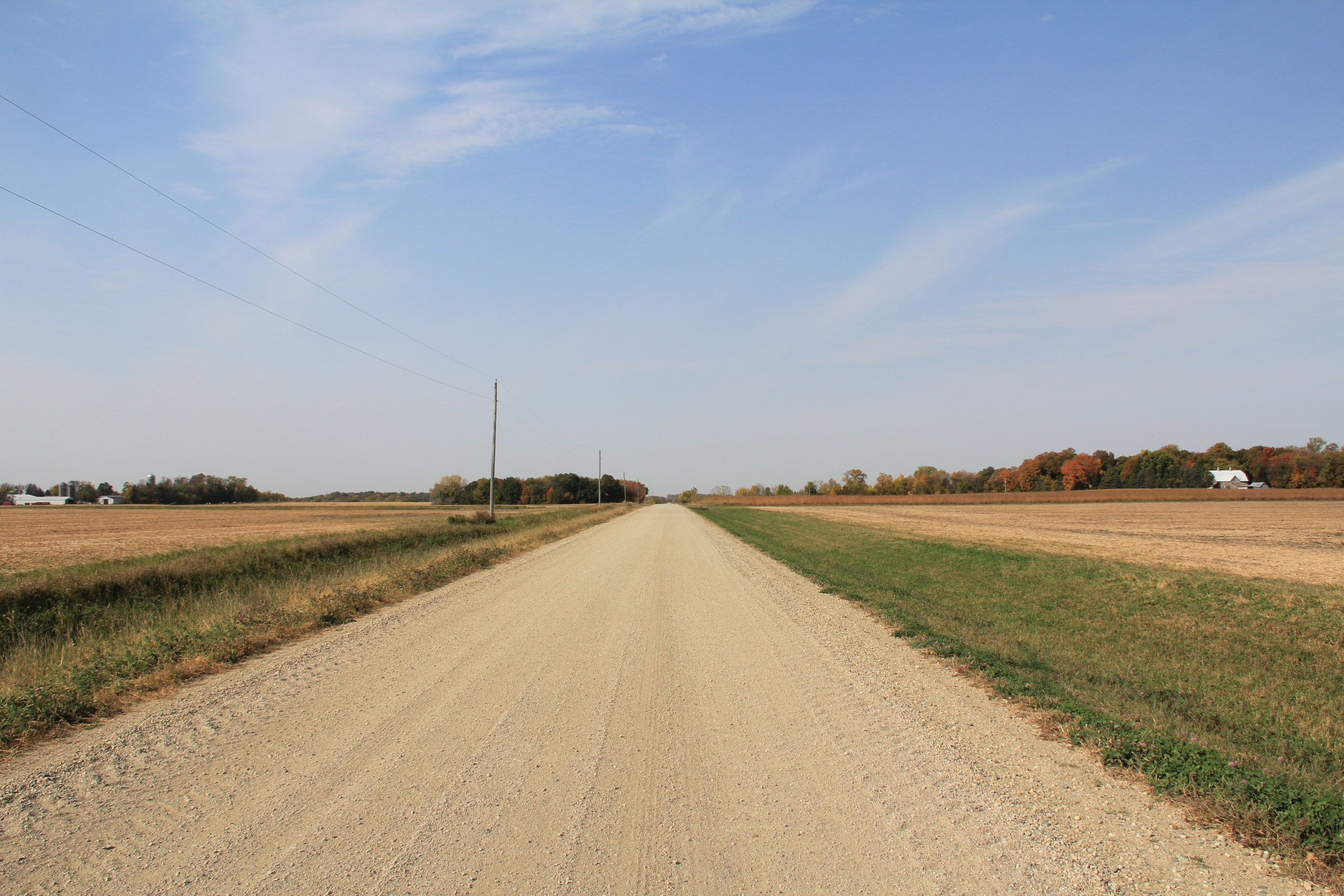
We followed roads west of Faribault toward the Kilkenny and Montgomery areas. I gave up trying to keep track of where we were. (Minnesota Prairie Roots copyrighted photo October 2024)

THE WHEELS KICKED UP DUST as our van moved along back gravel roads in Rice and Le Sueur counties on a recent weekday. Randy and I were on a fall color drive that took us past cornfields and farm sites, past woods and wetlands, past trees blazing orange and those still green.

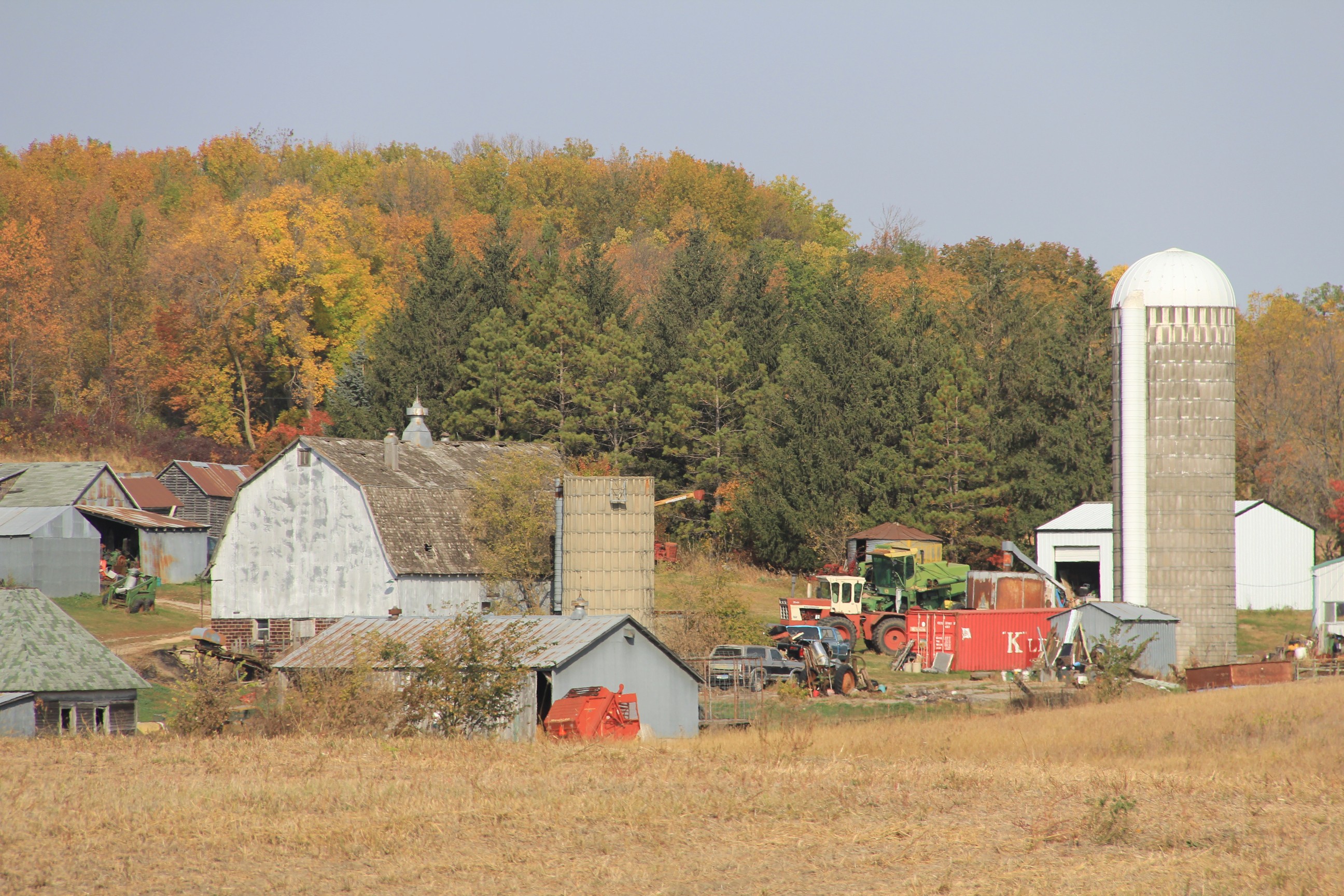
This farm site sits along Leroy Avenue, just off 160th St. W. between Shieldsville and Kilkenny. (Minnesota Prairie Roots copyrighted photo October 2024)

As we wound our way along winding roads and along straight grids west of Faribault, I felt what I always feel this time of year—a longing for the land. In this season of harvest, this season of leaves coloring the landscape, I yearn to connect with the soil, the earth, the agrarian heritage that roots me.

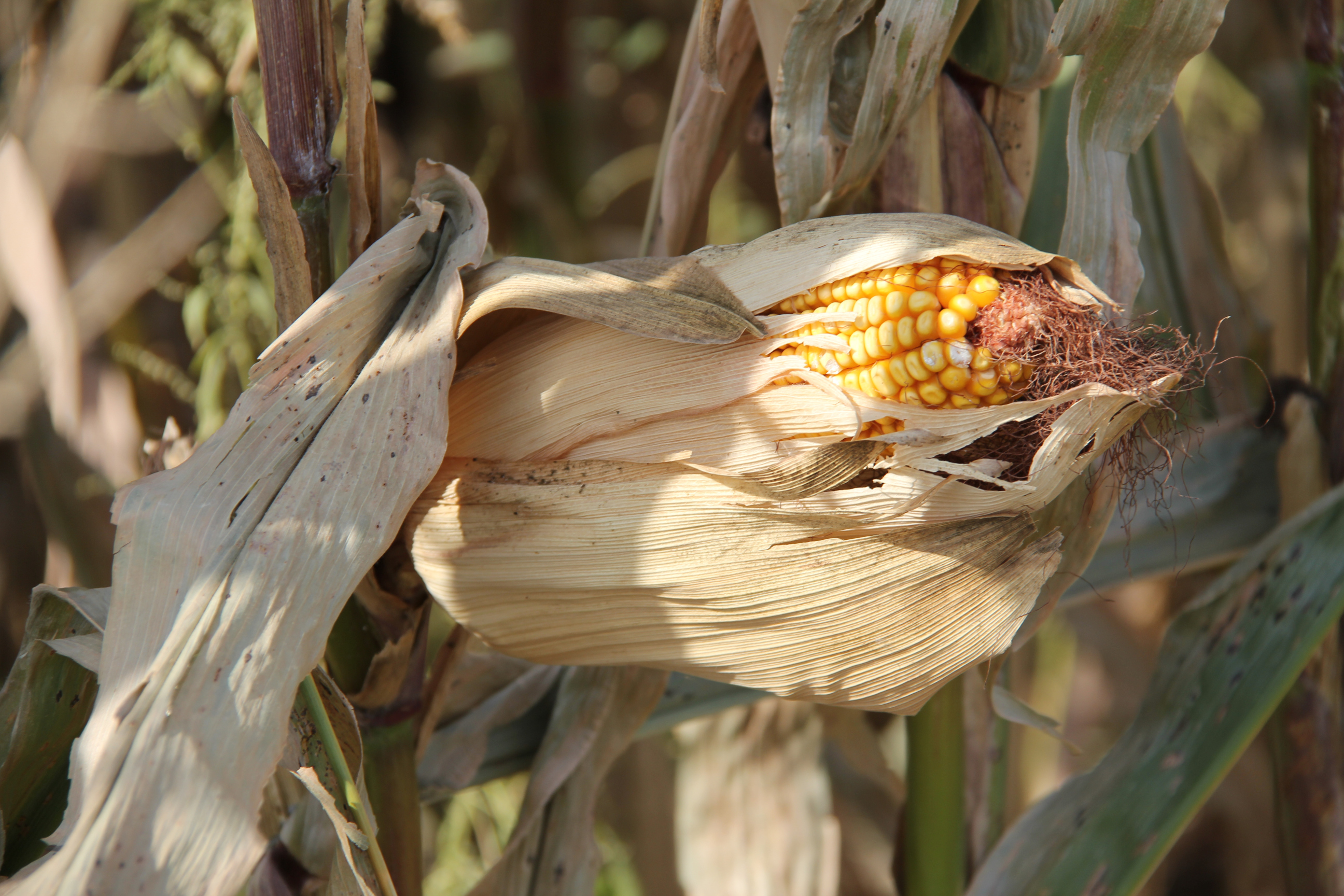
Corn awaits harvesting. (Minnesota Prairie Roots copyrighted photo October 2024)

I miss the land. I miss the roar of combines harvesting corn and soybeans, golden grain spilling into wagons or trucks. I miss the distinct, indescribable scent of autumn rising from fields. I miss all of it. A country drive in October helps ease the heartache of one who grew up on a farm, but left it fifty years ago.

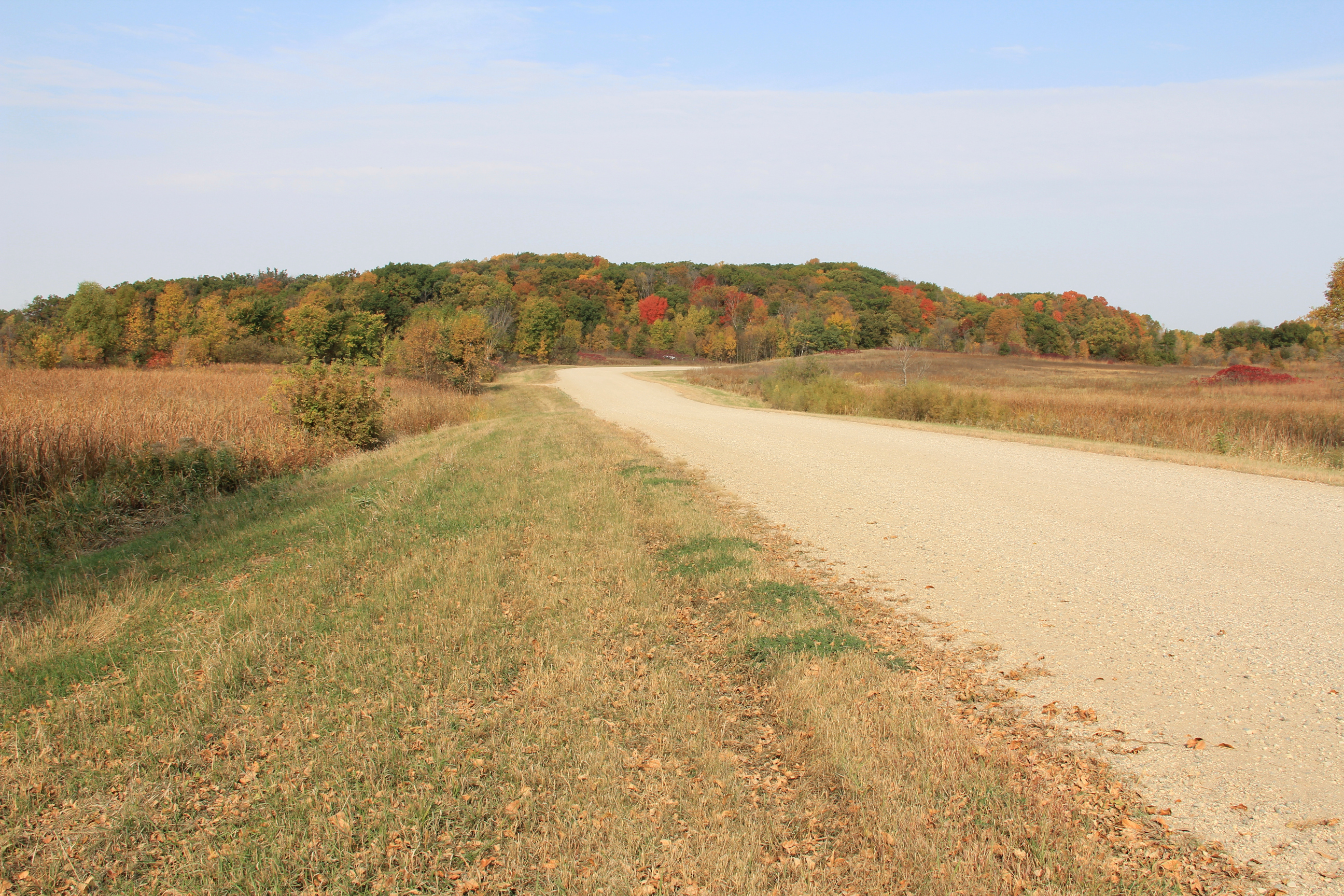
This curving gravel road took us past wooded hillsides and a wetlands restoration area. (Minnesota Prairie Roots copyrighted photo October 2024)

This is the time of year, whether you’re rural, small town or city-raised, to take a drive into the countryside. Off paved roads. Onto gravel routes.

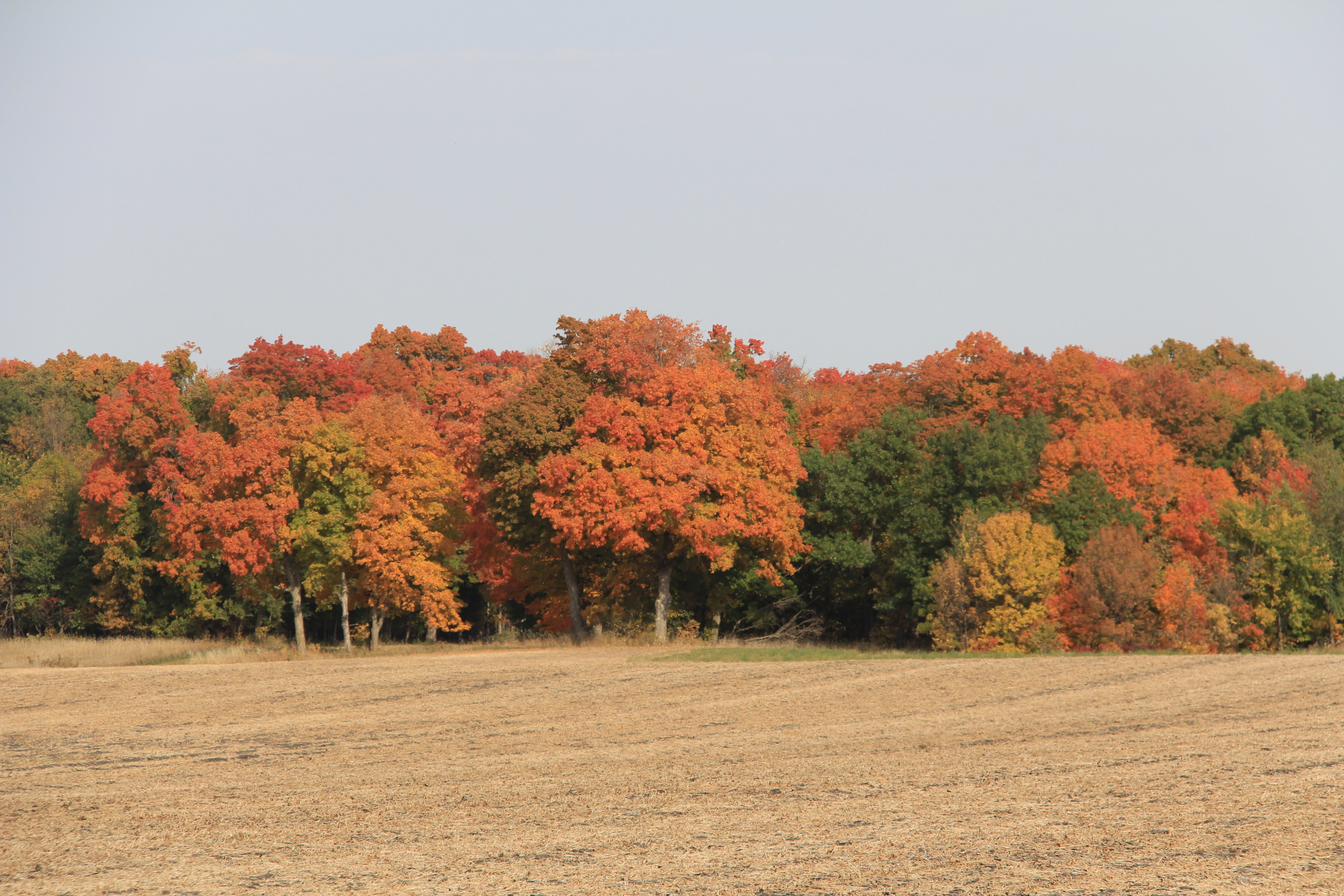
Some treelines were vivid with color, others not. (Minnesota Prairie Roots copyrighted photo October 2024)
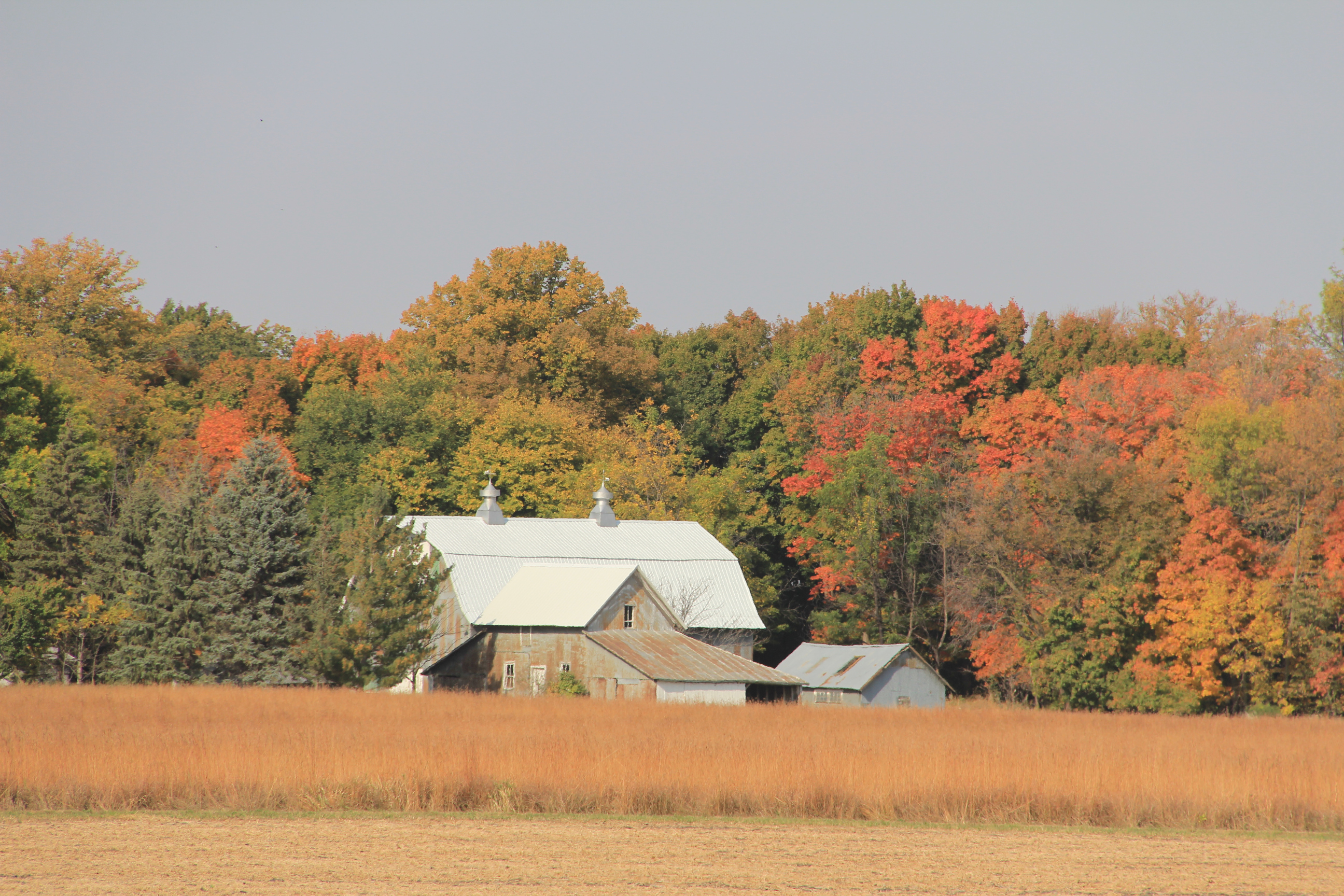
I am always drawn to barns rising above the landscape. (Minnesota Prairie Roots copyrighted photo October 2024)
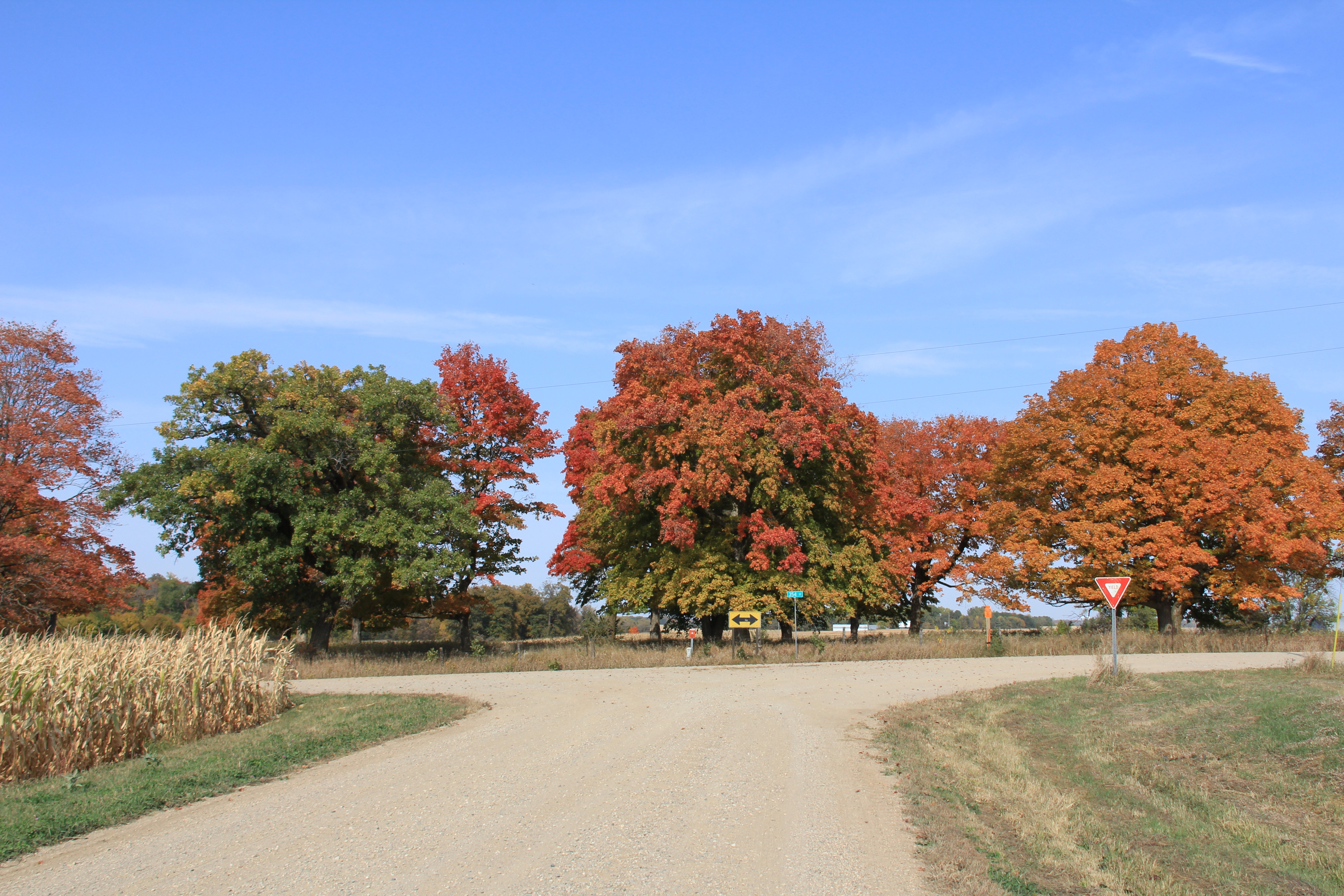
A rural intersection ablaze in color. (Minnesota Prairie Roots copyrighted photo October 2024)

Gravel forces a slower pace, offers opportunities to stop and appreciate that which unfolds before you. On this drive, it was the coloring of trees, just beginning, aged farm sites back-dropped by woods or surrounded by fields. Just being here in the rural-ness honored my past, filled my soul.

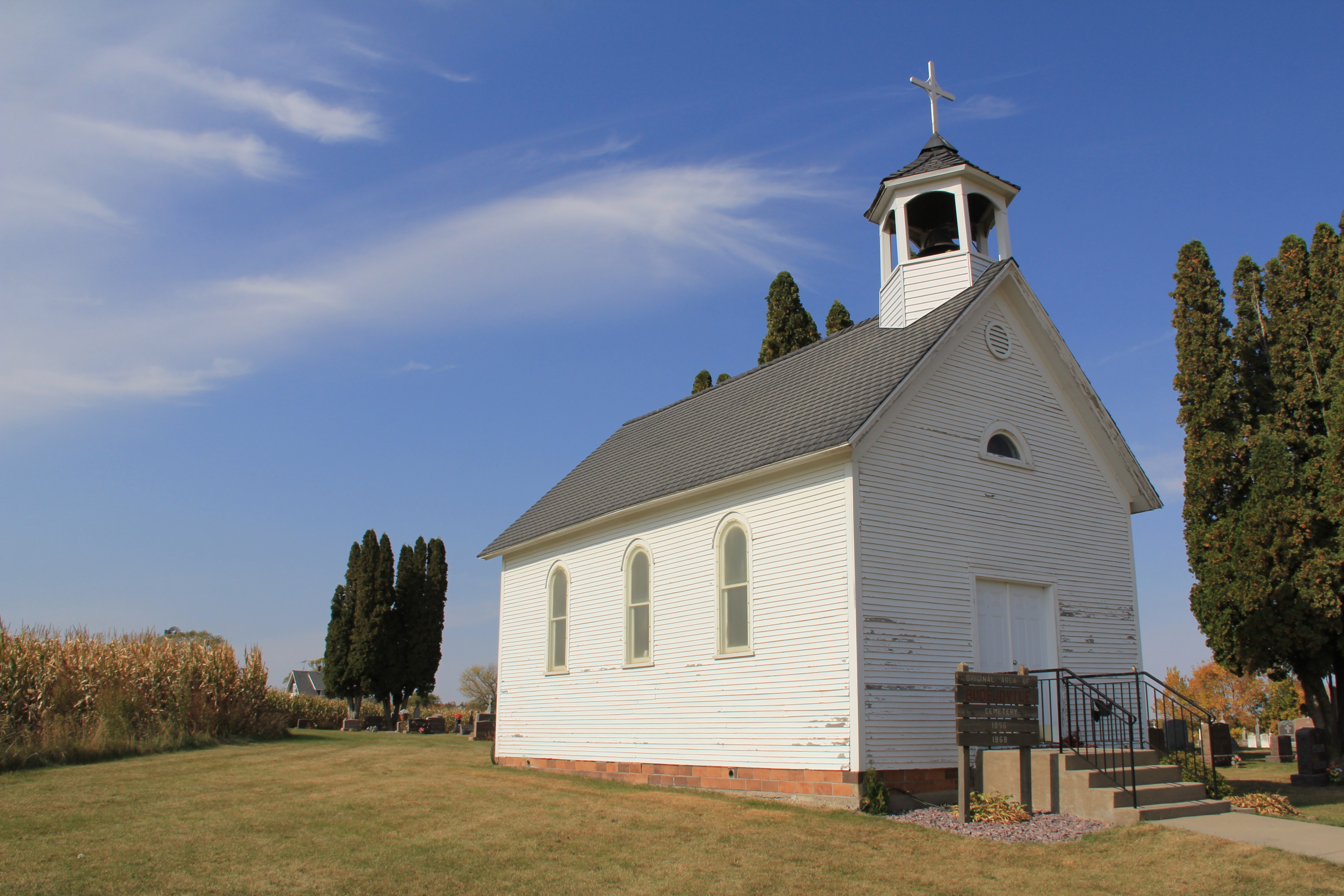
A Czech church and cemetery west of Montgomery. (Minnesota Prairie Roots copyrighted photo October 2024)

And then we paused at an historic country church nestled among cornfields near Montgomery. We walked the expansive cemetery. As I meandered and took photos, I heard the wind rustling the dried corn leaves, a comforting sound in the silence of the land.

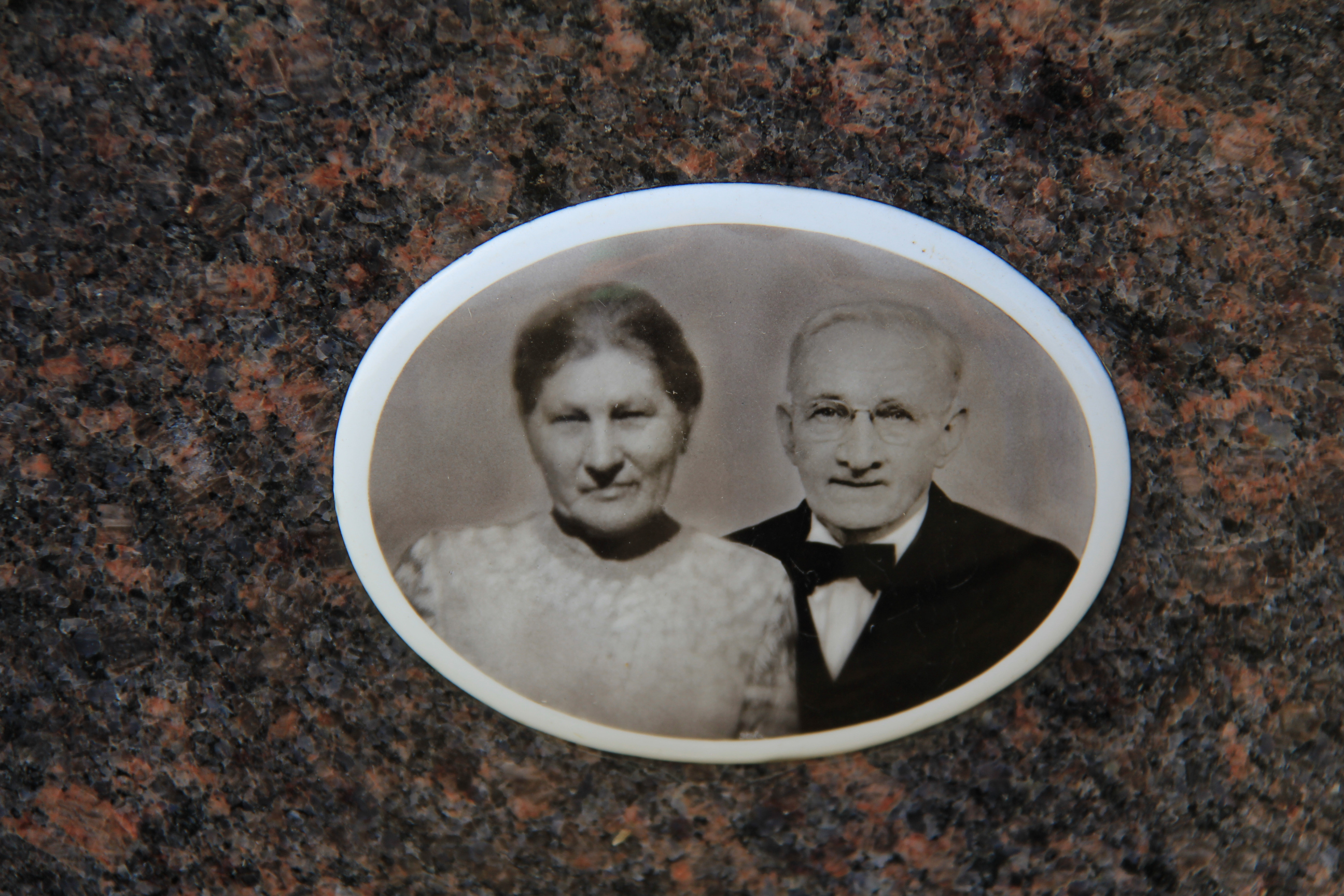
Anna and John Frolik are among the early settlers buried at Budejovice. They were born in 1886 and 1887. Their photos adorn their tombstone. (Minnesota Prairie Roots copyrighted photo October 2024)

I wondered about the Czech immigrants who settled in the area, built Budejovice Church in 1868. What were their heartaches, their stories, their hopes and dreams? I expect they longed for the Old Country, for the familiarity of home, for the loved ones an ocean away.

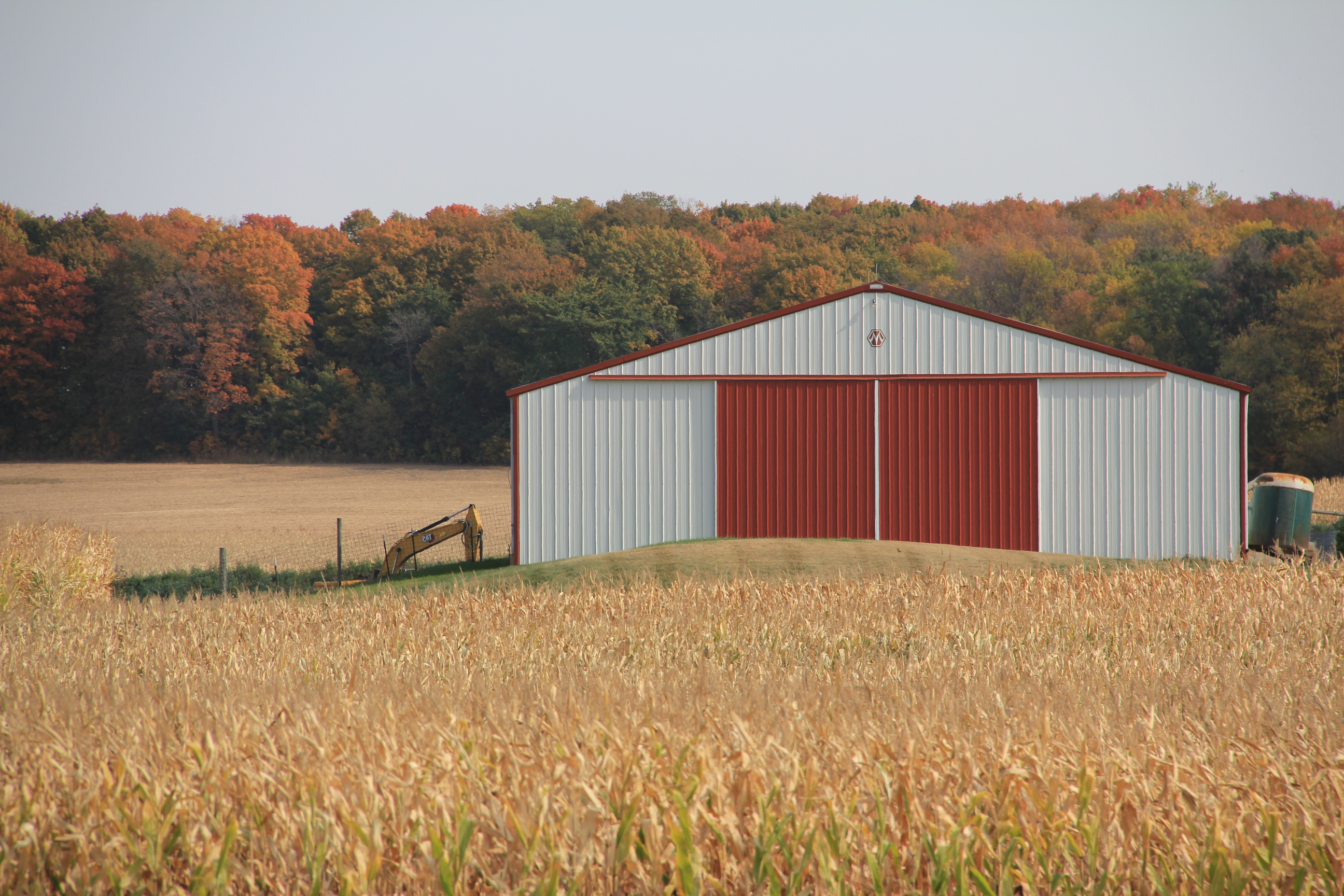
This machine shed, surrounded by cornfields, sits just across the gravel road from the church and cemetery. (Minnesota Prairie Roots copyrighted photo October 2024)

Such thoughts filter through my mind whenever I am among the souls of the departed, my soles touching the land under which they lie buried. I don’t feel sadness as much as a sense of respect for those who came before me, who forged a new life in Minnesota with grit, determination and a whole lot of fortitude.

Cornfields flank a gravel road leading to a colorful treeline. (Minnesota Prairie Roots copyrighted photo October 2024)

Driving the countryside in autumn evokes not only nostalgia and reflection, but also a sense of time passing. Leaves turn color. Crops morph to golden hues, ready for harvest, or already harvested. And dust rises from the land, carried on the wind, coating our van. Miles and miles and miles of gravel roads behind us, we arrive home. I’m exhausted. My shoes are covered in dust. But I feel content. Replenished. I needed this, this country drive that was about much more than viewing fall colors. It was also about filling my soul.

© Copyright 2024 Audrey Kletscher Helbling
 

White Cane Day & more focus Faribault Lions as they serve October 15, 2024

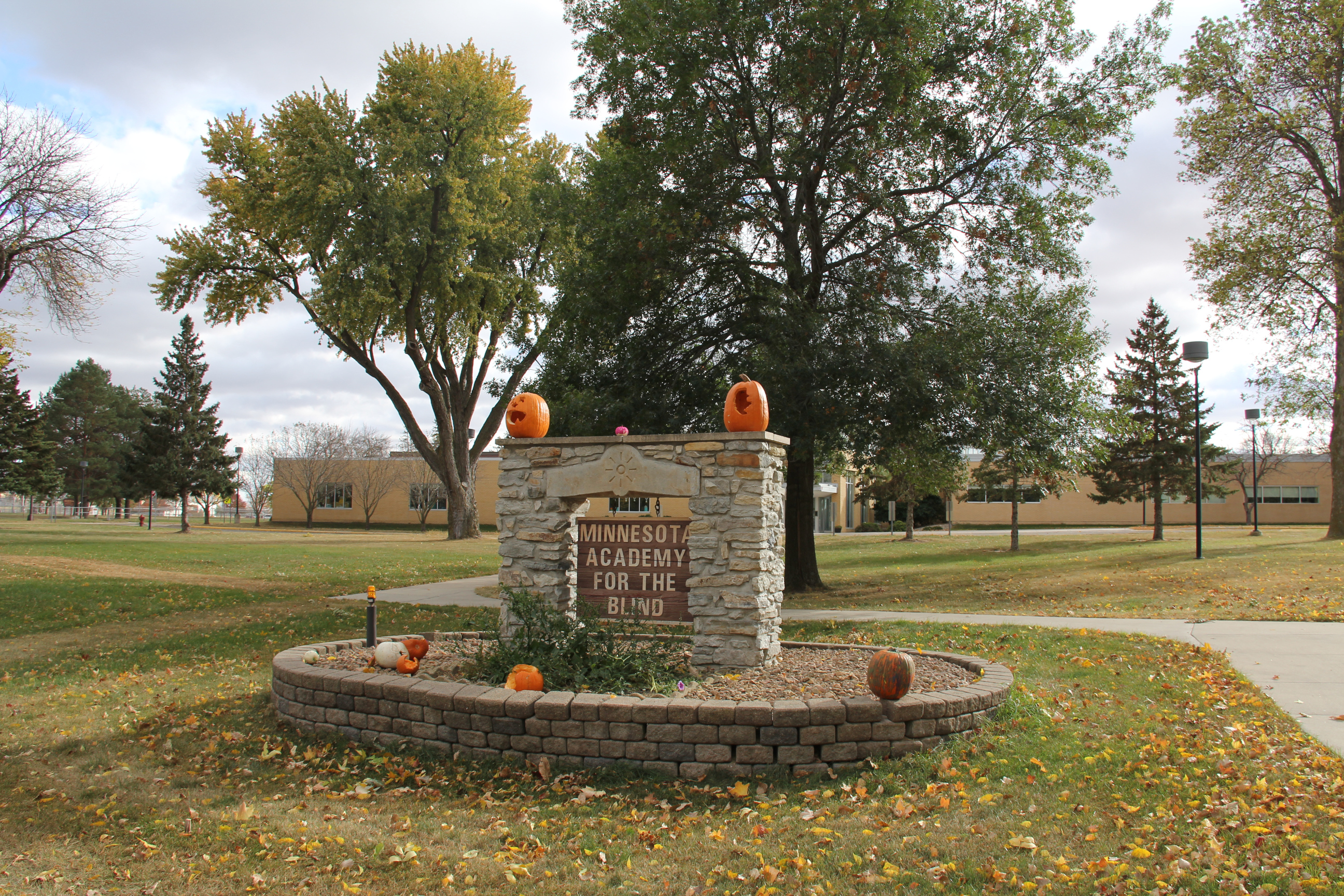
The entrance to the Minnesota State Academy for the Blind, located on Faribault’s east side. (Minnesota Prairie Roots copyrighted photo October 2024)

AS SOMEONE WHO DEALS with vision and hearing impairments, I feel fortunate to live in a community with a heightened awareness of those issues. Faribault is home to the Minnesota State Academies for the Deaf and Blind. Medical professionals offer local care in vision and hearing. And the Faribault Lions Club, focused on both, is especially active.

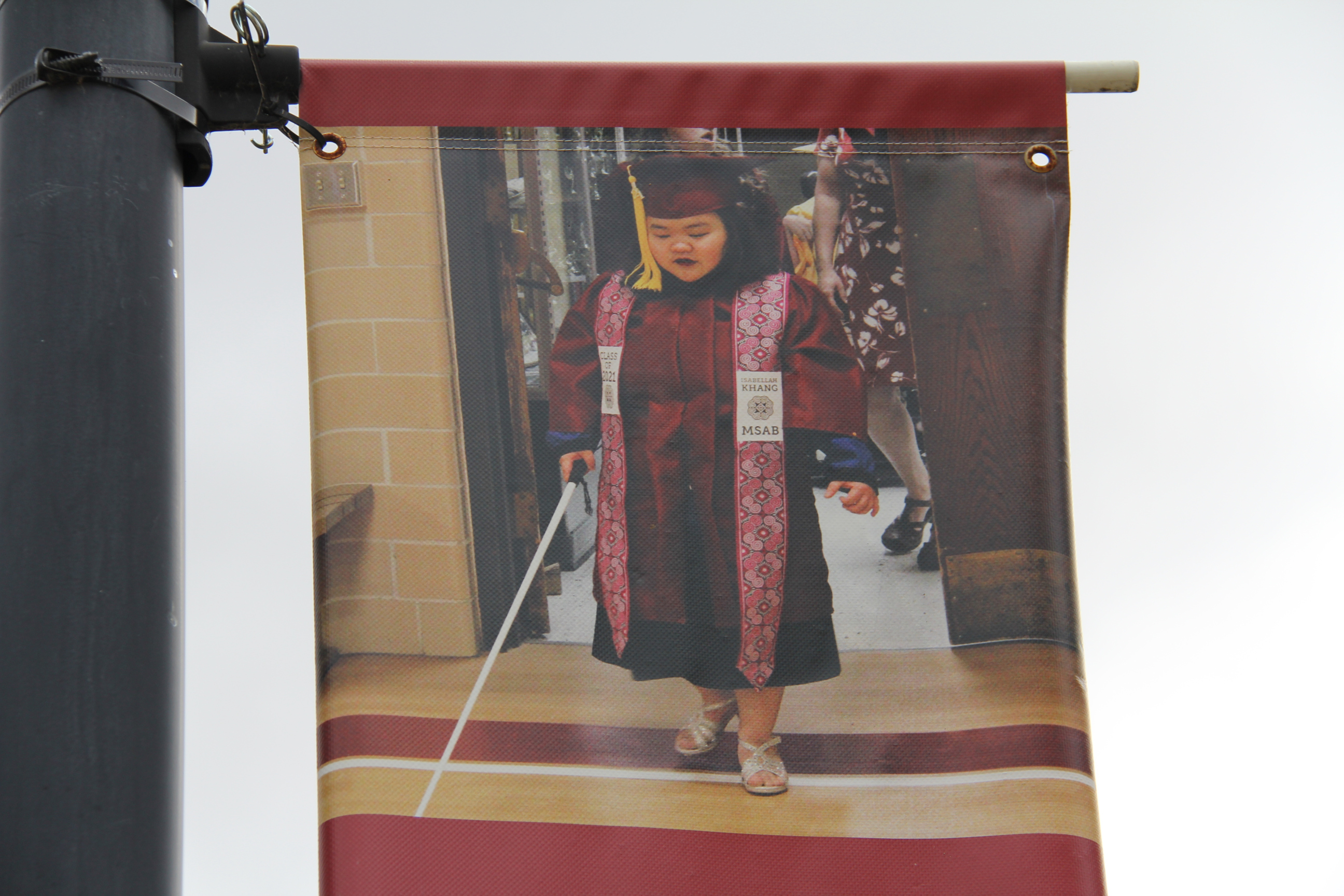
Pictures of MSAB students are featured on banners scattered around the campus. This one highlights a graduate. (Minnesota Prairie Roots copyrighted photo October 2024)

And that is why I met local Lion John Battles and learned about White Cane Awareness Day, celebrated annually on October 15. Battles was standing inside the exit area of Fareway Foods handing out information about white canes and collecting donations. Those monies will help blind and visually impaired individuals deal with mobility issues. For example, past gifts have been used to purchase canes and/or replacement tips for students at MSAB.

I underwent eye muscle surgery as a child and then again 64 years later, this time using an adjustable suture in my left eye. (Minnesota Prairie Roots copyrighted file photo 2023)

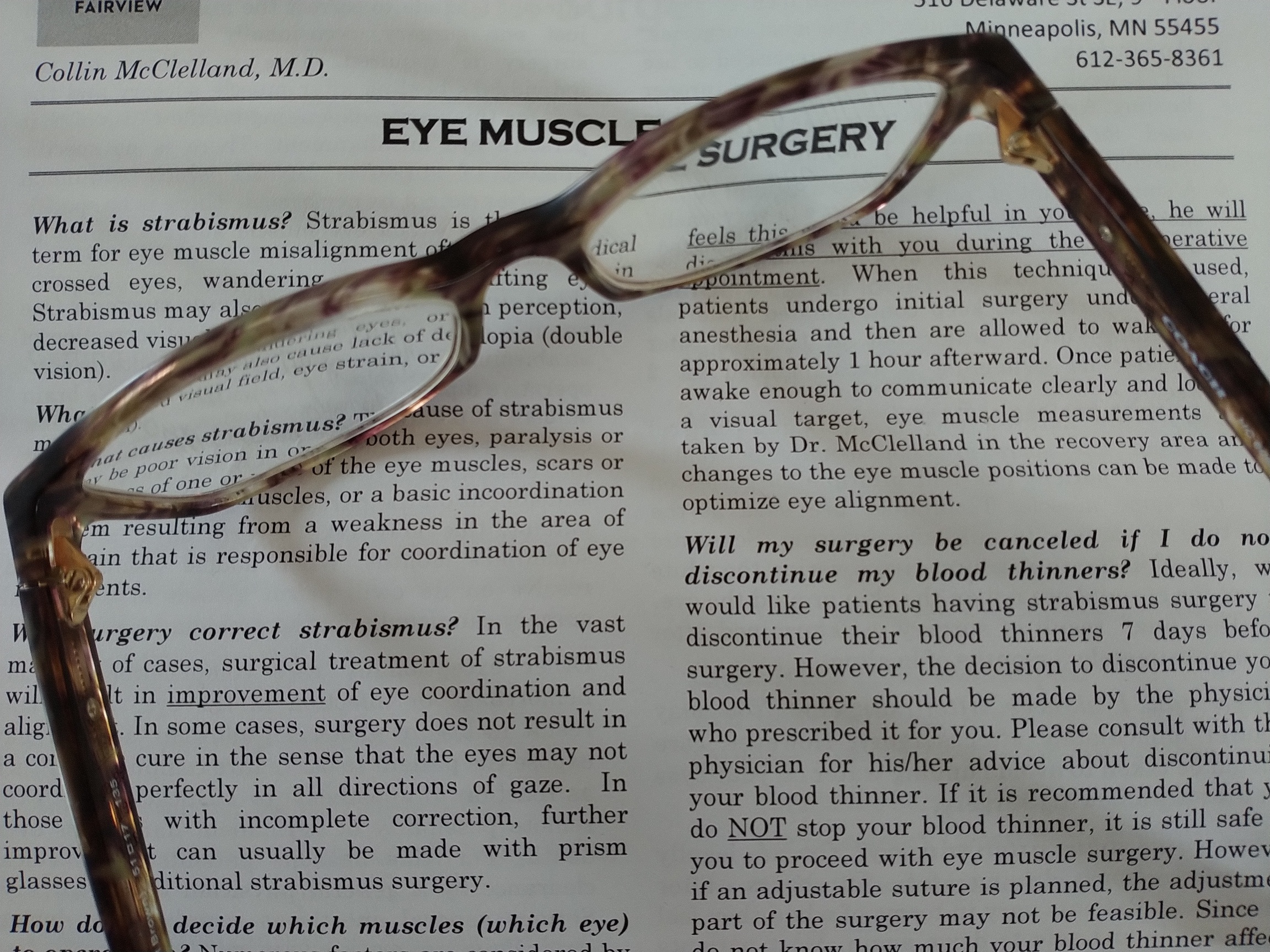
I paused to drop money into John’s bucket and also to chat a bit about the Lions’ work and my own struggles with vision. I’ve been diagnosed with bilateral strabismus and in January underwent surgery to realign my eyes with the goal of eliminating my double vision. Unfortunately, the corrective surgery did not work long-term. That’s true in 10-20 percent of surgical outcomes. Rather than attempt another surgery, I opted to try prisms in my prescription eyeglasses. Adjusting to the high number of prisms took time and they are not perfect. I struggle with depth perception and sometimes still see double. But, as I told John, at least I can see.

This photo of me (far left in group picture) with family on a vacation to northern Minnesota in 1960 shows me wearing a patch over my left eye. This was an attempt to correct my vision without surgery. (Minnesota Prairie Roots copyrighted file photo by Elvern Kletscher)

My vision issues are not something which suddenly developed. Rather, I was born with misaligned eyes, requiring strabismus surgery at age four. I am forever grateful to my parents for understanding the importance of corrective surgery. Although I never asked, I expect it was a huge financial burden for them. Had I not undergone this operation at the hospital in New Ulm, I likely would have gone blind in my less dominant eye.

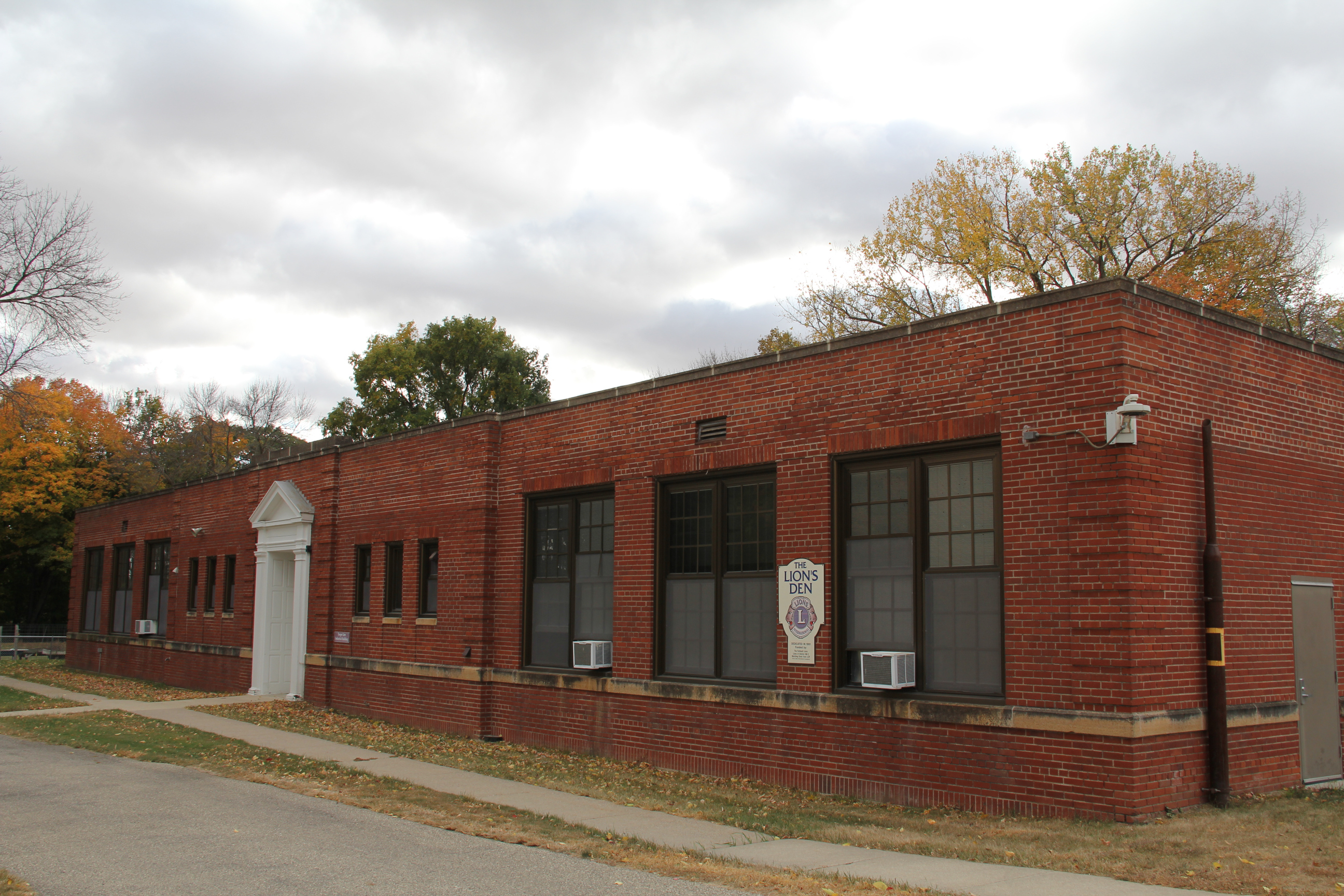
This building on the MSAB campus houses the Lion’s Den, an apartment setting to help students learning to navigate independent living. (Minnesota Prairie Roots copyrighted photo October 2024)
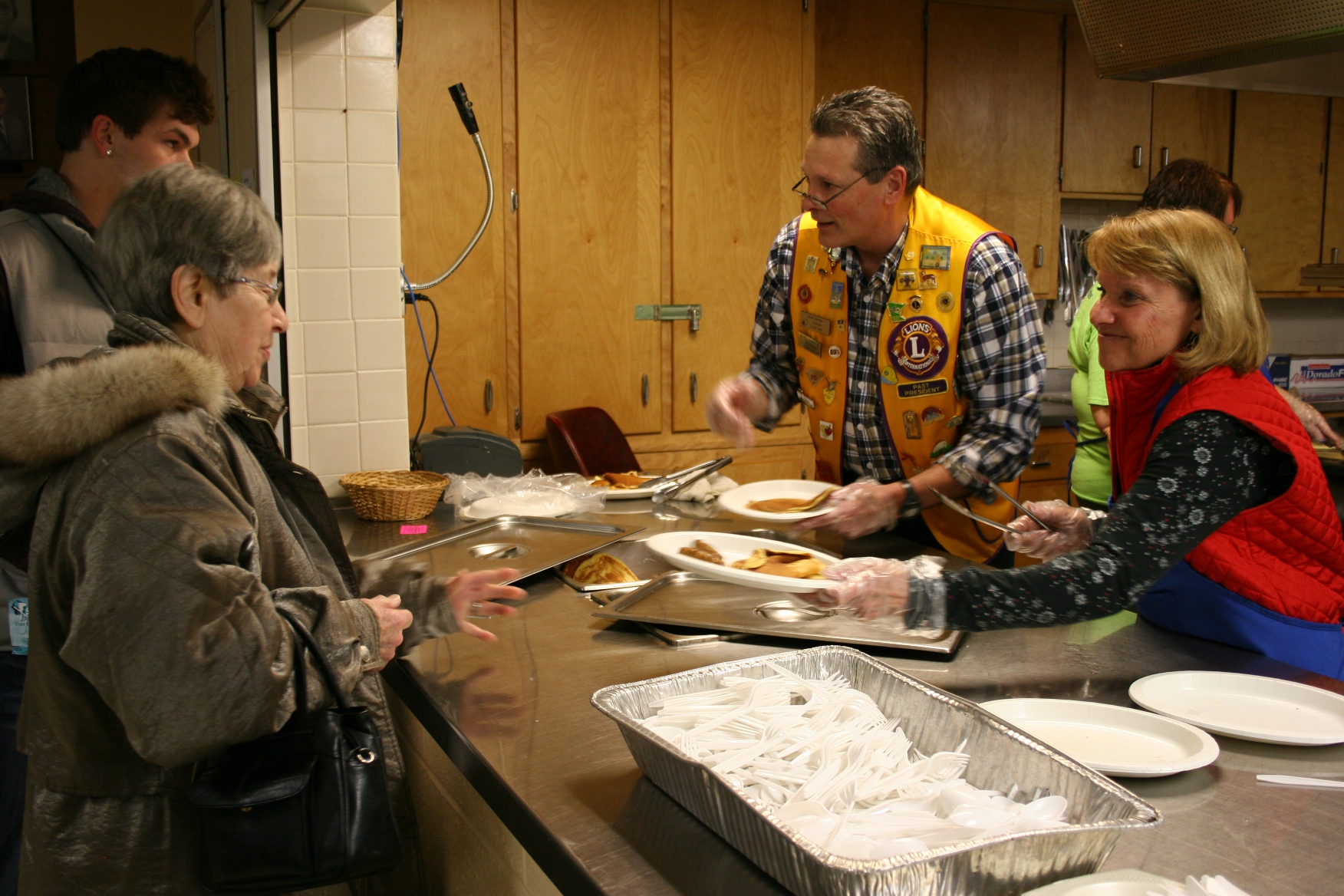
Serving up pancakes and sausage at the annual Lions Club pancake breakfast, a major fundraiser for the Faribault service organization. (Minnesota Prairie Roots copyrighted file photo 2015)
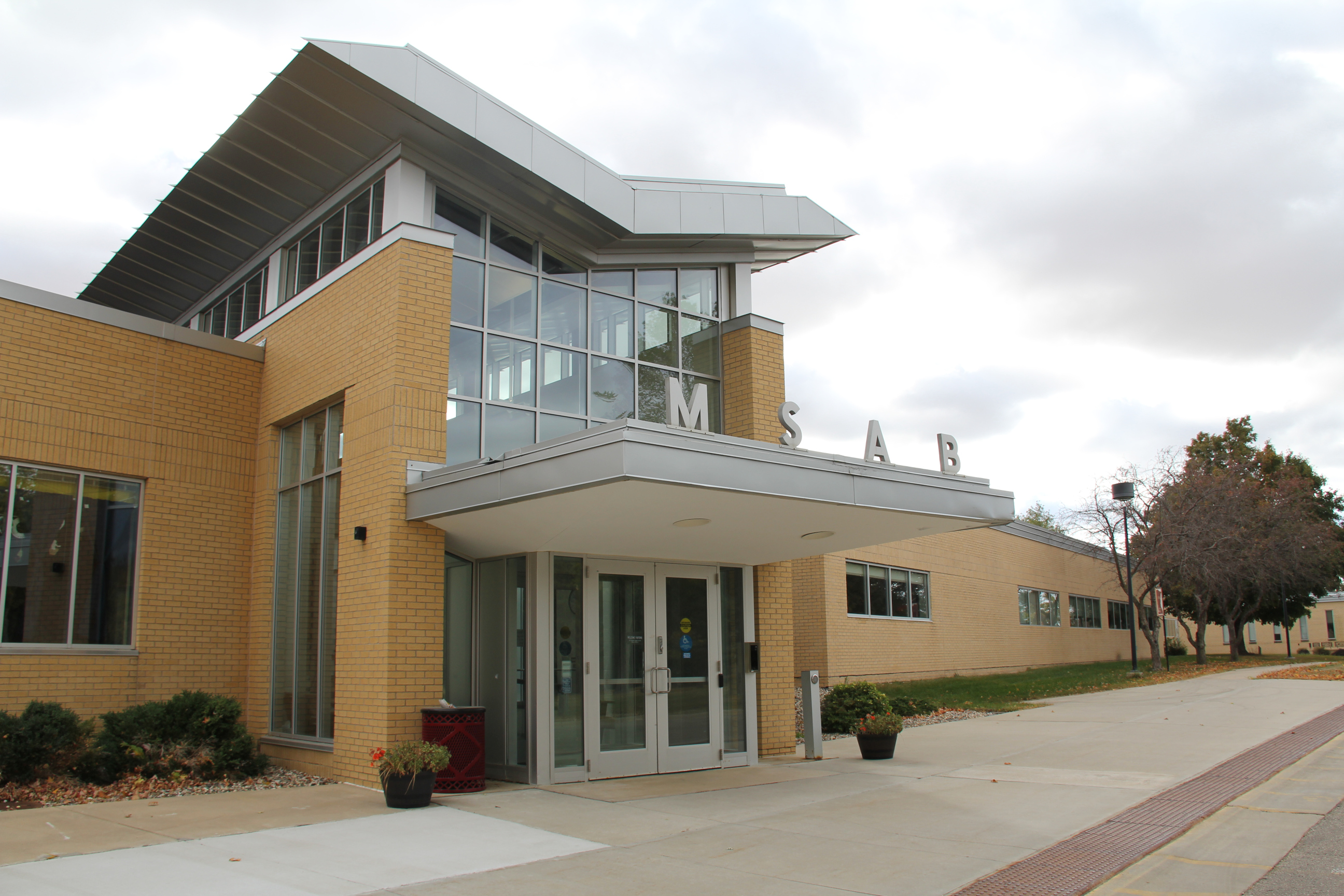
The main entry to the Minnesota State Academy for the Blind. The local Lions Club supports students and programs at MSAB. (Minnesota Prairie Roots copyrighted photo October 2024)

As I shared parts of my story with John, I felt his empathy and his strong desire to help others. The Faribault Lions clearly practice their motto of “We serve.” They collect used eyeglasses and hearing aids, offer vision screenings for kids, support Can Do Canines (which trains service dogs), funded the Lion’s Den apartment at the school for the blind (helping students adjust/learn in an apartment setting) and much more. Their service projects are not solely focused on vision and hearing.

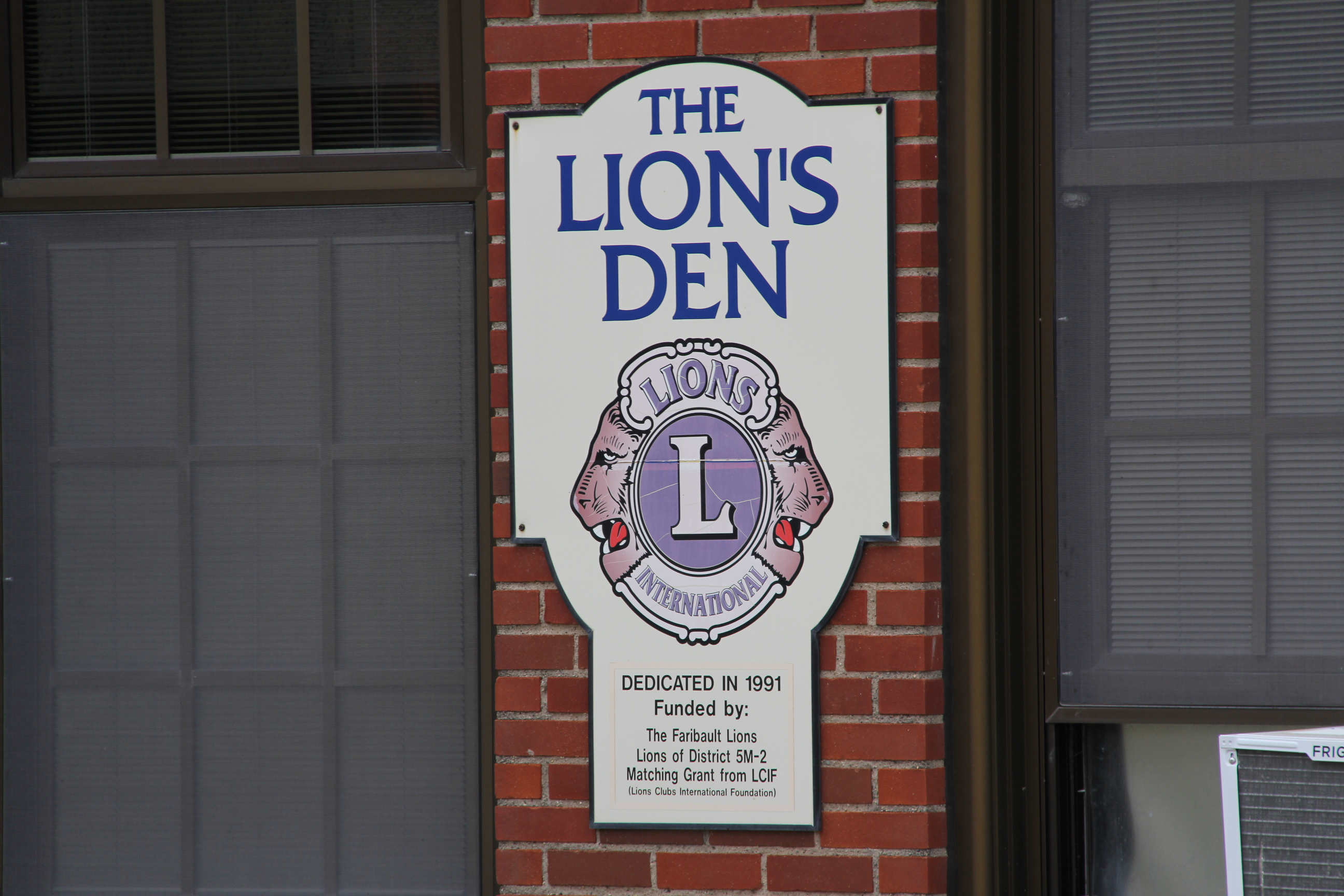
This sign on the Lion’s Den acknowledges this as a project of the Faribault Lions Club with a grant from the Lions Club International Foundation. (Minnesota Prairie Roots copyrighted photo October 2024)

But on this day, I want to highlight the efforts of John and his fellow Lions to educate the public about white canes. In the printed information John distributed at the grocery store, I learned that the idea of white canes originated in 1930 with the Lions Club of Peoria, Illinois. The club president suggested white canes with red tips as a tool to help those with visual impairments. The idea caught on as a way to grow their independence and also as a way to create awareness among the public.

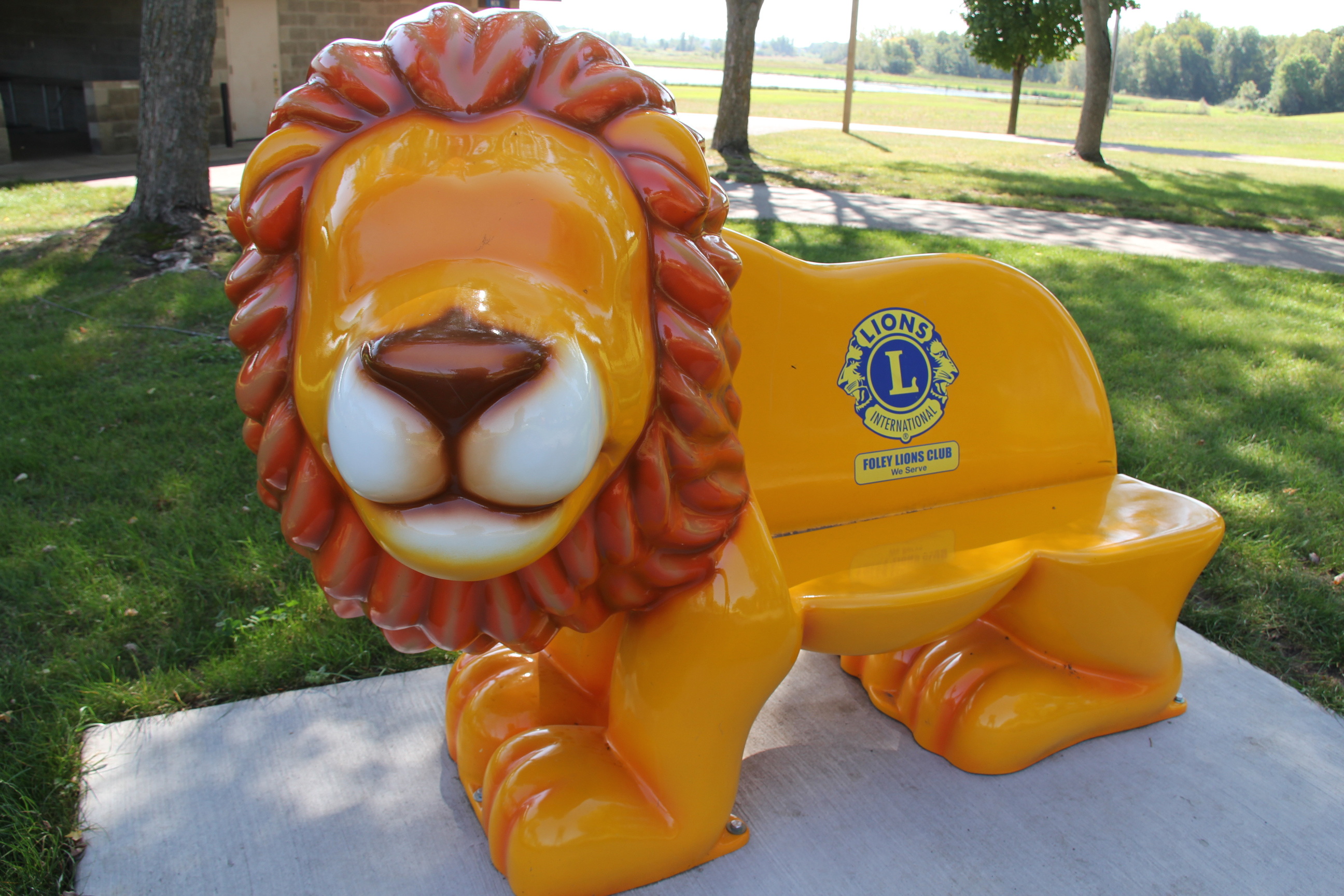
The Foley Lions Club in central Minnesota is raising awareness about vision via this bench in Lion’s Park. There’s also a lion’s head drinking fountain in the park. (Minnesota Prairie Roots copyrighted photo September 2024)

Awareness is assuredly a goal of the Lions. The informational sheet from John quotes two subdivisions of Minnesota state law #169.202 regarding white cane usage and how those operating motor vehicles must stop and yield to those carrying white or metallic canes. That seems common sense. But sometimes common sense is elusive.

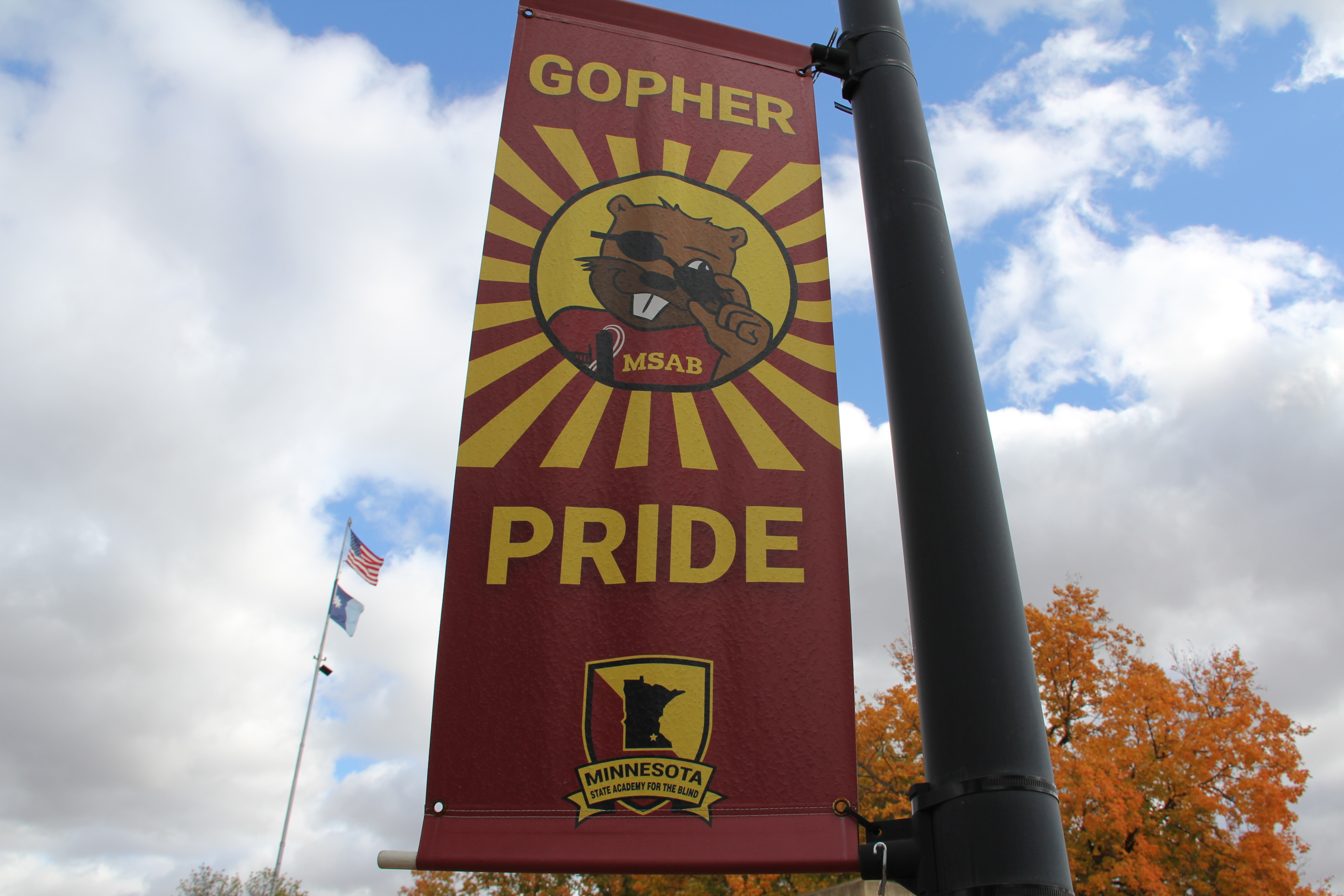
A banner on the MSAB campus shows pride in the school mascot. (Minnesota Prairie Roots copyrighted photo October 2024)

I appreciate the efforts of the Faribault Lions, especially when it comes to vision and hearing. They are determined to raise awareness, offer financial and other support, and make a difference for those of us who have vision and hearing impairments. Mine are manageable. I can see. And I can hear, even though I have profound hearing loss in my right ear (due to sudden sensory hearing loss from a virus).

Outside the M Health Fairview Eye Clinic. Inside the clinic, donors names are listed on a wall, including some I recognized as from Faribault. (Minnesota Prairie Roots copyrighted file photo 2023)

It’s humbling to sit in the packed waiting room of a specialty clinic like M Health Fairview Eye Clinic on the campus of the University of Minnesota and see young children with white canes. That puts my vision issues in perspective. In every situation, opportunities exist to learn and to grow empathy. I did and I have. And now, thanks to Faribault Lion John Battles, I have grown my understanding of White Cane Awareness Day and how much my community cares.

© Copyright 2024 Audrey Kletscher Helbling