Minnesota Prairie Roots

Writing and photography by Audrey Kletscher Helbling

Fifties flashback in a Wisconsin cornfield November 14, 2013

Back in the day, picking corn

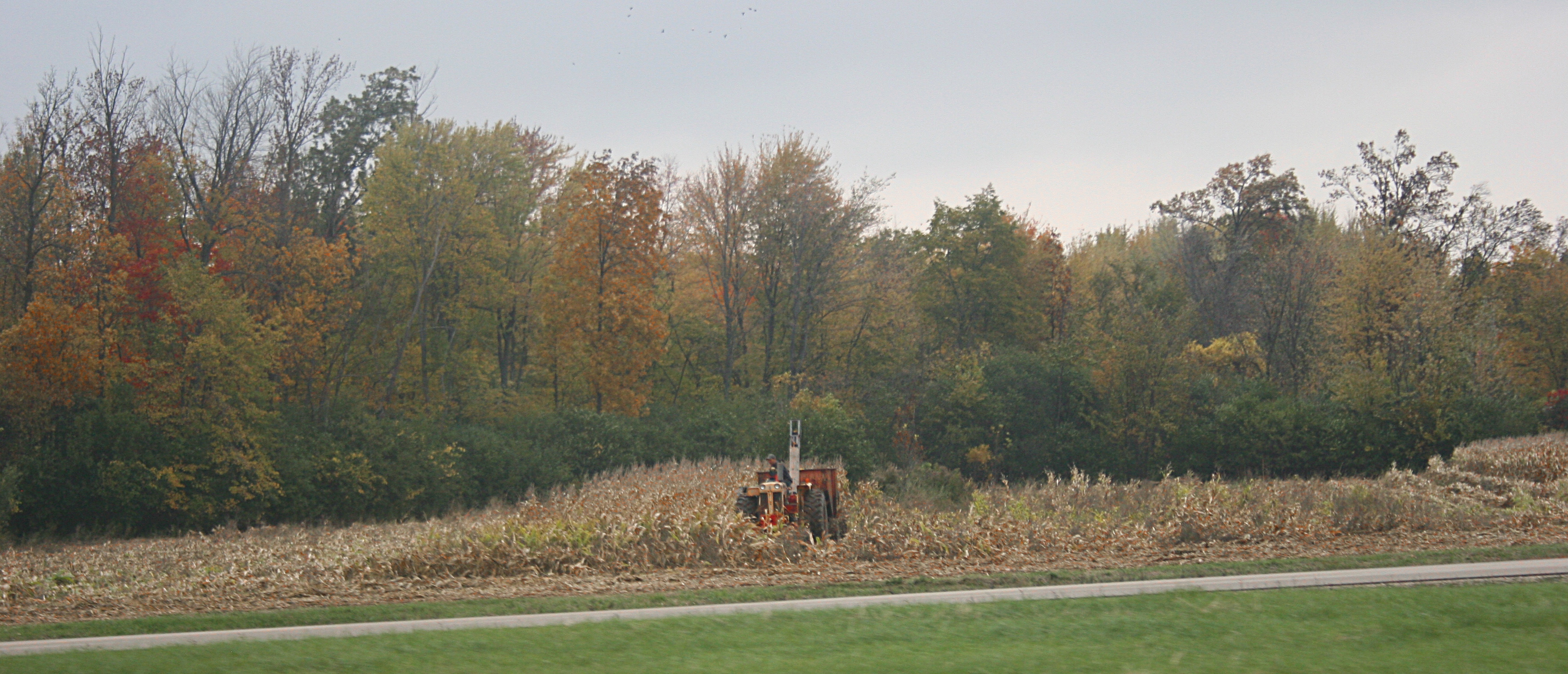
IF NOT FOR THE TRAFFIC that surrounds me on this four-lane on a Saturday afternoon, I might be traveling directly into a rural scene from the fifties or sixties.

For there, over to the right along this Appleton, Wisconsin, area roadway, a farmer works the field with his Case tractor towing a pull-behind corn picker that drops ears of corn into a wagon.

I get one chance to photograph the scene, but plenty of time to ponder why this farmer chose to harvest his crop with vintage farm machinery.

Is he simply trying to reclaim an era when farmers worked with the wind at their backs, the sun upon their faces, the scent of plant and earth in the air, embracing harvest from the seat of an open air tractor?

(NOTE: This photo was taken in mid-October.)

© Copyright 2013 Audrey Kletscher Helbling


Giving bikes to kids November 13, 2013

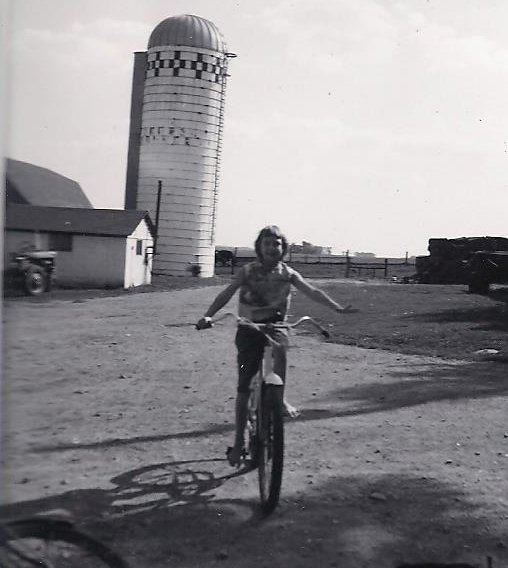
Me, riding Sky Blue at age 10 on the farm where I grew up in southwestern Minnesota.

Me, riding Sky Blue at age 10 on the Redwood County farm where I grew up in southwestern Minnesota. Photo taken in 1966.

LOOKING BACK ON MY CHILDHOOD, I cannot imagine life without a bicycle. My bike was my imaginary horse, my daredevil stunt car launched off makeshift ramps, my mode of transportation down county and township roads.

If not for my maternal grandfather, though, I never would have owned a bike. My parents could not afford bikes for their kids. So Grandpa would scavenge the local dump for bikes he could repair, repaint and deliver to me and my five siblings.

It mattered not that my bike, which I named Sky Blue, wasn’t new. I owned a bike. I was a happy kid.

That childhood memory bubbled to the surface Monday morning when Dee Bjork at The Crafty Maven in downtown Faribault handed me a flier about the Free Bikes 4 Kidz program. I wanted, no, needed, to learn more about this partnered local give-away by So How Are the Children and Allina Health (presenting sponsor for the non-profit Free Bikes 4 Kidz). So I phoned SHAC Director Carolyn Treadway.

The give-away “targets kids whose families couldn’t otherwise afford bikes,” says Treadway. Kids just like me and my siblings decades ago.

As Treadway and I concur, a child’s desire to own a bike is universal, transcending time.

On December 7, Treadway expects SHAC and Allina to give away 65 – 75 bikes to pre-registered Faribault youth. She’s actively searched for kids—handing out fliers to teachers, drawing on her connections through SHAC and dropping in at places like St. Vincent de Paul, a childcare center and a laundromat to find families needing bikes. She’s currently placing names on a waiting list.

Kids from Northfield and Steele County will also get new or gently-used and refurbished bikes at the Faribault Middle School pick-up site. All told, Treadway anticipates 150-175 bicycles to be distributed along with new bike helmets, compliments of Allina Health.

Among those expected to show up are an east-side Faribault woman who will claim seven bikes, Treadway says. The bicycles are for her neighbor children whose father, in a state of inebriation, destroyed their bikes. The woman will store the bikes in her garage until spring.

Treadway enthuses about such a neighborly caring spirit and about the volunteers who repair the used bikes and assist with the give-away. She’s also grateful for those who donate bikes, some of which were collected at the Faribault Bike Rodeo in October. Allina Health coordinates numerous collections of bikes to be distributed in Minnesota and western Wisconsin.

Another local recipient is a Faribault father who signed his 12-year-old and 14-year-old up for Free Bikes 4 Kidz. When the dad asked if he could also get a bike for his 18-year-old, Treadway assured him he could. The older teen attends the Faribault Area Learning Center and a bike will enable him to stay in school because he will now have a way to get there.

Stories like that truly show the humanity of this program aimed at getting bikes to kids so they will have, as Treadway says, “access to safe and healthy physical activity.” Or, in the case of the 18-year-old, access to education.

The program also builds connections and a sense of community care.

Yet, the bare bones basics benefit of Free Bikes 4 Kidz is to get bikes into the hands of children who otherwise would not have a bike of their own. The program has grown significantly in Faribault, where only a dozen free bikes were distributed two years ago.

“Owning a bike,” Treadway says, “is very near and dear to a child’s heart.”

It is the universal childhood desire which transcends time. Just ask me. I’ve never forgotten Sky Blue or the grandpa who scavenged the dump so I could have a bike.
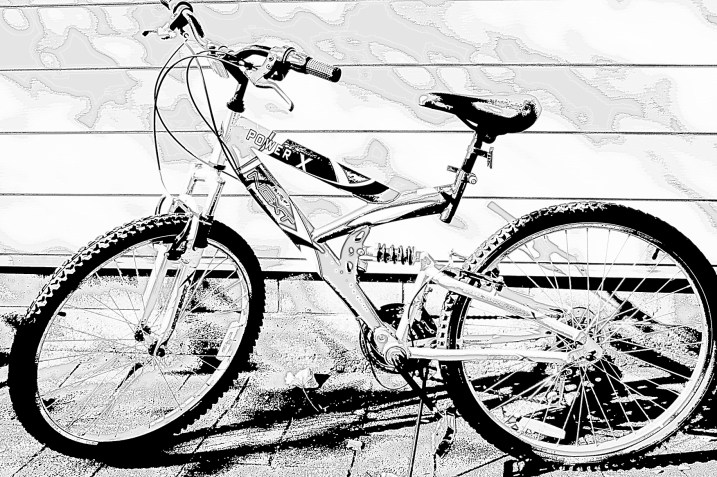
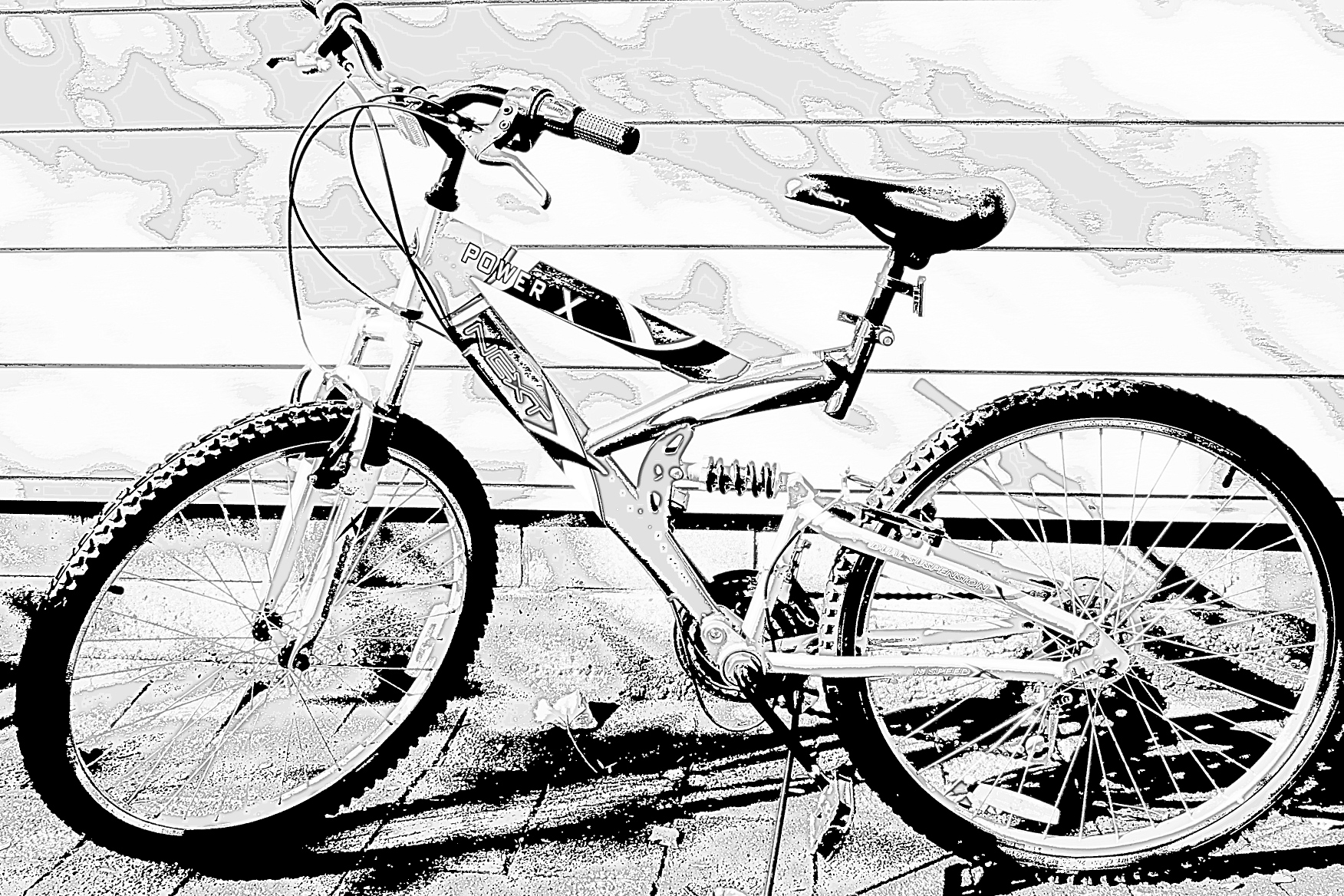
 A bike pulled from my garage.

A bike pulled from my garage and photographed. I then edited the image to illustrate this story.

FYI: To learn more about the non-profit Free Bikes for Kidz, click here.

For more information on Allina Health’s partnership in the program, click here.

To learn more about So How Are the Children, click here.

© Copyright 2013 Audrey Kletscher Helbling


Simple country joys November 12, 2013

IT’S 10:30 ON A SUNDAY MORNING and I am savoring a slice of yellow cake topped with vanilla pudding and a dollop of whipped cream.

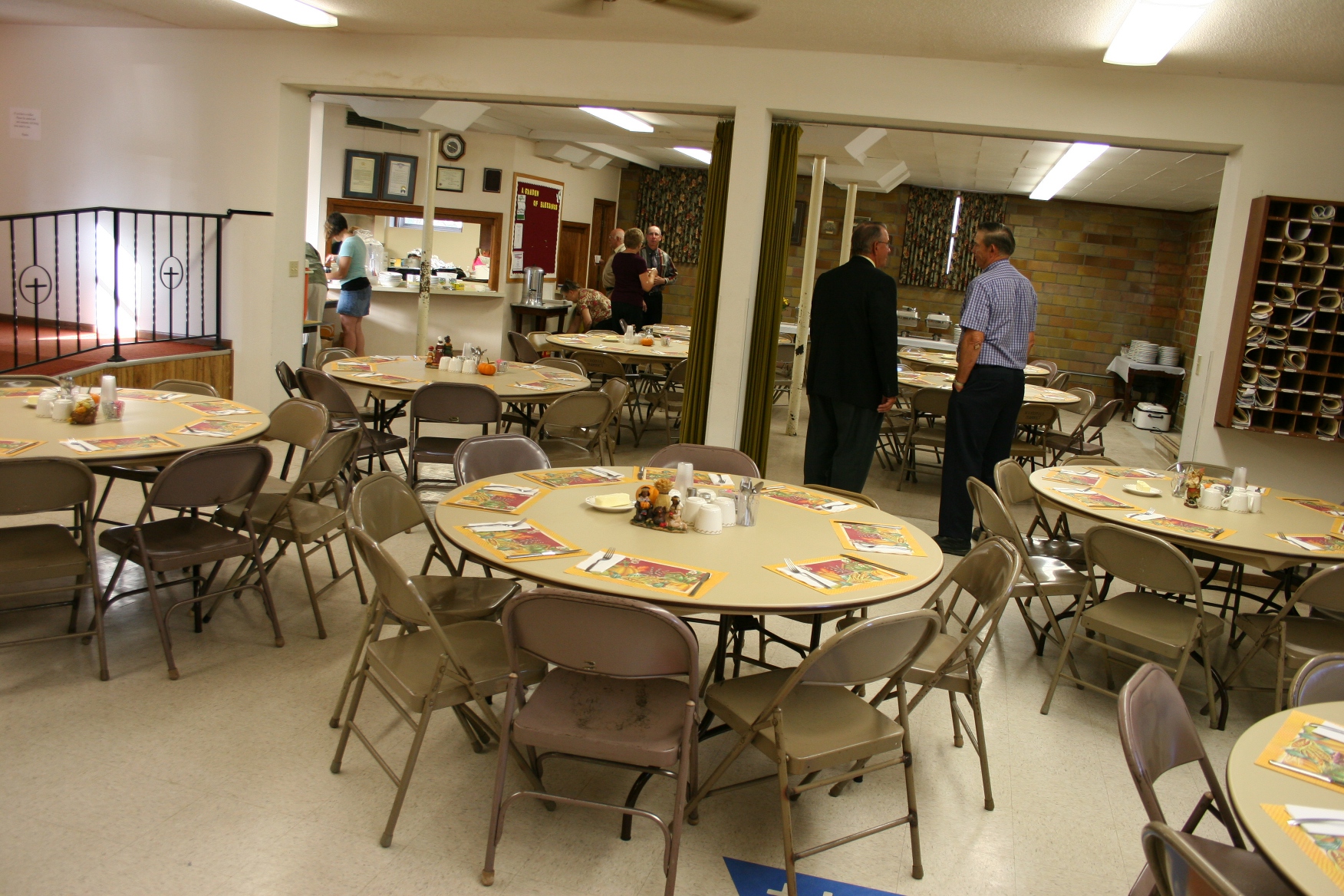
Trinity's basement, set up before the annual October fall dinner. Minnesota Prairie Roots file photo.

Trinity’s basement, set up before the annual October fall dinner. Minnesota Prairie Roots file photo 2011.

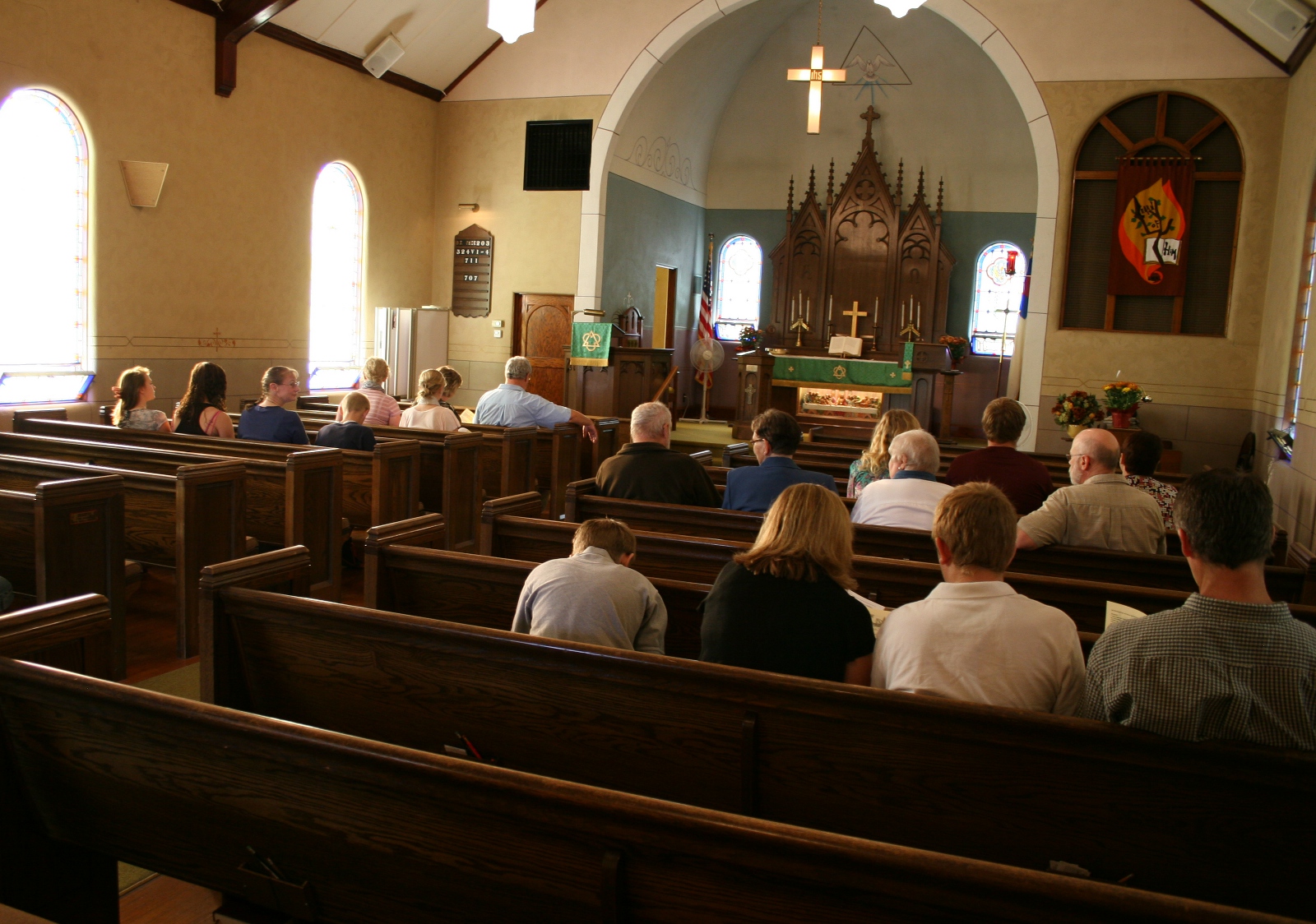
I really shouldn’t be eating cake; I don’t need it. But my husband and I have been personally invited by Jean into the basement of Trinity Lutheran Church, North Morristown, for the fellowship hour after worship services. We are visitors.

Beautiful Trinity Lutheran Church. Minnesota Prairie Roots file photo.

Trinity Lutheran Church, a small country church west of Faribault in North Morristown. Minnesota Prairie Roots file photo 2011.

I’m not about to pass on this opportunity to mingle with folks in this rural Rice County church. They are a friendly bunch. These congregants know us as we’ve attended church dinners and the annual North Morristown Fourth of July celebration many times.

I feel comfortable here, chit chatting with Jean about her granddaughter who attends college in South Dakota and is working as a waitress for $2.50/hour. Our discussion centers on whether such a wage is even legal. “How can it be?” we ask one another, incredulous.

But before we can resolve the pay issue, one of the pastor’s sons bolts into the basement clutching something in his hand. He unfurls his fingers to reveal an egg.

“Our first egg!” he exclaims as his older brother peers across the table at the precious brown egg and Dad enthuses about the first egg laid by the flock of 25 chickens. I learn then that the pastor’s boys sold futures on eggs—30 dozen at $6/dozen—during a recent fundraising auction for Cannon Valley Lutheran High School. Now that the hens are starting to lay, it will soon be time to deliver on those purchases.

As I witness this enthusiasm over an egg, I am reminded that sometimes it is the simplest things which give us the most joy. A brown egg in a boy’s hand in a country church basement on a Sunday morning. You can’t make this stuff up.

On bald eagle in this shot, or any I took, but simple joys in viewing this rural scene along Rice County Road 12 on the way to church in North Morristown.

No bald eagle in this shot, or any I took, but simple joy in viewing this rural scene along Rice County Road 12 on the way to church in North Morristown. There’s something about the big sky and the red barn…

Then, after we’ve left the church basement and the boy and his egg and wonder whether he might smash it between his fingers in his excitement, we are equally as excited to spot a bald eagle winging above farm fields. Simple joys. Like cradling a brown egg in your hand in a country church basement.

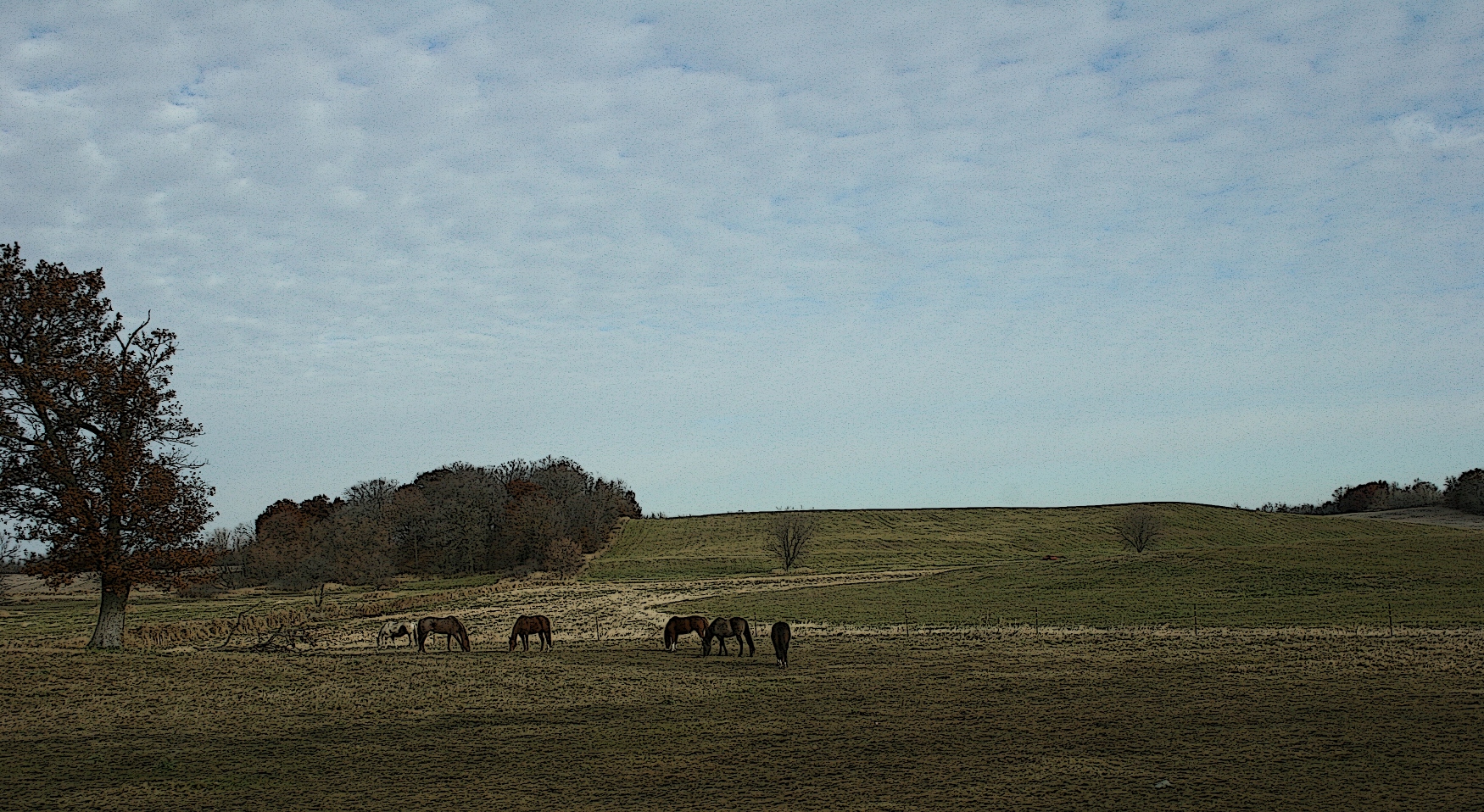
Horses in the pasture drew my camera, not a deer dangling from a tree.

Horses in the pasture, not a deer hung from a tree, drew my camera on the way home from church.

And then I glimpse a dead deer dangling from a tree, half-skinned, hunters clustered around the body. I am not overjoyed at the sight. But I expect these men are excited. Like cradling a brown egg in your hand in a country church basement.

© Copyright 2013 Audrey Kletscher Helbling
 

Honoring veterans in Luverne November 11, 2013

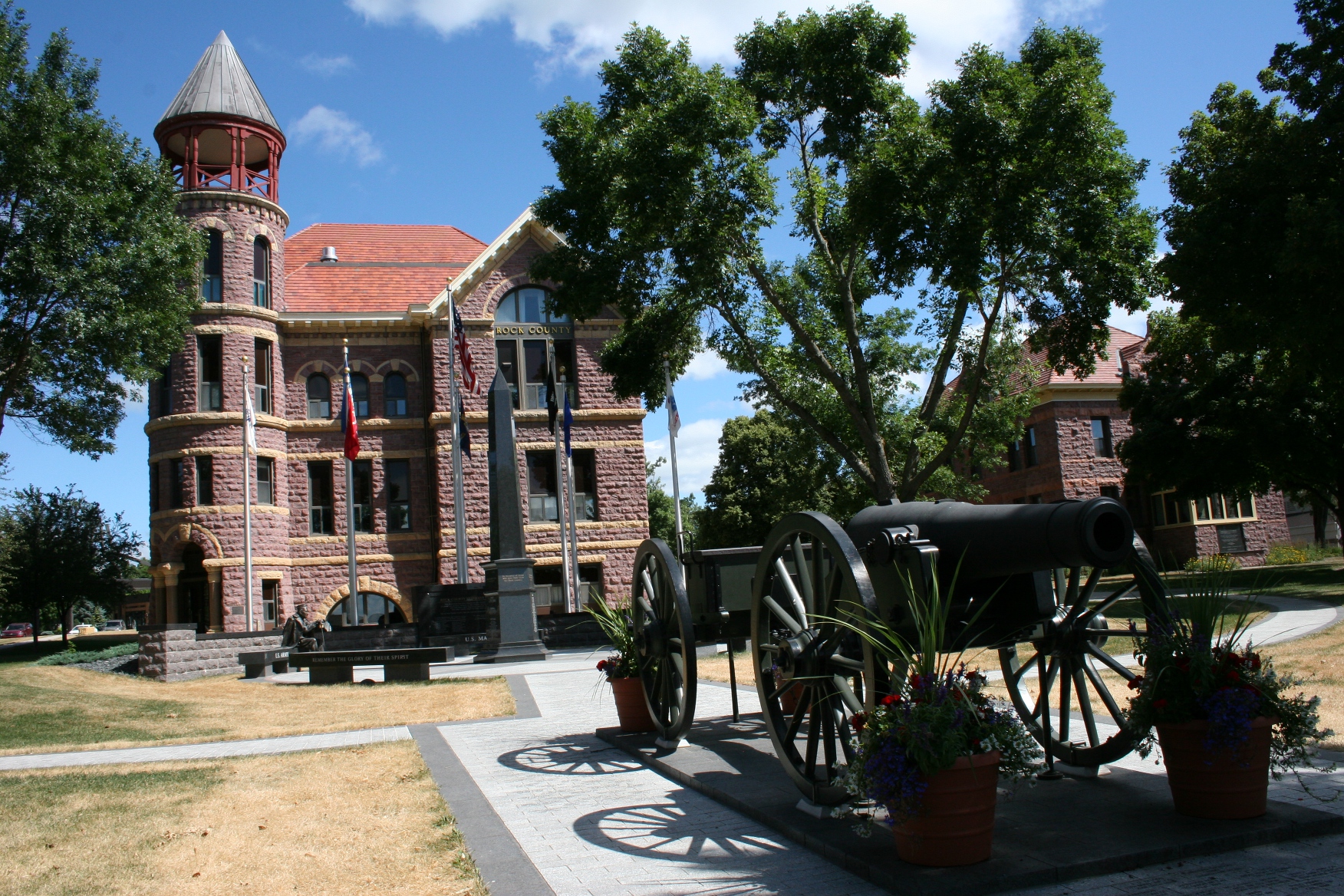
The Rock County Veterans Memorial in front of the courthouse, Luverne, Minnesota.

The Rock County Veterans Memorial in front of the courthouse, Luverne, Minnesota. That’s a restored Civil War cannon.

FROM THE VETERANS MEMORIAL fronting the Rock County Courthouse to the next door Rock County Veterans Memorial Building—which houses the Herreid Military Museum and more—to the Minnesota Veterans Home and the town’s star role in the Ken Burns’ World War II documentary, The War, Luverne honors and respects veterans unlike any other rural Minnesota community.

That’s my impression, anyway, after a visit this summer to Luverne, tucked into the extreme southwestern corner of my state.

A flag hangs in a hallway outside the military museum.

A flag hangs in a hallway outside the military museum.

You cannot help but feel awed by the patriotism that exists here.

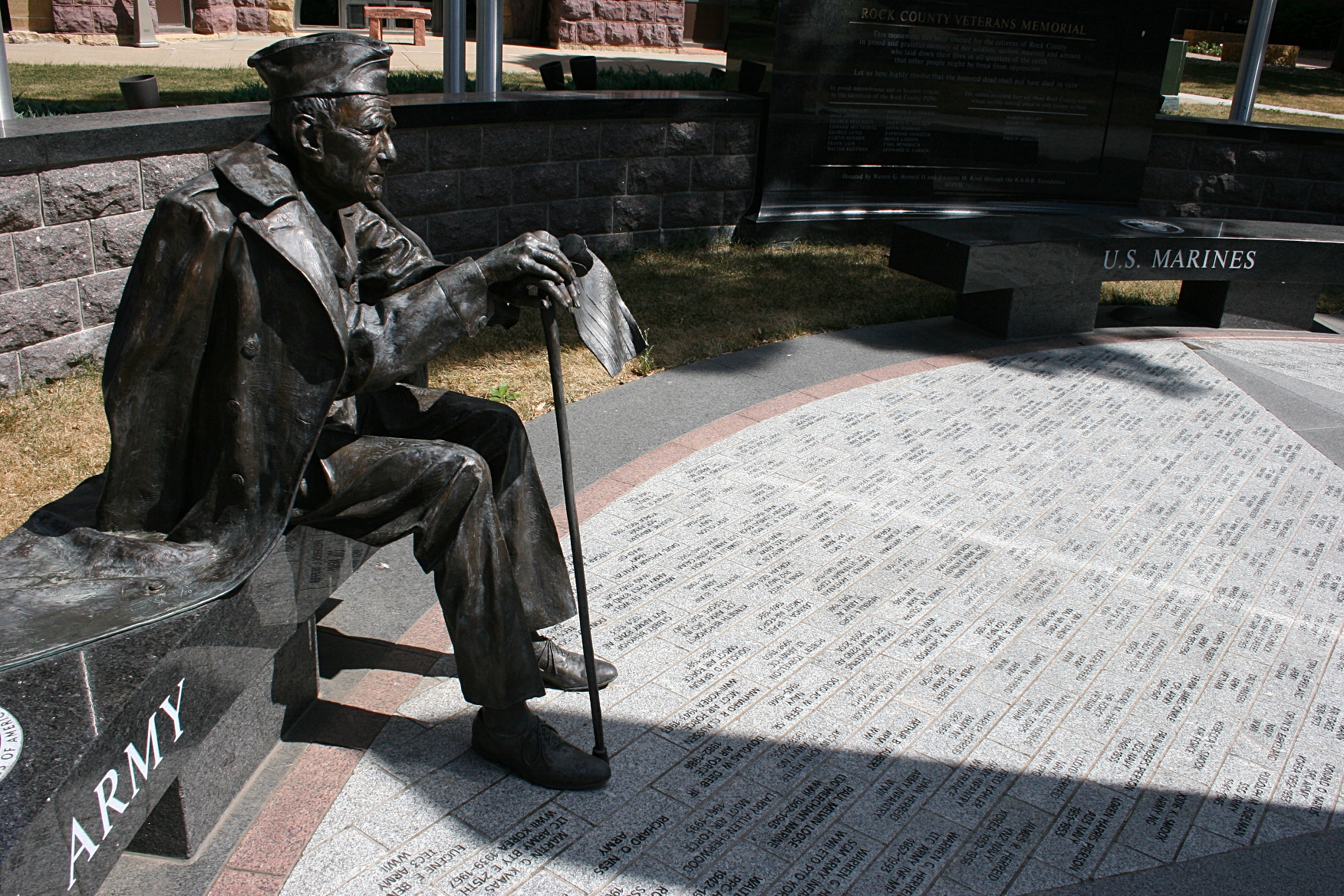
A statue titled "Poppies" personalizes this memorial as do the names of some 1,600 veterans engraved in pavers.

A statue titled “Poppies” personalizes this memorial as do the names of some 1,600 veterans engraved in pavers.

And because sometimes a picture is truly worth a thousand words, allow me to show you a snippet of the ways in which Luverne honors veterans:

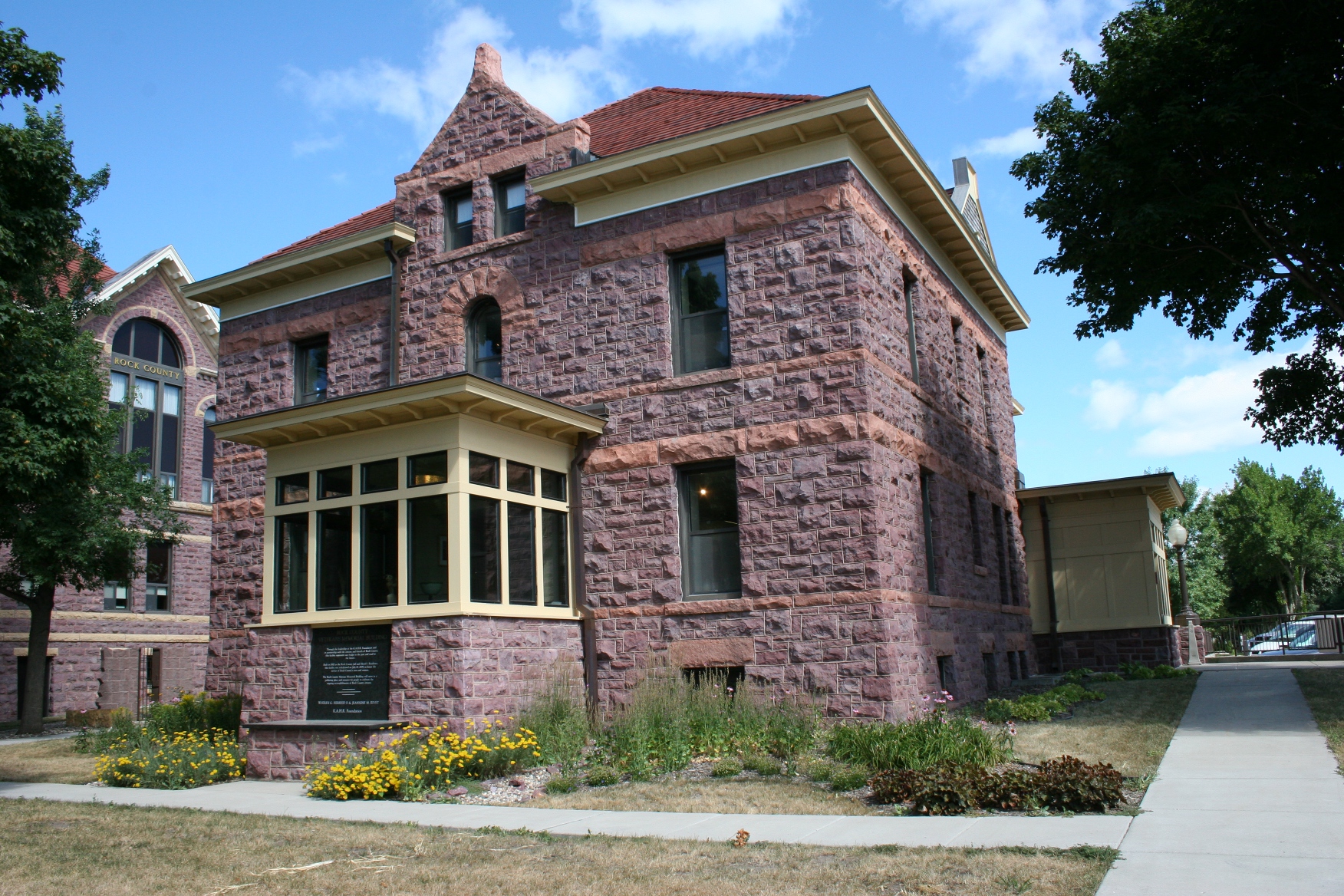
The 1900 former Rock County Jail and sheriff's home today is the Rock County Veterans Memorial Building. It houses the Herreid Military Museum, the Brandenburg Gallery and the Luverne Chamber of Commerce.

The 1900 former Rock County Jail and sheriff’s home today is the Rock County Veterans Memorial Building. It houses the Herreid Military Museum, the Brandenburg Gallery and the Luverne Chamber of Commerce.

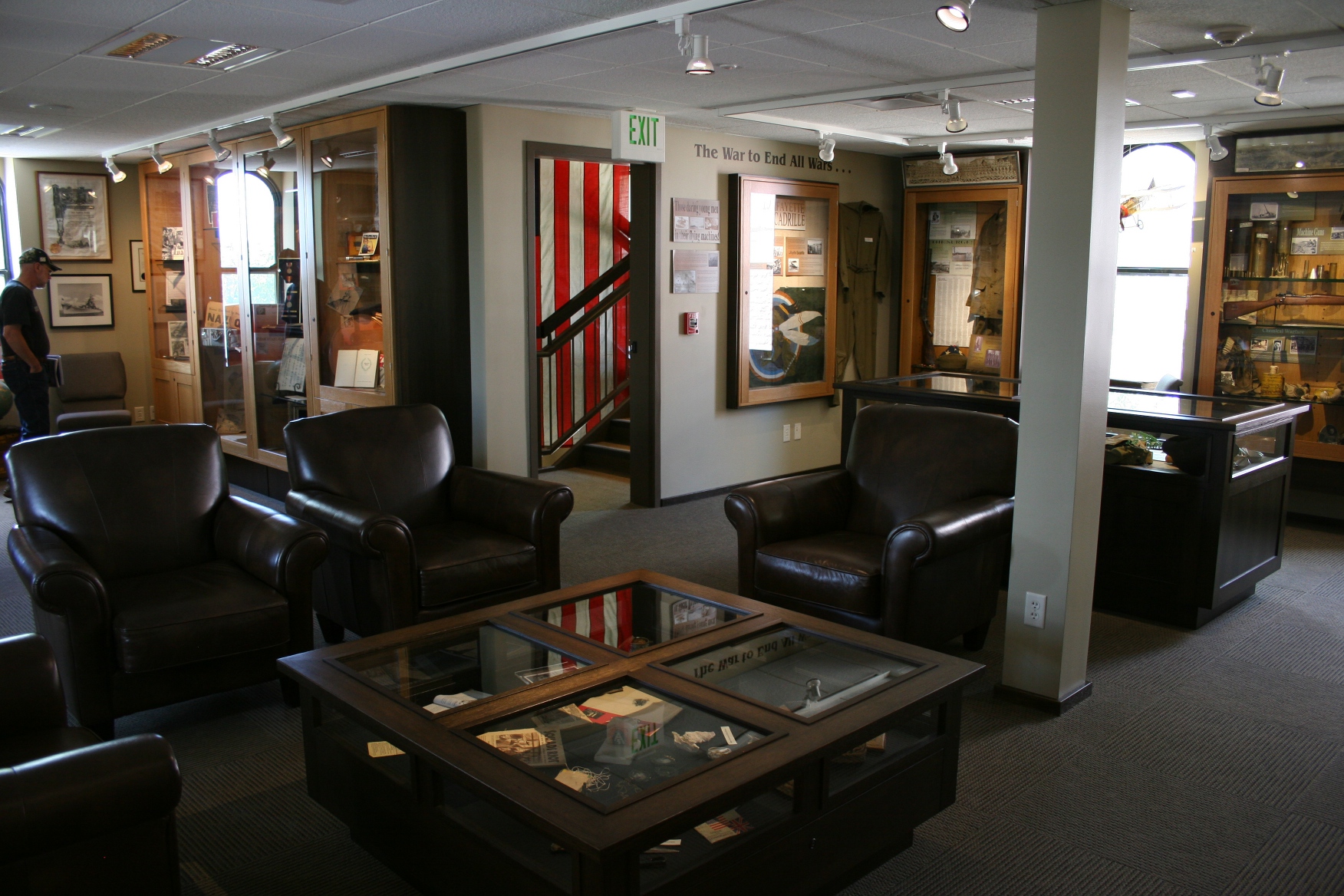
An overview of the Herreid Military Museum which pays tribute to Rock County residents who served their country in the military. A third-floor exhibit will open in 2014 featuring the story of war from Korea and Vietnam to Iraq and Afghanistan.

An overview of the Herreid Military Museum which pays tribute to Rock County residents who served their country in the military. A third-floor exhibit will open in 2014 featuring the story of war from Korea and Vietnam to Iraq and Afghanistan.

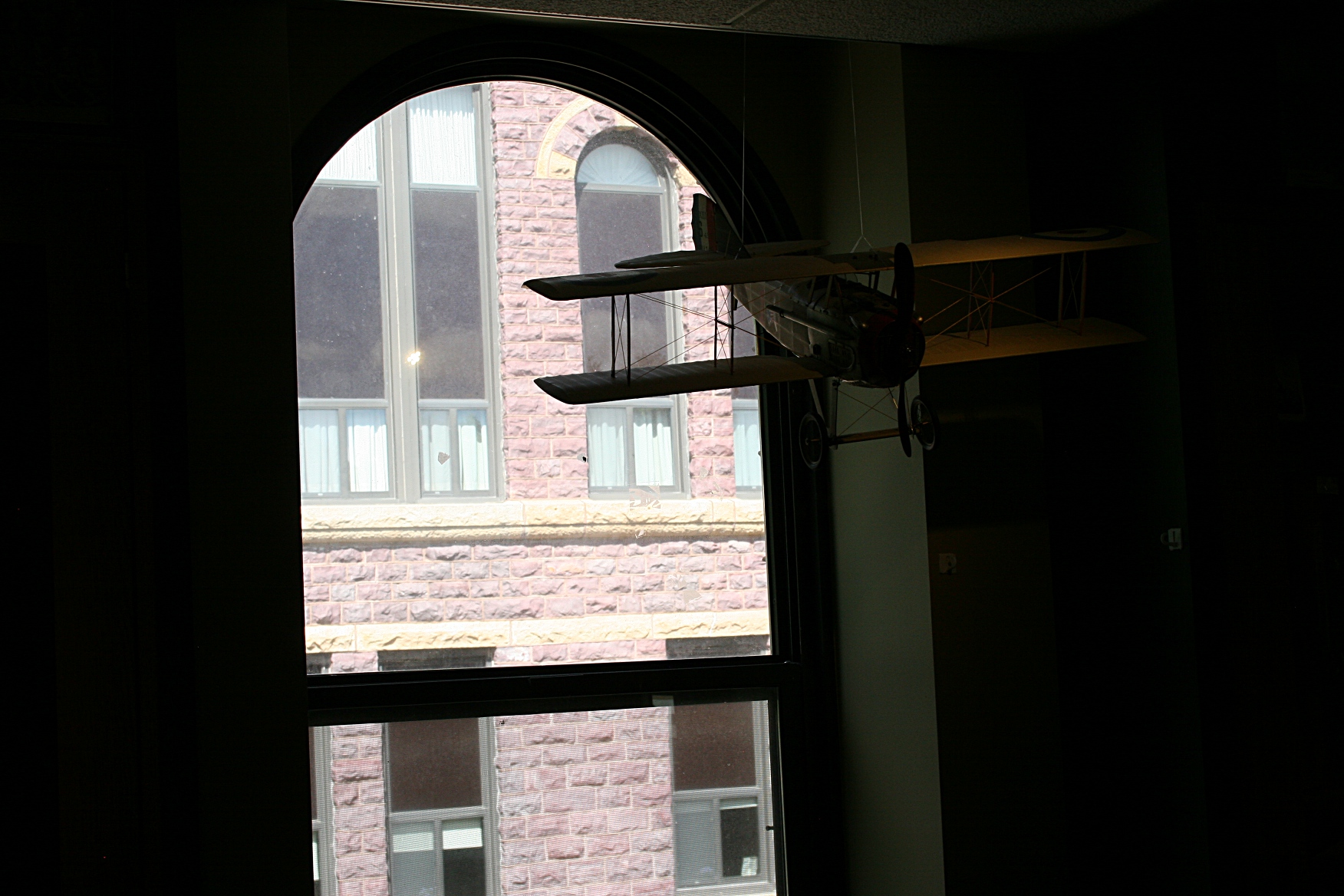
A model plane in the museum.

A model plane in the museum.

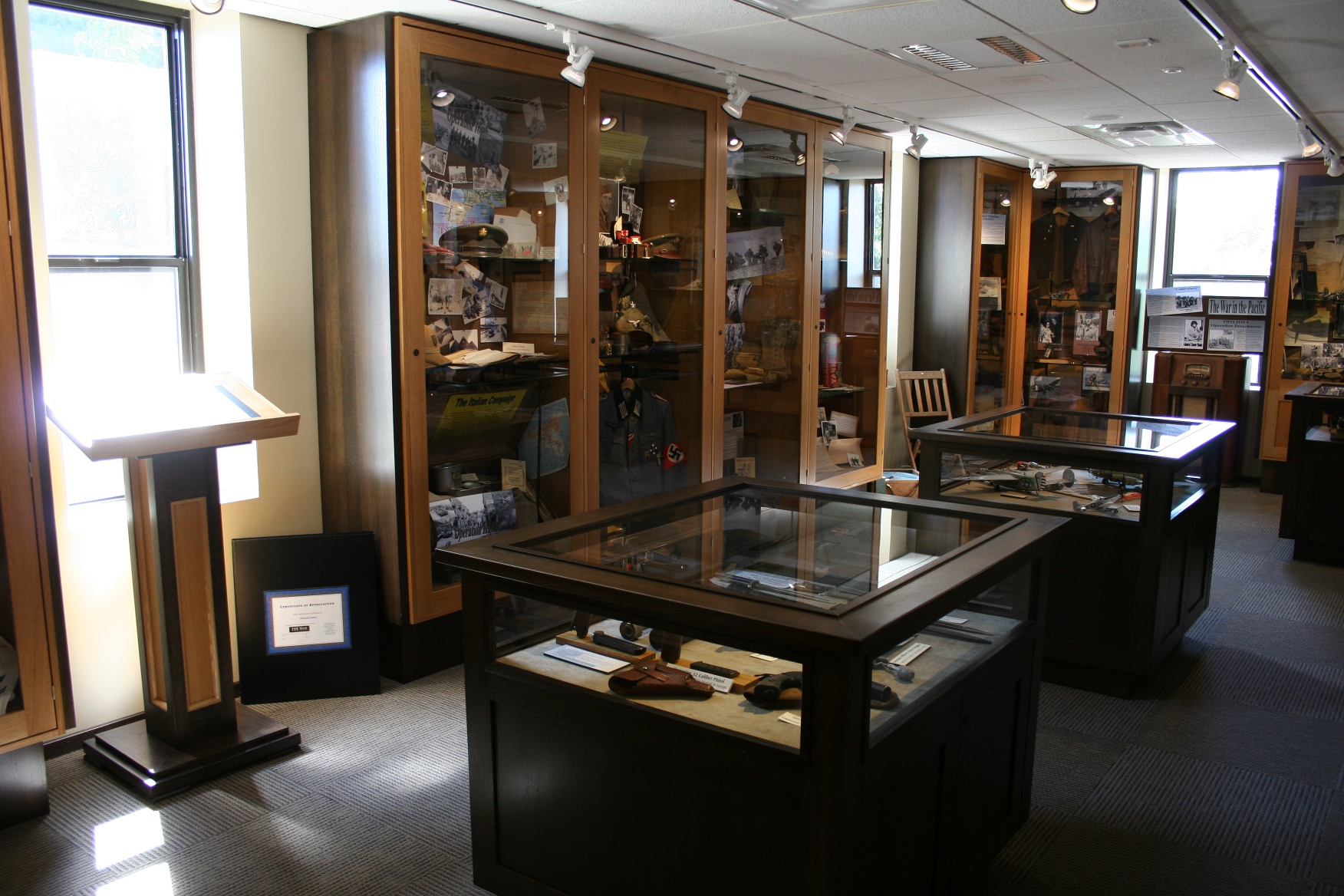
Another view of the military museum.

Another view of the military museum.

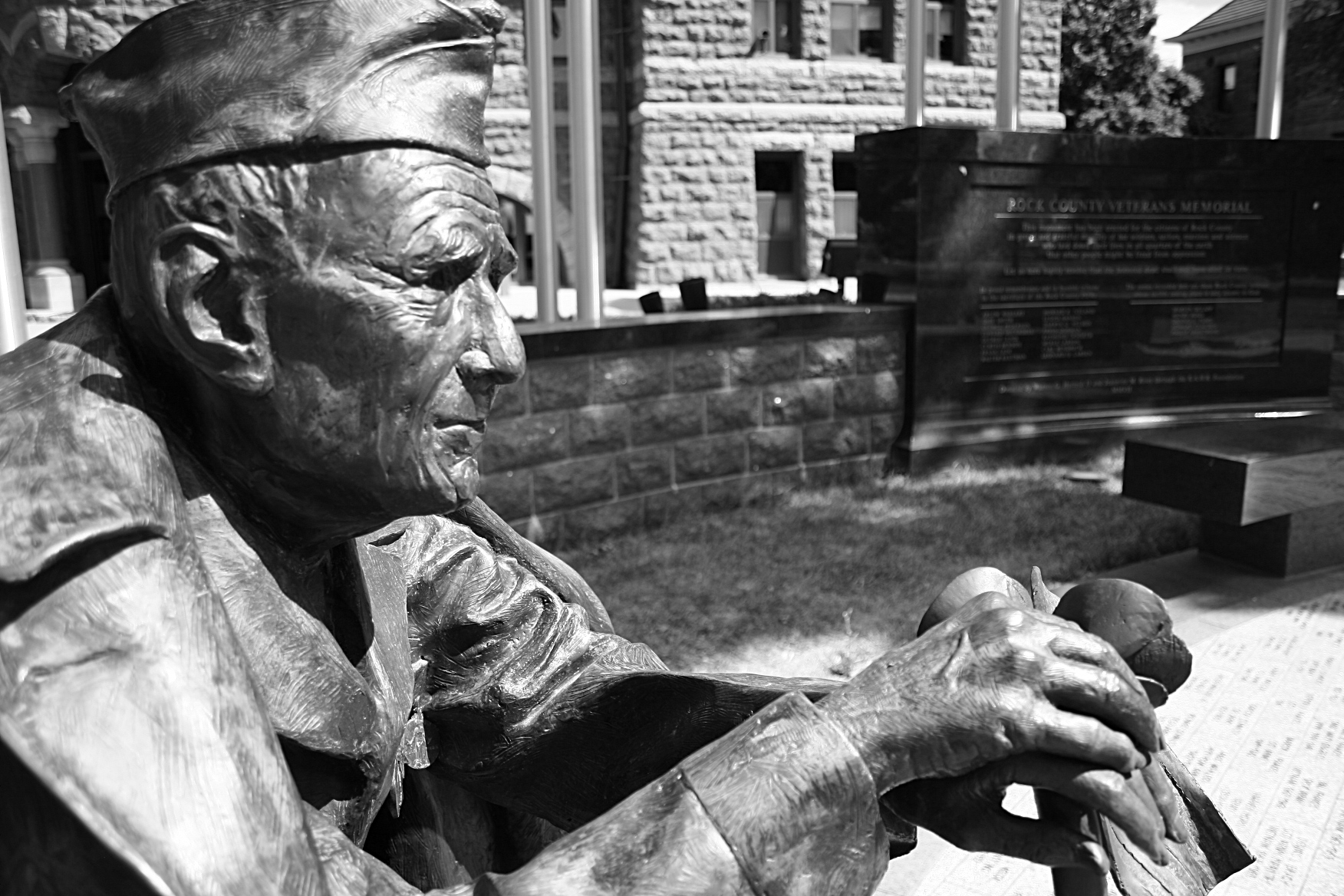
The memorable face of a veteran at the outdoor memorial.

The memorable face of a veteran at the outdoor memorial.

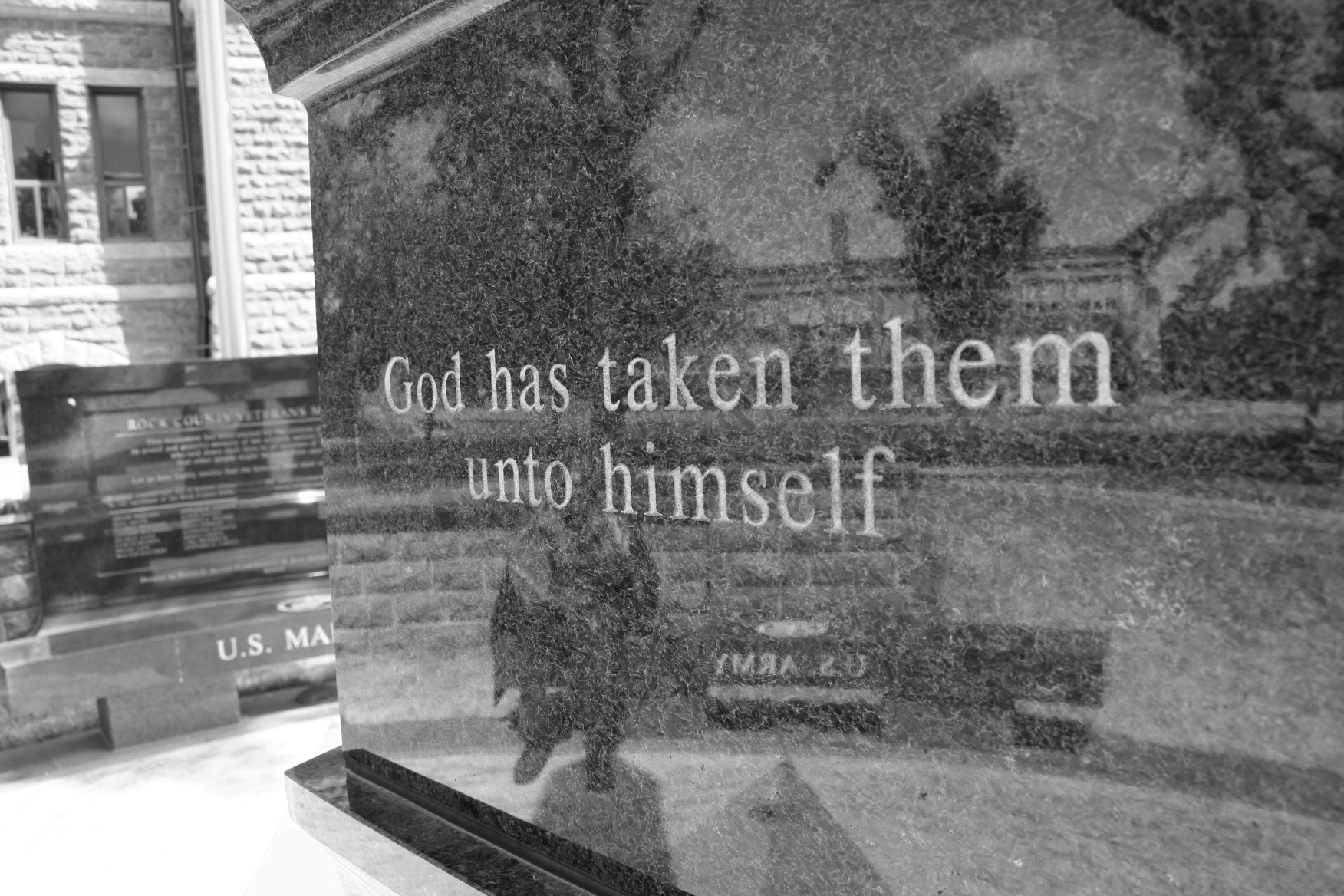
Equally memorable words.

Equally memorable words.

Today, Veterans Day, please remember our veterans and the sacrifices they made for our freedom.

FYI: Click here to learn more about the Rock County Veterans Memorial.

For more info on the Herried Military Museum, click here.

By clicking here, you will learn more about the Minnesota Veterans Home in Luverne.

Click here to learn more about Ken Burns’ WWII documentary, The War.

© Copyright 2013 Audrey Kletscher Helbling


Sunday afternoon drive snapshot: Sculpture garden in Jarrett November 10, 2013

Sculpture, lens flare on arch

SUN FILTERED THROUGH THE STAND of cedars. Bright enough to cause lens flare when I shot toward the scraggly close-knit cluster of trees shadowing the banks of the clear, fast-flowing Zumbro River.

The setting appeared almost surreal and haunting in the sense that viewing the unexplained can impress upon the mind.

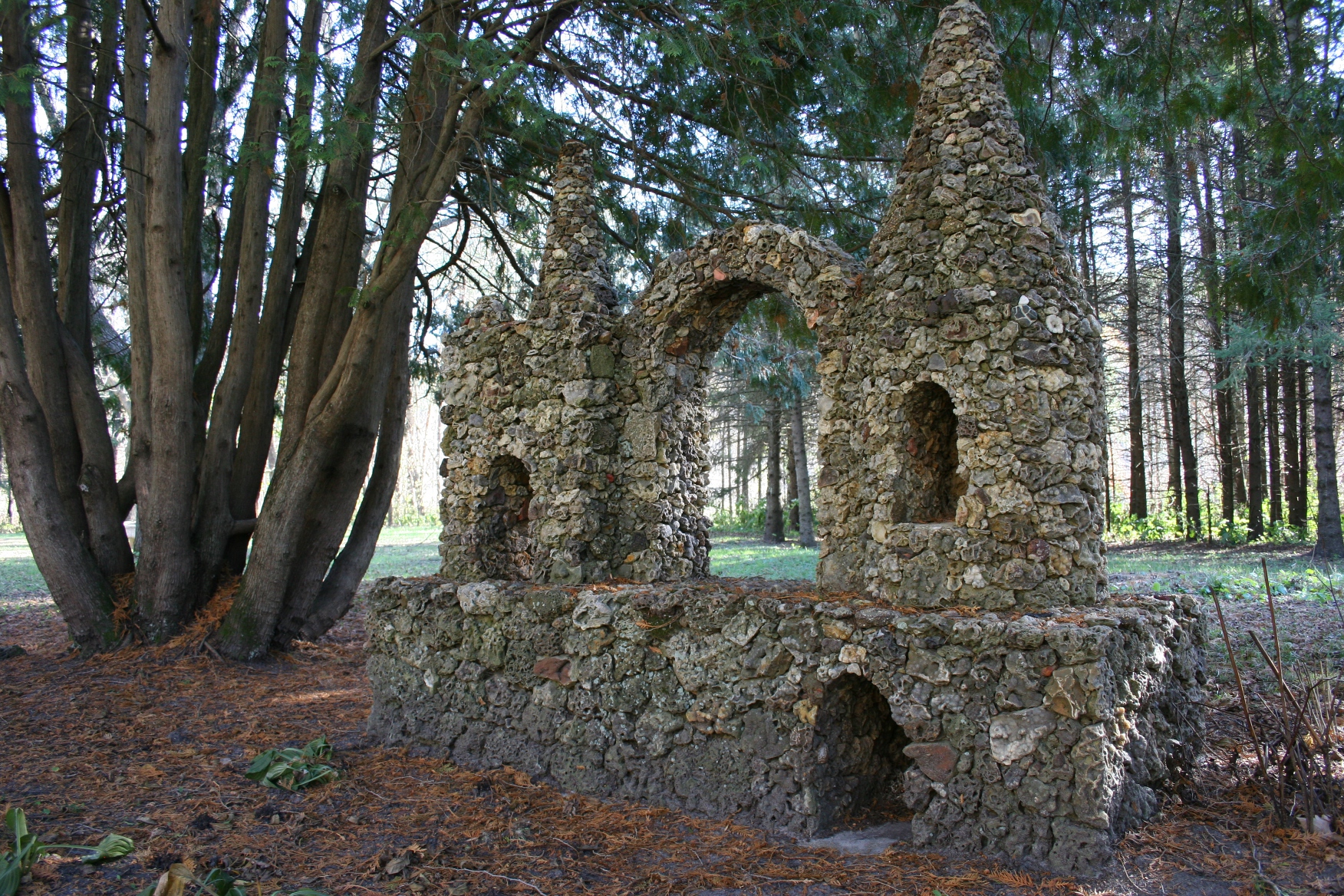
Sculpture, castle

I’d heard of this place, missed it on a previous pass through Jarrett, and nearly missed it again. But on this Sunday afternoon drive, I glimpsed the stone configurations among the cedars and asked my husband to swing the van around.

So here we were, pulled off Wabasha County Road 11, parked in a drive about the length of our van. I wasn’t even sure we should be here, uncertain whether this was public or private land. But I figured “No trespassing” signs would mark the property if visitors weren’t welcome into this sculpture garden.

Sculpture, wreath

In the quiet of this Sunday afternoon, and I cannot imagine any day being anything but quiet here in this secluded wide spot in the road, we meandered among the sculptures, shoes sinking into squishy earth tunneled by varmints.

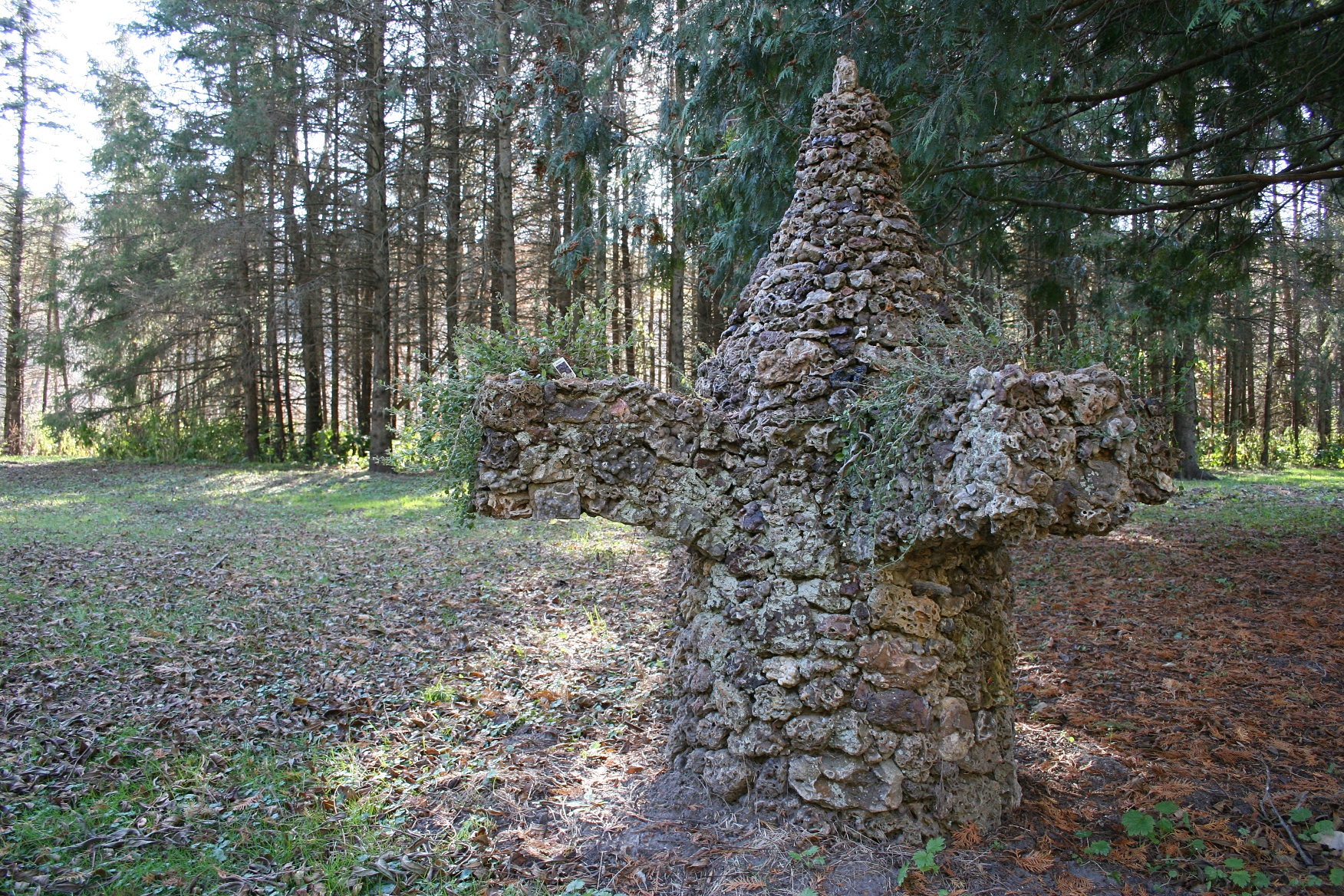
Sculpture, cone top sculpture

Arches and points.

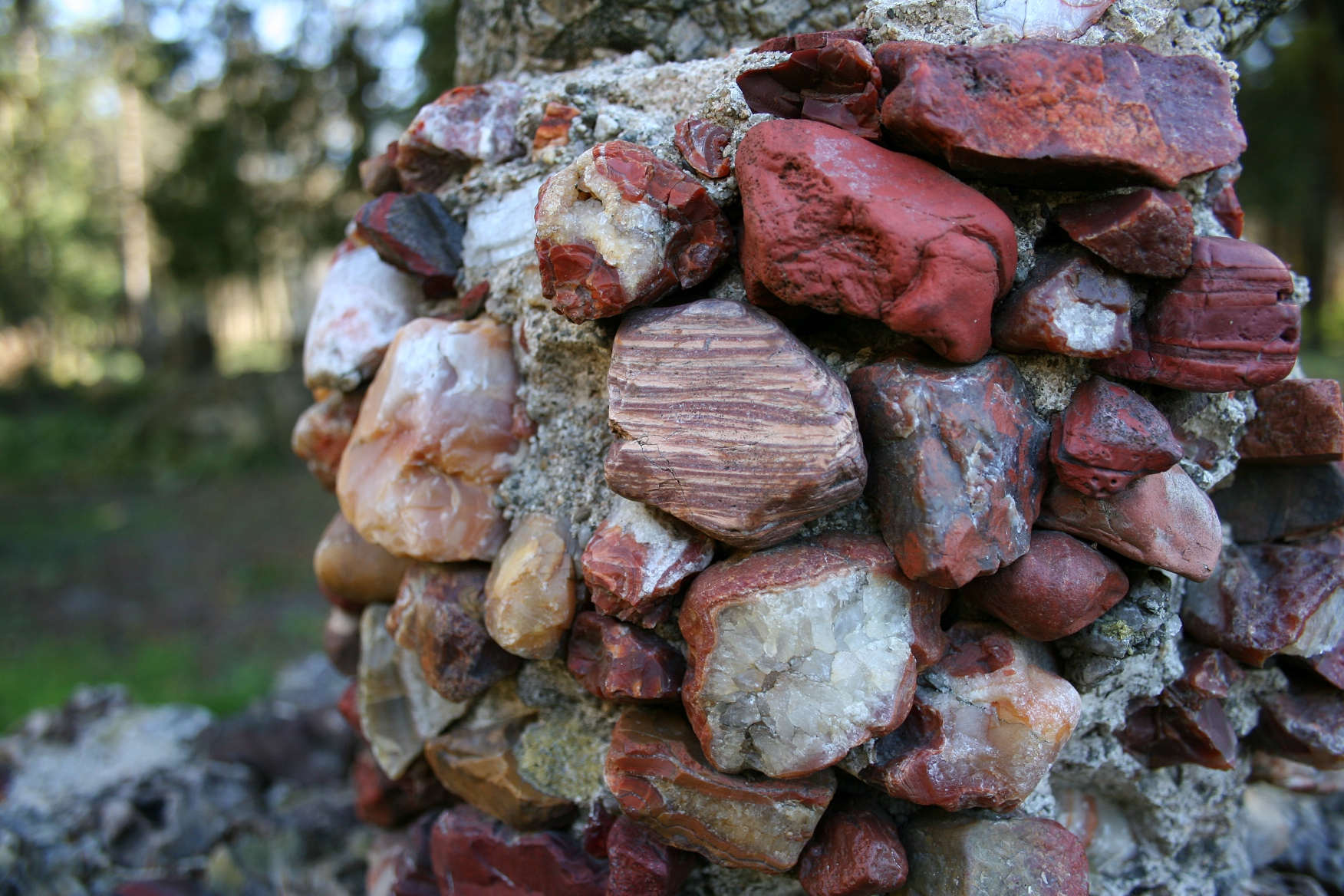
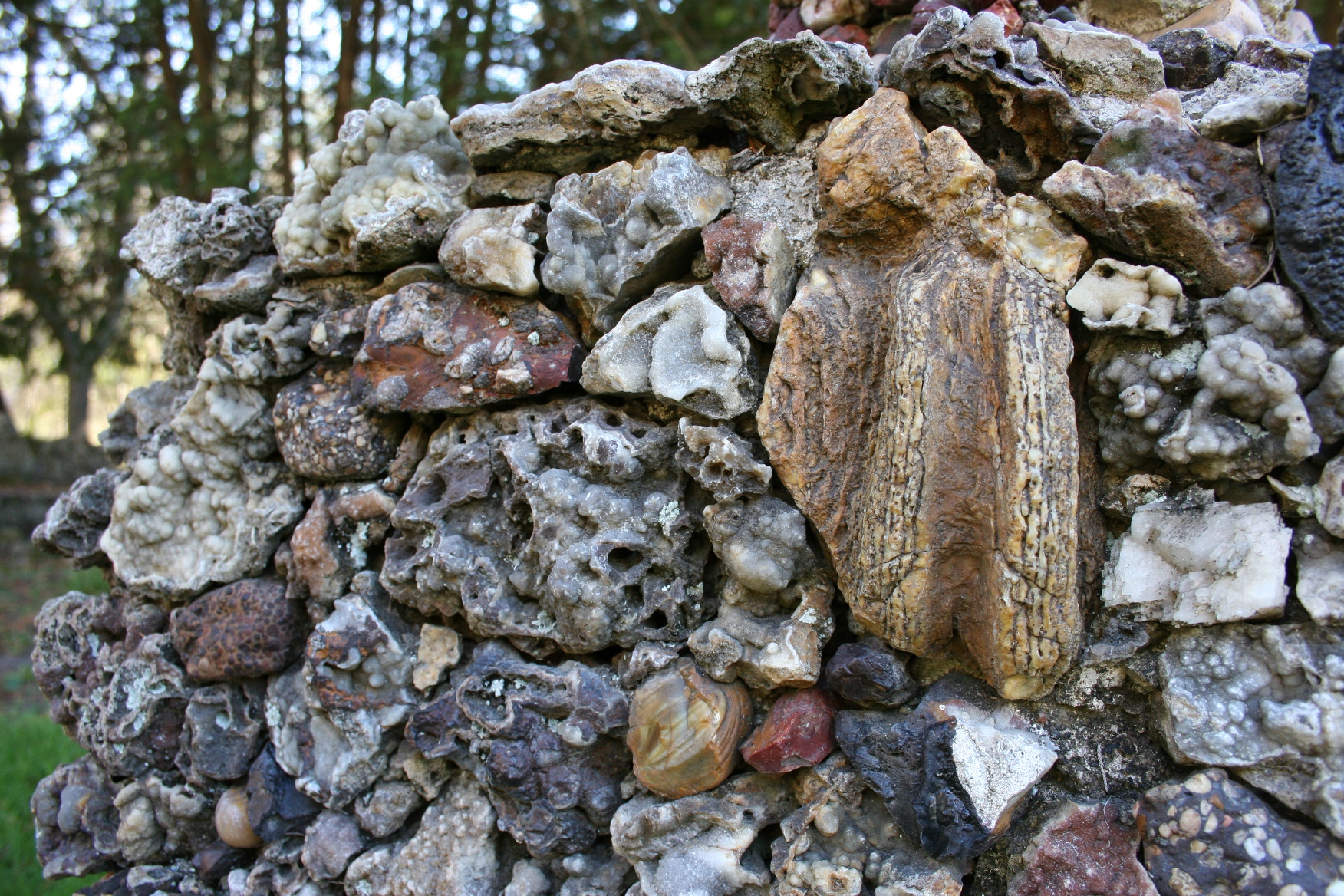
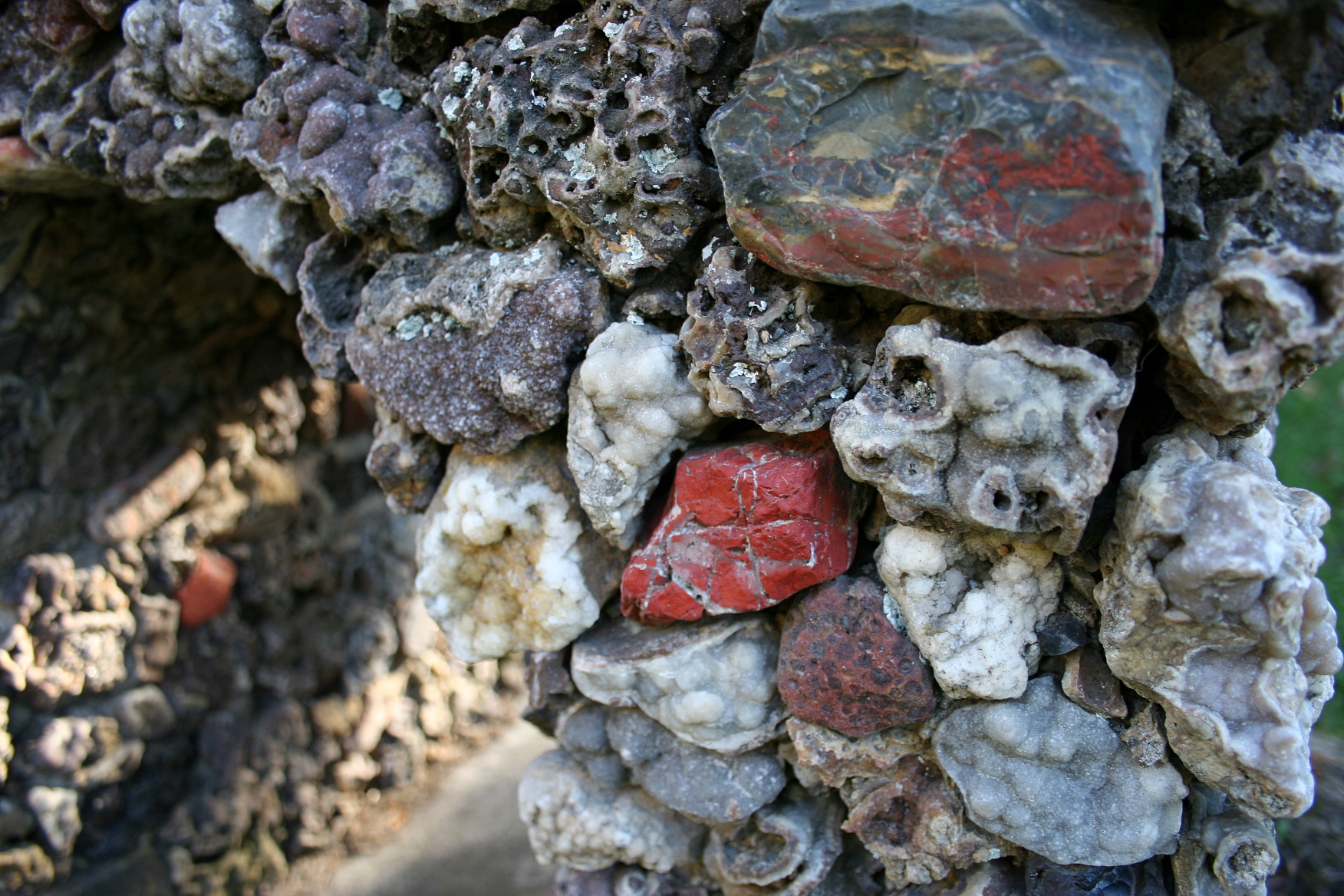
Sculpture, stones close-up 1

Sculpture, stone close up 3

Sculpture, stone close-up 2

Stones joined somehow into these interesting pieces of art. By whom? And why?

As Randy and I wandered and examined and wondered aloud, my appreciation grew for this artist. I expect he worked alone here, drawn to the solitude of this rugged place in the valley. He was, perhaps, viewed as a bit of an odd fellow. Was he a poet? A farmer? A musician?

Do you know the story of this artist and the rock garden in Jarrett, the unincorporated community which made headlines when the Zumbro roared from its banks during the flash floods of September 2010? I’d like to hear.

Someone tends this sculpture garden as flowers grew (during the warmer months) here among the artwork. Someone cares…

BONUS PHOTO:

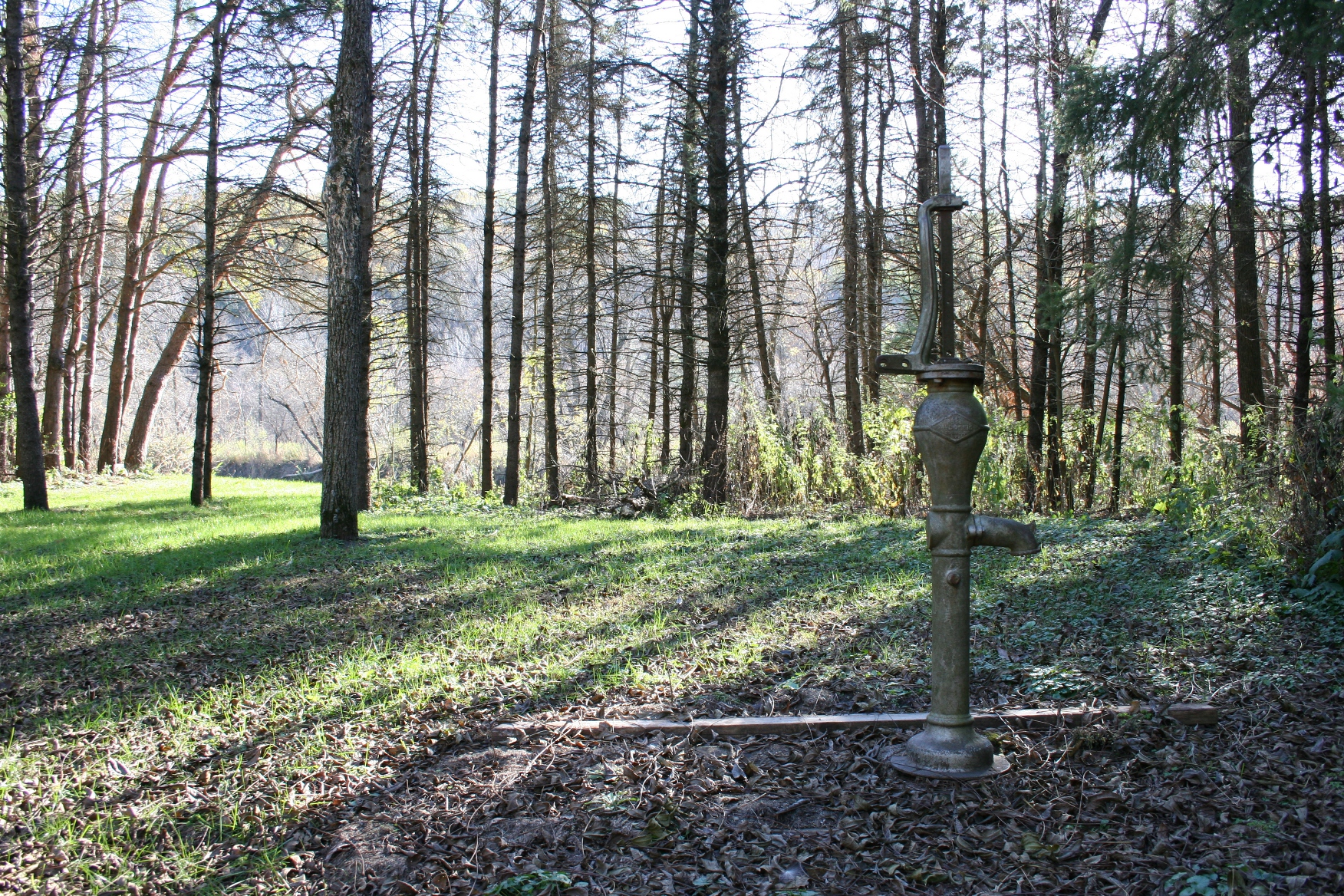
As I walked away from the sculpture garden toward the Zumbro River, I spotted this charming old water pump. I moved closer, until my husband stopped me in my tracks. We saw boards lying across the ground around the pump, an indication that this might not be a safe place to walk.

As I walked away from the sculpture garden toward the Zumbro River, I spotted this charming old water pump. I moved closer, until my husband stopped me. We saw boards, mostly buried under leaves, lying across the ground around the pump, an indication that this might not be a safe place to walk.

© Copyright 2013 Audrey Kletscher Helbling
 

Country meets city in northeastern Wisconsin November 8, 2013

Filed under: Uncategorized — Audrey Kletscher Helbling @ 6:00 AM
Tags: , , , , , , , , ,
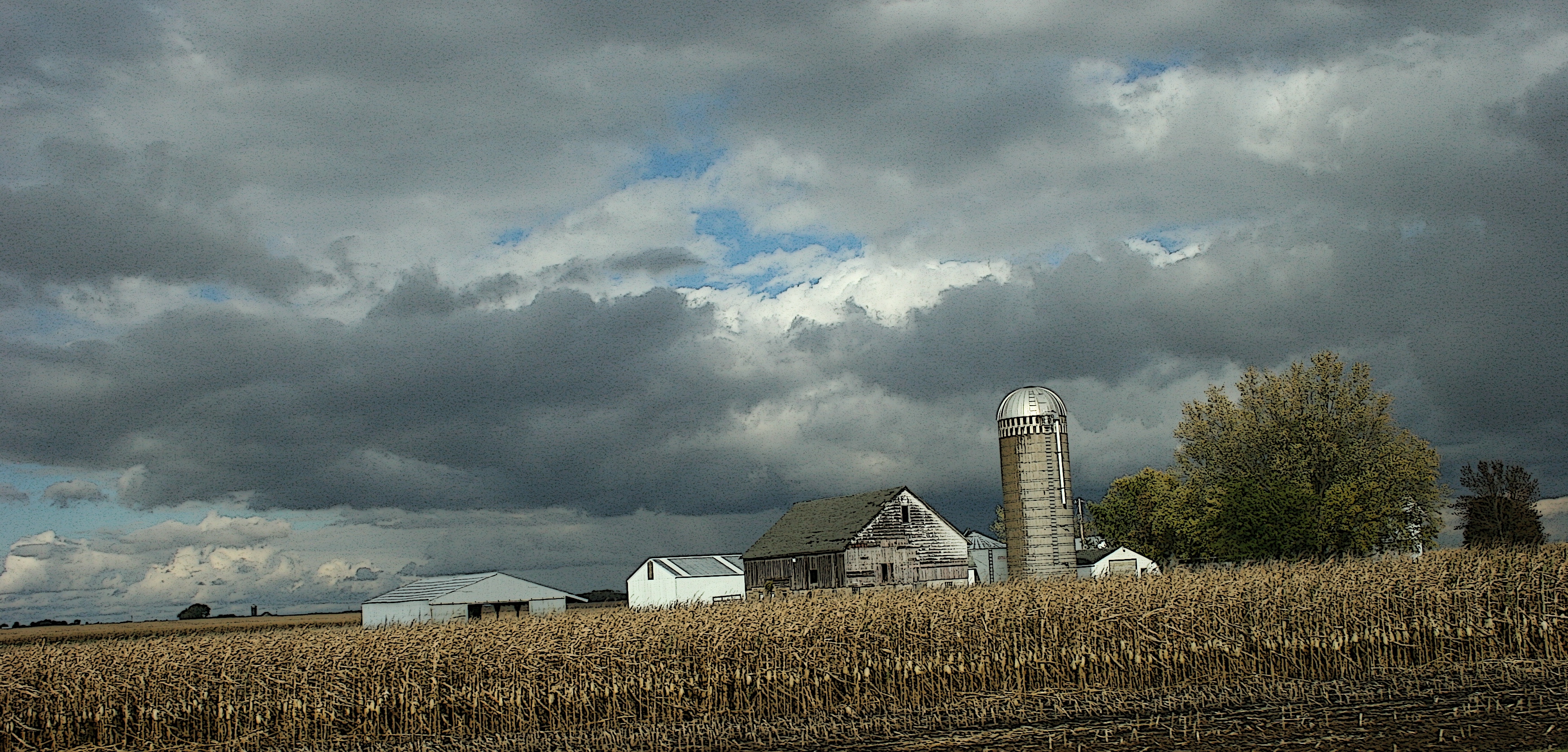
A farm just off Northland Avenue in Appleton, Wisconsin.

A farm, left, just off Northland Avenue.

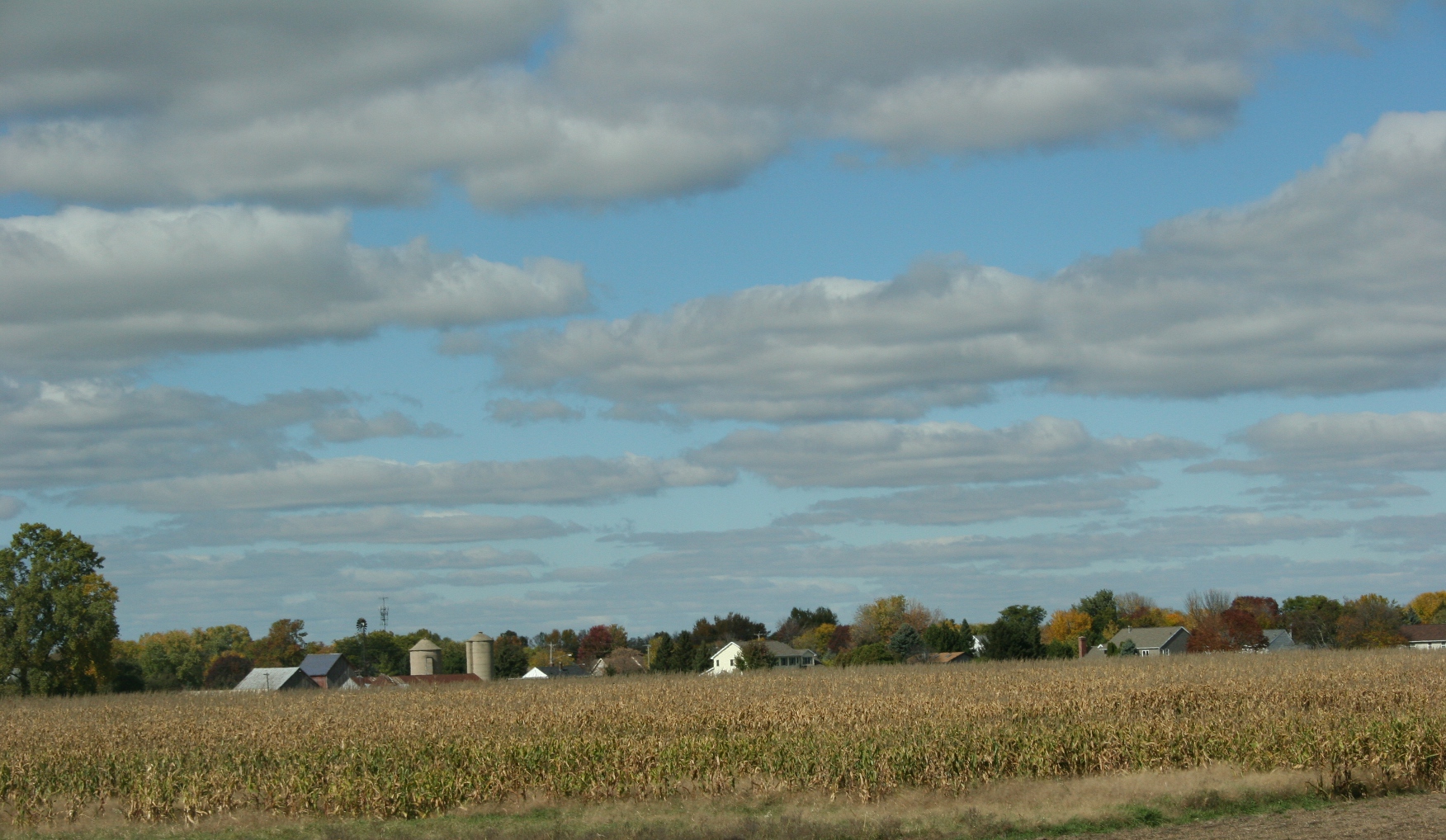
ON THE NORTHERN EDGE of Appleton or maybe its the southern edge of Grand Chute, Wisconsin (I examined maps and cannot determine which), lies a farm place with two vintage silos, a barn, a collection of aging outbuildings and even an old windmill.

The place, a rural oasis separated from busy commercial Northland Avenue by a cornfield, has intrigued me since I first spotted it three years ago.

What I hadn’t noticed, though, until my last trip to Appleton, were the cows grazing in a pasture just across the street from a residential area.

This is the thing I love about Wisconsin. This state appreciates rural. You’ll find barns and silos, corn and cows seamlessly blending into urban settings. And the mix doesn’t feel awkward or patronizing or out of place.

It feels, oh, so right in this state tagged America’s Dairyland.

© Copyright 2013 Audrey Kletscher Helbling
 

Exploring the magic of Appleton, Wisconsin November 7, 2013

IN THE PAST THREE YEARS, since my second daughter moved to Appleton, Wisconsin, to start her job as a Spanish medical interpreter, I’ve enjoyed exploring the Fox Valley area south of Green Bay and an hour west of Lake Michigan.

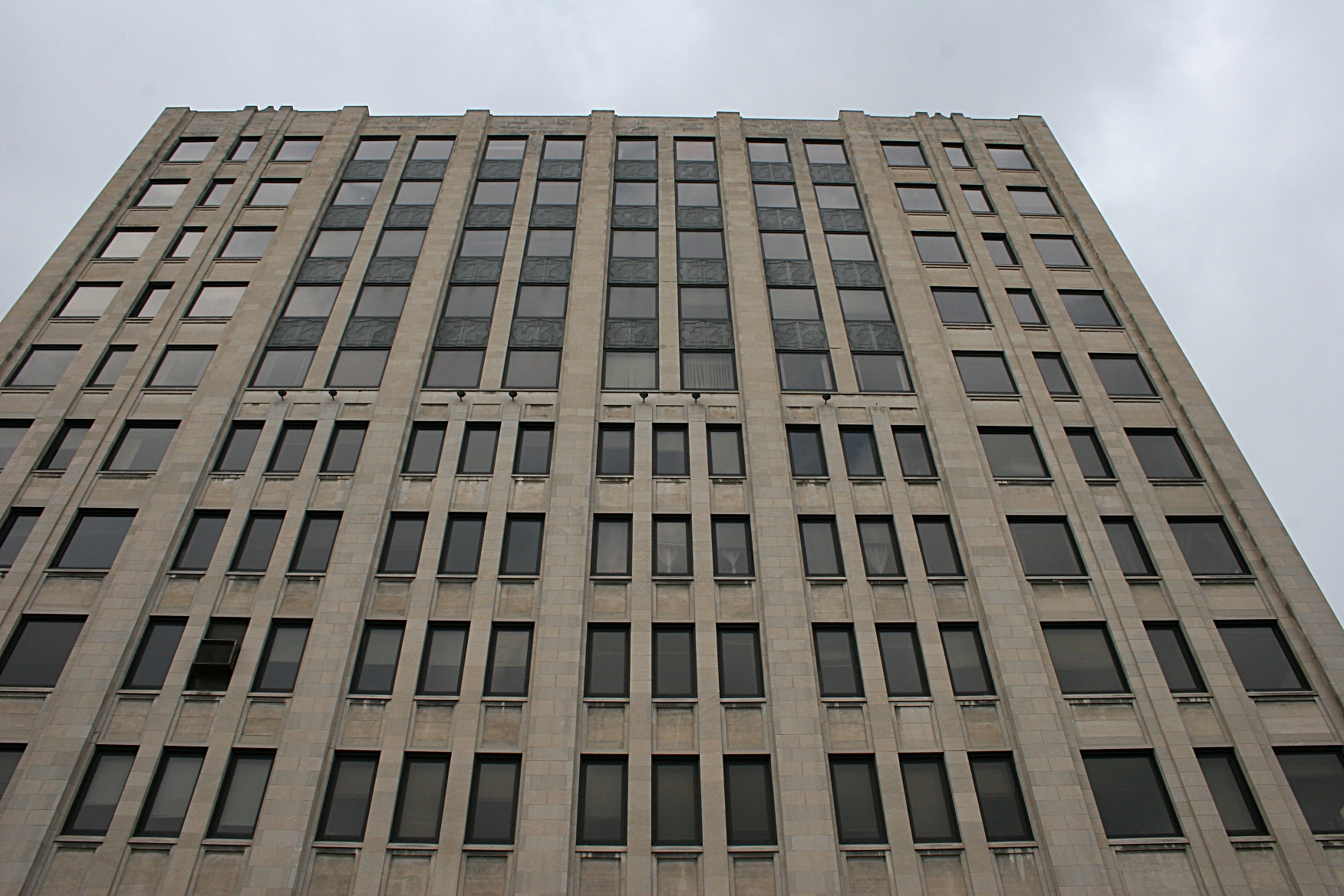
I remember my first visit to downtown Appleton, where this building is located, and my surprise at seeing tall buildings located there.

I remember my first visit to downtown Appleton, where this building is located, and my surprise at seeing tall buildings located there.

Although I’ve tried to convince Miranda to relocate nearer than 300 miles from her hometown, I understand why she’s reluctant to leave Appleton. From my observations, this metro region of some 236,000 residents in 19 communities along the Fox River appears to have a lot going for it in a landscape and lifestyle that can change quickly from urban to rural.

A farm place in the middle of urban housing on the north edge of Appleton, in Grand Chute if I'm correct.

A farm place in the middle of urban housing on the north edge of Appleton, in Grand Chute if I’m correct.

This is a busy and growing region, but one which has not lost its rural roots connection.

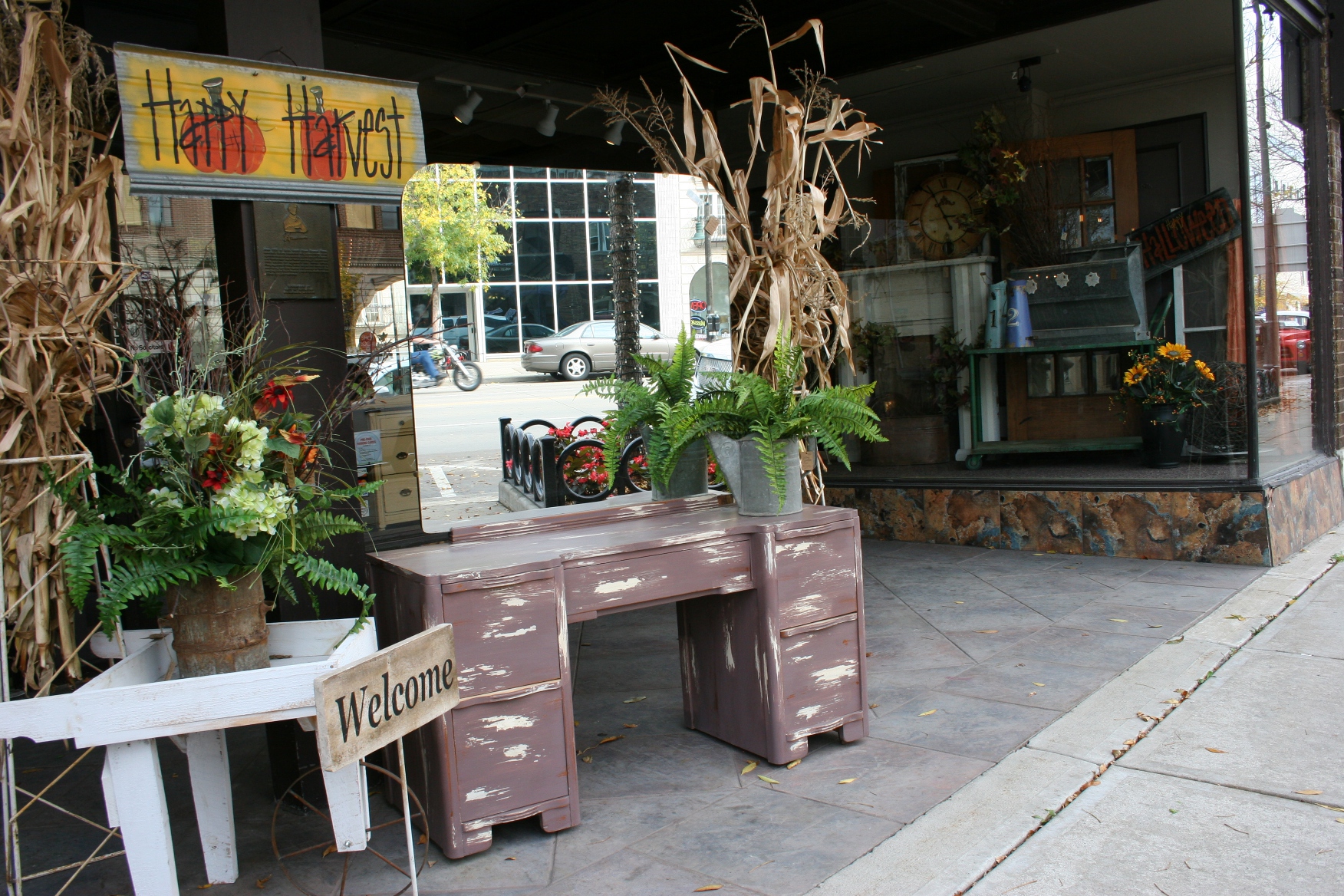
A display outside a downtown Appleton gift shop.

A display outside a downtown Appleton gift shop.

Although I’m not much of a shopper, there’s an abundance of shopping options from the Fox River Mall to one-of-a-kind local shops in the heart of an historic downtown. Plus, Appleton has a fantastic farmers’ market, which I’ve perused twice.

Cheese shops. Check. I’ve been to Simon’s Specialty Cheese and Lamers Dairy.

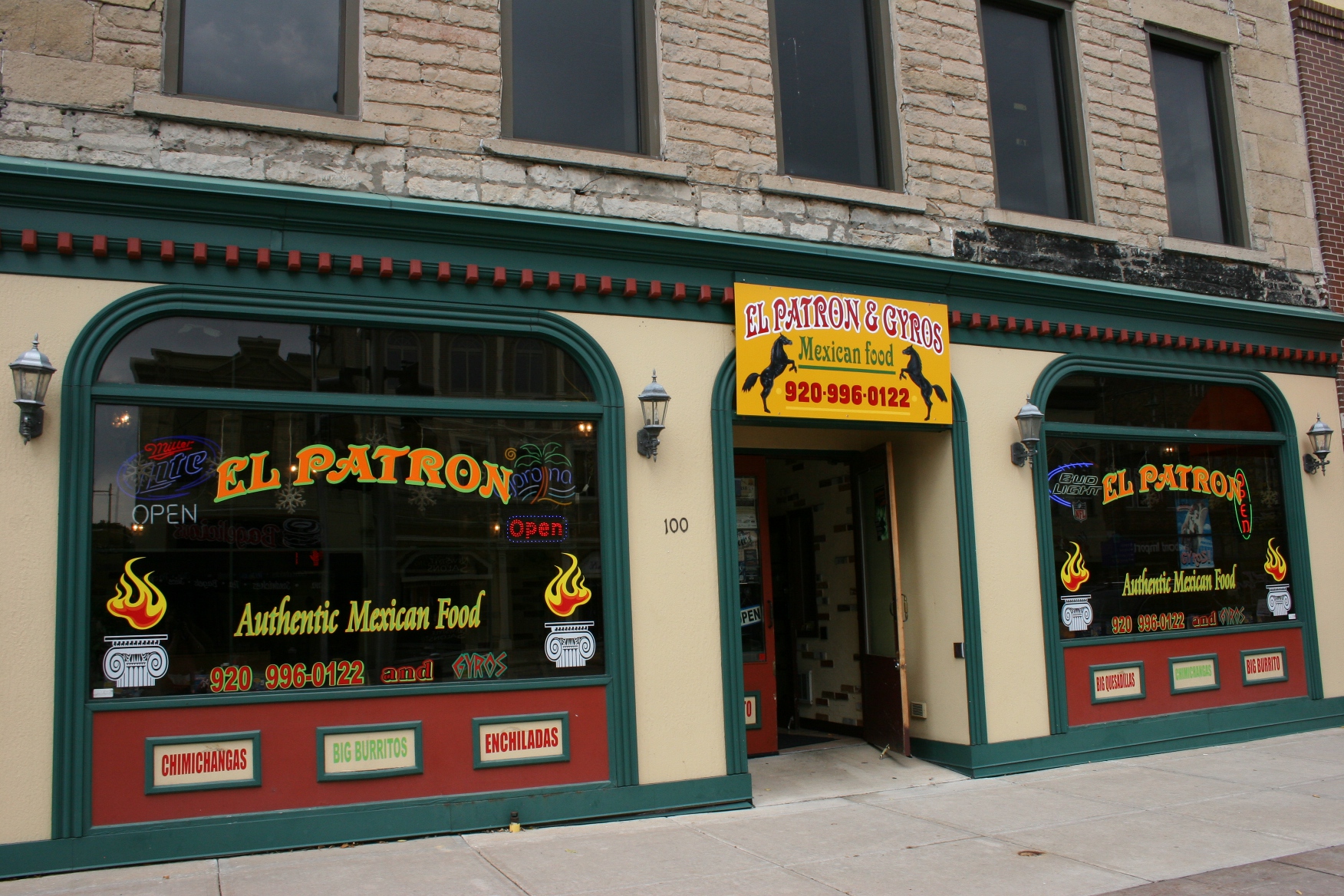
Ethnic and other dining choices abound in the Appleton area.

Ethnic and other dining choices abound in the Appleton area.

Great places to eat, too, like the best pizza accompanied by on-site brewed beer at the Stone Cellar Brewpub and delectable Indian cuisine at Sai Ram. Whenever my brother-in-law Marty, a long distance trucker, travels to Appleton, he’ll phone Miranda and she’ll pick him up and they’ll go to the Stone Cellar for pizza.

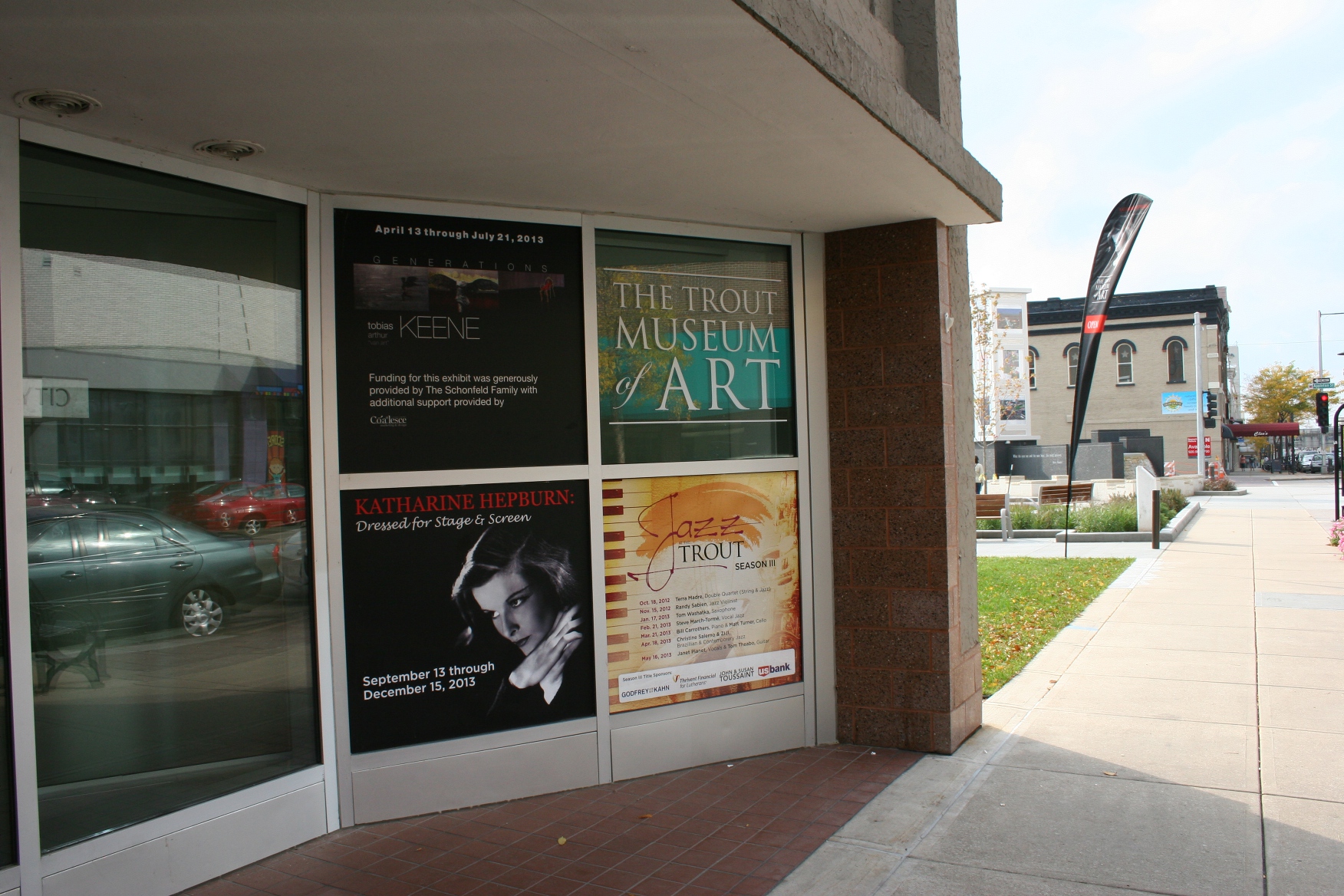
Now showing at The Trout Museum of Art, a collection of Katharine Hepburn's costumes.

Showing until December 15 at The Trout Museum of Art, a collection of Katharine Hepburn’s costumes.

On our most recent trip to Appleton, we not only celebrated my husband’s birthday at the Stone Cellar, but earlier in the day explored nearby High Cliff State Park and afterward checked out the Katharine Hepburn: Dressed for Stage and Screen exhibit at The Trout Museum of Art. Appleton offers plenty of cultural opportunities at places like the Fox Cities Performing Arts Center (which I have yet to visit and which my daughter wishes had more affordable ticket prices) and Lawrence University.

For some time now, I’ve wanted to visit the Trout. The museum’s name has nothing to do with fish, but with Dr. Monroe and Sandra Trout, who gifted 150 museum quality works of art and left a $1 million endowment. I was excited to see the Trout Collection.

But it was not to be. Apparently I misunderstood the information on the Trout website and the only collection shown was Katherine Hepburn’s costumes on loan from the Kent State University Museum in Ohio. Now if I was into film and Hepburn and fashion, this certainly would have held my interest. But I am not, nor are my husband and daughter. We breezed through the exhibit in 30 minutes under the scrutinizing watch of a security guard. When I asked if there was more to the Trout, the man at the admissions desk said we’d seen it all.

OK, then. To add to my disappointment, no cameras were allowed inside the Hepburn exhibit. I rather expected that, but I was hoping otherwise.

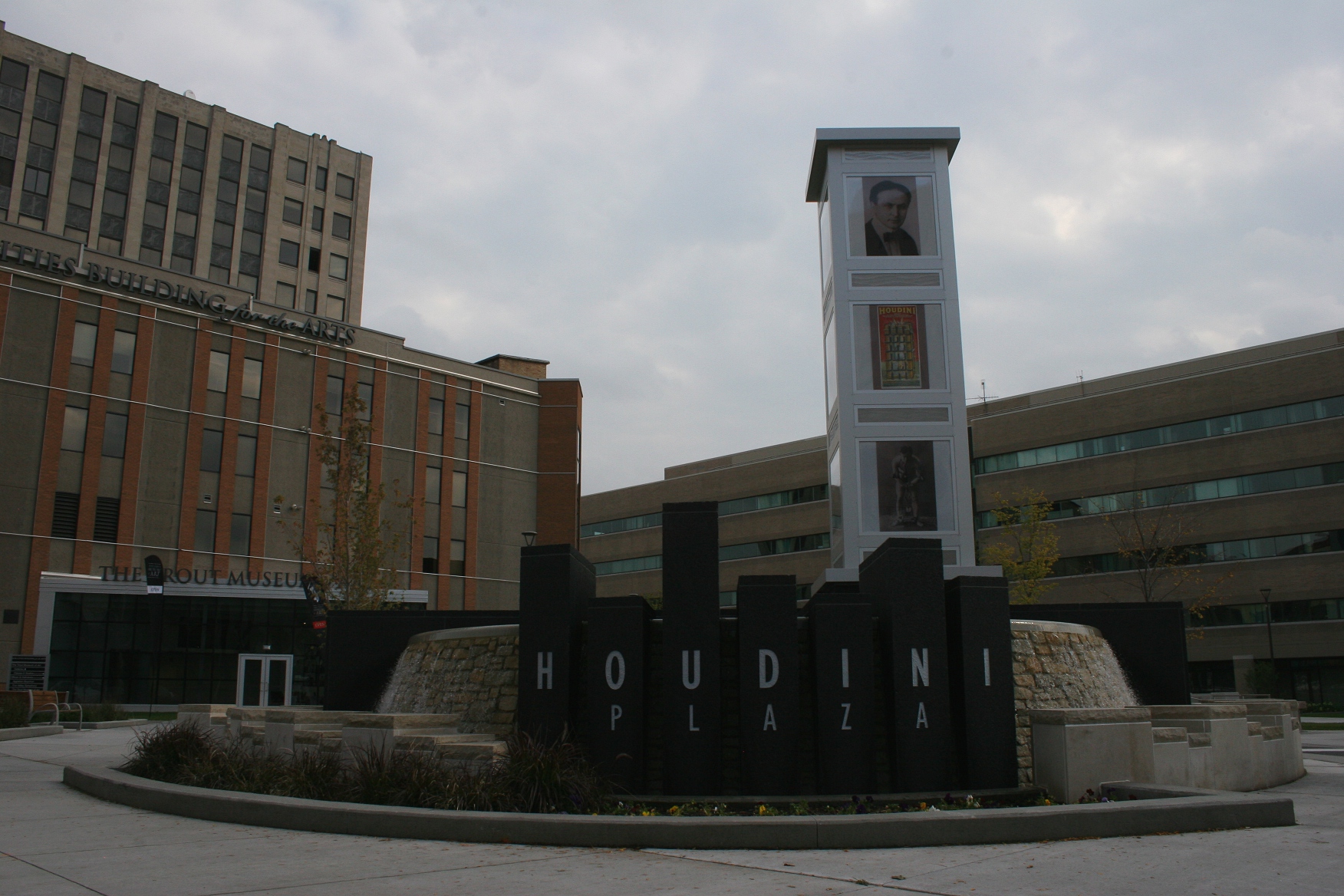
The recently revamped Houdini Plaza, a central gathering spot in downtown Appleton that features summer concerts, etc.

The recently revamped Houdini Plaza, a central gathering spot in downtown Appleton that features summer concerts, etc.

I settled for shooting photos outside the Trout of the beautiful new Houdini Plaza, honoring escape artist Harry Houdini who called Appleton his childhood home. A permanent exhibit on Houdini is housed in the nearby History Museum at the Castle, where I once saw an interesting Leonardo da Vinci exhibit.

I wish we’d gone to the Castle to tour the current temporary exhibit, Food: Who We Are and What We Eat. That might have been entertaining considering I’ve spotted green and gold brat buns at Festival Foods in Appleton.

If I’ve learned anything in the past three years about Wisconsin, it’s that Wisconsinites like love their beer, brats and Packers.

BONUS PHOTOS:

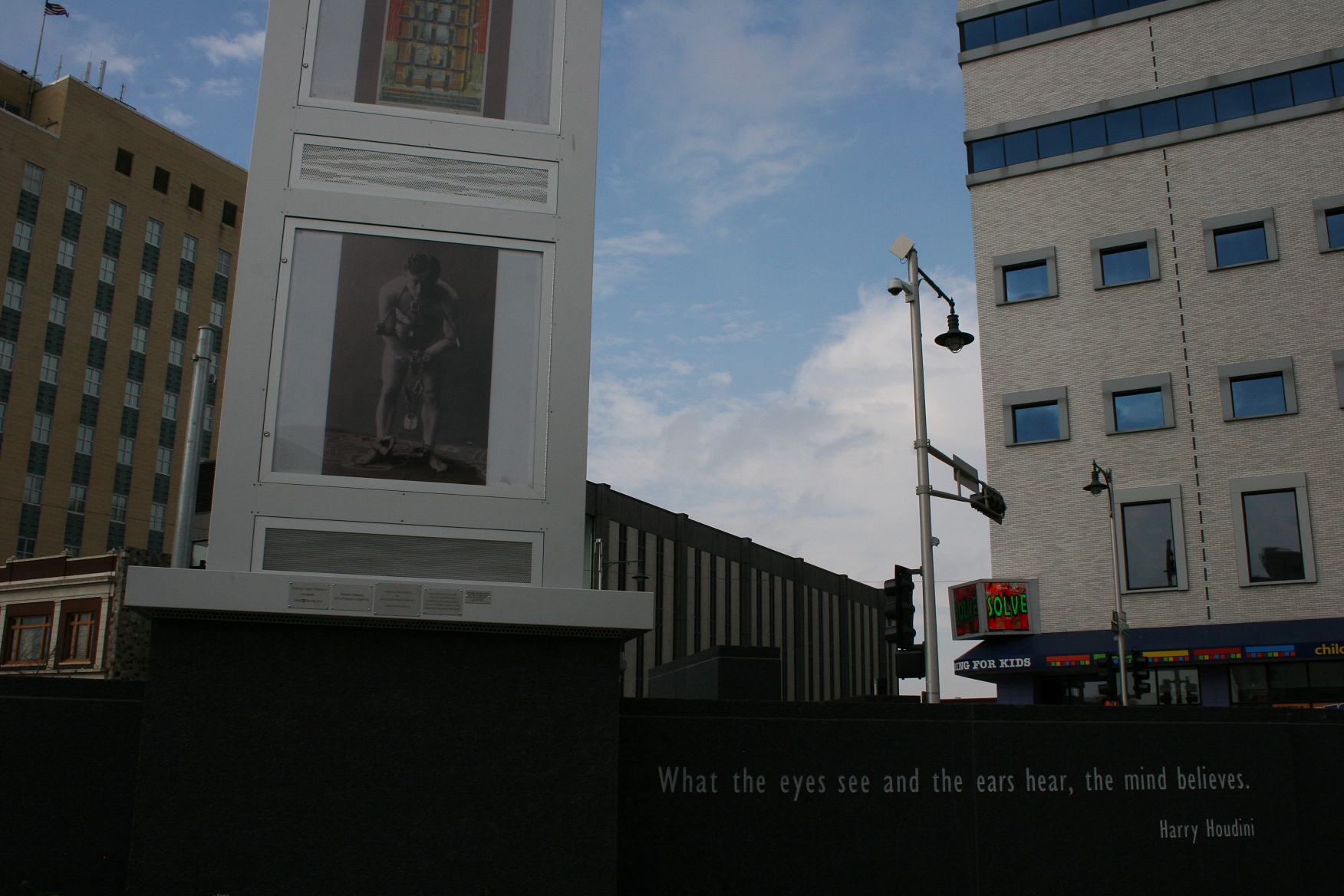
Details on Houdini Plaza.

Details on Houdini Plaza.

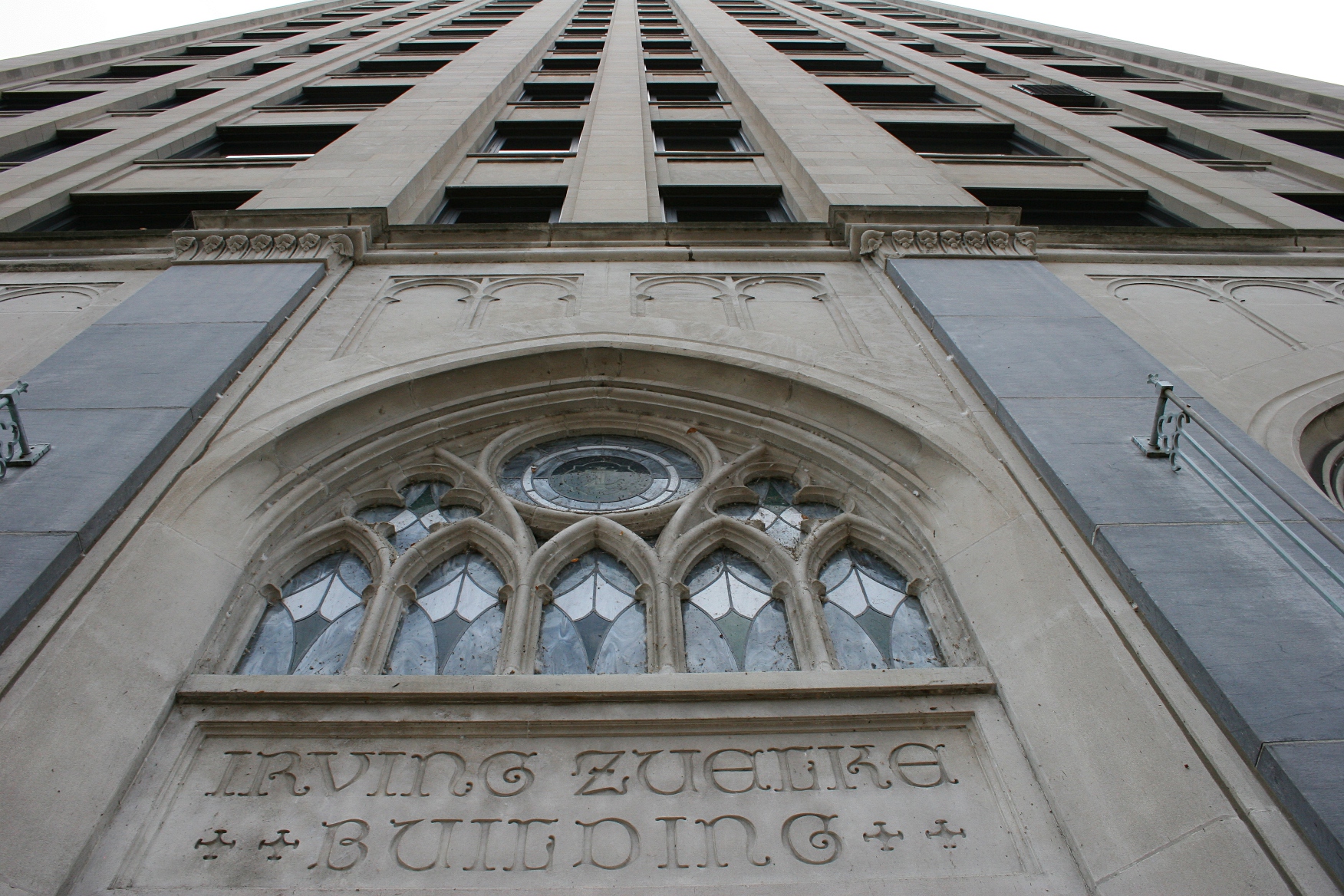
Steel, stone, marble and brass comprise the first seven floors of the Irving Zuelke building constructed in  1931. An additional five stories were added in 1951.

Steel, stone, marble and brass comprise the first seven floors of the Irving Zuelke building constructed in 1931. An additional five stories were added in 1951.

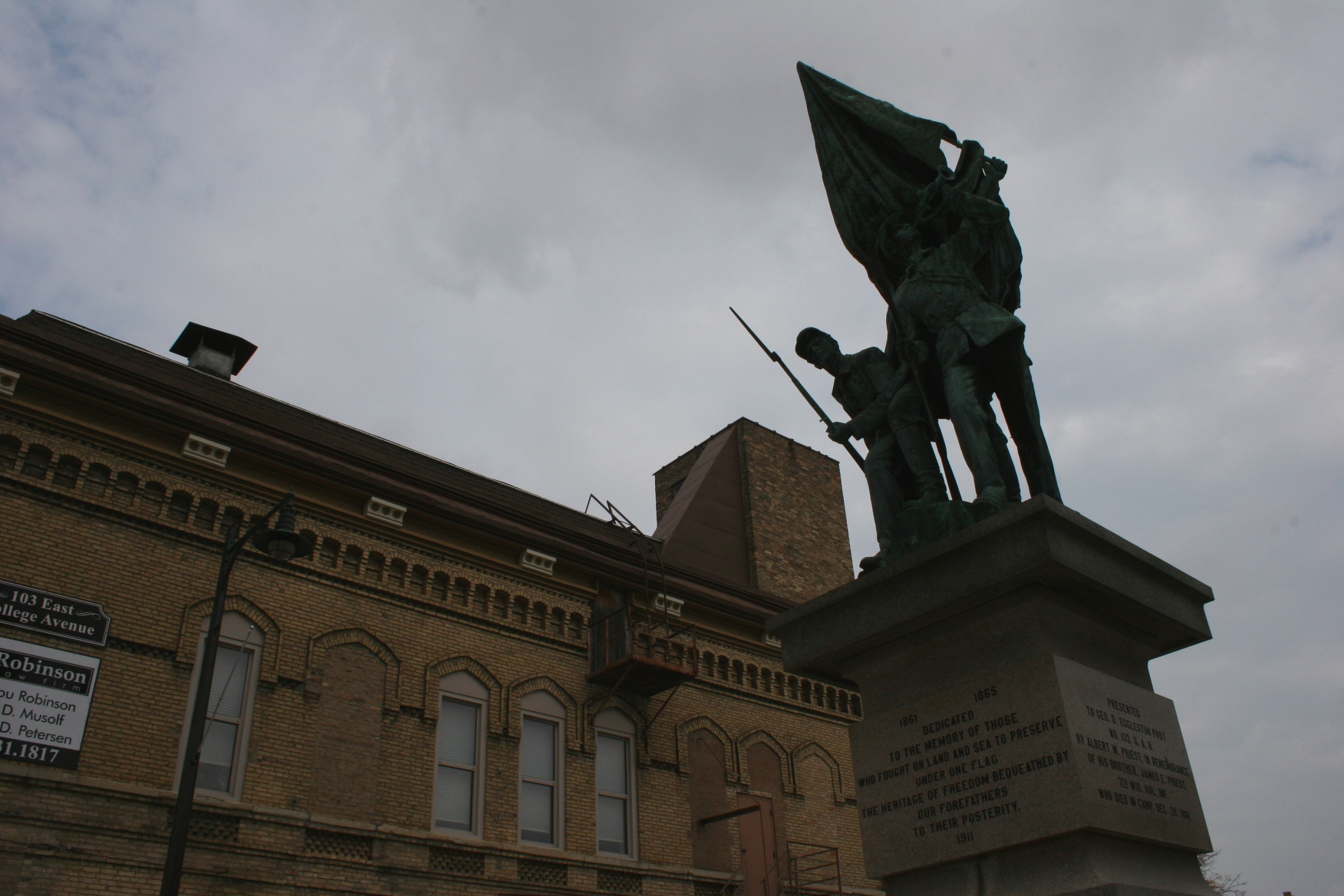
I discovered this bronze monument to Civil War Union soldiers near Houdini plaza, tucked between a parking ramp and a building.

I discovered this bronze monument to Civil War Union soldiers near Houdini Plaza, tucked between a parking ramp and a building.

FYI: To read previous posts from Appleton, and there are many, simply type Appleton into the Minnesota Prairie Roots search engine. Also, photo ops on this visit to downtown Appleton were limited given the intermittent rain.

© Copyright 2013 Audrey Kletscher Helbling
 

My thoughts on the changing streets of Faribault November 6, 2013

Filed under: Uncategorized — Audrey Kletscher Helbling @ 6:00 AM
Tags: , , , , , ,

I DON’T LIVE on a Bay, a Circle or a Drive.

I live along Willow Street.

That alone should tell you that my home sits in an old neighborhood. After all, cities don’t name streets after trees anymore or even attach the word “street” to a new roadway. If there are willows growing along my street, I haven’t noticed them.

But I’ve noticed, in the 29 years my husband and I have been in our modest three-bedroom, one-bath Willow Street home, that there’s a certain stigma attached to our arterial street, to our part of Faribault.

And I’m not happy about that.

For example, a few evenings ago, we joined friends around a backyard bonfire. The conversation ebbed and flowed with intermittent laughter, until a friend remarked, “I see your neighborhood is getting more diverse.” I knew the comment stemmed from a drive-by shooting several months ago within two blocks of my home.

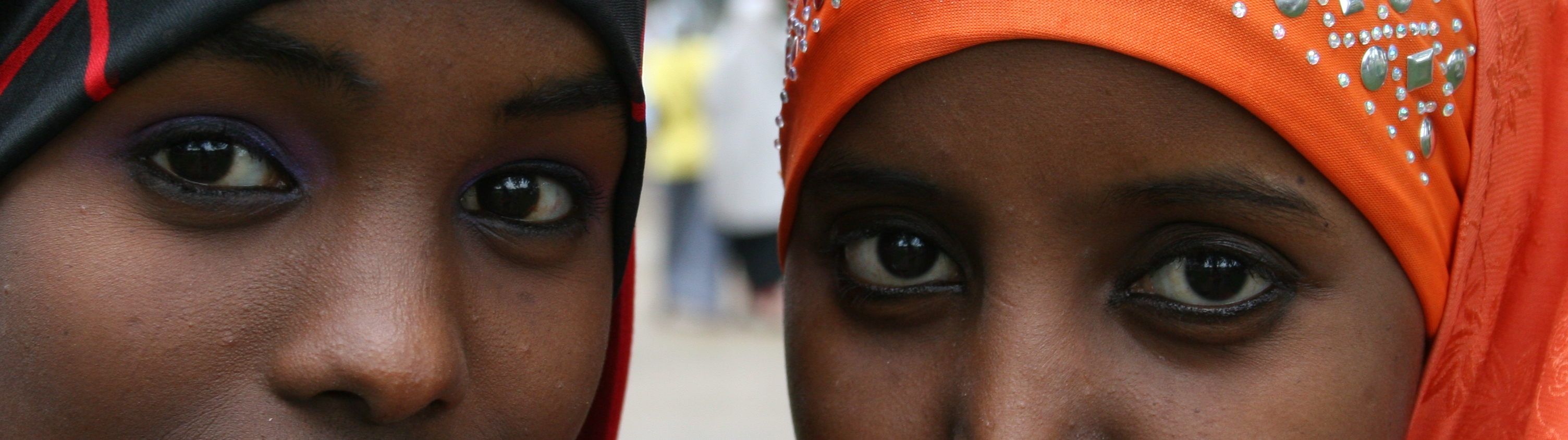
These young Somali women represent the changing face of Faribault. Minnesota Prairie Roots file photo.

These young Somali women represent the changing face of Faribault. Minnesota Prairie Roots file photo.

My defenses kicked in and I was prepared for an unpleasant exchange about the ever-growing cultural diversity of Faribault and the perceived “problems” in my neighborhood. My husband responded and the topic was dropped. I didn’t find myself, once again, championing for those of color, although you’ll never find me defending criminal behavior committed by anyone, whether white, black, green or purple.

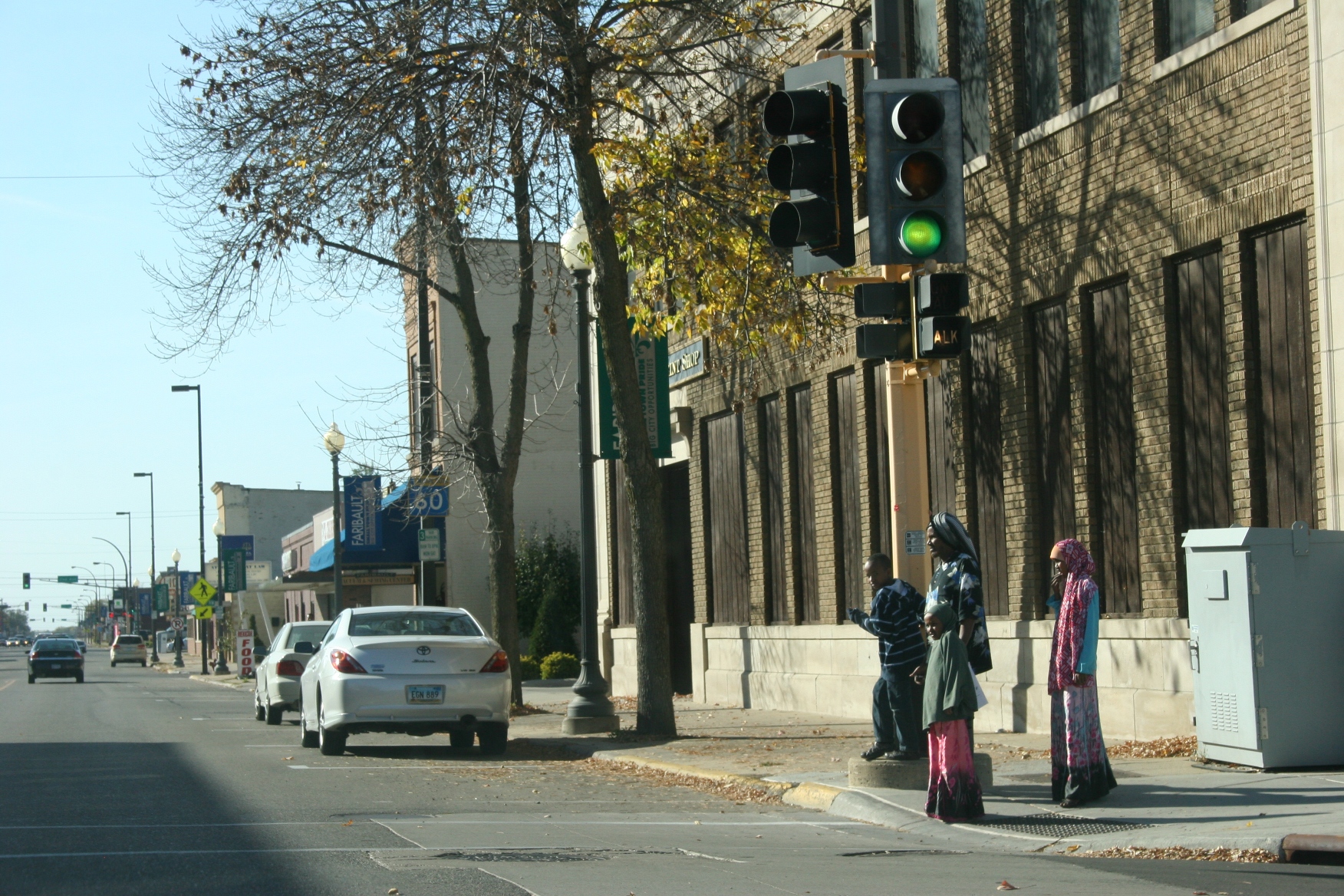
In this file photo, a Somali family waits to cross a downtown Faribault street.

A Somali family in downtown Faribault. Minnesota Prairie Roots file photo.

Honestly, I tire of the underlying, and often blatant, prejudicial jabs I hear and read about in my community. The Hispanic, Somali, Sudanese, Asian, African American and other minorities who now call Faribault home are here to stay. And some of them happen to live in my neighborhood. So what? Does this make my neighborhood less desirable? Apparently to some. Not to me, unless these neighbors disrupt the neighborhood with illegal and/or undesirable criminal activity and/or behavior.

And, believe me, I’ve had “bad neighbors” whose skin is white, just like mine.

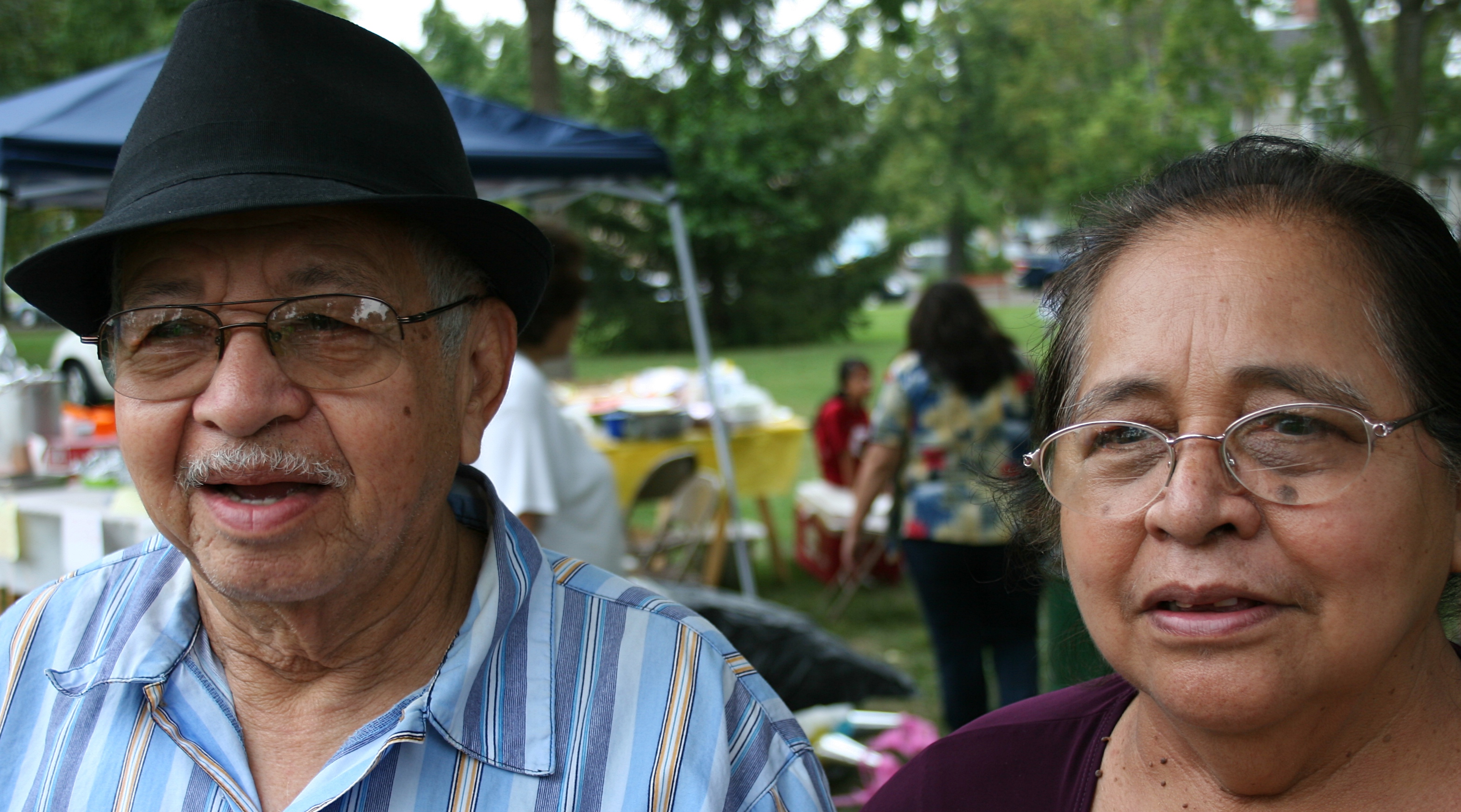
Many Latinos call Faribault home. Minnesota Prairie Roots file photo.

Many Latinos call Faribault home. Minnesota Prairie Roots file photo.

Oftentimes I want to grab life-long locals by the shoulders and tell them that the Faribault they knew growing up is not the Faribault of today. These newcomers are here to stay. Welcome them. Get to know them as individuals and as families, for in so doing misconceptions and fears fall by the wayside. Be kind. Embrace them.

When I moved to the Faribault area in 1982, it took a long time for me to feel welcome and a part of the community. Sometimes I still feel like an outsider because I didn’t grow up here, don’t have family here, nor does my husband. I can only imagine how those of other cultures, those who’ve fled war-torn homelands an ocean away, must sometimes feel. Isolated. Scared. Unwelcome.

Latinos represent a large part of Faribault's diverse population. Minnesota Prairie Roots file photo.

Latinos represent a large part of Faribault’s diverse population. Minnesota Prairie Roots file photo.

Of those who suggest the newcomers just leave, I want to ask, and sometimes do: “Weren’t your great grandparents once new here, arriving from the Old Country, speaking in a language others could not understand?”

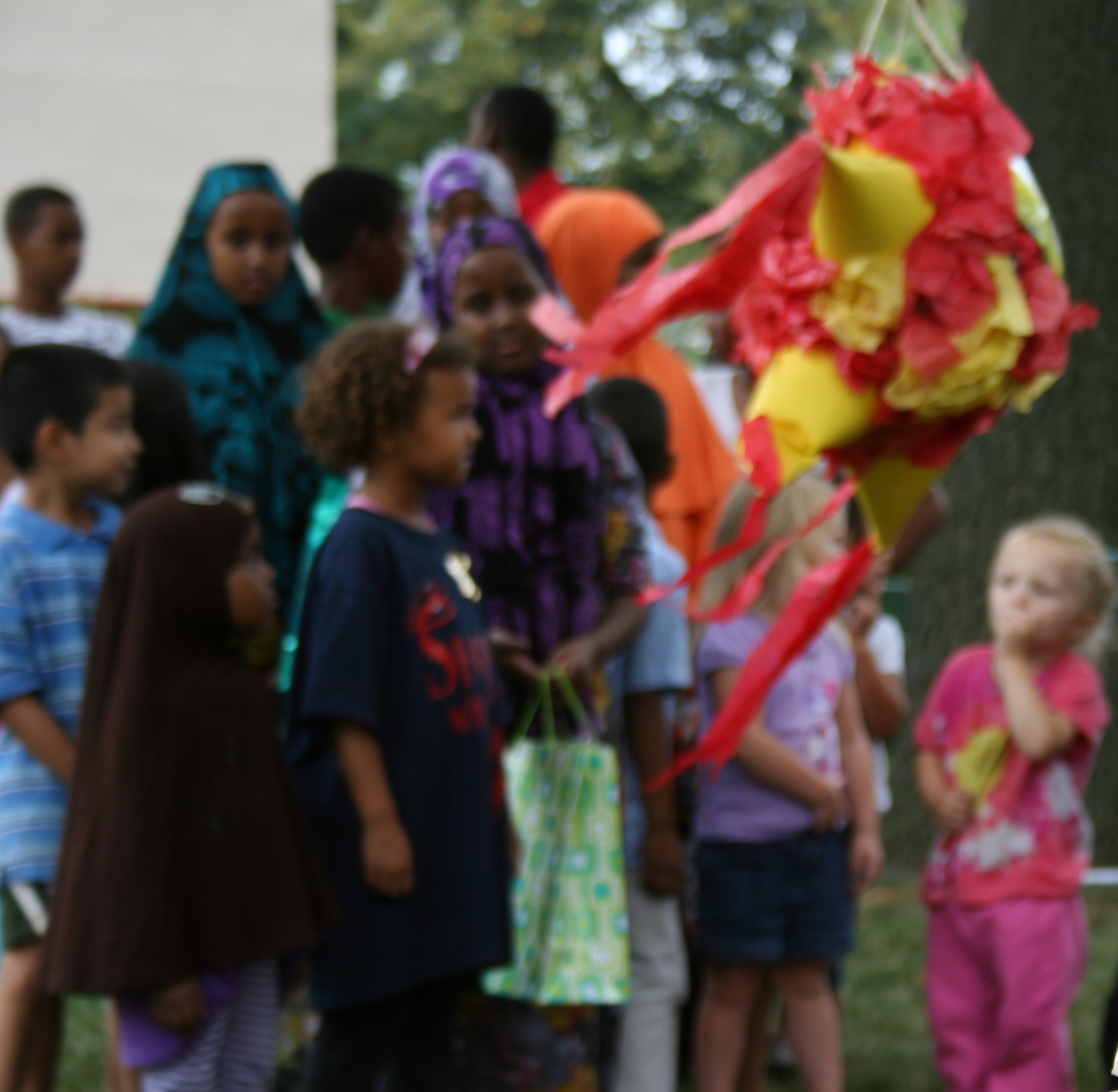
This intentionally blurred image, taken of children waiting to break a pinata at the International Festival Faribault, represents the many cultures within my community. Skin color mattered not to these kids. Why does it matter so much to adults? Minnesota Prairie Roots file photo.

This intentionally blurred image, taken of children waiting to break a pinata at the International Festival Faribault, represents the many cultures within my community. Skin color mattered not to these kids. Why does it matter so much to adults? Minnesota Prairie Roots file photo 2012.

Oftentimes, too, I want to grab life-long locals and others by the shoulders and tell them that my diverse Willow Street neighborhood is worthy of their respect. This is my home, my neighborhood, the place I choose to live, an important part of this community we call Faribault.

© Copyright 2013 Audrey Kletscher Helbling
 

Reflecting on Minnesota’s rural landscape November 5, 2013

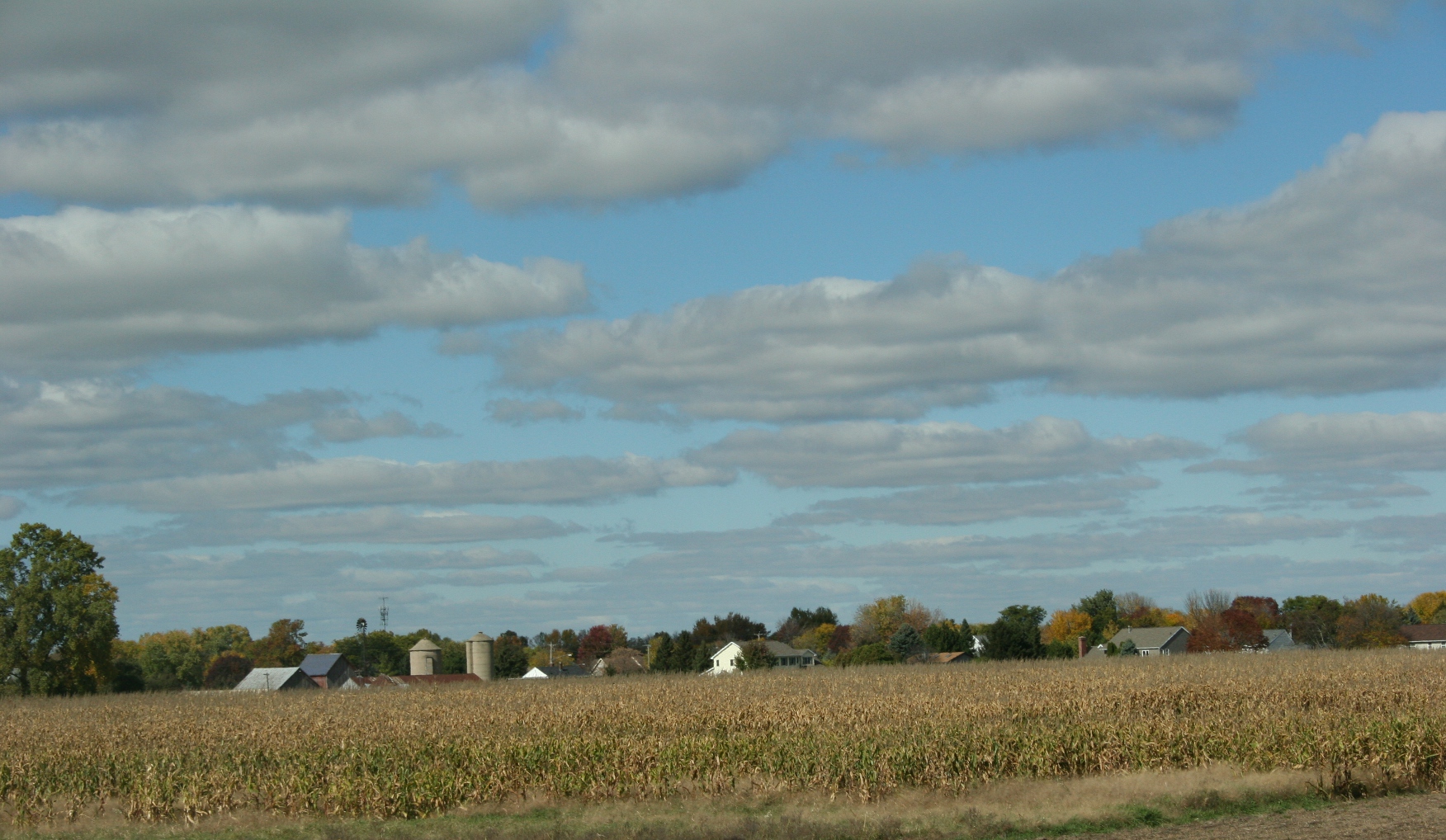
Expansive sky and land inspire the poet in me. Photographed, as are all photos here, along Minnesota State Highway 60 between Faribault and Kenyon.

Expansive sky and land inspire the poet in me.

WHAT DRAWS YOUR EYE in a rural landscape?

Strong lines pull me in, lead me to wonder where that gravel road would take me.

Strong lines pull me in, lead me to wonder, “Where would that rugged gravel road take me?”

Or do you even notice your environment as you travel from point A to point B?

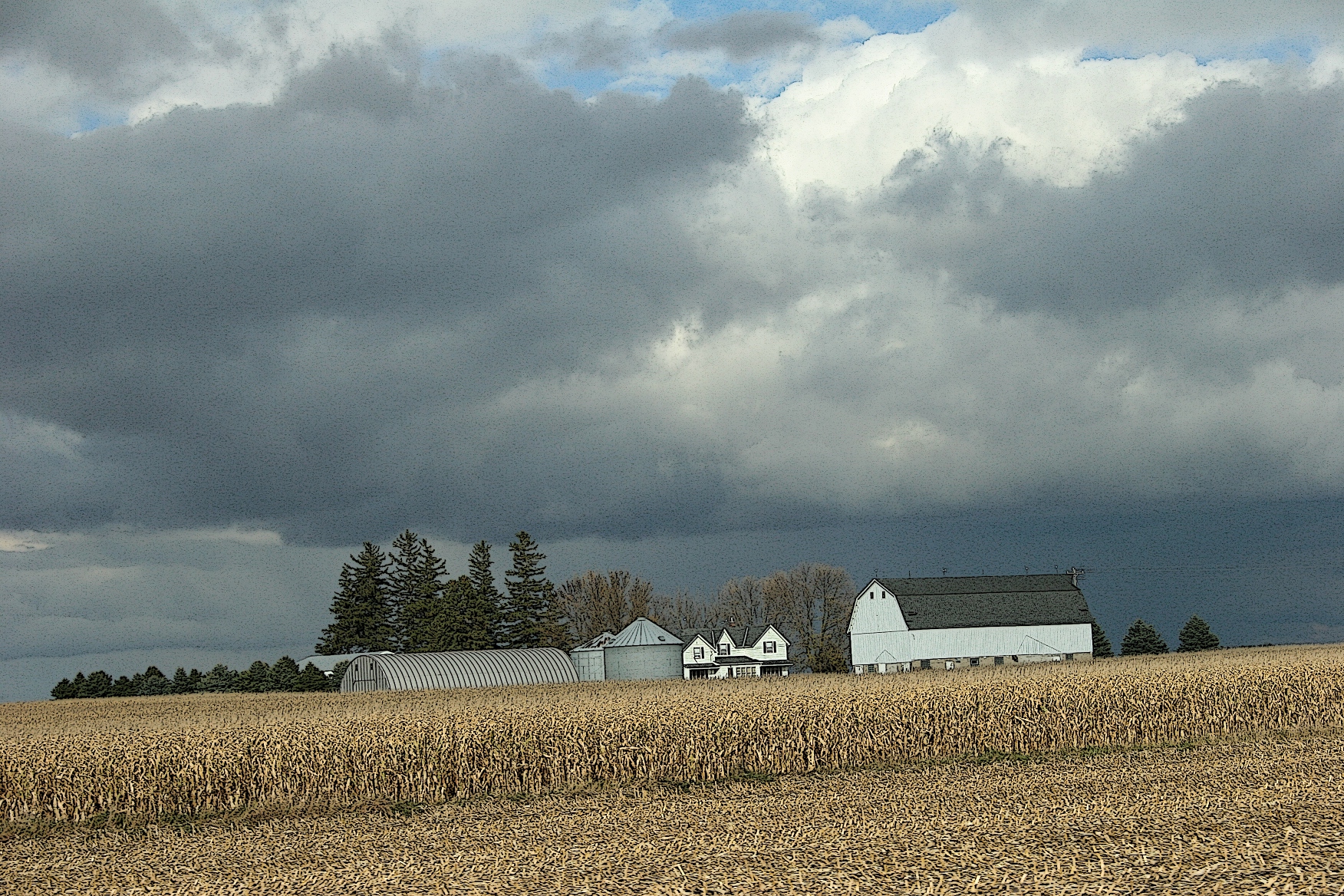
Noticing the geometry in these buildings clustered on a farm site.

I notice the geometry in these buildings, how they cluster and fit together on this farm site.

I challenge you, the next time you drive through rural Minnesota, or rural Anywhere, to truly see your surroundings. Don’t just look with glazed eyes. See. Once you see, you will appreciate.

A sense of history defines this farm in that strong barn which dominates.

A sense of history defines this farm in that strong barn which dominates and in the mishmash roof lines of the farmhouse. Both cause me to reflect upon my rural upbringing, upon my forefathers who settled 150 miles from here on the southwestern Minnesota prairie.

History, point in life, memories, even your mood on a given day, will influence how you view the rural landscape, what draws your focus.

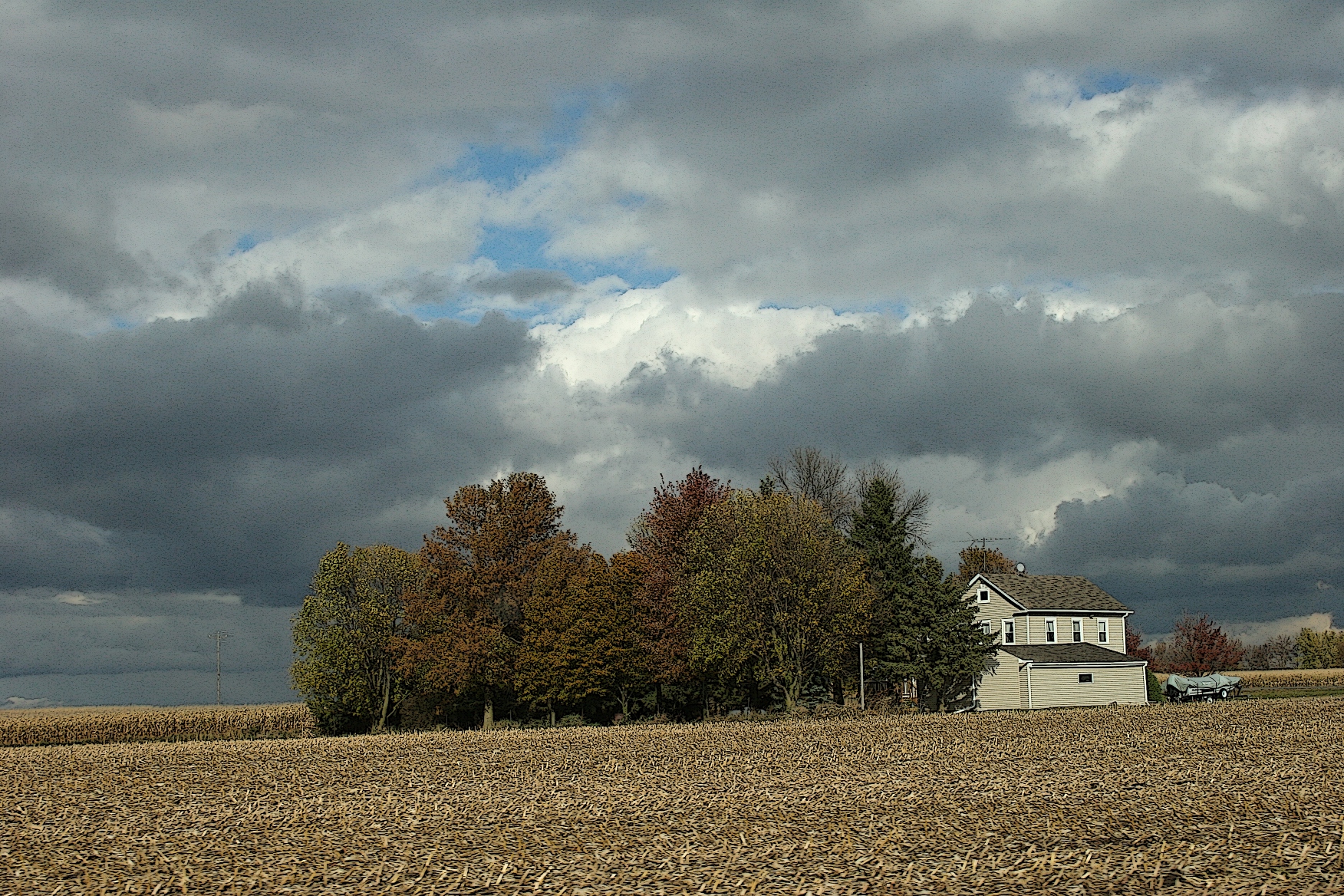
I see here trees huddled, protecting and sheltering that house from the elements. My thoughts turn introspective at this scene.

I see trees huddled, protecting and sheltering that house from the elements, from that threatening sky. My thoughts turn introspective as I consider how we are all sometimes vulnerable and huddled, drawn into ourselves.

Whether a writer or photographer, architect or historian, teacher or retiree, stay-at-home mom (or dad), a farmer or someone in between, you will lock onto a setting that inspires creativity or prompts thought or perhaps soothes your soul.

There is much to be said for noticing details, for understanding that the miles between small towns are more than space to be traveled.

FYI: These edited images were photographed nine days ago while traveling along Minnesota State Highway 60 between Faribault and Kenyon. In just that short time, the landscape has evolved with crops harvested, trees stripped of their leaves by strong winds and now, today, snow in the forecast.

© Copyright 2013 Audrey Kletscher Helbling


On ARTour: Up close with two artists inside their Northfield studio November 4, 2013

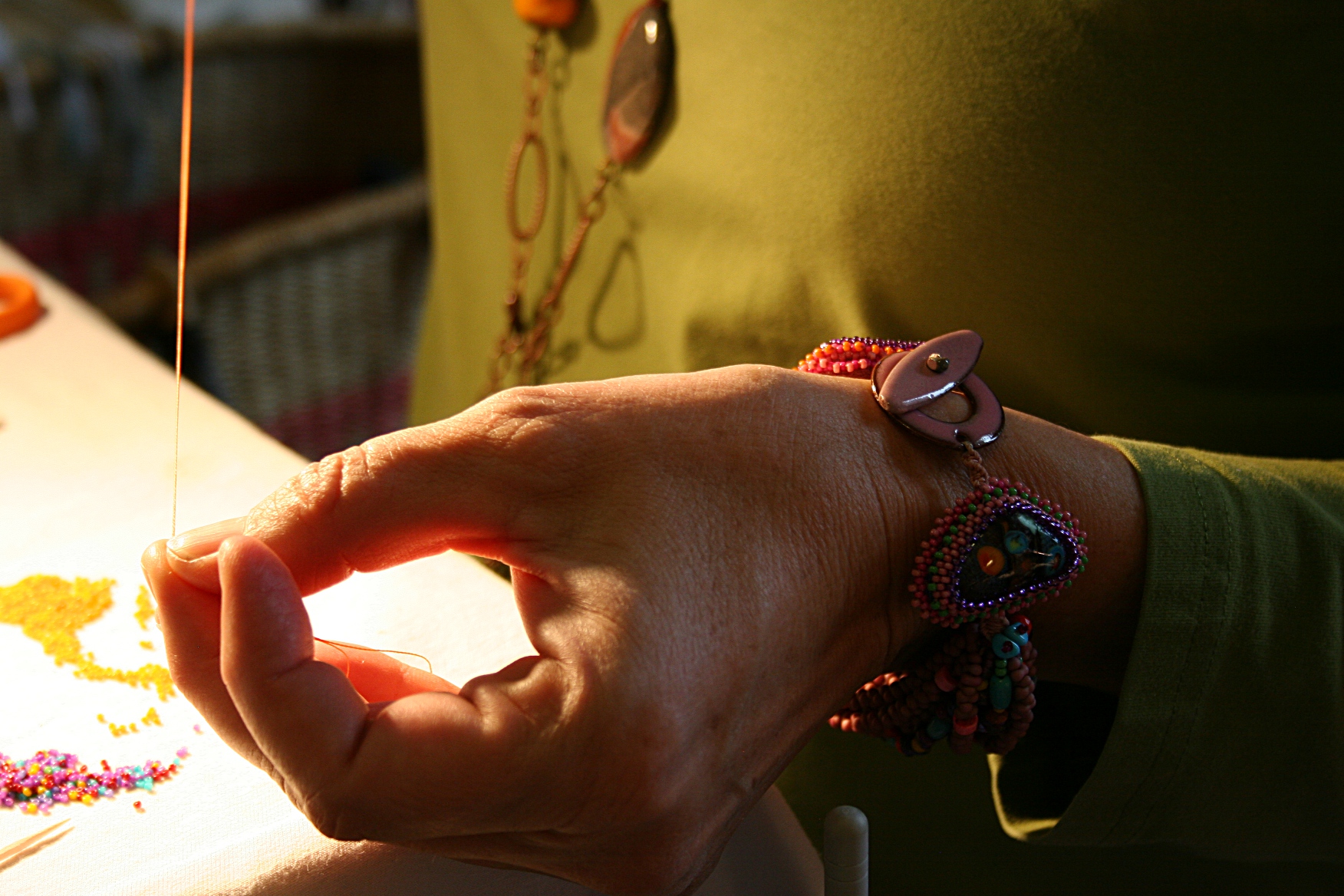
Artist Sue Hammes-Knopf of Full Bloom Beadworks at work beading.

Artist Sue Hammes-Knopf of Full Bloom Bead Work beading.

HANDCRAFTED BEAD BRACELET dangling from her left wrist, Sue Hammes-Knopf slips specks of orange beads onto a needle and then onto a matching orange string.
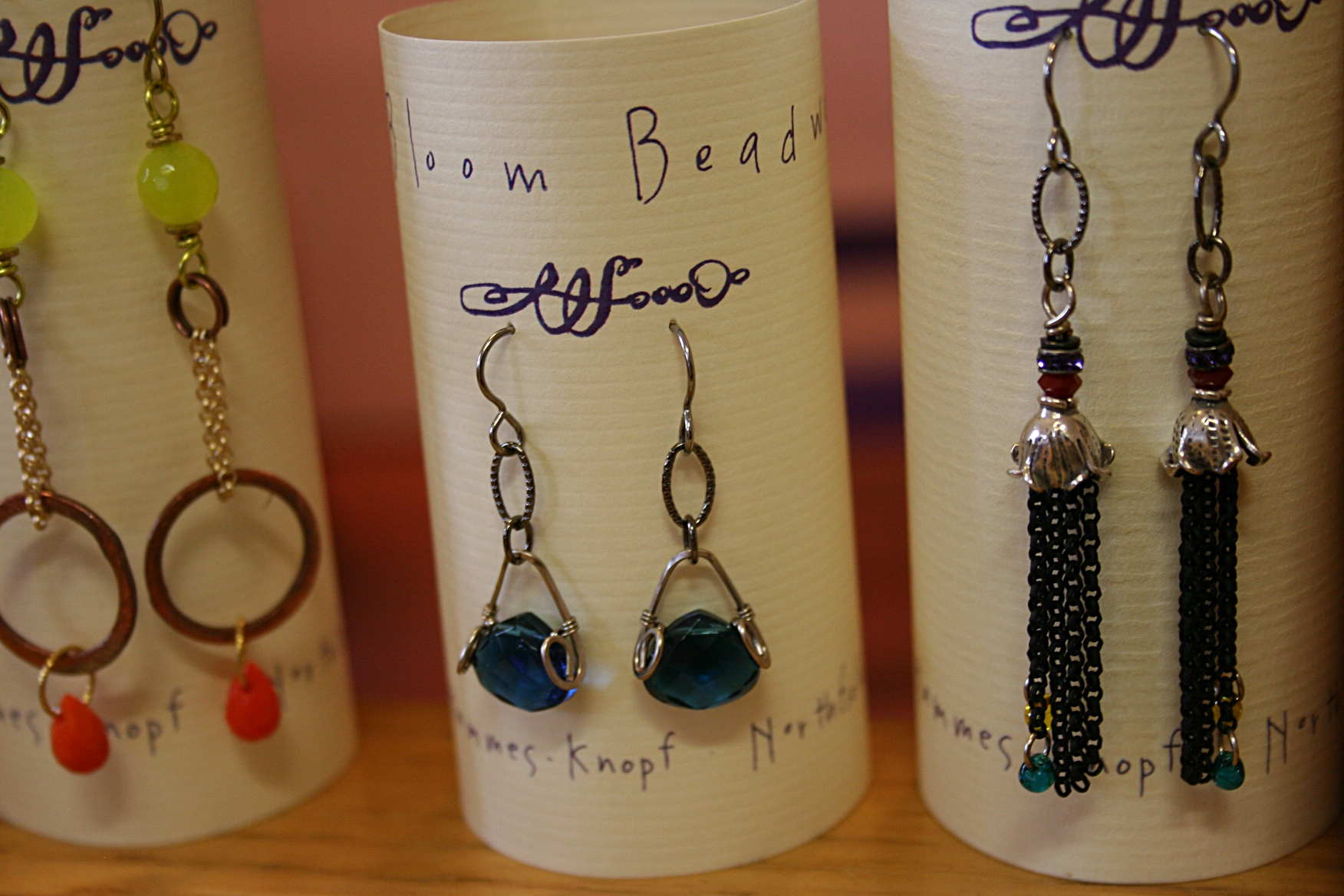
An example of Sue's original earrings.

An example of Sue’s original earrings.

I marvel at her ability to do this—to work with the tiniest of beads in the spotlight of a long-armed lamp that looms over her work area. Natural sunlight from four floor to ceiling windows kisses her back.
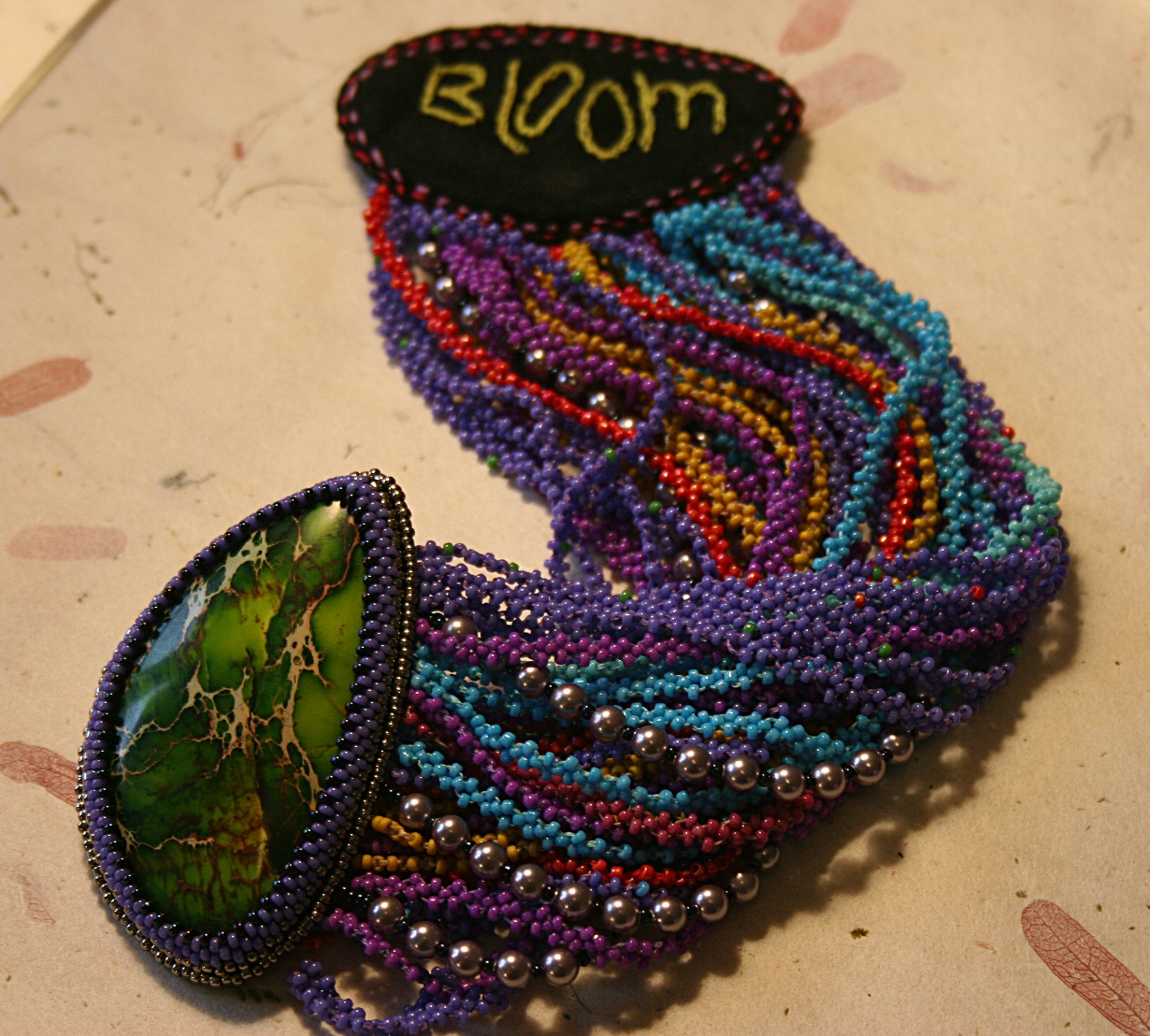
A stunning beaded bracelet created by Sue.
A stunning beaded bracelet created by Sue.

I cannot imagine having the patience, steadiness of hand or vision to work with such fine beads, to create the beautiful bead work I see here, in this third floor studio in historic downtown Northfield during the South Central Minnesota Studio ARTour.

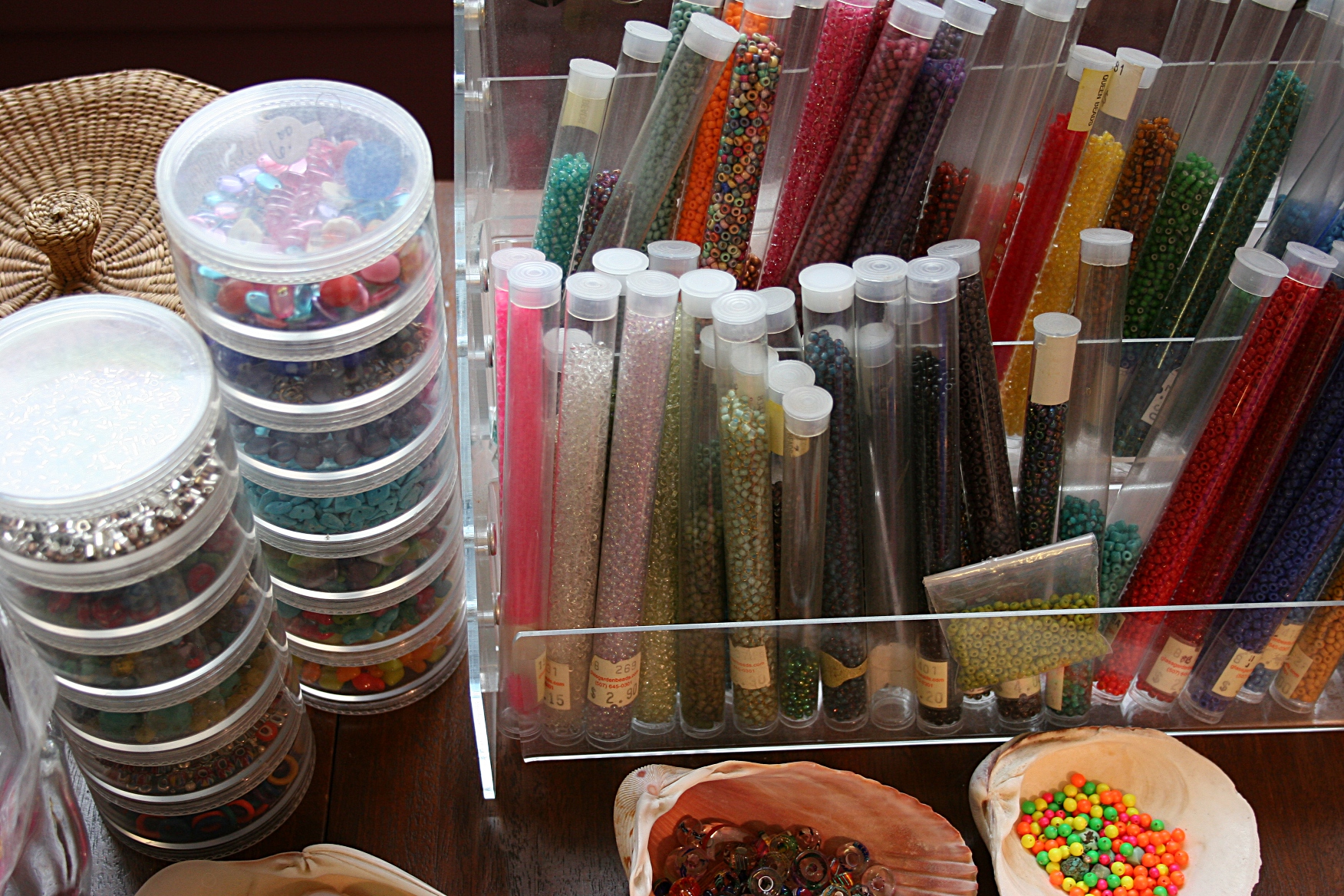
Beading supplies.

Beading supplies.

And when I speak my thoughts aloud, Sue muses that she’s developed patience in 35 years of marriage and that she “feels” the beads as much as sees them.

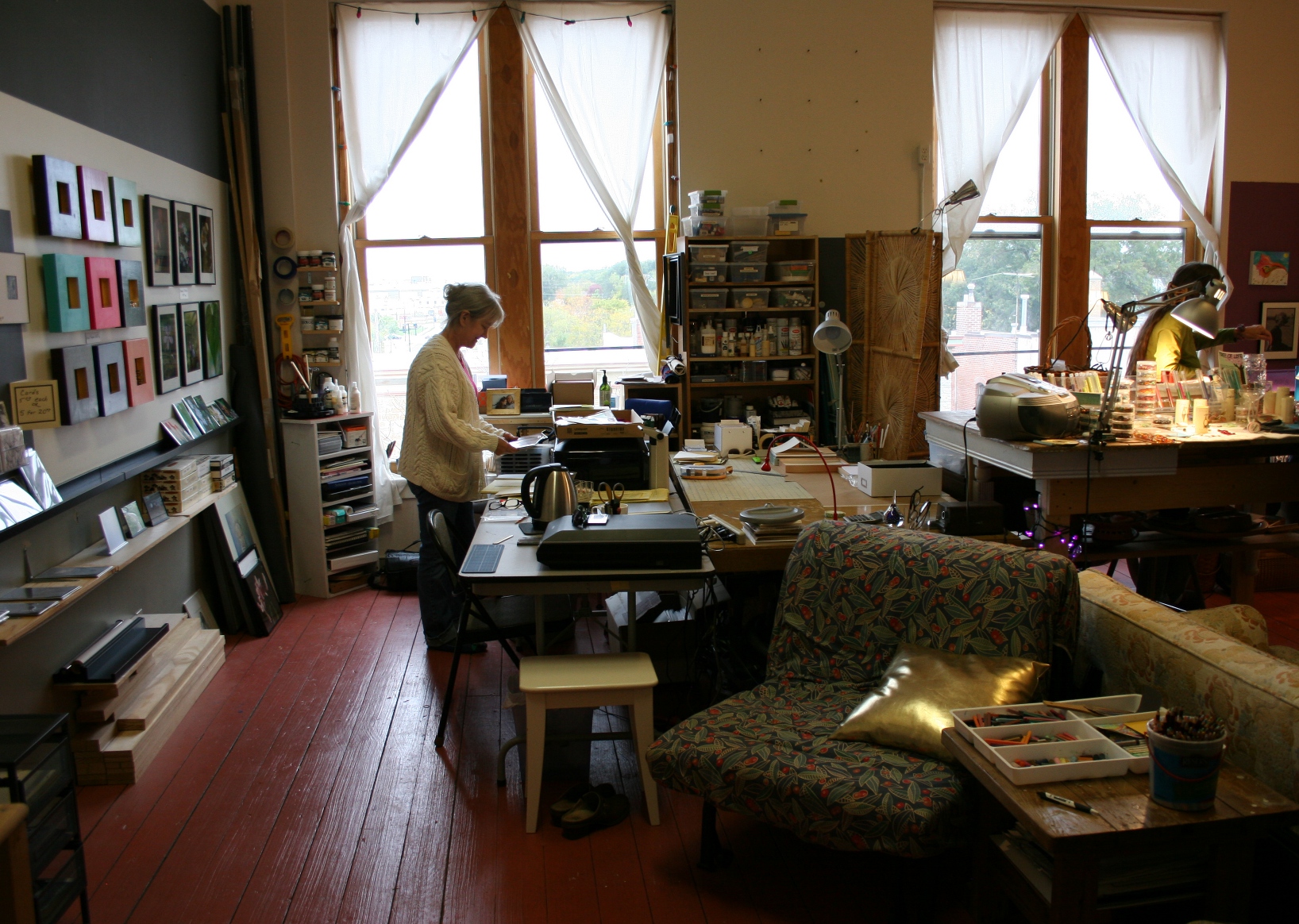
The beautiful studio space of MRG Arts and Full Bloom Beadworks, 101 E. 5th St., Northfield. Maryrose Gondeck is on the left, Sue Hammes-Knopf on the right.

The beautiful studio space of MRG Arts and Full Bloom Bead Work, 101 E. 5th St., #305, Northfield. Maryrose Gondeck is on the left, Sue Hammes-Knopf on the right.

Across the room, Maryrose Gondeck also creates art. She’s worked in numerous mediums—graphite, oils, acrylics, pastels, pen and ink, colored pencils, photography…

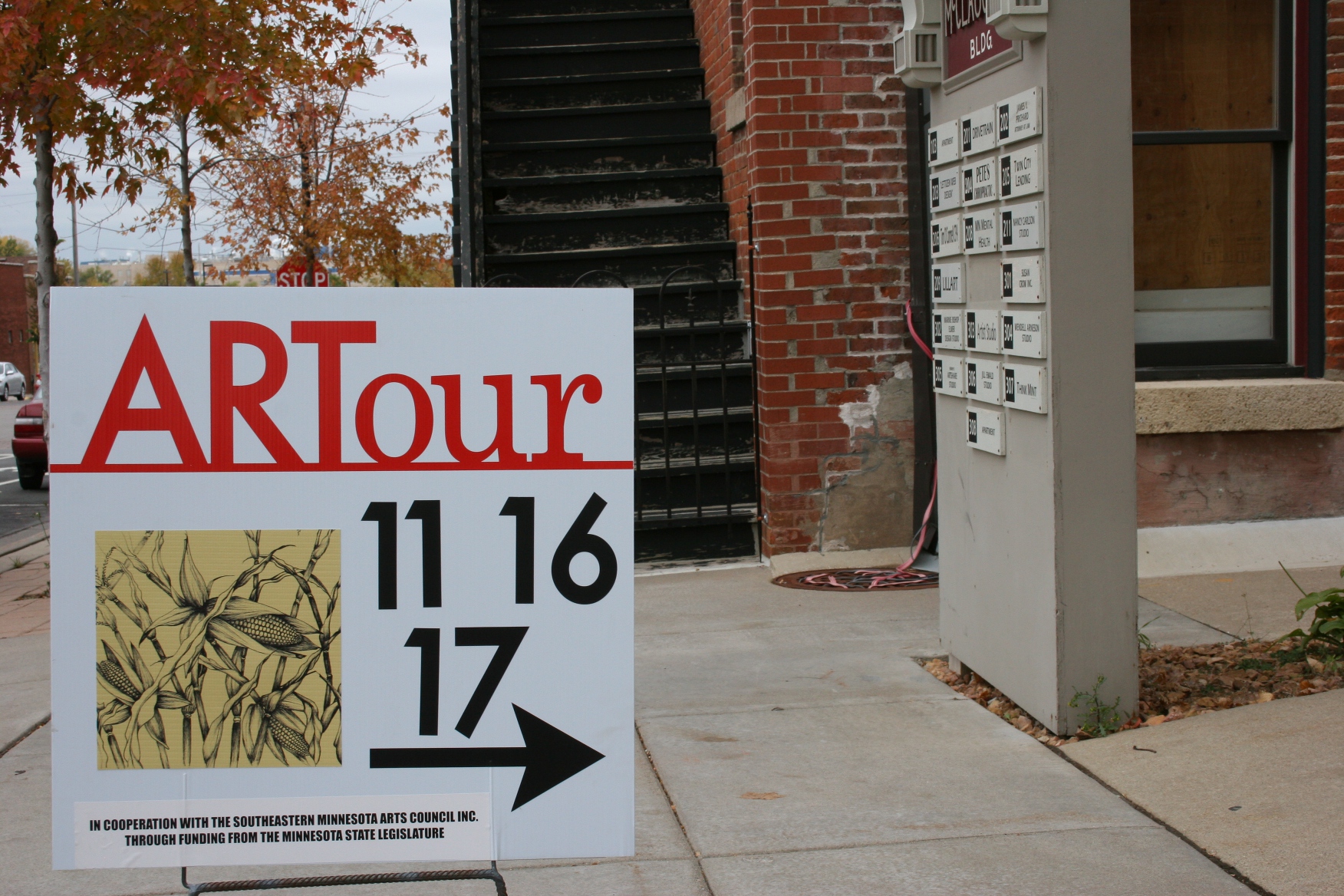
Maryrose Gondeck's original corn art grace posters and promotional materials for the South Central Minnesota Studio ARTour.

Maryrose Gondeck’s original corn art graced posters and promotional materials for the recent South Central Minnesota Studio ARTour. This sign directs visitors to her studio and two others on the third floor of an old building in historic downtown Northfield.

Her drawing of ripened corn on corn stalks was the visual symbol of this year’s Studio ARTour. A perfect fit for a tour of 20 studios featuring 44 artists in the rural region that encompasses Northfield, Faribault and Cannon Falls.

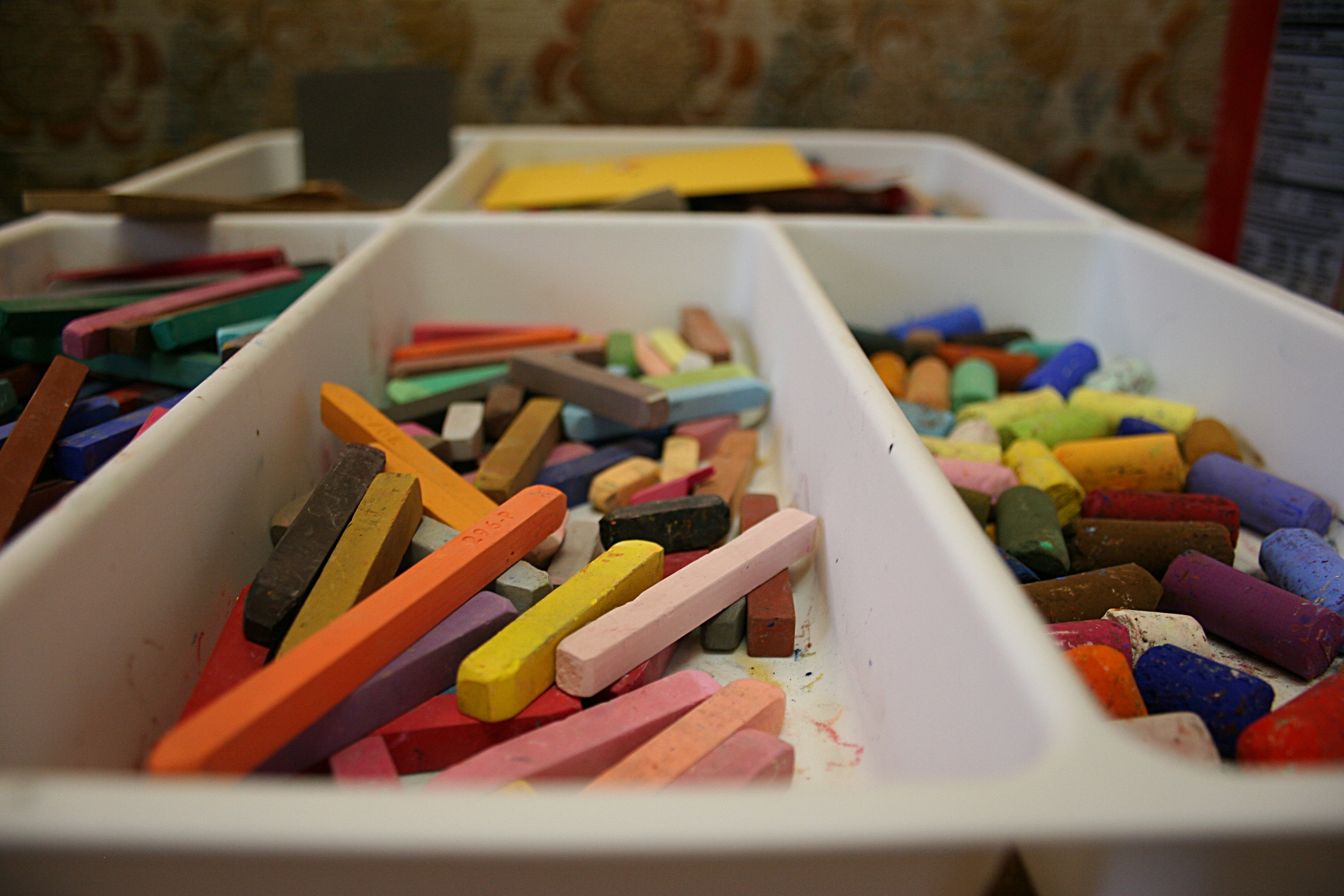
Among Maryrose's art supplies.

Among Maryrose’s art supplies.

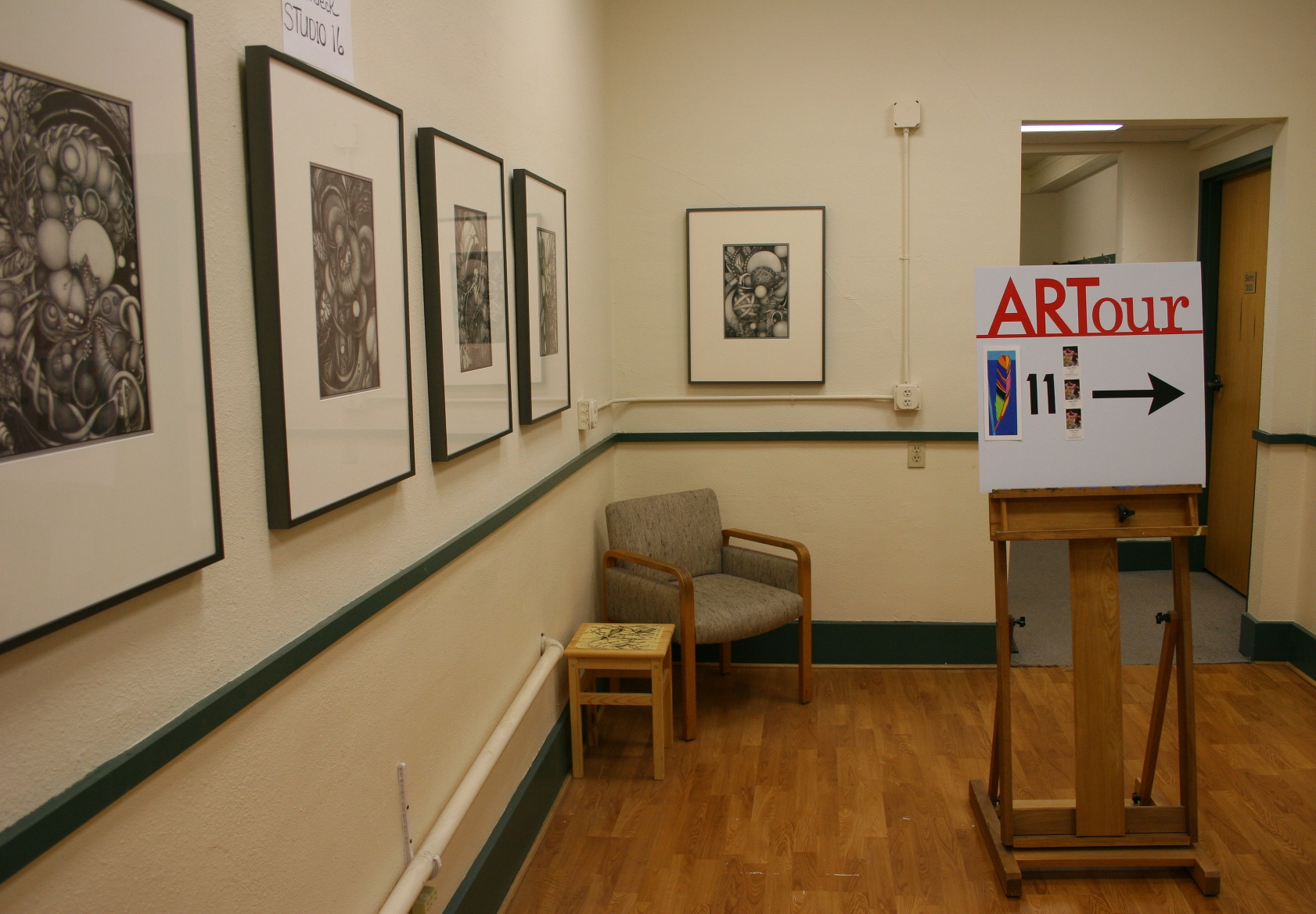
Maryrose's graphite drawings showcased in a hallway.

Maryrose’s graphite drawings showcased in a hallway.

What a plethora of gifted artists we have here, in this area of Minnesota I call home.

I noticed this signage outside  Maryrose and Sue's studio as I exited. Theirs was the final studio I would visit during the South Central Minnesota Studio ARTour.

I noticed this signage outside Maryrose and Sue’s studio as I exited. Theirs was the final studio I would visit during the South Central Minnesota Studio ARTour.

FYI: This concludes my series of five posts on the South Central Minnesota Studio ARTour. To see previous posts showcasing selected artists on the tour, check my recent archives.

The work of 44 artists was shown in 20 studios during this annual October event. This year I chose to peruse the work of some artists I had not seen on past tours. And I know, in that selective process, I missed out on viewing other incredible art. Next year.

I’d encourage you to visit the Studio ARTour website to learn more about all of the participating artists.

Also, check out the upcoming Fine Craft Collective, a collaborative gallery show at 506 Division Street in downtown Northfield open from 10 a.m. – 6 p.m. Monday – Saturday and from noon – 4 p.m. Sundays from November 14 – December 24. You will find the works of 17 local artists for sale at this annual event. Click here for more info.

No matter where you live, I hope you will support local artists by attending events like the South Central Minnesota Studio ARTour and the Fine Craft Collective, by encouraging and asking questions, and, if you can, purchasing art.

I grew up in the 60s and 70s in rural southwestern Minnesota, with minimal exposure to the arts. It was the times as much as the distance and lack of money which isolated me from the art world. That is why, perhaps, I appreciate the arts as much as I do. Absence, as they say, makes the heart grow fonder.

© Copyright 2013 Audrey Kletscher Helbling