Minnesota Prairie Roots

Writing and photography by Audrey Kletscher Helbling

A Lake Agnes love story June 24, 2011

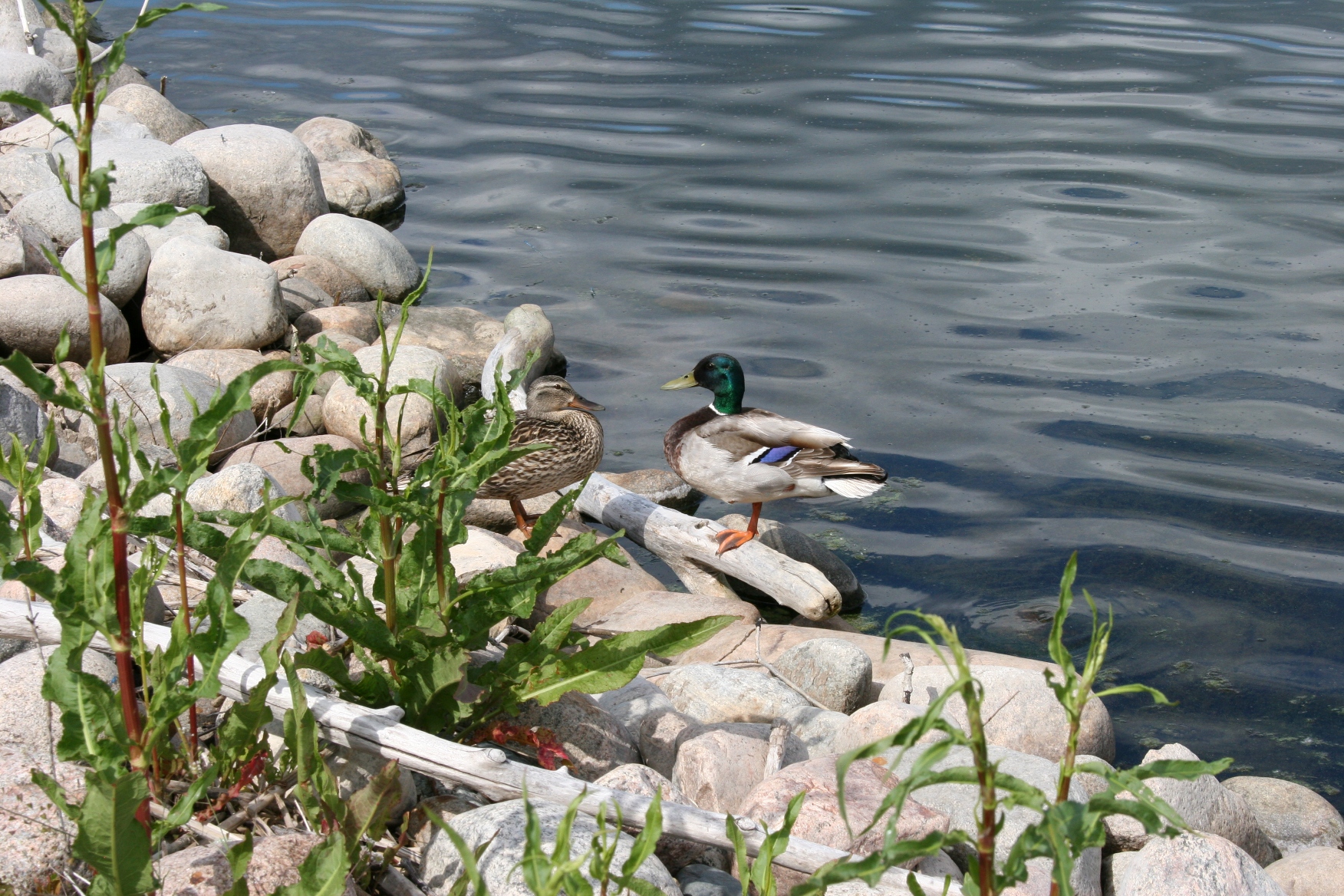
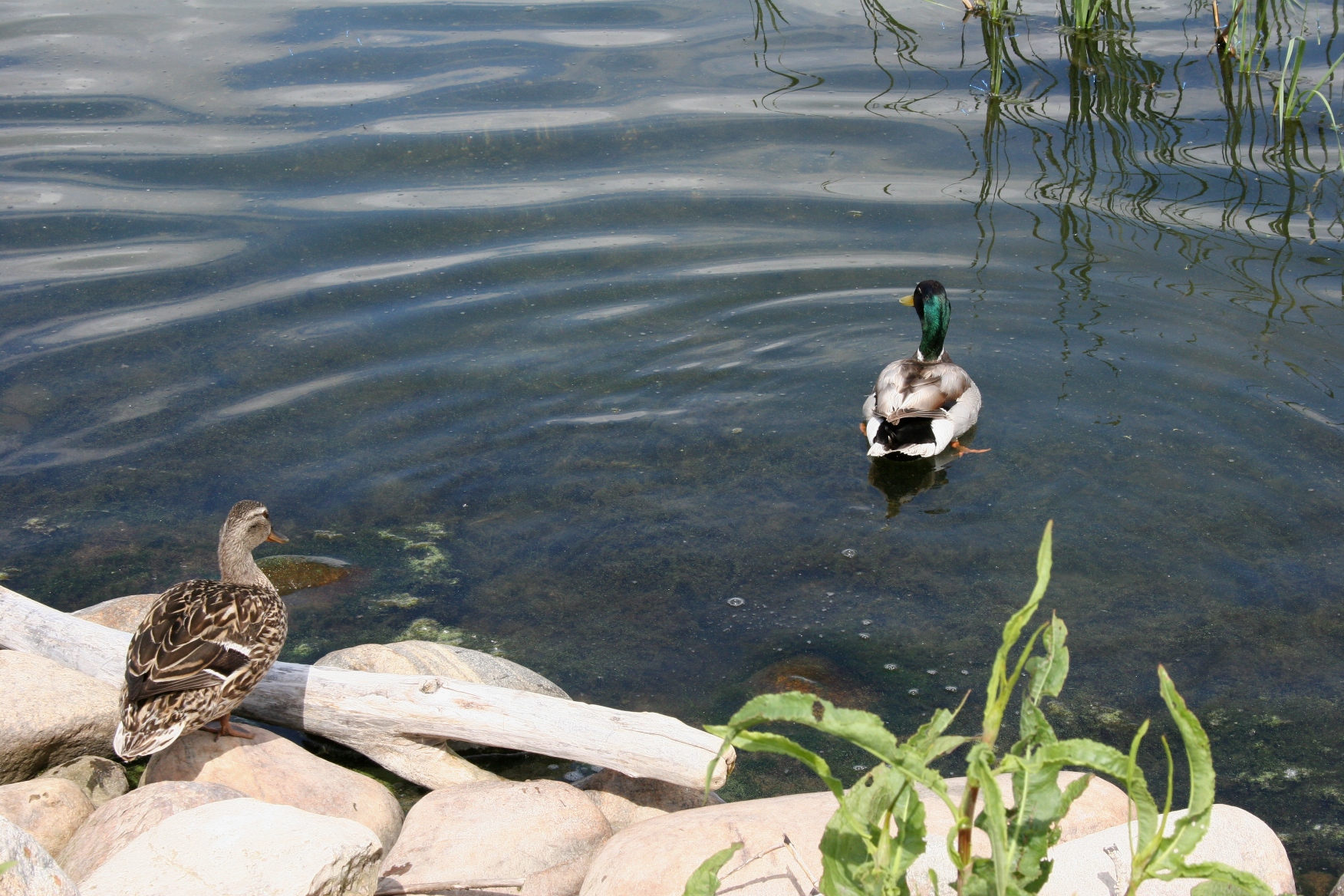
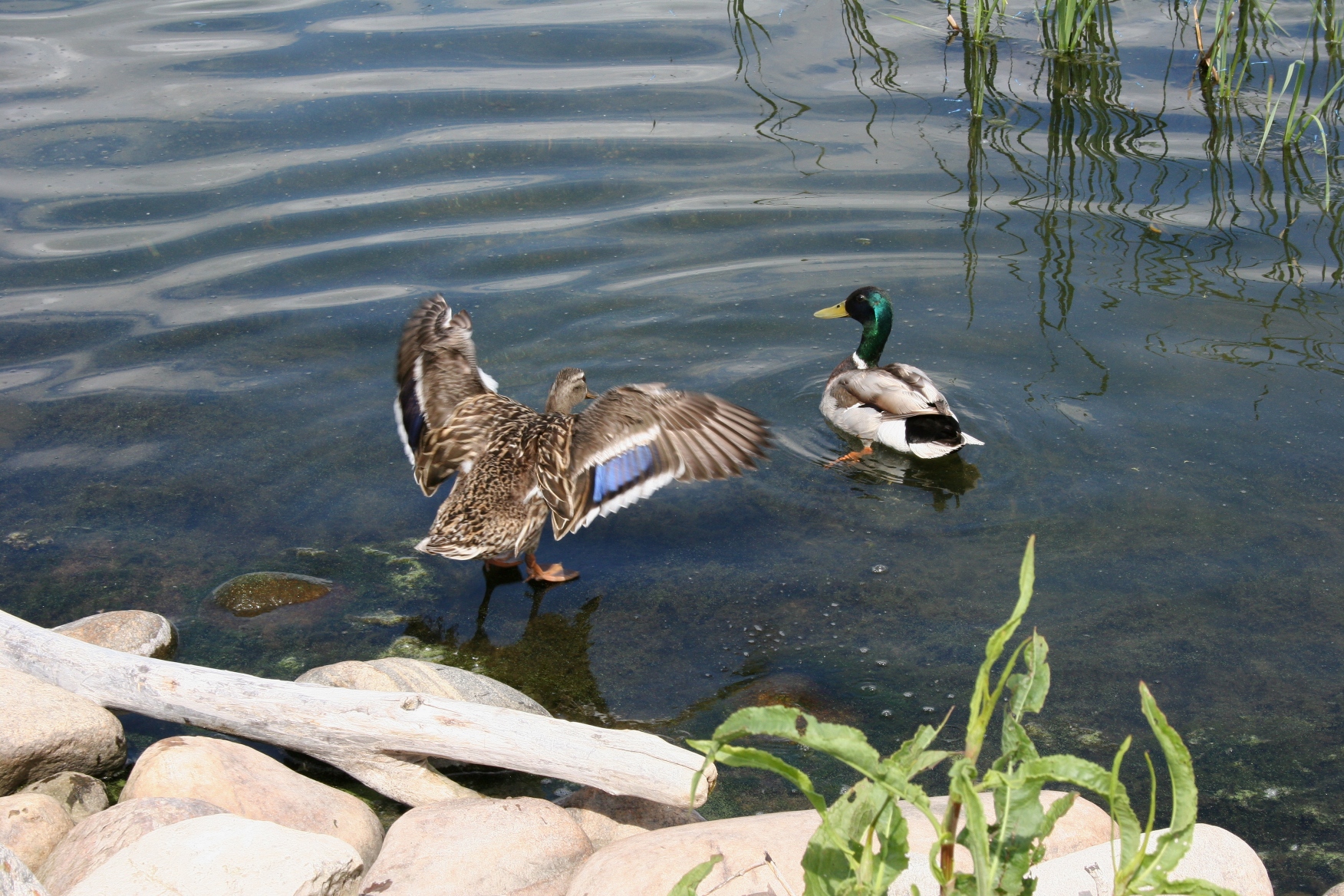
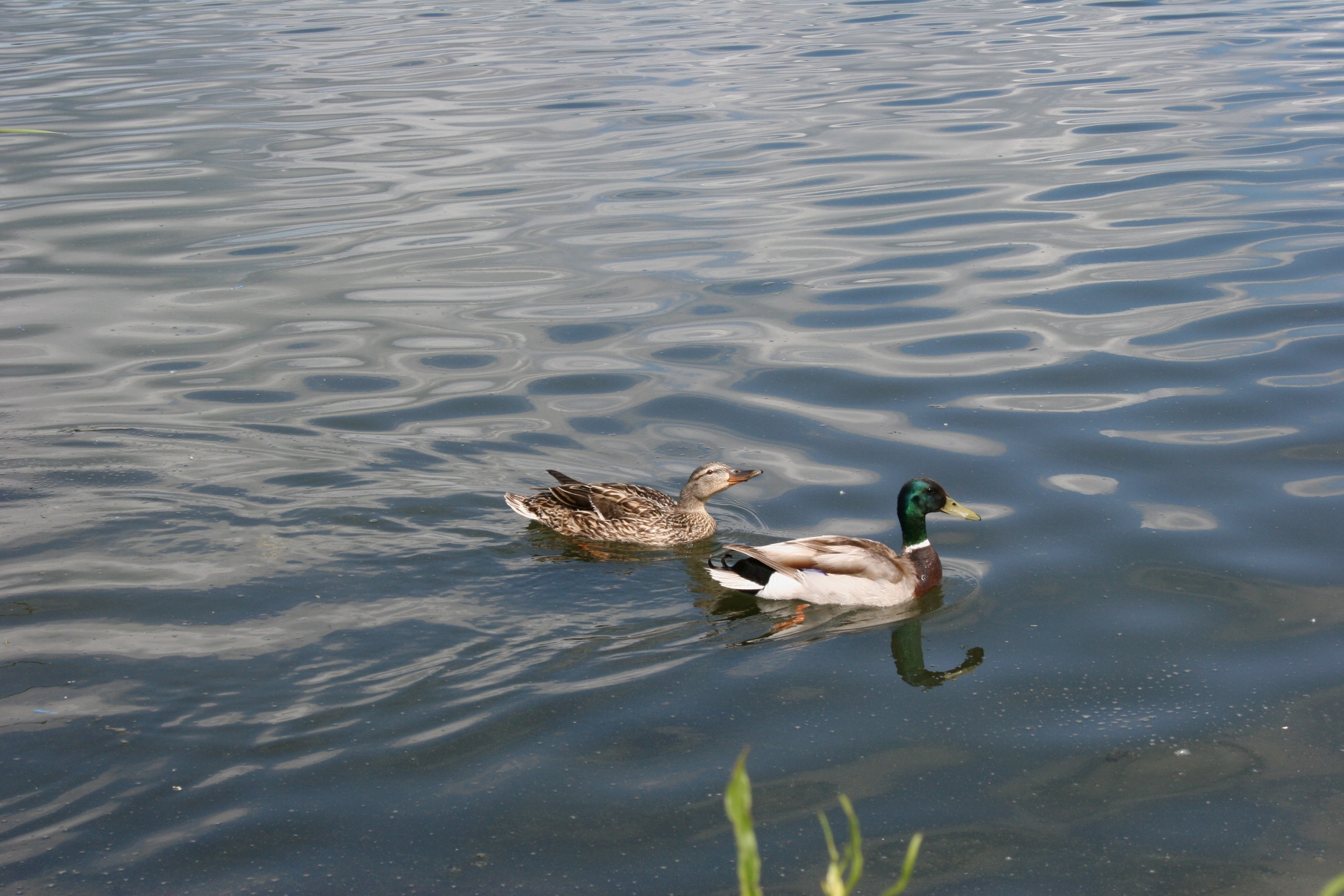
IT APPEARED TO BE nothing short of a love story played out on a west central Minnesota lake.

Two love birds—or more accurately, ducks—met along the shoreline of Lake Agnes in Alexandria which, to those of you who do not live in Minnesota, claims to be the birthplace of America what with the Kensington Runestone and all found here.

But I digress.

The mallards cared not one wit about the vikings or the Runestone or even me, watching their every move. The drake and the hen had eyes only for each other.

And so the romance spawned on Lake Agnes, on this lake with the name of Greek (not Scandinavian) origin meaning pure/holy/chaste.

© Copyright 2011 Audrey Kletscher Helbling


A native Minnesotan reports from flooded Minot June 23, 2011

MY BROTHER-IN-LAW, Neil, lives in Minot.

But he ranks as one of the lucky residents of this North Dakota city. His house lies outside—albeit less than a mile away—and several hundred feet above the flood zone.

Yet, this Air Force man and Minnesota native isn’t sitting idly by because his home has not been threatened. He’s pitching in to help those who face the reality of losing their houses in the worst flooding since 1969.

In an e-mail I received from Neil early this morning, he shares information, insights and, yes, even advice about the current situation—which he terms “exhausting and discouraging”—in his adopted hometown. The overwhelmed Souris River in Minot is expected to crest on Sunday, some five feet higher than any previous flood stage in recorded history for the area, Neil says. The old record was set in 1881, before Minot was founded.

So that’s the situation facing this city, where some 12,000 residents, more than a quarter of the population, have been evacuated and where, says Neil, dikes in several neighborhoods were breached on Wednesday.

Neil has assisted two families in exiting the city.

He writes: “I helped a lady from our church on Monday night as she moved everything either to the second floor or attic. What didn’t go upstairs went into a horse trailer that her brother brought in from out of town late that night. She seemed to take things in stride. Her house was also flooded in ’69 (before it was her house), but came through it okay. It’s extremely well built, nearly 100 years old. This lady trusts that God will provide for her needs, even if her house washes down the river.”

Neil next joined efforts to help his boss’s family. His boss is deployed to Afghanistan.

“I lost track of how many people were there to help them,” Neil writes. “We also helped them three weeks ago, when we moved everything out of their sopping wet basement to the upper floor and garage. Because of the shortage of time allowed to evacuate, we left almost everything there that time. Because of the expected height of the floodwaters and the advance preparation time, we decided to clear everything out of their house this time.”

Yet, Neil continues, “There were easily several pickup loads of stuff that we left behind simply because there wasn’t enough time/energy/resources to move it all.”

At this point my brother-in-law pauses and suggests that we all re-evaluate our possessions, deciding what we really need and what we don’t. “Go through your house and garage and get rid of anything that you haven’t laid eyes on or used in the past three years.” He intends to do exactly that at his Minot home, which is currently on the market; he’s been reassigned to an Air Force base in Missouri.

When Neil and his wife, who is already in Missouri, purchased their house several years ago, they purposely stayed away from the flood zone. “A contractor that we spoke to before buying a house told us the down sides of several locations in this town. One specific neighborhood that he told us to steer clear of is the exact one that we helped my boss’s family move out of; he told us that he wouldn’t even consider building a house down there because the whole area was under water in the flood of ’69,” Neil says.

And then my brother-in-law adds this final statement: “Dikes give people a false sense of security.  No one presently living in this town will ever doubt that again!”

© Copyright 2011 Audrey Kletscher Helbling


A historic bank and White Buffalo Calf Woman

SET ME IN FRONT of an architecturally-stunning historic building and I’m in history heaven.

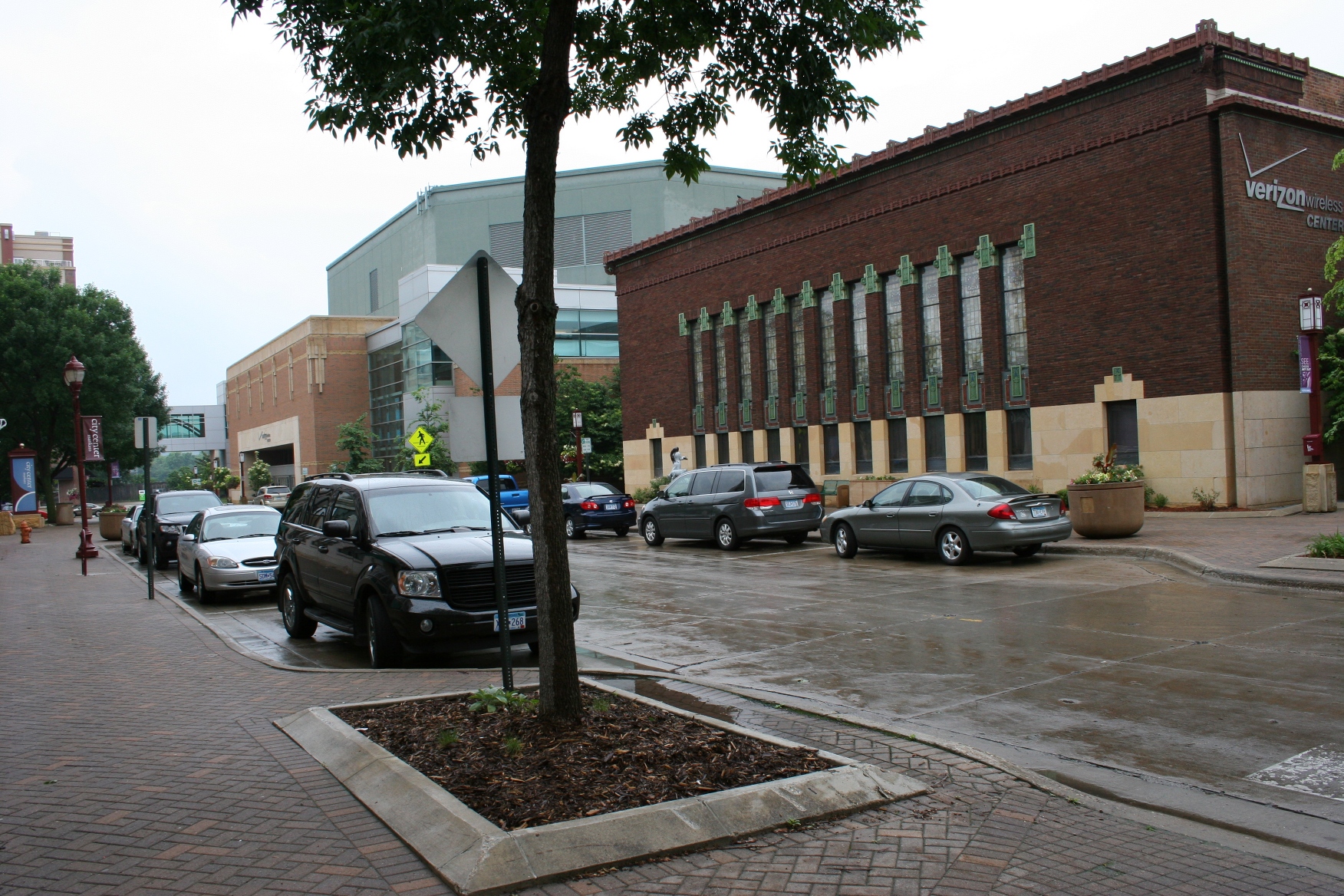
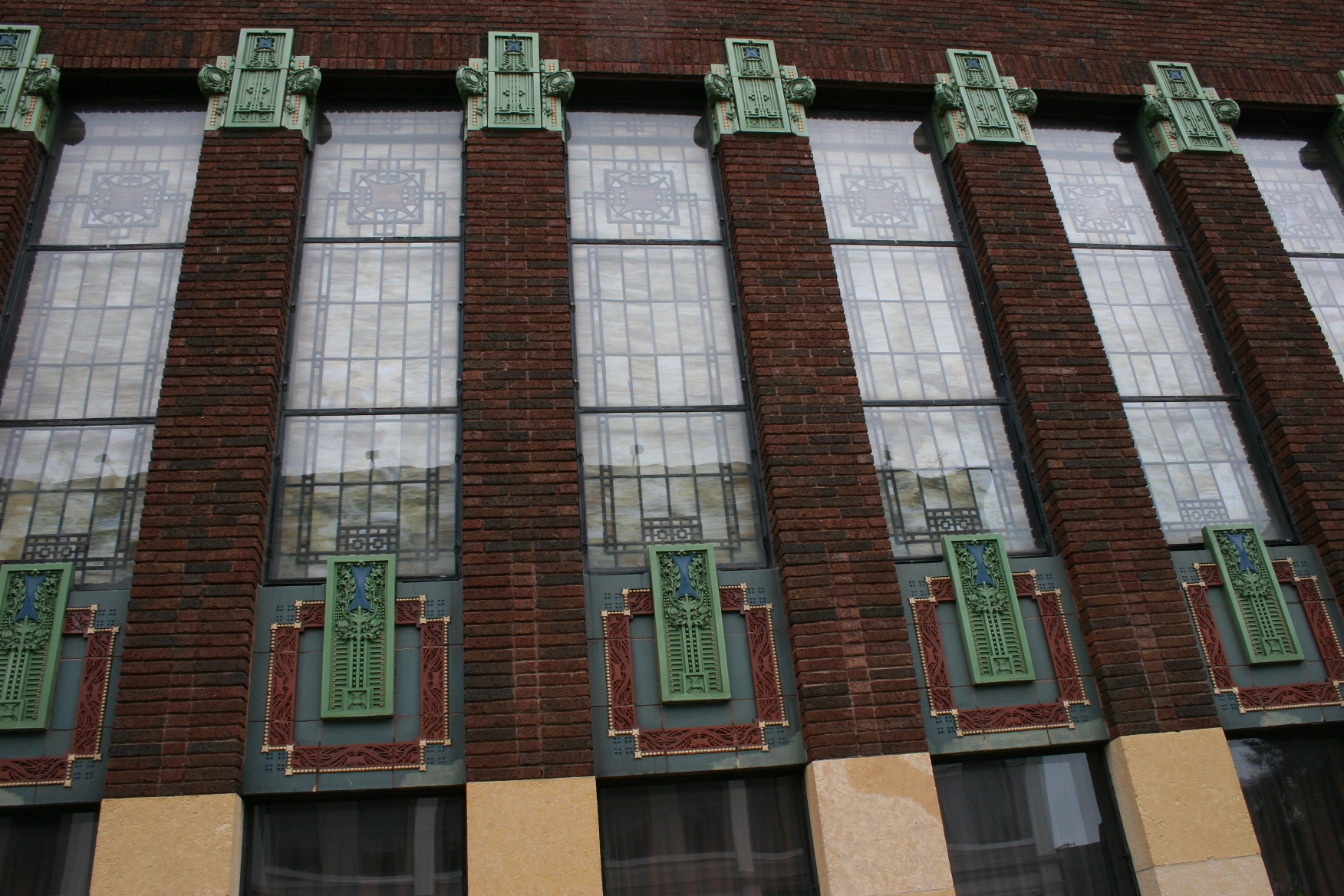
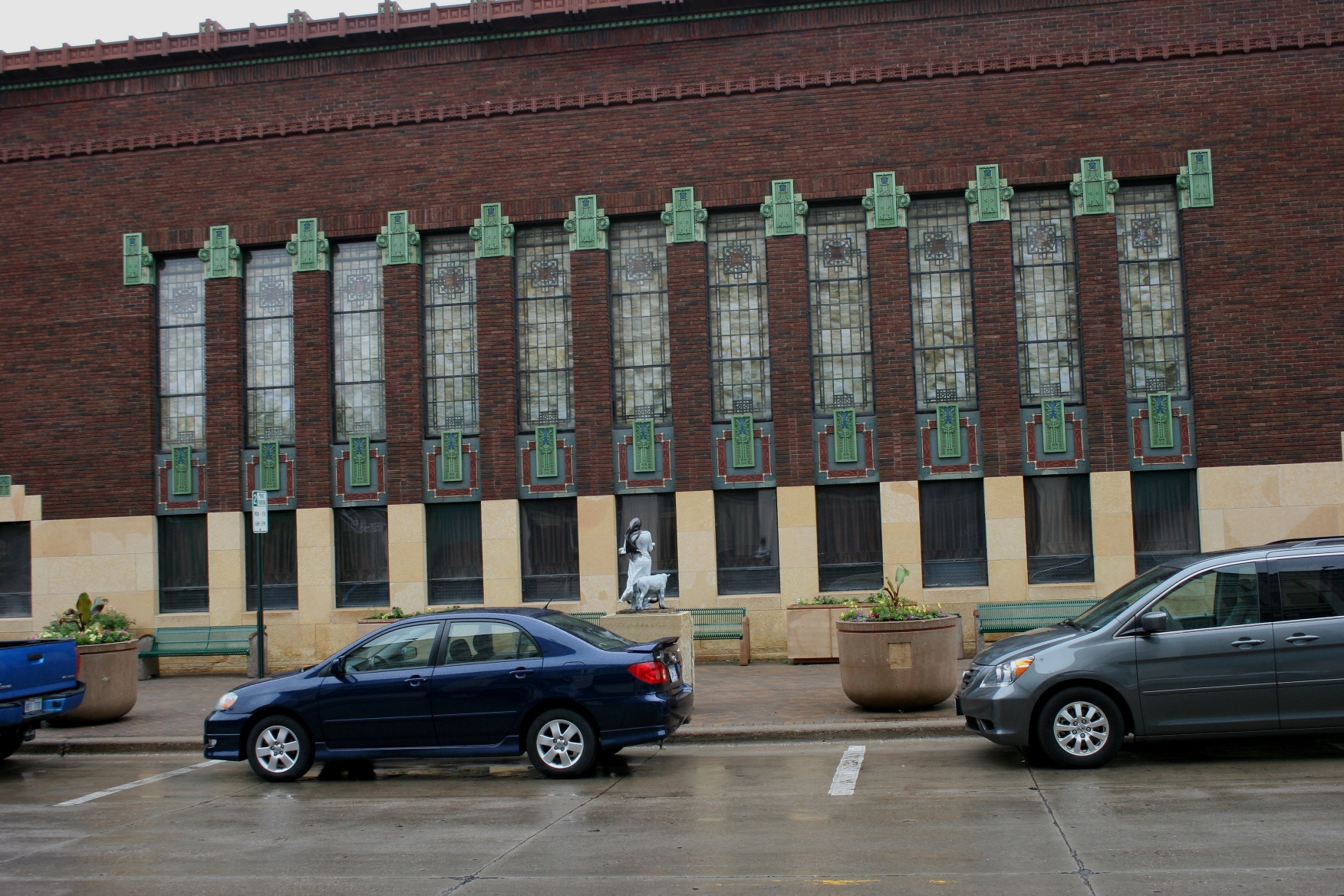
Just look at the lines, the colors, the window leading, the carvings…of the Old First National Bank of Mankato building, now a Verizon Wireless Center reception hall.

I didn’t step inside the former bank, didn’t even try a door. I was content last Saturday afternoon to view the exterior with its Prairie School style architecture.

“It’s like that bank in Owatonna,” my husband said as we gawked at the building built of brick, Mankato limestone and terra cotta along Civic Center Plaza in downtown Mankato.

He was, of course, referring to Chicago architect Louis Sullivan’s “jewel box,” National Farmer’s Bank in Owatonna, a brick building with terra cotta accents, splendid for its stained glass windows, arches and other architectural details.

The Mankato building features Frank Lloyd Wright-inspired stained glass and detailed ornamentation along the roof line.

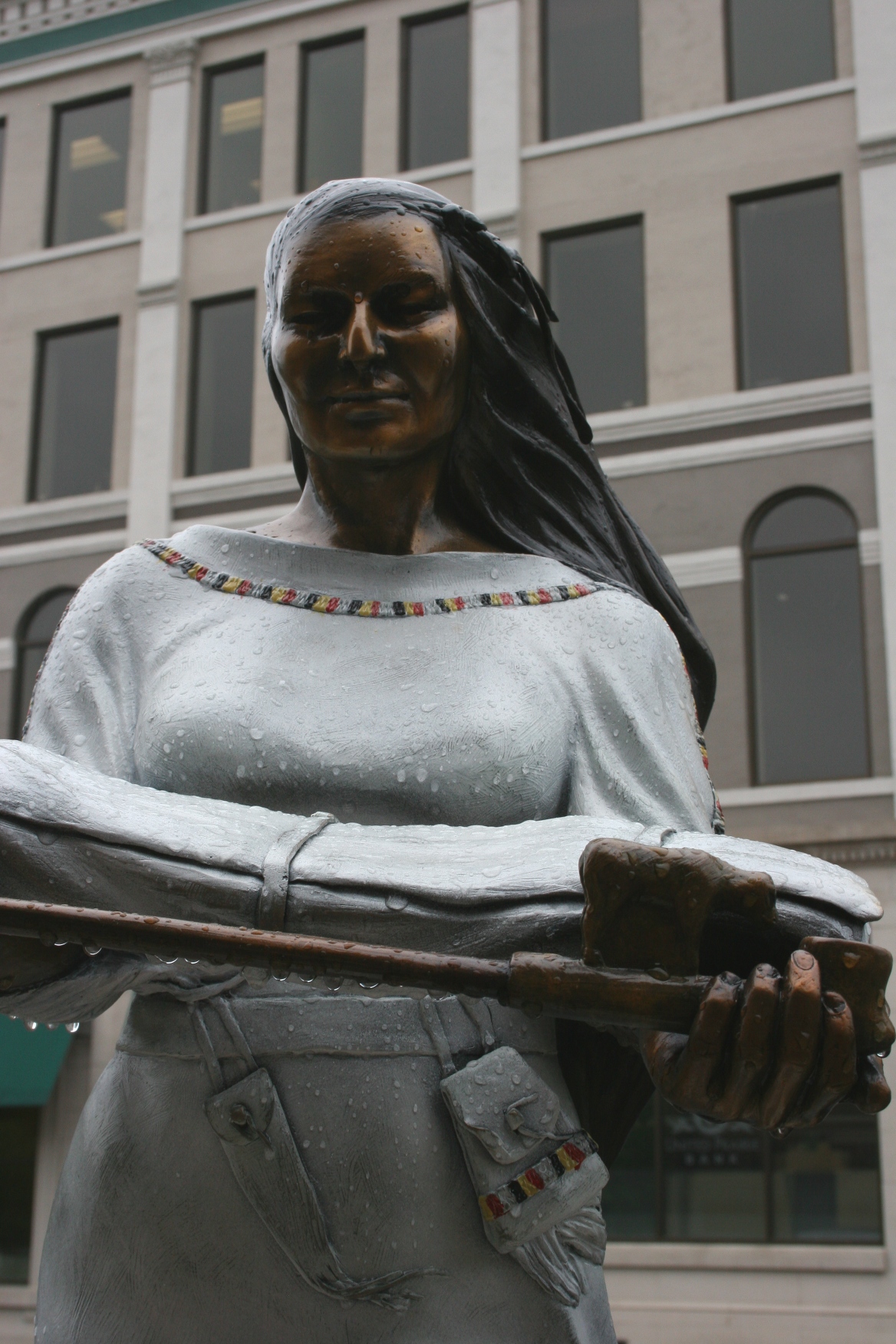
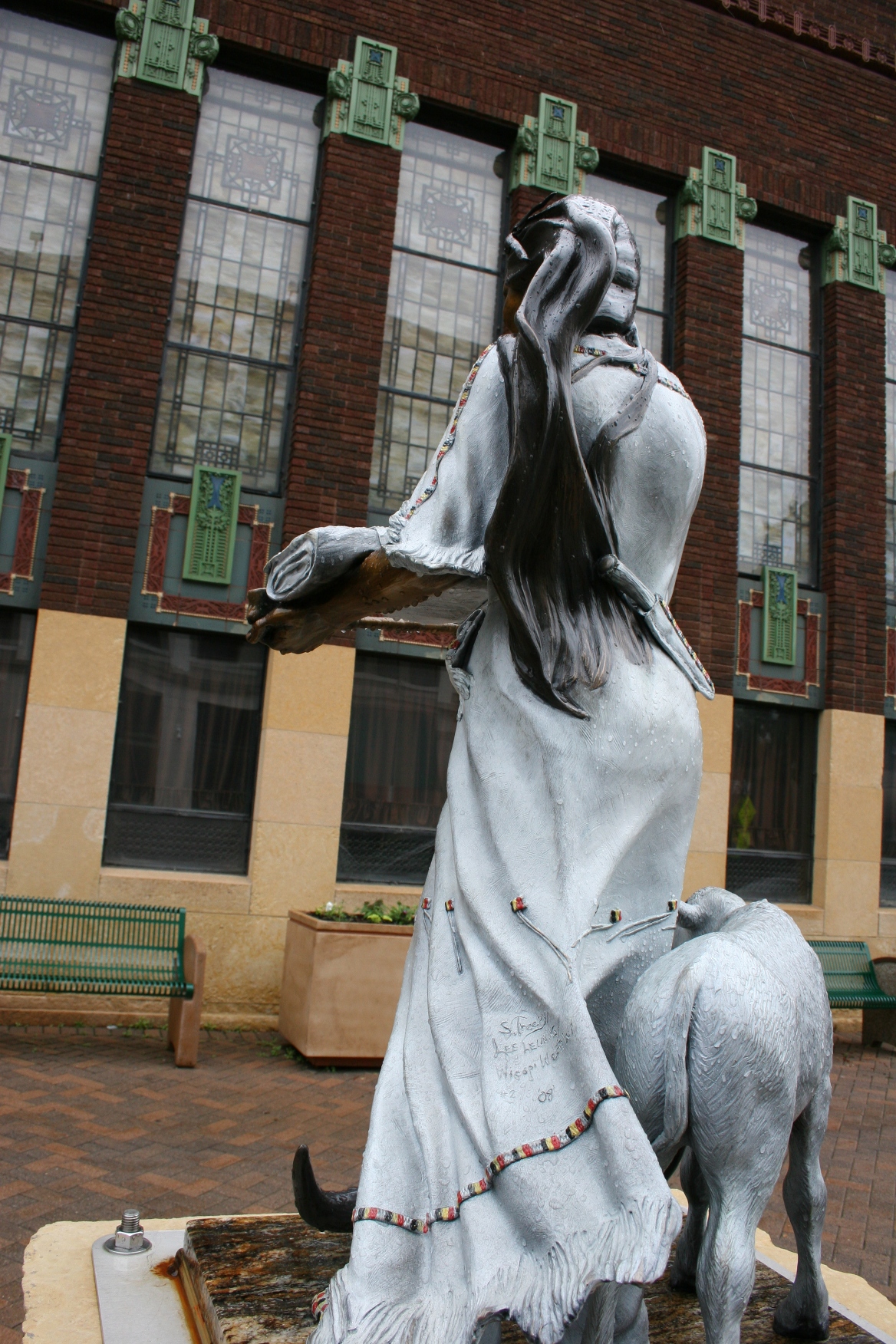
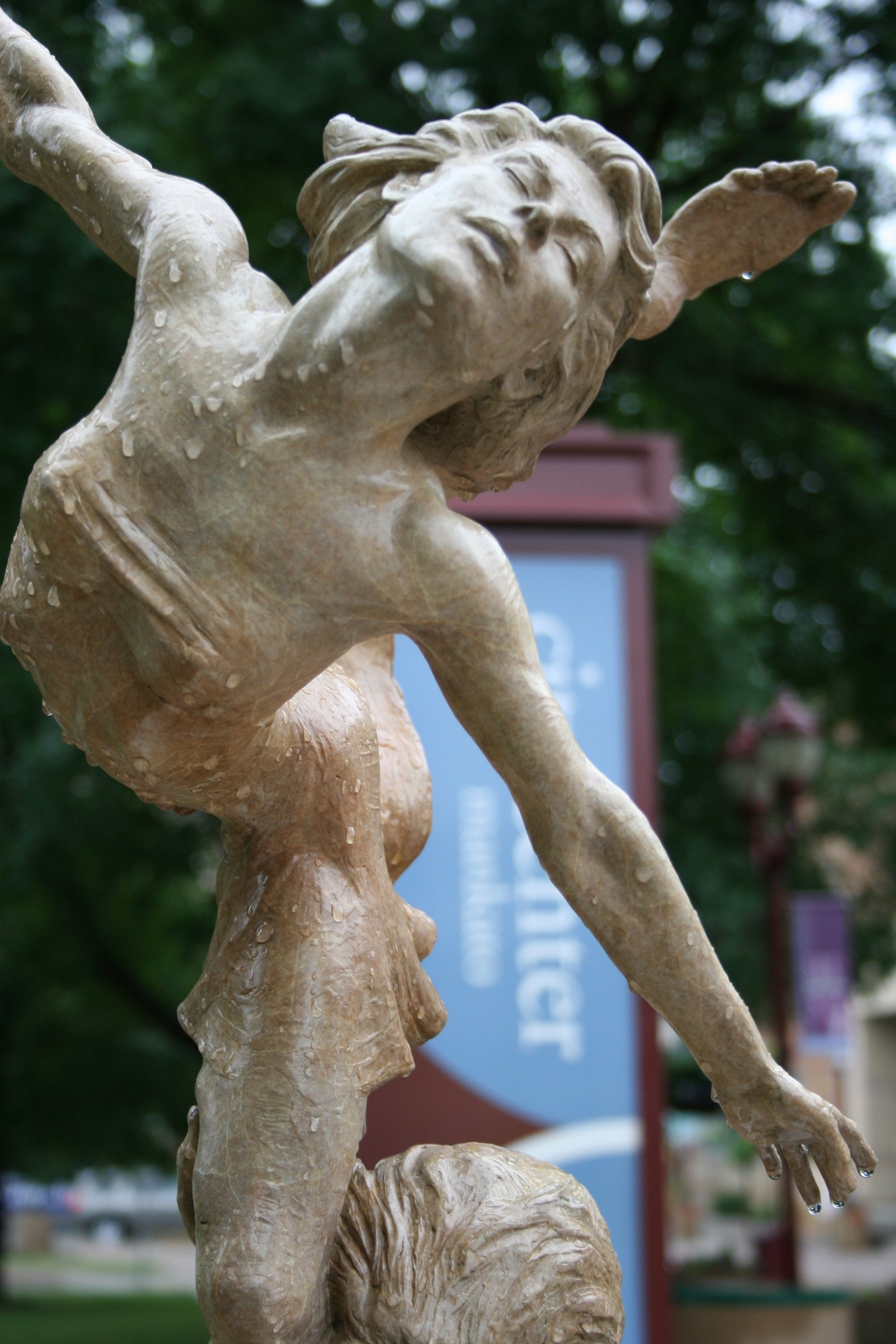
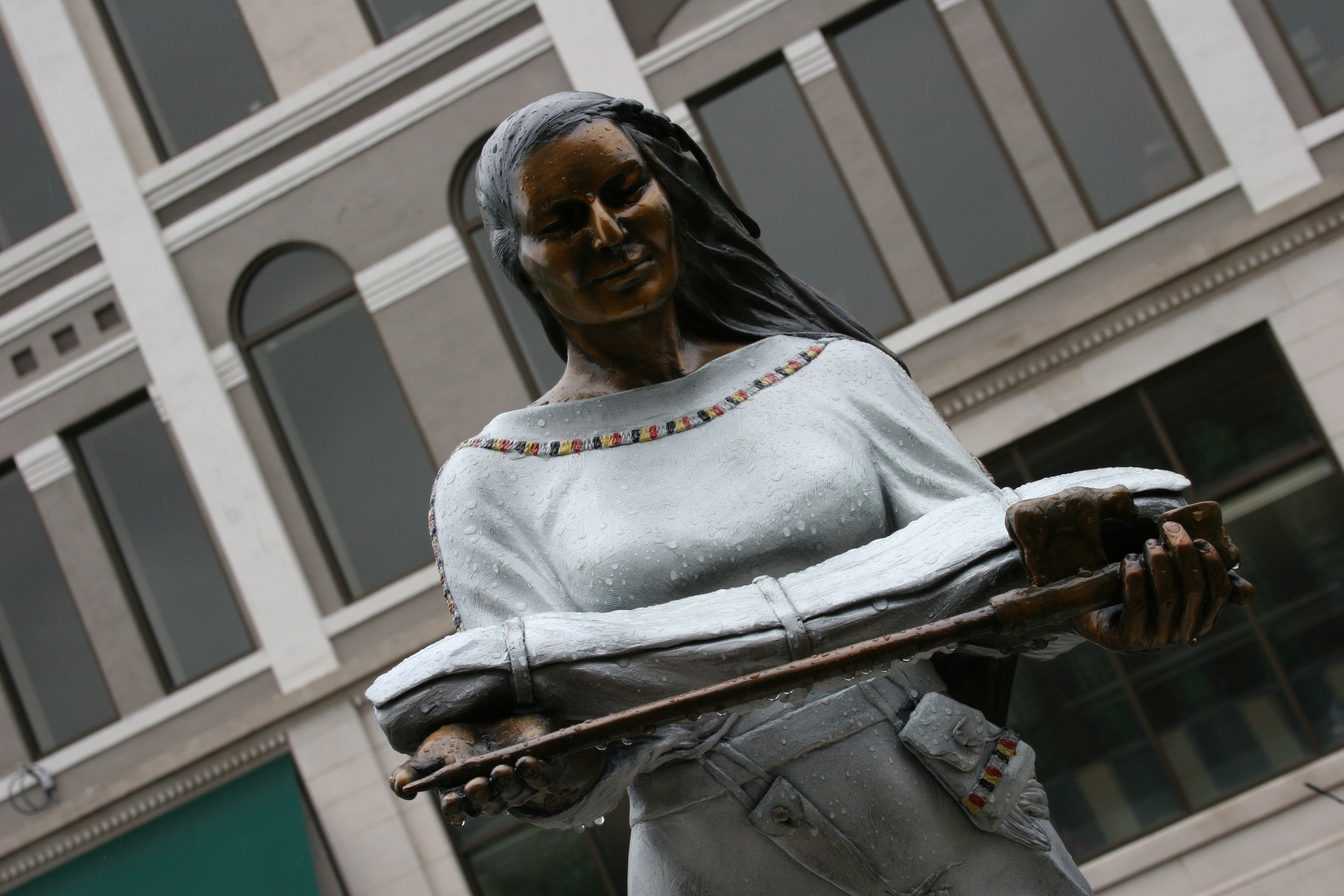
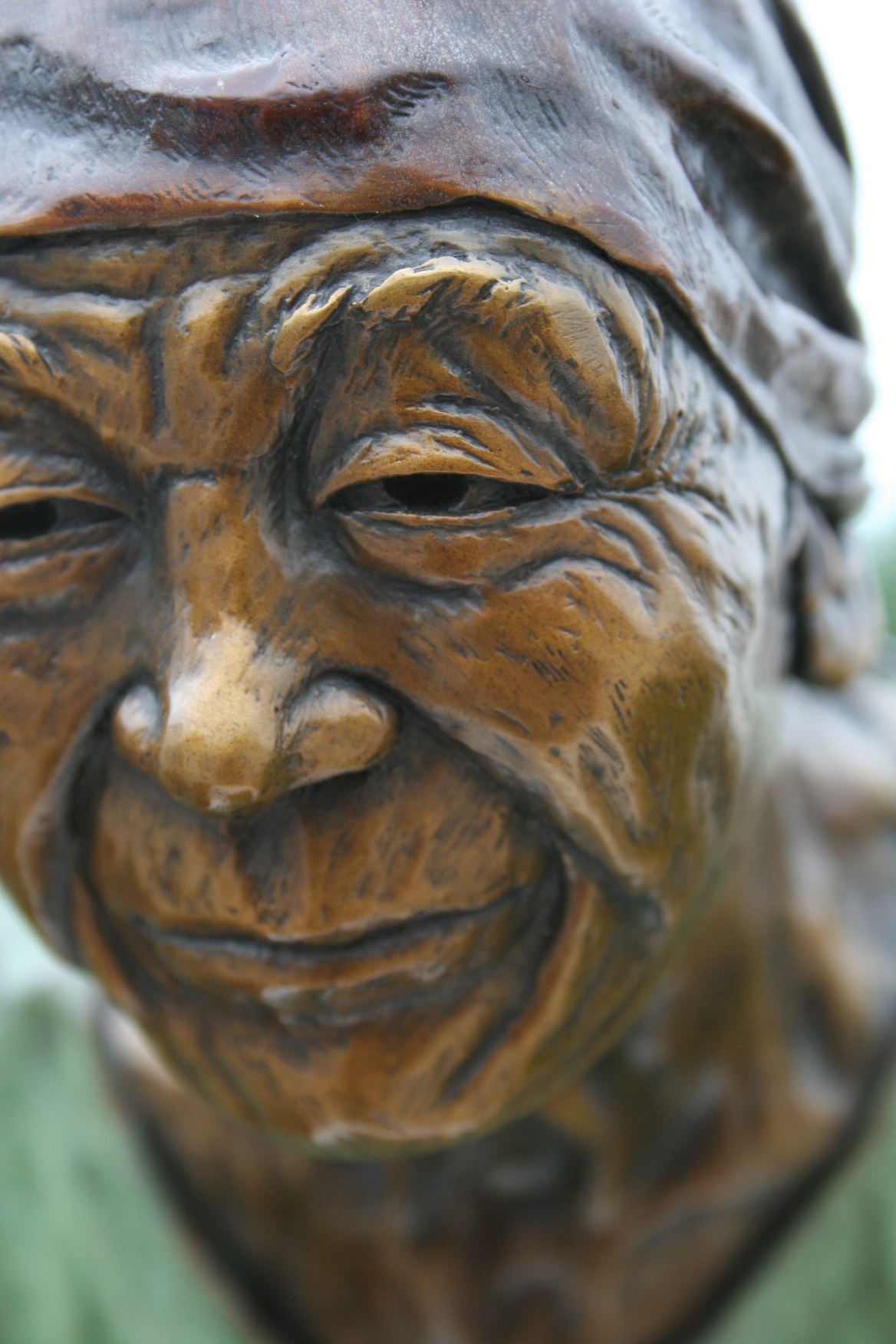
And now it also showcases a bronze sculpture of White Buffalo Calf Woman by South Dakota artists Lee Leuning and Sherri Treeby as part of Mankato’s City Art Walking Sculpture Tour.


If you peer at the woman’s face, examine her beaded moccasins and the trim on her buckskin dress and pouch, you’ll notice how the colors mimic those of the historic bank building. Whether this Native American sculpture’s placement was planned or accidental, I don’t know, but it fits seamlessly with the historical vibe of the locale, enhancing the whole art viewing experience.

The city of Mankato, apparently named after a varied translation of the Dakota word Mahkato, meaning “blue earth,” owns a place in Minnesota and national history for the mass hanging of 38 Dakota here on December 26, 1862. Three hundred warriors were accused of killing civilians and soldiers and of other crimes during the U.S.-Dakota Conflict. After a public outcry, President Abraham Lincoln commuted the sentences of all but 38. Certainly, Mankato is not proud of this moment in history. But efforts have been made to honor the Dakota at monuments in the city.

And now sculptures like White Buffalo Calf Woman also help heal and educate the public about the Native American culture. According to information on the sculpture placard, this prophetess is the only religious icon accepted by all Native American tribes. She “brings a message of healing, hope and peace among the races to all the people.”

More than just art, I also got a history lesson along a Mankato city street on a Saturday afternoon in June.

PLEASE VIEW MY JUNE 20 post for more photos and information about the Walking Sculpture Tour. Additional images will be forthcoming.

© Copyright 2011 Audrey Kletscher Helbling


A chocolate cake tradition of love June 22, 2011

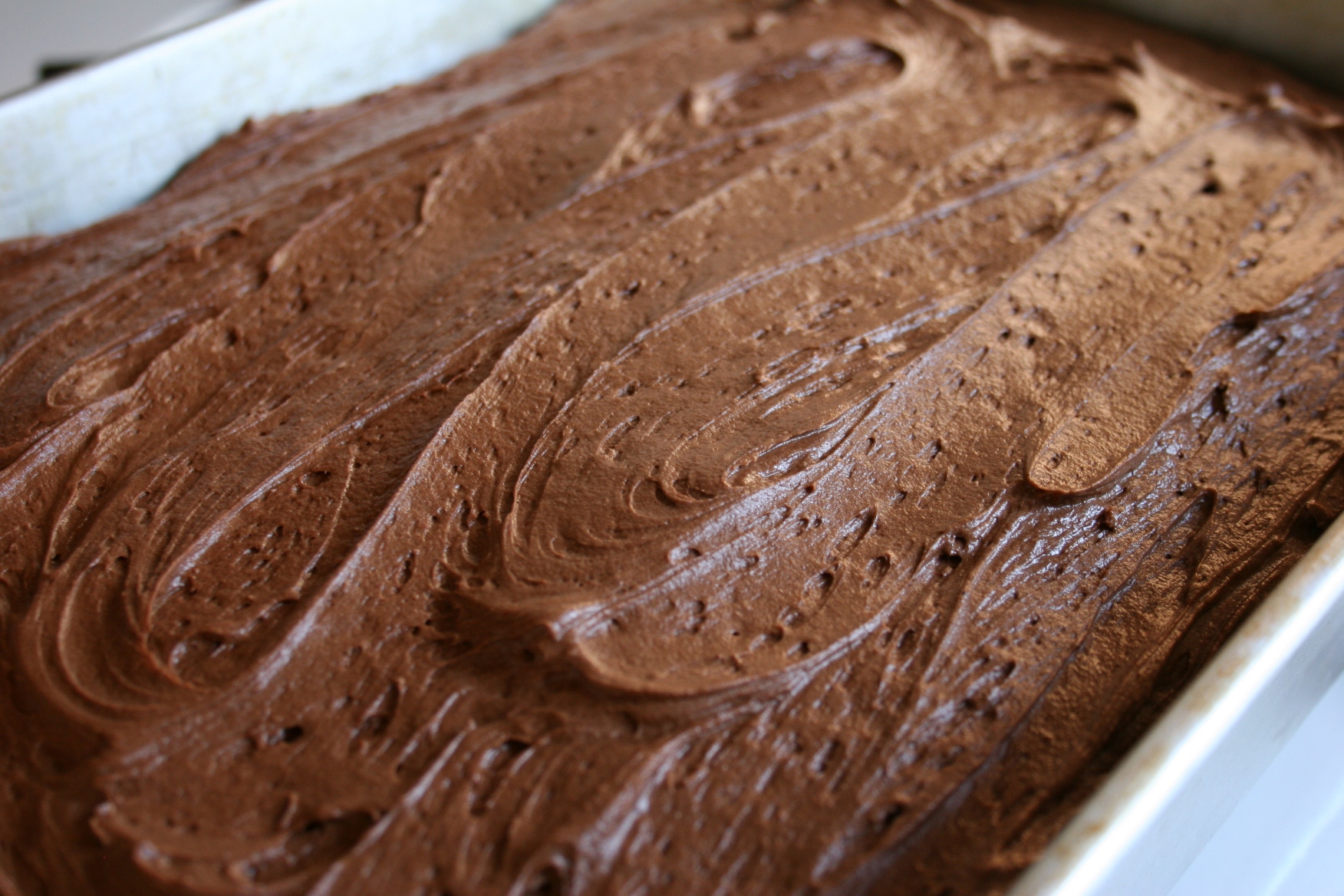
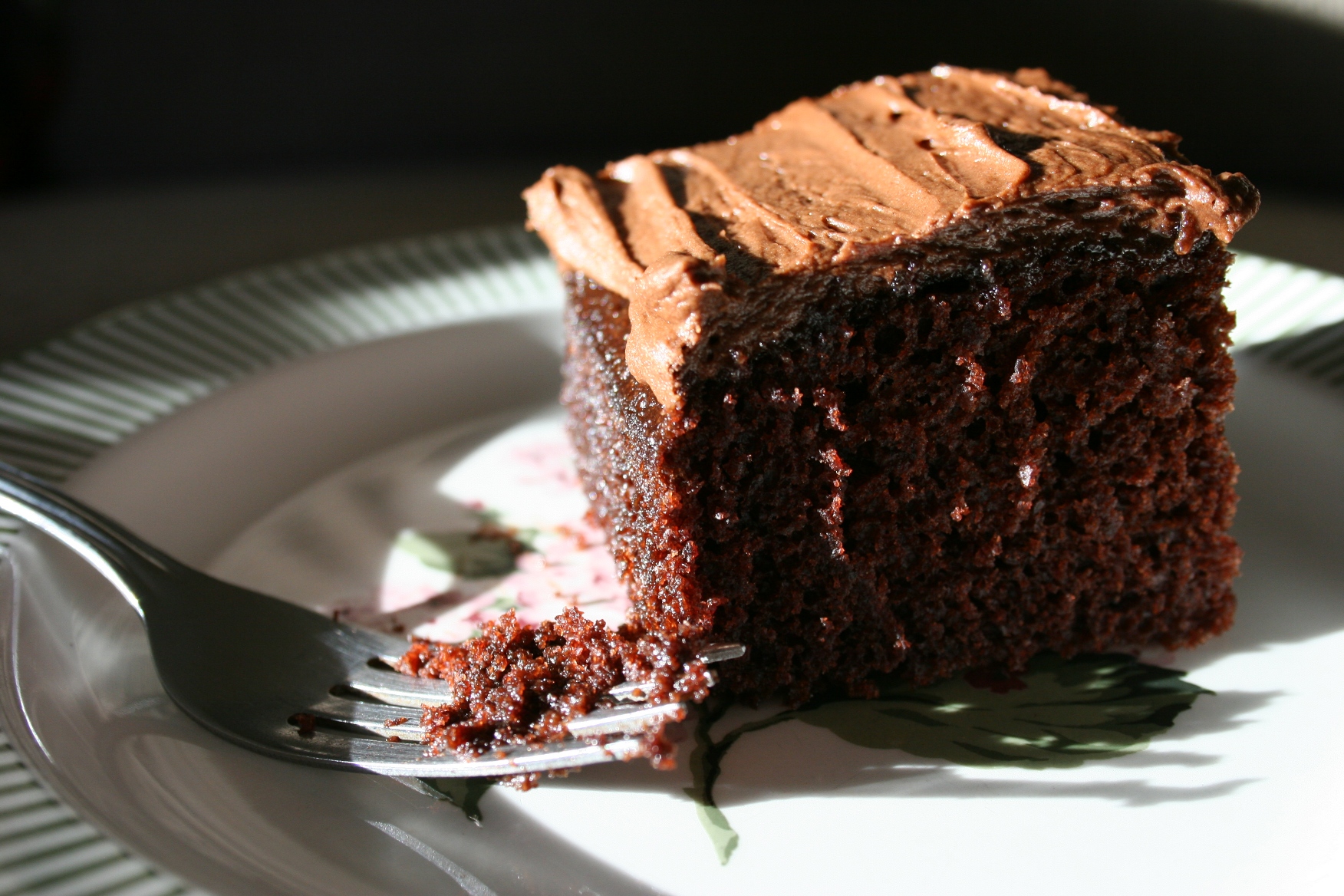
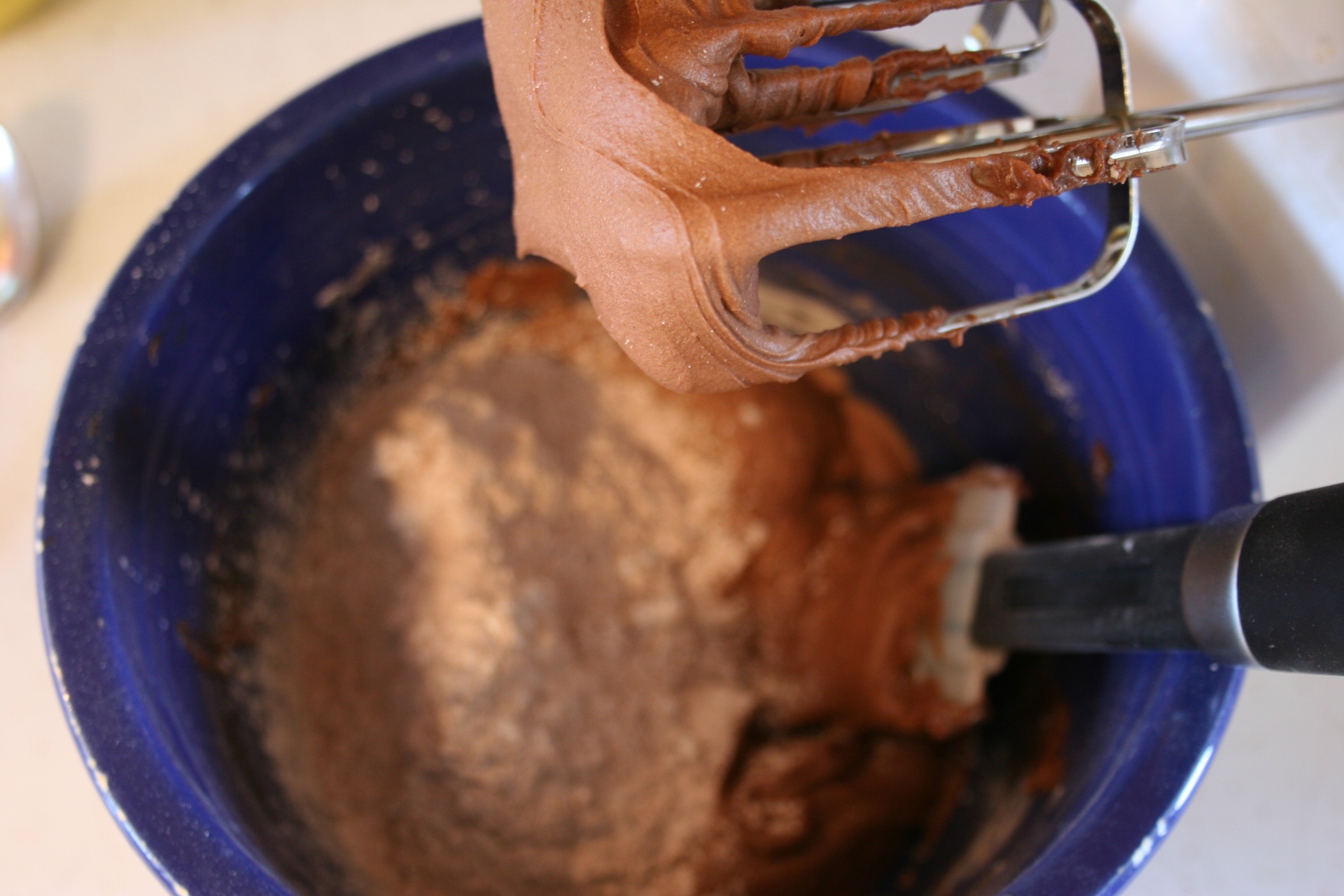
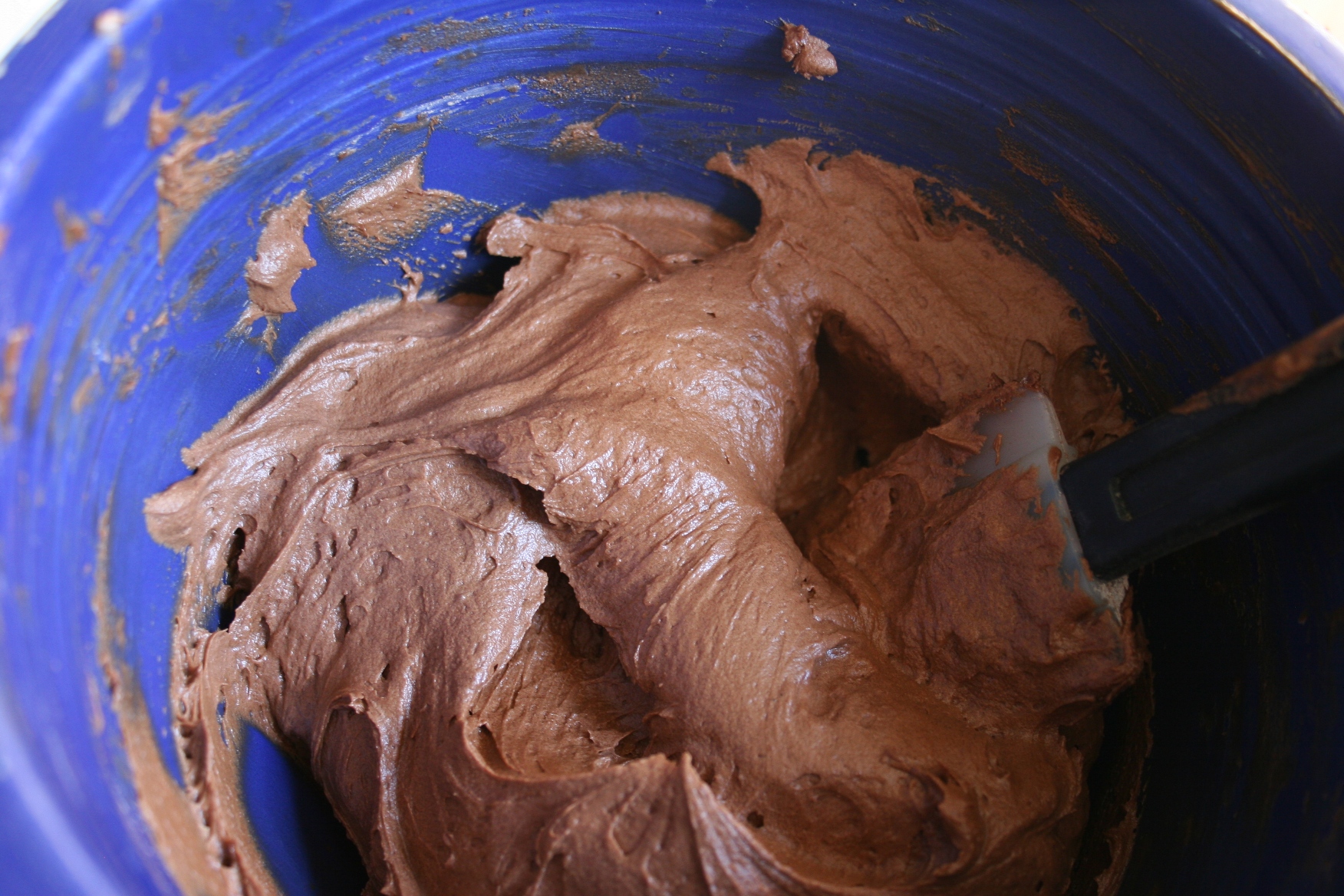
Homemade chocolate Crazy Cake frosted with Chocolate Buttercream Frosting.

THEY RAVED ABOUT the moistness of the cake. And three of them—all guys—forked up a second slice of the chocolate cake I’d made from scratch.

I almost said, “Ummm, guys, it’s the women who should have a second piece.” But I let them be, passing the cake pan around the table, plating more cake.

This is one moist, delicious chocolate cake.

Then, because I couldn’t help myself, I shared the story about this cake. They needed to hear it, to understand that they weren’t eating just any old cake but cake made from a special recipe.

This Crazy Cake, aka Wacky Cake, is the chocolate cake of my youth, the one my mom made every time she baked a birthday cake, I told my friends.

“We didn’t have much money, didn’t get birthday presents,” I explained as my friends savored each bite of chocolate cake. “So our birthday present was the cake, an animal cake my mom made.

She would pull out her cake book and let us pick the animal shape we wanted for our birthday cake—a lion, a horse, a duck, an elephant…”

“My mom had a book like that too,” my friend Jackie chimed in.

Mari, on the other end of the table, nodded her head. Likewise, her mother had a booklet that provided instructions for transforming round cakes and square cakes and oblong cakes into animal shapes.

By cutting the cake and decorating it with various candies and frosting, my mom transformed a plain chocolate cake in to a special animal-shaped birthday cake.

Those birthday cakes were magical. I never missed the birthday presents, never even knew I should receive gifts, because I had that cake, that special, special chocolate animal-shaped cake.

When I became a mother, I continued the tradition with my children. While I didn’t have an animal cake book, I had my imagination. I made a snowman, Garfield, Piglet, a Teenage Mutant Ninja Turtle, a horse (that looked more like a cow than an equine)…

Unlike me, my children got birthday presents, plenty of them. But I would like to think that the one they will remember is the annual gift of an animal-shaped birthday cake, a gift, really, passed down from their grandmother.

For in the passing down of that tradition, I’m honoring their grandma, my mom, who taught me that birthdays are not about prettily wrapped presents, but about love. And that love, for me, will always be symbolized by homemade chocolate Crazy Cake.

Chocolate Crazy Cake

3 cups flour

2 cups white sugar

½ cup cocoa

1 teaspoon salt

2 teaspoons baking soda

Mix the dry ingredients together and then stir in:

¾ cup salad (vegetable) oil

2 cups cold water

2 Tablespoons vinegar

1 teaspoon vanilla

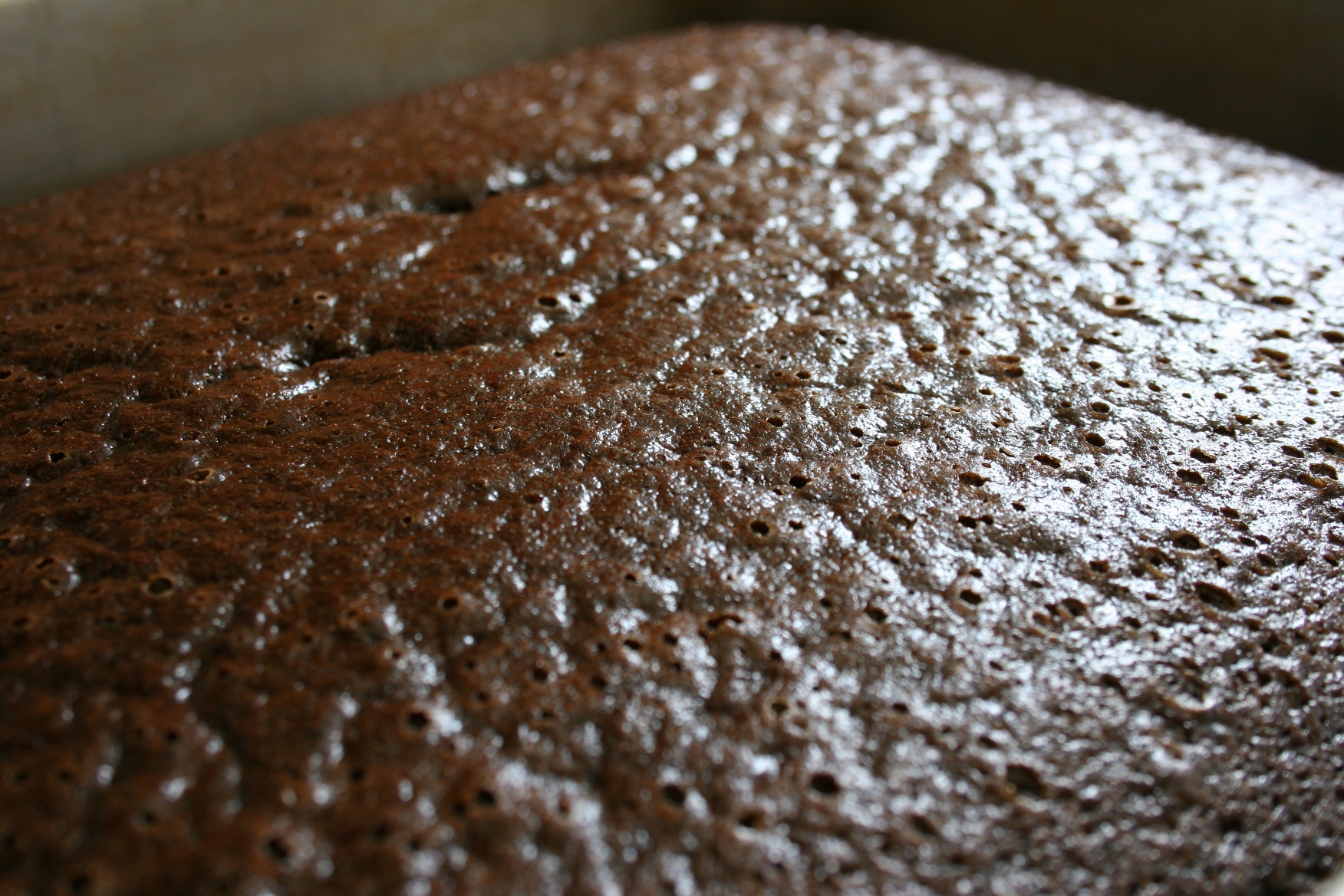
Pour into a 9 x 13-inch cake pan and bake at 350 degrees for 35 – 40 minutes.

When the cake is cool, whip up a bowl of this creamy Chocolate Buttercream Frosting.

When cool, frost with:

Chocolate Buttercream Frosting

6 Tablespoons butter, softened

½ cup cocoa

2 2/3 cups powdered sugar

1/3 cup milk

1 teaspoon vanilla

Cream butter in a small mixing bowl. Then add the cocoa and powdered sugar alternately with the milk, beating to a spreading consistency. You may need to add an additional tablespoon of milk. Blend in vanilla. Spread on cake. Makes about two cups of frosting.

The recipe yields two cups of heavenly, finger-licking-good frosting.

© Copyright 2011 Audrey Kletscher Helbling

Recipes from The Cook’s Special, 1973, St. John’s Evangelical Lutheran Church, Vesta, Minnesota, and Hershey’s Easy-Does-It Recipe #10


Mankato brings art to the sidewalks with walking sculpture tour June 21, 2011

Martin Eichinger of Portland, Oregon, created this graceful "Bird in the Hand" bronze sculpture valued at $14,500 and posed near the City Center.

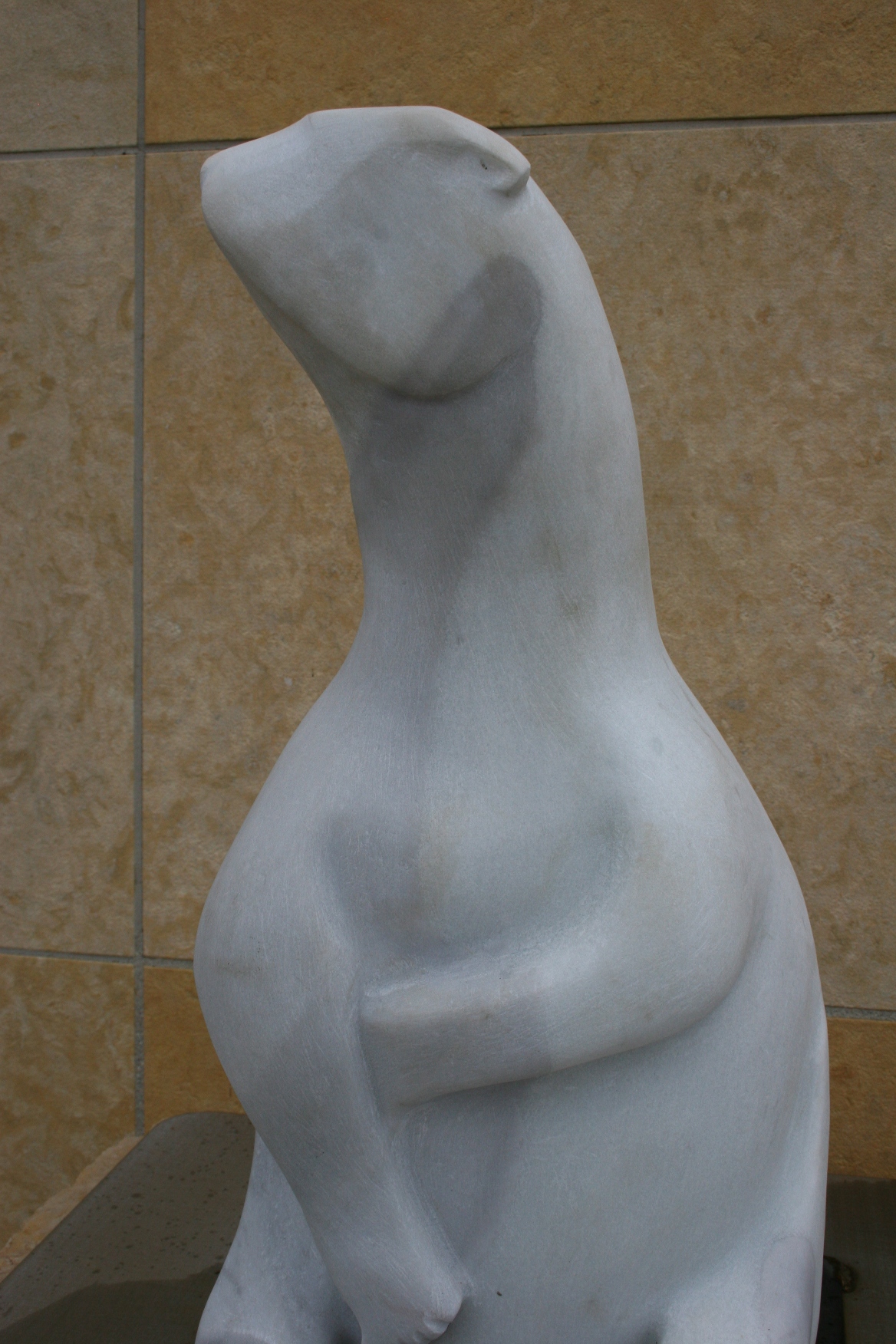
You'll find "Play Thing" by Ryszard, Denver, Colorado, and sculpted from Colorado marble, in North Mankato.

MAYBE IT’S BECAUSE I grew up without much art—no paintings, no piano, no library—that I so appreciate the visual, performing and literary arts.

I still can’t paint a painting or read a musical note. But I value those two art forms and words, which have always been a part of me, who I am.

Several years ago I walked the Bemidji Sculpture Walk and I quickly became enamored with the idea of placing sculptures in a community and then swapping them out a year later for new sculptures. The touring sculptures scattered primarily through-out Bemidji’s downtown impressed me as an ingenious way to get art before the general public.

Now I needn’t drive hours and hours and hours to view such public art. In 45 minutes I can reach downtown Mankato and view the 25 sculptures positioned there and in North Mankato as part of the City Art Walking Sculpture Tour. For free.

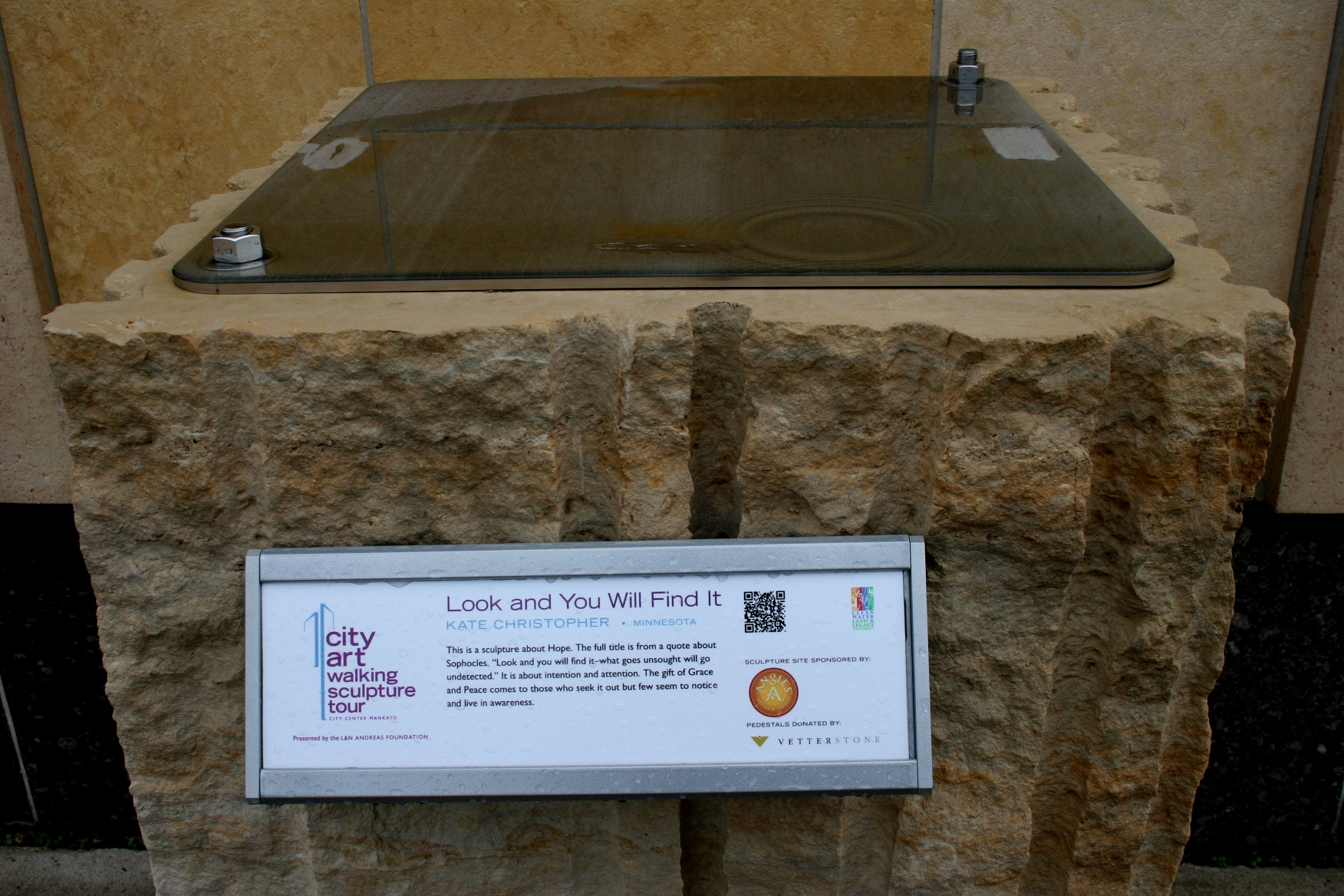
On Saturday, while in Mankato for a graduation reception, my husband and I made it a point of afterward checking out those sculptures. We missed seeing only a few of the art pieces, including one along Belgrade Avenue that was vandalized and, ironically, titled “Look and You Will Find.” We found only an empty block of Minnesota limestone, donated by Vetter Stone, where the sculpture once stood.

Mahtomedi artist Kate Christopher's $6,900 bronze sculpture, "Look and You Will Find It," was vandalized. The art piece symbolized HOPE.

I expected to find a bustling downtown Mankato. Obviously I have not been downtown for many years. Nearly all of the shopping has moved to the fringes of the city, into the malls and big box stores, and the downtown houses primarily office buildings, restaurants, bars, a hotel and the Verizon Wireless Center. Honestly, except for the sporadic motor traffic on Second Street and a few pedestrians, the place was basically deserted around mid-afternoon. Granted, the weather was less than ideal with on-again-off-again rain. We could park almost anywhere we wanted and walk to the sculptures within a several-block area.

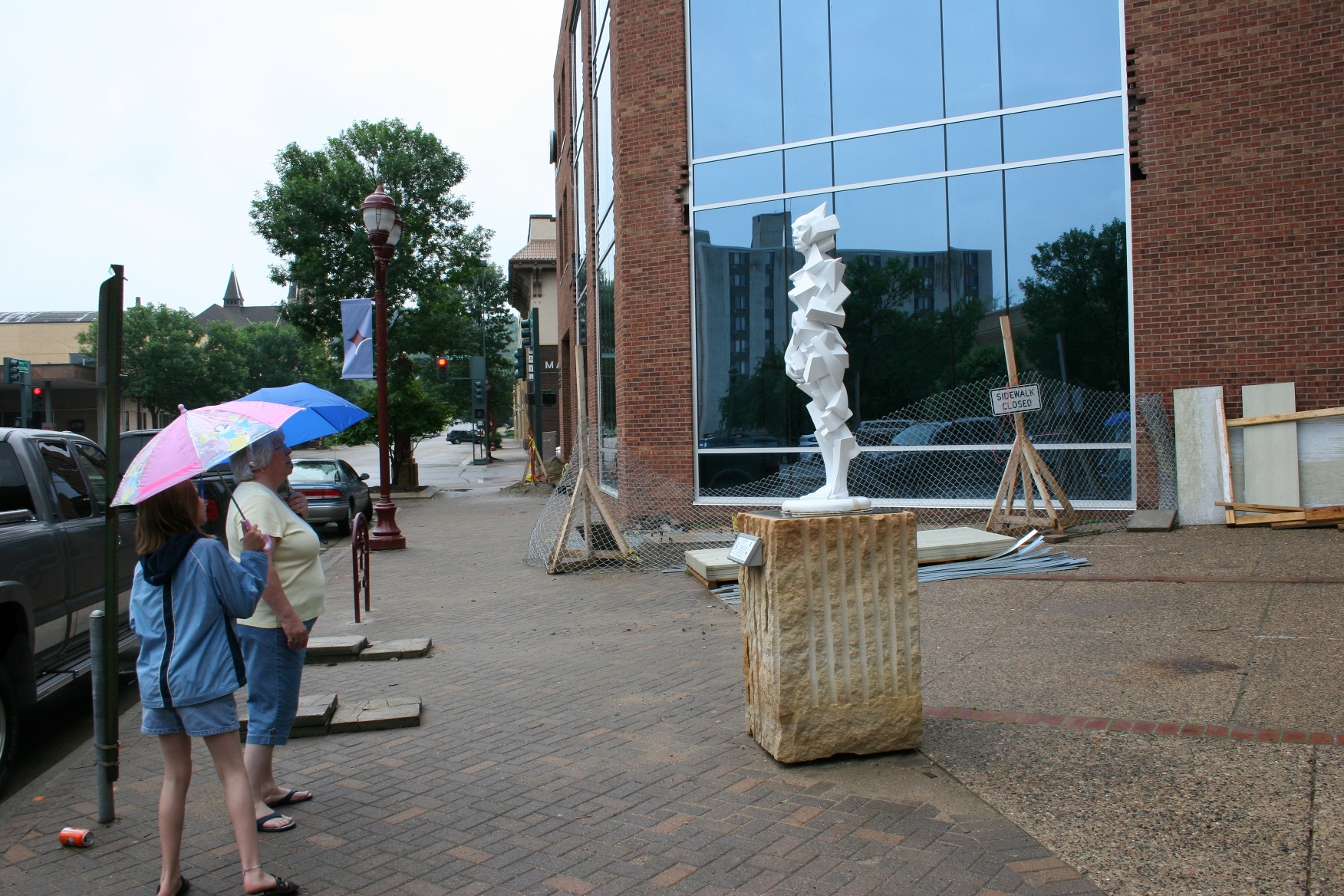
We spotted only two other individuals walking around viewing the sculptures. Dana Parlier of Brooklyn, New York, created this resin sculpture, "Cubist Woman." The man-made concrete canyons of New York City inspired this contemporary art, which seems to match the modern look of the building.

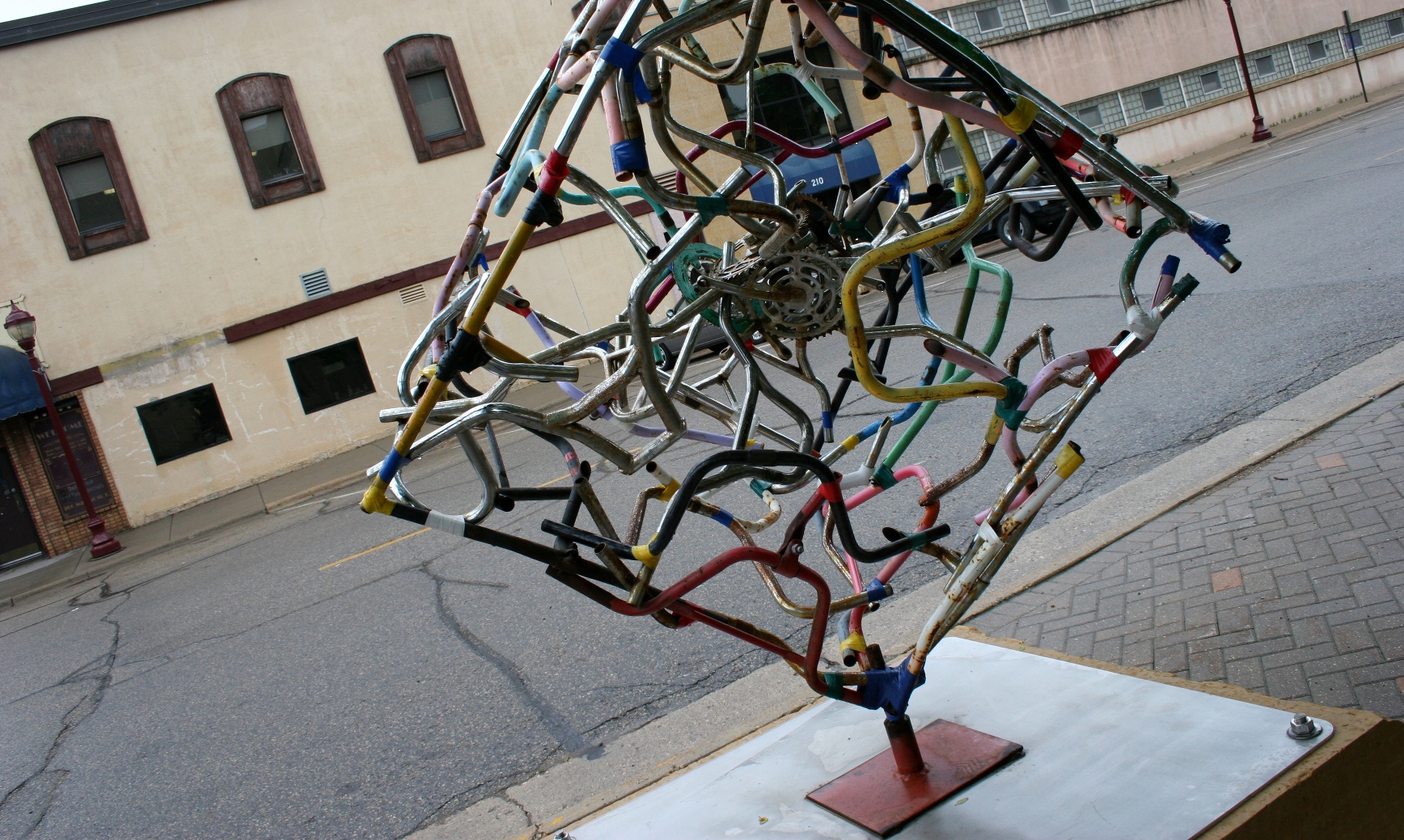
The art pieces certainly present a reason to visit downtown Mankato and then cross the Minnesota River to North Mankato to view several more sculptures. I’m not going to tell you I liked every sculpture, because I didn’t. But that’s OK; no one expects that. Sometimes first impressions change though. When I spotted “Twenty Seven (China)” from across the street, I honestly thought it looked like a mess of twisted junk. But up close, the steel sculpture of recycled bicycle parts—mostly handle bars—grew on me. Joe Forrest Sacke’s $3,500 conglomeration seemed modernish and hippyish and vintageish jumbled into one. Art will surprise you that way.

Joe Forrest Sacke's "Twenty Seven (China)."

You can vote for your favorite, for The People’s Choice Award. We didn’t, although I narrowed my favorites down to three. Voting booths are strategically located through-out the Walk area.

One of my three favorite sculptures, "White Buffalo Calf Woman," a bronze piece created by Aberdeen, South Dakota, artists Lee Leuning and Sherri Treeby. Notice how the dominant color in the sculpture blends with the building's color. Wait until you see the building on the other side of this Native American woman. You will be wowed. I'll share those images with you in another post.

This bronze piece, "The Farmer's Wife," by Dee Clements of Loveland, Colorado, is also among my three favorite sculptures. A photo Clements took in a Korean village inspired this art creation.

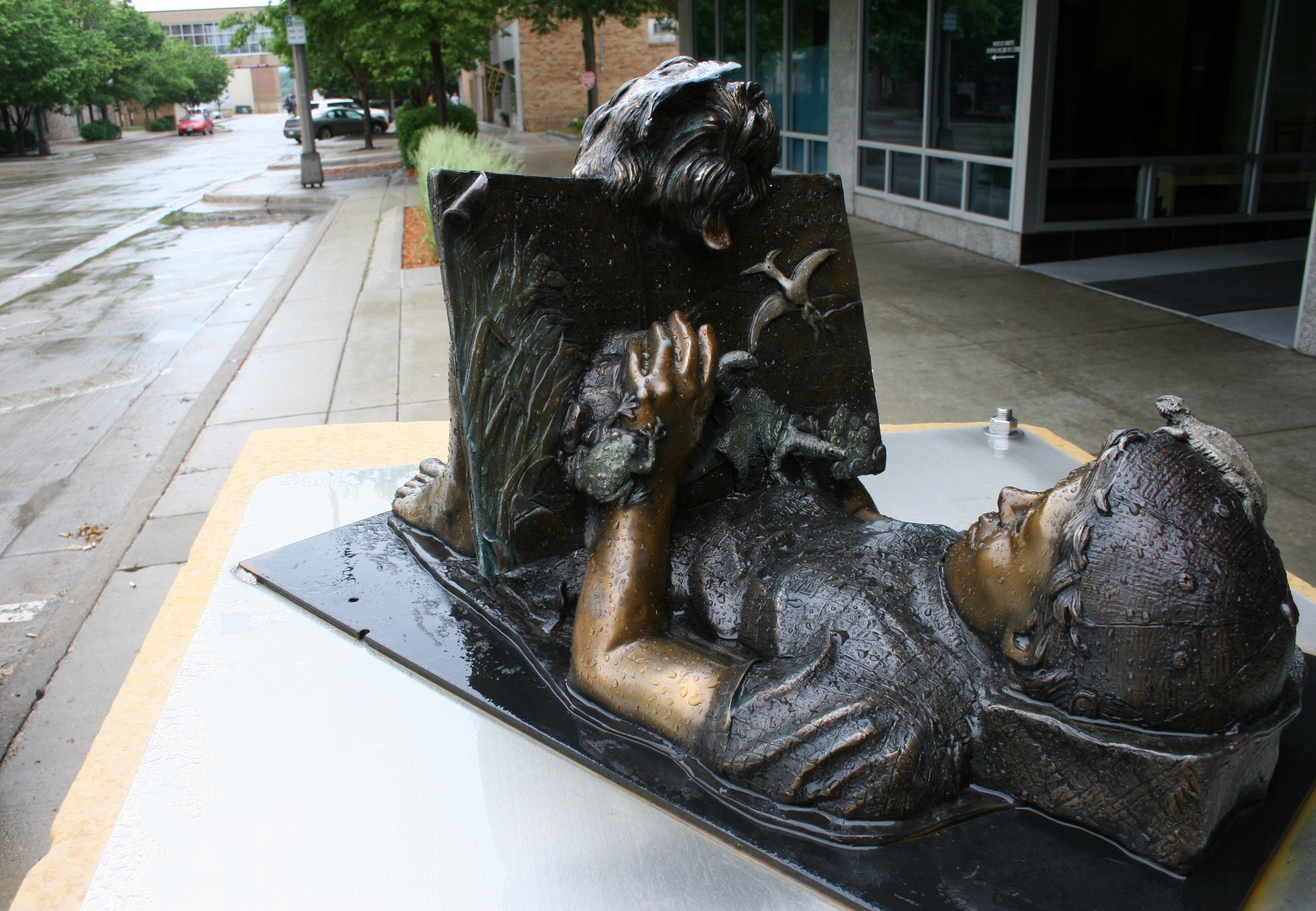
The detail in this bronze, "Reading Magic," by Julie Jones of Fort Collins, Colorado, appeals to me and makes it one of my top favorites among the 25 sculptures in the exhibit.

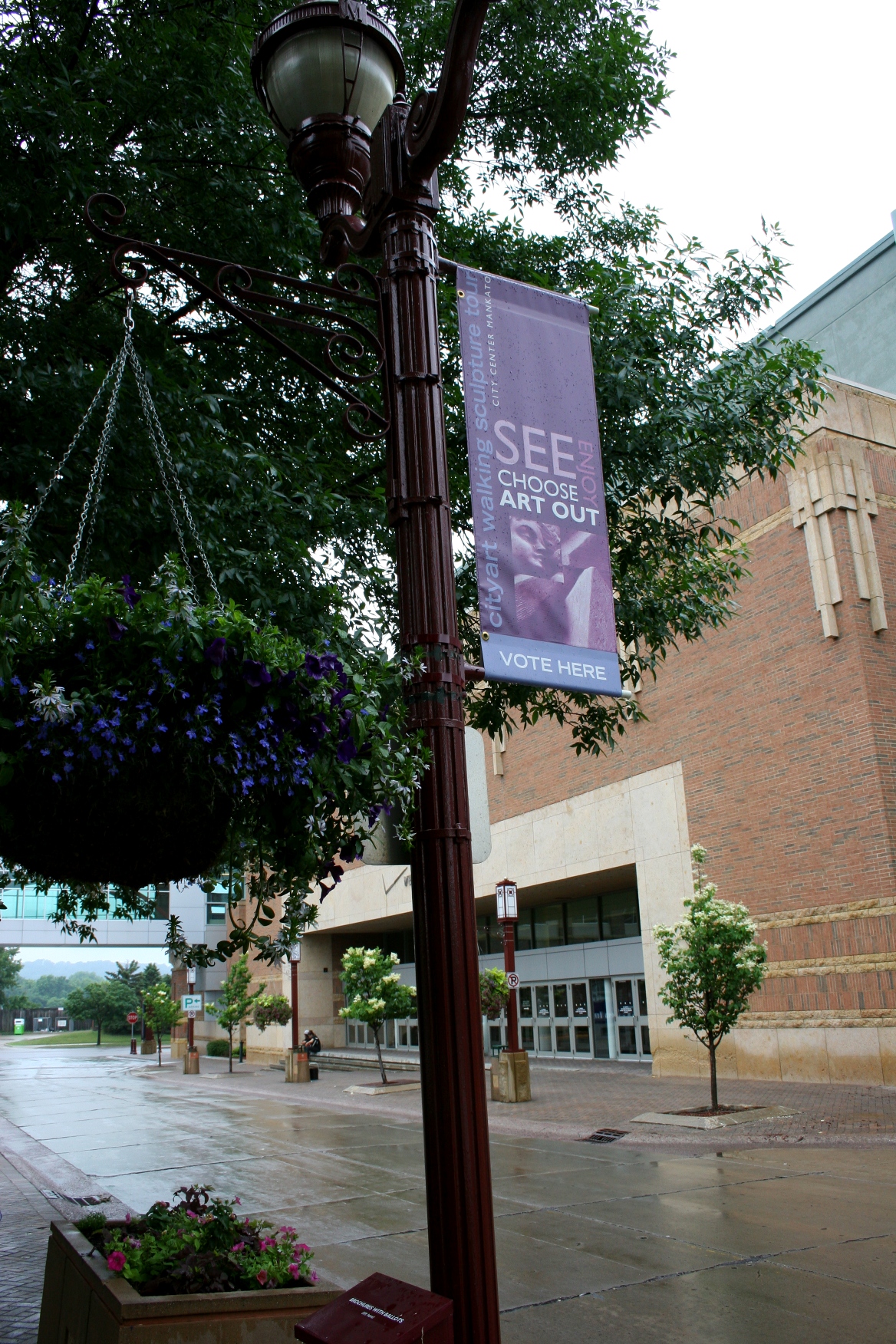
Banners draw visitors to the sculptures and to voting spots in downtown Mankato.

I also noticed, and I don’t know whether this was on purpose, but the sculptures often seemed to jive, architecturally and environmentally, with the buildings they were situated near.

Mankato is committed for the next five years to bringing these rotating sculptures into the community via a partnership with the Sioux Falls-based SculptureWalk program. Of course, this all costs money and with the help of a grant, business sponsorships, donations and more, Mankato has managed to bring this art directly to the people.

It’s a grand idea. I expect to return to Mankato to see next year’s art and perhaps other area attractions. Even though I attended college here for four years, I really didn’t appreciate the city. And so much has changed since 1978.

For someone like me, who doesn’t venture into Minneapolis to engage in the art scene there, mostly because I don’t like the congestion and busyness of the metro, outstate art opportunities like City Art in Mankato offer me culture at a quieter, more enjoyable (at least for me) pace.

#

SINCE I CAN’T POSSIBLY show you all of my photos in one post, I’ll bring you more images in future stories.

© Copyright 2011 Audrey Kletscher Helbling


The Ice Man and his dog June 20, 2011

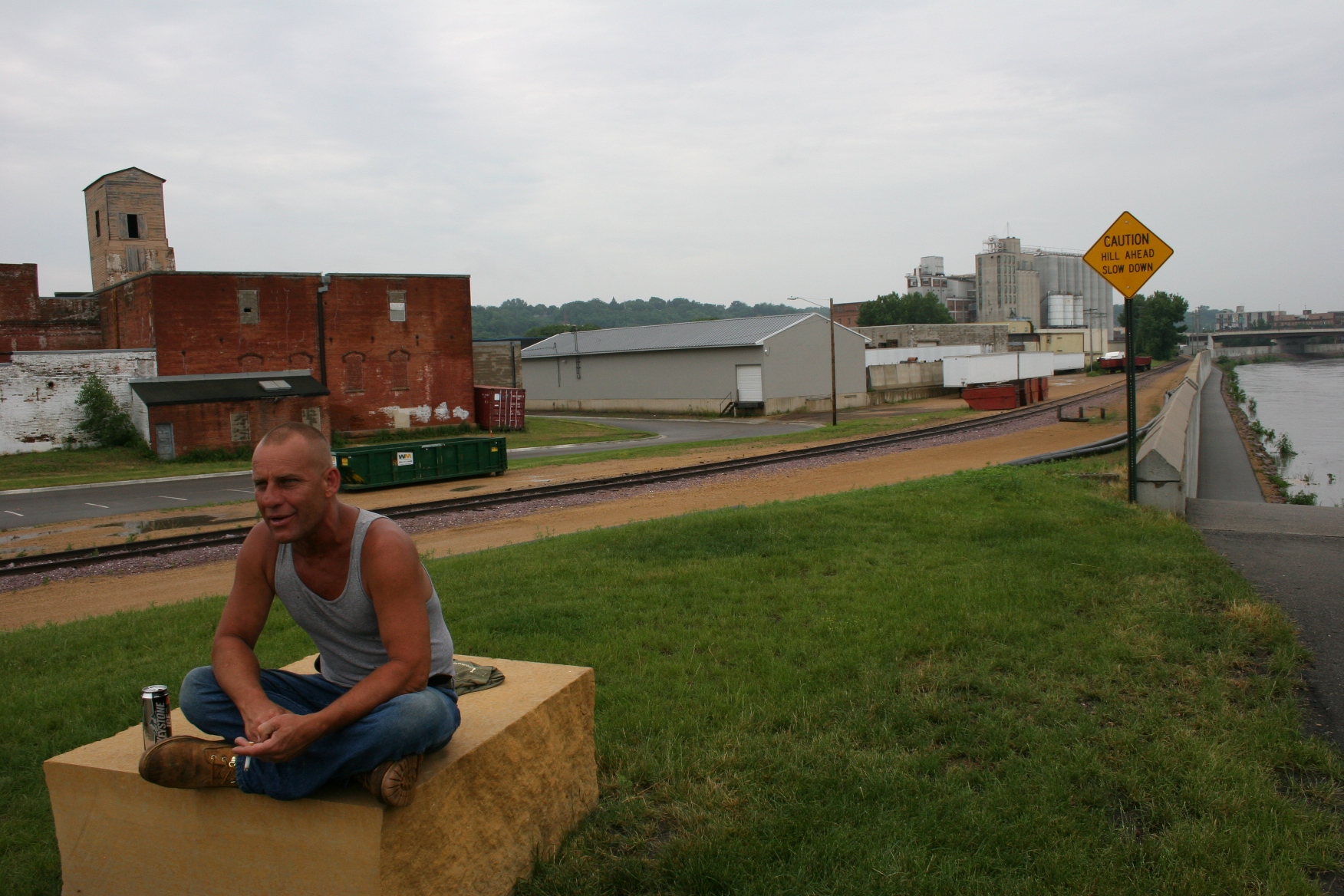
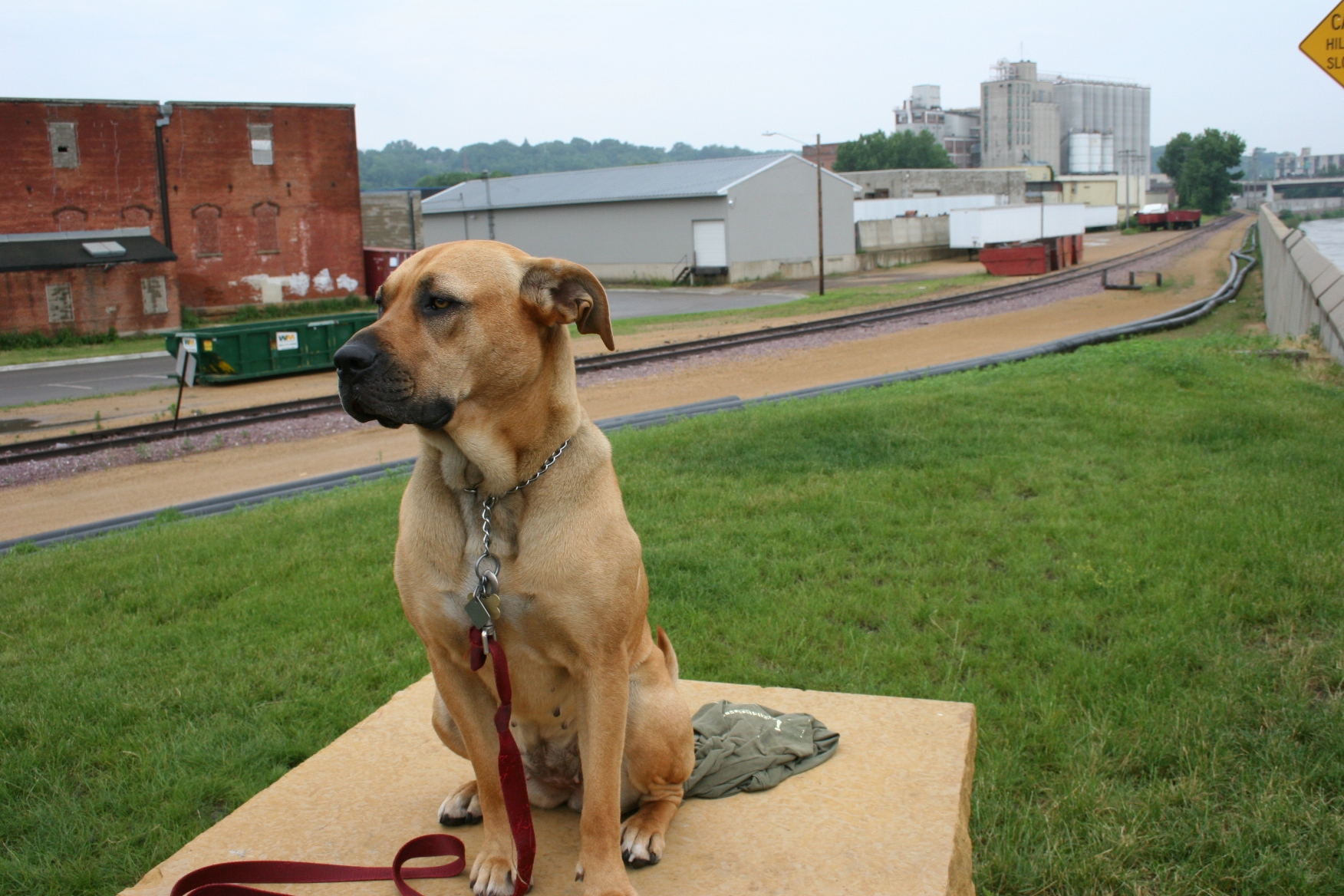
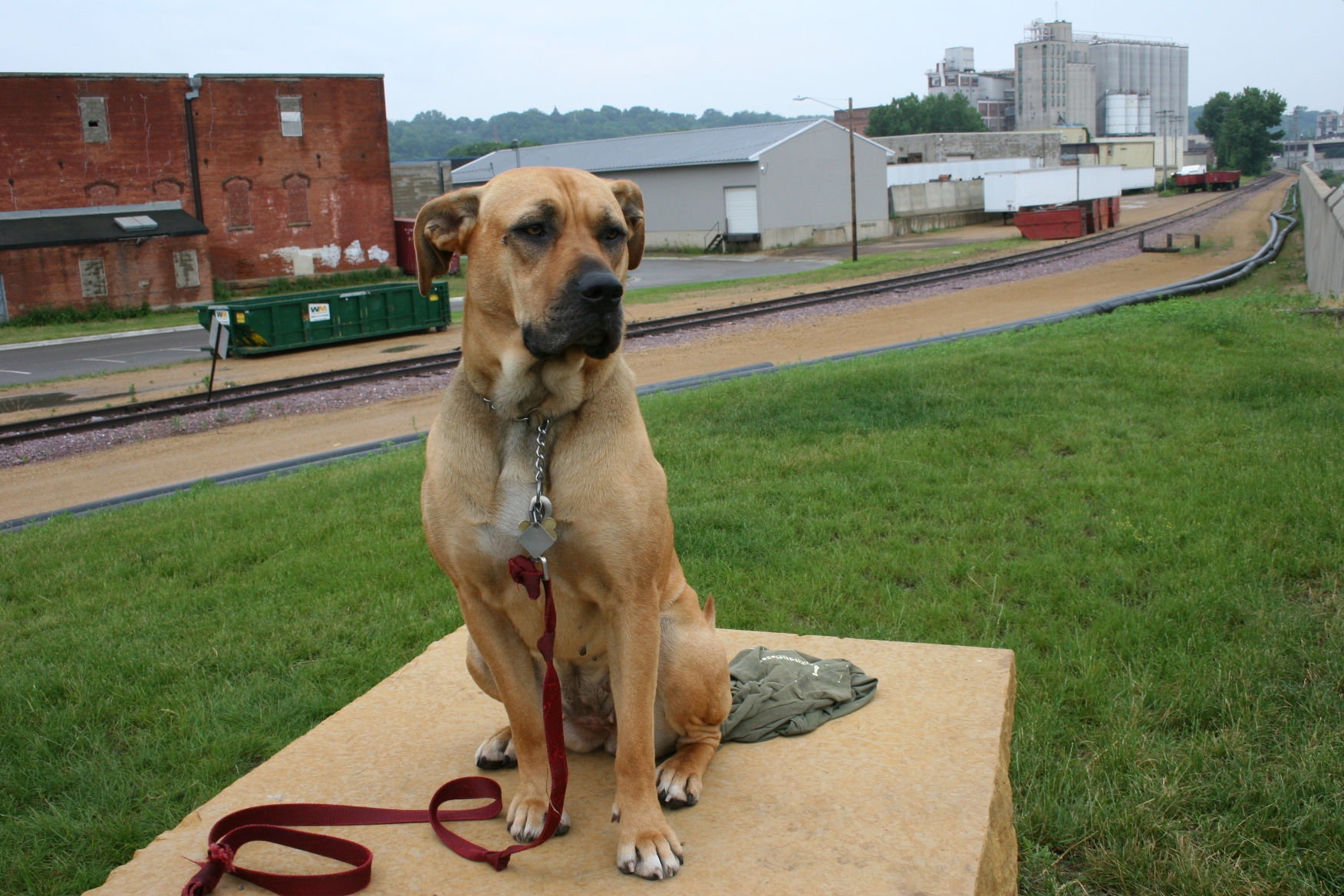
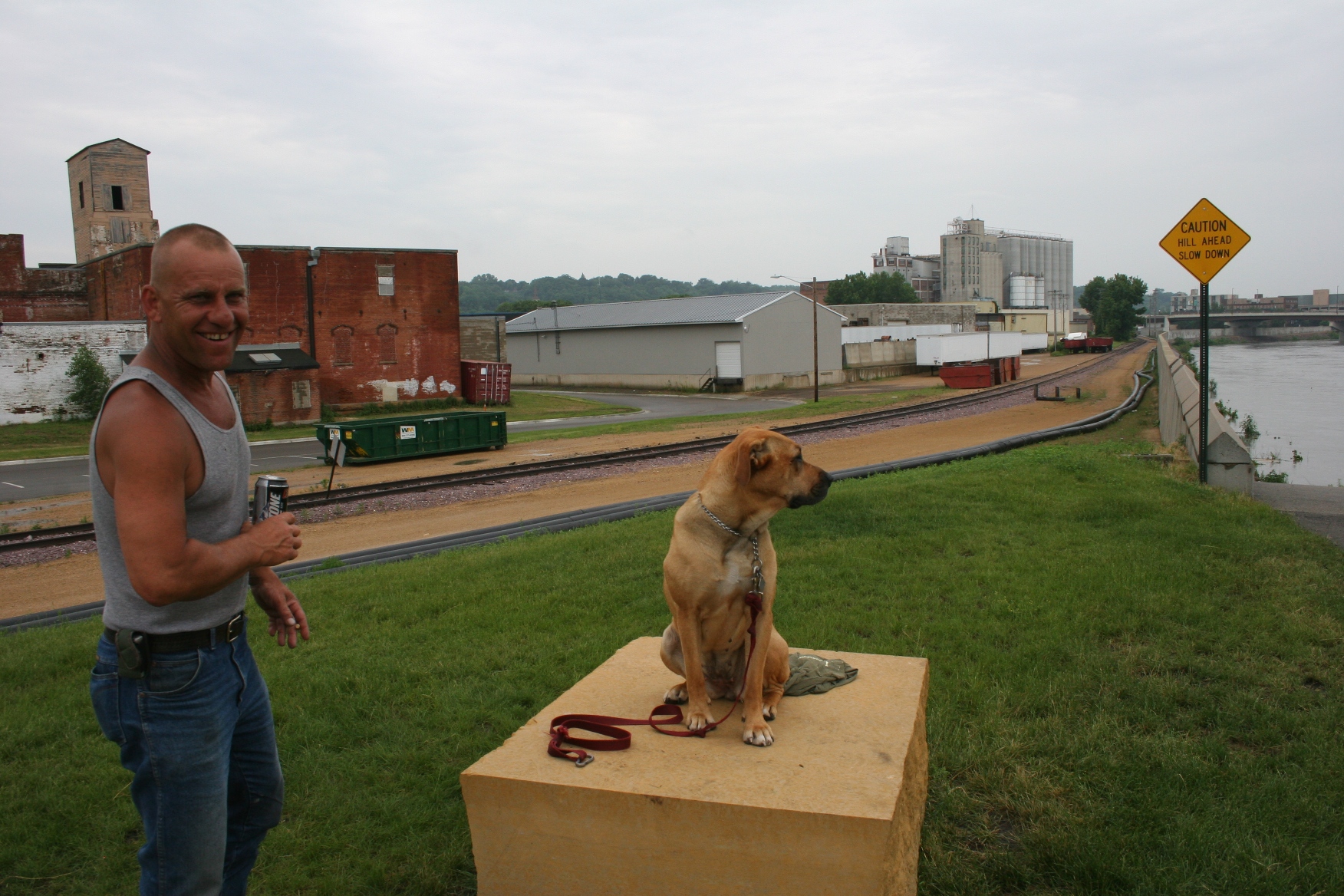
I’LL NEVER SEE THIS GUY again, this man in the muscle shirt with hair shaved scalp-close, fingers cradling a cigarette, a can of Keystone Ice nearly knocking at his knee as he slumps, cross-legged, on a block of Kasota stone by Riverfront Park in Mankato.

Lines harden his forehead. Shadows darken his eyes. Skin exposed to summer sun has already bronzed his face, his upper body, his muscular arms.

I wonder about his life, but don’t ask. Have he and his two buddies, passing the time nearby on their own blocks of hard, hard stone, had hard lives? I can almost see it in their eyes, imagine their lives. Jobs lost. Relationships broken. Regrets. Bars. Beer and cigarettes. Maybe whiskey and women.

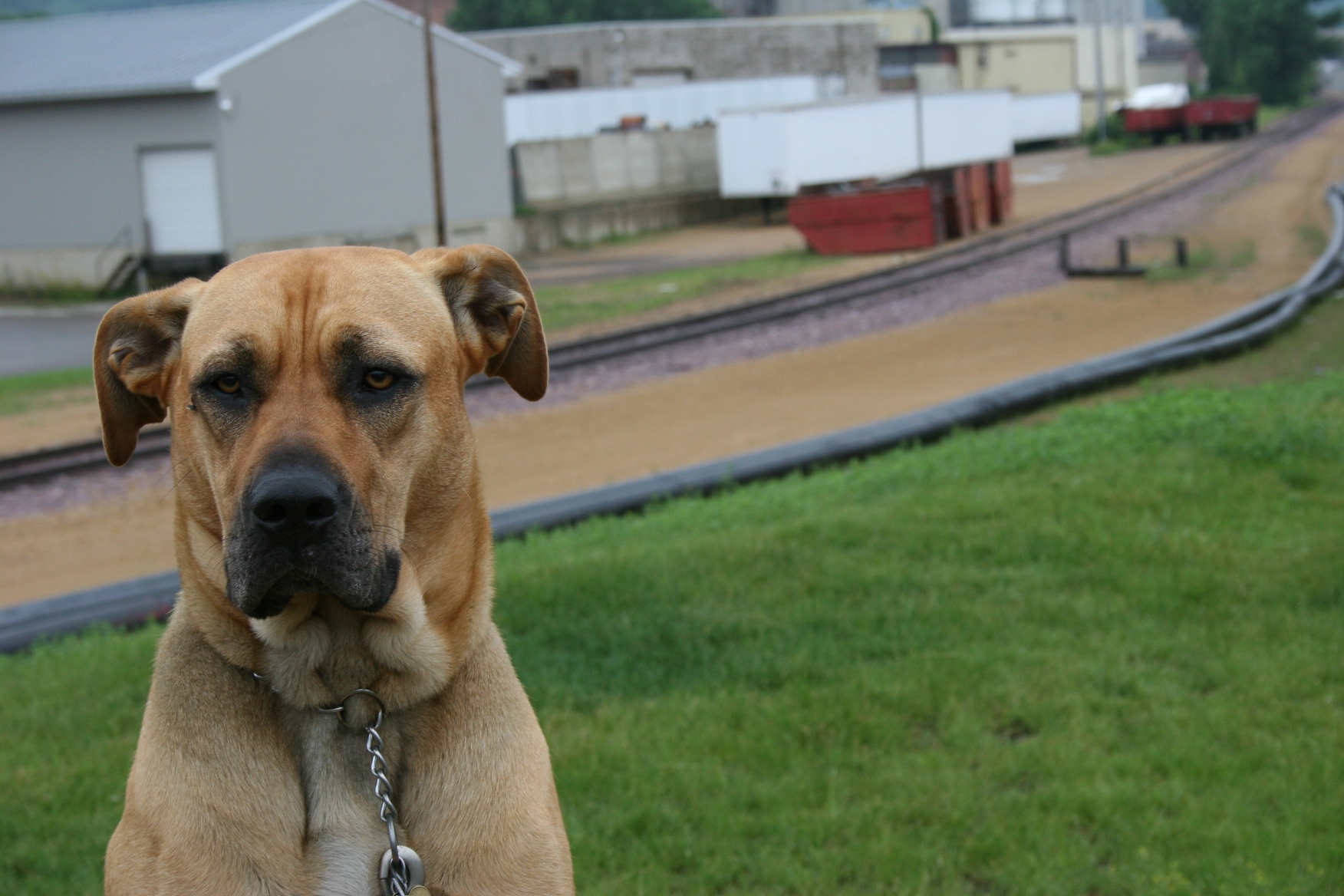
But I don’t pry, and only he—the guy with the Keystone Ice—volunteers any information, speaks to me after I approach the trio because I see a photo opportunity in a man and his dog, brick buildings and a riverside railroad track. My eyes sweep across the scene, pushing the view into the lens of my camera, into these images that tell a story.

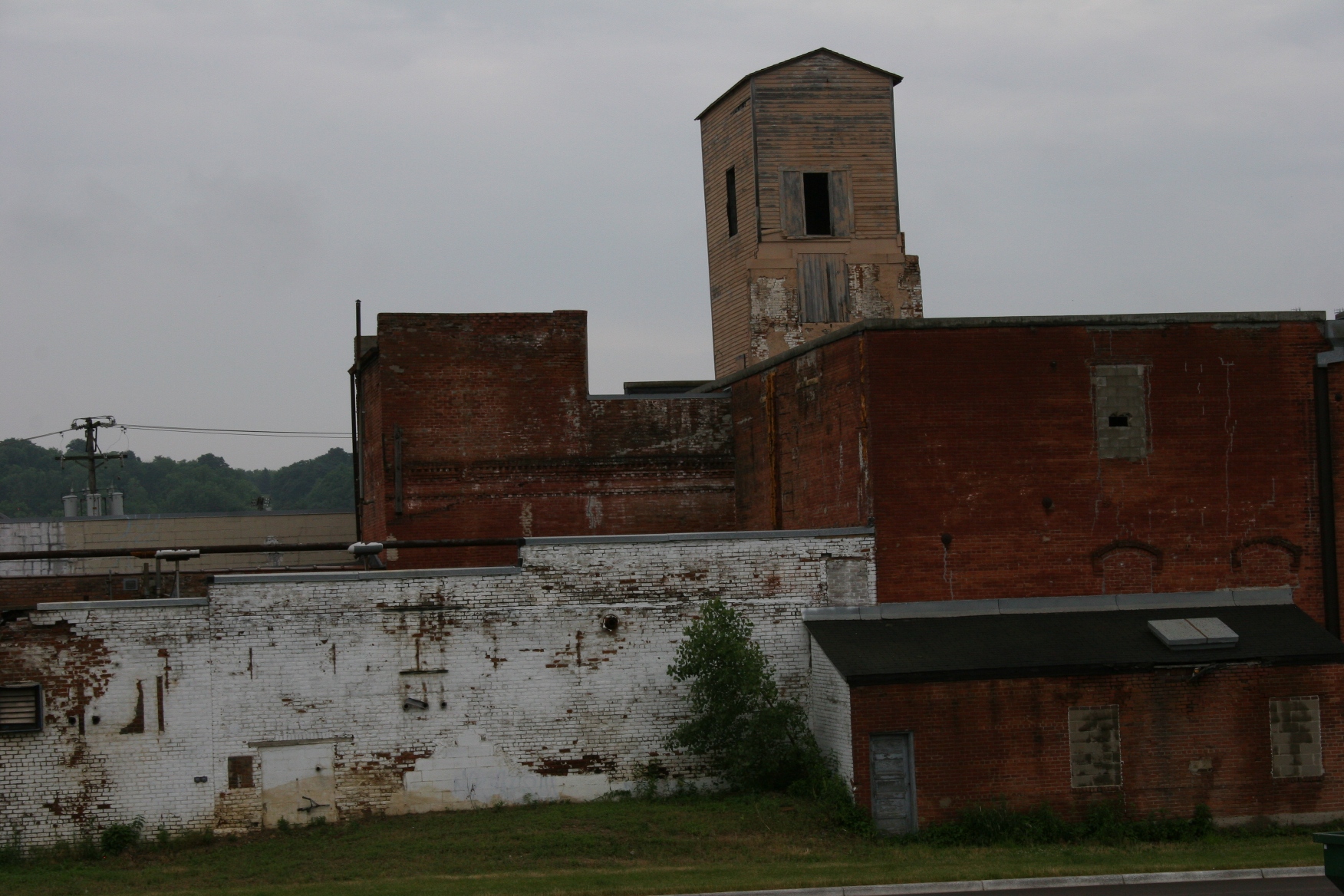
Rugged life in a river town. A blue collar man’s grimy, steel-toed work shoes. Elevators. Train tracks leading away. Peeling paint. Boarded-up buildings which The Ice Man wishes were torn down and which I tell him should be refurbished.

We disagree. But he still smiles a smile as wide as the manic, muddy Minnesota River raging past the park.

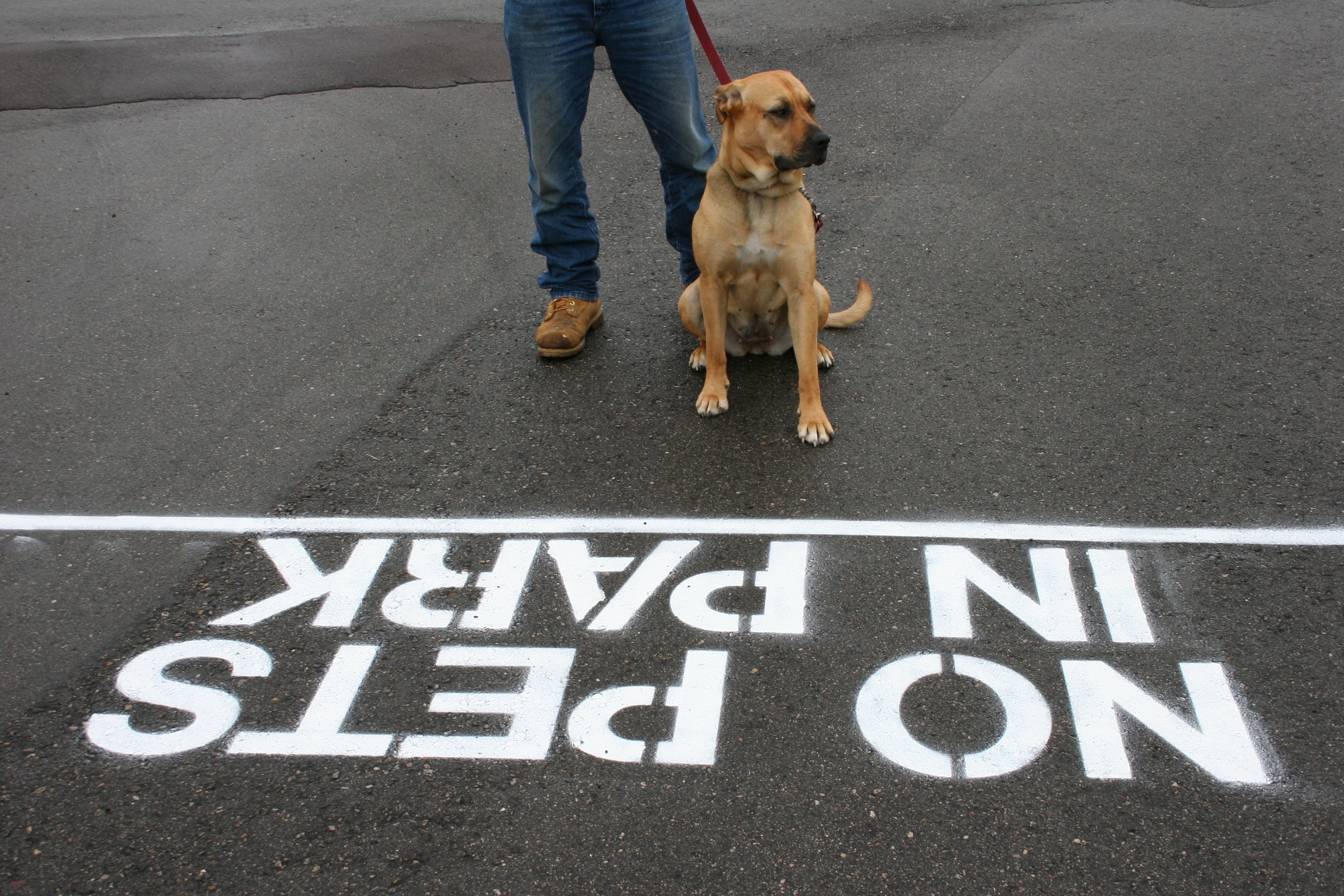
He tells me then, after I snap a series of photos, that he can’t take his dog—a service dog, he claims, and says he has the card to prove it—into Riverfront Park. Dogs are banned from some Mankato parks and this is one of them.

He suggests I photograph his dog next to the white line and words sprayed onto the tar: NO PETS IN PARK.

At first I balk, say, no, I won’t do that.

But then I reconsider, give The Ice Man his defiant moment. As his dog struggles to cross the line into the park, he tugs on the leash, holding her back. He’s already told me how, a day earlier, he hasn’t crossed the line to hear a $15 outdoor concert staged here. Instead, he’s followed the trail nearer the venue site, listened to the music from there. He’s clearly proud of his evasive, I’ve-outsmarted-them tactic.

Then we part ways. I continue reading poetry imprinted upon a sidewalk circling the park’s trail head building. He returns to his hard stone to swig his Keystone Ice beer and smoke his cigarettes.

His life is so different from mine. Yet, for five minutes we’ve connected and the poetry of his life shows in these images of The Ice Man and his dog.

© Copyright 2011 Audrey Kletscher Helbling


Rock ‘n rolling in Hamburg June 18, 2011

LAST SUNDAY MY HUSBAND and I drove into Hamburg, just because we’d never been there. It was along the meandering path we chose for our trip back to Faribault from west central Minnesota.

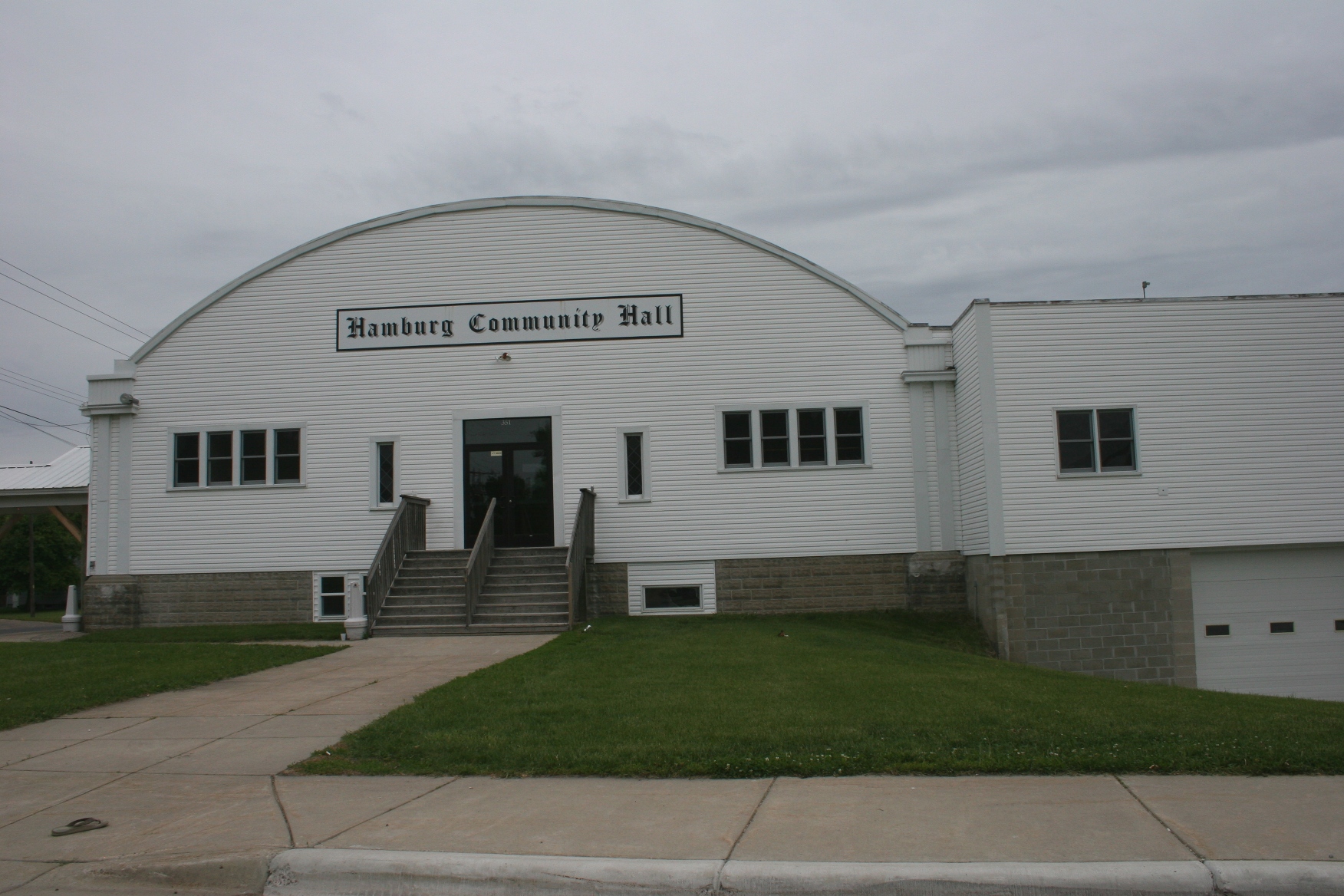
We didn’t hang around in Hamburg, simply went into town, turned around and drove back out. As we passed the community hall in this town of around 500, I snapped this photo. I appreciated the vintage look of the building and wondered how many times locals have gathered here to celebrate.

I imagined dance feet scuffing oak floors, brides launching bouquets, crepe paper streamers sagging from the ceiling, gray-haired ladies sipping coffee, accordions weaving in and out.

I did not imagine Rock ‘N Roll Wrestling. Who would?

But when I later did an online search of Hamburg, I discovered wrestling at the community hall. Surprise. Tonight wrestlers will rock the walls of the community hall as pro-wrestler Rock ‘N Roll Buck ZumHofe brings his wrestling show back to his hometown beginning at 7:30 p.m.

So much for my contemplative visions of a wedding reception and dance or a 50th wedding anniversary party, although I expect those are also part of this building’s history.

Tonight it’s all about wrestling, which I may have watched when I was a kid (and even as recently as 30 years ago.) Vern Gagne, Dr. X, The Crusher, and, yes, even Rock ‘N Roll Buck ZumHofe, are names I remember.

No, I won’t be in Hamburg tonight to relive my days of pro-wrestling devotion at this town’s annual Zummerfest celebration. My interest has vanished and is now limited to the occasional glimpse I catch of wrestlers when the guys in my house are flicking television channels.

However, I expect plenty of faithful fans to fill the old hall. If you wish you could be there but can’t make tonight’s gig, Rock ‘N Roll Wrestling will be in nearby Glencoe on June 25 and in Wabasha on June 26.

According to ZumHofe’s website, you’ll be treated to “old fashion fun wrestling in a format that is nostalgic as well as new and highly entertaining.”

DO YOU HAVE MEMORIES of watching pro-wrestling on television or in person? Do you still watch/attend these wrestling bouts?

AND IF YOU HAVE memories of the Hamburg Community Hall or know anything about its history, please submit a comment. I’d like to hear your stories.

© Copyright 2011 Audrey Kletscher Helbling


My visit with Otto the otter

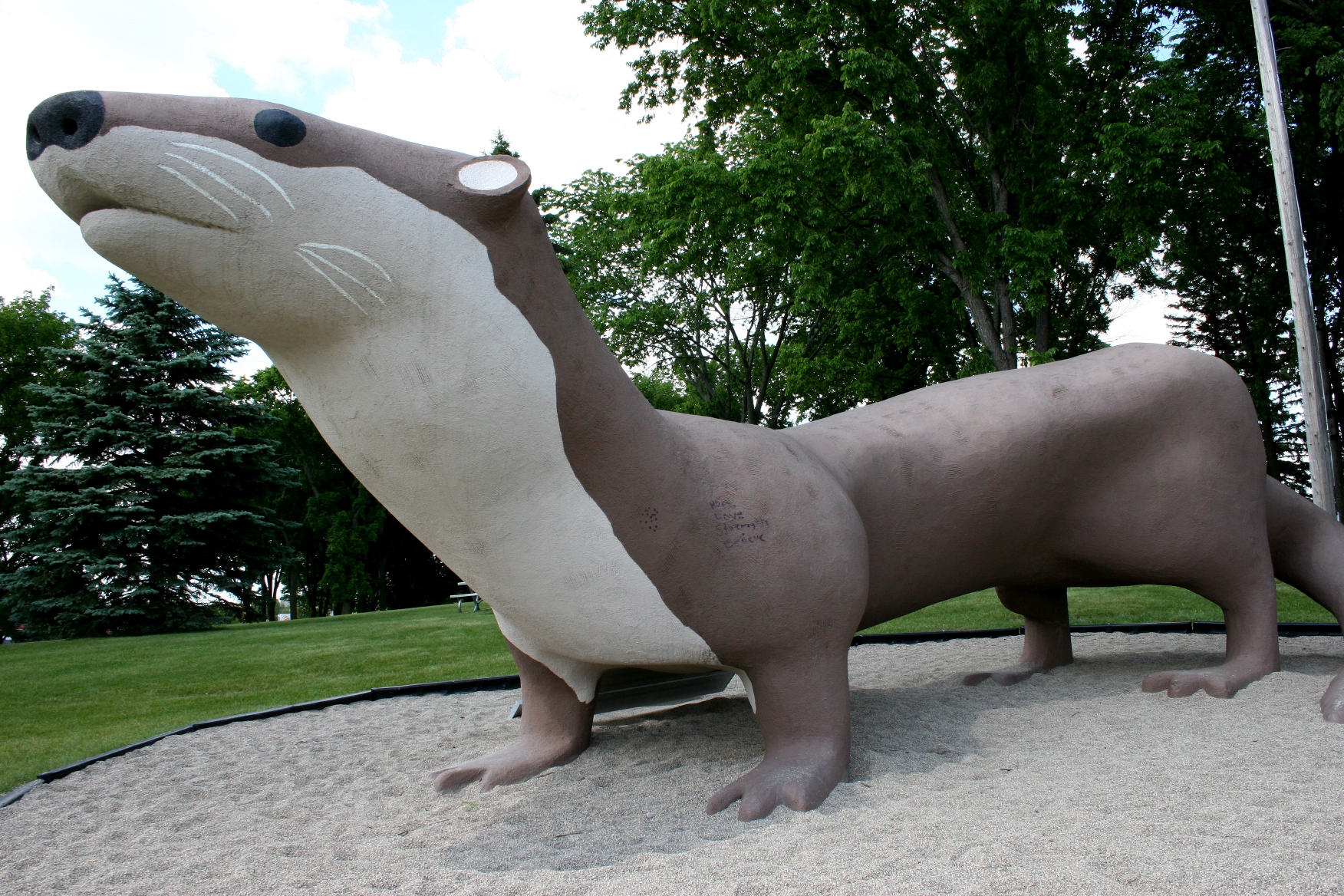
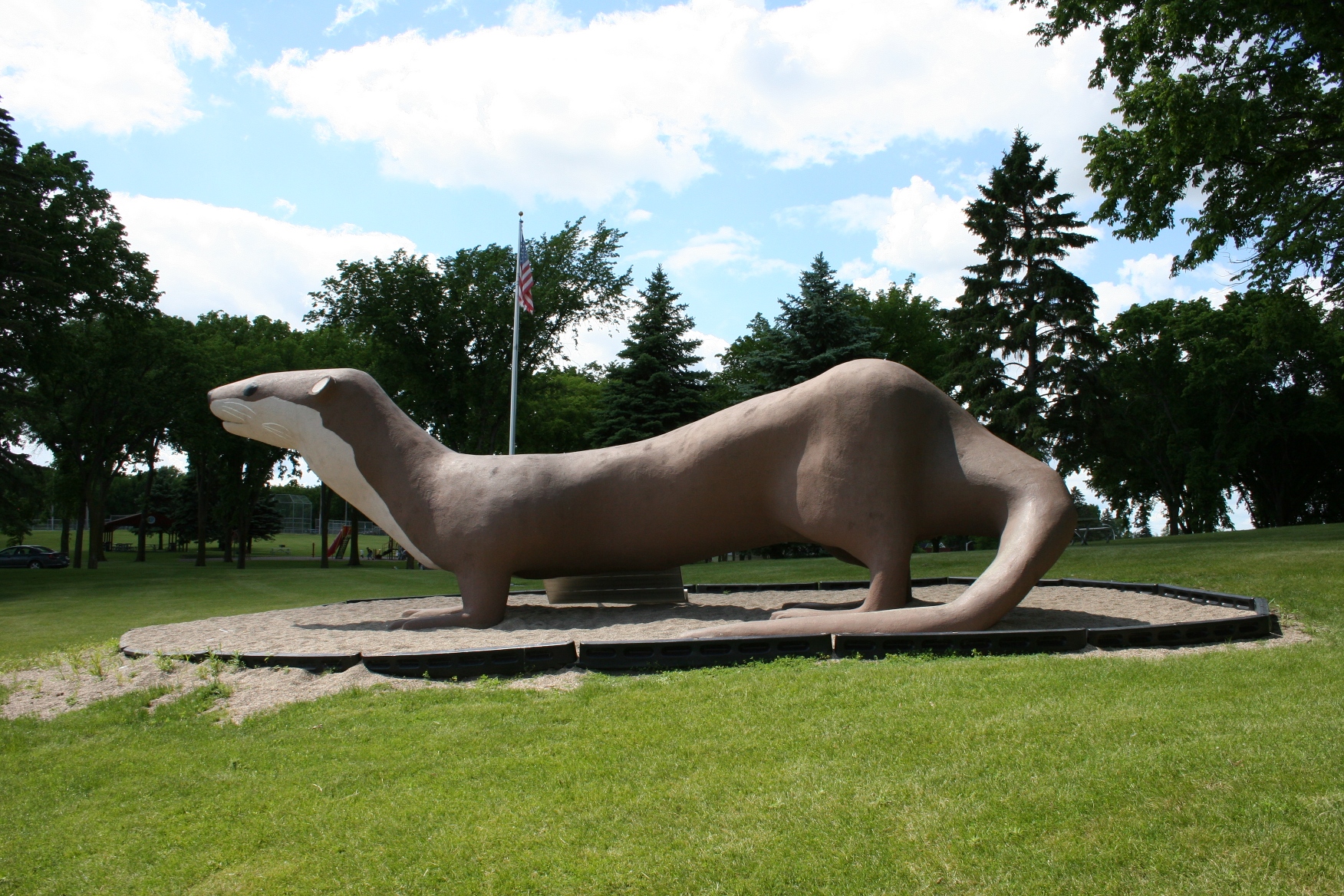
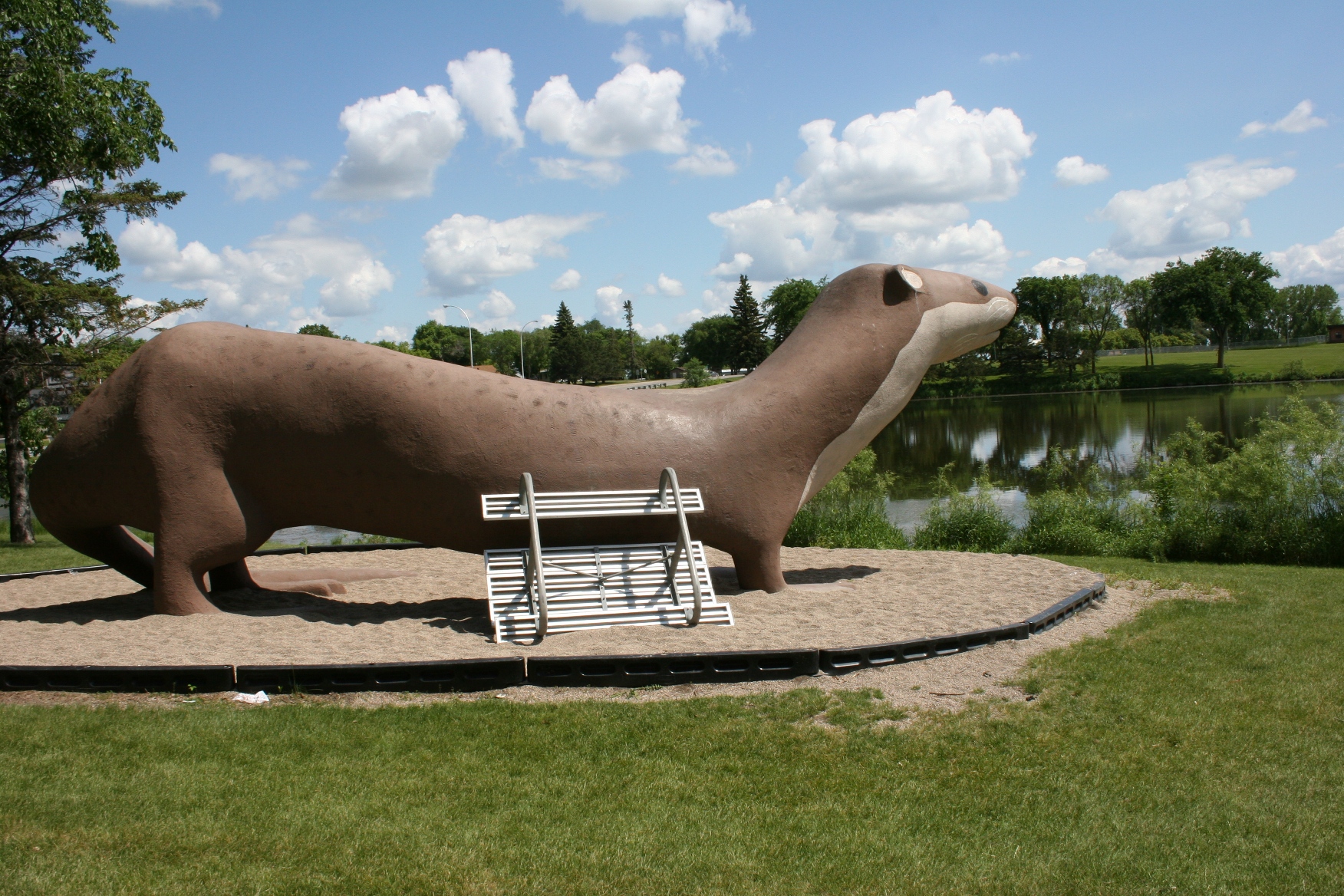
BECAUSE WE MISSED the turn, we missed the kids—the kids perched like birds on a telephone wire atop Otto the Otter.

They would have added so much to these photos of the otter statue along Grotto Lake in Adams Park in Fergus Falls. Oh, well. They were flying past their dad back to the playground when we pulled into the parking lot.

So this would be just me and the husband, whom I couldn’t convince to pose with Otto. I did. But since I don’t look nearly as cute as those kids, you won’t see me leaning lamely against the otter in an image published here. That’s reserved for the family photo album.

I chose to ignore the spouse’s suggestion that I clamber atop an overturned picnic table and scramble onto Otto’s back. Like, do you think I’m 10 or something? I have an artificial hip, remember. Do you want me tumbling off this weaselly animal onto a pile of goose poop, tending me while waiting for the ambulance to haul me to Lake Region Healthcare?

Surely not.

Except for the goose-pooped lawn, our visit with Otto rated as fairly enjoyable. I mean, I really do appreciate viewing kitschy outdoor art like this gigantic otter statue under a beautiful summer sky in ideal temperatures (meaning 70ish and no humidity) that rank as nothing short of Minnesota weather perfect.

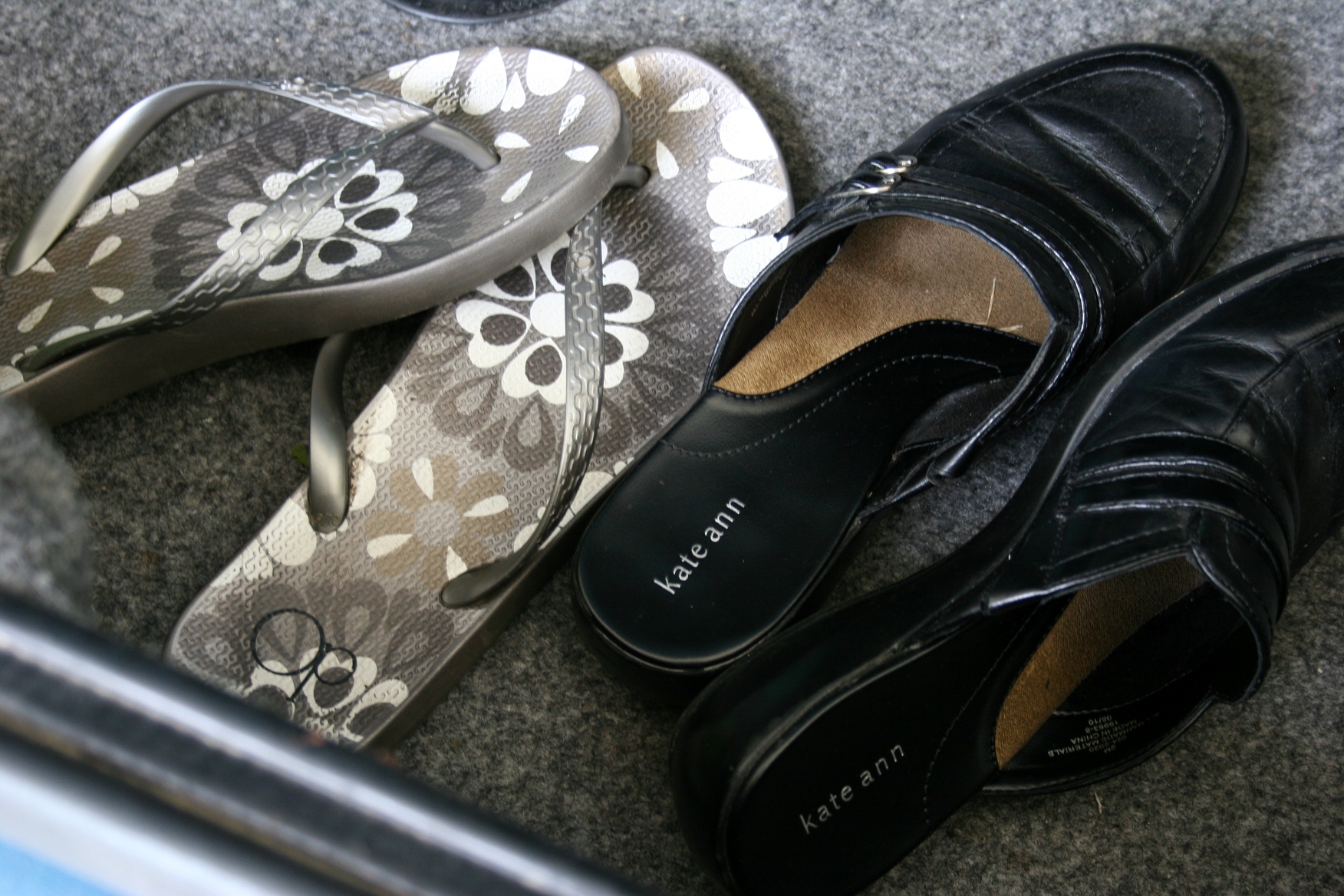
It’s just that I should have scraped the goose crap from my shoes before removing them, slipping my feet into flip flops and placing the poop-slimed shoes into the trunk of our car.

For purposes of this story, I have staged this shoe photo, without the goose poop, as a visual reminder to always, always wipe the goose poo from your shoes before placing them inside a vehicle.

© Copyright 2011 Audrey Kletscher Helbling


Off I-94: Artsy Fergus Falls June 17, 2011

The vintage-looking sign on the side of a building in downtown Fergus Falls caught my attention. The Market sells a variety of merchandise from kitchen to bath and body, garden and home accent products and lots more.

UNTIL LAST SATURDAY, I’d never entered Fergus Falls, only driven past this west central Minnesota community along I-94 en route to the Dakotas. After miles and miles of interstate travel, the towns don’t seem to matter any more. On the fringes, one seems like the other—just another rest break, a place to tank up on gas or a quick stop for a bite to eat.

Sadly, that marks the reality of today’s fast-paced, get from point A to point B, world.

But then one day you have a reason to pull off the four-lane, to explore one of these interstate-side communities and you discover a town with a personality and identity, and you wonder why you have not come here before this day.

And so that is how I found Fergus Falls, population 14,500, when I traveled there last weekend to view my Roadside Poetry Project poem displayed on four billboards. (My spring poem has since been replaced by a summer poem.)

After photographing my poem and dining at the downtown Viking Café (click here to read my earlier post on this vintage restaurant), I explored this Otter Tail County seat with my husband, Randy.

Certainly, we saw only a small portion of this riverside town. But I toured enough of Fergus Falls to come up with a single word to describe it: artistic.

I wonder if the folks who live in Fergus also see their hometown as an art community. Or would they choose another word to describe their town?

Here are photos to back up my word selection.

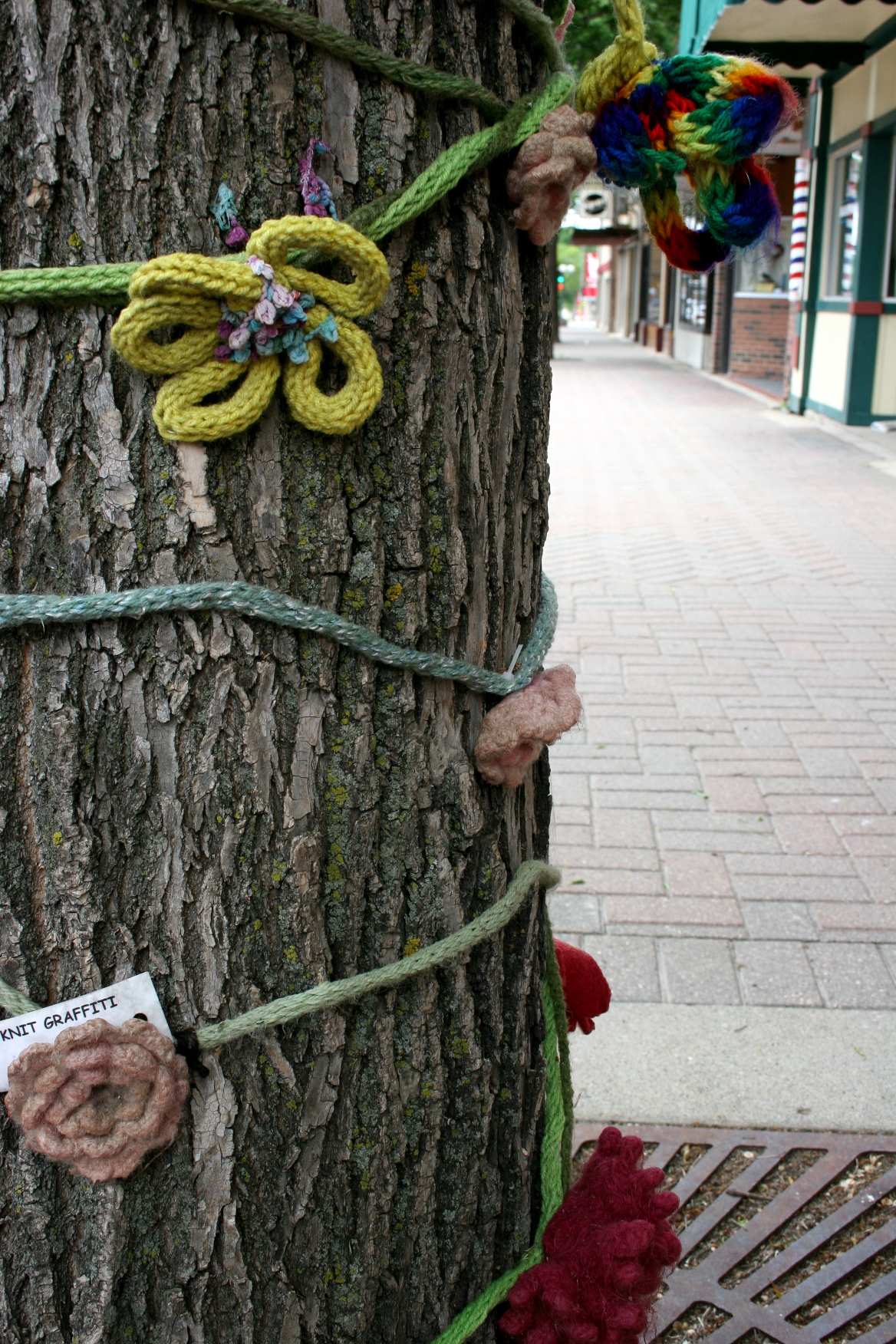
Knit graffiti circled a tree downtown. Bottlecaps were strung on another tree by this one. What a simple and memorable art idea.

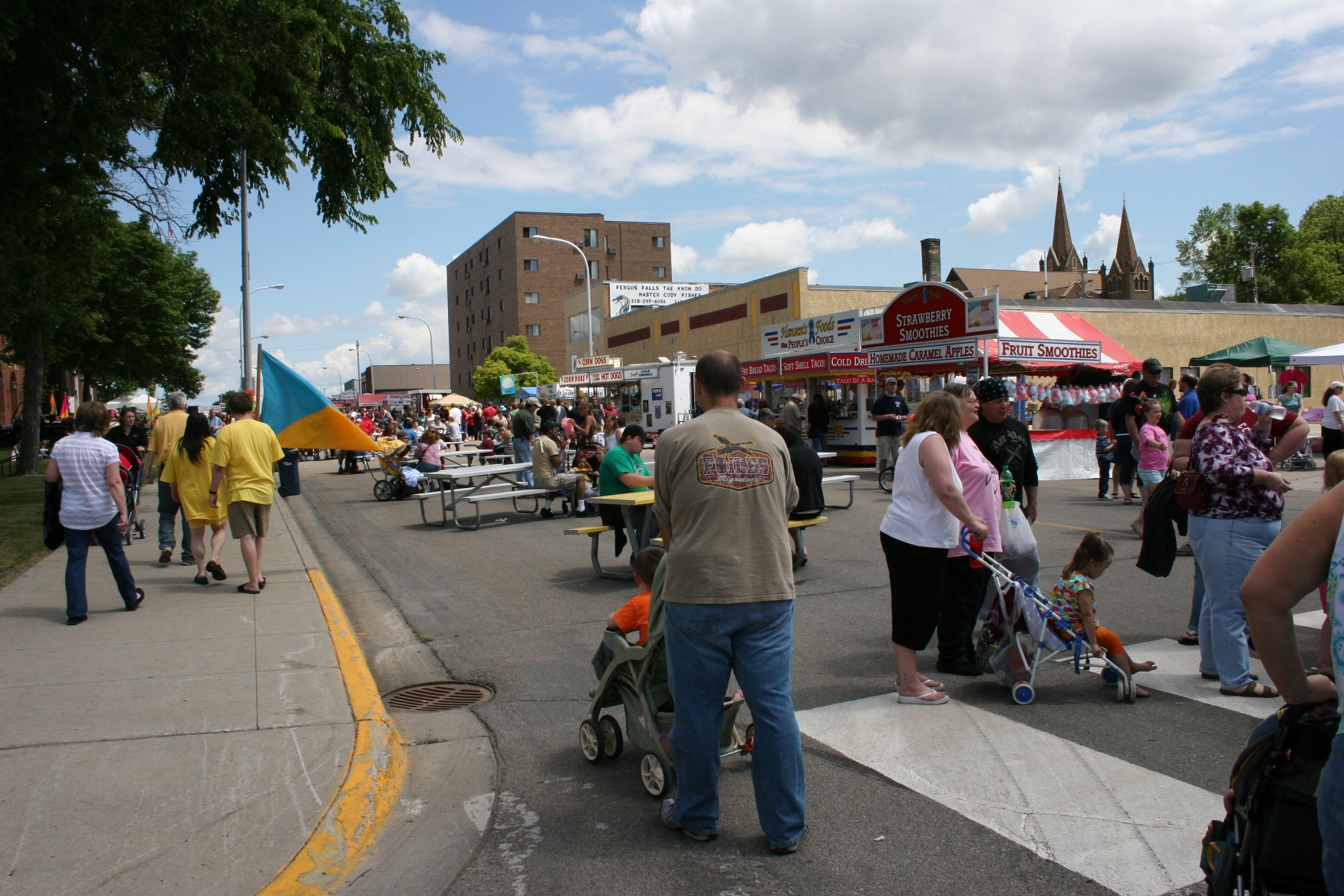
Fergus Falls Summerfest happened to be on when we were in town. Here's one section of the event.

Clear Lake, S.D., artist Karlys Wells of Back Porch Art created this gourd art, among my favorite art at the fair.

Even signage can be art, like this on a downtown bakery.

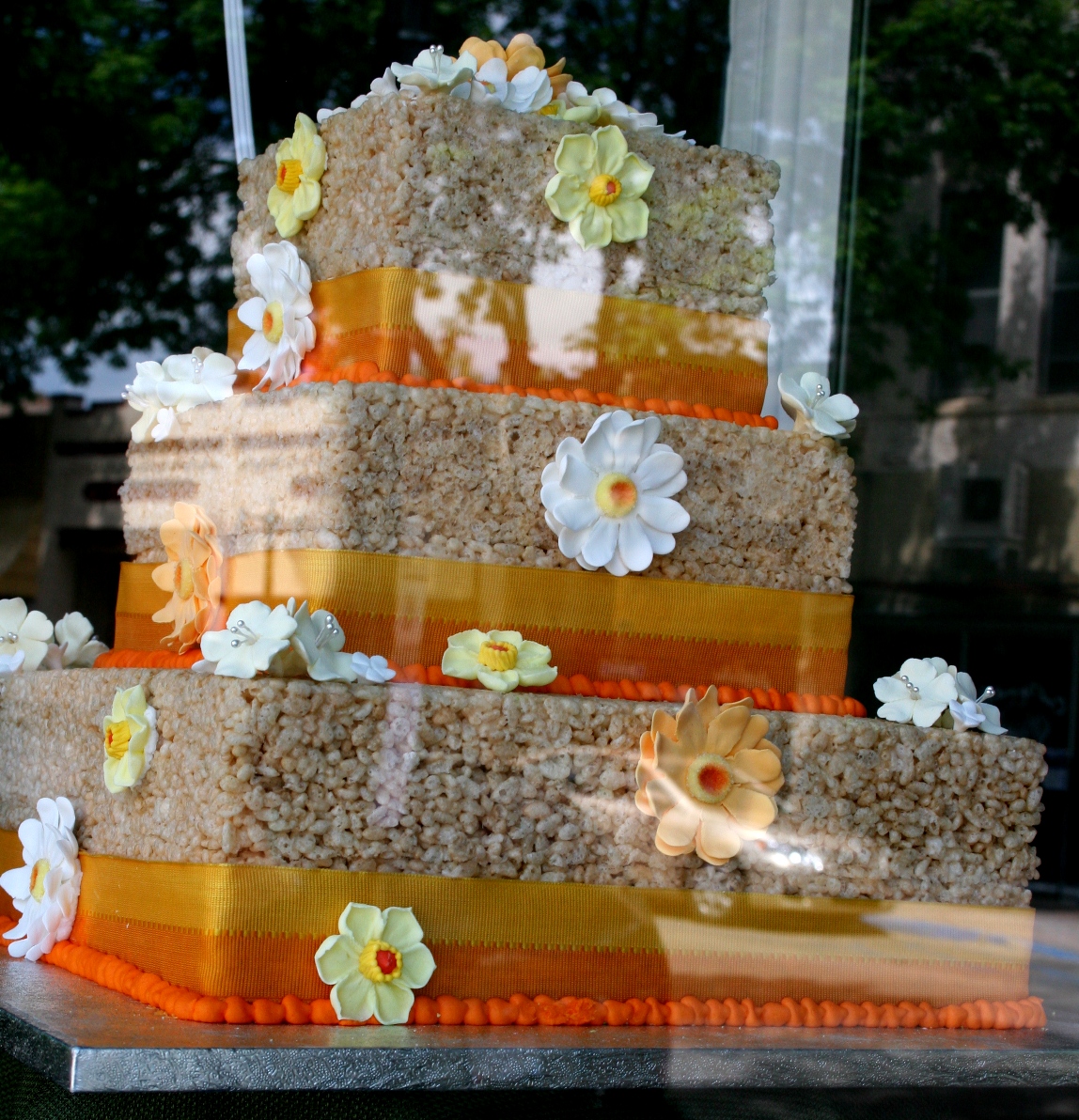
Call it art, or something else, but this Rice Krispie cake in a bakery window display made me laugh out loud.

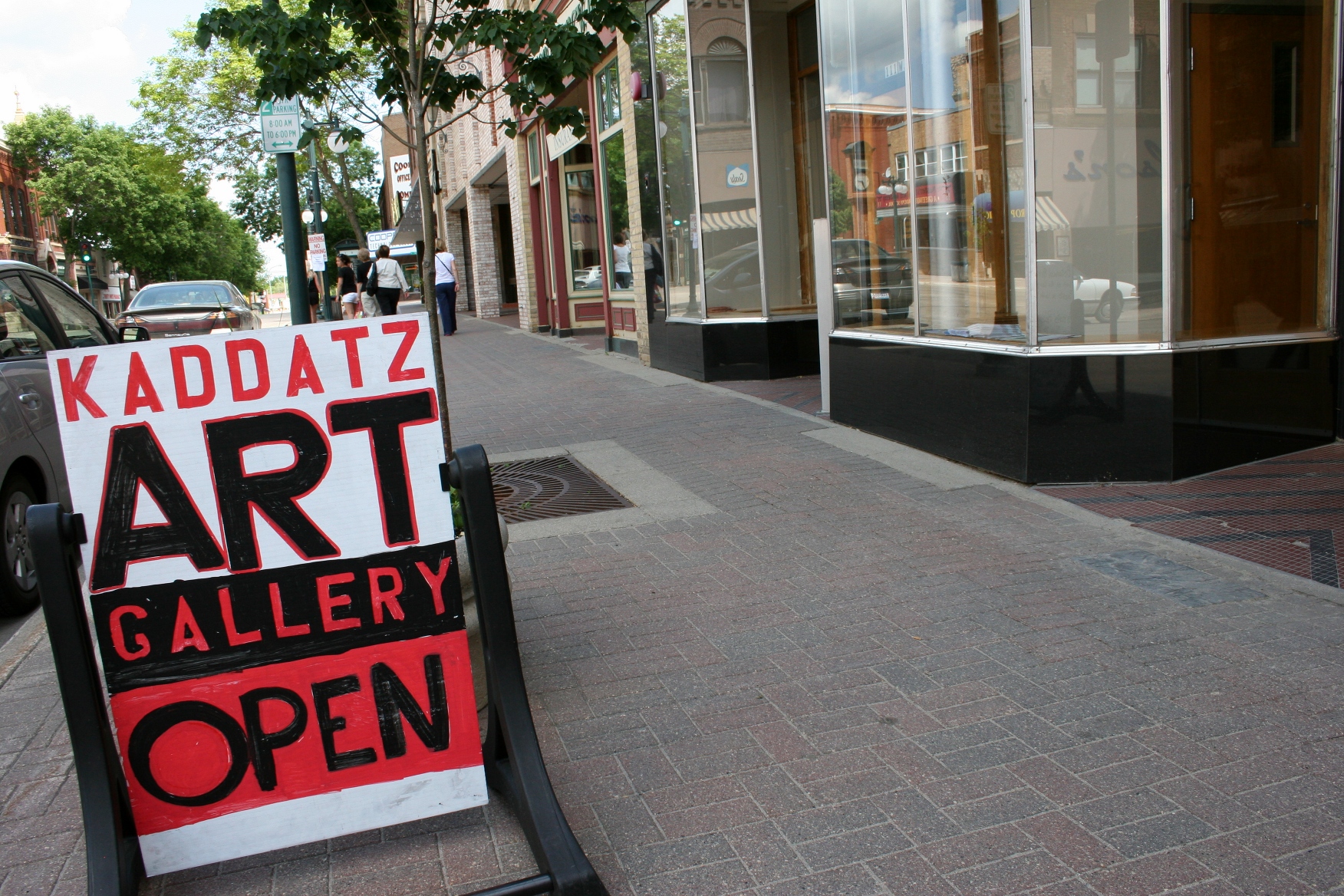
Kaddatz Galleries, a nonprofit art gallery, showcases the work of Charles Beck and other local artists.

Woodcuts and woodblock prints by one of Minnesota's most-recognized artists, Charles Beck of Fergus Falls. His subjects are the landscapes and nature of Otter Tail County. Until I walked into this gallery, I do not recall having ever heard of Beck. His earthy, rural art appeals to me.

I was impressed with the number of visitors in the Kaddatz Galleries.

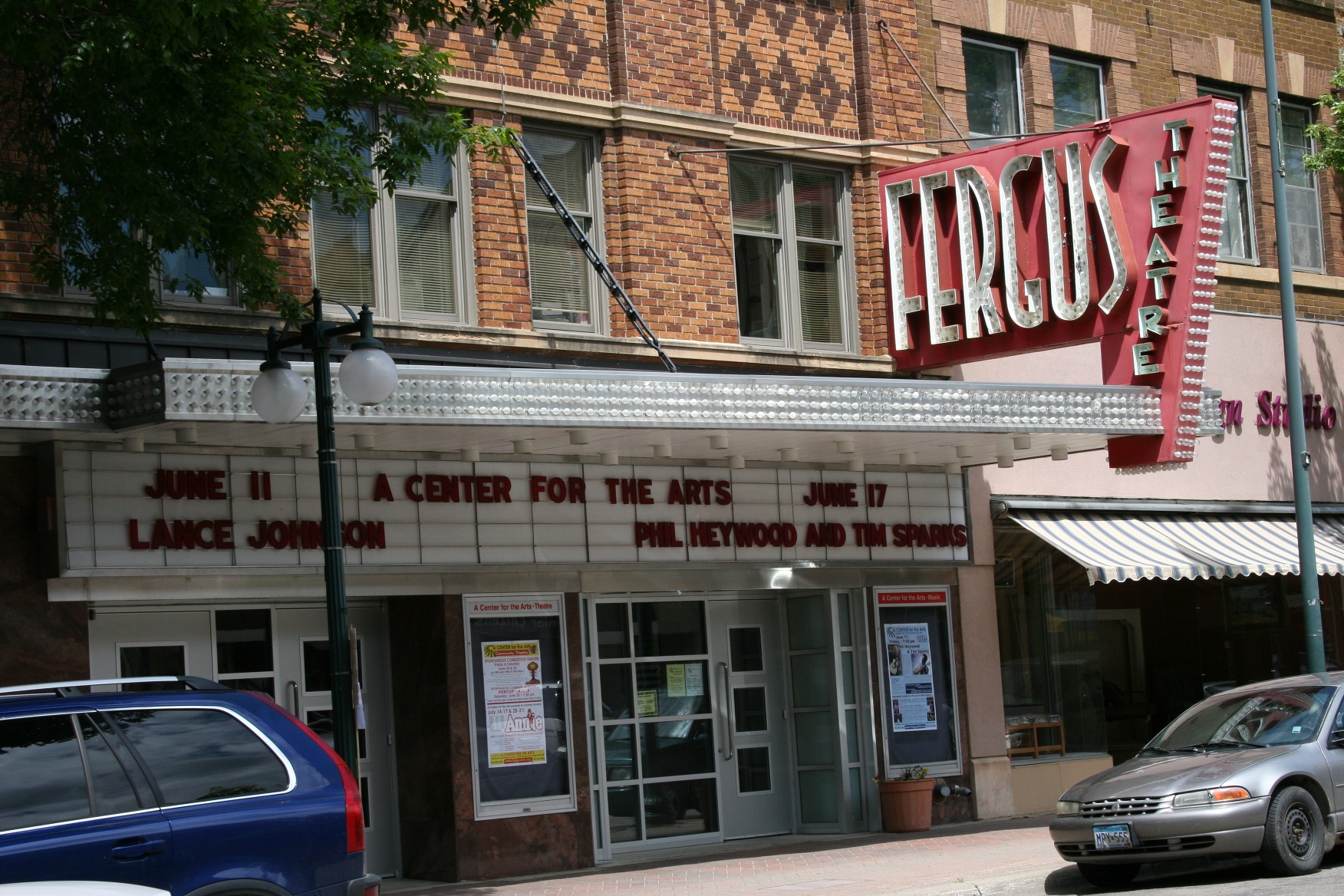
The doors to the Fergus Theatre were locked, or I would most definitely have gone inside. The vintage exterior adds so much to the charm of downtown Fergus Falls.

I am a big fan of vintage signs for the character they add to a community.

SO HAVE I CONVINCED you to pull off I-94 in west central Minnesota and explore Fergus Falls? Fergus lies 2 1/2 hours northwest of Minneapolis/St. Paul, mighty close to Fargo, N.D.

Here are several websites to check out and learn more about some of the places highlighted in my photos and story:

www.VisitFergusFalls.com

www.kaddatzgalleries.org

www.fergusarts.org

www.fergusfallssummerfest.com

www.roadsidepoetry.org

www.marketfergusfalls.com

Copyright 2011 Audrey Kletscher Helbling


In loving memory of Rhody C. Yule June 16, 2011

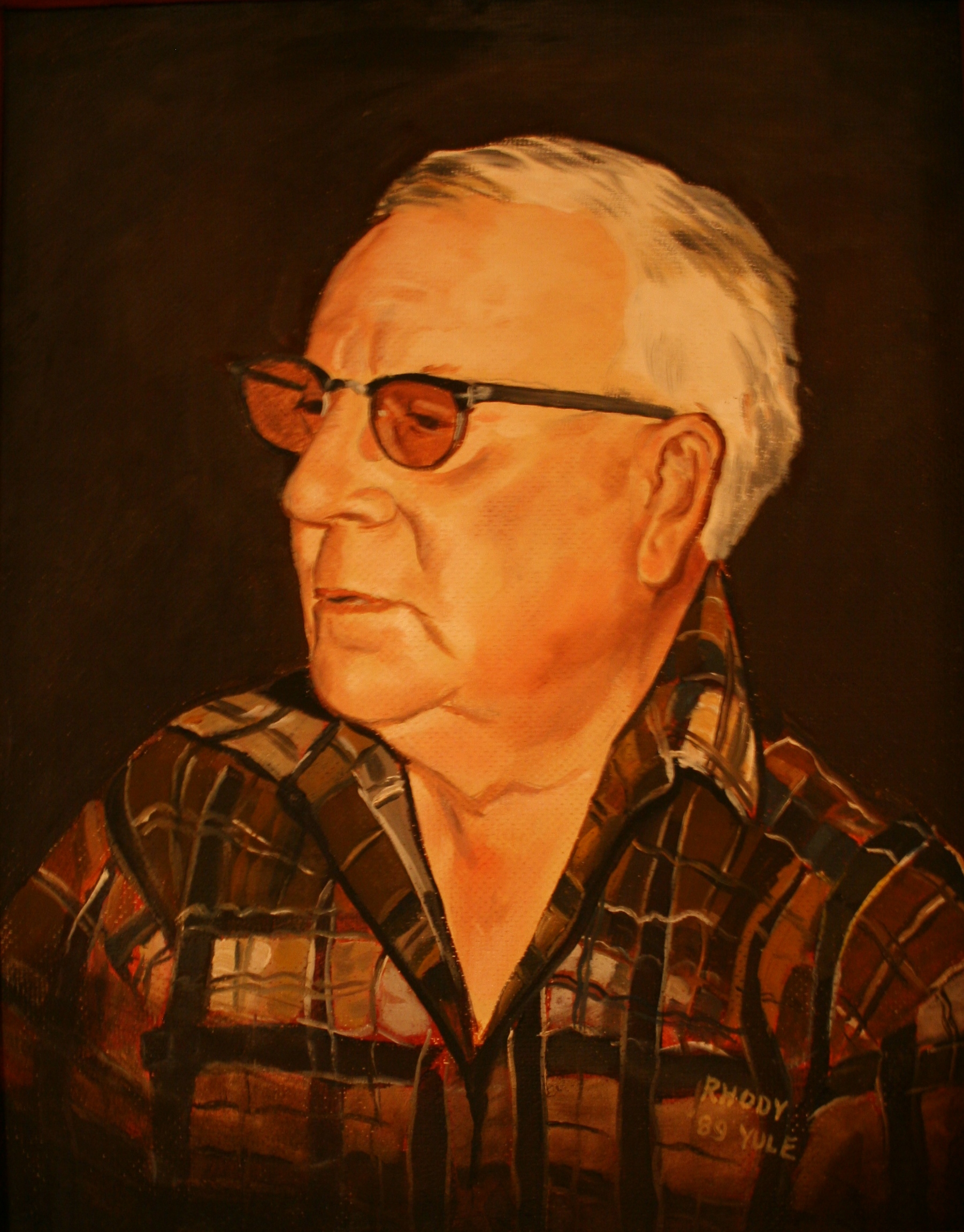
Rhody's self-portrait, 1989

WEDNESDAY AFTERNOON we eulogized and buried my 92-year-old artist friend, Rhody Yule.

I have known Rhody for less than two years, having met him quite by happenstance in the fall of 2009. While driving by his rural Faribault home, I spotted celebrity portraits hanging on his garage, stopped to photograph them and then went to his front door.

There I met this sprite of a man and his yapping dog, Jo-Jo.

With his dog shut in the kitchen because I feared being bitten, Rhody shared the story of his life with me and my husband, Randy, strangers until then. I did not hesitate to ask about the paintings hung in his cozy living room and on his garage. He did not hesitate to share that he had been painting since age 16.

Even on that first visit, I learned so much about a man who would come to mean so much to me. His wife, Shirley, had fallen and was living in Hastings. Oh, how he missed her. His only child, Paul, died in a car accident in 1977 at age 23. Oh, how he missed him.

Rhody told us about his military service, including time in Nagasaki, Japan, cleaning up after the atomic bomb. He showed us photos and paintings on that first visit and grass-woven sandals from Japan snugged inside a wooden box he had crafted.

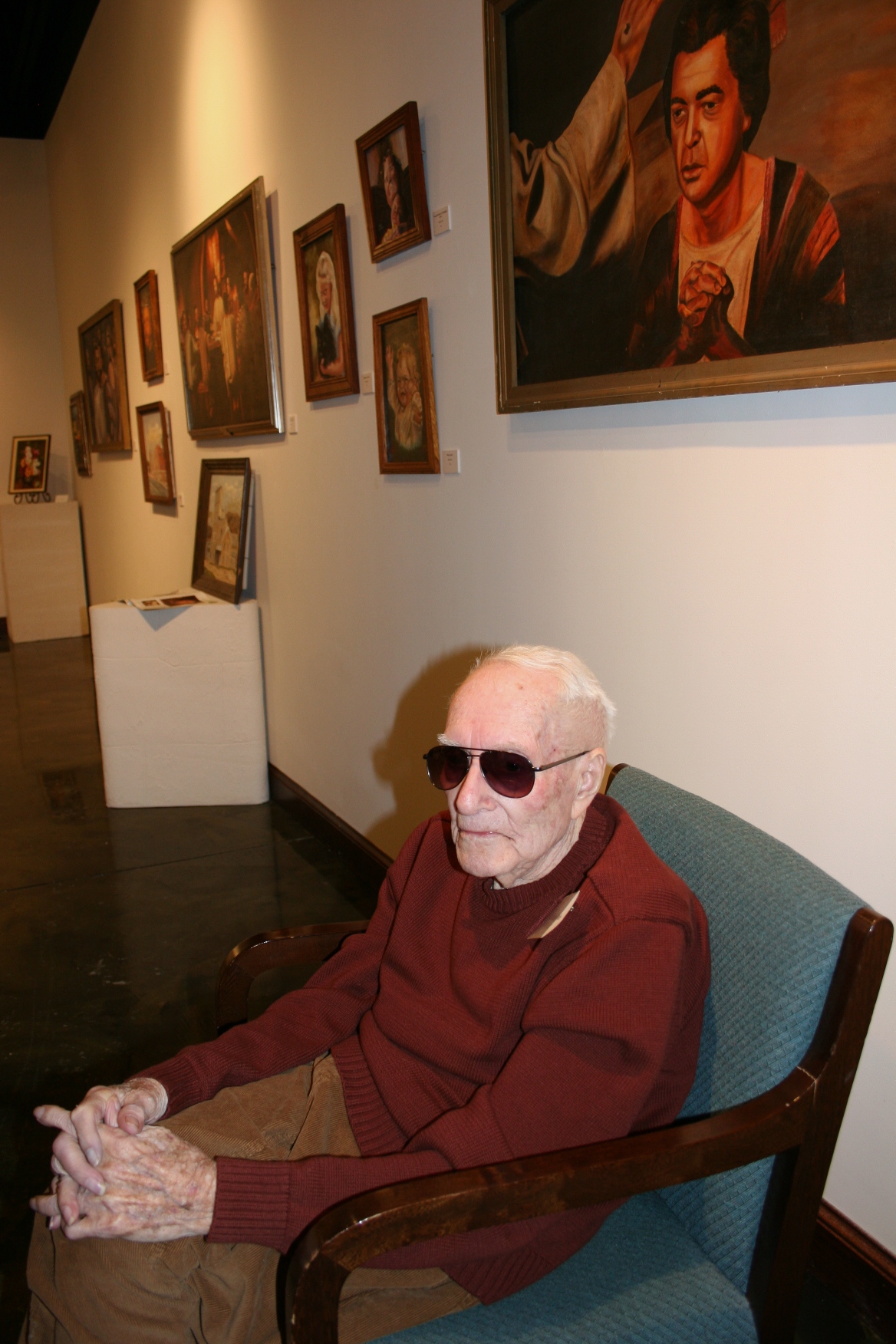
I thought to ask, thank God, if he had ever publicly exhibited his art. He hadn’t. That became my mission, to get a gallery show for this life-long artist. His first mini-show, of his religious paintings, came in September 2010, when he was invited to Christdala Church near Millersburg. He had, many years prior, done a painting of the church. Randy and I coordinated that exhibit, then loaded the paintings into our van and set them up outside this historic country church. Rhody and I spoke briefly at that event and he assured me that, despite our nervousness, we did well.

At Christdala, I distributed mini fliers for his upcoming gallery show at the Paradise Center for the Arts in Faribault. I had applied for the exhibit on his behalf and, in January, with the assistance of family and friends and volunteers, “A Lifetime of Art: The Rhody Yule Collection” opened to a packed gallery.

In typical Rhody fashion, this man of gentle spirit and quiet humility took it all in, never once boasting, but enjoying every second of his evening. This marked a shining moment for him in his 92 years of life and I was honored to have helped him achieve this public recognition of his art.
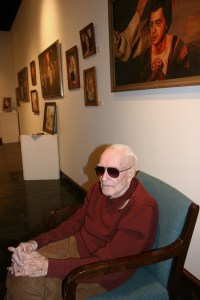
Rhody, minutes before his gallery show opened in January 2011.

RHODY’S FUNERAL SERVICE on Wednesday, while tinged with grief, also caused us to laugh out loud at his humor. We reminded each other of his forgiving attitude, his unshakable faith, his always positive attitude.

Just days before his death,  my husband Randy and I visited one last time with Rhody. Physically his body had deteriorated to a shell of the man he had been, but his mind and spirit remained strong. We saw him on a good night.

In that last hour with our friend, we reminisced about his gallery exhibit as I, one-by-one, held up photos I had taken that evening. He was too weak to grasp the images. And then we paged through several of his photo albums with pictures of a younger Rhody, a freckle-faced Paul, a beautiful Shirley.

I thought to myself, “You will be with them soon, Rhody. Soon.”

Rhody did not fear death. Yet he wished to live, even thought he might recover. I knew better. When I mentioned Millersburg, Rhody was ready for a night out and a beer at his favorite eating establishment there. Family and friends celebrated with him last fall in Millersburg at a patriotic-themed freedom party. His idea. His celebration after overcoming a recent, temporary loss of his personal freedom.

Rhody had more living to do. I learned at his funeral that this WW II veteran wanted to travel on a Washington D.C. Honor Flight to see the war memorials. It breaks my heart that he did not live long enough for that to happen.
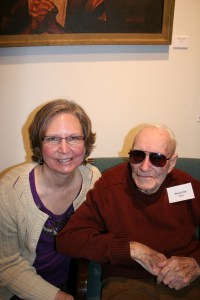
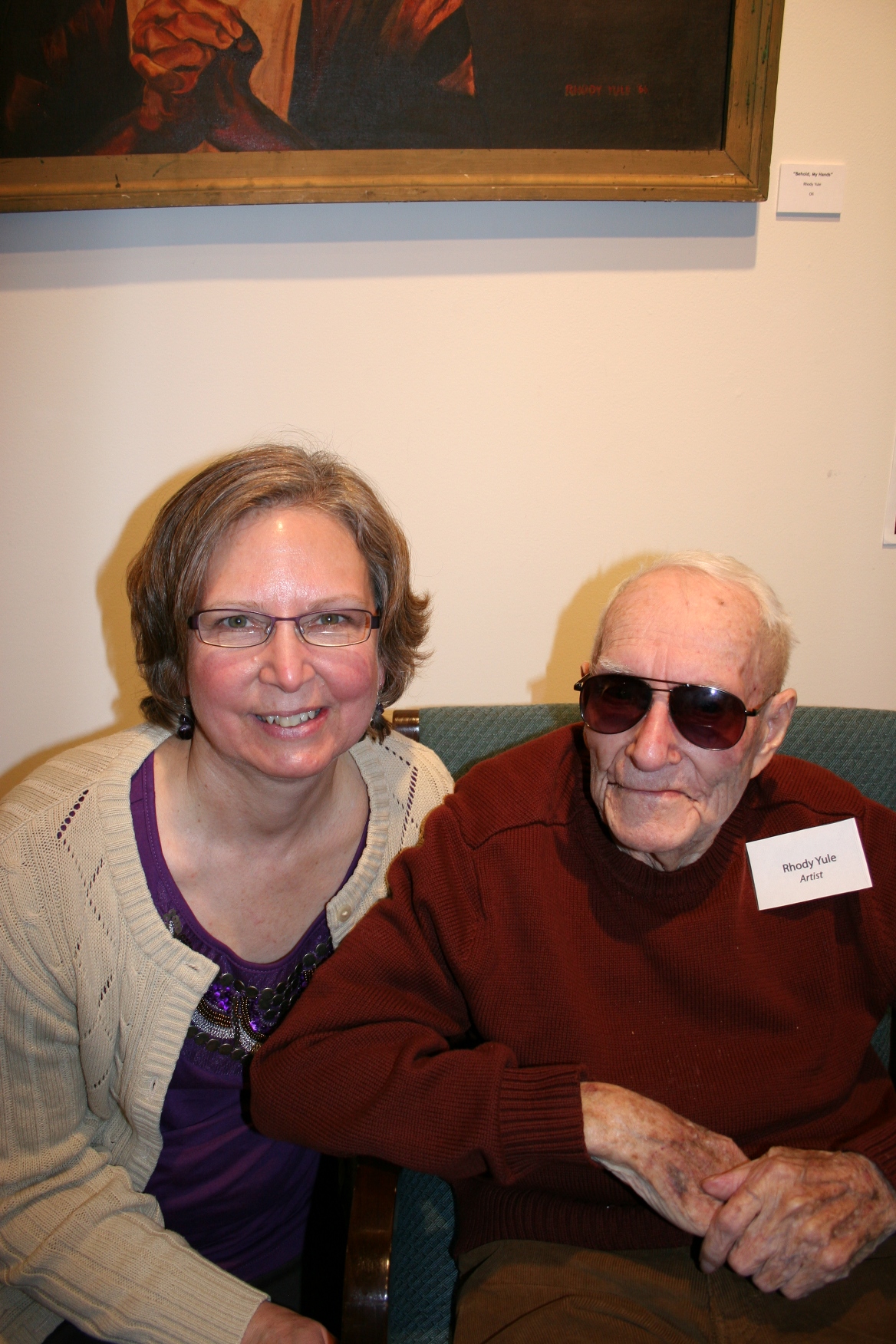
Me and Rhody at his opening night gallery reception.

He prayed every night for the soldiers to come home.

He was smartly dressed for burial in his military uniform, which hung loosely on the gaunt body of a man who once stood strong in service to his country.

Those honoring his memory were directed to donate to the Rice County Veterans Memorial Expansion Project.

A spray of patriotic red and white flowers adorned with a blue ribbon decorated Rhody’s carved wooden casket, a casket so appropriate for a man who crafted wooden boxes and also picture frames (for his art). Had he been physically capable, I expect Rhody may have built and carved his own casket.

But Rhody is gone now and, as the eulogist, the Rev. Ron Mixer, said, Rhody is busy painting sunrises and sunsets in heaven. He suggested we look for a signature “Y” in the clouds.

Rhody has left those of us who knew and loved him with more than his legacy as an artist and the thought that he is still painting. He has gifted each of us with his spirit of forgiveness and kindness, his humor and humility, his desire for fun, a love of life and a faith that endured challenges.

I knew Rhody such a short time. But how blessed that time has been.

We drove through nearly-torrential rain Wednesday afternoon to the rural Cannon City Cemetery to bury Rhody beside Shirley. As we gathered under the tent and next to it, sheltered by umbrellas gripped tight against the whipping wind, members of the Central Veterans Association fired an honorary salute to their brother soldier. Taps mourned. An aging veteran presented a folded American flag to Rhody’s step son in a voice choking with gratitude and emotion.

Soon the rain stopped and the sun wedged through the clouds as if Rhody was there, telling us to wipe away the tears. He would have wanted us to celebrate his life, and we did, but only if we didn’t brag about him.
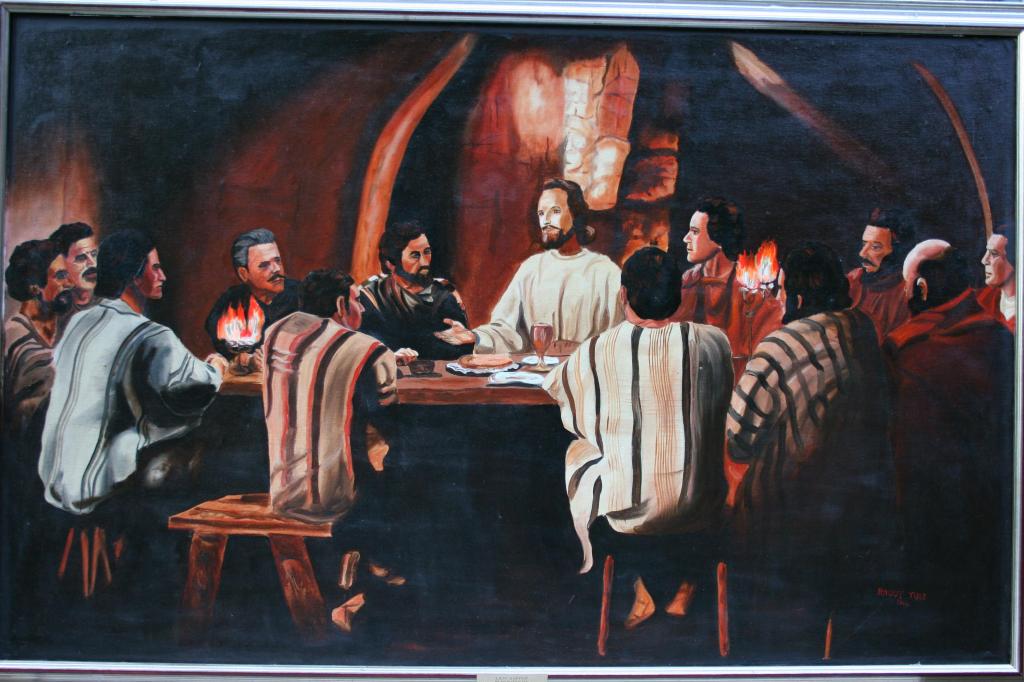
Rhody's favorite painting, "The Last Supper," which he painted in honor of his beloved son Paul.

© Copyright 2011 Audrey Kletscher Helbling