Minnesota Prairie Roots

Writing and photography by Audrey Kletscher Helbling

Reflections on Independence Day July 4, 2011

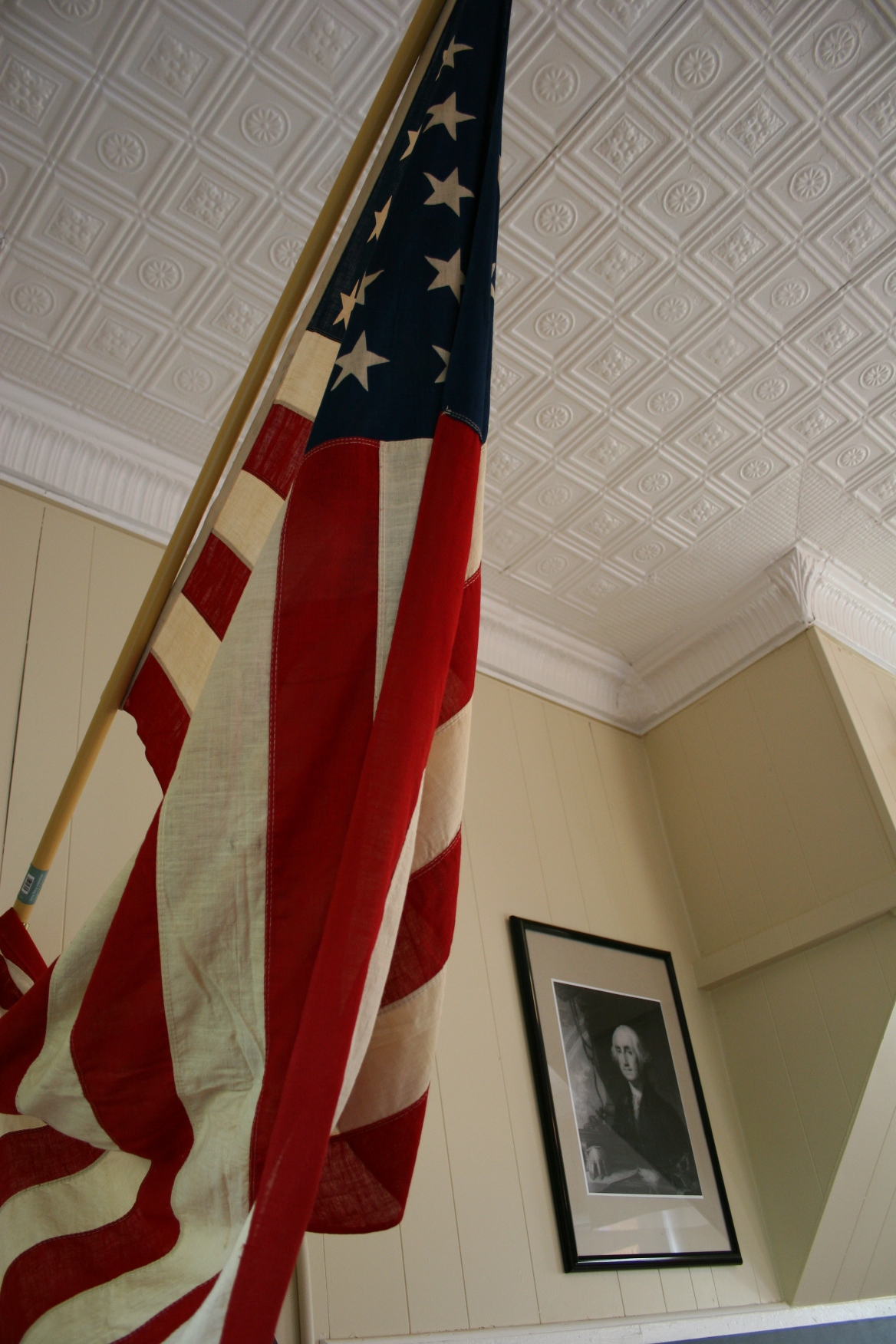
A flag and portrait of George Washington at the former District 20 Millersburg School, now a museum.

“I PLEDGE ALLEGIANCE to the flag of the United States of America and to the Republic, for which it stands, one nation under God, indivisible, with liberty and justice for all.”

As a child, my school days began with that pledge. My classmates and I arose from our desks at Vesta Elementary School, turned toward the American flag in the corner, placed our hands across our hearts, fixed our eyes upon the stars and stripes, and recited the pledge in unison.

I doubt we ever thought too much about the rote words we spoke. They were simply part of our routine, something we did, although I do recall feeling a sense of pride in speaking those words daily.

So much has changed in the decades since then. The Pledge of Allegiance, in most cases, has been banned from public schools in the name of political correctness. We are no longer one nation under God. While the U.S. remains one country, we as individuals are certainly divided in our views of anything and everything. That’s as it should be in a democracy. Liberty and justice have managed to prevail.

As we celebrate our nation’s Independence Day, it would be wise for all Americans to reflect on the Pledge and the words of other documents and songs that focus on the flag and freedom.

We hold these truths to be self-evident, that all men are created equal, that they are endowed by their Creator with certain unalienable Rights, that among these are Life, Liberty and the pursuit of Happiness.—The Declaration of Independence, signed on July 4, 1776
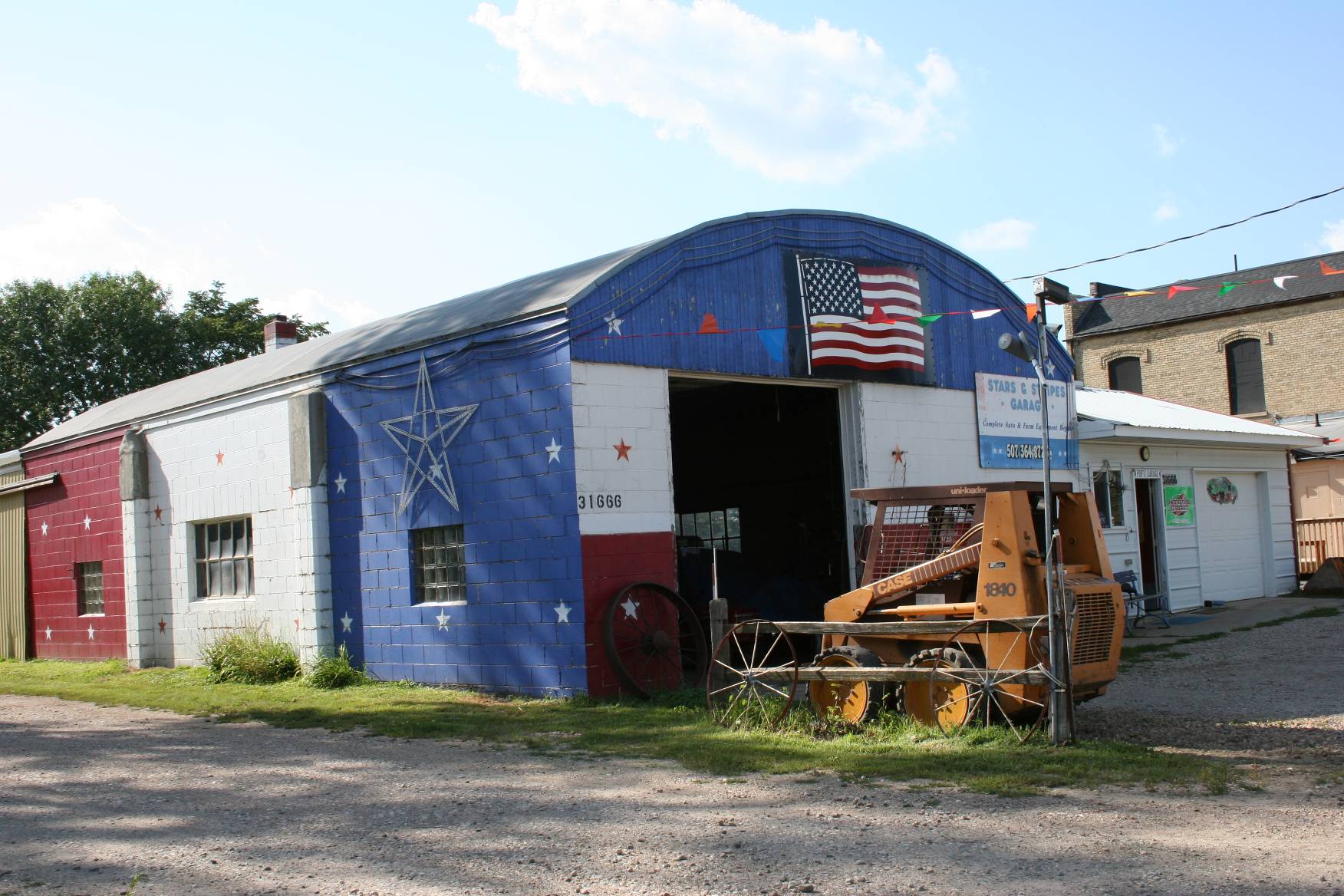
Vietnam veteran Joel Kukacka's patriotic garage in the hamlet of Heidelberg, Minnesota.

Oh, say does that star-spangled banner yet wave
O’er the land of the free and the home of the brave?
—The Star Spangled Banner

An American flag painted on a shed in Dundas in southeastern Minnesota.

Congress shall make no law respecting an establishment of religion, or prohibiting the free exercise thereof; or abridging the freedom of speech, or of the press; or the right of the people peaceably to assemble, and to petition the Government for a redress of grievances.—The Bill of Rights, Amendment I
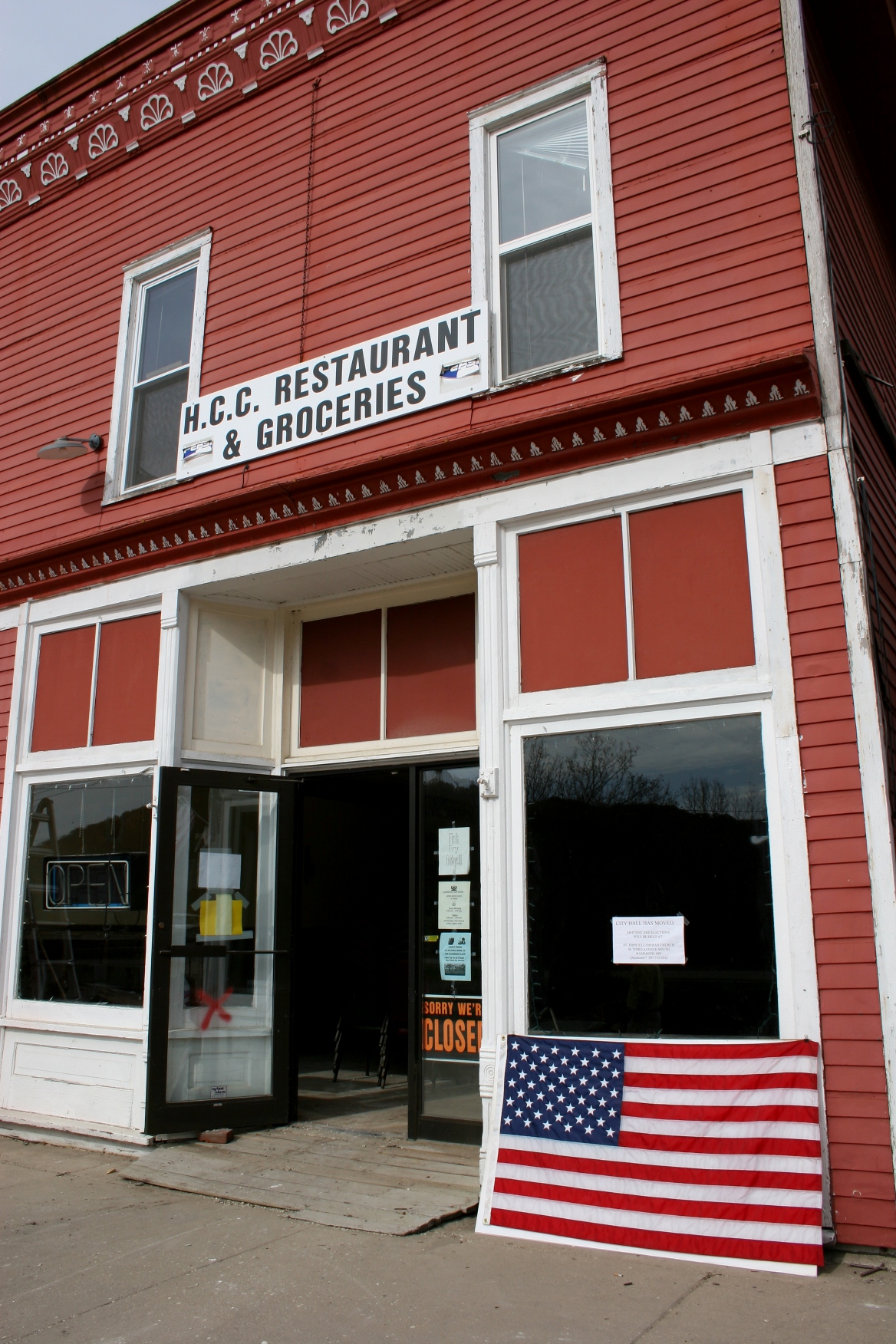
Weeks after a devastating Sept. 2010 flash flood in Hammond, in southeastern Minnesota, an American flag marked a ravaged business.

God bless America,
Land that I love,
Stand beside her and guide her
Thru the night with a light from above;

From the mountains, to the prairies,
To the oceans white with foam,
God bless America,
My home, sweet home.
God bless America,
My home, sweet home.
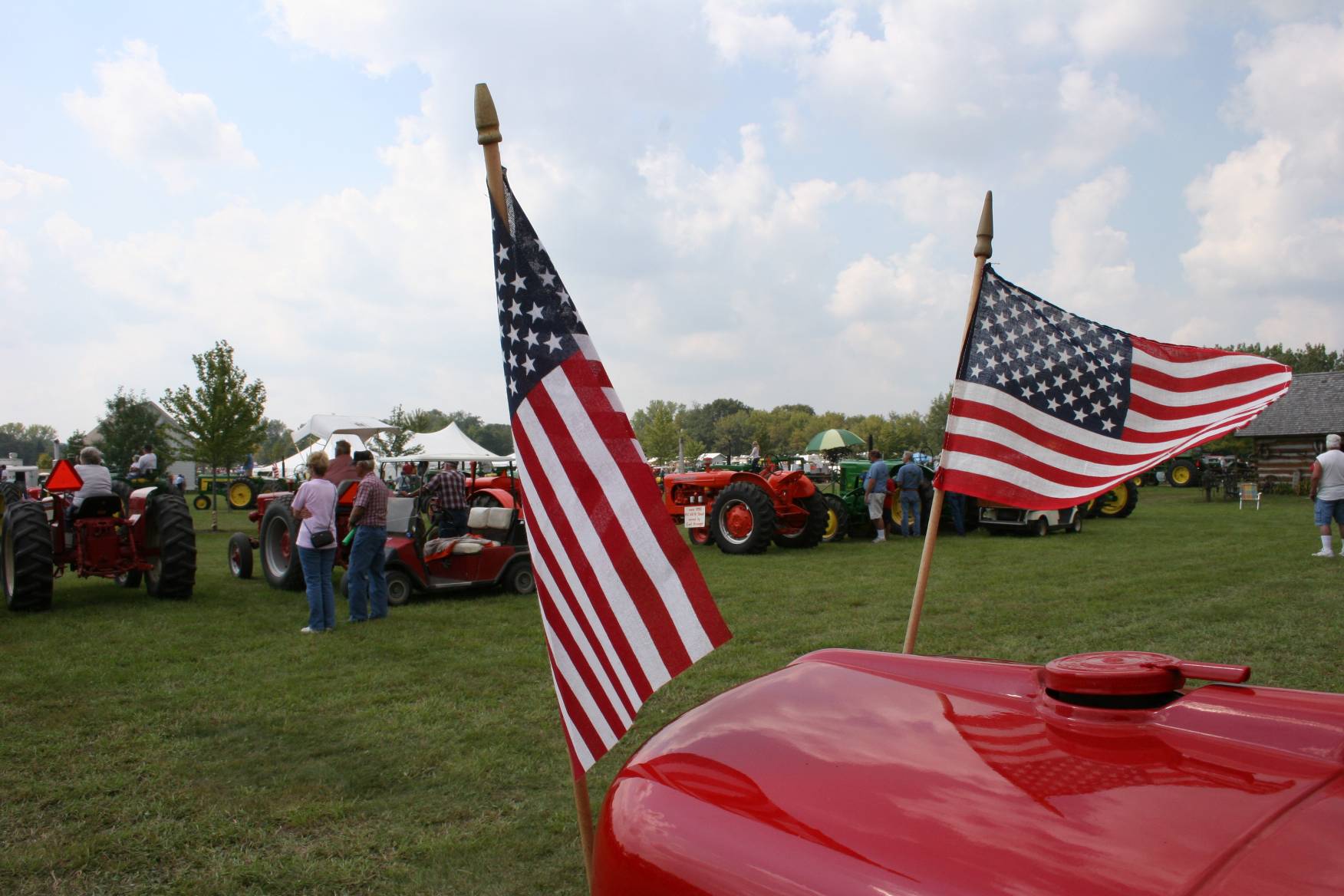
Flags decorate a vintage tractor at the Rice County Steam & Gas Engines Show near Dundas.

© Copyright 2011 Audrey Kletscher Helbling


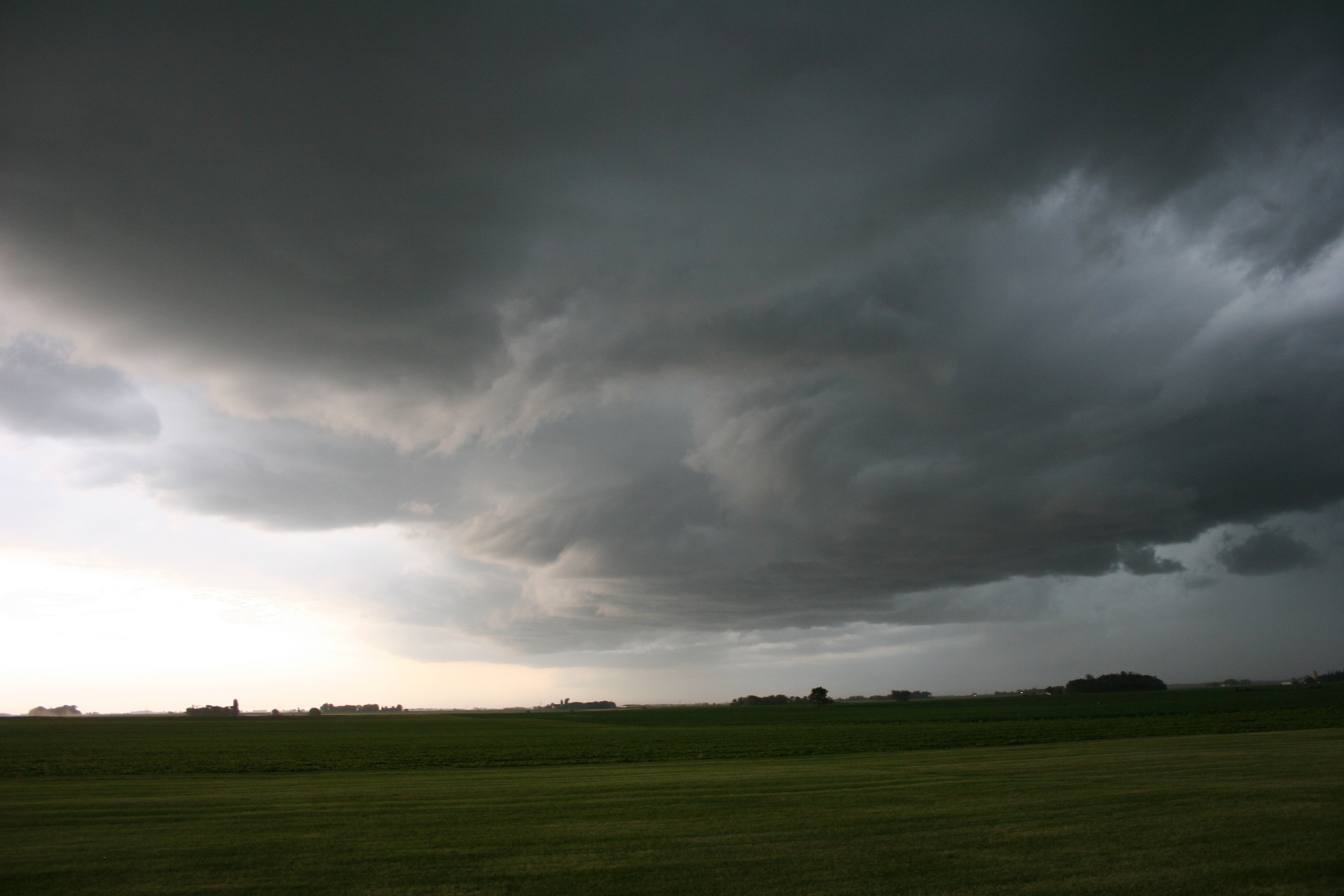
Ominous skies near Nerstrand July 2, 2011

Filed under: Uncategorized — Audrey Kletscher Helbling @ 10:40 AM
Tags: , , , , , , , , , , ,

HAD I NOT KNOWN about the storm damage earlier that evening in southwestern Minnesota, I may not have worried so much.

Had my sister not called from Waseca and advised my husband and me to “get home,” I may not have worried so much.

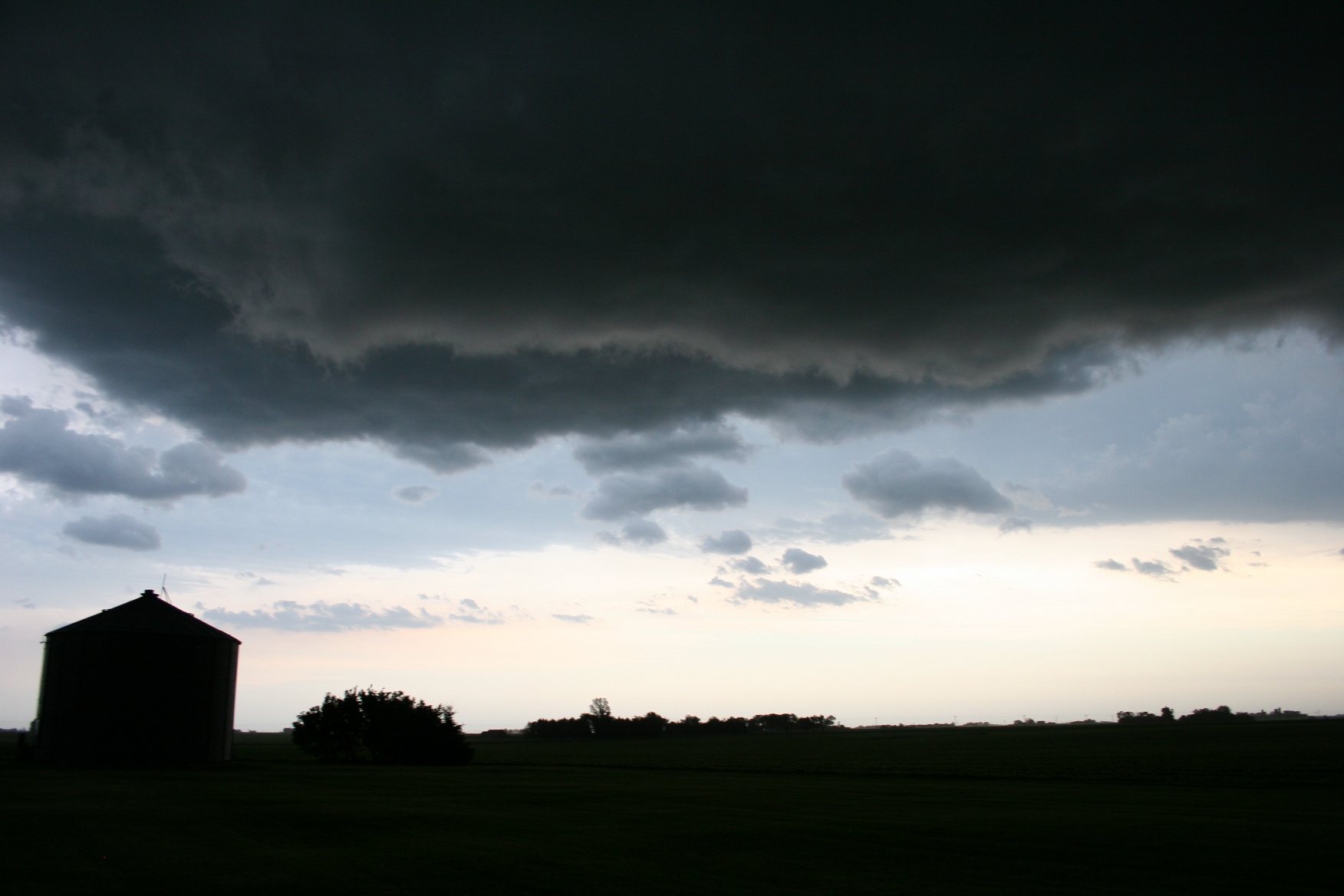
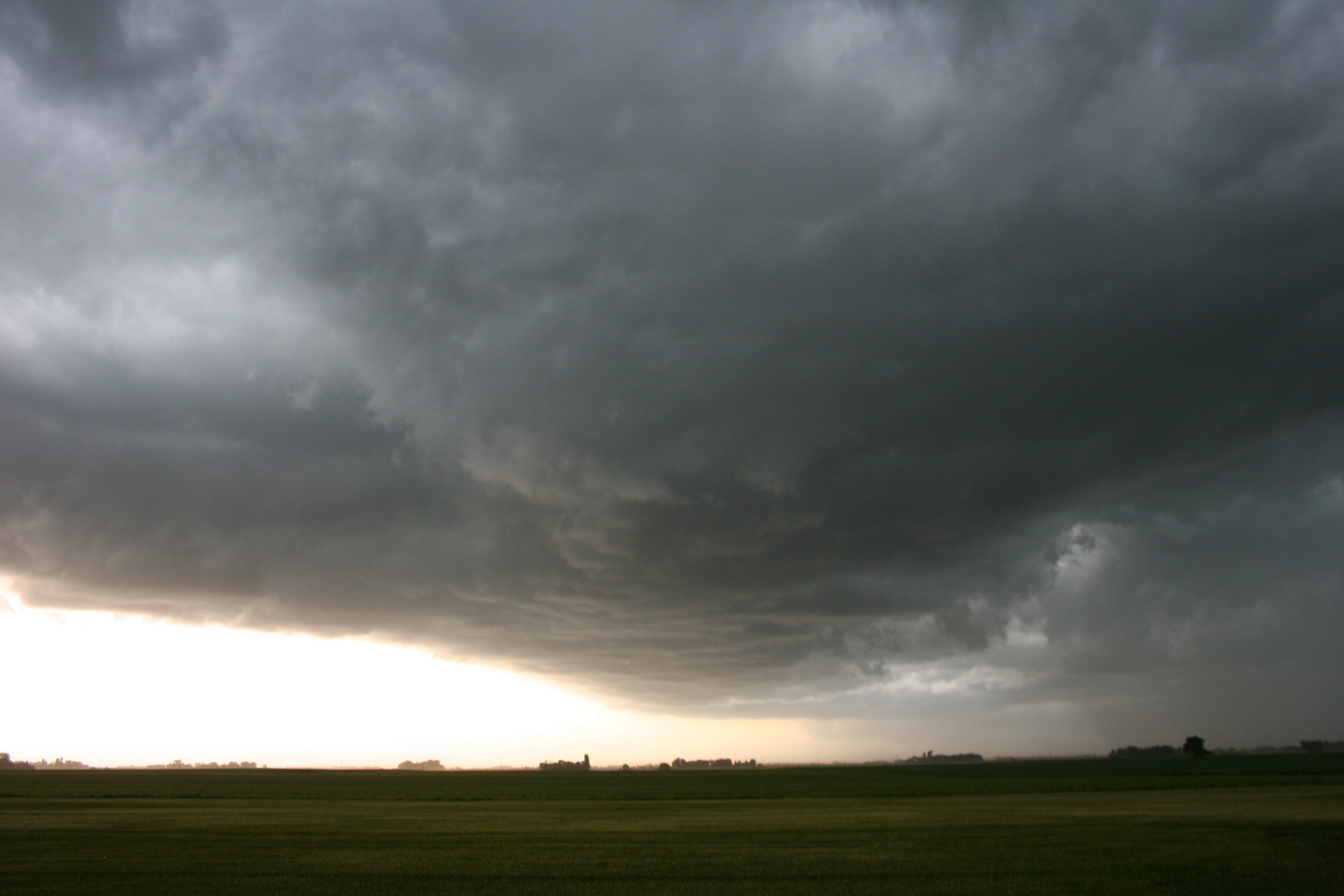
Had the clouds not turned dark and foreboding, looming low enough to nearly brush the earth, I may not have worried so much.

Had my friend Fritz kept quiet and not shared her tales of tornado terror, I may not have worried so much.

But Friday evening when a strong storm hit my hometown of Vesta, when my sister warned of the approaching storm, when the sky threatened and when Fritz told her stories, I worried. I cannot help myself. Storms scare me.

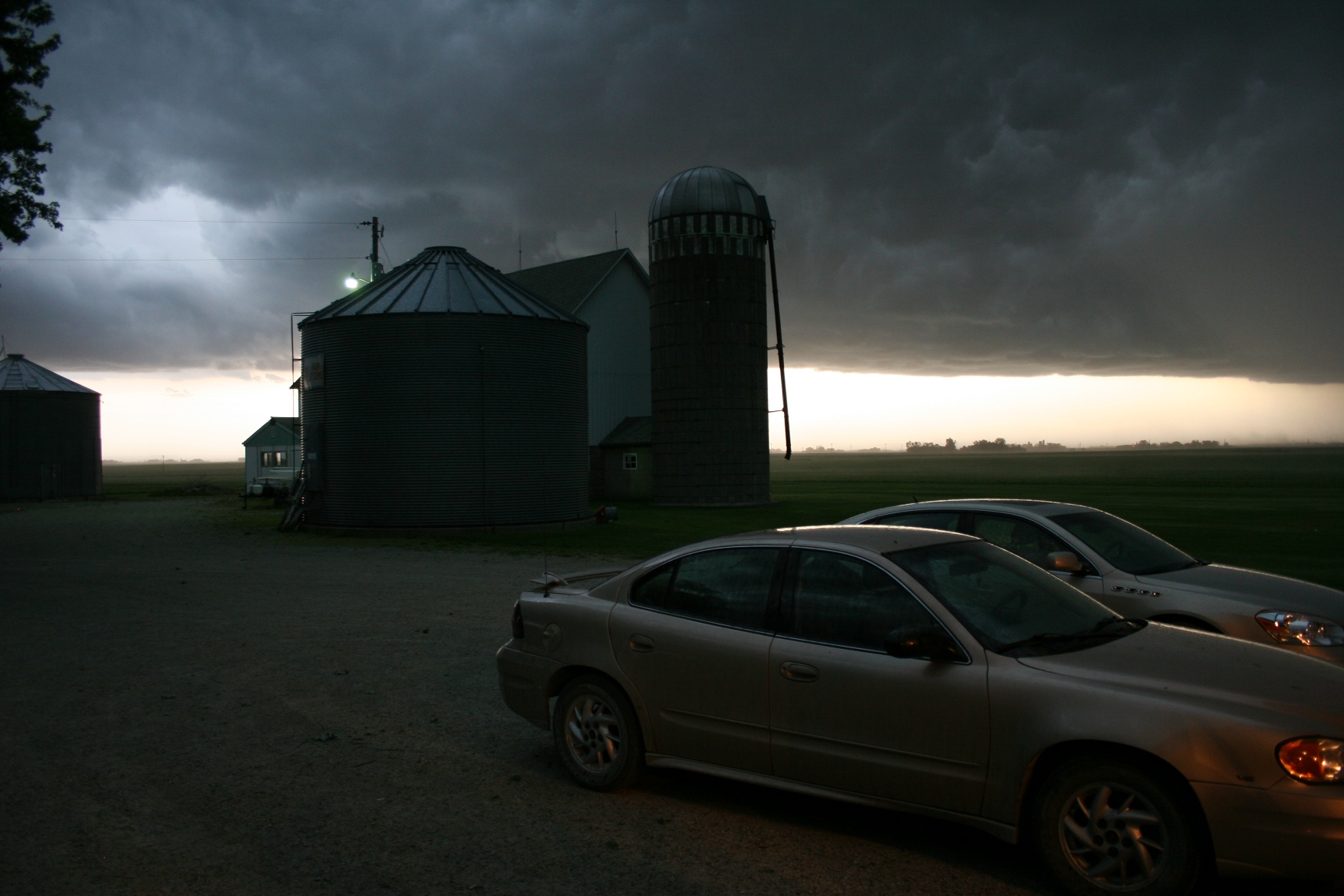
And here are the images, taken at a farm near Nerstrand where I was attending a party, to prove why I was concerned.

Despite my fear, I must admit that the skies held a certain ominous beauty.

Spectacular lightning—our own fireworks show—crisscrossed the sky for hours. I attempted a few lightning shots, but could never get the timing right. And when you’re scared, holding the camera still enough for a slow shutter speed doesn’t work. Rain also kept me from pulling out my Canon.

The evening ended without any severe storms in our locale, despite skies that I swore would drop a tornado at any minute.

But in my hometown, the results were different. If you haven’t read my earlier post today about the storm in Vesta, click here. My brother was stopped twice trying to get into town to check on our mom, who is OK.

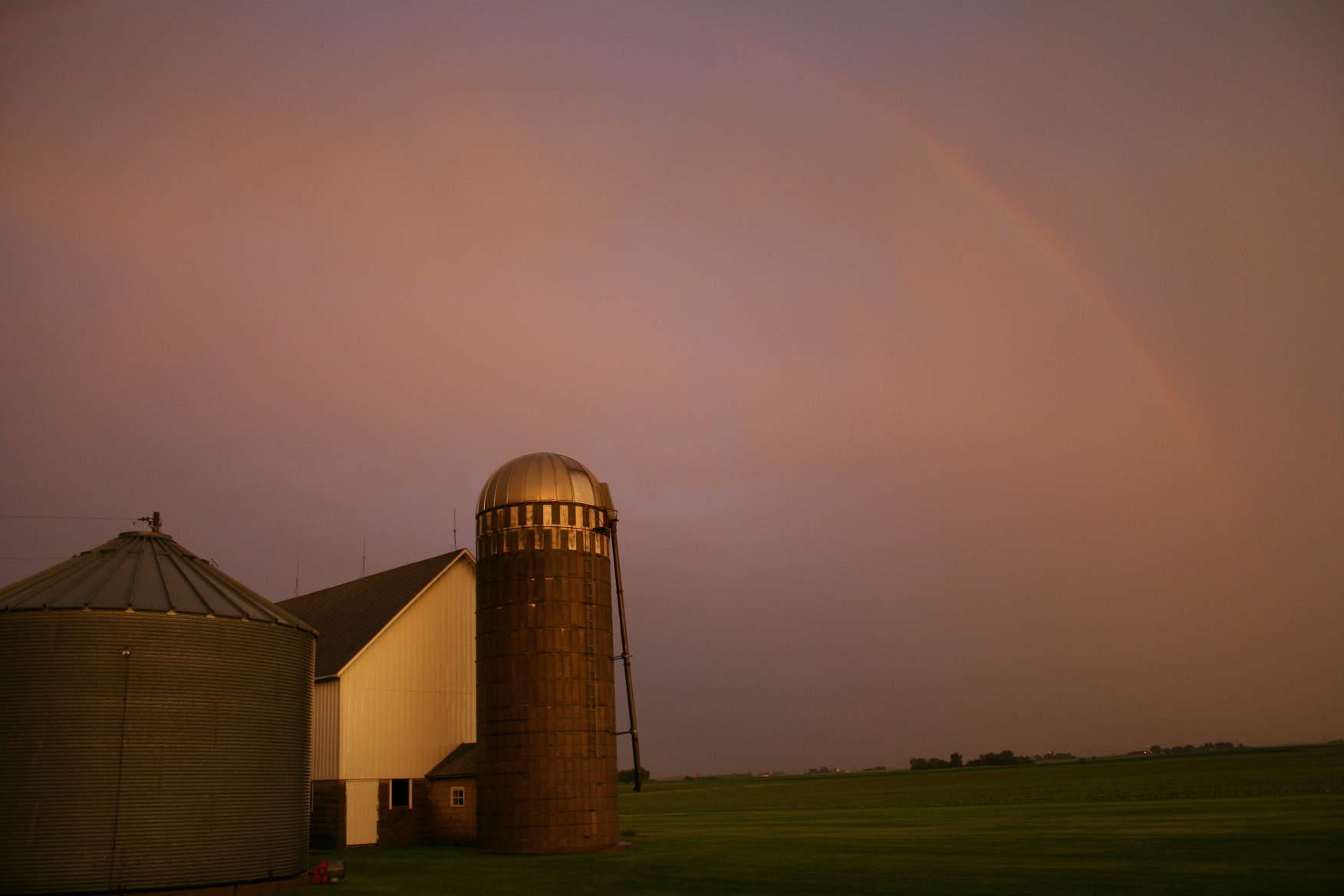
After the ominous clouds and the rain, this rainbow appeared.

© Copyright 2011 Audrey Kletscher Helbling
 

Storm rips through my hometown of Vesta

WHENEVER ONE of my siblings calls saying, “I just want you to know Mom is OK, but…,” I prepare myself mentally for her latest health crises.

But Friday evening when my sister Lanae reached me via cell phone while my husband and I were en route to a party near Nerstrand Big Woods State Park, the news was totally unexpected.

My hometown of Vesta in Redwood County in southwestern Minnesota had been struck by straight-line winds.

While my mom’s house—once the retirement home of my paternal grandparents—had gone apparently unscathed, other structures in town were damaged. But at least my mother and aunts and uncles and a niece were safe.

In my sister’s early report, which came second-hand via relatives in the area, she shared that half the roof was ripped off our home church, St. John’s Lutheran. Hours later, after arriving home from the party, I found photos in my email in-box of the storm’s destruction. I nearly broke down and cried when I saw my home church with the partially missing roof.

St. John's Evangelical Lutheran Church in Vesta with the roof half ripped off during the Friday evening storm.

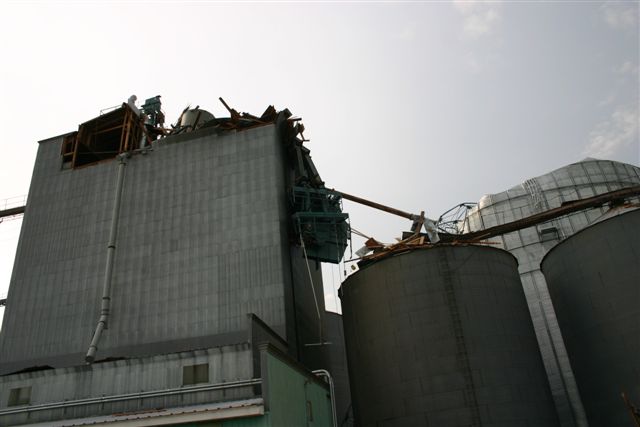
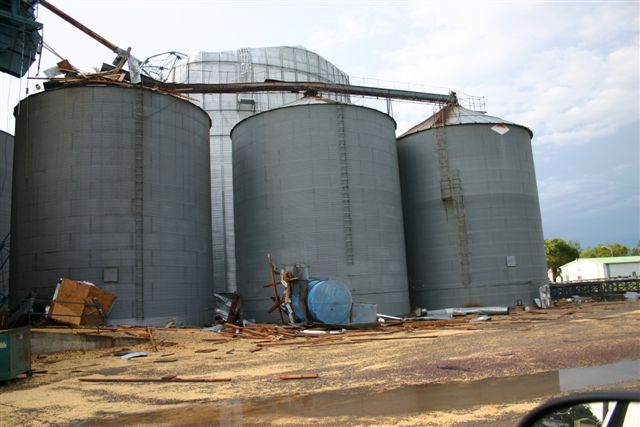
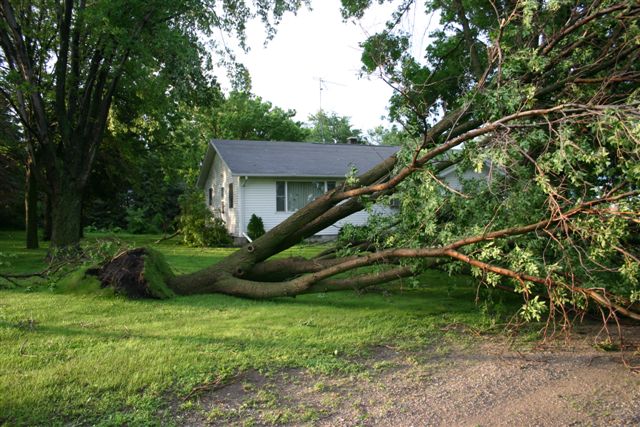
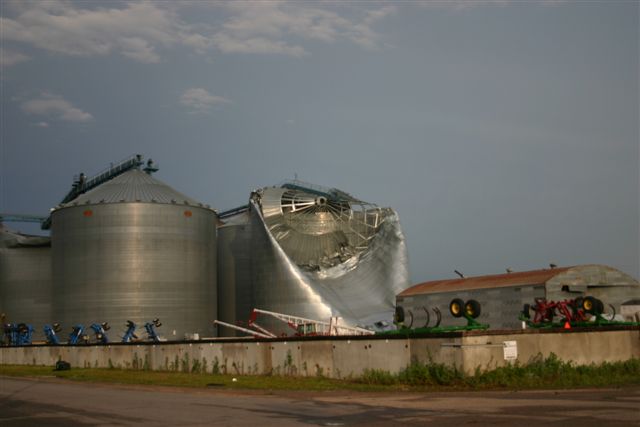
The images also showed damage to the grain elevator and bins in Vesta and trees down on the home place half a mile from town.

Damage to one of the grain bins at the local elevator.

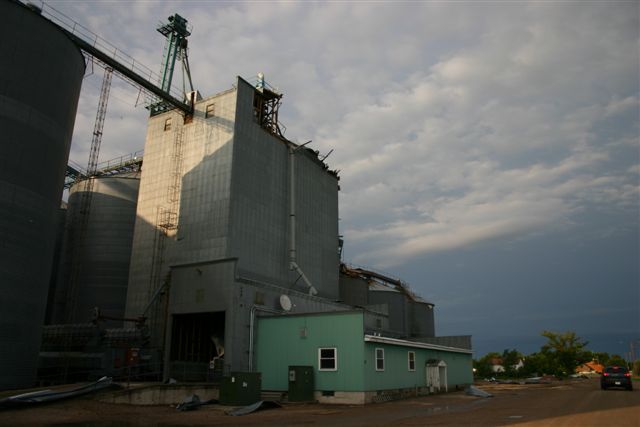
The grain elevator complex, the visual defining landmark in the farming community of Vesta, was ravaged by winds. You'll see the damage near the top of the old grain elevator.

A close-up of the damage wrought upon the old elevator.

Another shot showing some of the debris and damage at the elevator complex.

The wind toppled trees on the farm where I grew up a half mile south of Vesta.

During that phone conversation with my sister, as my husband and I drove along the gravel road toward the gathering with friends, I wanted nothing more than to turn around, pack our suitcase and drive to Vesta 2 ½ hours away.

That’s exactly how I felt more than three decades ago when I lived in Gaylord and the farm where I grew up was hit by a tornado, taking down a silo and tossing grain wagons around the field.

But on this Friday evening, with storms rolling in from the west, I knew this was not practical. I would need to rely on my siblings to keep me informed. My middle brother, who lives in Lamberton some 25 miles away, was on his way to Vesta. I called my two daughters to tell them about the storm.

I wanted so much, though, to also speak with my mom. I needed the comfort of hearing her voice. I wanted to learn about her storm experience. But the phone lines were down in Vesta. Even though Mom owns a cell phone, I doubt she remembers how to use it. She’s never quite adjusted to technology.

And so now it’s Saturday morning and I am exhausted after a night of tossing and turning. Storms do that to me.

Thoughts of my home church—where I was married and attended the funerals of my father, Grandma Kletscher, Grandpa Bode and Uncle Mike—churned through my mind. I worried about where congregants will worship, whether the interior of the church was damaged, if the church, my home church, can be repaired.

I hope today to get some answers and, if I do, I’ll pass that information along to you.

I’ll also share images I shot last night of the storm clouds hanging dark and ominous over the farm site where we gathered with friends for an early Fourth of July celebration.

Nature provided the fireworks—lightning bolt after lightning bolt zig-zagging horizontally across the forbidding sky for hours. Except for some wind and rain, our area escaped the storm that ravaged Vesta and Marshall and other communities to the west.

IF YOU HAVE STORM stories to share from last evening, please submit a comment. KLGR Radio in Redwood Falls is this morning reporting winds of up to 100 mph in Redwood County and the sightings of possible funnel clouds. Click here to read that news report.

FOR THOSE OF YOU UNFAMILIAR with southwestern Minnesota, Vesta sits along State Highway 19 half way between Redwood Falls and Marshall.

Photos courtesy of Brian and Vicki.

©  Copyright 2011 Audrey Kletscher Helbling
 

MPR debuts Minnesota architecture series with my submission July 1, 2011

LAST WEEK MINNESOTA Public Radio’s “State of the Arts” blogger Marianne Combs put out a call for photos and stories celebrating the great architecture of Minnesota.

I figured given how much I appreciate old buildings—and that would be considerably—I could submit an entry. But what building would I choose?

I started going through my photo folders in search of an image I considered most worthy of submission. FYI, I even have a folder labeled “architecture.”

Faribault topped my choices since this southeastern Minnesota community, my home since 1982, has many, many buildings on the National Register of Historic Places. And, yes, architecturally, these structures are jewels.

Then I considered images from Lucan, Morgan, Hanley Falls, Wood Lake, West Concord, Mantorville, Alexandria, Northfield and a few other towns I can’t immediately recall. Yes, the list was long.

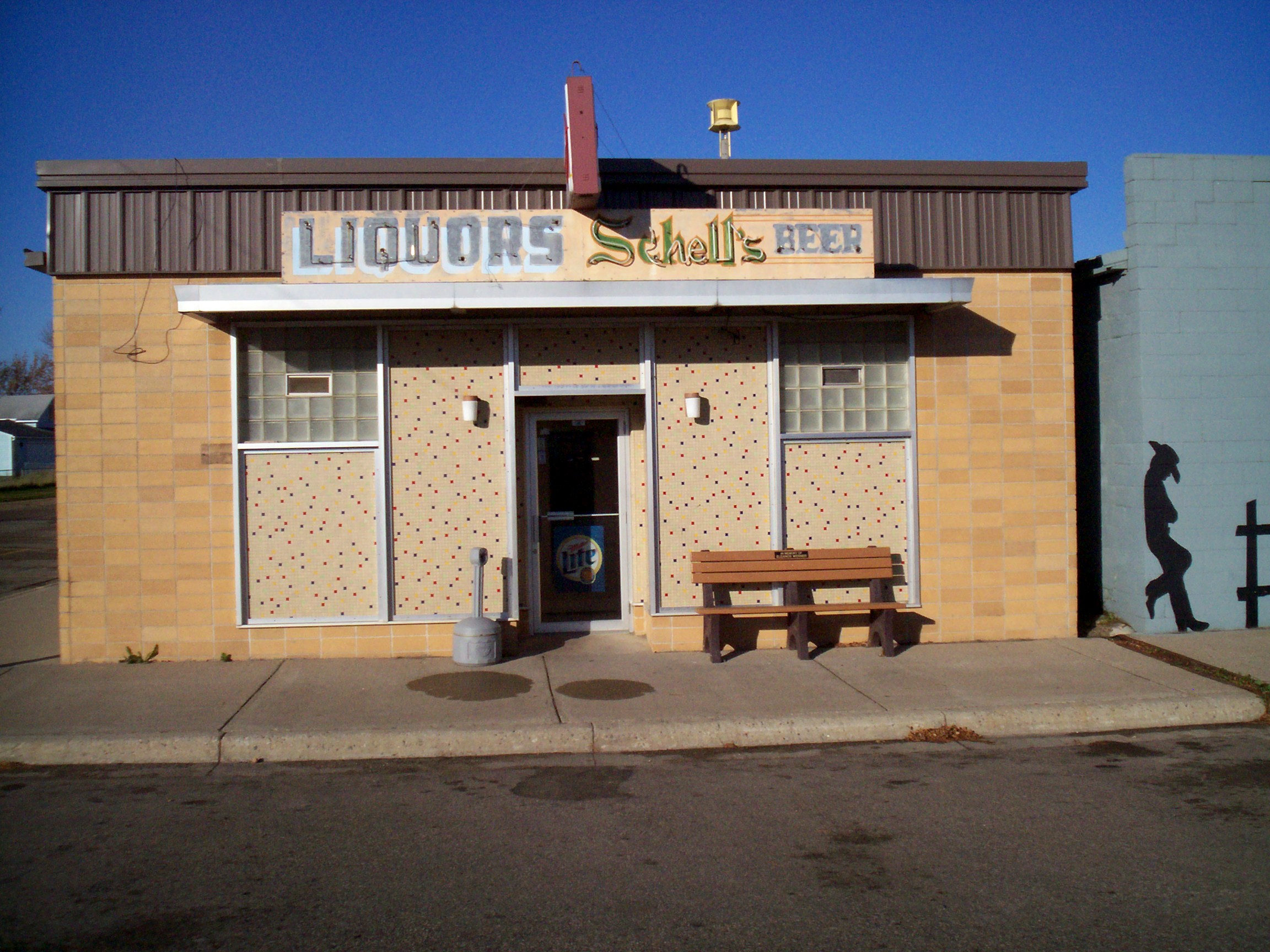
But something kept tugging at me—my loyalty to my hometown of Vesta. Now those of you familiar with Vesta, population around 350 and with a block-long main street, are likely wondering what on earth I found in this southwestern Minnesota prairie town of architectural worth.

Here is the building I chose and which debuted Marianne Combs’ Minnesota architecture series this afternoon. You can click here to read why I chose the Vesta Municipal Liquor Store.


© Copyright 2011 Audrey Kletscher Helbling
 

A misplaced torch at a veterans’ memorial

TYPICALLY, I WOULD NOT criticize a veterans’ memorial project. I respect those who have served our country and those who lead efforts to honor them via public memorials.

However, last week when I saw the latest addition to the in-progress Rice County Veterans Memorial Expansion Project at the county courthouse in Faribault, I could not believe what I was seeing.

There, guiding my eyes toward a center bronzed eagle and dove, was a flashing neon flame depicting “our never ending vigilance.”

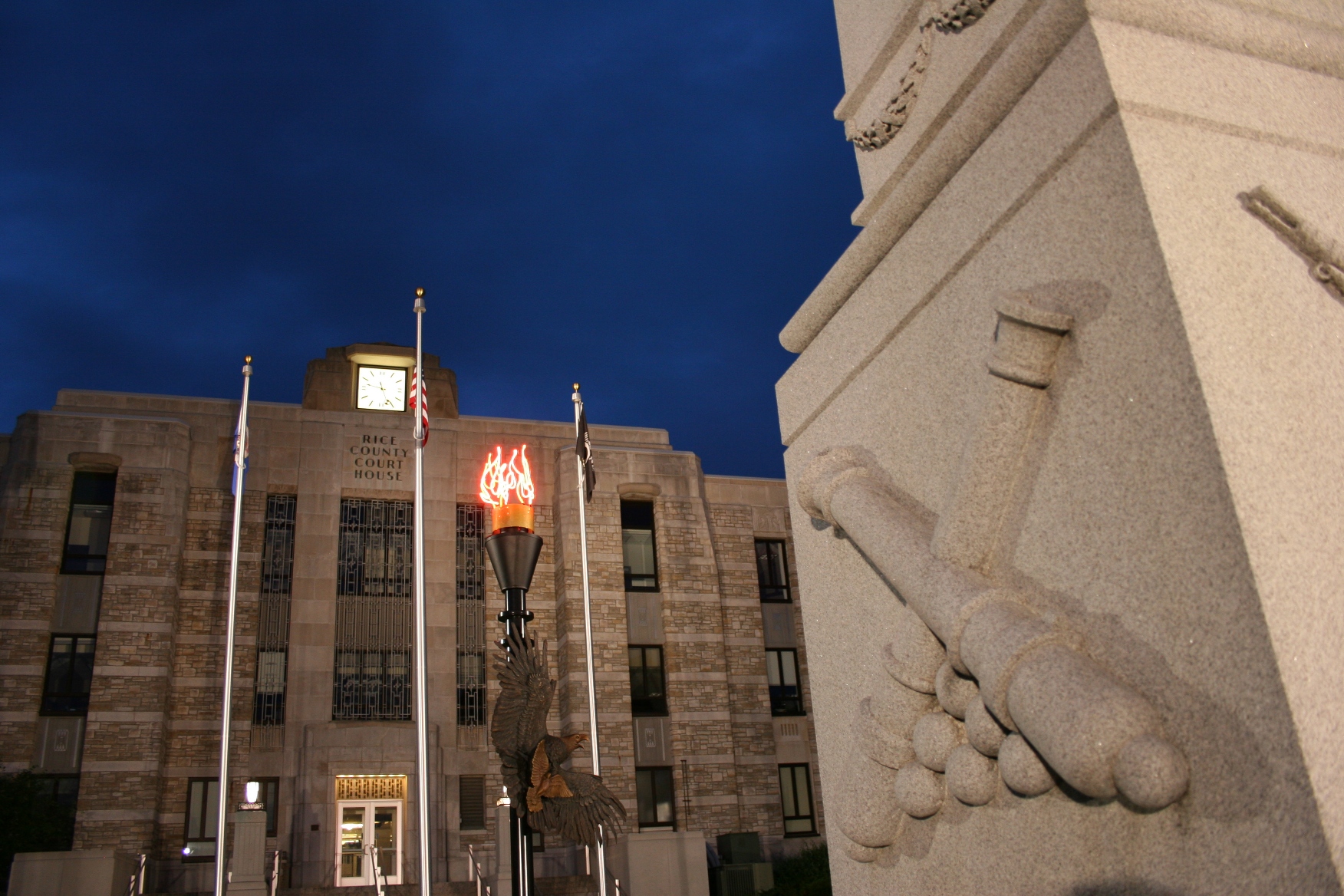
The new, fake torch at the Rice County Veterans Memorial at the courthouse in Faribault. Here you see the wing tip of the bronzed eagle below the torch. I have not edited this image taken one evening last week.

My initial reaction has not changed since I stopped that night to closer inspect and photograph this neon torch better suited for a casino—anything but a veterans’ memorial.

As we all know, first impressions count. In this case, the neon flame certainly does not fit. This is supposed to be a place of reverence, of quiet meditation, of respectful honor for those who have served the United States of America. A fake, flickering fire does not portray that message of honor.

I am disappointed.

Prior to installation of this imitation torch, a fuel-fed torch burned near the historical Civil War statue which has long graced the courthouse lawn. Apparently that flame went out all too often, leading to its removal and installation of the Vegas style torch.

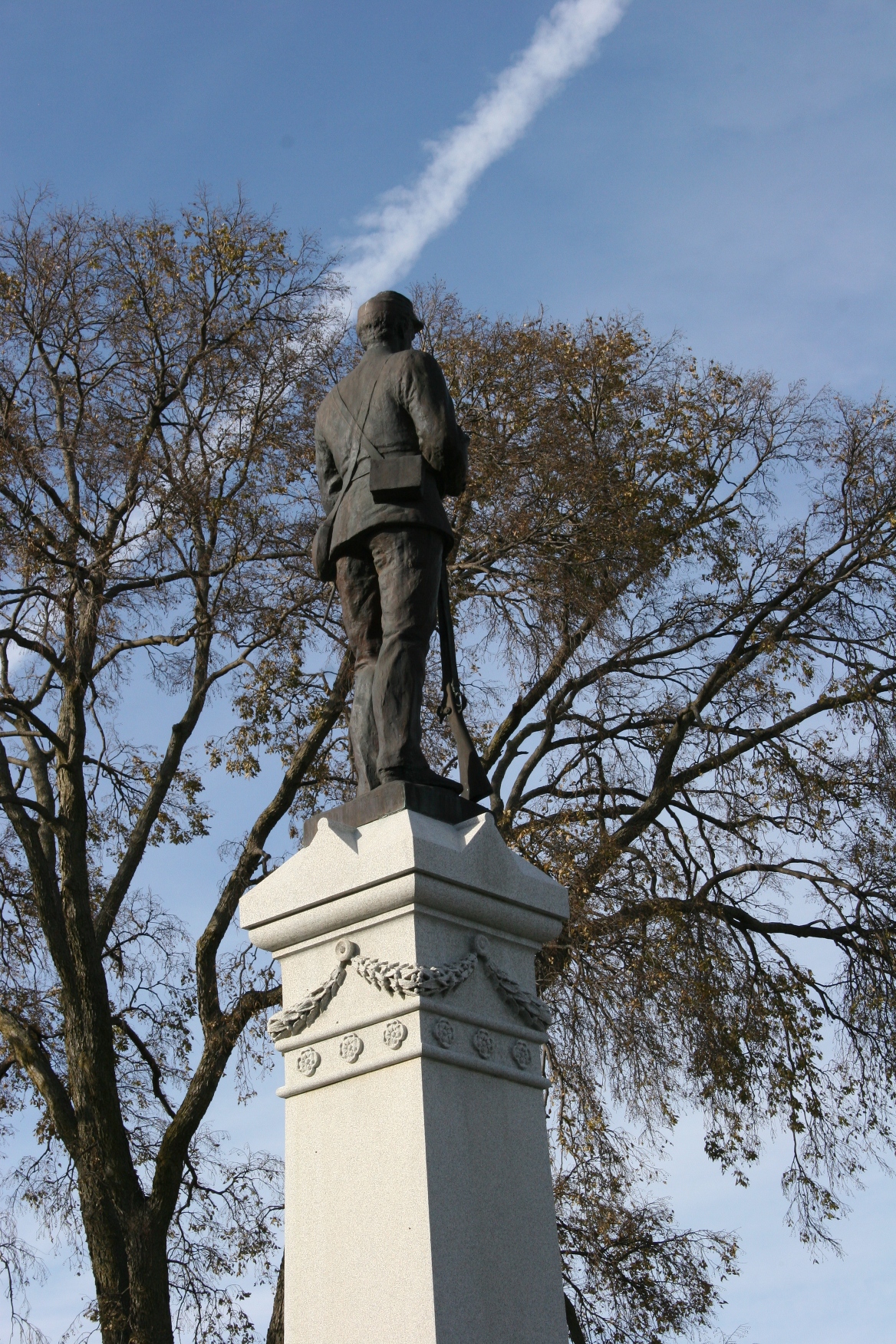
The long-standing Civil War statue sets a historical mood for the Rice County Veterans Memorial. I shot this image last fall.

To the right, in this unedited photo, you'll see a side view of the historical Civil War marker. In the center is the torch and the bronzed eagle and dove with flags and the courthouse in the background.

I could go on and on about how much I dislike this cheapening alternative, how it fails to fit the historical context of this place, the courthouse architecture or the long-standing Civil War marker. I won’t because I’ve said enough.

View my photos and tell me what you think. I’d like your opinion.

But even more, if you agree that this style of torch does not belong at a veterans’ memorial, offer a solution. I have none. Except to pull the plug.

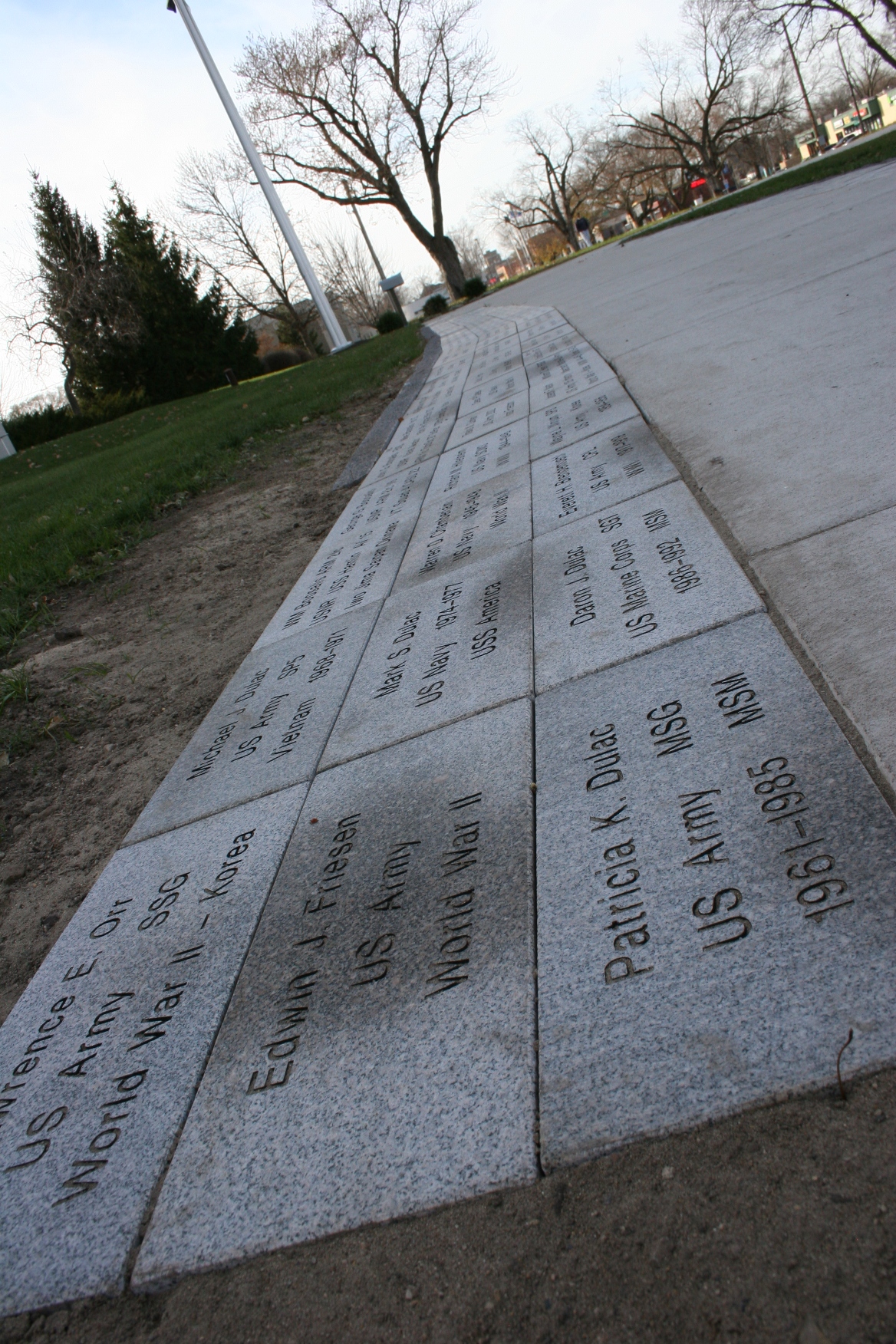
Honorary pavers line sidewalks leading to the center of the Rice County Veterans Memorial in this image taken last fall.

© Copyright 2011 Audrey Kletscher Helbling
 

Oh, blessed summer eve on a Minnesota farm June 30, 2011

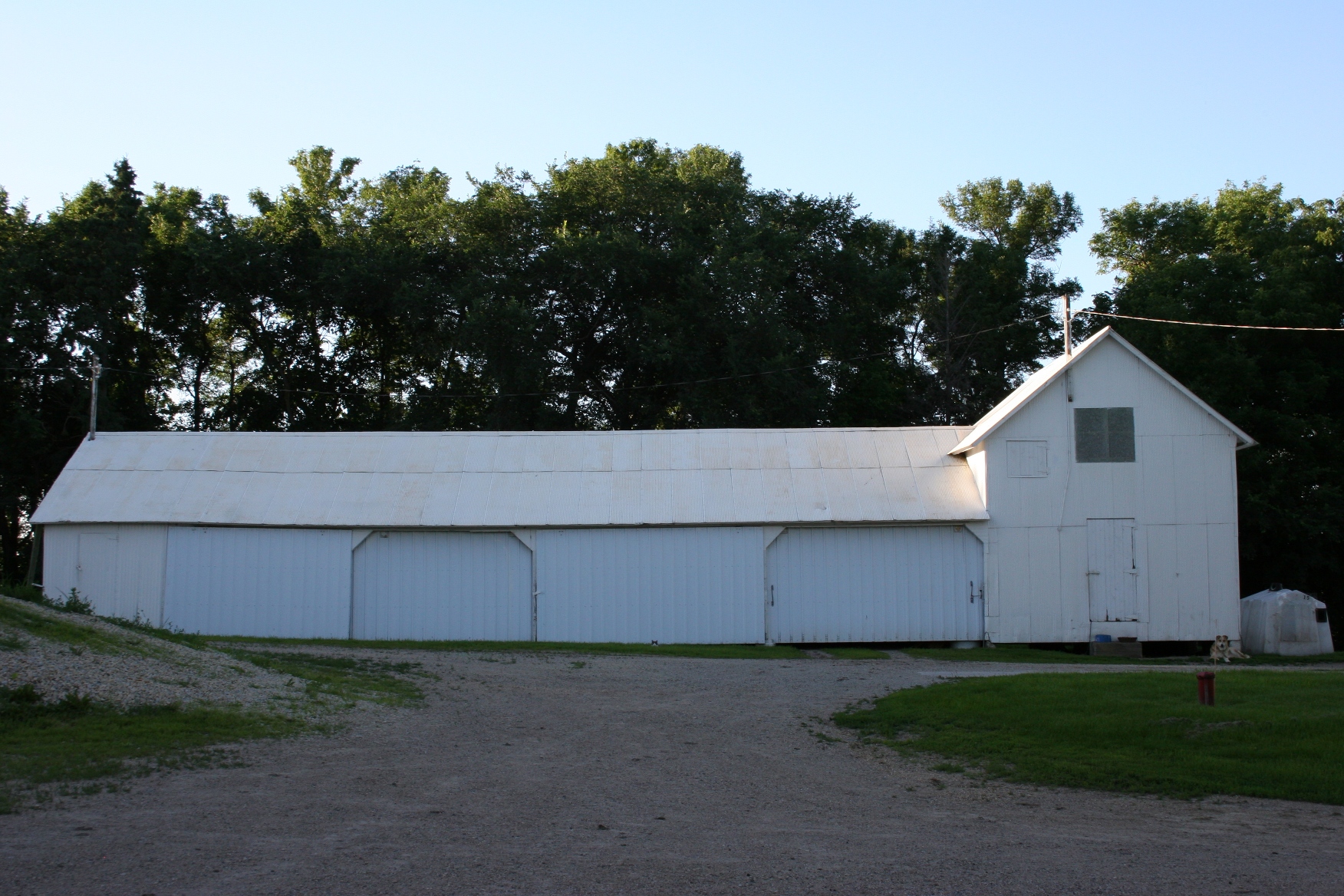
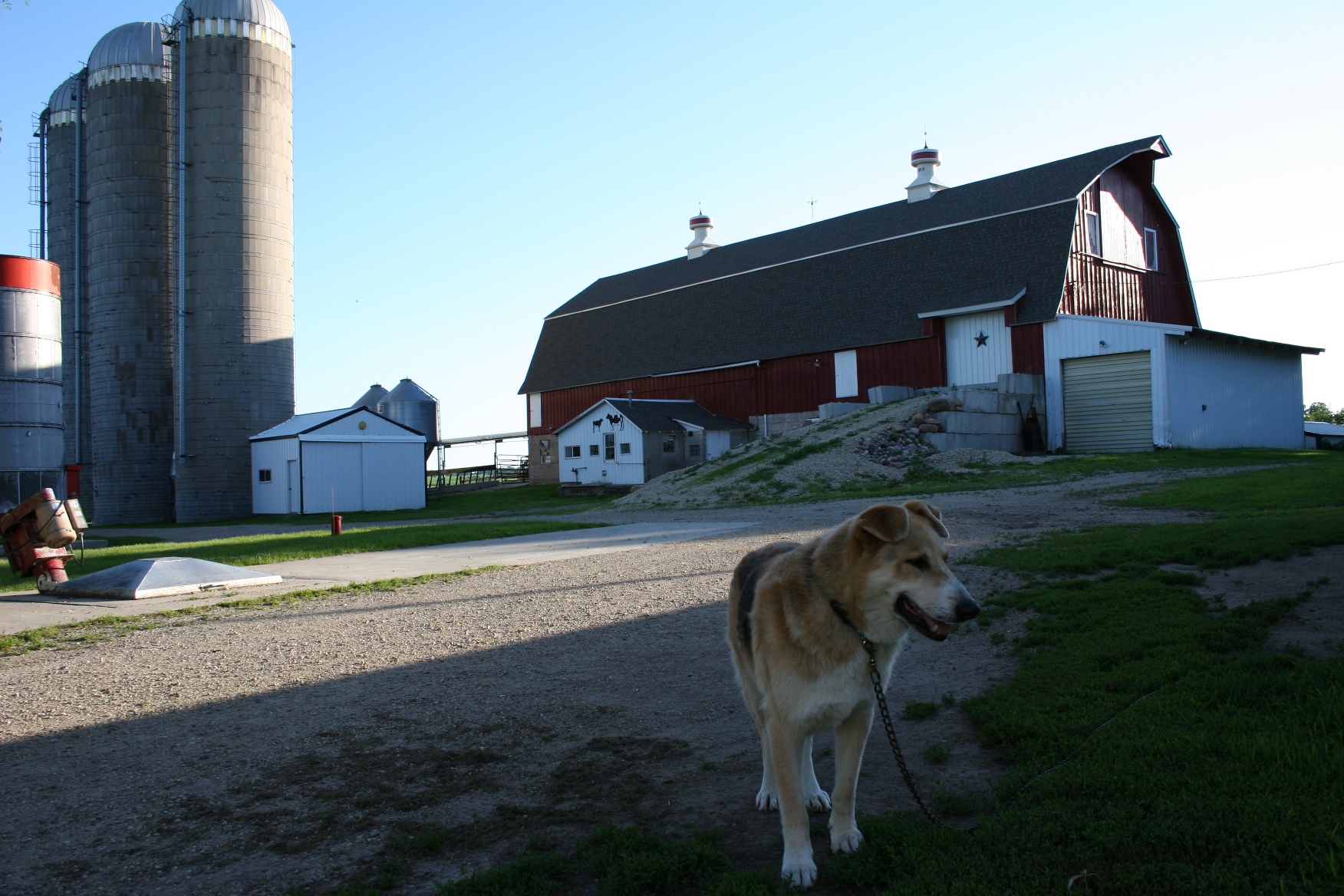
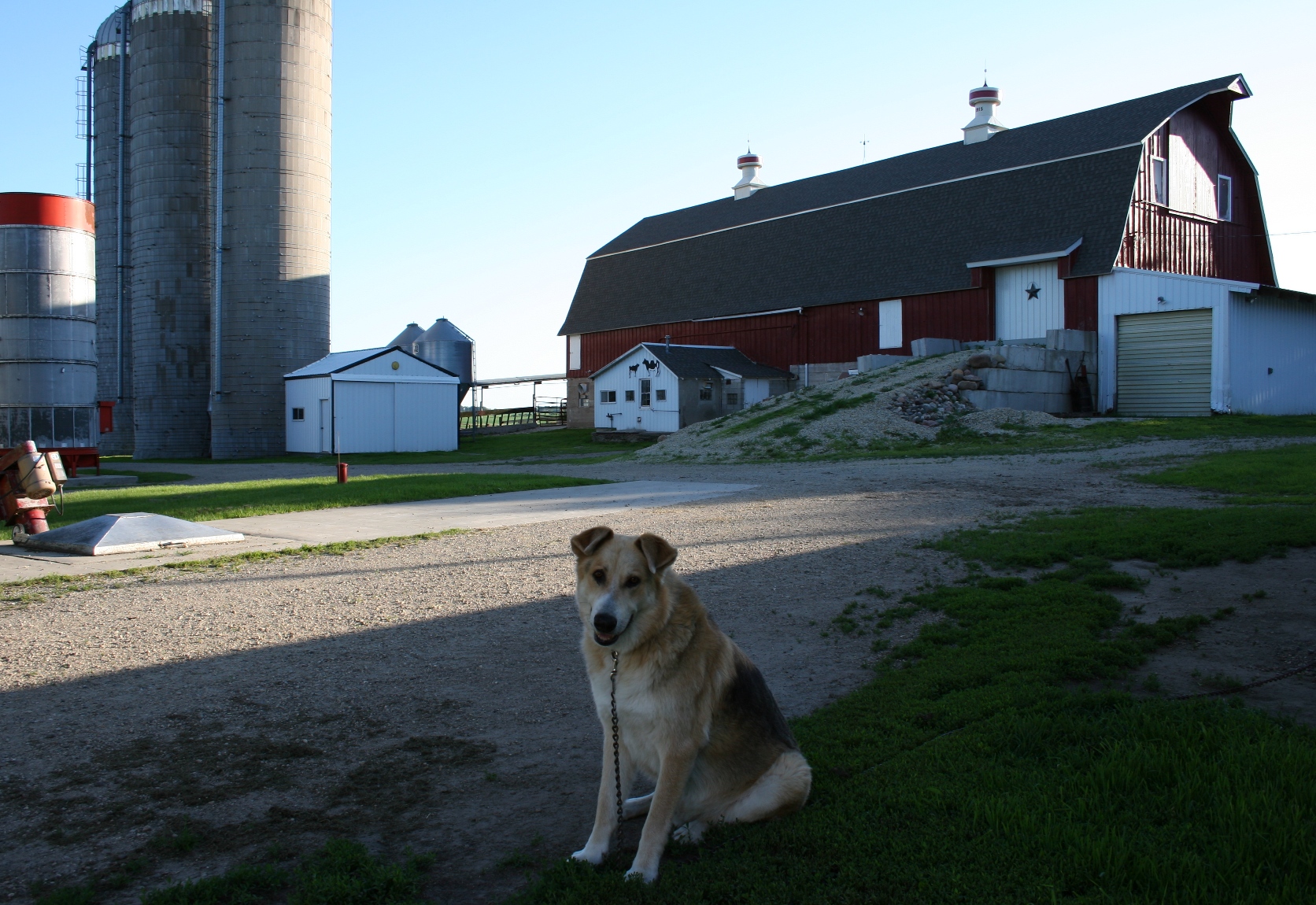
If you look closely, you will see the farm dog in front of the 1915 farmhouse to which a machine shed was added.

WIDE SWATHS OF SHADOWS sliced across the farmyard as the sun edged toward the horizon on a whisper of a summer night.

The old farm dog, tethered to a chain next to the 1915 farmhouse-turned-granary-turned storage shed, rose from his resting place on a paw-worn patch of grass. Water and food bowls rested on the single cement step nearby, within his reach.

The dog didn’t bark, didn’t lunge, just let me be as I moved into his territory. He stood, paced and then eased onto his haunches, acknowledging my non-threatening presence as I dropped to one knee to view the world from his perspective.

I wanted only to photograph this guardian of the farm on a summer evening as absolutely picture-perfect as any day you’ll get in Minnesota. Still. Serene. Colors sharp like new crayons. Sunlight, eye-blinding bright to the west, on the other side of the barn, outside the dogs’ reach.

This June evening, for these few hours, this watchdog could not roam the farmyard. He could only eye the visitors seated across the gravel drive at a picnic table. Friends gathered for pizza and lemonade sweetened with fresh strawberries and then more berries atop angel food cake and ice cream topped off with whipped cream.

Laughter punctuated conversation. Then bibles flipped open to words written upon pages thin as butterfly wings. The shrill call of a cardinal pierced the silence between ideas shared and scripture read.

Then, as the farm dog watched, the friends bowed their heads in a prayer of thanksgiving—gratitude to God for protecting the owners of this farm from serious injury in a motor vehicle accident the previous day. A rear-end collision. Truck spinning, tipping onto its side along a Minnesota highway. Glass in teeth and waistbands and hair.

None of this the guard dog knew on this most blessed of summer evenings on a Minnesota farm.

TODAY, JUNE 30, has been designated as “Maroon Day” in Minnesota, historically the deadliest day on our state’s roadways. Since 2000, more fatal crashes have occurred on this final day of June, leading into the July Fourth holiday, than on any other day of the year. Statistics show 30 fatal crashes resulting in 35 deaths.

All of Minnesota’s nearly 600 state troopers, in their signature maroon vehicles, will be patrolling today.

Buckle up. Drive carefully and be safe.

© Copyright 2011 Audrey Kletscher Helbling
 

The endearing smiley face June 29, 2011

Filed under: Uncategorized — Audrey Kletscher Helbling @ 7:39 AM
Tags: , , , , , , , , , ,

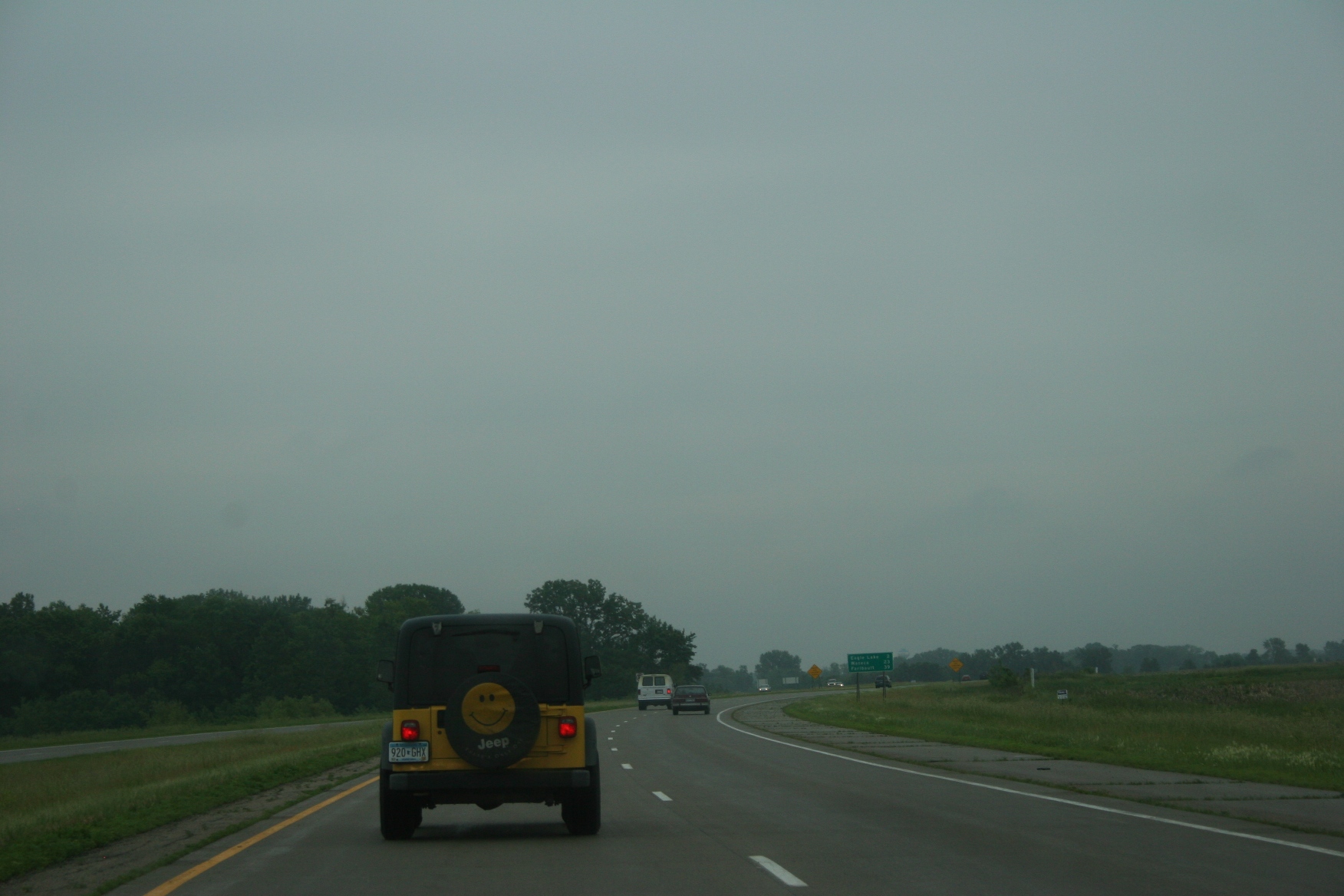
I URGED HIM to speed up, to catch up to that yellow jeep ahead of us.

“I want to take a picture,” I explained, and my husband obliged although he thought me a bit crazy.

And maybe I am sometimes. But that canary yellow jeep, the single visual jolt of brightness on yet another recent dreary weekend, tripped something in my brain.

If you live in Minnesota, I expect you’ll understand. I mean, honestly, weren’t you tired of all the cold and rain and gloom on the heels of a long and snowy winter? (Remind me of that tomorrow when the temperature is predicted to reach 100 degrees or higher.)

So, given that context, the yellow jeep with the smiley face wheel cover made me smile as we traveled on U.S. Highway 14 between Mankato and Eagle Lake recently.

Smiley faces, no matter where I spot them, always increase my happiness quotient.

My appreciation of smiley faces stretches back further than I’d like to admit these days. This happiness symbol popped up everywhere when I was in high school, which would be, yes, the 1970s. Oh, how I wish I still had my smiley face bulletin board and my smiley face button.

So there, that should explain why I wanted to photograph the yellow jeep on a drizzly Saturday afternoon along a Minnesota highway. The smiley face represents a link to my past, to those turbulent teen years when I needed a bright smile as much then as I sometimes still need one some four decades later.

I can’t think of another symbol with such upbeat universal appeal. Can you?

Do you, like me, have fond memories of the smiley face? I’d like to hear.

© Copyright 2011 Audrey Kletscher Helbling


At the WordWalk: Why I won’t eat tuna June 28, 2011

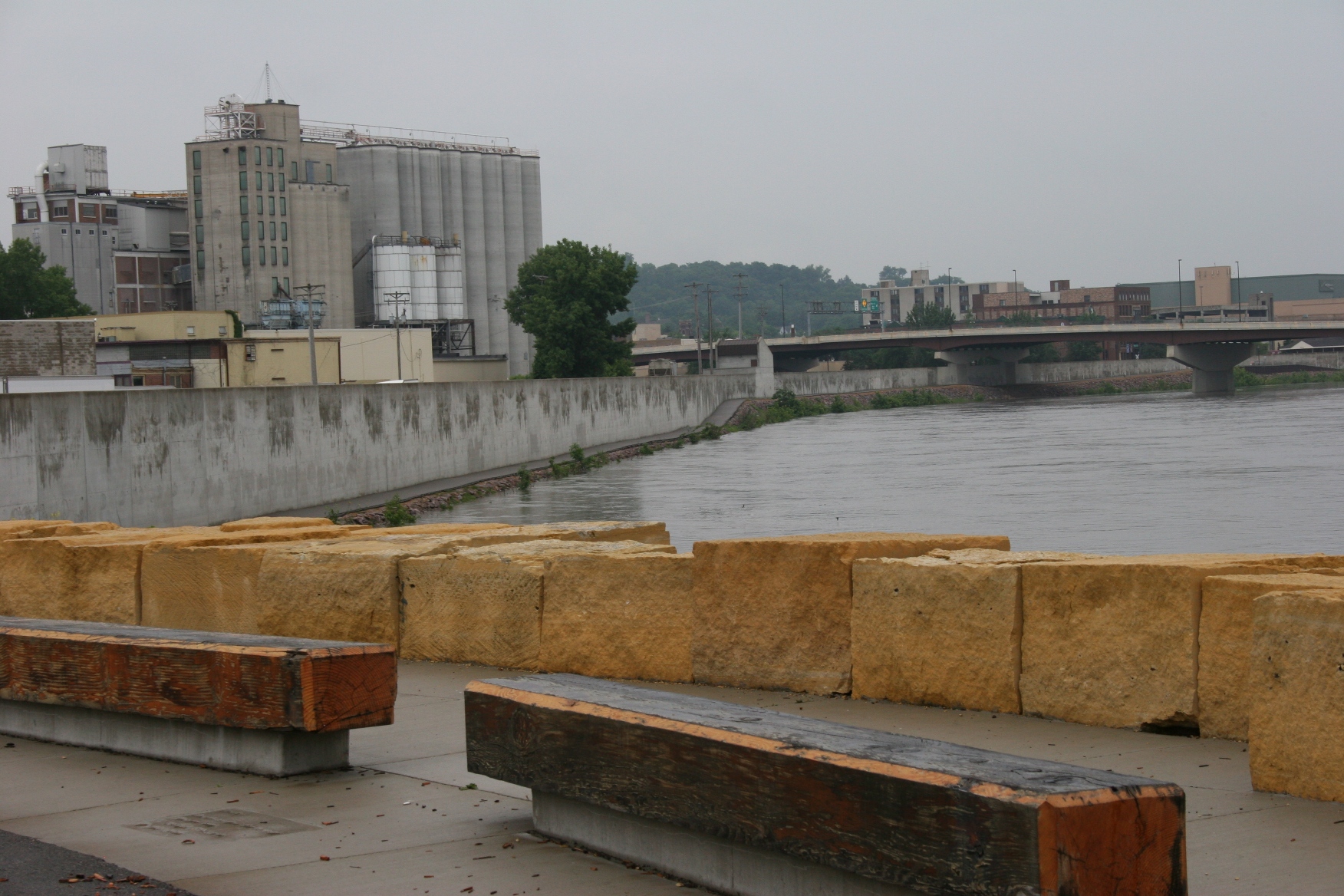
A view of the Minnesota River as seen from Riverfront Park, looking toward downtown Mankato.

THE MANKATO PARK SEEMS, in many ways, an ideal setting for poetry.

The usually playful Minnesota River bumps against the land here, acting on this Saturday afternoon like a willful, unruly child.

On the other side of Riverfront Park, across the tracks, historic buildings stand like forlorn children, neglected, waiting for someone to care.

Overhead, moody skies pout.

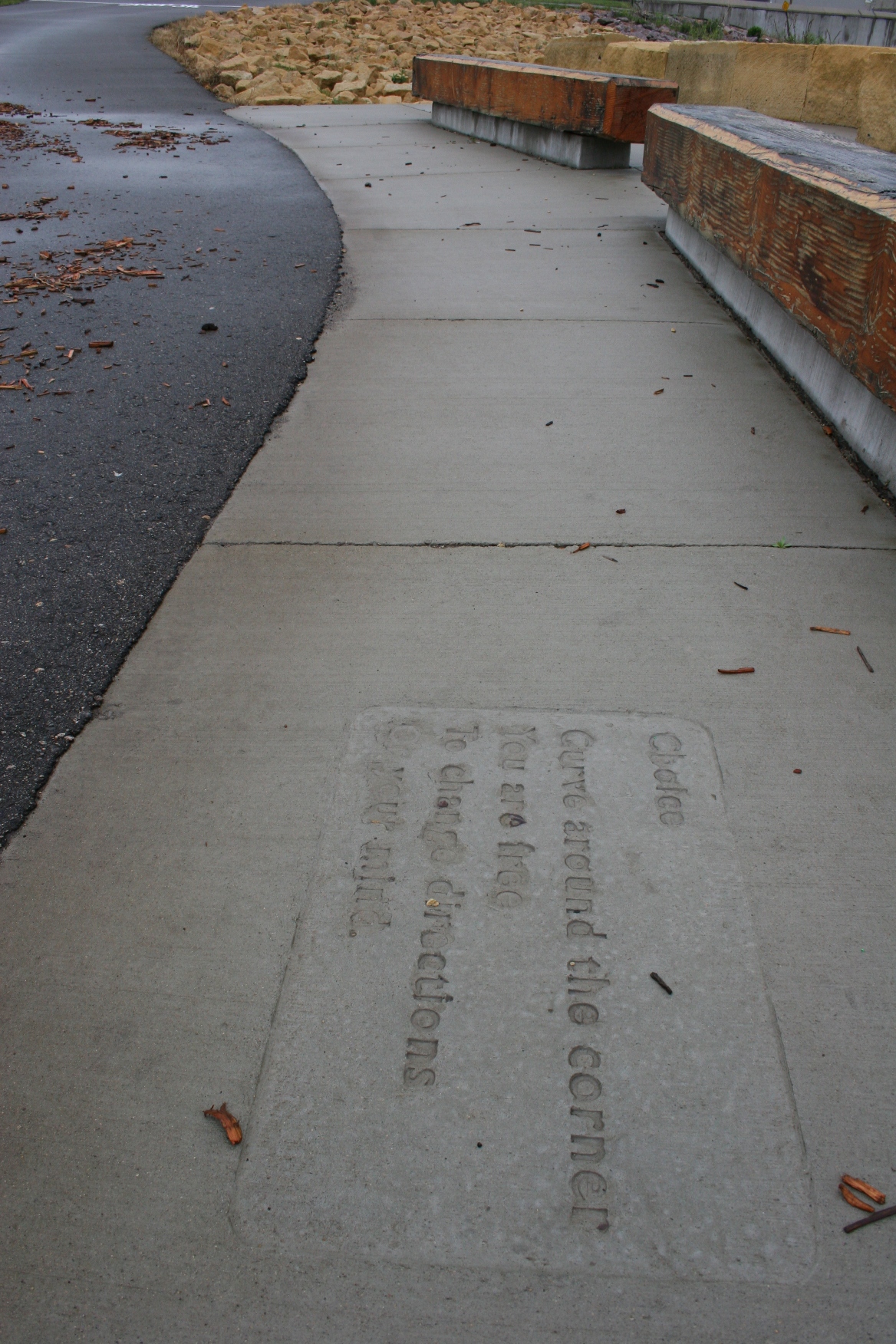
I have come here at this late afternoon hour to read the poetry imprinted upon cement. Occasionally the sky spits rain at me as I follow the gray sidewalk which mimics the gray day.

"Curve around the corner/You are free/To change directions/Or your mind," reads this poem by Marlys Neufeld of Hanska.

I read:

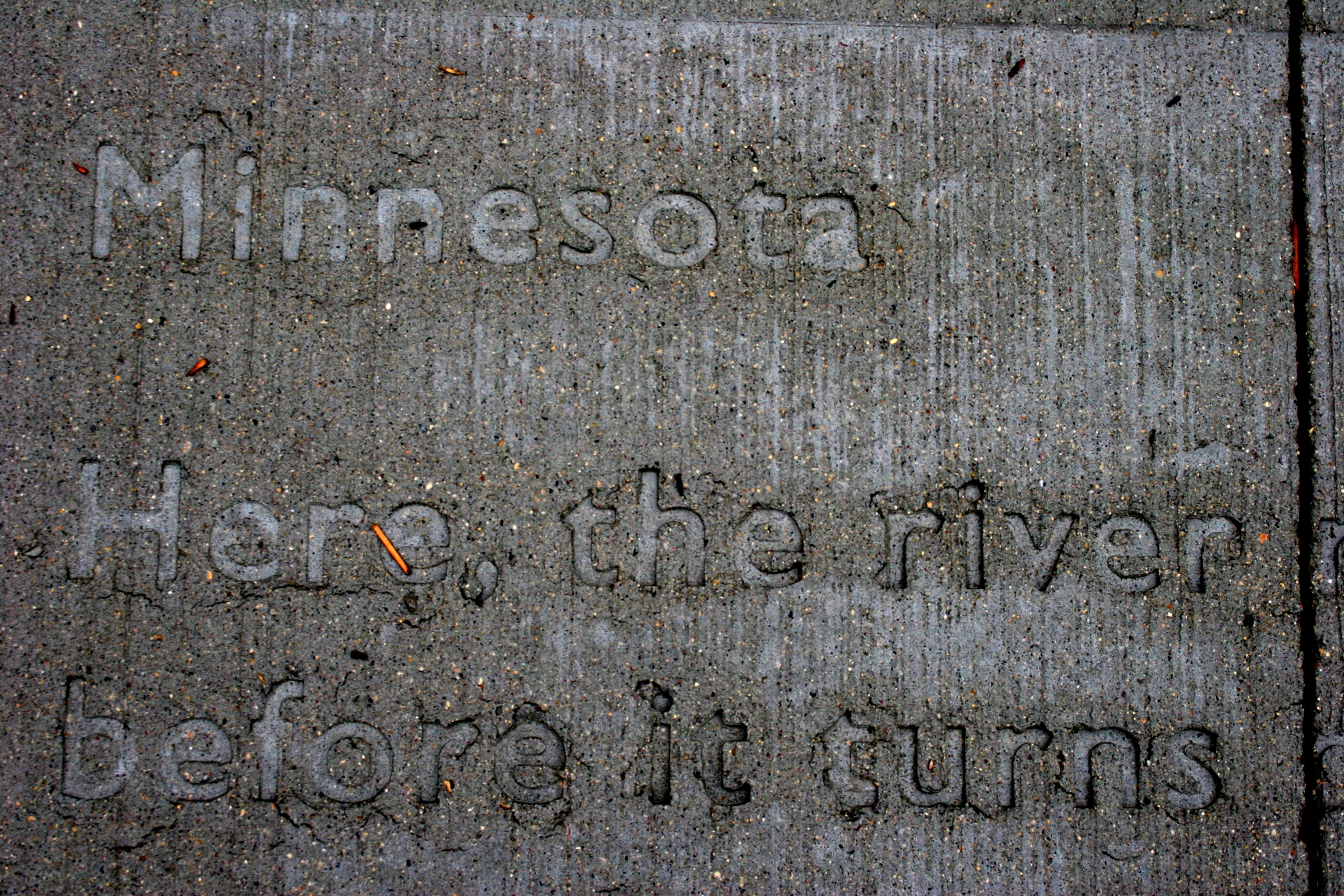
Minnesota

Here, the river rests its elbow

before it turns north to meet

the father of them all.

Here we made 38 mistakes

we now try very hard

not to forget.

A snippet of the poem, "Minnesota." I've edited this image so that you can better read the words. The poems are, unfortunately, a bit difficult to read because of a lack of color contrast between the letters and the cement.

The poem by Ikars Sarma of Mankato refers to the hanging of 38 Dakota here on December 26, 1862. A heavy thought to match the heaviness of the sky, the raging of the river, the anger that still simmers over this shameful moment in this city’s history.

I move on.

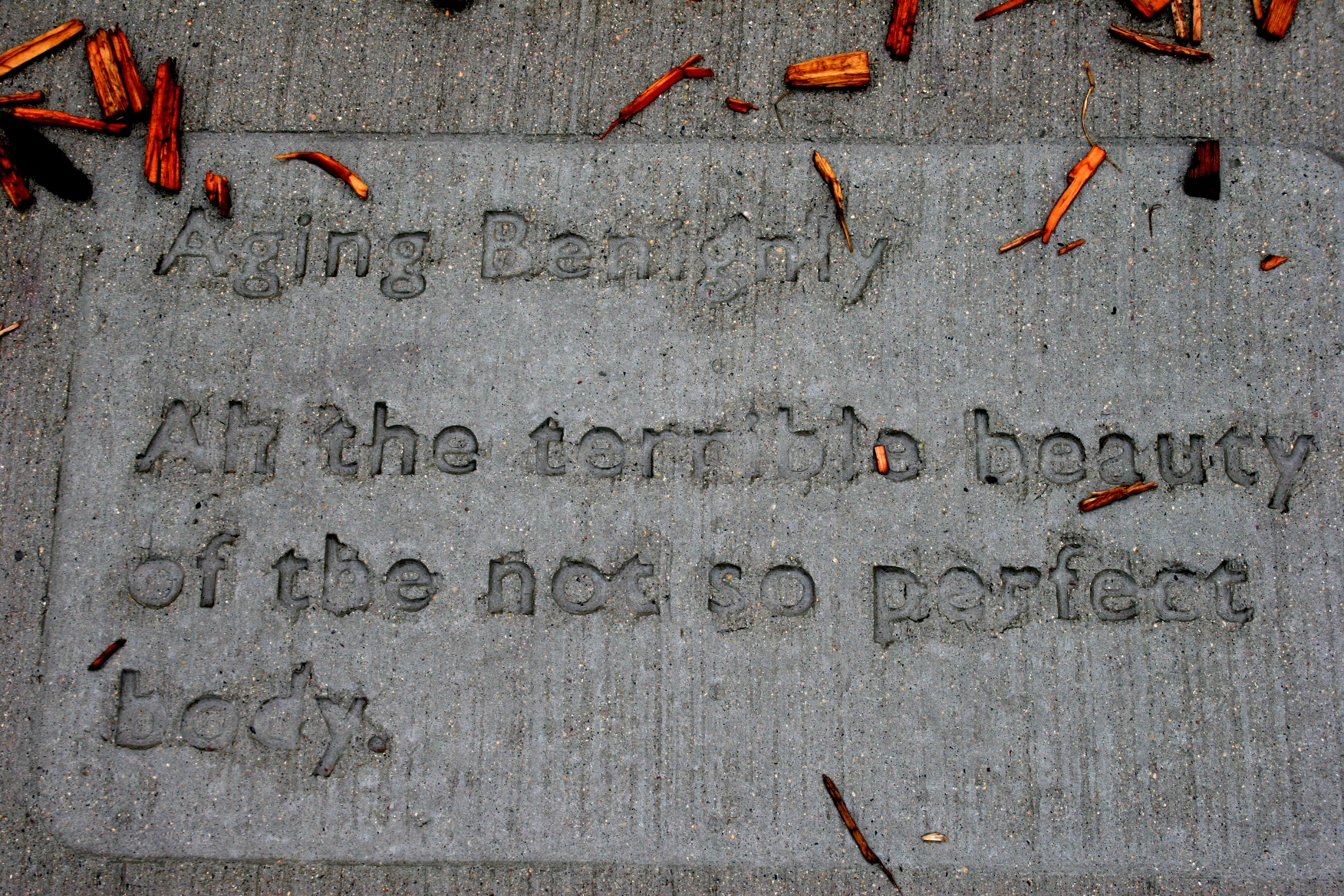
Susan Stevens Chambers of Good Thunder writes:

Aging Benignly

Ah the terrible beauty

of the not so perfect

body.

In this edited photo, read Susan Stevens Chambers' poem about aging.

Nearby kids scramble up a rock wall as I struggle to lift my aging bones from the sidewalk where I have bent close to read and photograph Chambers’ poem.

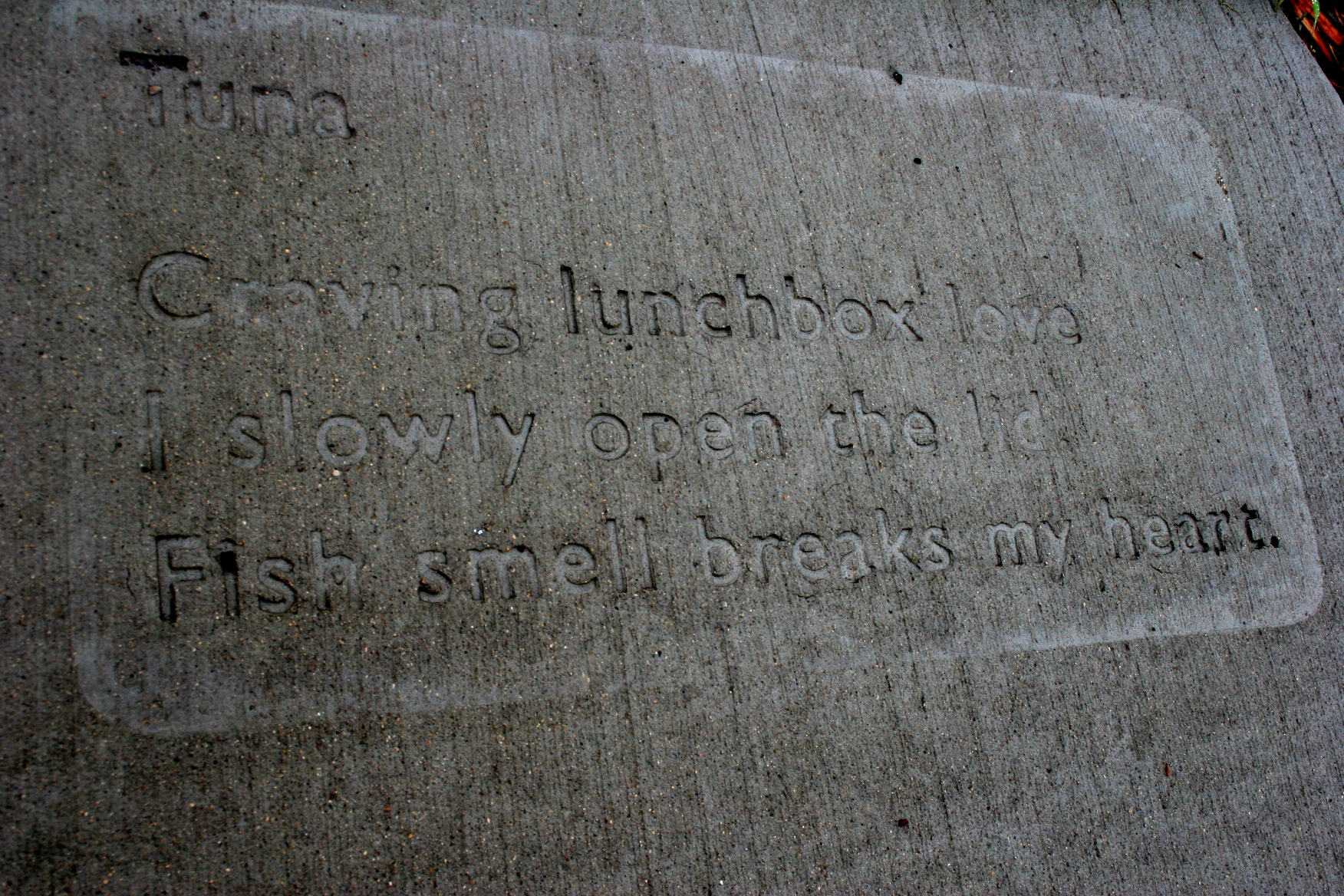
Then I laugh at the words penned by Mankato resident Yvonne Cariveau:

Tuna

Craving lunchbox love

I slowly open the lid.

Fish smell breaks my heart.

The poem that causes me to remember all the tuna I ate during my last two years of college.

Exactly. I ate too much tuna in this college town between 1976 and 1978. I could write my own poem about cramming tuna sandwiches while cranking out stories at the Mankato State University (I still can’t call it Minnesota State University, Mankato) student newspaper, The Reporter.

Deadlines and words.

Words and deadlines.

Tuna. Words. Deadlines.

Cariveau’s writing reminds me of those years so long ago when I was young and only beginning my journey into the poetry of life.

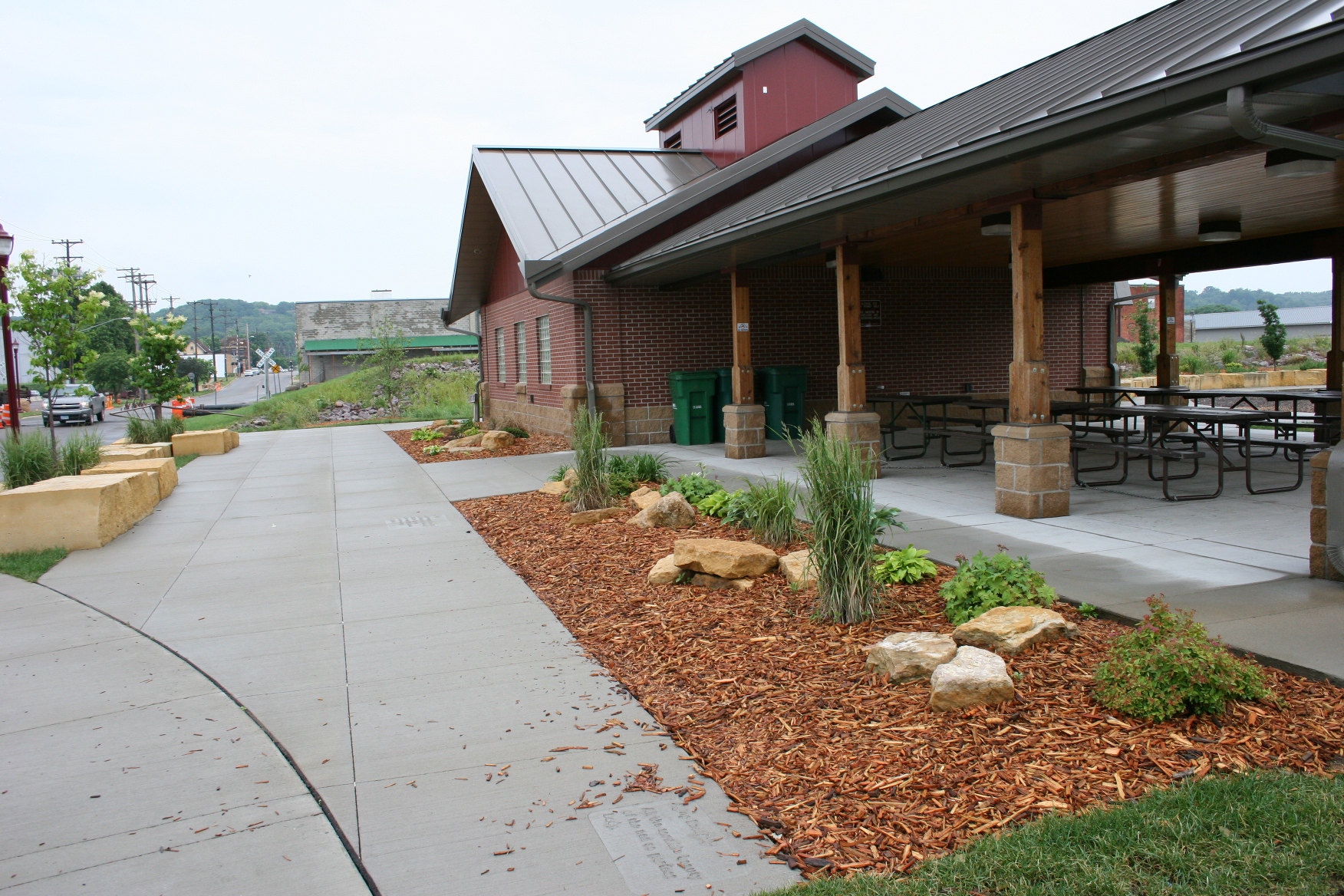
WordWalk poems are imprinted on the sidewalk circling this restroom/shelter facility at Riverfront Park in Mankato.

FOR MORE INFORMATION about Mankato’s public sidewalk poetry, WordWalk, click here and here. At least two other Minnesota cities, of which I am aware, have sidewalk poetry: St. Paul and now Northfield.

WHAT’S YOUR OPINION on sidewalk poetry? Do you like it, or not? Would you like to see more such public poetry in Minnesota communities? Why or why not?

© Copyright 2011 Audrey Kletscher Helbling
 

Appreciating mom-and-pop businesses like Mutch Hardware June 27, 2011

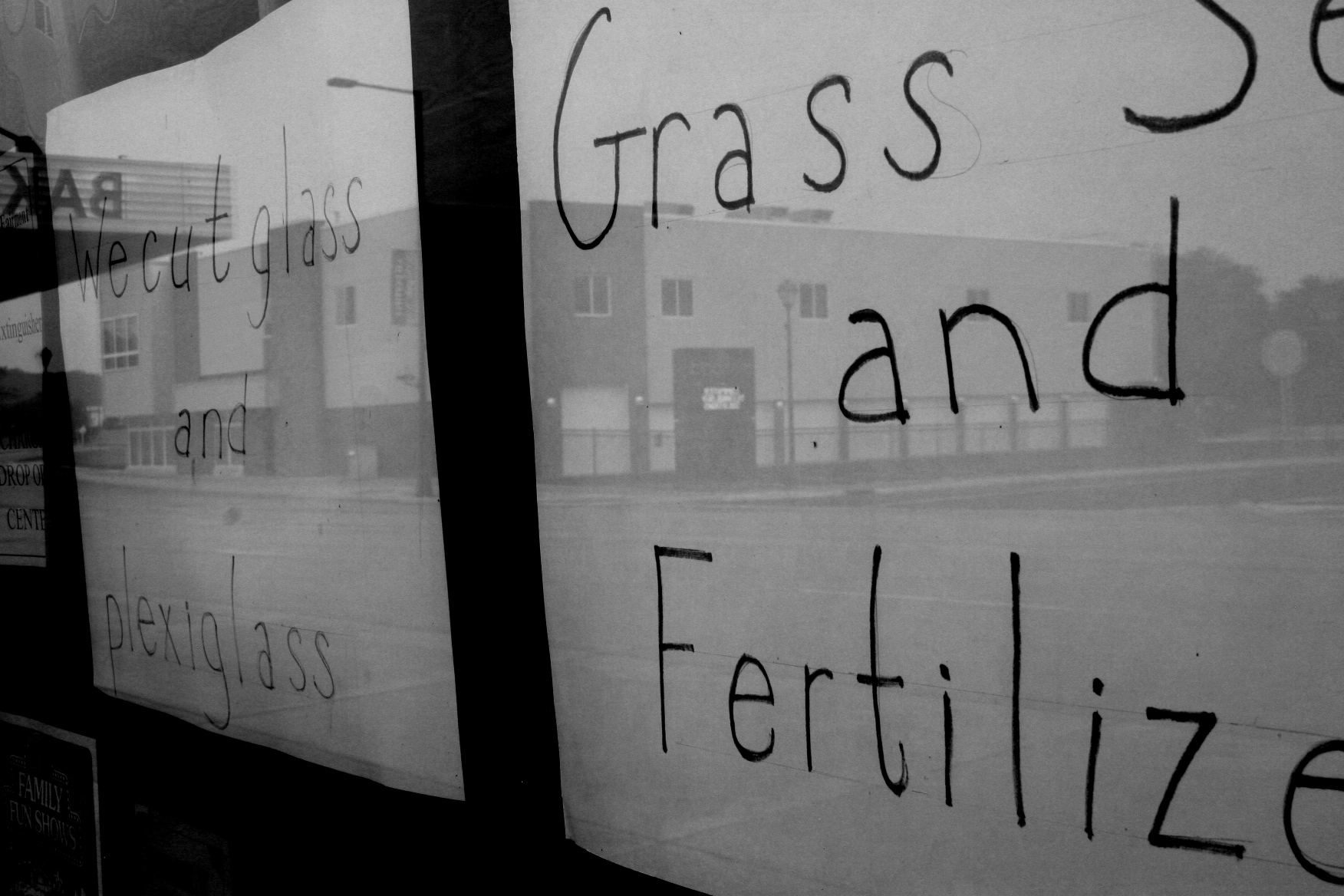
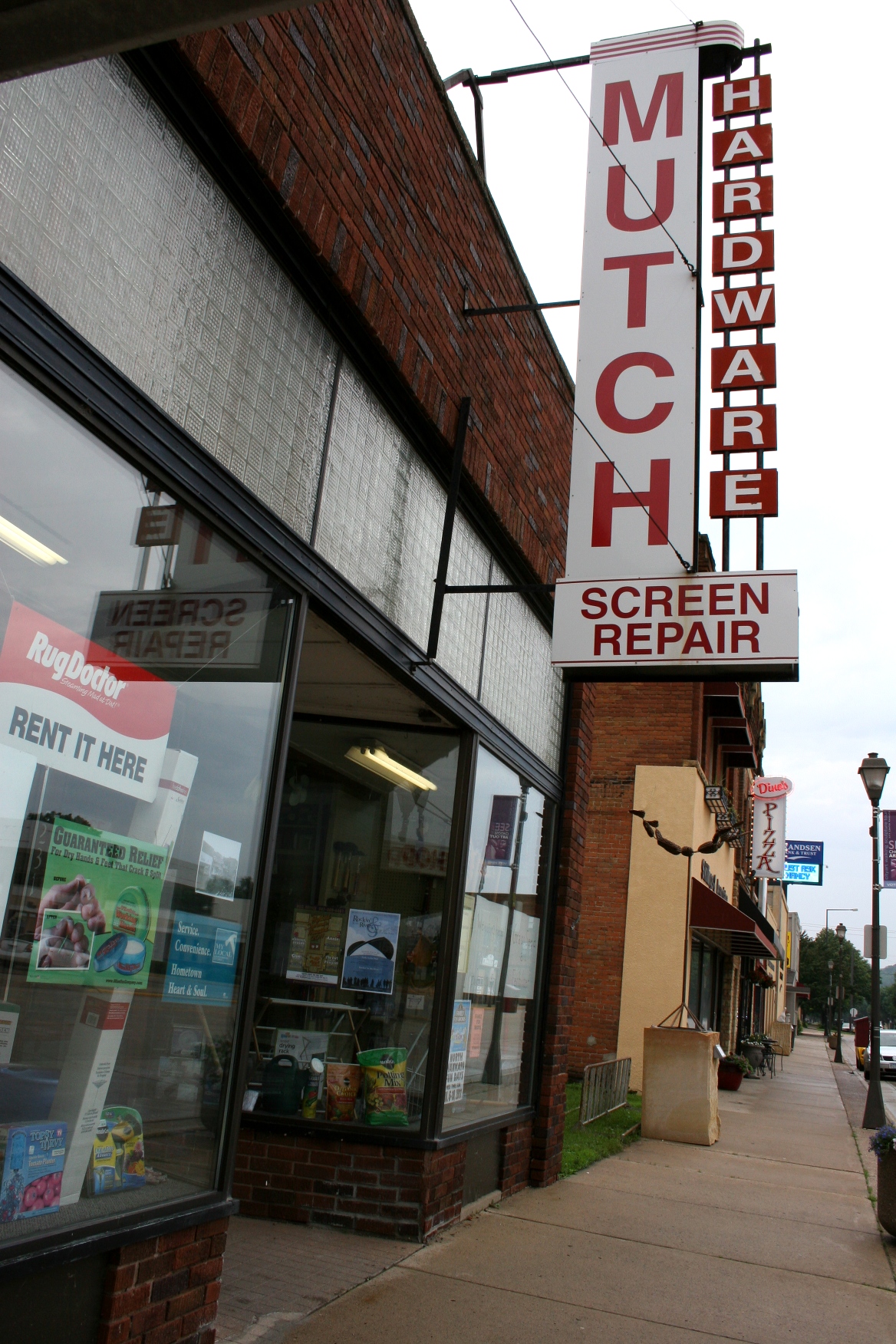
Buildings across the street reflect in the windows of Mutch Northside Hardware in North Mankato where these signs hang on a front plate-glass window.

“Grass Seed and Fertilizer.”

“We cut glass and plexiglass.”

I didn’t need grass seed or fertilizer or any glass cut. Yet, the signage drew me to the storefront plate-glass window of the hardware store along Belgrade Avenue in North Mankato. How often do you see business signs like this with letters printed in near-perfect penmanship between two penciled ruler lines on white tagboard?

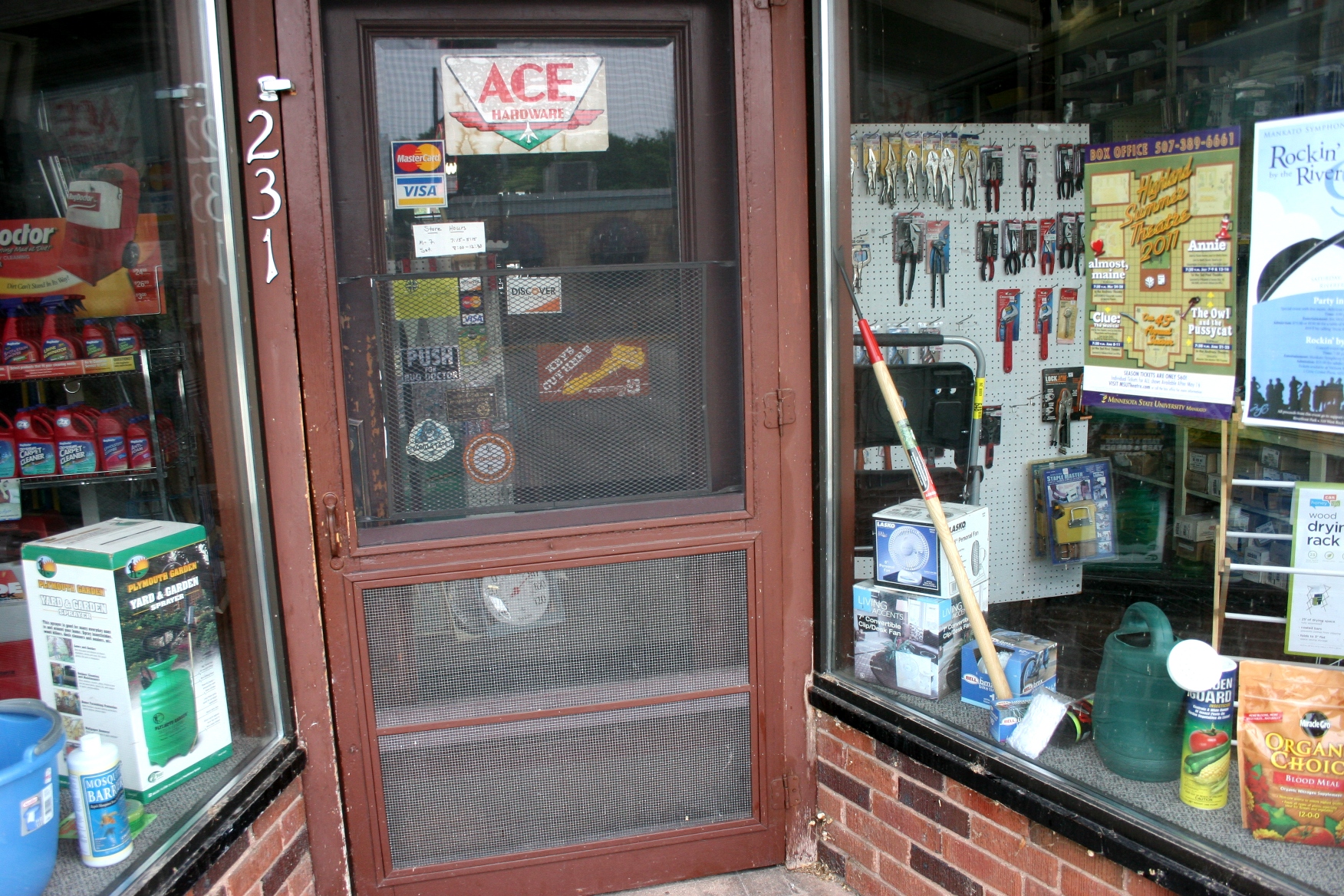
After I admired the simplicity of this advertising in a world of mass-produced, flashy, signage, I noticed the old screen door. That did it. I was smitten with this place, this Mutch Northside Hardware that, from the exterior, reminded me of the small town hardware stores of my youth.

You know, the kind of store where you can buy everything and anything. The place packed with merchandise from floor to ceiling, aisles narrow as a sidewalk crack. Nails and bolts jumbled in scarred cubbies. Belts dangling from hooks on pegboard. Wooden floors that creak.

Mutch Hardware is crammed with merchandise, some of it displayed in the window fronts.

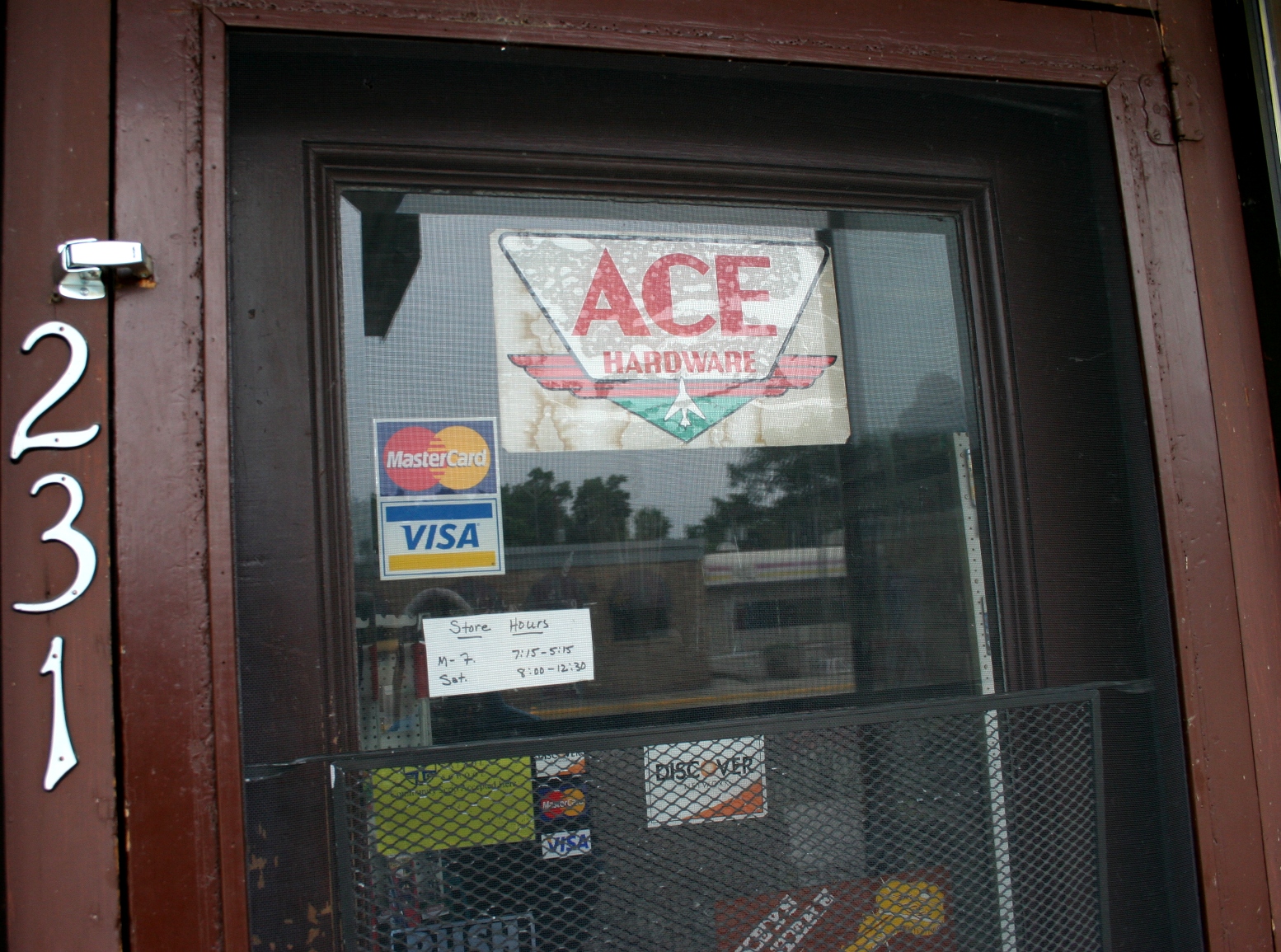
An old ACE Hardware sign decorates the front door where a handwritten sign is posted listing store hours.

I could almost hear the vintage screen door slam shut behind me as I stood outside the closed hardware store, hands cupped around my eyes, peering inside. It was late Saturday afternoon and I was hours too late to step inside Mutch Hardware, much to my disappointment.

But that didn’t stop a flood of memories from washing over me. Memories of going to town with my dad, stopping at Joe Engel’s Hardware store on Vesta’s main street to pick up a few bolts or maybe a belt or something else for the farm.

My siblings and I had another reason for hitching a ride to the southwestern Minnesota hardware store with our dad. Joe Engel’s supplied our ammo—coiled rolls of red-perforated paper pocked with gun powder for our toy cap guns. This was the 1960s, and even though not politically-correct today, an era of playing “Cowboys and Indians.” I remember those days with a depth of fondness that I doubt today’s tech-oriented kids will ever experience.

I would like to take each of them inside a business like Mutch Hardware, where I expect helpful, personal service, care and friendliness accompany each purchase. Places like this seem rare in our fast-paced world of big box stores run by corporations in far away cities. Few mom-and-pop stores can survive in today’s economy. That is reality.

I’m not a prima donna; I shop chain stores as much as anyone. Yet when I see a business such as Mutch Northside Hardware in North Mankato, I take notice. I appreciate the hardworking men and women who, as independent business owners, still offer us a shopping option.

Outside Mutch Northside Hardware, a place reminiscent of bygone days.

DOES AN OLD-FASHIONED mom-and-pop type business like Mutch Northside Hardware exist in your community, or do you know of one somewhere? I’d like to hear. Tell me about it by submitting a comment.

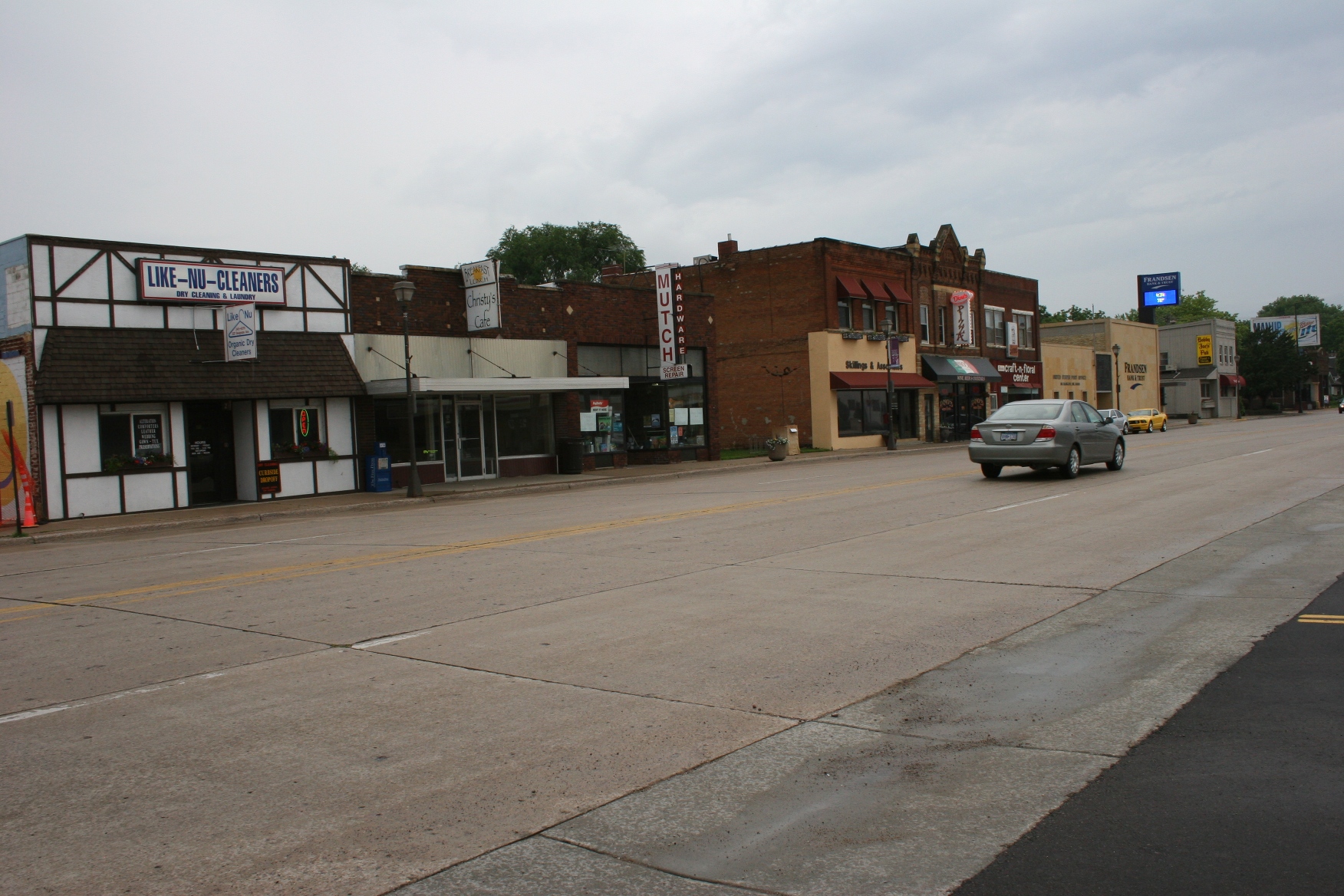
This image of a section of Belgrade Avenue in North Mankato shows the following businesses, from left: Like-Nu-Cleaners, Christy's Cafe, Mutch Northside Hardware, Skillings & Associates, Dino's Gourmet Pizzeria, Craft-n-Floral Center, the U.S. Post Office, Frandsen Bank & Trust and Bobby Joe's Pub.

© Copyright 2011 Audrey Kletscher Helbling
 

Hail St. Mary’s of Melrose June 26, 2011

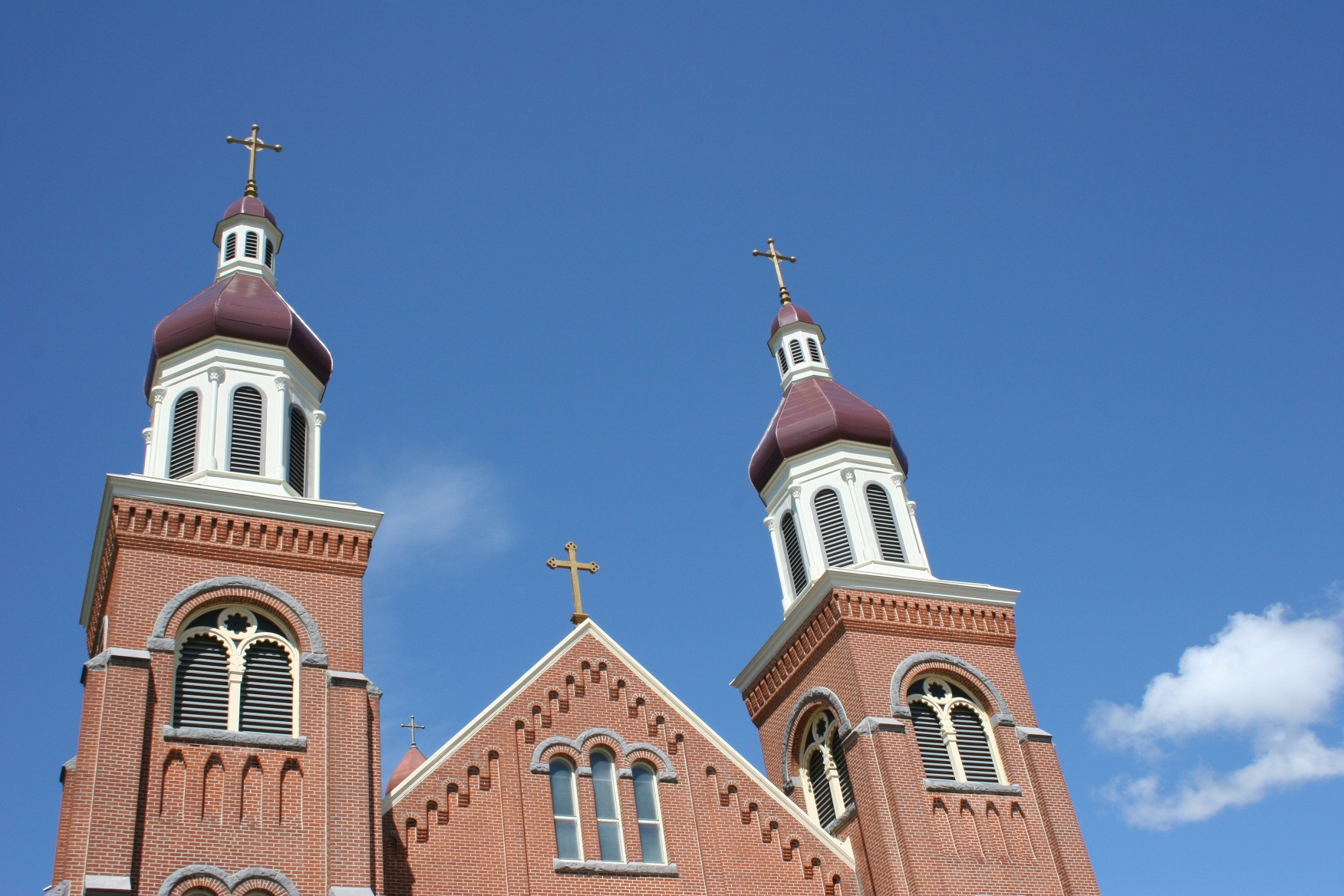
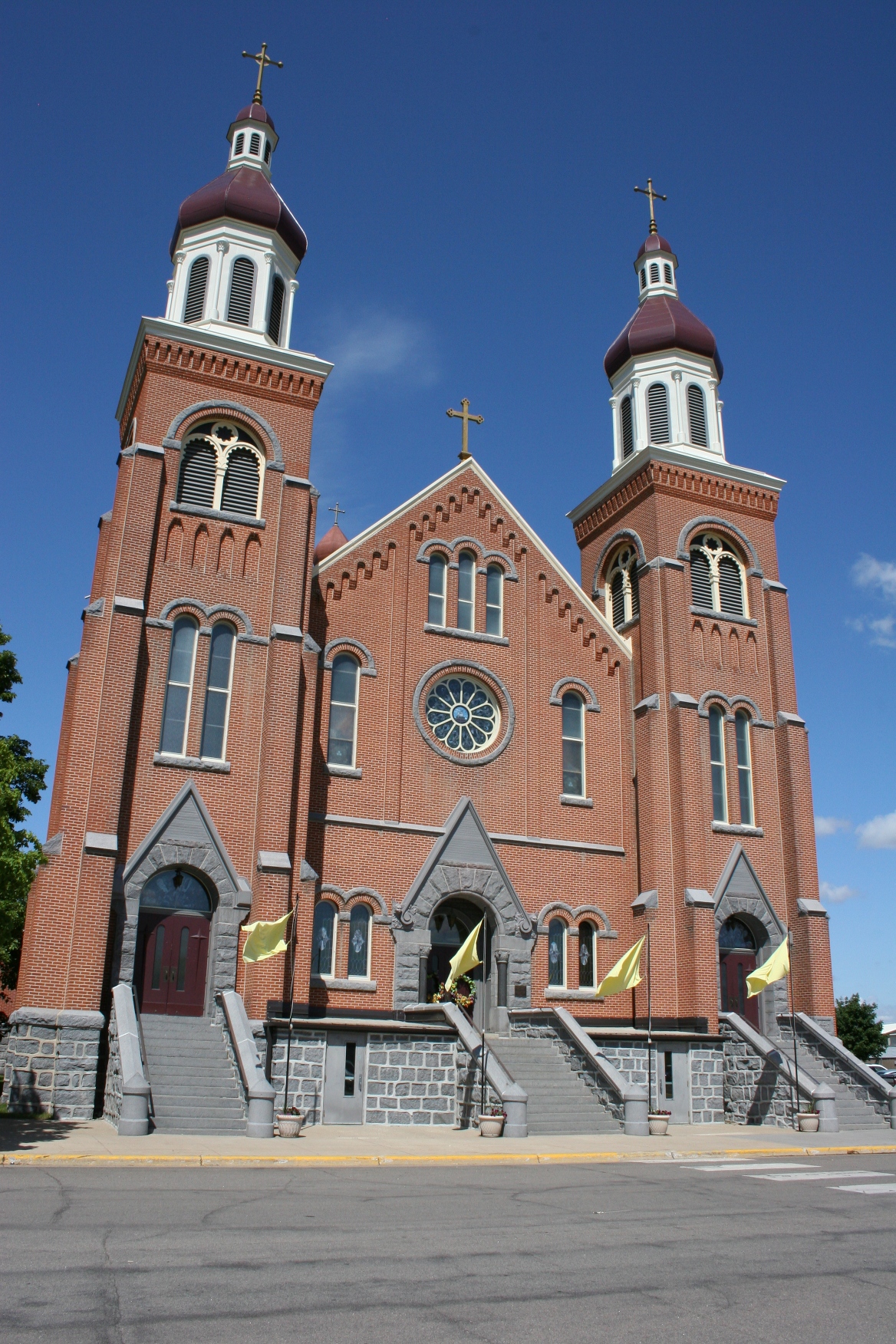
The steeples of St. Mary's Catholic Church of Melrose.

I STOOD THERE. Just stood there. For minutes, taking in the glorious splendor before me.

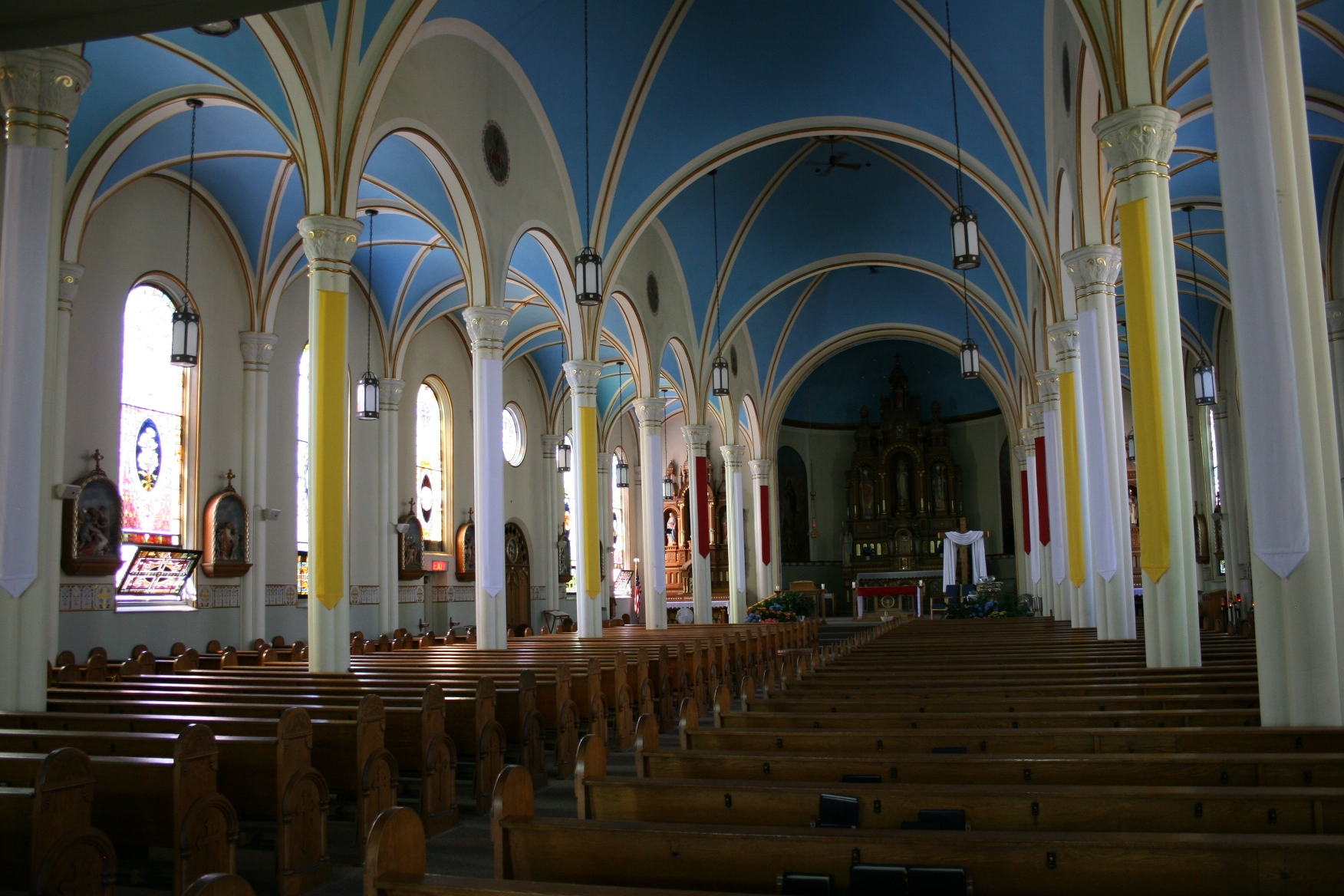
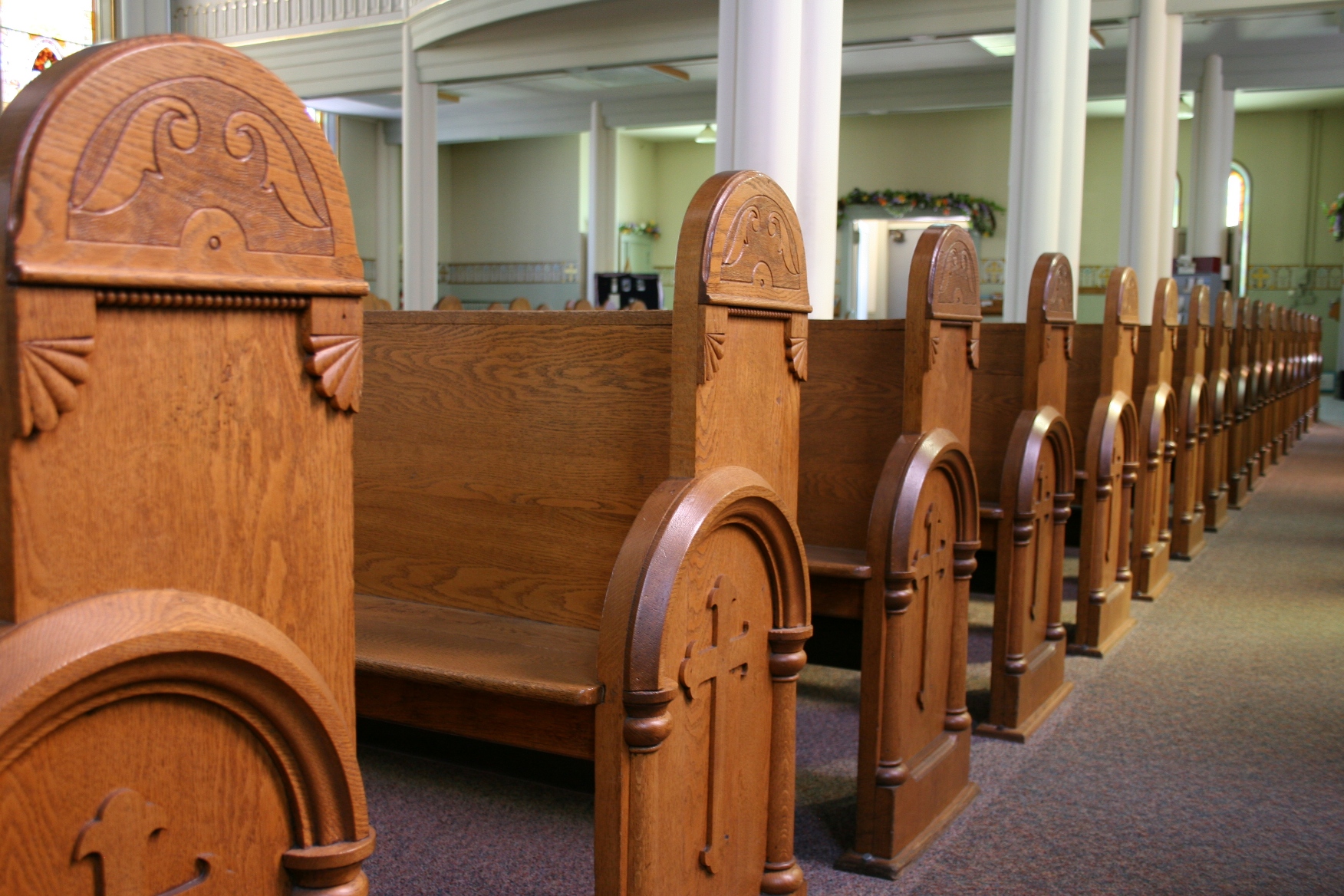
The cornflower blue of the arched ceiling. The pillars. Pews—endless carved pews stretching from the fonts of holy water to the steps leading to the altar.

A view from the back of St. Mary's Catholic Church looking toward the main altar.

I didn't even try to count the hand-carved pews that grace this church. But they are many.

A stone font holding holy water at the back of the church.

Such beauty. Such holiness. Such wonderment.

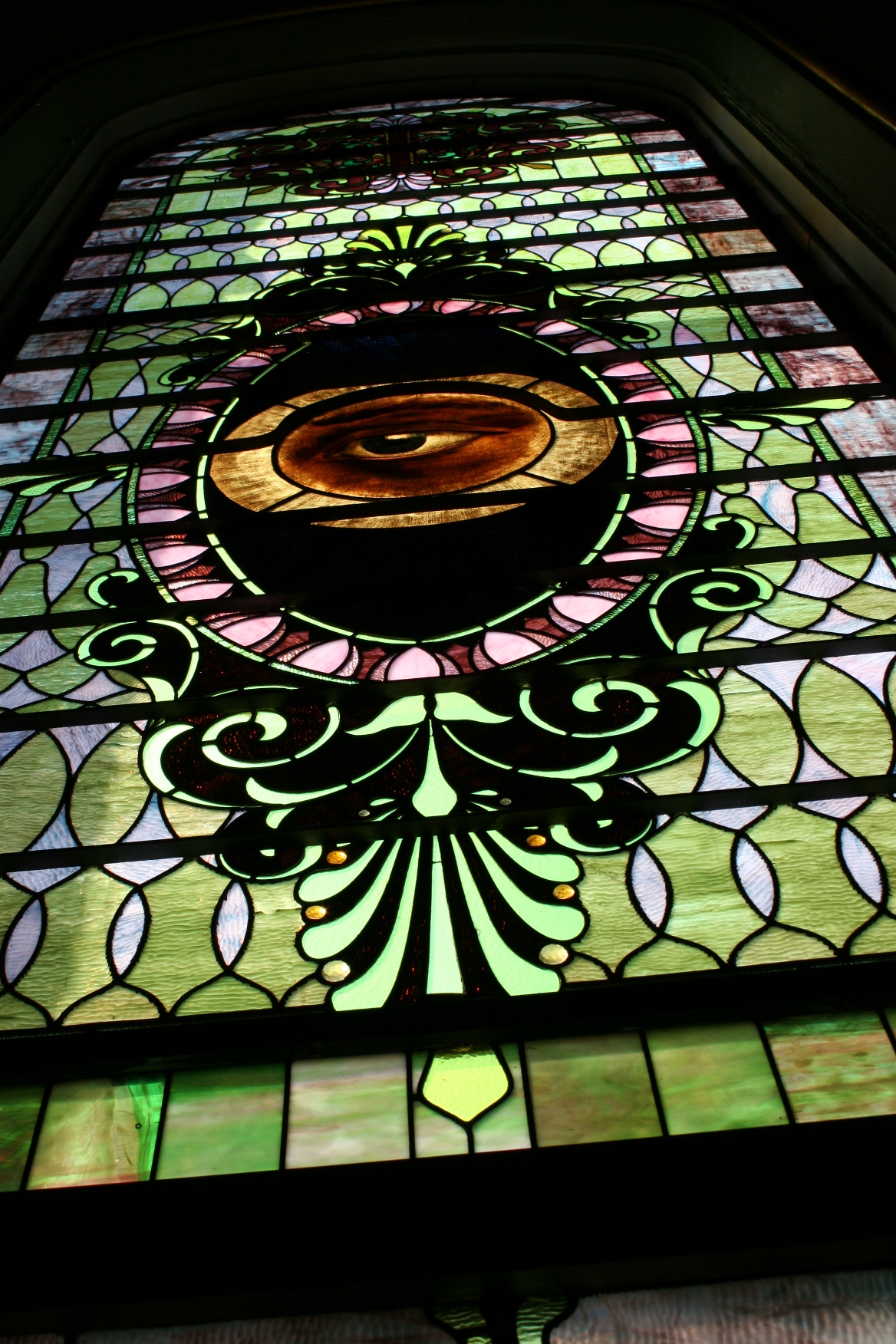
Opulent, stained glass windows bedecking the sanctuary like jewels on a crown.

One of too many stained glass windows to count.

Statues fit for the finest of museums.

This statue of Jesus and Mary sits at the back of the church.

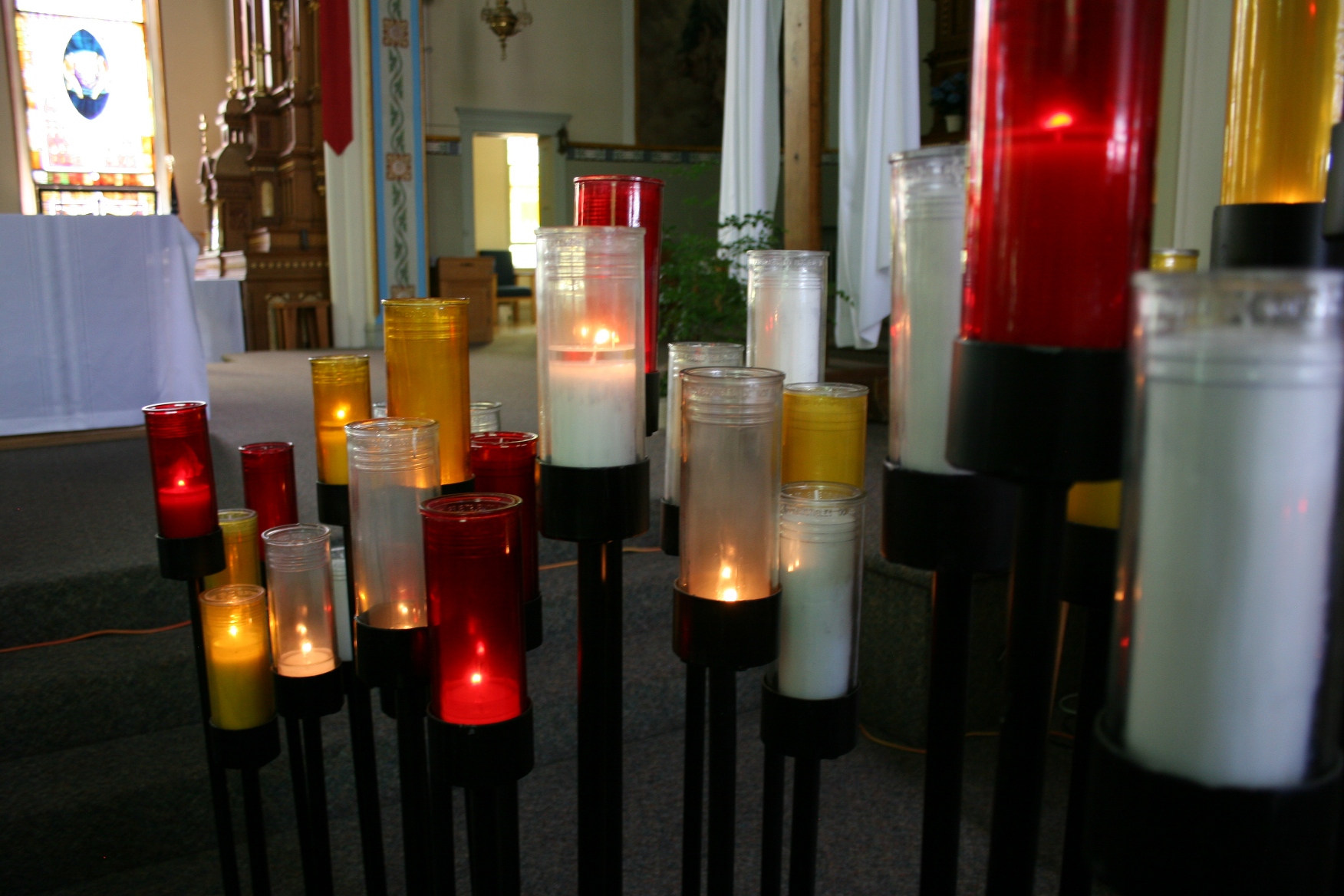
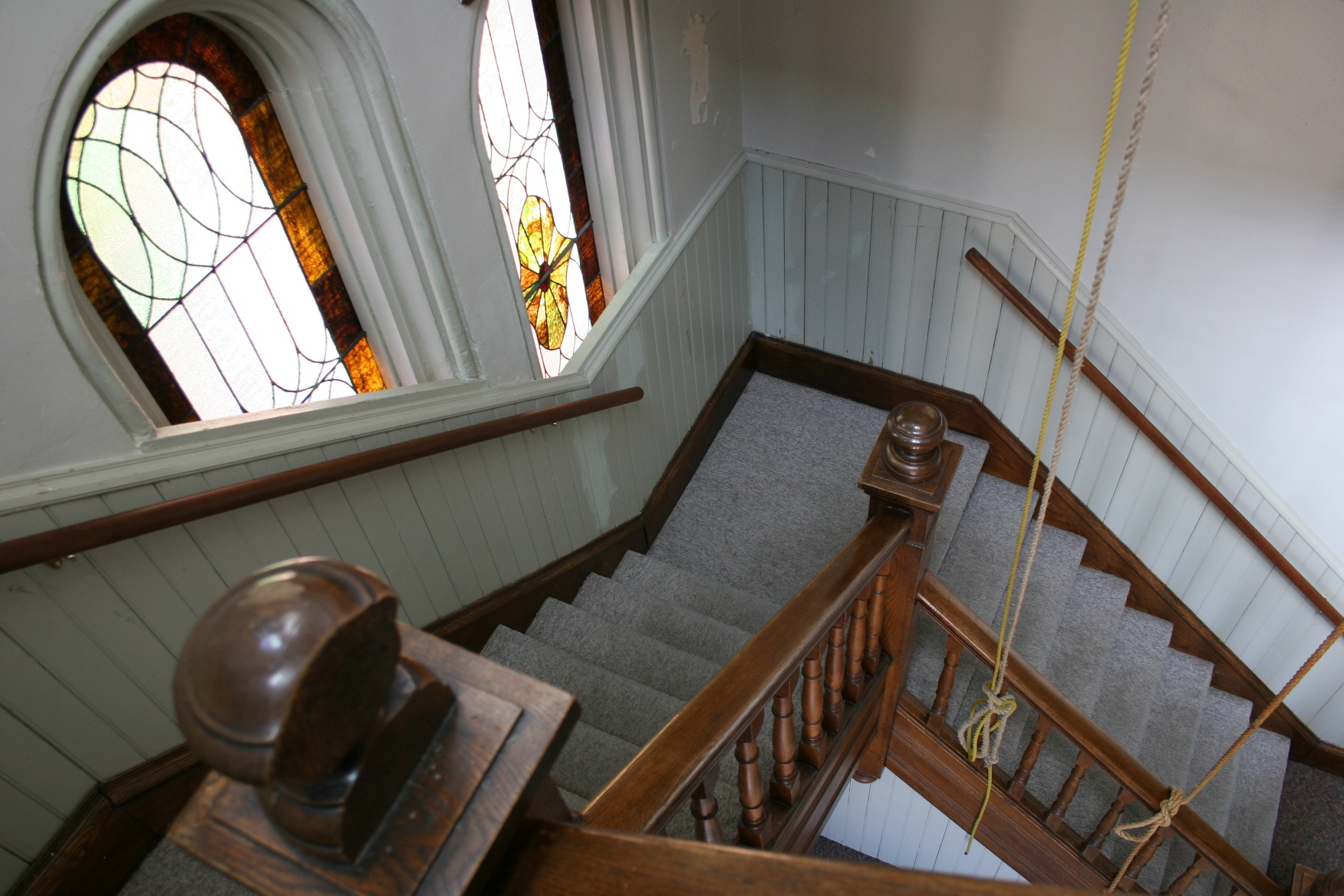
And then I moved, not sure which direction to go, wondering how I could possibly see every detail. Prayerful hands. Flickering candles. The frayed ends of the bell pull. Gold-leaf stenciled crosses. Worn wood. Angels in flight above the altar.

Clustered candles of prayer at St. Mary's.

Bell ropes dangle by the balcony stairway. Two stairways lead to the balcony.

A gold-leafed stenciled cross borders a side wall of the sanctuary.

My eyes swept across the Church of St. Mary’s, or St. Mary’s Catholic Church of Melrose. Choose the moniker you prefer.

The name and the denomination of this 1898 church mattered not to me. I cared only for the heavenly feel of this holy place.

How could I not be impressed by this multi-steepled house of worship next to the turkey plant and soaring above the landscape 100 miles northwest of the Twin Cities?

How many times, if you travel Interstate 94 in central Minnesota, have you noticed those steeples while zipping by Melrose, but never taken the time to drive into town? Placed on the National Register of Historic Places in 1993, this Catholic church is worth a stop if you appreciate craftsmanship, art, history and reverent beauty beyond belief.

The church rises above the land, defining Melrose.

The 113-year-old building was constructed by the parishioners of St. Boniface and renamed St. Mary’s when St. Boniface and St. Patrick’s parishes merged in 1958.

History runs deep here. You will see it in the hitching post out front, smell it in the incense, hear it in the creak of steps leading to the locked balcony.

And if you listen closely, you can almost hear the whispered prayers of those who have come here on bended knees to lift up their sorrows to the Lord.

#

I COULD NOT POSSIBLY share my many photos of St. Mary’s with you in one blog post. Please check back for more images in a future post.

© Copyright 2011 Audrey Kletscher Helbling