Minnesota Prairie Roots

Writing and photography by Audrey Kletscher Helbling
Fill the grain bin in Dennison October 6, 2011

Filed under: Uncategorized — Audrey Kletscher Helbling @ 7:05 AM
Tags: , , , , , , , , , , , ,

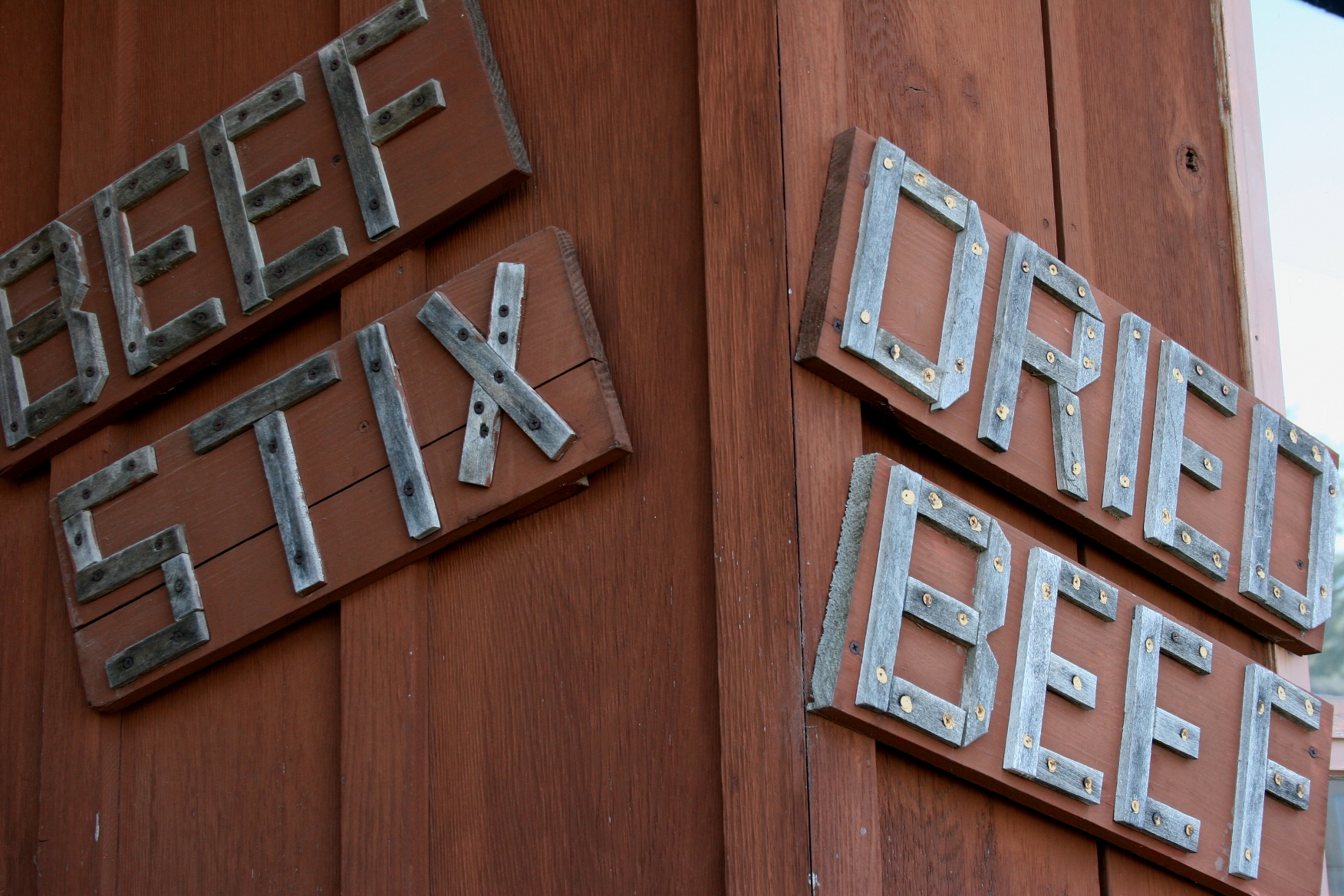
SO, TODAY WE’RE GOING to talk signs. Not just any signs, but those homemade signs you find in rural Minnesota.

Chances are, no matter where you live, you drive or walk by creative signage every day and don’t give it a second thought. The signs have simply become part of your landscape. You fail to notice either the messages or the art.

And, yes, signs fall into my definition of art.

But then one day an outsider like me comes to town. And I view your town with fresh eyes. I notice the details—the windows and doors, the wood and brick, and the signs that define your community.

Main Street in Dennison, from city hall north.

That is how I happened upon a unique fundraising sign in Dennison, a community of 168 which straddles the Rice/Goodhue county lines in southeastern Minnesota. My husband and I stopped in Dennison while on a Sunday afternoon drive to view the fall colors in the Sogn Valley area.

There, along Goodhue County Road 9, the main east-west road through town, I found this sign appropriately placed by the Farmers State Bank.

Fronting the road and the bank, this sign tracks contributions to the park fund.

Now, whoever dreamed up this sign deserves some type of recognition for effort and creativity.

Dennison is a farming community. The sign reflects that ag heritage with the half-full grain bin. You did notice the corn and the grain bin, right?

The goal is to fill this grain bin and build that park. Want to help? Contact the city or Farmers State Bank.

The promoters of this park project could have designed the typical graph or thermometer sign to track contributions. But, instead, the sign honors the rural heart of Dennison. You simply have to appreciate that type of creative thinking.

You also have to value the sense of community that defines towns like Dennison. Here folks work together to raise funds for a park and don’t/probably can’t rely on government.

Well done, Dennison, and may you get a good corn yield this fall. Enough to fill the bin.

CHECK BACK for another post featuring interesting signage I found in rural Minnesota.

CLICK HERE to see signs I photographed recently in downtown Janesville.

ALSO, CLICK HERE to see sign images taken a year ago in Pemberton.

© Copyright 2011 Audrey Kletscher Helbling
 

Meander west this weekend September 29, 2011

WEST WOULD BE my destination of choice this weekend.

Not west as in West. But west as in Fergus Falls or the Upper Minnesota River Valley.

Two arts events in western Minnesota this weekend will take you nearly into the Dakotas.

I’d like to be at the Lake Region Writers Network Conference at Minnesota State Community and Technical College in Fergus listening to author Leif Enger (of Peace Like a River and So Brave, Young and Handsome) talk about “place” in writing.

I’d like to be there picking up my copy of Lake Region Review, a literary magazine of regional writing. You see, two months ago I received this e-mail:

Dear Ms. Helbling,

The Editorial Board of Lake Region Review 2011, after careful consideration, has finalized selections for Lake Region Writers Network’s first literary magazine. While editors and readers were pleased with the number of submissions, the sheer volume of entries also made their choices much more difficult.

Regardless, the board is pleased to inform you that the work indicated below HAS BEEN ACCEPTED WITH REVISION for publication in Lake Region Review 2011, which will be released at the LRWN Oct. 1 writing conference at M-State in Fergus Falls:…

But I won’t be in Fergus on Saturday at the conference. It’s a long drive there from Faribault and I have this room to paint and…

…not only that, but back in June my husband and I traveled the 200 miles to Fergus Falls to see my winning entry in the spring Roadside Poetry competition splashed across four billboards near the college.

The last of four billboards featuring my Roadside Poetry spring poem.

So I’ll wait for the LRWN folks to send me a copy of their literary magazine, which I’m mighty pleased to be a part of because, well, any time you win a highly-competitive contest judged by others of literary talent, it’s an honor.

I’LL HAVE TO WAIT until another year also to attend an arts event that’s long been on my list of “things I want to do.” That’s Meander—Upper Minnesota River Art Crawl. Thirty-three art studios featuring the work of 45 artists will be open during a free self-guided tour that begins Friday (2 p.m. – 6 p.m.), continues into Saturday (9 a.m. – 6 p.m.) and ends Sunday (9 a.m.– 4 p.m.).

This event is happening in the Minnesota River Valley region of western Minnesota near the towns of Ortonville, Appleton, Madison, Milan, Dawson, Montevideo and Granite Falls. It’s beautiful land—prairie and fields, rock and woods, rivers, small towns, farms…

The region seems a mecca for artists, which doesn’t at all surprise me given I’m a southwestern Minnesota native. Something about this land fosters creativity. Remember my earlier mention of Leif Enger and his focus on place? At the writers’ conference in Fergus Falls, he’ll “look at how geography of a tale infuses it with gravity, wit and credibility.”

I suspect place, as much as anything, influences the photography, paintings, pottery, fiber art, woodworking and other art created by those artists featured in the Meander.

Meander featured artist Kerry Kolke-Bonk of Appleton created the painting, "What goes around comes around," to promote this year's art tour.

According to economic impact information I received from Kristi Fernholz, Community Development Planner for the Upper Minnesota Valley Regional Development Commission, the Meander brings in an average of $1,652 in art sales per artist (2010 and 2009 statistics).

Last year, art sales during Meander weekend totaled $69,395. In addition, attendees infuse the area with more money spent on food, lodging and other shopping.

I won’t be one of those shoppers this year. But you could be. If you have an open schedule this weekend, consider a trip west, as in western Minnesota.

#

FYI: Click here for more information about Meander—Upper Minnesota River Art Crawl.

#

Click here for more information about the Lake Region Writers Network. If you would like to purchase a copy of the first-ever Lake Region Review with my poem (sorry, not going to yet divulge its title), send $10 plus $3 for shipping and handling to:

Lake Region Writers Network, P.O. Box 356, Battle Lake, MN. 56515

#

Click here for more information about Roadside Poetry.

© Text and photos copyright 2011 Audrey Kletscher Helbling
 

God’s beauty blooms in Richard’s art September 18, 2011

I HAVE NOT MET Richard Vilendrer, only spoken with him briefly on the phone.

Yet, I feel a connection to this 72-year-old Faribault man, this artist who creates art for the pure joy of doing so. I understand that. It is the same reason I write and take photos for this blog.

You can see that joy in Richard’s art, which I discovered Saturday morning at the Faribault Farmer’s Market. I had passed only a few vendors’ booths—laden with the typical fresh produce, flowers and baked goods you would expect to find in this venue—when I noticed the pen-and-ink and colored pencil drawings vended by Carol Vilendrer, Richard’s wife of 35 years.

I stopped and just stood there. And it flashed through my mind that this Christian-themed art would be a good fit for Christian greeting cards. And when I looked further, I saw that Richard had already made cards. But I write greeting card verses for an Indiana-based publisher and I asked Carol then and there if I could direct my editor to Richard’s work. So I am. I don’t know if this will go anywhere; I have to try, though.

There’s a certain passion in Richard’s art and you can sense that when you speak with the man. He doesn’t do this for the money—although he’s sold some pieces—but for the pure enjoyment of creating art.

Since grade school this former Faribault Regional Center employee, who worked with handicapped children until the center closed, has put pencil to paper. As a youth, when he should have been listening in English class, he was instead inspired by textbook images—of Indians and of soldiers in helmets and of airplanes—to duplicate those drawings.

Scripture and Christian songs inspire Richard.

Today words from a song heard on Twin Cities-based Christian radio station KTIS, or words from Scripture or a found feather on a nature walk inspire him to first draw in pencil, then go over the pencil with ink and finally fill in with colored pencil.

He prefers to draw small, detailed subjects like his hand or a feather or a maple leaf. Yet, he’s also drawn John Deere tractors and buildings and classic cars.

Richard uses a technique called cross hatching—to perfect shading—by using a ball point pen to draw lines close together in one direction and then crosses in an opposite direction. He learned that in high school. Mostly, though, he’s self-taught, without formal training. He calls his artistic skills a “God-given talent.”

This man of faith has used that gift from God to create artwork for fundraisers at his church, Divine Mercy in Faribault.

A year ago, he suffered a stroke. But even in that he sees the blessing—the stroke affected his entire right side, not his left. Richard, the artist, is left-handed.

Nature and faith inspire his detailed art.

A pen-and-ink drawing of a building at the former Faribault Regional Center where Richard worked.

St. Lawrence Church in Faribault where Richard and Carol Vilendrer were married 35 years ago this coming October 1.

IF YOU ARE INTERESTED in purchasing Richard’s art or learning more about him, submit your contact information (which I will not publish) in a comment and I will pass that along to Richard.

PLEASE NOTE THAT the photos in this post are not 100 percent accurate to the true colors of Richard’s work. His drawings were wrapped in plastic, which filtered the colors and which created some glare. I edited each image somewhat to overcome those challenges.

© Copyright 2011 Audrey Kletscher Helbling
 

We’re not hyphenated Americans… September 12, 2011

Xafsa, age 5

THEY ARE THE FACES, the hands, the feet, the voices of a new Faribault. Not the community of only French or Germans, Scandinavians or whatever ethnic groups shaped and defined this southeastern Minnesota city for so many years.

Today the face of Faribault is changing with one-fifth of the population identifying itself as non-white in the 2010 U.S. Census. Most of those minorities are Latinos and Somalis, “drawn by the opportunity to live in a small town and work in food processing plants, especially meat-packing plants,” according to a recent research report, “After the Welcome Center: Renewing Conversations about Immigration and Diversity in Faribault,” conducted by students and staff with the St. Olaf College Political Science Department. To read that report, follow this link:

http://www.stolaf.edu/services/cel/students/CURI_Immigration.html

I can’t possibly attempt to summarize the contents of that report here. But it is packed with information that should be a must-read for every member of my community. We can all learn a thing or two or ten or 20 from this research project.

But mostly we can learn from meeting our neighbors at events like the International Festival held Saturday in Faribault’s Central Park. I’ve attended this meld of ethnic cultures several times already and each time enjoyed interacting with my neighbors whose skin color differs from my own.

That all sounds nice, politically-correct, and exactly what you’d expect me to write in a public venue like this blog. But I am sincere in my appreciation to the volunteer organizers of the International Festival and to those who participate. We just need more Caucasians to attend.

Several Latinos lead in singing of Mexico's national anthem on the band shell stage.

From the food and merchandise vendors to the musicians and everyone in between, I had ample opportunity to educate myself about Mexico, El Salvador, Guatemala, Honduras, Somalia, Holland and Norway. My husband and I sampled ethnic foods from five vendors.

We sampled pupusas right off the griddle.

My husband and I tried Guatemalan chuchitos-- chicken, corn and salsa wrapped in a corn husk.

Faribault resident and one of the organizers, Peter van Sluis a Dutch citizen who has lived in the U.S. for 25 years, says the festival offers “a chance to mingle with different cultures.”

For me that mingling was most evident when children gathered under shade trees just south of the Central Park band shell to break piñatas. It didn’t matter if their skin was the beautiful color of sun-baked clay, or a nearly-black deep brown, or pale white. They were all kids, just kids, waiting to whack that swaying treasure-trove apart and then scramble for candy.

After the pinata was broken, the kids shared the candy.

While waiting for the piñata busting, I made a point of scanning the adult faces. I saw smiles—smiles nearly as wide as the brimmed hat worn by the man donning an El Salvador T-shirt. That’s an exaggeration, but you get my point. Viewing kids having fun has no color barriers.

Riyaam, 16

I would be remiss, however, if I didn’t mention my chat with Owatonna High School student Riyaam, a stunning Somali teen who was peddling shoes, skirts and other merchandise at a table. Well-spoken and seemingly mature beyond her 16 years, Riyaam and I talked about clashes between whites and Somalis at OHS which she says has led to a new policy of basically, “you fight, you’re out.”

She told me how the angry voice of a single white student, who declared, “Somalis don’t belong here,” triggered those racial tensions.

As she spoke, her voice became more agitated, edged with emotion. I wanted to reach across the table and hug her and I wish now that I had.

But I didn’t and it is too late for that now, but not too late to encourage Faribault residents to make the effort to meet the Somalis, the Sudanese, the Latinos and other immigrants who now live among us. It is easy to dismiss and stereotype an ethnic group if you’ve never made the effort to personally meet them individually.

A member of the Faribault-based band Circles and Squares, of which two members performed at Saturday’s International Festival, nicely summarized, I thought, the goal of the gathering: “Remember, we’re not hyphenated Americans. We’re friends.”

Well, said.

National flag ribbons were tied to trees in Central Park during the celebration.

Vendors peddled their wares at the festival.

Shoes from Somalia on display at Riyaam's table.

A woman from El Salvador cooked at her food both.

Sanji, 18 months, plays with toys in the kids' activity area of the fest.

Hoop maker, performer and teacher Adrienne Lee teaches a Girl Scout the art of hoop dancing. The Girl Scouts were among the non-profit groups with booths at the festival.

A young girl's henna stained foot.

Colorful skirts for sale at Riyaam's booth.

THE ST. OLAF RESEARCH, which included interviews with 39 Faribault community members, states: “Most interviewees agree that Faribault’s immigrant and native-born communities operate alongside each other; coexisting peacefully, but not acting as a single integrated community.”

Exactly.

The report continues: “They do not agree about what should be done to unite these groups.

“We found Faribault leaders thus enmeshed in the long-standing American debate about which people ought to change and how much.”

A colorful, detailed wall hanging/blanket represented El Salvador at one booth.

FYI: International Festival, Faribault, a recently-formed non-profit, has set its number one goal “to promote understanding of different cultures by organizing an annual event,” says Peter van Sluis. Secondly, the group wants to raise money and assist other non-profits.

© Copyright 2011 Audrey Kletscher Helbling
 

Visiting down-home Indian Island Winery August 30, 2011

This building complex houses one of southern Minnesota's newest wineries.

IF YOU DIDN’T KNOW, you likely would think, from a distance, that the sprawling pole shed along Waseca/Blue Earth County Road 37 several miles south of Smith Mills is just another farm building planted among acres and acres of soybean and corn fields.

But you would be wrong. This is home to Indian Island Winery, among southern Minnesota’s newest wineries.

Minnesota artist Jim Hansel created the artwork, "Native Lands," for Indian Island Winery. Considered one of America's premier wildlife, nature and landscape artists, Hansel is legally blind.

Sunday afternoon my husband and I drove west from our Faribault home to check out the winery with the intriguing name, drawn from the Native Americans who once used this land—at one time nearly surrounded by water—as their summer hunting camp.

Inside the winery, you’ll see the artifacts, found on this property, to back up the historical context of this place. And, no, this site was not a Native American burial grounds.

Indian artifacts found on-site and displayed inside the winery.

Tour the winery and/or the vineyard and the Winter family will fill you in on the grape-growing and harvesting and wine-making process. We opted in on the winery tour, out on the vineyard tour given I wanted to photograph the vineyard and didn’t want to hold up a whole trolley full of tourists.

Instead, Tom Winter, who is a partner in the business along with his parents, Ray and Lisa, his wife Angela, and his sister Angie, invited us to follow the trolley out to the grape fields and explore on our own.

Visitors experience the country as they ride past soybean fields on the way to the vineyard.

That no qualms invitation warmed me up to the Winter family right then and there. And, if I was to choose a phrase defining our visit to Indian Island, that would be “down-home, country friendly.”

From Tom’s broad smile, to his and Angela’s adorable 7-month-old son to the charming college student tending the wine-tasting bar to the bucolic setting, everything about Indian Island speaks  “Welcome, we’re happy to have you here in this place we love.”

And clearly the Winters love this land, and each other, as they reside on various building sites within view of the winery and vineyards. “Close, but not too close,” Tom laughs, adding that a cousin also lives nearby.

Indian Island's vineyard covers 13 acres. Here's a view between rows of plants.

Clusters of grapes hang heavy on vines awaiting the harvest.

Grape leaves arc above the rows.

I don't know grape types, but my husband and I found many varieties in the vineyard.

Masses of grapes and individual grapes made for some lovely photos.

The thing we noticed about the vineyard grapes is that they don't look at all like the types of larger grapes sold in grocery store produce departments.

Tom Winter warned us about the LP-fueled cannon before we headed for the vineyard. The cannon "fires" periodically to scare away the birds. Likewise, a loudspeaker system intertwined among the grapes broadcasts the voices of squawking birds, all to keep real birds away from the fruit.

During the winery tour, Tom says several times, “My sister’s the winemaker.” Even though Angie Winter makes the wine, this family works together, from Angela keeping the books to Tom pinch-hitting as a tour guide when he isn’t working in other facets of the winery to… Earlier this year, the Winters were named Waseca County’s Farm Family of the Year.

Visitors learn about the press, filter, crusher and other equipment in the wine-making room.

A box full of corks in the wine-making section of the business.

Together, after only a few years in the wine business, the Winters have accumulated a long list of awards—the most recent the coveted Minnesota Governor’s Cup (aka gold medal) in the 2011 International Cold Climate Wine Competition for their Frontenac Rosé.

The Winters’ wine beat out 250 other entries to take the top honors, Ray Winter says.

Winner of the 2011 Governor's Cup, Frontenac Rose.

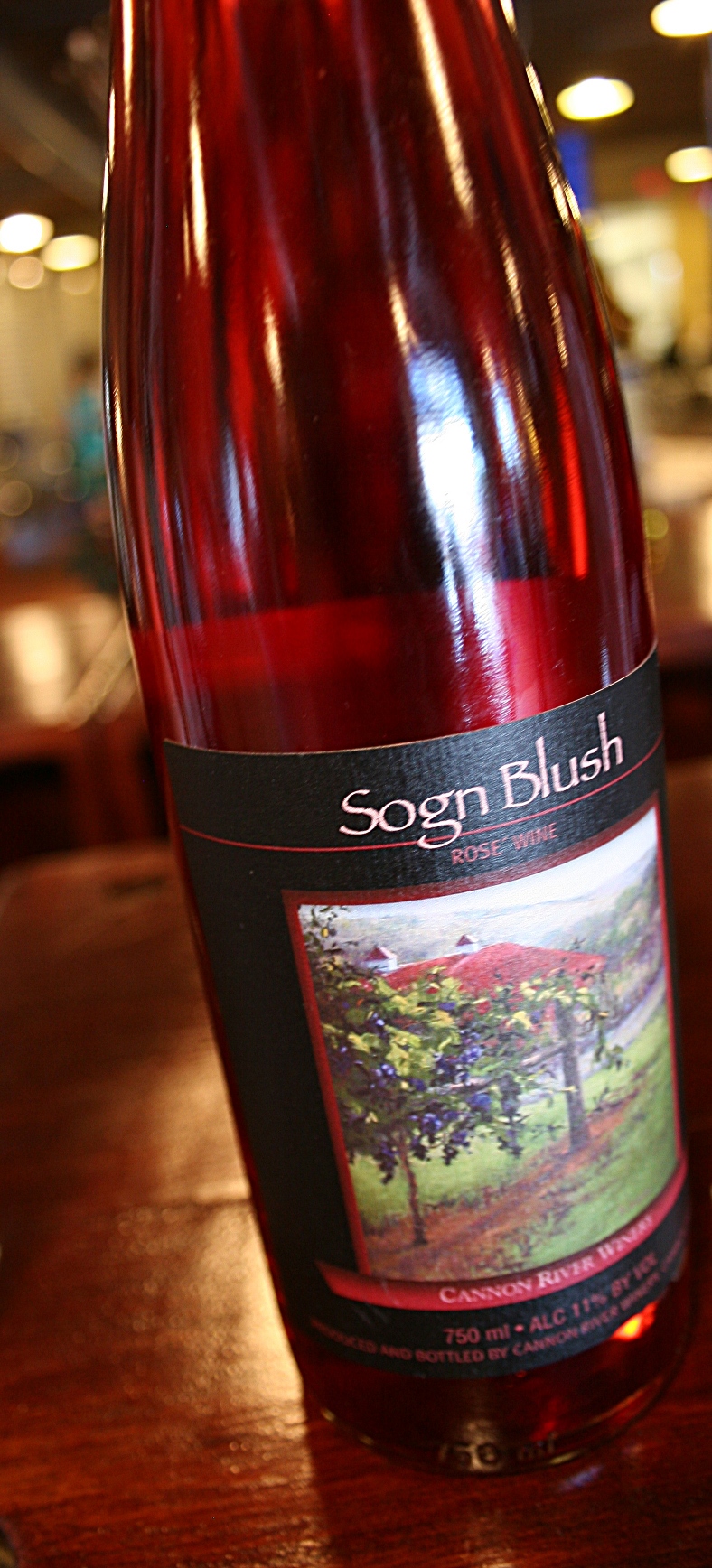
Inside the machine shed style building, which looks nothing like a storage place for farm machinery, you can (for $5 and you get to keep an Indian Island wine glass) sample four pre-selected wines and three others at the wine bar. You’ll find Maiden Blush, this year’s bestseller, and wines with names like Dreamcatcher, Prairie Wind and St. Pepin.

You can sample wines (17 are on the current wine-tasting list) and/or enjoy a meal inside or outside the winery.

One of the many winery offerings: St. Croix, a semi-dry red table wine.

Grab a bottle of wine from the vast selection at Indian Island Winery.

If all goes well with this year’s crop, Indian Island plans to offer wines made from only Minnesota-grown grapes. Most grapes will come from the family’s own vineyards with some also coming from local contractors.

For now, Indian Island makes only grape wine. I have yet to sample any, although my husband and I picked up bottles of Maiden Blush and Frontenac Rosé.

The bartender suggested we return: “Come back in the evening, have a glass of wine and watch the sun set.”

That sounds like a plan to me, to this former southern Minnesota prairie farm girl who appreciates nothing more than the sun slipping below the horizon in a serene setting like that at Indian Island Winery.

I can picture myself sitting on the patio at Indian Island, sipping wine and watching the sun set.

FYI: Indian Island Winery is among places featured in the “Minnesota River Sips of History” wine, beer and history trail tour. Click here for more information on this tour that will take you to places like August Schell Brewing Company in New Ulm, Fieldstone Vineyards in Redwood Falls, the historic R.D. Hubbard House in Mankato, Gilfillan Estates between Morgan and Redwood Falls, and more. The sites are hosting special events the weekend of October 21 – 23.

Indian Island is among about 30 wineries in Minnesota and is located southeast of Mankato. The business aims to use only Minnesota grapes, most grown on-site.

FYI: Click here to learn more about artist Jim Hansel who created the signature artwork that graces Indian Island wine labels.

© Copyright 2011 Audrey Kletscher Helbling


Discovering a Monet painting near St. Charles August 25, 2011

A section of downtown St. Charles, Minnesota, on a recent summer afternoon.

A quilt made by local southeastern Minnesota Amish and sold at the Amish Market Square.

MID-AFTERNOON ON A TUESDAY and we are dining at the Whitewater Café in downtown St. Charles.

We’ve driven to this southeastern Minnesota community of 3,300, sandwiched between Interstate 90 and U.S. Highway 14, because we’re meandering home from a family vacation to Wisconsin.

I’ve specifically placed St. Charles on our route back to Faribault for two reasons: the Amish and the gladiolus.

Before dining at the fishing-themed Whitewater Café in downtown, we stopped at Amish Market Square just off I-90 where you can gas up, eat, buy products handmade by the Amish and pose for a photo in an Amish buggy. While I admired the stunning hand-stitched quilts—priced around $1,500—and the wood cutting boards and more, I didn’t climb into that buggy for a photo. I wanted authentic Amish, not tourist Amish.

That would come later, after lunch downtown, next to “The Table of Knowledge,” aka a group of local guys who gather each morning and afternoon to shoot the breeze, drink coffee and, when asked, give directions to the gladiolus fields and Amish farms.

I didn’t get any of their names, but one of those friendly club members—and I use that term loosely here—found a Winona County map in the restaurant and highlighted a route that would take us southeast of St. Charles past Amish farms and then back north to the glad field just south of Utica. He praised the hardworking Amish, two of whom were working on a fence on his farm at that very moment. He picks them up in the morning, then drives them home at the end of the work day.

These friendly locals at the Whitewater Cafe gave us directions to the glad field and Amish farms.

We left the restaurant, opting to view the flower field first by following Highway 14 east of St. Charles, turning south onto Winona County Road 33 into Utica until we found the rows of gladiolus just outside of town. It should be noted that the flower-growing location changes annually to keep the plants disease-free. Last year the glads were grown next to St. Charles, so the knowledgeable locals told us.

Up until that moment, I’d thought mostly of gladiolus as “funeral flowers,” a moniker that has stuck for decades based on my memories of glads at every funeral I ever attended as a child. Interesting how you associate something with an impressionable event, isn’t it?

As we slowed the car to get an overview of the gladiolus in the field below, I felt as if I was viewing a painting by Claude Monet. Soft pinks and purples and blues—punctuated by splashes of brilliant red, and broken by lines of green, tight-clasped buds and foliage—created a surreal scene against the backdrop of corn, farm places, sky and a distant tree line.

A view of the gladiolus field just south of Utica along Winona County Road 33.

This is as close as I got to the glads, standing along the shoulder of the road photographing them.

I hoped for a close-up look, but found no signage indicating we could stop at a next-door building site to view or purchase flowers.

And so we drove on, further south and then west past several Amish farms—past the horses and wagons, the laundry on clotheslines, the shocks in fields and the Amish men throwing bundles high atop a wagon, their arm muscles bulging from seasons of labor.

An Amish farm site southeast of St. Charles.

We came upon this pastoral scene south of St. Charles, where the Amish were pitching bundles onto wagons.

Heading back into St. Charles, I wished I could spend more time here, in this town promoted on its website as “The Gateway to the Whitewater Valley,” and made world-famous by Carl Fischer, now deceased. He was the world’s leading hybridizer of new and distinctive gladiolus and established Noweta Gardens in 1945.

Each August this Minnesota town celebrates Gladiolus Days, which is happening right now and continues through Sunday, August 28. For a schedule of events, click here.

I fully intend to return some day to experience this festival, to this place where, if you look, you will see southeastern Minnesota’s version of a Monet painting.

The gladiolus field before me could have been a Claude Monet painting.

MORE PHOTOS OF ST. CHARLES:

The main road through downtown St. Charles, the "Gateway to the Whitewater Valley."

I discovered these weathered doors, found them charming, so photographed them in downtown St. Charles.

More downtown St. Charles businesses.

The post office and a pizza place along St. Charles' main drag.

I refused my husband's offer to photograph me in this Amish buggy at the Amish Market Square just off I-90.

© Copyright 2011 Audrey Kletscher Helbling
 

Art, history and community meld at Faribault car cruise-in August 22, 2011

I CAN’T DIFFERENTIATE a Ford from a Chevy. But I can distinguish a Mustang from a Cadillac.

You needn’t know cars, however, to appreciate a car cruise-in like the one I attended Friday evening in the 400 block of Central Avenue in historic downtown Faribault. The monthly cruises are new to my community and, if I’m correct, Friday’s show marked the first this summer that hasn’t been rained out.

Downtown Faribault Car Cruise Night, looking southeast on Central Avenue.

Just several of the many vintage vehicles, these parked by a Mexican store and bakery.

For me, a car cruise-in is all about art, history, community and having a good time. However, for my automotive machinist husband, the one who got me interested in these shows, it would be mostly about the cars or trucks. He’s my go-to guy whenever I question the make, model or year of any vehicle on display, which is often.

While he’s more interested in what’s under the hood or in the overall design, I appreciate the hood ornaments, wheel covers, taillights, the curve of metal—the details that, to me, represent, mini artscapes.

I switched this photo to black-and-white to show off the hood ornament, a work of art.

A 1948 Dodge sported this artsy license plate.

Call this art, or humor, Ron Lehnen posed this "Halloween Rat" under the hood of his 1970 Chevrolet pick-up truck with the "rat motor."

On Friday, in Faribault, I also appreciated the art of neon lights flashing in storefront windows, the slant of sun against brick during that magical hour around sunset, and clouds that painted the sky on a perfect summer evening of temps in the low to mid 70s.

The setting sun cast a lovely light on the historic Hotel Faribault.

Merchandise and flashing neon lights created a colorful visual at a Mexican store in the car cruise block.

Toss in period tunes and music by the likes of Johnny Cash, my favorite country western singer, played on-site by local radio station Power 96, and the mood was set for hanging out and chatting it up with folks I hadn’t seen in awhile.

Car cruise attendees visited with one another, creating a sense of community.

Aaron shows his 6-year-old daughter, Lexi, the interior of a vintage car.

Ted told me about his new grandson, Jaxson. Kathy told me about the need for rain in the Courtland area, where my maternal roots lie and where her husband had traveled that day to farm with his brother. Lowell told me about the $8.99 steak dinner he’d just enjoyed down the street at the Signature Bar and Grill.

Food was the only item missing from cruise night, although I could have stepped into the Mexican bakery or walked to a restaurant along Central Avenue if I had really wanted something to eat. Maybe, eventually, organizers will encourage places like the bakery or nearby restaurants to set up food stands outside their businesses.

The next Downtown Faribault Car Cruise Night is set for 6 p.m. – 10 p.m. Friday, September 16. However, I’d advise coming well before 10 p.m. as the event pretty much ended around 9 p.m.

The 1970 Chevrolet pick-up with the rat motor. My husband owned an orange truck like his, only a year newer or older, I can't recall which. A steer wandered onto a roadway. He hit it and that was the end of his pick-up truck, many years before I met him. So I've only heard the story...never seen the truck.

Lowell and Deb Melchert leave the cruise in their 1947 Chevrolet as the event winds down.

YOU MIGHT ALSO CHECK out Woody’s Hump Day Cruise In on Wednesday evenings in downtown West Concord. Two remain, including one this Wednesday, August 24, and also on September 7. That cruise-in runs from 5:30 p.m. – 9 p.m., or until dark.

Hastings also hosts the Historic Hastings Saturday Night Cruise-in from 5 p.m. – 9 p.m. with the remaining events set for September 3 and 17 and October 1.

© Copyright 2011 Audrey Kletscher Helbling
 

Poetry & more in Paul Bunyan land August 18, 2011

The lake side of the Hackensack Lending Library. To the left stands Lucette Diana Kensack..

Lucette Diana Kensack

SEVERAL SUMMERS AGO while vacationing in northern Minnesota, my family stopped in Hackensack, 50 miles north of Brainerd. The initial draw to this town of 285 was the 17-foot tall statue of Paul Bunyan’s sweetheart, Lucette Diana Kensack. I appreciate kitschy roadside art. What can I say?

Two other discoveries, however, trumped seeing Lucette. A stone’s throw from Lucette, along the shores of Birch Lake, sits the cutest log cabin—a Works Progress Administration project and today home of the Hackensack Lending Library.

And just down the street from Lucette and the library, I found the sweetest pink fairy tale cottage.

Those small-town treasures marked my introduction to Hackensack.

Now, fast forward to last summer. I wasn’t back in Hack, not physically anyway. Rather my poetry was among poems displayed at the town’s annual Northwoods Art and Book Festival. During that event, the featured poets are invited to read their poetry. Fest-goers can also vote for their favorites with six poems selected for “Popular Choice” awards. Six poems are also recognized as “Poems of Merit.” All of the original and unpublished poems are posted without author names attached.

I didn’t attend last year, didn’t win and didn’t deserve to win. My poetry wasn’t worthy of an award.

This year my poetry is back at the Northwoods Festival set for this Saturday, August 20, and I’m more confident that I’ve actually written poems that could win an award. Oh, I’d love to tell you which poem is mine (or it could be both poems that I submitted; I haven’t been told). But I won’t unfairly sway the voting. Suffice to say my rural background shines in my writing.

If Hackensack wasn’t such a long drive from Faribault, I’d be there taking in the poetry, the art, the music, the book-signings, the food. However, if you’re in the Brainerd lakes area or parts north on Saturday, check out the Northwoods Art and Book Festival from 9 a.m. – 3 p.m. and then tell me all about it by submitting a comment.

Voting for the “Popular Choice” awards begins at 9 a.m. and closes at 1 p.m.

If you’re already thinking, “Audrey, I don’t like poetry,” rethink your thinking. I promise you that my poetry rates as down-to-earth, understandable and not at all stuffy.

This whole concept of getting poetry out to the public via a display like the one in Hackensack pleases me. Just like the Roadside Poetry billboards in Fergus Falls. I was fortunate enough to win the spring competition and have my four-line poem plastered across four billboards there.

These new poetry venues, and the increasingly popular sidewalk poetry in cities like St. Paul, Mankato and now Northfield, are bringing poetry to the people. That’s a good thing because, in reality, how many of us actually pick up a book of poetry for leisure reading?

Minnesota poet Todd Boss and designer/animator Angella Kassube are also making poetry even more appealing by utilizing visuals in their acclaimed motion poems. Click here to read some of those.

Poetry has certainly evolved through the years, a necessity to keep writers interested in writing it and readers interested in reading it.

Professionally, I’ve only begun to unfold my wings as a poet. Even publicly calling myself a “poet” still sounds foreign to my ears. But with publication in two magazines and four anthologies, soon to be five (The Talking Stick, Volume 20, published by Park Rapids-based Jackpine Writers’ Bloc); winning the spring 2011 Roadside Poetry competition; inclusion at the Hackensack festival; and recent notification that one of my poems will publish in the Lake Region Writers Network’s first literary magazine, I finally feel worthy of the title “poet.”

The last of four billboards featuring my Roadside Poetry spring poem.

The sweet fairy tale house in Hackensack, located near Lucette and the park and photographed in 2009.

"Curve around the corner/You are free/To change directions/Or your mind," reads this poem by Marlys Neufeld of Hanska and imprinted in a Mankato sidewalk.

HOW DO YOU FEEL about poetry? Do you read it? Why or why not?

© Copyright 2011 Audrey Kletscher Helbling
 

Inside the Hamilton Wood Type Museum & the Target connection August 17, 2011

A picturesque view of Two Rivers, Wisconsin, as seen from the historic Rogers Street Fishing Village.

We treated ourselves to ice cream sundaes after the museum visit.

IF NOT FOR MY SECOND DAUGHTER’S neighbor mentioning a day trip to Two Rivers, Wisconsin, I might never have discovered the Hamilton Wood Type & Printing Museum or its connection to Minnesota-based Target.

The retailing giant collaborated with the museum on a recently-released fall Vintage Varsity collection promoted as “Cool Never Fades.”

With vintage so in vogue right now, Target definitely found the right place for designers to authenticate this new line. Hamilton made wood type from 1880-1985 and boasts a collection of 1.5 million pieces, the largest in the world. Target dipped into that collection to create graphics for the Vintage Varsity line.

The Target connection, however, wasn’t my reason for visiting Two Rivers, a city of 13,000 just south of Door County. Rather, Lake Michigan drew me here on a recent Sunday when my husband, son and I were visiting our daughter Miranda at her Appleton home 50 miles to the west.

My family can assure you that fashion wouldn’t draw me anywhere. But wood type would.

So, when I planned our day trip from Appleton to Two Rivers, Hamilton Wood Type ranked high on my must-see list, right after Lake Michigan. A promise to the teenage son of ice cream afterward at the historic Washington House, just across the street from the museum, kept him from complaining too much about my museum meandering. Interestingly enough, the sundae originated in Two Rivers in 1881.

Had I opted to take the official Hamilton tour, I likely would have learned much more about Hamilton Manufacturing Company and the museum, which also includes a collection of 1930s – 1970s advertising cuts, wood type and Linotype equipment, tools and more. The manufacturing company, which once made medical office furniture, appliances and more, is still in business today producing steel lab equipment.

Hamilton manufactured the first gas-powered clothes dryers.

The museum is a self-supporting, working museum where artists and designers and others get hands-on experience in wood type printing and where custom printing is done, according to a Minneapolis woman who was printing at the museum on the day I visited.

In all honesty, Hamilton’s historical details didn’t interest me. Rather, I was here because of my decades-earlier connection to Linotype and because of my profession. During my first job out of college in 1978, I worked as a reporter at The Gaylord Hub, a small-town weekly newspaper that still used hot metal type to create auction bills and other custom printing. At the time, I failed to appreciate this fading art. Rather, I found the constant clack-clack-clack of the vintage machines bothersome, especially when conducting phone interviews.

Today my attitude has changed. I appreciate printing as an art. I took that perspective to the Hamilton Wood Type & Printing Museum and knew, even before I stepped inside the 1927 building, that my focus would be visual.

The Hamilton complex of buildings covers blocks.

The building exterior features aesthetically appealing letters and punctuation.

My eyes swept across the nothing-fancy, industrial space filled with letters in more fonts and sizes than I could ever imagine. Posters. Colors. Graphics. Drawers upon drawers upon drawers that I wished I could pull open. Machines. Cement floors and brick walls. Jumbled pieces of wood and smeared paint cans, and brushes hung on walls.

I felt almost overwhelmed by the photographic possibilities, the kaleidoscope of colors and shapes that changed as I circled the room.

Everywhere you'll see letters and numbers in differing sizes and fonts, a visual delight.

One of the many vintage prints you'll see in the museum.

Rows upon rows of tempting drawers, presumably filled with wood type.

An oversized vintage photo anchors the wall you first see upon entering the museum.

John Burnet, an early engraver at Hamilton.

Lines of type.

One of the many graphic cuts you'll see in the museum.

Only when I was in a back room, where the Minneapolis artist was printing and the museum manager/tour guide chastised me for taking his photo without asking, did I think about the Target collection. I had passed by a clothing rack earlier, hadn’t even looked. But then the Minnesotan mentioned Target. So on my way out the door I paused, shot a quick photo and then joined the impatient teen for an ice cream sundae across the street.

A t-shirt I pulled from the rack of clothing at the museum. I don't know whether this is from the Target collection, because I didn't check.

Stacks of paint cans clue you in that this is a working museum.

Prints hang on a wall in one of the back rooms.

This photo shows printers' aprons and, to the back, the wall just inside the museum entry.

The entry provides a sweeping view of the museum.

FYI: For more information about the Hamilton Wood Type & Printing Museum, click here. The museum is open from1 p.m. – 5 p.m. on Sunday and from 9 a.m. – 5 p.m. Tuesday – Saturday from May 1 to October 31. Winter hours are from noon – 5 p.m. Tuesday – Friday and Saturday by appointment. Admission is free, but donations are accepted.

© Copyright 2011 Audrey Kletscher Helbling
 

Follow the rainbow to a charming antique store in Belview August 9, 2011

Driving north into Belview, you can't miss Rainbow Antiques, Crafts & Junque.

IF YOU’RE INTO ANTIQUING or architecture or small towns, you’ll want to visit Belview, population 375, four miles off State Highway 19 in southwestern Minnesota.

My husband, Mom and I drove to Belview on a recent Saturday morning to see my Uncle Merlin and Aunt Iylene’s “new” old home along the main drag. We also toured the town, checking out the damage from a July 1 EF-1 tornado. And, lucky us, we happened to be in this Redwood County community on the one day a week that Rainbow Antiques, Crafts & Junque is open.

And let me tell you, Don Gunelson runs one heckuva an antique store with the flair of an artist.

You’ll notice the building right away when you drive or walk Main Street. It’s built of beautiful rainbow brick which, in itself, is worth a stop. I know of at least two other rainbow brick buildings in Redwood County—one in Walnut Grove and the other on a corner in nearby downtown Redwood Falls.

Colorful rainbow bricks comprise the antique shop.

Don directs customers to his store with nicely-done folksy signage. I didn’t ask Don if he created the artwork, but he worked as a graphic designer for a construction magazine before returning to his native Belview from the metro some 10 years ago. He also works part-time at the Belview Post Office.

No matter, the friendly painted farmer in the bib overalls who beckons you inside for a “looksee” will already have you smiling before you stroll through the red doors and plant your feet upon the vintage tongue-and-groove floors in a room the color of butter.
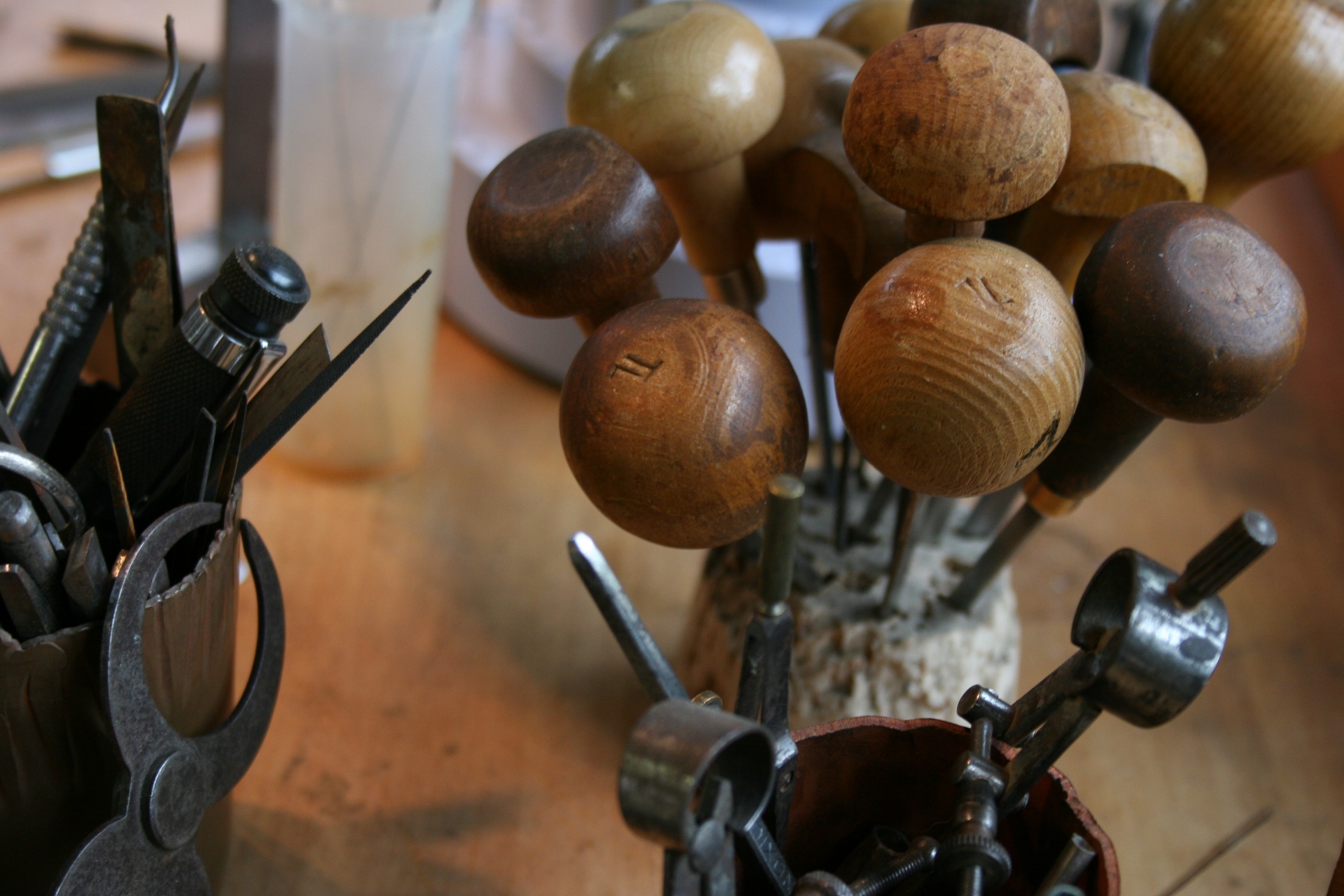
Immediately I noticed the old-style screen door painted a vivid red. It’s a perfect fit for setting the mood of this place. I’ve been in a lot of antique shops in my day, and this one, by far, rates as one of the most inviting with plenty of light streaming in the east-facing windows, merchandise displayed in a way that isn’t cluttered and a down-home atmosphere that makes you feel comfortably at ease.
I poked around for awhile, not as long as I would have liked, though, since my mom was waiting for me back at the aunt and uncle’s house. My husband explored, too, and determined the prices to be reasonable—not too high and not too low.

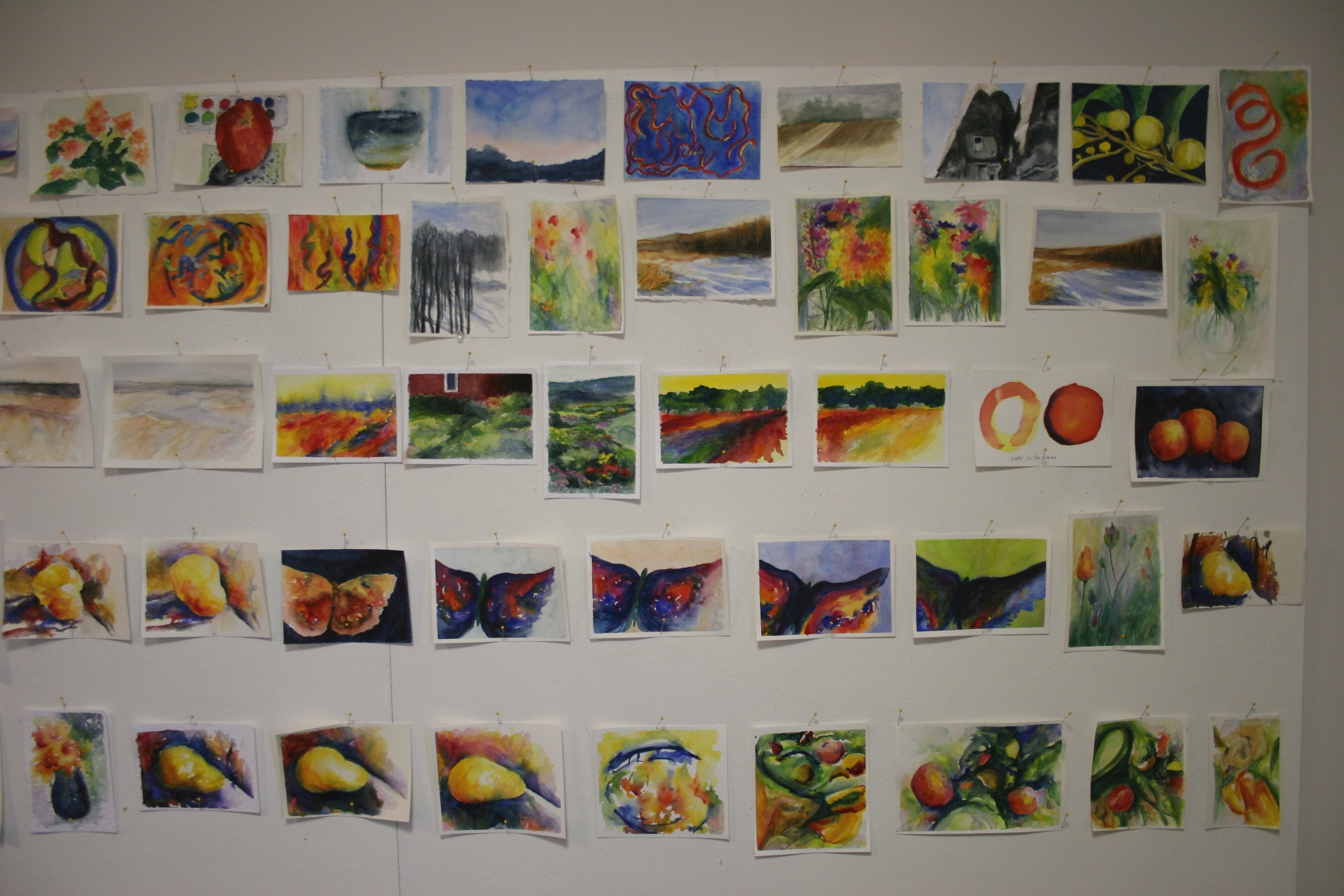
When I got to the back room, I made the discovery of the day, at least in my opinion. And it wasn’t an antique, collectible or junque. I found Don Gunelson’s “Belview Area Photo Art” displayed on the rear wall. I knew from the signage that I was viewing photos, but they sure didn’t look like photos. So I asked Don to explain.

He takes images of area subjects with an inexpensive camera—the fewer pixels the better—edits the photos on his computer and then prints them on watercolor paper with an ink that is more dye than ink. The result is photo art that resembles watercolor paintings.

I gushed over his creations and told him he needs to get these into a gallery—do an exhibit of his “Belview Area Photo Art.”

Now I’m kicking myself for not buying one of Don’s matted and framed creations because, with prices ranging from $7 to $12.50, they’re a steal.

So there you have it, a charming antique store in downtown Belview with an artist running the place.

FYI: Rainbow Antiques, Crafts & Junque, 103 S. Main, is open from 10 a.m. – 3 p.m. Saturdays. Call (507) 938-4476. Maybe Don will open up the shop if you’re in town on a day other than Saturday.

Ruby red glassware is displayed in a front window. To the right in this photo is the blue Belview water tower.

An example of Don Gunelson's Belview Area Photo Art, an area barn.

Some of the merchandise displayed in the main part of the antique store.

A view across the street through one of the large front windows at Rainbow Antiques.

More Belview Area Photo Art by Don Gunelson.

You'll find plenty of collectibles from the area, including this bird thermometer from Olivia.

This colorful folksy farm family graces the north wall of Rainbow Antiques. This photo was shot looking south on Main Street toward Belview's water tower.

Another view of Rainbow Antiques and Main Street Belview looking south.

Check back for more reasons to visit Belview in a future post.

© Copyright 2011 Audrey Kletscher Helbling