Minnesota Prairie Roots

Writing and photography by Audrey Kletscher Helbling

On ARTour: A peek inside Kip O’Krongly’s studio & art October 25, 2013

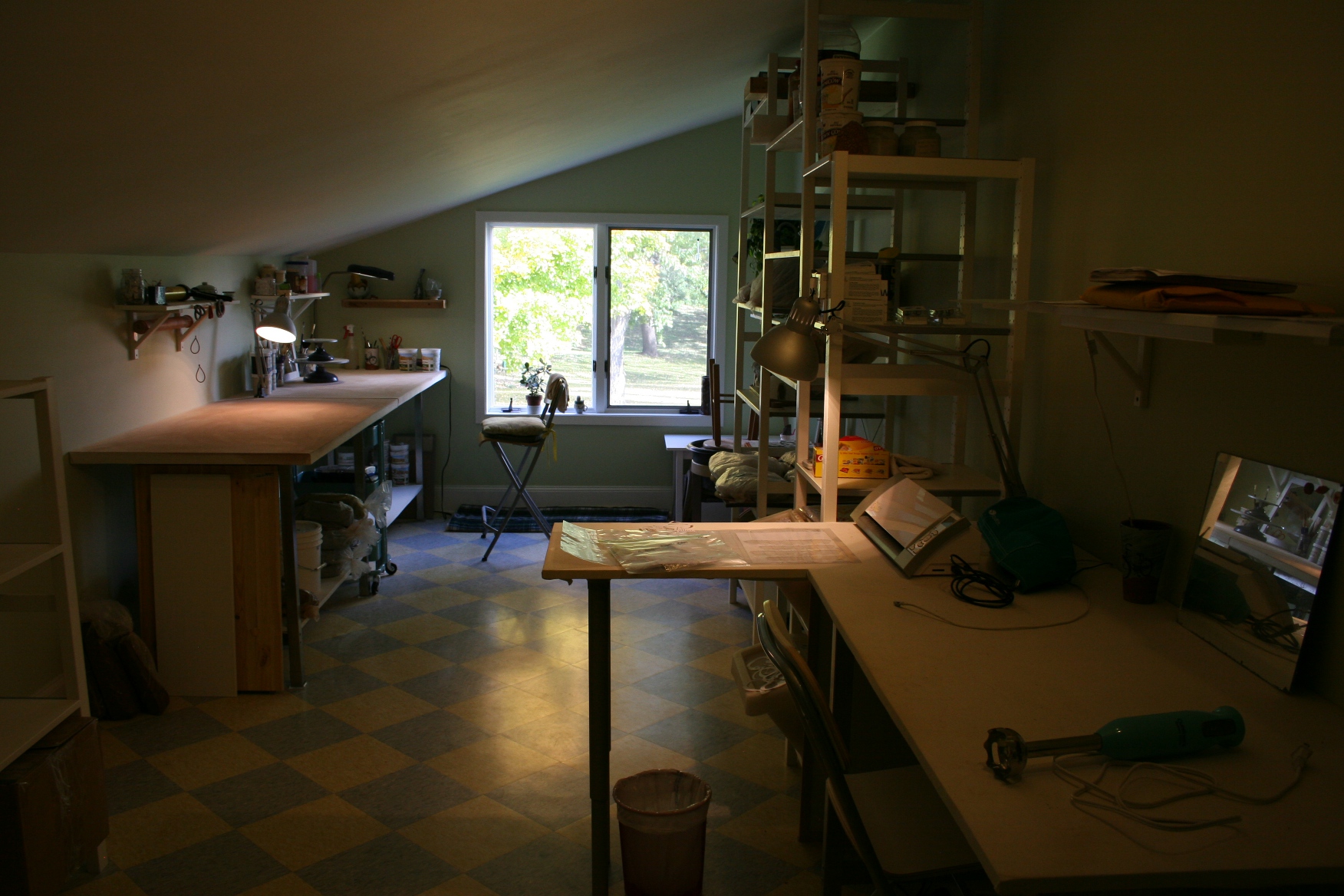
Cerarmic artist's Kip O'Krongly's second floor studio.

Ceramic artist Kip O’Krongly’s second floor studio.

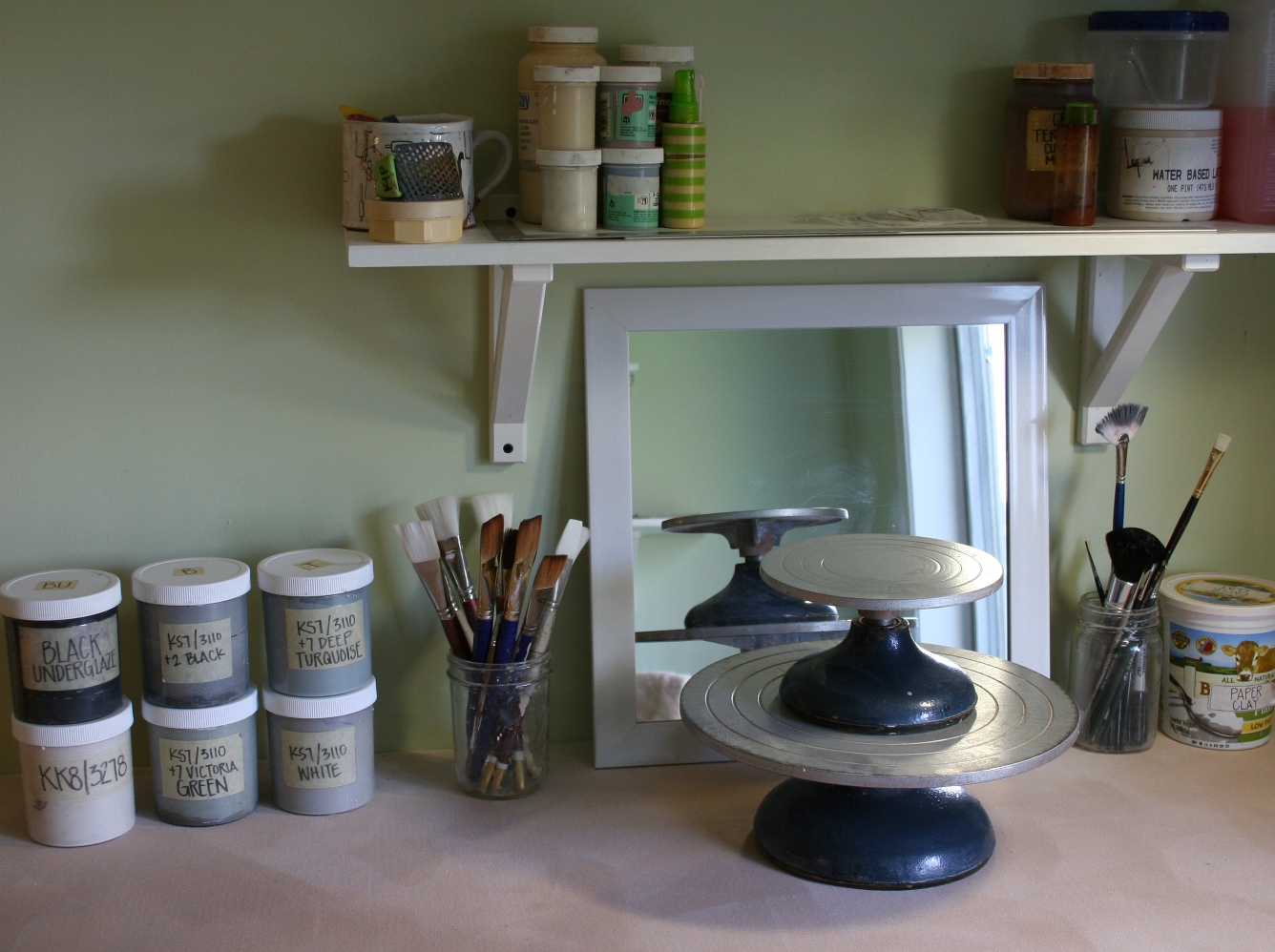
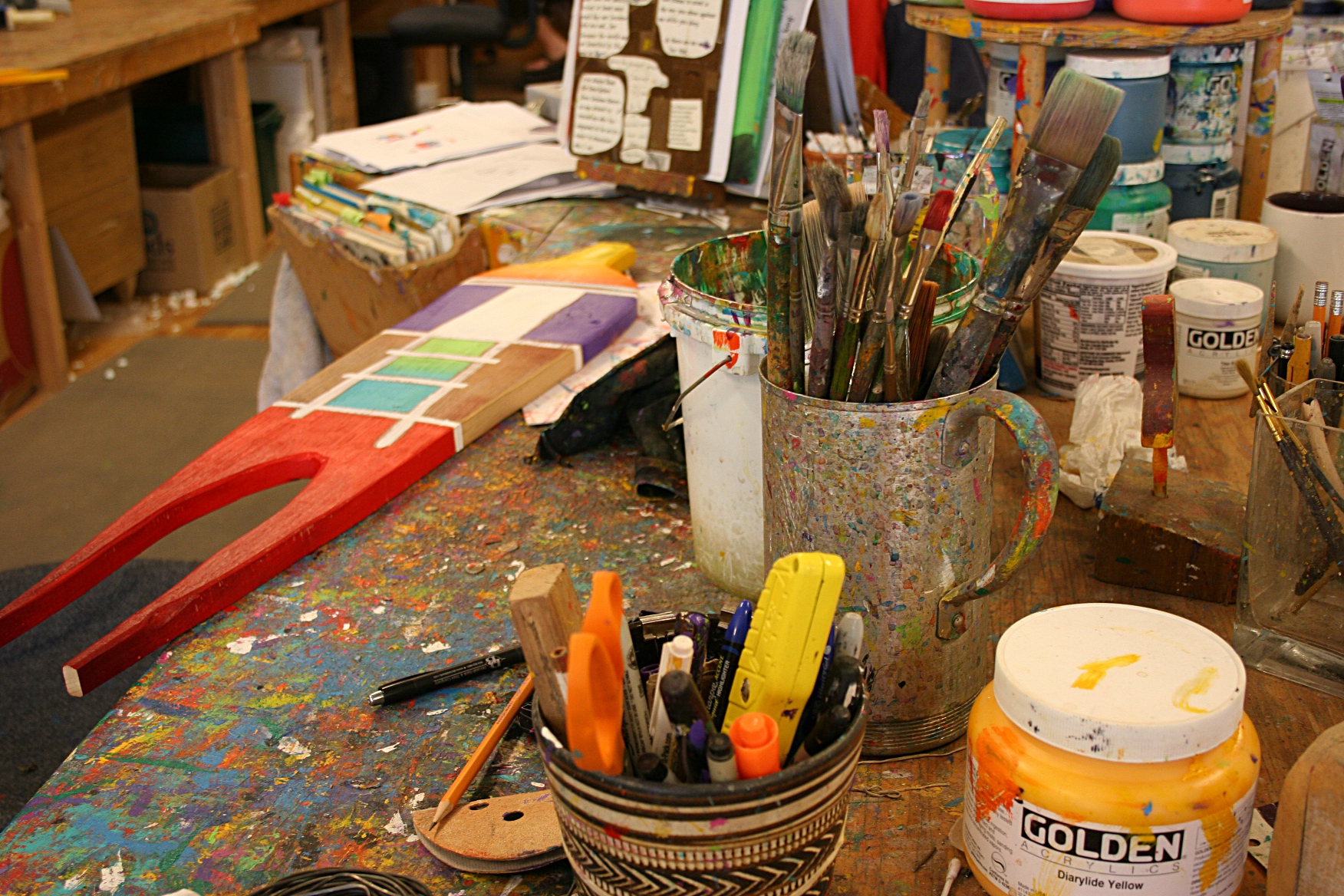
HER ART STUDIO POSSESSES an almost industrial, spartan look. Clean lines. Tidy. Labels. Schedules. Everything just so.

Supplies and tools, all in their place.

Supplies and tools, all in their place.

Kip O’Krongly freely admits to her need for orderliness in the second floor ceramics studio of her Northfield home.

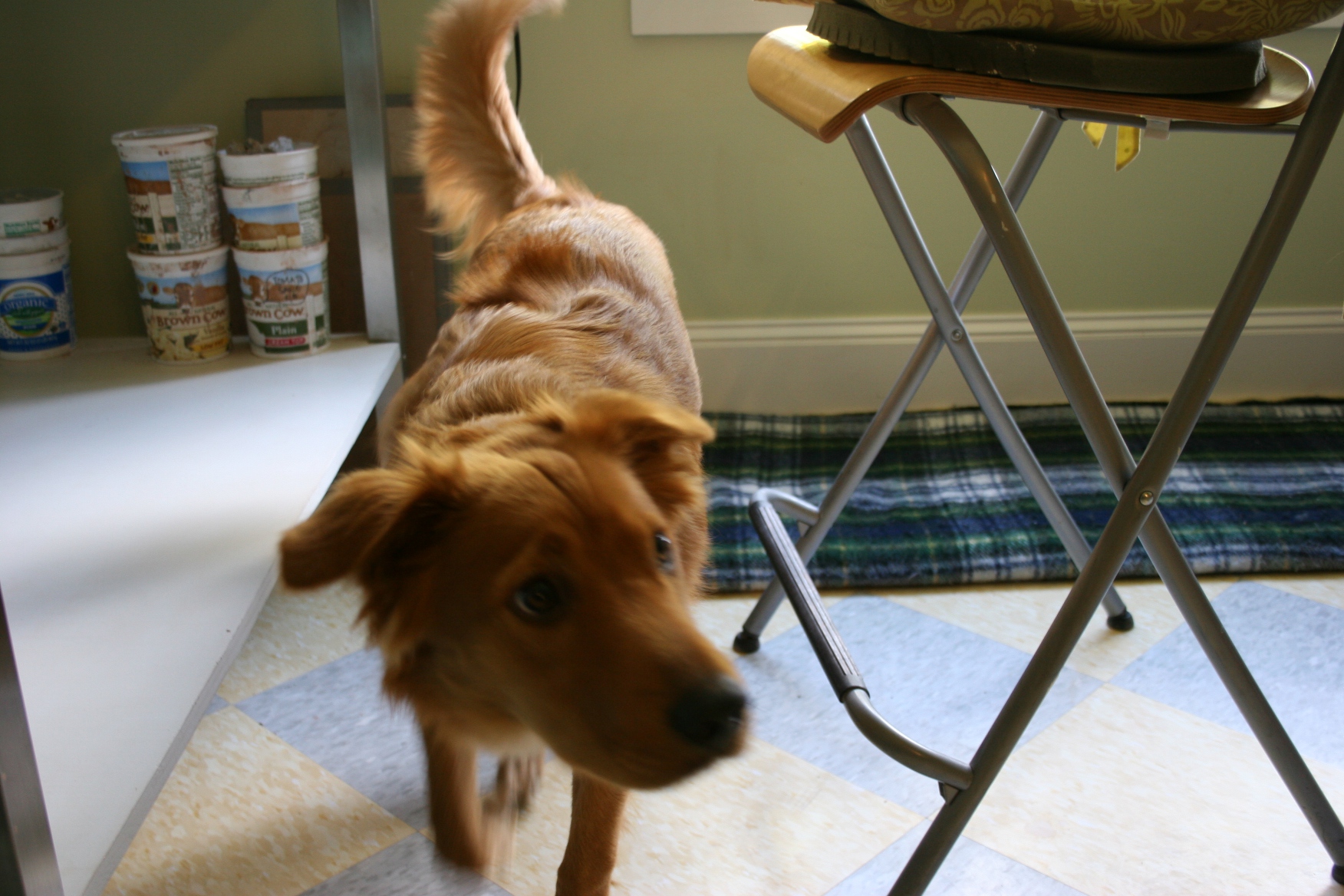
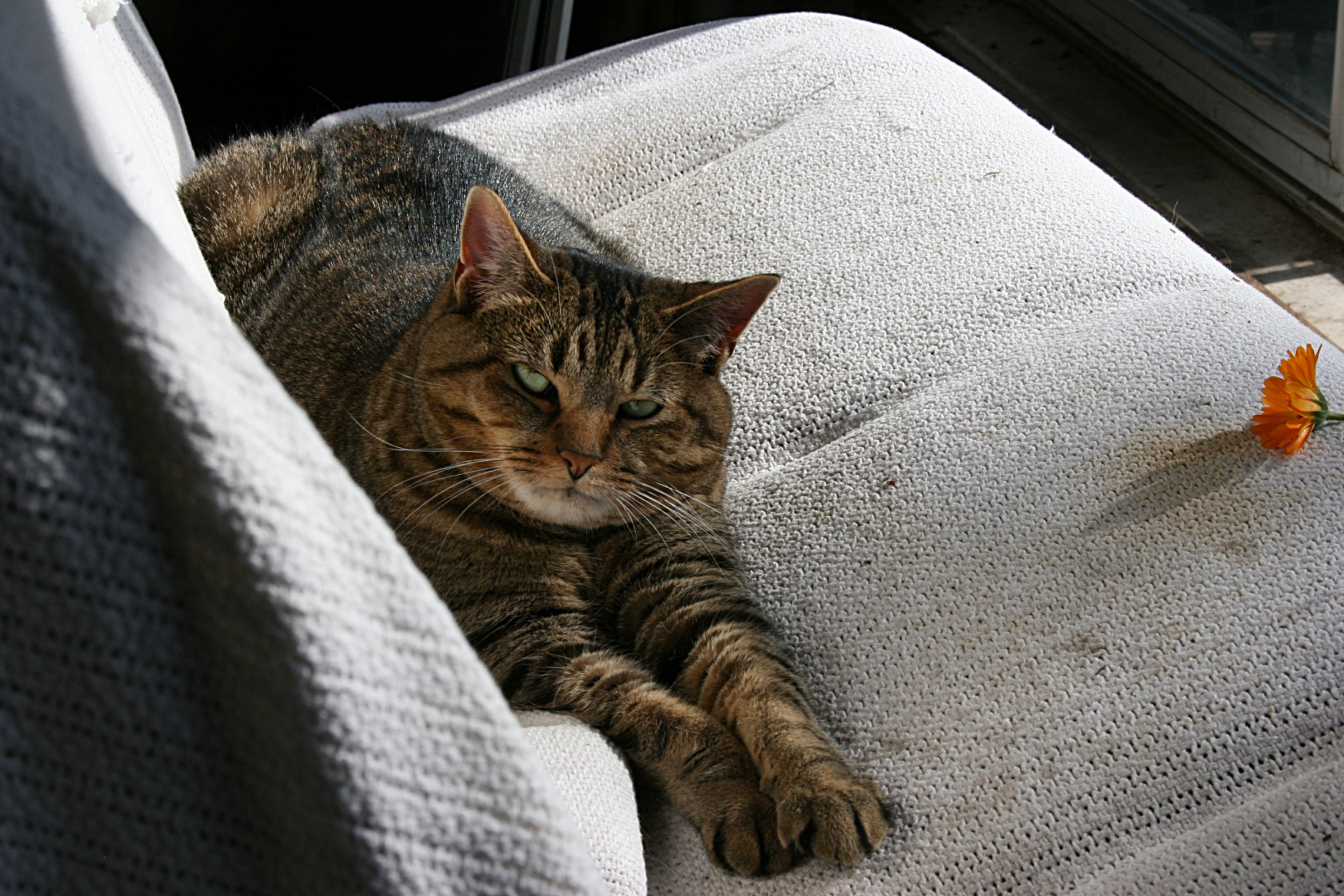
Gertie rises from her spot beneath the windows.

Gertie rises from her spot beneath the windows.

Here, in this slanted ceiling room with the tile floor she laid and with sunlight streaming in, Kip’s dog, Gertie, rests briefly on a blue and green plaid blanket below double windows. A short respite from visitors, like me, who have filtered into Kip’s studio and home during the South Central Minnesota Studio ARTour.

During this (last) weekend open house, I am visiting the studios of select artists I have not seen on past tours.

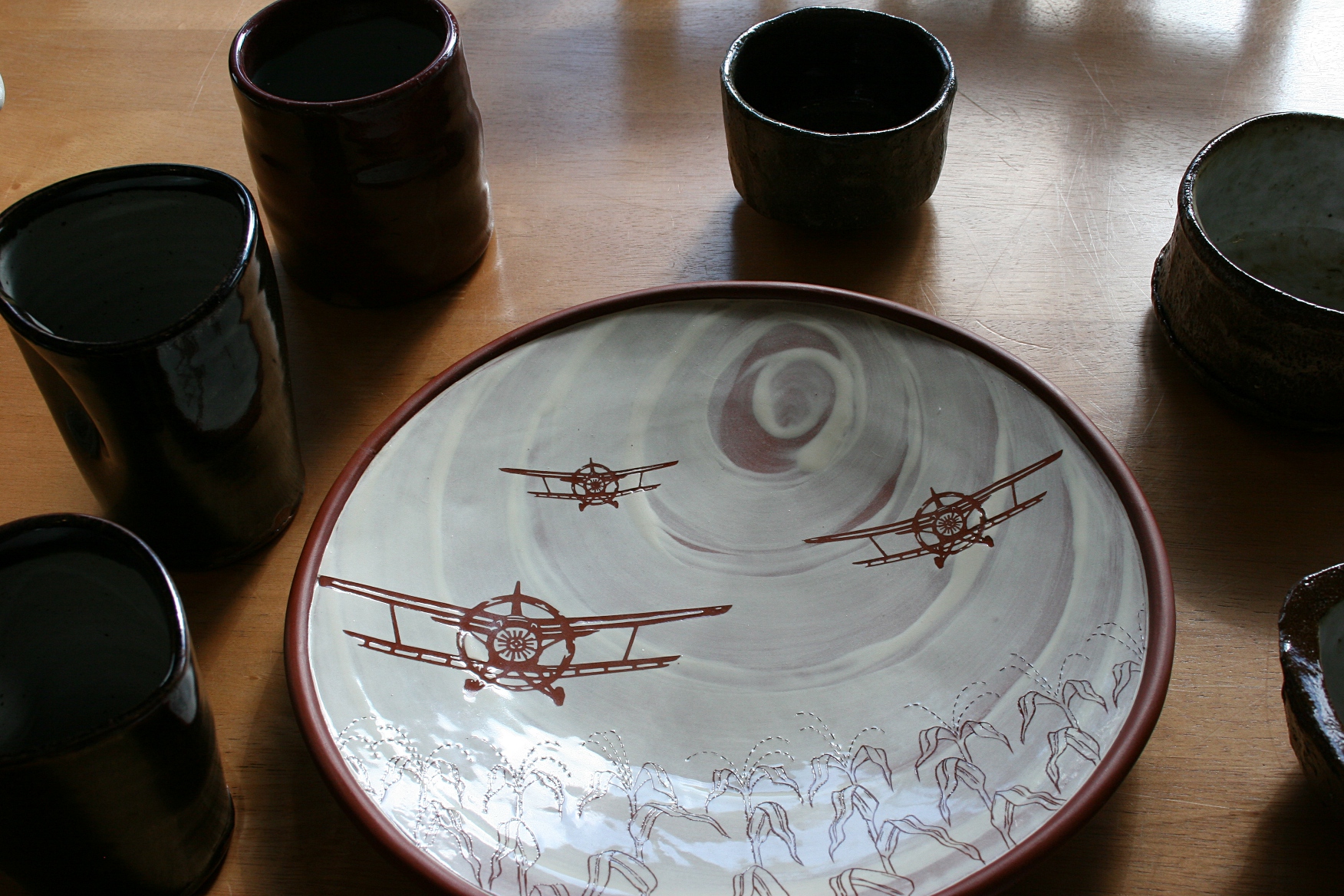
Cows also grace one of Kip's plates.

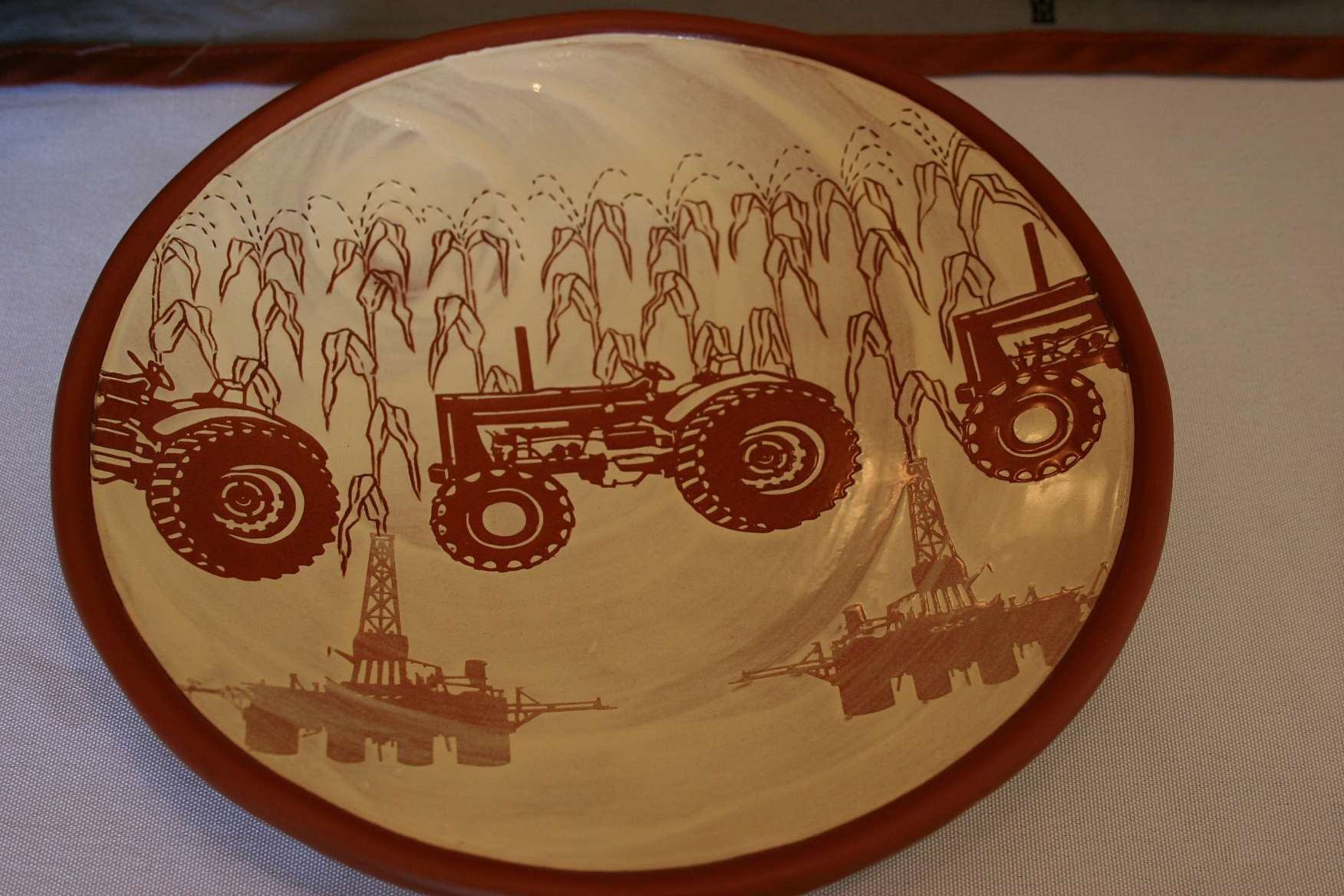
Art Kip creates on her ceramic plates sometimes makes statements about social issues, like the piece on the right.

I am drawn to Kip’s place by the tractors, wind turbines and corn I’ve seen showcased online on her ceramics.

Definitely a transportation themed piece going here.

Definitely a transportation themed piece going here.

She tells me that themes of food, transportation and energy run through her work. Once she points that out, I ask whether she was raised on a farm. No. Alaska.

We don’t get into details about the themes, but I mention that I grew up on the southwestern Minnesota prairie and am visually troubled by the wind turbines that populate the landscape, ruining, in my opinion, the aesthetics of the prairie.

More than tractors and corn...

More than tractors and corn… Corn grows from oil rigs.

Kip says she welcomes how her art opens up dialogue and the opportunity to hear differing opinions on social issues. And I sense her sincerity in stating that.

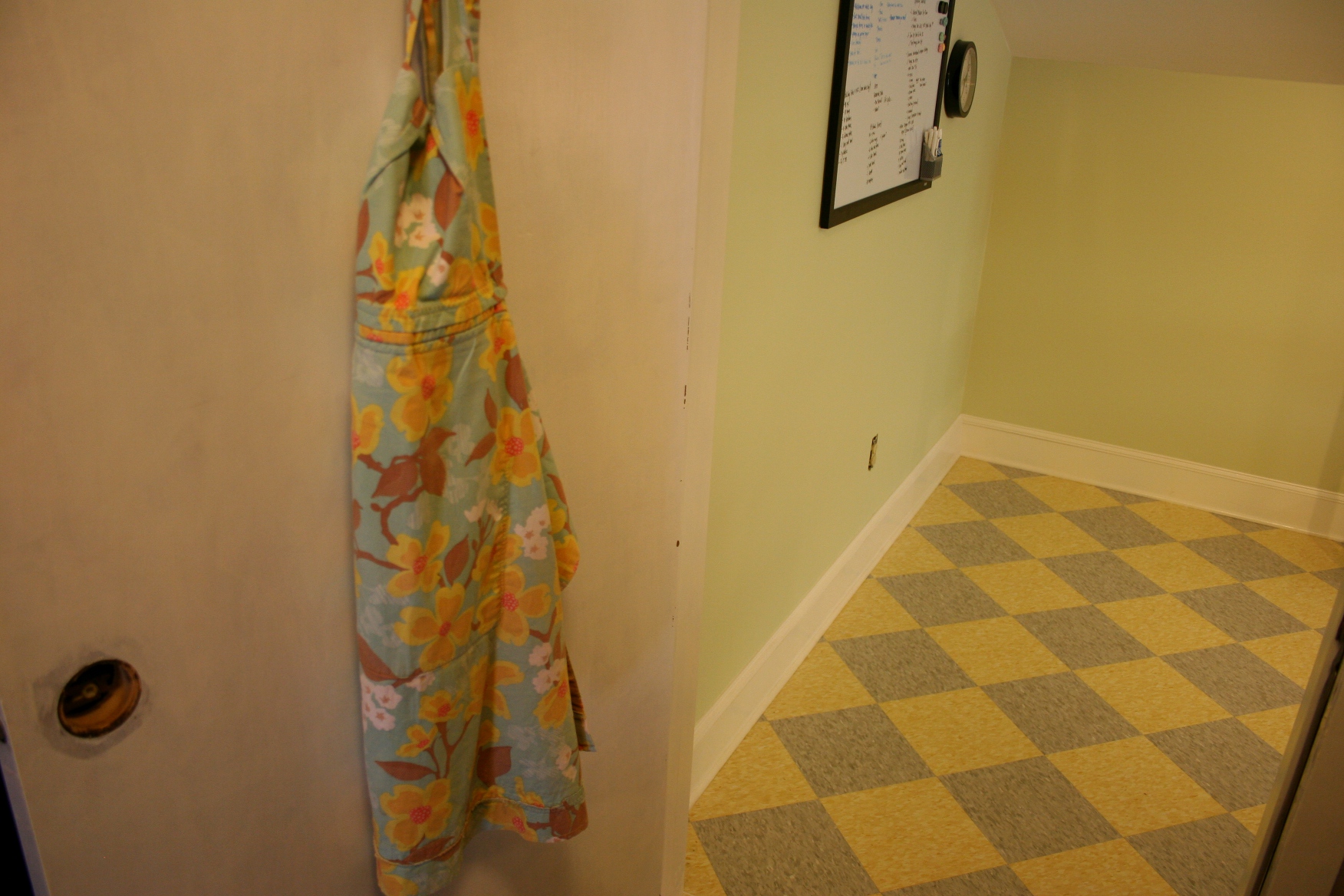
The door opens into Kip's studio.

The door opens into Kip’s studio.

I am intrigued, too, by her name. Kip O’Krongly. It possess a certain snap, a certain strength, a certain ruggedness. I never ask. But I don’t need to. Her work, talent and confidence as an artist define Kip O’Krongly.

FYI: The works of two other ceramics artists, Joel Froehle and Juliane Shibata, were also showcased in Kip’s home. However, they were not in-house when I visited.

Please click here and then here to read previous posts from the South Central Minnesota Studio ARTour. And check back for more posts in this five-part series.

© Copyright 2013 Audrey Kletscher Helbling


On ARTour: The passion of southern Minnesota artists October 21, 2013

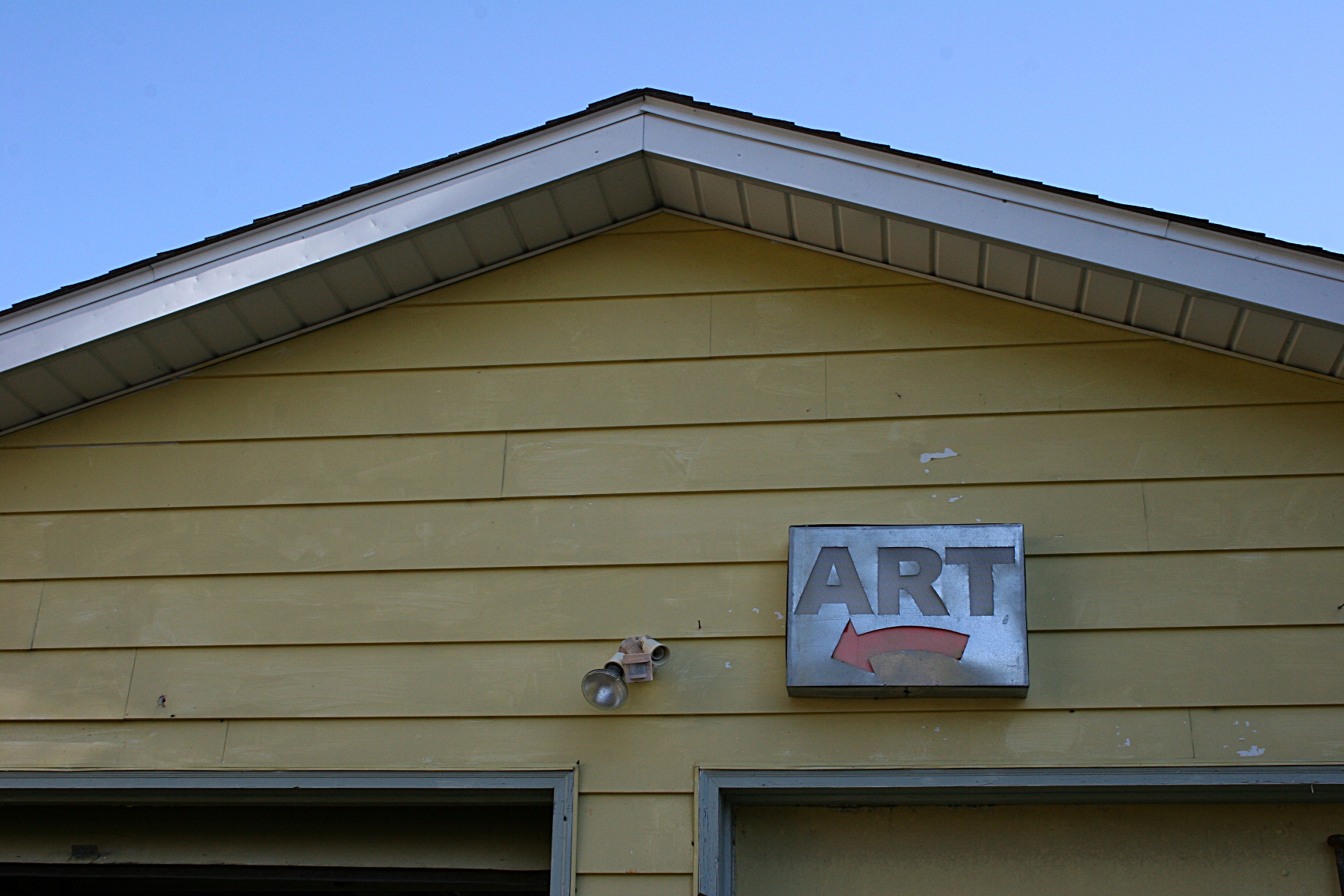
An art sign hangs above metal artist Julie Wolcott's garage-shop, rural Northfield.

An art sign hangs above metal artist Jennifer Wolcott’s garage-shop, rural Northfield.

THE TOUR ENERGIZES ME.

And I’m more art appreciator than artist in the sense of how the general public would define an artist.

Sure I create art with my words and my photos. But not at the level of the 44 artists featured in this past weekend’s South Central Minnesota Studio ARTour based in the Northfield/Faribault/Cannon Falls area.

Yet, no matter the scope of artistic endeavor, I can relate to these artists and their need to create. I could hear it. I could see it. I could feel it. That passion which drives those of us who are creative types to do what we do.

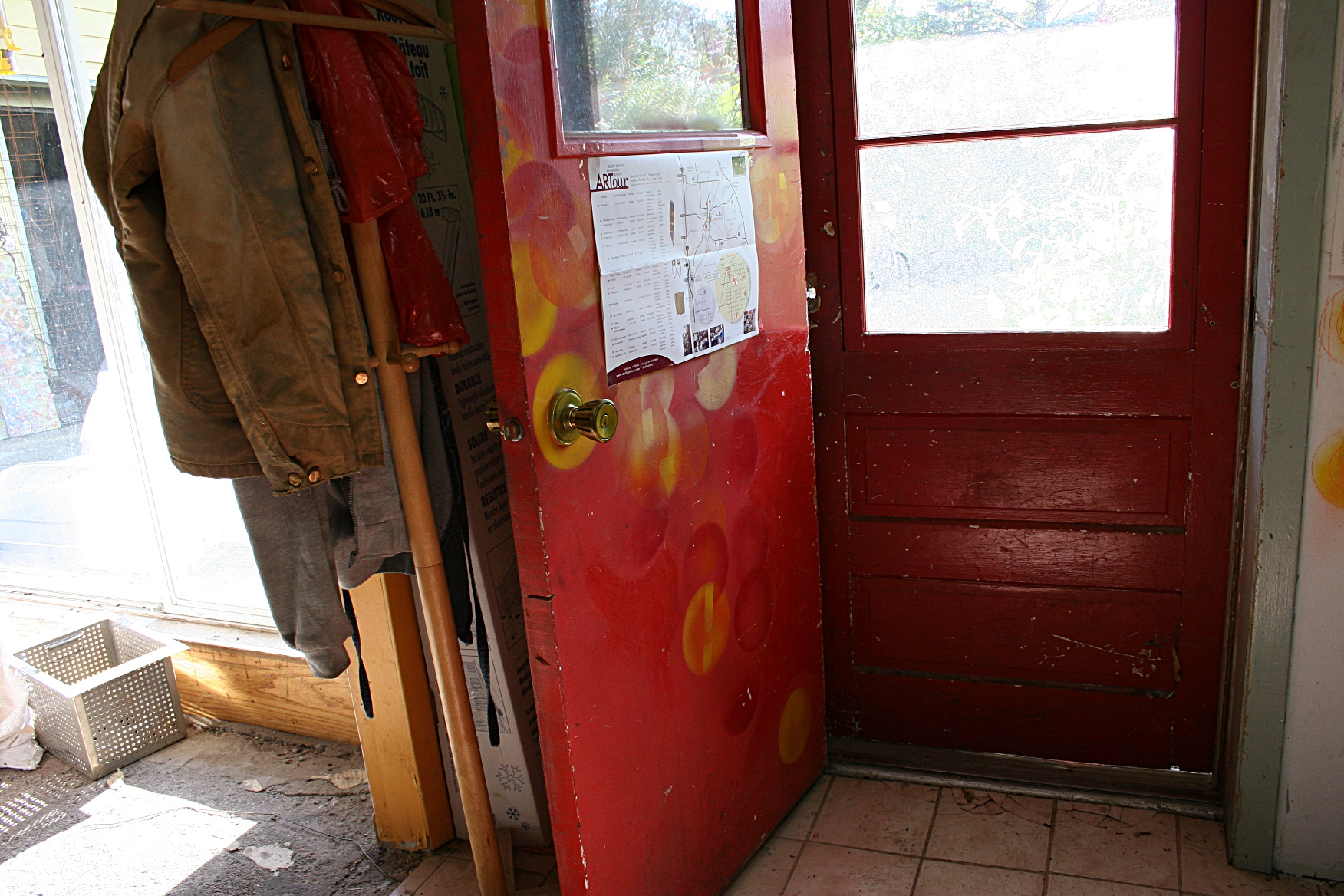
The entry to Wolcott Art.

The entry to Wolcott Art studio.

Like Jennifer Wolcott, recently voted southern Minnesota’s Best Local Artist (through Southern Minn Scene). I visited the metal artist’s studio, just north of Northfield off Minnesota State Highway 3, among a select number I toured during the ARTour. I focused on studios I hadn’t seen during past tours.

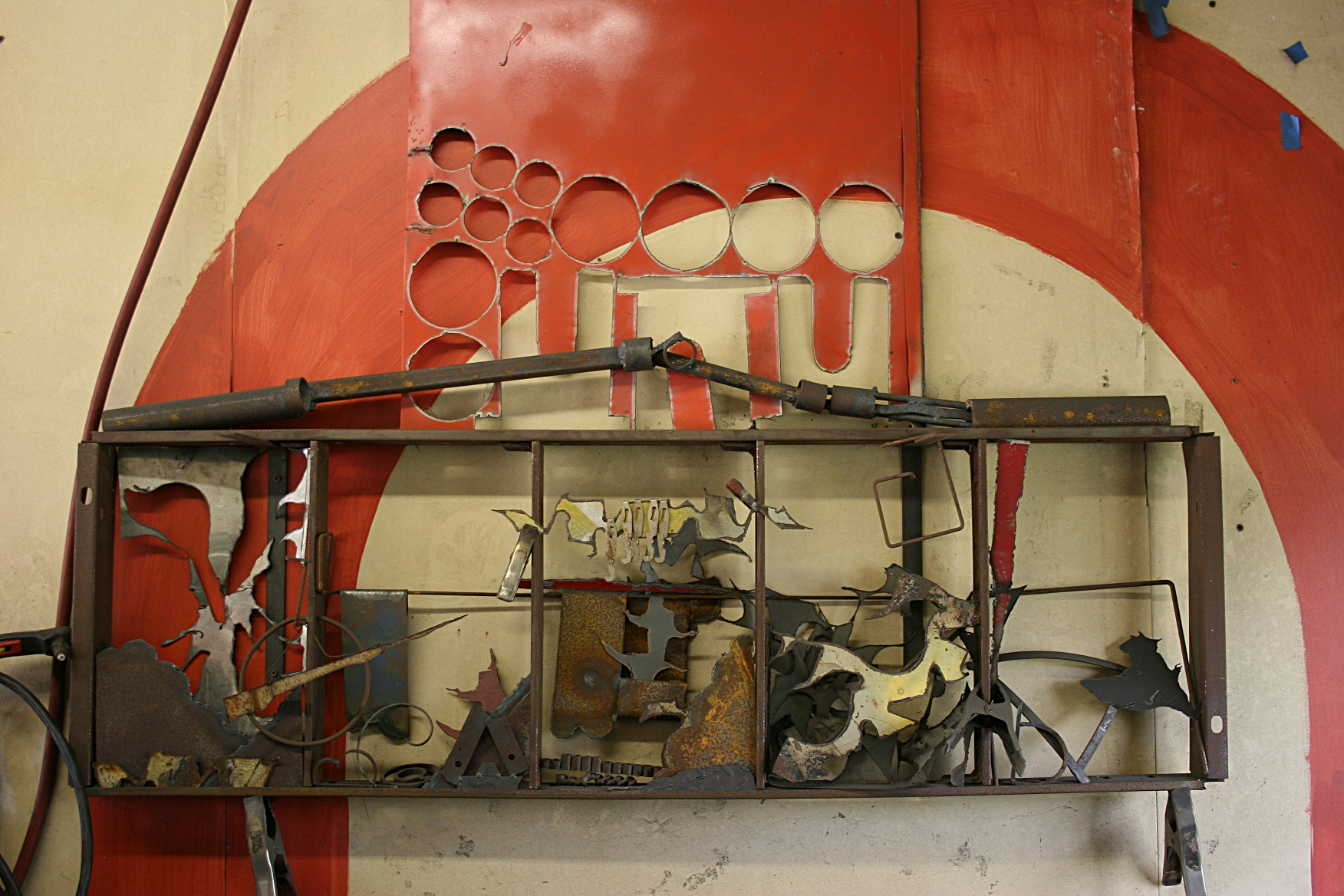
Wolcott's political statement art sectioned like a cartoon.

Wolcott’s political statement art sectioned like a cartoon.

Wolcott shapes and welds steel into substantial sculptures, but also crafts smaller more whimsical pieces from old filing cabinets and such. As she explained the significance of a political statement art piece that hangs in her garage-shop, I could visualize the fire which fuels her creativity.

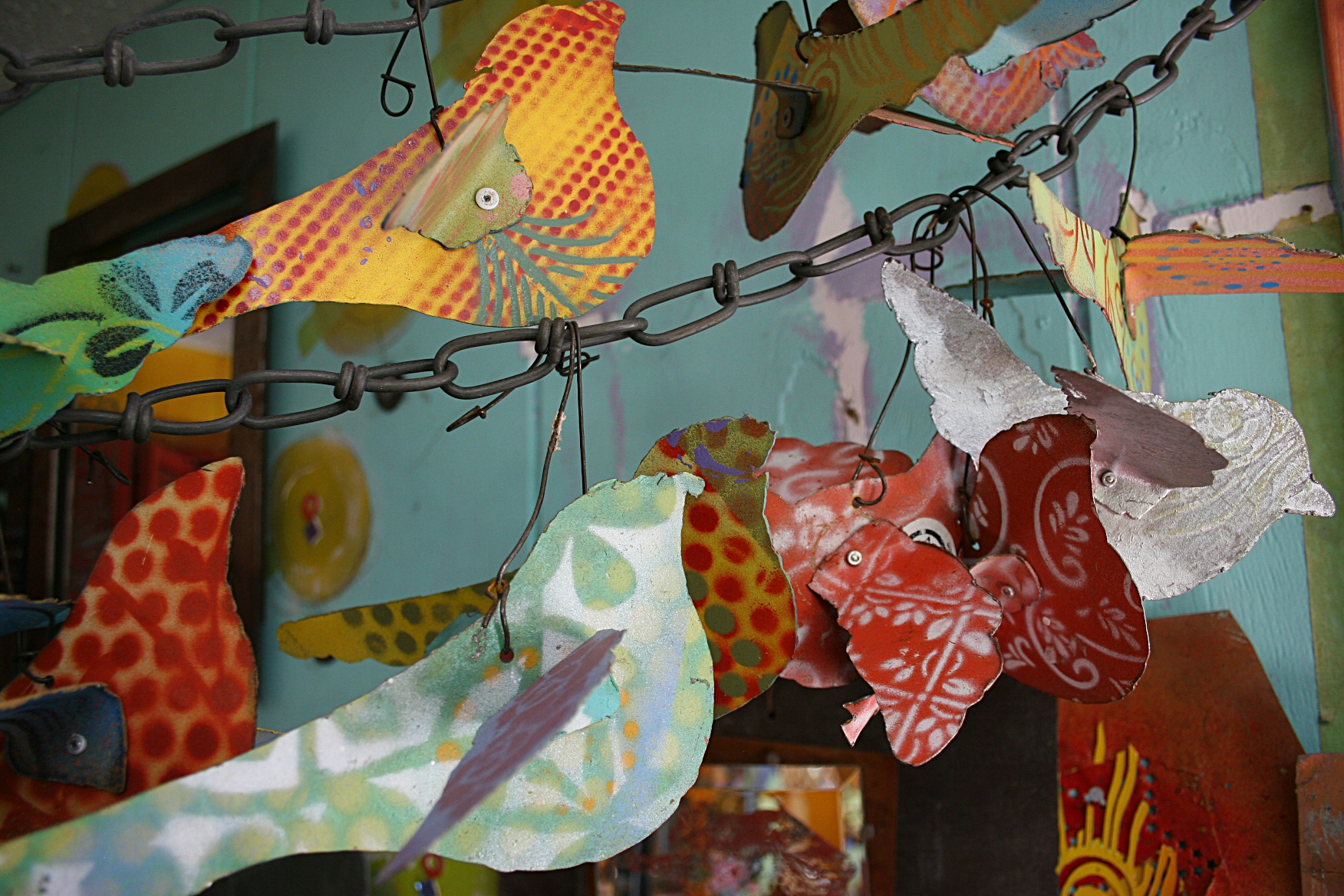
Birds cut from a filing cabinet and spray painted.

Birds cut from a filing cabinet and spray painted.

It is that fire of passion which flamed throughout the ARTour.

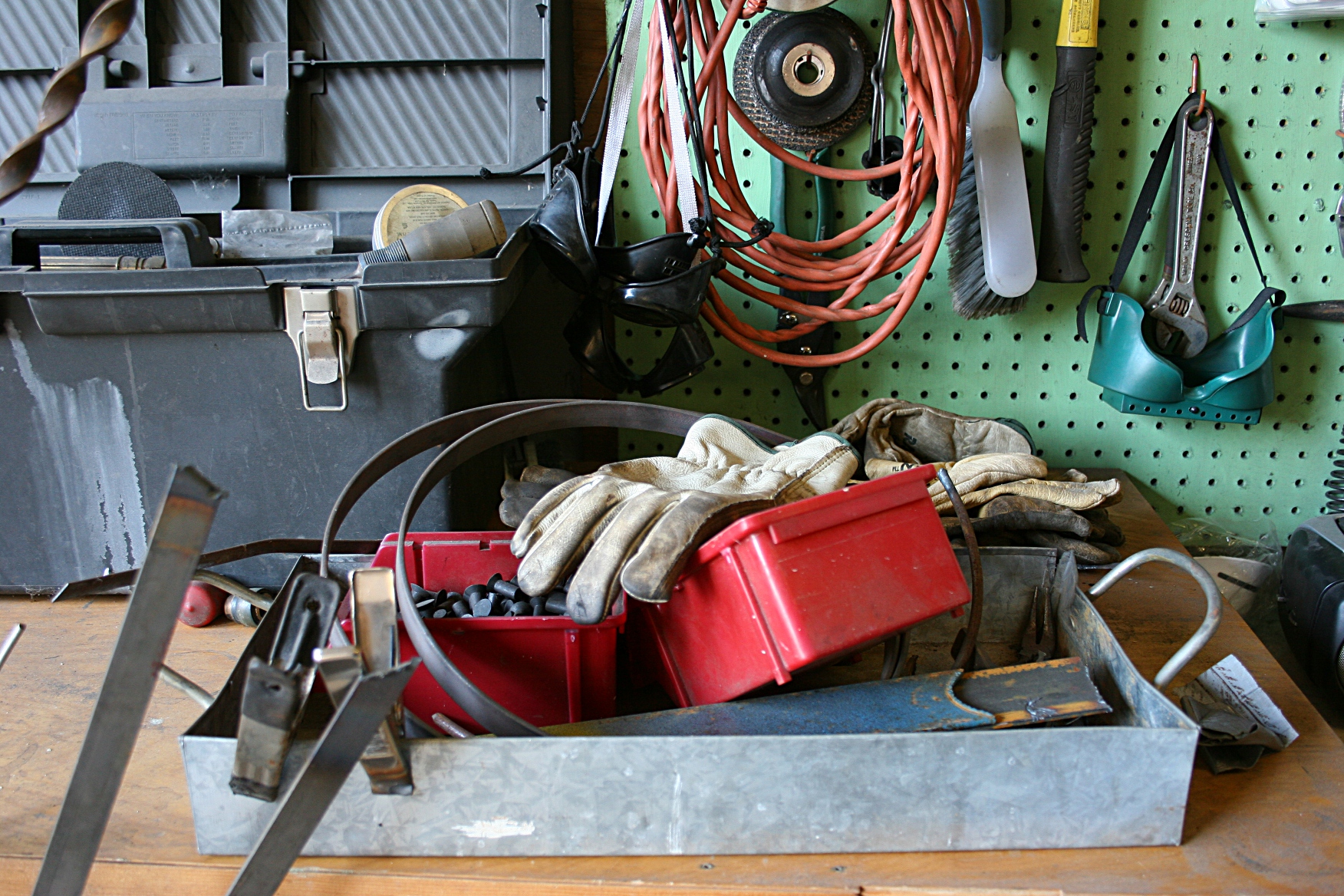
Tools of a metal artist.

Tools of a metal artist.

And, in my opinion, if you are not fueled by passion, then you cannot call yourself an artist.

Basking in the sunshine inside the Wolcott Art studio.

Basking in the sunshine inside the Wolcott Art studio.

THREE OTHER ARTISTS SHOWCASED their work at Wolcott Art. They—Heather Lawrenz of Lawrenz Jewelry, Annie Larson of Sleepy Bean Studio and Ian Baldry of Ian Baldry Knitwear—have found their niches in the art world by crafting jewelry and knitting textiles.

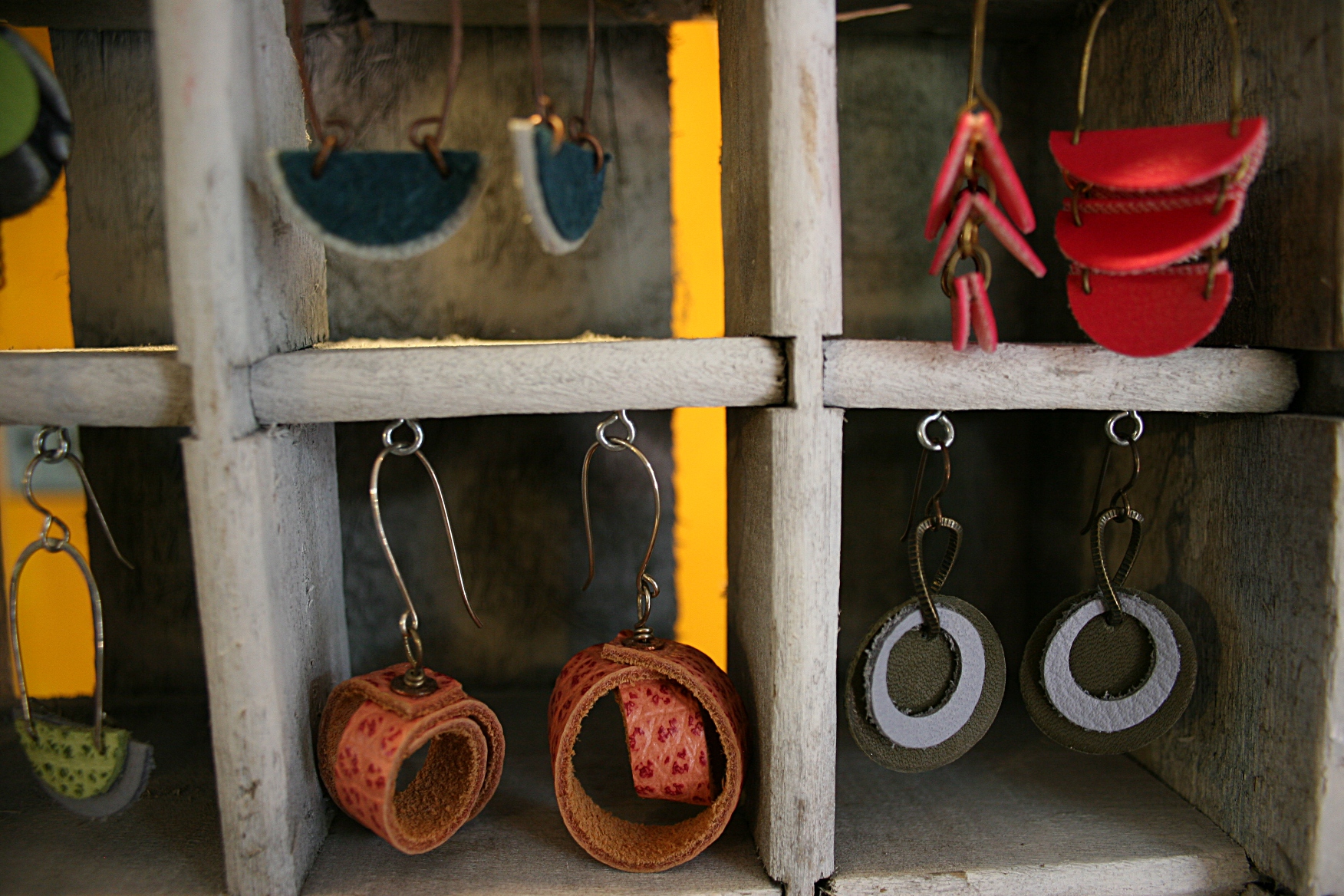
Heather Lawrenz upcycled leather belts into earrings.

Heather Lawrenz of Northfield upcycled leather belts into earrings.

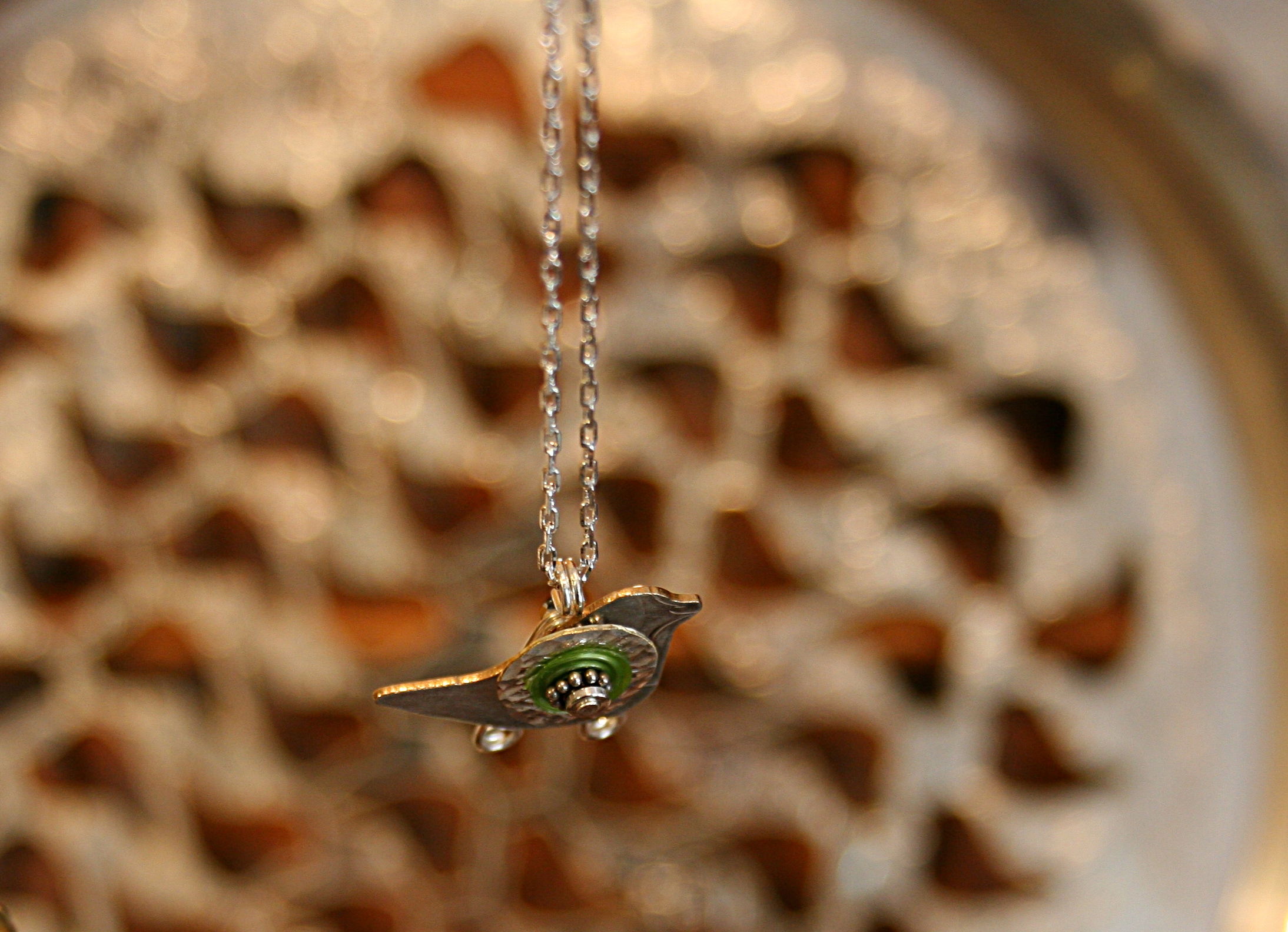
And here Lawrenz creates bird necklaces punched from cast off silver trays (faded in the background in this image).

And here Lawrenz created a bird necklace punched from a cast off silver tray (faded in the background in this image).

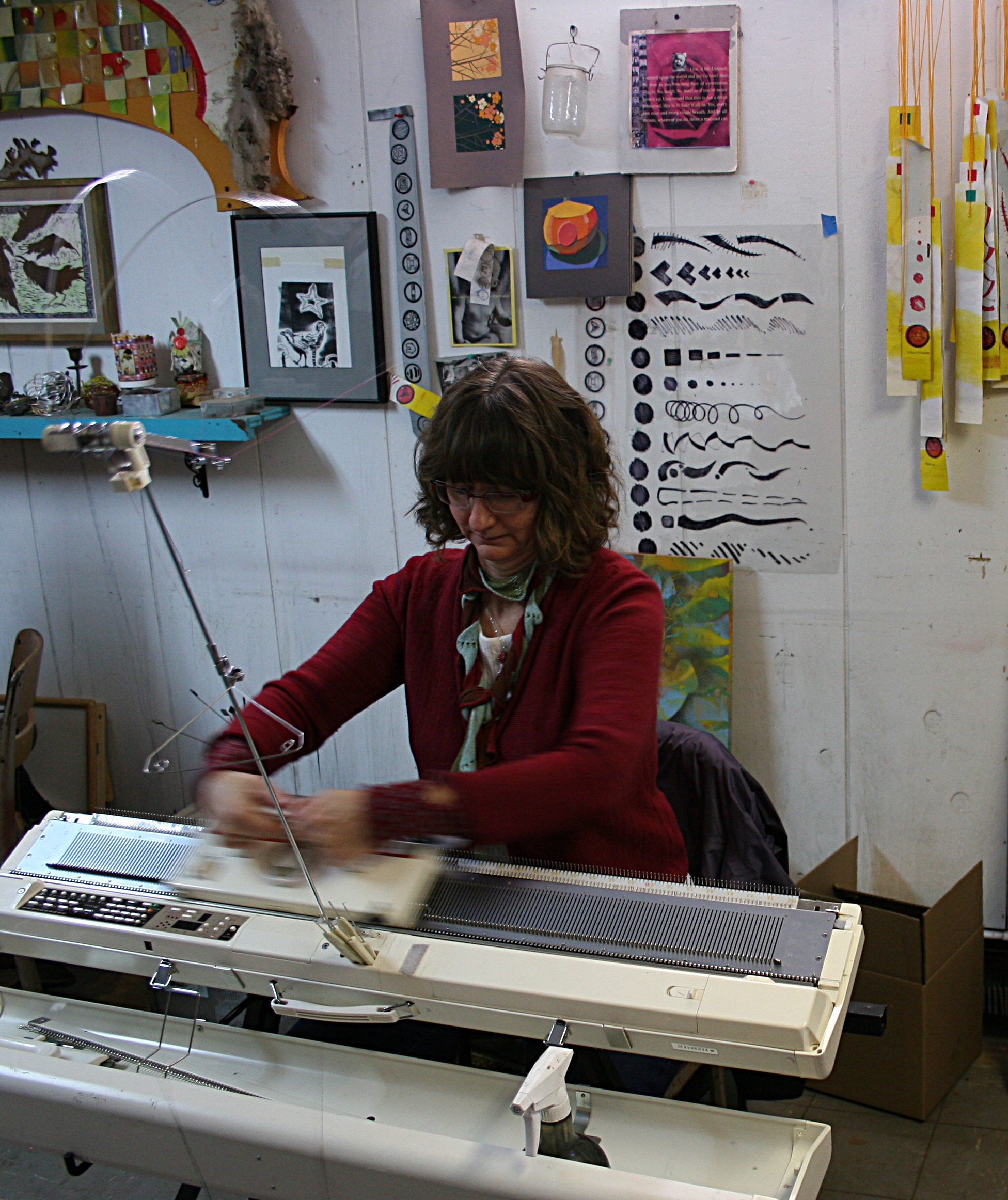
Artist Ian Baldry of St. Louis Park creates a scarf on her knitting machine.

Artist Ian Baldry of St. Louis Park creates a scarf on her knitting machine with bamboo yarn.

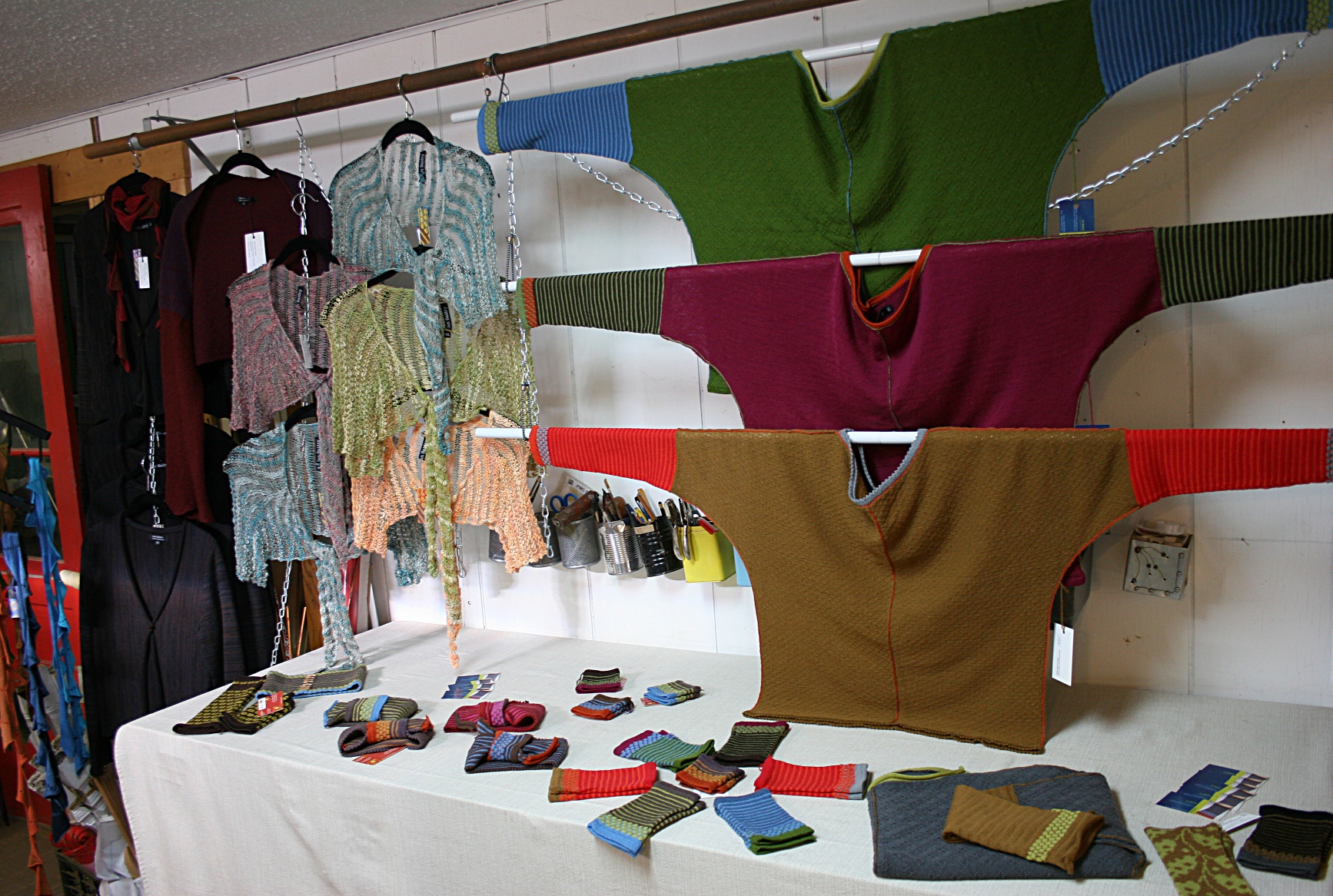
Samples of Baldry's knitted textiles.

Samples of Baldry’s knitted textiles.

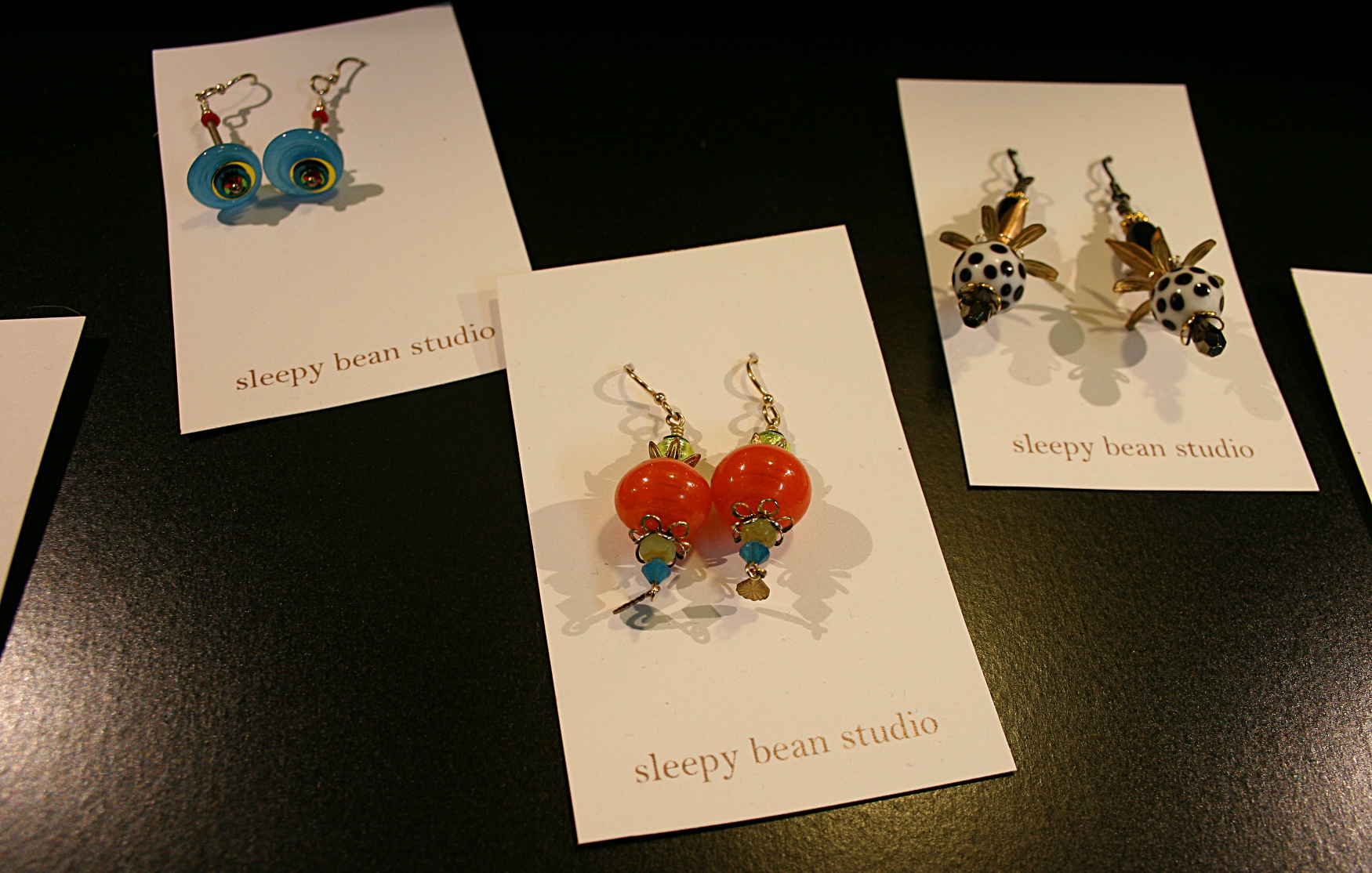
Earrings, featuring handcrafted beads, created by Annie Larson of Sleepy Bean Studio.

Earrings, featuring handcrafted beads, created by Annie Larson of Sleepy Bean Studio.

FYI: Check back for more photos from the South Central Minnesota Studio ARTour.

© Copyright 2013 Audrey Kletscher Helbling


Creative parenting: Let the painting & mud slinging begin August 26, 2013

Filed under: Uncategorized — Audrey Kletscher Helbling @ 5:00 AM
Tags: , , , , , , , ,
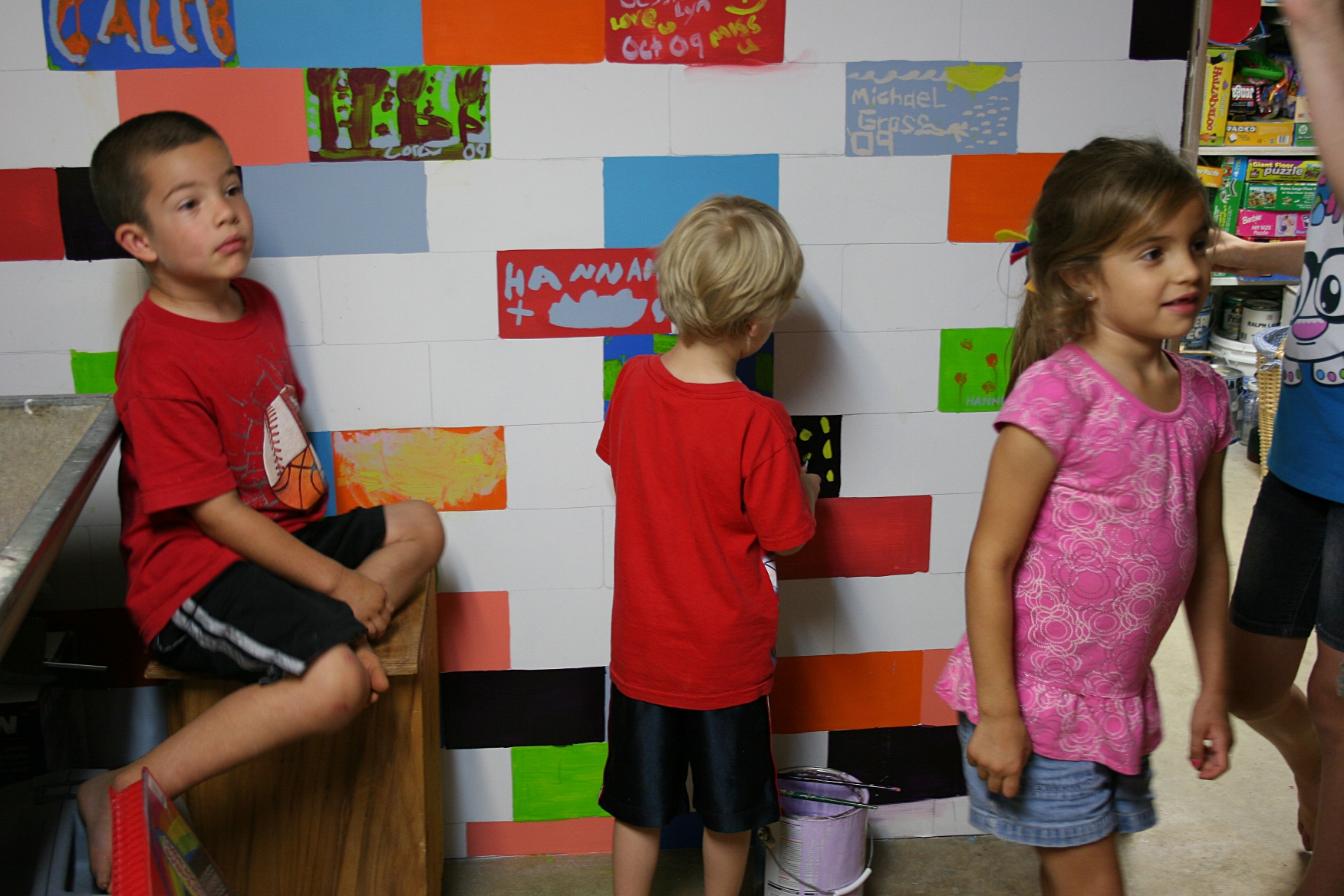
The kids, Braxton, left, Jack and Nevaeh, were thrilled to paint blocks, unlike me.

The kids, Braxton, left, Jack and Nevaeh, were thrilled to paint blocks, unlike me.

I SWEAR SHE would have locked me in the basement.

The sheetrock wall canvas.

The sheetrock wall canvas.

Billie Jo, a former preschool teacher and the mother of two school-aged youngsters, insisted. “You need to paint a brick, Audrey.” She emphasized “Audrey.”

The paint comes from the county recycling center.

The paint comes from the county recycling center.

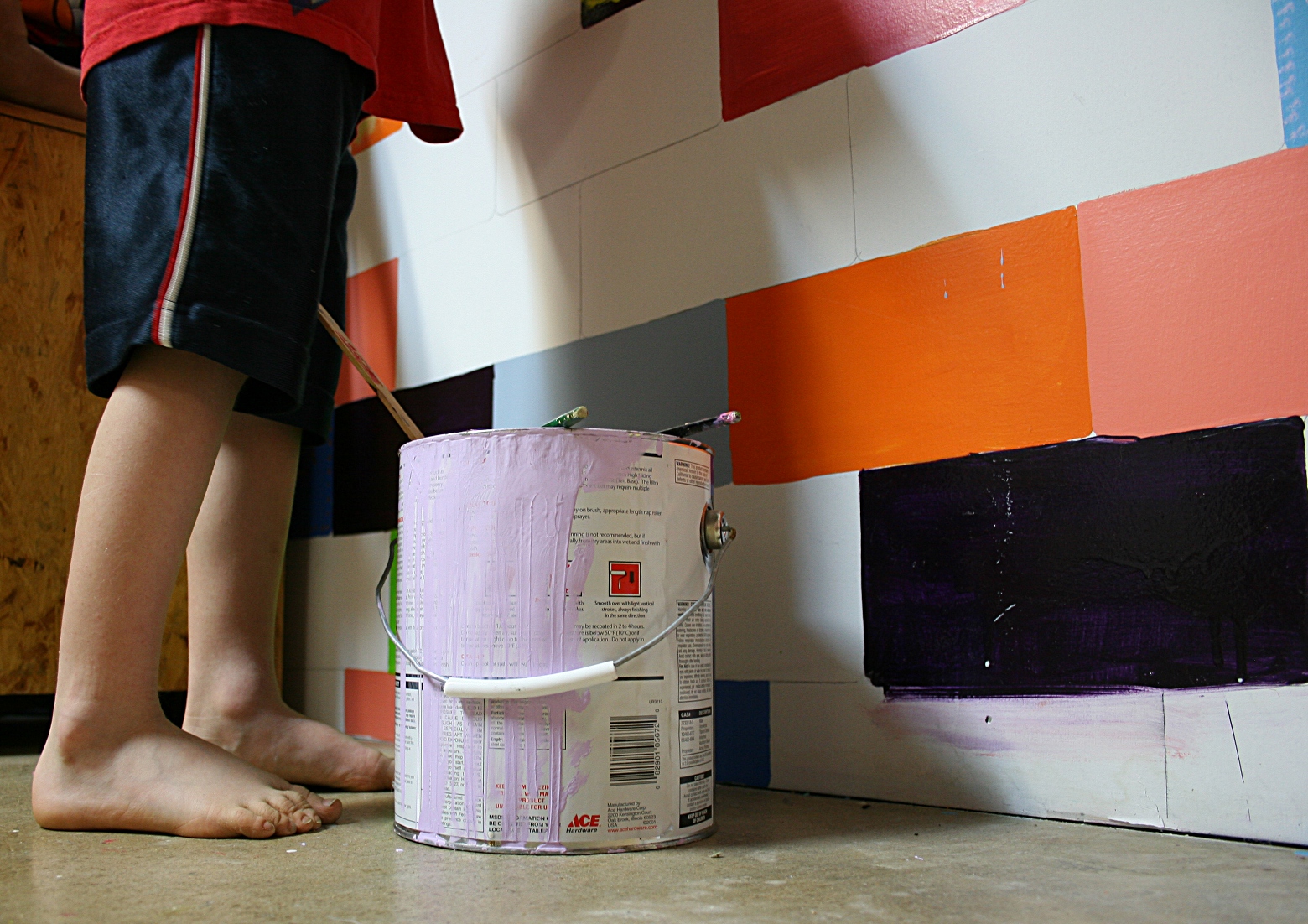
There was no wiggling my way out of her demand, even if my friend was preoccupied with opening paint cans, stirring paint, handing out brushes, washing kids’ hands and wiping paint spills from the concrete basement floor.

See, I really was busy taking photos, here of Hannah. She's quite the artist who not only paints, but also sews. Plus, she writes poetry.

See, I really was busy taking photos, here of Hannah. She’s quite the artist who not only paints, but also sews. Plus, she writes poetry. Oh, and she made that pony tail holder in her hair.

feet

Painting in bare feet.

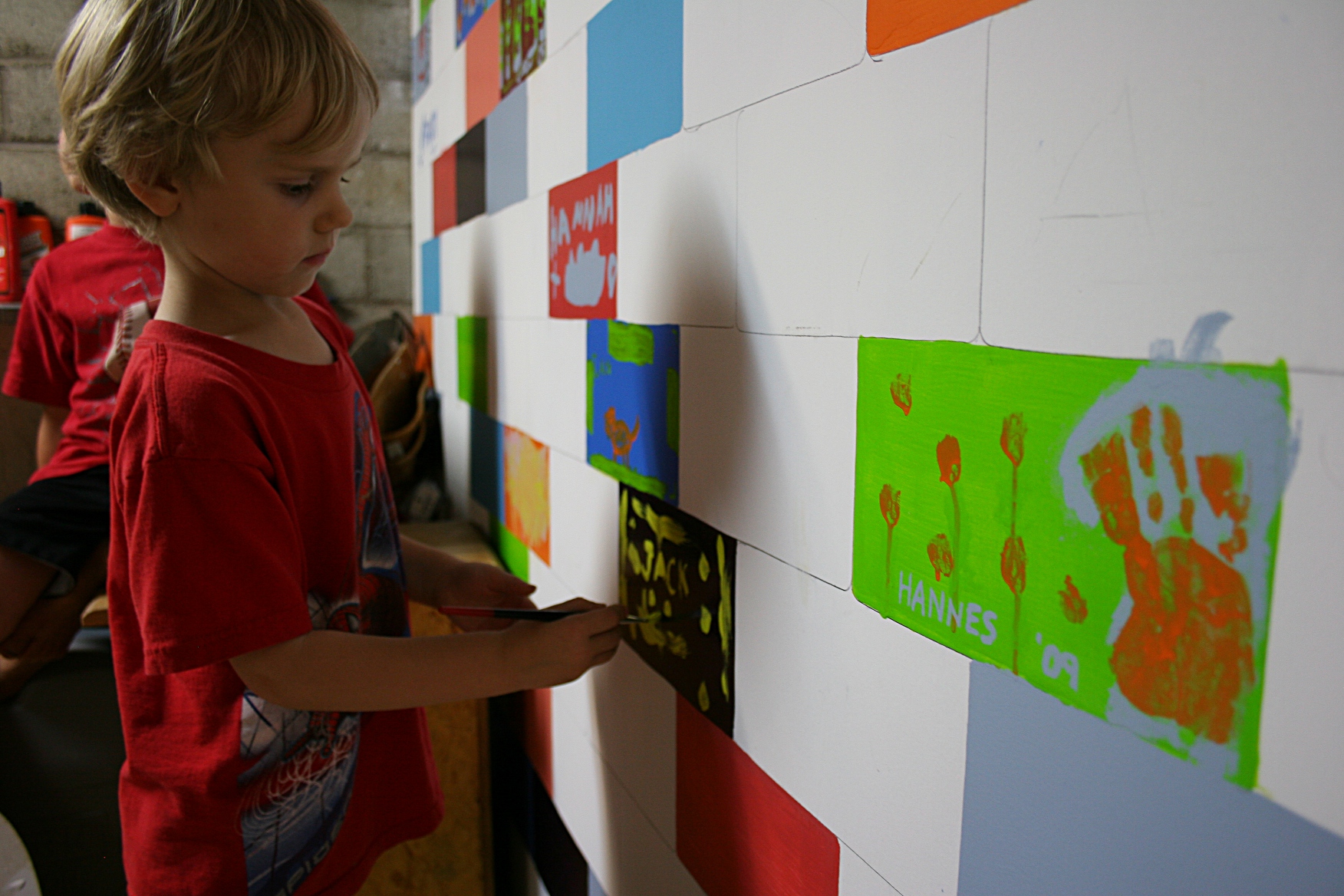
Jack creating his masterpiece.

Jack creating his masterpiece.

My excuse of “I’m busy taking pictures” wasn’t sliding by Billie Jo. Nope.

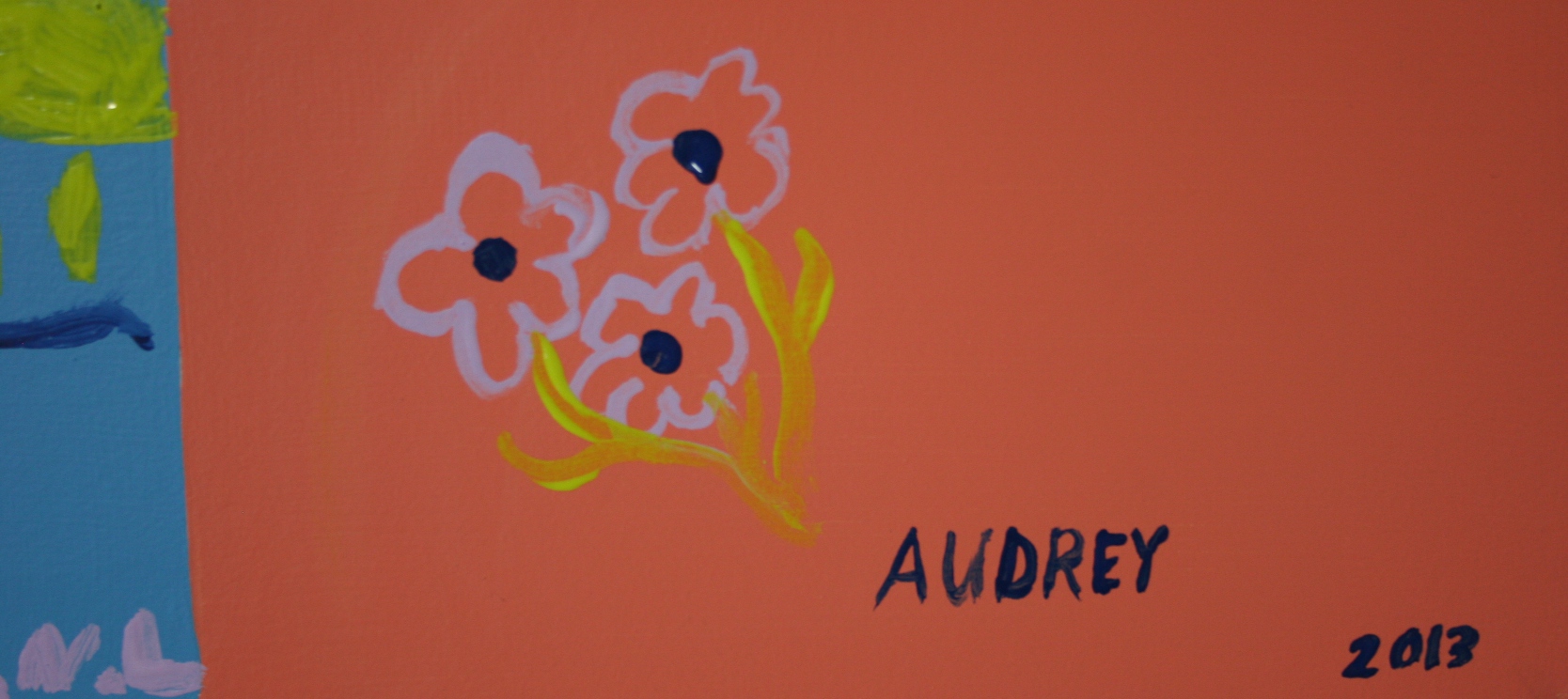
My, ahem, masterpiece.

My, ahem, masterpiece.

So, eventually, I set down my camera and picked up paintbrushes to paint a clutch of lilac hued flowers, my name and the year onto an orange brick painted upon a sheetrock wall. I’ve never pretended to be an artist, except perhaps in photography.

Where the project started, on the cement walls.

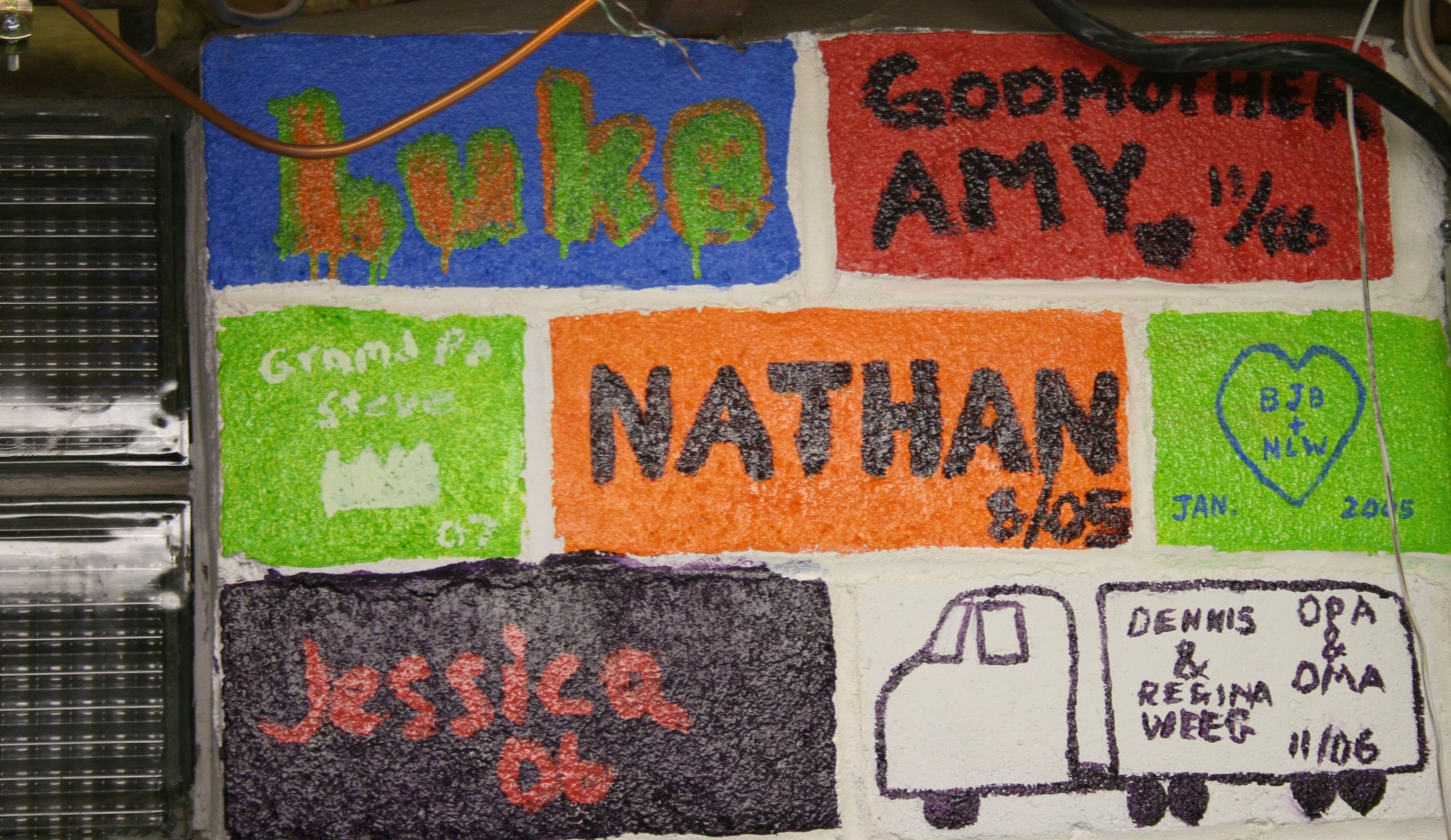
Where the project started, on the cement walls.

Prior to the sheetrock dividing wall construction, visitors to Billie Jo and Neal’s south Faribault home created art (a record of their visits) on a cement block wall in a corner of the basement. That area is now covered by totes in a storage room stocked full of board games, art supplies and more.

“Garage sales are great,” Neal says.

Braxton, in near constant motion, took time to paint.

Braxton, in near constant motion, took time to paint.

And so are he and Billie Jo and their kids, Nevaeh (heaven spelled backwards) and Braxton.

They are loving and kind and fabulous and generous and in the paperwork process of adopting, hopefully, two children from Colombia. These will be blessed children to join this fun-loving family. (International adoptions are costly, so if you wish to donate to the cause, email me personally or at audrey at mnprairieroots.com)

I love how they parent, reminding me of bygone times. They have no television, instead choosing board games and crafts and bike rides and storytime at the library and such to define their family togetherness.

My friends stretched a wood plank between their deck and an outdoor play cube for the kids to jump and run and do whatever kids’ imaginations tell them to do. The plank was added when Braxton was in his pirate phase.

Fun times at Billie Jo and Neal's mud party.

Fun times  for Hannah at Billie Jo and Neal’s mud party. The event included mixing of “potions” at the picnic table. Photo courtesy of Billie Jo.

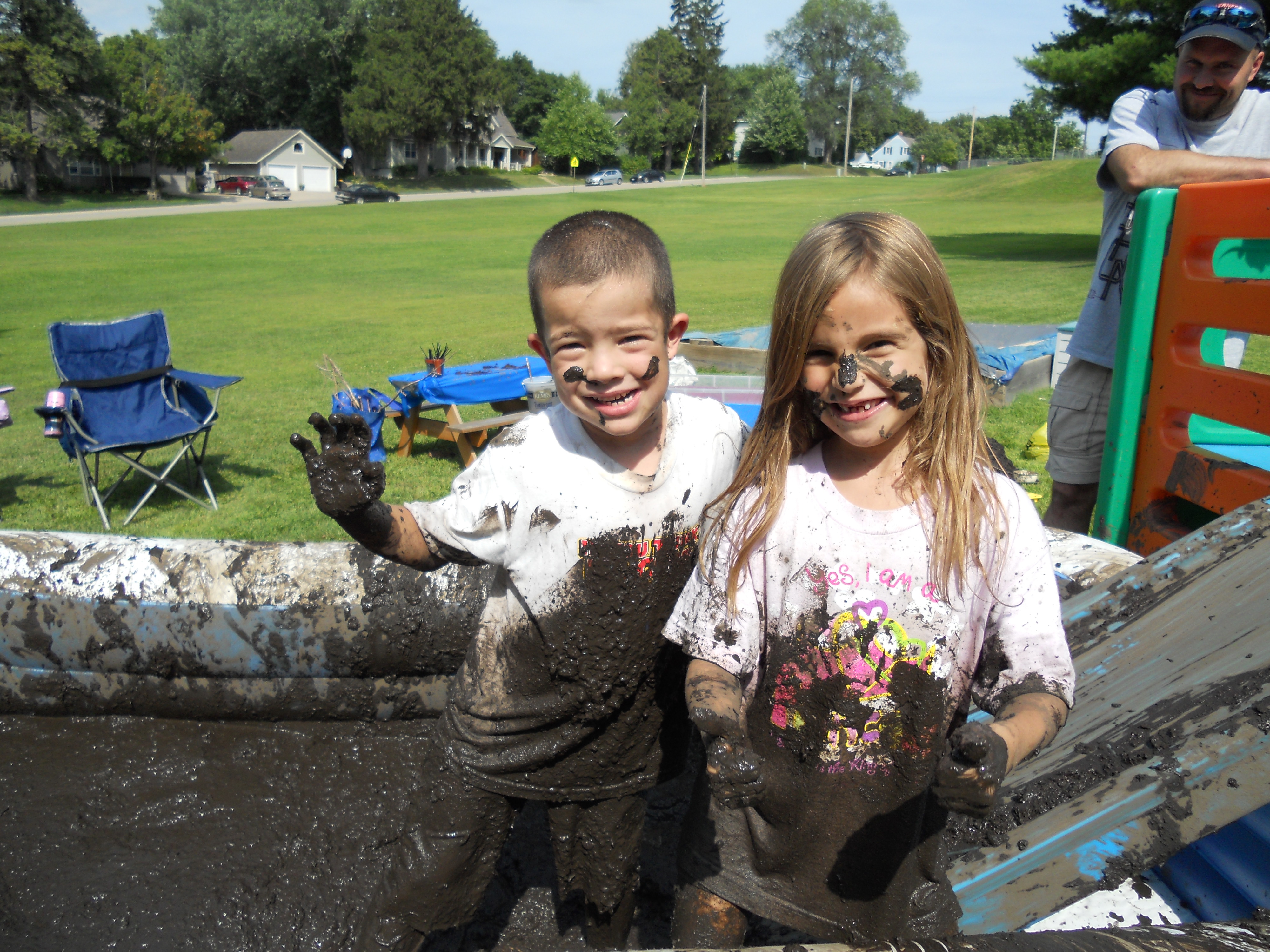
Recently, they hosted a mud party, as in purchasing black dirt, shoveling it into a kids’ swimming pool, mixing in water and letting Nevaeh and Braxton and friends muck around.

Billie Jo tells me that clean-up lasted longer than the party. Here Braxton and Nevaeh pose. Photo courtesy of Billie Jo.

Billie Jo tells me that clean-up lasted longer than the party. Here Braxton and Nevaeh pose. Photo courtesy of Billie Jo.

If I hadn’t been out of town, I would have been there photographing the event. But, if Billie Jo had insisted I join the fun…

© Copyright 2013 Audrey Kletscher Helbling


At home with Storypeople in Decorah, Iowa July 11, 2013

Filed under: Uncategorized — Audrey Kletscher Helbling @ 6:00 AM
Tags: , , , , , , , ,

NOTHING IN DECORAH, IOWA, compares to Storypeople.

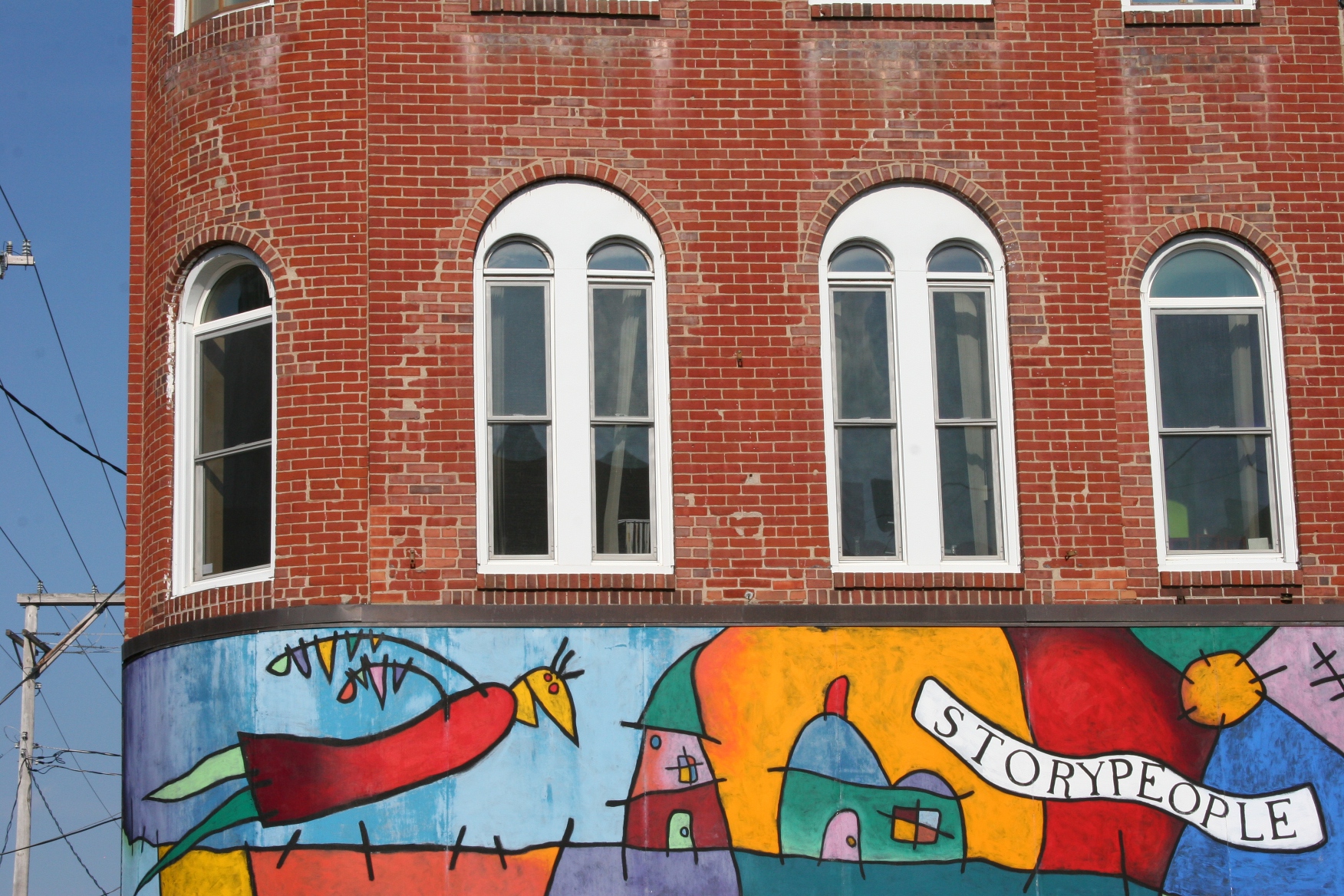
The Vibrant mural on one of Storypeople's buildings.

Part of the vibrant mural on one of Storypeople’s buildings.

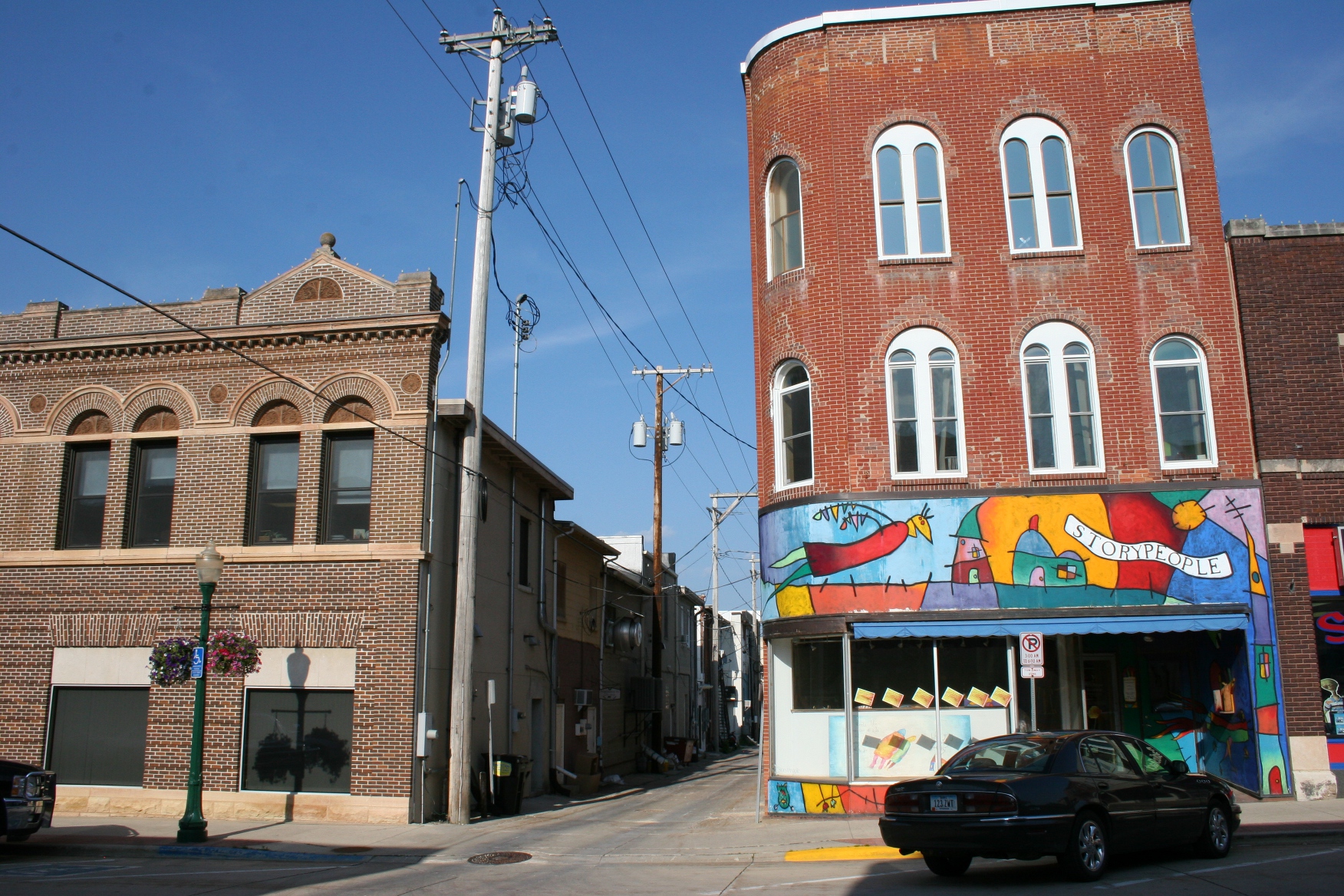
Among the primarily earthy buildings in this historic downtown, the vibrant splashes of Storypeople art defy like a tightrope walker daring to tread without a net.

The Storypeople workshop exterior pops with vibrant colors and images. I'll tell you more about Storypeople in a future post.

The Storypeople building pops with color.

Historic puritans may take issue with the bold hues and quirky drawings. But I find them thrilling and invigorating and an unexpected jolt of colorful creativity in this river town.

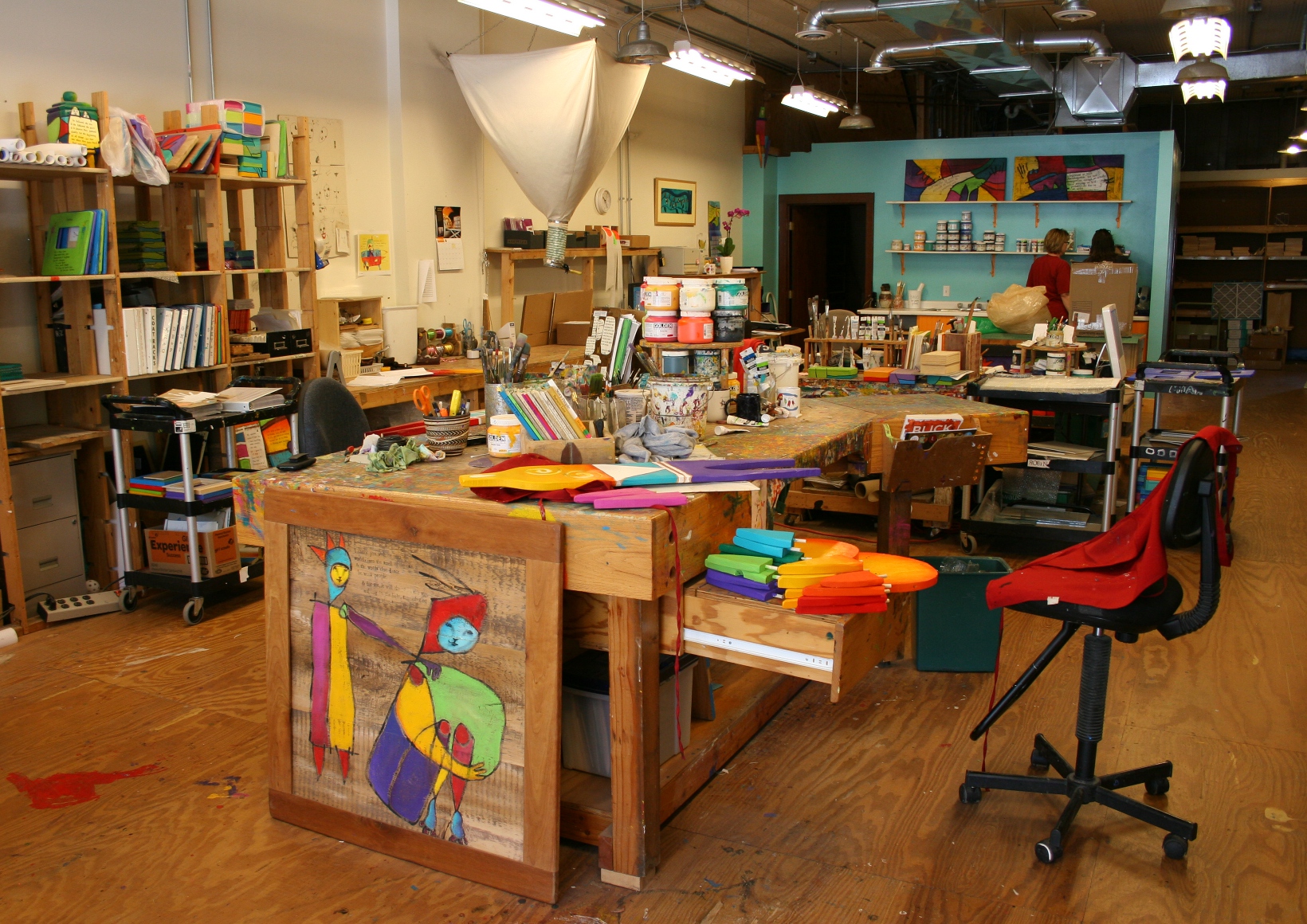
This studio is located in a different building than the one pictured above.

This studio is located in a different building than the one pictured above.

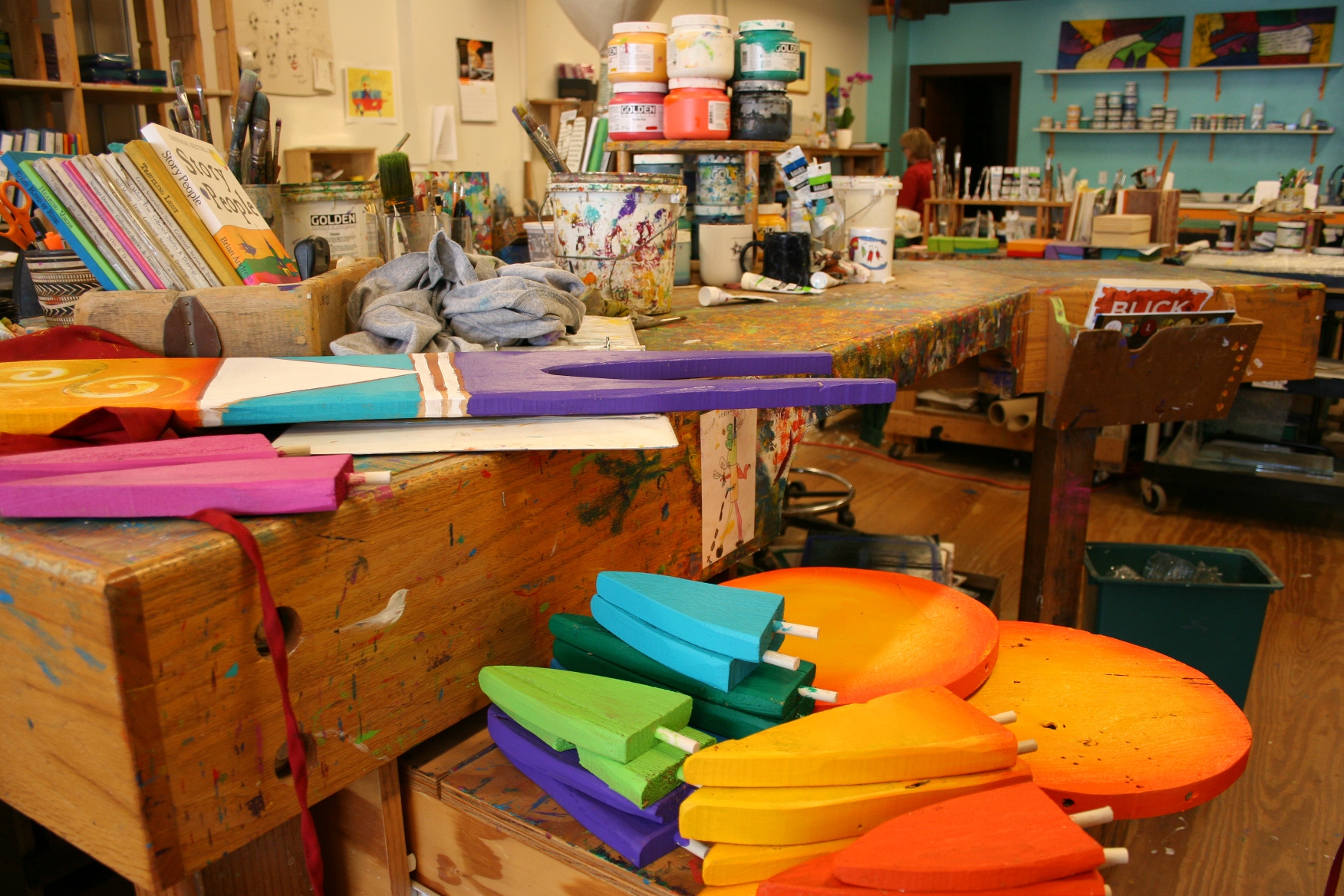
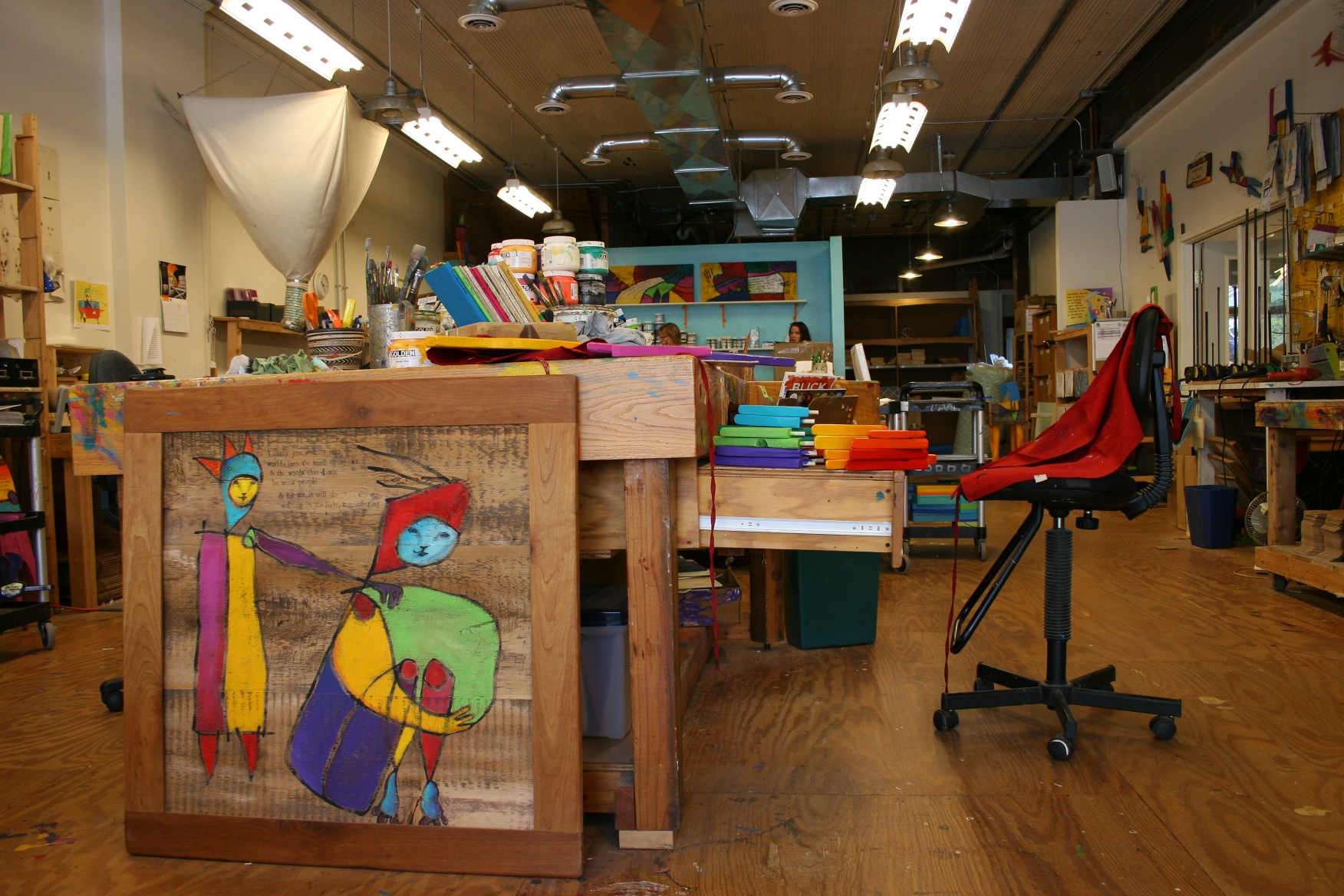
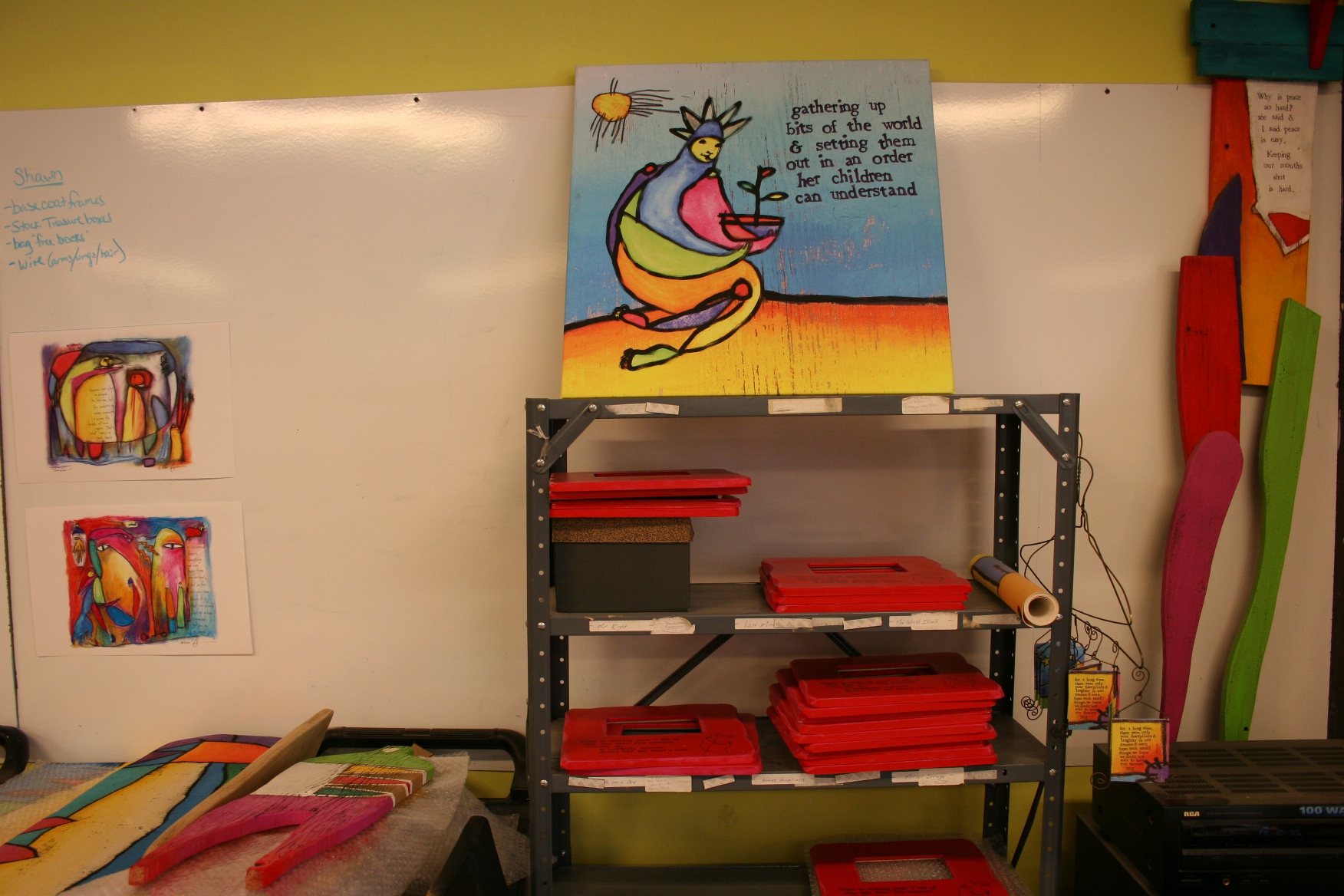
Inside the Storypeople studio, a mishmash of bold colors—red paint splashed upon the floor, stacked paint cans, paint-tipped brushes, colorful stacks of books and wood, and more—define this as a creative place, a spot to spin a story with words and images.

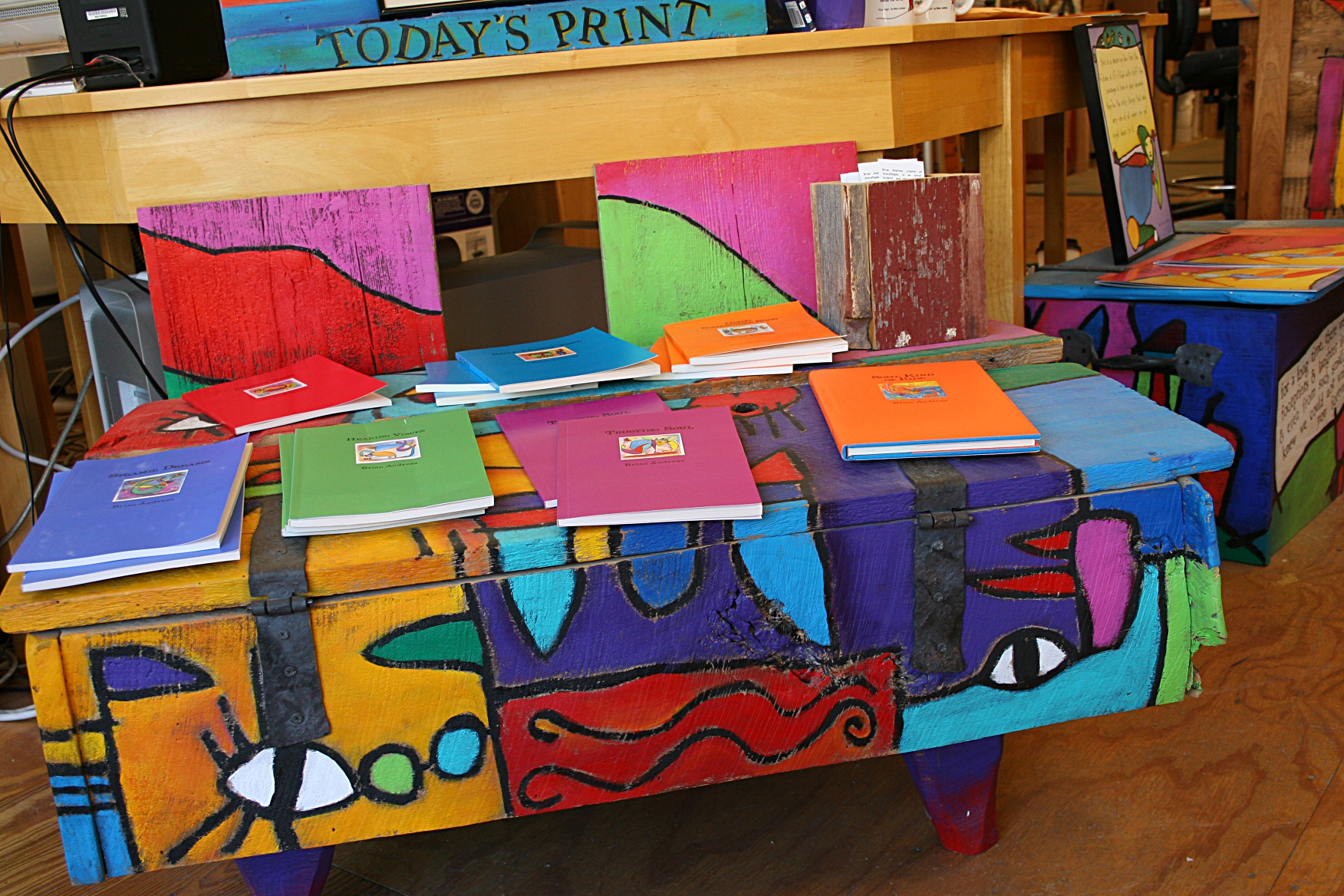
Storypeople books from which I chose one.

Storypeople books from which I chose one.

It is what the people of Storypeople do best—create stories shared in books and cards and art and such.

At work...

At work…

I would love to work here.

Materials and products.

Materials, products and inspiration.

And because I dared to step inside the studio, so I was told, I walked out with a complimentary book and greeting card. And I didn’t even mention that I was a blogger.

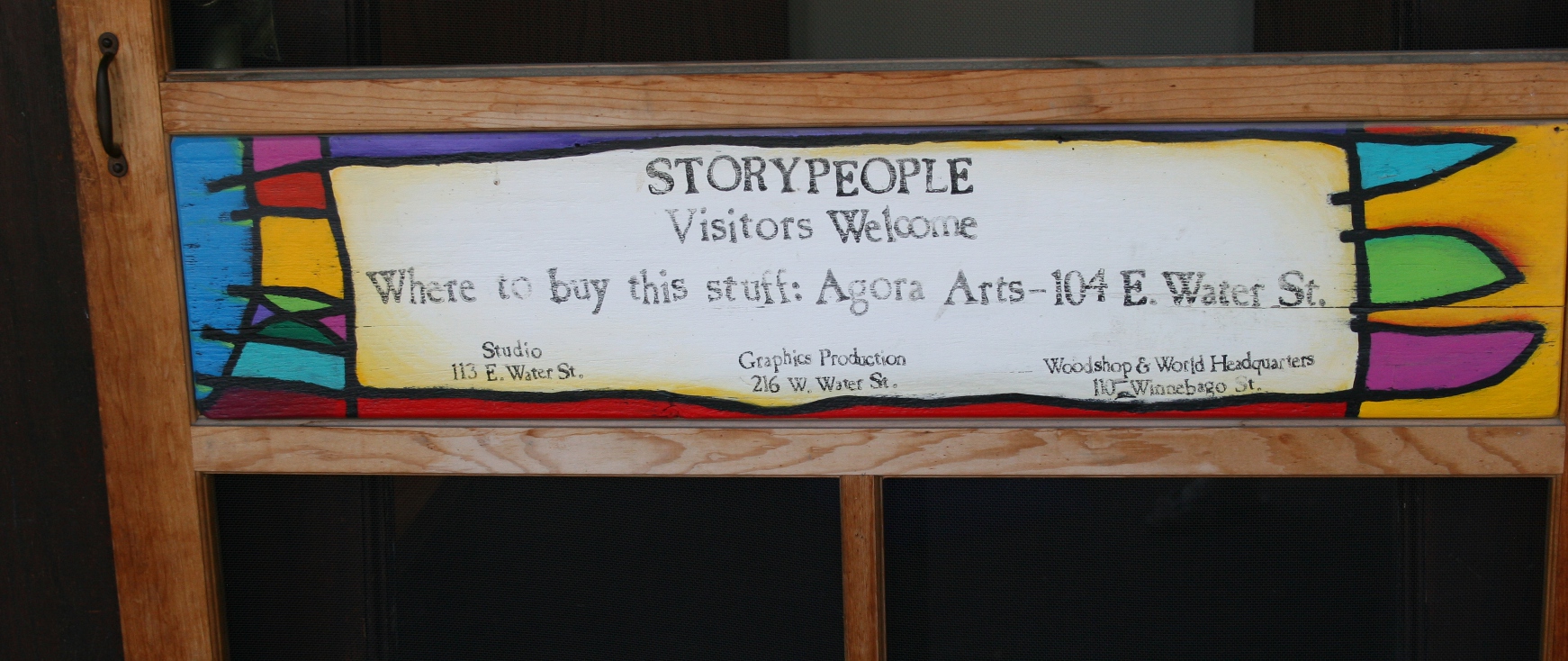
A sign on the door.

A sign on the door.

TO LEARN MORE about Storypeople, click here. Storypeople products are sold in 240 galleries world-wide.

A creative paint station.

A creative paint station.

Work in progress...

Work in progress…

One final look. This place makes me happy.

One final look. This place makes me happy.

© Copyright 2013 Audrey Kletscher Helbling


The art of healing at a Minnesota hospital January 28, 2013

TWO YEARS AGO this month, my then 92-year-old artist friend, Rhody Yule, opened his first-ever gallery exhibit at the Paradise Center for the Arts in Faribault.

Six months later, he died.

But Rhody, and his art, live on, this time in a Paradise Center Healing Arts Program Exhibit at District One Hospital in Faribault. The arts center and hospital are partnering on the program.

Thursday evening I attended a reception for that show which features 70 pieces of art created by eight outstanding artists, each of them definitively different: Faribault artists Jody Hanscom, Jorge Ponticas, Pearl Tait and Rhody Yule; Marcus Moller of Morristown; Faribault native Tom Fakler, now living in Basel, Switzerland; Jane Strauss of Minneapolis; and Cynthia Ali of St. Paul.

As Healing Arts Coordinator Elizabeth Jacobs led my husband and me through the maze of hallways and centers that comprise the hospital complex, I thought how Rhody would have felt honored to be part of an exhibit designed to comfort patients and make their hospital experiences more pleasant.

The art selected by a committee of hospital staff fits the program’s criteria as “healing art,” meaning it must be calming, happy and a positive piece of work, Jacobs says.

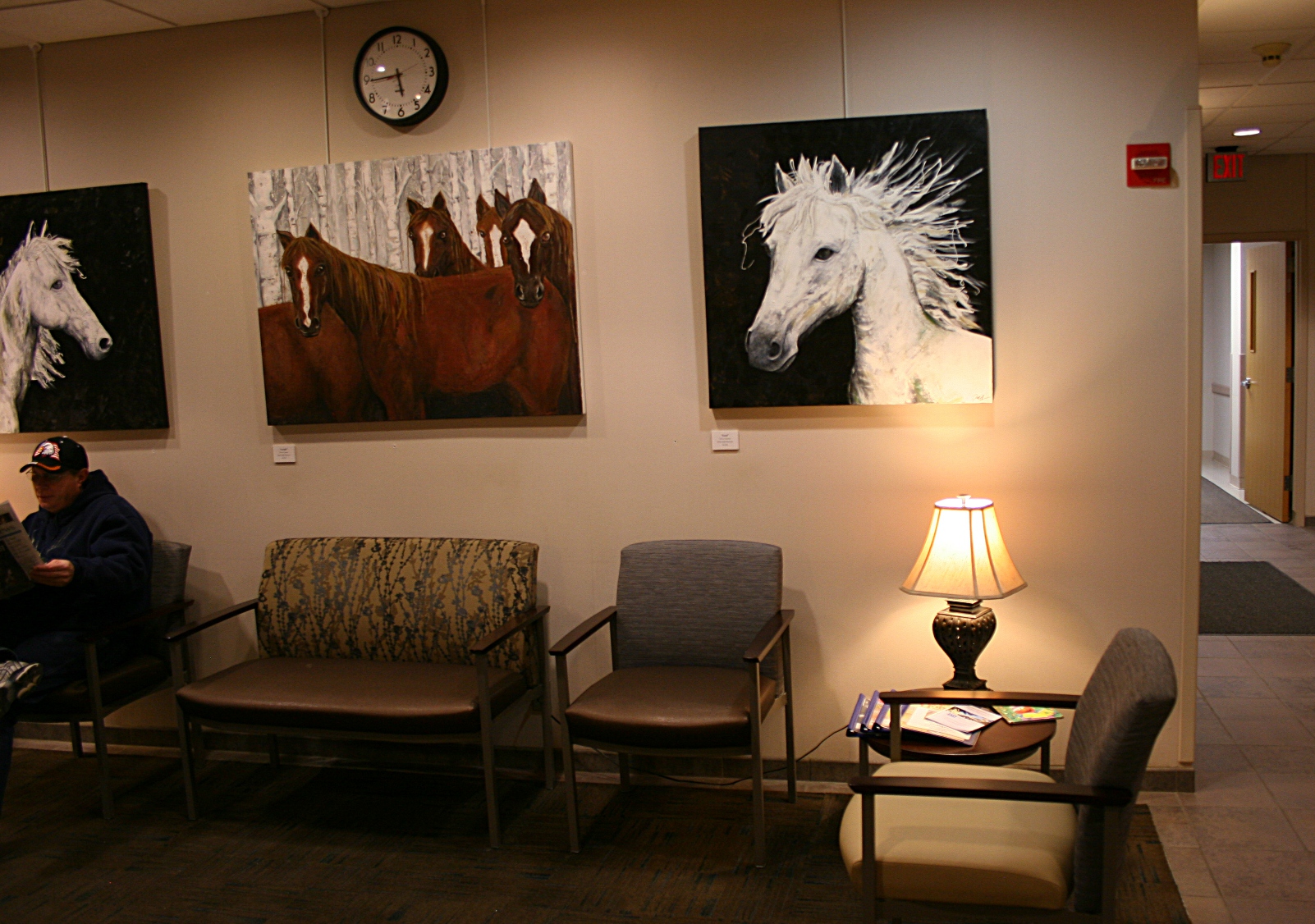
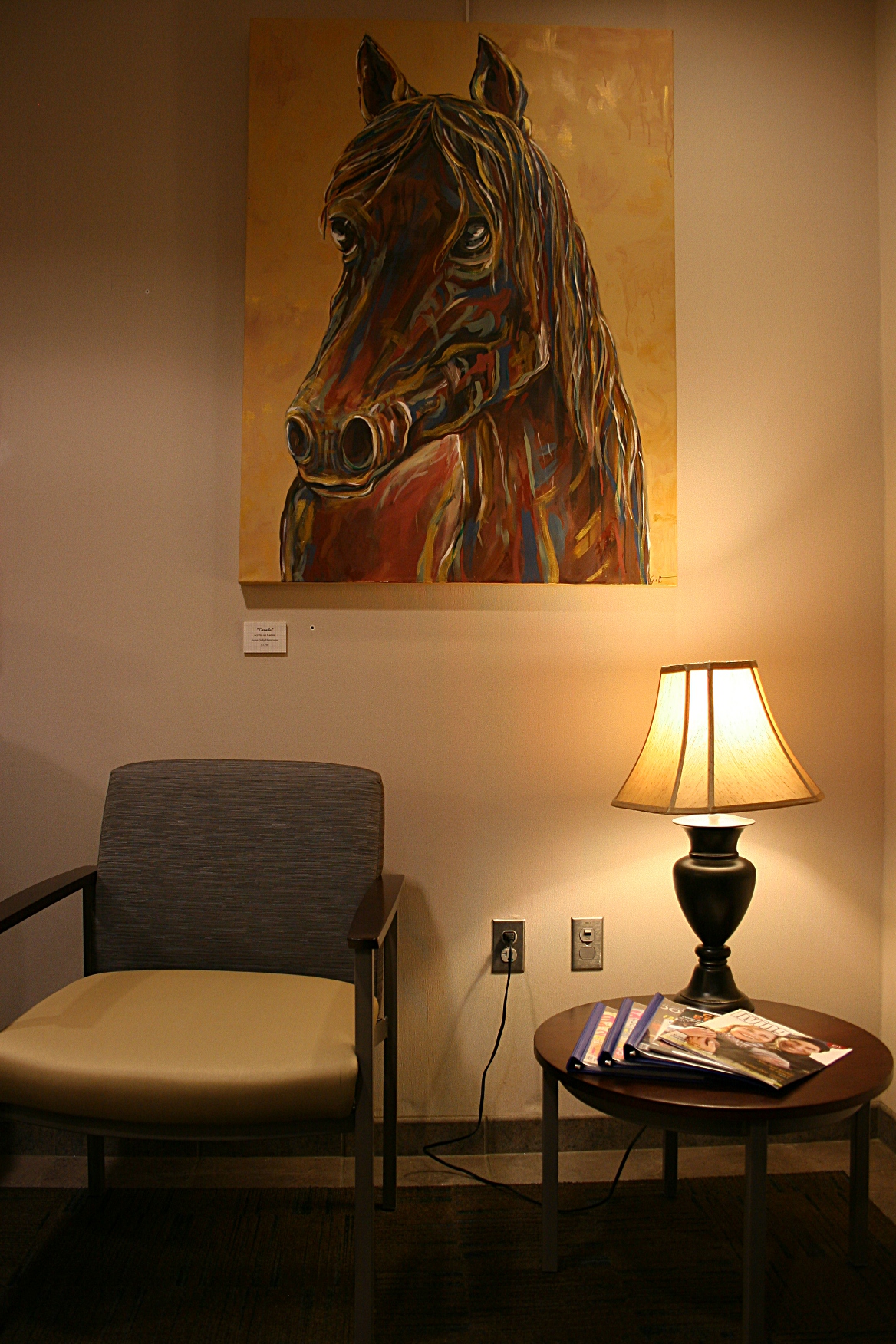
Three of Jody Hanscom's horse portraits.

Three of Jody Hanscom’s horse portraits.

And you’ll see that, almost experience that positivity, from the minute you walk in the front doors of the hospital to view Jody Hanscom’s sizable horse portraits in the lobby waiting areas. Jody’s oil paintings capture both the gentleness and free spirit of horses, a combination that simultaneously calms and uplifts.

Tucked into a corner by the elevators, the fourth of Hanscom's horse oil paintings.

Tucked into a corner by the elevators, the fourth of Hanscom’s horses.

Just down the hallway, five oil paintings by Jorge Ponticas brighten the walls with vivid scenes from his native Chile and elsewhere. His art evokes happy thoughts. What can I say? I can’t resist the sweet face of a llama.

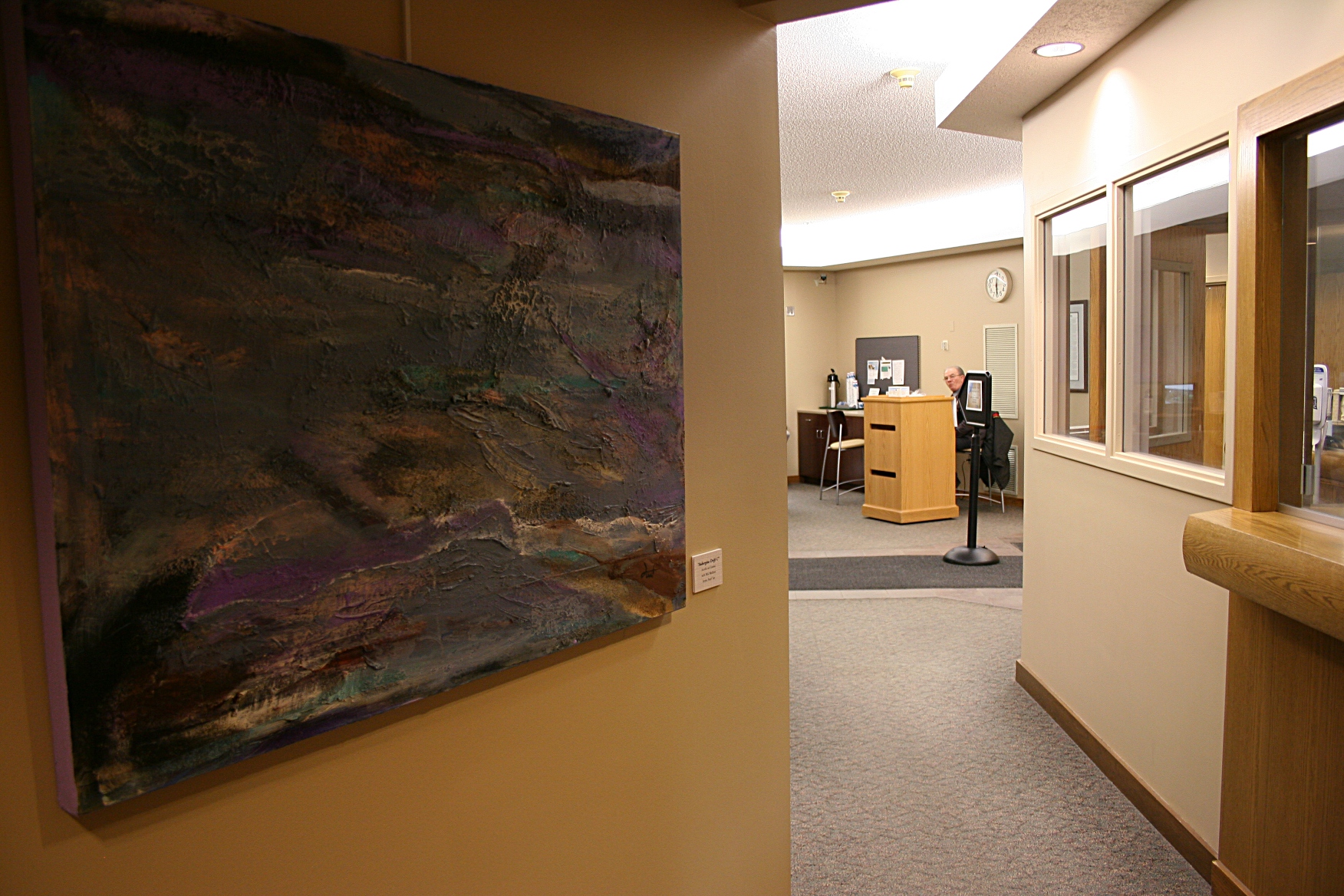
Pearl Tait's "Aubergine Drift I."

Pearl Tait’s “Aubergine Drift I.”

Moving along to the emergency room lobby, I find Pearl Tait’s moody mixed medium art the ideal choice for a setting often filled with emotion and uncertainty. Her work, which features textures like sand and tape incorporated into a painting, reflects, in my opinion, the intense layers of feelings that come with any visit to the ER.

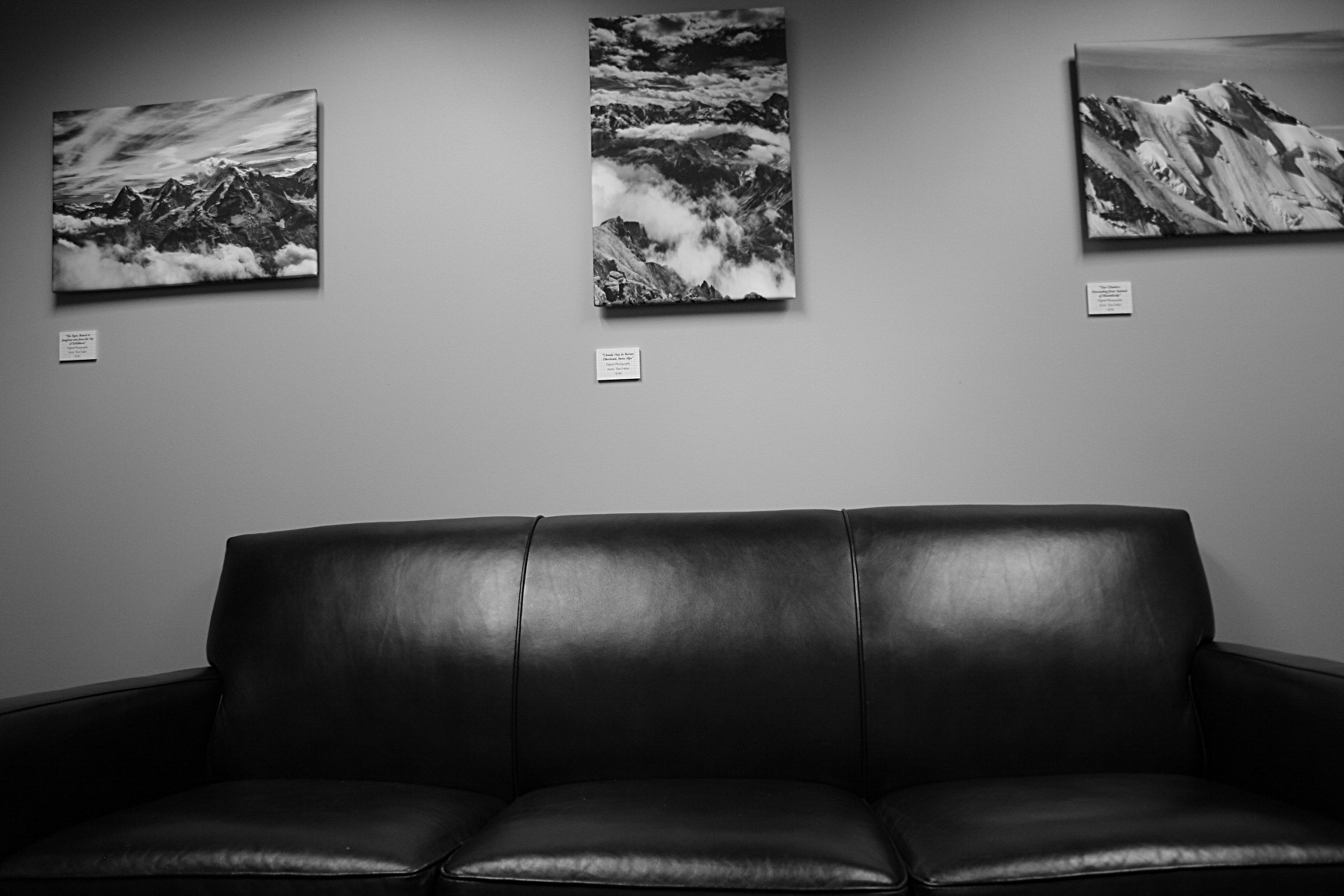
A photo in a cozy private waiting room fronts Tom Fakler's Swiss Alps photos.

A sofa in a cozy private waiting room fronts Tom Fakler’s trio of Swiss Alps photos.

Around the corner inside a cozy ER room where families are taken to hear bad news (so says Jacobs), the mood totally changes with the soothing photography of Tom Fakler. His black-and-white canvas prints of the Swiss Alps offer a natural world escape during a particularly difficult time for patients’ families.

Likewise, the photography of Jane Strauss in the surgery center reflects that same sort of escapism, especially in panoramic landscape scenes. Jacobs notes that Strauss is autistic, meaning her approach to photography focuses on qualities like texture and detail, aspects others might not consider in photographing a scene.

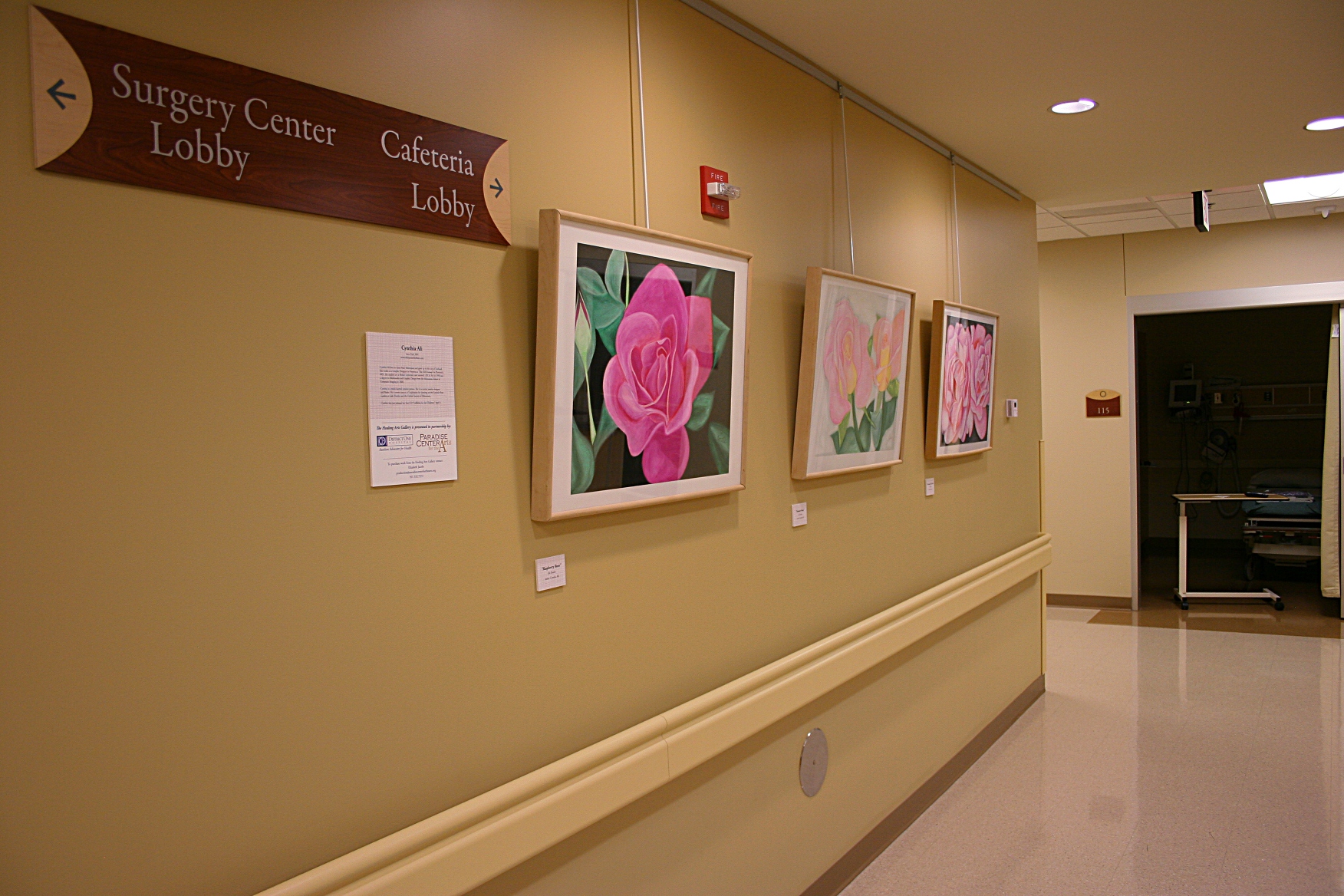
Faribault native Cynthia Ali's floral pastels are not for sale. Ali, of St. Paul, is primarily a jewelry artist.

Faribault native Cynthia Ali’s floral pastels are not for sale. Ali, of St. Paul, is primarily a jewelry artist.

Also in the surgery center, Cynthia Ali infuses a soft natural beauty with her floral pastels. You can almost smell the heady perfume of her beautiful roses.

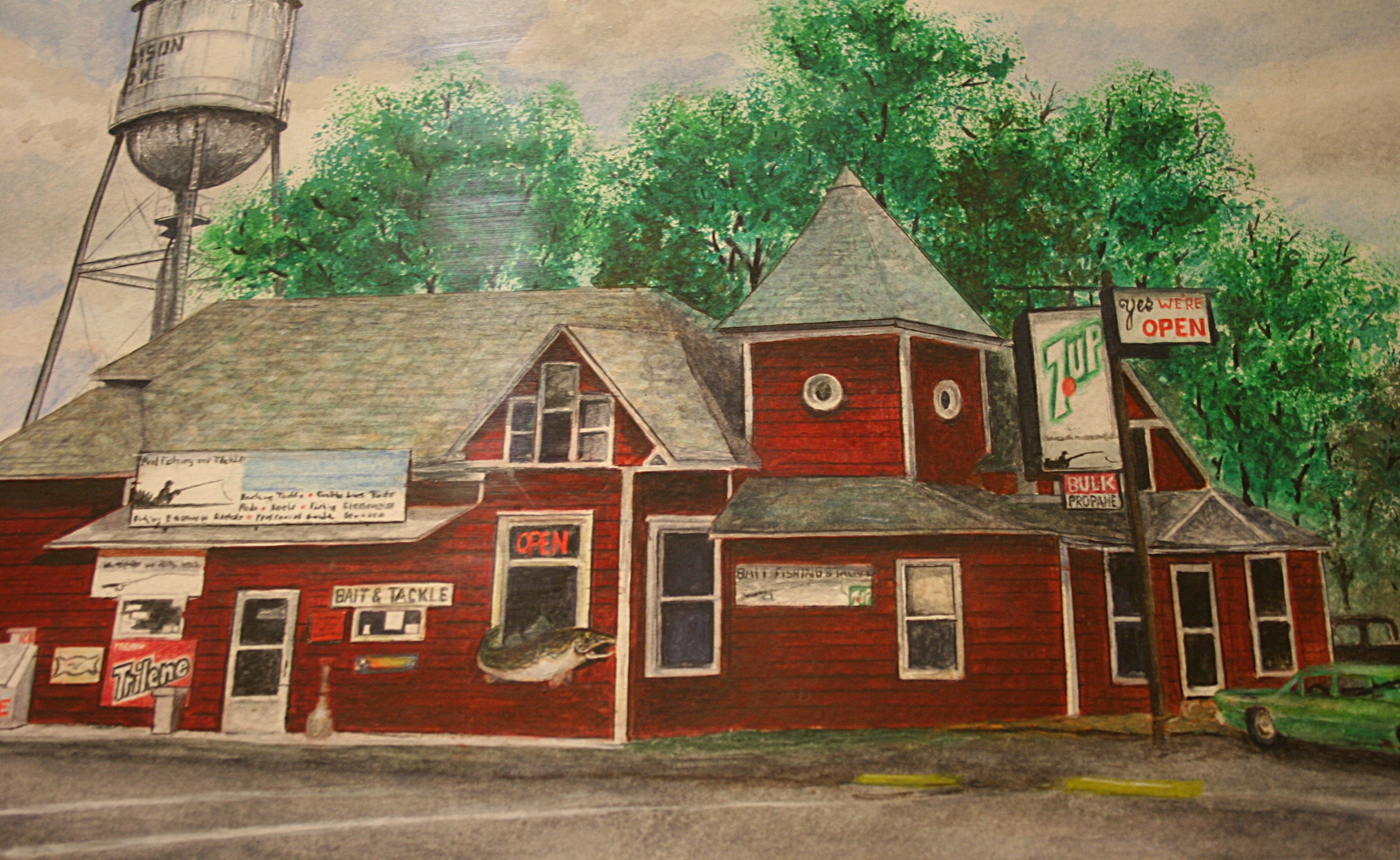
Marcus Moller's "Madison Lake Bait Shop" in watercolor.

Marcus Moller’s “Madison Lake Bait Shop” in watercolor. Moller’s art (mostly pastels) hangs in the surgery center waiting area, a place frequented by children. Thus his art is hung quite high, which made photographing it difficult.

Marcus Moller works in pastels, too, and watercolors, covering a variety of subjects from autumn landscapes to a bold rooster to my favorite, “Madison Lake Bait Shop.” Those of you who’ve traveled Minnesota Highway 60 will recognize the kitschy red building backed by the Madison Lake water tower. I cannot even begin to count how many times I’ve considered photographing that building. Moller’s bait shop painting is nudging me to actually stop and take that photo.

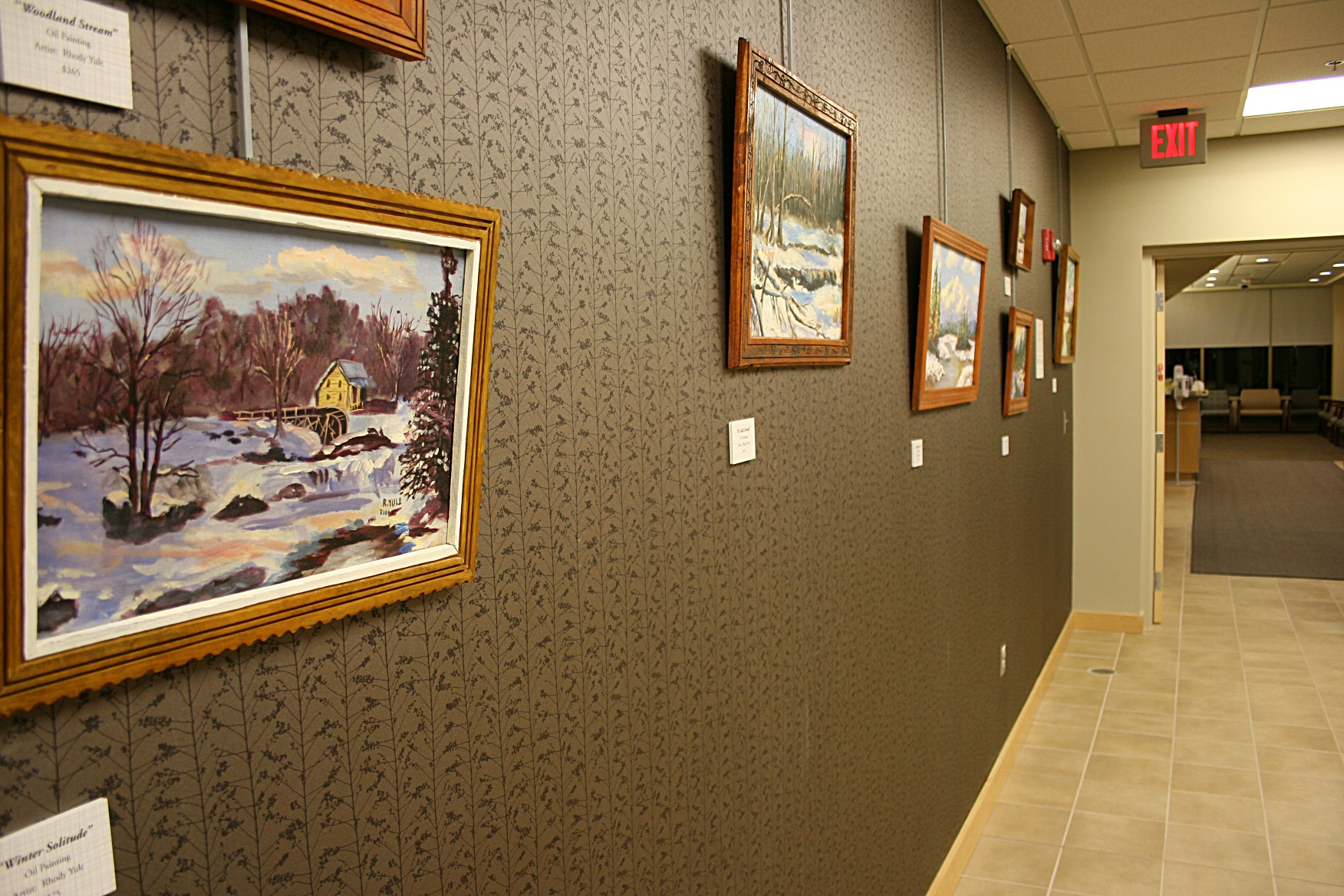
Twenty-five of Rhody Yule's oils grace the hall and patient rooms in the cancer center.

Twenty-five of Rhody Yule’s oils grace the hall and patient rooms in the cancer center.

Finally, my open house tour ended in a hallway outside the District One Cancer Center with the oil paintings of my friend, Rhody Yule. I’d seen nearly every one of Rhody’s hundreds of paintings when I worked with his family and friends on the 2011 Paradise exhibit. But, still, it was as if I was viewing his pieces for the first time, appreciating the landscapes, many of them winter scenes in this show, and the other art he created through decades of painting. Rhody was a kind, gentle man with a heart full of goodness, and I remembered that, too.

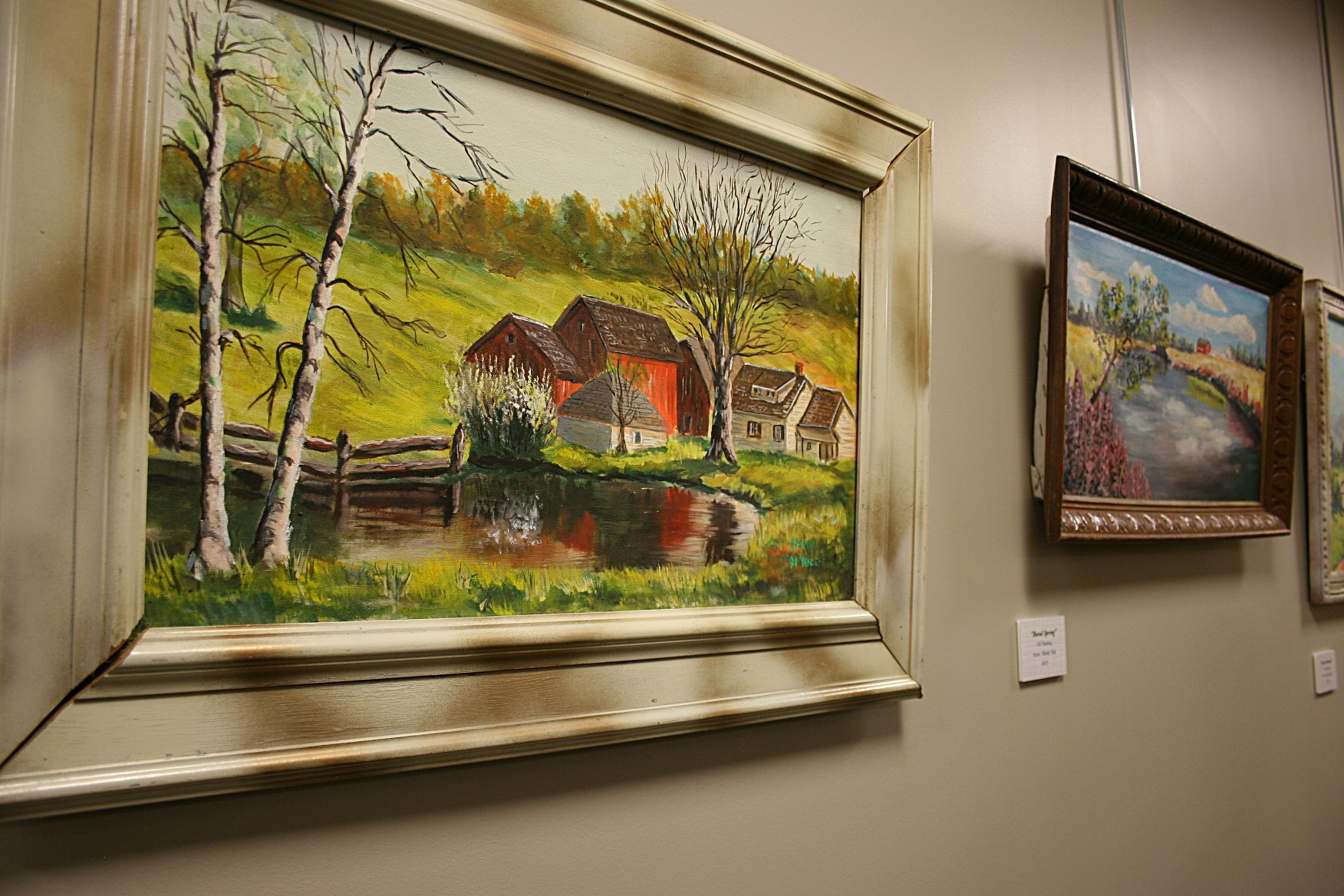
Examples of Rhody Yules art close-up.

Examples of Rhody Yule’s art close-up.

Most of the artwork in the Healing Arts Exhibit, but not all, is available for sale. (Artwork not featured in photos here is because I did not have permission to photograph it.)  A portion of any proceeds from the sale of Yule’s work will go to the local hospice, per the family’s request.

If you wish to tour the winter installment of the Healing Arts Exhibit, check in at the main desk, 200 State Avenue, during hospital business hours. All areas of the exhibit may not be accessible for viewing at all times. The current show runs through February 28.

If you are an artist interested in being featured in a Healing Arts Exhibit, contact Jacobs at the Paradise Center for the Arts. You will find details and contact information by clicking here.

The Healing Arts program is sponsored by the District One Hospital Auxiliary, which initially proposed the concept.

To view information on the artists with an online presence, click on their highlighted names.

WHAT ARE YOUR THOUGHTS on art as a “healing” tool? Have you seen similar exhibits? Please share.

© Copyright 2013 Audrey Kletscher Helbling


Support regional writing this Christmas via the gift of words December 6, 2012

WITH ALL THE “SHOP LOCAL” buzz this time of year, have you ever considered how that applies to the printed word?

Are you supporting local and regional authors, writers from within your state?

Allow me to show you two Minnesota publications that would make ideal Christmas gifts for anyone who appreciates regional based writing. Both feature collections of fiction, creative nonfiction and poetry.

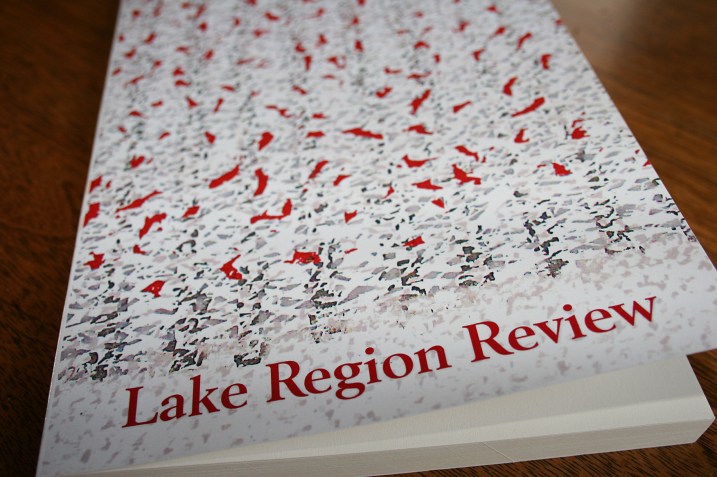
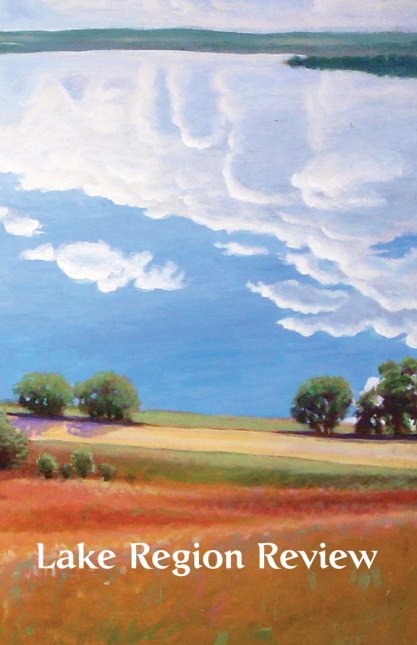
Lake Region Review, volume two, with cover art by  Charles Beck

Lake Region Review, volume two, with cover art by Charles Beck

Lake Region Review, a literary magazine centered in Battle Lake in the northwestern part of our state, showcases work by writers from Minnesota and the eastern Dakotas selected in a competitive process. This year 34 pieces were culled from some 430 submissions for publication in volume two.

In their introduction to this 160-page soft-cover book-style collection produced by the Lake Region Writers Network, co-editors Athena Kildegaard and Mark Vinz write in part:

Our aim in selecting writing for this issue is simply to look for the best writing that engages and enlightens through attention to language. In these pages you’ll find characters challenged by circumstances (and weather), poems charged with vitality (and weather), and essays that will provoke and move you.

How true. With topics like polio and Alzheimer’s, installing a satellite dish on a snowy rooftop and falling through the ice, unemployment and death, and even some stories—“Norwegian Love” and “Julebukking”—of Scandinavian influence, you are certain to find writing that entertains and evokes emotional reactions.

The writers themselves range from beginners to seasoned.

Visitors to the Kaddatz Galleries in downtown Fergus Falls peruse the art of Charles Beck.

Visitors to the Kaddatz Galleries in downtown Fergus Falls peruse the art of Charles Beck. Minnesota Prairie Roots file photo.

A bonus to both volumes of Lake Region Review is the original regional-based cover art. This year’s cover features “Cardinals,” a wood print by well-known Minnesota artist Charles Beck of Fergus Falls.

Stephen Hennings painting on the cover of Lake Region Review, volume one.

Stephen Henning’s painting on the cover of Lake Region Review, volume one.

Last year a detail of an original landscape painting, “Christina Lake: View from Seven Sisters,” by nationally-renowned artist Stephen Henning of Evansville graced the cover of volume one.

Like Lake Region Review, The Talking Stick produced by the Jackpine Writer’s Bloc based in Menahga (near Park Rapids) offers a quality selection of works in a book-style collection.

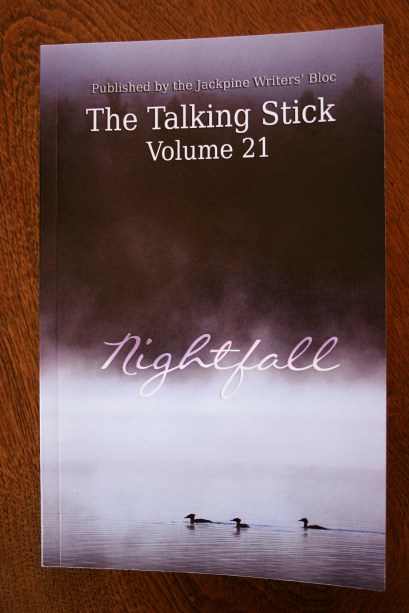
The cover of The Talking Stick, Volume 21, Nightfall, also has a Minnesota bend with a stock photo of loons on a lake from iStockphoto.com.

The cover of The Talking Stick, Volume 21, Nightfall, also has a Minnesota bend with a stock photo of loons on a lake from iStockphoto.com.

According to the Jackpine website, “…we publish to encourage solid writing that shows promise, creativity and brilliance.”

Especially heavy in poetry (94 poems), volume 21 of this literary journal features 130 pieces (chosen from 278 submissions) by writers from Minnesota or with a Minnesota connection.

With titled works like “Bologna Sandwich,” “Memories of Duluth,” “And a Bier for Dad,” “January Snow,” “Iceout,” “Blueberry Woods Symphony,” and more, the Minnesota influence presses deep into the 192 pages of this volume, subtitled Nightfall.

Therein lies the beauty of buying local in the printed word: a strong regional imprint.

That local connection also ties into the financial support provided to these two literary collections. Otter Tail Power Company, an energy company servicing western Minnesota and the eastern Dakotas, provided “generous support” to Lake Region Review. And a grant from the Region 2 Arts Council with funding from the Minnesota Legislature financed, in part, volume 21 of The Talking Stick.

HAVE YOU PURCHASED/or will you buy local books or literary collections as Christmas gifts this year? If so, please share your recommendations.

FYI: To learn more about the two literary collections highlighted here and how to purchase them, click here for the Lake Region Review. Then click here for The Talking Stick.

Some of the writers published in Lake Region Review, volume two, will read from their works beginning at 2 p.m. this coming Sunday, December 9, at Zandbroz Variety, 420 Broadway Avenue, in downtown Fargo, N.D. (If only I was going to be in Fargo this weekend. But I will read some of my poetry beginning at 6:00 p.m. Thursday, December 6, in the Great Hall at Buckham Memorial Library, Faribault.)

Disclaimer: My work has been published in both volumes of Lake Region Review and in several volumes of The Talking Stick. However, I received no monetary compensation for that or for this review, nor was I asked to pen this post.

© Copyright 2012 Audrey Kletscher Helbling


Transforming an historic building into Seven Sisters Coffee, a community gathering spot & more in rural Minnesota October 23, 2012

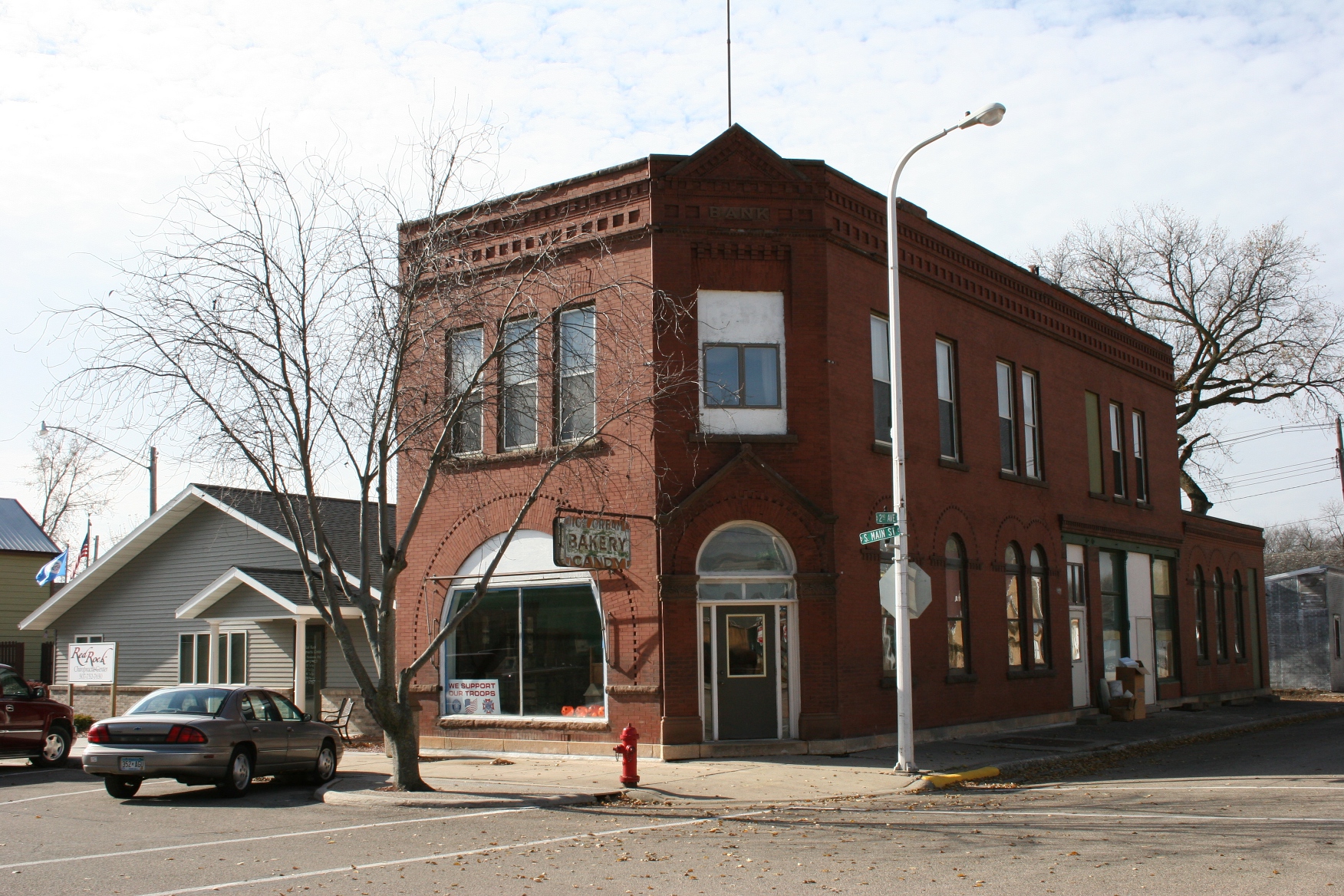
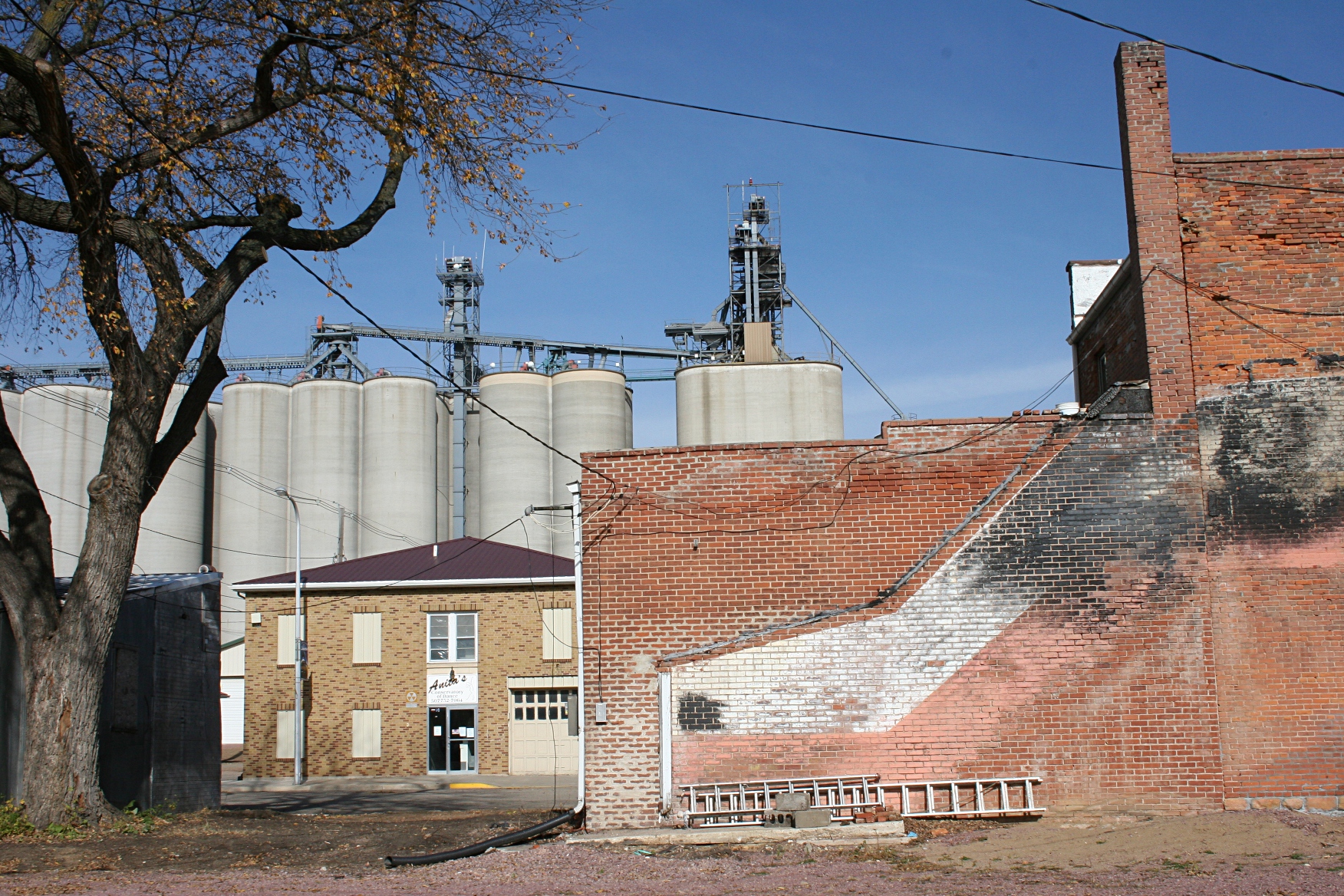
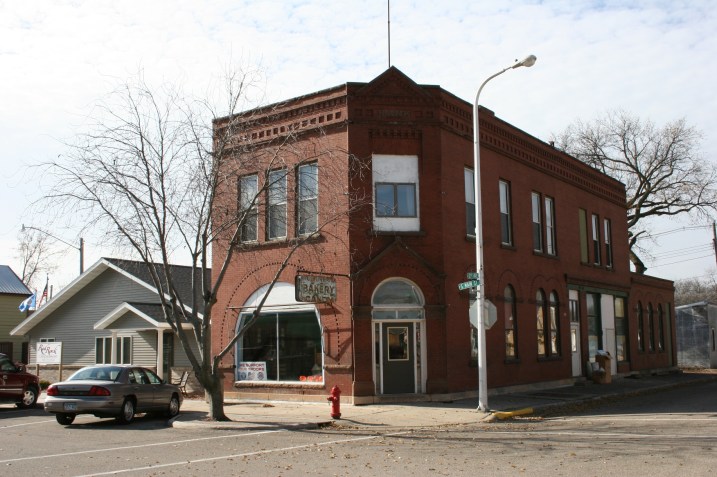
This 1892 former bank building and 95-year bakery anchoring a corner of Lamberton’s Main Street is being renovated into Seven Sisters Coffee by a young couple with connections to this area of southwestern Minnesota. After the business opens, the upstairs will be renovated into loft style apartments.

DAVID AND MICHELLE can see beyond the crumbling mortar, the moisture damage, the buckling floor boards, the teal paint.

Just barely into major renovation of an historic 1892 bank building and former long-time bakery in downtown Lamberton, this couple is thoughtfully and methodically working toward their summer 2013 goal of opening Seven Sisters Coffee.
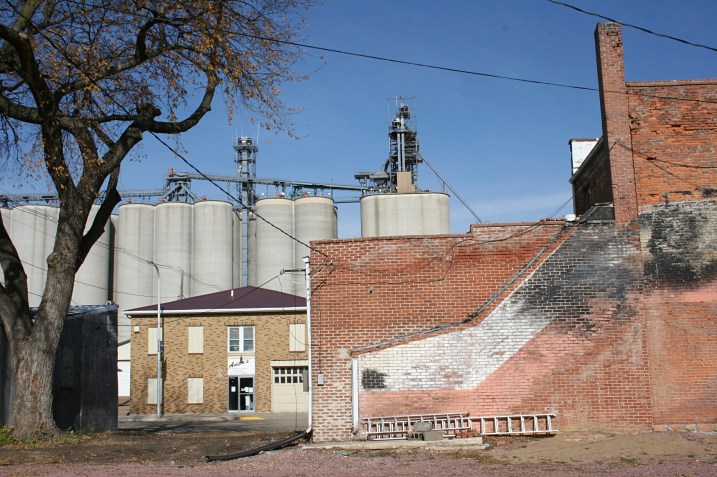
This shows the side and back view of the building, with the rear part added on to the original. Soot from a 2005 fire, which destroyed Plum Creek Crafts next door, mars the brick. Behind the building, a tree was removed and plans are to install a patio area for outdoor dining. They saved a slice of the tree to build a table.

Even the name, Seven Sisters, holds special significance for the pair as Michelle is one of seven sisters and three brothers who grew up in Lamberton, a strong agricultural community of 822 in Redwood County on the southwestern Minnesota prairie. Additionally, Michelle notes that Seven Sisters possesses multiple meanings—in Greek mythology, astronomy and even as a mountain range.

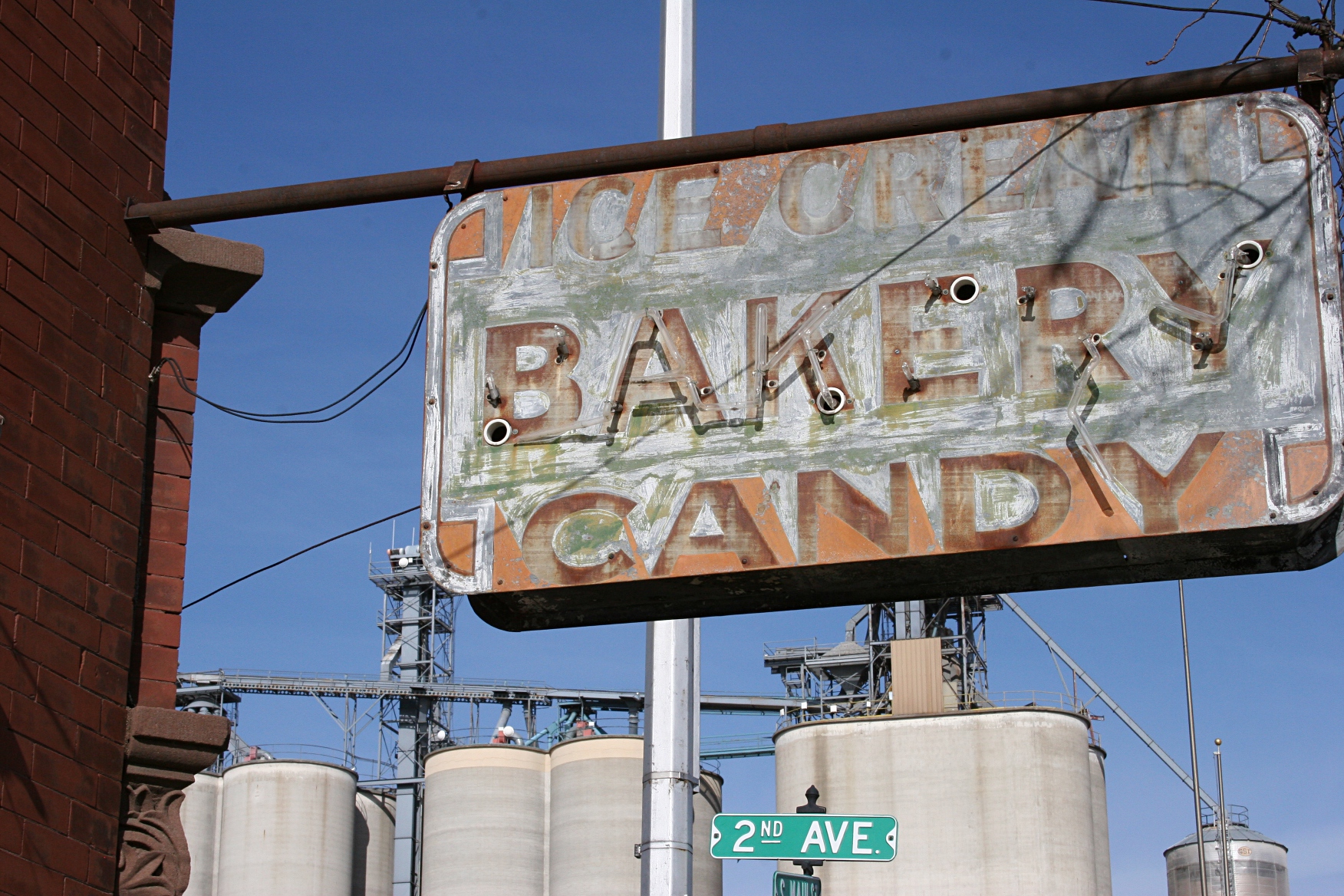
The old sign for the former Sanger’s Bakery still graces the building.

The couple may, perhaps, feel at times as if they are scaling a mountain to reach their goal of establishing a combination cafe, coffee shop and entertainment venue in the 1,900 square foot first floor of the 8,000 square foot brick building. But they are purposeful and focused and driven every week to travel 2 ½ hours from their home to proceed with their project on the prairie.
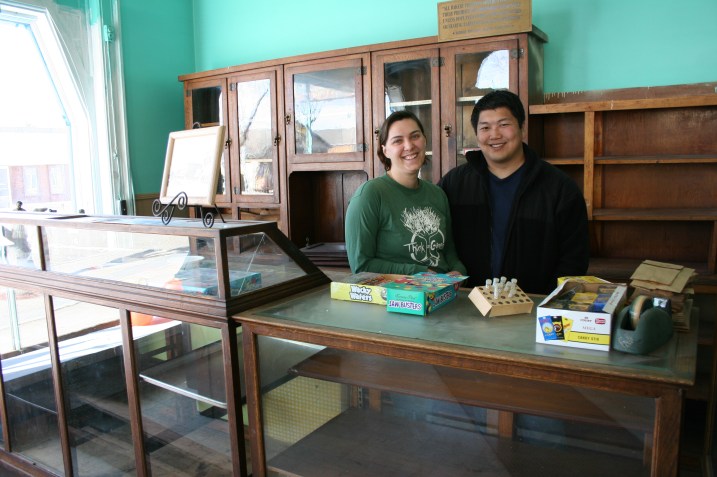
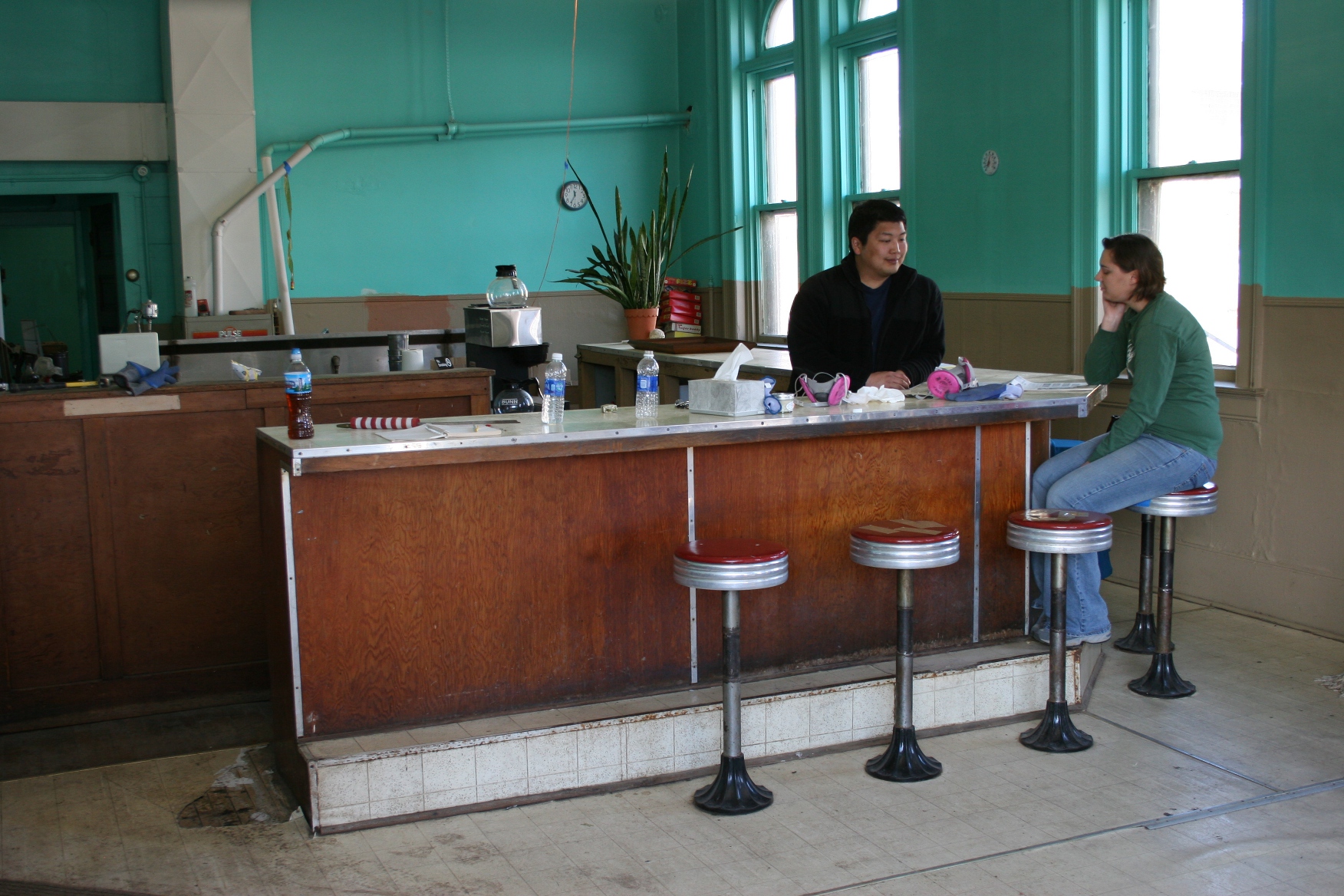
Michelle and David  are keeping the original candy and bakery goods counters and the vintage cabinet, photographed here in the front part of the building. This area of the former bank and bakery will house the cafe and soda fountain. The couple discovered a dumb waiter hidden in the area behind them in the corner.

David envisions Seven Sisters as “an artistic haven as well as a community space.” He expects “townies,” he says, to frequent the front Main Street side of the building, the bright and cheery cafe section offering a full breakfast and lunch menu and ice cream treats from a soda fountain.
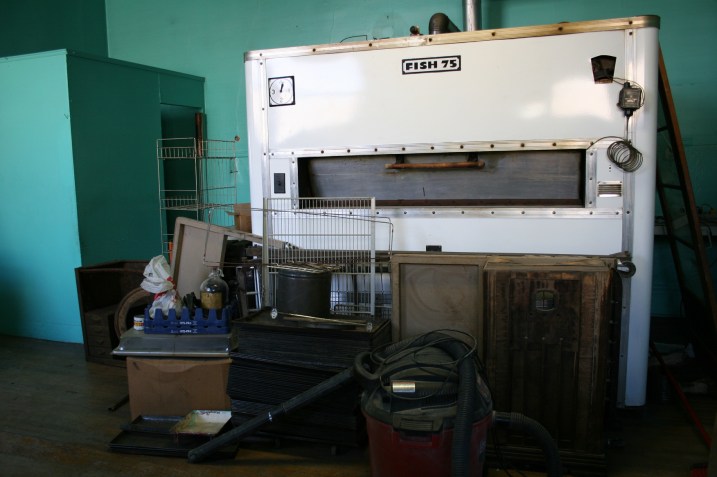
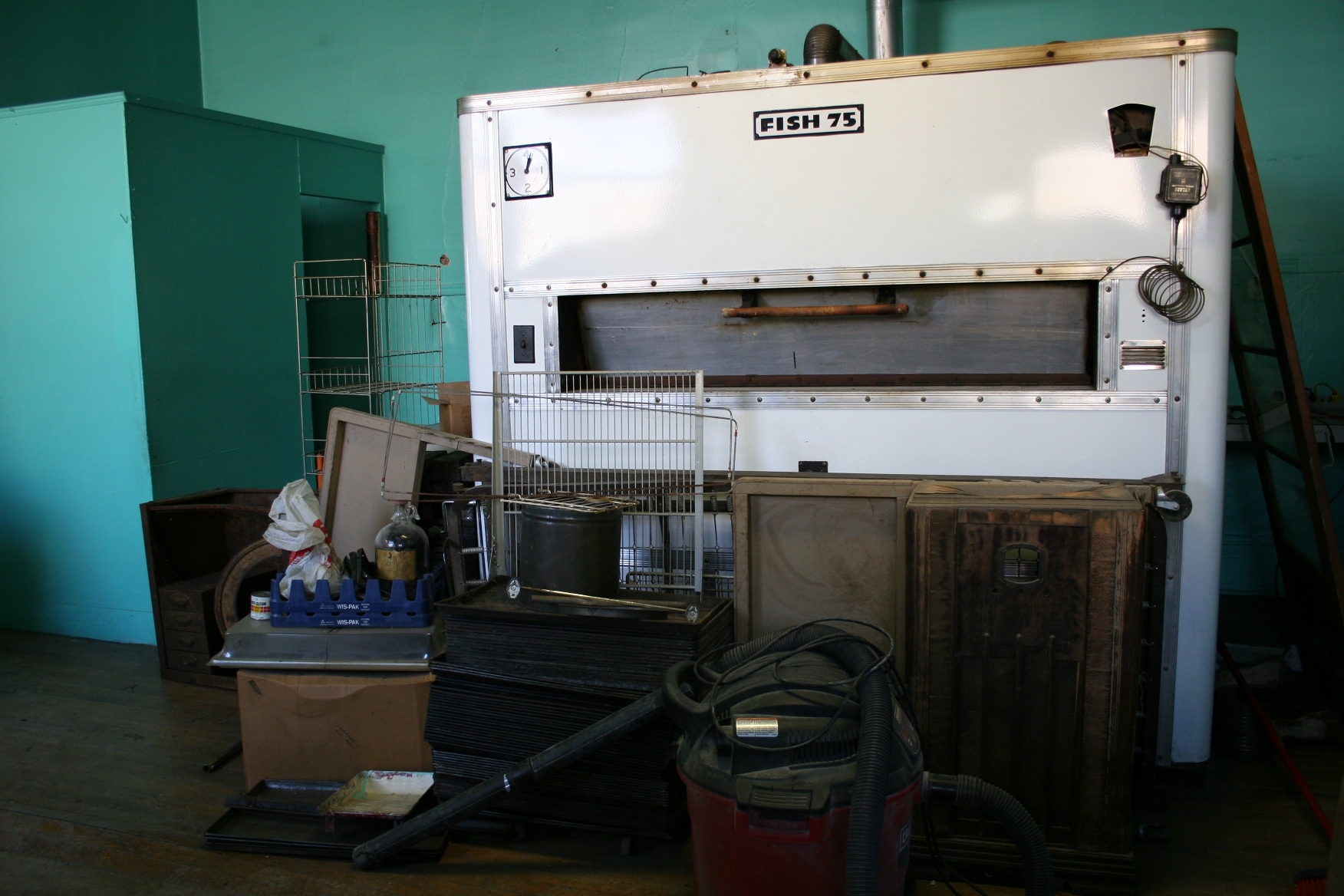
Fifty loaves of bread could be baked in this 1960s vintage two-ton rotary oven. It occupies much of the space in the middle room which will become a cozy coffee shop. This room and the front former bakery/soda fountain area were painted teal after Bob’s niece first chose that hue for the bathroom. Bob loved the color so much that he painted the rest of the place teal. The color has been on the walls for 50 years. No, they are not keeping the teal color.
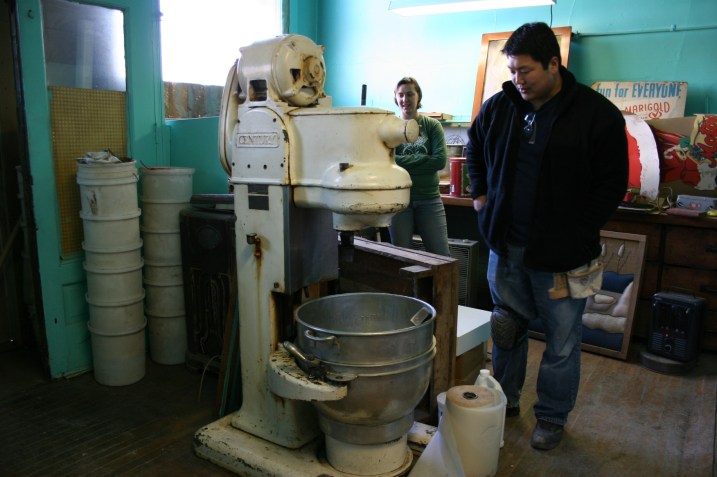
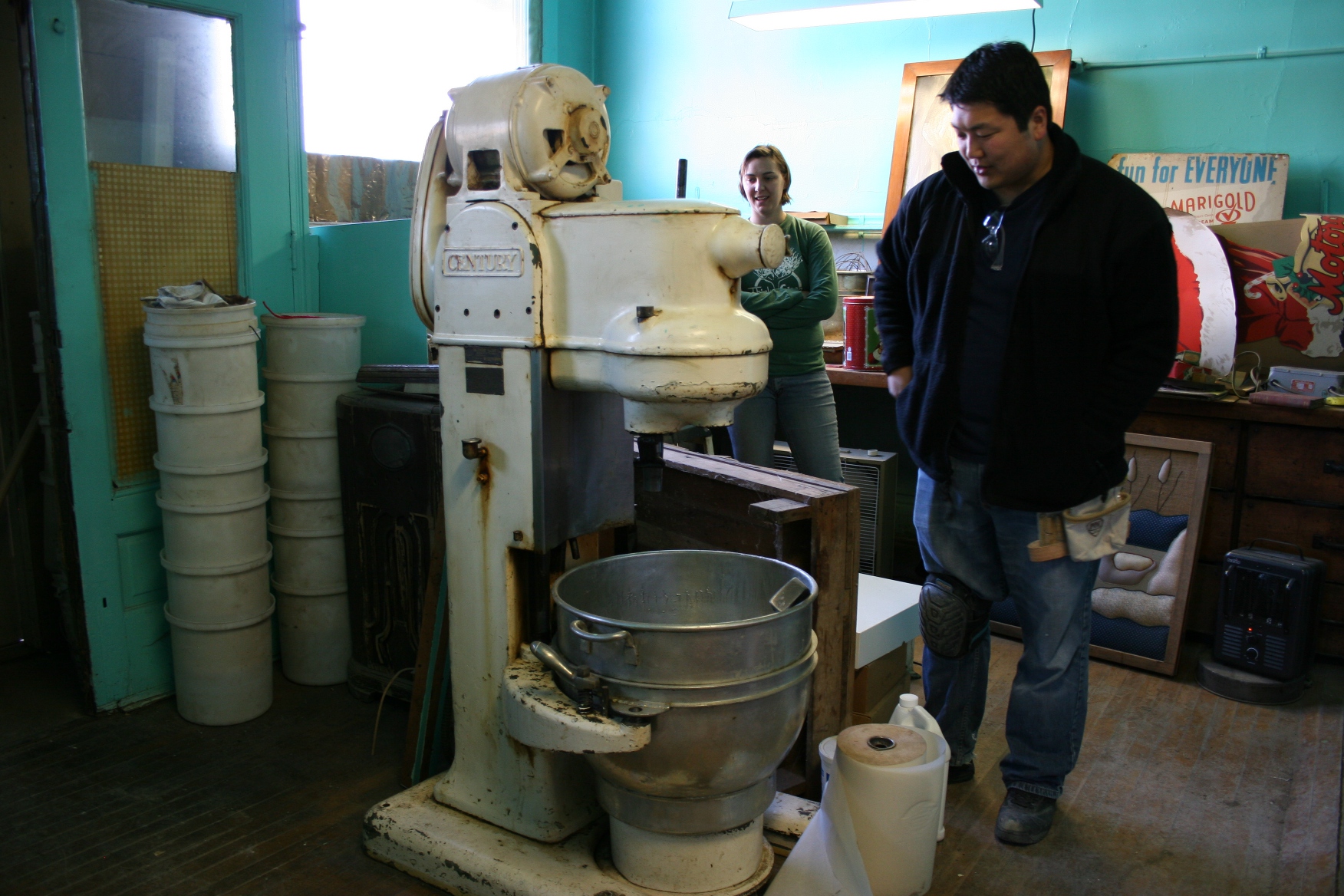
An oversized mixer also occupies space in the middle room.

The smaller middle section, once a post office entry, baking area and even home to the Sanger family, will be transformed into a warm and intimate coffee shop.
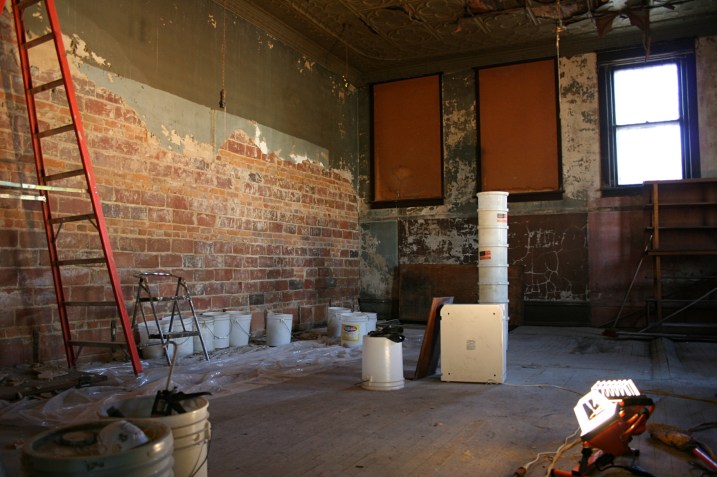
The back room, with focal point brick walls, will become an entertainment venue and artists’ haven.

And in the rear area of exposed brick walls, David expects artists and others to hang out in a more energetic and modern New York loft style space devoted to music and art and private event rental.

Tour this building, inside and out, with David and Michelle and you can see the overwhelming amount of work, inside and out, that needs to be done before Seven Sisters becomes a reality in a community already embracing the business venture.

Locals as well as those living in neighboring towns such as Revere, Jeffers and Tracy and even farther away in the regional hub city of Marshall are ecstatic about Seven Sisters, David says.

Original coffee cups and Bob Sanger’s special cup are stacked under the lunch counter.
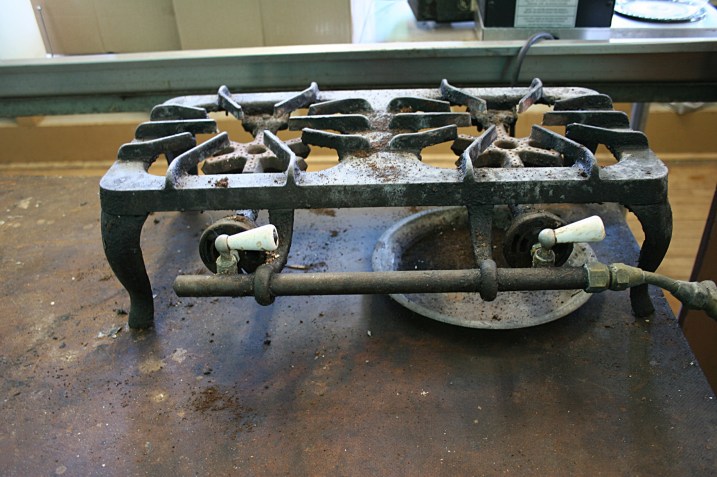
The older gas burners Bob Sanger apparently used to make coffee, etc.

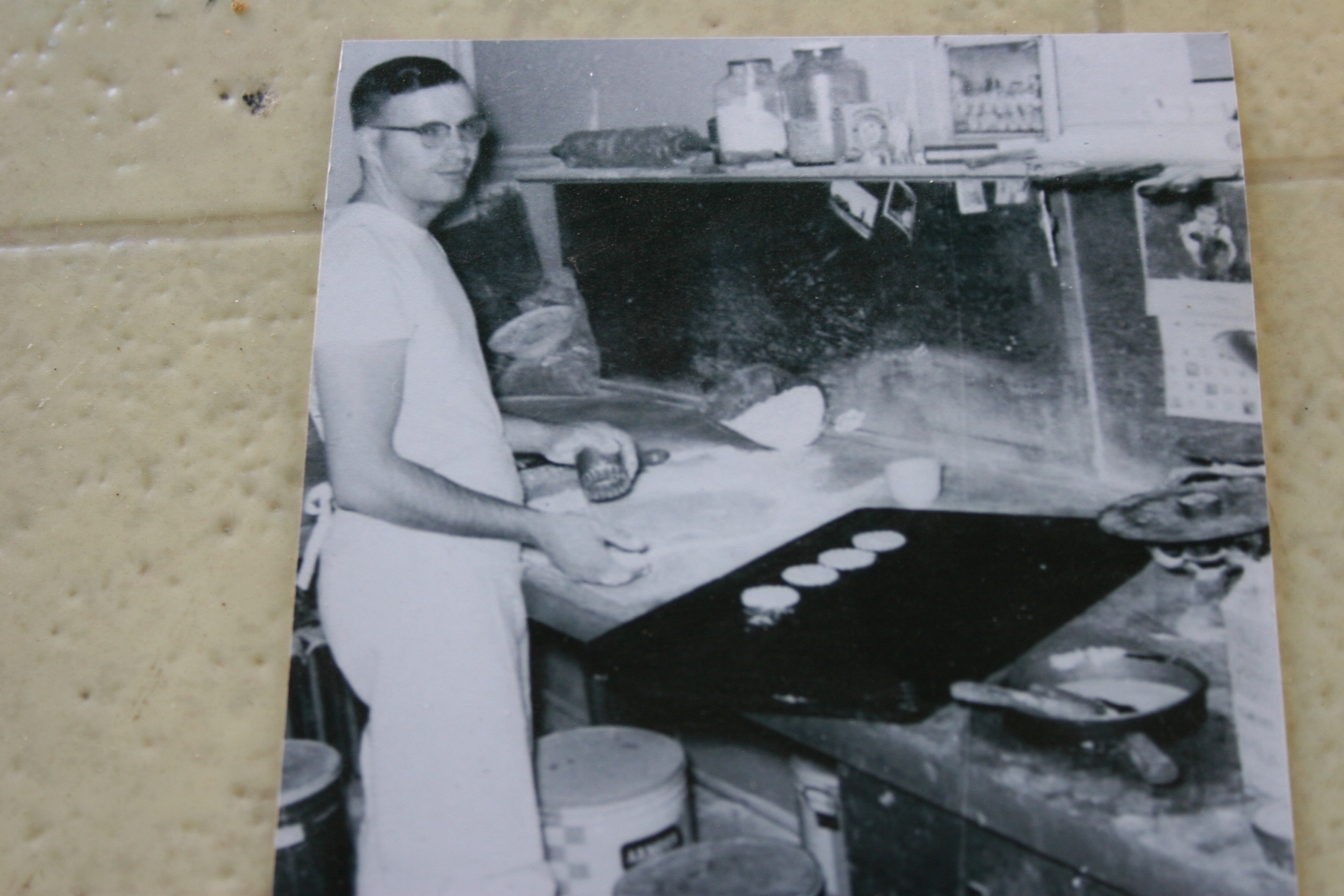
When locals George and Vern, for example, stop by to check on the renovation, David invites them inside for coffee. The two were coffee klatsch buddies of Bob Sanger, long-time bakery owner who died in March. Sanger purchased the bakery from his father, Nick, in 1961. Between Bob, Nick and previous owner, Martin Kuhar, the building has housed a bakery in the First National Bank building for 95 years.
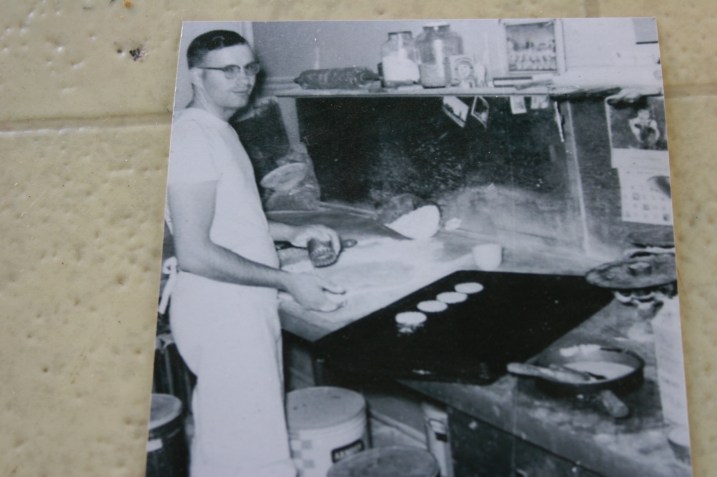
A vintage photo of bakery owner Bob Sanger who died in March at the age of 80.
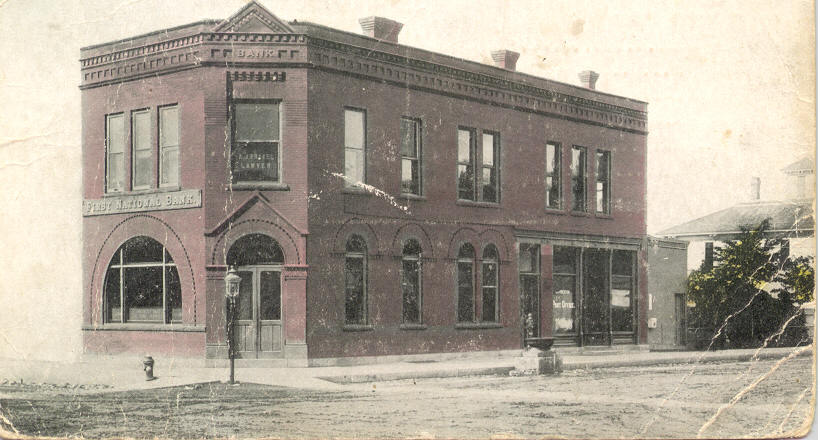
A vintage photo of the First National Bank.

Says David of his and Michelle’s decision to purchase the former bakery after Bob Sanger’s death:

The building is positively gorgeous and has a fascinating history. We had admired it for some time. The quality of the construction is superior to similar buildings of that era. We’ve always talked about opening our own business and the location and timing were right.

Our review of the local economy and the needs of the surrounding area indicates a very strong potential for growth and a serious need for a business of this kind. By offering excellence in service in three different approaches (cafe, coffee shop, event space) we will offset some of the inherent risk of this type of business. In short, it was a perfect confluence of events. We got lucky.

The pair is determined also to buy local as much as possible. Dry goods will come from Griffith’s Grocery across the street. They plan to work with Brau Brothers Brewing and Fieldstone Vineyards, located in the region. They’ll grow their own herbs.

It is clear in talking to David and Michelle that they appreciate the historic gem they’ve purchased.
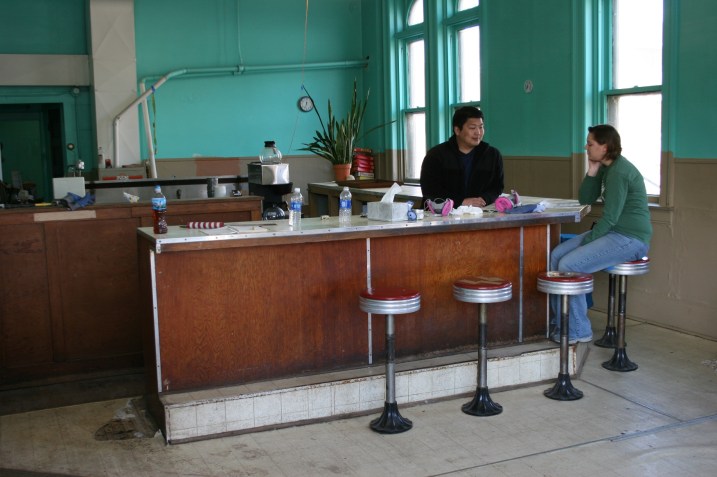
A section of this original lunch counter built by Bob Sanger will be refurbished and topped with granite.

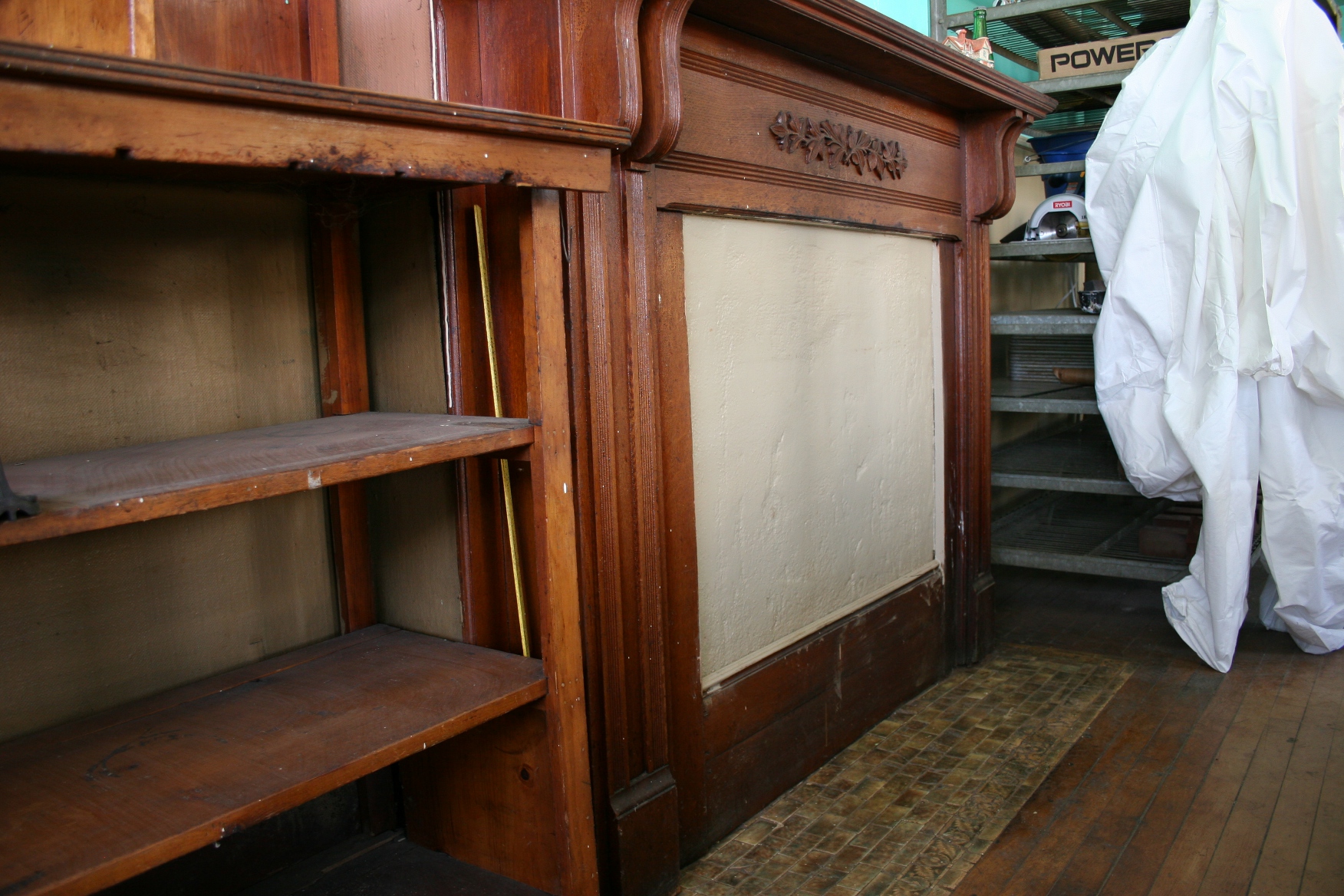
They’re attempting, they say, to retain as much of the natural charm as possible. For example, they plan to refurbish the soda fountain built by Bob; relocate an original bank fireplace facade and tile into the coffee shop and install an electric fireplace; refinish the wood floors; keep the tin ceiling; reuse the candy and bakery counters; restore an old player piano; and more.
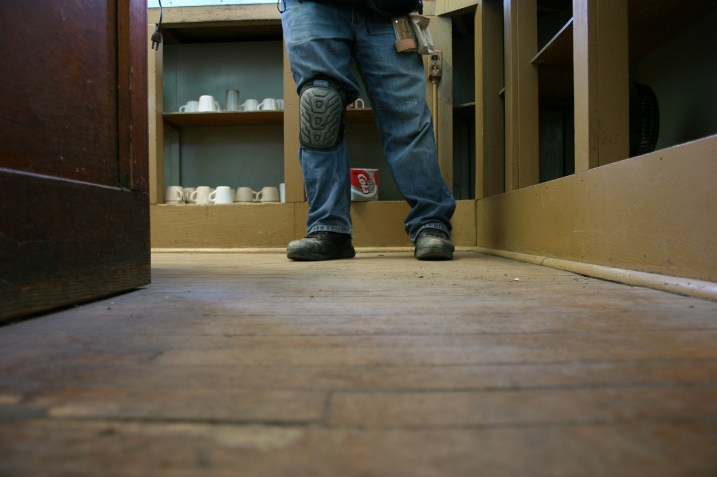
Wooden floors, like this behind the lunch counter, run throughout the building. In one section, however, where the bank vault once stood, the floor is made of pipestone granite.
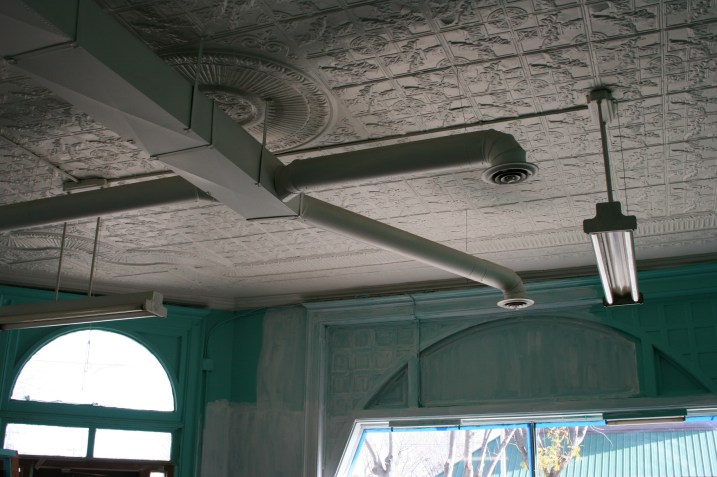
This shows a section of the original tin ceiling in the front part of the building. Ceilings are a lofty 12 and one-half feet high.
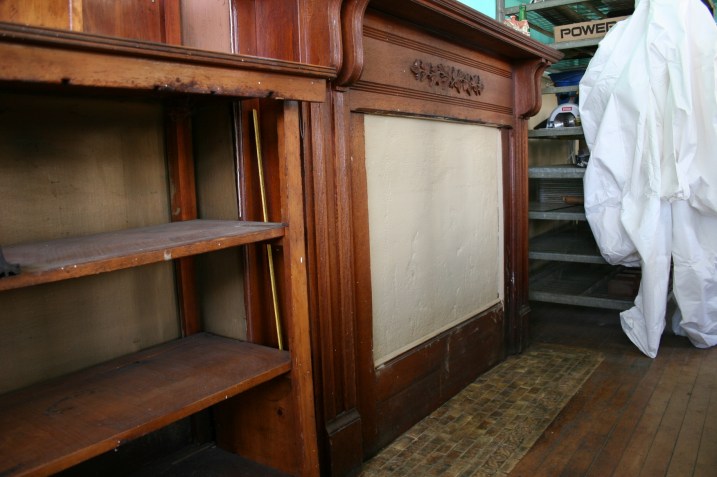
Plans are to move the facade and tile from the this original First National Bank fireplace into the coffee shop, which David will manage. 

The couple is also uncovering and sifting through collectible treasures like WW I and WW II artifacts, signage, rocks, and more accumulated by Bob. So much was damaged though, beyond saving, by moisture problems in the building, David says. But they are saving what they can, possibly incorporating some of their treasures into Seven Sisters.
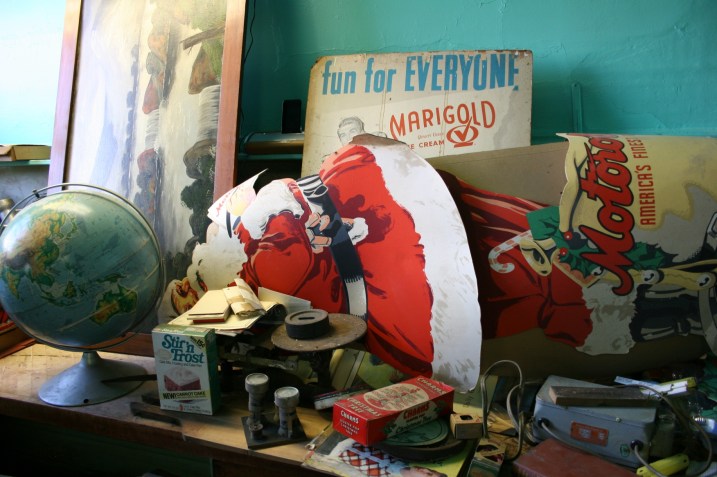
A pile of recently found treasures.
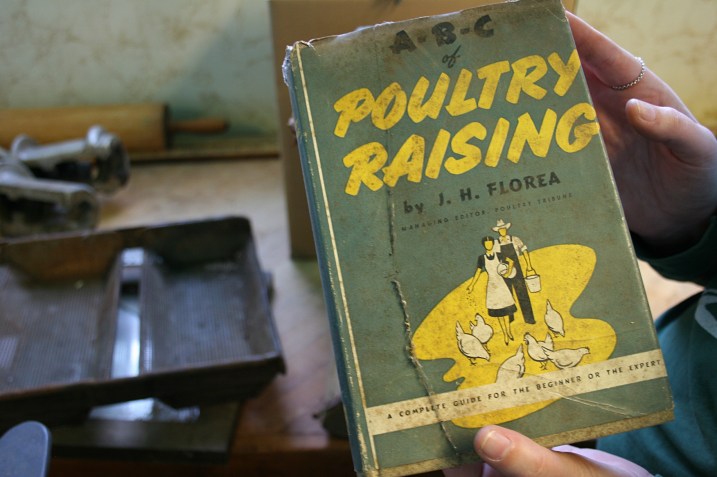
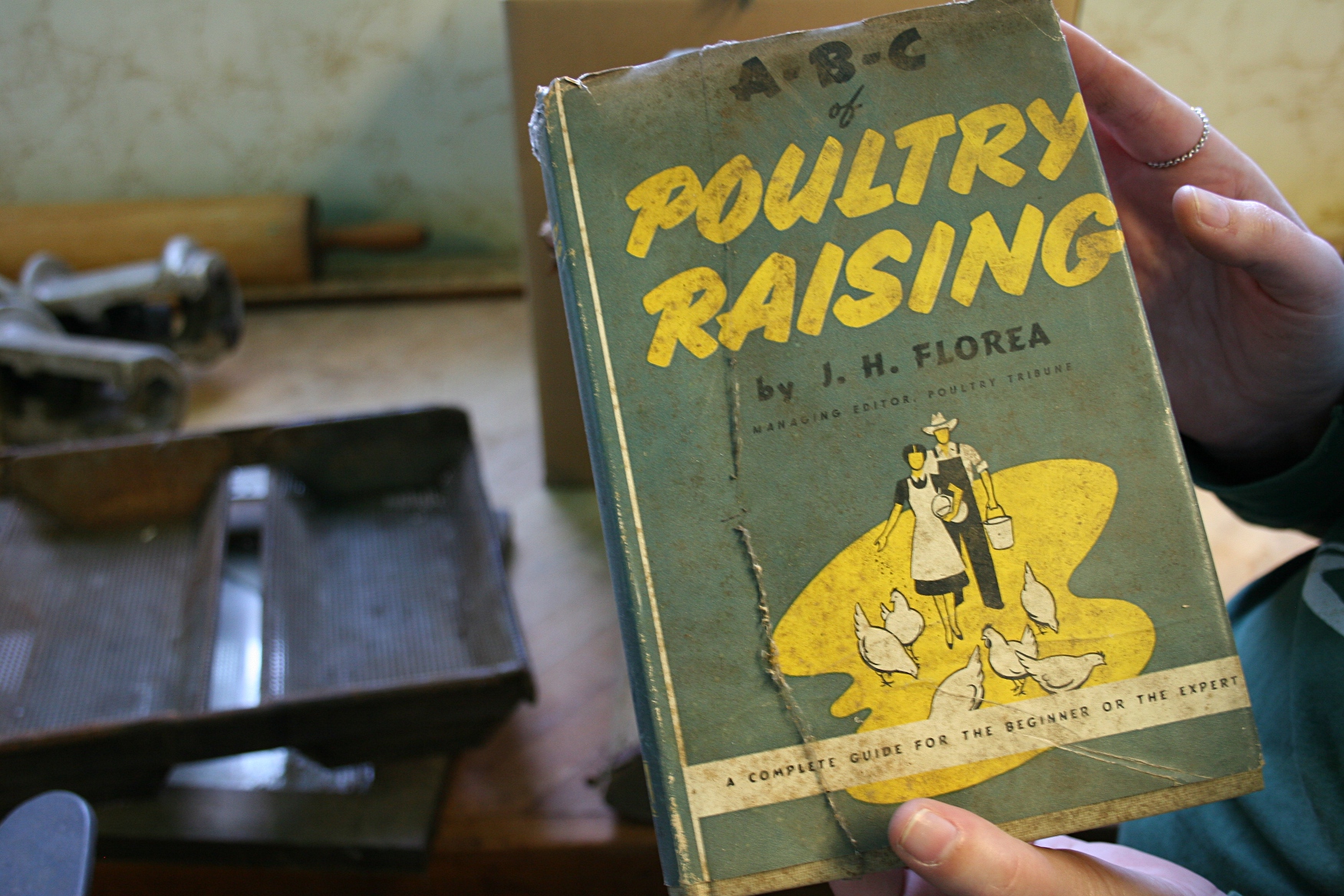
Among the old books uncovered was this one on poultry. Bob Sanger kept a flock of 100 chickens at his house, Michelle says. He used the eggs at his bakery and also sold eggs.
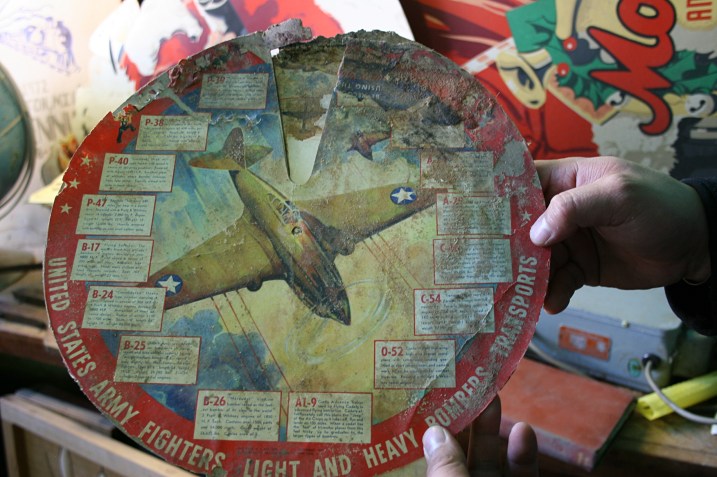
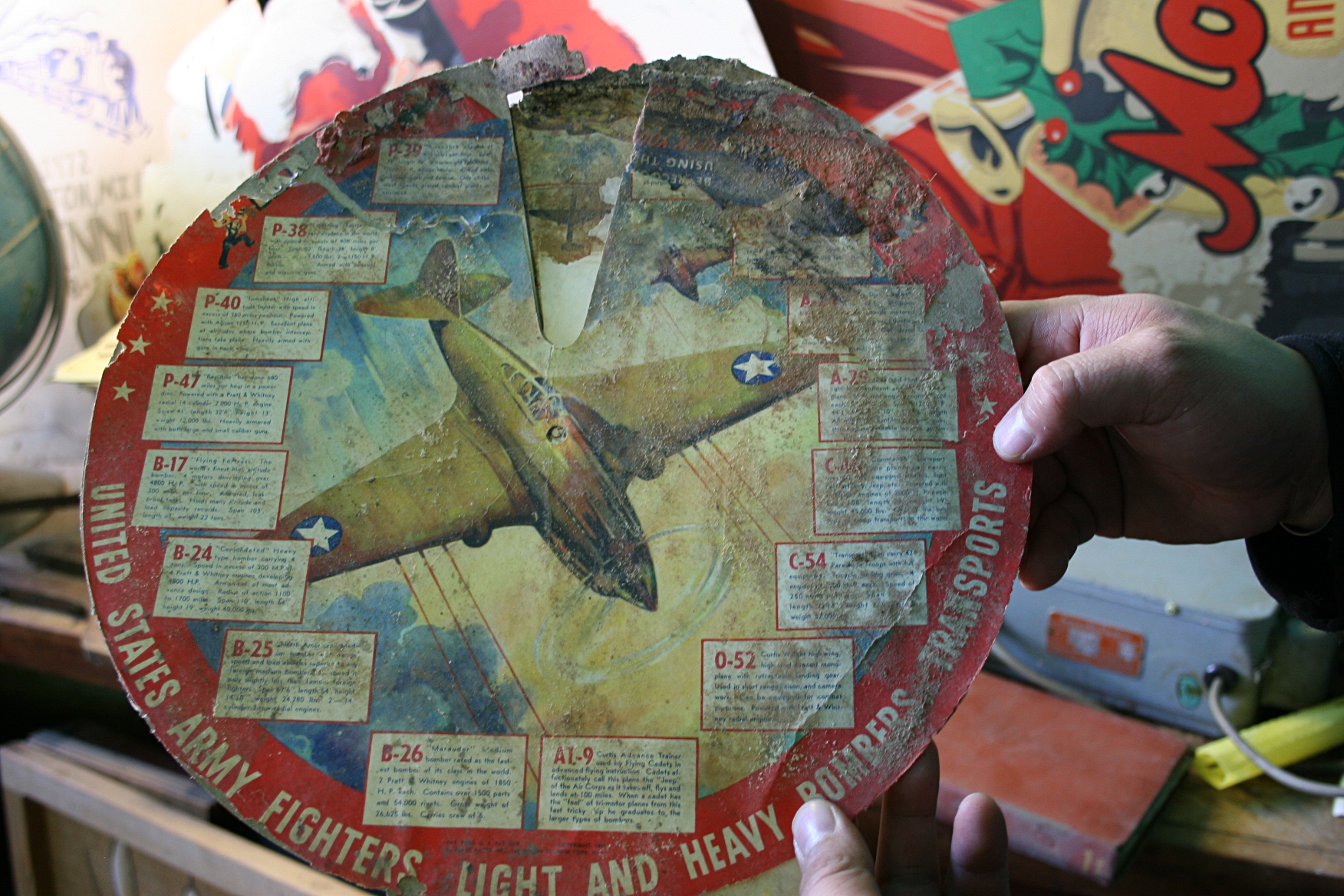
Another find, a vintage bomber transport chart damaged by water, like many of the old items found in the building.
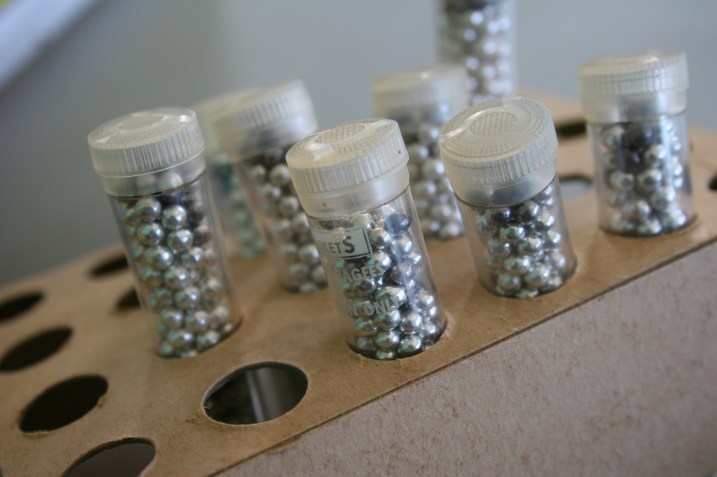
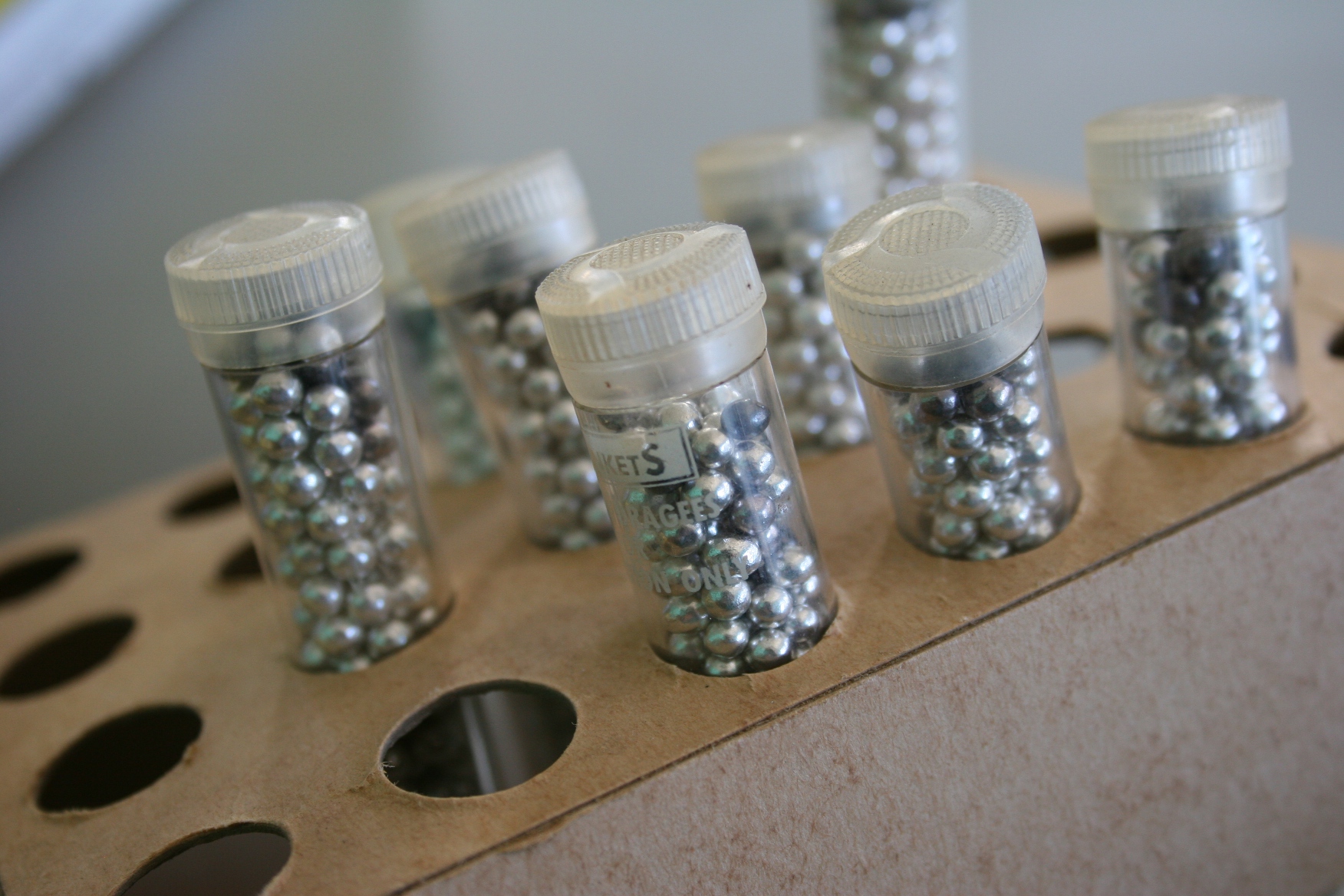
Inedible silver cake decorating balls remain from Bob’s days of baking wedding cakes.
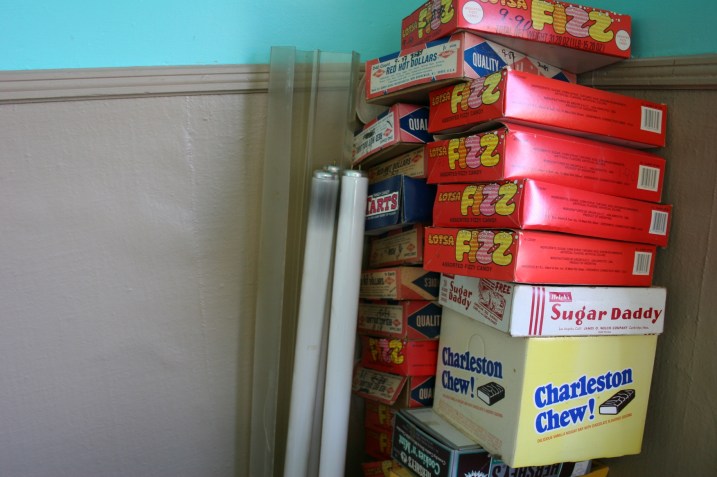
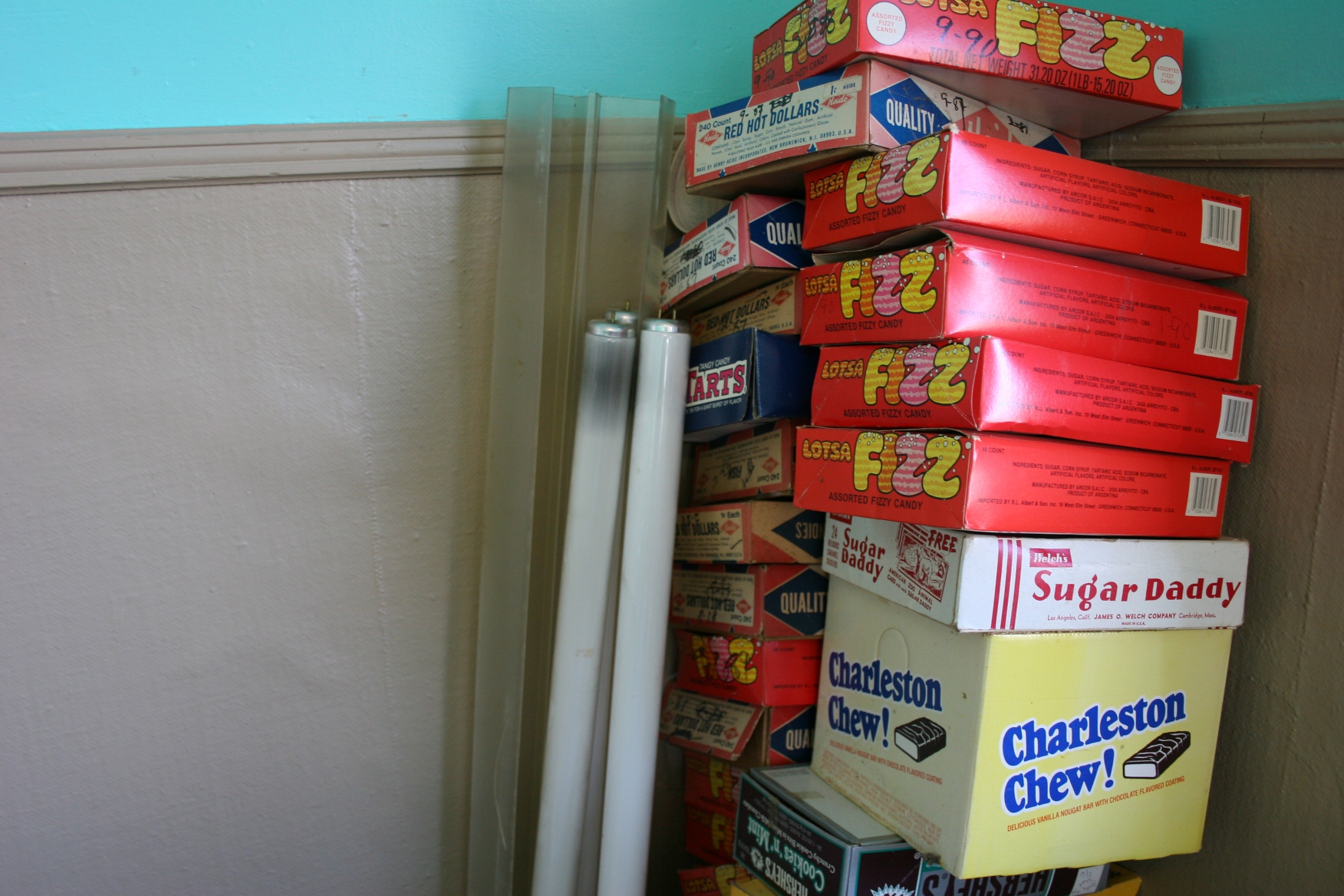
The couple found empty candy boxes (pictured here) and candy still in boxes inside the former bakery.

Michelle has fond memories of coming to Sanger’s for sweet treats. She remembers penny Tootsie Rolls and gumballs and candy cigarettes sold at the candy counter:

Thinking about the hundreds of people who have memories of this building, I really hope we can fill that same role for the next generations.

FYI: Lamberton is located along U.S. Highway 14 about 10 miles east of Walnut Grove, childhood home of Laura Ingalls Wilder, author of the Little House children’s book series. The area is a strong draw for summer tourists interested in Wilder’s books and the Little House on the Prairie television series set in Walnut Grove.

© Copyright 2012 Audrey Kletscher Helbling


Meet 52 South Central Minnesota artists during weekend ArTour October 19, 2012

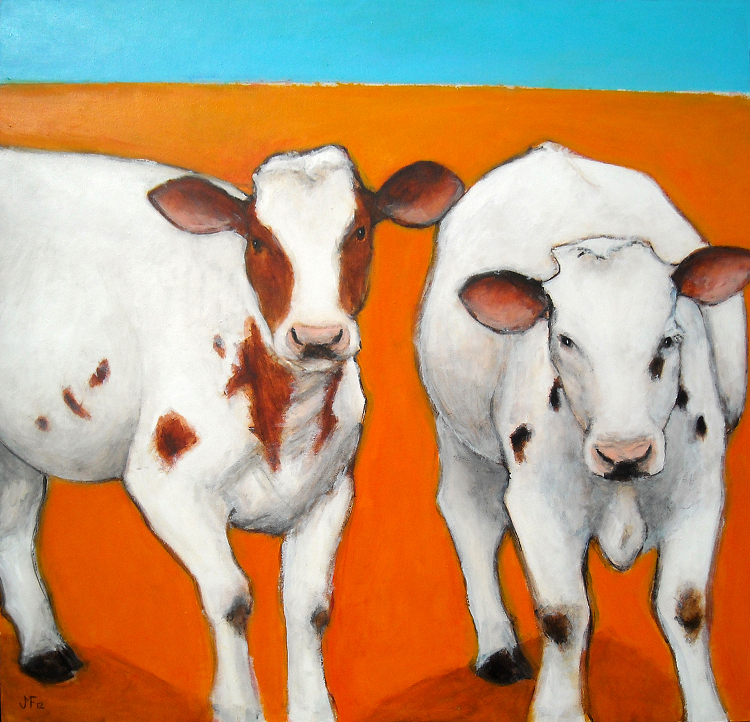
Faribault artist Julie Fakler’s paintings will be displayed in her JMF Studio at 1212 First Ave. N.W., Faribault, along with the textile art of Deb Johnson. Fakler specializes in animal portraits. Her cow painting graces promotional materials for this year’s South Central Minnesota Studio ArTour.

FIFTY-TWO ARTISTS. Twenty-four studios. And all showcased right here in the Faribault-Northfield-Cannon Falls area this weekend during the eighth annual South Central Minnesota Studio ArTour.

If you’ve never taken this studio tour, I’d encourage you to do so as a) You’ll meet a broad spectrum of talented local artists. b) You’ll view incredible art in wood, glass, photography, textiles, painting, ceramics, jewelry and more. c) It’s free, unless you purchase art, which, of course, you should consider doing. d) You’ll visit three charming communities.

I can’t attend this year’s tour. But I have in the past and here are the photos to prove it.

Just look at the talent we have, right here, in Greater Minnesota.

Meg Jensen Witt will showcase her ceramics at Lillart, 101 E. Fifth St., #209, Northfield, along with the paintings of Lilla Johnson. I photographed this example of Witt’s art in 2011.

At Holmquist Pottery, 11780 90th St. E., Northfield, you will find Lucky Rimpila’s glass art, like this photographed last year. Chris and Sue Holmquist will also display their ceramics and Marsha Kitchel will showcase her paintings.

Last year at Sunset Studio, 10754 Farrel Avenue, Northfield, I photographed the ceramics created by Tom Willis. You will find the work of six other artists at Sunset Studio.

During the 2010 ArTour, I visited Somers’ Studio & Gallery, 9775 Dennison Blvd. S., Northfield, where Fred Somers paints on his rural acreage.

In 2010 I photographed this wood block art created by Carla Thompson. This year she will exhibit her painting, along with Julie Free Heart, at Revisions, 101 E. Fifth St., #302, Northfield.

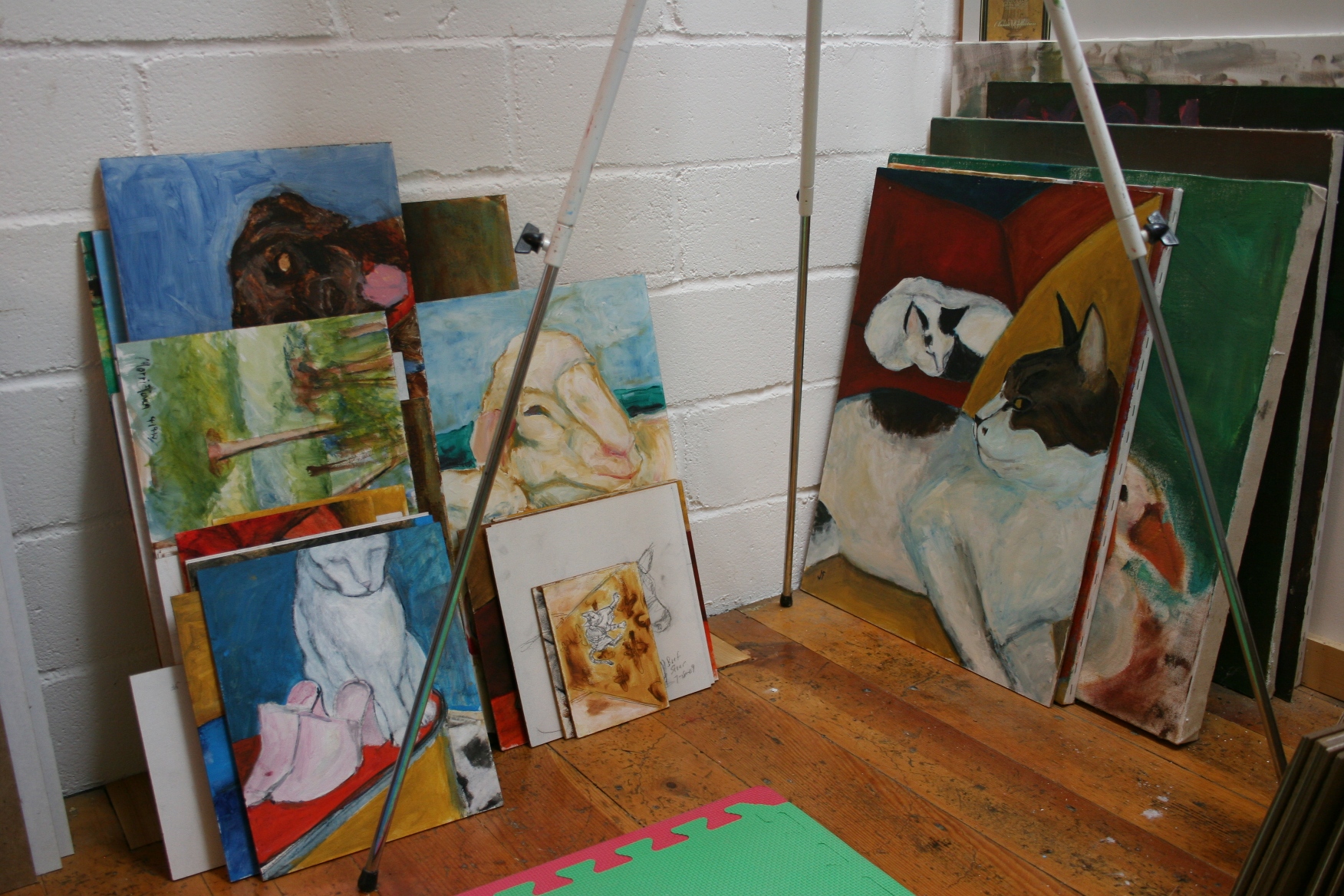
Animal paintings propped on the floor of Julie Fakler’s JMF Studio during the 2010 ArTour.

FYI: The South Central Minnesota Studio ArTour runs from 10 a.m. – 6 p.m. on Saturday, October 20, and Sunday, October 21. Select studios will also be open from 4-8 p.m. today.

For details, including studio locations and participating artists, click here to reach the ArTour website.

I photographed this scene from the 2010 ArTour marking a Northfield studio.

Click here to read about my visit to Fred Somers’ gallery/studio during the 2010 tour.

Click here to see Faribault artist Julie Fakler’s studio, one of my stops on the 2010 tour.

© Copyright 2012 Audrey Kletscher Helbling
Cow image courtesy of Julie Fakler


A maple bacon sundae & other delights at a Waterville coffee shop September 13, 2012

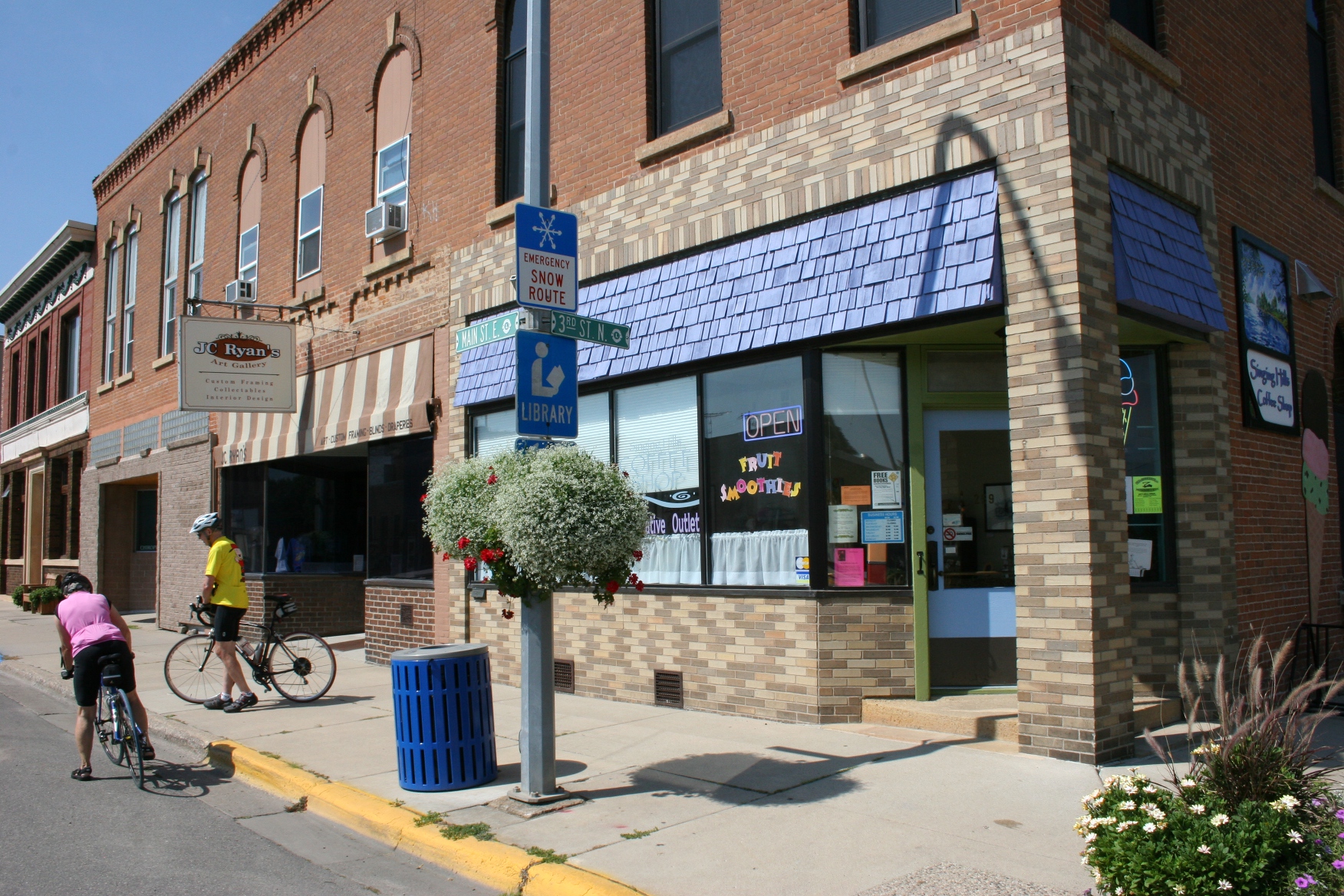
Singing Hills Coffee Shop, at the corner of Main and Third Streets in downtown Waterville in southern Minnesota.

KATHY GREW UP in Detroit, worked 20 years as a deck officer on a freighter for the Merchant Marine, met her husband at a Halloween party, birthed two daughters in her 40s and then, with no business experience, opened a coffee shop in December 2010.

That’s the life synopsis of the woman behind Singing Hills Coffee Shop in the southern Minnesota lakeside community of Waterville, best known for its bullheads and Buccaneers—as in the local high school champion football and basketball teams.

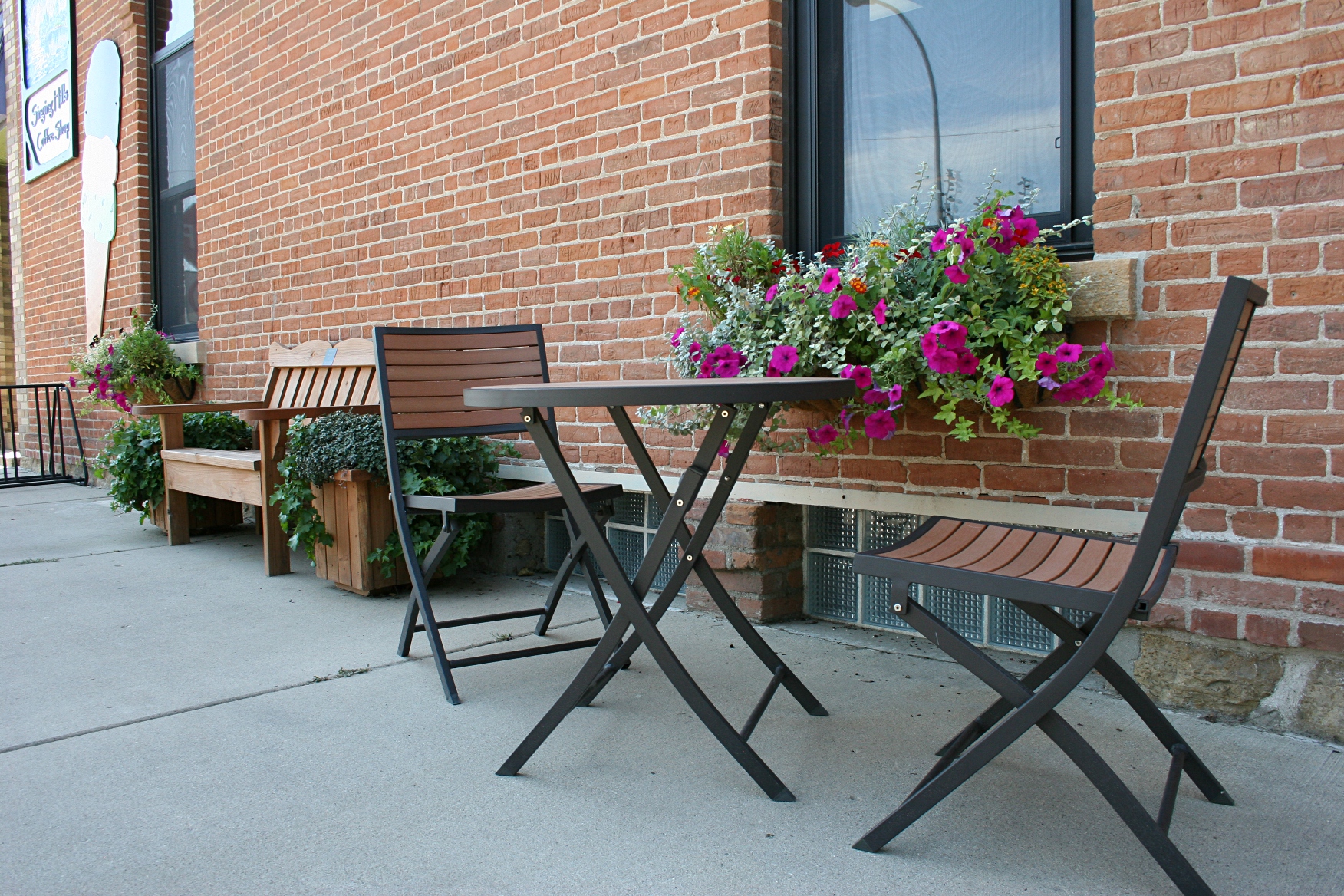
Inviting outside dining at the Singing Hills Coffee Shop.

One-third of a stately, anchor brick building on a corner of Waterville’s Main Street houses the coffee shop. It’s as inviting on the outside—with bistro tables and a bench and window baskets popping with hot pink petunias and luscious ivy spilling from pots—as it is inside.

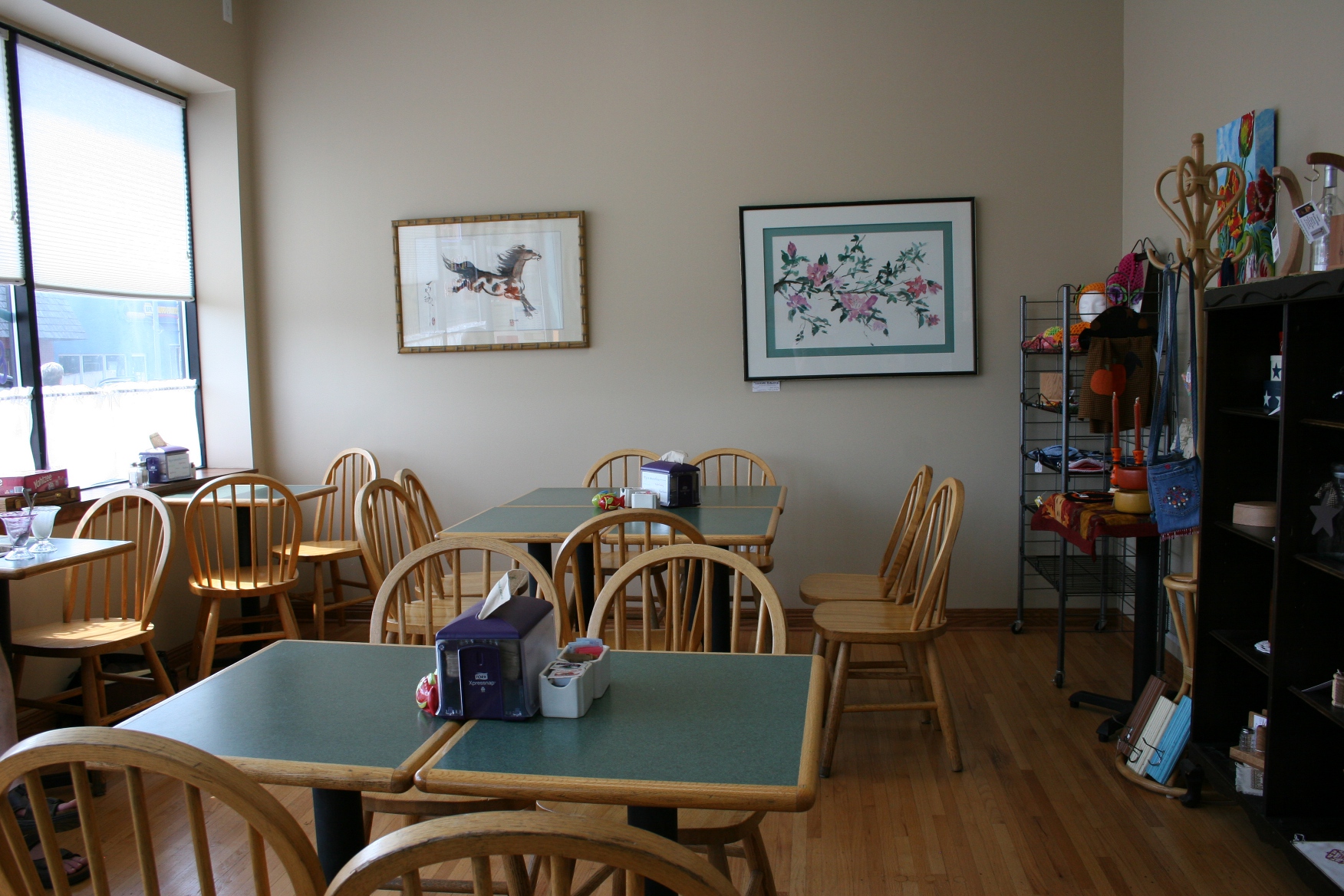
The bright, cozy dining area of the coffee shop with local arts and crafts displayed on shelves to the right and on walls.

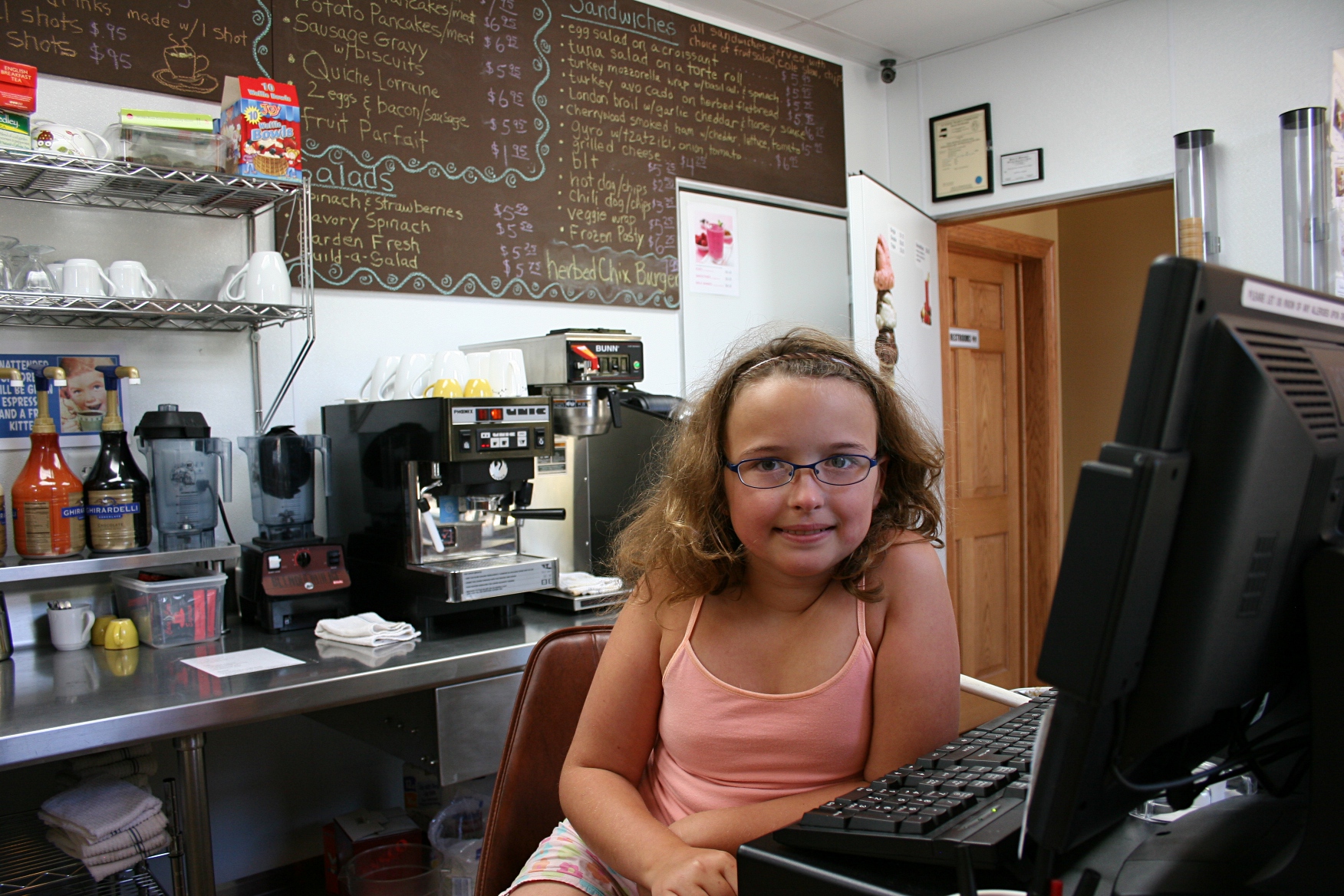
Kathy’s daughter, Marina, waits on customers.

On an early Sunday afternoon, 45 minutes before the 2 p.m. closing, Kathy hustles to prepare sandwiches and ice cream treats while her 10-year-old daughter, Marina (yes, her name is a nod to Kathy’s time on the water), takes orders, accepts payment and makes change.

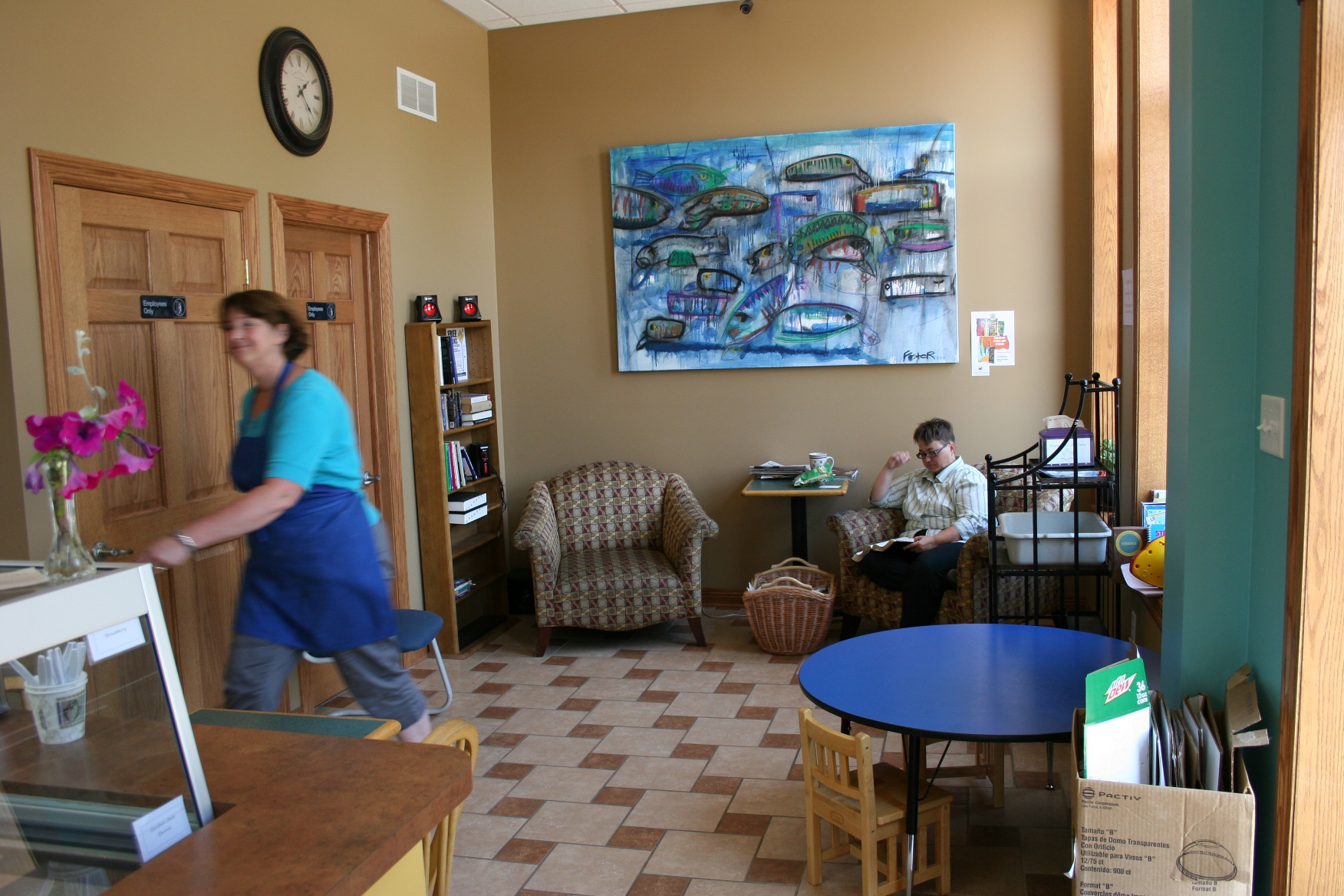
Kathy hurries back to the kitchen to prepare orders while customer and friend, Kari, relaxes in a back coffee shop corner. Tim Foster’s “American lures” painting (oil paint, oil pastels and graphite on canvas) anchors the wall. It was inspired, he says, by old fishing lures. Kathy would like to purchase the $450 painting as a permanent installment in her shop. I suggested she collect tips to help her buy it. Foster sells his mostly abstract and surreal paintings through his website and studio, at Hogan Brothers in Northfield and via art shows. Kathy saw “American lures” at the 2012 Sakatah Arts Experience in Waterville and invited Foster to bring his painting to her coffee shop.

In a comfy corner chair, Kathy’s friend, Kari, is reading her bible, seeking comfort at the recent, unexpected loss of her 36-year-old cousin. Light floods the homey space warmed by walls the hue of honey on two sides and a contrasting robin’s egg blue on the other.

A printed sign on a slim spot between two towering windows reads:

Conduct Code—Love your neighbor as yourself. Treat other people the way you want to be treated!

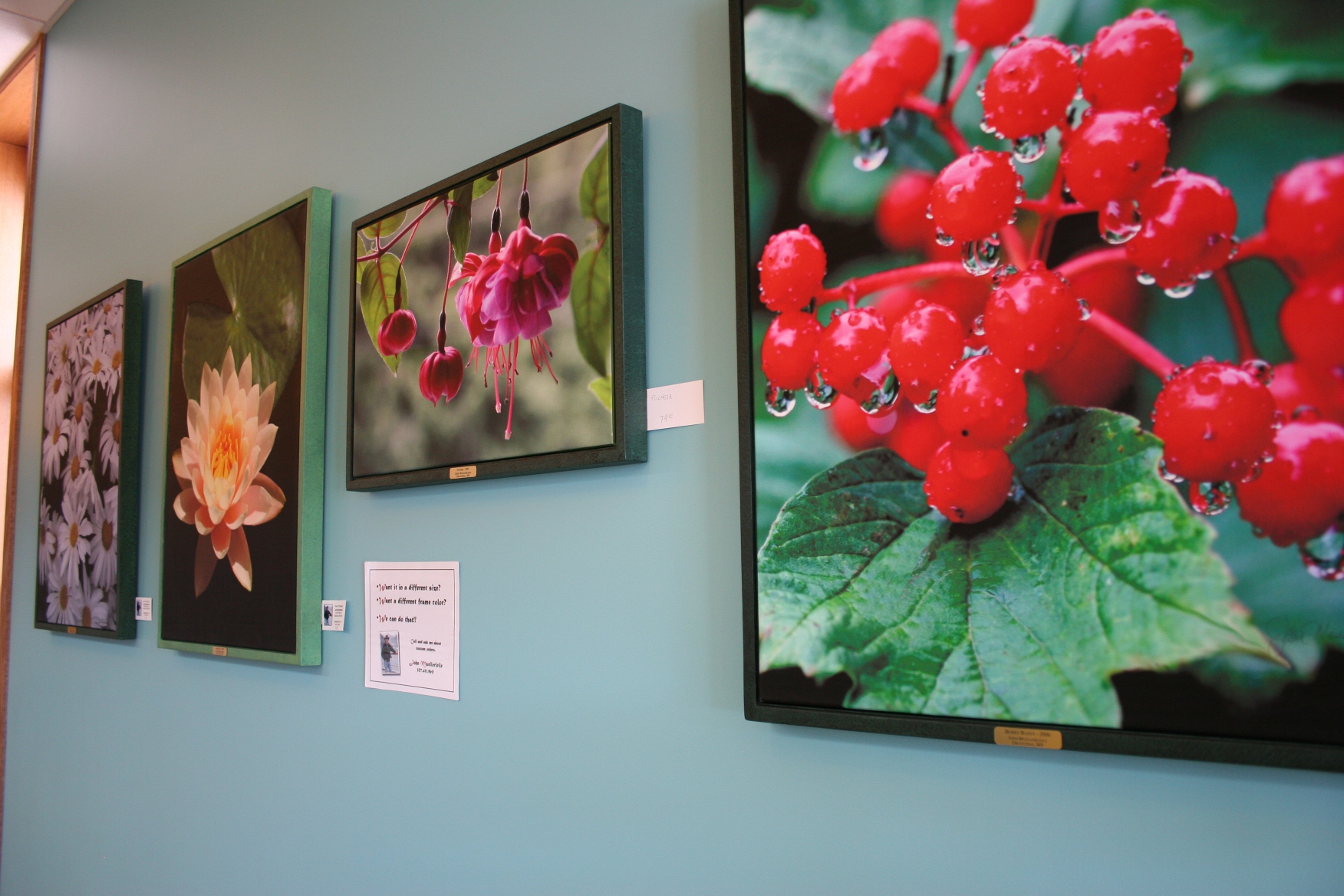
Owatonna resident John Muellerleile’s fine art photography on display and for sale.

Kathy welcomes customers and artists here, into this corner haven in a town that thrives on summer-time business from resort guests, cabin dwellers and users of the recreational Sakatah Singing Hills State Trail.

Her customers come here for the ever-popular smoothies and the favorite turkey avocado sandwich, for the coffee and the espressos and other beverages, for the breakfast and soup and sandwiches and salads and baked goods and ice cream treats.

On this Sunday, my husband and I have driven 15 miles for an ice cream treat upon the recommendation of our friend, Joy, who raves about the maple bacon sundae.

As Randy places our order with Marina, I chat with Kari in the corner, take photos and admire a focal point, 6-foot by 4-foot oil painting by Tim Foster of Northfield. His fish-themed art piece, titled “American lures,” is “so Watervillian,” Kathy tells me later, fitting this lakeside town which celebrates bullheads at an annual June festival. There’s a deeper meaning to the painting in which words like “love” and “prove it” and “Federal Reserve Bank” are hidden, Kathy says, but we don’t get into details.

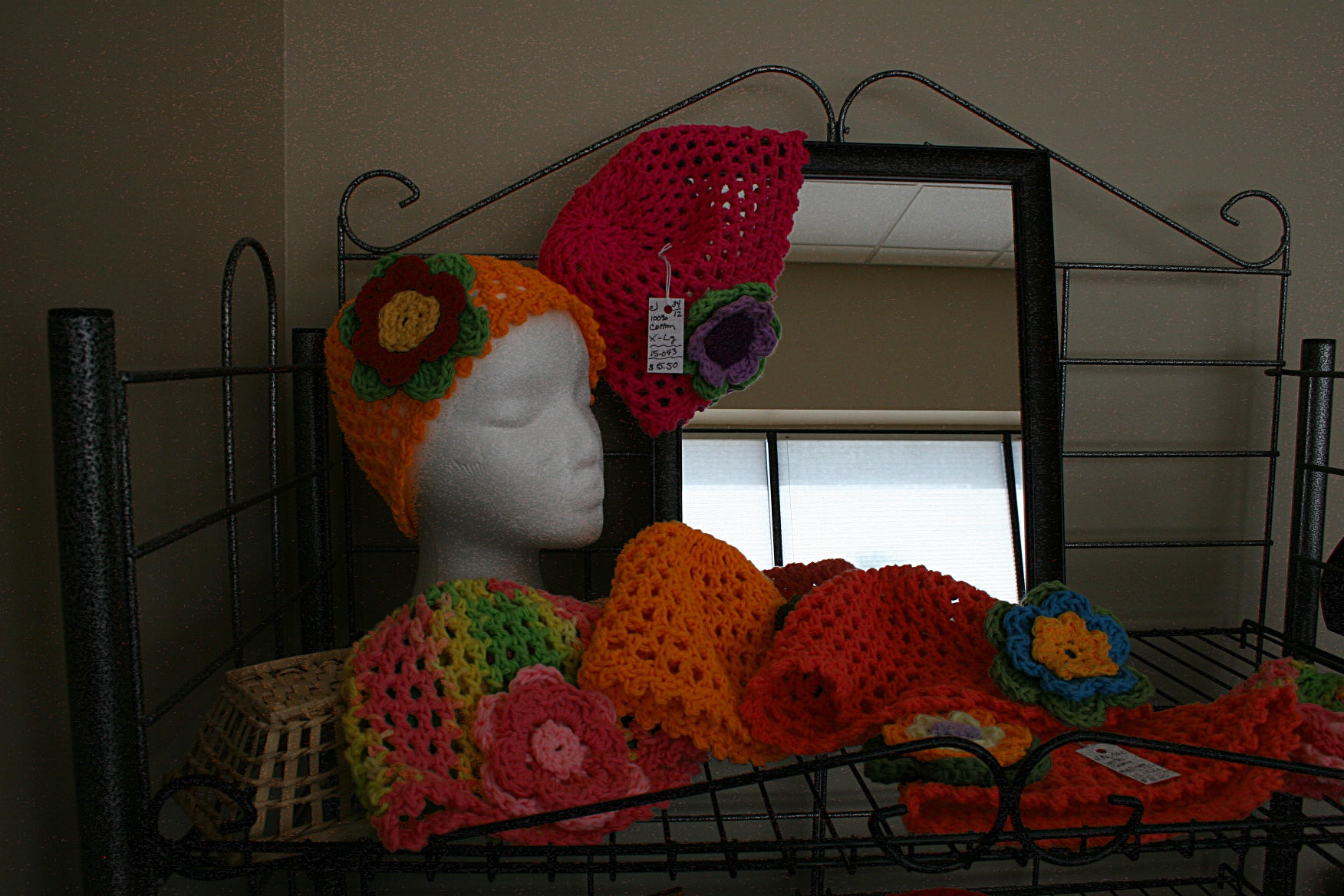
An example of the handcrafted work of local artisans for sale in the coffee shop.

Kathy works with the nonprofit Waterville Local Cooperative Outlet to provide a marketplace for some 8-10 local artisans and crafters. Their creations—from woodcrafts to crocheted caps, paintings, photos and more—are displayed on walls and on shelves through-out the coffee shop.

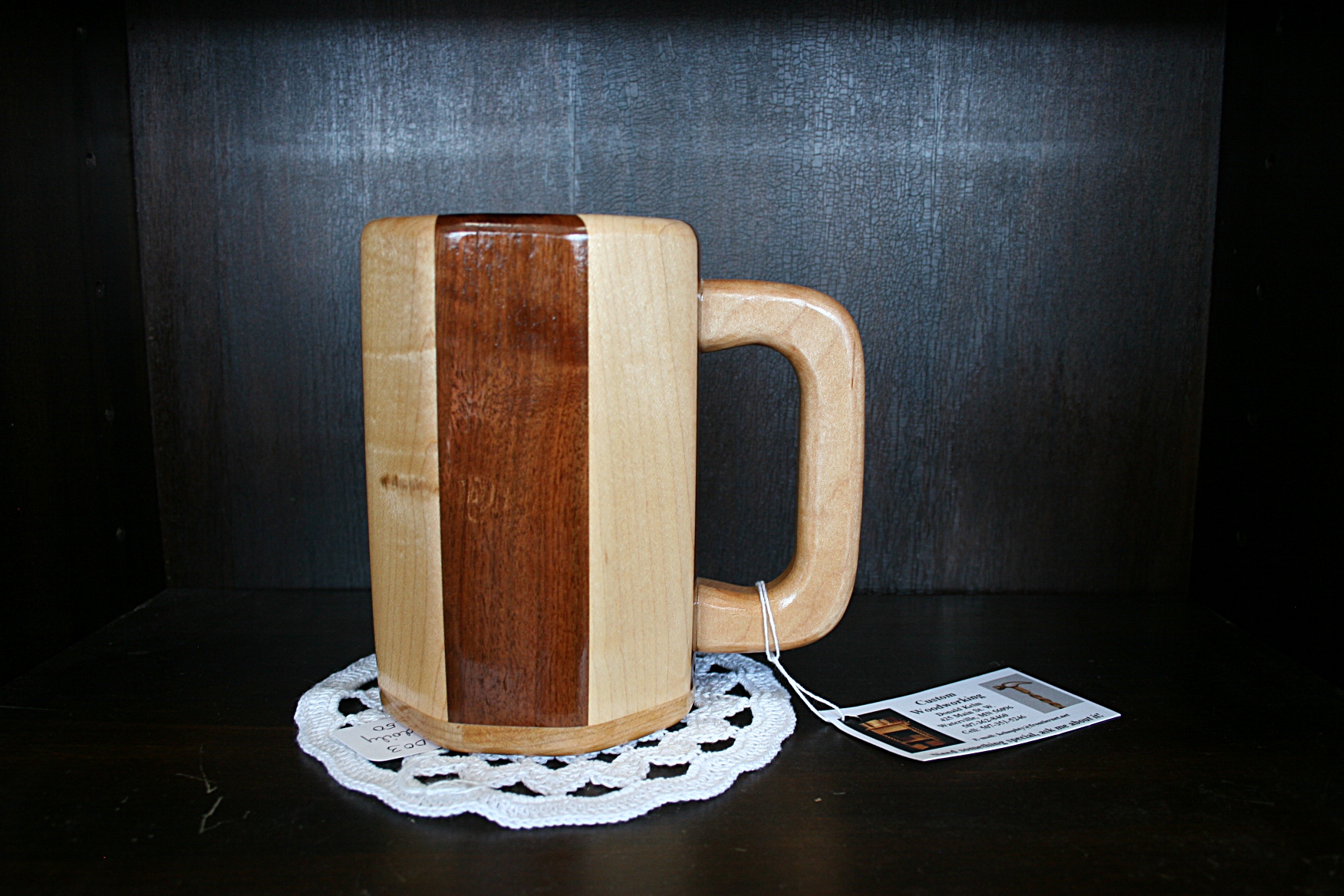
Donald Kelm of Waterville, a custom woodworker, created this mug.

Engaging the arts community exemplifies Kathy’s efforts at community development. That extends to the food aspect of her business, too. She wanted, she says, more dining options than bar food burgers and fries for the town she and her family now call home. And Kathy offers that with a sandwich menu which doesn’t include a single burger. The closest thing to fries are the chips accompanying sandwich orders.

On her sandwich menu, you’ll find choices like egg salad on a croissant; veggie wrap with hummus, provolone, red onion, red pepper and spinach; and cherrywood smoke ham with garlic cheddar, tomato and mustard sauce. You can build your own sandwich, order a cup of soup.

Hungry for a bakery treat? Kathy has selections from cupcakes to pie to traditional Upper Peninsula style pasties, a tribute to her native Michigan.

Singing Hills Coffee Shop’s delicious maple bacon sundae.

But, on this Sunday, I’ve come only to sample the maple bacon sundae with spicy maple-glazed pecans, homemade maple caramel and bacon, yes, bacon, on vanilla ice cream. My husband questions my choice. I don’t, and find the sweet and salty mix a perfect complement to the ice cream. I’d give the maple bacon sundae a five-star recommendation.

An equally tasty blueberry sundae.

My less daring spouse orders a blueberry sundae and is equally pleased with his selection.

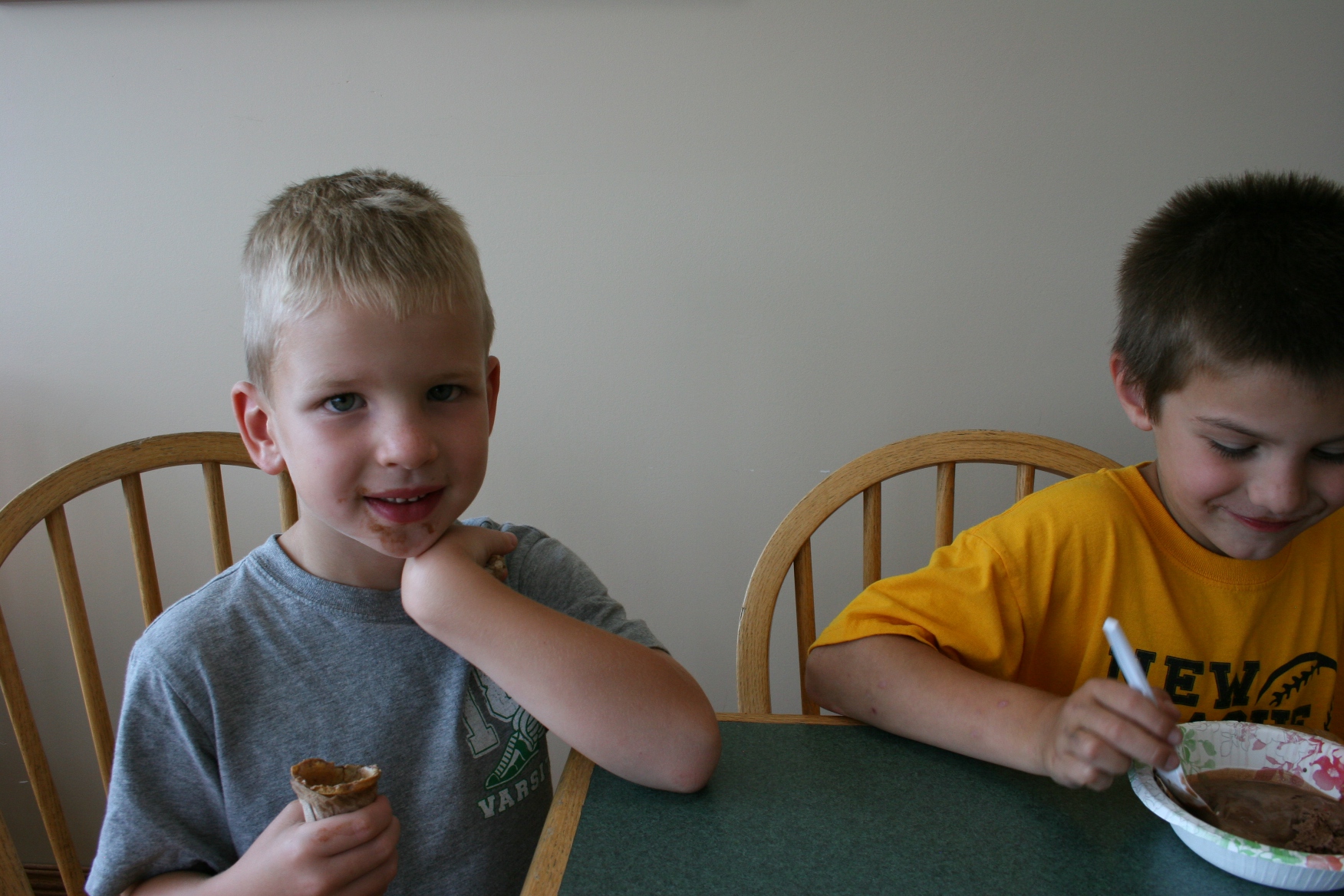
These two boys came with their moms, and a sister of one, for ice cream treats. The boy on the right told the boy on the left that he had a mustache. Then I told the boy on the right that he had an ice cream mustache, too.

A retired couple who spend their summers at a Waterville resort rave about the sandwiches while two moms ordering ice cream for themselves and their kids endorse the ice cream.

Kathy, though, admits that business growth was slow during her first year and that she’s still learning, given her inexperience as a businesswoman. With summer winding down, she’s cutting back on hours. Singing Hills Coffee Shop is closed now on Mondays and Tuesdays, but open from 8 a.m. – 5 p.m. Wednesday – Saturday and from 8 a.m. – 2 p.m. on Sunday.

On October 14, the coffee shop will close for the season and then reopen in mid-April.

So, if you want to try that maple bacon sundae…

FYI: For more information about Singing Hills Coffee Shop in Waterville, click here to reach the shop’s website.

To learn more about the arts scene in Waterville, specifically the annual Sakatah Arts Experience, click here.

For more info about Northfield artist T. Andrew Foster, click here to visit his Creative Space Art Studio website. 

Copyright 2012 Audrey Kletscher Helbling
 

All about cars at Faribault art center August 31, 2012

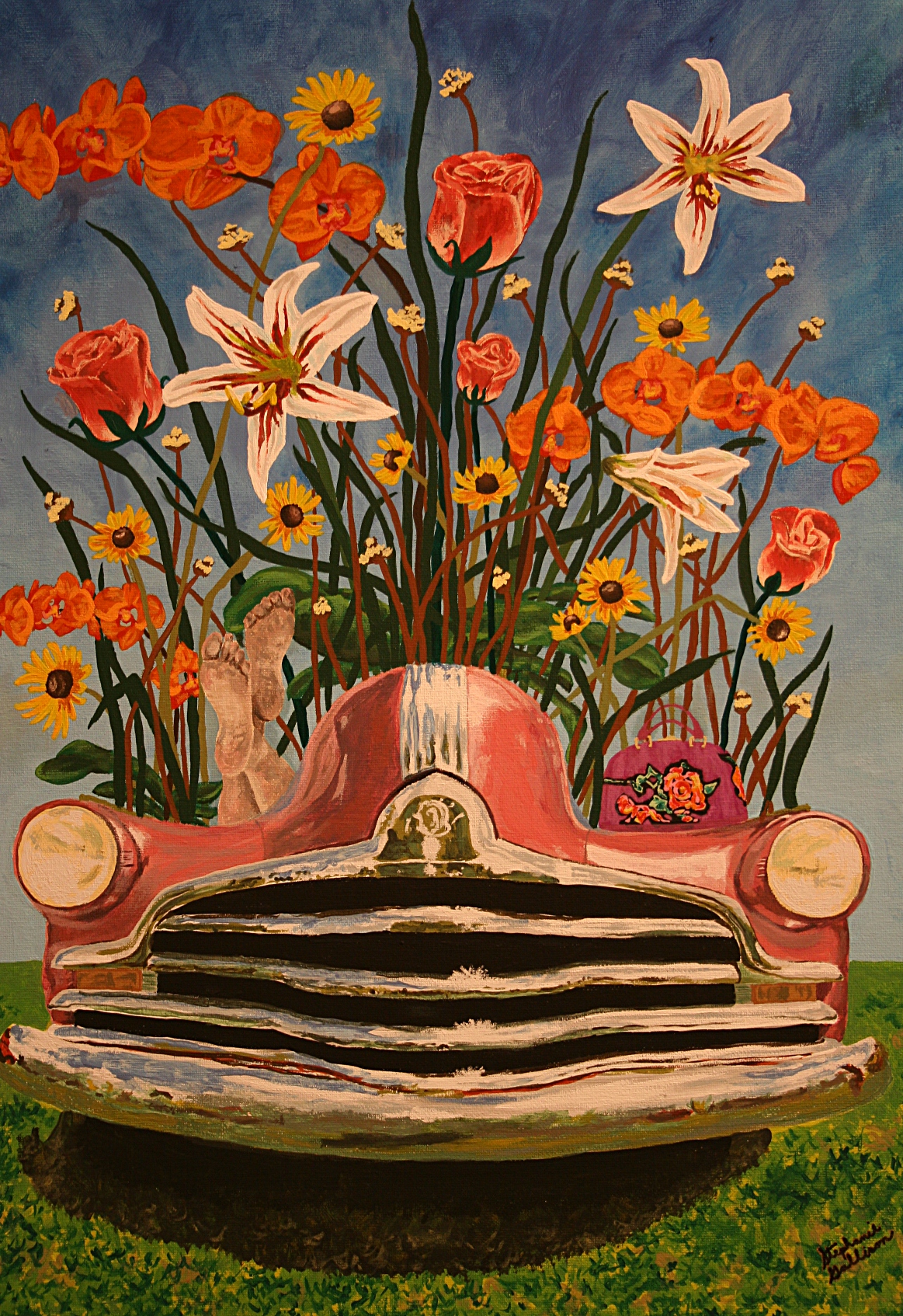
“Flower Car for a Living Detroit,” acrylic on canvas by Michigan artist Stephanie Gallison and part of the car pARTS exhibit at the Paradise Center for the Arts. The painting “represents life, hope and resurrection for the city of Detroit; the opposite of recession, decline and decay,” according to Gallison’s website.
IF YOU’VE FOLLOWED this blog for awhile, you know that I’m a supporter of the arts.

And I don’t specifically mean I write out generous checks to buy art or donate to an arts cause or such. I wish I could. But the fact is that my family, like many middle class families, needs to watch its budget.

That doesn’t mean, though, that my husband and I can’t treat ourselves to the occasional night out to see a play or enjoy a concert or catch a comedy show, or become members of the local arts center.

A snippet of the current car pARTS exhibit at the Paradise.

I appreciate that we have the Paradise Center for the Arts right here in Faribault as a venue to enjoy the visual and performing arts and even take a class, if I wish, but haven’t.

Perhaps because I grew up in the 1960s and 1970s in rural southwestern Minnesota, without access to the arts, I especially value the arts opportunities offered right here in my community, only blocks from my home. No need to drive up to the Cities or elsewhere.

Faribault artist Vivian Jones created this watercolor, “It Was Grandma’s Car,” for “car pARTS.”

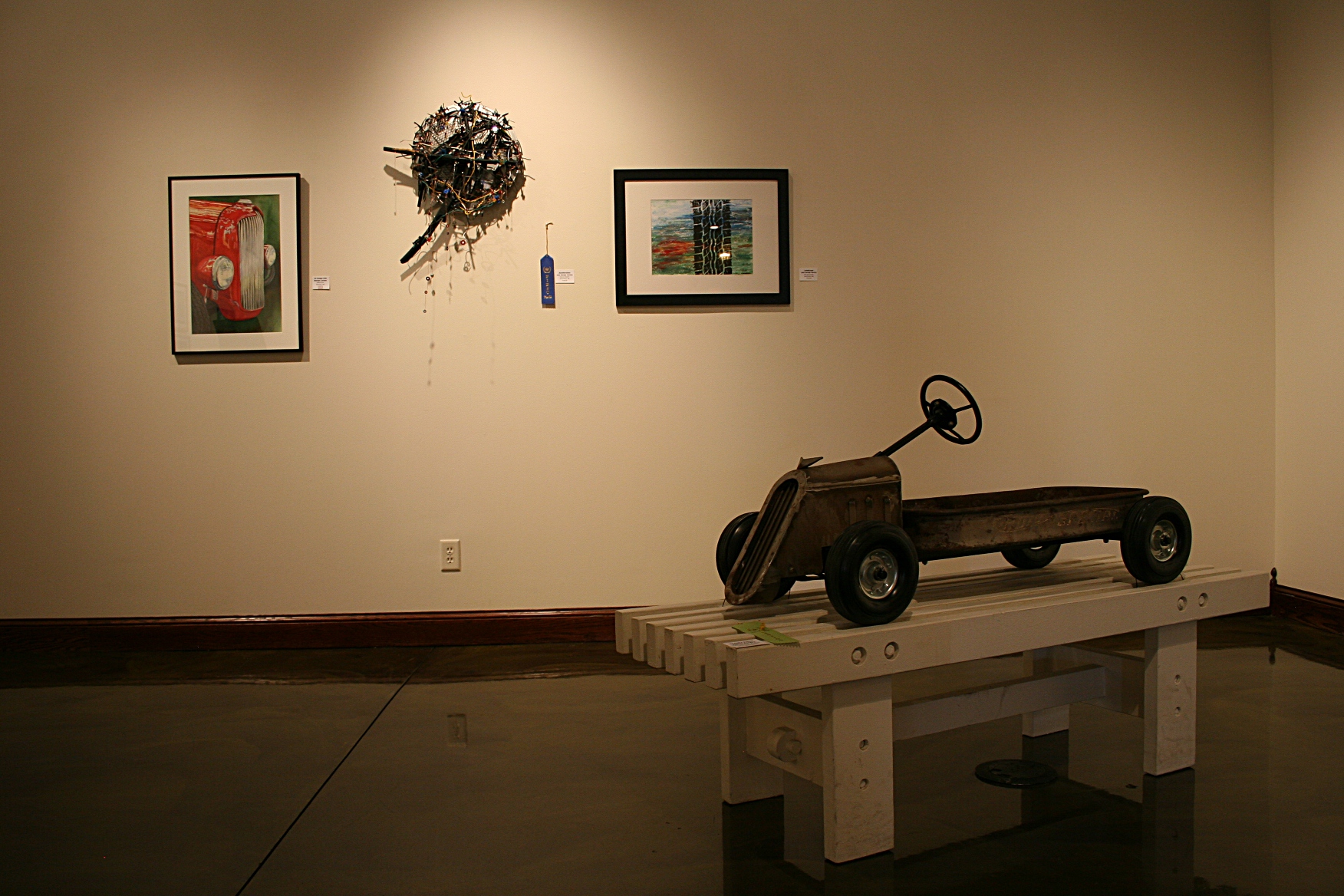
For example, currently the juried exhibit, “car pARTS,” is showing in the PCA’s Carlander Family Gallery through September 25. The show is exactly as it name implies, artwork featuring cars or parts of cars.
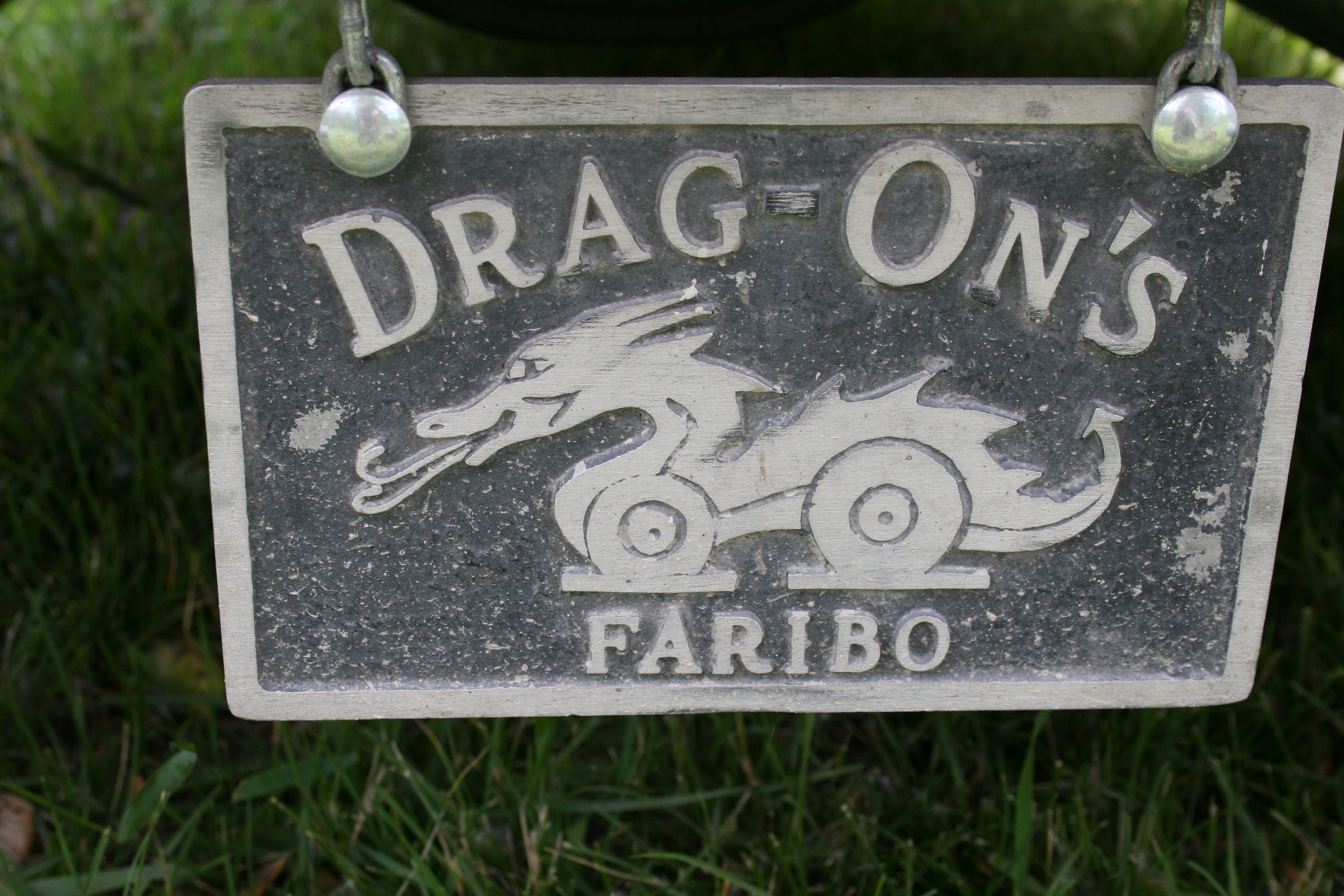
The logo for the Faribo Drag-On’s Car Club.

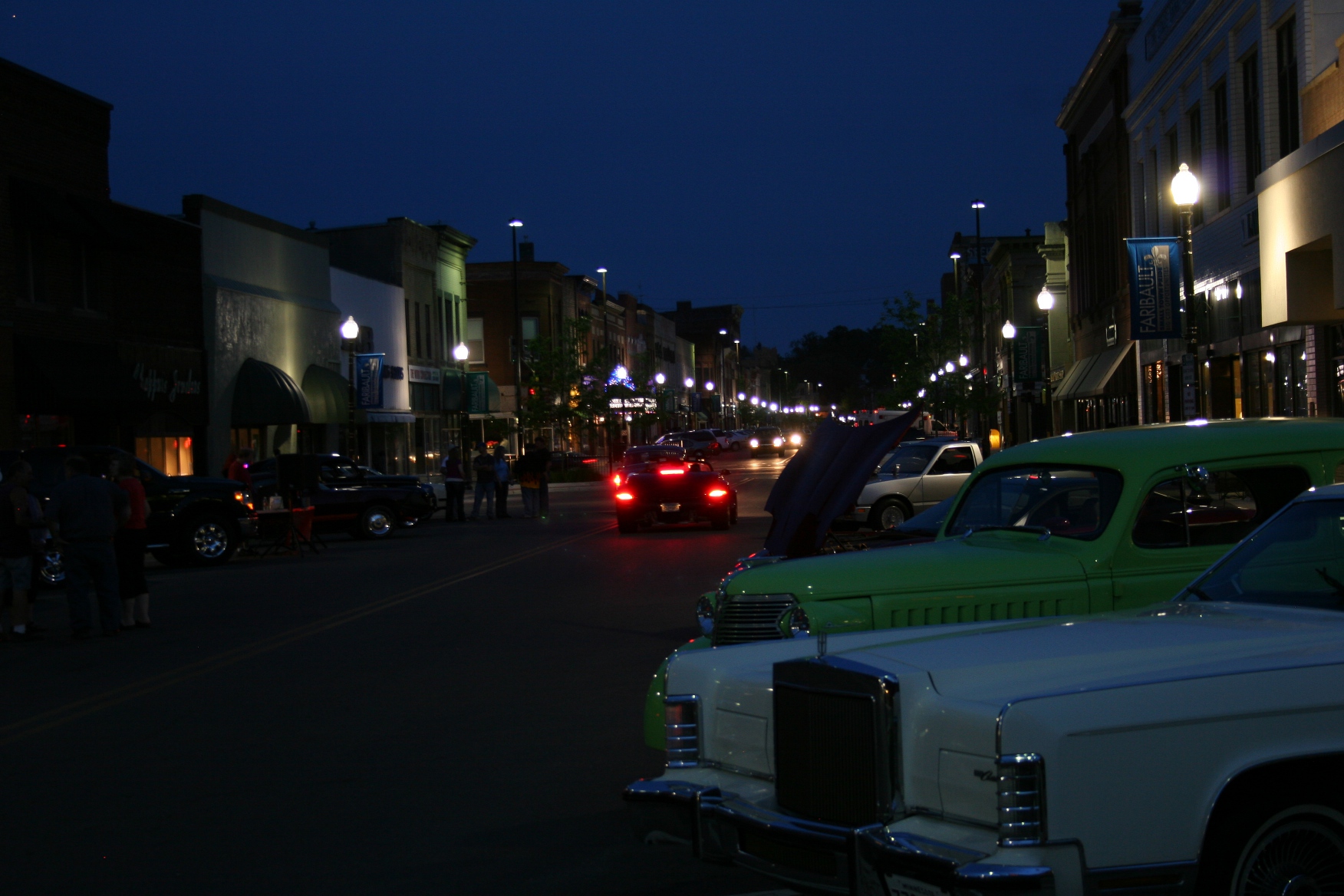
Hanging out along Central Avenue during Faribault Car Cruise Night in May.

The subject seems an ideal one for this predominantly blue collar community which has a special fascination with cars. That’s my assessment, anyway, based on the long-standing Faribo Drag-On’s Car Club, the Classic Car Roll In on Tuesday evenings at the Country Kitchen and the recent start-up of the May-September third Friday of the month Faribault Car Cruise Night on downtown’s Central Avenue.

Following the car theme, the Paradise Community Theater will present six performances of the play, The Car by Carol Wright Krause, beginning September 14 and running through September 22.

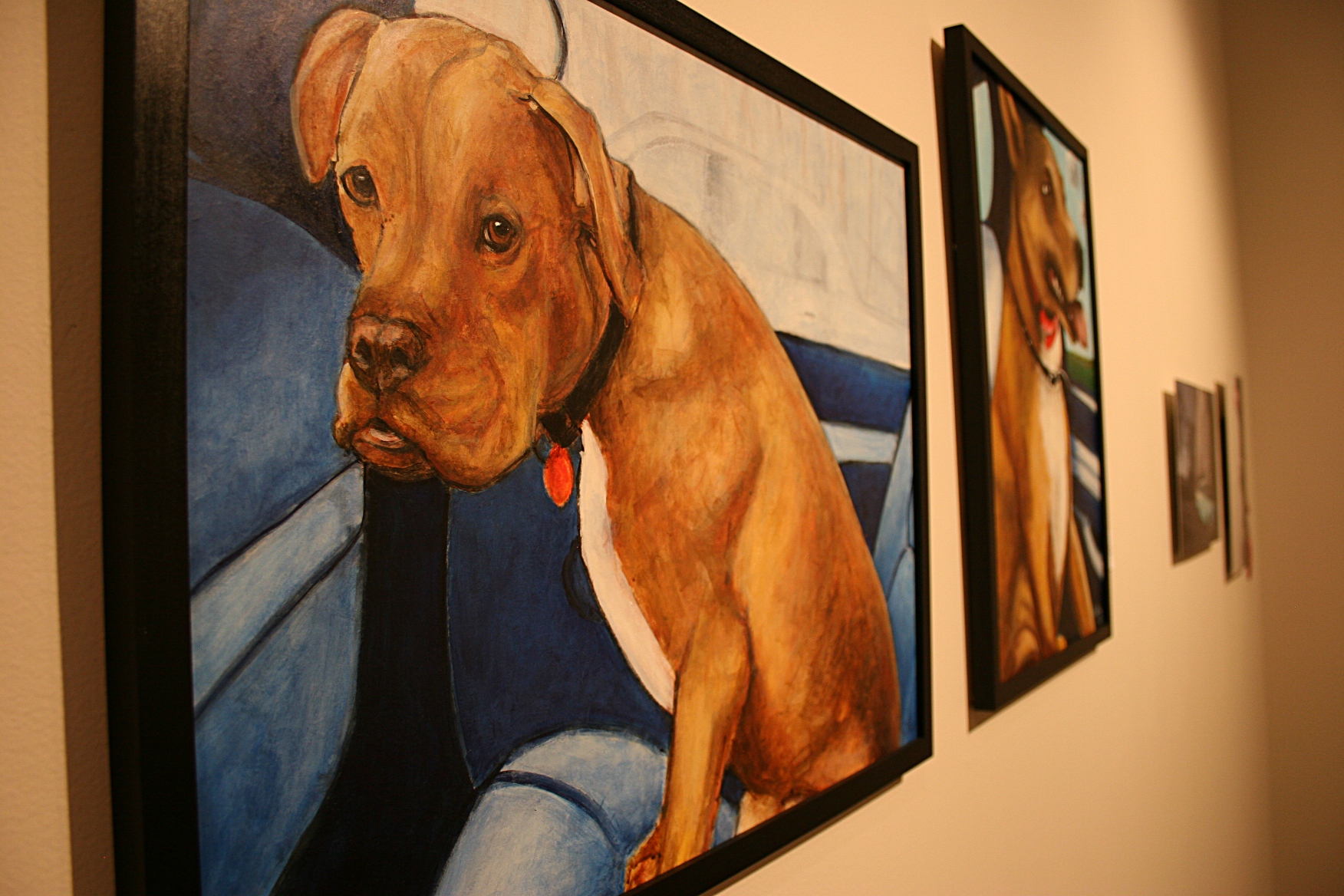
Acrylic paintings of dogs in cars, by Julie M. Fakler of Faribault , are in the car pARTS exhibit.

The play seems the ideal mesh with “car pARTS,” one complementing the other.

Here’s a summary of The Car, pulled from the PCA website:

Meet the Banners, a picture perfect postcard of a 1950s American family with an all-American son, a doting mother and an honest car salesman of a father, who does everything by the book and has just recently purchased the car—a 1954 Hudson Hornet. But when their son suddenly joins the military, only to return with a Japanese wife, the family’s world is suddenly turned upside down. Things may not be as picture perfect as they seem. The Car hits a few potholes along the way, takes some sharp turns, but takes you on an engaging and entertaining ride.

Looking south on Central Avenue during the Faribault Car Cruise Night in May.

I’d love to see all those collectors who are members of the Drag-On’s and/or all those who will be participating in the last downtown car cruise of the season on Friday, September 21, among those attending The Car in Faribault’s historic theater.

I invite any of you with vintage vehicles, whether from Faribault or not, to drive to the theater in your vintage vehicles, park along historic Central Avenue and experience the arts scene here. Maybe even dress up in back to the 50s garb to truly embrace the time period of the play.

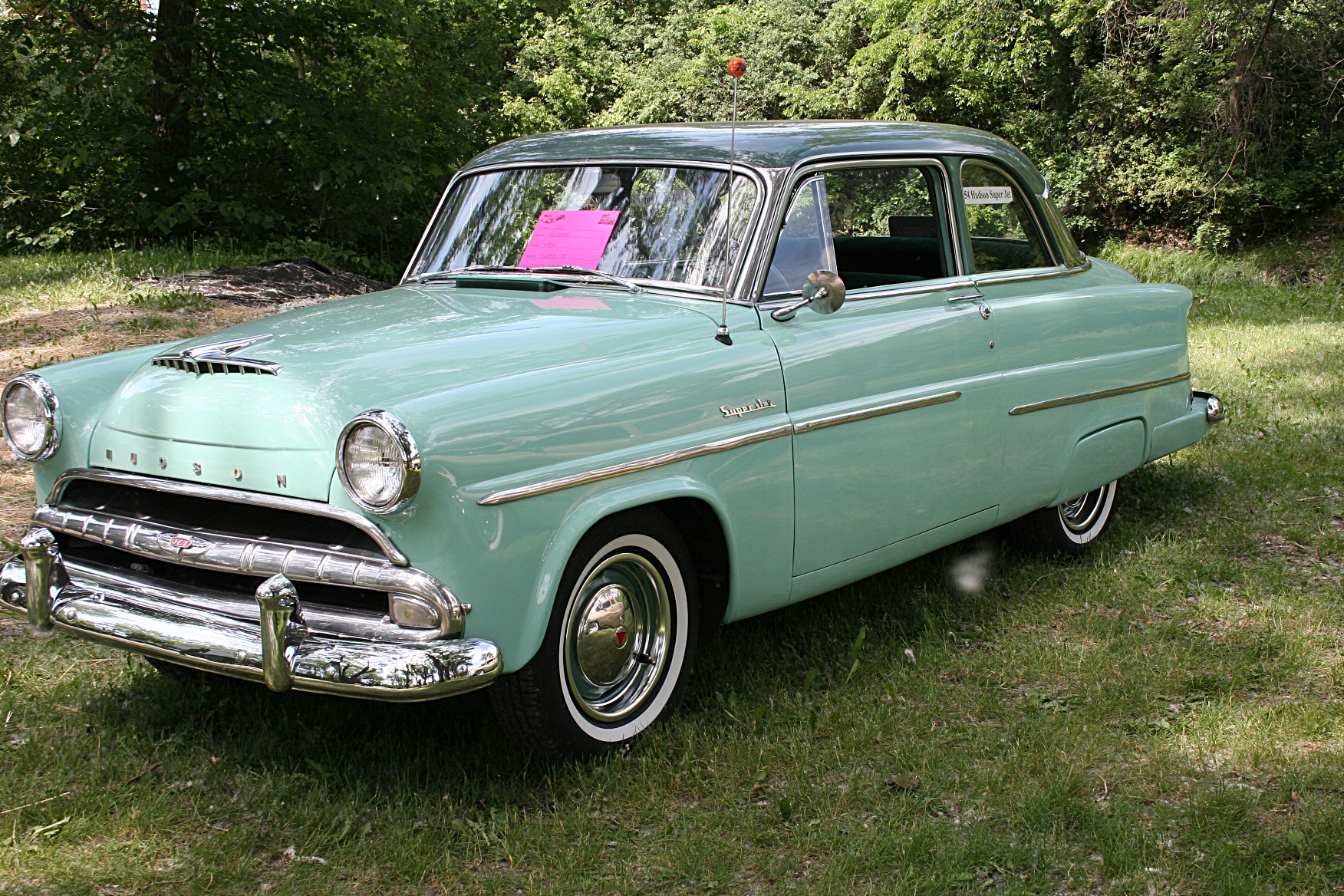
Do you know who owns this Hudson Super Jet?

And whoever owns this Hudson Super Jet, which I photographed at a car show in TeePee Tonka Park in 2009, you’d be especially welcome given the car in the play is a 1954 Hudson Hornet.

Just a close-up of the Hudson Super Jet, built either in 1953 or 1954, I believe.

FYI: Click here for more information about the Paradise Community Theater’s performance of The Car.

P.S. This additional postscript has nothing to do with the arts in Faribault. But it is related to my support of the arts via my work on Minnesota Prairie Roots. Earlier this week I posted about the Gabor and Edith Nemeth Study Collection, a priceless collection of 15th to 19th century paintings in Park Rapids. The Nemeth Art Center is attempting to raise $1,200 for a storage unit to safely store and protect the paintings. Since posting this story on Monday, five more contributions have been made to the cause via the NAC’s online fundraising campaign, which you can find by clicking here. You have four more days to donate.

To read my original post about the Gabor and Edith Nemeth Study Collection, click here.

© Copyright 2012 Audrey Kletscher Helbling