Minnesota Prairie Roots

Writing and photography by Audrey Kletscher Helbling

Through my camera lens: Rural Minnesota in March March 11, 2026

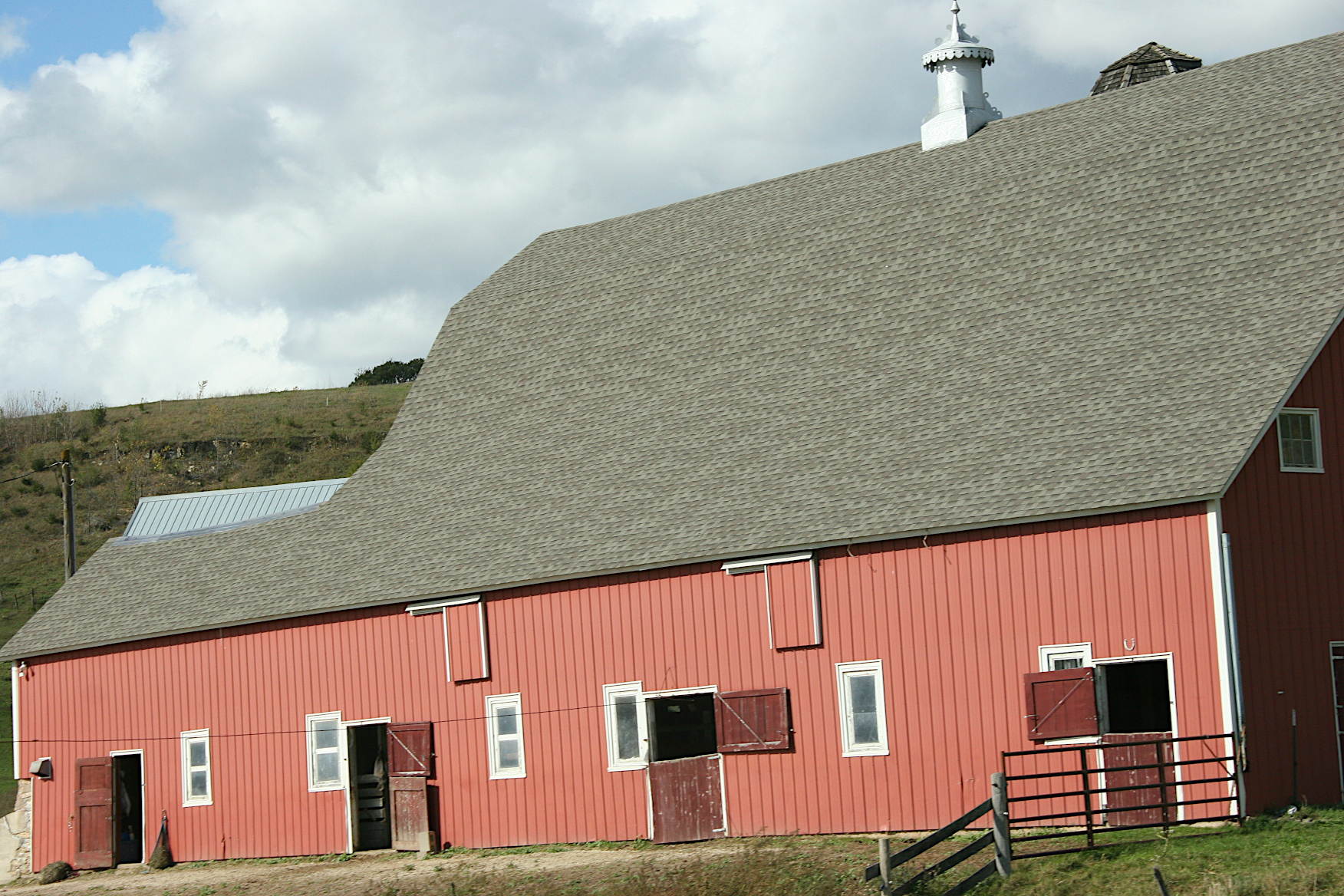
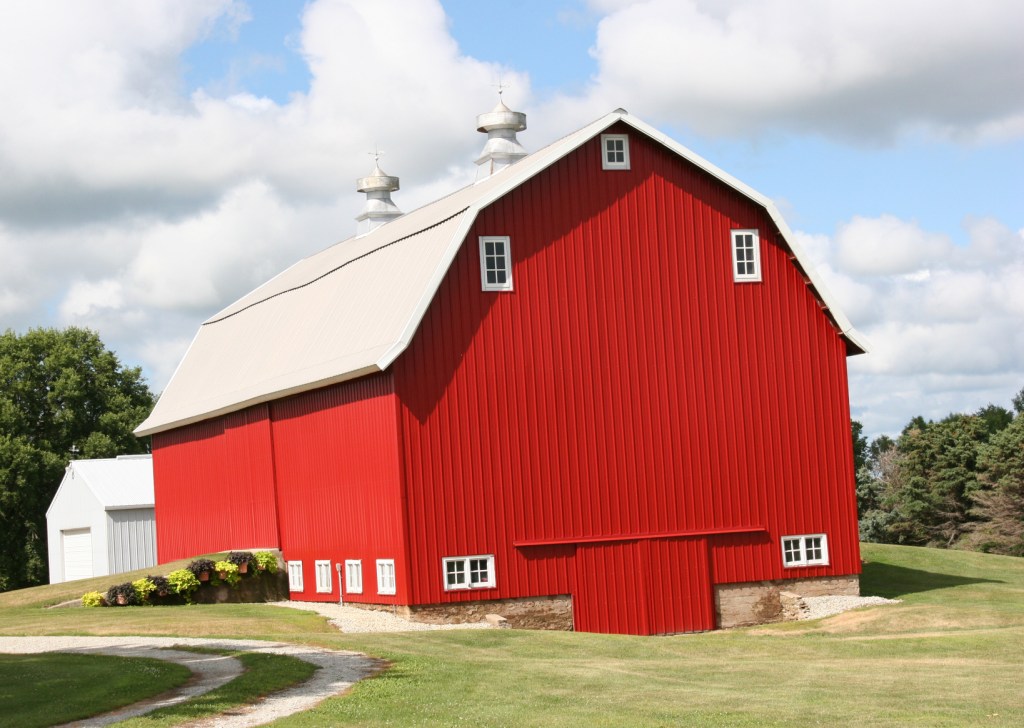
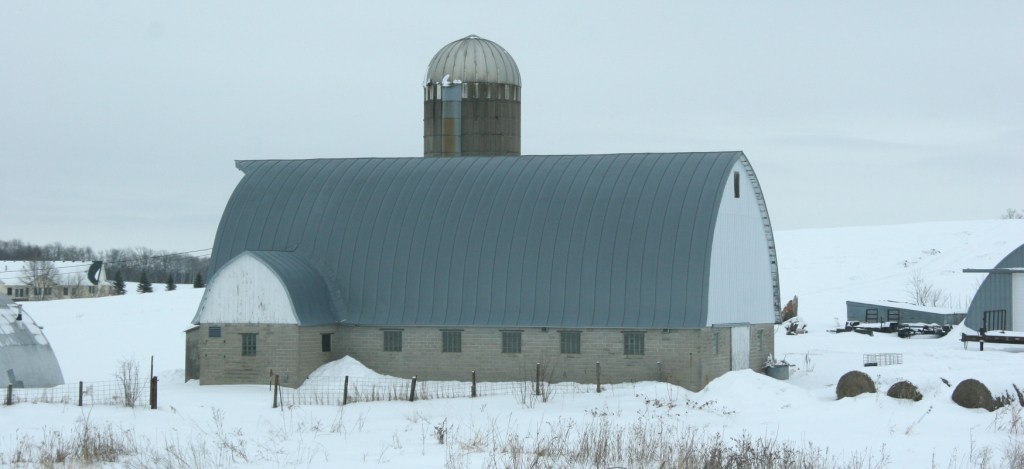
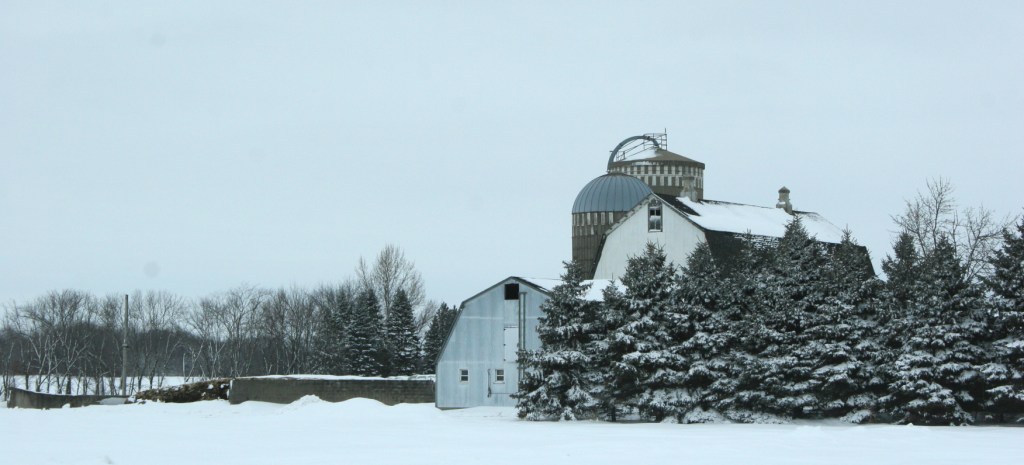
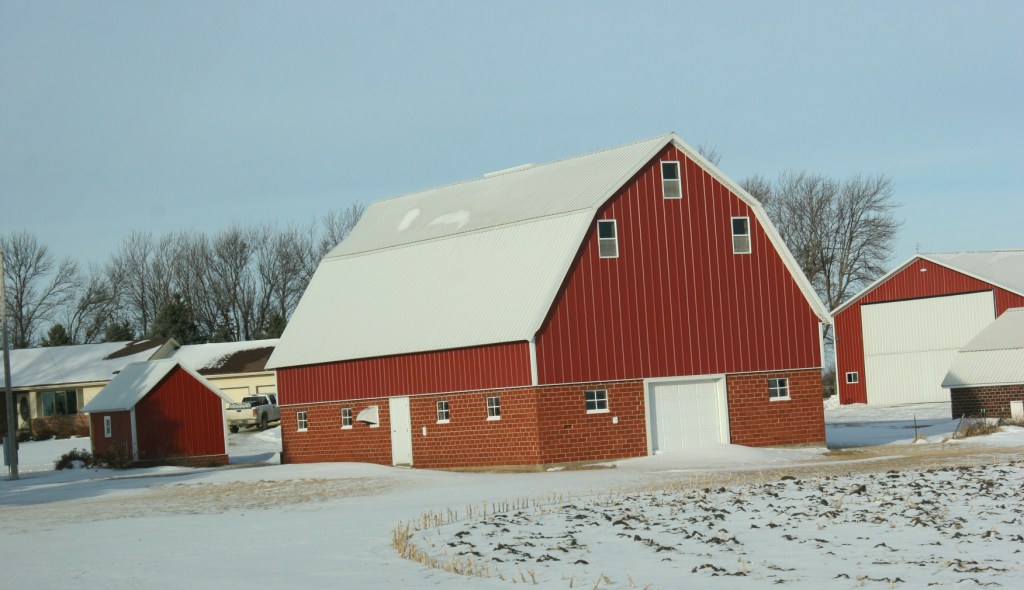
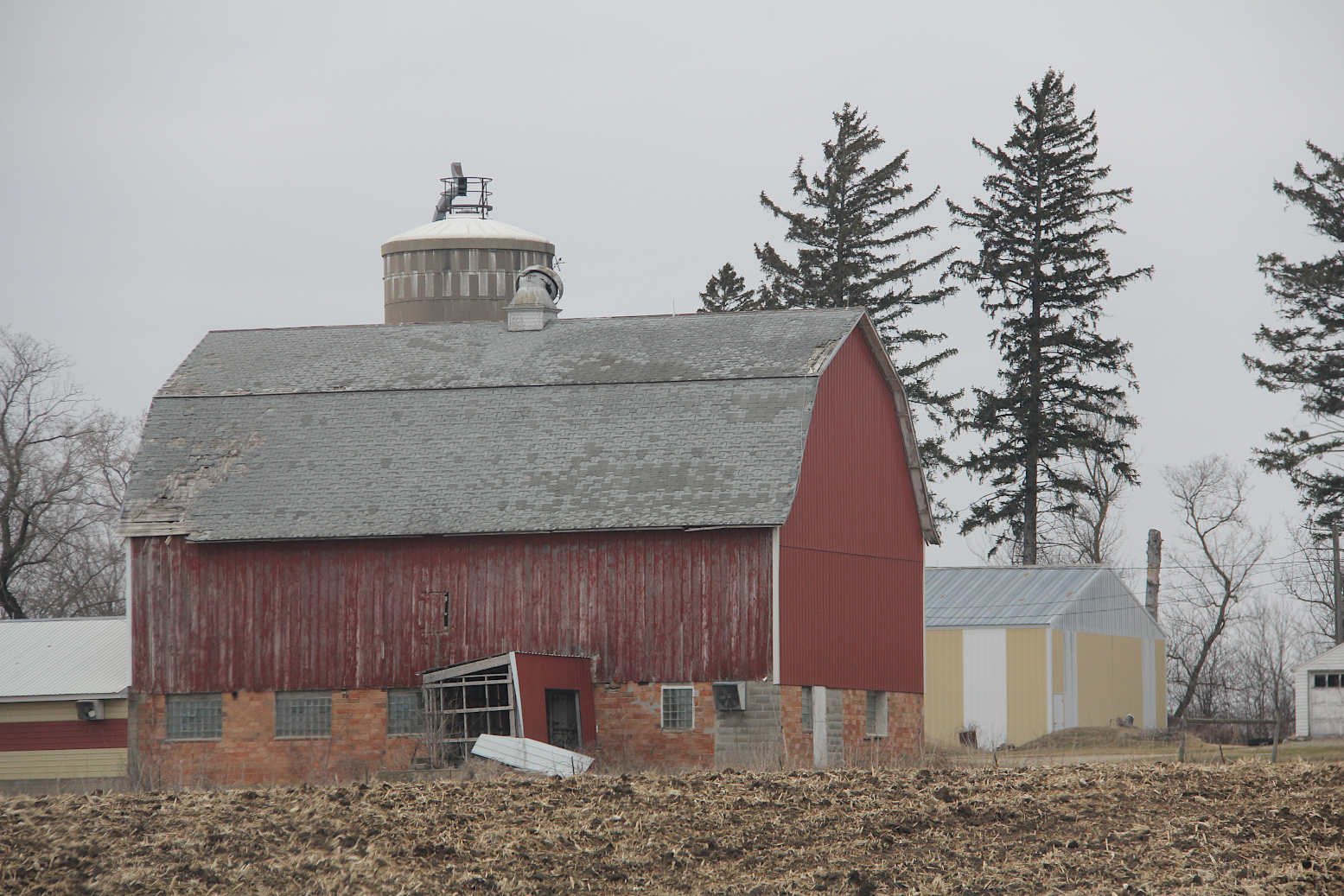
I’m drawn to photograph barns, this one along Goodhue County Road 11 west of Pine Island. (Minnesota Prairie Roots copyrighted photo March 2026)

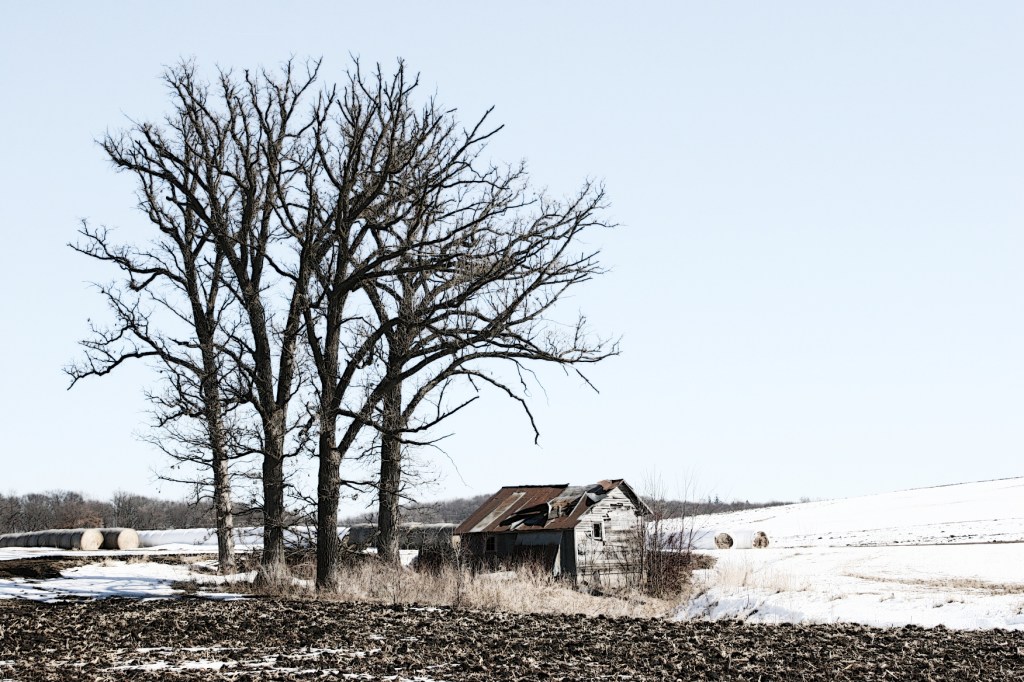
IN THIS GO-BETWEEN TIME of almost spring here in southern Minnesota, the landscape appears mostly winter drab, plain, devoid of many photo opportunities. That is until I look beyond the bare-branched trees, the barren land, the basic gray of March skies.
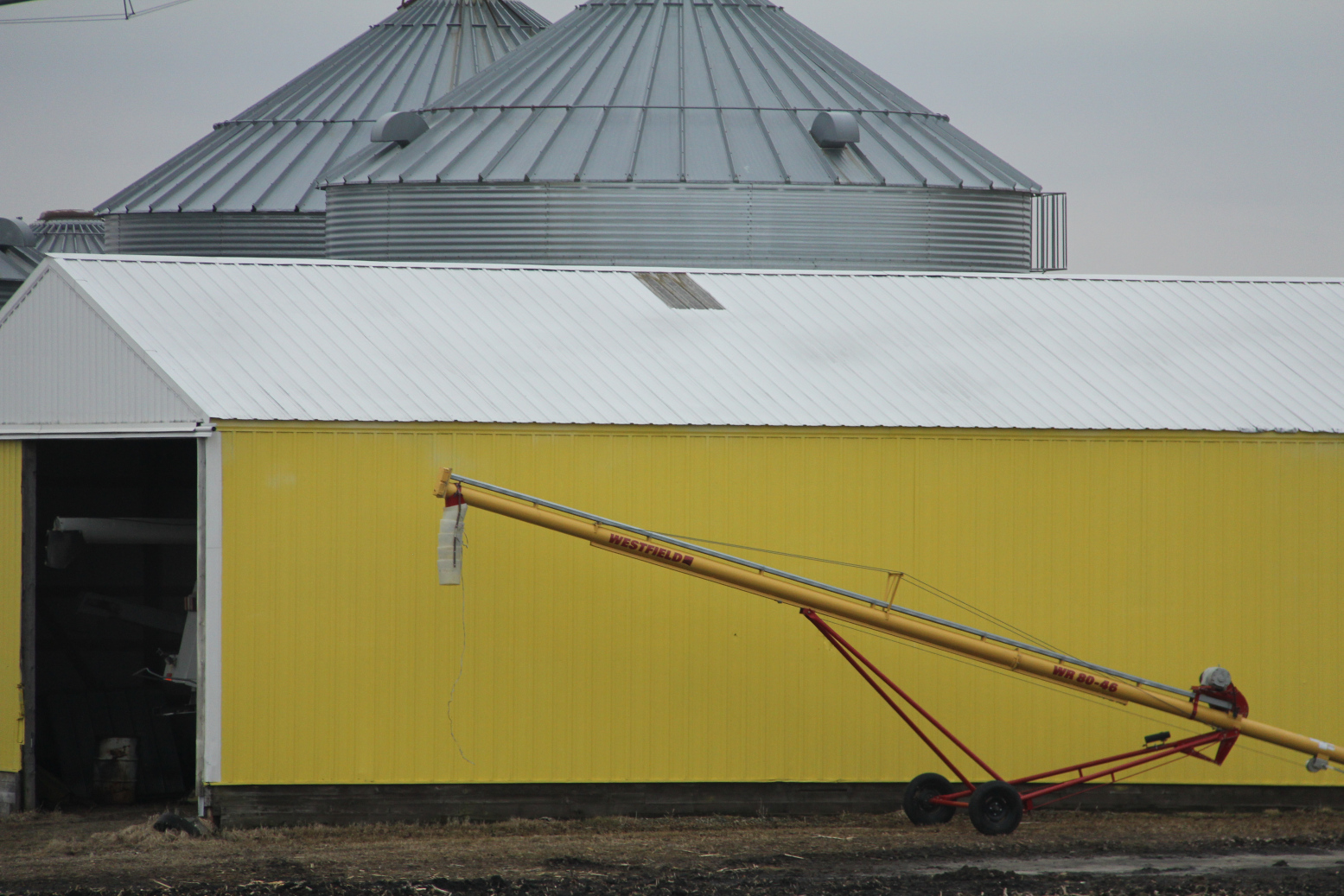
The brightest farm outbuilding I’ve ever seen is this one along Minnesota State Highway 60 between Faribault and Kenyon. (Minnesota Prairie Roots copyrighted photo March 2026)

Color, although not abundant, can still be found among the neutral hues.

Camera in hand, I watched for bright spots and more on a recent business road trip with my husband to Rochester. I kept an eye out for anything I thought would be photo-worthy. Or interesting. My definition of both may differ from yours.
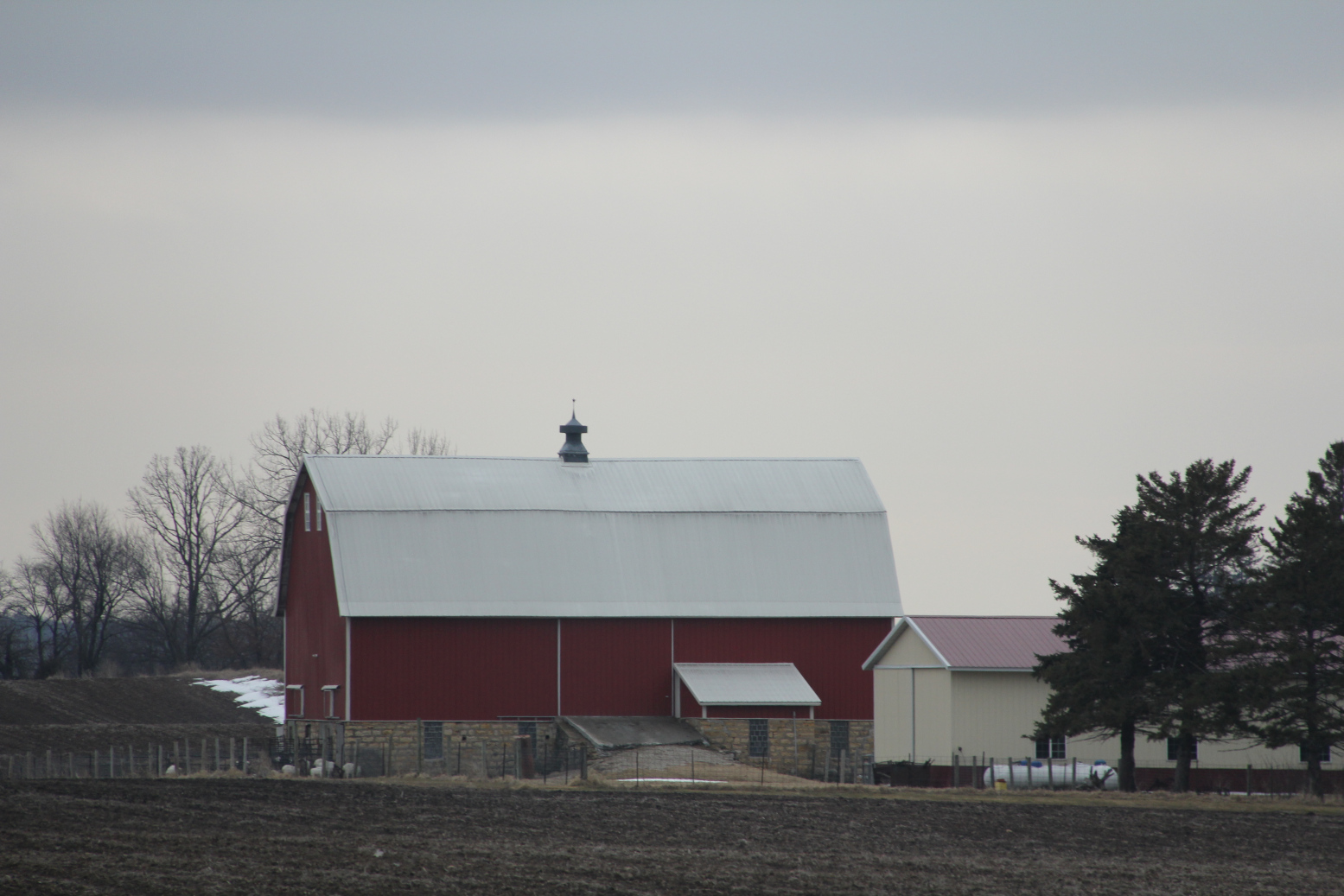
Along Goodhue County Road 11 to the west of Pine Island, I found lots of well-kept red barns to photograph. (Minnesota Prairie Roots copyrighted photo March 2026)

But I enjoy on-the-road, literally, photography—taking photos from the passenger seat inside a moving vehicle. This requires awareness, anticipation and quick framing with the camera set at a fast shutter speed. Clean, or mostly clean, windows help as does a smooth road.

Sometimes I get the image I want. And sometimes I get an unfocused photo. It’s a bit of a crapshoot.
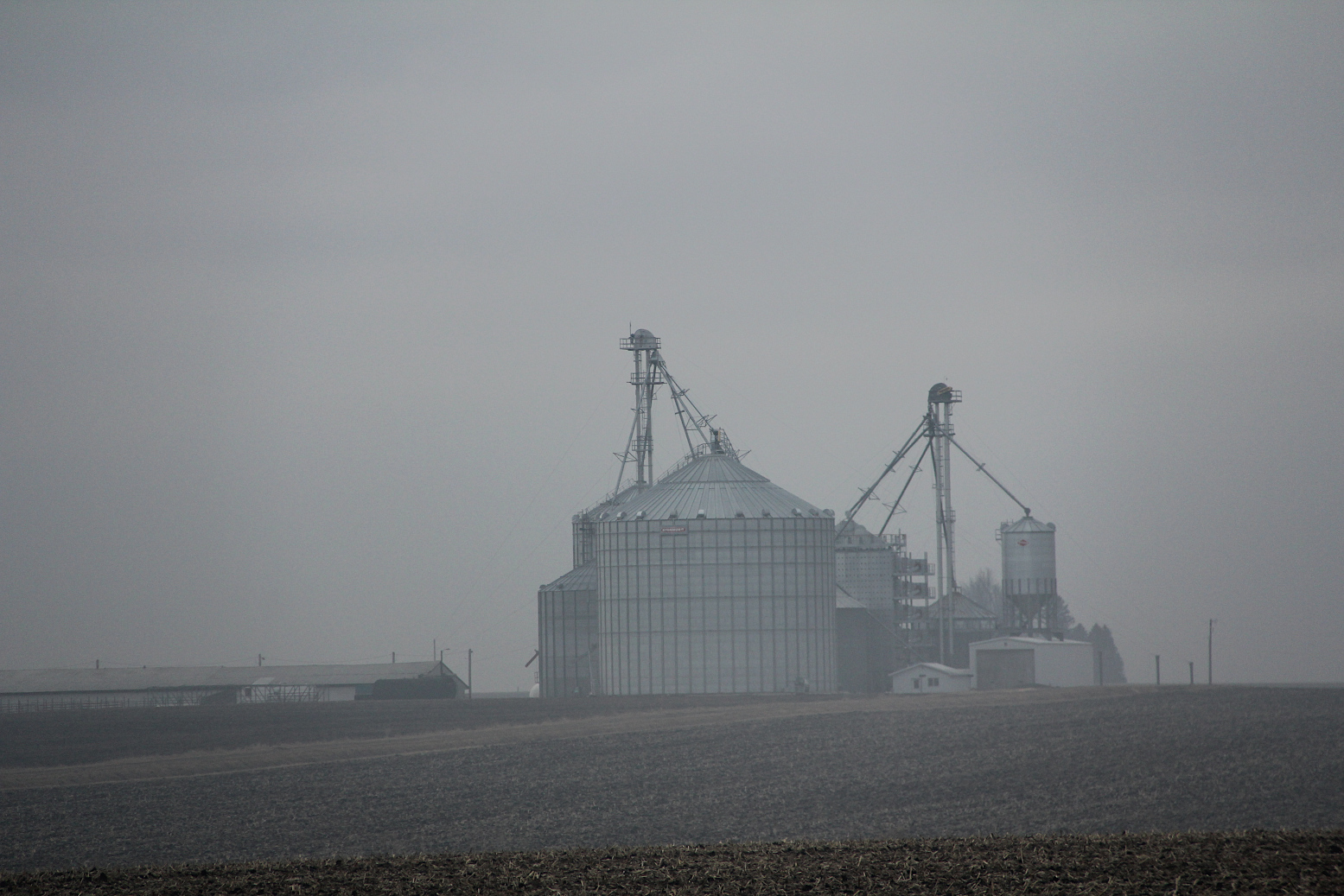
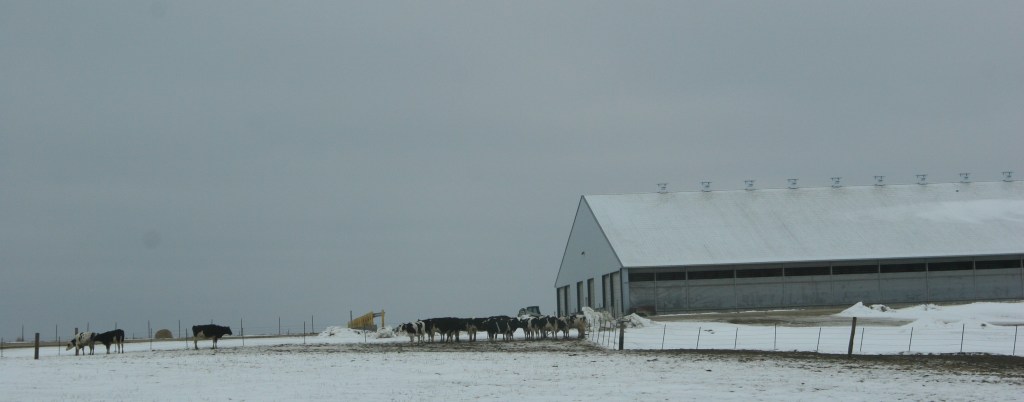
Fog shrouds bins and a grain drying complex along US Highway 14 west of Rochester. (Minnesota Prairie Roots copyrighted photo March 2026)

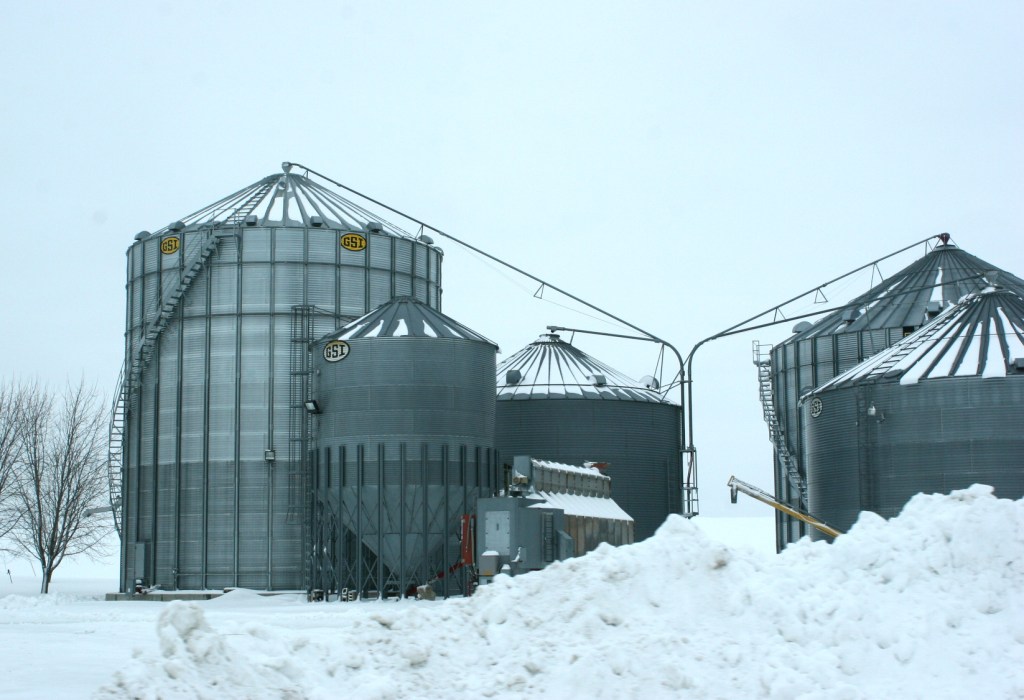
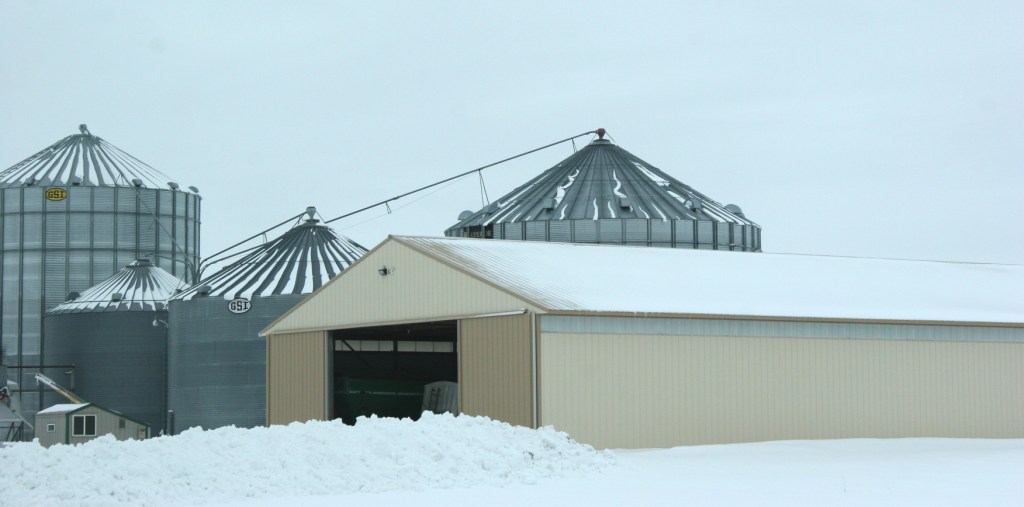
Regardless of photo outcomes, I’m content to scan my surroundings, appreciating the nuances of rural Minnesota. On this particular Thursday morning along US Highway 14 about 20 minutes west of Rochester, I was drawn first to fog enveloping a farm site. Gray on gray on gray on gray. Gray skies. Gray bins. Gray grain dryers. Long gray metal buildings.
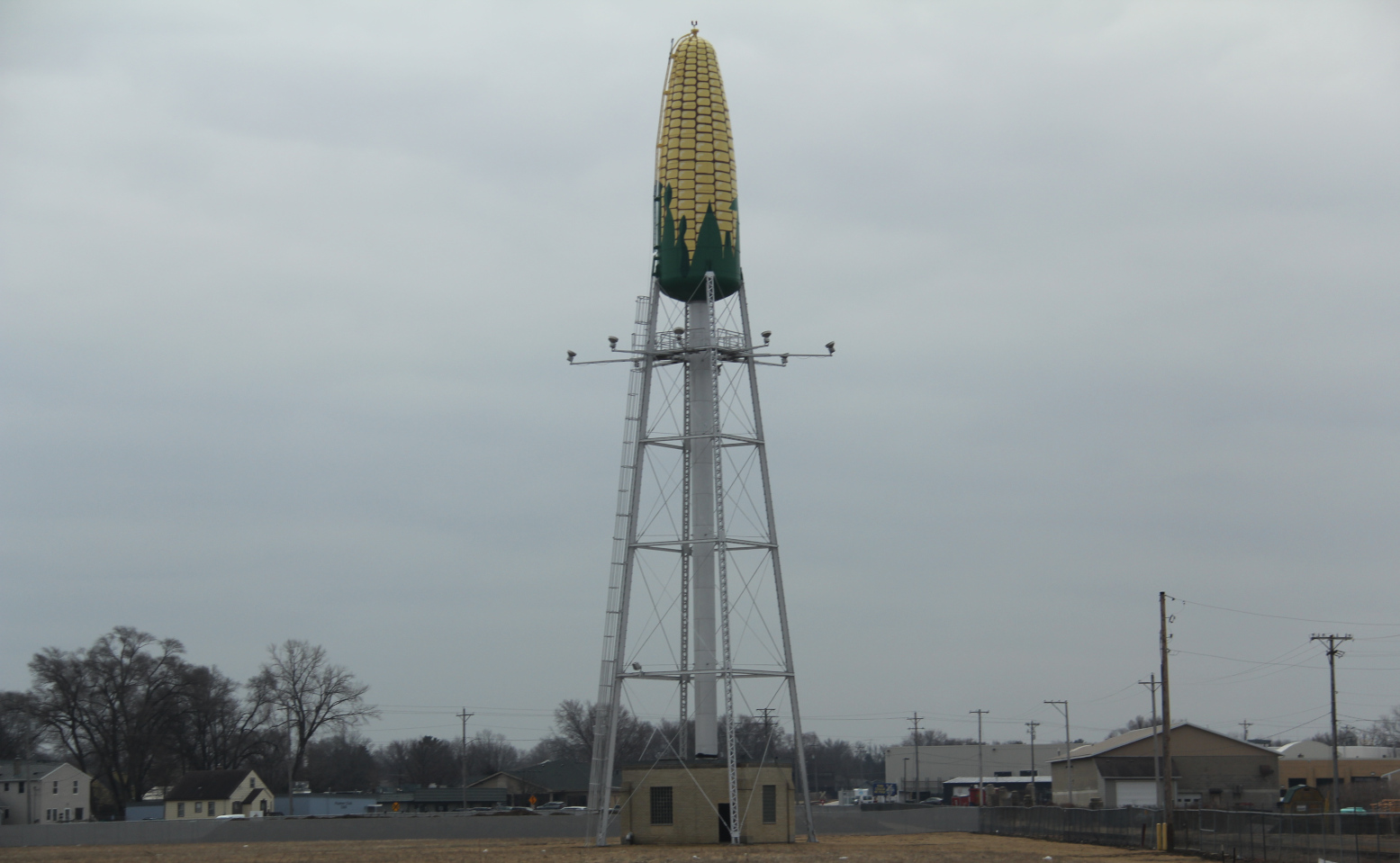
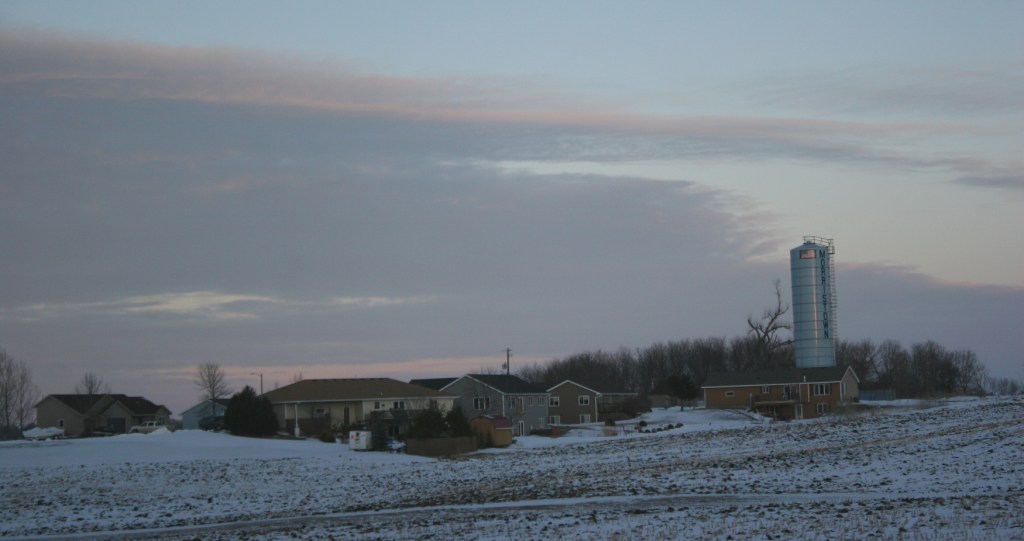
The restored historic Ear of Corn Water Tower near Graham Park in Rochester on a recent gray morning. (Minnesota Prairie Roots copyrighted photo March 2026)

Once in Rochester, color popped at me from a roadside attraction, the 151-foot tall Ear of Corn Water Tower built in 1931 for Reid, Murdoch & Co. The food cannery used the 50,000 gallon water tower in its canning operation, which included canning corn. The business changed hands twice before the plant closed in 2018. But the water tower landmark remains. I found it definitely photo-worthy as we passed by.
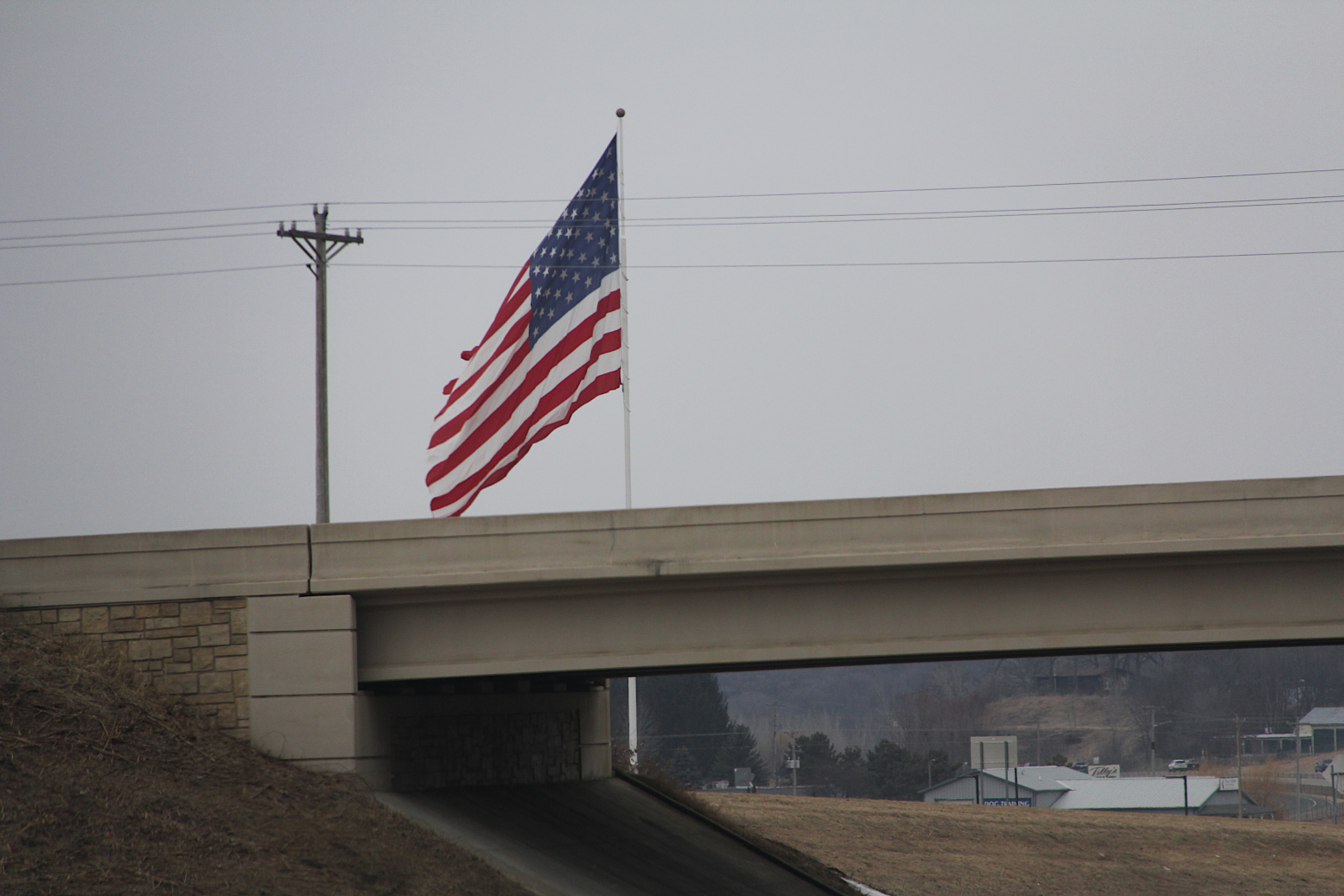
An American flag as photographed along US Highway 52 in Rochester. (Minnesota Prairie Roots copyrighted photo March 2026)

But something as simple as as an over-sized American flag flapping in the morning breeze, a red barn flashing color, a sprawling white farmhouse, a row of power lines, a distant farm site can grab my visual attention, too.
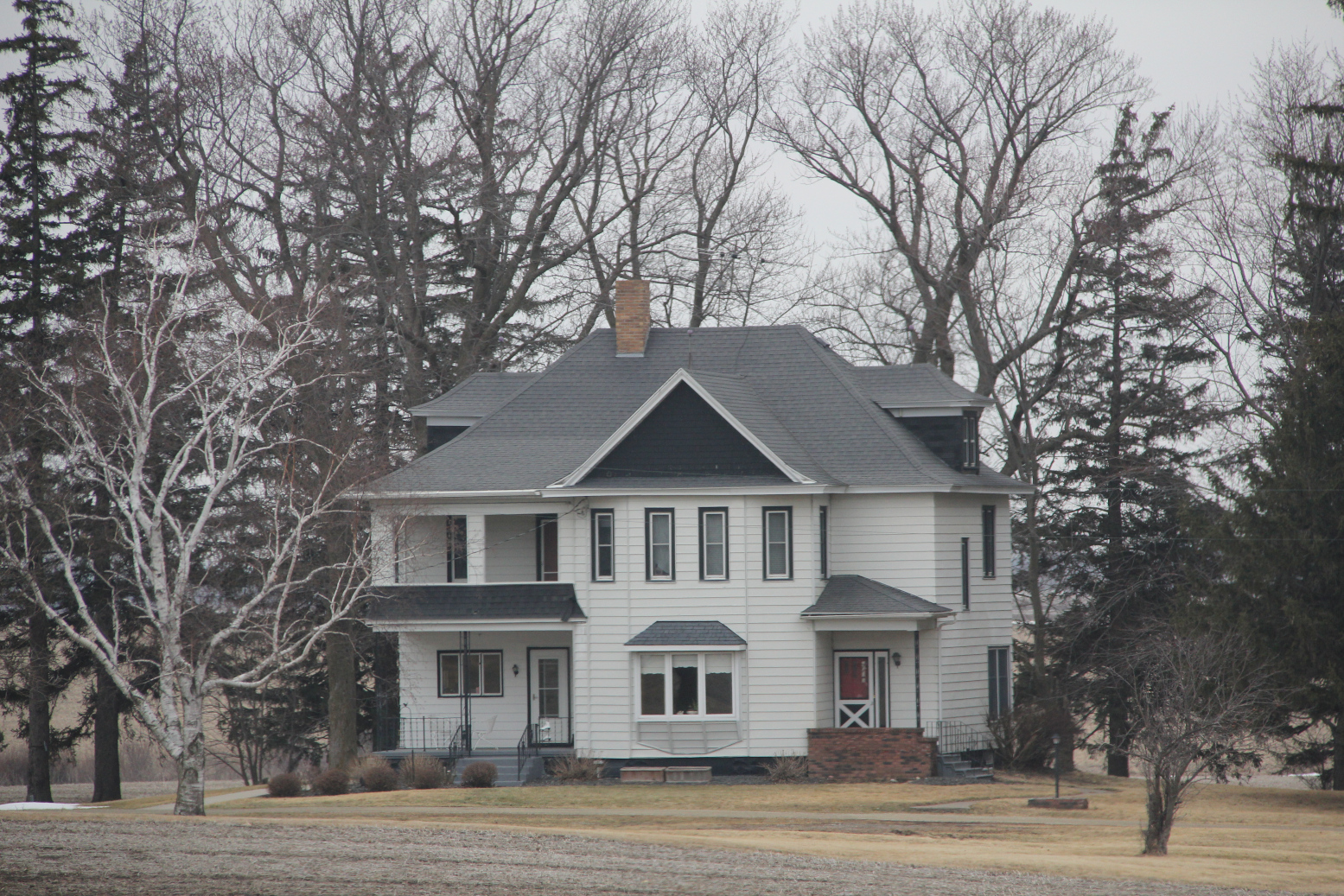
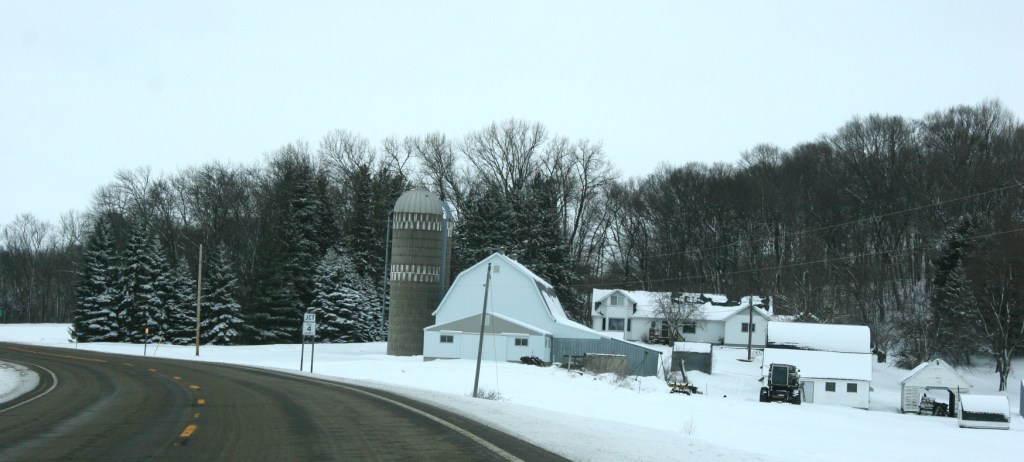
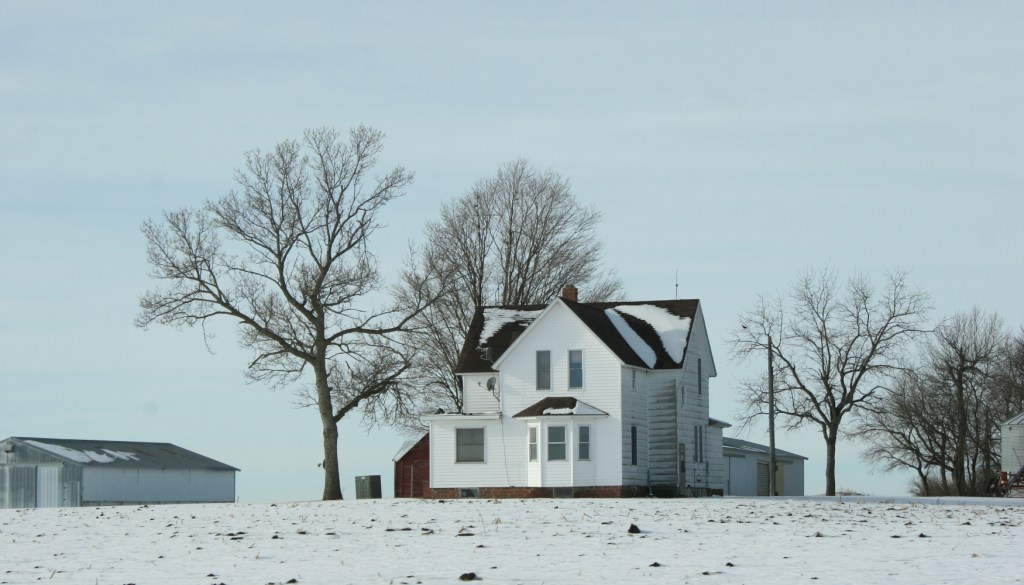
I always wanted to live in a sprawling farmhouse similar to this one along Goodhue County Road 11. (Minnesota Prairie Roots copyrighted photo March 2026)

I’m drawn to photograph rural scenes because of my farm background. Deep in my soul, I long to live again in the countryside, away from close neighbors, near nature, cocooned by quiet. But reality is that will never happen.

And so I find ways to reconnect with the land. In my writing. In my photography. In every season.
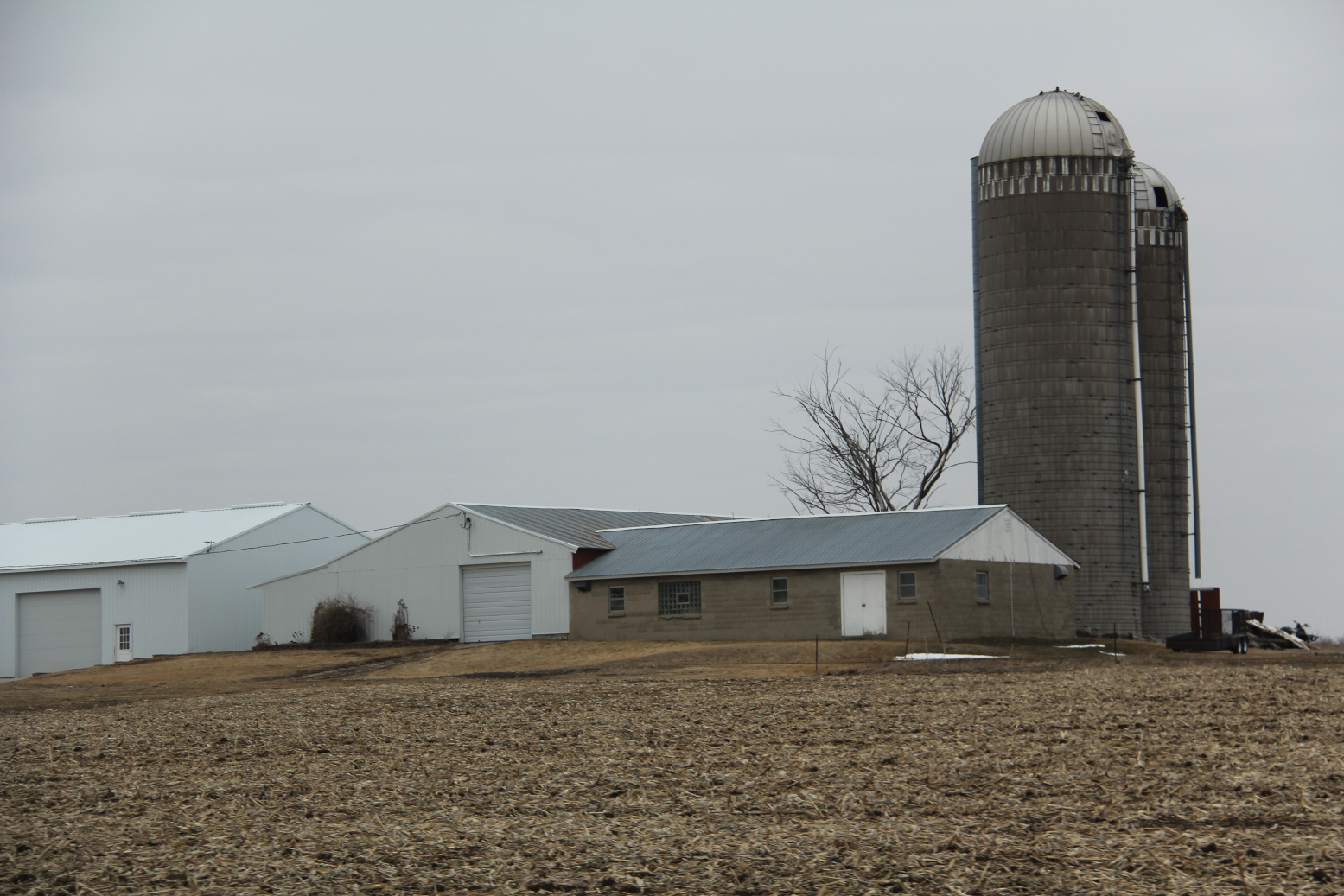
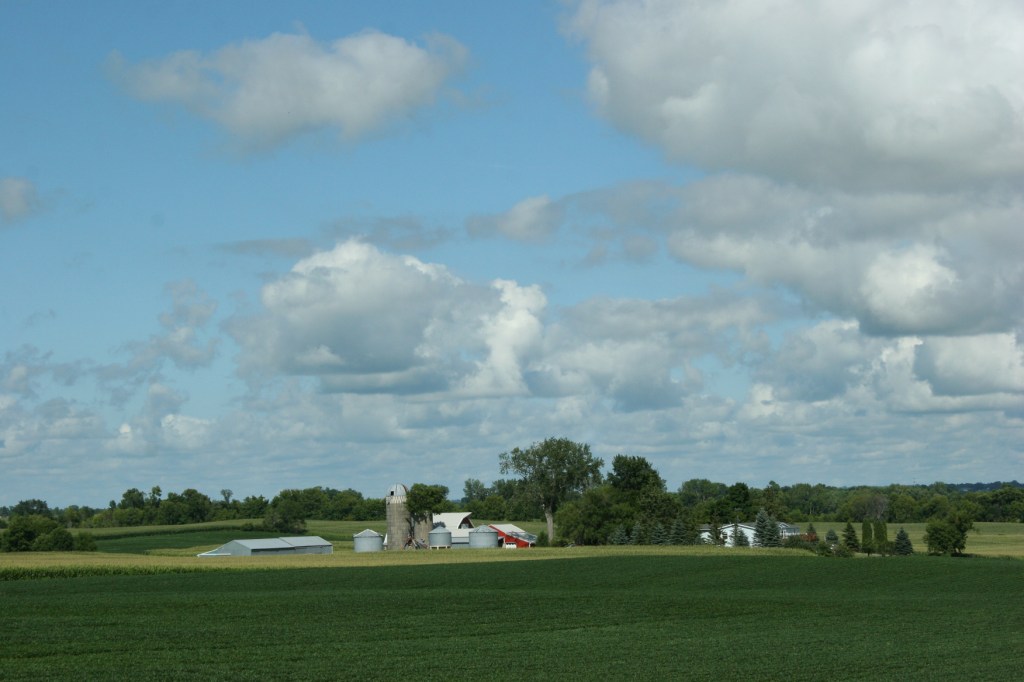
A farm site west of Pine Island along Goodhue County Road 11. (Minnesota Prairie Roots copyrighted photo March 2026)

Every farm field holds the hope of a farmer. Every farm site holds memories and hard work. And dreams. I see this on the road, through my camera lens, as my focus shifts with every mile covered.
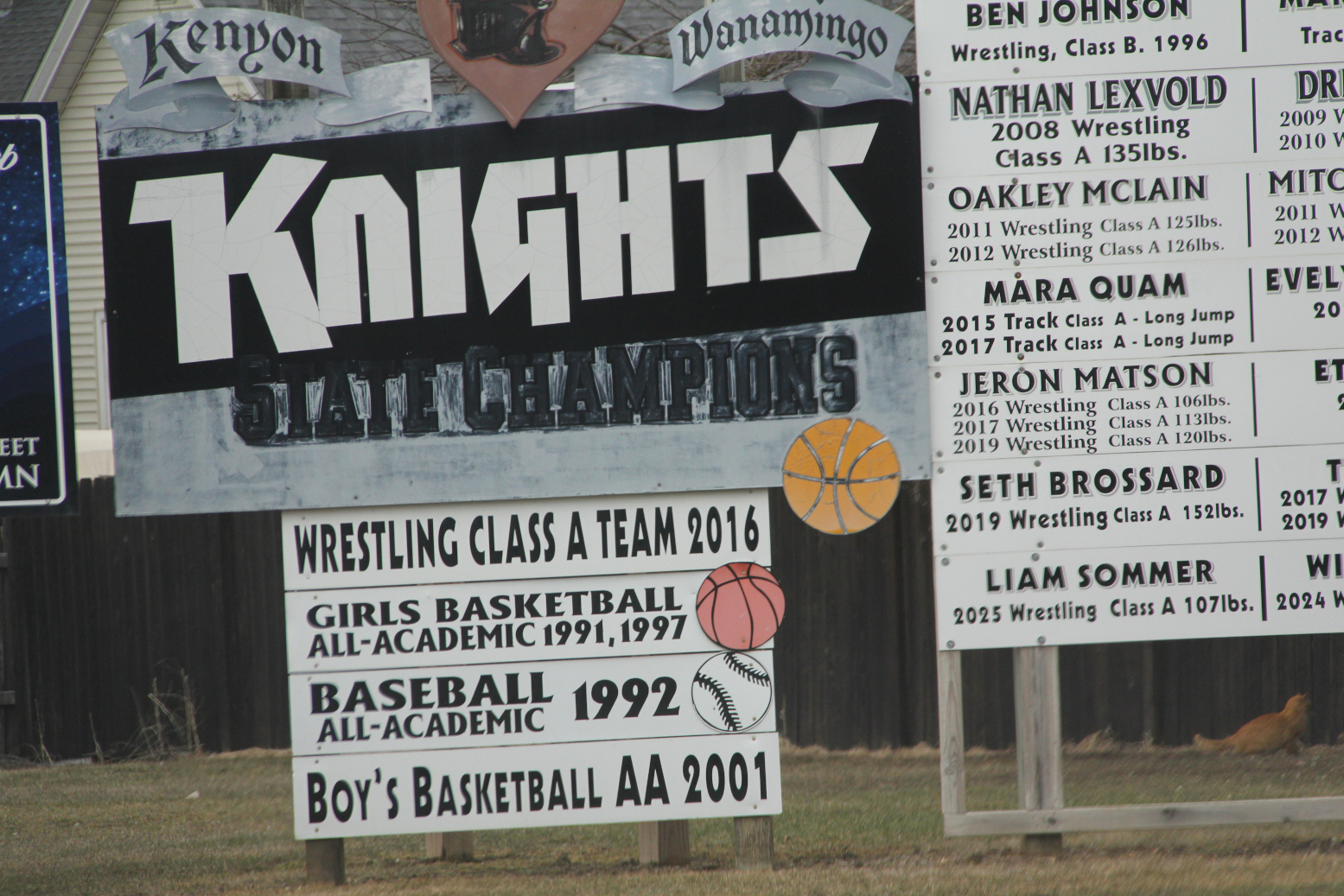
Kenyon-Wanamingo High School sporting accomplishments banner signs. (Minnesota Prairie Roots copyrighted photo March 2026)

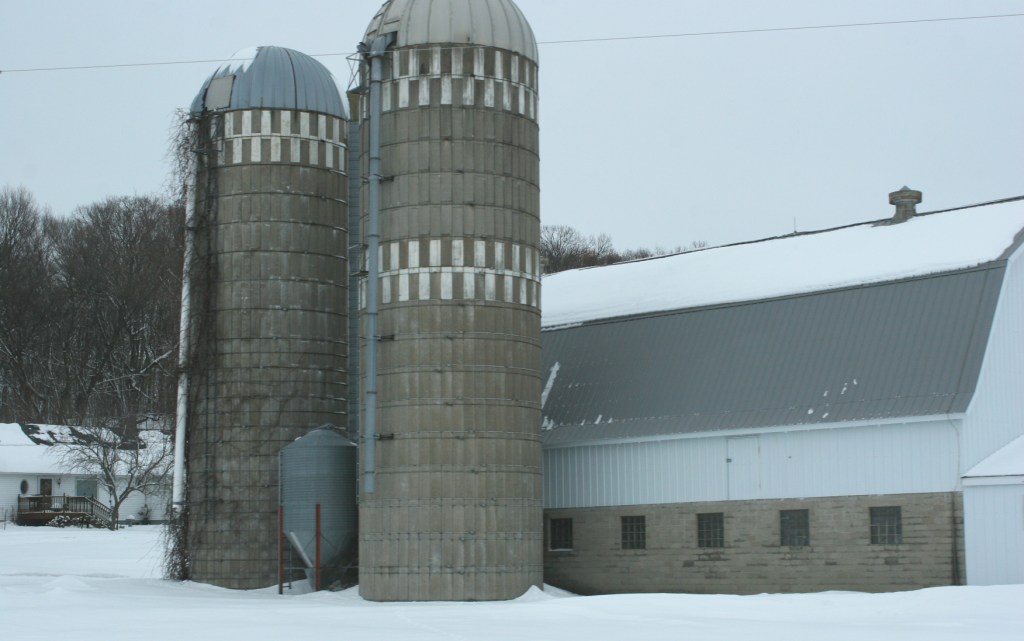
I view an ever-changing rural winter landscape of red barns, aged farmhouses, towering silos, untilled fields and then, on the edge of Kenyon, signage boasting local high school sporting championships. Such signs are common in small Minnesota communities.

I zoomed in on this eagle flying high above the land outside Kenyon. (Minnesota Prairie Roots copyrighted photo March 2026)

Nearing the end of this quick road trip, an eagle leads us along Minnesota State Highway 60 west of Kenyon before veering to the right. When I see this majestic bird on this day, I feel as I always do about eagles—in awe of their size, their power, their speed. I snap three quick frames.
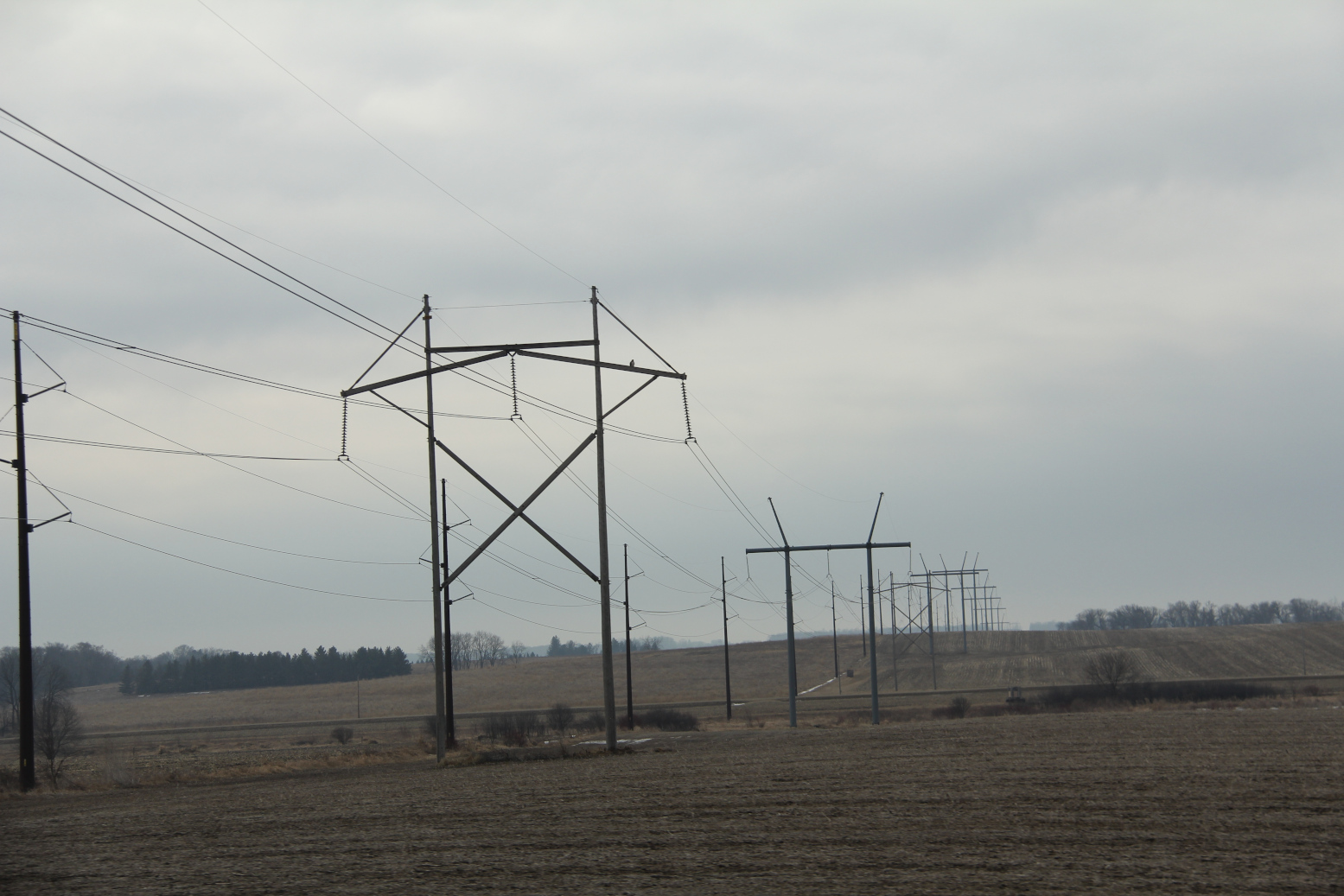
Massive power lines stretch seemingly into infinity along US Highway 14 somewhere between Owatonna and Rochester. (Minnesota Prairie Roots copyrighted photo March 2026)

Time passes. Miles pass. Rural southern Minnesota unfolds before me, captured through the lens of my camera on an almost-spring day in March.

© Copyright 2026 Audrey Kletscher Helbling


A Tale of Two Barn Sales September 30, 2025

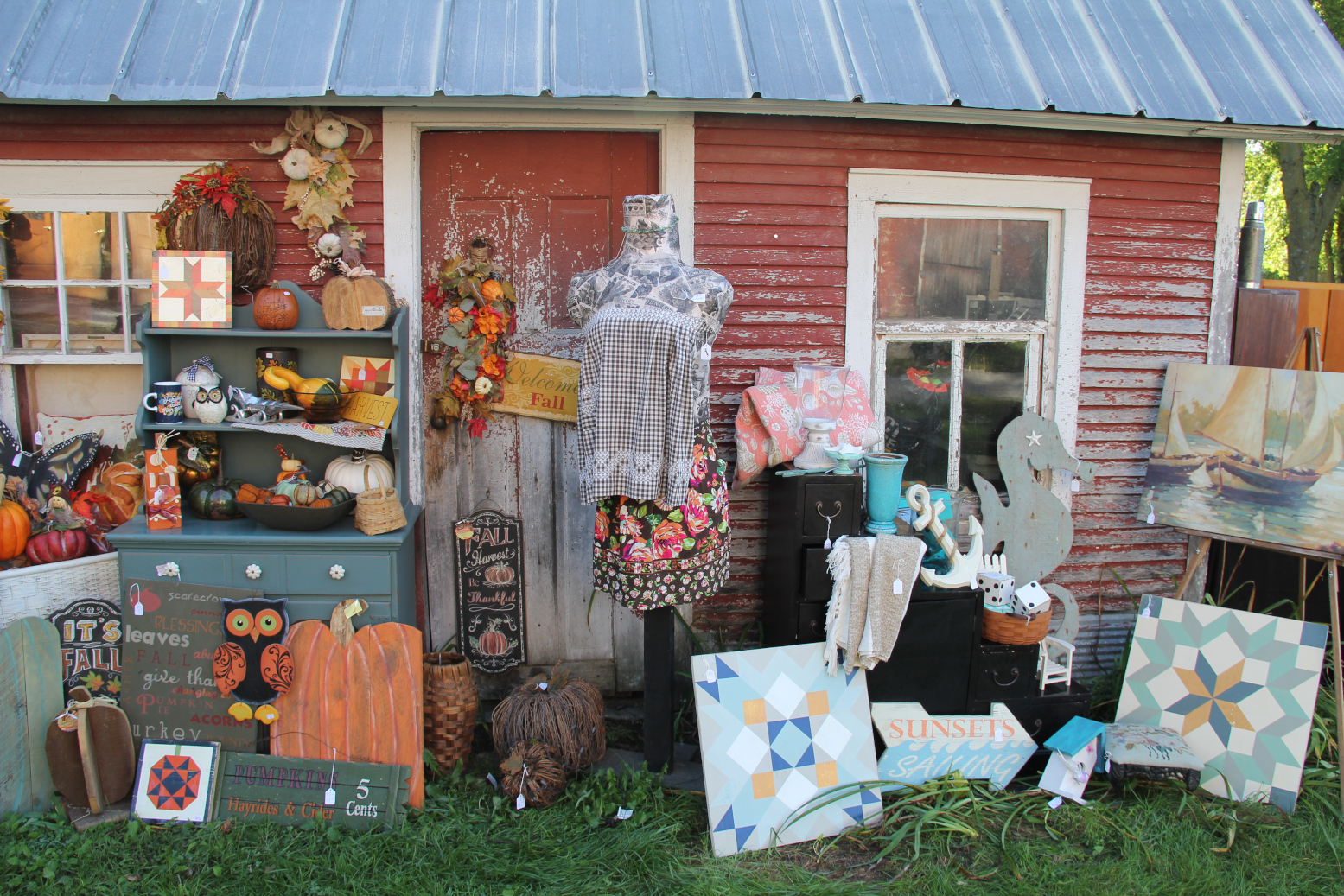
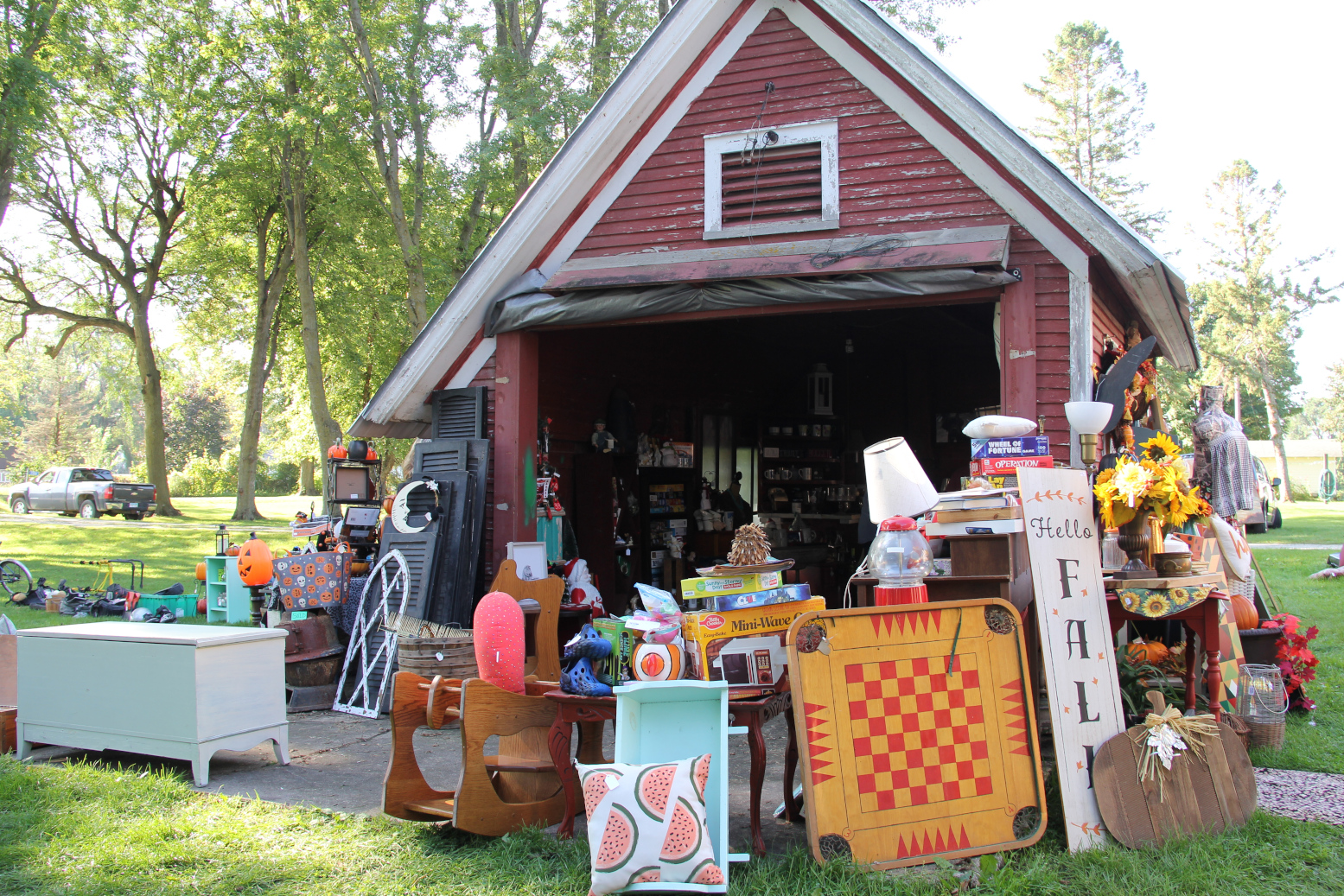
Autumn merch and nautical merch displayed against a small red shed at Nicole Maloney’s fall sale. (Minnesota Prairie Roots copyrighted photo September 2025)

THIS TIME OF YEAR in Minnesota, we not only usher in autumn but also the season of fall craft, collectible, vintage and antique sales. This past weekend, two women in the unincorporated hamlet of Cannon City just east of Faribault hosted two occasional seasonal sales.

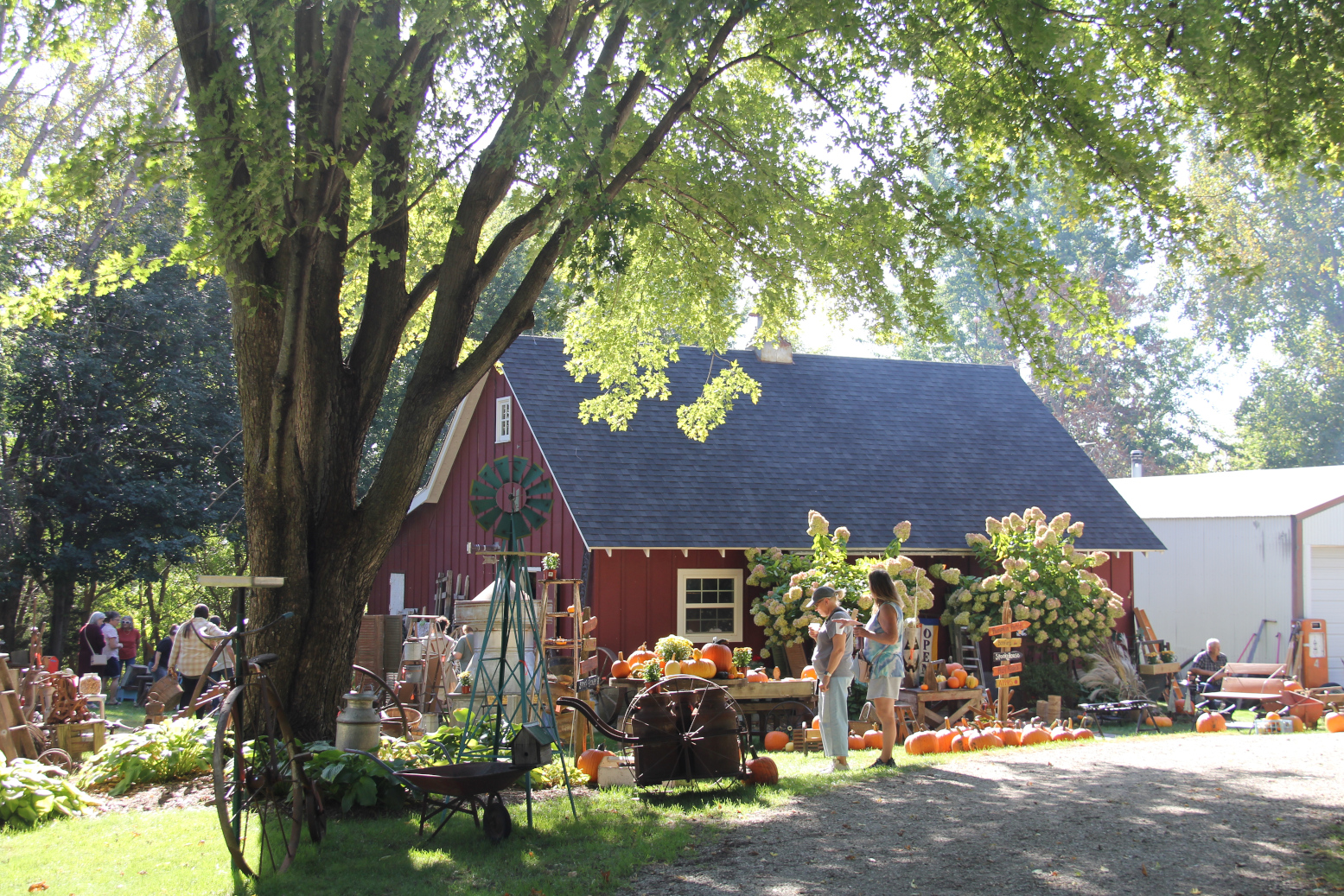
Shoppers peruse goods inside and outside Debbie Glende’s barn as smoke wafts from a campfire. (Minnesota Prairie Roots copyrighted photo September 2025)

Both were marketed as barn sales—Nicole Maloney’s Mini Flea at the Red Barn and Debbie Glende’s The Barn Sale.

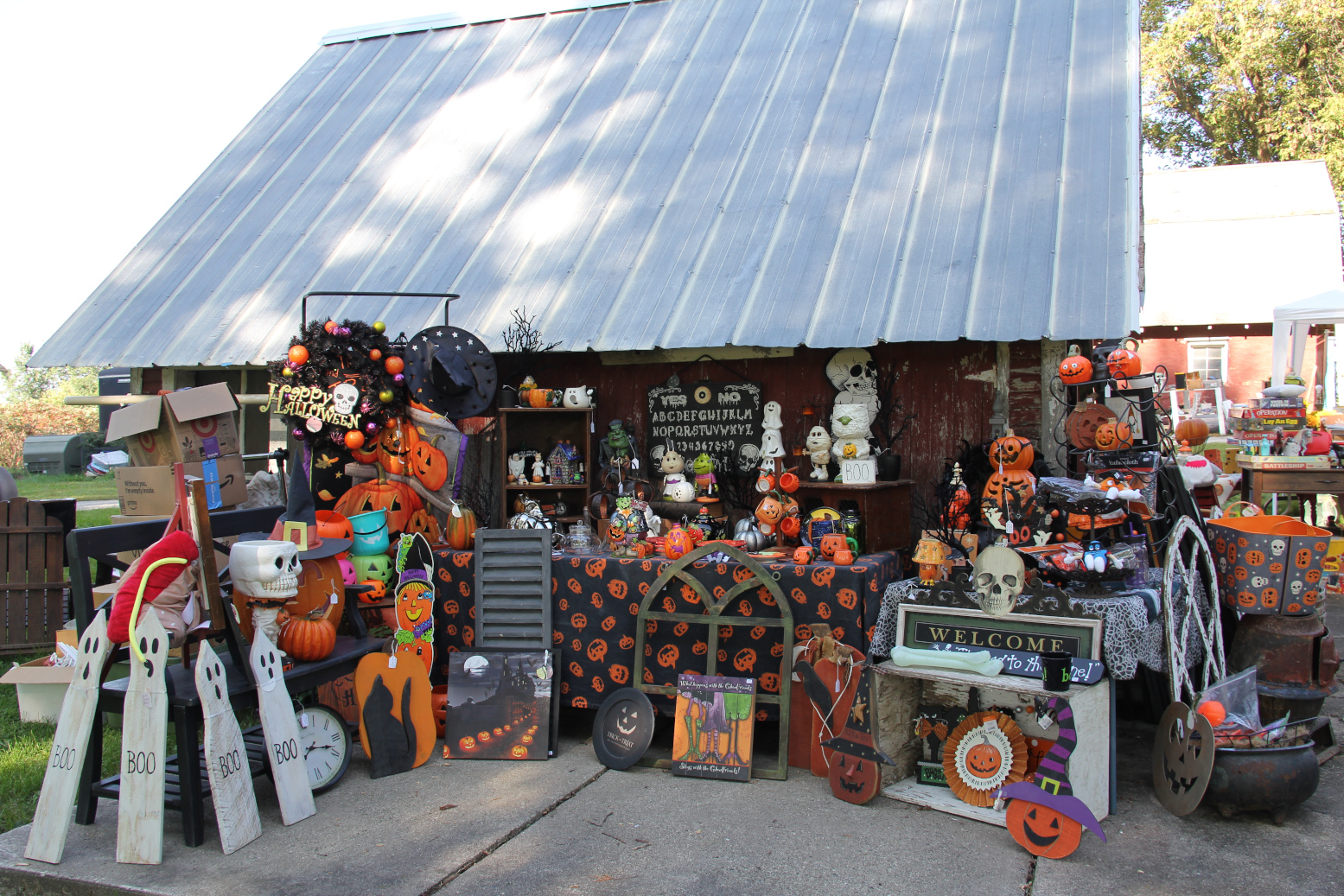
Halloween goods galore at the Mini Flea at the Red Barn. (Minnesota Prairie Roots copyrighted photo September 2025)

I shopped at both, located across the road from one another along Rice County Road 20/Cannon City Boulevard. I’ve been to Glende’s several times, but never Maloney’s although she’s sold goods in her yard and a small shed for some 10 years. Somehow I missed her market.

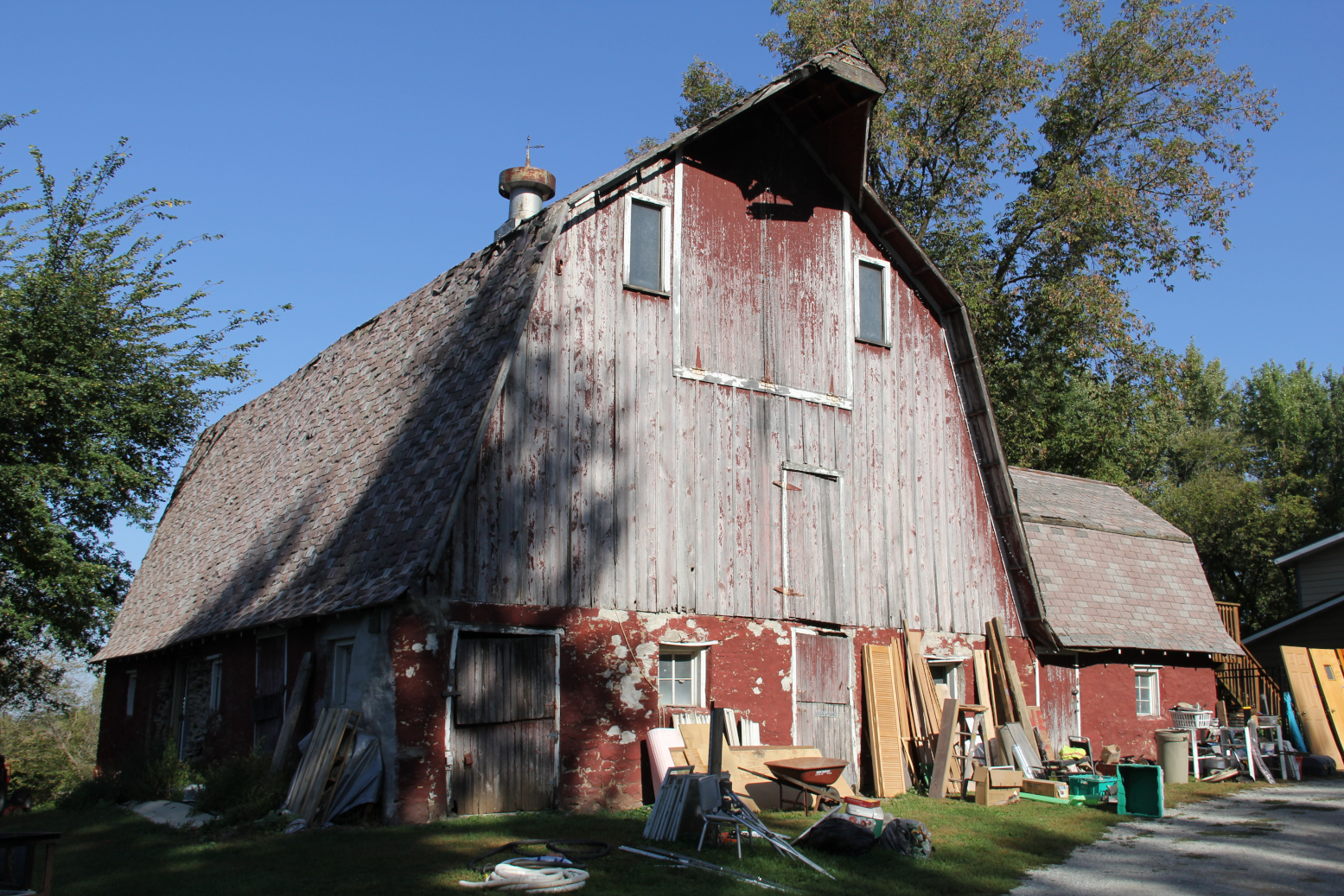
The red barn in need of shingles. (Minnesota Prairie Roots copyrighted photo September 2025)

But you can’t miss the massive weathered red barn which rises above her rural property. It was the first building I noticed upon pulling into the yard. And it is the reason, says Maloney, she opens her place once a year to sell her finds. Monies raised from the sale are going toward reshingling the barn. I expressed my gratitude to her for saving her barn when so many others are falling into heaps of rotting wood.

Inside Maloney’s shed, the display that tipped me off to a design degree. (Minnesota Prairie Roots copyrighted photo September 2025)

I also complimented Maloney on her artful displays of merchandise. I could see she has an eye for design. I was not surprised that she holds an interior design degree, although she doesn’t work in the field. The annual sale allows her to use her design skills to create inviting displays.

An outdoorsy and cabin themed merchandise display created by Maloney. (Minnesota Prairie Roots copyrighted photo September 2025)
This small shed centered the sale in Maloney’s yard. (Minnesota Prairie Roots copyrighted photo September 2025)
One side of Maloney’s shed featured all Halloween merchandise. (Minnesota Prairie Roots copyrighted photo September 2025)

As I wandered about the yard, I saw separate groupings of items themed to rustic cabin/farmhouse, Halloween, Christmas, nautical and more. And sometimes I observed simply a hodge podge of goods, including furniture. All of it, though, seemed deliberately staged to appeal to shoppers.

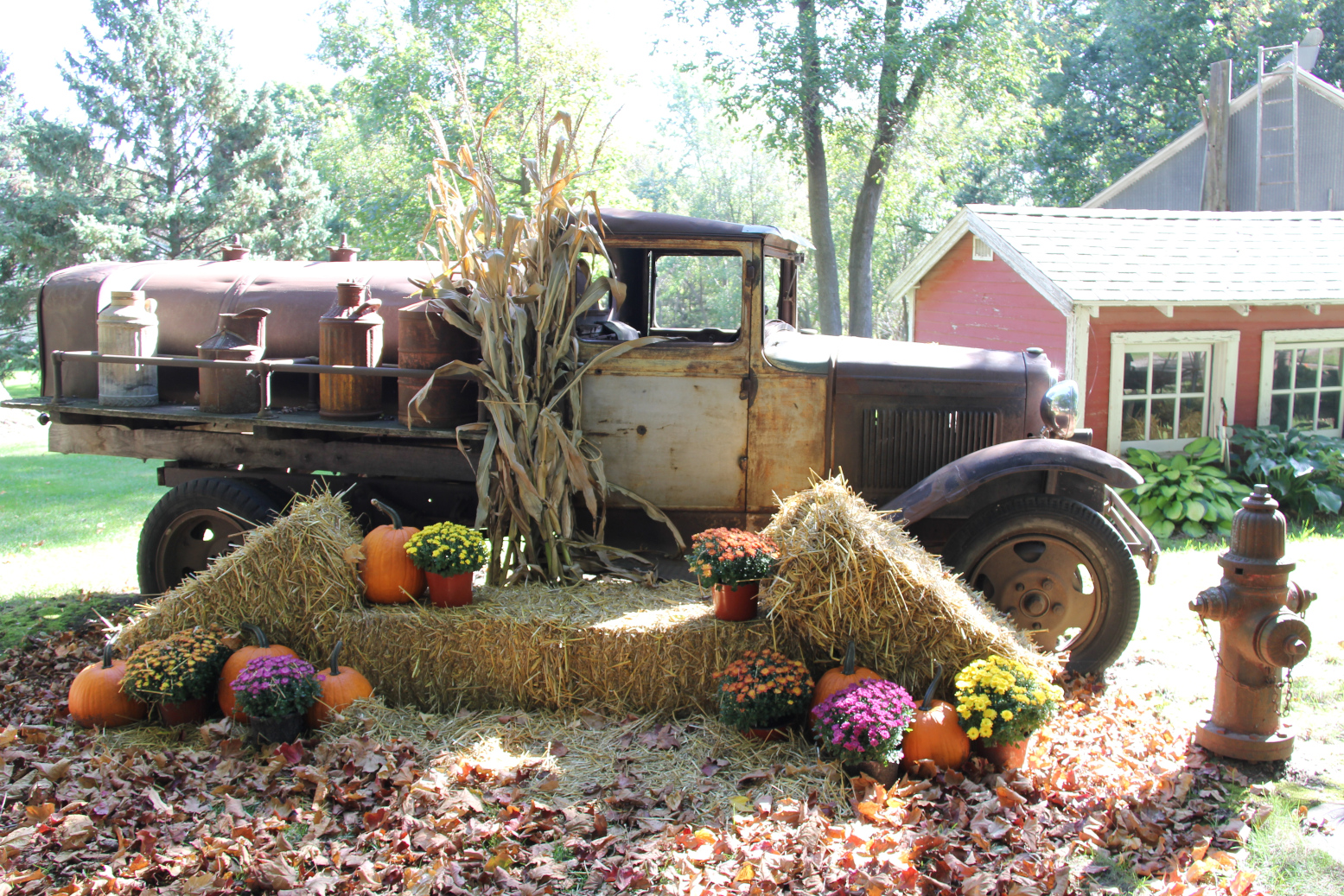
A vintage truck surrounded by fall decorations serves as a photo prop for shoppers at The Barn Sale. (Minnesota Prairie Roots copyrighted photo September 2025)
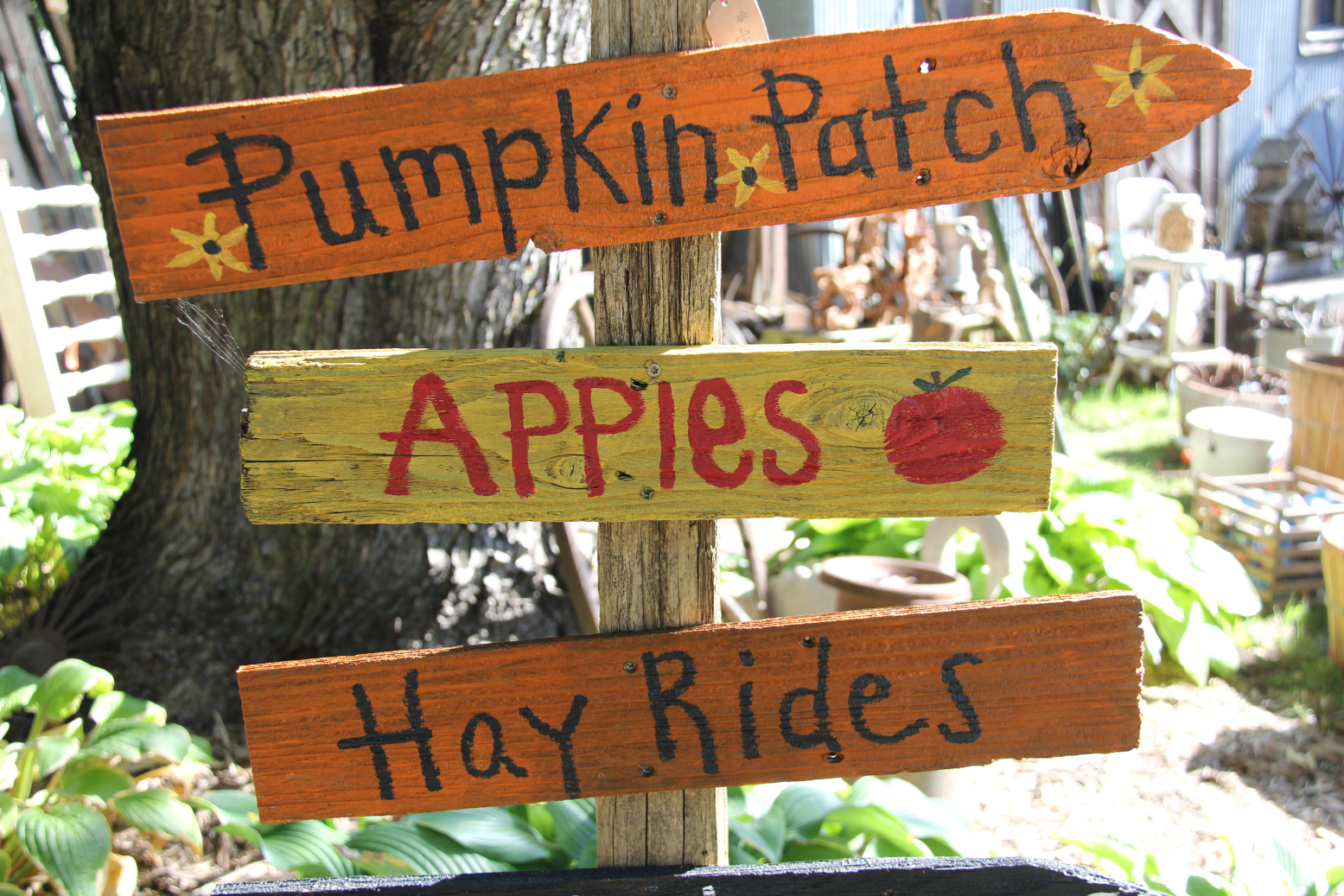
Seasonal appropriate signage for sale at The Barn. (Minnesota Prairie Roots copyrighted photo September 2025)
I saw a lot of these cute cats, in assorted Halloween colors, inside Glende’s barn. (Minnesota Prairie Roots copyrighted photo September 2025)

Across the road at Glende’s sale in her small (compared to Maloney’s) red barn, shoppers circled inside the building to view an eclectic array of merchandise cramming shelves and tables, hanging from walls, sitting on the floor. From my non-merchandising perspective, it looks like a lot of work to artfully arrange and showcase all those goods.

The steak sign, left, caught my eye. (Minnesota Prairie Roots copyrighted photo September 2025)

Like her neighbor, Glende’s merchandise was heavy on Halloween and autumn themes. As it should be for a sale held the last weekend in September. She also holds sales in December and again in the spring. But my eye was drawn to a large vintage sign promoting beef sirloin steak for $1.50. I don’t know if that was per steak or per pound, but a bargain either way.

Shoppers could poke through miscellaneous items scattered around Glende’s yard. (Minnesota Prairie Roots copyrighted photo September 2025)

Outside the small red barn, shoppers found plenty of piles of stuff. Junk to some. Treasures to others.

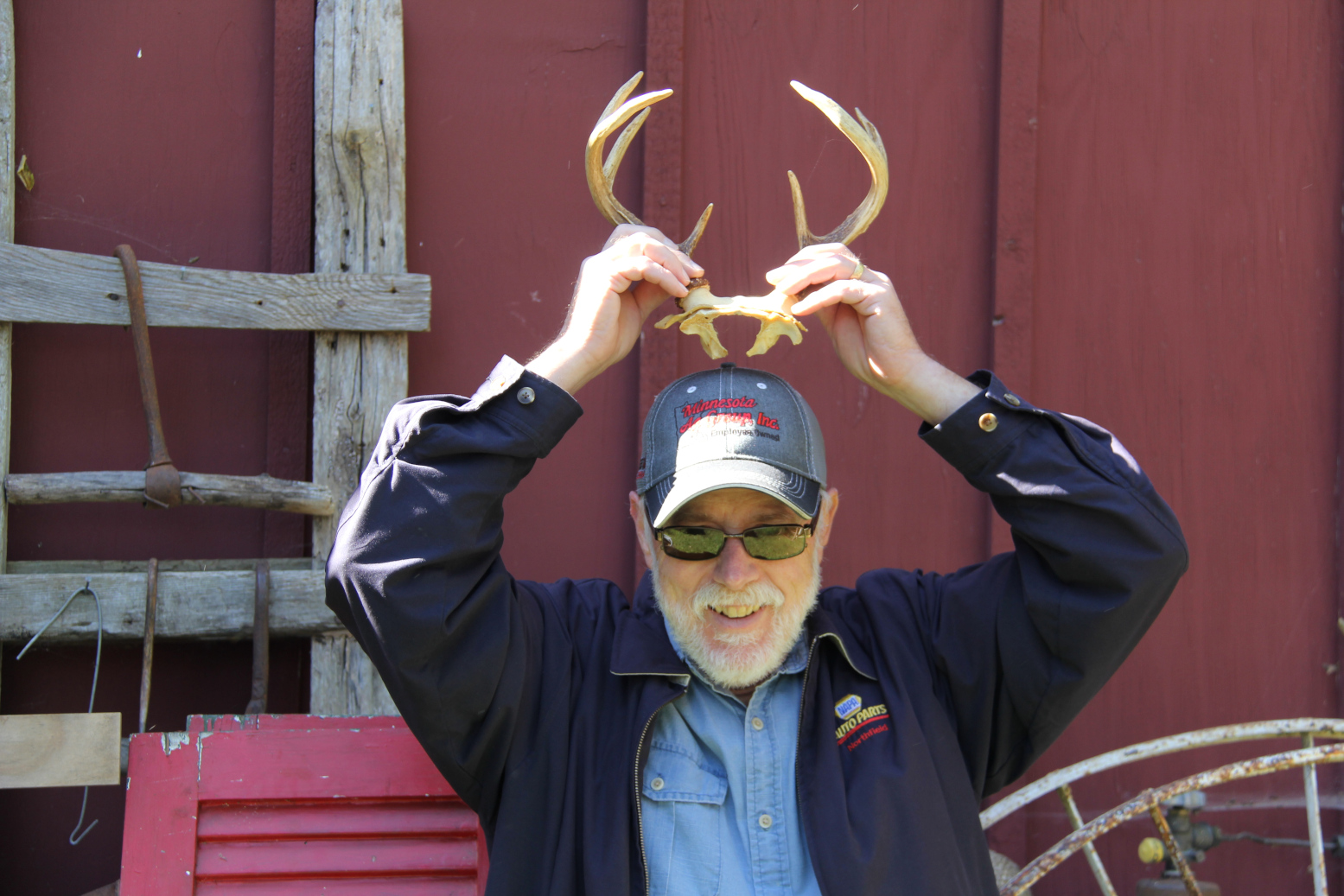
My husband, Randy, has a little fun with antlers he found at Glende’s sale. (Minnesota Prairie Roots copyrighted photo September 2025)

Sales like these appeal to me also because the sellers are attempting to extend the lives of whatever rather than tossing something into the garbage to end up in a landfill. It’s a win-win for everyone.

The vintage lamp I really liked, but didn’t buy. (Minnesota Prairie Roots copyrighted photo September 2025)

I seldom buy anything at these sales because, at this age in my life, I don’t need more stuff. Even if I see a lot of items that I would really really like to have. Such as a vintage lamp in Glende’s yard. And a small round side table in Maloney’s.

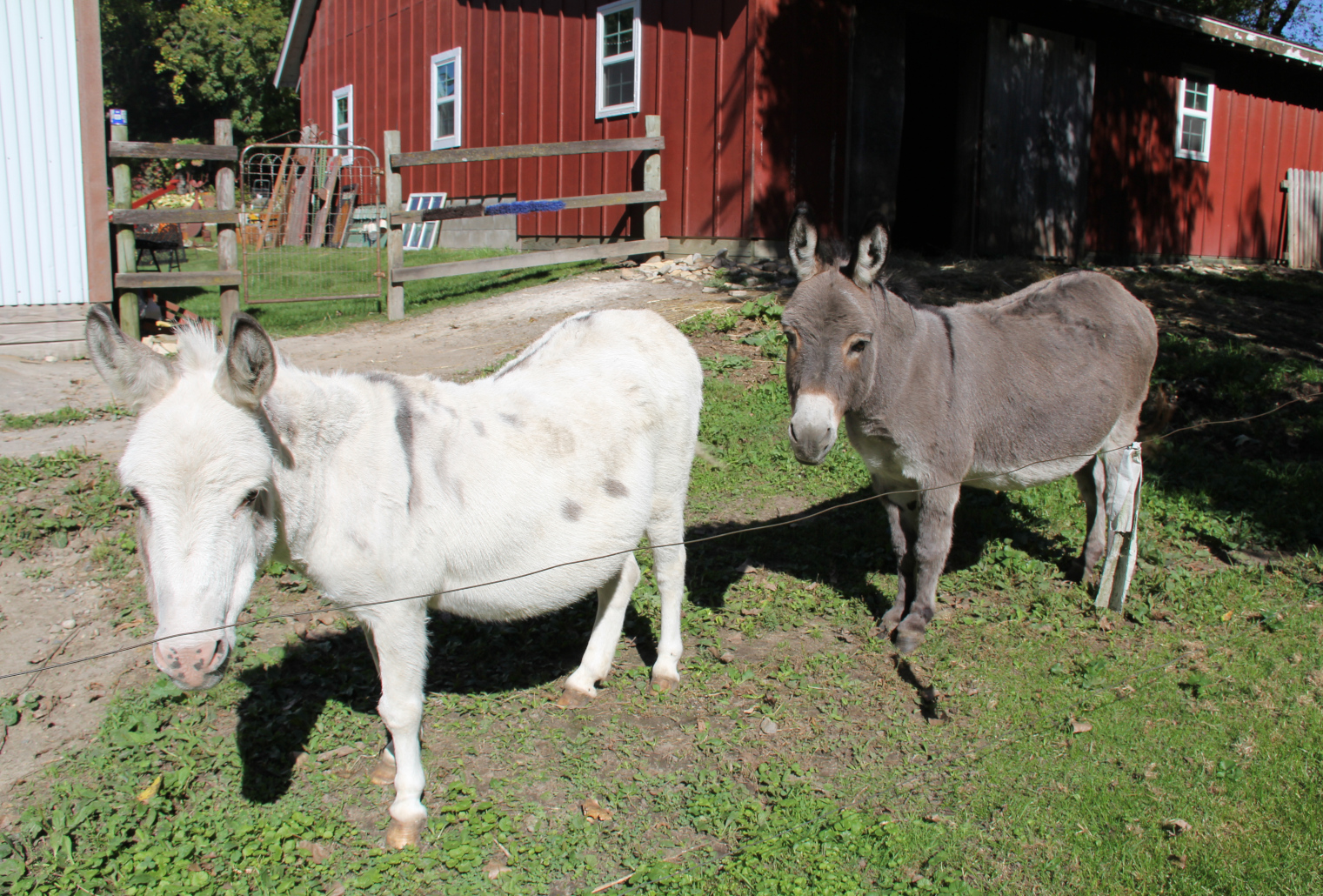
Before leaving Glende’s sale, I photographed these friendly donkeys behind a shed per an invitation to do so. (Minnesota Prairie Roots copyrighted photo September 2025)

Instead, I settled for photographing these two barn sales, which attract many, bring back memories and prove a delightful way to spend a bit of time on a stunning autumn day in southern Minnesota.

© Copyright 2025 Audrey Kletscher Helbling
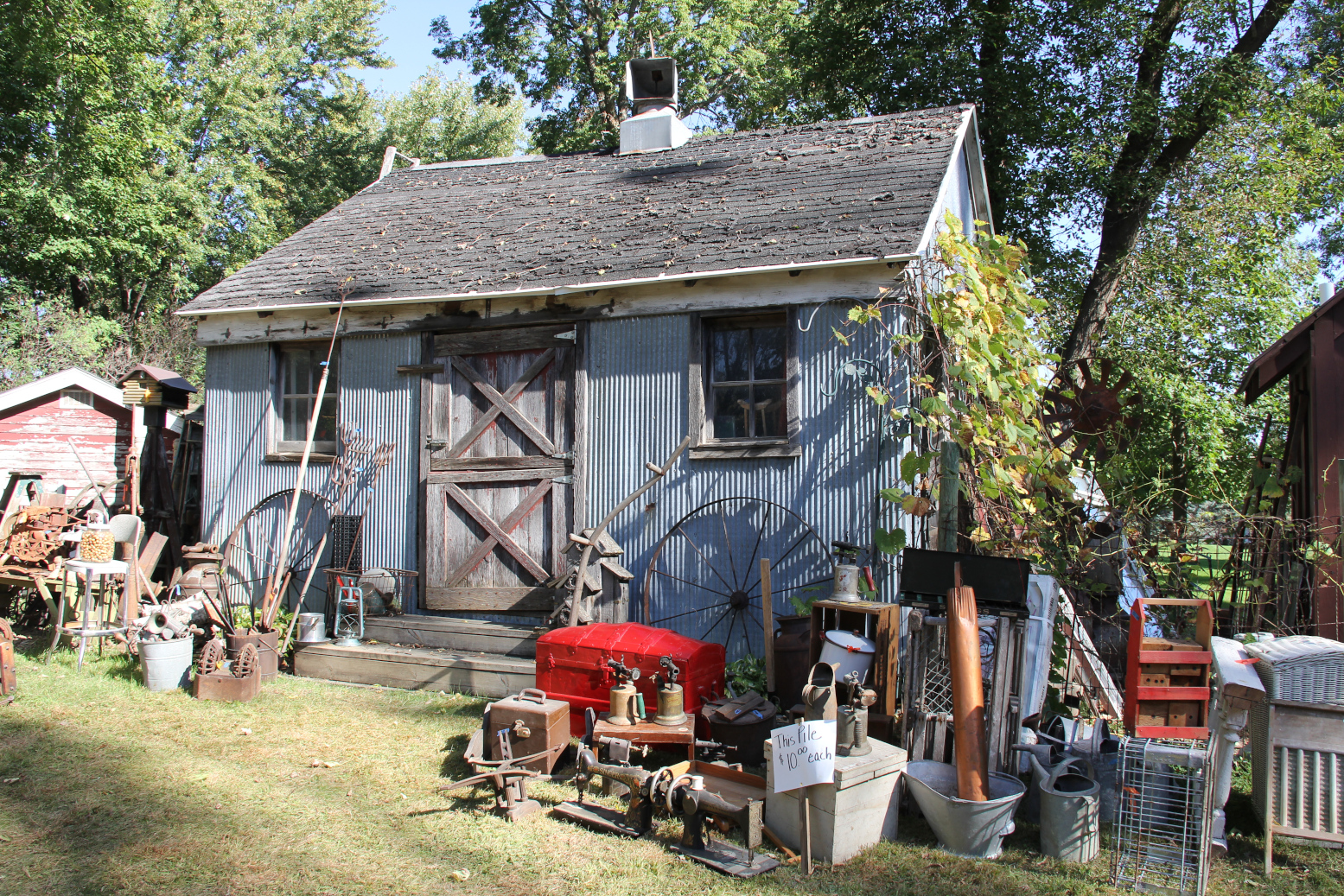
 

Before winter settles in…savor these autumn days October 21, 2022

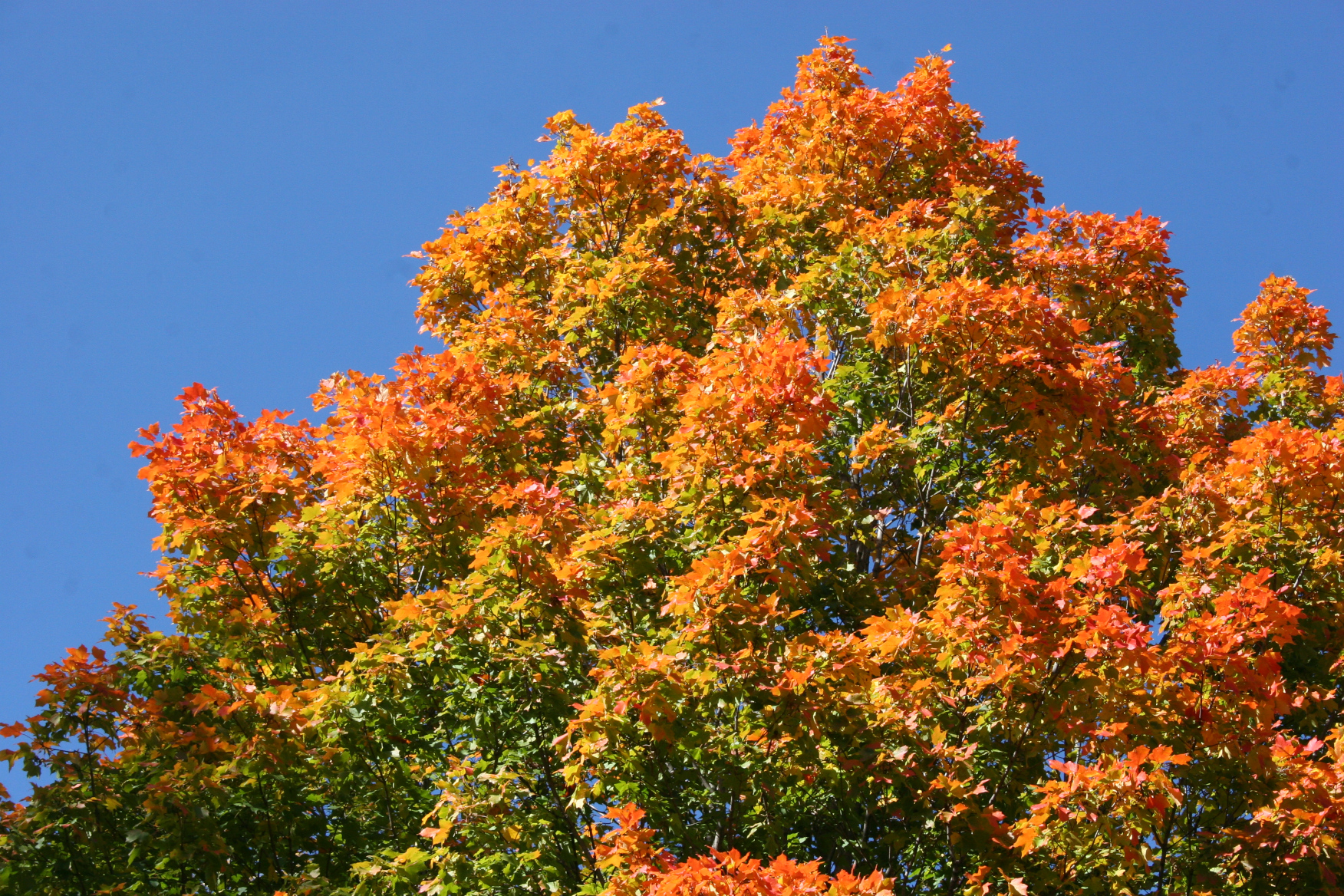
My next door neighbor’s maple tree. (Minnesota Prairie Roots copyrighted photo October 2022)

IN THE FLEETING DAYS of autumn here in Minnesota, there’s an urgency to get things done before winter. Hurry and rake the leaves. Tune up the snowblower. Wash the windows. Prepare, prepare, prepare.

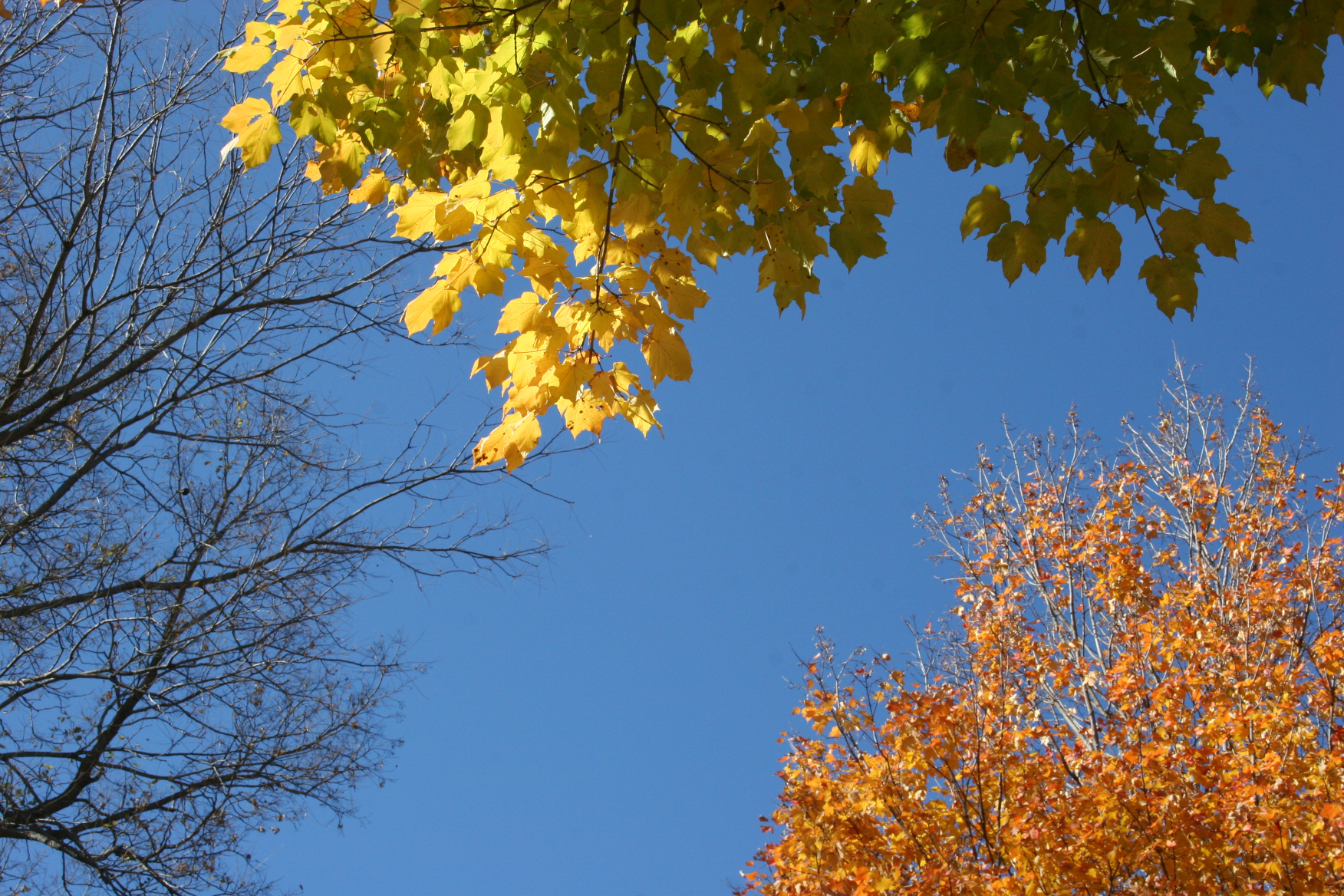
Almost like seeing summer, autumn and winter in the trees viewed from my backyard. (Minnesota Prairie Roots copyrighted photo October 2022)

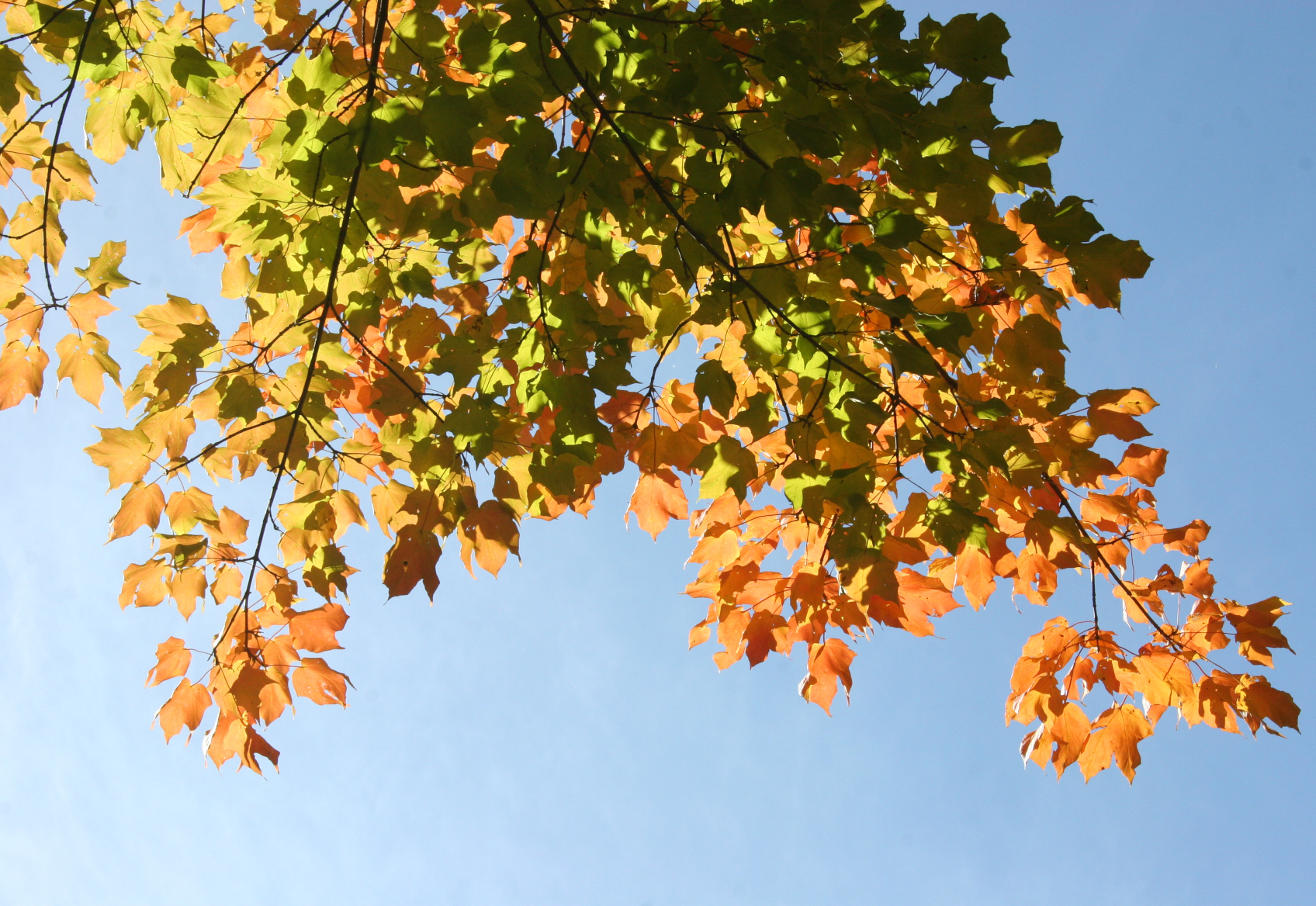
But in the haste of all that preparation, there’s also a need to slow down and delight in autumn. Simply stepping outside my home to view the backyard maple and neighbors’ trees fills my soul. I love the contrast of orange, red, yellow against the bold October sky. Sometimes when I look skyward, I see a mix of seasons from green leaves, to autumnal leaves to bare branches.

Sunshine filters through a branch on my backyard maple tree. (Minnesota Prairie Roots copyrighted photo October 2022)

Every single day calls for pausing to appreciate the beautiful natural world of October in southern Minnesota. I know this won’t last and I need to savor these scenes.

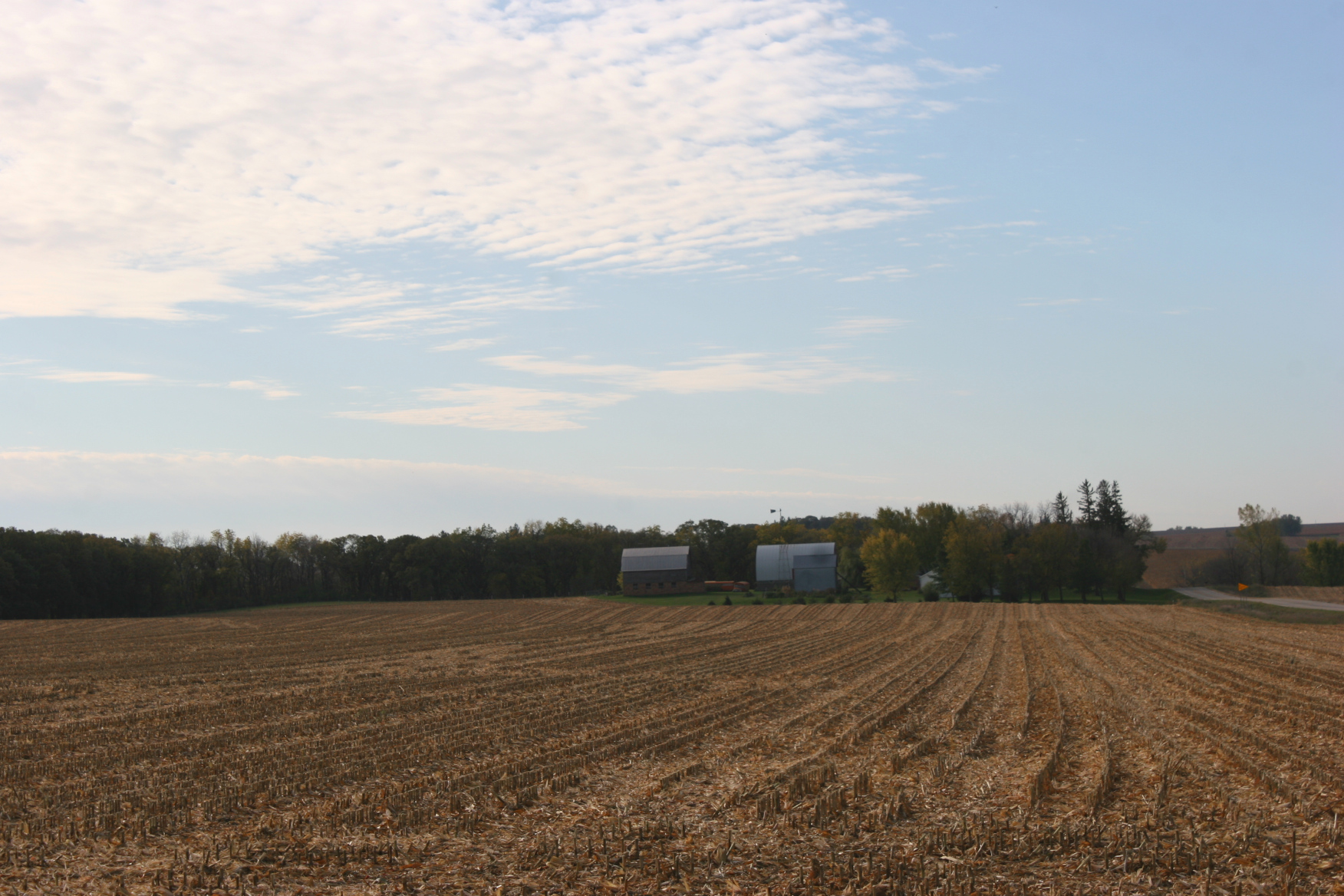
The countryside near Nerstrand. (Minnesota Prairie Roots copyrighted photo October 2022)

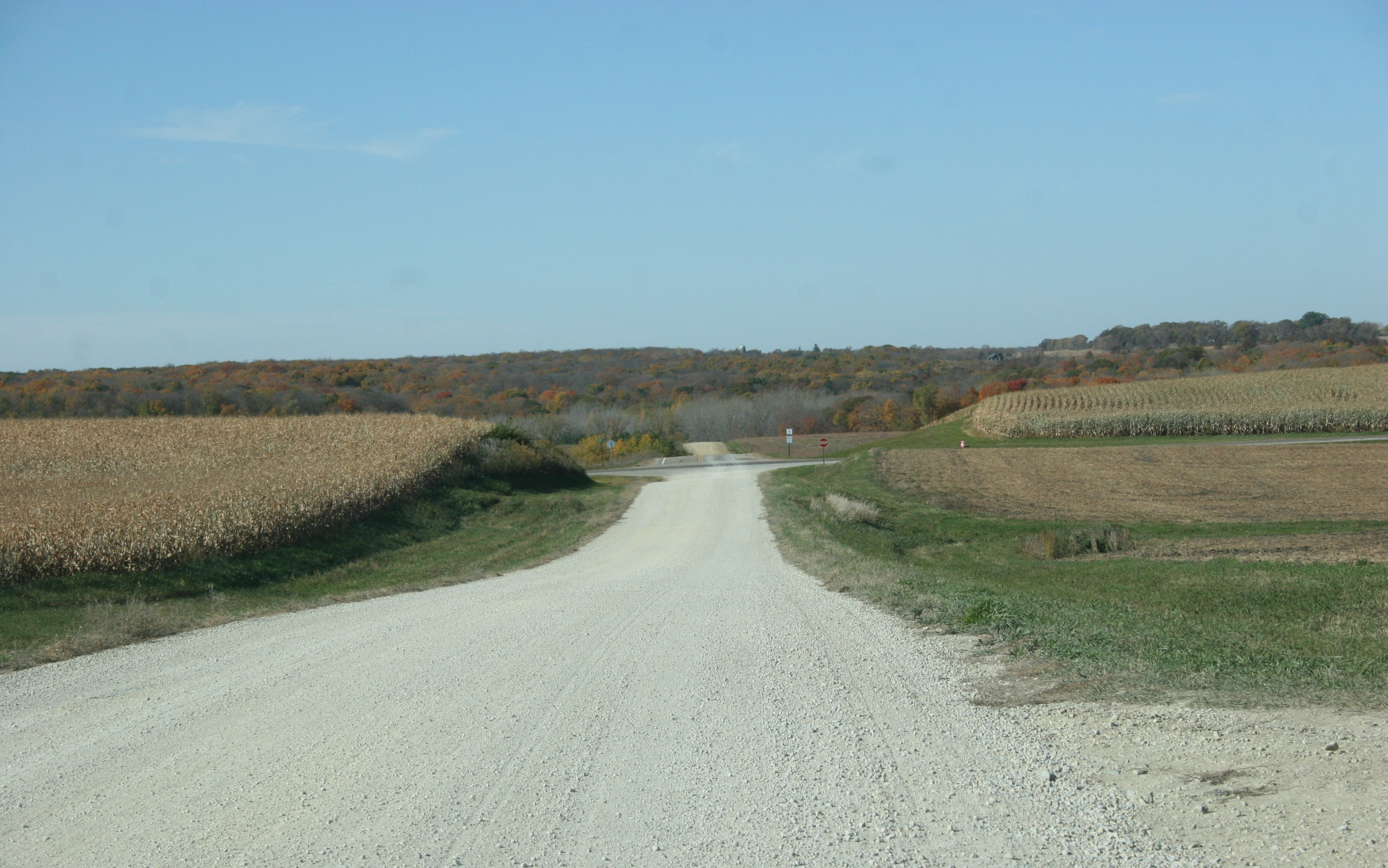
Last Saturday morning, instead of pursuing yard work, Randy and I headed on one more drive through the countryside to view the diminishing fall colors. Leaf raking, although started, could wait. As we followed back county paved roads and township gravel roads through open farmland and through woods, I felt embraced and connected to the local landscape and scenes unfolding before me.

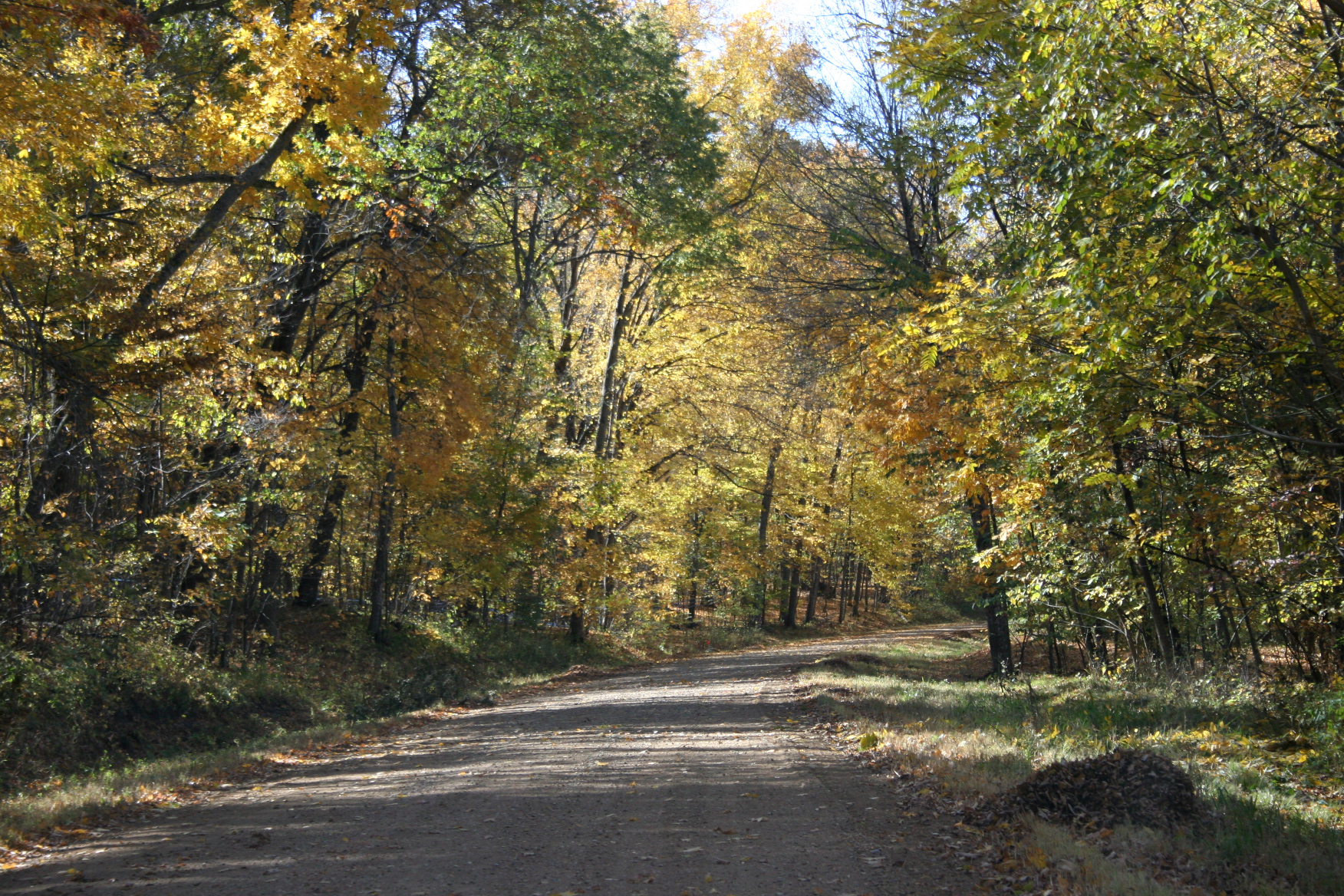
Farmer Trail twists through woods of primarily maple. (Minnesota Prairie Roots copyrighted photo October 2022)

Sunshine dappled through trees.

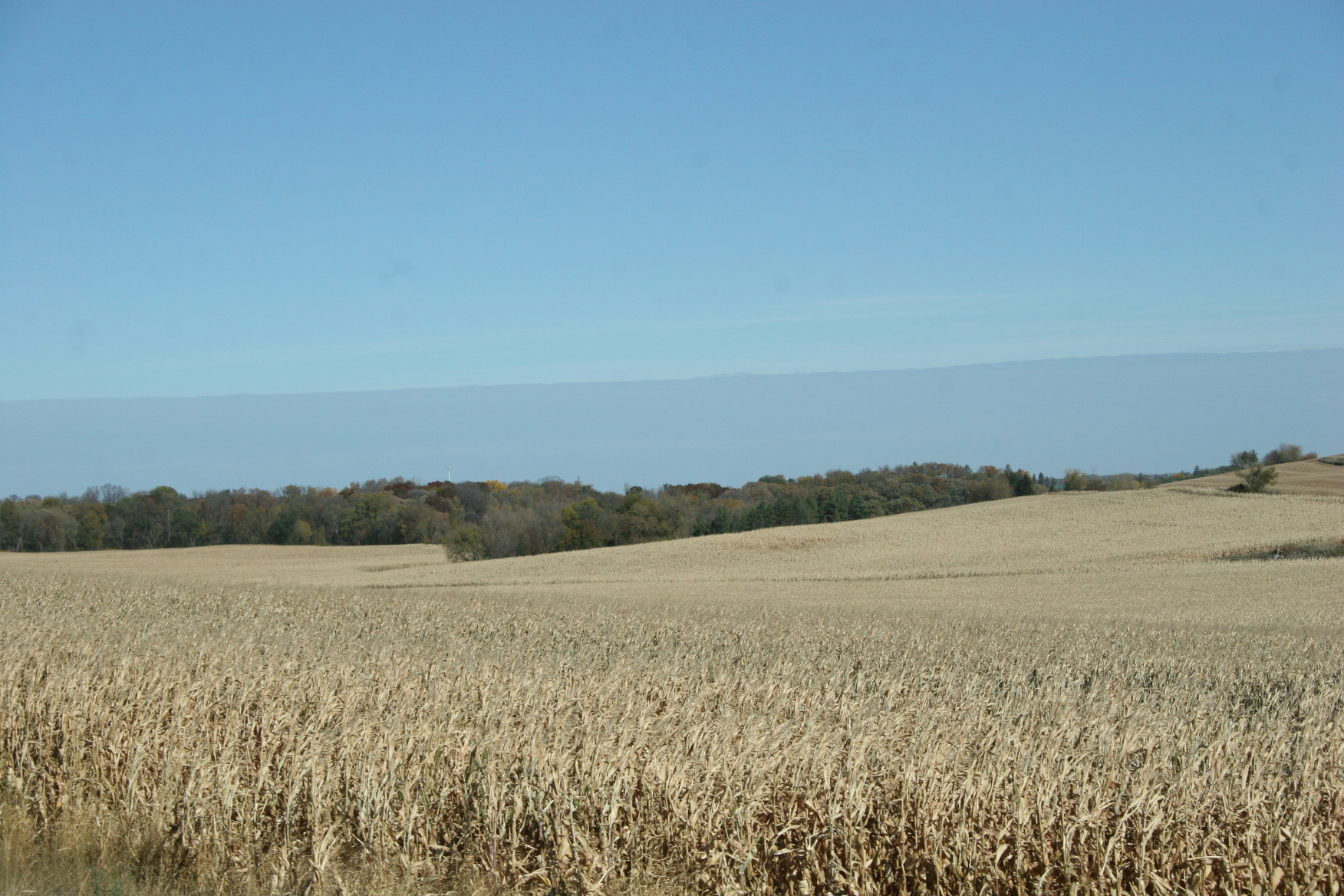
To the north across cornfields and treelines, a cloud deck revealed the weather ahead. (Minnesota Prairie Roots copyrighted photo October 2022)

To the north, a cloud deck drew a nearly straight horizontal line across the sky, a hint of the cold weather to come. And it blew in later that day with a raw wind and a drop in temps.

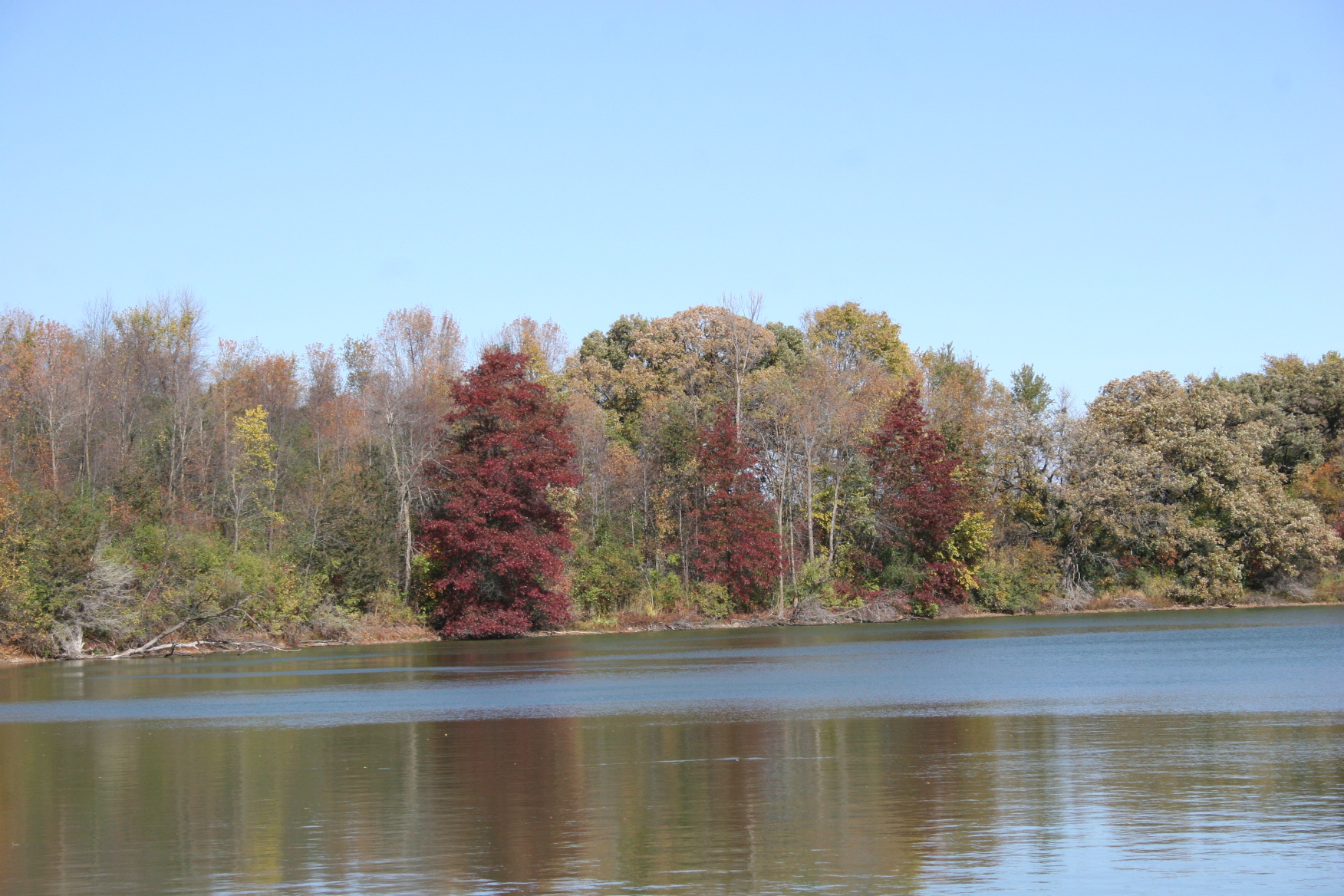
Still some color along Crystal Lake at Cannon City. (Minnesota Prairie Roots copyrighted photo October 2022)

Colors were well past their peak in Rice County. Still the occasional oak or maple dropped red or russet into muted tree clusters.

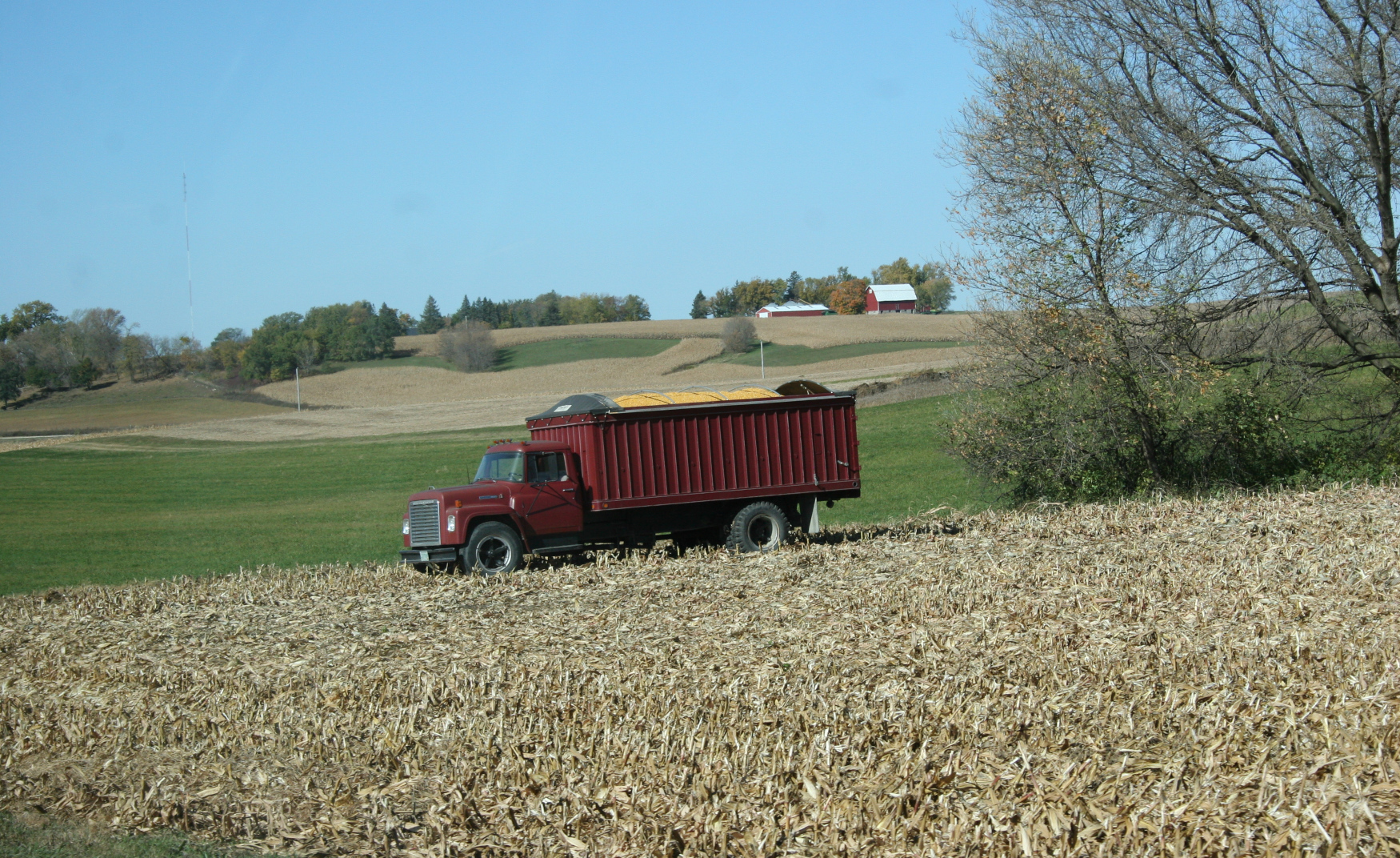
A grain truck holds the corn harvest. (Minnesota Prairie Roots copyrighted photo October 2022)

Harvested and unharvested fields of corn and soybeans spread before us. Grain trucks, some brimming with the yield, anchored fields. Former farm kids that we are, we discussed the crops. Always have, always will. It’s something we learned early on, me from Sunday afternoon drives with my parents and siblings to view the crops and during dinner table discussions.

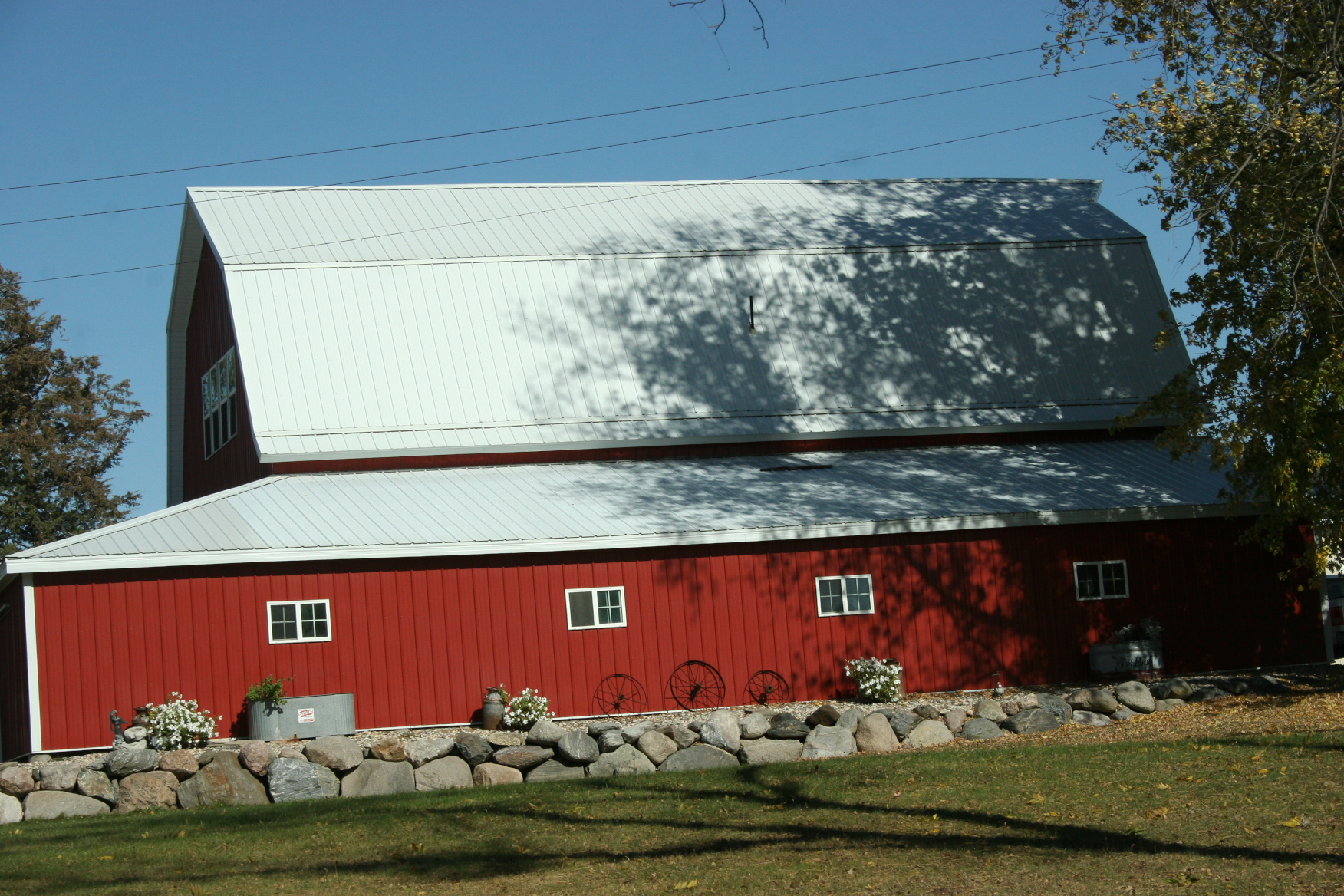
A stately, well-kept barn along Coe Trail northwest of Cannon City. (Minnesota Prairie Roots copyrighted photo October 2022)

We passed farm sites, one with a well-kept signature red barn. There’s something about a barn…

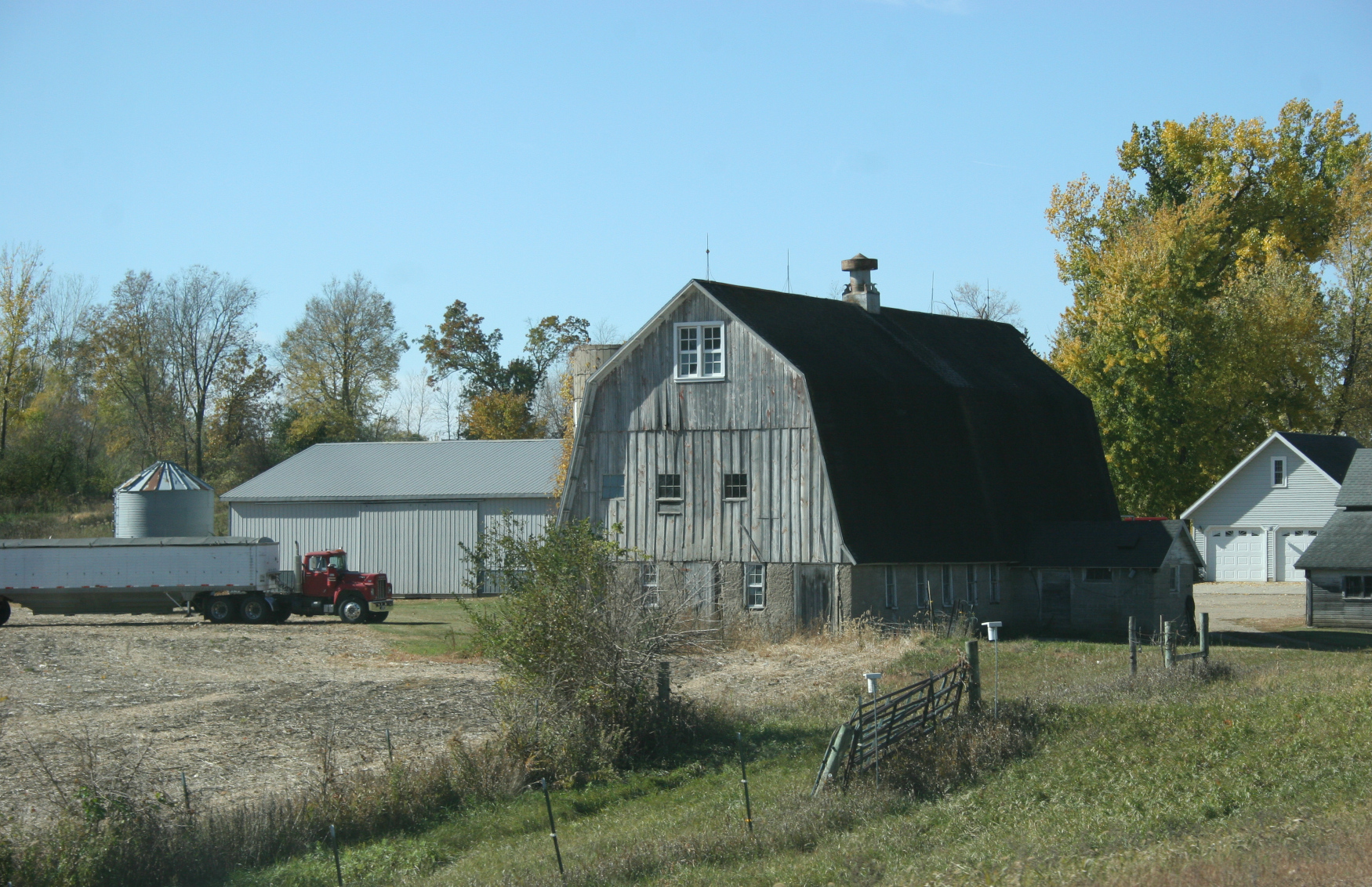
A farm site in the colors of November. (Minnesota Prairie Roots copyrighted photo October 2022)

Another farm place was all grey. Grey bin. Grey machine shed. Grey silo. Grey outbuilding. Grey garage. Weathered grey barn.

Driving through autumn on a rural Rice County road last Saturday. (Minnesota Prairie Roots copyrighted photo October 2022)

Soon the weather will shift to the grey of November, the month when winter creeps in. Already we’ve felt the bite of unseasonably cold October days that are giving way, this weekend, to unseasonable warmth. These mark bonus days. Days to drive the countryside, visit an orchard, take a hike…days for anything but raking leaves, washing windows or tuning the snowblower.

© Copyright 2022 Audrey Kletscher Helbling
 

Along Goodhue County Road 8, past fields, farms & ghost towns November 16, 2021

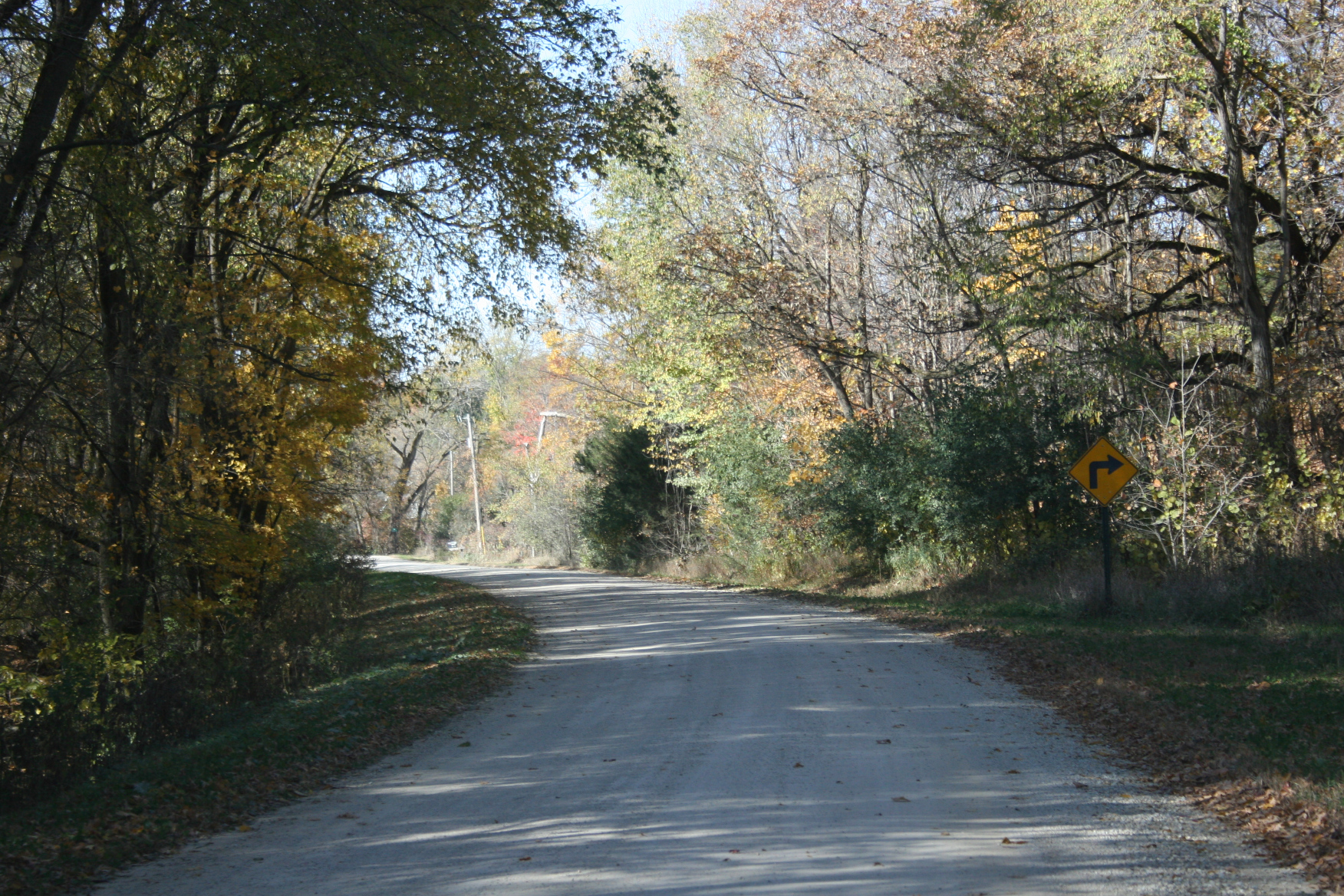
Just outside of Cannon Falls along Goodhue County Road 8, we stopped to admire the treeline and the gravel road winding toward it. (Minnesota Prairie Roots copyrighted photo mid-October 2021)

WHITE ROCK. Belle Creek. Hader. They are among the 60-plus ghost towns of Goodhue County. Places that once thrived, marked now only by signs along a road, a cluster of homes, perhaps a church or abandoned buildings.

Oh, lovely hues of autumn near Cannon Falls. (Minnesota Prairie Roots copyrighted photo mid-October 2021)

Yet, acknowledging their existence, as the Goodhue County Historical Society does with roadside signs, matters. Because these towns mattered to previous generations and still matter to those with connections to the likes of Aspelund, Burr Oak Springs, Crystal Springs, Eidsvold, Skyberg and so many more with names that hint at heritage and sound poetically beautiful.

Snugging CR 8, a well-kept barn. (Minnesota Prairie Roots copyrighted photo mid-October 2021)

On a road trip to Goodhue County a month ago, Randy and I followed County Road 8 east and then south of Cannon Falls back toward Faribault.

Clouds and trees and field along CR 8. (Minnesota Prairie Roots copyrighted photo mid-October 2021)

Our route took us past clusters of woods, some tinged in autumn hues.

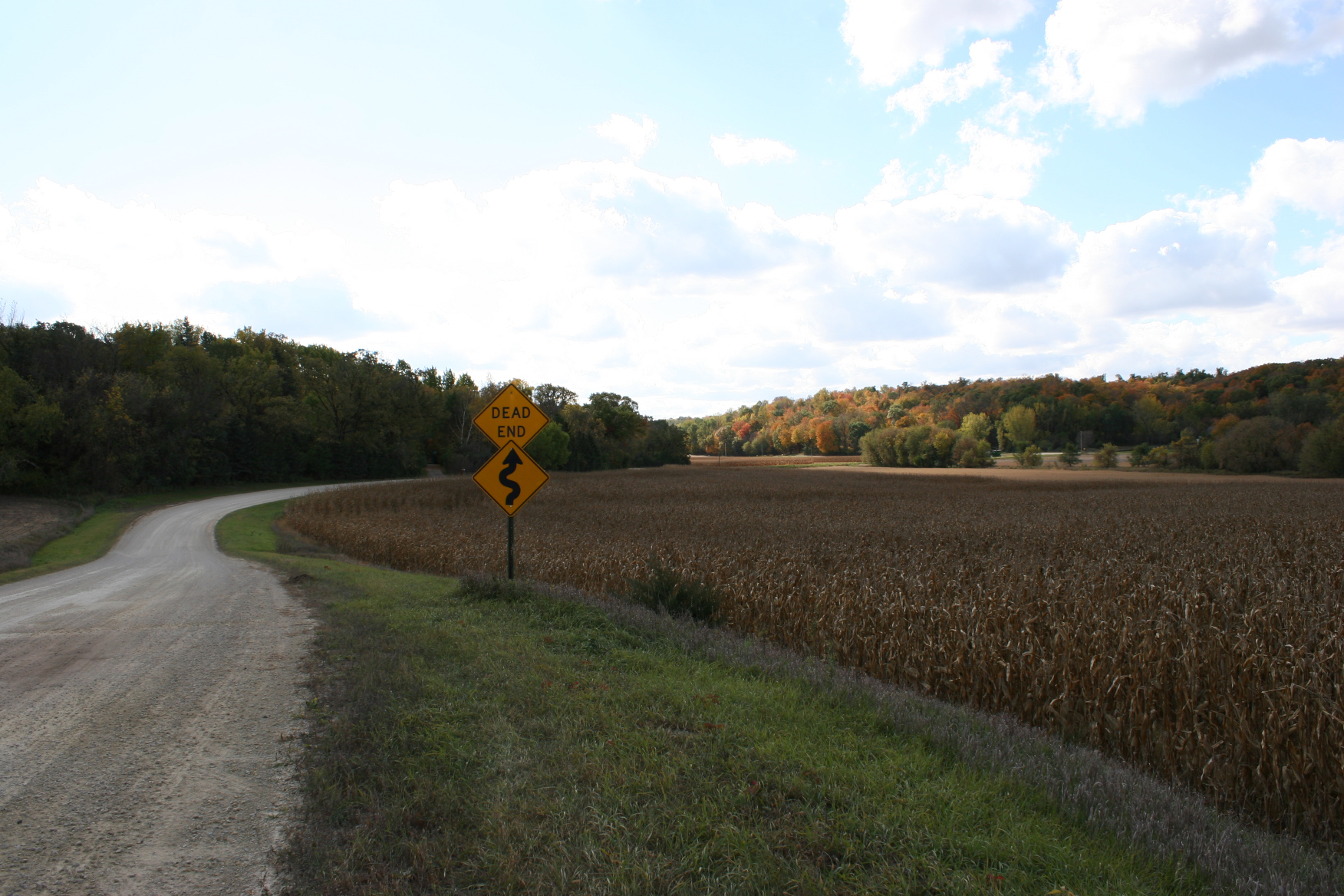
Goodhue County Road 8 near Cannon Falls sweeps into the valley. (Minnesota Prairie Roots copyrighted photo mid-October 2021)

Soon the road curved and swept into the valley, rows of corn rolling across the landscape. Only groves of trees surrounding farm sites broke the vista of endless unharvested fields.

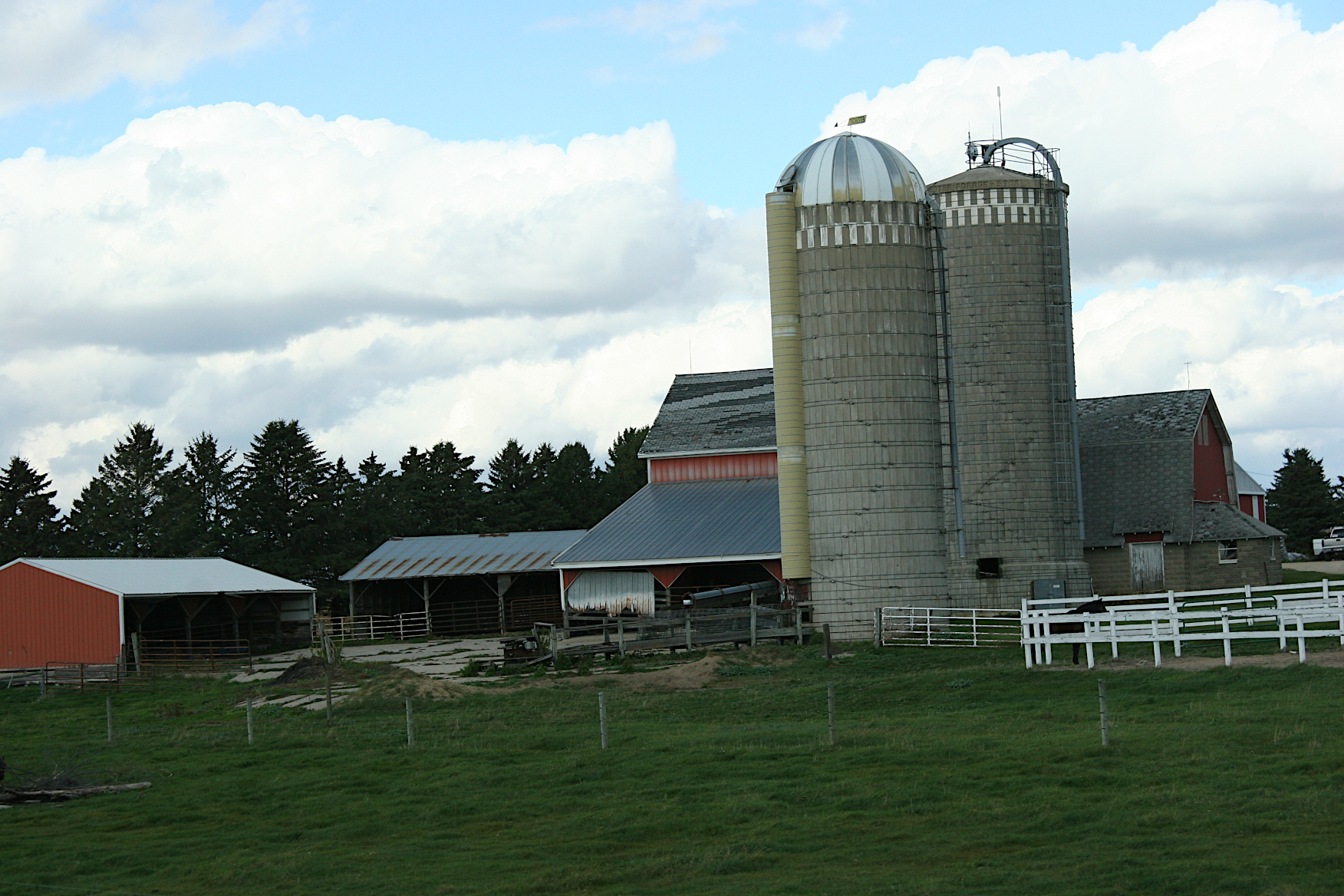
Somewhere between White Rock and Belle Creek, this farmyard drew my eye. (Minnesota Prairie Roots copyrighted photo mid-October 2021)

Sometimes those farmyards hugged the paved road and I caught a close-up glimpse of farms, some with aged weathered barns and outbuildings, others updated with modern equipment and structures.

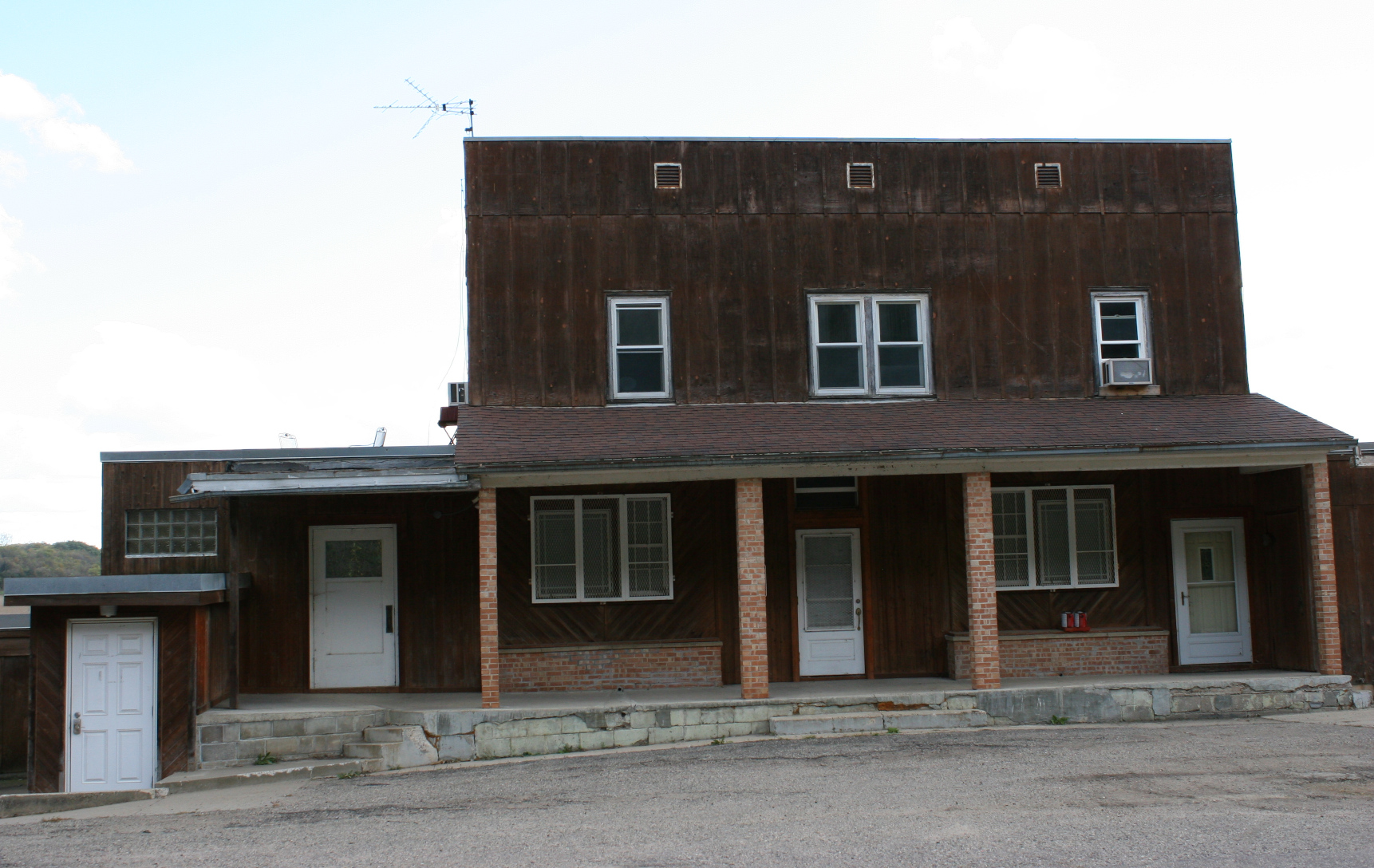
Likely a former creamery in Belle Creek. (Minnesota Prairie Roots copyrighted photo mid-October 2021)

In Belle Creek, Randy and I noticed a white building, likely a former creamery. Creameries often graced these small settlements, a necessity for farmers who sold cream for butter-making.

In Belle Creek, a building with an unknown-to-us story. (Minnesota Prairie Roots copyrighted photo mid-October 2021)

Another building in Belle Creek left us guessing at its past life. Perhaps a general store. Then a dance hall. We could be way off…

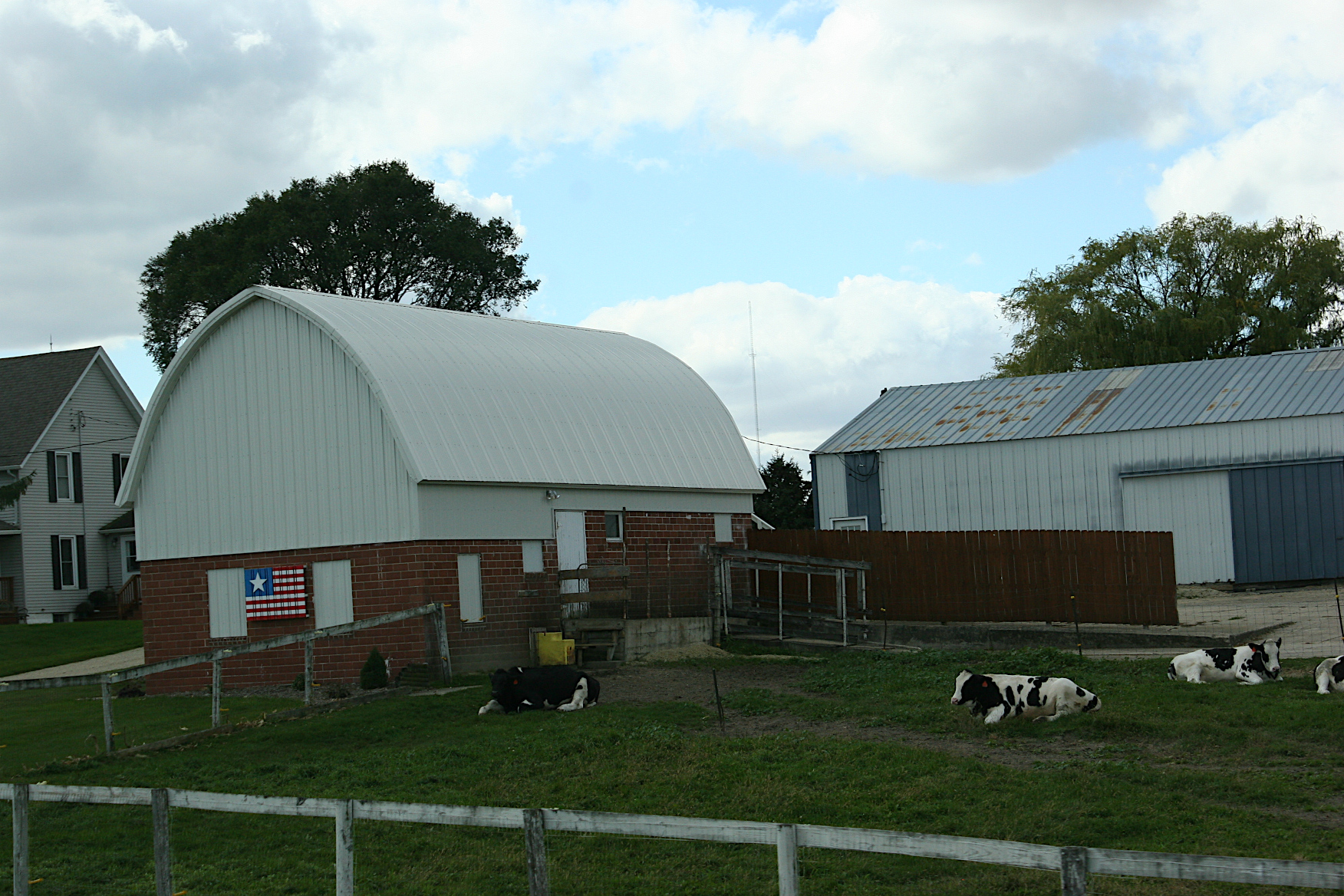
Seeing cows in the countryside takes me back in time. (Minnesota Prairie Roots copyrighted photo mid-October 2021)
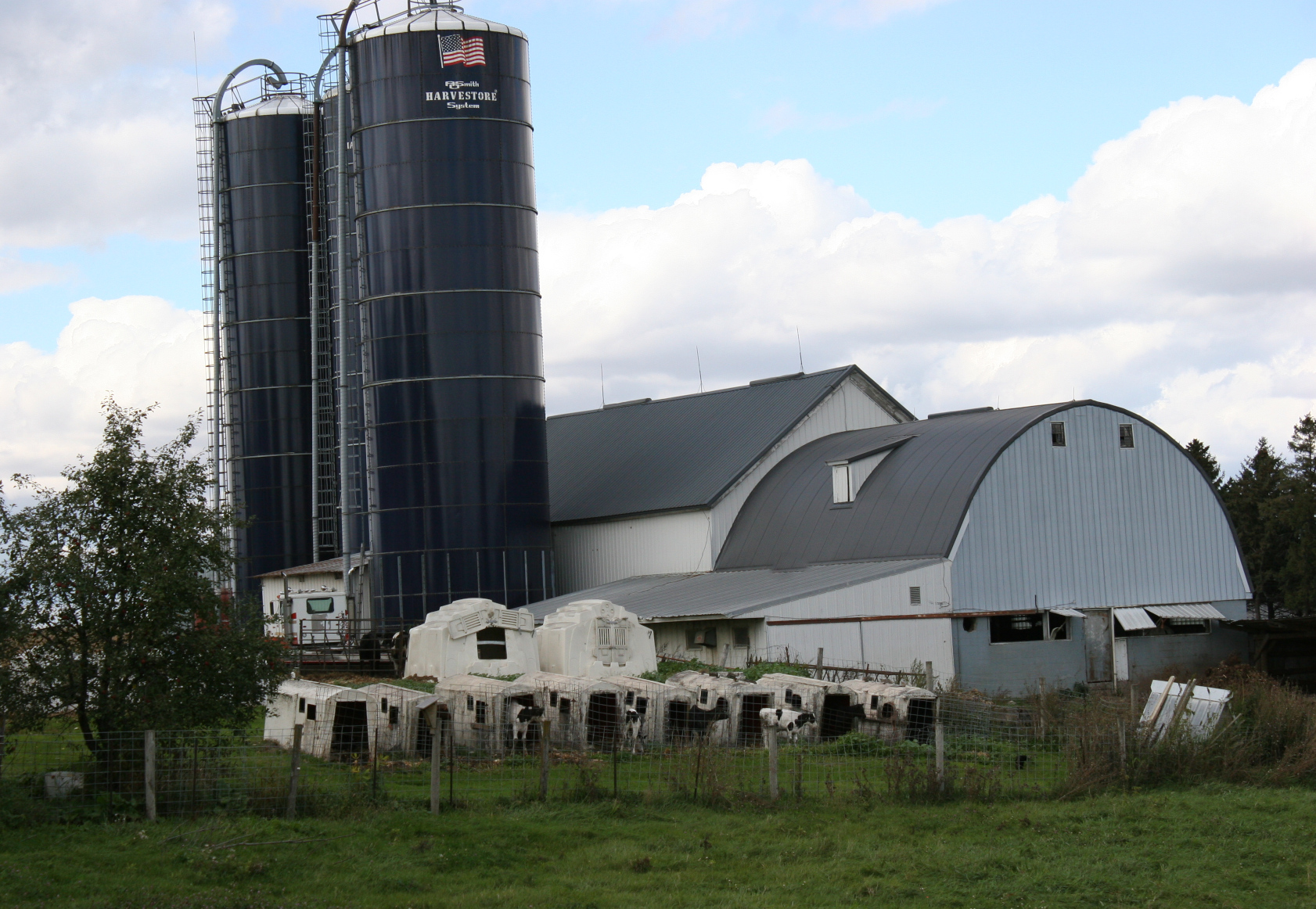
Near Hader, I spotted calves outside their huts. (Minnesota Prairie Roots copyrighted photo mid-October 2021)

Occasionally, we spotted cattle, cows, calves. Growing up on a dairy farm, I delight in seeing bovines, especially Holsteins. But rare are the small family farms today that still raise animals. Corporate and mega farms have mostly replaced that self-sufficient lifestyle. That’s reality.

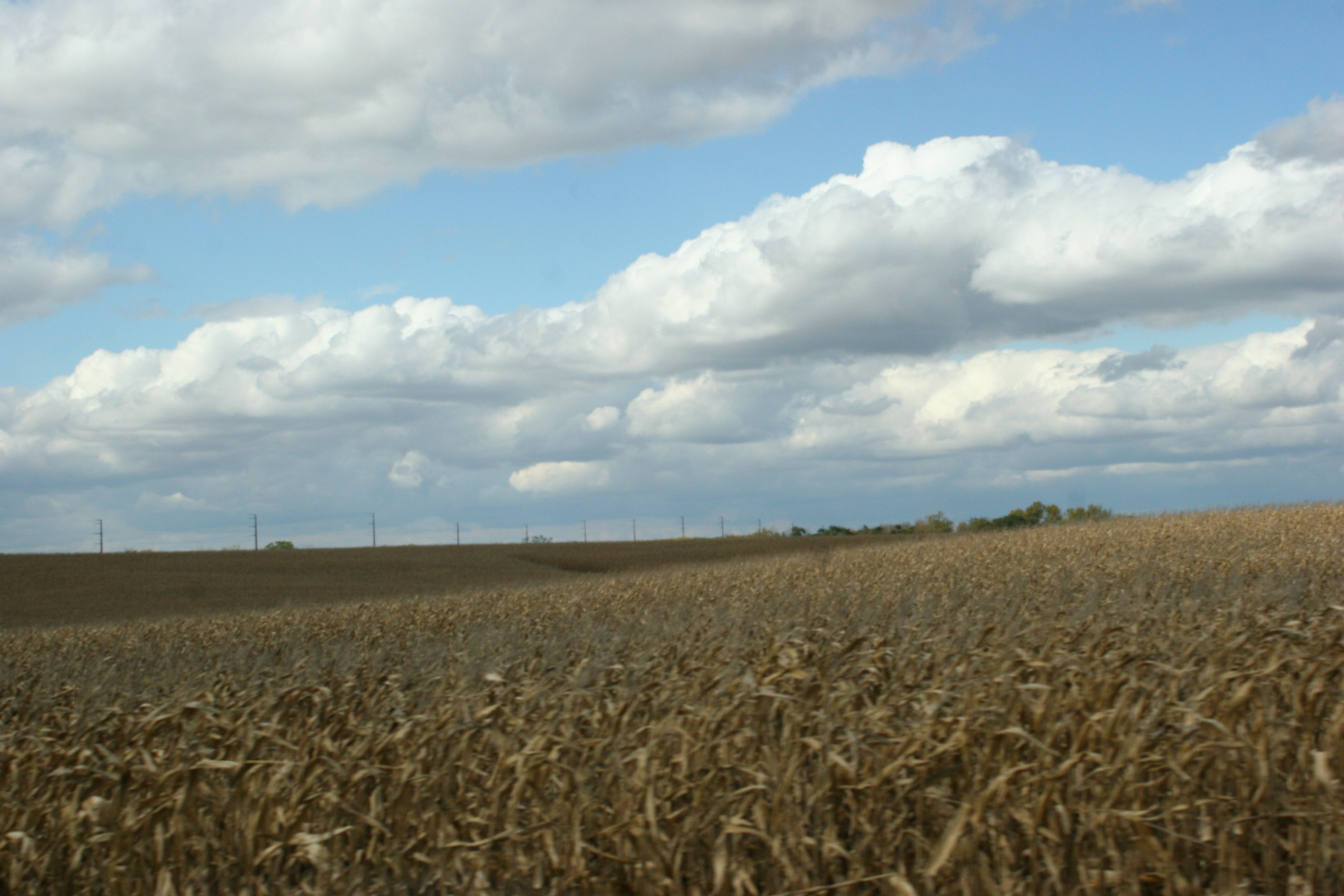
Lots of sky and cornfields along CR 8 in Goodhue County. (Minnesota Prairie Roots copyrighted photo mid-October 2021)

Just like ghost towns, many farms have become, in some ways, ghost farms. They are but ghosts of the past. Ghosts of their former selves and purposes. I see that in decaying, empty buildings, especially barns. I see that in the absence of livestock. I see that in families who can no longer support themselves solely via the farm.

Farm after farm after farm defines this area of Goodhue County. (Minnesota Prairie Roots copyrighted photo mid-October 2021)

All of this is unsettling. But with time comes change. And with change must come acceptance and perhaps also an added historical appreciation for the past.

© Copyright 2021 Audrey Kletscher Helbling

 

On the backroads of Sogn Valley November 9, 2021

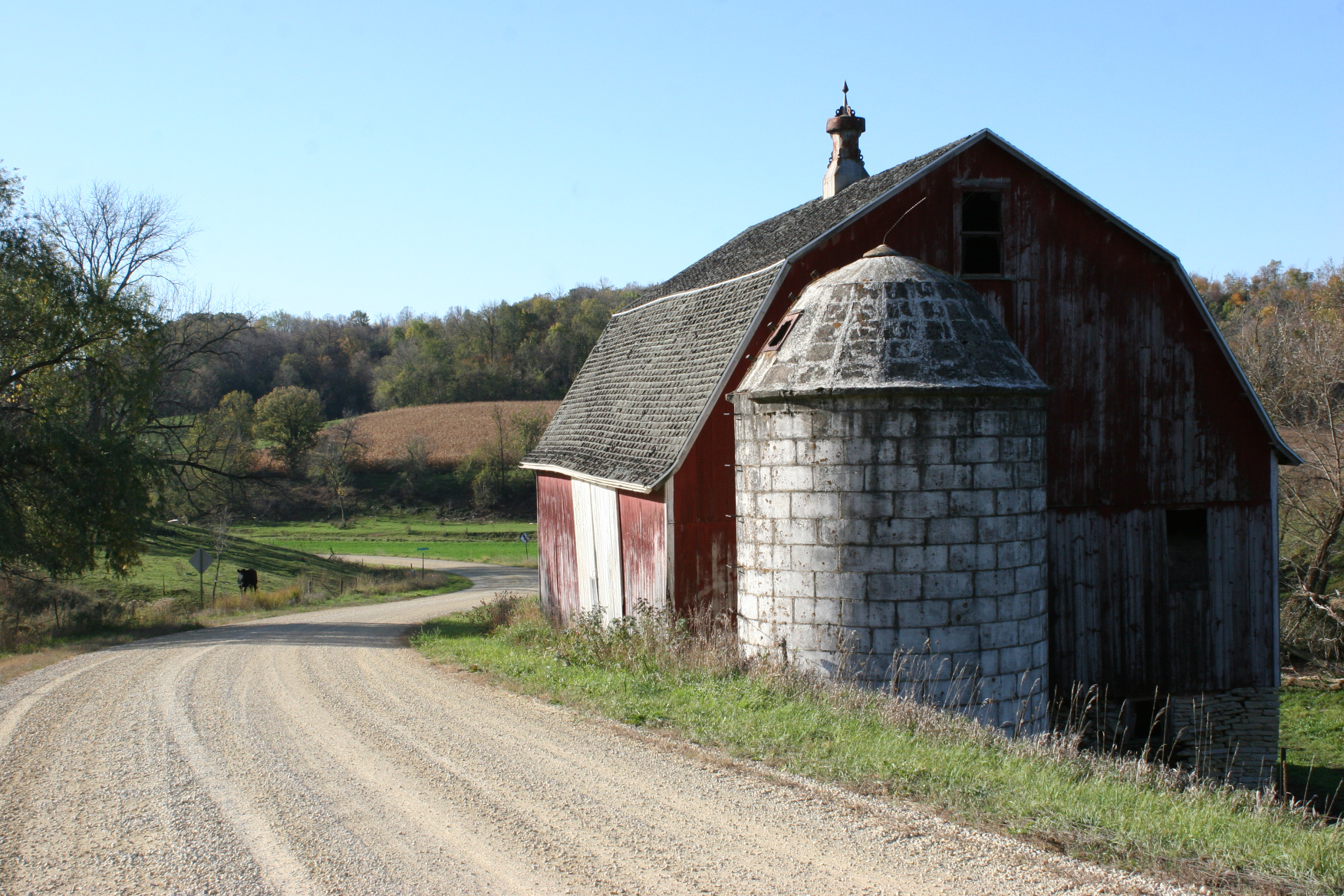
Along a backroad in the Sogn Valley, an aged barn and silo hug a curve on a gravel road. (Minnesota Prairie Roots copyrighted photo October 2021)

MINNESOTA’S DIVERSE LANDSCAPE inspires. From the vast prairie to the northwoods. From lakes to rivers. From hills to valleys. My home state, minus mountain ranges and ocean, is truly a beautiful place. We are so much more than cold and snow, as many non-residents equate with Minnesota.

The countryside near Nerstrand, on our way to Sogn Valley. (Minnesota Prairie Roots copyrighted photo October 2021)

Autumn, especially, showcases Minnesota’s natural beauty. This fall, Randy and I took many rural drives to immerse ourselves in the countryside and the season. We chose road trips over staying home and doing chores on the weekends. Our priorities change as we age. The work can wait. We recognize, too, the approach of winter. We felt an urgency, a need, to hit the road before the snow flies.

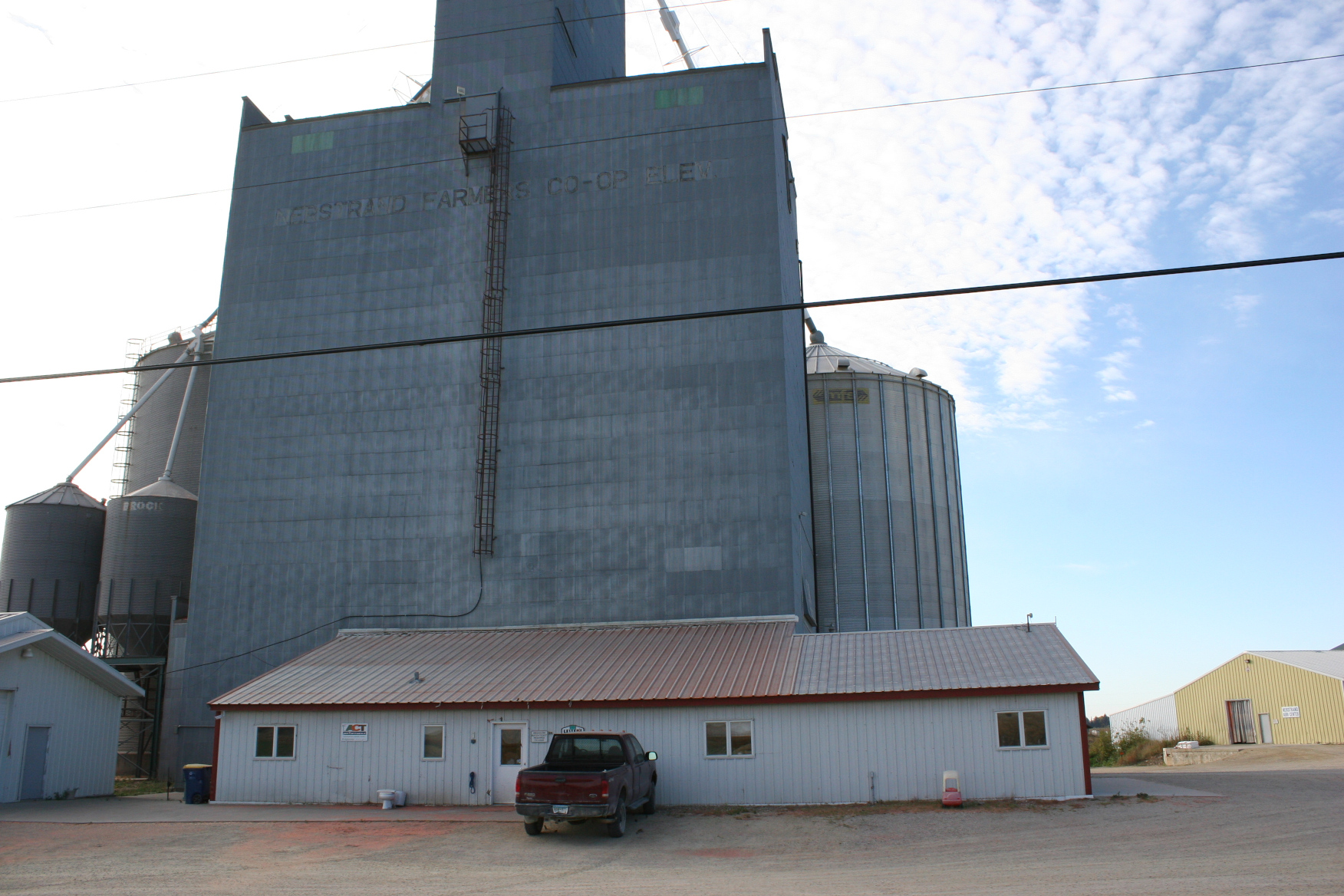
We drove through Nerstrand, past the grain elevator, on our way to the Sogn Valley. (Minnesota Prairie Roots copyrighted photo October 2021)

Often we choose a destination, this time Cannon Falls. But sometimes we simply head in a general direction, oversized Minnesota Atlas & Gazetteer available to guide us. We prefer paper maps to GPS. This trip, we aimed east toward Goodhue County, driving through the picturesque Sogn Valley.

The rolling countryside of the Sogn Valley provides a beautiful backdrop for farms. (Minnesota Prairie Roots copyrighted photo October 2021)

I love this rural region defined by farms and fields and winding gravel roads. Hills and river valleys and prairie intermingle and it’s all like poetry writing upon the land.

I delight in finding cows grazing deep in Sogn Valley. (Minnesota Prairie Roots copyrighted photo October 2021)

As a farmer’s daughter, I hold a fondness for aged barns, at one time the anchor of an agrarian life. I labored for years on my southwestern Minnesota childhood family dairy and crop farm, most of that time inside the barn. Or the silo.

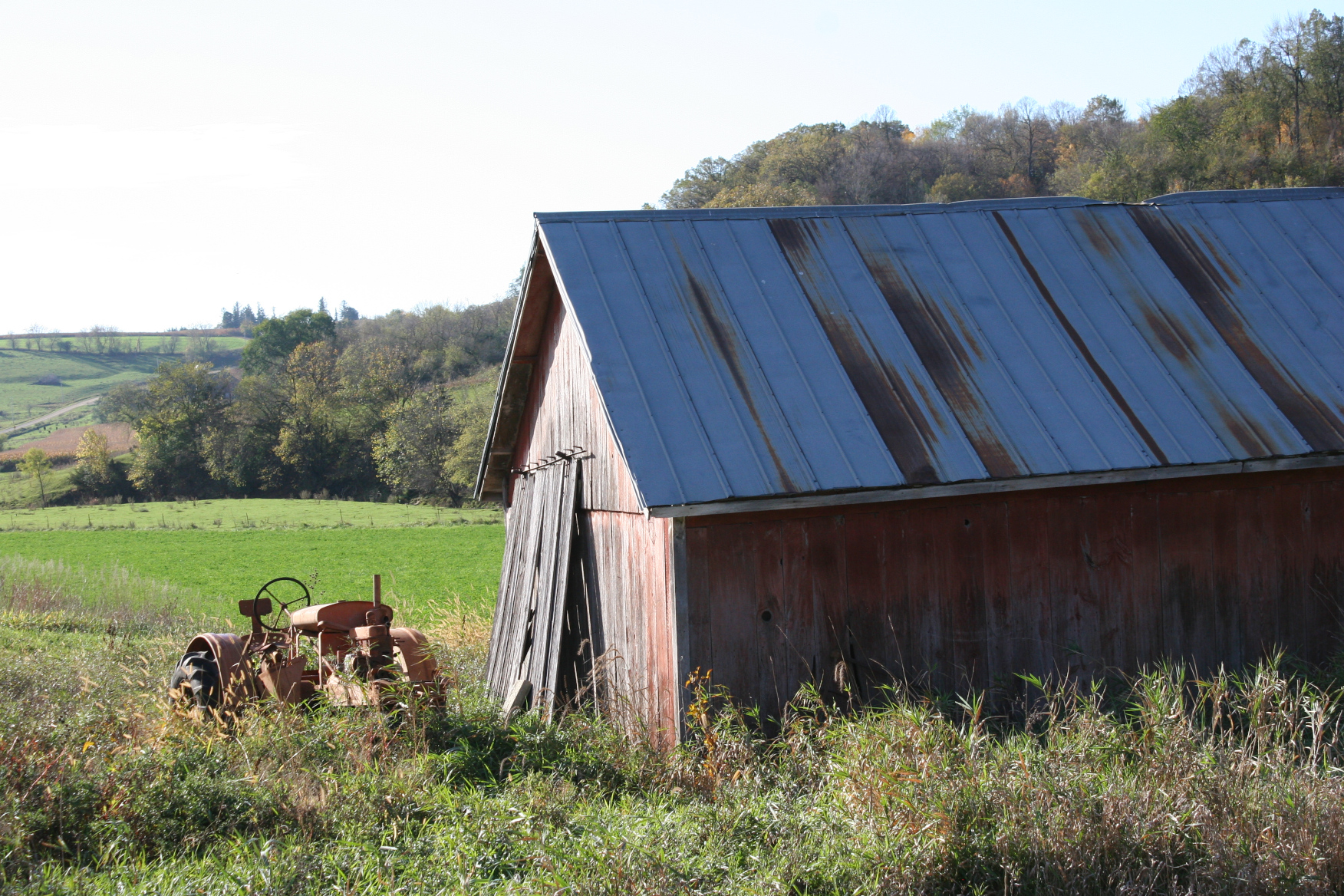
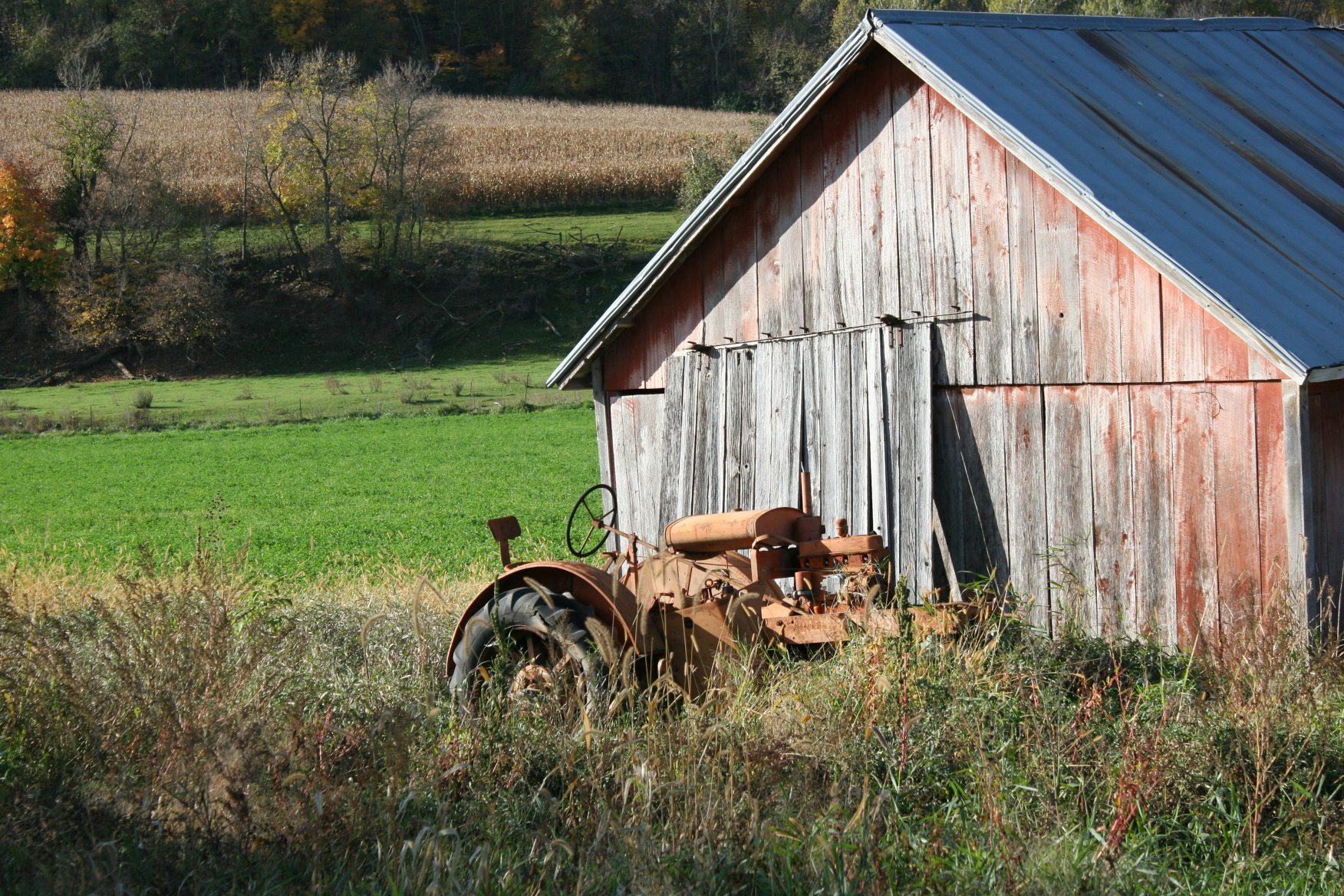
Abandoned building, abandoned tractor in the Sogn Valley. (Minnesota Prairie Roots copyrighted photo October 2021)

Now, when I pass by barns weathering in abandonment, I feel overcome by sadness. I recognize that a way of life is vanishing. I understand and appreciate advances in agriculture while simultaneously grieving the loss of farm life as I knew it.

I worry about all the barns we are losing. They hold history. Stories. Memories. And they are falling in heaps of rotted wood.

Eidsvold Norwegian Methodist Church, rural Goodhue County. (Minnesota Prairie Roots copyrighted photo October 2021)

But, on this drive through the Sogn Valley, we happened upon a small country church that uplifted my spirits. Country churches and adjoining cemeteries rate as another draw for me deep into rural Minnesota. They are historically, poetically, spiritually and artistically relevant.

Along 70th Street in Goodhue County, on a small plot of land ringed by a row of trees and set among cornfields, Eidsvold Norwegian Methodist Church rises. The last service was held here in 1949. Yet, the aged clapboard structure remains. Important to someone. And on this Friday morning in mid-October, appreciated by me.

PLEASE CHECK BACK tomorrow as I take you on a tour around, but not inside (it was locked), Eidsvold church.

© Copyright 2021 Audrey Kletscher Helbling
 

Discovering Richter Woods, rural Montgomery October 19, 2021

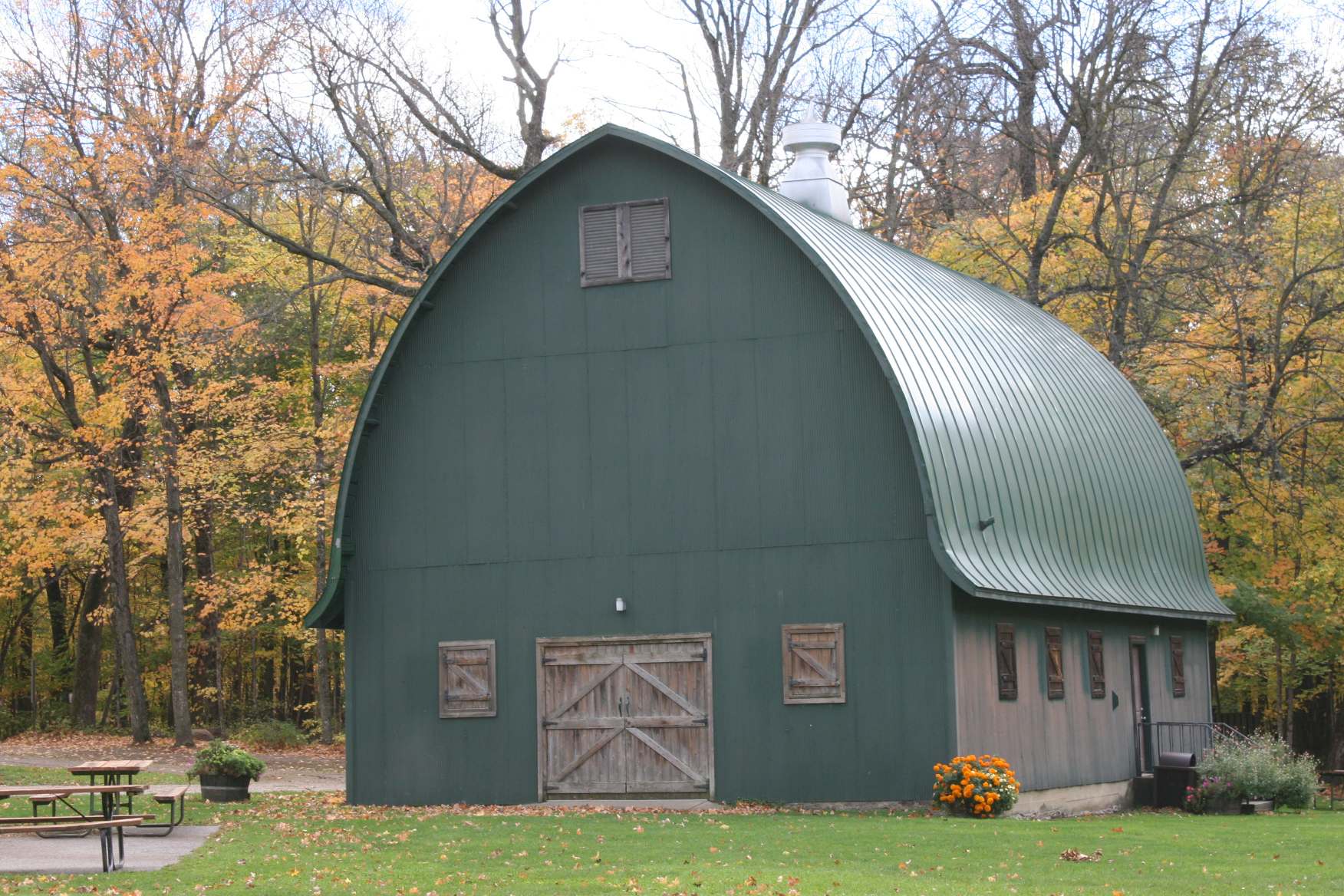
Richter Woods County Park and the on-site barn in LeSueur County. Minnesota Prairie Roots copyrighted photo October 2021.

EACH DAY OF SUNSHINE and warmth this late in October in Minnesota presents as a gift. We long-time Minnesotans understand that and celebrate. One less day of winter. One less day of cold and snow when the season of autumn extends. The recent weather has proven simply glorious.

Richter Woods Barn. Minnesota Prairie Roots copyrighted photo October 2021.

Late last week Randy took two days off work to savor these final days of autumn. And while we didn’t travel far, we delighted in nearby discoveries. We got a late start on Thursday, catching up on some much-needed rest. So we stayed close to home, aiming for western Rice County into LeSueur County.

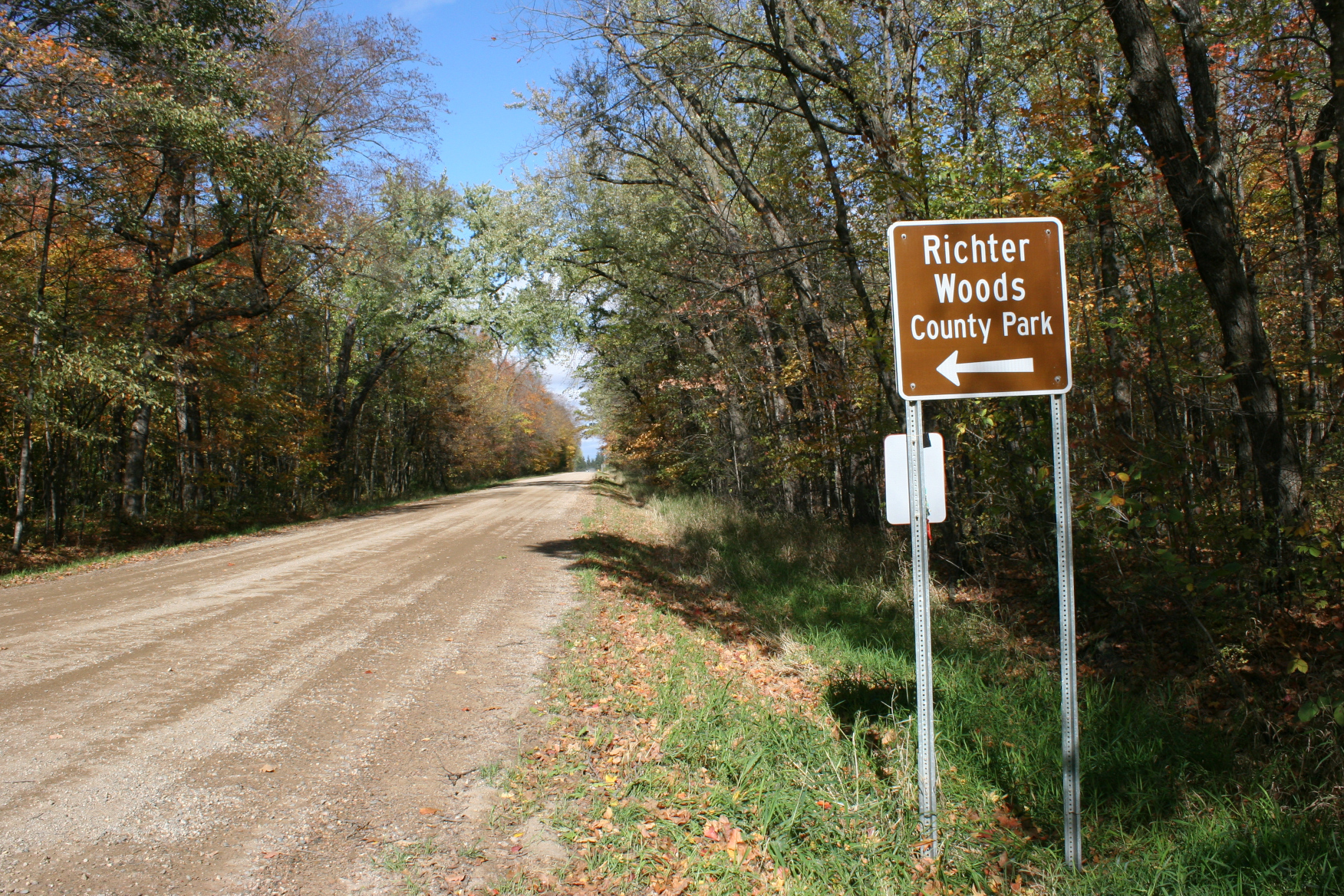
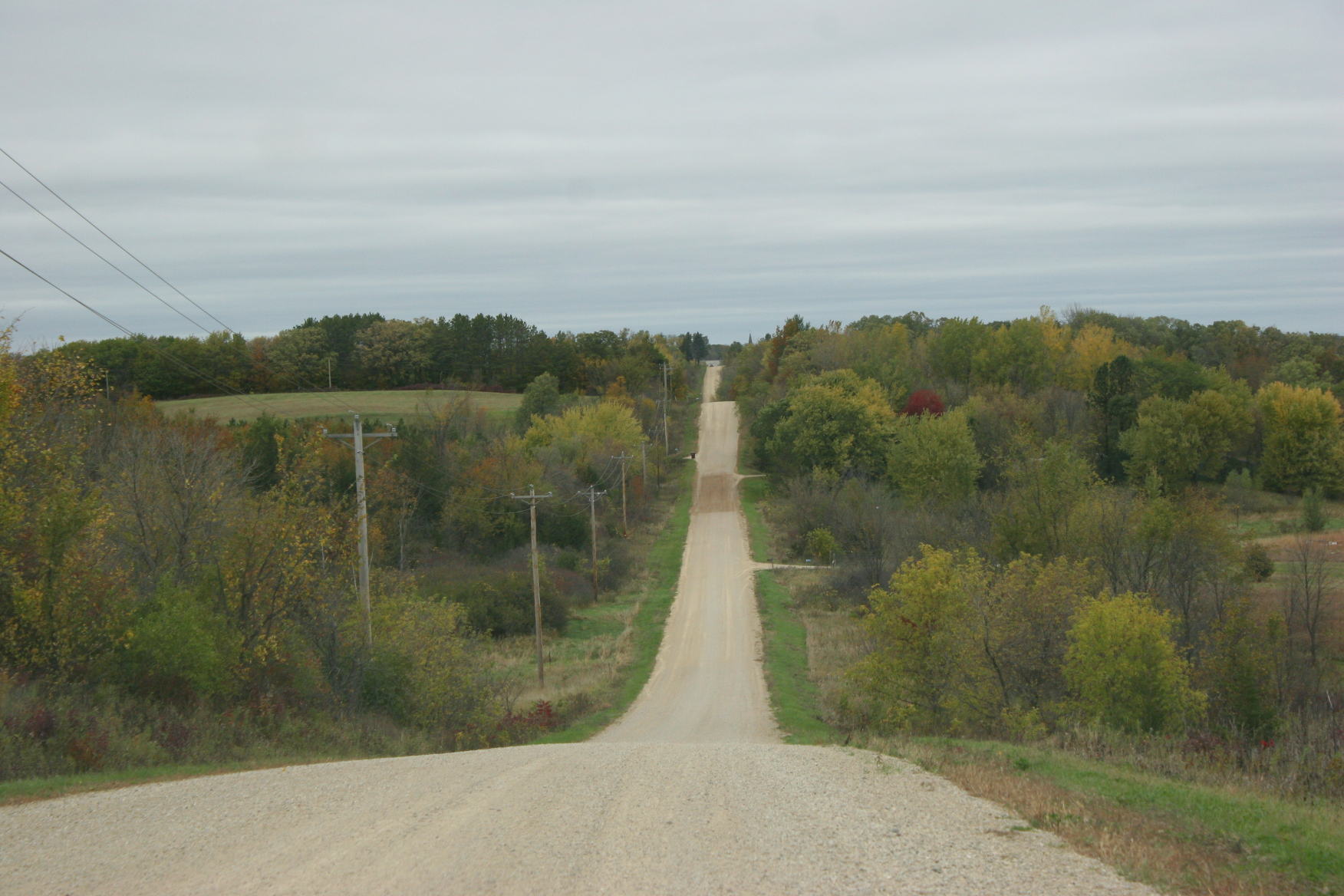
Trees line both sides of the gravel road leading to Richter Woods. Minnesota Prairie Roots copyrighted photo October 2021.

Eventually, we landed at Richter Woods County Park 1.5 miles west of Montgomery. I’d heard of the park, but had yet to visit.

The hilly countryside near Trondjhem Church, rural Lonsdale. Minnesota Prairie Roots copyrighted photo October 2021.

We followed the slow-paced route there along mostly back country gravel roads.

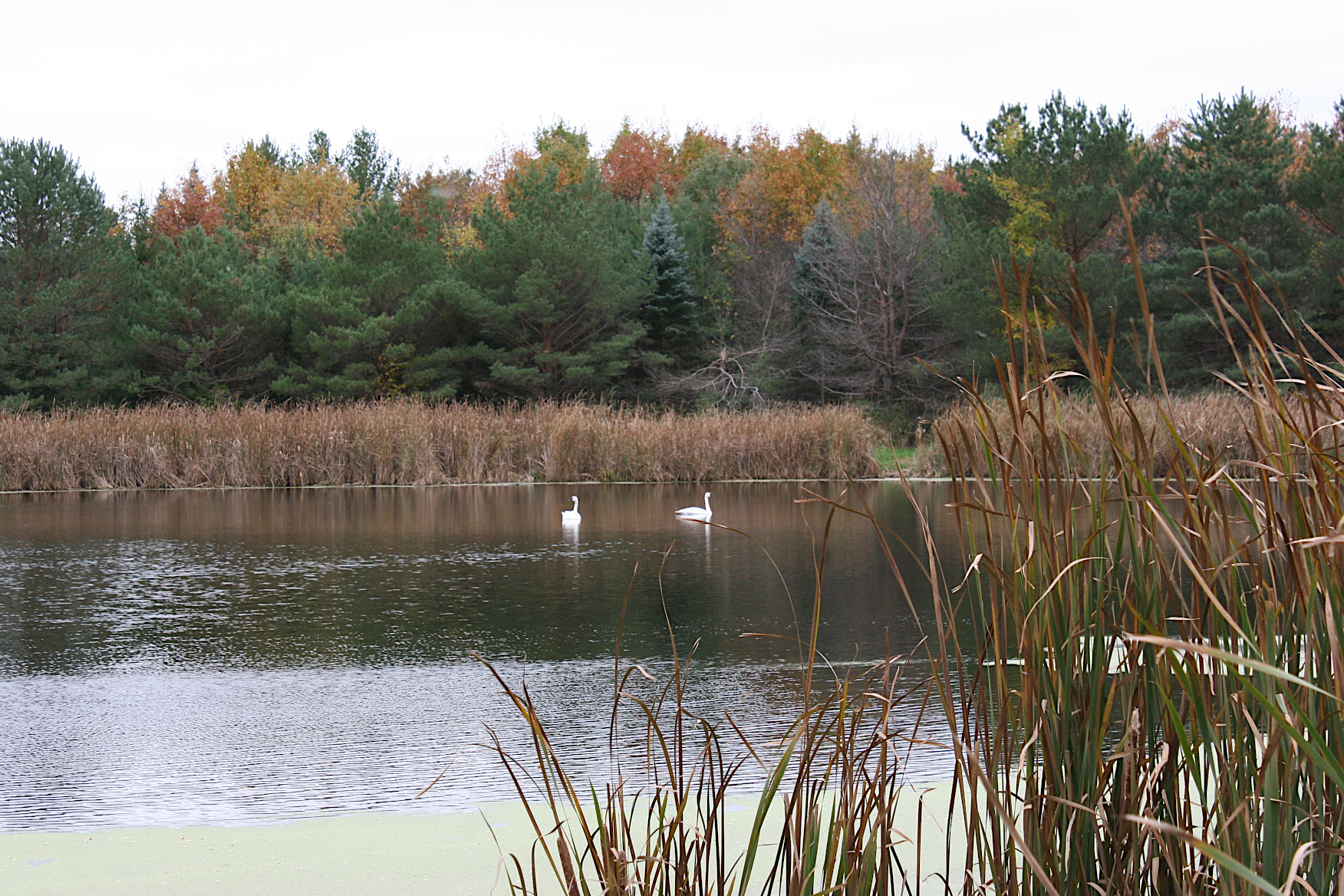
An unexpected sighting of two swans. Minnesota Prairie Roots copyrighted photo October 2021.

We paused once so I could photograph a pair of swans gliding across a small lake.

An aged barn along a gravel road. Minnesota Prairie Roots copyrighted photo October 2021.

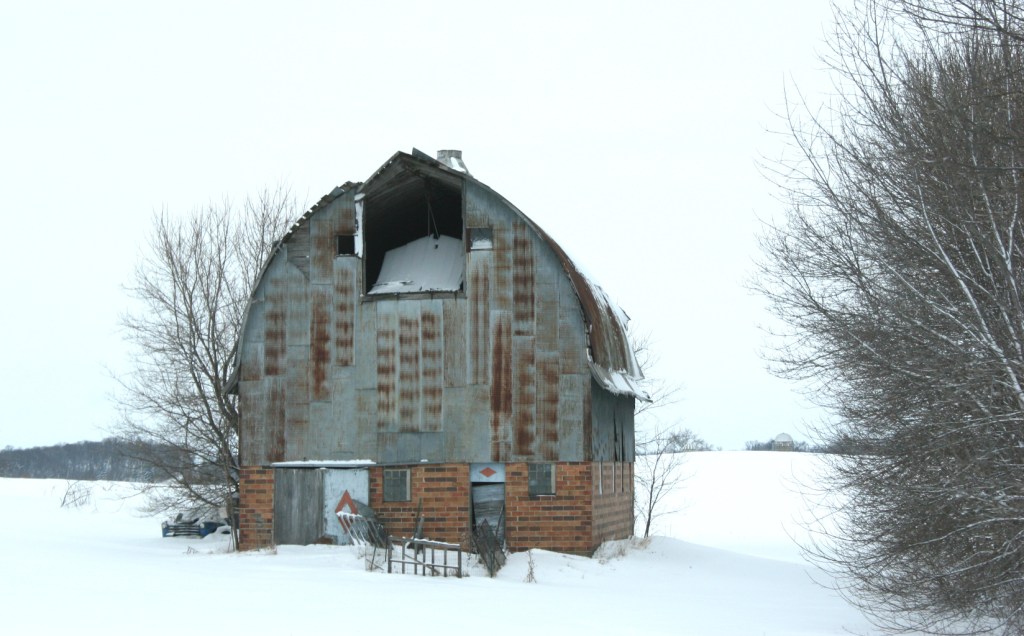
I photographed, too, a weathered barn with fieldstone foundation. I often wonder how long barns will remain a landmark of our rural landscape. I feel an urgency to document their existence before roofs cave, boards rot, and only foundations remain.

A playground sits next to Richter Barn. Minnesota Prairie Roots copyrighted photo October 2021.

At 80-acre Richter Woods, a mammoth barn looms, centering the park gathering space. The barn is available to rent for $75/day from April-October. With a spacious loft and main level, the barn offers plenty of room for events like weddings, reunions and much more.

Looking up to the haymow. Trees shadow the barn door. Minnesota Prairie Roots copyrighted photo October 2021.

I couldn’t access the locked barn. But I could envision the interior, especially the haymow with its curved wood frame. Many bridal couples covet rustic settings like this. I wonder whether many have discovered this barn circled by woods in the quiet countryside near Montgomery.

A splash of red/pink flowers bloom on a bush next to the green barn. Minnesota Prairie Roots copyrighted photo October 2021.

As much as I appreciated the barn, I couldn’t get over the forest green color. I longed to see that barn in red, a historically-accurate hue. I expect others, too, have wondered at the unusual color choice. As a photographer, I find a red barn much more visually-pleasing.

One of two trails we took into Richter Woods. Minnesota Prairie Roots copyrighted photo October 2021.
No maps in this mailbox. Minnesota Prairie Roots copyrighted photo October 2021.
There are lots of picnic tables on-site, some nice, others not so much. Minnesota Prairie Roots copyrighted photo October 2021.

Before pulling out our picnic lunch to dine near the barn, Randy and I stretched our legs. We followed a leaf-strewn dirt trail into the woods with no map to guide us. The on-site mailbox was without the promised maps.

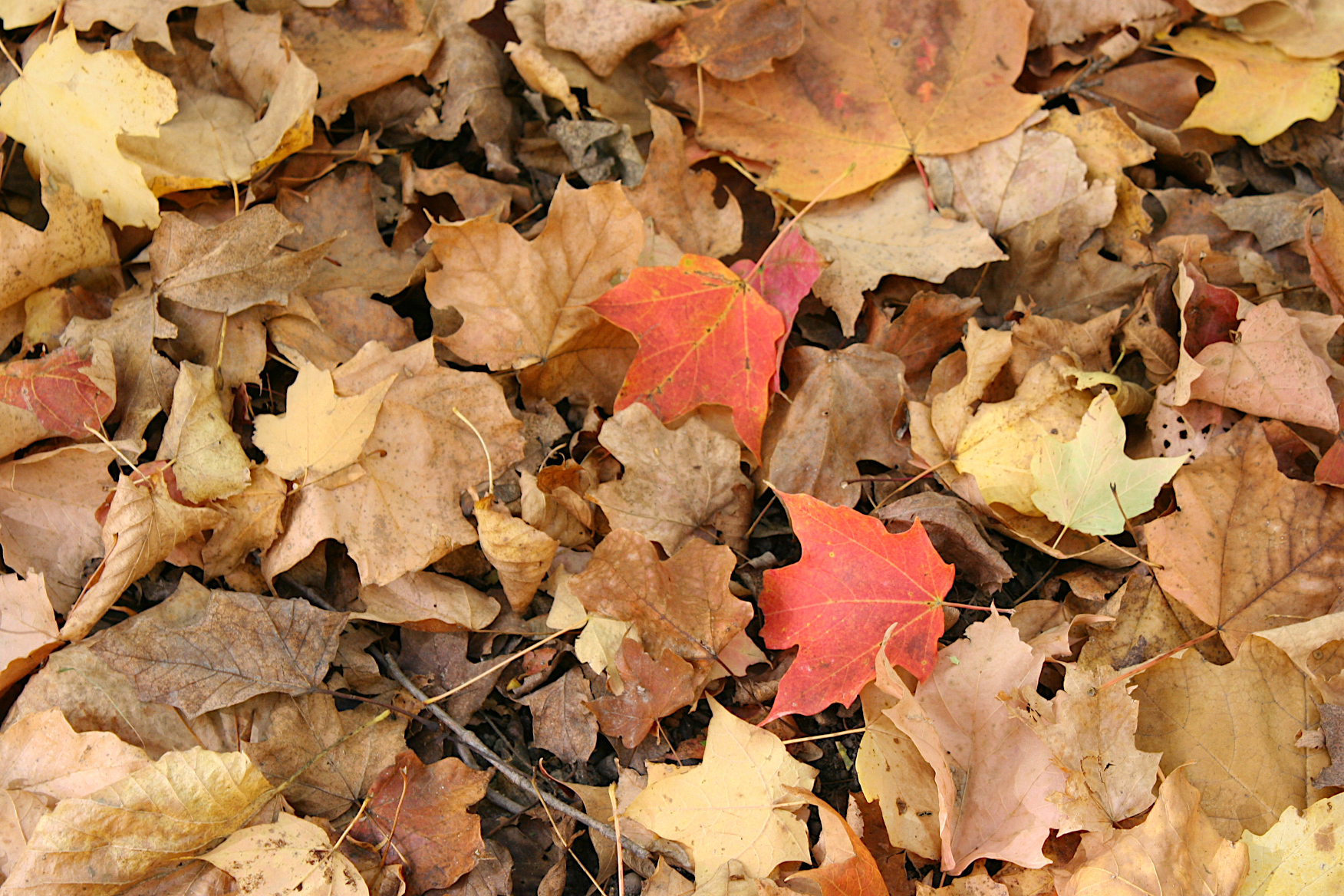
Maple leaves galore. Minnesota Prairie Roots copyrighted photo October 2021.

Maple leaves, especially, blanket the earth.

Looking up toward the colorful tree canopy. Minnesota Prairie Roots copyrighted photo October 2021.

In a few spots, I looked overhead to a canopy of red and yellow trees set against the deep blue sky of October.

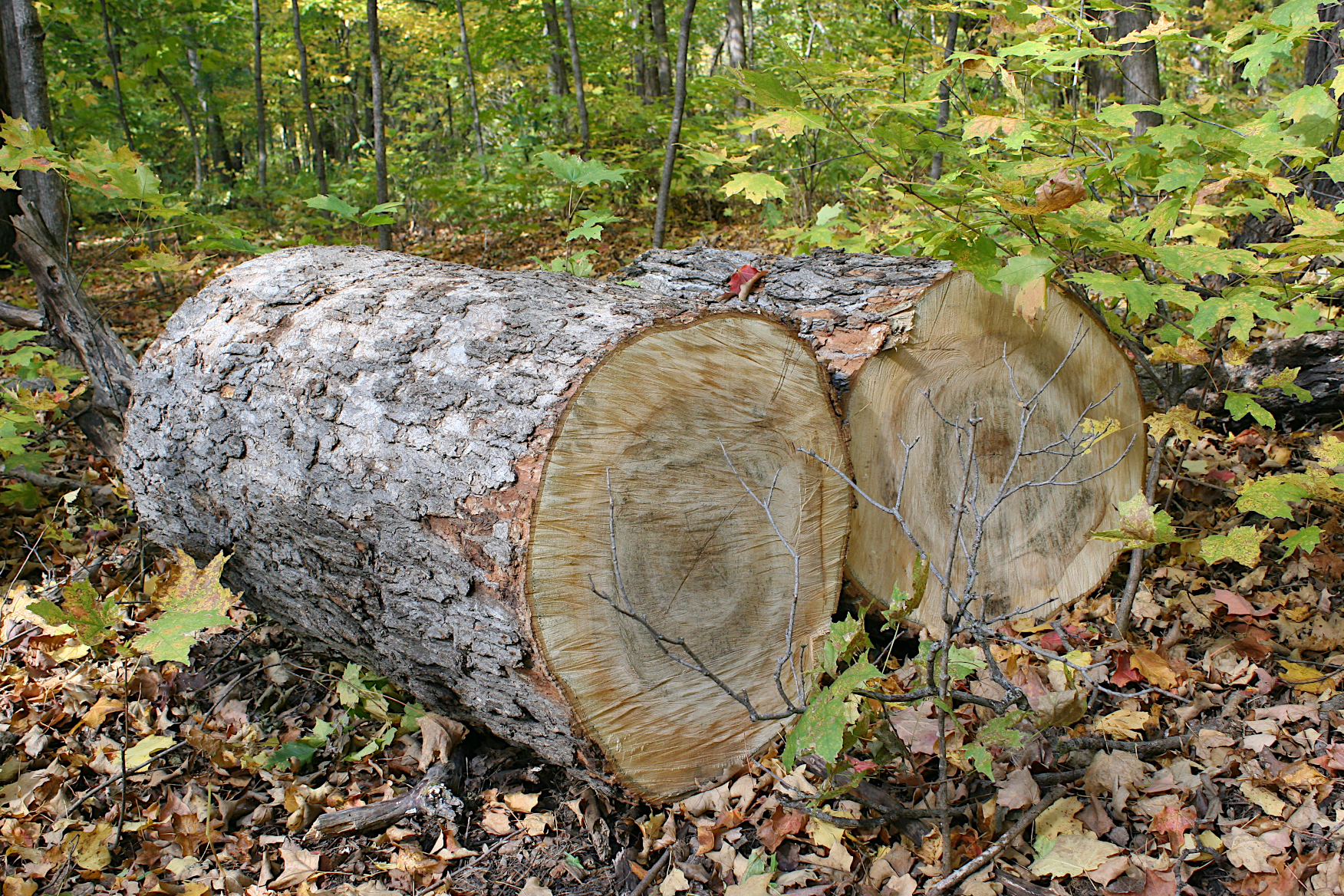
A recently-sawed tree. Minnesota Prairie Roots copyrighted photo October 2021.

We noticed, too, the many rotting and recently-sawed trees, I felt inwardly thankful for an afternoon without strong winds to possibly topple dead trees, loose branches.

Mushrooms on a fallen tree. Minnesota Prairie Roots copyrighted photo October 2021.

Mushrooms thrive in decay.

Loving the graceful curve of the barn roof. Minnesota Prairie Roots copyrighted photo October 2021.

Mostly, though, I noticed the peace. The quiet. I feel incredibly grateful to have access to natural settings like Richter Woods County Park. And I feel grateful, too, to live in this decidedly rural region of Minnesota within an hour of downtown Minneapolis. I feel grateful for gravel roads to follow. For barns that still stand. For warm and sunny October days that draw me into the countryside, into the woods.

#

PLEASE CHECK BACK as I take you on to more backroads in Rice and LeSueur counties.

© Copyright 2021 Audrey Kletscher Helbling
 

Of gravel roads, barns & cornfields August 3, 2020

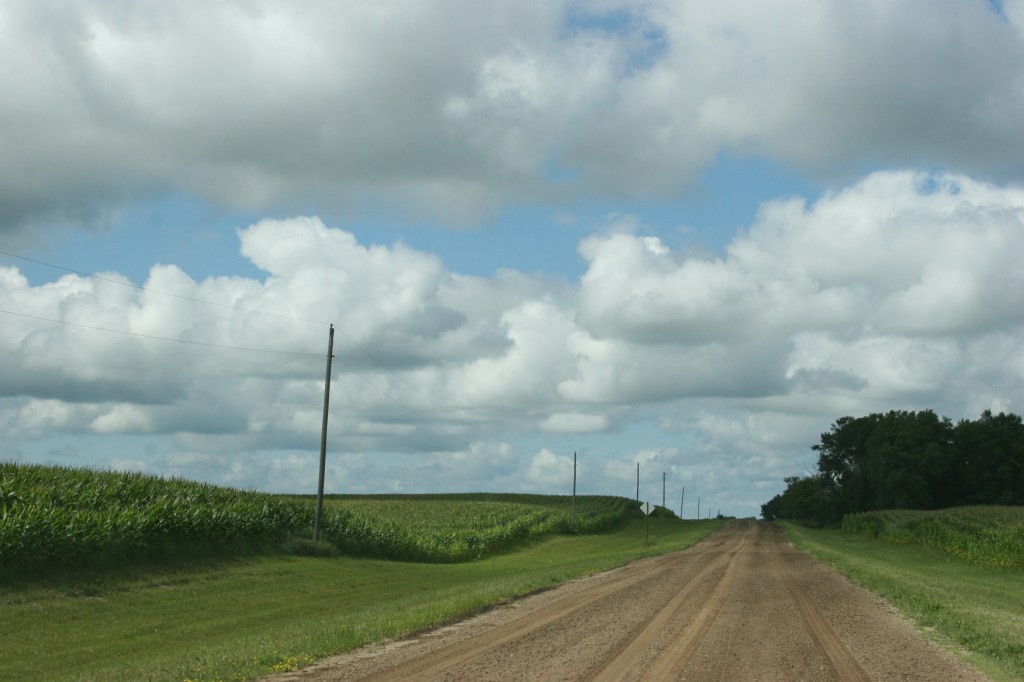
Rural Rice County, west of Faribault, Minnesota.


ON A SULTRY SUNDAY SUMMER AFTERNOON of oppressive heat and humidity, I needed to get out of the house. Away. Into the country. On a drive. It was too hot to walk, to do anything outside of air conditioning.


Steady rain the night before kept the dust down on gravel roads we drove.


Following back county and township roads in and around Faribault, Randy and I got the rural fix we needed. For me, the crunch of gravel upon tires and the washboard vibration of a road in need of grading.


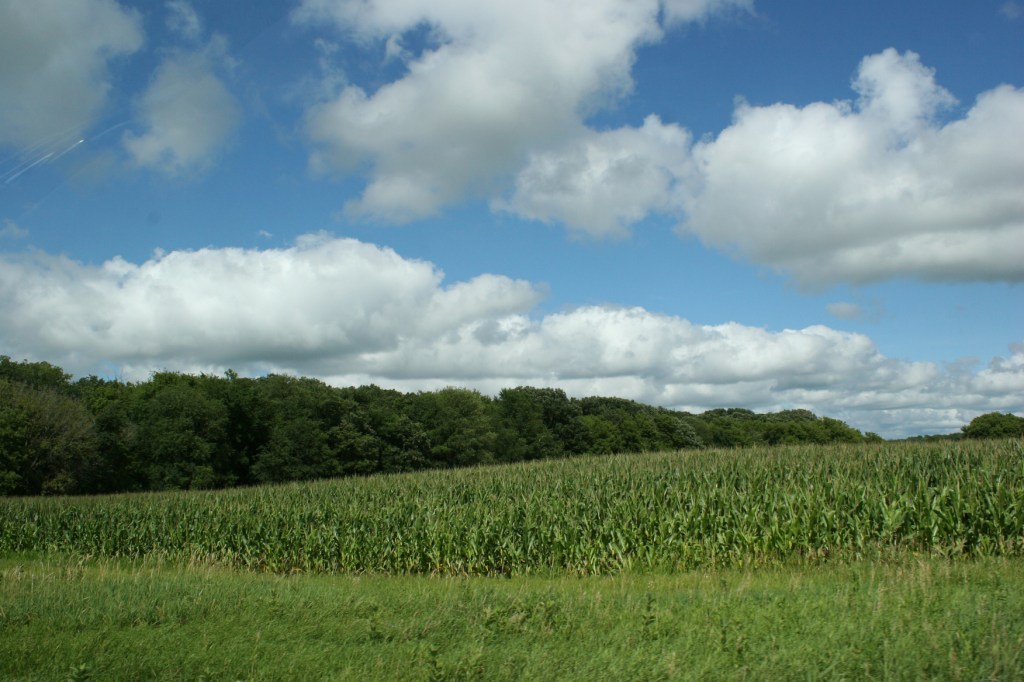
The corn crop around here looks good.


I needed, too, to see cornfields stretching across the land, tassels flagging fields. My heart aches at the sight, for the missing of living in the country. Memories still root me there.


And then I spotted a barn flashing bold red into the landscape on the edge of Warsaw. I’ve long admired that well-kept barn.


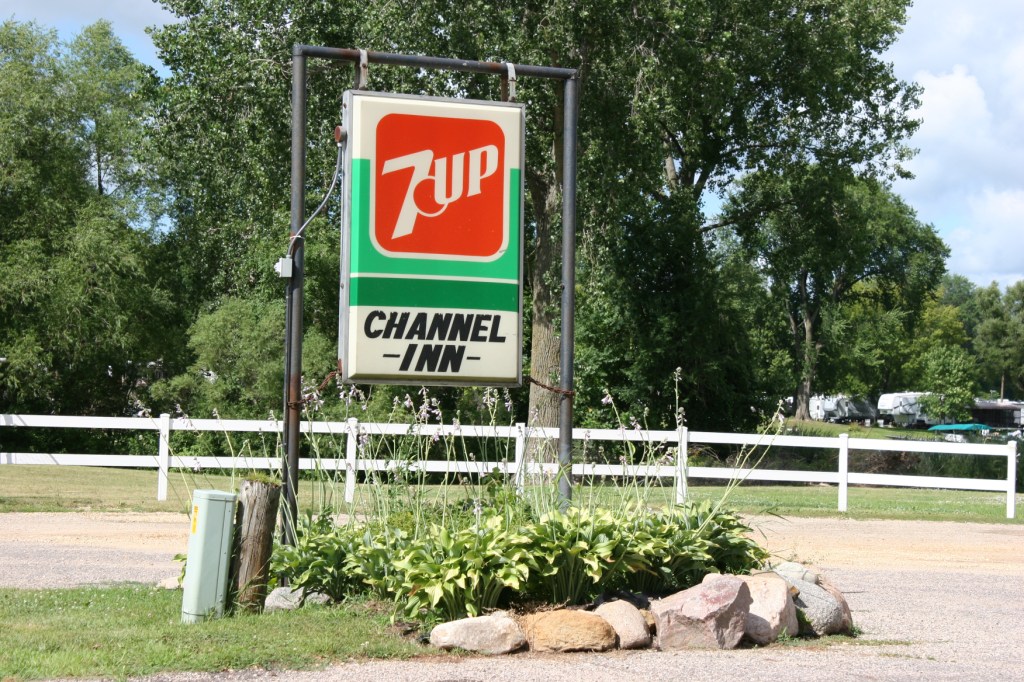
Weaving through Warsaw, Randy reminisced about living there decades ago as we passed his former rental place. At the Channel Inn in Warsaw, we paused only long enough for a photo of the vintage signage.


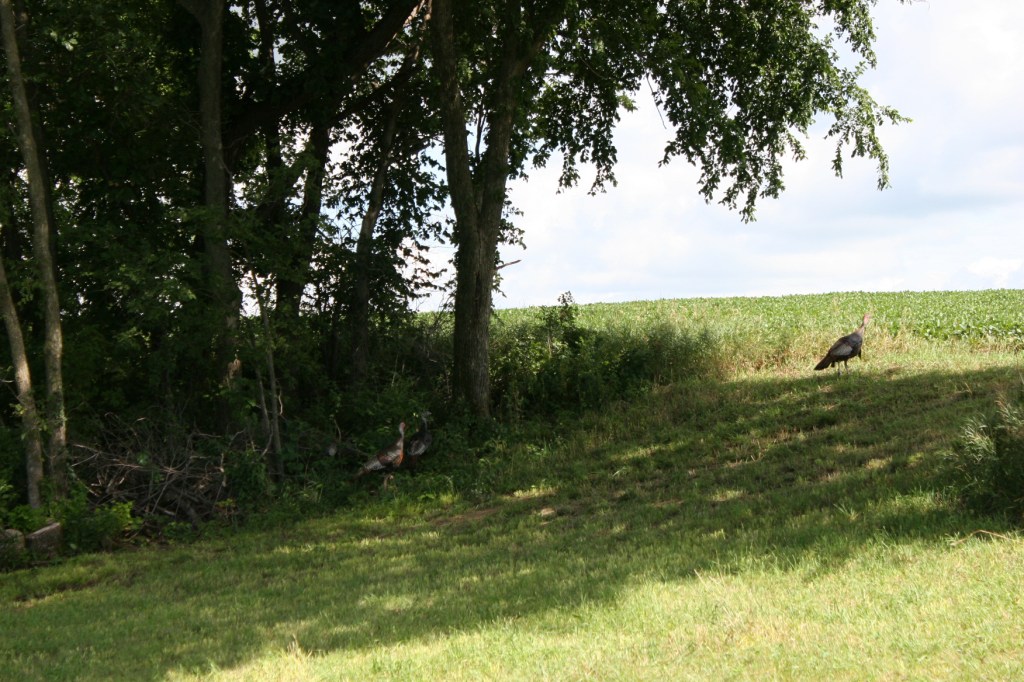
Without my telephoto lens on my camera, I couldn’t get a good shot of these turkeys. But you can make out two along the treeline and one by the field. The rest went the other direction.


And then we followed more gravel roads, routes not previously taken, but which revealed a PIG HOTEL sign on a house. I missed that photo op, but I promise to return. I almost missed the wild turkeys edging the woods.


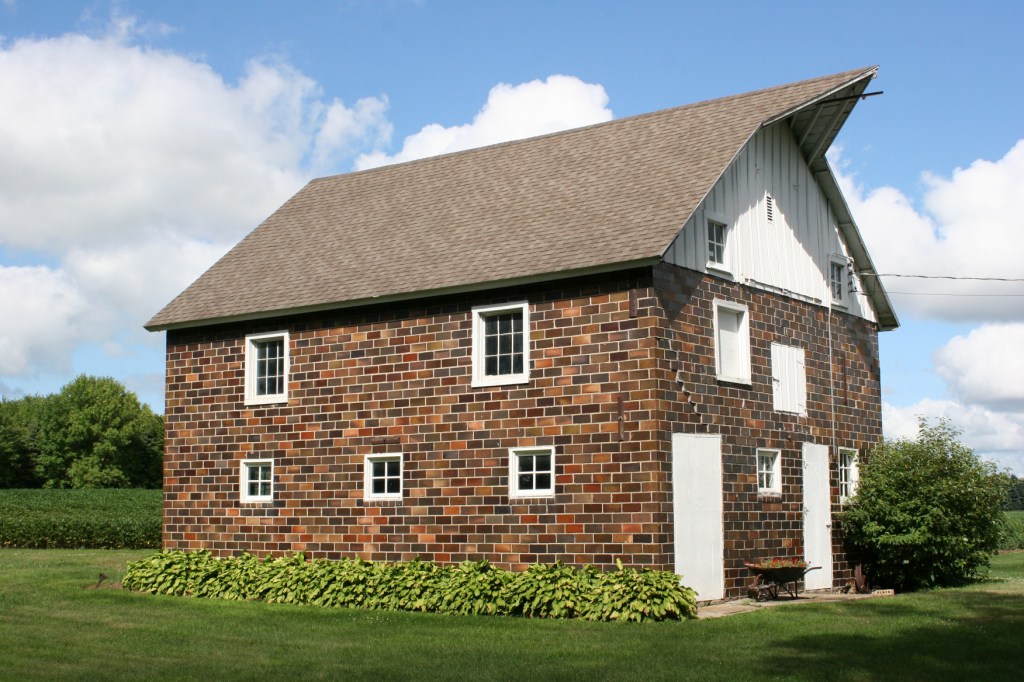
A bit further, I saw the cutest little brick barn. Solid. As good as new. Beautifully poetic in its construction.


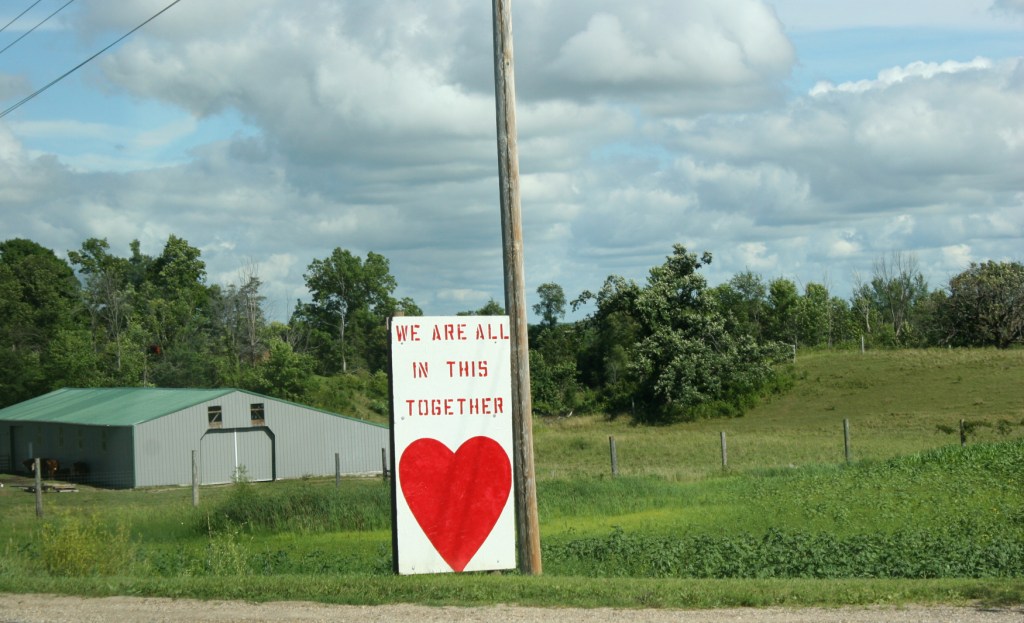
Past a gravel pit and an unknown lake and farm sites set among fields on rolling land, we aimed back toward town. Past Ableman’s Apple Creek Orchard, a favorite, and a roadside sign reminding us that we are not alone. Ever.


© Copyright 2020 Audrey Kletscher Helbling
 

Documenting rural Minnesota February 6, 2020


I OFTEN WONDER, as I travel past farm sites in southern Minnesota, how these places will look in 50, even 20, years.


Will once grand barns still stand? Will farmhouses be abandoned? Will corporate ag operations completely replace family farms?


Already the evolution is well underway. Many barns no longer hold livestock, serving instead as storage sheds. Rural houses are not so much farmhouses as dwellings for those working off the farm to supplement their farm income.


Independent farmers either quit, expand or try to hang on for one more year. Some have become innovative—diversifying, organizing, working together to grow and sell local.


The rural landscape is changing, shaped by markets and weather and operating costs and government regulations, issues that have always affected farming. Technology, too, now factors into agriculture.


Some 40-plus years removed from the farm, I’ve witnessed the changes from afar. None of my five siblings stayed on the farm, although two work in ag fields. I no longer have a direct link to the land. And because of that, my children and grandchildren are losing that generational connection to farming, to a way of life. This saddens me. They prefer city over country.


And so I continue to photograph, documenting with my camera lens the places of rural Minnesota. Therein I present a visual history, a memory prompt and an expression of appreciation for the land which shaped me.


FYI: This Saturday, February 8, from 1 – 4 p.m., embrace and celebrate locally-grown and crafted during Family Day at the Faribault Winter Farmers’ Market. In addition to vendors, you’ll find hands-on art activities for kids, games, healthy recipes and more. The market is located inside the Paradise Center for the Arts along Central Avenue in the heart of historic downtown Faribault.

These photos were taken last Saturday along Minnesota State Highway 21 on my way to Montgomery.

© Copyright 2020 Audrey Kletscher Helbling
 

What I’m drawn to photograph in rural Minnesota January 7, 2020

Filed under: Uncategorized — Audrey Kletscher Helbling @ 5:00 AM
Tags: , , , , , , , , ,

One of my favorite Minnesota barns is this especially well-maintained one along a back county road west of New Ulm.


I FIND MYSELF, all too often in my on-the-road rural photography, focusing primarily on barns. My eyes gravitate toward these agricultural icons that I fear will vanish within the next 50 years, fallen to abandonment and/or replaced by nondescript cookie cutter metal polesheds. That saddens me. But it is the reality of the times, of the decline of the family farm.


Massive polesheds have replaced traditional barns on some farms, including this one along Interstate 90 in southeastern Minnesota.


I will continue to photograph these beloved landmarks, symbols of a bygone era of farming. Barns hold personal value to me as a farmer’s daughter. I grew up working in the barn—feeding cows, bedding straw, shoveling manure, lugging pails of still warm milk from cow to bulk tank and much more.


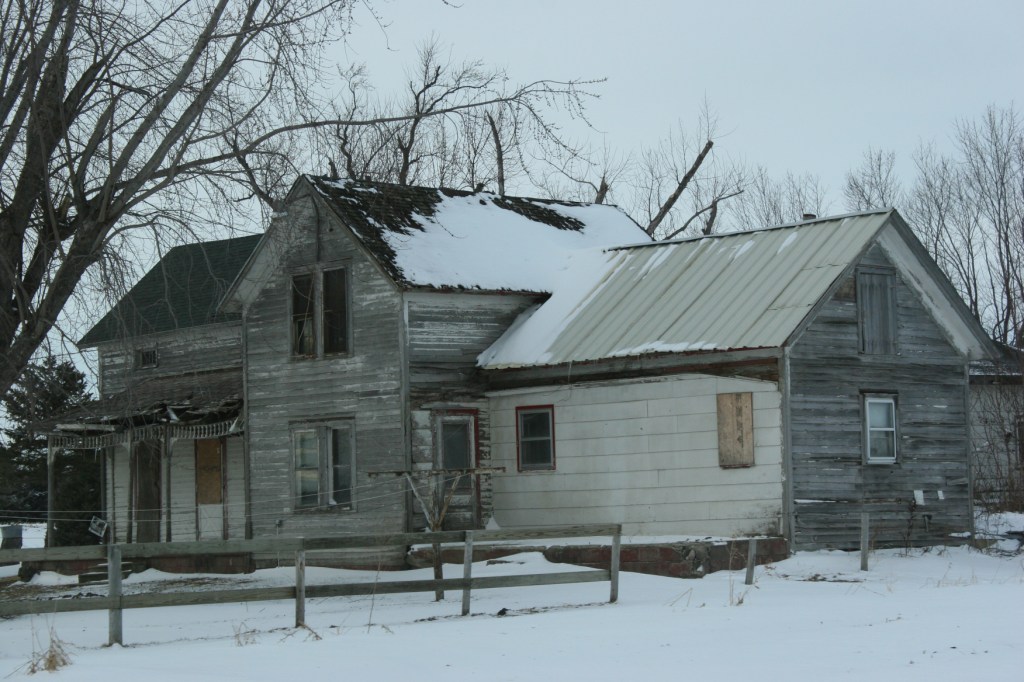
An abandoned farmhouse near Morristown, Minnesota.


A tiny, colorful house in Morristown, Minnesota.


Just blocks away in Morristown, newer homes cluster in a housing development. A tornado hit this area in 2018, destroying and heavily damaging houses.


While documenting these centers of farm life, I’ve mostly neglected to photograph the homes of rural Minnesota. They vary from abandoned houses with broken windows to modern-day structures.


In southwestern Minnesota, an aged farmhouse so familiar to me.


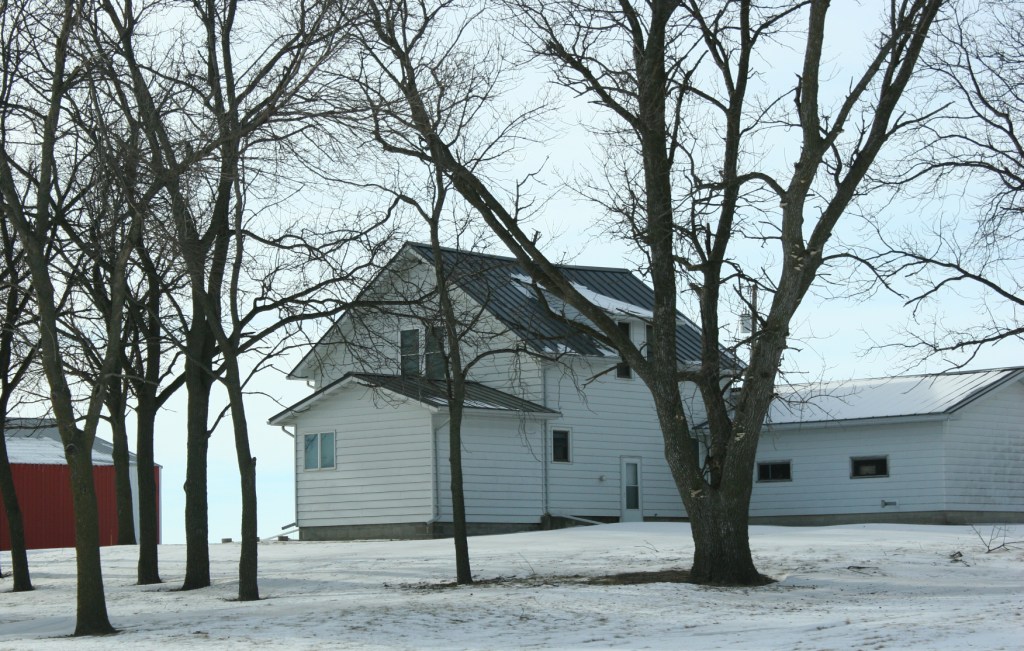
It is the decades-old farmhouses that appeal to me most, no matter their conditions. My childhood home until my early teens was a cramped three-bedroom 1 ½-story house without a bathroom. A hulking oil burning stove in the living room heated the structure. A trap door in the kitchen opened to stairs leading to a dark dirt-floored cellar where salamanders lurked. Mom stashed the bounty of her garden in fruit jars lining plank shelves.


A southwestern Minnesota farmhouse.


I am thankful to have grown up in a minimalist house, in a poor farm family. We may have been poor materialistically. But our family was rich in love. I never realized until I became an adult that I was raised in near poverty. Because of that background, I’ve never needed the most, the best, the newest.


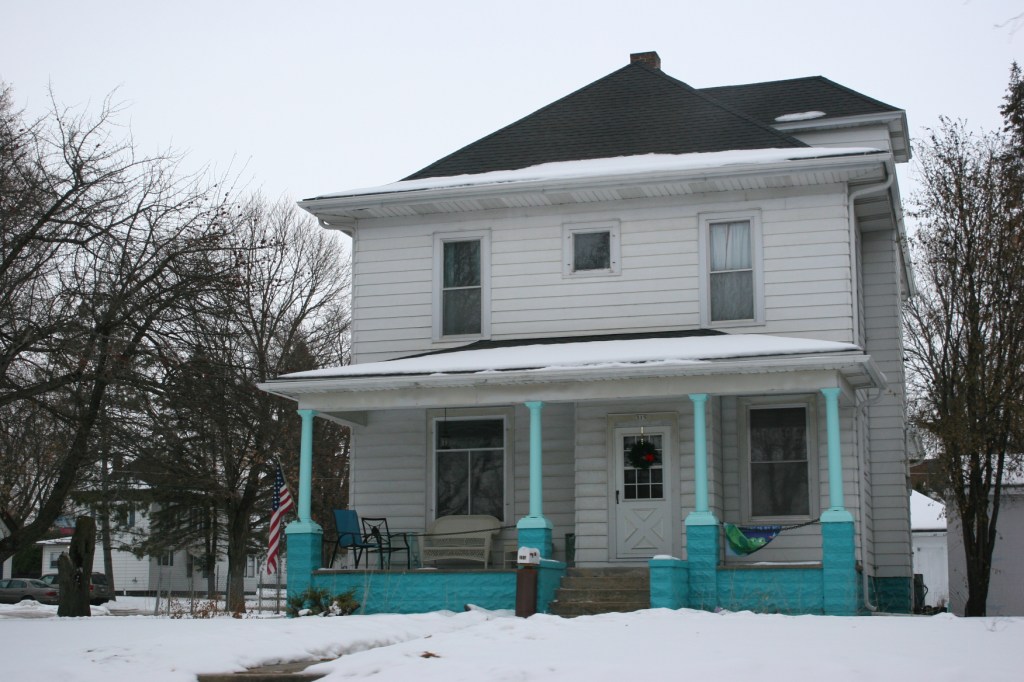
In Kenyon, Minnesota, a brilliant turquoise makes this house stand out.


On recent road trips, I intentionally aimed my camera lens at houses. Both in small towns and in the countryside. These are not just houses. They are homes. Or memories of homes. Worthy of preserving with my camera as part of rural Minnesota history.


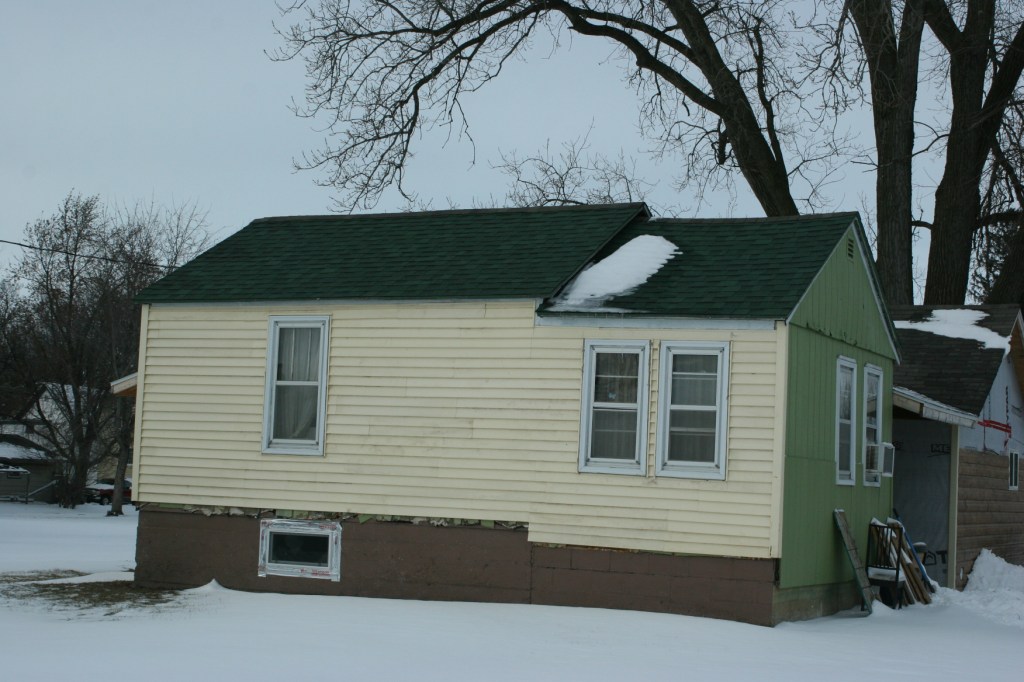
A home in the small town of Morristown, Minnesota.


THOUGHTS?

© Copyright 2020 Audrey Kletscher Helbling
 

Reconnecting to the land during a March drive in Minnesota March 27, 2018

Filed under: Uncategorized — Audrey Kletscher Helbling @ 5:00 AM
Tags: , , , , , , , ,


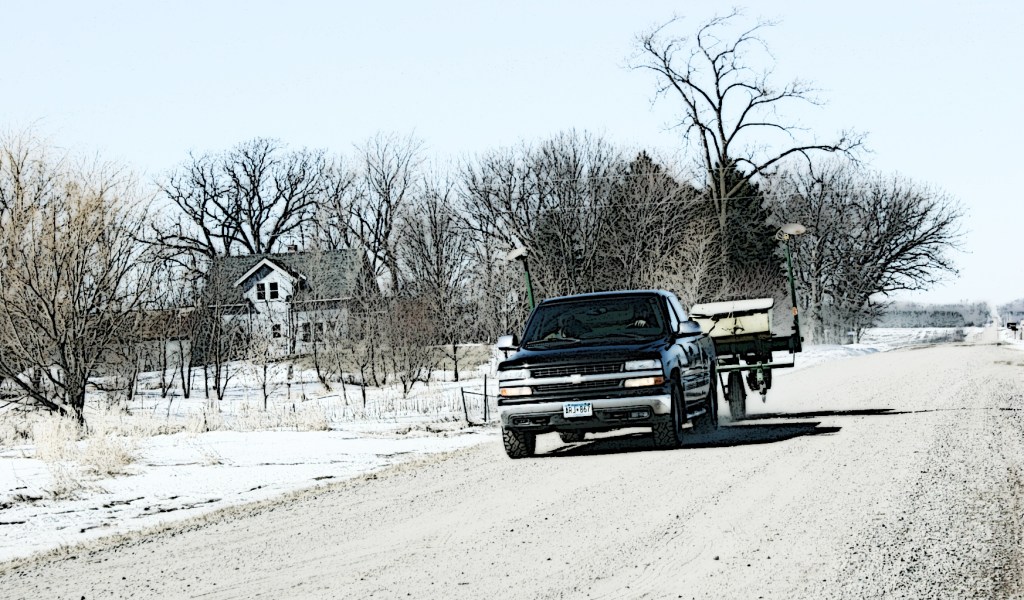
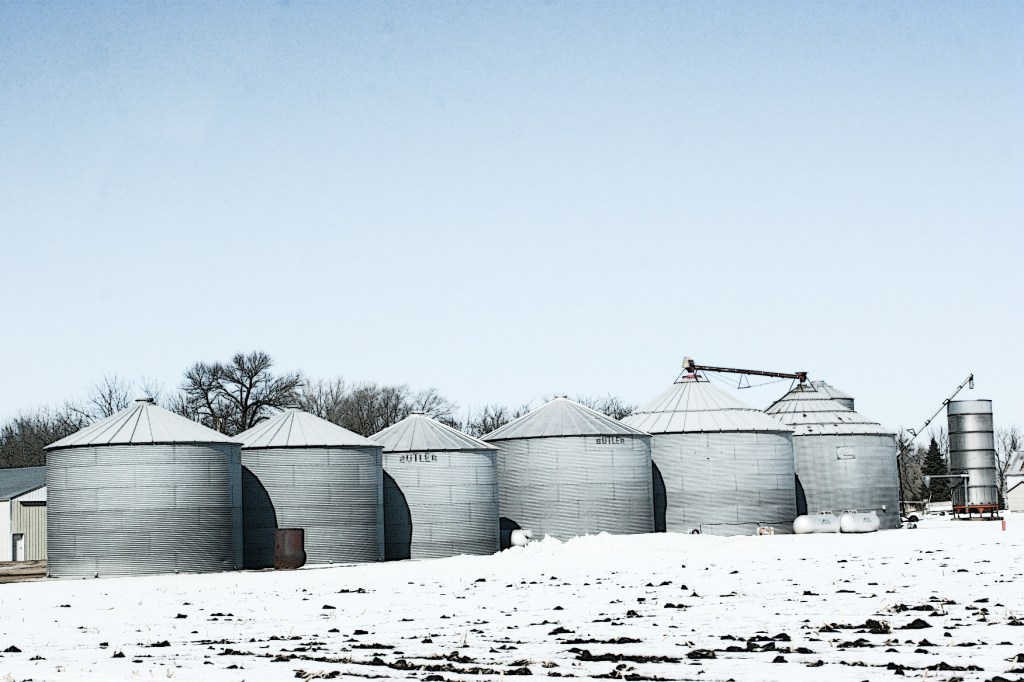
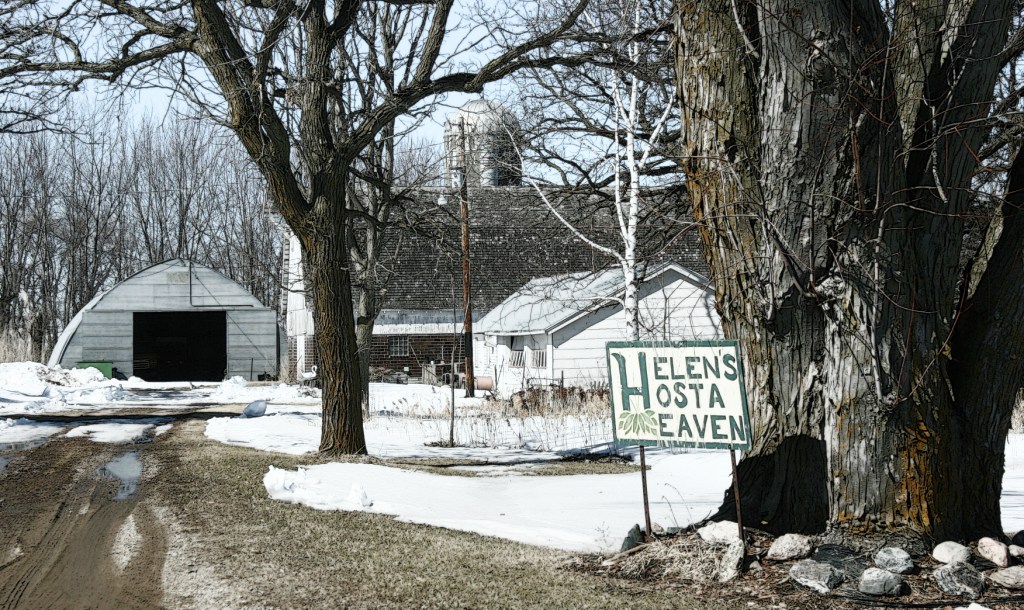
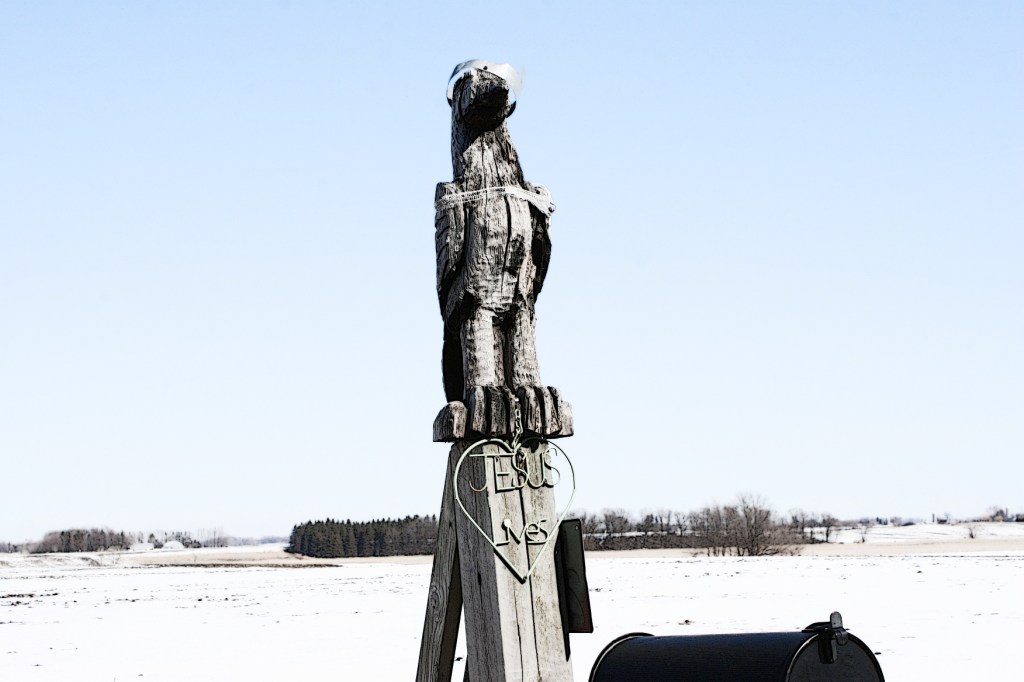
SOMETIMES I NEED JUST to get out into the countryside—to reconnect with the land, to see the sky, to feel the pulse of the earth.


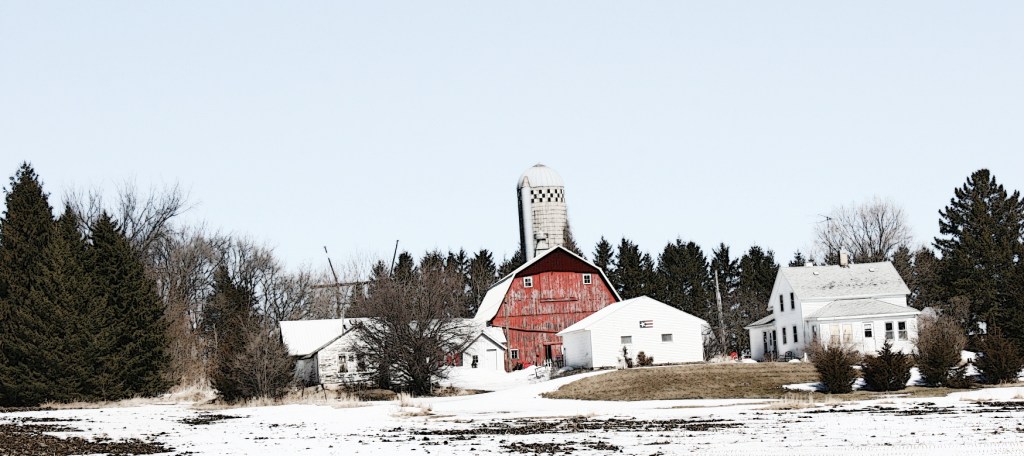
I need to see farms,


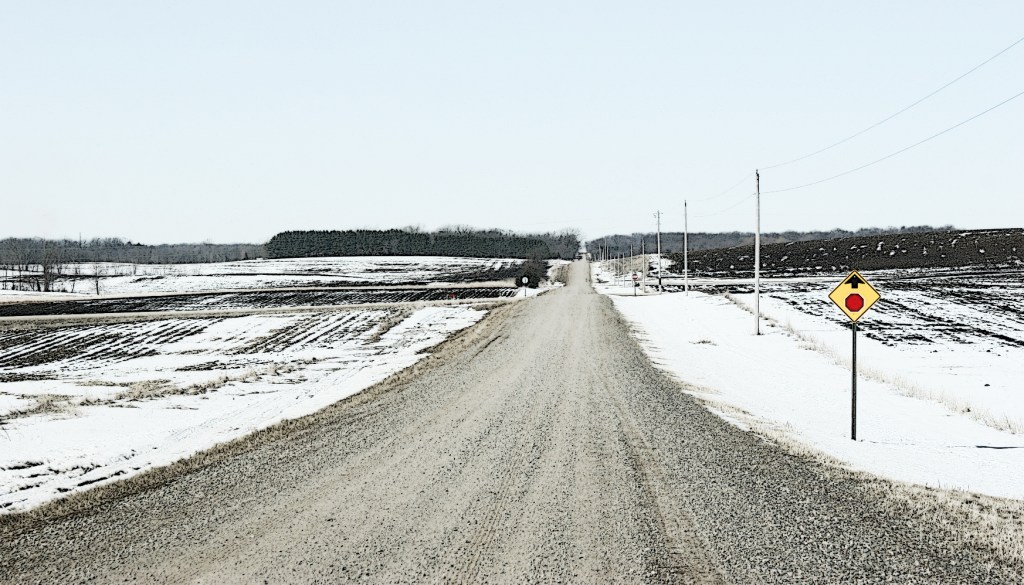
follow rural roads,


hear the crunch of tires upon gravel,


pass by rows of grain bins,


notice the oddities of signage,


the art of the land.


All of this I need to satisfy that part of me which misses rural life. I shall always retain my farm girl spirit, my connection to my rural roots despite my now decades-long absence.
 

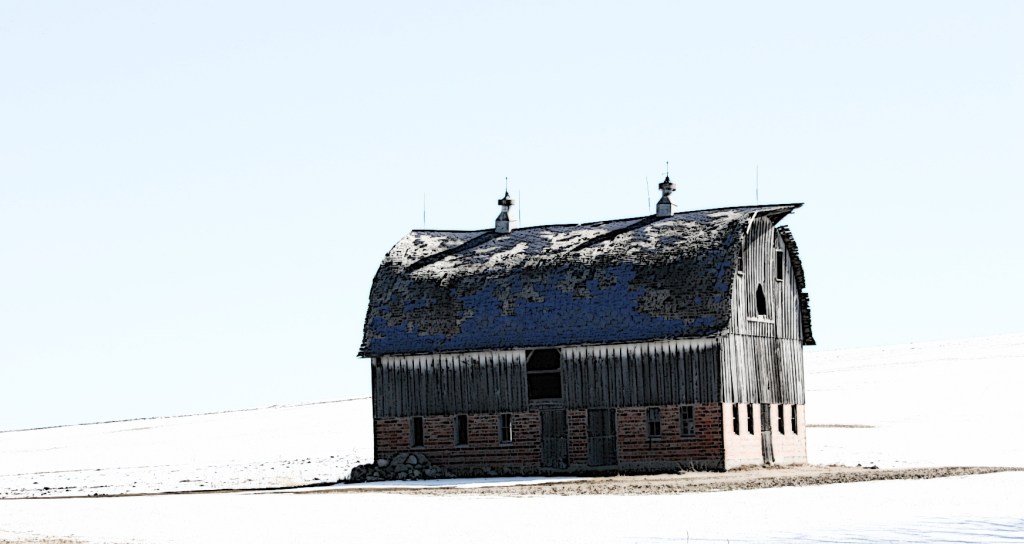
Note: All photos are edited to create a more artsy look. All scenes were photographed in Le Sueur County, Minnesota.

© Copyright 2018 Audrey Kletscher Helbling