Minnesota Prairie Roots

Writing and photography by Audrey Kletscher Helbling

Join efforts to connect neighbors in a celebration of cultural diversity July 14, 2012

Several Latinos lead in singing of Mexico’s national anthem last September during the International Festival Faribault at Faribault’s Central Park.

ORGANIZERS OF THE SEVENTH ANNUAL international festival celebrating the cultural diversity of Faribault are looking for participants, help and donations for the Saturday, August 25 event.

Can you help?

And when I say “you,” I mean anyone, whether you live in or near Faribault or not.

Served at the 2011 fest: Guatemalan chuchitos– chicken, corn and salsa wrapped in a corn husk.

Drive on down from the Cities; we’re only an hour from downtown Minneapolis. Or drive across town to set up a booth showcasing your culture at International Festival Faribault. Sell ethnic cuisine. Pedal your ethnic arts and crafts or other merchandise. Show and tell and educate the public about your culture in this event pegged as “neighbor meeting neighbor.”

I like that neighborly phrase, for it is when we meet face-to-face and engage in conversation and sample each others food and learn each others customs that the cultural barriers begin to fall and friendships (or at least understanding) form.

Vendors, like this Somali woman, peddled their wares at the 2011 festival.

Table and booth space at the 10 a.m. – 4 p.m. festival are currently available to the public for a $20 fee. But get this: You keep all profits earned. Non-profit organizations get free space.

Now if that isn’t enough incentive to book a spot in Faribault’s Central Park for the day, consider how you will help advance the mission of the non-profit International Festival Faribault. Here’s the organization’s mission:

…to promote understanding between diverse cultures within Faribault, MN; uniting the community with music, dance, ethnic foods and merchandise which is experienced at a once a year festival organized by the committee.

Hoop maker, performer and teacher Adrienne Lee teaches a Girl Scout the art of hoop dancing. The Girl Scouts were among the non-profit groups with booths at the 2011 fest.

Already, Spanish and Somali singers, a local dance academy and several small bands have committed to providing on-stage entertainment. A hula hooper and jugglers are signed on to wander through the crowd.

The scramble for candy after the pinata is broken at last year’s festival.

What can you contribute? Dancing, singing or other musical entertainment from your culture? On-site ethnic art/crafts demonstrations? Are you willing to sing your country’s National Anthem on the Central Park Bandshell stage? How about presenting a mini drama or storytelling focused on your ethnicity? Can you plan and lead ethnic activities for kids?

The group also needs volunteers to assist with set-up and clean-up, help throughout the day, etc.

Monetary and silent auction donations are also needed. Do you have a tent and/or tables the group can borrow? Can you help with banners or flyers? Donate food items?

Yes, the list of needs is lengthy. But remember the “neighbor” part of this festival? Neighbors help neighbors.

Colorful skirts for sale at Riyaam’s booth during the 2011 celebration.

If you are interested in participating, contributing or helping in any way, email internationalfestivalfaribault@gmail.com or call (507) 412-9139. You must complete an application form and submit the $20 payment in advance to reserve a booth/table space.

Also, click here to visit the festival website at http://internationalfestivalfaribault.blogspot.com.

Finally, even if you’re unable to participate or donate, mark your calendar for 10 a.m. – 4 p.m., Saturday, August 25, for the International Festival Faribault. Admission is free and I promise, you’ll come one step closer to understanding your neighbors.

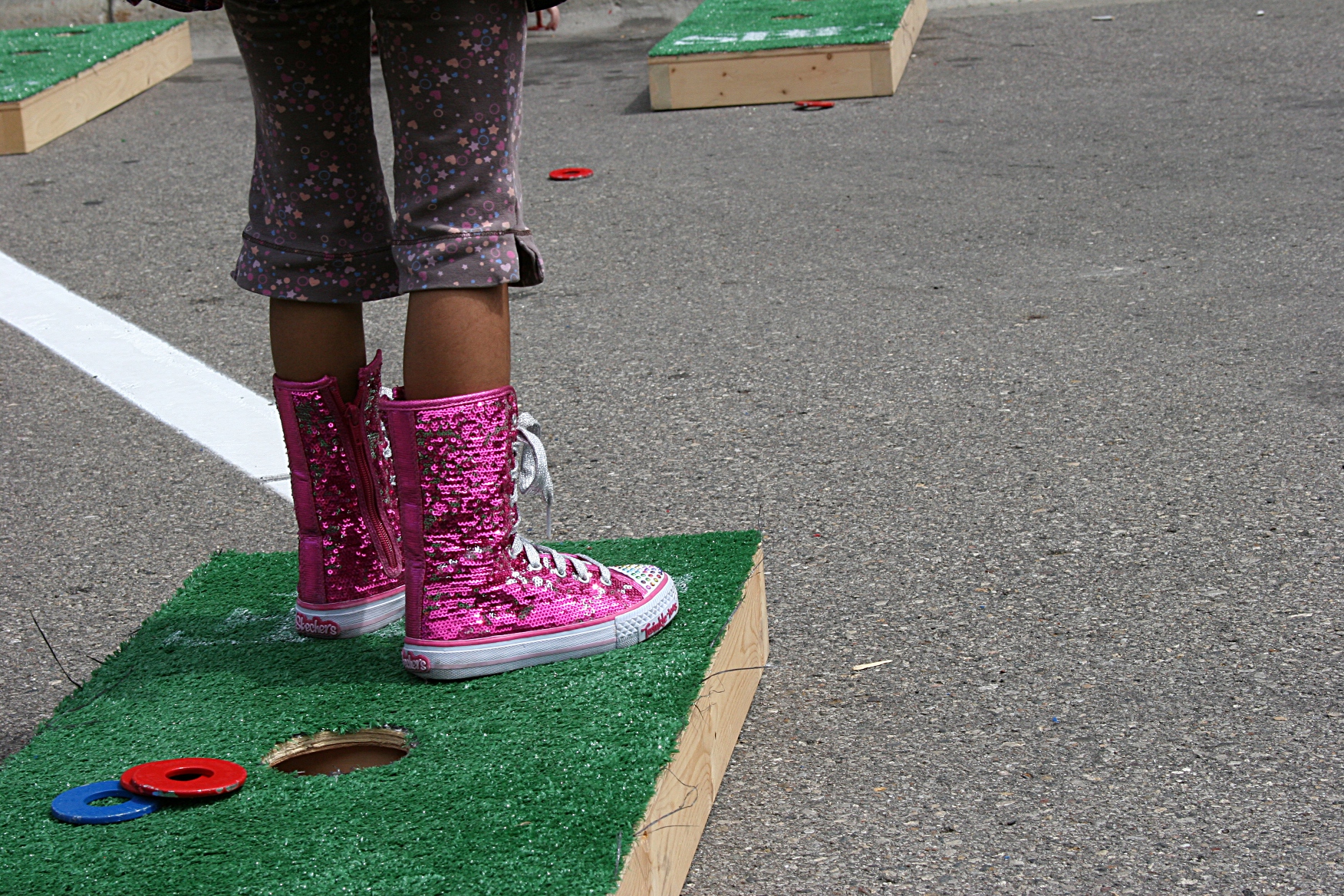
A young girl’s henna stained foot, photographed at the 2011 fest..

© Copyright 2012 Audrey Kletscher Helbling


St. Paul artist connects art to geocaching via her GeoNiche Project July 11, 2012

A ST. PAUL ARTIST and educator with roots in the southwestern Minnesota prairie is bringing her art to the public via a project that links art to geocaching.

Felice Amato, who grew up in Cottonwood and Marshall, has hidden about 15 original works of ceramic art in St. Paul and in southeastern Minnesota through her GeoNiche Project, funded by a Minnesota State Arts Board Artist Initiative Grant awarded in 2011. To date, she’s stashed her sculptures at Swede Hollow, a St. Paul Park, and in or near Faribault, Red Wing and Winona. She’s created pieces for the Red River Valley area, too, but has yet to install them. And she would also like to sculpt GeoNiche art for her native prairie.

Amato follows the geocaching model wherein geocachers use GPS devices or smart phones to find her art based on geographic coordinates and clues. Her caches are listed on Geocaching.com as felice.amato and on Opencaching.com as felice1.

The project evolved as Amato considered a unique way to get the ceramic niches and tableaus she’s made for years out to the public. “My sister, brother and aunt are avid geocachers and it just struck me that this could be an interesting way to make my work public,” she explains.

Finding no one out there doing exactly what she proposed, Amato moved forward with the GeoNiche Project and her unifying theme of women’s lives.

“I wanted to create secular niches that spoke to a sense of place, history and continuity—and that honored the important life moments that we all experience,” she says.

“Under the Arbor,” one of the GeoNiches placed in Swede Hollow. Photo courtesy of Felice Amato.

She placed her first GeoNiche close to home, a mile away in Swede Hollow, a St. Paul valley originally settled in the mid 1800s by Swedish immigrants and thereafter by Polish, Italians and Spanish Americans. “The rhythm of settlement in Swede Hollow made that especially rich,” Amato says. “Flooding, impermanence and the piecing together of community shanty by shanty—the thriving, the dispersal, the abandoning, the reclaiming—it all inspires my imagination.”

This photo, courtesy of Felice Amato, shows houses and quilters in progress for Swede Hollow.

Amato was inspired to shape pieces like “Mother and Child by the ‘Hobo’s Washroom’,” “Little Girl with birds,” “Bread house” and three other larger works for Swede Hollow. Those GeoNiches hint at folktales based on the experiences of the immigrants who once called this place home. A hand-drawn map to those artworks can be found inside a GeoNiche by Swede Hollow Cafe (coordinates N 44° 57.551’ W093° 04.330’) as Amato awaits approval of official Geocaching.com listings for Swede Hollow.

“Seamstresses” in place at the historic Faribault Woolen Mill along the Cannon River blends seamlessly into its environment. Photo by Audrey Kletscher Helbling.

In Faribault, she was naturally drawn to the Faribault Woolen Mill, she says, because of an art series initiated several years ago on women in factory settings. Amato created “Seamstresses” and tucked it into a niche along a retaining wall at the mill next to the Cannon River.

Amato’s sculptures tell a story as seen in this close-up of woolen mill factory workers. Her sculptures are made from paperclay with wire details. Photo by Audrey Kletscher Helbling

Explains Amato of her women in factory art:

The metaphorical potential of women and labor—especially manual and repetitive labor—is enormous with so many different layers it makes my mind explode. To what did/do women give their lives? What other inner lives (maybe as poets or artists, or dreamers) did they have especially at times where realizing those passions was even more difficult than it is today? I wanted to speak to a sense of honor and even sacredness in the making, the plodding, the rote quality of manual tasks—often just a part of an end product. Sewing and weaving itself is rich with metaphor as is the factory setting: the balance of isolation and comradery.

Amato secured “Prairie” onto a tree near a bike trail west of Faribault. Photo by Kevin Kreger.

Outside of Faribault, lashed onto a tree along a bike trail, Amato switches to a rural theme in “Prairie,” a definitive piece which connects to her prairie roots. The sculpture was partially-influenced, she says, by “the solitude and perseverance of the prairie woman in her battles with so many forces—the soil, the wind, the grasshoppers, the fires.”

Geocacher Kevin Kreger of Faribault, who sought out both Faribault area GeoNiche art pieces, says he was drawn in by “Prairie” and found the placement of “Seamstresses” at the Woolen Mill a fitting location.

The sweet surprise GeoNiche at the Faribault Woolen Mill. Wear solid walking shoes as you will need to walk over rocks (not the ones photographed here) to reach this art treasure. Amato encourages finders to sign the logbook tucked into a plastic bag behind “Seamstresses.” Photo by Audrey Kletscher Helbling

“The idea (GeoNiche) delights me,” says Kreger who has been geocaching for half a dozen years everywhere from New York City to the Oregon coast and as near as a local county and city parks. “Turning the corner, seeing another’s idea of beauty in an unexpected spot, it’s one of those unanticipated sweet spots in life.”

The first entry in the “Seamstresses” logbook. Photo by Audrey Kletscher Helbling

Amato hopes for that type of positive reaction from those who discover her public art hidden in niches. “Many people seem to really experience my work, seeing it as meaningful to them and that it is meaningful to me,” she says. “It evokes stories of memories or hooks people’s imagination and emotions.” She wants finders of her art to interact with her, to share their thoughts in her on-site logbooks and/or online.

Kreger appreciates the time and skill Amato has invested in creating her art, made from “paperclay,” a method of mixing paper pulp into recycled clay. He wonders, though, how long the GeoNiches will stay in place, comparing them to performance art and as a gift the artist must be willing to give up.

Another sculpture hidden in Swede Hollow Park. Photo courtesy of Felice Amato.

While one of her Swede Hollow GeoNiche sculptures was smashed, the rest have remained intact with one even moved to a more logical and visible location. Amato’s considered taking the pieces down for the winter or sealing them to protect the vulnerable clay from the elements. But she’s unsure. “When I installed “The Potter” in the pottery dump at Red Wing and looked at all the shards of broken ceramic work, I thought eventually she will be among that and it felt OK,” Amato says.

An overview of the location for “Seamstresses.” Look and you will find her sculpture in this image. The positive responses from the people of Faribault have been a huge incentive, Amato says, to explore the area more. Photo by Audrey Kletscher Helbling

Exact placement of her art is most successful, she adds, when the spot is discovered as though it was waiting.

Even though the grant period for her GeoNiche Project has ended, this St. Paul artist intends to seek additional funding to continue creating and hiding her art for geocachers and others who may happen upon it. She plans to work, also, with artist friends interested in GeoNiche. And she’s contemplating offering a GeoNiche workshop.

While she’ll seek out funding for her innovative project of connecting art and geocaching, Amato says she’s not a geocacher or a seeker.

“I would imagine,” she says, “most people are primarily either seekers or hiders. I am a hider.”

Artist Felice Amato. Photo courtesy of Felice Amato.

FYI: Felice Amato, the mother of two daughters, has been a public school teacher for nearly 20 years (teaching first Spanish and then art) and has also taught summer art classes and camps for children through the St. Paul non-profit, Art Start. She is an artist specializing in clay and tile making. Her artwork has been exhibited in numerous shows and in several galleries during the past 10 years with an upcoming show set for October 18 – November 17 at The Phipps Center for the Arts in Hudson, Wisconsin. For more information about Amato, click here to link to her Facebook page and here to link to her website.

Click here to link to Amato’s GeoNiche website.

And click here to check out her GeoNiche Project Facebook page.

© Copyright 2012 Audrey Kletscher Helbling
Photos by Audrey Kletscher Helbling, Felice Amato and Kevin Kreger


If only I’d known the prize was chocolate… July 7, 2012

The words for “My Country, ‘Tis of Thee” are projected onto a screen at the front of Bethel Ridge Lutheran Brethren Church.

WHEN WAS THE LAST TIME you listened to a reading of the Preamble to the Declaration of Independence?

Or the last time you sang “My Country, ‘Tis of Thee,” or “The Battle Hymn of the Republic” or “God Bless America?”

When did you last place your hand across your heart and recite The Pledge of Allegiance?

Have you ever taken a patriotic quiz and realized how much you’ve forgotten about American history or perhaps never have known?

All four of the above, plus quotes from our nation’s founding fathers and leaders, were included in a Patriotic Program I attended on the Fourth of July at Bethel Ridge Lutheran Brethren Church in Faribault.

An audience overview at the July Fourth Patriotic Program.

Although the number in attendance was small—around 30—I’m quite certain those of us attending left inspired, uplifted and certainly more knowledgeable.

Let’s test your smarts. What’s the longest possible time a person could now serve as President of the United States? What was our nation’s first Constitution called? Who was our country’s first Vice President?

Had you correctly answered those three questions (10, The Articles of Confederation and John Adams) and six more at Bethel’s Patriotic Program, you would have won a Hershey’s milk chocolate candy bar. The winning team missed only one of 10 questions. I cried foul. My team, which included a history major, missed three. I contended to a program leader that, had I known chocolate was on the line, we all would have tried harder.

Performers in a skit recite The Pledge of Allegiance along with audience members. The skit was based on a supposedly true story of an American soldier who was captured by the North Vietnamese. As the story goes, he stitched an American flag inside a shirt using a bamboo needle and fabric from clothing and other items.

Before and after the competition we settled into our pews, listening to quotes by the likes of George Washington, James Madison, Ulysses S. Grant, Abraham Lincoln, Theodore Roosevelt and more.

“It is impossible,” said President George Washington, “to (rightly) govern the world without God and the bible.”

Said President Theodore Roosevelt: “A thorough knowledge of the bible is worth more than a college education.”

And apparently a thorough knowledge of American history is worth a chocolate candy bar.

© Copyright 2012 Audrey Kletscher Helbling


Margaret’s Monet garden June 27, 2012

Filed under: Uncategorized — Audrey Kletscher Helbling @ 7:07 AM
Tags: , , , , , , , ,

This overview shows you the size of Margaret’s sprawling flower garden on Faribault’s east side.

OH, WHAT AN ABSOLUTE JOY to be Margaret’s neighbor, to gaze across the street into her flower garden reminiscent of a Claude Monet painting.

But, alas, I live down the hill, over the river and into the valley across town from this eastside Faribault garden.

I happened upon Margaret’s sprawling, Impressionist style garden on a recent Saturday morning. And because I’m not at all shy, I popped out of the van and approached Margaret as she weeded her flowers.

She obliged my request to photograph her flowers (but not her) and also answered my questions like, “What is that?” or “Is that …?”

Low-lying fuchsia sedum add a jolt of brilliant color.

Loved these dainty, pale pink flowers. Gardeners, what are they? No, I couldn’t ask Margaret to identify every single plant.

Margaret didn’t tell me I couldn’t photograph her hand. She kept working while we talked, bucket of tools nearby. She had more gardening tools in the garage, she said.

Margaret knows her flowers and her passion for them is irrepressible. She simply loves to garden. That’s apparent as her flower garden stretches nearly the entire 180-foot length of her and her husband’s lot and then extends 30 – 40 feet from the edge of the sidewalk, down the slope and to the garage. She began planting the garden about five years ago, partially so her husband wouldn’t need to mow the slope of the lawn.

From daisies to bee balm, sedum to clematis, lamb’s ears to lilies and dozens of other perennials, Margaret’s garden is awash in color and blooms. Her pride and joy, though, are her 50 some rose bushes.

Margaret’s garden is a rose lover’s paradise.

“I just love roses,” Margaret says. “They just have beautiful flowers and smell wonderful.”

Roses and more abloom with pieces of art tucked in among the flowers.

One of the many English rose bushes, which are Margaret’s favorite for their thick layers of petals and scent.

I roamed the perimeter of the garden, snapping photos as rain pittered and hastened my photo shoot. Yet, I took time to inhale the heady perfume of Margaret’s beloved English roses. English and shrub rose bushes compromise most of the roses in her garden.

The most gorgeous clematis I’ve ever seen, in full bloom.

Just look at Margaret’s eye for color, pairing purple clematis and coral roses.

I noticed this gardener’s talent for pairing colors—especially the striking contrast of royal purple clematis next to coral-hued roses.

Who knew a rain gauge could also be a piece of garden art staked next to lilies?

I appreciated, too, how she tucks garden art among her flowers with the skills of a designer.

A snippet overview of a portion of Margaret’s Monet garden.

If Margaret’s garden was a painting, surely it would be a Monet.

Margaret mixes the jewel tones of raspberries with flowers. She’s also incorporated strawberries and tomatoes into her flower garden.

FYI: Margaret’s garden is located at 1325 11th Avenue Northeast, Faribault.

© Copyright 2012 Audrey Kletscher Helbling


Connecting to community at the Faribault Farmers’ Market June 26, 2012

Filed under: Uncategorized — Audrey Kletscher Helbling @ 6:47 AM
Tags: , , , , ,

A snippet of the Faribault Farmers’ Market on Saturday morning.

IT IS A PLACE of conversation and crafty creations, of canned garden goods and garden fresh produce, of homemade breads and muffins and sweet treats.

That, my friends, defines the Faribault Farmers’ Market in one swoop of a summary sentence.

Break that sentence down and you will meet Ken, the weaver; Bernie, the woodcrafter; Judy, the card maker; Sandi, the gardener; Denny, the candy maker; Rhonda, the crafter; Pat, the re-purposer of stuff; and many more vendors.

Bernie’s woodcrafted goods, right.

Saturday morning my husband and I shopped our local farmers’ market in Faribault’s Central Park because we appreciate these folks who work with their hands to bring us all that edible goodness, all those crafty creations, all those beautiful flowers and more.

Sandi’s stunning Asiatic lilies.

Cauliflower, from the chemical-free fields of a market vendor, in its natural, sun-exposed color.

More market flowers from a vendor who always sells beautiful, mixed bouquets.

We purchased Swiss chard, a bag of mixed green lettuce, red potatoes, cauliflower, a card to celebrate the birth of our new great nephew and four salted peanut bars, all for $12.25.

The red potatoes we purchased from Sandi, who planted her potatoes on April 13.

But the value of our shopping experience expands beyond our purchases. The value lies also in engaging with our community, with those who are our neighbors and friends and with those who become our friends through our conversations at the market.

Ken of Wegner Weavers weaves these tightly woven, superb quality rugs, runners, placemats and coasters.

After chatting with Ken, the weaver, I was blessed with one of the nicest compliments I’ve ever received. Ken didn’t know me except as an occasional shopper. But he told me how much he enjoyed our visit, that I spoke in a comforting way. And, you know, I nearly cried for the unsolicited kindness of the weaver’s words weaving into my heart.

The vintage portable radio Ken, the weaver, brings with him to the market. In my opinion, Ken doesn’t need a radio; he makes music with his words. He says he doesn’t play the radio often as it can detract from business.

Satisfied customers leave the market with fresh onions.

Bernie’s kitschy yard art.

FYI: The Faribault Farmers’ Market is open from 7 a.m. – noon on Saturdays. Beginning on July 11, it will also be open from 1:30 p.m. – 5 p.m. Wednesdays.

© Copyright 2012 Audrey Kletscher Helbling


It’s berry pickin’ time in Minnesota June 18, 2012

Filed under: Uncategorized — Audrey Kletscher Helbling @ 7:02 AM
Tags: , , , , , ,

Berry picking at Straight River Farm near Faribault started two weeks ago and is expected to continue for awhile yet. Yes, berries are about two weeks earlier than normal this year in Minnesota. And, yes, Straight River is open weekdays. Call before driving out to the farm which is located in a peaceful country setting along the Straight River.

JUNE WOULD NOT BE JUNE without berry picking.

So on a recent Saturday morning my husband and I slipped into tattered jeans and worn t-shirts, laced our tennis shoes and grabbed caps as we headed out to pick strawberries at Straight River Farm east of Faribault.

Picking berries at Straight River Farm on a Saturday morning.

About 1 ½ hours later we’d harvested 21 pounds of fruit. We most definitely had to work for what we got. The berries really needed another day or two of sunshine. But we’ve come to expect that; all the berries cannot possibly ripen at the same time.

We usually have a competition to see who picks the most strawberries. This year we tied and picked a total of 21 pounds. See that fold-up garden kneeler in the right corner. I find picking much easier when I use that. But then I have an artificial right hip and I need to be careful how I bend and manipulate my body.

After dropping our two boxes of berries off at home, we took in the Faribault Heritage Days Soap Box Derby trial run and a garage sale before eating lunch and then getting down to the task of cleaning and bagging the strawberries.

My husband and I worked as a team to prepare the berries for freezing.

Plucking berries is the easy part. I’d rather creep between rows, back bent to the sky, than stand in the kitchen for hours washing, hulling, slicing and finally bagging berries. I’d rather chat with other berry pickers—including the young family next to us and the Florida retiree recently returned to his native Minnesota—than shut myself away in the kitchen on a gorgeous summer afternoon.

But such is the destiny of the berry picker.

I sliced and froze 13 three-cup bags of strawberries, no sugar added. I also saved some for eating fresh.

A shipped-in, store-bought strawberry can never match the taste of a fresh Minnesota berry, like those pictured here in this file photo of Straight River Farm berries.

FYI: We’ve been picking berries at Straight River Farm, 3733 220th Street East, Faribault, for years. To learn more about this multi-fruit and vegetable farm, click here.

© Copyright 2012 Audrey Kletscher Helbling


Historic Faribault Woolen Mill opens retail store with an artsy vibe June 12, 2012

Perusing merchandise at the recently reopened Faribault Woolen Mill retail store.

RUSTIC. SIMPLISTIC. MINIMALIST.

Those words wash over me as I step into the Faribault Woolen Mill Company’s recently re-opened retail store.

I could have strolled into an art gallery for the artsy vibe of this place. It has that feel, that sense of style and creative energy, which tells you this is no cookie-cutter retail outlet but someplace special.

The retail store has a comfy, relaxed and trendy feel.

From the white-washed paneled walls to the utility spools brushed in crisp white paint to the shelves leveled upon a ladder to the uniform white cubbies, the décor here is bare bones basic. It’s perfect for showing off the woolen blankets hung and folded ever so precisely in this historic woolen mill along the banks of the Cannon River in Faribault.

Faribault Woolen Mill blankets/throws are artfully hung on a simple pipe.

Crisp white cubbies, ever so perfect for showing off blankets/throws.

Jean Moody is tending the store on this recent hot and humid Saturday afternoon in May when the thought of purchasing a wool blanket seems not even a remote possibility. My curiosity draws me inside the store, into this building where I’ve never set foot even though I’ve lived in Faribault for nearly 30 years.

A wall once located near bathrooms has been incorporated into the retail store, behind the check-out counter, to showcase a name etched in wood in 1931.

An American flag on a wall in a meeting room, visible through floor to ceiling glass in the retail store, emphasizes the Woolen Mill’s dedication to “American made” products.

On this afternoon, Jean welcomes me, obliging my request to photograph a meeting room and also a wall behind the retail counter. I have no idea she is the wife of Paul Mooty, who purchased the foreclosed mill and reopened it in 2011 with his cousin, Chuck Mooty, until she introduces herself later.

She’s friendly and engaging and genuinely interested in connecting with Faribault residents and grateful for the warm welcome given to her family.

An historic 1895 circa photo from the mill, among those featured in a mini wall of Woolen Mill history.

After the sudden closure of the mill in 2009, locals seem delighted with the Mooty cousins’ revival of the mill which dates back to 1865.

In its labeling, the mill promotes itself as “Purveyors of Comfort and Quality” with its products “Loomed in the Land of Lakes.”

The Faribault Woolen Mill’s mission, according to the company website is “to provide the finest quality goods made only by American craftsmen here in Faribault, Minnesota.”

Wool blankets with a definite Northwoods feel are sold in the retail store.

Fine examples of that craftsmanship are presented to the public in the woolen blankets and throws so artfully displayed in the store which, according to Jean, has a Ralph Lauren/Northwoods look.

I’d agree. Comfort. Simplicity.  Americana. All qualities in Ralph Lauren’s signature fashion style exist in this mill store which seems destined to once again become a must-see destination for visitors to Faribault, one of Minnesota’s oldest and most historic cities.

The historic Faribault Woolen Mill sits along the banks of the Cannon River.

FYI: The Faribault Woolen Mill retail store holds its grand opening from 4:30 p.m. – 7 p.m. on Thursday, June 14. A ribbon-cutting is scheduled in conjunction with the Faribault Heritage Days Mayor’s Reception.

Tours of the Woolen Mill, located on the banks of the Cannon River at 1500 Second Avenue Northwest near the Rice County Fairgrounds, will be offered as part of the Heritage Days celebration at 2 p.m. and 2:30 p.m. on Wednesday, June 13, and again on Friday, June 15. Preregister by calling (507) 334-2064.

For more info about the Faribault Woolen Mill, click here to link to the company website.

A replica of an original sign is now in the Woolen Mill’s historic display area.

Even this Woolen Mill conference/meeting room possesses an inviting, rustic appeal.

© Copyright 2012 Audrey Kletscher Helbling

Note: These photographs were shot one month ago.


Testing the track during a Soap Box Derby trial run in Faribault June 11, 2012

Bales are strategically placed on corners/curves to keep racers on the track.

CROUCHED NEAR THE FIRST CURVE behind a buffer of straw bales, I wondered if this was the smartest spot in which to photograph Soap Box Derby cars skimming down the hill. Probably not, I decided, and tucked myself next to a utility pole. If need be, I could duck behind the post should a car propel toward me.

Saturday morning marked a trial run for kids and adults entering the fourth annual Faribault Heritage Days Soap Box Derby competition set for 9:30 a.m. – 2 p.m. this Saturday, June 16. Some 50 racers are expected to wind down three city streets near Peace Lutheran Church as they vie for honors in adult and youth divisions.

Yes, even adults, like Mayor John Jasinski, folded themselves into soap box cars during the trial runs this past Saturday, checking out the new course. The race was moved this year to a faster route, says  Jason Reher, Faribault Heritage Days board member.

Racers, their assistants and race organizers gathered at the top of a hill along a southern Faribault street for trial runs.

Reher and others were supervising the Saturday solo runs that allowed racers to get a feel for the course before they race in heats during the actual competition. Some drivers proceeded with trepidation while others drove as if they were already in it to win it.

And, yes, on one occasion, as a car took the outside lane on the first curve, I worried that I might need to leap out of the way.

This was my first experience viewing soap box car runs. I expect the actual race will be much more exciting and photographic.

Looks count. An award will be given for the the Best Looking Car in the Faribault race on Saturday.

So when and where did this whole gravity-propelled, racing-a-car-down-a-hill event began?

Dayton, Ohio, claims itself as the birthplace of the Soap Box Derby. In 1933, a photographer for the Dayton Daily News photographed several boys racing homemade, gravity-pull cars down a street. Myron E. Scottie was so intrigued by the idea that he asked the boys to return a week later with their friends for a race that would offer a prize cup.

Last-minute prep before a trial run of the Faribault Soap Box Derby route.

The concept took off and continues today with local champions in stock, super stock and masters divisions Soap Box Derby races from around the world converging on Akron, Ohio, each July to compete for scholarships and prizes in the All-American Soap Box Derby.

In only its fourth year, the Faribault race is certainly in its infancy. Organizer Reher noted, however, that he’d like to see the local event expanded to a circuit competition with neighboring Morristown and Northfield. Morristown’s races have been around longer at Morristown Dam Days while Northfield held its first Soap Box Derby last year during The Defeat of Jesse James Days.

A peek at the interior of the car which Ben will race on Saturday during the Faribault Heritage Days Soap Box Derby.

Since I’ve only attended the one trial run and not an actual race, I don’t know how competitive these racers get. But I saw the potential in 13-year-old Ben, driver of the blue M8Solutions car. He’s already racked up two first place finishes in Faribault, one in Morristown and one in Northfield. Mom Tina has also won with a second place finish in Morristown and a first place in Northfield.

I’d bet money on 7-year-old Curtis doing well in Saturday’s competition.

And then there’s little brother Curtis and his red, white and blue MsSolutions 7X racer with “Boo” (his nickname) spray painted on the nose… I’d bet my money on this seven-year-old.

FYI: For more information about the Faribault Soap Box Derby, click here.

For more information about the All-American Soap Box Derby, click here.

© Copyright 2012 Audrey Kletscher Helbling


de Servin, de Groot and Dunn art at bargain prices June 8, 2012

I’M NO ART EXPERT. I buy art simply because I like it, not because of its value.

Yet, I’ve managed through the years to purchase several pieces of art, which unbeknown to me, were created by notable artists and therefore possess more than your average value.

I didn’t find these in some upscale, trendy metro art gallery. Rather, I’ve discovered my art treasures at rummage sales and at recycled art sales right here in Faribault.

Yes, I shop on the cheap because, frankly, as much as I wish I could, I cannot afford an original work of art sold at retail price. That is the truth and I apologize to all the starving artists out there who are trying to make a living via their art. Remember, I am a writer. I understand.

That said, let me show you the trio of recycled art pieces which I consider my most valuable art discoveries, although I certainly did not realize this at the time of purchase.

My bargain Jose Maria de Servin painting.

I was shopping at the Paradise Center for the Arts annual Recycled Art Sale several years ago when I came across this interesting painting of a young girl on burlap. The bold colors, the subject and the uniqueness of the art—unlike any I’d ever seen—drew me to her. For $7, this art piece was mine.

Later my second daughter, who at the time was studying Spanish in college, researched the artist, Jose de Maria Servin, and shared that he’s a rather well-known Mexican artist. Seems his original oils fetch anywhere from several hundred to well over $1,000.

To make this even more interesting, I bought Servin’s oil painting on the third day of the recycled art sale and the husband didn’t much like it. He likes it now, or at least its value.

Theodore de Groot LathArt by Austin Productions, patent number 4,061,514

The second notable piece of art also came from that recycled art sale at the Paradise. It’s LathArt, a type of folk art by the Dutch artist Theodore de Groot. LathArt, according to information I found online, was produced by Austin Productions in the 1970s using a patent to die cut the pieces.

Again, I bought the de Groot LathArt owl for $10 because I liked the rustic design and the uniqueness of the art, not because I knew anything about the art or artist.

My print of Harvey Dunn’s “The Prairie is my Garden.”

Ditto for a print of South Dakota artist Harvey Dunn’s painting, “The Prairie is my Garden.” When I spotted the framed print at a yard sale, it reminded me of my native southwestern Minnesota prairie and I just had to have it along with a dozen wine glasses and a “Felix the Cat” video, all for $20.

Months later I grew curious about the artist and learned Dunn was a well-established illustrator for magazines like The Saturday Evening Post among other accomplishments.

So there you go. I’ve been fortunate enough to acquire art of value without even knowing its value. I bought the art solely because I liked it. And isn’t that the best reason for purchasing a work of art?

A sidewalk sign outside the Paradise Center for the Arts advertising the fifth annual Recycled Art Sale.

FYI: The annual Recycled Art Sale at the Paradise Center for the Arts, 321 Central Avenue North, Faribault, began at noon Thursday and continues from noon to 5 p.m. Friday and Saturday. Proceeds benefit the Paradise and the Faribault Mural Society.

Old film reels from the former Paradise Theatre are among items being sold at this years Recycled Art Sale. The smaller reels hold movie trailers such as “Rambo” and “Brewster.” Gallery walls and tables are covered in art donated for the fundraiser.

The musical, “A Year with Frog and Toad,” opens Friday evening at the Paradise.

© Copyright 2012 Audrey Kletscher Helbling


In gratitude to our veterans for protecting our freedom May 28, 2012

Filed under: Uncategorized — Audrey Kletscher Helbling @ 12:28 PM
Tags: , , , , , ,

The annual Memorial Day parade proceeds along Central Avenue in historic downtown Faribault.

MY HUSBAND AND I TOOK in the annual Memorial Day parade in Faribault this morning. The parade, as it always does, featured military personnel and horses and old cars and marching bands and a fire truck and kids waving flags.
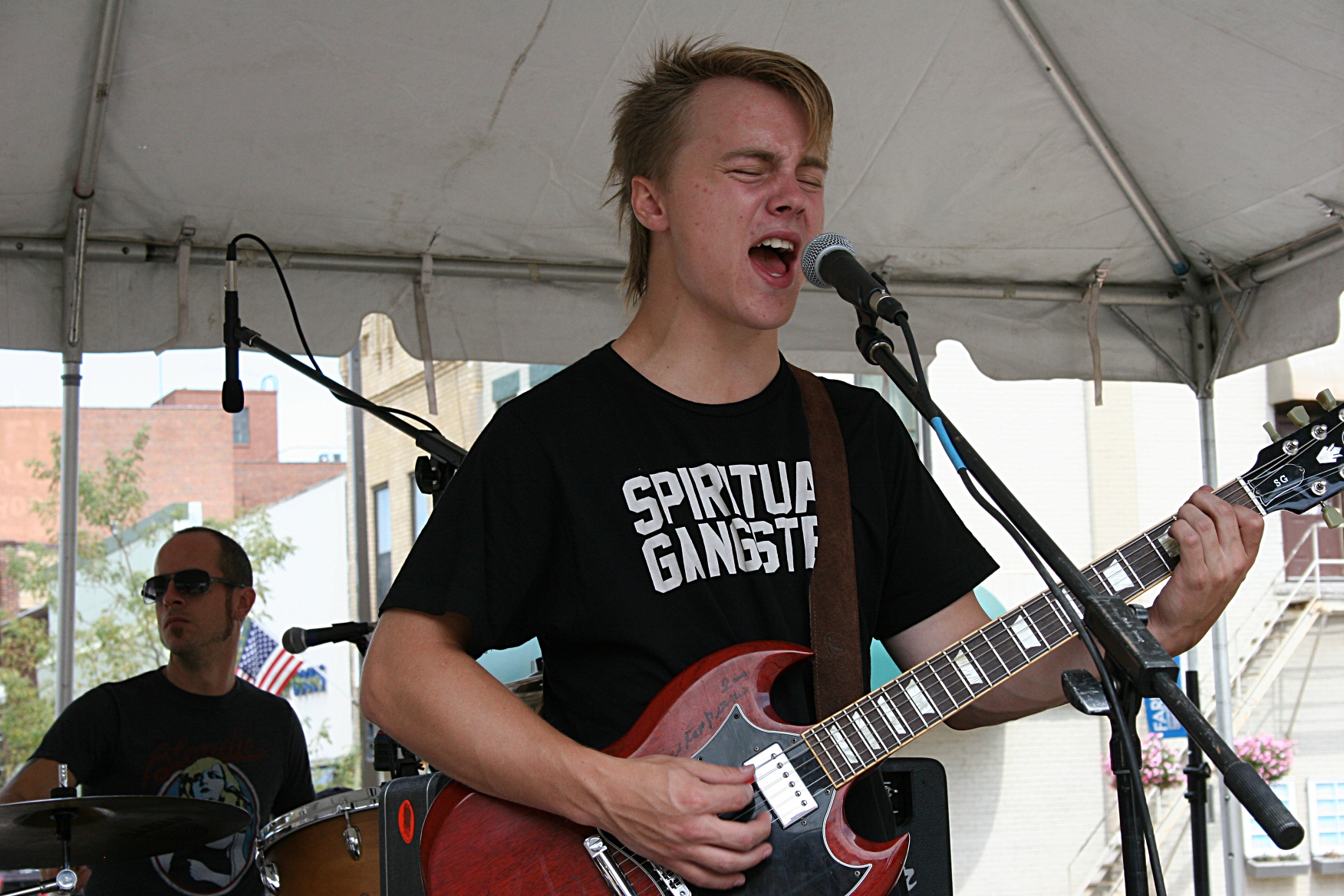
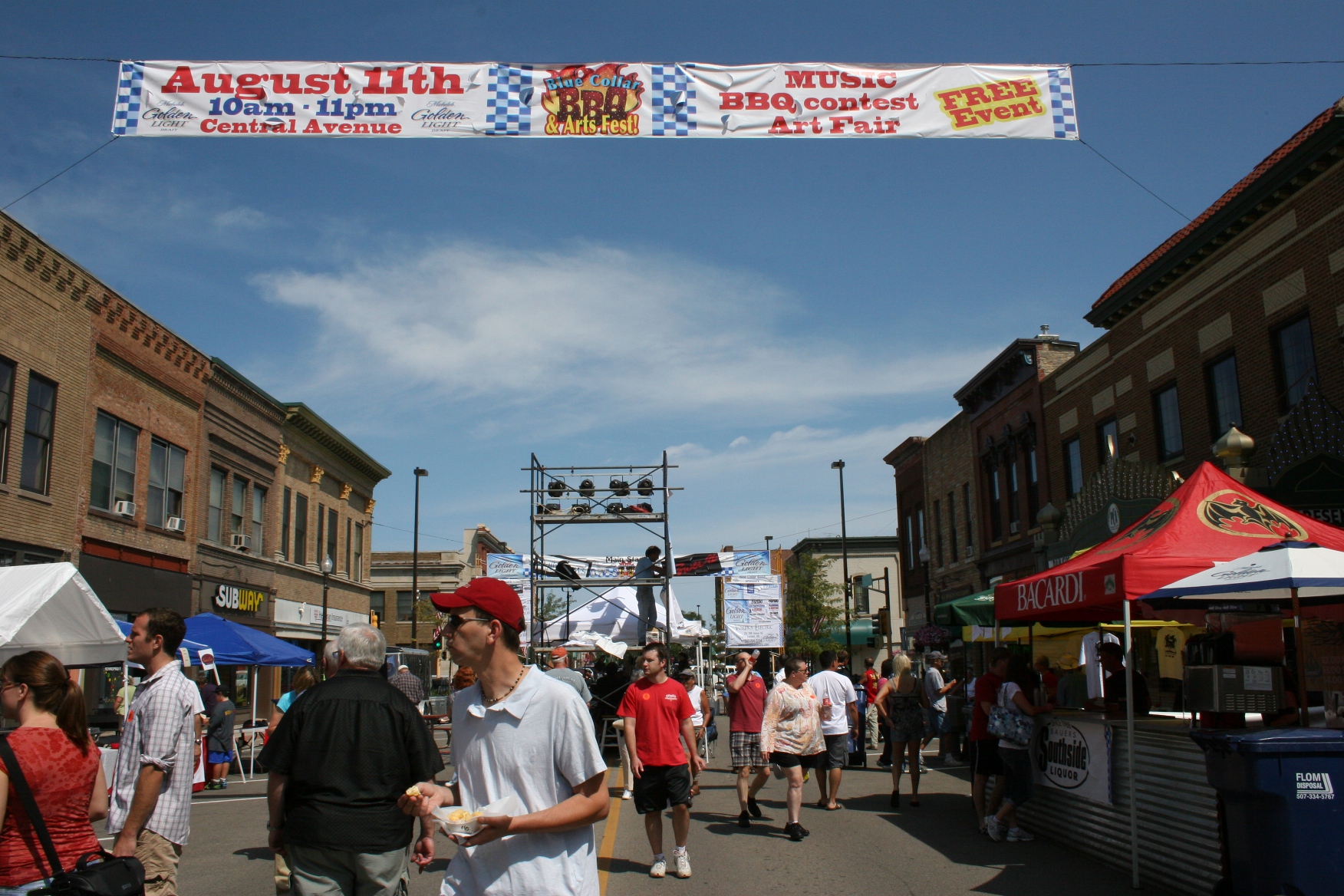
Flag-waving from an old pick-up truck during the parade.
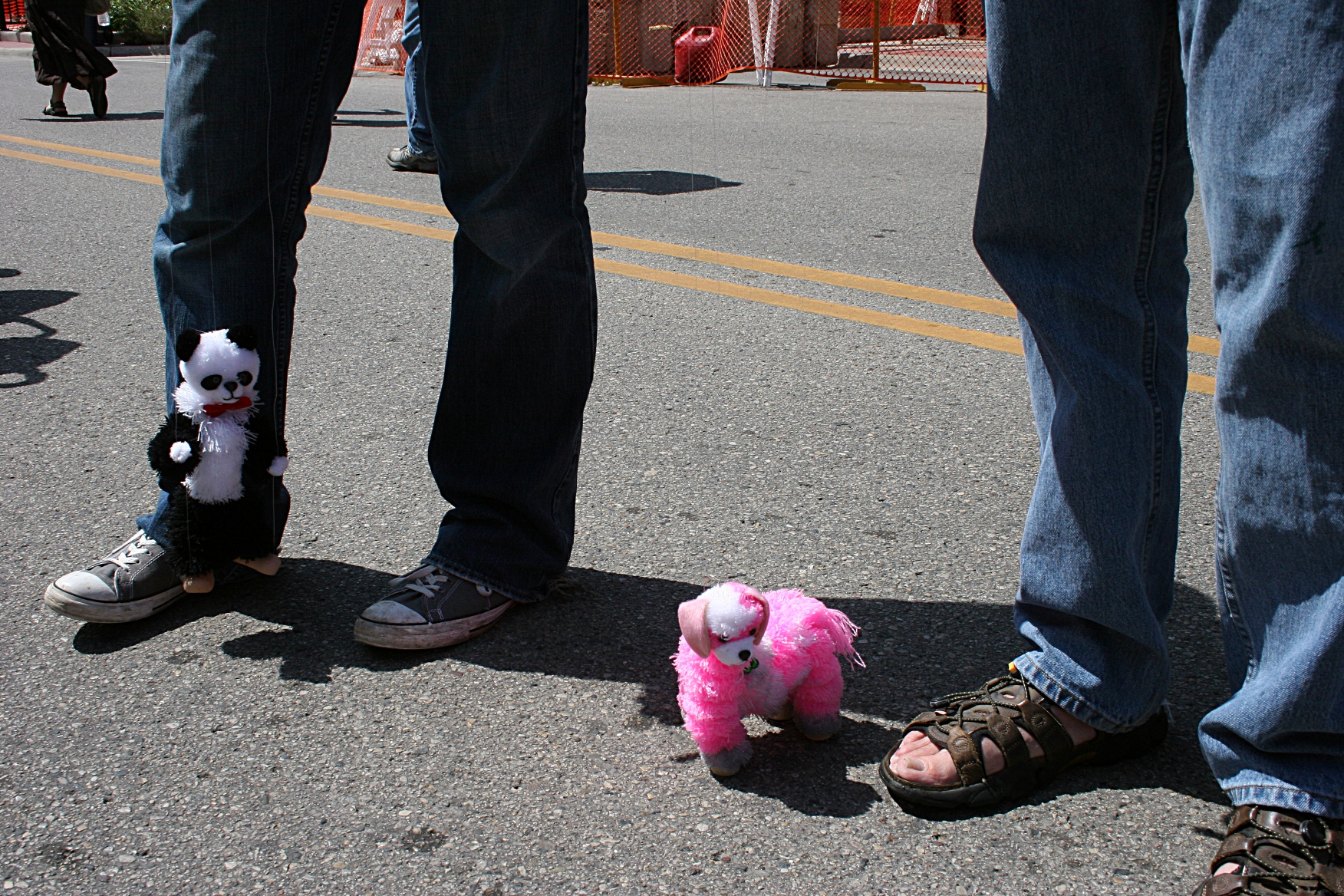
Typically we sit in the same spot on a street corner so I am assured of a wide open view to photograph the event. But this year, attempting to gain a fresh, photographic perspective on the parade, we opted for another location.

Let’s just say that things did not work out too well for us at that spot.

I’m going to take the high road here, though, and not go into details which would publicly embarrass an individual who already embarrassed himself by shouting across the street at my husband. He later walked across the street and apologized to both of us.

As I ponder that incident, the one positive I can take from the experience is this:

We are blessed to live in a country where freedom of speech is protected.

I wasn’t, of course, thinking this at the time the angry words were fired toward us. But, in retrospect, it seems the appropriate thought to have on this day when we honor those who have fought for freedom.

Several military vehicles were in the parade along with color guards and honored veterans.

Checking out the candy scooped up during the parade.

The Scouts handed out flags to parade attendees like this little girl.

I upped the contrast on this image because I wanted to emphasis the beautiful blanket on that horse.

After the parade…

© Copyright 2012 Audrey Kletscher Helbling