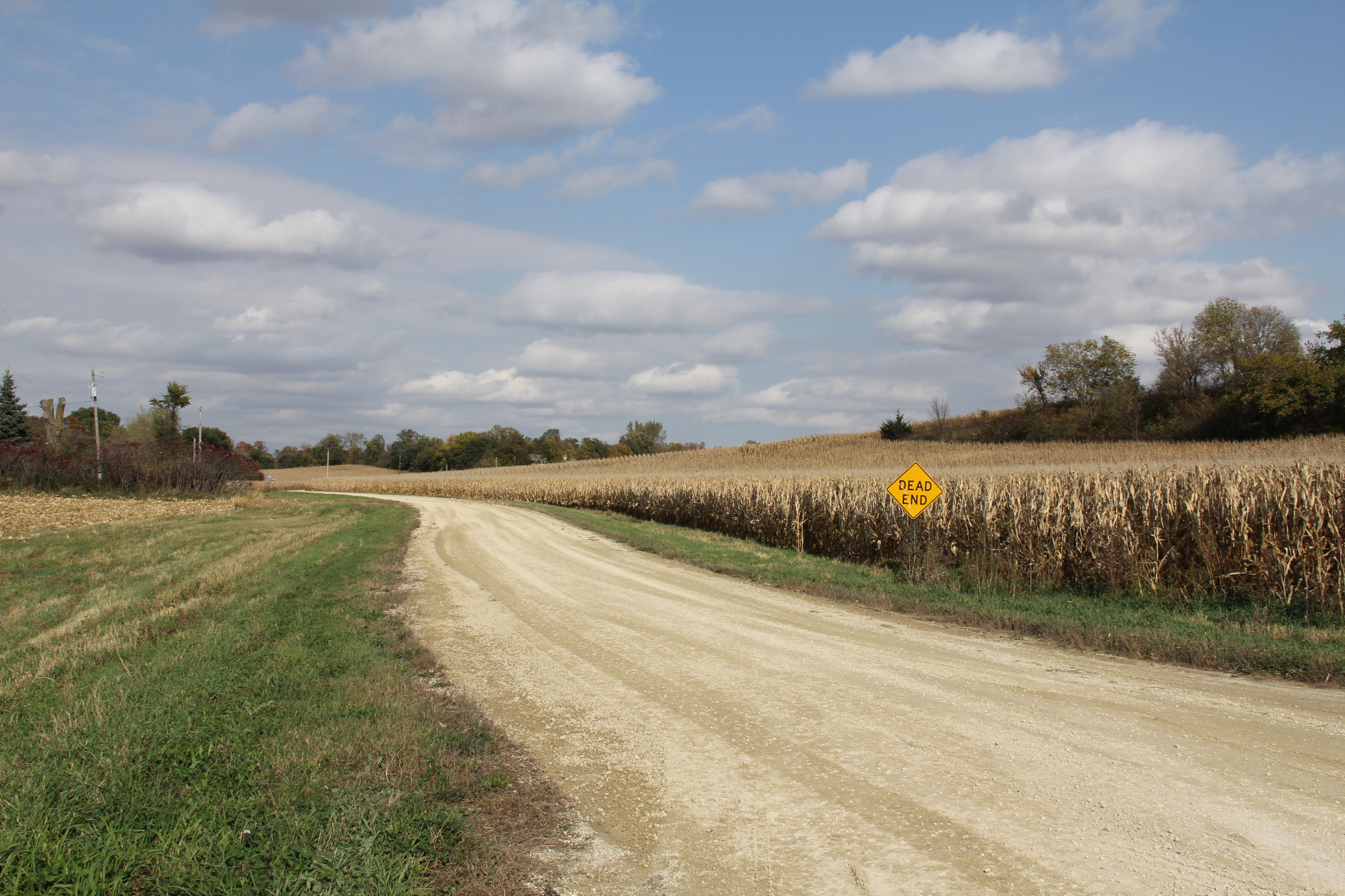
I love to follow gravel roads into the countryside, here northeast of Faribault. (Minnesota Prairie Roots copyrighted photo October 2025)
FOR THOSE OF US raised on farms, autumn draws us into the countryside like moths navigating toward a porch light.
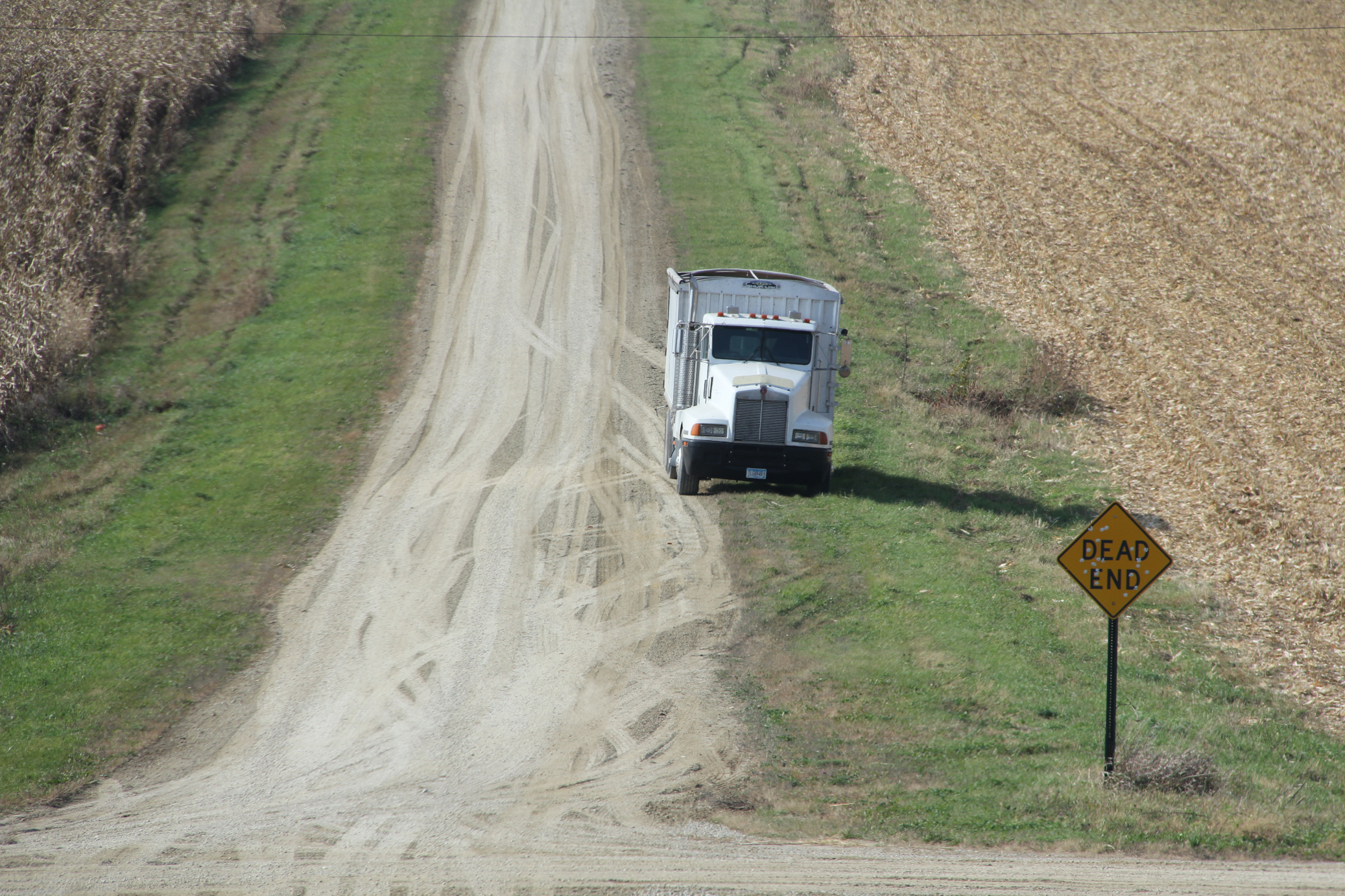
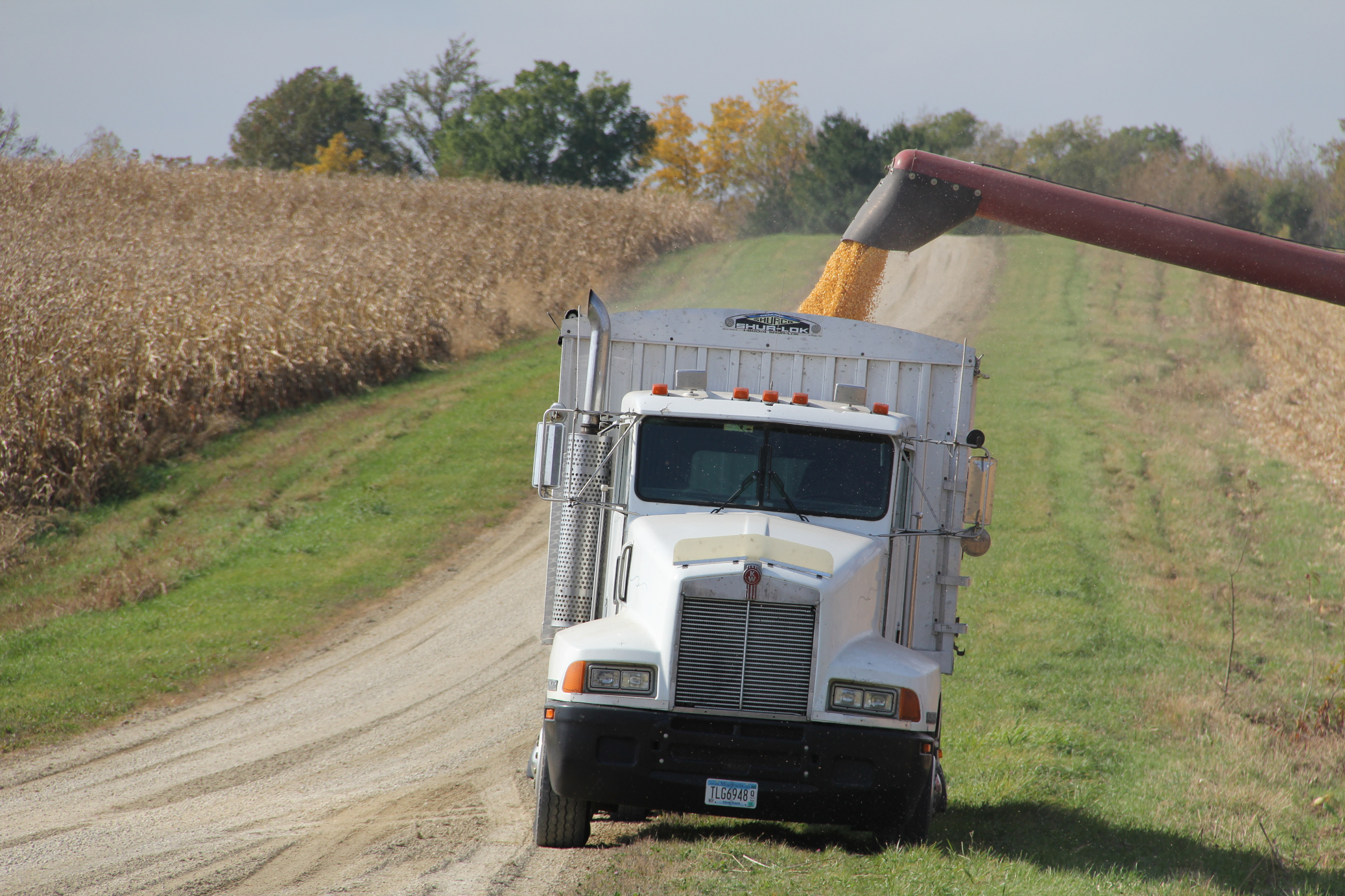
At the bottom of a steep hill, a grain truck sits beside cornfields, unharvested to the left, and with harvest in progess, right. (Minnesota Prairie Roots copyrighted photo October 2025)
It is the sights, sounds and smells of harvest that pull me into the land, deep into rural Minnesota this time of year. Here farmers labor to bring in the crops before winter settles in.
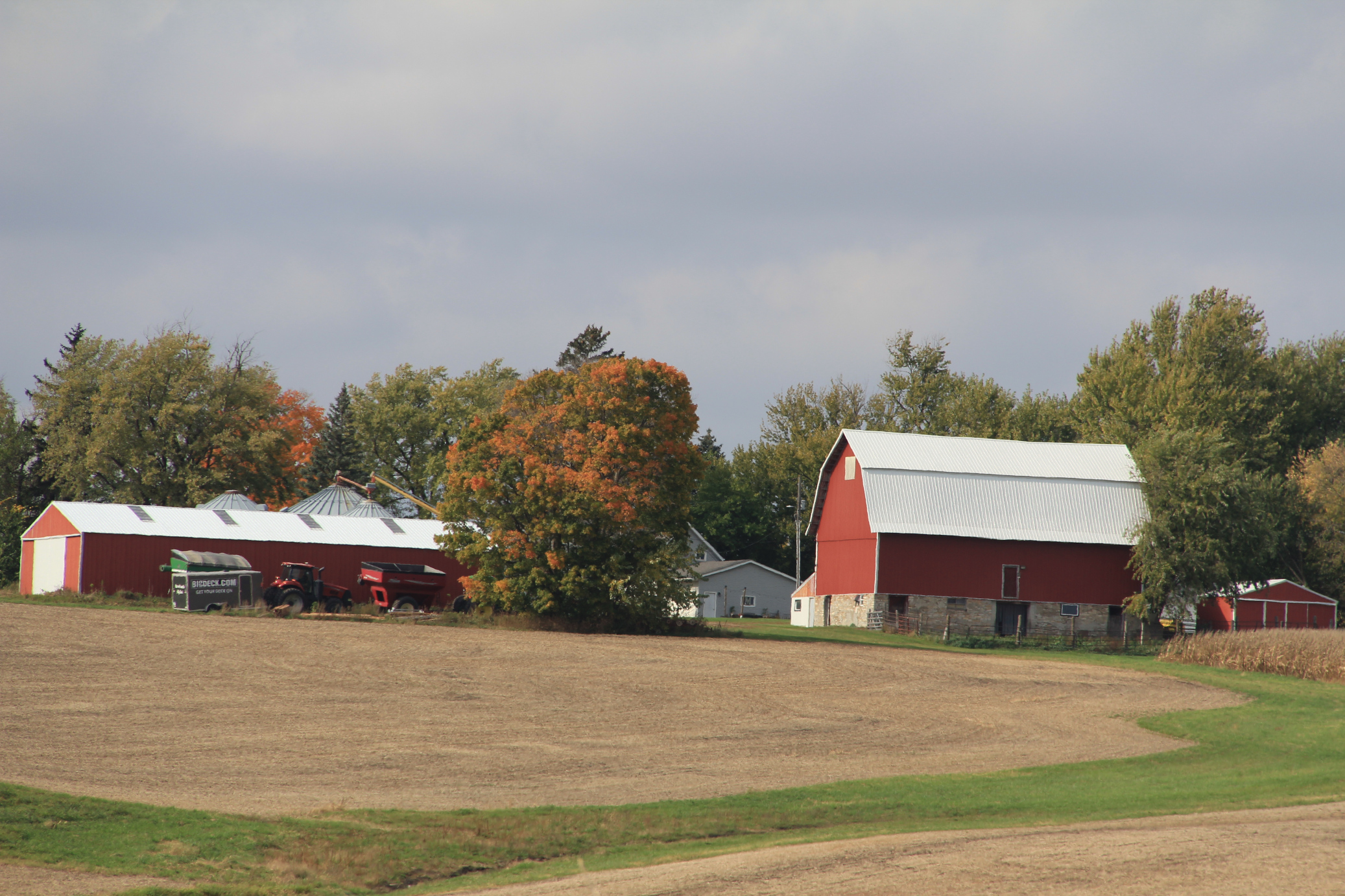
A farm site northeast of Faribault hugs fields. (Minnesota Prairie Roots copyrighted photo October 2025)
For me, this is a sensory experience that takes me back six decades to the southwestern Minnesota crop and dairy farm of my childhood. While farm equipment has changed and most farmers farm much more land than my dad ever did, harvest is still harvest.
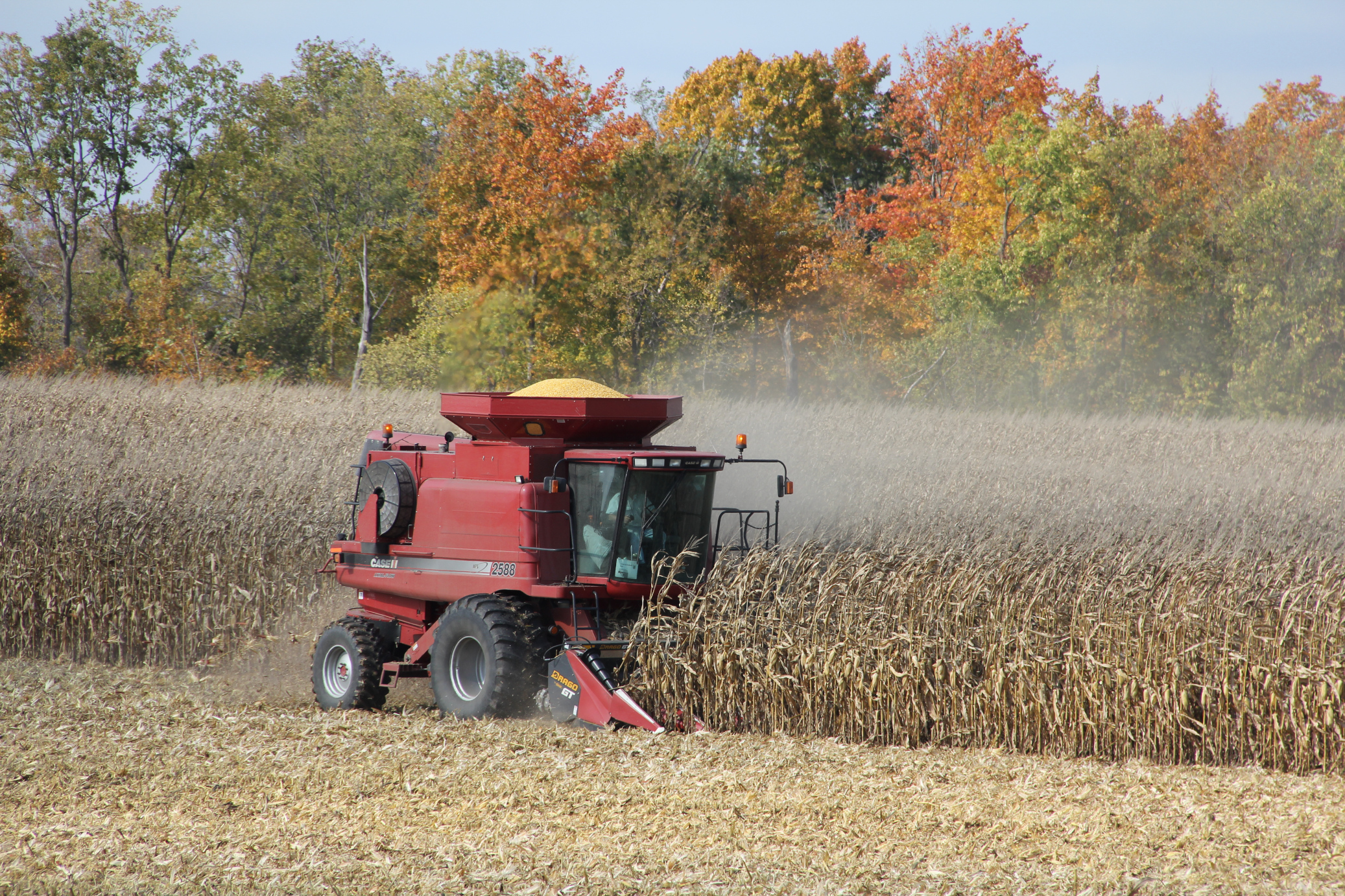
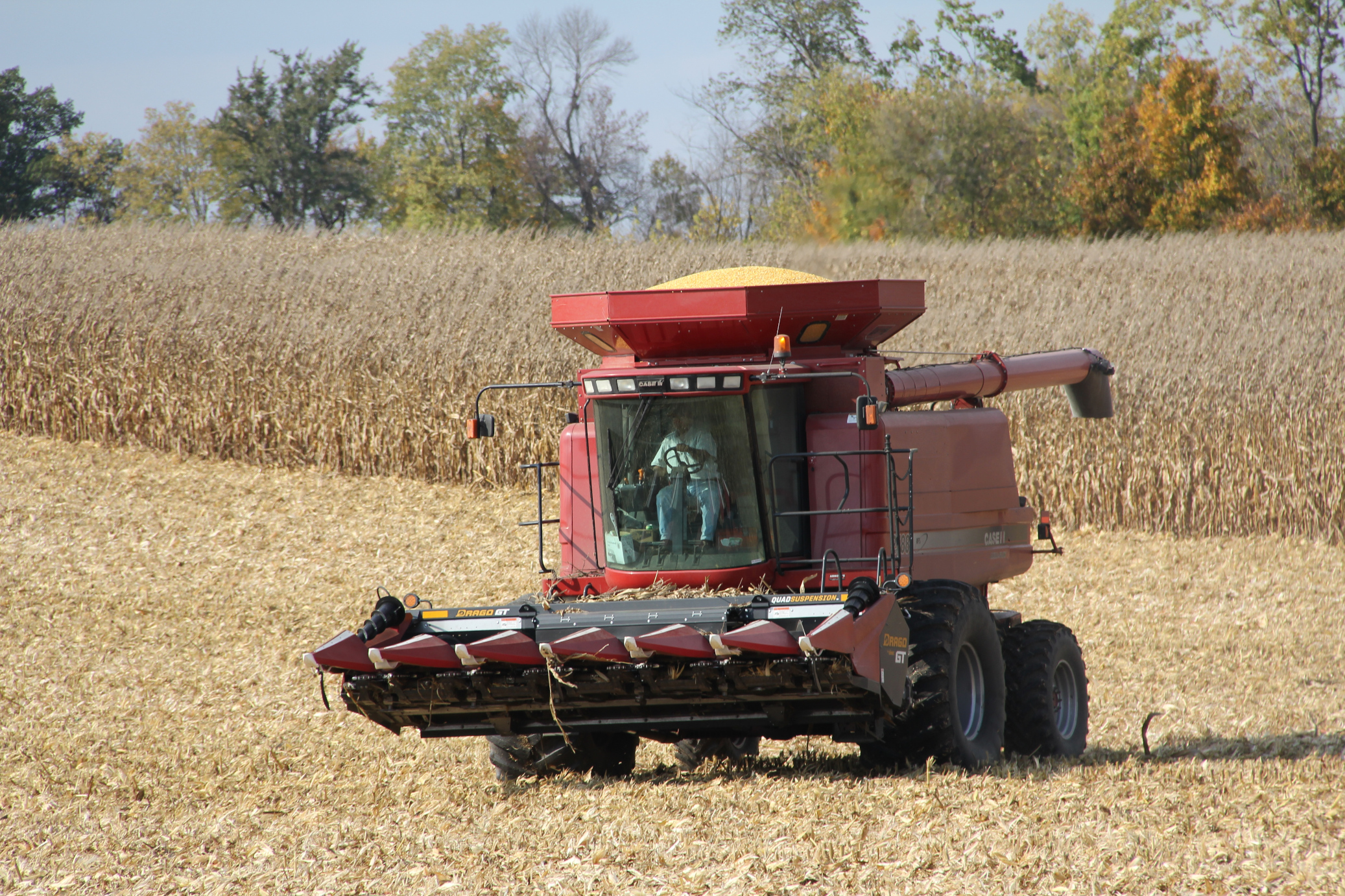
Picking corn northeast of Faribault. (Minnesota Prairie Roots copyrighted photo October 2025)
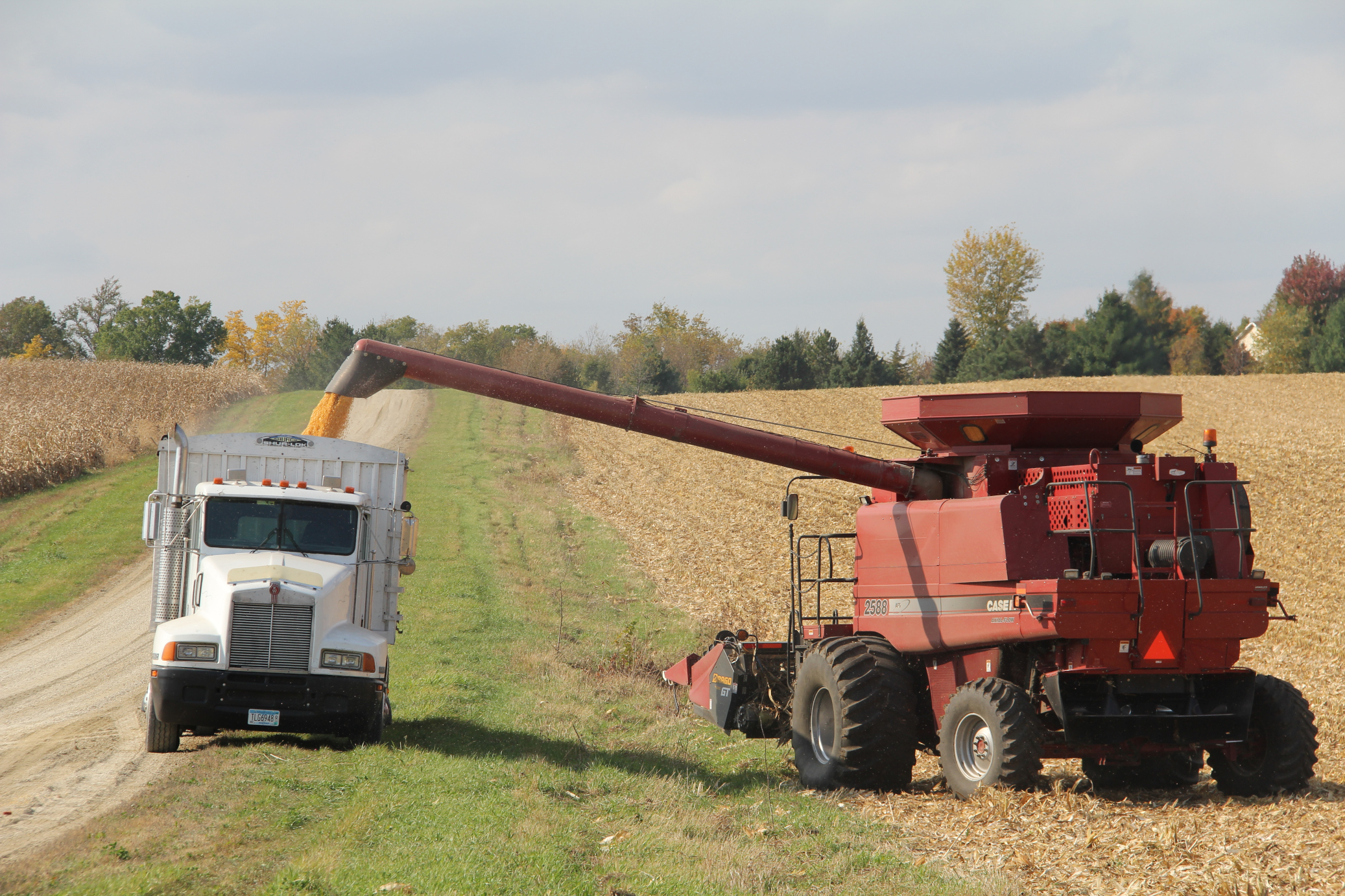
A farmer steers his combine toward a grain truck to unload just harvested corn. (Minnesota Prairie Roots copyrighted photo October 2025)
Transferring corn from combine to grain truck. (Minnesota Prairie Roots copyrighted photo October 2025)
Dust flies as combines chomp across corn and soybean fields. Engines roar. Golden kernels of corn and orbs of soybeans flow from combines into trucks and grain wagons. The land smells of earth and drying fields, a familiar scent even now decades removed from farm life.
Corn flows from combine into grain truck. (Minnesota Prairie Roots copyrighted photo October 2025)
I can almost feel the pressure farmers experience while they race against Mother Nature to finish the harvest. Long days and nights in the field are all part of harvesting as farmers gather in a growing season of efforts. And then hope for good crop prices.
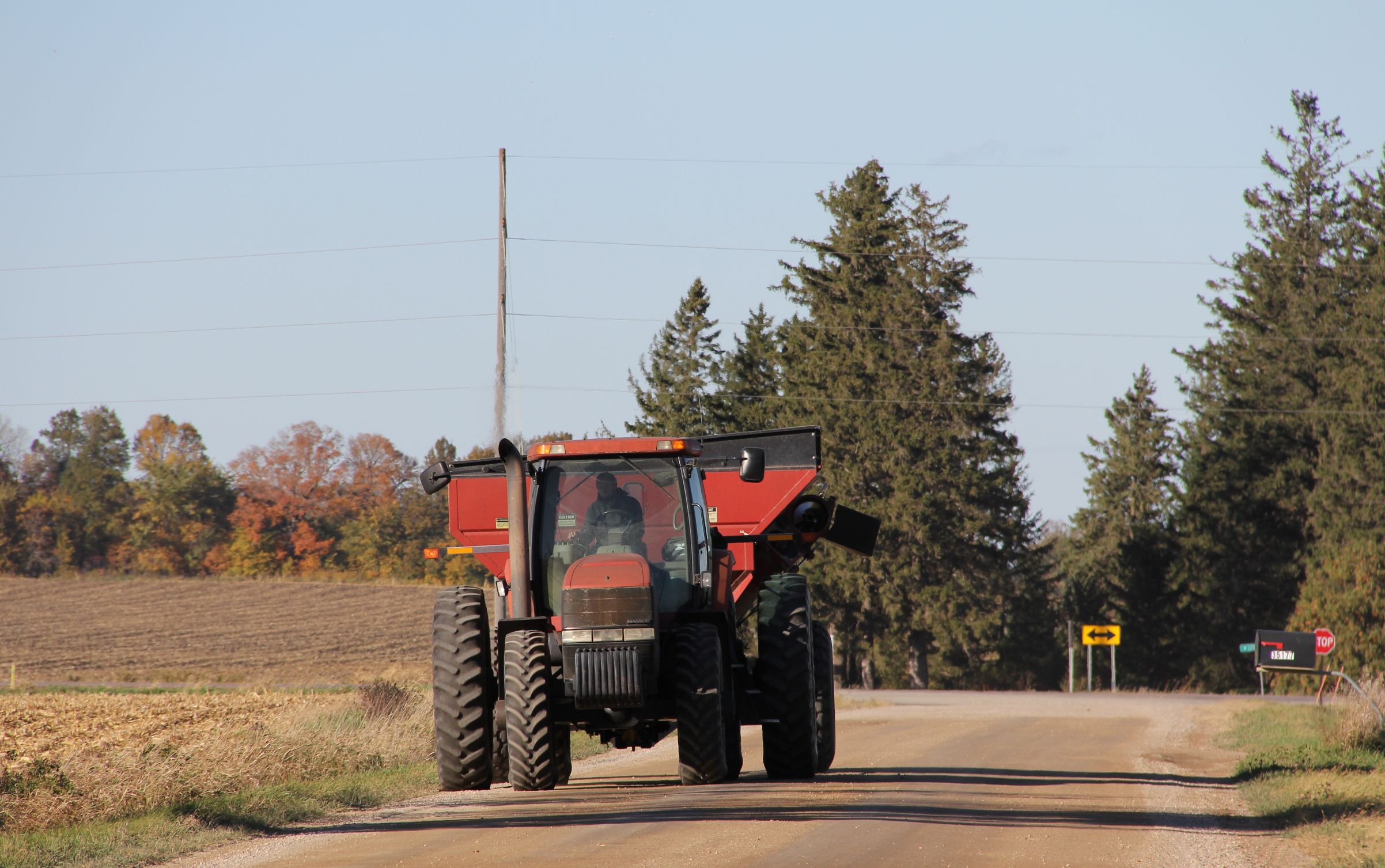
West of Montgomery a tractor pulls a grain wagon along a gravel road near Richter Woods County Park. (Minnesota Prairie Roots copyrighted photo October 2025)
There’s so much uncertainty in farming. So much hinging on weather, the economy, the market. So many decisions to make about when to sell, when to store, when to invest in new equipment and much more. I couldn’t handle the stress.
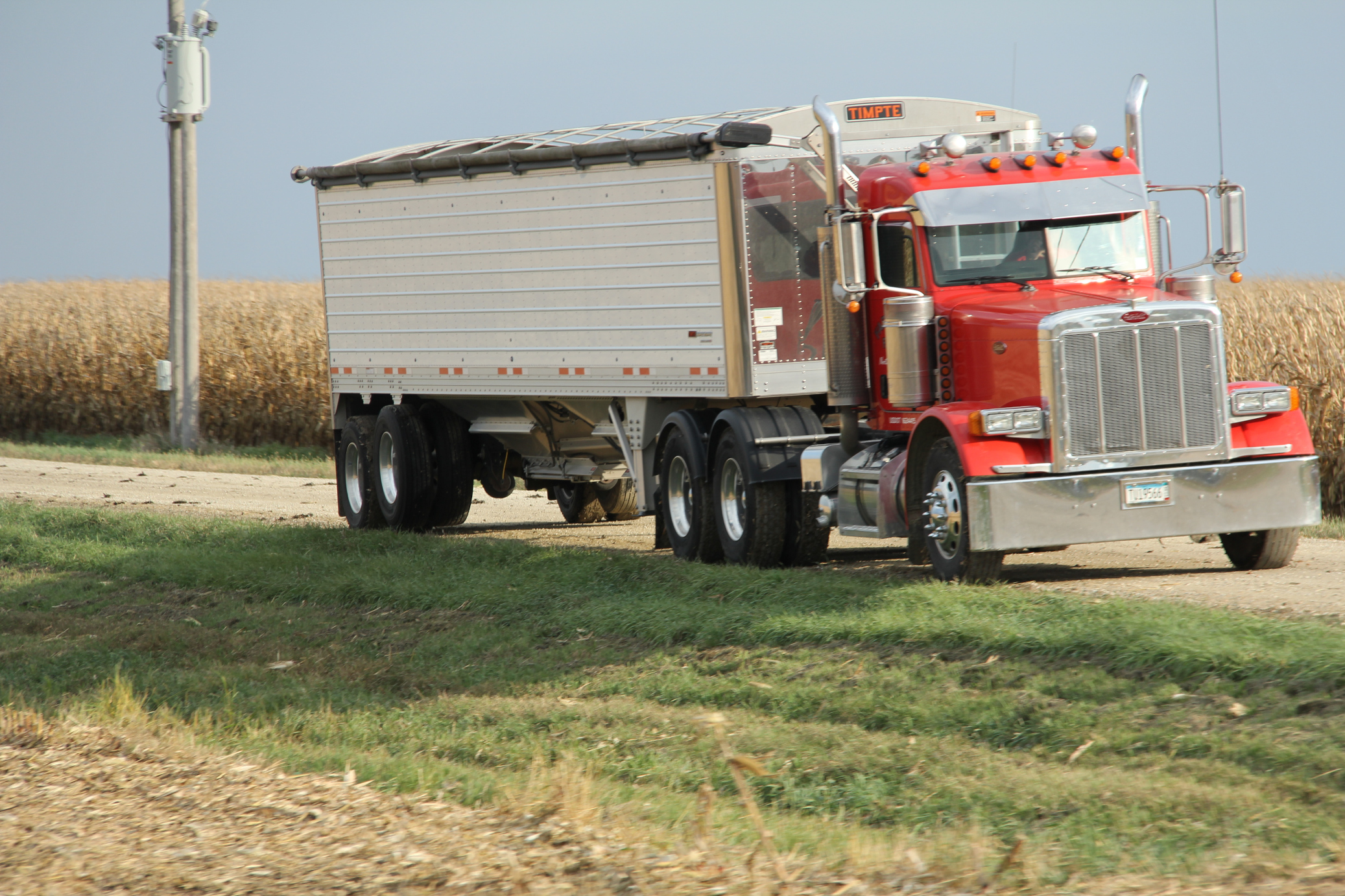
This time of year, parked grain trucks are a common site along fields and roads, this one by a cornfield in the Nerstrand area. (Minnesota Prairie Roots copyrighted photo October 2025)
Farming is not easy with its risks and challenges and uncertainties. Yet, there’s a certain reward for crop farmers in seeing seeds they’ve sown germinate and grow into thriving plants under the spring and summer sun. There’s a certain satisfaction in harvesting those mature crops each September and October.
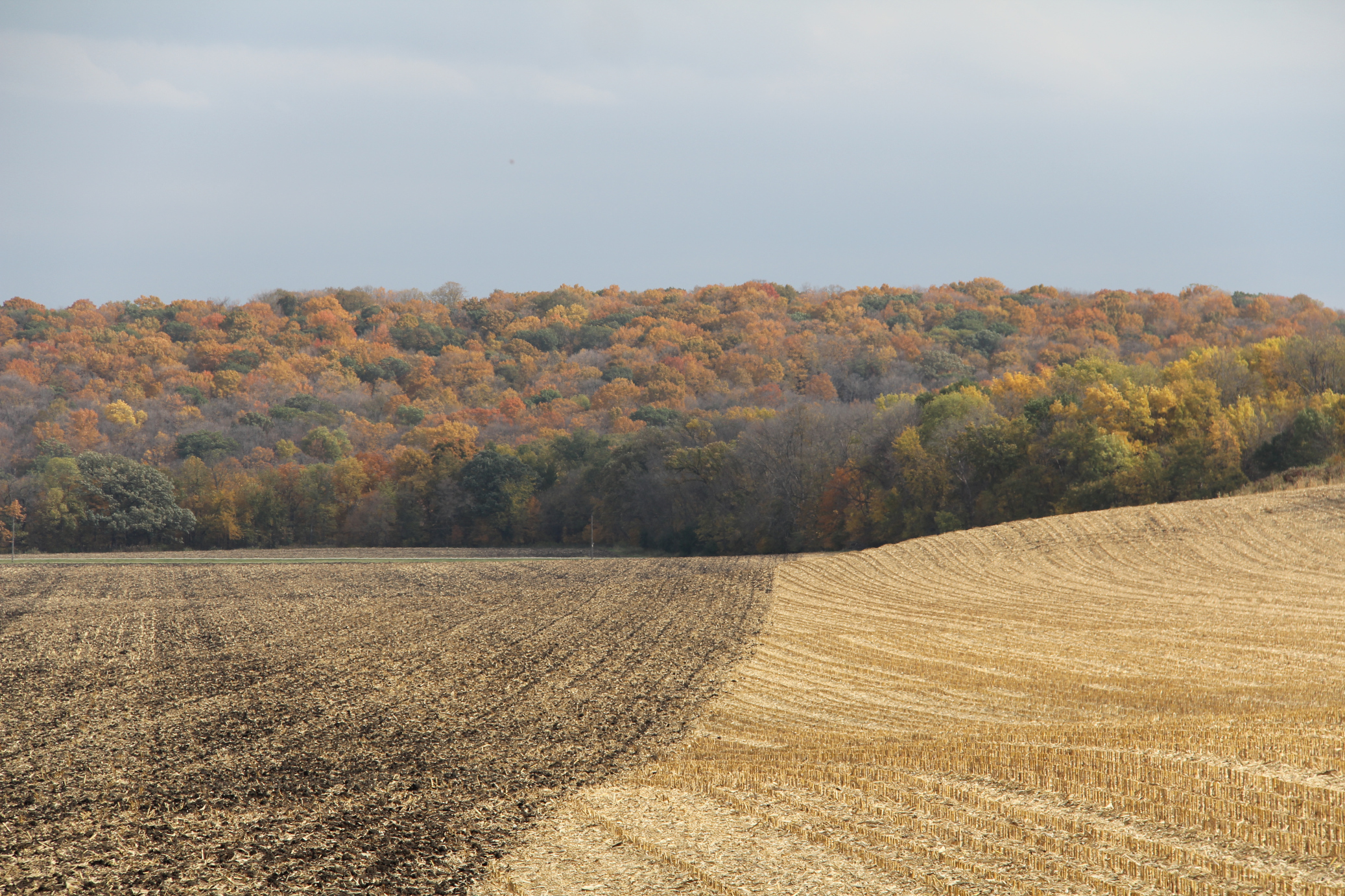
Northeast of Faribault, a colorful tree line backdrops harvested fields. (Minnesota Prairie Roots copyrighted photo October 2025)
And for me, raised on the land and witness to many harvests, I feel memories rushing back as I watch combines move across farm fields deep in the southern Minnesota countryside. I feel reconnected to the land, the place that embraced and helped shape me as a person, writer, photographer and poet.
Combining soybeans in rural Rice County, Minnesota. (Minnesota Prairie Roots copyrighted file photo October 2022)
WHEN I FIRST READ the message bannering the United States Department of Agriculture website during the current government shutdown, my jaw dropped. In a two-sentence statement, “The Radical Left Democrats” are blamed for the closure of the federal government. How unprofessional, I thought, to so blatantly put politics out there on a website designed to help America’s farmers. But then again, why should this surprise me?
United States Secretary of Homeland Security Kristi Noem is doing the same in a video message blaming Democrats for the shutdown. She expects this to be broadcast in airport terminals. Many are opting not to air her clearly political statement. And they shouldn’t. It’s unprofessional and wrong in more ways than I can list, no matter what your political affiliation may be.
But back to that message on the USDA website. It goes on to say that President Donald Trump wants to keep the government open “and support those who feed, fuel and clothe the American people.” Now that is certainly a noble statement at face value, one we could all applaud. Who doesn’t want to support our farmers? But in the context of what the President has done to farmers, the statement seems laughable.
Rural Minnesota, planted in corn and soybeans. (Minnesota Prairie Roots copyrighted file photo October 2024)
Here in the heartland, farmers have lost a major market for soybeans, my state’s top agricultural export. China has stopped buying soybeans from not only Minnesota, but America. That’s billions of dollars in lost income. And all because of the ongoing trade war between the U.S. and China, begun by the man who slapped tariffs—now averaging 58 percent—on Chinese imports with a threat to increase that to 100 percent. I’m no economist. But even I understand China’s retaliatory tariffs and actions to tap other markets for soybeans. They went to Brazil and Argentina.
And now President Trump proposes sending $20 billion in aid to Argentina, all tied to an upcoming election there. Why would we bail out a country exporting their soybeans to China while our own financially-strapped farmers are suffering because they’ve lost a key market? This makes no sense to me. Again, I’m not an economist or a politician, simply an ordinary American citizen, with a farm upbringing (and who decades ago freelanced for the Minnesota Soybean Growers Association), questioning the logic of any of this.
Even without the Argentinian component tossed into the mix, there’s more. President Trump has proposed an aid package for farmers to help them get through the financial crisis he created via his tariffs and the resulting trade war with China. That aid would come from the money collected from tariffs. Now I know farmers—my dad was one—are fiercely independent and would rather have a market for their cash crops than government aid. If not for the tariffs…
Trucks await the harvest. (Minnesota Prairie Roots copyrighted file photo October 2022)
As the harvest continues here in Minnesota, I can’t help but feel for those who work the land, who continue to face so many uncertainties, financial challenges and stressors. Interest rates on loans remain high. Market prices remain low. Land rents continue to rise. Equipment and other costs are high. And on and on, including the loss of the long-standing soybean export market to China, which quite likely may never be reclaimed.
This is becoming a crisis situation for farmers—those who feed, fuel and clothe Americans. From fields to small town Main Street, rural America is hurting. And politically-biased blame words published on a government website aren’t helping.
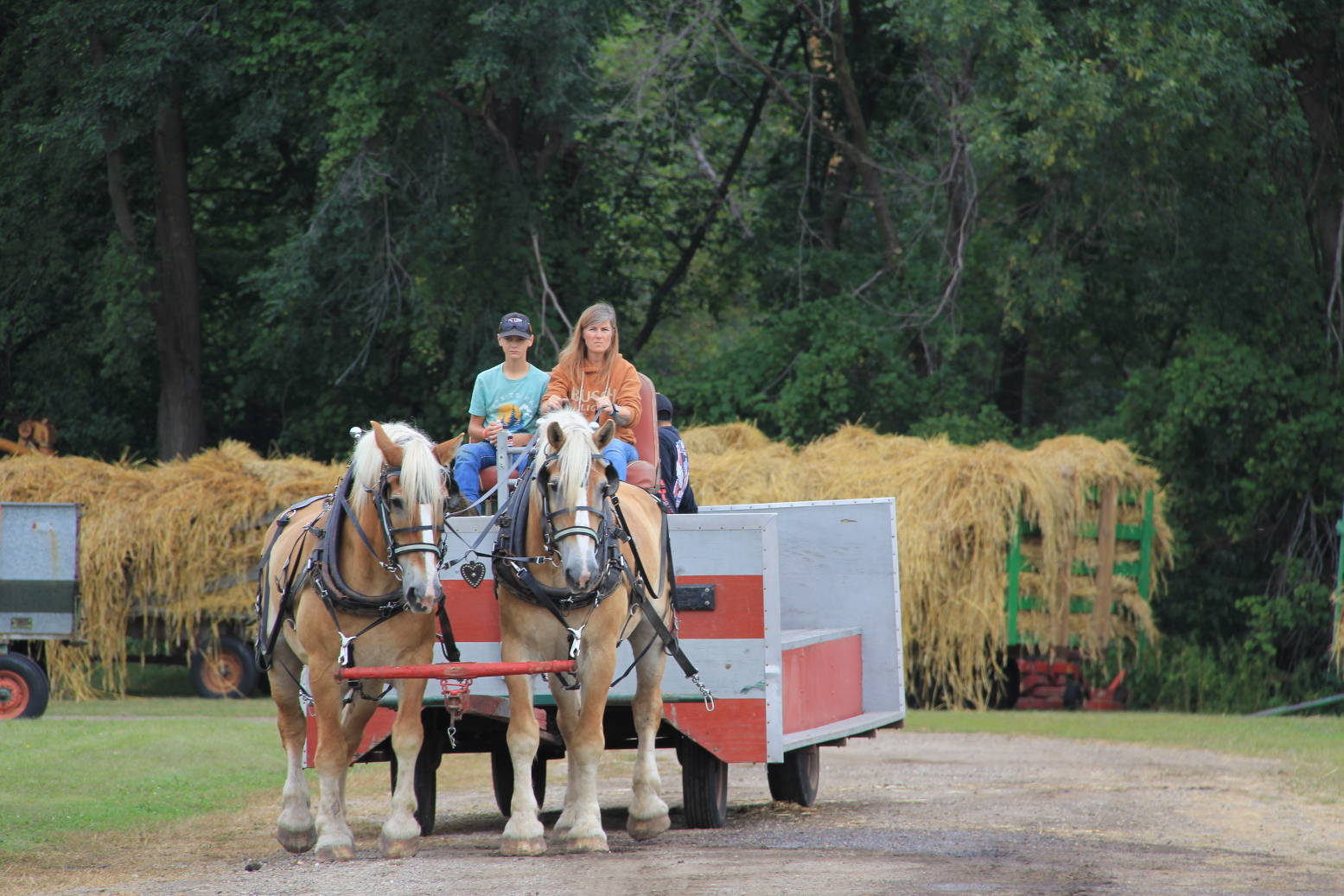
Wagons heaped with harvested oats provide an interesting backdrop for the approaching horse-drawn wagon at the Rice County Steam & Gas Engines Fall Show. (Minnesota Prairie Roots copyrighted photo August 2025)
PHOTOS TELL STORIES, record moments in time, preserve memories, prompt emotional reactions, convey messages and more.
The first picture I took at the farm show, just outside the entry gate. I love the creativity and humor in this scene. (Minnesota Prairie Roots copyrighted photo August 2025)
My venture into photography began when I studied journalism in college with a photography class as part of the degree requirement. This was back in the day of film and darkrooms. Chemicals, water baths and contact sheets were part of a long process to get from photo snapped to photo printed.
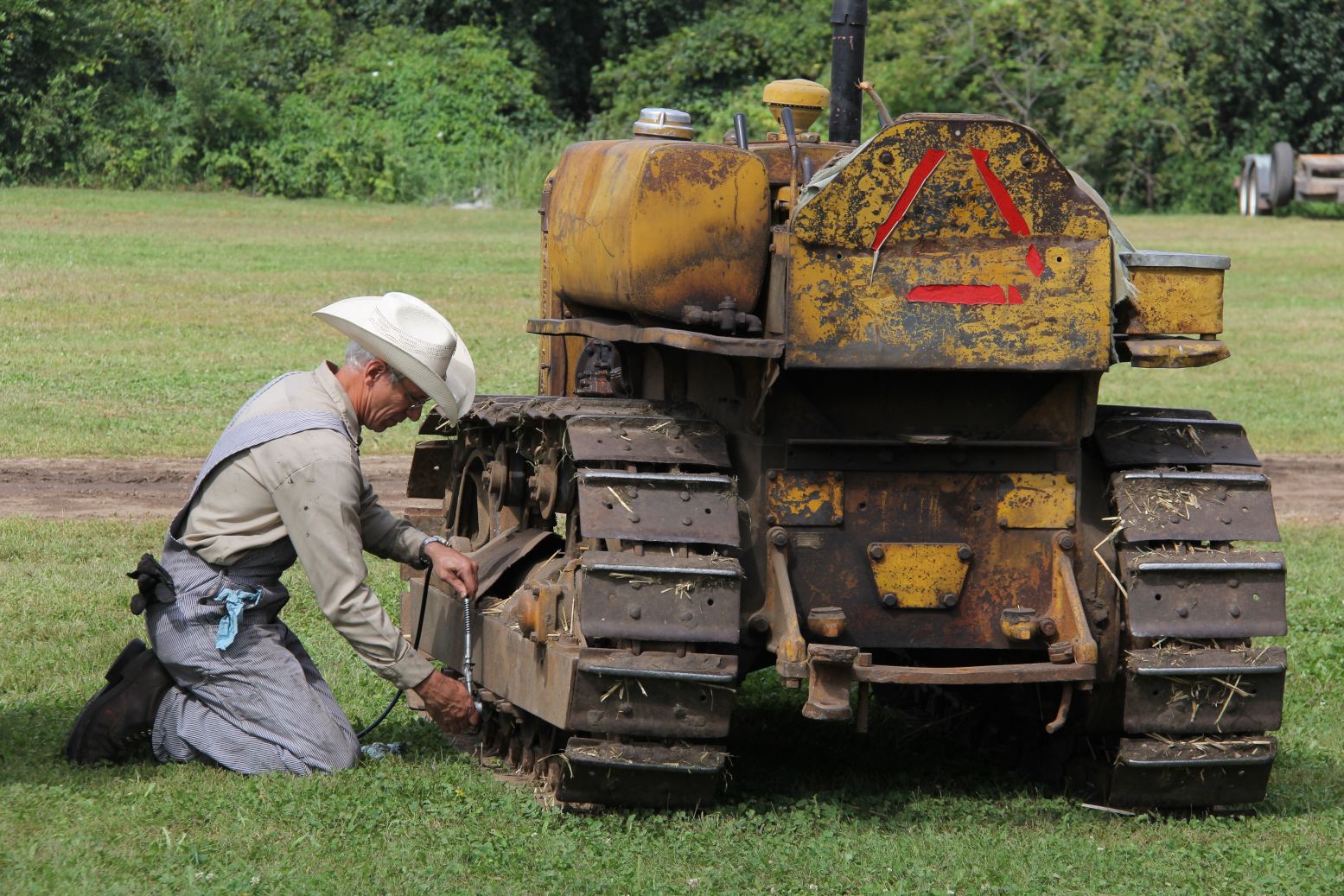
I love capturing moments like this of someone so focused on a task that they are unaware of my presence. (Minnesota Prairie Roots copyrighted photo August 2025)
During my twenties working as a small town newspaper reporter, I honed the craft of photography. I juggled interviews and note taking with shooting photos. Today’s reporters do the same unless they are employed by a metro newspaper with a staff photographer.
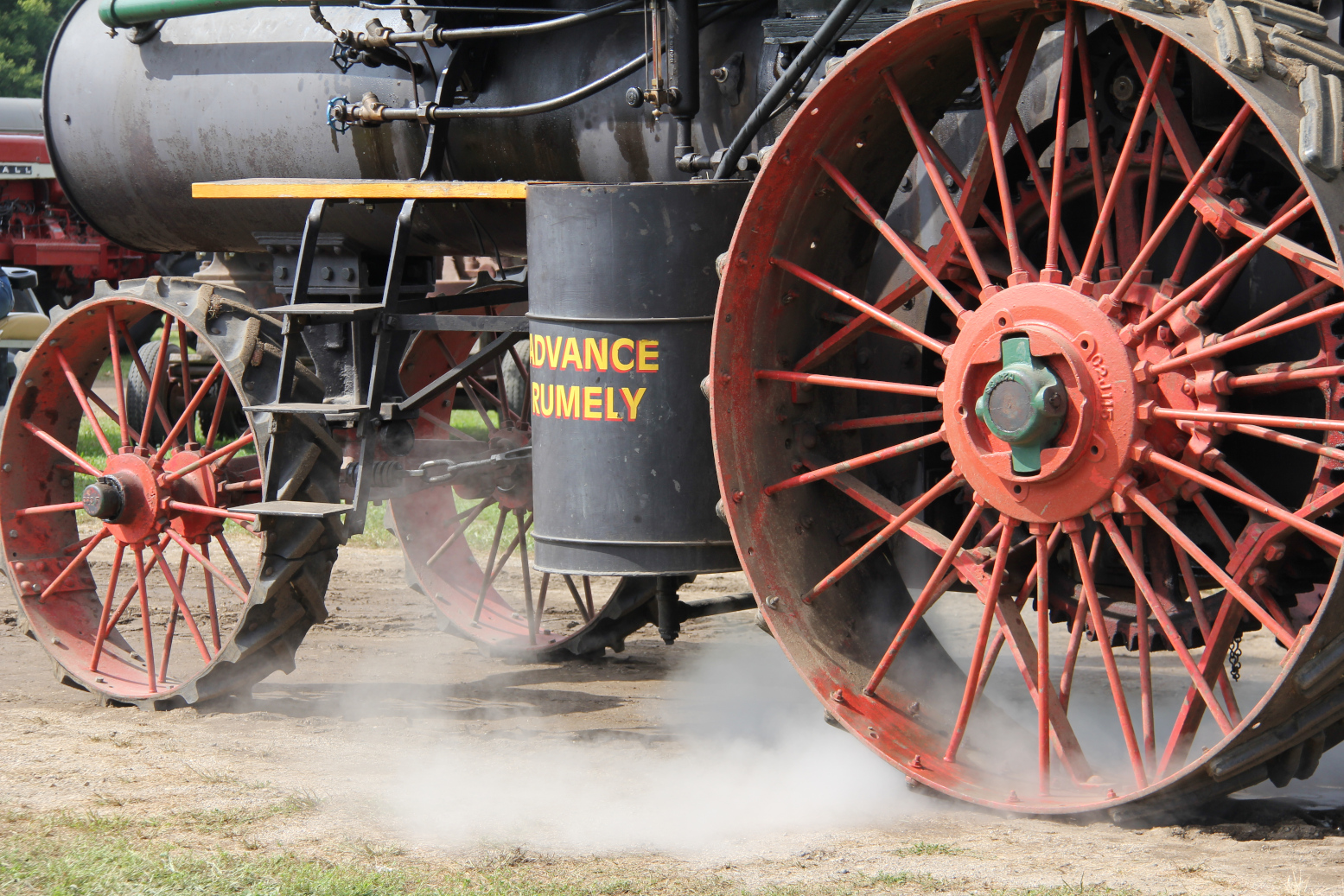
I opted to zoom in on this mammoth steam engine, focusing on the steam and wheels, emphasizing the power of this long ago agricultural work horse. (Minnesota Prairie Roots copyrighted photo August 2025)
After a while, I got comfortable with the camera, confident in my abilities to shoot images to accompany hard news, features and other stories. Practice may not make perfect, but it certainly builds skills.
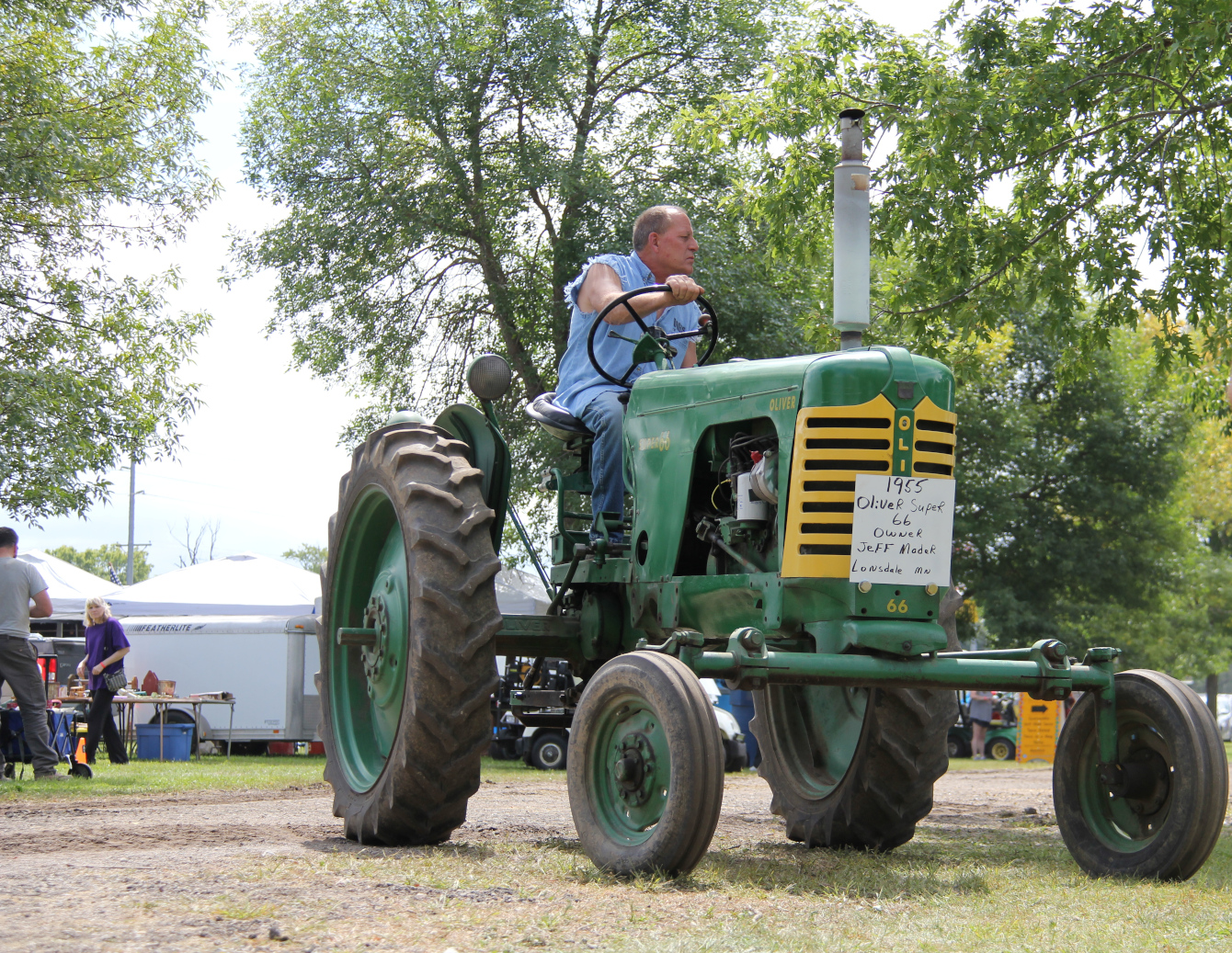
I was sitting on the ground underneath a tree eating lunch when I aimed my camera lens up and took this photo of a guy driving this 1955 Oliver Super 66.The perspective makes this photo. (Minnesota Prairie Roots copyrighted photo August 2025)
I’ve grown to love photography through the years, especially after acquiring a digital camera while freelancing for a Minnesota magazine. Digital unleashed the photo creative in me. I no longer had to worry about the cost of film or running out of film. So I took a lot more photos, tried new perspectives, began to see the world through an artistic lens. More often than not, I find myself thinking, oh, that would make a good photo.
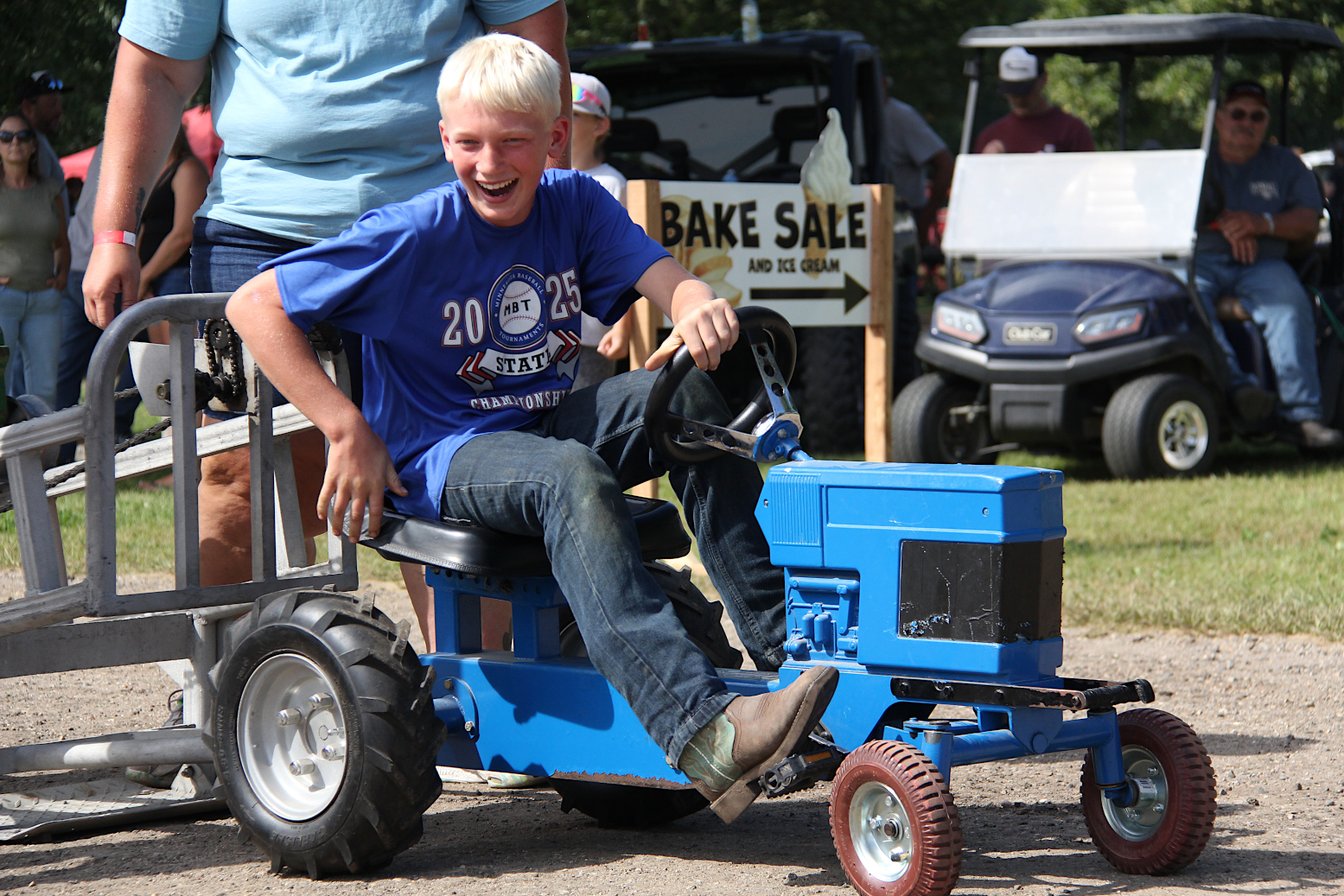
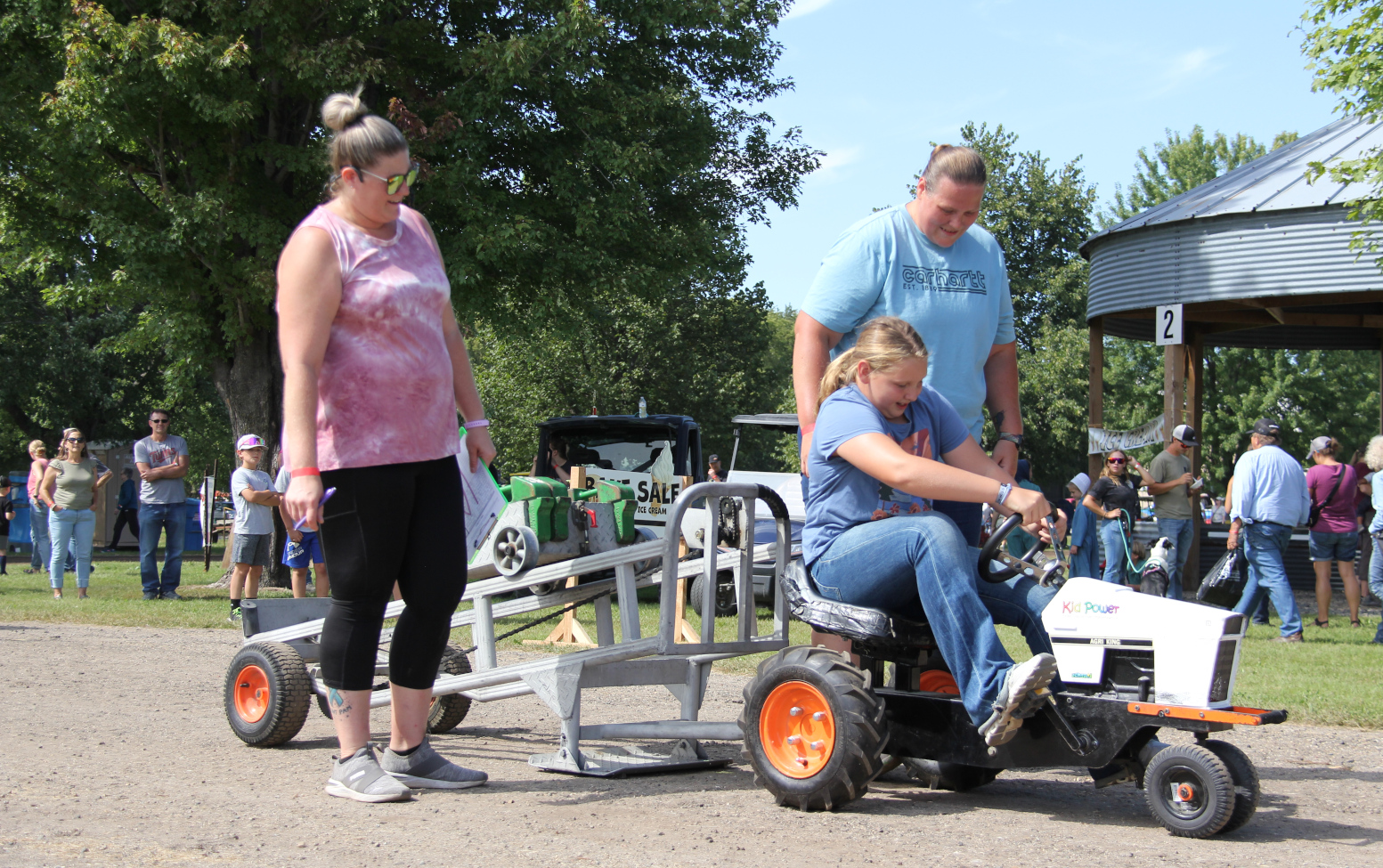
I didn’t even realize I’d captured this joyful moment until I uploaded my photos to the computer. I’d been firing off shots of the kids’ pedal tractor pull and this one, among all, is my favorite. It shows a moment of pure happiness. (Minnesota Prairie Roots copyrighted photo August 2025)
But vision issues are now affecting and limiting my photography. My eyes are misaligned, meaning my brain works hard (even with prism-heavy prescription eyeglasses) to see. It’s exhausting. I do my best. Yet it’s challenging sometimes to tell if an image is sharp. I can feel the strain on my eyes when I use my camera for an extended time and when I process images on my computer.
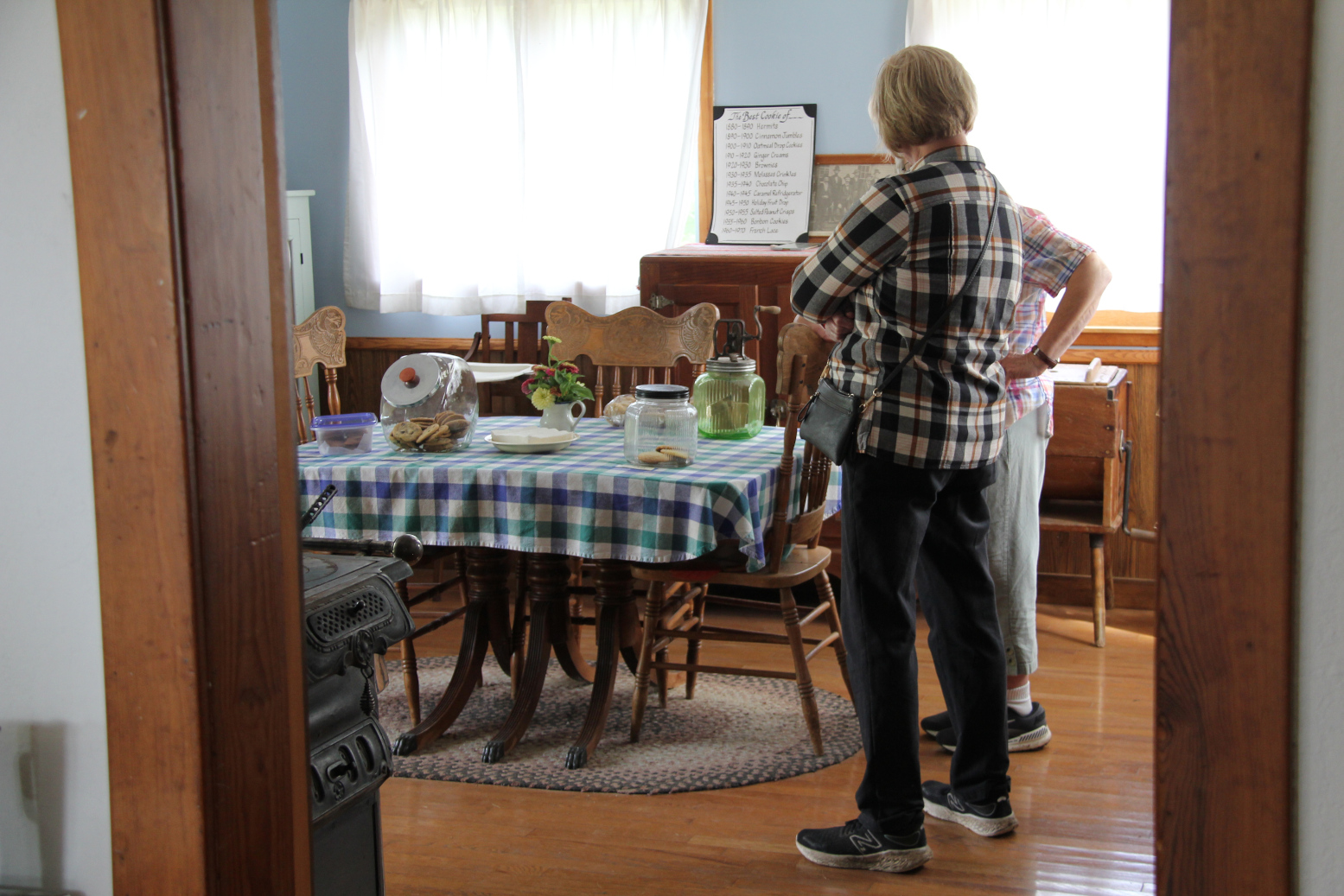
I stood in the doorway of the dining room to photograph these women visiting in the kitchen of the 1912 farmhouse where homemade cookies awaited guests. I like how the doorframe frames this photo, as if the viewer is eavesdropping on a private conversation. (Minnesota Prairie Roots copyrighted photo August 2025)
Still, I persist. Until I either have another bilateral strabismus eye surgery or try a different (and expensive) prescription, this is the way it is. At least I can see. I manage. I can still create with my 35mm Canon EOS 60D.
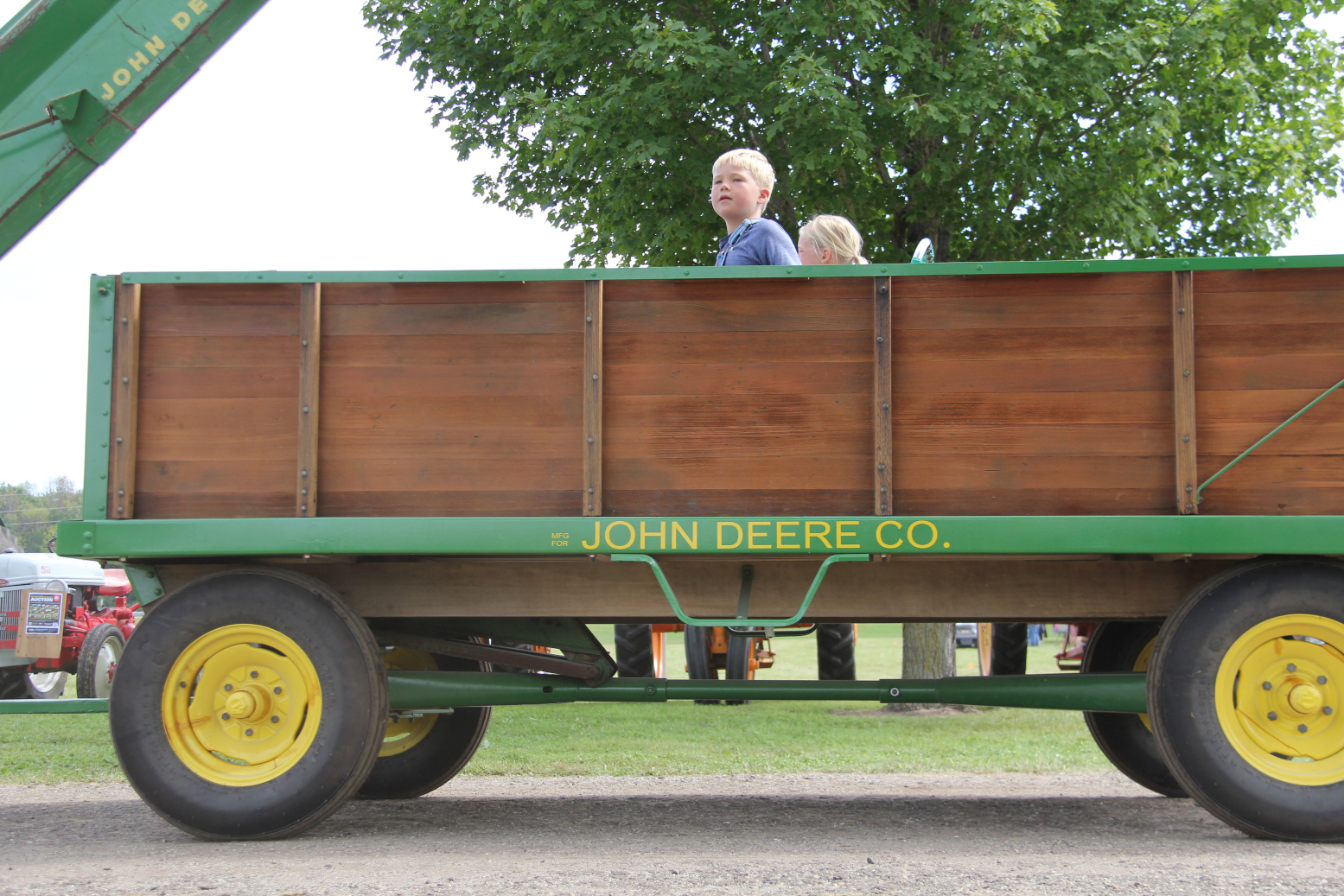
During the tractor parade, I noticed these sweet kids riding in a wagon behind an old corn picker mounted on a John Deere tractor. I like the perspective and that part of the corn picker shows in the upper left corner of this photo. (Minnesota Prairie Roots copyrighted photo August 2025)
Last Saturday I did the longest photo shoot I’ve done in several years. I took hundreds of images during six hours at the Rice County Steam & Gas Engines Fall Show. It’s a fun event to document with so much happening and so many people attending. I don’t want to stop doing what I love.
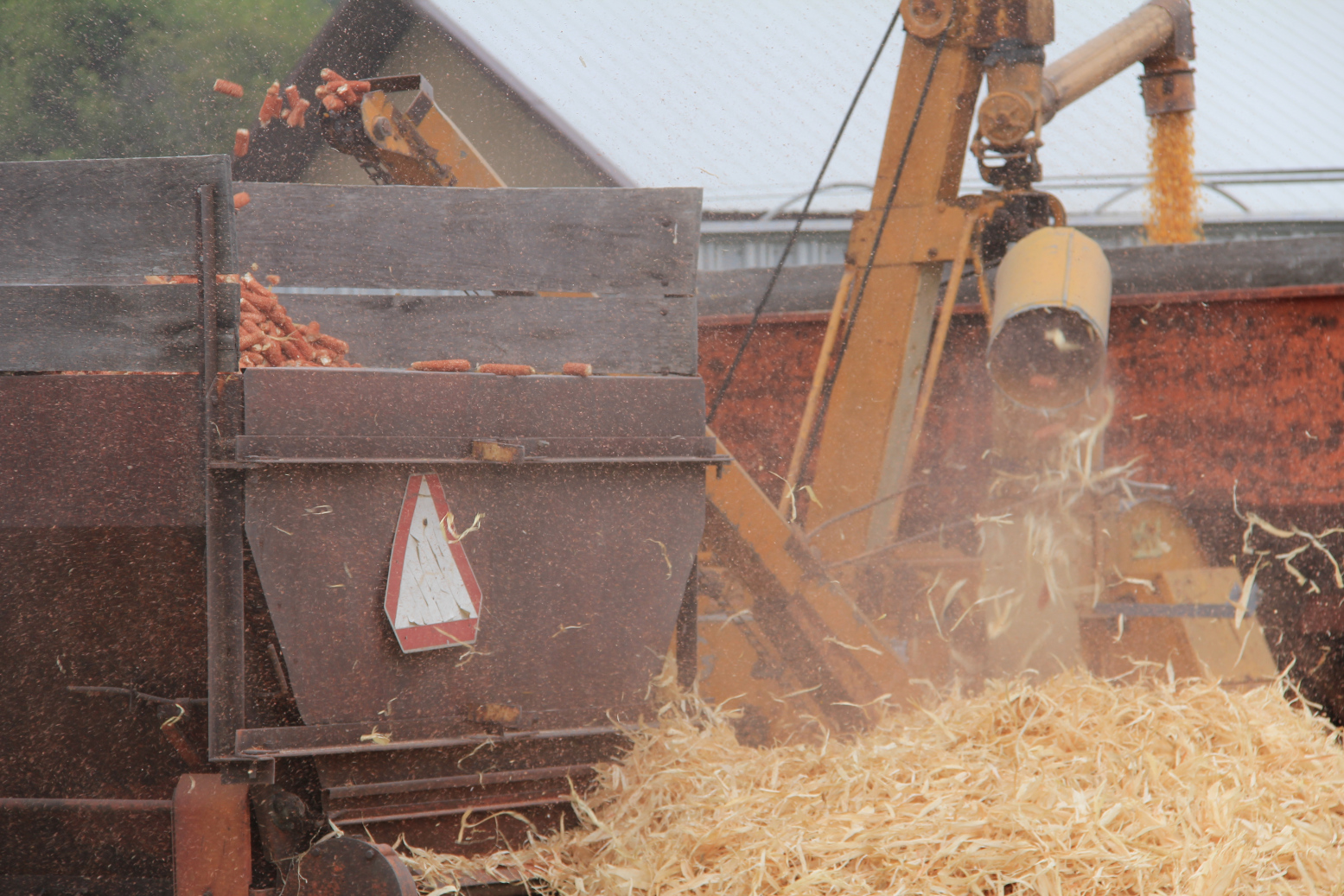
This close-up image of corn shelling shows exactly what I had hoped: the dust. I sometimes zoom in to focus on a smaller part of the broader picture. (Minnesota Prairie Roots copyrighted photo August 2025)
My biggest challenges in covering the event came in dodging golf carts that swarmed the grounds and in avoiding dust from some of the farming demonstrations. Cameras and dirt are not friends. I also always had to be cognizant of unintentional photo bombing by people and those pesky (but necessary for some to get around) golf carts.
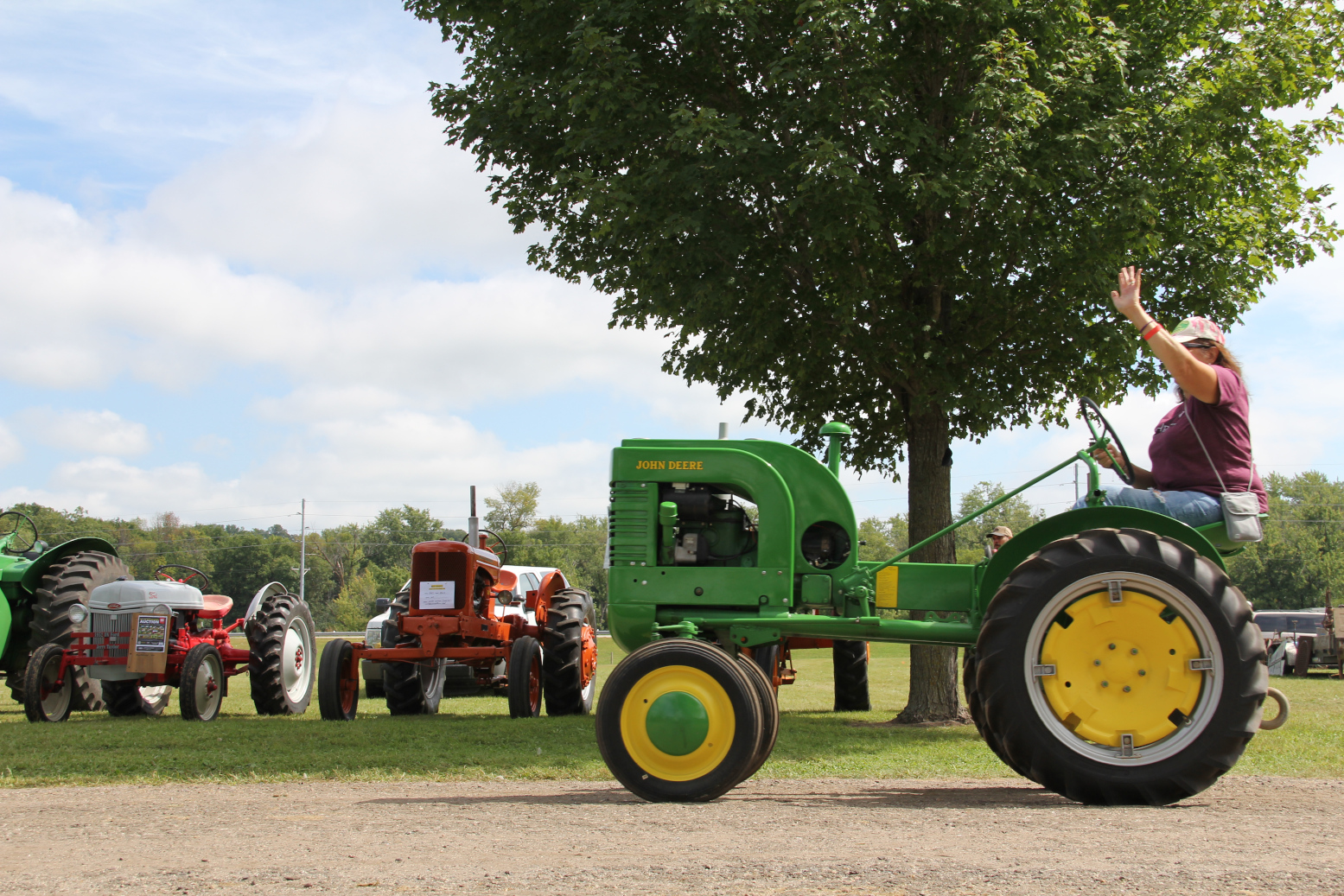
This photo shows off not only tractors, but human connection as the driver waves to the crowd during the tractor parade. I love this moment of humanity when nothing else matters. (Minnesota Prairie Roots copyrighted photo August 2025)
I’ve already shared many show photos with you in an overall post about the event and in a second focusing on art. Today I bring you a hodge-podge of more favorites, with an explanation in the captions of why I like the images. Enjoy!
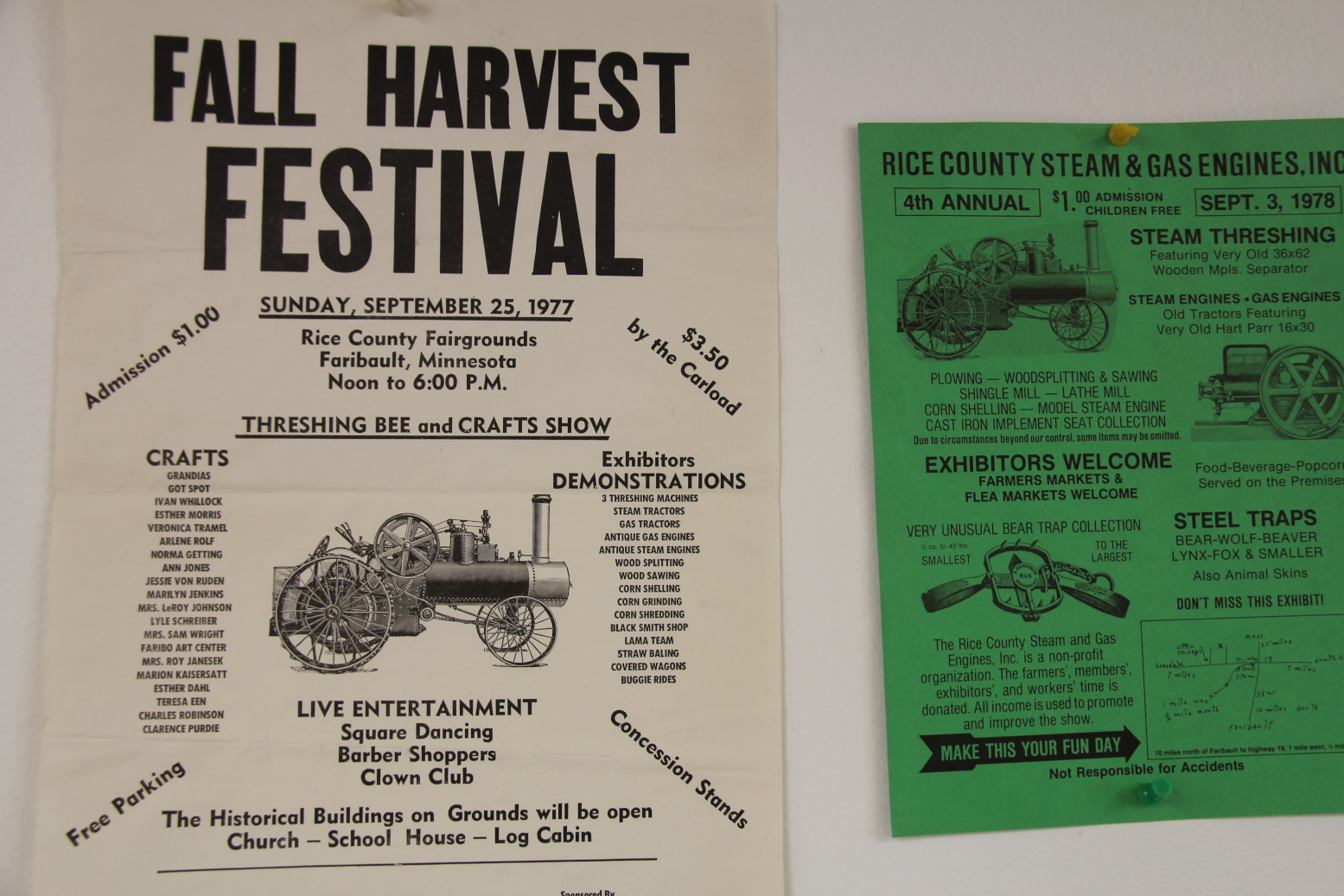
Vintage posters displayed from the early years of the current Rice County Steam & Gas Engines Fall Show, before the name and location changed. (Minnesota Prairie Roots copyrighted photo August 2025)
ART EXISTS EVERYWHERE, even at a farm-themed event. My photos from the Rice County Steam & Gas Engines Fall Show last Saturday in rural Dundas prove that. As a creative, I view life through an artistic lens. So I’m naturally drawn to photograph items that others may not necessarily see as art.
I see tractor emblems, including this one on a vintage Ford, as works of art. (Minnesota Prairie Roots copyrighted photo August 2025)
In this photo essay, you’ll view a sampling of the “art” I discovered. I found art on vintage tractors, on clothing, at the flea market, especially at the flea market, and beyond.
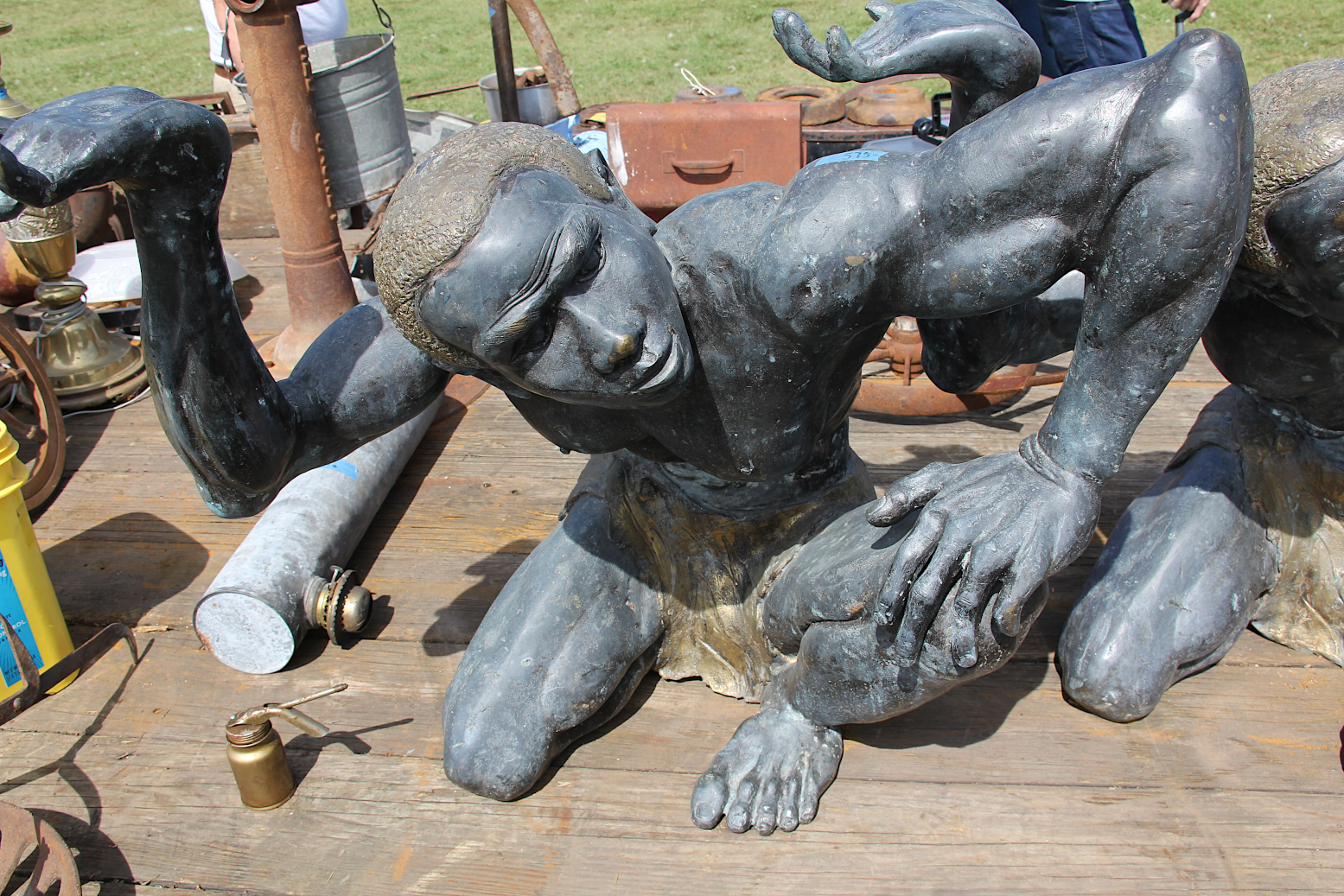
Two brass sculptures offered by a vendor. They are not solid brass, so not as heavy as they appear. (Minnesota Prairie Roots copyrighted photo August 2025)
Let’s start there, among market vendors selling a variety of goods ranging from toy tractors to glassware to home décor and everything in between. The art that drew my deepest interest—two massive brass sculptures of African men—sat on a flatbed trailer. They were nothing short of spectacular. Such grace. Such power in their muscular arms and legs. Truly, truly stunning. Seller Daniel Bell of Faribault, who calls himself a picker, found the matching pair in Iowa. The sculptures once supported tabletops, now missing. He’s priced each at $575. I can connect you with Dan if you’re interested.
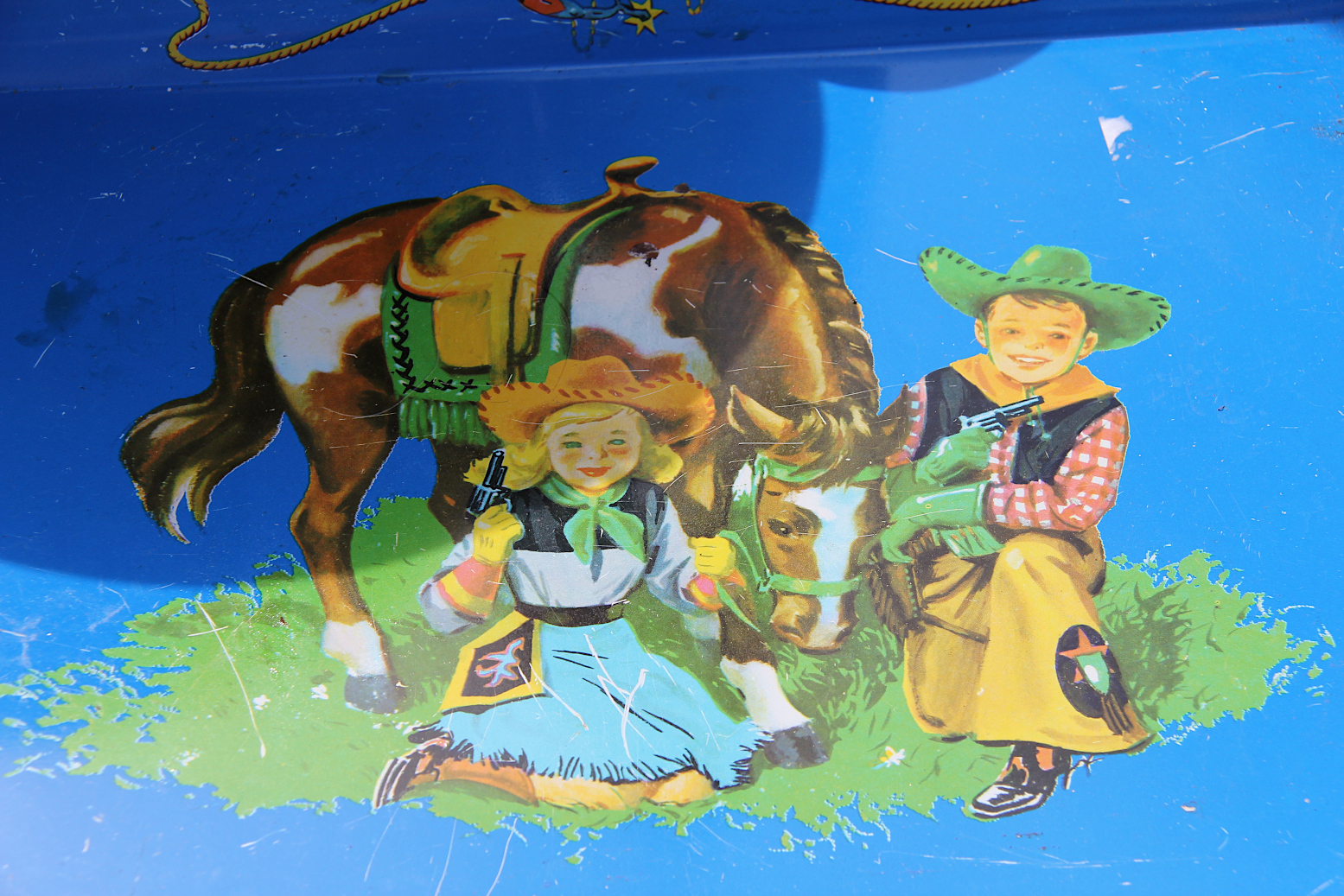
Vintage tray art from the 1950s. (Minnesota Prairie Roots copyrighted photo August 2025)
Almost as interesting, and certainly thought-provoking in 2025, is a 1950s image of children dressed in western attire and brandishing pistols. When I reflect on that scene printed on a tray, I remember how I, too, owned a toy cap gun and played “Cowboys and Indians.” That all seems so terribly wrong now when viewing this as an adult in a world riddled by gun violence. I’m thankful for changed attitudes and perspectives about our Indigenous Peoples and about toy guns.
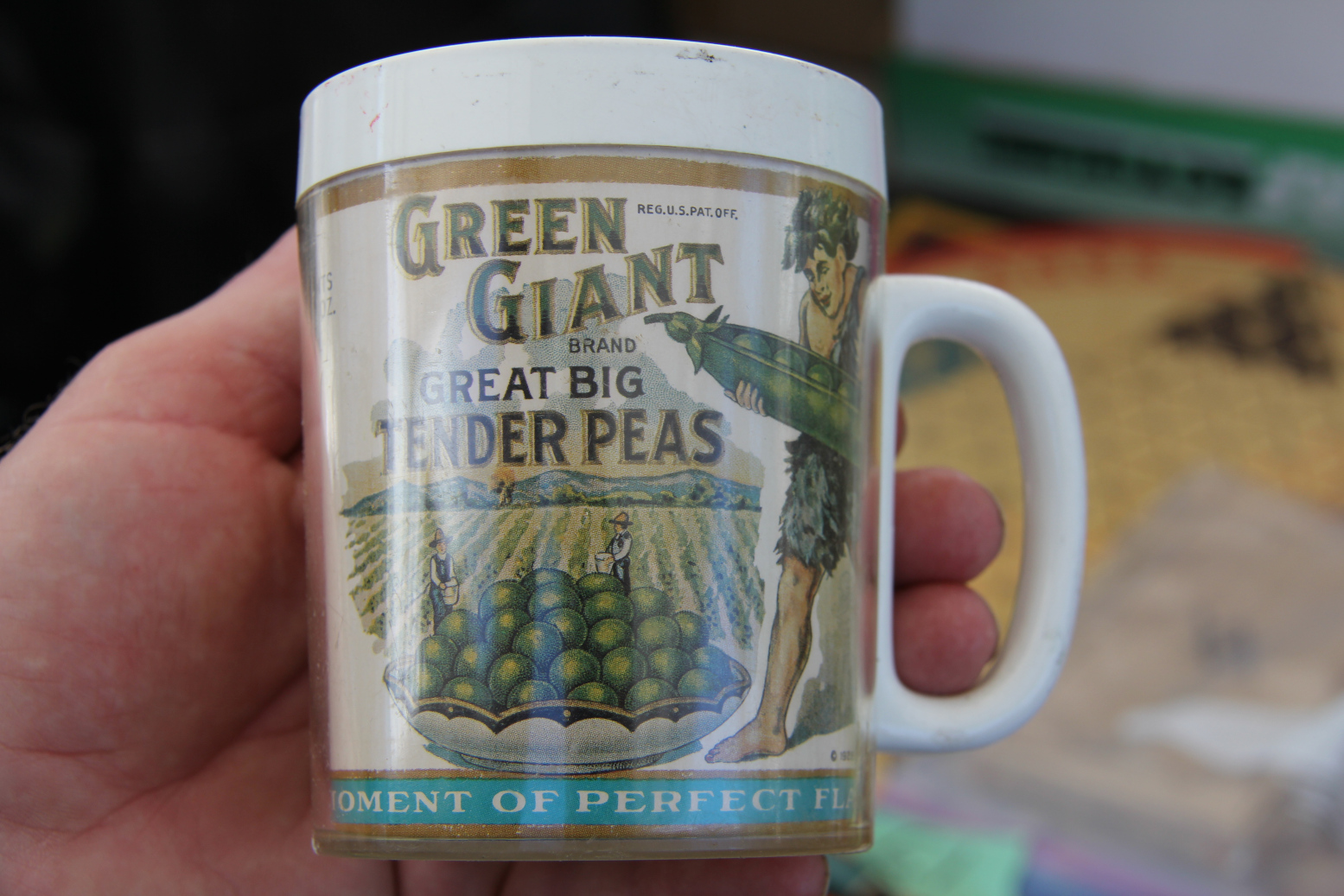
A Jolly Green Giant themed plastic mug. (Minnesota Prairie Roots copyrighted photo August 2025)
I spotted art on a plastic coffee mug from Minnesota Valley Canning Company featuring the Green Giant brand of GREAT BIG TENDER PEAS. The back side of the mug is imprinted with the story of the Jolly Green Giant. I should have purchased the cup, which belonged to the father of the flea market vendor. He worked at the canning company in Le Sueur until its 1995 closure. This mug is more than a mug. It’s a collectible piece of regional literary and visual art.
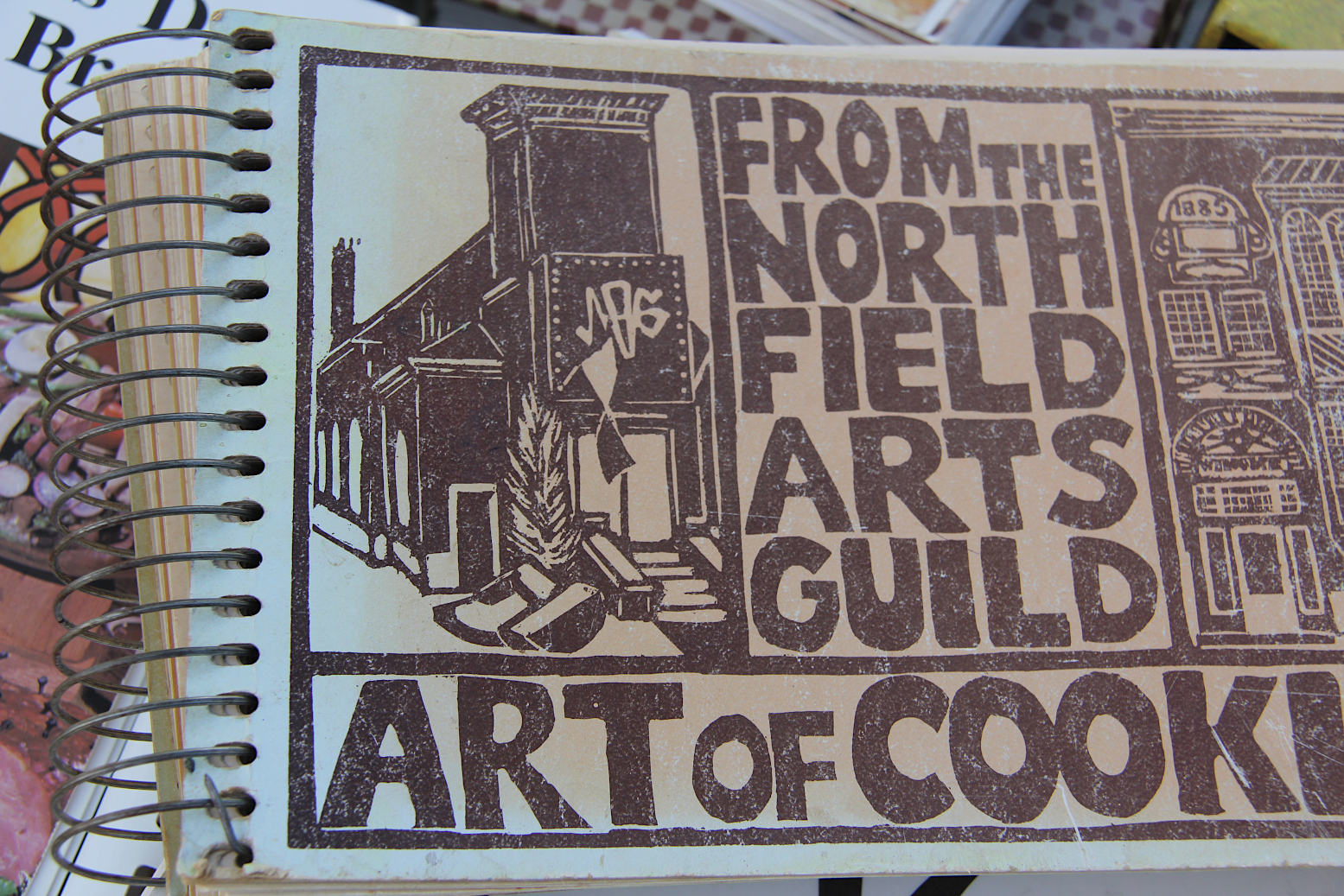
The artsy cover of the 1984 Northfield Arts Guild commemorative cookbook. (Minnesota Prairie Roots copyrighted photo August 2025)
And then I found art on the cover and inside the Northfield Arts Guild’s 25th anniversary cookbook from 1984. Not unexpected, it features the art of rural Northfielder Fred Somers, whose work I admire.
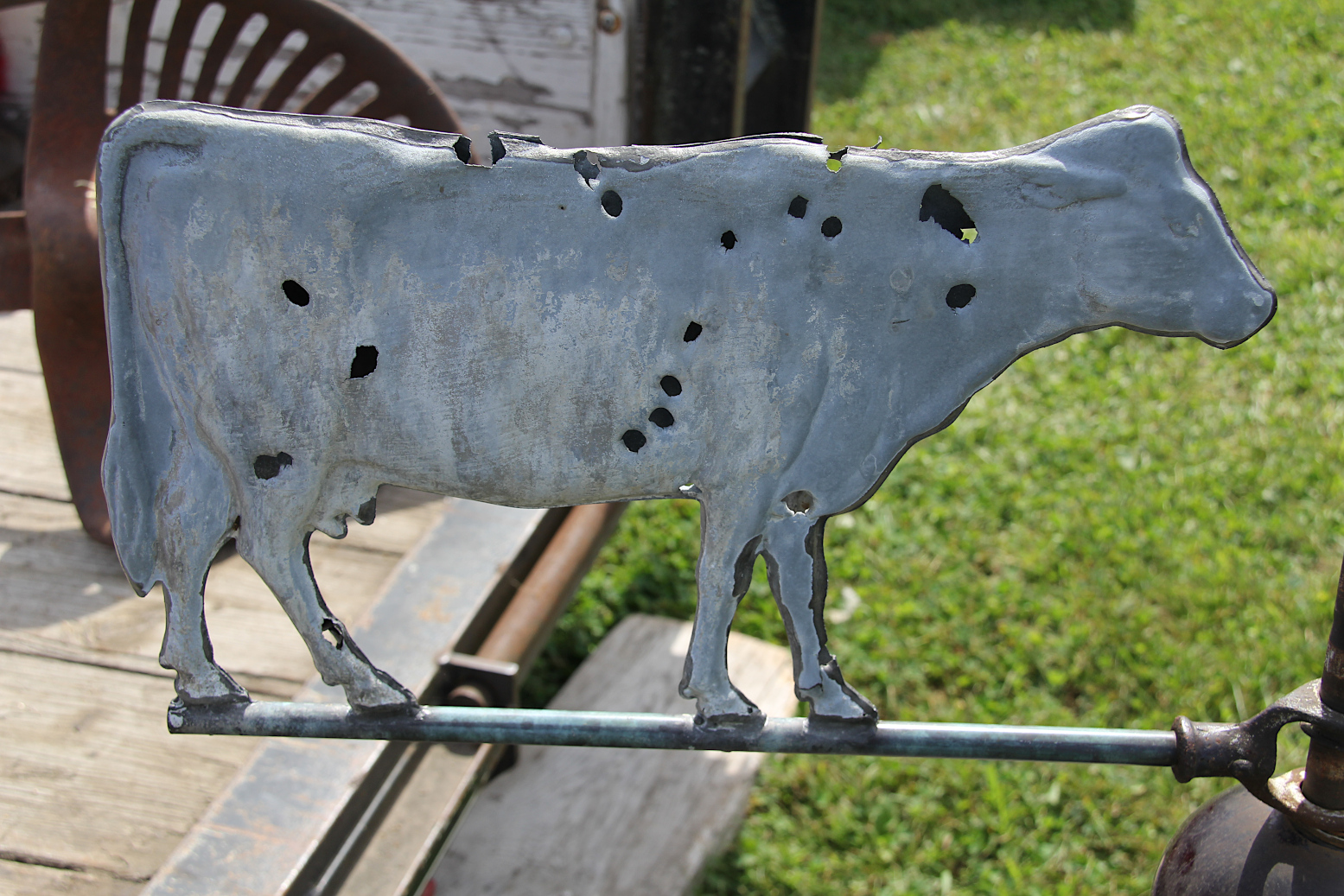
A damaged work of art. (Minnesota Prairie Roots copyrighted photo August 2025)
At another vendor, I spotted a bullet-riddled cow weather vane, a form of functional rural art. And apparently a shooting target, too. I saw a horse weather vane inside a showgrounds building.
Pop art in my eyes. The vendor saw the lips as otherwise, as a bill holder. (Minnesota Prairie Roots copyrighted photo August 2025)
And then there were the duck decoys, the red plastic lips and the jar full of colored plastic clothespins, all viewed as art by me.
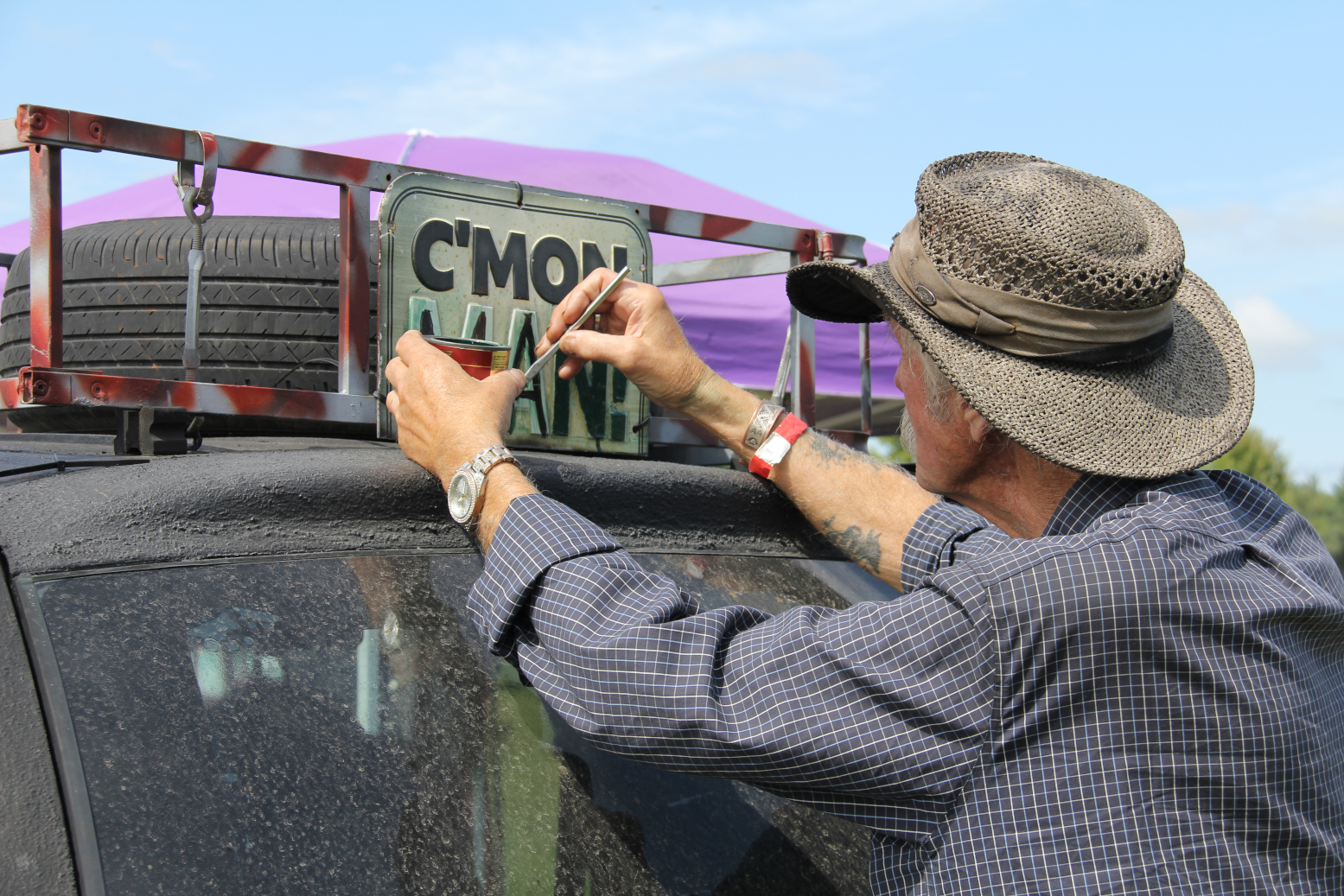
The leather goods vendor paints while manning his stand. (Minnesota Prairie Roots copyrighted photo August 2025)
I even saw a vendor painting, freshening up the words “C’MON MAN!” on his van. He was selling mostly leather belts, an inventory purchased when a leather goods shop closed.
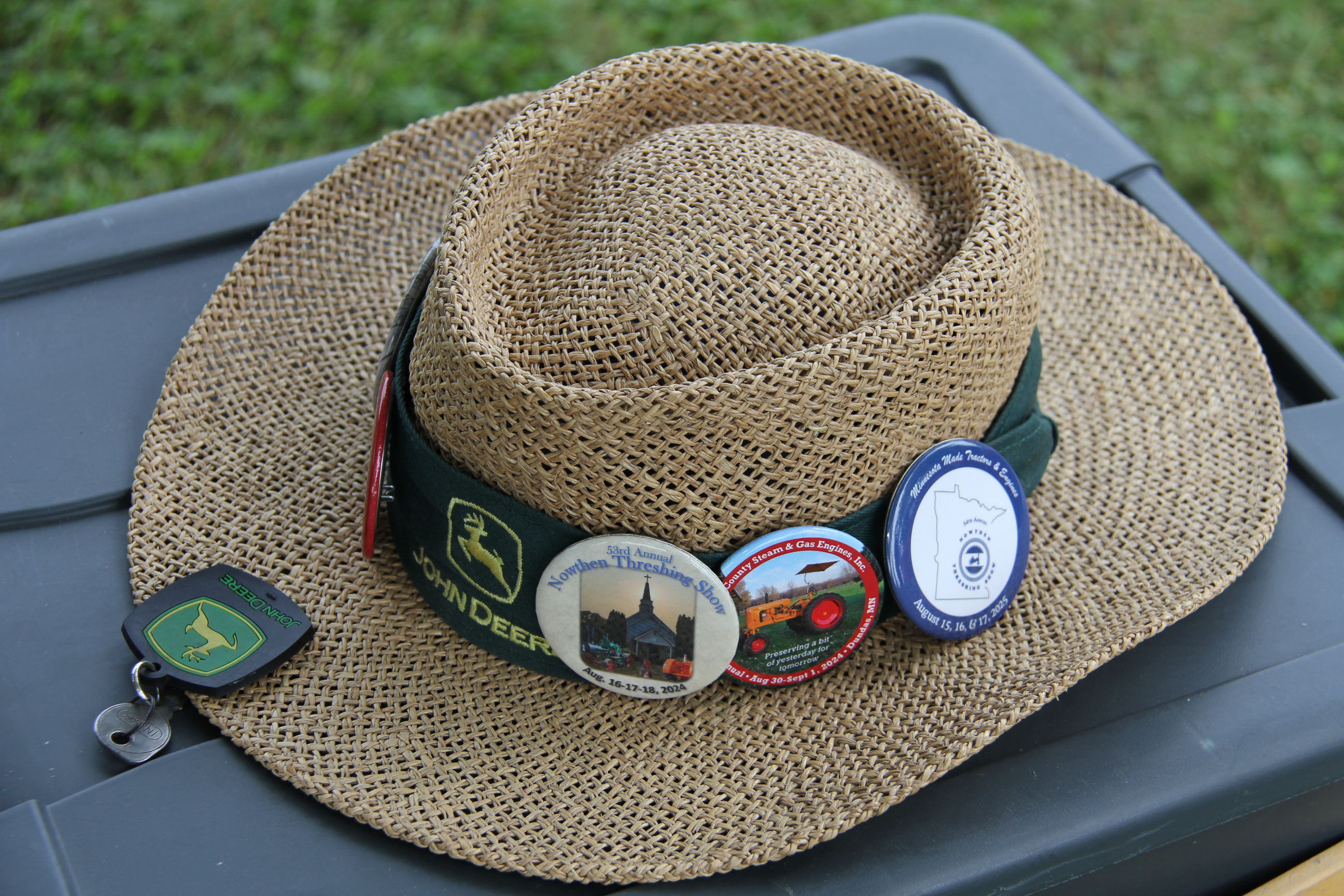
Show buttons on a straw hat and even a keychain are forms of art. (Minnesota Prairie Roots copyrighted photo August 2025)
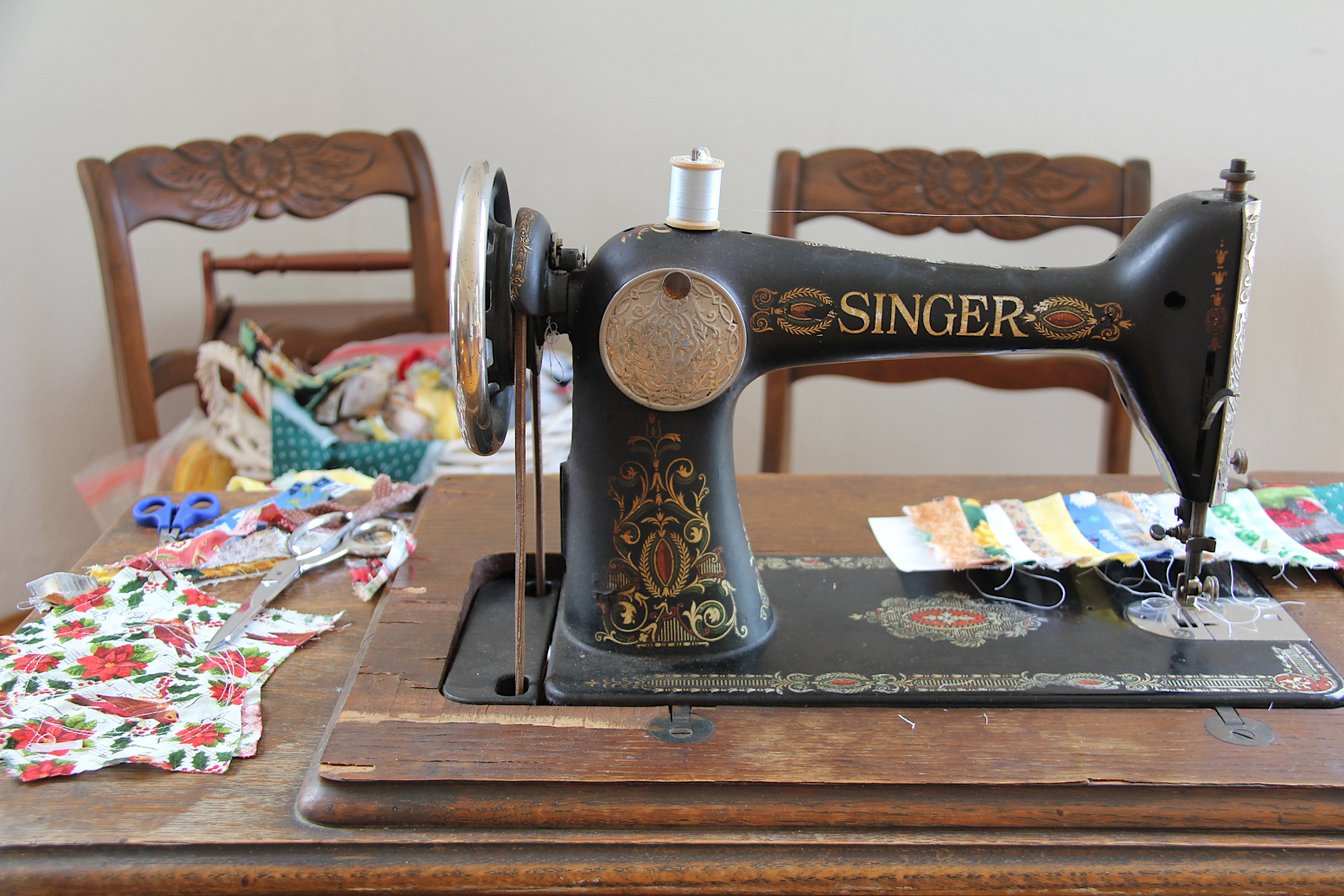
Creative arts of yesteryear shown inside the old farmhouse. (Minnesota Prairie Roots copyrighted photo August 2025)
Elsewhere around the showgrounds, art exists also. I discovered it on commemorative buttons, stickers and signs. Inside the 1912 farmhouse a vintage sewing machine and fabric scraps highlighted the creative arts.
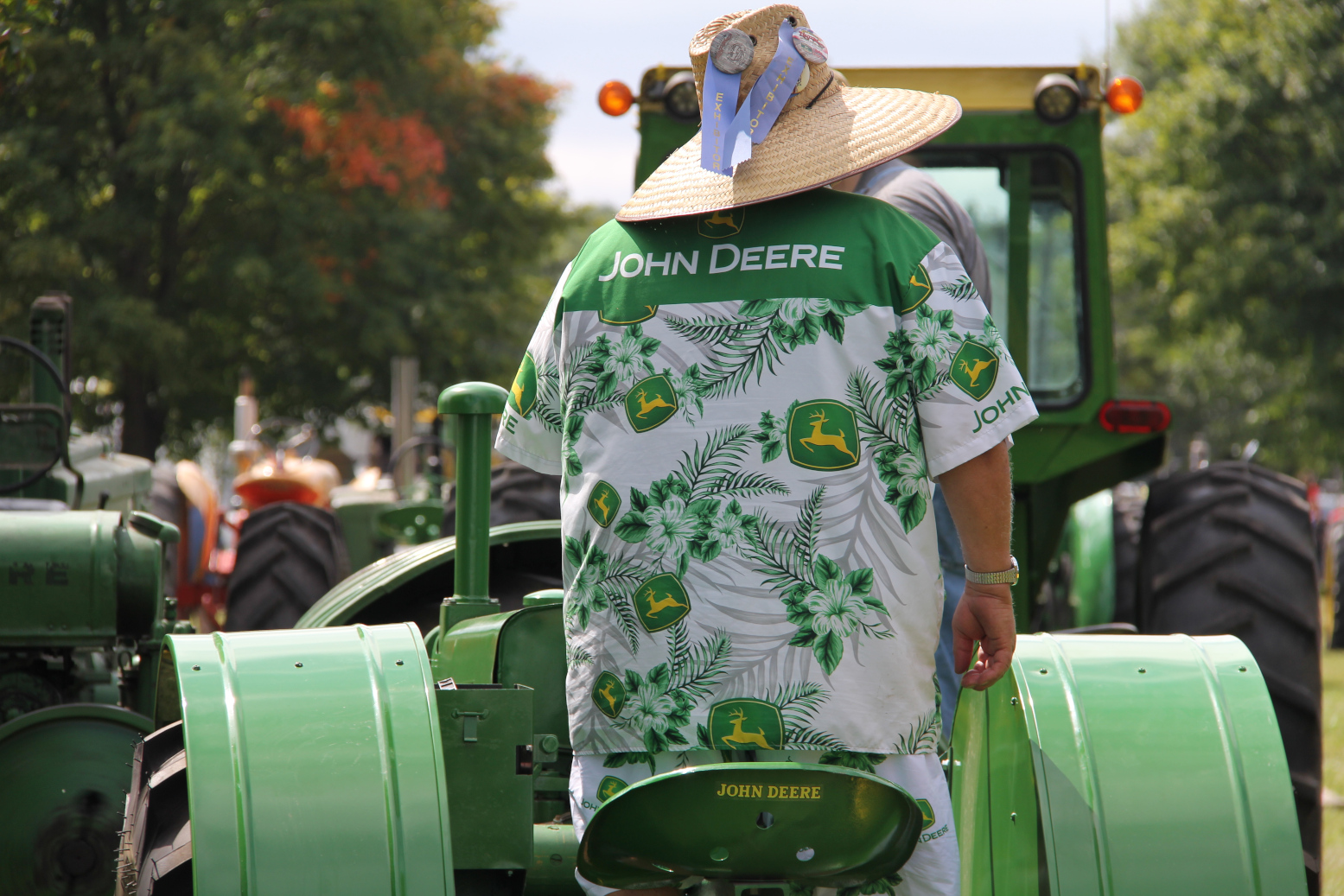
Brand loyalty in fashion. (Minnesota Prairie Roots copyrighted photo August 2025)
I even found fashion art—in a John Deere/Hawaiian shirt worn by a John Deere tractor owner.
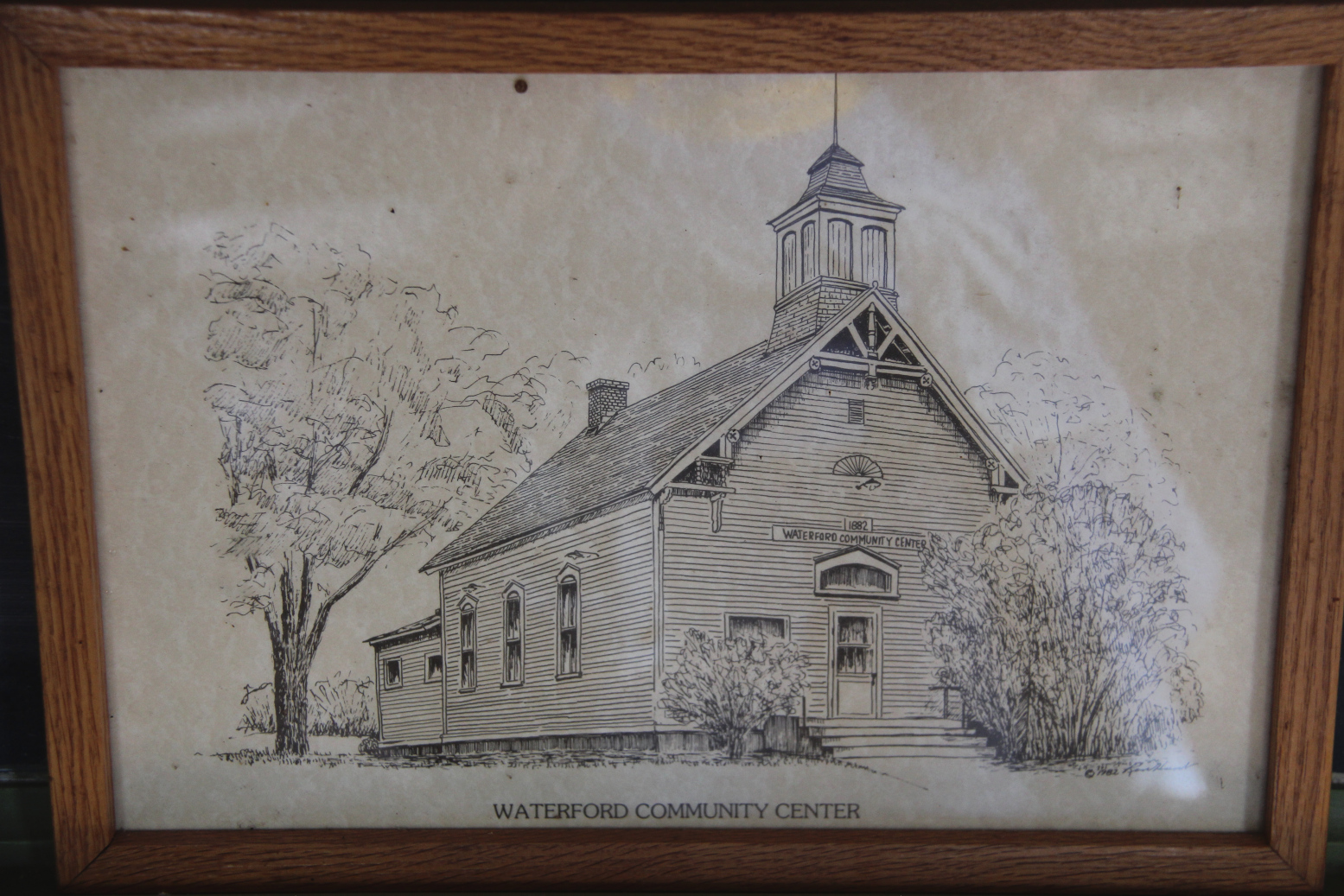
Among the art displayed inside the old Waterford School and then community center. (Minnesota Prairie Roots copyrighted photo August 2025)
Art (prints and photos) graces a wall of the Waterford Community Center, once a one-room school, moved onto the Steam & Gas Engines showgrounds and opened to the public this year.
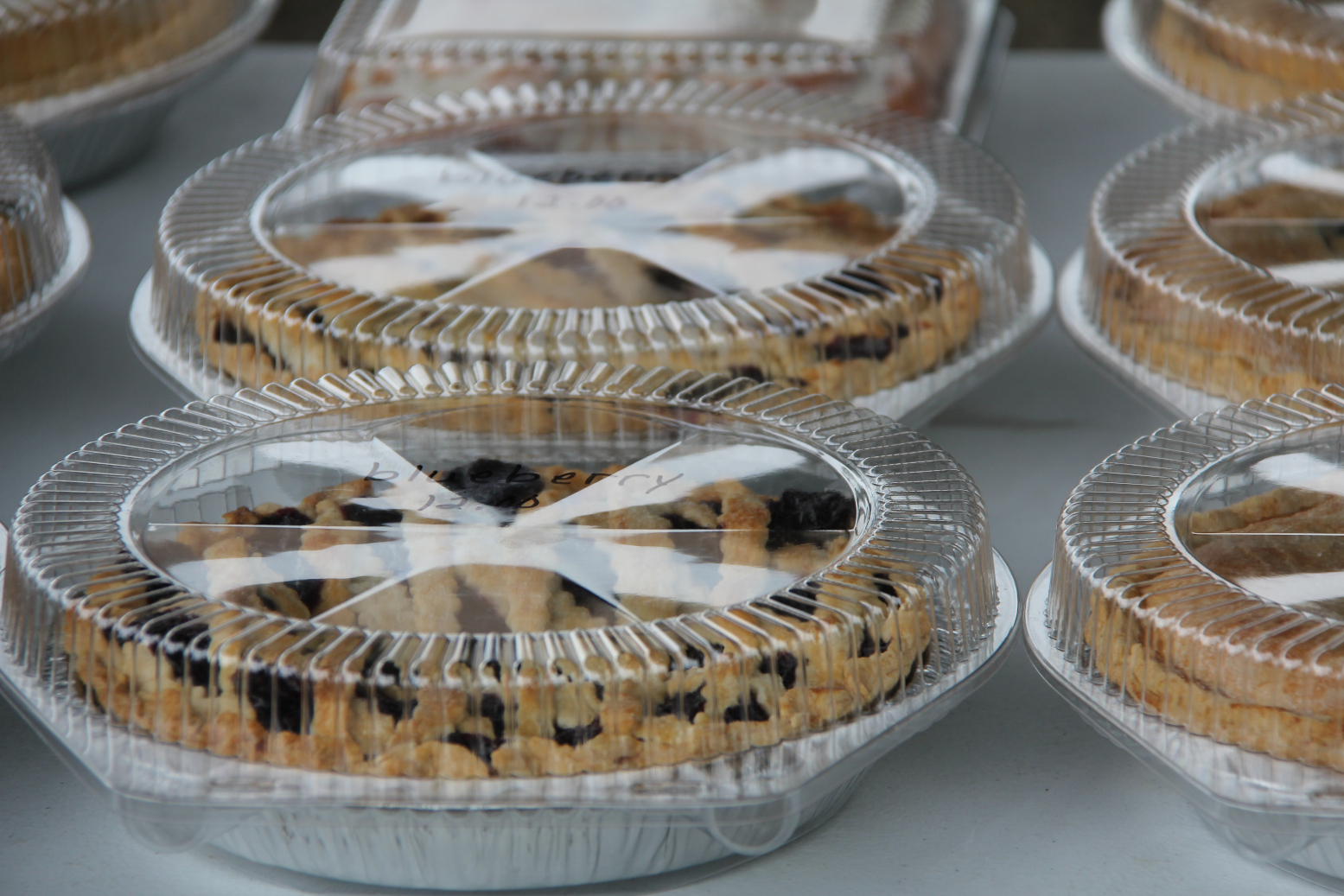
The culinary arts in pies crafted by the Amish. (Minnesota Prairie Roots copyrighted photo August 2025)
And then there are the culinary arts as perfected by an Amish family selling handheld fruit pastries and pies plus homemade ice cream crafted on-site as attendees watched. They are new-to-the-show vendors. The peach pastry and ice cream, oh, my, so delicious. They sold out of pies and handhelds.
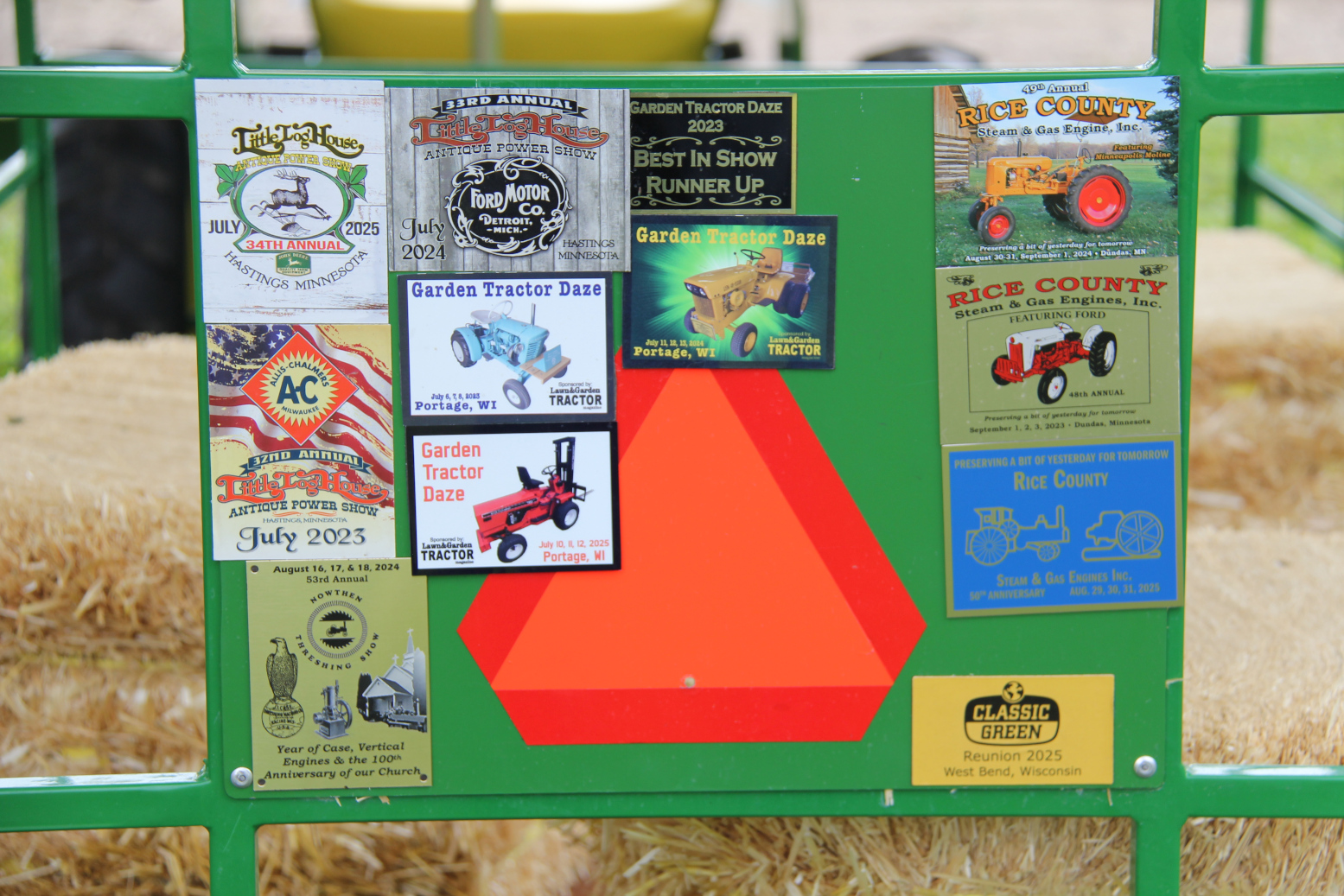
I see this collage of farm show stickers as art. (Minnesota Prairie Roots copyrighted photo August 2025)
This may be a show themed to farming of yesteryear. But, as I discovered, art also abounds. Sometimes you just have to look through an artistic lens to see it.
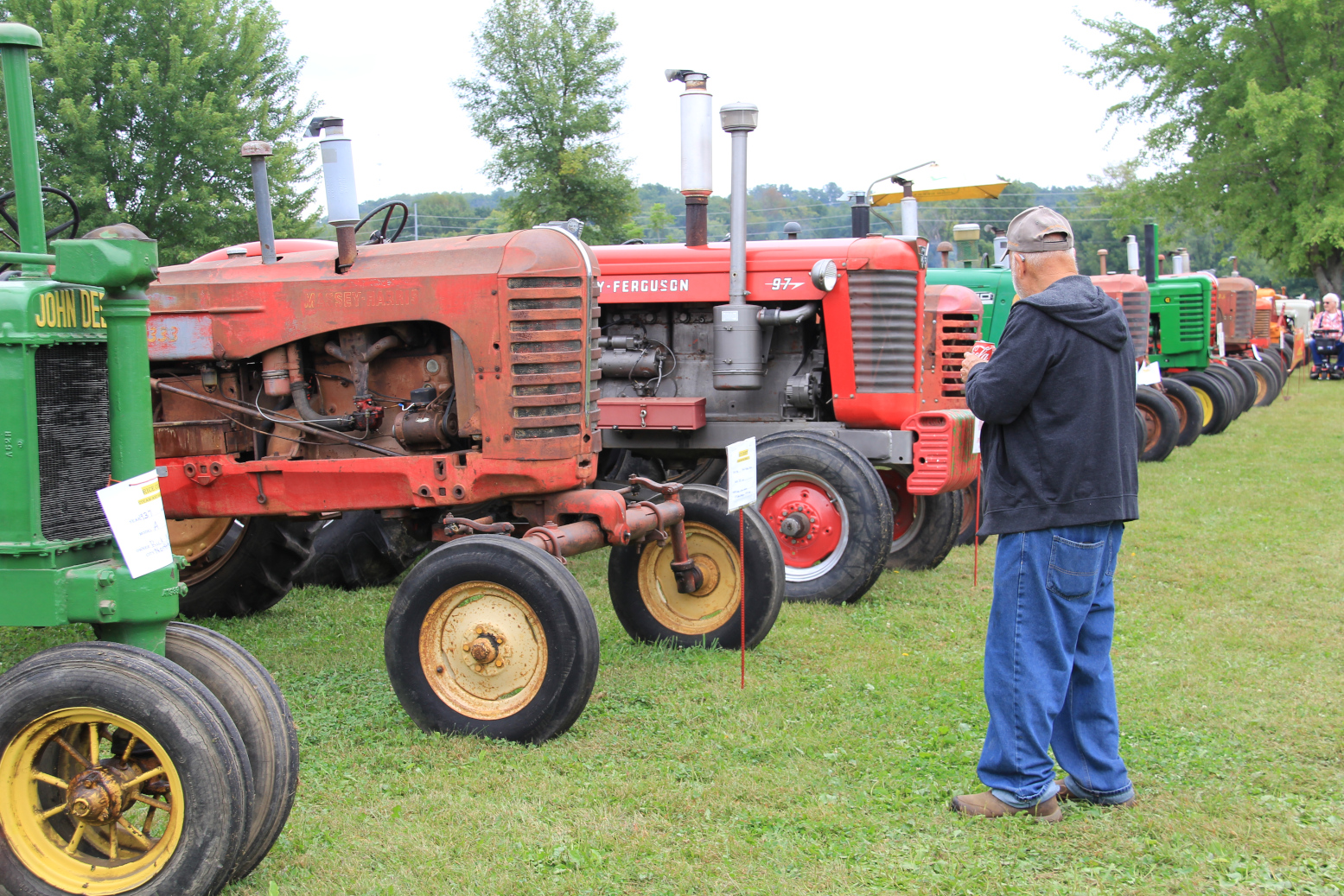
Hundreds of tractors in all makes and models lined the showgrounds. (Minnesota Prairie Roots copyrighted photo August 2025)
SIX HOURS OF ENDLESS WALKING, many conversations, one shared handheld peach pastry, a small taco, several bites of a burger and fries, one molasses cookie, a couple swallows of soda, one shared dish of Amish-made ice cream and hundreds of photos later, I left the Rice County Steam & Gas Engines Fall Show on August 30 exhausted. In a good way.
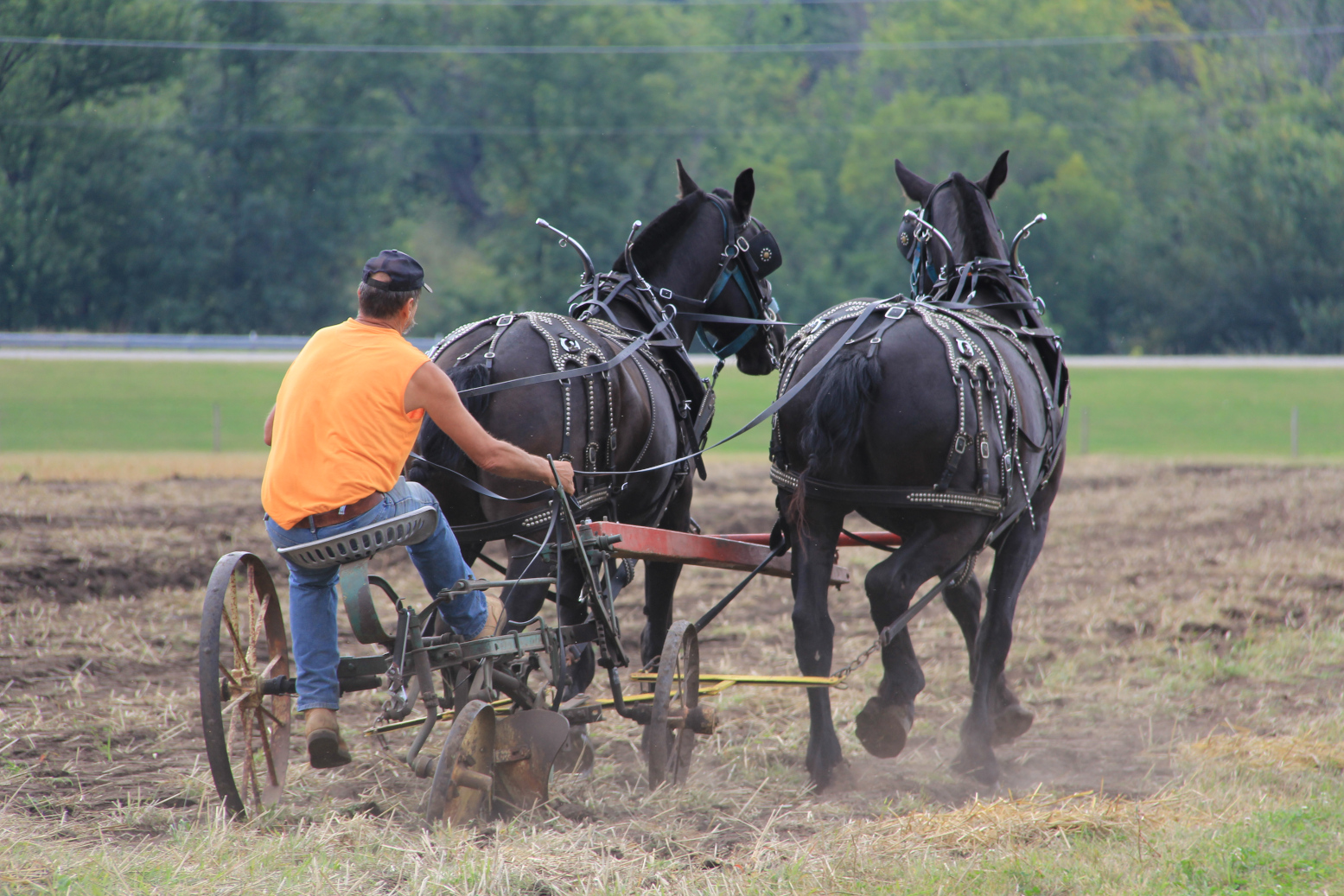
Plowing with horses. (Minnesota Prairie Roots copyrighted photo August 2025)
There were lots of steam engines at this year’s show. (Minnesota Prairie Roots copyrighted photo August 2025)
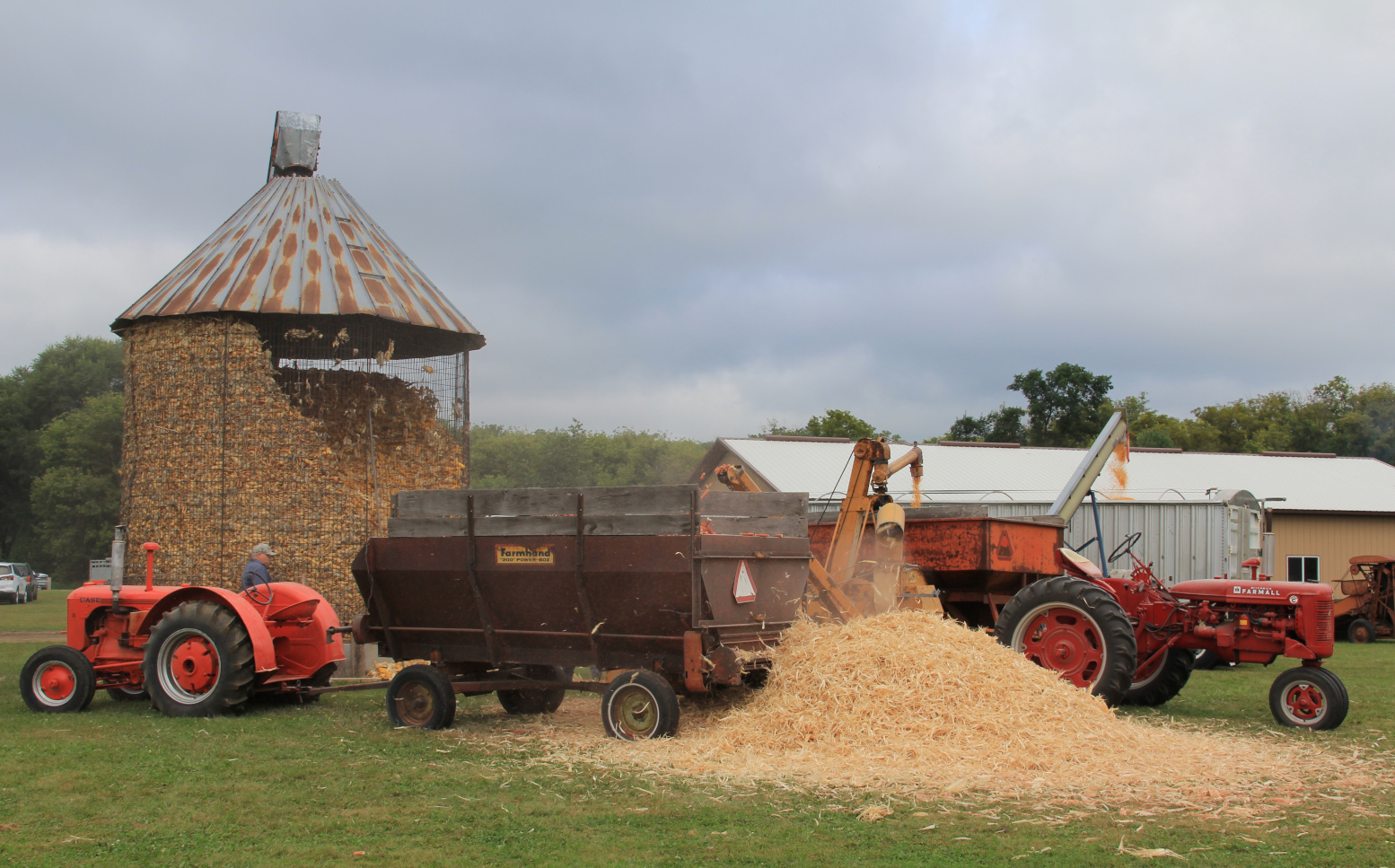
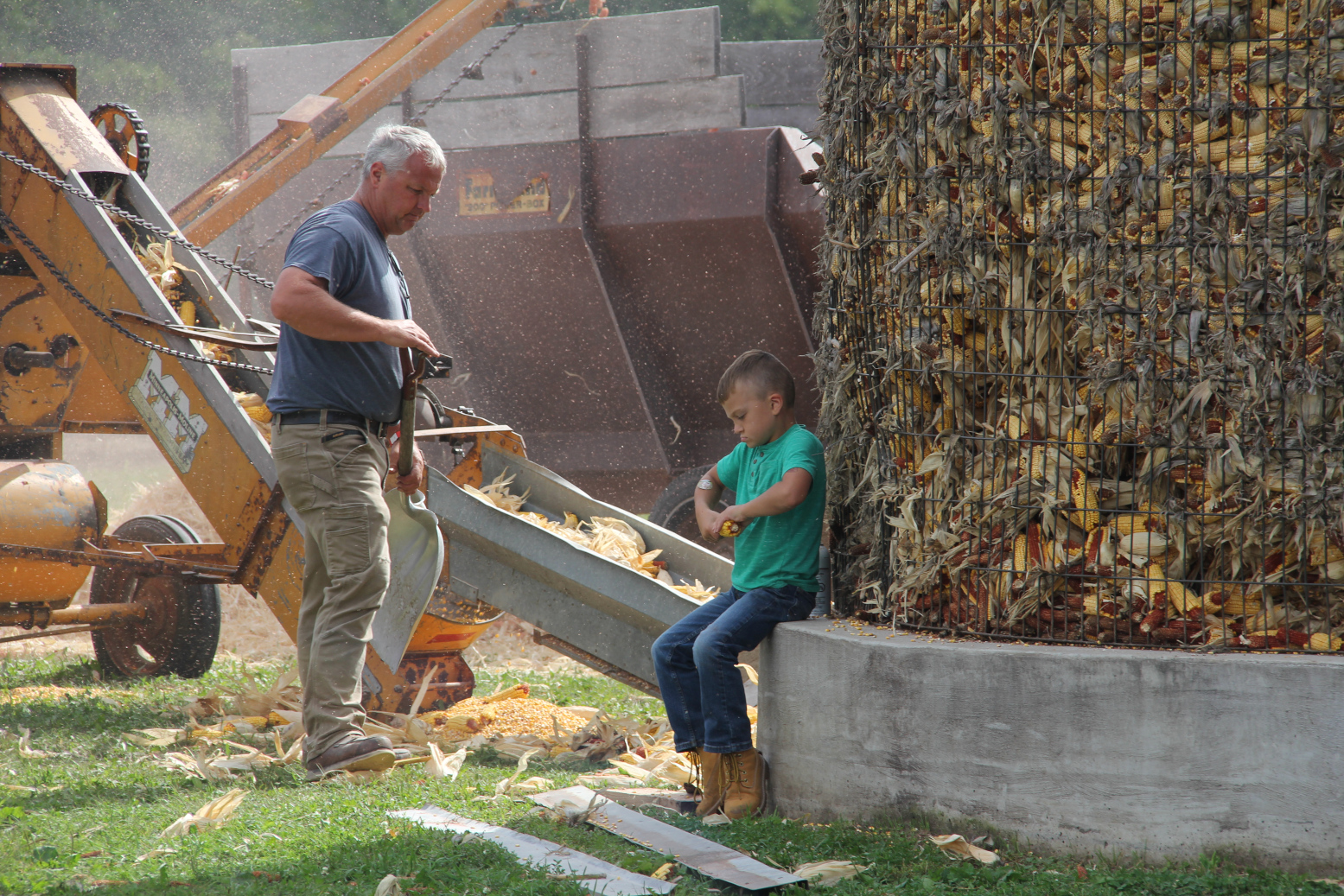
Tractors provide the power to shell corn. (Minnesota Prairie Roots copyrighted photo August 2025)
This event held at the showgrounds in rural Dundas over Labor Day weekend saw ideal weather and record crowds during the 50th anniversary celebration focused on “preserving a bit of yesterday for tomorrow.” That’s exactly what this organization accomplishes. From horse power to steam power to gas power, the early days and evolution of farming are on display in living history demonstrations. Rows and rows of vintage tractors and other agricultural equipment and on-site old buildings also showcase history.
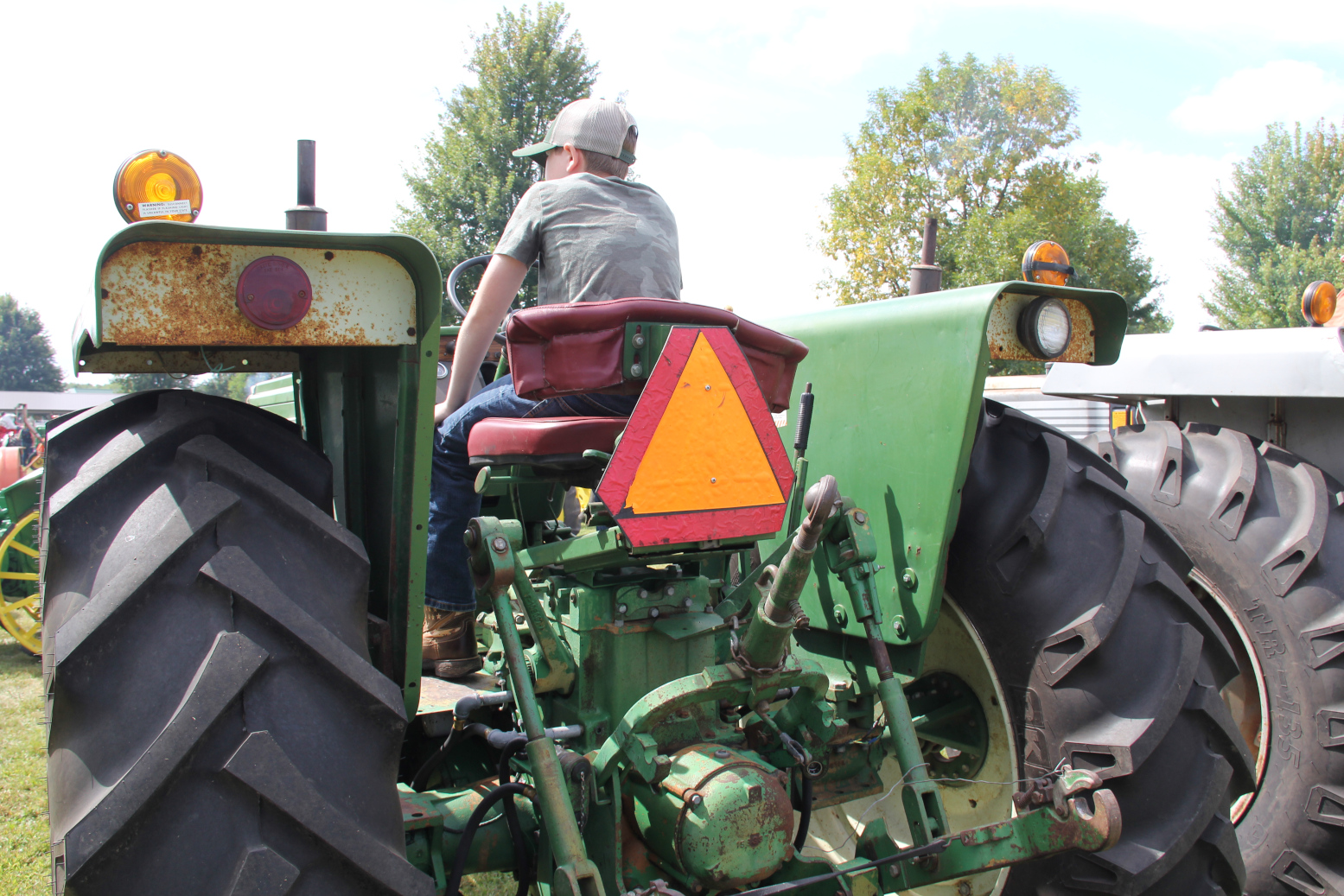
This could be one of my brothers back in the day driving tractor. (Minnesota Prairie Roots copyrighted photo August 2025)
I love everything about this show as it takes me back to my rural roots, reconnects me with the land and reminds me of the importance farming had, and still has, in Minnesota.
Two generations work at shelling corn, one by machine, the other by hand. (Minnesota Prairie Roots copyrighted photo August 2025)
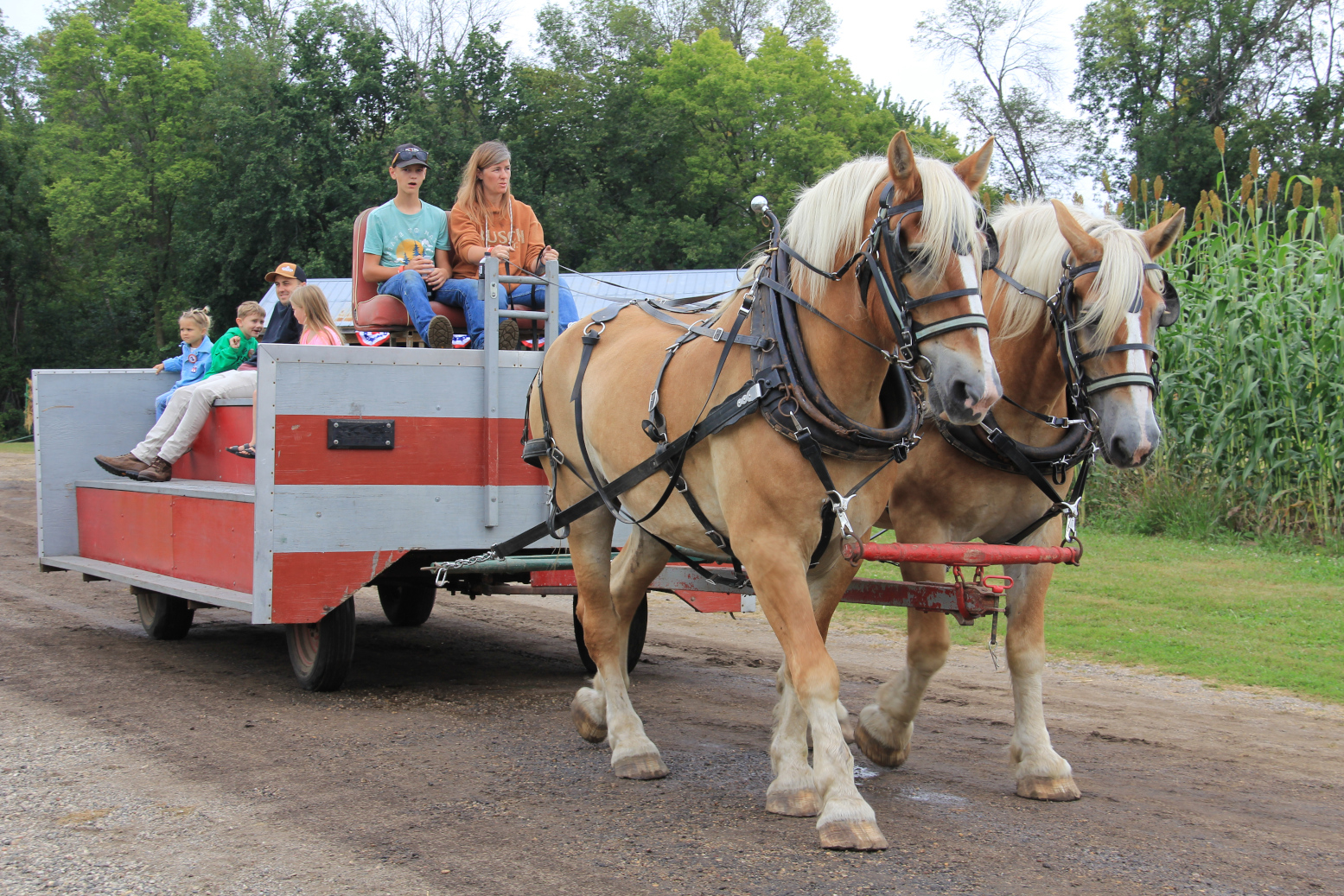
Horse-drawn wagon rides by Tom Duban, rural Faribault, transport attendees around the showgrounds. (Minnesota Prairie Roots copyrighted photo August 2025)
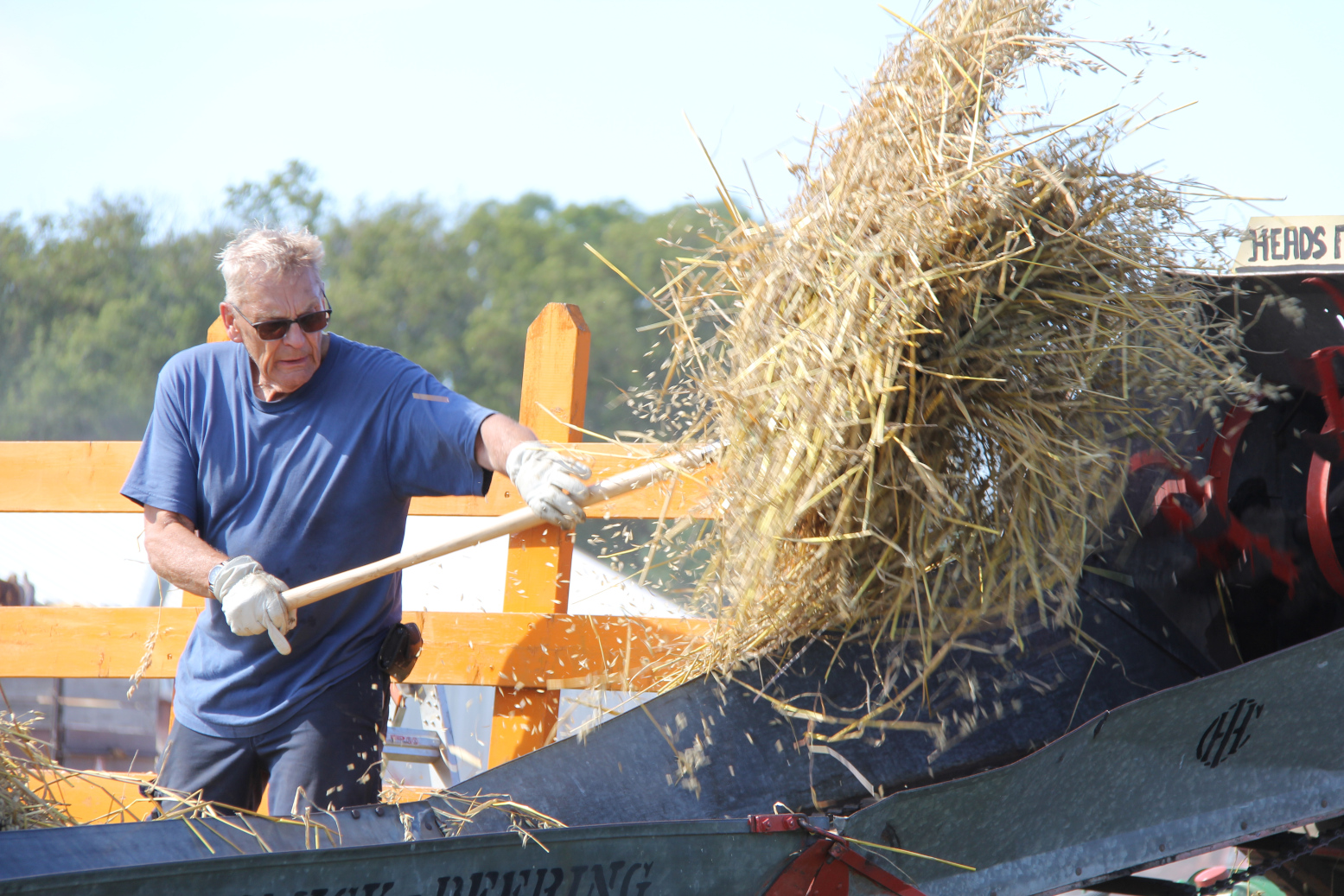
Tossing oats into the thresher is labor intensive. (Minnesota Prairie Roots copyrighted photo August 2025)
I love, too, the passion I see here in tractor collectors and in those operating massive steam engines, guiding horses, shoveling and shelling corn, pitching and threshing oats, sawing wood, making ropes, creating commemorative wooden shingles, stitching leather, pounding hot metal, and much much more.
The barrel train passes the threshing area as it winds through the showgrounds. (Minnesota Prairie Roots copyrighted photo August 2025)
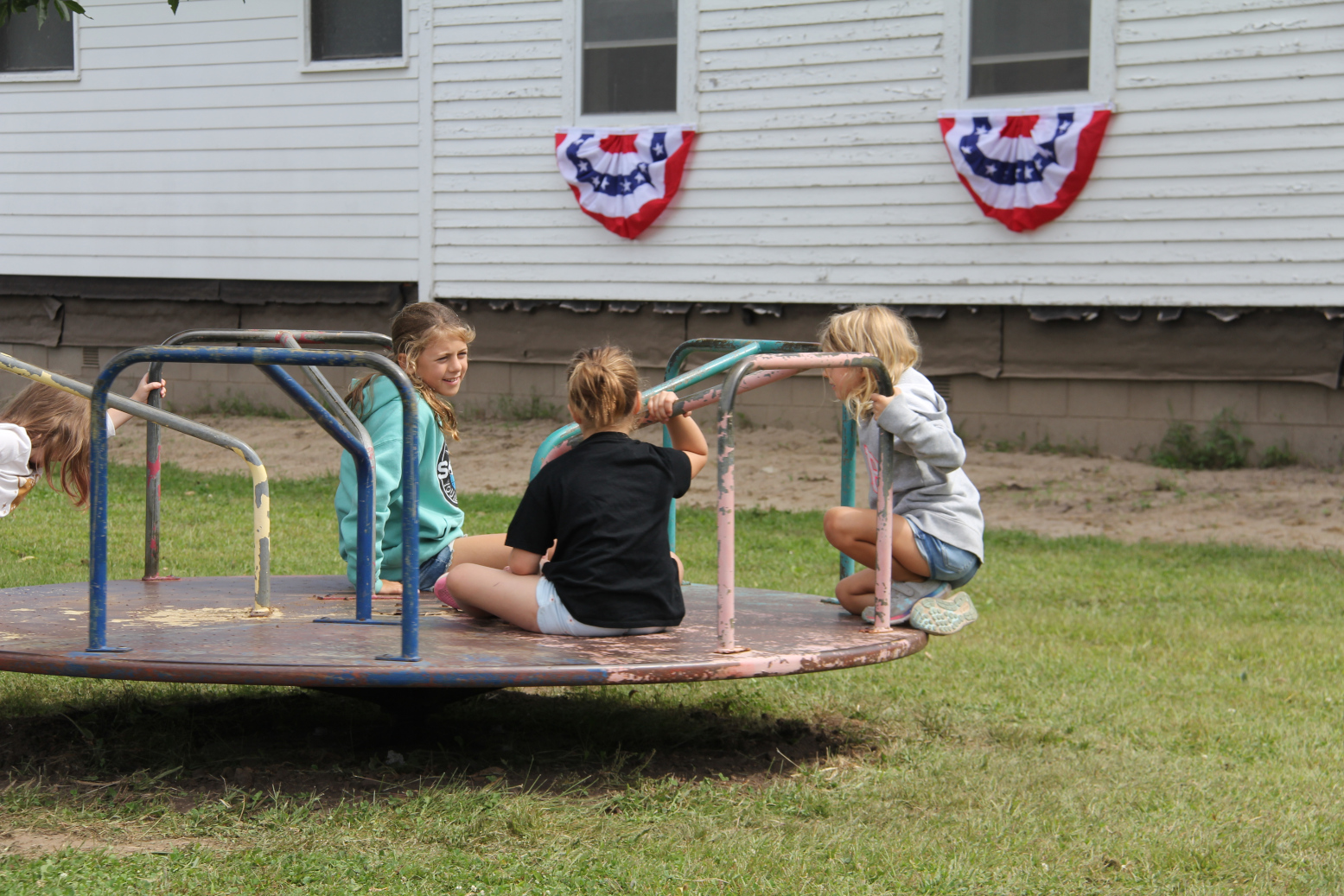
There are several vintage merry-go-rounds at the site and kids love them. (Minnesota Prairie Roots copyrighted photo August 2025)
One of several contestants I watched at the kids’ pedal tractor pull. (Minnesota Prairie Roots copyrighted photo August 2025)
I also love people-watching, seeing young and old alike immerse themselves in the past. This truly is a family event for all ages with hands-on activities for the kids and lots of reminiscing for those of us who grew up on farms. I watched kids spin on old-fashioned merry-go-rounds, grind corn, toss basketballs into hoops inside a grain wagon, pedal with all their might in a competitive kids’ pedal tractor pull, ride in an old-fashioned barrel train and on a mini train, steer tractors…
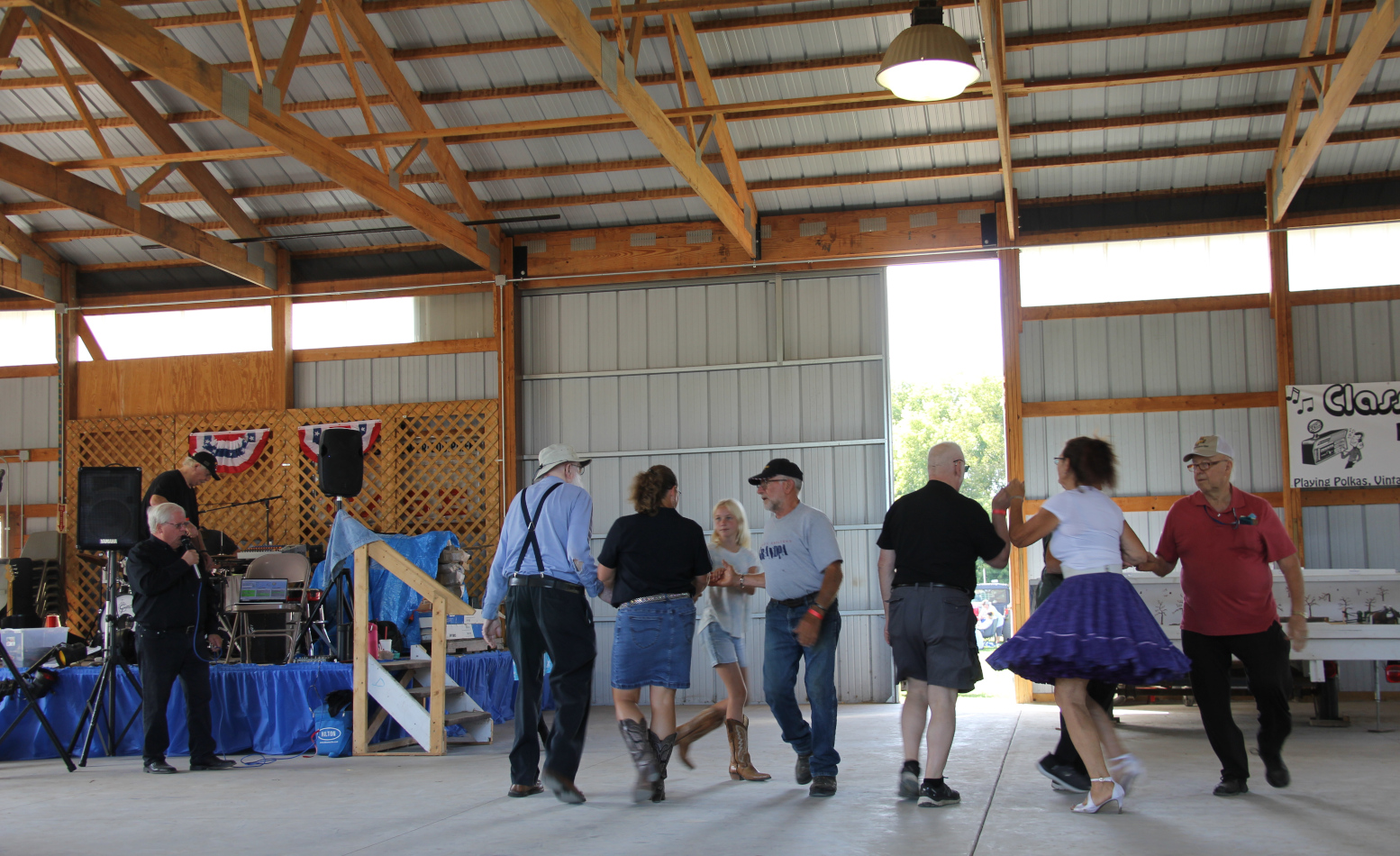
The event included music and dancing in the music hall, where a beer garden is also located. (Minnesota Prairie Roots copyrighted photo August 2025)
A flea market, music, food…they, too, are part of this well-organized show. It takes a lot of volunteers, a lot of work and dedication, a lot of time and commitment to pull this off.
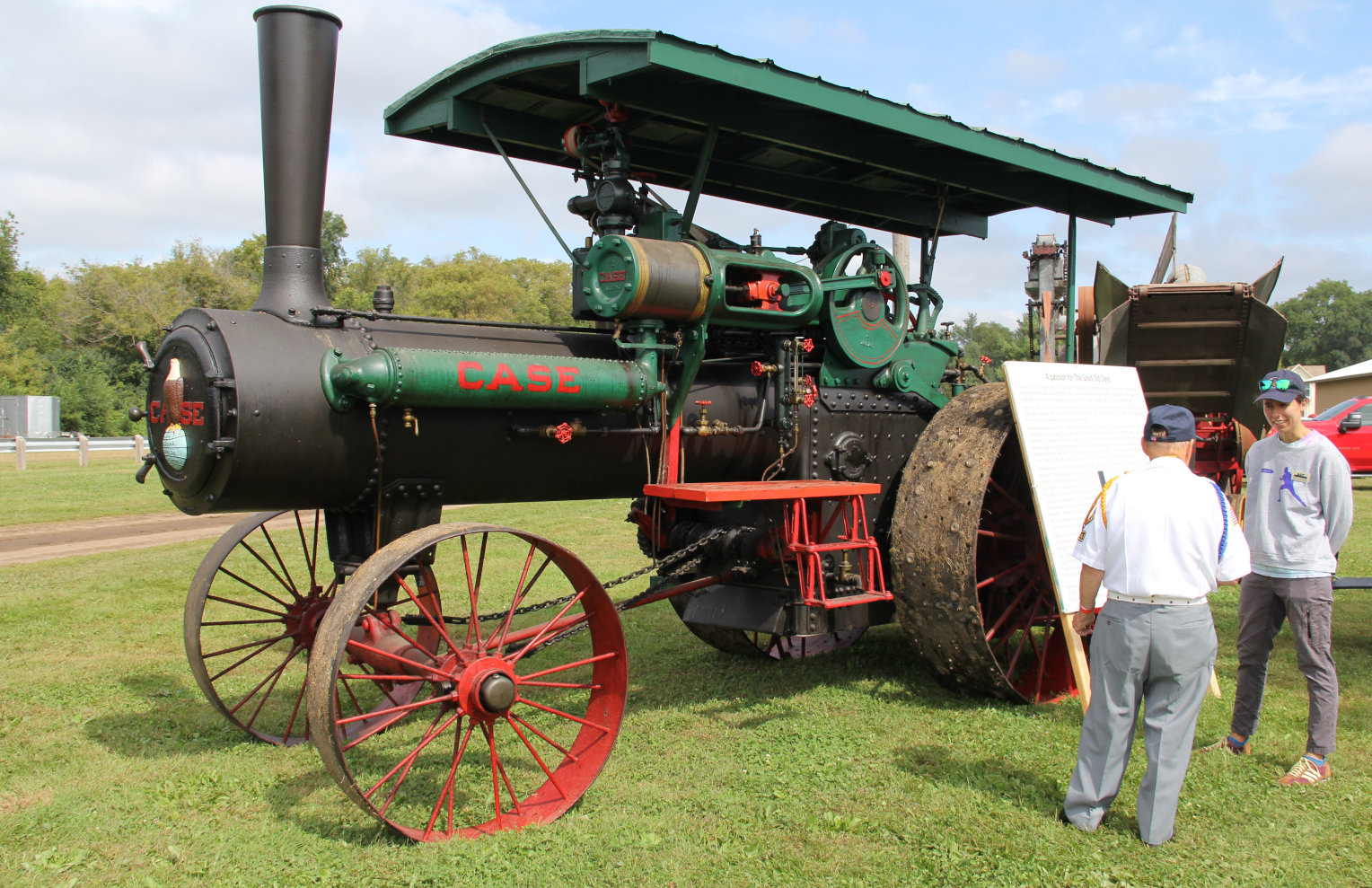
Transported from the Rice County Historical Society in Faribault, this 1916 Case steam engine sparked the interest leading to the first show. (Minnesota Prairie Roots copyrighted photo August 2025)
This organization has grown this event, which began with a threshing demonstration in Faribault in 1974, sparking formation of the Rice County Steam Association and the first show near Warsaw in 1975. The 1916 50 hp Case steam engine that started it all 50 years ago was pulled out of storage at the Rice County Historical Society Museum for display at the 2025 show.
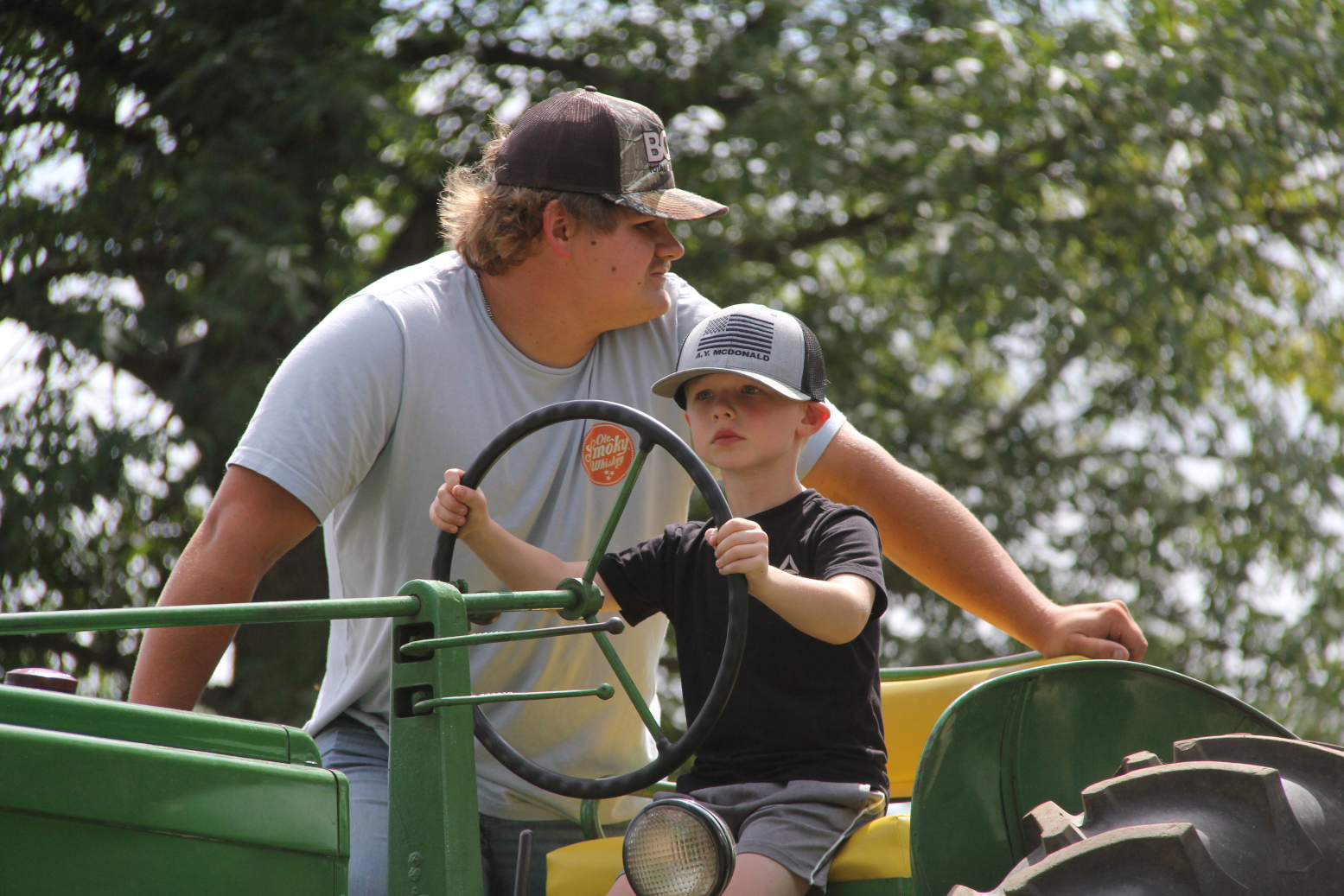
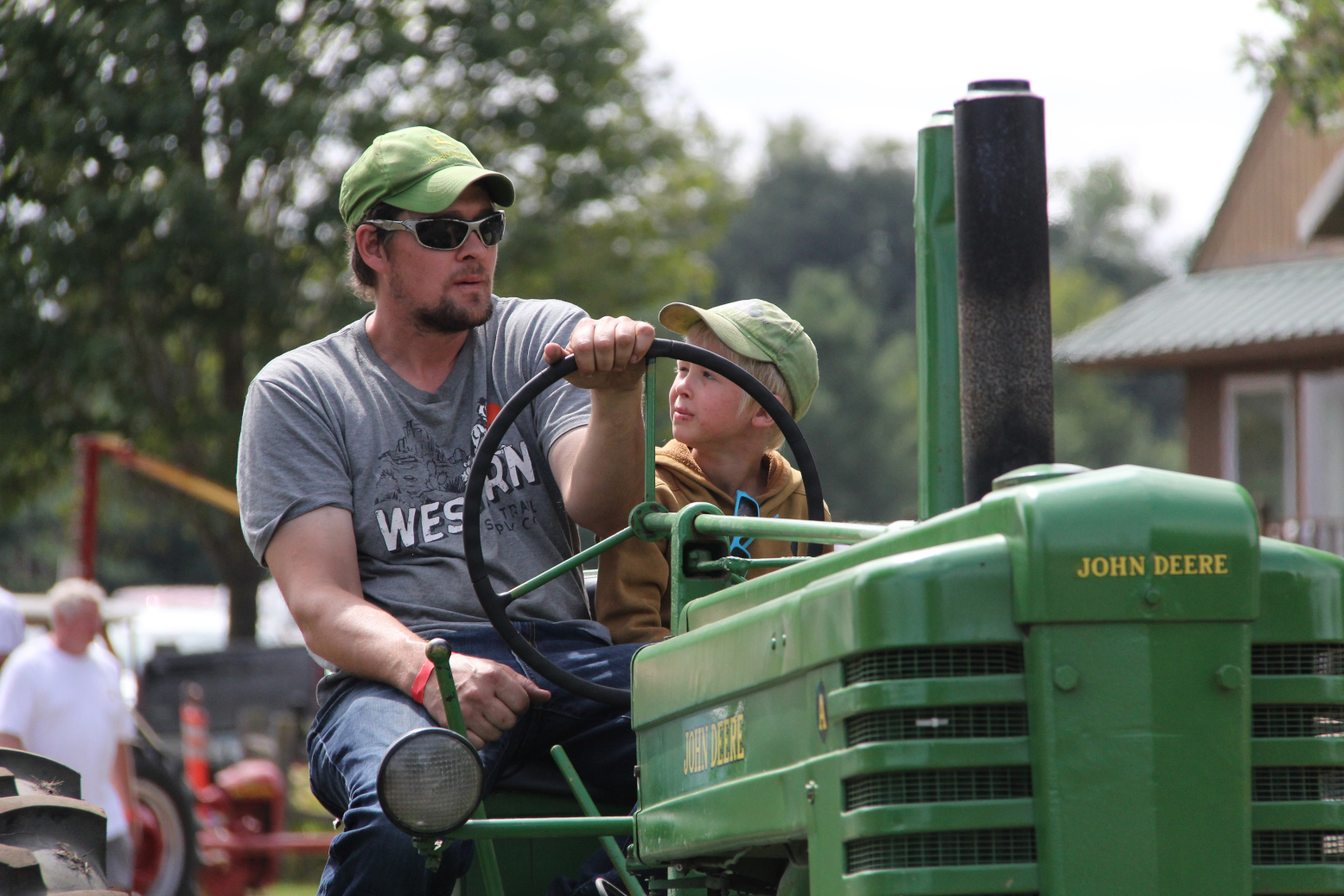
This young boy is focused and determined as he drives a John Deere during the tractor parade. (Minnesota Prairie Roots copyrighted photo August 2025)
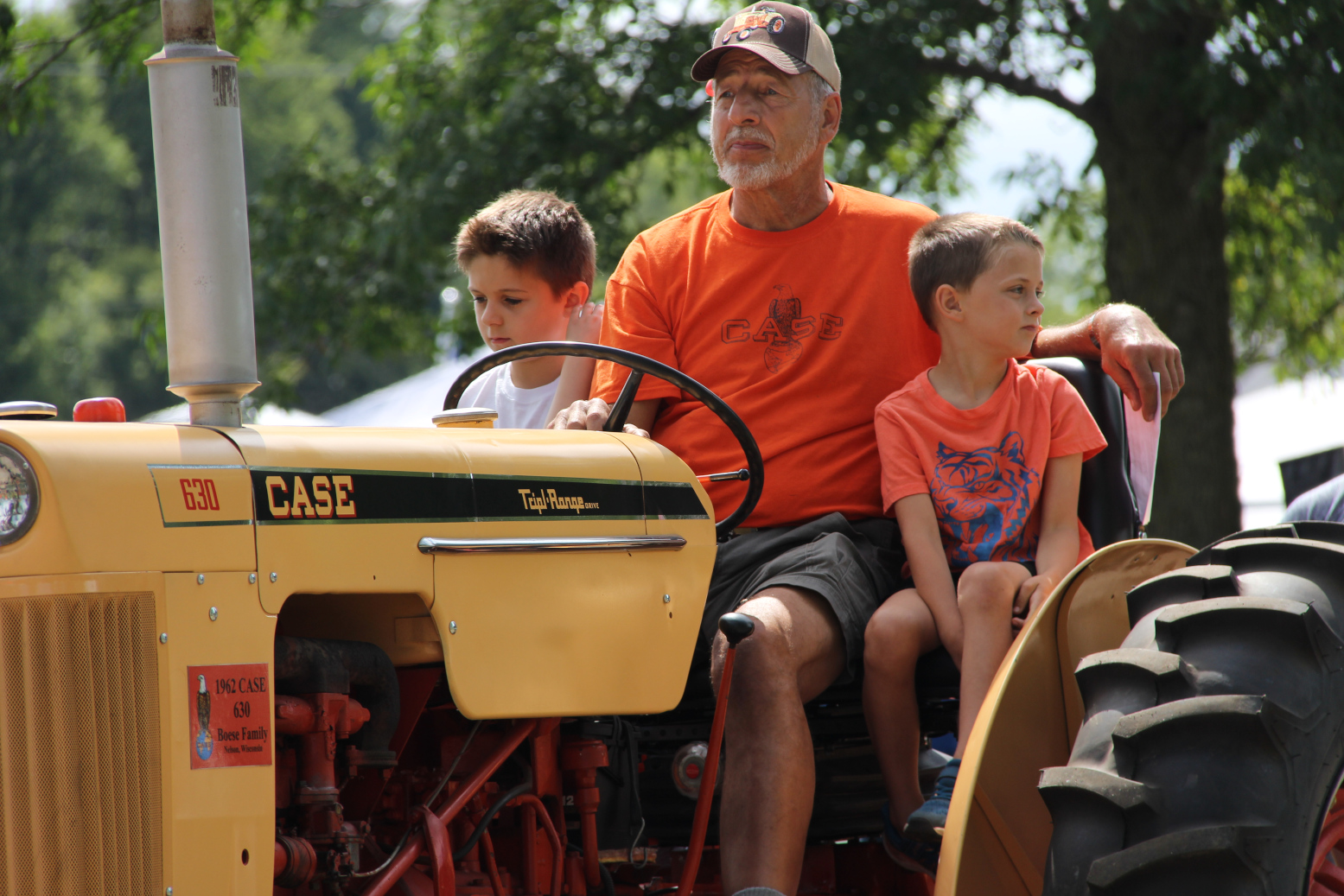
Three on board a Case for the tractor parade. (Minnesota Prairie Roots copyrighted photo August 2025)
I love the look of joy, admiration and contentment on this young boy’s face as he rides a John Deere in the parade. (Minnesota Prairie Roots copyrighted photo August 2025)
Everywhere I walked, everywhere I looked, I saw smiles. I saw, too, an inter-generational connection over a shared love of tractors, farming of yesteryear, the rural way of life.
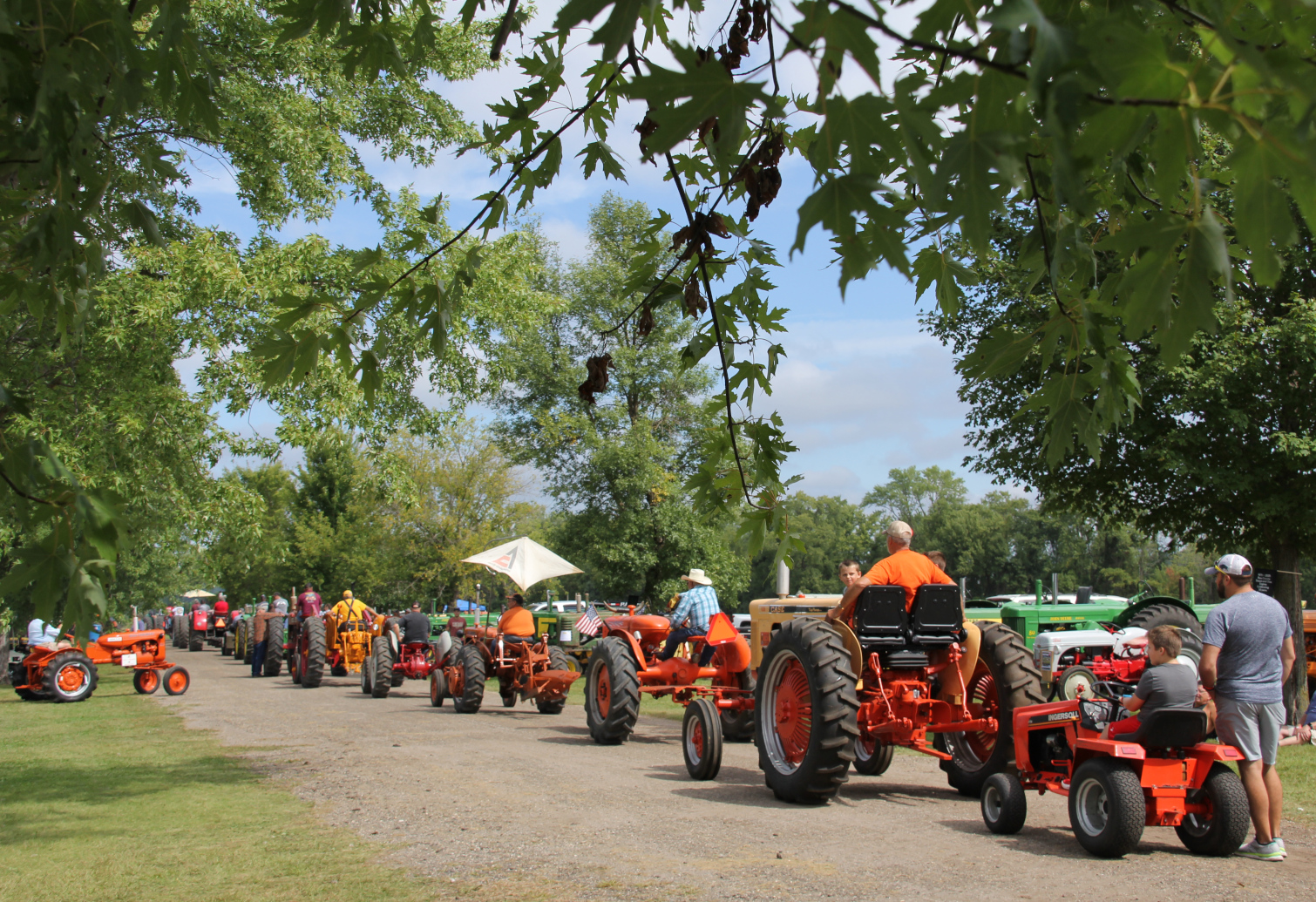
The lengthy parade of hundreds of tractors began at noon daily. (Minnesota Prairie Roots copyrighted photo August 2025)
In the noise of roaring farm machinery, in the belch of steam from massive steam engines, in the dust flying from shelling corn and threshing oats, in the clop of horses’ hooves, even in the scent of horse manure, I observed and experienced rural life as it once existed. Labor intensive. Dangerous. Family-centered. But at it’s core still the same. Valued. Honored. Truly a way of life rooted in the land and cherished by those who live upon and tend it.
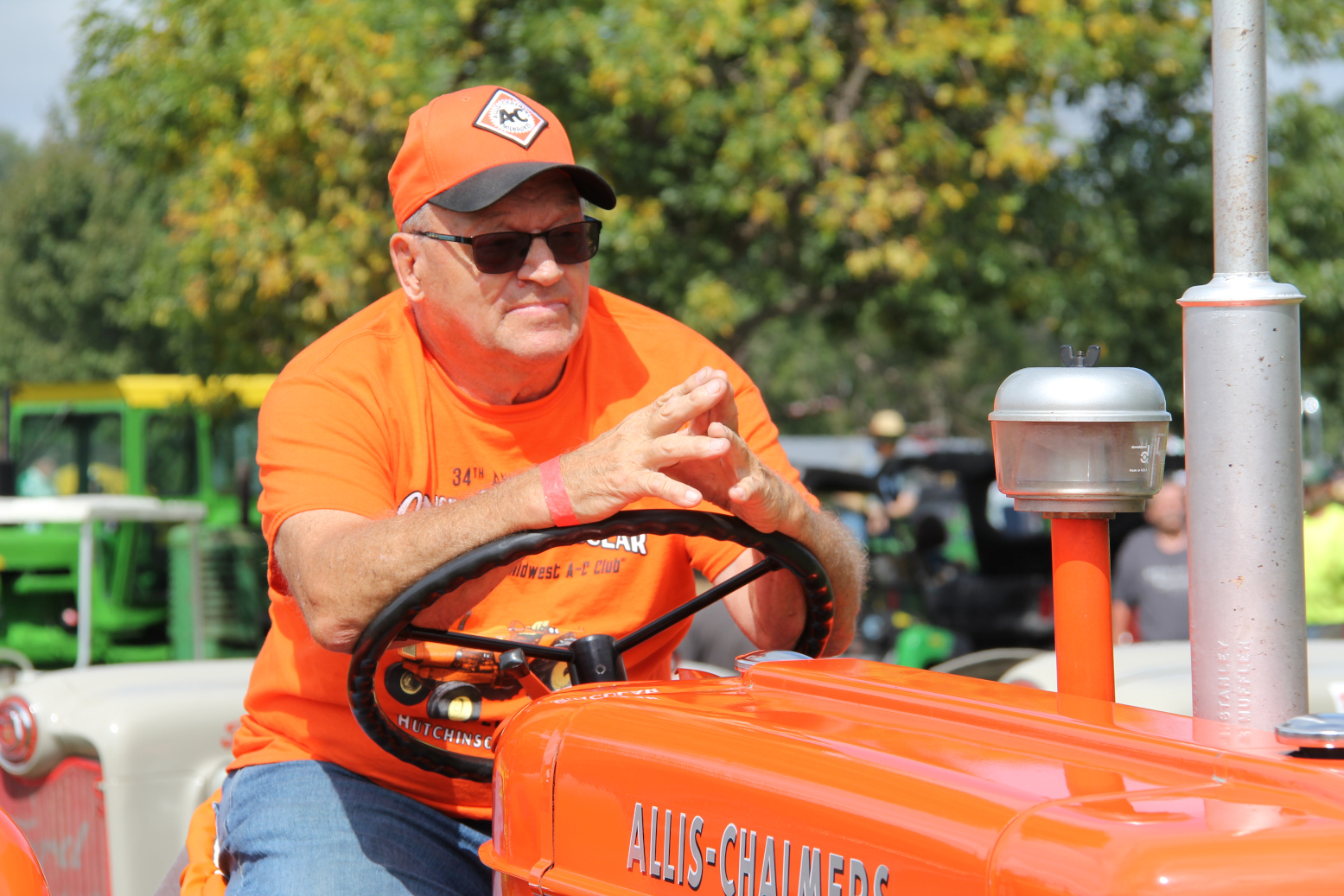
Allis Chalmers guy. (Minnesota Prairie Roots copyrighted photo August 2025)
Of the hundreds of photos I’ve taken at the Rice County Steam & Gas Engines spring and fall shows, this remains a favorite of a farmer watching threshing. (Minnesota Prairie Roots copyrighted file photo 2012)
FOR ANYONE ROOTED in the land, this weekend’s annual Tractor Show at the Rice County Steam & Gas Engines showgrounds along Minnesota State Highway 3 south of Dundas is a must-attend. This event, celebrating its 50th year, is like a step back in time, when farming was much more labor intensive and equipment vastly different from the computerized equipment of today.
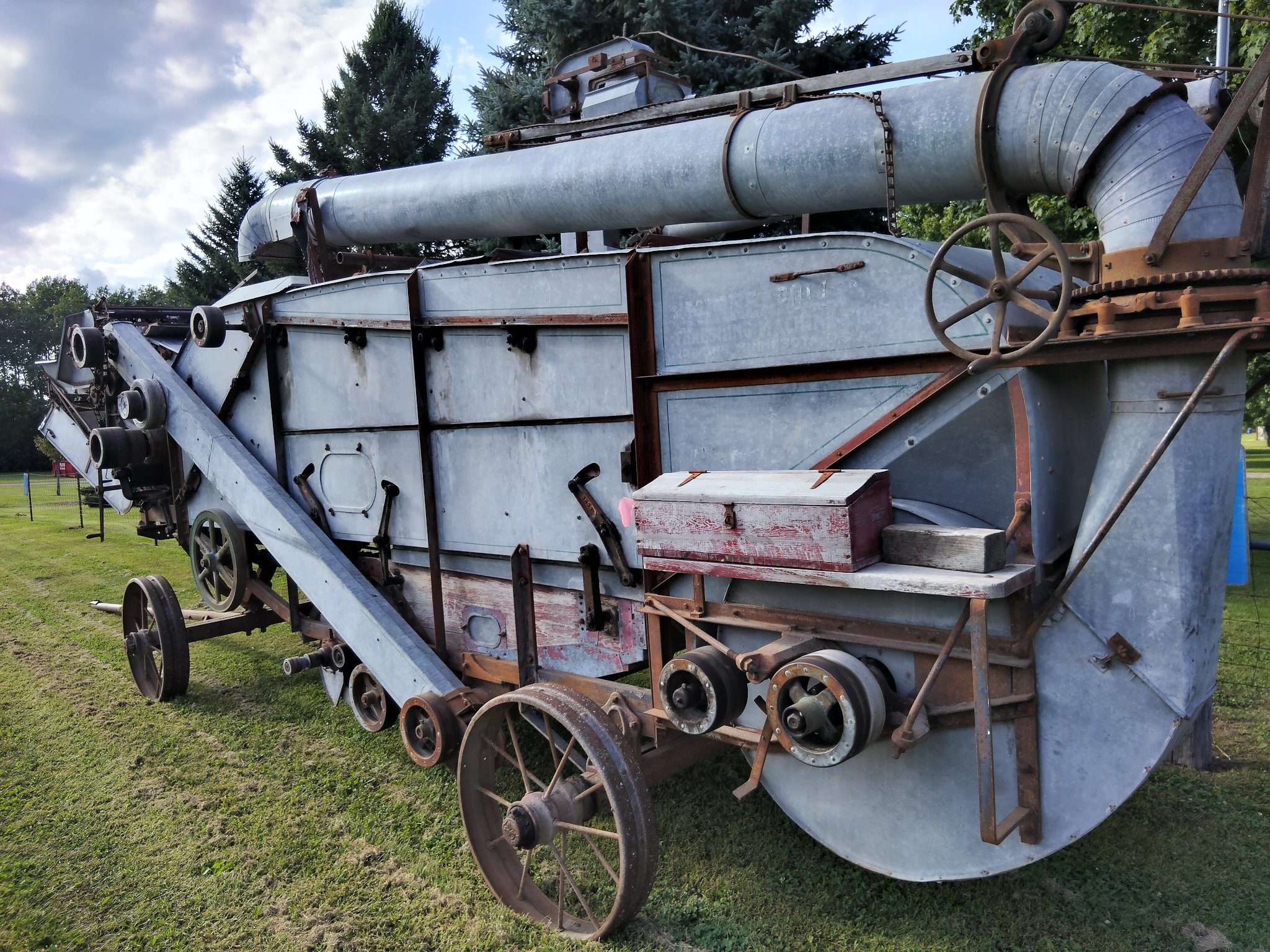
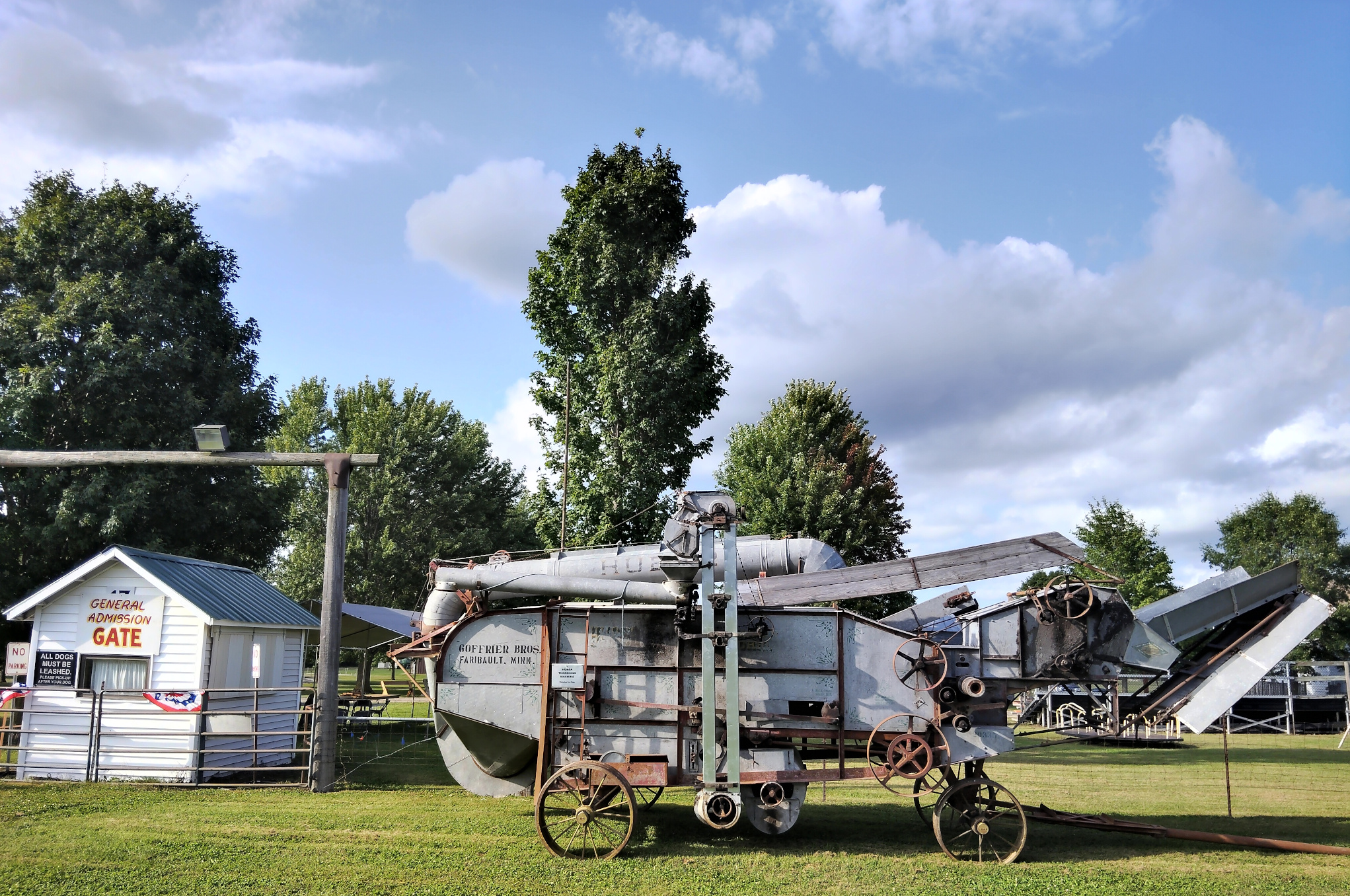
A mammoth threshing machine sits outside the fenced showgrounds on Wednesday. (Minnesota Prairie Roots copyrighted photo August 2025)
I’ve attended and photographed this show many times. And even though I’m not nearly as interested as my automotive machinist husband in old tractors, steam engines, threshing machines, small engines and miscellaneous vintage farm equipment, I still find plenty to appreciate. I am, after all, a born and raised farm girl who is incredibly proud of her rural heritage.
I’m also proud of Randy and all the work he’s done on vintage tractors. Without fail, someone will walk up to us at the show and tell him how great their tractor runs—the one he worked on. He’s overhauled many a tractor engine.
There’s a lot of work involved in putting on a tractor show that includes a daily noon tractor parade, a tractor pull, a kids’ pedal pull, flea market, living history demonstrations, petting zoo, mini train rides, food stands, live music, a cornhole tournament, raffle, Sunday morning church service, small engines and tractor displays, and much more.
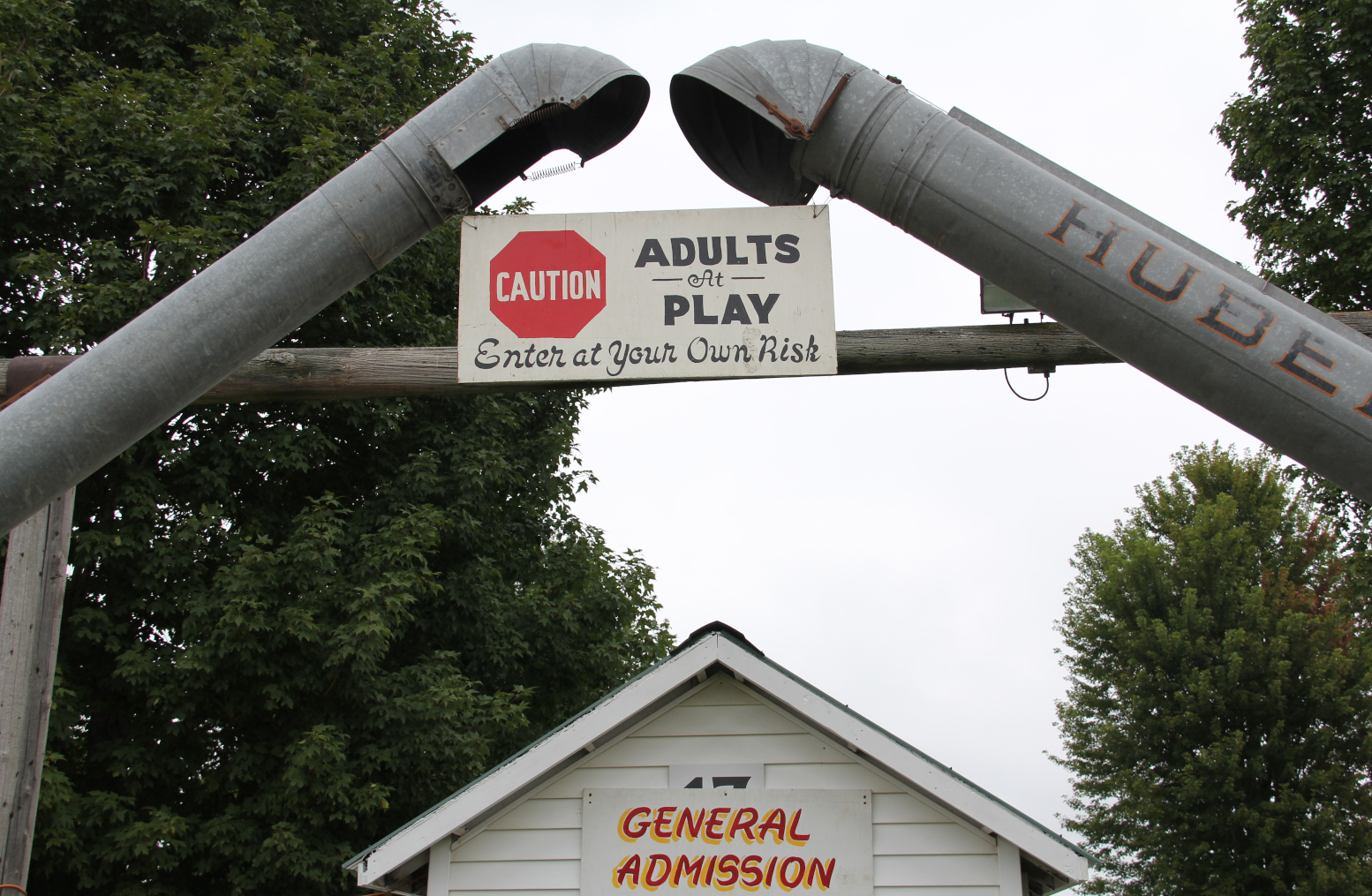
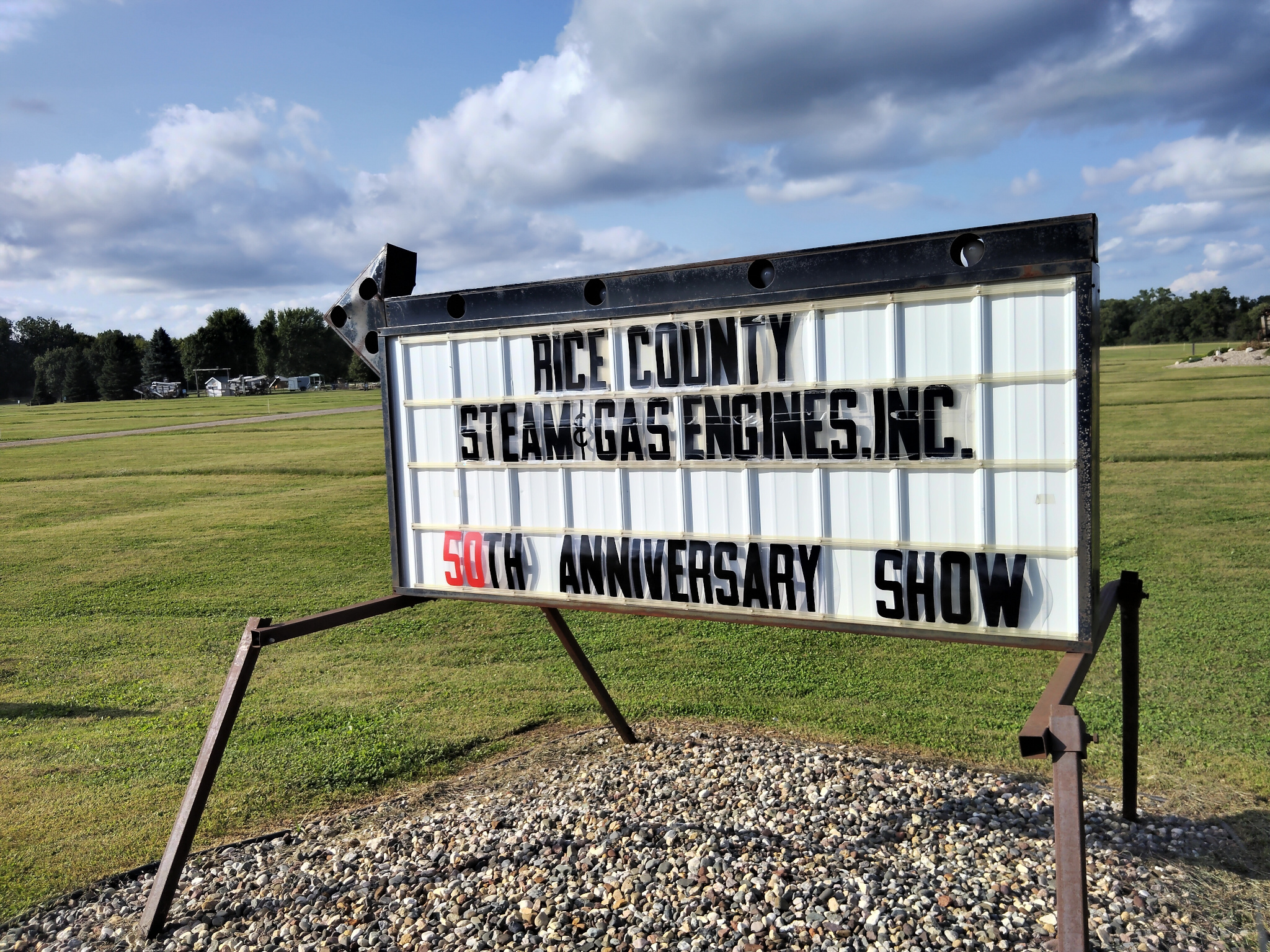
Signage at the showgrounds entry notes this as the 50th anniversary Tractor Show. (Minnesota Prairie Roots copyrighted photo August 2025)
And to think that volunteers have organized this Tractor Show for 50 years is truly remarkable. Enthusiasm for showcasing rural history and preserving the past runs deep. Old buildings have even been moved on site like a log cabin, 1912 farmhouse, an old school, town hall, corn crib…
The flea market always draws me to look and shop. I challenge myself to find the strangest of merchandise. Not hard to do. Oddities abound.
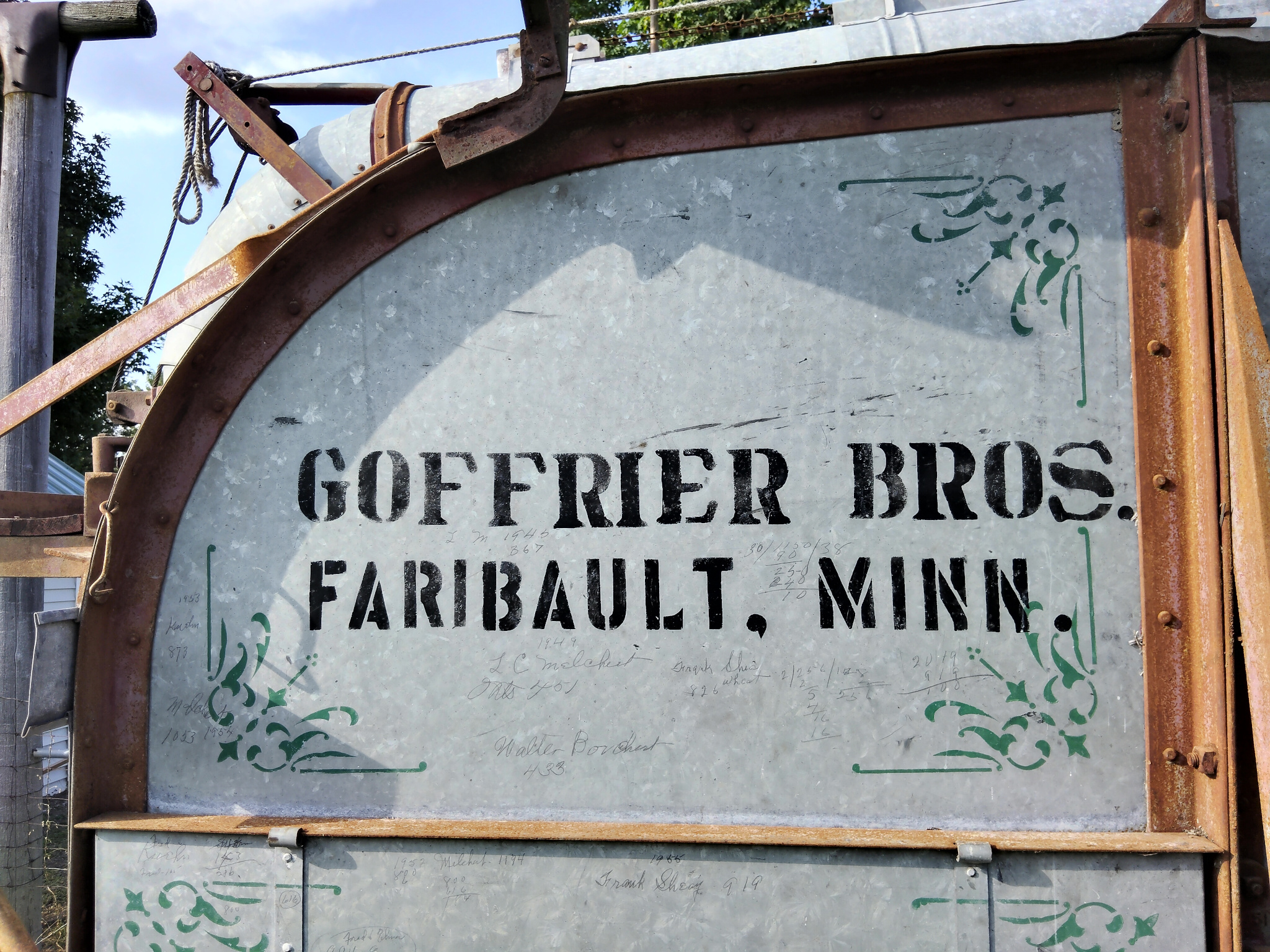
This name was printed on one of the two threshing machines I photographed, presumably the original owners. Other names were penciled onto the metal. Another sign identified this as a Huber threshing machine. (Minnesota Prairie Roots copyrighted photo August 2025)
And then there are the people. I always run into someone I know. And that’s part of the experience, too. Standing and visiting. Catching up. Discussing whatever.
This all happens on the land, on acreage Rice County Steam & Gas Engines, Inc. opens twice annually to the public. The group holds a spring swap meet on Memorial Day weekend.
Two threshing machines sat outside the showgrounds fence at the entrance gate Wednesday afternoon. (Minnesota Prairie Roots copyrighted photo August 2025)
But for Labor Day weekend, the event focuses on tractors. Gates open at 7 a.m. daily, August 29-31. Admission for all three days is $10 for adults; those 12 and under enter free. I’d encourage you to attend if you live within driving distance. And that means anyone, whether you were raised rural or grew up in a city.
A monarch butterfly feeds on a milkweed flower. (Minnesota Prairie Roots copyrighted file photo)
ON A RECENT AFTERNOON, I looked up from washing dishes and out the kitchen window to see a solitary monarch butterfly flitting among milkweeds. Something as common as a butterfly remains, for me, one of summer’s simplest delights. Along with milkweeds and fireflies.
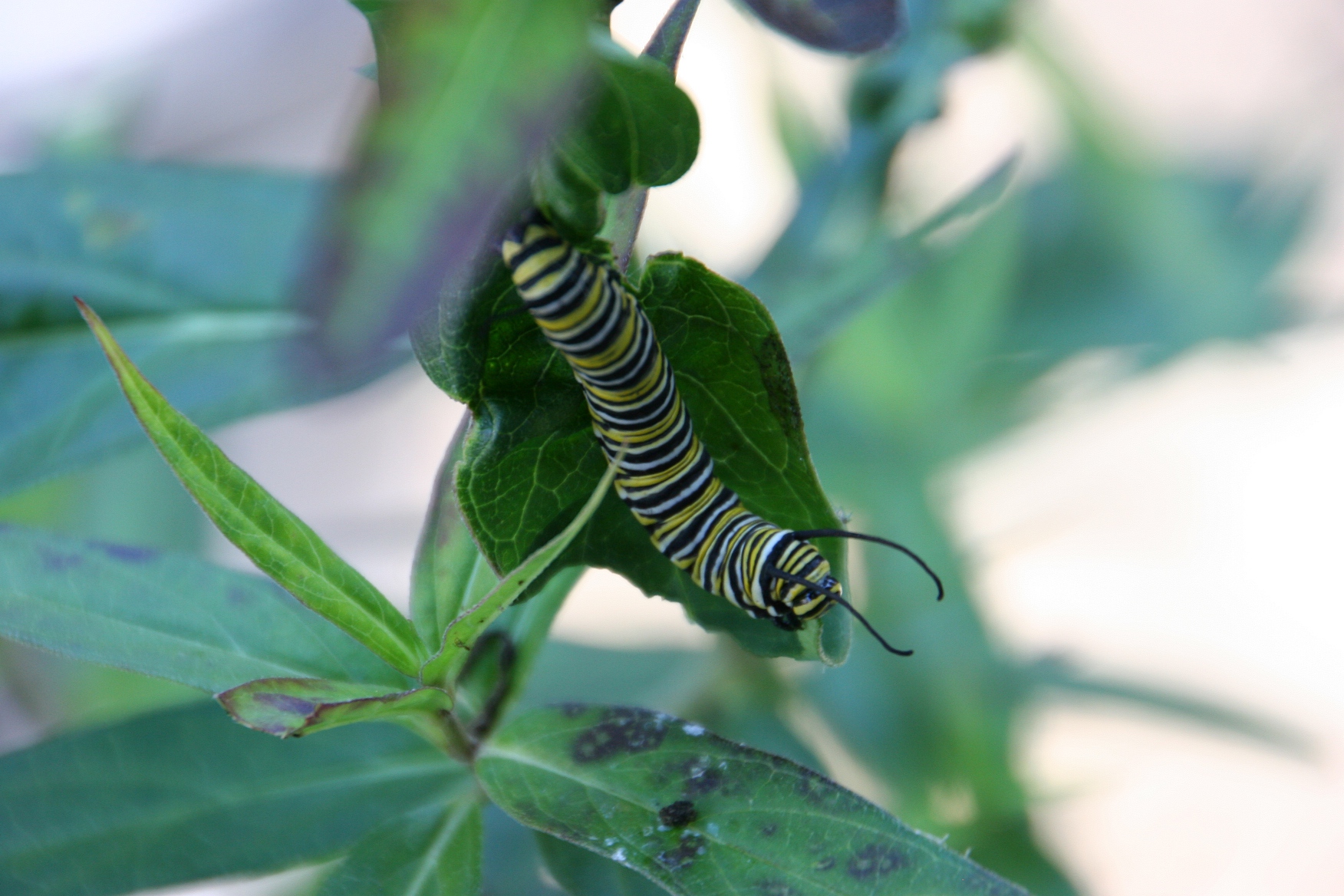
A monarch caterpillar on milkweed. (Minnesota Prairie Roots copyrighted file photo)
This year I have a bumper crop of milkweed plants growing in and along flowerbeds and retaining walls. I stopped counting at 24 plants. I have no idea why the surge in milkweeds. But I am happy about their abundance given monarchs need milkweed. It is the only plant upon which the monarch lays eggs and the sole source of food for monarch caterpillars.
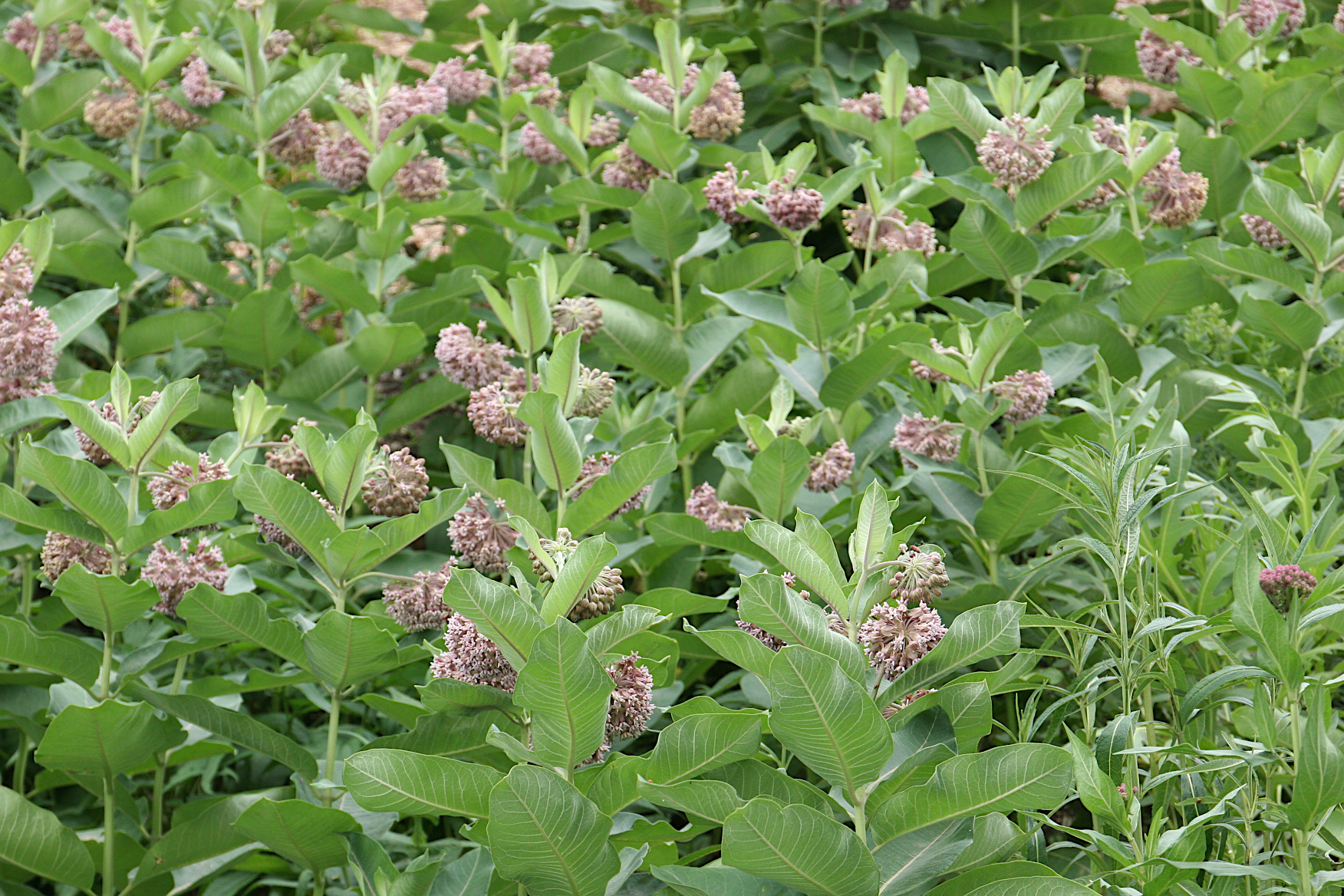
A crop of milkweeds in a public garden. (Minnesota Prairie Roots copyrighted file photo)
My farmer dad, if he was still alive, would likely offer a different opinion about milkweeds. As children, my siblings and I walked rows of soybean fields eradicating milkweeds, thistles and the notorious cocklebur. This was called “walking beans,” a job that we hated, but was necessary to keep fields mostly weed-free without the use of chemicals.
I never considered then that I might some day appreciate milkweeds, the “weed” I pulled from the rich dark soil of southwestern Minnesota. On many a hot and humid afternoon, sweat rolled off my forehead and dirt filtered through the holes of my canvas tennis shoes while hoeing and yanking unwanted plants from Dad’s soybean fields and on my cousin John’s farm.
Today I instruct my husband not to pull or mow any milkweed plants in our Faribault yard. Randy understands their value, even if he didn’t walk beans on his childhood farm. He more than made up for that lack of field work by picking way more rocks than I ever did. Morrison County in central Minnesota sprouts a bumper crop of rocks compared to my native Redwood County, where I also picked rocks.
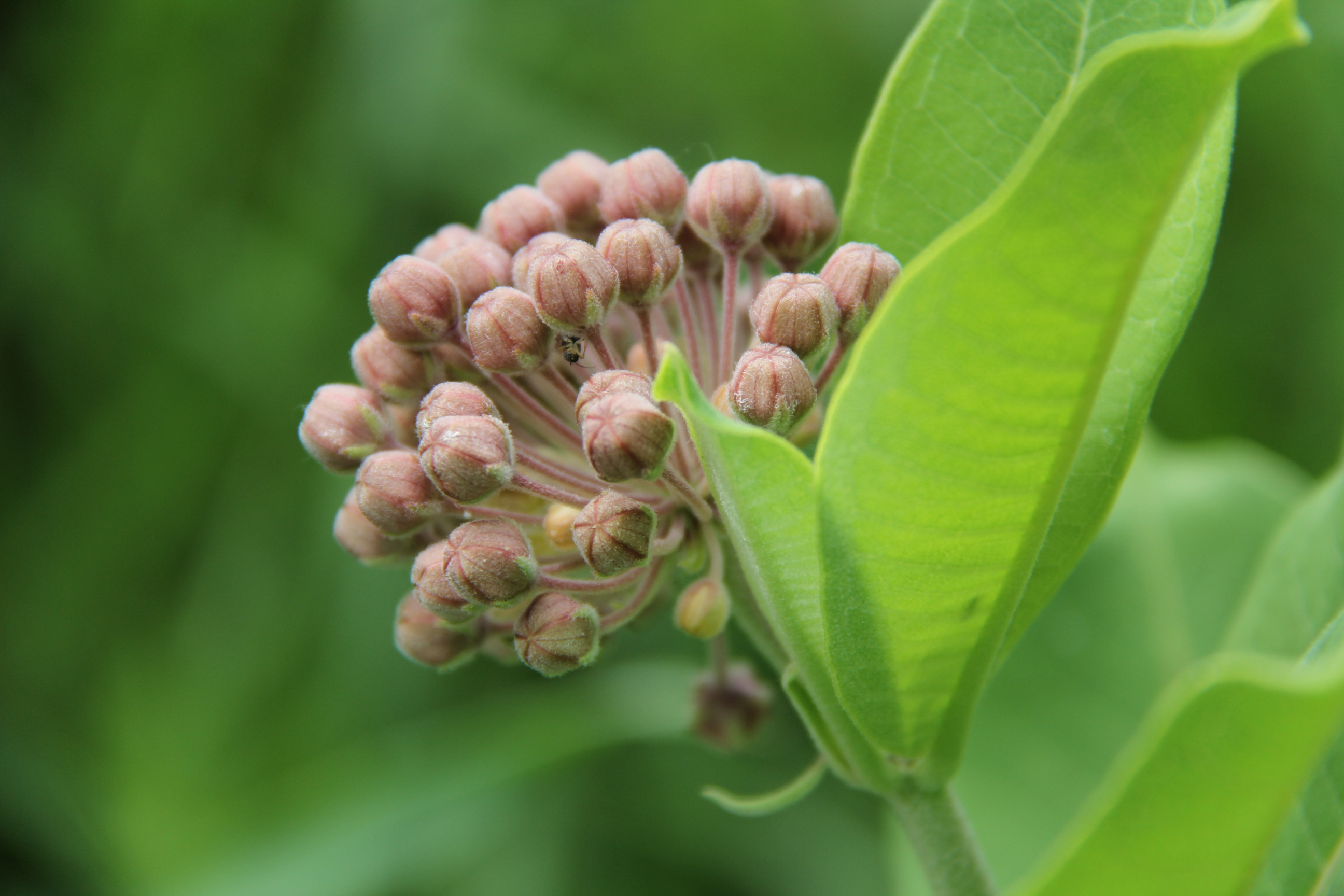
A milkweed about to open. (Minnesota Prairie Roots copyrighted file photo)
But back to milkweeds. I love the scent of the dusty rose-colored common milkweed. So if you drive by my Faribault home or walk through River Bend Nature Center or Central Park or past Buckham Memorial Library and see me dipping my nose into a cluster of milkweed flowers, that’s why.
As summer progresses, I’m curious to see how many monarchs soar among the milkweeds in the tangled messes of plants that define my untamed flowerbeds. Thankfully our next door neighbor appreciates milkweeds also and is OK if the wind carries seeds onto his property.
Fireflies glow in the garden art honoring my nephew Justin. (Minnesota Prairie Roots copyrighted file photo)
I’ve already seen fireflies aplenty in our backyard, which abuts a wooded hillside. And recently, while driving home in the early dark of a summer evening, Randy and I saw hundreds of fireflies lighting up grassy road ditches. It was truly magical, reminding me of childhood sightings and of Eric Carle’s children’s picture book, The Very Lonely Firefly. I had a copy for my kids, battery included to light up firefly illustrations. And, until it stopped working, I had a solar-powered firefly garden sculpture honoring my nephew Justin, who loved light and fireflies and died at age 19 in 2001 of Hodgkins disease.
Often what we love is about much more than simply whatever we love. I see, in writing this story, that my love of milkweeds, monarchs and fireflies connects to memories. Summer memories. Farm memories. Family memories. These are the stories we carry within us, that help define who we are, whether we consider a milkweed to be a weed, or a flower.
TELL ME: What simple summer things delight you and why?
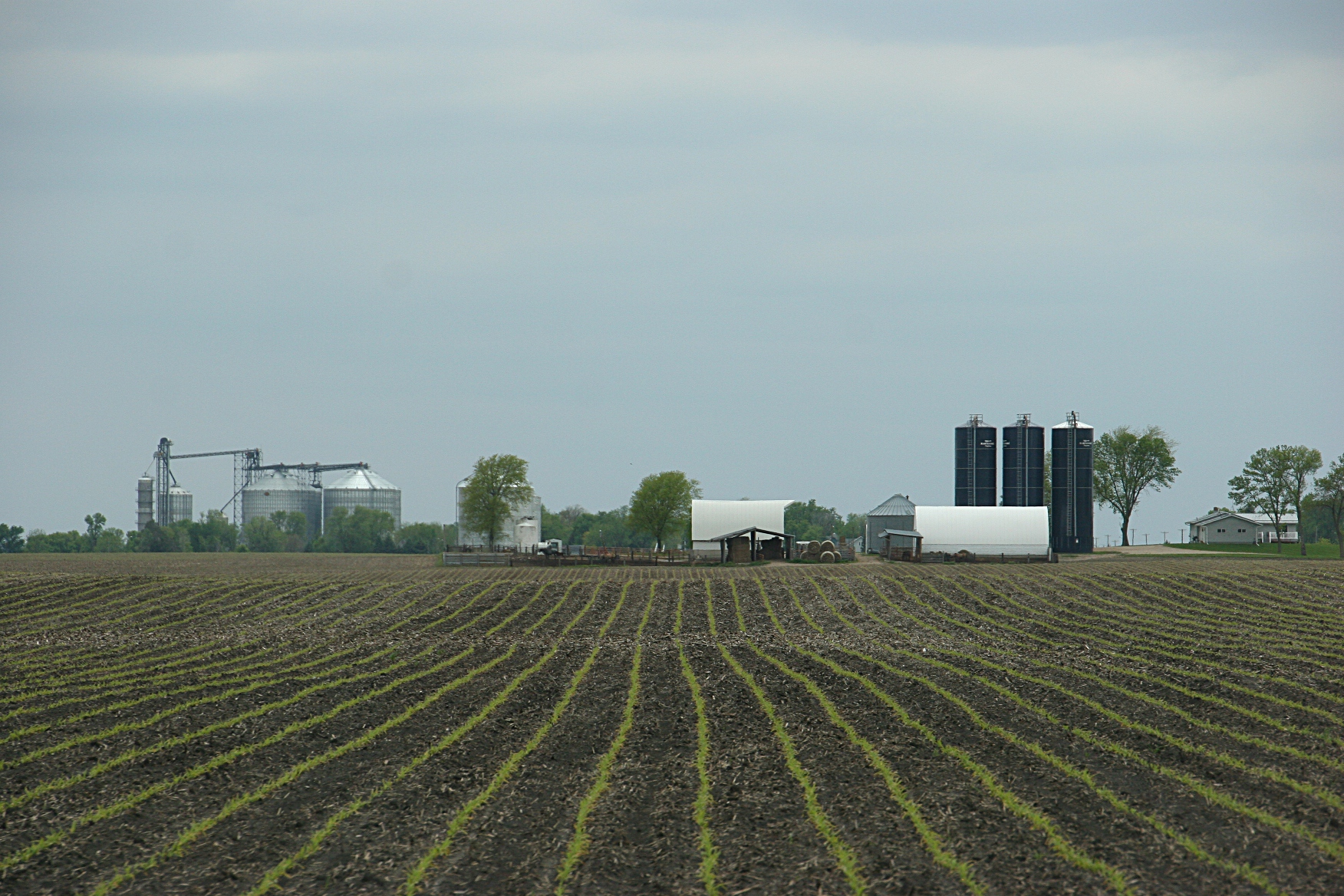
Corn rows emerge in a field near Delhi in my native southwestern Minnesota prairie.(Minnesota Prairie Roots copyrighted file photo)
I COME FROM A LONG LINE of engaged citizenry rooted in the rich dark soil of the southwestern Minnesota prairie. On that land, generations of my family used their voices and skills to create change, to make the place they called home a better place. My paternal great grandfather, Rudolph, started that engagement by helping found a Lutheran church in my hometown. Pre-building, congregants met in his farmhouse.
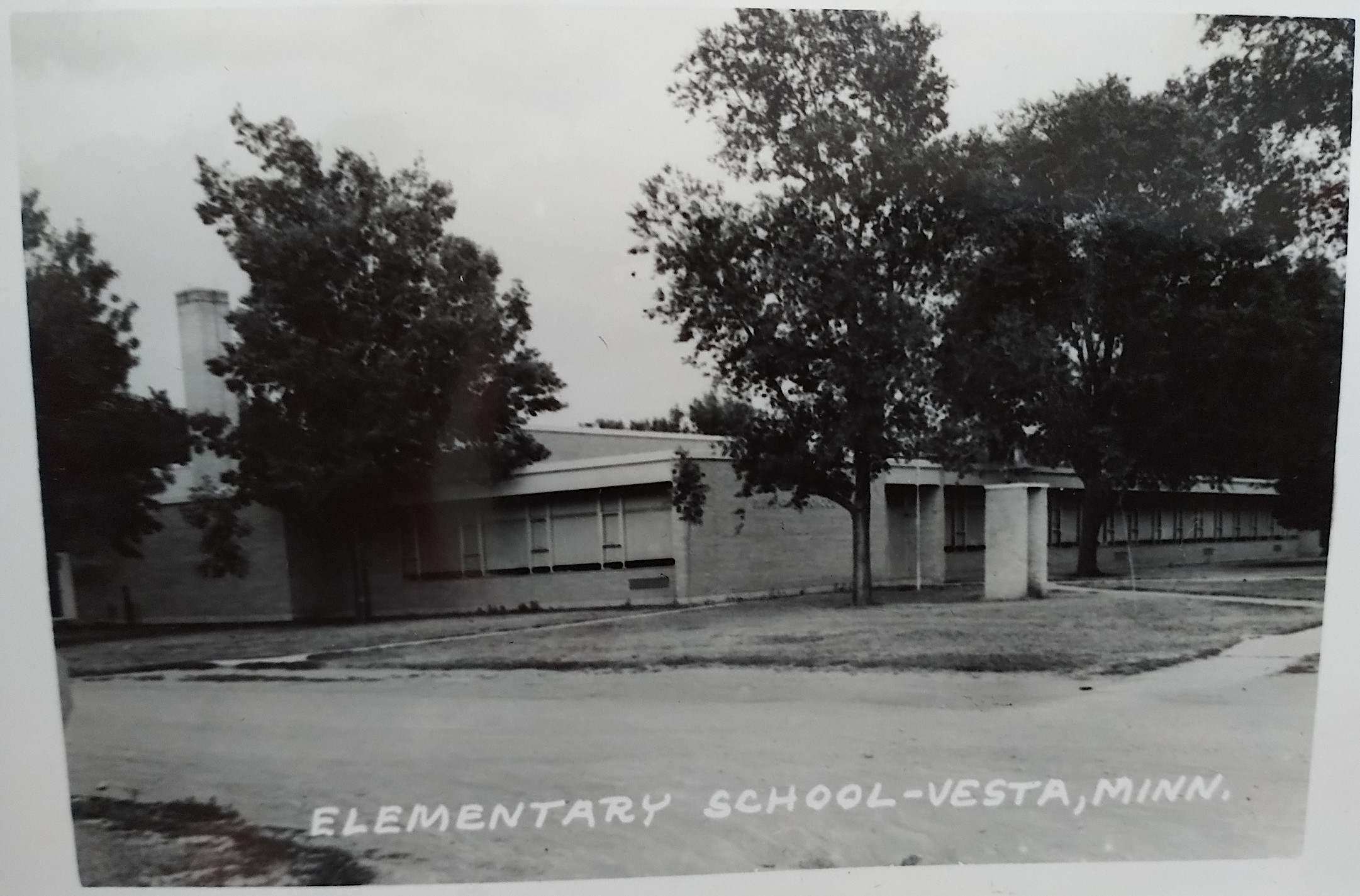
My grandfather, Henry Kletscher, served as school board clerk when Vesta Elementary School was built in the late 1950s. I attended school here. (Vintage photo from my collection)
From that church to school boards to county boards, from elementary schools to high schools to college campuses and more, countless family members have served and continue to serve others by representing them, crafting policies, improving lives. I am proud of that legacy.
Now you might ask, what about you, Audrey? I, too, have served, but in a different capacity. I’ve never held a desire to lead, to run for elected office or even sit on a board. Rather, I’ve observed, used the written word to inform others. During my years working as a newspaper reporter, I covered endless county board, city council, planning and zoning board, school board, caucuses and other meetings. I learned a lot about how government does and doesn’t work during those many hours of scribbling notes, gathering quotes, writing news stories. I learned, too, that individual voices matter and are heard. And I shared that in my unbiased, balanced reporting.
Today I craft writing that is not straight news reporting, because I am no longer a newspaper reporter. Rather, my writing is personal and sometimes opinionated. My voice matters…as much as anyone’s.
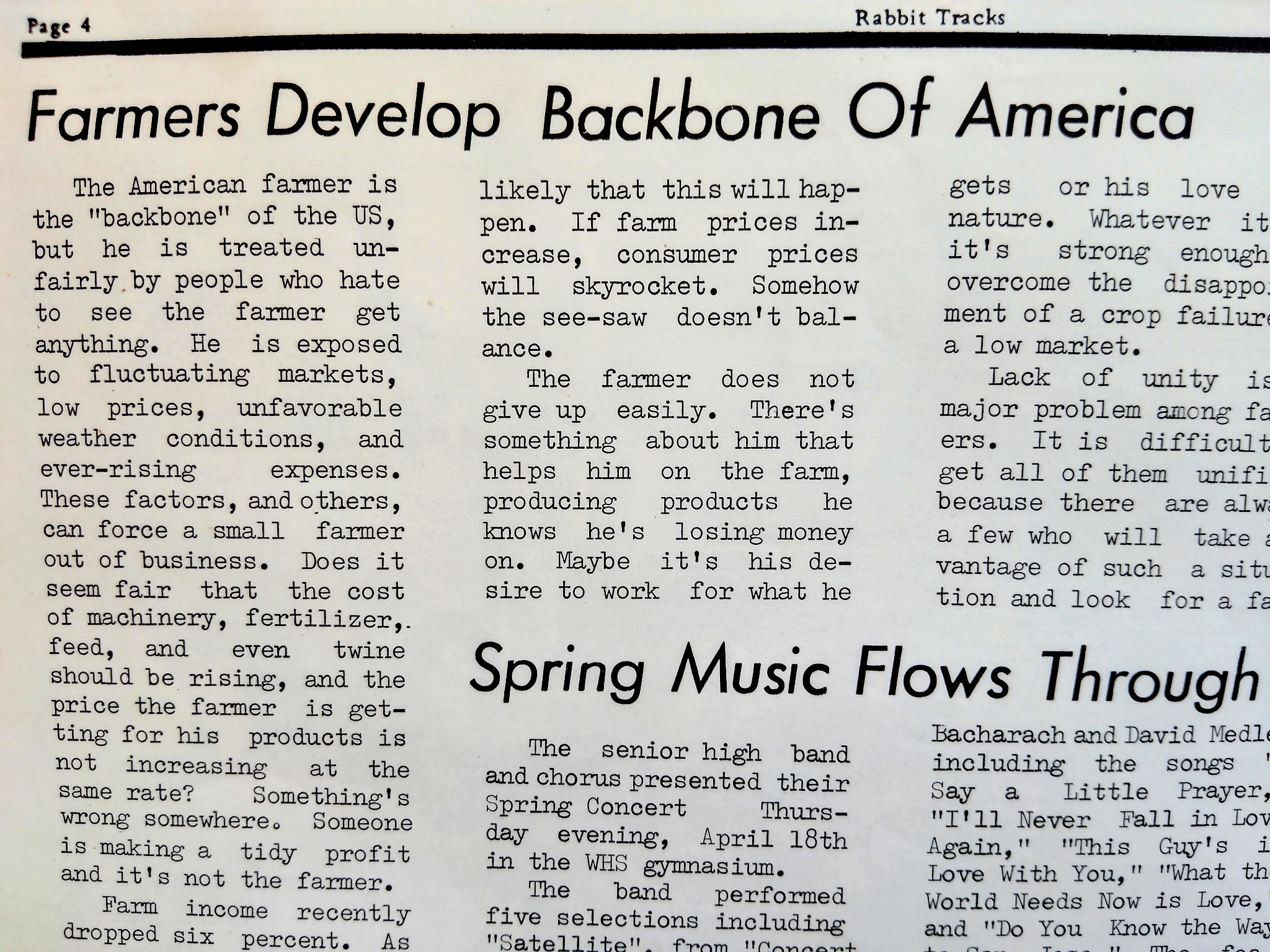
An opinion piece I wrote in 1974 for my high school newspaper. (Minnesota Prairie Roots copyrighted photo April 2025)
While coming of age near the end of the Vietnam war, I began writing angsty poetry about the war. I purchased and wore a POW bracelet, a thick silver band that wrapped around my wrist. It was engraved with the name of an American soldier held as a prisoner of war. I also wrote the occasional opinion piece for my high school paper. Not about the war, but on other topics.
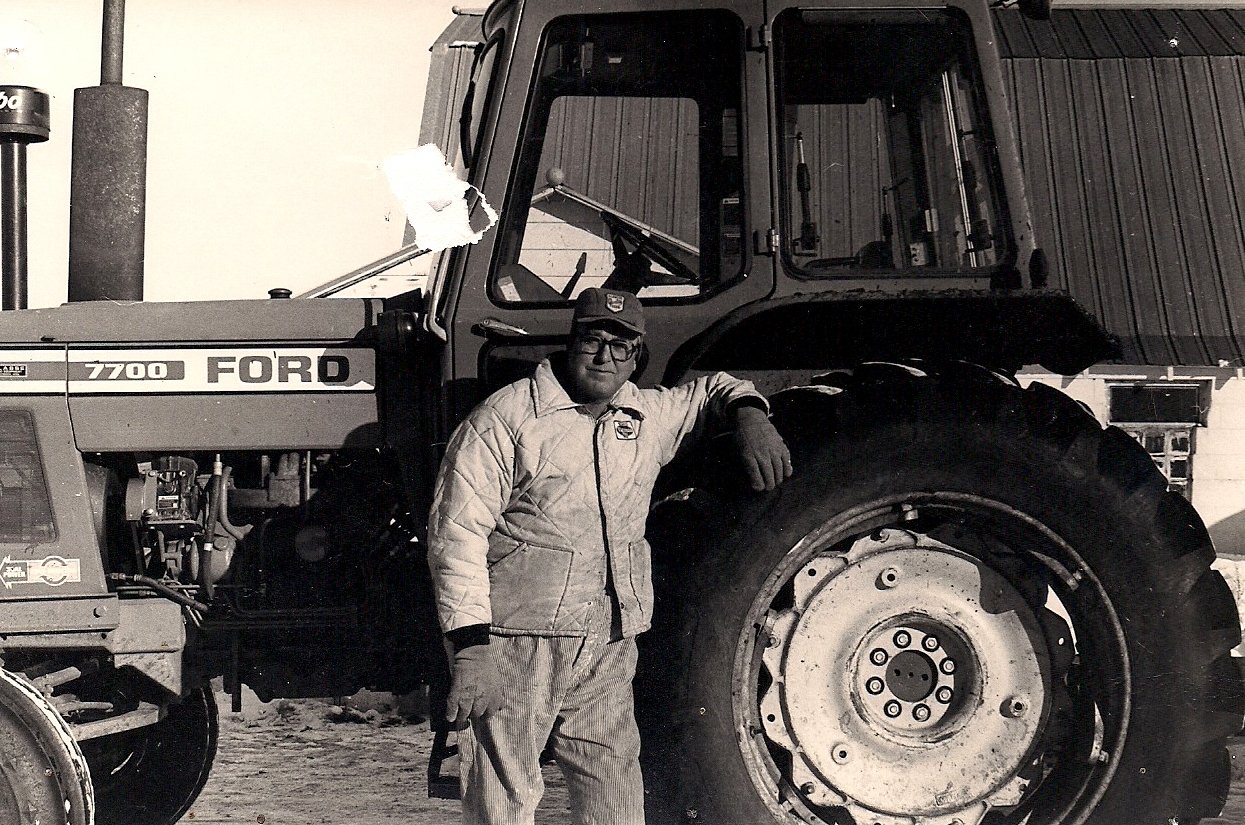
A photo of my dad, Elvern Kletscher, taken in 1980. (Photo from mycollection)
It was my dad, a dairy and crop farmer, who inspired me to voice my thoughts in the May 24, 1974, issue of my school paper, Rabbit Tracks. In an opinion piece titled “Farmers Develop Backbone of America,” teenage me wrote about low farm prices and how farmers were struggling to survive. I had witnessed my dad dumping milk down the drain during a nationwide protest by the National Farmers Organization. All these decades later, I more fully understand how difficult that must have been for Dad. He depended on income from milk sales to provide for our family. But he sacrificed and let his voice be heard in that NFO protest.
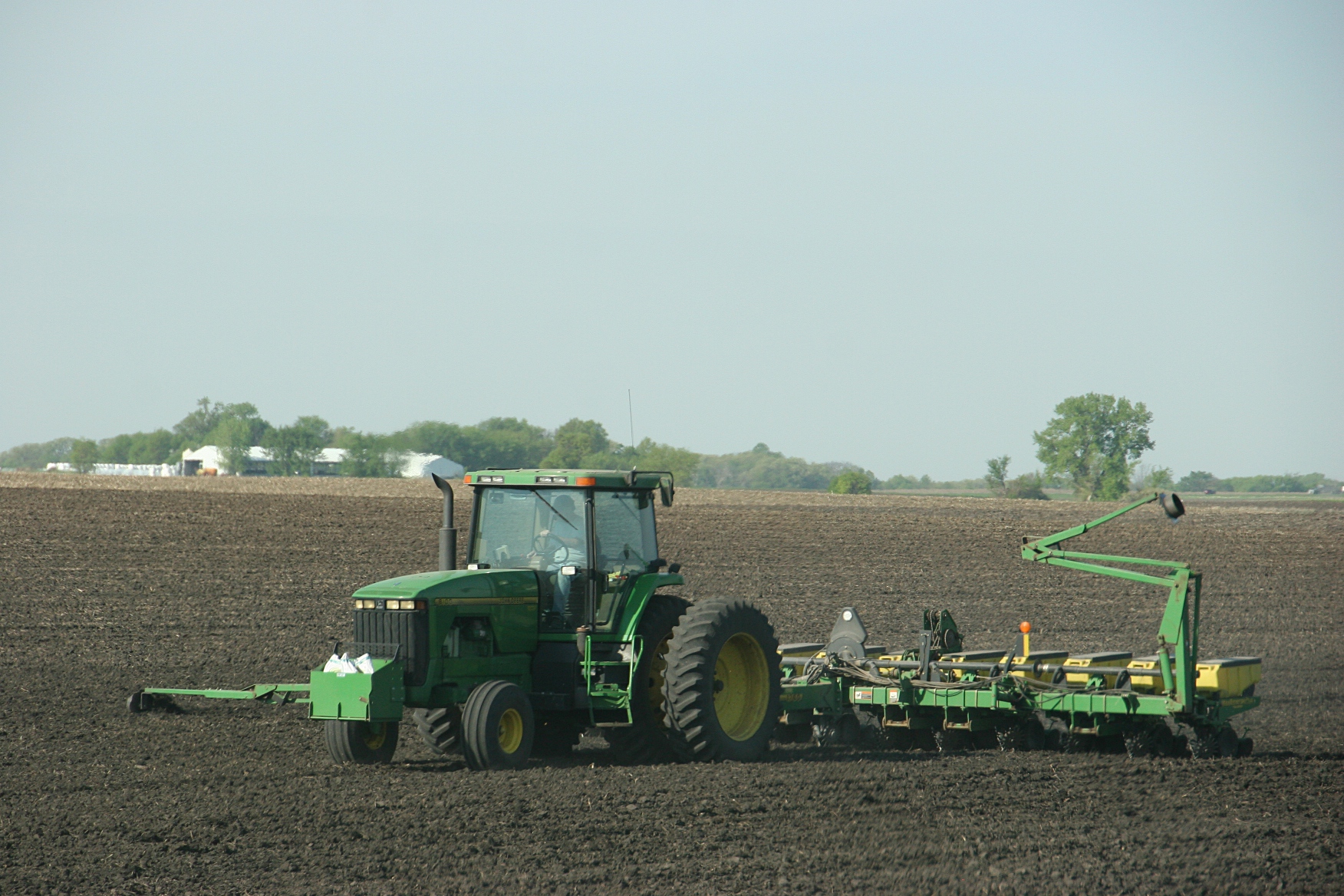
Spring planting in Minnesota will soon be underway. (Minnesota Prairie Roots copyrighted file photo)
Sunday evening I listened to another farmer voice his thoughts, this time in the open mic part of a Town Hall meeting attended by hundreds in nearby Owatonna. He drove from Janesville to share concerns about how tariffs will negatively affect his farming operation via market loss, dropping crop prices and rising costs for everything from tractor parts to fertilizer and fuel. This farmer of 60-plus years pleaded with his Congressman, Representative Brad Finstad (a fourth-generation farmer who was invited but did not attend), to listen and to do something. It was a powerful and particularly emotional delivery.
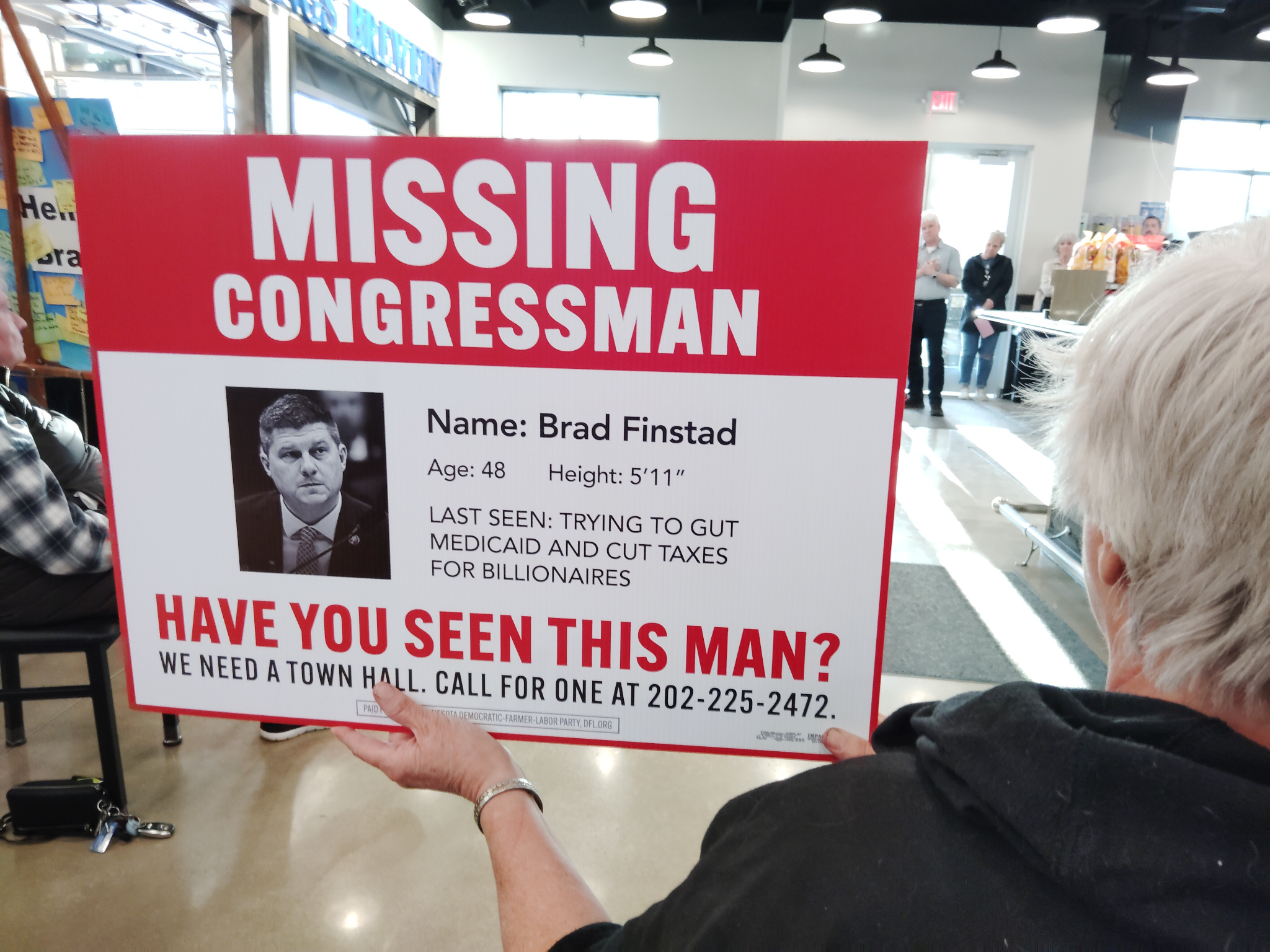
This was one of the many signs displayed at the Sunday Town Hall in Owatonna. Organizers rightly guessed that Congressman Brad Finstad would not attend. He was also invited to a recent Town Hall in Faribault, but did not show. (Minnesota Prairie Roots copyrighted photo April 2025)
Emotions are running high right now across this country. I cannot imagine anyone who would disagree with that. We may disagree on policies, decisions and leaders. But we still—as of this writing—have a voice, even as efforts to suppress our voices continue. We can protest, like my 82-year-old uncle did on Saturday at the Minnesota State Capitol. We can attend town halls to learn, to speak, to let our voices be heard. We can contact our elected officials via phone and/or email and tell them what we think. We can engage. We can vote.
(Minnesota Prairie Roots copyrighted file photo)
A long line of speakers and attendees of all ages addressed numerous topics from veterans’ issues to education to housing to healthcare to democracy and more at the Sunday Town Hall in respectful conversation. The common threads weaving through the event were a deep concern for what is happening in our country and to assure our voices are heard.
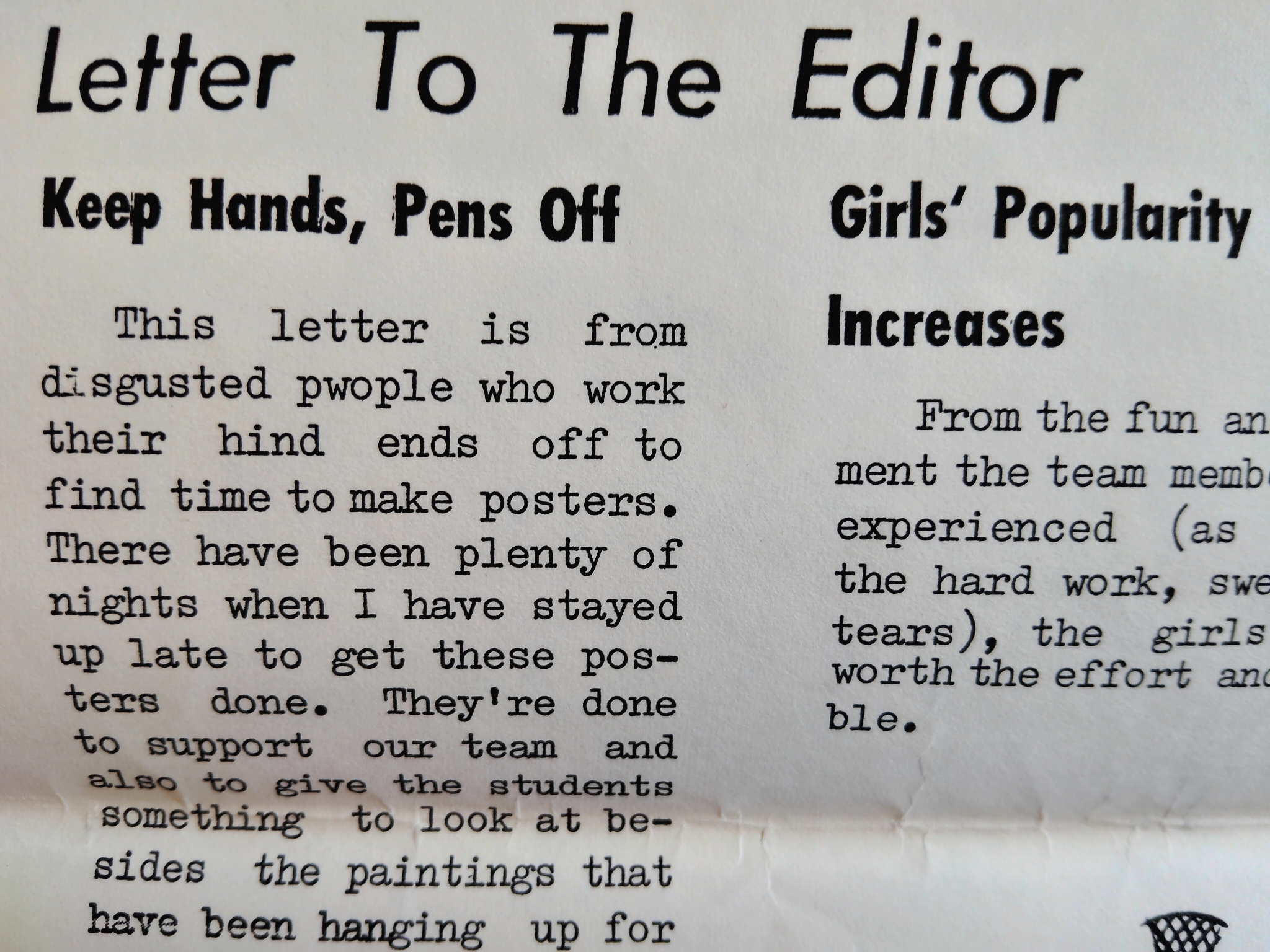
The beginning of Mary’s letter to the editor, penned in 1974 for Rabbit Tracks. The headline is so fitting for 2025. (Minnesota Prairie Roots copyrighted photo April 2025)
I leave you with this opinion piece published in the October 15, 1974, issue of my high school newspaper. An 11th grader wrote about posters she created and which students were defacing. Here’s Mary’s closing sentence in a letter to the editor titled “Keep Hands, Pens Off”: A lot of time and effort has been put into these signs and the least you can do is keep your hands off of them. If everyone is so anxious to write something on the wall, make your own posters. How applicable those words are to today.
#
NOTE: I welcome respectful conversation here. That said, I moderate all comments on this, my personal blog, and make the final decision on publishing comments.
An American flag flies in rural Minnesota. (Minnesota Prairie Roots copyrighted file photo)
I DEBATED FOR SEVERAL DAYS whether I should write this post, because it could be misconstrued as purely political. It is not. Rather this is a story about a grassroots gathering of people sharing information, ideas and opinions. Democracy at its core. This story is about us as Americans—listening, learning, agreeing or disagreeing, and letting our voices be heard.
Tuesday evening I attended a town hall meeting in Faribault hosted by DFL Senate District 19. It was open to everyone, regardless of political affiliation. But the crowd was decidedly Democrat, as you would expect given the hosting group. Republican Brad Finstad, who represents the 1st Congressional District in Minnesota, was invited, but did not attend. His district includes parts of Goodhue, Rice (where I live), Steele and Waseca counties in rural southern Minnesota.
Some 300 constituents packed the space, overflowing into adjacent rooms. Yes. Even I was surprised by the turn out. That tells me a whole lot of people have concerns about what is currently happening at the federal level and how government action is, or will, impact them. I expect not a single American will be untouched, whether directly or indirectly, by slashes in government personnel and funding and/or by changes in domestic and foreign policies.
A sculpture at the Northfield Area Veterans Memorial. (Minnesota Prairie Roots copyrighted file photo)
Town hall organizers lined up speakers to address topics covering a broad range of subjects affecting a whole lot of people and programs—farmers, education, healthcare, seniors, veterans, those with disabilities, communication, nonprofits and much more. I was impressed by how well prepared these speakers were with facts and statistics. I learned a lot.
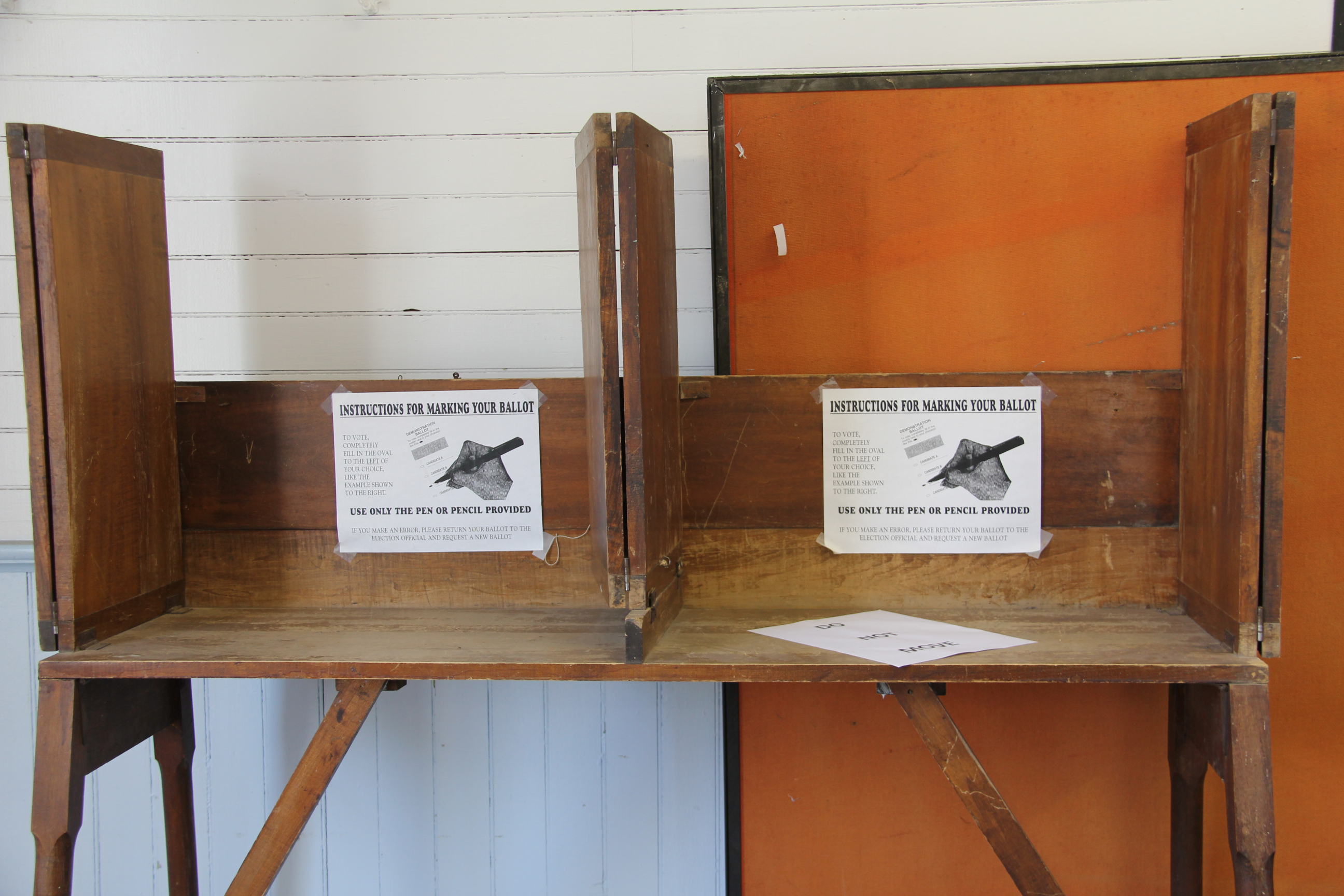
A vintage voting booth in the former Northfield, Minnesota, town hall. (Minnesota Prairie Roots copyrighted file photo)
I’m not going to give you a detailed report of what each speaker said. Rather, I want to share several messages or phrases which really resonated with me and which should resonate with every American, no matter who they voted for. The phrase “we the people” was repeated by one speaker and embraced by the crowd. “We the people” means us. Americans, not members of one political party or the other. And, yes, I’m well aware of how those words from the preamble to the Constitution are being used politically as a mantra of sorts. But in this context, “we the people” references our right to speak up, to be heard, to tell our elected officials what we think and what we would like them to do as our representatives in Washington DC. That can be done by attending town halls like this; the meeting was video taped and will be sent to Representative Finstad. We can be heard via phone calls, emails and letters. We the people have power in our voices, in our votes, whether Democrat, Republican or Independent.
Photographed on a back country road near Morgan in southwestern Minnesota. (Minnesota Prairie Roots copyrighted file photo)
Secondly, a local educator asked the crowd and Finstad to ask themselves this question: “How are the children?” So, yes, how are the children, when many live in poverty, when federal funding for education is in imminent danger of being mostly cut, when…fill in the blank here? I think we can all agree that children are our future and we ought to care about their health, happiness, education and much more.
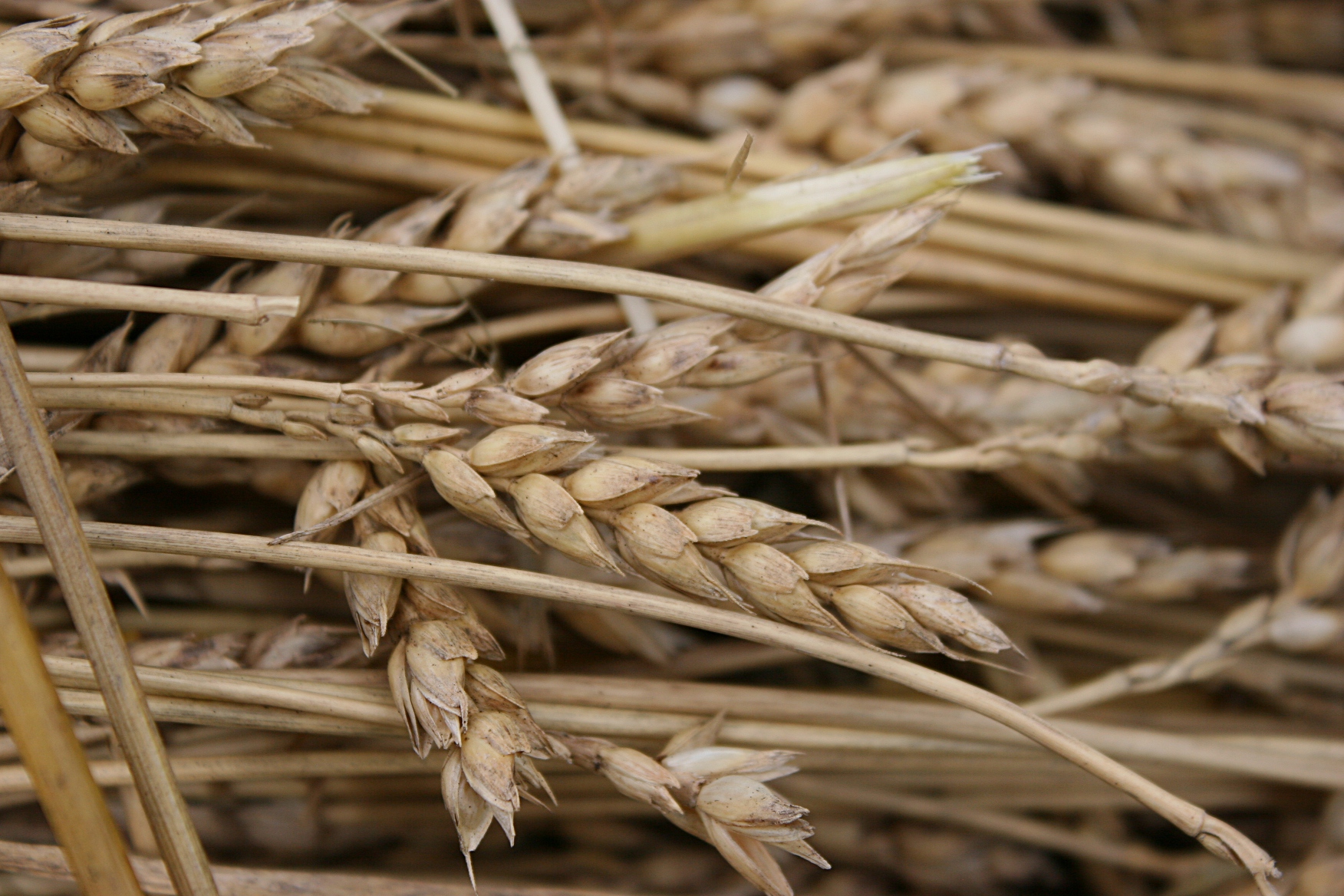
A pile of wheat. (Minnesota Prairie Roots copyrighted file photo)
Third, one of the speakers shared that, as someone of the Catholic faith, he is called upon to help others. He called upon Representative Finstad, who is also Catholic, to do the same. That means feeding the hungry (funding USAID, for example), protecting Medicaid and Social Security, etc. all of those ways and places we help one another as human beings in this country and abroad. Now I’m not Catholic; I’m Lutheran. Doesn’t matter. My faith compels me to show love, compassion and care for others, especially those in need. America once did that as a country. Generously. But that is changing. We have bounty and resources we can share to help starving children, to provide medical care, to help others in any way we can. It is the right thing to do as a nation blessed with great bounty.
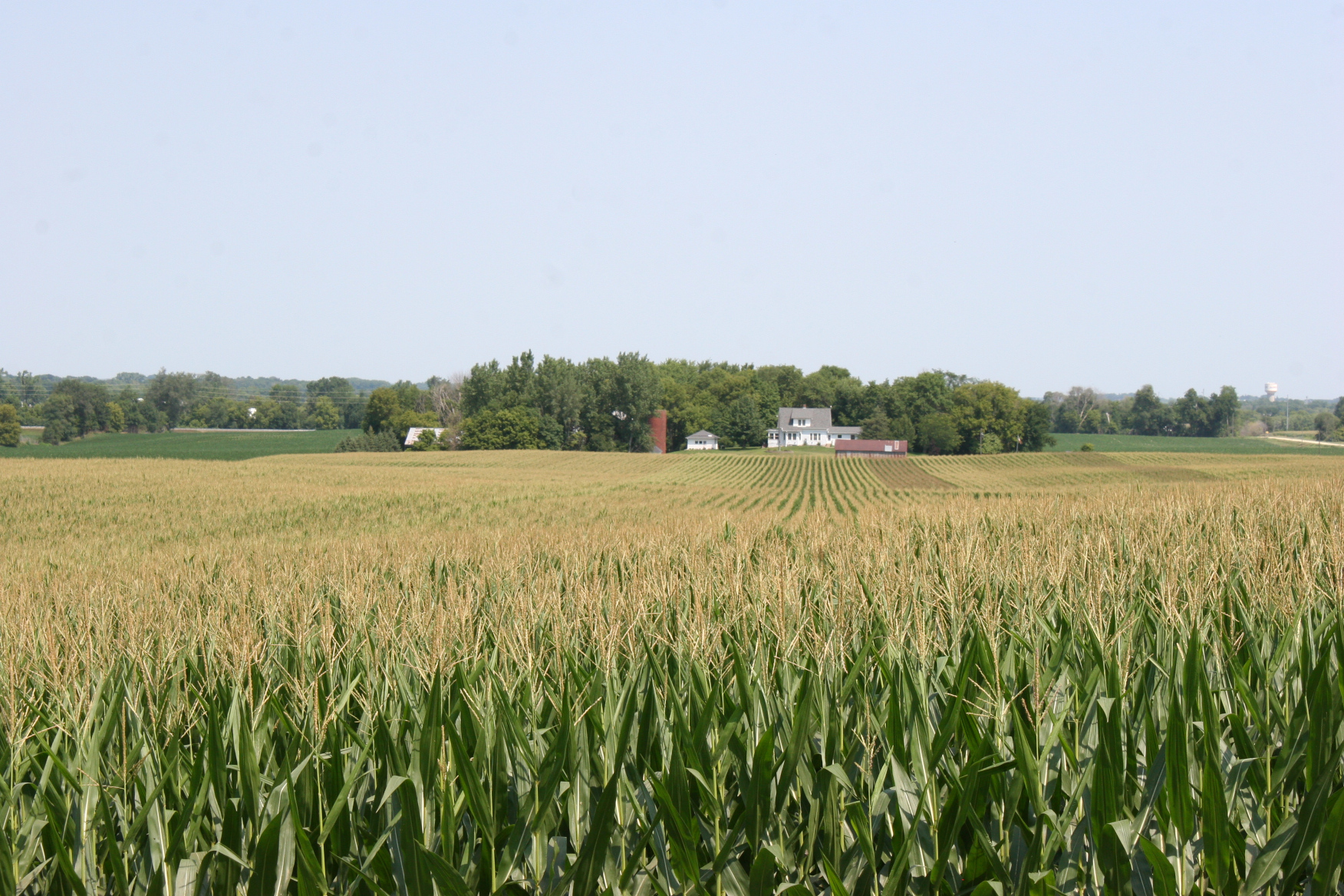
Rural Rice County, Minnesota. (Minnesota Prairie Roots copyrighted file photo)
Fourth, a local farmer spoke about $3.2 million in contracts with farmers in our district which have now been broken by the U.S. government. The consequences will be devastating to those farmers who have already invested those federal monies in their operations. Trust has been broken, she said. I think we can all agree that when a legal contract is broken, it’s a breach of trust.
A symbol of freedom, an eagle sculpture at Veterans Memorial Park in Morristown, Minnesota. (Minnesota Prairie Roots copyrighted file photo)
There’s so much more I could share from that town hall session. But I want to conclude with this. I encourage you, if you have the opportunity to do so, attend a town hall meeting. Listen. Learn. Engage. Let your voice be heard. Remind your elected officials, too, that they need to listen, learn and engage.
FYI: A second Town Hall Meeting hosted by DFL Senate District 19 is set for 6 p.m. Sunday, April 6, at Mineral Springs Brewery, 210 N. Oak Ave., Suite 1, in Owatonna. It will follow the same format as the Faribault Town Hall with a moderator, speakers and an open mic. Representative Brad Finstad has been invited.
Former Faribault Daily News reporter Pauline Schreiber photographed these Faribault POW camp barracks shortly before they were torn down in 1990. (Photo courtesy of the Rice County Historical Society)
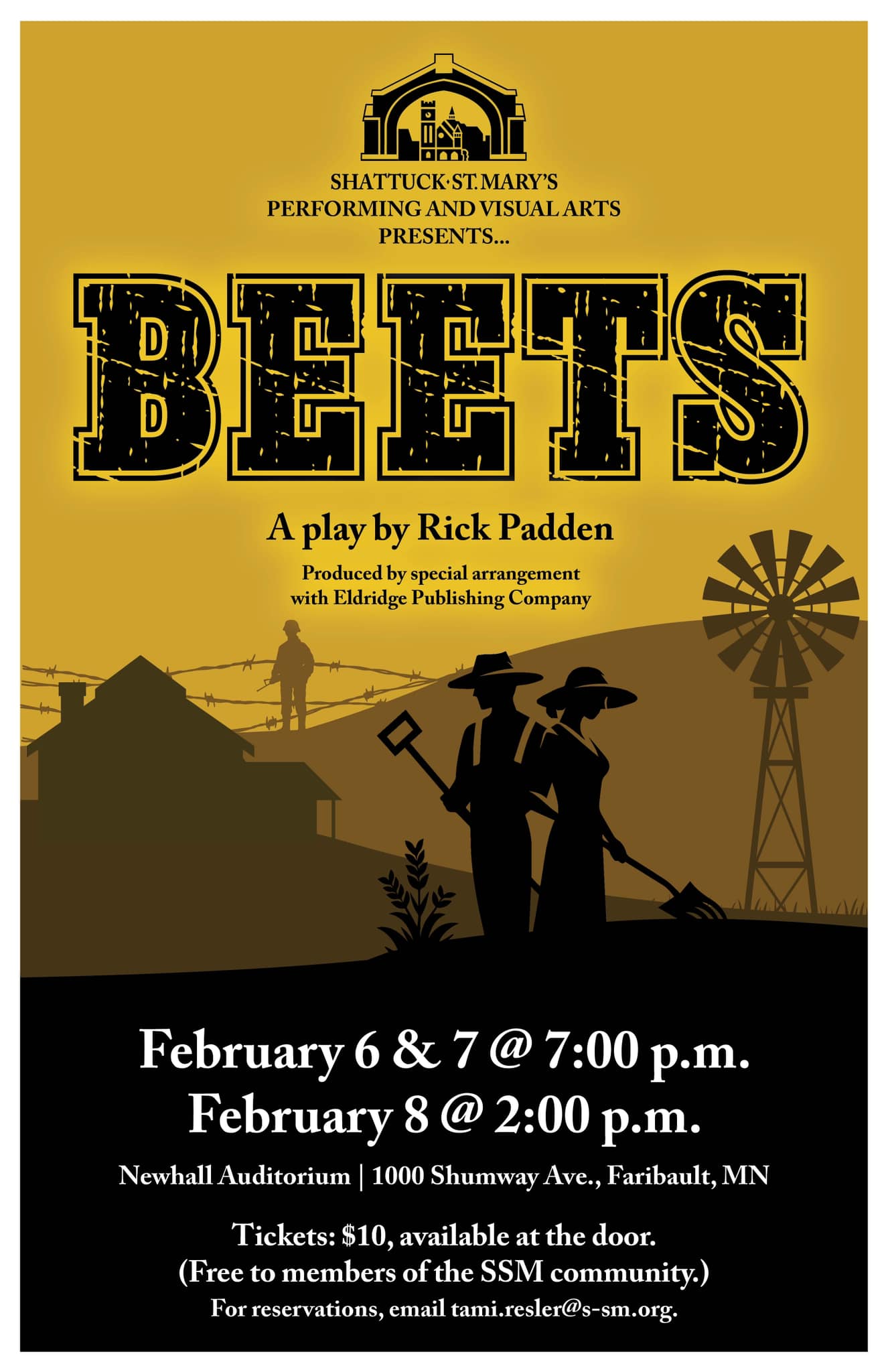
A promo for “Beets.” (Credit: Shattuck-St Mary’s School Facebook page)
Thursday evening, I sat in the sparse audience of the historic Newhall Auditorium on the campus of Shattuck-St. Mary’s School, a private college prep school on Faribault’s east side, watching a story unfold in the theatrical production, “Beets.” An incredibly talented nine-member student cast immersed themselves in the roles of a farm family, German POWs, guards and a family friend to share a bit of history. And much more.
This play about POWs working on the Hunt family’s sugarbeet farm is more than a retelling of history. It is also about relationships, fear, culture and love. It is about the perceived differences that divide us and about the commonalities that unite us.
This is a play for our times. In a nation today divided by politics, by fear, by hatred and animosity, “Beets” is absolutely relatable.
As the storyline evolves, conflicts arise. Farmer Fred Hunt spews his hatred of the Germans. His wife, Isabelle, exudes compassion and love. And their daughter, Anna, settles somewhere in between, leaning initially toward dislike and distrust of the German POWs who have come to work her father’s land. Anna’s thoughts often turn to her brother, Jake, fighting the Germans abroad.
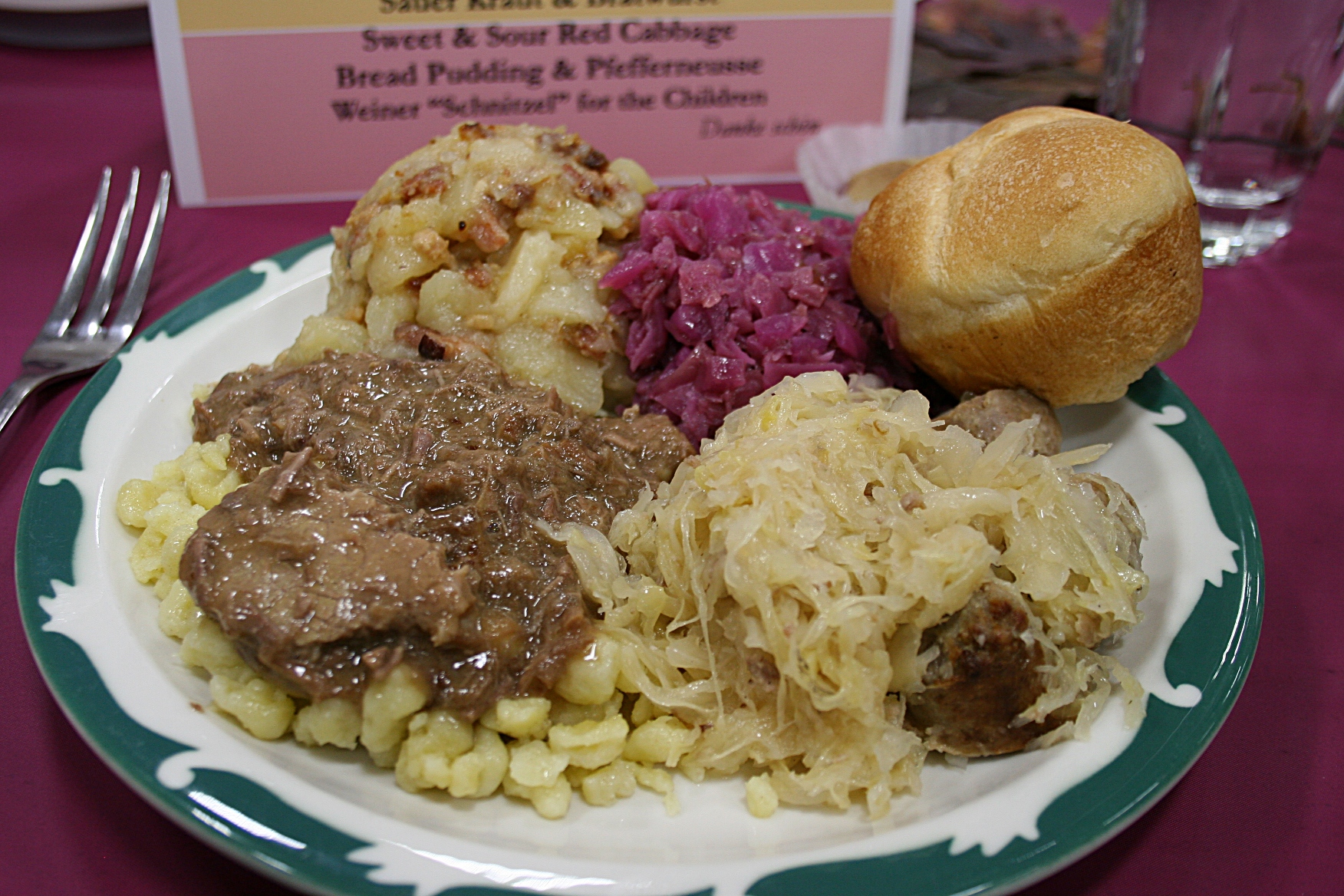
A German meal: sauerbraten and spaetzle on the left, German potato salad, sweet and sour cabbage, dinner roll and sauerkraut and brats. (Minnesota Prairie Roots copyrighted file photo)
Slowly, interaction by interaction, things begin to change. The American farm family and the German prisoners realize they share a love of Bach. (Yes, a German composer.) And while the German POWs profess they will never eat corn, because that’s for pigs and cows—although Anna explains the difference between corn for livestock and sweetcorn—they all understand that they need to eat. The scenes in which Anna and Isabelle serve potatoes and cake to the POWs show how food brings people together. Trust grows. When Fred learns details about POW Dieter Meuhler’s family, he begins to understand the personal side of a man he saw only as an enemy. The walls of distrust, disdain and differences start crumbling, albeit slowly.
It is not lost on me that the Shattuck performers are themselves of diverse backgrounds. That only adds to the performance.
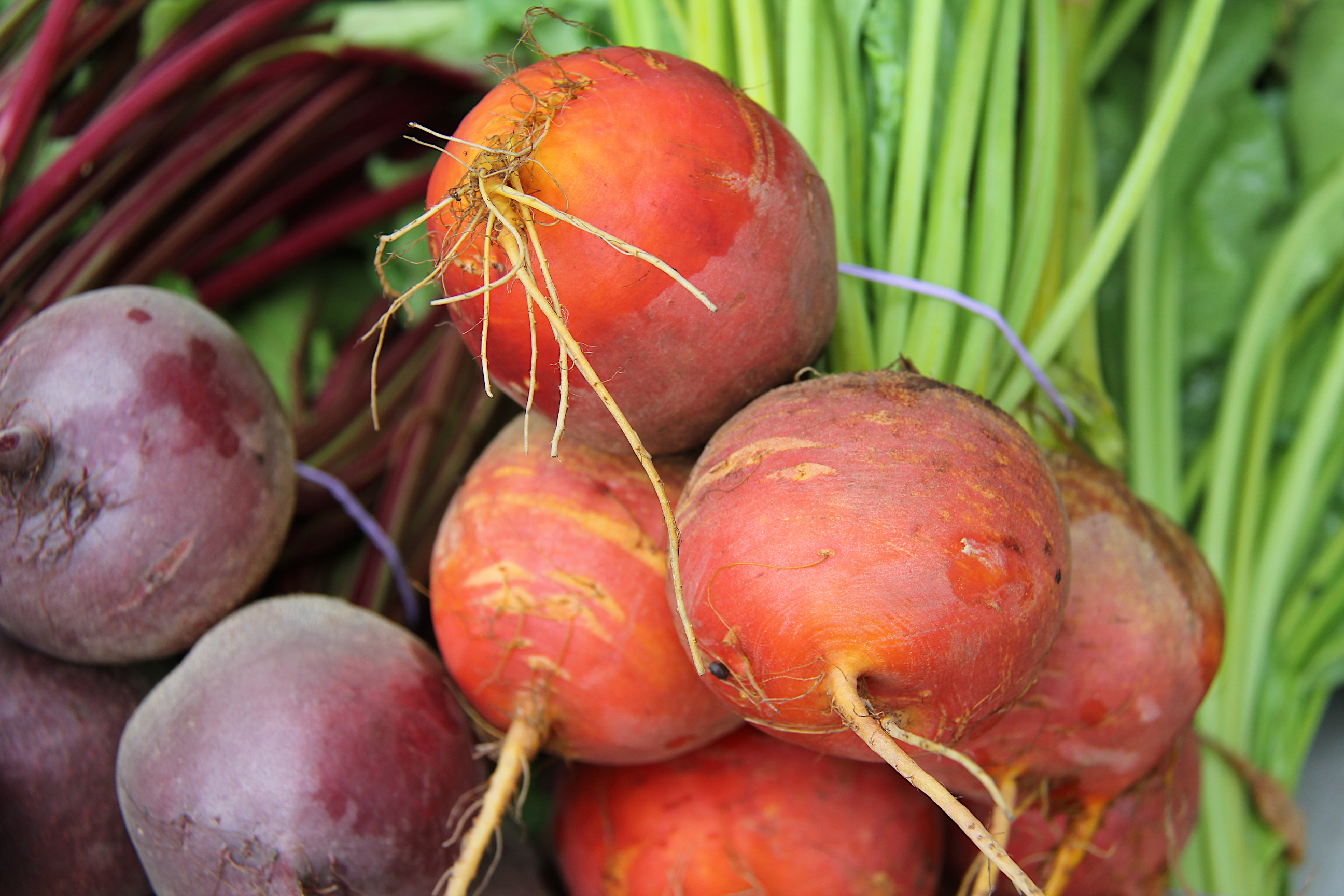
There are differences in beets (these are not sugarbeets), just like in people. (Minnesota Prairie Roots copyrighted file photo)
There are lessons to be learned from “Beets,” written by Rick Padden. First, we are all, at our core, just human beings with the same basic needs. Secondly, to overcome differences, we need to connect on a personal level. We need to open our hearts and minds, to embrace cultural and other differences. We need to show compassion and care, as farm wife Isabelle Hunt did on stage. We need to recognize that love is universal, as Anna and Dieter discovered.
“Beets” is one of those plays I wish everyone could see, especially now in these challenging days. I left the theater at Shattuck-St. Mary’s feeling a sense of hope. The fictional characters in “Beets” changed, for the better. They opened their hearts and minds to each other, despite their differences, or perceived differences. Perhaps we can do the same.
#
FYI: Two performances of “Beets” remain at Shattuck, one at 7 pm Friday, February 7, and the second at 2 pm Saturday, February 8. It’s a two-hour show (includes a 10-minute intermission) I highly recommend to anyone who enjoys well-done theater, history and a play with strong messages relevant to today.















 Minnesota Prairie Roots
From words on a government website to soybean markets & a crisis in rural America October 15, 2025
Tags: agriculture, America, China, commentary, farm crisis, farming, messaging, opinion, rural America, rural Minnesota, soybean market, soybeans, tariffs, trade war, United State Department of Agriculture
WHEN I FIRST READ the message bannering the United States Department of Agriculture website during the current government shutdown, my jaw dropped. In a two-sentence statement, “The Radical Left Democrats” are blamed for the closure of the federal government. How unprofessional, I thought, to so blatantly put politics out there on a website designed to help America’s farmers. But then again, why should this surprise me?
United States Secretary of Homeland Security Kristi Noem is doing the same in a video message blaming Democrats for the shutdown. She expects this to be broadcast in airport terminals. Many are opting not to air her clearly political statement. And they shouldn’t. It’s unprofessional and wrong in more ways than I can list, no matter what your political affiliation may be.
But back to that message on the USDA website. It goes on to say that President Donald Trump wants to keep the government open “and support those who feed, fuel and clothe the American people.” Now that is certainly a noble statement at face value, one we could all applaud. Who doesn’t want to support our farmers? But in the context of what the President has done to farmers, the statement seems laughable.
Here in the heartland, farmers have lost a major market for soybeans, my state’s top agricultural export. China has stopped buying soybeans from not only Minnesota, but America. That’s billions of dollars in lost income. And all because of the ongoing trade war between the U.S. and China, begun by the man who slapped tariffs—now averaging 58 percent—on Chinese imports with a threat to increase that to 100 percent. I’m no economist. But even I understand China’s retaliatory tariffs and actions to tap other markets for soybeans. They went to Brazil and Argentina.
And now President Trump proposes sending $20 billion in aid to Argentina, all tied to an upcoming election there. Why would we bail out a country exporting their soybeans to China while our own financially-strapped farmers are suffering because they’ve lost a key market? This makes no sense to me. Again, I’m not an economist or a politician, simply an ordinary American citizen, with a farm upbringing (and who decades ago freelanced for the Minnesota Soybean Growers Association), questioning the logic of any of this.
Even without the Argentinian component tossed into the mix, there’s more. President Trump has proposed an aid package for farmers to help them get through the financial crisis he created via his tariffs and the resulting trade war with China. That aid would come from the money collected from tariffs. Now I know farmers—my dad was one—are fiercely independent and would rather have a market for their cash crops than government aid. If not for the tariffs…
As the harvest continues here in Minnesota, I can’t help but feel for those who work the land, who continue to face so many uncertainties, financial challenges and stressors. Interest rates on loans remain high. Market prices remain low. Land rents continue to rise. Equipment and other costs are high. And on and on, including the loss of the long-standing soybean export market to China, which quite likely may never be reclaimed.
This is becoming a crisis situation for farmers—those who feed, fuel and clothe Americans. From fields to small town Main Street, rural America is hurting. And politically-biased blame words published on a government website aren’t helping.
© Copyright 2025 Audrey Kletscher Helbling