Minnesota Prairie Roots

Writing and photography by Audrey Kletscher Helbling

A Minnesota family tradition: Honoring Dad by making horseradish October 7, 2013

Filed under: Uncategorized — Audrey Kletscher Helbling @ 6:00 AM
Tags: , , , , , , ,
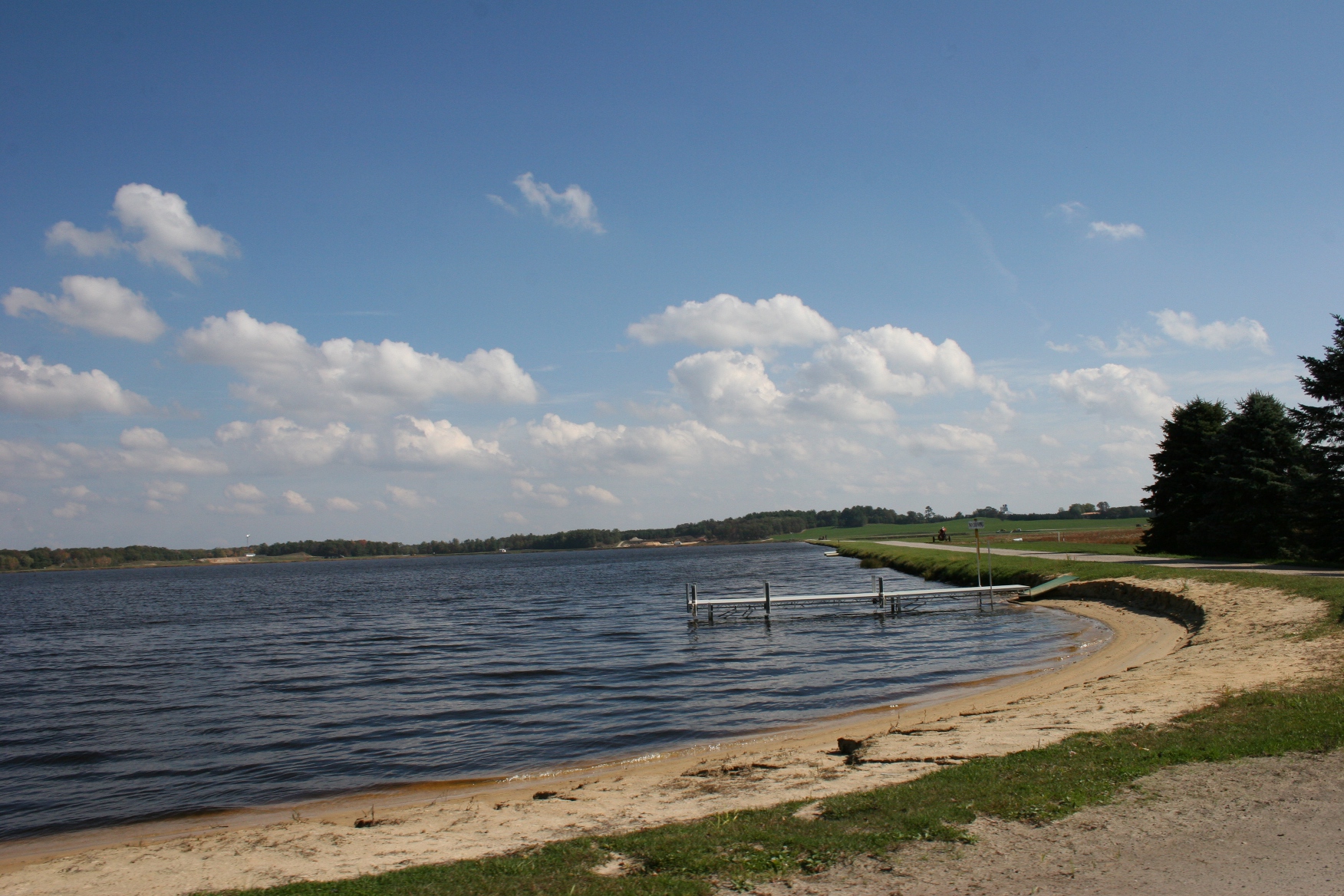
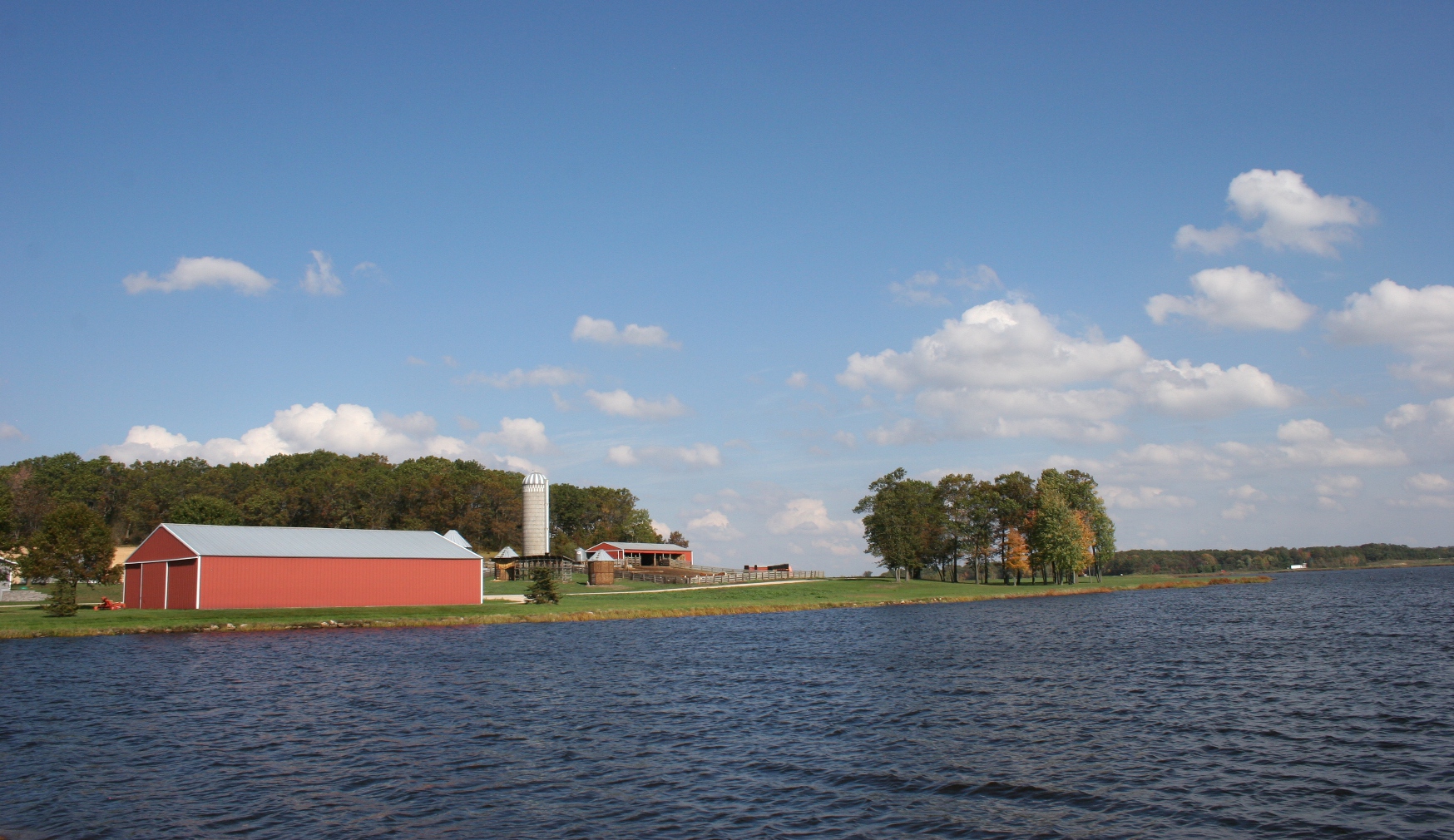
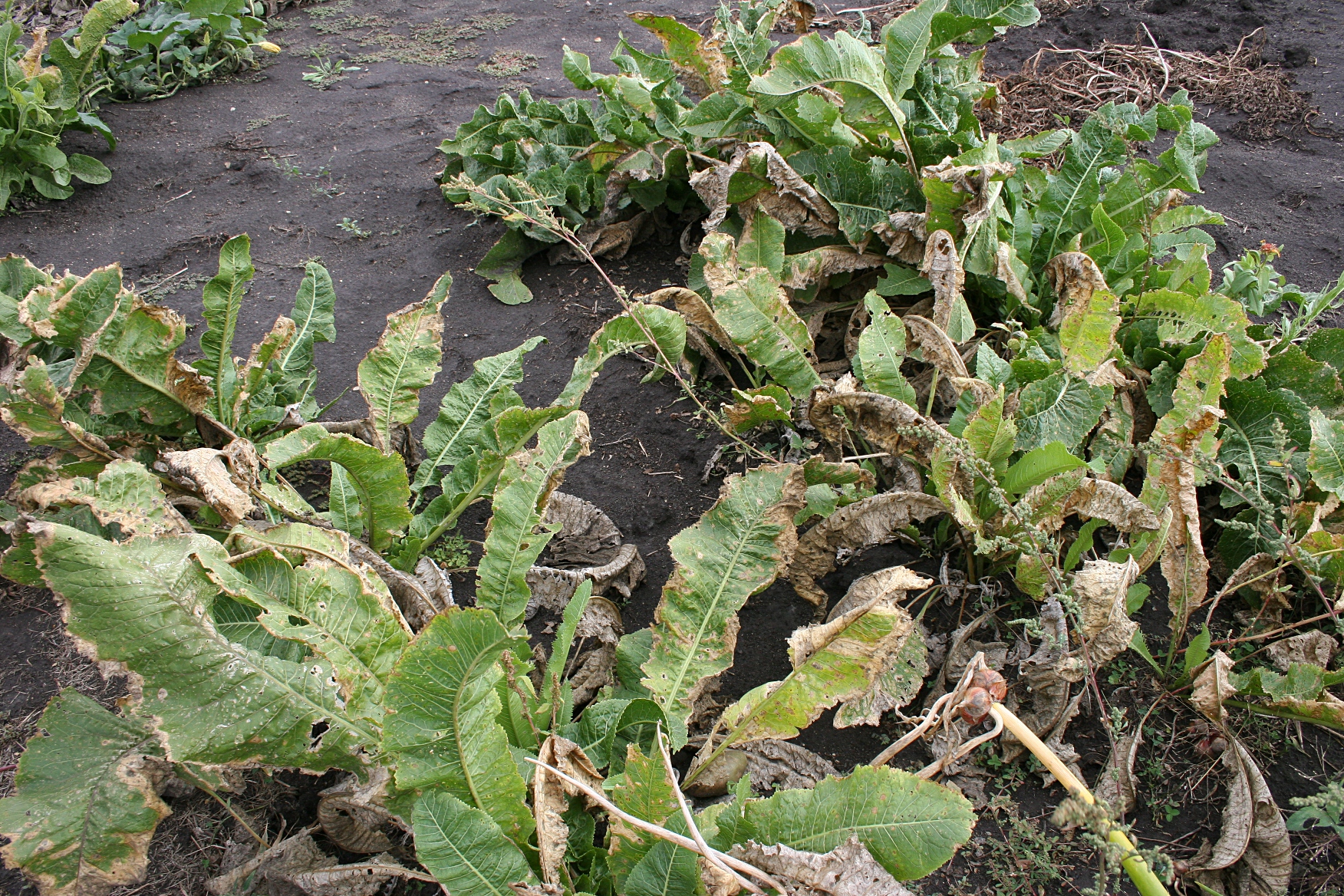
Horseradish planted last year in my brother's garden and ready to harvest in a few years. This year's horseradish came from a patch near Sanborn.

Horseradish planted last year in my brother and sister-in-law’s garden and ready to harvest in a few years. This year’s horseradish came from a patch near Sanborn.

FOR MY EXTENDED FAMILY, making horseradish marks a time-honored tradition started by my father and my Uncle Mike decades ago.

Dad died 10 years ago, Uncle Mike before him, and, for awhile, so did the annual ritual of making horseradish. In his last years, Dad made horseradish with my sister Lanae and her husband, Dale.

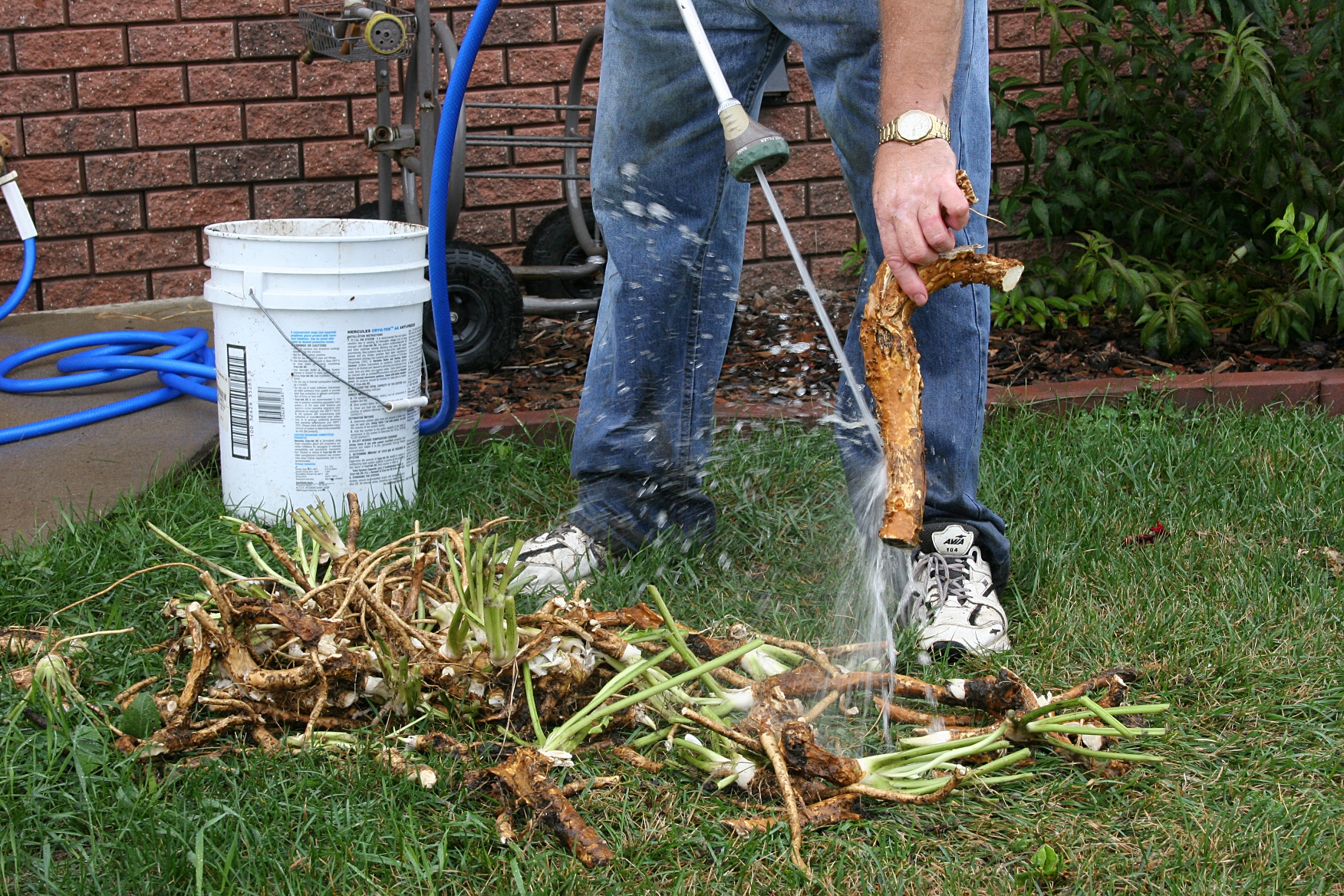
Washing mud and dirt from the horseradish roots with the garden hose is the first step after digging.

Washing mud and dirt from the horseradish roots with the garden hose is the first step after digging.

Then, in recent years, Lanae and my brother Brian restarted this family tradition. The past two autumns, my husband and I have traveled the 120 miles to Brian’s rural Lamberton home to peel and slice, process and bottle horseradish. Mostly, I’ve documented the process with my camera although I’ve also assisted (some) with the actual making of this condiment.

To be honest, the horseradish isn’t the reason I’m there. It’s the cherished time with my mom (also known as “The Supervisor”) and extended family that draws me back to my native southwestern Minnesota prairie. We are building memories and honoring the memory of my farmer father.

Dad would delight in our gathering—in hearing the laughter and bullshit (sorry, I can’t think of a better word choice) and seeing us together. Dad was all about family.

Like our father before us, we give away our horseradish. My husband and I gathered a baker’s dozen jars to take back to Faribault for Mick and Mooch, Howard and Neal, and Dan, Steve and John, and a few others who appreciate a good taste of potent, eye-stinging, nostril-clearing horseradish.

#

THE STEP-BY-STEP PROCESS:

After the initial washing of the roots, the stems are trimmed away and the horseradish goes into a laundry bag for washing in the washing machine.

After the initial washing of the roots with a garden hose, the stems are trimmed away and the horseradish goes into a laundry bag for washing in the washing machine. Do NOT add laundry detergent.

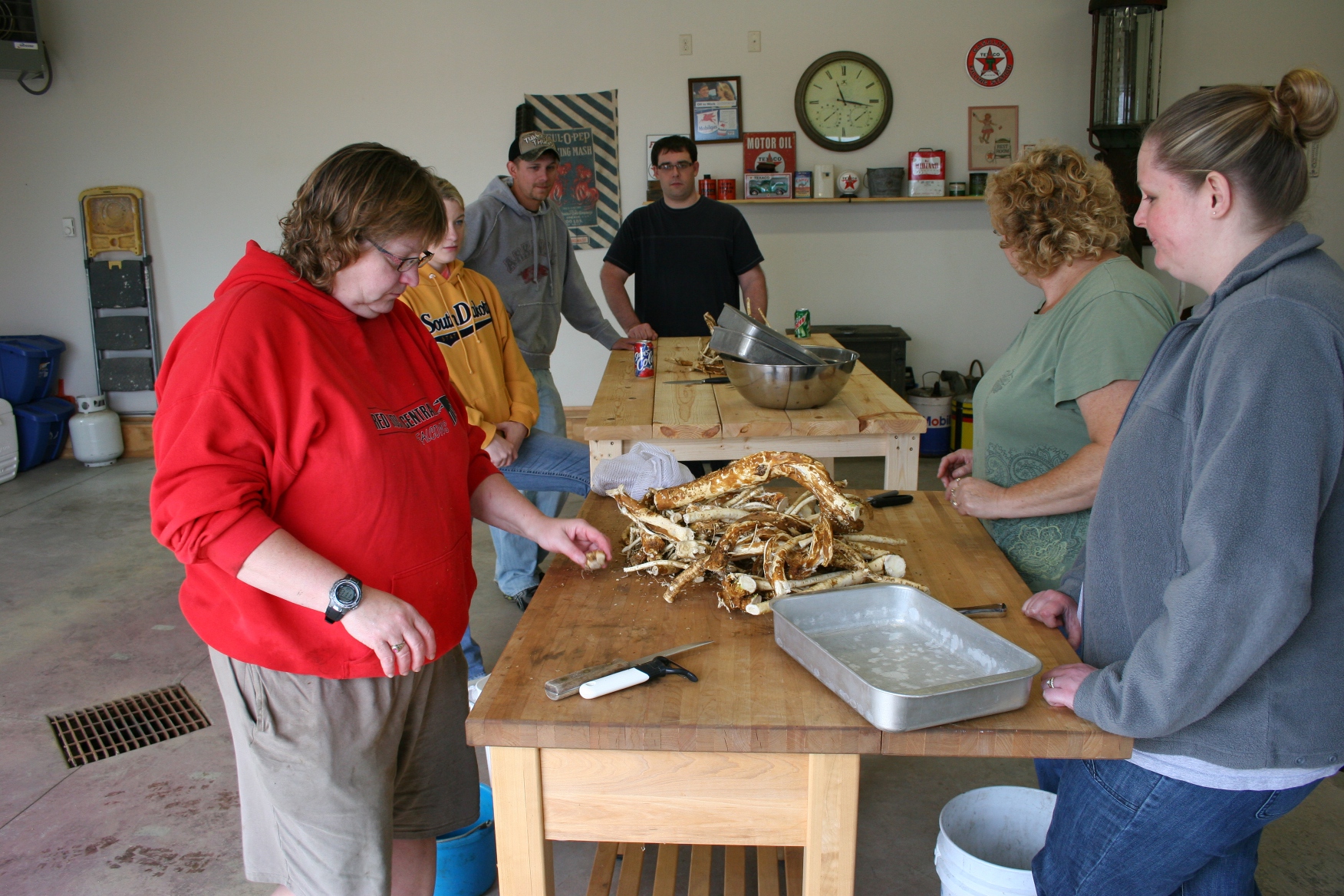
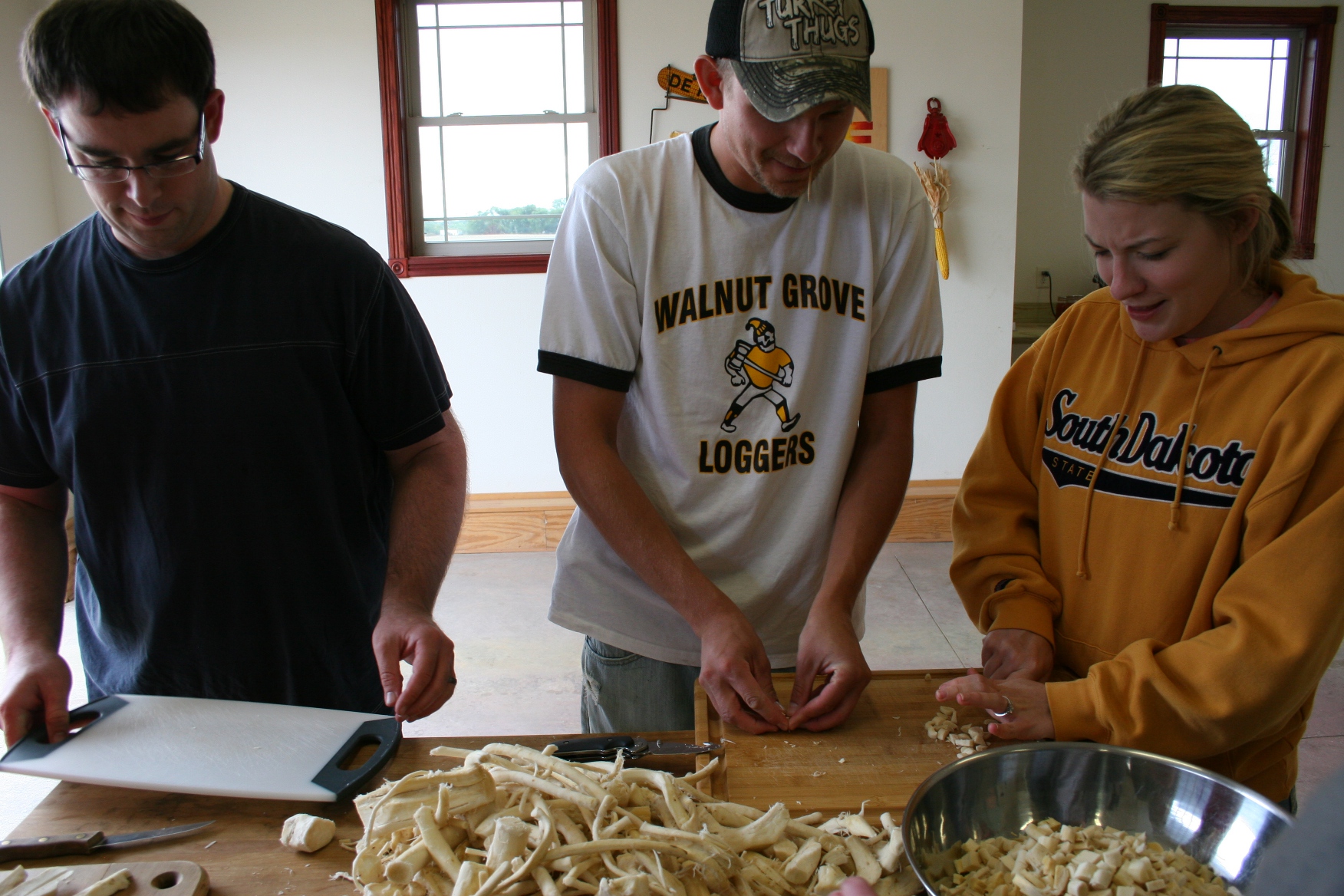
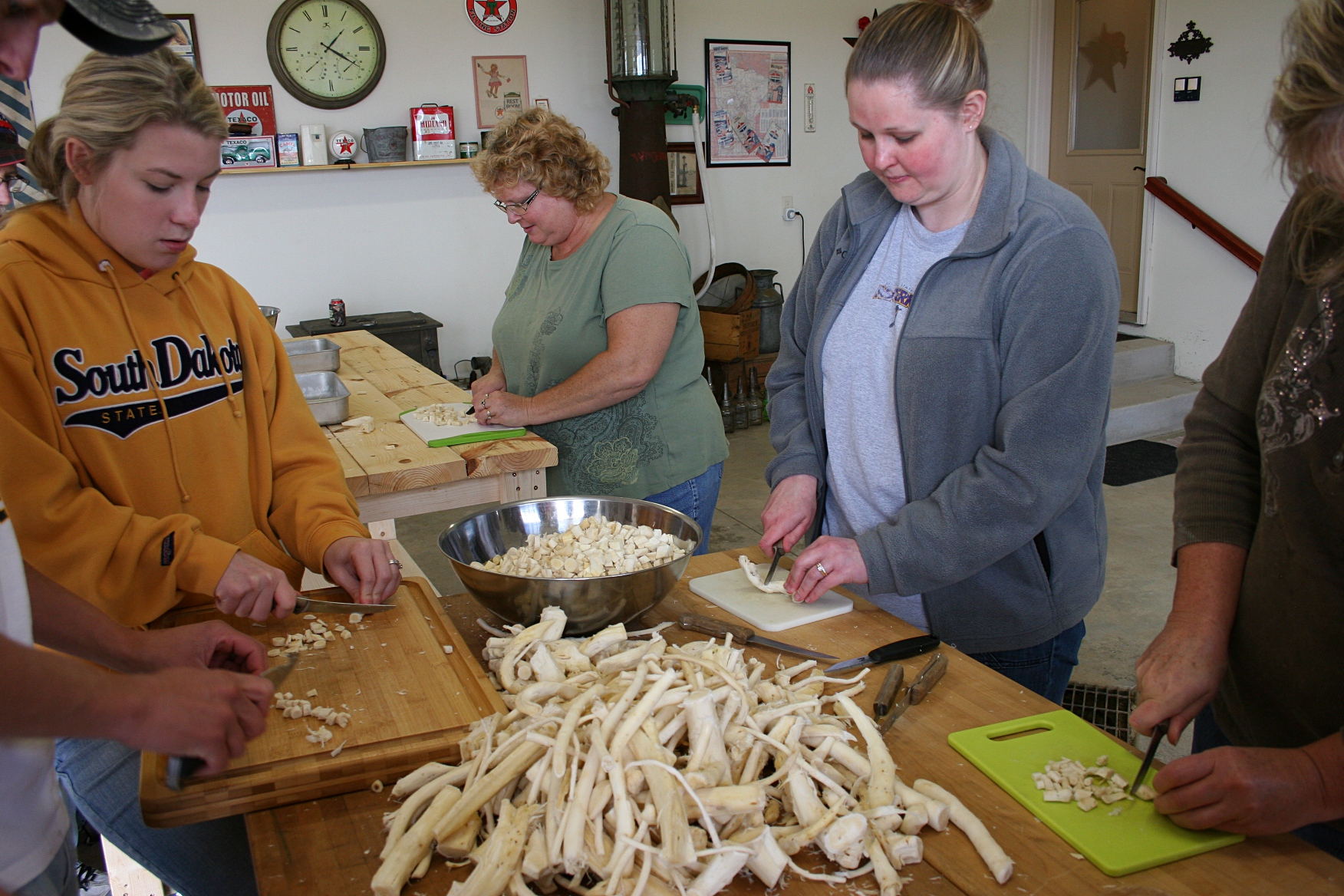
The crew (not all shown) prepares to peel the brown outer layer from the roots. Remove all of the brown so the end product is a creamy white.

Part of the crew, left to right around the tables, Julie (a friend of my brother and his wife, and a newcomer) and family members Adrienne, Adam, Andy, Lanae and Tara, prepare to peel the brown outer layer from the roots. All of the brown is removed so the finished horseradish is a creamy and unblemished white.

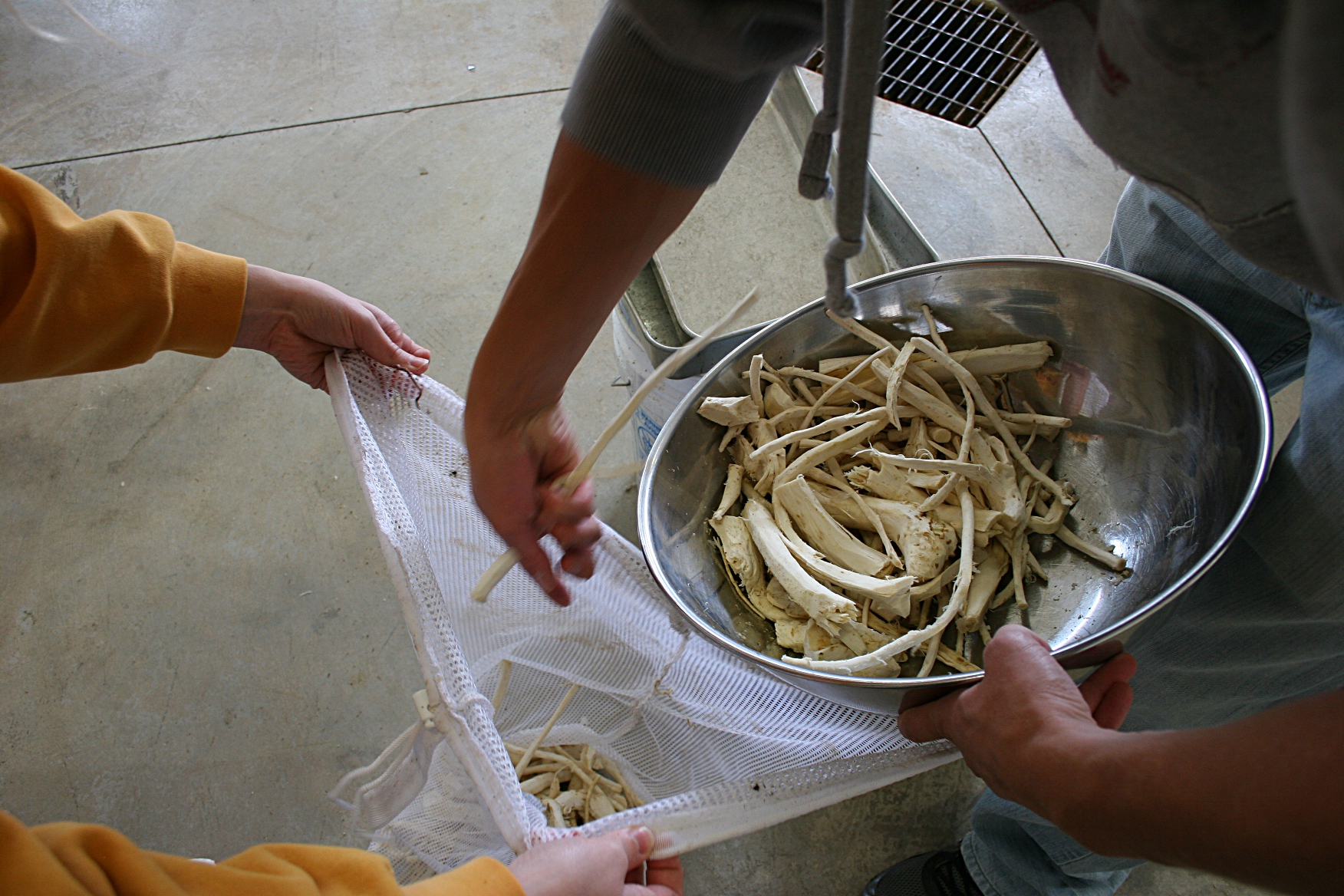
Once peeled, the horseradish is dumped back into a laundry bag for a second wash in the washing machine. Do NOT add detergent.

Once peeled, the horseradish is dumped back into a laundry bag for a second wash in the washing machine. Do NOT add detergent.

Once out of the washing machine, the process of chopping the horseradish begins.

Once out of the washer, the horseradish is chopped.

Lots of horseradish to cut in to small pieces.

Lots of horseradish to cut in to small pieces.

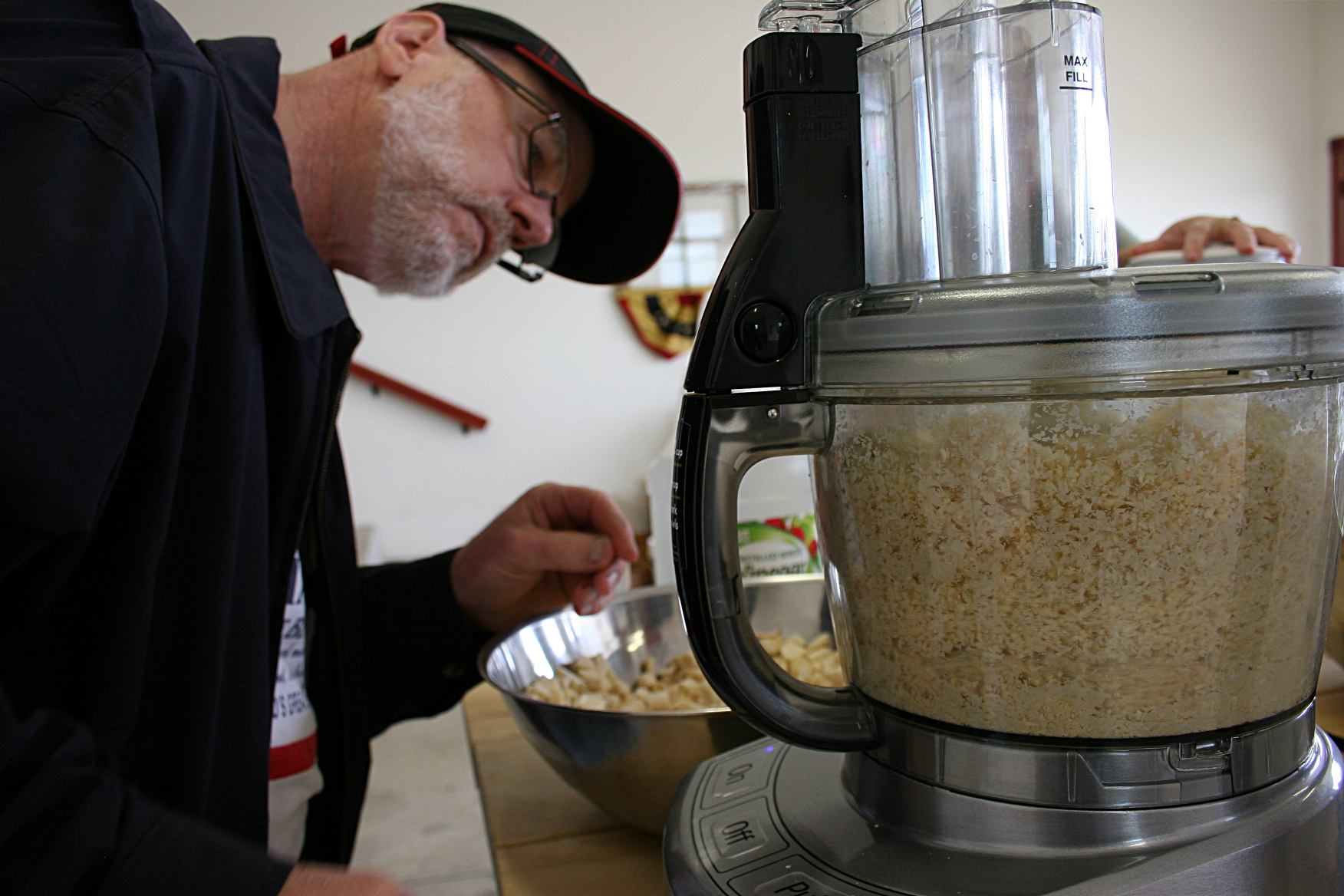
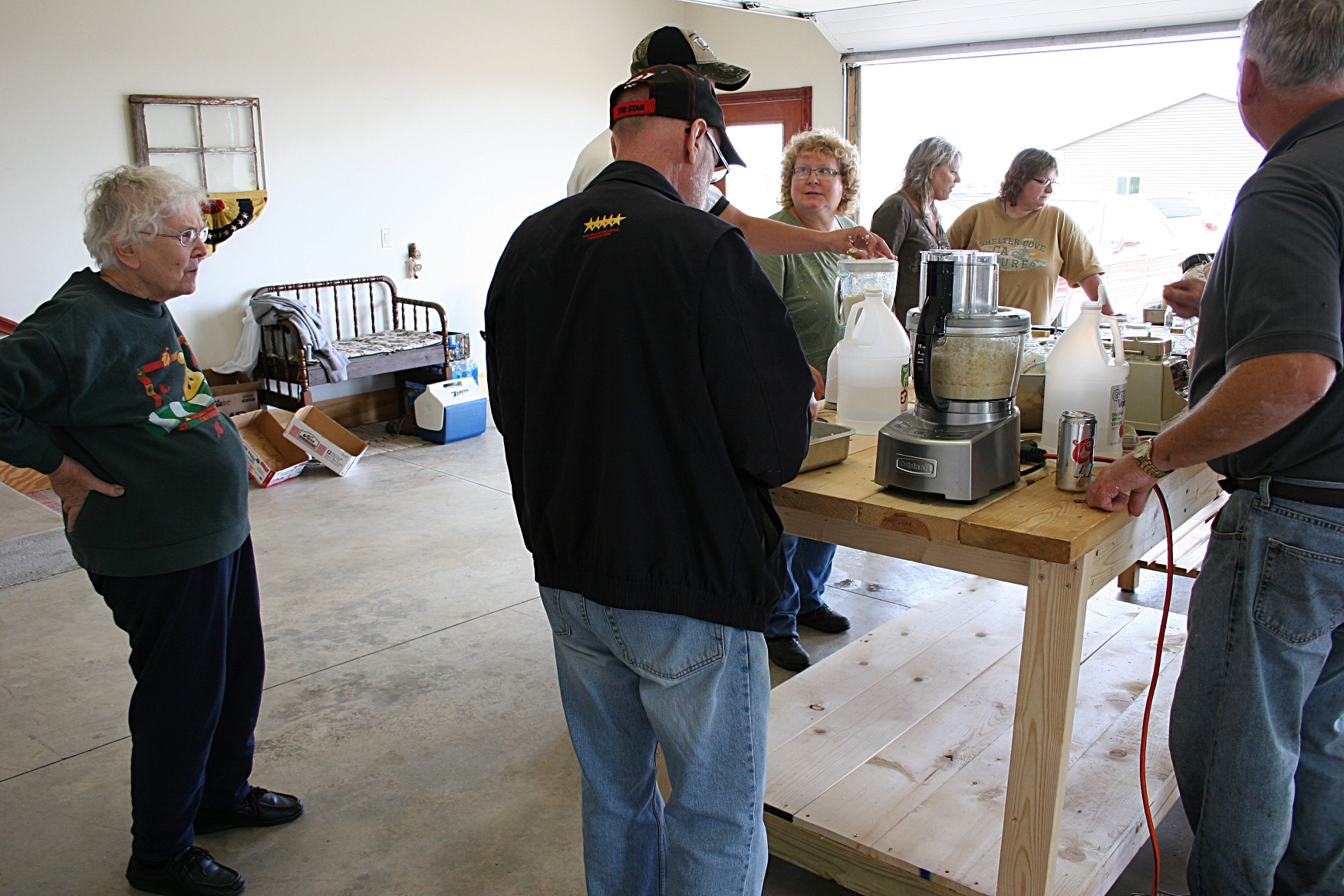
Next, the horseradish pieces go into the food processor, operated here by my husband, Randy.

Next, the horseradish pieces go into the food processor, operated here by my husband, Randy.

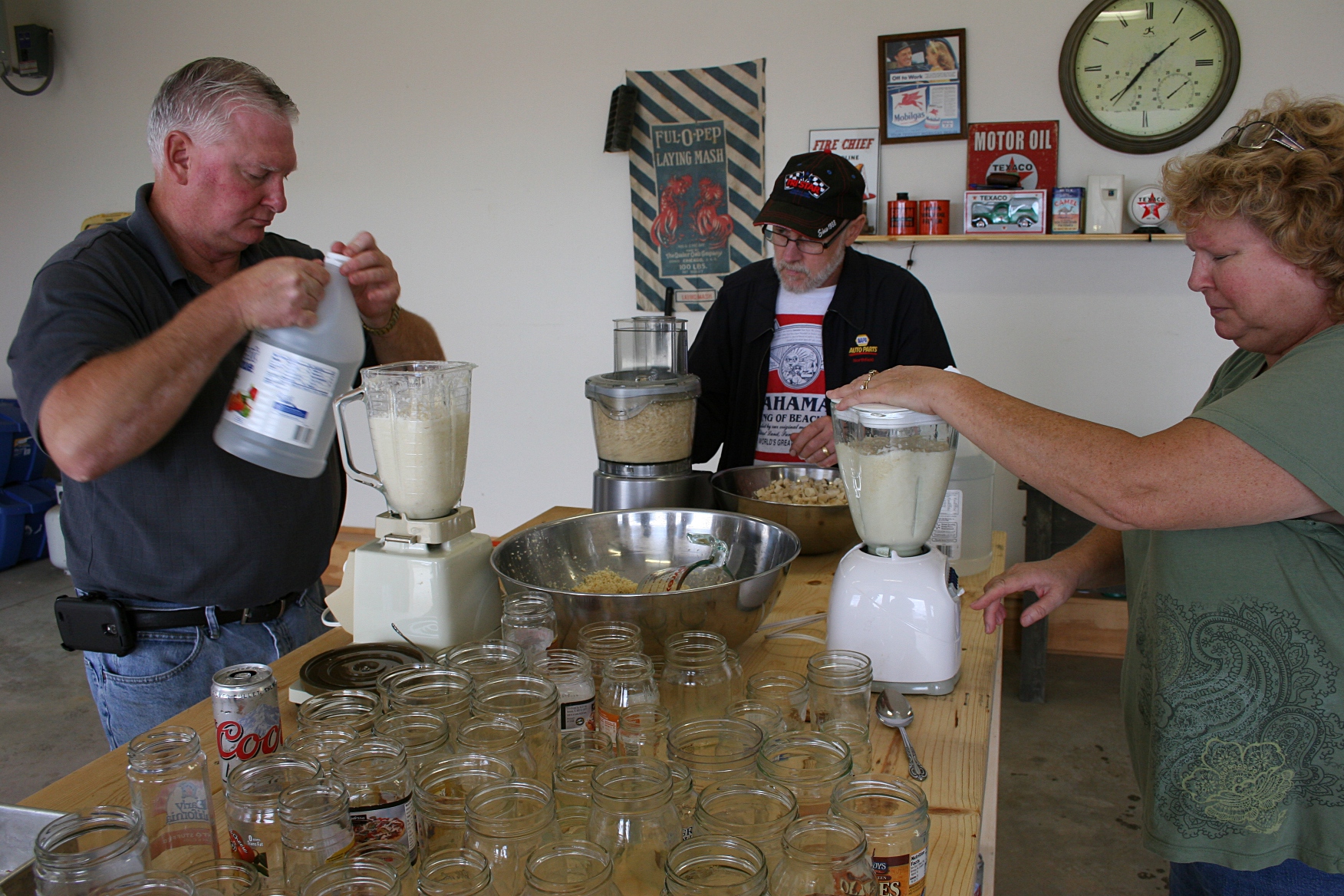
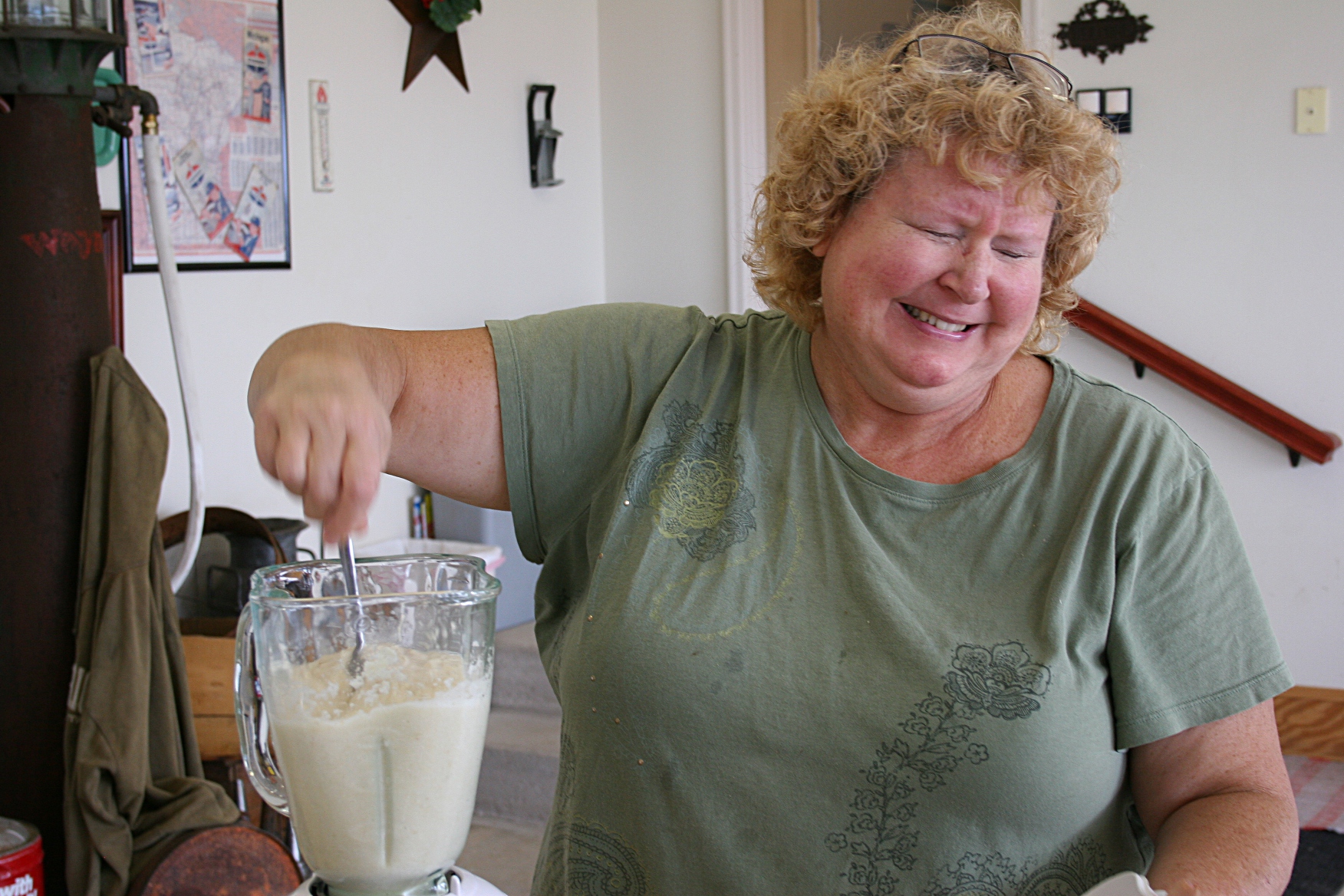
Brian, left, and Lanae blend the horseradish with vinegar in blenders while Randy uses the food processor.

Brian, left, and Lanae blend the horseradish with vinegar in blenders while Randy uses the food processor.

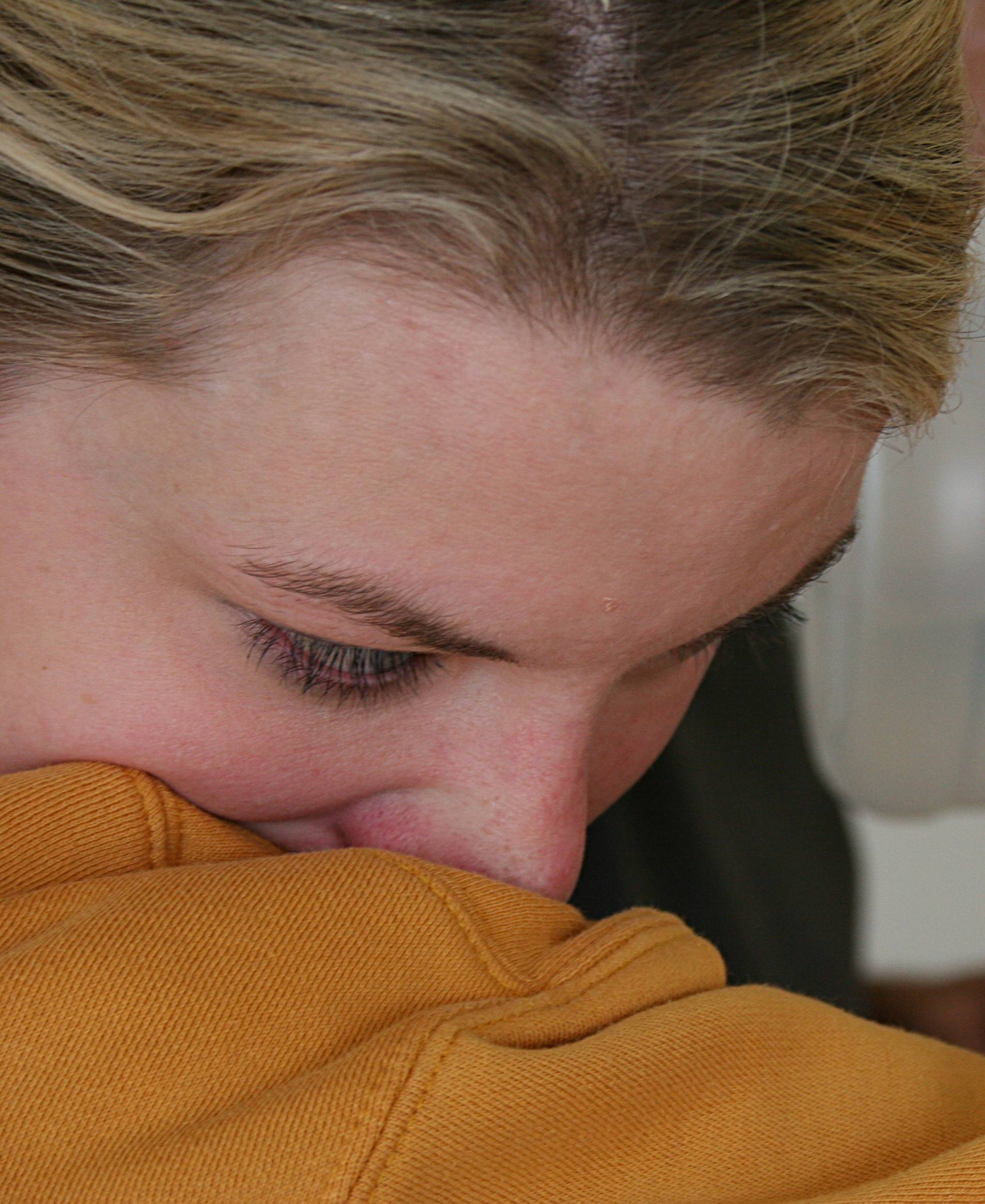
Sometimes the powerful pungent fumes overpower the workers.

Sometimes the powerful pungent fumes overpower the workers.

Adrienne buried her nose in her sleeve and stepped out of the garage a few times when she couldn't handle the overwhelming sting of the horseradish.

Adrienne buries her nose in her sleeve and stepped out of the garage a few times when she couldn’t handle the overwhelming sting of the horseradish.

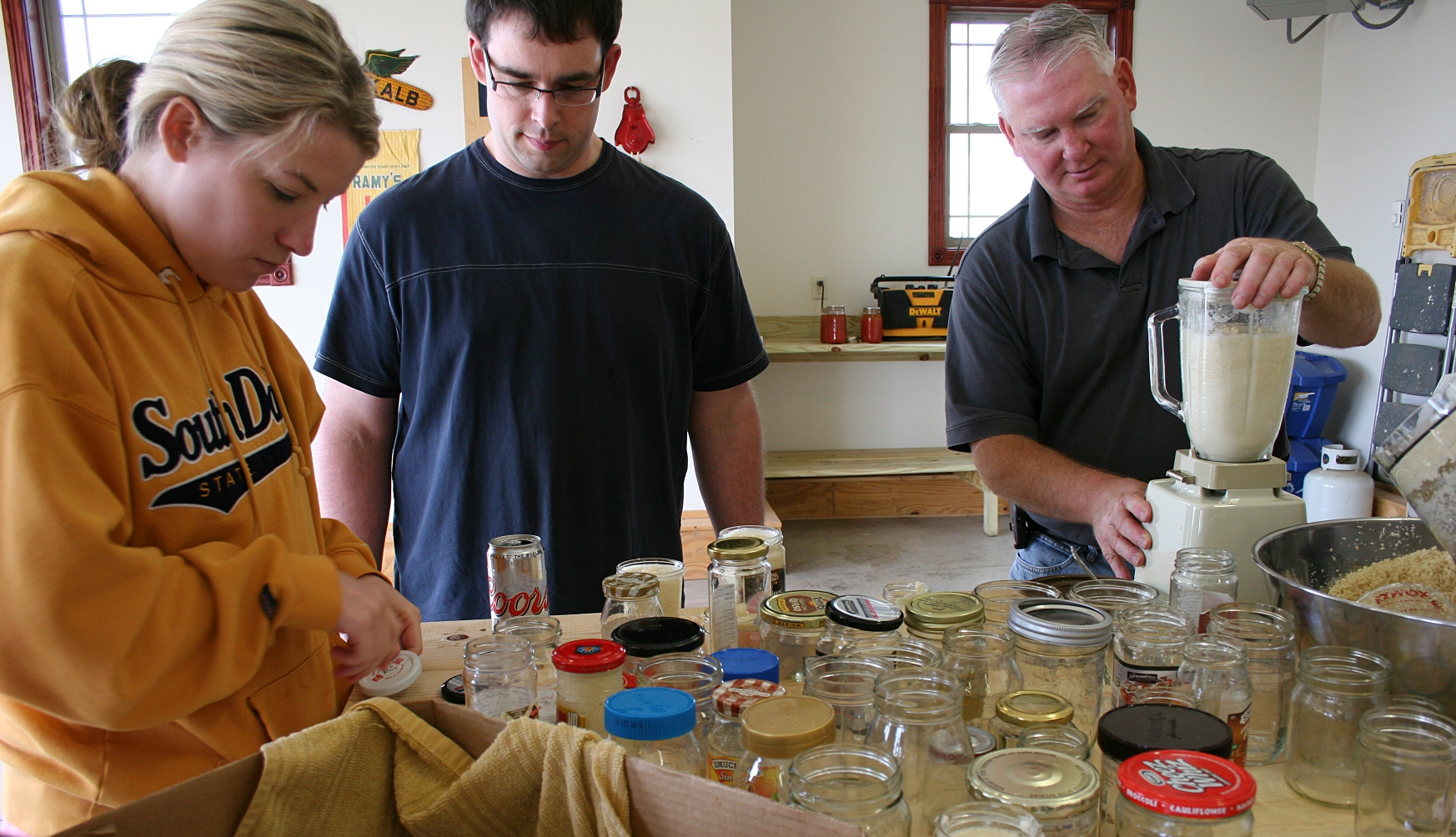
Once blended to just the right consistency with the correct amount of vinegar, the horseradish is poured into jars.

Once blended to just the right consistency with the correct amount of vinegar, the horseradish is poured into jars.

Lots and lots of jars of all sizes will hold the horseradish.

Lots and lots of jars of all sizes will hold the horseradish.

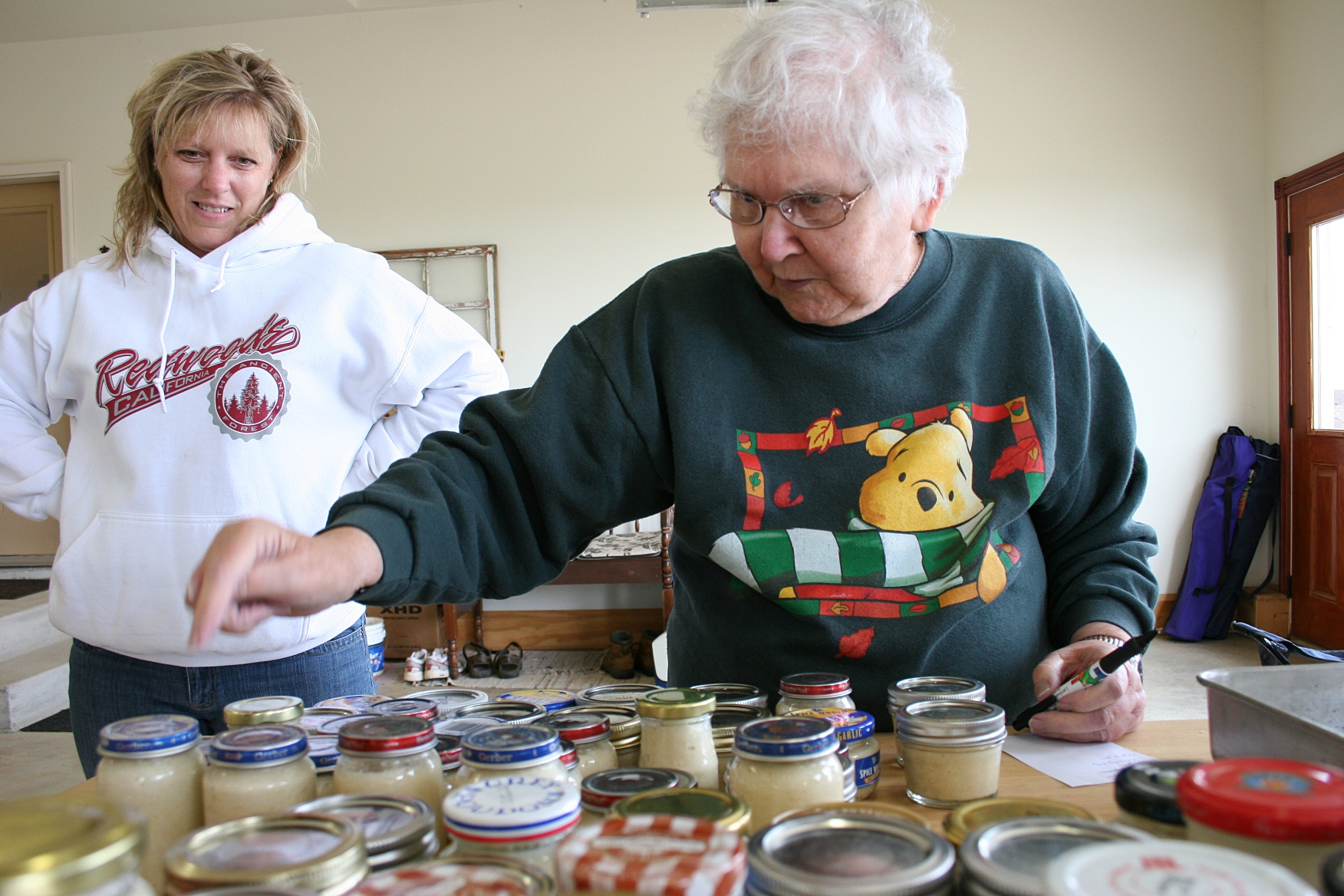
The Supervisor, aka my mom, Arlene, shows up to inspect.

“The Supervisor, ” aka my mom, Arlene, shows up to inspect.

After hours of labor, the beautiful results. Creamy white horseradish.

After hours of labor, the beautiful results. Creamy white horseradish.

As the final step, The Supervisor steps in to count the jars. My sister-in-law, Vicki, watches my mom at work.

The Supervisor counts the jars., 70 total ranging in size from baby food jars to around 12-ounce size. My sister-in-law, Vicki, watches my mom at work. At one point, when my brother suggested an easier method of counting, The Supervisor told him to “shut up.” We all cracked up. We know who’s boss, and it isn’t Brian.

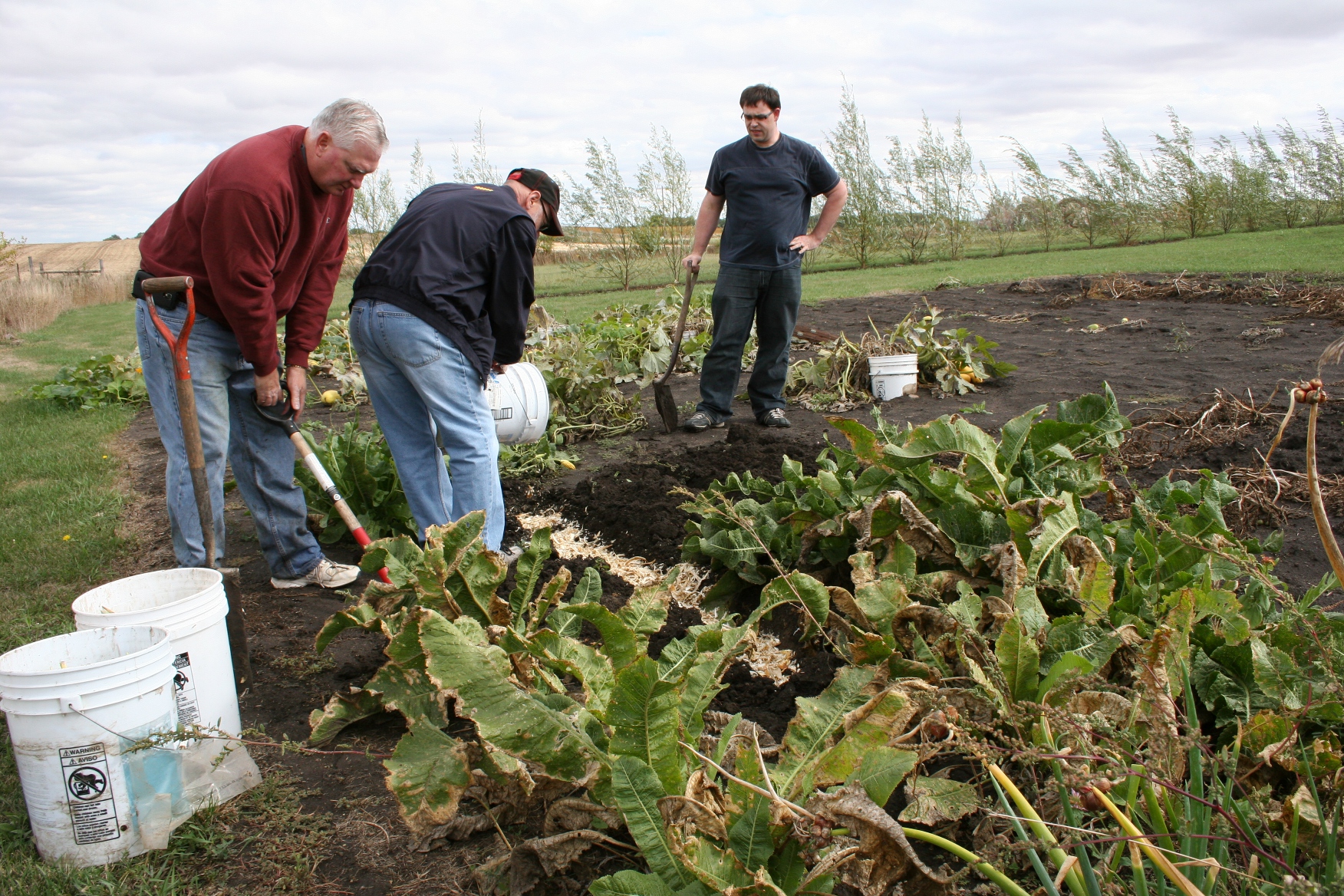
The last step is to take the peelings and horseradish tops to the garden for planting. We want to assure that we will have horseradish for years to come, holding on to traditon, building memories.

The last step is to take the peelings and horseradish tops to the garden for planting. We want to assure that we have horseradish for years to come, holding on to tradition, building memories and honoring our dad.

CLICK HERE TO READ last year’s post about making horseradish.

© Copyright 2013 Audrey Kletscher Helbling


A photo essay: St. John’s Germanfest in rural Minnesota September 29, 2013

I AM 100 PERCENT German.

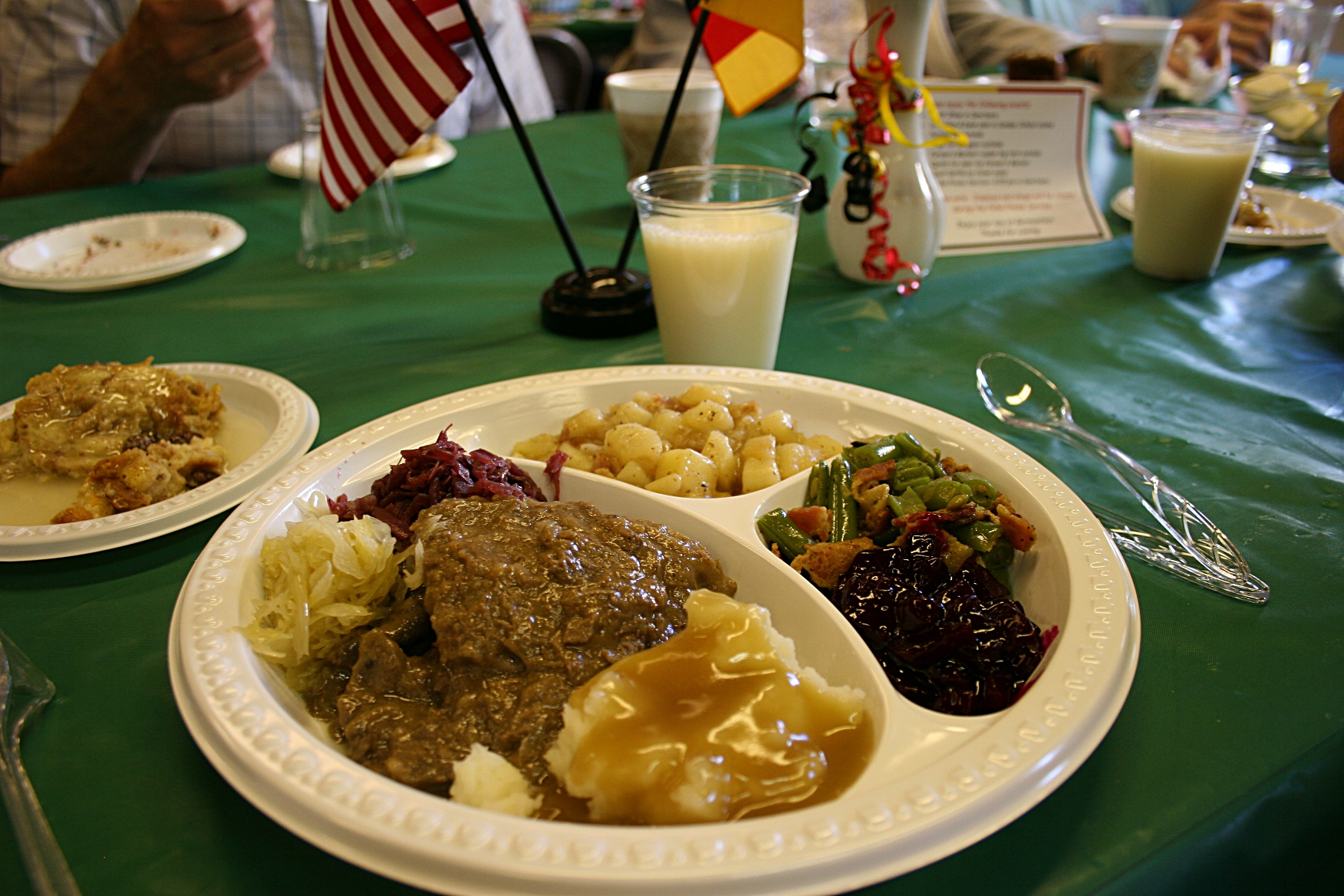
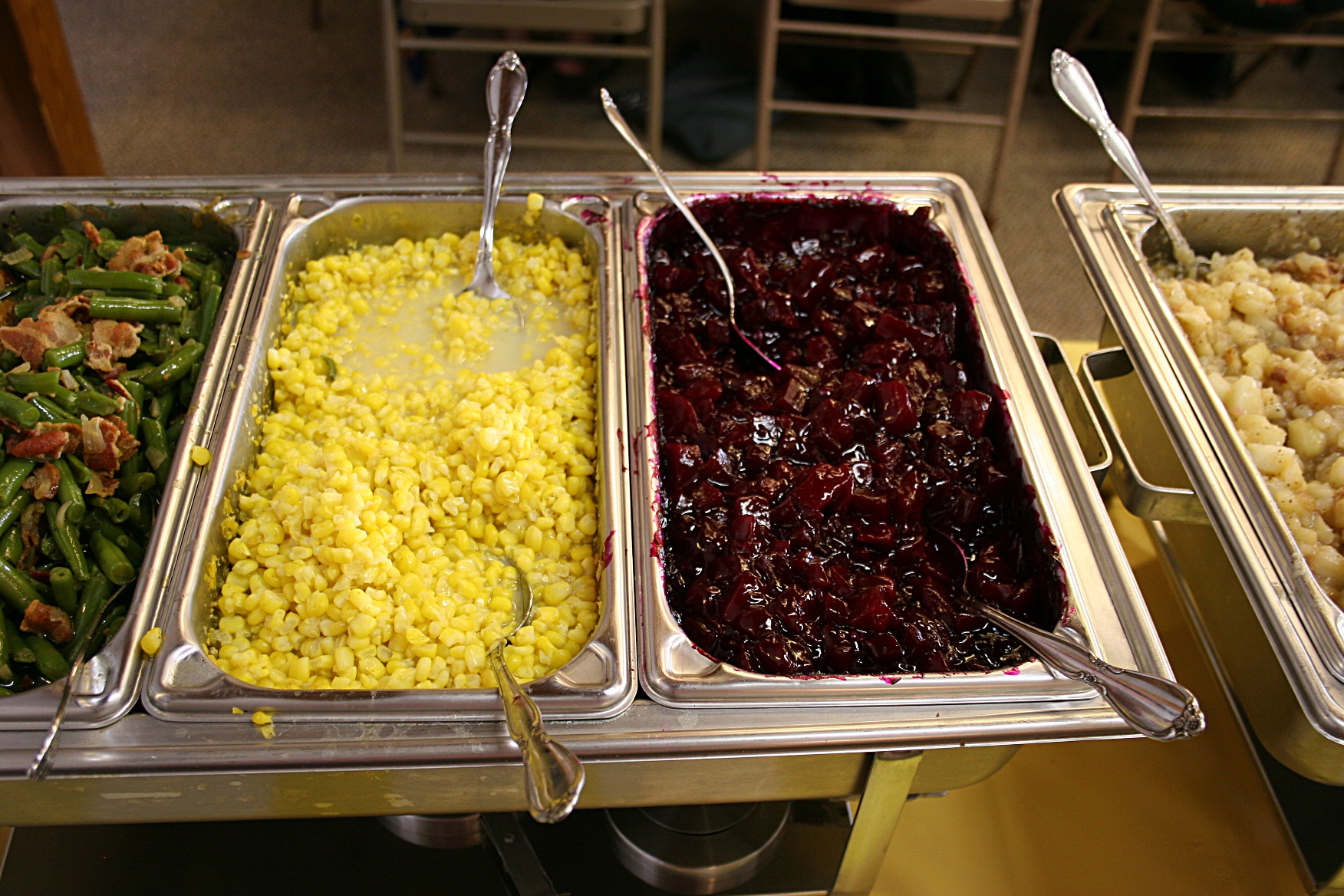
My plate, filled with German foods at St. John's annual Germanfest.

My plate, filled with German foods like sauerbraten, sauerkraut, German potato salad, sweet and sour beets and more at St. John’s annual Germanfest.

I like German food.

Today was a gorgeous autumn day here in southeastern Minnesota, as glorious as they get.

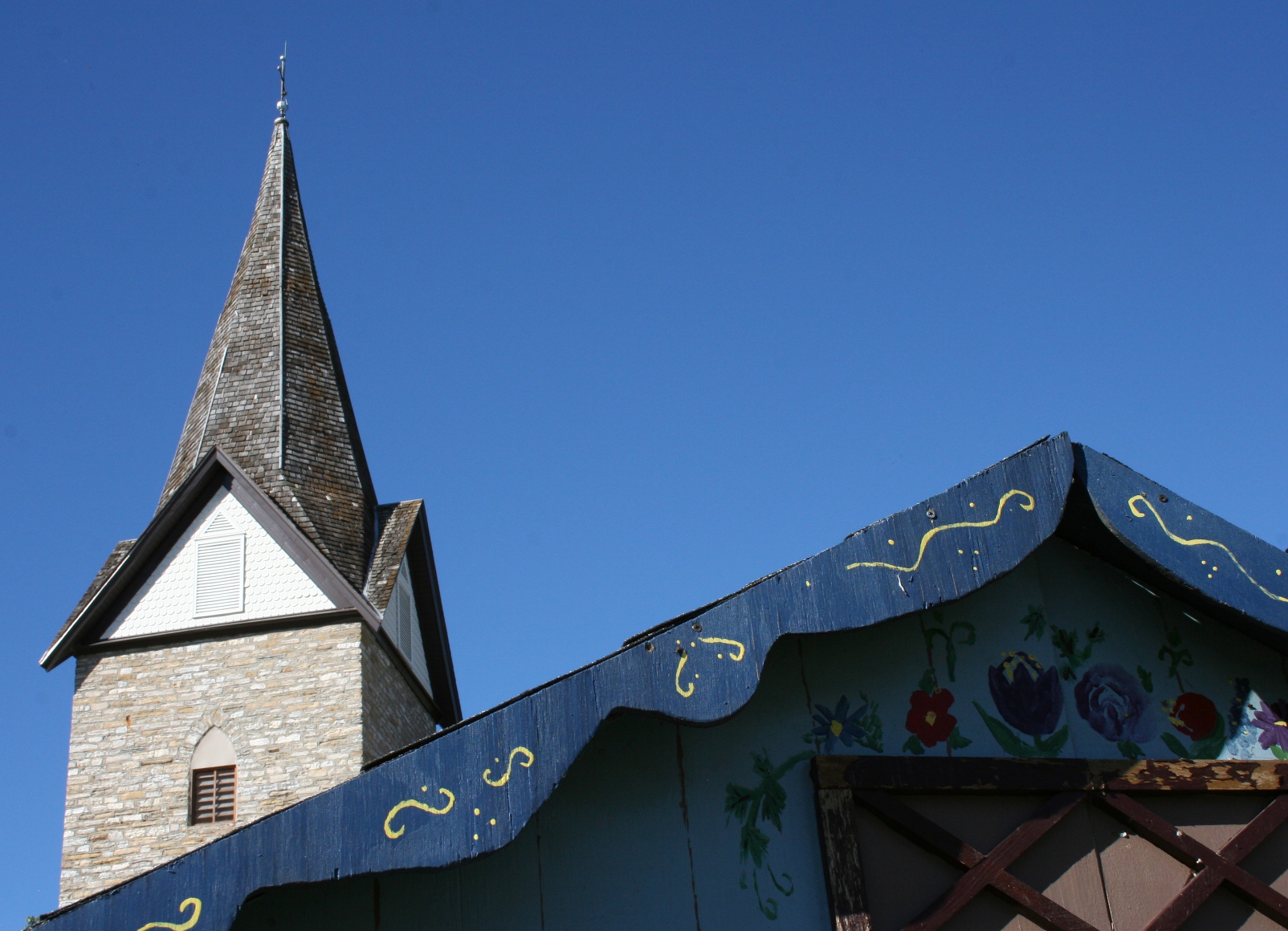
The steeple of the historic stone church with the roofline of a German themed beverage booth in the foreground.

The steeple of the historic stone church with the roofline of a German themed beverage booth in the foreground.

St. John’s United Church of Christ, Wheeling Township, rural Faribault, was hosting its annual Germanfest at its historic stone church out in the country.

Just a snippet of the buffet line.

Just a snippet of the buffet line.

I had to eat.

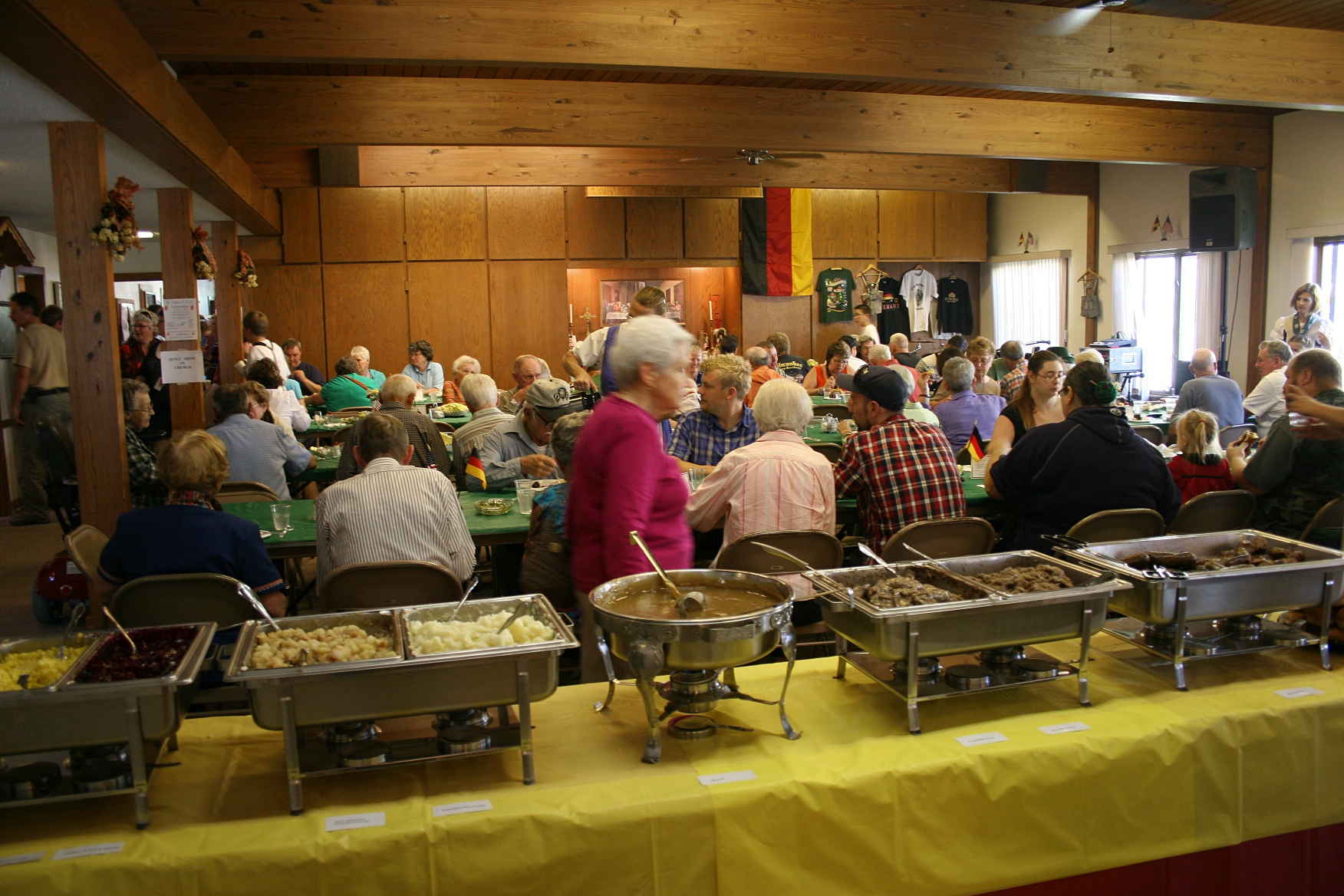
The social hall and rooms off the dining area were filled with diners.

The social hall and rooms off the dining area were filled with diners.

And I couldn’t think of a better place to dine on this Sunday afternoon than at St. John’s. Great food in the company of wonderful folks. Out in the country. Perfect weather. Perfect day.

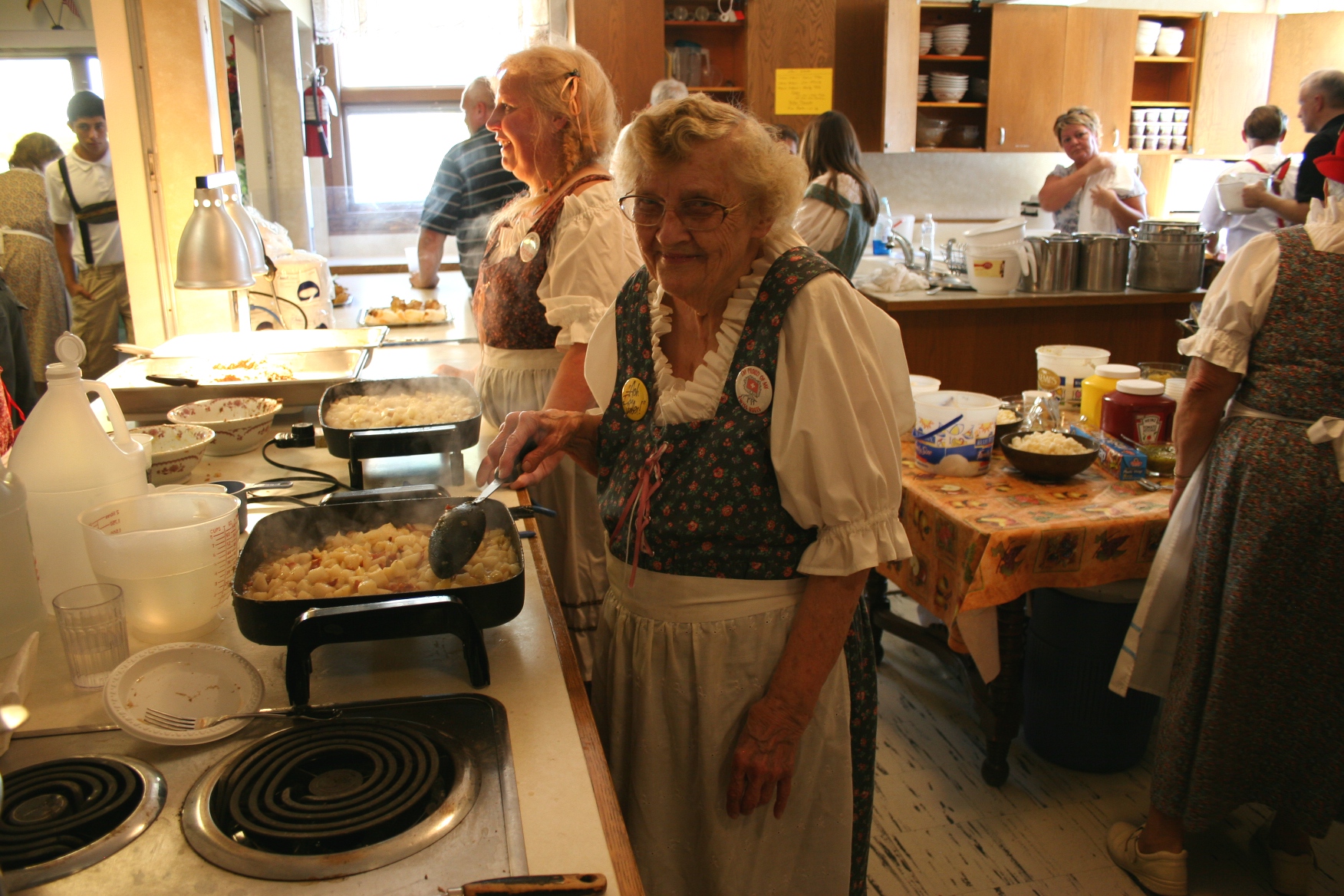
Some of the St. John's kitchen crew, including long-time member Elsie Keller who is making German potato salad.

Some of the St. John’s kitchen crew, including long-time member Elsie Keller who is making German potato salad.

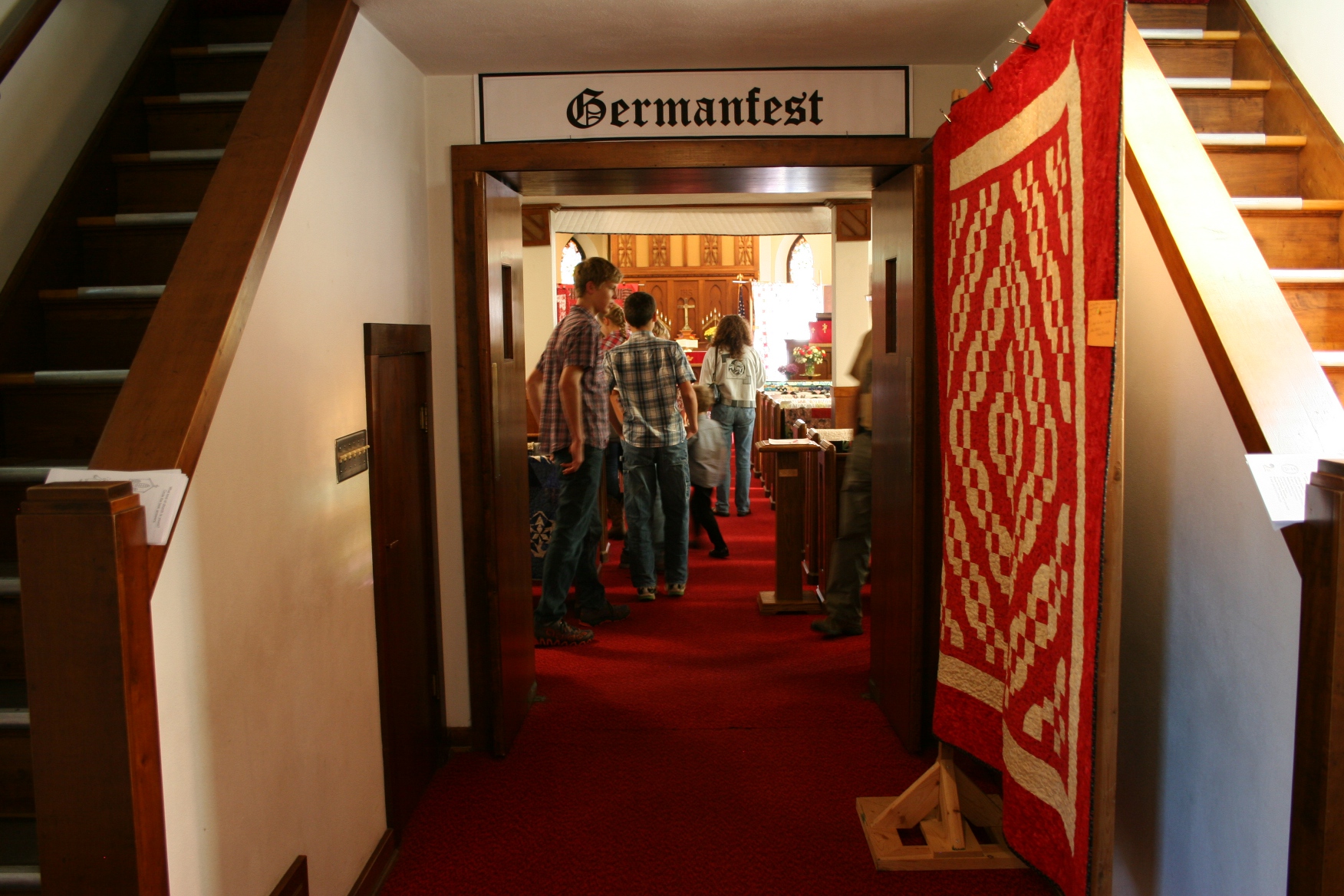
One of the major components of Germanfest is the fabulous quilt show inside the sanctuary.

One of the major components of Germanfest is the fabulous quilt show inside the sanctuary.

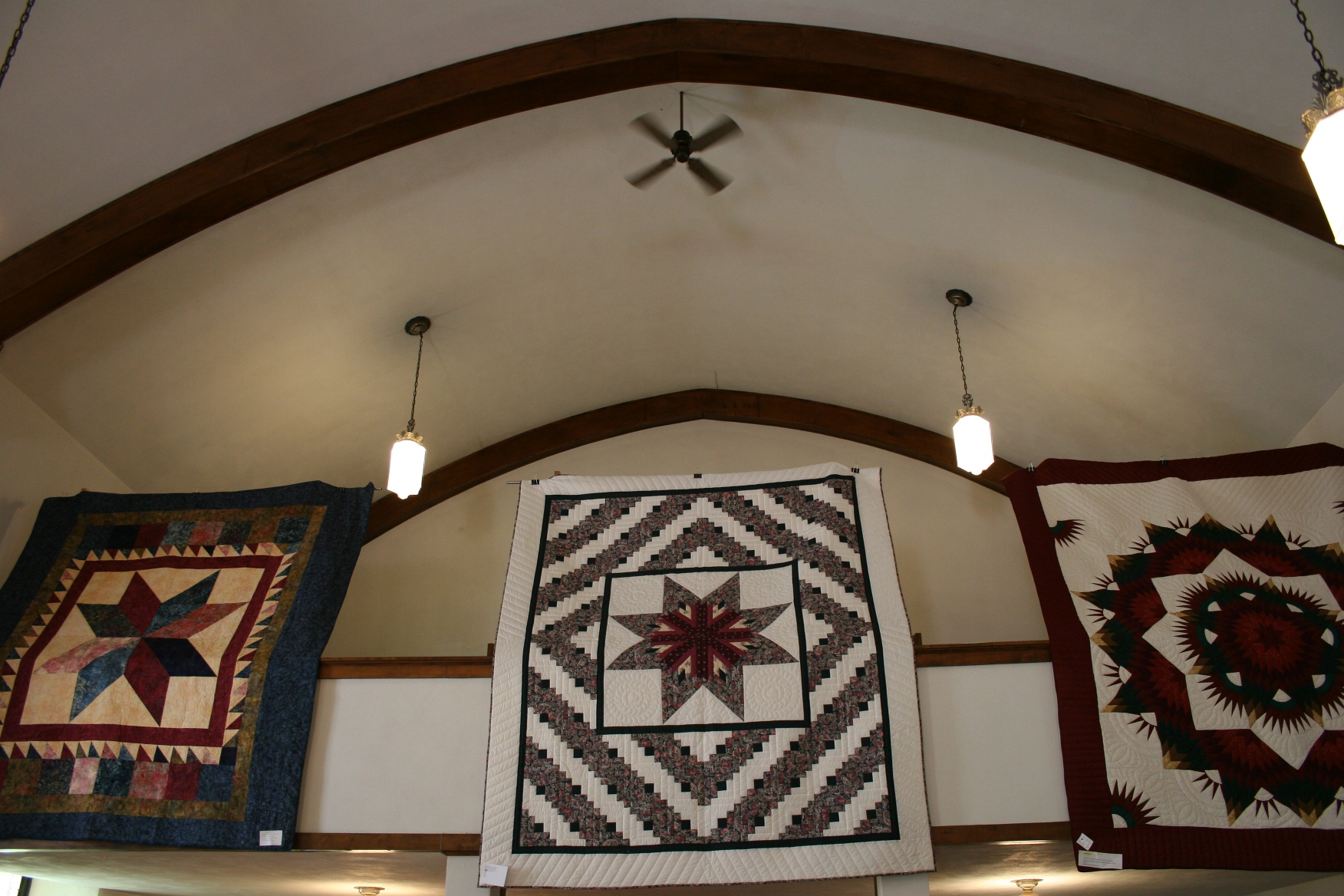
Among the incredible quilts were these three hung from the balcony.

Among the incredible quilts were these three hung from the balcony.

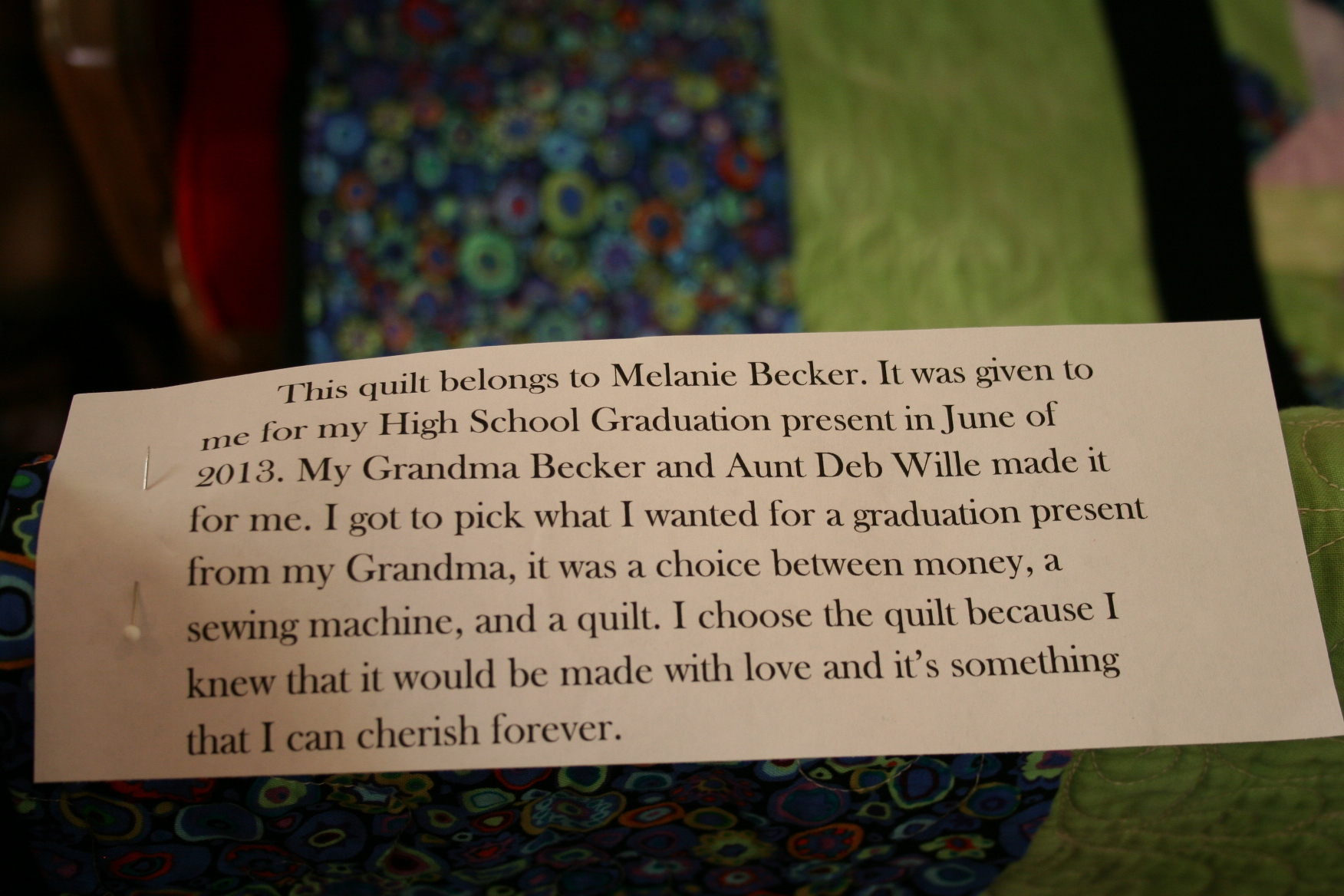
Each quilt comes with a story, this one among my favorites.

Each quilt comes with a story, this one among my favorites.

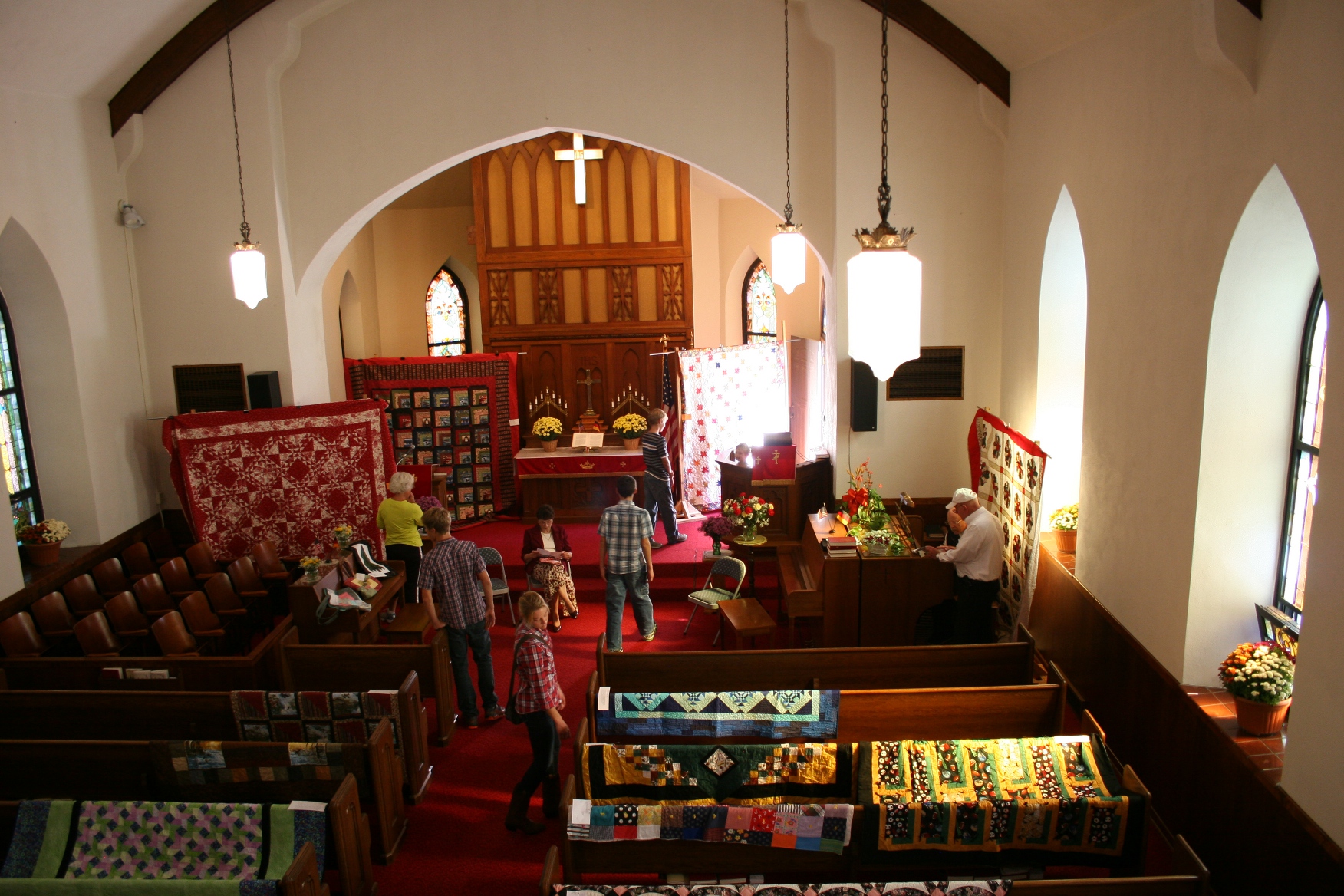
That glorious quilt show.

That glorious quilt show. Here you are seeing only a snippet of the quilts draped over pews.

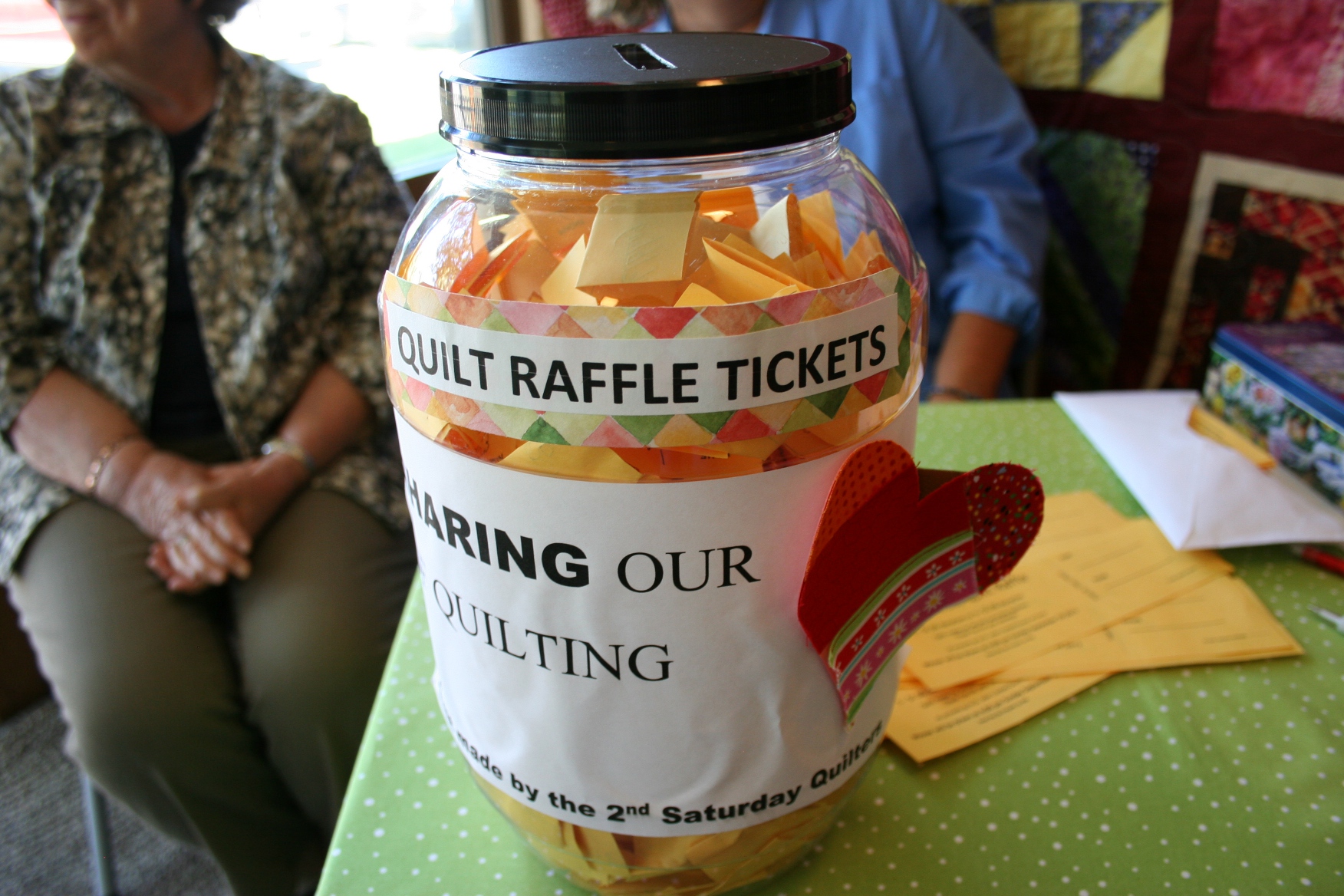
My husband and I each bought a quilt raffle ticket.

My husband and I each bought a quilt raffle ticket.

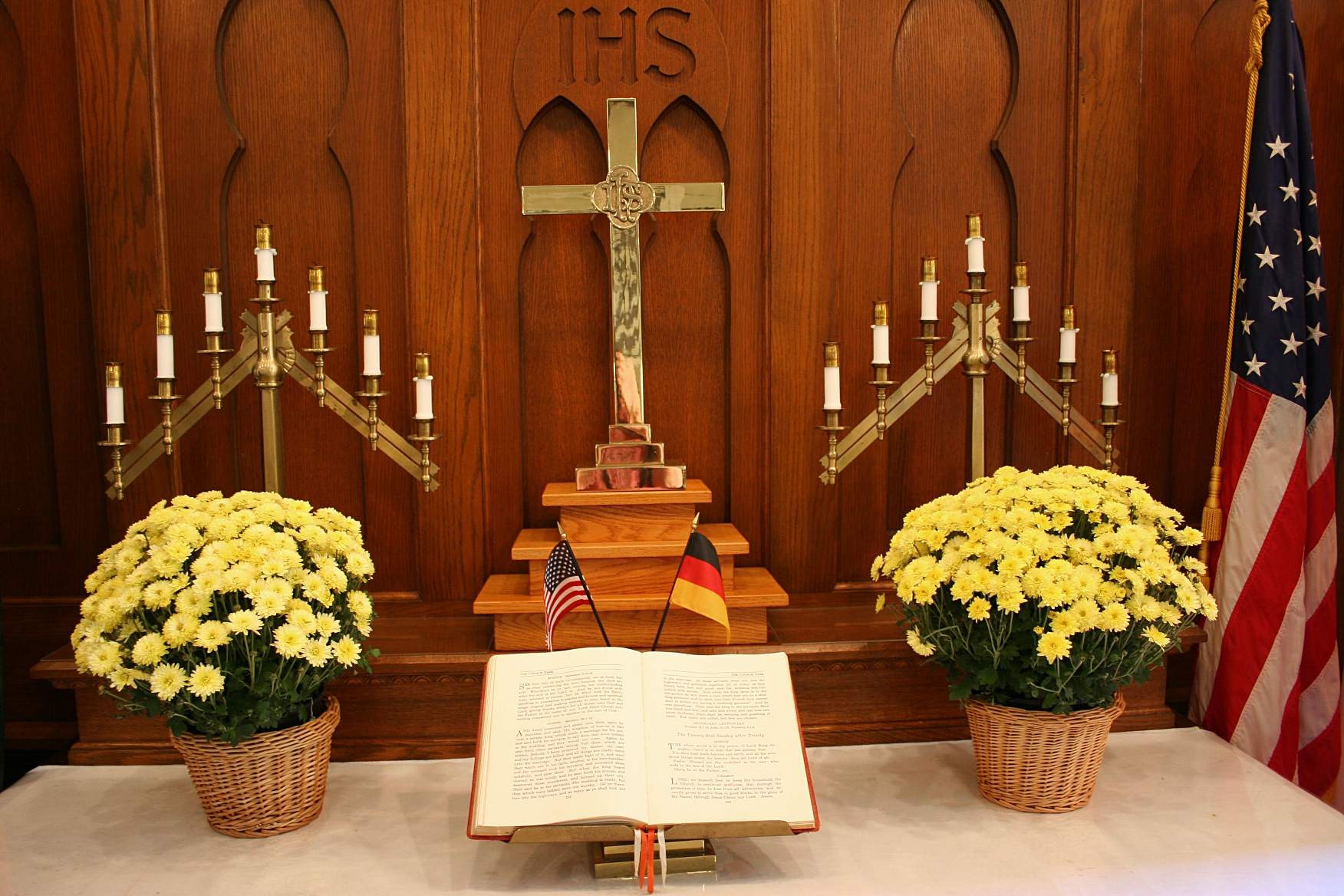
The beautifully-appointed altar, complete with German and American flags.

The beautifully-appointed altar, complete with German and American flags.

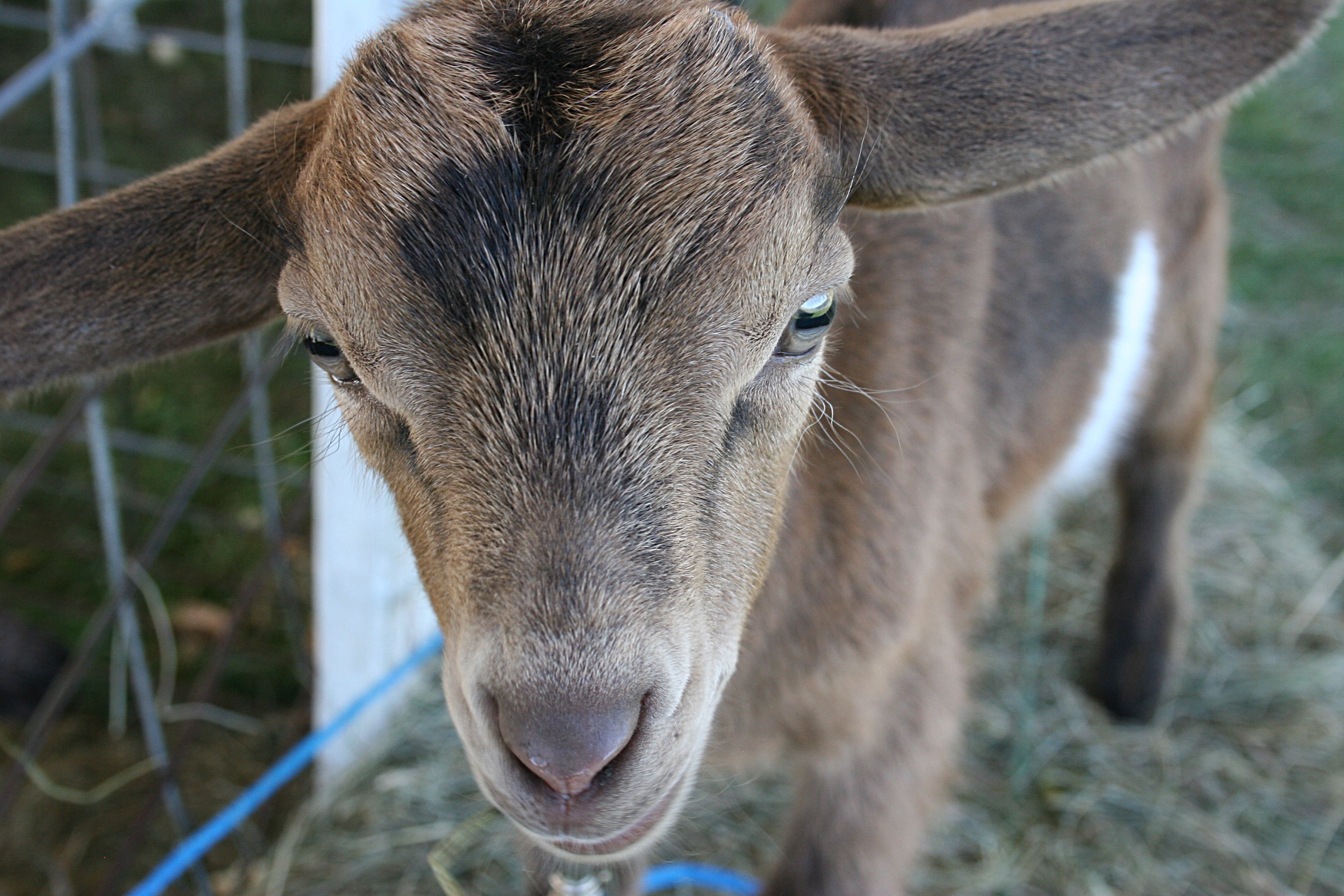
Outside the church, I fell in love with the adorable goats at the petting zoo.

Outside the church, I fell in love with the adorable goats at the petting zoo.

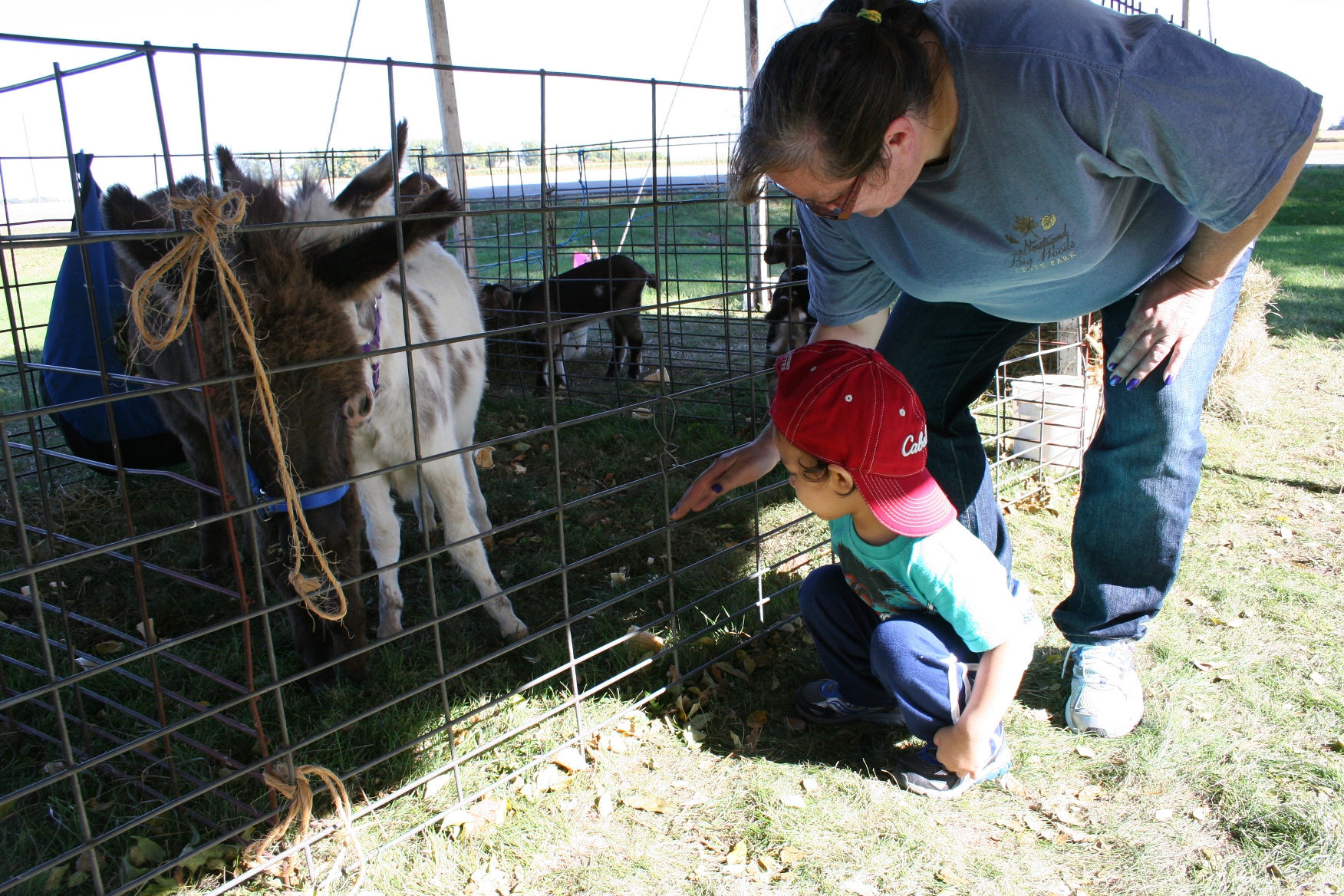
And this little guy loved the miniature donkeys.

And this little guy loved the miniature donkeys.

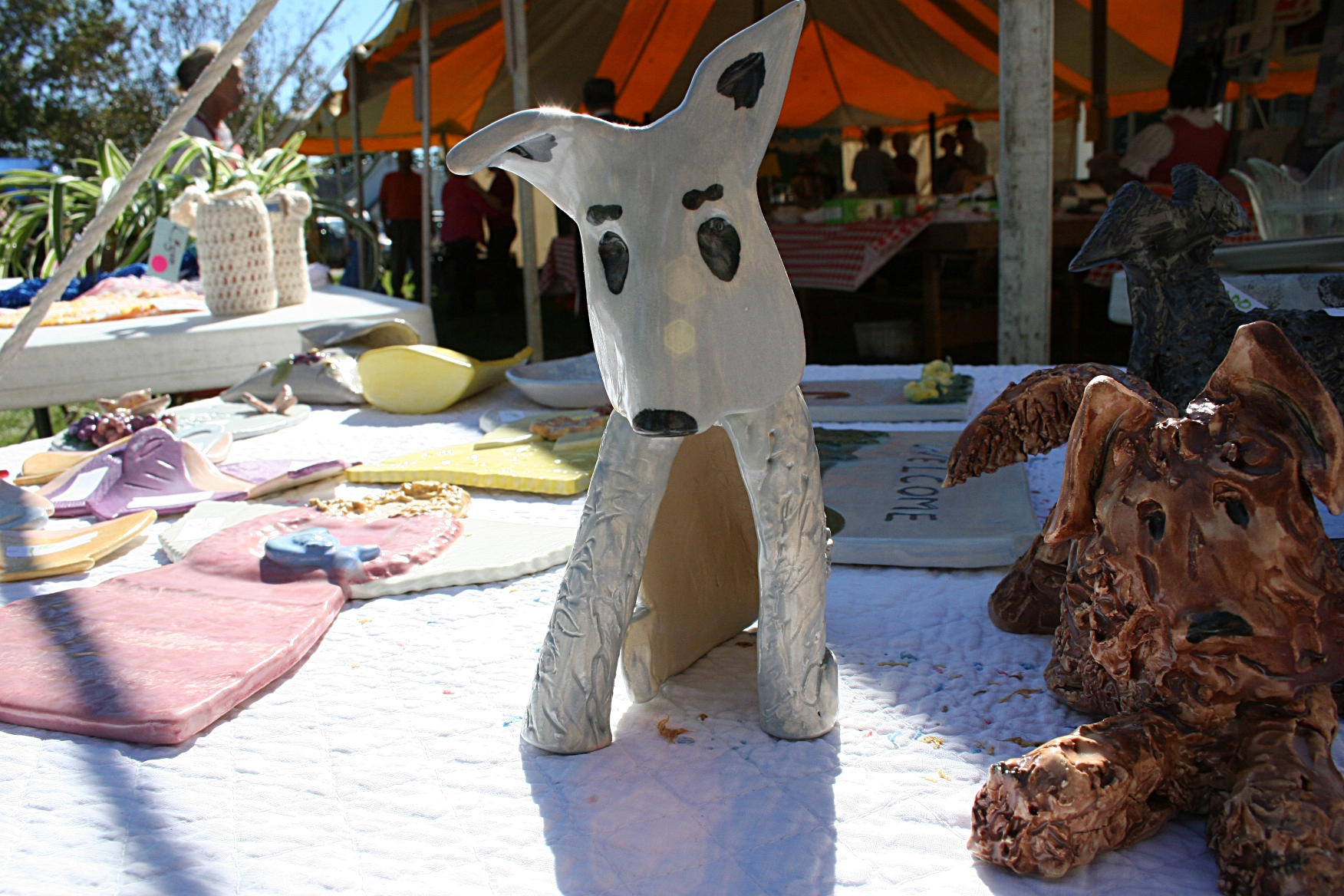
Along with fresh produce and bakes goods and greeting cards (some published by Warner Press with my verses)

Along with fresh produce and baked goods and greeting cards (some published by Warner Press with verses I wrote) and apple jelly was this art (including these cute pooches).

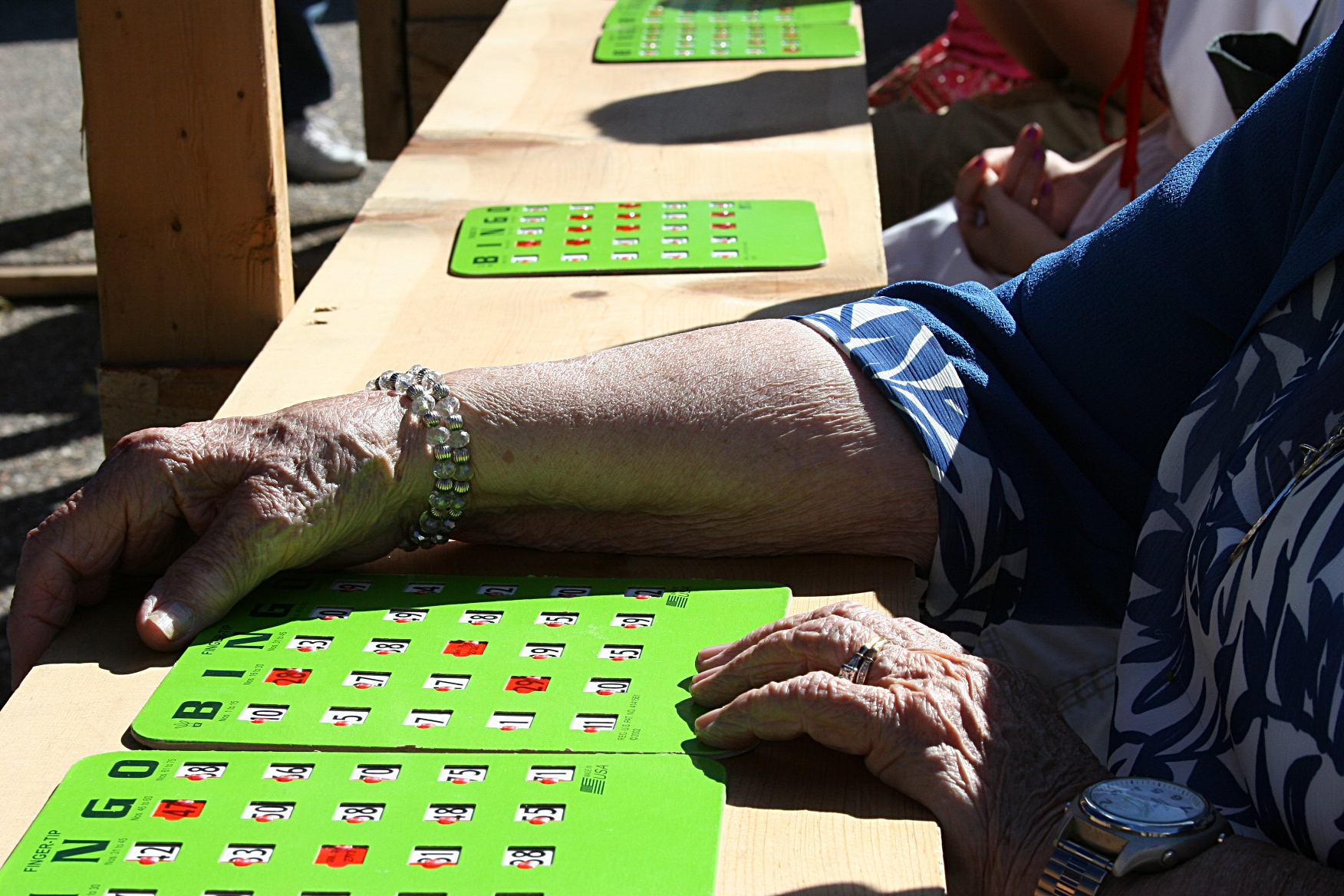
Bingo drew the young and the older.

Bingo drew the young and the older.

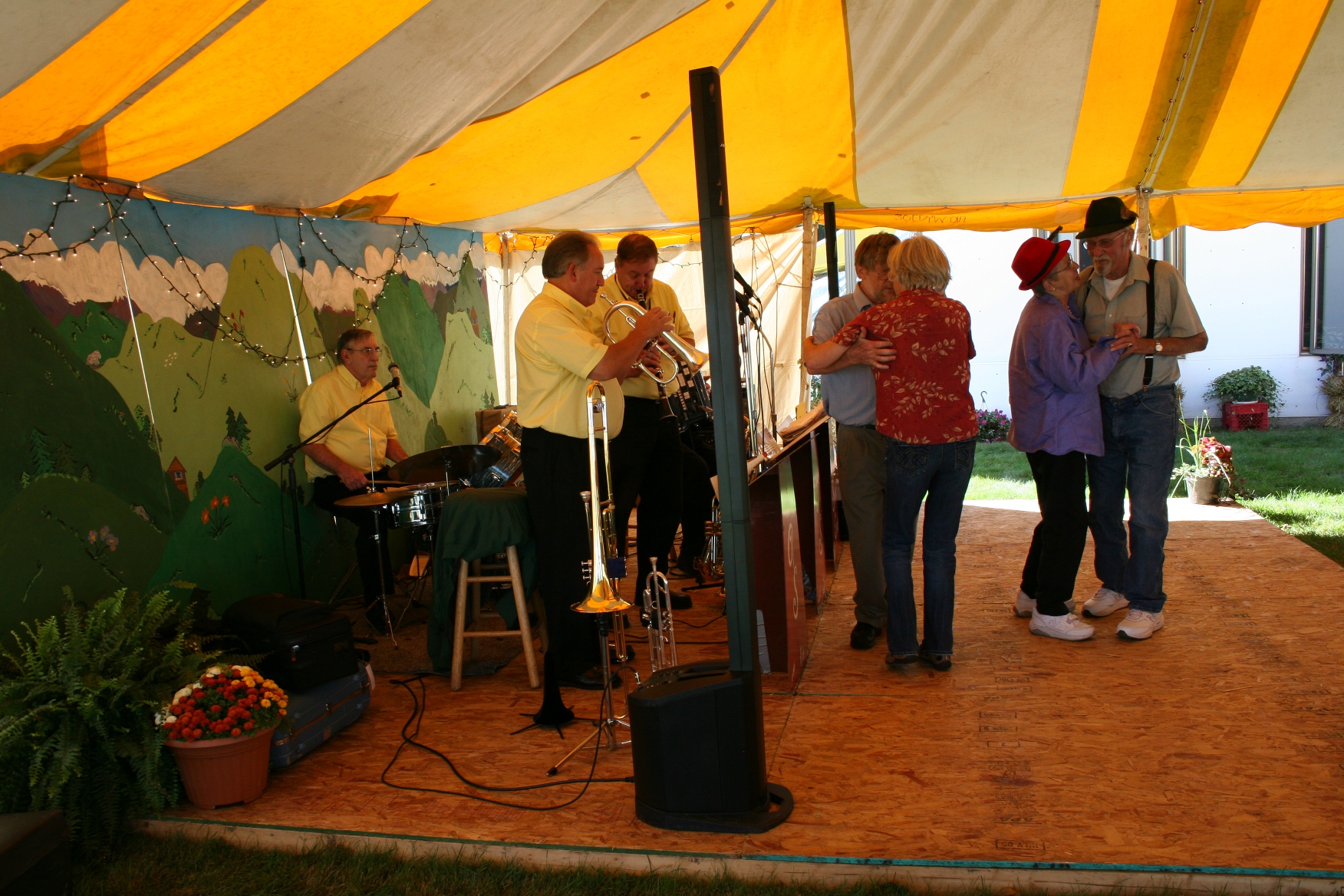
Old-time music drew dancers and listeners to the tent next to the church.

Old-time music drew dancers and listeners to the tent next to the church.

© Copyright 2013 Audrey Kletscher Helbling
 

Meet Bill, the sweetcorn salesman August 21, 2013

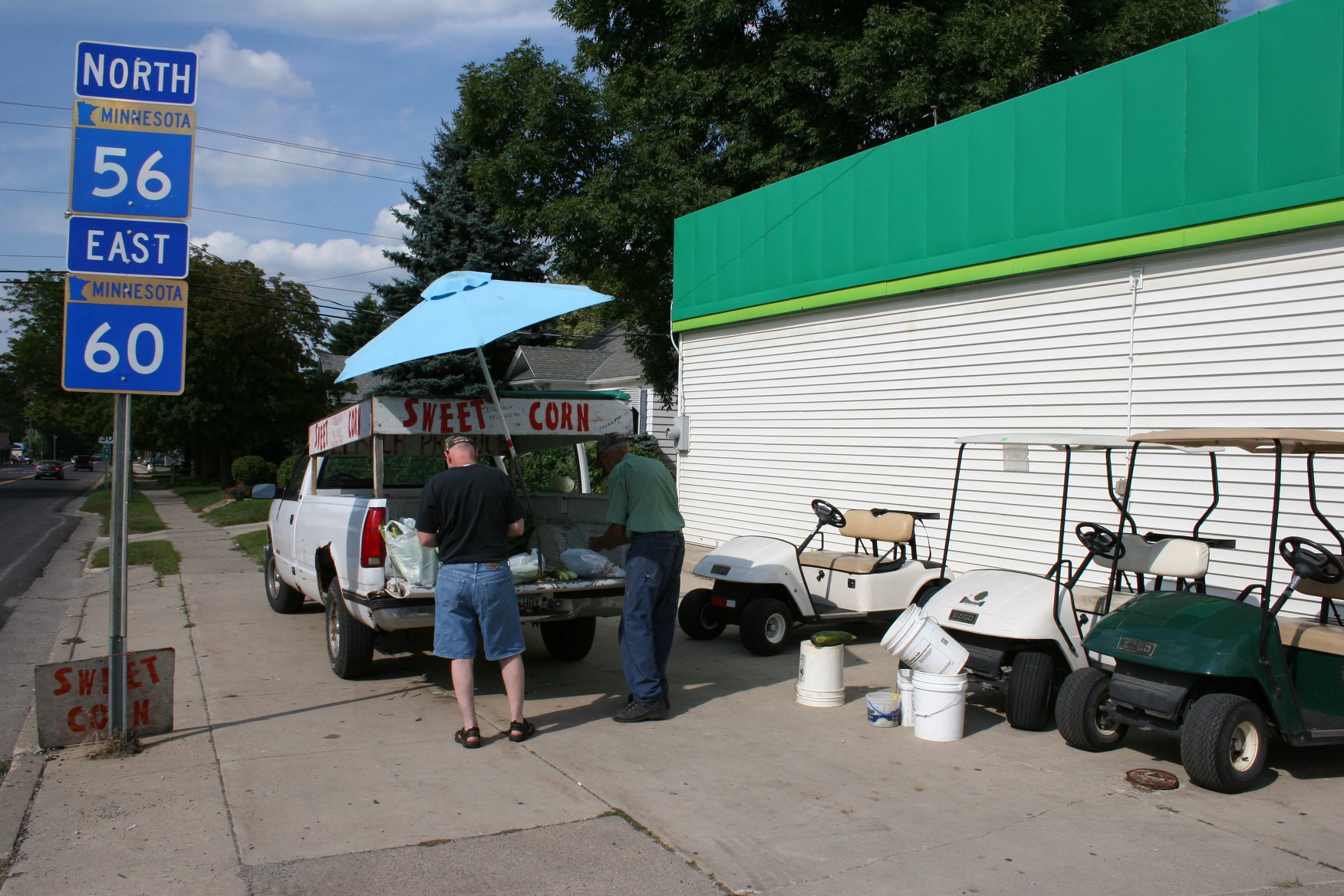
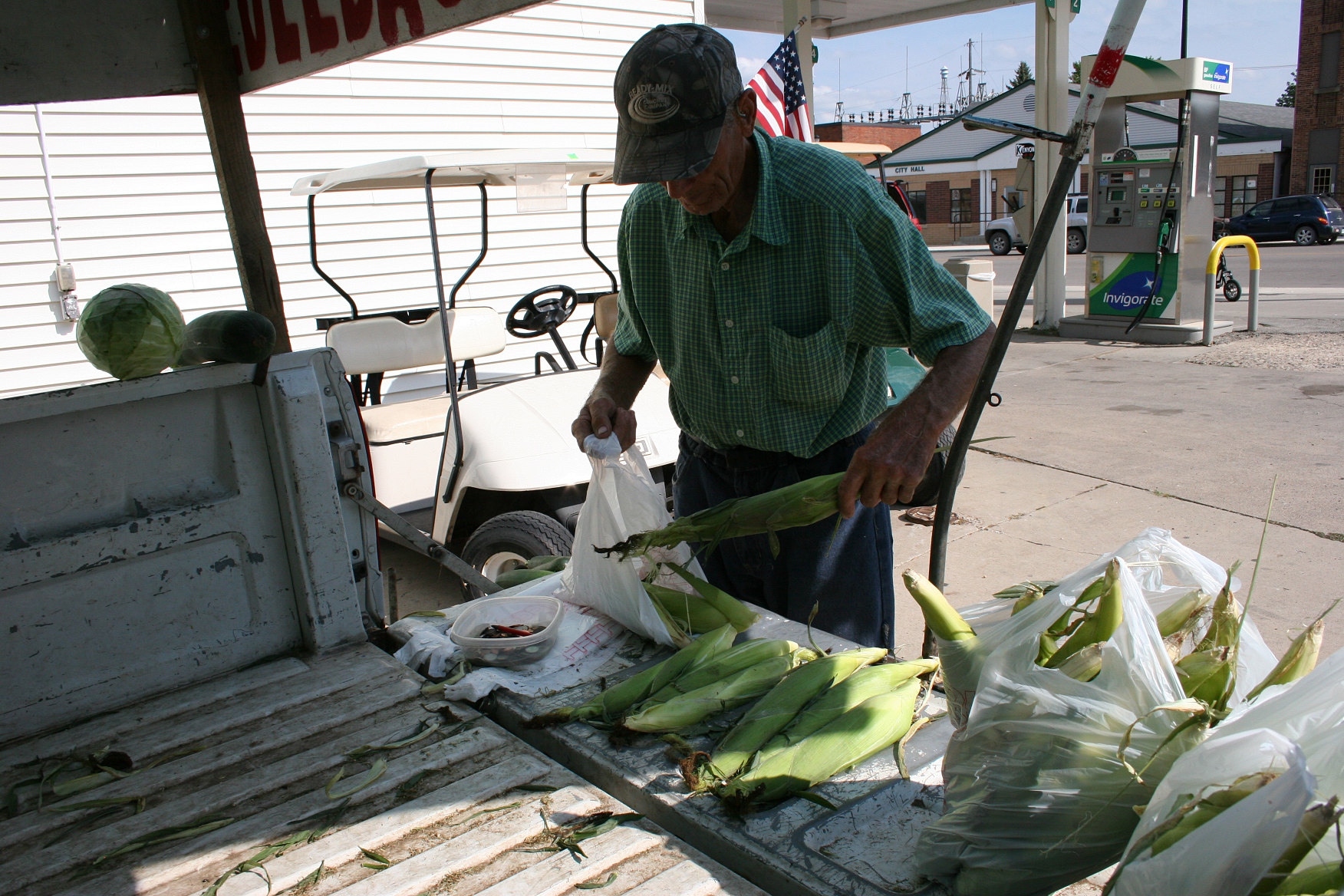
Bill Edelback sells sweetcorn, a green pepper, three cucumbers and a zucchini to my husband, Randy.

Bill Edelbach sells fresh vegetables to my husband, Randy.

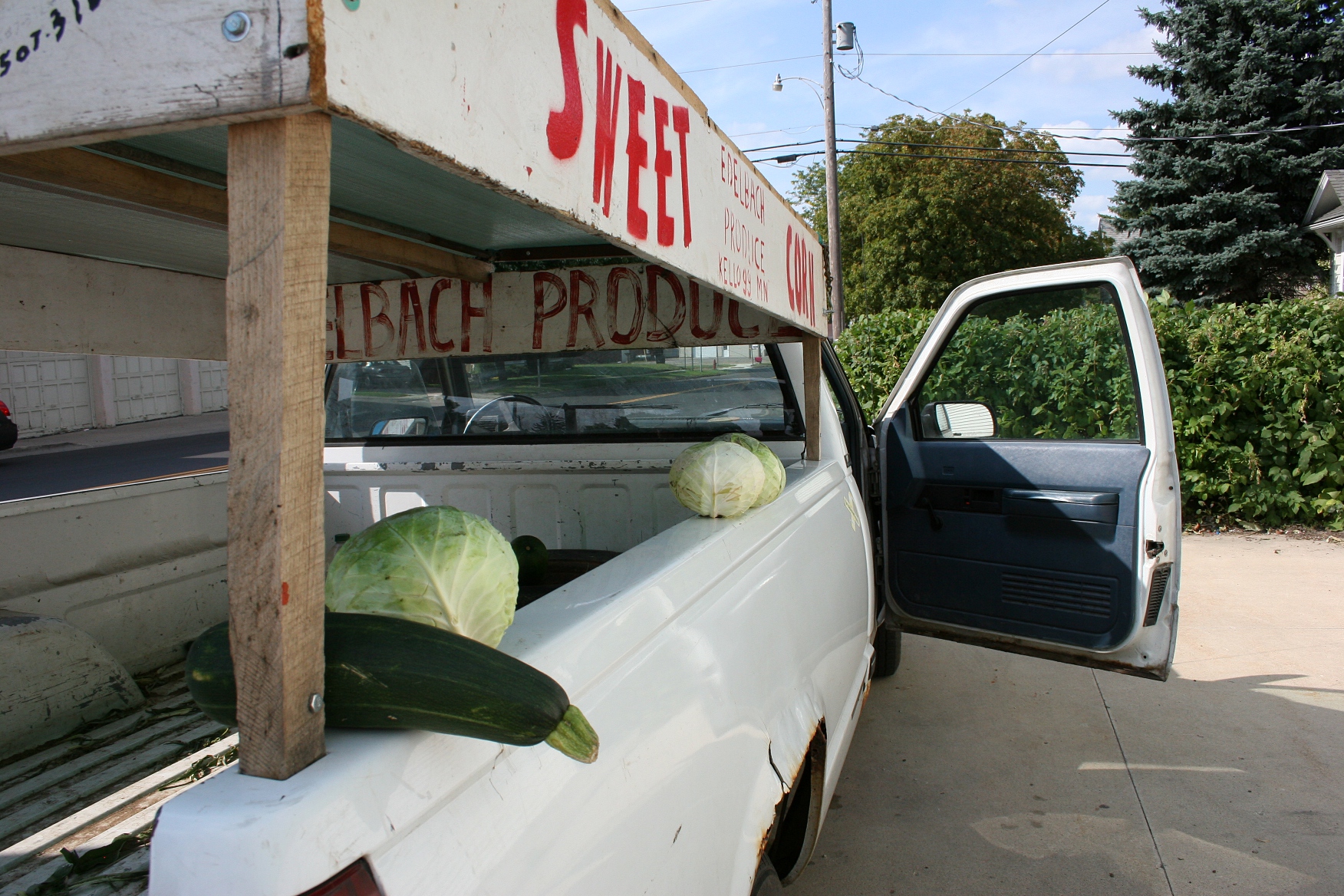
I TOTALLY UNDERSTAND why Bill Edelbach sold an entire pick-up full of sweetcorn and other farm fresh vegetables while parked along a busy street corner in Kenyon this past Sunday.

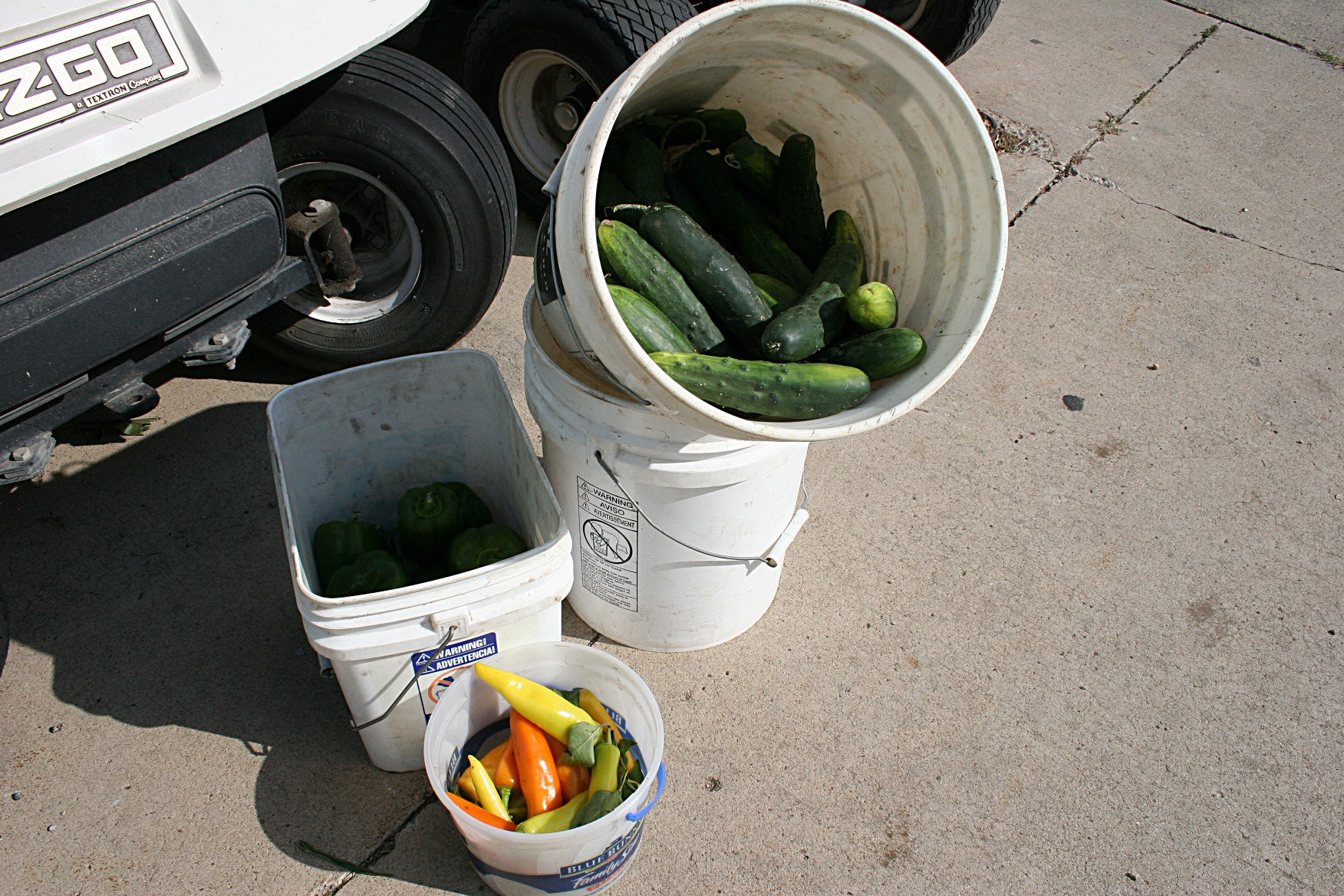
Cucumbers and peppers, three for $1.

Cucumbers and peppers, three for $1.

He’s quite the salesman, pointing me to the peppers and cucumbers and zucchini when my husband and I had stopped only for sweetcorn.

Even a few heads of cabbage for sale.

Even a few heads of cabbage for sale. Tomatoes are slow in ripening this year, Bill says.

For more than 50 years, Bill has vended veggies grown on his Kellogg area farm. You can see those years chiseled in lines across his forehead, around his eyes, through his cheekbones.

Years of work etched in Bill's face.

Years of work etched in Bill’s face.

Bill has the kind of weathered face that I love to photograph, a face that distinguishes him as a long-time farmer. One who loves the land and the food he grows. He’s a hard worker; you can see that in his thin frame, in his hands.

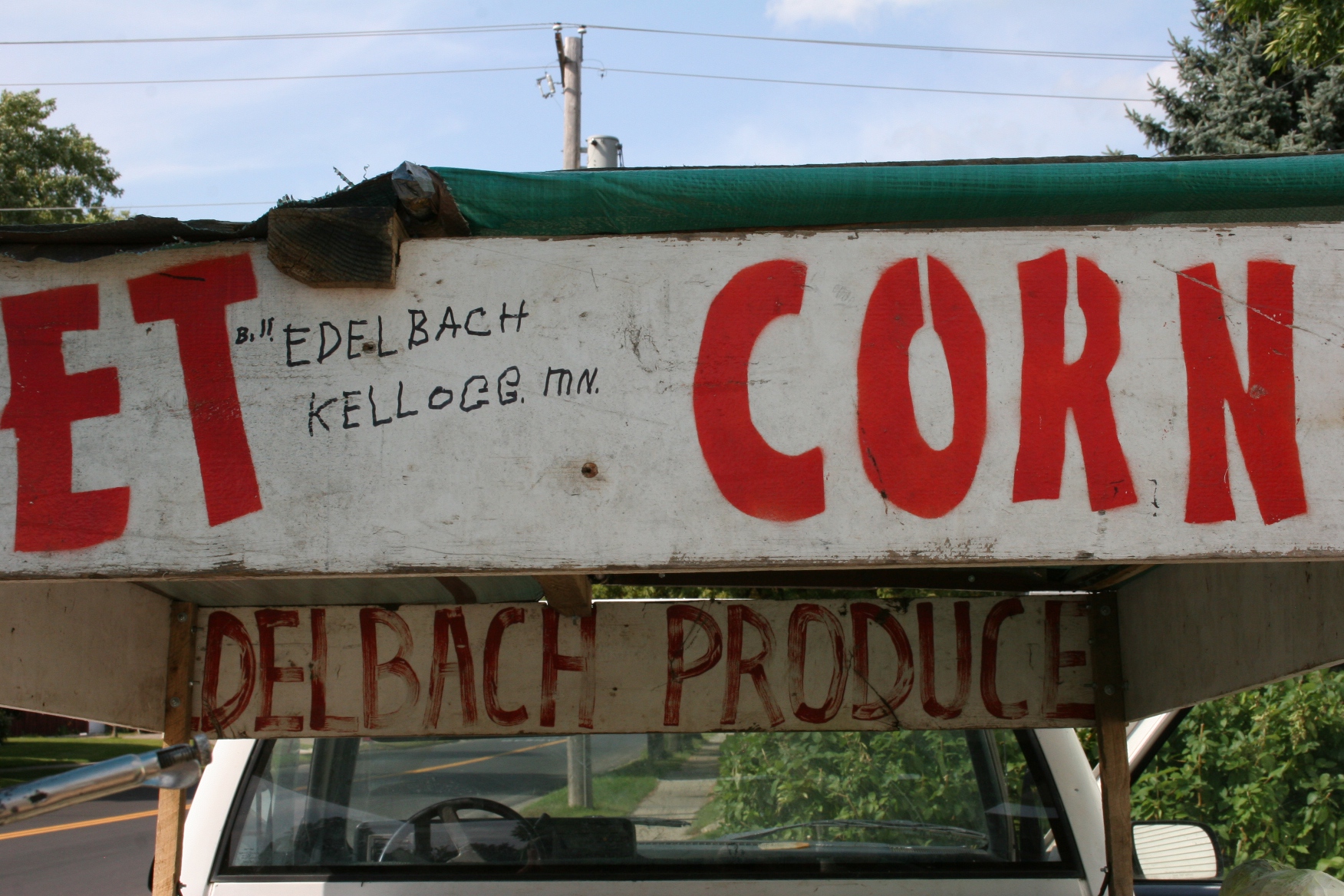
Gotta appreciate the handcrafted signage as much as Bill.

Gotta appreciate the handcrafted signage.

There’s another thing you should know about Bill.  Something like 30 years ago, he says, Tombstone Pizza folks were traveling around to small towns for a marketing campaign. They came upon Bill and his veggie vehicle parked in Cannon Falls, bought the whole truckload of sweetcorn, and moved him and his truck this way and that while photographing the scene.

Bagging our sweetcorn late Sunday afternoon.

Bagging our sweetcorn late Sunday afternoon.

That’s Bill’s claim to fame. Plus 50 years of selling his field fresh vegetables in small-town Minnesota.

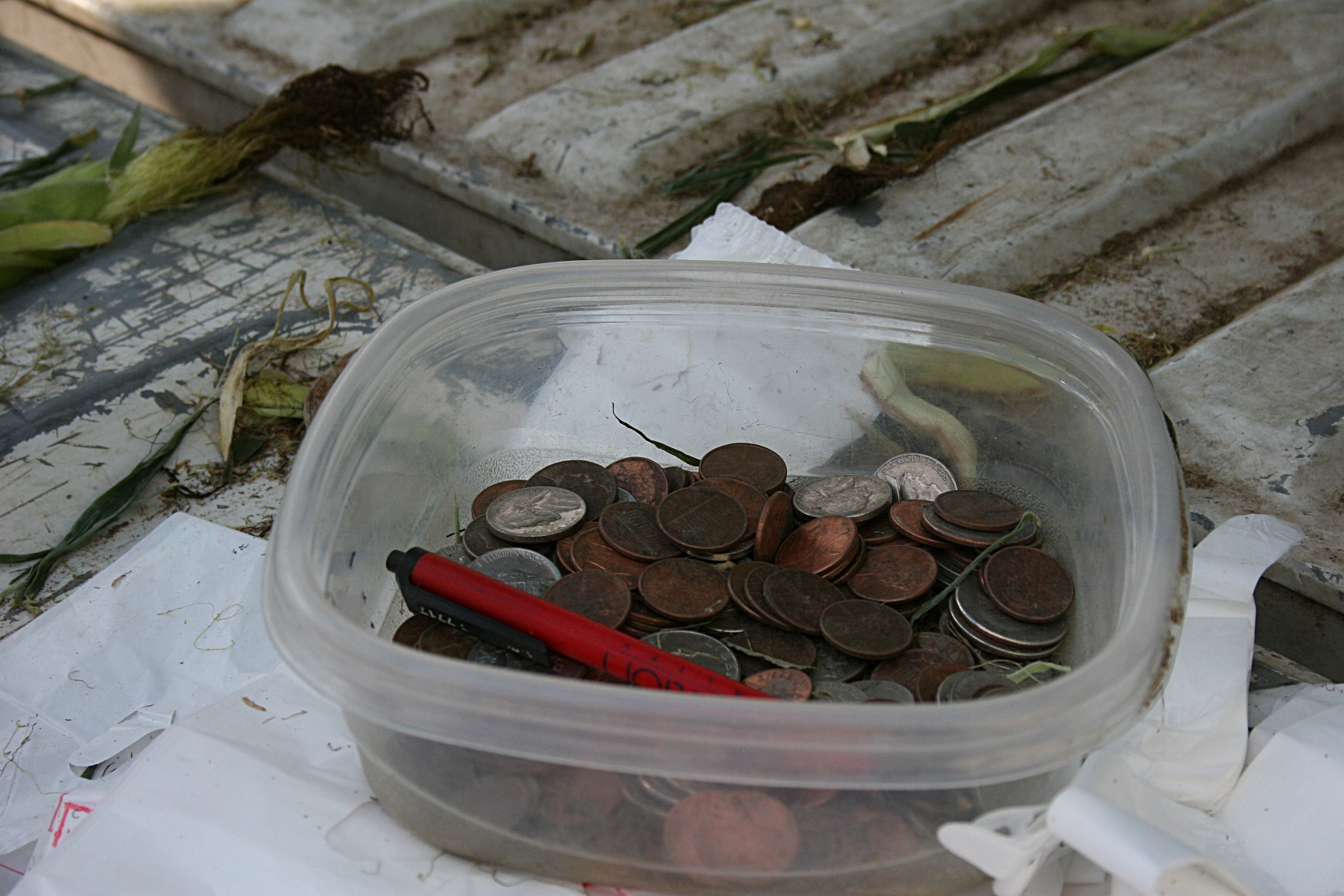
For less than $5, we purchased half a dozen ears of sweetcorn, three cucumbers, a green pepper and a zucchini.

For less than $5, we purchased half a dozen ears of sweetcorn, three cucumbers, a green pepper and a zucchini.

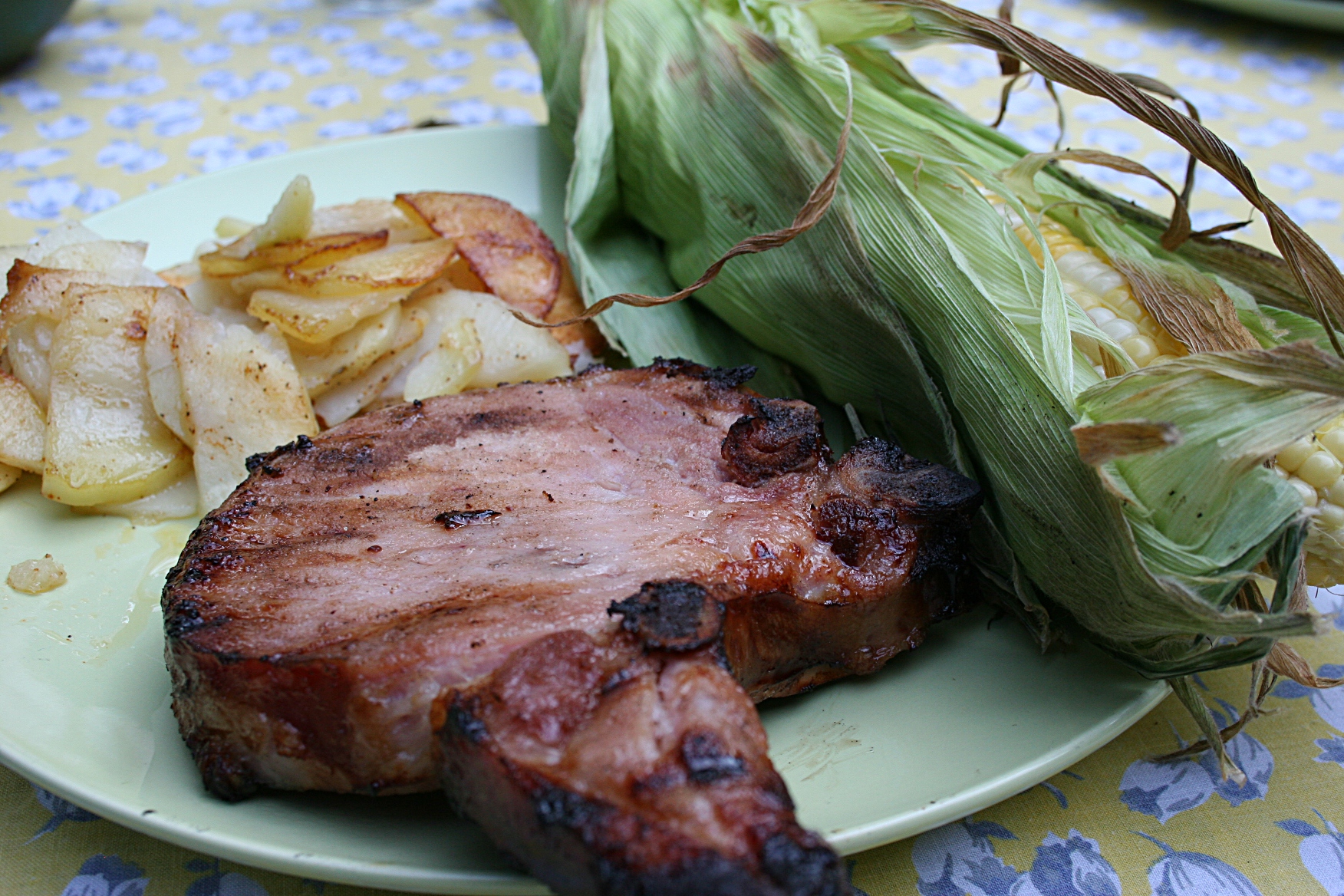
In less than two hours, we were feasting on Bill's sweetcorn; garden fresh potatoes purchased last week from another roadside vendor; and smoked pork chops bought fresh at a local grocery store meat counter.

Two hours later we were feasting on Bill’s sweetcorn; garden fresh potatoes purchased last week from another roadside vendor; and smoked pork chops bought fresh at a local grocery store meat counter.

© Copyright 2013 Audrey Kletscher Helbling
 

Tis the season… August 9, 2013

Filed under: Uncategorized — Audrey Kletscher Helbling @ 6:00 AM
Tags: , , , , , , ,

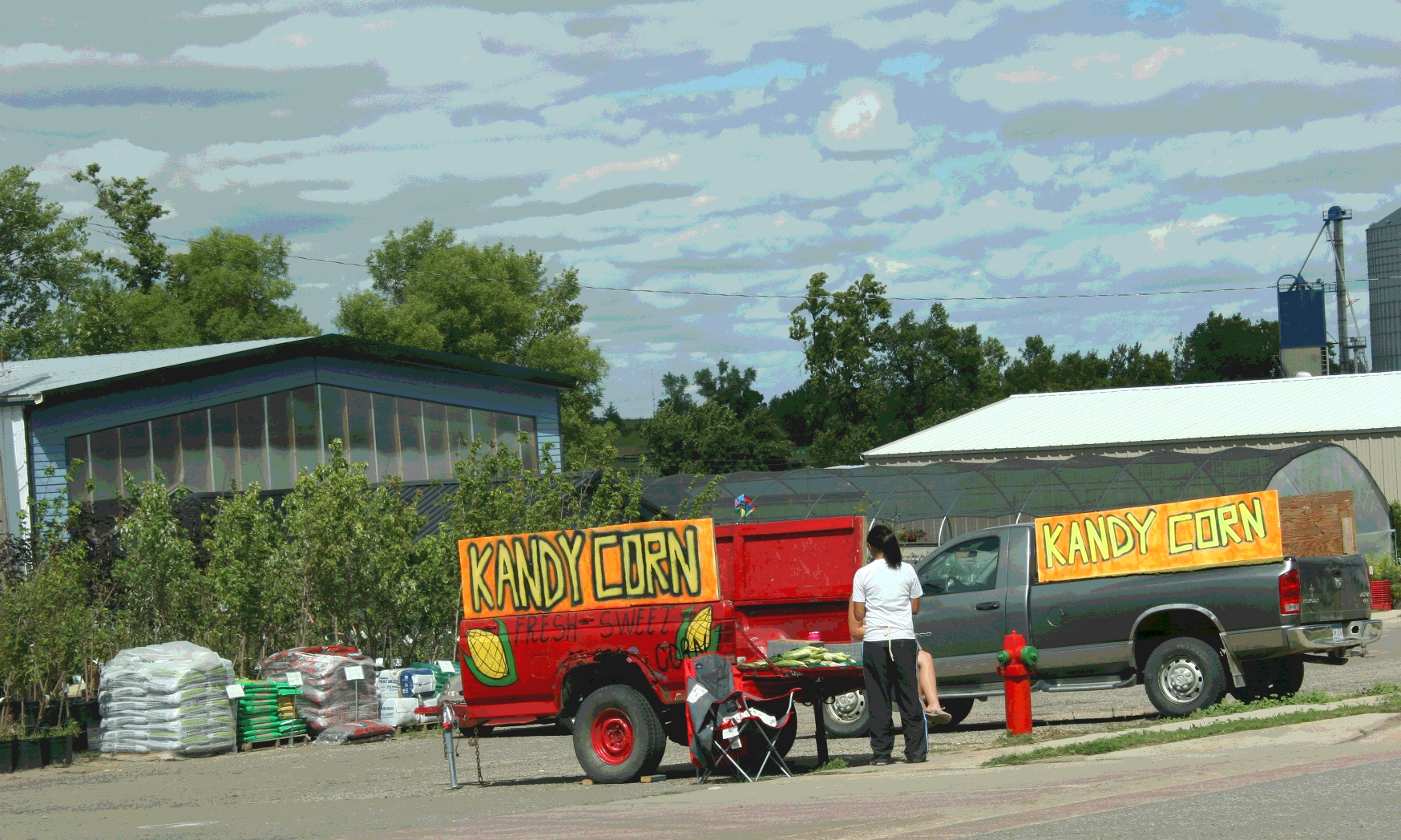
Kandy corn for sale in Slayton

…in Slayton and elsewhere in Minnesota.


Minnesota’s church dinner season underway August 2, 2013

Filed under: Uncategorized — Audrey Kletscher Helbling @ 6:00 AM
Tags: , , , , , , , , ,

TIS THE SEASON of church dinners.

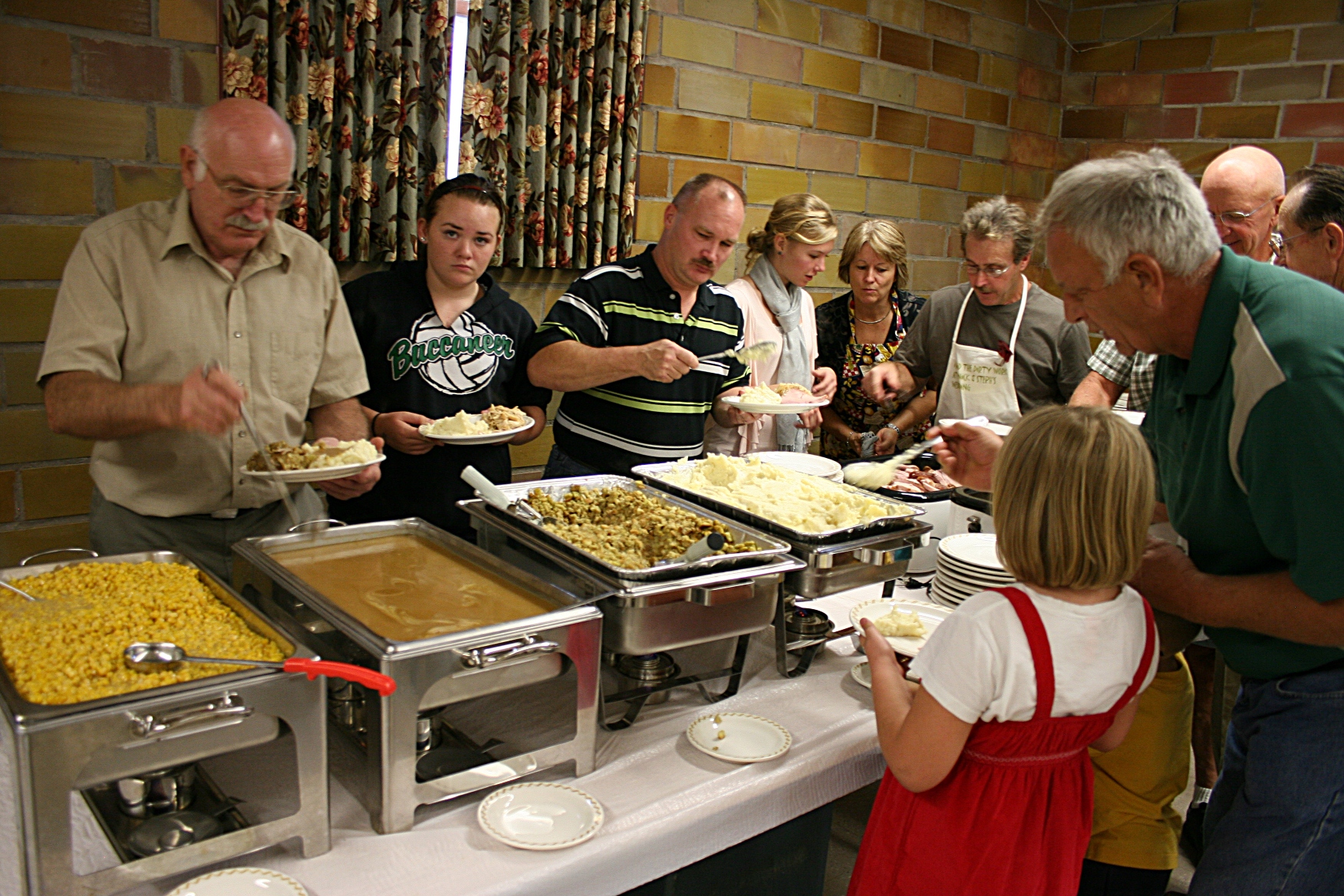
Diners dish up at last year's fall dinner at Trinity Lutheran Church, North Morristown.

Diners dish up at the 2011 dinner at Trinity Lutheran Church, North Morristown.

Although I’ve never partaken in the one at The Church of the Nativity in Cleveland, I’ve attended plenty of others in southern Minnesota. Church dinner food is typically homemade, the draw for me, along with the fellowship.

If I wasn’t already busy this Sunday, August 4, I’d head west to Cleveland, which sits along State Highway 99 six miles east of St. Peter, to this Catholic church dinner and festival.

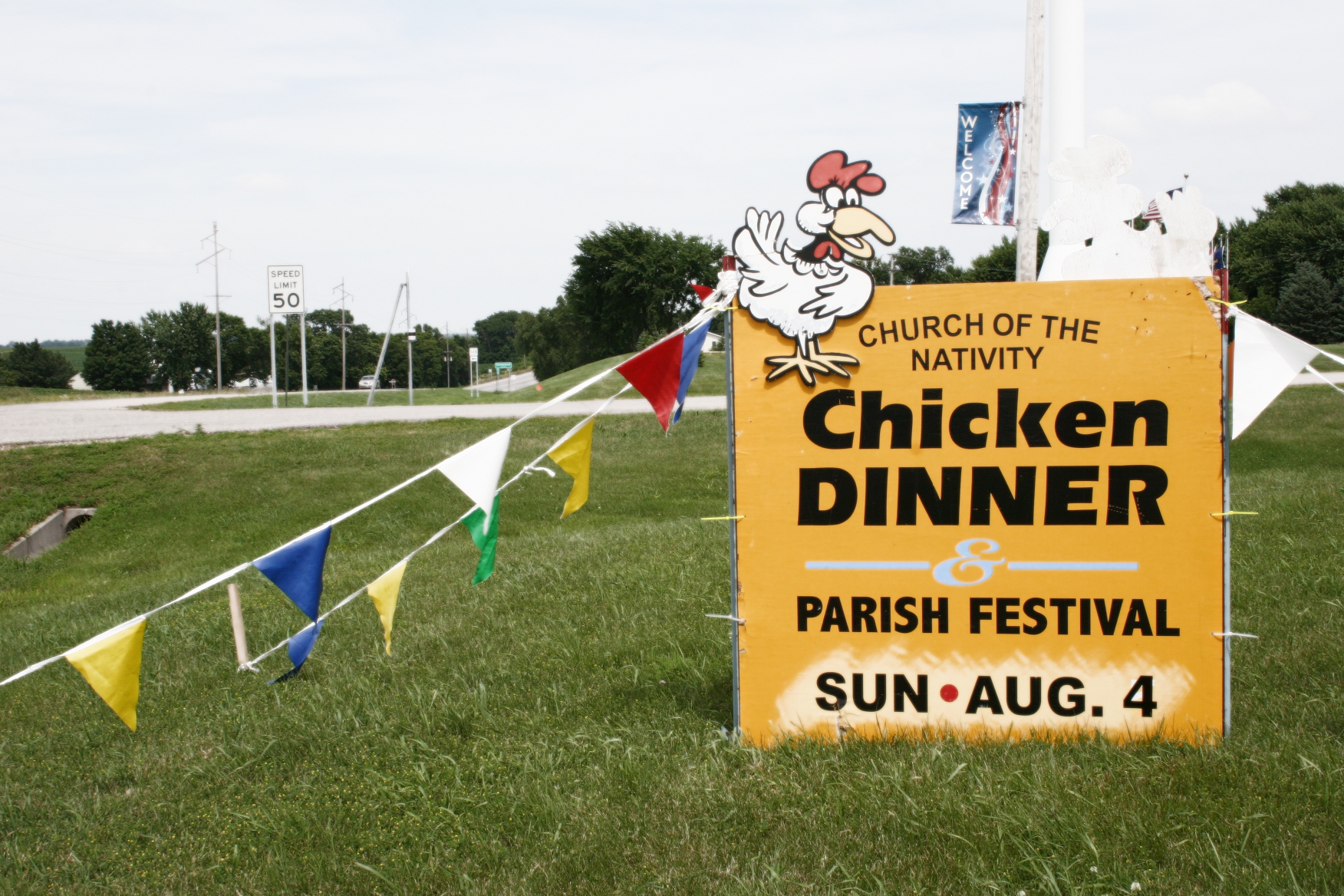
The beautiful chicken dinner sign I spotted along Minnesota Highway 99 on the edge of Cleveland.

The beautiful chicken dinner sign I spotted along Minnesota Highway 99 on the edge of Cleveland.

Since I can’t review the food, I’ll award these dinner promoters five stars for creative and eye-catching roadside signage.

To learn more about the dinner, I checked out the church website (click here) where the meal is tagged as “Men’s Chicken Dinner & Parish Festival.” Now I’m certain women and children are welcome. I assume the “men’s dinner” means the men are cooking the advertised “fabulous broasted chicken.”

In addition, baked potatoes, creamy cucumbers, baked beans, pie and beverages will be served. Homemade pie. The best.

Food will be served from 10 a.m. – 1 p.m.

Mass starts at 8:30 a.m.

My meal at last year's Trinity dinner, minus the bread and cranberries. I had cake for dessert, too.

My food plated at the annual Trinity North Morristown church dinner.

Besides food, the festival offers your usual games, beer garden (this was an initial surprise for me, a Lutheran, to discover beer at a church event) and silent auction. The Church of the Nativity also has an antique car show and a coffee bar, neither of which I’ve seen at a parish fest.

Next year this event is going on my list of must-attend church festivals.

FYI: I’d recommend attending these three church dinners:

Click here to read about the Veseli Ho-Down, Most Holy Trinity’s annual parish festival and dinner. This event is held in late August. Great food, music, games and more.

Click here to read about the annual church dinner at Trinity Lutheran Church, rural North Morristown. The dinner is served in mid-October in the church basement. Excellent, excellent food.

Click here to read about the Strawberry Festival held each June at Moland Lutheran Church, rural Kenyon.

Also, check out the website, Church Cuisine of Minnesota, for stories and photos of other church dinners.

HAVE YOU ATTENDED an outstanding church dinner and/or festival? if so please share in a comment to this post.

© Copyright 2013 Audrey Kletscher Helbling


Walnut Grove mural bridges cultures July 18, 2013

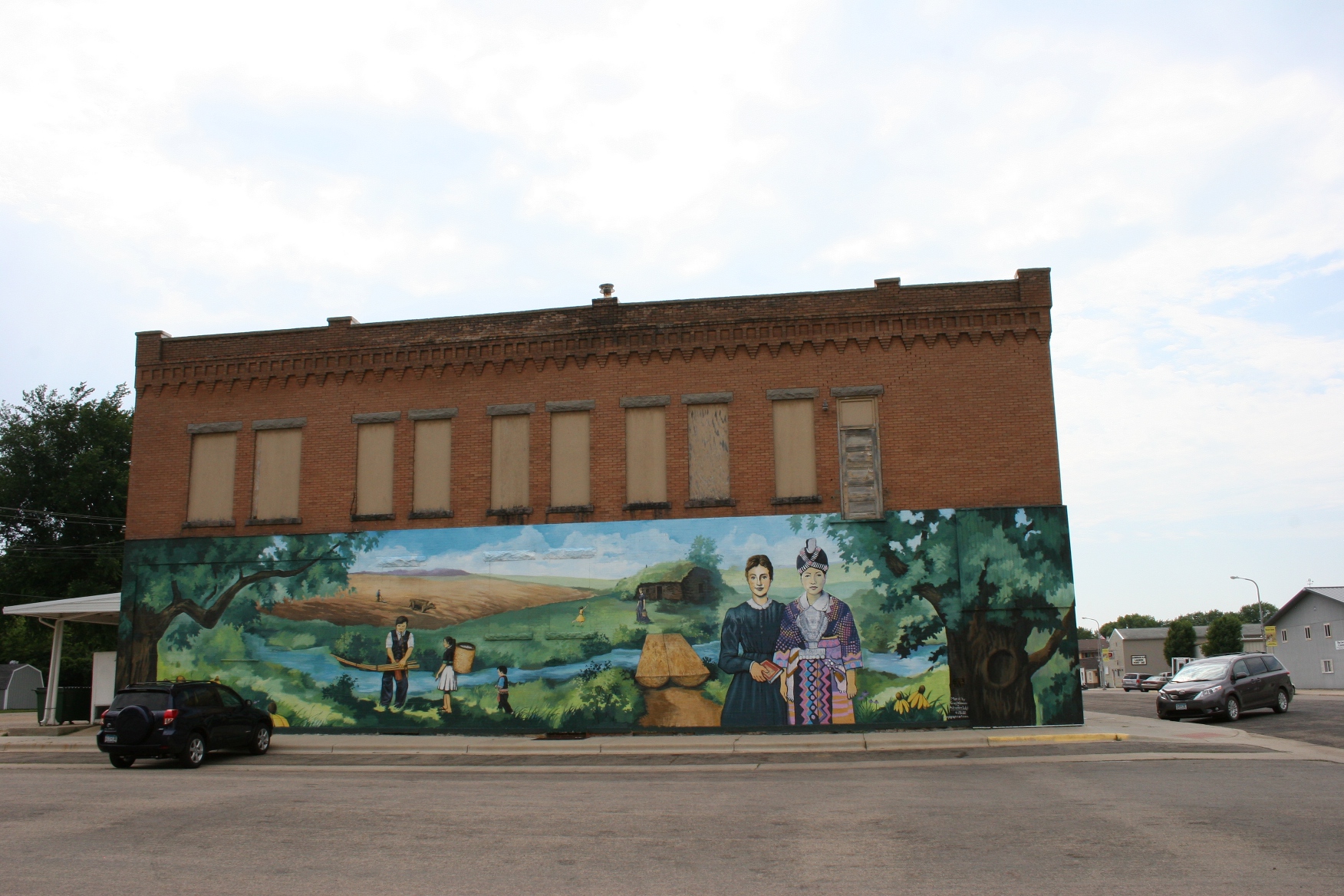
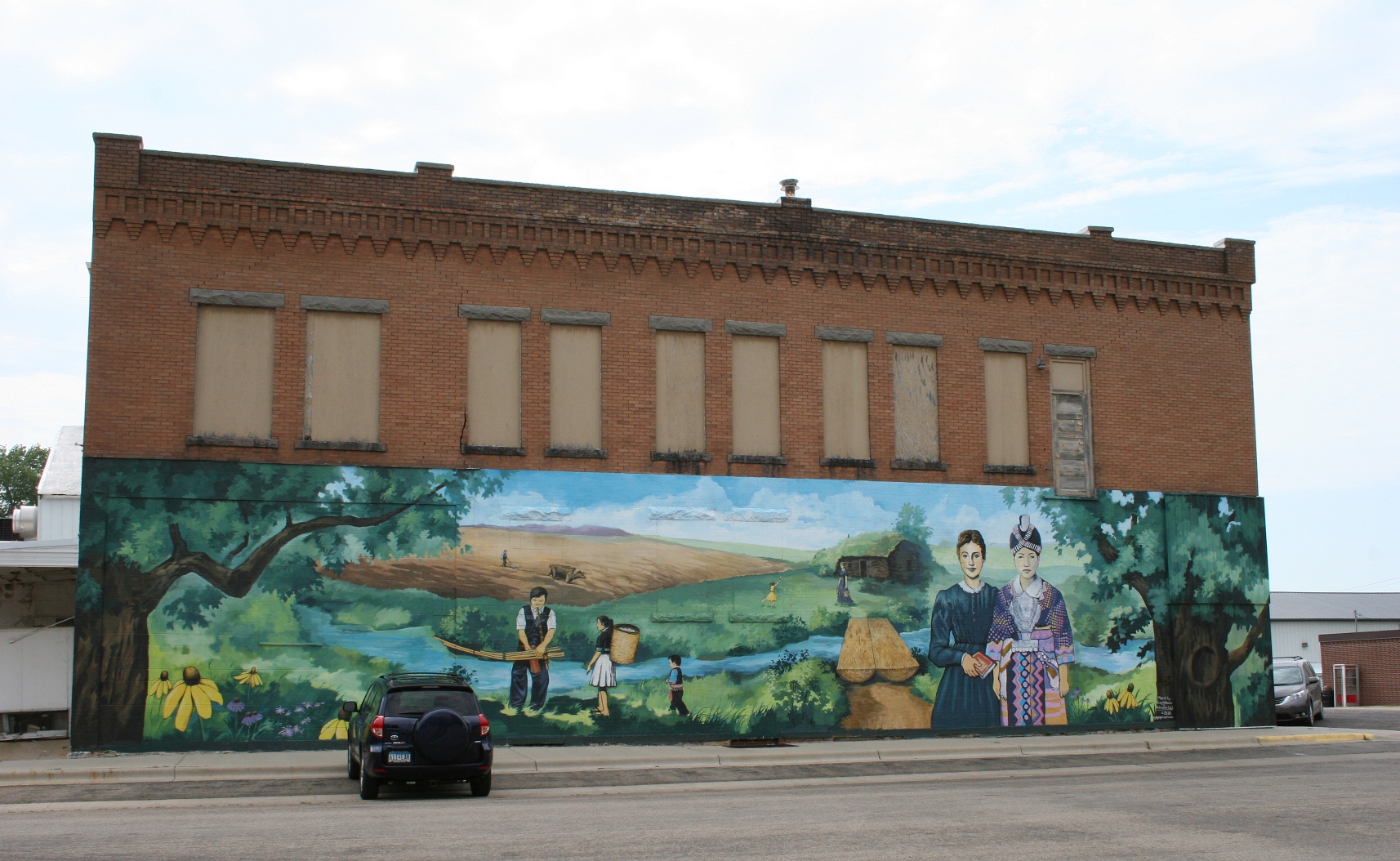
Rochester artist Greg Wimmer was commissioned to paint this mural last summer in downtown Walnut Grove.

Rochester artist Greg Wimmer was commissioned to paint this mural last summer in downtown Walnut Grove.

MY NEPHEW, ADAM KLETSCHER, who lives and teaches in Walnut Grove, told me to check out the new mural downtown when I recently visited this southwestern Minnesota community. So, after leaving the Family Festival during the town’s annual celebration of Laura Ingalls Wilder’s Little House books, I stopped to photograph the 20-foot by 78-foot painting on the east side of Bubai Foods along Main Street.

Being a bit rushed, I failed to photograph the front of the building housing a combination Asian and American food market. And I didn’t have time to go inside and ask questions.

Later I connected with Terry Yang, who moved to Walnut Grove in 2001 from St. Paul, opened the Asian portion of Bubai Foods in 2003 and purchased the American foods side in 2005.

Yang is among the estimated 30 percent of Walnut Grove’s 870 residents of Hmong ethnicity. The Hmong first came to this rural area in 2000, Yang says, to settle in a quiet small town with affordable housing (“We don’t have to lock our houses or cars here,” he says) in a landscape similar to their native Laos.

Walnut Grove is now home to retired Hmong and to young people employed mostly at factories in nearby Marshall, Wabasso and Worthington.

The mural in progress. Photo courtesy of Greg Wimmer.

The mural in progress. Photo courtesy of Greg Wimmer.

It is that infusion of Laotian immigrants that figured in to the design of the community-supported mural painted last summer by Greg Wimmer of Rochester based Wimmer Illustration and Design with assistance from Adrienne Lobl. Mural sponsors included individuals, local businesses and the Laura Ingalls Wilder Museum.

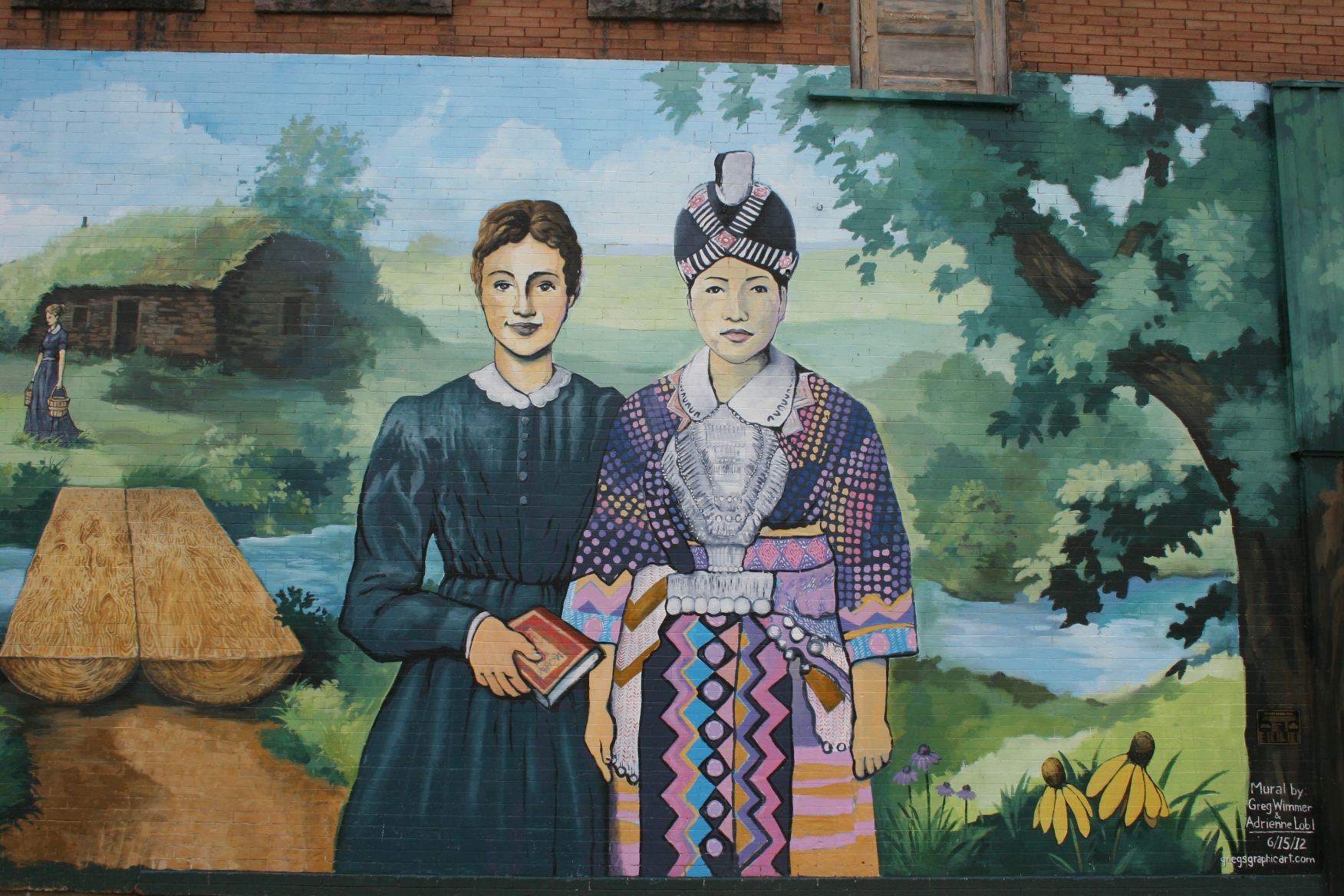
This snippet of the mural shows Laura Ingalls Wilder as a teacher next to a Hmong woman. To the left is the log bridge spanning Plum Creek, where the Ingalls family lived in a dug out.

This snippet of the mural shows Laura Ingalls Wilder as a teacher standing next to a Hmong woman. To the left is the log bridge spanning Plum Creek, where the Ingalls family lived in a sod house.

The painting, Yang says, shows the similarities between Laos and Walnut Grove and also melds the new Hmong culture and the pioneer history of this Minnesota community. For example, Laura Ingalls and a Hmong woman stand side by side, one in a simple lace-collared prairie dress, the other in intricate and colorful traditional celebratory Hmong attire reserved for special occasions like weddings and New Year’s celebrations.

Wimmer worked with the Hmong community, integrating many of their suggestions in to the design. A log bridge spanning Plum Creek, part of an original Ingalls family mural here which had faded and was in need of repair, was incorporated in to the new work and represents the bridging of two cultures, according to the artist.

“My personal opinion is that it (the mural) makes a statement about the changes in the community without saying a word,” Wimmer says.

In the foreground a Hmong man plays a bamboo flute near a rice field as his daughter carries a basket. In the background, a pioneer  busts sod with a an ox and a plow.

In the foreground, left, a Hmong man plays a bamboo flute near a rice field as his daughter carries a basket. In the background, a pioneer busts sod with an ox and a plow.

Yang also references the connections between the two cultures via two farming scenes—of a pioneer man plowing a Minnesota field with an ox, similar to the water buffalo that work the land in Laos, and of a Hmong family near a rice field and shown with a basket for carrying harvested crops from farm to village.

Native prairie plants, like black-eyed Susan and coneflowers, are part of the painting.

Native prairie plants, like black-eyed Susan and coneflowers, are part of the painting.

One of the draws to Walnut Grove, Yang says, is the land available for Hmong to plant gardens. Laotian natives, like native Walnut Grove area residents, are connected to the land.

Yang has always felt welcome in southwestern Minnesota and appreciates the mural showcasing the changes in his community, which now includes, he says, “so many races.”

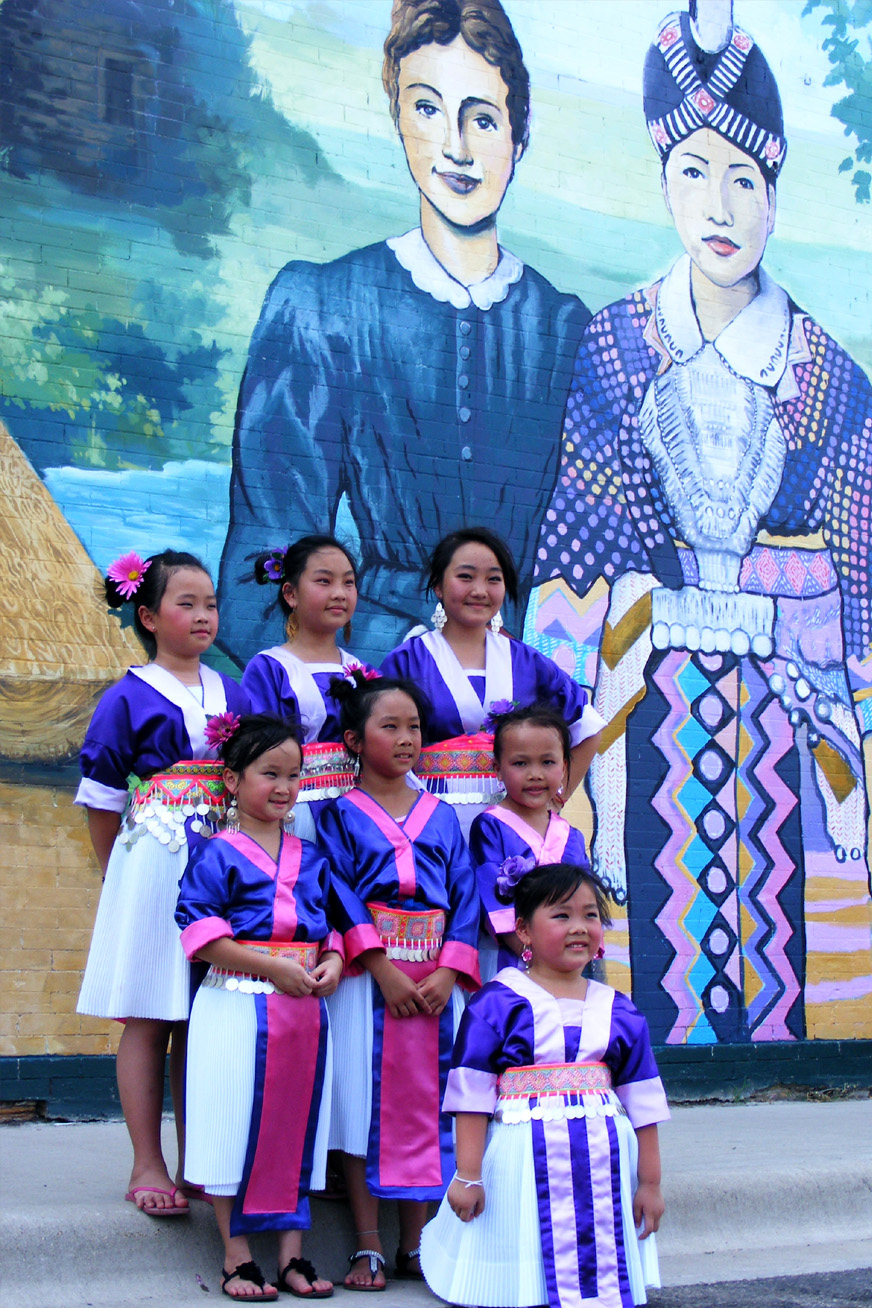
Girls in traditional Hmong dress attended the mural dedication last year.

Girls in traditional Hmong dress attended the mural dedication last year. Photo courtesy of Greg Wimmer.

FYI: Hmong dancers will be among entertainers at the Family Festival from 11 a.m. – 6 p.m. this Saturday, July 20, at the Walnut Grove City Park as part of the festivities celebrating the Little House books by Laura Ingalls Wilder. Click here to see the festival schedule.

And click here for more information about other events at the annual celebration.

BONUS PHOTOS:

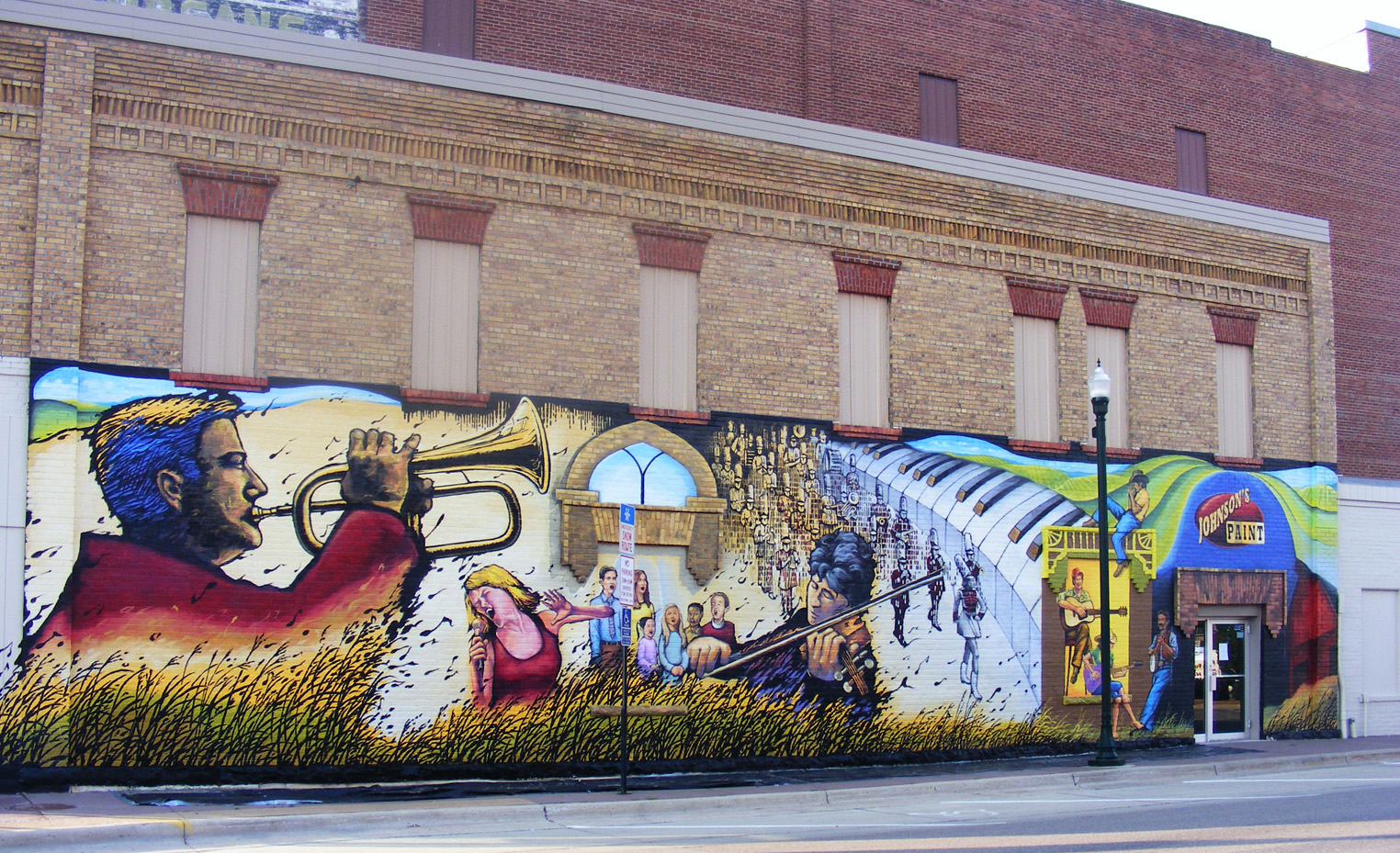
Greg Wimmer painted this mural in nearby Marshall. Photo courtesy of Greg Wimmer.

Greg Wimmer painted this mural in nearby Marshall. Photo courtesy of Greg Wimmer.

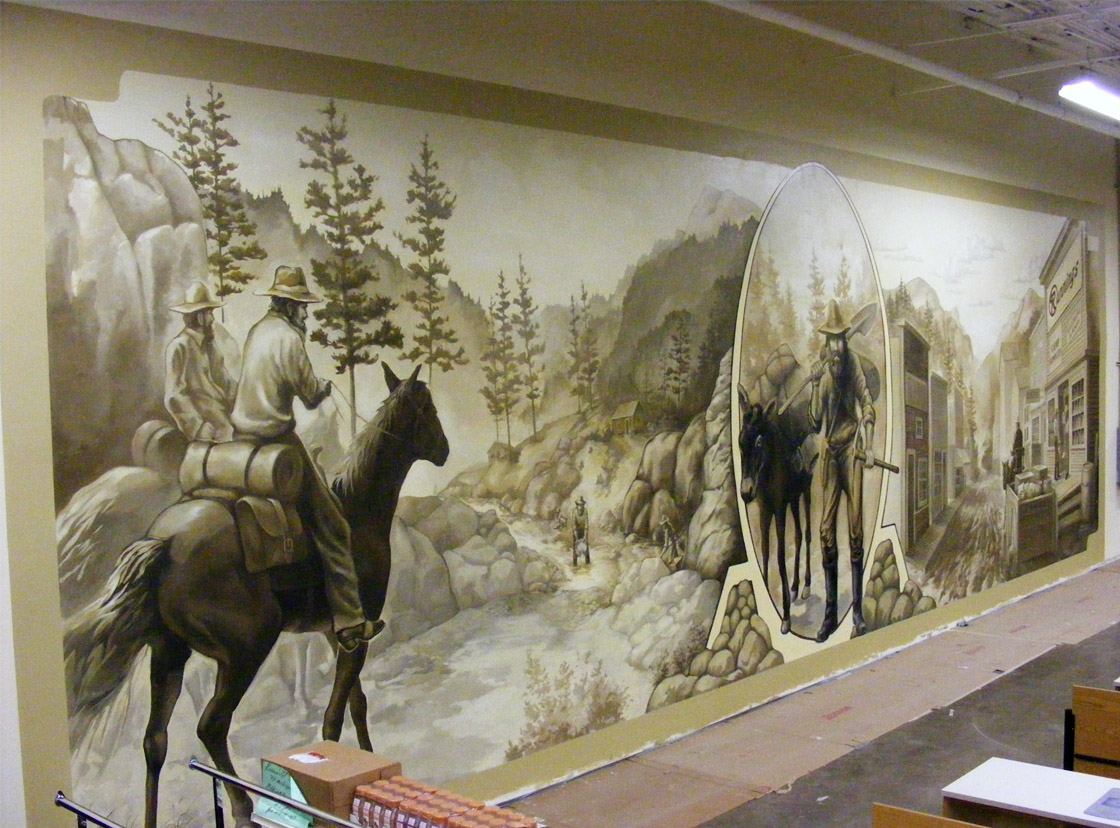
And Wimmer painted this mural in Rapid City, South Dakota. Photo courtesy of Greg Wimmer.

And Wimmer painted this mural in Rapid City, South Dakota. Photo courtesy of Greg Wimmer.

© Copyright 2013 Audrey Kletscher Helbling
 

Serving up ice cream & nostalgia at The Whippy Dip July 9, 2013

Filed under: Uncategorized — Audrey Kletscher Helbling @ 6:00 AM
Tags: , , , , ,

WITH THE WEATHER HOT as Hades, nothing beats an ice cream treat.

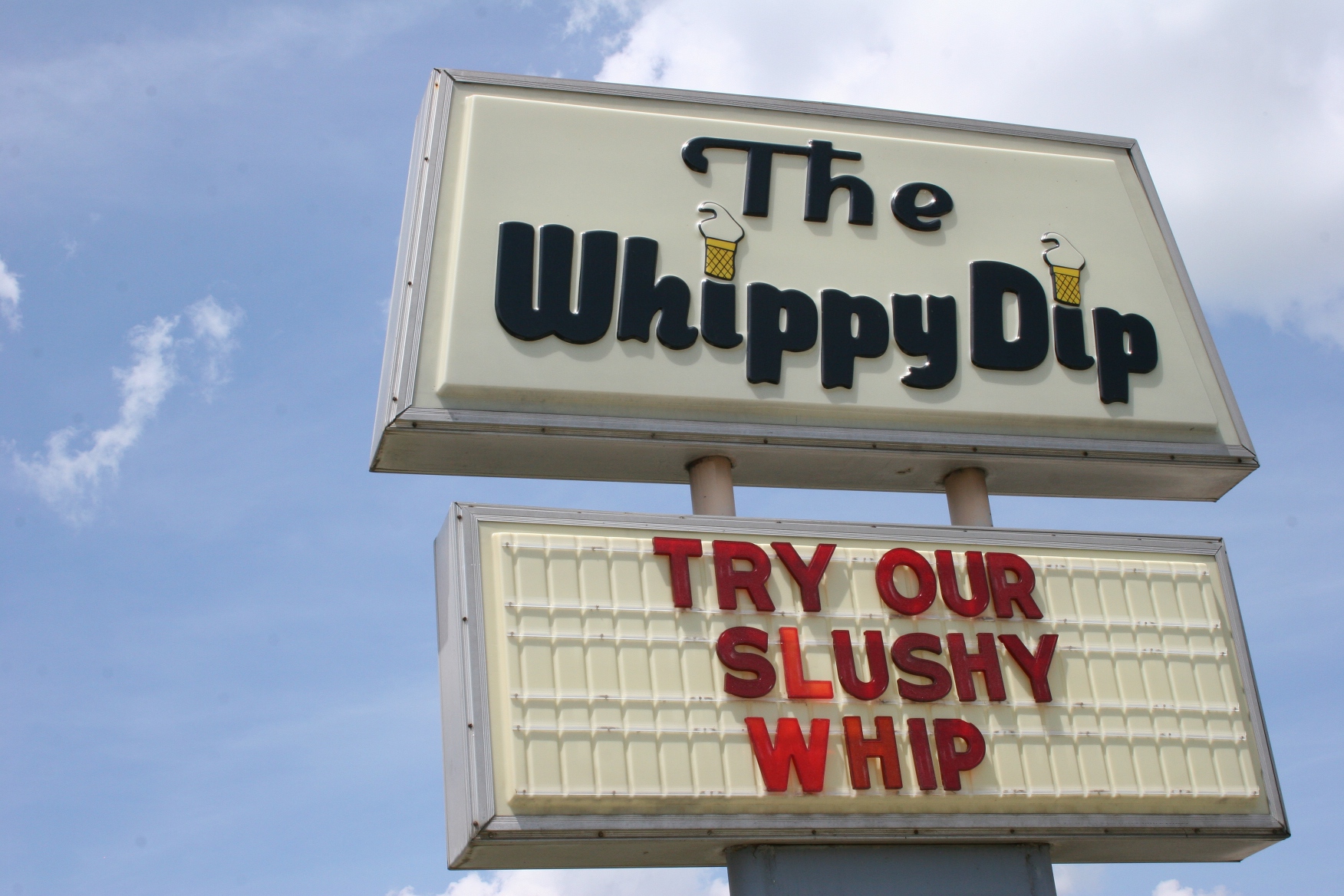
The Whippy Dip sign close-up

And it’s especially delicious served with a scoop of nostalgia, like that offered at The Whippy Dip in Decorah, Iowa. Don’t you just love that name? Whippy. Dip.

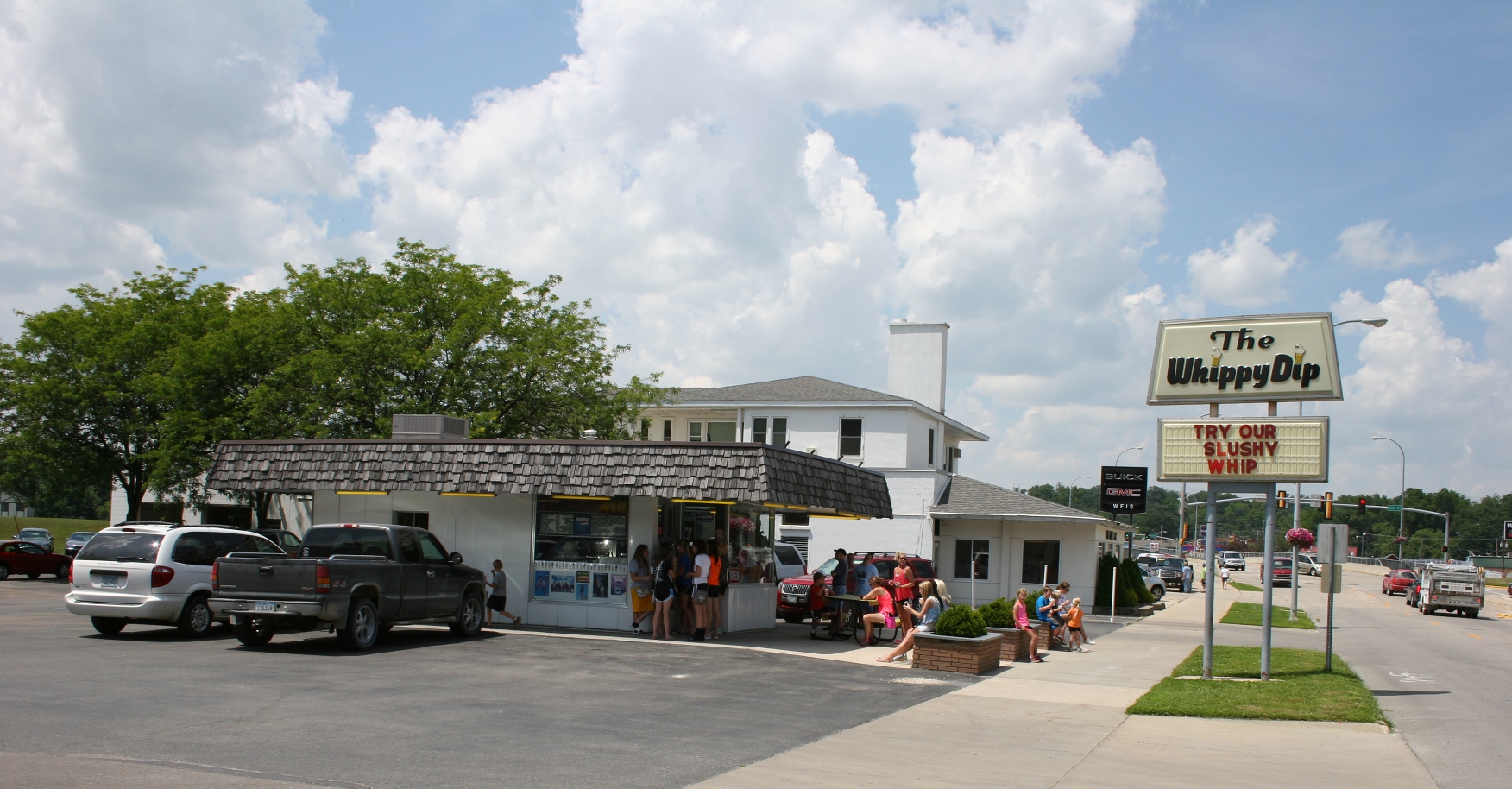
The Whippy Dip, overview

On a recent stop at this popular walk-up/drive-up ice cream/fast food stand, my husband waited in line to order a chocolate twist cone for me and a blueberry sundae for himself while I snapped a few photos.

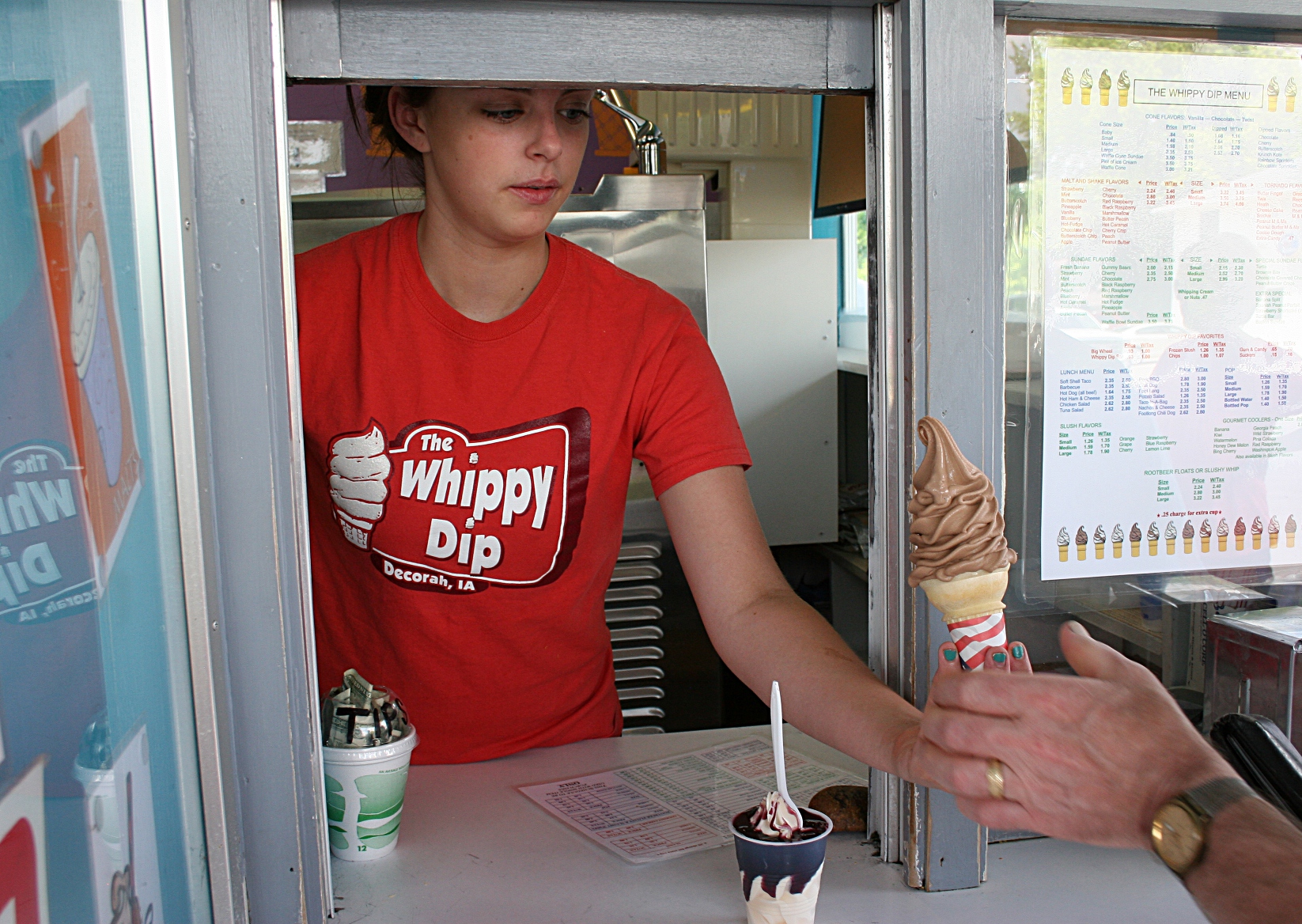
The Whippy Dip, ice cream

I was impressed with the generous size of the $1.50 small cone, but soon realized my error in choosing a cone on a hot day. Picture chocolate ice cream dripping onto your fingers. Shoulda had the sundae or maybe the tornado or…

Great spot, the Whippy Dip.

What’s your favorite home-grown place to stop for an ice cream treat? And what do you order?

FYI: Look for more stories from Decorah and other northeastern Iowa communities which my husband and I visited last week while vacationing. Yes, this Minnesotan is admitting that she vacationed in Iowa. And loved it.

© Copyright 2013 Audrey Kletscher Helbling
 

Why I love church festivals like the one at Moland Lutheran June 25, 2013

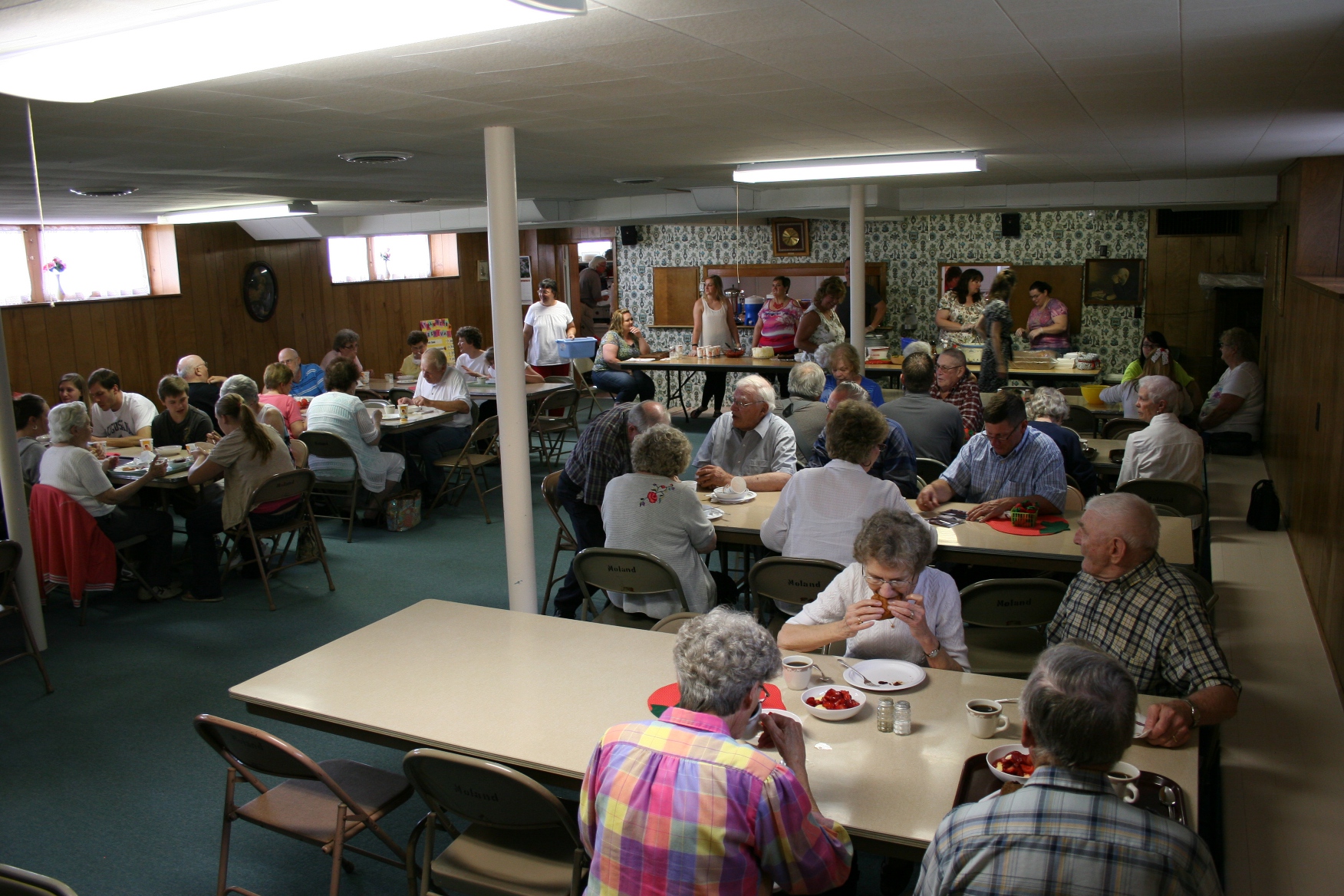
Diners flocked to Moland Lutheran Church on Sunday for the congregation's annual strawberry festival in the church basement.

Diners flocked to Moland Lutheran Church on Sunday for the congregation’s annual strawberry festival in the church basement.

OH, THE PEOPLE you meet in church basements…

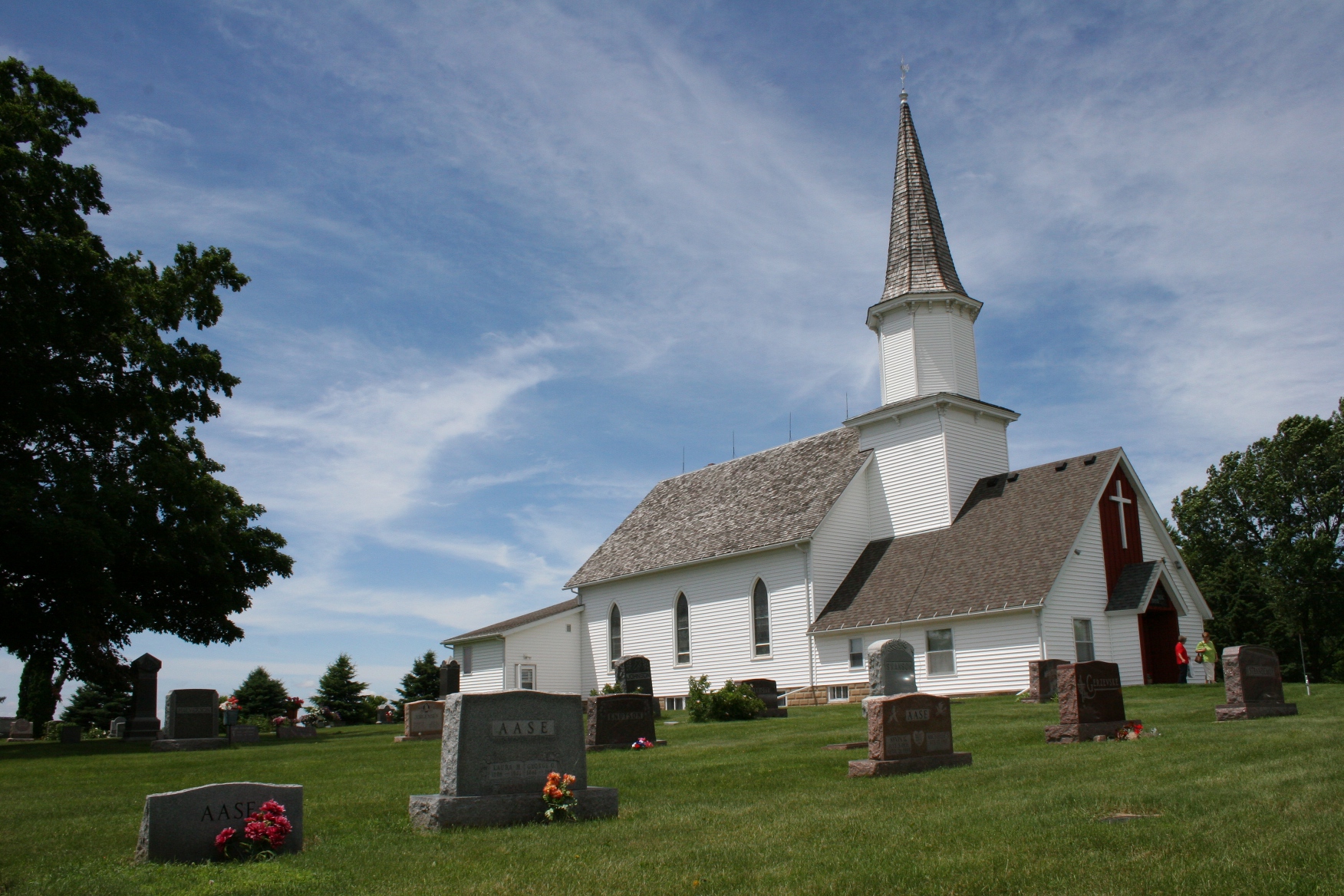
Moland Lutheran Church southwest of Kenyon.

Moland Lutheran Church southwest of Kenyon.

Like 90-year-old Georgia Vincent, nee Aase, who was born a mile south of Moland Lutheran Church, was baptized in this rural Kenyon parish and today drives 25 miles from Steele Center every Sunday morning for worship services.

She’ll tell you that her great grandparents came from Norway and that her father wanted a boy, whom he would name George. He didn’t get his boy.

Georgia eventually moved away to the Twin Cities and married. Her husband died on her 48th birthday, so, after 35 years she returned to the area, settling in Steele Center to raise her young daughter.

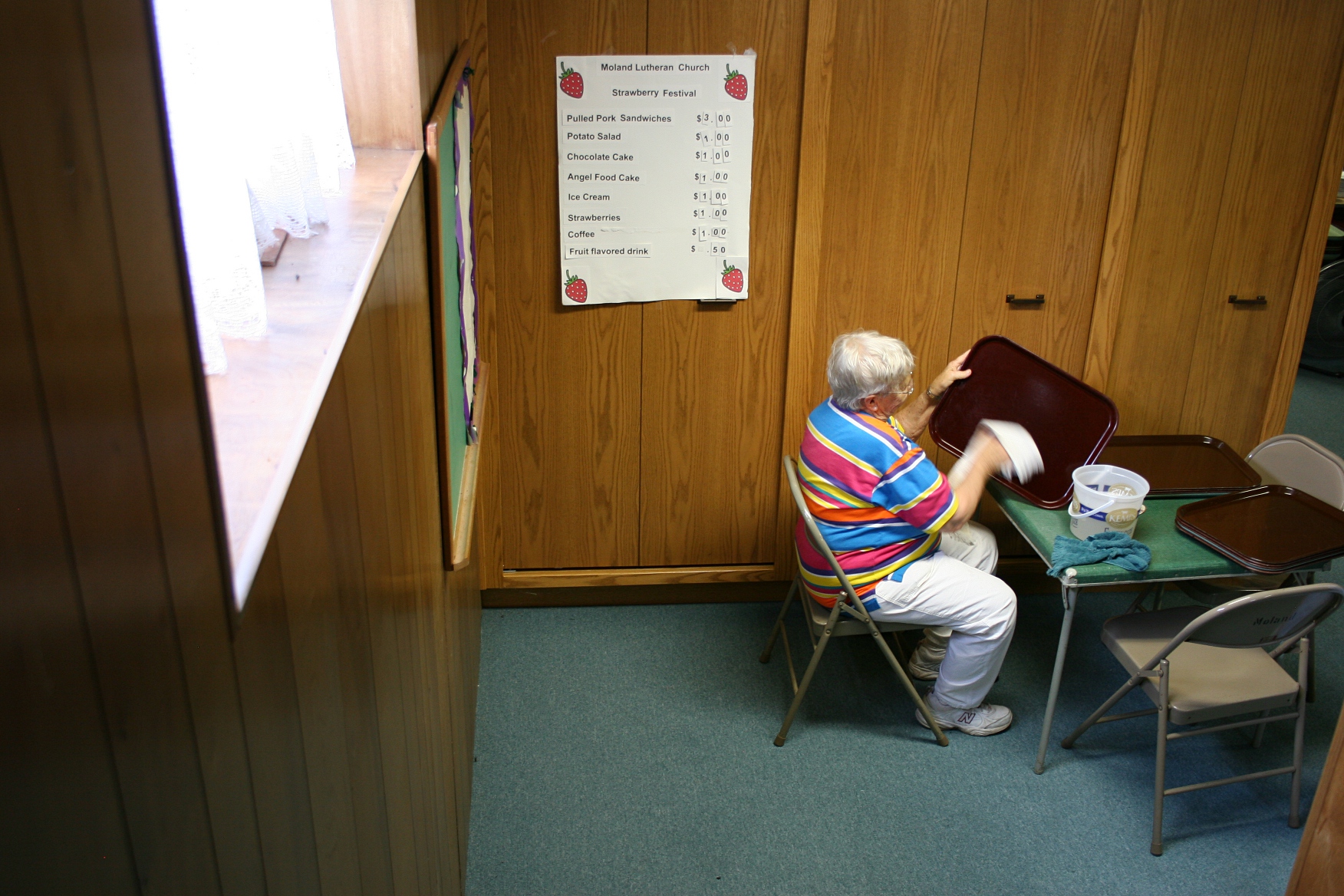
Georgia Vincent wipes down trays.

Georgia Vincent wipes down trays.

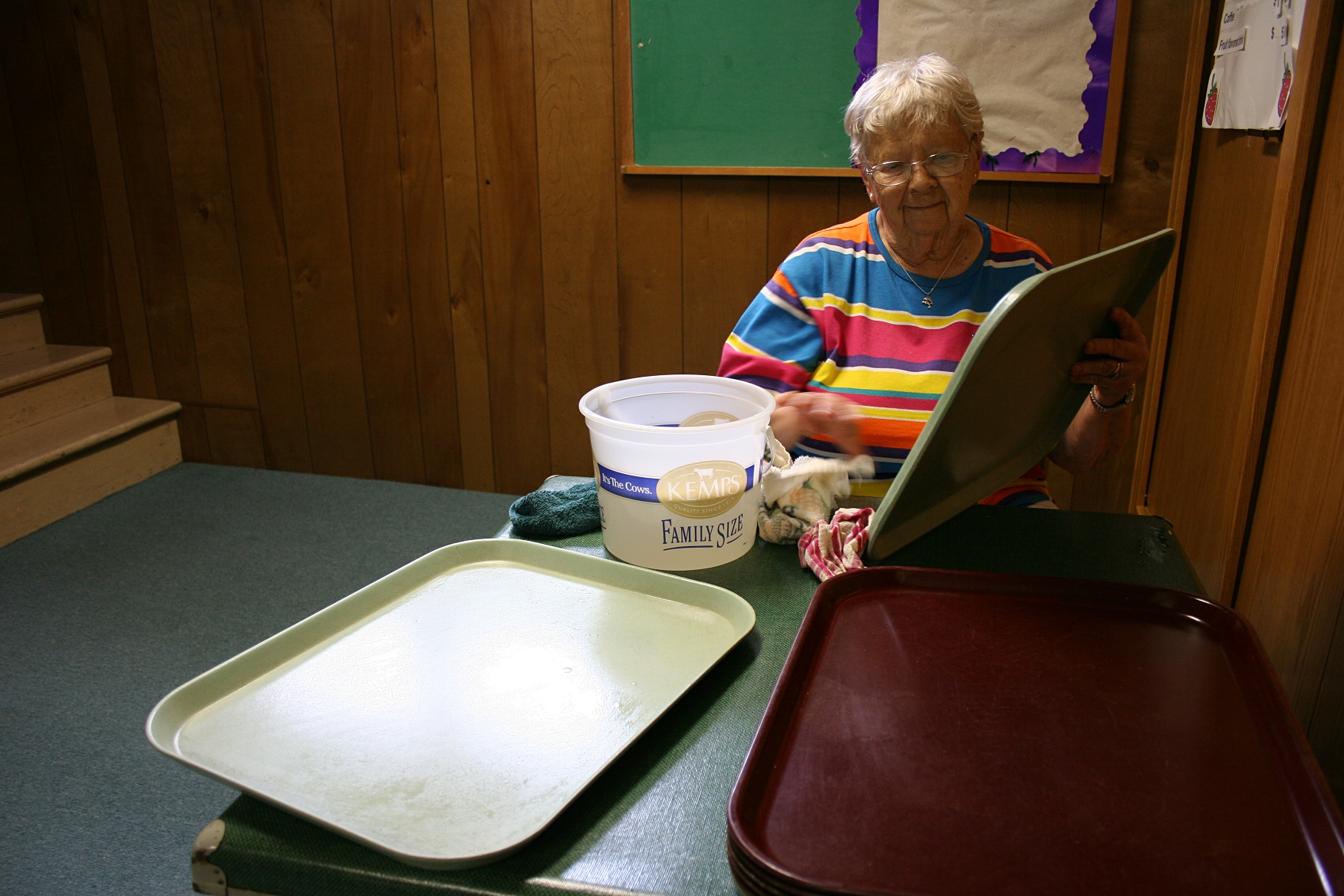
On this Sunday afternoon, Georgia was stationed in a corner of the church basement, washing trays during Moland’s annual strawberry festival. She did so with a smile, happy to contribute to an event where she once served food to diners. At age 90, she leaves that task to the younger folks.

Georgia, at work.

Georgia, at work.

Next year Georgia claims she will retire from helping at the festival.

I don’t believe her.

AND NOW, ON TO MORE PHOTOS from that strawberry festival:

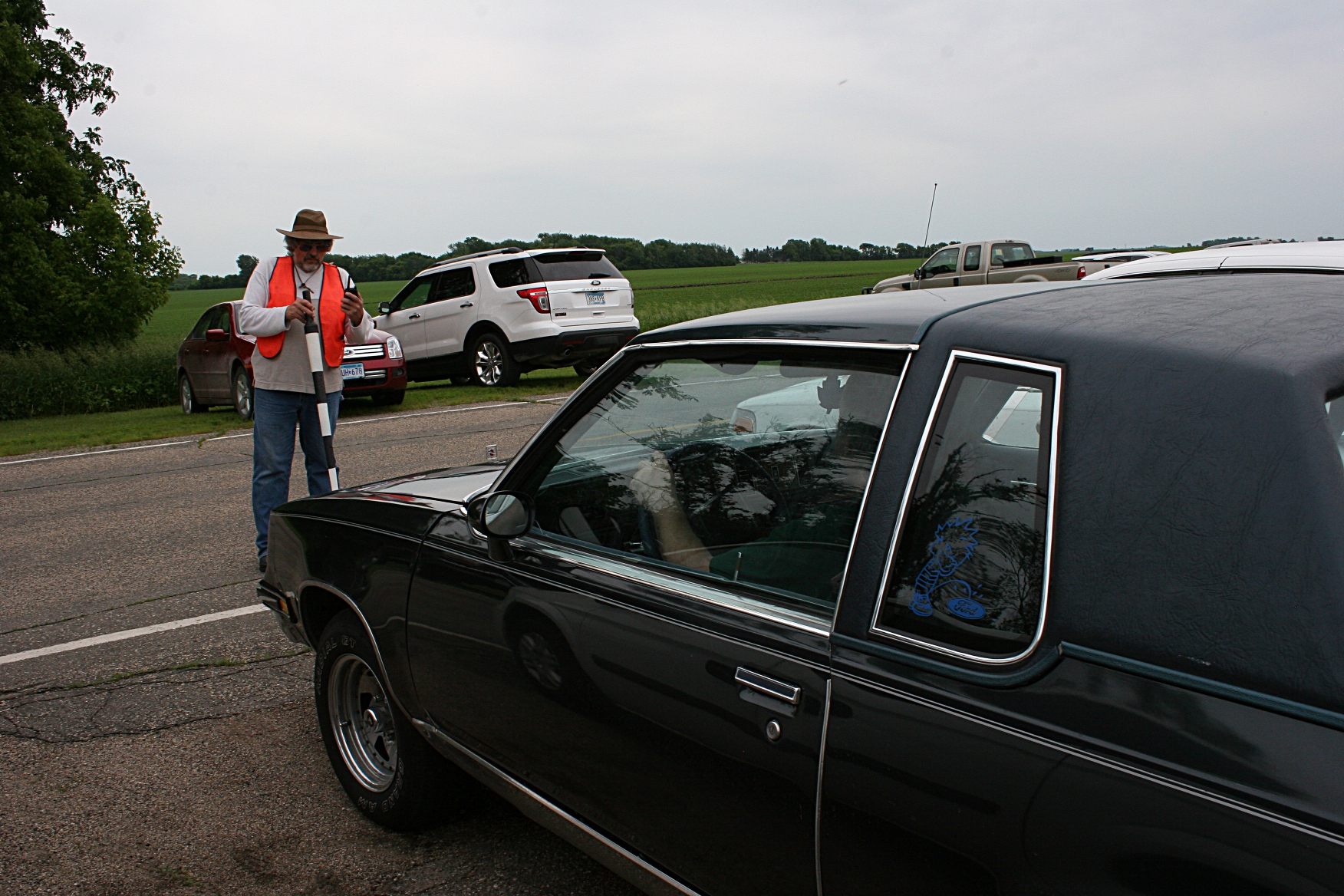
Volunteers guide motorists into parking spaces outside the country church.

Volunteers guide motorists into parking spaces outside the country church.

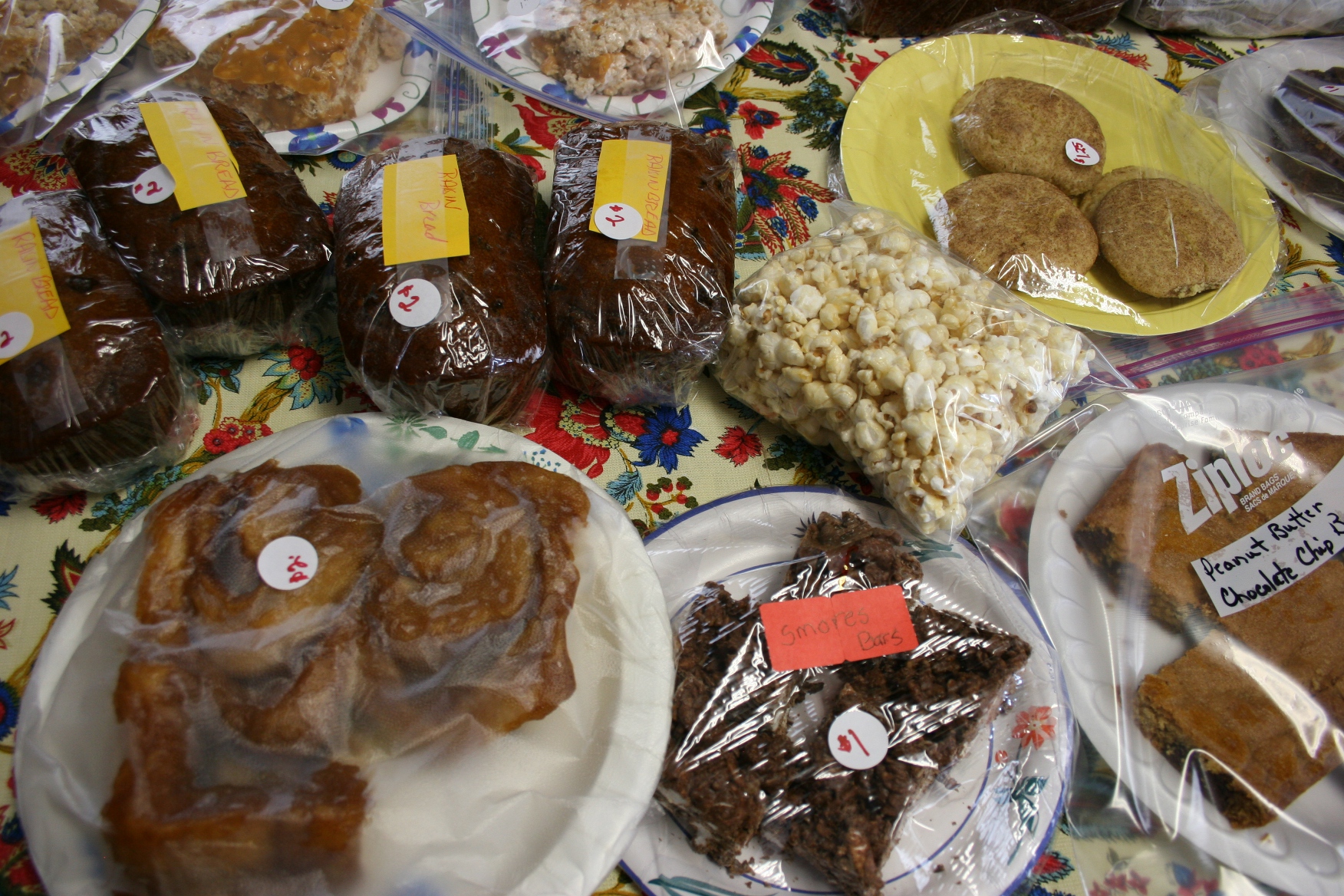
First stop: the bake sale inside the church entry. My husband purchased caramel rolls.

First stop: the bake sale inside the church entry. My husband purchased caramel rolls.

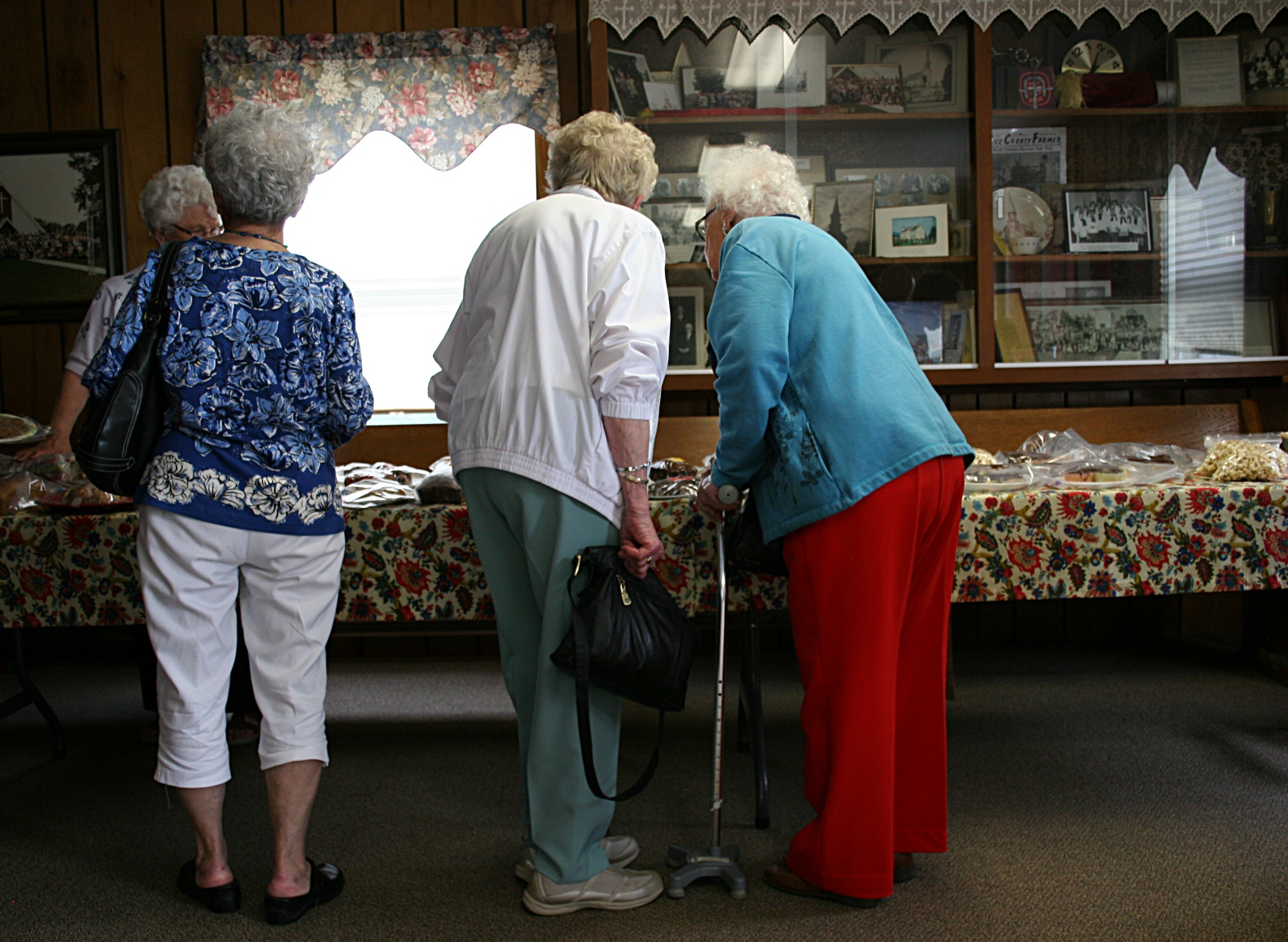
Shopping at the bake sale.

Shopping at the bake sale.

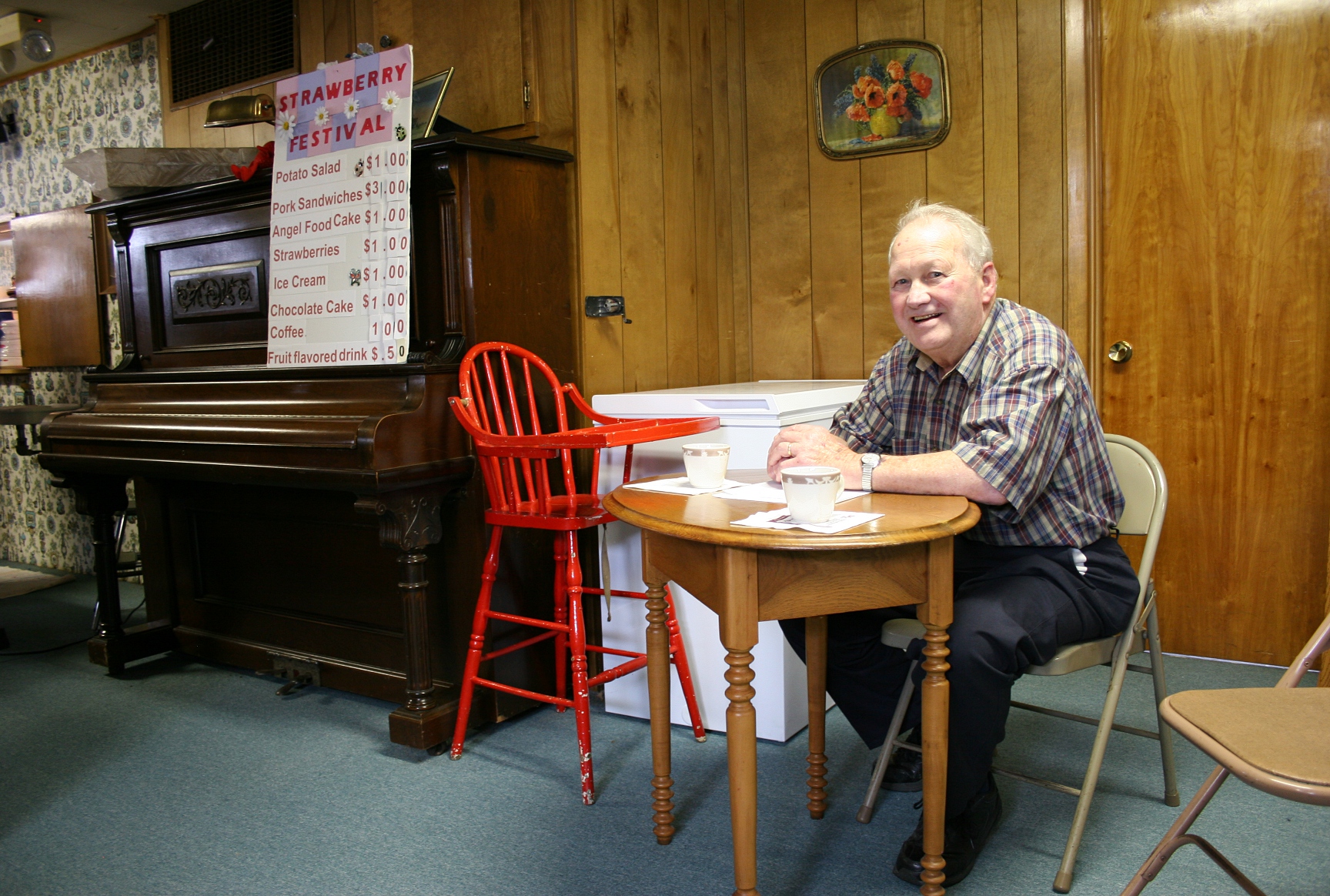
Routing past retired farmer and head counter George Derscheid, stationed near Georgia.

Routing past retired farmer and head counter George Derscheid, stationed near Georgia in the church basement.

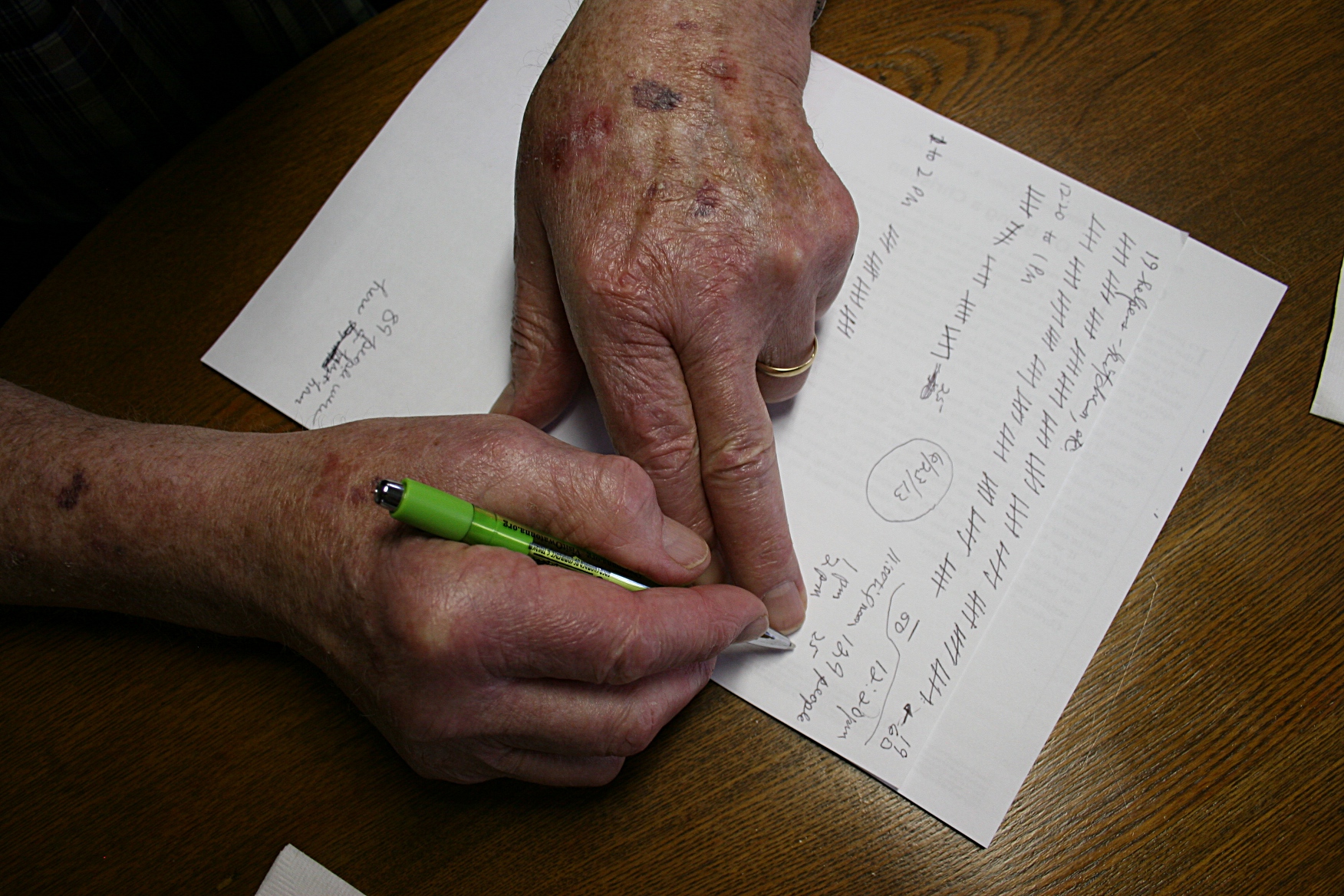
George's tally sheet. George pointed out a spot of skin cancer on his hand, said, he's dealt with bone cancer and now skin cancer. He's the most optimistic and cheerful person.

George’s tally sheet. He wondered why I wanted to photograph his hands. Because, I said, I like hands and the stories they tell. And then George pointed out a spot of skin cancer on his hand, said he’s dealt with bone cancer and now skin cancer. He’s the most optimistic and friendly person, just like Georgia.

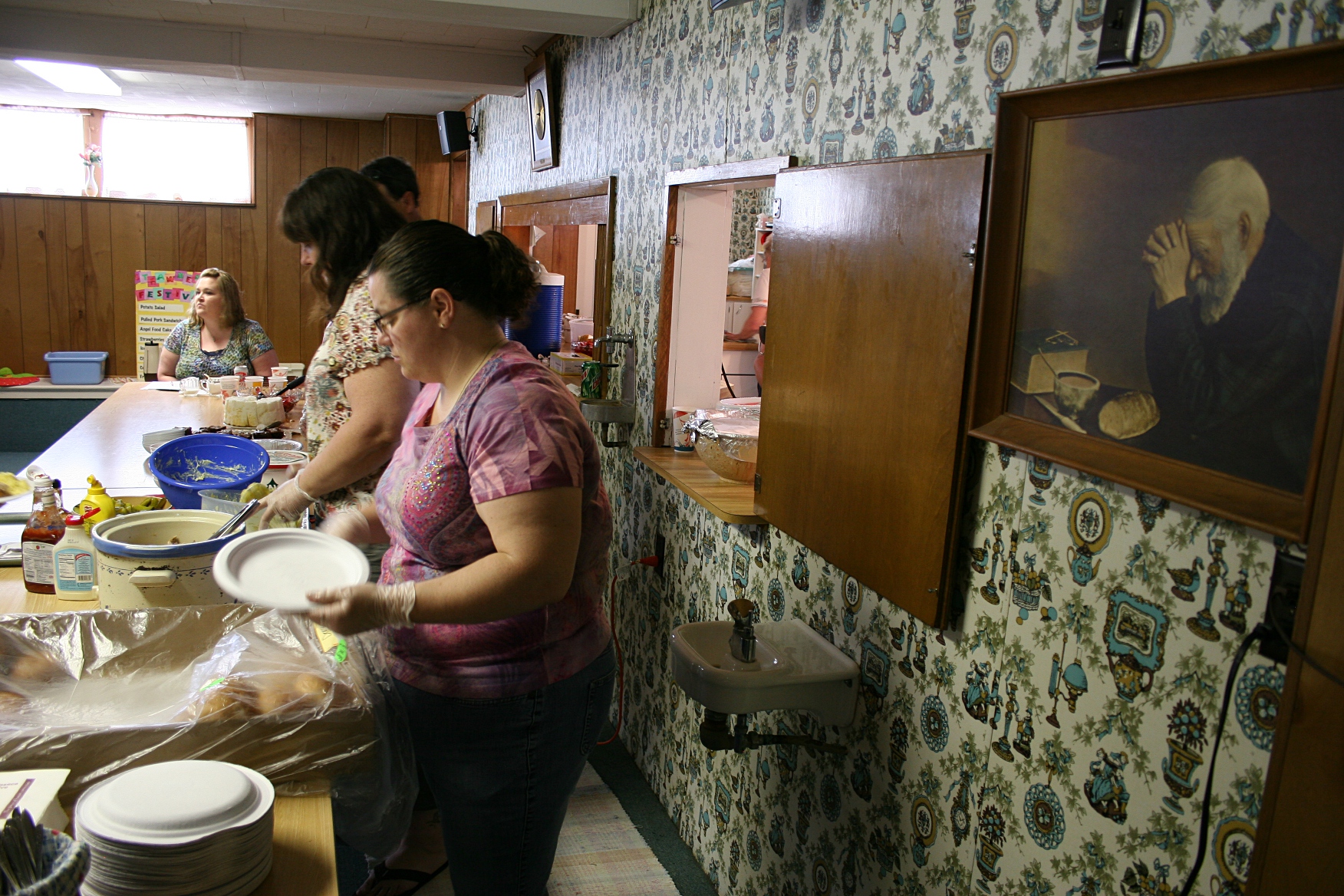
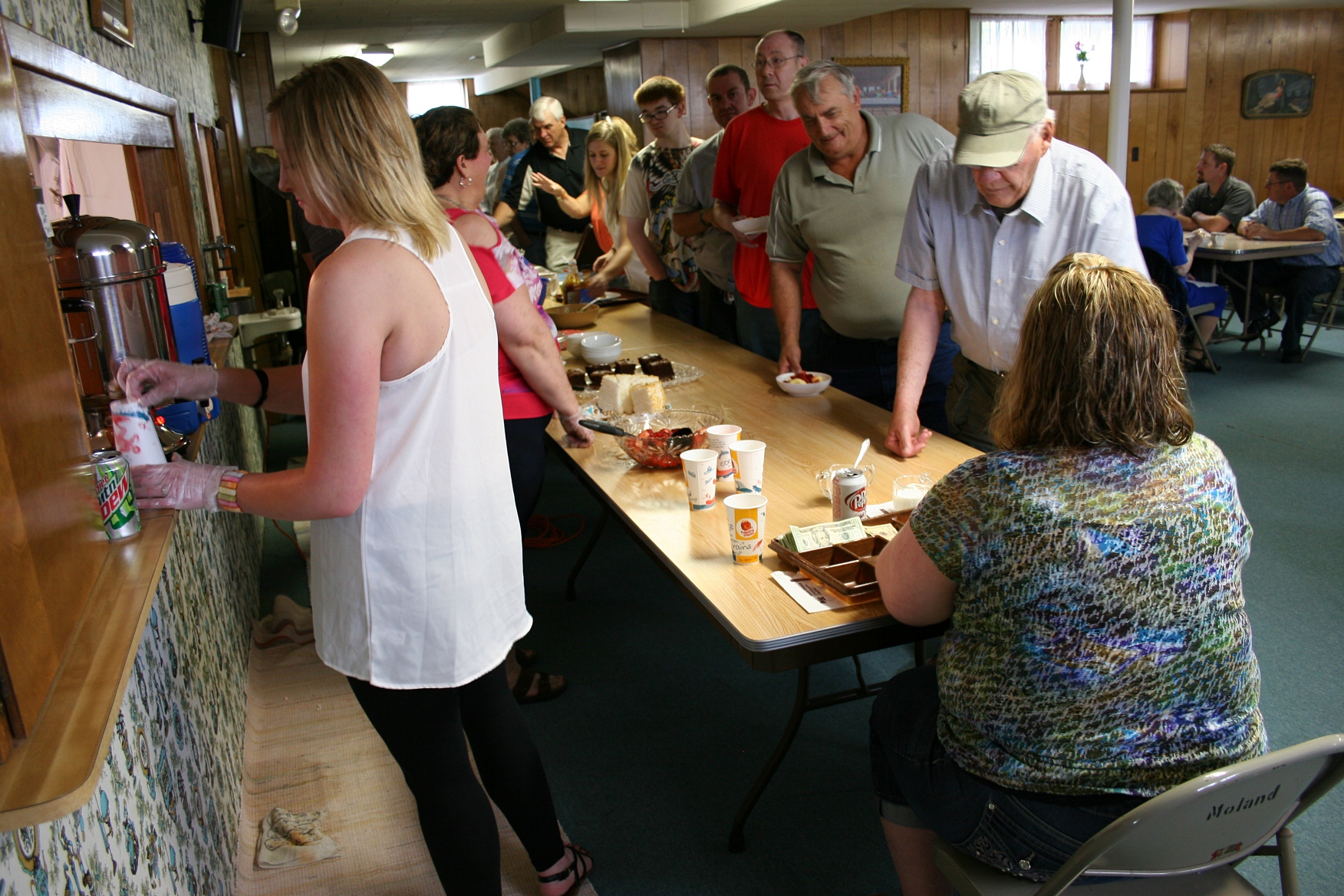
Volunteers dish up hot pork sandwiches from Nerstrand Meats, homemade potato salad, ice cream, angel food cake, strawberries and chocolate cake, whatever you choose.

Volunteers dish up pulled pork sandwiches from Nerstrand Meats, homemade potato salad, ice cream, angel food cake, strawberries and chocolate cake, whatever you choose.

Lots of coffee to go around.

Lots of coffee to go around.

Diners file through the food serving line.

Diners file through the food serving line.

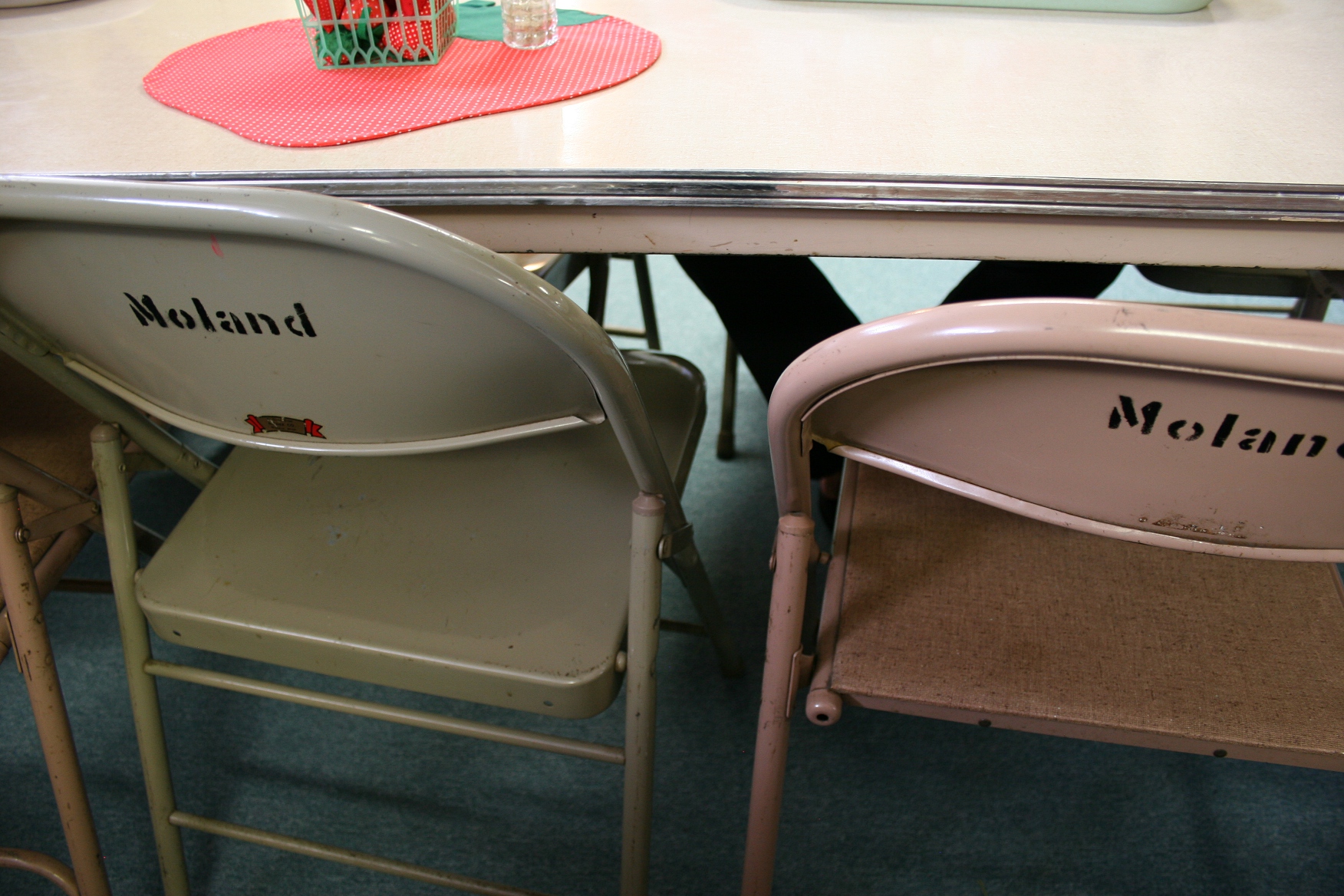
The backs of the folding chairs are labeled with the church name.

The backs of the folding chairs are labeled with the church name and the same strawberry decorations are pulled out every year.

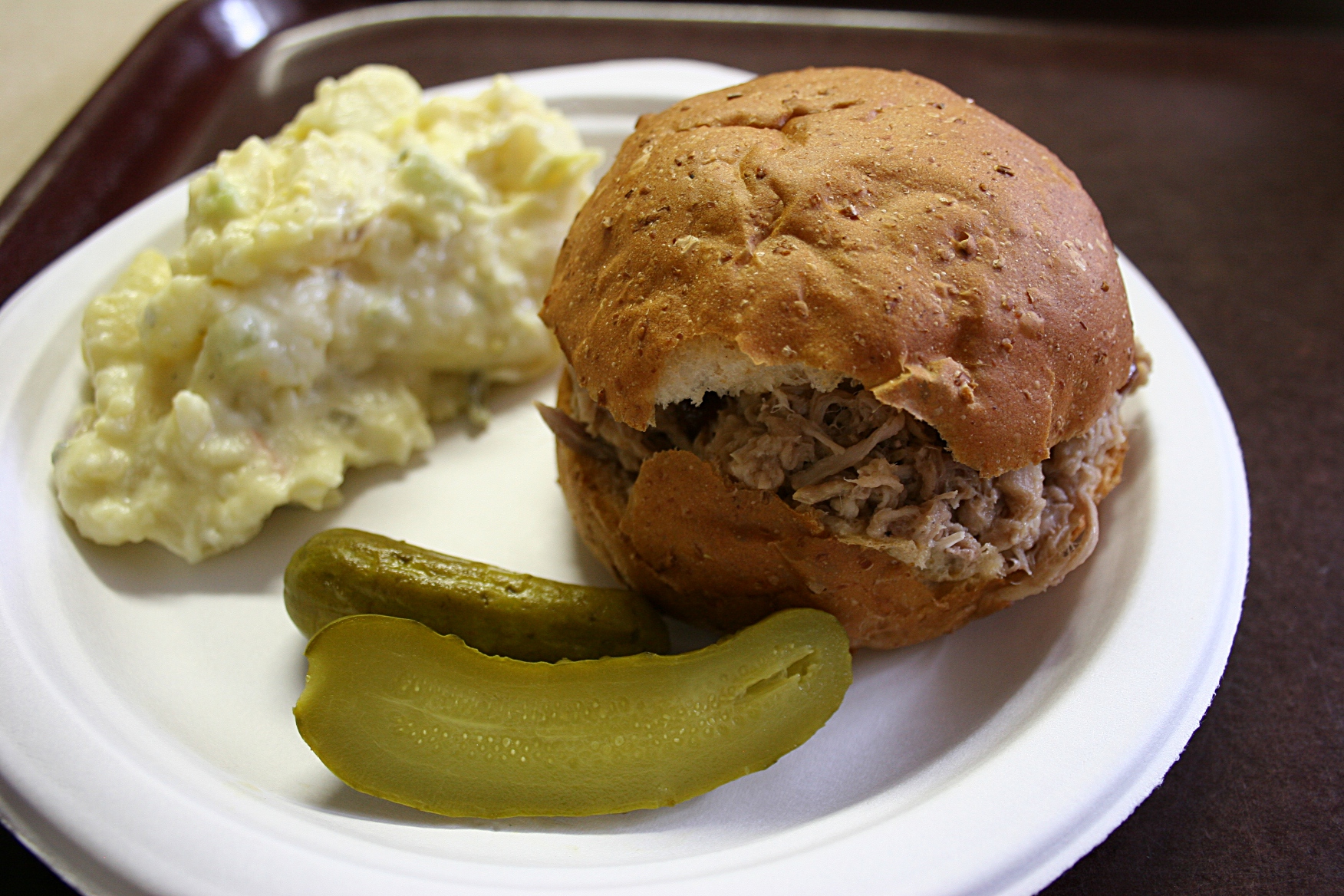
First I ate my pork sandwich and potato salad.

First I ate my pork sandwich, potato salad and pickles.

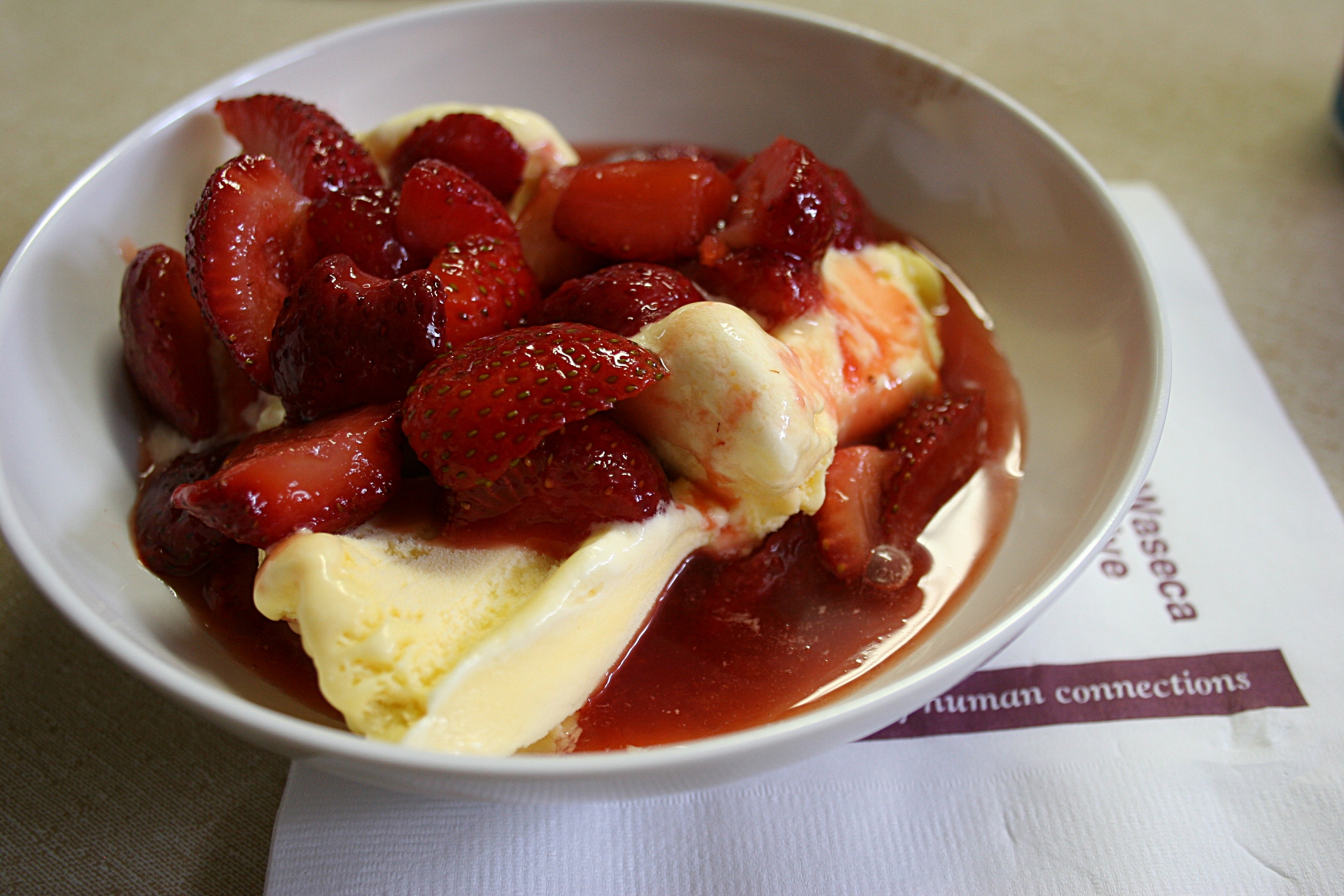
Then I returned for a generous bowl of ice cream heaped with fresh strawberries. I couldn't eat all of it, so my husband finished off the delicious dessert.

Then I returned for a generous bowl of ice cream heaped with fresh strawberries. I couldn’t eat all of it, so my husband finished off the delicious dessert.

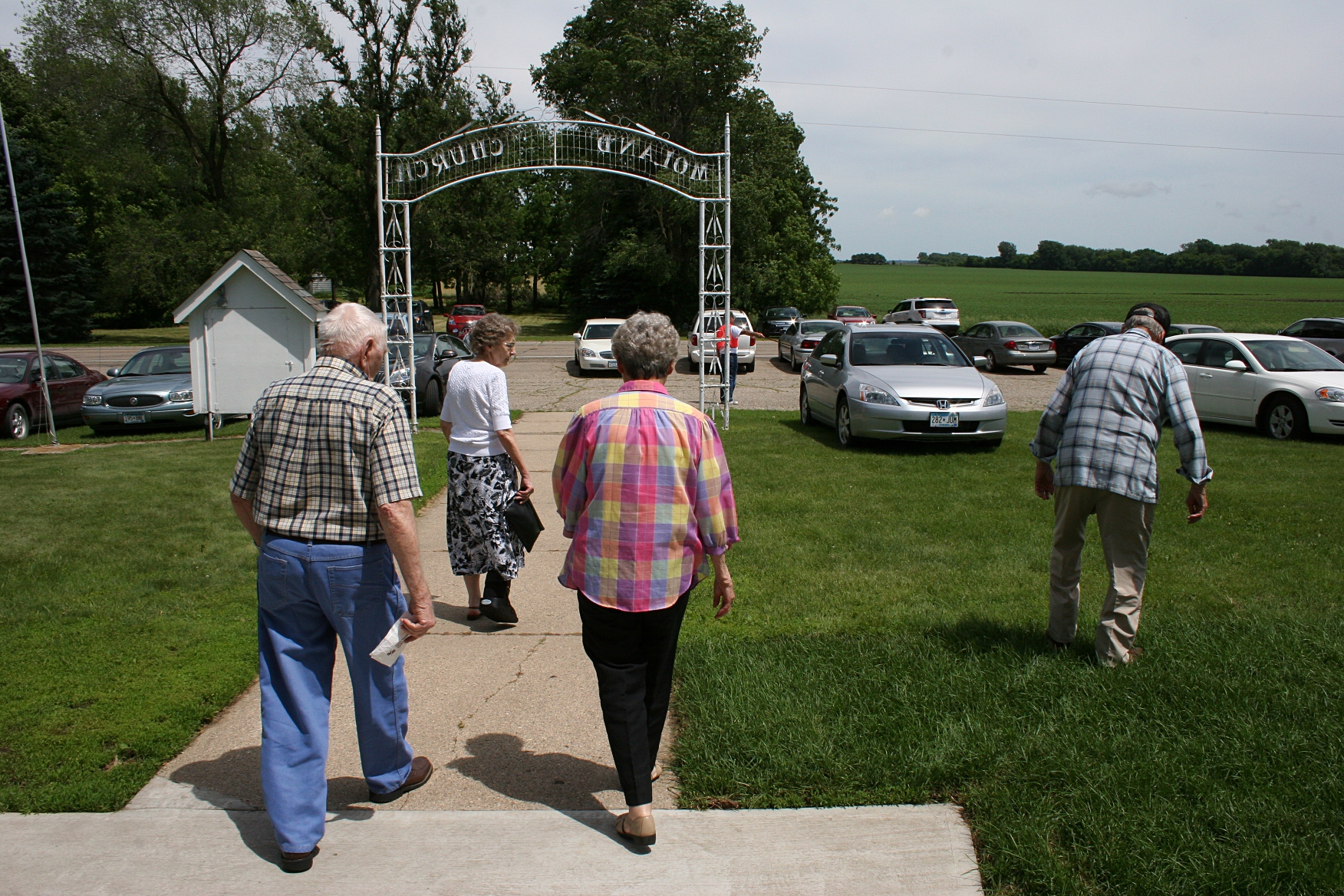
Diners exit the church.

Diners exit Moland Lutheran Church.

I love church festivals. For the food, the fellowship, the friendly folks, the history, the often beautiful setting…

PLEASE CHECK back for additional photos from Moland Lutheran.

© Copyright 2013 Audrey Kletscher Helbling
 

Gather with the Norwegians and the Lutherans this weekend in rural Minnesota June 21, 2013

IF YOU’RE NORWEGIAN (which I’m not), appreciate historic country churches (which I do), rejoice in the preservation of old buildings (which I do) and value worshiping God in a rural setting (which I do), then venture into Monkey Valley this weekend.

If you can’t resist a tasty meal in a church basement (which I can’t), love strawberries (which I do), enjoy good fellowship with the locals (which I do) and delight in a beautiful and historic country church (which I do), drive south of Monkey Valley to Moland on Sunday.

A rear view of the Old Stone Church, a simple structure with three shuttered windows running along each side of the building.

A rear view of the Old Stone Church, a simple structure with three shuttered windows running along each side of the building.

Within miles of each other, two area churches are celebrating this weekend, first with a Norwegian church service in an 1875 limestone church, appropriately called the Old Stone Church and located 2.3 miles south and west of Kenyon along Monkey Valley Road.

A stone's throw from the Old Stone Church, a view of Monkey Valley.

A stone’s throw from the Old Stone Church, a view of Monkey Valley.

The road name alone was enough to draw me to this ethnic worship service three years ago. As one story goes, monkeys escaped here from a traveling circus and fled into the woods. True or not, I’m buying it.

During a worship service filled with music, choir and congregational members sing in Norwegian, "Ja, vi elsker."

During a worship service filled with music, choir and congregational members sing in Norwegian, “Ja, vi elsker.”

To read about the Norwegian worship service I attended in 2010 and to learn more about the Old Stone Church, click here and here and here.

Sunday’s once-a-year worship service begins at 9:30 a.m.

Moland Lutheran Church, a Norwegian Lutheran church south of Kenyon in Steele County, the subject of my post which was Freshly Pressed in July 2010.

Moland Lutheran Church, a Norwegian Lutheran church south of Kenyon in Steele County near Owatonna.

About the time the service wraps up at the Old Stone Church and you’ve finished mingling, you’ll start thinking about lunch, conveniently served at Moland Lutheran Church a few miles to the south and west at 7618 84th Avenue N.E., rural Kenyon, close to where the counties of Rice, Steele, Dodge and Goodhue meet.

From 11 a.m. to 3 p.m., Moland folks will serve pulled pork sandwiches, potato salad, strawberries with angel food cake and/or ice cream, chocolate cake (if the menu is the same as in 2010) and beverages. As church meals go, I’d highly recommend this one for the food, the hospitality and setting.

Be sure to check out the sanctuary and history of this 1884 country church before leaving. Moland reminds me of the Lutheran church I attended growing up in southwestern Minnesota.

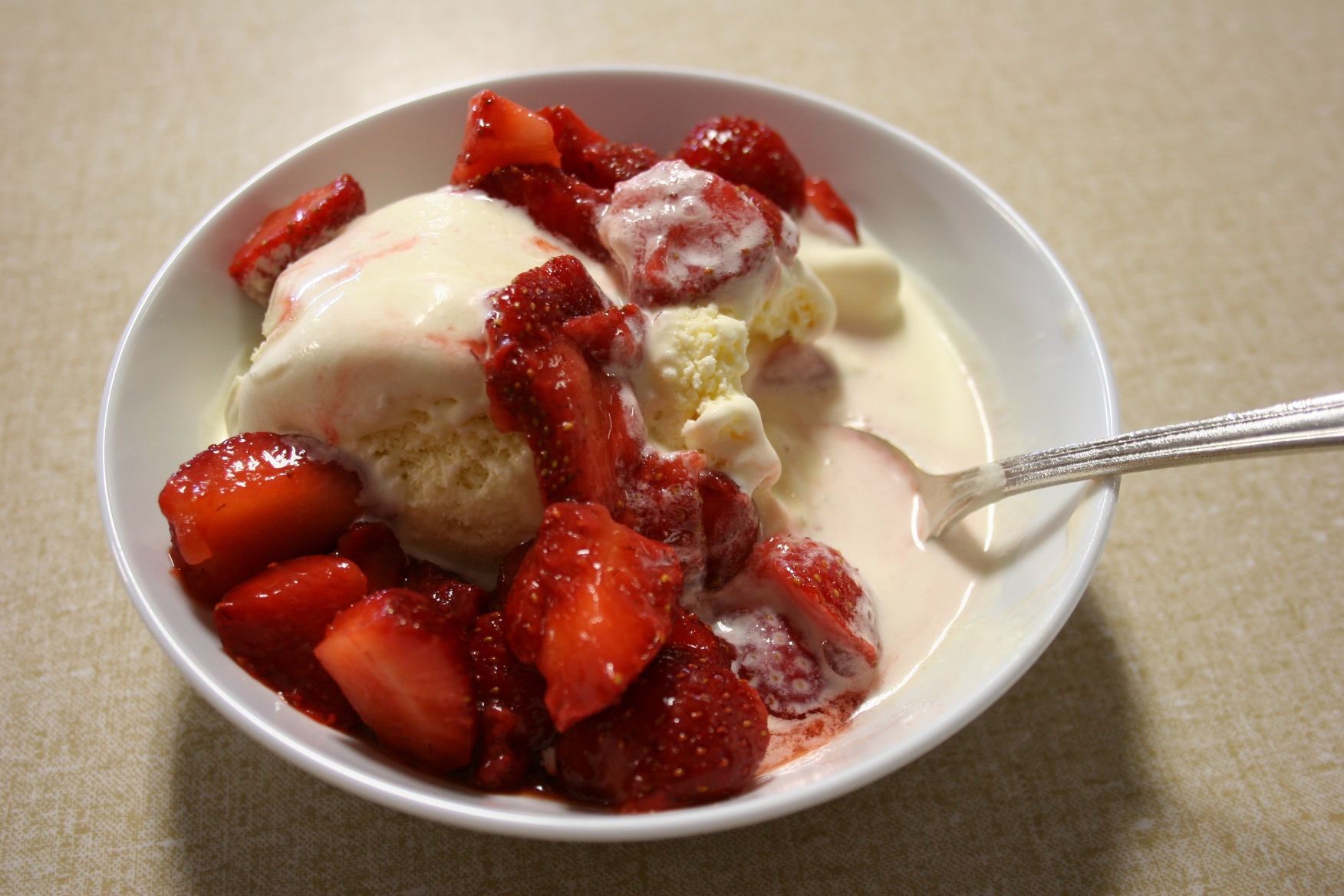
The Moland folks serve a generous amount of strawberries with two scoops of ice cream.

The Moland folks serve a generous amount of strawberries with two scoops of ice cream.

To read my 2010 post on the Moland strawberry festival, click here.

My Moland post, “In Praise of Preserving Country Churches,” was featured in WordPress’ “Freshly Pressed” on July 9, 2010. That’s a huge honor for any blogger, to have his/her work selected as among the best of the day from WordPress blogs world-wide. You can read about that honor by clicking here. Last year I was also featured in WordPress and you can read that post about the Faribault Heritage Days Soapbox Derby by clicking here.

The real honors, though, go to all those men and women out there who preserve country churches and serve all those delicious meals in church basements.

FYI: To read about more church dinners/meals, check out the Faribault-based blog, Church Cuisine of Minnesota, by clicking here.

© Copyright 2013 Audrey Kletscher Helbling
 

A wannabe dairy princess June 20, 2013

The barn where I labored alongside my father while growing up on the southwestern Minnesota prairie. File photo.
The barn where I labored alongside my father and siblings while growing up on the southwestern Minnesota prairie. File photo.

GROWING UP ON A MINNESOTA DAIRY FARM, I’ve always loved dairy products.

Fresh milk from our herd of Holsteins.

Butter and cheese from the bulk truck driver who picked up milk from our farm.

Singing Hills Coffee Shop's delicious maple bacon sundae.
One of my new favorite ice cream treats, a maple bacon sundae from Singing Hills Coffee Shop in Waterville. File photo.

Ice cream from the Schwans man. (My older brother often sneaked the tin can of vanilla ice cream from the freezer and climbed atop the haystack to eat his fill. He failed to remove his spoon, leaving damning evidence connecting him to the ice cream caper. I was too obedient to attempt such thievery.)

Sliced strawberries, cucumbers and Amablu Gorgonzola cheese added to Romaine lettuce made a perfect salad. I topped the salad with lemon poppyseed dressing.

Sliced strawberries, cucumbers and Amablu Gorgonzola cheese added to Romaine lettuce make a perfect salad. I topped the salad with lemon poppyseed dressing. File photo.

My cheese tastes have, thankfully, expanded beyond American and Velveeta, staples of my childhood. I especially favor the blue cheeses made and aged in sandstone caves right here in Faribault and sold under the names Amablu and St. Pete’s Select. If you like blue cheese, this is your cheese.

Cow sculptures outside The Friendly Confines Cheese Shoppe in LeSueur. File photo.

Cow sculptures outside The Friendly Confines Cheese Shoppe in LeSueur. File photo.

I bring up this topic of dairy products because June marks an annual celebration of all things dairy during “June Dairy Month.” This moniker is imprinted upon my brain. I once ran, albeit unsuccessfully, for Redwood County dairy princess.

Krause Feeds & Supplies in Hope advertised the availability of Hope butter and Bongards cheese. File photo.

Krause Feeds & Supplies in Hope advertises the availability of Hope butter and Bongards cheese. File photo.

Steele County, to the south of my Rice County home, is apparently a big dairy county having at one time served as home to more than 20 creameries. One remains, in the unincorporated village of Hope, producing Hope Creamery butter in small batches. The creamy’s organic butter is especially popular in certain Twin Cities metro eateries.

Owatonna, the county seat, once claimed itself to be “The Butter Capital of the World.” That butter capital title will be the subject of an exhibit opening August 1 and running through November 10 at the Steele County History Center in Owatonna. The exhibit will feature the area’s rich dairy history to current day dairy farming in the county. Events will include a roundtable discussion on the dairy industry and, for the kids, butter making and a visit from a real calf.

Notice the cow art on the milkhouse in this image taken this past summer.

Cow art on the milkhouse of my friends Deb and John, who once milked cows in rural Dundas. File photo.

Calves. I love calves. More than any aspect of farming, I loved feeding calves buckets of warm milk replacer or handfuls of pellets. I once named a calf Princess and she became my “pet,” as much as a farm animal can be a pet. Then my older brother—the one who ate ice cream when he wasn’t supposed to—told me one day that my calf had died. I raced upstairs to my bedroom and sobbed and sobbed. Turns out he made up the whole story of Princess’ early demise. She was very much alive.

The vibrant art of Faribault artist Julie Falker of JMF Studio.

The vibrant art of Faribault artist Julie Faklker of JMF Studio. File image.

And so, on this day when I consider June Dairy Month, my mind churns with thoughts of butter and ice cream, of calves and of the dairy princess crown I never wore.

FYI: Faribault area dairy farmers Ron and Diane Wegner are hosting “A Day on the Farm” from 11 a.m. – 2 p.m. this Saturday, June 22. Their farm is located just south of Faribault at 25156 Appleton Avenue. The event includes children’s activities, photos with a baby calf and free cheeseburgers, malts and milk. Event sponsors are the Rice County American Dairy Association and the Minnesota Beef Council. The Wegners’ daughter, Kaylee, is the current Rice County dairy princess.

The Redwood County American Dairy Association in my home county of Redwood in southwestern Minnesota is sponsoring a coloring contest for kids and a trivia contest for adults. Click here for details. 

© Copyright 2013 Audrey Kletscher Helbling