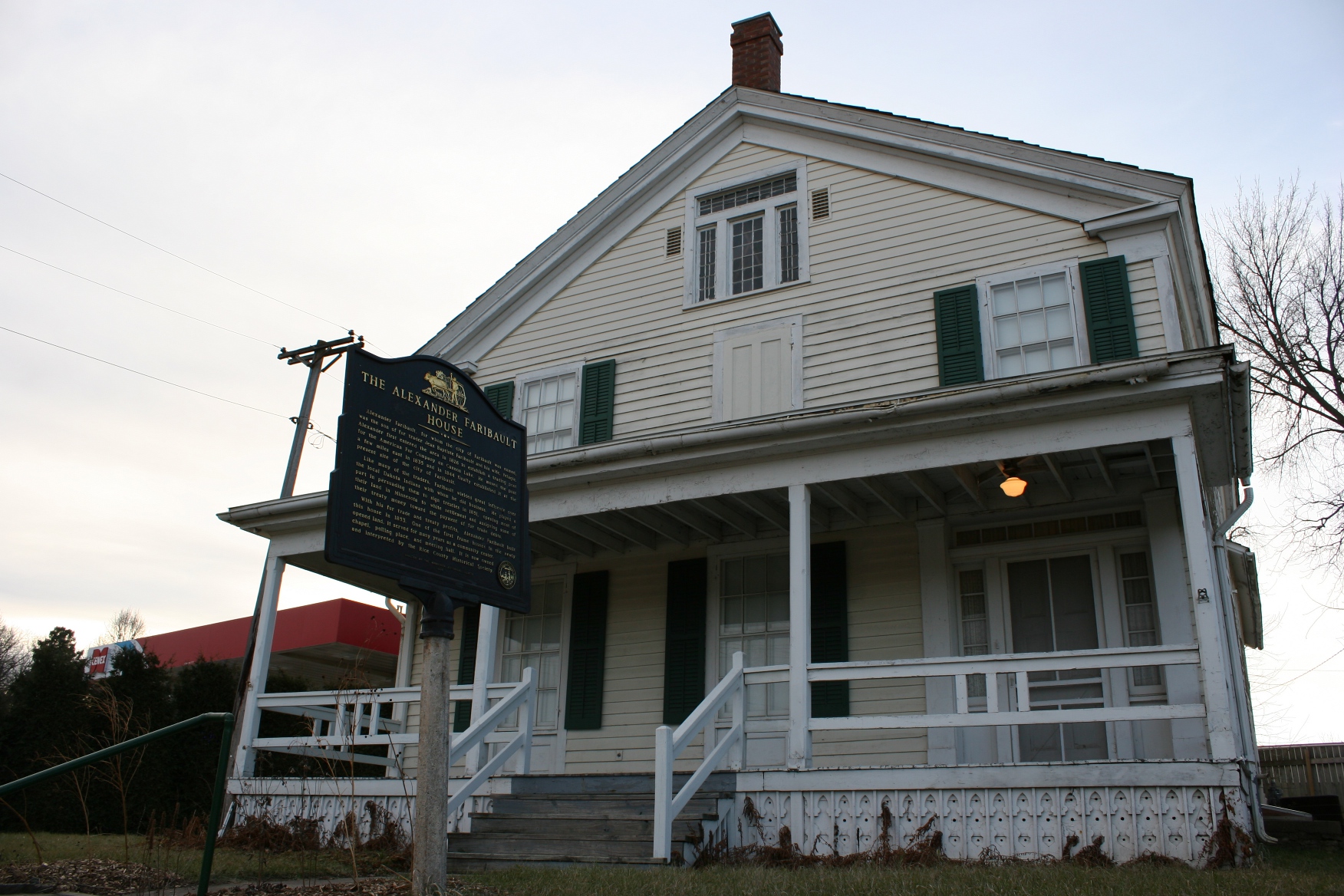
The home of town founder Alexander Faribault. (Minnesota Prairie Roots copyrighted file photo 2017)
ON SATURDAY, THE HOME of Faribault’s founder, Alexander Faribault, opens for its 15th annual Christmas open house. The event features the 1853 house decorated for the holidays in the French-Canadian style. Faribault was of French-Canadian and Dakota descent.
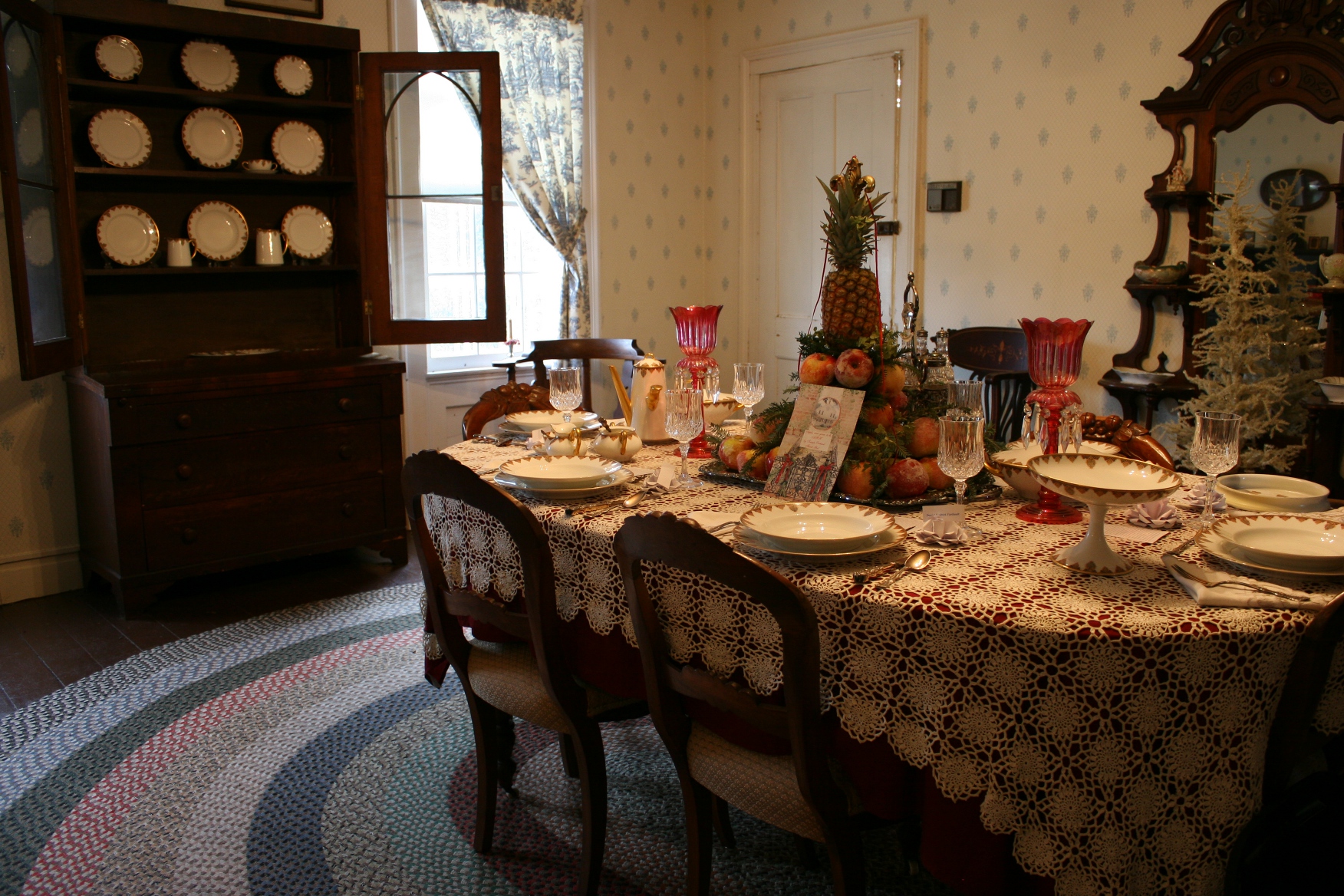
The Faribaults’ dining room set for the holidays during the 2017 Christmas open house. (Minnesota Prairie Roots copyrighted file photo 2017)
To walk through the rooms of this historic home is to feel the presence of the Faribault family, including wife Mary Elizabeth Graham and their children. The Faribaults lived here only a few years before moving to a large brick mansion on the bluffs overlooking the Straight River. With 10 children, I expect they needed more space than the wood-frame house provided.
An overview of Alexander Faribault’s gravesite at Calvary Cemetery. (Minnesota Prairie Roots copyrighted photo April 2020)
Across town several miles to the west atop a hill overlooking the countryside on the edge of Faribault, the life of Alexander Faribault comes full circle. It is here, in Calvary Cemetery, that this fur trader, this friend of the Dakota, this town founder, this family man, is buried.
A memorial to Alexander Faribault stands at the Calvary Cemetery entrance. The birth date here differs from the one on Faribault’s tombstone. (Minnesota Prairie Roots copyrighted photo April 2020)
In April 2020, I visited this cemetery for the first time specifically looking for Faribault’s gravesite. I found it along with a memorial marker honoring him at the graveyard’s entrance.
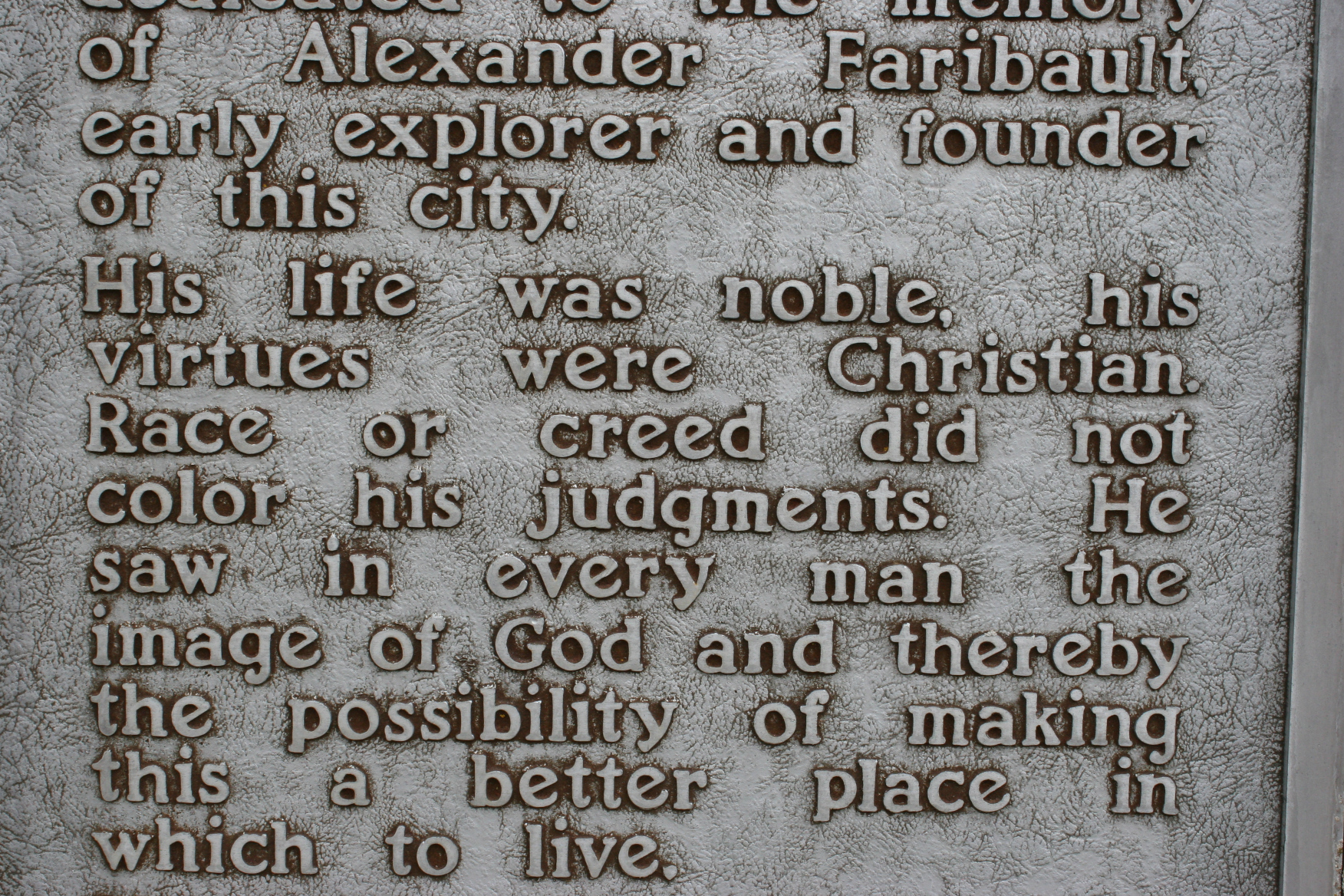
Memorial marker words up close. (Minnesota Prairie Roots copyrighted photo April 2020)
Race or creed did not color his judgments, the marker states in part. That seems to match what I’ve read about Alexander Faribault. Both his mother and wife were of Dakota heritage, thus he and his children were, too. Alexander, who traded with and befriended the Dakota, later sheltered some of them on his land. Government treaties removed indigenous peoples from their land, including in current-day Faribault. Alexander Faribault served as an interpreter in the signing of regional treaties given his knowledge of the Dakota language and culture. I wonder if he felt conflicted by how the government treated the Dakota.
This sculpture of Alexander Faribault and a Dakota trading partner stands in Faribault’s Heritage Park near the Straight River and site of Faribault’s trading post. Faribault artist Ivan Whillock created this sculpture which sits atop the Bea Duncan Memorial Fountain. (Minnesota Prairie Roots copyrighted file photo)
Today, 216 years after Faribault was born on November 28, 1806, an awareness and acknowledgment that indigenous peoples were the first inhabitants of this area is rising. Long before fur traders like Faribault set up trading posts in the region, the Dakota lived here, hunted here, fished here, raised their families here, called this place home.
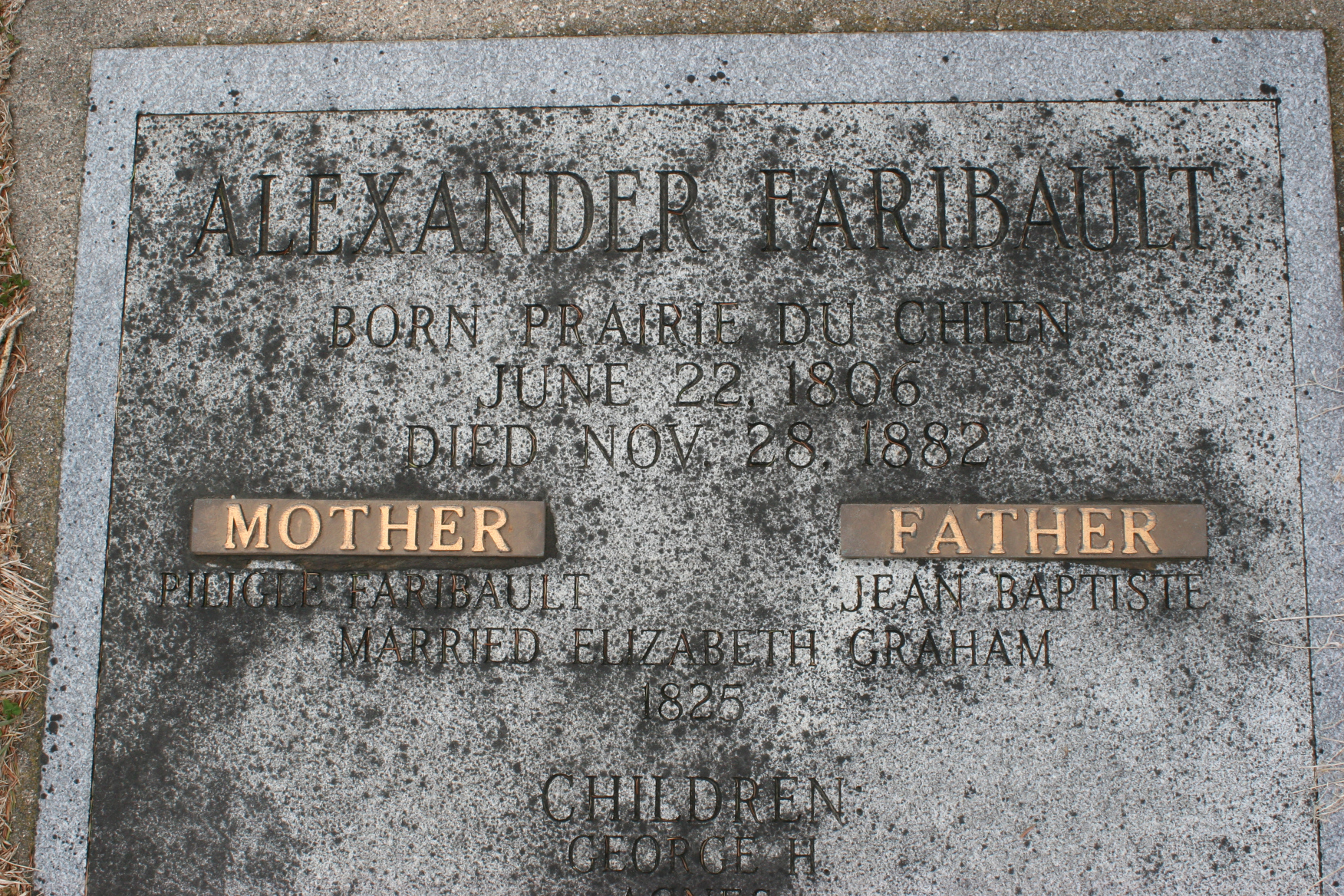
This shows a portion of an in-ground marker for Alexander Faribault. (Minnesota Prairie Roots copyrighted photo April 2020)
When I consider the friendships forged among fur traders and the Dakota, I think of the Faribault community today and those who call this place home. This city truly is a melting pot of cultures and peoples. I celebrate that. Some day I hope we can all, like our town founder, view each other through a clear lens without the filter of race or creed coloring judgment.
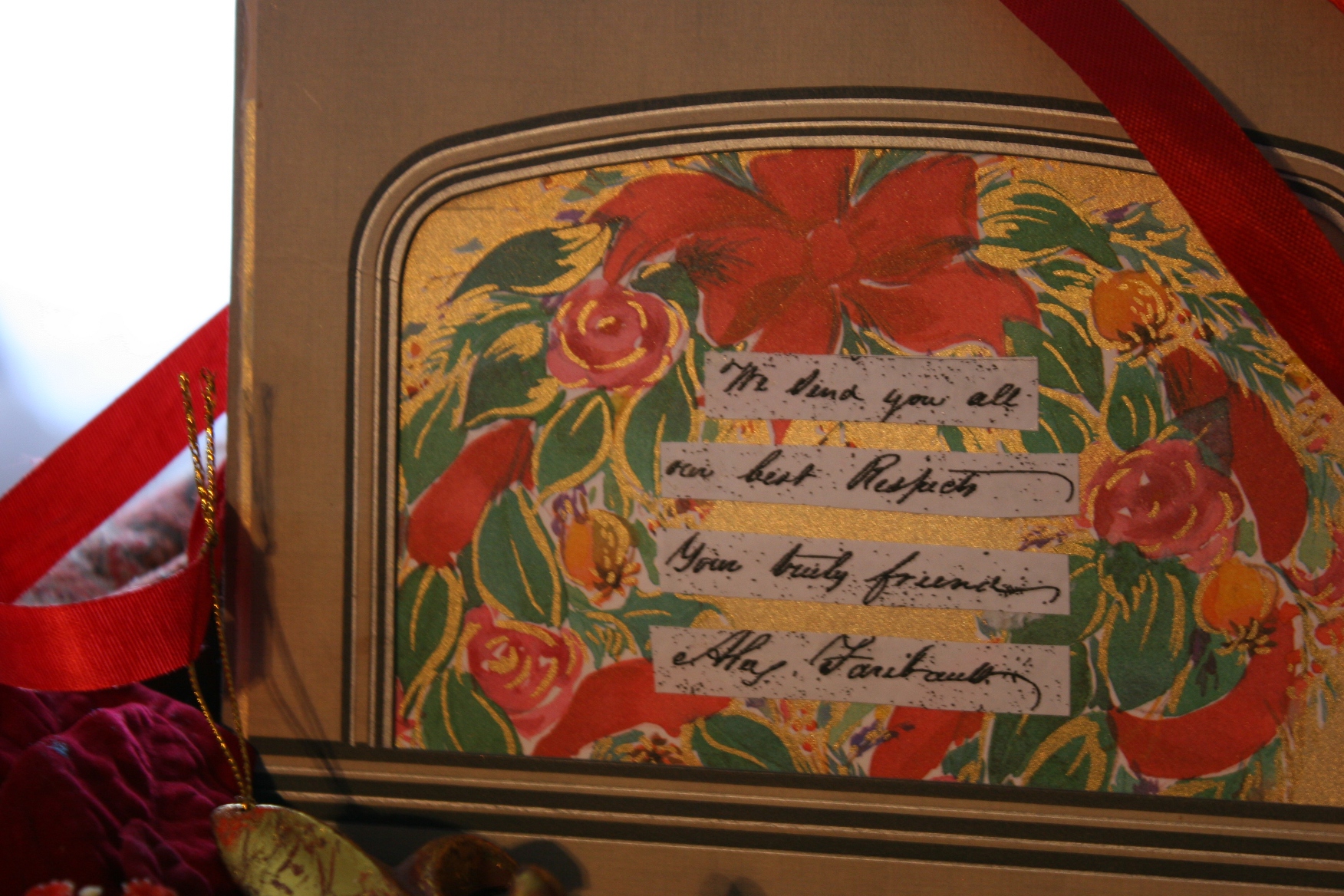
A holiday greeting from Alexander Faribault displayed at a past Christmas open house. (Minnesota Prairie Roots copyrighted file photo)
FYI: The Alexander Faribault House Christmas Open House is from 11 am- 3 pm Saturday, December 3, at 12 First Avenue Northeast, Faribault. The event is free and is part of this weekend’s Winterfest celebration in Faribault.
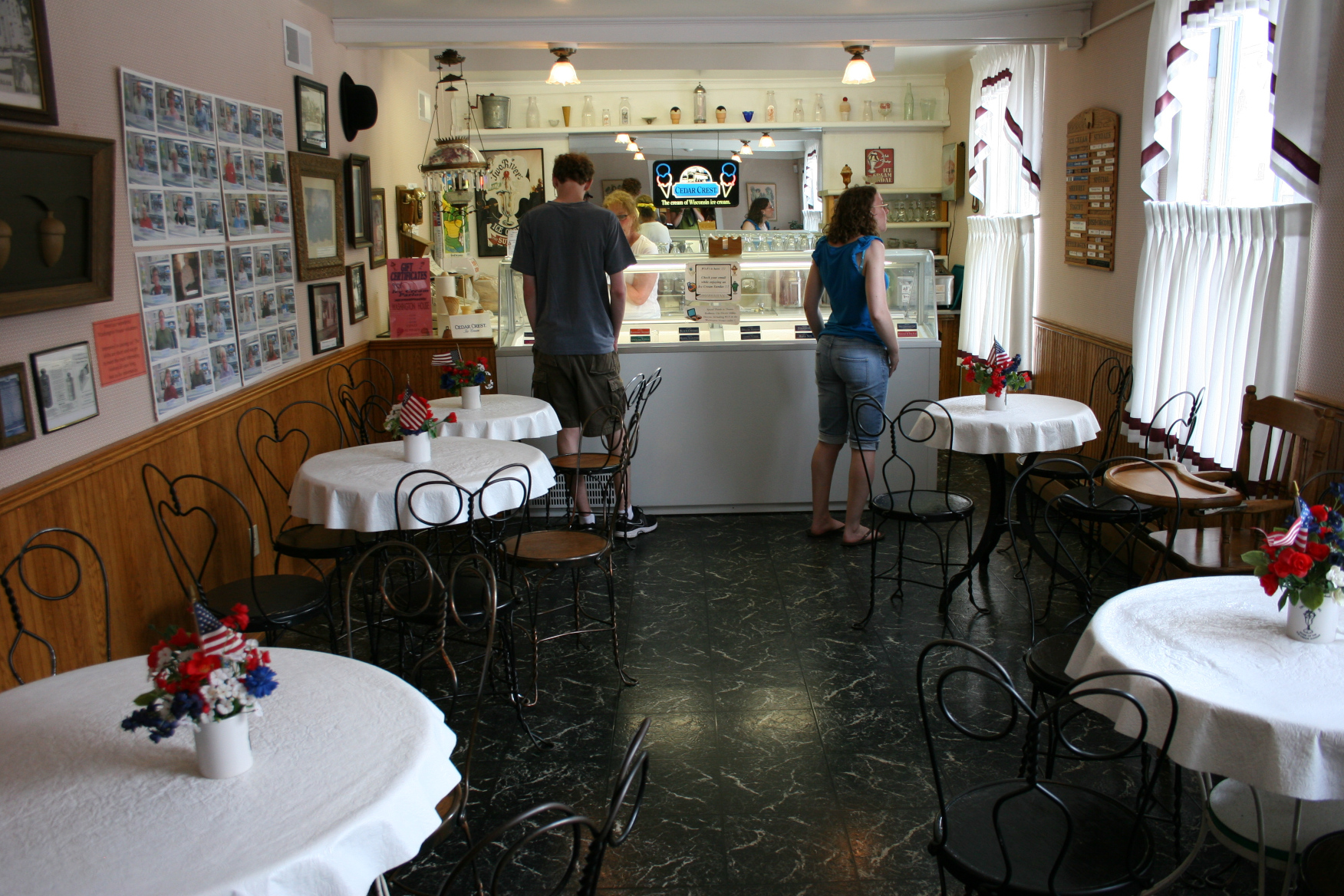
A strawberry sundae served in a heavy tulip glass at the replica Berners’ Ice Cream Parlor, Two Rivers, Wisconsin. (Minnesota Prairie Roots copyrighted photo August 2011)
EVERY DAY IS NATIONAL something or other day, right? Typically I hear or read about a national whatever designation and then promptly forget. But not National Sundae Day, which was Friday, November 11. Not wanting to detract from the really important designation for that date, Veterans Day, I delayed posting about this.
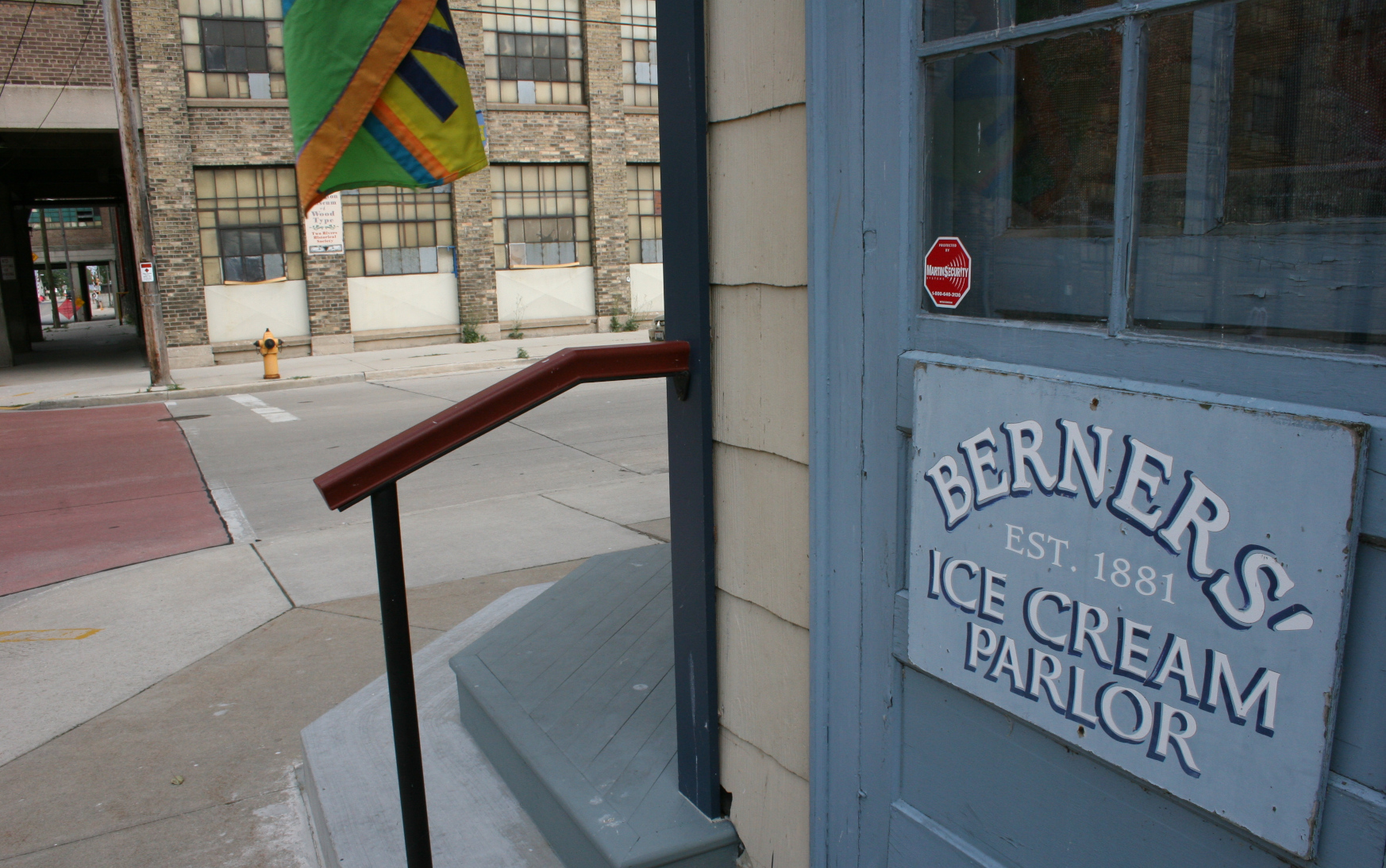
Signage marks the entry to the birthplace of the ice cream sundae in 1881. (Minnesota Prairie Roots copyrighted photo August 2011)
When I heard about National Sundae Day, I was also reminded of the soda fountain owner who invented the sundae in Two Rivers, Wisconsin, back in 1881. I’ve been inside the Washington House, where Edward Berners first topped a dish of ice cream with chocolate sauce in a treat initially sold only on Sundays.
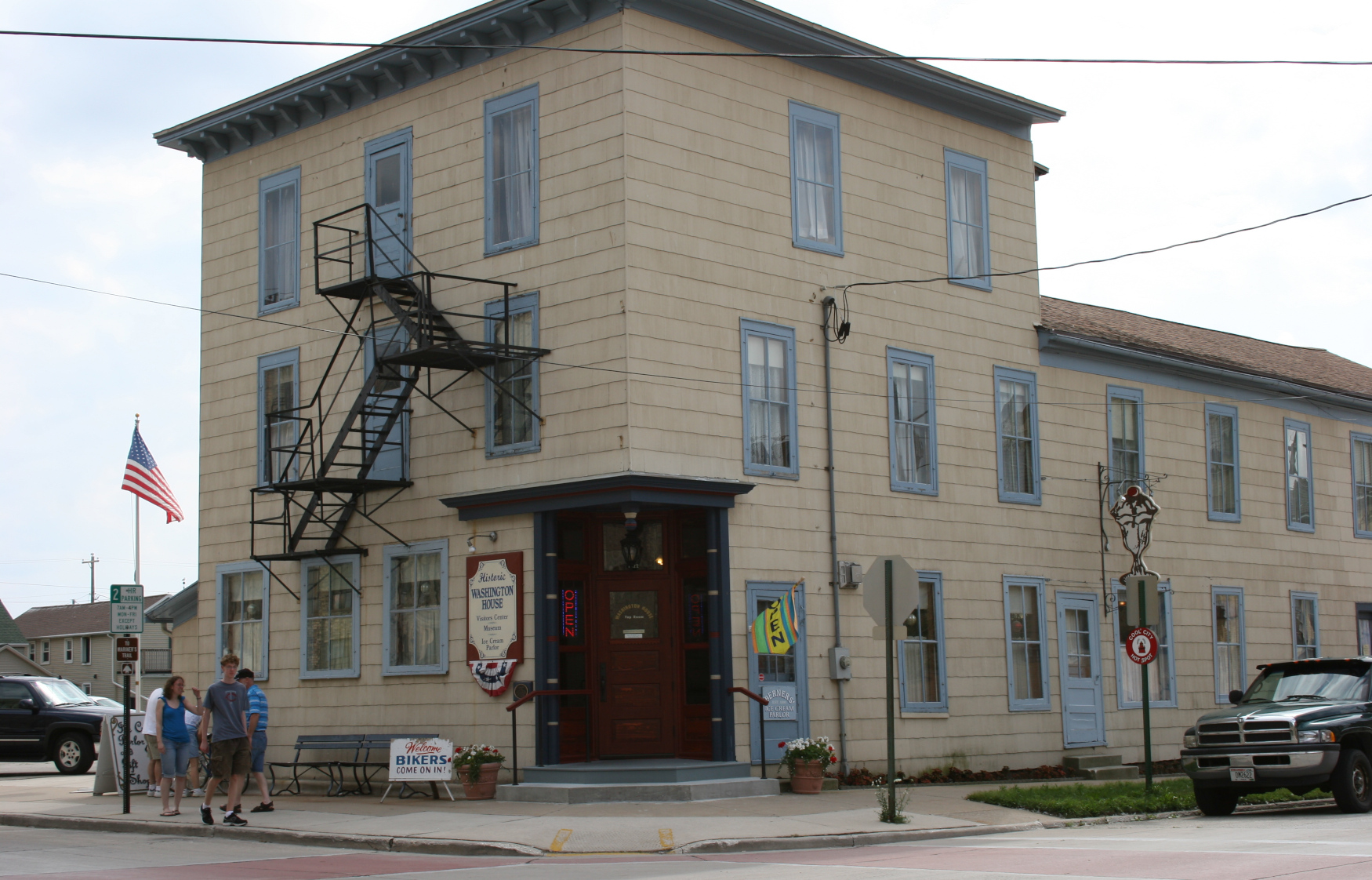
The historic Washington House in Two Rivers, Wisconsin. (Minnesota Prairie Roots copyrighted photo August 2011)
Today visitors to The Washington House Museum and Visitor Center can still purchase sundaes and other treats inside this former 1850 hotel with replica ice cream parlor. I did in 2011, when Randy, our daughter Miranda, our son Caleb and I visited this charming Lake Michigan side town. At the time, Miranda lived in Appleton about an hour to the west.
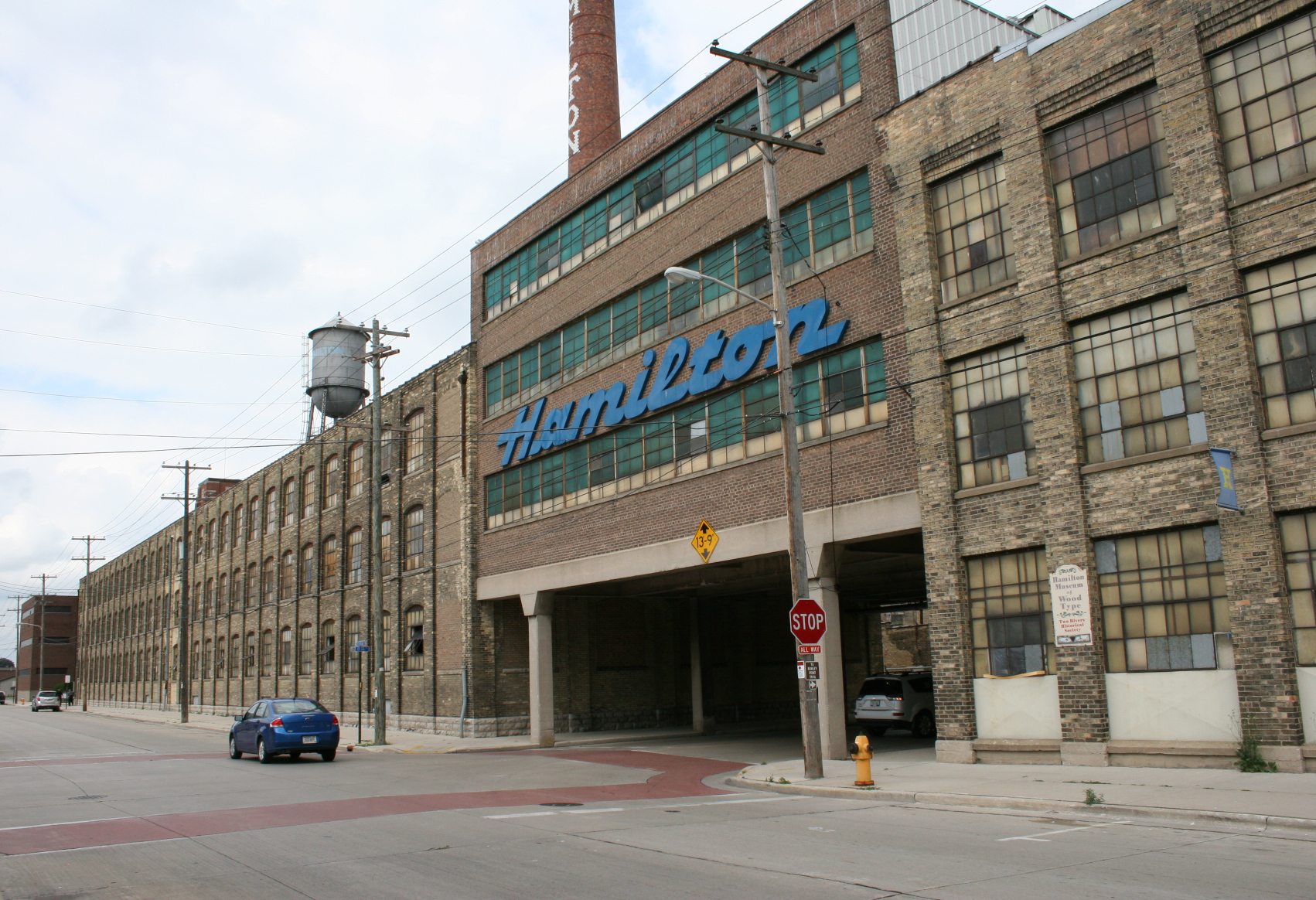
The sprawling Hamilton Wood Type & Printing Museum. (Minnesota Prairie Roots copyrighted photo August 2011)
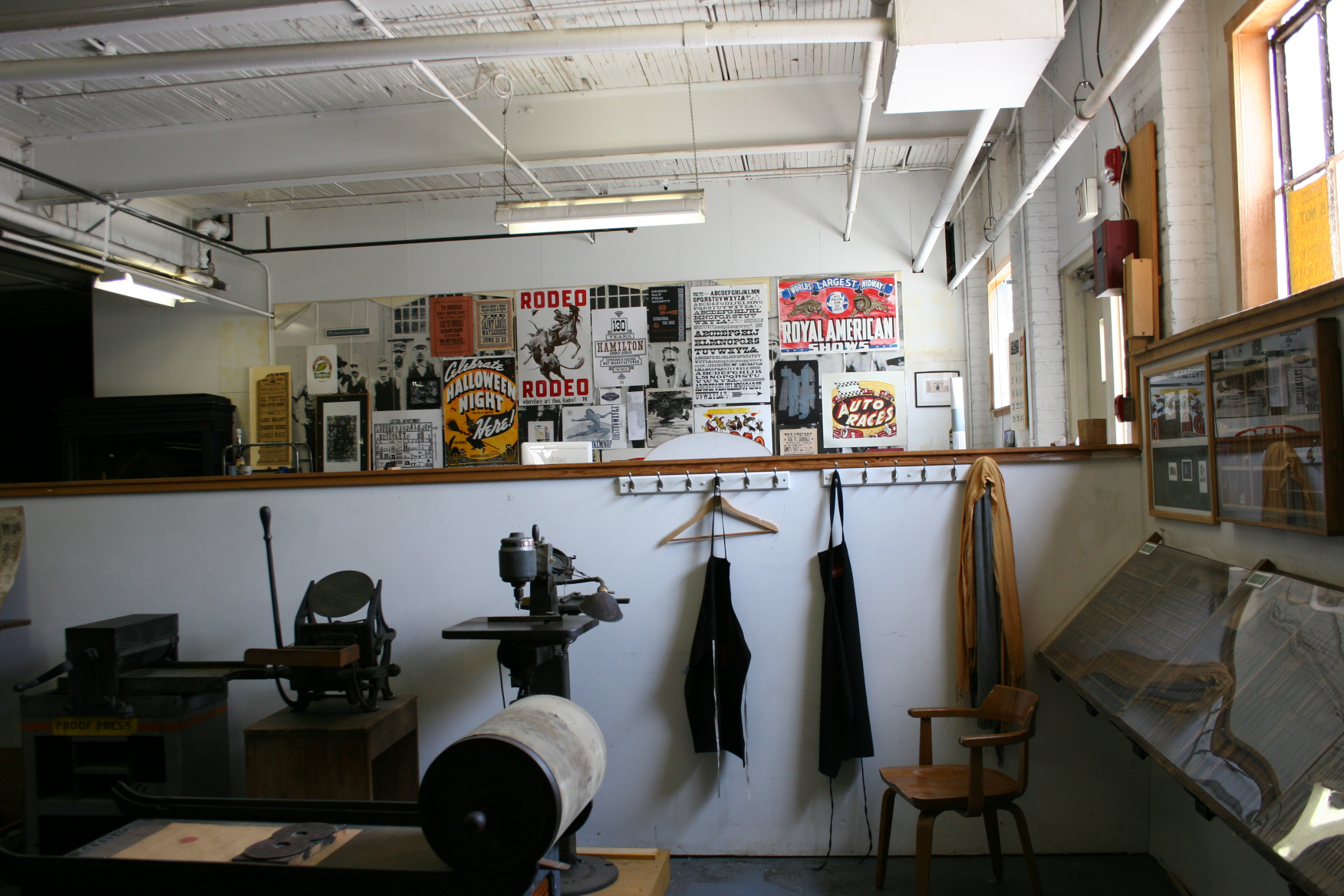
While the rest of my family headed to the ice cream parlor, I lagged behind at the neighboring Hamilton Wood Type & Printing Museum. The working museum houses the world’s largest collection of type. For someone like me, with a journalism background and past employment at a weekly newspaper that used old typesetting equipment, this museum held great interest. I love old type. I love letterpress. I love the artsy look, the craftsmanship, the hands-on passion in creating. The ice cream sundae could wait.
A glimpse inside the working museum. (Minnesota Prairie Roots copyrighted photo August 2011)
Eleven years after my tour of the Hamilton Wood Type & Printing Museum, I remember the joy I felt in being there. I remember, too, how the tour guide chided me for taking photos. Apparently he found my photographing intrusive, even though I lingered at the back far from other visitors. Despite his reaction, I still delighted in the smell of ink, the slim drawers holding type, the chunky blocks of wood type, the artsy results inked onto paper.
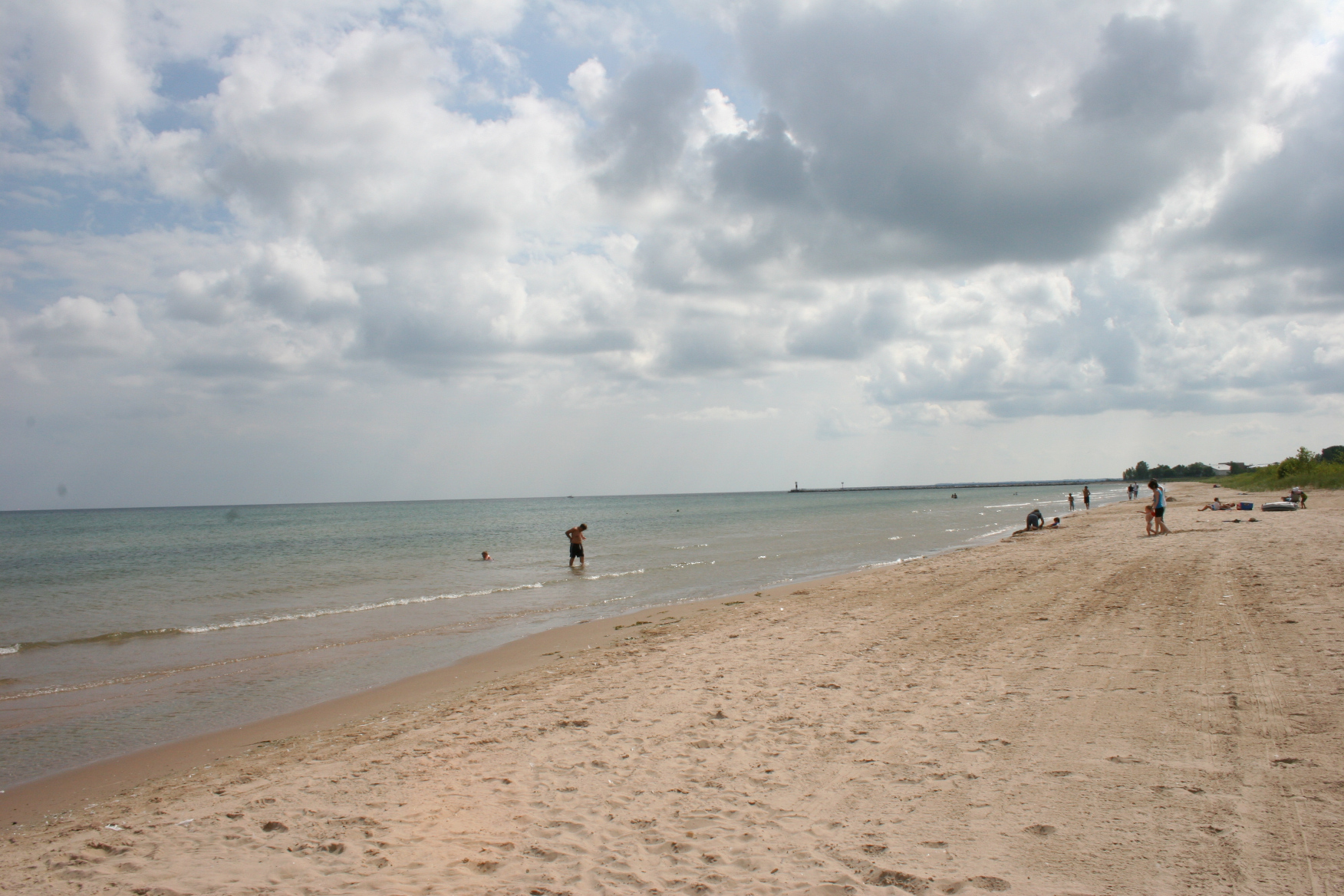
Beautiful Lake Michigan at Two Rivers. (Minnesota Prairie Roots copyrighted photo August 2011)
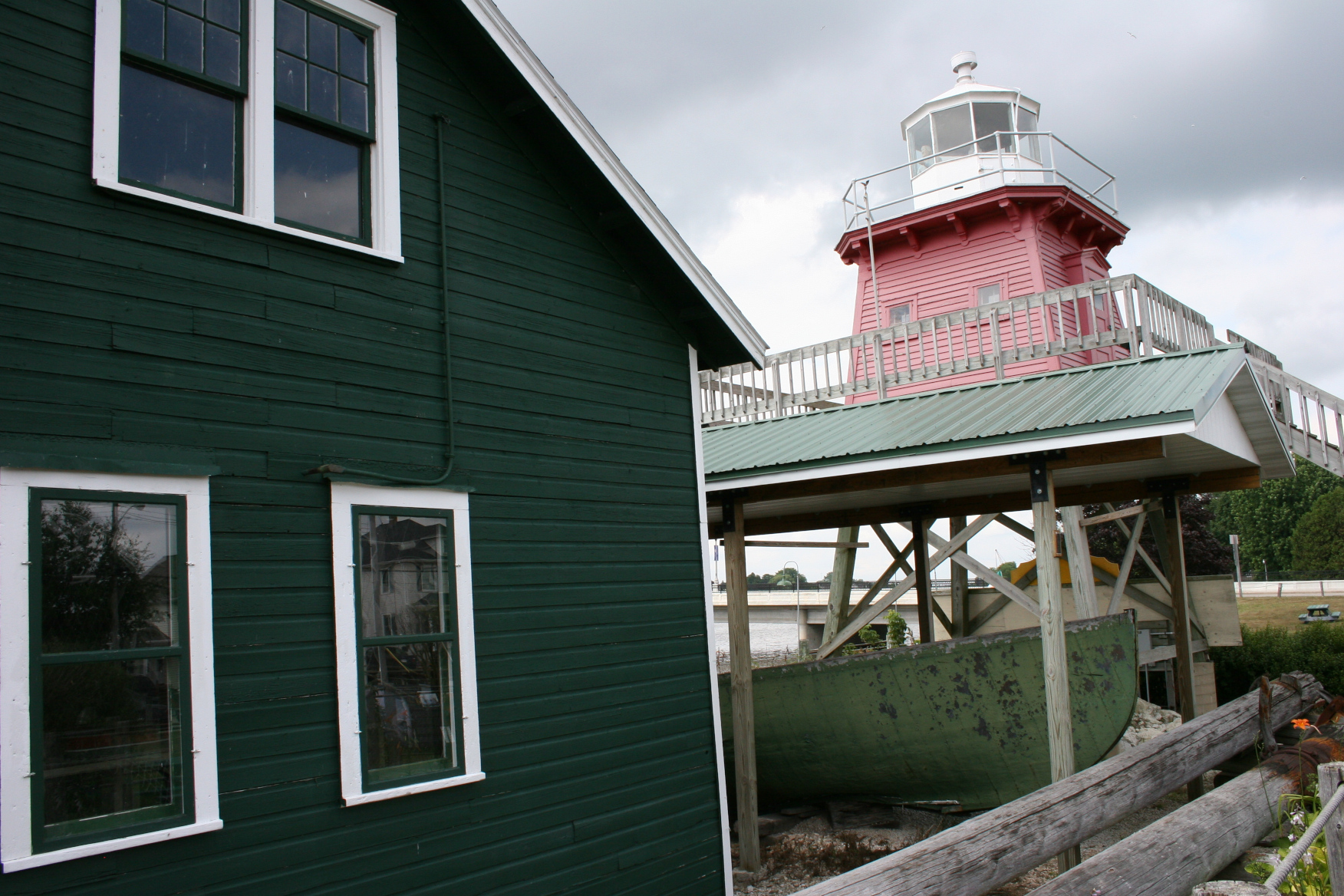
A snippet of the historic Rogers Street Fishing Village. (Minnesota Prairie Roots copyrighted photo August 2011)
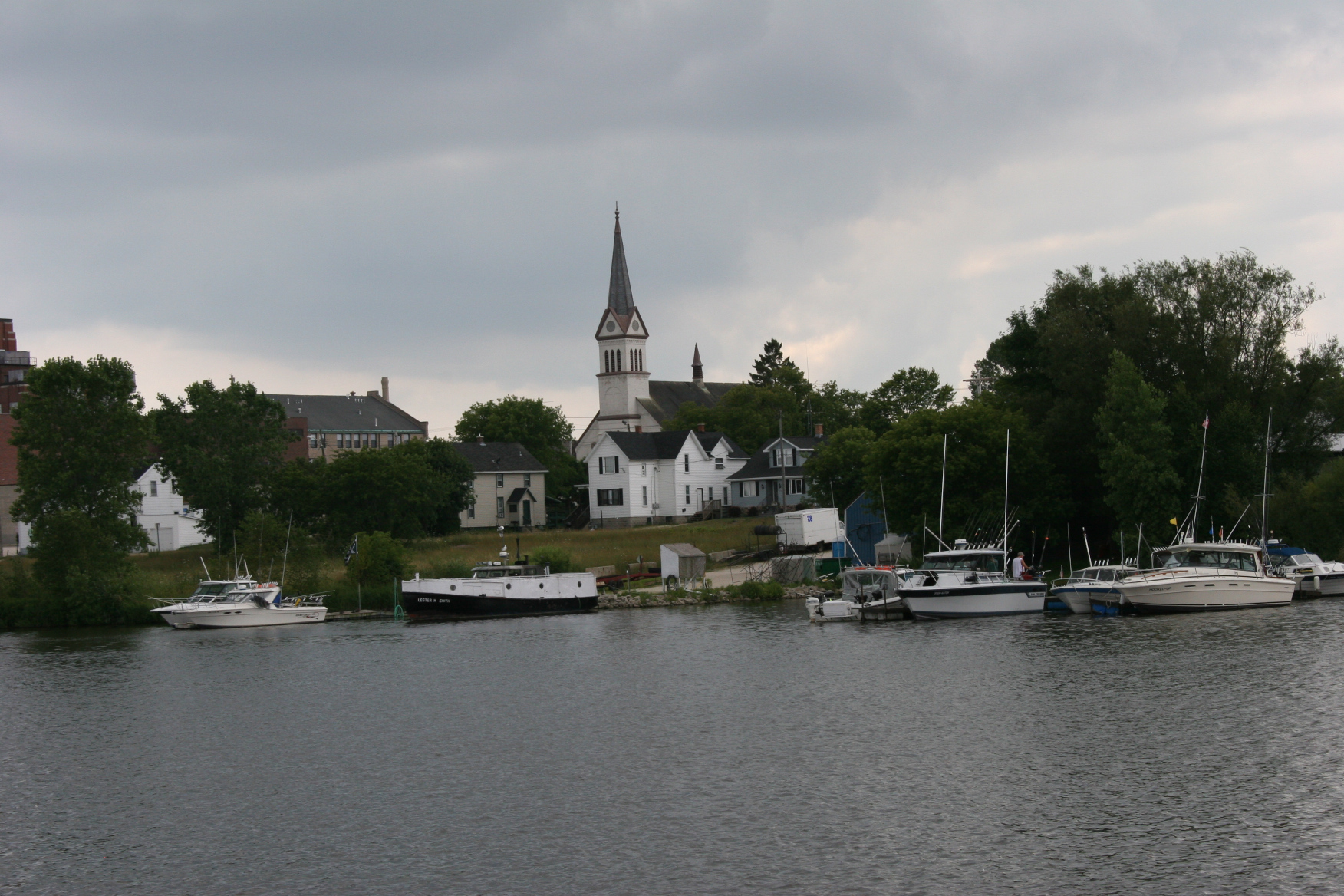
A simply bucolic scene of Two Rivers. (Minnesota Prairie Roots copyrighted photo August 2011)
And I delighted, too, in the community of Two Rivers. I recall its quaintness and beautiful natural setting along Lake Michigan. I recall, too, the historic Rogers Street Fishing Village. Just thinking about this eastern Wisconsin community makes me want to return. To view the expansive lake and follow the sandy beach. To take in weathered fishing boats and learn of lake lore. To meander through a museum that smells of ink with camera in hand. And then, finally, to step inside the Washington House ice cream parlor, the birthplace of the sundae, to savor a sundae served on more than just Sundays.
My second daughter and my son order ice cream sundaes at the replica Berners’ Ice Cream Parlor during a 2011 visit to Two Rivers. (Minnesota Prairie Roots copyrighted photo August 2011)
TELL ME: Have you been to Two Rivers? What’s your favorite sundae flavor? Do you share my interest in wood type and printing? Yes, lots of questions today.
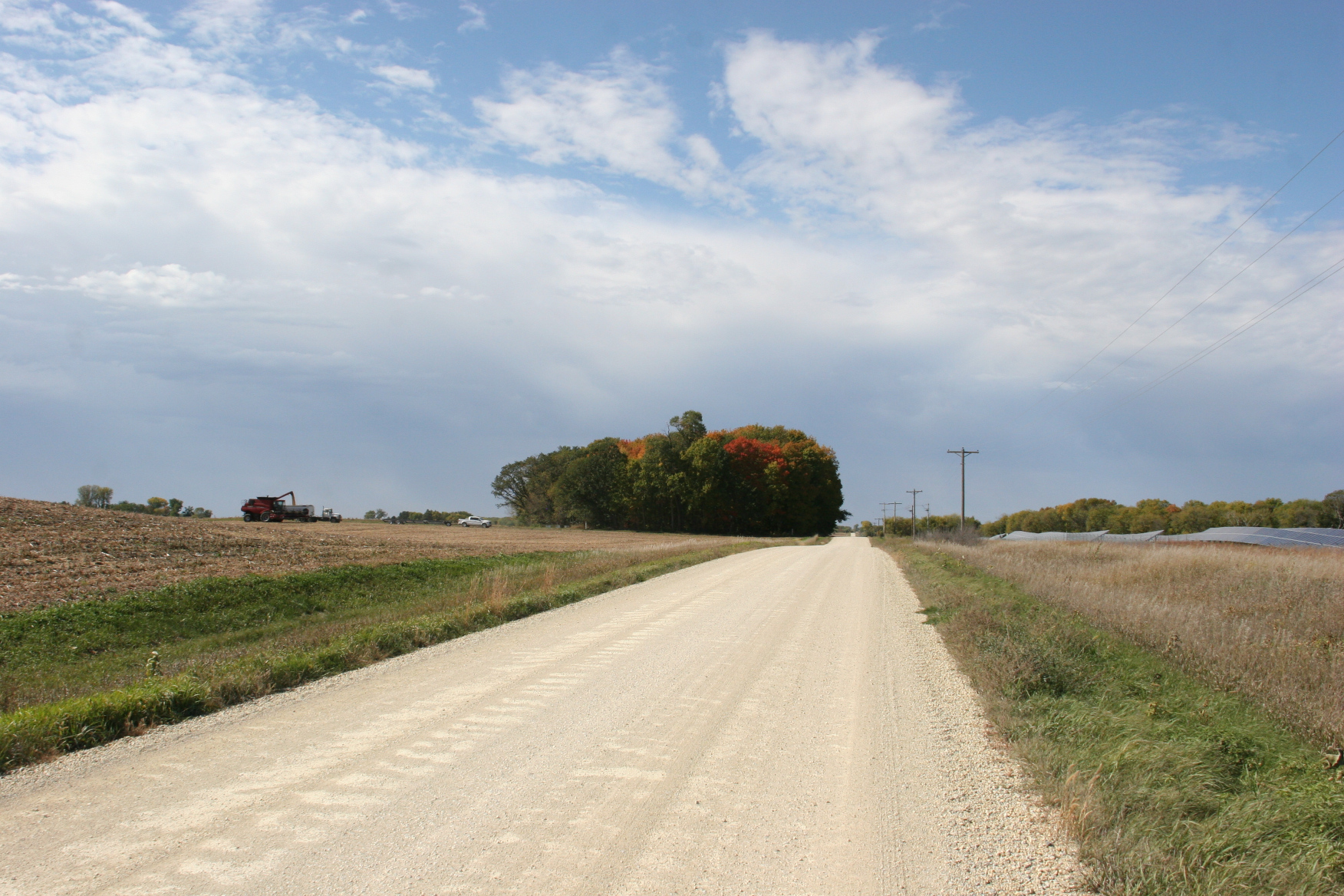
Harvesting, left, in a field along a gravel road near Dundas. (Minnesota Prairie Roots copyrighted photo October 2022)
DUST HANGS OVER THE LANDSCAPE like smoke. Hazy. The air dirty with debris kicked up by combines sweeping across corn and soybean fields in southern Minnesota. Harvest is well underway here as farmers bring in the season’s crops.
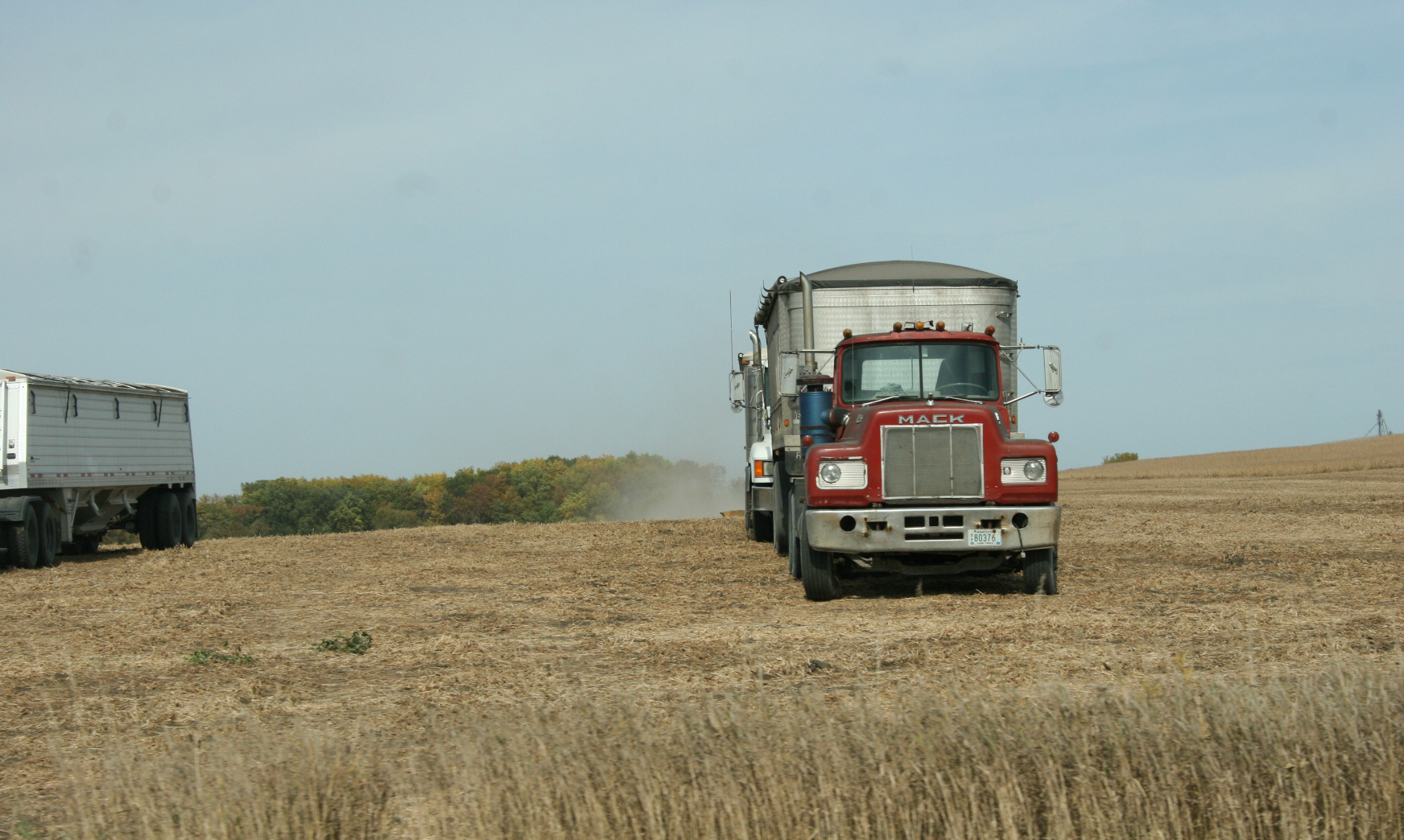
Trucks haul harvested crops from fields to bins and/or grain elevators. (Minnesota Prairie Roots copyrighted photo October 2022)
From back country gravel roads to the interstate, I’ve witnessed this scene unfolding before me in recent weeks. Combines chomping. Harvested corn and beans spilling into grain trucks.
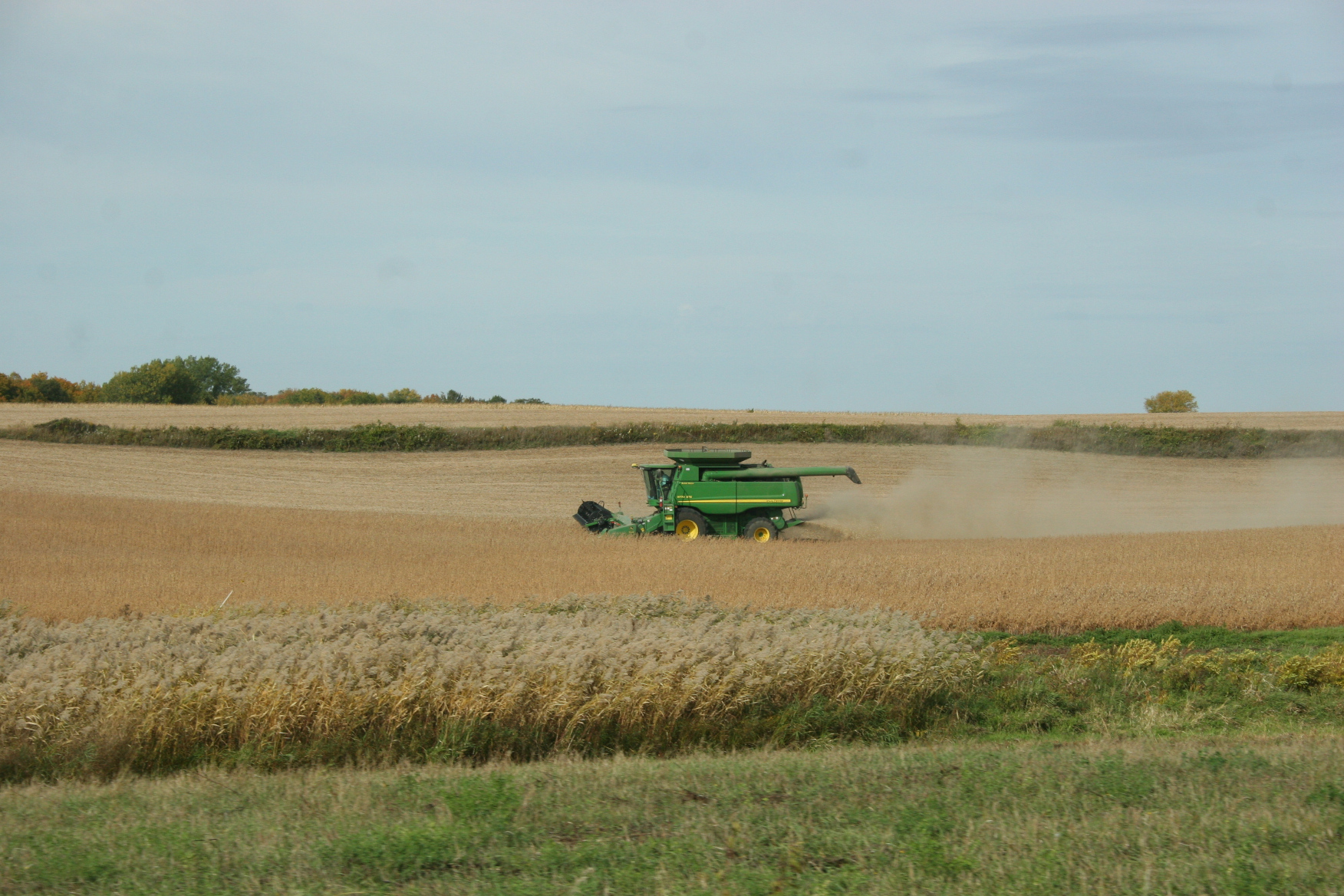
Harvesting beans. (Minnesota Prairie Roots copyrighted file photo October 2022)
Farmers work all hours of the day and night in the rush to finish gathering crops before winter arrives. In the dark of night, bright headlights spotlight fields. In daylight, sunlight filters through clouds of dust.
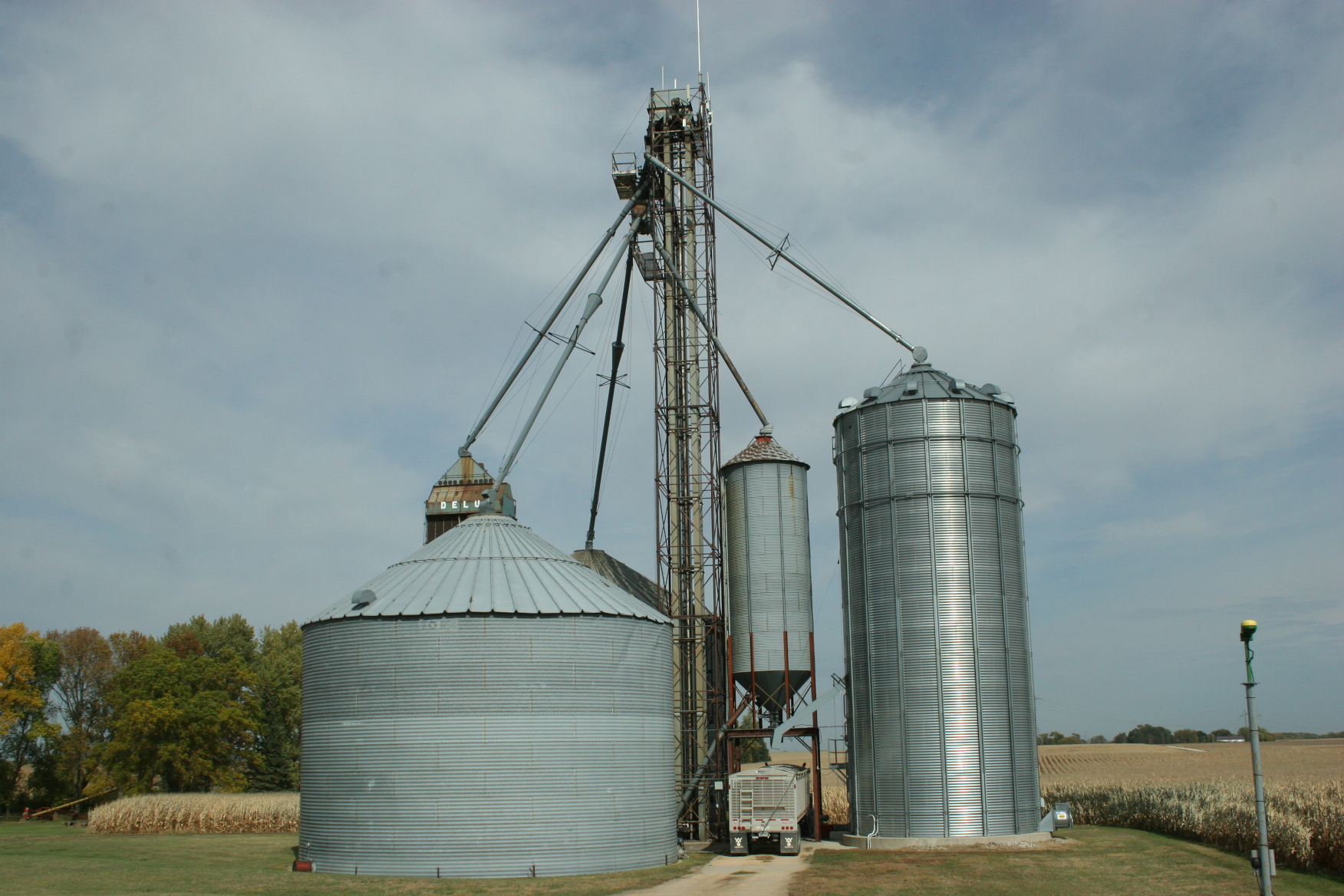
A grain truck pulls into a farmer’s grain drying and storage complex. (Minnesota Prairie Roots copyrighted photo October 2022)
Harvest is part of my DNA by having been raised on a southwestern Minnesota crop and dairy farm. Decades removed from the land, I still take notice of the harvest. The smell. The hues. The hurry. I understand this season in rural Minnesota.
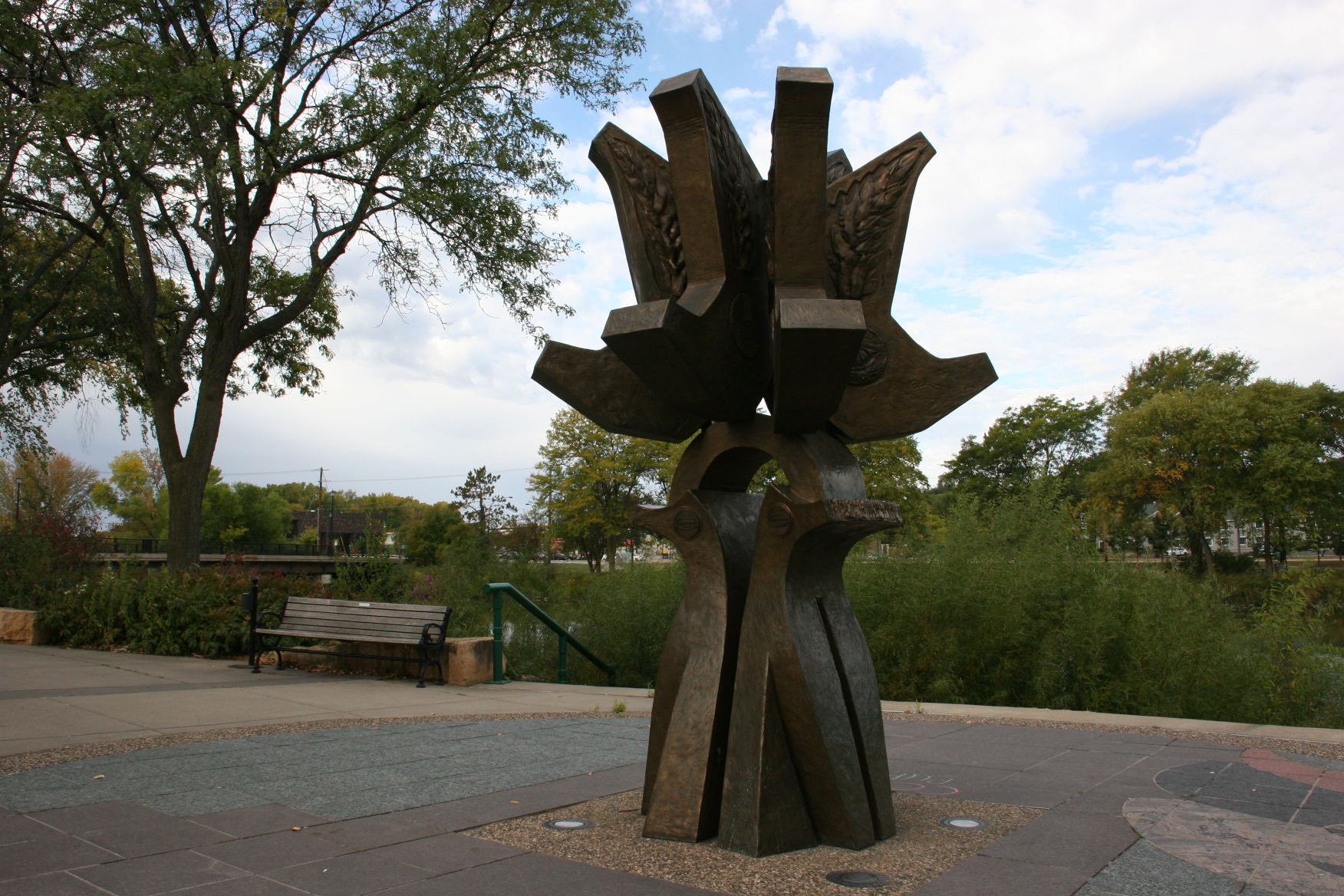
“Harvest” by Raymond Jacobson. (Minnesota Prairie Roots copyrighted photo October 2022)
In nearby Northfield, I recently happened upon a bronze sculpture, “Harvest,” which had gone unnoticed by me. It’s been there since 2008 at Sesquicentennial Legacy Plaza along the Cannon River, near the post office, near Bridge Square. In all my visits to Northfield, to the Riverwalk area, I missed this public art created by Raymond Jacobson.
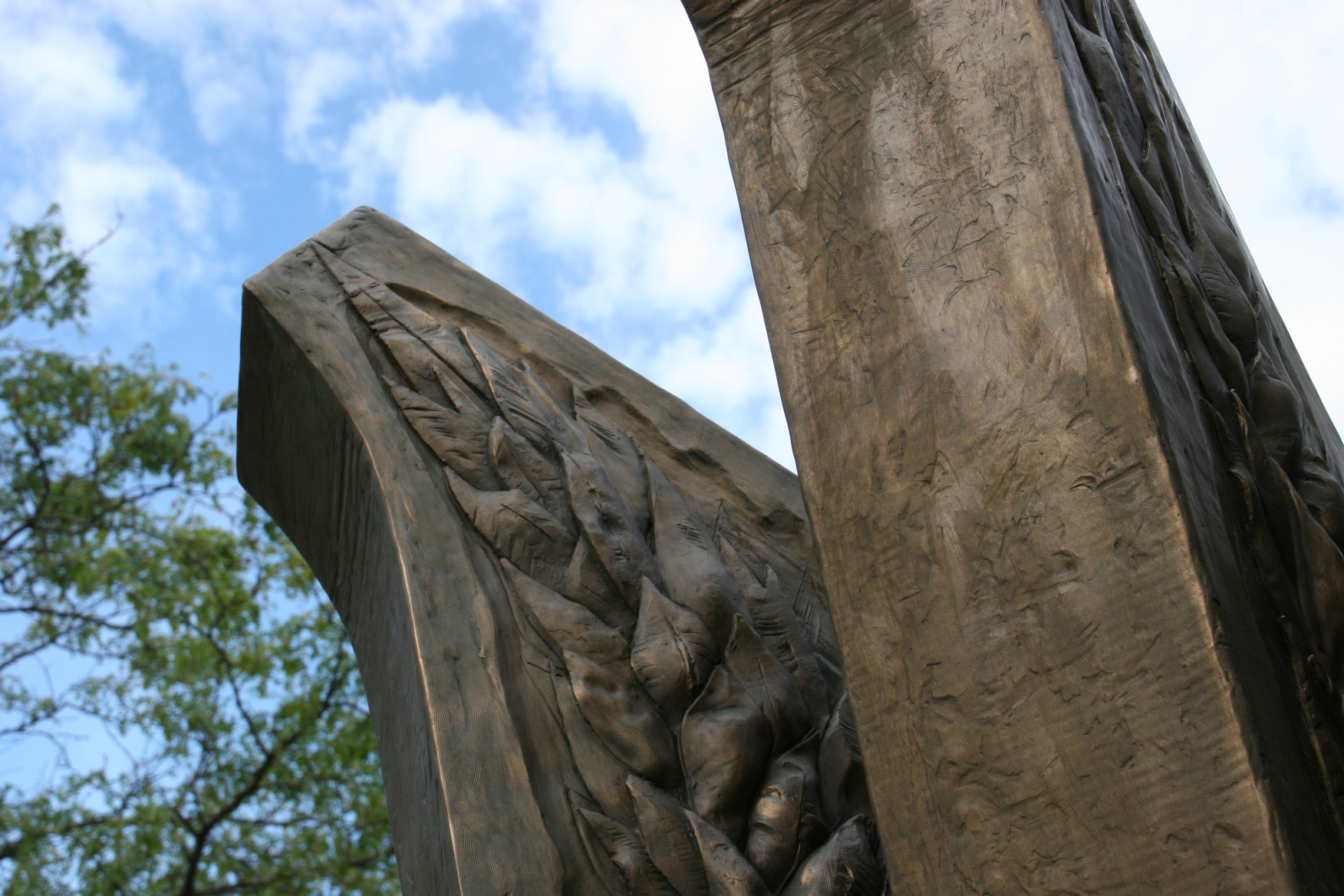
Close-up details of the wheat incorporated into “Harvest.” (Minnesota Prairie Roots copyrighted photo October 2022)
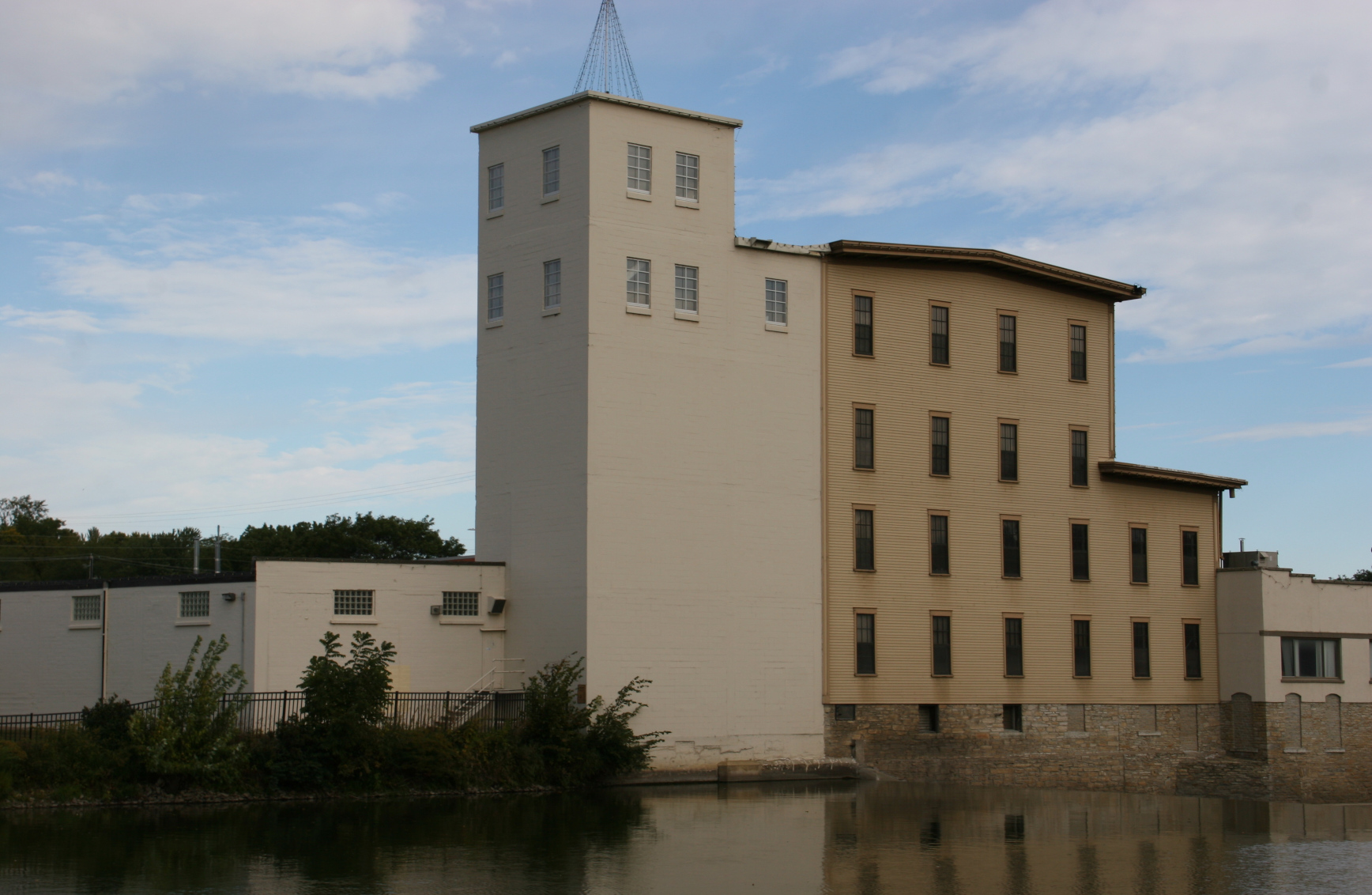
The historic Ames Mill along the Cannon River. (Minnesota Prairie Roots copyrighted photo October 2022)
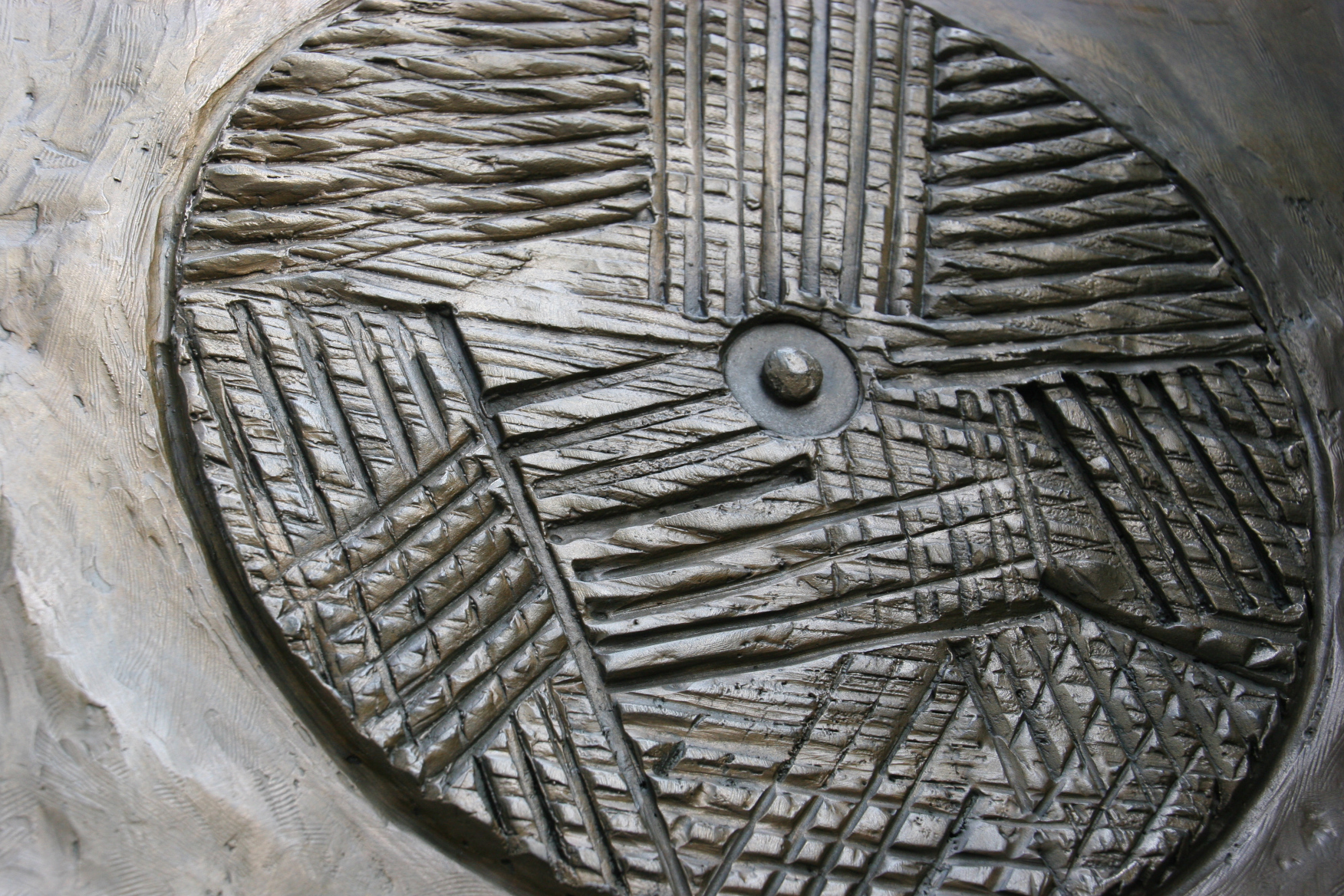
An interpretation of a stone grist mill for grinding wheat into flour is included in the sculpture.(Minnesota Prairie Roots copyrighted photo October 2022)
It’s beautiful, fitting for a community rooted in agriculture. The 3,000-pound sculpture symbolizes Northfield’s heritage of wheat farming and milling. Just across the river sits the Ames Mill, where the gristmill in the late 1860s produced 150 barrels of wheat daily.
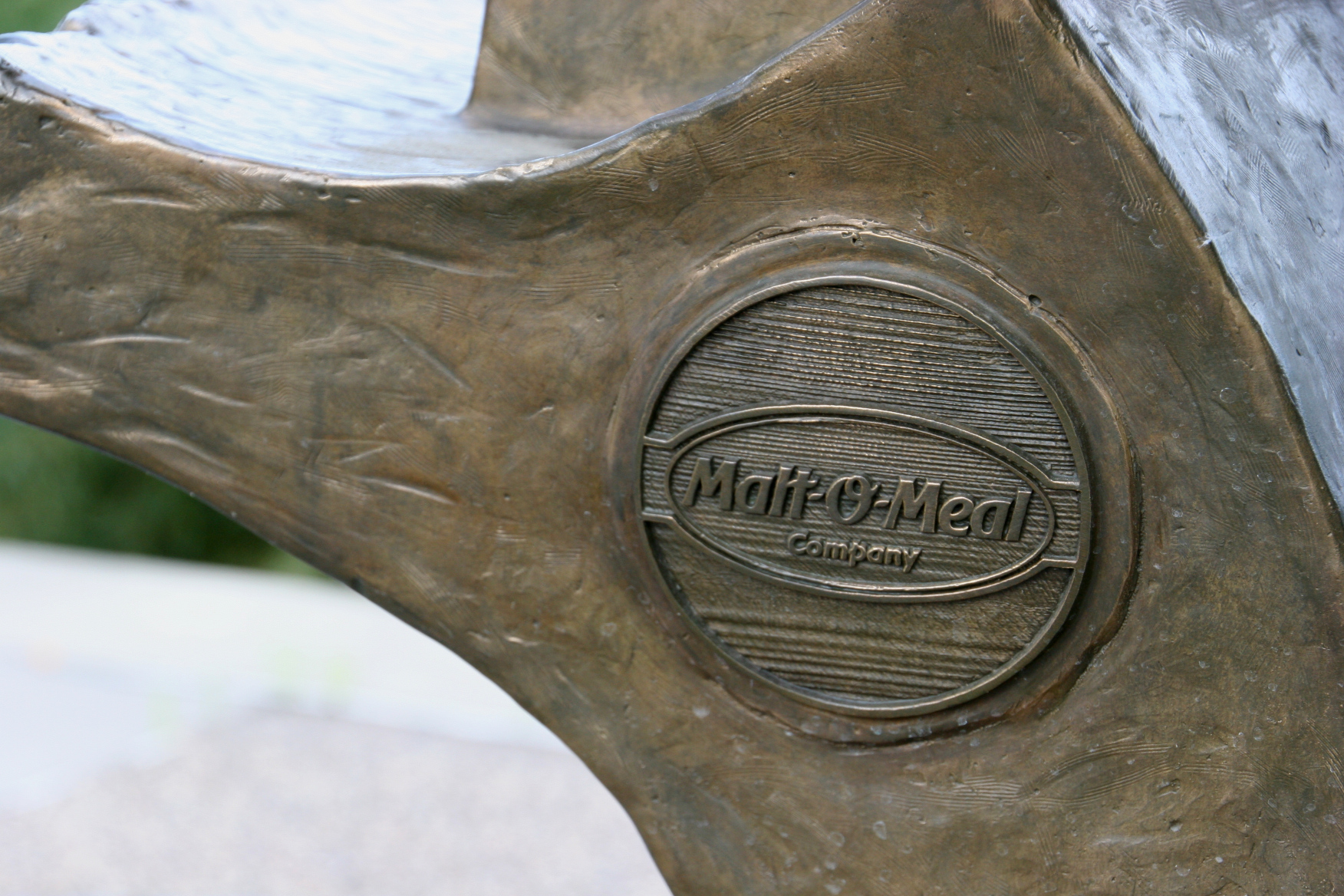
Malt-O-Meal was a major funder for the sculpture. (Minnesota Prairie Roots copyrighted photo October 2022)
In 1927, John Campbell of the Campbell Cereal Company took over the mill and began producing Malt-O-Meal hot cereal. Today Post Consumer Brands owns the mill and still makes that hot cereal. Dry cereal is manufactured at a nearby production facility. Many days the scent of cereal wafts over Northfield.
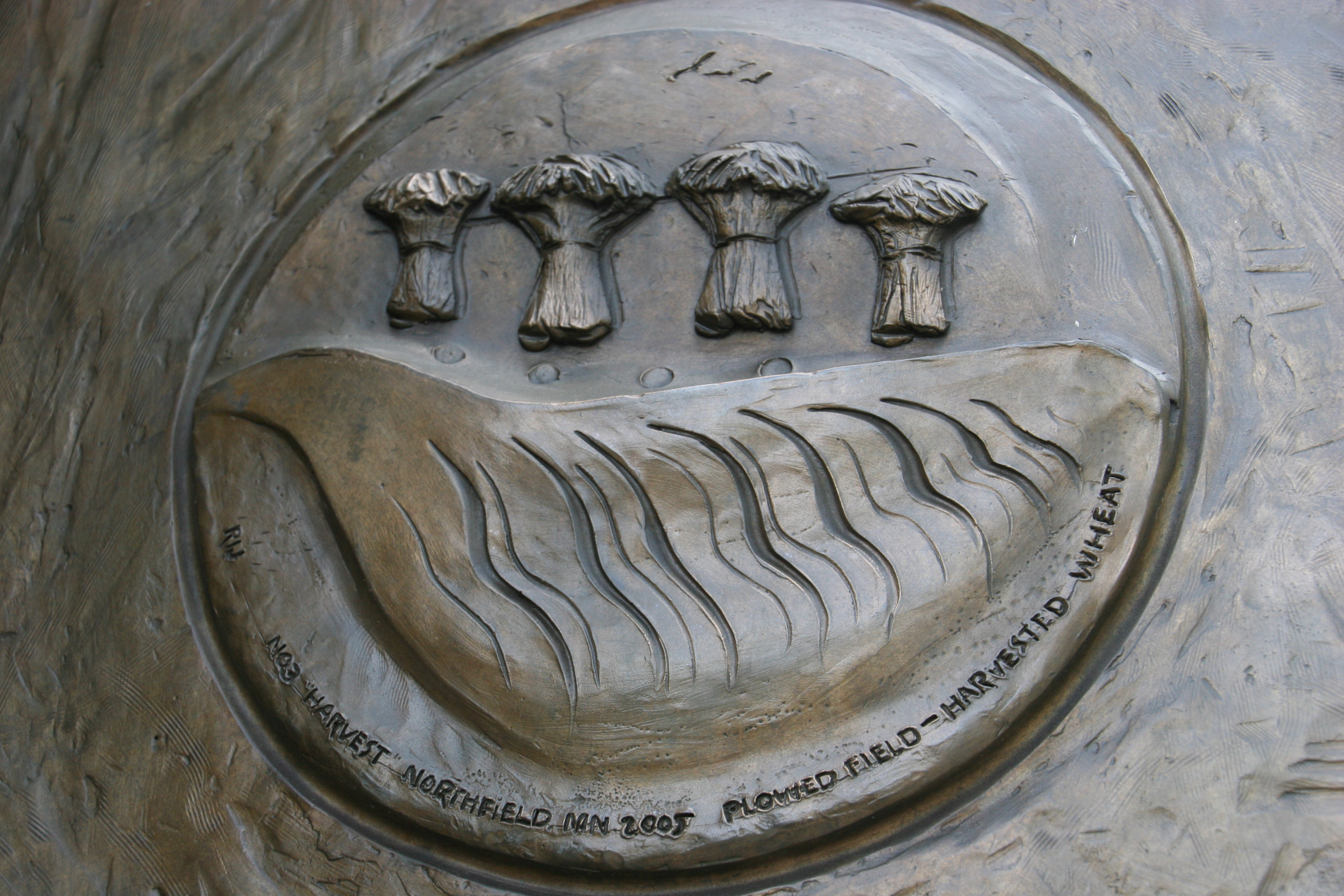
Harvested wheat and a plowed field cast into bronze. (Minnesota Prairie Roots copyrighted photo October 2022)
All of this—the smell of cereal, the “Harvest” sculpture, the historic Ames Mill—reminds me of the importance of agriculture in our region. It reminds me, too, of my rural roots. I am grateful for my farm upbringing. I am grateful, too, for those who today plant, tend and harvest crops. They are essential to our economy, feeding the world, providing raw product.
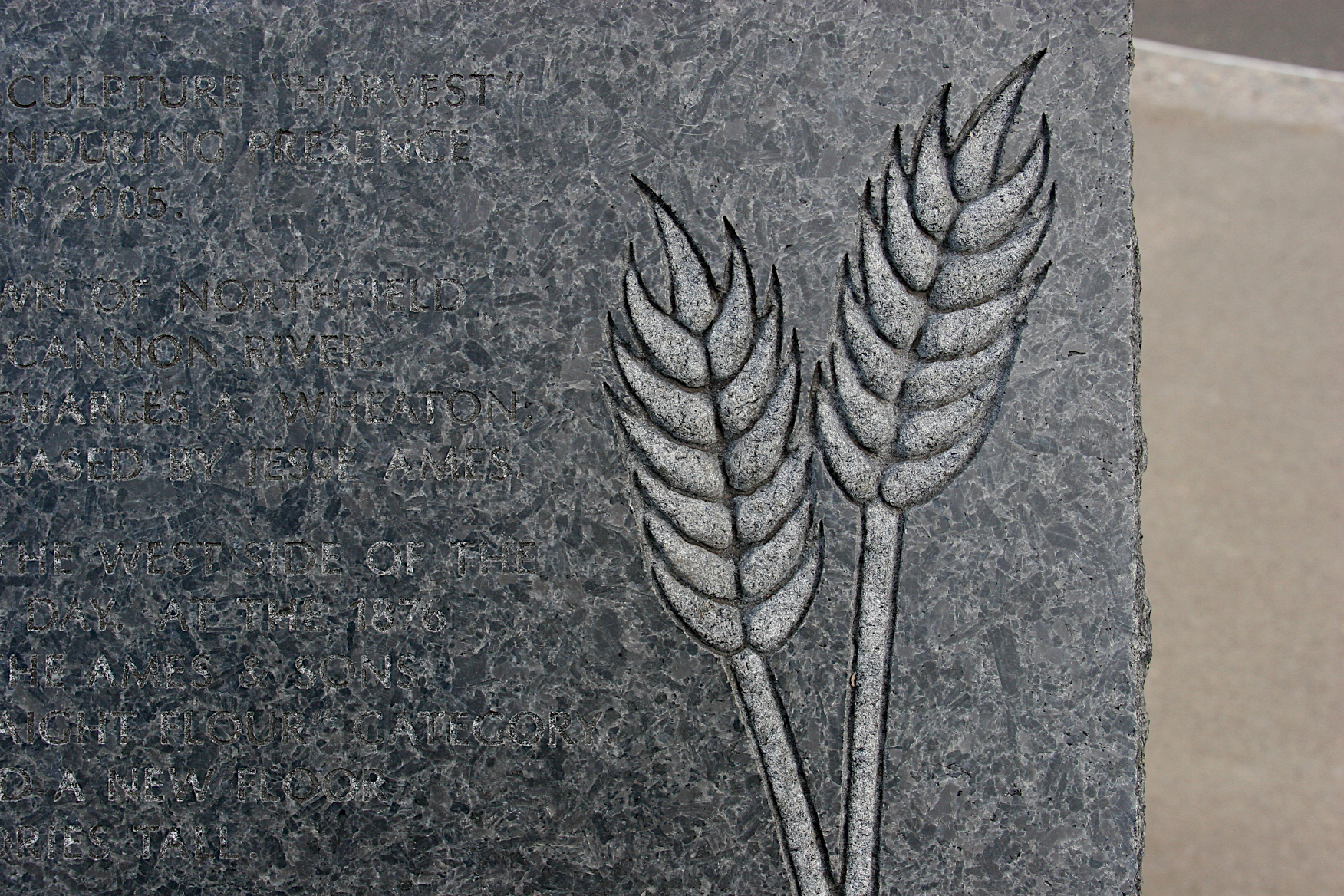
Wheat stalk details on an informational plaque which is nearly impossible to read due to weathering of the writing. (Minnesota Prairie Roots copyrighted photo October 2022)
That this season of harvest is honored in a “Harvest” sculpture shows a deep appreciation for history, heritage and agriculture in Northfield. The public art gives me pause to reflect on inspiration in creativity. Today I celebrate the artistic interpretation of harvest displayed along the banks of the Cannon River.
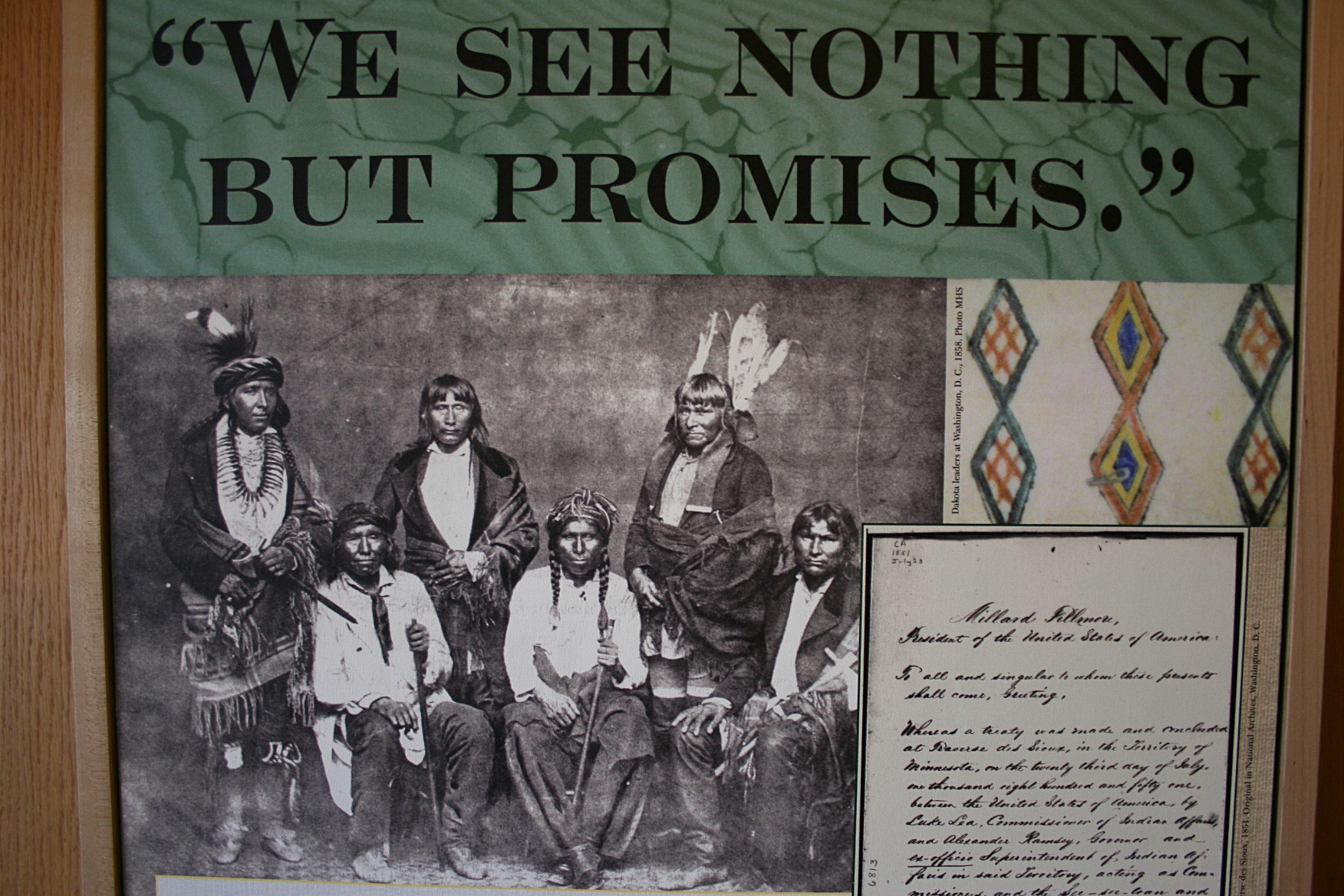
A photo panel at the Traverse des Sioux Treaty Center in St. Peter shows Dakota leaders photographed in Washington D.C. in 1858. The photo is from the Minnesota Historical Society. Broken promises led to the 1862 war.(Minnesota Prairie Roots file photo)
TODAY, INDIGENOUS PEOPLES’ DAY, I think of the US-Dakota War of 1862. When as a high school student I studied that war, I felt an immediate connection to the event which occurred in my home county and neighboring counties in southwestern Minnesota. My interest sparked because this happened in my backyard. Today I have a much better understanding of the 1862 conflict among the native Dakota peoples, the settlers and the government. My learned “white” perspective has shifted, my viewpoint has broadened. That has come through listening, reading, educating myself.
A public art installation at Northfield’s 2022 Earth Day celebration. Northfield has a Land Acknowledgement Agreement. (Minnesota Prairie Roots copyrighted file photo April 2022)
I see the same shift in attitudes throughout our nation, state and communities today. Land acknowledgment agreements are being written. There’s an awareness that indigenous peoples are the original inhabitants of the land, including in my home county of Redwood and my home of the past 40 years, Rice County.
I recently learned that the Wahpekute, part of the Dakota Nation, placed their dead on scaffolding on land just up the hill from my Faribault home. Land that is now a city park. After a year, the bones of the deceased were moved a few blocks away to a permanent burial grounds. That cemetery is not marked as such. Up until a presentation by Susan Garwood, director of the Rice County Historical Society, I was unaware that Peace Park was a sacred place, not simply a triangle of land with a WW II memorial along busy streets. Efforts are underway in Faribault to landmark such places of importance, to honor the Dakota.
A must-read novel based on fact.
It starts at a grassroots level, this unraveling of the truth, this recognition, this acknowledgment. I’ve toured museum exhibits, read books, attended presentations and more to assure that I am informed. I highly-recommend reading the award-winning book, The Seed Keeper by Diane Wilson. (Click here to read my review.)
I value that awareness of Indigenous Peoples’ food, culture, history and more is growing. In Minneapolis, diners can enjoy North American traditional indigenous food at award-winning Owamni by The Sioux Chef, for example.
Back in my home county, the Lower Sioux Indian Community is working hard to assure its culture remains strong through ongoing traditional events and teaching of the Dakota language.
A bison herd has been reintroduced to the prairie at Minneopa State Park near Mankato. (Minnesota Prairie Roots copyrighted file photo 2019)
I still have much to learn about the Indigenous Peoples of Minnesota. That I admit. Perhaps much of it is really unlearning. Today I pause to honor those who called this place, this southern Minnesota, home first, back when prairie grasses stretched high, bison roamed and the land was respected.
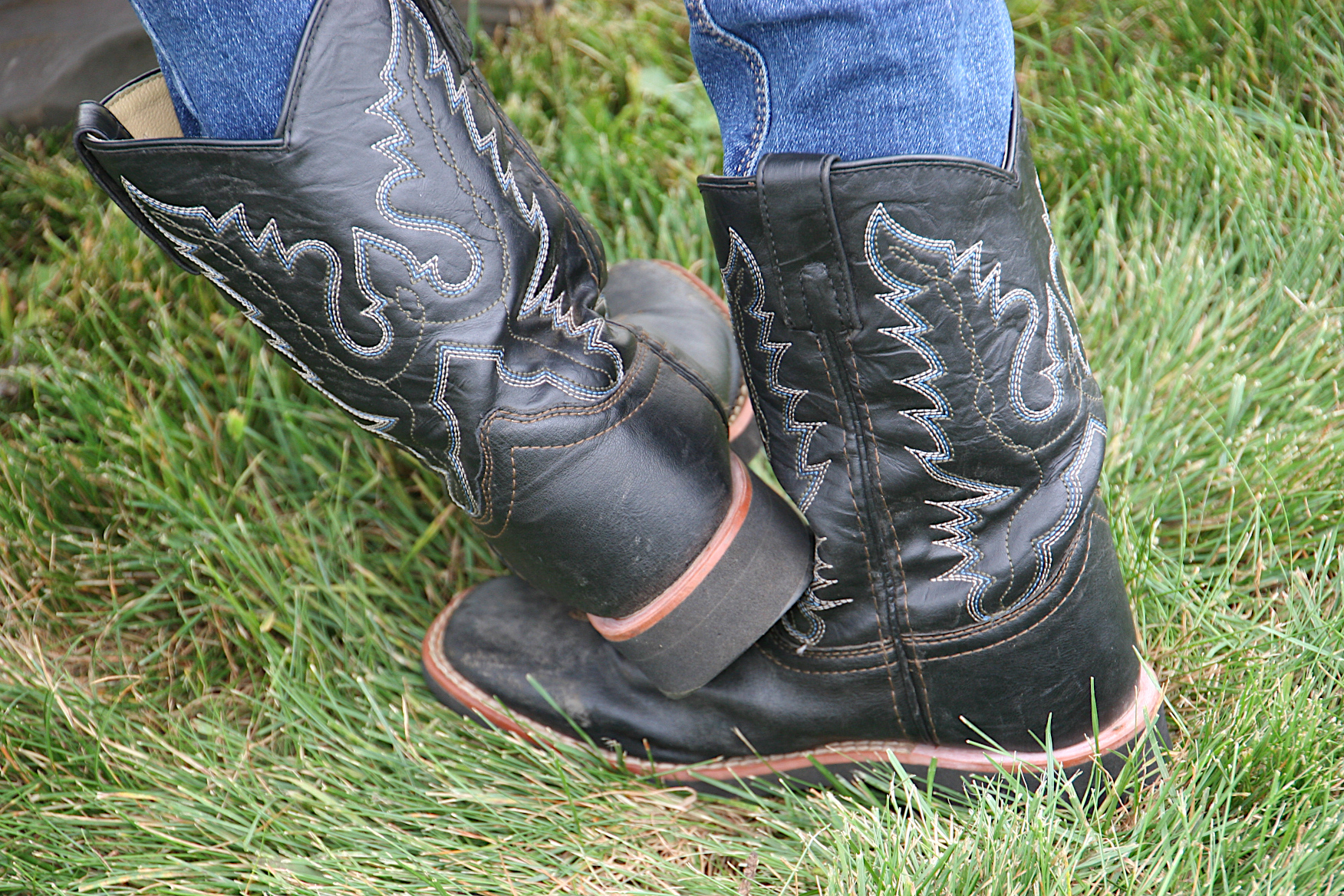
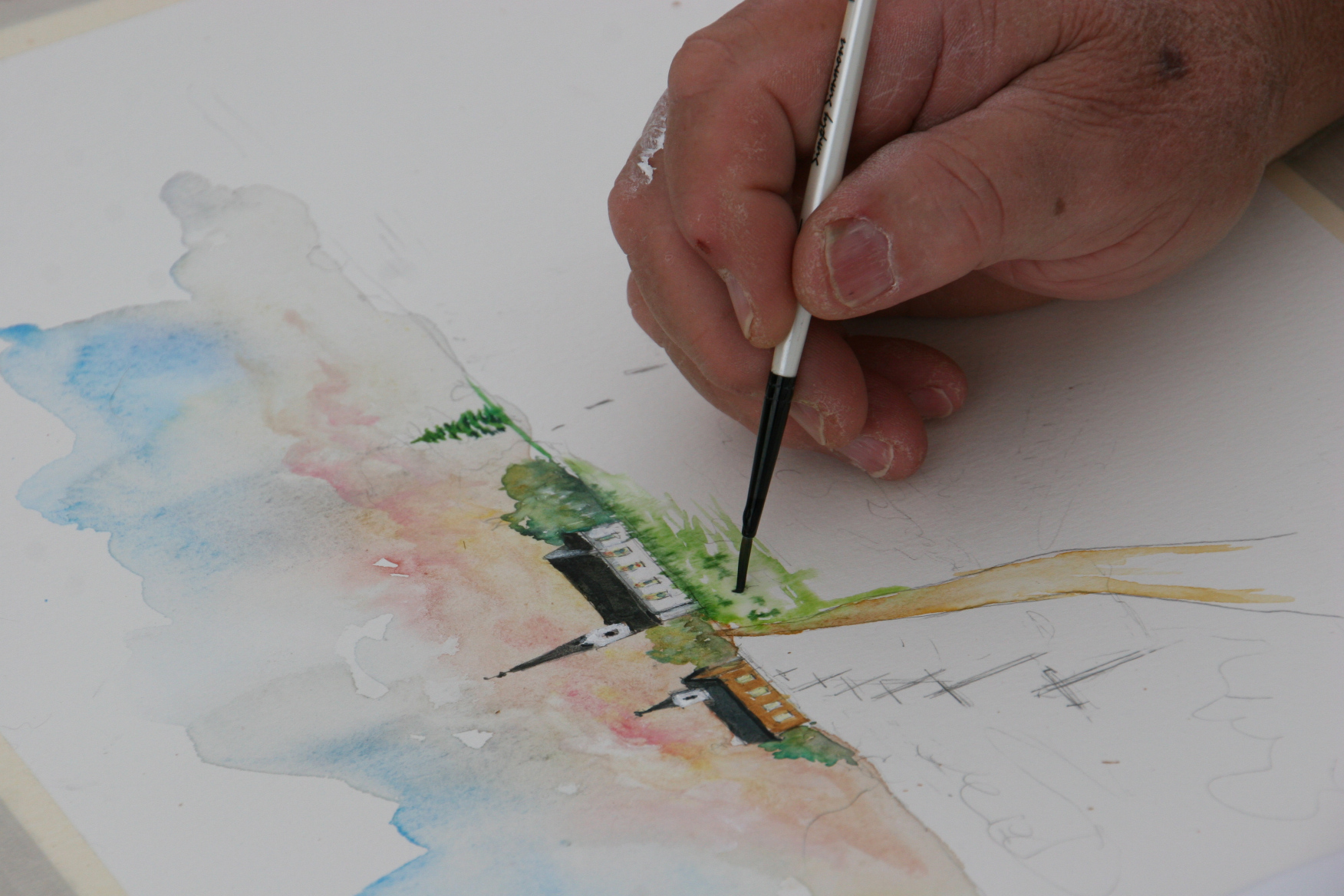
The young boy wearing these cowboy boots watched intently as Northfield artist David F. Allen worked on a painting of Valley Grove Church. The two talked about creating (the little guy likes to color) and about a newly-acquired pig named Pinky. (Minnesota Prairie Roots copyrighted photo September 2022)
IN TELLING A STORY, whether in images or words, details matter. Combined, details comprise the whole. And that’s the approach I take in creating.
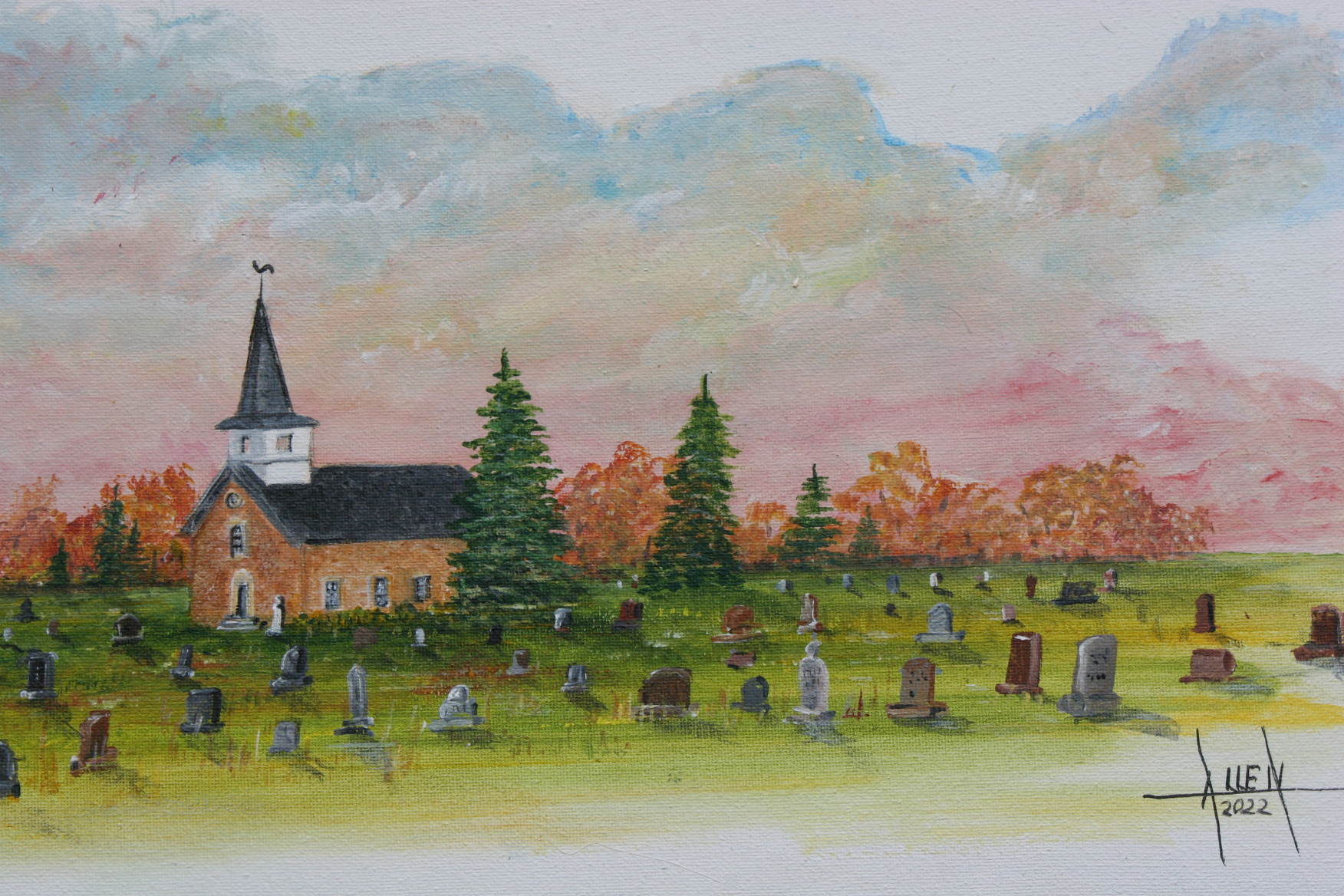
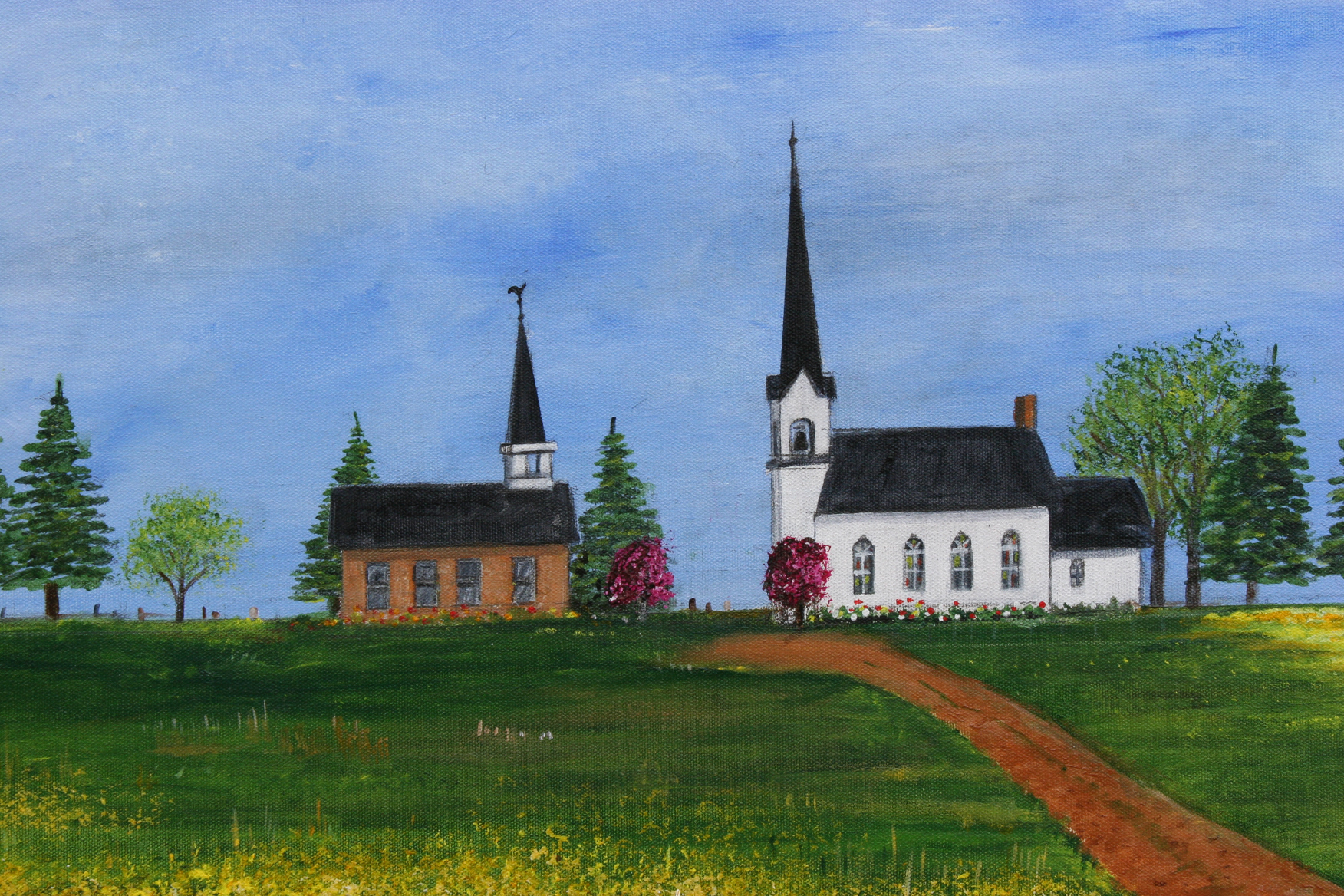
A painting of the 1862 Valley Grove stone church and cemetery by David F. Allen and for sale at the Social. (Minnesota Prairie Roots copyrighted file photo September 2022, photographed with the artist’s permission)
Panels placed alongsidethe stone church provided historical details. (Minnesota Prairie Roots copyrighted photo September 2022)
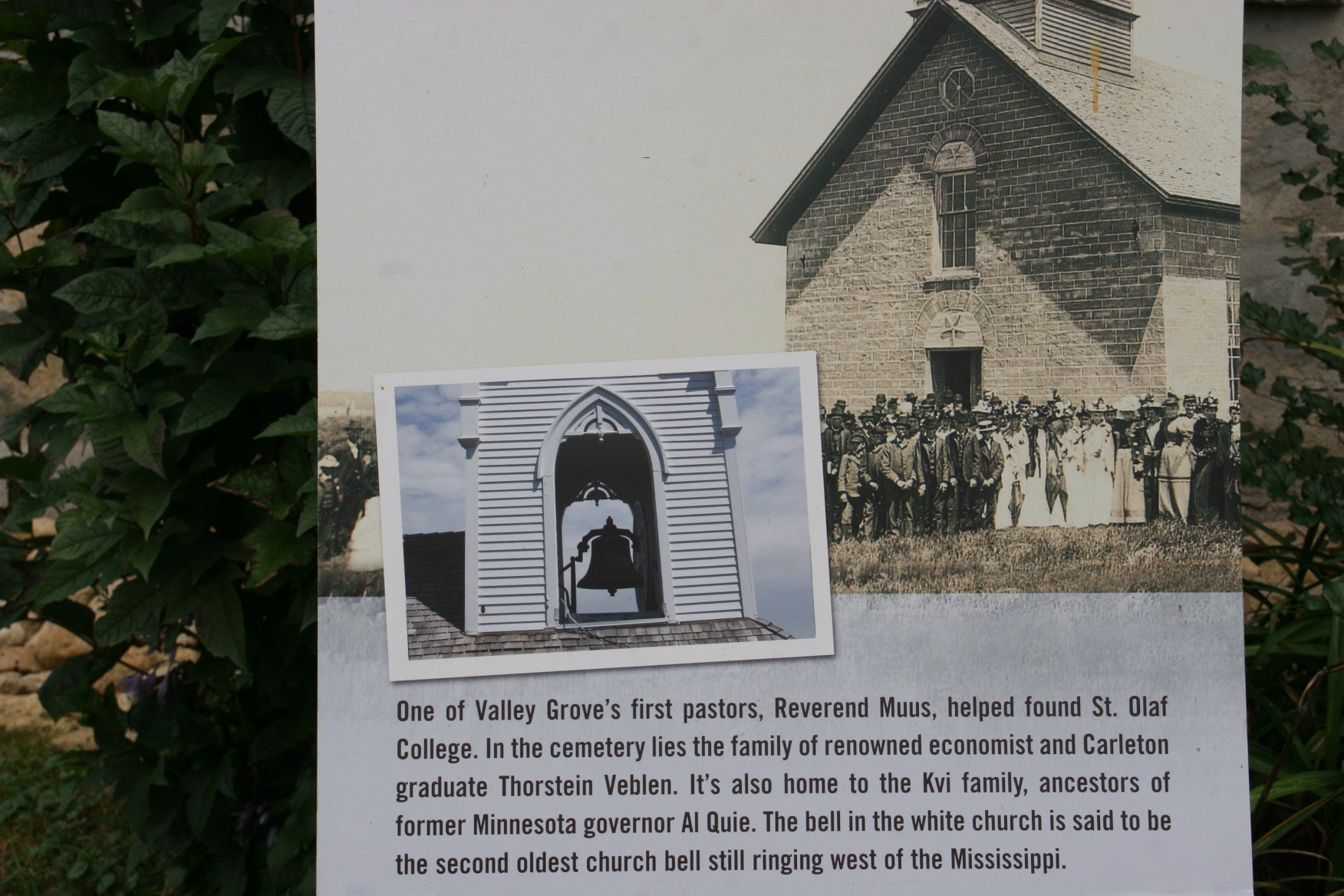
In the entry of the 1894 church, more historical info and photos. (Minnesota Prairie Roots copyrighted photo September 2022)
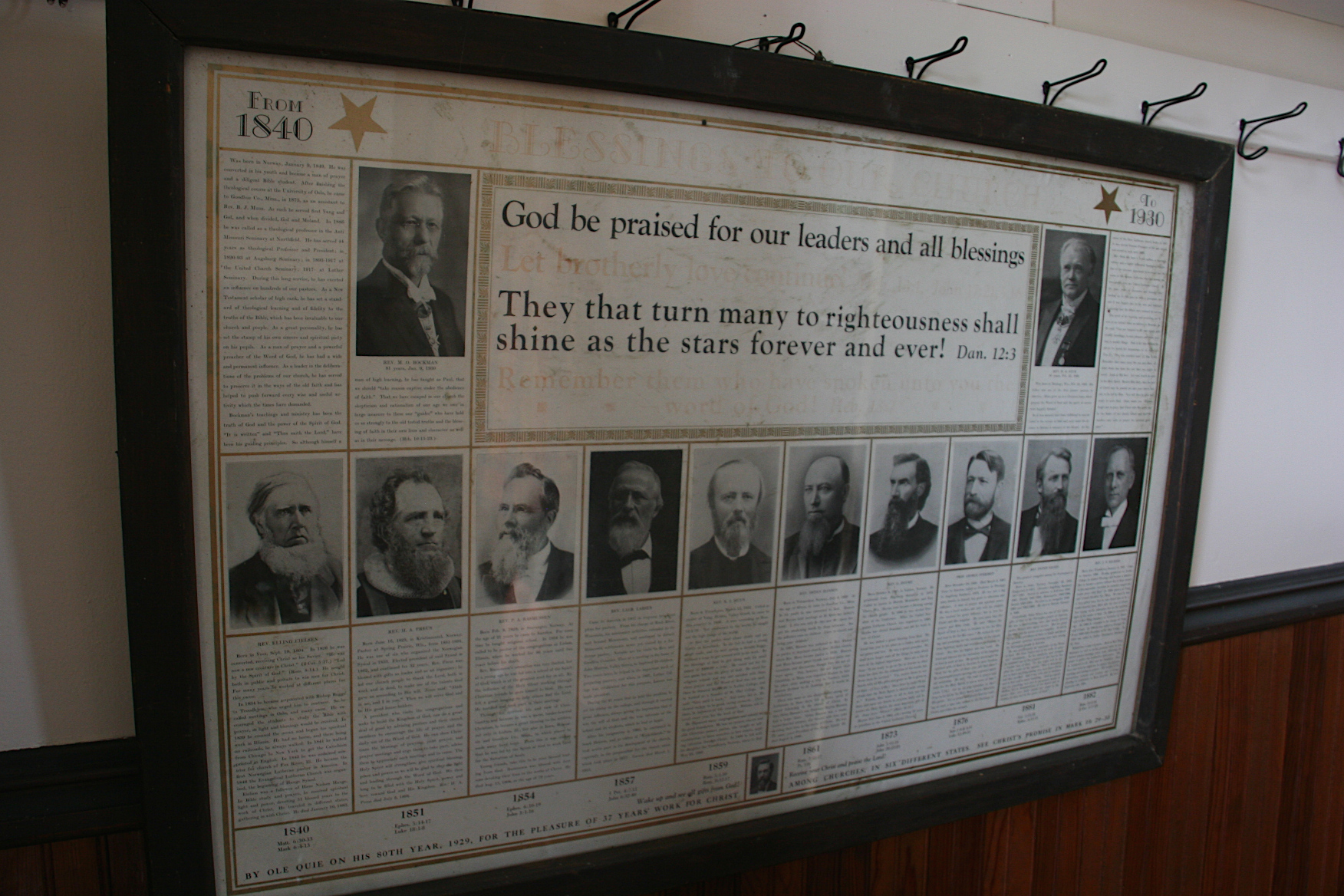
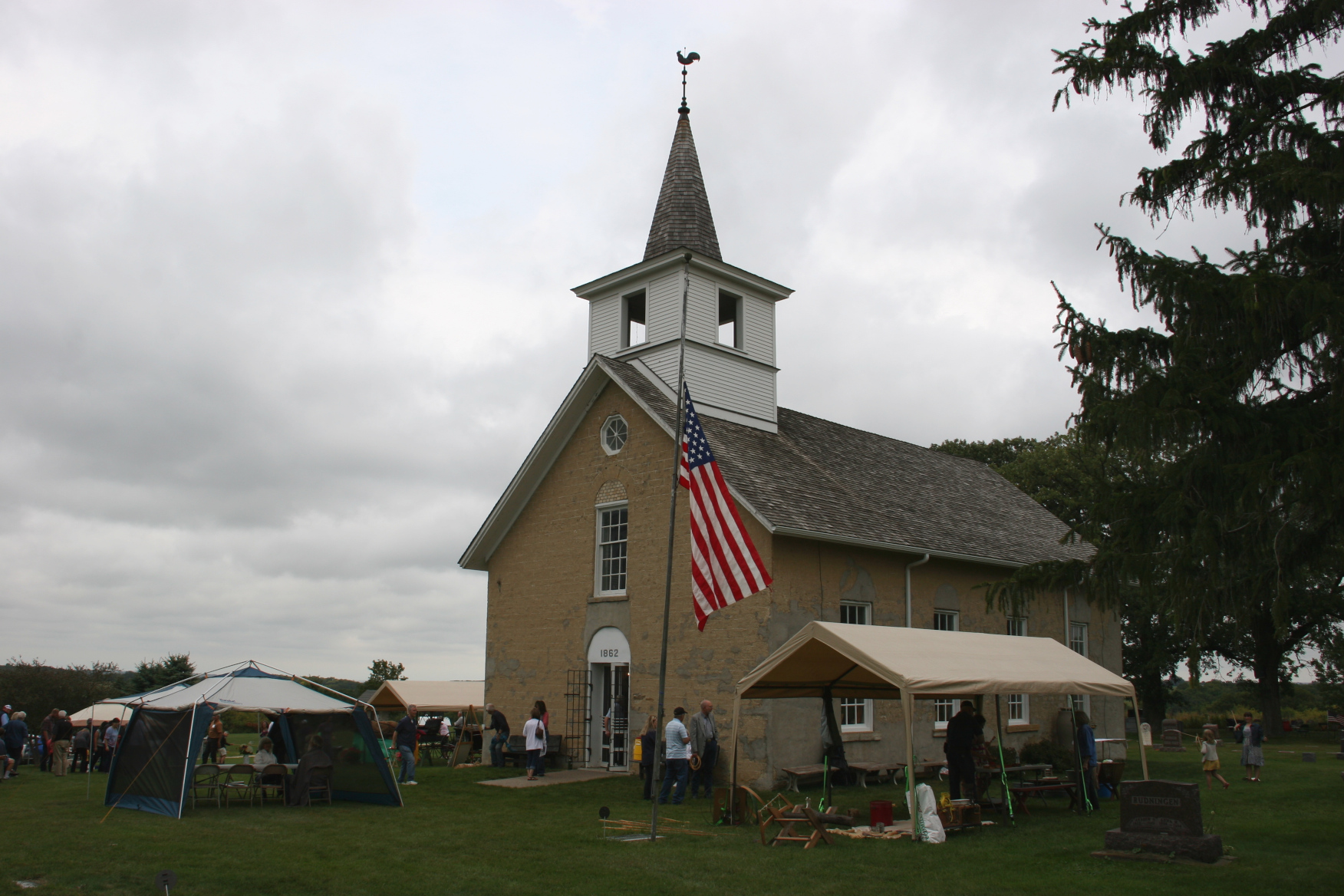
Recently I attended the Valley Grove Country Social in rural Rice County. This event, hosted by the Valley Grove Preservation Society, celebrates the history, heritage, land and people rooted to two hilltop Norwegian churches with adjoining cemetery and restored prairie. One of the first pastors here founded St. Olaf College in nearby Northfield.
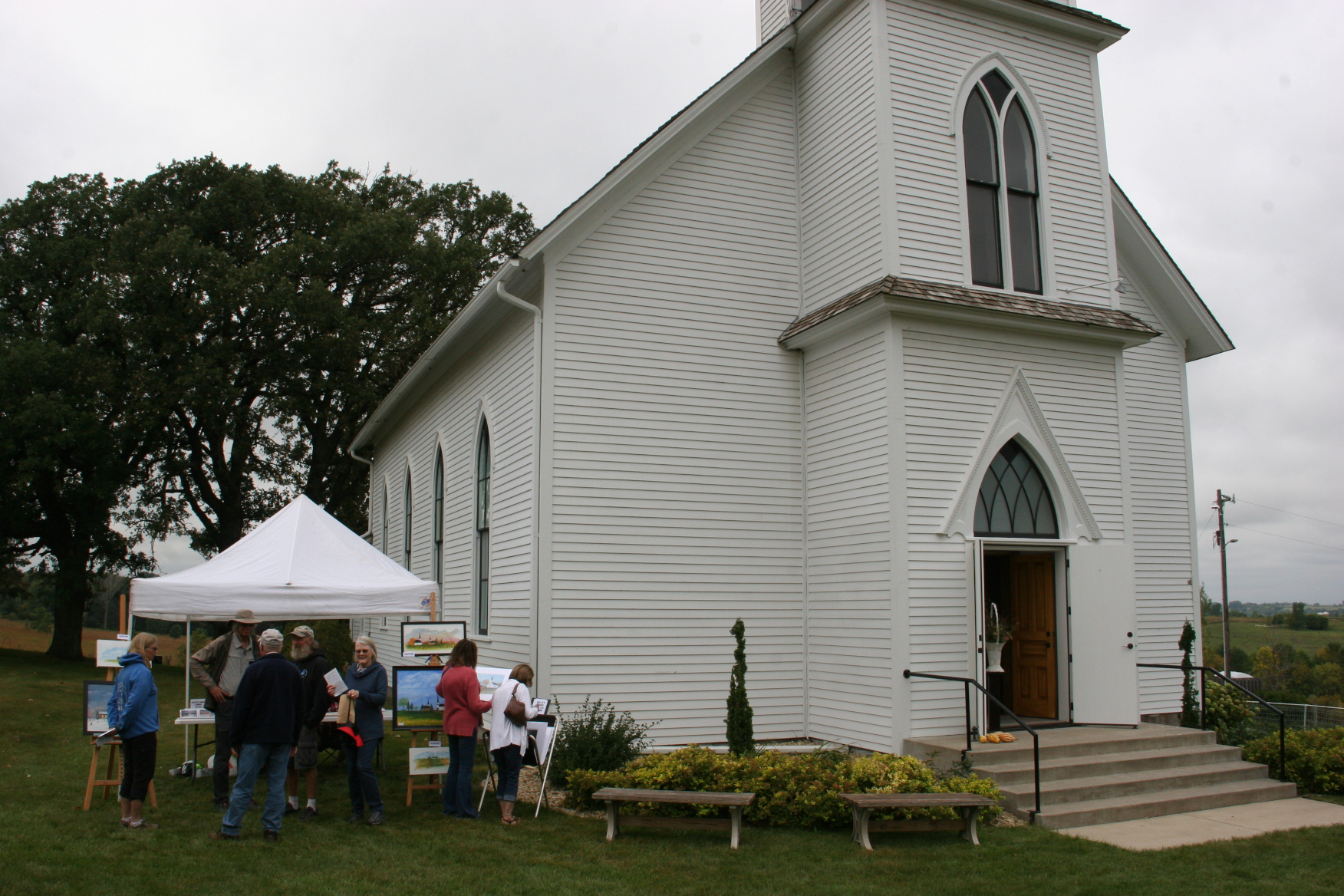
Folks gather outside the 1894 church to converse and to view the art of David F. Allen. (Minnesota Prairie Roots copyrighted photo September 2022)
Many people from my area hold this place dear and that shows in the upkeep of the 1862 stone church and the 1894 wood church rising high above a landscape of prairie, farm fields and wooded areas near Nerstrand Big Woods State Park.
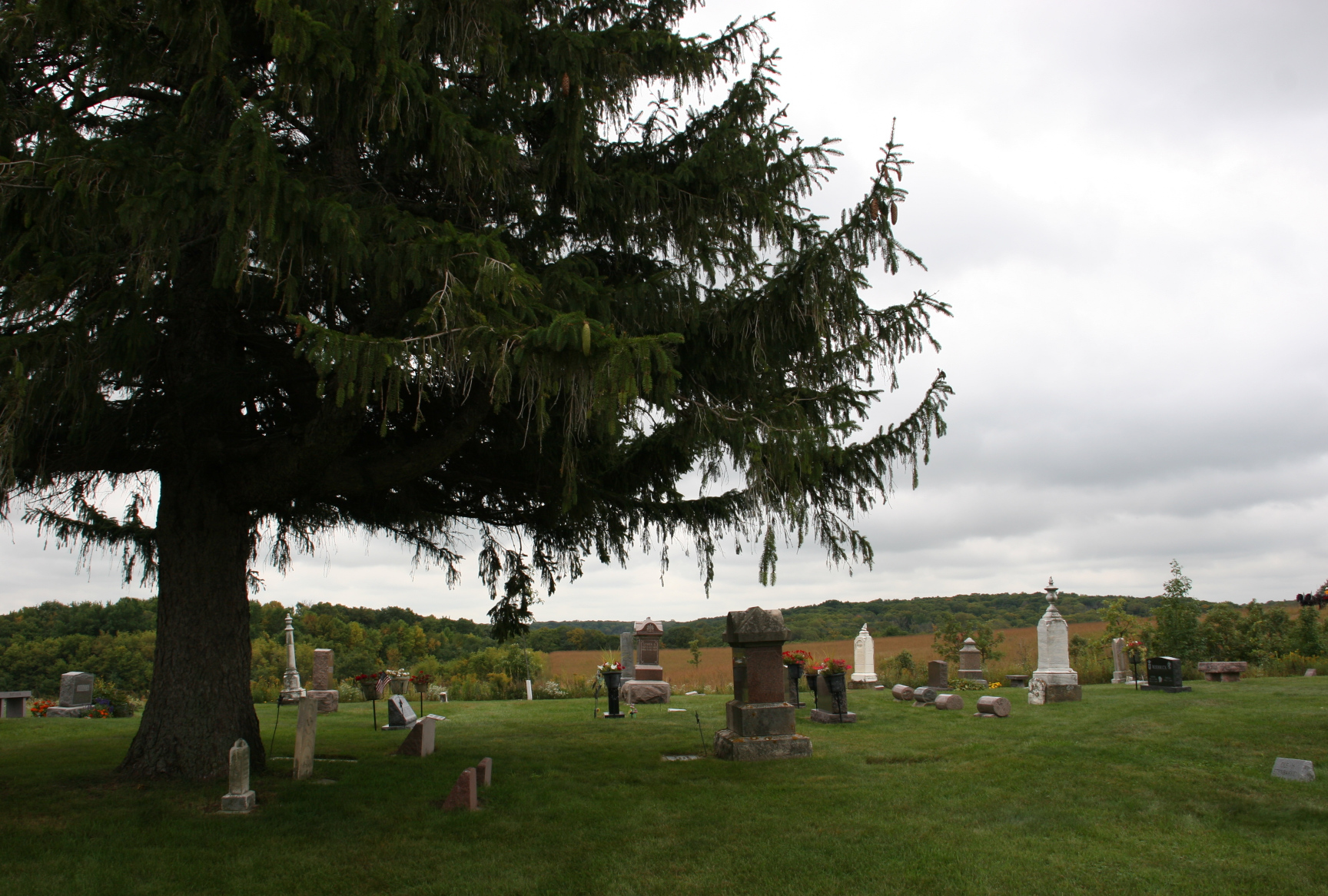
A section of the cemetery looking toward the rolling prairie land. The Social included tours of the cemetery and of the prairie. (Minnesota Prairie Roots copyrighted photo September 2022)
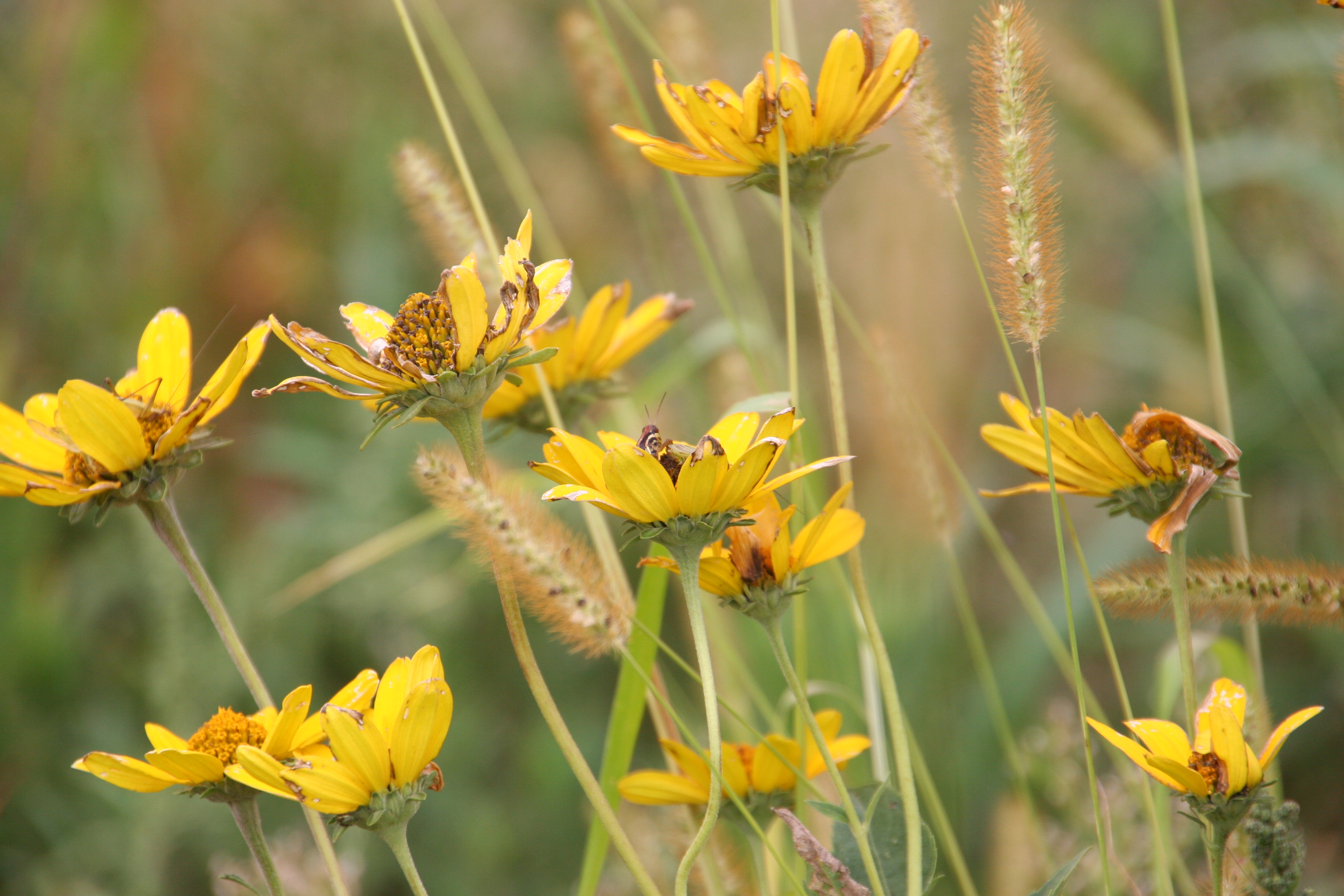
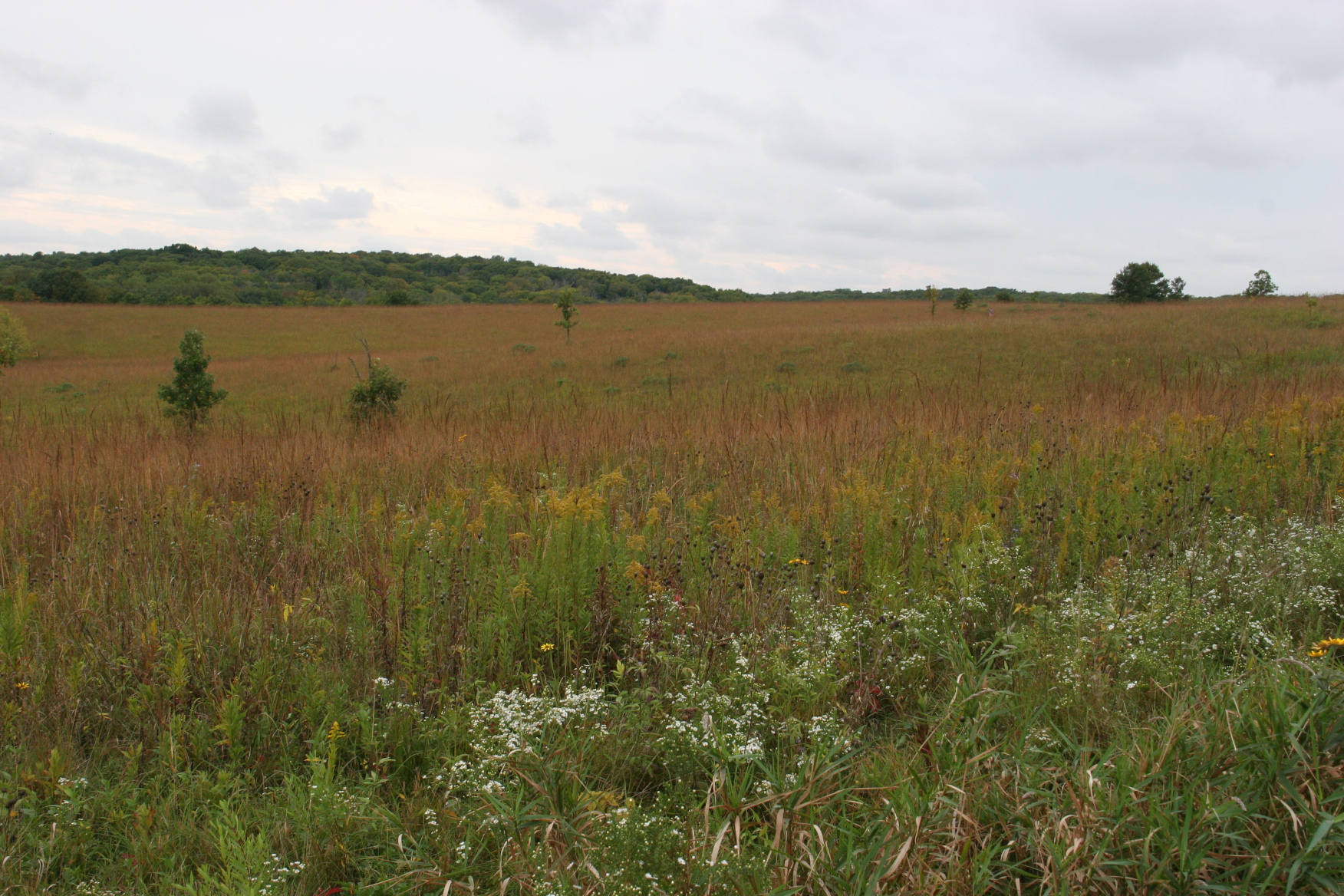
A prairie restoration project fills the prairie with wildflowers, grass and insects. (Minnesota Prairie Roots copyrighted photo September 2022)
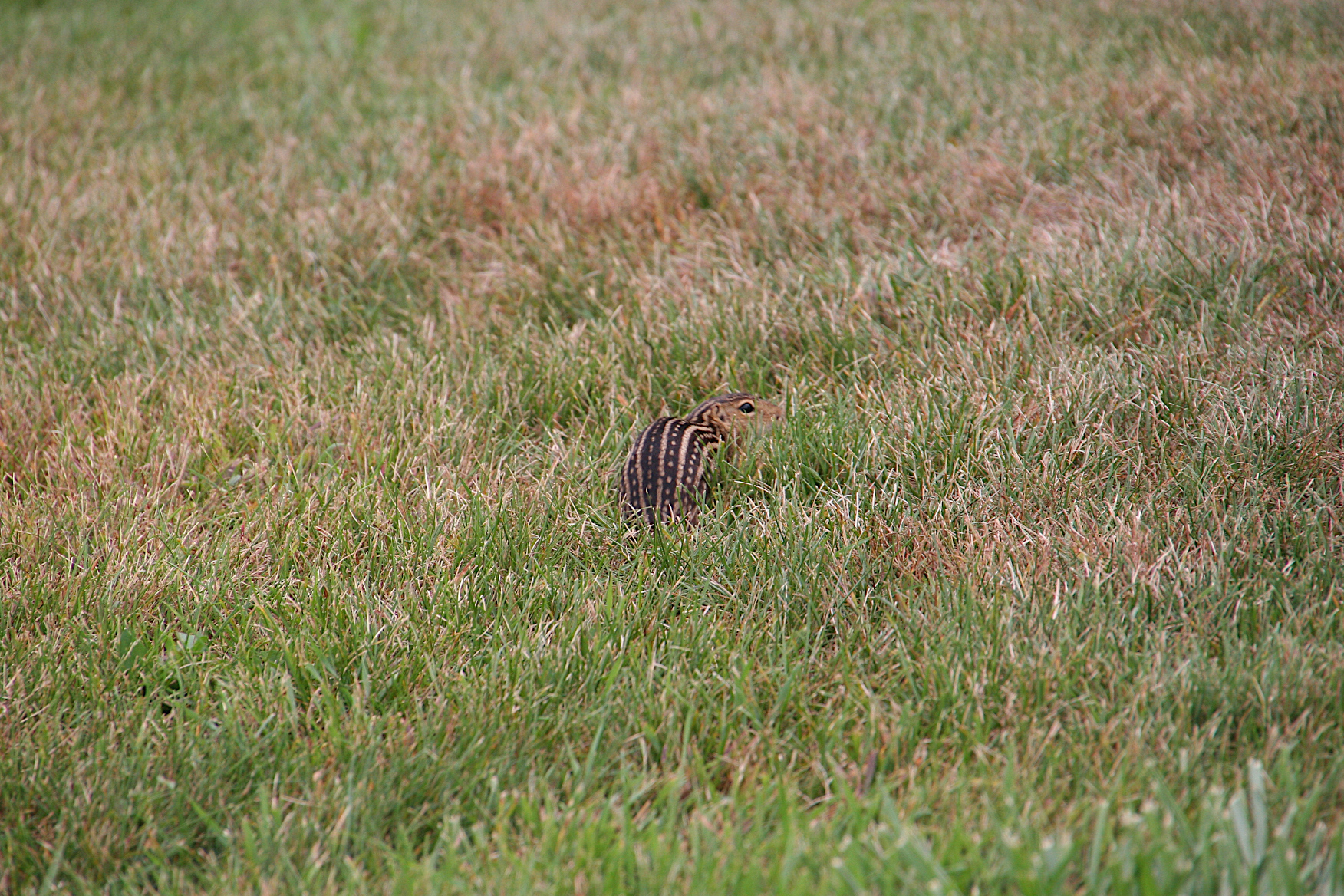
This striped gopher ran across the cemetery lawn before popping into a hole. (Minnesota Prairie Roots copyrighted photo September 2022)
I, too, despite no personal connection to Valley Grove, have come to hold this site dear. I appreciate the historic churches and cemetery and the surrounding landscape. And I also appreciate gatherings like the Country Social.
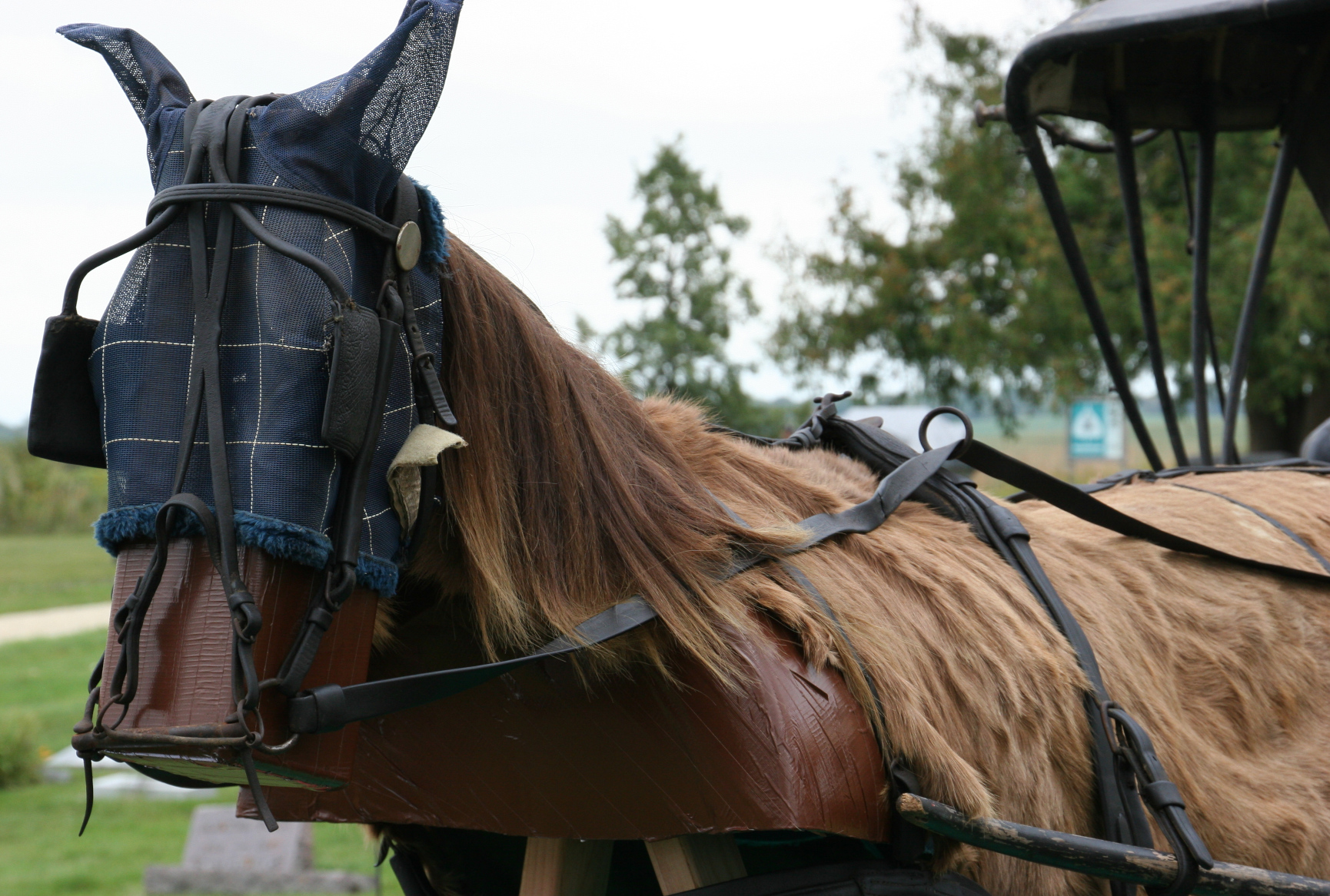
This prop horse harnessed to a buggy features a horse hide blanket. (Minnesota Prairie Roots copyrighted photo September 2022)
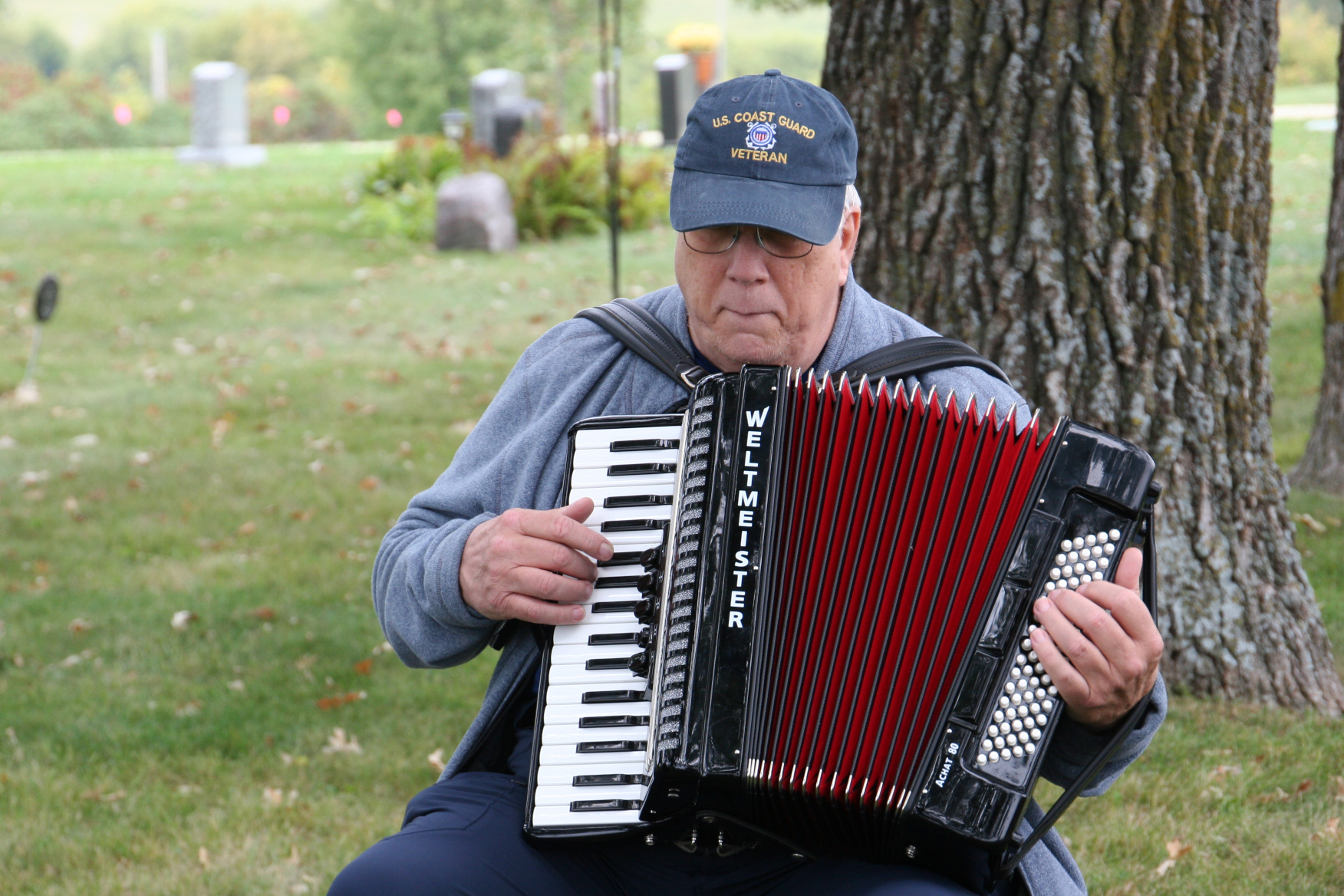
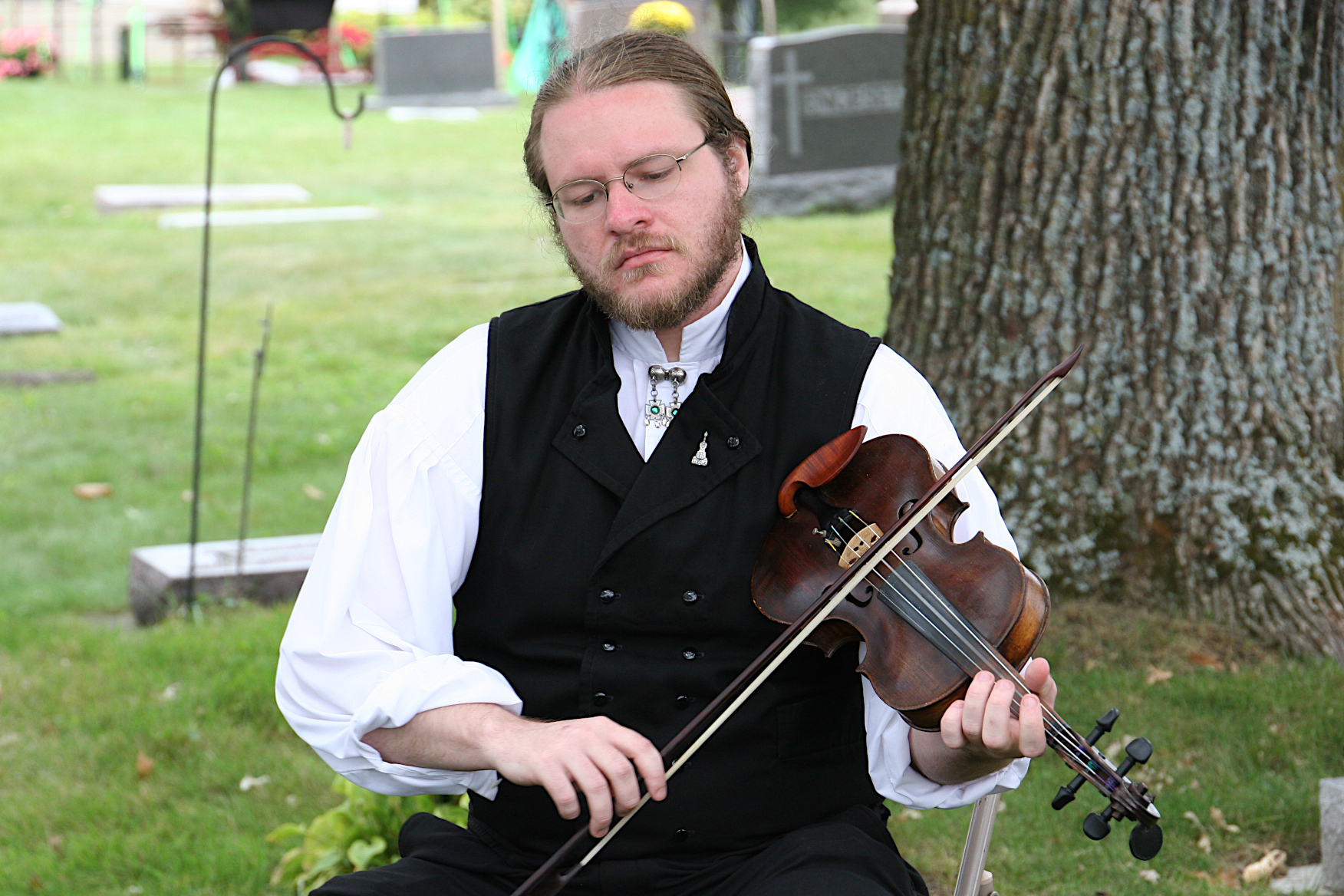
An accordion players plays with Hutenanny under the oaks in the cemetery. (Minnesota Prairie Roots copyrighted photo September 2022)
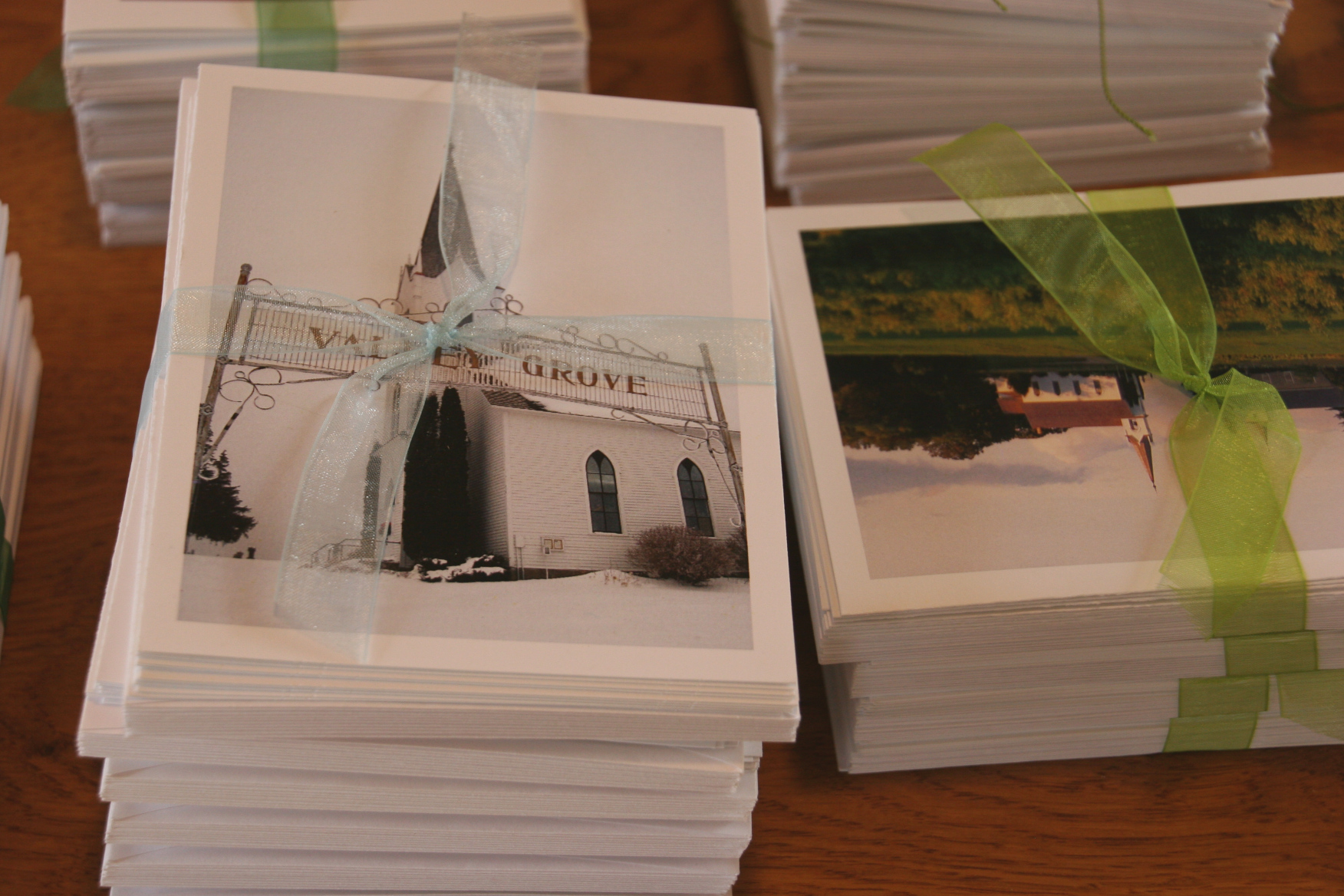
Ribbon-tied notecards for sale in the stone church. (Minnesota Prairie Roots copyrighted photo September 2022)
This Social showcases Valley Grove in a way that stretches beyond history, although that decidedly focuses the celebration. Music and art and hands-on activities weave into the all of it.
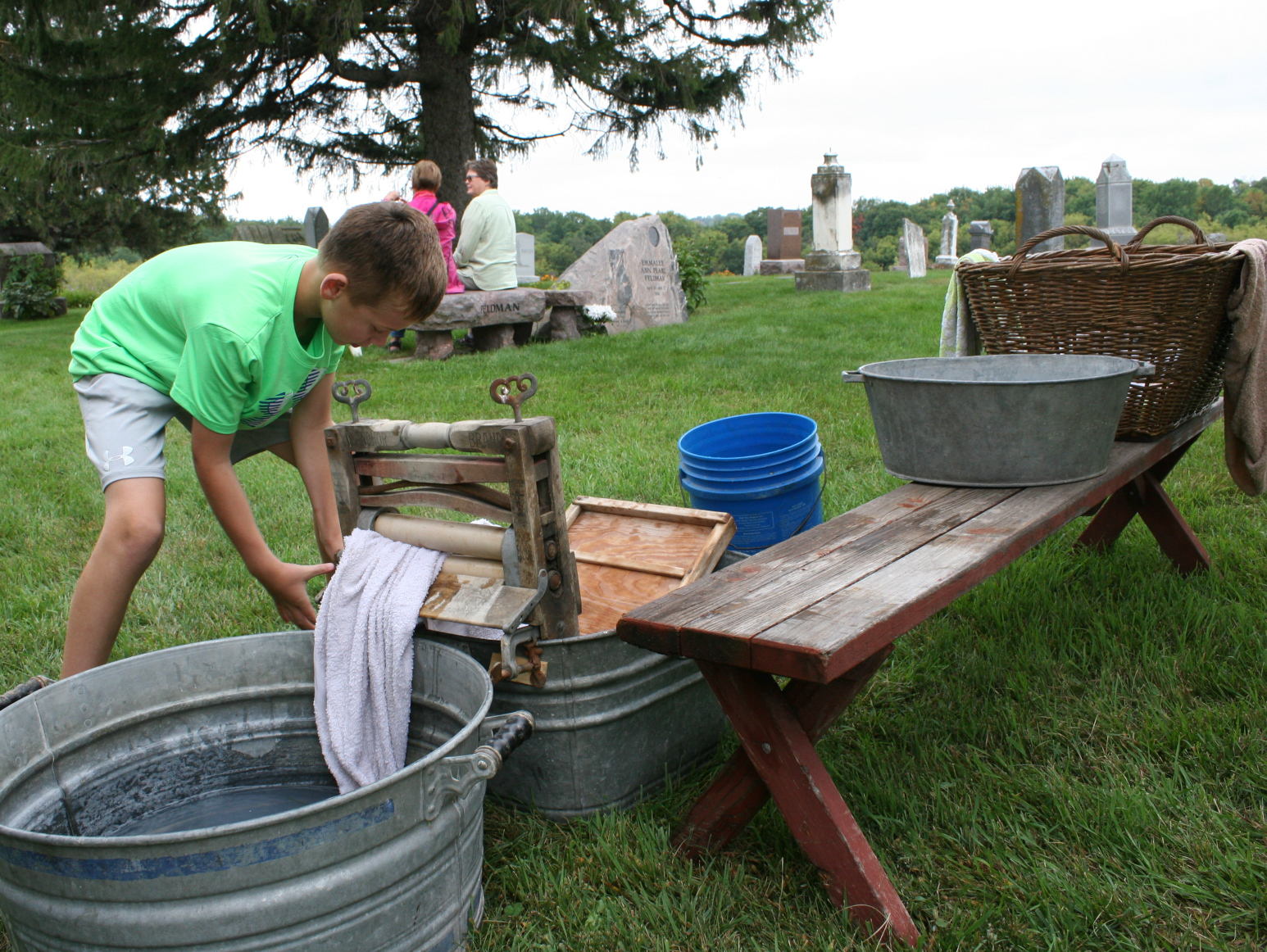
Doing laundry the old-fashioned way. (Minnesota Prairie Roots copyrighted photo September 2022)
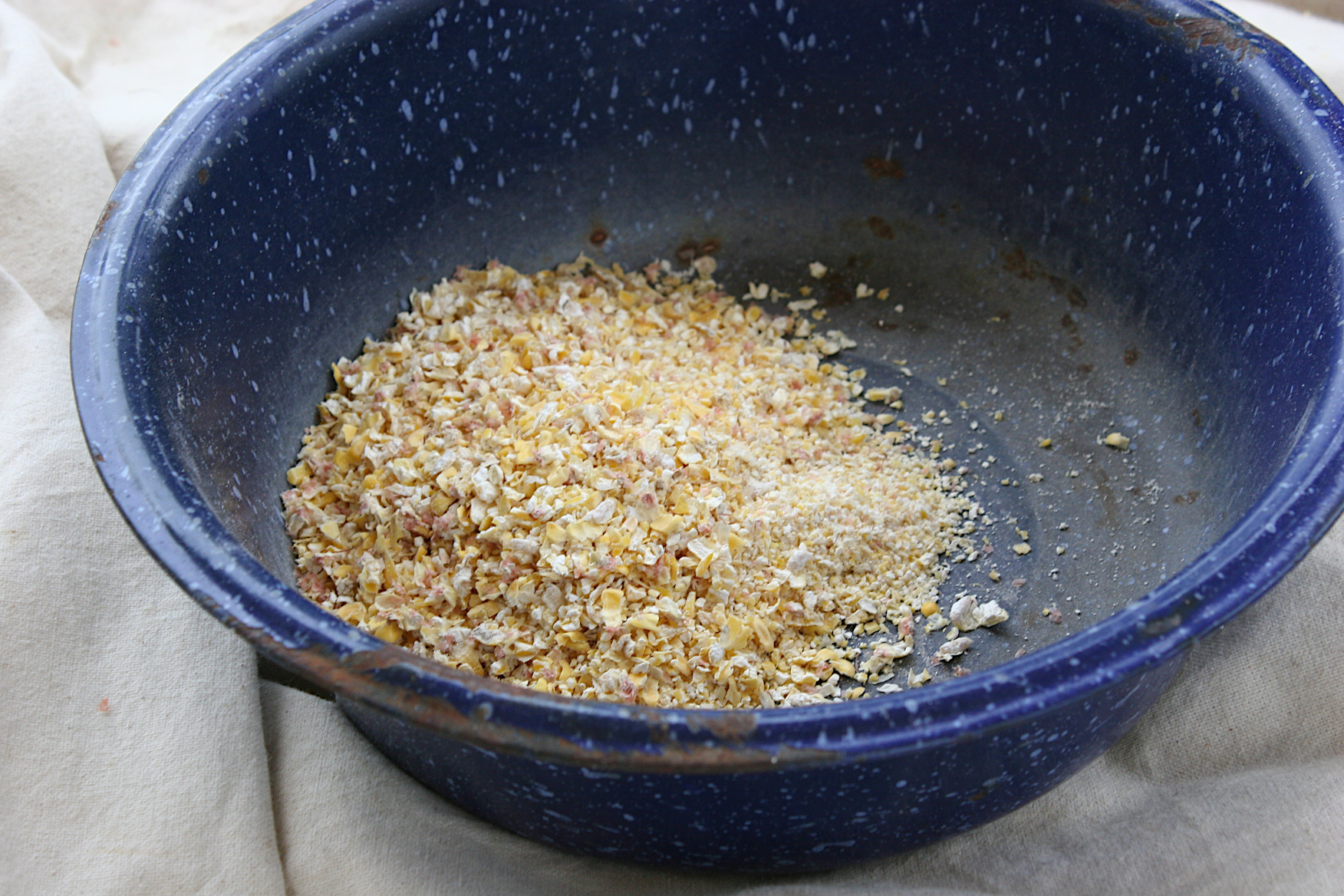
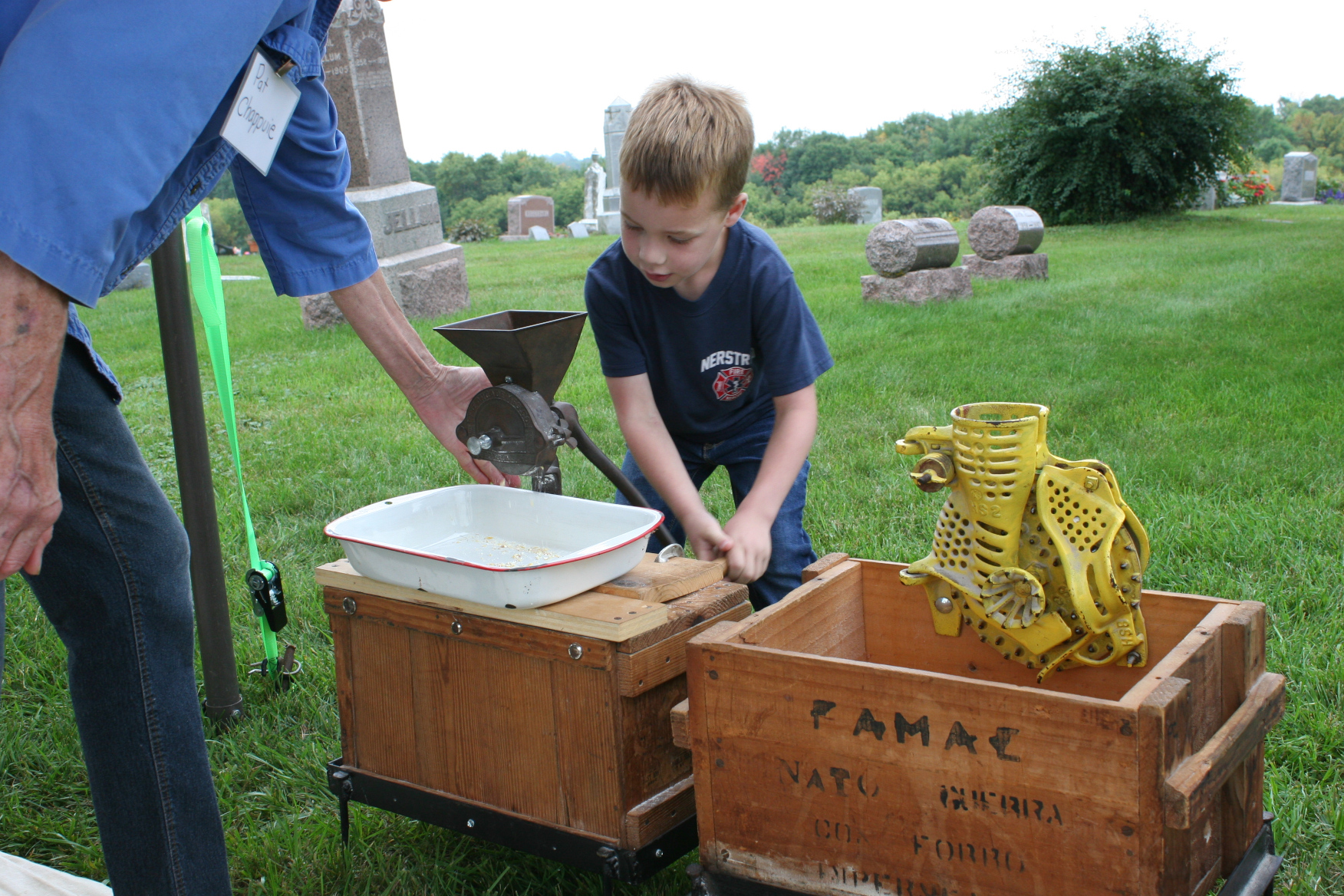
Corn ground at the Social. (Minnesota Prairie Roots copyrighted photo September 2022)
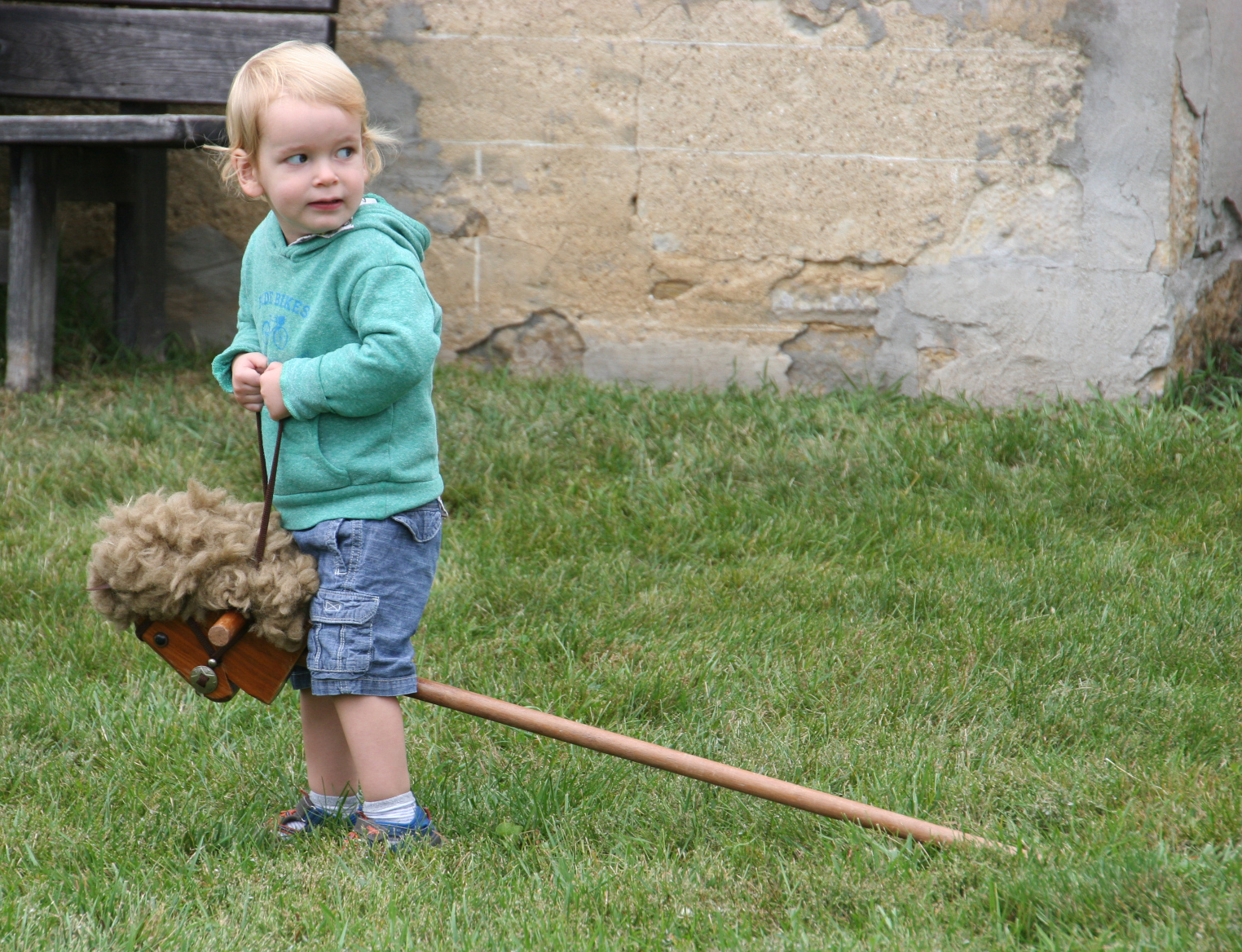
Toys like this stick horse were available for kids to use. (Minnesota Prairie Roots copyrighted photo September 2022)
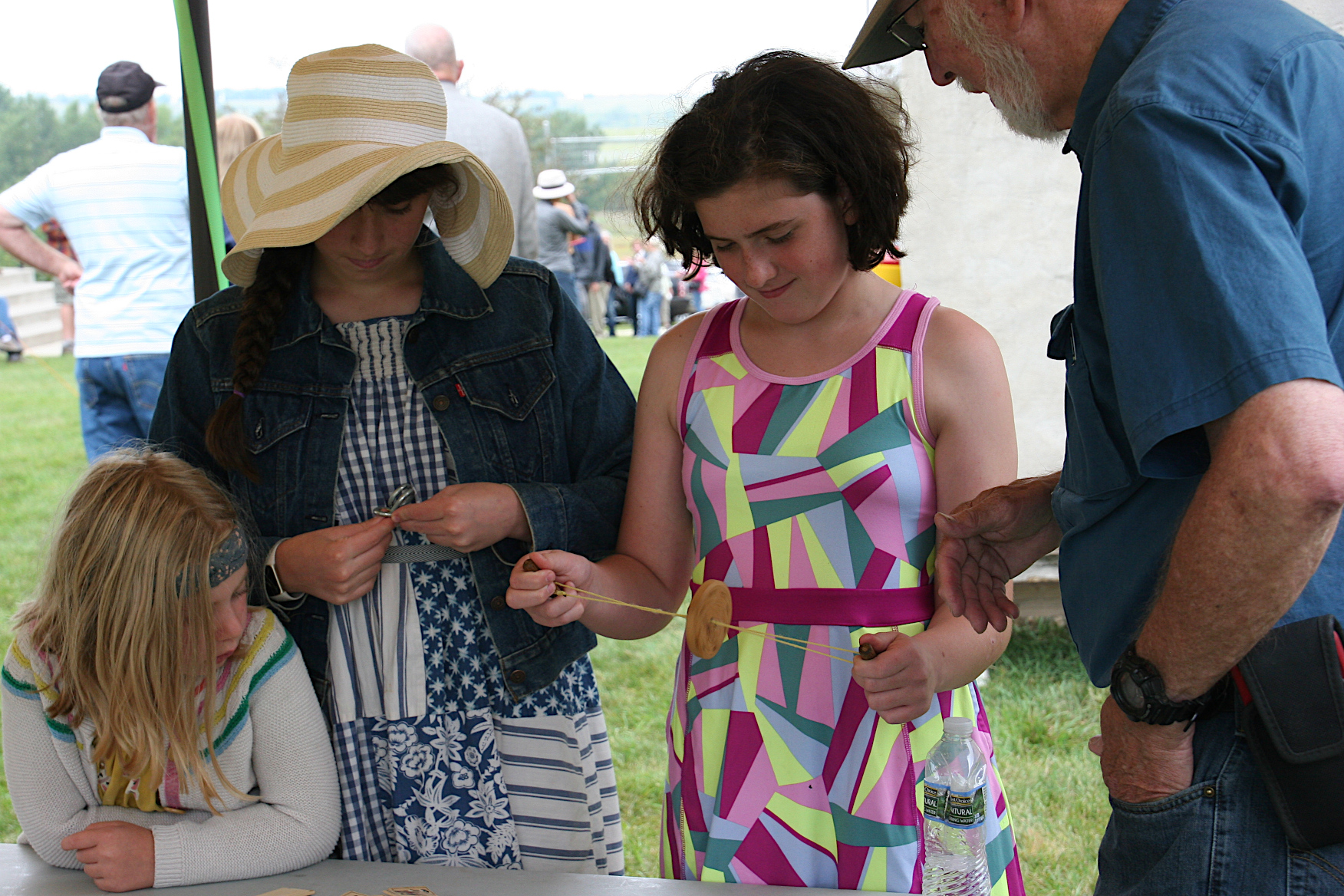
I love to see adults and youngsters engaging, conversing, teaching, learning. The younger generation will one day carry on with events like this and with the preservation of history and heritage at Valley Grove. So offering hands-on activities like rope-making, corn grinding, doing laundry, playing with yesteryear toys…is vital.
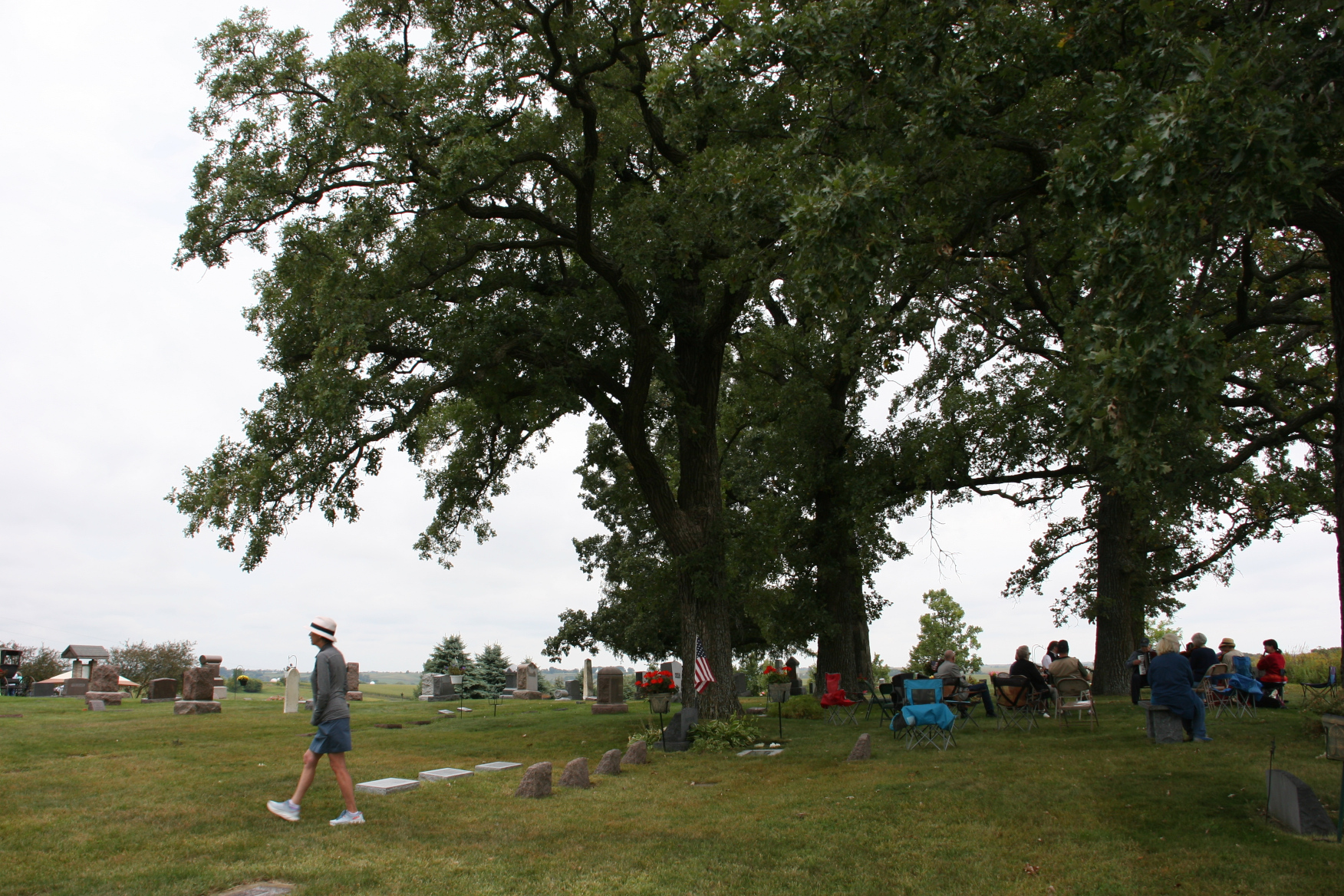
Musicians perform under the oaks while Social attendees listen and/ore explore the cemetery. (Minnesota Prairie Roots copyrighted photo September 2022)
While I was persuaded to wind twine into a rope with Randy, I simply observed the other participatory activities. I prefer to meander unobtrusively (not always easy) with my camera, observing, documenting. I strive to tell a story that will encourage others to embrace events and places like Valley Grove. There’s so much right here in Rice County to explore and experience. We need to treasure that which is in our backyard. Just like the “eat local” movement, I say, “Explore local.”
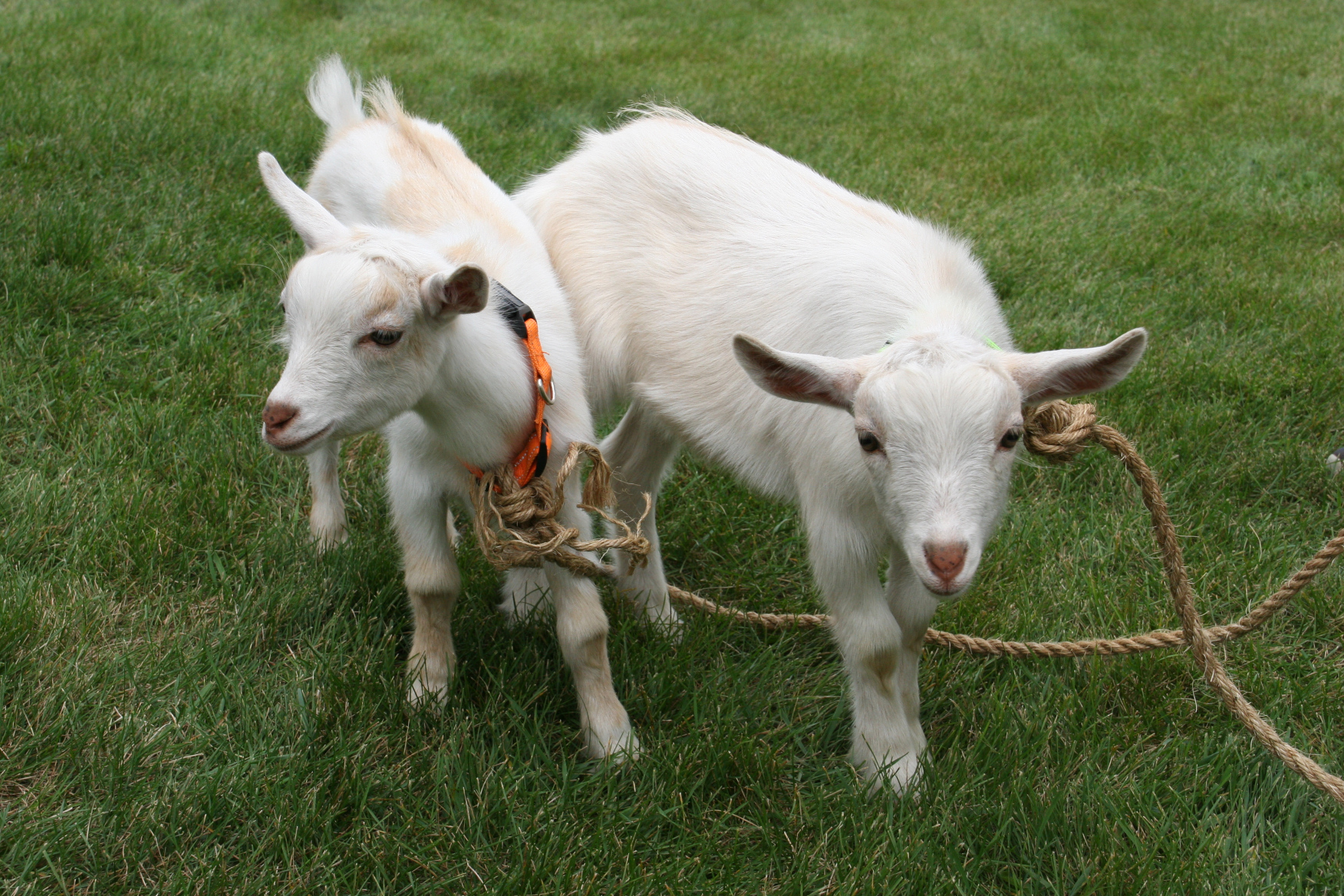
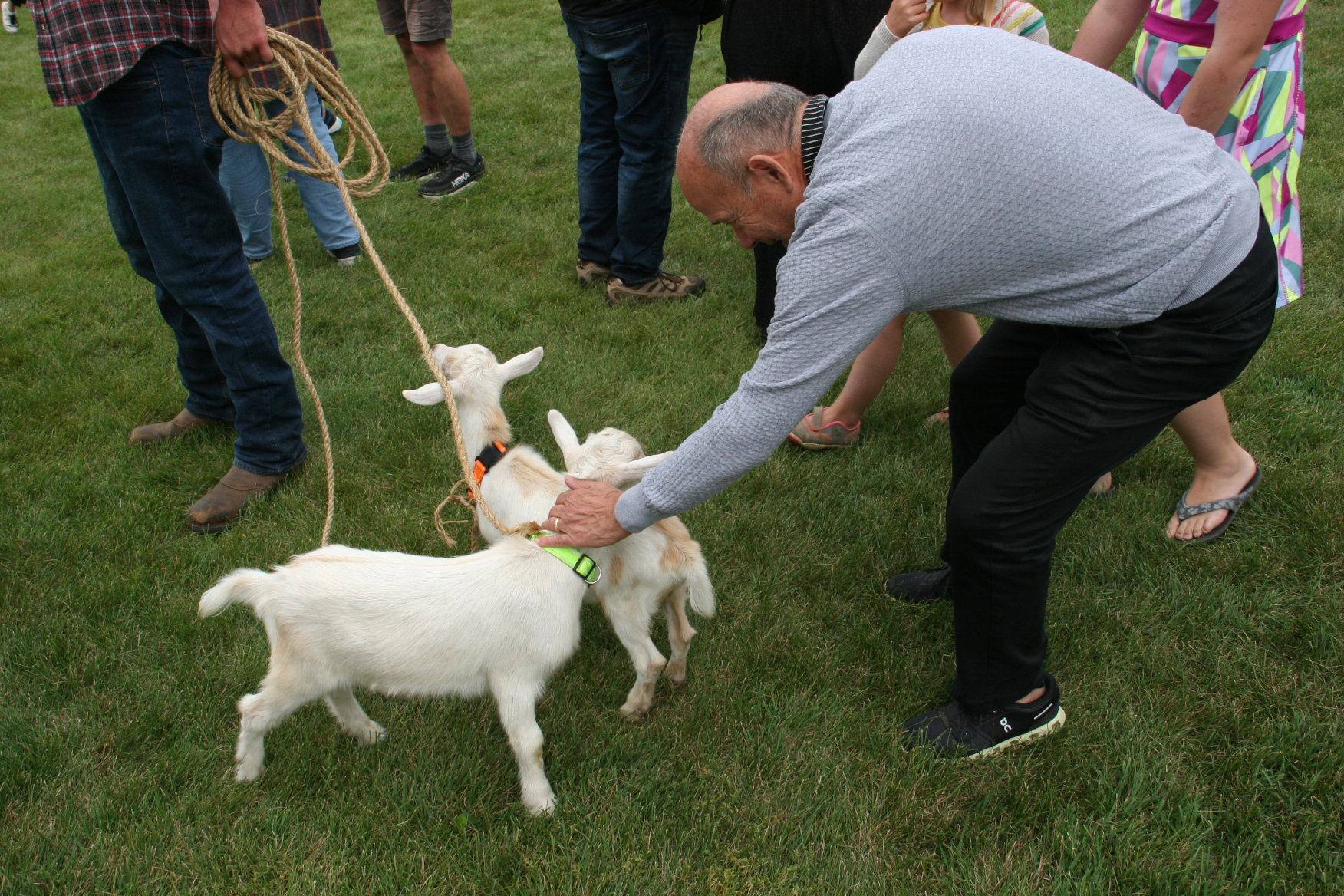
The goats drew lots of admirers as they wandered, tethered, with their owner. (Minnesota Prairie Roots copyrighted photo September 2022)
The kids’ tent, right, featured hands-on activities. (Minnesota Prairie Roots copyrighted photo September 2022)
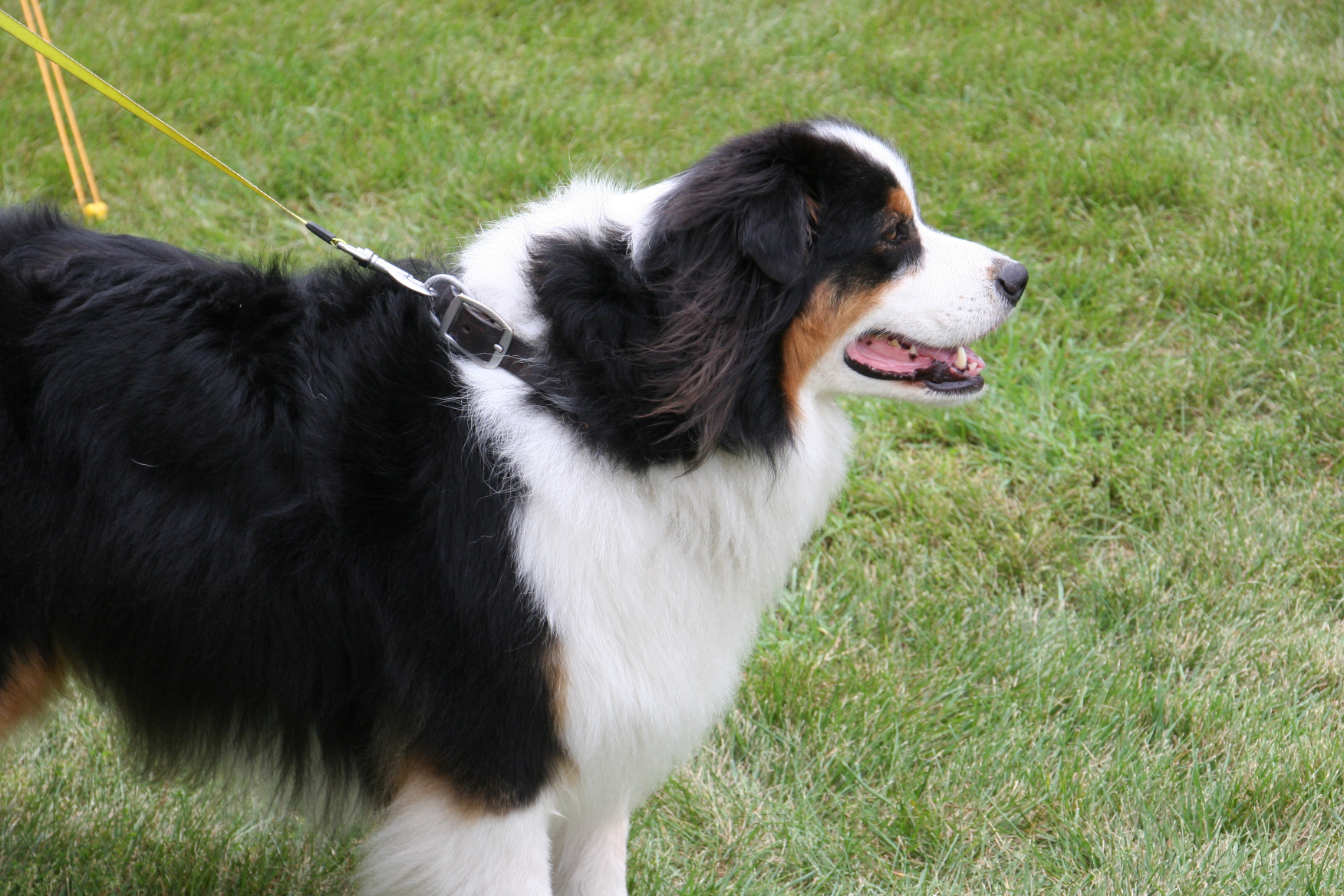
A leashed dog came with its owner. (Minnesota Prairie Roots copyrighted photo September 2022)
Much of what I feature here on my blog is local. And, if it isn’t, it’s rooted in my region. I value southern Minnesota, especially the small towns, the rural landscape, the people, the arts, the events…the all of it defining this place I call home.
TELL ME: What specific places and/or events do you appreciate where you live and which you feel go unnoticed by many locals?
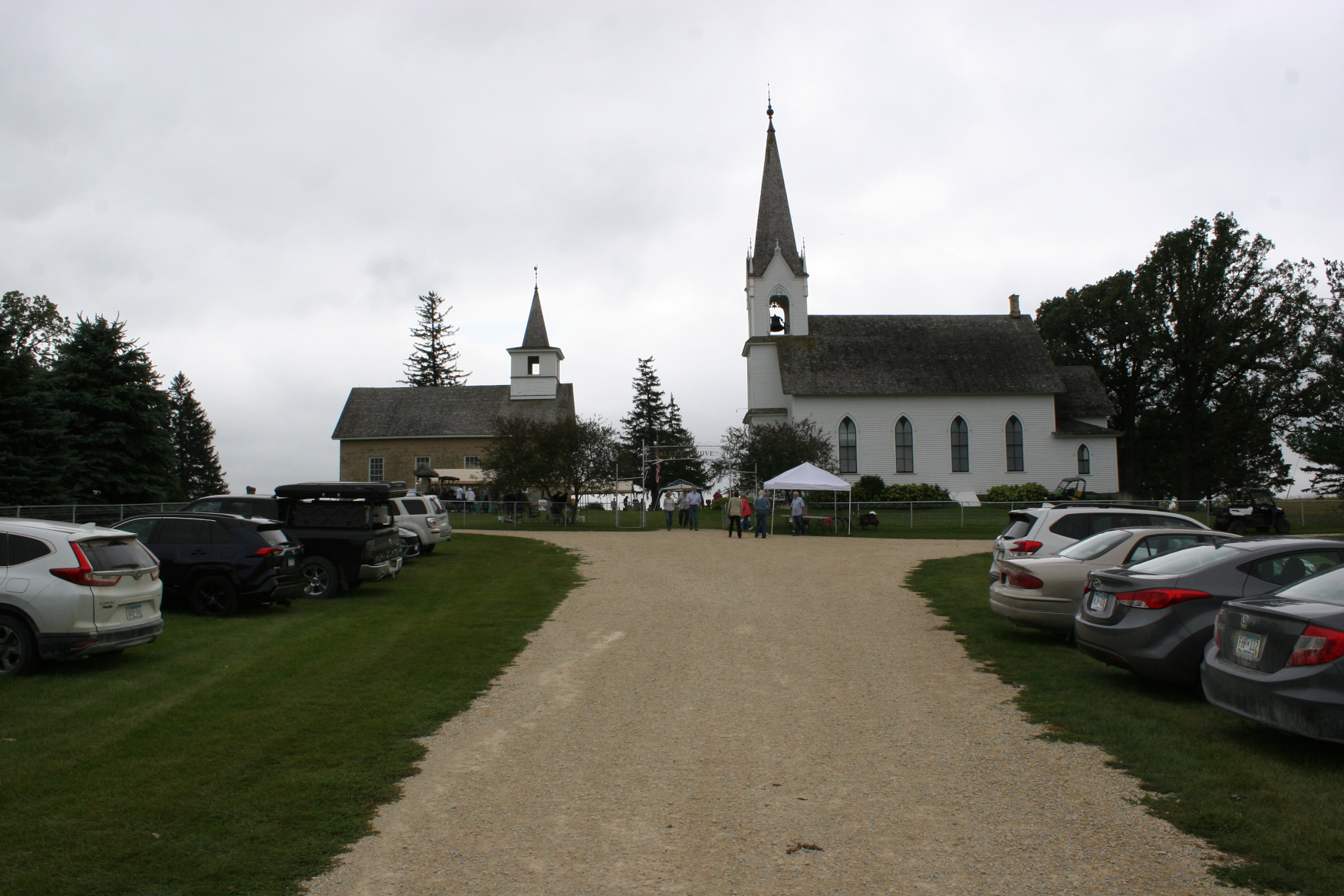
Vehicles line the gravel driveway leading to the hilltop Valley Grove churches, rural Nerstrand, during the September 18 Country Social. (Minnesota Prairie Roots copyrighted photo September 2022)
A COUNTRY SOCIAL EVOKES an essence of history, of community celebration, of activities that hearken to a bygone era. The Valley Grove Country Social held on Sunday afternoon high atop a hill near Nerstrand Big Woods State Park fits that and beyond. This site, the location of two historic churches and an adjoining cemetery, marks one of my favorite places in rural Rice County for its history, natural beauty and peace.
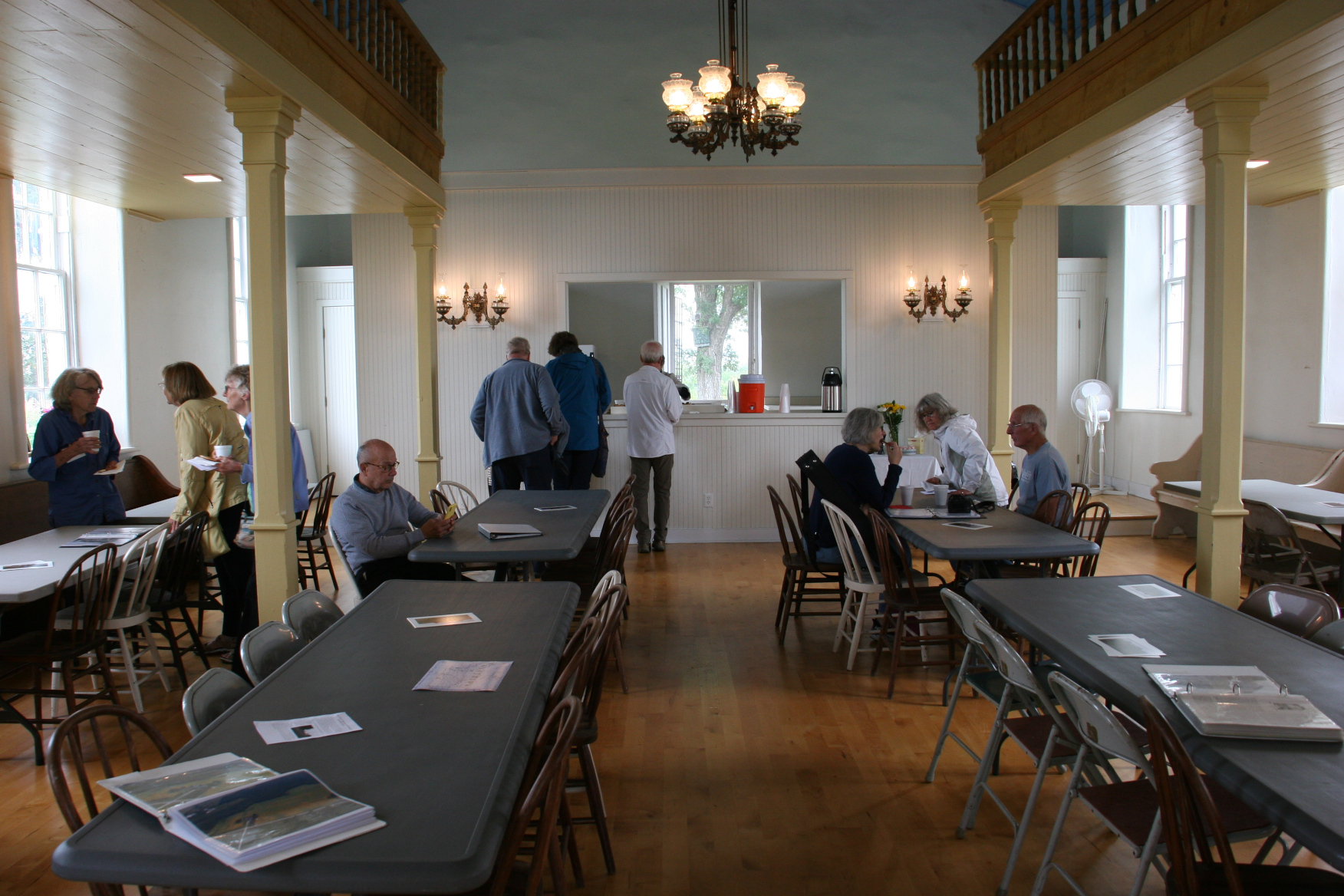
Inside the stone church, now used for fellowship, folks grab refreshments, converse and view historical information and art. (Minnesota Prairie Roots copyrighted photo September 2022)
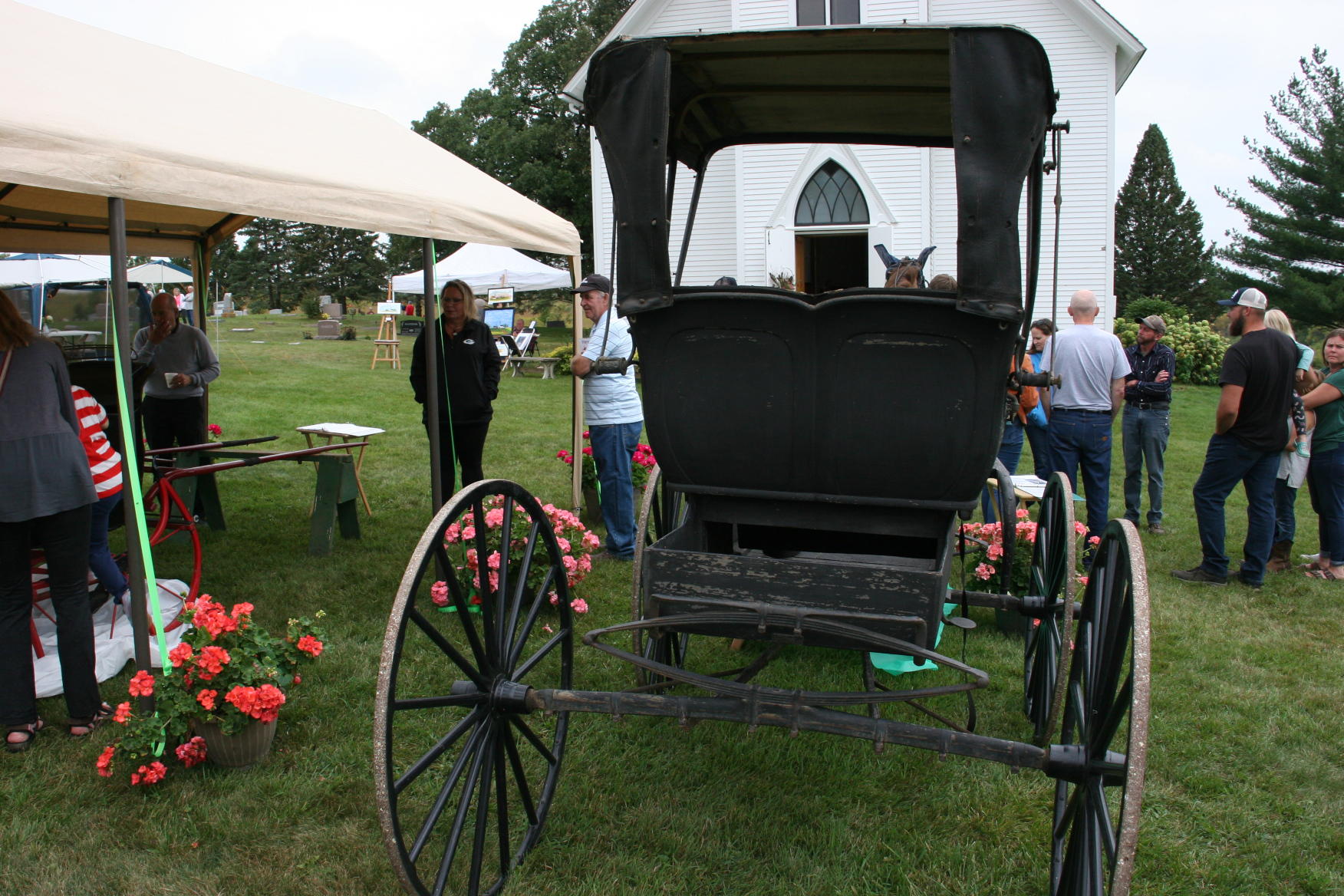
A vintage buggyadds another historic aspect to the Valley Grove Country Social. (Minnesota Prairie Roots copyrighted photo September 2022)
On this September afternoon, I delighted in an event that brings people together to celebrate Norwegian heritage and history, people and place, stories past and present, the arts, and, oh, so much more.
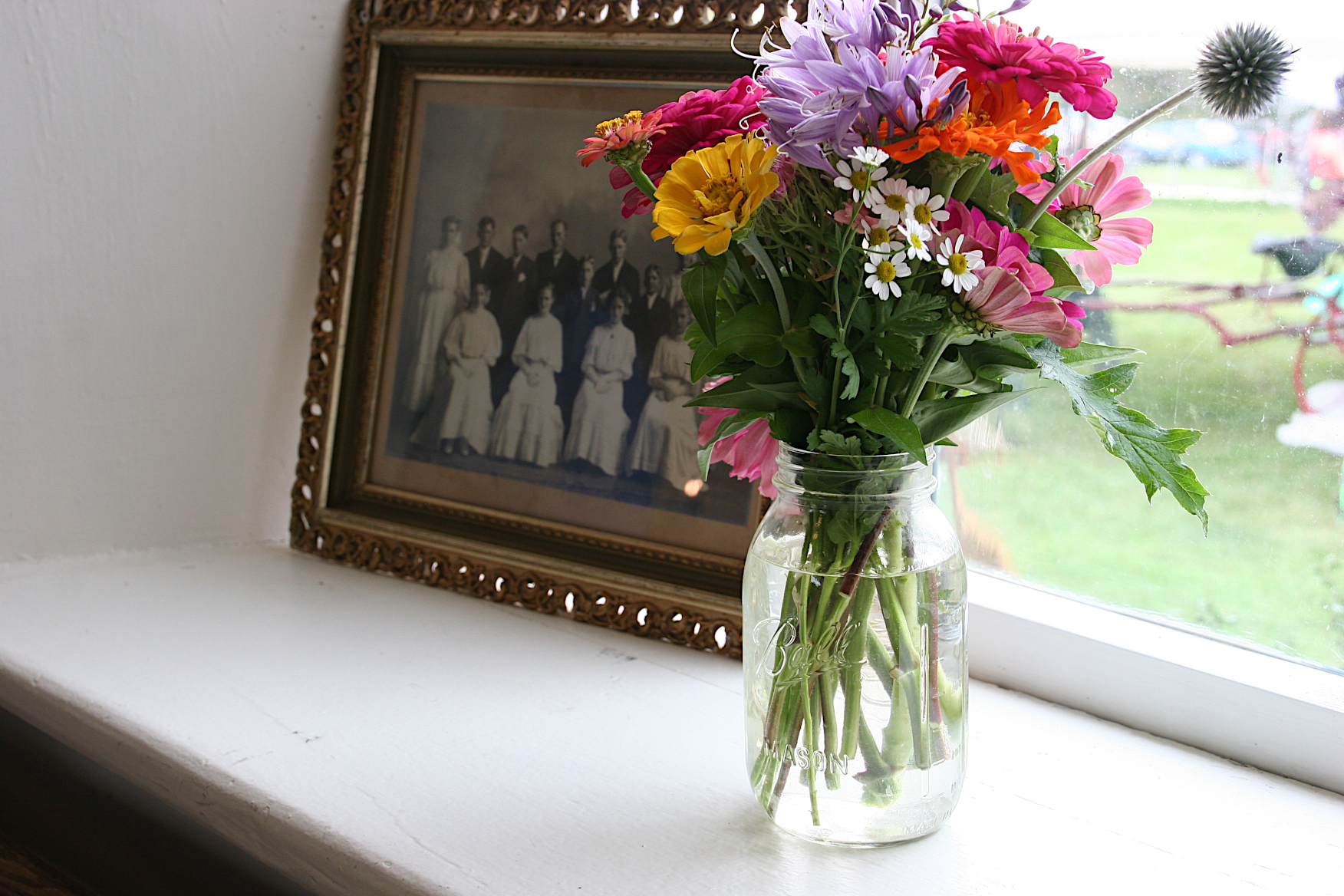
Bouquets and vintage photos edge window sillsin the oldest church. (Minnesota Prairie Roots copyrighted photo September 2022)
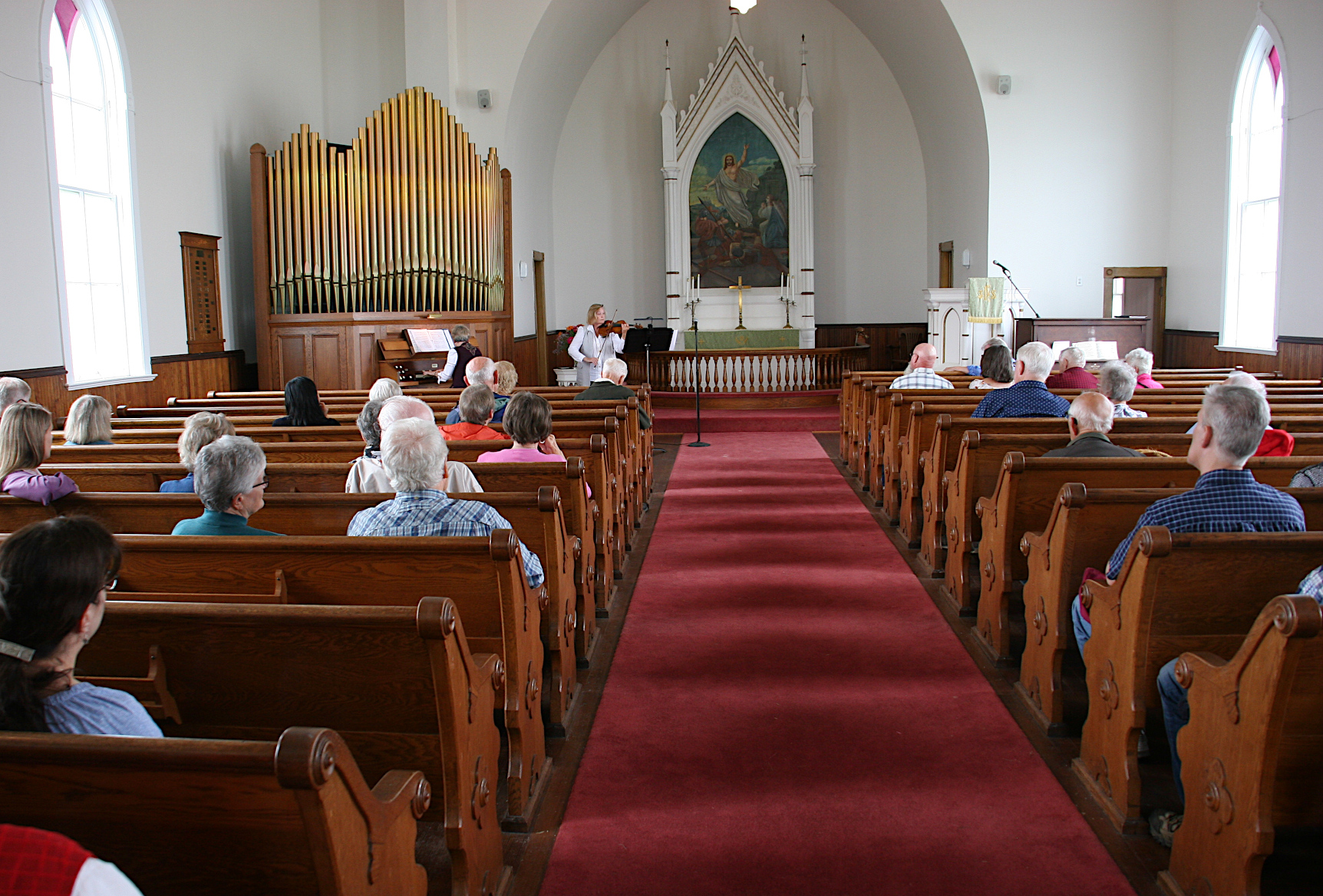
An organist and violinist play during a recital in the newer church. (Minnesota Prairie Roots copyrighted photo September 2022)
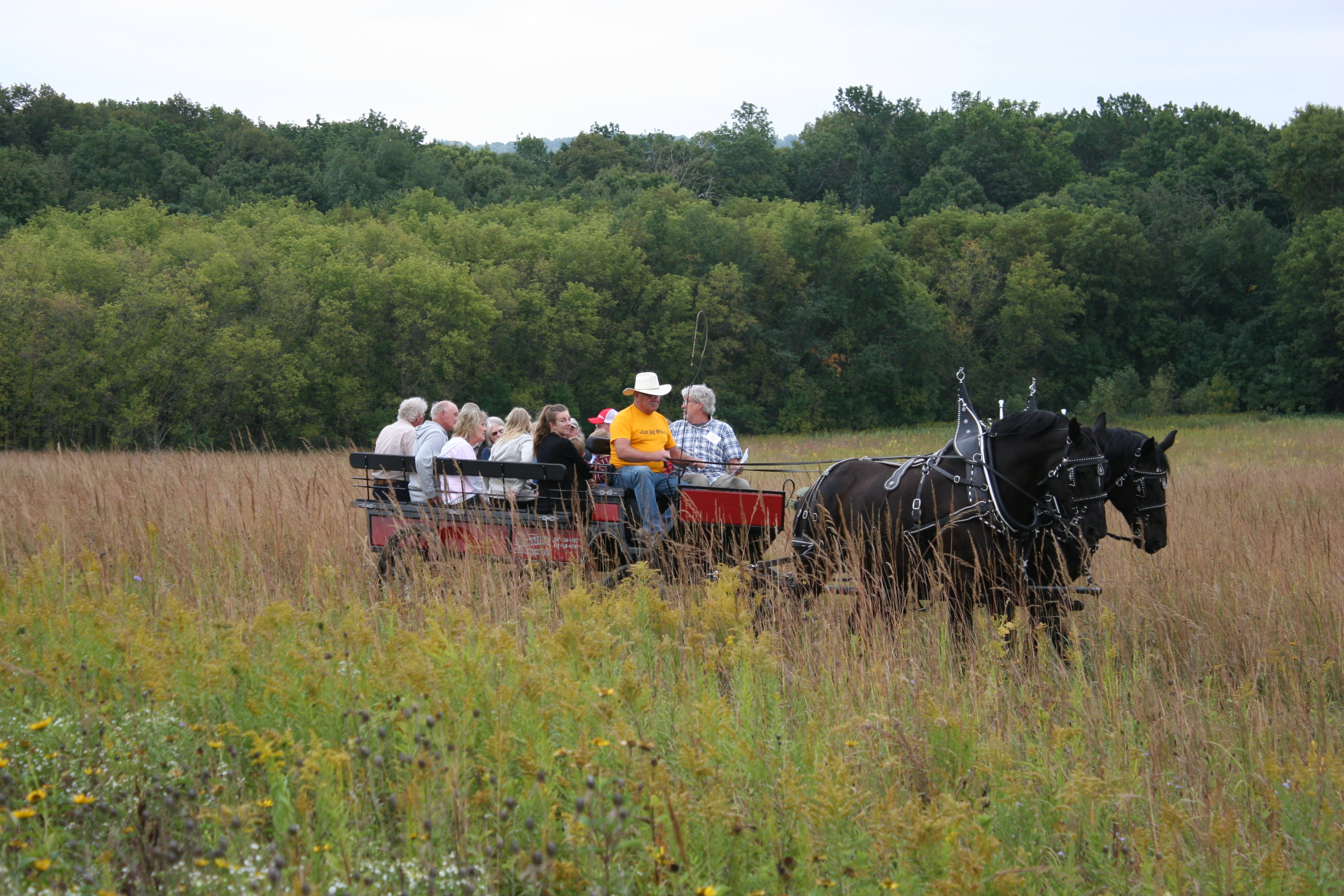
Horse-drawn wagon rides onto the prairie drew many passengers throughout the afternoon. (Minnesota Prairie Roots copyrighted photo September 2022)
Grinding corn as part of the hands-on learning opportunities. (Minnesota Prairie Roots copyrighted photo September 2022)
Northfield artist David Allen brought his brushes, watercolors and paper to paint on-site. (Minnesota Prairie Roots copyrighted photo September 2022)
From garden and prairie flowers tucked into Mason jars set atop window sills in the 1862 stone church to a recital inside the 1894 church to horse-drawn wagon rides to kids grinding corn to an artist painting, the scope of activities proved broad. There was something for everyone from the youngest to the eldest. Generations mingled, connected. One taught, the other learned.
From cemetery’s edge, the open prairie. (Minnesota Prairie Roots copyrighted photo September 2022)
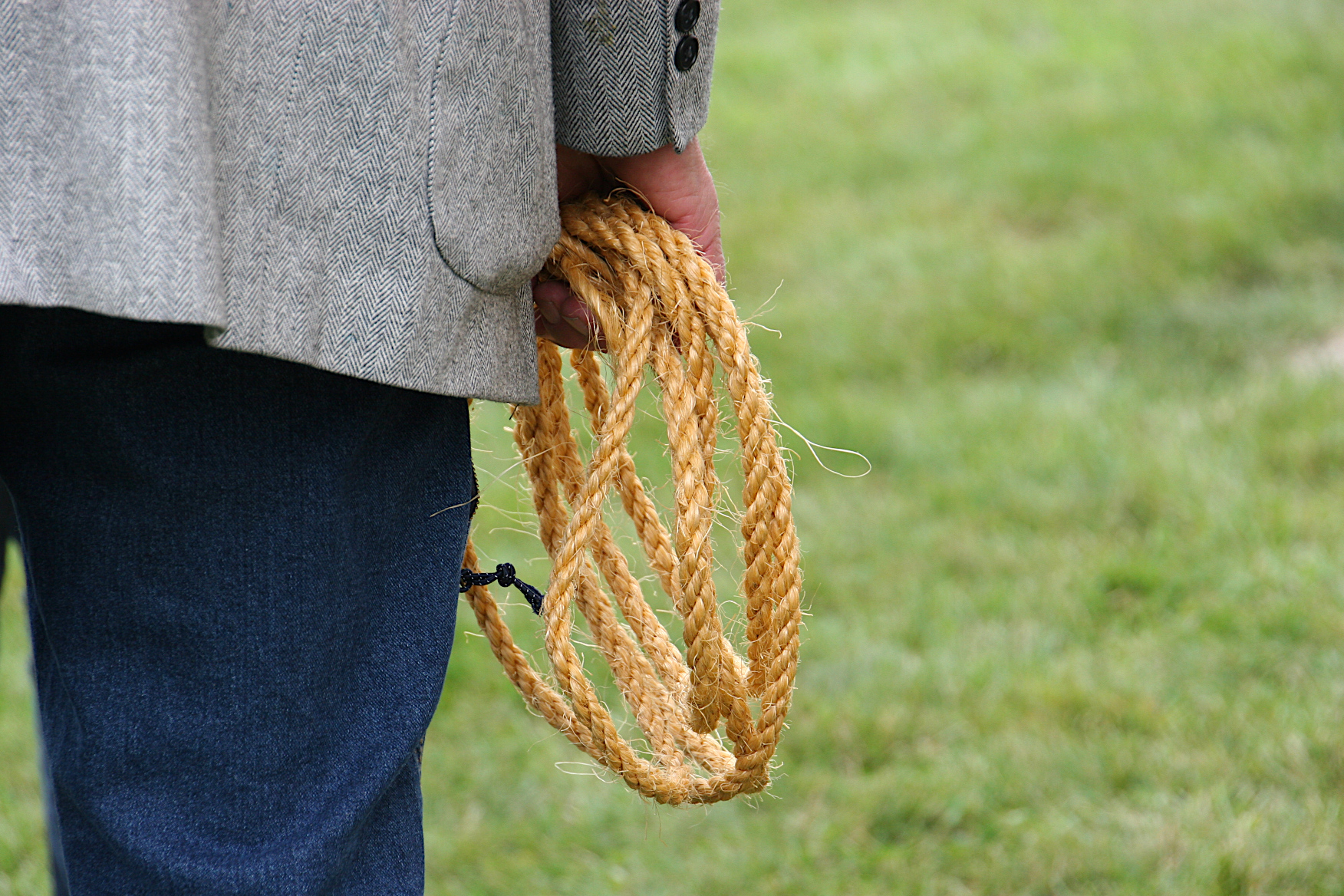
Rope making, a nod to Valley Grove’s agrarian roots, was part of the Country Social. (Minnesota Prairie Roots copyrighted photo September 2022)
All ages were drawn to these two goats. (Minnesota Prairie Roots copyrighted photo September 2022)
To observe, to converse, to listen, to feel, to experience all of this imprints upon my soul gratitude for those who know this place, this Valley Grove, is worth preserving and sharing. Although I hold no personal connection here, I feel connected. It is my faith, my love of the land, especially the surrounding prairie and farmland, and the quiet of this remote rural location which cause me to feel comfortably at home, at peace.
One of David Allen’s paintings of Valley Grove. (Minnesota Prairie Roots copyrighted photo September 2022)
If you’ve never visited Valley Grove and live near enough to tour, then do. I’ve been here many times to walk the cemetery and grounds, to hike through the prairie, even once sitting on the front steps of the wooden church for a picnic lunch. The churches are locked when not open for events or special services like a wedding or Christmas Eve worship.
A musician performs with the group Hutenanny under the oak trees in the cemetery.
Still, whether inside or outside the two churches, a sense of the past prevails. Gravestone after gravestone bears the names of Norwegian immigrants and their descendants. Study the markers and stories begin to emerge, whether real or imagined. I can only imagine the joys and sorrows shared here.
Toys of yesteryear were available to try. (Minnesota Prairie Roots copyrighted photo September 2022)
Valley Grove is about more than a place where historic churches stand next to a cemetery. It is a gathering spot for those who are celebrating, those who are grieving, those who are remembering and, on this afternoon of a Country Social, a place of connecting with community.
Shoppers peruse the RCHS Fall Flea Market. (Minnesota Prairie Roots copyrighted photo September 2022)
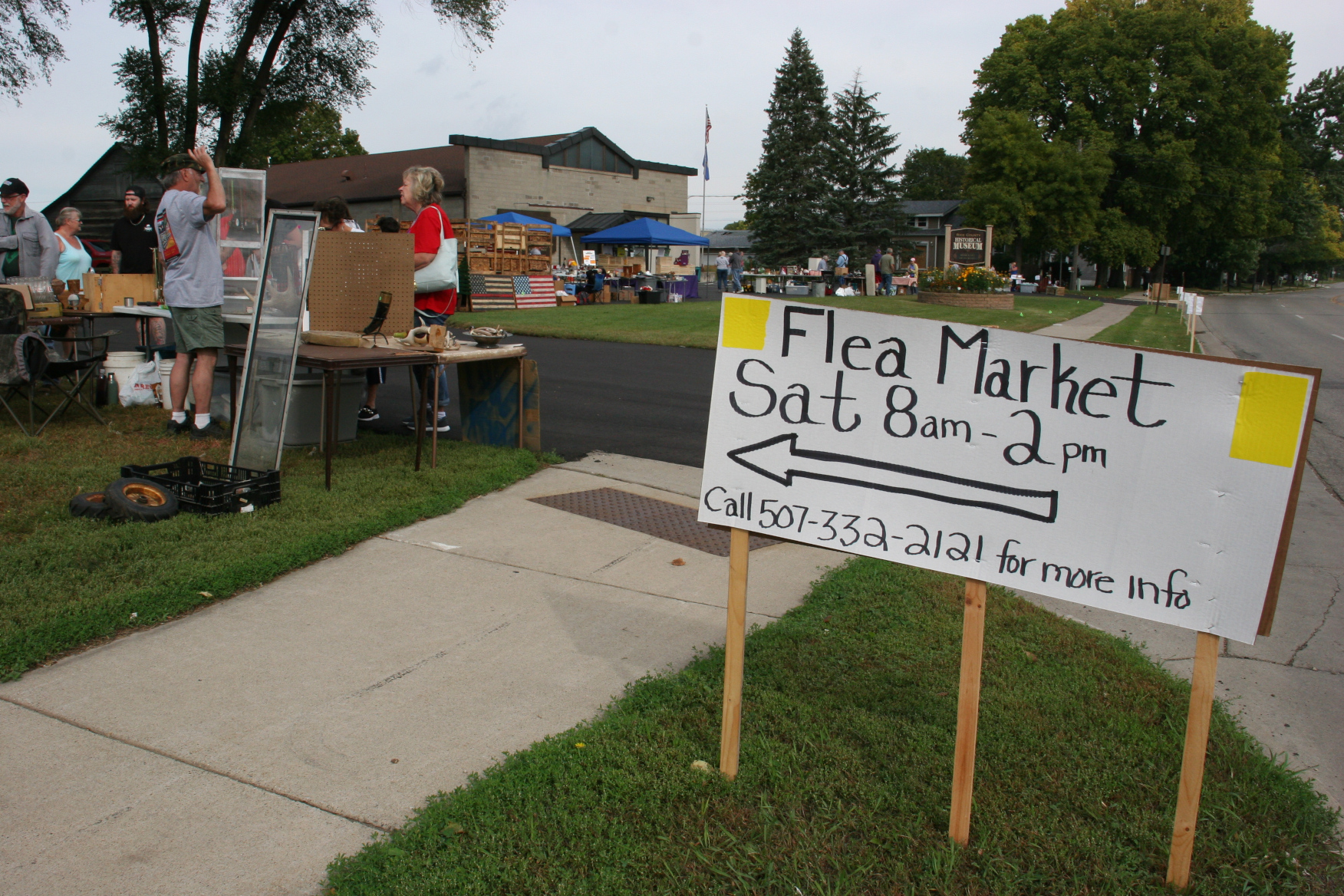
SATURDAY MORNING FOUND ME wandering among vendors at the Rice County Historical Society Fall Flea Market in Faribault. It was, as always, an enjoyable event, marked by conversations with friends I haven’t seen in awhile, conversations with vendors and reflecting on the past.
A handwritten sign along Second Avenue points to the flea market in the parking lot and on the grounds of the RCHS. (Minnesota Prairie Roots copyrighted photo September 2022)
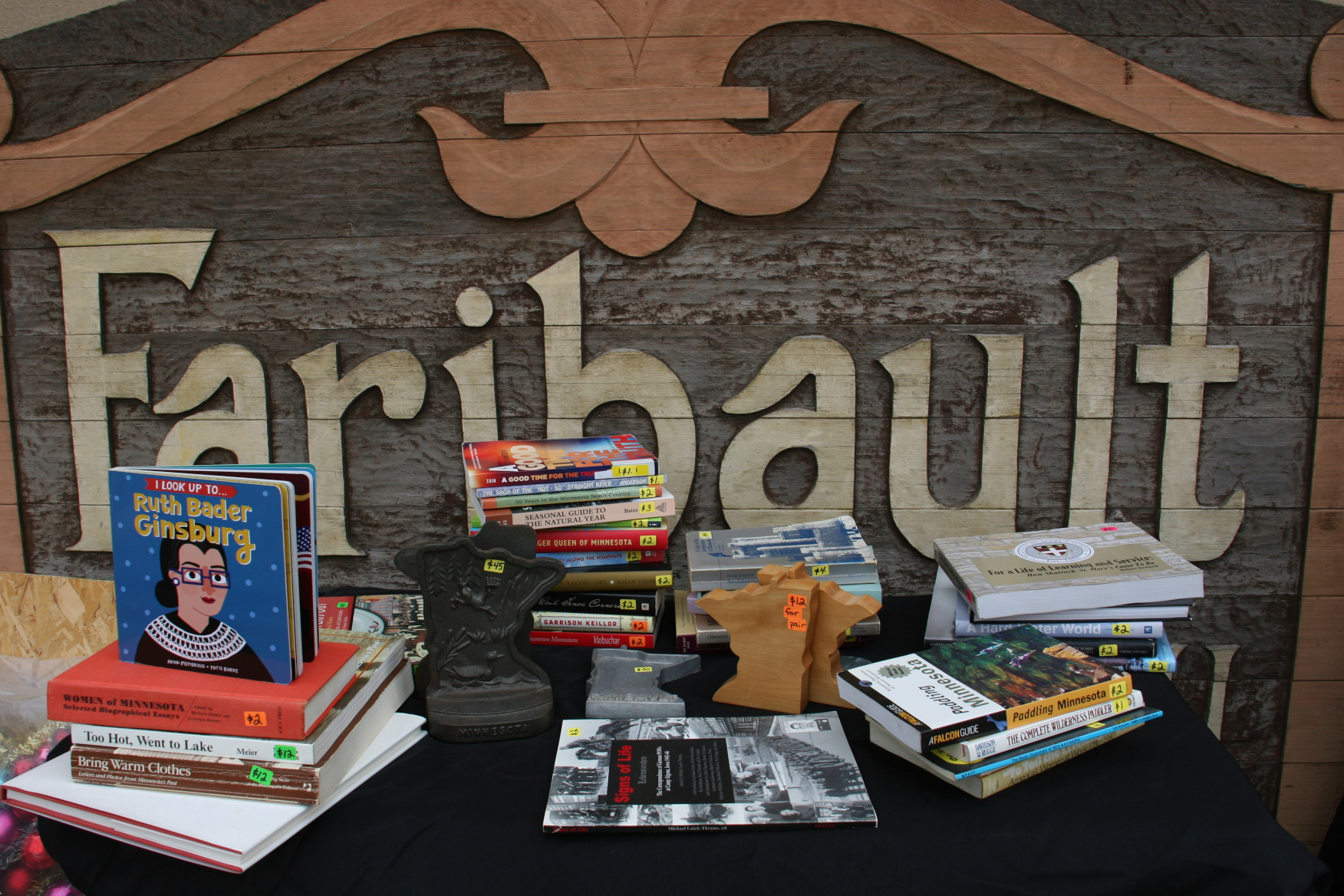
A RCHS Faribault sign provides the backdrop for a vendor’s book display themed primarily to Minnesota. (Minnesota Prairie Roots copyrighted photo September 2022)
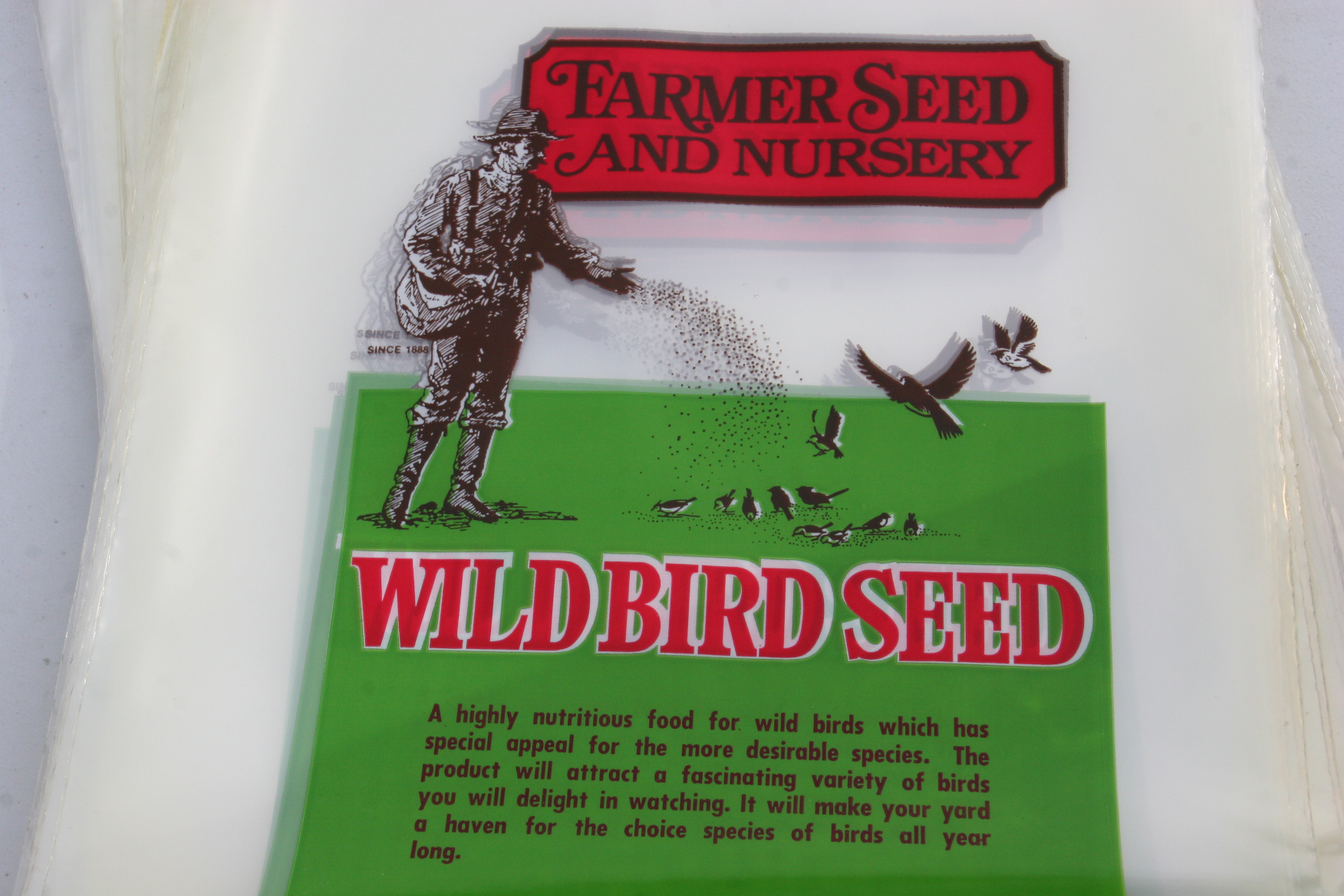
One vendor was giving away these plastic bags from the now closed Farmer Seed & Nursery in Faribault. (Minnesota Prairie Roots copyrighted photo September 2022)
Really, this is what local gatherings are all about for me. They’re about community and connecting, about embracing and appreciating this place I call home.
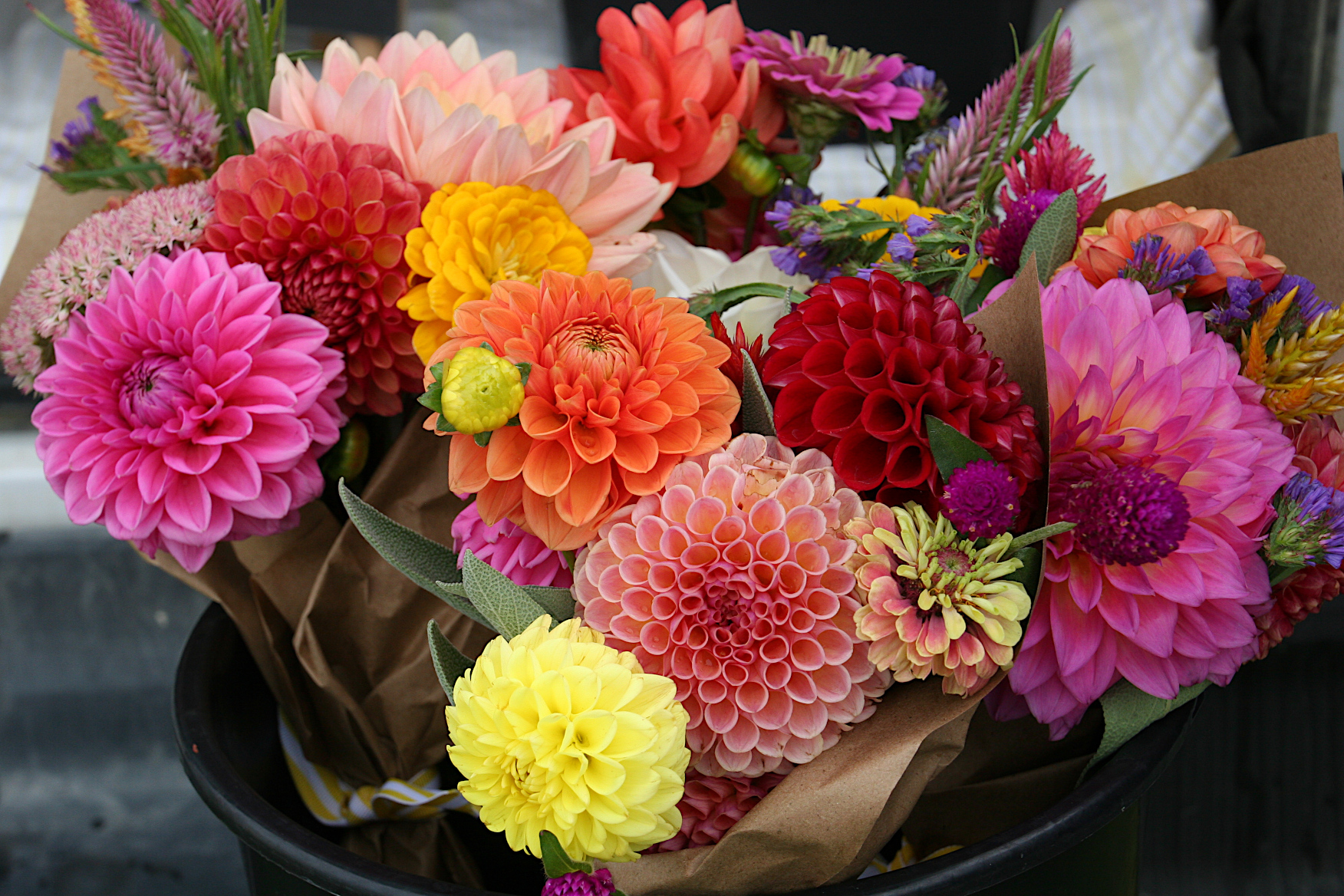
Beautiful bouquets from Erin’s Acre. (Minnesota Prairie Roots copyrighted photo September 2022)
I was especially delighted to find, among all the vendors of miscellaneous merchandise, several artists. That includes Erin Sellner Honken of Erin’s Acre at Honken Farms. Erin creates with flowers she grows, tends, harvests and arranges into stunning bouquets for CSA subscriptions and special events. With an abundance of flowers right now, she decided to do a pop-up sale at the flea market featuring $10 dahlia mixed bouquets.
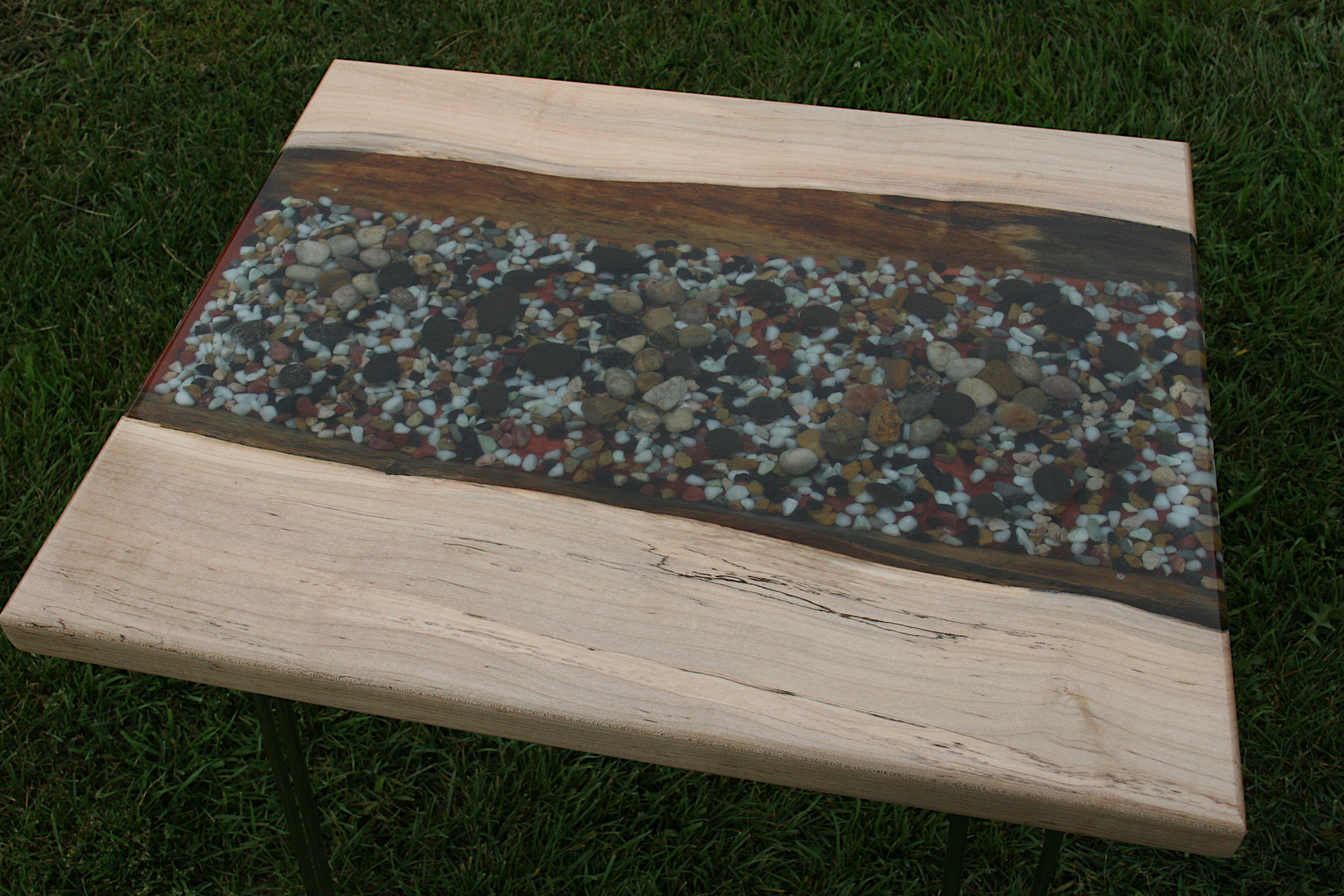
The stunning “river” table by JS Woodcrafts. (Minnesota Prairie Roots copyrighted photo September 2022)
Just down the way by the historic schoolhouse, I discovered Jeremy of JS Woodcrafts. It was his “river” table which drew my attention and admiration. If I could afford the $500 price tag, this maple top table with stones and pebbles epoxied in the middle like a river, would be mine. Love, love, love this work of art.
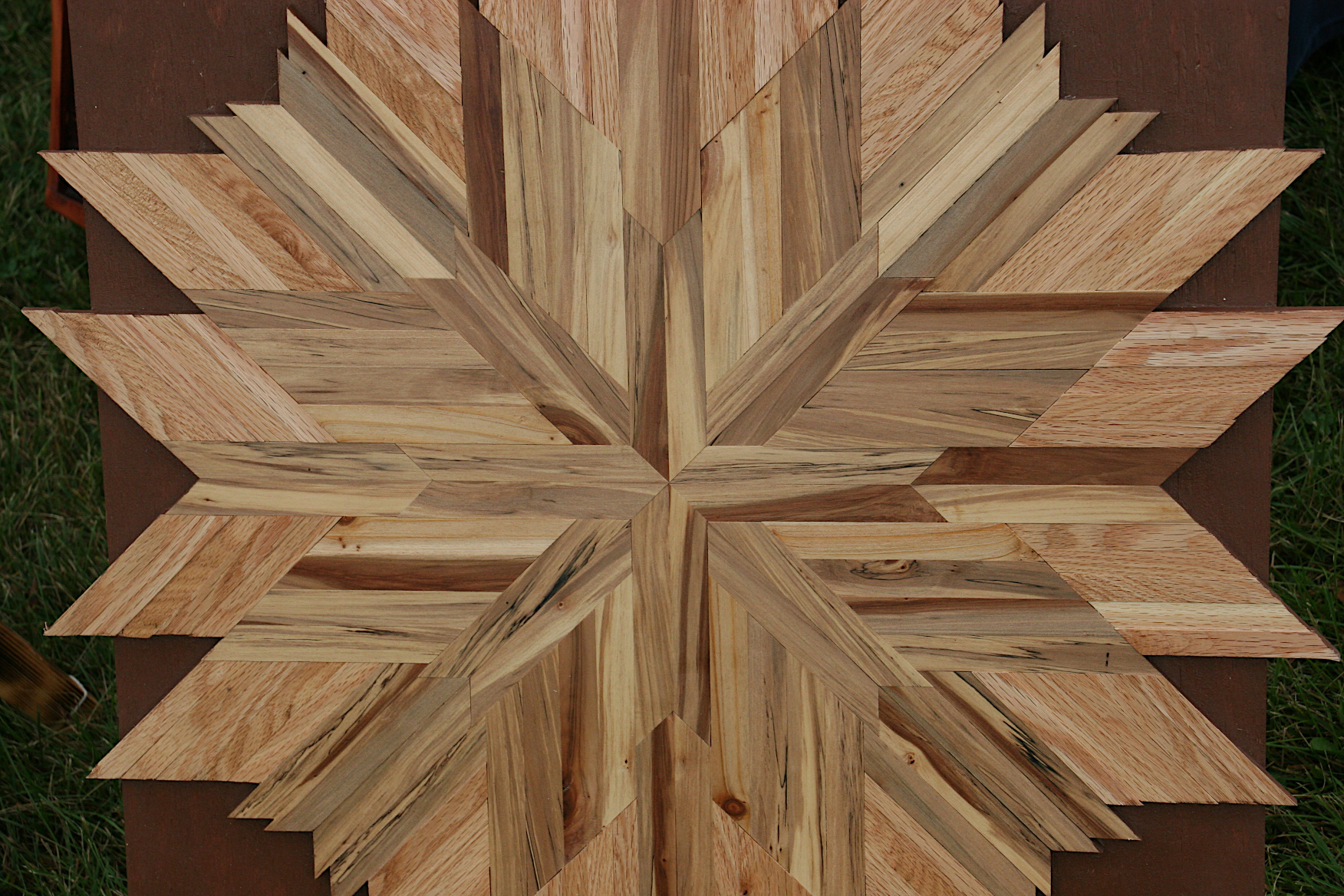
Spanky’s Woodshed art made from pallets. (Minnesota Prairie Roots copyrighted photo September 2022)
John “Spanky” St. Clair of Spanky’s Woodshed also specializes in woodcrafting. I learned that he uses pallets and aged barn wood to create. Anyone who recycles to create earns my praise.
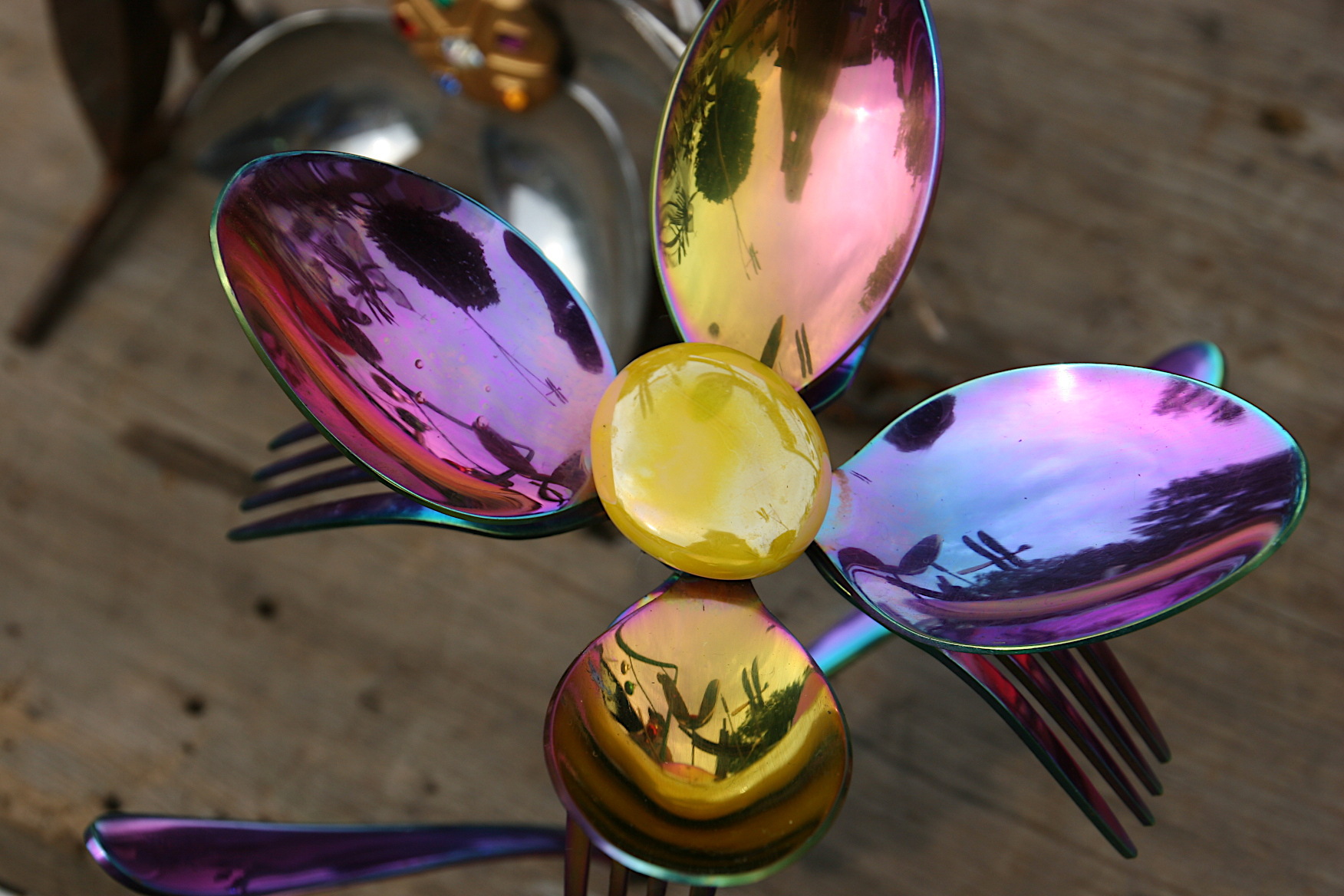
A flower created by recycling spoons and forks. (Minnesota Prairie Roots copyrighted photo September 2022)
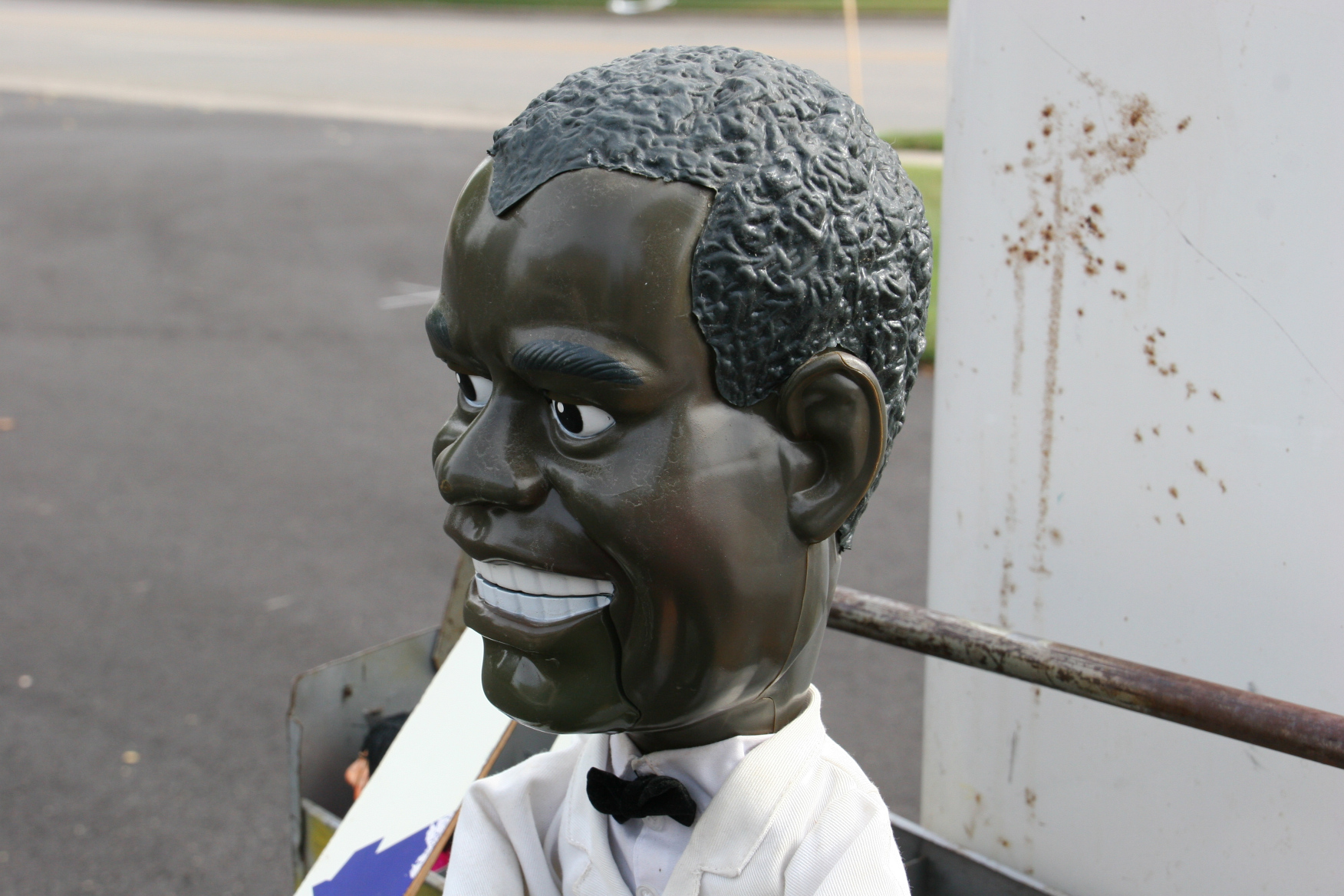
An eye-catching Louie Armstrong. (Minnesota Prairie Roots copyrighted photo September 2022)
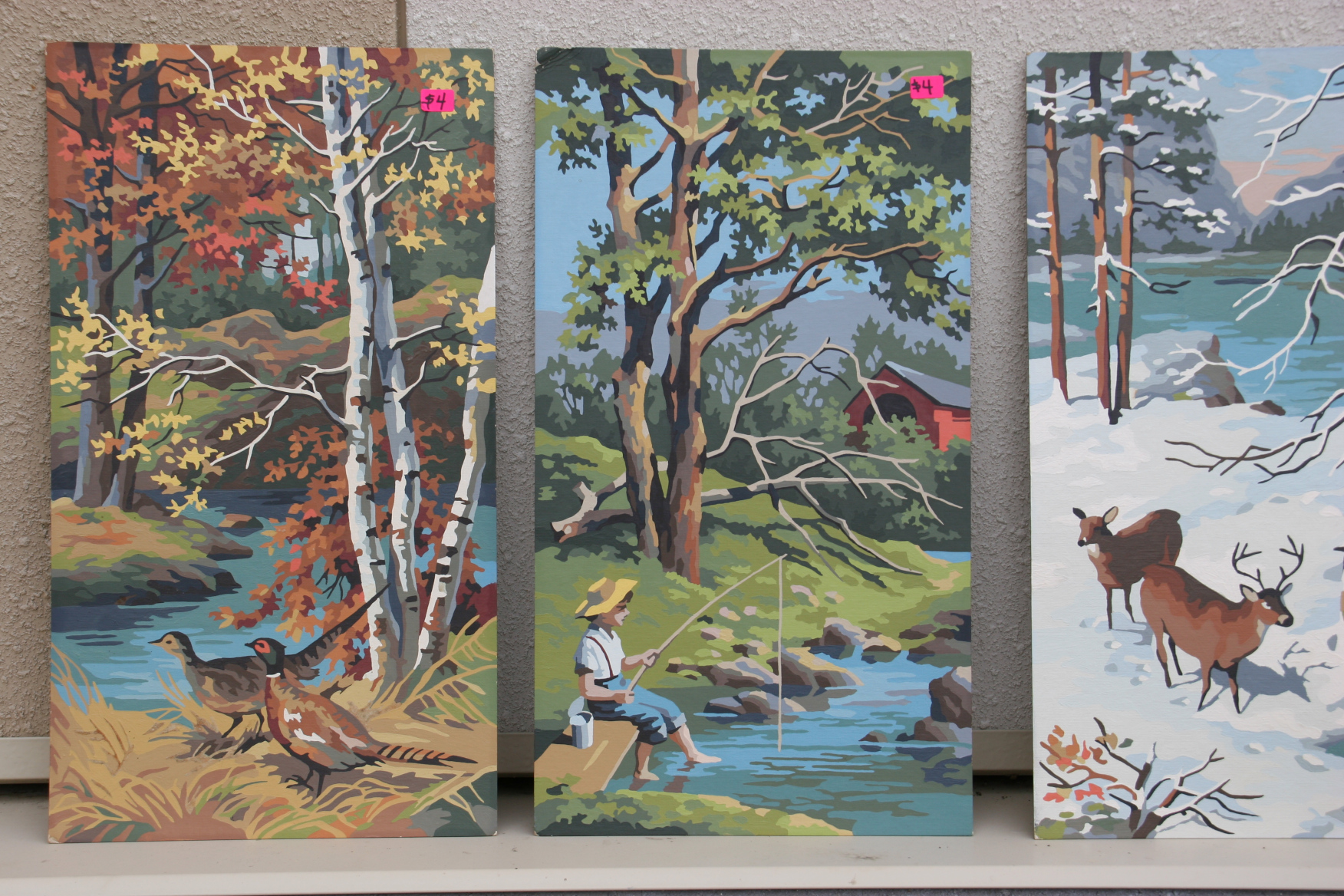
I almost bought the pheasant paint-by-number, one of a trio of paintings. (Minnesota Prairie Roots copyrighted photo September 2022)
I found more art in spoon flowers, in a Louie Armstrong figure, in paint-by-number paintings, in an endless array of merchandise.
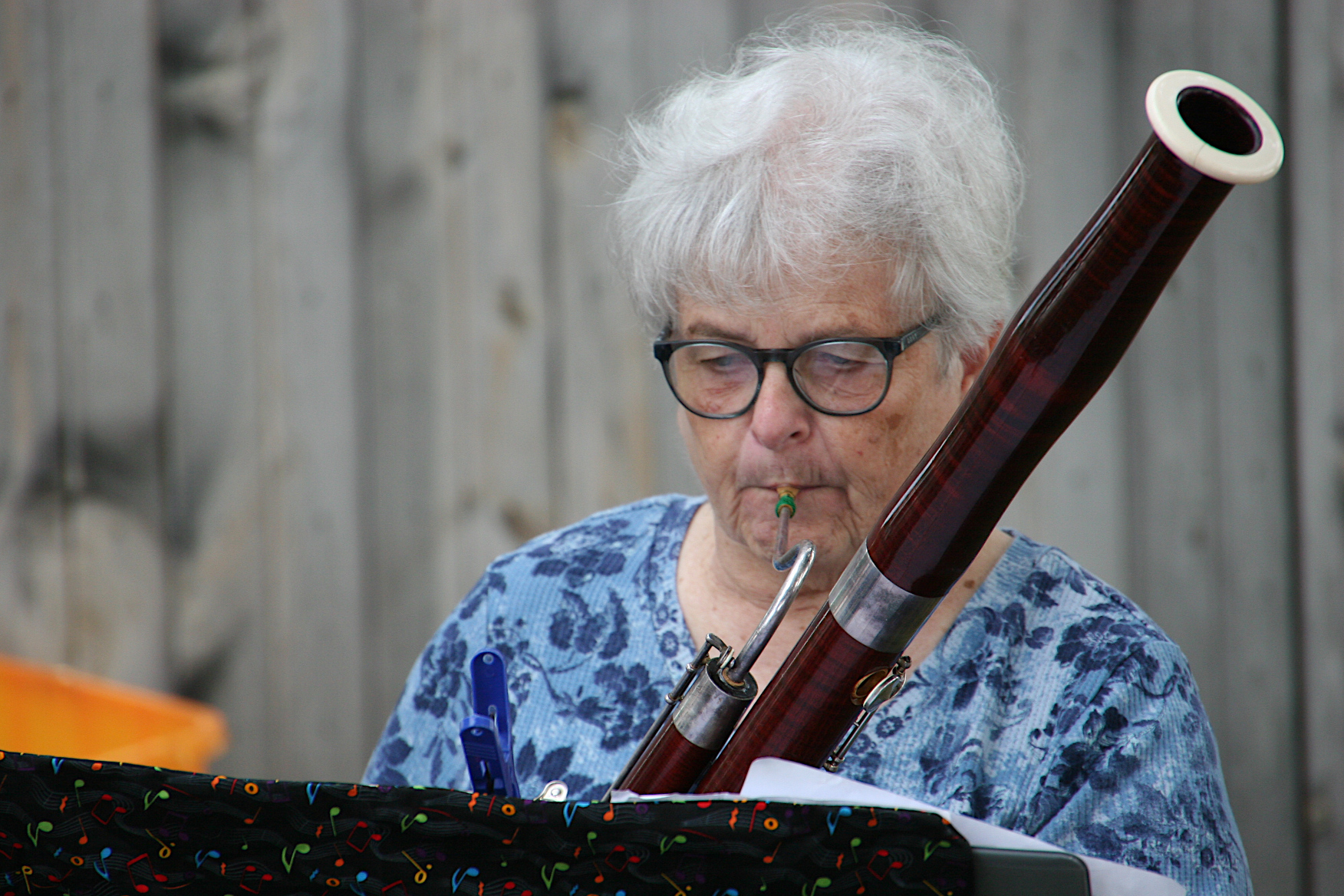
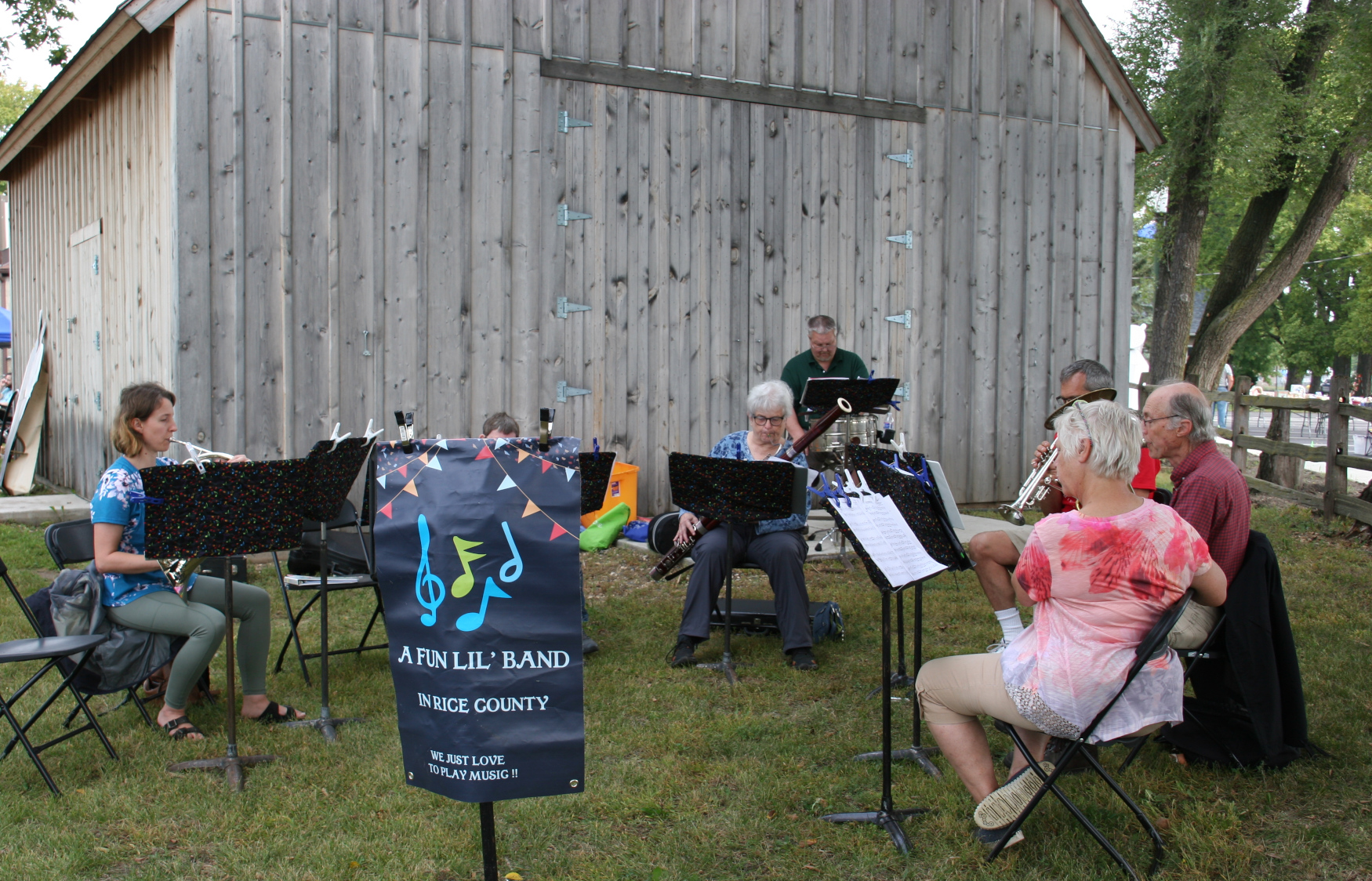
Playing a woodwind in A Fun Lil’ Band. (Minnesota Prairie Roots copyrighted photo September 2022)
Propped against the barn near the band (seemingly listening), cut-outs of Ed and Frank, spokesmen for Bartles & Jaymes winecoolers. (Minnesota Prairie Roots copyrighted photo September 2022)
The band that loves to make music. (Minnesota Prairie Roots copyrighted photo September 2022)
And while I walked I heard music rising from A Fun Lil’ Band in Rice County with a sign declaring WE JUST LOVE TO PLAY MUSIC!! Their music added an extra touch of joy to the morning market.
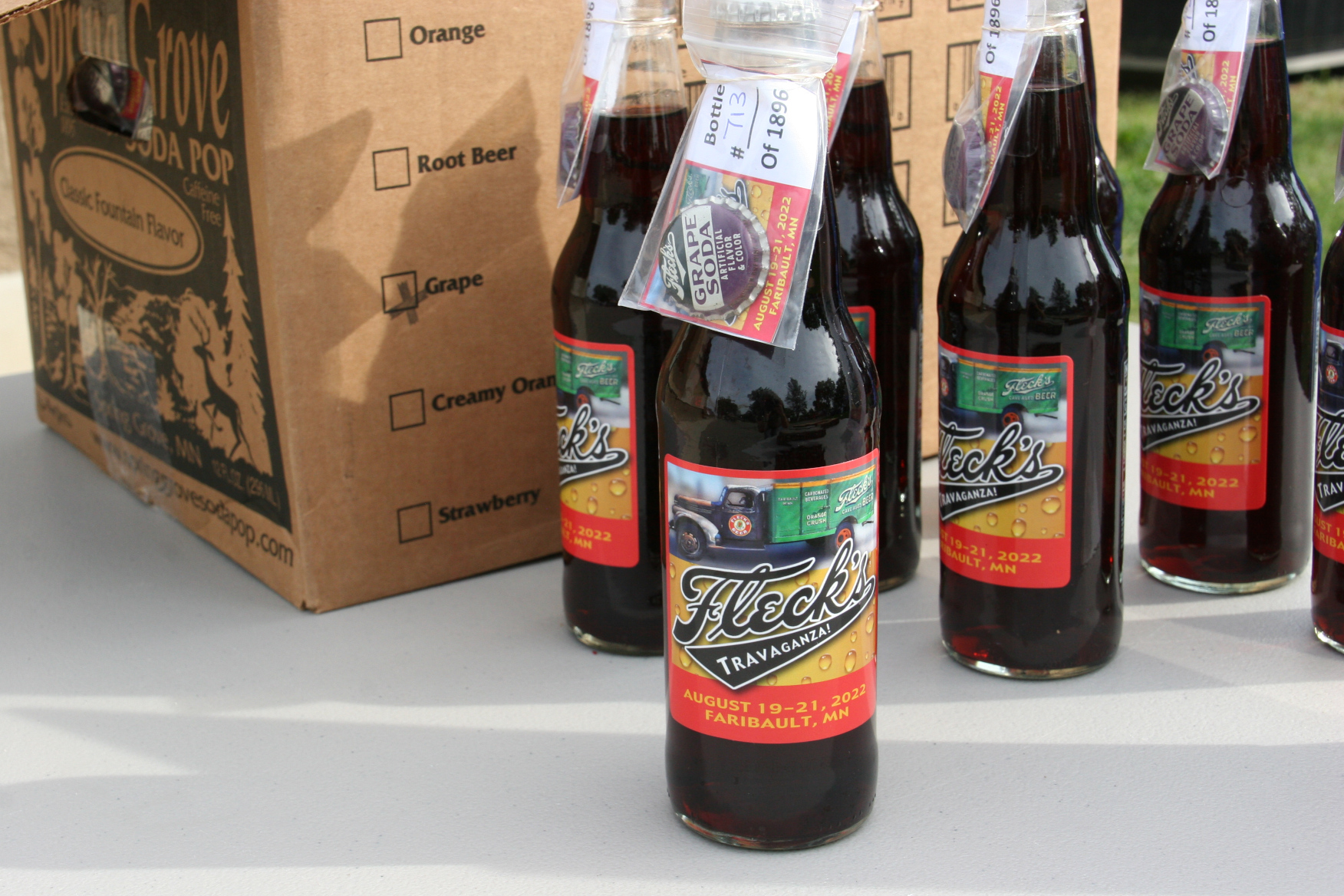
The RCHS was selling collector limited edition bottles of Fleck’s grape soda. (Minnesota Prairie Roots copyrighted photo September 2022)
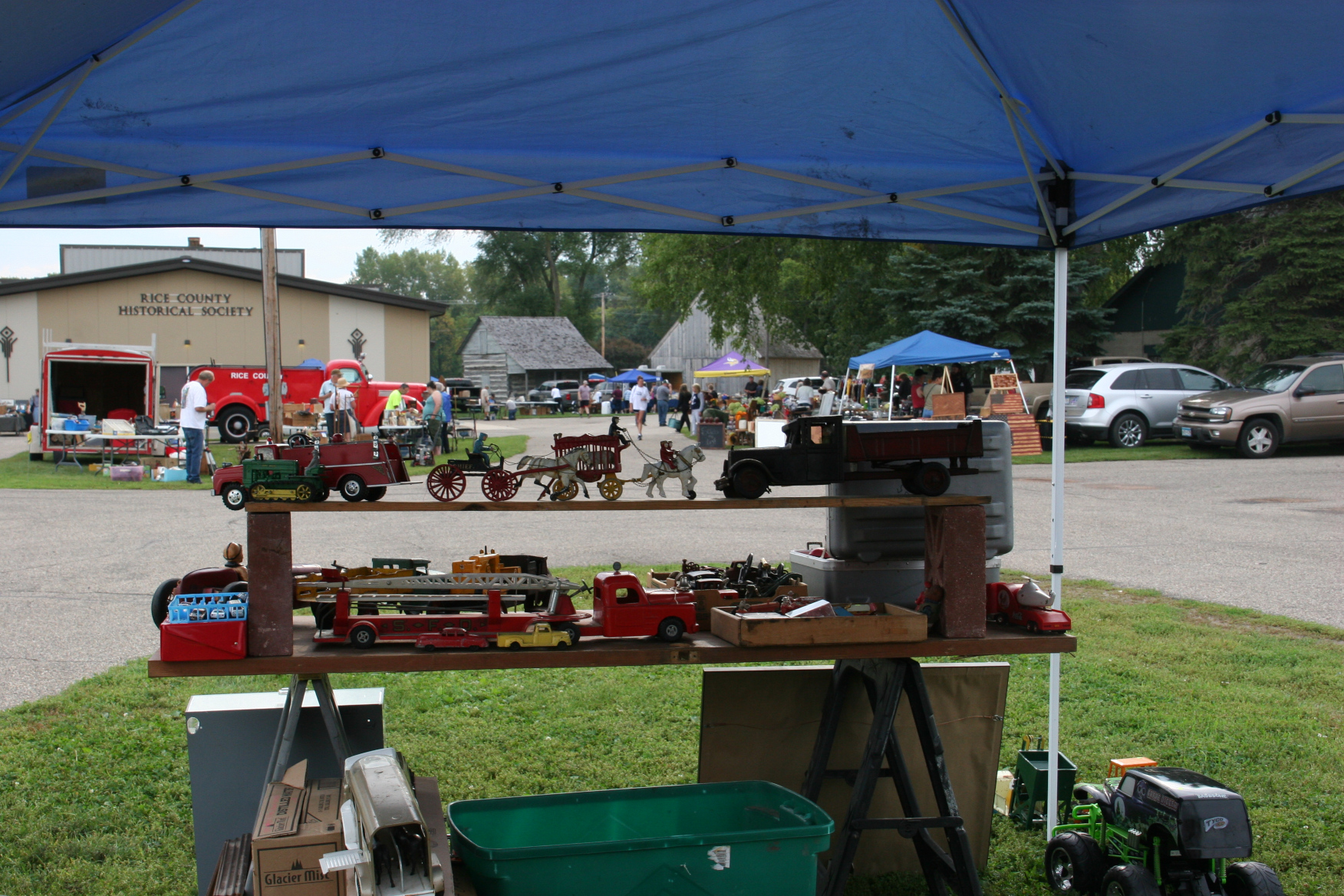
A view through a vendor’s booth featuring old toys. (Minnesota Prairie Roots copyrighted photo September 2022)
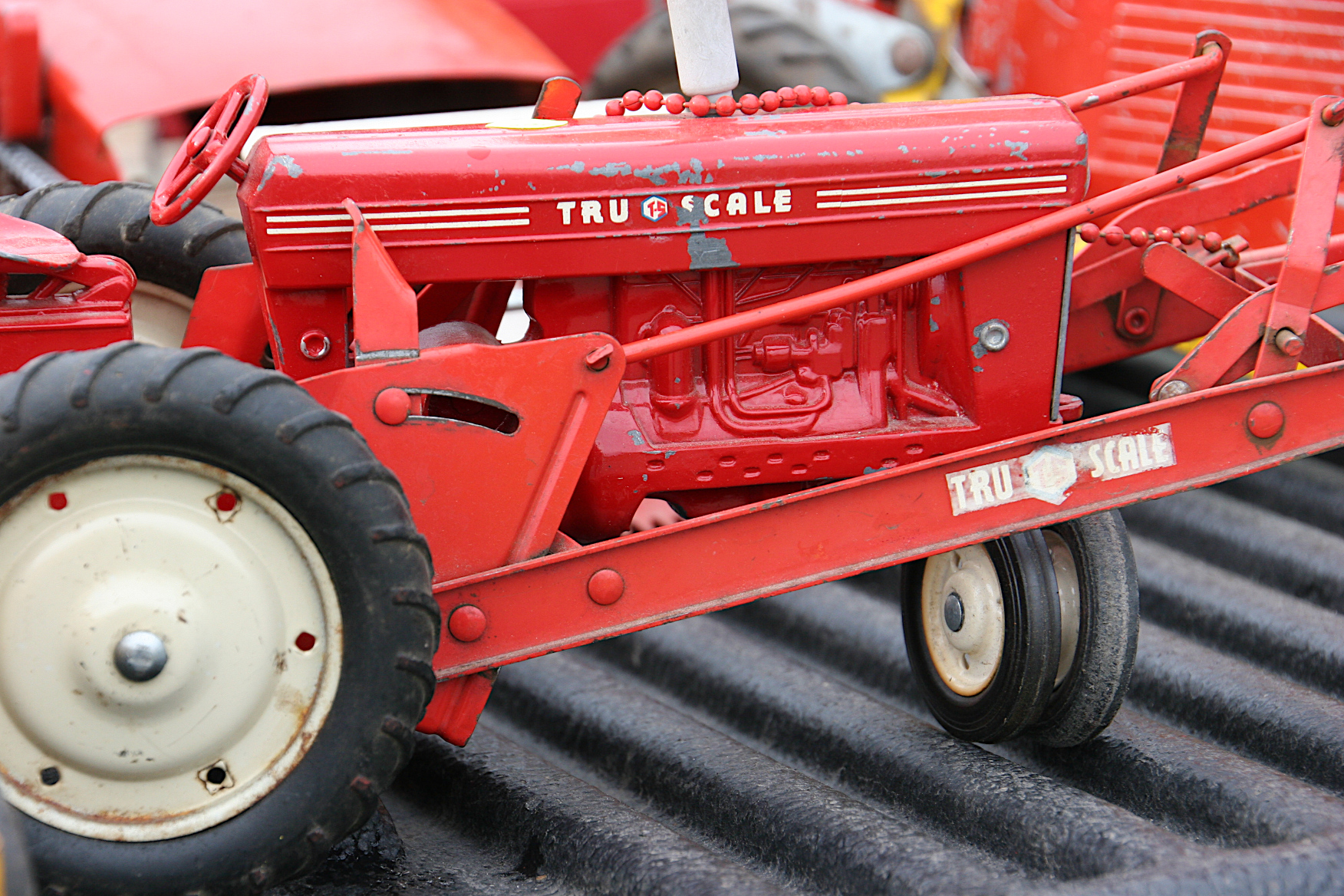
A vintage toy tractor reminded me of the farm toys I played with as a child. (Minnesota Prairie Roots copyrighted photo September 2022)
This event is a fundraiser for the Rice County Historical Society. But history is also very much a part of the market in aged and vintage merchandise vended. I reminisced over old farm toys, a baby stroller, a yellow Pyrex mixing bowl. I picked up a few items, pondering whether I should buy, but, in the end, held steady in my determination not to acquire more stuff. I’m at that age…
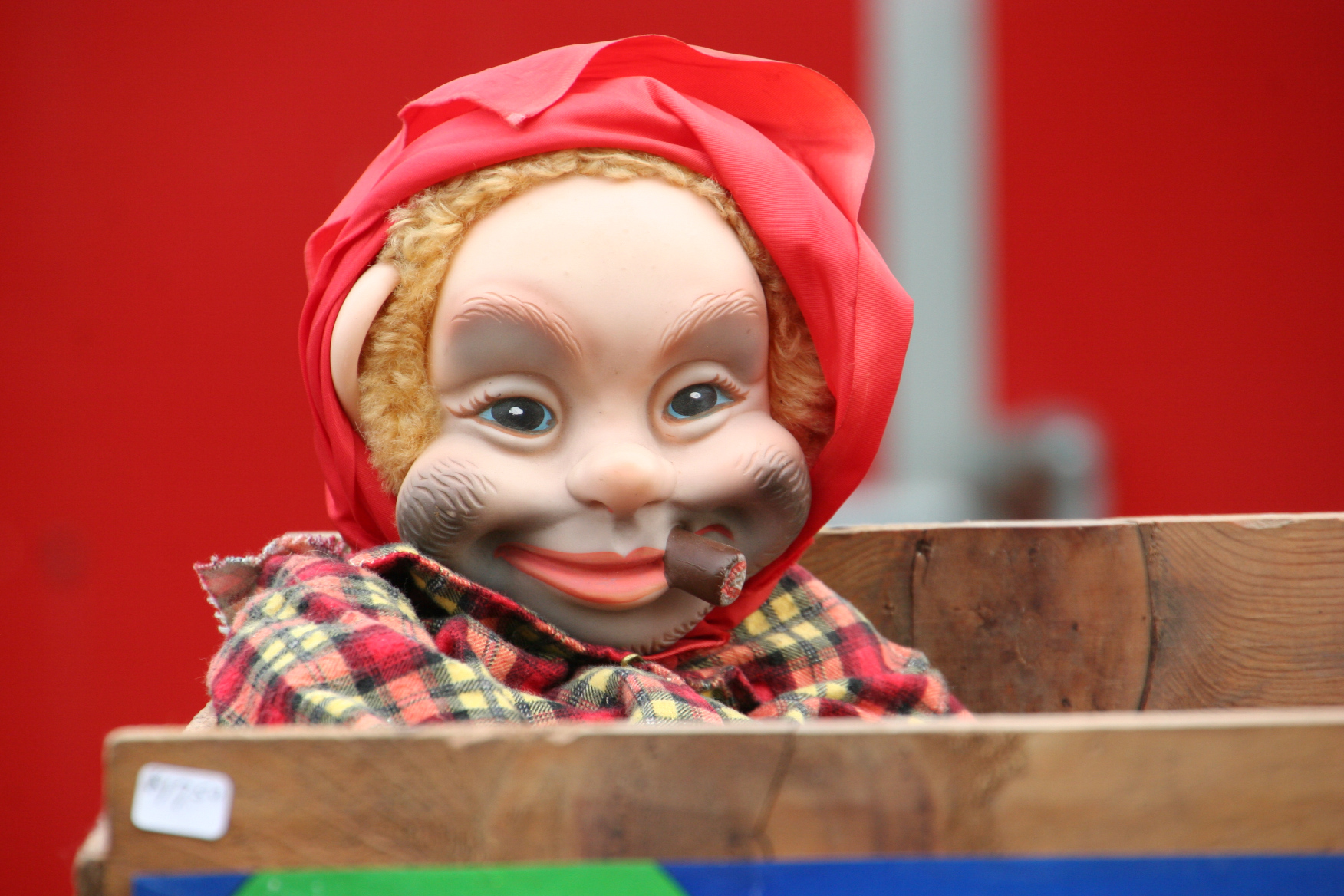
This colorful character caught my attention. (Minnesota Prairie Roots copyrighted photo September 2022)
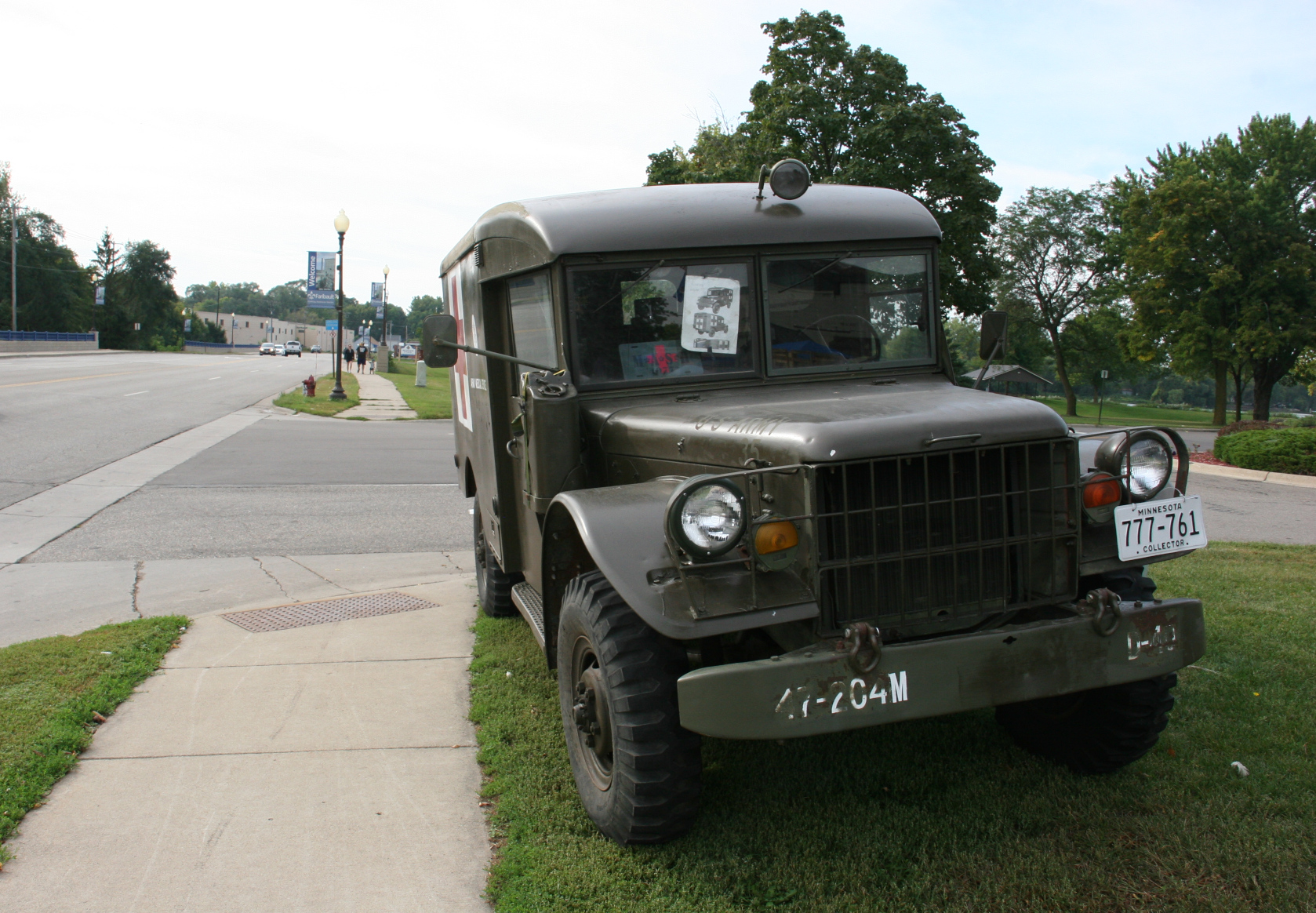
Parked along Second Avenue at the RCHS Fall Flea Market. (Minnesota Prairie Roots copyrighted photo September 2022)
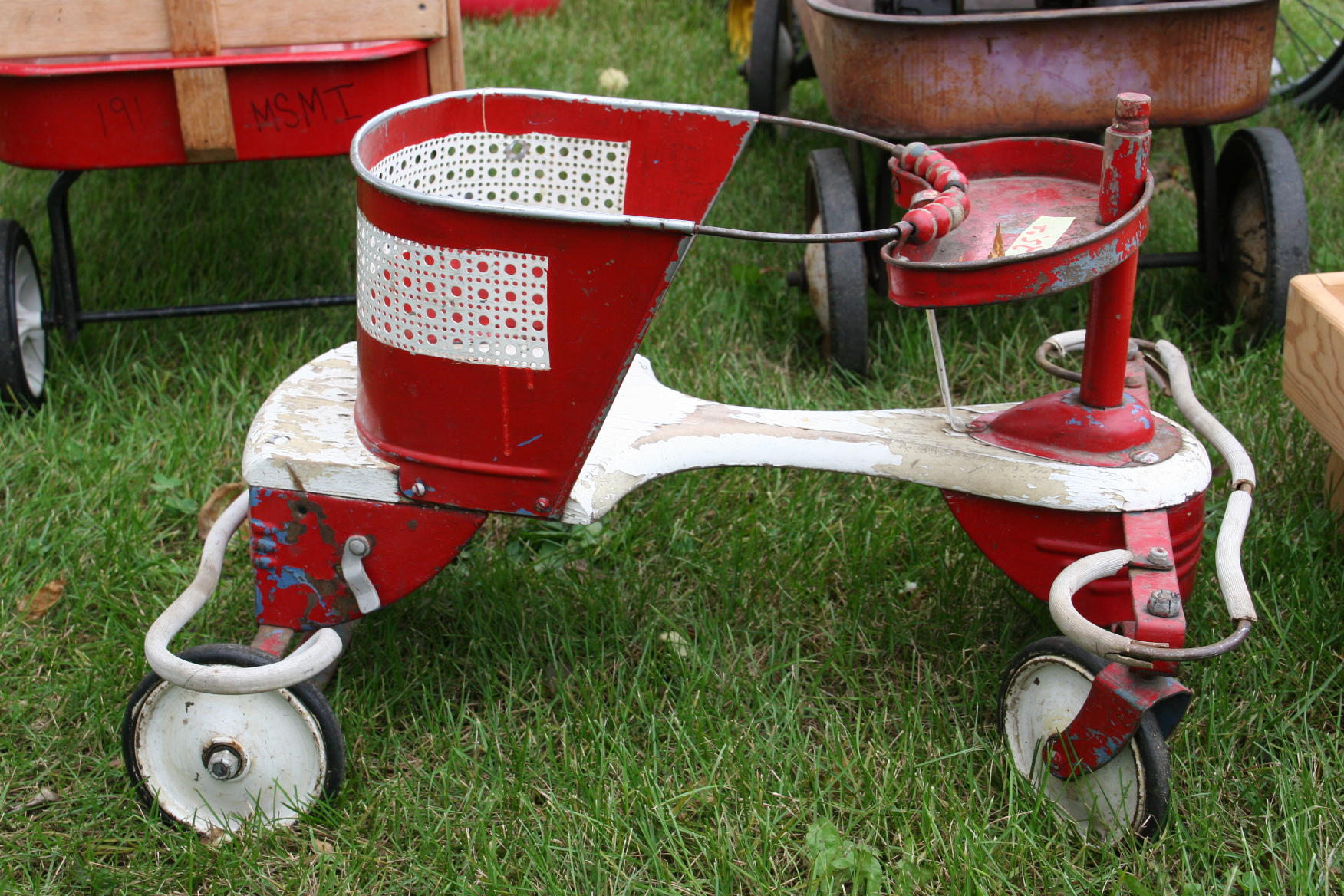
I was pushed in a stroller like this, except the stroller was blue. (Minnesota Prairie Roots copyrighted photo September 2022)
Instead, I collect with my camera, gathering images to tell a story, to share this market, to showcase the works of creatives, to express my appreciation for my community, this place I’ve called home for 40 years.
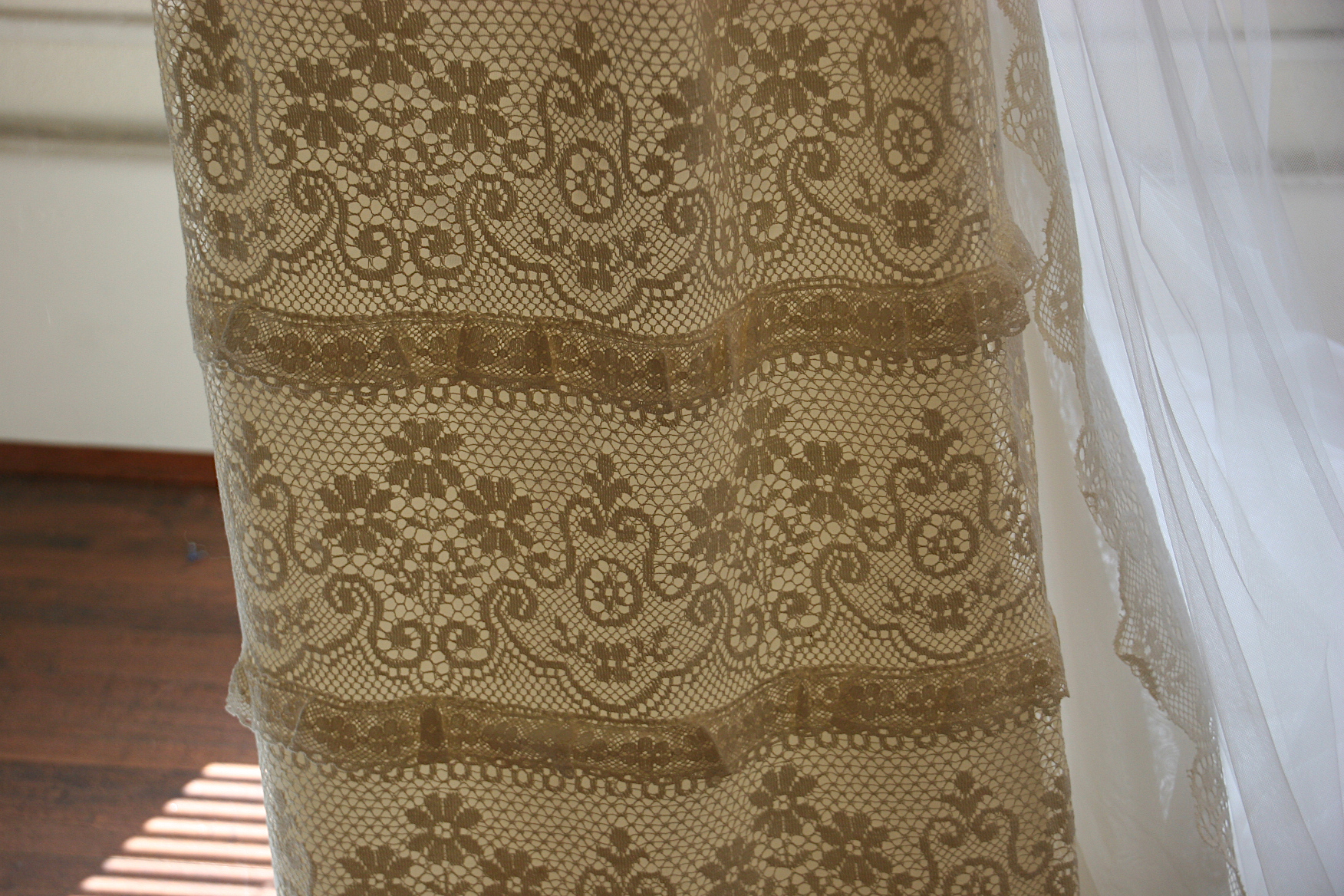
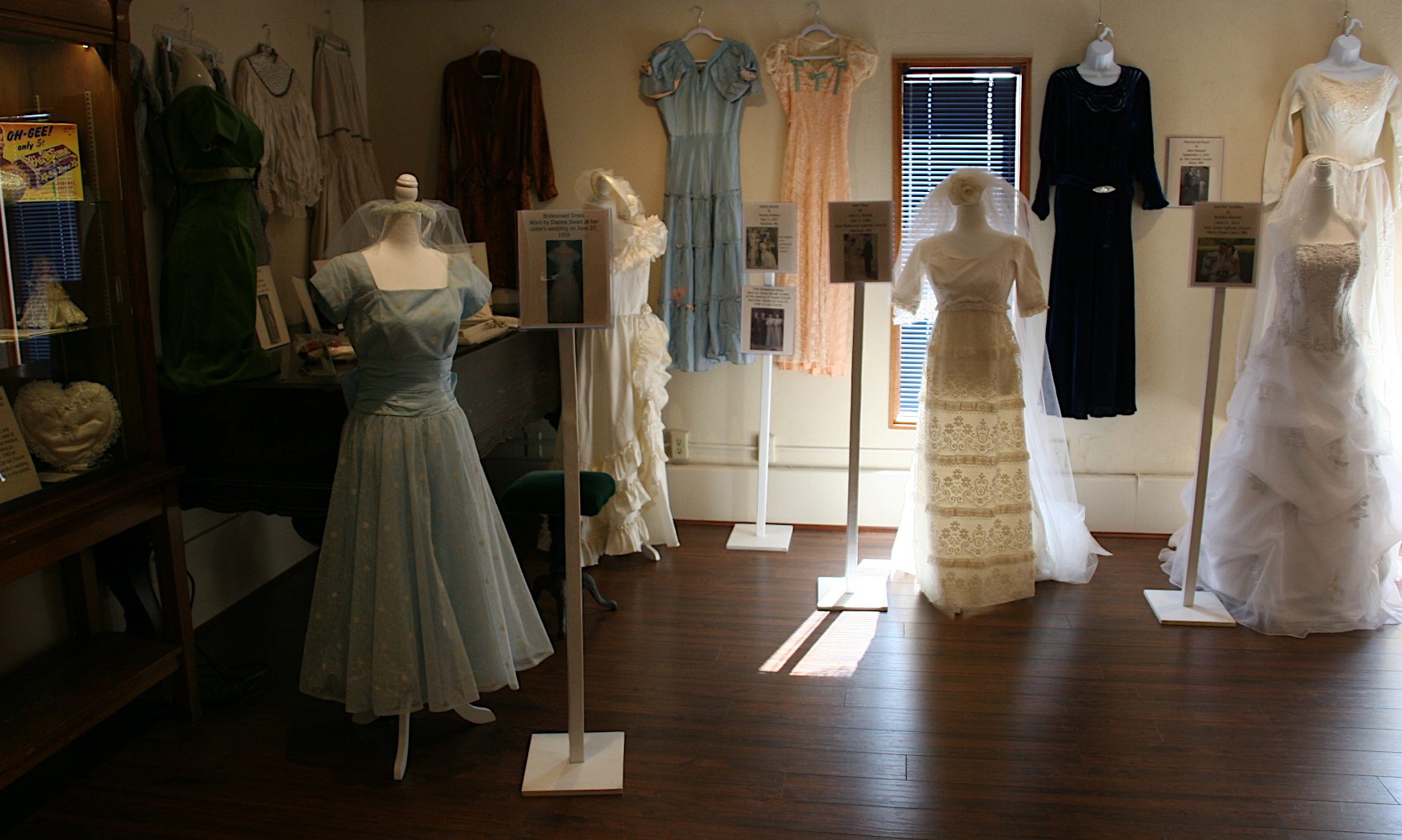
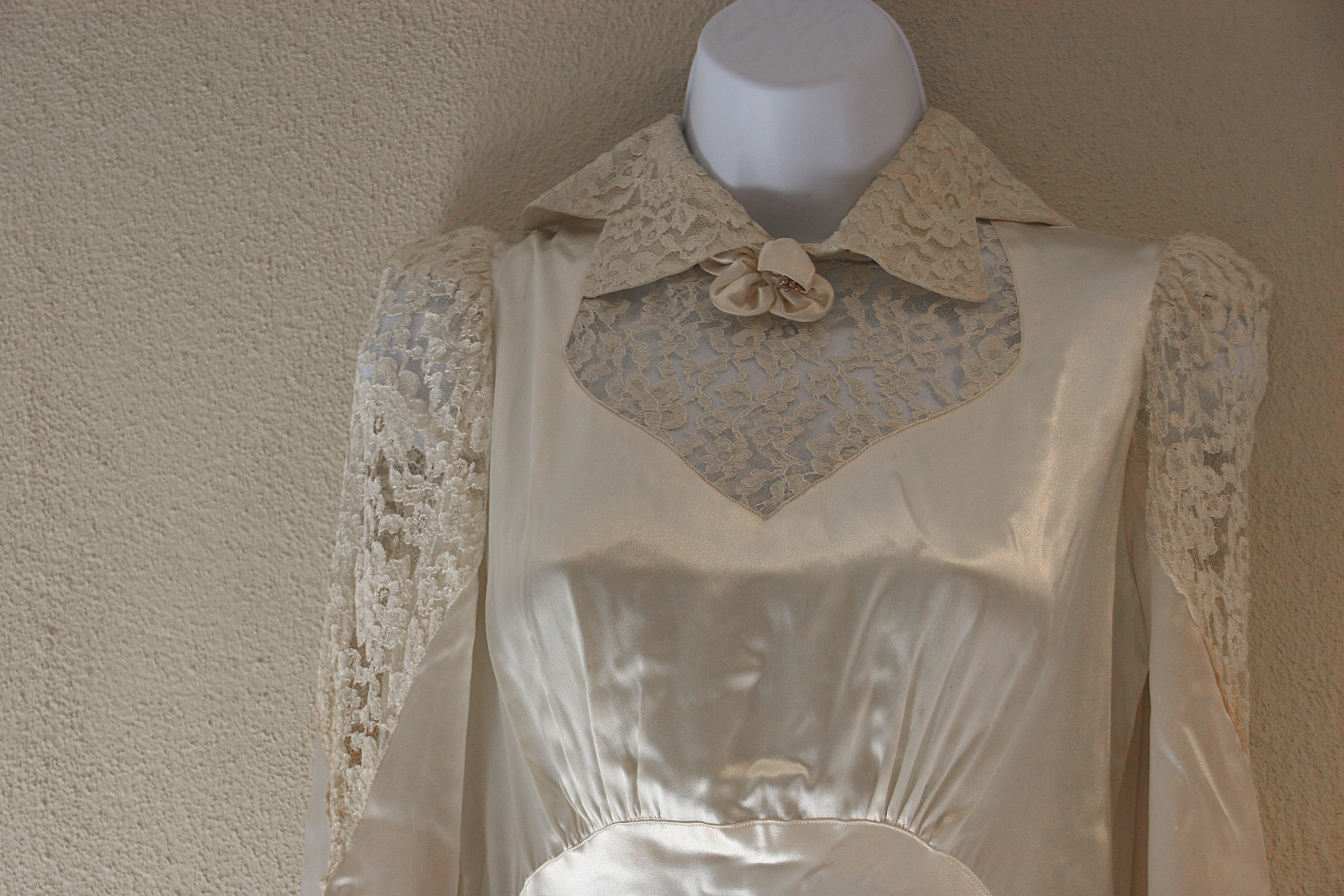
A particularly lacy wedding dressskirt up close. (Minnesota Prairie Roots copyrighted photo September 2022)
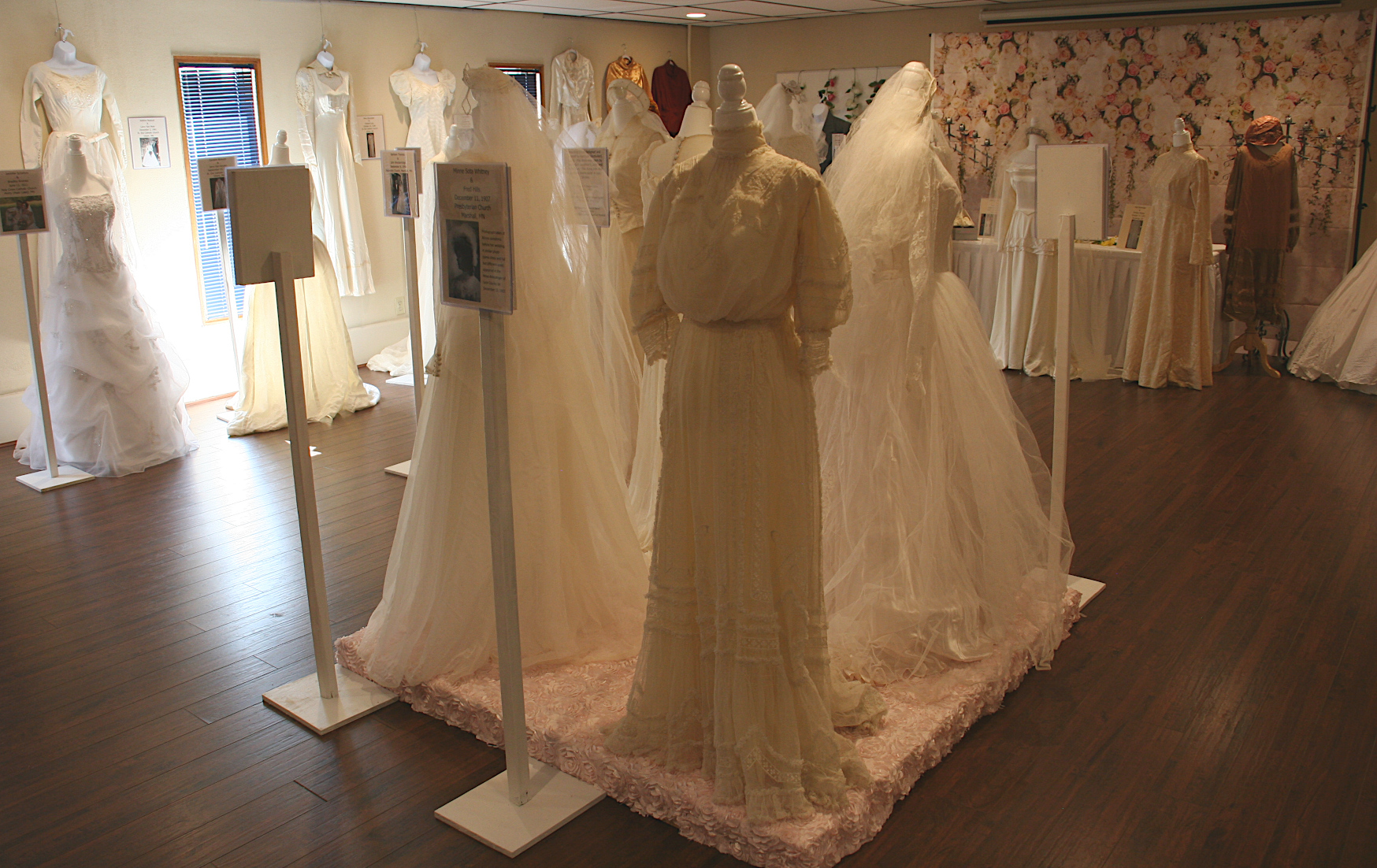
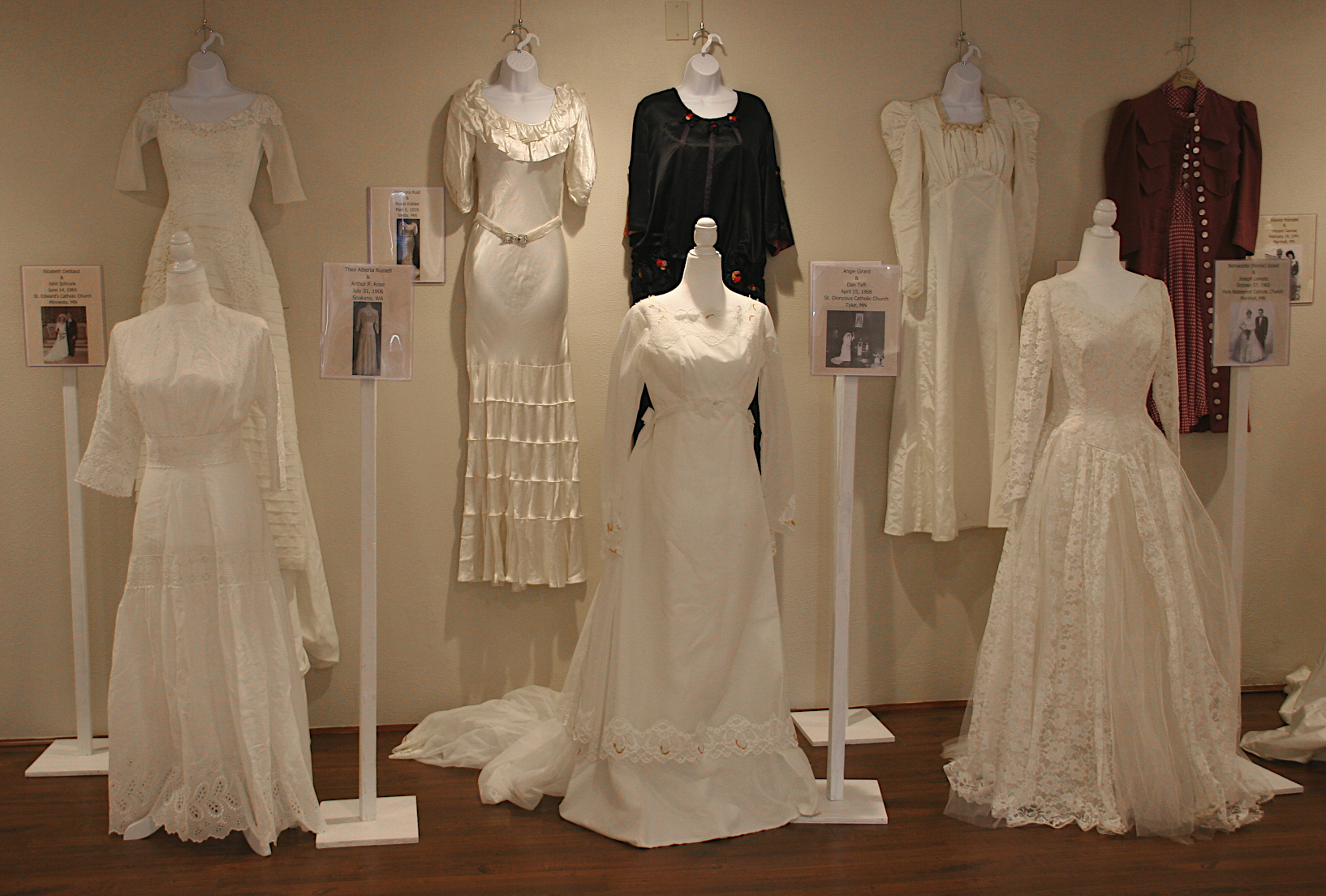
I will never pretend to understand, or even care, much about fashion. But this held my interest as I noted the variety of styles from princess full lacy skirts to sleek and elegant simple satin designs. It was the plain gowns that held the most appeal for me, even though my own wedding dress from 40 years ago featured more lace than suits me now. But it was the style of the early 80s.
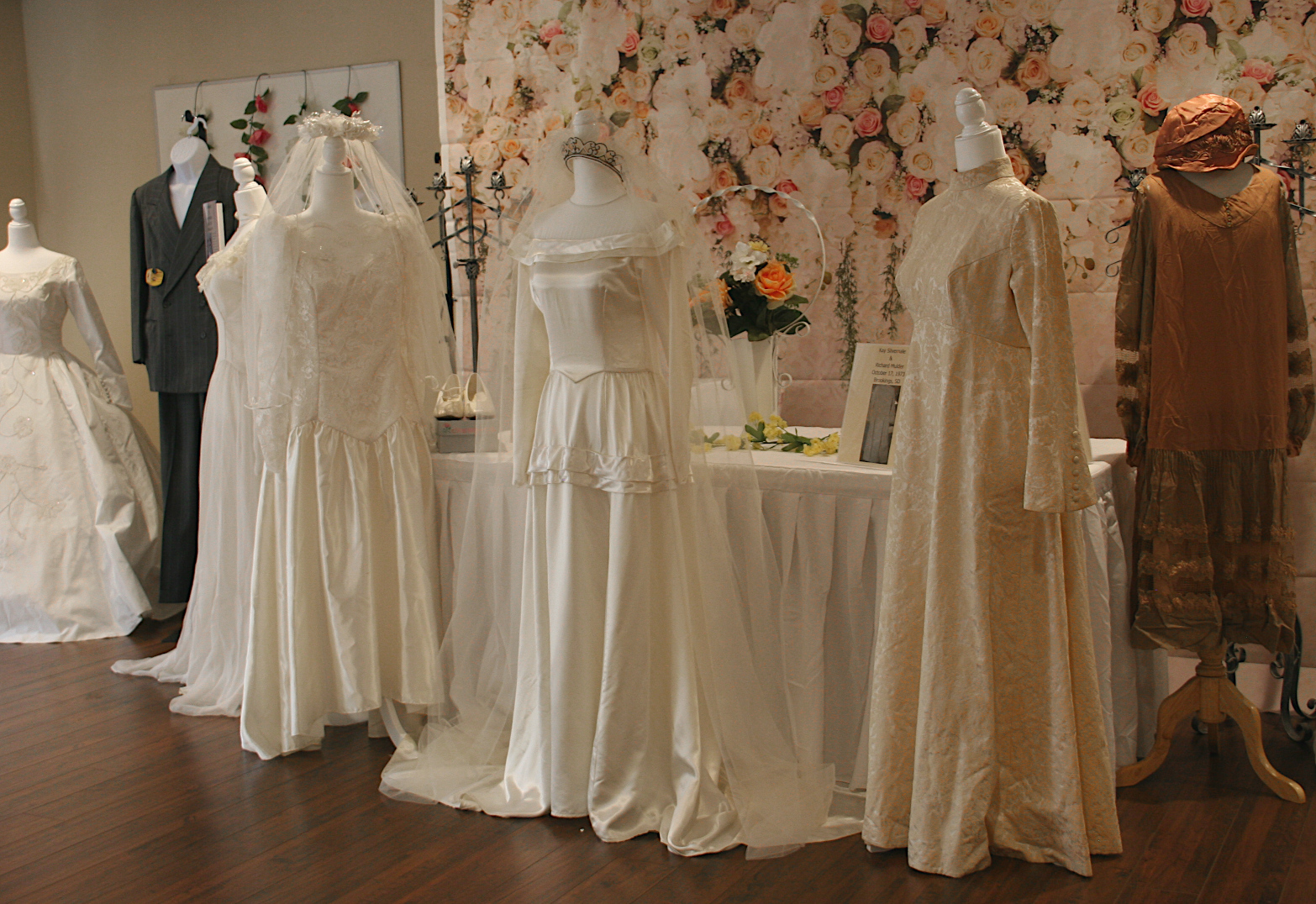
A floral backdrop lends a romantic feel to the bridal attire display. (Minnesota Prairie Roots copyrighted photo September 2022)
In a brief conversation with another museum visitor, also a native to the area but back from Nebraska, we discussed how styles always come back, although the popular strapless gowns were absent from long ago weddings. We agreed that we don’t particularly like that style.
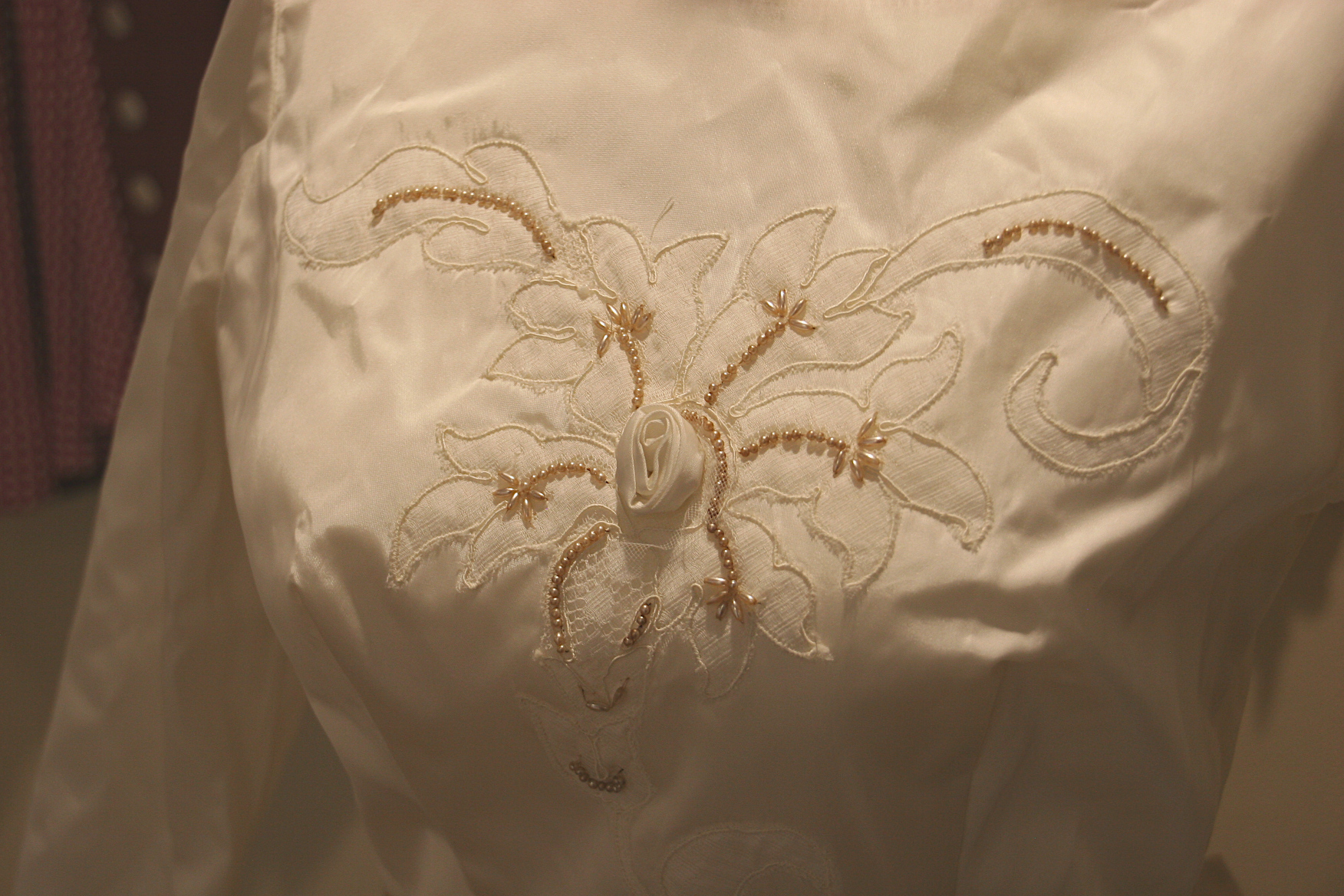
Lovely floral and beaded detail on a bridal gown. (Minnesota Prairie Roots copyrighted photo September 2022)
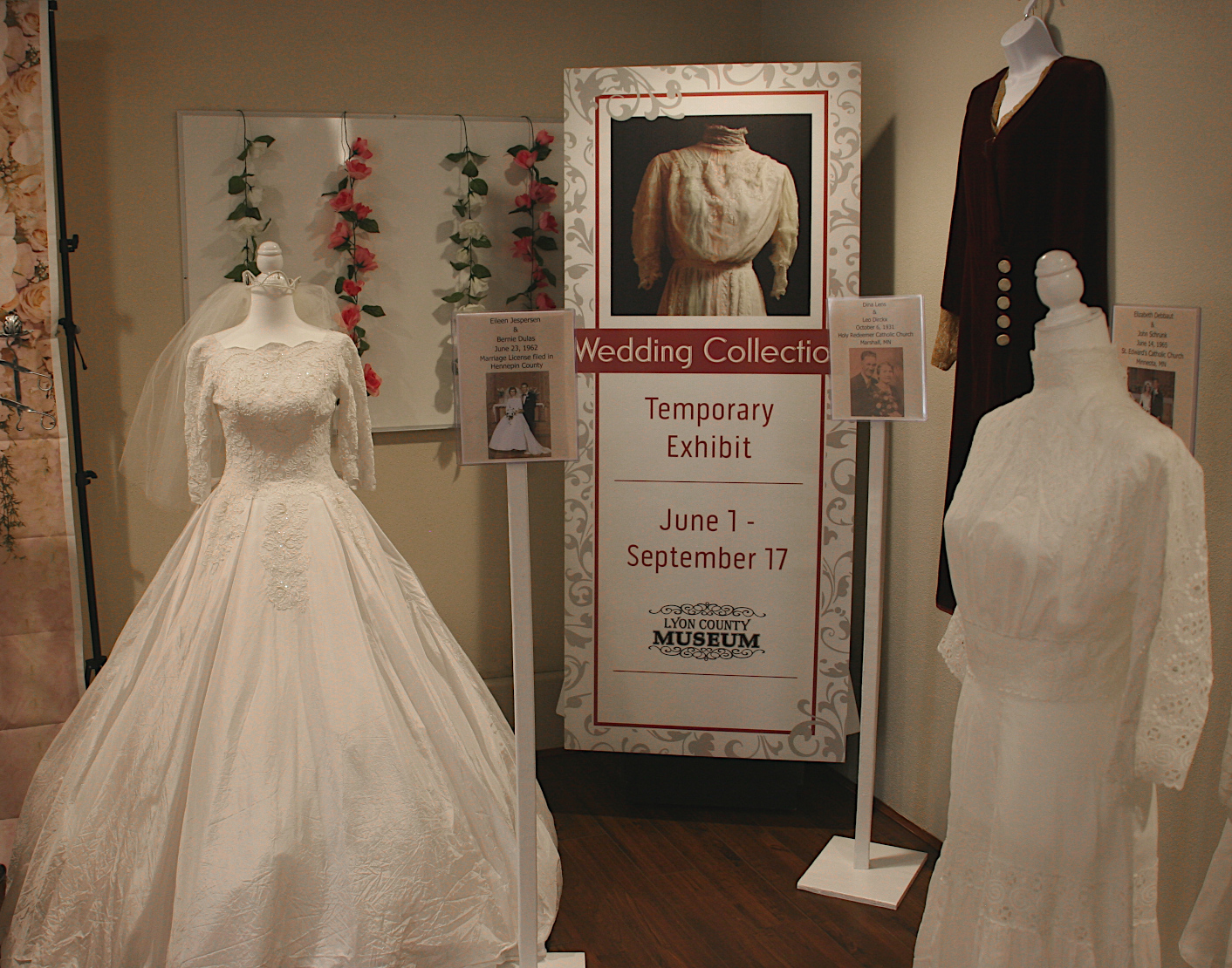
But it really doesn’t matter what I like or don’t like. It is the bride who chooses her perfect dress. And this exhibit showcases the selections of southwestern Minnesota brides through the decades from the museum’s collection and on loan.
This image shows some bridesmaids’ dresses and wedding accessories. (Minnesota Prairie Roots copyrighted photo September 2022)
The exhibit also includes some bridesmaid’s dresses, suits, accessories and wedding portraits displayed in the small second floor conference room.
A lace and satin wedding dress. (Minnesota Prairie Roots copyrighted photo September 2022)
I realize most of my readers won’t see this exhibit in person. But if you live near Marshall, I encourage you to peruse the display, which closes at 4 pm Saturday, September 17. It’s been up since June. I saw “The Wedding Collection” as part of an overall tour of the museum, an exceptional museum, in my opinion. I traveled some three hours on Tuesday specifically to see two of my rural-themed poems, included in an impressive “Making Lyon County Home” exhibit on the second floor. Plan on spending hours at the museum with three floors of exhibit space.
The bridal gowns span decades, some back to the early 1900s. (Minnesota Prairie Roots copyrighted photo September 2022)
Interestingly enough, I last visited Marshall 40 years ago on my May wedding night. Randy and I stayed there before continuing on our way to the Black Hills of South Dakota for our honeymoon. So in many ways, seeing “The Wedding Collection” brought me full circle back to my own wedding. Four decades seem so long ago…
#
FYI: I’ll take you back to the museum in Marshall in a future post to show you the exhibits including my poems and much more. Museum hours are 10 am – 4 pm Monday-Friday, noon to 4 pm Saturday and closed on Sunday.
An overview of Bridge Square looking toward Division Street. (Minnesota Prairie Roots copyrighted photo August 2022)
BRIDGE SQUARE IN THE HEART of historic downtown Northfield holds a yesteryear appeal as a long-time community gathering spot along the Cannon River. Today its purpose remains as relevant as ever. I’ve observed festivals and concerts here, focused events like Earth Day and the Riverwalk Market Fair, read poetry here, heard music, watched college students chalk messages onto concrete. Individuals, too, pause here to enjoy the fountain sculpture and other art, to picnic, to simply embrace this beautiful spot.
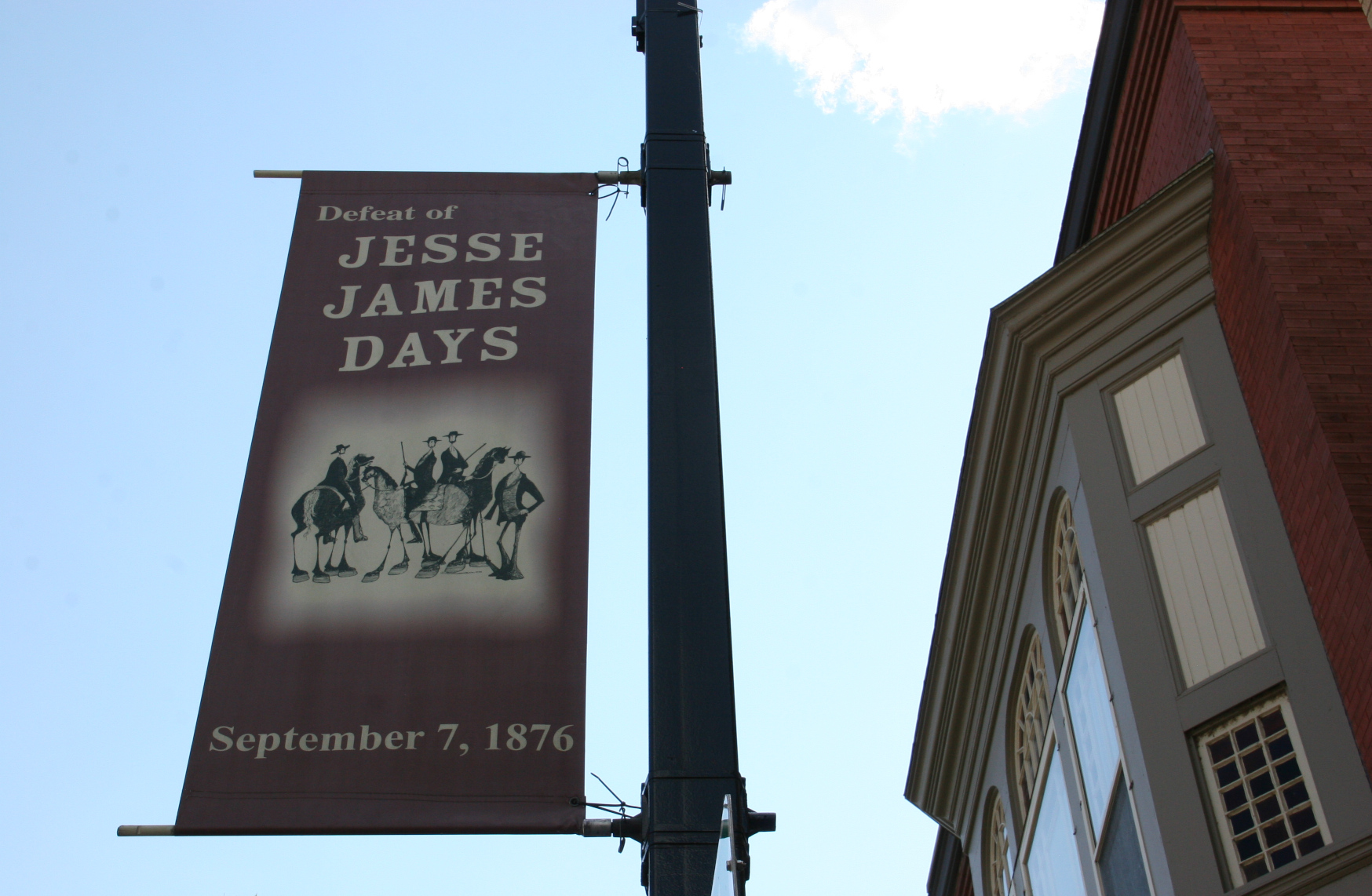
A banner in downtown Northfield promotes the community’s annual celebration. (Minnesota Prairie Roots copyrighted photo August 2022)
This park centers Northfield, home to many home-grown shops and eateries and best-known perhaps for the September 7, 1876, attempted robbery of the First National Bank by the James-Younger Gang. This week Northfield honors the long ago townspeople and a heroic bank cashier who stood up to the outlaws. The town will buzz with activities and people, all here to celebrate Defeat of Jesse James Days. That runs September 7-11.
Weeks before this event I was in Northfield, first touring the Northfield Cemetery to view the gravesites of bank employee Joseph Lee Heywood and Swedish immigrant Nicolaus Gustafson, both shot and killed by the outlaws. Gustafson, at the time of the raid, was vending vegetables in, I believe, current day Bridge Square. The First National Bank is located around the corner.
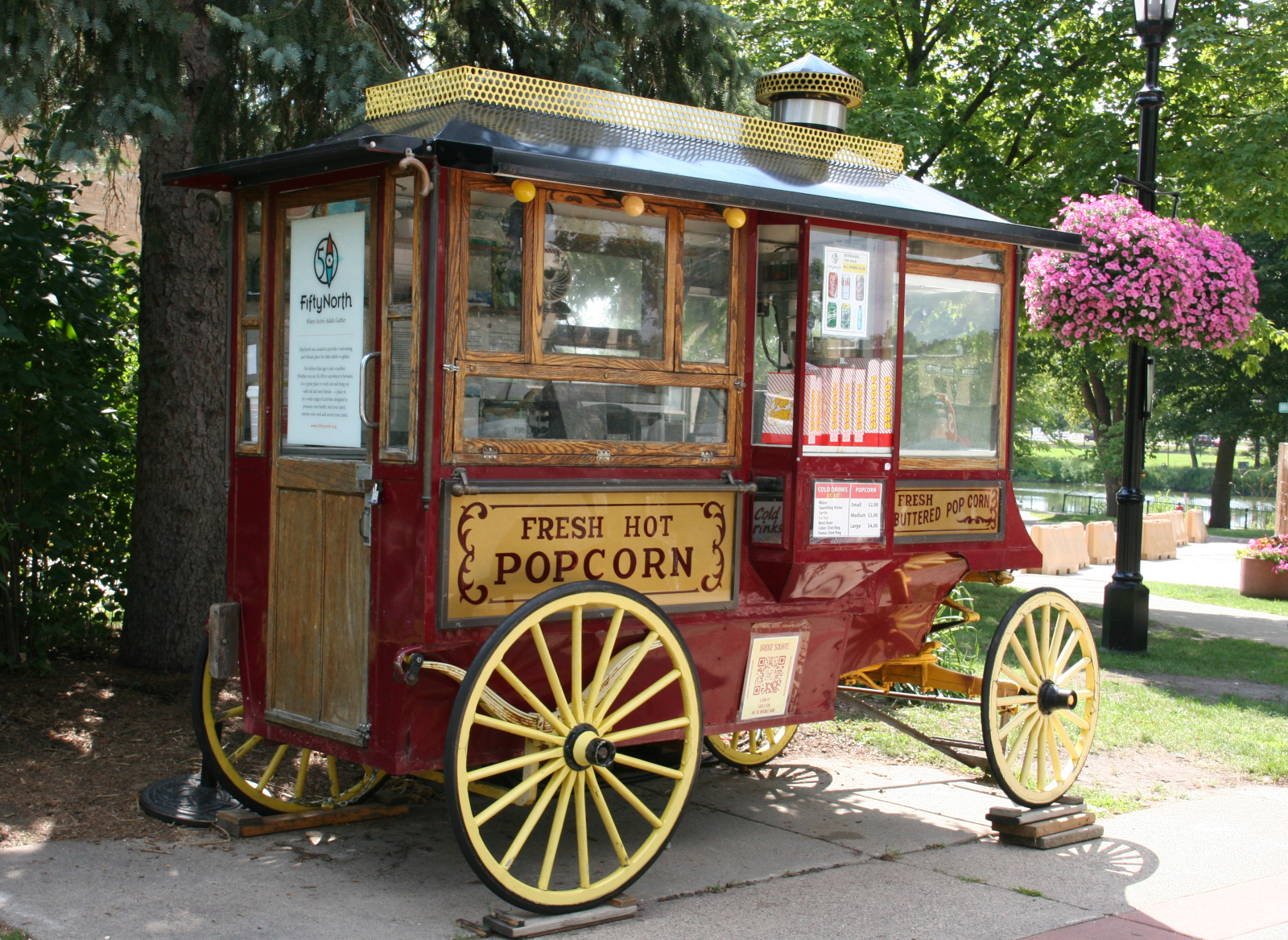
The popcorn wagon has set up in Bridge Square since the 1970s. (Minnesota Prairie Roots copyrighted photo August 2022)
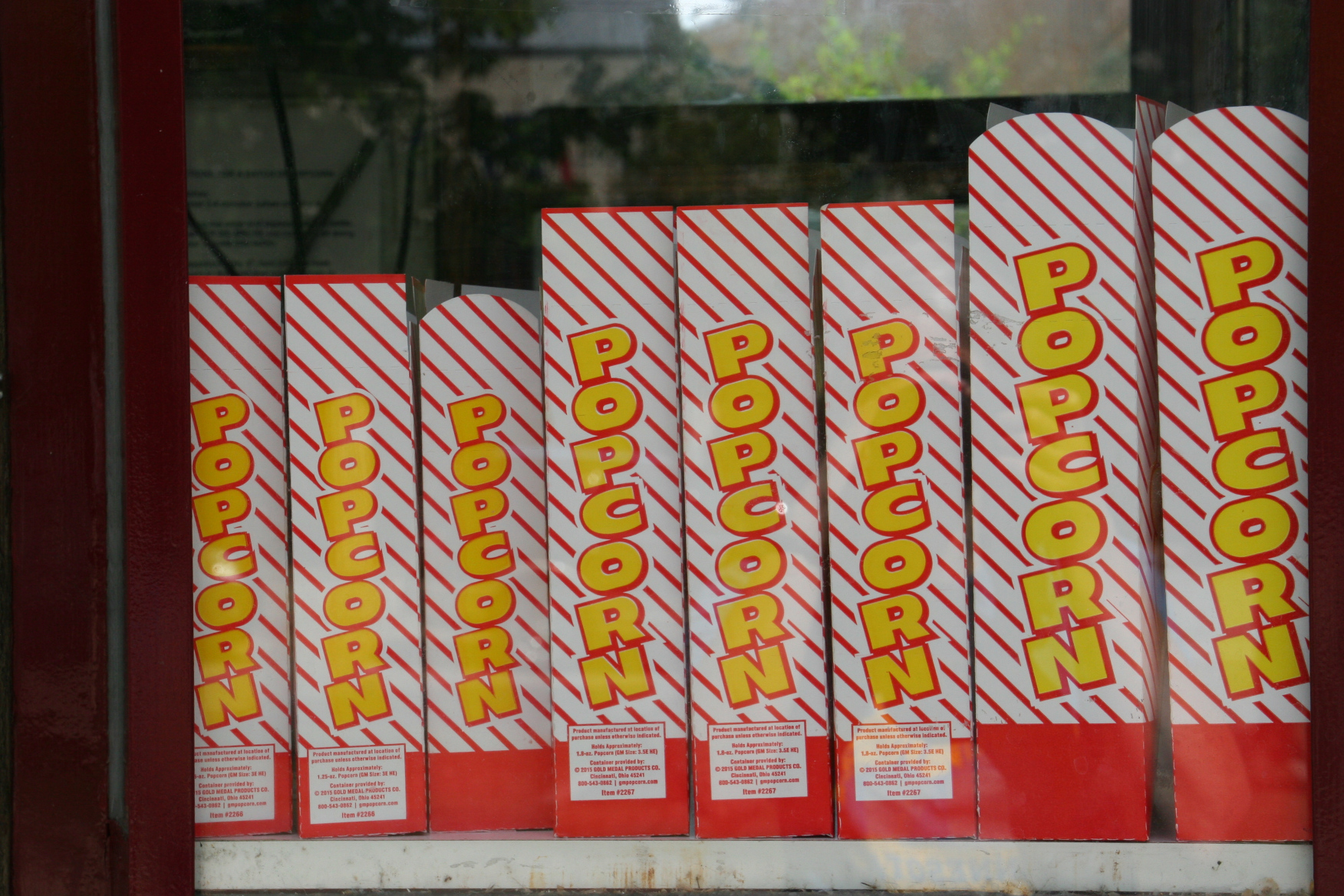
Popcorn boxes lined up in the wagon. (Minnesota Prairie Roots copyrighted photo August 2022)
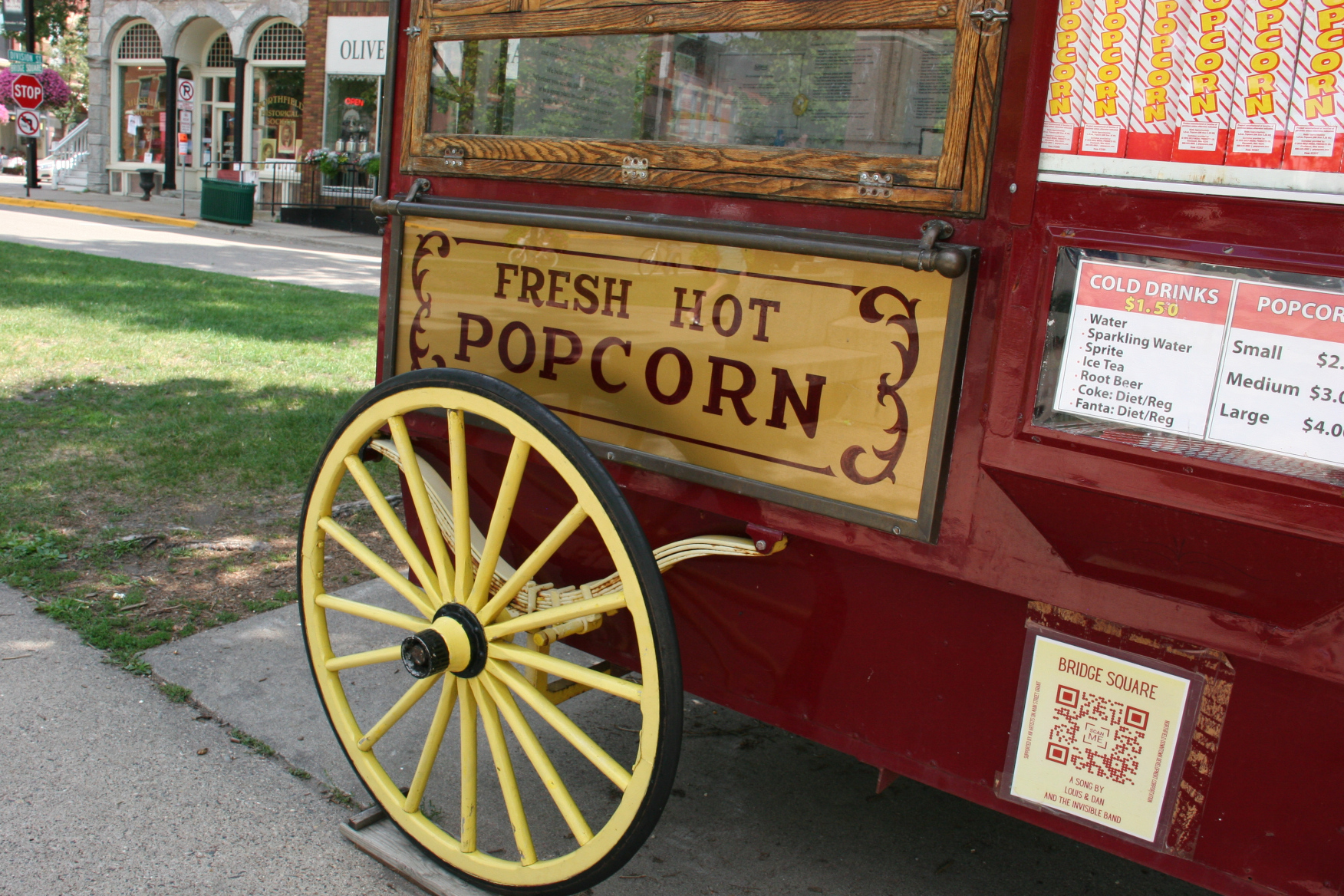
The popcorn wagon brings back memories of Vern’s Popcorn Stand in my hometown of Vesta. (Minnesota Prairie Roots copyrighted photo August 2022)
My focus on that afternoon was not on the historic robbery, but rather on Bridge Square. I noticed first the 1918 popcorn wagon which is open from mid-May to mid-September and operated by FiftyNorth, the local center for seniors. It was closed when I was there. But I could imagine the sound of popping kernels, the scent, the taste of buttery popcorn scooped into boxes. There’s something about a popcorn stand that hearkens to bygone days.
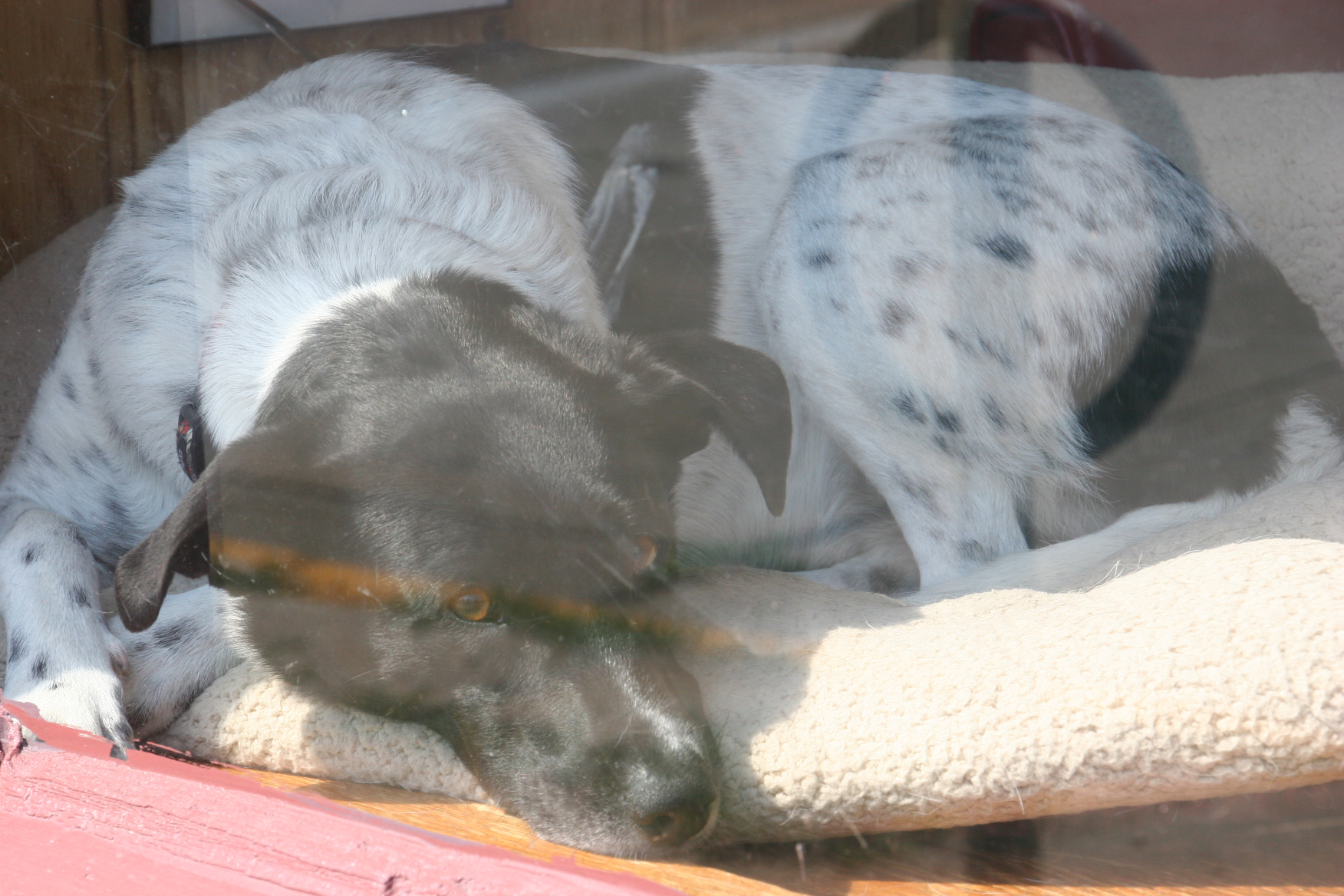
“How much for that doggie in the window?” (Minnesota Prairie Roots copyrighted photo August 2022)
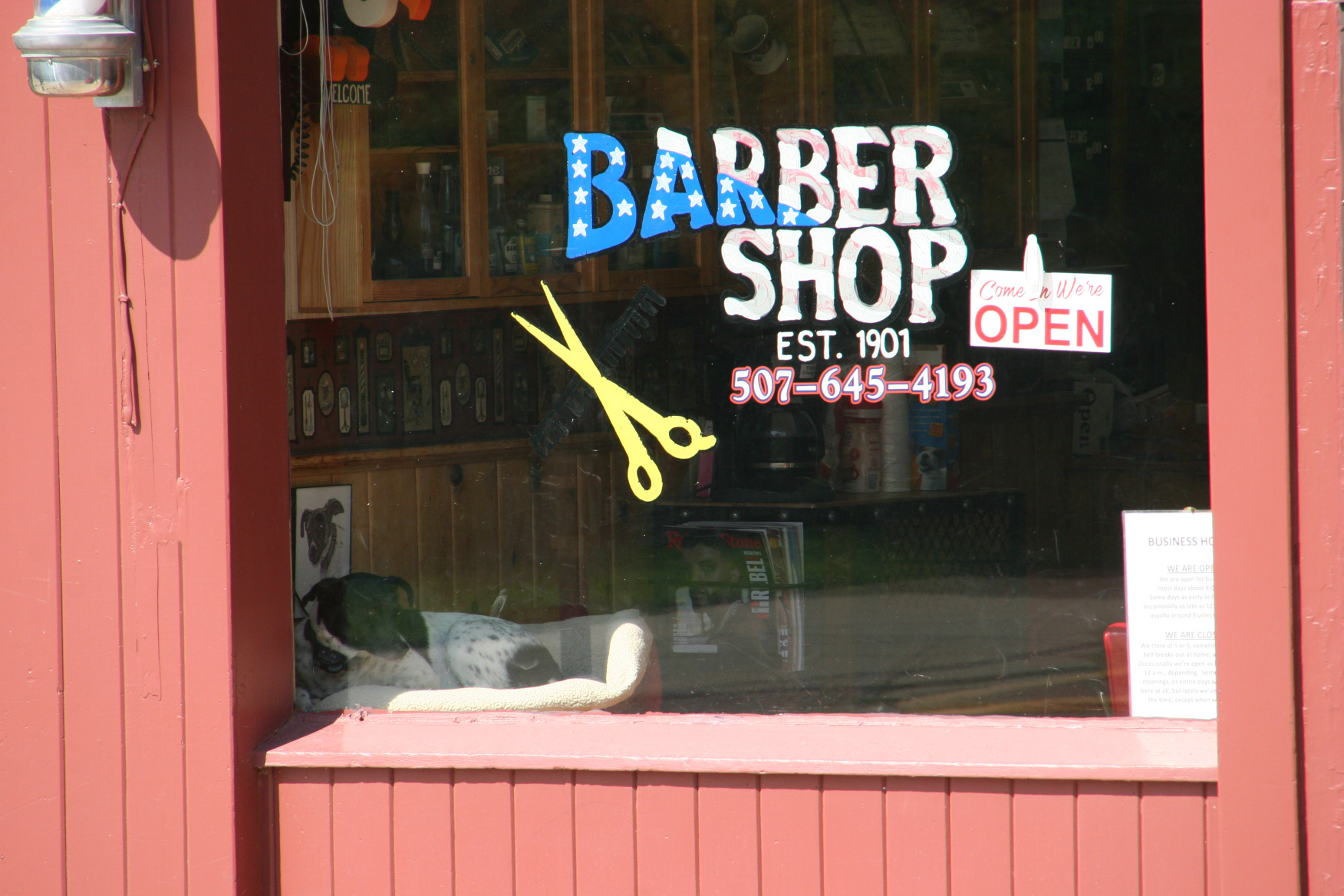
And there’s something about an old-time barbershop such as Bridge Square Barbers with a barbershop pole and then, bonus, a doggie in the window. I spotted the dog lying on a fleece bed in a corner. Seemingly content, only lifting his head when I approached for a close-up photo.
Love this barbershop dog photographed through the window. (Minnesota Prairie Roots copyrighted photo August 2022)
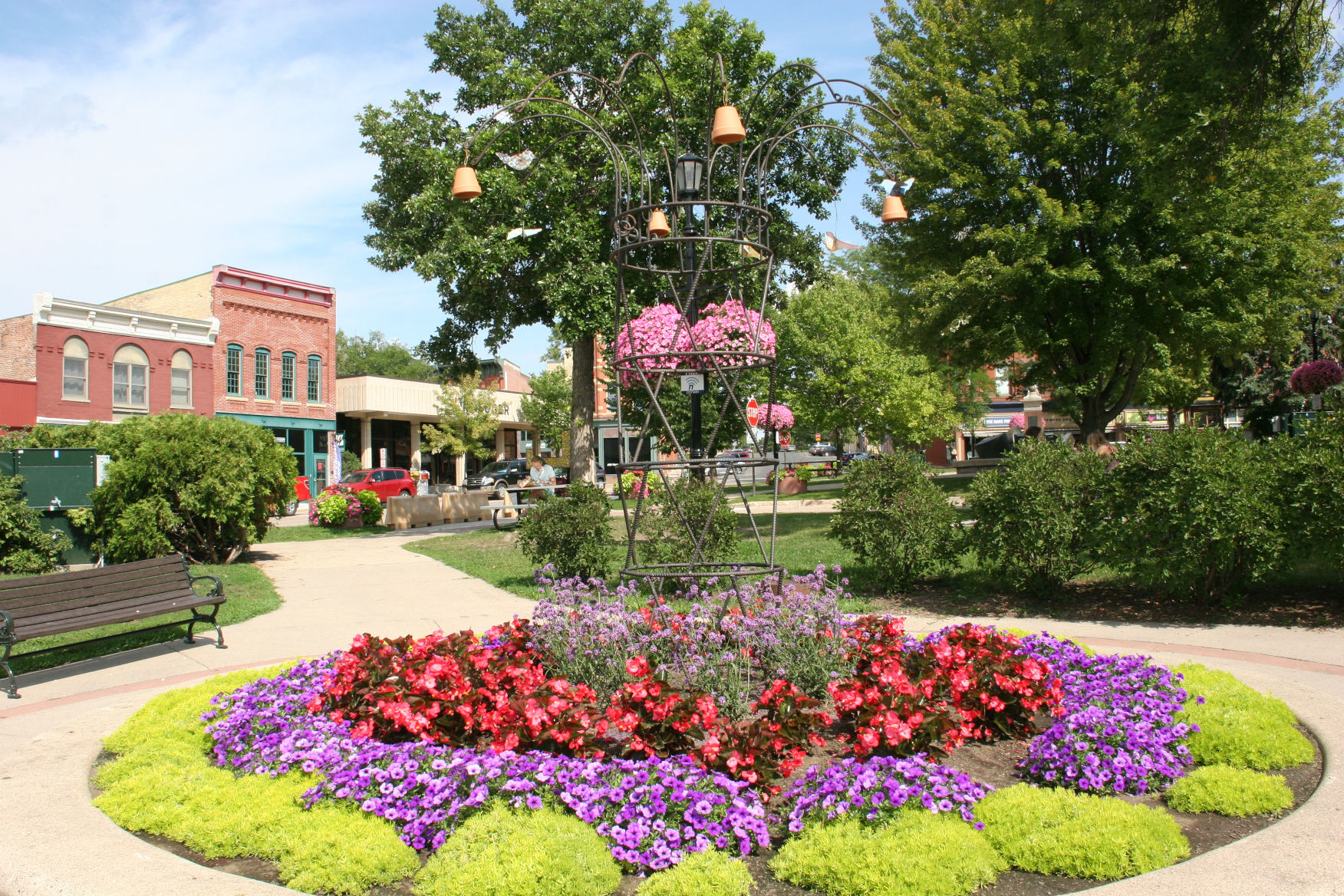
Beautiful flowers circle an art installation in Bridge Square near the Cannon River. (Minnesota Prairie Roots copyrighted photo August 2022)
I also took in the art of Bridge Square. Northfield is big on the arts with an Artists on Main Street program, sidewalk poetry and other art installations in addition to the performing arts.
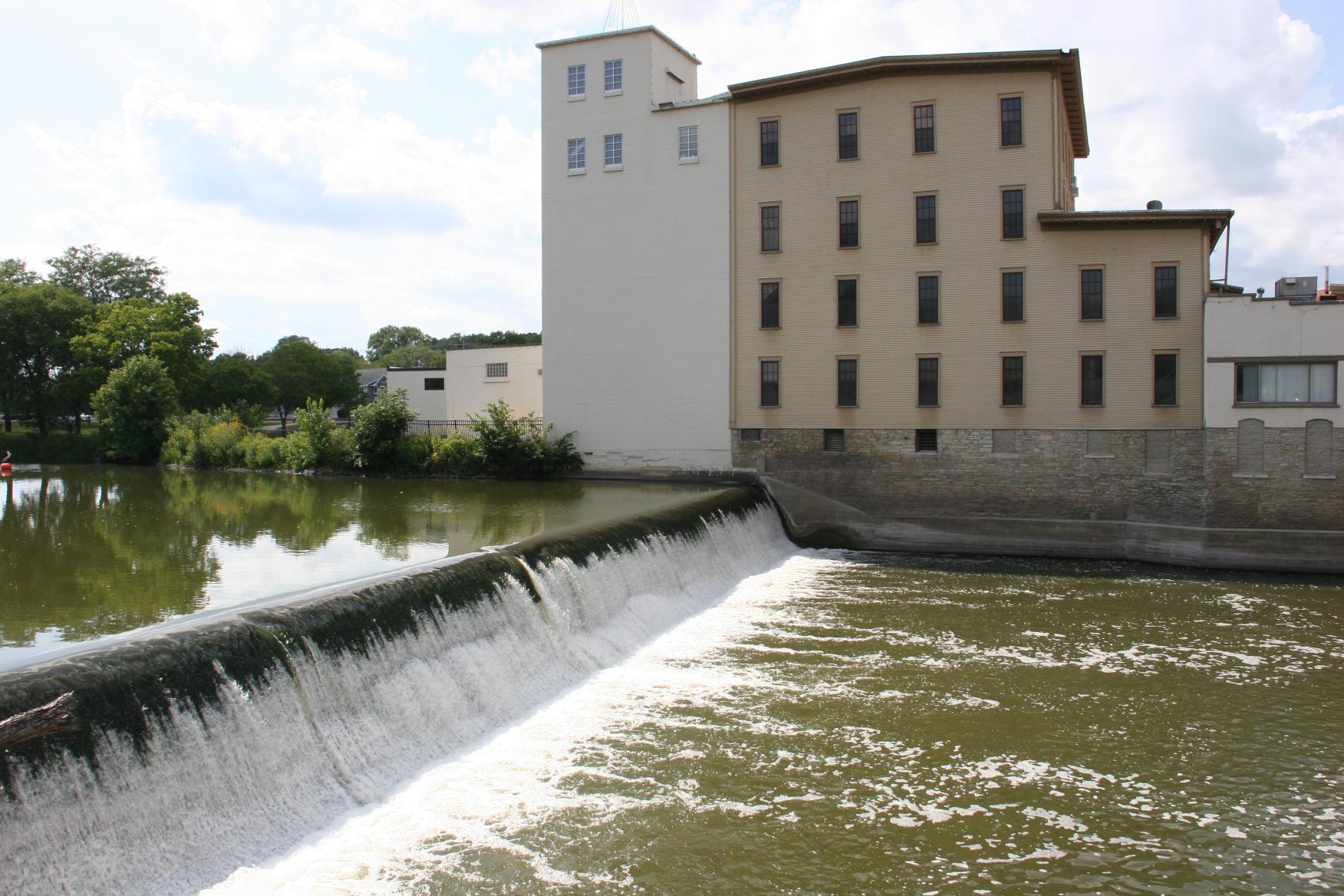
The historic Ames Mill sits along the Cannon River. Originally a flour mill, the mill later was used to produce Malt-O-Meal hot cereals and is today owned by Post Consumer Brands. (Minnesota Prairie Roots copyrighted photo August 2022)
And then there’s the history. Aged buildings like the riverside Ames Mill. The river running through is a real asset to the downtown, especially with a river walk behind buildings hugging Division Street.
Detailed top of the art installation. (Minnesota Prairie Roots copyrighted photo August 2022)
At the heart of all of it is Bridge Square—a place which melds history and art, land and sky and river, commerce and individuality. Most importantly, the village square brings peoples together to converse, to celebrate, to honor, to discuss, to disagree, to buy popcorn from the popcorn wagon, to simply be.
Bird in flight in the Bridge Square sculpture. (Minnesota Prairie Roots copyrighted photo August 2022)
TELL ME: Does your community have an outdoor gathering spot like Bridge Square?
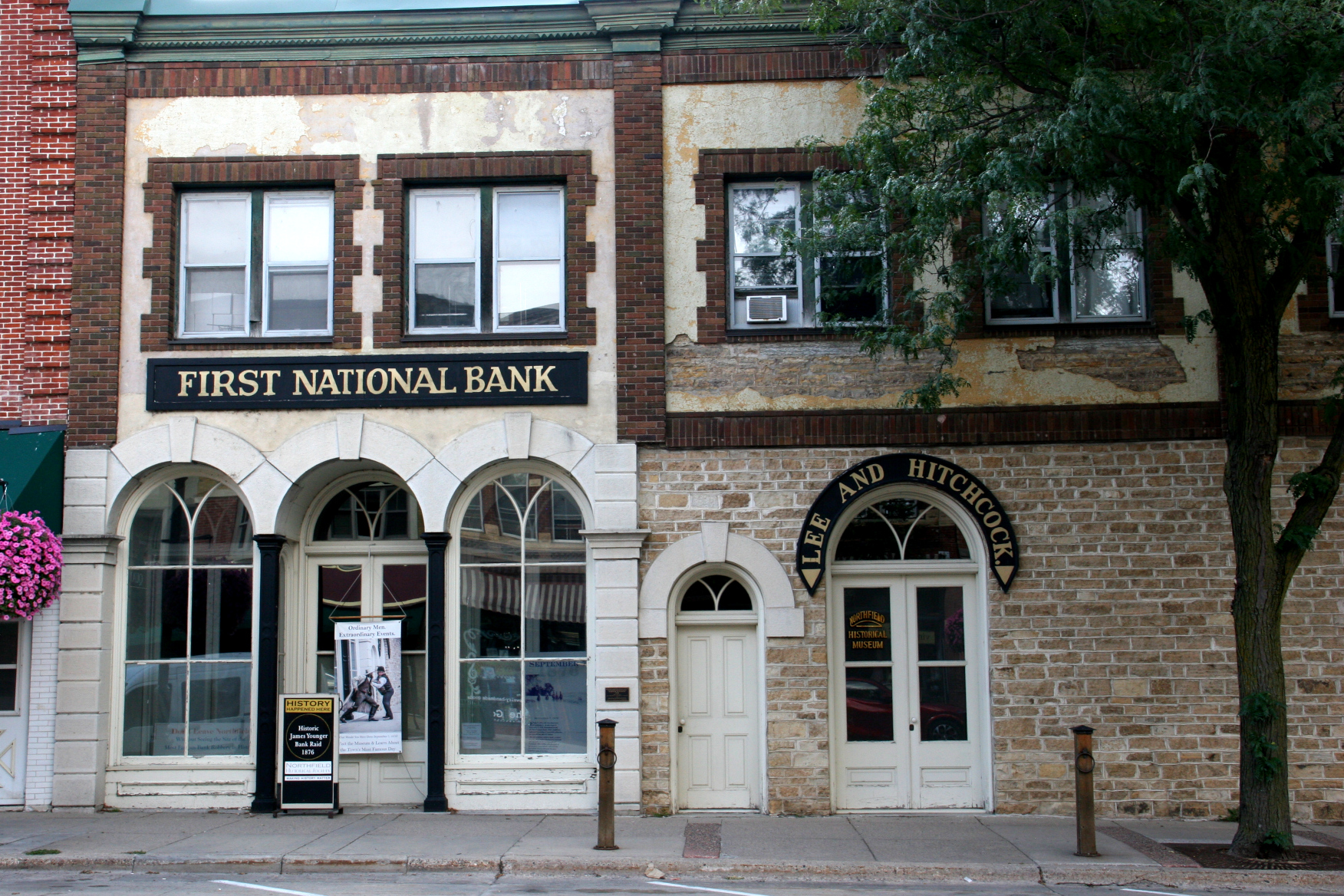
Posted on the First National Bank in Northfield, now the Northfield Historical Society. (Minnesota Prairie Roots copyrighted photo August 2022)
IF NOT FOR A QUICK-THINKING bank cashier and determined townspeople, things could have ended much differently for the community of Northfield on September 7, 1876, when the James-Younger Gang rode into town intent on robbing the First National Bank.
This is where it all happened. The bank is along Division Street in historic downtown Northfield near Bridge Square. (Minnesota Prairie Roots copyrighted photo August 2022)
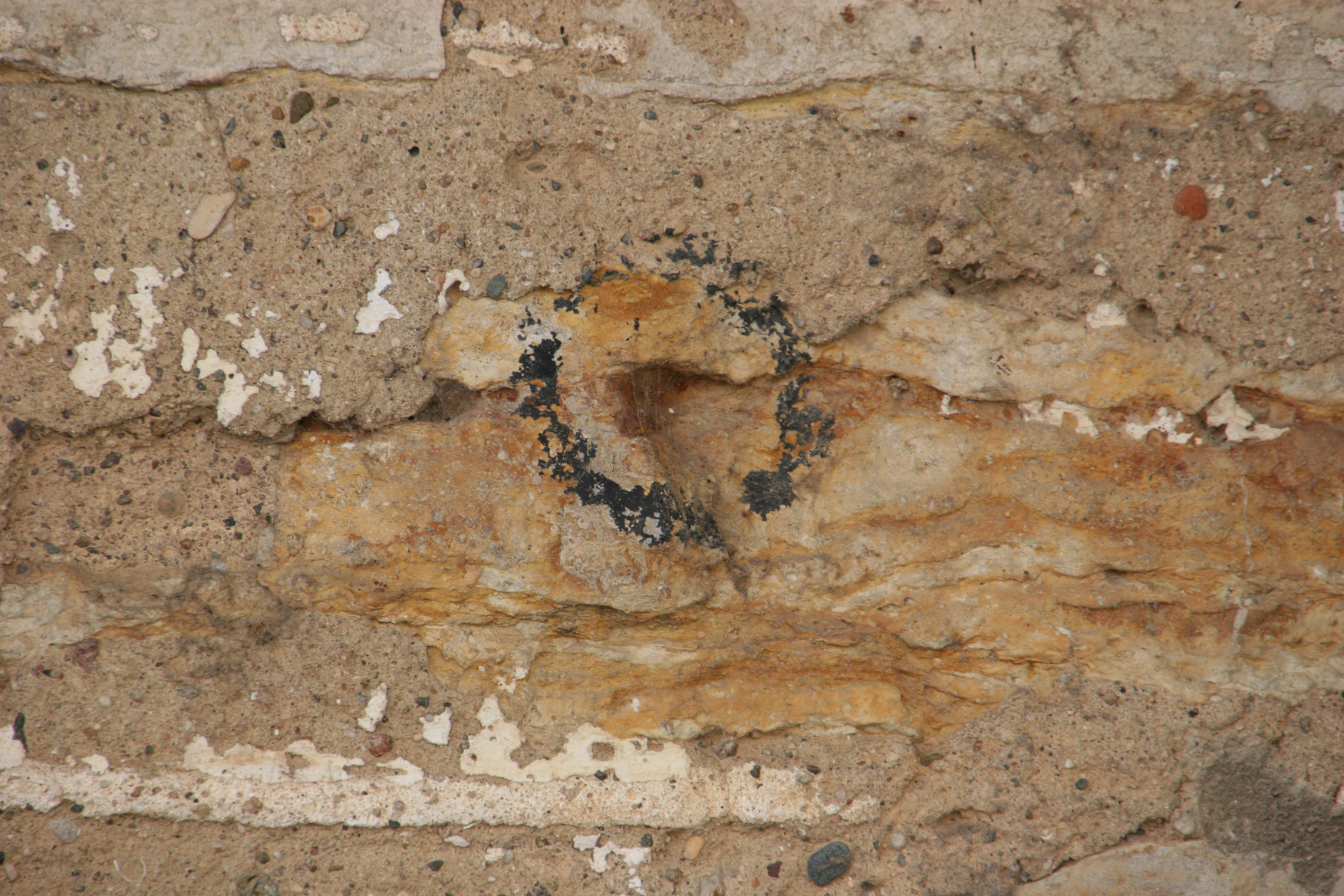
Markers ring supposed bullet holes on the building exterior. (Minnesota Prairie Roots copyrighted photo August 2022)
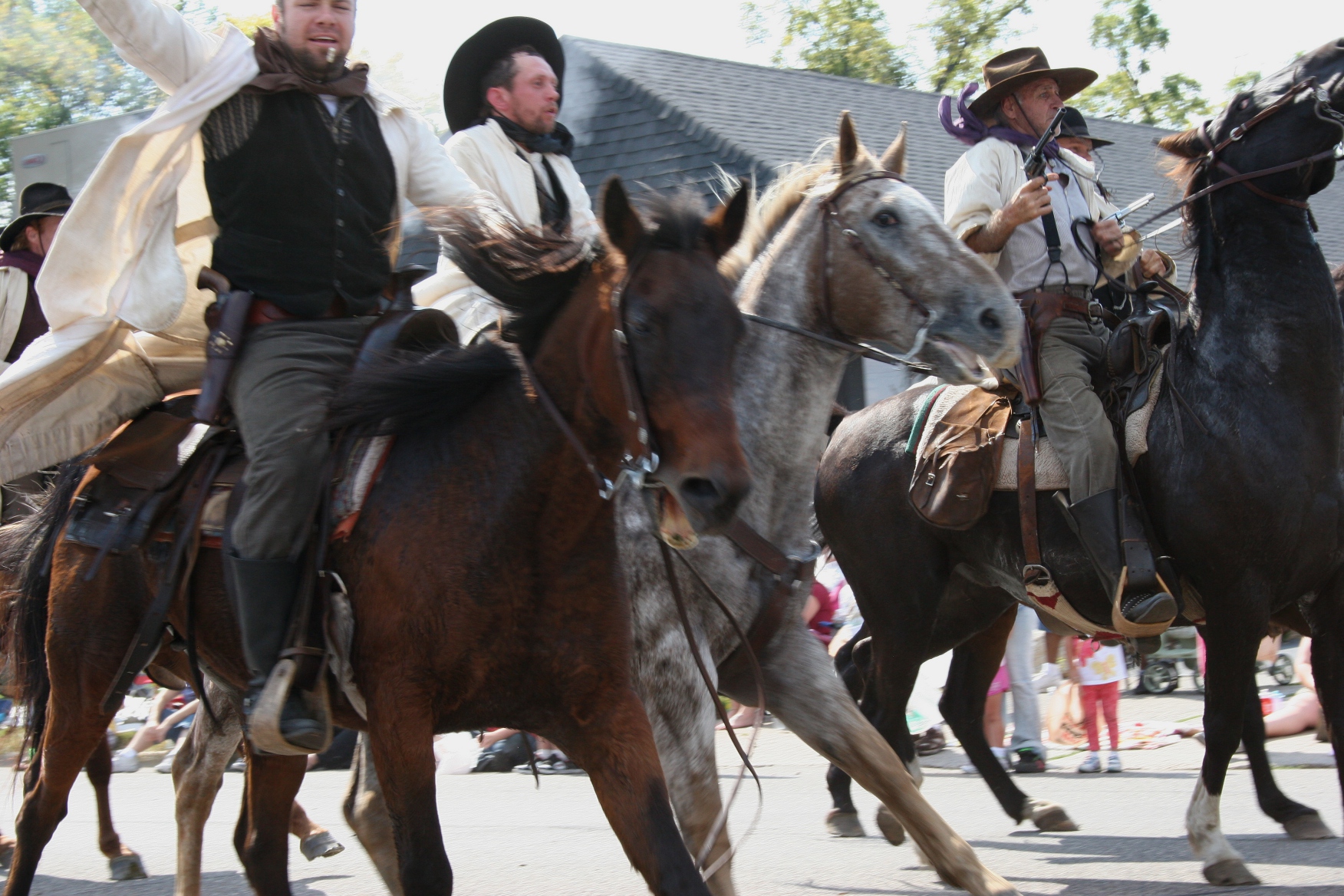
The James-Younger Gang re-enactors riding in the Defeat of Jesse James Days parade. (Minnesota Prairie Roots copyrighted file photo)
That brave employee, Joseph Lee Heywood, stood up to the robbers who demanded cash from the bank vault. In the end, he lost his life, shot in the head. Likewise, Swedish immigrant Nicolaus Gustafson, unable to understand the outlaws’ commands to get off the street, was shot in the head and died four days later. Outlaws Clell Miller and William Chadwell, (also known as William Stiles) died, too, in the ensuing chaos as they attempted to escape.
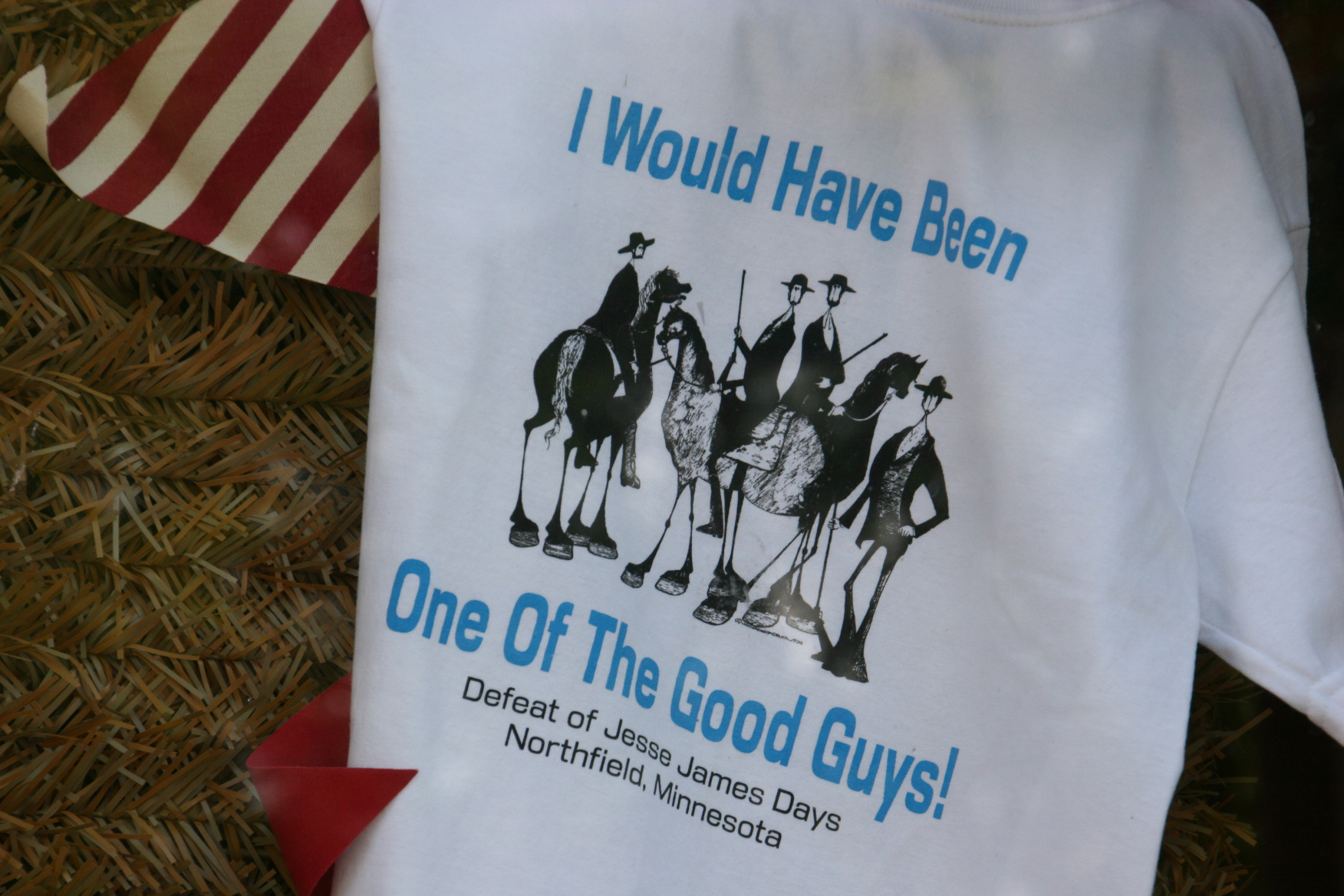
A t-shirt displayed in the front window of the Northfield Historical Society (Minnesota Prairie Roots copyrighted photo August 2022)
Townspeople reacted to the bank raid by throwing skillets and bricks and aiming birdshot at the would-be robbers fleeing on horseback through the narrow streets of this river town. Their efforts, along with those of Heywood, effectively ended a long string of bank and train robberies across the country. The three Younger brothers were shot and captured in a gun battle near Madelia while Frank and Jesse James escaped to Missouri.
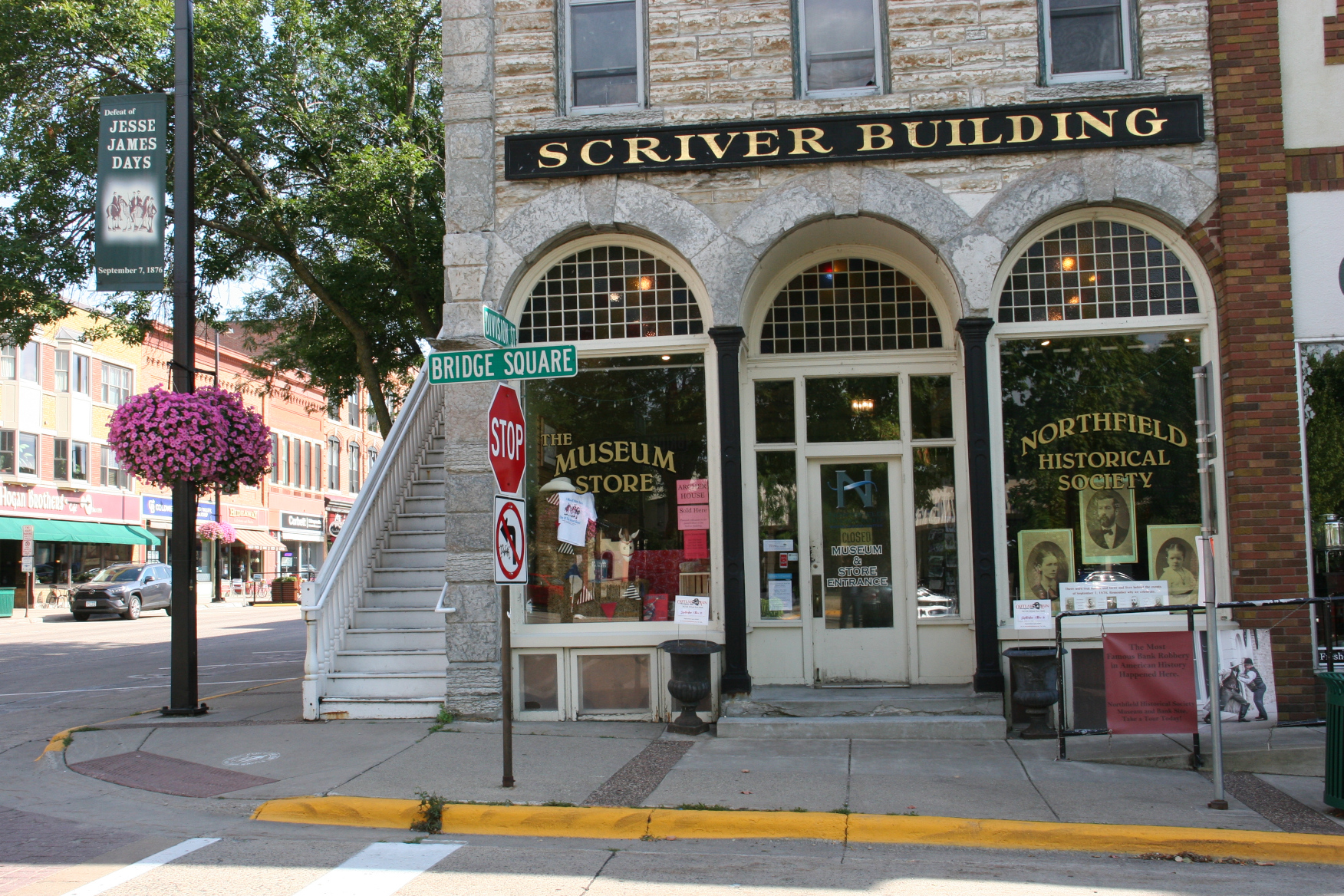
The Northfield Historical Society entrance by Bridge Square. (Minnesota Prairie Roots copyrighted photo August 2022)
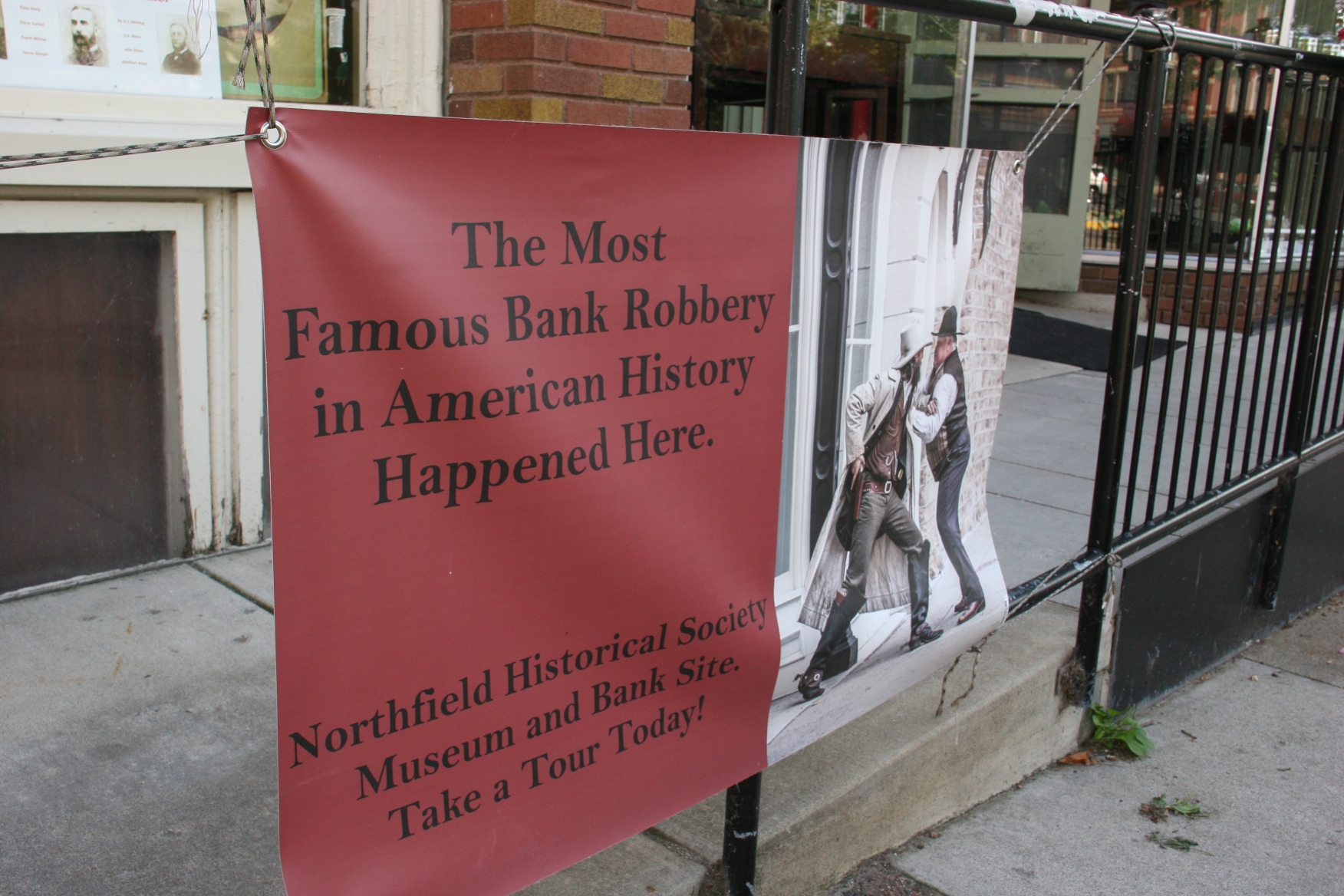
That’s the summary backstory of “The Most Famous Bank Robbery in American History” as tagged by the Northfield Historical Society based in the bank building and with a permanent exhibit, “The James-Younger Gang Bank Raid.” I toured the exhibit in 2012 and highly-recommend it to learn the full story behind this event.
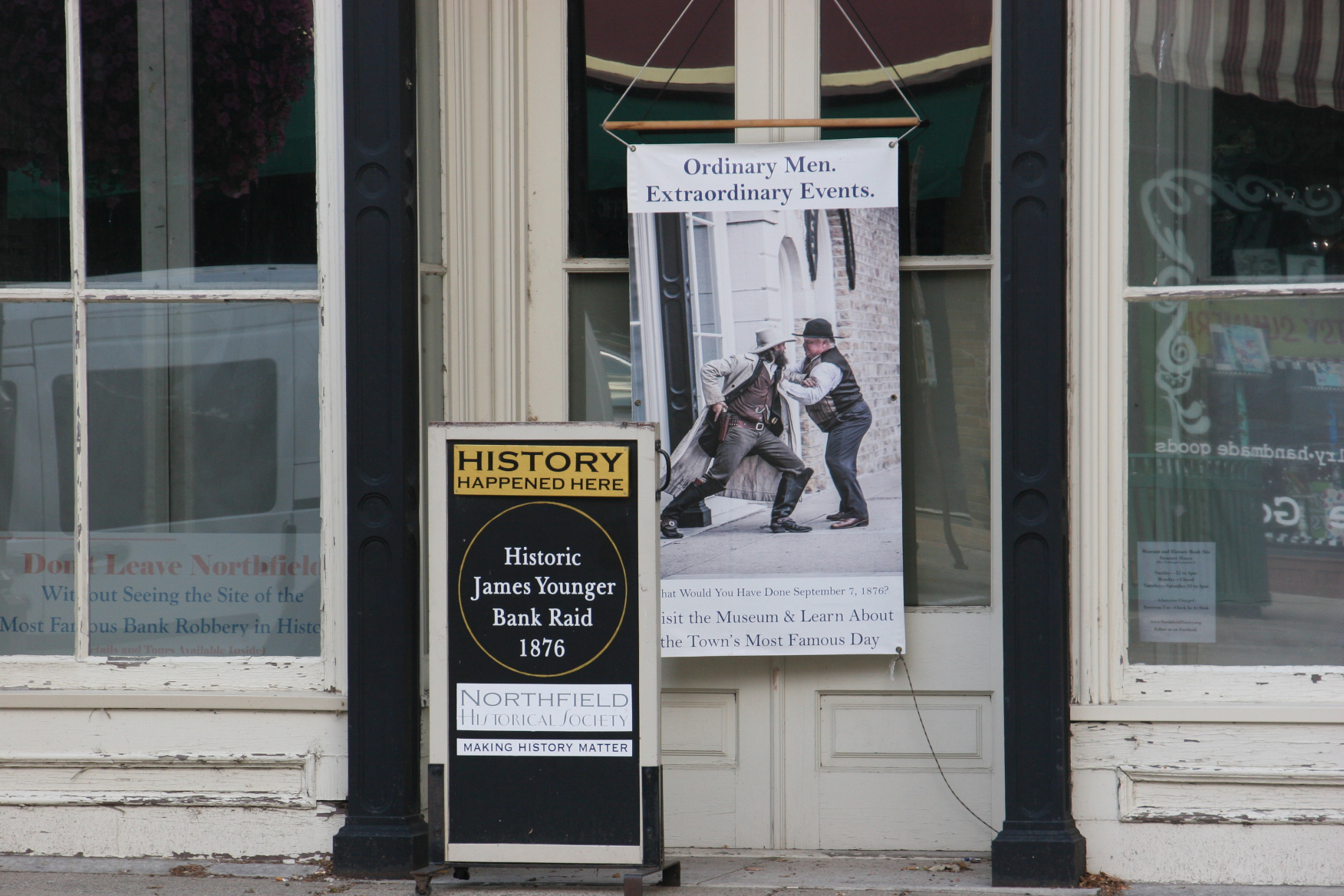
Posted just outside the NHS entrance. (Minnesota Prairie Roots copyrighted photo August 2022)
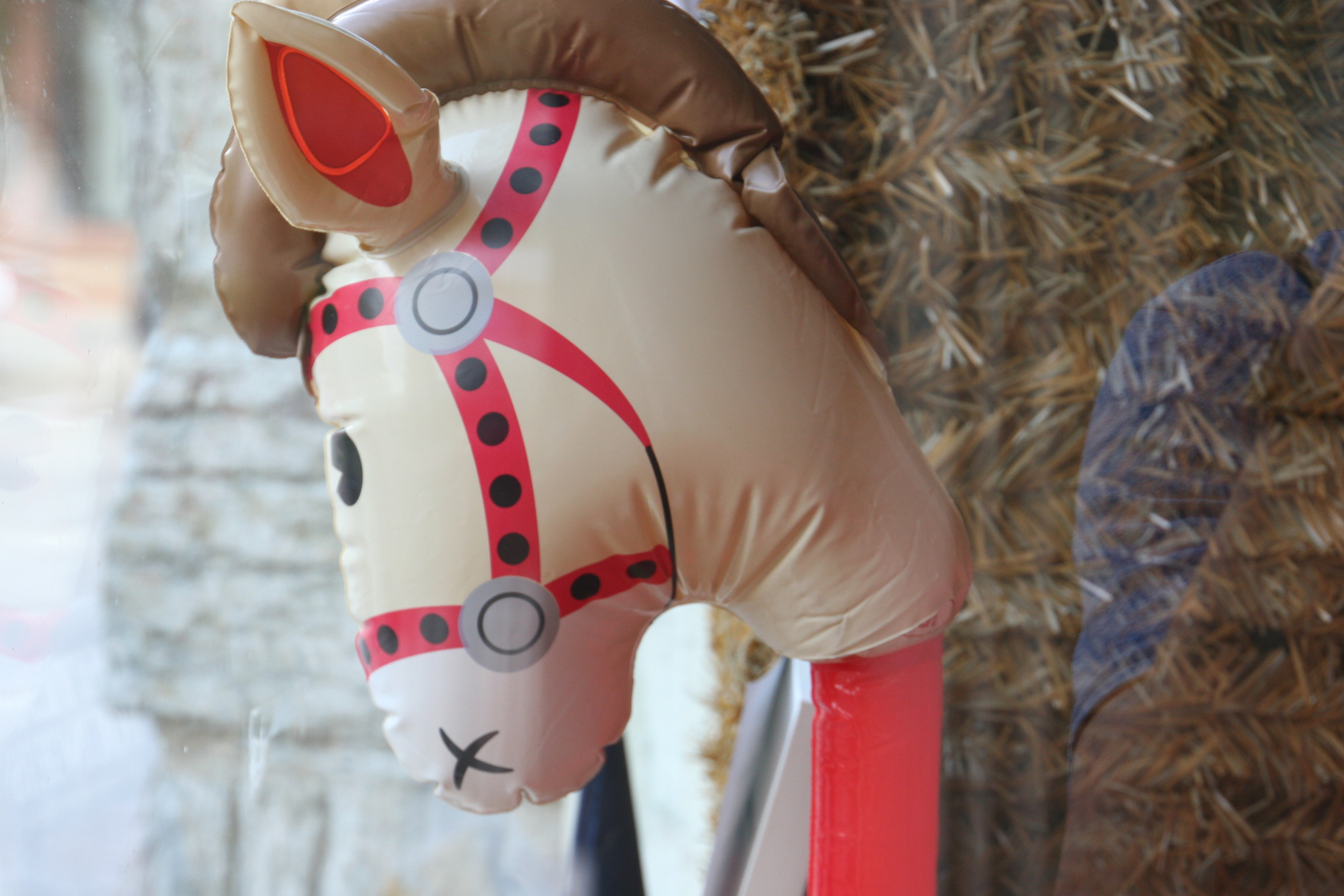
A toy horse is part of the front window display at the NHS. (Minnesota Prairie Roots copyrighted photo August 2022)
One of the many events during Defeat of Jesse James Days. (Minnesota Prairie Roots copyrighted photo August 2022)
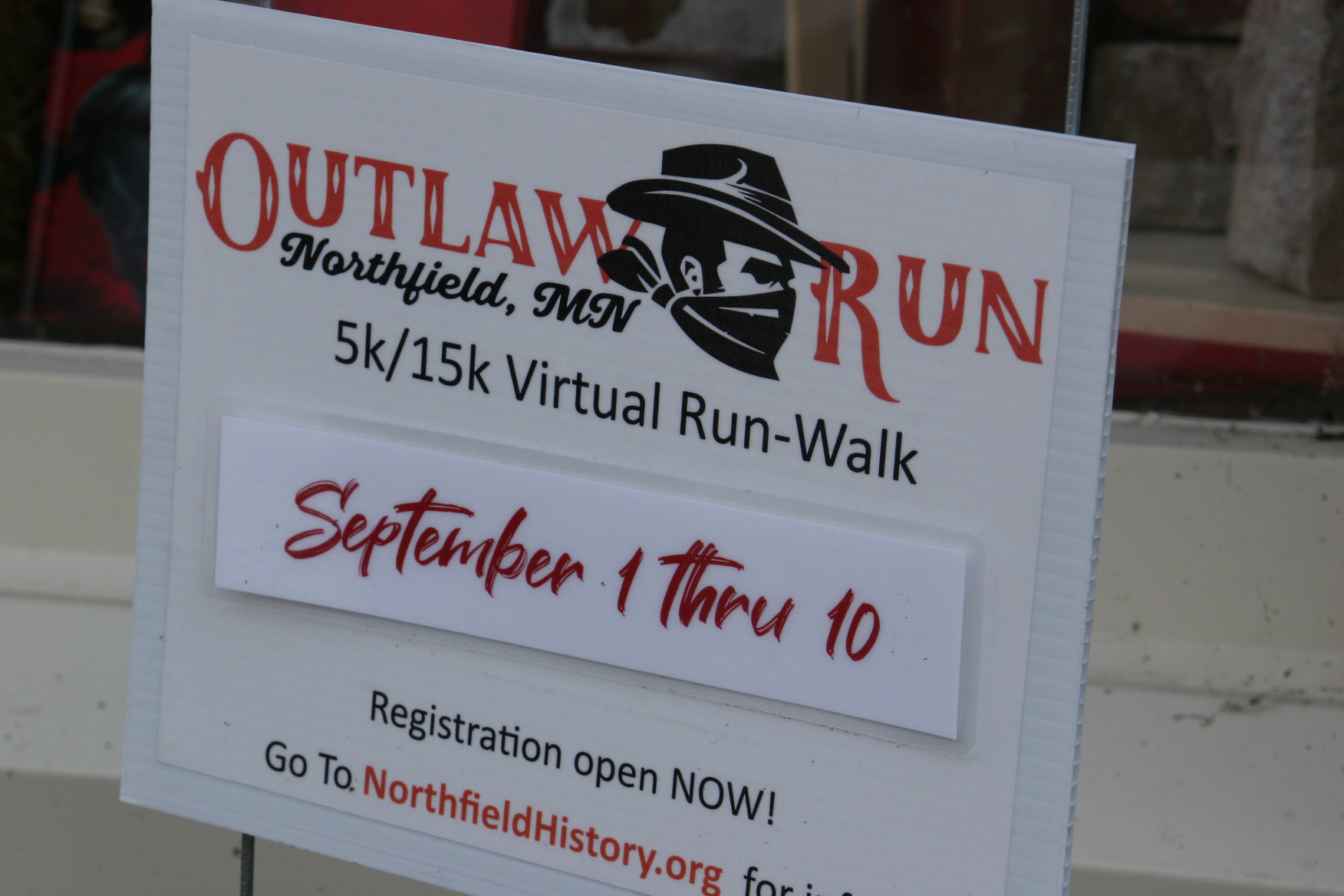
This historic happening focuses Defeat of Jesse James Days, beginning Wednesday in Northfield. I’ve attended that, too, but mostly stay away given it’s one of the biggest community celebrations in Minnesota, meaning crowds. Honoring Heywood and the brave townspeople of 1876, the September 7-11 event includes a long list of activities like the popular bank raid re-enactments, an Outlaw Run, car and craft shows, an art festival, a rodeo, tractor and truck pulls, a parade and much more. Annually the Joseph Lee Heywood Distinguished Service Award is “given to a Northfield citizen who exemplifies a commitment to public service, which Heywood lived.”
This sign on a building marks the Northfield Cemetery. (Minnesota Prairie Roots copyrighted photo August 2022)
In the midst of all this, I’d suggest a visit to a place away from the crowds. The Northfield Cemetery. Here Joseph Lee Heywood and Nicolaus Gustafson lie buried. A few weeks ago I sought out their graves given my interest and my desire to honor these two men who lost their lives during the failed bank raid.
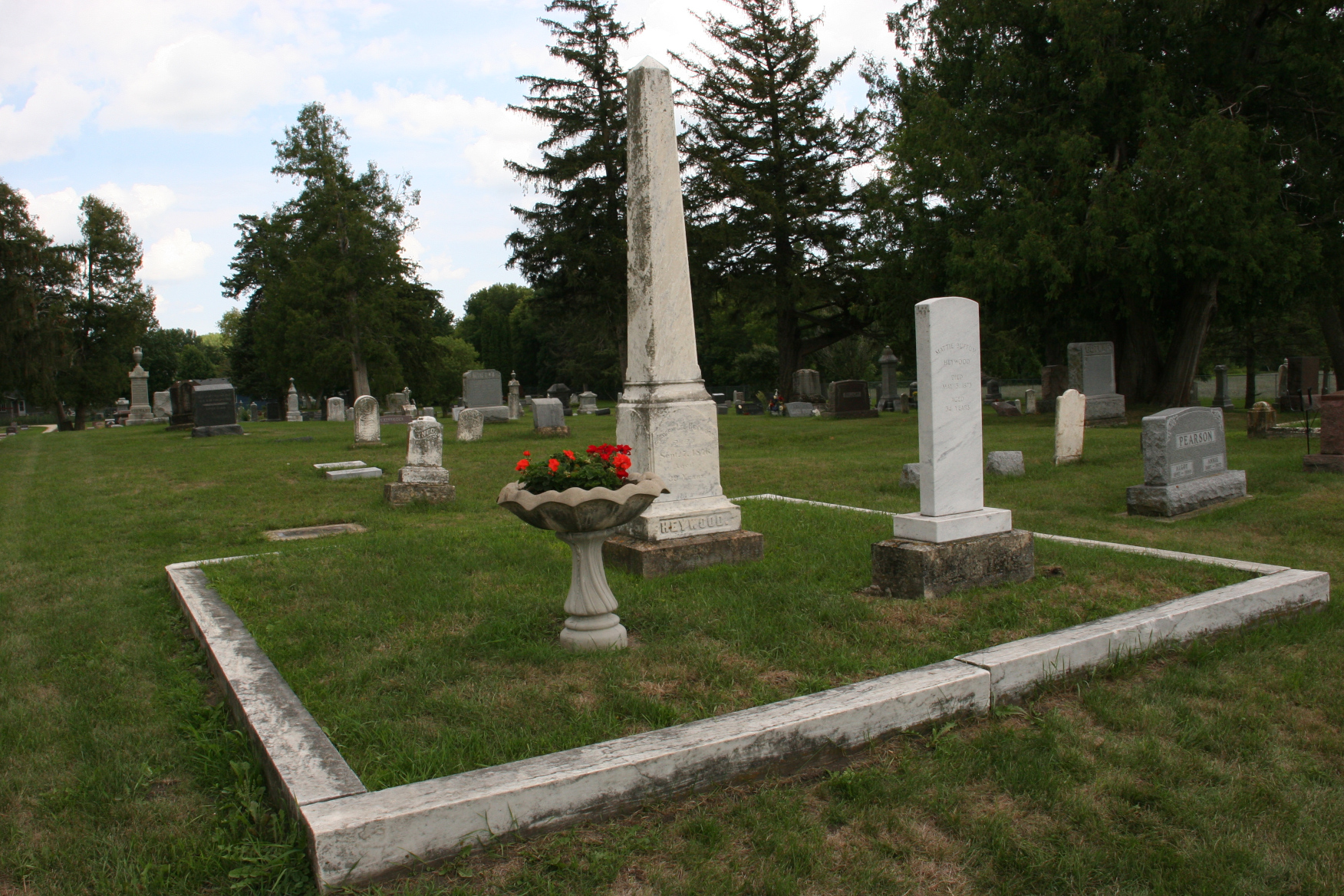
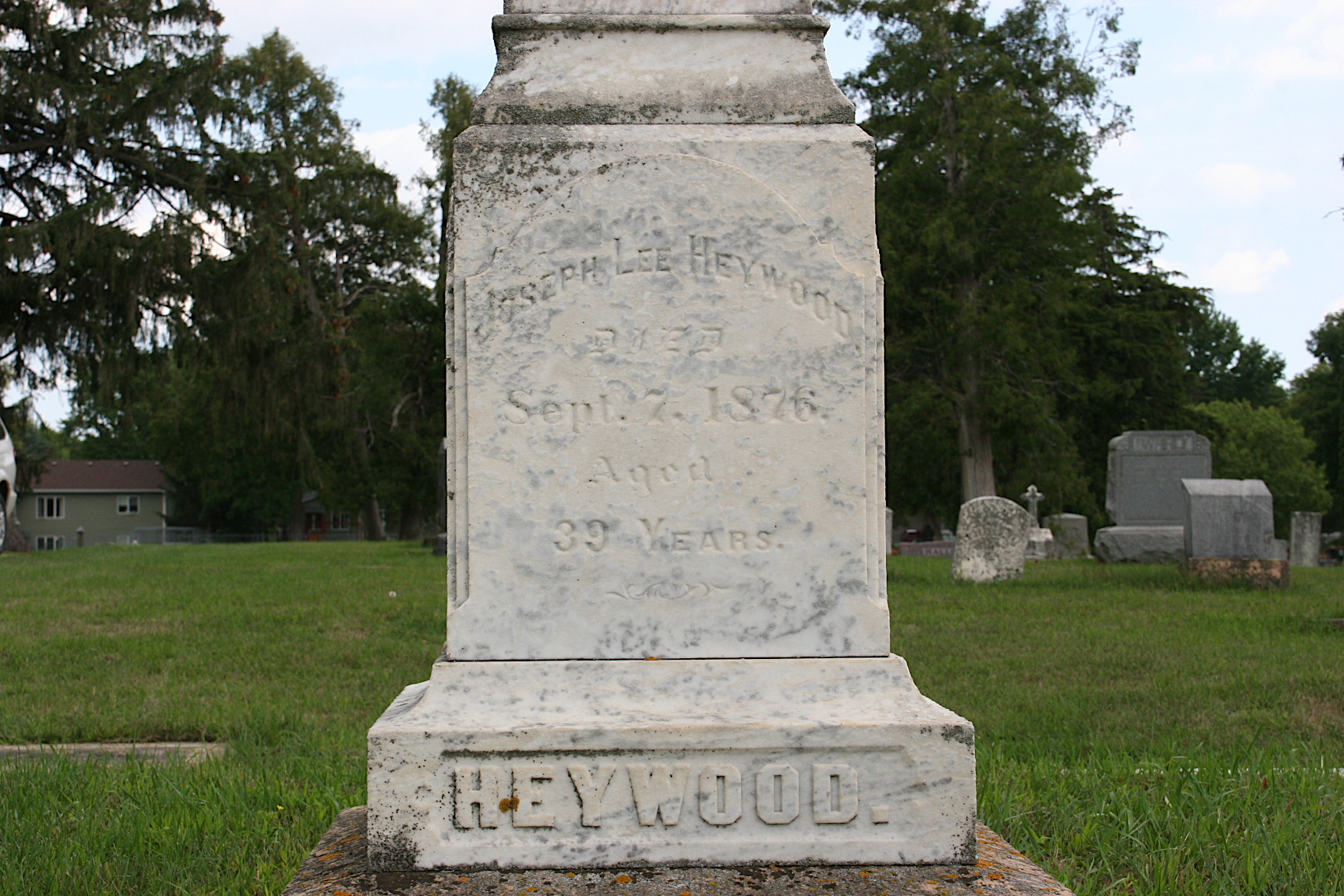
Joseph Lee Heywood‘s gravesite. (Minnesota Prairie Roots copyrighted photo August 2022)
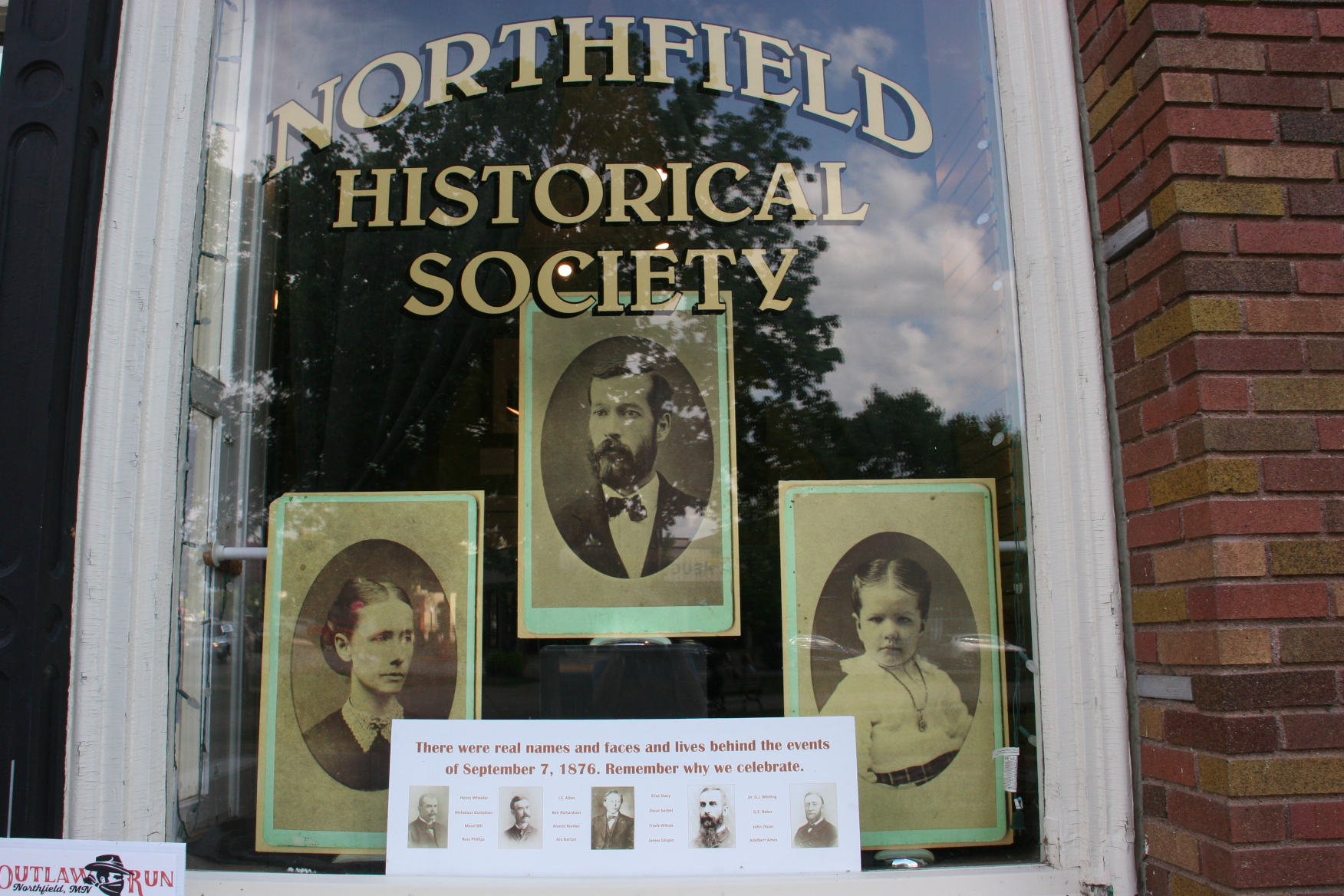
A portraitof Joseph Lee Heywood is posted in the Northfield Historical Society window. Although I’m not certain, I believe the other images are of his wife and daughter. He remarried after Mattie died. (Minnesota Prairie Roots copyrighted photo August 2022)
Heywood’s marker up close. (Minnesota Prairie Roots copyrighted photo August 2022)
The bank cashier’s burial spot is decidedly prominent, his grave marker rising high within a squared off space. Mattie Buffum Heywood, who died in May 1873 at the age of 34, is buried by her 39-year-old husband.
A surprisingly new marker marks the grave of Nicolaus Gustafson. (Minnesota Prairie Roots copyrighted photo August 2022)
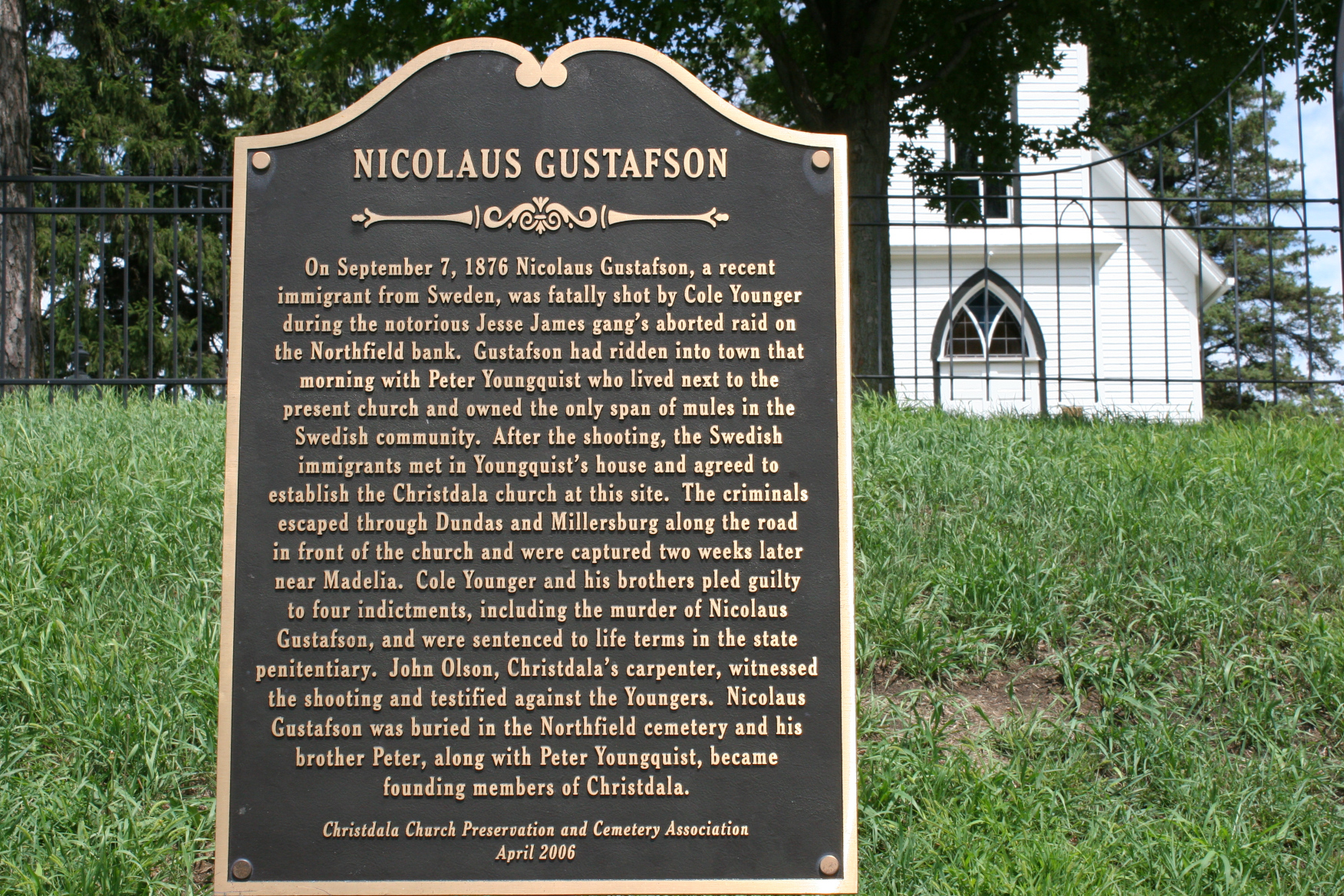
Finding Nicolaus Gustafson’s grave took effort. Eventually I found it near the cemetery entrance next to the chain link fence along busy Division Street South. I expected an aged tombstone like Heywood’s, not the more modern granite marker with the postscript inscription, A SWEDISH IMMIGRANT SHOT BY ROBBERS. Gutafson, who had just turned 30, arrived in Northfield from neighboring Millersburg on the day of the robbery to sell produce with another Swedish immigrant. He was buried in Northfield because the Swedes did not yet have a church or cemetery. In 1994, the good people of Northfield installed the gravestone gracing his final resting spot. A historic marker at Christdala Church also honors Gustafson.
This marker in front of Christdala Church, rural Millersburg, honors Nicolaus Gustafson. (Minnesota Prairie Roots copyrighted file photo 2020)
In all of this, there is something to be said for the strength of those who are now part of our history. Their actions, whether intentional or not, determined outcomes. For communities. For families. For the future. How many lives were saved because of Joseph Lee Heywood, because of those determined Northfielders, even because of a Swedish immigrant rushing to a street corner?















 Minnesota Prairie Roots
Recent Comments