Minnesota Prairie Roots

Writing and photography by Audrey Kletscher Helbling

What is this Minnesota bicyclist thinking? December 22, 2013

Filed under: Uncategorized — Audrey Kletscher Helbling @ 5:16 PM
Tags: , , , , , , , , , ,
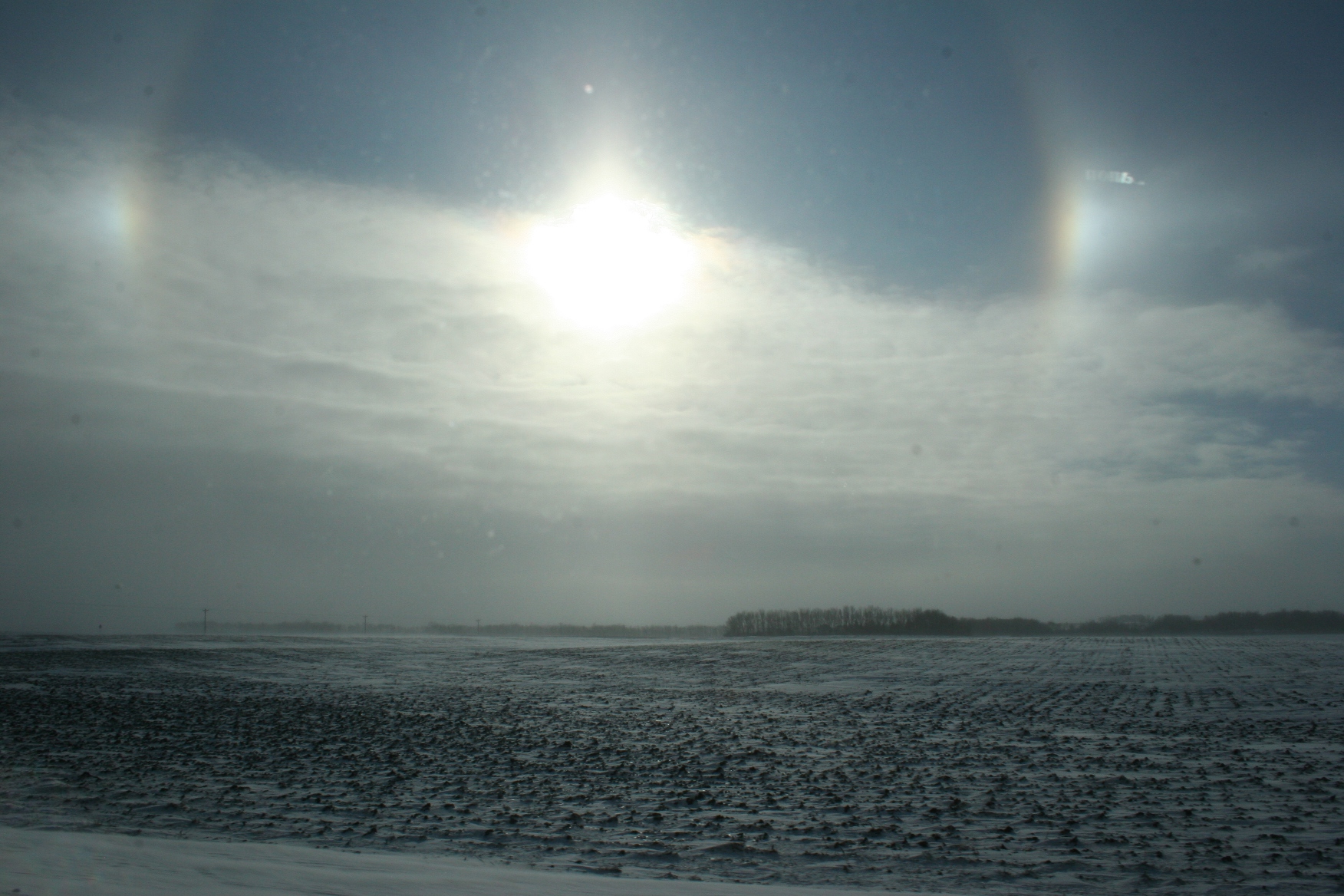
Sun dogs photographed through the dirty passenger side window of the van this morning east of Lamberton along U.S. Highway 14.

Sun dogs photographed this morning through the dirty passenger side van window east of Lamberton along U.S. Highway 14 in southwestern Minnesota.

YOU KNOW IT’S COLD when sun dogs emerge, the wind whips flags straight out and a bank sign temperature reads five degrees Fahrenheit.

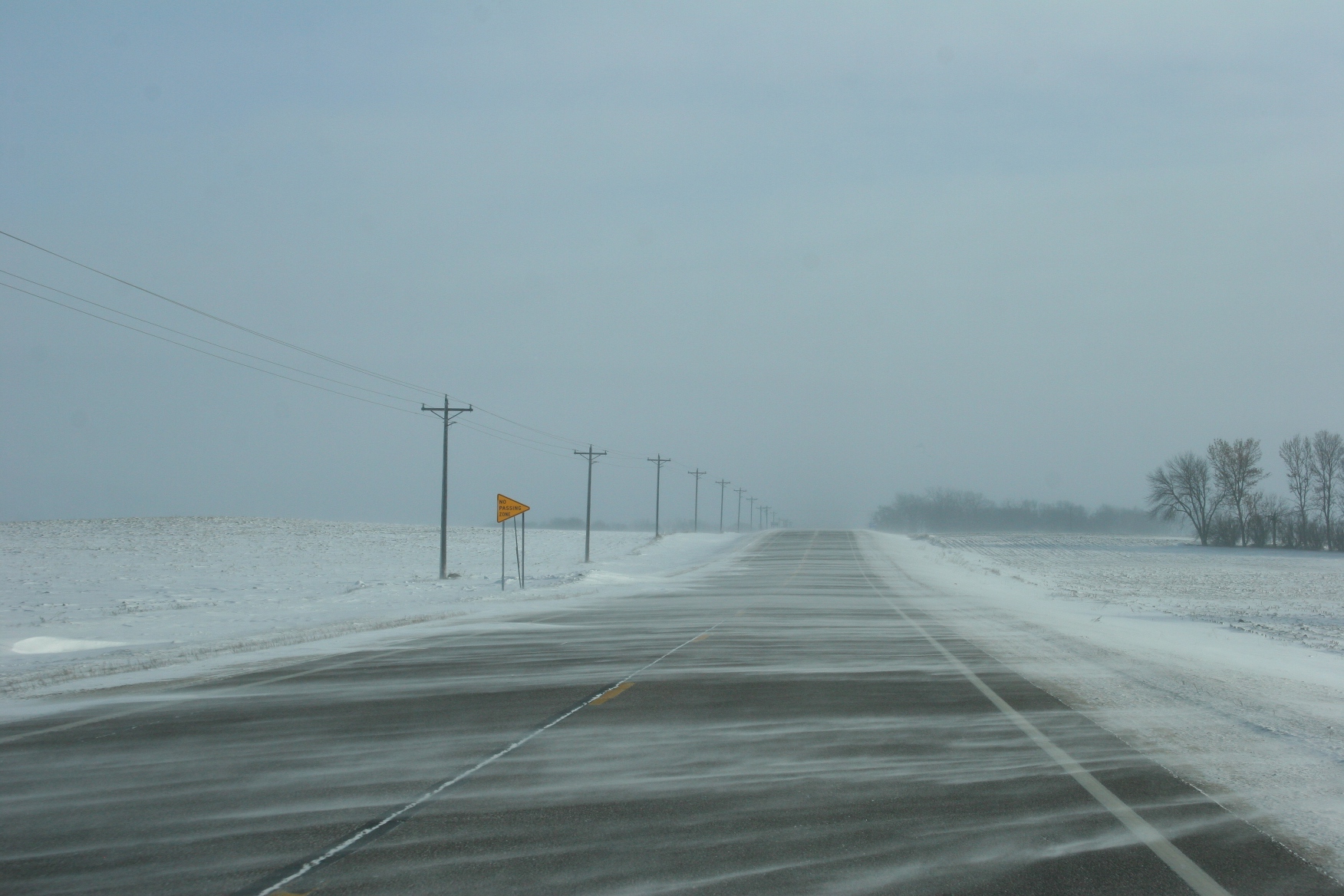
Strong winds drift snow across U.S. Highway 14 east of Lamberton this morning.

Strong winds drift snow across U.S. Highway 14 east of Lamberton this morning.

That would be southwestern Minnesota this morning as my family left my brother and sister-in-law’s rural Lamberton home after a family Christmas and began the 2 1/2-hour drive east back to Faribault.

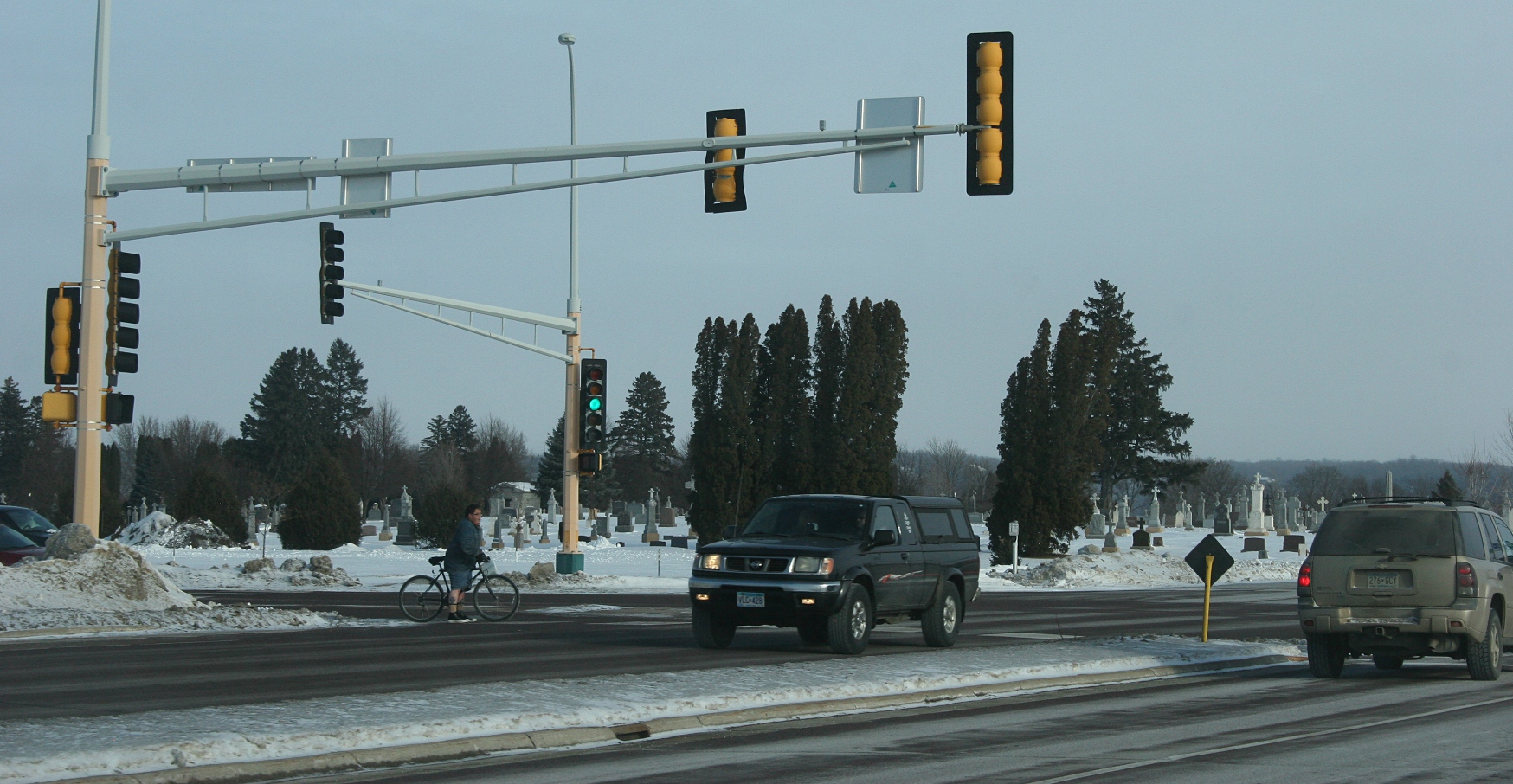
After an hour on the road, we entered New Ulm where I photographed this scene at the intersection of Brown County Road 29 and U.S. Highway 14:

The biker, to the left in photo, caught my eye in New Ulm because of his attire.

The biker, to the left, caught my eye in New Ulm because of his attire.

Tell me, how could this bicyclist tolerate biking in shorts or without a cap on his head? I sincerely hope he didn’t have far to pedal on this official second day of winter. Exposed skin can freeze quickly in such brutal temps.

He was, at least, wearing gloves.

© Copyright 2013 Audrey Kletscher Helbling


On the cusp of harvest in southwestern Minnesota October 4, 2013

Grey skies and rain create a moody scene along U.S. Highway 14 between Sleepy Eye and Lamberton.

Grey skies and rain create a moody scene along U.S. Highway 14 between Sleepy Eye and Lamberton.

RAIN DRIZZLES, SOMETIMES SPLATTERS, across the windshield of our van as my husband and I aim toward the southwestern Minnesota prairie, driving toward Lamberton for a day of making horseradish with my extended family. It is a time-honored tradition, started by my father, dead 10 years now.

For me, this 120-mile trip from our Faribault home is not as much about the horseradish as it is about family and memories and spending a weekend in my beloved native prairie, the place that shaped me in to the person/writer/photographer I’ve become.

This section of U.S. Highway 14 between Sleepy Eye and Lamberton features many stately and well-kept barns like this brick one.

This section of U.S. Highway 14 between Sleepy Eye and Lamberton features many stately and well-kept barns like this brick one.

Even after 40 years away from this place of big skies and flat open spaces, of small towns and family farms, of corn and soybean fields stretching into forever, I still miss this land.

Especially at harvest time.

A cheery smile on a barn off U.S. Highway 14 serves as a backdrop to a ripened soybean field on a grey Saturday morning.

A cheery smile on a barn off U.S. Highway 14 serves as a backdrop to a ripened soybean field on a grey Saturday morning.

As we journey, my head pivots toward the corn and the beans, ripened mostly to muted gold.

I can almost hear the corn leaves rustling in the bendy wind under moody grey skies.

I can almost smell the intoxicating scent of earth that prevails only at harvest time.

I can almost hear the chomping combines and rumbling grain trucks, the roaring tractors and the lumbering grain wagons, parked and silent now as rain sweeps across the acres.

A serene country scene just north of Lamberton in southern Redwood County.

A serene country scene just north of Lamberton in southern Redwood County.

Later that day, after we’ve reached our rural destination and dug, washed, peeled, chopped, blended and bottled the horseradish, the heaviest of the clouds lift and shift east.

The skies have cleared along Redwood County Road 6 north of Lamberton where corn fields await harvest.

The skies have cleared along Redwood County Road 6 north of Lamberton where corn fields await harvest.

By Sunday morning we awaken to the clear and crisp skies of autumn in rural Minnesota.

Driving U.S. Highway 14 back to Faribault Sunday morning.

Driving U.S. Highway 14 back to Faribault Sunday morning.

It’s a perfect morning.

Barns and ripening crops define the landscape of southwestern Minnesota this time of year.

Barns and ripening crops define the landscape of southwestern Minnesota this time of year.

Sunshine upon fields.

Grain bins await the harvest on a southwestern Minnesota farm.

Grain bins await the harvest on a southwestern Minnesota farm.

Sunshine pooling upon my lap as we aim east, past bins and barns and bountiful fields, back home.

Rounding the curve eastbound into Sleepy Eye.

Rounding the curve eastbound into Sleepy Eye.

Past the ripening crops. Through the small towns, like Lamberton and Springfield and Sleepy Eye.

And when we reach the western outskirts of New Ulm, I feel as if we’ve crossed a line. Menards and Walmart loom to the left. U.S. Highway 14, the Laura Ingalls Wilder Historic Highway, is now a four-lane through this German community, busy with traffic and drivers racing to get ahead before the roadway once again narrows to two lanes en route to Mankato.

Barns, like this one, rise above the soon-to-be-harvested corn fields.

Barns, like this one, rise above the soon-to-be-harvested corn fields.

My mood shifts. I’ve left the peace of the prairie, the one place on this earth that holds my soul in solace.

FYI: This post was previously published on streets.mn. The above photos were taken on Saturday, September 28, and Sunday, September 29. Conditions change rapidly during harvest time, so I expect harvest is well underway, although delayed now due to the rain.

A post will be forthcoming on making horseradish.

Copyright 2013 Audrey Kletscher Helbling


Update: Without financing, couple’s dream of opening a rural Minnesota coffee shop ends July 19, 2013

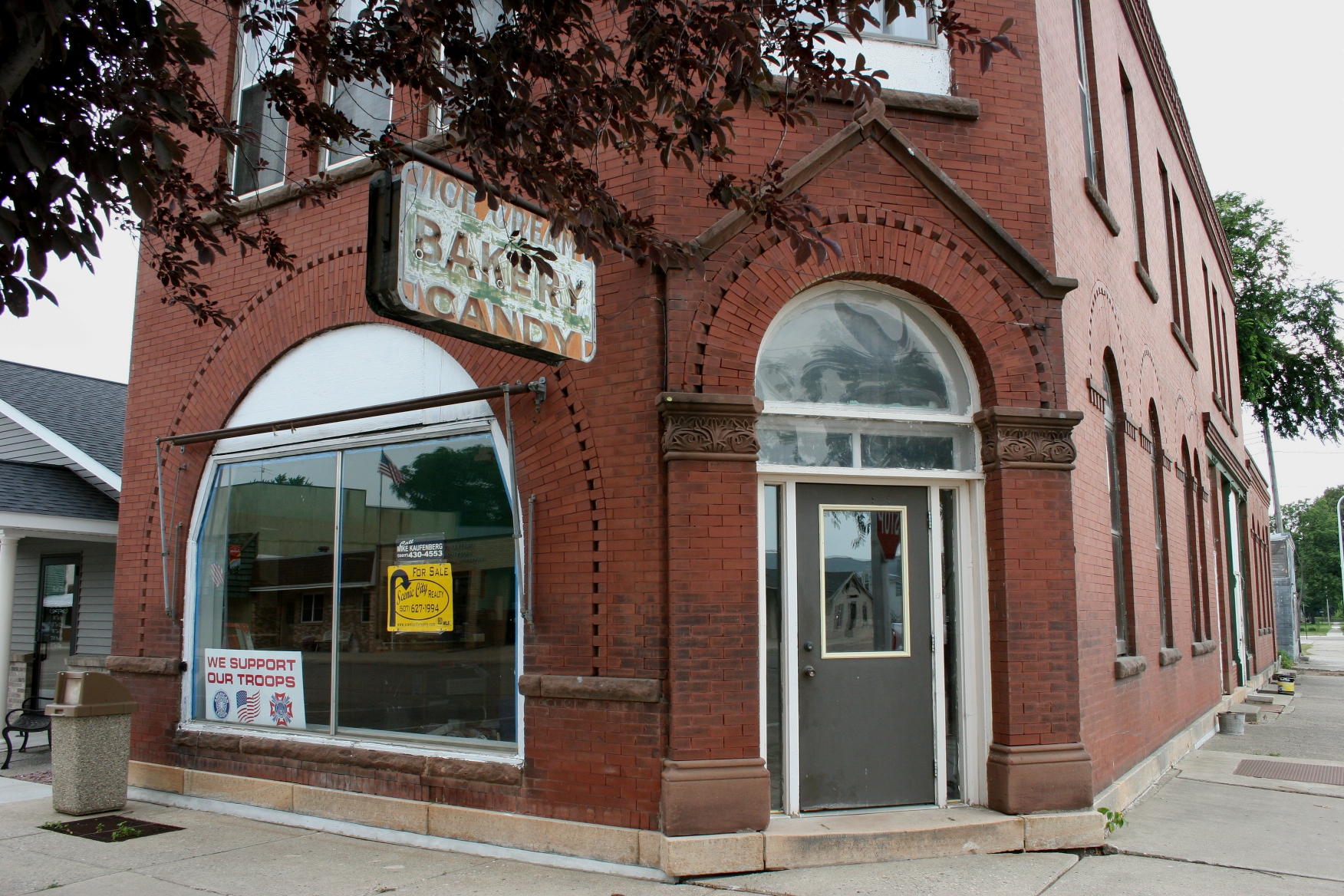
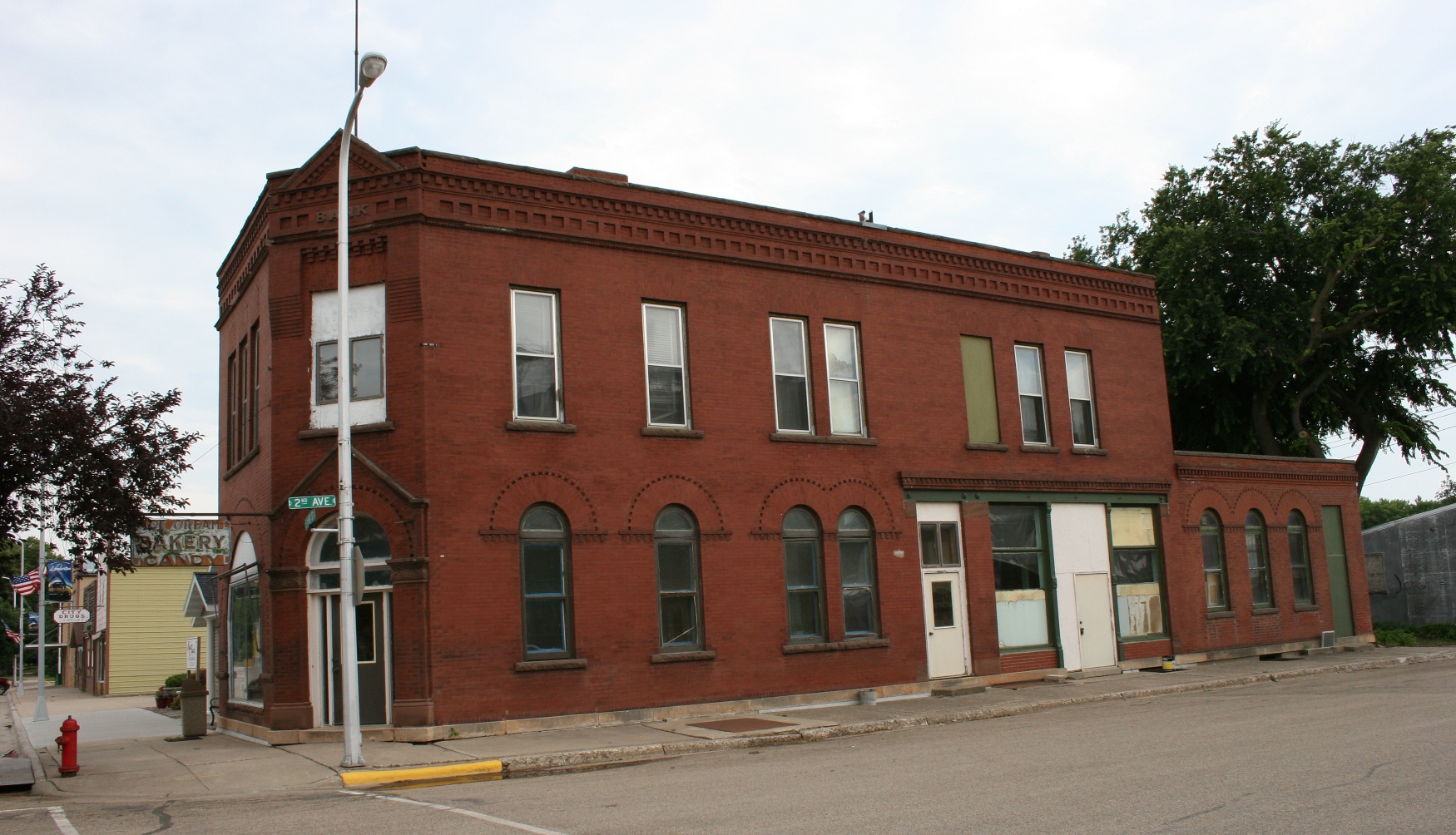
The former Sanger's Bakery, back on the market and photographed last week.

The former Sanger’s Bakery building, back on the market and photographed last week.

FOR DAVID AND MICHELLE, the dream of opening a coffee shop in an historic 1892 building in Michelle’s hometown of Lamberton in southwestern Minnesota has become just that, a dream.

About three weeks ago the old bank and long-time Sanger’s Bakery property, purchased last year by the couple, went back on the market. It was a move necessitated by an inability to secure financing for restoration of the massive brick building.

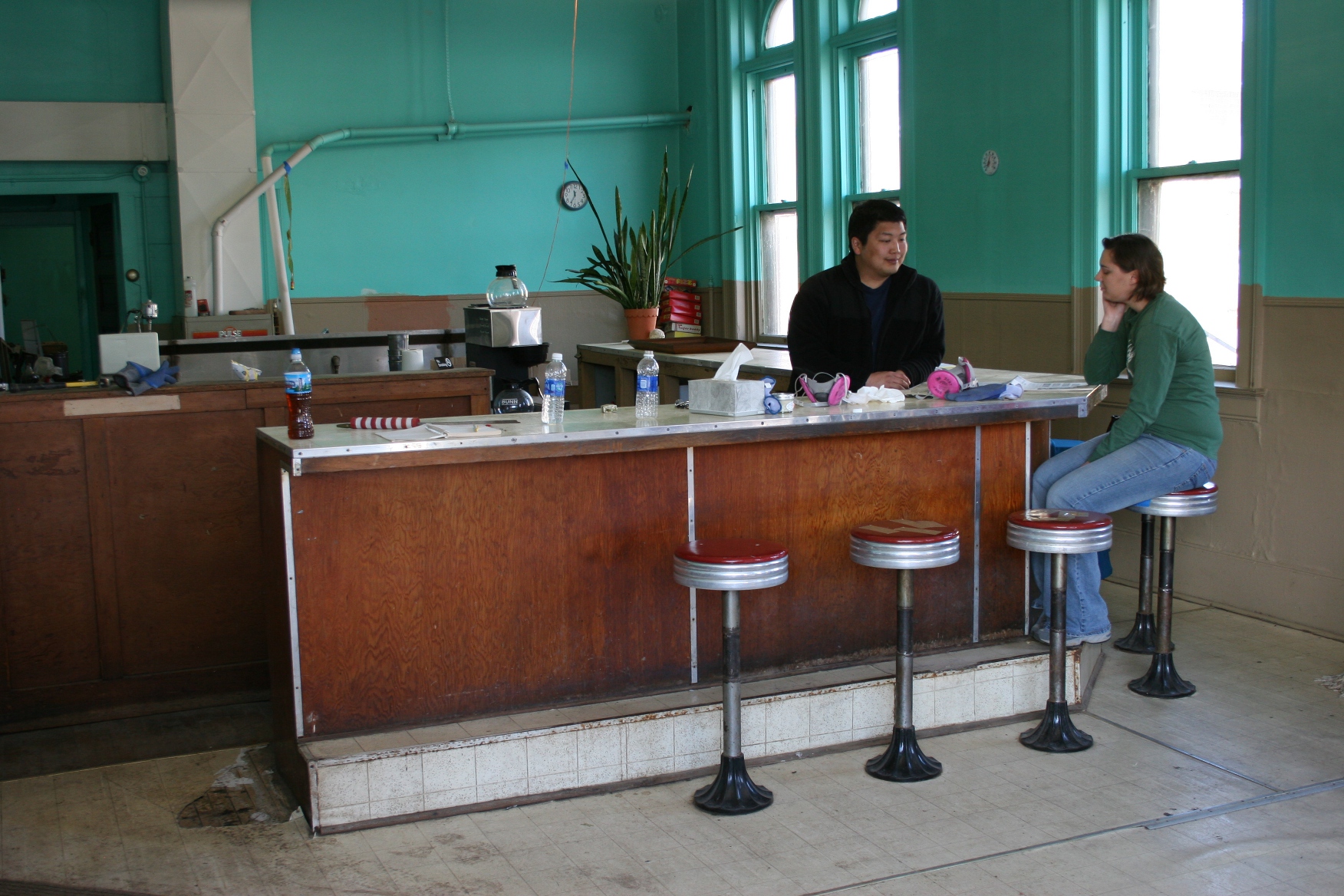
The Van Engens had planned to use the original lunch counter in their coffee shop. Minnesota Prairie Roots file photo from October 2012.

The original plan called for using the original lunch counter in the coffee shop. Minnesota Prairie Roots file photo from October 2012.

They had planned to open Seven Sisters Coffee as a local eatery, community gathering spot, entertainment center and artists’ haven this summer in this community of 820 residents along the Laura Ingalls Wilder Historic Highway in southern Redwood County.

The Van Engens began working on this back space last fall in an area intended for entertainment and an artists' haven.

The couple began work last year on this back room intended for entertainment and an artists’ haven.

The pair made numerous attempts, David says, to secure funding through several banks, all of which eventually classified the planned coffee shop as a restaurant and thus would not approve financing. Likewise, agencies such as the Redwood Area Development Corporation and local business coalitions could not provide the level of funding needed for the restoration, he says.

An Iraq War veteran, David is disappointed by what he perceives as a lack of support from the Veterans Administration and the Small Business Administration, through which he was working:

“We had completed exhaustive research on equipment, renovation, overhead, etc. All of the banks and organizations said our business plan and loan proposal were better researched and prepared than anything they had seen before.

The restoration and research was a joy. There is an enormous amount of history in that building. The end came as a dark and bitter disappointment. My wife and I are both hard-working, industrious people. Between her professional marketing acumen and my passion and skill sets; I thought we had a sure thing. The numbers were good…”

David and Michelle posed behind the original candy counter last fall. Michelle has sweet memories of coming here for candy as a child. Minnesota Prairie Roots file photo.

David and Michelle pose behind the original candy counter last fall. Michelle has sweet memories of coming here for candy as a child. Minnesota Prairie Roots file photo.

Having met the pair last October during a tour of the historic building, I, too, thought if anyone could succeed, this enthusiastic and ambitious couple could. They were, at the time of my visit, sorting through 80 years of accumulated possessions inside the old bakery and have since removed hazardous materials, repaired the roof of the 3,250 square foot two-story structure and more.

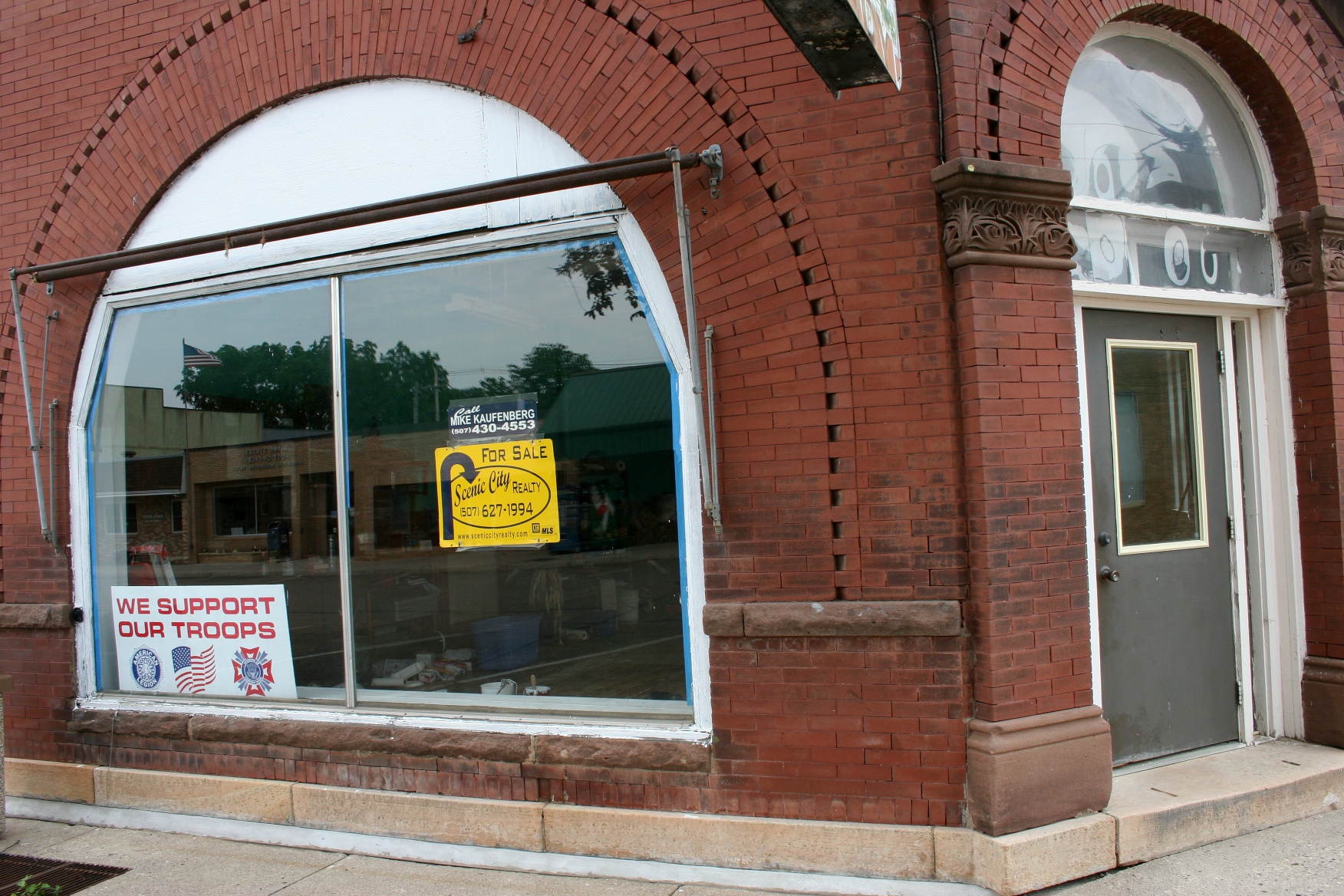
The yellow sign in the front window advertises the property for sale through Scenic City Realty.

The yellow sign in the front window advertises the property for sale through Scenic City Realty.

A peek inside the old bakery last Saturday revealed half-painted walls and further restoration halted and that “for sale” sign posted on the front window.

“The coffee shop was a nice dream,” David says, “but it will have to wait for now. Despite the outcome, it was a good learning experience.”

To possess that positive attitude after months of hard work and time and money invested in the couple’s dream impresses me.

A side view of the massive building.

A side view of the massive historic building.

FYI: I spoke with Mike Kaufenberg, the broker/realtor who has the old bank/bakery listed at $37,000 with Redwood Falls based Scenic City Realty.

The building, he says, would provide a great place for a retail and online antiques business with room for additional retail and/or office space. Some antiques remain in the building and are part of the property offering. Two apartments are located on the second floor and could provide rental income.

To see the complete listing, click here.

I think this historic building has many possibilities for reuse, if you have the vision, drive, passion, time, energy and money. How would you reuse this building?

© Copyright 2013 Audrey Kletscher Helbling


Reflections on a prairie sunset June 30, 2013

Filed under: Uncategorized — Audrey Kletscher Helbling @ 2:59 PM
Tags: , , , , , , , , ,

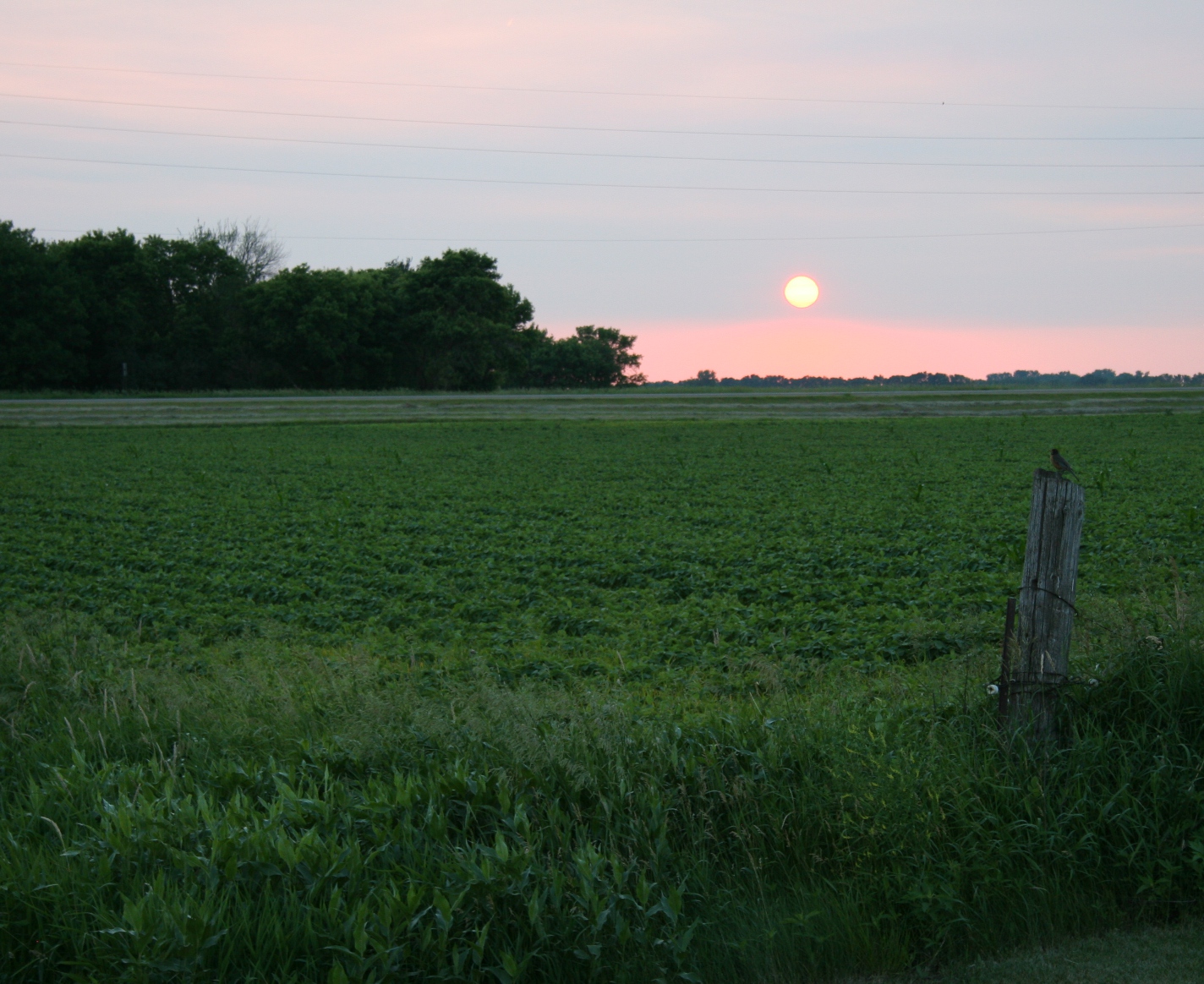
Sunset on the prairie

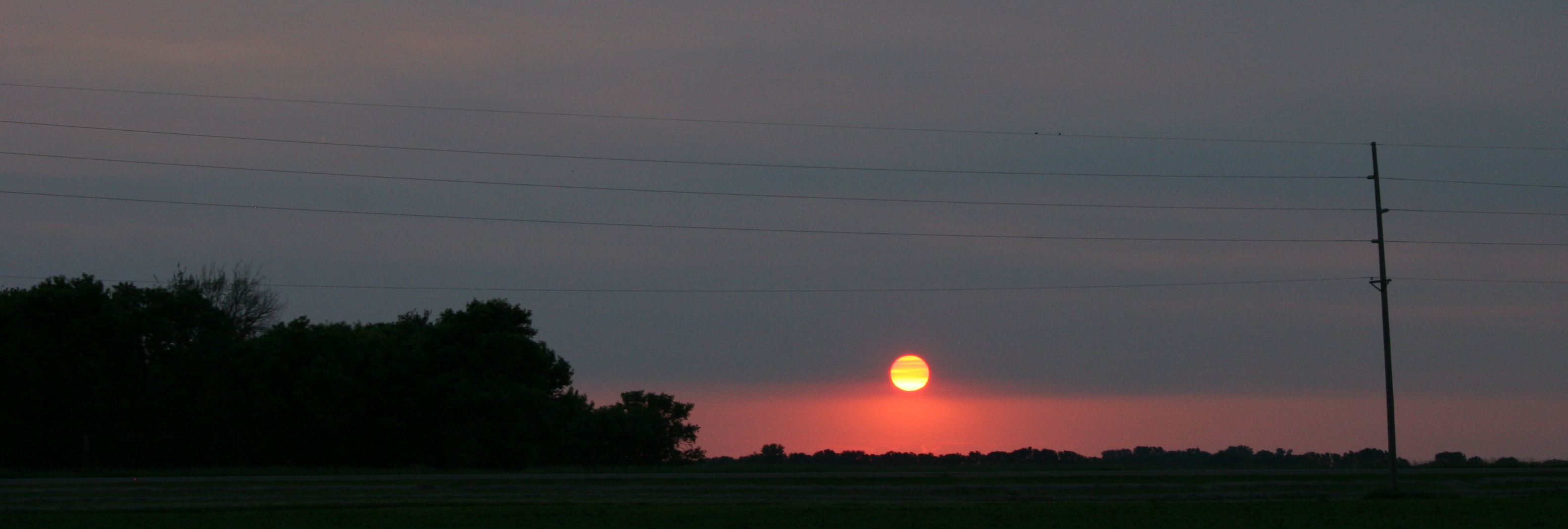
WE STOOD ALONG THE EDGE of the gravel road Saturday evening, my 13-year-old nephew and I, mesmerized by the glorious golden sun pinking the sky above and below a layer of blue grey.

I raised my camera. He lifted his phone. We snapped several photos, compared, wished for better zooms to photograph the prairie sky north of Lamberton in southwestern Minnesota.

Sunset on the prairie 2

“It’s what I miss most about this place, the sunrise and the sunset,” I said.

“And the stars,” Stephen added.

Sun and stars.

He was right. The stars, too.

Copyright 2013 Audrey Kletscher Helbling


In Minnesota: City snow, country snow December 9, 2012

Filed under: Uncategorized — Audrey Kletscher Helbling @ 7:18 PM
Tags: , , , , , , , , , , ,
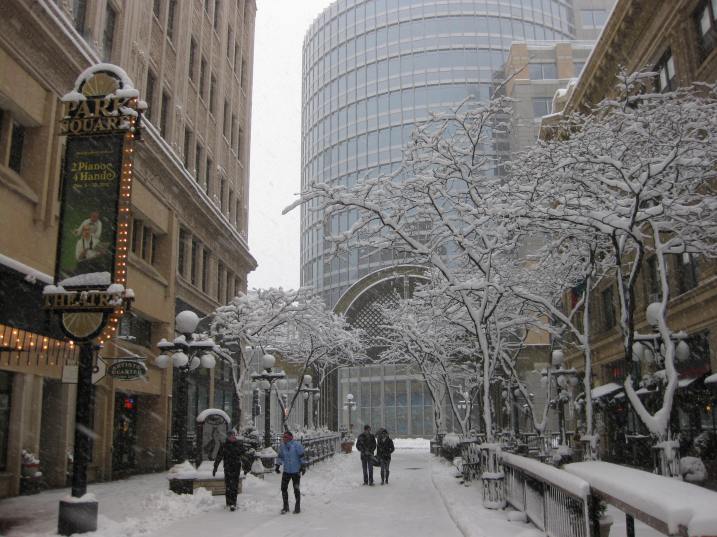
Marc Schmidt shot this stunning photo of 7th St. Marketplace in downtown St. Paul early this afternoon.

Marc Schmidt shot this picturesque scene of 7th St. Marketplace in downtown St. Paul early this afternoon.

Ah, winter in Minnesota.

I issued a call earlier today via email for snow reports and I got two, one from the city, one from the country. One came from a life-long dweller of the southwestern Minnesota prairie, the other from a native southern Californian who relocated to St. Paul in October.

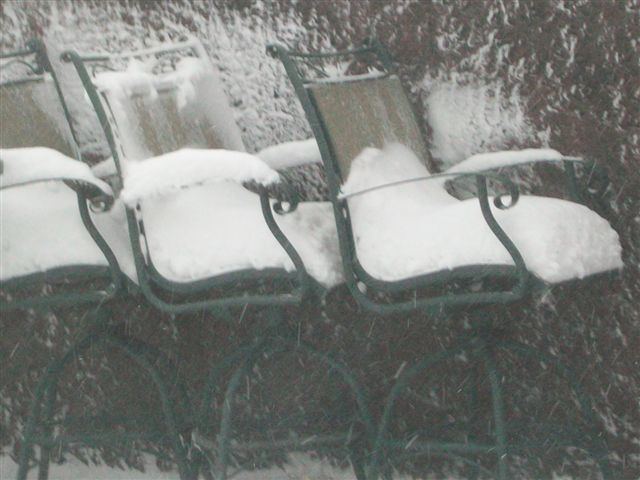
Snow layers on patio chairs, rural Lamberton. Photo by Brian Kletscher.

Snow layers on patio chairs, rural Lamberton. Photo by Brian Kletscher.

About mid-afternoon today, my middle brother, Brian Kletscher, reported 8 – 10 inches of snow (since Friday evening) at his home just north of Lamberton in Redwood County.

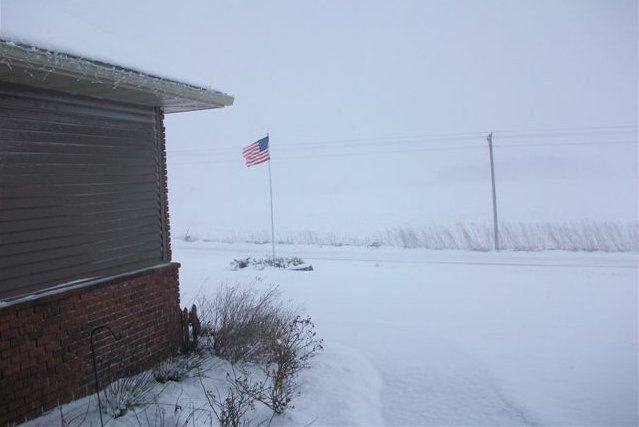
Low visibility due to falling and blowing snow defined the prairie in this photo taken north of Lamberton around 3:30 this afternoon. Photo by Brian Kletscher.

Low visibility due to falling and blowing snow define the prairie in this photo taken north of Lamberton around 3:30 this afternoon. Photo by Brian Kletscher.

But it isn’t the snow total as much as the wind that’s now causing problems in southwestern Minnesota, where a blizzard warning is in effect.

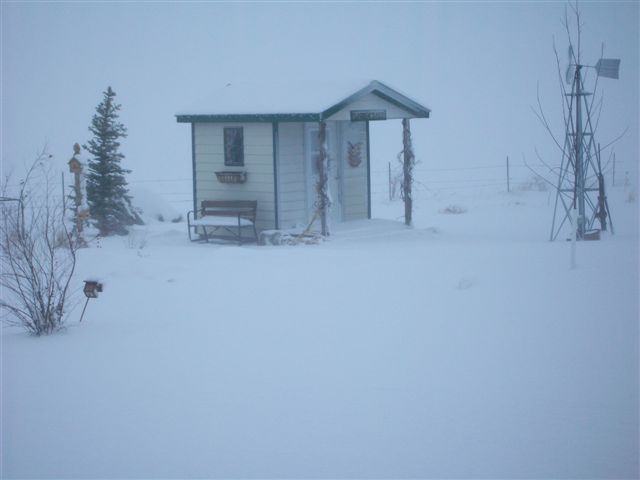
In the blowing snow, the fenceline is barely visible beyond the garden shed in my brother's yard.

In the blowing snow, the fenceline is barely visible beyond the garden shed in my brother’s yard.

Reports Brian:

It was nice temperature as it was 34 degrees at 1:30 this afternoon. I was moving snow at 1:30 and the wind switched to the northwest at 2:15 bringing more snow and blowing snow into the area. Low visibility at this time.

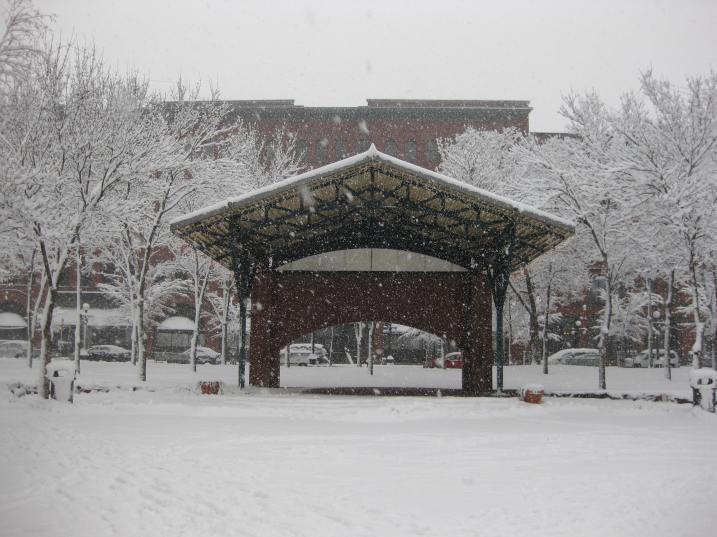
The Mears Park Stage in downtown St. Paul early this afternoon. Photo by Marc Schmidt.

A snow globe view of Mears Park Stage in downtown St. Paul early this afternoon. Photo by Marc Schmidt.

Several hours to the northeast in downtown St. Paul, my oldest daughter’s boyfriend, Marc Schmidt, is enjoying his first ever Minnesota snowstorm. An apartment dweller with a 12-minute commute to work via the skyway system, he can concentrate on the beauty of the snow rather than dealing with clean-up and travel issues.

Says Marc in a 2:15 p.m. snow report:

I slapped on my Sorels and slushed my way through St. Paul. (To let you know what conditions are like, I got this email the same minute I got an automated email from the city of St. Paul letting me know there is a snow emergency tonight, and it hasn’t stopped snowing since . . .)

Welcome to winter in Minnesota, Marc. Forecasters are predicting several more hours of light to moderate snow for the metro area with snowfall totals of 10 – 15 inches. A winter storm warning continues for the metro and surrounding area.

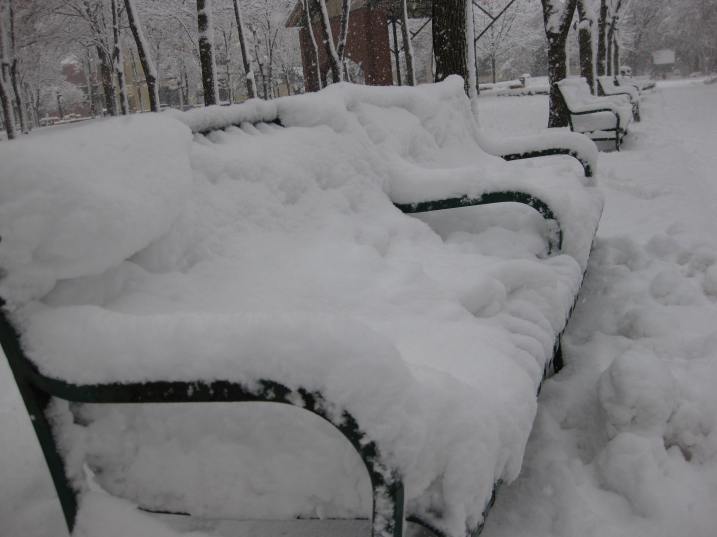
Snow layers benches in Mears Park early this afternoon. Photo by Marc Schmidt.

Snow layers benches in Mears Park early this afternoon. Photo by Marc Schmidt.

Now, let’s hear your snow stories.

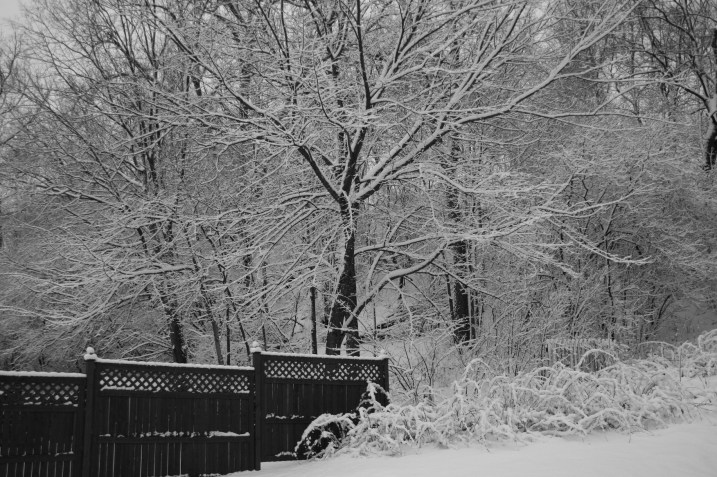
The winter wonderland view in my Faribault backyard around 4:30 p.m. today.

The winter wonderland view in my Faribault backyard around 4:30 p.m. today.

We have only about four inches of snow on the ground here in Faribault.

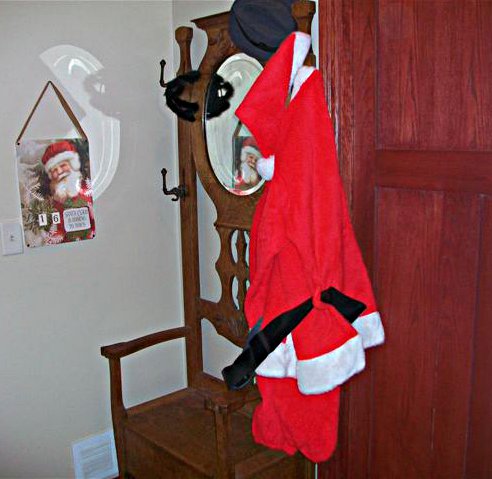
BONUS: My brother sent this photo, proof that Santa is officially preparing for Christmas:

My brother apparently has VIP access to Santa's wardrobe. Photo by Brian Kletscher.

My brother apparently has VIP access to Santa’s wardrobe.

© Copyright 2012 Audrey Kletscher Helbling
Photos courtesy of Brian Kletscher and Marc Schmidt


Prairie prose & photos during the season of harvest October 29, 2012

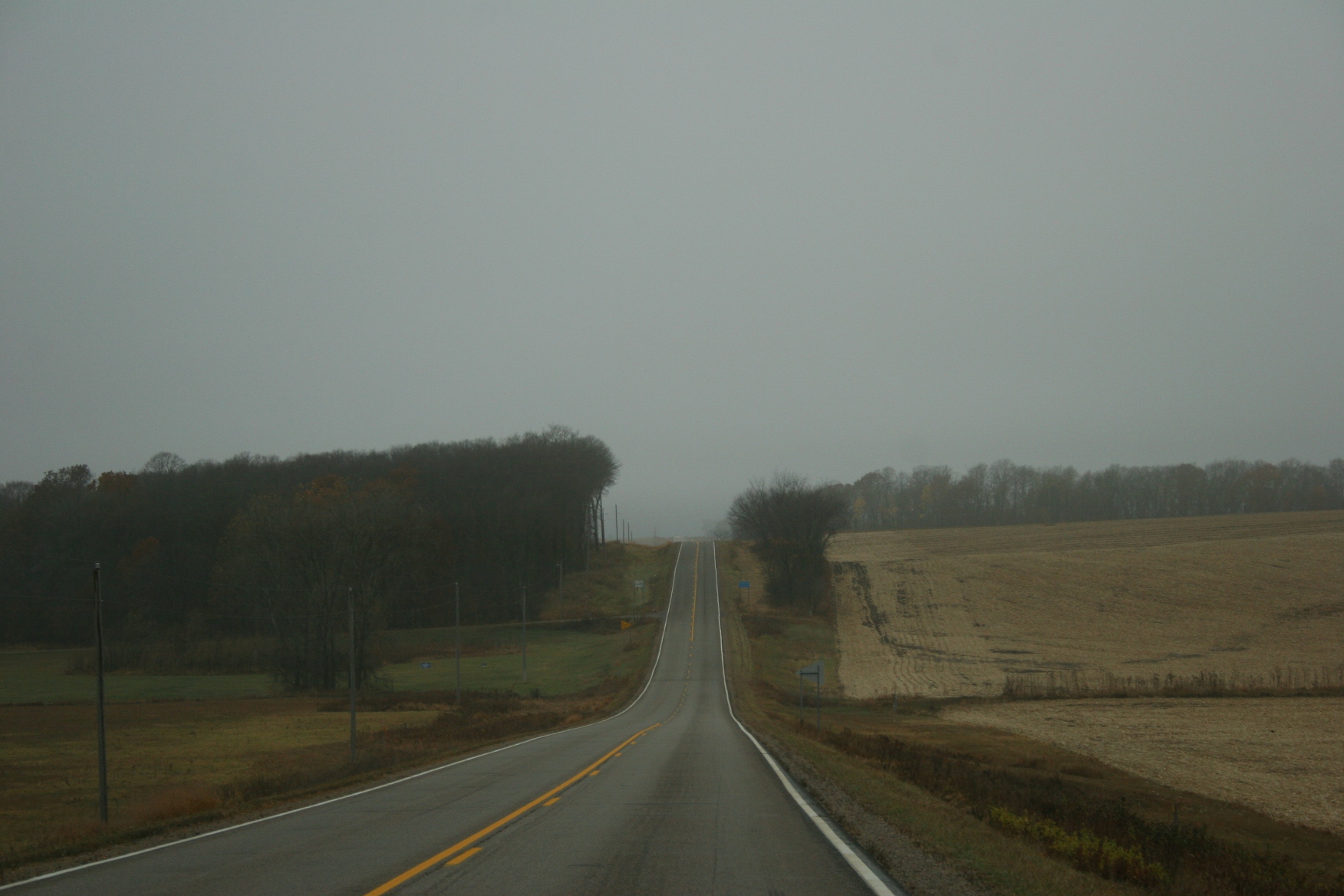
Just west of Shieldsville, not far from our Faribault home in southeastern Minnesota, my husband and I began our 120-mile journey to southwestern Minnesota on a foggy Saturday morning.

I NEVER TIRE of the big sky and infinite land that stretch far before me as I travel back to my native southwestern Minnesota. I wonder sometimes how I ever could have left this place that brings such solace to my soul, such respite to my heart, such peace to my mind.

A farm site somewhere along the route which took us through or past Shieldsville, LeCenter, Cleveland, St. Peter, Nicollet, Courtland, New Ulm, Essig, Sleepy Eye, Cobden, Springfield and Sanborn corners, ending in rural Lamberton.

When I see this land, walk this land, the longing to be back here, permanently rooted again, tugs at my very core. I miss the prairie that much and the older I get, the more I appreciate this rural place from whence I came.

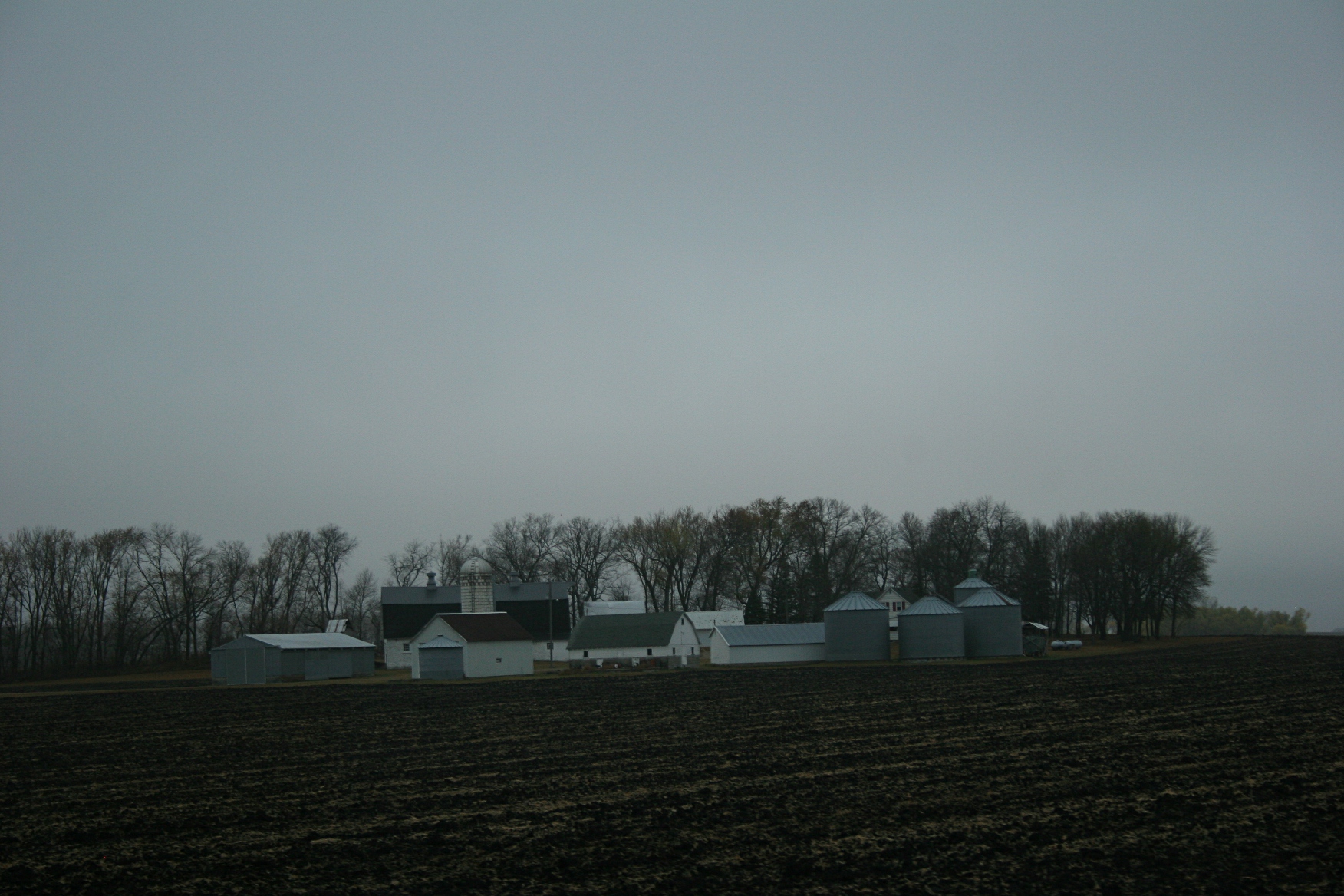
This image, among all those I took, emphasizes the expanse of sky and land which define the prairie.

It is that early-life connection, that growing up as a child of the prairie, that intimate familiarity with the land and the seasons and life cycles, the dirt under fingernails, the rocks lifted from fields, the cockleburs yanked from bean rows, the roar of the combine and the distinct putt-putt of the John Deere tractor, the calf shit clinging to buckle overshoes, the fireball of a sunset, the sights and sounds and smell and feel of this prairie place that shaped who I became as a person, a writer, a photographer.

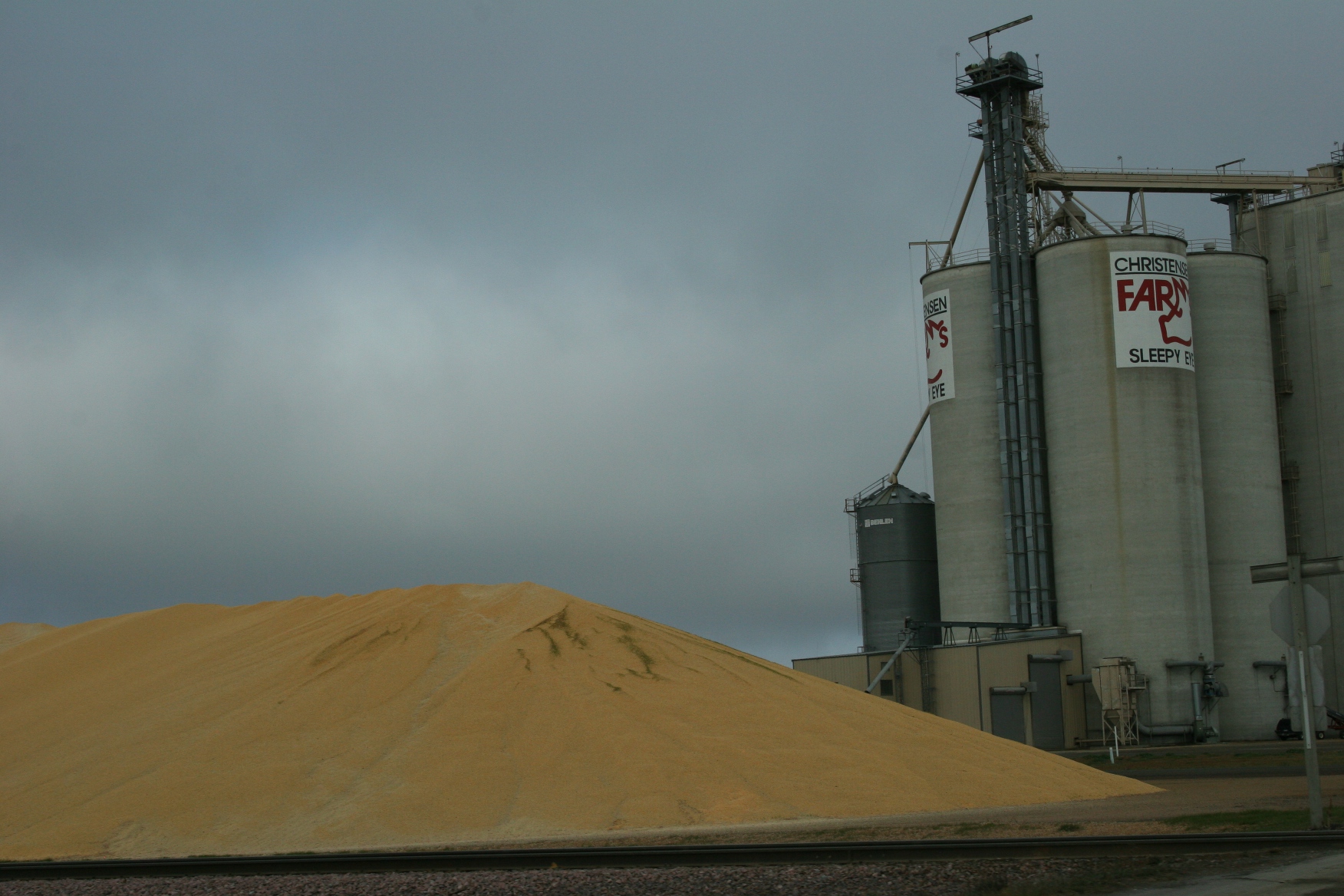
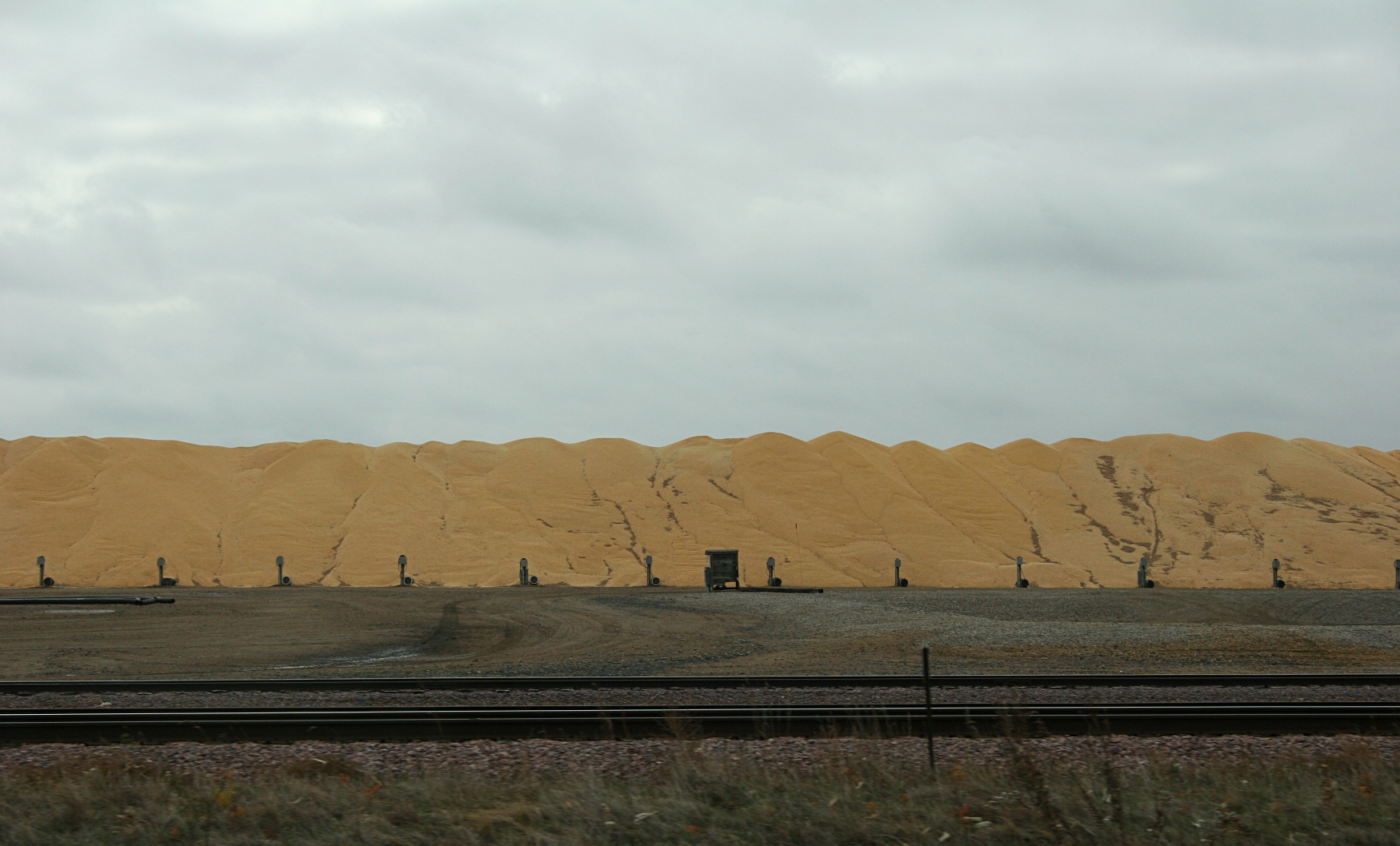
These towering elevators and corn pile at Christensen Farms near Sleepy Eye break up the flat landscape.

In this season, as the earth shifts from growth to harvest to dormancy, I notice even more the details etched into the prairie. The sky seems bigger, the land wider and all of us, in comparison, but mere specks upon the earth.

MORE PHOTOS from that road trip to the prairie:

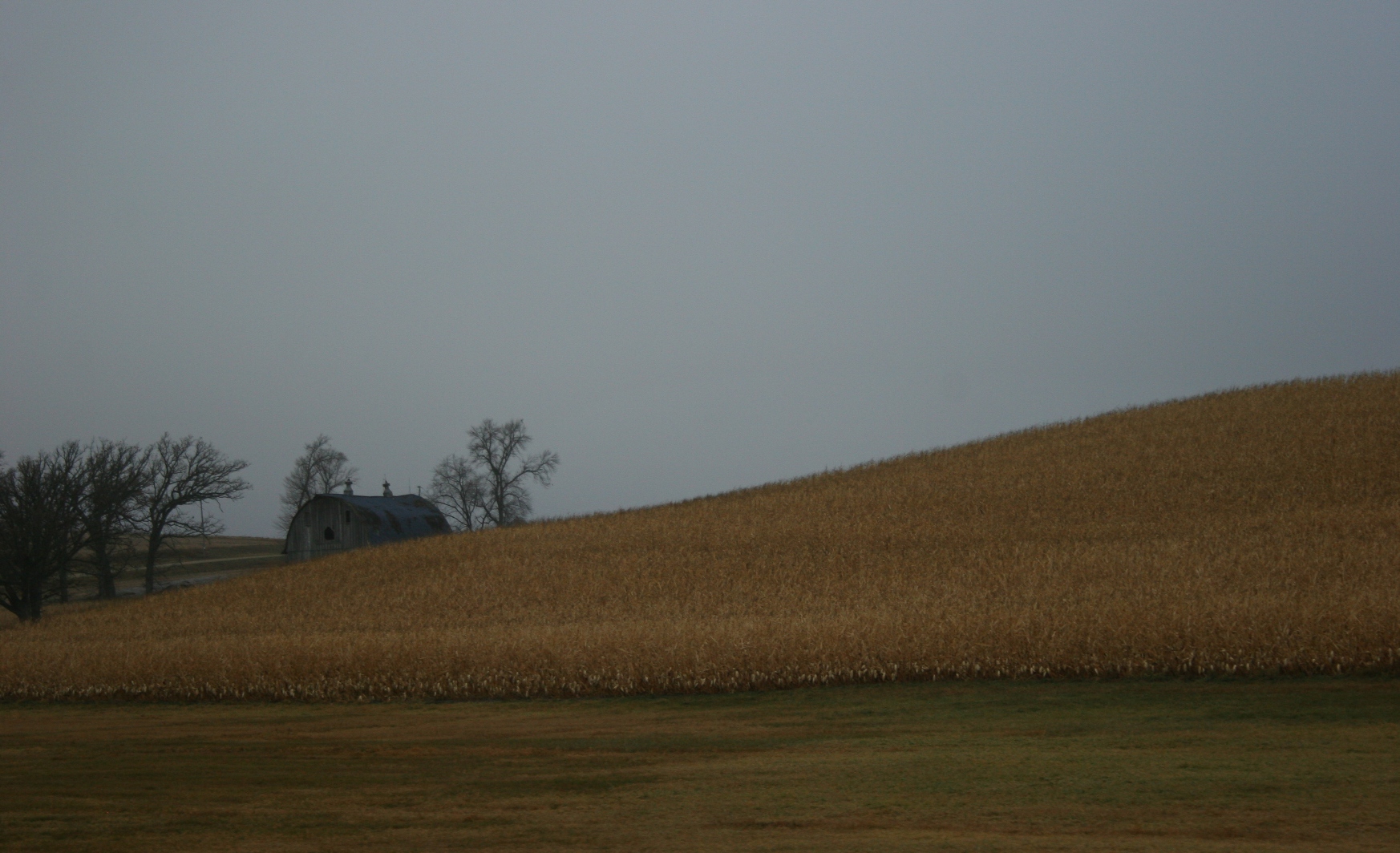
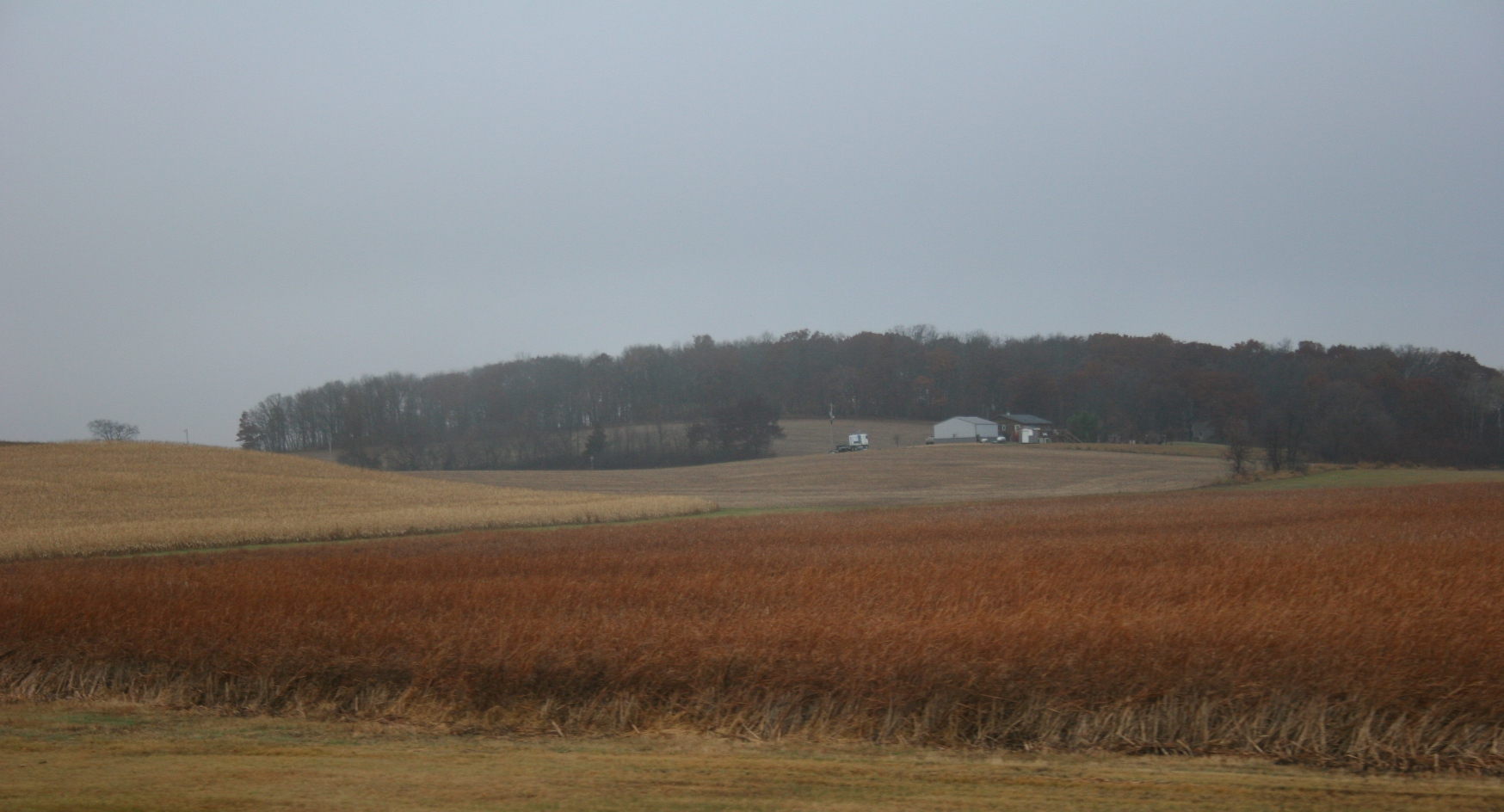
This is not a prairie scene because the prairie has no hills. Rather, I shot this near the beginning of our journey, west of Shieldsville.

Another scene from just west of Shieldsville. It is the muted colors of the landscape that I so appreciate in this photo.

Driving through Sleepy Eye, a strong agricultural community where I lived and worked briefly, decades ago, as a reporter and photographer for The Sleepy Eye Herald-Dispatch. Sleepy Eye is most definitely on the prairie.

Hills of corn at a grain complex east of Lamberton.

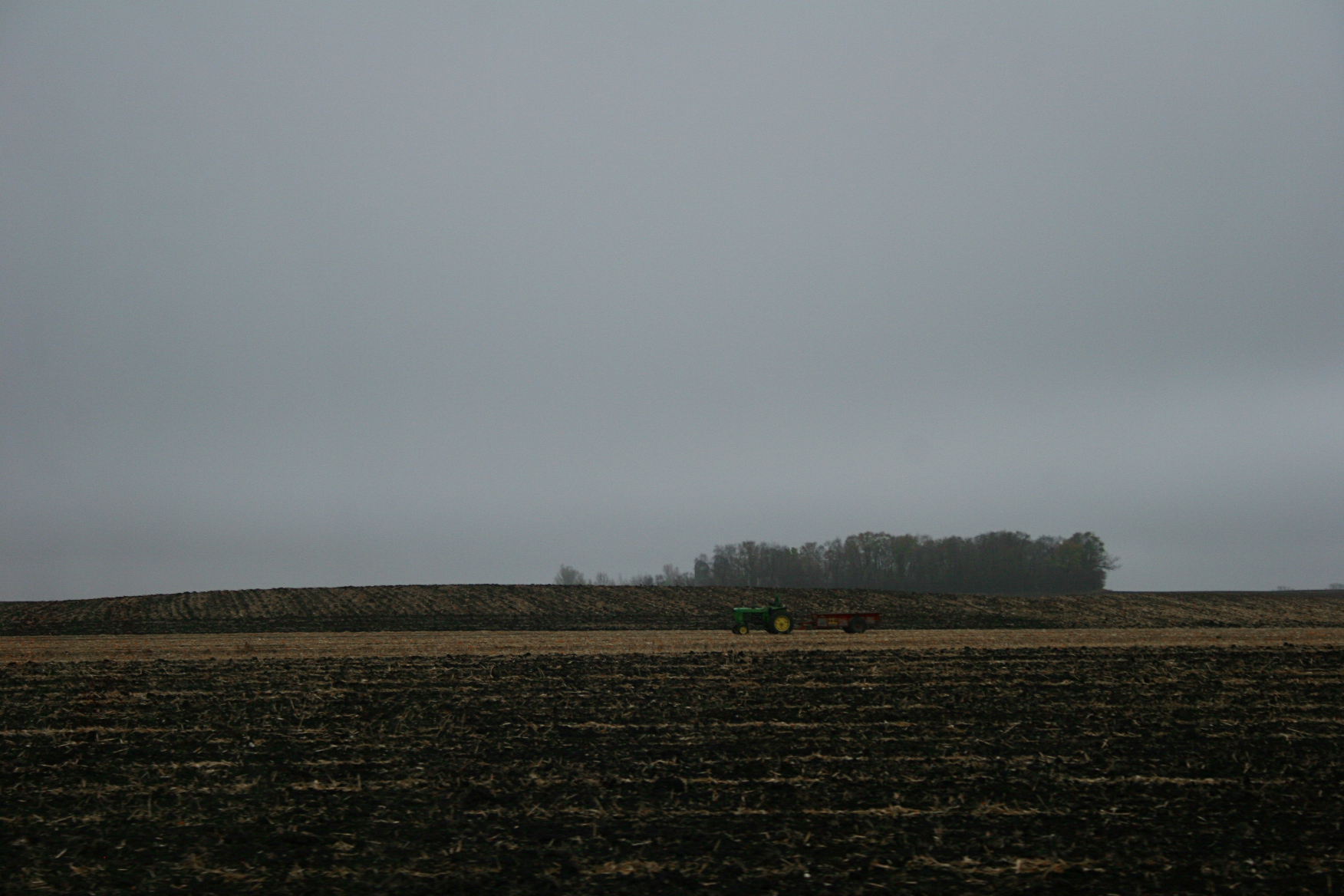
Fields are in all stages of harvest and tillage on the southwestern Minnesota prairie.

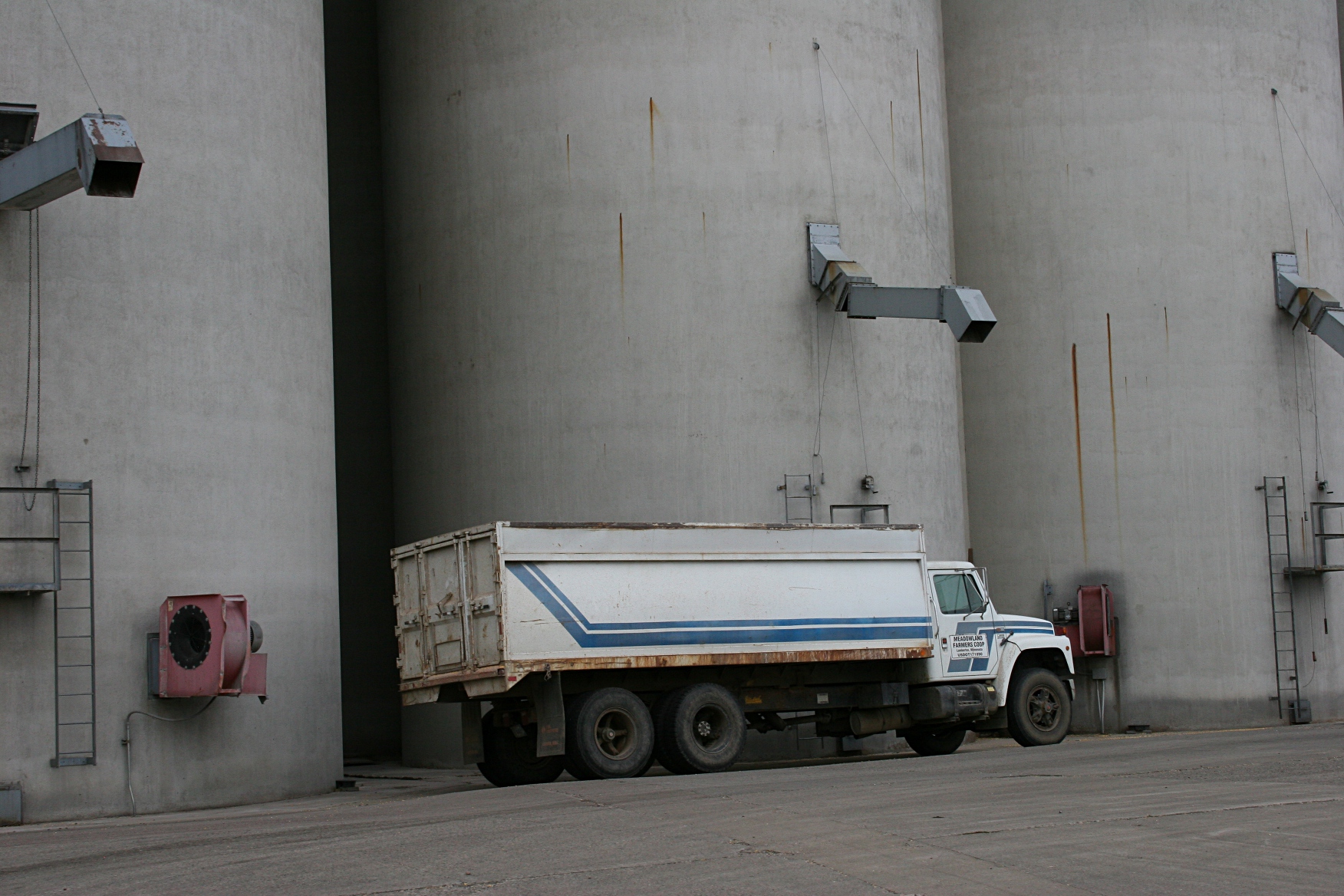
A grain truck parked at an elevator in Lamberton.

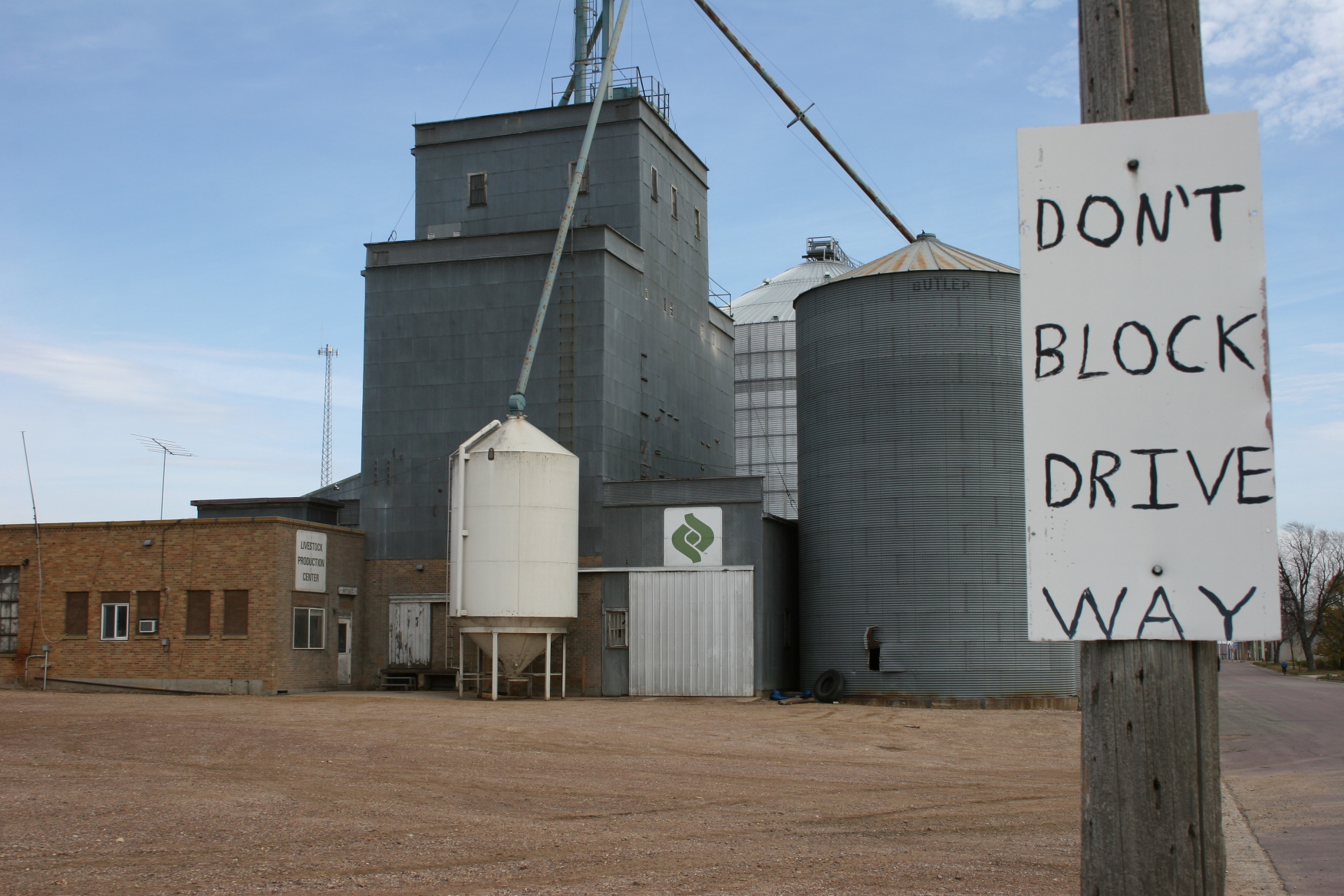
An important sign when trucks and tractors are lined up at the elevator in Lamberton.

I ended my Saturday by walking my middle brother’s acreage north of Lamberton as the sun set, my favorite time of day on my native southwestern Minnesota prairie. I grew up about 25 miles northwest of here near Vesta.

© Copyright 2012 Audrey Kletscher Helbling


Transforming an historic building into Seven Sisters Coffee, a community gathering spot & more in rural Minnesota October 23, 2012

This 1892 former bank building and 95-year bakery anchoring a corner of Lamberton’s Main Street is being renovated into Seven Sisters Coffee by a young couple with connections to this area of southwestern Minnesota. After the business opens, the upstairs will be renovated into loft style apartments.

DAVID AND MICHELLE can see beyond the crumbling mortar, the moisture damage, the buckling floor boards, the teal paint.

Just barely into major renovation of an historic 1892 bank building and former long-time bakery in downtown Lamberton, this couple is thoughtfully and methodically working toward their summer 2013 goal of opening Seven Sisters Coffee.
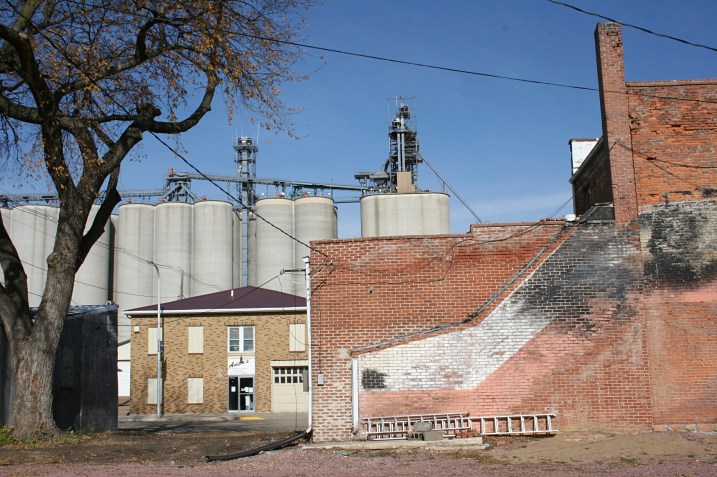
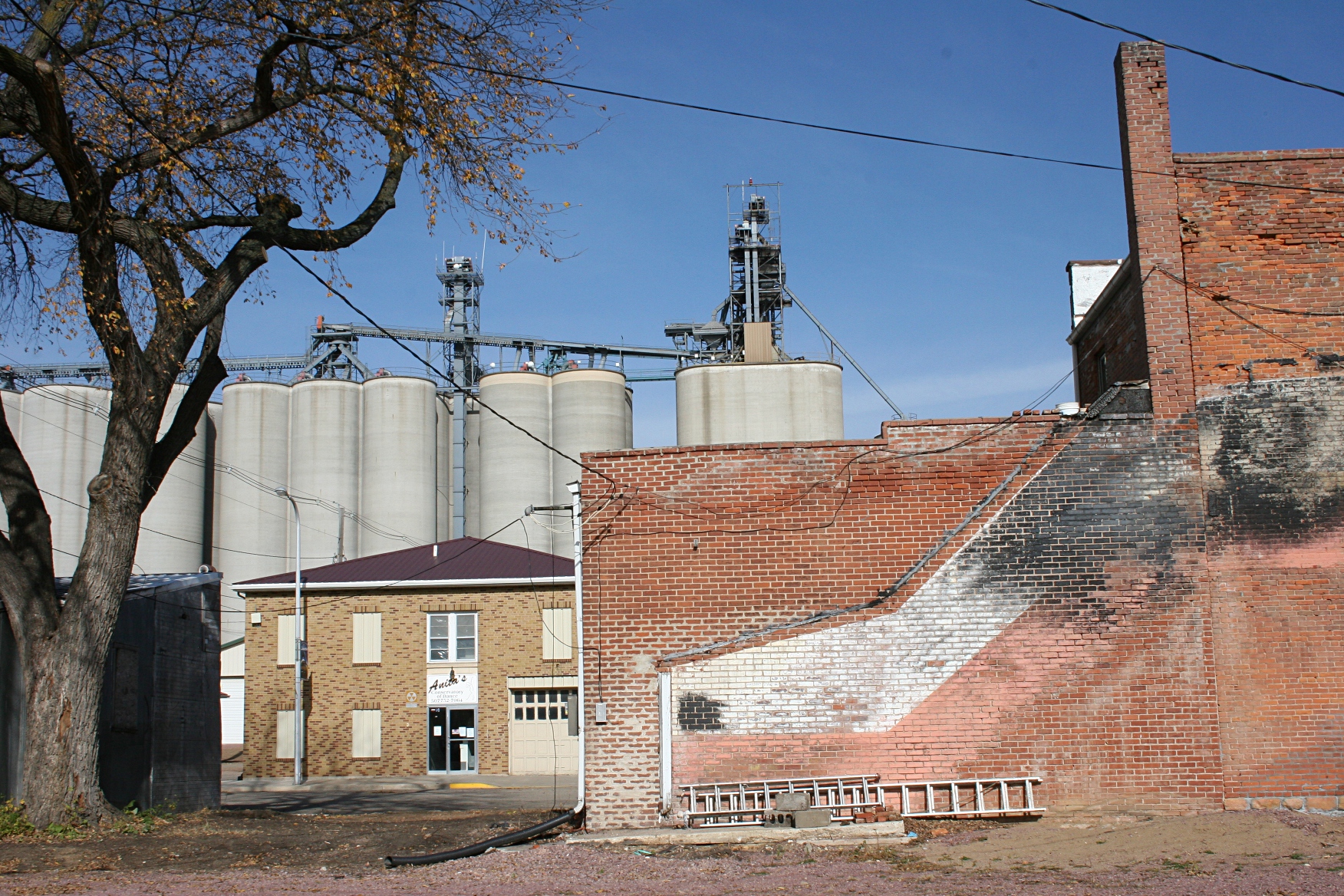
This shows the side and back view of the building, with the rear part added on to the original. Soot from a 2005 fire, which destroyed Plum Creek Crafts next door, mars the brick. Behind the building, a tree was removed and plans are to install a patio area for outdoor dining. They saved a slice of the tree to build a table.

Even the name, Seven Sisters, holds special significance for the pair as Michelle is one of seven sisters and three brothers who grew up in Lamberton, a strong agricultural community of 822 in Redwood County on the southwestern Minnesota prairie. Additionally, Michelle notes that Seven Sisters possesses multiple meanings—in Greek mythology, astronomy and even as a mountain range.

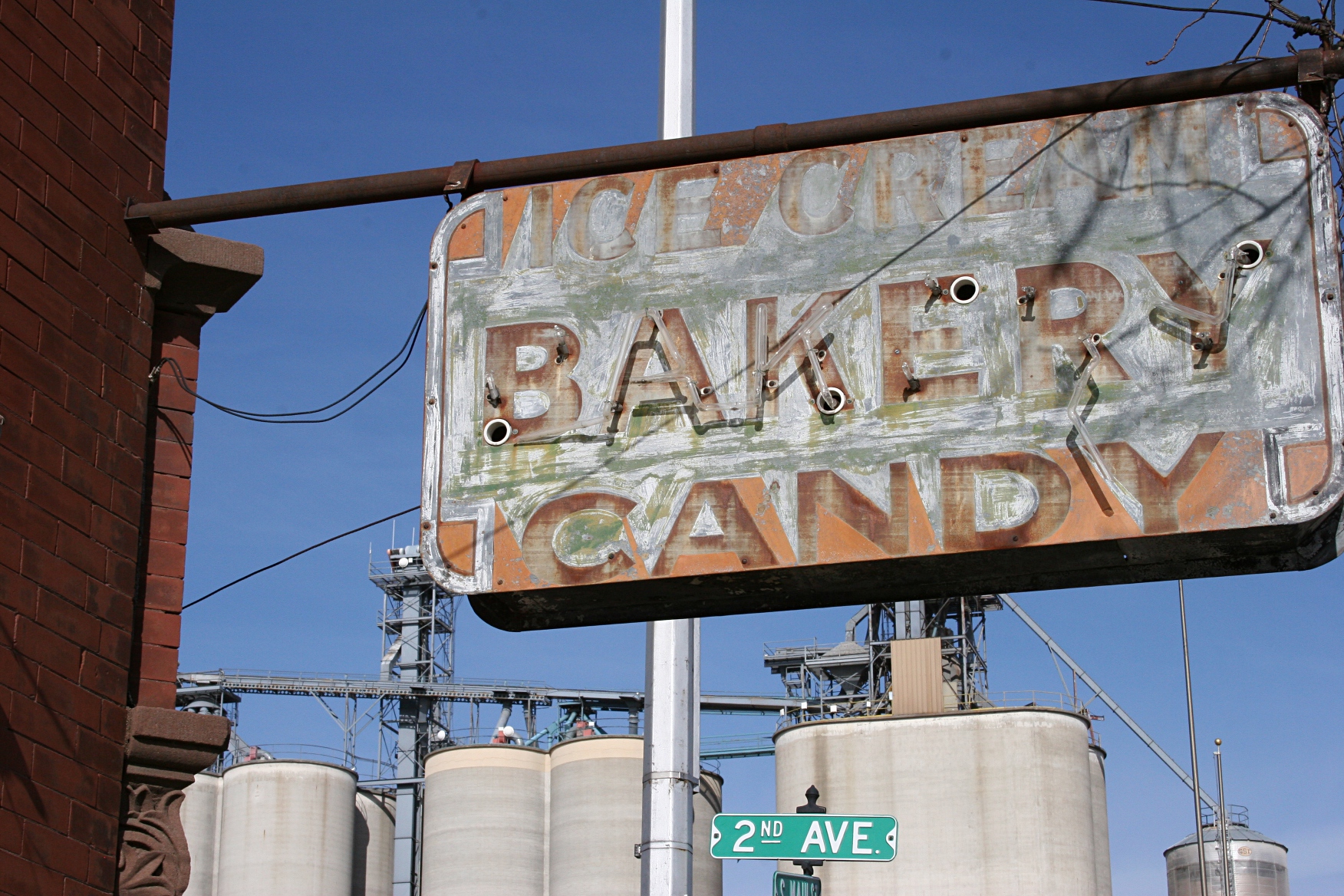
The old sign for the former Sanger’s Bakery still graces the building.

The couple may, perhaps, feel at times as if they are scaling a mountain to reach their goal of establishing a combination cafe, coffee shop and entertainment venue in the 1,900 square foot first floor of the 8,000 square foot brick building. But they are purposeful and focused and driven every week to travel 2 ½ hours from their home to proceed with their project on the prairie.
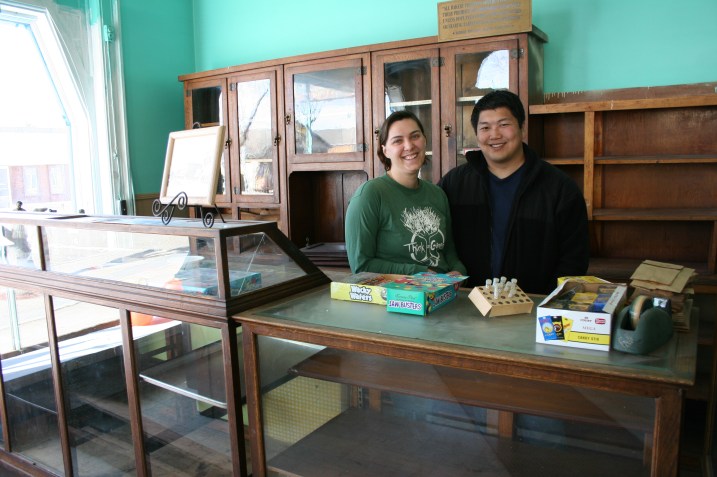
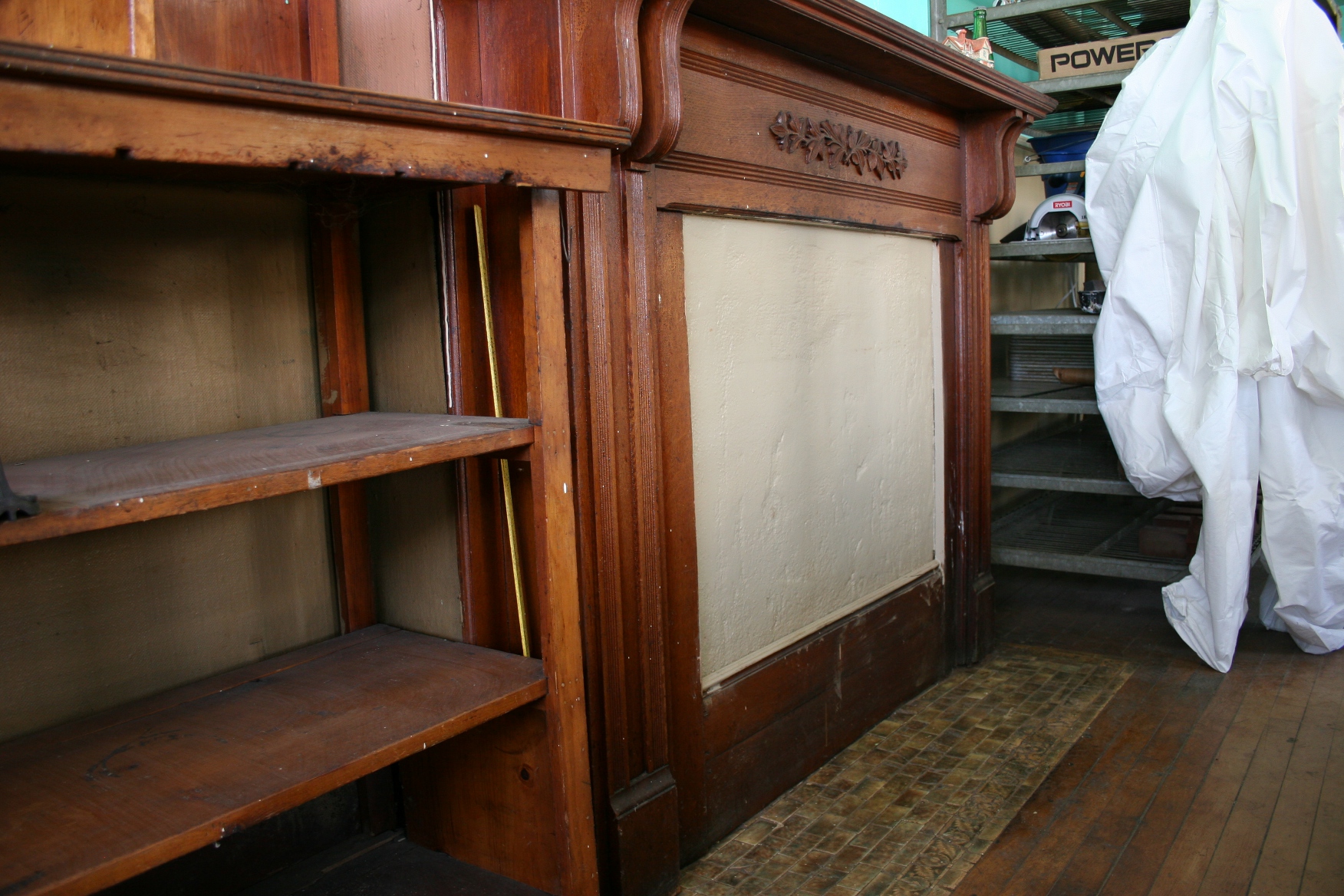
Michelle and David  are keeping the original candy and bakery goods counters and the vintage cabinet, photographed here in the front part of the building. This area of the former bank and bakery will house the cafe and soda fountain. The couple discovered a dumb waiter hidden in the area behind them in the corner.

David envisions Seven Sisters as “an artistic haven as well as a community space.” He expects “townies,” he says, to frequent the front Main Street side of the building, the bright and cheery cafe section offering a full breakfast and lunch menu and ice cream treats from a soda fountain.
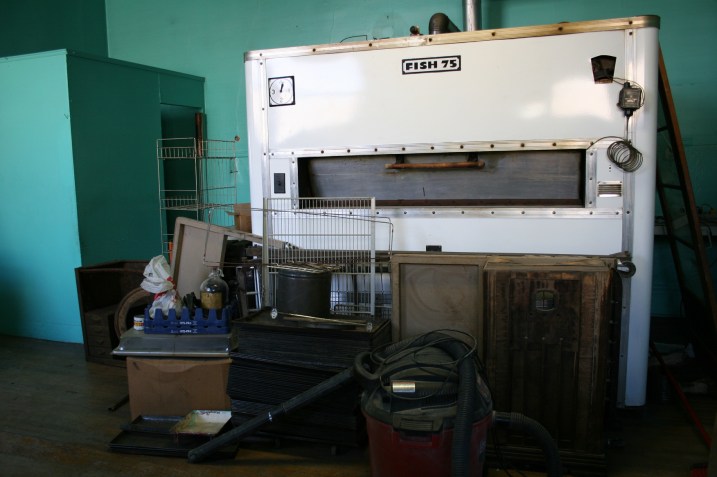
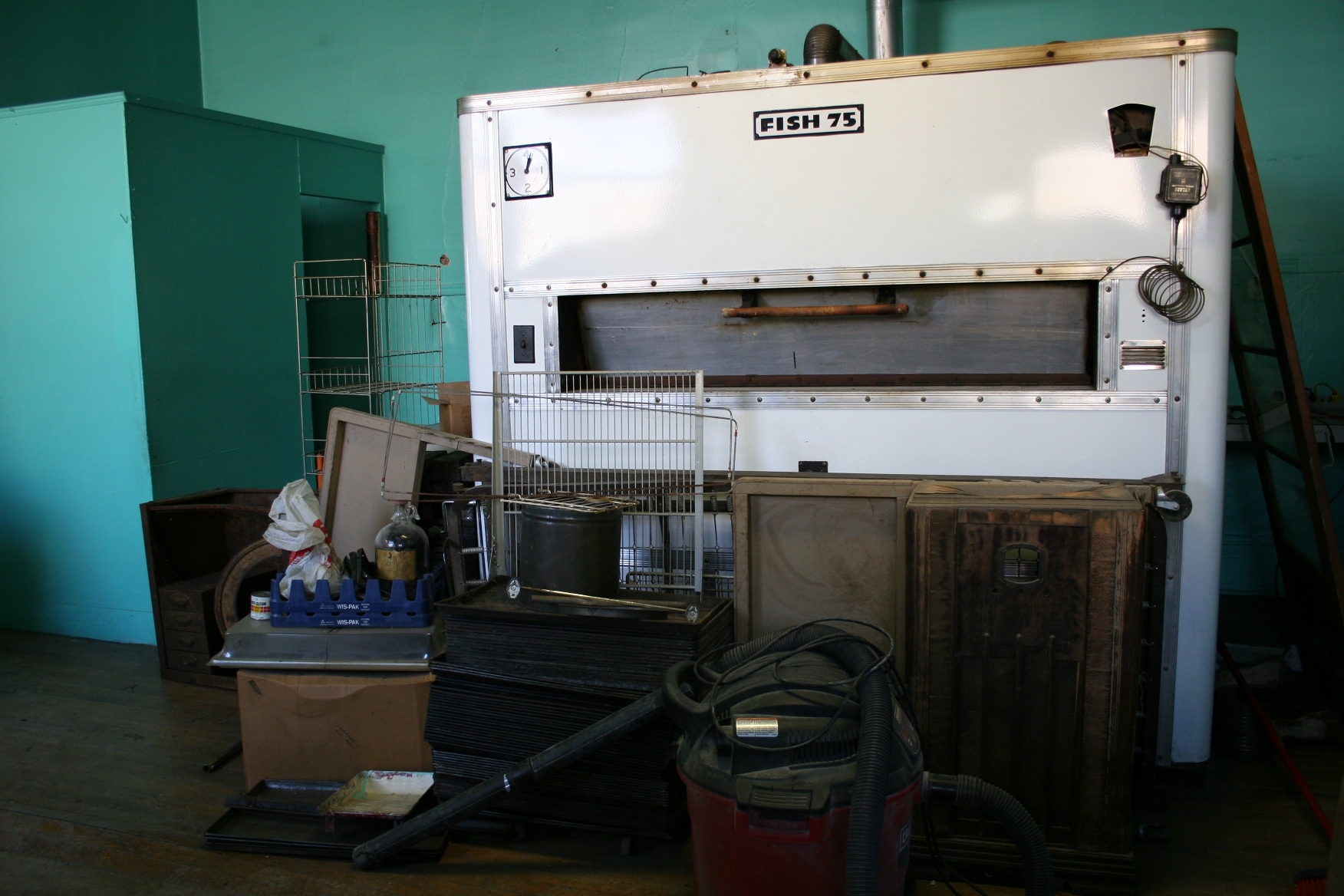
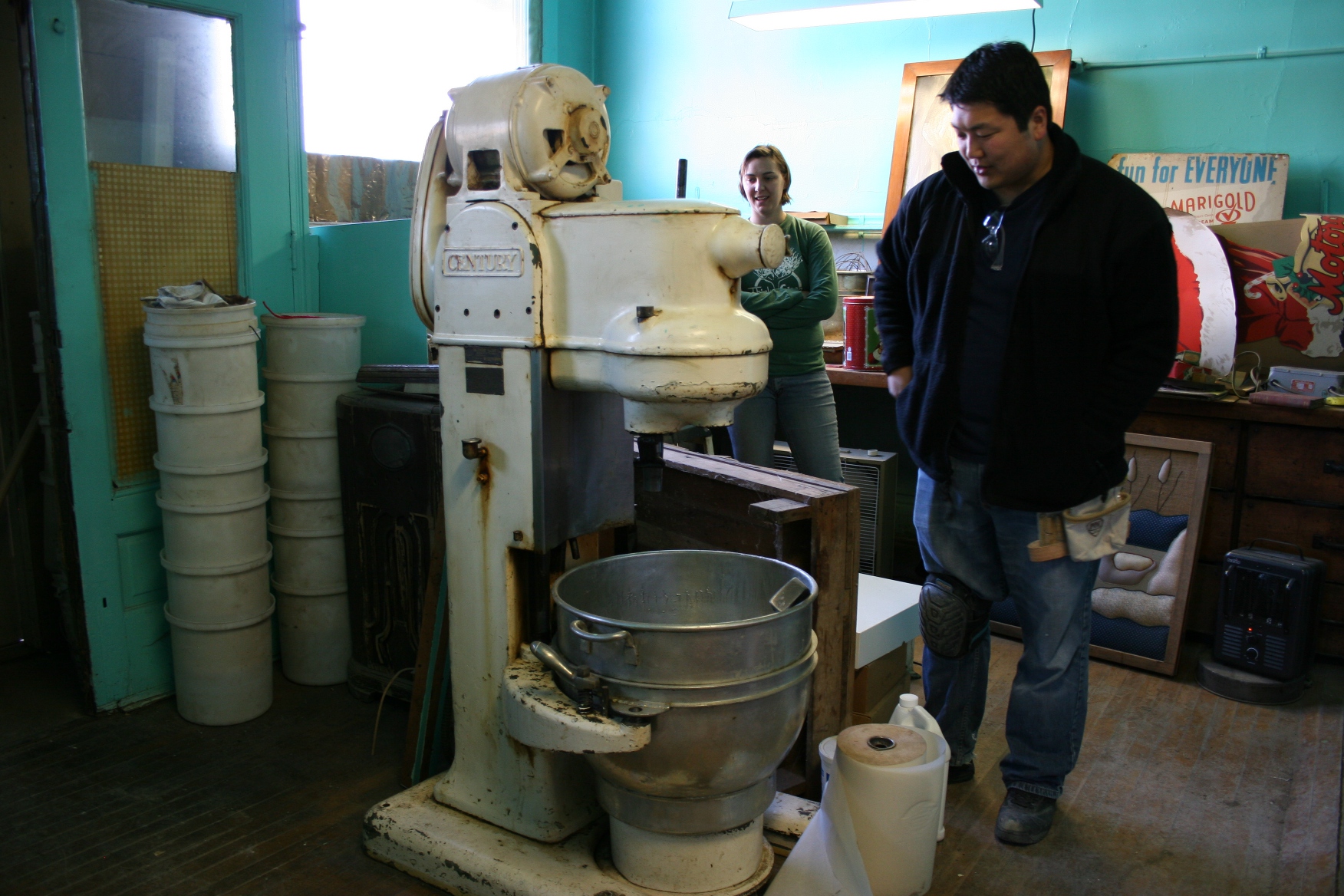
Fifty loaves of bread could be baked in this 1960s vintage two-ton rotary oven. It occupies much of the space in the middle room which will become a cozy coffee shop. This room and the front former bakery/soda fountain area were painted teal after Bob’s niece first chose that hue for the bathroom. Bob loved the color so much that he painted the rest of the place teal. The color has been on the walls for 50 years. No, they are not keeping the teal color.
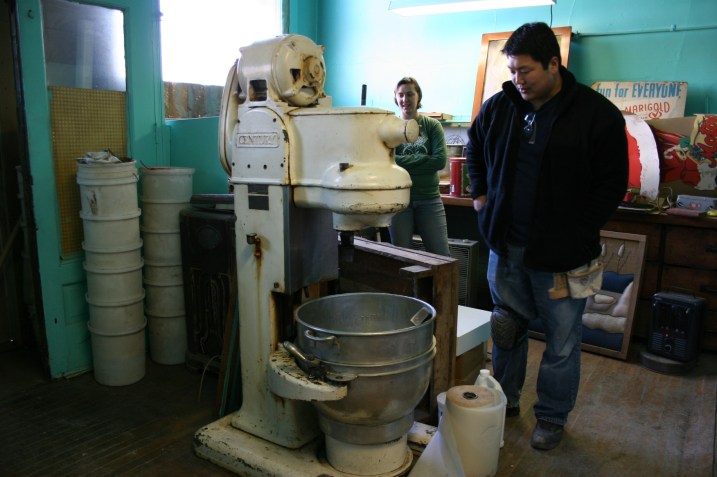
An oversized mixer also occupies space in the middle room.

The smaller middle section, once a post office entry, baking area and even home to the Sanger family, will be transformed into a warm and intimate coffee shop.
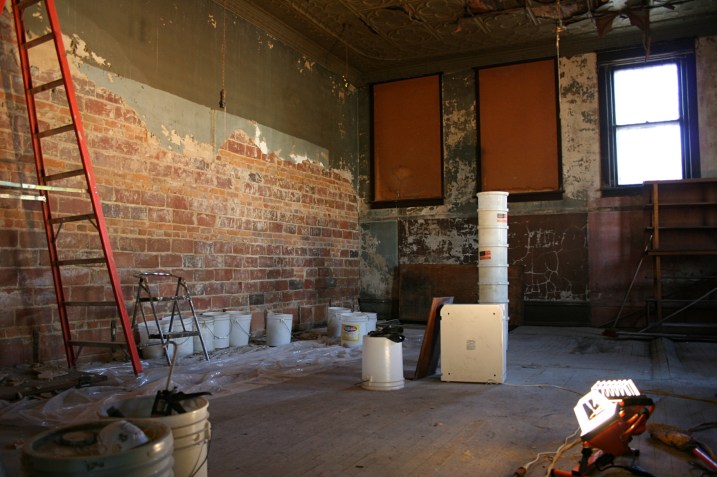
The back room, with focal point brick walls, will become an entertainment venue and artists’ haven.

And in the rear area of exposed brick walls, David expects artists and others to hang out in a more energetic and modern New York loft style space devoted to music and art and private event rental.

Tour this building, inside and out, with David and Michelle and you can see the overwhelming amount of work, inside and out, that needs to be done before Seven Sisters becomes a reality in a community already embracing the business venture.

Locals as well as those living in neighboring towns such as Revere, Jeffers and Tracy and even farther away in the regional hub city of Marshall are ecstatic about Seven Sisters, David says.

Original coffee cups and Bob Sanger’s special cup are stacked under the lunch counter.
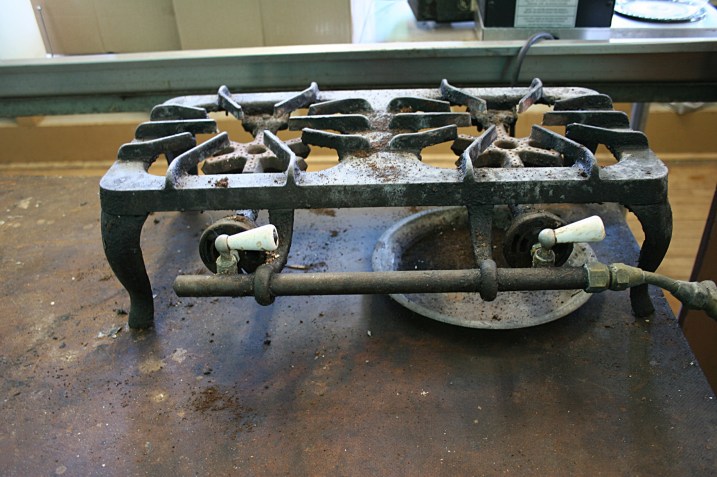
The older gas burners Bob Sanger apparently used to make coffee, etc.

When locals George and Vern, for example, stop by to check on the renovation, David invites them inside for coffee. The two were coffee klatsch buddies of Bob Sanger, long-time bakery owner who died in March. Sanger purchased the bakery from his father, Nick, in 1961. Between Bob, Nick and previous owner, Martin Kuhar, the building has housed a bakery in the First National Bank building for 95 years.
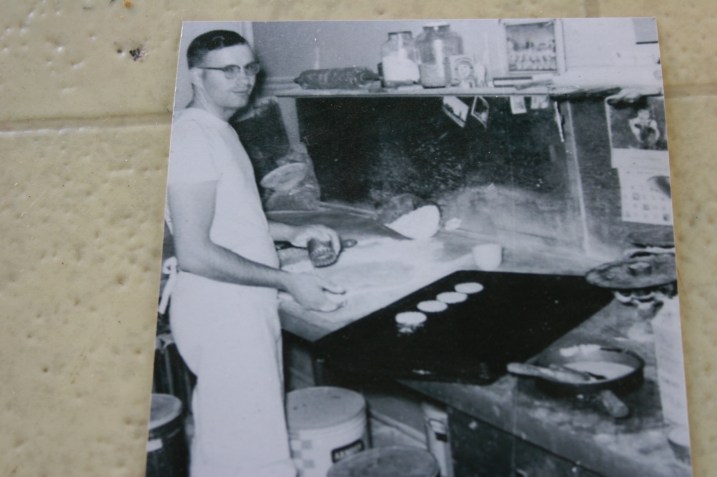
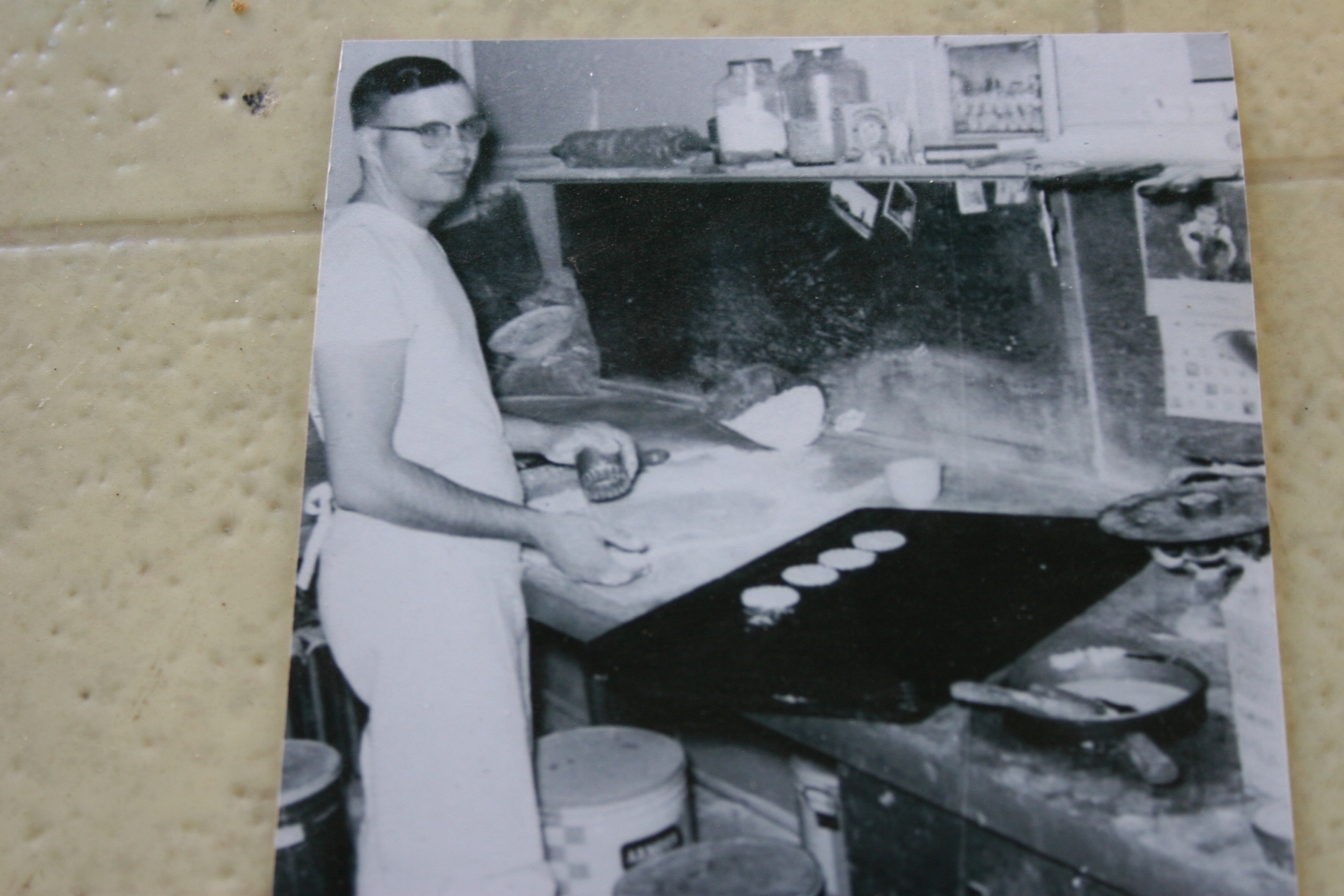
A vintage photo of bakery owner Bob Sanger who died in March at the age of 80.
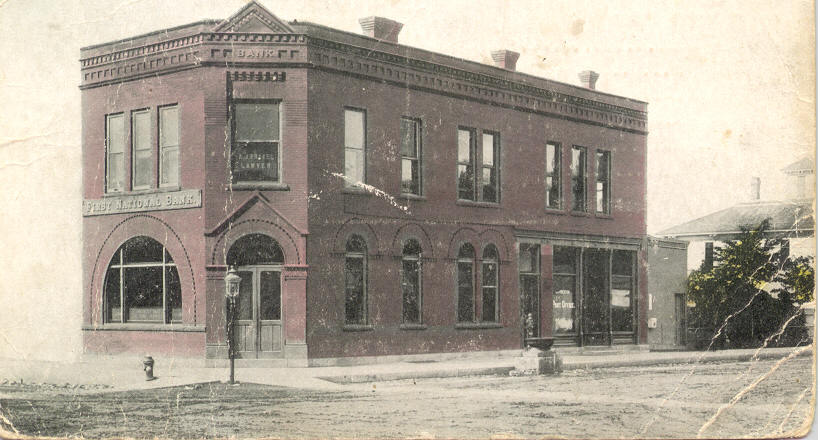
A vintage photo of the First National Bank.

Says David of his and Michelle’s decision to purchase the former bakery after Bob Sanger’s death:

The building is positively gorgeous and has a fascinating history. We had admired it for some time. The quality of the construction is superior to similar buildings of that era. We’ve always talked about opening our own business and the location and timing were right.

Our review of the local economy and the needs of the surrounding area indicates a very strong potential for growth and a serious need for a business of this kind. By offering excellence in service in three different approaches (cafe, coffee shop, event space) we will offset some of the inherent risk of this type of business. In short, it was a perfect confluence of events. We got lucky.

The pair is determined also to buy local as much as possible. Dry goods will come from Griffith’s Grocery across the street. They plan to work with Brau Brothers Brewing and Fieldstone Vineyards, located in the region. They’ll grow their own herbs.

It is clear in talking to David and Michelle that they appreciate the historic gem they’ve purchased.
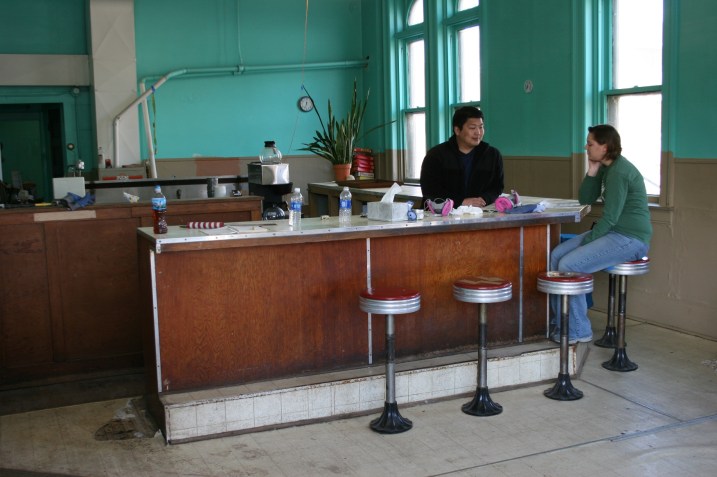
A section of this original lunch counter built by Bob Sanger will be refurbished and topped with granite.

They’re attempting, they say, to retain as much of the natural charm as possible. For example, they plan to refurbish the soda fountain built by Bob; relocate an original bank fireplace facade and tile into the coffee shop and install an electric fireplace; refinish the wood floors; keep the tin ceiling; reuse the candy and bakery counters; restore an old player piano; and more.
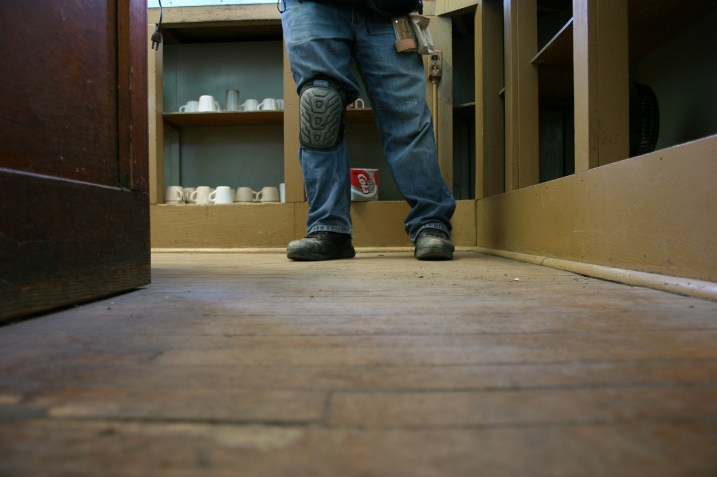
Wooden floors, like this behind the lunch counter, run throughout the building. In one section, however, where the bank vault once stood, the floor is made of pipestone granite.
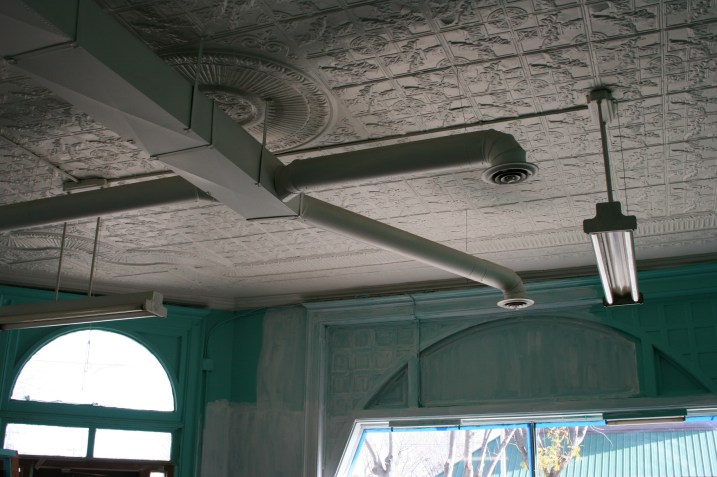
This shows a section of the original tin ceiling in the front part of the building. Ceilings are a lofty 12 and one-half feet high.
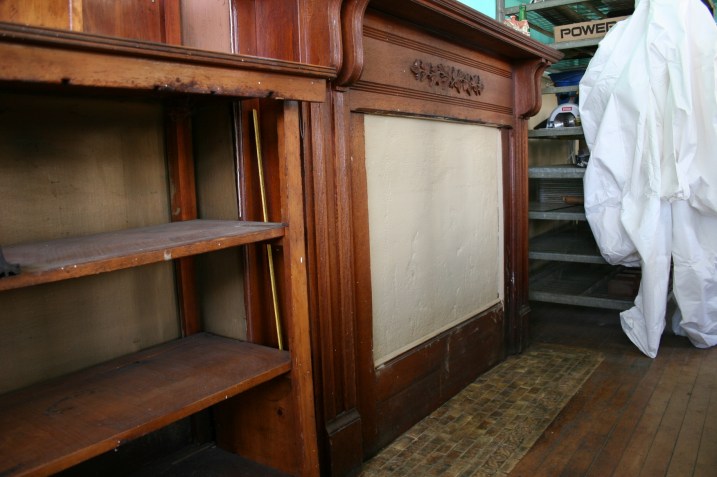
Plans are to move the facade and tile from the this original First National Bank fireplace into the coffee shop, which David will manage. 

The couple is also uncovering and sifting through collectible treasures like WW I and WW II artifacts, signage, rocks, and more accumulated by Bob. So much was damaged though, beyond saving, by moisture problems in the building, David says. But they are saving what they can, possibly incorporating some of their treasures into Seven Sisters.
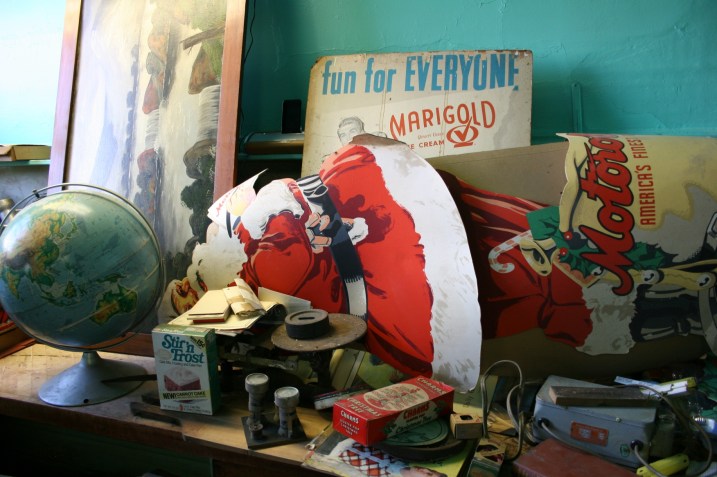
A pile of recently found treasures.
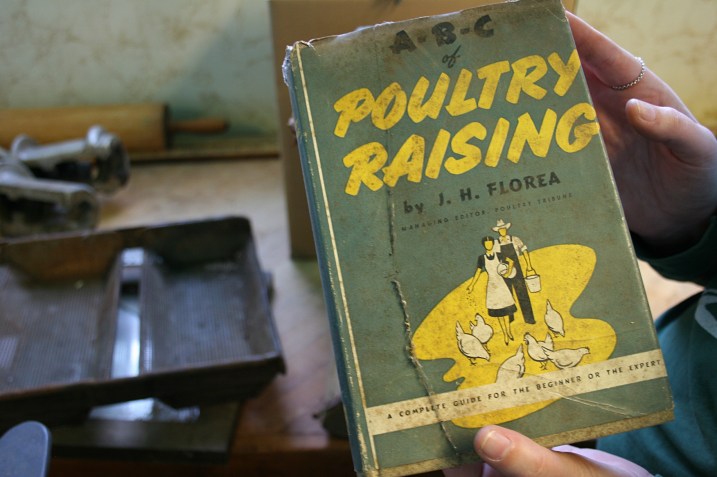
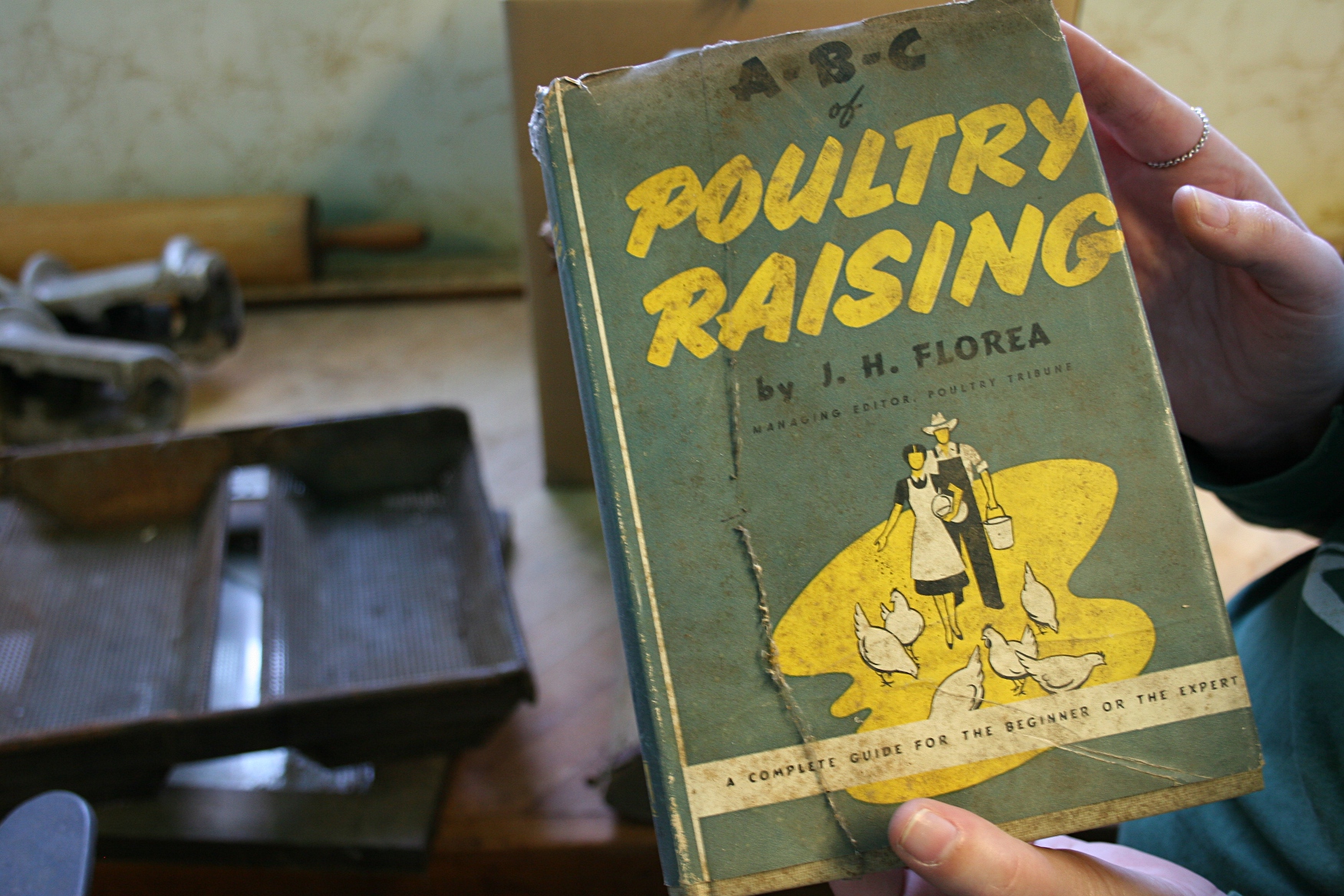
Among the old books uncovered was this one on poultry. Bob Sanger kept a flock of 100 chickens at his house, Michelle says. He used the eggs at his bakery and also sold eggs.
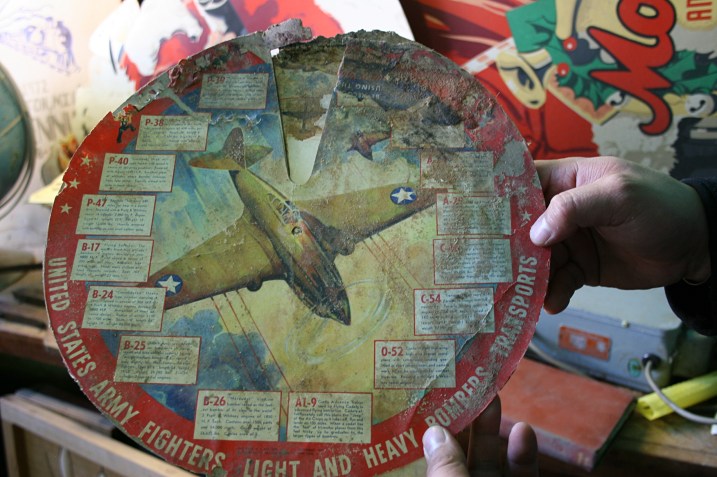
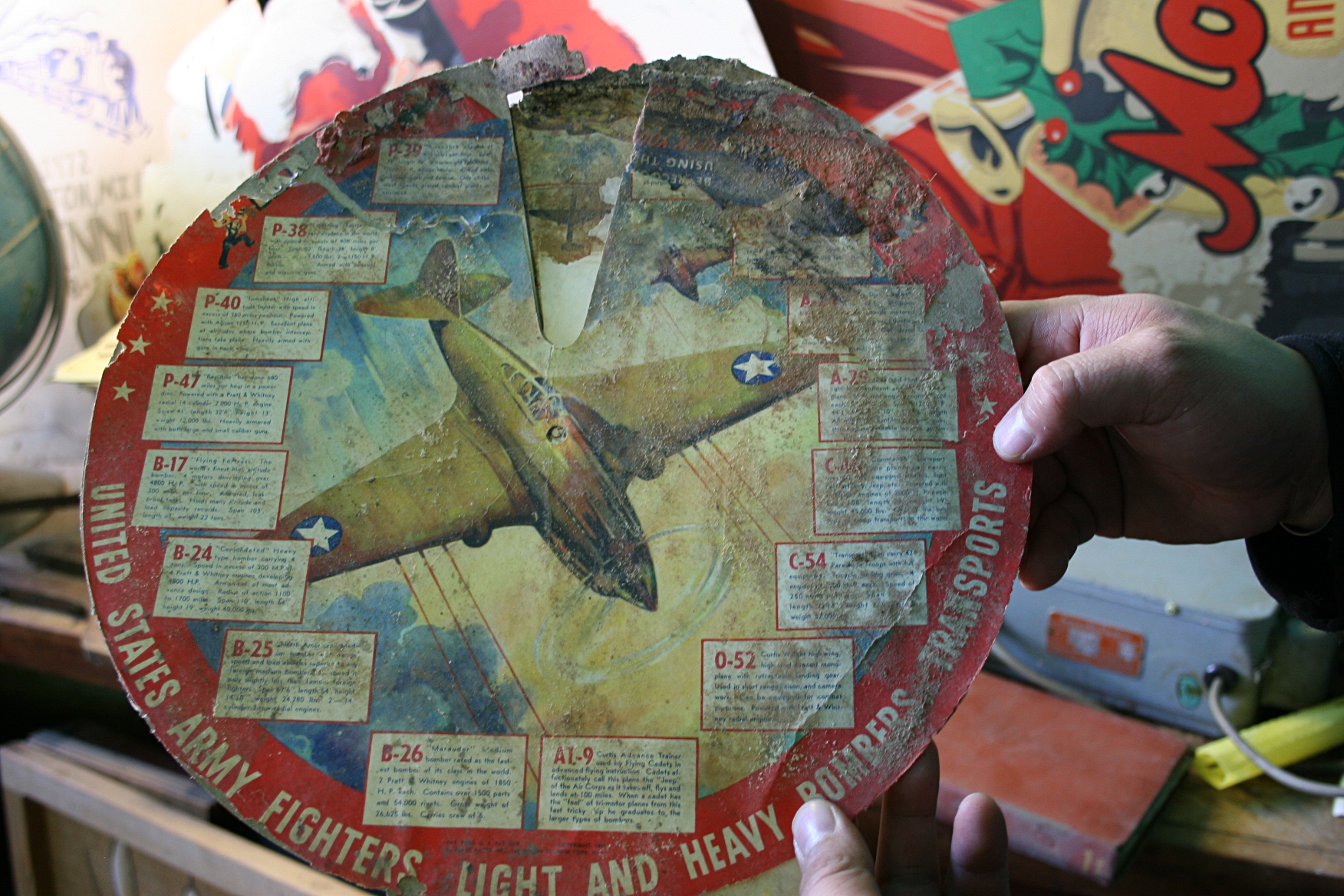
Another find, a vintage bomber transport chart damaged by water, like many of the old items found in the building.

Inedible silver cake decorating balls remain from Bob’s days of baking wedding cakes.
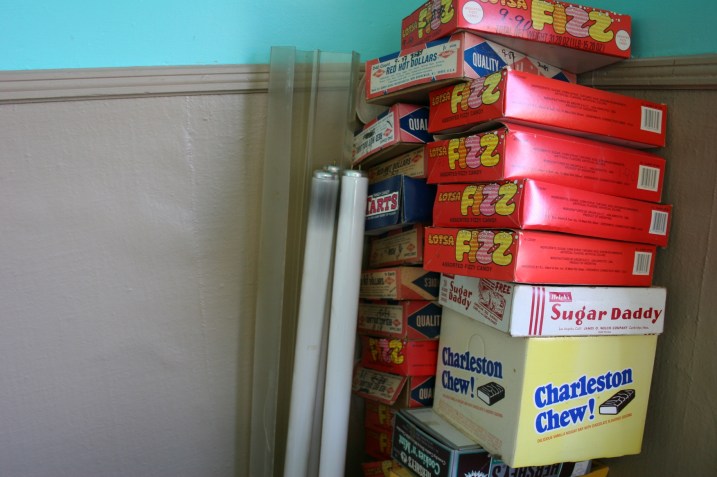
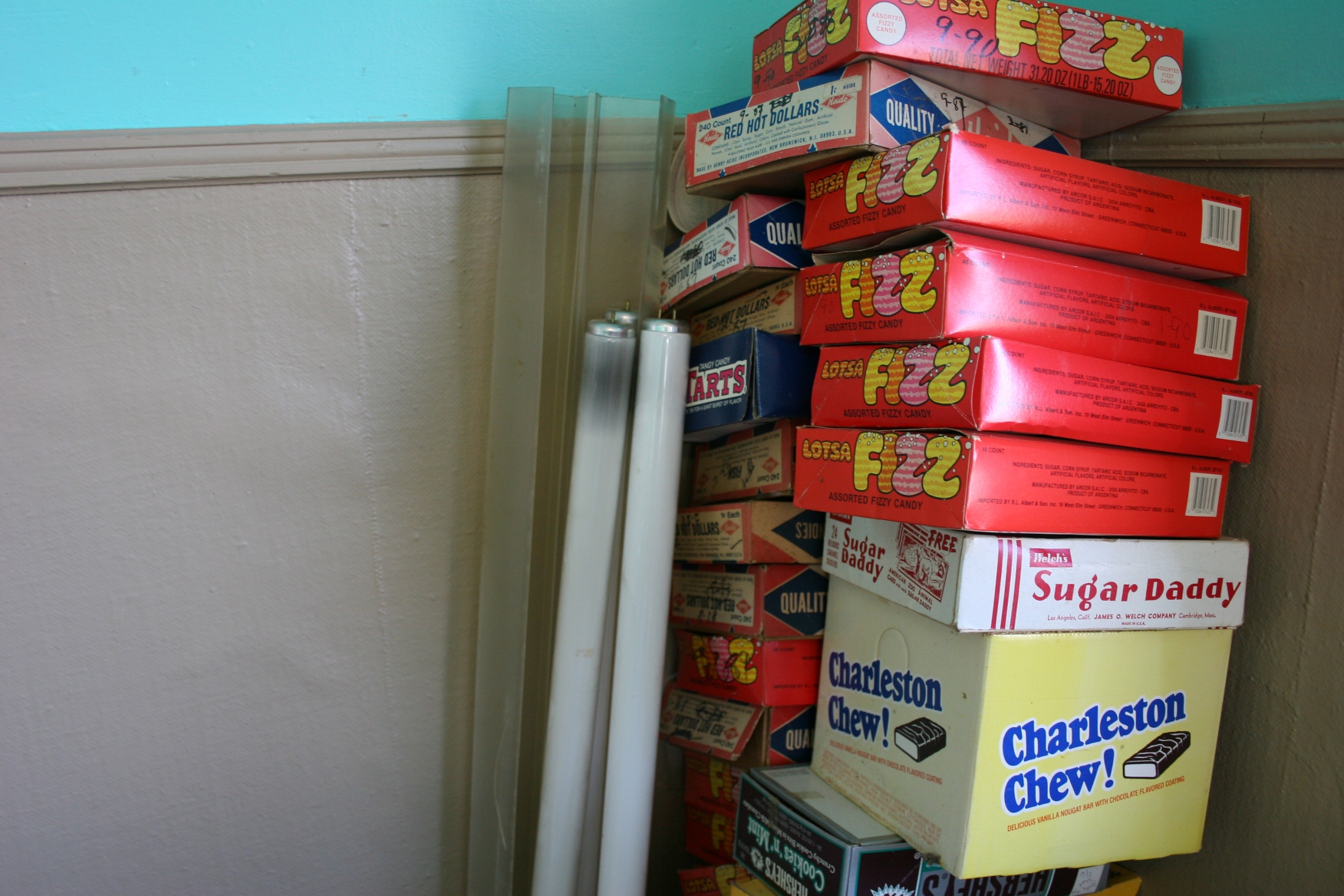
The couple found empty candy boxes (pictured here) and candy still in boxes inside the former bakery.

Michelle has fond memories of coming to Sanger’s for sweet treats. She remembers penny Tootsie Rolls and gumballs and candy cigarettes sold at the candy counter:

Thinking about the hundreds of people who have memories of this building, I really hope we can fill that same role for the next generations.

FYI: Lamberton is located along U.S. Highway 14 about 10 miles east of Walnut Grove, childhood home of Laura Ingalls Wilder, author of the Little House children’s book series. The area is a strong draw for summer tourists interested in Wilder’s books and the Little House on the Prairie television series set in Walnut Grove.

© Copyright 2012 Audrey Kletscher Helbling


Gravel road on the prairie July 9, 2012

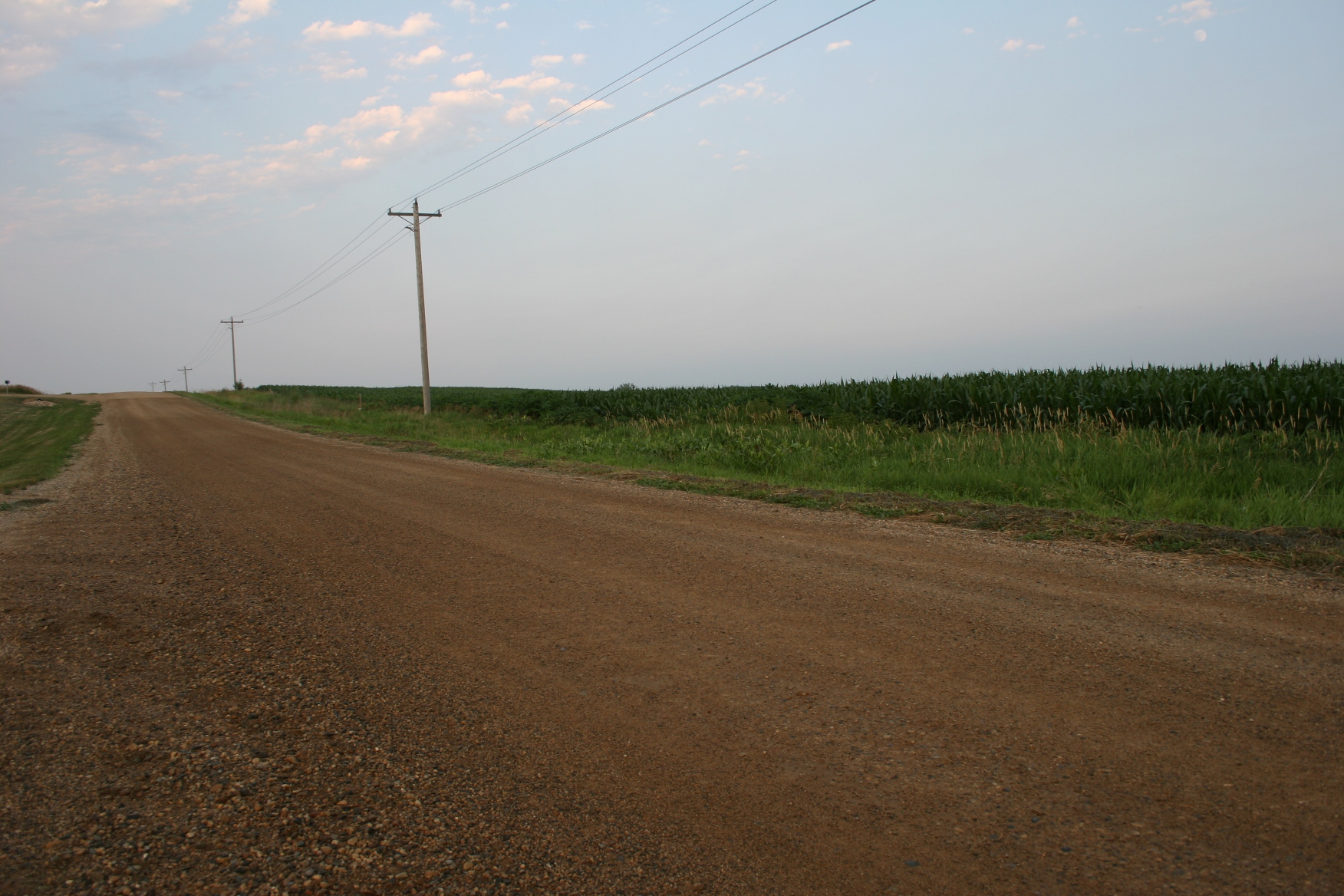
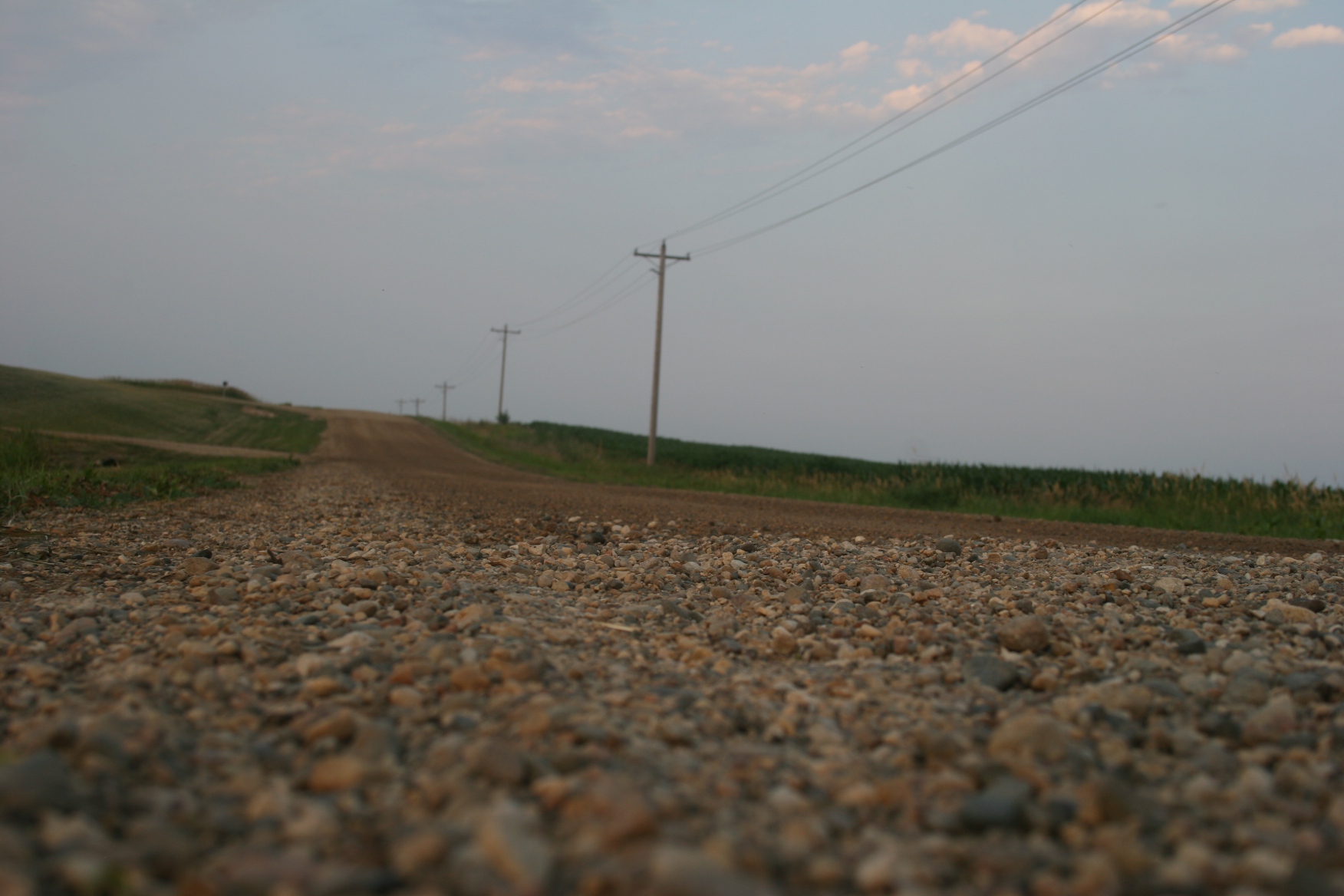
A gravel road just north of Lamberton in southwestern Minnesota.

WHAT IS IT ABOUT a gravel road?

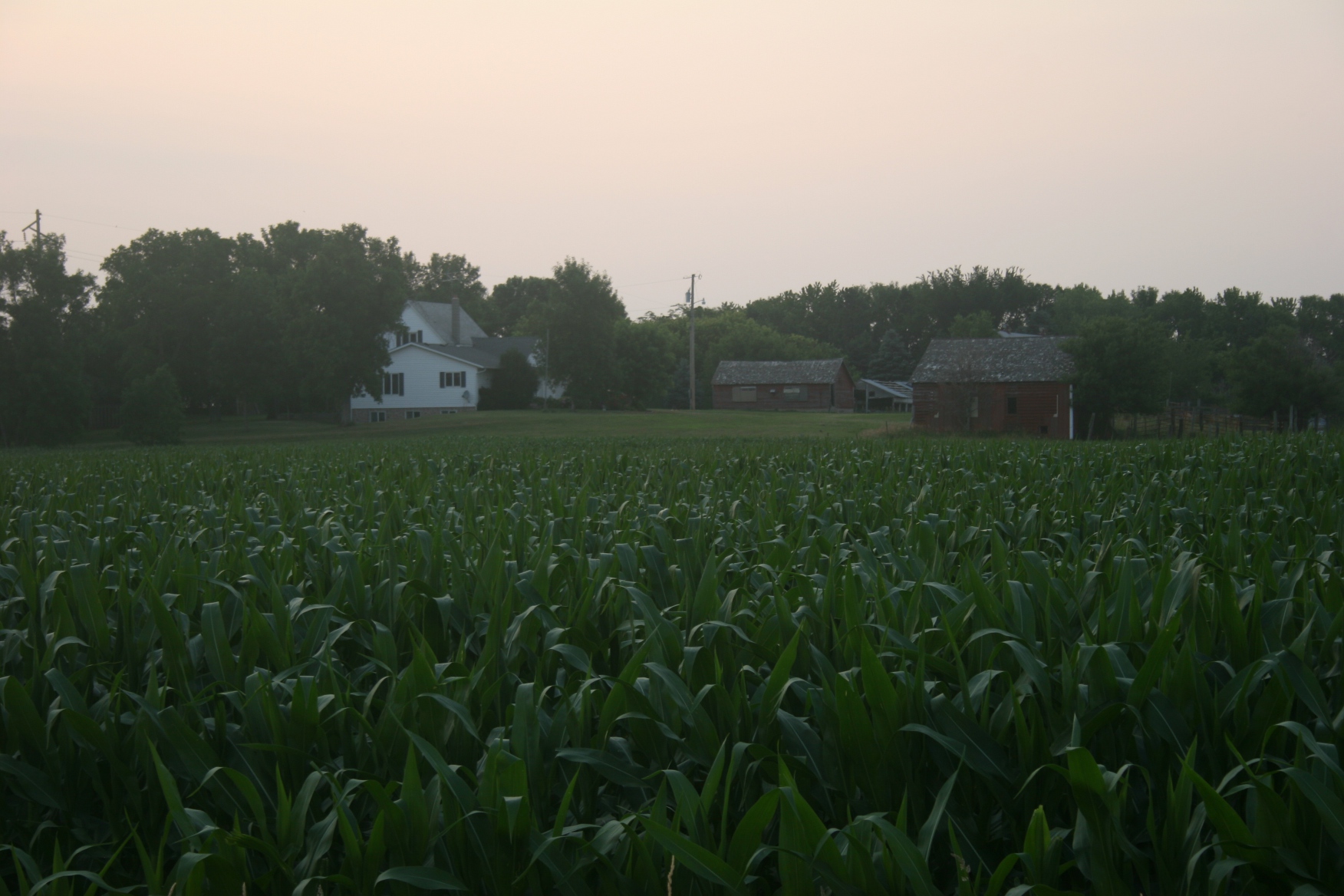
A picturesque farm site on a sultry summer evening as seen from a gravel road north of Lamberton.

It is poetry and peace, country and charm.

You can almost hear the crunch of the gravel in this image.

But it is more. It is small stones crunching under tires and feet as dust rises and lingers, marking the trail traveled.

As the sun sets on the prairie, a truck travels along a gravel road up to a paved roadway north of Lamberton.

It is a marker of townships, the route of massive yellow road graders blading the road surface to a flat finish or heaving snow toward ditches.

It is memories of bumpy school bus rides and squishing into the back seat of the family car between brothers and sisters.

It is Dad’s admonition to always, always, move to the right when cresting a hill.

Utility lines along the same gravel road stretch into forever.

It is the memory of pinpoint stars dotting the pitch black darkness of a prairie night and the sweet scents of wild roses (once) rambling in ditches and of freshly-mown alfalfa and of hay baled and stacked onto a swaying wagon.

A gravel road is all of these to me, and yet, in its most basic definition, it serves as a way to get from point A to point B, and marks borders between town and country.

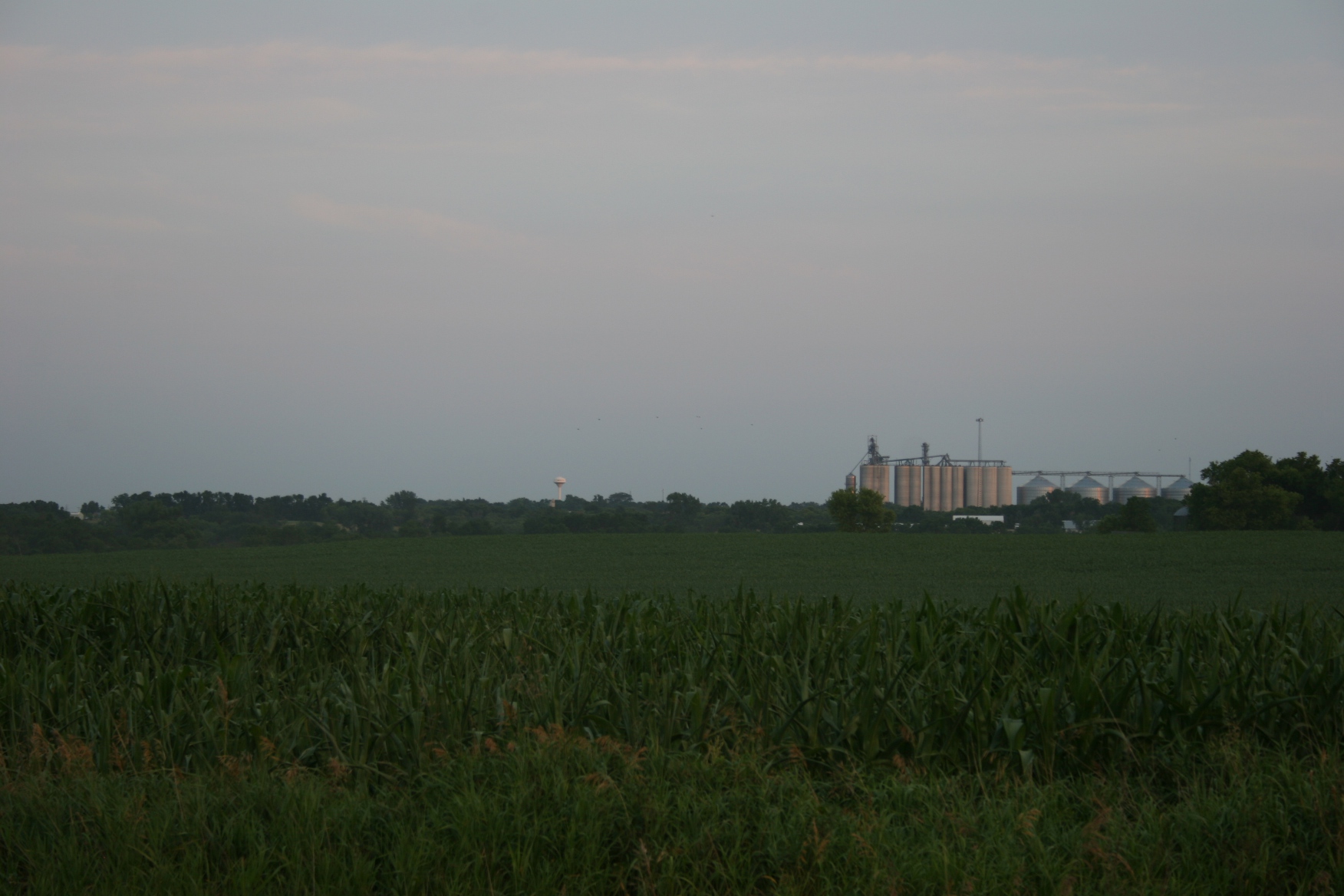
Standing on the gravel road, I turned south to photograph the cornfield and Lamberton in the distance.

It is a line in a plat book, a route connecting paved roads, a path to a rural home.

It is a gravel road on the prairie.

© Copyright 2012 Audrey Kletscher Helbling
 

Pull off Highway 14 & view the historic buildings of Lamberton June 7, 2012

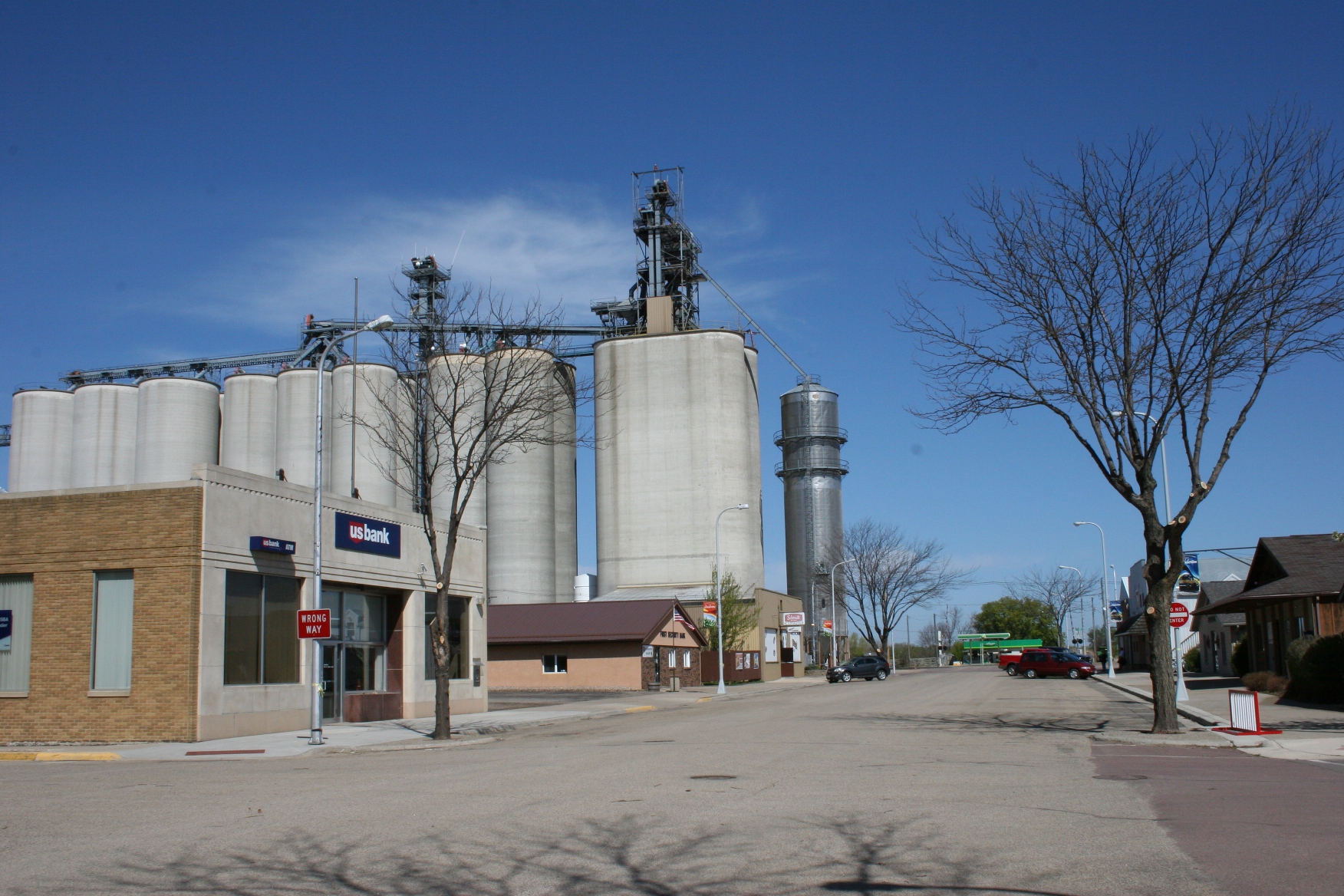
A portion of Lamberton’s Main Street shows this to be a strong agricultural community.

LAMBERTON. Just another small town on the southwestern Minnesota prairie, so you would think if you’re driving on U.S. Highway 14, The Laura Ingalls Wilder Historic Highway.

But this community some dozen miles east of Walnut Grove, destination for fans of “The Little House” books and television series, is worth at least a drive-through if not a stop.

I’ll admit that up until my middle brother moved onto acreage north of Lamberton several years ago, I hadn’t spent much time in this town of 822 except to visit an uncle and aunt who once lived and ran a furniture store here.

I still haven’t explored this agricultural community like I should. But I’ve seen enough to know that I need to look more in depth. Let me show you why, via photos I took, mostly along Main Street, during a brief stop two months ago.

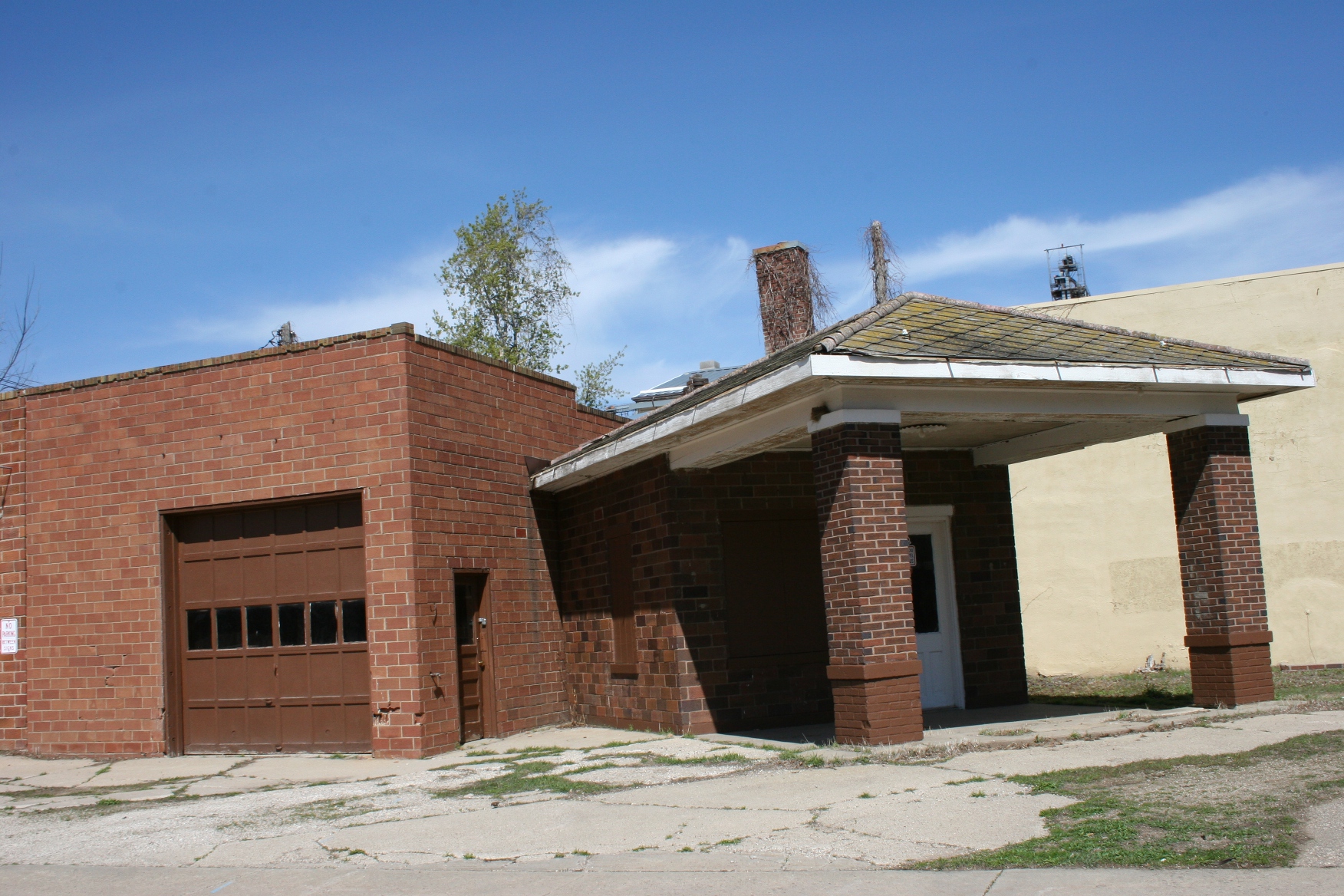
The once-popular corner gas station still stands in downtown Lamberton.

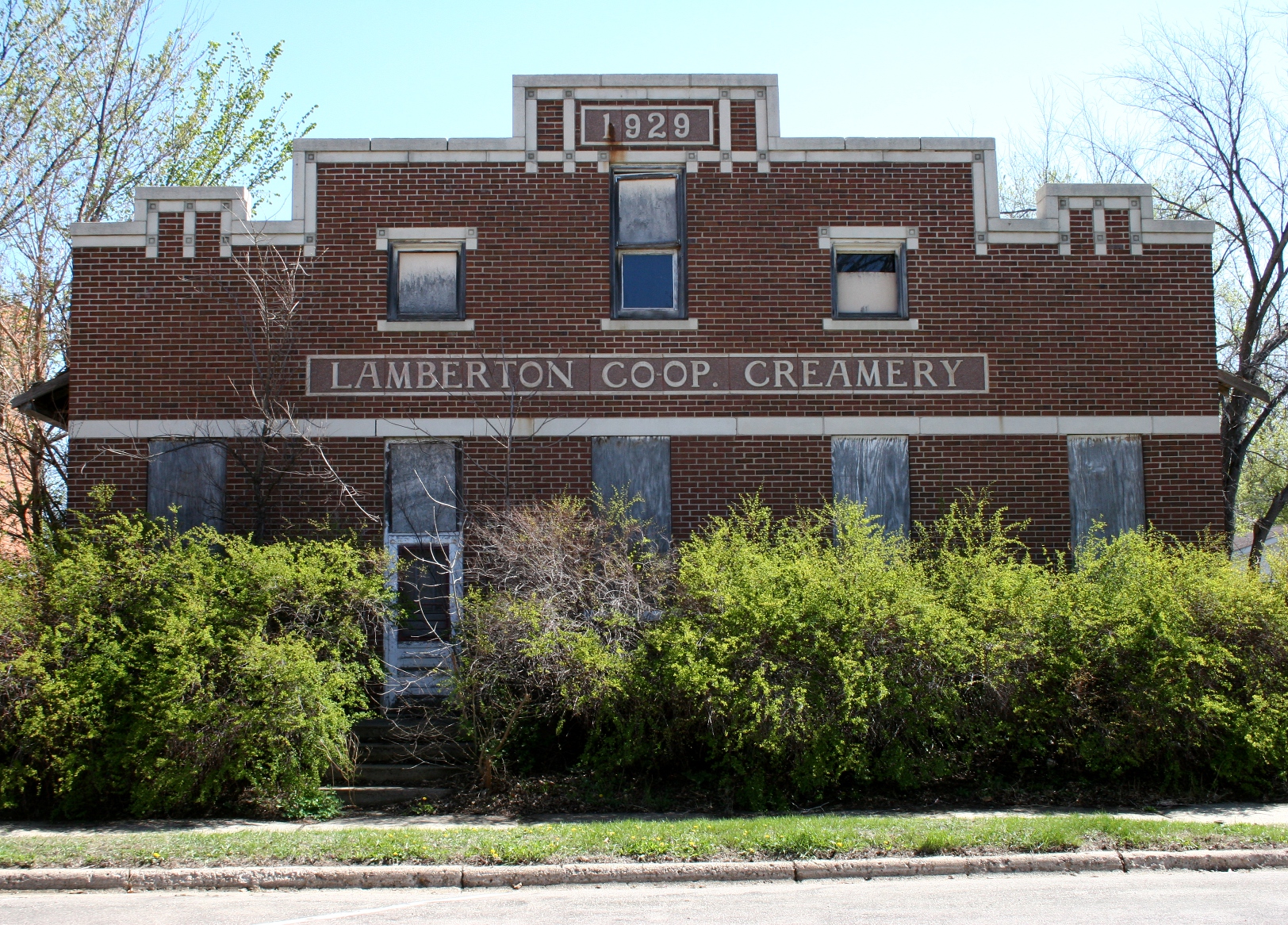
Most small towns once had creameries like this one.

Hanzlik Blacksmith Shop, dating to 1895, was gifted to the city and preserved by the local historical society. With the original wood floor and tools, it’s been called “a warehouse of a long ago lost art” by locals. The community celebrates this piece of history with an annual Hot Iron Days, this year set for September 7 – 8.

It’s the old buildings—from the cute corner gas station to the stout brick creamery to the old wood-frame blacksmith shop—that appeal to me. Some 30 miles to the northwest in my hometown of Vesta, which like Lamberton sits in Redwood County, the old buildings are mostly gone. But not in Lamberton. Here you’ll find plenty of historic buildings to please your artist’s eye and your historian’s heart.

Now all I need is someone with keys so I can take you inside these old buildings.

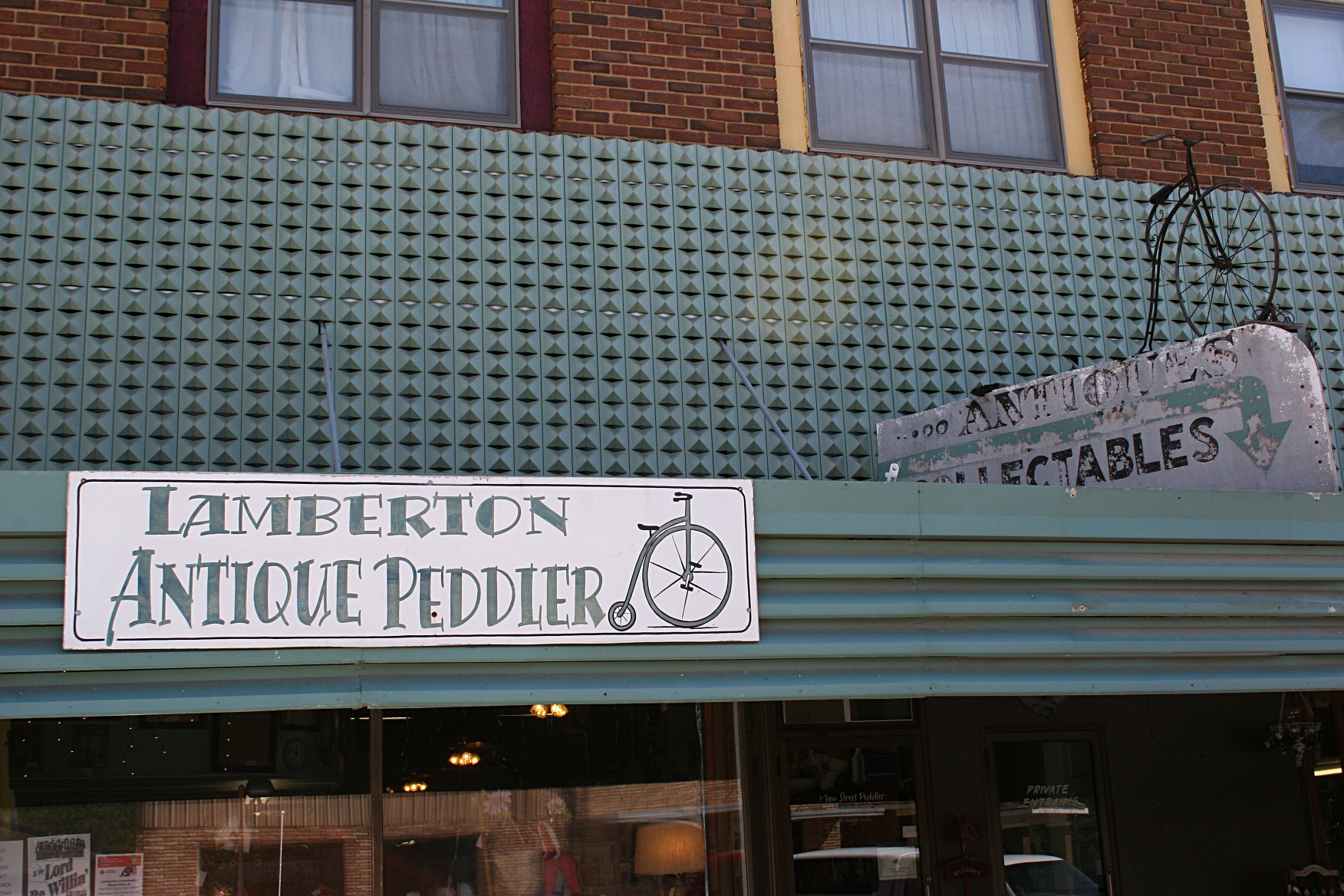
Vintage signs hold a certain historic charm.

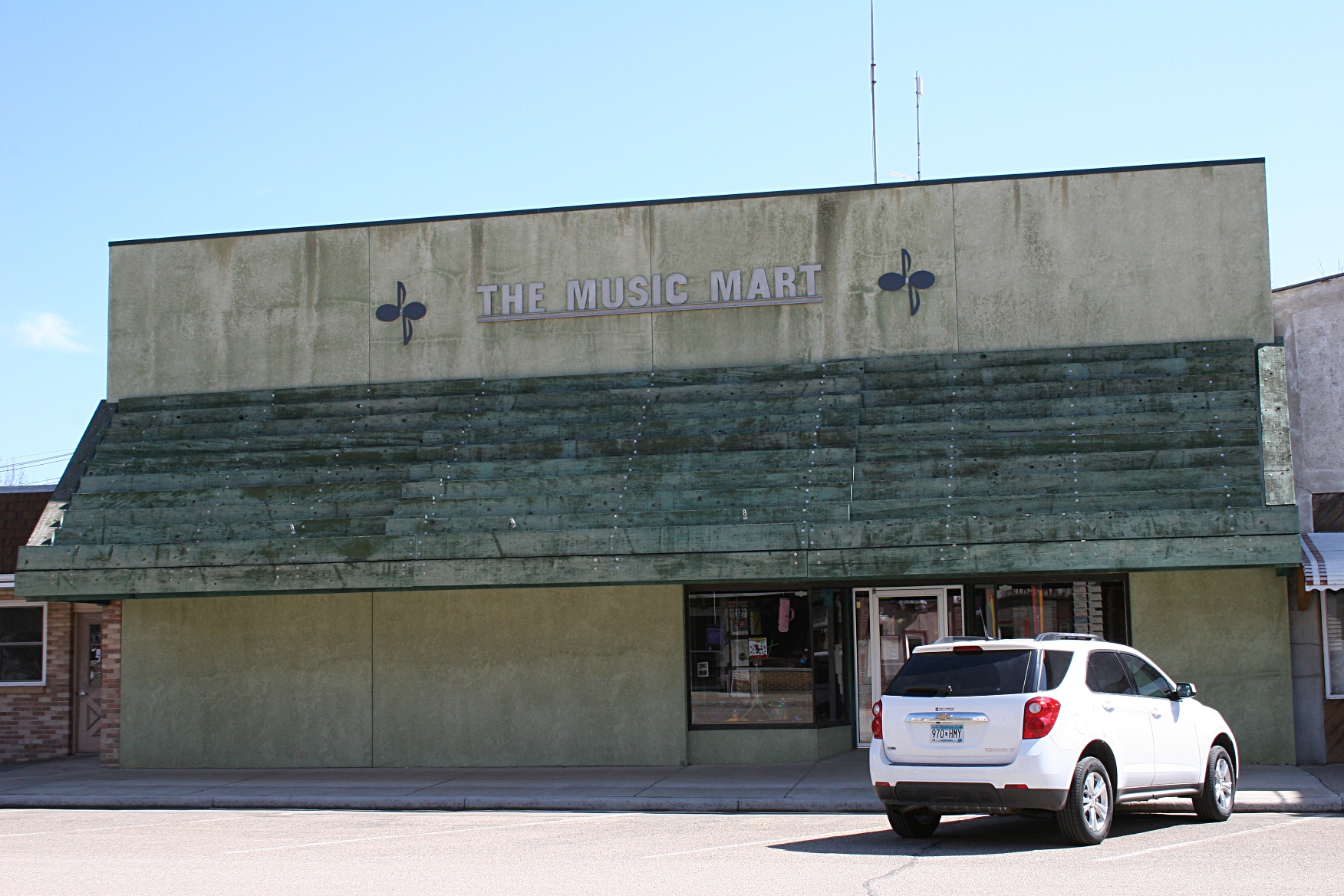
The Music Mart supplies most major brands of band and orchestral instruments. Sales staff reach out to 100-plus schools in southern Minnesota, according to online information. Who would expect to find this type of business in a small town of less than 1,000 residents? Not me.

The Lamberton Antique Peddler is a must-see for anyone who is into antiques. This place is packed with merchandise in the former furniture store once operated by my uncle and aunt, Merlin and Iylene.

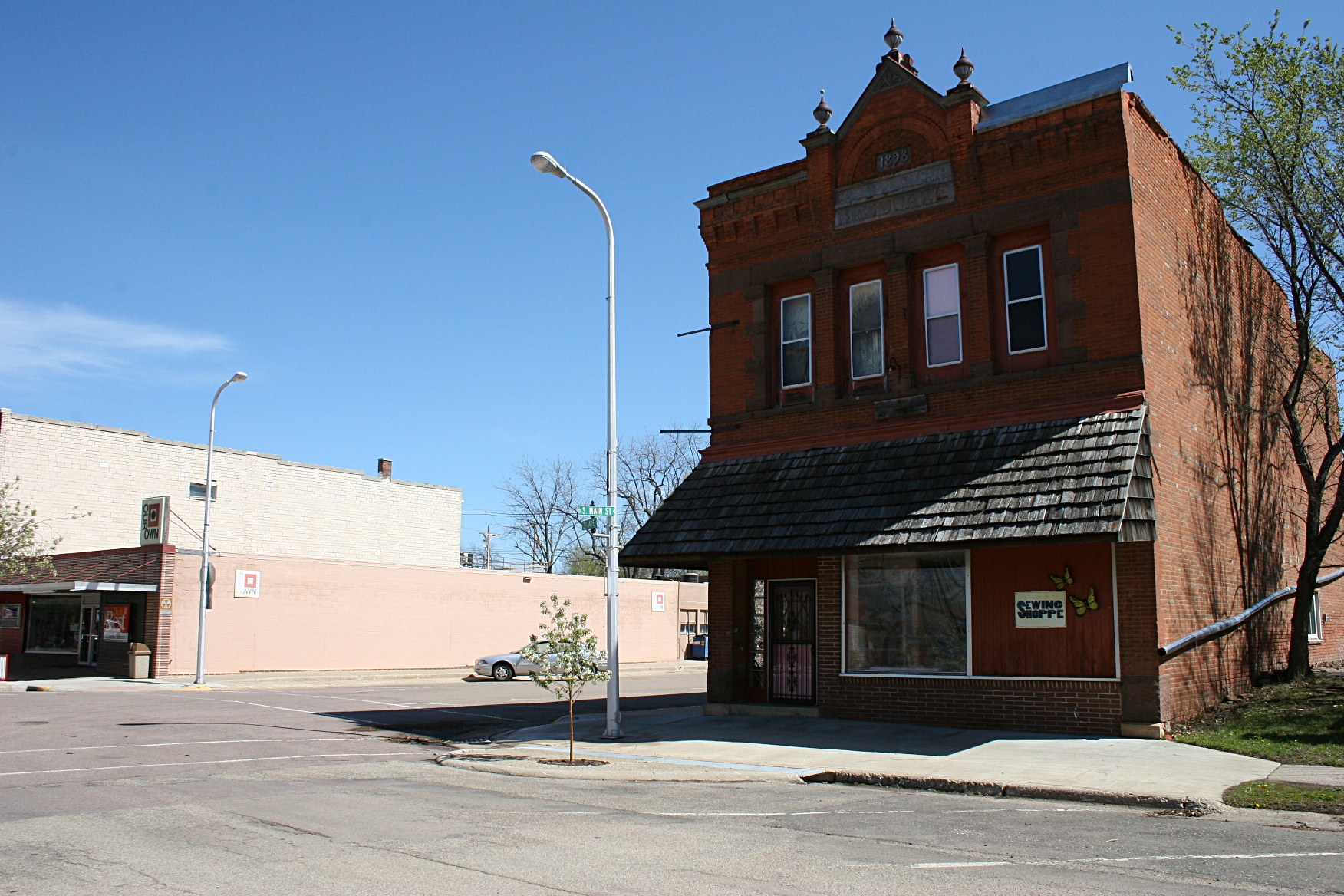
The Sewing Shoppe next to the creamery. Love the architecture.

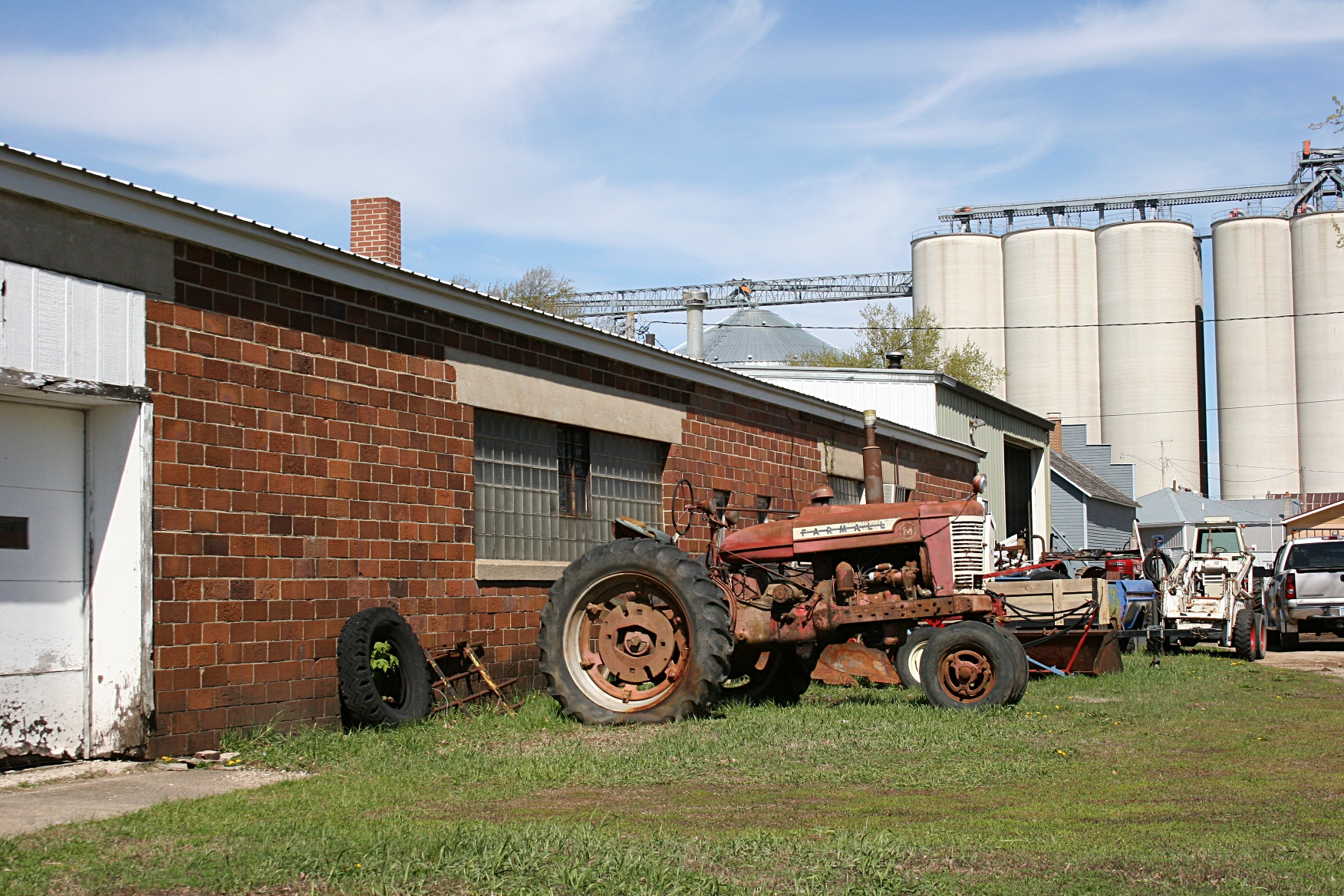
An old Farmall is parked next to a building just off Main Street.

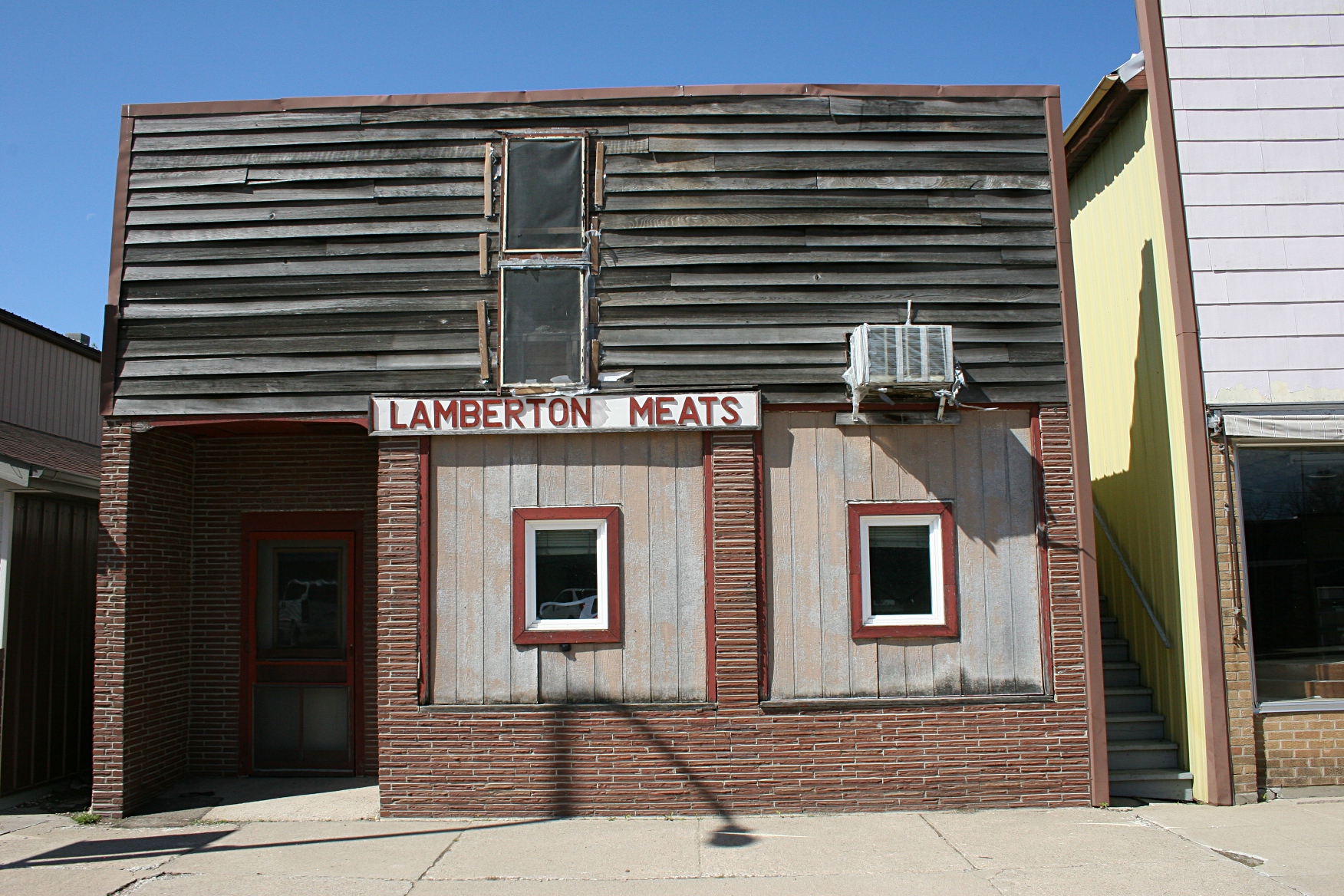
“The locker.”

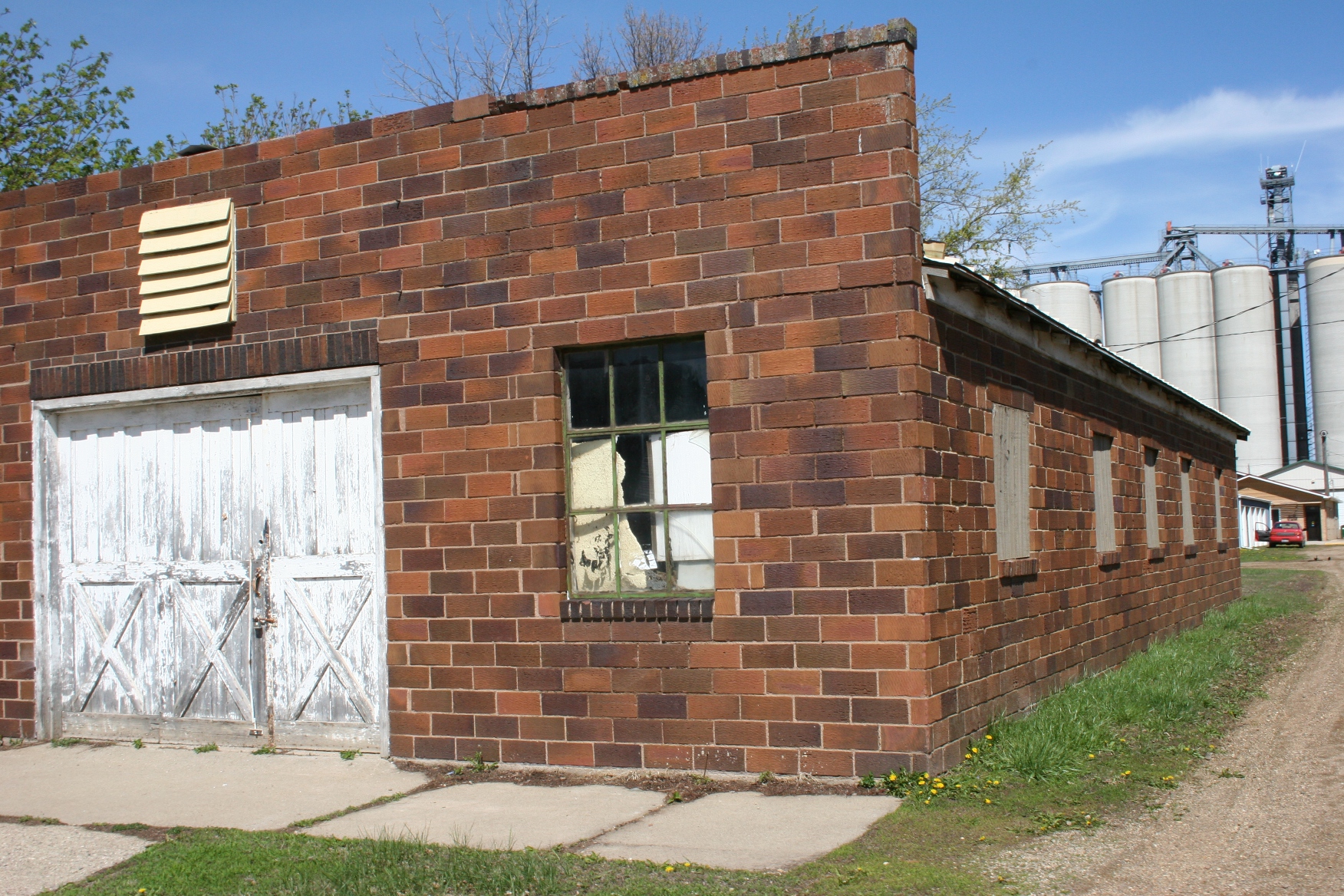
A low-slung brick building, perhaps a former garage, caught my eye.

TO VIEW ANOTHER particularly beautiful building in Lamberton, a former bakery, click here to read a previous post on Minnesota Prairie Roots.

© Copyright 2012 Audrey Kletscher Helbling
 

What would you do with this old bakery in Lamberton? May 31, 2012

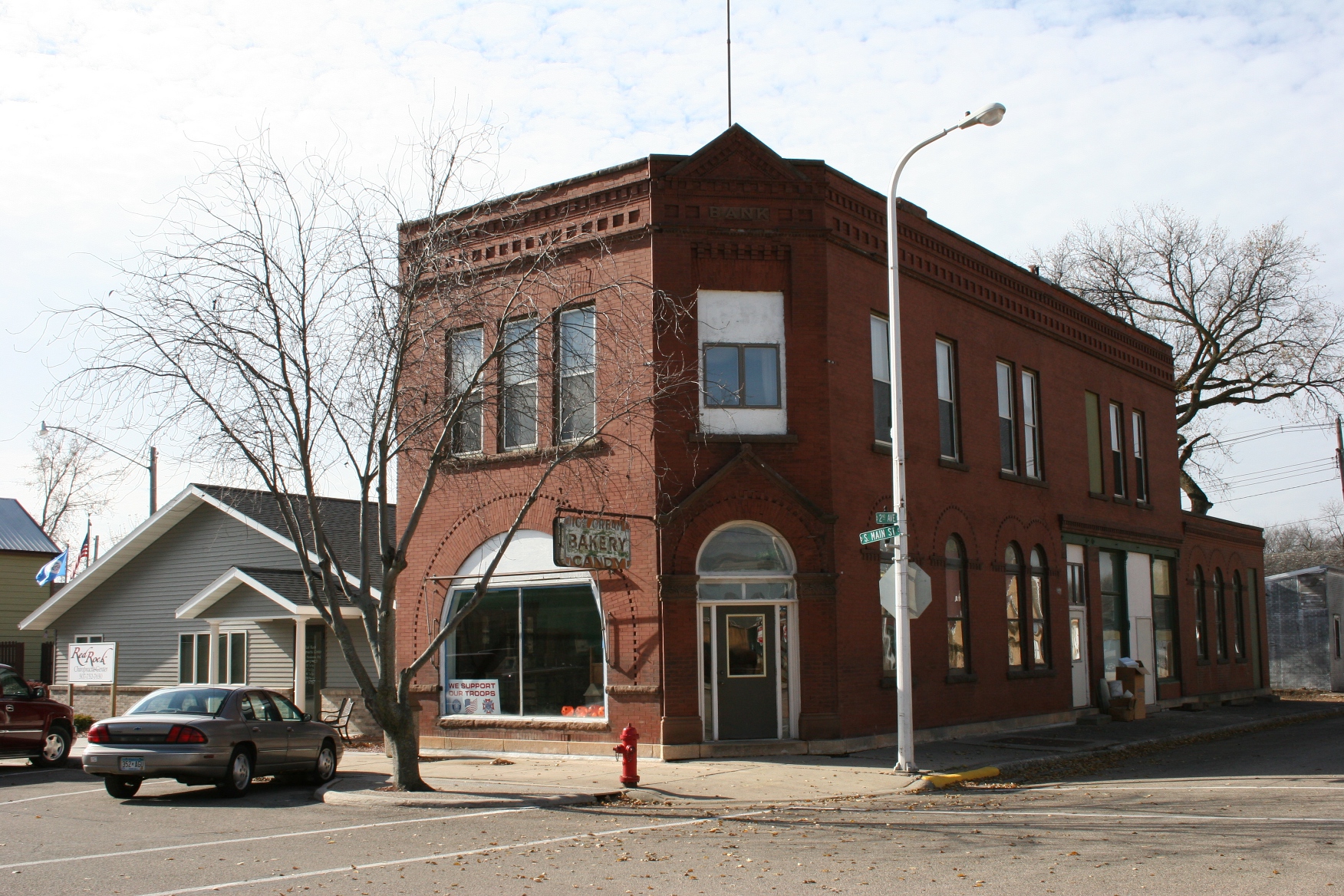
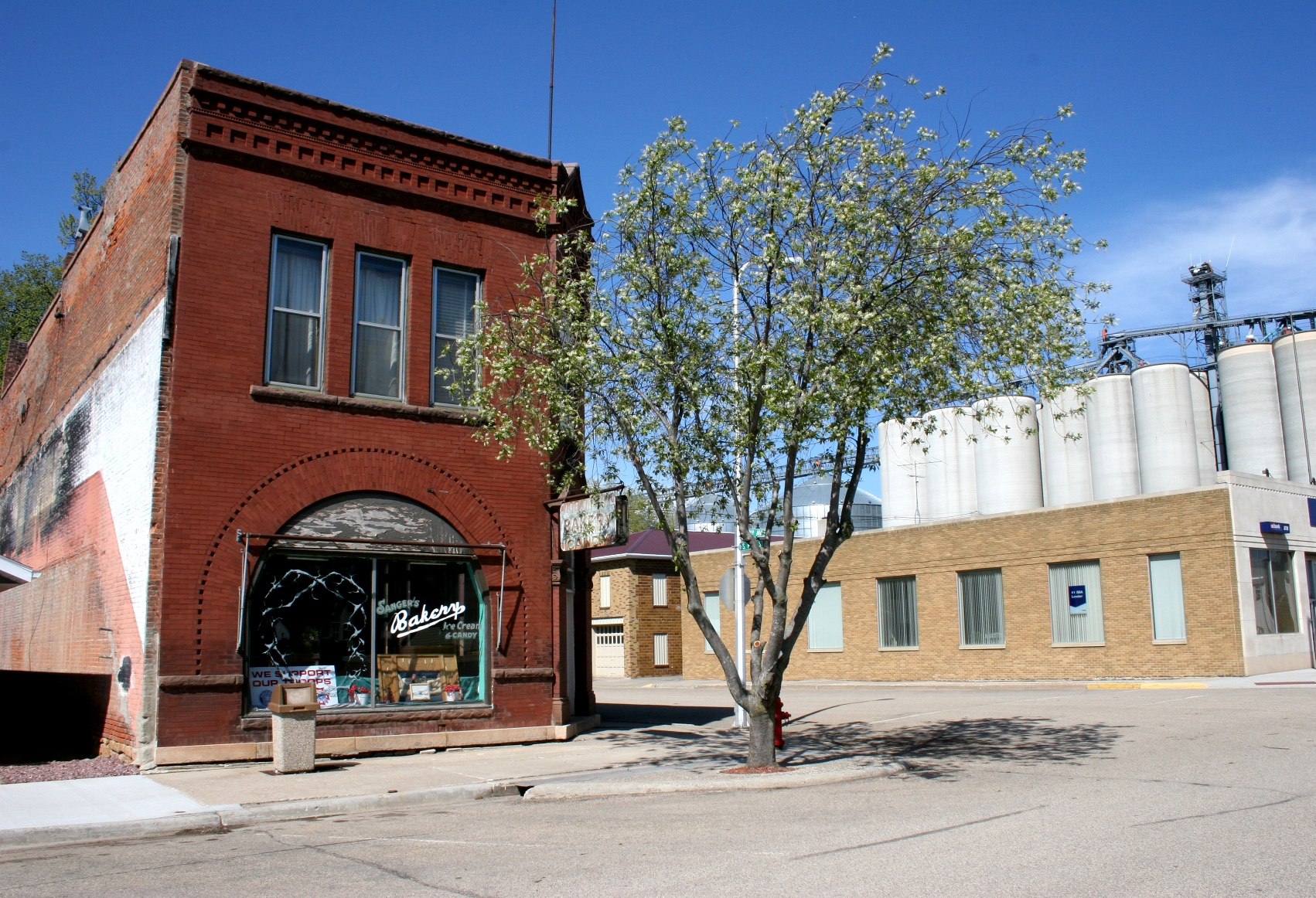
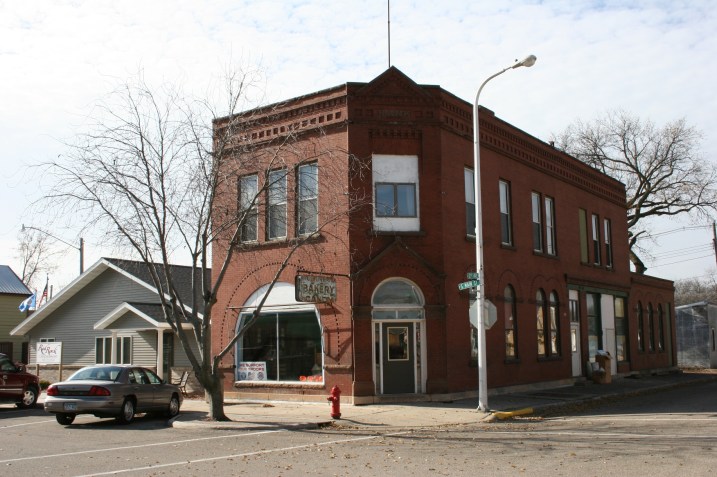
The former Sanger’s Bakery in Lamberton, a Minnesota farming community. I’d move the garbage bin in front of the building, replace it with a bench and add pots of vivid flowers.
I’VE PHOTOGRAPHED many an old building in a lot of small towns. My appreciation for history and architecture and for rural life keep drawing me back to Main Street.
One building in particular intrigues me. The former Sanger’s Bakery, a brick stronghold anchoring a corner in downtown Lamberton in southern Redwood County, possesses a sweet, timeless charm that causes it to stand out.

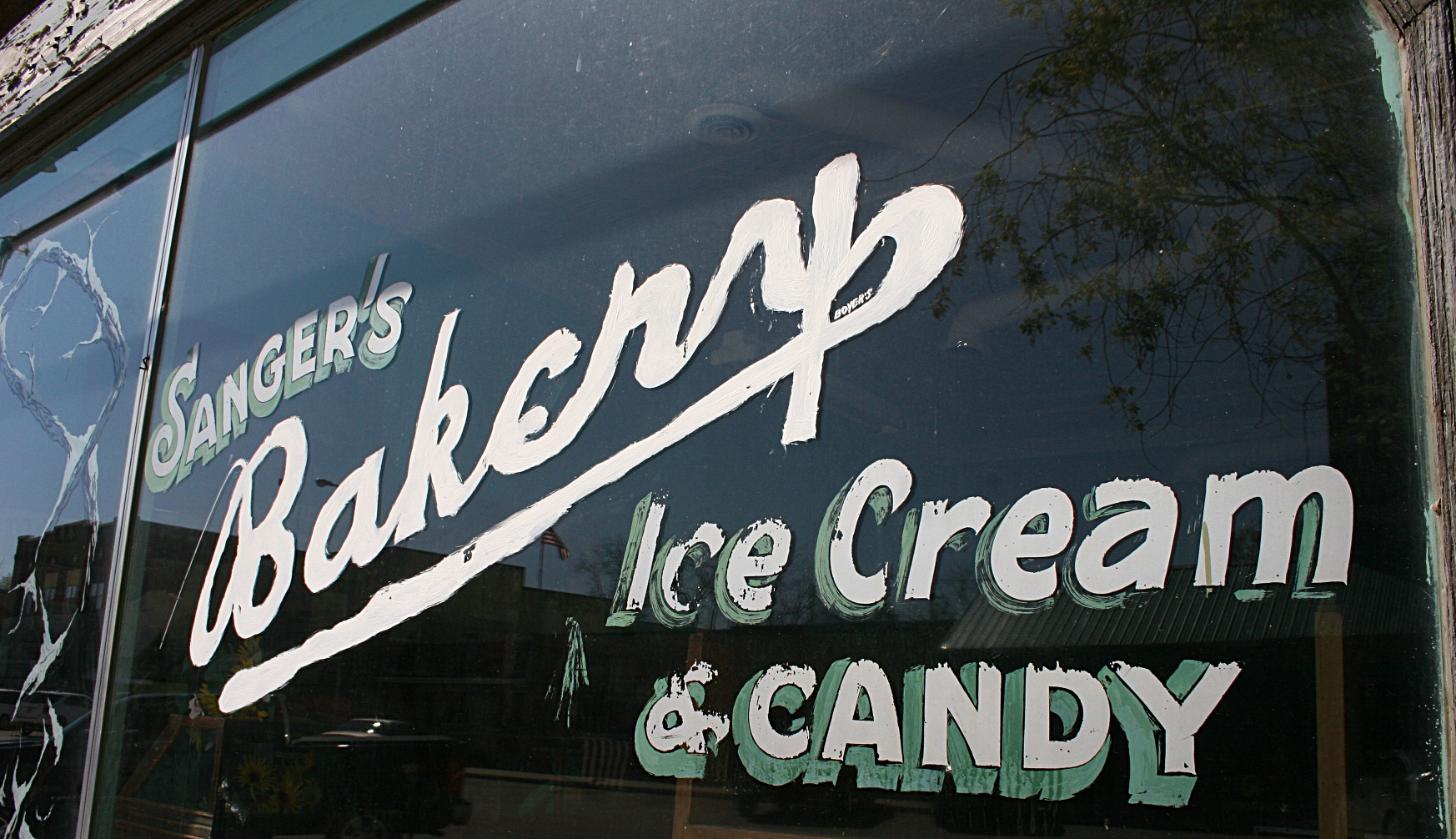
How long has this signage been painted on the front window of Sanger’s?

It’s not necessarily the exterior that catches my eye, although certainly the signage and sweeping arched front window and the fancy details in the brick appeal to me. Rather, it’s the interior which truly captures my interest.

The two times I’ve photographed the exterior, I’ve also paused to press my nose against the windows and peer inside to a snapshot of the past. You would swear the hands on the vintage 7-UP clock have not moved in decades. An old-fashioned candy counter and vintage lunch counter rimmed with stools look like something straight out of a Norman Rockwell painting.

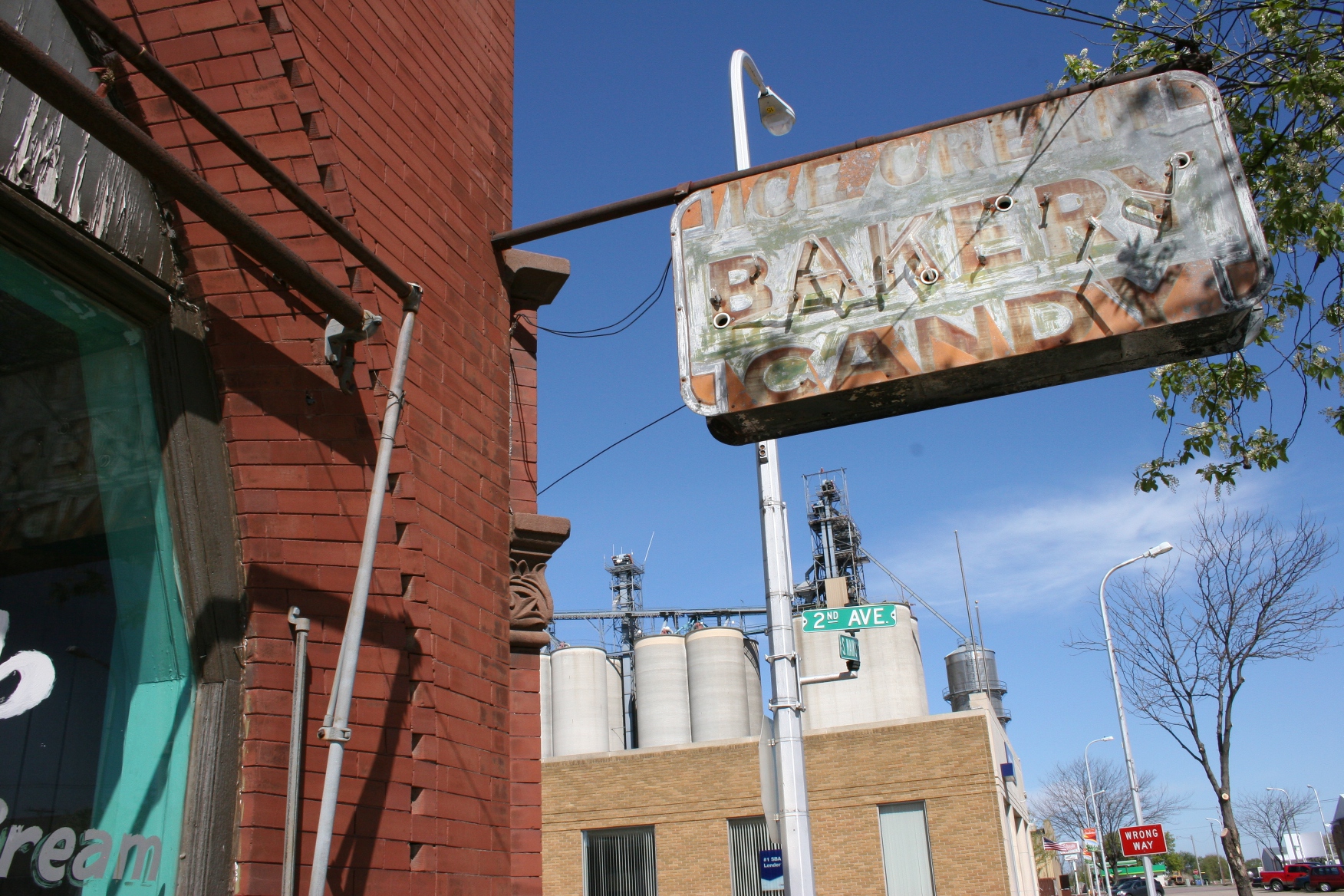
A vintage sign suspended from the front of the bakery.

Honestly, you just don’t find places like this anymore. Martin Kuhar opened the bakery in 1928. The Sanger family purchased it in 1946 and eventually Bob, the youngest of Nick and Mary’s six children, bought the business in 1961. He was a 1955 graduate of the baking program at Dunwoody Institute.

All of this I learned on a recent stop at the bakery, where I found Bob’s obituary taped to the front door. He died March 30.

Just days before his death, this long-time baker was serving coffee to his friends. Oh, how I wish I could have been in that coffee klatch, listening to the stories.

I bet Bob would have shared plenty about the place where he served up baked goods, hand-scooped ice cream cones, malts and candy. He baked buns for local schools and churches and crafted wedding cakes. He also sold fresh eggs from his chickens and honey from his bees. He tended a garden.

After reading Bob’s obit, I desired even more to get into the bakery. I jiggled the front door knob, hoping the door might be unlocked. It wasn’t. I’m determined, on my next trip to Lamberton, to get inside the bakery, to share with you this treasure from the past.

In the meantime, owners of this building and Lamberton area residents, I hope you appreciate what you have here. I could easily see this former bakery reopened as an ice cream/sandwich/pie/coffee/gift shop. The location along U.S. Highway 14 only 10 miles from Walnut Grove, childhood home of author Laura Ingalls Wilder, is ideal. The area already draws plenty of tourists during the summer months.

The right owner, with the right ideas, a good business and marketing plan, and adept at using social media could turn this old bakery into a destination.

I can envision the possibilities.

Readers, what do you think? If anyone out there knows anything about plans for the old bakery, submit a comment. Or, if you simply have ideas, I’d like to hear those, too.

A side shot of the former bakery. Just imagine the possibilities for this spacious building. Let’s hear your ideas.

© Copyright 2012 Audrey Kletscher Helbling