Minnesota Prairie Roots

Writing and photography by Audrey Kletscher Helbling

A look back at a 1951 graduation speech about communism June 5, 2011

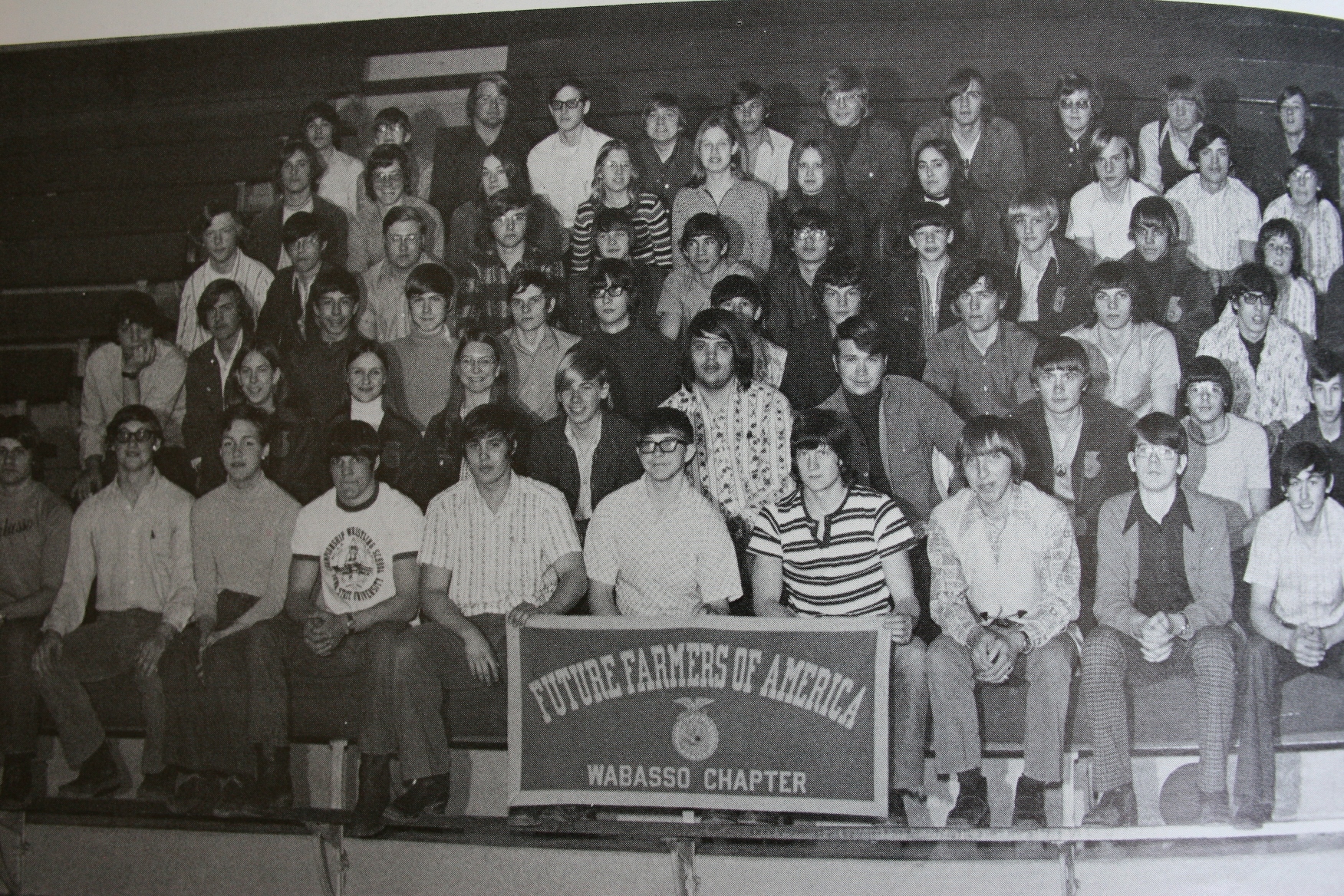
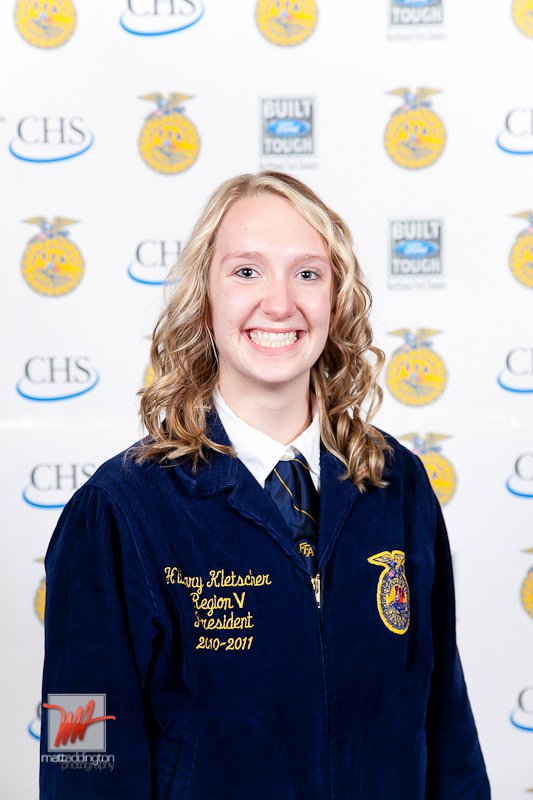
I recently attended this graduation reception for my niece Hillary, who graduated from Wabasso High School.

A soon-to-be 2010 graduate of Westbrook-Walnut Grove High.

IF YOU’RE LIKE ME, you’ve received invitations to numerous high school graduation receptions. You’ll make the rounds, shaking hands with the new graduates, inquiring about their future plans, congratulating their parents and then grabbing something to eat (pacing your food intake) before moving on to the next reception.

If you’re like me, you also have not attended a single graduation ceremony, unless your child is graduating or you are invited to a small-town high school where seating is not limited to four spaces per graduating senior’s family.

Therefore, you probably have not heard a student commencement speech in some time.

About a week ago my niece graduated as valedictorian of  Wabasso High School, my alma mater, and gave a graduation speech, of which I’ve received a copy. Hillary spoke about the past and how it weaves into the future. “As we become the people we are meant to be, we can hold onto the memories of yesteryear and the hopes of tomorrow,” she said in part. “The one thing that will always remain constant is the change in our lives.”

Now compare that to the speech (see below) given by Hillary’s grandmother, my mother, at Wabasso High School 60 years ago. Class of 1951 valedictorian Arlene Bode spoke about “Our Part in the Fight Against Communism.”

When my mom first told me the title of her speech, I laughed. “Who gives a graduation speech about communism?” I asked, and laughed again.

An old fallout shelter sign on a building in downtown Pemberton in southern Minnesota.

Then my 79-year-old mother reminded me of the time period—the Cold War, the fear of the Soviet Union, the Korean War, fallout shelters—and I understood. She doesn’t recall whether she chose the topic or whether the subject was assigned. But the content gives some youthful, historical insight into the world six decades ago:

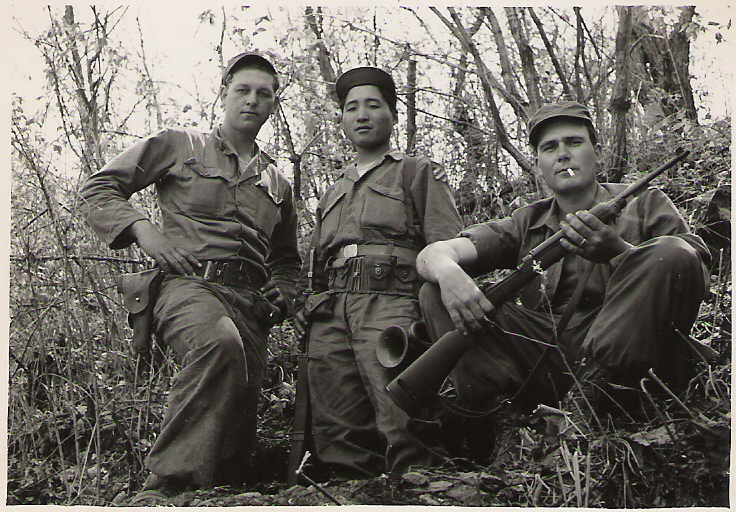
My father, a Korean War veteran, in Korea in 1953.

“WE, THE GRADUATING SENIORS, wish to take this opportunity to express our sincere gratitude to our parents, teachers, and all others who have helped us obtain our education.

OUR PART IN THE FIGHT AGAINST COMMUNISM

Communism is threatening the peace and security of our country. This is being brought more and more to our attention each day by the governmental leaders of the United States. We are sending our boys to Korea. We are conducting investigations to reveal any communist workers who may be in our government. We are sending Voice of America broadcasts behind the Iron Curtain to inform the people of how democracy works. But this is not enough. The tide of communism is moving ever forward. Most of Europe is communistic and it is spreading rapidly in Asia. This has happened just in the last few years. We must stop this tide before it is too late. It behooves us as graduating seniors to help in the fight against communism while there is still time.

Of course we must know what we are fighting against. The mere word communism is not enough. We must know what it means. The word communism is derived from the Latin word communis meaning common. It is said that communism is the distribution of income to each according to his need. They believe that all natural resources and most businesses should be owned by the government. They also believe in community ownership of property. This is the true meaning of communism, but it has an even greater meaning here in the United States. Senate hearings have shown that it is a politically controlled conspiracy, promoted by a foreign nation, for the overthrow of our government. If they should accomplish this overthrow it would be a decisive step toward placing the entire world under communistic government. According to Kenneth Goff, author of “Confessions of Stalin’s Agent,” the communist party has six main points in its program: Abolition of all governments, inheritance, private property, patriotism, family, and religion.

The communists strike first at the poorer class of people and at those who are not satisfied with present day conditions. They promise these people that under communism they will have all they want, such as rest, leisure, and social security paid by the State. But this is far from what really happens. What really happens is that these people lose their personal freedom and whatever they do is for the benefit of the communist party.

If we have an understanding of what communism means and how it works we can fight against it. Here are some of the things we can do.

Patriotism displayed on a rural Minnesota home.

We must at all times practice democracy. Democracy means a sharing of respect, a sharing of power, and respect for the dignity of man. Democracy is promoted by a balanced economic distribution and an enlightenment of the people. We should see that parliamentary procedure is used in all organizations to which we belong such as, church organizations, community organizations, and women’s clubs. It is important to secure the wishes of the majority of the people without wasting time.

We must set a good example by being democratic in our every day life and in our dealings with others by working toward a definite goal in life, setting up ideals to follow, being a neighbor to all people regardless of their race, color, or religion, showing good judgment in all we do.

In a few years we will have a voice in our government and we must do our best to keep communists out of it. We can do this by voting at each election, which is one of the privileges of living in a democracy and one which we must never lose. But just casting a vote is not enough. We should know who we are voting for by studying the policies of each candidate to see what he stands for.

If each and every one of us practices democracy wherever we are we have done our part in the constant fight against communism. The part we play may seem small, but every little bit counts if we are to win over communism.”

AFTER READING MY MOM’S SPEECH several times, I wondered how often we as Americans pause to consider the freedoms we likely take too much for granted.

“We must at all times practice democracy. Democracy means a sharing of respect, a sharing of power, and respect for the dignity of man.”

WHAT’S YOUR TAKE on this 1951 graduation speech? Are any of her comments relevant today? What particularly struck you about this speech? I’d like to hear your specific reactions.

© Copyright 2011 Audrey Kletscher Helbling

Graduation speech © Copyright 1951 Arlene Bode Kletscher (Except for corrected errors in spelling, this speech is published here as originally written.)

2011 graduation speech excerpts © Copyright 2011 Hillary Kletscher


Chauncey, a Civil War soldier June 4, 2011

The grave of Chauncey Swartwoudt at the Cannon City Cemetery.

THE NAME ON HIS TOMBSTONE is barely readable as my husband, Randy, struggles to decipher the letters that form “Chauncey Swartwoudt.”

I like how the name rolls off my tongue—the Chauncey part at least. I’m unsure how to pronounce his surname.

He means nothing to me. His is just another tombstone marked by an American flag, among many in a Minnesota country cemetery.

A close-up of Chauncey's tombstone, decorated for Memorial Day.

Yet, because of the size of this grave marker and the rectangular border surrounding it, I am drawn to this spot in the Cannon City Cemetery on Memorial Day.

When I lean in close, I discover more. Or, more accurately, Randy uncovers a veteran’s star with difficult-to-read words. He decodes “The Grand Army of the Republic.” GAR equals veterans of the Union Army who served in the Civil War.

Randy pulls back foliage to reveal a GAR star with words that are barely readable and a design that we can't clearly see. Does anyone know what design graces the center of these old GAR stars?

Chauncey was mustered into the military on August 8, 1862, at the age of 22. He served as a Union Army private with Company C, Sixth Minnesota Volunteer Regiment. Two years, one month and three days later, on September 11, 1864, at the age of 24, he died at Jefferson Barracks in St. Louis, Missouri.

He was a soldier, the son of Henry and Catherine and brother of Charles. (He may have  had other siblings, but my quick research reveals only Charles.)

Nine years after Chauncey’s death, on March 15, 1873, Charles and Elizabeth Swartwoudt named their new-born son after his uncle. Little Chauncey lived only three years.

This is all I know about the elder Chauncey who fought in the Civil War, who died far from his Minnesota home. A young man of only 24, his entire life ahead of him.

Why did he die?

Detailed artwork, in the form of a cannon and cannonballs are engraved on Chauncey's tombstone.

Why is a cannon, with stacked cannonballs, etched into the cold stone of his grave marker? I’ve visited many Minnesota cemeteries and never seen such detailed art on the marker of a Civil War soldier.

It’s not like I should care. I have no connection to Chauncey. Yet I do care. He was a soldier, a son, a brother. I am a mother and a sister. He came home in a box. And a mother wept.

© Copyright 2011 Audrey Kletscher Helbling
 

Fancy pheasant at the BBQ contest June 2, 2011

Members of The Q Crew from Waldorf set up their tent and competed recently at the Minnesota in May BBQ Contest at the Rice County Fairgrounds in Faribault. It is the first time the event has been held here.

HERE’S HOW MUCH LITTLE I know about fancy food. Once while dining out with my 23-year-old daughter, I mistook balsamic vinegar for chocolate. I wondered why chocolate had been drizzled across a plate and served to us with bread.

So when I saw bacon-wrapped pheasant fancily-plated at the Minnesota in May BBQ Contest in Faribault recently, I was beyond impressed. This could have been on any upscale restaurant menu. But this appetizer had been prepared on the grill by an Appleton, Wisconsin, team and sent to the judges in the open class competition.

The artfully displayed bacon-wrapped pheasant prepared by a team from eastern Wisconsin.

This crisscross of raspberry chipotle sauce, bacon-wrapped pheasant and several sprigs of whatever artfully arranged on a square white plate would have wowed even Chef Gordon Ramsay. I was wowed, by the presentation and the taste—love that raspberry chipotle.

My husband and I sampled several meats as we wandered the Rice County Fairgrounds competition site. Chicken. Pork. Ribs. Brisket. And then an apple-topped cheesecake.

Another Wisconsin team handed me a fork and told my husband and me to eat whatever we wanted. They had prepared 60 pounds of meat for the competition, were tired of eating it and didn't want to take any home. So we didn't hesitate to taste some mighty fine BBQ and dug right in.

I wanted to try the apple dumplings tended by Tom Mcintosh of the fancy pheasant team, but those were going to the judges.

Tempting apple dumplings.

All in all, even though I arrived too late to watch competitors grill (due to pouring rain) and prepare their entries, I saw enough to realize you can do a lot with a grill, knowledge, creativity and a love of cooking.

Left-over grilled meat prepared by a team from western Wisconsin.

© Copyright 2011 Audrey Kletscher Helbling


The patriotic traditions of Memorial Day in Minnesota May 31, 2011

Boy Scouts march down Faribault's Central Avenue, giving away small American flags, on Memorial Day.

A member of the Color Guard salutes at the Memorial Day program in Central Park.

YES, DEAR READERS, I have yet another Memorial Day post to share with you. But I cannot help myself. My parents reared me to respect this day as a time to honor our war dead.

Every year of my childhood, we attended the Memorial Day program in my hometown of Vesta on the southwestern Minnesota prairie. I continued that tradition with my children by taking them each year to the Memorial Day parade in Faribault.

It is a tradition my husband and I continue, minus the kids—two of whom are grown and gone and the third a teen that cannot be roused from bed for the 10 a.m. parade.

Now I smile at the young families who gather along the curb in downtown Faribault to watch the veterans and Boy Scouts, the old cars and horses, the Girl Scouts and the Shattuck-St. Mary’s crack squad, the police cars and fire truck and marching bands.

Little hands reach for American flags distributed by the walking, sometimes running, Boy Scouts.

Clutched fists wave American flags.

It’s all so patriotic.

After the parade, the crowd gathers at nearby Central Park for more patriotism and I am reminded of my dad, a Korean War vet, who marched so many times with his Color Guard in parades and programs.

In the park bandshell, the guests of honor sit, rise and tell us they have little to say before offering these words:

“Your wars aren’t all won on the battlefield. They’re also won at home.”

“If you know a veteran, just say, ‘thank you.’ It means so much to them—something Vietnam vets were short of.”

“I salute all veterans here.”

“God bless everybody.”

“God bless America.”

The Color Guard leads the way in the Faribault Memorial Day parade.

These Boy Scouts seem a bit indecisive, while other Boy Scouts race toward the crowd to hand out American flags.

Every year the Boy Scouts give away flags during the parade.

A veteran and others wait for the Memorial Day program to start at Central Park.

The Color Guard advances and the Memorial Day observance begins in Central Park.

The Color Guard soldiers salute. Emcee and radio announcer Gordy Kosfeld, on stage at the podium, will later tell us: "Memorial Day should be a time of reflection, not a holiday."

A strong wind blew the Color Guard flags set next to the bandshell stage at Central Park.

© Copyright 2011 Audrey Kletscher Helbling
 

Memorial Day at Cannon City May 30, 2011

About 30 people gather at the Cannon City Cemetery for an afternoon Memorial Day observance.

IN THE SHELTER of the spruce, of the pines, we formed a semi circle, clustered together in this small country cemetery to honor the veterans buried here, 22 of them from the Civil War.

Ezekiel and Samuel. Spencer and Charles. Henry and Theodore. Emcee Mel Sanborn read the list of names as the wind whipped his words into sometimes inaudible, unintelligible syllables at the Cannon City Cemetery.

Since the late teens or early 1920s, folks have gathered in this Rice County cemetery every Memorial Day, initially called “Decoration Day,” to honor the war dead. Civil War veteran Elijah Walrod was quoted as saying that his son Luther “would strike up the Death March and lead the procession” from the nearby Cannon City School, along the country road to the cemetery.

School children—some of them in attendance at the 2011 Memorial Day observance—once marched with flags and flower bouquets and lilac wreaths and then, afterward, celebrated at the school picnic.

When the school closed in the 1960s, the Cannon City Cemetery Board took over the annual Memorial Day observance, a tradition that continues today, minus the Death March from the country school. It is an unpretentious, informal program that is touching and moving and heartfelt. Americana through and through.

My husband and I came here on this muggy afternoon to experience a small-town Memorial Day observance. We were the strangers among those who had grown up here and had loved ones buried in this ground butted against the rich black soil of farm fields.

Yet, we were welcomed like family and I felt as if I had stepped back in time to the Memorial Day observances of my youth—the days of patriotic songs and playing of taps and reading of “In Flanders Fields.” I mouthed the words silently: “In Flanders Fields the poppies grow between the crosses row on row…” These poetic lines I knew nearly from heart, having recited them as a young girl on the stage of the Vesta Community Hall some 125 miles from this cemetery.

As Don Chester strummed his guitar and clamped his harmonica, we sang “My country, ‘Tis of Thee” “The Battle Hymn of the Republic” and other patriotic songs.

Bob (didn't get his last name) sings as Don and Judy Chester lead the group in song. Bob attended Cannon City School and participated in Memorial Day programs here as a student.

Song sheets were handed out to attendees. Here Mel Sanborn sings "The Battle Hymn of the Republic."

When Steve Bonde blasted “The Star Spangled Banner” on his trumpet, we sang along, turned toward the flag at the cemetery entrance, the brass quelling voices that drifted away with the word-flogging wind.

It mattered not how well or how loudly the 30 or so of us sang. It mattered not that a young girl darted inside the semi circle to pluck a dandelion from the grass. It mattered not that the occasional airplane droned out our voices. We were focused on the songs, “The Gettysburg Address” read by Audrey Sanborn Johnson, and, finally, Bonde’s mournful playing of taps.

Long-time Cannon City resident Bob respectfully removes his cowboy hat during the playing of taps, a tribute that moves me to tears.

When the final note ended, the small group drifted, scattering across the cemetery to visit the graves of loved ones. I wandered, drawn by American flags to the final resting places of veterans. Names I did not know in an unfamiliar cemetery I was walking for the first time.

After the program, attendees visited gravesites.

Yet, despite the unfamiliarity with this place or these people, I felt connected to them by the reason I was here—to reflect upon the sacrifices made by so many American men and women in defense of our freedom. America. Land of the free and home of the brave.

A flag waves in the wind on a soldier's grave.

A star marks a veteran's tombstone.

Can anyone explain the symbolism of these clasped hands on a veteran's grave?

A flag marks the entrance to the Cannon City Cemetery.

© Copyright 2011 Audrey Kletscher Helbling
 

The veterans of Vesta

A flag placed on a veteran's grave at the Vesta Cemetery in southwestern Minnesota.

EARTH MEETS SKY HERE.

On this Memorial Day weekend, I have come to this hilltop cemetery outside of my hometown of Vesta in southwestern Minnesota to remember.

I walk the rows, between the tombstones, lean in close, read the names, memories only a thought away.

My focus is on my father and the other veterans buried here whose names I know, whose stories of war I will never fully know.

An in-ground marker honors my father, Elvern Kletscher, a Korean War veteran and recipient of the Purple Heart for wounds he suffered at Heartbreak Ridge in Korea.

How did they feel leaving family and farm? Were they scared? Were they honored to serve their country? Did they yearn for home as they shouldered their weapons? Did they leave as boys, come home as men? Were they scarred by war, forever changed?

I wondered as strong prairie winds whipped flags attached to white wooden crosses. So many flags. So many graves of men who’ve served.

If only I’d asked them to tell me their stories, these men whom I’d never thought of as soldiers, until I saw their graves marked by crosses and stars and American flags.

The local American Legion marks veterans' graves with white crosses.

Barb Schmidt teaches her grandchildren about their ancestors as they place flowers on the graves of loved ones Saturday evening at the Vesta Cemetery.

Set atop a hill, the wind catches the flags marking vets' graves.

I was surprised by the number of veterans buried in the Vesta Cemetery, their graves marked by small flags attached to white crosses. This photo shows only one small portion of the graveyard.

© Copyright 2011 Audrey Kletscher Helbling
 

BibleSticks and battle prayers May 28, 2011

A tattered prayer book carried by my father to Korea, where he fought on the front lines during the Korean Conflict. Touching these pages, I feel the faith of my soldier father.

LAST SUNDAY AFTER SERVICES at my church, Trinity Lutheran in Faribault, we watched a brief video about BibleSticks.

Never heard of them? I hadn’t either, until viewing that clip.

“The Military BibleStick is a digital audio player that is pre-loaded with a dramatized recording of the entire New Testament,” according to the Faith Comes by Hearing website. The organization, dedicated to getting the Word of God into the world, “offers 557 Audio Scripture recordings in 553 languages reaching more than 5 billion people in more than 185 countries.”

Part of that outreach includes the U.S. military. Demand is great for the 3 ½-inch long, less than one inch thick, camouflaged, battery-operated BibleSticks, I learned via the video. For whatever reason, the BibleSticks must be processed through military chaplains.

With a $25 donation, we could give a slip-in-the-pocket, portable New Testament to military men and women.

Although I personally don’t know of anyone who has used a BibleStick, I do understand the importance of access to Scripture, especially for our soldiers.

Flashback to February 1952, when my father, Elvern Kletscher of Vesta, was drafted. Less than a year later, he found himself in the mountains of Korea, a U.S. military infantryman fighting on the frontline during the Korean Conflict.

My father, Elvern Kletscher, preparing to leave his Vesta farm home in April 1952, six weeks after he was drafted.

On February 26, 1953, he was struck in the neck by shrapnel at Heartbreak Ridge. Later, he would be awarded the Korean Service Medal with 3 Bronze Service Stars, the National Defense Service Medal, the United Nations Service Medal, the Combat Infantry Badge and the Purple Heart.

During those combat days, when my dad feared for his life, when he was forced to shoot the enemy or die, he relied on his deep faith in God.

My Dad's worn copy of God Our Refuge.

And he carried with him a 3-inch by 4 ½-inch black book, God Our Refuge. A gift from the St. John’s Lutheran Ladies’ Aid of Vesta, the book includes gospel readings, devotions, meditations, prayers, hymns and more.

Within the pages of that volume, my dad found solace, hope and comfort in the face of constant death.

Now eight years after his death, I cradle the tiny book in my palm, brush my fingers against the brittle, black leather covers, open the curled pages that are loosening from the binding. I think of my father, how he carried this book in his pocket, how he flipped and read the 144 pages, how he prayed while trapped inside the cold earth of a foxhole, while engaging in battle, while lying inside his tent at night.

The inscription reads: To Elvern Kletscher with best wishes from the Lutheran Ladies' Aid at Vesta, Minn.

As I turn to page 117 of my dad’s tattered copy of God Our Refuge, I feel forever connected to him, my fingers touching the paper he touched, reading the words he read 58 years ago as a young soldier in battle:

“In Thine arms I rest me;

Foes who would molest me

Cannot reach me here.

Though the earth be shaking,

Every heart be quaking,

Jesus calms my fear.

Lightnings flash and thunders crash;

Yet, though sin and hell assail me,

Jesus will not fail me.”

HAVE YOU OR SOMEONE you know used a BibleStick? If so, I’d like to hear about your experience with this audio version of Scripture and what it meant to you.

My grandparents, Ida and Henry Kletscher, posing with some of their children, flank my father, Elvern Kletscher, who is about to leave for military service in 1952. My uncle Merlin is the youngest, standing in the front row wearing the bib overalls.

BEHIND EVERY PICTURE, there is a story, including stories about the images of my father and his family, above.

My uncle, Merlin Kletscher, found these two photos in the winter of 2010 while researching for a family reunion. They were tucked inside a worn copy of The Lutheran Hymnal, copyright 1941, published by Concordia Publishing House. That hymnbook belonged to my grandfather, whose name, Henry Kletscher, was inked in gold on the cover. He had taped the edges and binding of the much-used songbook.

The two photos were sandwiched between song 409, “Let Us Ever Walk with Jesus,” and song 410, “Jesus Lead Thou On.”

The latter was one of my Grandpa Henry’s favorite hymns, Uncle Merlin recalls.

“I have not found any other photos or negatives which leads me to think that these pictures were very dear to him,” my uncle says.

Now those photos are also very dear to me. When Merlin handed copies to me last summer, I teared up. Little did my father know then what horrors awaited him on the battlefields of Korea, how his life and death experiences would forever change him.

And my heart ached for my Grandma Ida, standing there beside her soldier son. I wish I had asked her how she felt, how they all felt. Now I have only these photos to show me the close love of a family sending their boy off to war.

© Copyright 2011 Audrey Kletscher Helbling



Where is Tom Sawyer when you need him? May 26, 2011

Filed under: Uncategorized — Audrey Kletscher Helbling @ 7:29 AM
Tags: , , , , , , ,

Three of the seven panels yet to be stained.

LAST WEEK I STARTED re-staining the fence that borders our backyard. Progress has been frustratingly slow and tedious.

With rain falling daily or every other day, or so it seems, sunny, stain-applying days have been sparse.

Even when it’s not raining, I must wait until the wood dries, and then the rain is falling again. At this rate, I should finish by, maybe, Labor Day.

Pretty to look at, challenging to stain.

The other issue is the fence itself. Take a good look at this fence with the lattice work top border that nicely dresses up the panels. That decorative touch sure looks pretty. But it’s difficult and time-consuming to stain. We’re talking tiny foam brushes here to apply stain to that lattice.

Do you know how quickly foam disintegrates when brushed against rough wood? Or how easily foam brush handles snap?  Yeah, that quickly and that easily.

But, hey, at least we have a pretty lattice-topped fence that keeps our property from looking like a fortified stockade.

As careful as I was, I trampled several ferns growing next to the fence. I also broke off several iris buds.

Under ideal circumstances, I would have completed this project a month or more ago, before my ferns, hostas, irises and bleeding heart erupted through the soil. But given the less than ideal spring in Minnesota, that did not happen.

Therefore I am forced to sidestep plants as I stain. Sometimes I fail to sidestep plants as evidenced by trampled foliage.

In a hurry to finish this project, I am constantly checking the weather forecast, or asking my husband, “Is it going to rain tomorrow? Can I stain the fence?”

If the wood is dry and the sky cloud-free, I stain. And then, if rain is predicted within 24 hours, I drape the newly-stained panel in plastic

A sheet of plastic protects a newly-stained fence panel from yet another day of rain.

weighted with rocks and clipped in place with clothespins. Twice I’ve had to protect the panels.

And I’ve stained just three panels. Only seven more to go.

OK. OK. You are probably thinking, “Why doesn’t she spray the stain onto the fence?” Number one—the first two panels are too close to the house for spraying. Number two—plants. Number three—I don’t think spraying will work, although my spouse thinks it will. He intends to try spraying, but has not had time or a dry evening to attempt this application.

So for now this project is mine, solely mine, as I do not seem to possess the persuasive powers of Tom Sawyer. Tom, as you may recall, manipulated his friends into whitewashing Aunt Polly’s fence by making a game of the chore.

Could I possibly convince any of you that staining my fence would be fun? I’d even throw in a cold beer. Or two.

I've used nearly a gallon of stain on three panels thus far.

HAVE ANY OF YOUR SPRING projects been delayed by cold and rain? I’d like to hear. (I know. I know. Really nothing to complain about compared to cleaning up and rebuilding after a tornado.)

© Copyright 2011 Audrey Kletscher Helbling

 

What’s your reaction to the blare of tornado warning sirens? May 25, 2011

HOW DO YOU RESPOND to sirens warning of an approaching storm?

I’d like to know, so consider this an unscientific poll spinning off the worst outbreak of deadly tornadoes in the U.S. since 1953. Already the death toll for 2011 has surpassed 450. And we’re not even into June, the peak of tornado season, at least here in Minnesota.

Why have so many died? I haven’t researched the reasons, but some residents of Joplin, Missouri, for example, claim they didn’t hear warning sirens above the roar of the storm.

During the Sunday afternoon tornado that cut a swath through north Minneapolis, sirens failed to work in places like Hugo to the northeast in Washington County. That didn’t sit well with residents who experienced a devastating tornado in 2008.

Even if sirens blare, warning of an approaching tornado or severe thunderstorm, do residents seek shelter?

How do you react when storm warning sirens sound?

A)    Immediately seek shelter in the basement.

B)     Step outside to look at the sky.

C)    Turn on the television or radio or go online for weather updates.

D)    Ignore the sirens.

E)     None of the above. Explain.

Please cast your vote and share your comments.

Not to influence your vote or anything, but I generally choose A. I possess a healthy, deep respect for storms, specifically tornadoes. That stems from growing up on the southwestern Minnesota prairie, near Tracy, a small town devastated by a June 13, 1968, tornado that killed nine and injured 150. The destruction of that F5  (261 – 318 mph winds) tornado, which I saw firsthand, left a lasting impression upon me.

Fortunately, I don’t panic like I once did when storm sirens sound. After I became a mother and realized that my panic was impacting my children, frightening them more than they needed to be frightened, I reigned in my fears. They didn’t need to know that I was afraid.

Other family members may disagree with that current assessment of my reaction to foreboding storms. My 17-year-old son, for example, surmised that I have an overactive imagination when I called him to the window Sunday afternoon to view ominous clouds that I thought might be swirling into a tornado. He actually laughed at me.

However, when storm watches, and especially warnings, are issued, I listen.  And when sirens sound, I prepare to take shelter.

© Copyright 2011 Audrey Kletscher Helbling
 

Looking for work in a (still) challenging economy May 24, 2011

Filed under: Uncategorized — Audrey Kletscher Helbling @ 6:44 AM
Tags: , , , , , , , , , ,

Back in the day, transients rode the rails looking for work.

IS THE ECONOMY IMPROVING? Maybe. Maybe not. That depends on whom you ask and on what day.

Several months ago I would have said, “Yeah, I think the economy is starting to look up.” More “Help wanted” ads were publishing in my local daily newspaper. I sensed an overall mood of optimism in the media and among people in general. It simply seemed to me that our economic situation was improving, if ever so slightly.

But then, boom, we were socked with outrageous prices at the gas pump and in the grocery store and I felt like we’d been punched, like we’d all been knocked to the mat. Again.

Yet, even though higher prices are hitting my family’s pocketbook, we aren’t struggling to make ends meet, to put food on the table, to pay the bills.
Not like some many people.

A knock on my door several days ago showed me the personal side of a dire economy. A man in his late 40s asked if he could mow my lawn. I declined his request, explaining that I planned to mow the yard that afternoon.
“Lookin’ for work?” I inquired before he nodded his head and walked away to the next house with an overgrown lawn.

I now regret that ridiculous question. Clearly he was seeking work or he wouldn’t have asked to mow my lawn. I also regret that I didn’t take the time to step outside, sit down on my front steps and listen to his story. I wonder what he would have told me.

Just like I wonder about the carpenter who lives nearby and has twice asked about working for me. When we met in January, I was shoveling snow and he was walking past my house in shirt sleeves. I told him he should be wearing a jacket. He brushed off my motherly concern and said he was headed to my neighbor’s place just up the hill.

We chatted for awhile and he commented on a pile of demolition debris lining the edge of the driveway. We had recently begun a home improvement project. He wondered whether I had any carpentry needs. I told him about a closet I planned for an upstairs bedroom, but I didn’t hire him.

Recently that same unemployed carpenter approached my husband to inquire again about work and that closet project. I admire his determination. Here is a man who needs a job and he’s not afraid to seek it out. (I sometimes wish I had hired him for another home improvement project which is now dragging into its sixth month.)

These two unemployed men remind me of the stories my Grandma Ida told me of hobos riding the rails, looking for work in the farm fields of southwestern Minnesota back in the day. If I recall correctly, these transients occasionally helped on my grandparents’ farm.

These were men down on their luck, in need of good, honest, hard work.

Although I am way too young to have lived through The Great Depression, I have those stories impressed upon me by a grandma who understood the value of hard work and “making do.”

My own parents also worked hard, lived within their means and set an example of being content with whatever you have. I’ve tried to live that way too and pass along to my children that family, faith, love and happiness are more important than material possessions.

Yet, we all need an income to pay the bills. In the 27 years I’ve lived in my Faribault home, I’ve never had local strangers approach me, looking for work. Until this year.

That’s as strong a statement as any about the challenging state of our current economy.

WHAT ABOUT YOU? How are you/your family handling this current challenging economy? Have you changed your lifestyle, your spending? Have you had unemployed individuals come to your door looking for work?

What’s your take on the current state of the economy?

© Copyright 2011 Audrey Kletscher Helbling