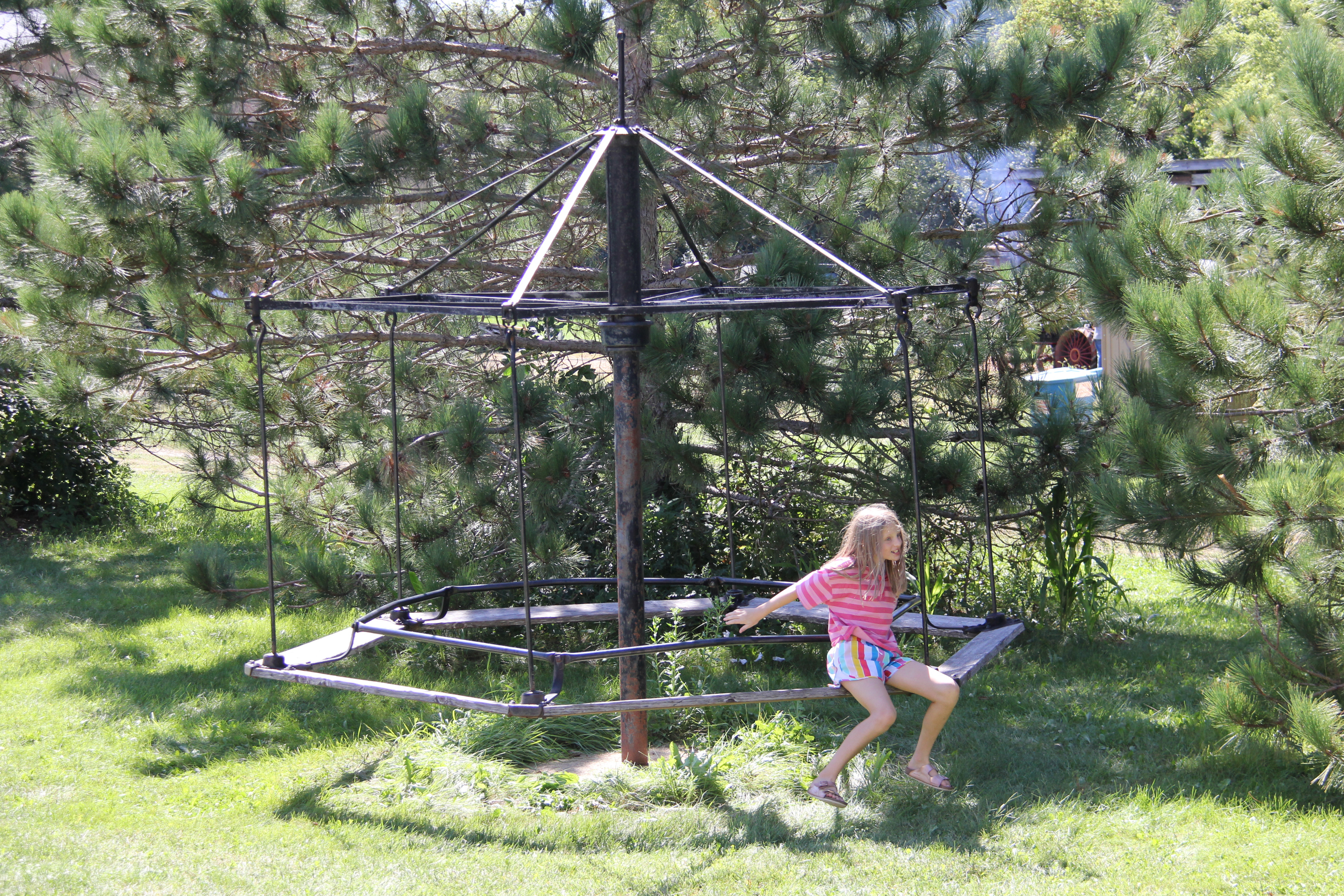
Taking a spin on the merry-go-round at the Rice County Steam & Gas Engines Fall Show. (Minnesota Prairie Roots copyrighted photo September 2024)
I LOVE WATCHING KIDS engage in activities from “the olden days.” Like circling on a vintage merry-go-round which, in today’s world, would fail all safety standards. But at the Rice County Steam & Gas Engines showgrounds in rural Dundas, playground and farm equipment of yesteryear, with all its inherently “dangerous” aspects, takes center stage. Common sense and caution are required at the bi-annual event which draws people of all ages. I observed a lot of young families at the recent Labor Day weekend farm show.
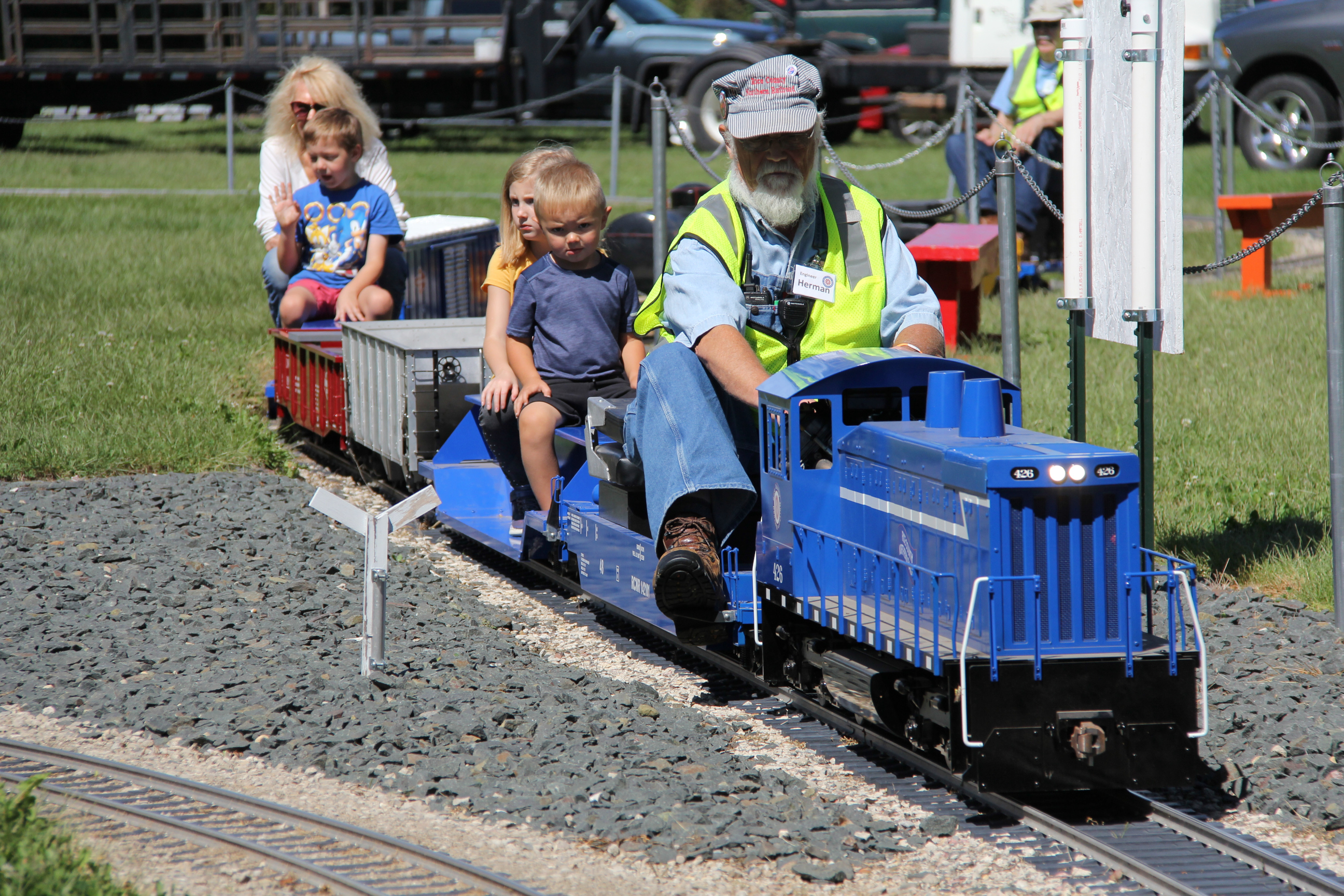
Train rides were a popular attraction with kids waiting in line to climb aboard. (Minnesota Prairie Roots copyrighted photo September 2024)
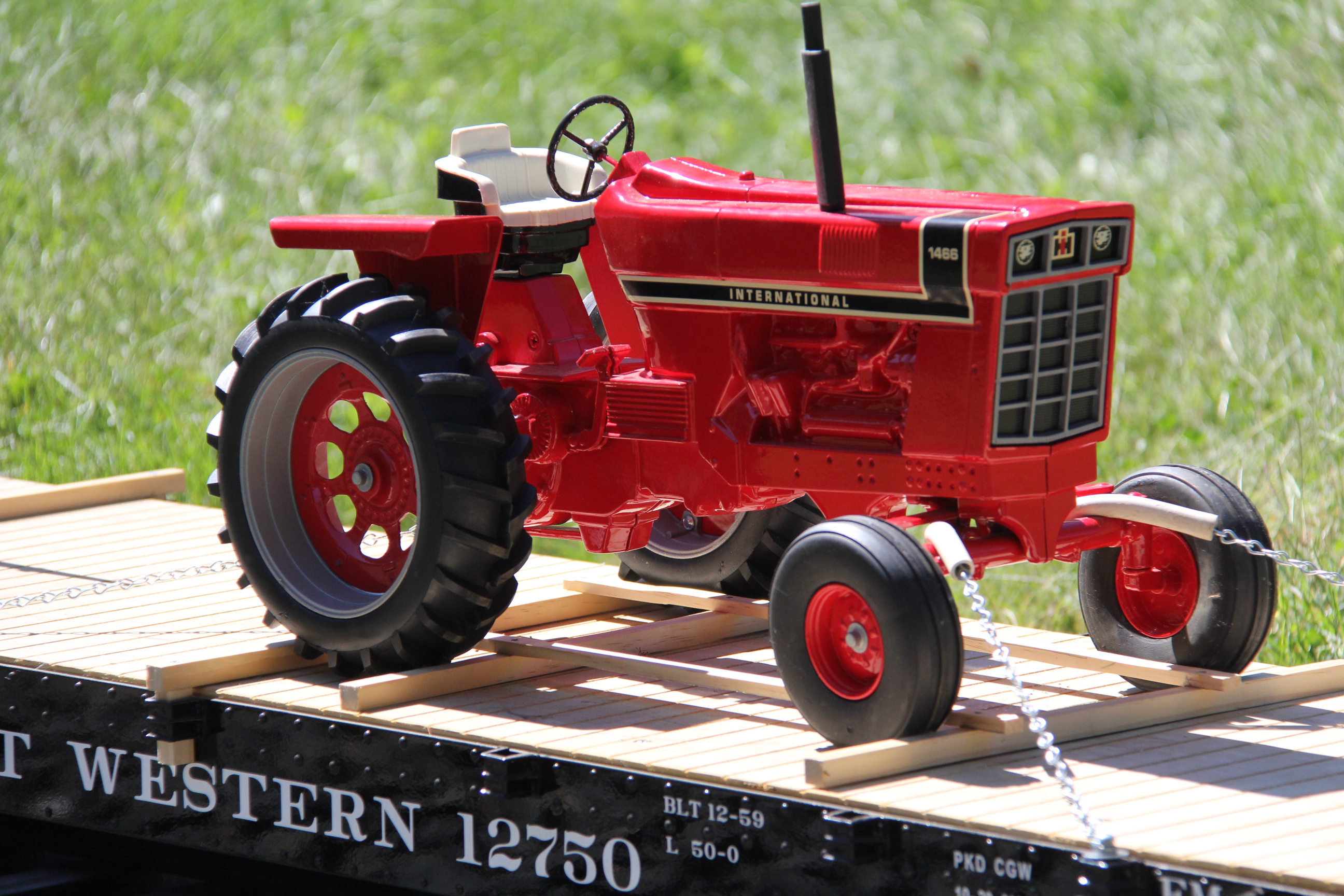
Tractors truly are a focal point of the farm show. This mini International sits on a train car. (Minnesota Prairie Roots copyrighted photo September 2024)
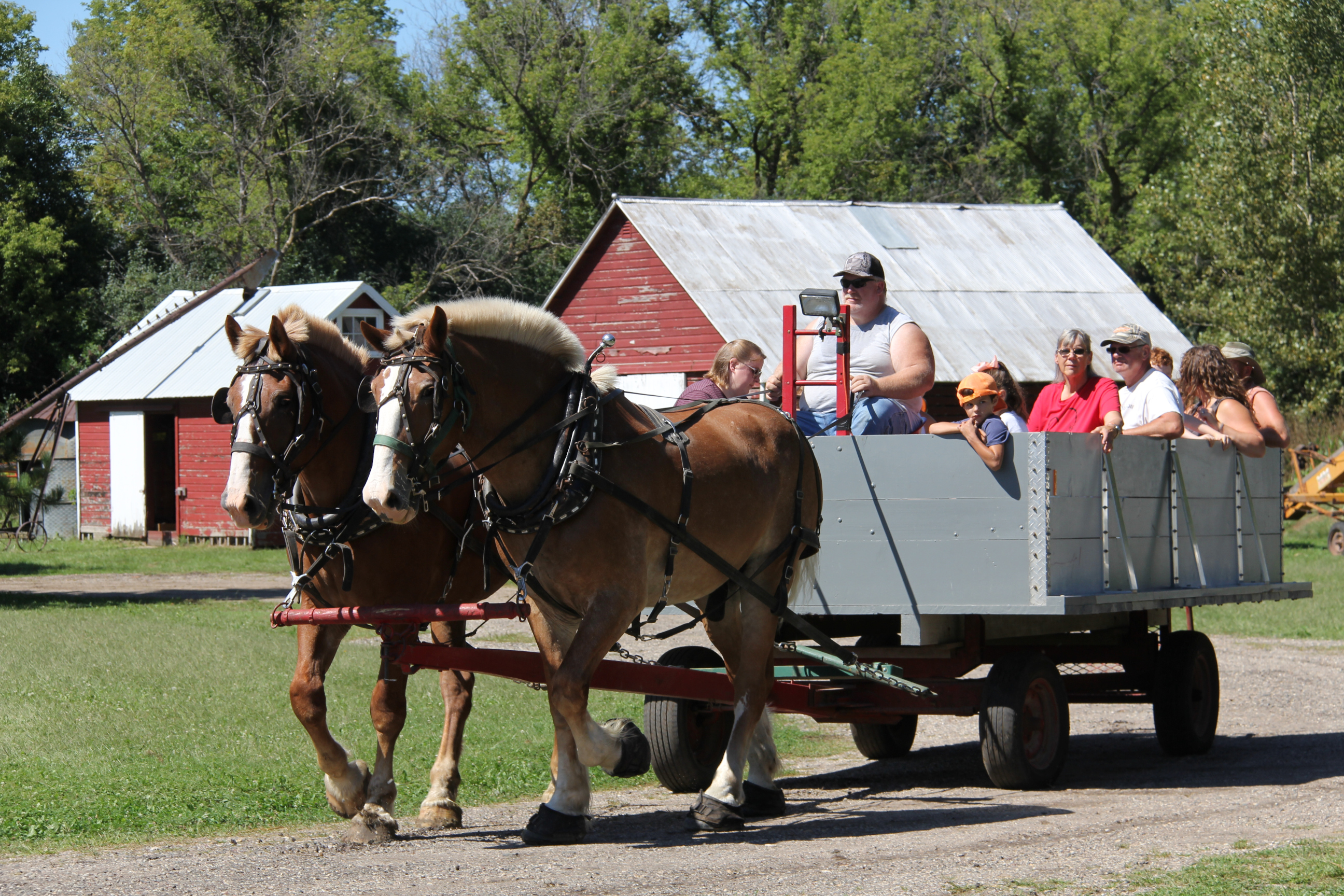
Horse-drawn wagon rides, too, drew lots of riders of all ages. (Minnesota Prairie Roots copyrighted photo September 2024)
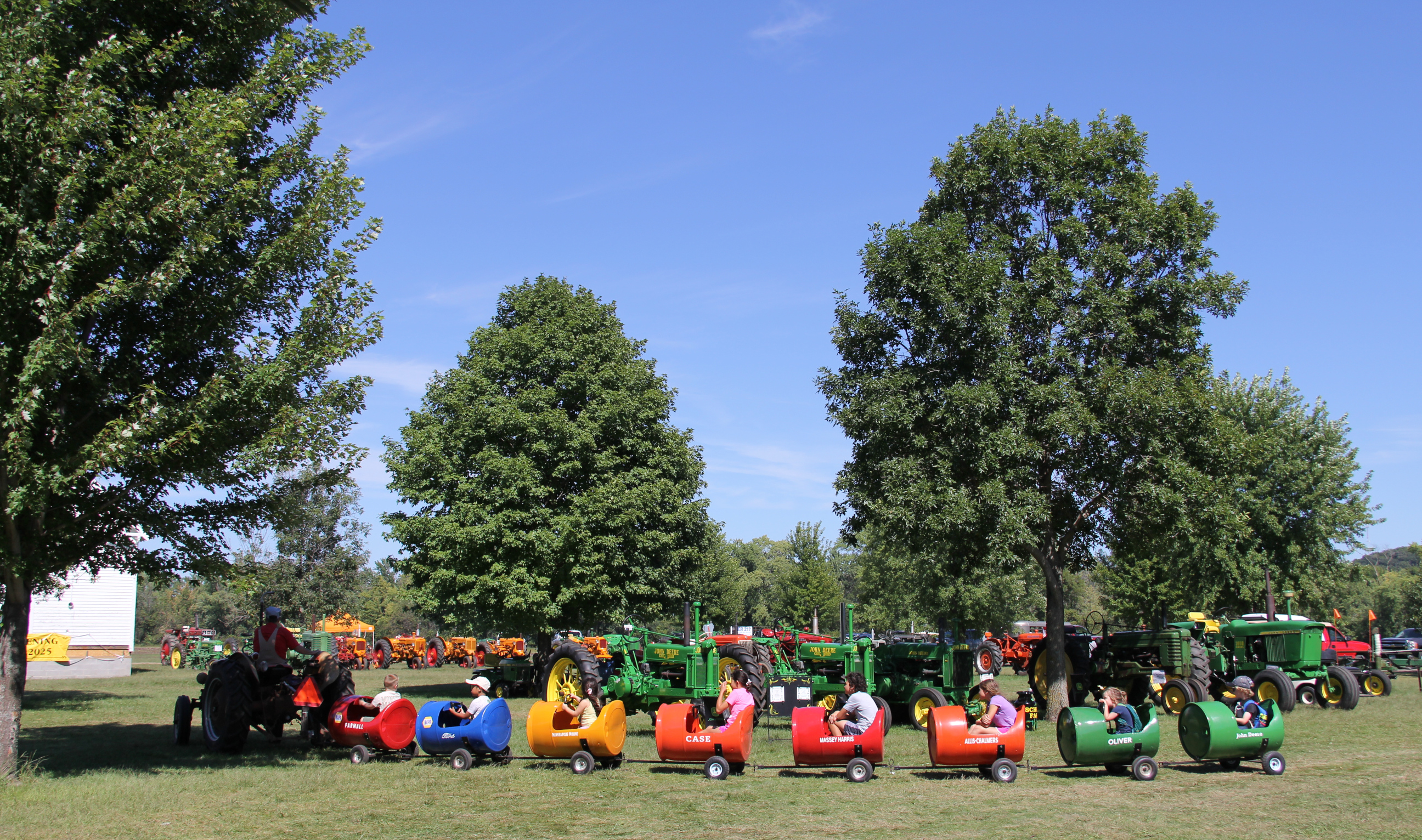
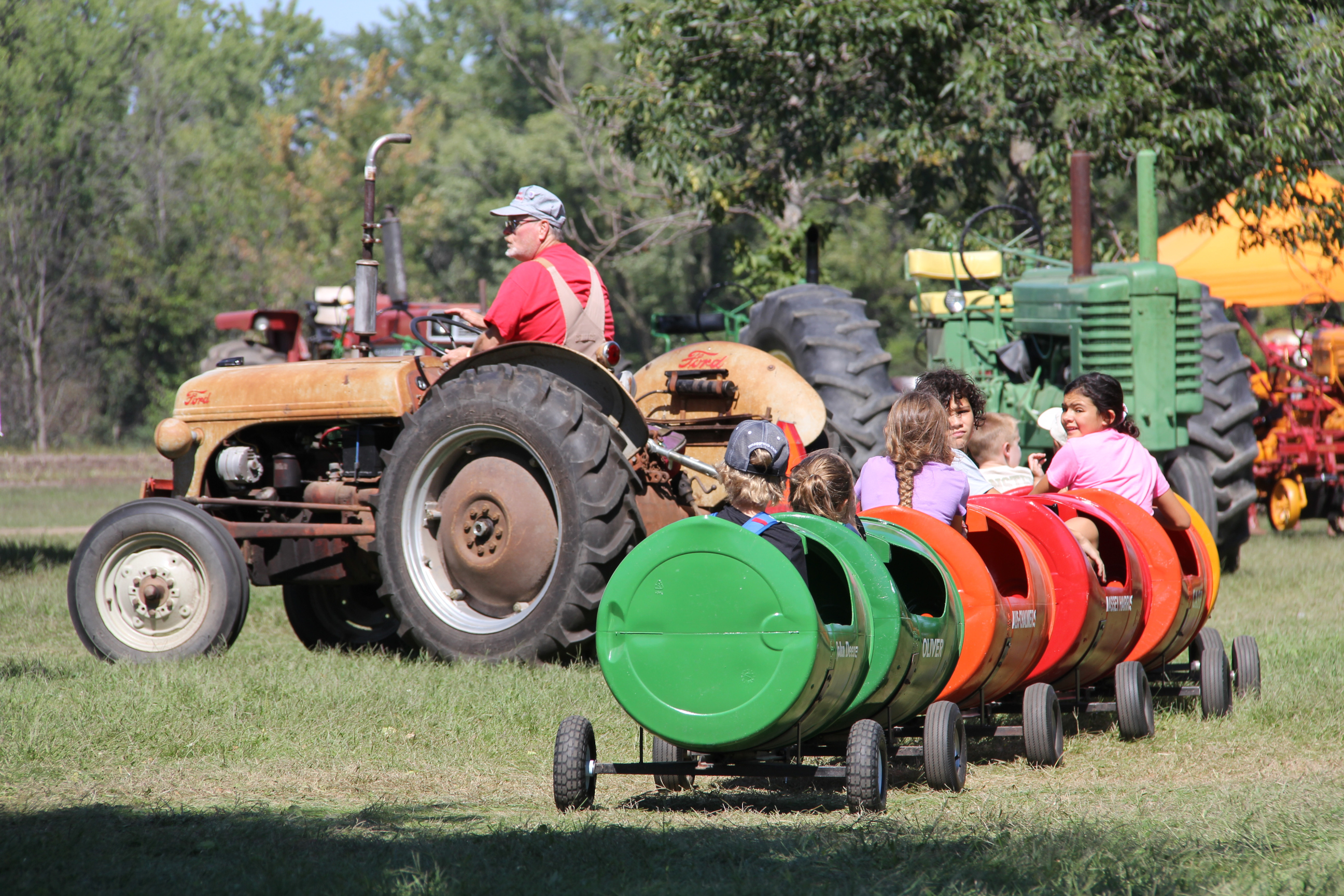
From a ride on a mini replica train, to rides on tractors, in horse-drawn wagons, and in a barrel train, kids have plenty to do here.
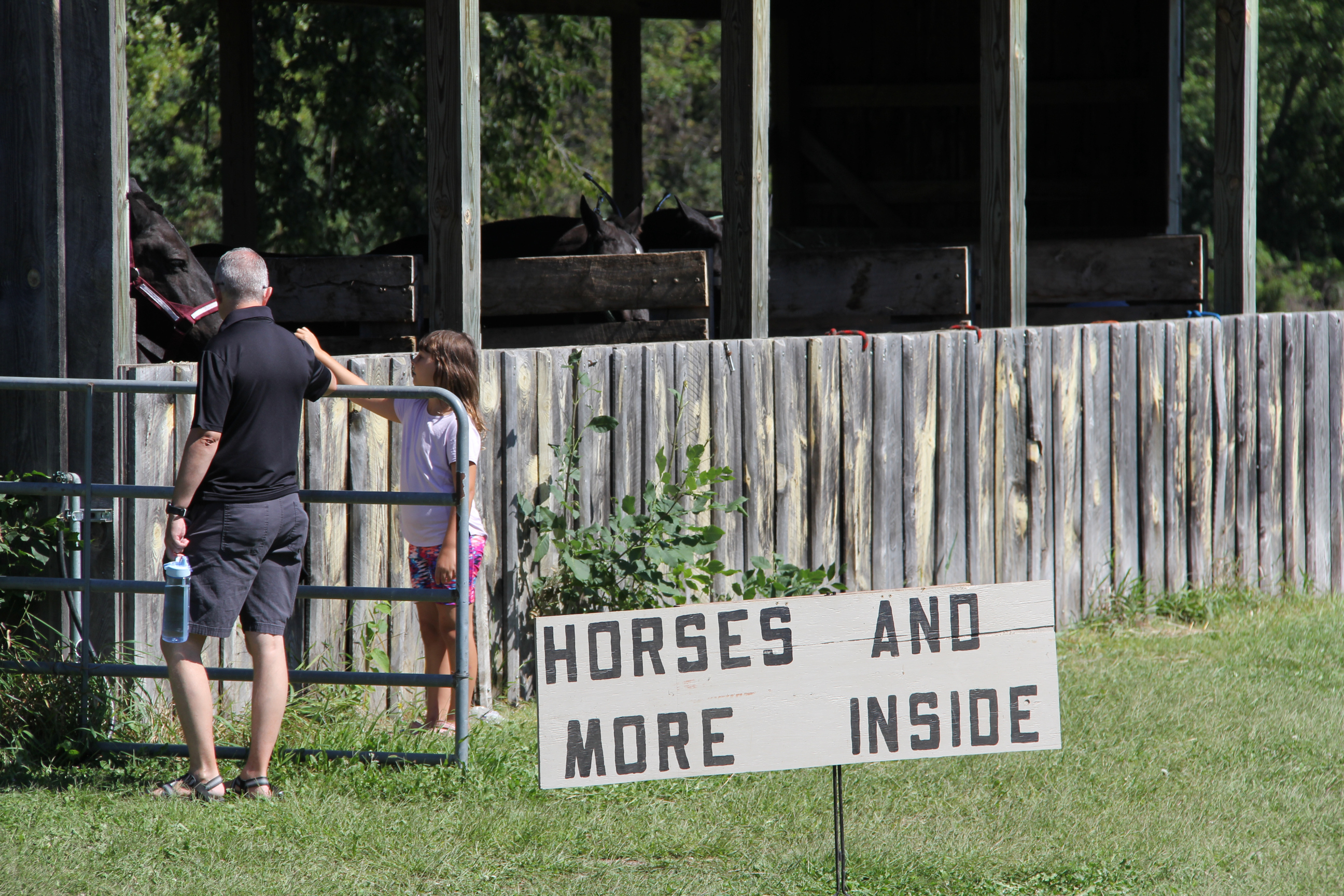
Windy Willow Farm Adventure, rural Northfield, provided animals housed in this shed. There were sheep, goats, rabbits, geese and chickens from the farm, plus horses. (Minnesota Prairie Roots copyrighted photo September 2024)
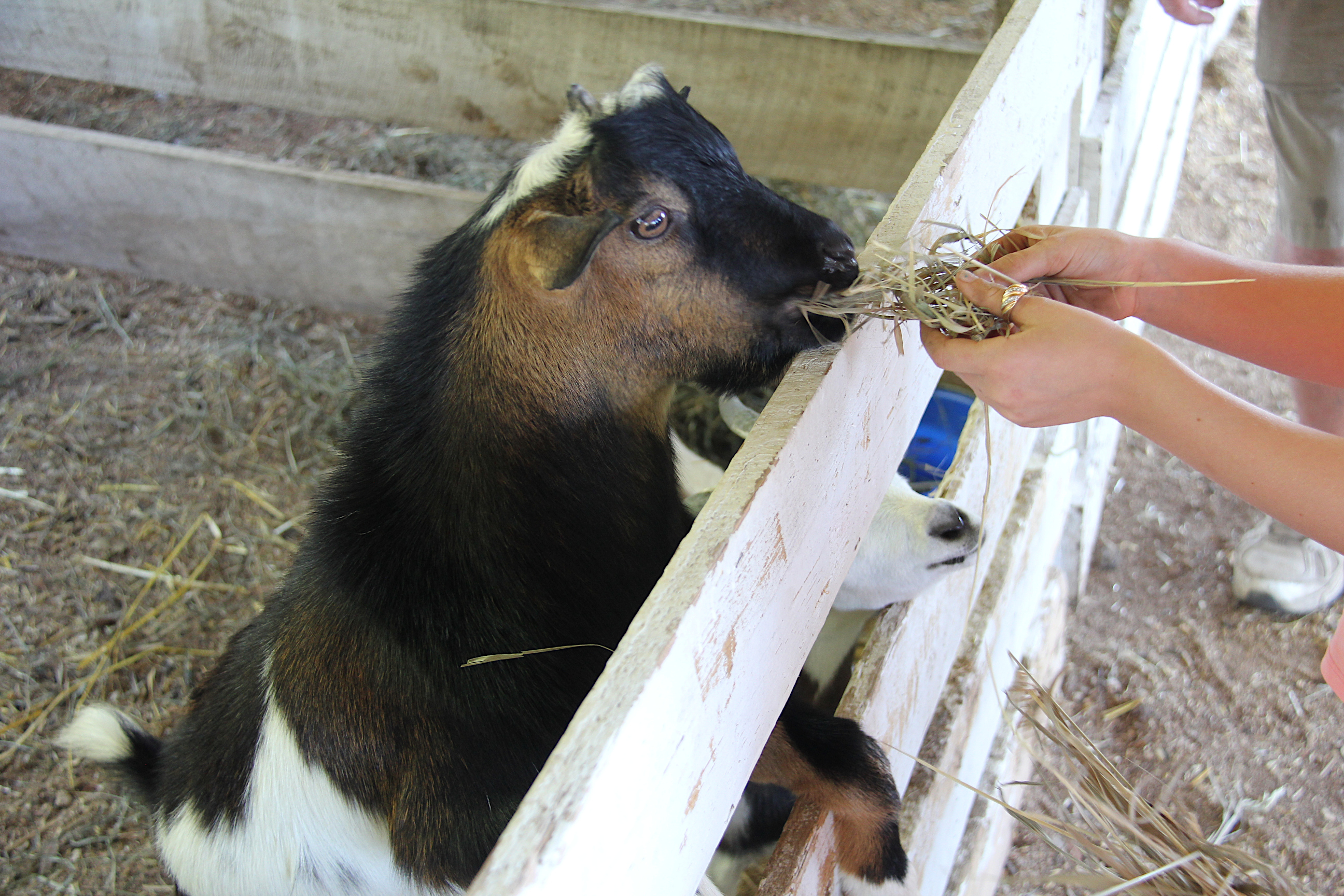
Two friendly goats vie for attention. (Minnesota Prairie Roots copyrighted photo September 2024)
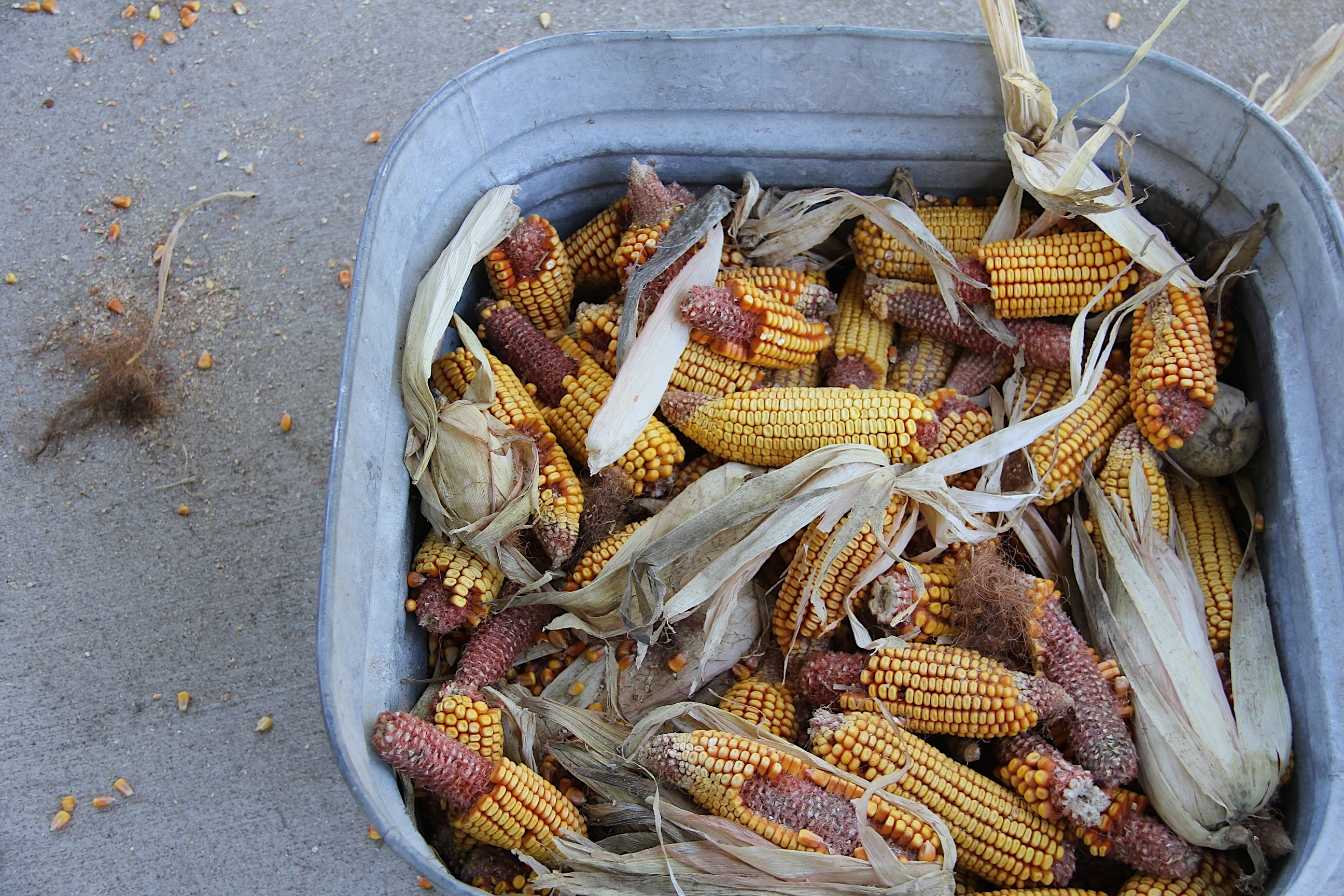
Tubs and buckets of corn await shelling. (Minnesota Prairie Roots copyrighted photo September 2024)
There are also clothes to feed through a ringer washer, corn to shell, animals to pet, a reel lawnmower to push and more.
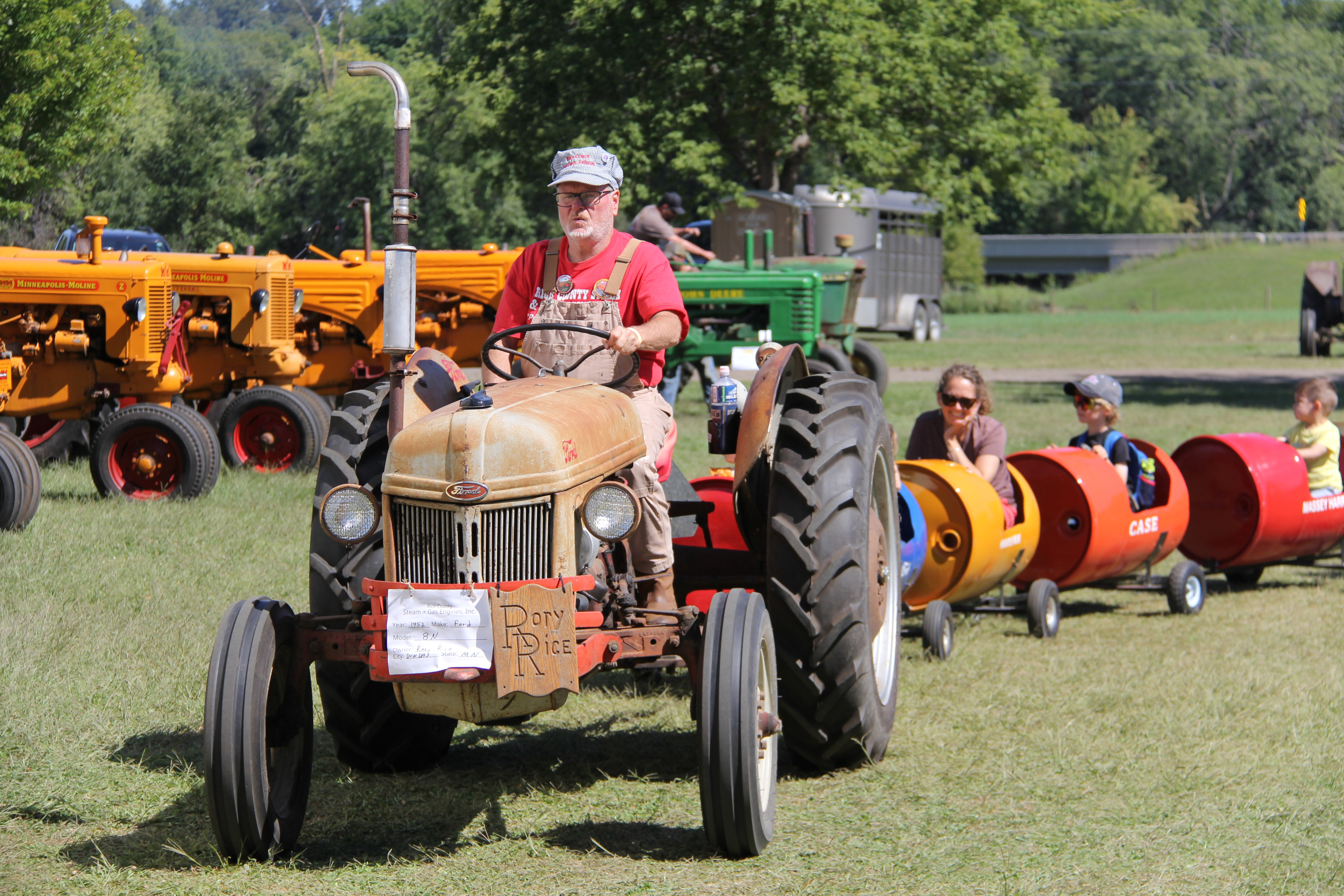
The “engineer” of the barrel train steers a 1950s era Ford tractor around the showgrounds. (Minnesota Prairie Roots copyrighted photo September 2024)
Without rails, the barrel train weaves among the vintage tractors at the farm show. (Minnesota Prairie Roots copyrighted photo September 2024)
Anytime anyone can get kids outdoors, off their electronic devices and learning rural history, it’s a good thing. Organizers of the steam & gas engines show clearly understand the importance of activities that keep kids busy and happy while adults watch the tractor pull, listen to music, mill around the vintage tractors and more as they connect in this rural community gathering.
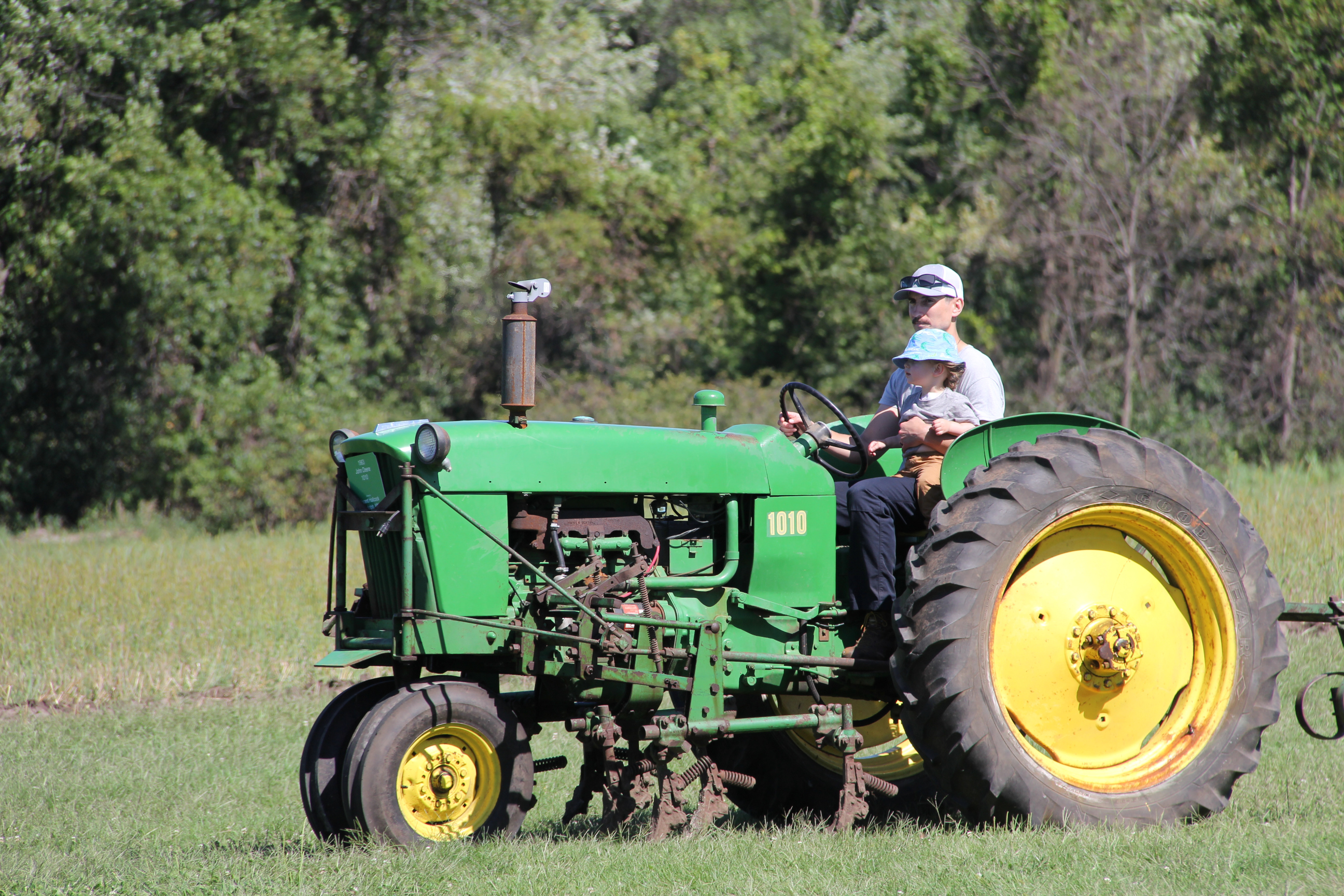
Father and son circle on a 1010 Model early 1960s John Deere pulling a cultivator. (Minnesota Prairie Roots copyrighted photo September 2024)
Most kids, even those from greater Minnesota, aren’t growing up “rural” anymore. Even if they live in the country, they’re not necessarily farm kids. So it’s important to expose them to the area’s agricultural heritage. The old tractors. The old farm machinery. The way clothes were washed and lawns were cut and how kids played back in the day.
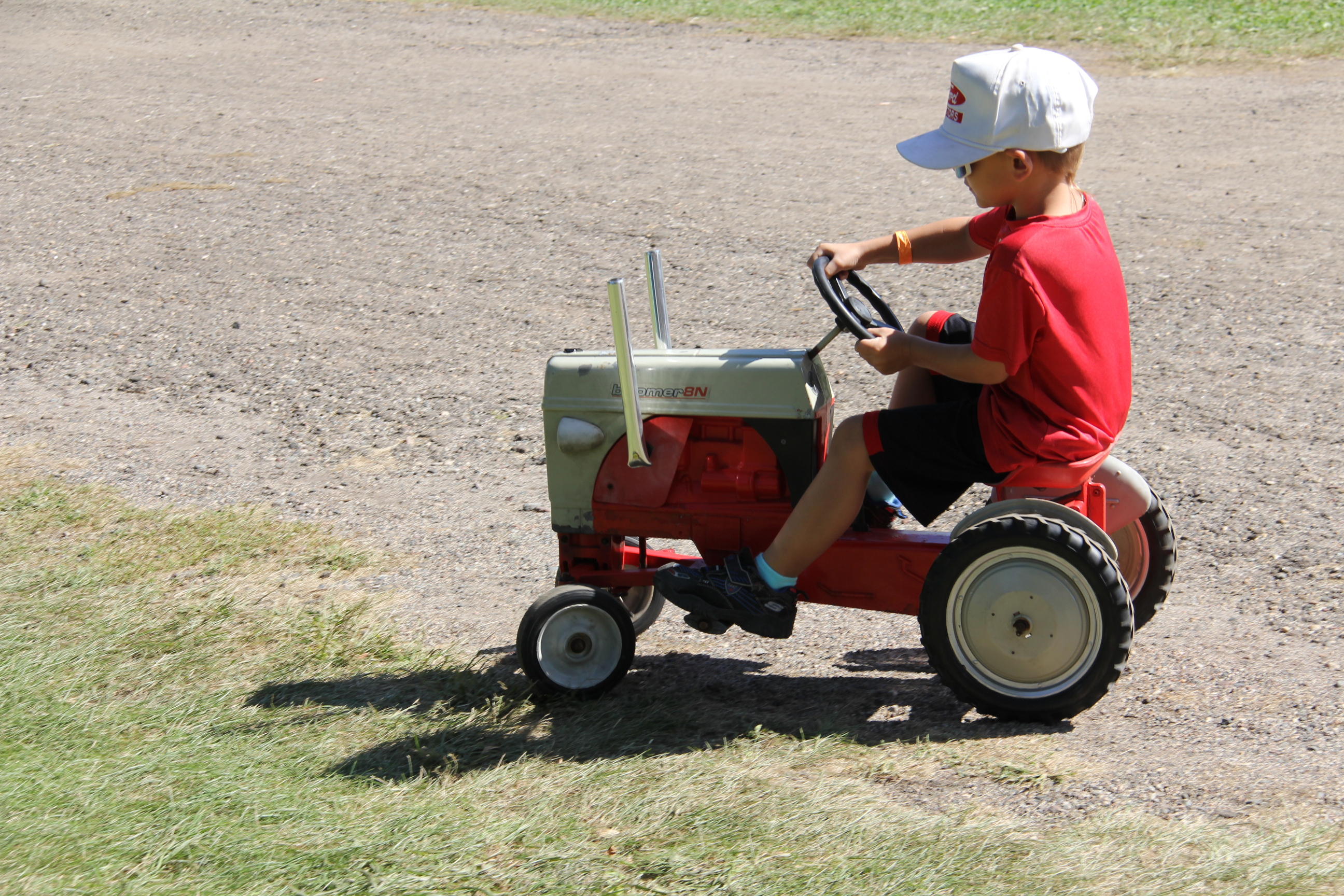
The day after he competed in the pedal tractor pull and earned second place, this little guy was back pedaling. (Minnesota Prairie Roots copyrighted photo September 2024)
A kids’ pedal tractor pull contest engages youth, allows them to compete, show off their strength. It’s also a way to build memories so that years from now perhaps they will bring their own kids to the Rice County Steam & Gas Engines Show. They’ll remember those merry-go-round rides and how they climbed into a horse-drawn wagon and how they pedaled with all their leg power to get a mini tractor across a finish line. In the end, we all cross the finish line. And sometimes getting there requires experiencing a little danger mixed with a whole lot of fun.
The Betty, a mint-flavored Oreo ice cream treat, one of my favorites at The S’Cream. (Minnesota Prairie Roots copyrighted file photo)
AN ICE CREAM TREAT seemed in order after walking through Owatonna’s beautifully-redone, pedestrian-friendly downtown Tuesday afternoon. The sun shone bright on a day as ideal as they come in southern Minnesota. Yes, I could go for ice cream to cool off, not that I ever really need a reason.
So Randy and I headed to our favorite home-grown ice cream shop, The S’Cream.
But our stop at this busy walk-up shop turned out to be more than a pause in our day for a peanut butter sundae and a monster cookie dough Flurry. I struck up a conversation with Paisley and her grandpa (mostly Paisley) while Randy waited for our order.
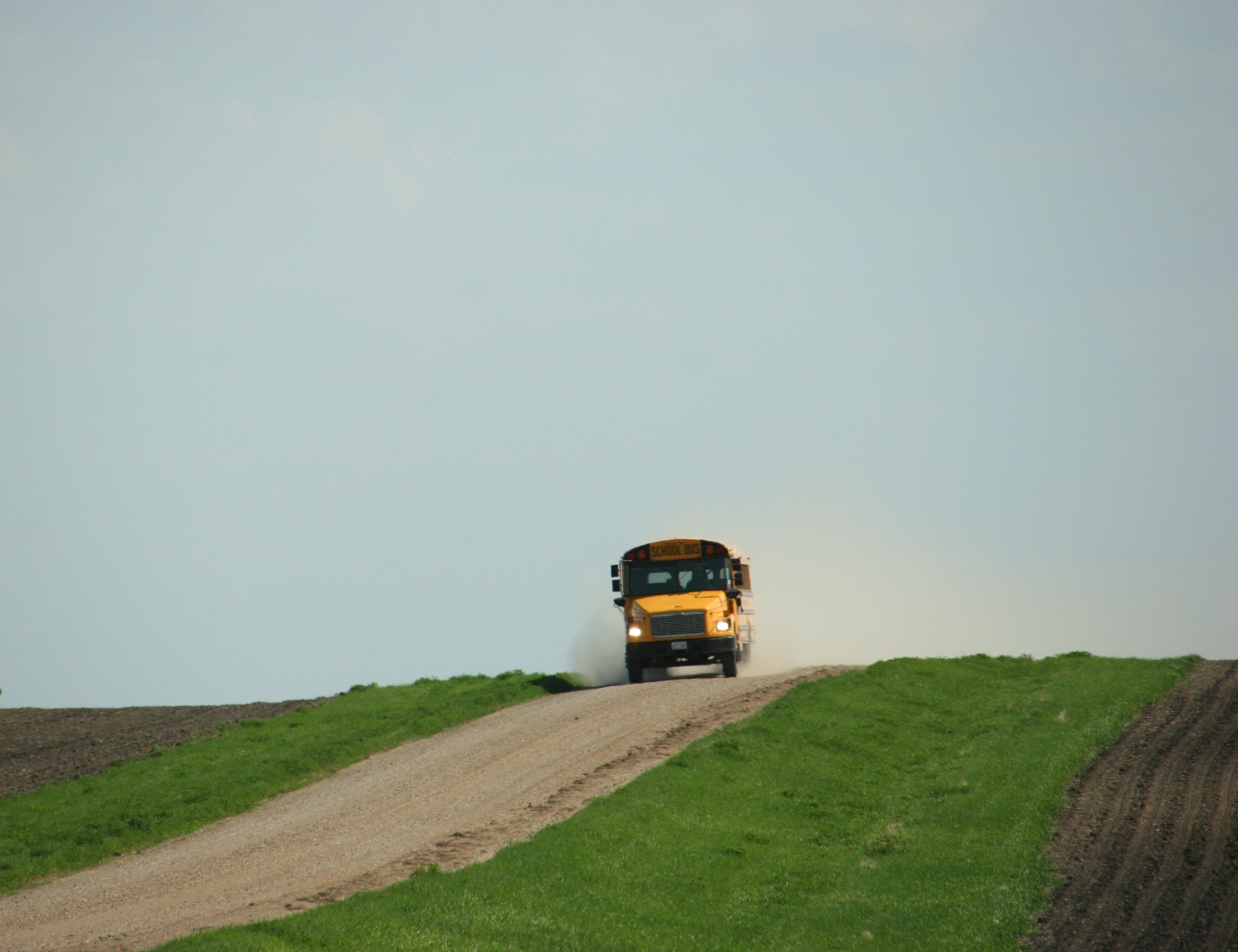
A bus photographed near Morgan, Minnesota, and used here for illustration only. (Minnesota Prairie Roots copyrighted file photo)
I didn’t know the two. But I like to engage in conversation, even with strangers. I’ve met many interesting individuals this way. Paisley is no exception. She had just finished her first day of kindergarten and was celebrating with a vanilla/strawberry twist ice cream cone.
As Paisley licked her cone and I spooned cookie dough-flavored ice cream, we talked. First off, I asked about school, a day she summarized as “good and fun.” That led to my next question, “What made it fun?”
Well, Paisley explained, she brought a Barbie book home from school. That prompted me to stress the importance of reading. If you can read, you can learn anything, I told my new friend who is turning six in September. I shared that I also have a September birthday. To which Paisley shared that she’s celebrating her birthday all month long. True or not, I don’t know. But I do know this. Paisley doesn’t like spiders, including the one hanging out in her kindergarten classroom on Tuesday.
But that didn’t quell her spirit. Paisley was happy and animated and not one bit shy. I learned a lot in the time we ate our treats. Her backpack is purple and sports a “P.” She lives in the country, had three cats (one’s gone; I didn’t ask), has three semi trucks (one is “hers”; again, I didn’t ask) and has a loose tooth. Paisley wiggled a bottom front tooth to verify her claim.
The Blast, with locations in Owatonna and Northfield, is another popular ice cream spot. (Minnesota Prairie Roots copyrighted file photo)
This kindergartner was all wiggles. Understandable given her first full school day. She moved constantly while licking the melting ice cream that soon ran onto her hands. A few drips fell onto her shirt, a sparkly pink tee emblazoned with the word LOVE.
What a great message Paisley took to school. She exudes love. That gives me hope. Here’s a little girl who loves school and life and birthdays, especially birthdays. I felt absolute joy in her presence.
Forty-five miles away, my 5-year-old grandson also started kindergarten. He’s much different than Paisley. Quiet. Reserved. But he is no less enthusiastic about school. His mom, my eldest, shared this upon his return home: “Isaac said the school day felt like 3 minutes!” So, yes, he, too, had a good day, a fun day, summarized in that creative response to his mom.
Oh, the joy these kindergartners—one a stranger, the other a dear one—brought me on a beautiful September day in southern Minnesota.
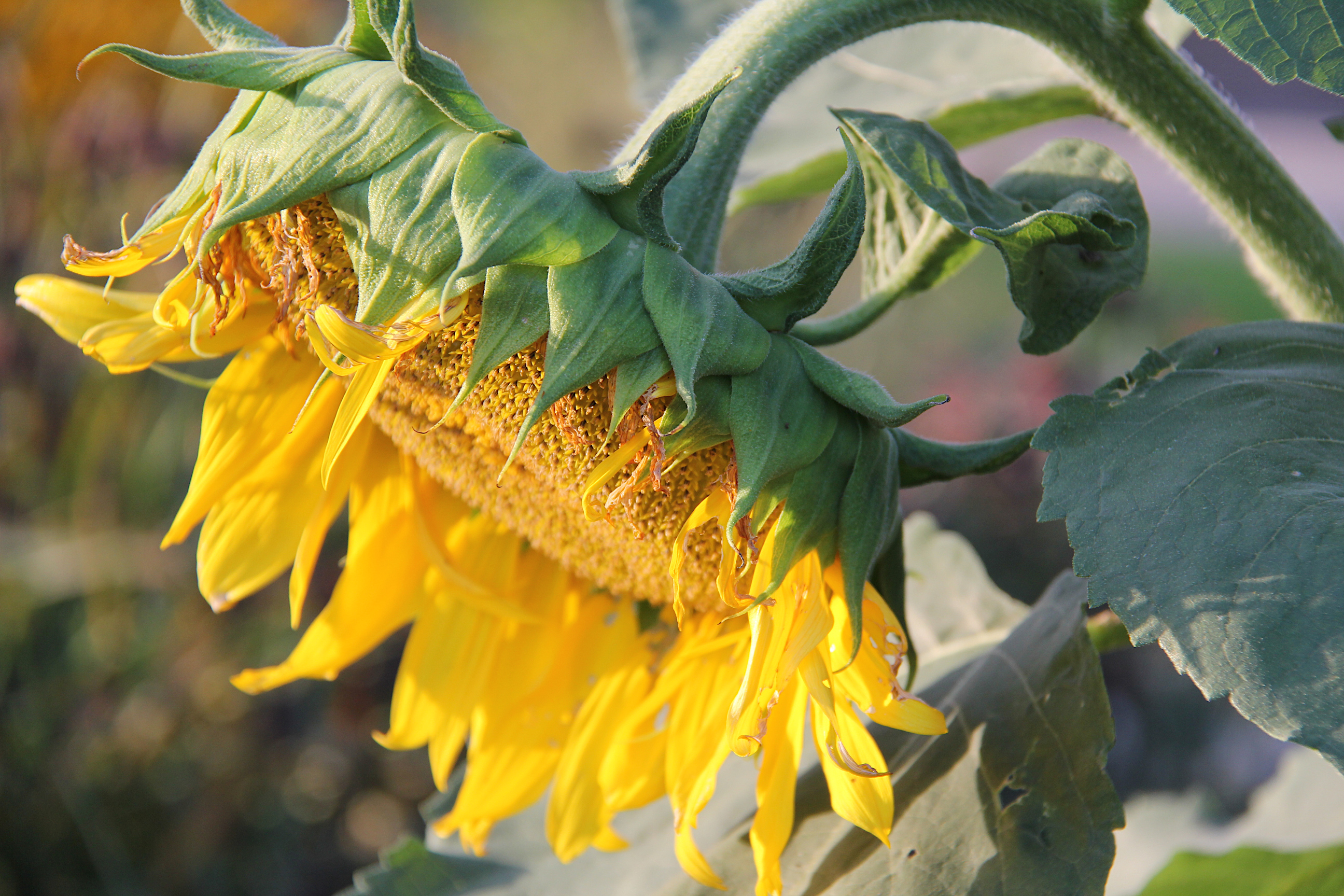
Sunflowers are drooping, like this one in the Rice County Master Gardeners’ Teaching Gardens, Faribault. (Minnesota Prairie Roots copyrighted photo August 2024)
I’M BEGINNING TO FEEL this sense of urgency, as if I need to spend more time outdoors taking in the natural world. It’s not a new feeling, but rather one which rolls into my thoughts at August’s end. When the calendar flips to September, everything shifts. I see it, hear it, smell it, feel it.
A dried oak leaf floats in a pond at the teaching gardens. (Minnesota Prairie Roots copyrighted photo August 2024)
Outside my front door, massive mophead hydrangeas are drying, morphing from green to brown. Once lush phlox are less full. Maple leaves, in hues of orange and yellow, litter the lawn. All over town, trees are beginning to change color.
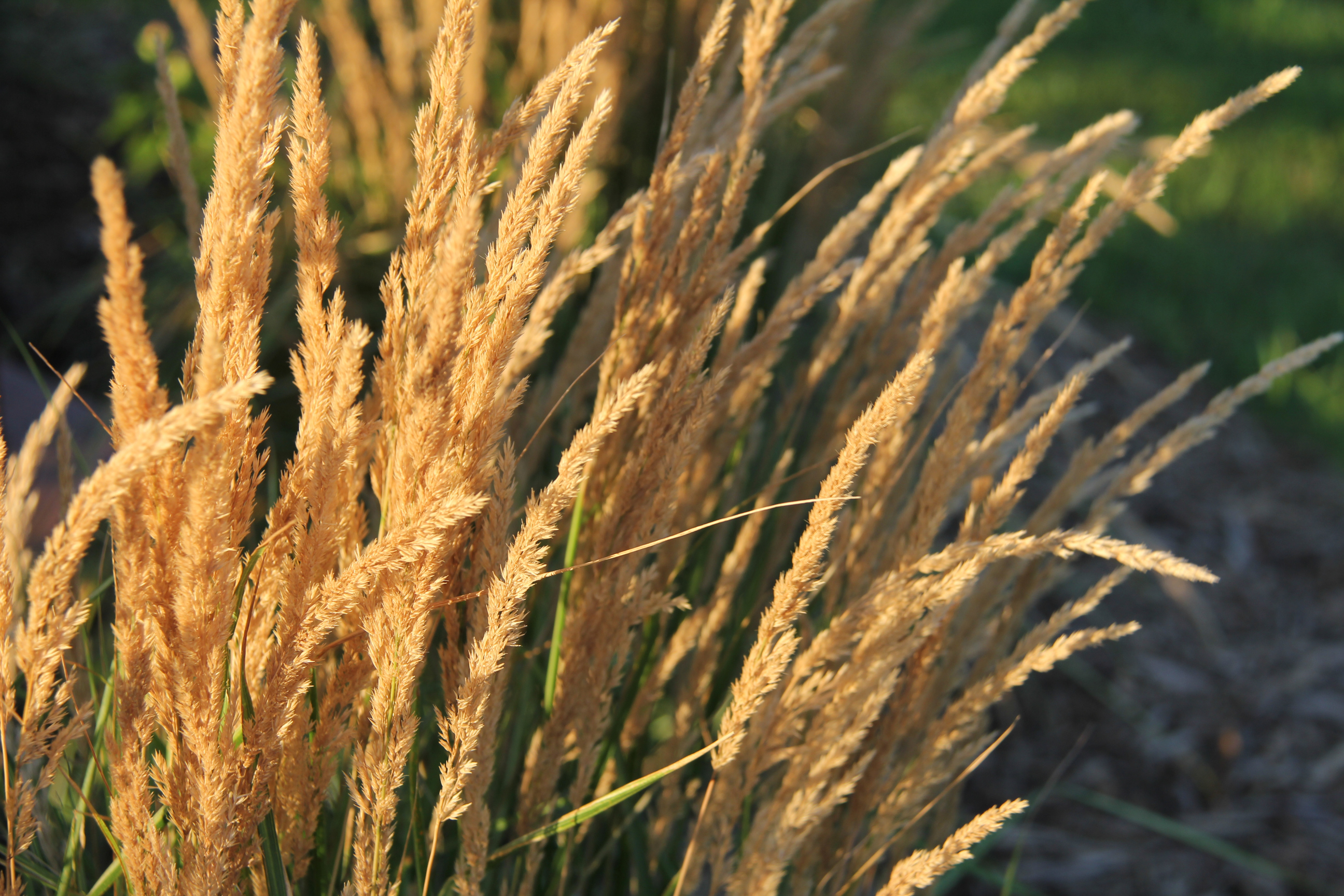
Golden grasses sway in the gentle wind of early evening. (Minnesota Prairie Roots copyrighted photo August 2024)
Jolts of color still fill the garden. (Minnesota Prairie Roots copyrighted photo August 2024)
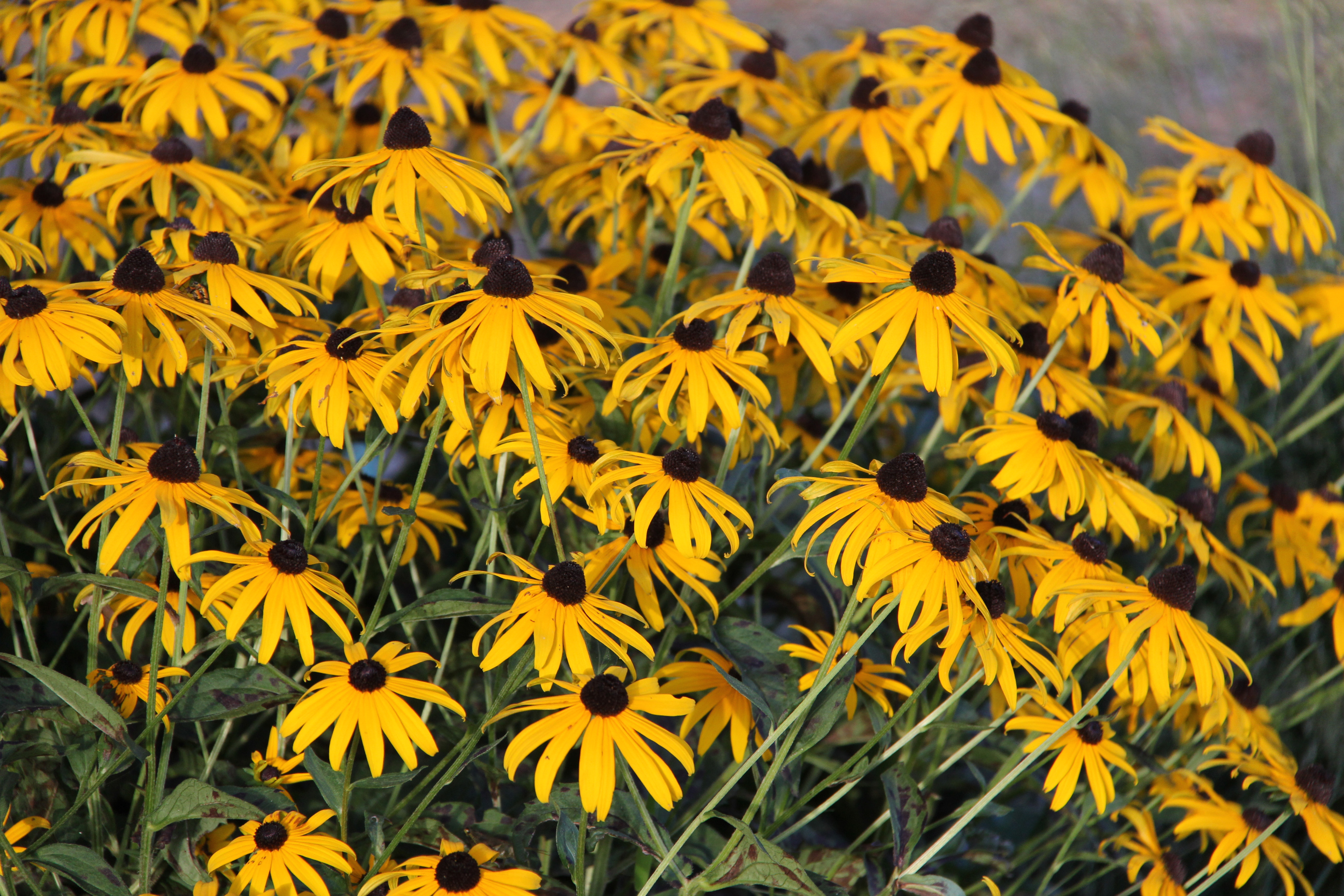
Prolific black-eyed susans. (Minnesota Prairie Roots copyrighted photo August 2024)
Crickets chirp. Cicadas buzz. School buses roll past my house. Everything is shifting. And nowhere is that more noticeable than in a garden.
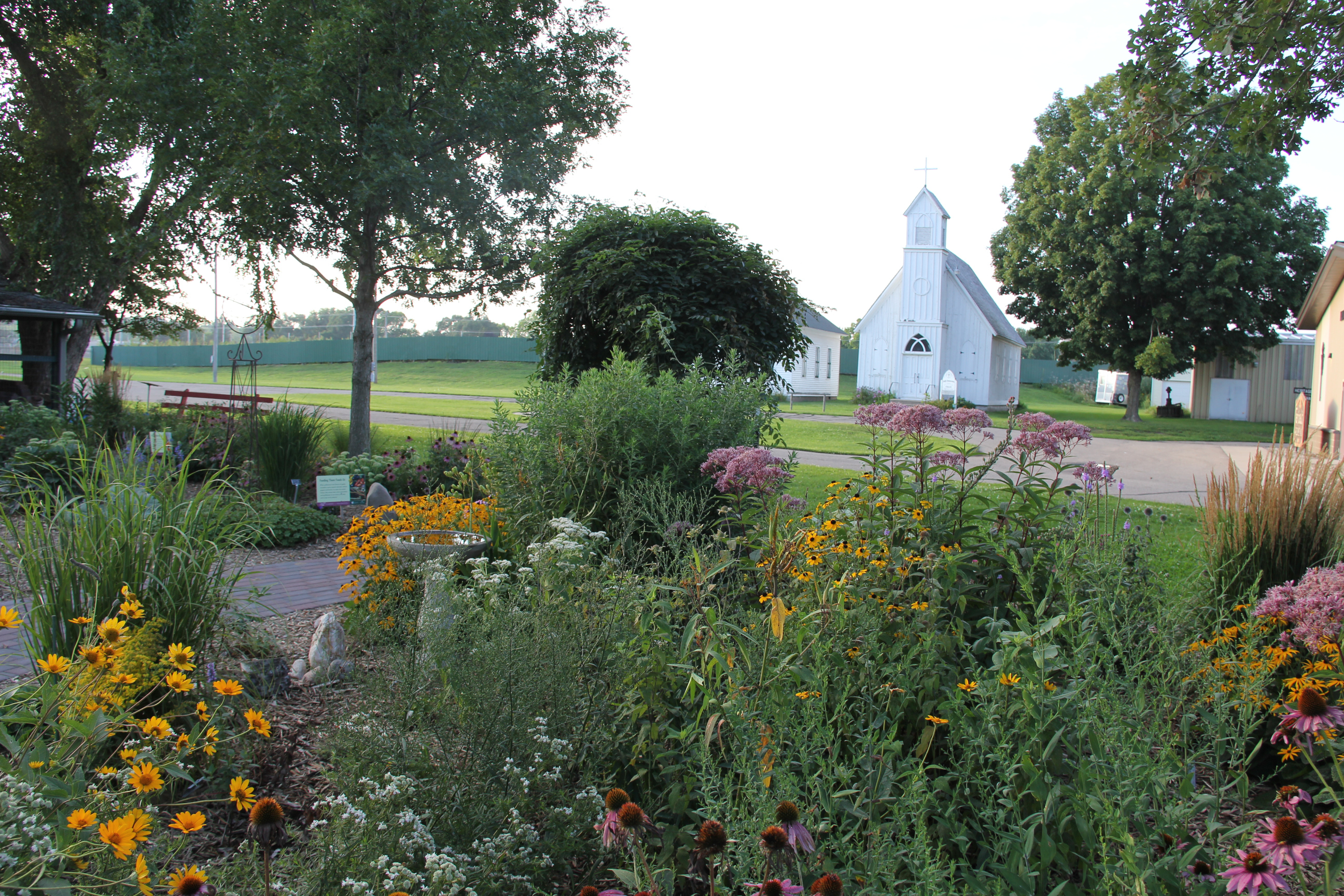
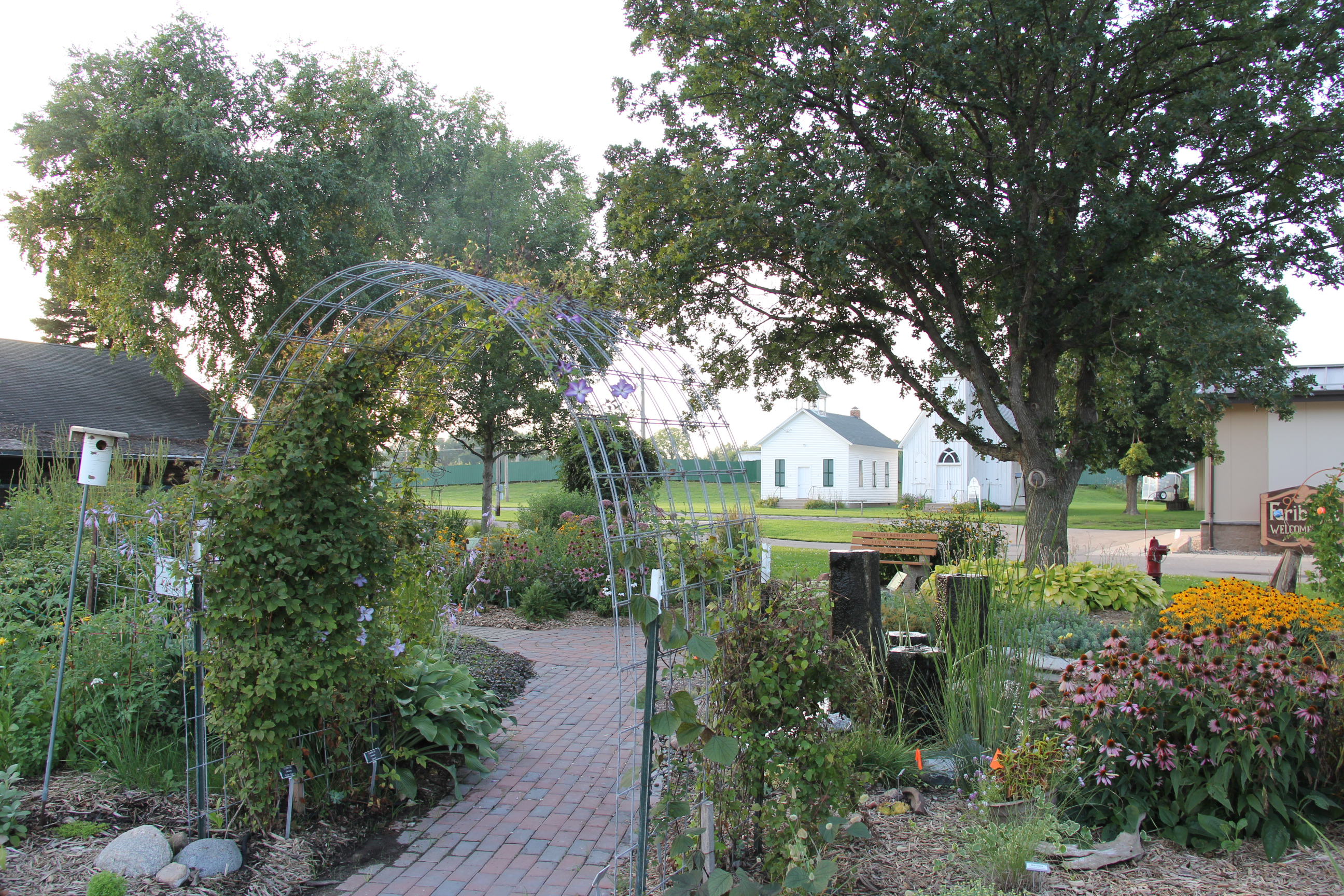
This shows only a section of the teaching gardens. That’s an historic church, on the grounds of the Rice County Historical Society, in the background. The gardens are next to the RCHS museum. (Minnesota Prairie Roots copyrighted photo August 2024)
And so I encourage you, if you live in a place that will soon change to cold and colorless, to enjoy the flowers while they are still blooming, as I did recently at the Rice County Master Gardeners Teaching Gardens.
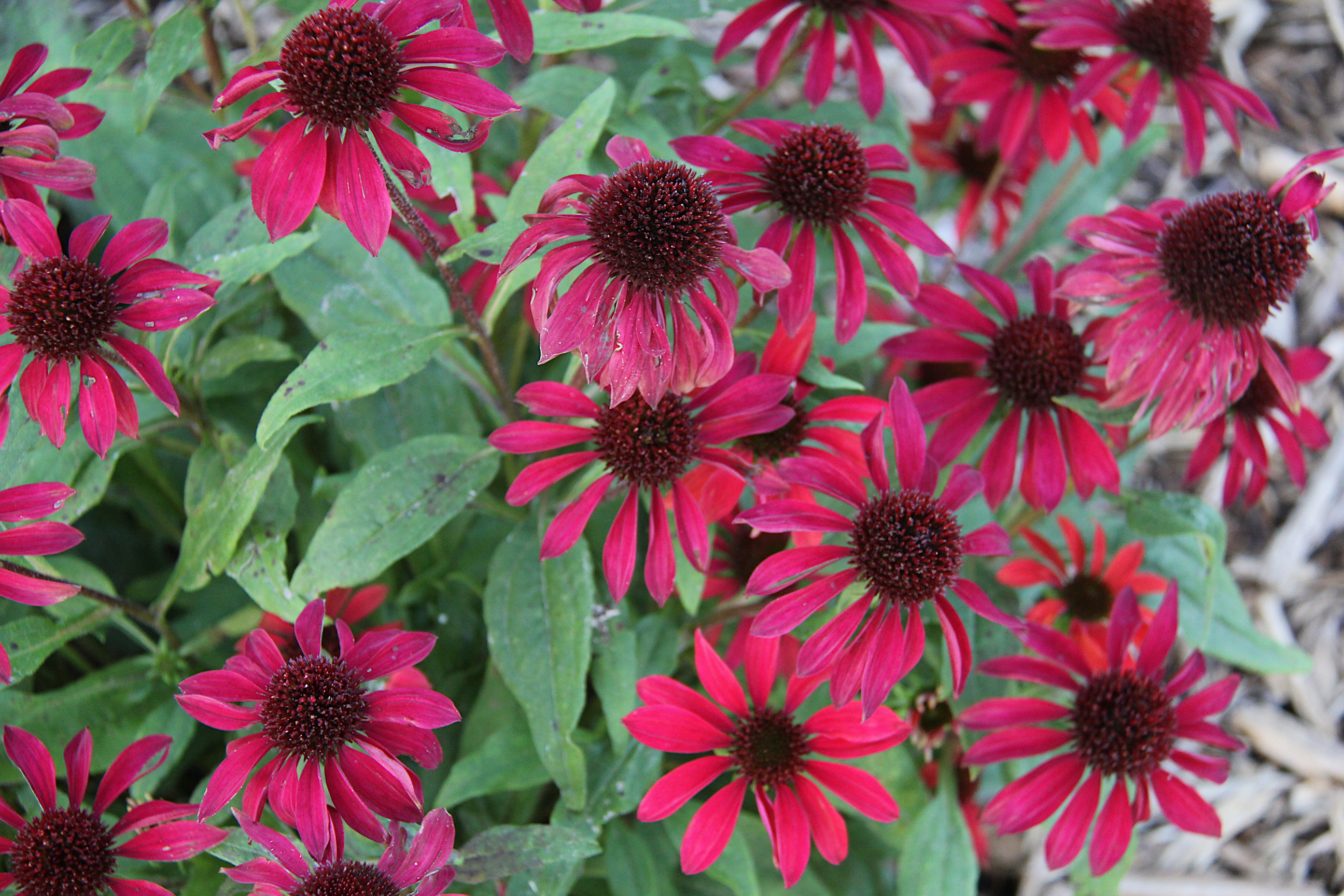
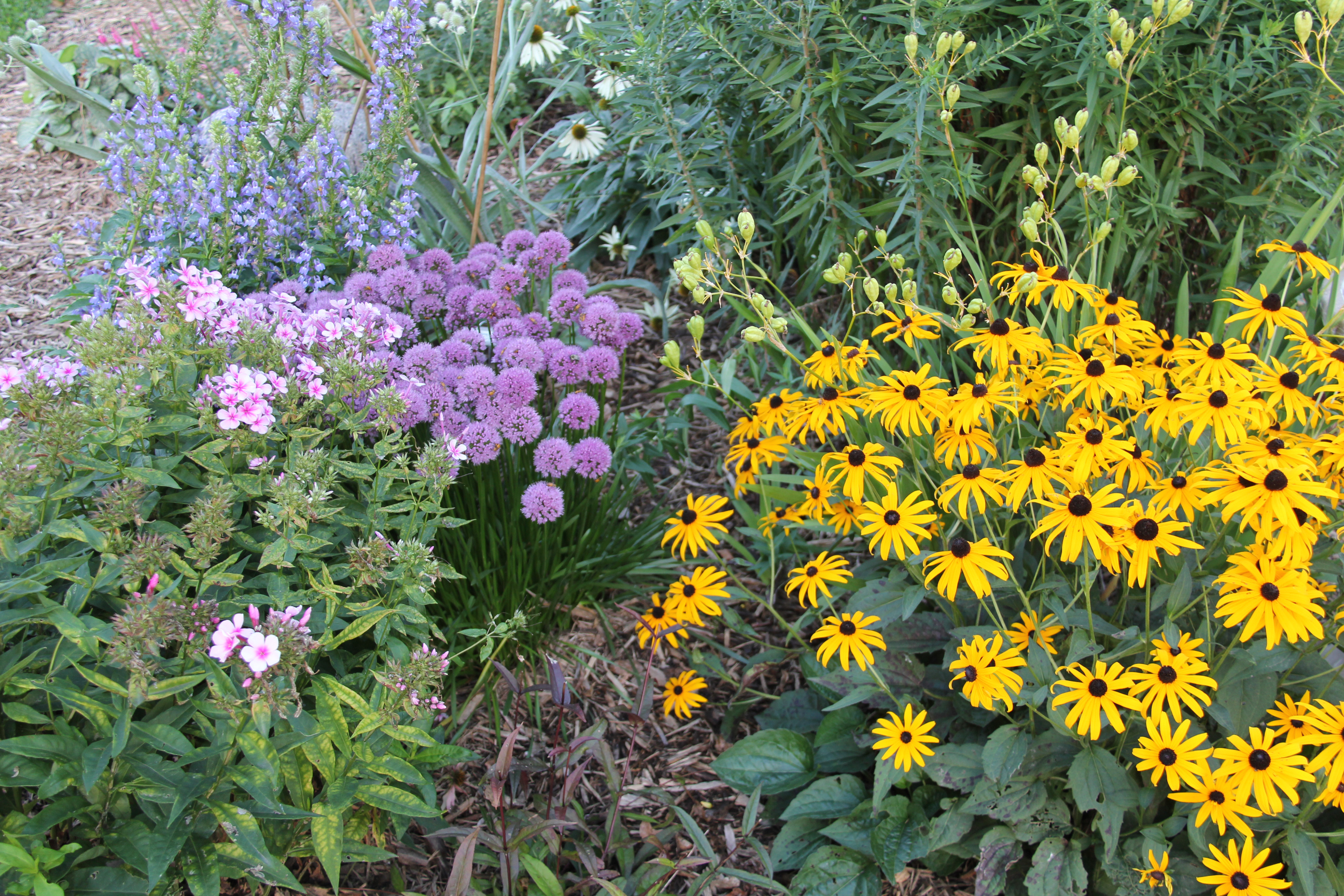
A mass of coneflowers. (Minnesota Prairie Roots copyrighted photo August 2024)
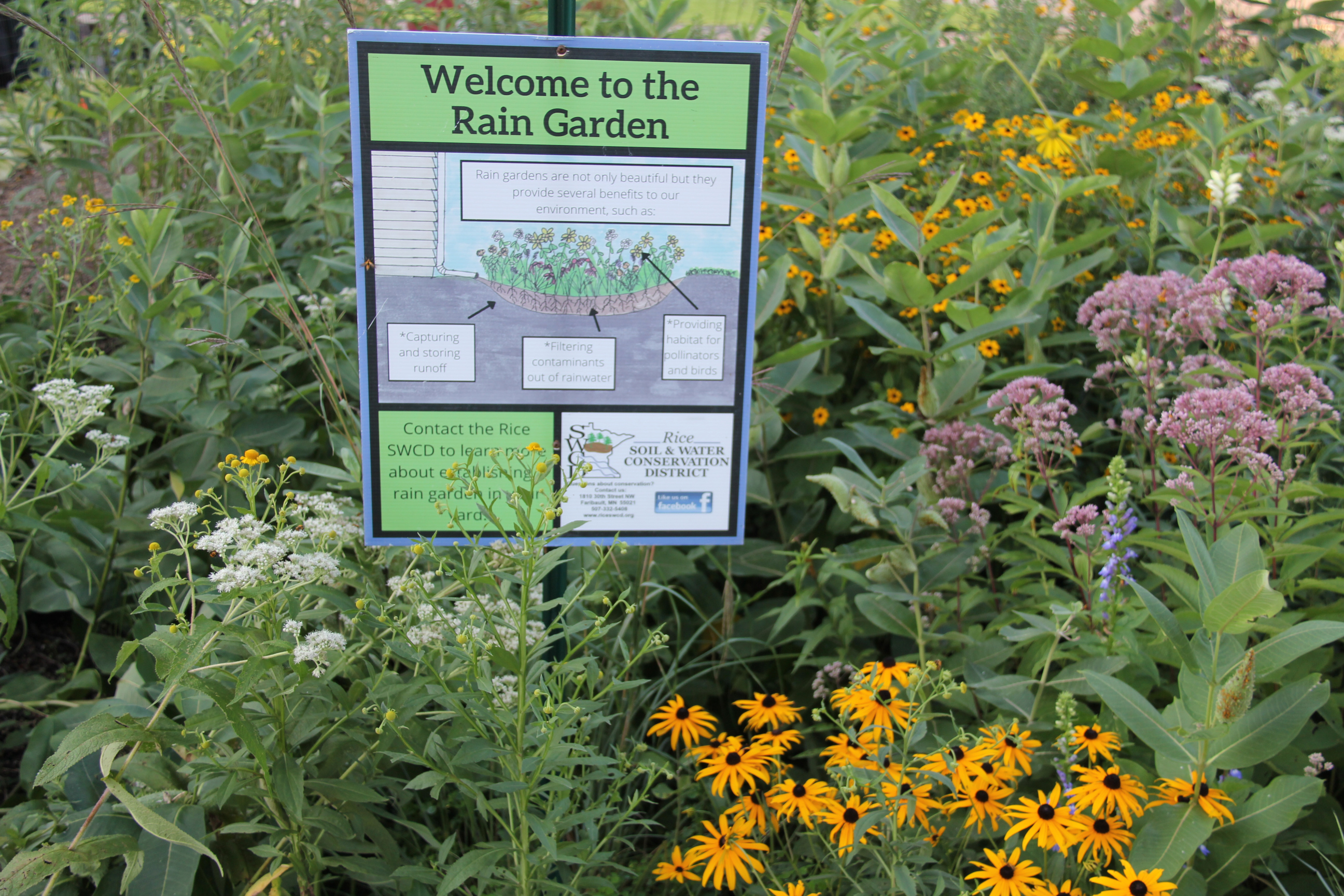
A rain garden flourishes here. (Minnesota Prairie Roots copyrighted photo August 2024)
A few clematis were still blooming when I walked the gardens. (Minnesota Prairie Roots copyrighted photo August 2024)
Come, walk with me through this space with its beds of blooms, its textured perennials, its overall loveliness.
An array of flowers fill the gardens. (Minnesota Prairie Roots copyrighted photo August 2024)
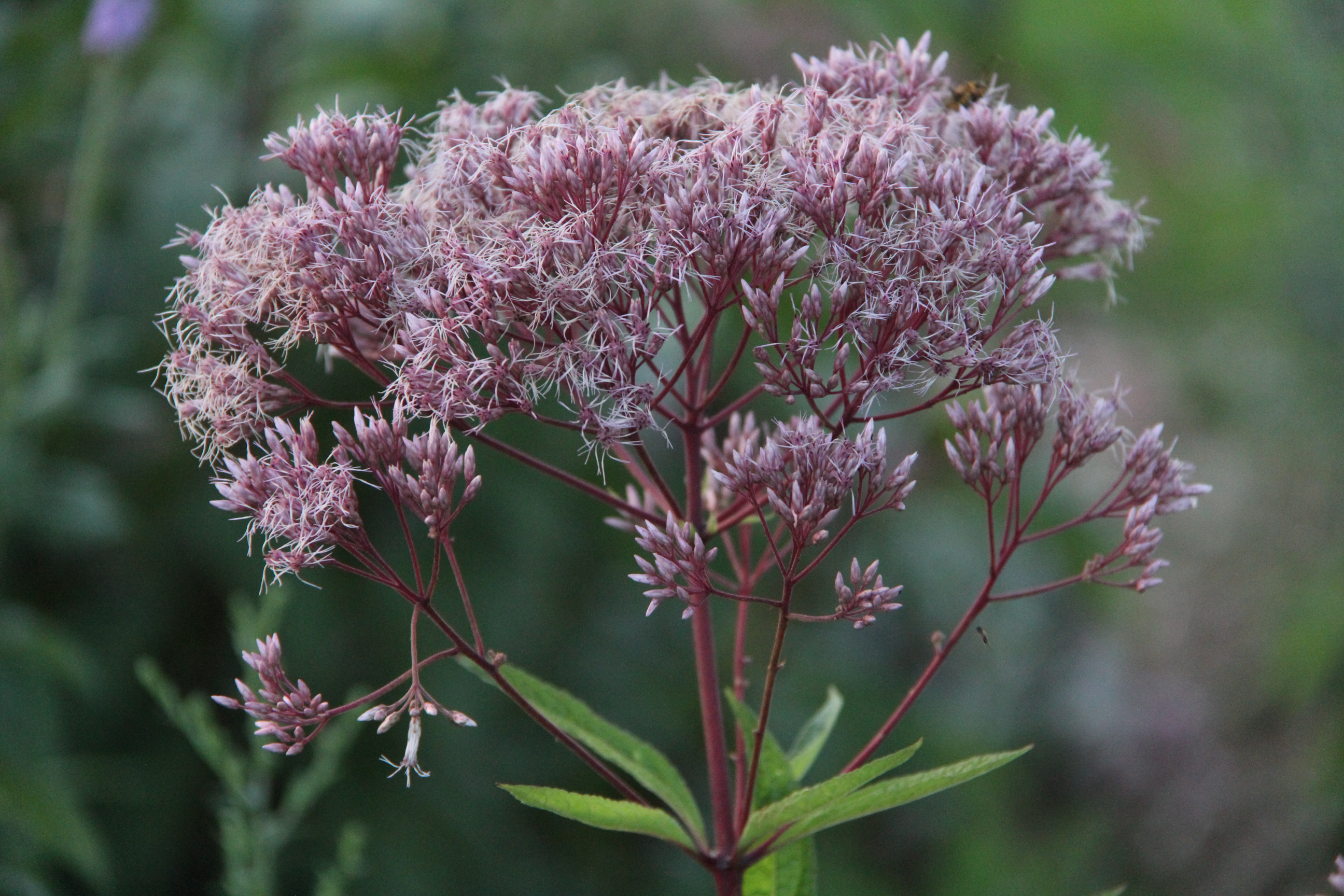
A muted hue that leans into autumn. (Minnesota Prairie Roots copyrighted photo August 2024)
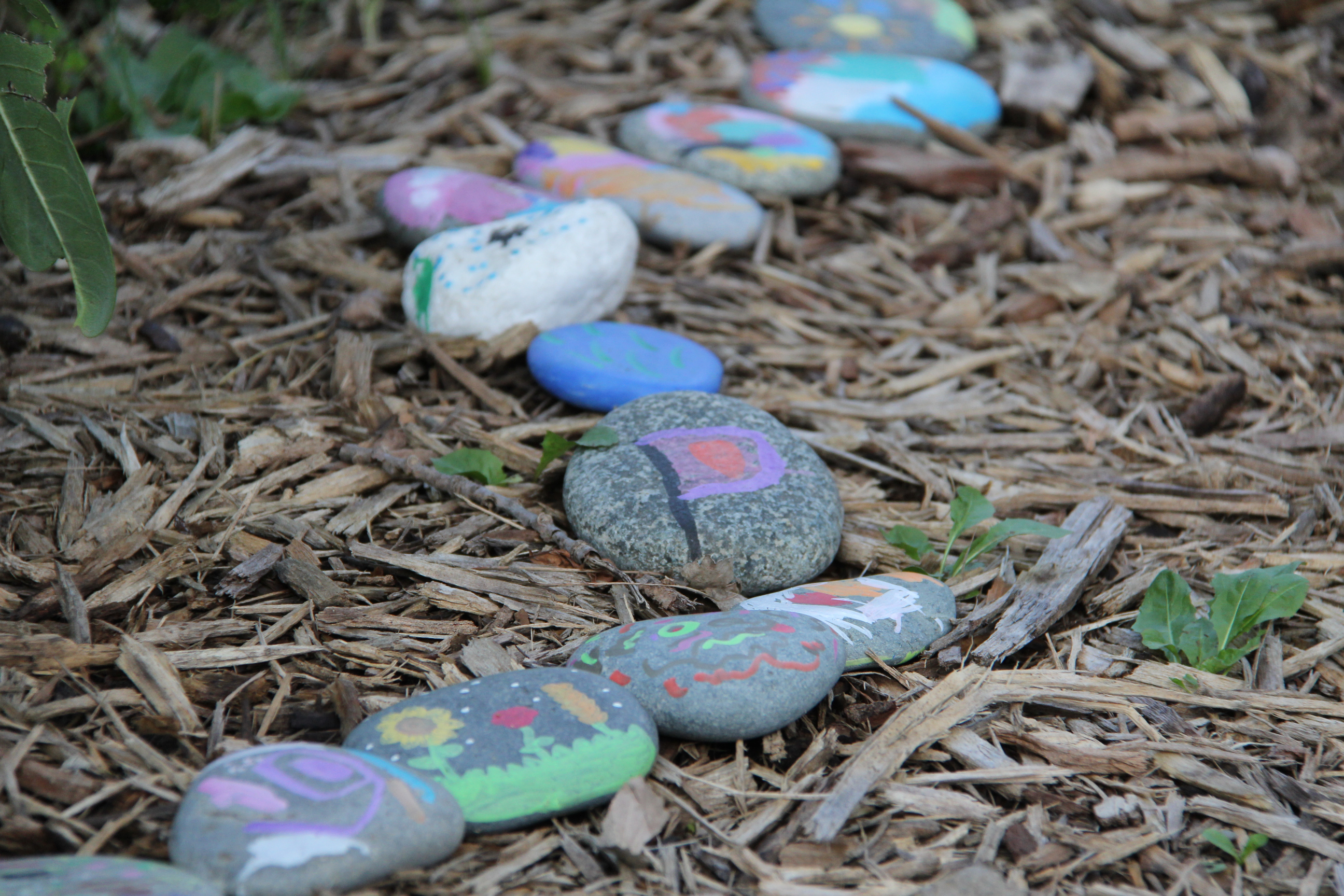
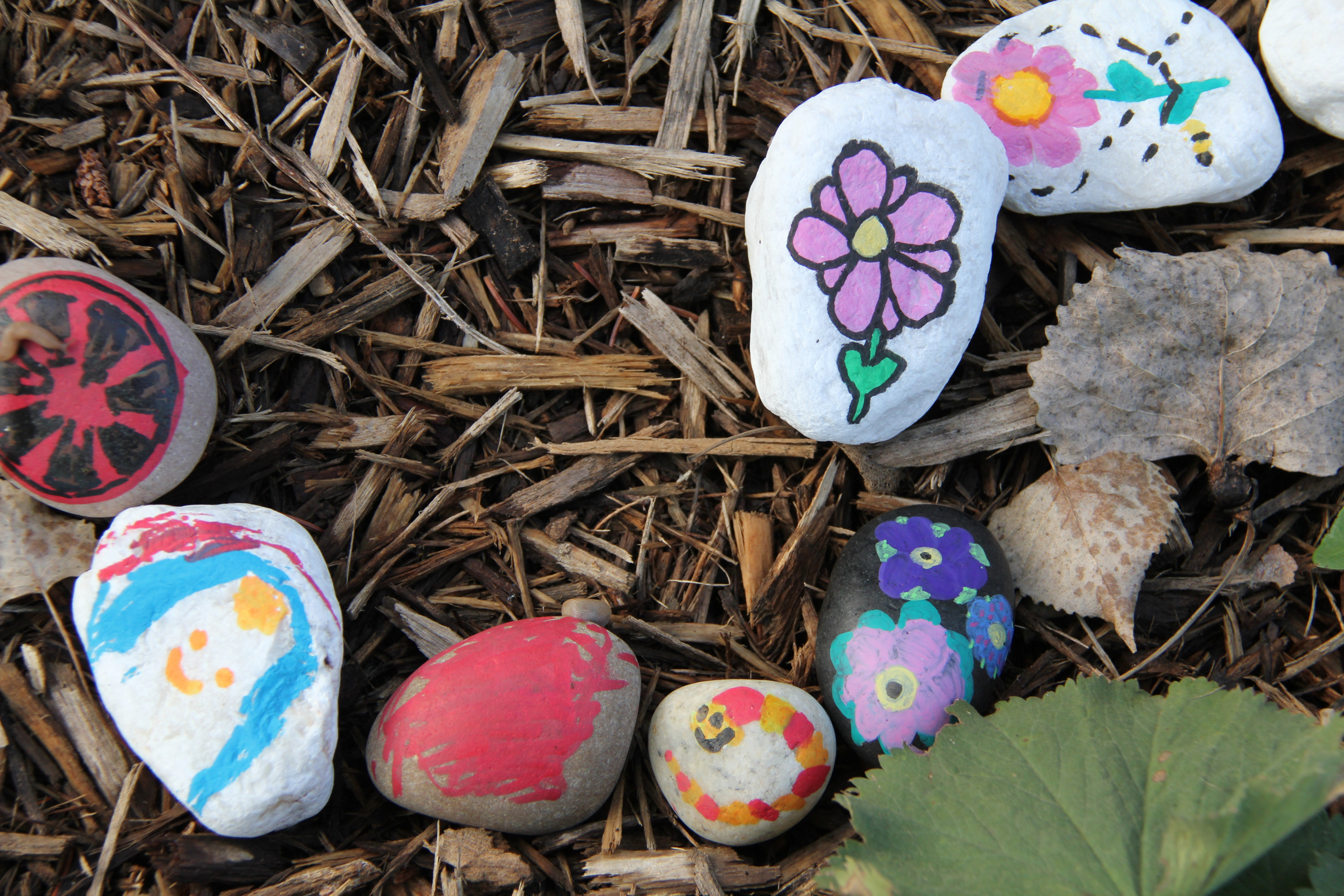
The gardens include rock art, this one in the Rock Art Snake. (Minnesota Prairie Roots copyrighted photo August 2024)
Or find your own garden in your place. Walk. Sit. Take it all in. And when the season shifts, when the flowers are long gone, when the trees have dropped their leaves, then remember this time, these days. Remember the beauty of it all. Remind yourself in the depths of winter how you paused to appreciate these days of summer transitioning into autumn.
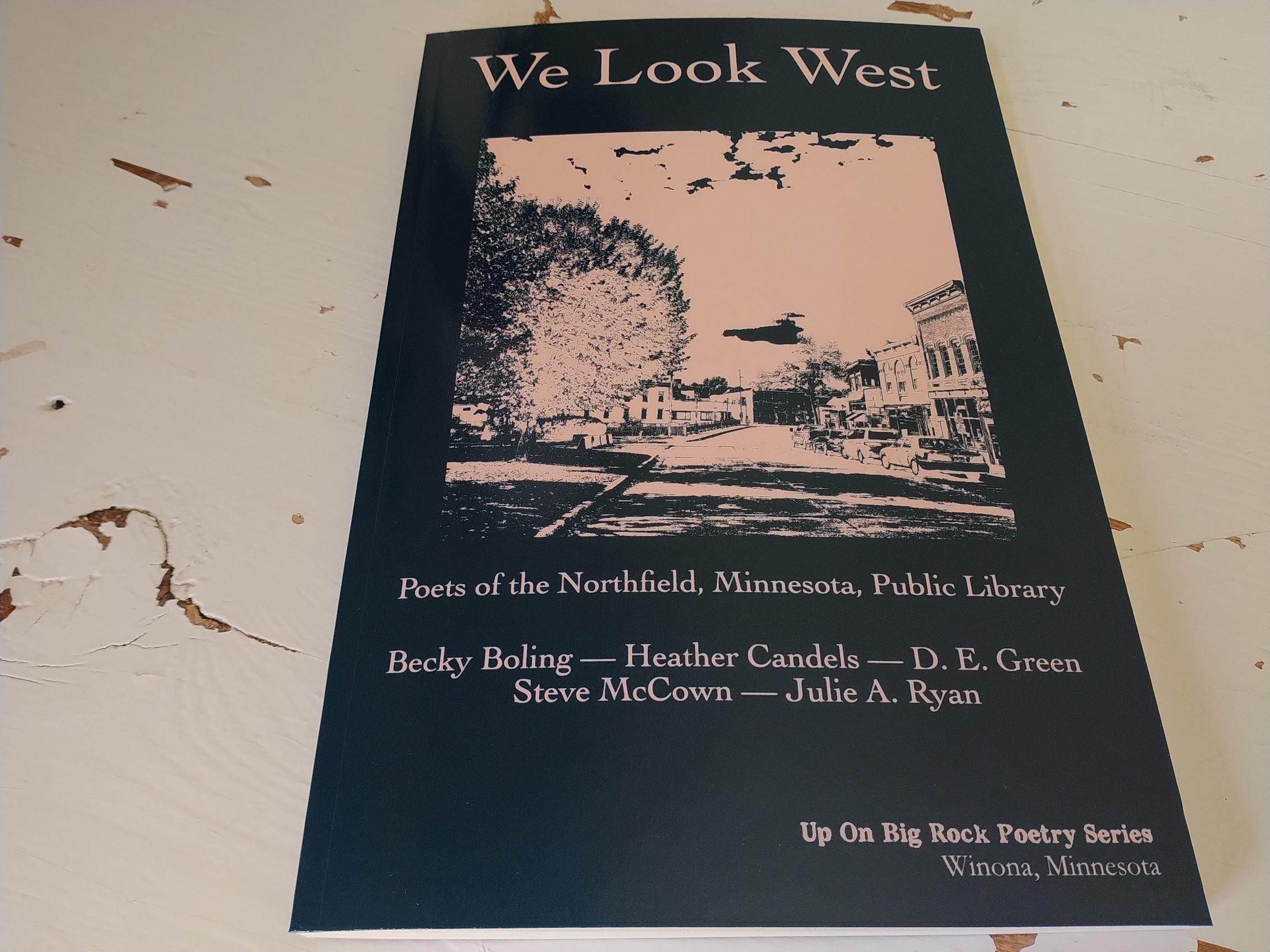
THEY ARE SEASONED WRITERS, also well-seasoned in life. They are Becky Boling, Heather Candels, D.E. Green, Steve McCown and Julie A. Ryan, collectively The Poets of the Northfield Public Library. And at 6 p.m. Thursday, September 5, they will gather at Books on Central, 227 Central Avenue North, Faribault for a poetry reading followed by a Q & A.
If you happen to be one of those people who claim a dislike of poetry, I encourage you to reconsider and come to this literary event. The poetry this group will read comes from their recently-published anthology, We Look West. Their poems are down-to-earth relatable. Trust me. I’ve read this 116-page book, loved it and reviewed it. (Click here to read my review.)
The writing within the pages of this volume are stories of life, in poetry form. Poems that transition from east to west, from the sunrise to the sunset of our lives.
They’re written by poets with extensive publishing credentials. Four have taught at the high school or college level. The fifth comes from a strong literary and visual arts background. Two are Pushcart nominees.
I’ve met Boling and Green and read poetry with them at an event at Mercado Local in Northfield. They are a wonderful married couple, comfortable and friendly. No stuffy poets here. And no stuffy poems. Just plain good writing that moves the spirit, fills the soul, imprints upon the heart.
I look forward to hearing The Poets of the Northfield Public Library read selected poems and then share the stories behind their poetry. As a poet, I’m always interested in learning what inspired a particular poem.
And if you have questions, ask away. Writers welcome engagement as they share their passion for poetry, the craft of writing.
FYI: Books on Central is a second-hand book shop run by the Rice County Area United Way and staffed by volunteers. Proceeds from the bookstore benefit organizations and nonprofits throughout the county.
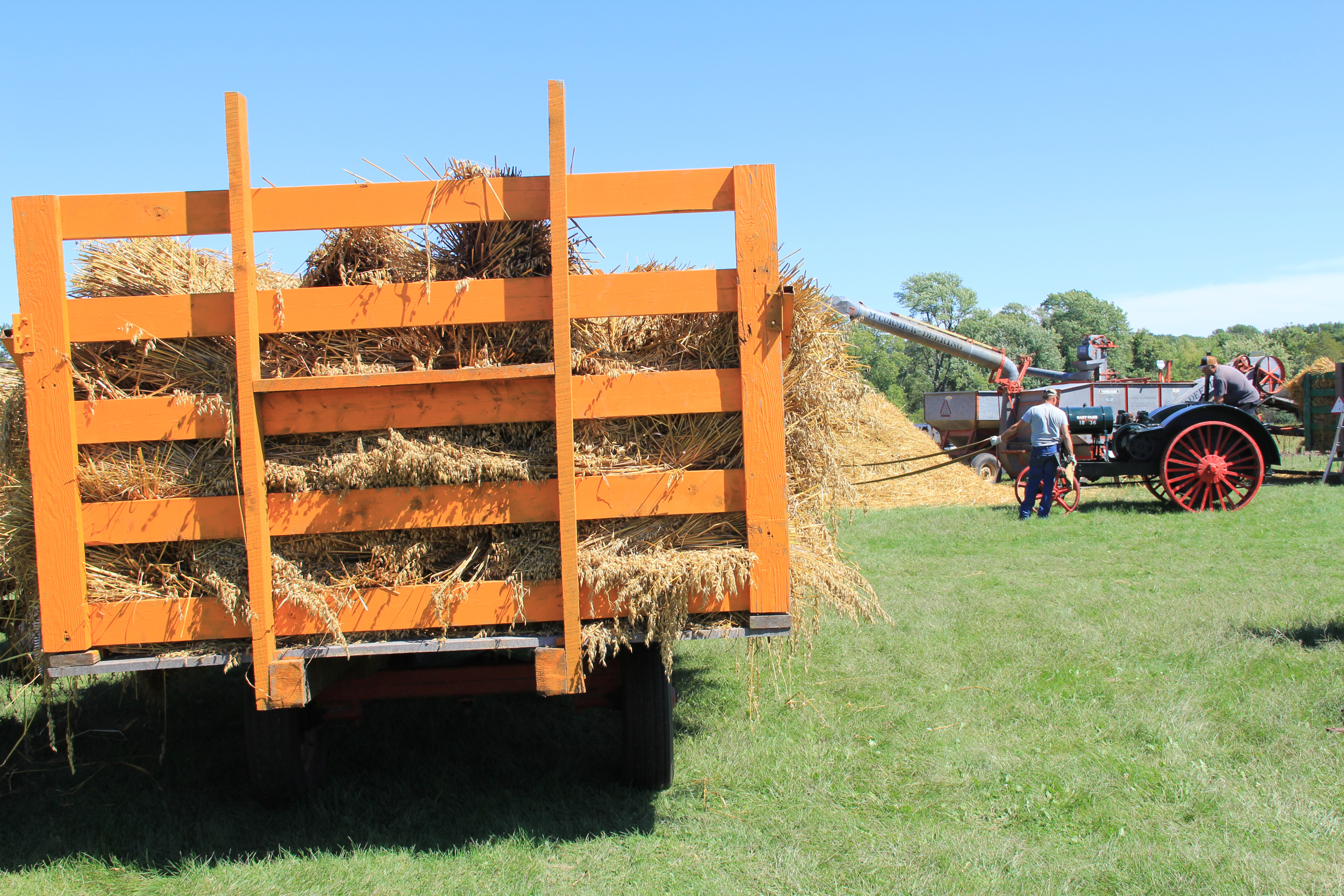
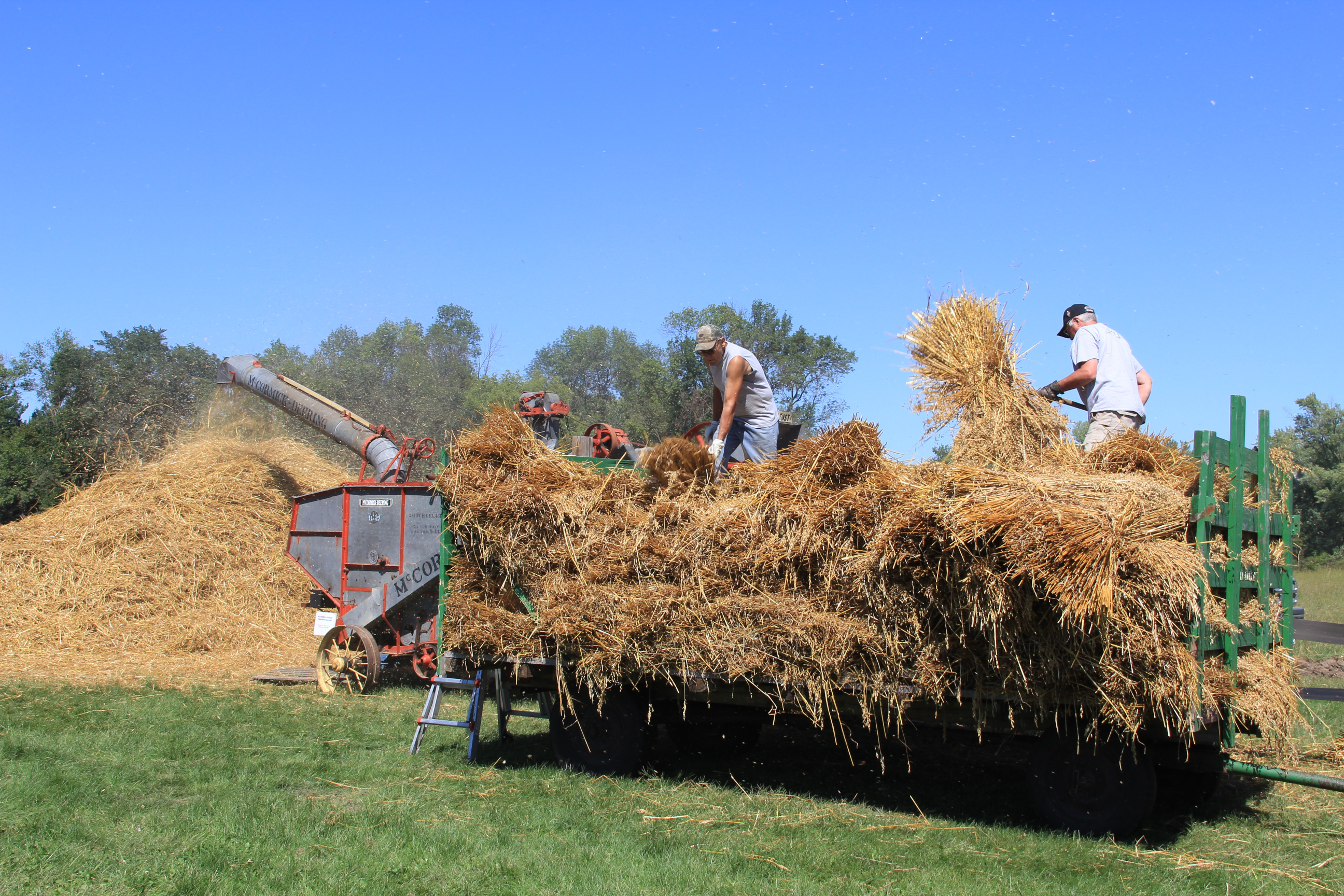
A wagonload of oats awaits threshing at the Rice County Steam & Gas Engines Fall Show. (Minnesota Prairie Roots copyrighted photo August 2024)
MEMORIES. A HISTORY LESSON. A step back in time. The Rice County Steam & Gas Engines Fall Show is that and more. It’s also entertainment, a coming together of friends and families and neighbors. A reason to focus on farming of yesteryear.
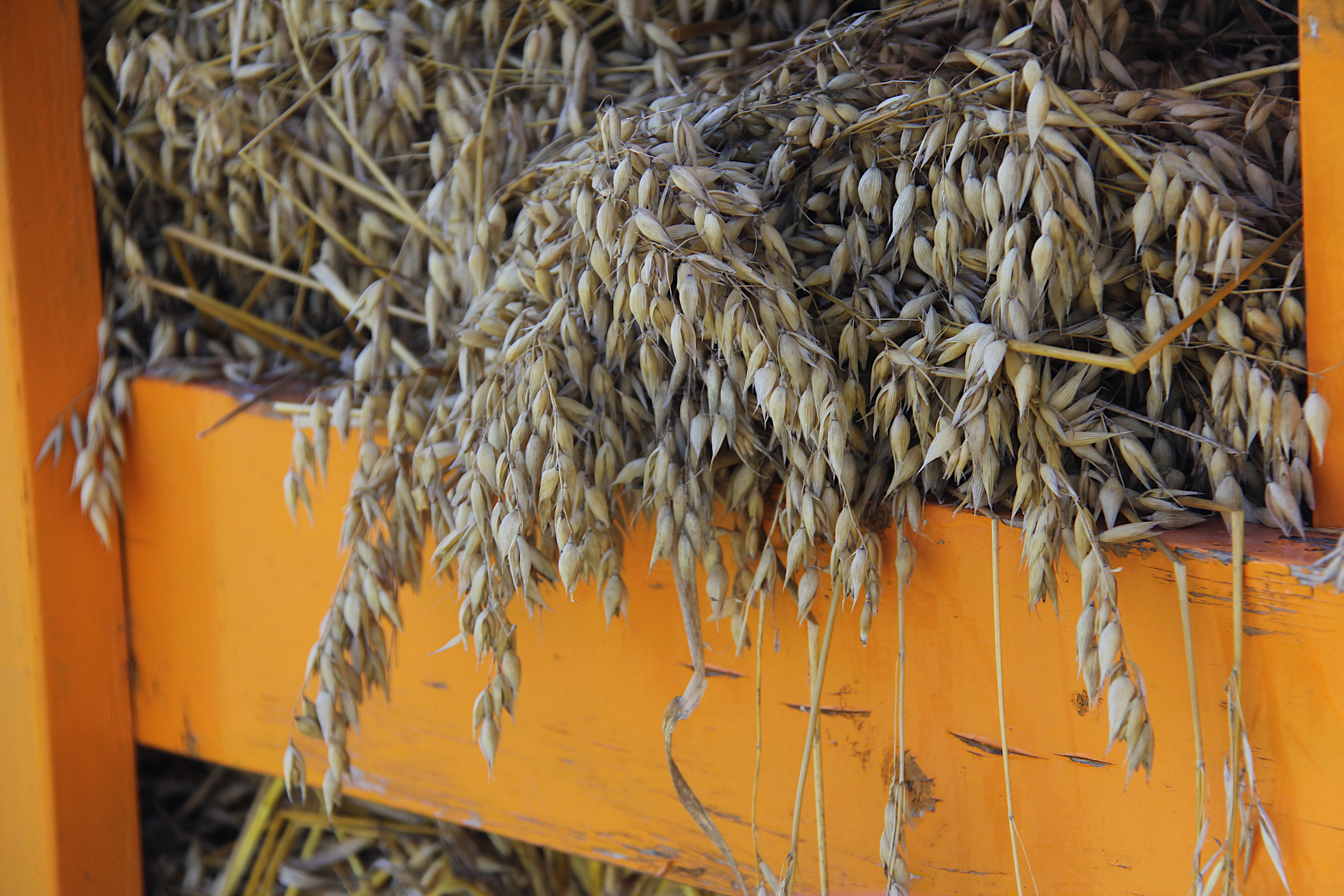
Oats drape over the edge of the wagon. (Minnesota Prairie Roots copyrighted photo August 2024)
I was among the crowds gathered over the Labor Day weekend at the showgrounds south of Dundas. This show features demos, rows and rows and rows of vintage tractors and aged farm machinery, a tractor pull, flea market, music, petting zoo, mini train rides and a whole lot more.
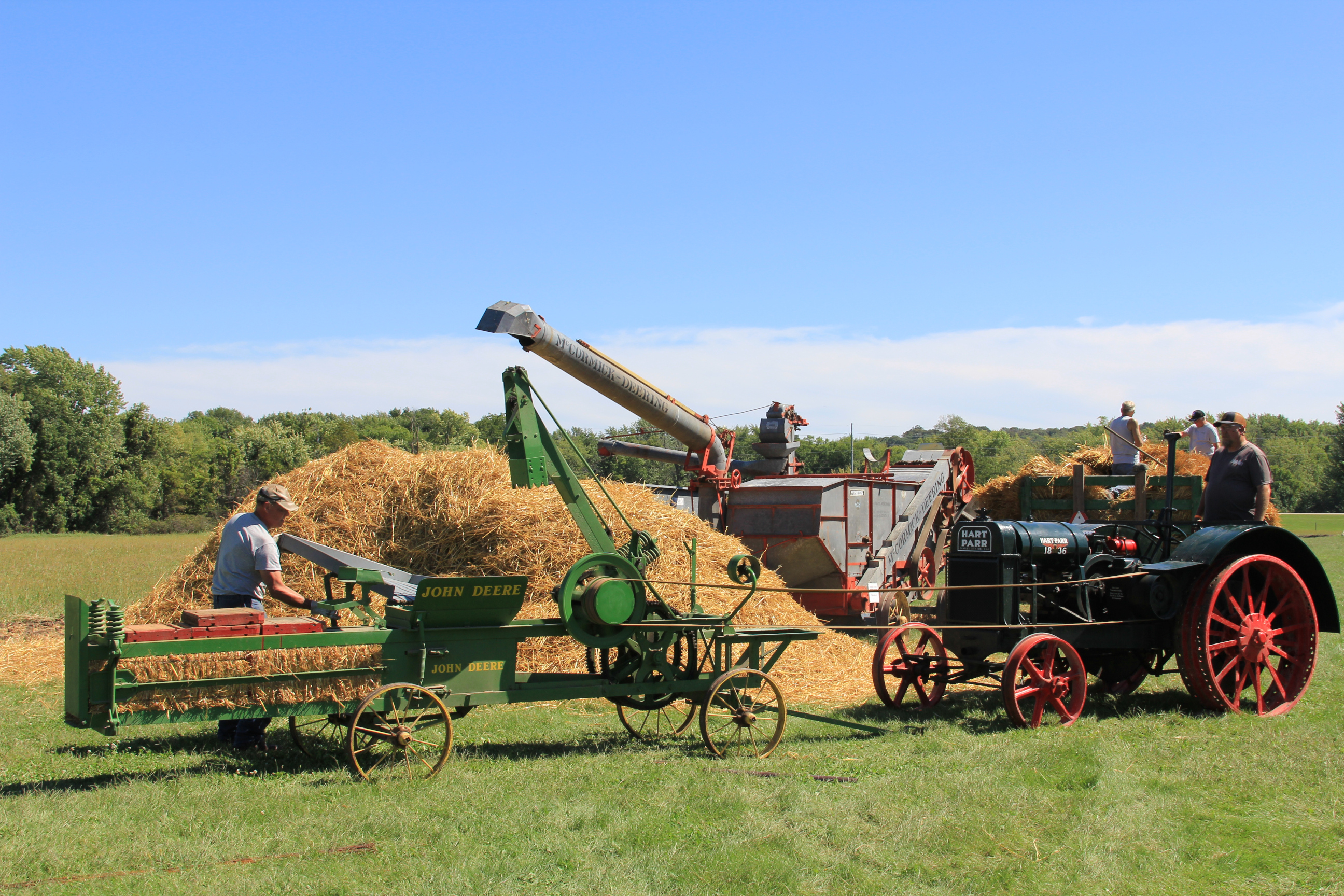
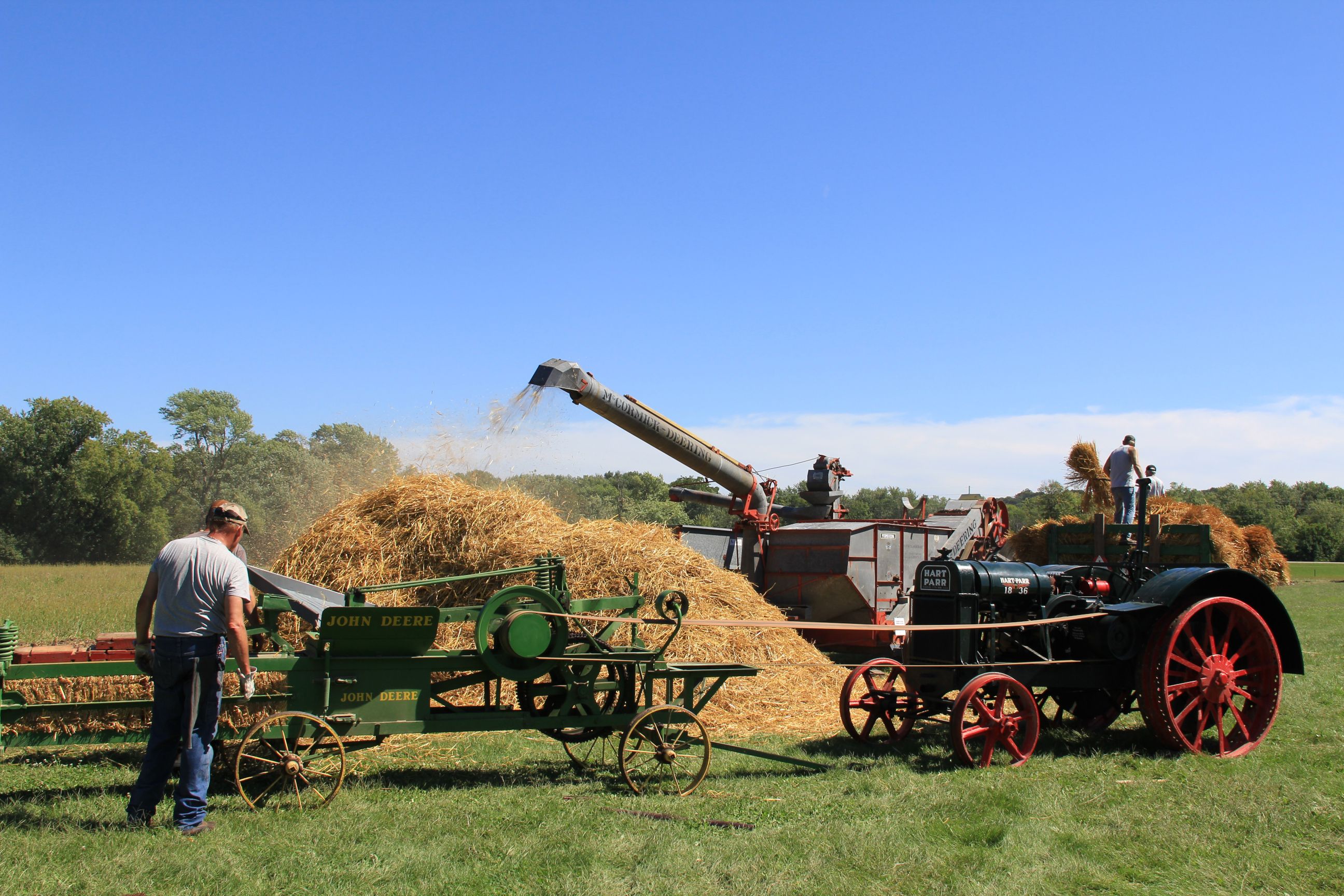
The scene is set to resume threshing with thresher, tractor, baler and manpower. (Minnesota Prairie Roots copyrighted photo August 2024)
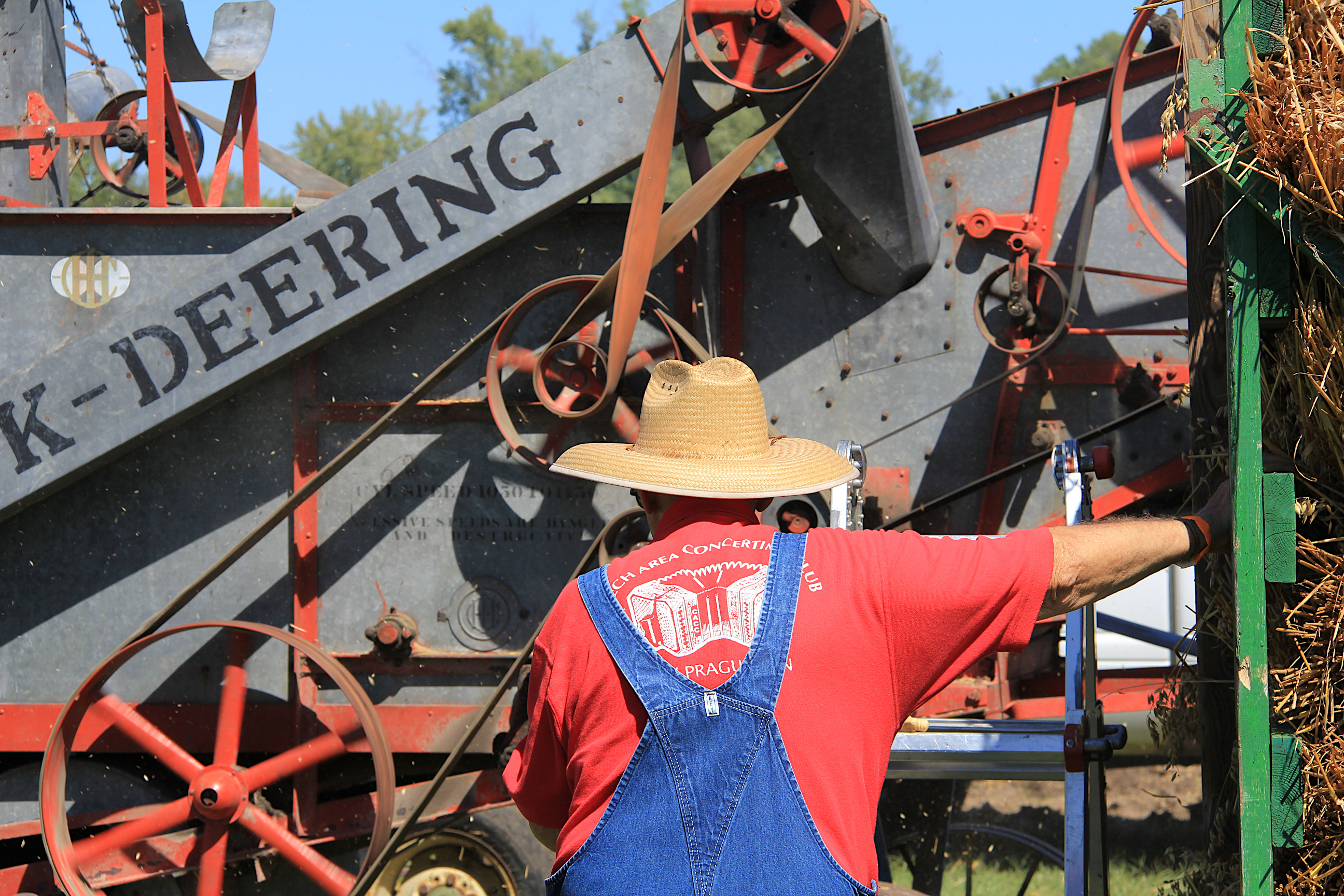
For me, a highlight was watching a crew of men threshing oats. The work is hard, labor intensive, even dangerous with exposed belts and pullies. It’s no wonder farmers lost digits and limbs back in the day.
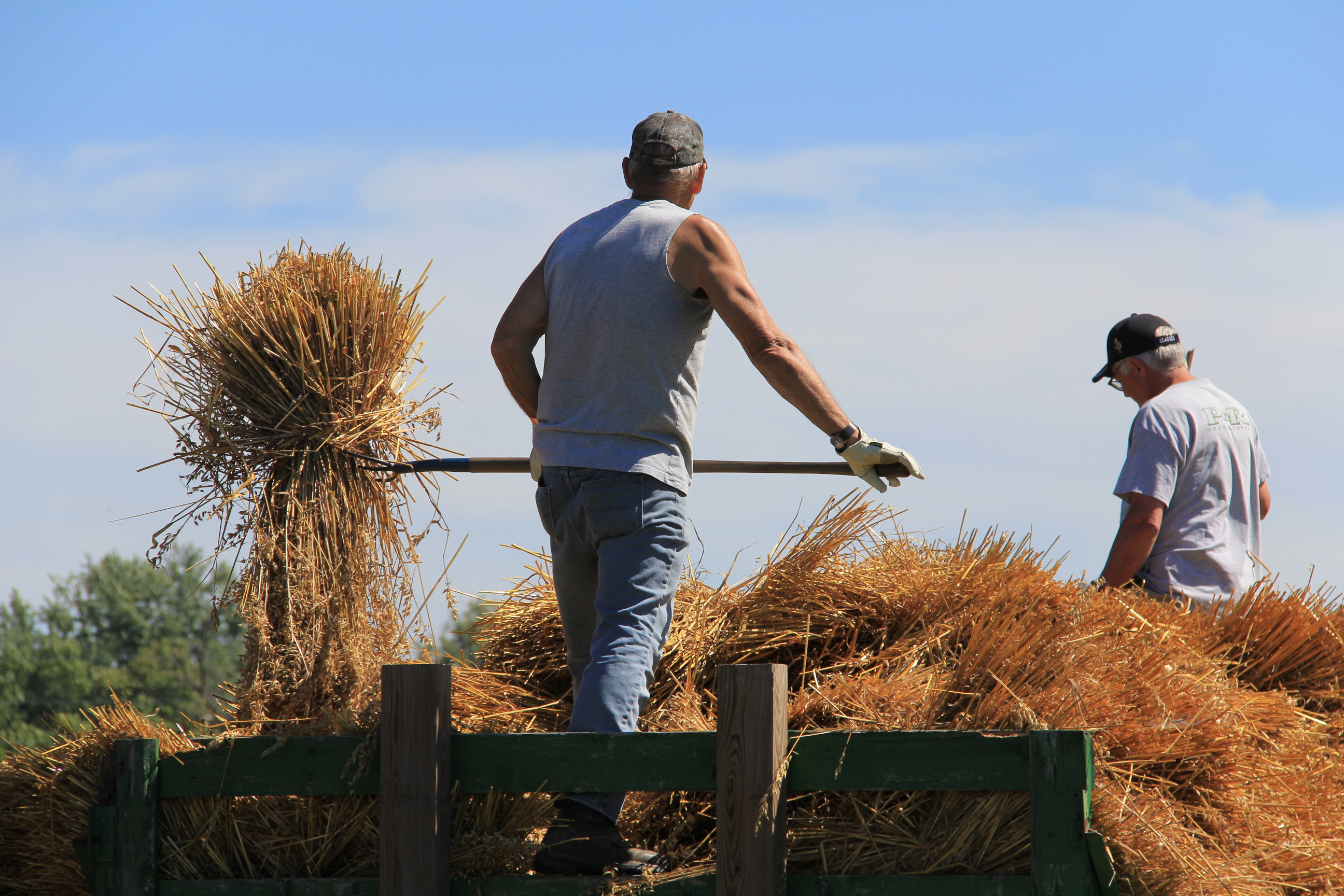
This part of the threshing crew pitches oats bundles into the threshing machine. (Minnesota Prairie Roots copyrighted photo August 2024)
While my observations are not connected to memories, my husband’s are as he recalls threshing on his childhood farm in rural Buckman, Morrison County, Minnesota. After Randy moved with his family from rural St. Anthony, North Dakota (southwest of Mandan), his dad returned to threshing oats. In North Dakota, he used a combine. But his father before him, Randy’s grandfather Alfred, threshed small grains.
Hard at work forking bundles into the thresher. (Minnesota Prairie Roots copyrighted photo August 2024)
Lots of exposed pullies and belts line the threshing machine. (Minnesota Prairie Roots copyrighted photo August 2024)
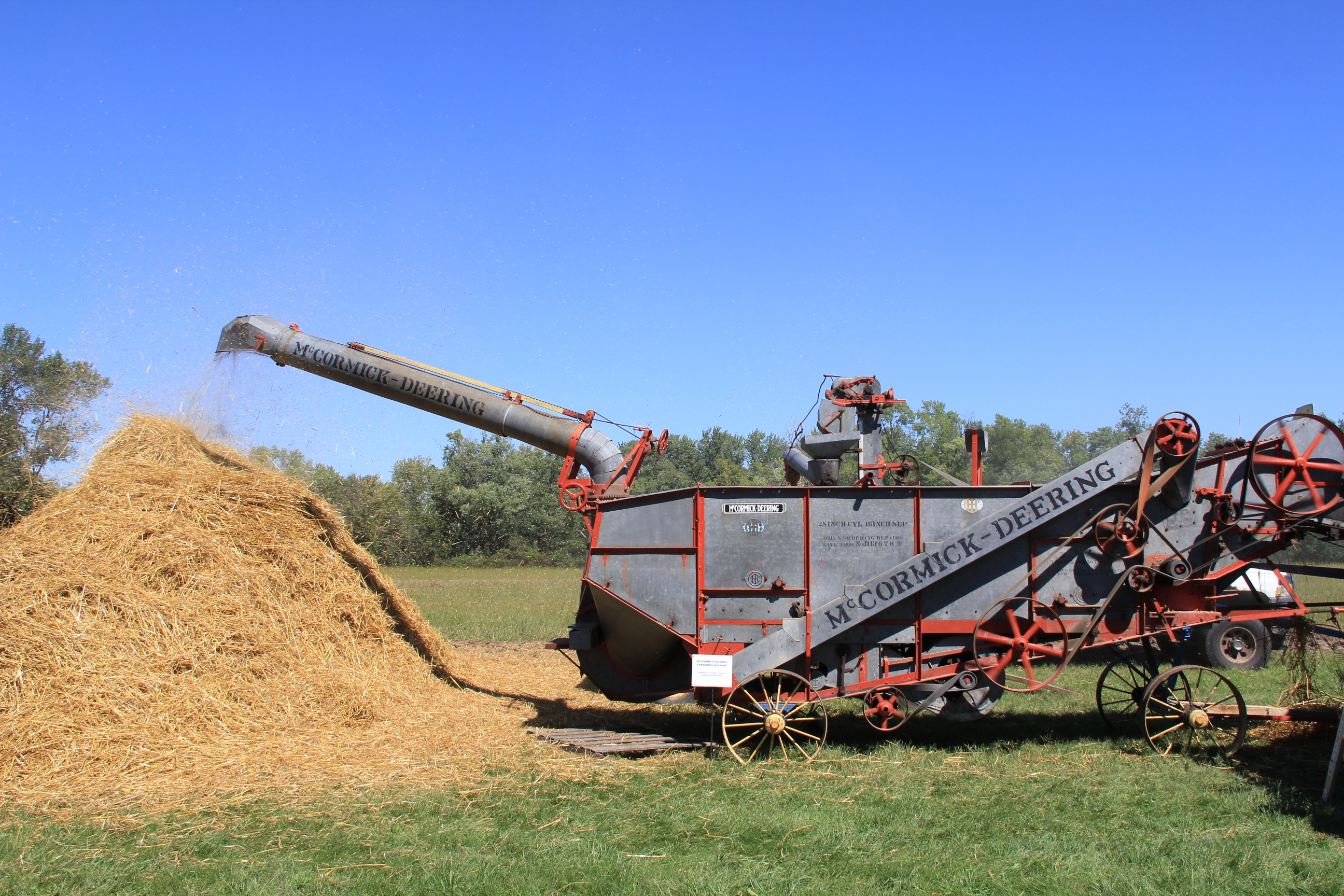
The workhorse of the operation, the threshing machine. (Minnesota Prairie Roots copyrighted photo August 2024)
As I watched in Dundas, men forked bundles of oats into a McCormick-Deering thresher. The threshing machine separated the grain from the stalk, the oats shooting one direction into a wagon, the straw the other way into a growing pile. I stood mostly clear of the threshing operation with dust and chafe thick in the air.
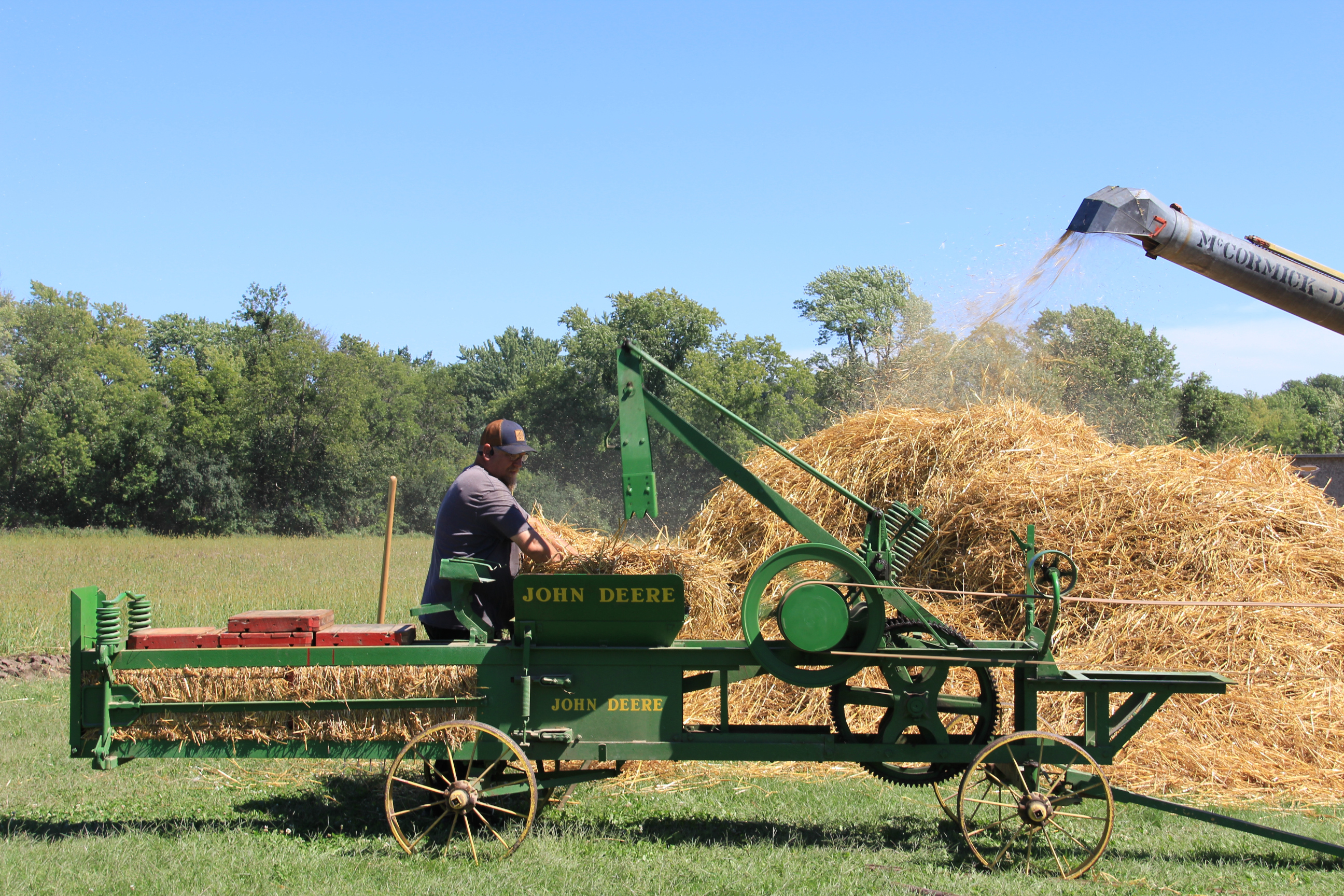
Feeding the loose straw into the baler. (Minnesota Prairie Roots copyrighted photo August 2024)
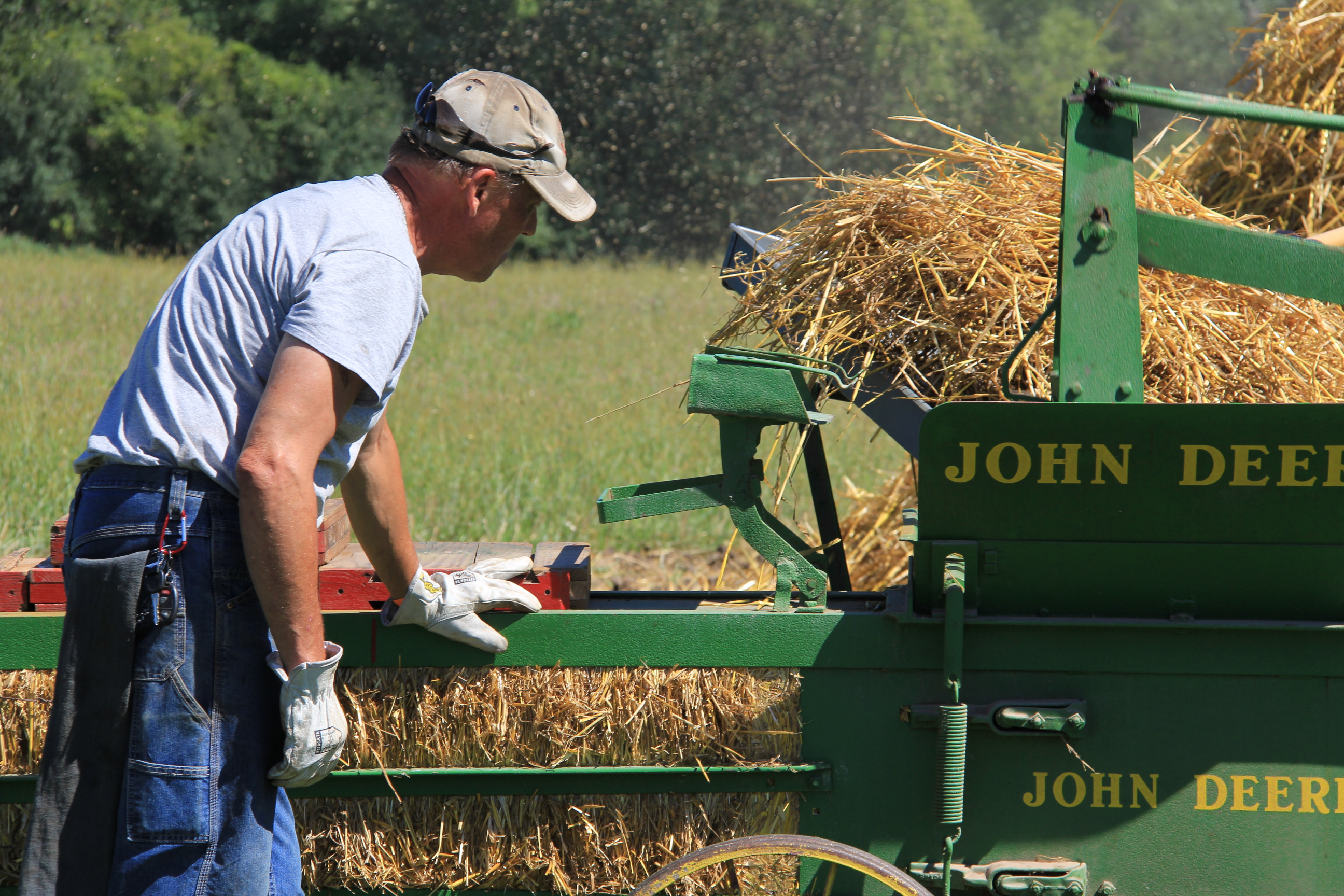
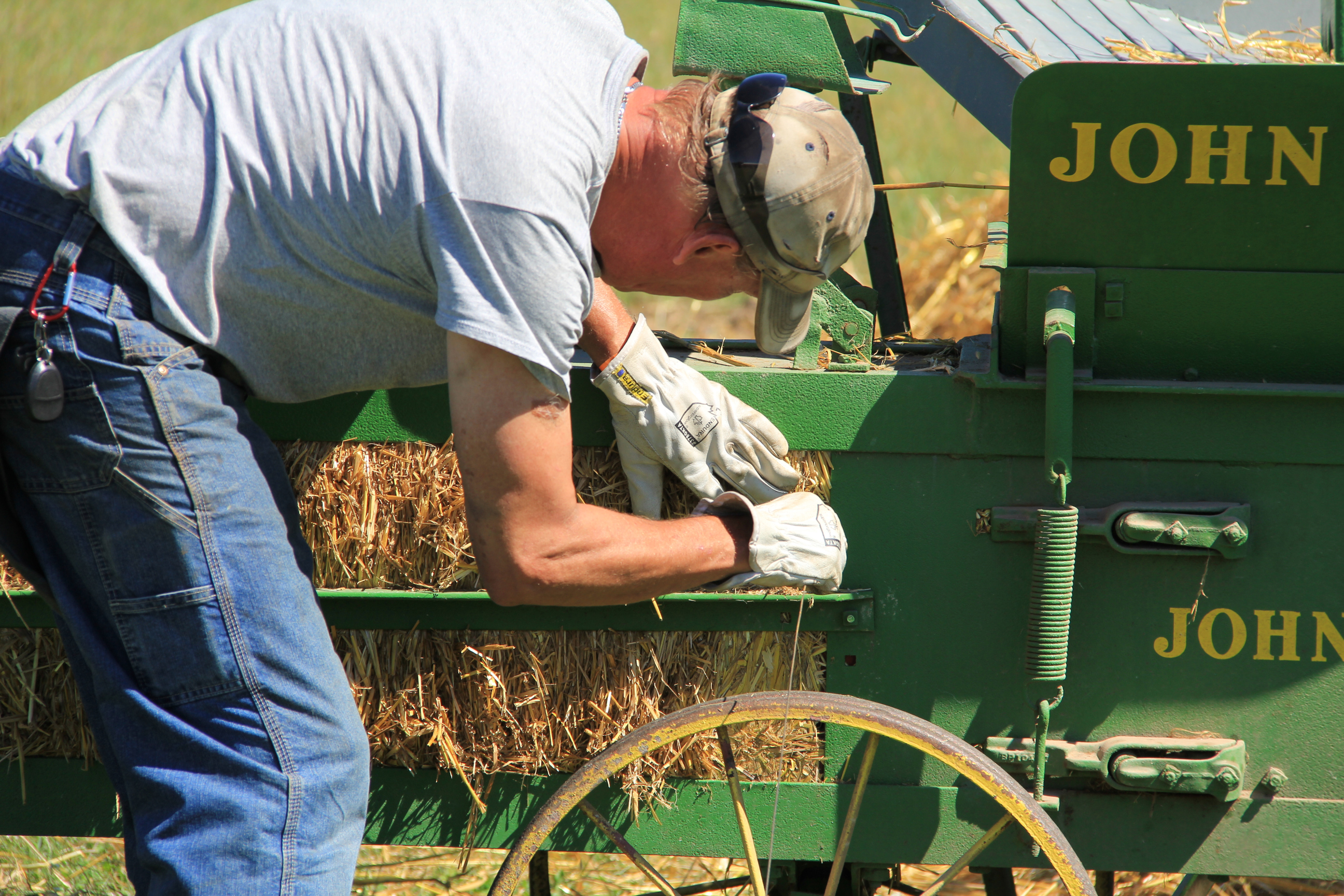
From the straw pile, a volunteer stuffed the stalks into the shoot of an aged baler. An arm tamped the straw, feeding it into the baler. Another guy stood nearby, feeding wire into the baler to wrap the rectangular bales. A slow, tedious process that requires attentiveness and caution.
Watching and waiting for the straw to compact in the baler. (Minnesota Prairie Roots copyrighted photo August 2024)
The entire time I watched, I thought how easy it would be to lose focus, to look away for a moment, to get distracted and then, in an instant, to experience the unthinkable. Farming is, and always has been, a dangerous occupation.
Carefully guiding wire into the baler to wrap each bale. (Minnesota Prairie Roots copyrighted photo August 2024)
Randy understands that firsthand as he witnessed his father get his hand caught in a corn chopper. Tom lost his left hand and part of his forearm. But Randy saved his life, running across fields and pasture to summon help. It is a traumatic memory he still carries with him 57 years later.
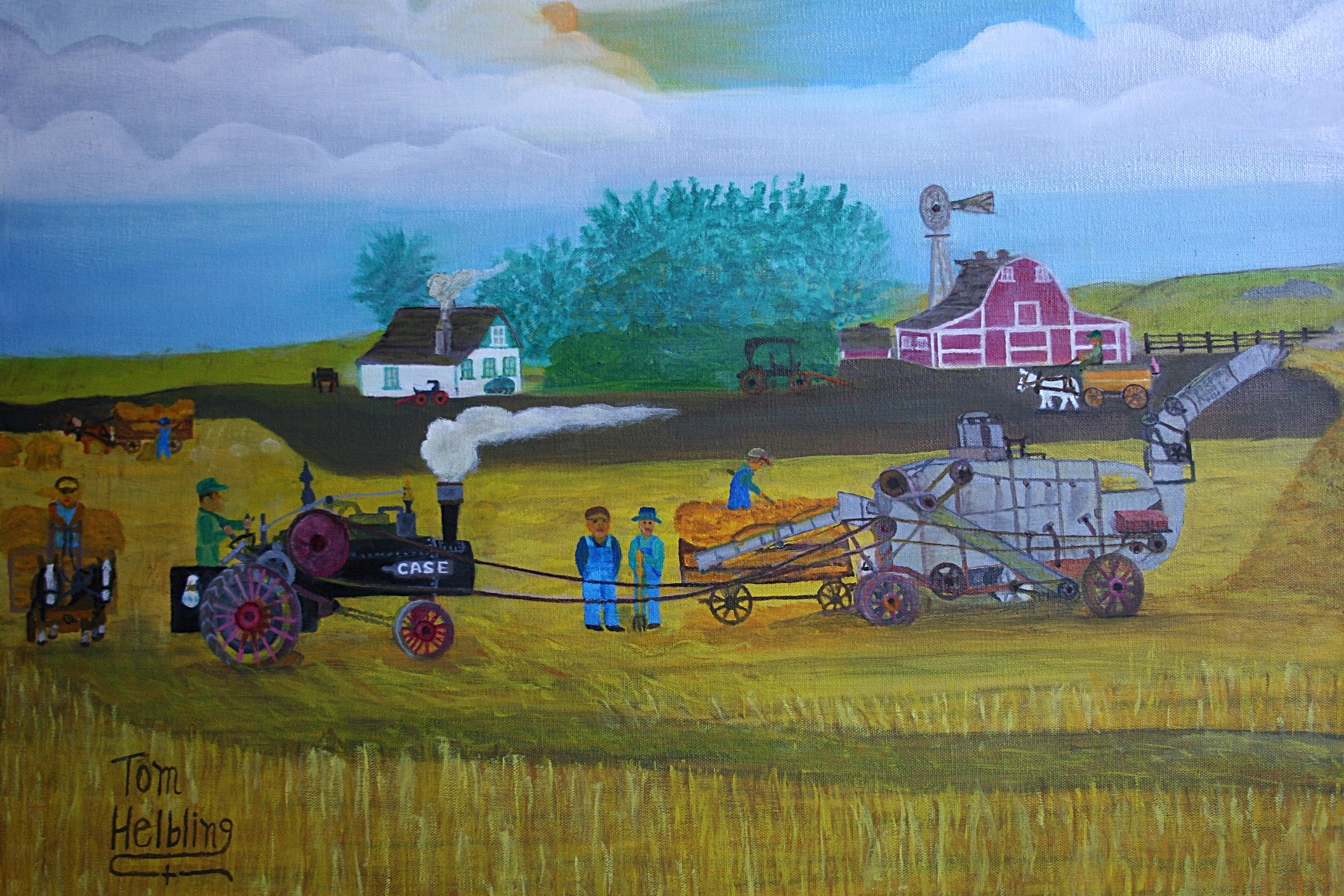
Threshing at Sunnybrook Farm, St. Anthony, North Dakota, as painted by Tom Helbling. (Minnesota Prairie Roots copyrighted file photo)
But memories of threshing are good memories, preserved today in an oil painting from the farm in North Dakota, Sunnybrook Farm. My father-in-law took up painting later in life. Among the art he created was a circa 1920s threshing scene. We have that painting, currently displayed in our living room. I treasure it not only for the hands that painted it, but also for the history held in each brush stroke.
Threshing grain, living history in 2024. (Minnesota Prairie Roots copyrighted photo August 2024)
The painted scene differs some from the threshing scene I saw in Dundas. In North Dakota, horses were part of the work team, the tractor steam powered. In Dundas, there were no horses, no steam engine at the threshing site. Still, the threshing machine is the star, performing the same work. And men are still there, laboring under the sun on a late summer afternoon.
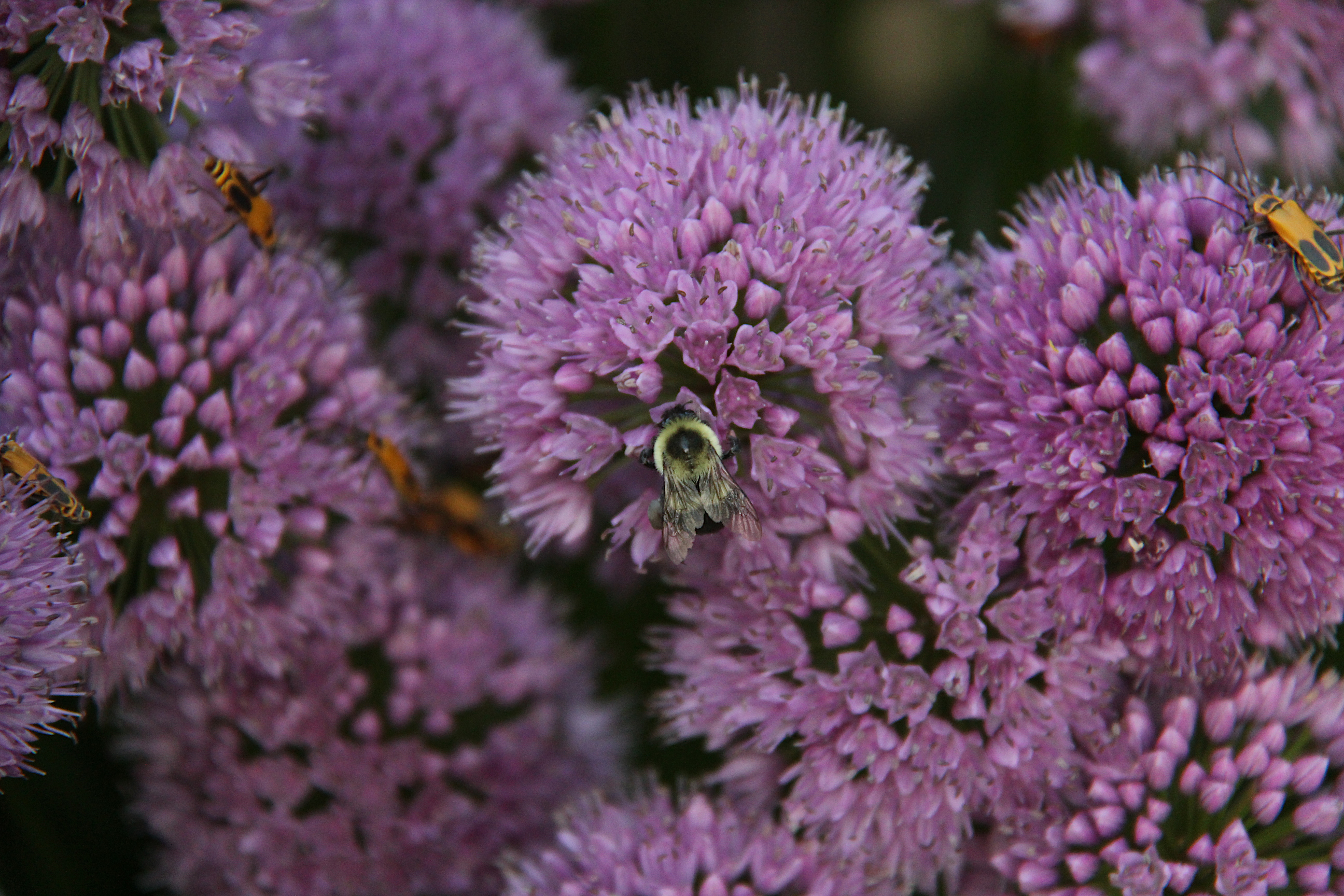
I spotted this bee and other bugs on flowers in the Rice County Master Gardeners’ Teaching Gardens. (Minnesota Prairie Roots copyrighted photo August 2024)
ADMITTEDLY, I NEVER EXCELLED in science. I sort of just got by, learning what I needed to learn to get reasonably good grades in science class. But if I was to go back to the classroom, I’d listen more intently, ask more questions, figure out how the information I was taught actually related to me and my world. In other words, I wouldn’t simply absorb, regurgitate and then move on, which seemed to be the way subjects were taught when I was a student.
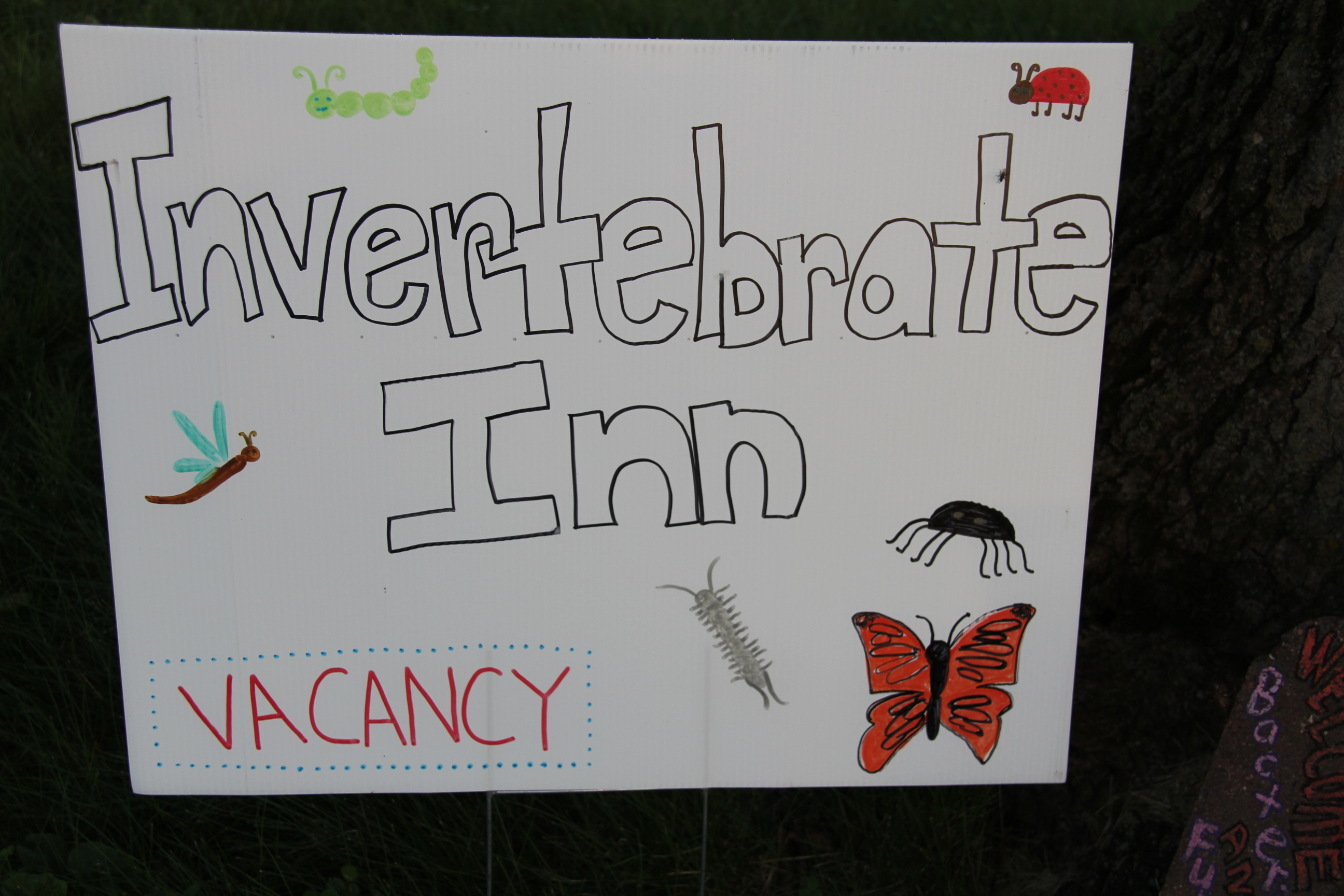
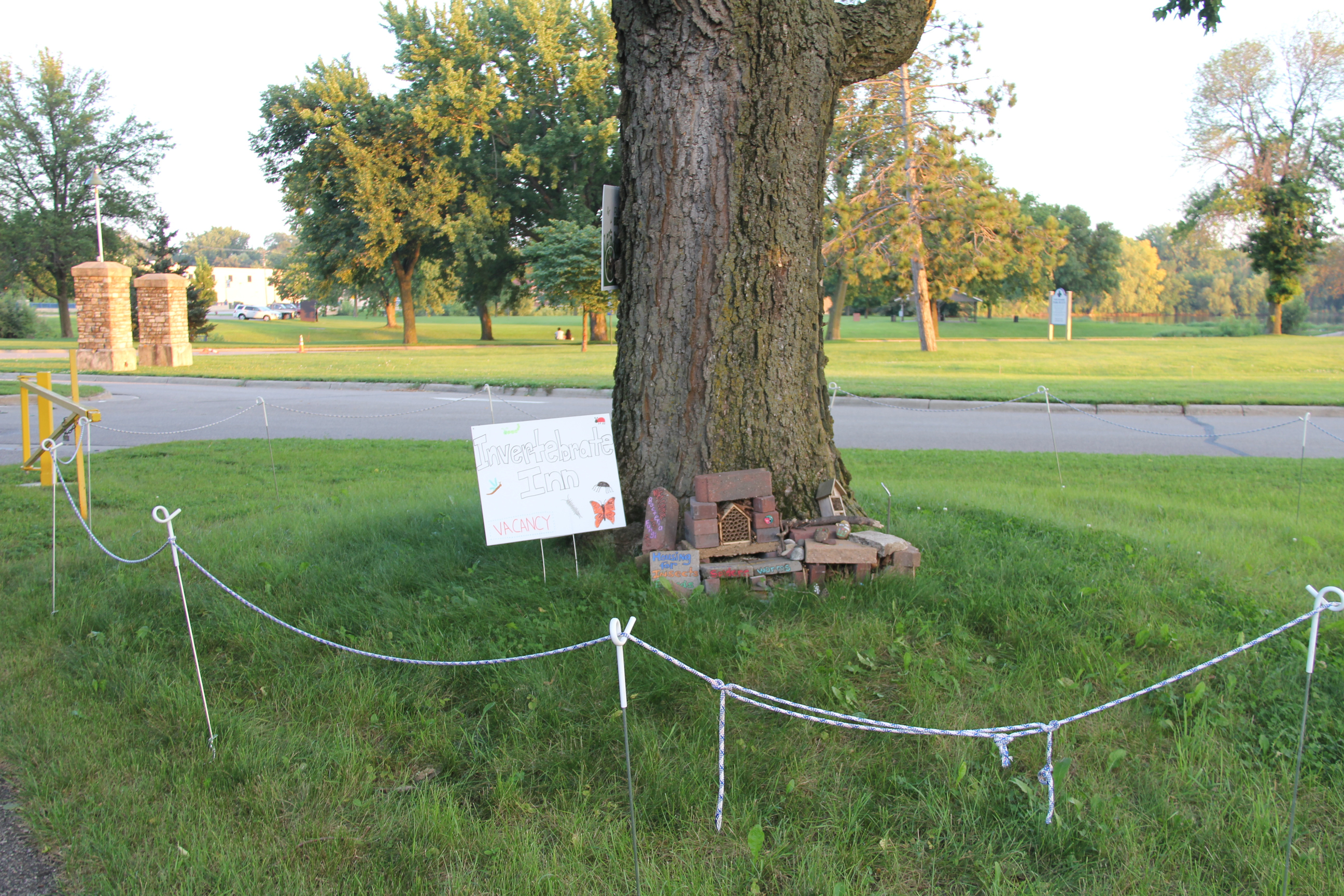
This sign drew me to the base of a tree, where I found an inn and a bee lawn. (Minnesota Prairie Roots copyrighted photo August 2024)
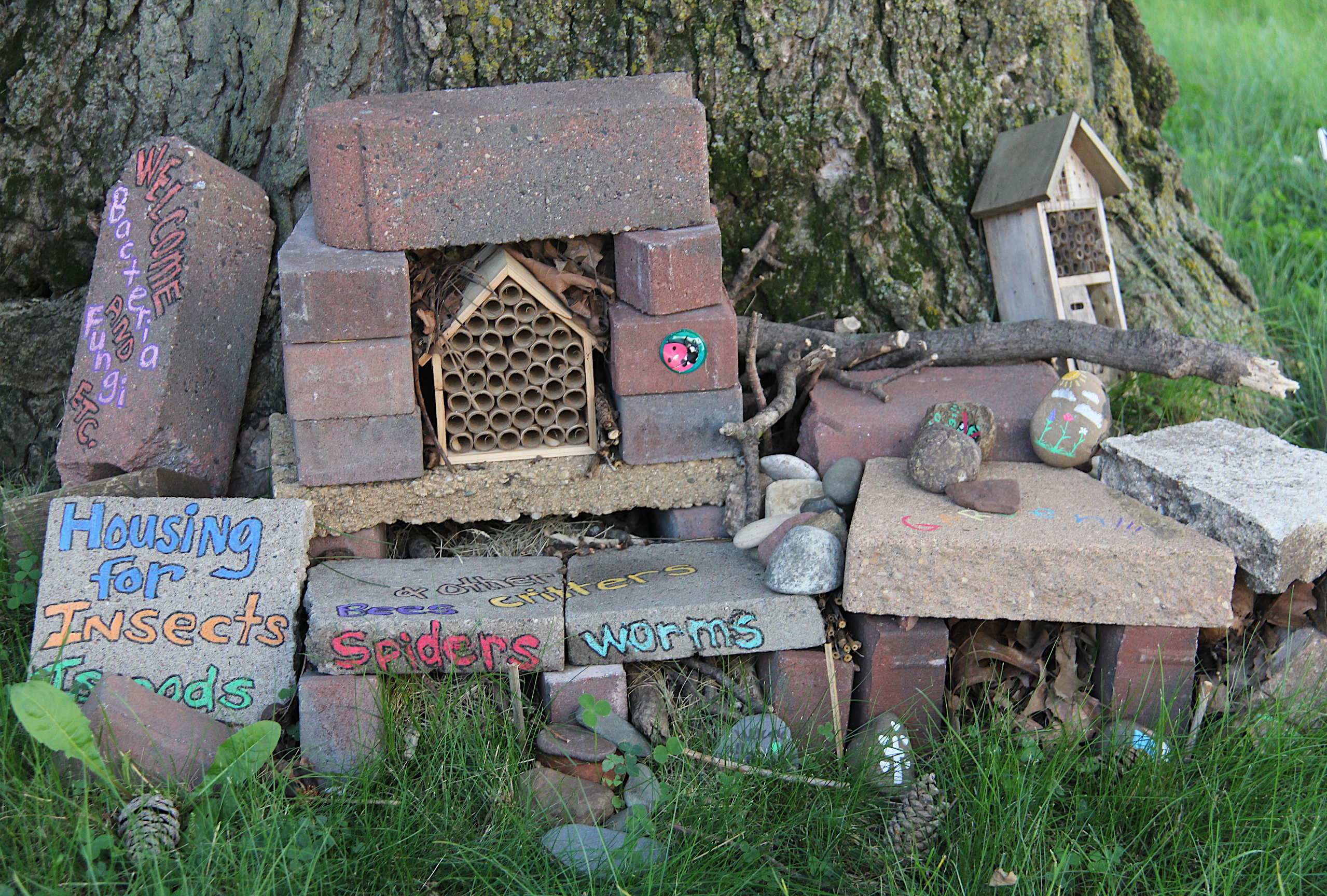
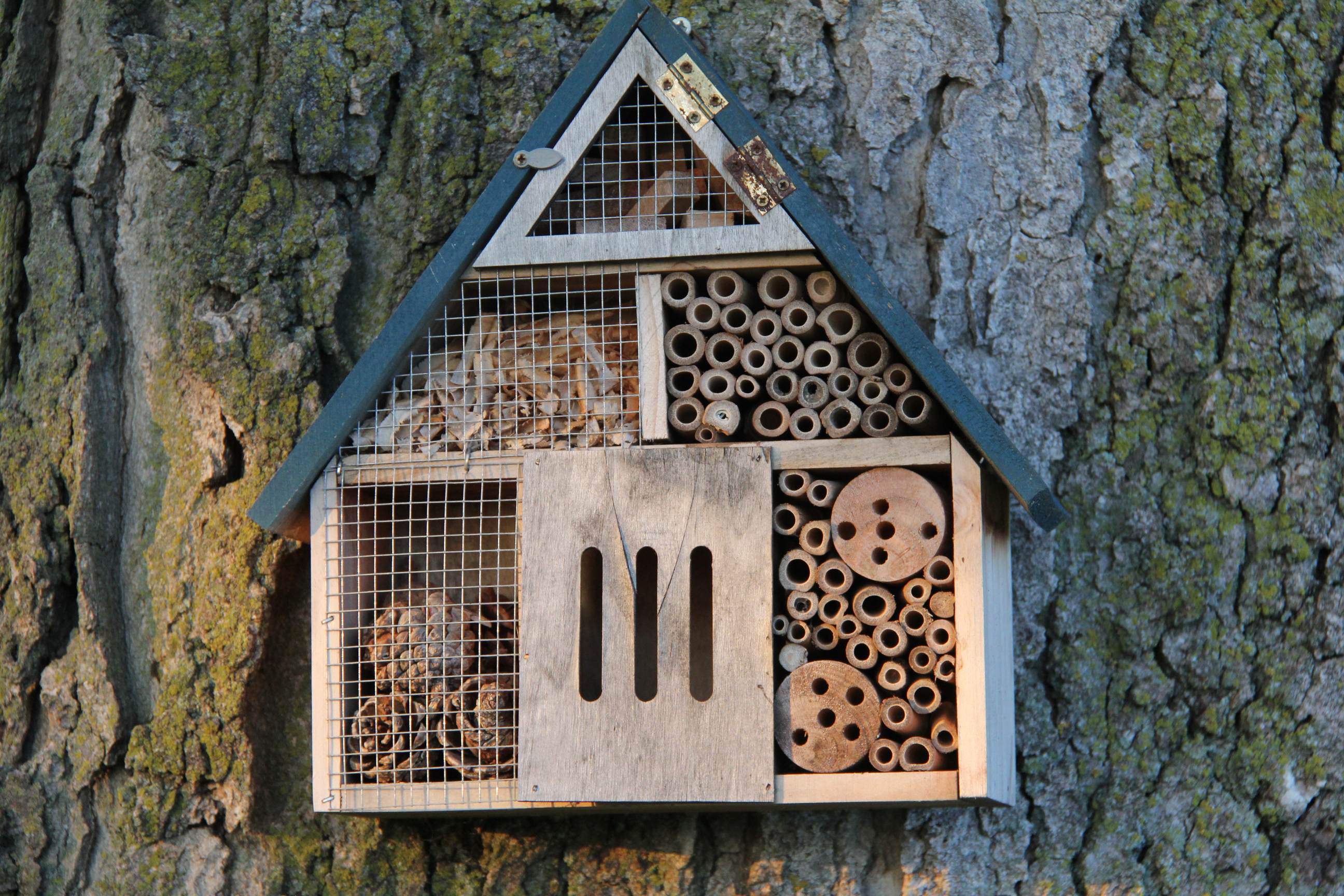
Bricks, stones, sticks and more comprise this haphazard housing unit. (Minnesota Prairie Roots copyrighted photo August 2024)
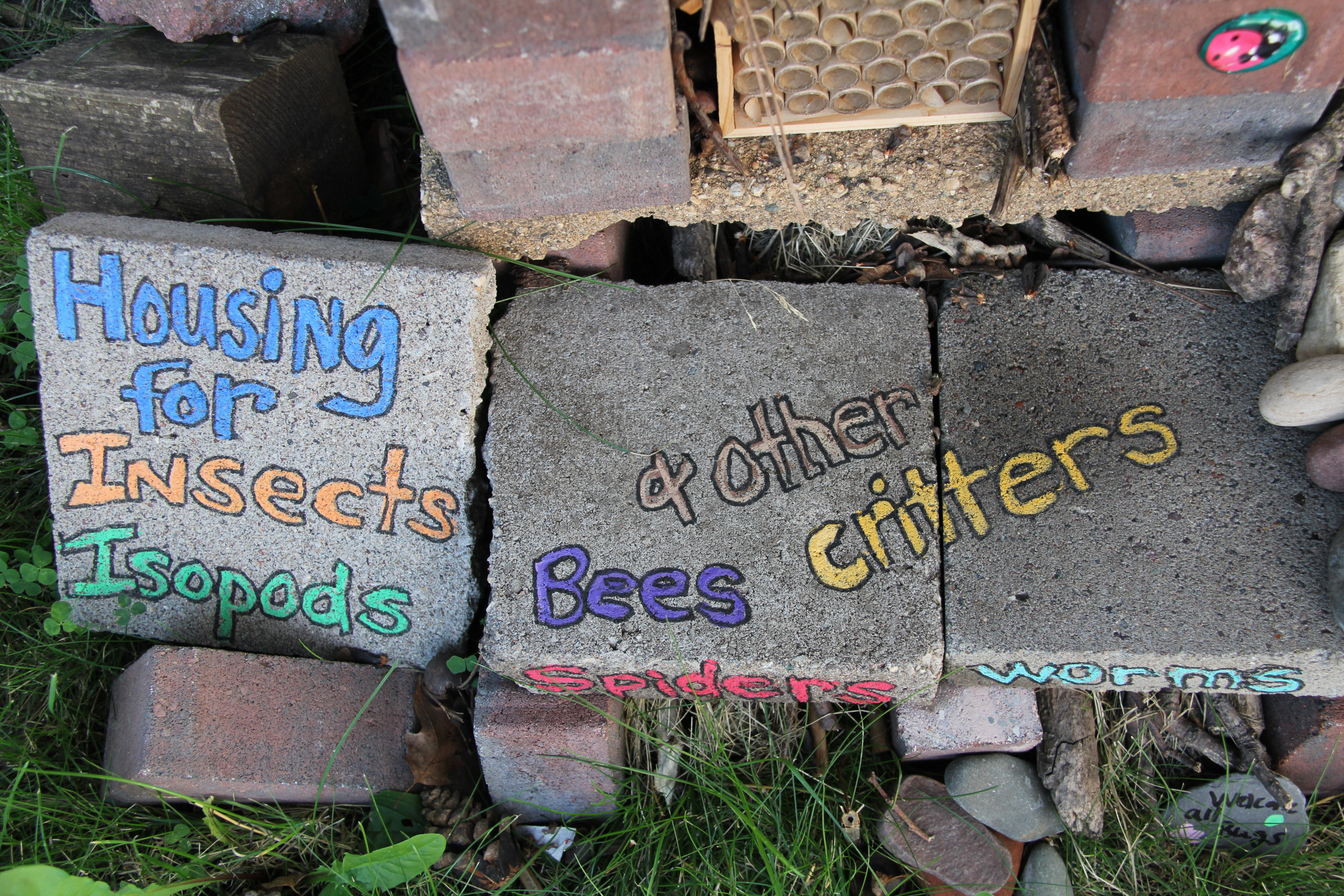
Identifying signage on the Invertebrate Inn. (Minnesota Prairie Roots copyrighted photo August 2024)
Now, as an adult, and an aged one at that, I realize that the core of learning is not memorization. It is rather taking in information that sparks interest, raises questions, causes independent thinking. I am still learning well into my sixties, this year marking 50 years since I graduated from high school.
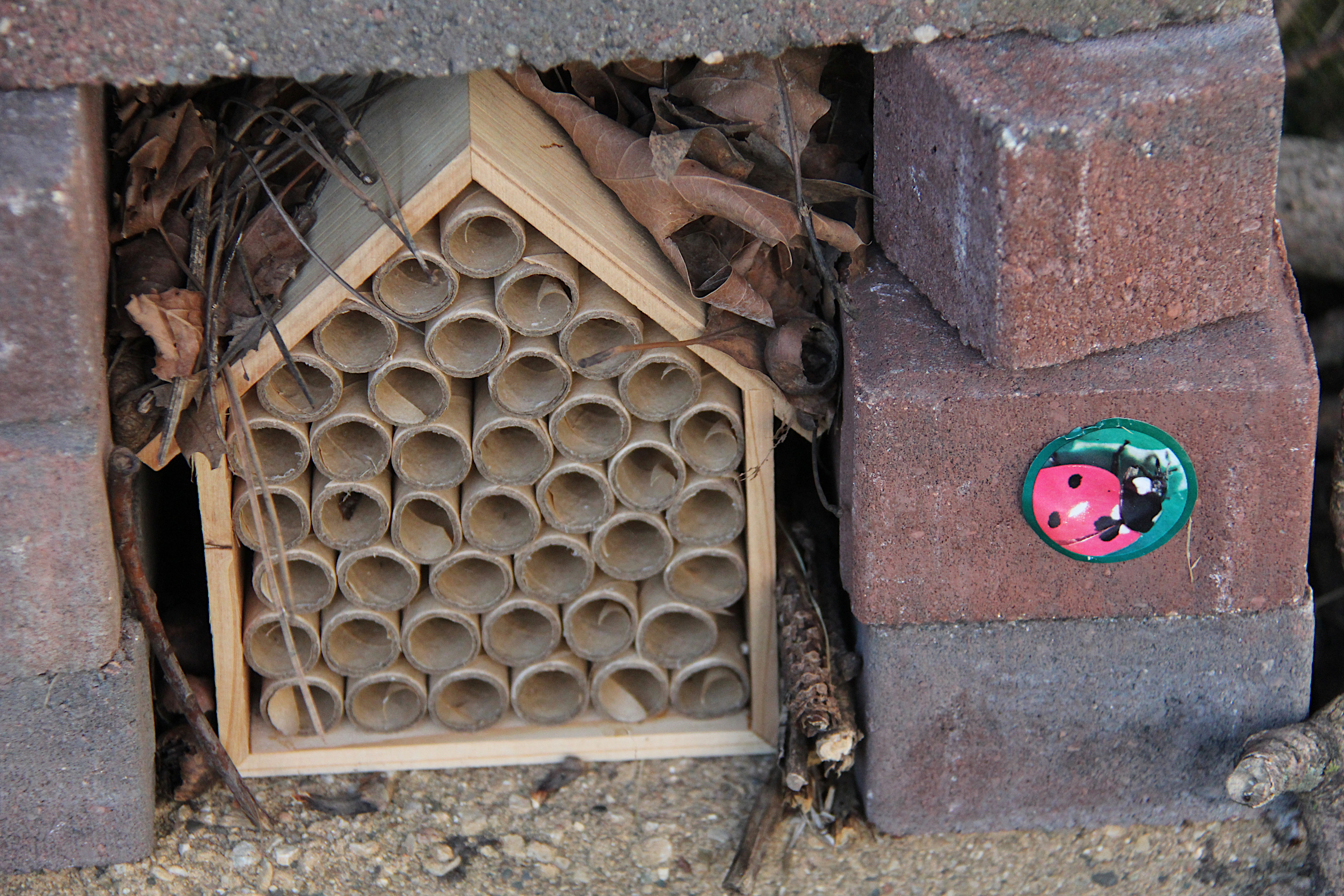
I trust this structure would be a good home for a bug. (Minnesota Prairie Roots copyrighted photo August 2024)
Today I learn because I want to, not because I need to take some class for credits or to earn a degree.
The bee lawn was roped off when I visited. (Minnesota Prairie Roots copyrighted photo August 2024)
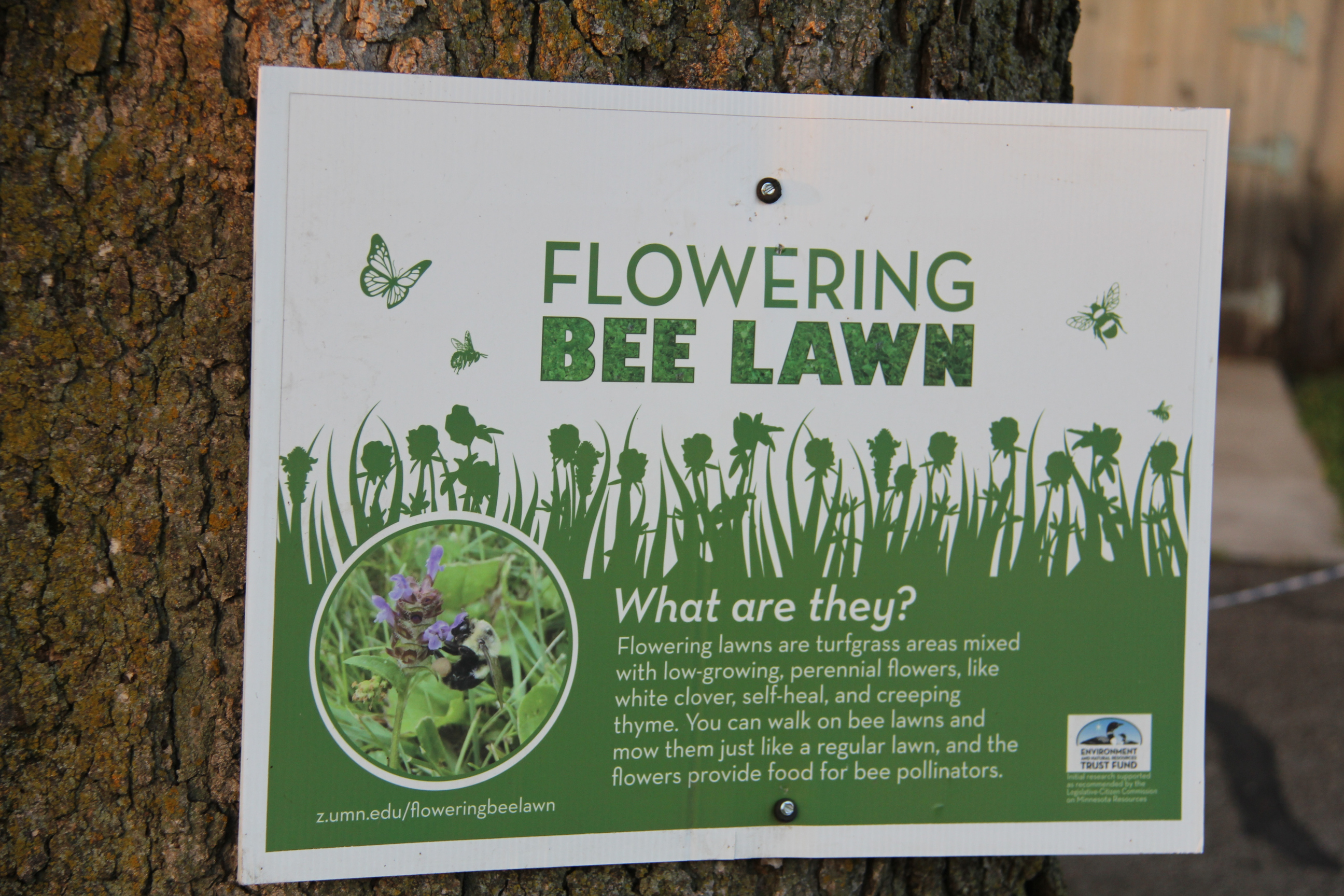
Signage on the tree explains a flowering bee lawn. (Minnesota Prairie Roots copyrighted photo August 2024)
Fitting floral rock art in the inn. (Minnesota Prairie Roots copyrighted photo August 2024)
My latest delve into science was prompted by a visit to the Rice County Master Gardeners Teaching Gardens in Faribault. There I spotted an Invertebrate Inn and a bee lawn, recent additions to the beautiful gardens located at the Rice County Fairgrounds. These are not exactly novel ideas. But I’d not previously considered them much and how they benefit the natural world. Low-lying bee lawns, with their clover and other flowers like creeping thyme, provide nectar and pollen for pollinators.
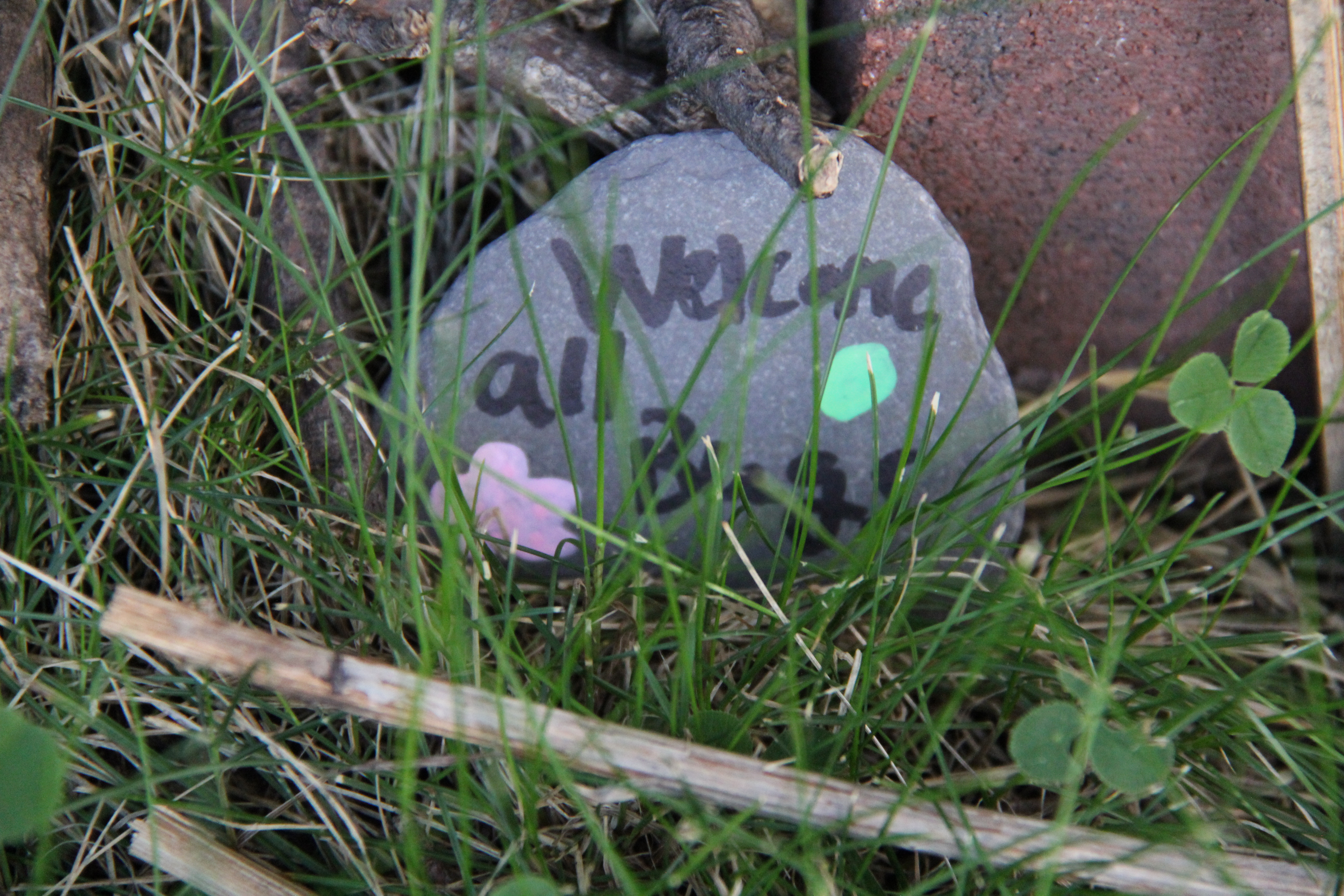
At the inn, a welcome sign for guests. (Minnesota Prairie Roots copyrighted photo August 2024)
In some ways, the inn and the bee lawn remind me of childhood days on the farm with our grass anything but weed-free and manicured. Dandelions and clover were prolific. No weedkiller or insecticides were used except on crops. No nothing applied to the grass, because who cared and who had time to nurture a lawn when there were crops to plant and cultivate and animals to tend?
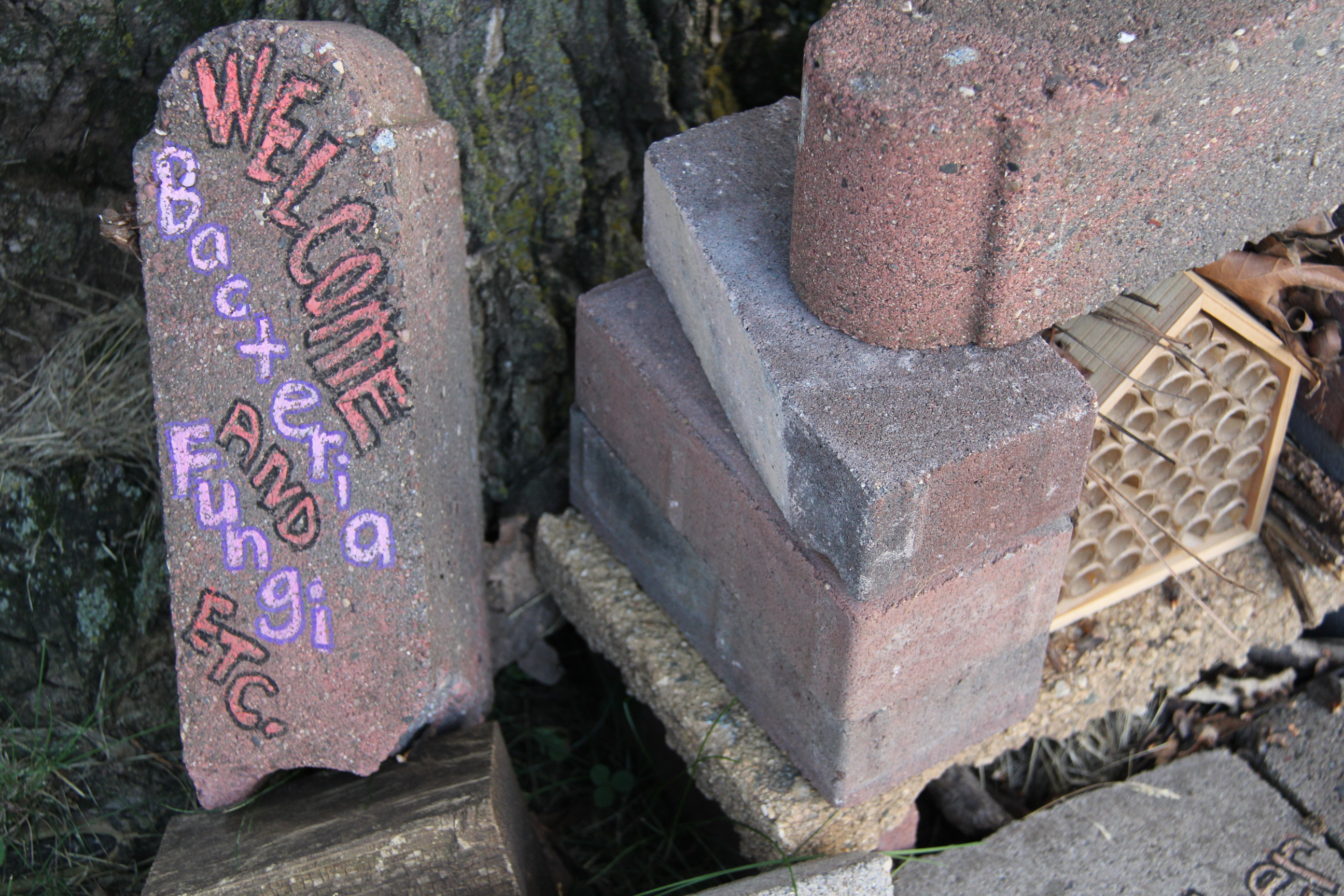
Housing for more than just insects, isopods, bees, spiders, worms and other critters. (Minnesota Prairie Roots copyrighted photo August 2024)
Times have changed as farming and yard care have evolved. Insecticide and herbicide usage is prevalent. We would be naive to think this has not affected pollinators like butterflies and bees. And so when I discover something like a bee lawn and an Invertebrate Inn, I feel a spark of joy, a sense of gratitude for those who create them.
High rise housing. (Minnesota Prairie Roots copyrighted photo August 2024)
I want my grandchildren to understand that this world they’ve been given is one that needs to be nurtured and appreciated, taken care of in a way that perhaps my generation did not. Sure I celebrated Earth Day, wore Earth Shoes and spouted environmental platitudes of the 1970s. But did that really mean anything, make any long-lasting impact? It was a beginning, I suppose.
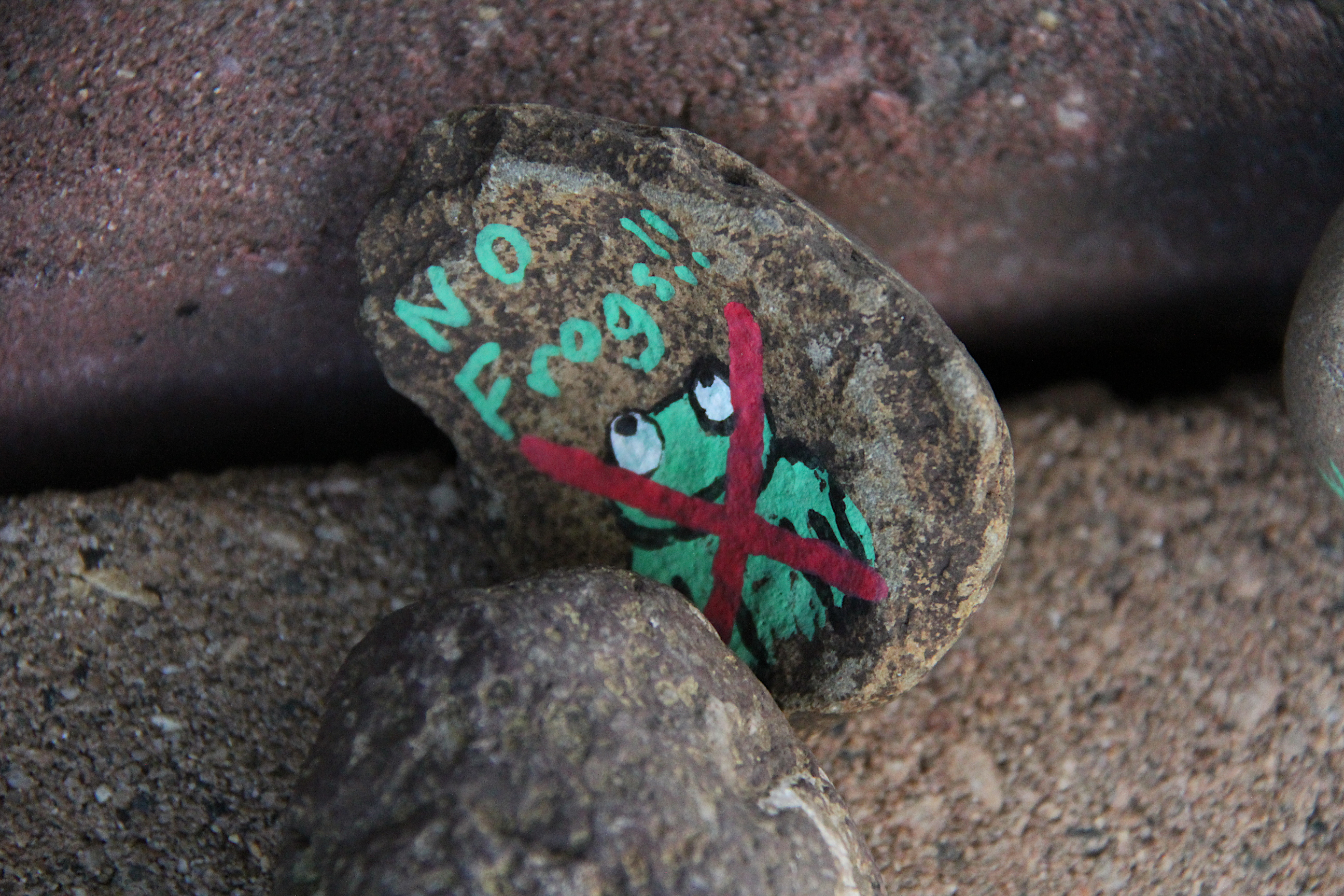
Frogs are banned from the inn. (Minnesota Prairie Roots copyrighted photo August 2024)
I want my grandchildren to ask questions in class, seek out information, learn in a way that is focused on curiosity rather than feeding back facts. I want them to care about the bees and the butterflies and the bugs.
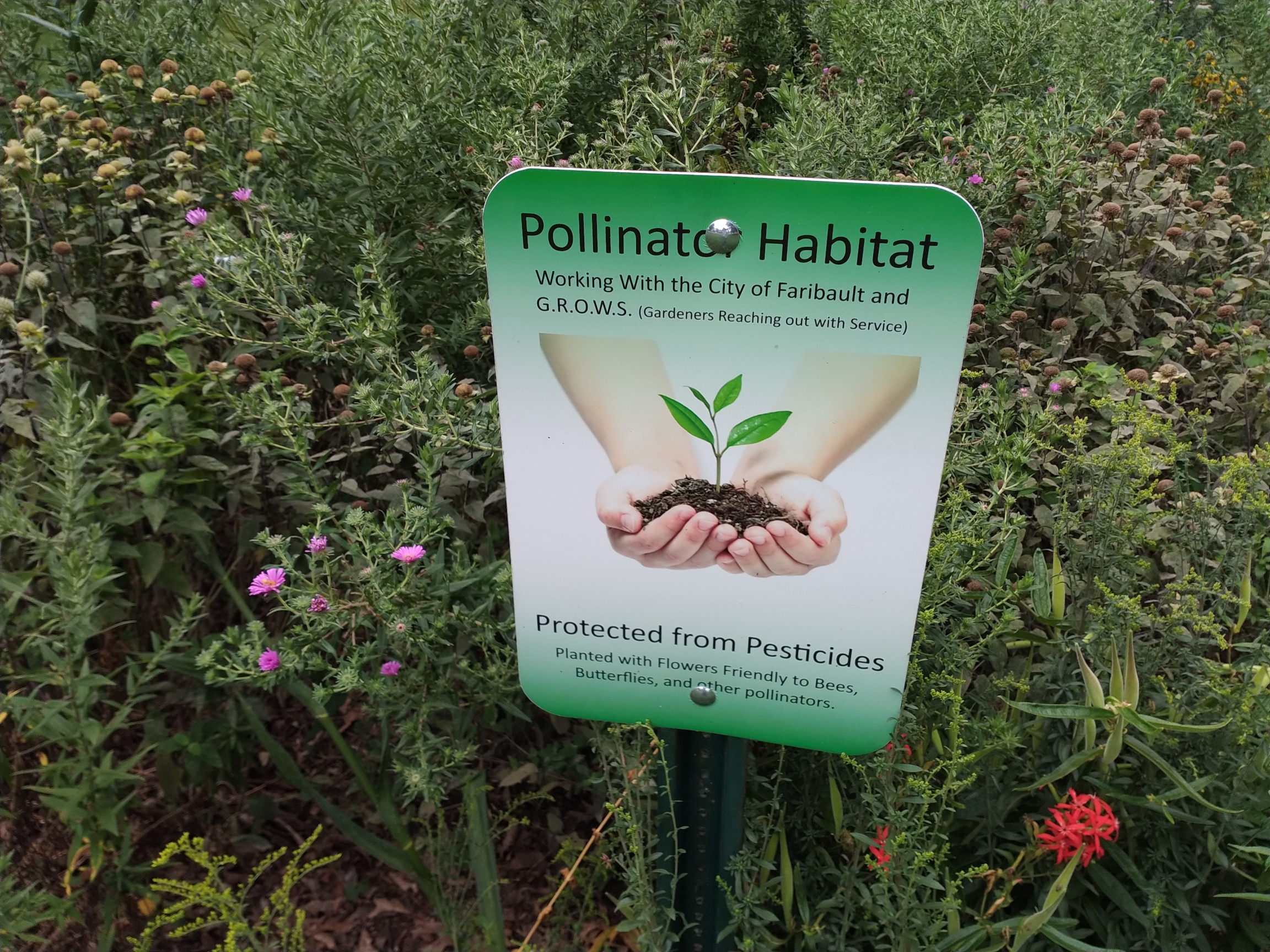
There are other bee lawns, pollinator gardens, etc., in my community, including this one in Central Park. (Minnesota Prairie Roots copyrighted photo August 2024)
I want them to connect with nature, to understand that what they do, or don’t do, to the earth matters. I want them to get their hands dirty in the soil, overturn rocks, hold bugs, pick up worms, plant flowers and, most of all, appreciate this natural world of ours. The science of it. The beauty of it. The peace it brings to the soul. The joy it brings to the spirit. And I want them to care. Always.
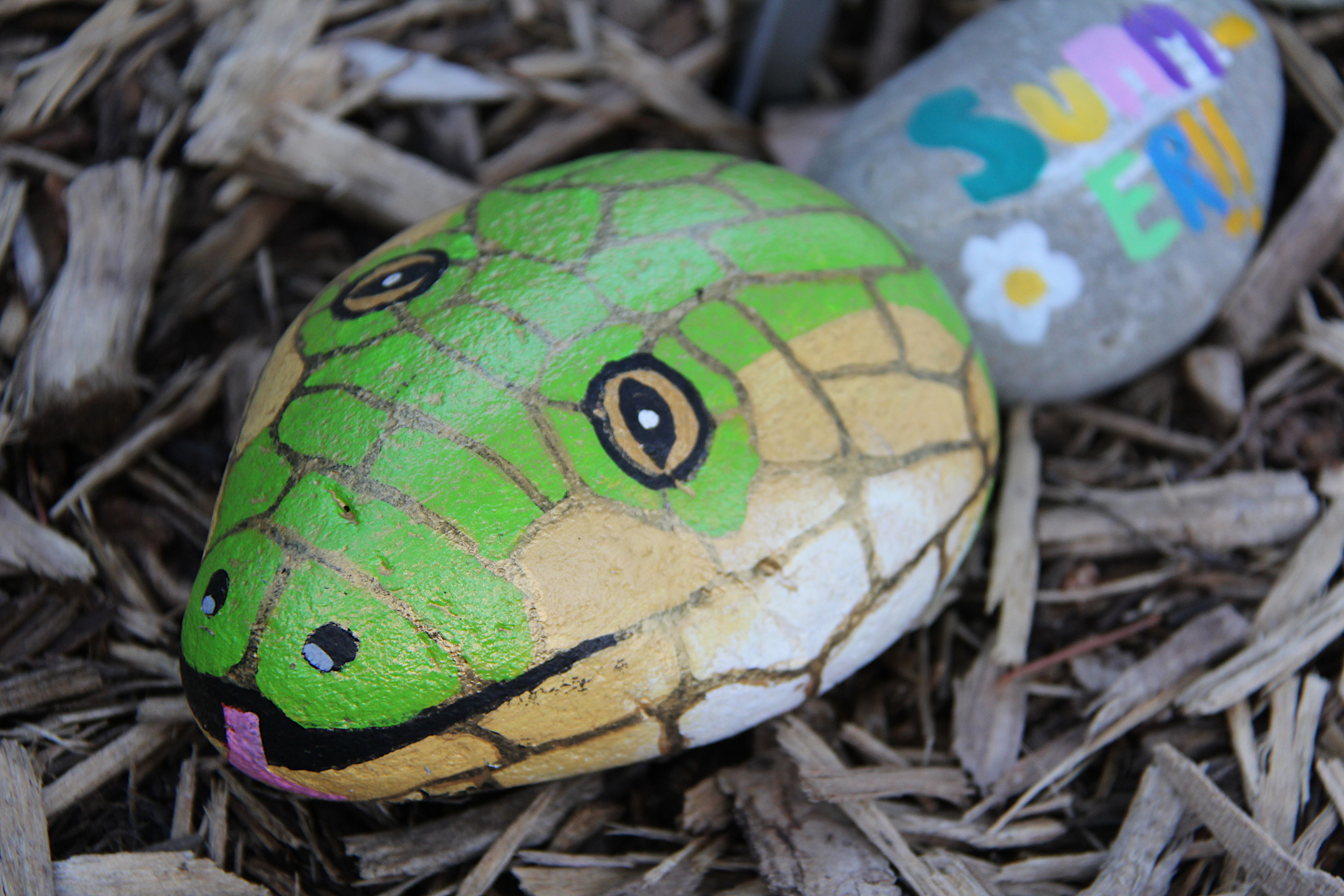
The snake I found in a Faribault garden. (Minnesota Prairie Roots copyrighted photo August 2024)
AS THE BIBLICAL STORY GOES, a cunning snake tempted Eve, convincing her that she could eat fruit from a tree growing in the middle of the Garden of Eden. She believed the snake’s claim of knowledge and immortality. Turns our he manipulated her. Things did not go so well after Eve ate the forbidden fruit and shared it with Adam.
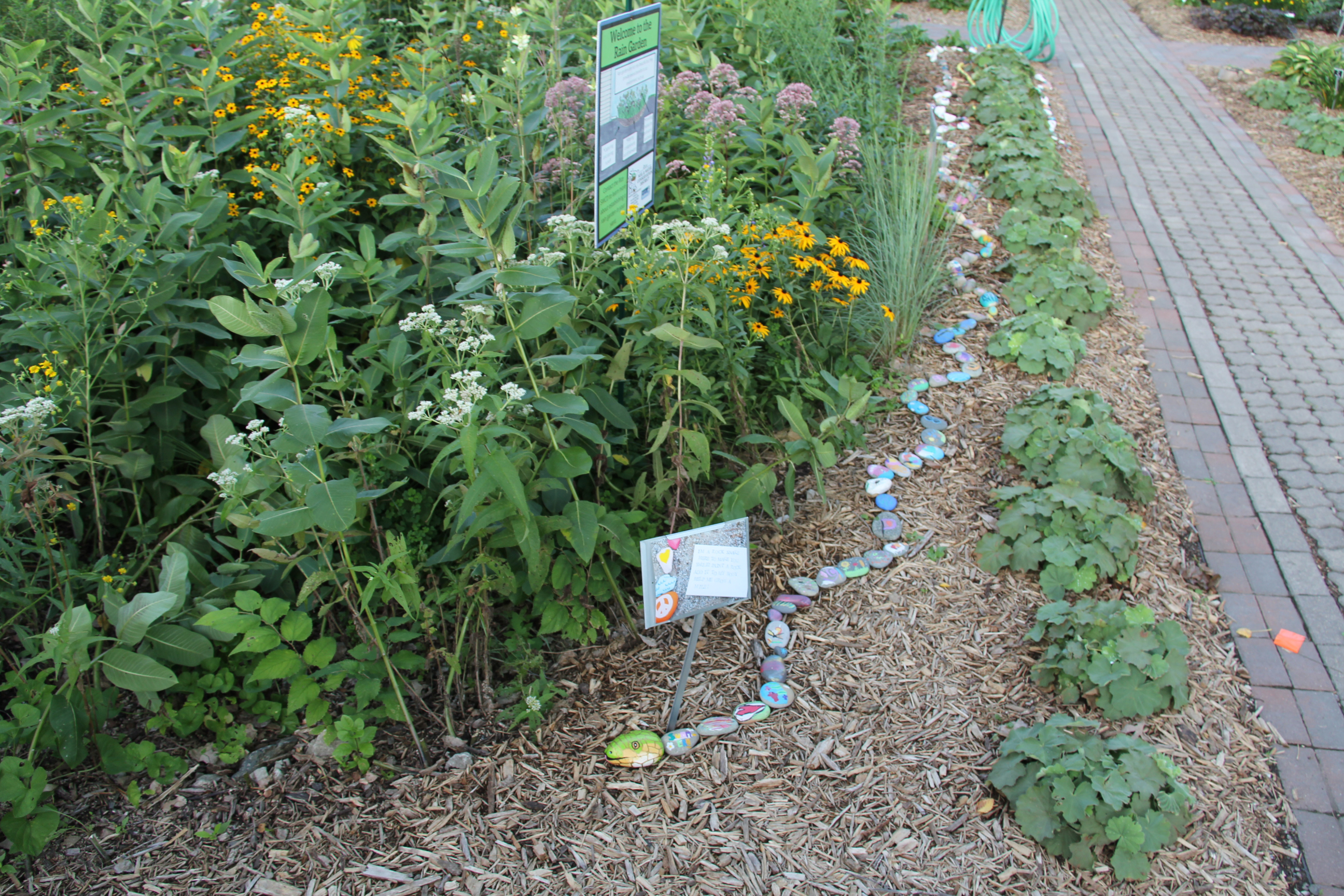
I stood atop a bench to get this photo of the long and winding Rock Snake. (Minnesota Prairie Roots copyrighted photo August 2024)
Not all snakes are liars and evildoers. Some, like the one I found recently in a Faribault garden, are quite the opposite. The Rock Snake that stretches an estimated 40 feet across wood chips between a brick pathway and a rain garden in the Rice County Master Gardeners’ Teaching Gardens exudes only goodness.
The Rock Snake slithers (well, not really) past the rain garden. (Minnesota Prairie Roots copyrighted photo August 2024)
I resisted the temptation to snatch away a segment—a painted rock—of the snake. Some 220 painted stones comprise the serpent. I learned a lesson from Eve. Be strong. Don’t give in to those who would mislead you.
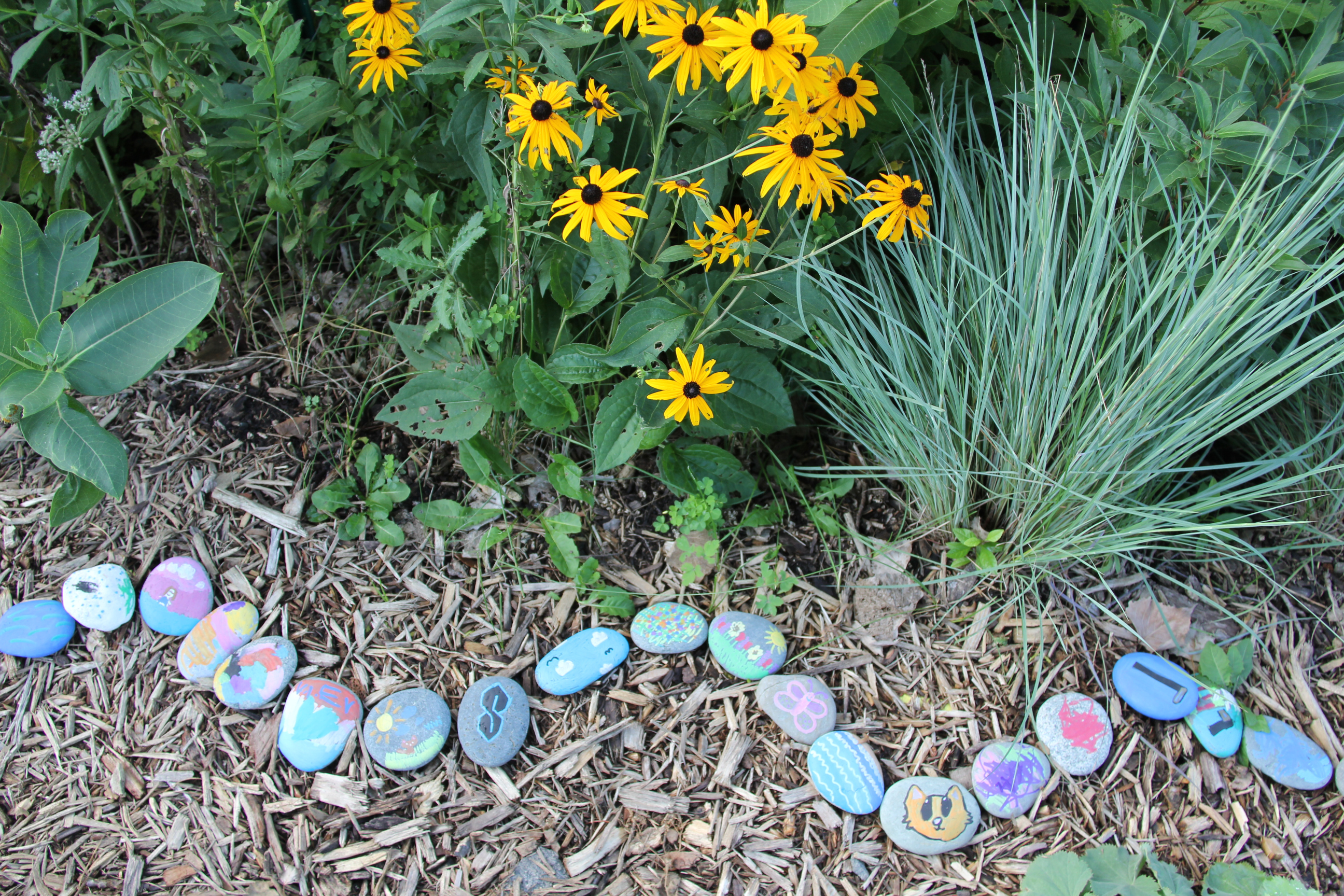
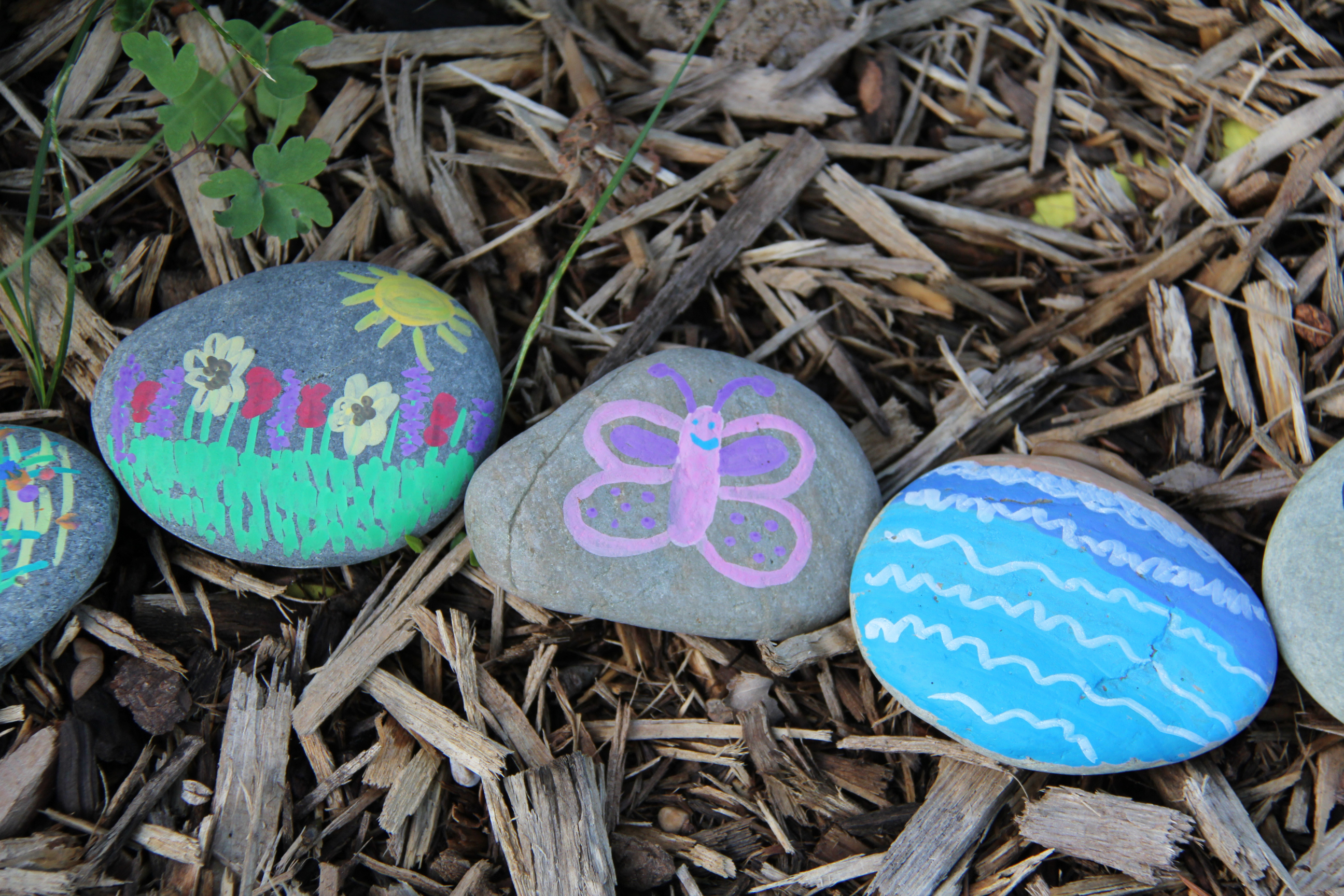
These painted rocks are themed to summer. (Minnesota Prairie Roots copyrighted photo August 2024)
More sunshine and flowers on the snake’s body. (Minnesota Prairie Roots copyrighted photo August 2024)
And yet more flowers bloom on the Rock Snake. (Minnesota Prairie Roots copyrighted photo August 2024)
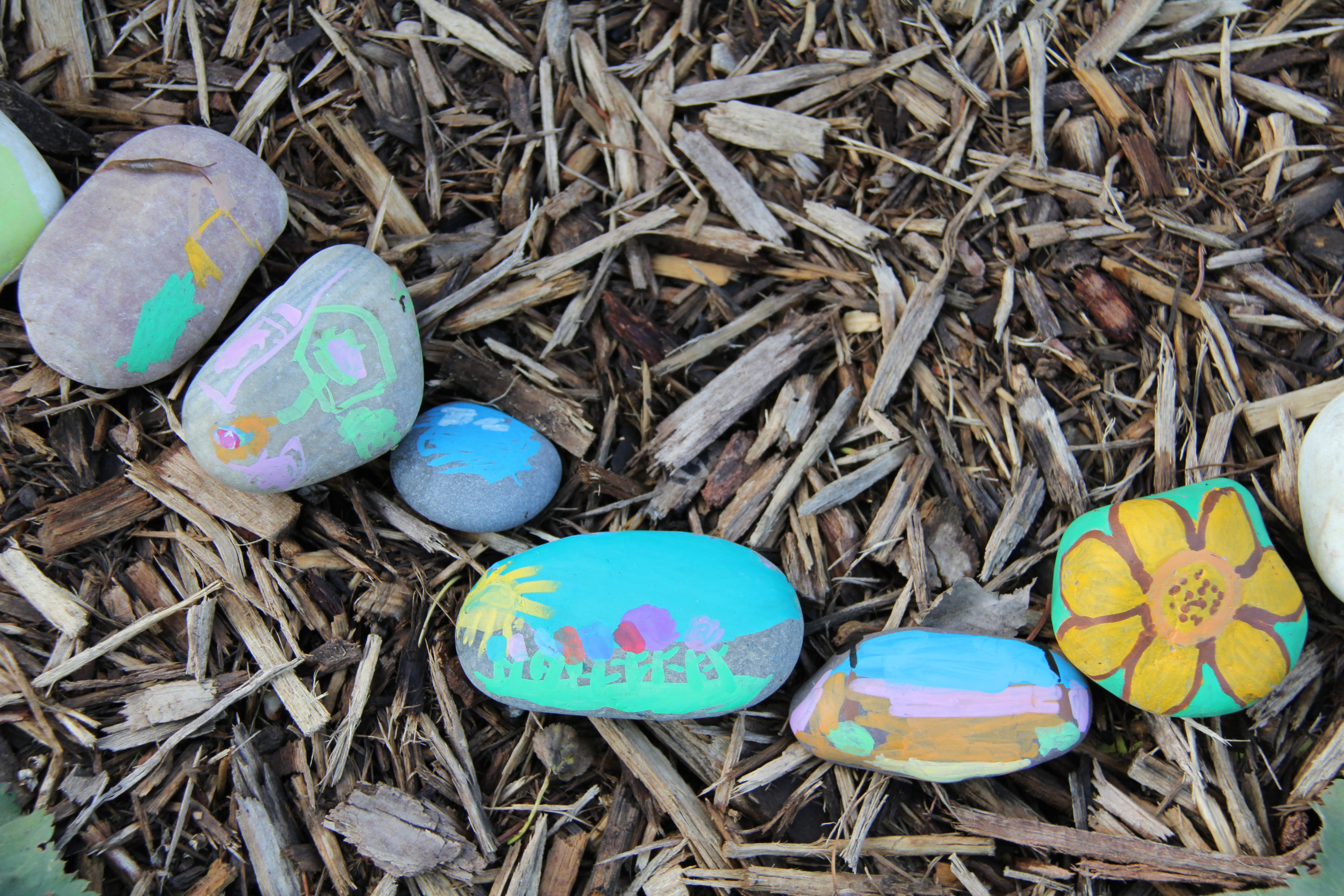
Rather, I opted to photograph and enjoy the Rock Snake with its inspiring, joyful messages, its colorful art. A posted sign invites people to add their own painted rocks, lengthening the snake designed to bring a smile.
(Minnesota Prairie Roots copyrighted photo August 2024)
(Minnesota Prairie Roots copyrighted photo August 2024)
(Minnesota Prairie Roots copyrighted photo August 2024)
And smile I did as I followed the snake’s winding body, bending low to study the art, the words. Many of the stones were painted at the Master Gardeners’ booth during the recent Rice County Fair.
An overview of a small section of the gardens. (Minnesota Prairie Roots copyrighted photo August 2024)
Water features include a bird bath, pond and fountains. (Minnesota Prairie Roots copyrighted photo August 2024)
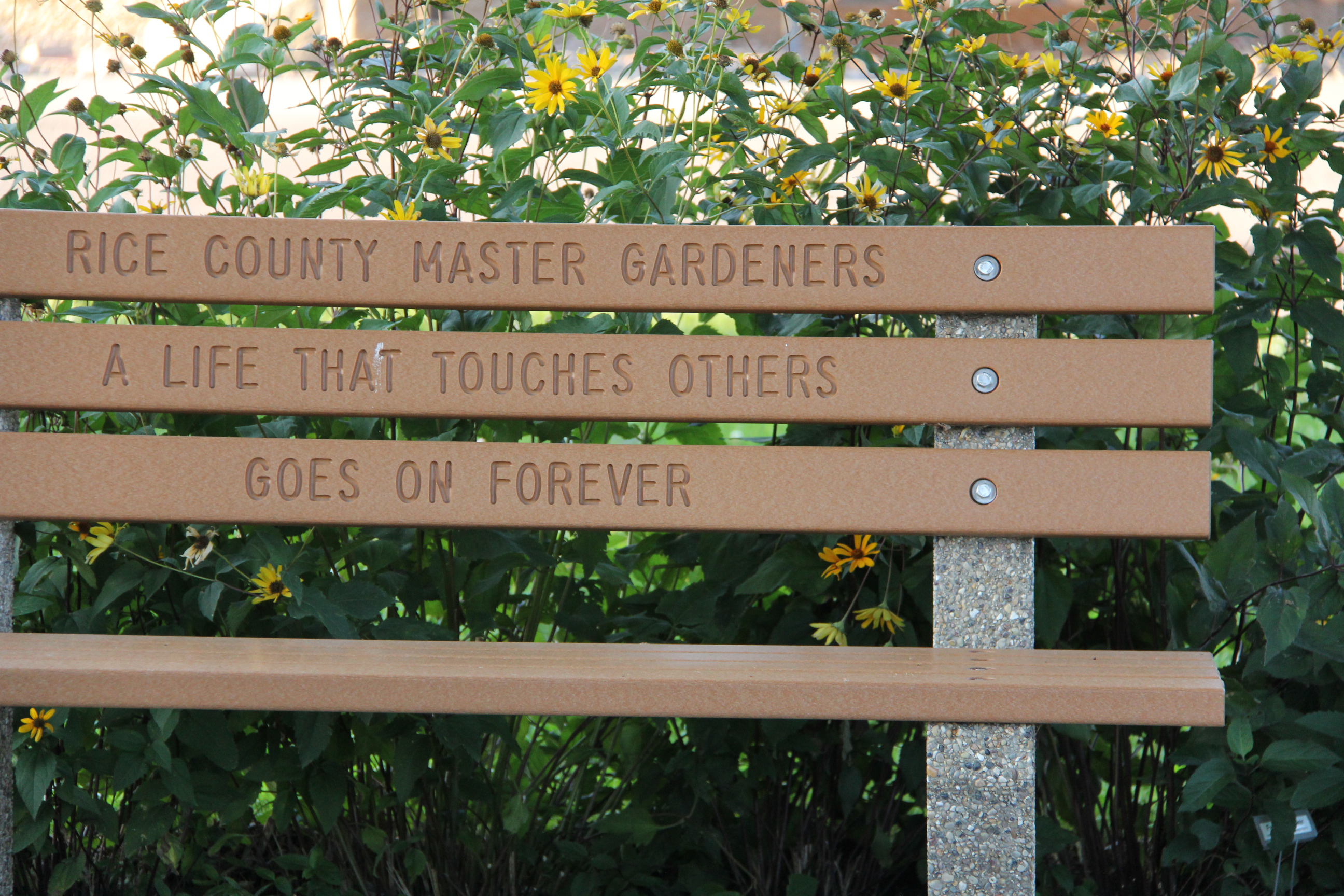
Several benches offer a place to rest, contemplate and enjoy the gardens. (Minnesota Prairie Roots copyrighted photo August 2024)
These gardeners, through their volunteer efforts, have created Faribault’s own Garden of Eden in a spacious area next to the conservation building and the Rice County Historical Society on the city’s north side. It’s taken years to get the garden to this lush, well-kept, welcoming space.
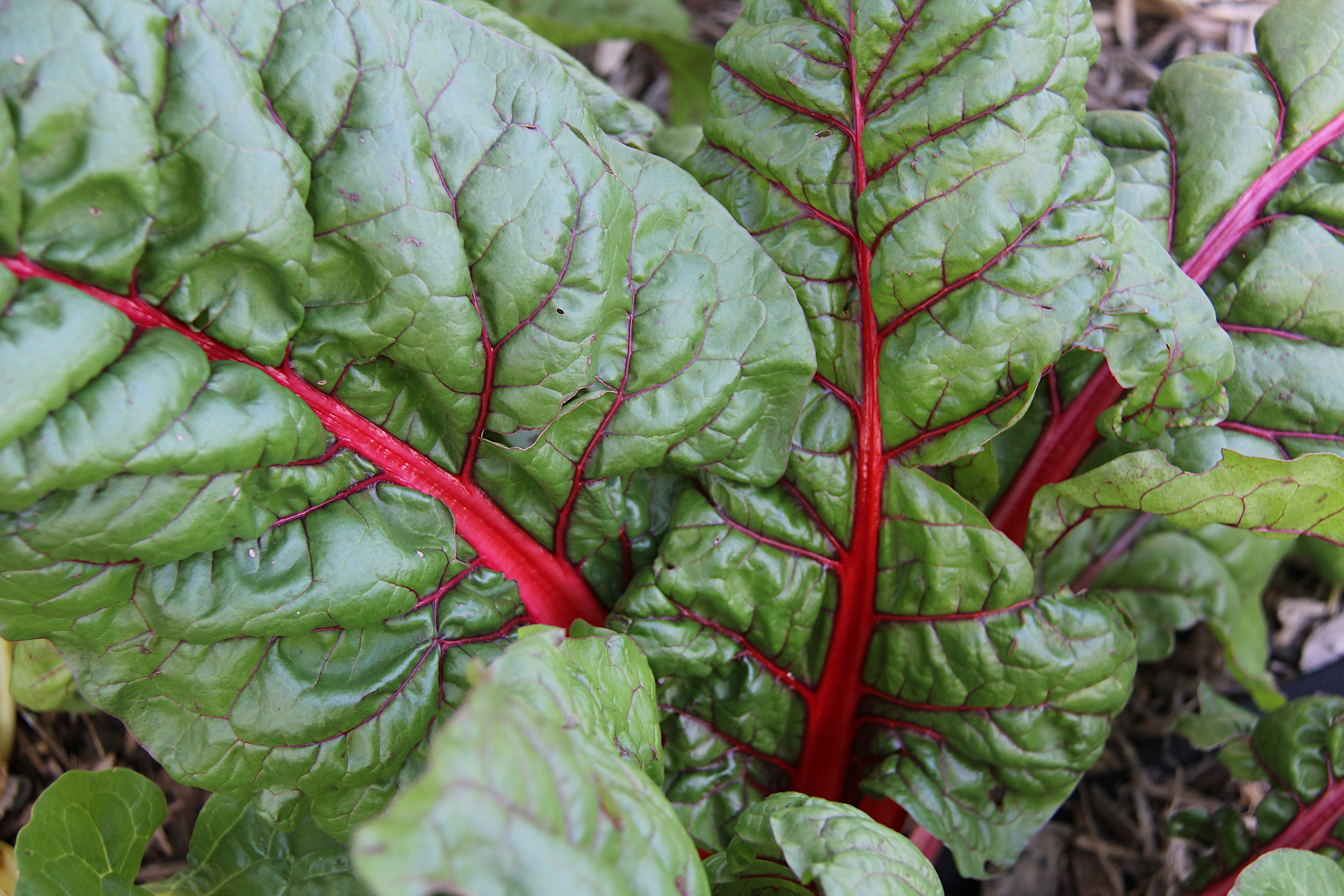
Swiss chard grows in the trial garden. (Minnesota Prairie Roots copyrighted photo August 2024)
I enjoy coming here, meandering among blooming flowers and plants, past the water features, pausing to examine the fairy garden. And now there’s more to see in the Rock Snake and a new bee lawn with habitat. There are trial gardens here and free seeds for the taking and benches for sitting. It is, indeed, a bit of paradise, a respite, a place to rest and contemplate and envelope one’s self in nature.
Flowers are always blooming. (Minnesota Prairie Roots copyrighted photo August 2024)
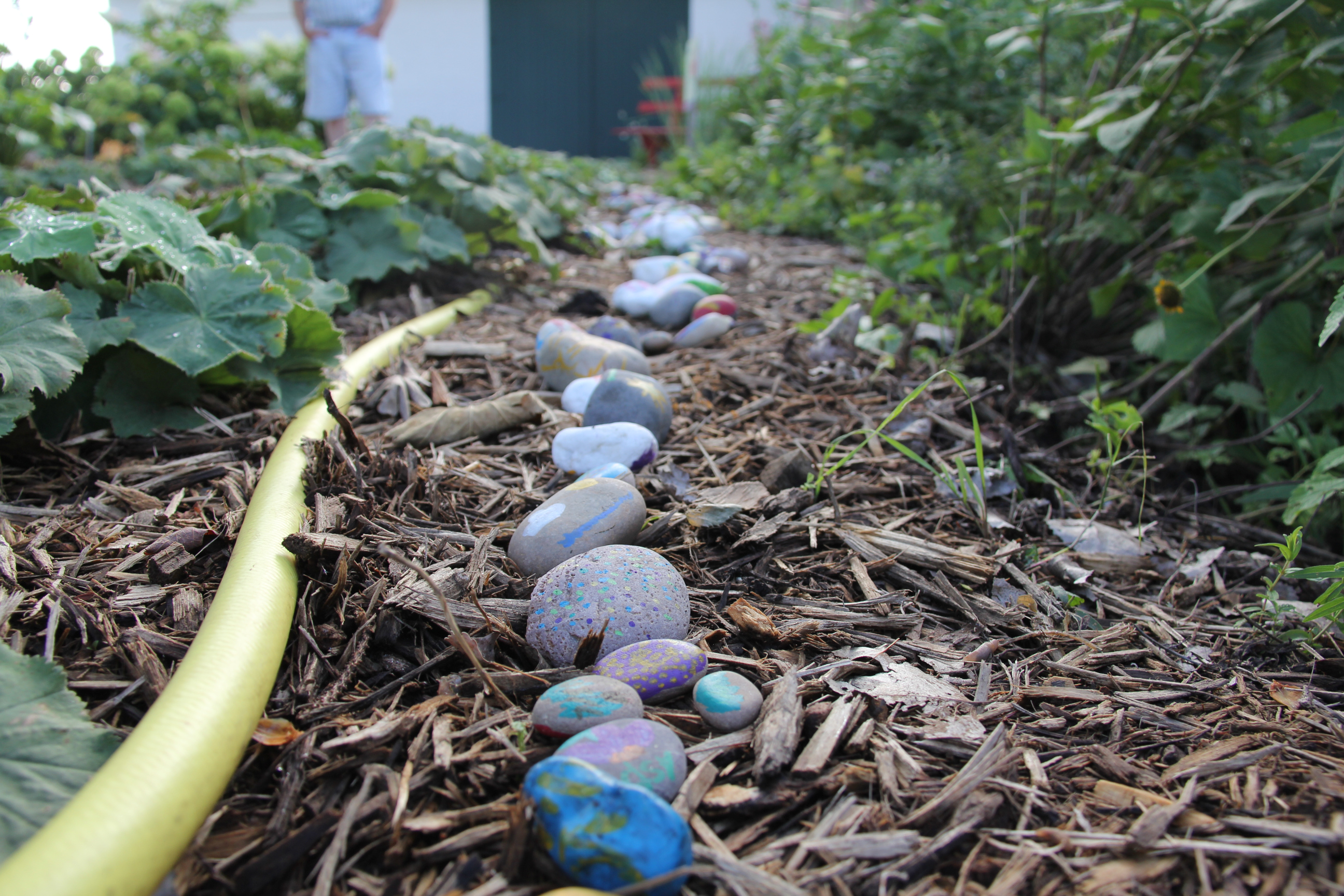
A garden hose runs alongside the Rock Snake. (Minnesota Prairie Roots copyrighted photo August 2024)
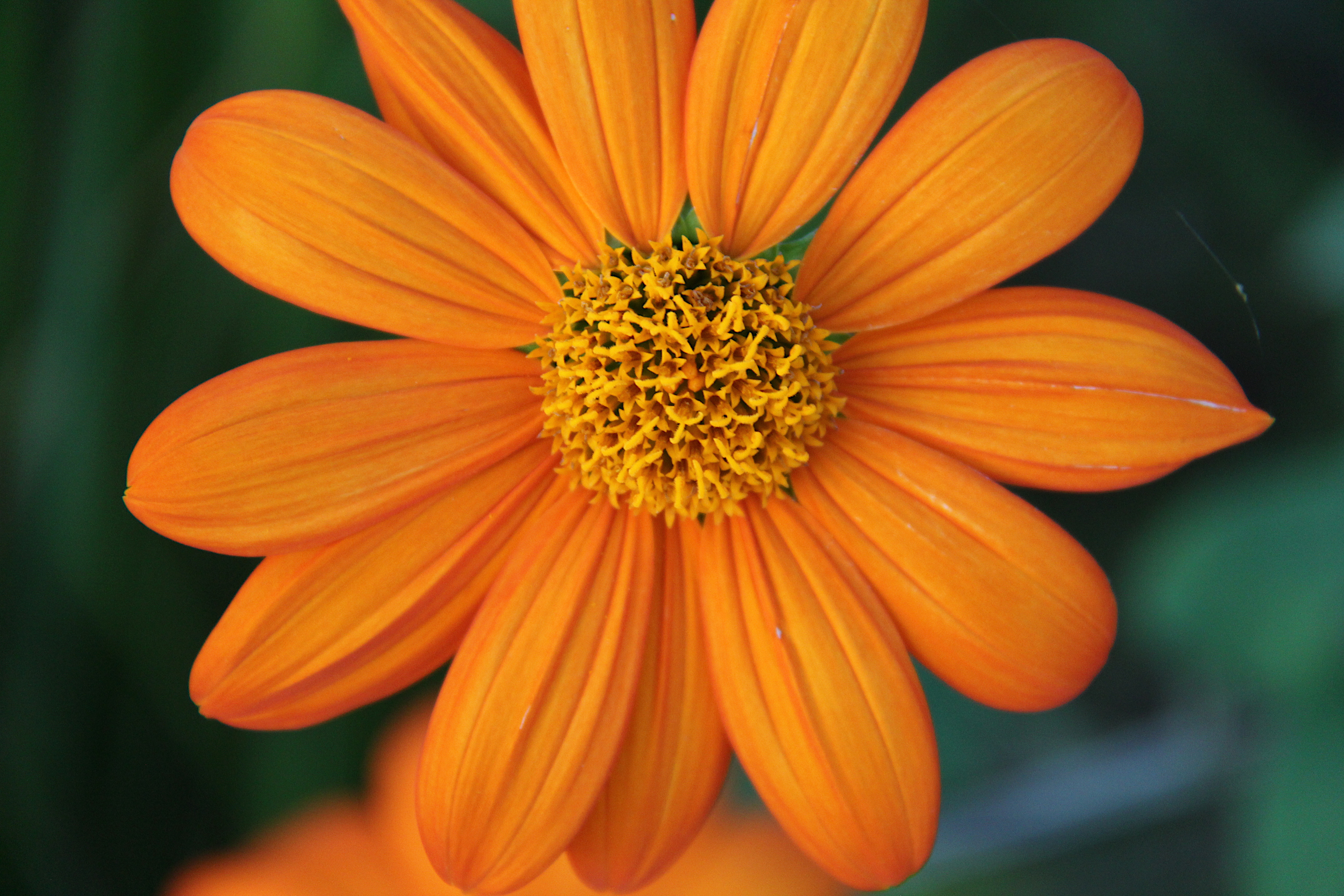
A sturdy dahlia blooms. (Minnesota Prairie Roots copyrighted photo August 2024)
Goodness thrives here. I experience it with my senses. My eyes take in the birds, blooms, bees, butterflies, the colorful Rock Snake. I smell the scent of blossoms. I hear water burbling in fountains, birds chirping. And if I could pluck vegetables from the trial gardens, I would assuredly taste goodness. But I won’t. I will not be tempted. Rather I will look and not touch. Leave and not take. I will leave this bit of Eden as I found it, beautiful and wondrous, a place of peace for anyone who visits.
Mouse art displayed in a show at the Owatonna Arts Center many years ago. (Minnesota Prairie Roots copyrighted file photo)
I AWAKENED HOPEFUL this morning. Hoping the mouse that ran into the living room Sunday evening, scurrying into a corner behind a floor lamp when I screamed, was trapped. Dead. That did not happen.
We awakened Monday morning to two unsprung traps still baited with fresh peanut butter. One in the basement, the other between the stove and cupboard.
Have I mentioned that mice terrify me? Or maybe, more accurately, that I am terrified of mice. I detest, hate, abhor them. Always have. I recognize it’s rather ridiculous to be afraid of mice given my size compared to theirs. But they are quick and creepy and varmints I do not want inside my space.
So there I was Sunday evening, feet up in the recliner, semi-watching the 9 pm news between reading Minnesota author Lindsay Starck’s terrifying novel, Monsters We Have Made, when I saw movement out of the corner of my eye. A mouse. Eeeek! I screamed, grabbed my phone, shot to the bedroom, slammed the door and climbed onto the bed. Rats. I forgot my book.
But at least I could Google “why mice come into your house in the summer” while Randy tracked the mouse. Apparently when the temps are as hot as they are now, they, too, want to cool off. Just as in winter, they want to be warm. I can’t fault them for that thinking. Do mice even think?
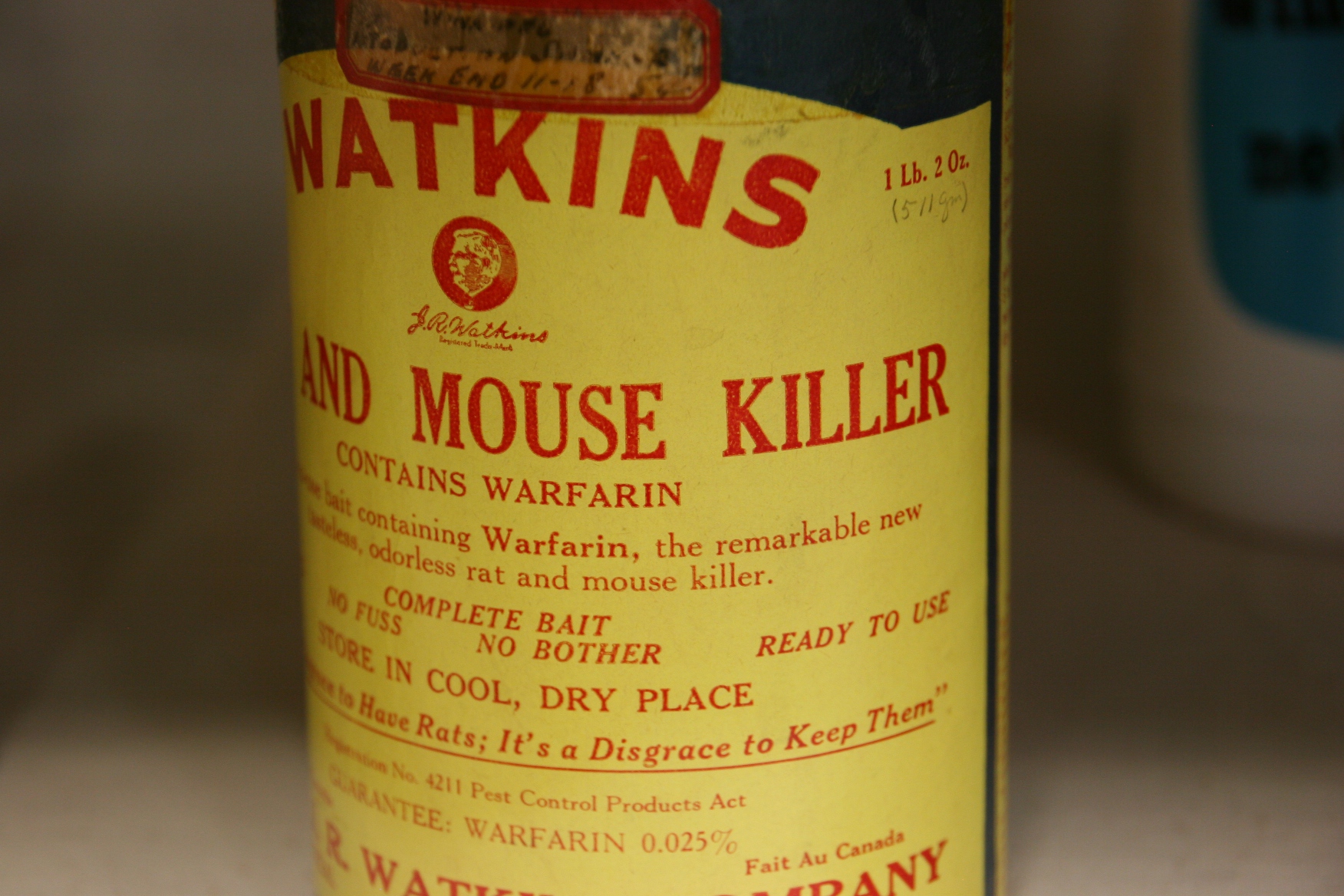
Mouse and rat killer spotted in The Watkins Museum in Winona during a visit years ago. (Minnesota Prairie Roots copyrighted file photo)
As I hunkered atop the bed, I felt hopeful that Randy would find and kill the mouse. I didn’t think that through. How? With his bare hands? Randy observed the mouse hurry behind the fridge. So he moved the fridge. We haven’t seen it since. But he did catch a mouse in the garage overnight. Same mouse? Highly unlikely.
We live in an old house, next to a wooded hillside, with lots of entry points for mice. So I expect mice and we have caught many in our 40 years living here. Typically, though, they stay in the dark basement. I never invited them onto the main floor. The neighborhood mice apparently did not get the warning memo to stay out. They are risking their lives.
Now why do I detest mice? It started with the scritch-scratch of mice running inside the bedroom walls of my childhood farmhouse. Mice in the house. Mice in the barn. Mice in the hay and straw bales. Mice in the granary. Even with a passel of roaming cats.
In college, I opened a silverware drawer to see a mouse staring up at me.
When I was nearly third trimester pregnant with my youngest, I awakened to pee in the middle of the night at my in-law’s farmhouse. There, in that tiny closed bathroom, a mouse circled. Screaming drew no one to my rescue. Eventually, I climbed onto the edge of the bathtub, tossed a pile of wet towels on the mouse and fled upstairs to my sleeping husband. True story.
Years later, I reached into the sink one morning to empty water from a crockpot left soaking there overnight. Atop the water floated a dead mouse. Enough to scare anyone, especially me. At least it was dead, the sole consolation. I slammed the lid on the crockpot, carried it outside and Randy dealt with it after work. That crockpot never cooked another meal.
Yes, I have experienced mouse trauma. Too often. Traps are set. Should I see the mouse again this evening, I will be sure to grab Monsters We Have Made before sequestering myself in my bedroom to read before dreaming nightmares of monstrous, uncaught mice.
TELL ME: Are you afraid of mice? Any mouse stories to share? Or cats to share?
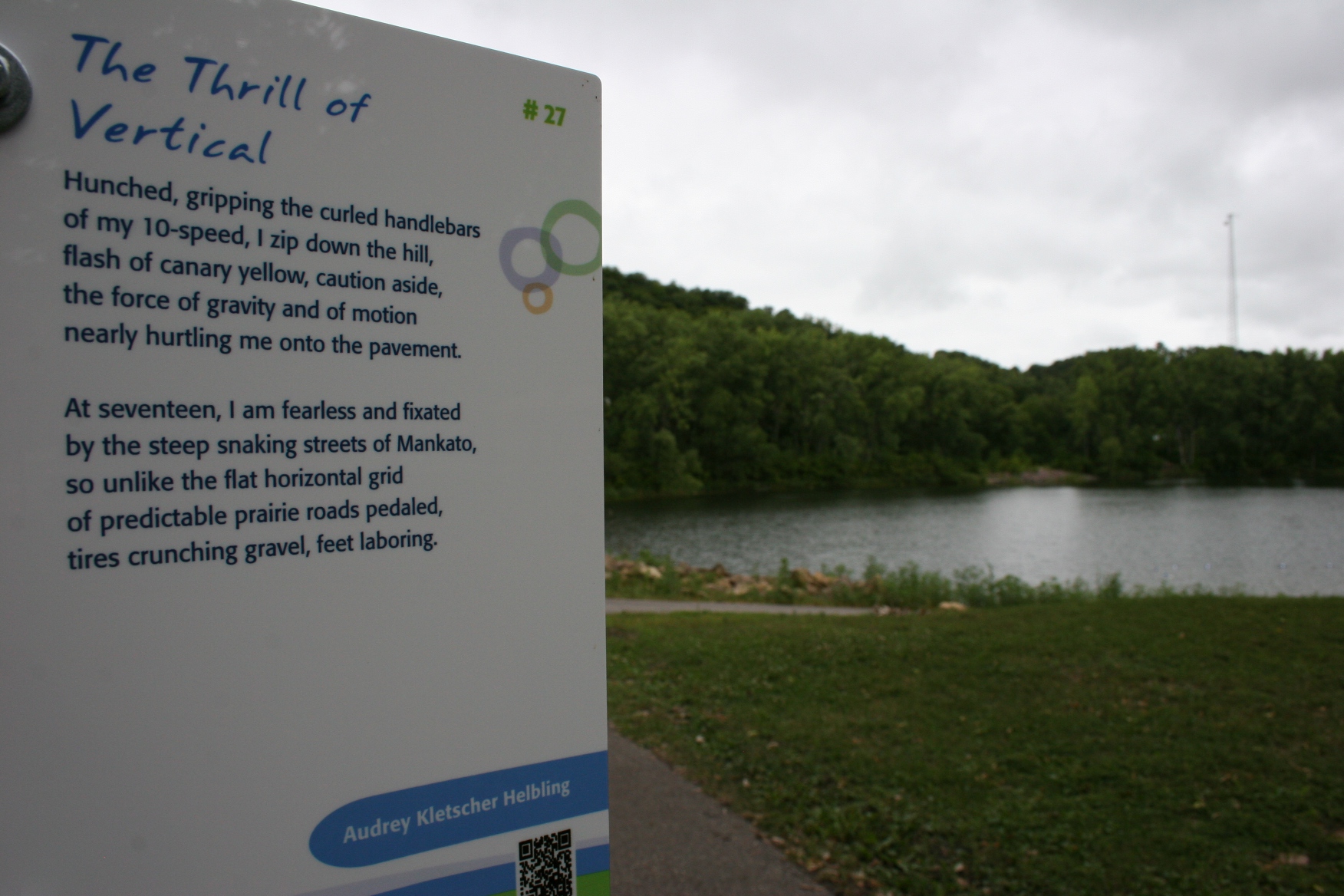
“The Thrill of Vertical,” posted on a sign in Spring Lake Park as part of the 2013 Mankato Poetry Walk & Ride, was inspired by my college years in Mankato. (Minnesota Prairie Roots copyrighted file photo 2013)
I ARRIVED IN MANKATO with a canary yellow 10-speed bike, a simple orange backpack, my Sears portable manual typewriter, a clock radio, a quilt stitched by Grandma Ida and a suitcase filled with clothes. The year was 1974, the beginning of my freshman year at Bethany Lutheran College, high atop a hill in this southern Minnesota city.
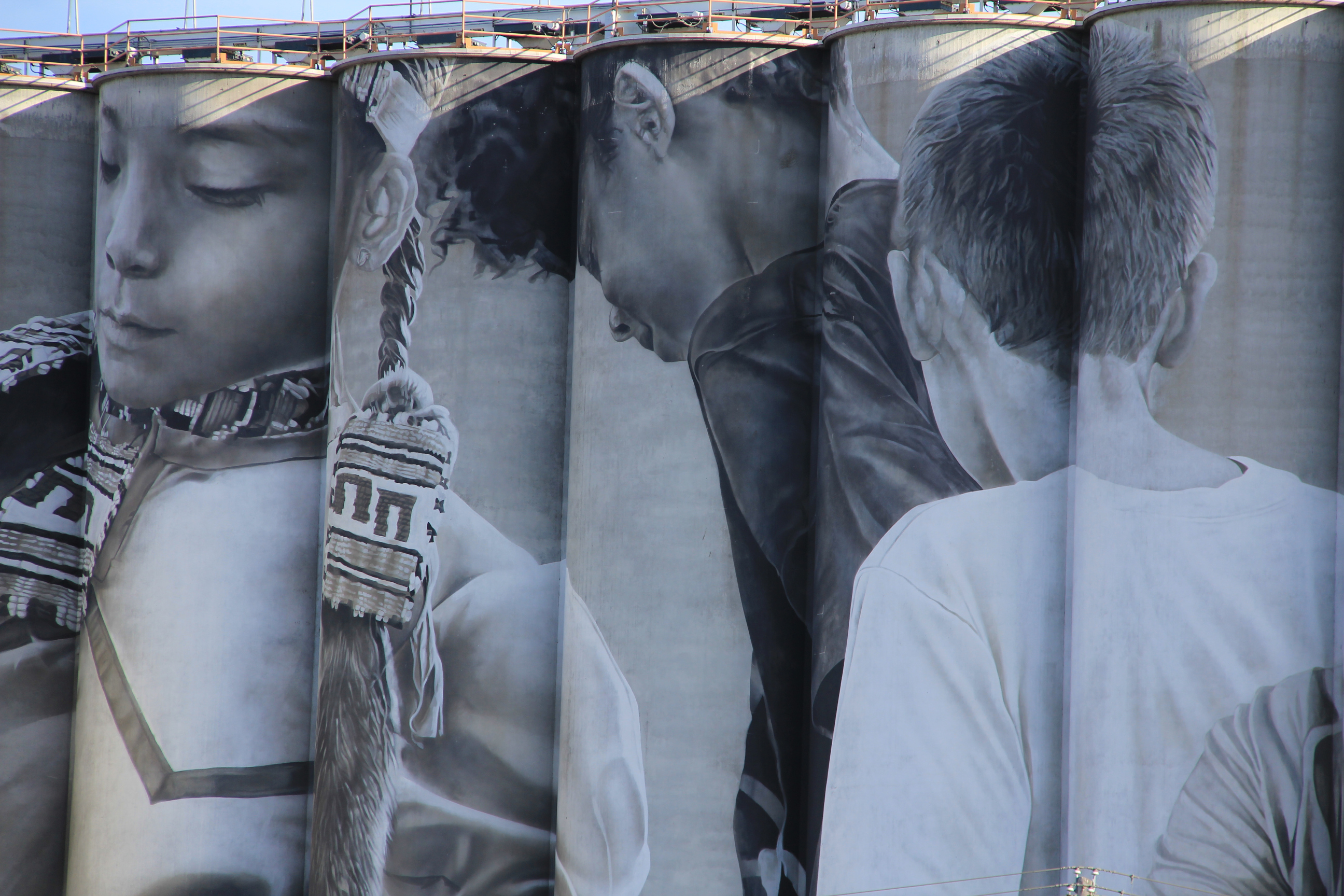
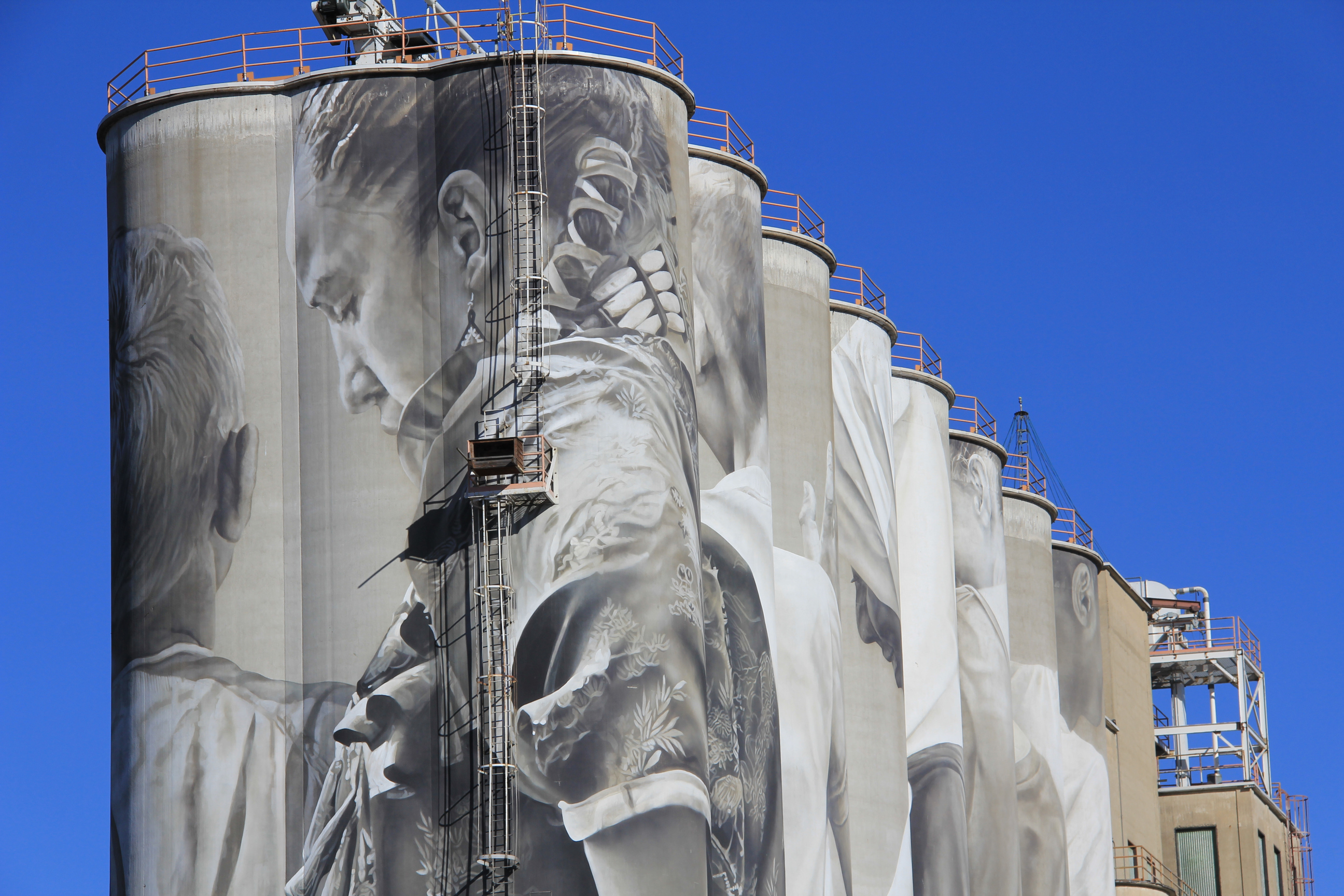
The Ardent Mills grain silos, a massive public art project, dominate the skyline along the Minnesota River in the heart of Mankato. The art depicts the diversity of the area. (Minnesota Prairie Roots copyrighted photo November 2023)
I was only 17, nervous, but ready to leave my childhood farm home some 85 miles to the west. I met my roommate, Rhonda, a beautiful high school cheerleader from western Wisconsin. She was well-traveled, outgoing, vastly different than me, quiet and shy. And she had a stereo for our cozy fourth floor corner dorm room. We were set. Despite our differences, we got along splendidly.
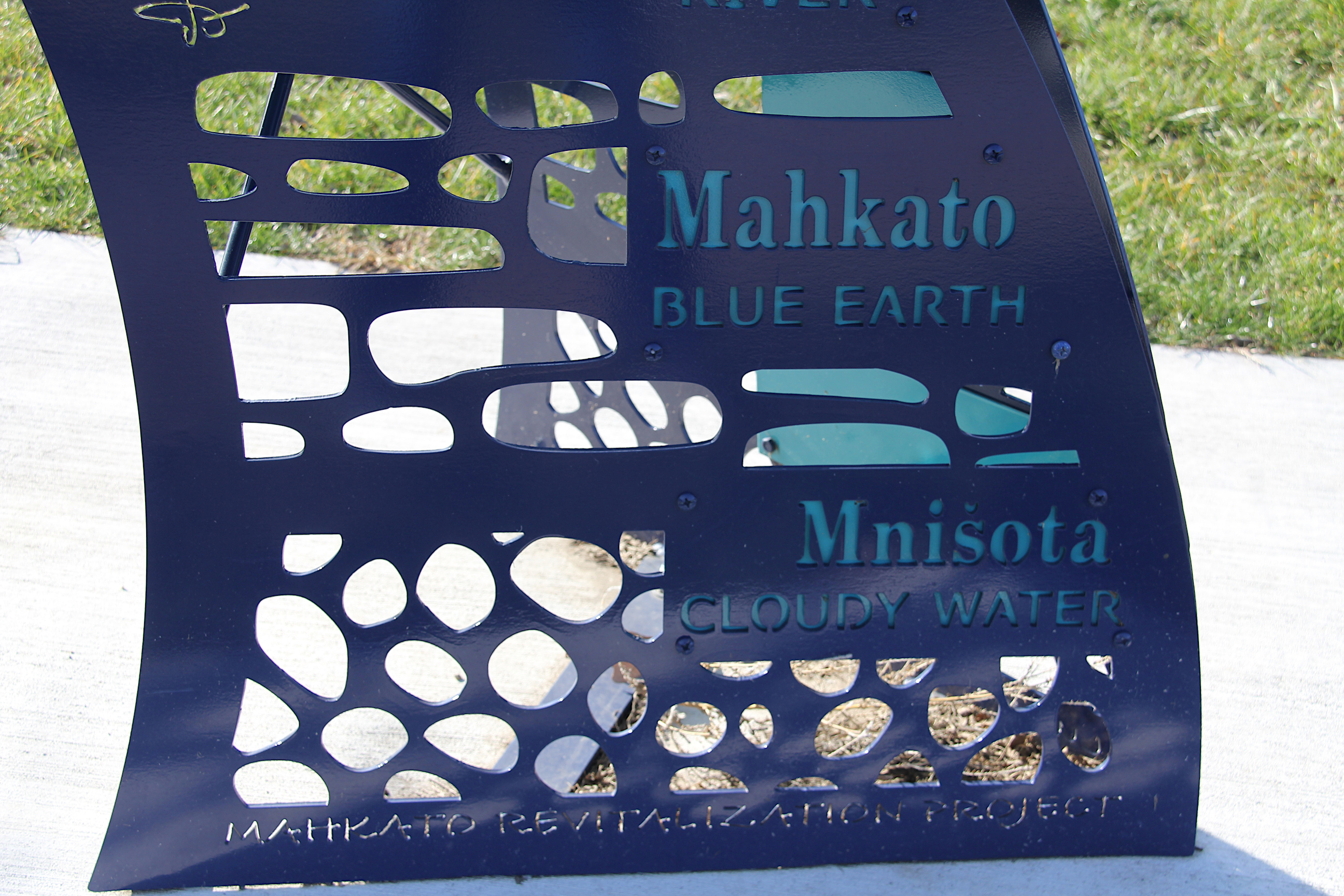
This shows the base of a place sculpture along the Minnesota River in Riverfront Park. The words for Mankato and Minnesota are written in the Dakota language and translated. (Minnesota Prairie Roots copyrighted photo November 2023)
As I settled into the big city (Mankato’s current population numbers around 45,000), big for me when you come from a town of 362, I began to feel at home. Not only on campus, but also in the community. Happy Chef became a go-to destination for conversation and for warm loaves of bread glazed with powdered sugar frosting. A Christian coffee house also drew me off campus. I wasn’t in to the bar scene.
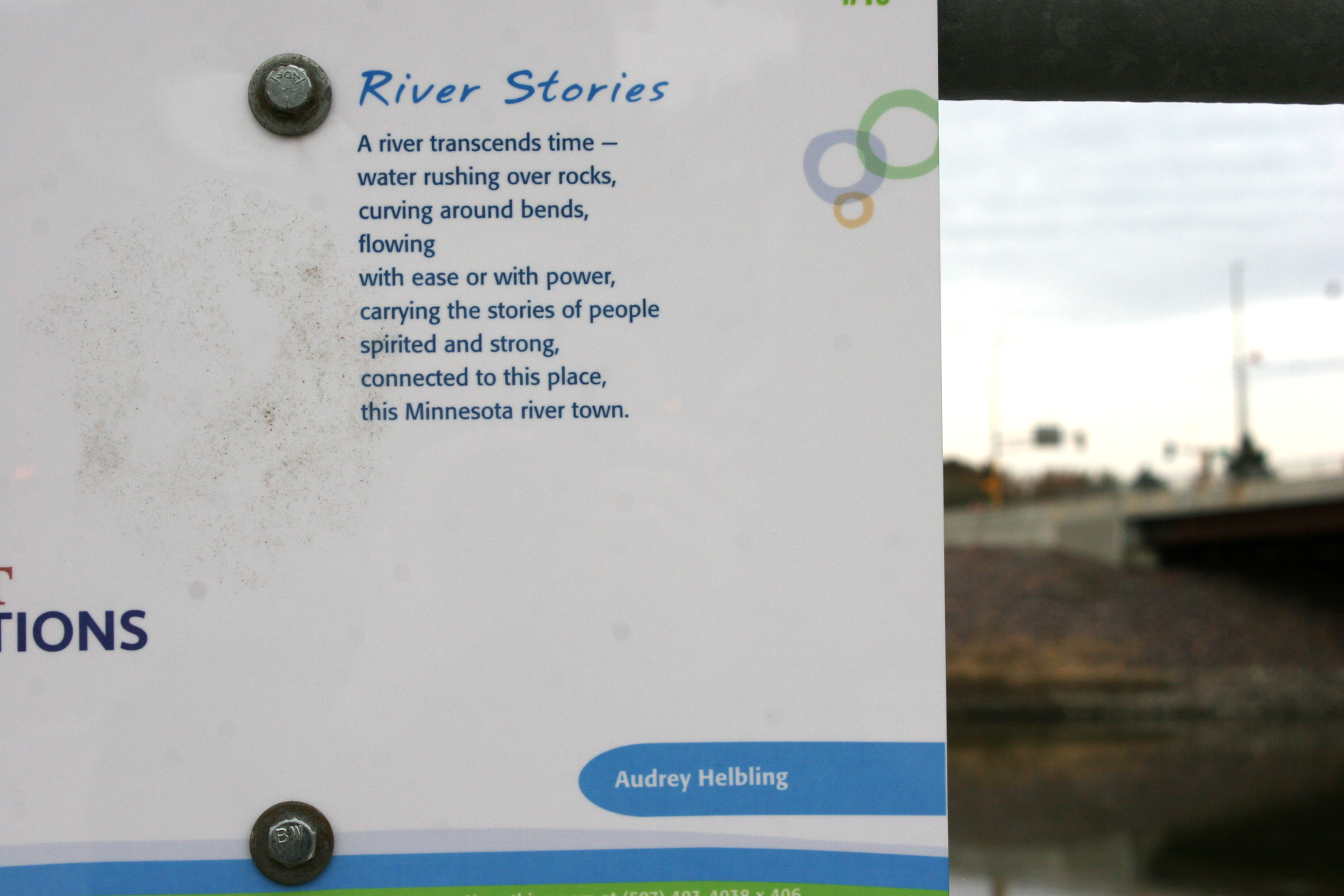
My poem, “River Stories,” highlights the Minnesota River, which winds through Mankato. It was posted along the river as part of the 2019 Mankato Poetry Walk & Ride. (Minnesota Prairie Roots copyrighted file photo 2019)
For nearly four years, Mankato became my home away from home. The place that grew me educationally and as a person. I earned an associate of arts degree from Bethany, then only a two-year college, before moving on to Minnesota State University, Mankato, to study journalism. I worked at the college newspaper, “The Reporter.” In the winter of 1978, I earned a mass communications degree with an emphasis in news/editorial. Soon thereafter, I started my career as a newspaper reporter and photographer. Years later I returned to work for “The Mankato Free Press,” heading up the paper’s St. James-based news bureau (me living and working from my apartment long before working remotely became a thing).
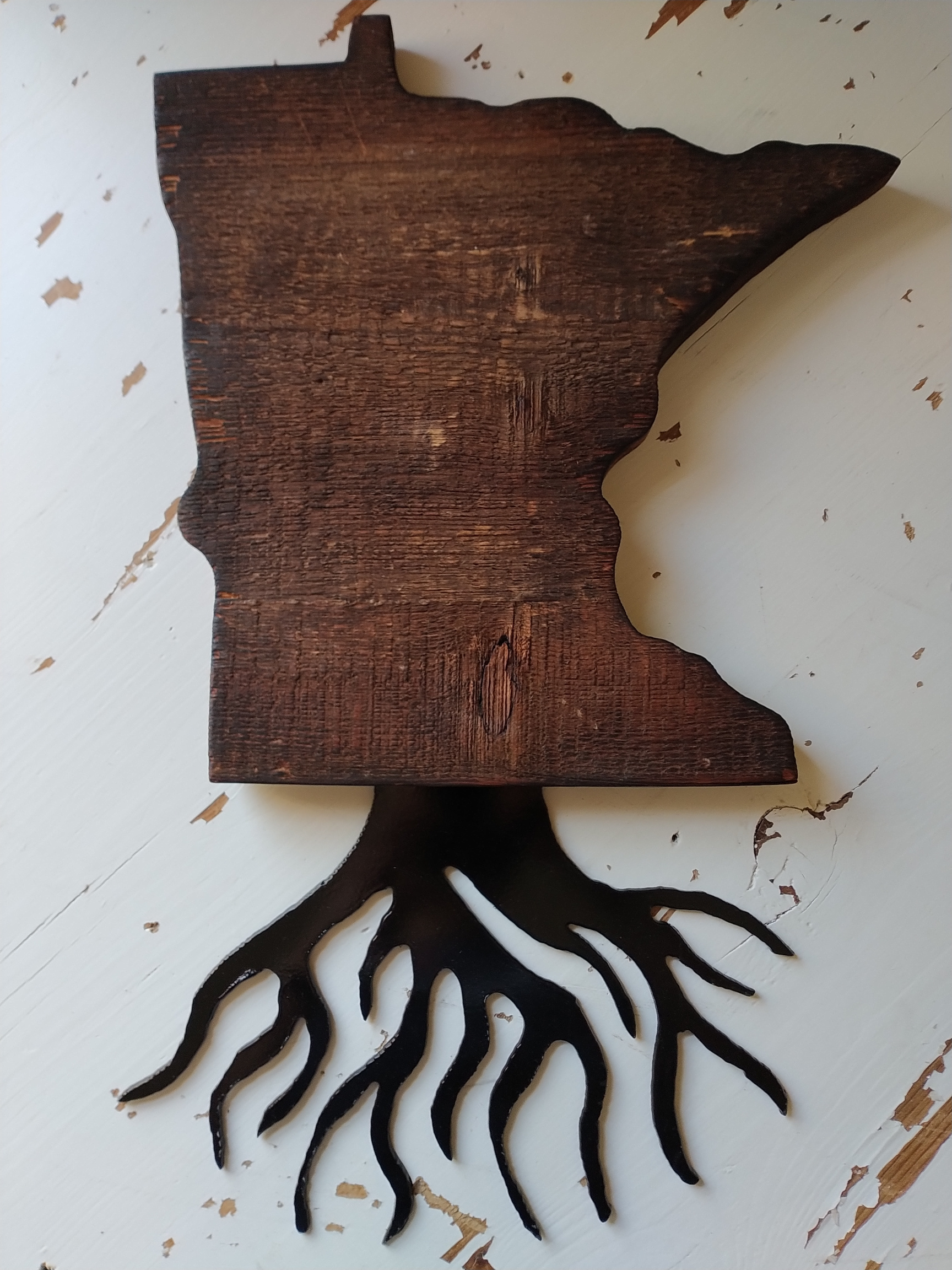
I am rooted in Minnesota. This art hangs in my home office. (Minnesota Prairie Roots copyrighted file photo)
Why am I sharing this with you today? Because of Minnesota Governor Tim Walz, now the vice presidential candidate on the DFL ticket. He lived in Mankato, where he worked as a social studies teacher and football coach at Mankato West High School. Walz, likely unfamiliar to most Americans up until recently, has put our state, specifically Mankato, on the map. As a life-long Minnesotan, I am proud to see my state, considered by many to be fly-over land, in the spotlight. No matter your political leanings, such publicity is good for Minnesota.
I’ve only attended the Minnesota State Fair a few times in my life. This mug came from my father-in-law’s collection. The State Fair started yesterday. (Minnesota Prairie Roots copyrighted file photo)
Like Walz, flannel shirts hang in my closet. I am wearing one as I write on this cool August morning. Flannel truly is a Minnesota thing, no matter political affiliations. We like our hotdishes (not “casseroles”) and the Minnesota State Fair (although not me; too many people), our cabins Up North. We claim musicians Bob Dylan and Prince, the Coen Brothers (of “Fargo” movie fame) and other notables like vice presidents Hubert Humphrey and Walter Mondale.
The grain silos are a massive work of public art. (Minnesota Prairie Roots copyrighted photo November 2023)
I cannot imagine living elsewhere, even if I don’t especially like the frigid cold and snow of a Minnesota winter. I loved winter as a Redwood County farm girl. Minnesota is home. I live 40 miles northeast of Mankato, a city originally inhabited by the Dakota. Mankato is a river town, a college town, a regional shopping hub, a community with a rich (but not always “good”) history. It is home to many creatives. I’ve been part of that with poetry showcased on signs through the Mankato Poetry Walk and Ride.
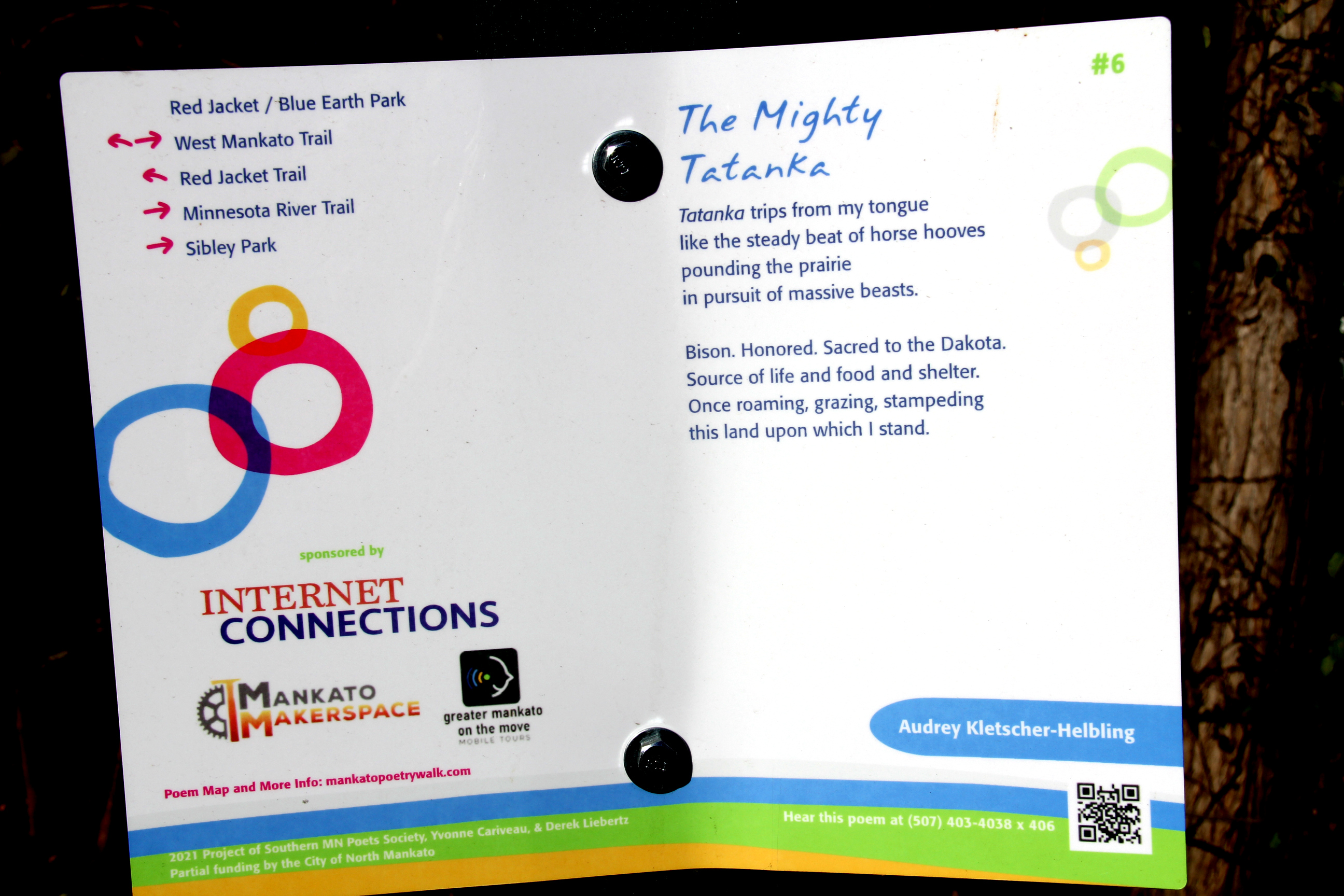
My latest poem, “The Mighty Tatanka,” posted along the West Mankato Trail near West Mankato High School. (Minnesota Prairie Roots copyrighted photo November 2023)
My connection with, and appreciation of, Mankato all started in that fourth floor dorm room with a roommate who was nothing like me. Despite our differences, we connected, forged a strong friendship, together grew and matured. We were on the cusp of our lives. Young. Open to new ideas and learning. The future held endless possibilities. For me, the 17-year-old with the canary yellow bike. And for Rhonda with her stereo system.
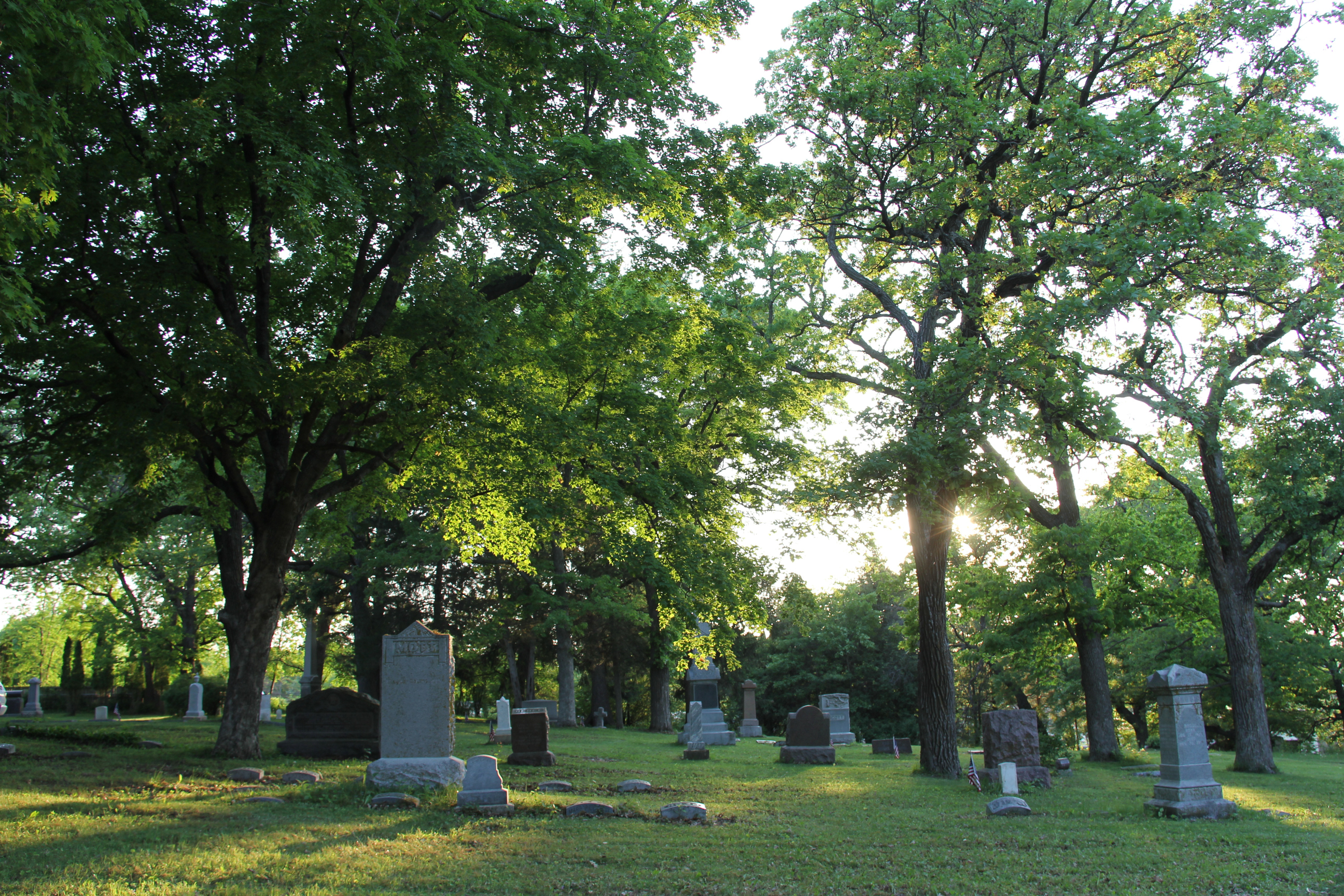
Oak Ridge Cemetery, Faribault. (Minnesota Prairie Roots copyrighted file photo)
FOR ANYONE WHO APPRECIATES local history, especially cemeteries, the Rice County History Museum in Faribault is the place to be at 7 pm Thursday, August 22. Tom Rent, an Oak Ridge Cemetery volunteer, will present “Preserving Faribault’s Oldest Cemetery, Oak Ridge.”
It’s sure to be an informative talk focusing on the cemetery’s history, operation and preservation. Rent will also share photos, stories, headstone symbology, preservation methods and future plans to maintain Oak Ridge Cemetery. Plus, he’ll talk about some of the people who helped shape Faribault and Rice County.
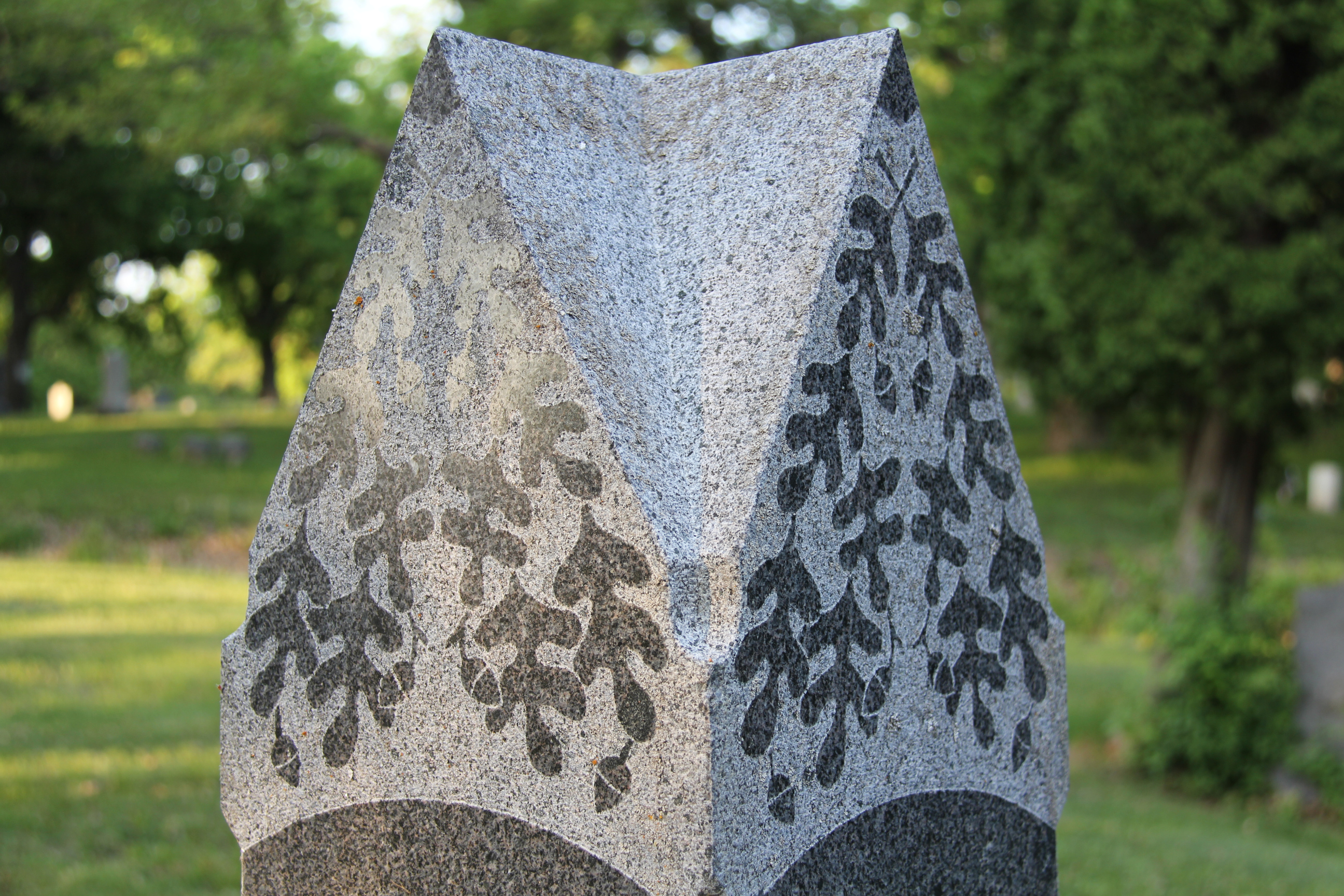
Oak leaves fittingly grace the top of a grave marker at Oak Ridge Cemetery. (Minnesota Prairie Roots copyrighted file photo)
As someone who did not grow up in this region of Minnesota, I’m always interested in learning more about this place I’ve called home for 42 years now. I’ve explored a lot of cemeteries, including Oak Ridge. Cemeteries fascinate me with their history, art, stories, natural beauty, peacefulness and aura of reverence.
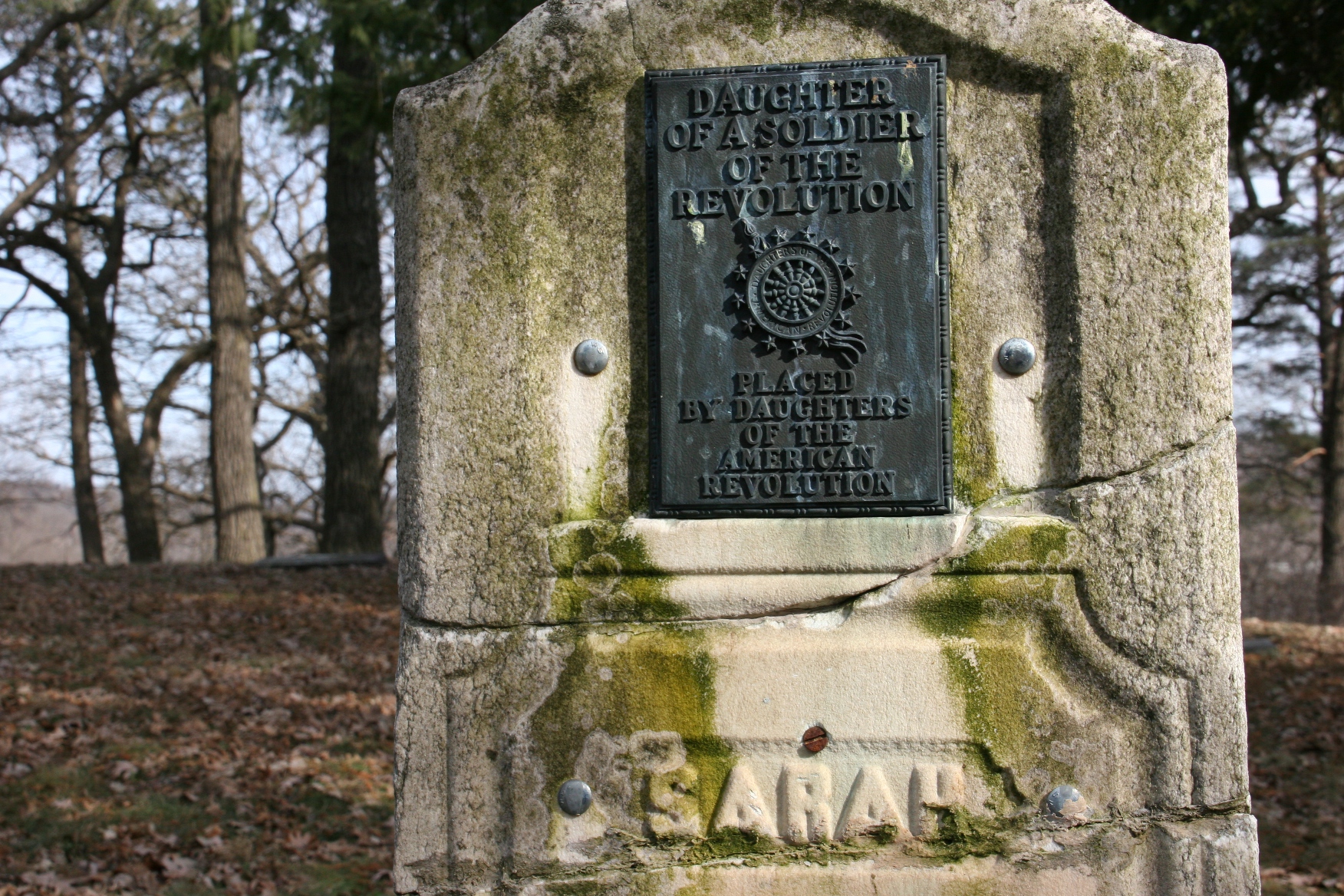
Sarah, daughter of a Revolutionary War soldier, lies buried here. (Minnesota Prairie Roots copyrighted file photo)
Oak Ridge Cemetery, founded in 1857, sits high atop a hill on Faribault’s north side just off Minnesota State Highway 3. It’s a beautiful, wooded location filled with oak, maple and spruce trees, and many aged headstones. There are names—like Nutting and Buckham—recognizable as key figures in local history. There are Civil War and Spanish American War veterans and a daughter of an American Revolutionary War soldier buried here. Senators and representatives, too. Local leaders and farmers. Immigrants and paupers and people from all walks of life. People with stories. So. Much. History.
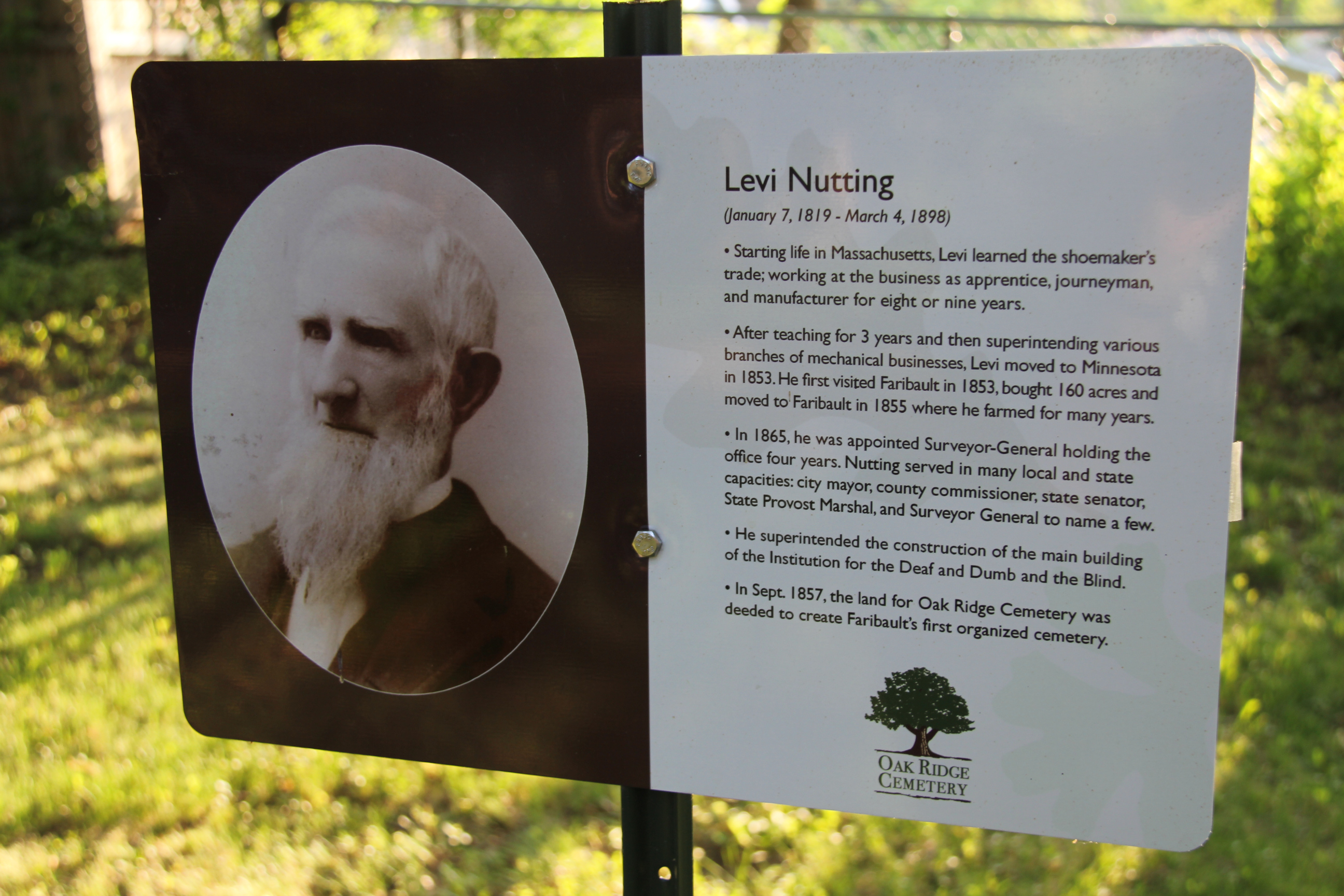
Levi Nutting was important in early Faribault history, as noted in this cemetery signage. (Minnesota Prairie Roots copyrighted file photo)
I especially like that the caretakers/volunteers of Oak Ridge have installed signage profiling some of the people buried in the cemetery. For those like me who are curious about the stories behind the deceased, this is valuable information. I always want to know more beyond names and dates of birth and death. The Oak Ridge Cemetery Facebook page offers lots of historical info, too.
Efforts have also been underway to restore aged tombstones in the cemetery.
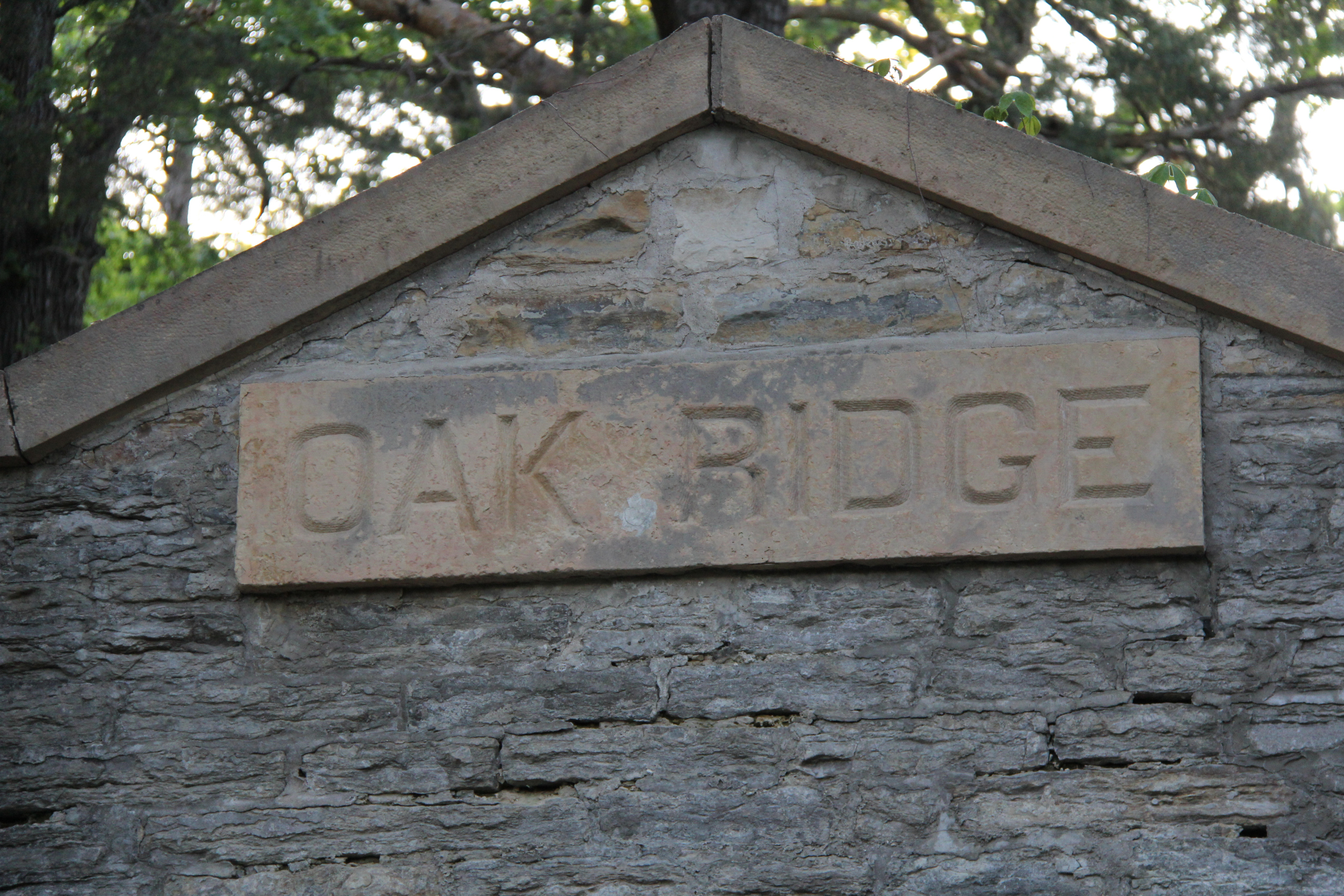
Identifying signage on the limestone crypt at Oak Ridge. (Minnesota Prairie Roots copyrighted file photo)
I expect Tom Rent will cover much of this in Thursday’s talk. He, like so many others, cares deeply about those who lie buried beneath the canopies of trees at Oak Ridge Cemetery.
FYI: To reserve a seat at Thursday’s presentation, call 507-332-2121, email rchs at rchistory.org or stop at the history museum. The program is free to Rice County Historical Society members and $5 for non-members.

















 Minnesota Prairie Roots
Recent Comments