Minnesota Prairie Roots

Writing and photography by Audrey Kletscher Helbling

Rock ‘n rolling in Hamburg June 18, 2011

LAST SUNDAY MY HUSBAND and I drove into Hamburg, just because we’d never been there. It was along the meandering path we chose for our trip back to Faribault from west central Minnesota.

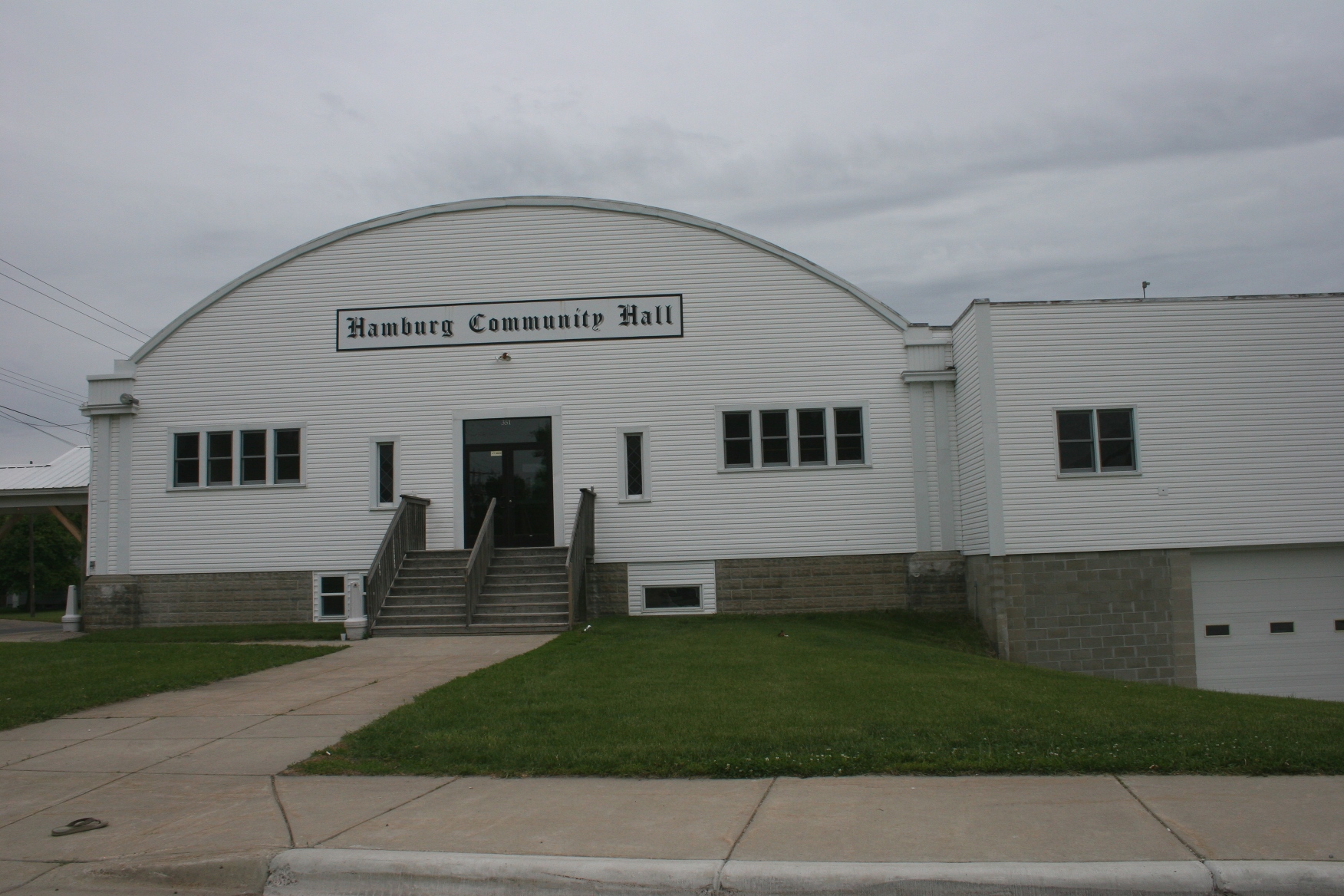
We didn’t hang around in Hamburg, simply went into town, turned around and drove back out. As we passed the community hall in this town of around 500, I snapped this photo. I appreciated the vintage look of the building and wondered how many times locals have gathered here to celebrate.

I imagined dance feet scuffing oak floors, brides launching bouquets, crepe paper streamers sagging from the ceiling, gray-haired ladies sipping coffee, accordions weaving in and out.

I did not imagine Rock ‘N Roll Wrestling. Who would?

But when I later did an online search of Hamburg, I discovered wrestling at the community hall. Surprise. Tonight wrestlers will rock the walls of the community hall as pro-wrestler Rock ‘N Roll Buck ZumHofe brings his wrestling show back to his hometown beginning at 7:30 p.m.

So much for my contemplative visions of a wedding reception and dance or a 50th wedding anniversary party, although I expect those are also part of this building’s history.

Tonight it’s all about wrestling, which I may have watched when I was a kid (and even as recently as 30 years ago.) Vern Gagne, Dr. X, The Crusher, and, yes, even Rock ‘N Roll Buck ZumHofe, are names I remember.

No, I won’t be in Hamburg tonight to relive my days of pro-wrestling devotion at this town’s annual Zummerfest celebration. My interest has vanished and is now limited to the occasional glimpse I catch of wrestlers when the guys in my house are flicking television channels.

However, I expect plenty of faithful fans to fill the old hall. If you wish you could be there but can’t make tonight’s gig, Rock ‘N Roll Wrestling will be in nearby Glencoe on June 25 and in Wabasha on June 26.

According to ZumHofe’s website, you’ll be treated to “old fashion fun wrestling in a format that is nostalgic as well as new and highly entertaining.”

DO YOU HAVE MEMORIES of watching pro-wrestling on television or in person? Do you still watch/attend these wrestling bouts?

AND IF YOU HAVE memories of the Hamburg Community Hall or know anything about its history, please submit a comment. I’d like to hear your stories.

© Copyright 2011 Audrey Kletscher Helbling


My visit with Otto the otter

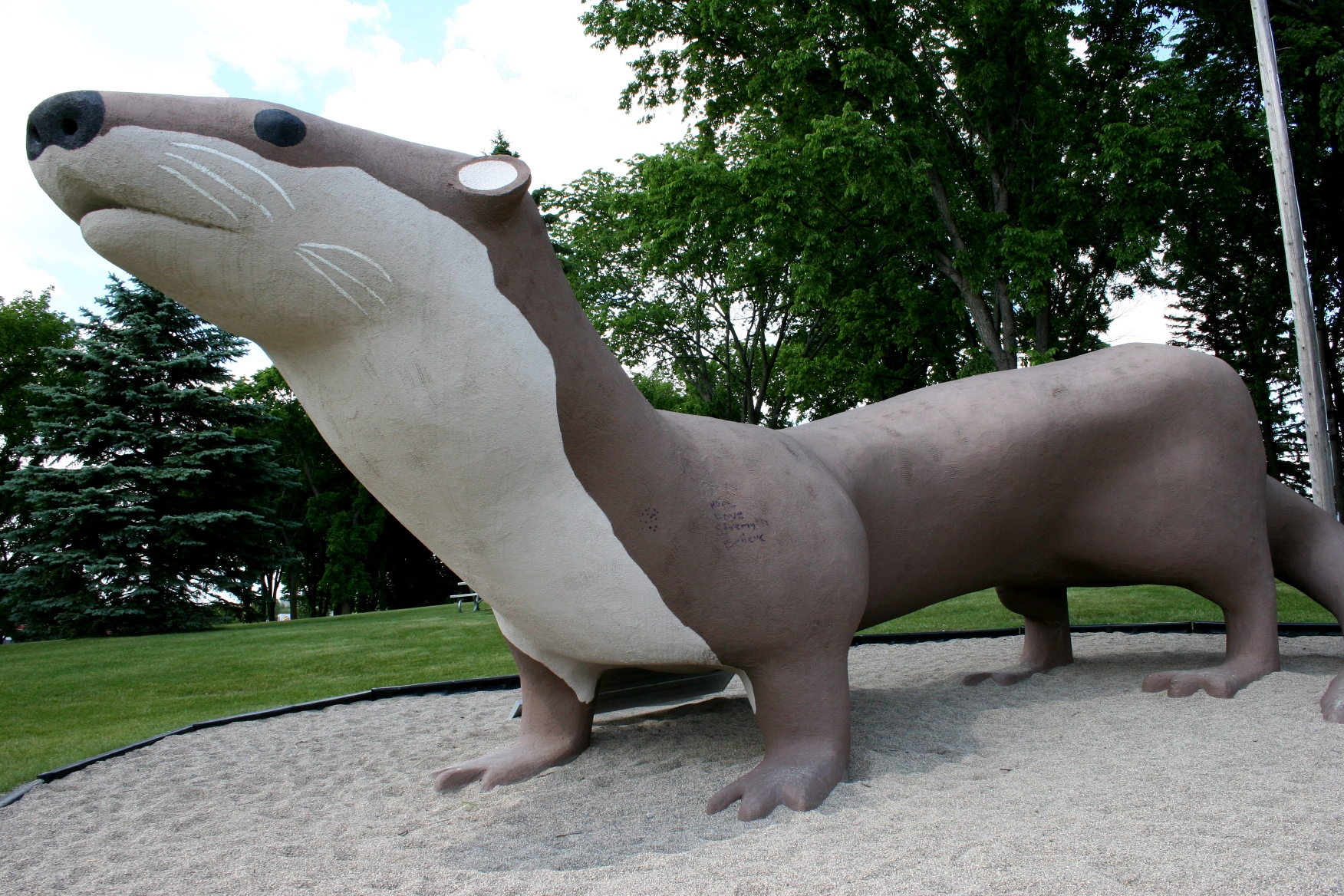
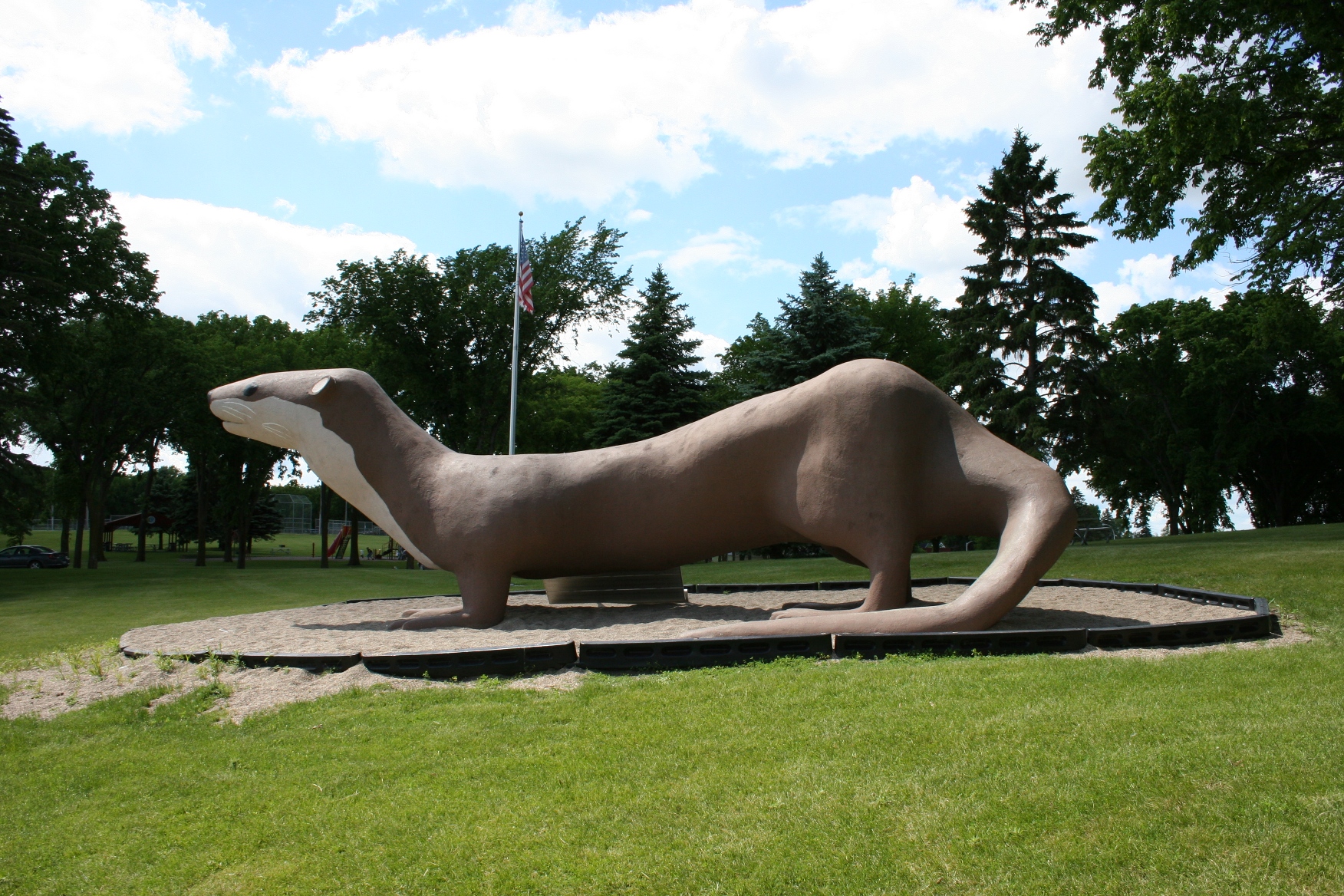
BECAUSE WE MISSED the turn, we missed the kids—the kids perched like birds on a telephone wire atop Otto the Otter.

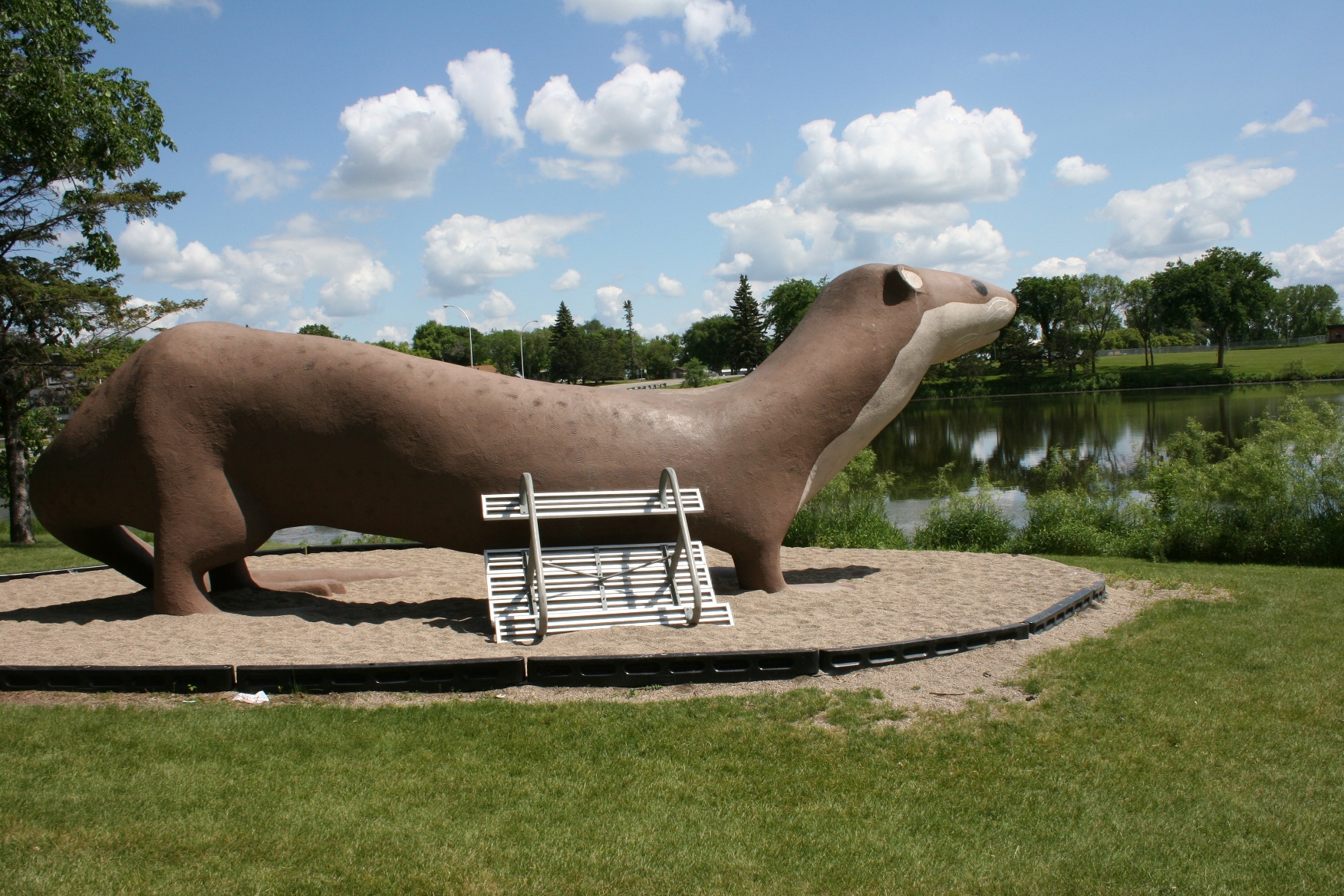
They would have added so much to these photos of the otter statue along Grotto Lake in Adams Park in Fergus Falls. Oh, well. They were flying past their dad back to the playground when we pulled into the parking lot.

So this would be just me and the husband, whom I couldn’t convince to pose with Otto. I did. But since I don’t look nearly as cute as those kids, you won’t see me leaning lamely against the otter in an image published here. That’s reserved for the family photo album.

I chose to ignore the spouse’s suggestion that I clamber atop an overturned picnic table and scramble onto Otto’s back. Like, do you think I’m 10 or something? I have an artificial hip, remember. Do you want me tumbling off this weaselly animal onto a pile of goose poop, tending me while waiting for the ambulance to haul me to Lake Region Healthcare?

Surely not.

Except for the goose-pooped lawn, our visit with Otto rated as fairly enjoyable. I mean, I really do appreciate viewing kitschy outdoor art like this gigantic otter statue under a beautiful summer sky in ideal temperatures (meaning 70ish and no humidity) that rank as nothing short of Minnesota weather perfect.

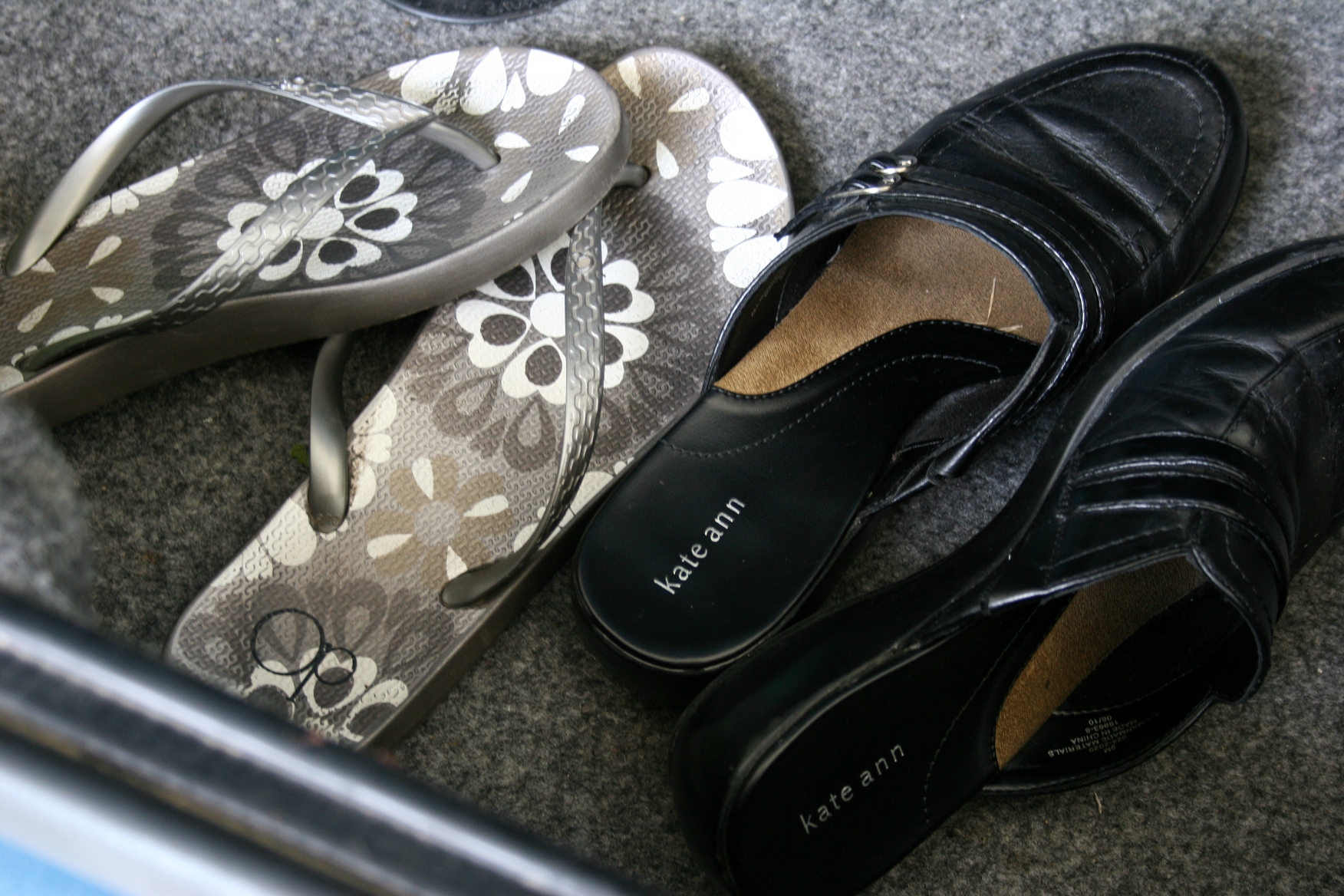
It’s just that I should have scraped the goose crap from my shoes before removing them, slipping my feet into flip flops and placing the poop-slimed shoes into the trunk of our car.

For purposes of this story, I have staged this shoe photo, without the goose poop, as a visual reminder to always, always wipe the goose poo from your shoes before placing them inside a vehicle.

© Copyright 2011 Audrey Kletscher Helbling


Off I-94: Artsy Fergus Falls June 17, 2011

The vintage-looking sign on the side of a building in downtown Fergus Falls caught my attention. The Market sells a variety of merchandise from kitchen to bath and body, garden and home accent products and lots more.

UNTIL LAST SATURDAY, I’d never entered Fergus Falls, only driven past this west central Minnesota community along I-94 en route to the Dakotas. After miles and miles of interstate travel, the towns don’t seem to matter any more. On the fringes, one seems like the other—just another rest break, a place to tank up on gas or a quick stop for a bite to eat.

Sadly, that marks the reality of today’s fast-paced, get from point A to point B, world.

But then one day you have a reason to pull off the four-lane, to explore one of these interstate-side communities and you discover a town with a personality and identity, and you wonder why you have not come here before this day.

And so that is how I found Fergus Falls, population 14,500, when I traveled there last weekend to view my Roadside Poetry Project poem displayed on four billboards. (My spring poem has since been replaced by a summer poem.)

After photographing my poem and dining at the downtown Viking Café (click here to read my earlier post on this vintage restaurant), I explored this Otter Tail County seat with my husband, Randy.

Certainly, we saw only a small portion of this riverside town. But I toured enough of Fergus Falls to come up with a single word to describe it: artistic.

I wonder if the folks who live in Fergus also see their hometown as an art community. Or would they choose another word to describe their town?

Here are photos to back up my word selection.

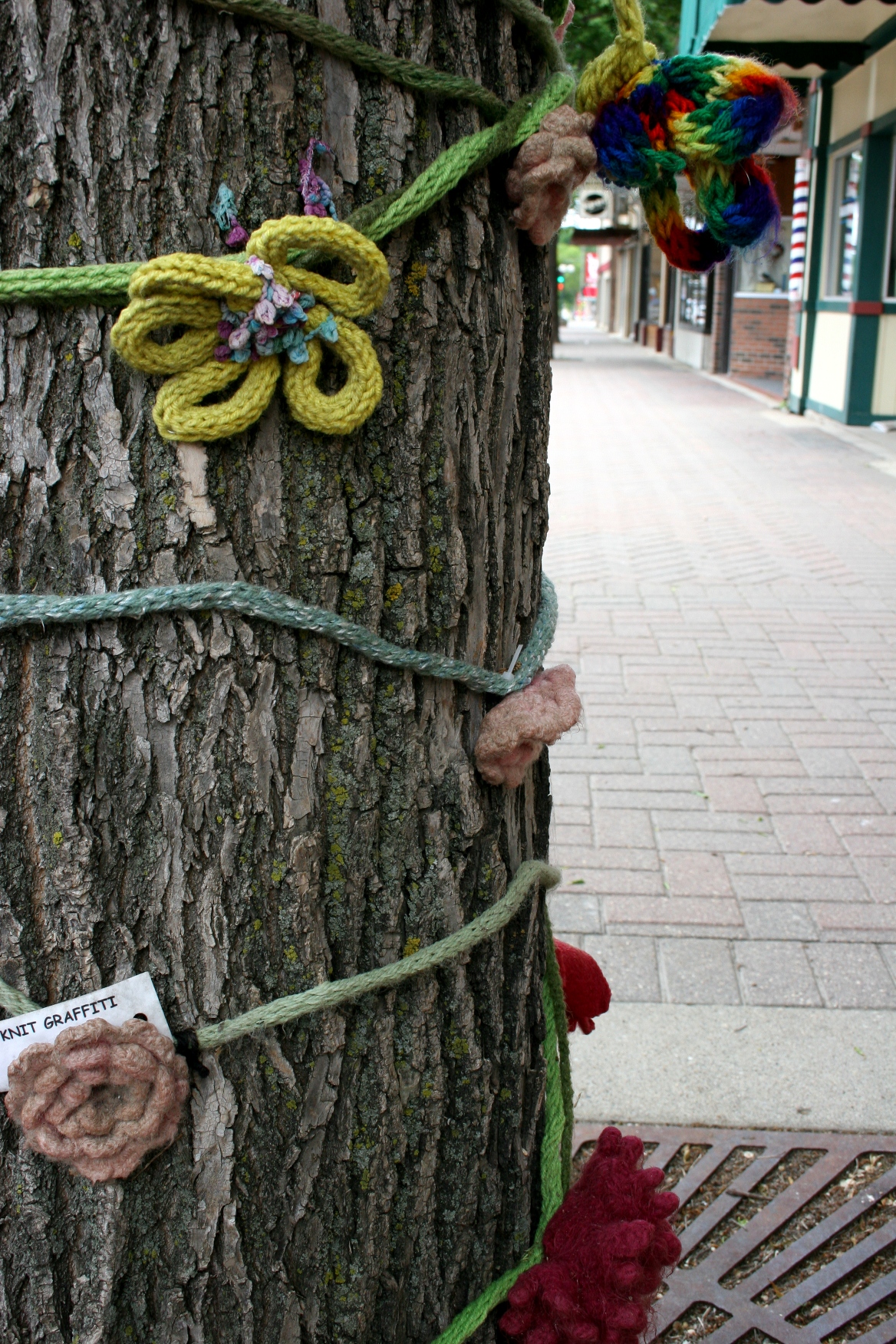
Knit graffiti circled a tree downtown. Bottlecaps were strung on another tree by this one. What a simple and memorable art idea.

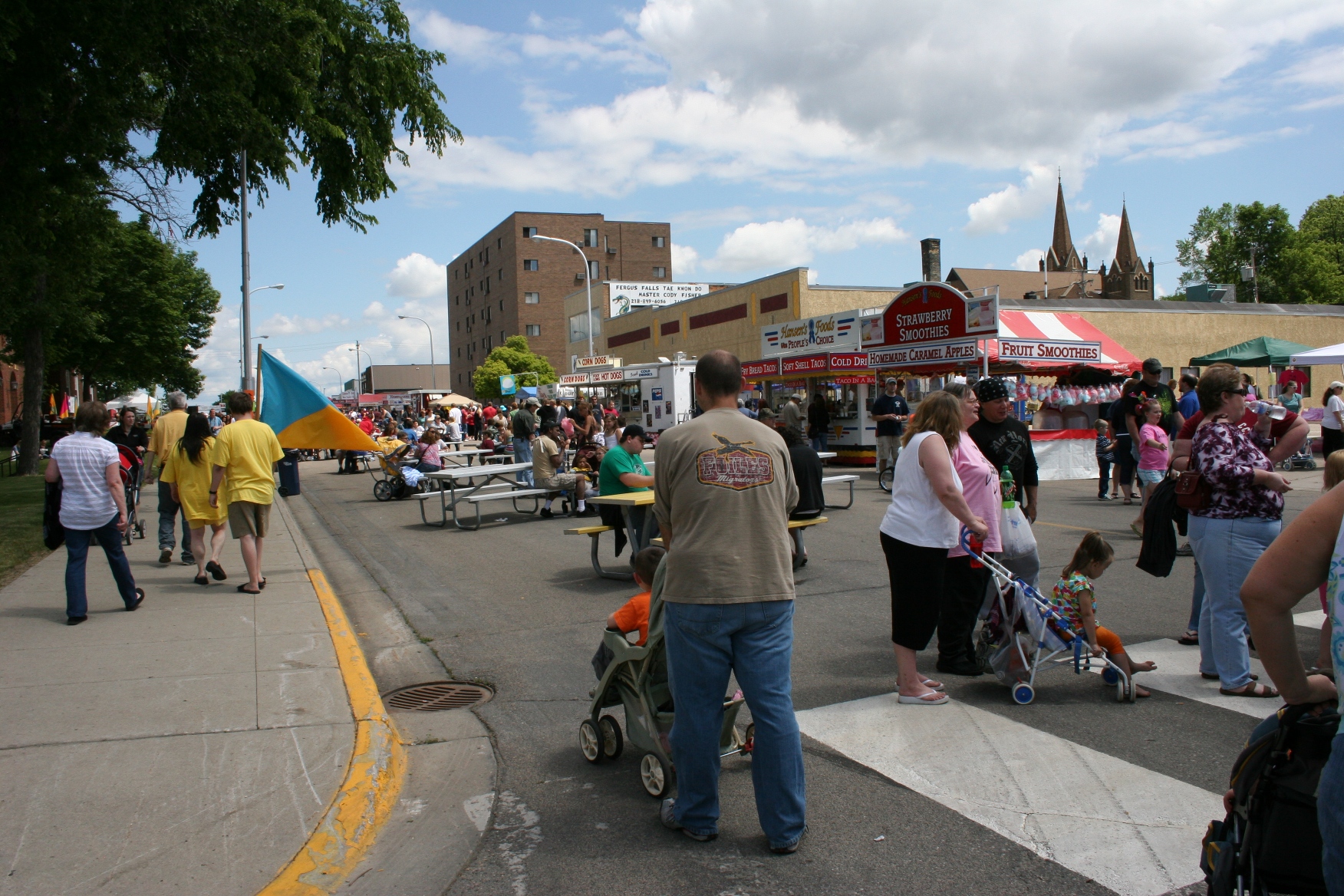
Fergus Falls Summerfest happened to be on when we were in town. Here's one section of the event.

Clear Lake, S.D., artist Karlys Wells of Back Porch Art created this gourd art, among my favorite art at the fair.

Even signage can be art, like this on a downtown bakery.

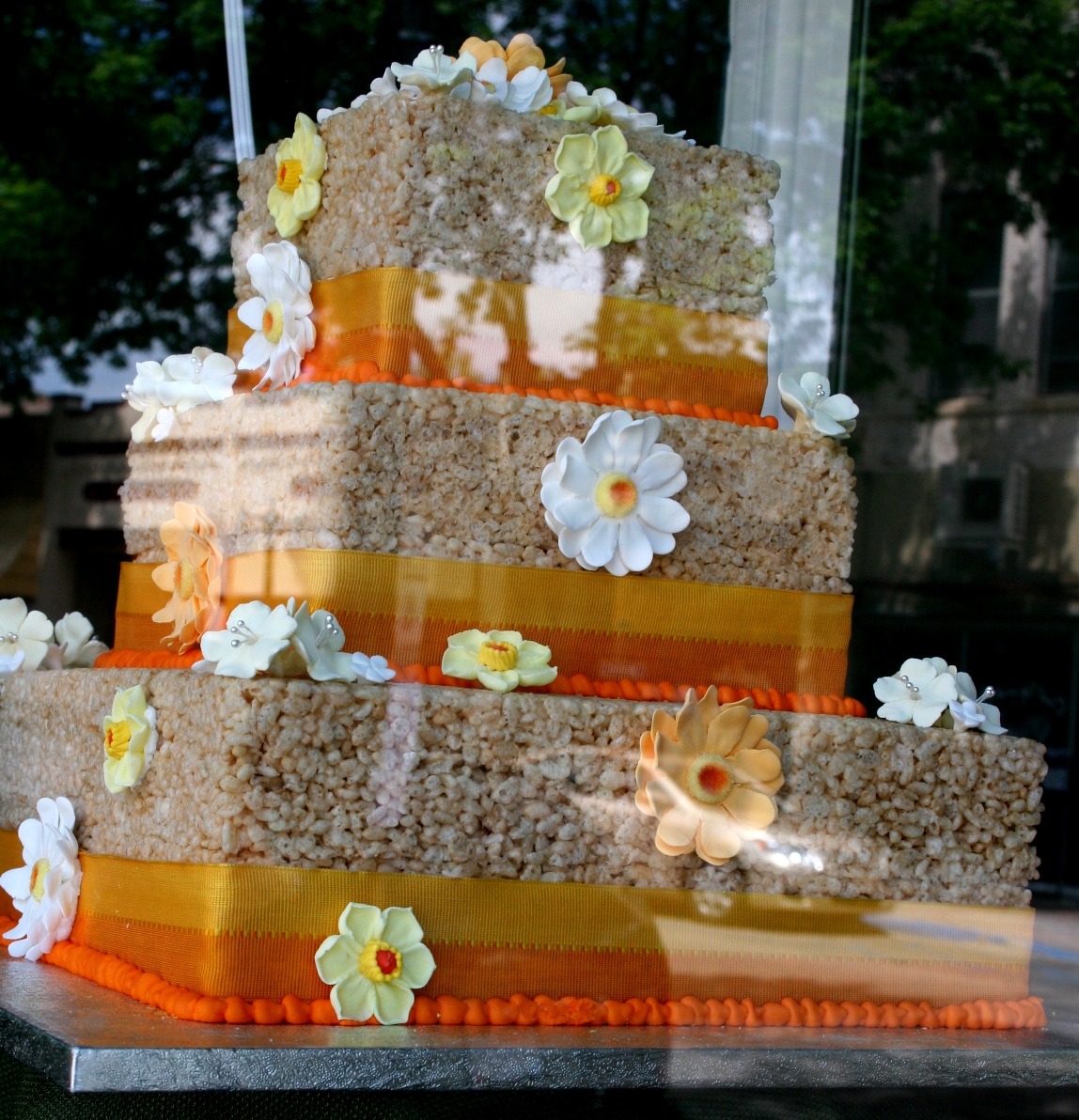
Call it art, or something else, but this Rice Krispie cake in a bakery window display made me laugh out loud.

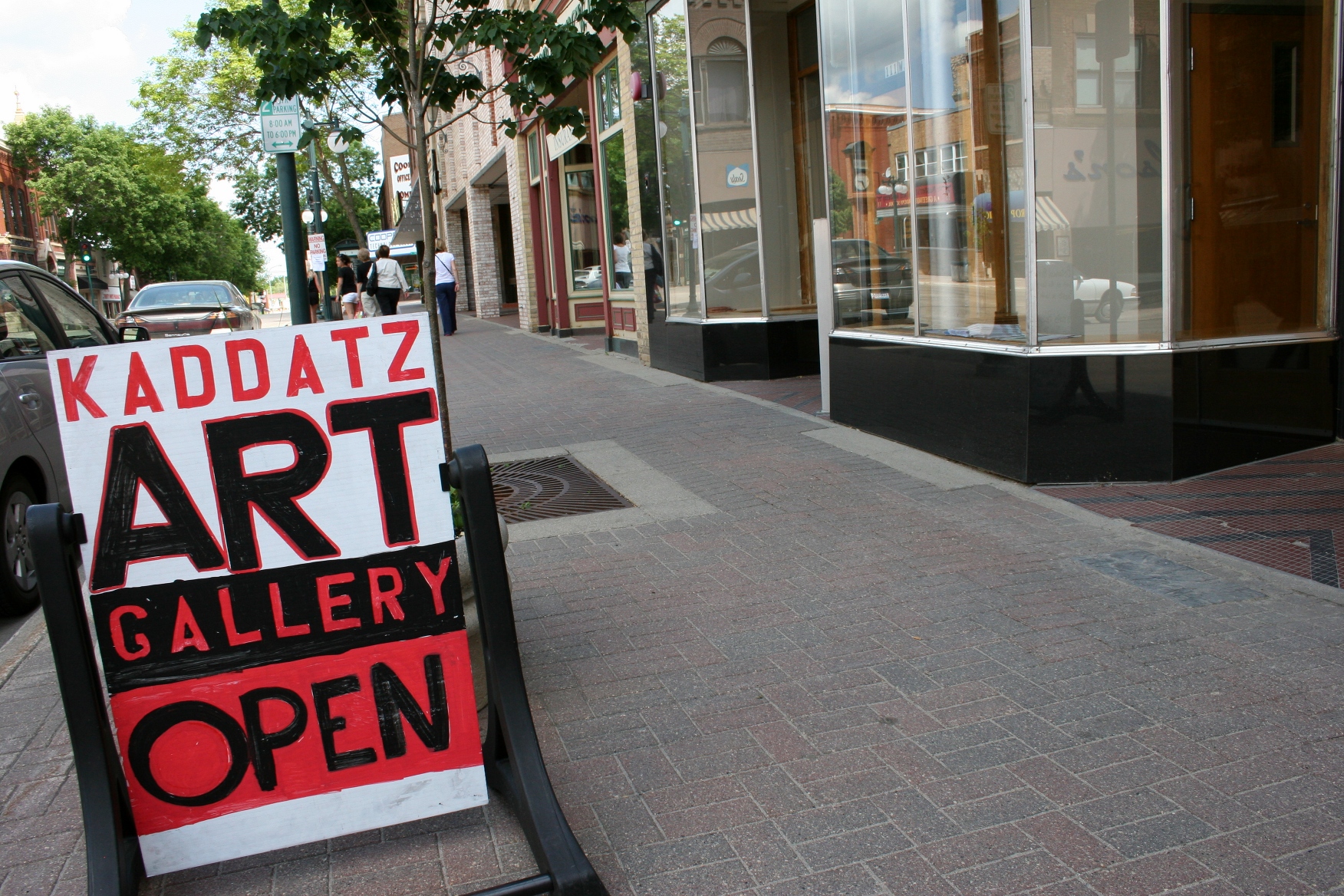
Kaddatz Galleries, a nonprofit art gallery, showcases the work of Charles Beck and other local artists.

Woodcuts and woodblock prints by one of Minnesota's most-recognized artists, Charles Beck of Fergus Falls. His subjects are the landscapes and nature of Otter Tail County. Until I walked into this gallery, I do not recall having ever heard of Beck. His earthy, rural art appeals to me.

I was impressed with the number of visitors in the Kaddatz Galleries.

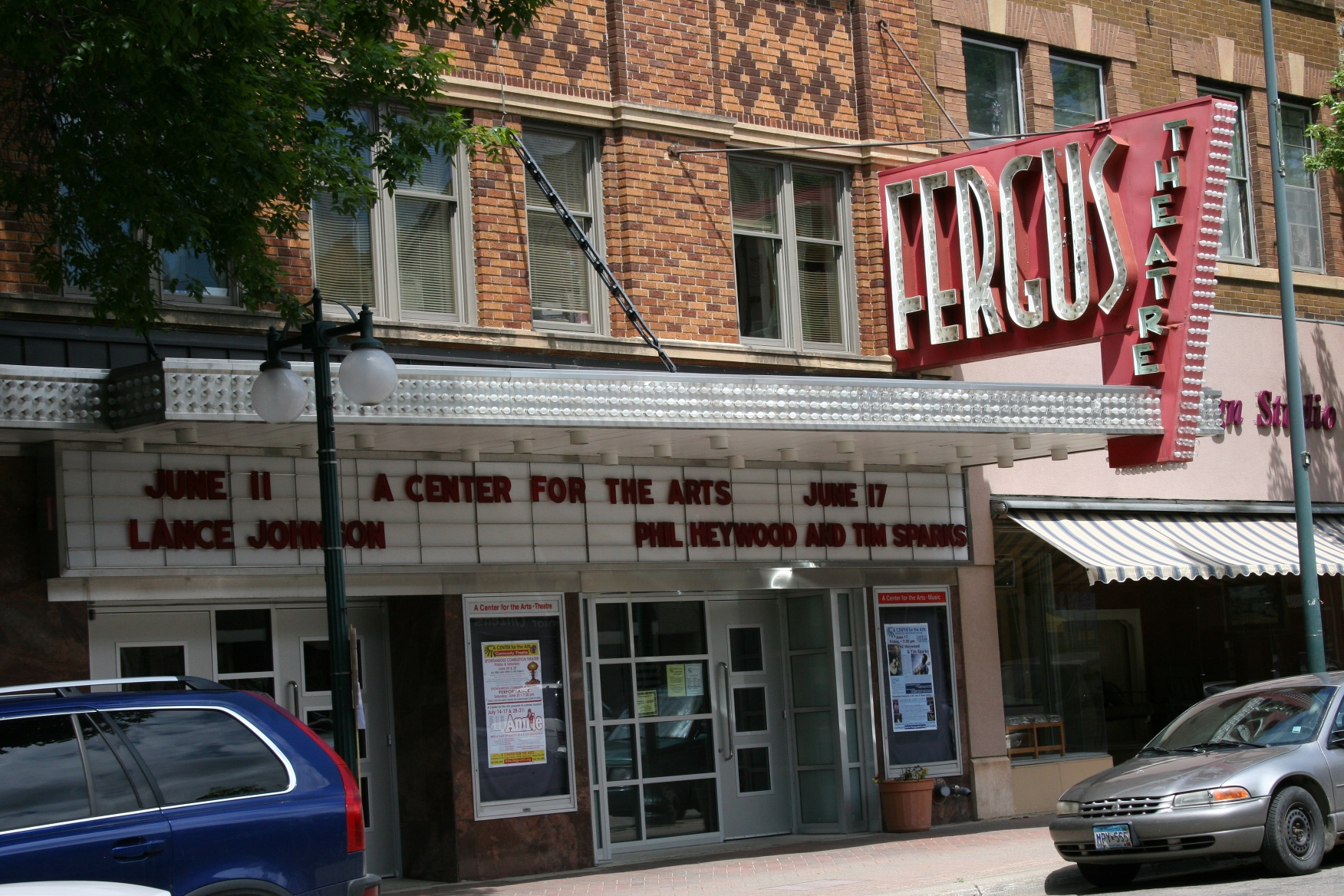
The doors to the Fergus Theatre were locked, or I would most definitely have gone inside. The vintage exterior adds so much to the charm of downtown Fergus Falls.

I am a big fan of vintage signs for the character they add to a community.

SO HAVE I CONVINCED you to pull off I-94 in west central Minnesota and explore Fergus Falls? Fergus lies 2 1/2 hours northwest of Minneapolis/St. Paul, mighty close to Fargo, N.D.

Here are several websites to check out and learn more about some of the places highlighted in my photos and story:

www.VisitFergusFalls.com

www.kaddatzgalleries.org

www.fergusarts.org

www.fergusfallssummerfest.com

www.roadsidepoetry.org

www.marketfergusfalls.com

Copyright 2011 Audrey Kletscher Helbling


Flag Day patriotism June 14, 2011

IN HONOR OF FLAG DAY today, I’ve scrolled through my archives and pulled some of my favorite flag images. For the few I am showcasing here, many more exist within the stories of Minnesota Prairie Roots.

But for today, for this minute, view these and reflect on the many ways Minnesotans show their patriotism and loyalty to country via American flags.

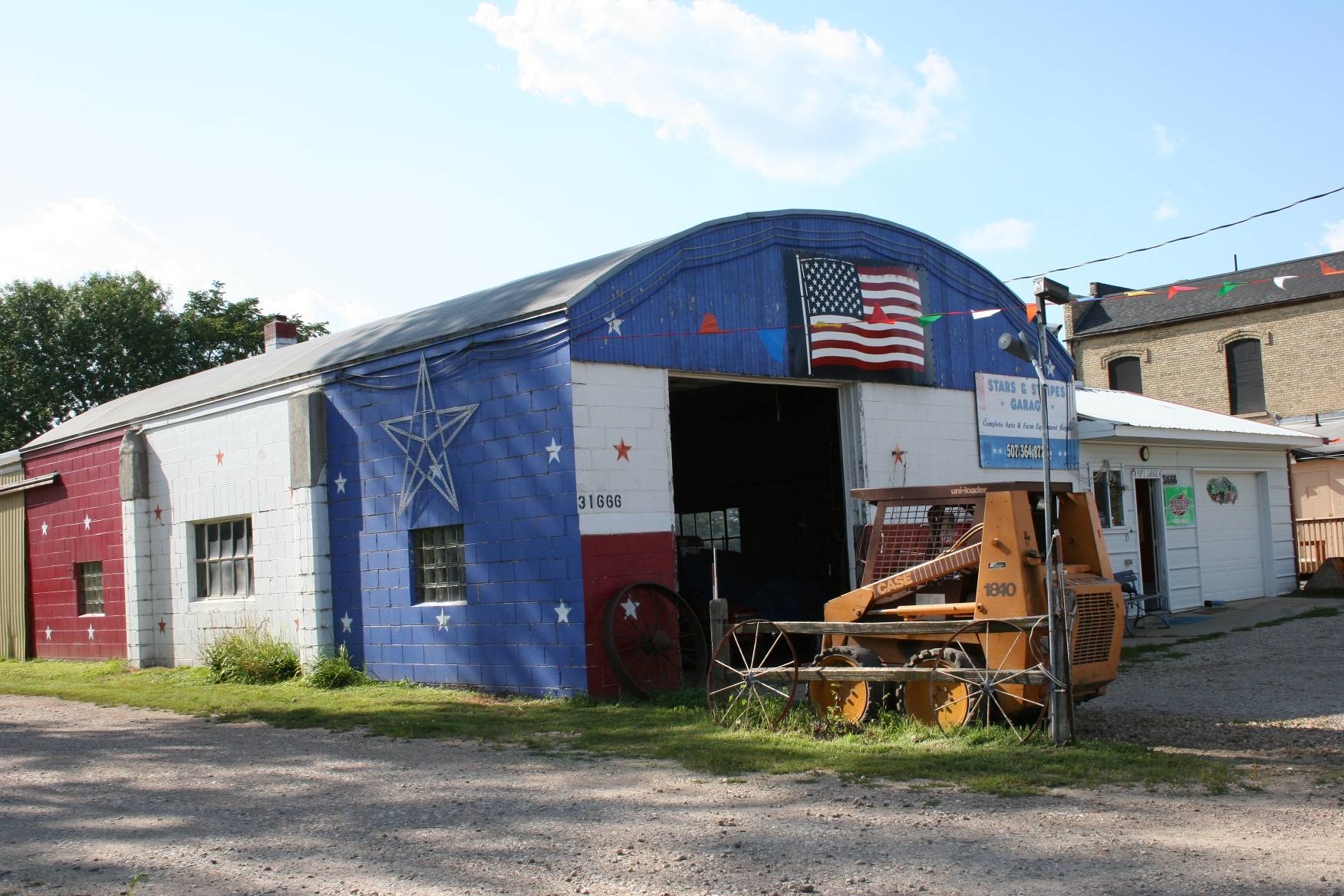
Vietnam War era veteran Joel Kukacka's patriotic garage in the hamlet of Heidelberg, Minnesota.

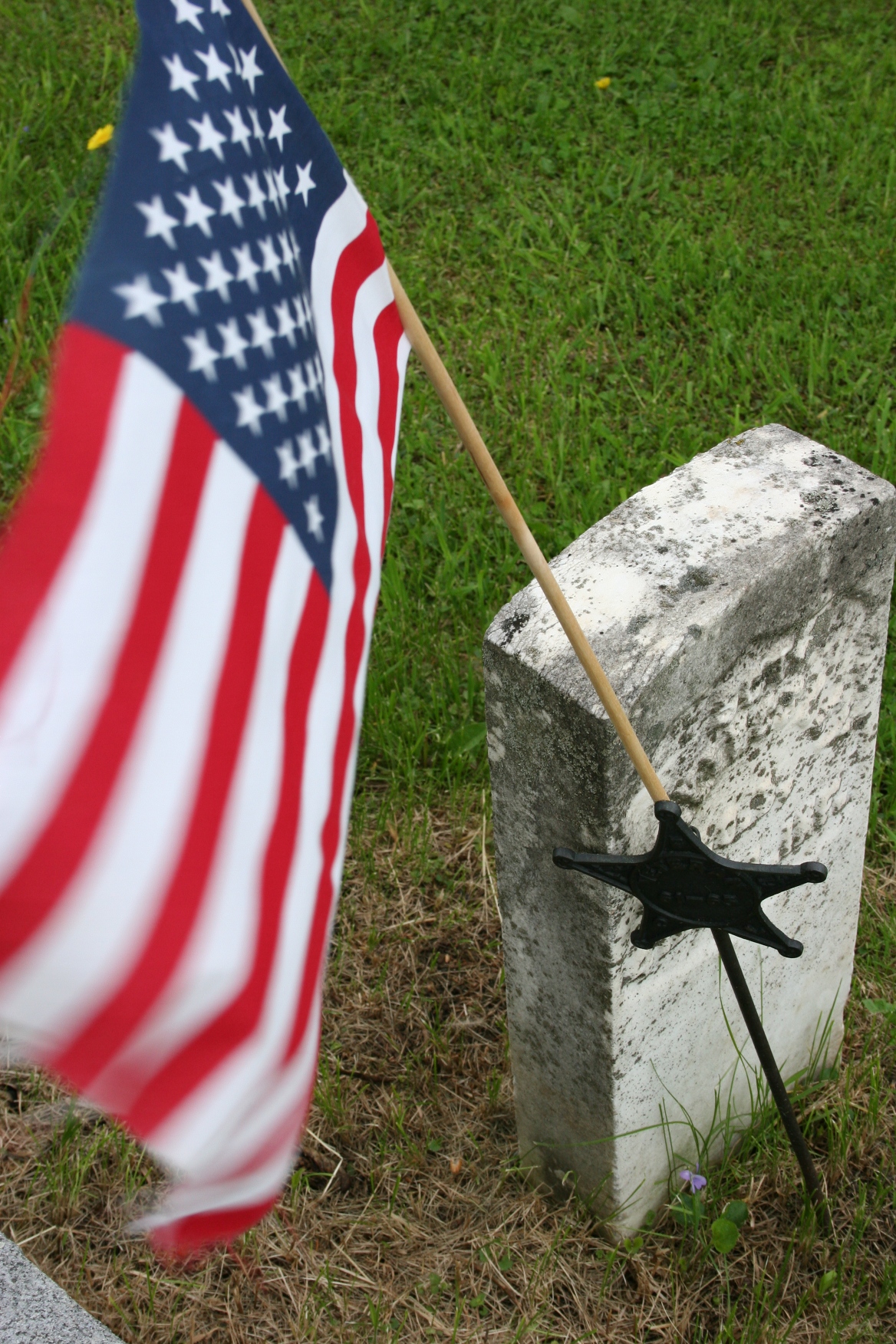
A flag waves in the wind on a soldier's grave at the Cannon City Cemetery.

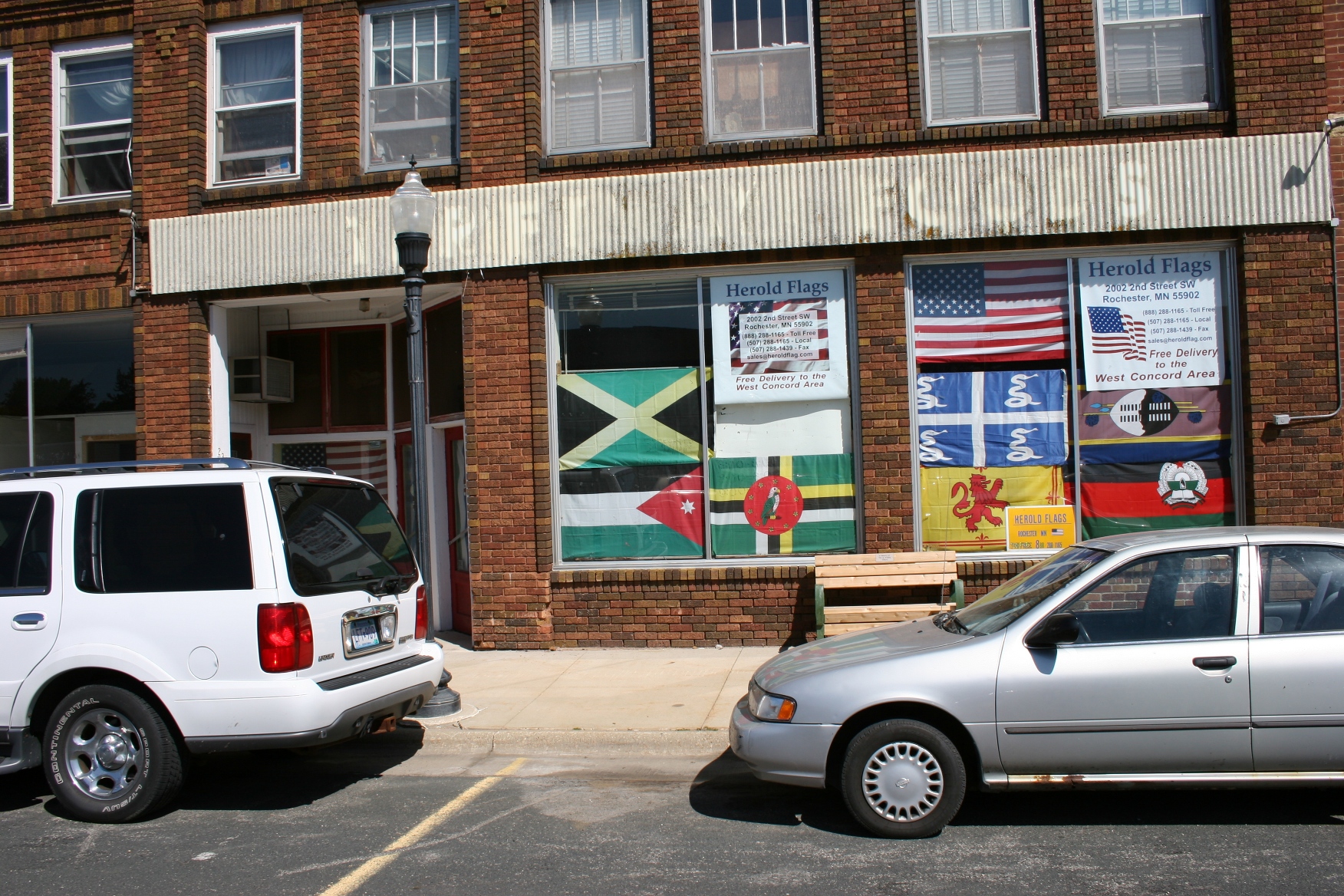
Herold Flags in West Concord sells flags and flagpoles.

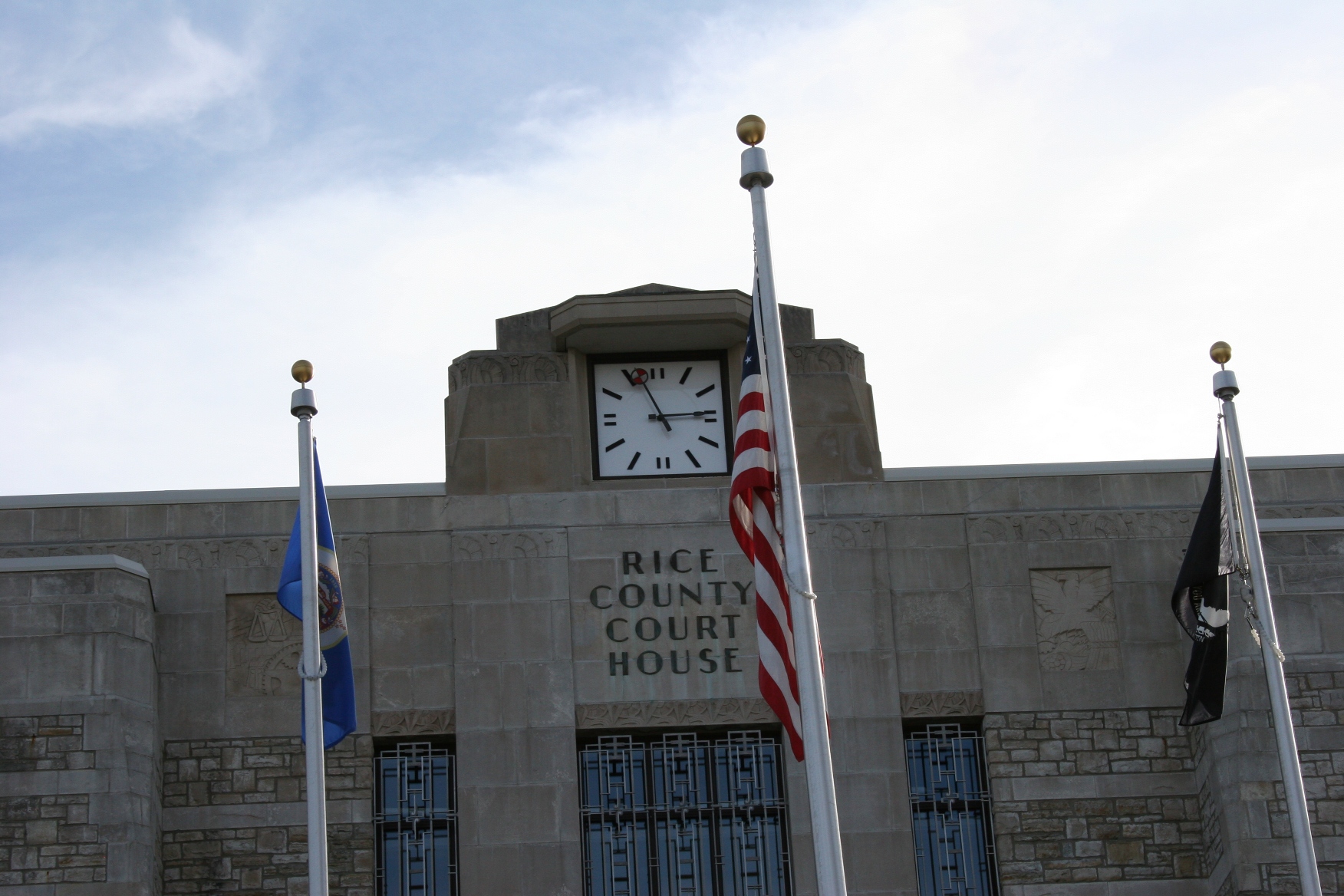
Flags fly at the Rice County Courthouse, Faribault.

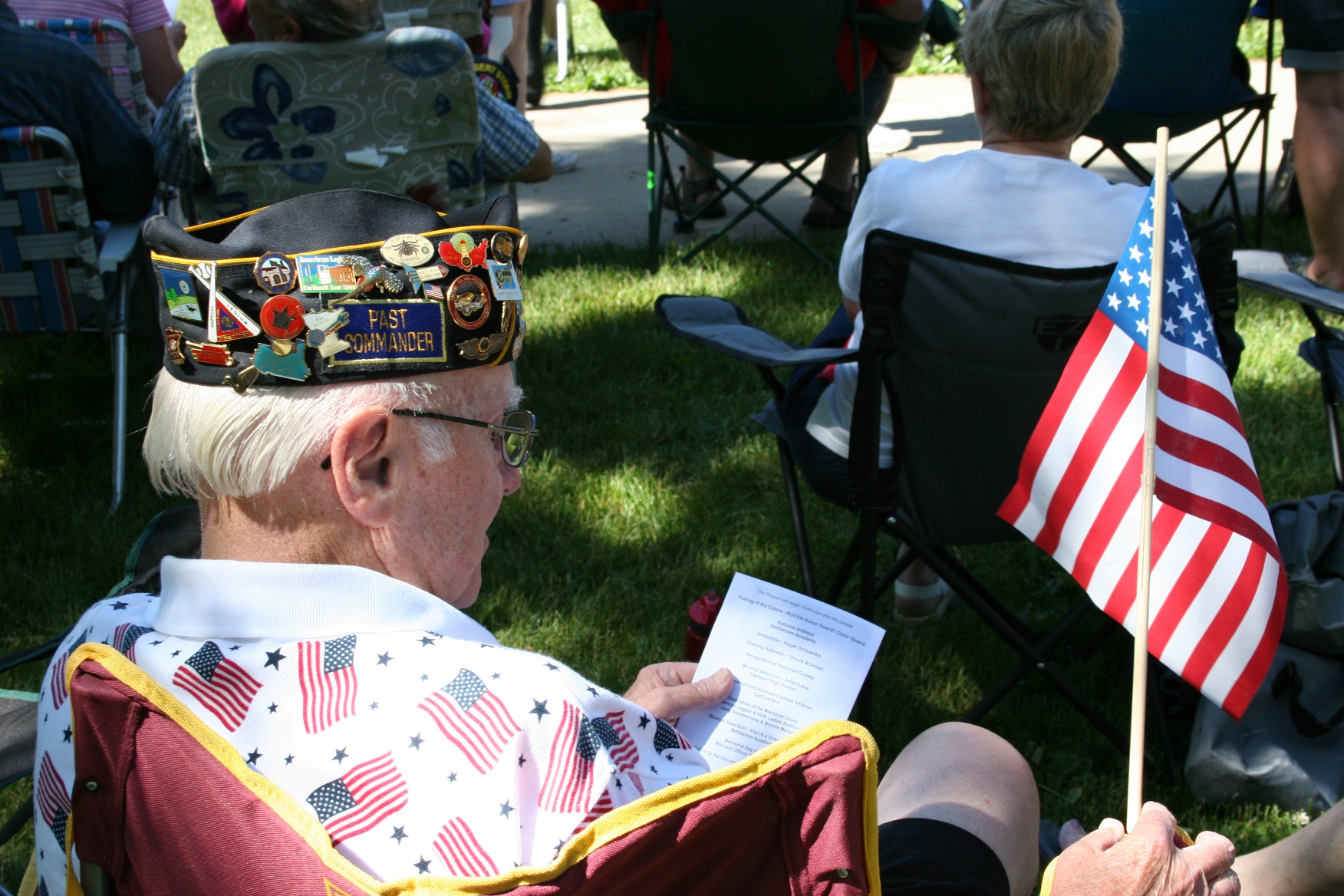
Korean War veteran Ray Sanders at the 2010 Memorial Day ceremony in Faribault's Central Park.

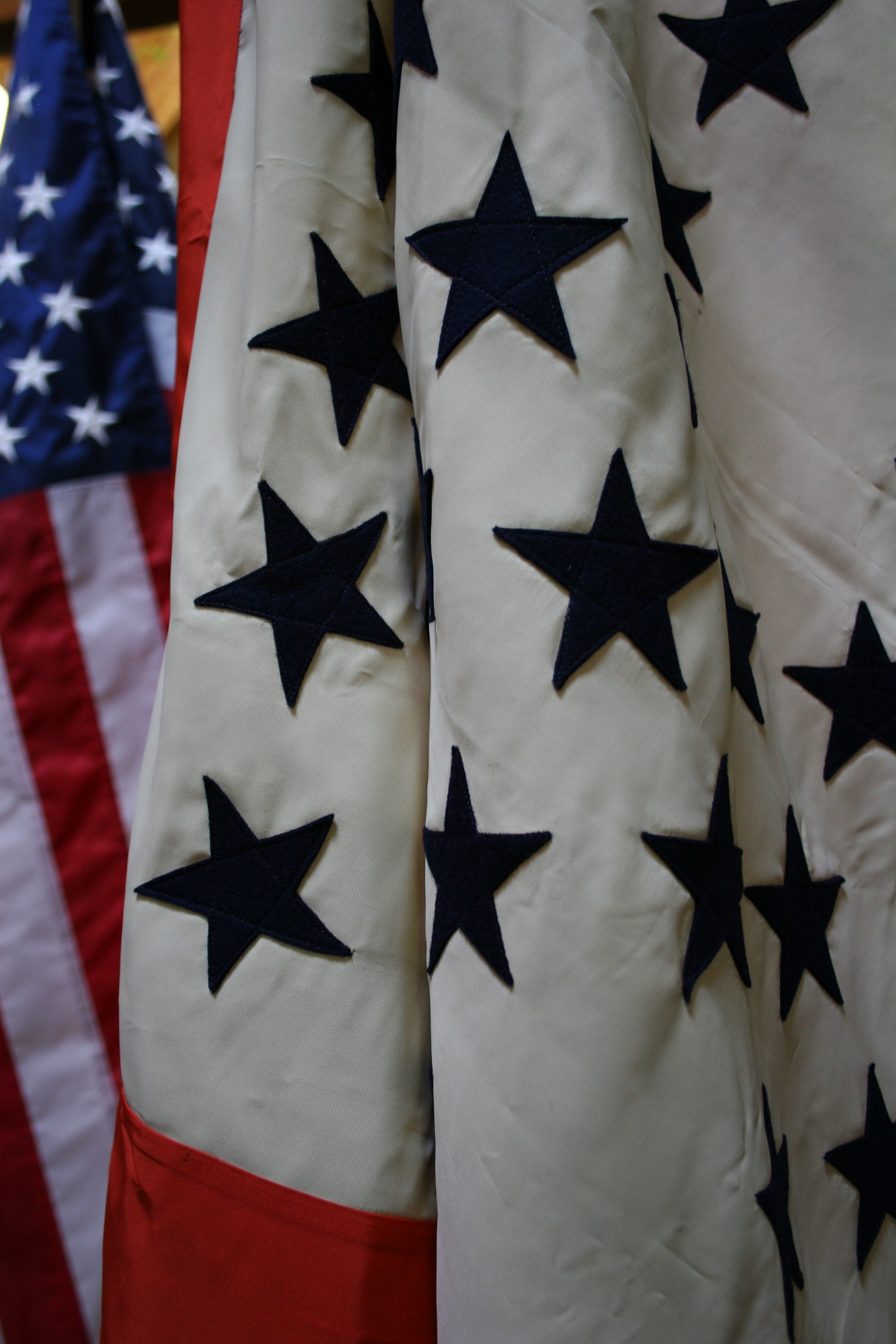
Blue stars on a WW II honor flag displayed last July 4 at my church, Trinity Lutheran in Faribault, along with American flags.

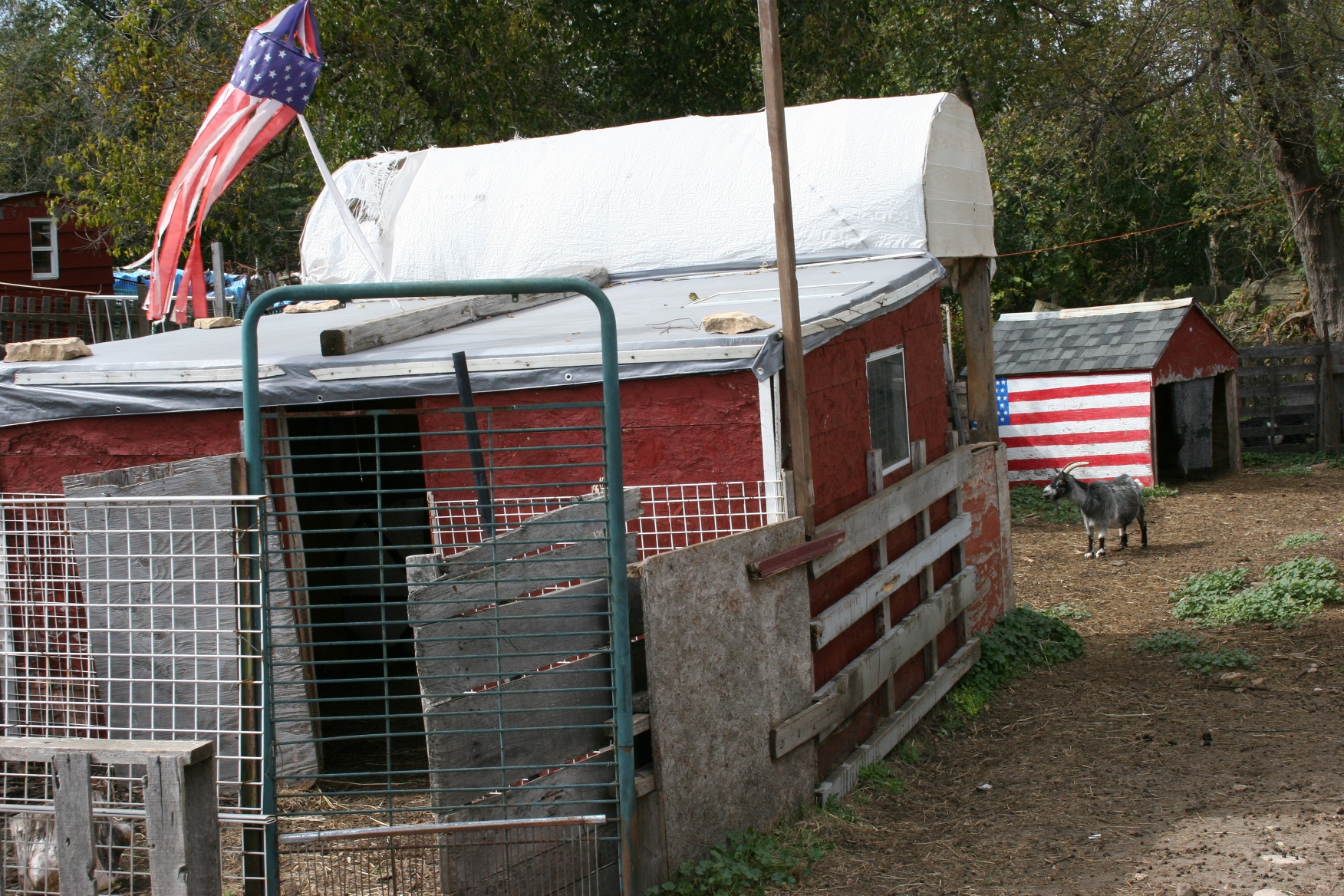
American flag decor adds a patriotic flair to the down-home Kasota Zoo.

Copyright 2011 Audrey Kletscher Helbling


Thou shalt not photograph the Amish

TEMPTATION TEMPTED ME on Saturday afternoon, wrapping her slippery fingers around mine, tightening her grip, nudging my index finger toward the shutter button.

But Right resisted, reminding Temptation, “Thou shalt not photograph the Amish.”

The battle waged for a good 15 minutes on a grassy wedge of land along a main route through Osakis, southeast of Alexandria.

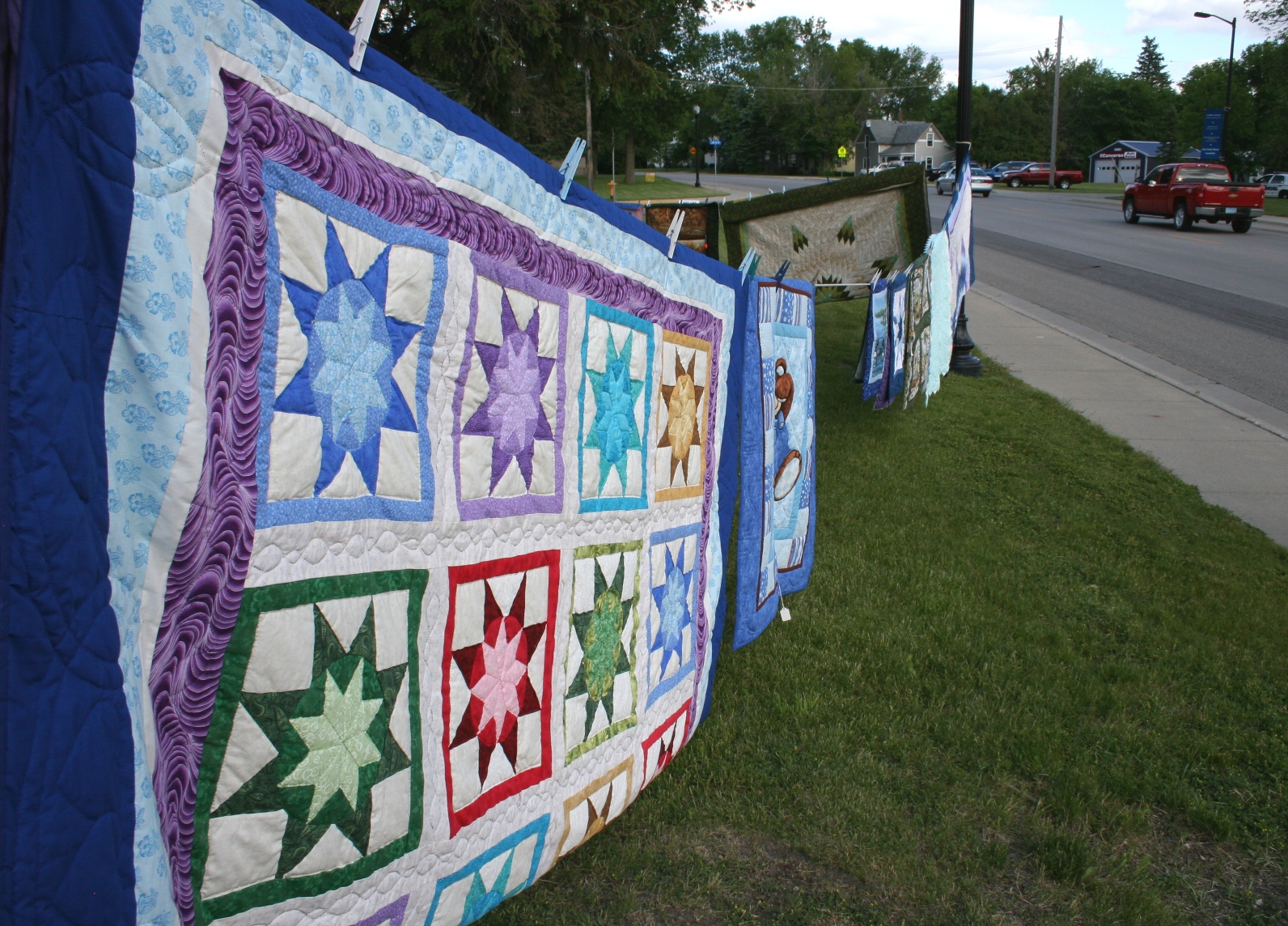
Here quilts, clipped to clothesline strung between a light post and trees, drew my husband and me off the road. When we turned onto the side street and I spotted the black buggy, I couldn’t believe our luck. I’ve wanted, always, to encounter the Amish up close and photograph them.

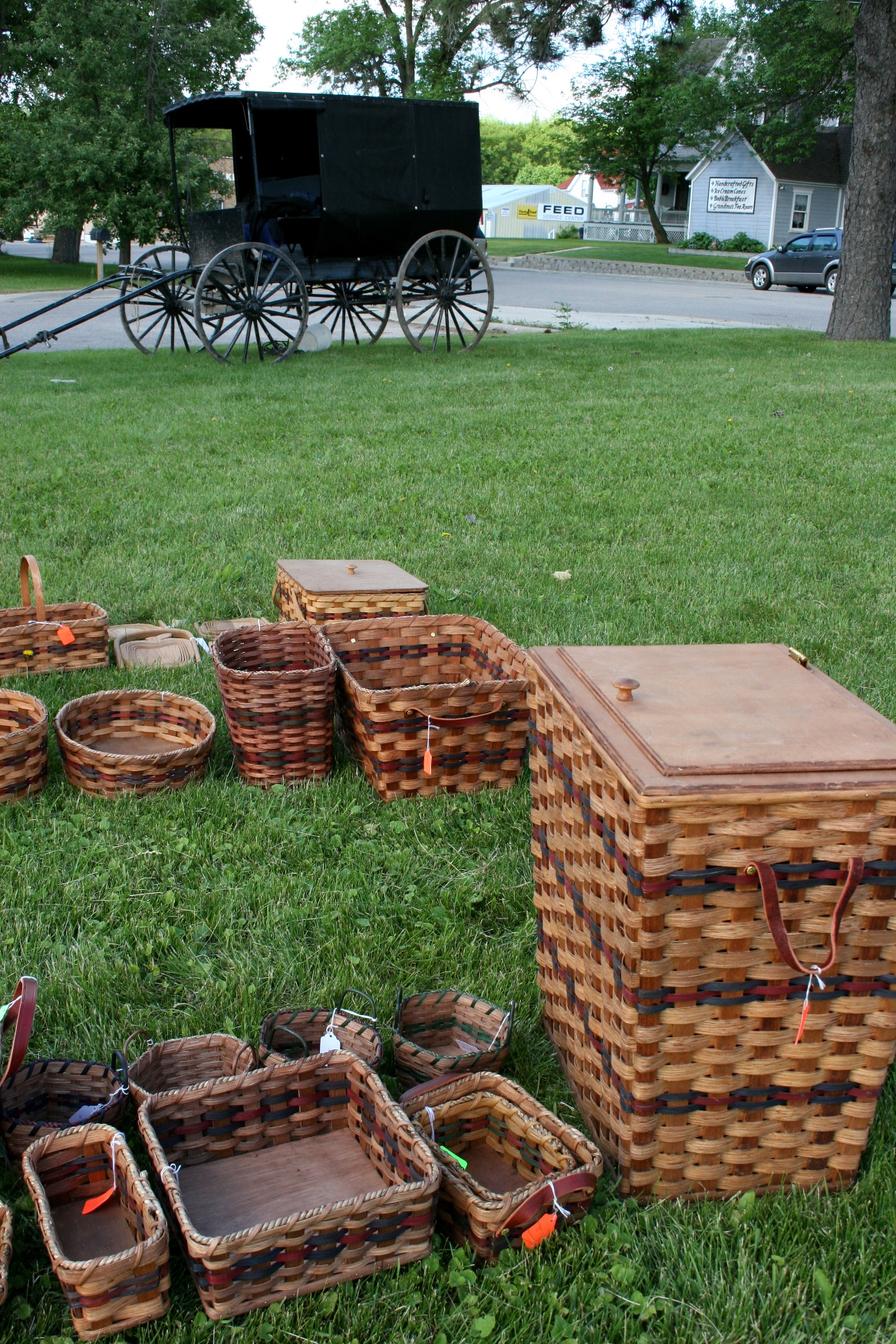
The Amish buggy parked at a roadside market in Osakis.

But then Right niggled my conscience: “Thou shalt not photograph the Amish.”

At least without asking, I thought, although Temptation urged me to click the shutter button of my camera immediately and then ask. But I didn’t. “Is it OK if I take your picture?” I inquired of the bonneted mother cozied with her two black-bonneted daughters on a blanket spread upon the grass.

“No.”

What did I expect? That she would say “yes” and smile for the camera. So I tried again. “How about if I photograph you from the back?”

“No.”

I tried for the third time. “Can I photograph your quilts and baked goods?”

The Amish mom agreed, as long as I didn’t include her or her two pre-teen daughters in my photos. But I was still tempted, oh, so tempted, to sneak them into the images. Would they notice if I edged the camera lens over the clothesline while photographing the quilts?

Right prevailed and I photographed the hand-stitched blankets, the rows of baskets, the preserves and homemade noodles and that black buggy, minus its passengers and minus the horse that was tethered in the shade of trees behind nearby buildings.

I should also have photographed the fly swatters and woven rugs, but I didn’t want to push my luck, appear too pushy and offend these Amish.

Beautiful, hand-stitched quilts stretched on the clothesline.

Preserves and a few baked goods remained when we arrived at this mini Amish market late Saturday afternoon.

This close-up photo shows the detailed stitching in these hand-stitched Amish quilts.

Hand-woven baskets for sale by the Amish.

All the while the two young girls watched me like a hawk. I could feel their eyes following me, boring into my conscience. I wondered what they were thinking. Were they interested in my fancy schmancy camera, or did they simply wish me gone?

Were they worried that I would photograph them, thereby stealing their souls or creating a graven image, or whatever reason the Amish have for shunning photos of themselves?

I remained so focused on possible covert photo ops that I failed to notice details, except those black bonnets, the blue and plum dresses and the wide, plain copper-colored wedding band on the mother’s ring finger (which I wanted to photograph). I wish I had noticed their shoes.

I also failed to ask many questions of the trio. I learned that they live 10 miles east of Osakis, that the buggy trip takes an hour and that they come to town every Saturday (not in winter, of course) to peddle their goods. All of this the mother shared in a brogue that I couldn’t place, but which reminded me of a far-away homeland, of the thick tongue of an immigrant.

While the mother spoke, her two daughters perched, respectful, still and mute as statues, until I looked directly into the brown eyes of one and asked whether she had made any of the market merchandise.

“Cookies,” she blurted, her face blossoming into an appreciative smile.

I wished in that moment, more than any, that I could have photographed her happiness, shown you the delight blooming upon that young Amish girl’s face when I paused to acknowledge her presence, to include her, to boost her self-confidence.

But I could not. “Thou shalt not photograph the Amish.”

Not on this June Saturday afternoon in Osakis.

The one item we purchased, a superb (except for the burned crust), flavorful $6 pie oozing with tasty red raspberries. FYI, there were no cookies remaining or I would have bought some.

© Copyright 2011 Audrey Kletscher Helbling


Prairie poetry in Fergus Falls June 12, 2011

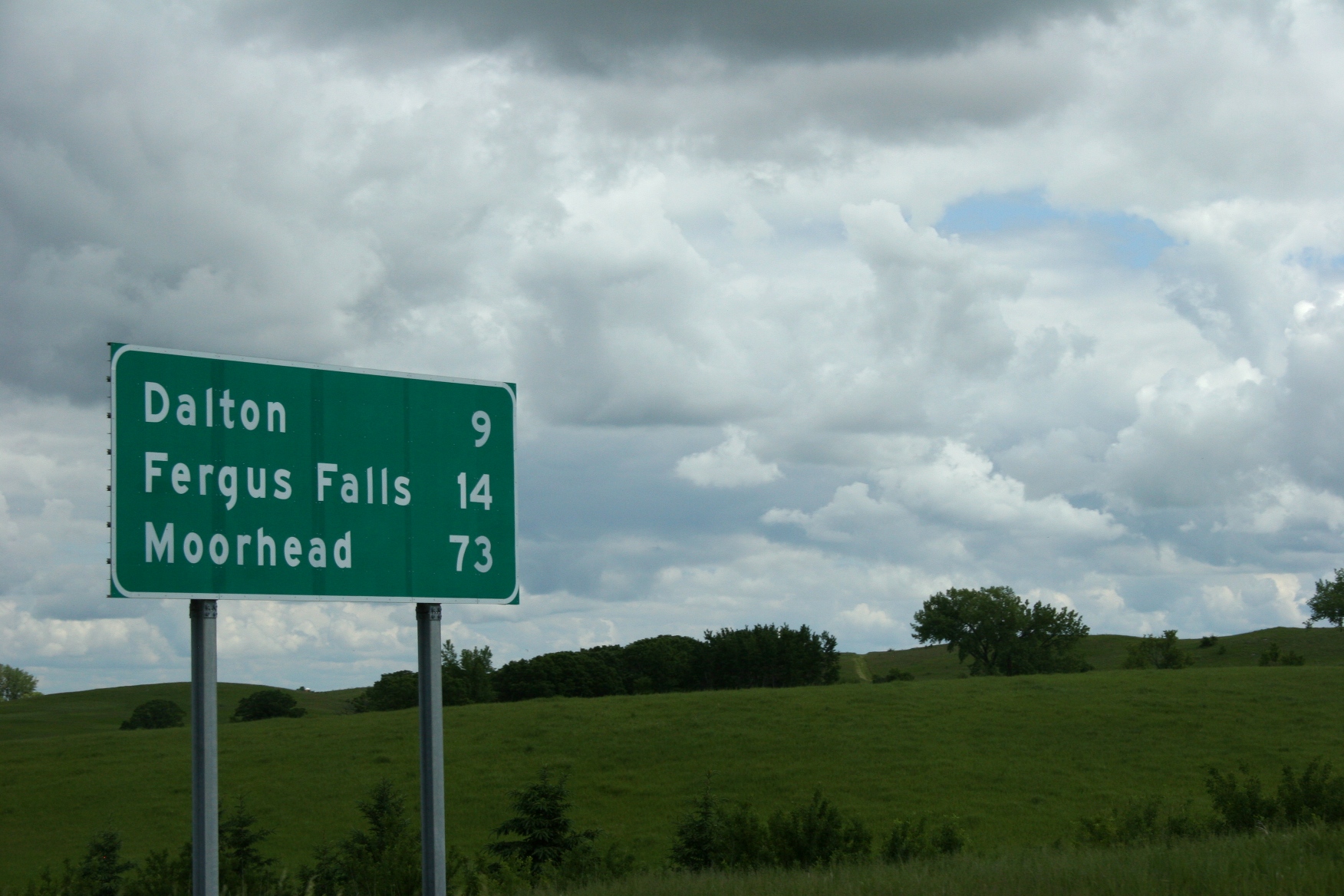
SATURDAY MORNING MY HUSBAND and I hit the road, heading north on Interstate 35 and then west on Interstate 94 to the west central part of Minnesota.

This was our destination:

It's approaching noon on Saturday, and we've nearly reached our destination, Fergus Falls.

Because of this:

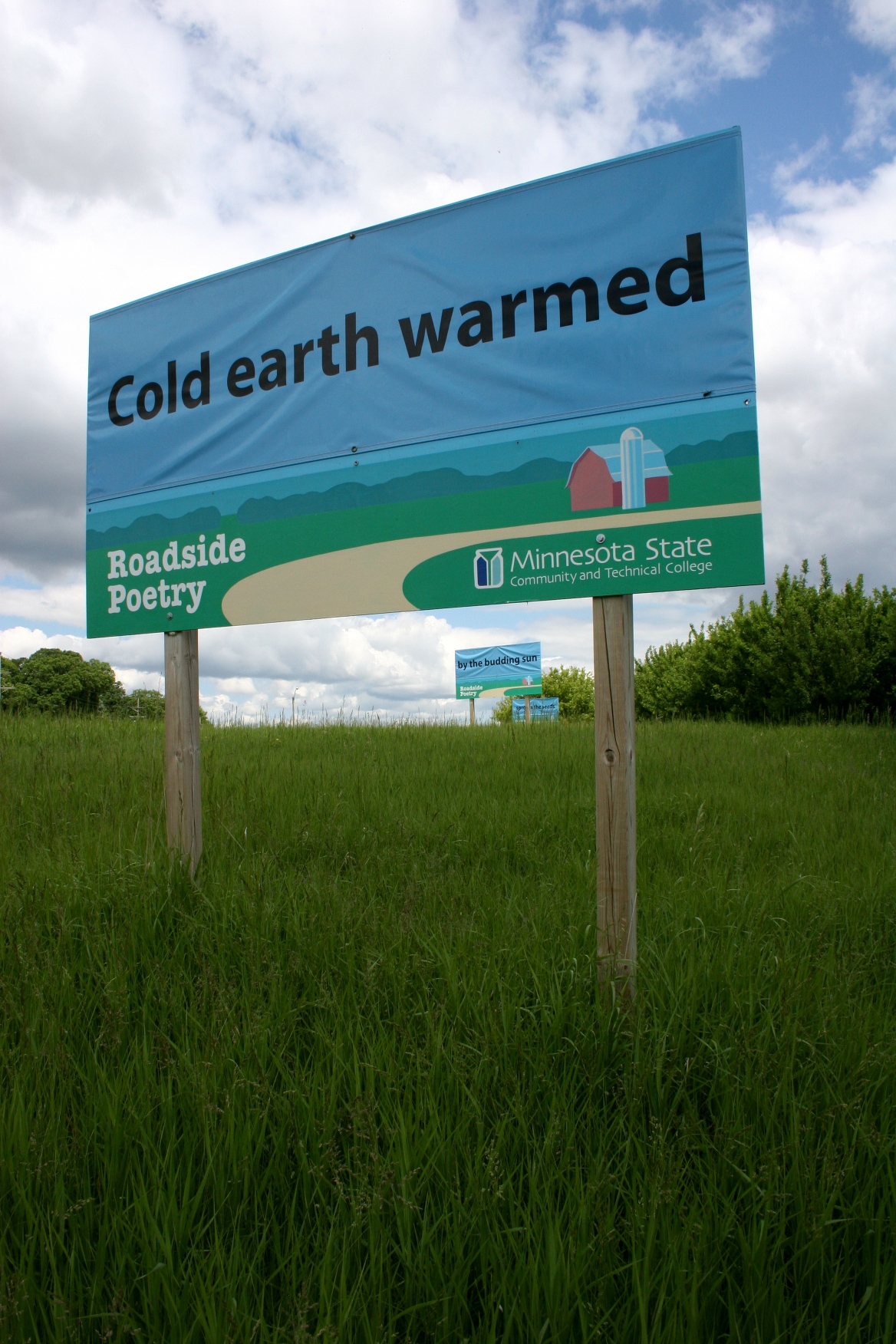
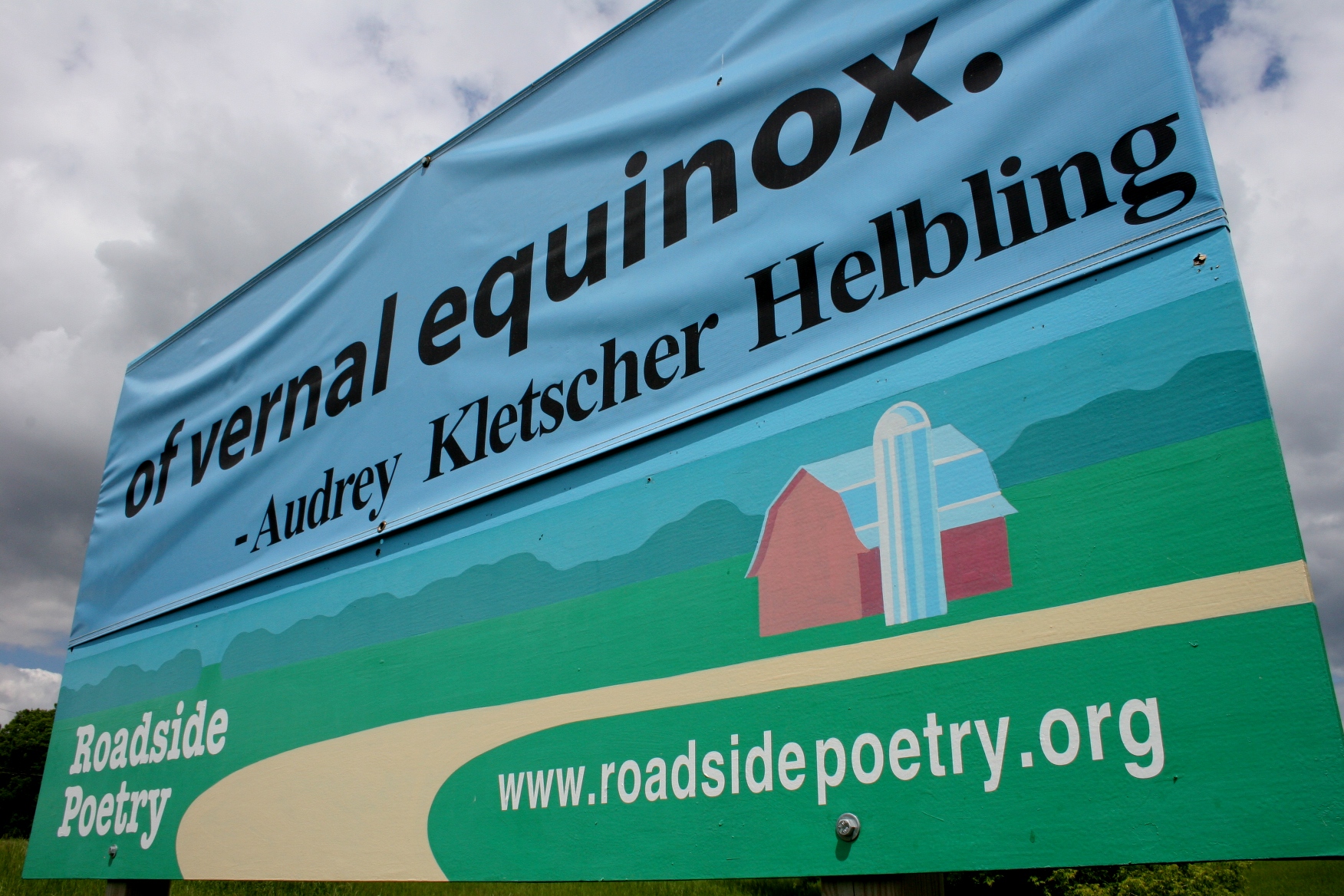
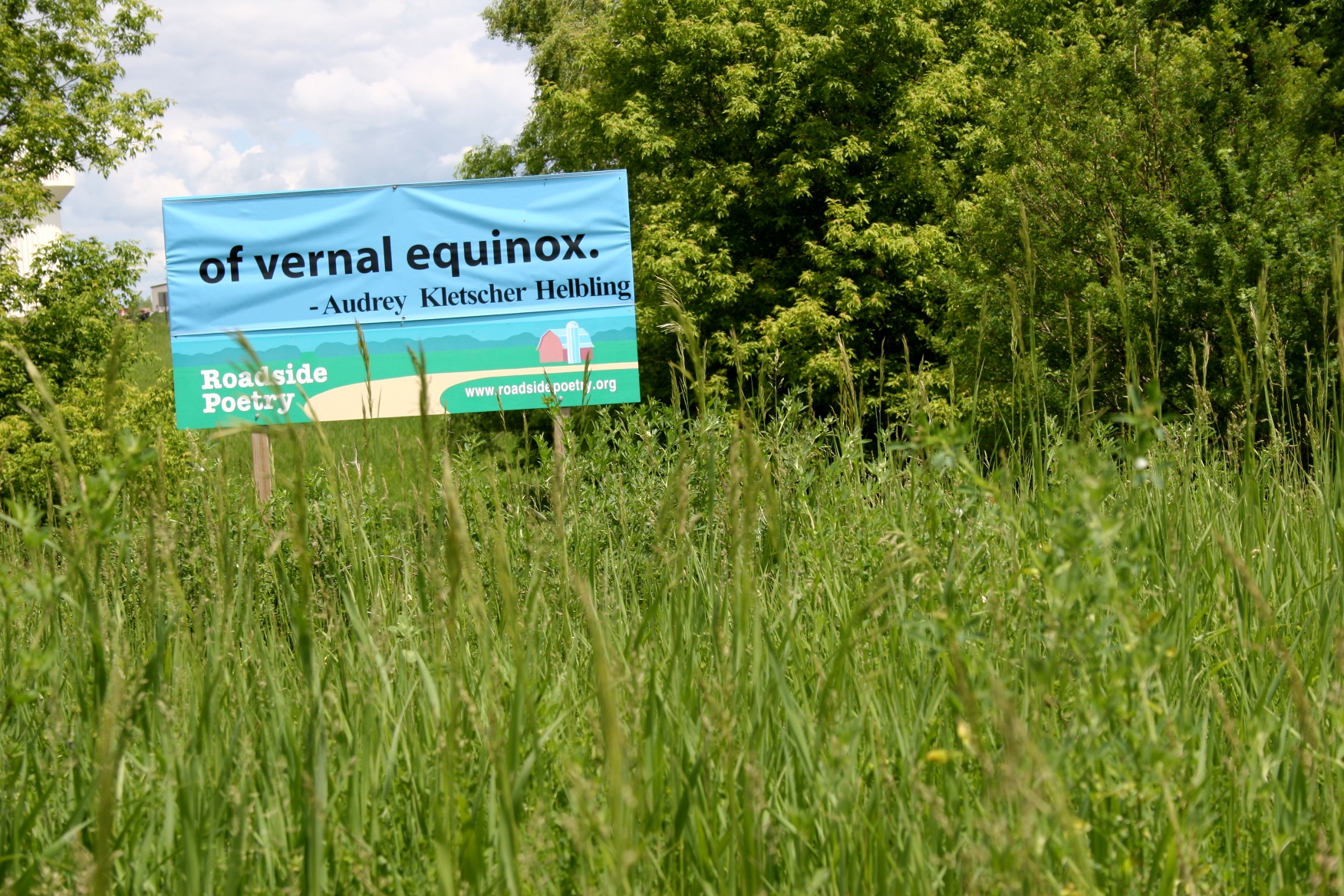
The first of my four Roadside Poetry billboards in a stretch of ditch along North Tower Road in Fergus Falls.

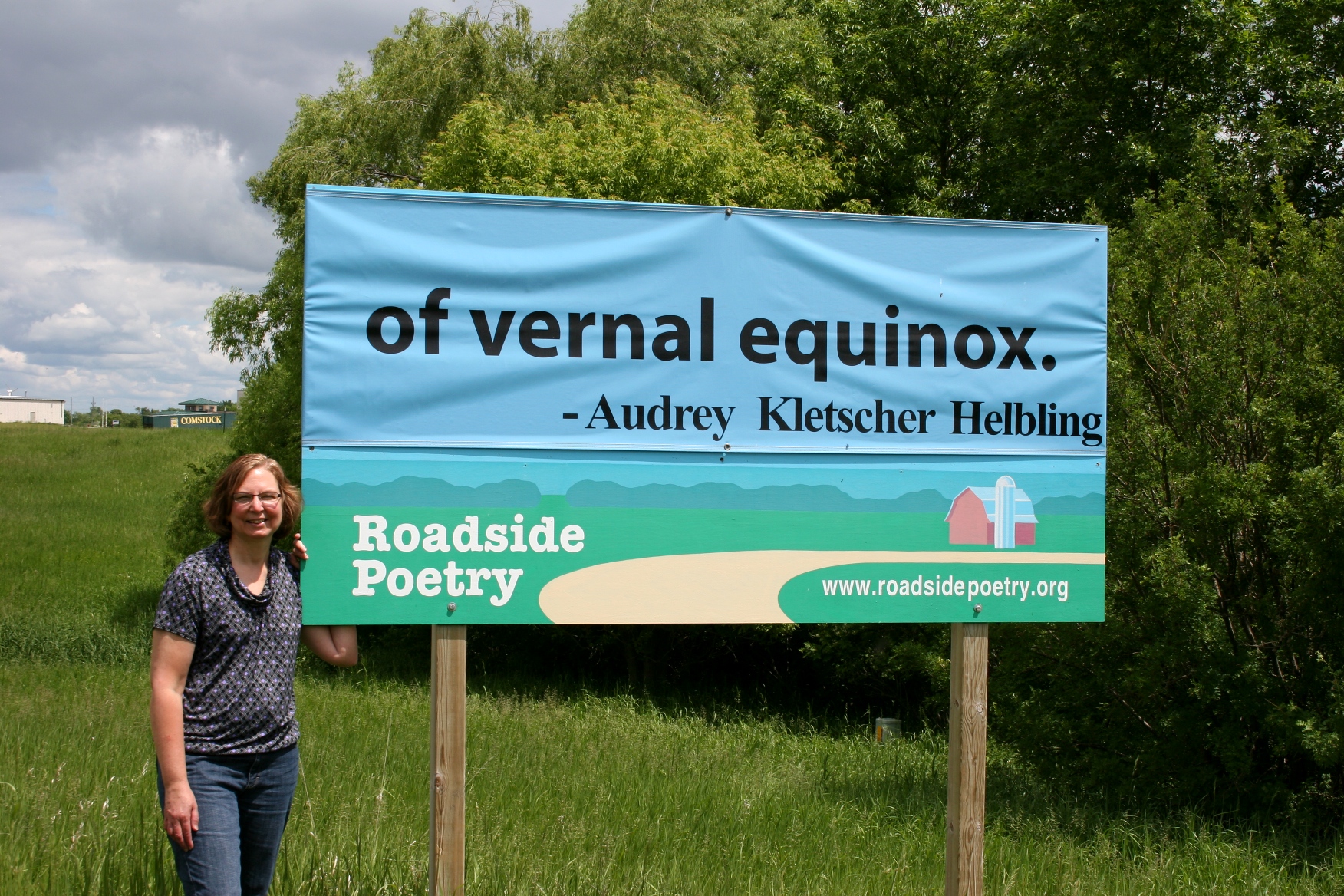
I got word last Monday that my winning Roadside Poetry Project spring poem will come down on June 17, to be replaced with a summer poem. (Click here to read a previous post about my poem.) So if I wanted to see “Cold earth warmed by budding sun sprouts the seeds of vernal equinox” and my name—all sprawled across four Burma Shave style billboards—we had to get our butts up to Fergus Falls.

So we did, making the 200-mile trip this weekend under big skies that stretched all the way to the Dakotas.

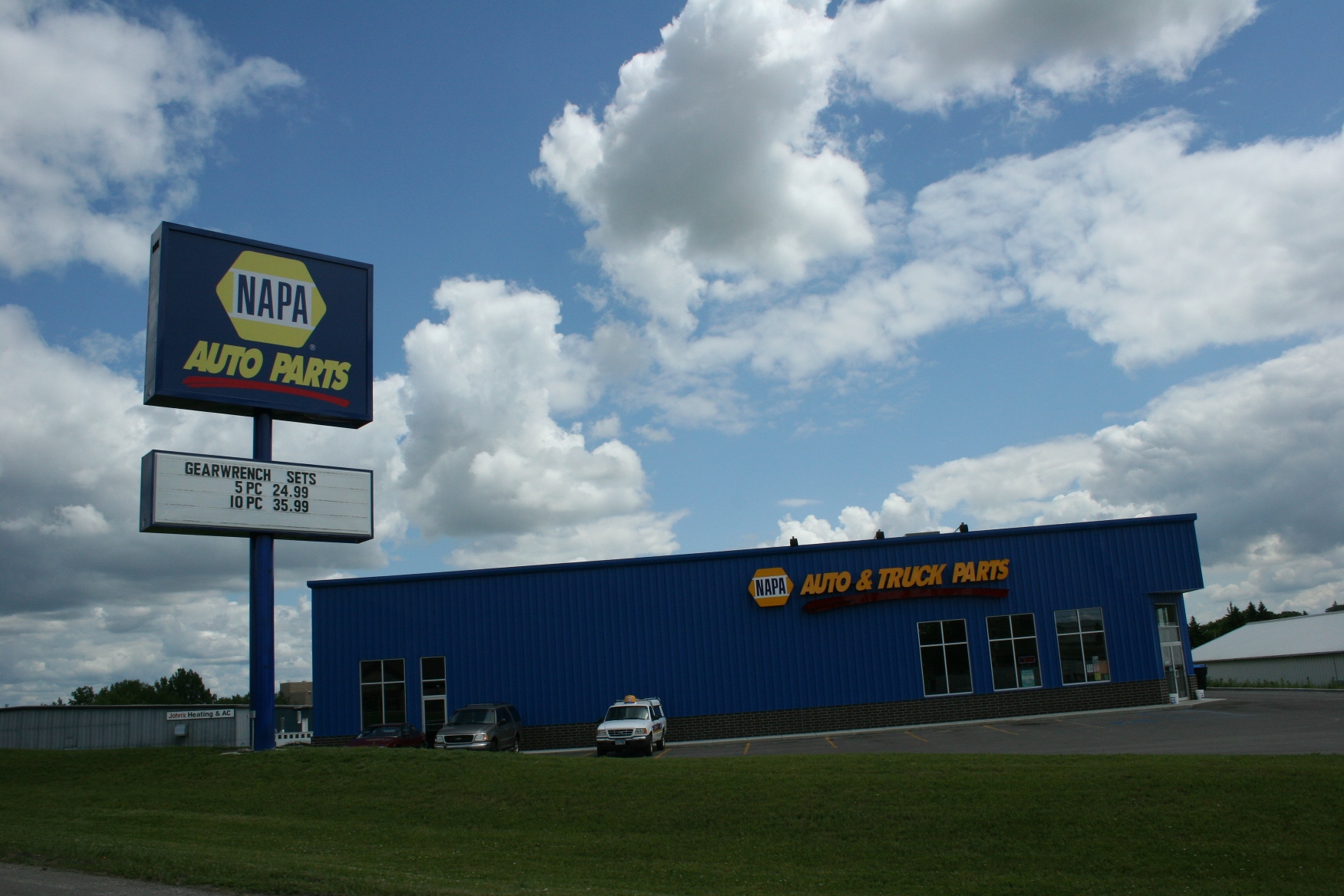
After a few stops, including a swing into Melrose to view an historic Catholic church (more on that in another post), we eventually reached Exit 54 into Fergus some 3 1/2 hours later. We followed Highway 210/West Lincoln Avenue, turned onto North Tower Road and drove past the NAPA Auto Parts store before reaching those poetry billboards. I mention NAPA because Randy works at the NAPA store in Northfield as an automotive machinist and we found it interesting that my poems just happened to be right down the road from the Fergus NAPA store.

We passed right by the NAPA store to reach my billboards just down the road.

When Randy pulled to the side of North Tower Road by my billboards, I determined this was not the safest place to park. So we pulled into the Fastenal parking lot and then descended the steep ditch, wading through tall, and wet, prairie grasses—sweet clover, June grass, alfalfa—and more than a few thistles.

Our shoes and jean legs were soon soaked with moisture. But, you know, that really didn’t matter. I was so focused on viewing my four-line, spring-themed poem and on taking photos that the wet feet and denim seemed more a nuisance than anything worth fretting over on a glorious early Saturday afternoon.

And so, billboard by billboard, we worked our way down the road ditch, stopping by each sign for photos. Eventually I handed the camera over to Randy, who managed to figure out how to turn on the camera, focus it, compose and snap some pictures.

Me posing by the last of the four billboards with my spring poem.

This may be the first and last time my poetry, and my name, will be on billboards, so I savored every letter, every word, every line, every billboard...

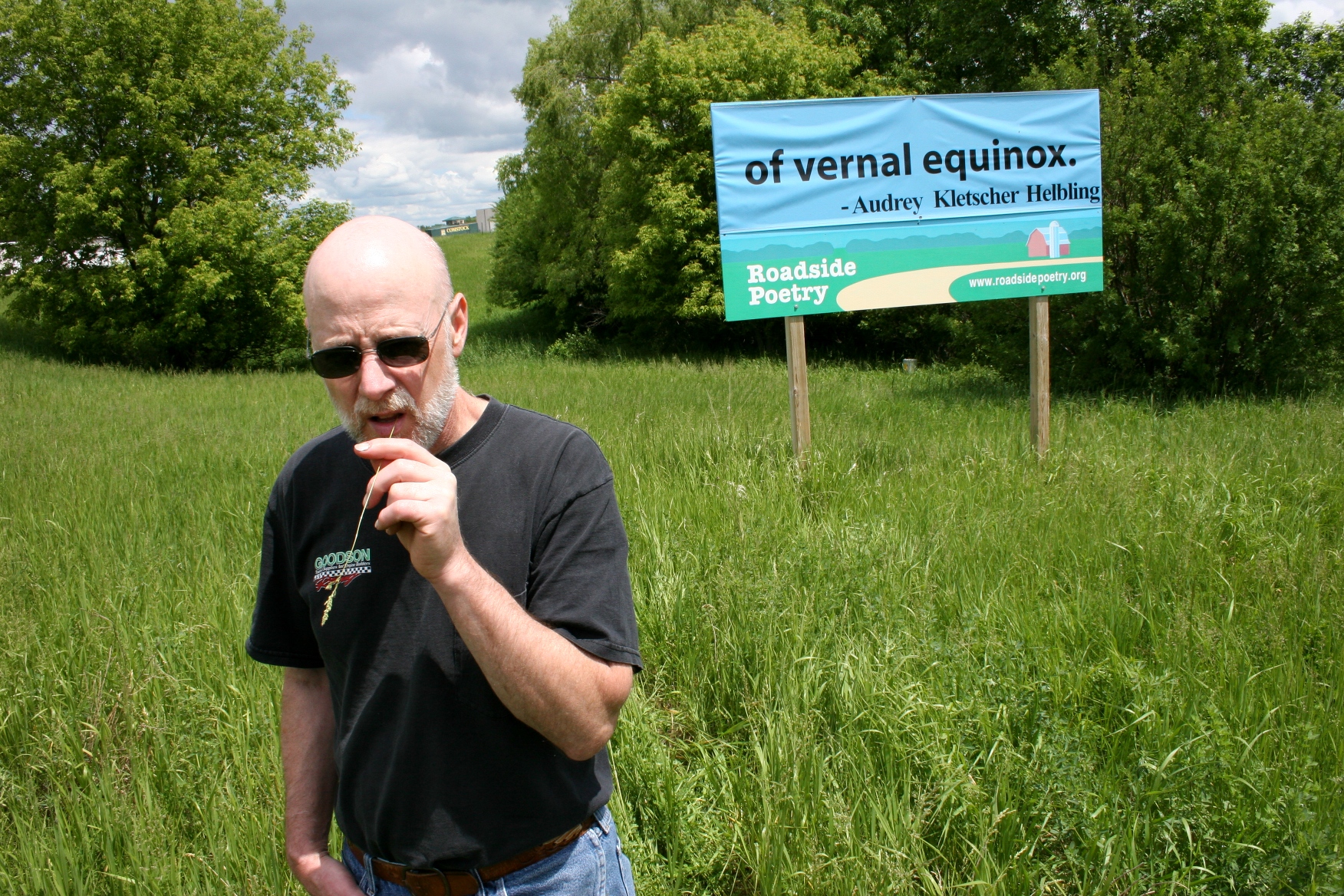
Then I snapped this image of my husband, who had plucked a spear of prairie grass and slipped it into his mouth. The frame marked one of those quick clicks of the camera that resulted in a photo that you could never recapture given its spontaneity.

A sweet shot of my husband as he walked away from the final billboard.

I’m uncertain how long we worked the road ditch along North Tower. But long enough to appreciate that this spot on the edge of town, under a sky that always feels bigger, wider, on the open prairie, perfectly fit a poem written by me, a southwestern Minnesota prairie native.

I crouched to capture this image which focuses on the road ditch prairie grasses.

© Copyright 2011 Audrey Kletscher Helbling


Vote to rebuild parks in four flooded Minnesota communities June 9, 2011

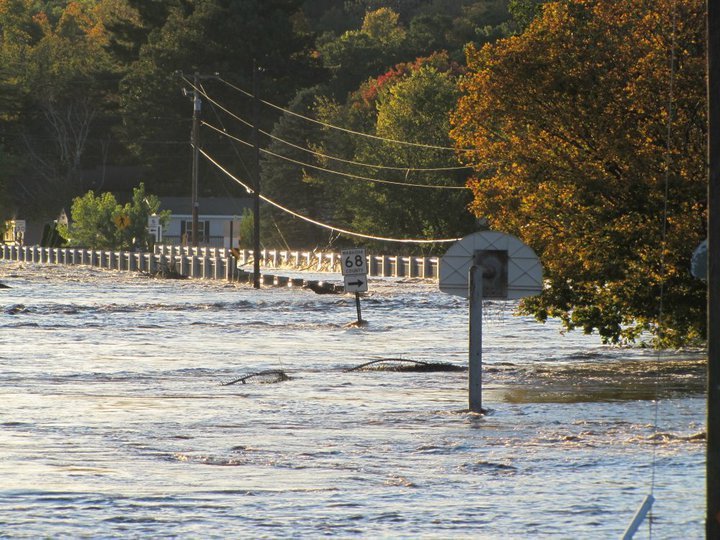
An aerial view of Hammond during the flash flood of September 2010. Photo courtesy of Michael Mann & Tina Marlowe.

FOR SOME TIME NOW, I’ve been committed to helping the folks of Hammond in southeastern Minnesota recover from a devastating September 2010 flood.

I’ve assisted in the best way I can—not physically—but with words and photos on this blog. We all possess talents and mine are not hanging sheetrock or swinging a hammer. I write. There is power in words.

Last October I brought you a series of stories and photos from Hammond and neighboring Zumbro Falls, where I interviewed several individuals and shot many photos showing the damage caused by the flooded Zumbro River. The women I spoke to shared heartbreaking stories. Yet, they remained strong. That impressed me.

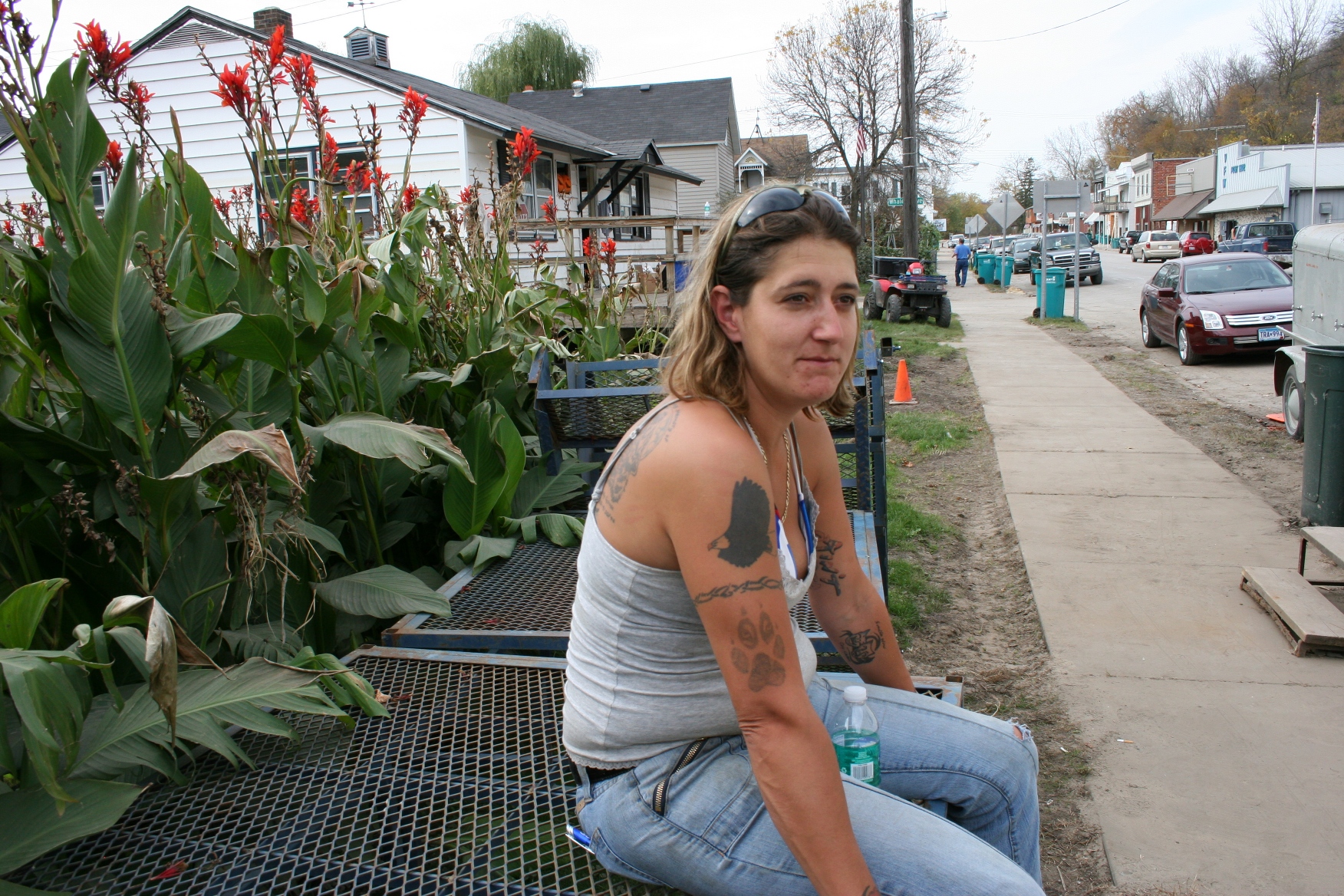
I spoke to Tracy Yennie in Zumbro Falls several weeks after the flood damaged her home.

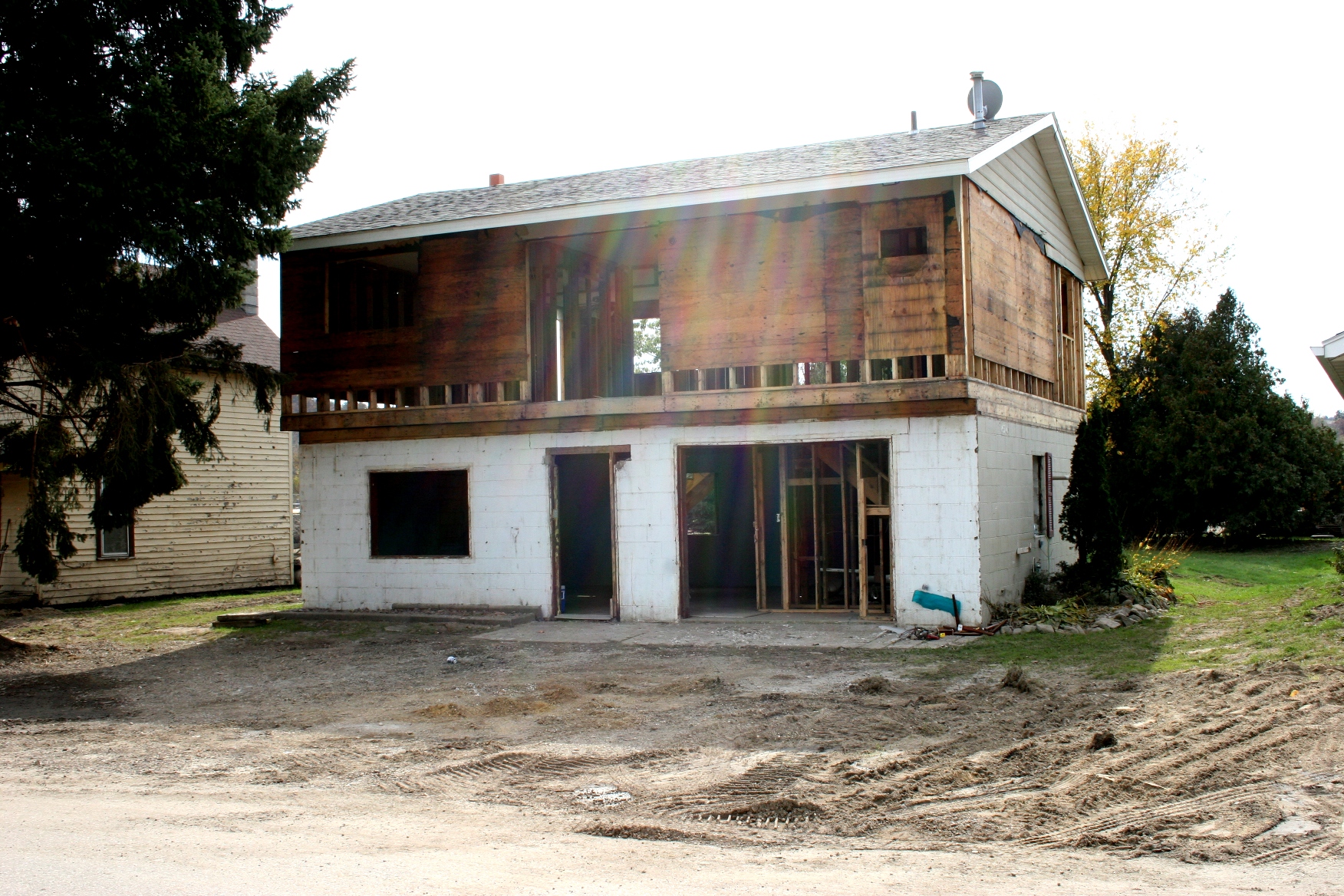
A gutted, flood-ravaged home in Zumbro Falls.

The exposed side of the restaurant/grocery, where a portion of a building once stood in Hammond. The building lies in a heap in the street.

I saw gutted homes and businesses, a child’s toy lying in a pile of discarded appliances. Truly, I could not fathom the personal loss of possessions and home.

In March I published a series of stories about Tina Marlowe and her family, who lost so much to the floodwaters in Hammond. Hers was one story of many that you will never hear. Some residents have decided not to return. Others await possible buy-outs or funding to repair their homes.

But beyond the individual losses, these towns have suffered as communities. They’ve lost gathering spots and places for their children to play. Parks need rebuilding. To do this, these communities need money.

Marlowe, who was recently elected to the Hammond City Council, has started the Hammond Park Flood Recovery Project and is accepting donations of monies, materials and labor to rebuild the recreational areas in her river hamlet.

Send donations to: City of Hammond Park Flood Recovery Project, 320 East Center Street, Hammond, MN. 55991. Click here to learn more about this effort.


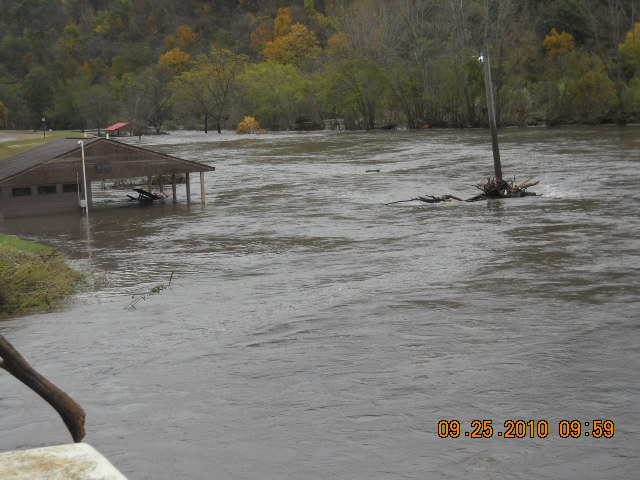
Hammond's riverside park was all but destroyed by the flood. Marks on the shelter roof show how high the water rose. A baseball field next to the shelter, with a fence around it, is covered by receding floodwaters. Jenny Hoffman took this photo on September 25, 2010.

The bridge connecting east and west Hammond during the flood, which also overtook the town's park. Photo courtesy of Micheal Mann & Tina Marlowe.

AND NOW A 16-YEAR-OLD Zumbrota-Mazeppa High School student, Amy Schultz, has stepped up, leading the push to secure a $50,000 Pepsi Refresh Project grant that will repair flood-damaged parks in Zumbro Falls, Hammond, Pine Island and Owatonna.

Schultz tried for a grant earlier this year, focusing solely on Zumbro Falls and Hammond. Now she’s expanded her area, hoping that the inclusion of Pine Island and Owatonna will mean more votes. The top 10 projects, those with the most votes, get the $50,000.

Simple? Yes. Just vote by:

Voting continues through June. When I checked the ranking for this project on Wednesday morning, Schultz’s idea stood at number 27. Let’s blast that number into the top 10.

This high schooler is determined. Just read this information I found online, in news releases she sent to cities, Chambers of Commerce and elsewhere: “The local parks are part of the fabric that joins these picturesque river towns together. It is where families and friends come to play and visitors come to sit by the riverside all summer long. So many memories have been made here over the years and we need to restore them for current and future generations.”

Convincing words from a young woman who wants to make a difference in four Minnesota communities still recovering from the September 2010 flash floods.

Vote today and every day until the end of June for the “Rebuild Parks in Owatonna, Zumbro Falls, Pine Island and Hammond MN” project.

© Copyright 2011 Audrey Kletscher Helbling


When the power goes out June 7, 2011

Filed under: Uncategorized — Audrey Kletscher Helbling @ 8:50 AM
Tags: , , , , , ,

WHEN THE POWER goes out on a Monday evening, say at exactly 6:50 p.m., on one of the first oppressively hot days of a Minnesota summer, what do you do?

Here’s a recap of my 4 ½ hours without electricity.

Finish a late grilled chicken supper with the husband and teenage son, followed by the routine clearing of the table, washing dishes (there’s a reason I don’t own a dishwasher) and then taking out the garbage, which is typically the husband’s job, but he is mowing the lawn.

Notice that the under-sink garbage container reeks and is growing black something-or-other. Scrub off the unknown black growth and blast the garbage can with disinfectant.

Sweep the kitchen floor.

Pretty routine so far, right?

Water the plants on the patio.

Now what? Can’t get on the computer to check email or work on chapter one of the book you are editing.

Grab the stack of invoices and statements from the local lumber yard and try to figure out whether you’ve been billed and/or credited properly for materials purchased for the house project that has been a stressful, six-month undertaking. Mutter a few words that cannot be printed here.

Ask the son where his father has disappeared to and then spot him across the street talking to the neighbors, whom we’ve never met. Observe other neighbors outdoors, including those next door, who have stepped outside for a smoke. Apparently when the power goes out, smoking in a closed-up, without air conditioning, house becomes intolerable, or perhaps suffocating.

Grab a book and a notebook to read and take notes on a book you are reviewing for a magazine. In the fading light of day, that plan lasts through two pages.

Text the daughter in Wisconsin, who doesn’t text back.

Join the husband who decides, around 9 p.m., that a tour of the town is necessary to determine the source and extent of the power outage. A few blocks away, several Xcel Energy trucks ring an electrical substation.

This electrical substation near the viaduct in Faribault was the apparent location of Monday evening's power outage. I took this photo in March, as the city prepared for spring flooding.

Through-out downtown, street lights are dark,  store fronts lit. Figure that one out. Temporary stop signs replace non-functioning stoplights along Minnesota Highway 60, the main drag through Faribault. A grocery store, gas station and fast food restaurant stand dark and shuttered.

Realize that driving along unlit city streets ranks as unsafe given pedestrians and bikers think you can see them, but you can’t. No encounters. Just a realization that a city without street lights and with darkened homes and businesses appears eerie and dangerous. Wonder what strangers to Faribault think of driving into a darkened city.

Return home. Finally accept that power likely will not be restored for awhile. Light candles. Dig out the camping lantern, which hasn’t seen a tent in decades and serves as the primary light source during electrical outages.

Ask the teen, who has been reading a book all evening and who is lounging on the living room floor, to find some news on his cell phone. Still don’t understand how he can listen to the radio on his cell. No news found. However, he tunes into classical music and tries to convince his father to listen to Beethoven and Bach at work rather than classical rock. Son is working in his dad’s automotive machine shop for the summer. Dad isn’t convinced. Suggest a compromise—morning with the Moody Blues, afternoon with Beethoven.

Question the boy more about first day back at work, whether he’s been welcomed. Yeah. Encourage more conversation because usually the teen has head buried in the computer and such opportunities are rare. Learn that he lunched at the picnic table behind the automotive store. Ask whether conditions have improved in the outdoor dining area. Nope. Still a dumpster and trailer and scrap metal pile next to the picnic table. Suggest the boss give me a decorating budget to spruce up the place. Ain’t gonna happen. Son says he and Dad should bring lawn chairs.

Phone Xcel Energy for the second time. Hear that power should be back on by 11 p.m. It is 10:30 p.m. Earlier recording stated lights on at 8:50 p.m. Don’t believe smooth-talking woman. Decide to head to bed.

But, first, join son for star gazing in backyard. Listen to him complain about light pollution. Find the Big Dipper when he asks. Thinks parents cannot find it, are dumb. Suggest he take star gazing chart to southwestern Minnesota. He requests one night worldwide when all lights are turned off. Tell him that won’t happen. Looting. Other crimes.

Advise him to lock door and turn off lantern when done sky watching. Candles extinguished earlier. Off to bed. Just drifting off. Door rattles. Teen clomps. Wide awake. Power back on: 11:15 p.m.

ACCORDING TO AN ONLINE Faribault Daily News article, 2,700 homes were without power in northern Faribault, stretching to Cannon City Township. The apparent cause of the outage was a failure at a regional substation.

© Copyright 2011 Audrey Kletscher Helbling


A perfect summer day in Minnesota June 6, 2011

Filed under: Uncategorized — Audrey Kletscher Helbling @ 9:23 AM
Tags: , , , , , , , , ,

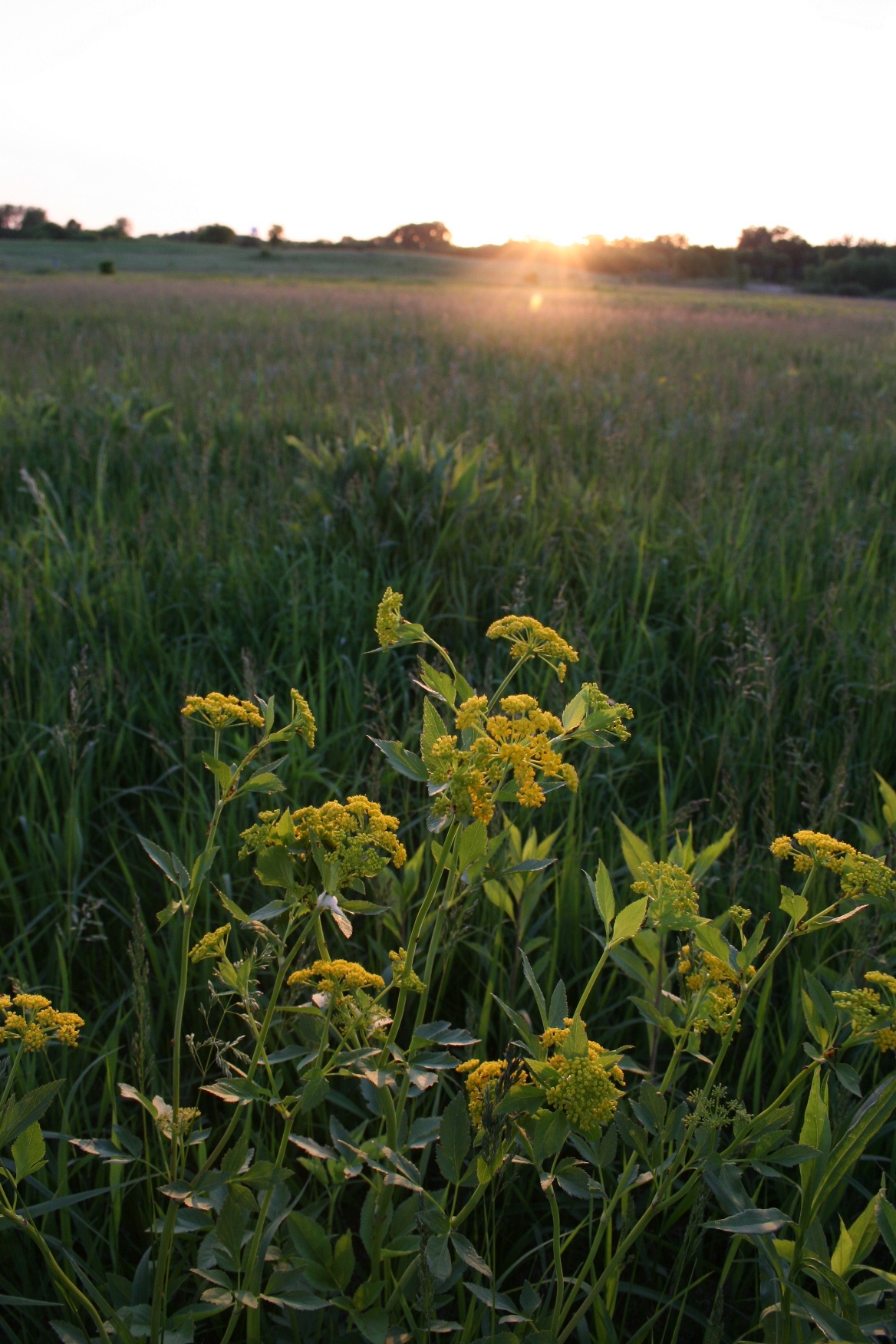
The sun sets on the prairie at River Bend Nature Center in Faribault on Sunday evening.

SUNDAY BROUGHT as perfect of a day as we have here in Minnesota. Sunshine. High temps without the humidity. No wind. A day to linger outdoors until the sunlight fades into the dark calm of a perfect summer evening.

Honestly, do days get any better than this?

In Minnesota, we gather these days into our memories, filing them away for the brutal months of winter, of bitter cold temps, snow (dare I mention that word?) and too much darkness.

For now we choose to celebrate the days of summer with family and friends, backyard barbecues and icy beer, laughter and conversation.

Here’s to the arrival of summer and the banishment of winter to some hinterland far, far, far away from Minnesota.

A deer I spotted just inside the nature center. (If only I had a telephoto lens.)

I saw this deer atop a hill at the nature center as my husband and I were leaving after a short hike. Same deer?

© Copyright 2011 Audrey Kletscher Helbling


A look back at a 1951 graduation speech about communism June 5, 2011

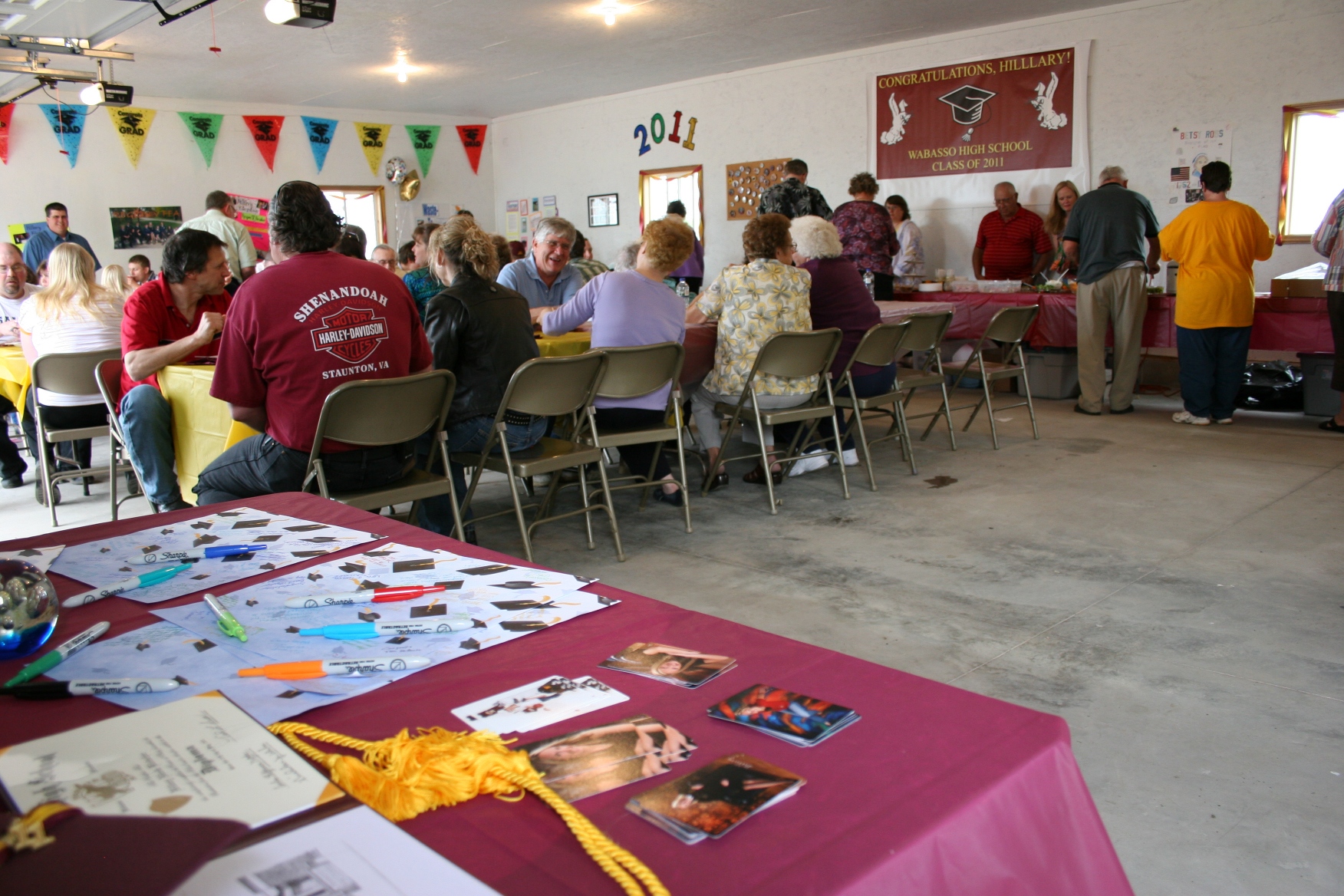
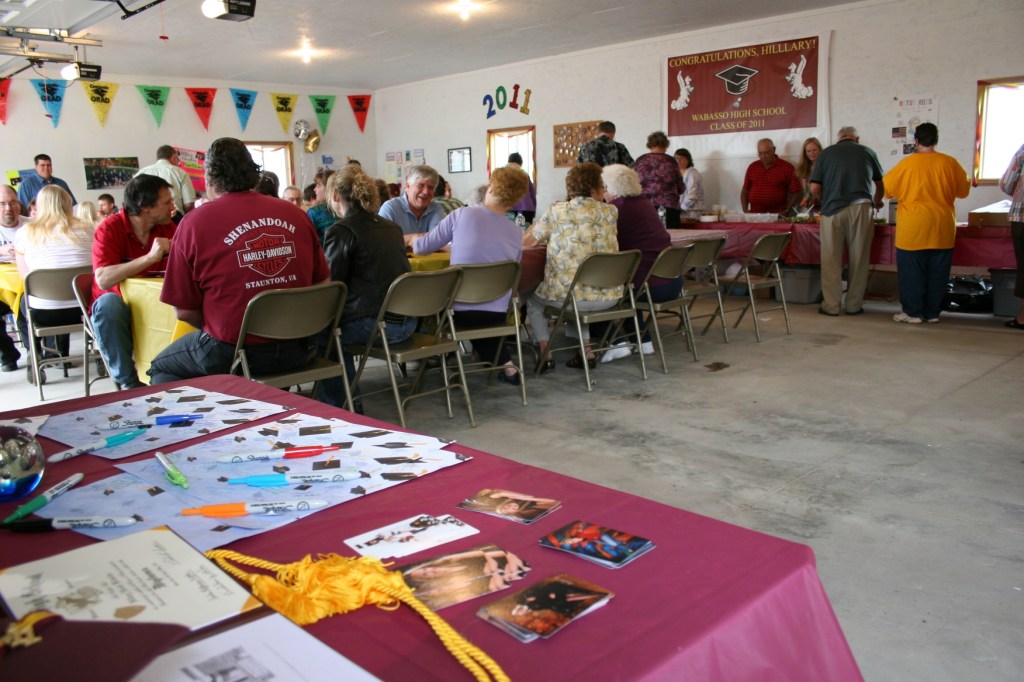
I recently attended this graduation reception for my niece Hillary, who graduated from Wabasso High School.

A soon-to-be 2010 graduate of Westbrook-Walnut Grove High.

IF YOU’RE LIKE ME, you’ve received invitations to numerous high school graduation receptions. You’ll make the rounds, shaking hands with the new graduates, inquiring about their future plans, congratulating their parents and then grabbing something to eat (pacing your food intake) before moving on to the next reception.

If you’re like me, you also have not attended a single graduation ceremony, unless your child is graduating or you are invited to a small-town high school where seating is not limited to four spaces per graduating senior’s family.

Therefore, you probably have not heard a student commencement speech in some time.

About a week ago my niece graduated as valedictorian of  Wabasso High School, my alma mater, and gave a graduation speech, of which I’ve received a copy. Hillary spoke about the past and how it weaves into the future. “As we become the people we are meant to be, we can hold onto the memories of yesteryear and the hopes of tomorrow,” she said in part. “The one thing that will always remain constant is the change in our lives.”

Now compare that to the speech (see below) given by Hillary’s grandmother, my mother, at Wabasso High School 60 years ago. Class of 1951 valedictorian Arlene Bode spoke about “Our Part in the Fight Against Communism.”

When my mom first told me the title of her speech, I laughed. “Who gives a graduation speech about communism?” I asked, and laughed again.
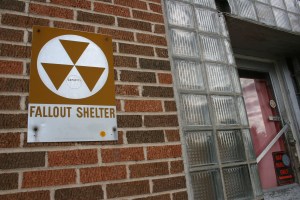
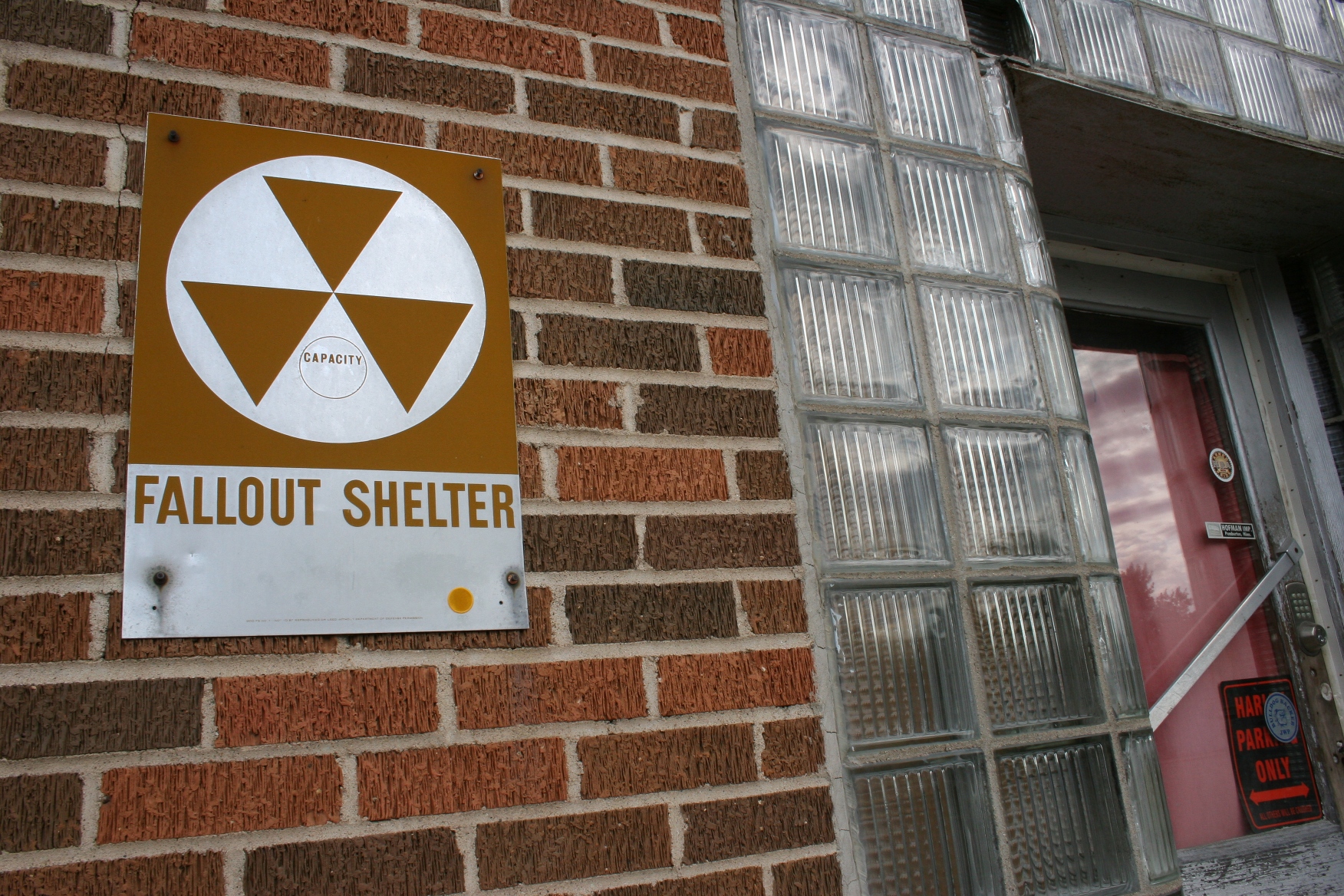
An old fallout shelter sign on a building in downtown Pemberton in southern Minnesota.

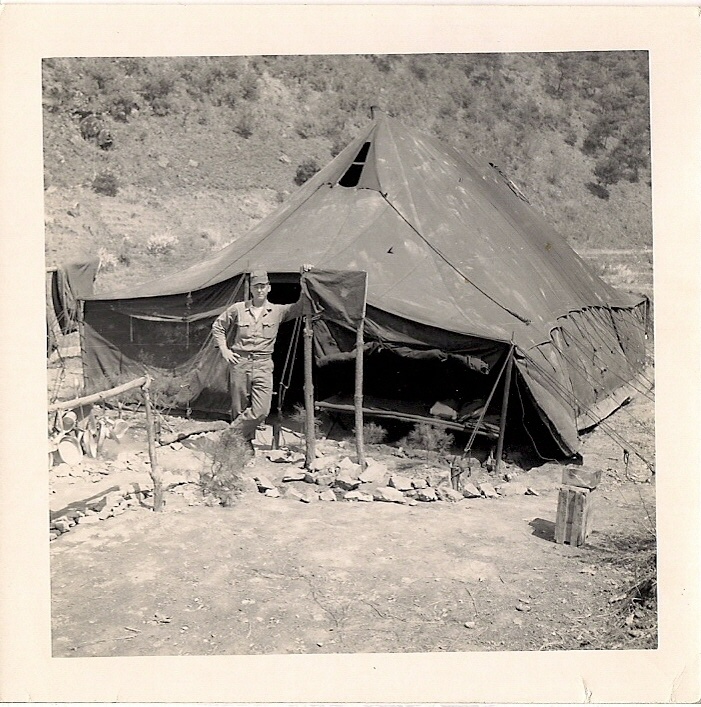
Then my 79-year-old mother reminded me of the time period—the Cold War, the fear of the Soviet Union, the Korean War, fallout shelters—and I understood. She doesn’t recall whether she chose the topic or whether the subject was assigned. But the content gives some youthful, historical insight into the world six decades ago:
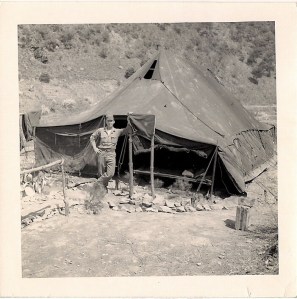
My father, a Korean War veteran, in Korea in 1953.

“WE, THE GRADUATING SENIORS, wish to take this opportunity to express our sincere gratitude to our parents, teachers, and all others who have helped us obtain our education.

OUR PART IN THE FIGHT AGAINST COMMUNISM

Communism is threatening the peace and security of our country. This is being brought more and more to our attention each day by the governmental leaders of the United States. We are sending our boys to Korea. We are conducting investigations to reveal any communist workers who may be in our government. We are sending Voice of America broadcasts behind the Iron Curtain to inform the people of how democracy works. But this is not enough. The tide of communism is moving ever forward. Most of Europe is communistic and it is spreading rapidly in Asia. This has happened just in the last few years. We must stop this tide before it is too late. It behooves us as graduating seniors to help in the fight against communism while there is still time.

Of course we must know what we are fighting against. The mere word communism is not enough. We must know what it means. The word communism is derived from the Latin word communis meaning common. It is said that communism is the distribution of income to each according to his need. They believe that all natural resources and most businesses should be owned by the government. They also believe in community ownership of property. This is the true meaning of communism, but it has an even greater meaning here in the United States. Senate hearings have shown that it is a politically controlled conspiracy, promoted by a foreign nation, for the overthrow of our government. If they should accomplish this overthrow it would be a decisive step toward placing the entire world under communistic government. According to Kenneth Goff, author of “Confessions of Stalin’s Agent,” the communist party has six main points in its program: Abolition of all governments, inheritance, private property, patriotism, family, and religion.

The communists strike first at the poorer class of people and at those who are not satisfied with present day conditions. They promise these people that under communism they will have all they want, such as rest, leisure, and social security paid by the State. But this is far from what really happens. What really happens is that these people lose their personal freedom and whatever they do is for the benefit of the communist party.

If we have an understanding of what communism means and how it works we can fight against it. Here are some of the things we can do.
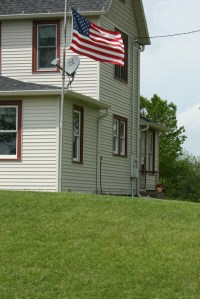
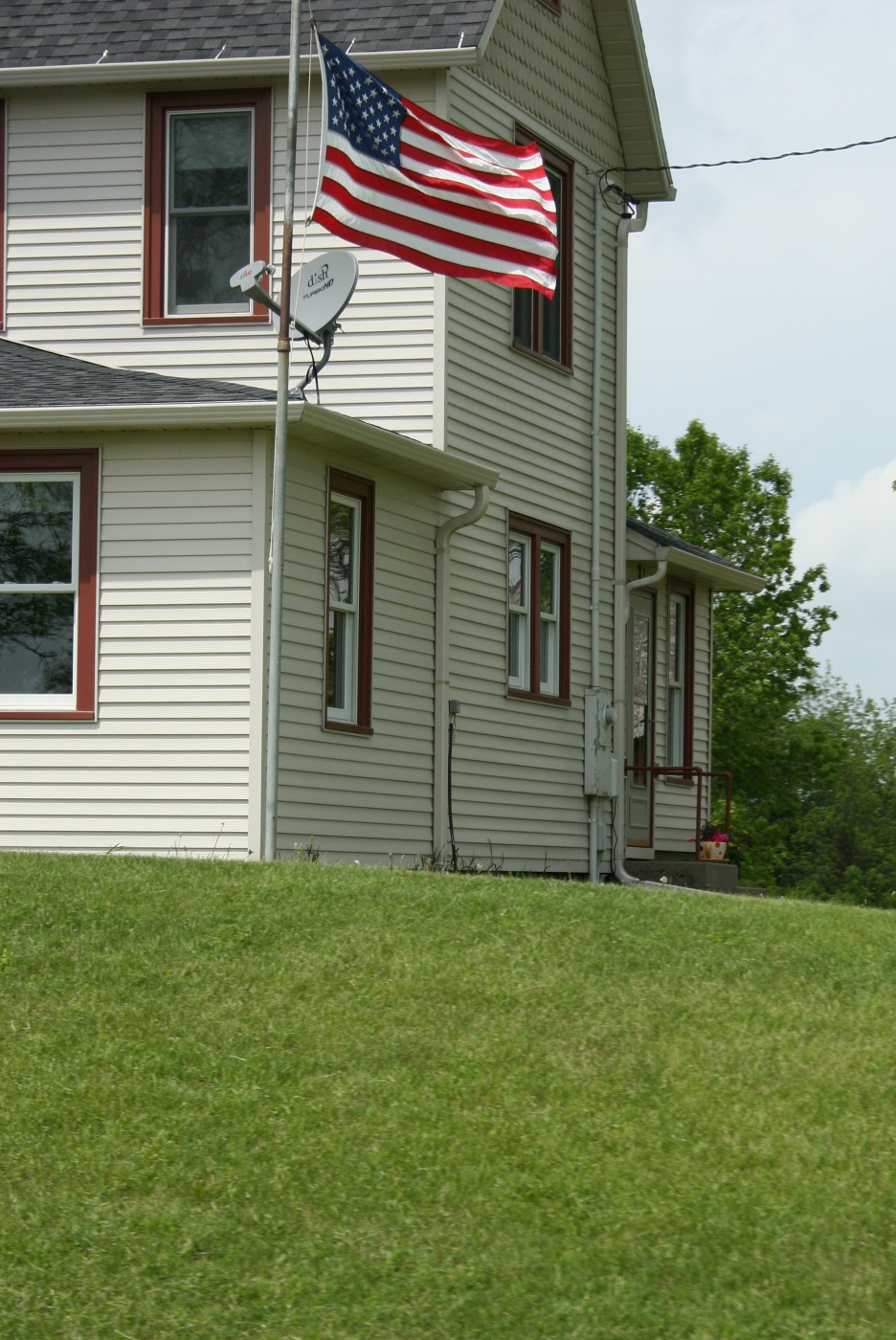
Patriotism displayed on a rural Minnesota home.

We must at all times practice democracy. Democracy means a sharing of respect, a sharing of power, and respect for the dignity of man. Democracy is promoted by a balanced economic distribution and an enlightenment of the people. We should see that parliamentary procedure is used in all organizations to which we belong such as, church organizations, community organizations, and women’s clubs. It is important to secure the wishes of the majority of the people without wasting time.

We must set a good example by being democratic in our every day life and in our dealings with others by working toward a definite goal in life, setting up ideals to follow, being a neighbor to all people regardless of their race, color, or religion, showing good judgment in all we do.

In a few years we will have a voice in our government and we must do our best to keep communists out of it. We can do this by voting at each election, which is one of the privileges of living in a democracy and one which we must never lose. But just casting a vote is not enough. We should know who we are voting for by studying the policies of each candidate to see what he stands for.

If each and every one of us practices democracy wherever we are we have done our part in the constant fight against communism. The part we play may seem small, but every little bit counts if we are to win over communism.”

AFTER READING MY MOM’S SPEECH several times, I wondered how often we as Americans pause to consider the freedoms we likely take too much for granted.

“We must at all times practice democracy. Democracy means a sharing of respect, a sharing of power, and respect for the dignity of man.”

WHAT’S YOUR TAKE on this 1951 graduation speech? Are any of her comments relevant today? What particularly struck you about this speech? I’d like to hear your specific reactions.

© Copyright 2011 Audrey Kletscher Helbling

Graduation speech © Copyright 1951 Arlene Bode Kletscher (Except for corrected errors in spelling, this speech is published here as originally written.)

2011 graduation speech excerpts © Copyright 2011 Hillary Kletscher