Minnesota Prairie Roots

Writing and photography by Audrey Kletscher Helbling

Traveling through Minnesota’s Bluff Country November 12, 2015

Filed under: Uncategorized — Audrey Kletscher Helbling @ 5:00 AM
Tags: , , , , , , ,
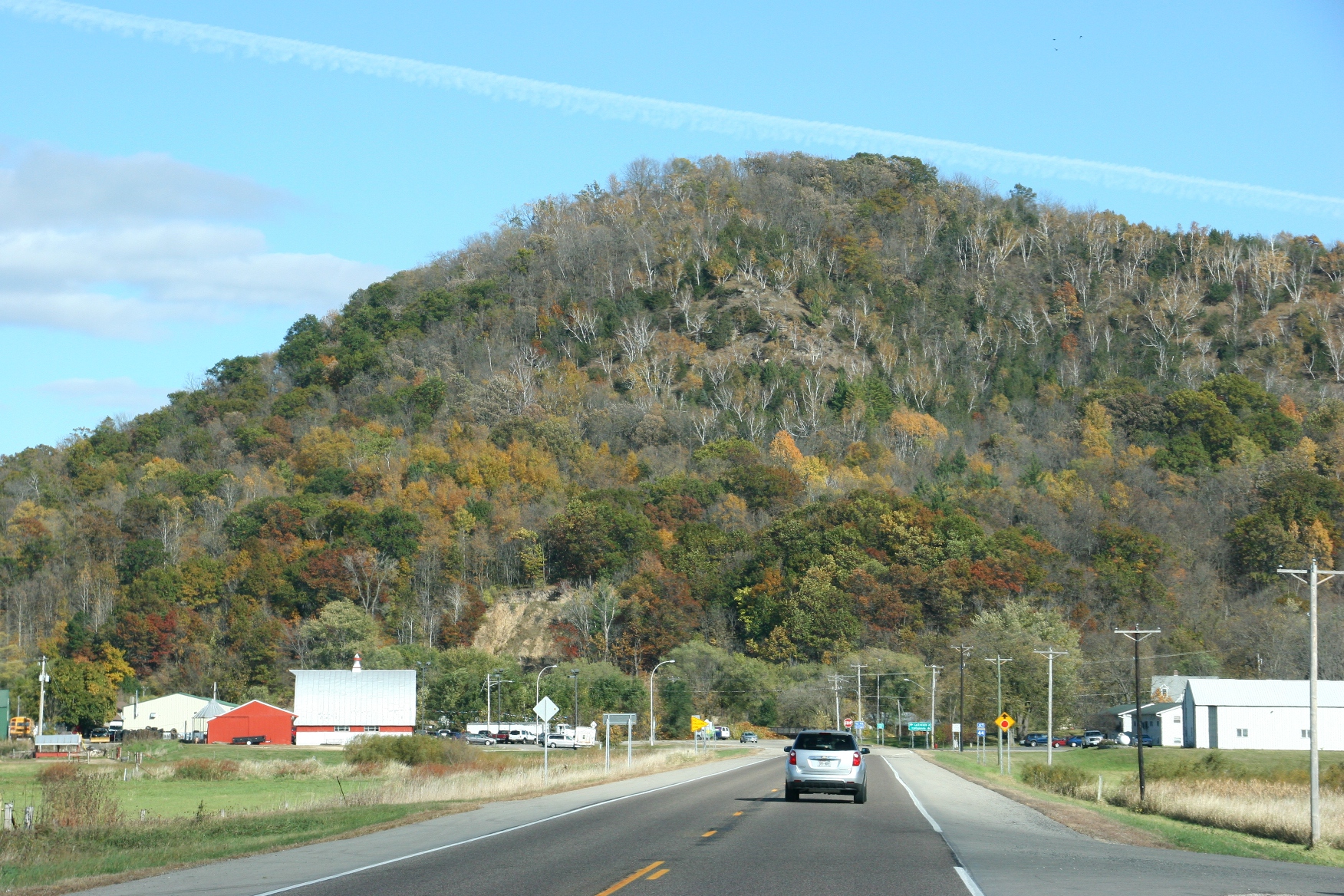
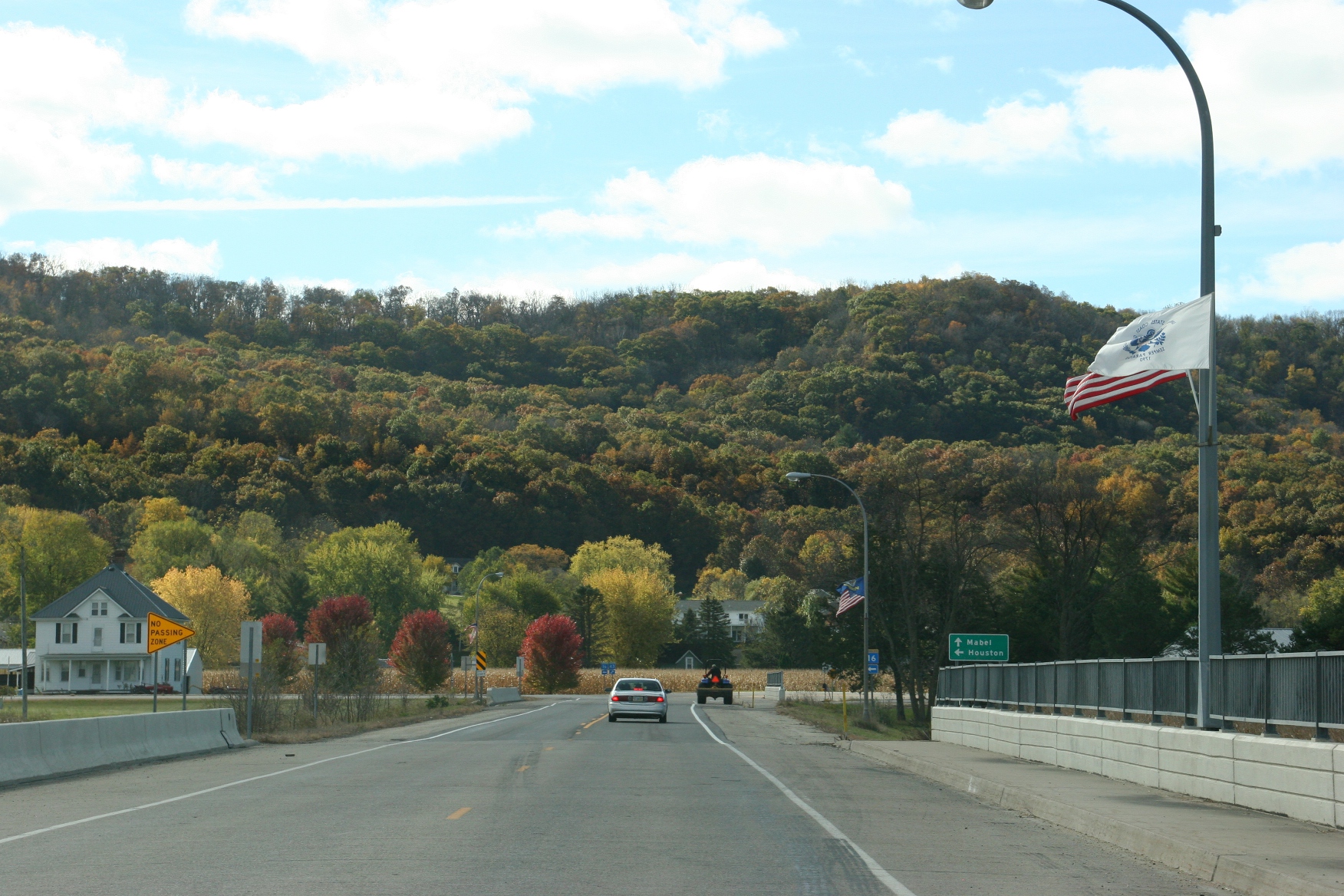
The terrain here, outside of Rushford in southeastern Minnesota, is similar to that around Houston. Turn left at the intersection and you will be headed for Houston.

The terrain here, outside of Rushford in southeastern Minnesota, is similar to that around Houston, Minnesota. Turn left at the intersection and you will be headed for Houston.

DRIVING ALONG A WINDING and steep ridge road toward Houston, Minnesota, on an October autumn afternoon, I am taken by the ruggedness of this land. Friends Doreen and Tom, who left the Twin Cities decades ago to settle in this area, warned my husband and me about Houston County Road 13. Yet, I was unprepared for the curves, the heights, for the vastness of the valley below, for the overwhelming feeling of smallness I experienced. I suppose others would say the same about the prairie—except for the height part. Familiarity equates comfort. And I suspect Doreen understood that a native flatlander like me might find her neck of the woods a tad daunting. I do. I am not a lover of heights.

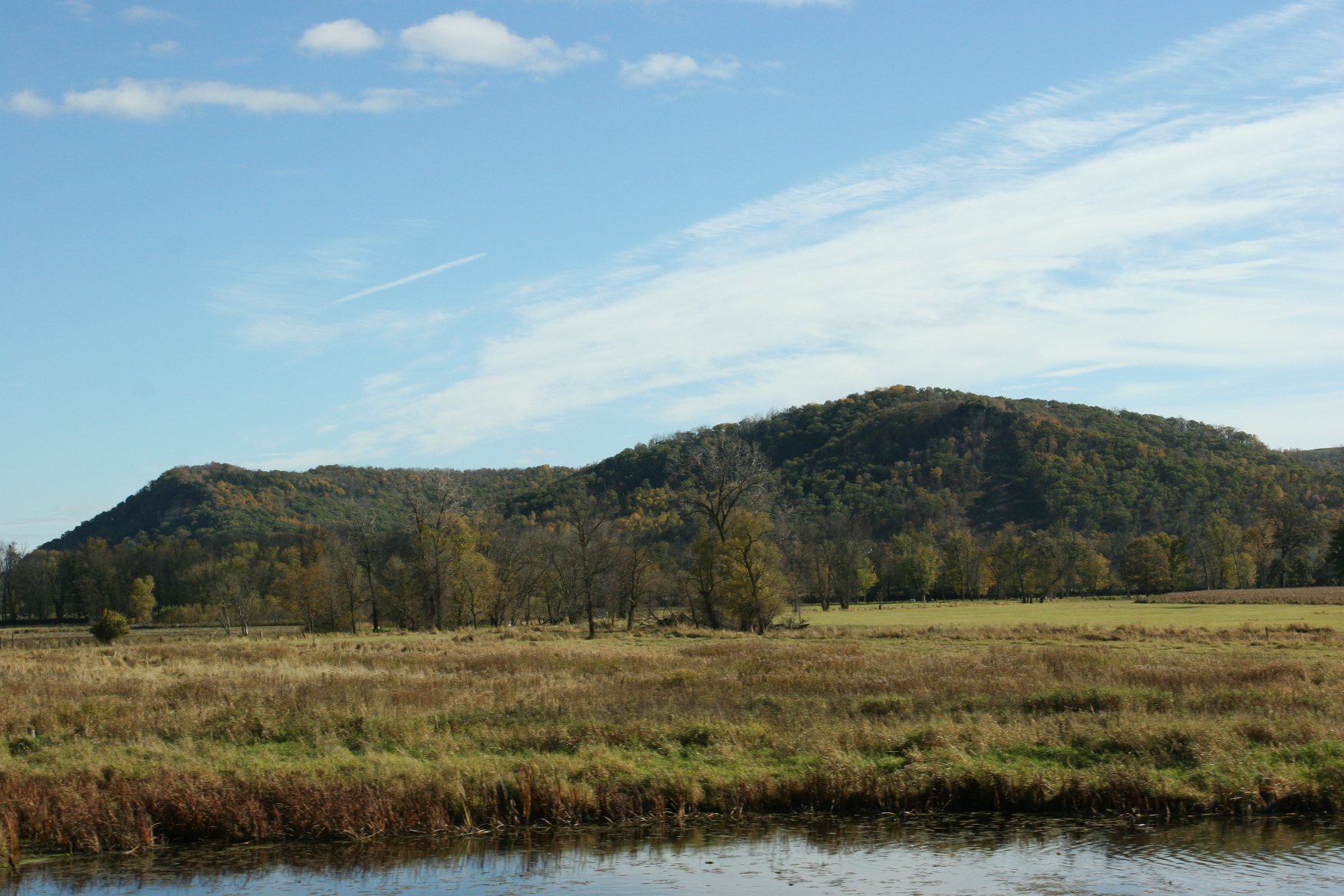
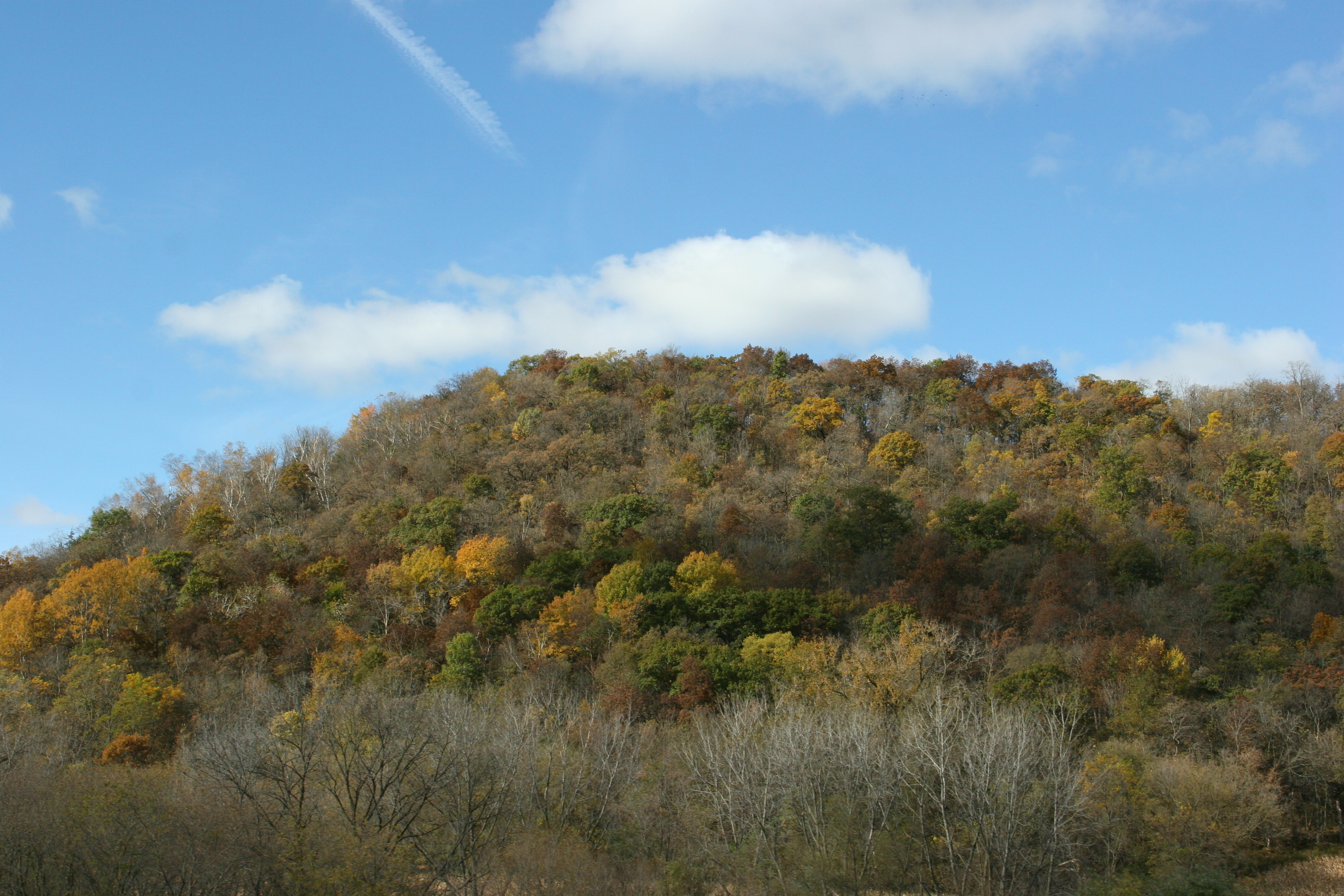
Bluffs just minutes from Rushford, Minnesota.

Bluffs just minutes from Rushford, Minnesota.


Aged farmsteads dot this region.

Aged farmsteads dot this region.


This farm sits just below the ridge near Houston.

This farm sits just below the ridge near Houston.


But I have grown to appreciate this corner of southeastern Minnesota with its rolling hills and bluffs, density of trees and rivers. Add in the small towns therein and the ruralness of this region and I want to return again and again to explore. I’ll never love the heights, though.


Everywhere bluffs rise up.

Everywhere, bluffs rise.


Near LaCrescent, Minnesota, just across the river from La Crosse, Wisconsin.

Near La Crescent, Minnesota, just across the river from La Crosse, Wisconsin.


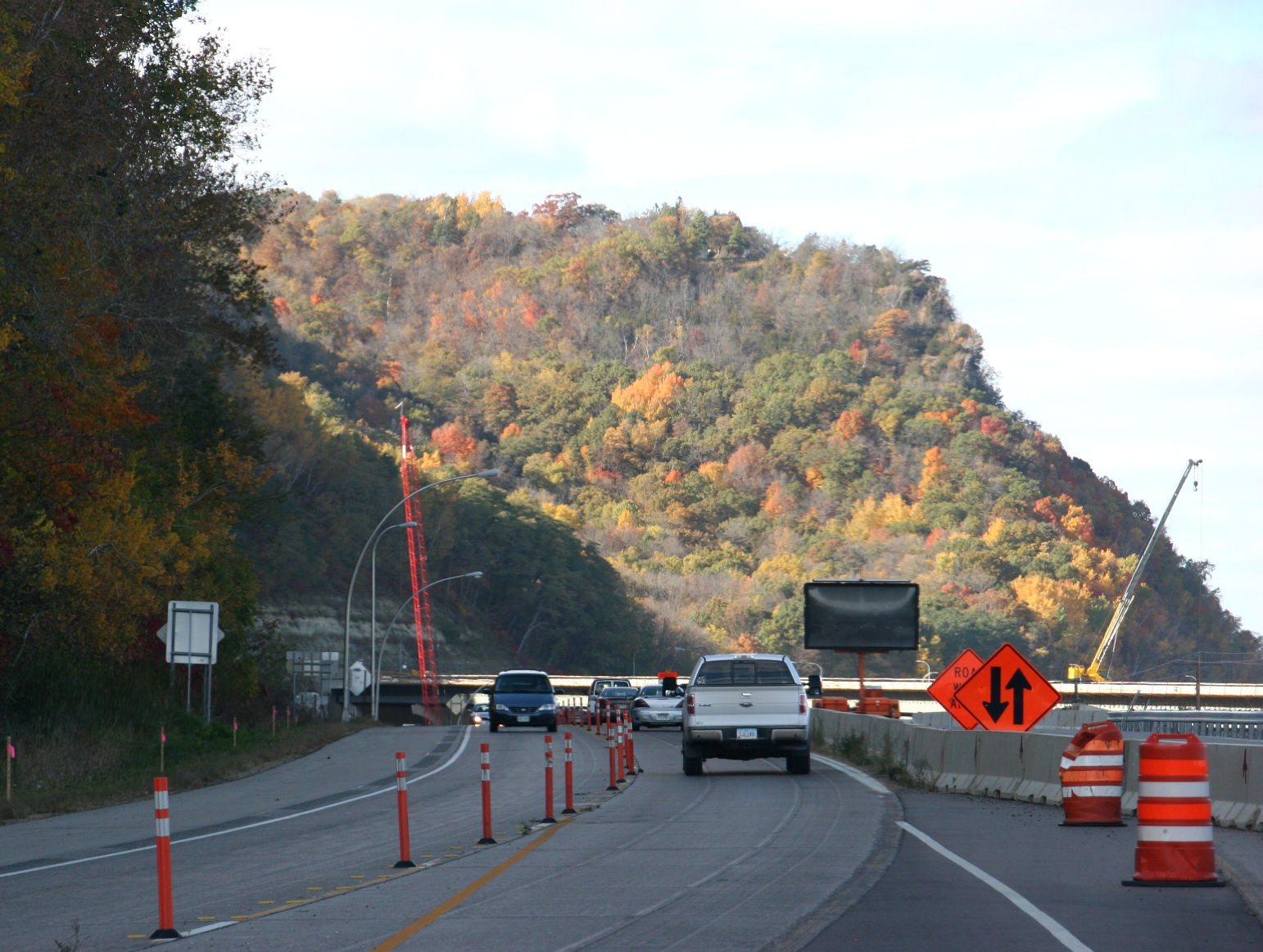
Nearing the Mississippi River bridge to cross from Minnesota into Wisconsin.

Nearing the Mississippi River bridge to cross from Minnesota into Wisconsin.


I am always impressed at the diversity of Minnesota topography. Within hours, you can drive from plains to woods, hills to prairie. Trees or no trees. Lakes or rivers. City or country.

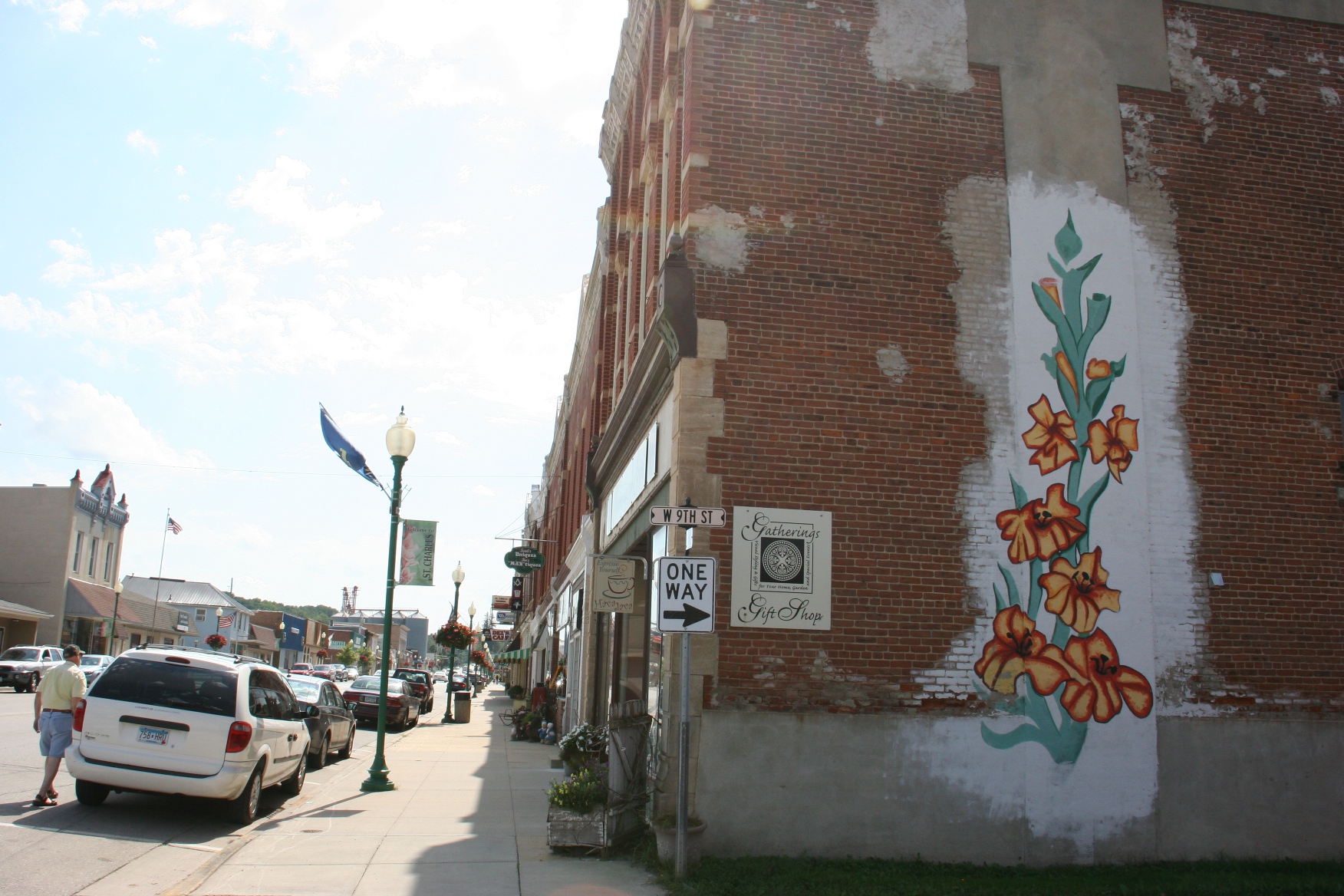
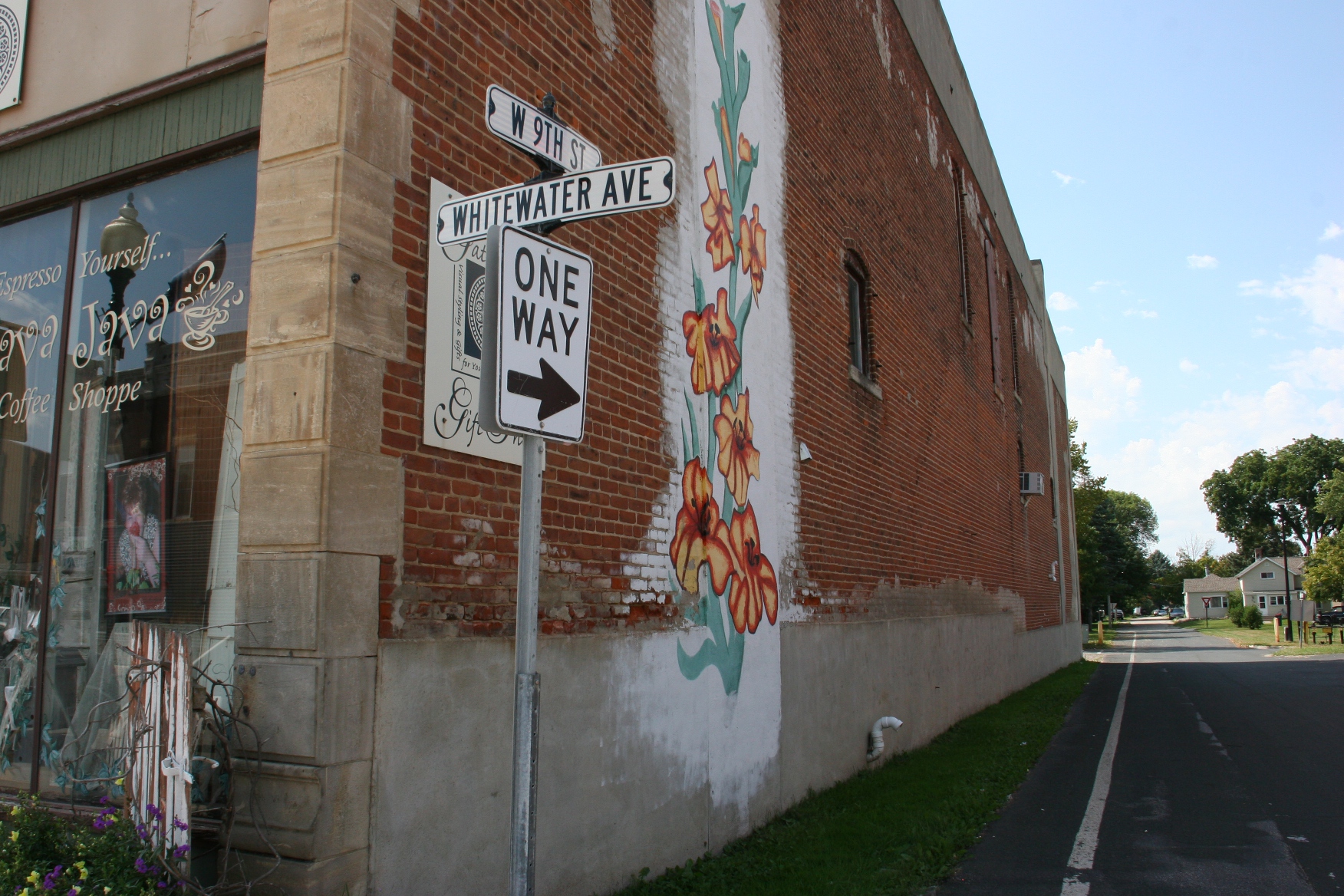
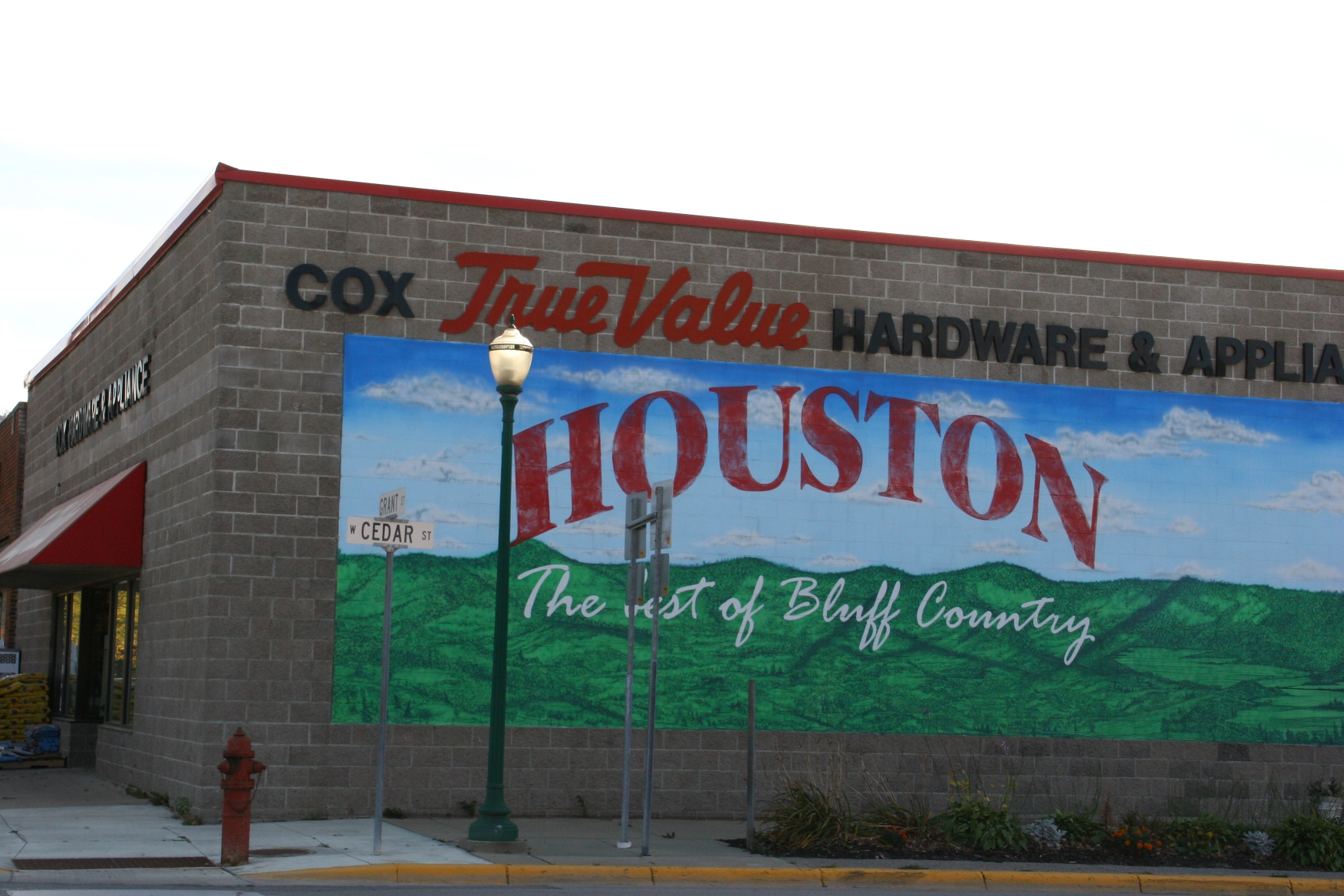
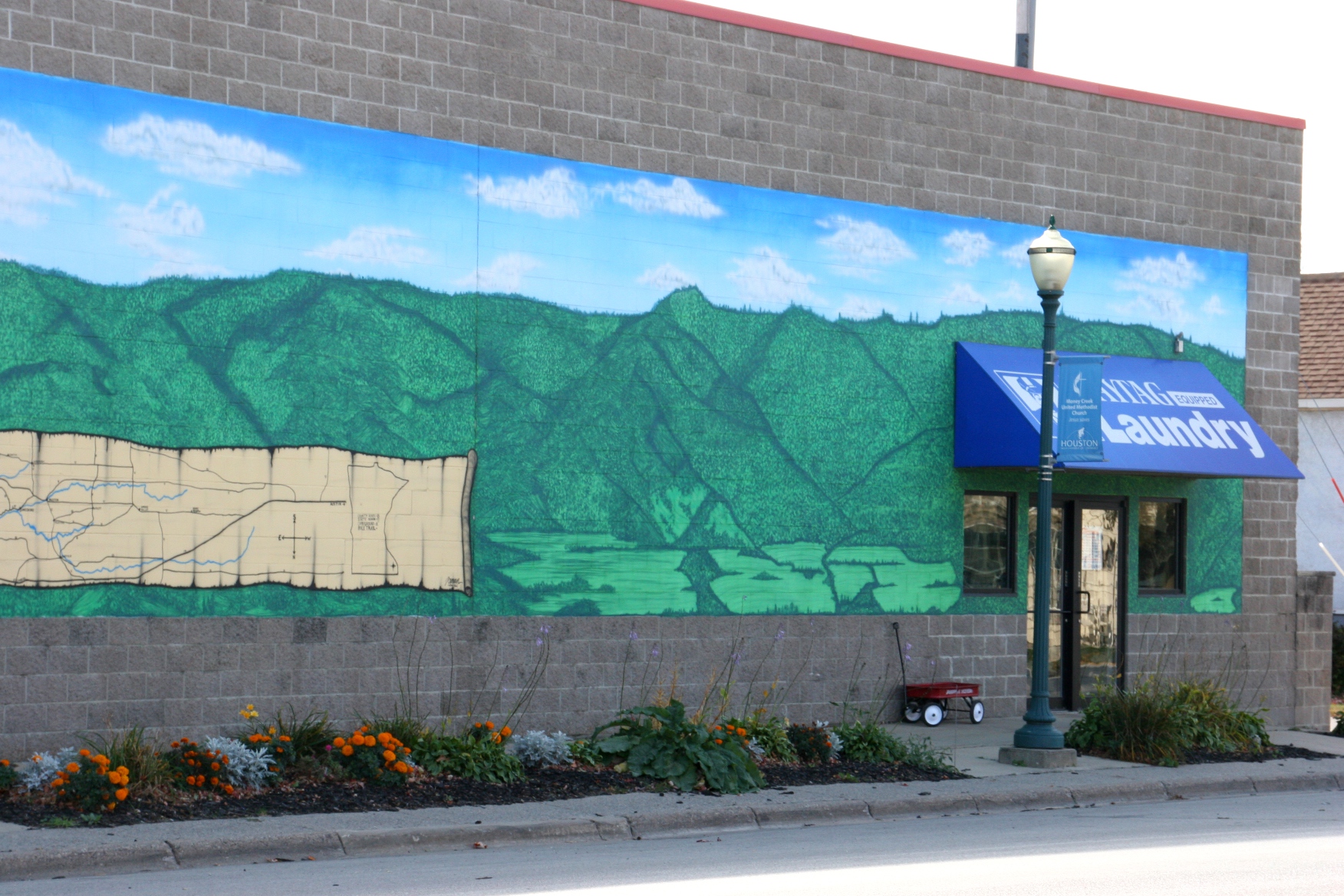
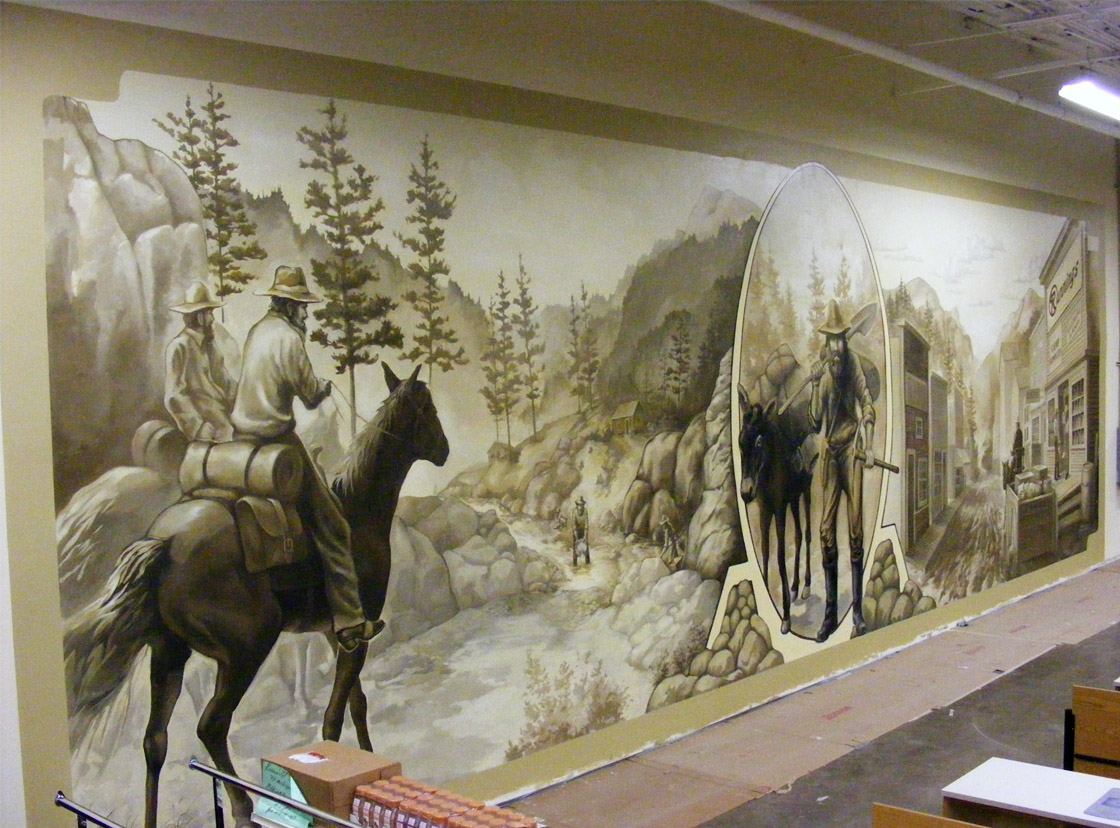
Bluff country mural

Doreen and Tom’s son, Brady, painted this mural on the hardware store in Houston years ago when Brady operated Iceman Custom Paint. He set up a projector in the middle of Minnesota State Highway 16 in the wee hours of the morning to get the image onto the wall. As luck (or not) would have it, a state trooper came upon the scene and investigated.


The rest of the hardware store mural promoting Bluff Country.

The rest of the hardware store mural promoting Bluff Country.


I love this state of mine. I truly do. Except for winter. I don’t miss the fierceness of a prairie winter. And I certainly wouldn’t want to deal with Duluth or Moorhead winters. And I imagine traveling southeastern Minnesota ridge roads in the winter could prove challenging. I take that tip from Doreen and Tom who are migrating south this winter to Texas.

BONUS PHOTOS from Houston, Minnesota:


After photographing the hardware store mural, I turned to see this man walking to his pick-up truck parked across the street at River Valley Convenience Store. The business is owned by Doreen and Tom's son Brady and his wife, Tracy. It was the leafy vegetables in the pick-up bed that caught me eye.

After photographing the hardware store mural, I turned to see this man walking to his pick-up truck parked across the street at River Valley Convenience Store. The business is owned by Doreen and Tom’s son Brady and his wife, Tracy. The leafy vegetables in the pick-up bed caught my eye. An interesting note about River Valley: The business features Full Service Wednesday from 1 – 3 p.m. On that afternoon, Tom shows up to pump gas and wash windshields. That’s a small town for you.


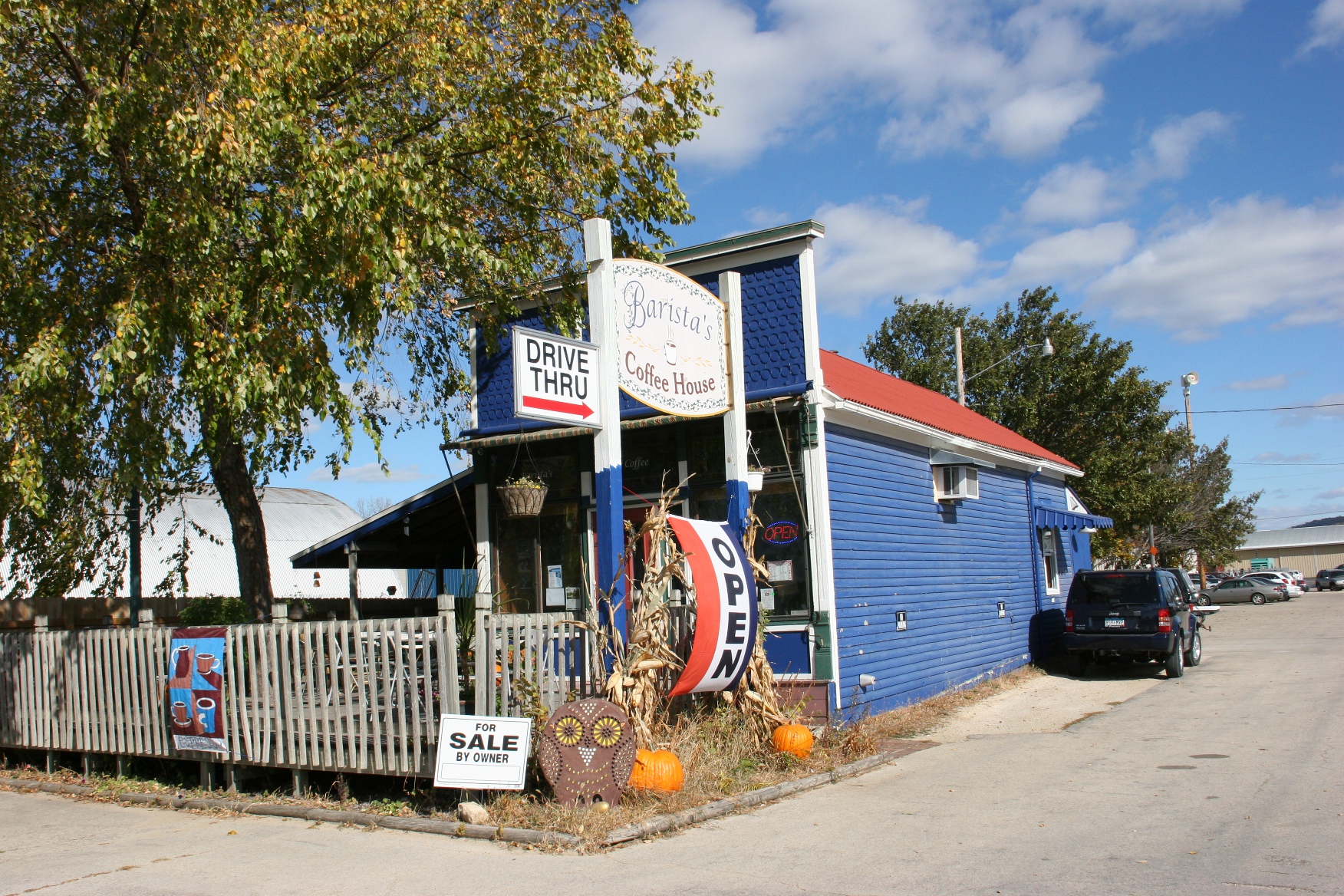
While I didn't stop at Barista's Coffee House, its exterior charmed me. The business is for sale.

While I didn’t stop at Barista’s Coffee House, its exterior charmed me. The business is for sale and is located right next to the convenience store just off the main highway through Houston.


I spotted this co-op fuel truck from nearby Hokah and flashed back to my Uncle Harold's fuel delivery truck at this Midland gas station, long-closed in Vesta, Minnesota.

I spotted this co-op fuel truck from nearby Hokah and flashed back to my Uncle Harold’s fuel delivery truck at his Midland gas station, long-closed in Vesta, Minnesota.


Check back tomorrow as I take you inside a special attraction in Houston. 

© Copyright 2015 Audrey Kletscher Helbling


Faribault mural honors Heisman Trophy winner & native son Bruce Smith November 3, 2015

ATTEND A FOOTBALL GAME in Faribault, and you’ll cheer from Bruce Smith Field.

Peruse the Rice County Historical Society, a short distance from the football field, and you’ll discover an exhibit about Bruce Smith.

In mid-June, pop over to the Faribault Golf Club for the annual Bruce Smith Golf Classic.

Head downtown to Buckham Memorial Library and you’ll find a locally-produced DVD titled Bruce “Boo” Smith #54: 1941 Heisman trophy winner.

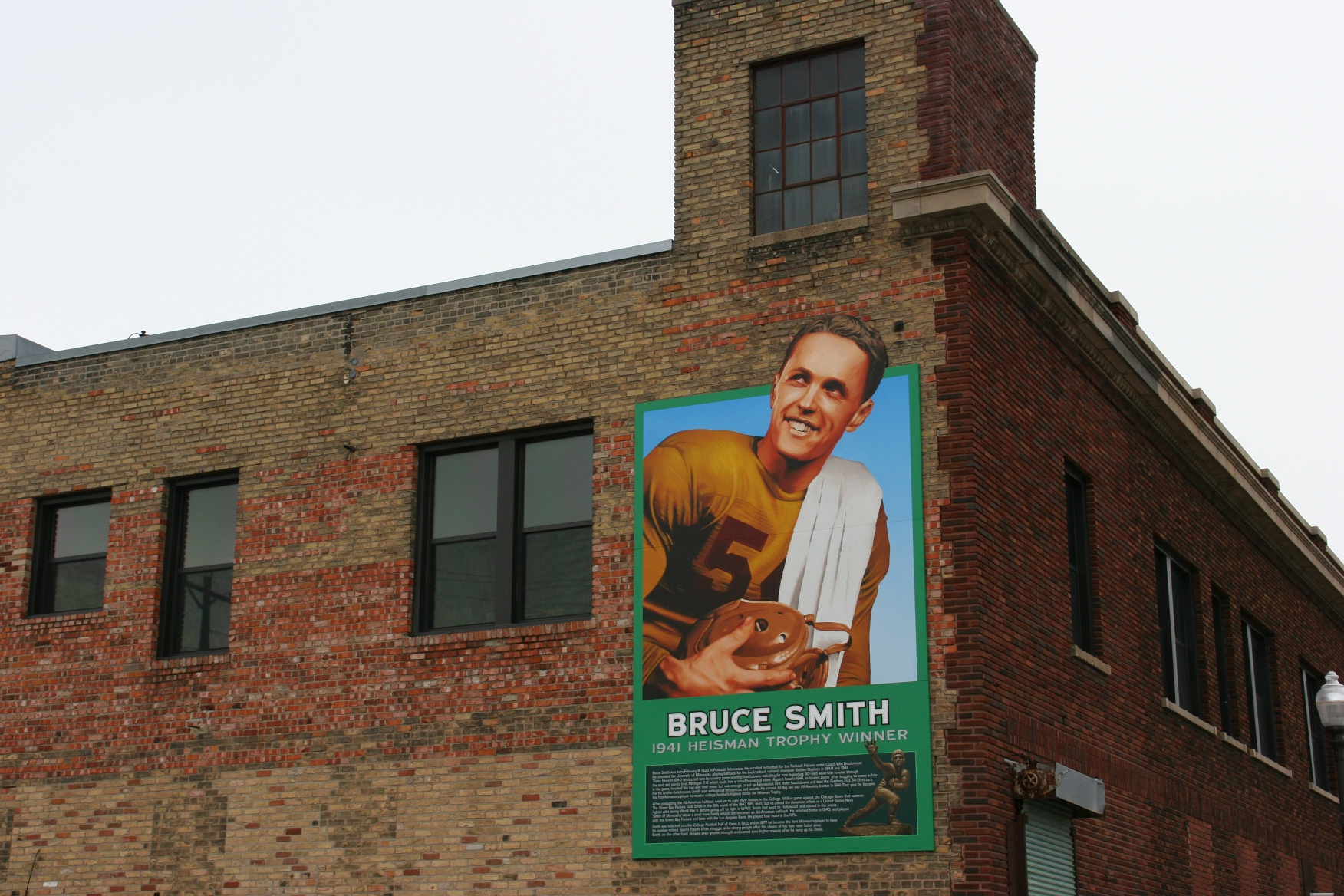
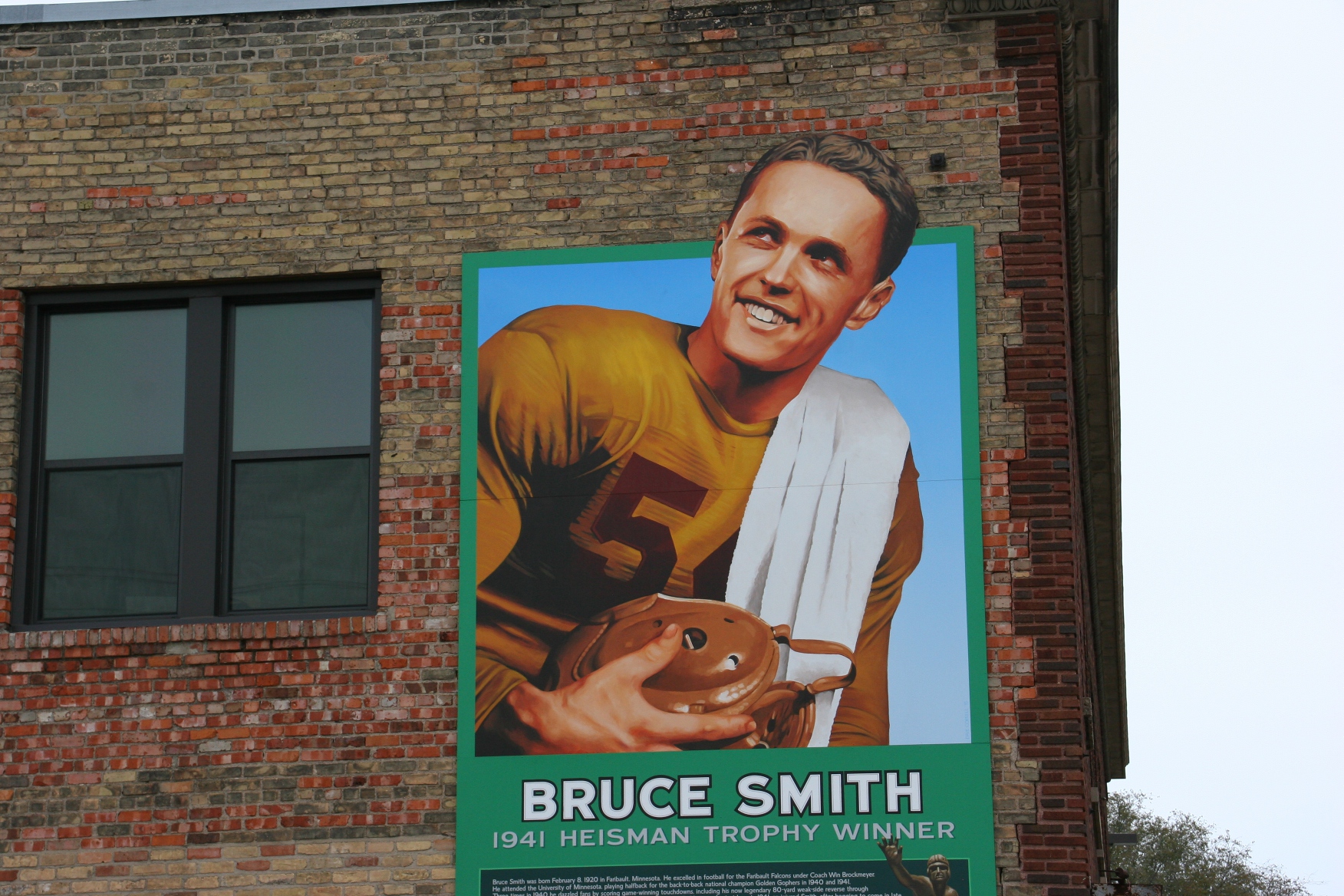
Faribault's newest mural honors native son and Heisman Trophy winner Bruce Smith.

Faribault’s newest mural honors native son and Heisman Trophy winner Bruce Smith.

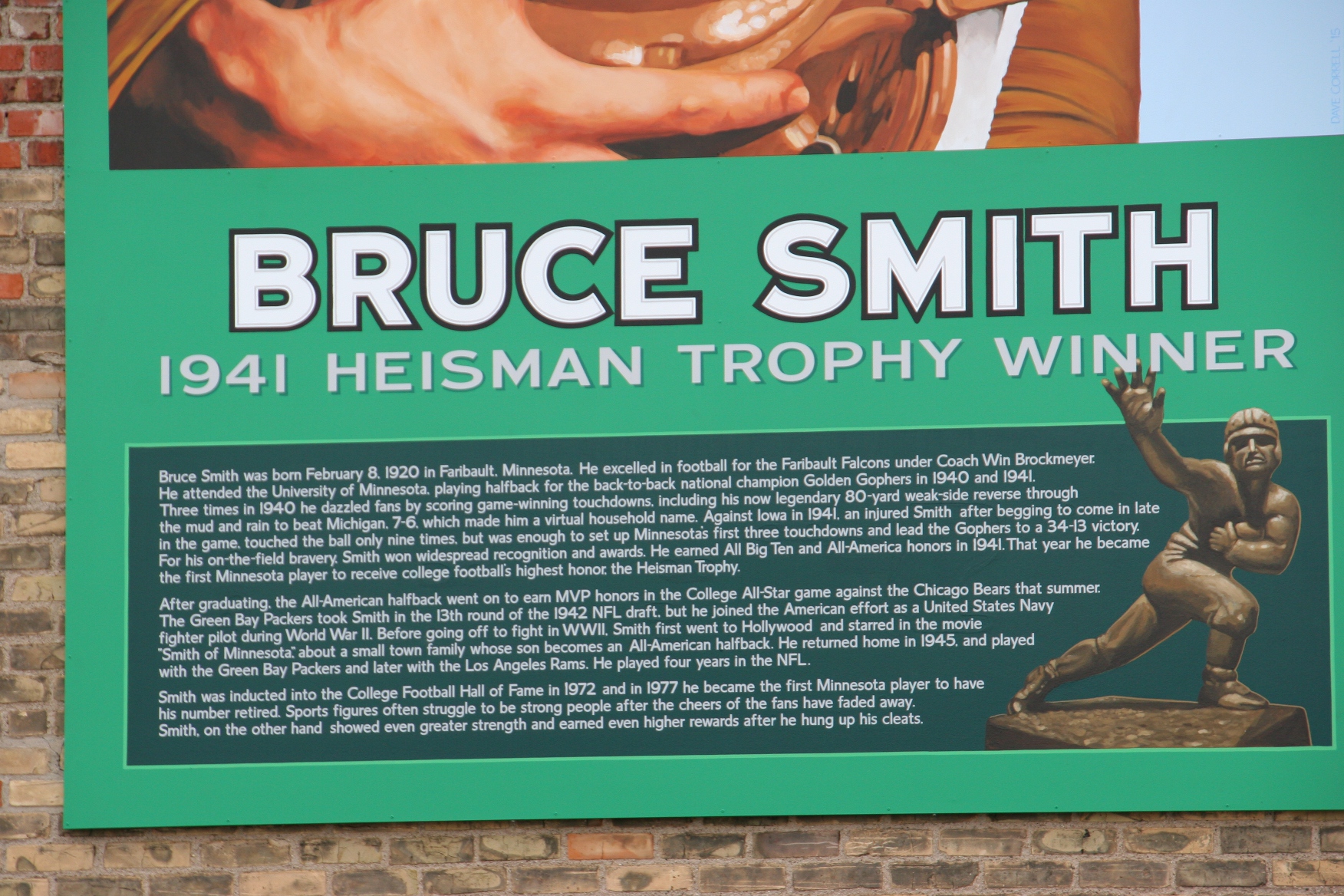
Now Faribault has added one more item to its Bruce Smith list—a mural. Last Friday the Mural Society of Faribault installed a downtown mural honoring Smith, who won the 1941 Heisman Trophy for most outstanding college football player. He was the first Minnesotan to garner that prize from the Sportswriters and Sports Broadcasters of America. Smith, a team captain and All-American halfback for the University of Minnesota Gophers, received the award on December 9, 1941, in New York City. That’s two days after the bombing of Pearl Harbor.

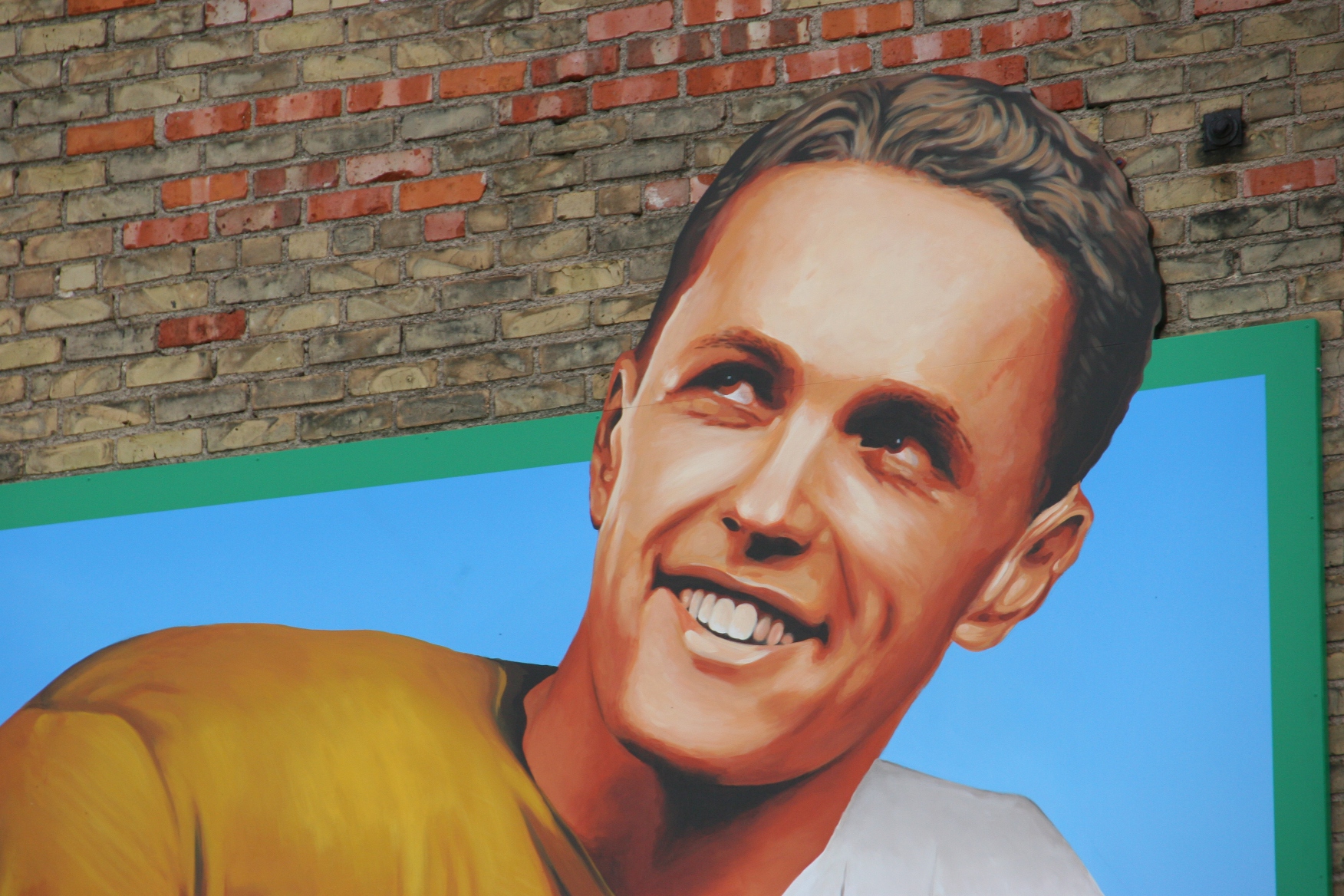
Bruce Smith, as painted by Dave Correll of Brushwork Signs.

Bruce Smith, as painted by Dave Correll of Brushwork Signs.

After college, Smith would go on to serve his country as a Navy fighter pilot during WW II. He also played football with the Navy.

The mural includes substantial information about Bruce Smith, a nice addition to the mural.

The mural includes substantial information about Bruce Smith. Click on the image to enlarge.

While researching Smith, born in Faribault in 1920, I learned that he:

  •  played professional football for four years—for the Green Bay Packers and Los Angeles Rams.
  •  starred in a 1942 Columbia Pictures movie about himself, Smith of Minnesota.
  •  nearly died of a ruptured kidney during a 1947 football game.
  •  retired from football at age 29.
  •  co-owned a sporting goods store in Northfield and worked in sales for a clothing store and a beer distributor. (Perhaps F-Town Brewing,  Faribault’s new craft brewery, could name a beer after him; makes marketing sense to me.)
  •  died of cancer in August 1967 at the age of 47.
  •  was inducted into the College Football Hall of Fame in 1972.
  •  had his number, 54, retired by the Gophers, a first for the U.
The mural honors Faribault's most-renowned athlete.

The mural honors Faribault’s most-renowned athlete.

Probably the most interesting fact I uncovered is Smith’s 1978 nomination for sainthood in the Catholic church. A man of strong faith, he prayed before and after games and also ministered to young cancer patients. I find this nomination especially notable given today’s often less than saintly behavior among many football players. But from all accounts I’ve read, Smith was a wholesome hometown boy, much beloved by his community. And that, in my opinion, holds an honor as great as winning the Heisman Trophy.

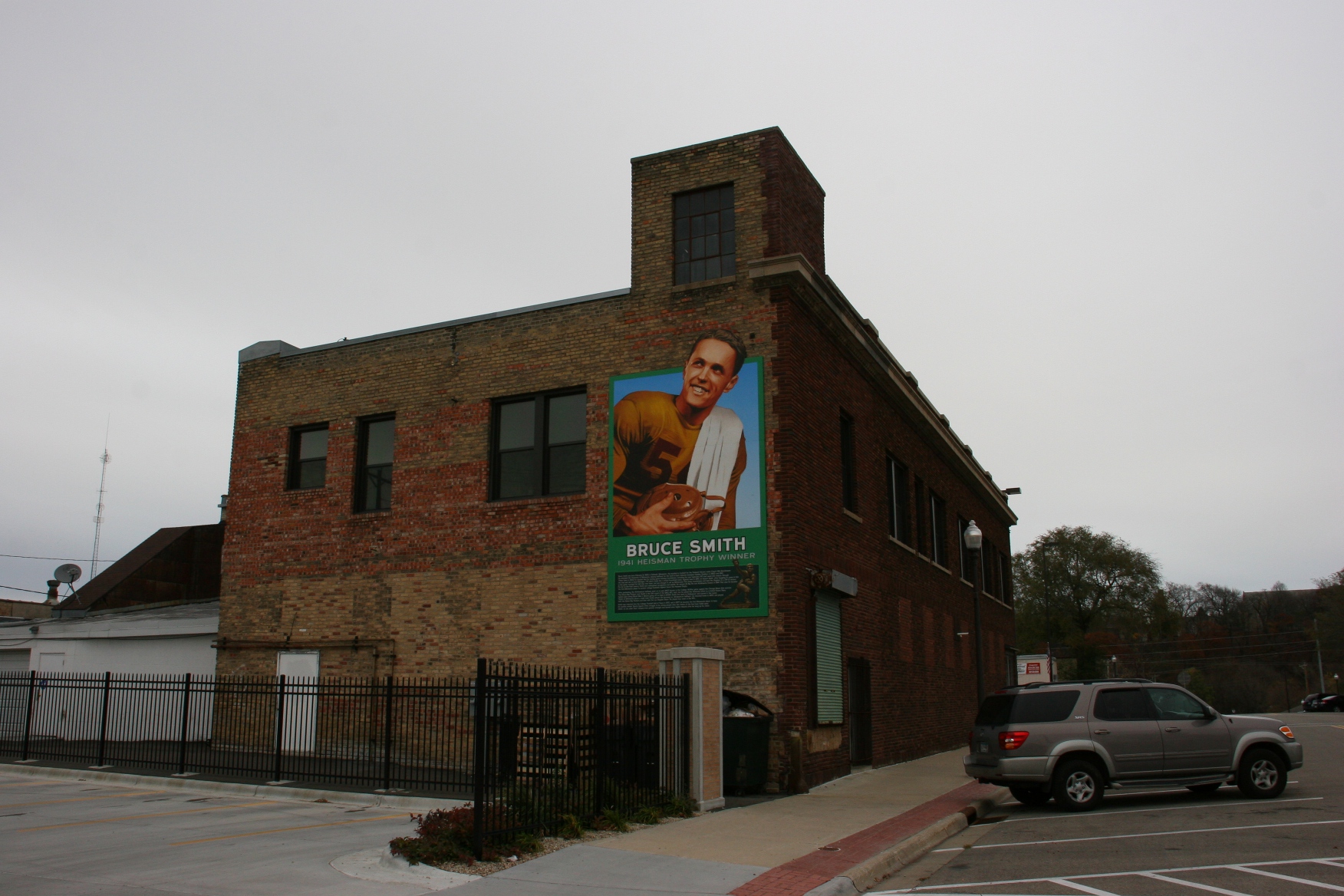
The mural is tucked away on the back of an historic downtown building.

The mural, comprised of panels rather than painted directly onto brick, is displayed on the back of a flooring business.

FYI: The Bruce Smith mural is located on the back of Floors by Farmer at the corner of Central Avenue and Fifth Street Northwest in historic downtown Faribault. The latest mural joins murals of town founder Alexander Faribault (directly across from the Smith mural), Fleck’s Beer, the Tilt-A-Whirl, Ice Skating on the Straight River, historic downtown Faribault overview and the annual Pet Parade. Faribault based Brushwork Signs designed, created and installed the murals.

© Copyright 2015 Audrey Kletscher Helbling
Sources:

http://heisman.com/roster.aspx?rp_id=8&path=football

http://www.minnesotaalumni.org/s/1118/content.aspx?pgid=1307

Exhibits

https://www.facebook.com/rchistory/

http://selco.ent.sirsi.net/client/en_US/far/search/results?qu=bruce+smith&te=&lm=FAR_LIMIT


A quick tour of Rochester shows me its artsy side June 24, 2015

Filed under: Uncategorized — Audrey Kletscher Helbling @ 5:00 AM
Tags: , , , , , ,
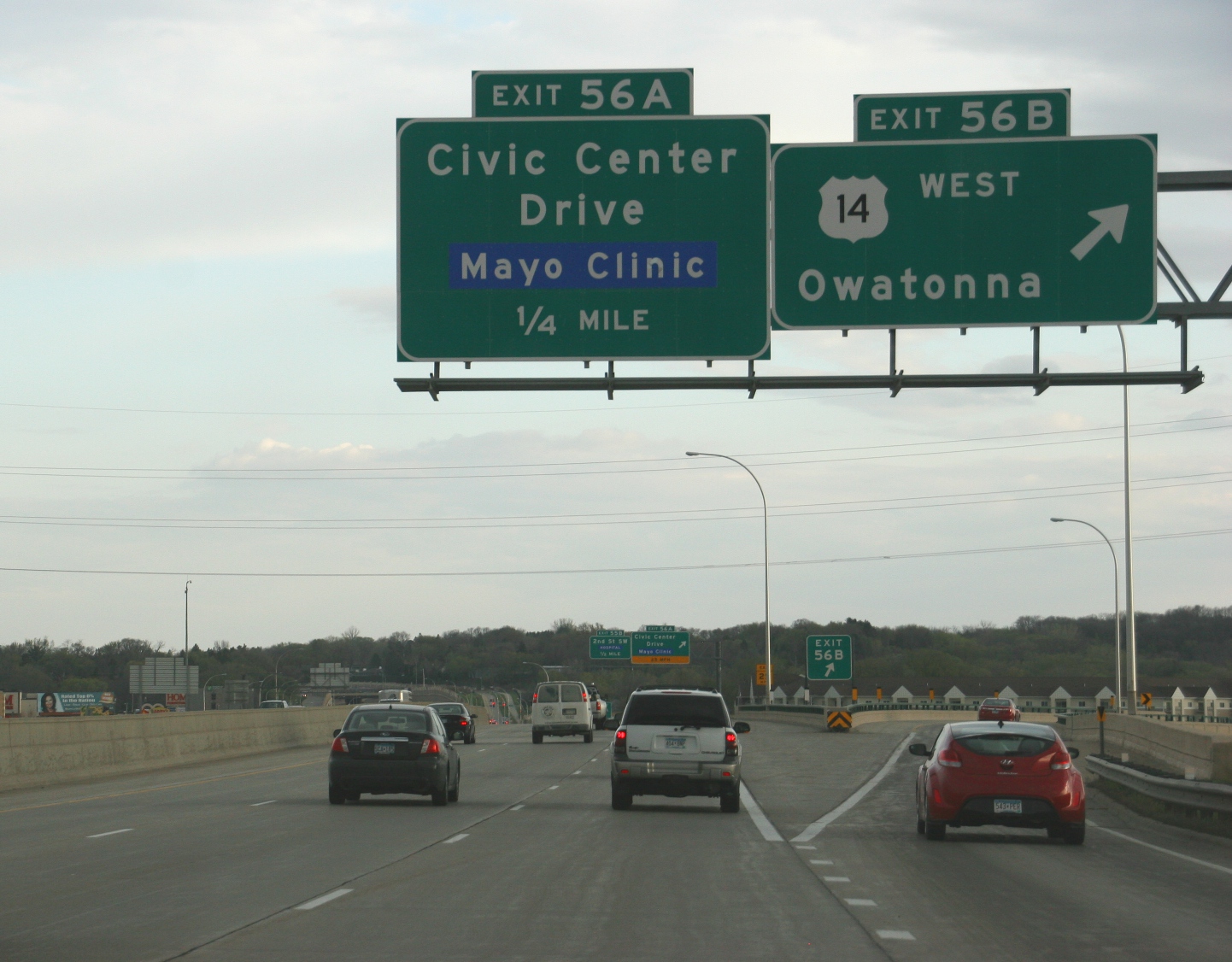
The southbound exit off U.S. Highway 52 which took us to the Rochester Civic Center Theater.

The southbound exit off U.S. Highway 52 which took us to the Rochester Civic Center Theater.

FIFTEEN MINUTES. That’s all the time I had to view downtown Rochester before I needed to be at the Civic Center Theater for a weekday evening Poetry Bash.

Almost to the theater, left.

Almost to the theater, left.

So my husband parked the car across the street from the theater. I grabbed my camera and we headed the opposite direction toward the heart of downtown.

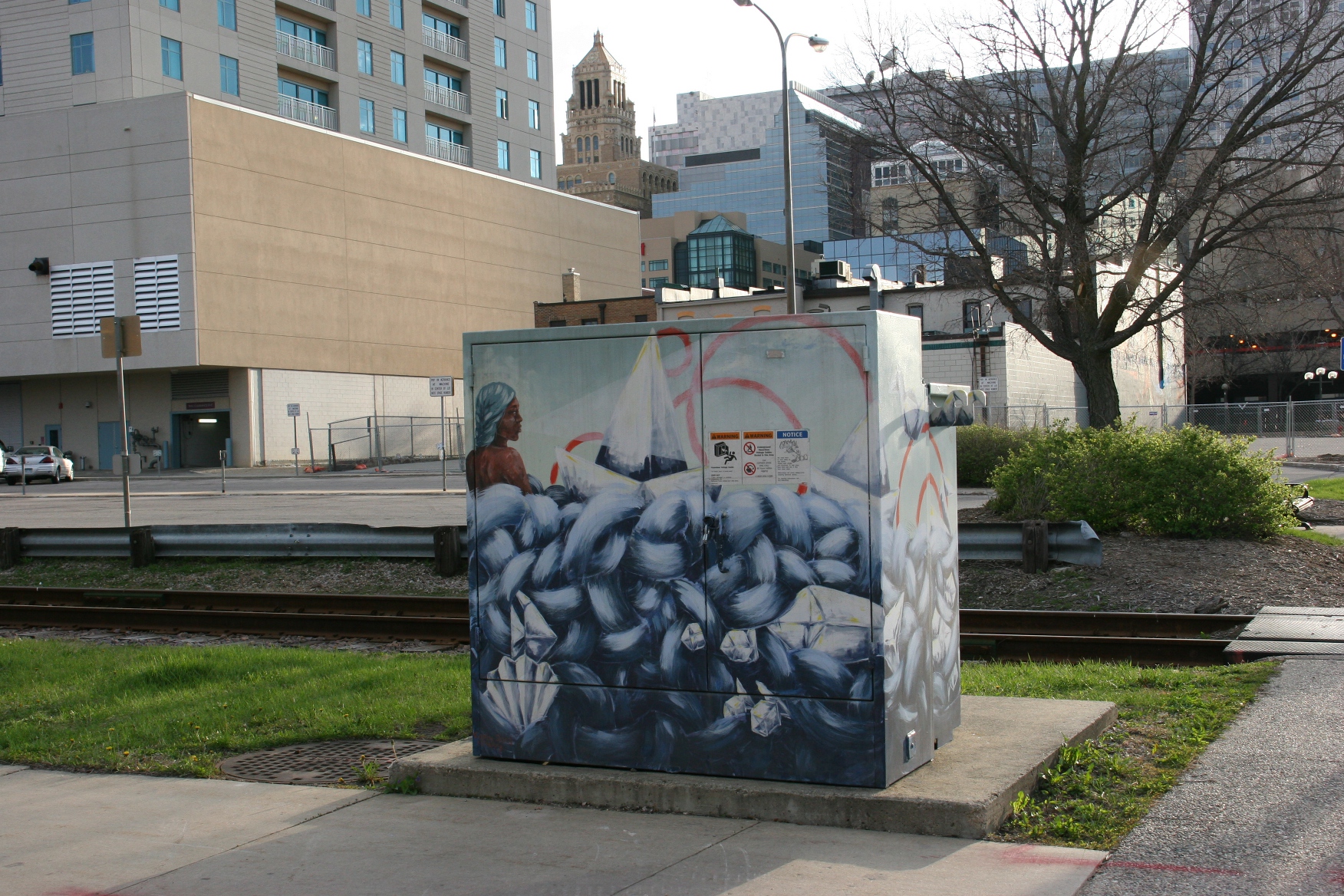
A great idea for turning an otherwise mundane utility box into a work of art.

A great idea: Turning an otherwise mundane utility box into a work of art.

We’d made it only half a block, almost to the railroad tracks, when I noticed art painted on a utility box. First photo snapped.

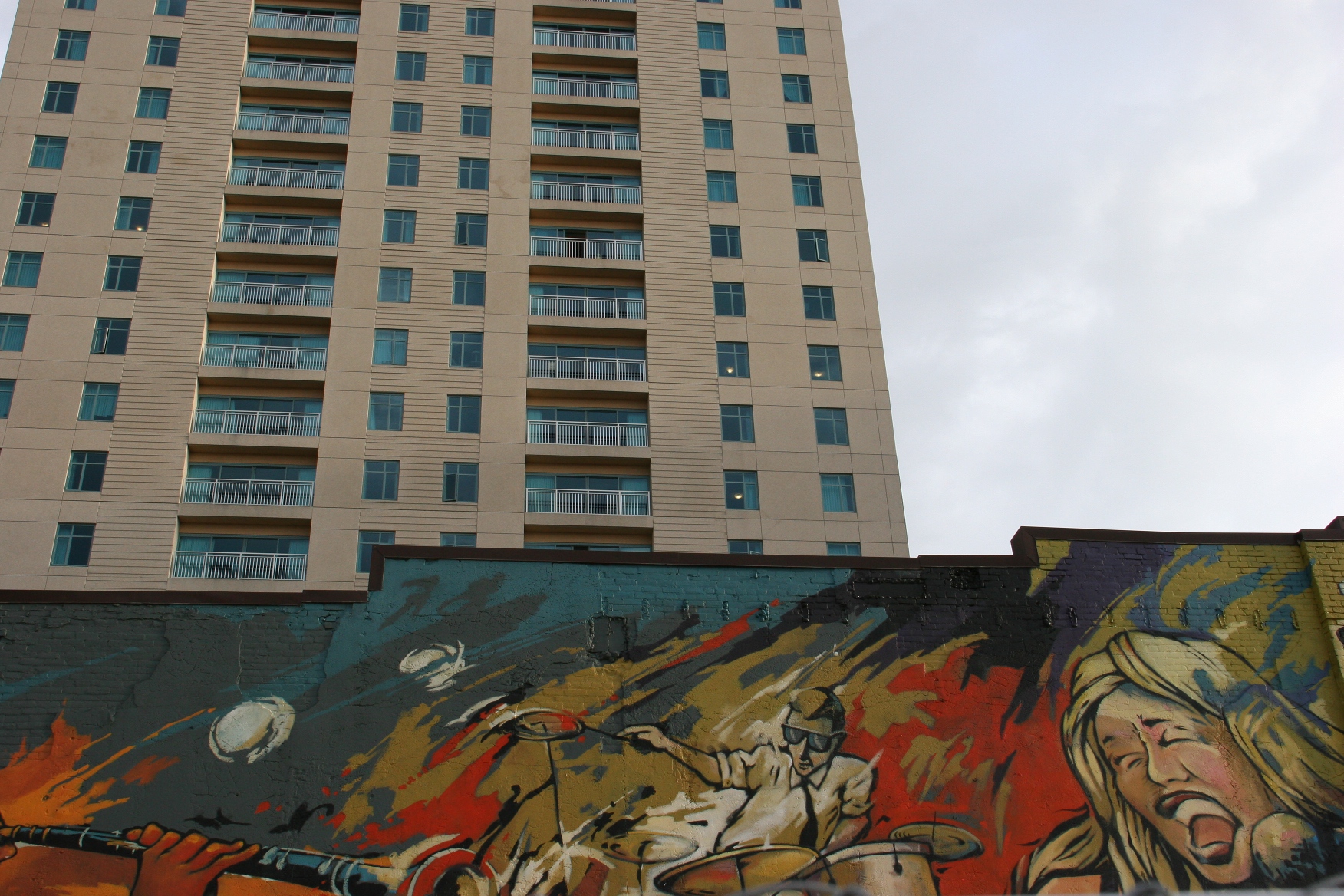
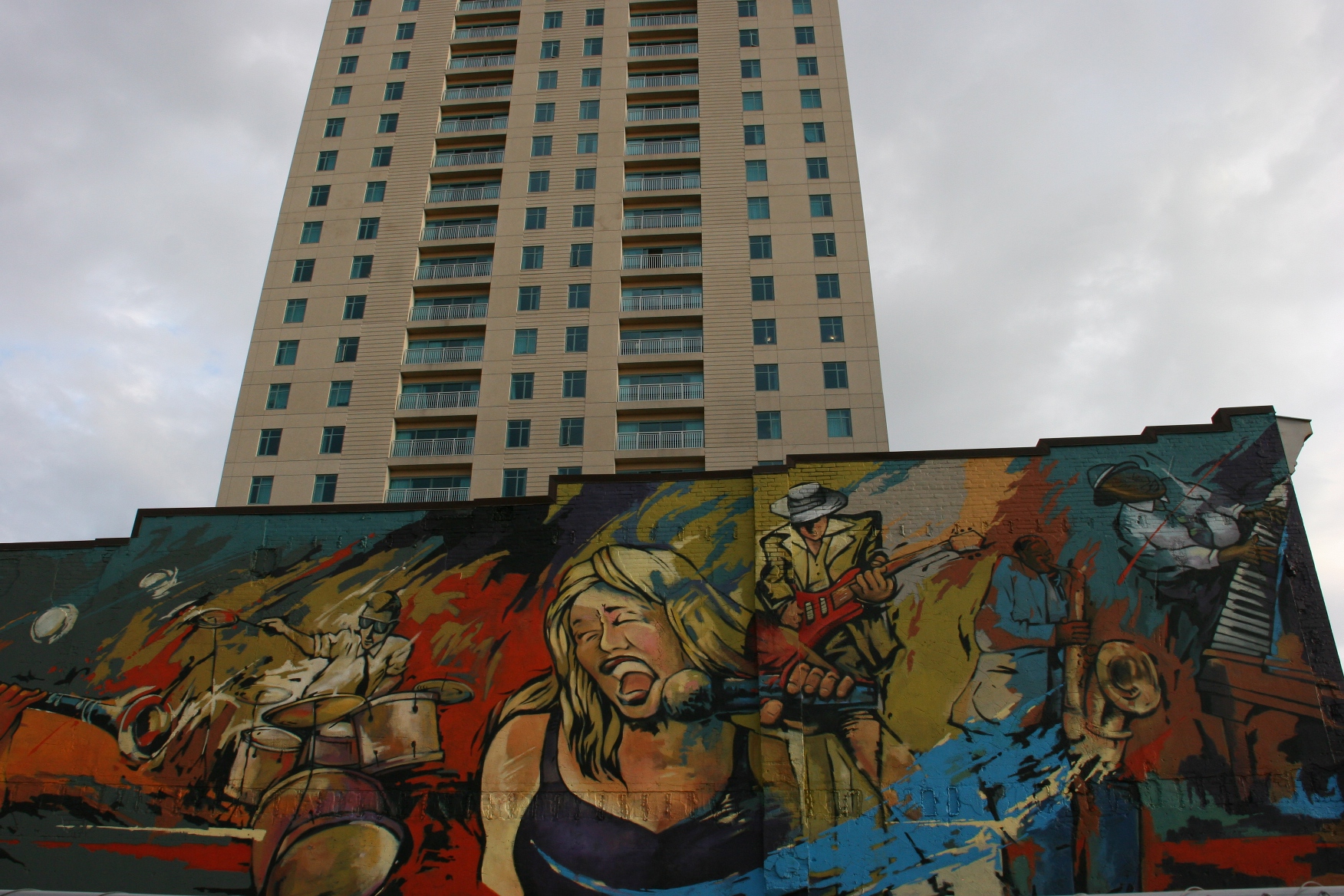
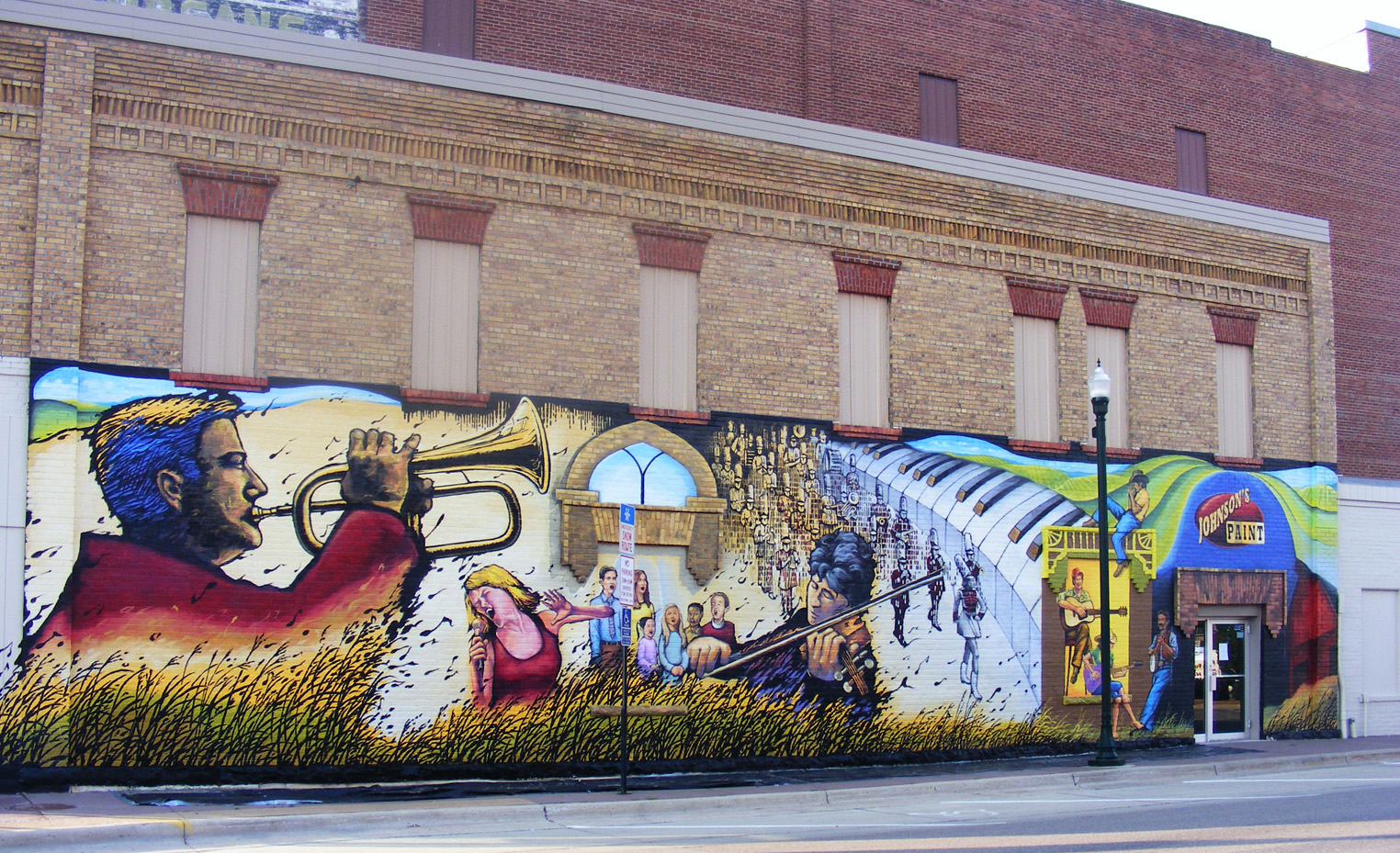
My first glimpse of the music themed mural.

My first glimpse of the music themed mural.

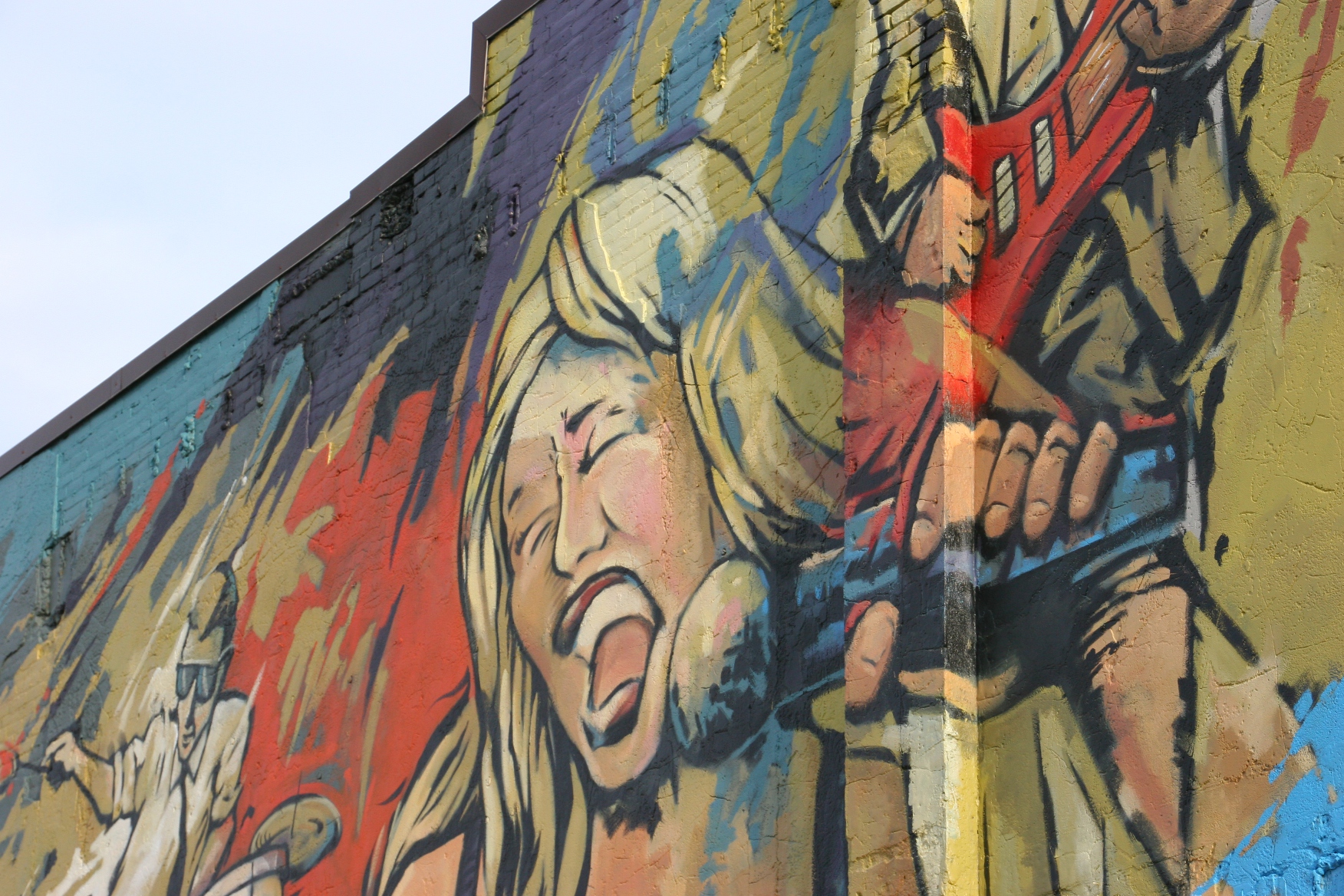
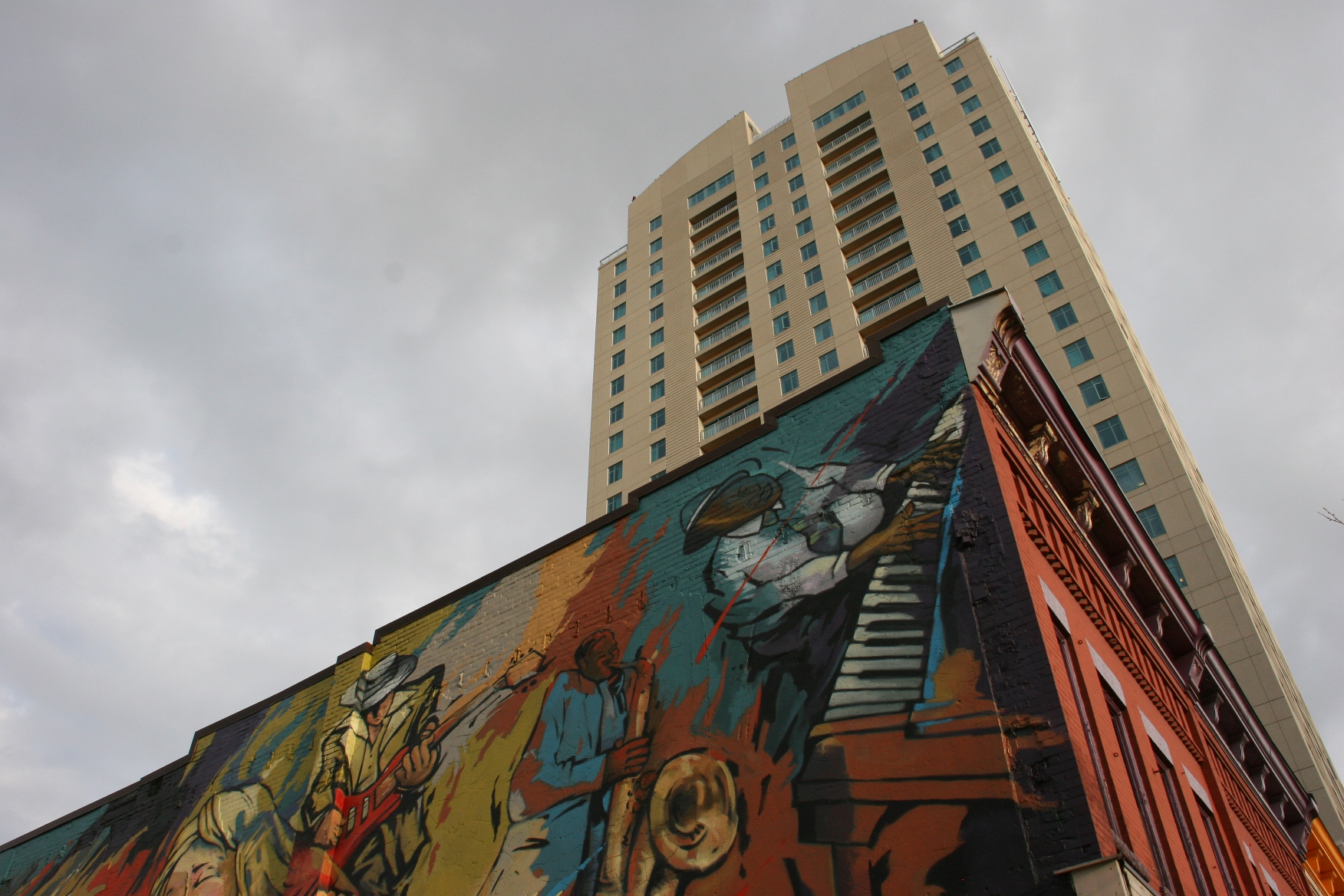
Across the tracks, more art—this time a music themed mural on a building next to a vacant, fenced lot—distracted me. Focus, snap, focus, snap, focus, snap, focus, snap. Until I’d lost count, so intrigued was I by the mural fronting a dramatic high rise backdrop.


Rochester, mural 2


Rochester, mural 5


Rochester, mural 4


Rochester, mural 3


“Are you photographing the tall building?” a passerby inquired. I was and I wasn’t. It was the art that interested me more than the structure. I chatted a bit with the man from Chicago who was in town for treatment of his skin cancer at the world-renowned Mayo Clinic which centers this southeast Minnesota city’s downtown.

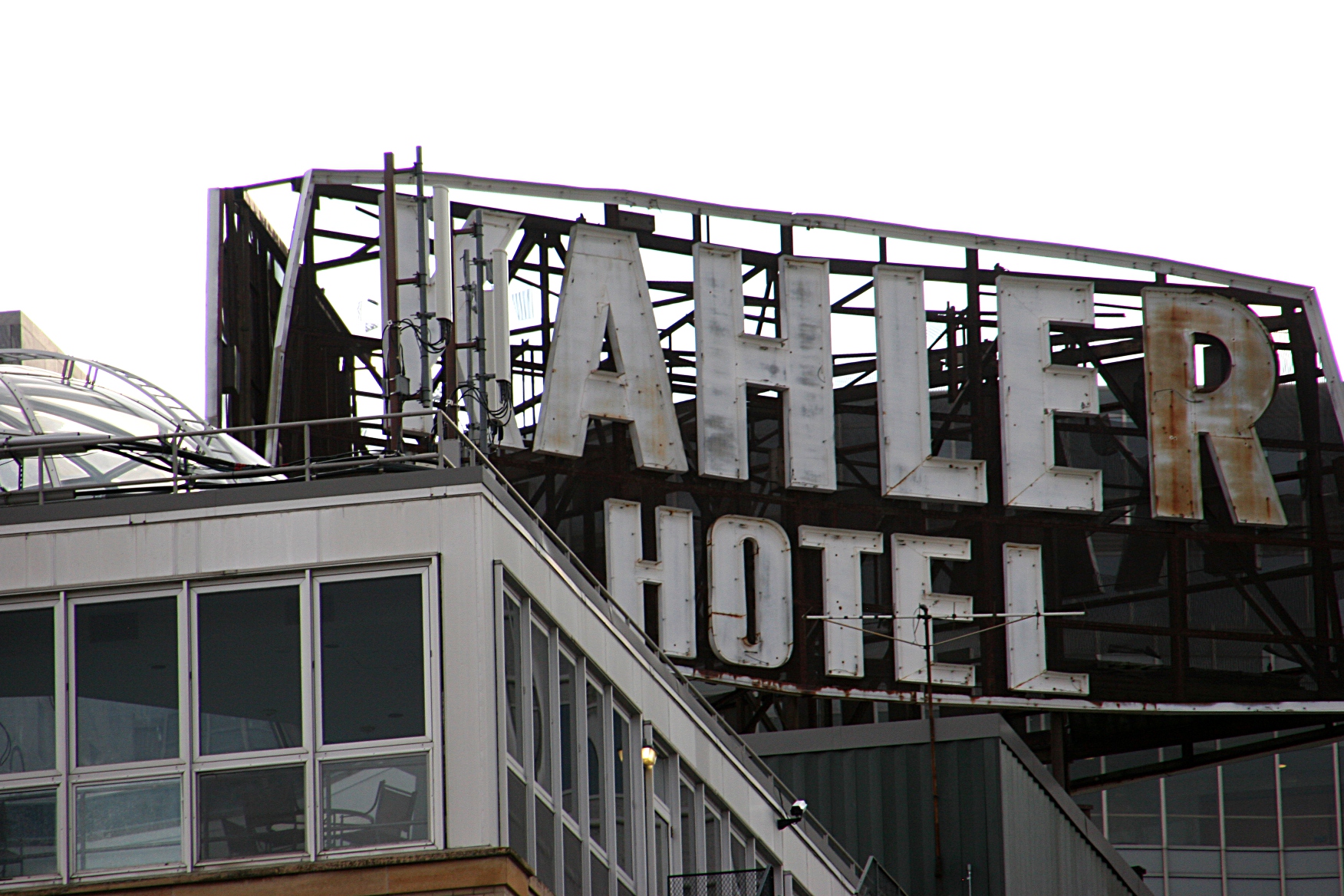
Kahler Hotel

The historic Kahler Grant Hotel in the heart of downtown has been around for 80 years and offers 660 rooms and suites.

Next I photographed the Kahler Grand Hotel’s iconic sign, a work of art, too.

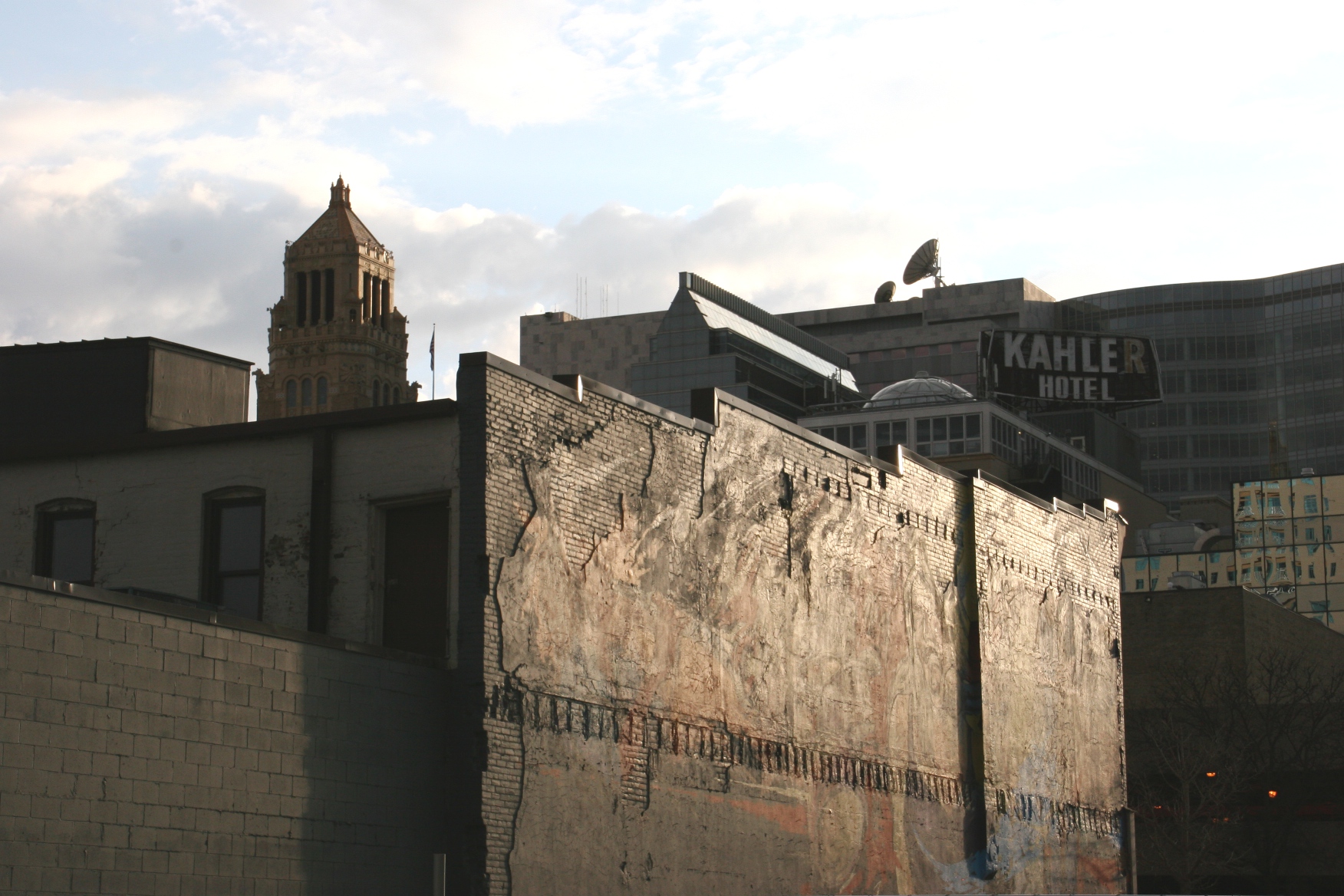
A skyline snapshot shows a mix of old and new.

A skyline snapshot shows a mix of old and new.

A glance at my watch told me there was no time to wander any farther. The muses were calling.

But I am determined to return to Rochester and explore this city which we always bypass on our hurried way to somewhere. Its artsy vibe appeals to me. And I’d really like a closer look at the Mayo Clinic, only glimpsed as we swung through downtown after the Poetry Bash. By then darkness had descended. I couldn’t help but think of all the people from all over the world who would sleep this night in Rochester, perhaps restlessly, and rise in the morning to meet with medical professionals and undergo tests and receive diagnosis. Does the art distract them as it distracted me?

BONUS PHOTOS:

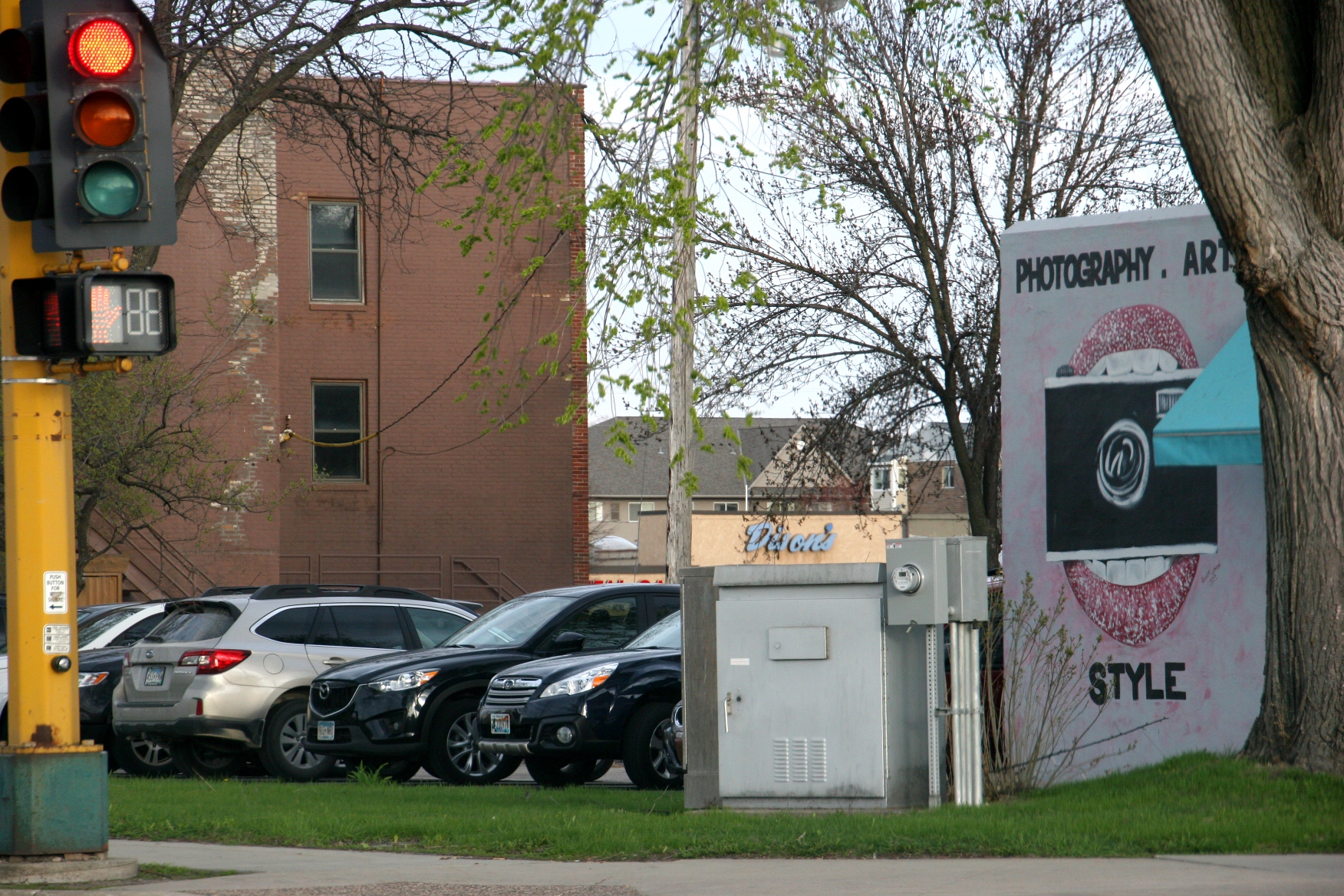
Waiting at a stoplight along Civic Center Drive, I spotted this artwork.

Waiting at a stoplight along Civic Center Drive, I spotted this artwork.

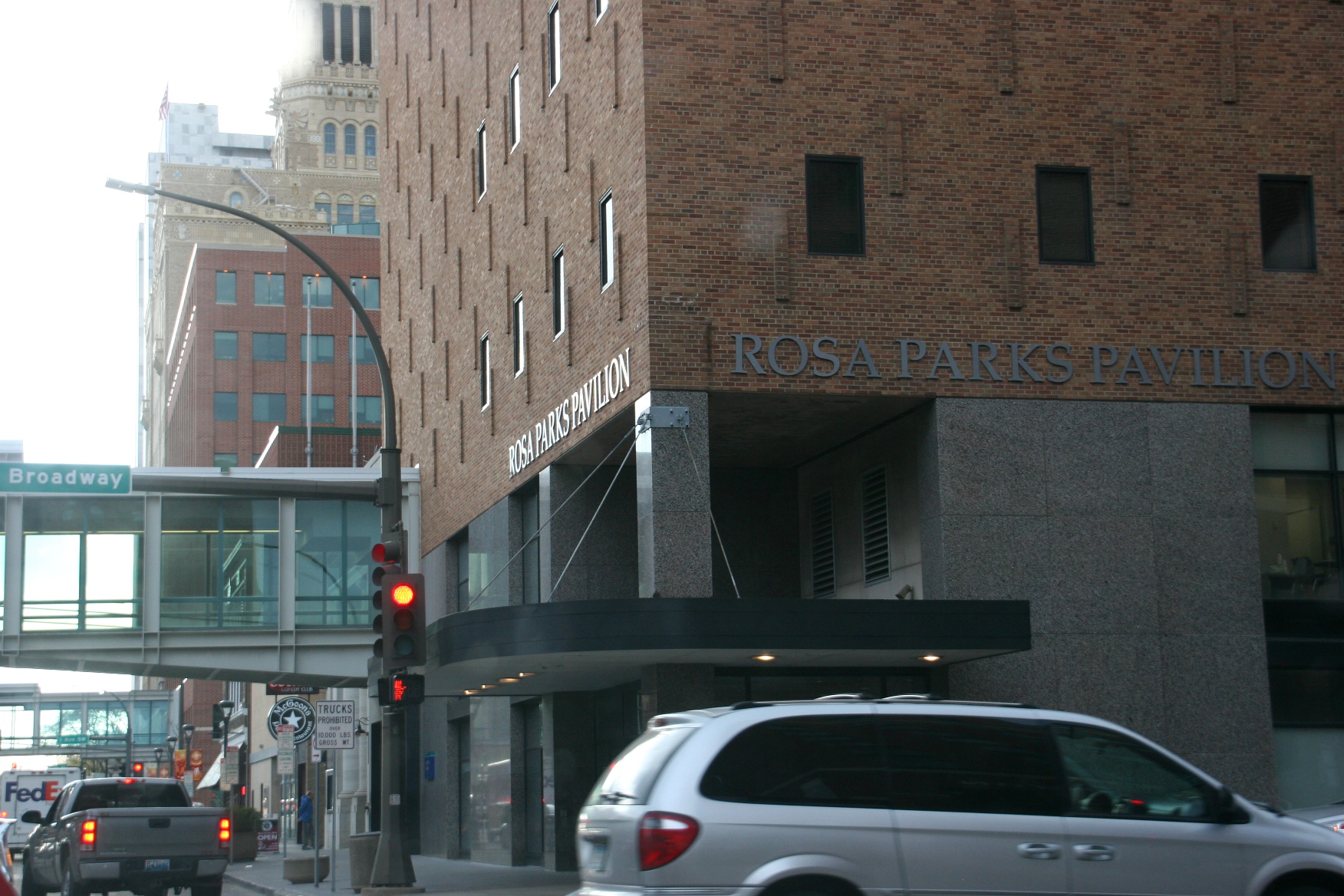
Downtown: the Rosa Parks Pavilion. I have no idea what is housed here.

Downtown: the Rosa Parks Pavilion, a Mayo Clinic administration building and a former Dayton’s Department Store. The building was named in 2008 after Parks, well-known in the Civil Rights movement for refusing to give up her seat on a bus.

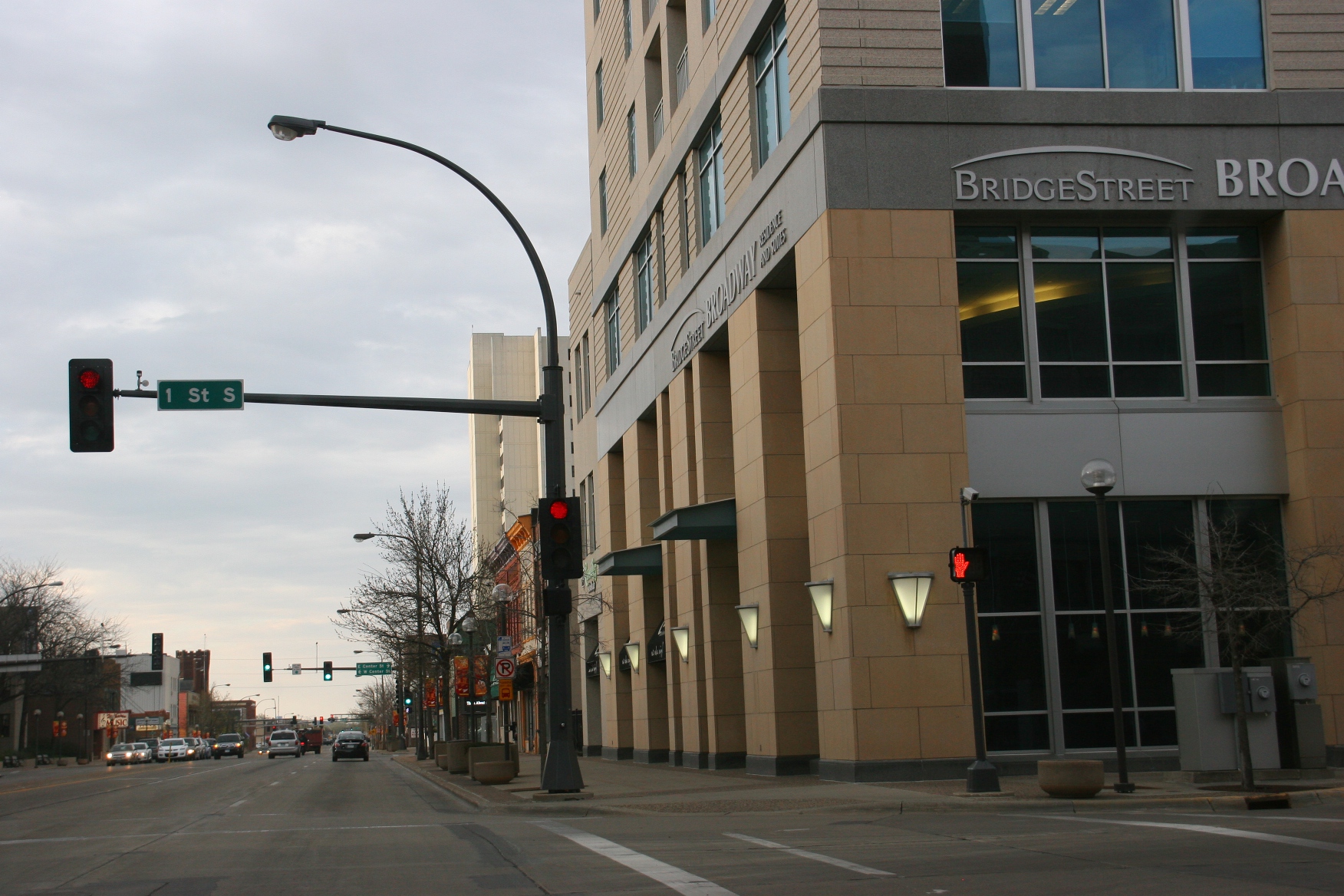
Another scene in downtown Rochester.

Another scene in downtown Rochester.

© Copyright 2015 Audrey Kletscher Helbling
 

Oh, for cute…kitties and puppies August 7, 2014

Filed under: Uncategorized — Audrey Kletscher Helbling @ 6:00 AM
Tags: , , , , , , , ,

I GREW UP ON A DAIRY and crop farm where cats and dogs roamed the property.

Although they were pets, they weren’t really pets. Rather, they were there to work. The cats caught mice. The dogs alerted us to wild animals and vehicles arriving in the farm yard.

My parents never bought cat or dog food. Table scraps, of which there were few from our family of eight, and a daily hub cap of milk warm from the cow nourished the cats and dogs.

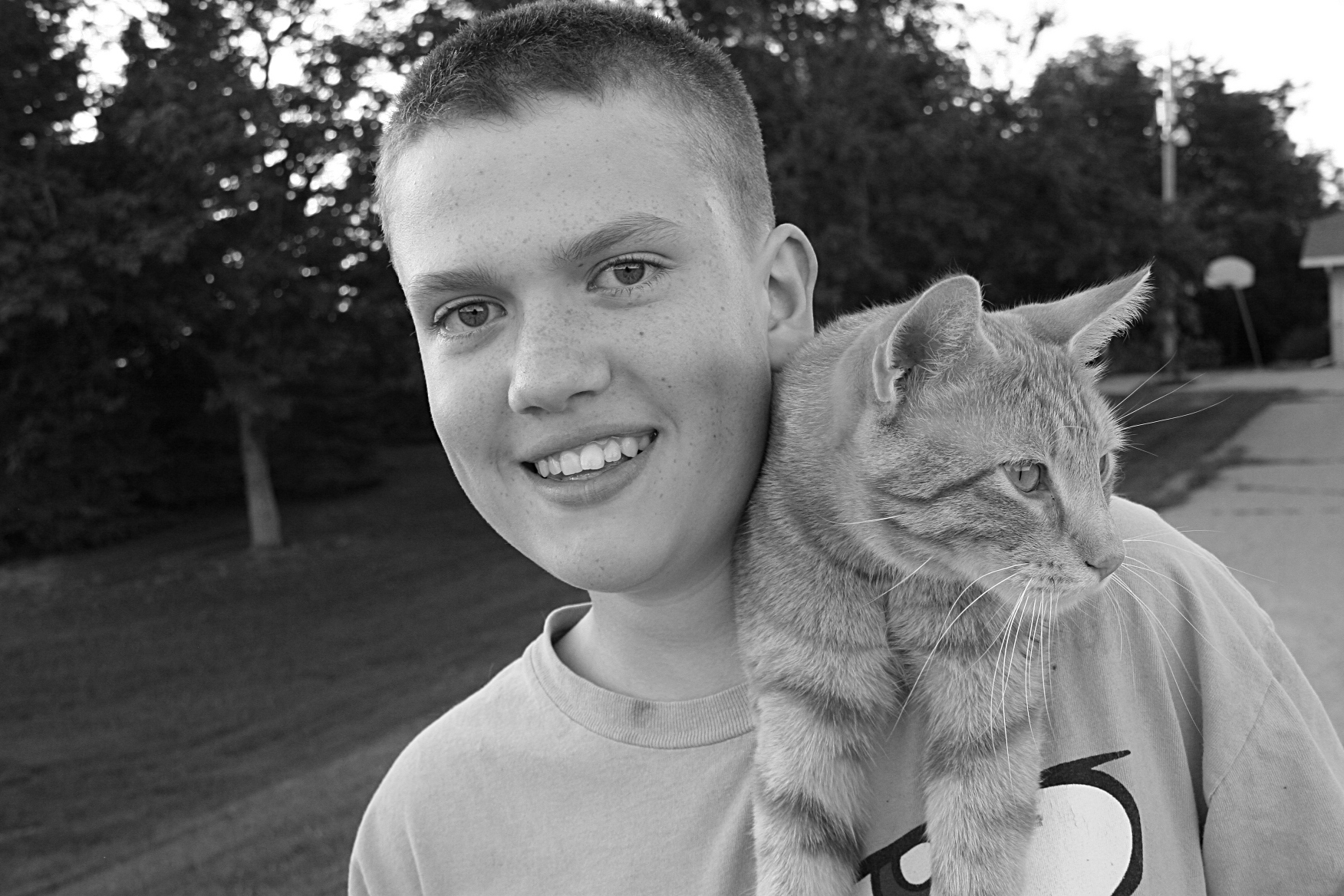
One of my all-time favorite portraits shows Ian, my blogger friend Gretchen's son, with the family cat, Zephyr.

One of my all-time favorite portraits shows Ian, my blogger friend Gretchen’s son, with the family cat, Zephyr. Minnesota Prairie Roots file photo shot in July 2013.

Of course, we kids grew quite fond of dogs like Blackie, Shep, Rex and Fritz Carter Mondale Ferraro and Tommer the cat (why can’t I remember the names of more cats?), …

I recall dressing kittens in doll clothes and pushing them in a doll buggy.

There were endless attempts to teach the dogs to shake hands and fetch balls or sticks.

Spring always brought a search in the hay loft or haystack for newborn kittens.

Yes, my memories of felines and canines are mostly pleasant ones of working farm animals that sometimes allowed us to play with them.

As an adult, considering the cost and care, I’ve never wanted a pet. Plus, I’m just not the type of person who wants an animal living indoors and/or in town. I know I’m in the minority. But that’s OK. I’ll just admire and pet other people’s pets.

Titan, so active I struggled to photograph him.

Titan, so active I struggled to photograph him.

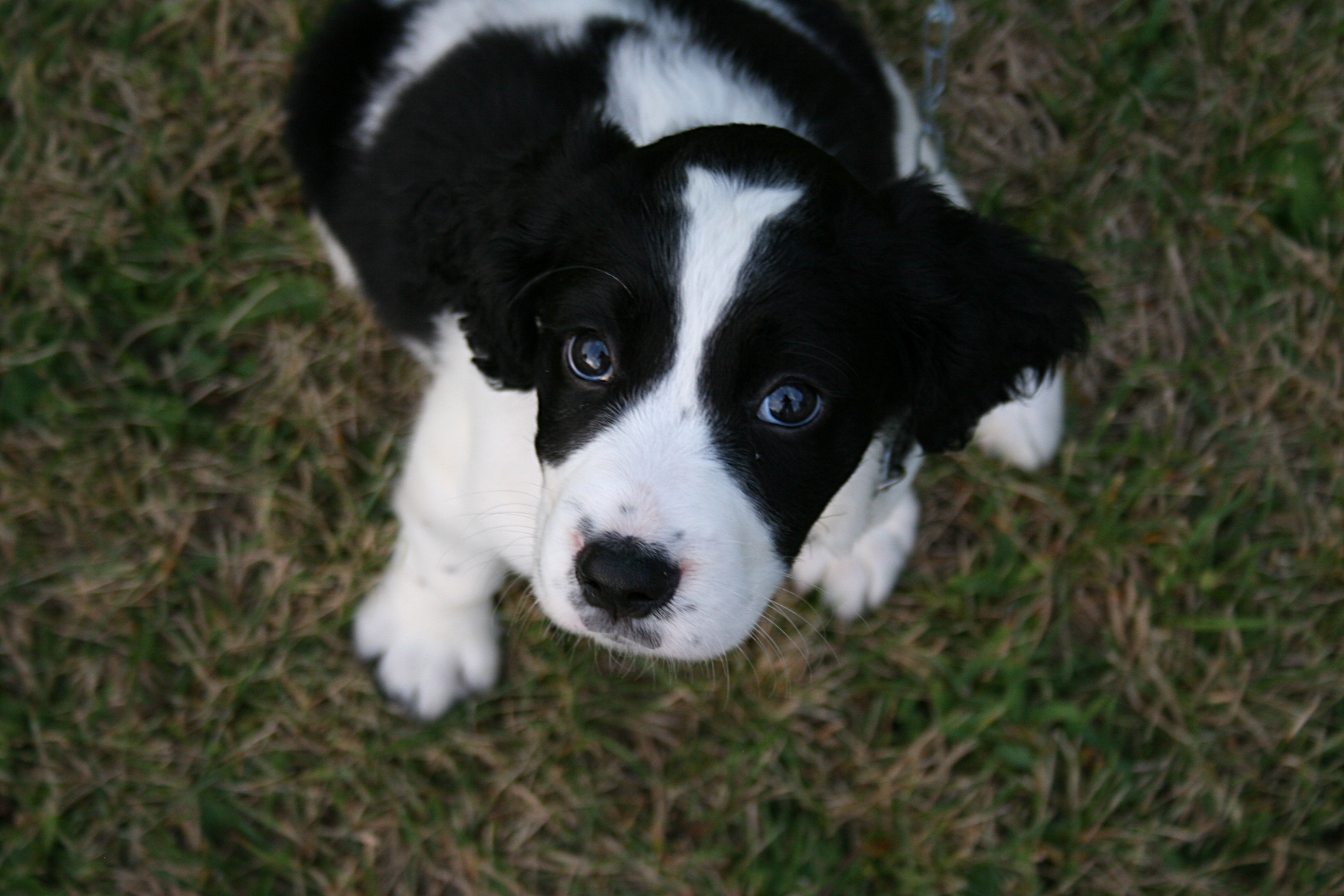
The other night I met Titan, an adorable seven-week-old puppy, at the Spitzack farm outside Faribault. Puppies are so darned cute. Titan reminded me of the story my mom shared awhile ago. One recent afternoon a man from a nearby town arrived at the senior complex where she lives with nearly a dozen puppies for residents to pet and cuddle. He’d engaged the litter in active play so they’d be worn out. His strategy worked. Mom was so excited about a sweet, cuddly puppy falling asleep in her lap that you’d have thought she won the lottery.

Pets possess the power to comfort and heal and lift spirits.

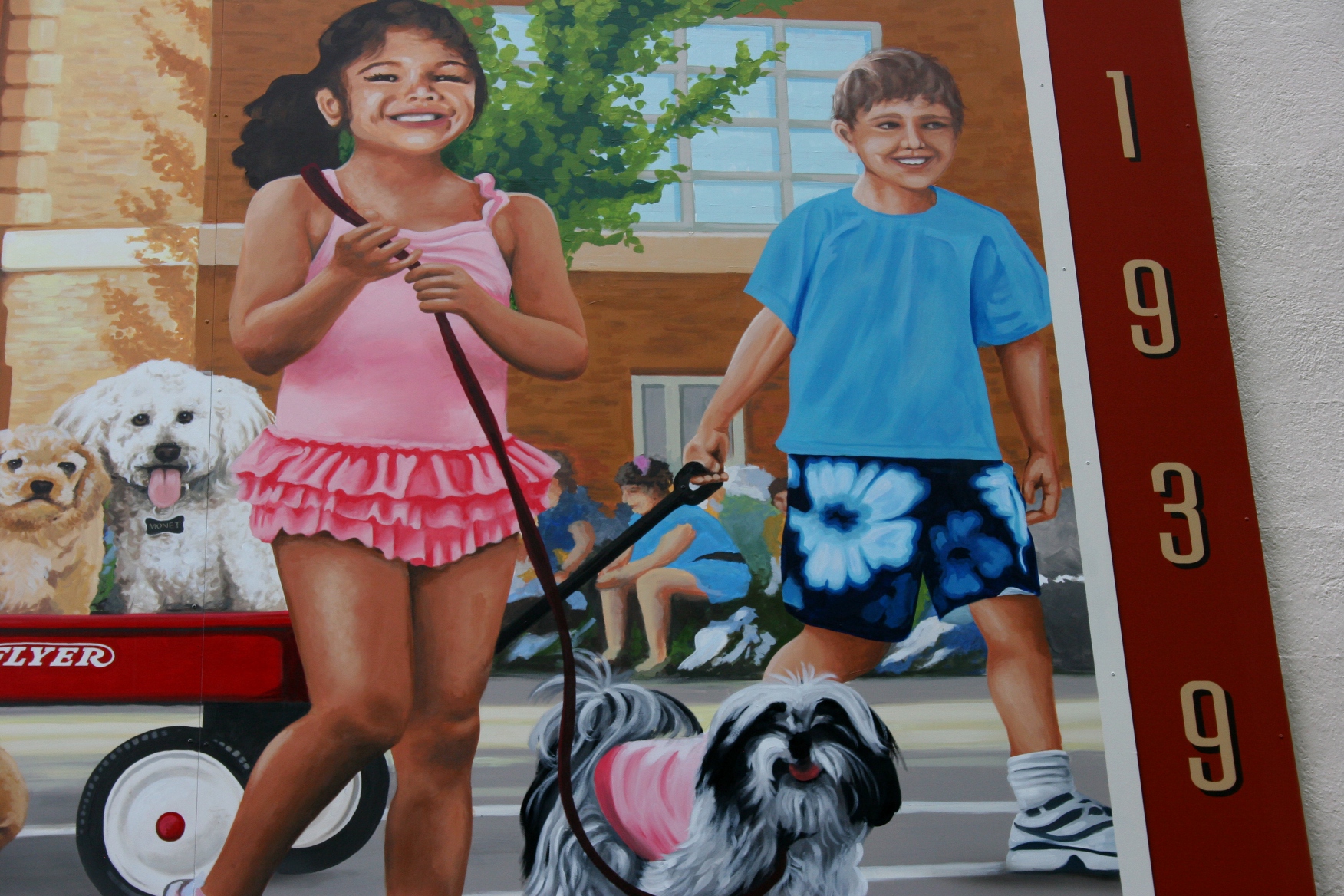
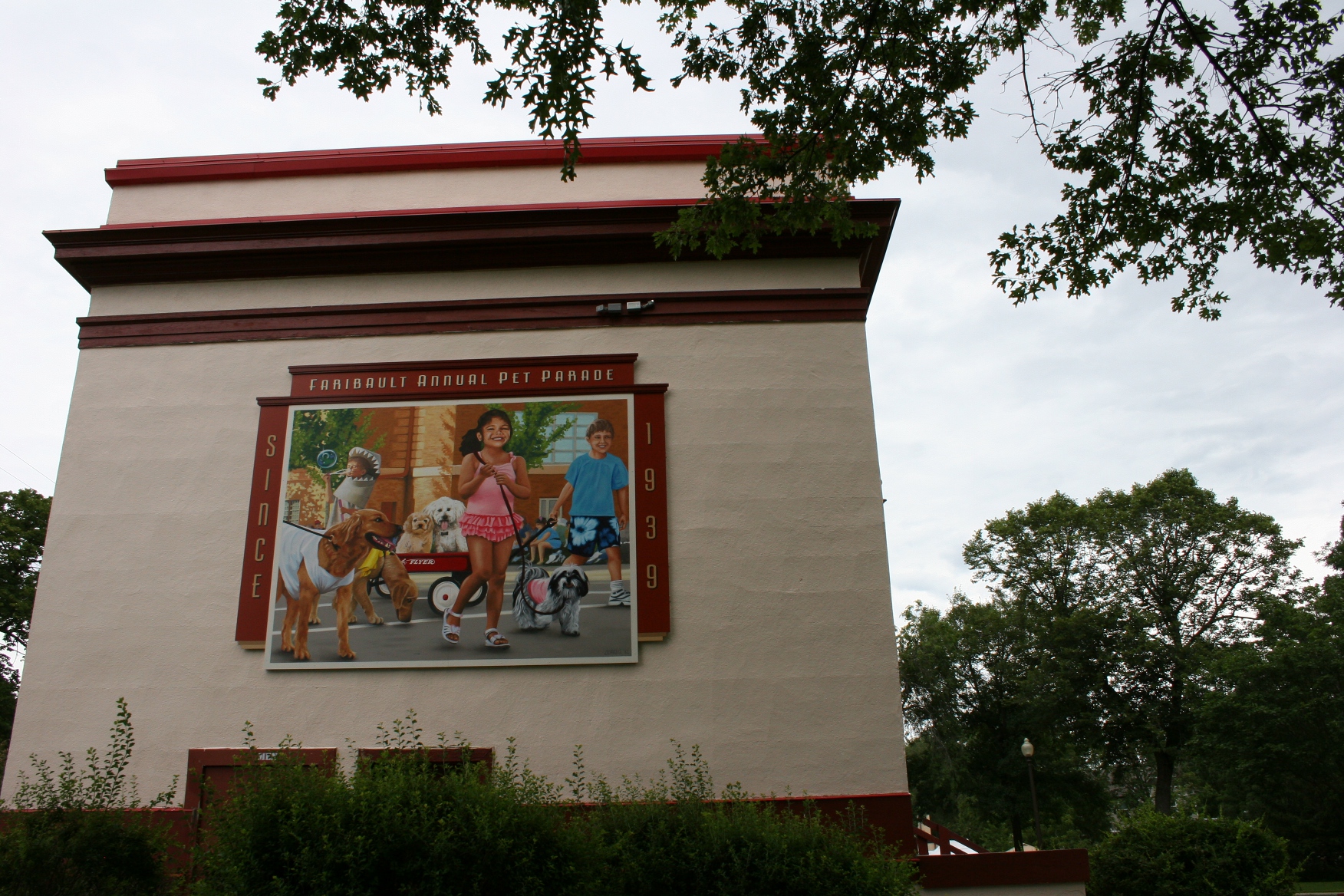
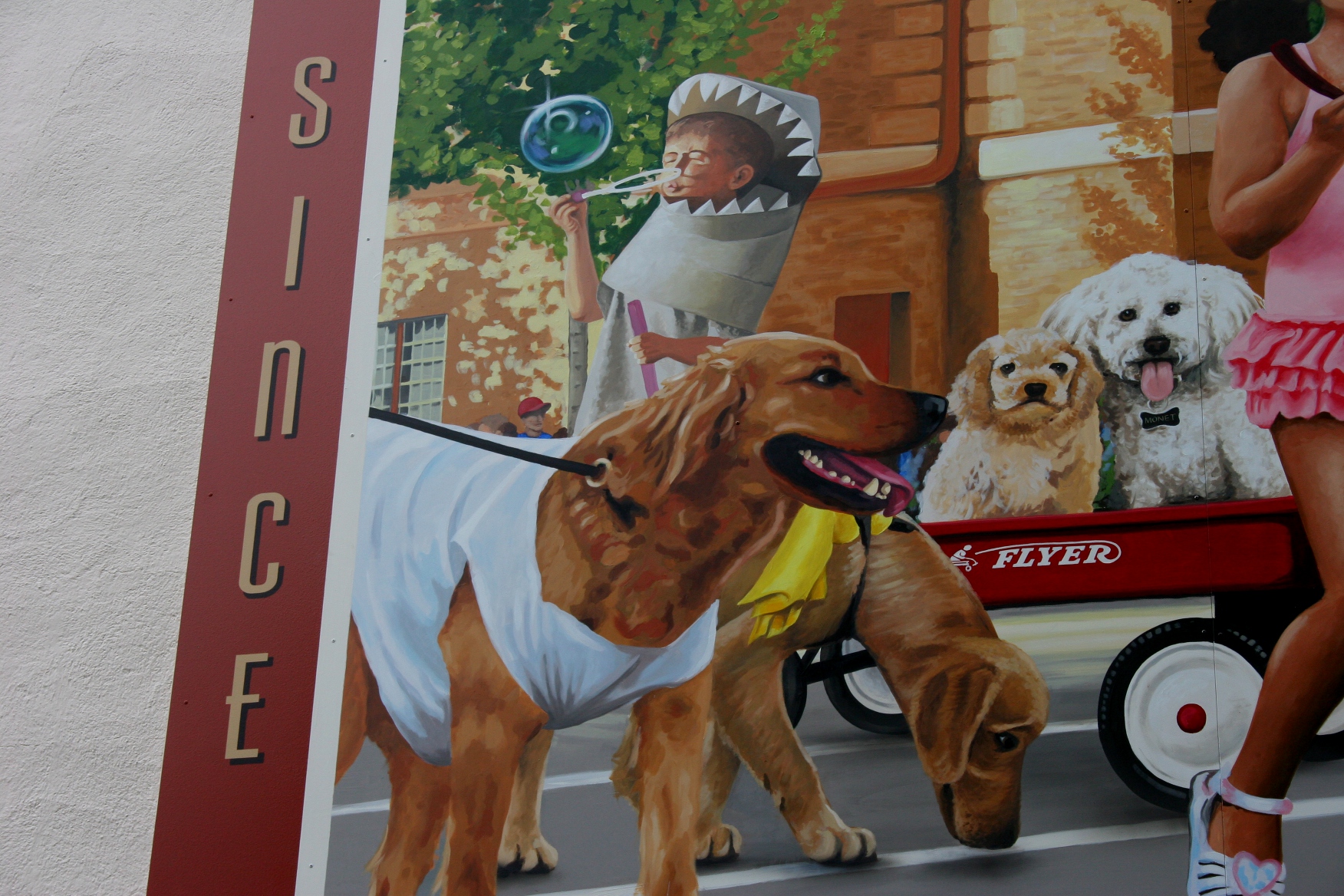
Lots of dogs and that 1939 date on the right side of the mural.

This image shows a portion of the Pet Parade mural gracing the side of the historic bandshell in Faribault’s Central Park.

This evening, my community of Faribault holds its 78th annual Pet Parade beginning at 7 p.m. I can’t attend. But be assured, if you’re there, you’ll view plenty of cuddly cuteness.

DO YOU OWN A PET or have a favorite pet memory? Feel free to share.

© Copyright 2014 Audrey Kletscher Helbling
 

A muddy shoe ban in Morgan July 24, 2013

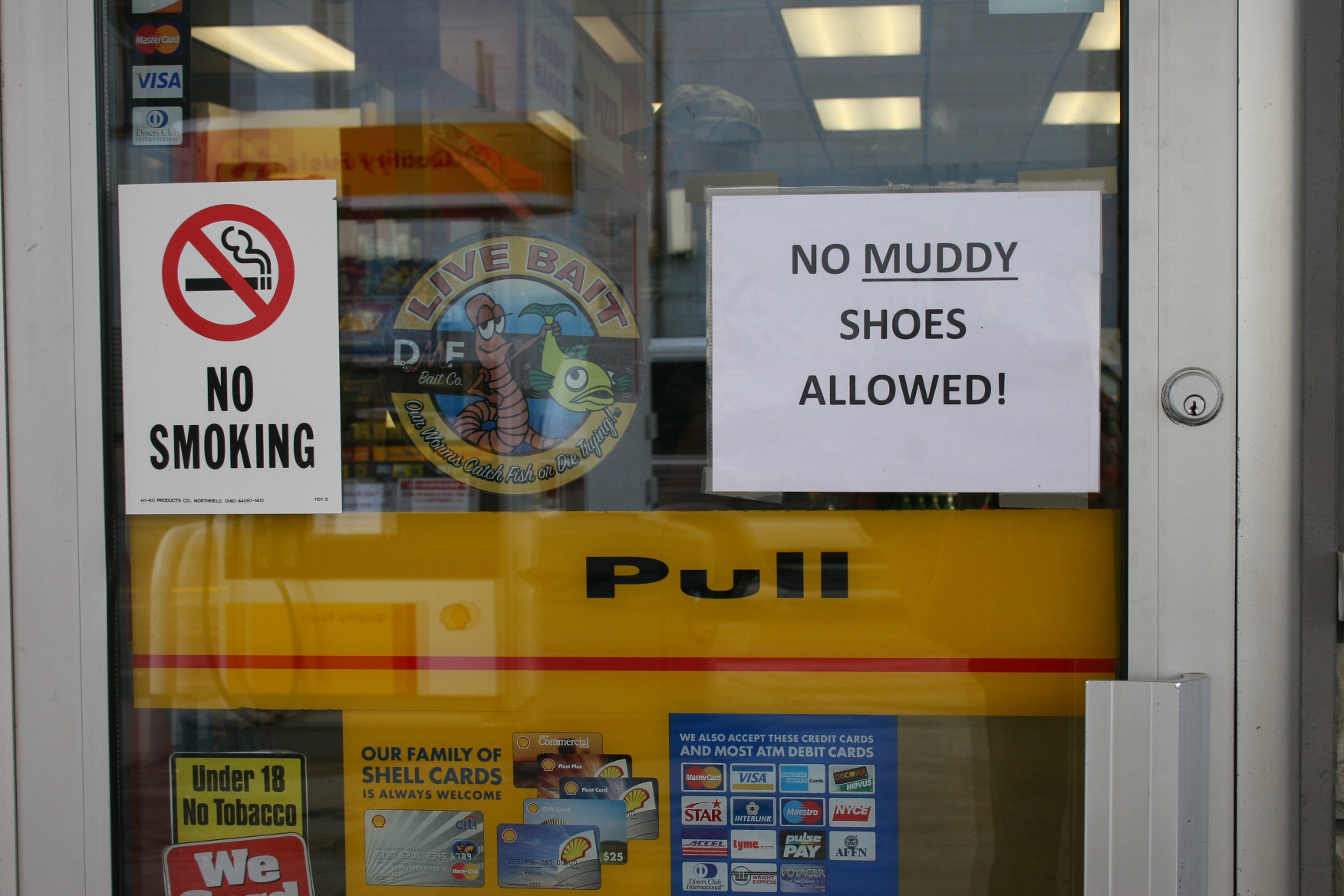
YOU BEST NOT ENTER the Shell convenience store/gas station in Morgan with muddy shoes. I never checked my flip flops nor the floor upon entering. My initial focus was finding the bathroom in Wayne’s C-Store, as it’s known by locals.

Posted on doors of the Shell station in Morgan.

Posted on doors of the Shell station in Morgan.

Only afterward did I ponder the message and wonder how many times staff has dealt with mud trekked inside this retail hub in this rural southwestern Minnesota community. Often enough, apparently, given the postings on the two front doors.

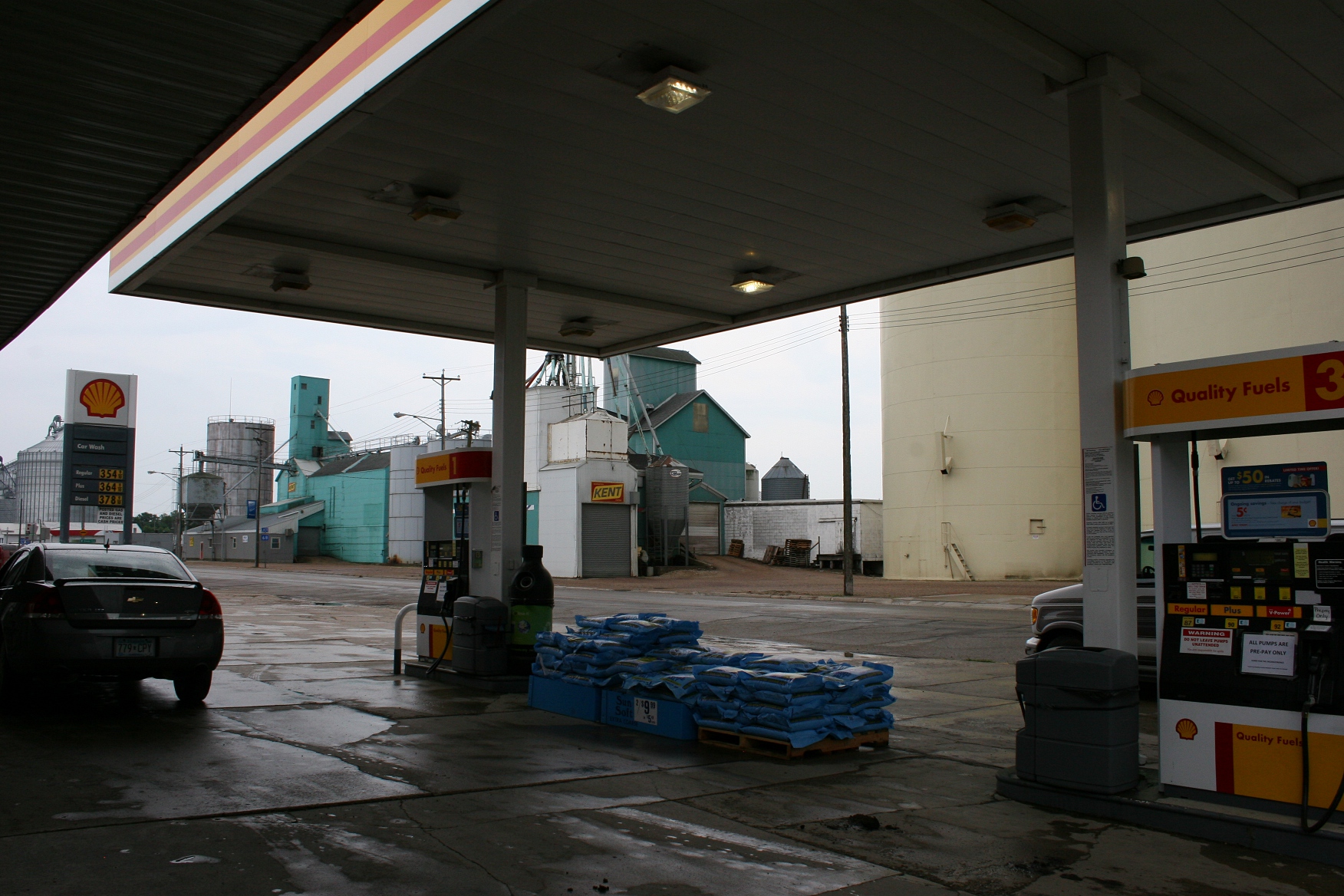
A view right outside the Shell station.

A view right outside the Shell station.

My husband and I had just driven about 100 miles, more than an hour of that in rain. But, unless our soles acquired mud while walking from our gravel parking space into the store, they should have been clean.

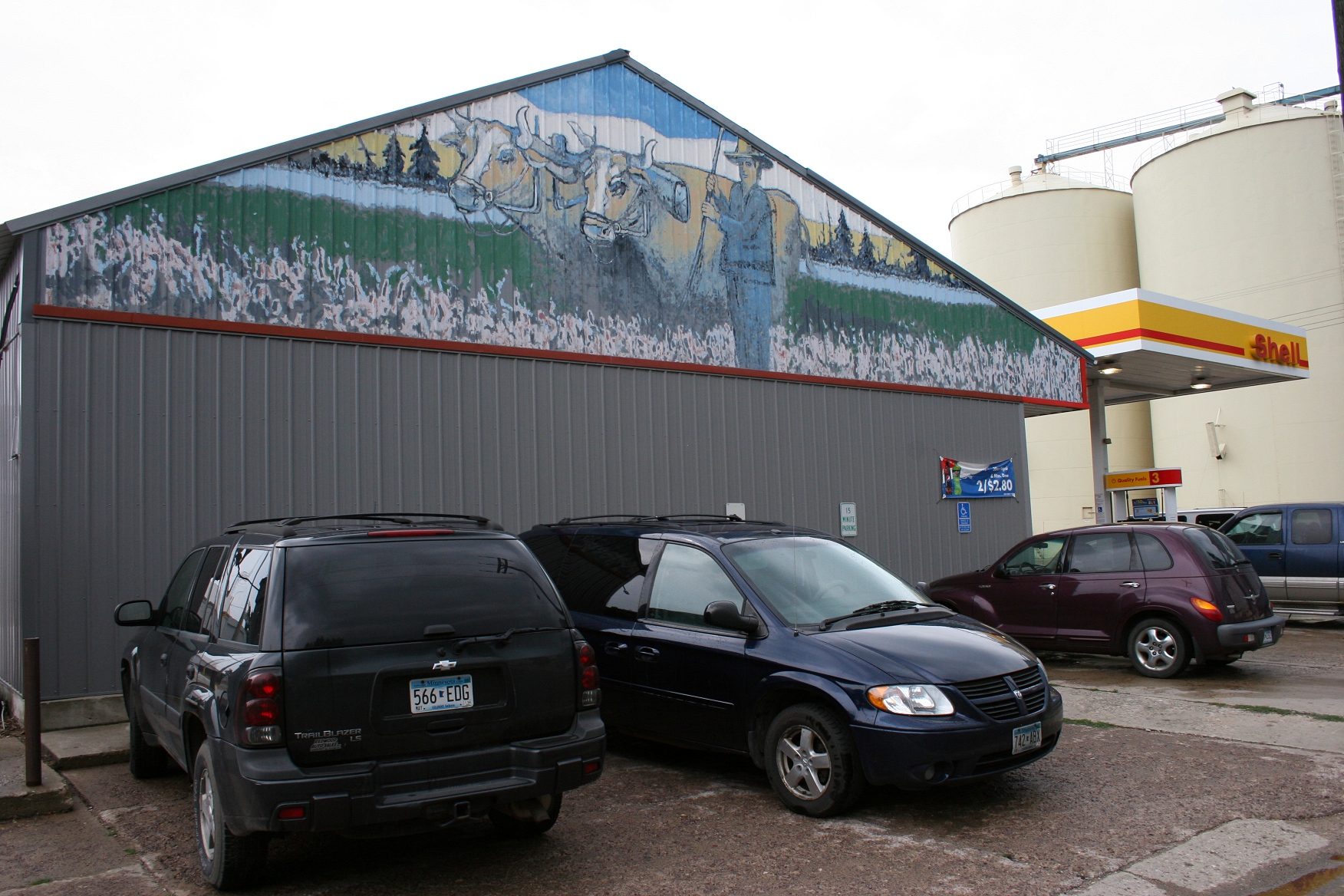
A rural-themed mural on the side of Wayne's C-Store.

A rural-themed mural on the side of Wayne’s C-Store.

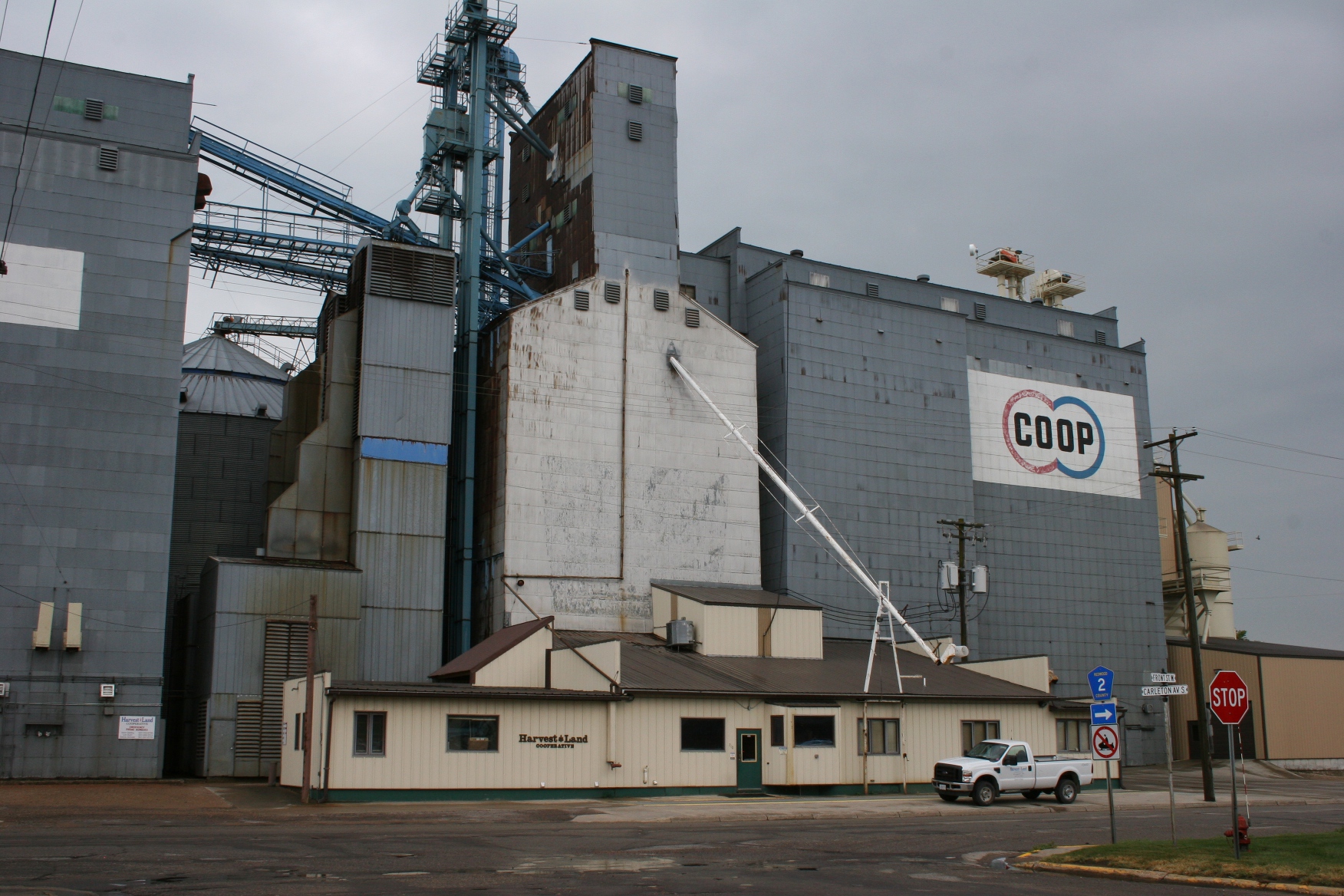
After photographing the NO MUDDY SHOES ALLOWED! sign and the mural on the side of the convenience store, I swung my camera around to photograph Harvest Land Cooperative across the street.

A snippet of the Harvest Land Co-op complex across the highway from the Shell station.

A snippet of the Harvest Land Co-op complex across the highway from the Shell station.

There’s something about an elevator that always causes me to pause and reflect on my rural Minnesota prairie roots.

The hatchery is closed.

The hatchery is closed.

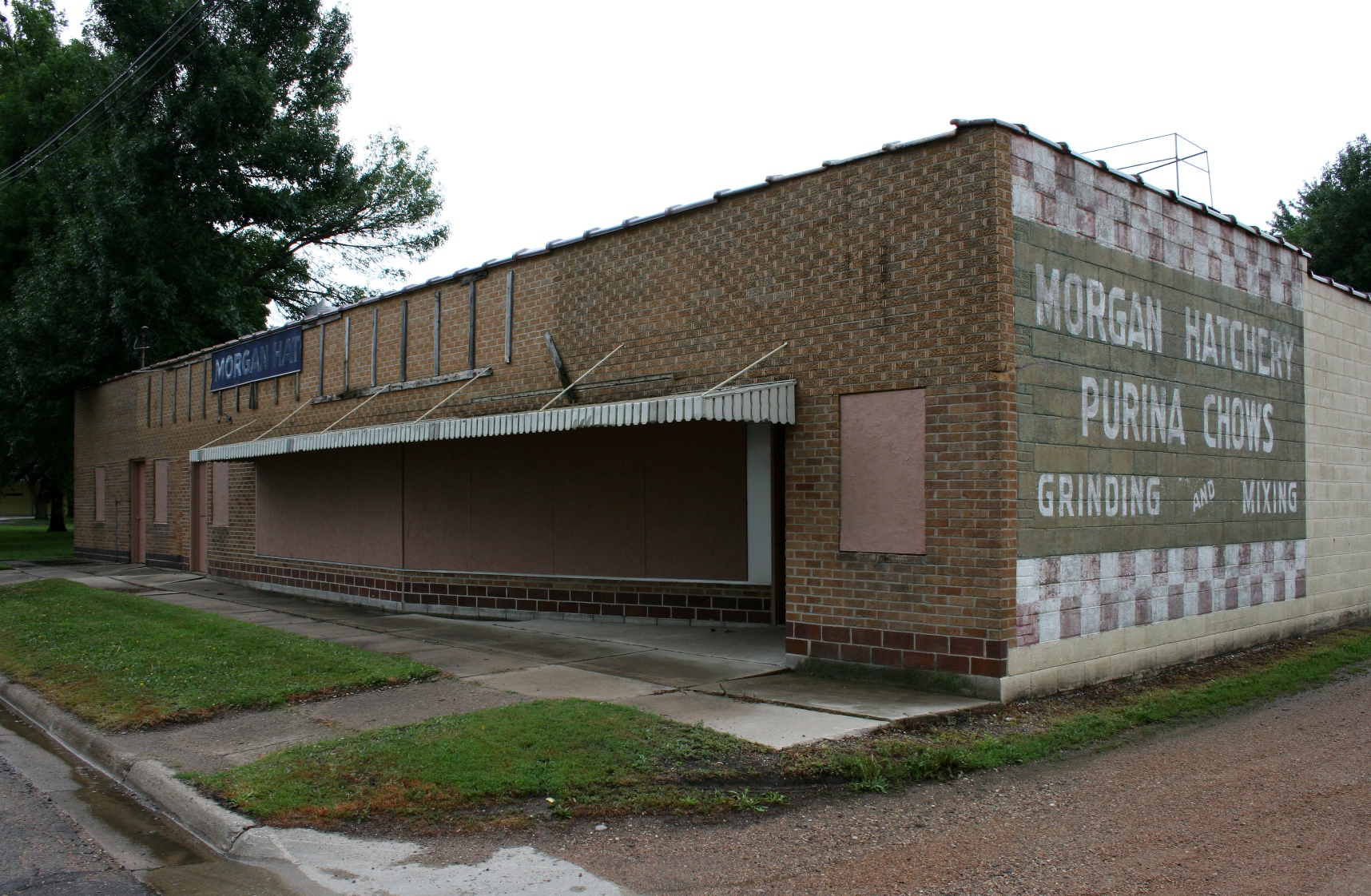
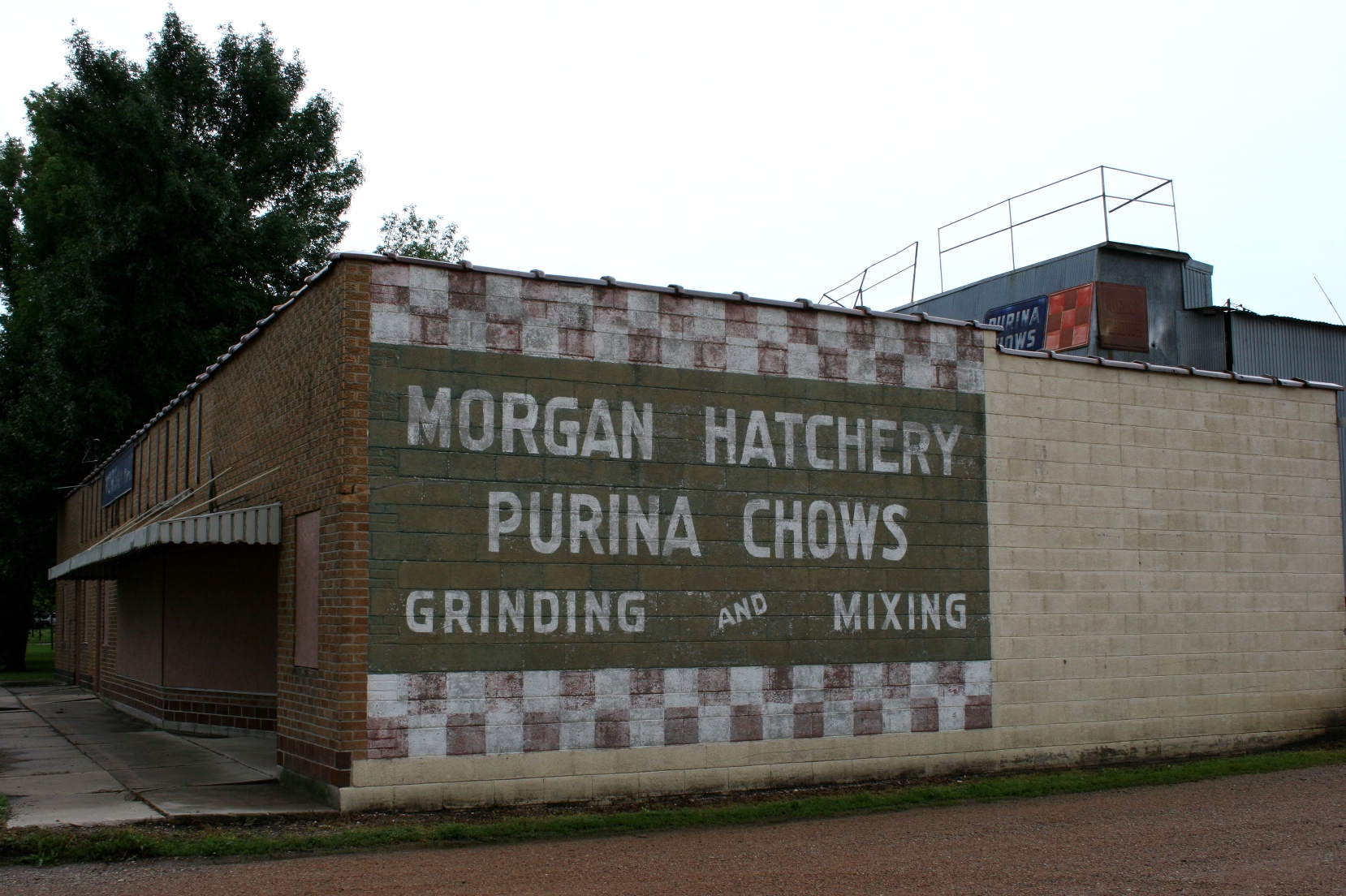
From there I skirted vehicles parked alongside the Shell station and dodged puddles to photograph signage on the next door old Morgan Hatchery.

A side view of the former hatchery.

A side view of the former hatchery.

At that point I likely muddied my flip flops. But that was just fine. I wasn’t returning to the NO MUDDY SHOES ALLOWED! store.

© Copyright 2013 Audrey Kletscher Helbling
 

Walnut Grove mural bridges cultures July 18, 2013

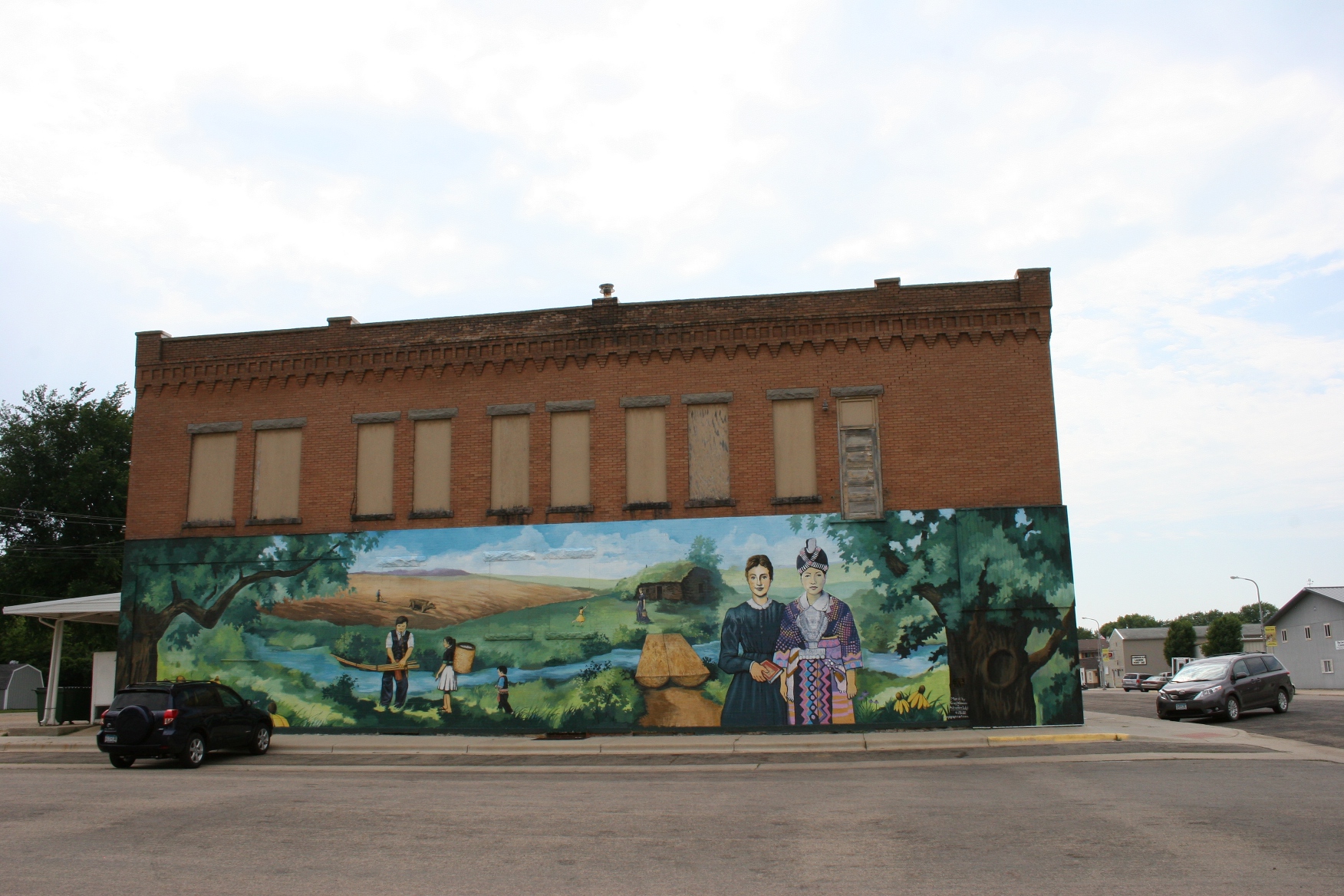
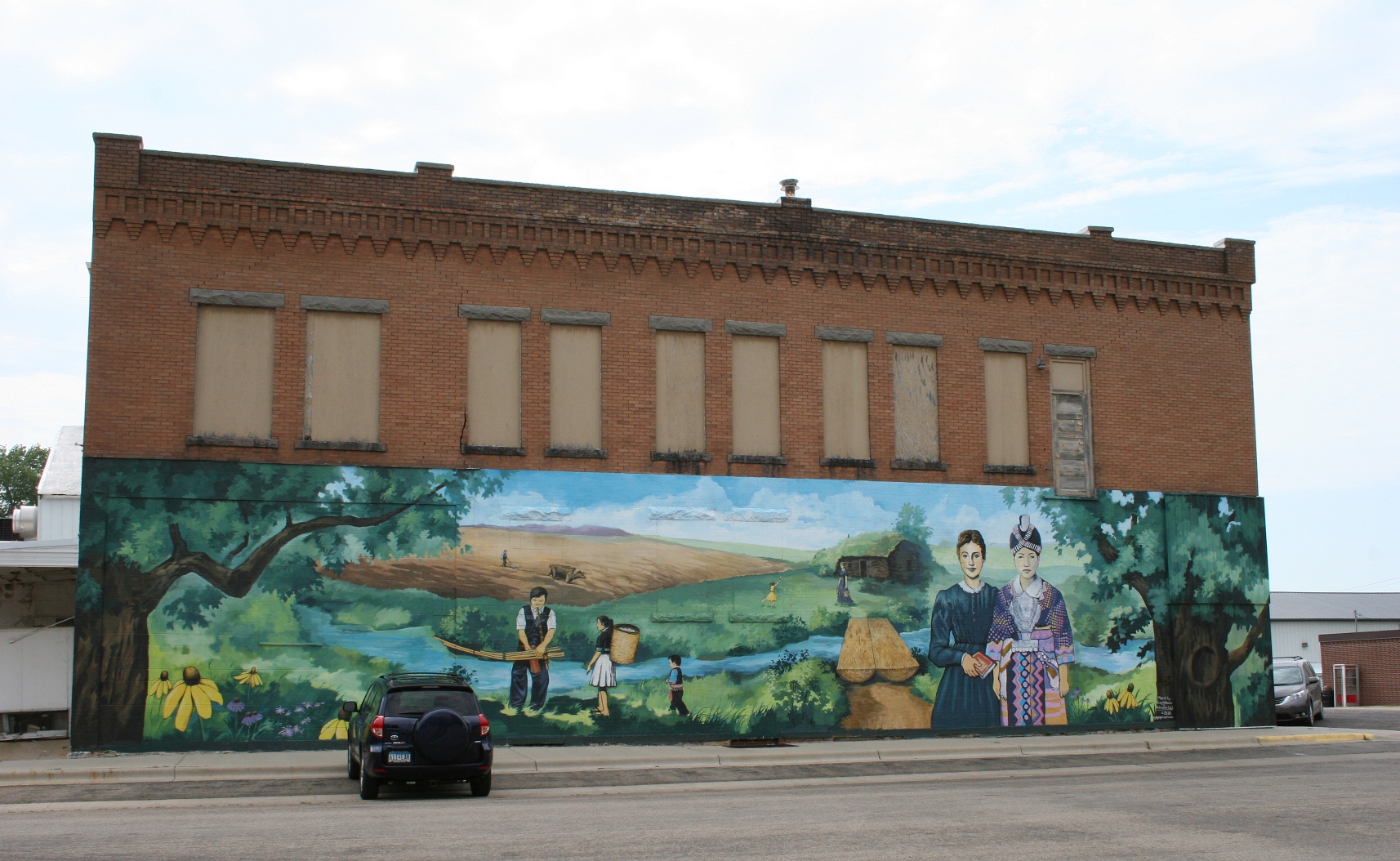
Rochester artist Greg Wimmer was commissioned to paint this mural last summer in downtown Walnut Grove.

Rochester artist Greg Wimmer was commissioned to paint this mural last summer in downtown Walnut Grove.

MY NEPHEW, ADAM KLETSCHER, who lives and teaches in Walnut Grove, told me to check out the new mural downtown when I recently visited this southwestern Minnesota community. So, after leaving the Family Festival during the town’s annual celebration of Laura Ingalls Wilder’s Little House books, I stopped to photograph the 20-foot by 78-foot painting on the east side of Bubai Foods along Main Street.

Being a bit rushed, I failed to photograph the front of the building housing a combination Asian and American food market. And I didn’t have time to go inside and ask questions.

Later I connected with Terry Yang, who moved to Walnut Grove in 2001 from St. Paul, opened the Asian portion of Bubai Foods in 2003 and purchased the American foods side in 2005.

Yang is among the estimated 30 percent of Walnut Grove’s 870 residents of Hmong ethnicity. The Hmong first came to this rural area in 2000, Yang says, to settle in a quiet small town with affordable housing (“We don’t have to lock our houses or cars here,” he says) in a landscape similar to their native Laos.

Walnut Grove is now home to retired Hmong and to young people employed mostly at factories in nearby Marshall, Wabasso and Worthington.

The mural in progress. Photo courtesy of Greg Wimmer.

The mural in progress. Photo courtesy of Greg Wimmer.

It is that infusion of Laotian immigrants that figured in to the design of the community-supported mural painted last summer by Greg Wimmer of Rochester based Wimmer Illustration and Design with assistance from Adrienne Lobl. Mural sponsors included individuals, local businesses and the Laura Ingalls Wilder Museum.

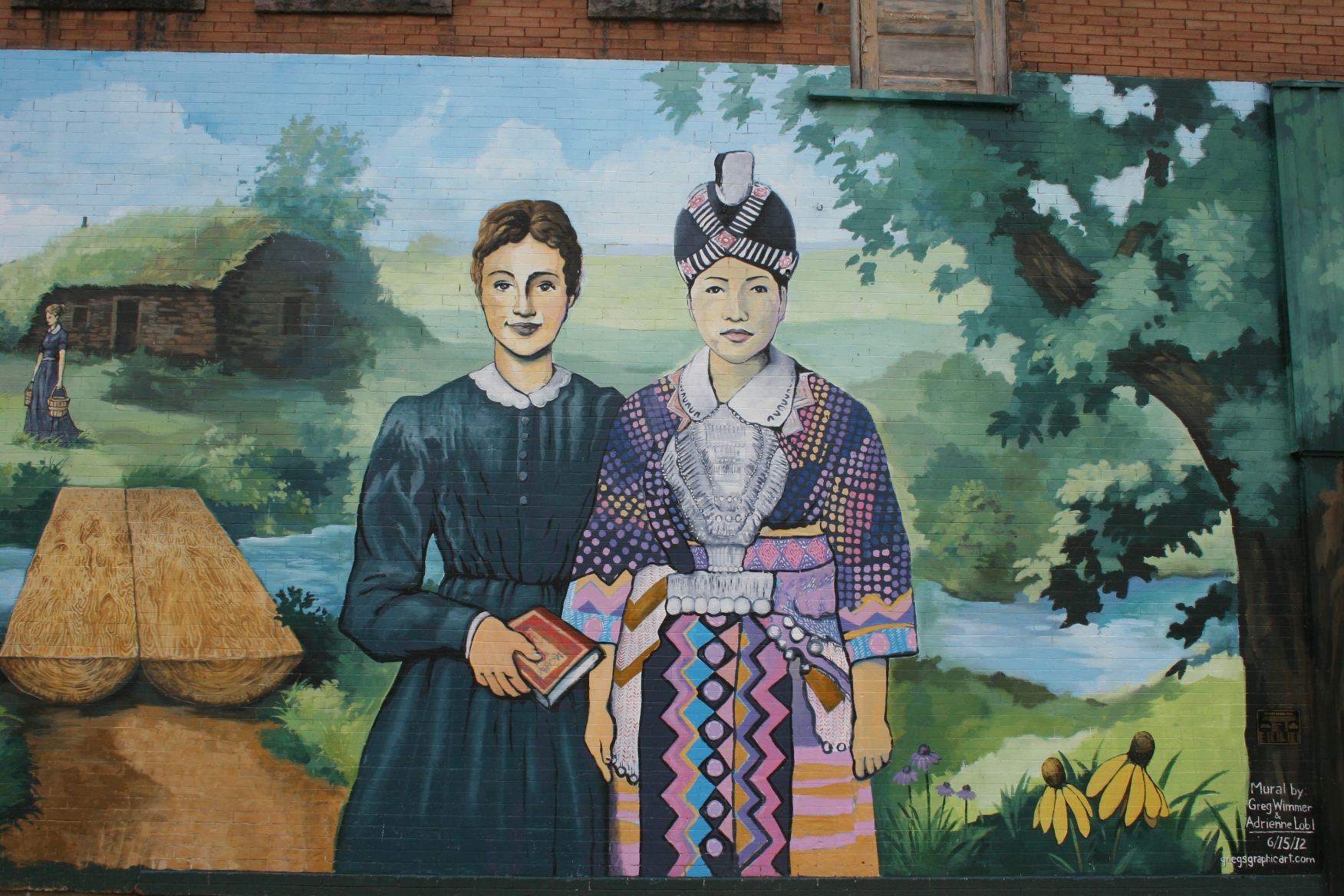
This snippet of the mural shows Laura Ingalls Wilder as a teacher next to a Hmong woman. To the left is the log bridge spanning Plum Creek, where the Ingalls family lived in a dug out.

This snippet of the mural shows Laura Ingalls Wilder as a teacher standing next to a Hmong woman. To the left is the log bridge spanning Plum Creek, where the Ingalls family lived in a sod house.

The painting, Yang says, shows the similarities between Laos and Walnut Grove and also melds the new Hmong culture and the pioneer history of this Minnesota community. For example, Laura Ingalls and a Hmong woman stand side by side, one in a simple lace-collared prairie dress, the other in intricate and colorful traditional celebratory Hmong attire reserved for special occasions like weddings and New Year’s celebrations.

Wimmer worked with the Hmong community, integrating many of their suggestions in to the design. A log bridge spanning Plum Creek, part of an original Ingalls family mural here which had faded and was in need of repair, was incorporated in to the new work and represents the bridging of two cultures, according to the artist.

“My personal opinion is that it (the mural) makes a statement about the changes in the community without saying a word,” Wimmer says.

In the foreground a Hmong man plays a bamboo flute near a rice field as his daughter carries a basket. In the background, a pioneer  busts sod with a an ox and a plow.

In the foreground, left, a Hmong man plays a bamboo flute near a rice field as his daughter carries a basket. In the background, a pioneer busts sod with an ox and a plow.

Yang also references the connections between the two cultures via two farming scenes—of a pioneer man plowing a Minnesota field with an ox, similar to the water buffalo that work the land in Laos, and of a Hmong family near a rice field and shown with a basket for carrying harvested crops from farm to village.

Native prairie plants, like black-eyed Susan and coneflowers, are part of the painting.

Native prairie plants, like black-eyed Susan and coneflowers, are part of the painting.

One of the draws to Walnut Grove, Yang says, is the land available for Hmong to plant gardens. Laotian natives, like native Walnut Grove area residents, are connected to the land.

Yang has always felt welcome in southwestern Minnesota and appreciates the mural showcasing the changes in his community, which now includes, he says, “so many races.”

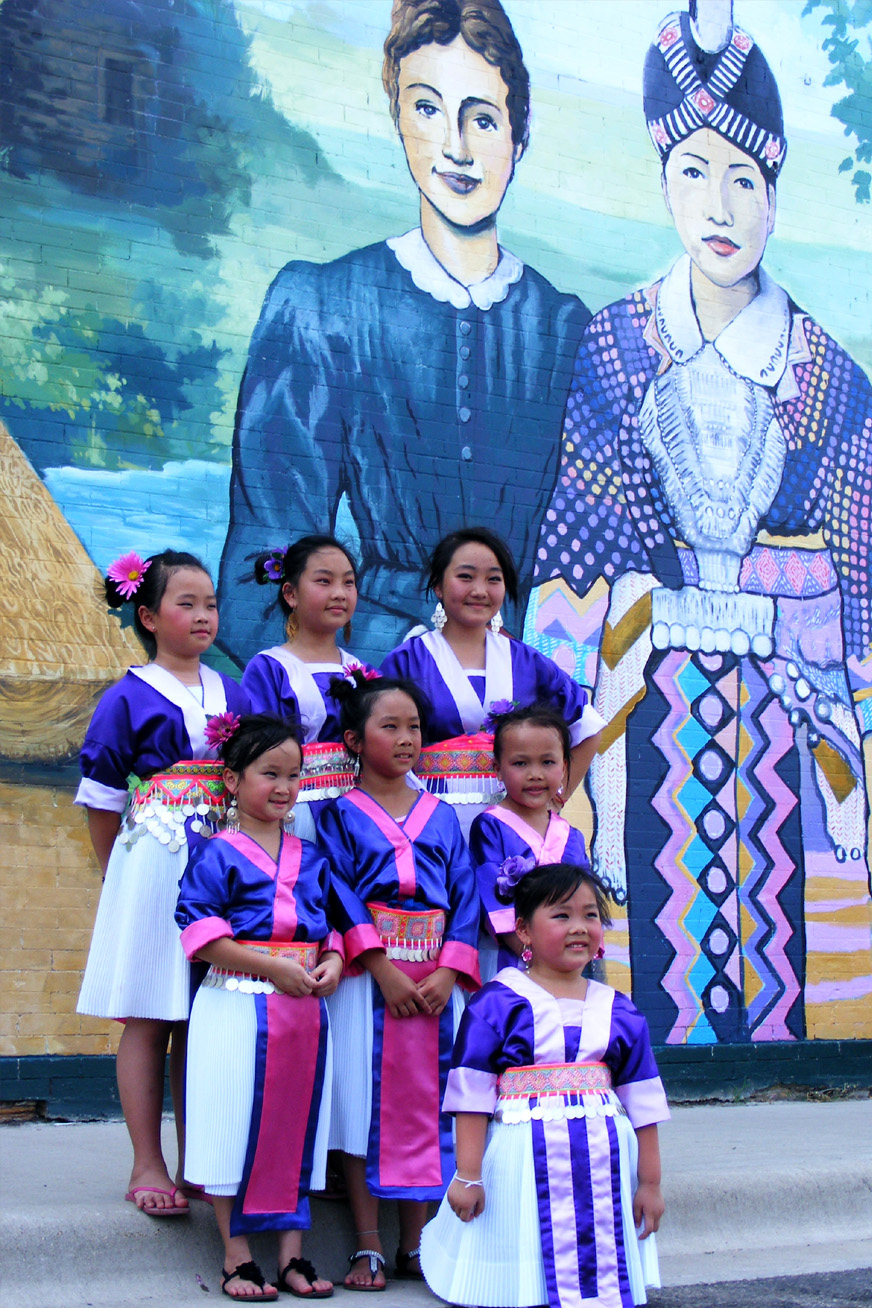
Girls in traditional Hmong dress attended the mural dedication last year.

Girls in traditional Hmong dress attended the mural dedication last year. Photo courtesy of Greg Wimmer.

FYI: Hmong dancers will be among entertainers at the Family Festival from 11 a.m. – 6 p.m. this Saturday, July 20, at the Walnut Grove City Park as part of the festivities celebrating the Little House books by Laura Ingalls Wilder. Click here to see the festival schedule.

And click here for more information about other events at the annual celebration.

BONUS PHOTOS:

Greg Wimmer painted this mural in nearby Marshall. Photo courtesy of Greg Wimmer.

Greg Wimmer painted this mural in nearby Marshall. Photo courtesy of Greg Wimmer.

And Wimmer painted this mural in Rapid City, South Dakota. Photo courtesy of Greg Wimmer.

And Wimmer painted this mural in Rapid City, South Dakota. Photo courtesy of Greg Wimmer.

© Copyright 2013 Audrey Kletscher Helbling
 

Faribault’s long-standing historic appreciation for Fleck’s beer February 19, 2013

YOU NEEDN’T LOOK FAR to see the notable imprint the Fleckenstein breweries made on Faribault.

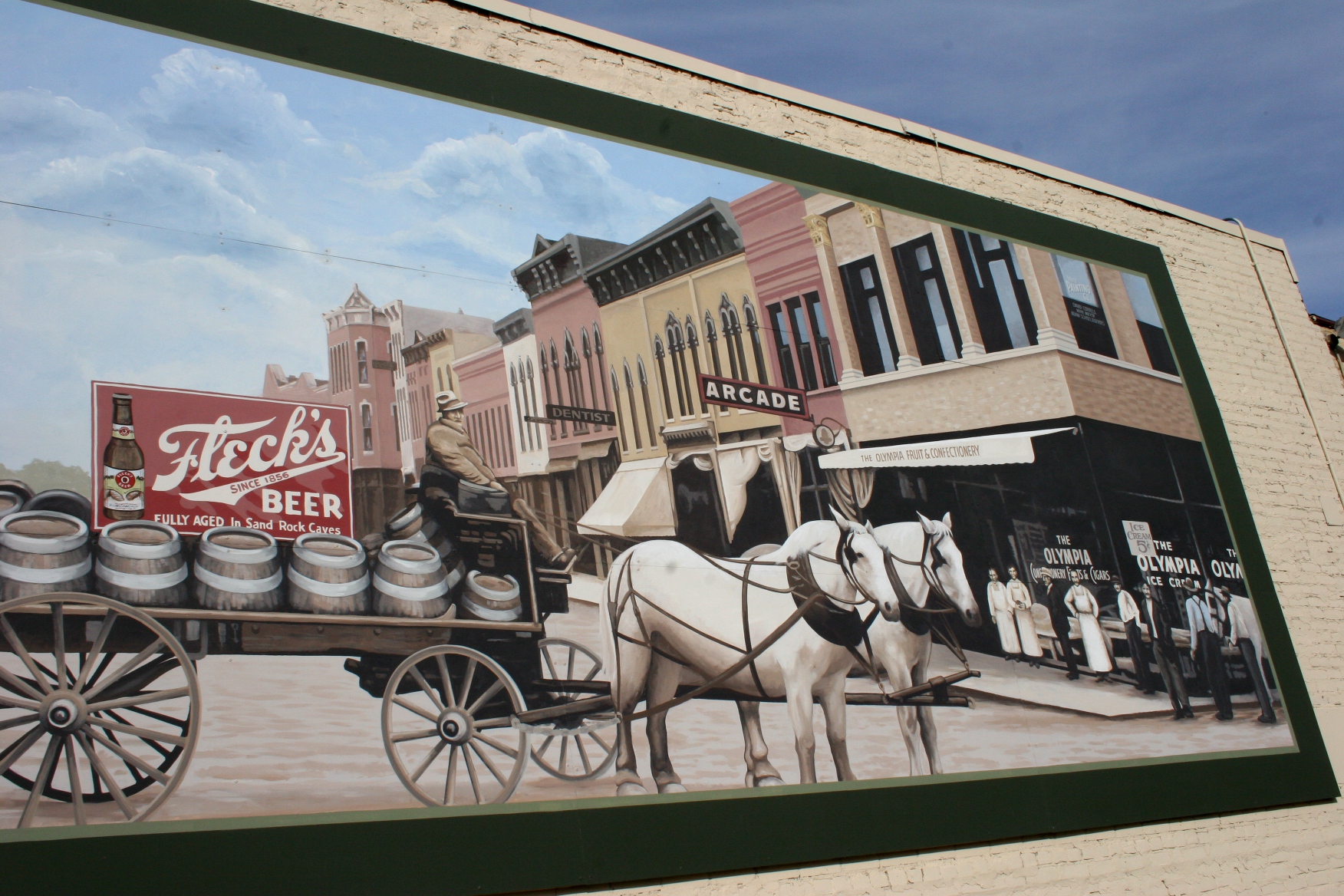
A downtown Faribault mural featuring Fleck's beer.

A downtown Faribault mural featuring Fleck’s beer.

In the heart of Faribault’s historic downtown, a mural at 513 Central Avenue features Fleck’s beer barrels stacked upon a horse-drawn wagon in one of seven historical-themed murals created by the Mural Society of Faribault.

Kitty-corner across the street at the State Bank of Faribault, 428 Central Avenue, bank President John R. Carlander’s personal collection of Fleckenstein/Fleck’s memorabilia is displayed.

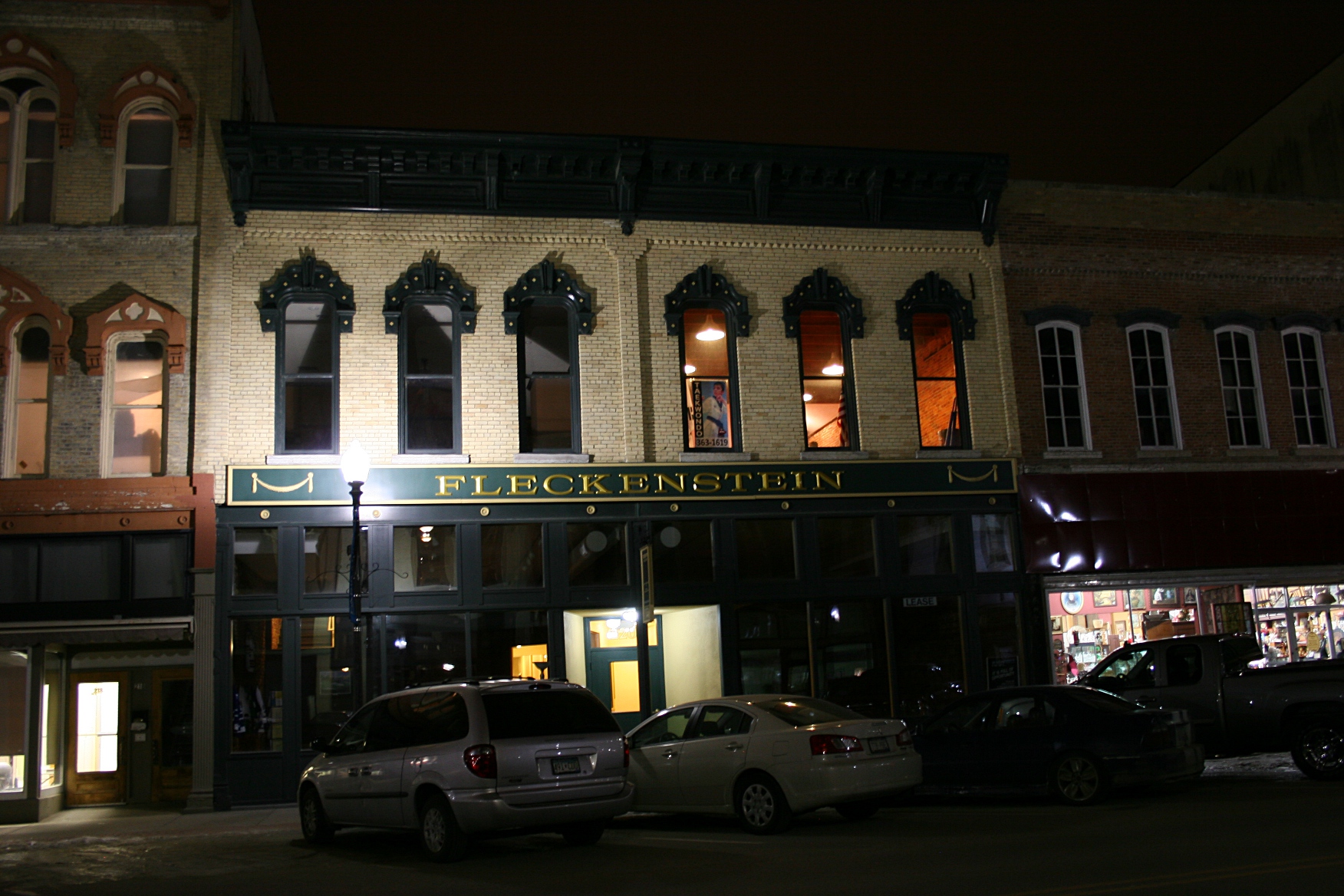
The Fleckenstein building houses Twin City Underwriters in the south front with empty space for lease in the other half.

The Fleckenstein building, home to several businesses including an  insurance company, photo studio and salon. If anyone knows the story behind the Fleckenstein family’s connection to the building, I’d like to hear.

Two blocks away in Faribault’s Historic Commercial District, the Fleckenstein building stands at 220 Central Avenue.

Across town at the Rice County Historical Society, 1814 N.W. Second Avenue, you’ll find a permanent Fleckenstein breweries exhibit.

And who knows how many locals own pieces of Fleckenstein history from the breweries of brothers Gottfried and Ernst Fleckenstein. The two began as partners, opening the Fleckenstein Brewery along the banks of the Straight River in 1856. There they aged and stored their beer in caves.

Eventually the two split, Gottfried’s brewery remaining at the original site at 222 Third Avenue N.E. Meanwhile, Ernst moved farther north along the Straight River and established Ernst Fleckenstein Brewing Company in 1872. That would continue in operation until 1964. Gottfried’s brewery, which had been passed along to his son, Louis, closed in 1907.

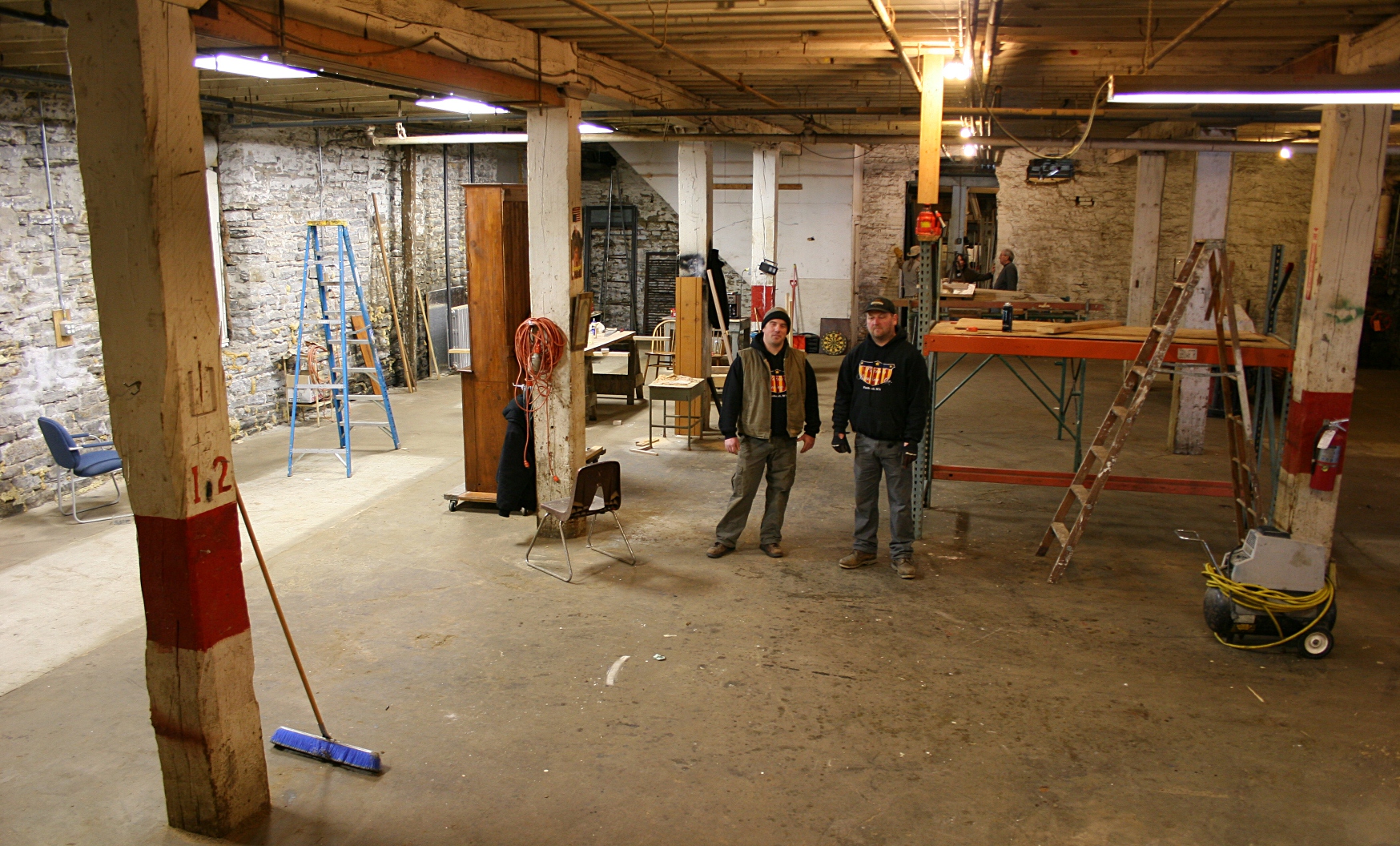
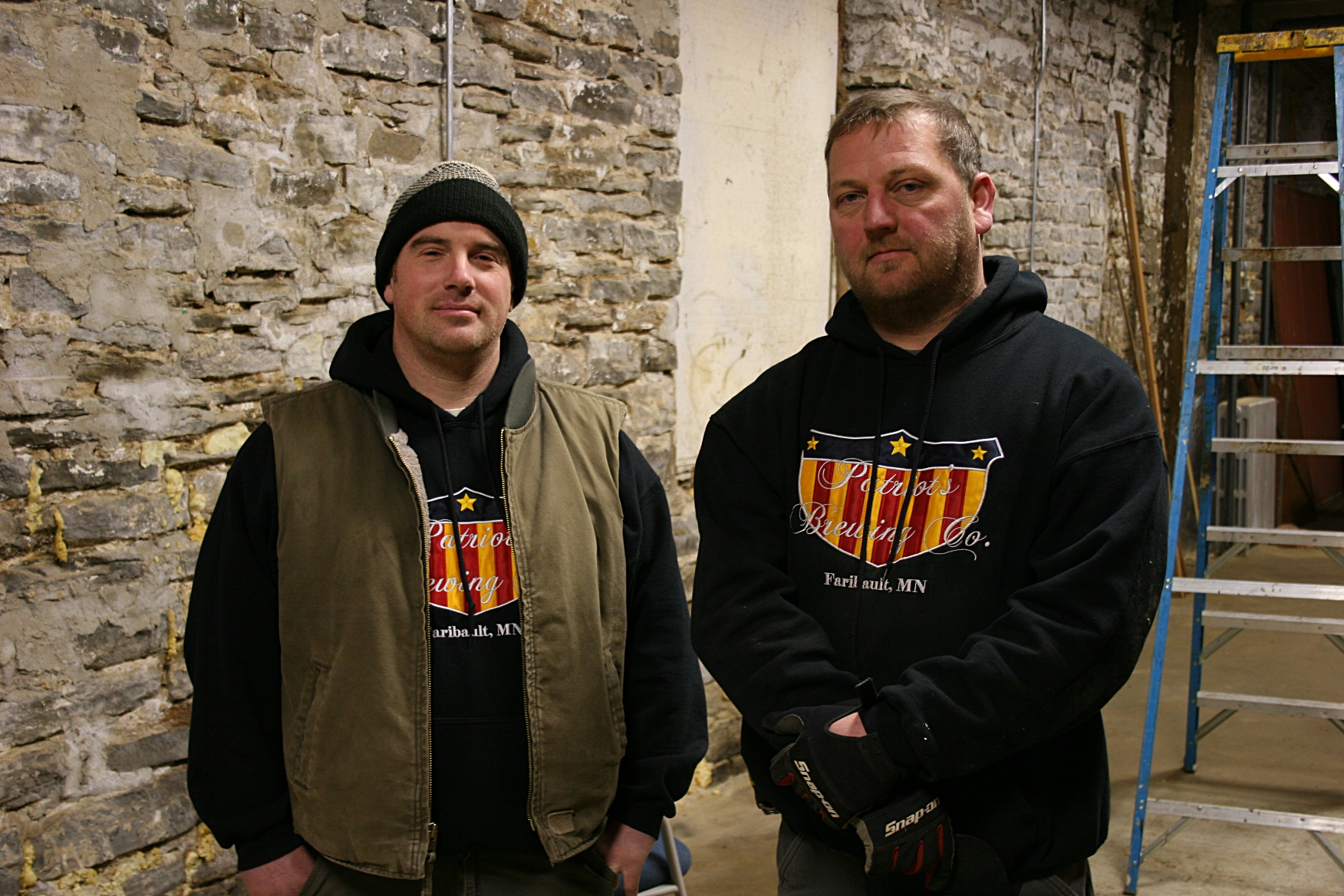
Chris Voegele, left, and Noah Strouth inside the space that will house Patriot's Brewing brewery.

Chris Voegele, left, and Noah Strouth inside the space that will house Patriot’s Brewing brewery.

With 108 years of business history in Faribault, it’s no wonder the Fleckenstein breweries made an impression upon locals like Noah Strouth and Chris Voegele who will bottle Fleck’s branded beers at Patriot’s Brewing Company, set to open this fall in downtown Faribault within blocks of the first Fleckenstein brewery. You can read about that new brewery by clicking here to a previous post.

The two plan to eventually open a tap room which will feature Fleck’s/Fleckenstein memorabilia culled from their personal inventory and from the collections of others who’ve already offered their historical pieces for display. I don’t expect Strouth will show his 1958 unopened bottle of Fleck’s beer. But it’s interesting to hear his claim that this 55-year-old bottle has always been kept cold. He knows that, he says, because of the beer’s clarity.

If anyone knows Fleck’s beer, it would be Faribault resident Brian Schmidt who owns more than 300 collectible pieces from the Fleckenstein breweries and has created a Fleck’s website. (Click here to reach that.) Schmidt grew up on Faribault’s north side and remembers digging for bottles in the Fleckenstein brewery “bottle pit.”

Faribault artist Rhody Yule created this oil painting of the Fleckenstein Brewery in 1976. The building, and the brewery, no longer exist. The 20-foot Fleck's beer bottle on the right side of the painting sat near the brewery entrance. Children often had their pictures taken here when their parents took a brewery tour.

Faribault artist Rhody Yule created this oil painting of the Fleckenstein Brewery in 1976. The building, and the brewery, no longer exist. The 20-foot Fleck’s beer bottle on the right side of the painting sat near the brewery entrance. Children often had their pictures taken here when their parents took a brewery tour. The brewery also made soda.

I’ve yet to see Schmidt’s collection, although I’ve viewed one piece, a 1976 brewery painting by my artist friend Rhody Yule of Faribault. Schmidt brought the artwork, which he purchased for $90 at a local auction, to “A Lifetime of Art: The Rhody Yule Collection” exhibit in January 2011 at the Paradise Center for the Arts in Faribault. Click here to read my post about that brewery painting and another piece Schmidt shared at Yule’s show.

Equally as interesting are the brewery related stories shared by locals, including that of a 92-year-old friend who wished to remain anonymous. The Faribault native remembers her sister picking tight-bud peonies from the family farm in June and storing the flowers inside a brewery cave until her early July wedding.

This I learned when I phoned to ask about the Fleckenstein-donated stained glass windows which grace my church, Trinity Lutheran, along Fourth Street in Faribault. My friend couldn’t offer any details on the windows, or even if the Fleckensteins were Trinity members. But I certainly appreciated hearing her sister’s wedding flower story.

Likewise I spoke with another longtime Faribault resident who knew members of the Fleckenstein family—Al, Ruge, John and Chauncey—from his days of bowling against the Fleck’s Brewery team. In his early 20s at the time, my friend recalls the Fleckensteins, 15-plus years his senior, as strong supporters/sponsors of bowling in Faribault. Several generations of Fleckensteins operated the breweries.

Hearing stories like this reinforces the results of a Faribault Main Street downtown market analysis report prepared in September 2011. According to that report by (IN)ALLIANCE, LLC, “downtown Faribault would be an ideal location for a craft brew pub.”

The report went on to state this:

Given the history of brewing in Faribault and its consumer who is attracted to culture and history, naming a brewpub solicitation as “Fleckenstein Brew Pub” would prove to be a good promotional tool.

Chris Voegele , left, and Noah Strouth, owners of Patriot's Brewing Company

Chris Voegele , left, and Noah Strouth, owners of Patriot’s Brewing Company

When I interviewed Patriot Brewing owners Strouth and Voegele, I mentioned the market analysis (of which they were unaware) and they concurred with that important historic connection and Faribault promotional aspect. “People in Faribault seem to like their history,” Voegele said.

With the opening of a brewery and a tap room (not a brewpub), Patriot’s Brewing will assuredly add to the beloved history of Fleck’s beer in Faribault.

© Copyright 2013 Audrey Kletscher Helbling
 

Pets on parade in Faribault August 8, 2012

Filed under: Uncategorized — Audrey Kletscher Helbling @ 7:34 AM
Tags: , , , , , , , , , ,

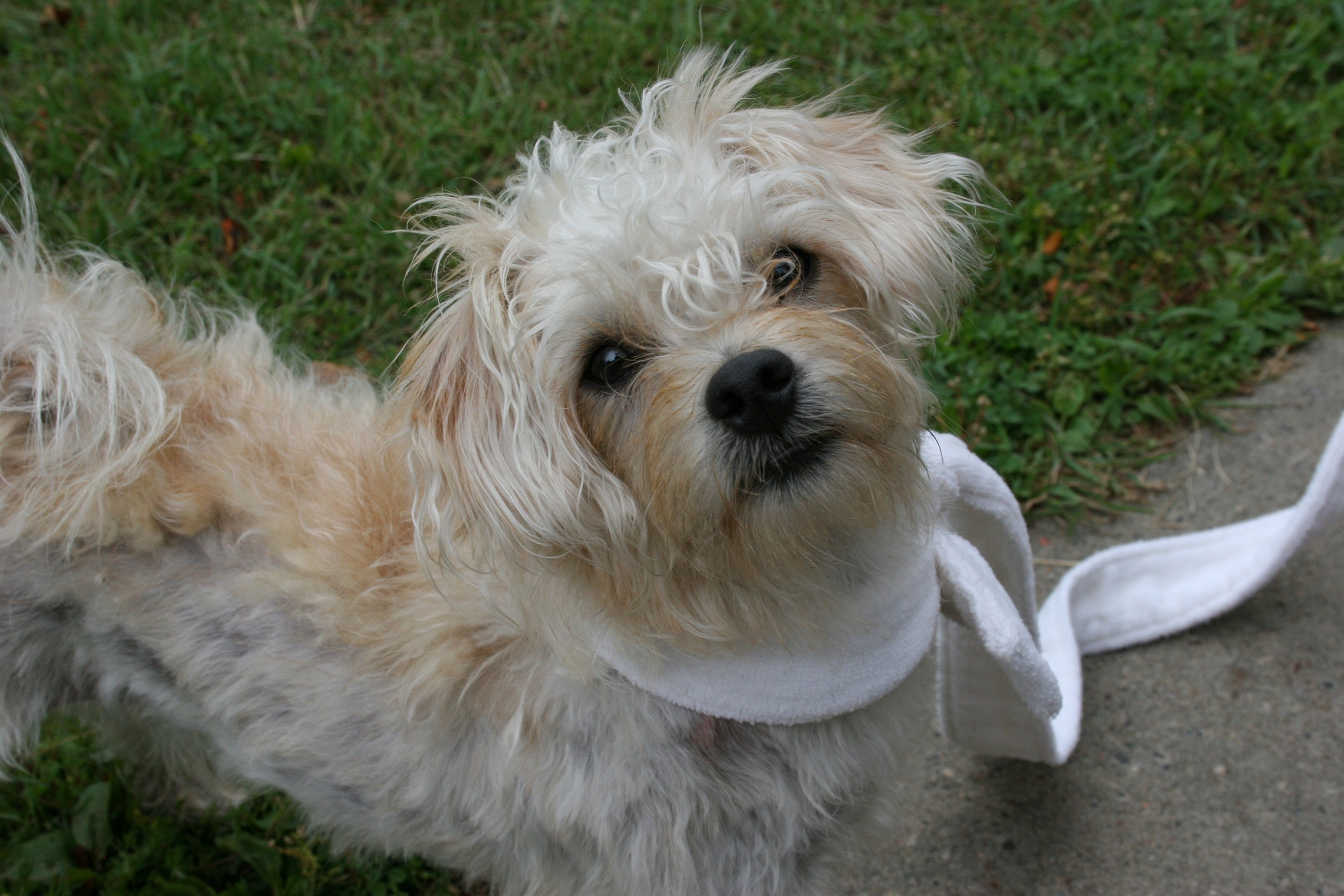
Taco the dog, photographed earlier this summer on a Saturday morning at the Faribault Farmers’ Market in Central Park.

PETS AND KIDS equal cuteness, wouldn’t you agree?

Thursday evening the cuteness combination commands several city streets during my community’s Pet Parade—the 76th annual according to information published by the Faribault Parks & Recreation Department.

The kids and their animals will line up in categories like little dogs, big dogs, rabbits, kittens and cats, unusual pets, farm animals, and, at the tail end, horses, of course.

In between, there will be floats and kids in strollers and on bikes, trikes, scooters, skateboards and roller blades. There will be clowns and costumes and perhaps even chaos in this “It’s a Zoo Around Here!” themed event.

I haven’t been to the Pet Parade in many years, mostly because my kids are all grown up and they were the reason I attended.

We never participated in the parade. Our only pets were goldfish. And I probably never told my three they could walk in the parade without a pet. Sometimes parents are smart like that and don’t share details. Just let the kids think that because they don’t own a cat or dog or snake or some other animal, they must simply watch.

I expect I never told them either about the free freeze pops and music in Central Park after the parade. I don’t know if treats are still part of the parade. But the parade still ends in Central Park. This year’s entertainment features zoo animal dances by girls ages 5 – 9 who participated in a Spirit Team summer camp. More cuteness, for sure.

The Pet Parade mural installed on the Central Park band shell.

Central Park is also the site of an artistic tribute to Faribault’s long-running Pet Parade. In May the Mural Society of Faribault installed a Pet Parade mural on the park’s historic band shell, making it the seventh mural the group has placed in Faribault.

Lots of dogs on the left side of the mural…

The artwork definitely possesses that cuteness factor although I wish a few animals besides dogs were featured in the mural.

And what about that date, “since 1939?”

Lots of dogs and that 1939 date on the right side of the mural.

If that date is right, then the 2012 Pet Parade would not be the 76th, but the 73rd annual. Correct? I’m not really all that good at math. And, yes, my kids know that.

FYI: The Pet Parade begins at 7 p.m. on Thursday, August 9, at Ninth Street Northwest and Second Avenue Northwest, proceeds south on Second Avenue, turns west on Fifth Street and ends in Central Park.

© Copyright 2012 Audrey Kletscher Helbling
 

Guess the pig’s weight and other farm stories from New Richland July 29, 2011

VENTURE INTO RURAL MINNESOTA—and we’re talking the small farming communities here, not what metro folks call “Greater Minnesota” or “outstate Minnesota”—and you’ll connect to our state’s agrarian roots in some interesting ways.

Take New Richland, for example, a town of 1,200 in southeastern Waseca County. Drive into town and you’ll see the usual grain bins and elevator and other farm-related businesses you would expect in an agricultural community.

A cluster of grain bins in the heart of New Richland.

But then explore a little more and you’ll discover just how much this town values its agricultural heritage. Take the post office. Peek around the corner…

A corner of the New Richland Post Office. Note the grain bins a few blocks away.

Around the post office corner you'll find this mural which reflects the connection between city and country.

A snippet of the country portion of the mural. I wonder how the artist decided what type of tractor to feature?

Country connects to city in this detailed mural.

and you’ll find a mural depicting farm and city.

Now I’ve seen many a mural in my day, and I’d rate this as among the best. I wish I knew who to credit for this detailed artwork that draws the eye along the winding country road, down the train tracks to the grain elevator or along city streets to downtown. But I couldn’t find any information about the mural in a quick online search.

However, I did learn more about New Richland and the pride this community takes in its agricultural roots. Just a few weeks ago the town celebrated its 28th annual Farm & City Days. Events included the usual parade, street dance, bingo, antique car show, medallion hunt and such.

But I found a few activities that definitely say country through and through.

Teams of two competed in the  second annual Chore Boy Race. (Just for the record, girls can participate, too; the winners were Molly Flor and Brandon Mullenbach). Anyway, it’s a contest that involves eggs, milk, hay, grain and wheelbarrows. You can learn more about the competition by clicking here and reading this story in the local newspaper, The Star Eagle.

I found a Chore Boy Race contestant application online and one Farm & City Days Facebook page photo and these rules (some in boldface):  “You must wear all your chore clothes at all times. This includes but is not limited to Boots, Hat, Bibs & Gloves.”

OK then, got that?

If you’d rather use your brain than your brawn, Farm & City Days offers a “Guess the weight of the pig” contest at $1 a guess. The person with the closest guess wins the pig and processing at Morgan’s Meat Market. This year two entrants correctly guessed the exact weight of 208 pounds and agreed to split the hog, according to the Farm & City Days Facebook page.

If you didn’t win the pig, you could still eat pork by buying a pork sandwich meal from the Waseca County Pork Producers at the city park.

Two other agricultural-themed activities included a kids’ tractor pull and a Farm vs. City 3-person Scramble at a golf course.

I’m disappointed I missed Farm & City Days because it sounds like one heckuva good time, as small-town celebrations typically are. But I wouldn’t even have known about this annual farm-city event if I hadn’t been poking around New Richland last Sunday, spotted that mural on the side of the post office and then gone online to learn more about it, which I didn’t, but I did.

This John Deere tractor was parked outside the funeral home in New Richland on Sunday afternoon.

My husband and I stopped in New Richland while on a recent Sunday afternoon drive. Check out my July 24 blog post from this community and watch for future stories and photos from New Richland.

© Copyright 2011 Audrey Kletscher Helbling
 

What does the future hold for the Tilt-A-Whirl January 7, 2011

A downtown Faribault mural depicts the evolution of the Tilt-A-Whirl.

IN AN IRONIC TWIST, or something like that, today’s Faribault Daily News featured this top headline:

Operations cease at Sellner’s

Company created the Tilt-A-Whirl; was Faribault’s longest-running family business”

I read this within 45 minutes of posting “These businesses have been in Faribault for how long.”

I’m scraping egg from my face. But I had no idea, none, nada, that one of Faribault’s oldest businesses is, according to the newspaper article, in the process of being sold to Larson International, Inc., of Plainview, Texas.

You may not be familiar with the name Sellner Manufacturing. But I bet you have ridden the firm’s Tilt-A-Whirl, which is manufactured just blocks from my Faribault home. The company has been making this American icon amusement ride since 1926.

For several years now, Sellner Manufacturing has been struggling with financial difficulties. I’ve read the foreclosure notices in the newspaper. I won’t speculate as to why this happened. I simply don’t know.
I don’t know, either, what this means for the future of the Tilt-A-Whirl. Will it be around for another 85 years?

The Mural Society of Faribault created and placed the Tilt-A-Whirl mural on the side of Jim's Auto & Tire this past fall. It is among five murals in the downtown area.
© Copyright 2010 Audrey Kletscher Helbling